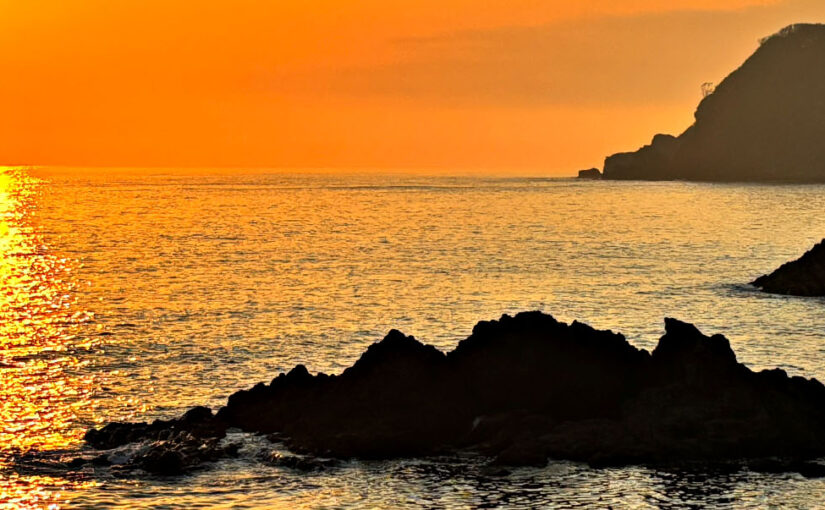
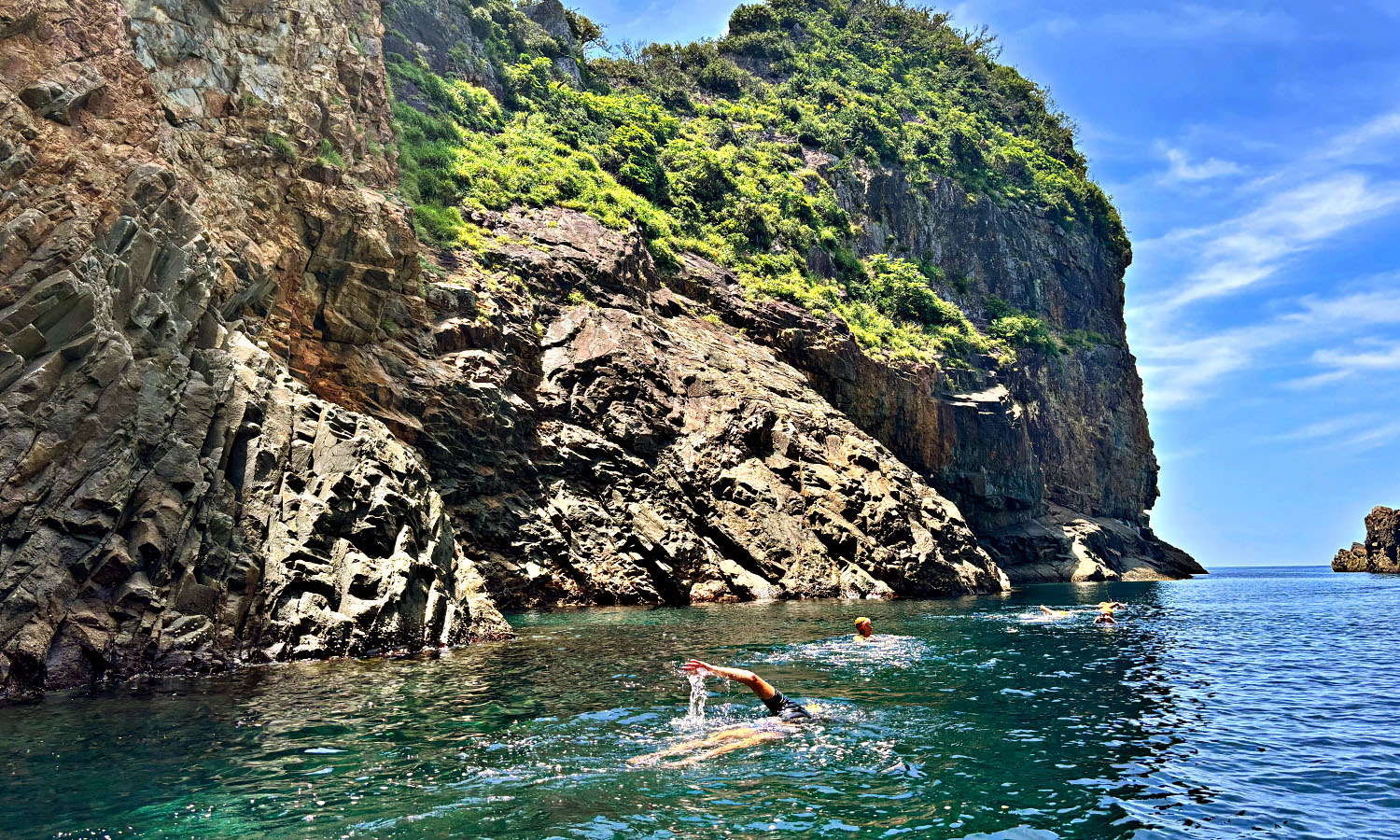
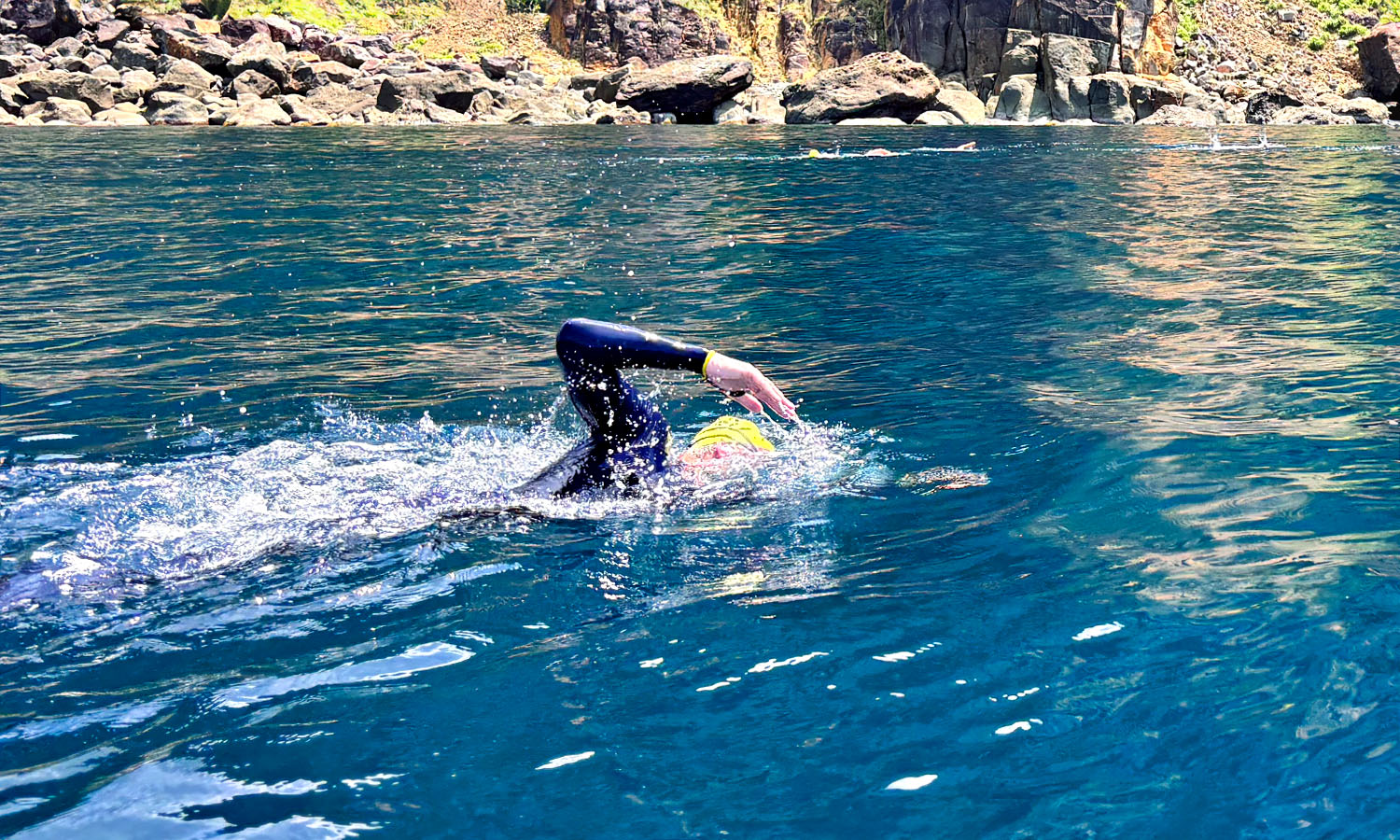
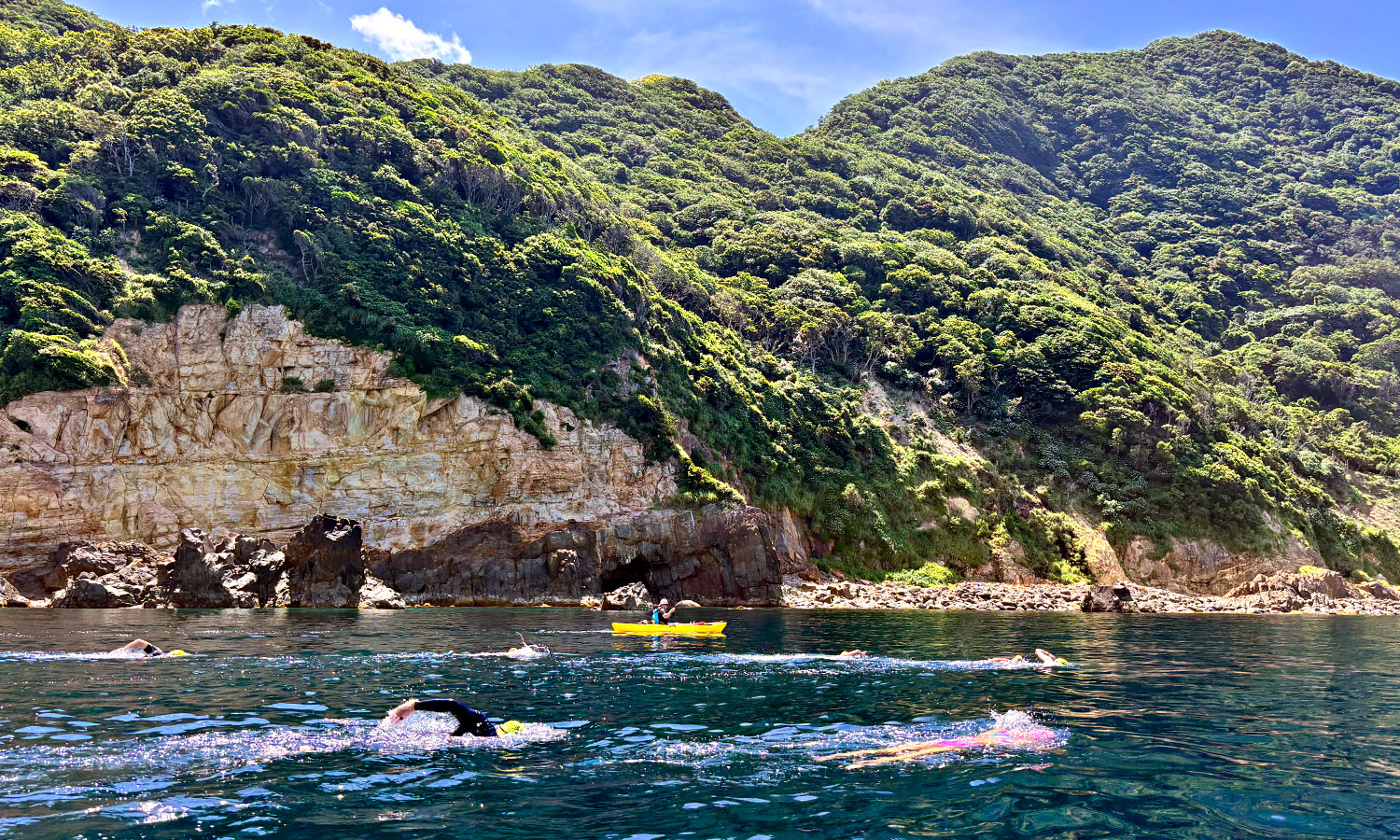
Organised by Cross Country Swimming, this is the kind of trip where you eat tuna at dawn in Tokyo, watch sumo wrestlers attempt to fold each other in half, then spend the rest of the week swimming along a volcanic coastline so dramatic it looks like it’s been sketched by a moody anime director.
You land in Tokyo and immediately realise this city has more personalities than a Bond villain.
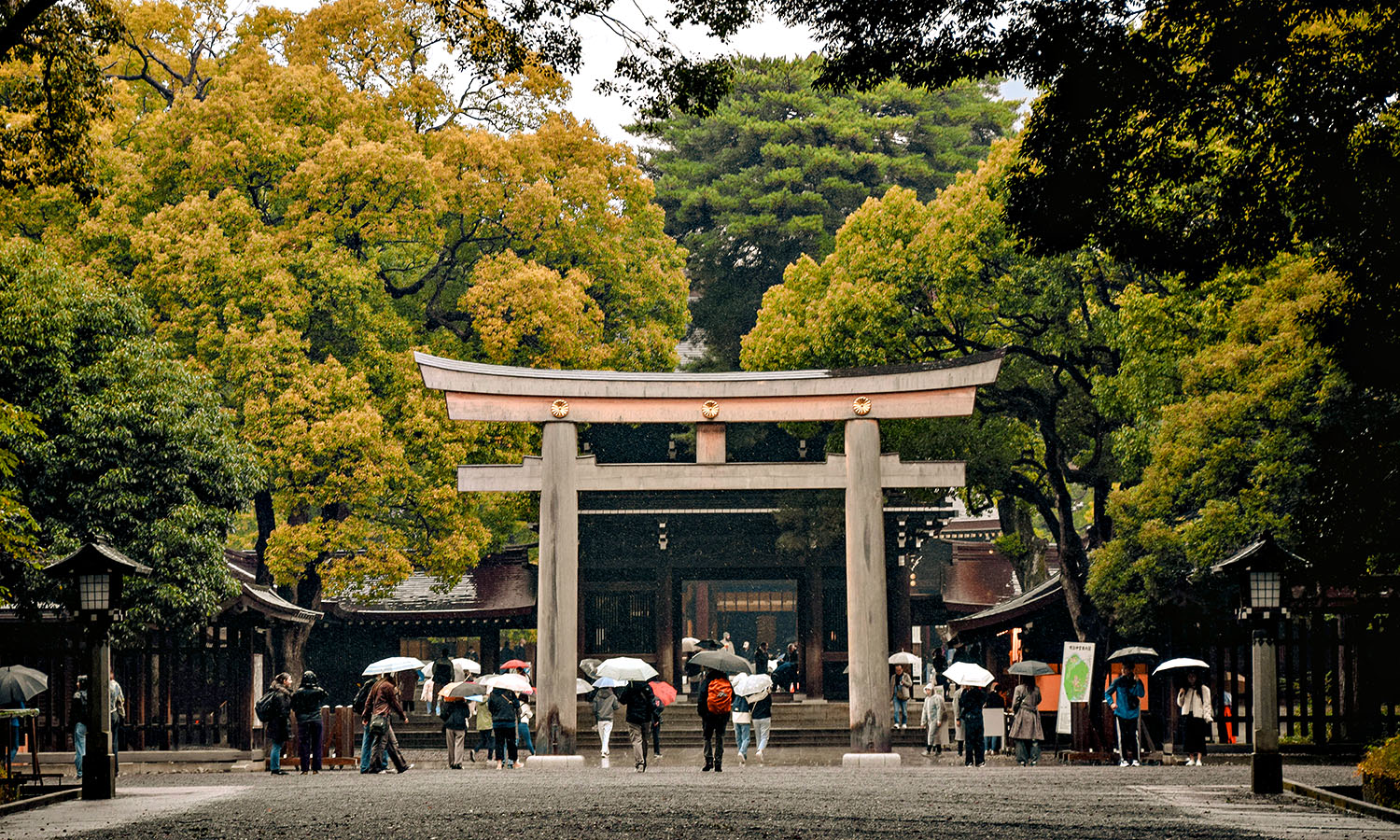
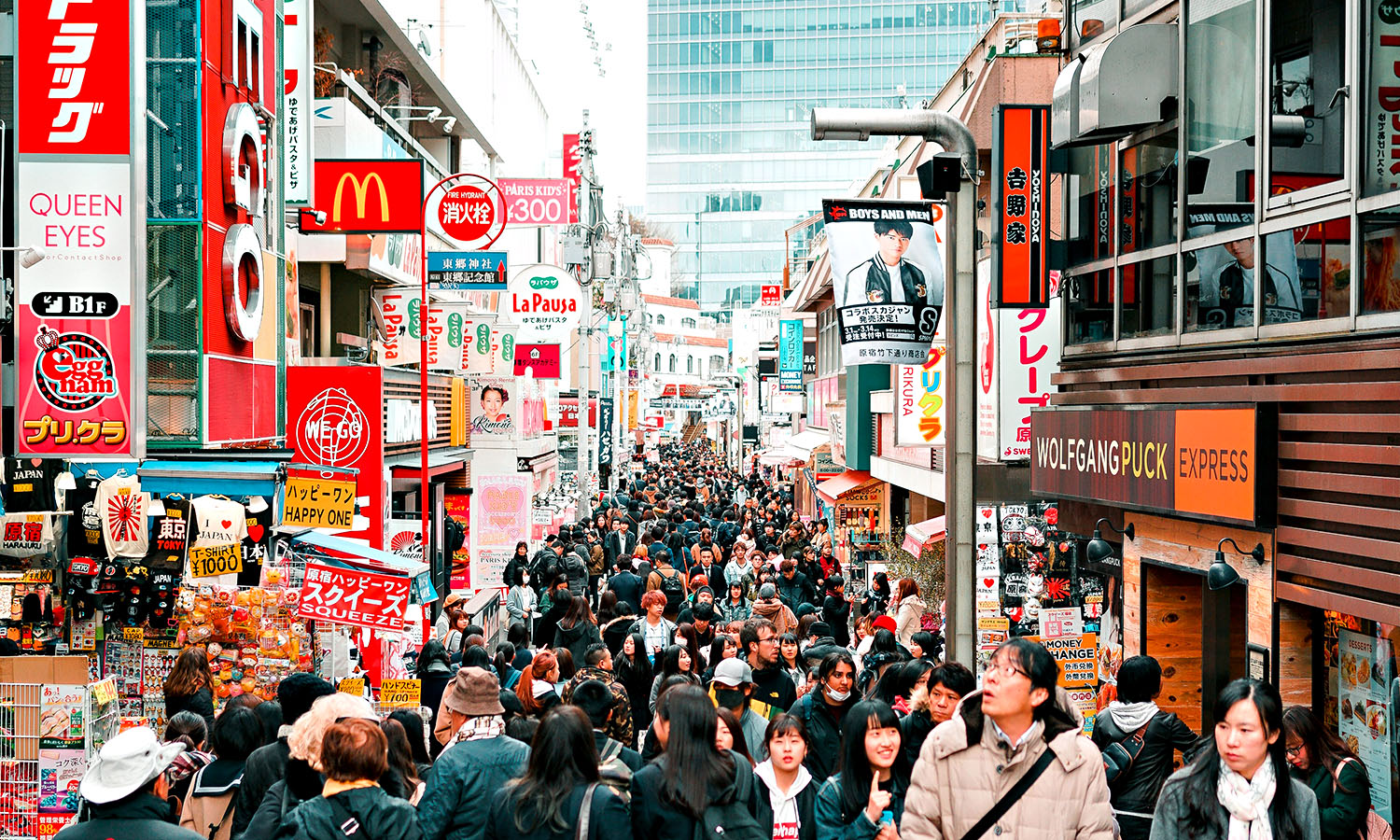
You start in Harajuku, because of course you do. One minute you’re standing under the towering torii gates of Meiji Jingu, surrounded by 120,000 trees and Shinto serenity. The next you’re dodging cosplayers, vintage denim hunters and teenagers dressed like intergalactic cartoon villains.
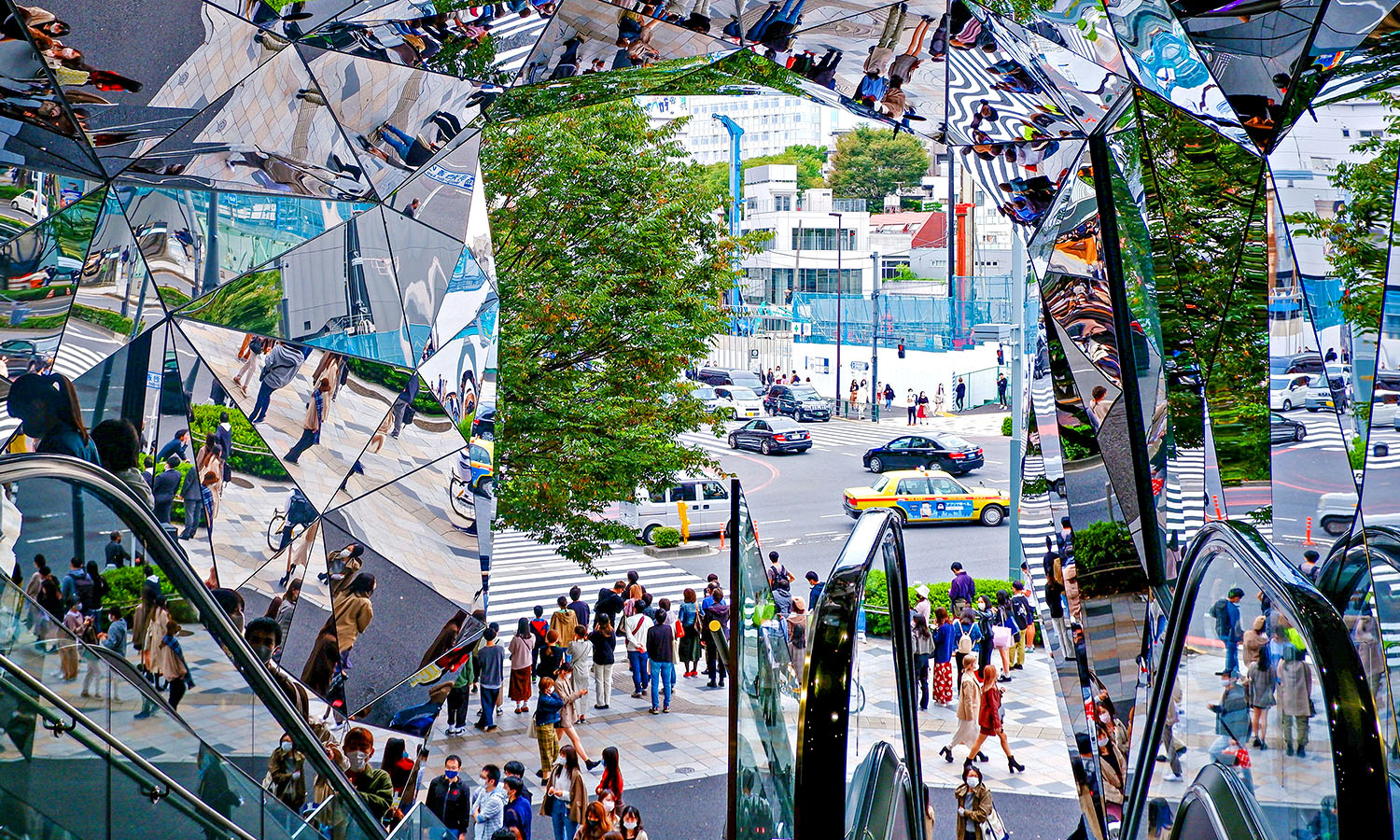
You drift past Yoyogi Park, birthplace of the 1964 Olympic dreams, then get spat out at the human washing machine that is Shibuya Crossing, 3,000 people crossing every few minutes in choreographed chaos.
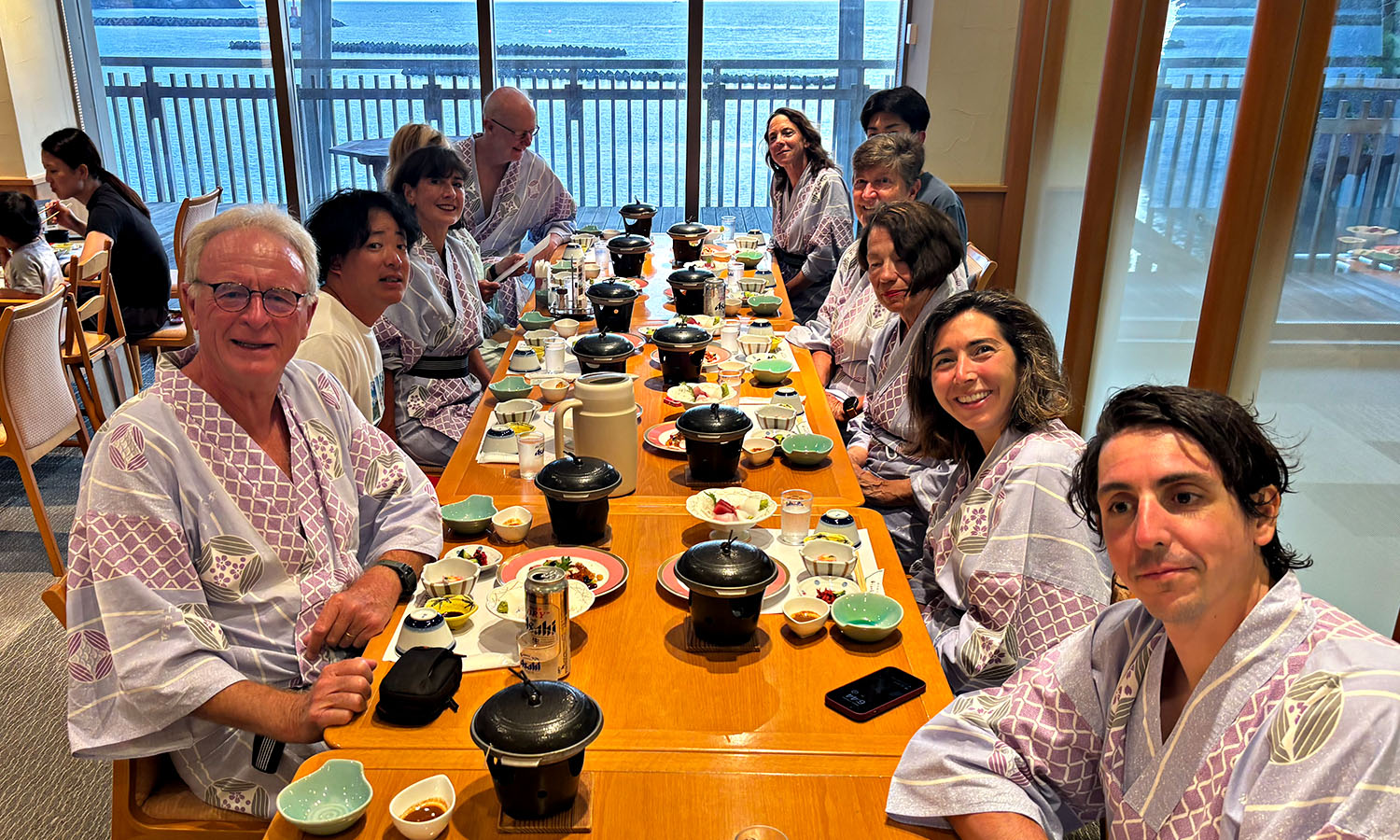
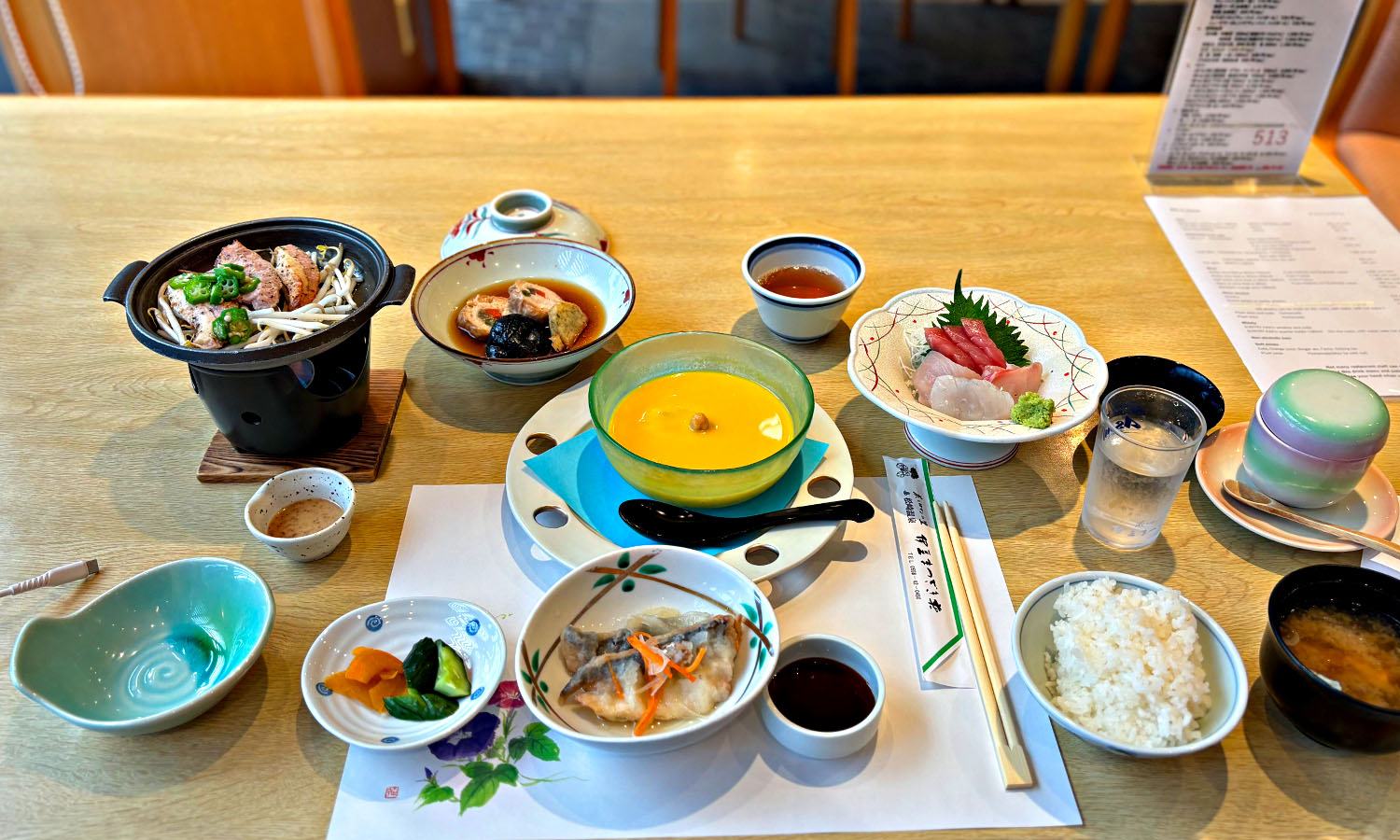
That evening you meet your swim leaders, both coach and part ocean whisperer, and sit down to your first Japanese feast. It’s your introduction to oishi (delicious) and the unspoken rule of this trip: you will swim hard, and you will eat even harder.
Breakfast is at Tsukiji Outer Market, where Tokyo’s kitchens wake up. Prepare your stomach, the fish here is incredibly fresh.
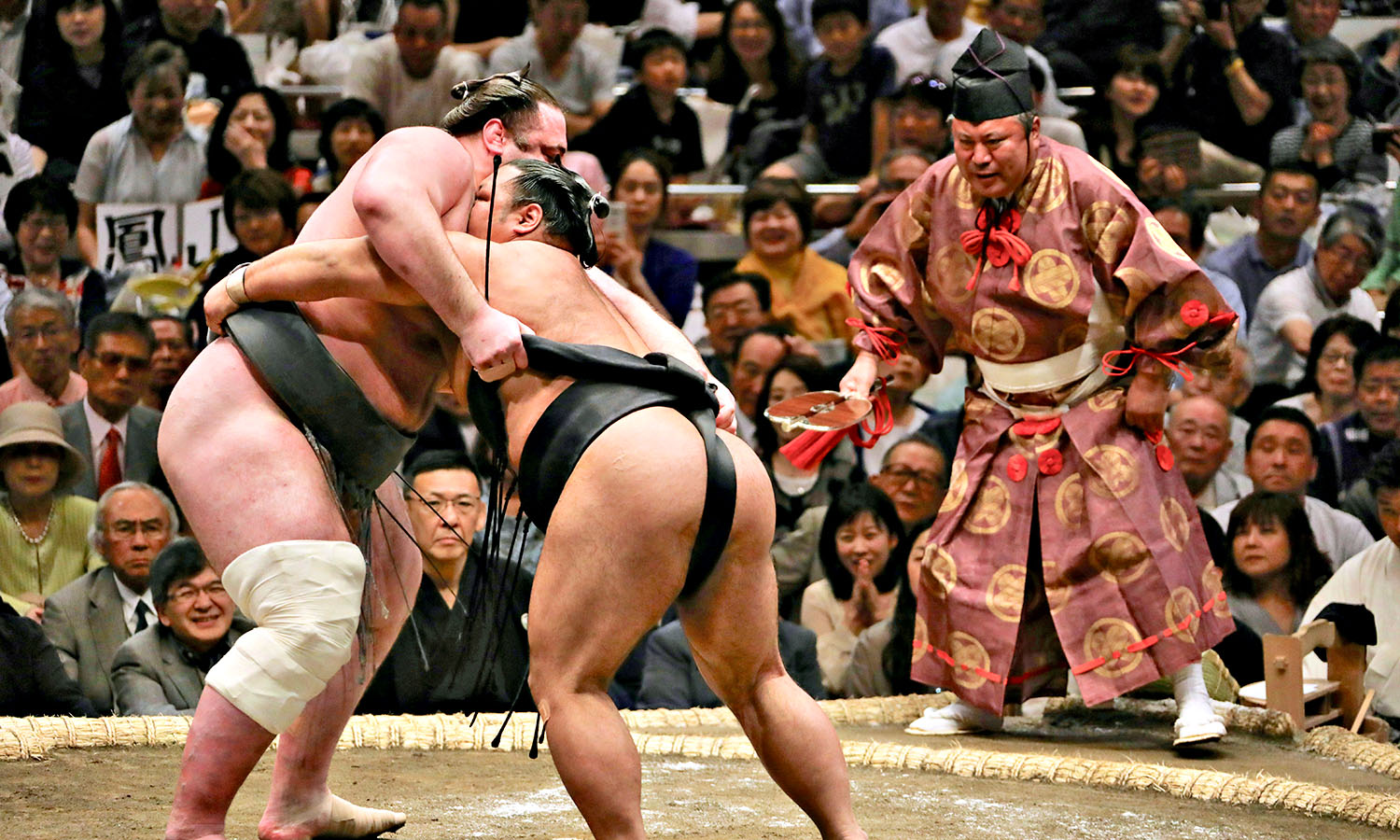
If timing aligns, you’ll witness sumo training, enormous athletes moving with surprising grace and terrifying intensity. It’s kinda ballet and kinda like controlled demolition.
Then you board the train south. Rice paddies blur past. Small towns flicker by. And, if the clouds behave, Mount Fuji looms in the distance, symmetrical, sacred, smug.
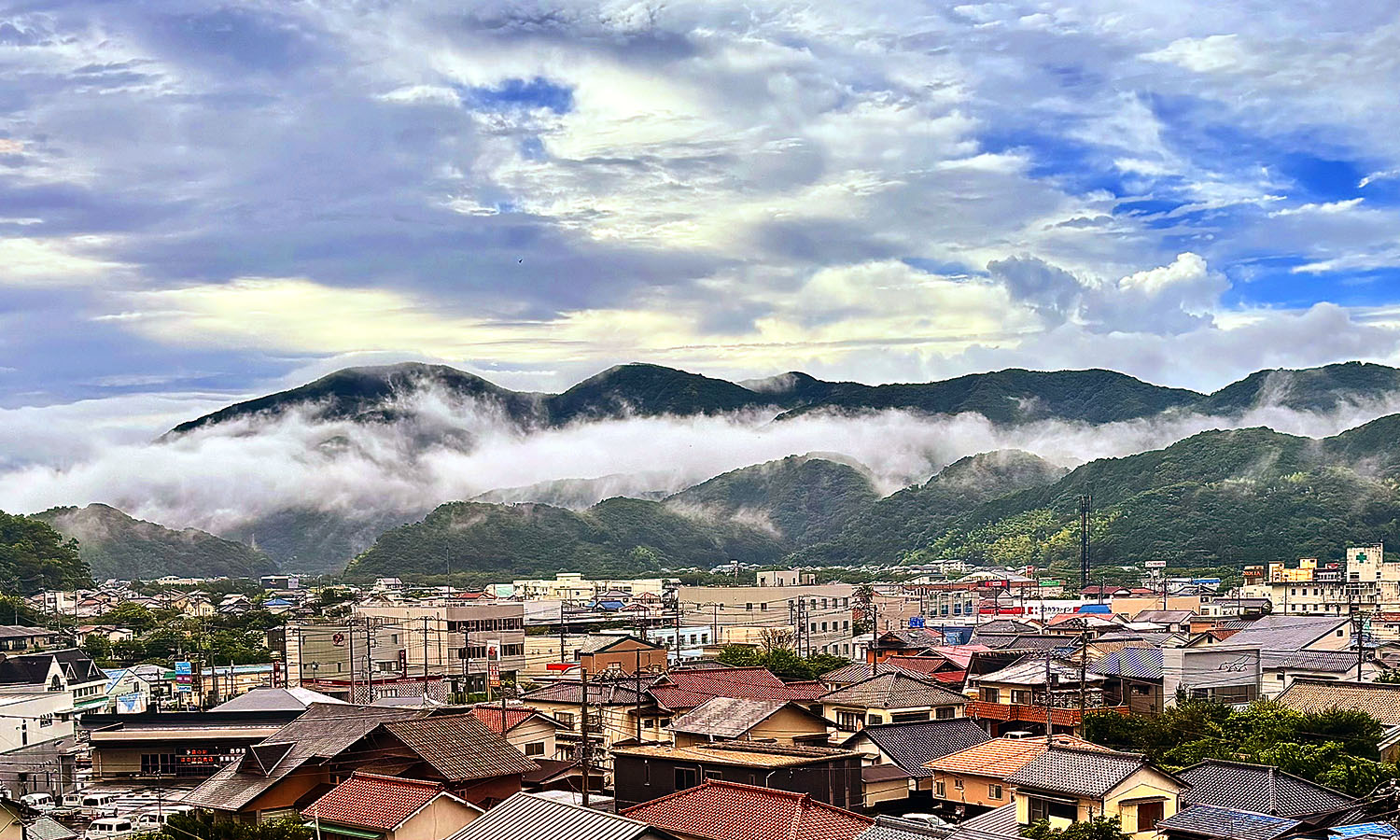
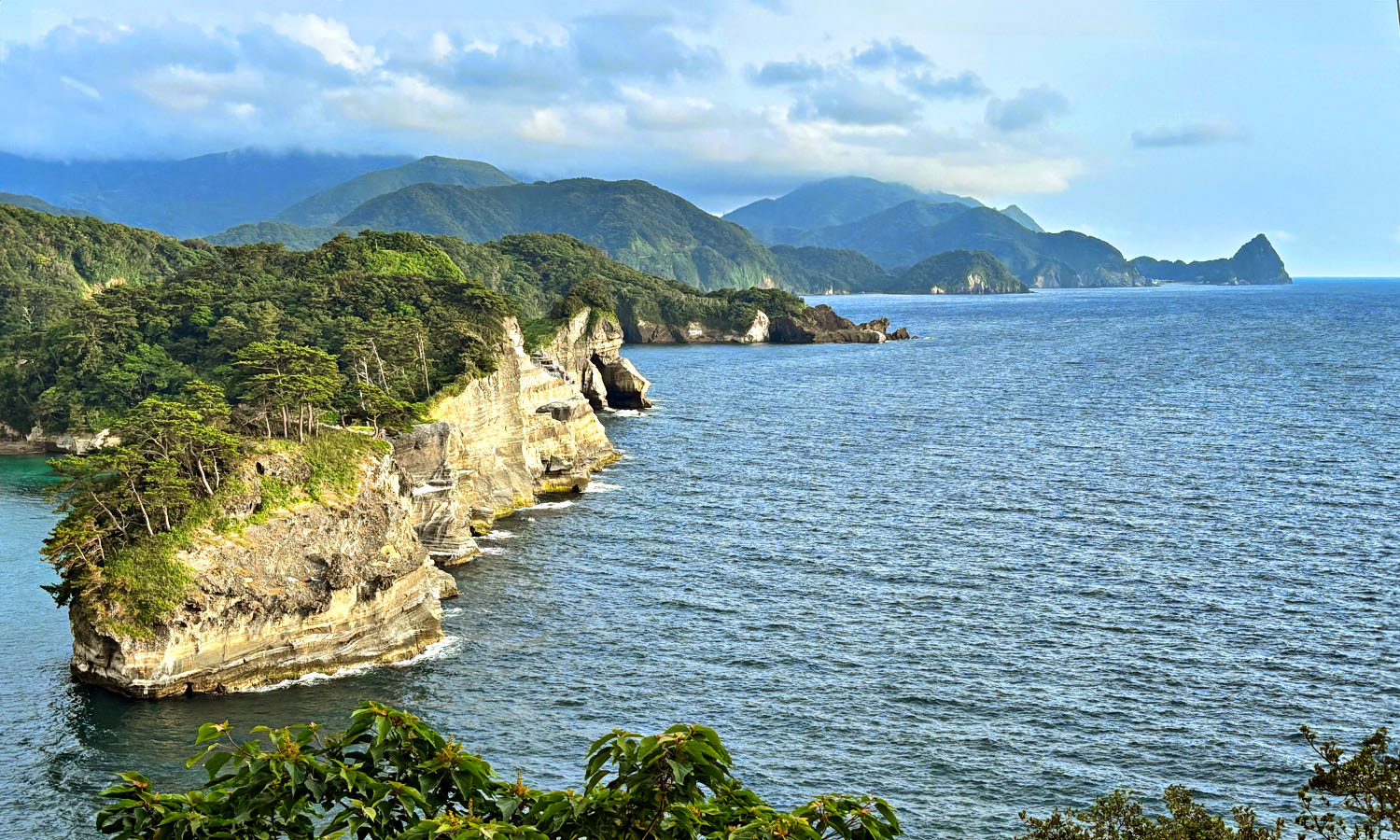
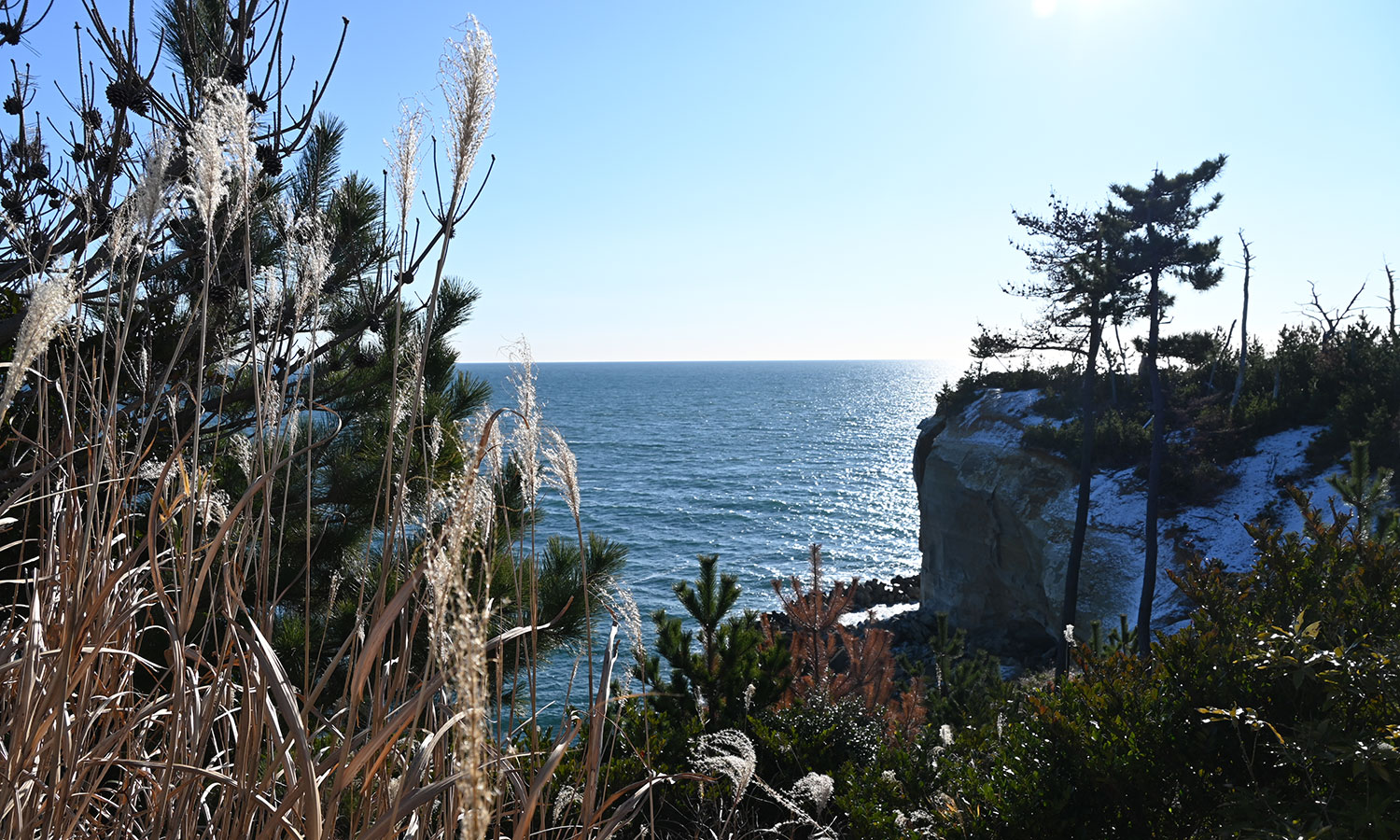
You tunnel through mountains and suddenly the Pacific appears. Cliffs. Points. Jade water. You’ve arrived in Matsuzaki on the Izu Peninsula.
Your home is Izu Matsuzaki-so, a local-run inn perched above Suruga Bay. There’s a hot spring bath on the roof. There’s a restaurant called SUNSET. There’s sake. You’re going to be just fine.
Then it begins.
Your first swim: 3km from the beach along a volcano-formed coastline. Fishing boats idle offshore. Locals watch from the sand. The water deepens to ocean blue but stays calm, protected. It’s the perfect “hello” to Japan.
You climb out grinning, salty, already addicted.
Dinner is local fish, shrimp and shellfish. You soak in the rooftop onsen and stare at the coastline you just swam.
You wake to ocean light. Fresh fruit. Coffee. A cheeky pre-breakfast dip.
Today is Iwachi, home to an annual open water swim. Conditions decide the plan. Two 1.8km swims. Race pace if you’re feeling heroic. Leisurely cruise if you’re not.
You glide along “Silent Beach” in Nishi Izu, then toward Ishibu. Both beaches have outdoor onsens, freshwater springs spilling into the sea. You soak where hot mineral water meets salt. It feels illegal. It isn’t.
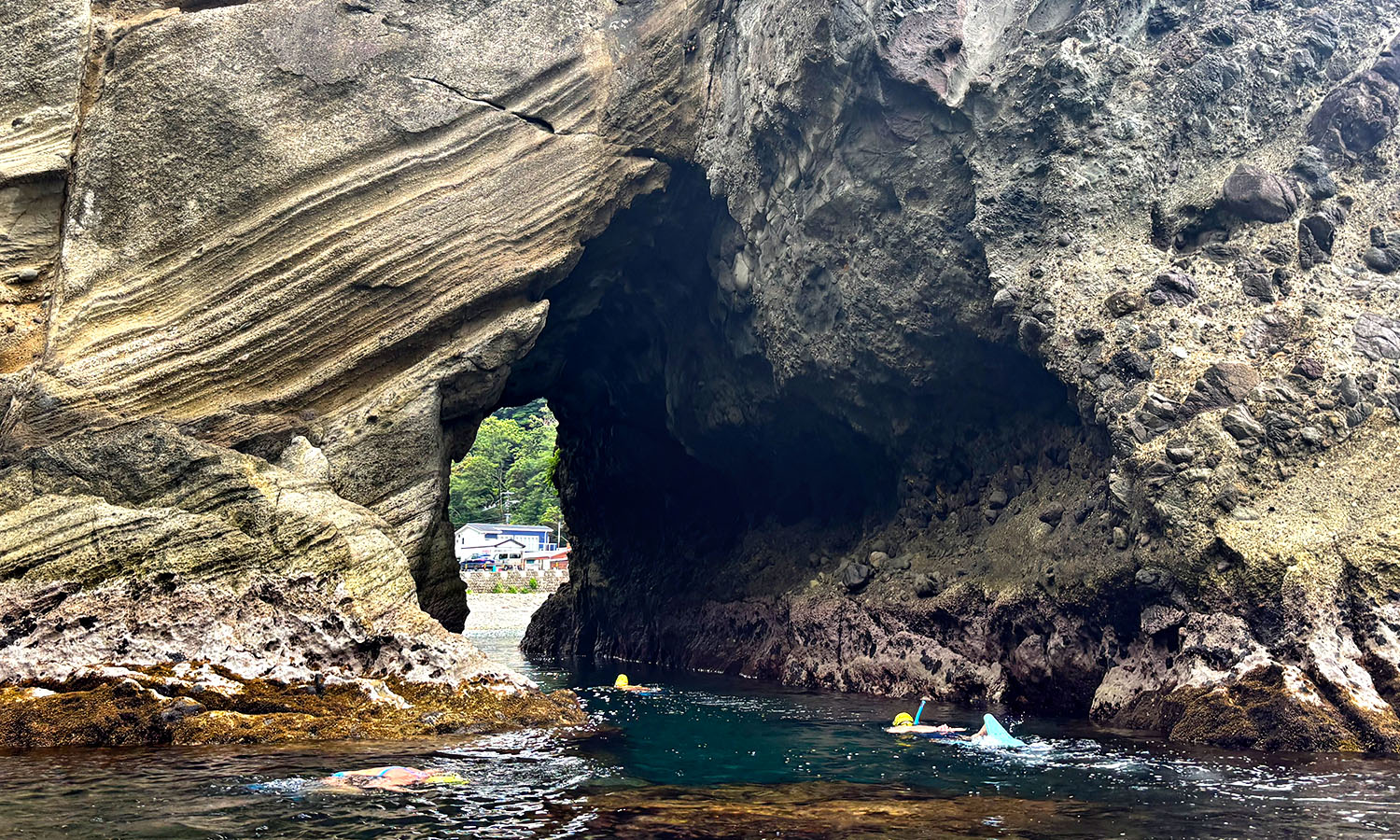
You start at Senganmon, walking through a cave to begin your swim at Hagachizaki Beach. It’s cinematic. You feel like you should have background music.
The day is two 2km swims, broken by beach lunch and whatever flavour of adventure you crave: technique session, full relaxation, or coasteering with expert guides.
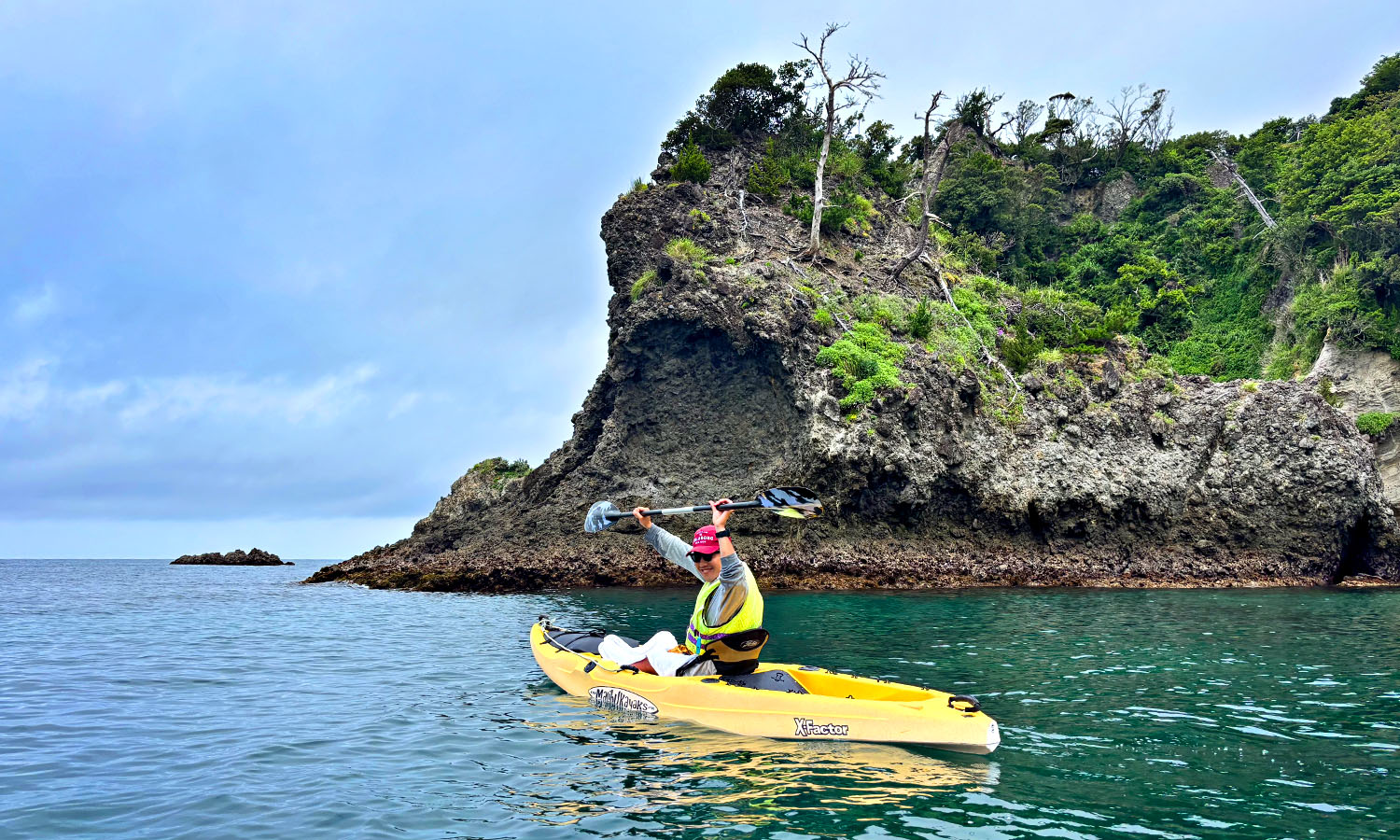
Climb rocks. Leap into hidden coves. Swim through sea caves. Discover secret islands that look like they’ve been misplaced from a Miyazaki film.
If you’ve ever been swimming and thought, “What’s just around that corner?”, today you find out.
Dinner brings warm or cold sake, depending on mood. By now you’re speaking fluent “just one more glass”.
Matsuzaki Beach curves in a perfect arc, pine groves guarding white sand. Today’s headline: 4.2km from a small fishing village back toward Matsuzaki.
This is your chance to stretch out. Find rhythm. Let your stroke settle into something meditative. Or slap on fins and conserve energy, no ego here. You pass cliffs, fishing boats, and water so clear you can see shadows dancing beneath you.
You’re fitter now. Calmer too. The ocean’s no longer intimidating, it’s inviting. Dinner is more local seafood. You’re starting to consider moving here.
Morning brings a visit to the local fish market. Squid ink tea? Raw octopus? Why not. You’re in Japan. Then it’s island hopping in Nishi Izu. Two 2.5km swims toward Sanshiro Island, with a lunch break on the island itself. At low tide, you can literally walk across shallow channels, spotting octopus, sea horses, sea cucumbers and the occasionally terrifying fugu.
It feels like you’re swimming through an aquarium designed by Mother Nature on a creative streak.
Tonight, there’s optional karaoke in a tiny fishing village. You haven’t truly bonded as a swim group until someone attempts Bon Jovi in broken English.
This is what you’ve built toward. A 5km swim from Futo Beach to Tago Island.
There’s a lighthouse waiting. On clear days, Fuji watches from afar like a dignified supervisor. You stop mid-swim, tread water, and stare at that perfect volcanic cone rising above the sea.
It’s challenging, yes. But you’ve earned this. Support boats track you. Fins are welcome. Smiles mandatory. You land on the island knowing you’ve done something real.
Breakfast. Bags. Farewells. Tokyo hums. You head home. Salt still in your hair.
Why This Trip Works
This isn’t just a swim camp. It’s 7 nights of local inns and ryokan stays; 7 breakfasts, 5 lunches, 6 dinners. Fully supported ocean swims. All transport. All listed activities. It’s tradition and technology. Neon and nature. Sushi and sea cliffs.
Japan is where the past and present shake hands. The Izu Peninsula is where the land meets the Pacific in a blaze of volcanic drama. And this trip? It’s where your swimming goals meet a bucket-list adventure. You come for the kilometres. You stay for the sake.
There’s something deeply satisfying about sleeping in a tree. Maybe it’s the childhood fantasy finally upgraded with decent plumbing. Maybe it’s the smug thrill of being eye-level with parrots while everyone else is stuck on the ground. Or maybe it’s just that life is better when your bedroom sways gently in the breeze and your morning alarm clock is a howler monkey.
These aren’t your dad’s backyard planks nailed to a gum tree. These are architectural love letters to nature. Bamboo cocoons overlooking the Pacific. Solar-powered jungle pods. Baobab-wrapped hideaways. Designer nests with cedar hot tubs. Hand-built East African masterpieces that make the word “unique” blush.
Here are five treehouses that prove the best way to travel is slightly off the ground.
If Tarzan had a wellness retreat, this would be it.
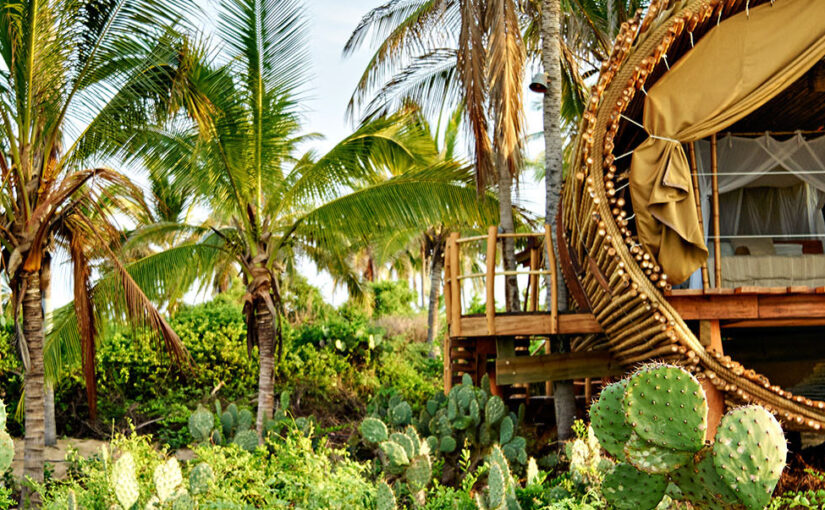
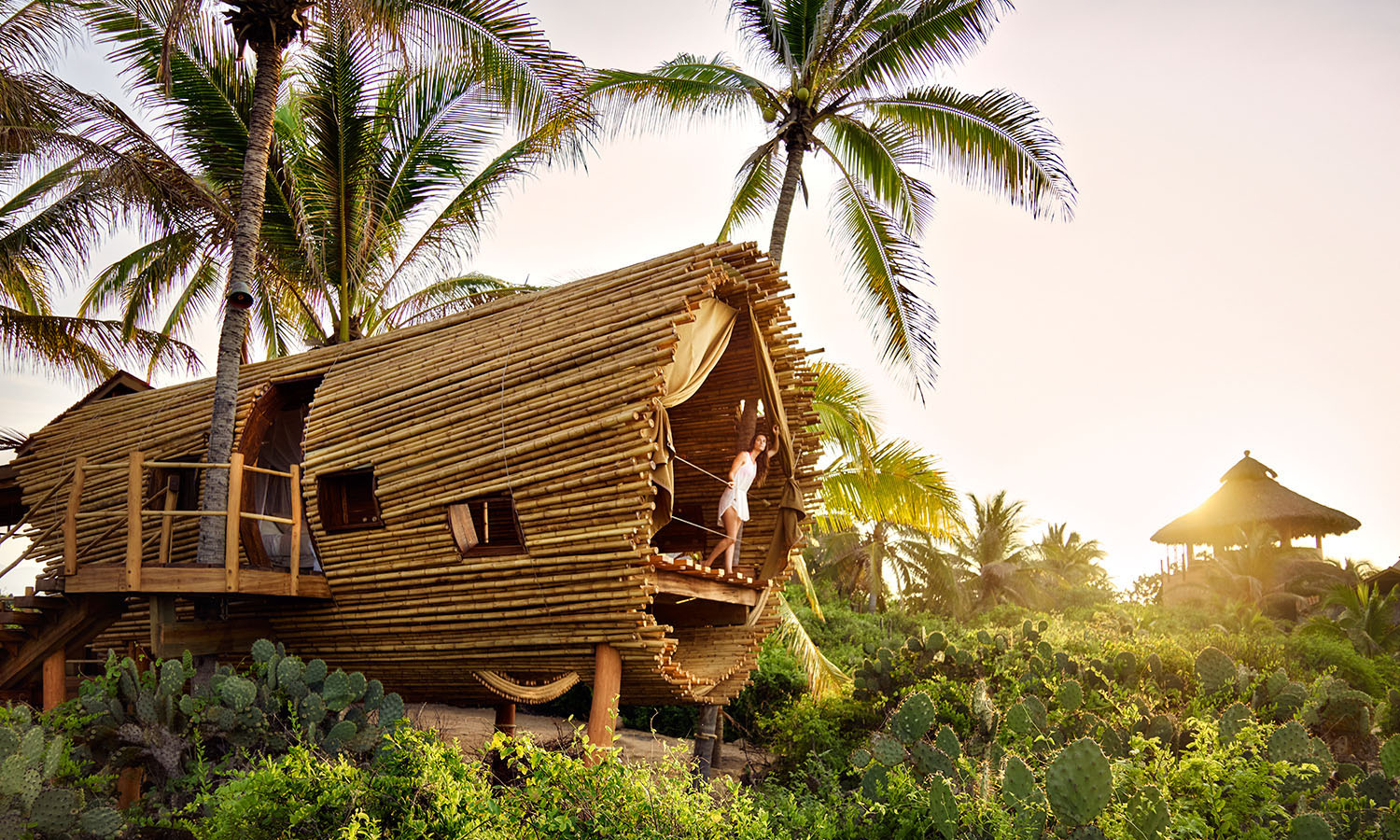
Set on 80 hectares of gloriously untouched beachfront, Playa Viva is eco-luxe without the preachy pamphlets. The resort has 12 beachfront rooms. Sure the casitas and suites are all very tasteful, but we’re here for the Treehouse. A tubular bamboo beauty that looks like it’s been gently exhaled into existence by the jungle itself.
You sleep in a king bed suspended above the palms, stare directly at the Pacific Ocean, and pretend you’re the only person left on earth (with excellent bathroom facilities). There’s a private lounge, a proper bathroom, and enough sea breeze to convince you air-conditioning is a conspiracy.
Days here are dangerously wholesome. Sunrise yoga with the sun doing its show-off routine over the ocean. Organic meals so fresh they practically introduce themselves. Horse riding along empty beaches. Snorkelling and surfing missions. And if you need your heart gently melted, head to La Tortuga Viva turtle sanctuary and watch baby turtles begin their awkward sprint to the sea.
It’s eco, it’s luxe, it’s slightly smug and you will not want to leave.
Welcome to pura vida with a side of Swiss Family Robinson fantasy.
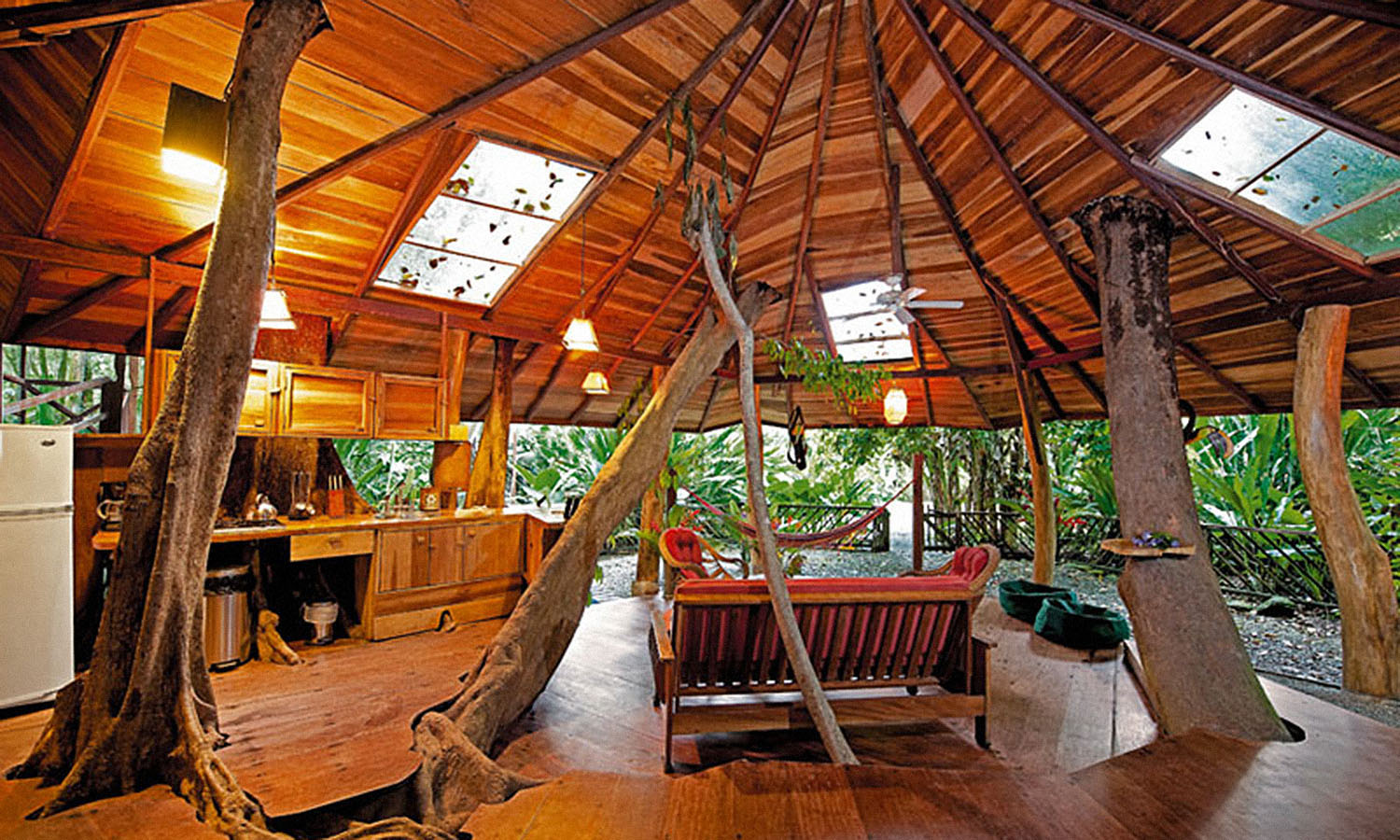
Tree House Lodge sits in thick Caribbean jungle where the soundtrack is frogs, parrots and the occasional monkey argument. The villas are built from recycled materials. Only fallen trees are used and everything runs on solar power. Mother Nature is not just invited; she owns the place.
The Beach Suite is the star. Think giant, spiralling wooden masterpiece with a bathroom that looks like a psychedelic space pod collided with a seashell. It’s gloriously over the top and completely brilliant.
By day, snorkel in Caribbean waters so clear they feel Photoshopped. Roll out a yoga mat on the beach. Swing in a hammock while sloths hang nearby pretending they’re part of the décor. Monkeys swing past like they’re doing inspections.
It’s barefoot, it’s blissful, and it’s the kind of place where emails go to die.
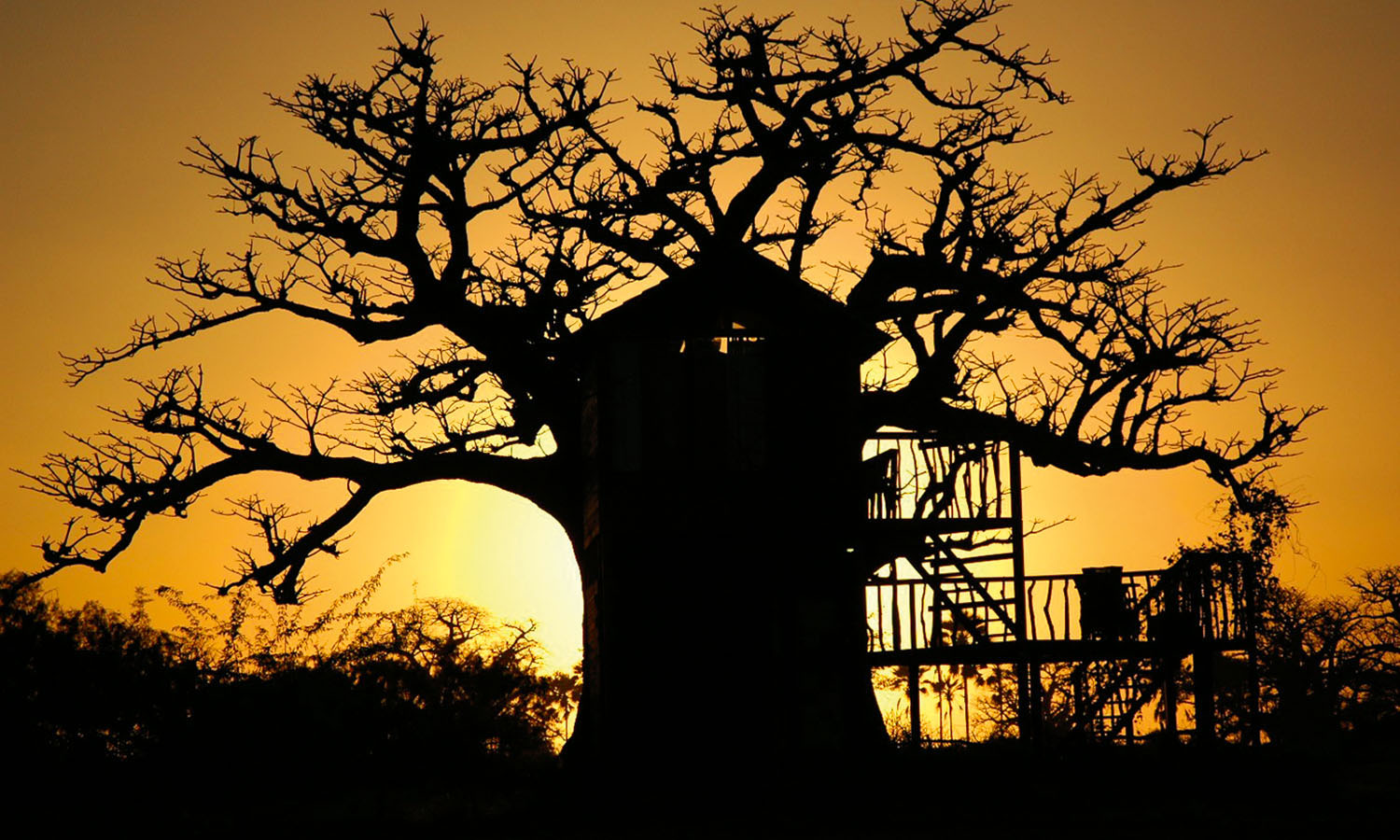
A treehouse wrapped around a baobab? Yes. Yes, please.
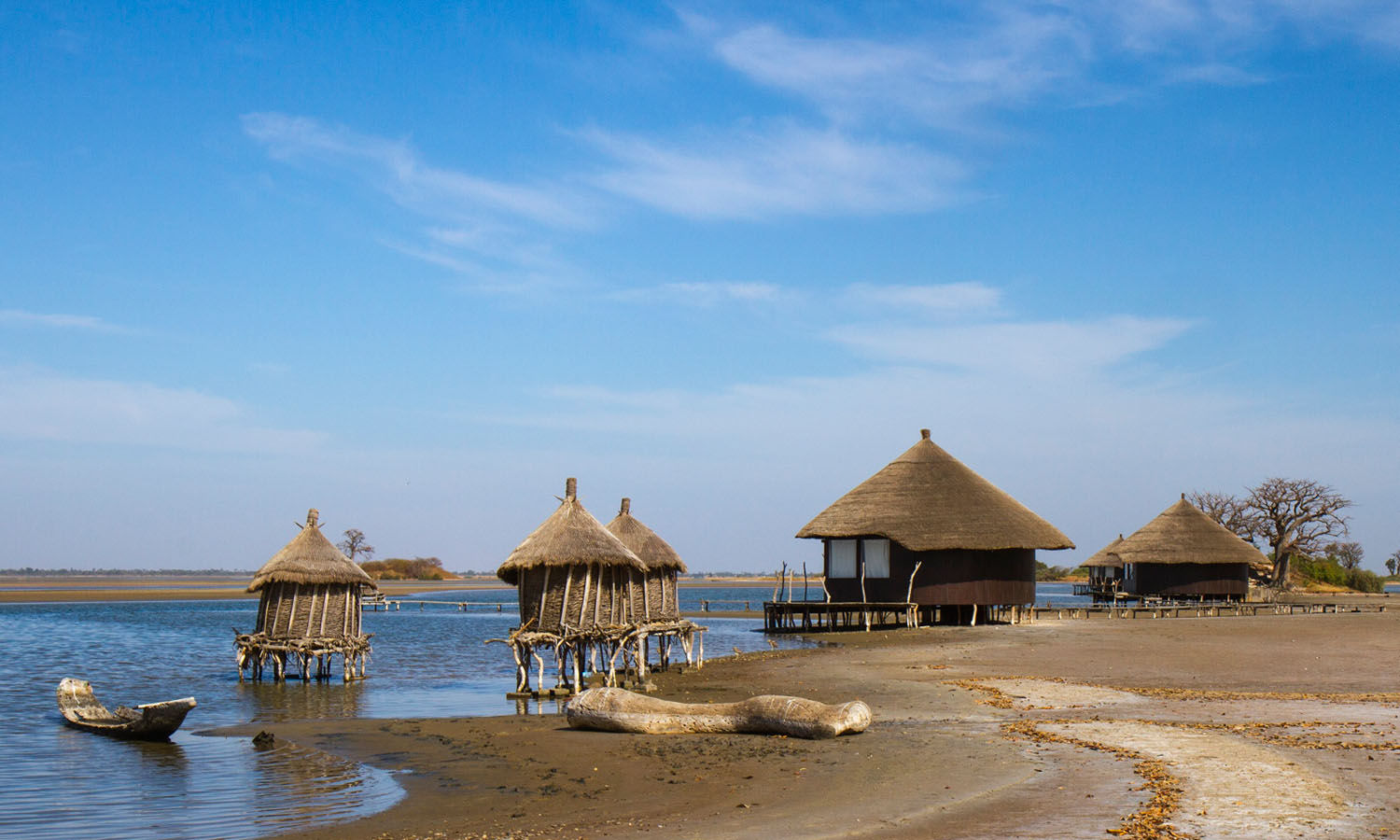
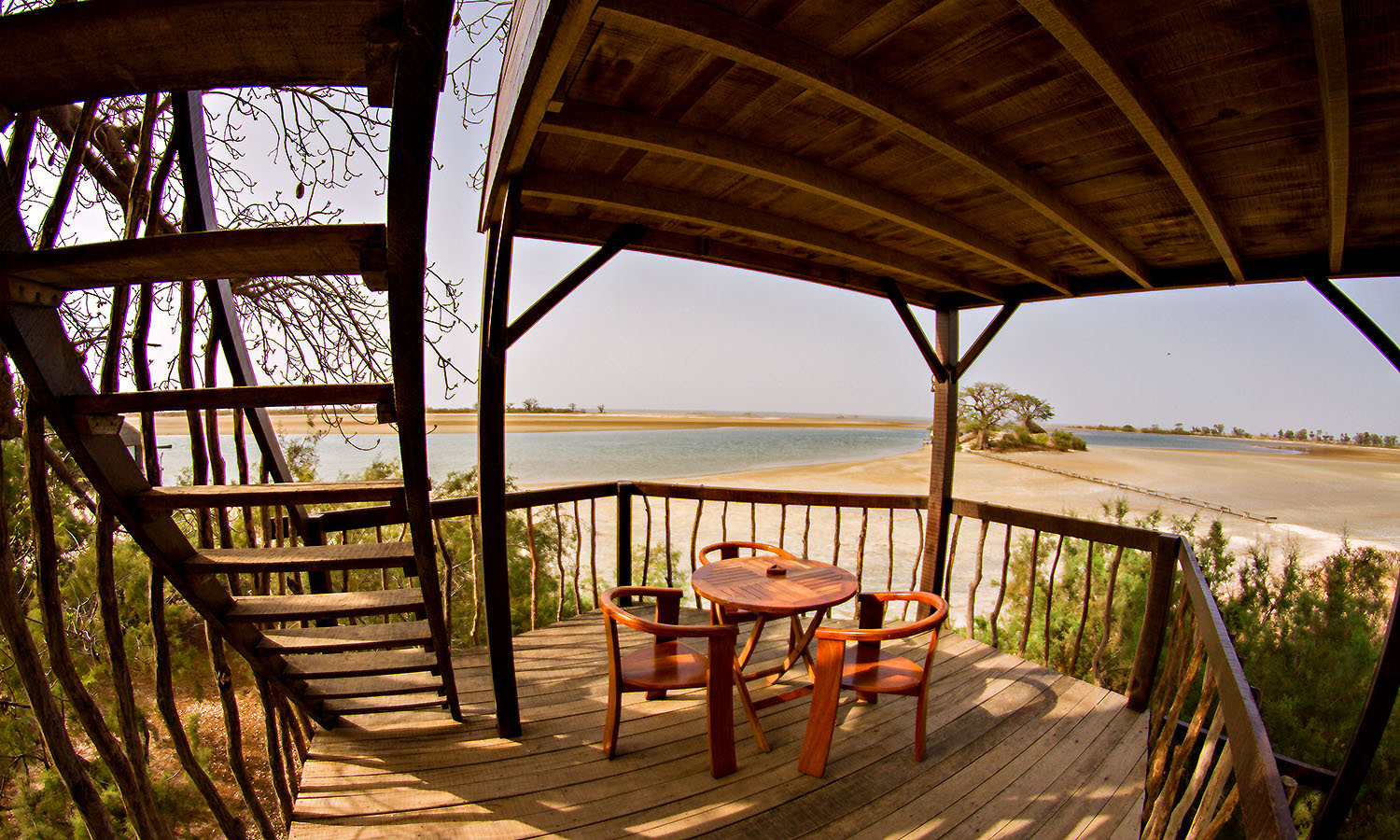
Collines de Niassam isn’t just a resort, it’s a fever dream in the best possible way. The most captivating suites are literally built into and around the limbs of ancient baobab trees. Two storeys high, they give you front-row seats to salt flats and winding waterways that eventually kiss the Atlantic.
You can stay grounded if you must. There’s cabins surrounded by bougainvillea or perched on stilts over the water, but the baobab suites are where the magic lives.
Spend your days kayaking through mangroves, visiting local villages or pelican-spotting from your elevated sanctuary. Then return for dinner where French chefs take full advantage of Senegal’s local produce. The flavours are bold, fresh and just a little bit showy.
This is what happens when grown-ups build treehouses without budget constraints.
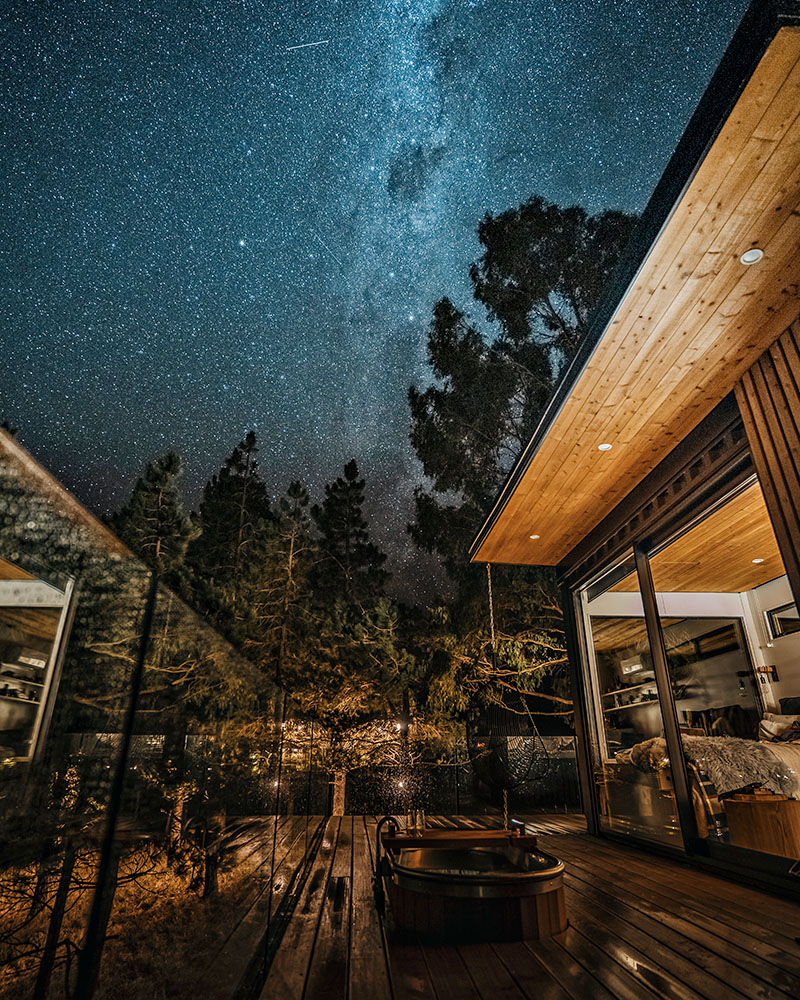
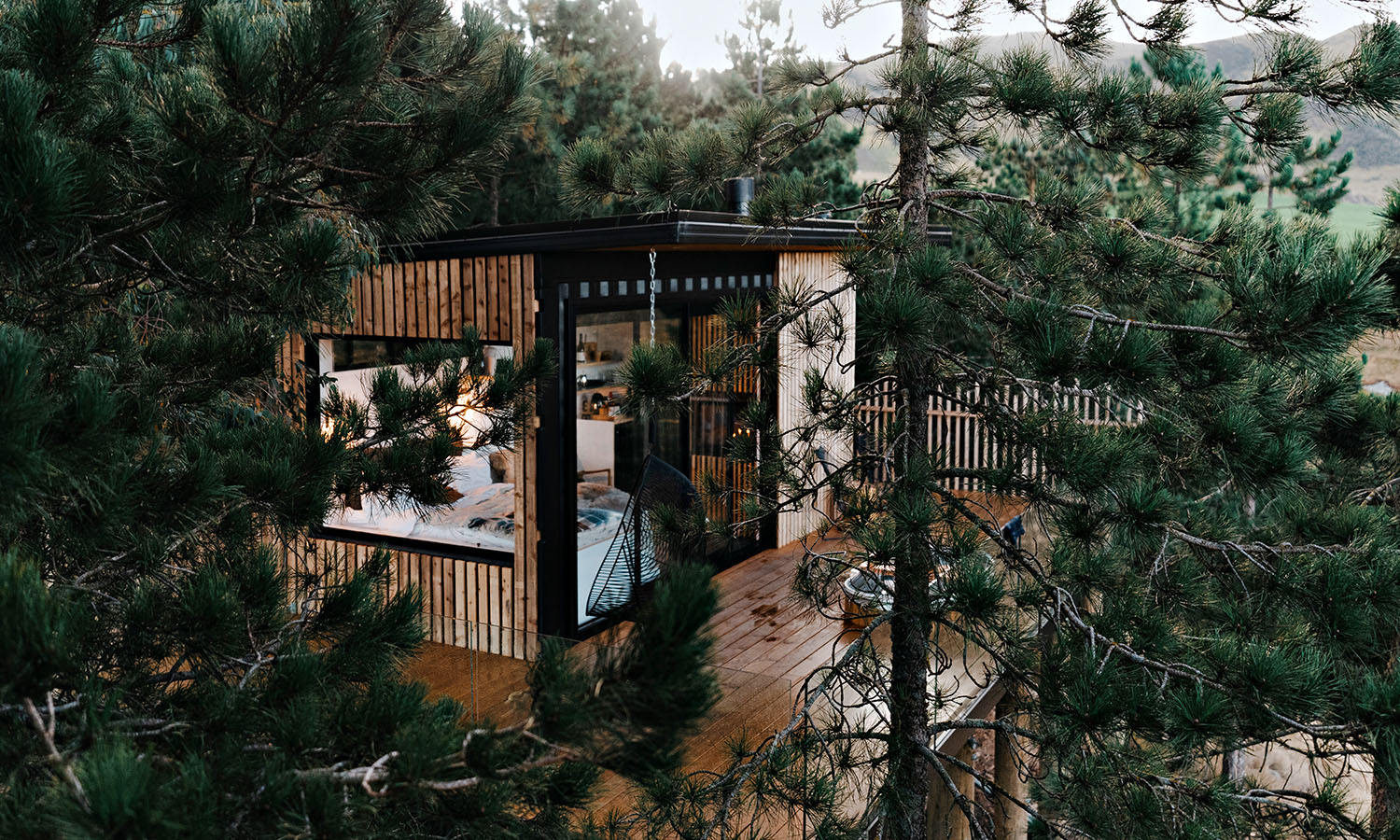
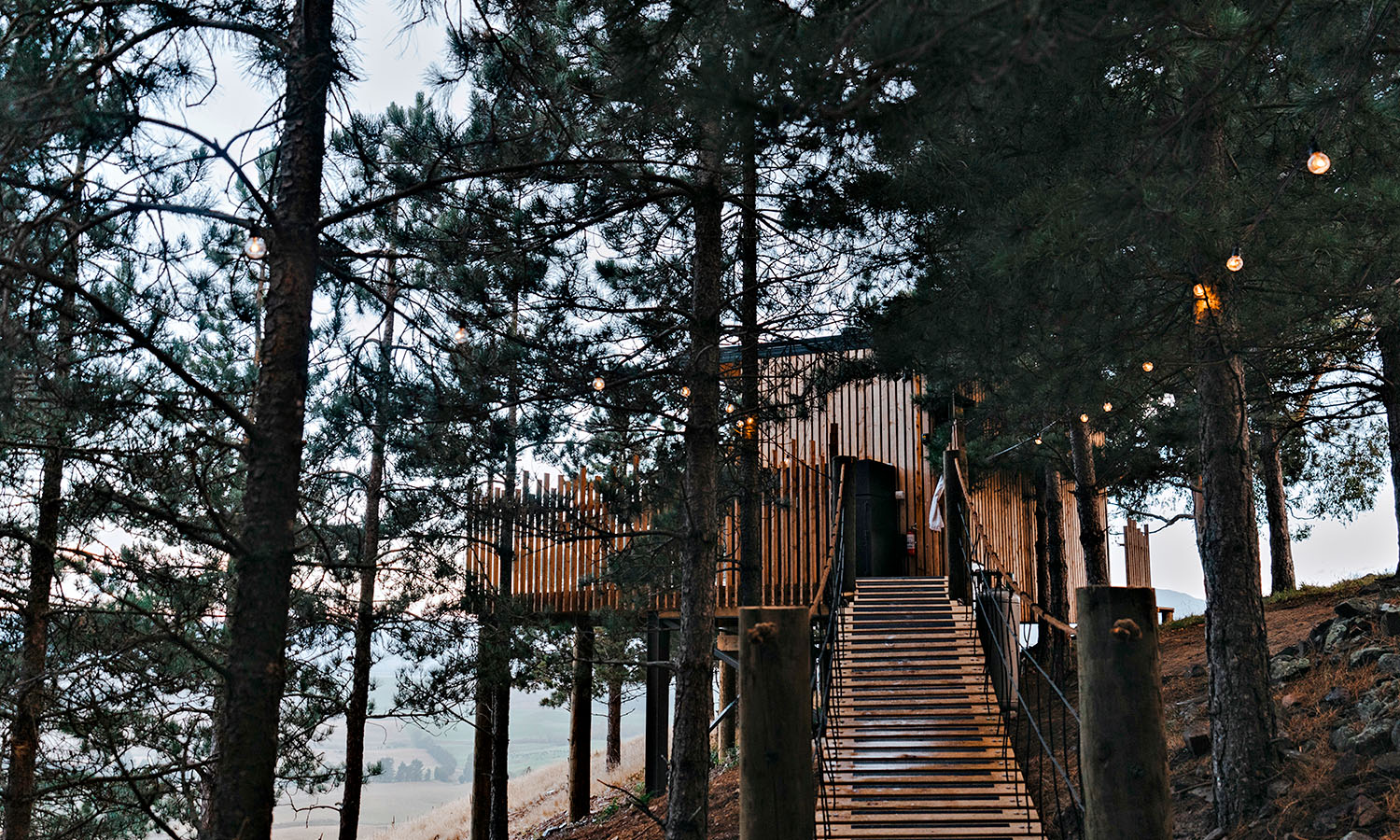
Tucked into New Zealand’s cinematic Hakataramea Valley, Nest Treehouses is a masterclass in architectural indulgence. The first clue this isn’t a childhood knock-up is the swing bridge you cross to get there. Secret entrance? Tick.
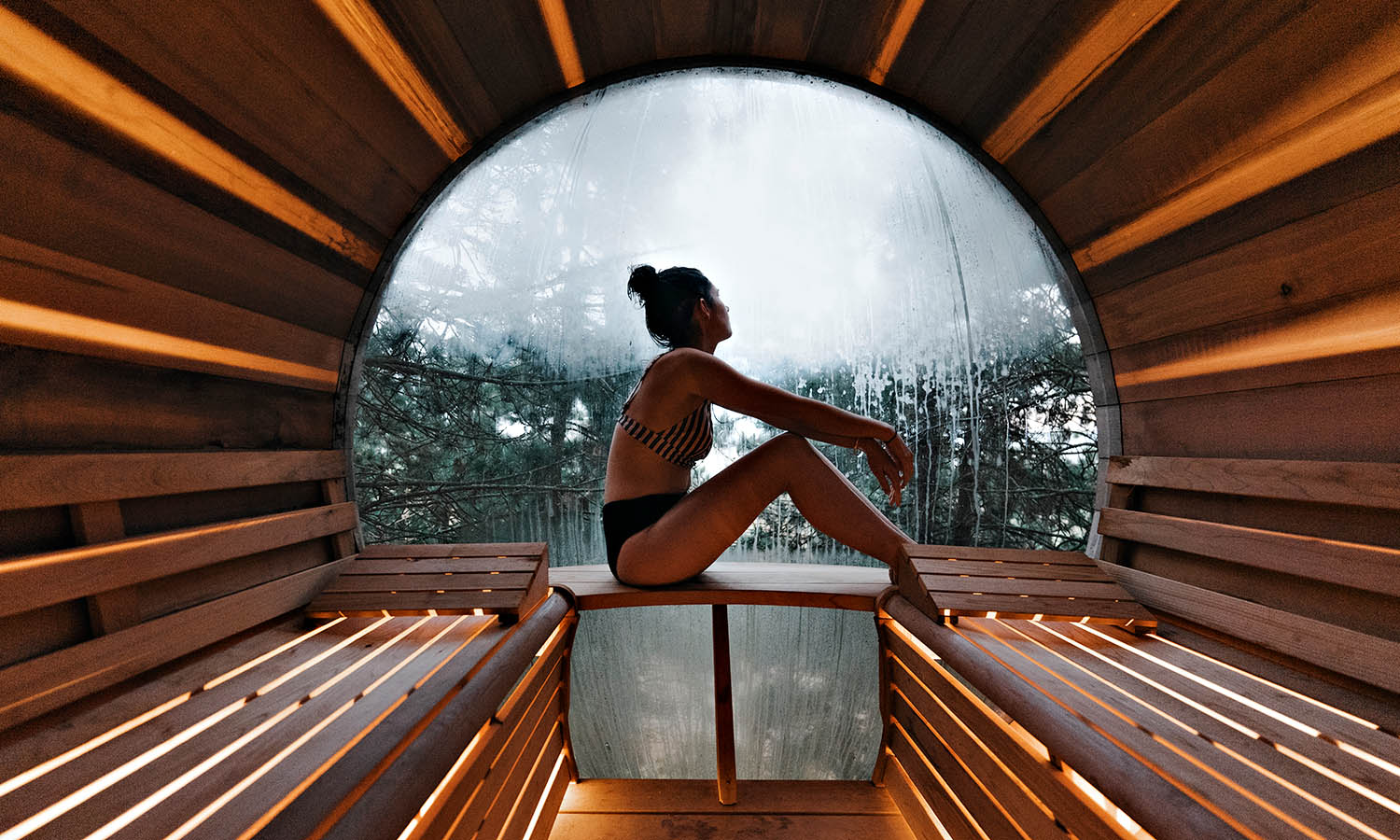
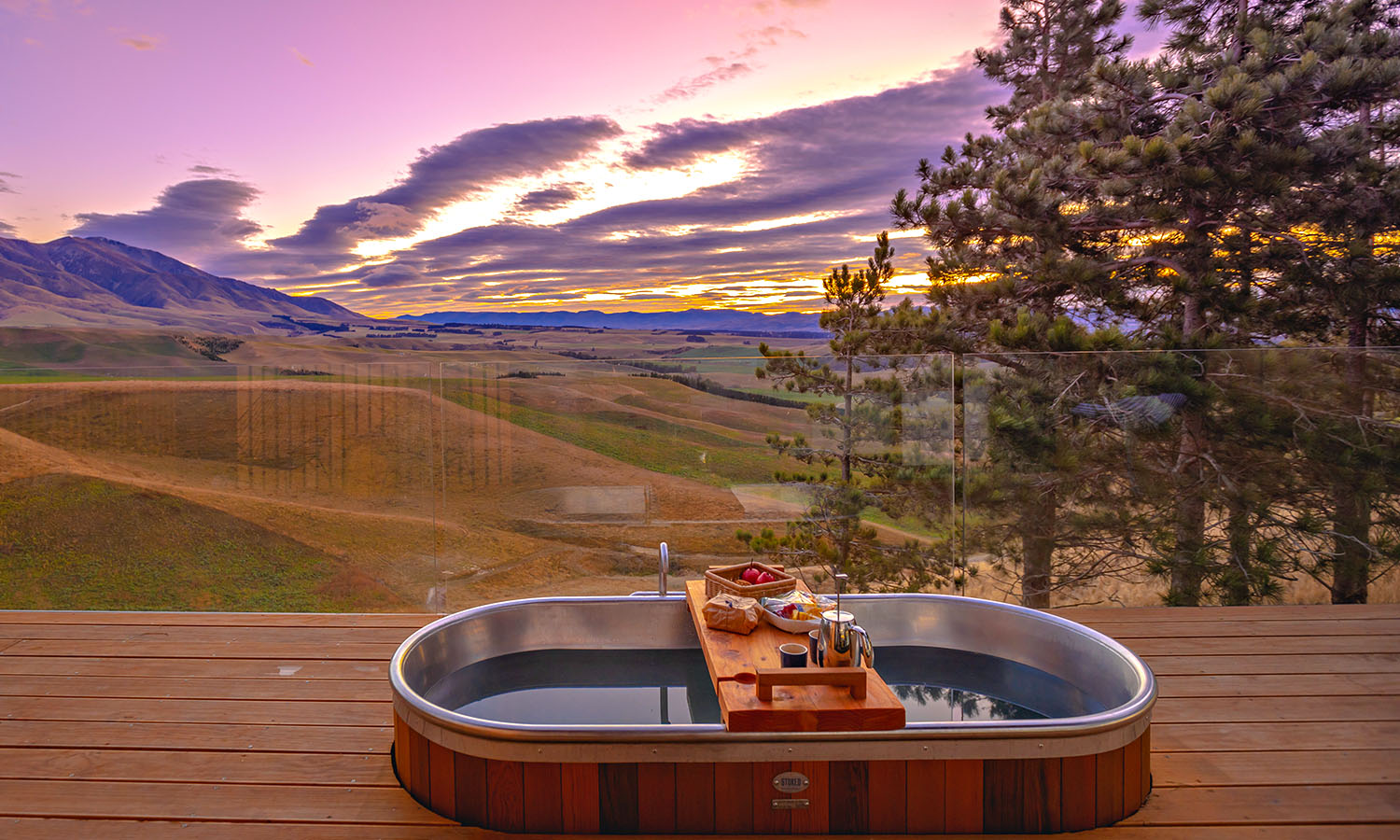
Inside, it’s all timber curves, soft light and design so considered it feels like the trees approved it. Outside, things get dangerously indulgent: a private outdoor cedar bathtub, perfect for soaking under a galaxy of southern hemisphere stars, and a luxury cedar sauna with uninterrupted canopy views.
As the sun drops and birds soundtrack your evening, you can sit by a roaring fire or sip local wine in your tub pretending you invented hygge.
Your hosts, Liz and Andy, affectionately dubbed the ‘Nest makers’, have thought of everything. This is romance, solitude and architectural brilliance tied together with a swing bridge.
Yes, Mafia Island is a real place. No, there are no men in suits exchanging brown paper bags.
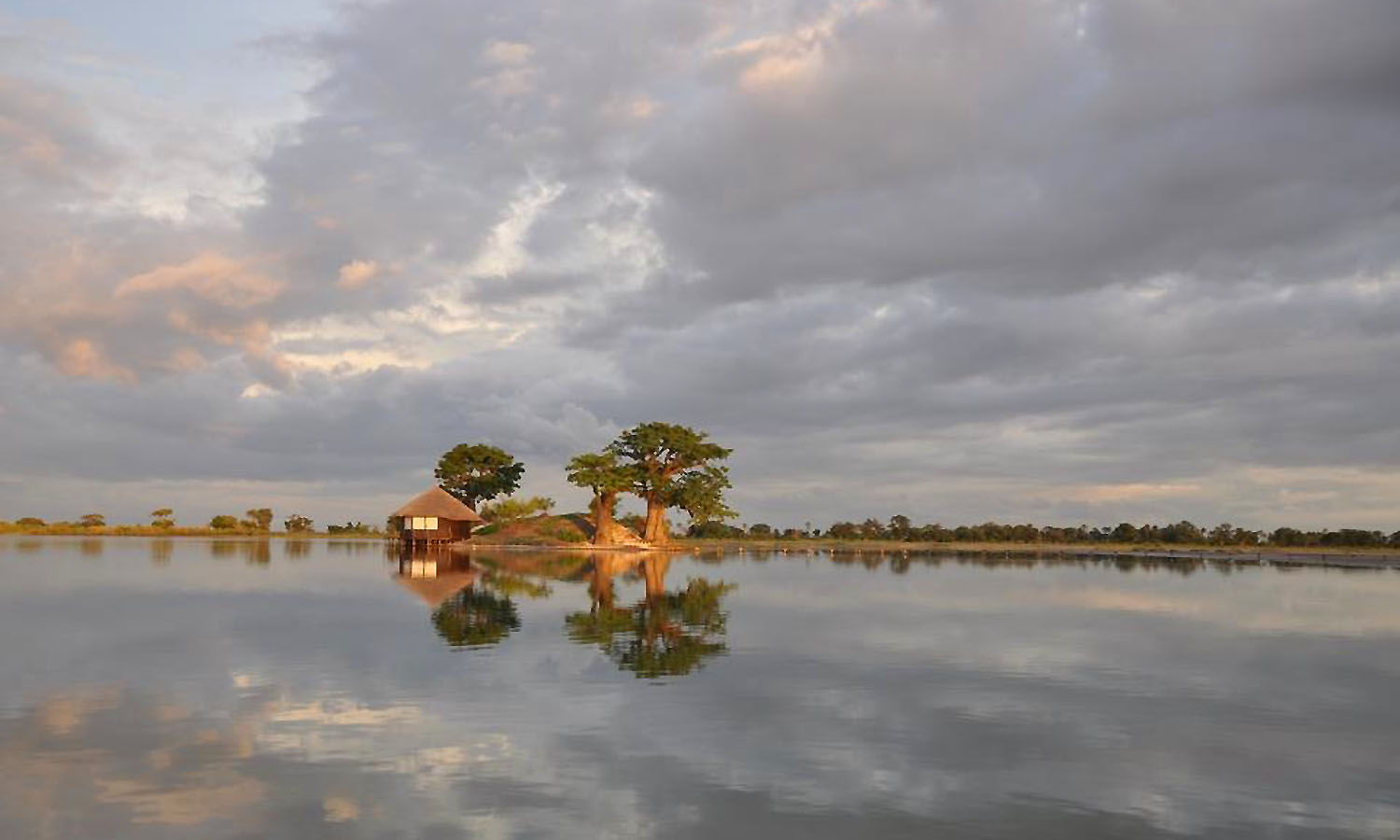
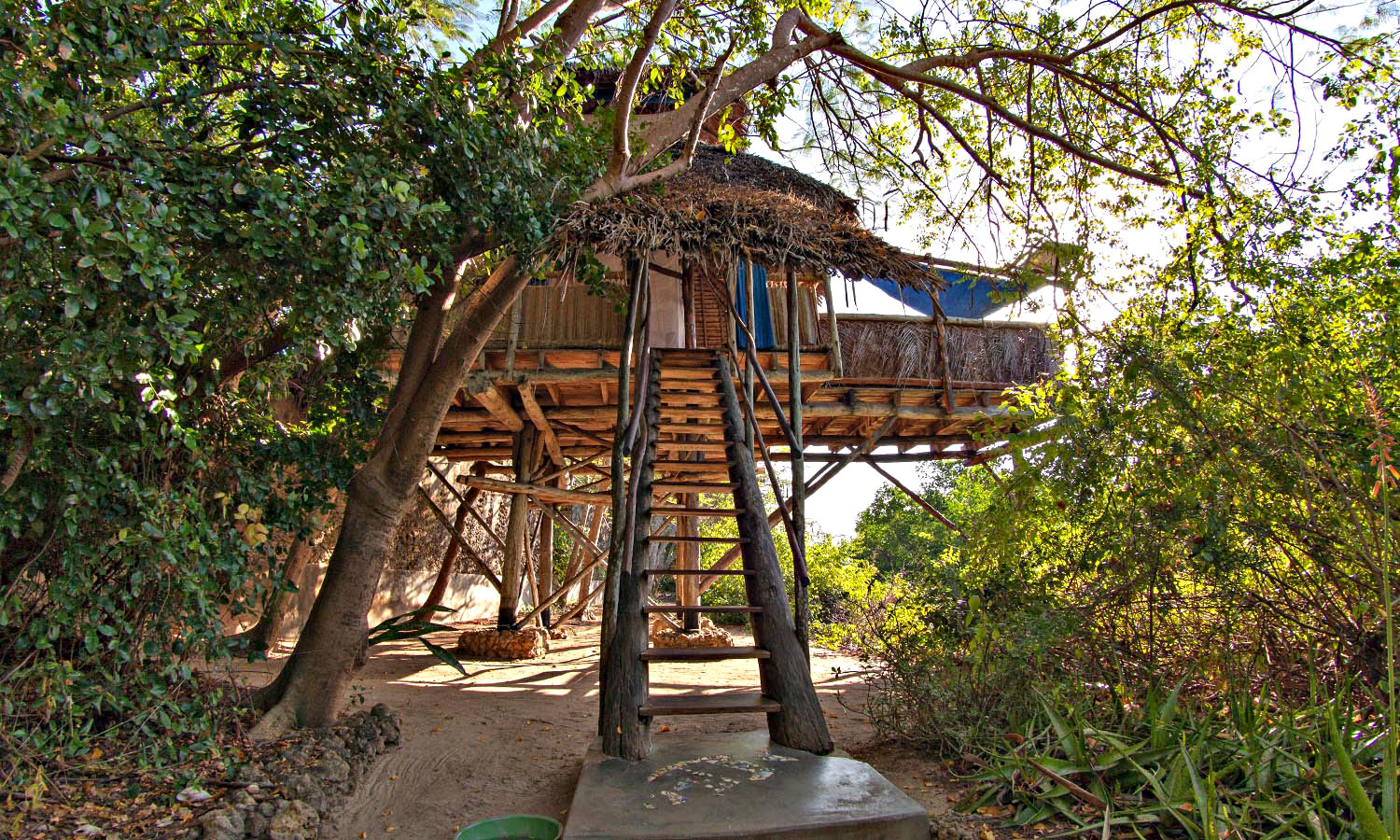
Off the southern coast of Zanzibar, Chole Mjini is the kind of place that makes you question why you ever sleep at ground level. Each treehouse here took six months to a year to build, entirely by hand, using traditional tools and locally sourced materials. No shortcuts. No prefabricated nonsense.
The result? Structures that feel grown rather than built.
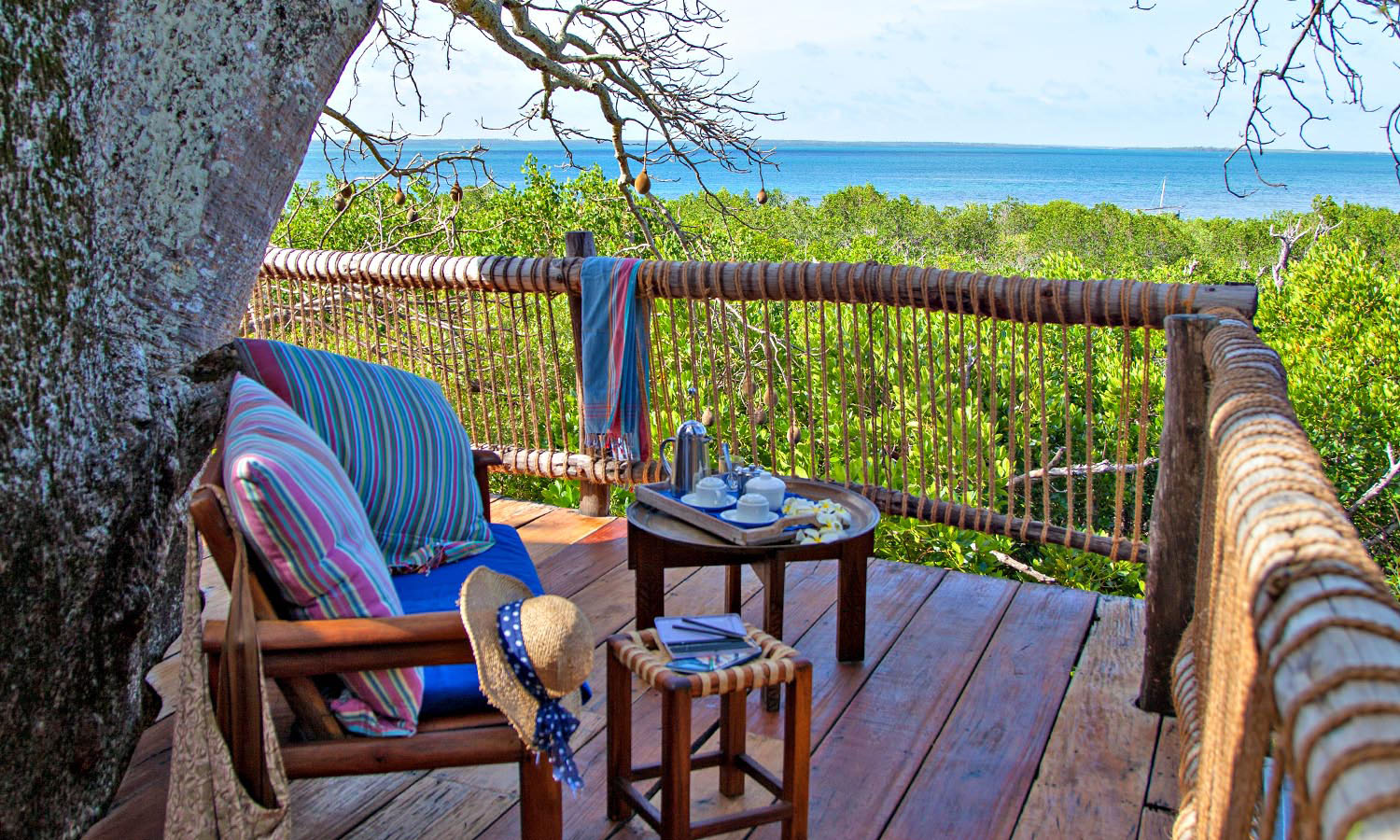
Sandy paths wind through ancient baobab and tamarind trees toward open-air treehouses with mangrove-lined shoreline views. They’re impossible to replicate, not because someone won’t try, but because the devotion poured into them can’t be factory-made.
Nature is constant. Tides shift. Birds circle. Breezes roll in from the Indian Ocean. The only way you could be more immersed is if you joined a Greenpeace flotilla.
It’s raw, beautiful and utterly transportive.
FINAL WORD
Treehouses are no longer childhood rebellion against bedtime. They’re rebellion against ordinary travel. They put you back in the canopy where the air is cleaner, the views are wider and the stories are better.
The only question left is: how high do you want to go?
The reasons your mum won’t want you to visit, are the same reasons you should.
In 2011, the Japanese province of Fukushima hit the headlines for all the wrong reasons: earthquake, tsunami, nuclear reactor meltdowns. It sounds more like a blurb for a horror movie than a holiday brochure. But with the 15-year anniversary looming, a visit to Fukushima is a masterclass in grit, determination – and incredible food…
I’m standing in Futaba. Current population 198. Down from 7,000 before the 2011 disasters. Small before, it’s tiny now with its streets missing houses like teeth. Those that remain have been decontaminated. The others demolished with the radioactive debris taken away.
Pre-meltdown, Futaba was proud to be a nuclear power plant town. It even had a sign hanging over the main street declaring ‘Atomic energy for the bright future’. Ironic when the Daiichi Nuclear Power Plant meltdown made the town uninhabitable until 2022.
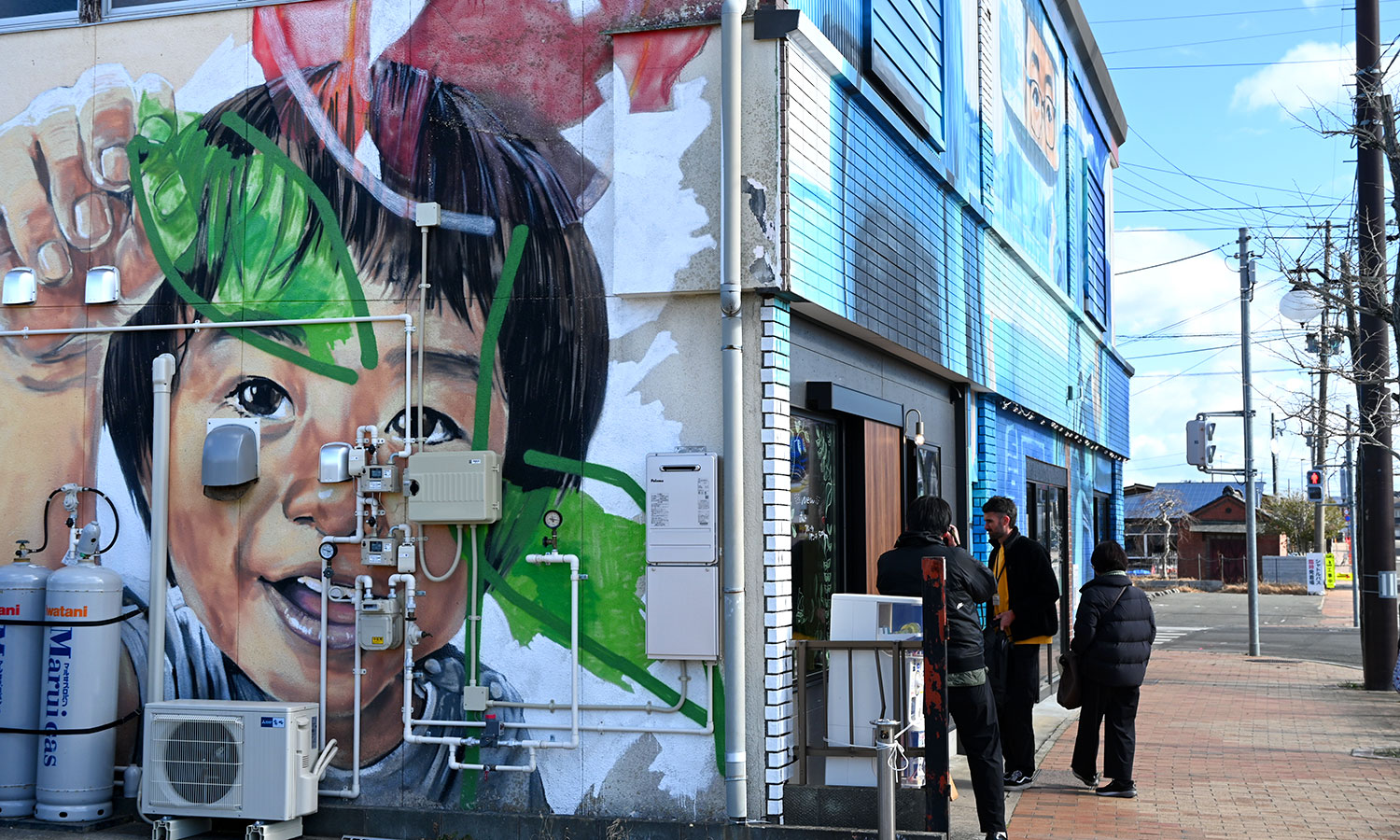
Futaba would have the air of a ghost town, if not for the bright, welcoming murals featuring locals. Splashed across multiple buildings, the artworks make it clear the town is down but not out. One mural stands out, depicting the Japanese saying: ‘Get knocked down seven times, get back up eight’.
Fukushima is the embodiment of that saying – I’ll soon learn the mural project is just one of the many innovations the courageous residents are using to attract visitors to the area – not to rubber neck, but to understand their loss, better prepare for disasters, and enjoy the natural beauty and culture of the home they love.
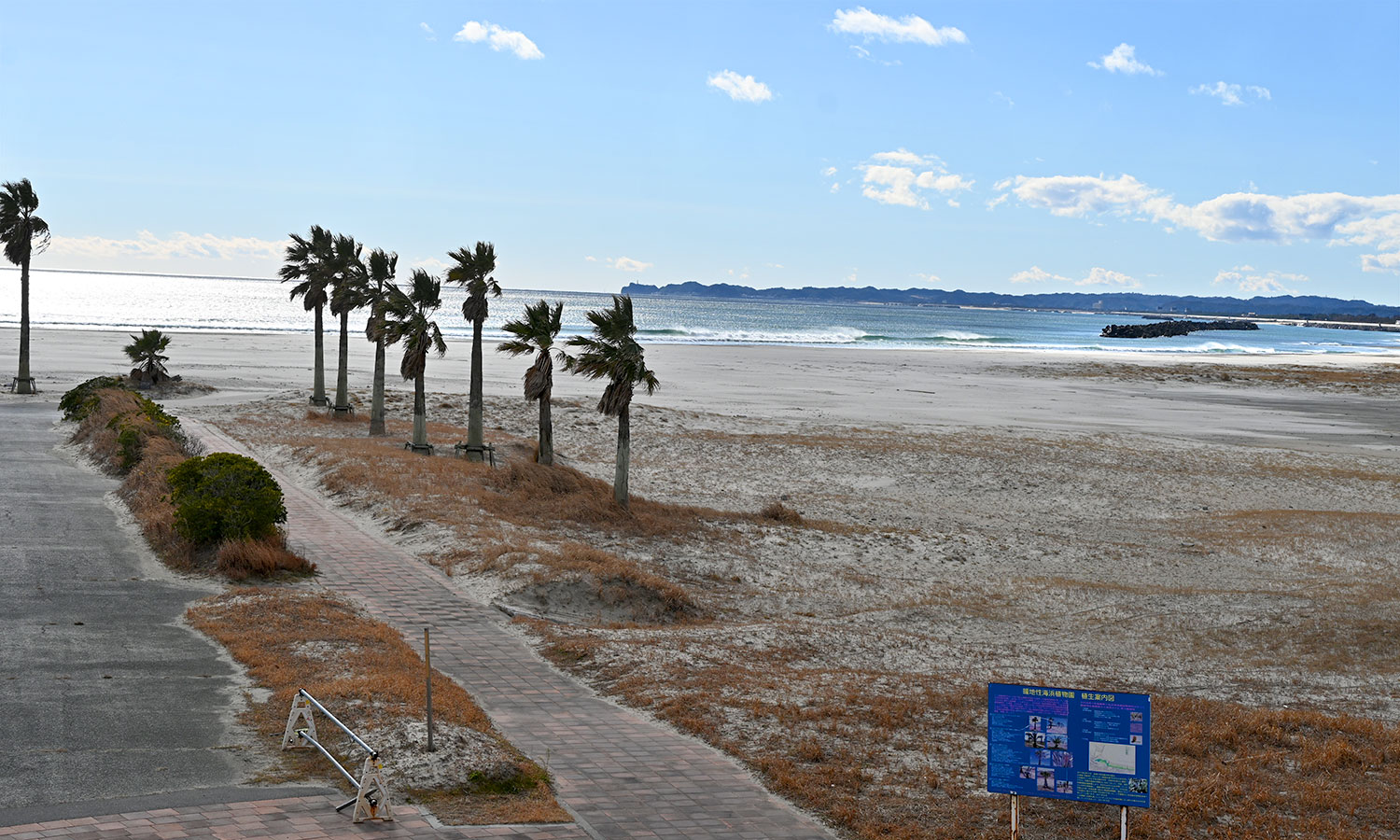
Fukushima prefecture has always been the road less travelled. It doesn’t have the glam of Tokyo, the beauty of Kyoto, or the nightlife of Osaka. But it’s natural beauty lures lovers of nature and more immersive travel. North of Tokyo, a spine of mountains separates the Hamadori coastal region from the rest of Fukushima, plunging to a flat range that runs into the clear waters of Pacific Ocean. Dotted with fishing ports, surf beaches, and hiking and cycle trails, it’s a seafood lovers’ paradise and a traditional food bowl for the rest of Japan.
But what makes it so stunning also helped it earn the unwelcome title of the only place in the world to have survived a clusterfxxk of an earthquake, tsunami, nuclear disaster and reputational damage caused by misinformation and fear.
Even for a country as hardened to earthquakes as Japan (which averages 1,043 quakes a year), the level nine Great East Japan Earthquake was officially the mother of all quakes.
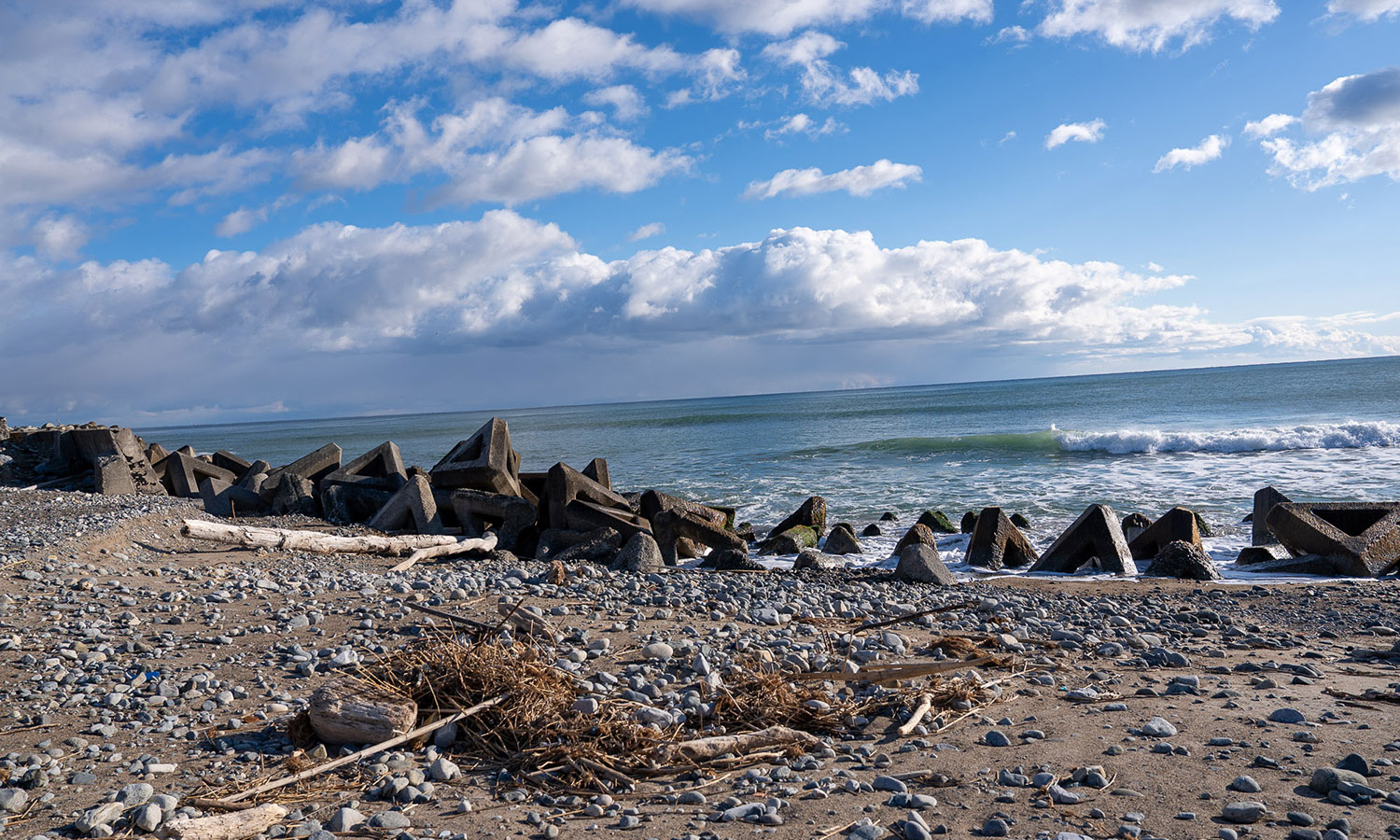
It sparked a massive tsunami that slammed the coastline, making a joke of the existing sea defences and inundating the electricity plant that cooled the Daiichi nuclear reactors. The resulting explosions released radioactivity throughout the prefecture and beyond.
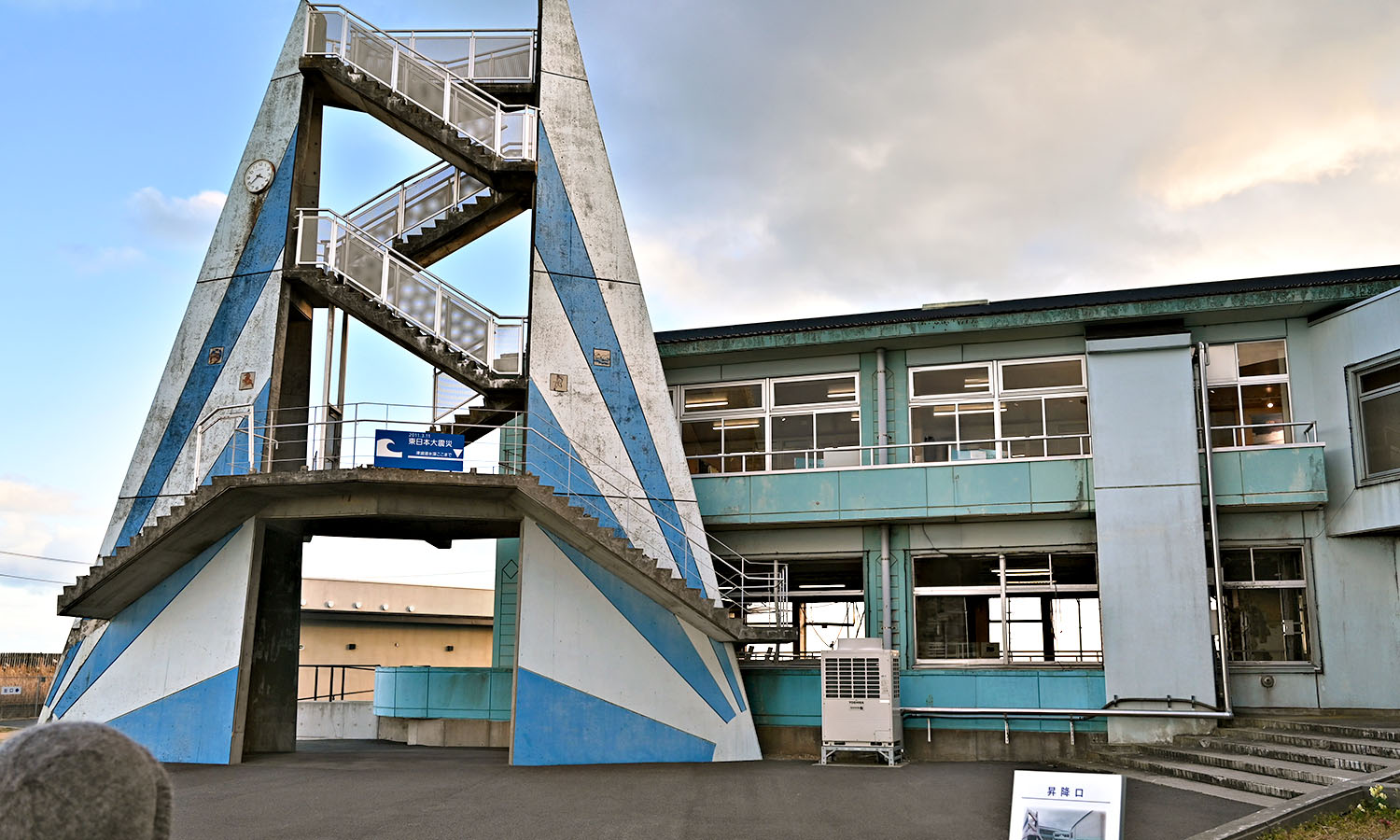
Ukedo Elementary School is only 300 metres from the ocean, which gave teachers and students little time to flee to the mountains before a 15.5-metre-high wall of water smashed into the building. The school is now a trashed shell… windows and walls blown out and drinking taps misshapen by the force of the water.
Remarkably, they all survived, only be evacuated when the first of the three reactor explosions began the next day.
Now the town is back in business, its fishing port has reopened and, on a calm day, it’s hard to imagine the horror of it all. Which is one of the reasons the school remains, as a warning and reminder to reflect on what, and who, is important.
The Great East Japan Earthquake & Nuclear Disaster Memorial Museum provides a gripping blow-by-blow account of the events. The stats are overwhelming: More than 164,000 residents were evacuated throughout Fukushima following the 2011 disaster as radiation levels rose, with 12 per cent of the prefecture declared off limits. As at August 2023, more than 4,000 people had died either directly, or indirectly, as a result of the disasters.
Now, if that hasn’t got you searching for your passport, this should: Tourists have always been fascinated by the end of civilisations, the Mayans, Pompeii, Easter Island. But Fukushima’s story did not begin and end in 2011. It continues as an inspiring example of resilience and reinvention.
The recovery effort has been impressive. By 2023, only 2.2 per cent of Fukushima was off-limits and 138,057 of the evacuees had returned.
Destroyed or uninhabited homes have been replaced by banks of solar panels, higher and stronger seawalls have been built, topped by roads and paths to ensure the region’s iconic views are enhanced, rather than obstructed. And with fewer people than Japan’s overwhelmed tourist hotspots, the friendly locals go out of their way to ensure you are welcomed and have a great time.
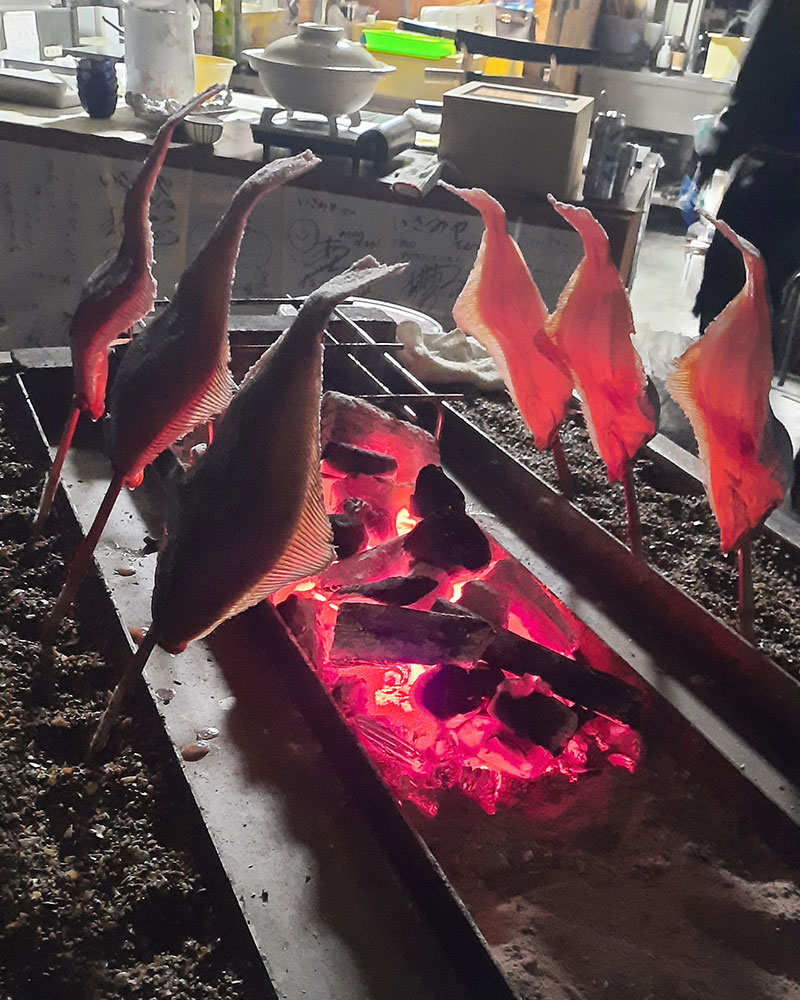
In Soma City, that includes providing a traditional Hamayaki experience – grilling fresh seafood over charcoal. I’m told to select a fish and plunge a skewer through it in a way that has it mimic dancing, before lining it up next to the coals. The biggest surprise, apart from the comedy of one of the chefs donning a samurai wig and brandishing a katana (sword) whilst cooking tempura, was discovering how delicious the local seaweed is fried. Who knew?
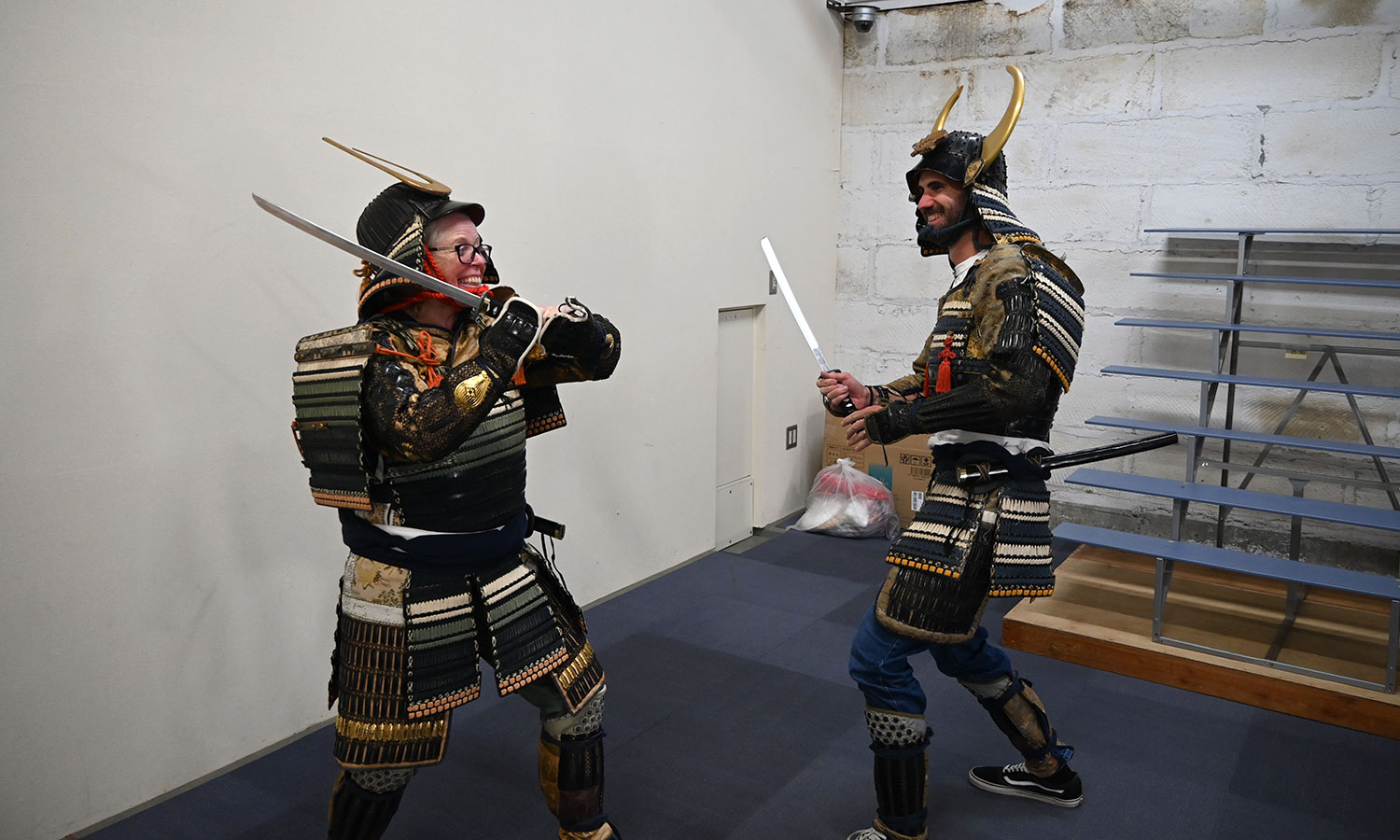
Samurai warrior culture is big in Soma, which boasts a 35th generation OG samurai as a local. Each year, hundreds of mounted participants reenact battles and race horses whilst wearing samurai armour during a three-day festival.
Fun? Yes. Difficult? No doubt. I stand nervously whist three women dress me in Samurai armour for a cosplay experience. I’m warned it weighs 20kg, and I definitely lose a few centimetres of height when the final touch – a helmet – is strapped on. Walking in a straight line is a struggle, so getting on a horse would definitely be a challenge. The thick fabric is dotted with metal, so it’s not only heavy but constrictive. So much so, I need assistance to pull out my katana during a mock battle. Spoiler alert, I lose. Brutally.
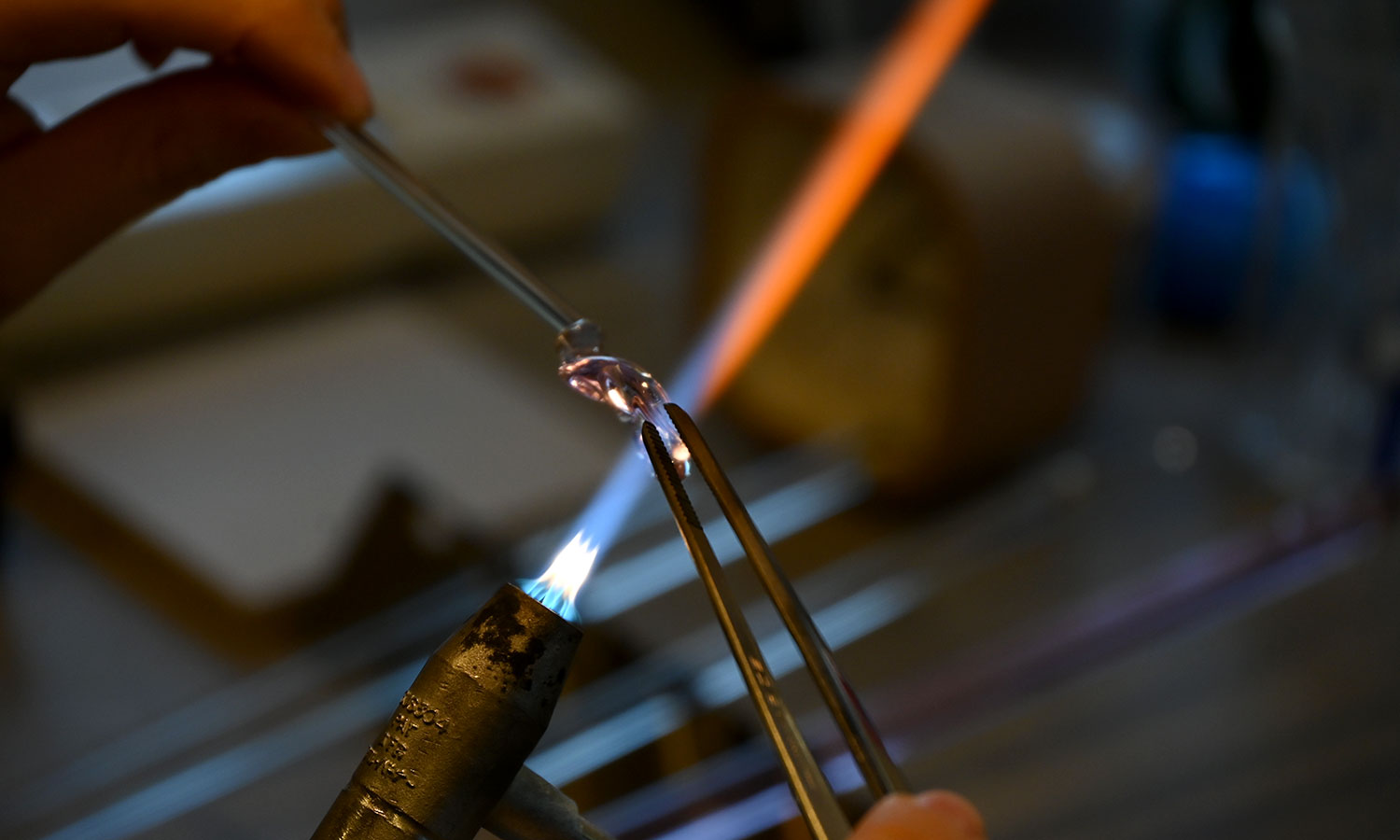
Minamisoma City is a fascinating hub of innovation sparked by the need to revive an economy that was once heavily reliant on the nuclear plant. The new businesses include Iriser, a studio where you can create your own glass jewellery under the guidance of female glass artisans. My supportive artisan shows me how to heat glass rods to melting point over a blue flame, each hand rotating different colours before mixing them together. It’s like tapping your head and rubbing your stomach at the same time. So, the cute green blob I end up looks nothing like the glass leaf necklace I was initially aiming to replicate, but you can’t be good at everything…
More polished local products can be bought at the local train station office, which has been transformed into a market and kombucha brewery that also offers sake tastings. TBH, sake has never been my liquor of choice, so my hopes aren’t high, but I’m pleasantly surprised. Craft sake brewer haccoba’s addition of a unique infusion, which includes beer hops, has changed the flavour profile to add subtle and delicious flavours of fruits, herbs and spices. I’m sold.
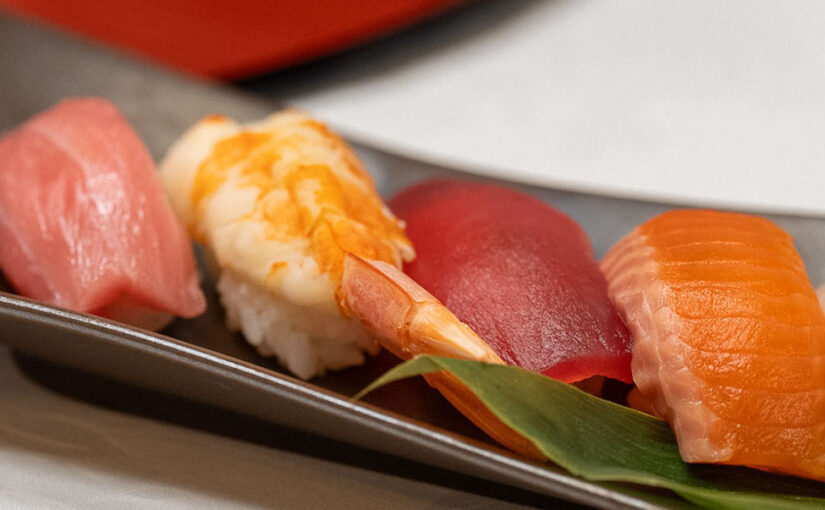
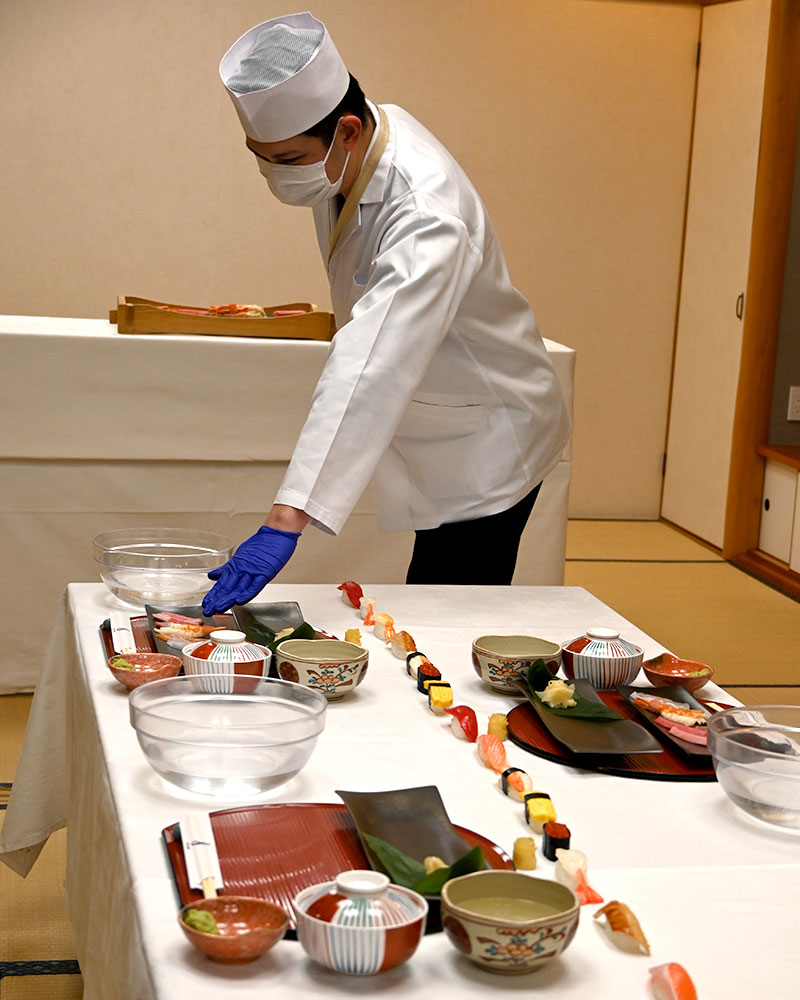
At J-Village, a national sports training centre and hotel, we sit on a tatami mat, ready to learn the art of nigiri sushi-making (that’s bite-sized, hand pressed sushi in case you weren’t aware). The sushi chef shows us how to ball up rice before adding wasabi and strips of seafood then plating them artfully-ish. Hot tip: coat your hands in the vinegar to stop the rice sticking to your hands.
I welcome the opportunity to work off some of the incredible food by sampling the new 200 km Fukushima Coastal Trail, which connects with the 1,000 km Michinoku Coastal Trail – one of the 10 Long Distance Nature Trails of Japan. The trail hugs the coast and heads inland to provide a kaleidoscope of views, from beaches to volcanic ranges and farms, as well as opportunities to learn more about the post-disaster recovery.
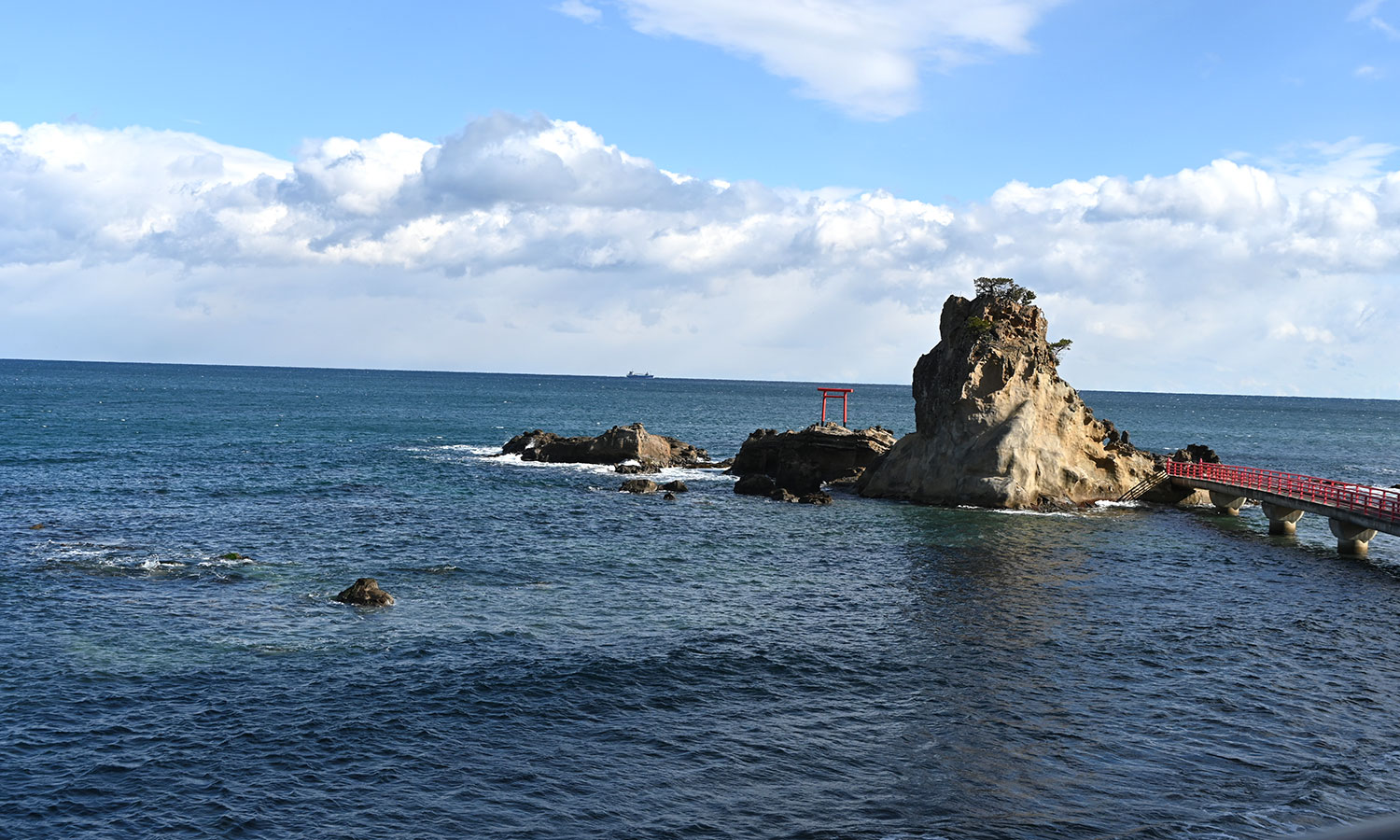
Our faces whipped by the salty air, we hop on ebikes to enjoy a cruisy ride along the coast, through tunnels and over seawalls, stopping at a cute Shinto shrine on a tiny standalone limestone outcrop. Remarkably the shrine’s red Tori gate survived the tsunami, whilst the connecting bridge was destroyed. During a coffee stop, we learn hopes are high for the trail to be recognised as a national cycling route.
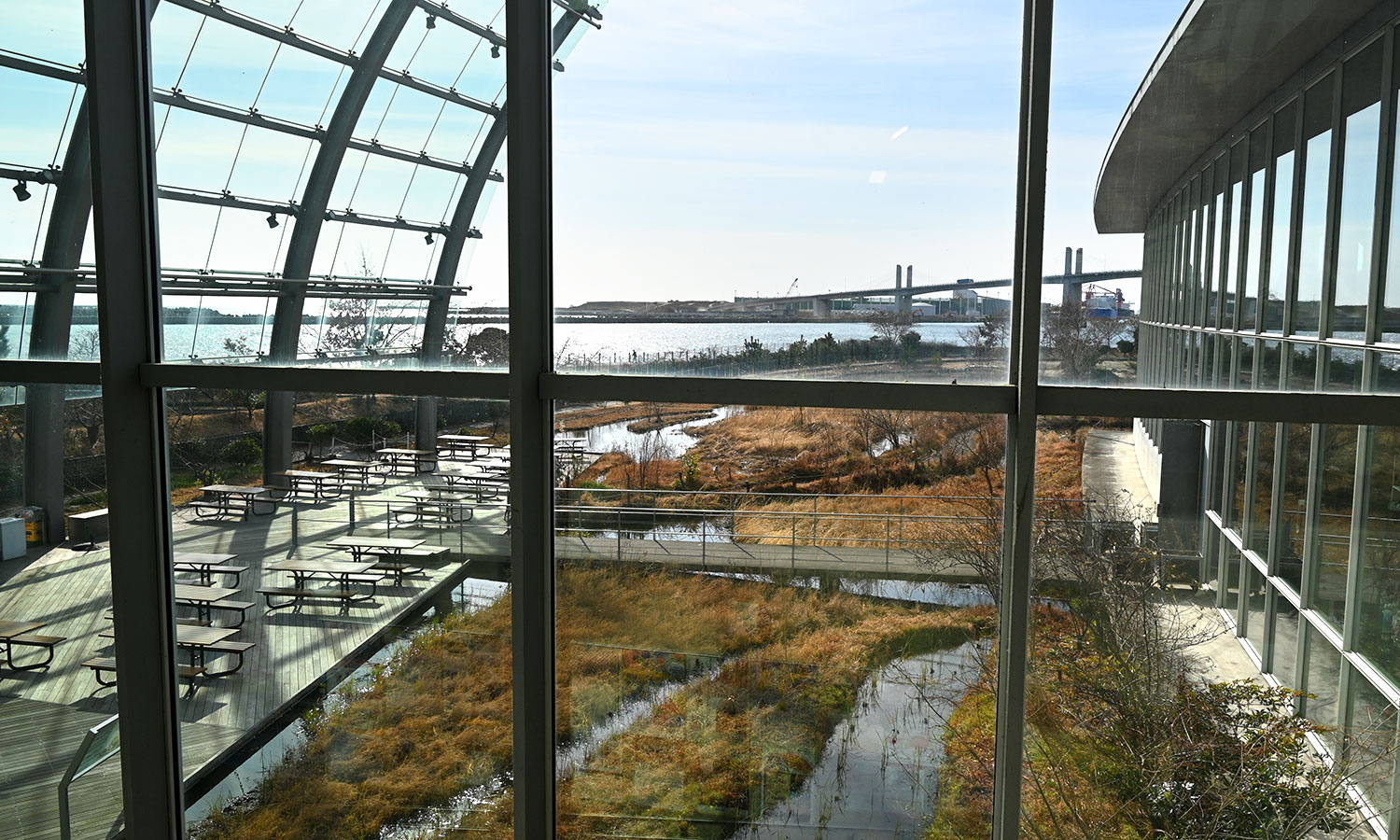
At Iwaki City, Aquamarine Fukushima recreates the journey of evolution, from simple organisms to sea creatures with lungs and spines. It’s an impressive display but the biggest impact comes via the view from the third floor, where staff sheltered in place when the tsunami hit.
The glass building offers uninterrupted view of the Pacific Ocean, and a guide confides she was terrified as they watched the wall of water barrelled towards them.
There have been other damaging quakes since 2011, including 2021 and 2022, and there is no doubt there will be more. It is Japan after all. So, it surprises me that she is willing to continue working and living in the area. But her explanation is simple, if a disaster of that scale was to hit Japan again, Fukushima would be the best prepared to handle it.
That’s an embodiment of the region’s inspiring samurai spirit right there, and is exactly why, despite your mum’s fears, you’ll want to add Fukushima to your itinerary.
Answers to your mum’s FAQs:
About 12% of Fukushima Prefecture was declared unsafe as a result of the reactor explosion. Now it is around 2%.
Fukushima’s food produce is checked to ensure it is safe.
Decommissioning work on the destroyed reactors continues.
A road trip through Queensland’s Scenic Rim that rewards slowing down more than speeding up.
Let’s start by saying I didn’t set out on this road trip along the Scenic Rim looking for transformation. But I arrived at Brisbane airport with a packed bag, an open mind, and the usual city habit of wanting to know what was first on the agenda. It didn’t take long for this jaw-dropping region to cure me of that impatience.
The Scenic Rim doesn’t announce itself. There’s no single ‘you are here’ moment, no obvious before-and-after line in the road. Instead, things soften gradually. Traffic thins. Phone reception becomes a little sketchy. Conversations slow down. Somewhere between the first set of rolling hills and the second cattle grid, you realise this road trip isn’t for ticking boxes, but more about letting the days stretch a little longer than planned.
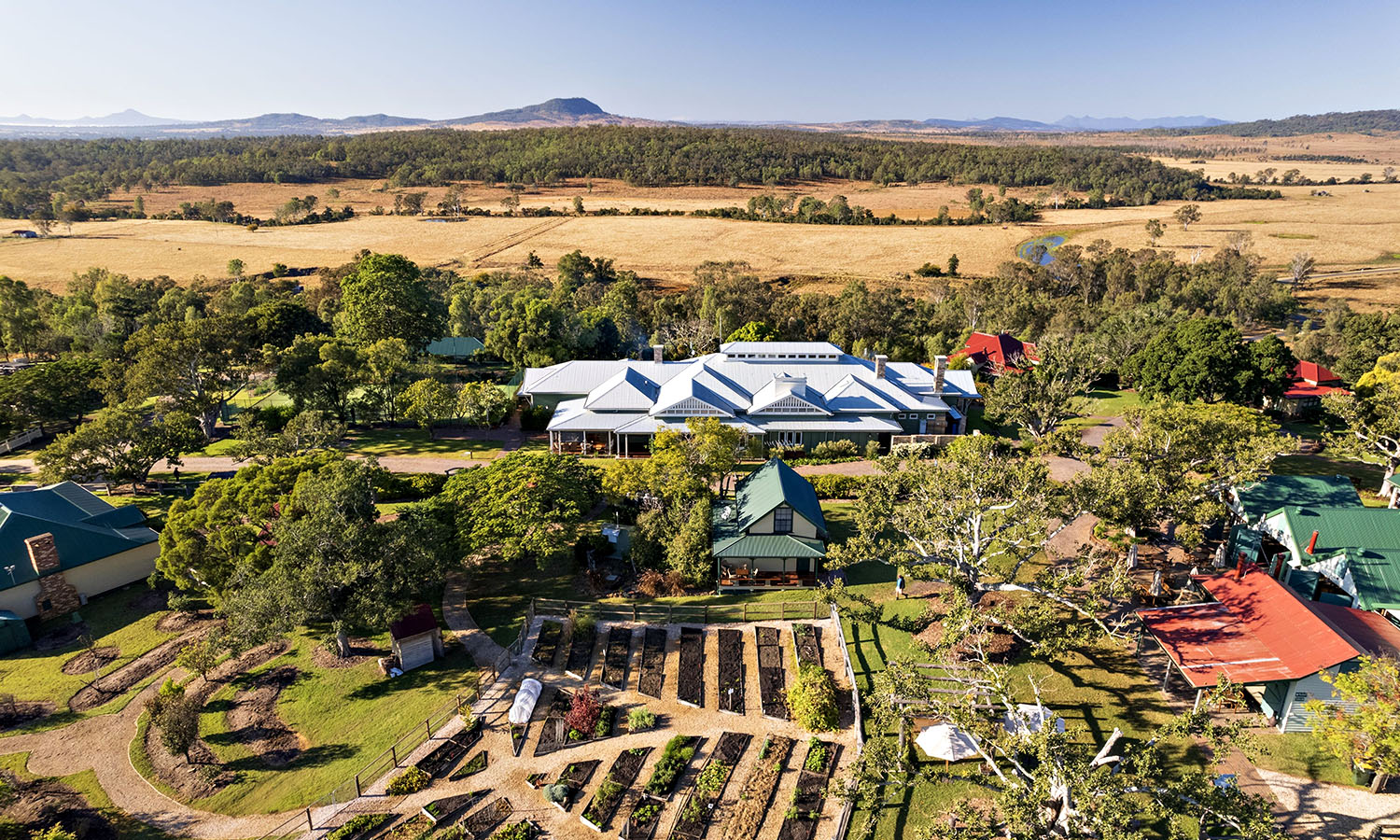
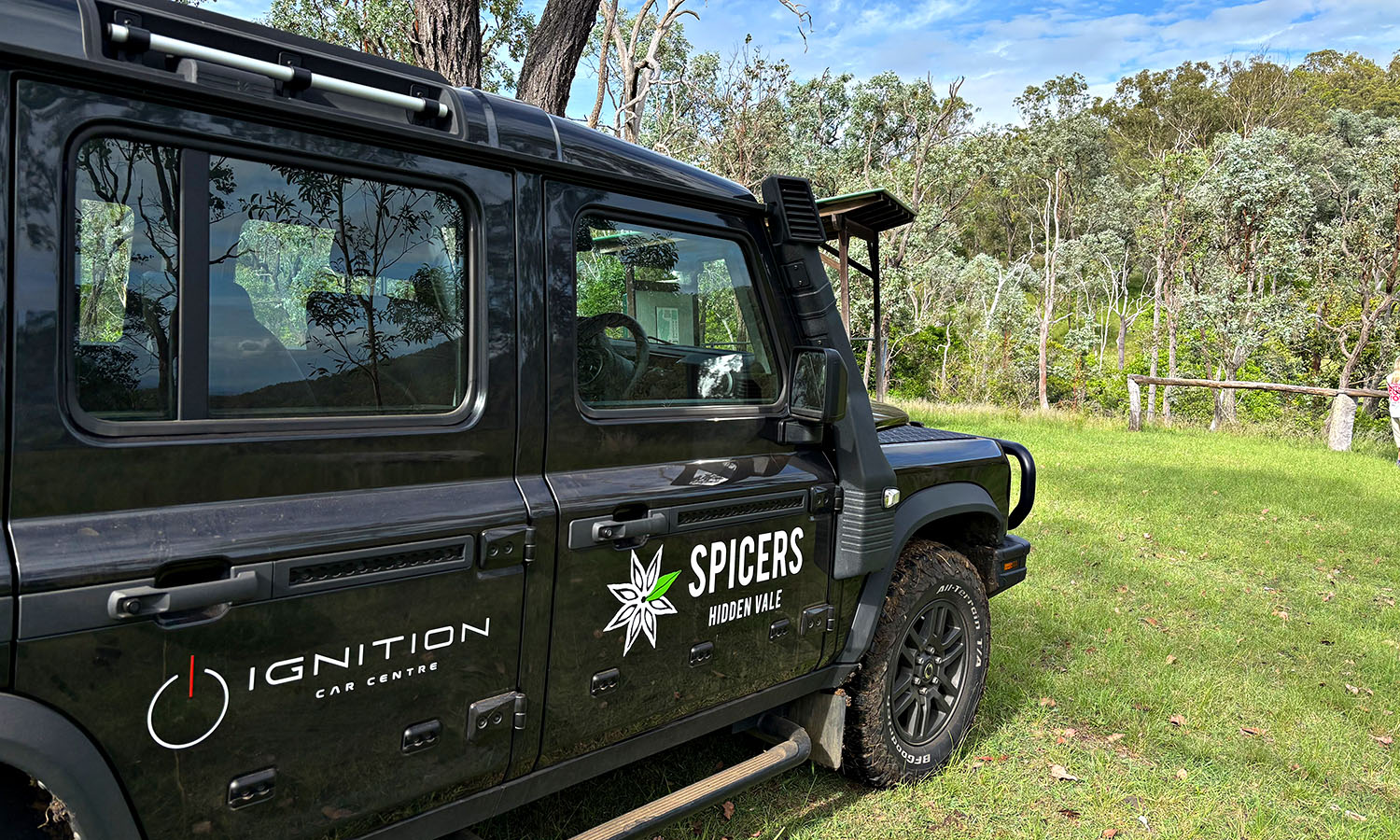
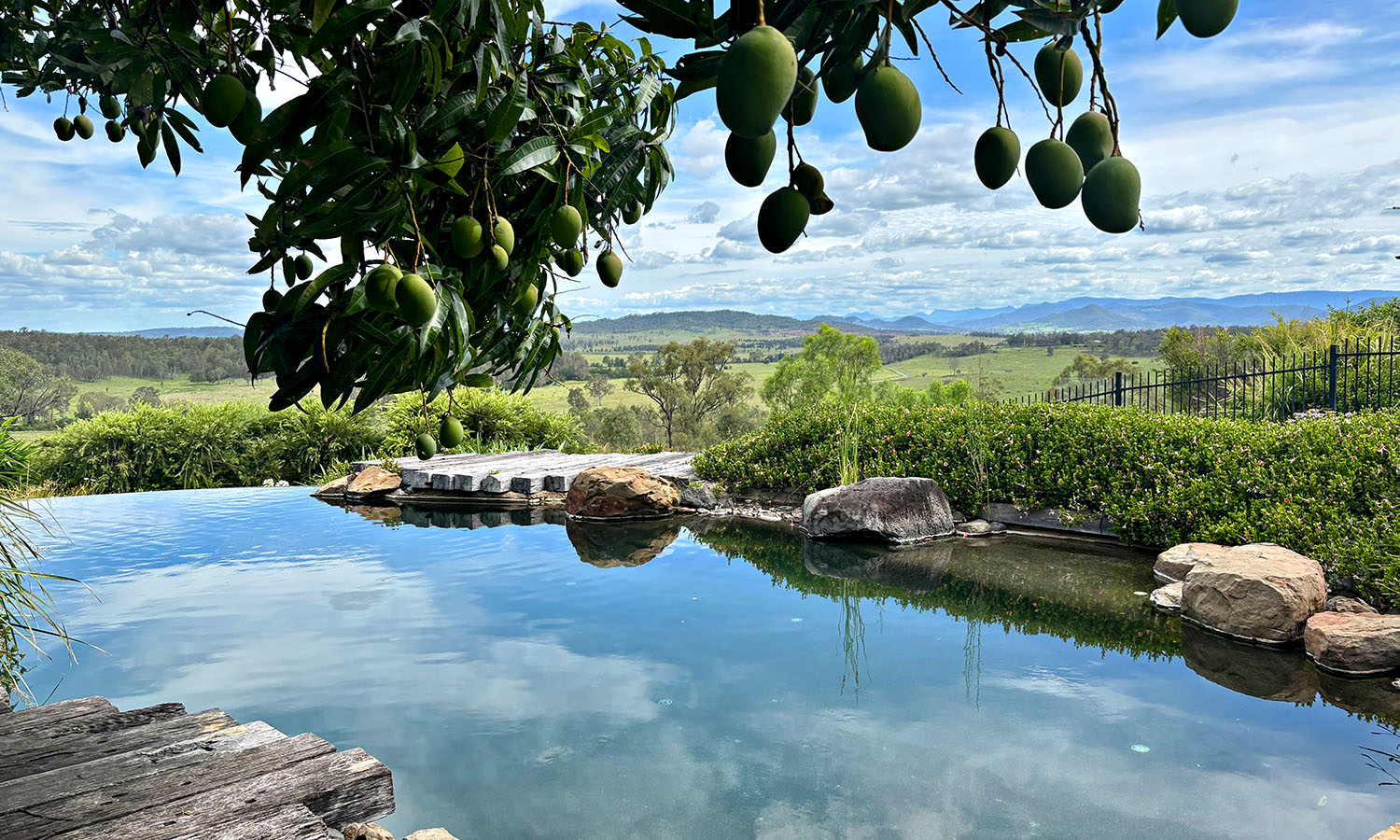
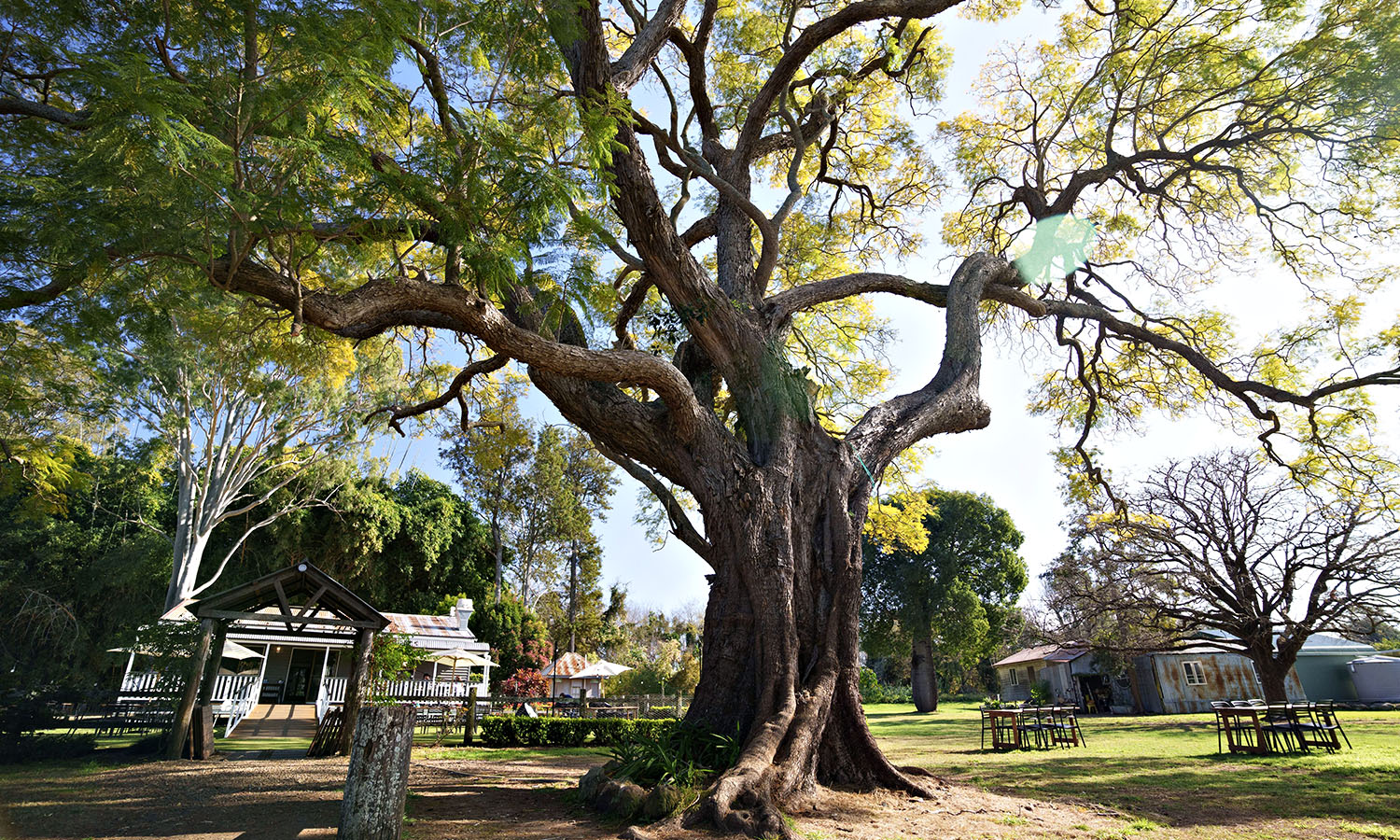
Our small group rolled into Spicers Hidden Vale for the night, and it immediately set the tone. This place isn’t a resort (although it kinda feels like one). It’s actually a sprawling, well-kept secret. And if you want to get really particular about it, it’s a former cattle station turned luxury lodge.
The 4WD guided drive through the property isn’t scenic (although the views are mind blowing), as much as it’s grounding. You learn how the land is managed and how conservation fits alongside the comfort of the lodge.
Then there’s the kitchen garden. Touring it with the chef makes dinner feel like a continuation. You see what’s growing, what’s thriving, and what will end up on your plate later that night. It’s an experience that quietly raises your standards for food (as if they weren’t already high), and unfortunately lowers your tolerance for supermarket basil.
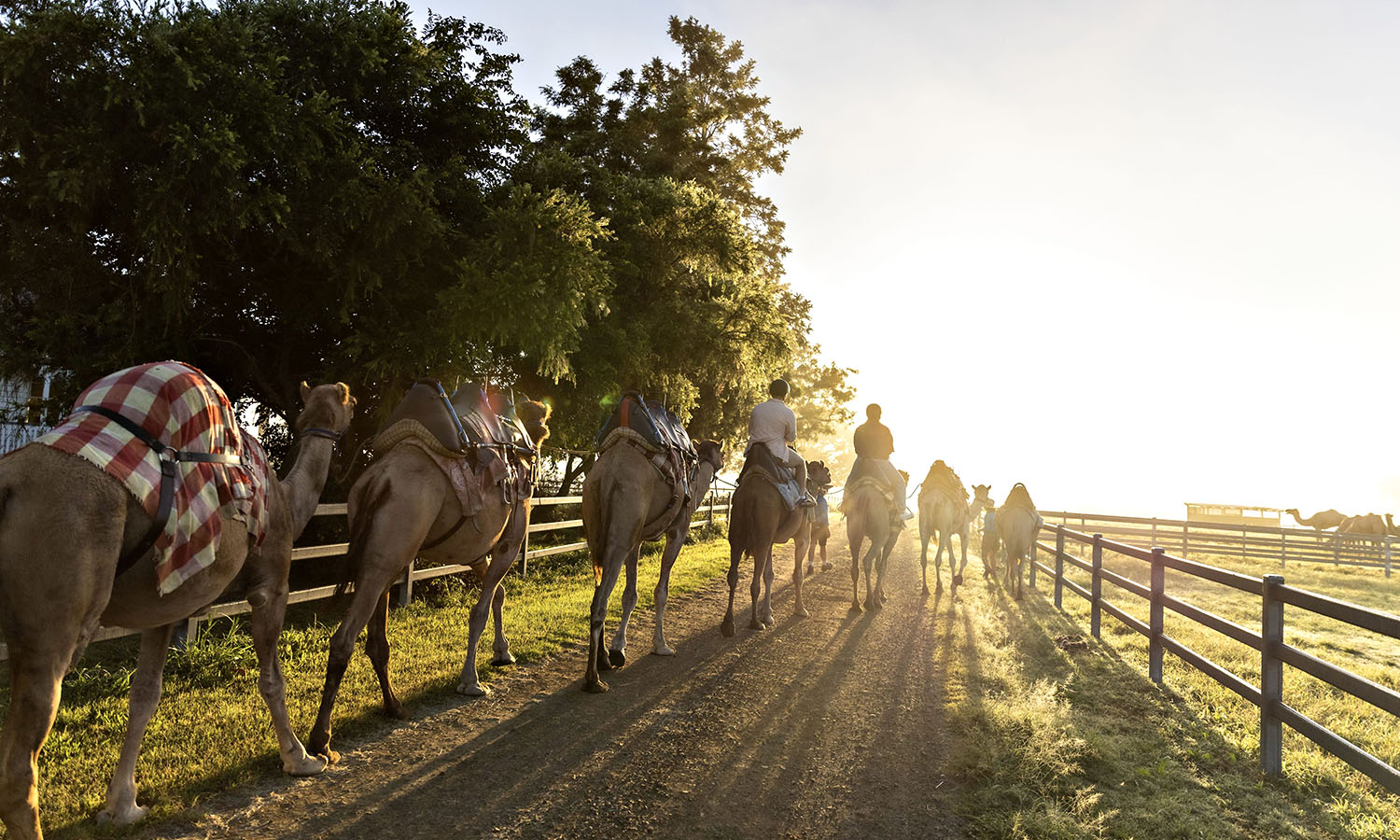
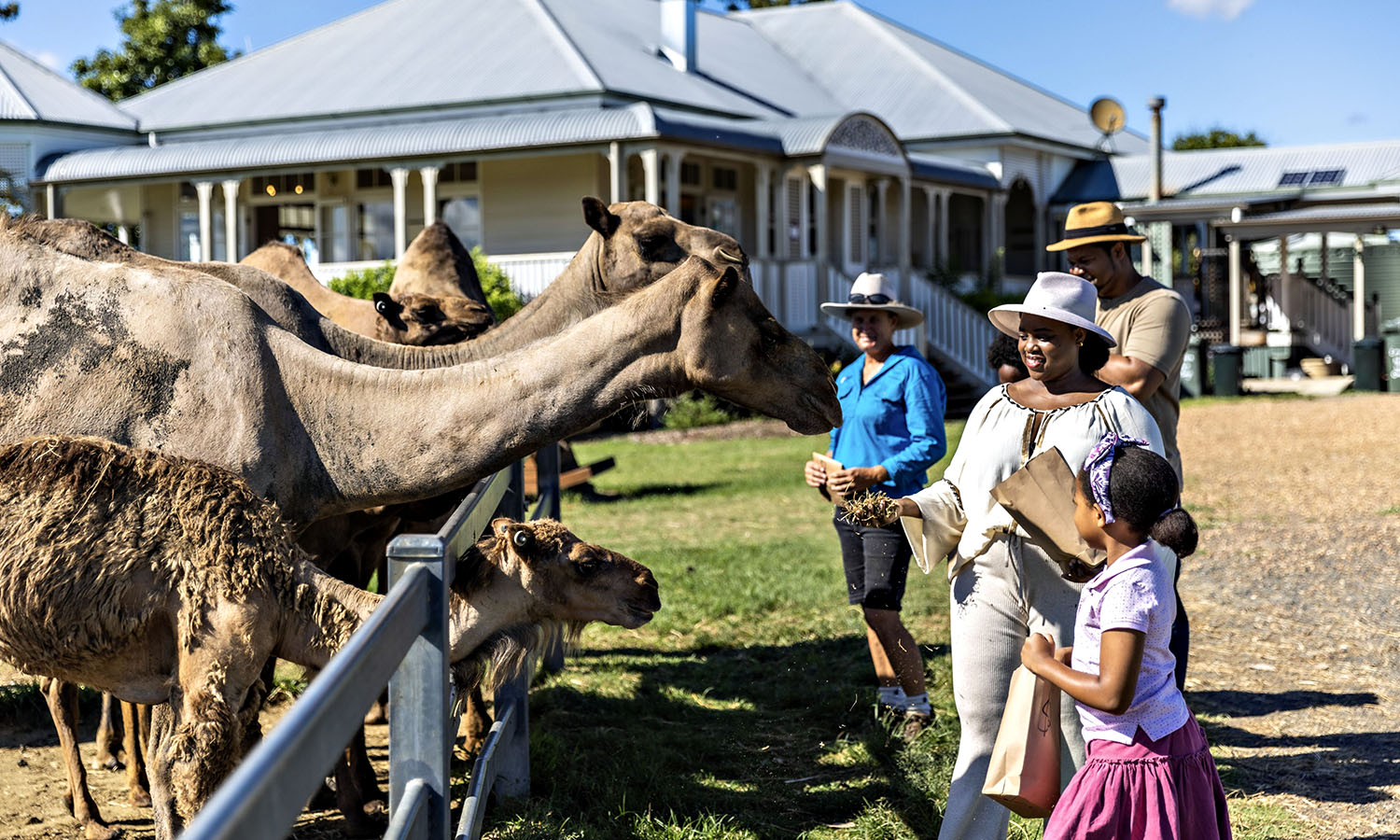
Back in the car the following morning, the Scenic Rim delivered one of its best curveballs: Summerland Camels. Because yes, there are actual camels here. The tour I was lucky enough to be on managed to be both informative and hella charming. Watching baby camels and their mamas wander through paddocks, and even seeing what it means to really look after the friendly giants (some of the male camels were getting the snip during our visit) is not something you expect to do in Queensland. But that’s what makes it cool. I even managed to swallow a sip of slightly warm camel milk without gagging (go me) while I was there.
But food and produce play a big role in this region. So a stop at the Scenic Rim Farm Shop is a must. It’s sorta like a choose-your-own-adventure of local goods, and resisting the urge to buy everything from the cutest boutiques on the property requires some serious discipline. Nearby, Kooroomba Lavender Farm feels like it exists purely to slow you down. Lavender rows stretch towards Lake Moogerah, the views do most of the talking, and lunch turns into a long one (ofc) because no one’s rushing you along.
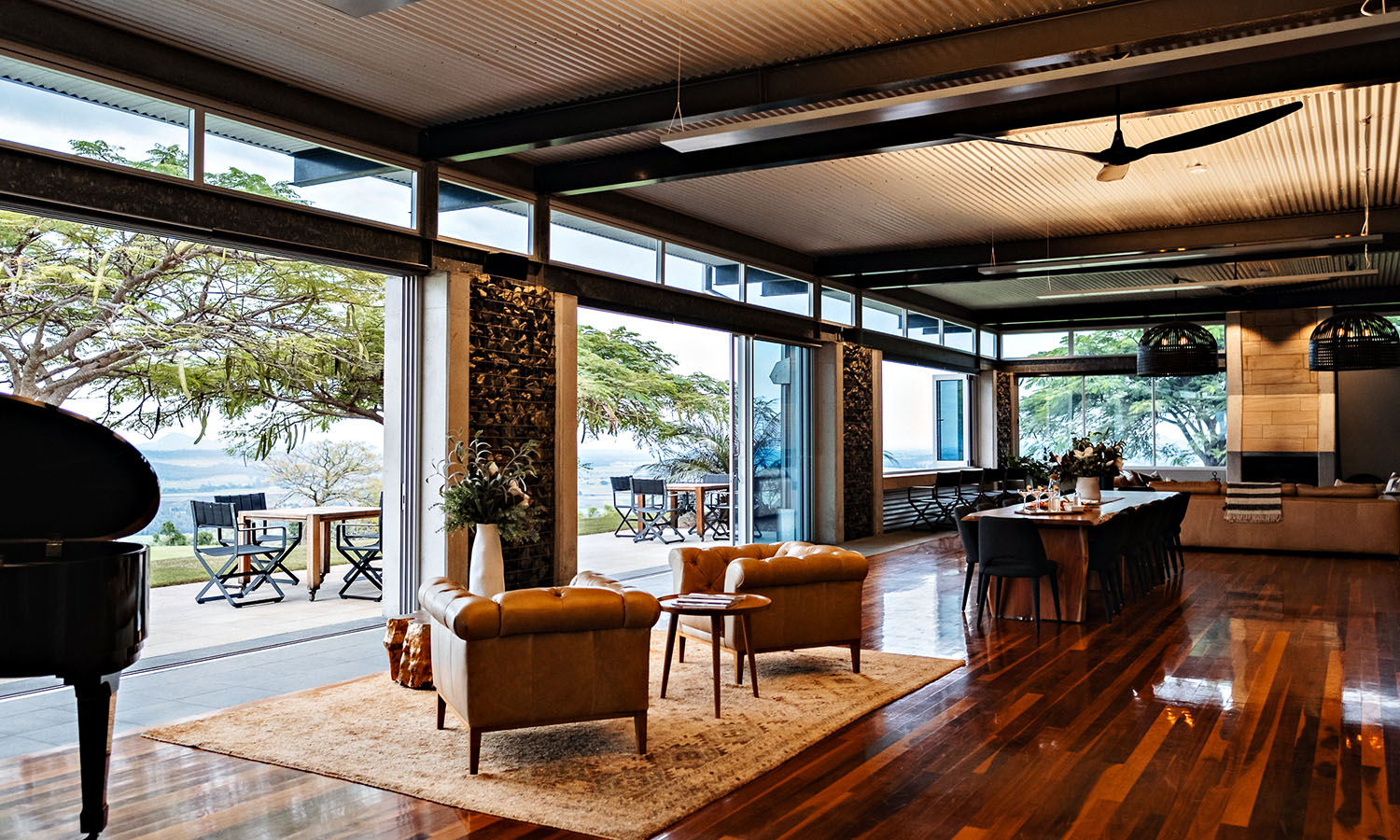
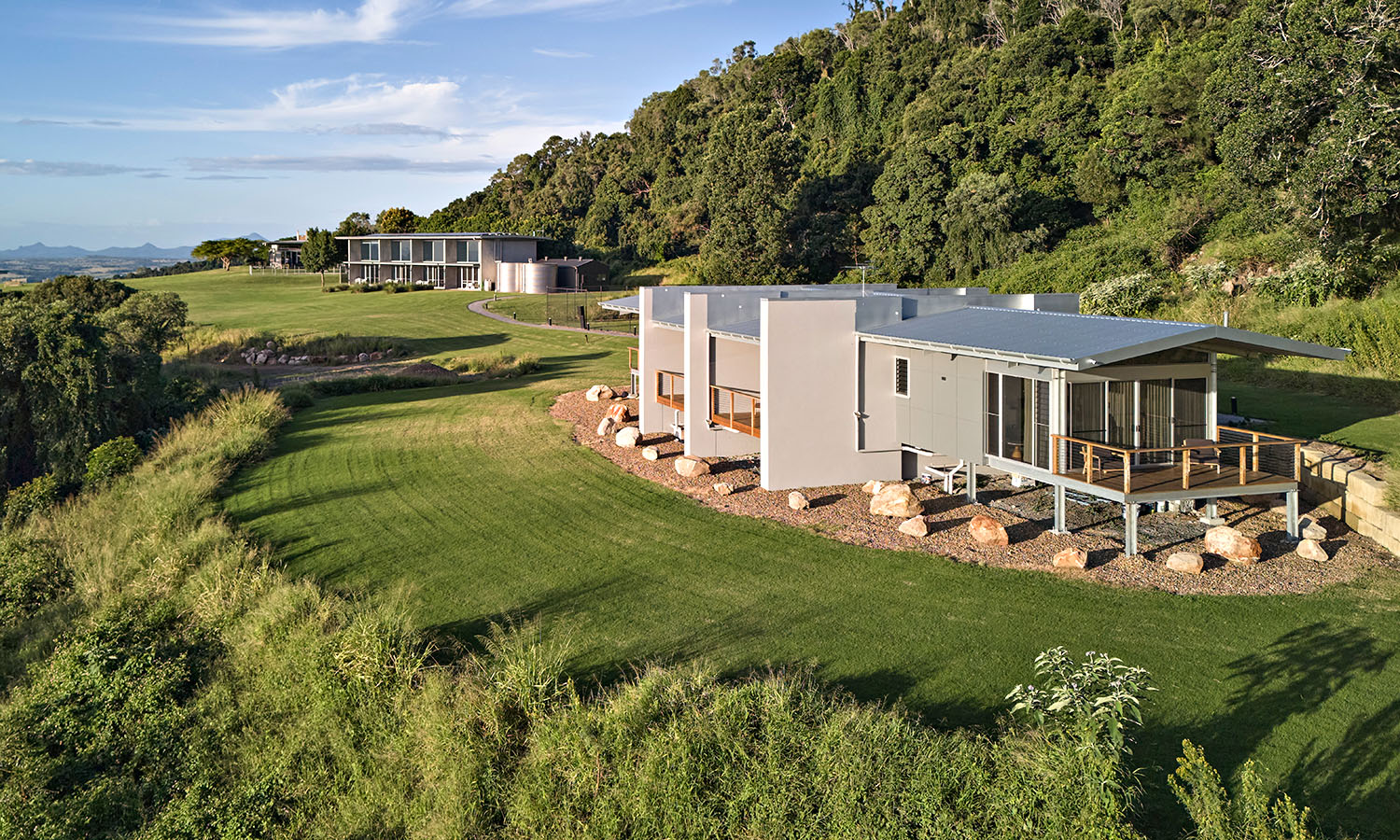
From Kooroomba, the road climbs towards Mount French Lodge, and the energy shifts almost immediately. Every single bit of noise drains away completely here. Each one of the lodges are spaced generously across the landscape, giving each guest the illusion (and let’s be real, the reality) of having the place to themselves. Because you kinda do.
This place is designed for groups to book out. So you won’t have to make awkward small talk with a couple of strangers over a beautifully prepared breakfast in the main lounge/kitchen/dining area.
In fact, the whole property encourages stillness. Big windows pull the outside in, decks look out over hills that seem to roll on forever, and there’s no background soundtrack beyond the gentle gust of wind and the melodic song of birds. But the privacy doesn’t feel snobby and exclusive. It feels intentionally peaceful without trying too hard to be profound. Granted, you don’t “do” much here, but that’s why I was obsessed with it (and still am). Time passes (obvs), but it does so in a gentle way.
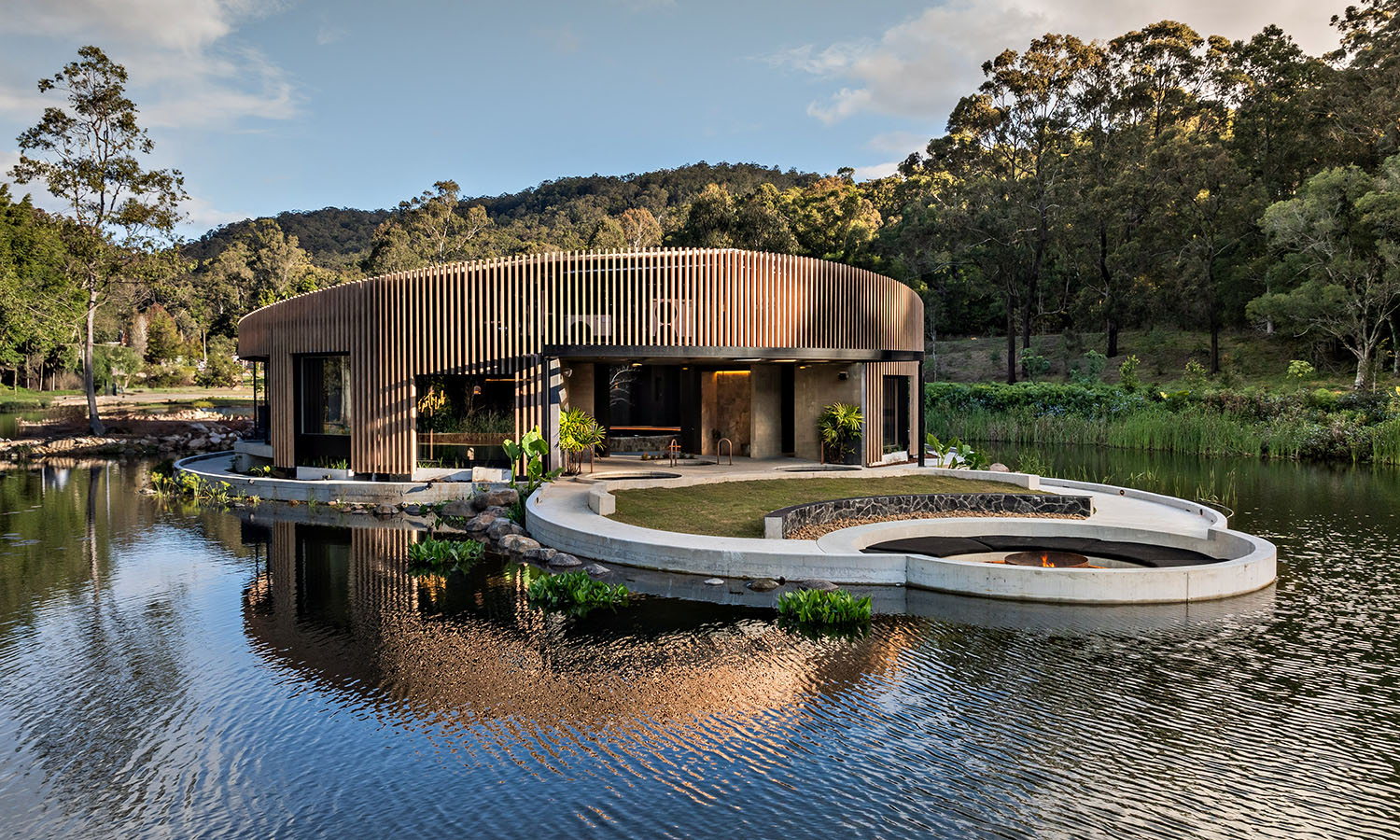
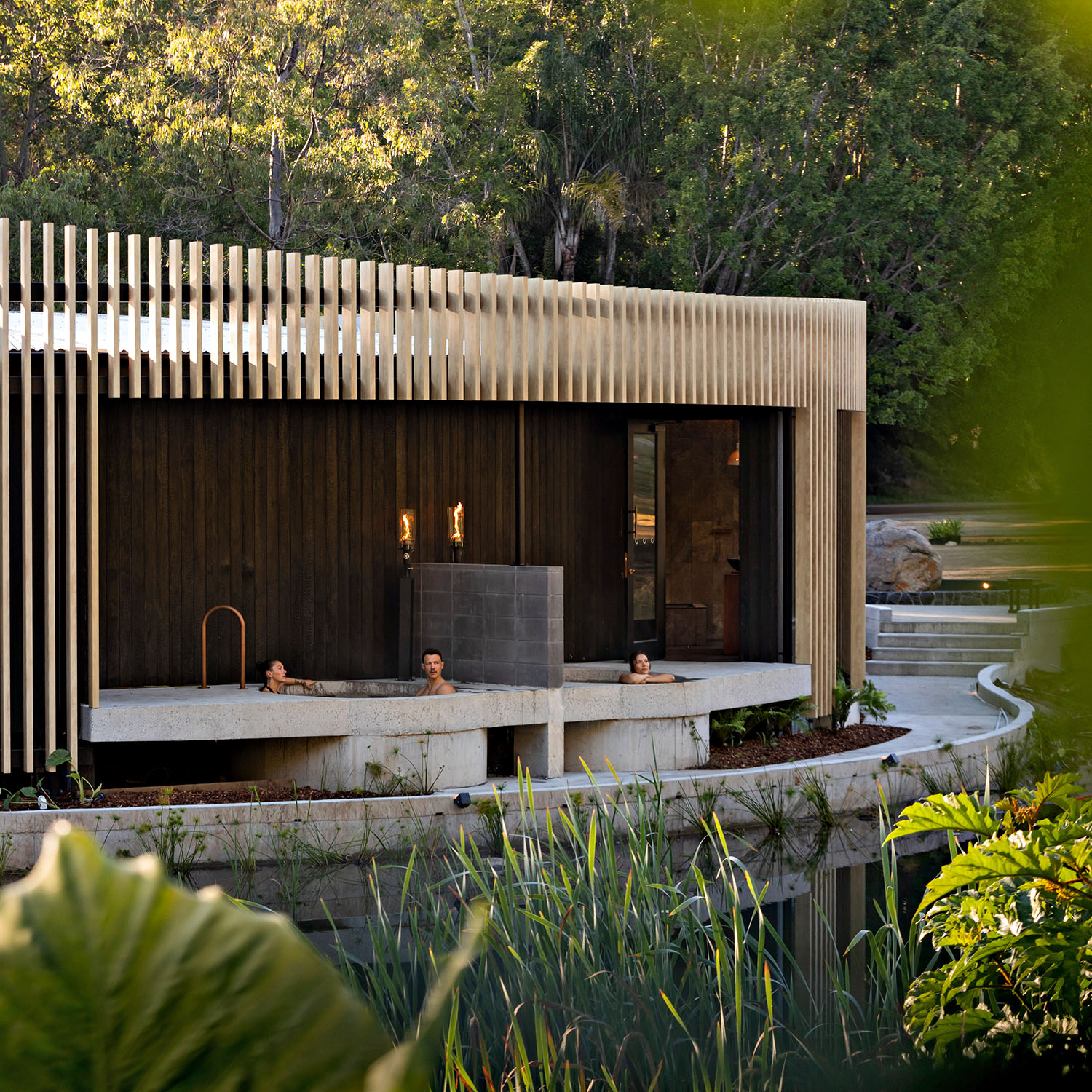
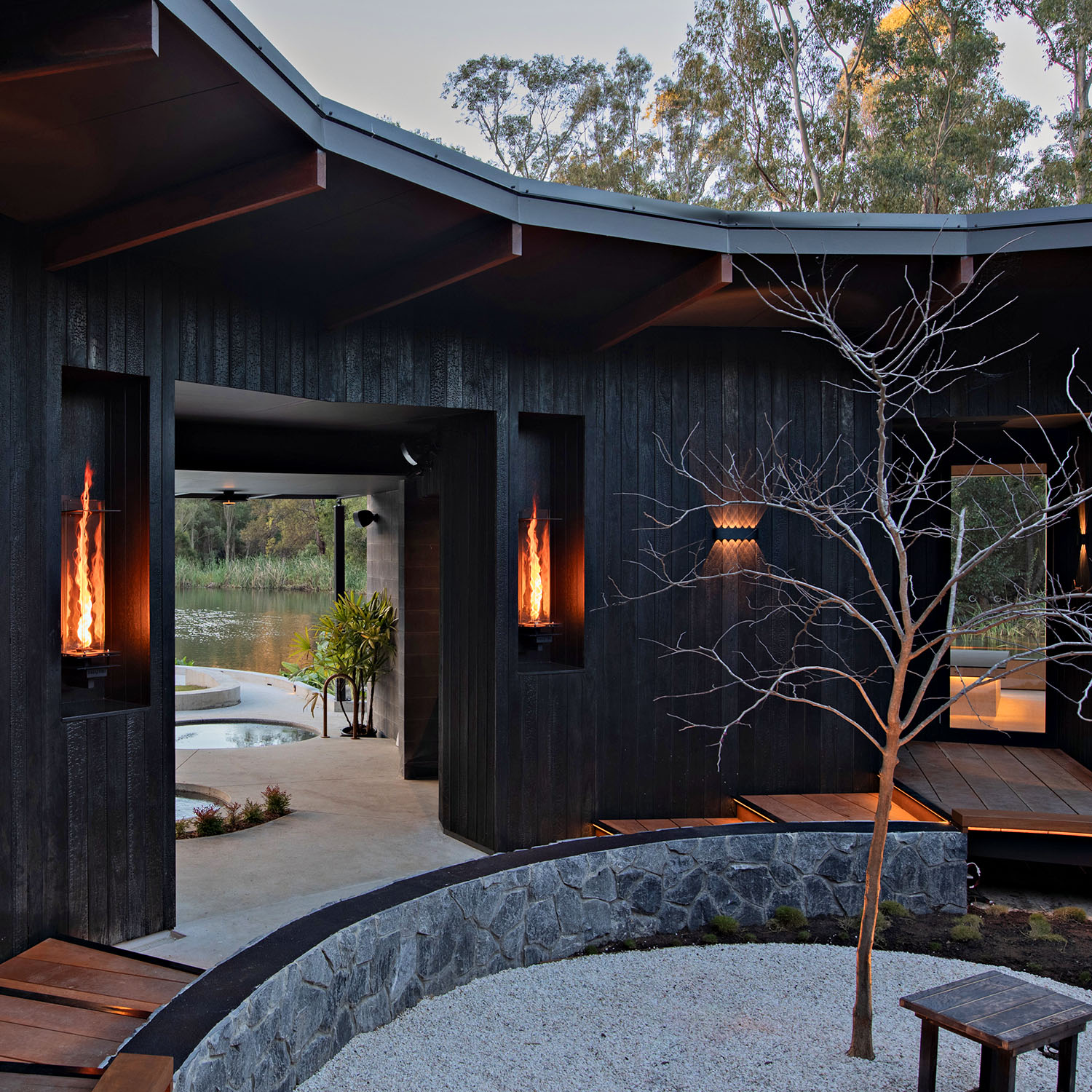
All too soon, SOL Elements Bathhousebeckoned, offering exactly what the name promises. Set against a mountain backdrop, SOL Elements is for soaking, floating, steaming and generally forgetting what day it is (I know I did). Regardless of the experience you choose to have here, this place is calm, restorative, a little indulgent, and the lack of pressure to move on makes it easy to settle into your own rhythm. You’ll leave lighter, physically (you’ll sweat heaps thanks to their saunas and salt rooms) and mentally.
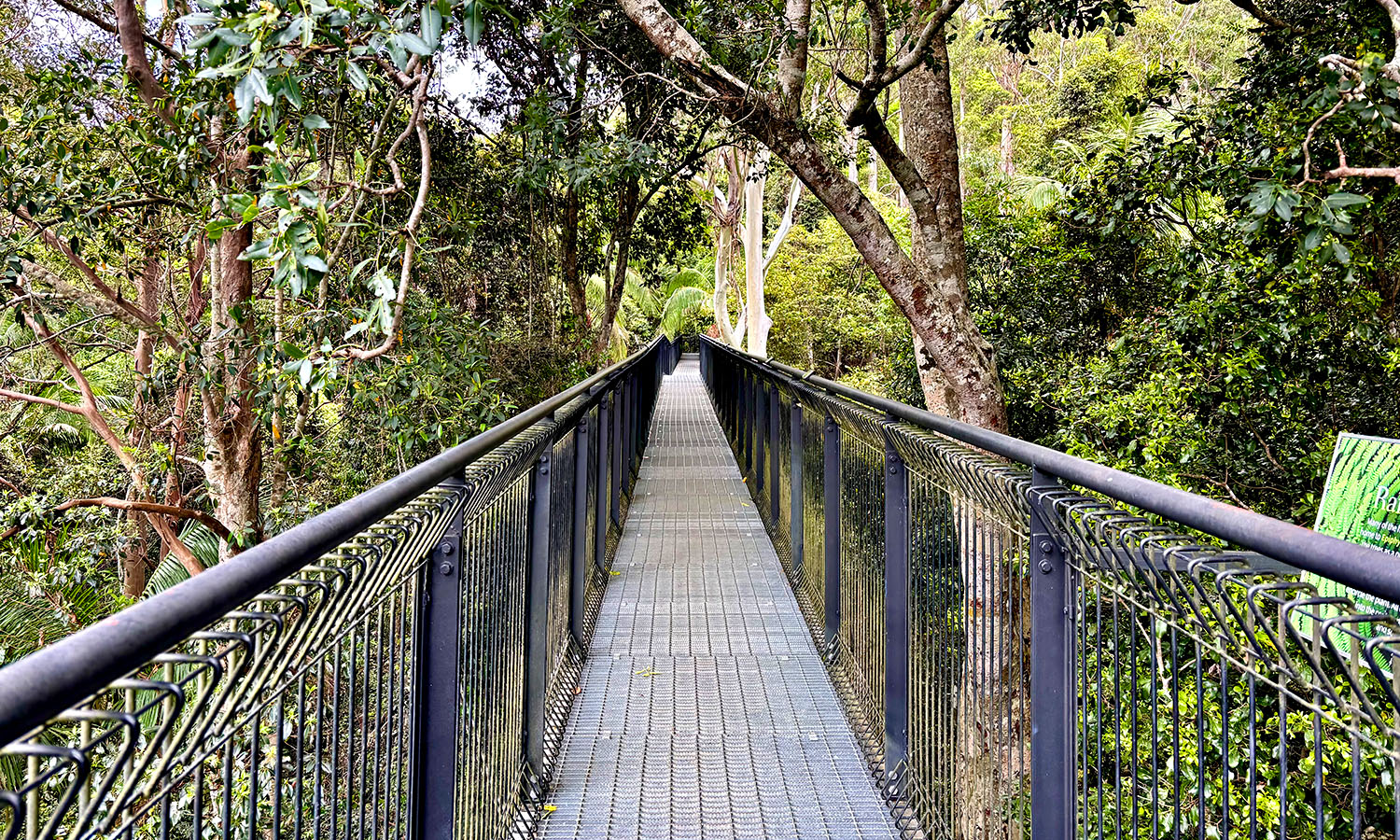
But it was time to head back to nature and the trees took centre stage at the Tamborine Rainforest Skywalk. Elevated walkways ease you from the forest floor up into the canopy, giving you a new perspective without asking too much of your knees. It’s accessible (hell yeah), beautifully designed, and very impressive. But the way the rainforest carries on around you as if you’re not even there, with birds calling and leaves shifting, makes this a special (read: must do) stop.
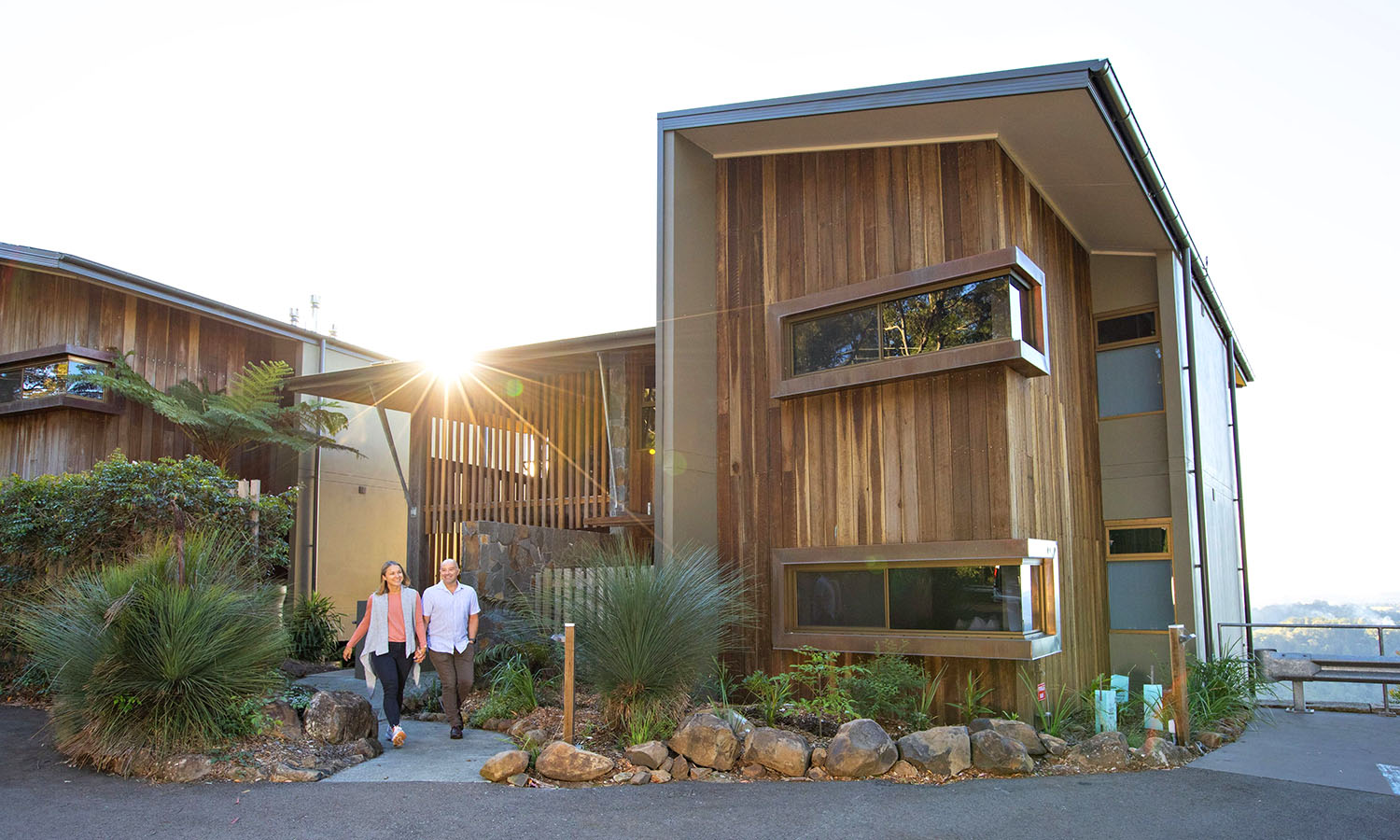
Our final stop was Happitat Adventure Park, but before we could get there, we had to stay at Binna Burra Lodge, perched high on the Binna Burra land (surrounded by Lamington National Park) with views that make you pause mid-sentence. The outlook across the valley is genuinely vast, especially at sunrise and sunset, when the light shifts and everything feels momentarily suspended.
Binna Burra carries a deep sense of history, but it doesn’t feel stuck in it. There are walking tracks that disappear into the rainforest, communal spaces that invite quiet conversation, and plenty of corners where you can sit alone and do absolutely nothing. It’s a fitting end point, not because it feels final, but because it encourages reflection. Well, it certainly did for me.
By the time we pointed the car back towards Brisbane, I felt a little different. Less hurried. Less inclined to reach for my phone. And I came to the realisation that a road trip along the Scenic Rim is not something you race through. It’s one you settle into, and quietly wish lasted a few days longer.
Where rock ’n’ roll ghosts, rooftop martinis and mild delusions of celebrity collide.
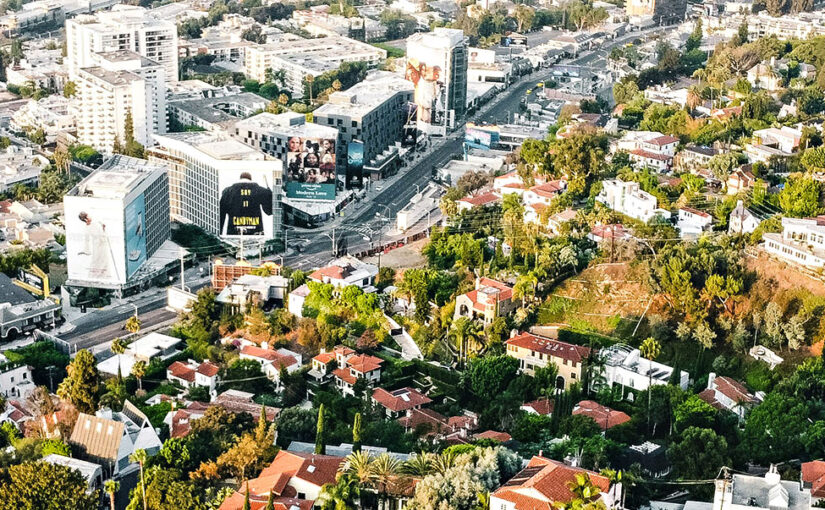
West Hollywood is less of a place and more of a mood. A slightly unhinged, sunglasses-at-night, “yes I’ll have another martini” kind of mood. Its hotel lobbies double as casting calls, its rooftop pools feel like they could star in music videos, and everyone looks like they’re either famous, about to be famous, or pretending very convincingly.
After far too many nights (and mornings we barely remember), here are our Top 5 West Hollywood hotels. These places don’t just give you a bed, but actively encourage bad decisions, great stories, and the occasional ego boost.
For when your hangover deserves a poolside soundtrack
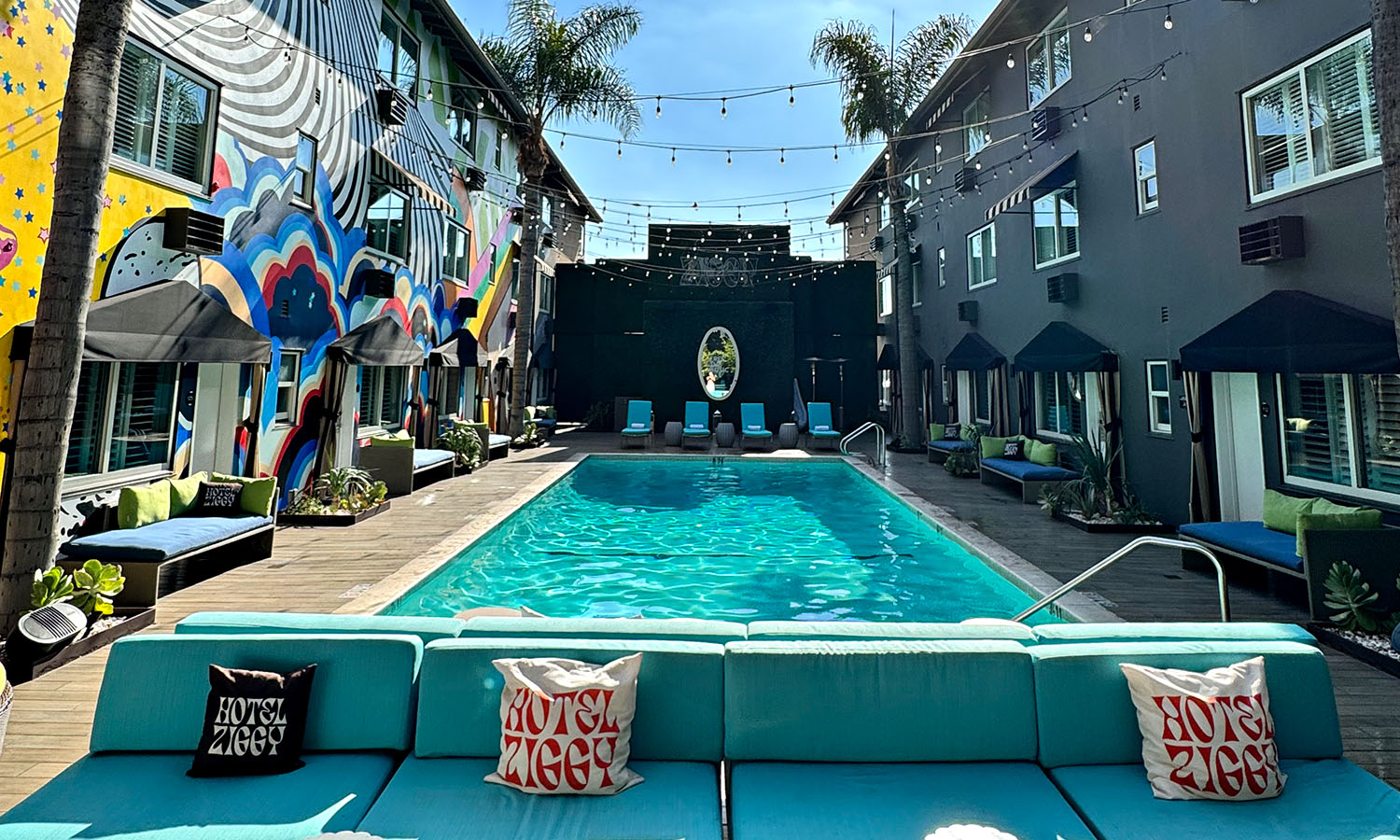
The Ziggy feels like it was designed by someone who really loves music… and really doesn’t care what time you need to wake up tomorrow. There’s an actual band room where musicians can plug in and play, and a DJ who spins late into the night in a dimly lit bar that feels dive-y.
But be warned, this isn’t a quiet hotel.
HOT TIP: Get a room that opens directly onto the pool. There is nothing, and we emphasise nothing, better for a West Hollywood hangover than rolling out of bed, sliding open the door, and falling directly into water before your brain fully switches on. It’s hydrotherapy (probably).
Retro glamour, martinis, and aggressive people-watching
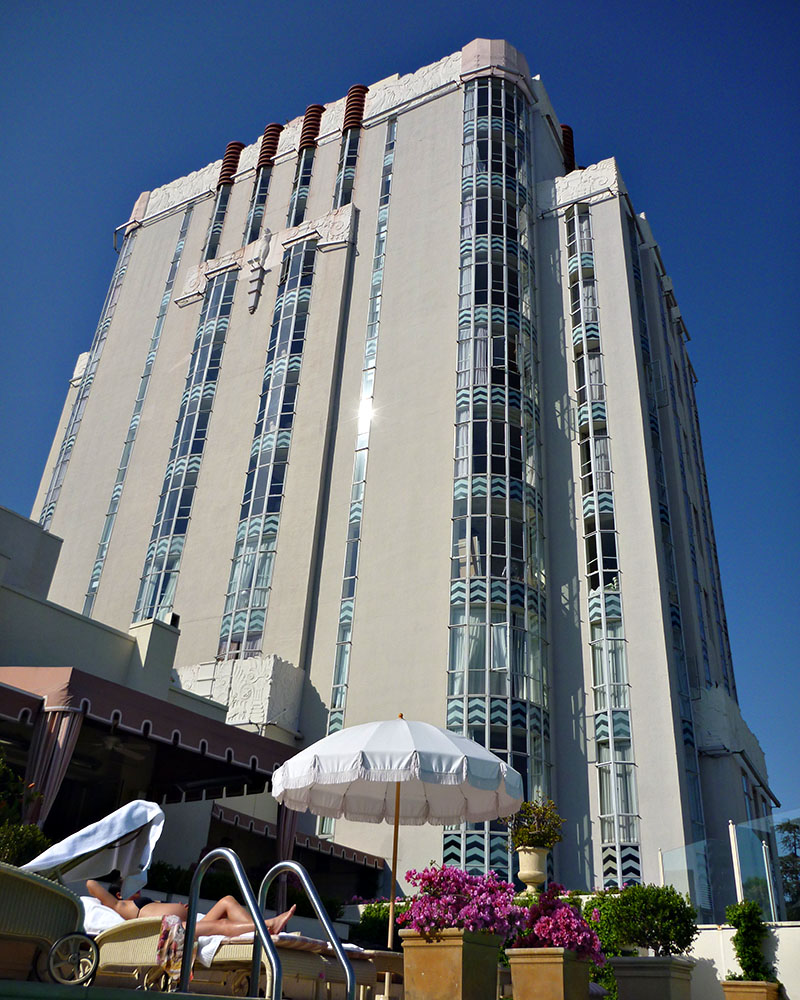
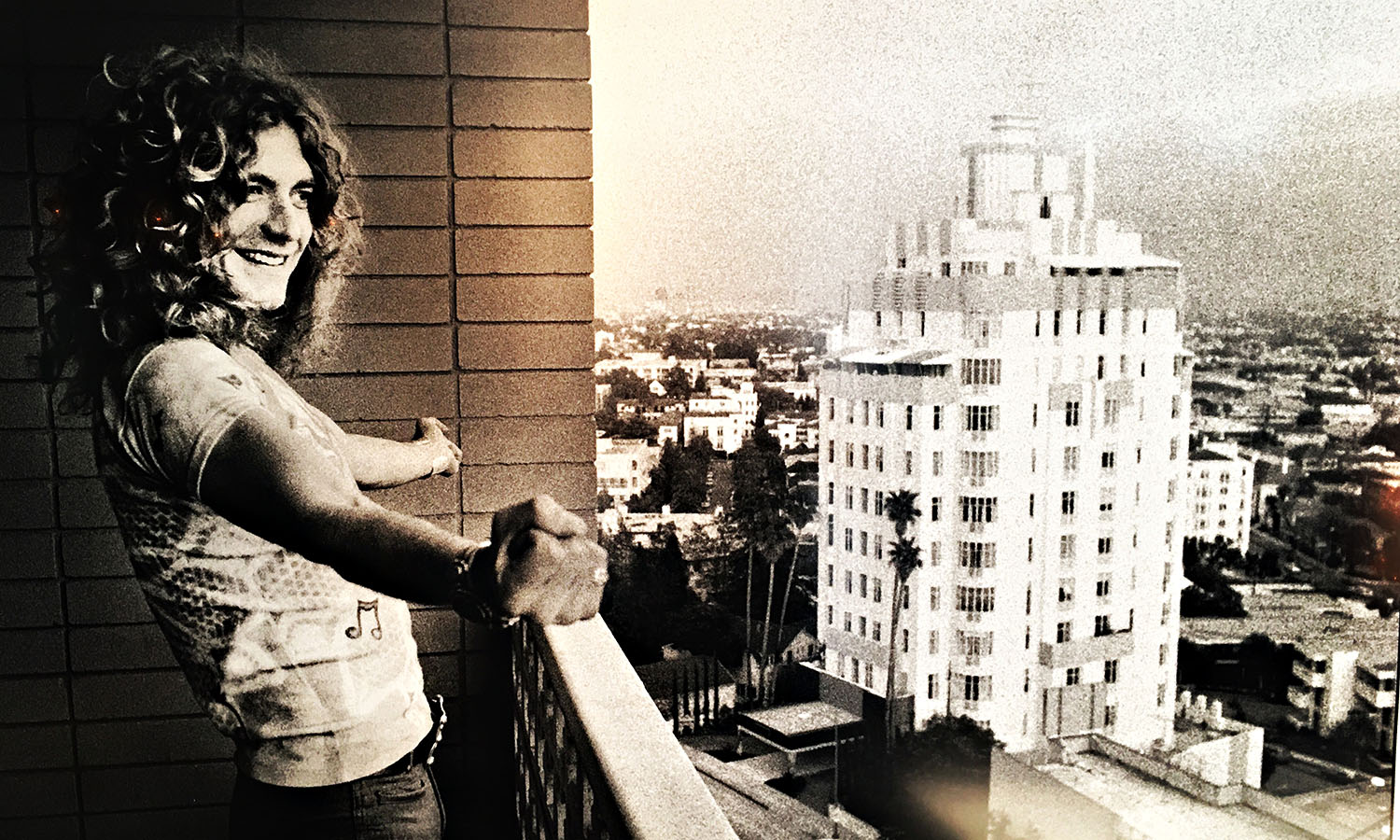
Sunset Tower is a time capsule with better cocktails. Uber-cool, unapologetically retro, and dripping in Hollywood history, this place has seen more stars than a planetarium. Our publisher once had breakfast with Jeff Bridges and dinner (plus a wicked martini) with Jennifer Aniston.
OK, he didn’t actually eat with them, but he may have stared at them so intently that they eventually left. Which feels like a win (or majorly creepy?? You decide). And the Tower Bar is legendary for a reason. You half expect someone to slide into the booth next to you and pitch a movie.
HOT TIP: Eat at the Tower Bar and pretend you’re a celebrity. Speak confidently. Order a martini. Nod knowingly at nothing in particular.
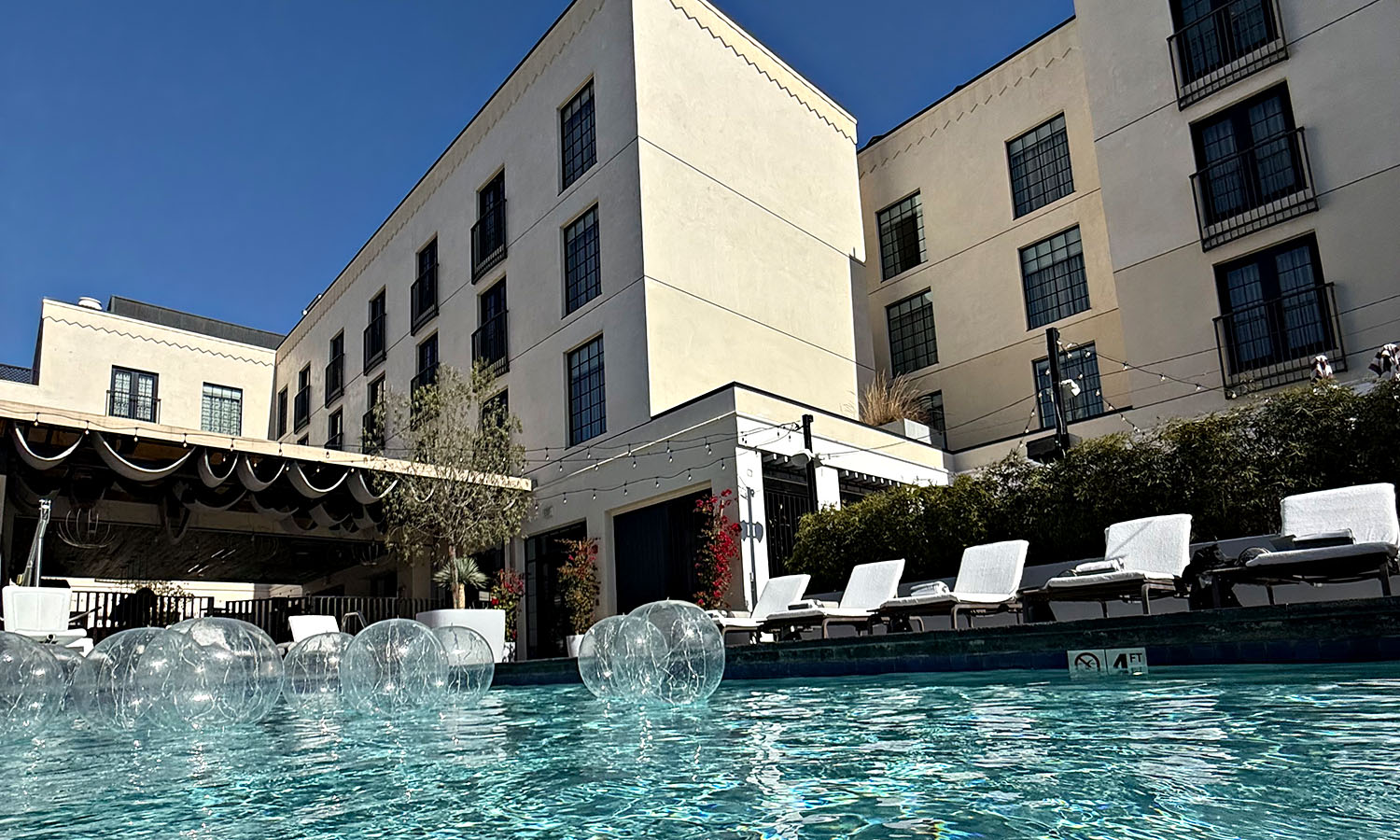
Kimpton La Peer is what happens when a hotel doesn’t need to shout. It’s tucked away, subtle, and deeply confident in its own coolness. And after staying here, so are we.
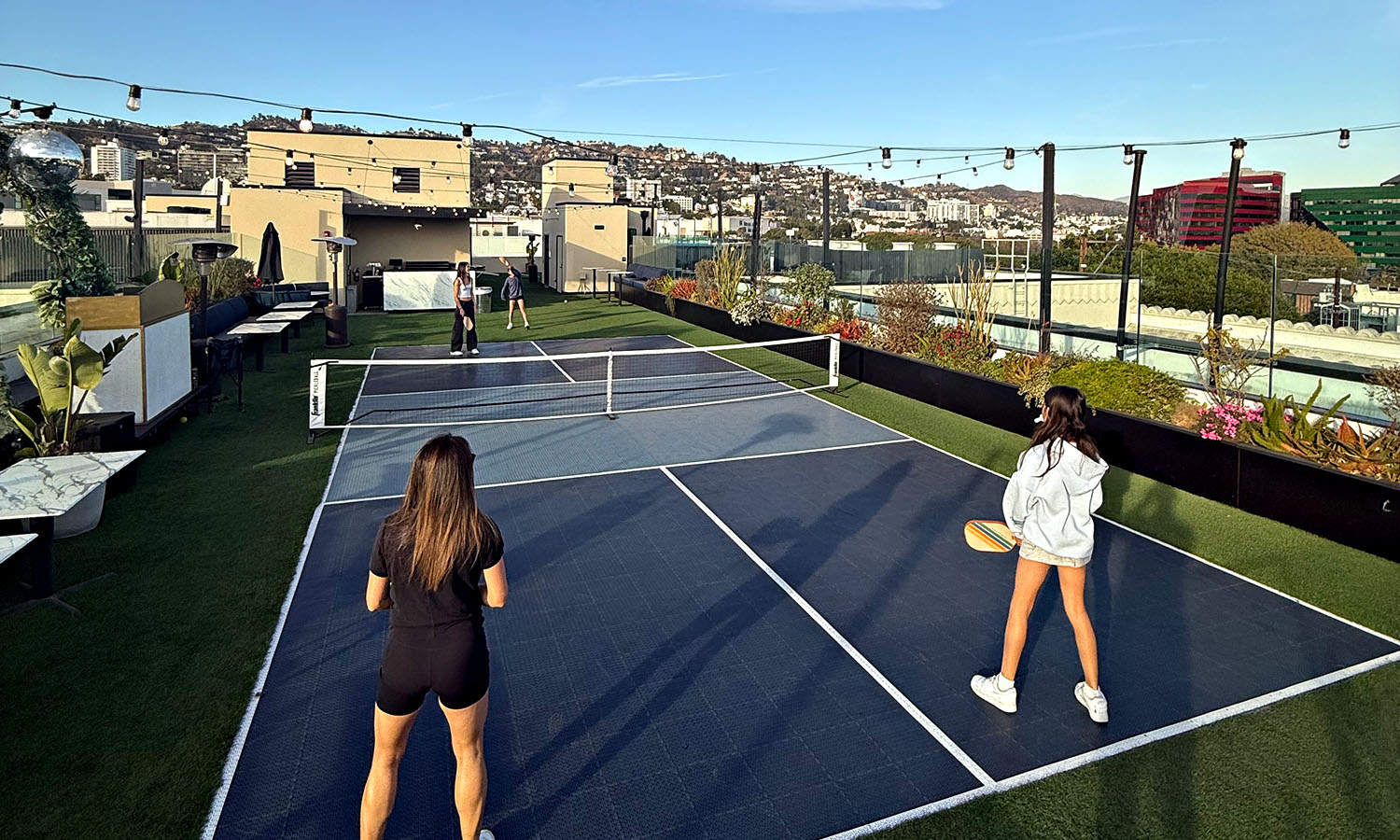
The rooms have huge windows and dramatic drapes that make you feel like you should be delivering a monologue, even if you’re just ordering room service. Then there’s the rooftop pickleball court with sunset views, and bar. Yes, all of that. In one place.
HOT TIP: Don’t miss the evening wine tasting from 5 – 5.30pm, then head straight to the rooftop for pickleball as the sun goes down. It’s competitive. It’s ridiculous. And it’s very West Hollywood.
Once upon a time this was the Riot Hyatt, and even though it’s been polished and rebranded, rock ’n’ roll still sweats from the walls. You can feel it. Like nicotine stains on history.
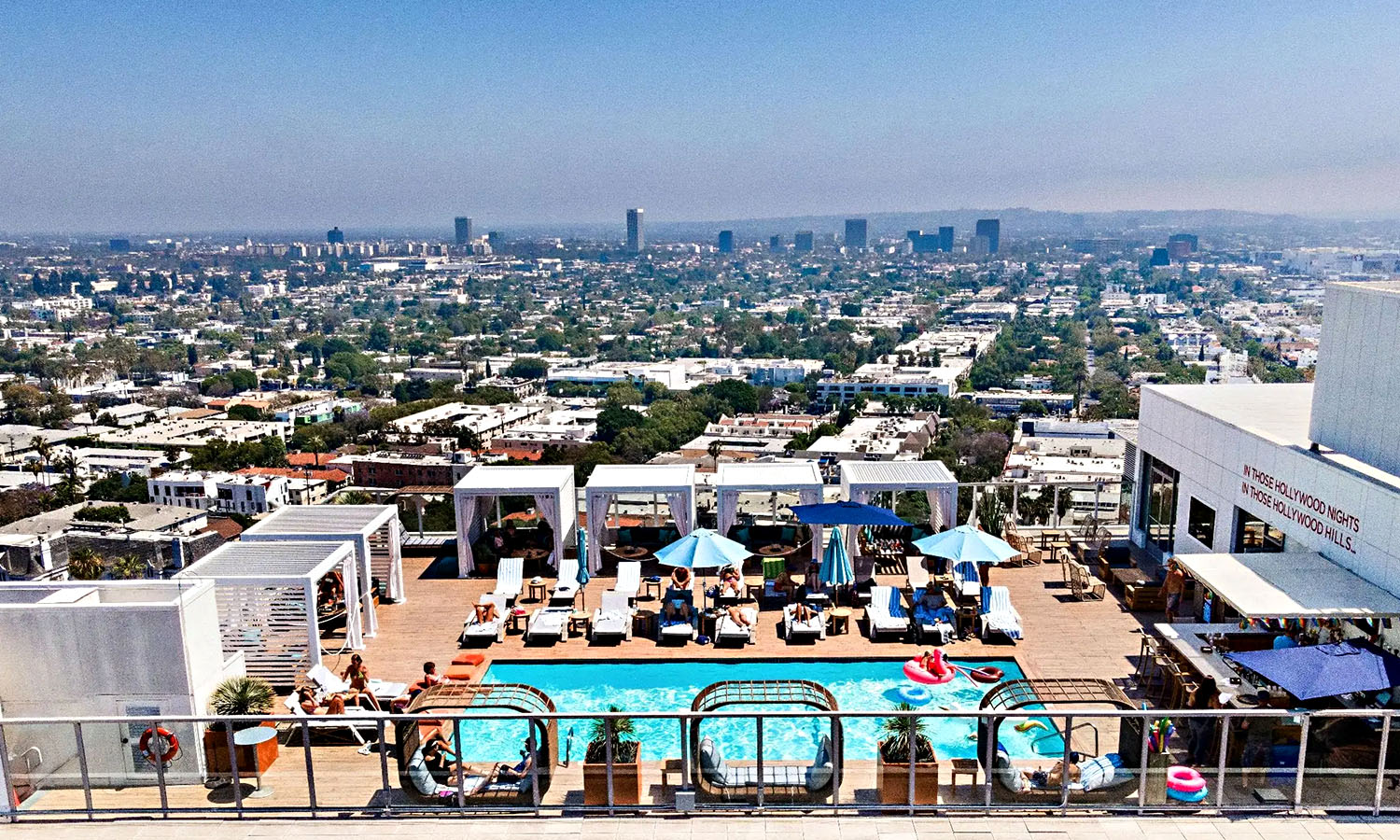
The rooftop pool is still excellent, the cocktail bar still pumps, and the vibe still whispers, “Something inappropriate definitely happened here in the ’70s.” Bonus points: it’s right next door to The Comedy Store, so you can stumble back to your room after laughing too hard at someone who’s (probably) about to be famous.
HOT TIP: Stay for the late, late show at The Comedy Store. This is peak Sunset Strip behaviour.
Sometimes you want to live in WeHo, not just sleep there
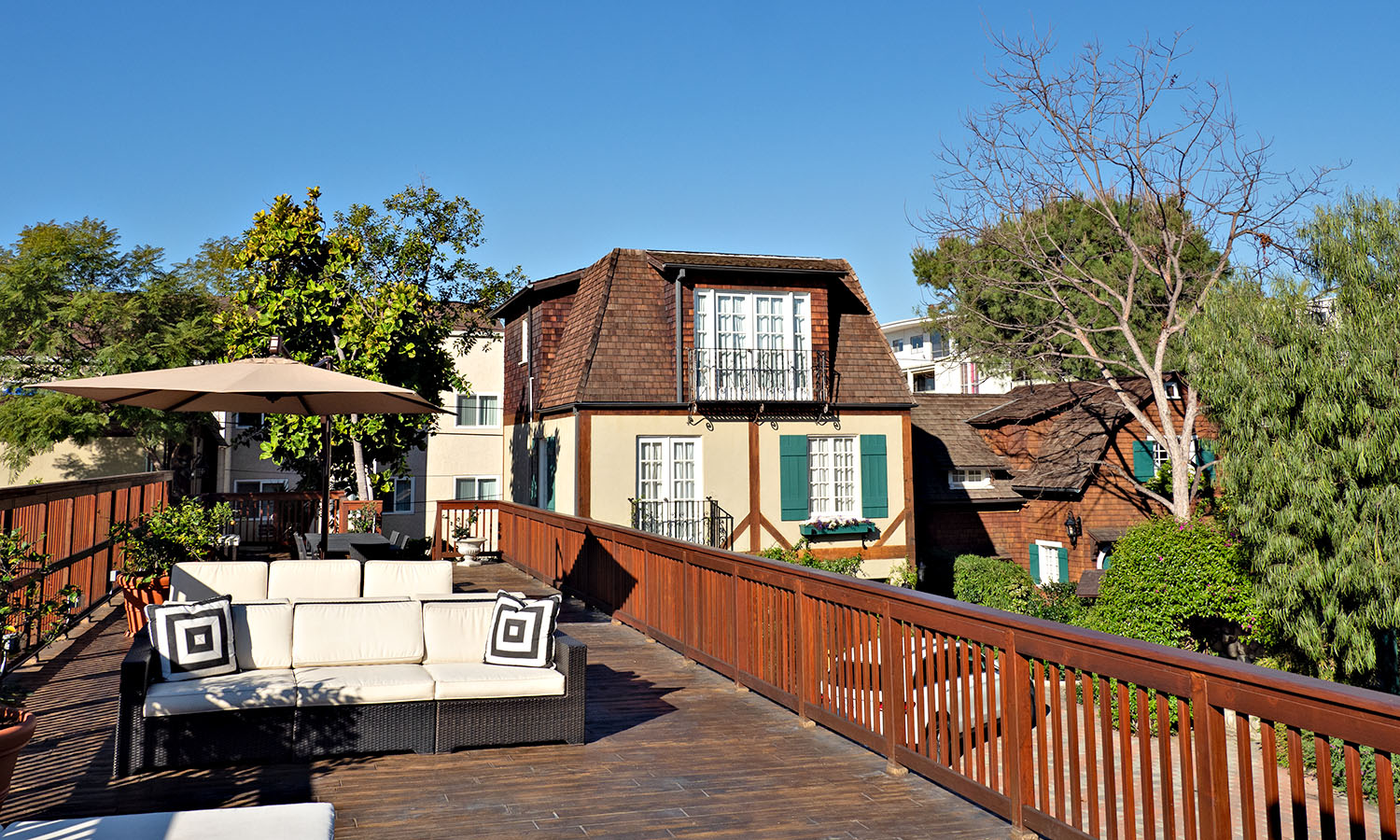
The Charlie isn’t really a hotel. It’s more like a secret serviced apartment complex for people who look vaguely important, hidden behind gates and gardens right in the middle of West Hollywood. Staying here feels like quietly moving into someone else’s extremely tasteful Hollywood life.
The rooms are proper apartments. Think kitchens, laundry, living areas, patios. This means you can cook, unpack, and pretend this is just your place in LA. You’ll find yourself doing very un-hotel things, like grocery shopping and making coffee, while simultaneously feeling like a celebrity who definitely has a publicist somewhere.
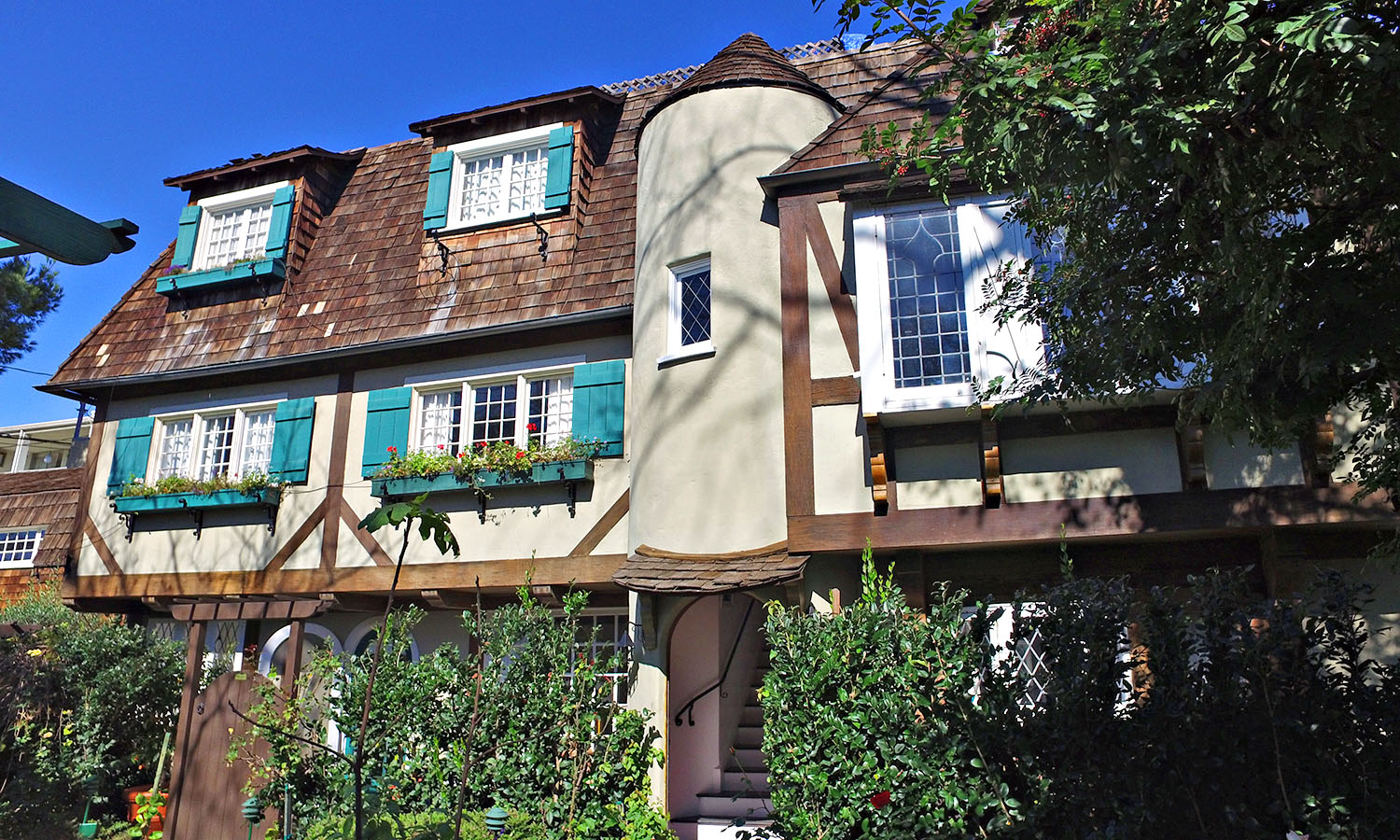
The whole place is made up of charming old cottages, named after Hollywood legends, and wandering through the leafy courtyards feels like you’ve accidentally wandered onto a movie set where everyone forgot to yell “cut.” It’s calm, discreet and slightly smug in the best possible way.
HOT TIP: Lean into it. Sit outside with a coffee, wear sunglasses even if you don’t need them, and walk out the front gate like you’re late for a meeting you absolutely cannot talk about.
Apologies to properties we’re yet to enjoy. We’re looking at you The London and Sun Rose, and for those shaking their heads… Chateau Marmont is not West Hollywood. That’s a whole ‘nother story.
Yes, WEHO hotels are technically places to sleep, but they’re also supporting characters in the story you’ll undoubtedly tell later. And these five don’t just give you a room; they give you attitude, atmosphere, and the strong illusion that you might be someone important.
How a rainforest cliff face will become Queensland’s most joyful adrenaline fix.
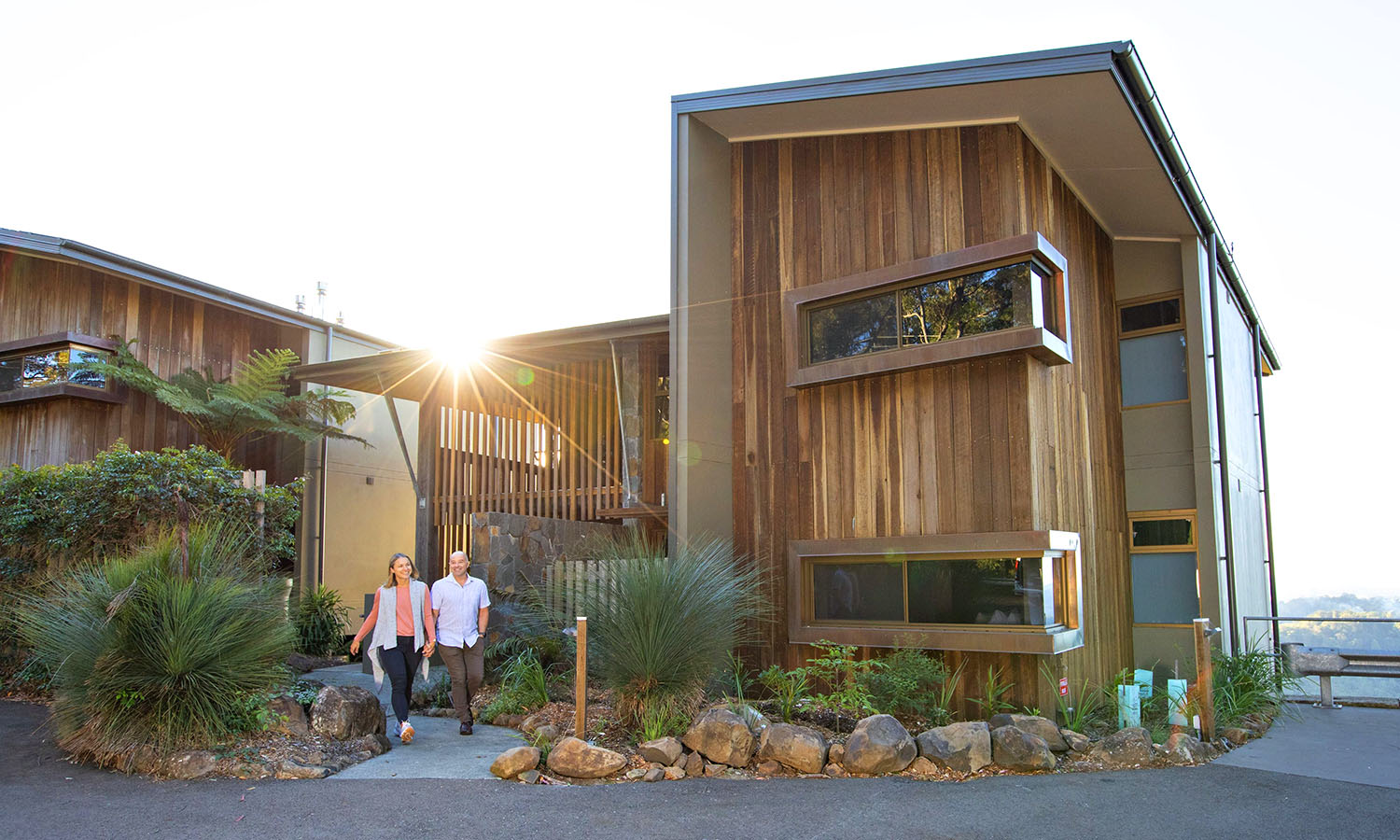
The fear showed up quietly, sometime between waking up at Binna Burra Lodge and realising just how close I was to stepping off the cliffs on Binna Burra land, surrounded by Lamington National Park. We were staying right next door to a brand-new adventure park that hadn’t officially opened yet (it has now), all of us pretending this was just a normal day in the office. It wasn’t. Happitat Adventure Park was still shiny and untouched, and we were about to be its guinea pigs.
But this is a rare kind of place. One that’s both playground and life philosophy. Its core thesis, if I had to reduce it to a slogan, might be “find happi by losing your hesitation on a cliff face”. Which, to be clear, is not the kind of tagline you slap on a postcard unless you really mean it.
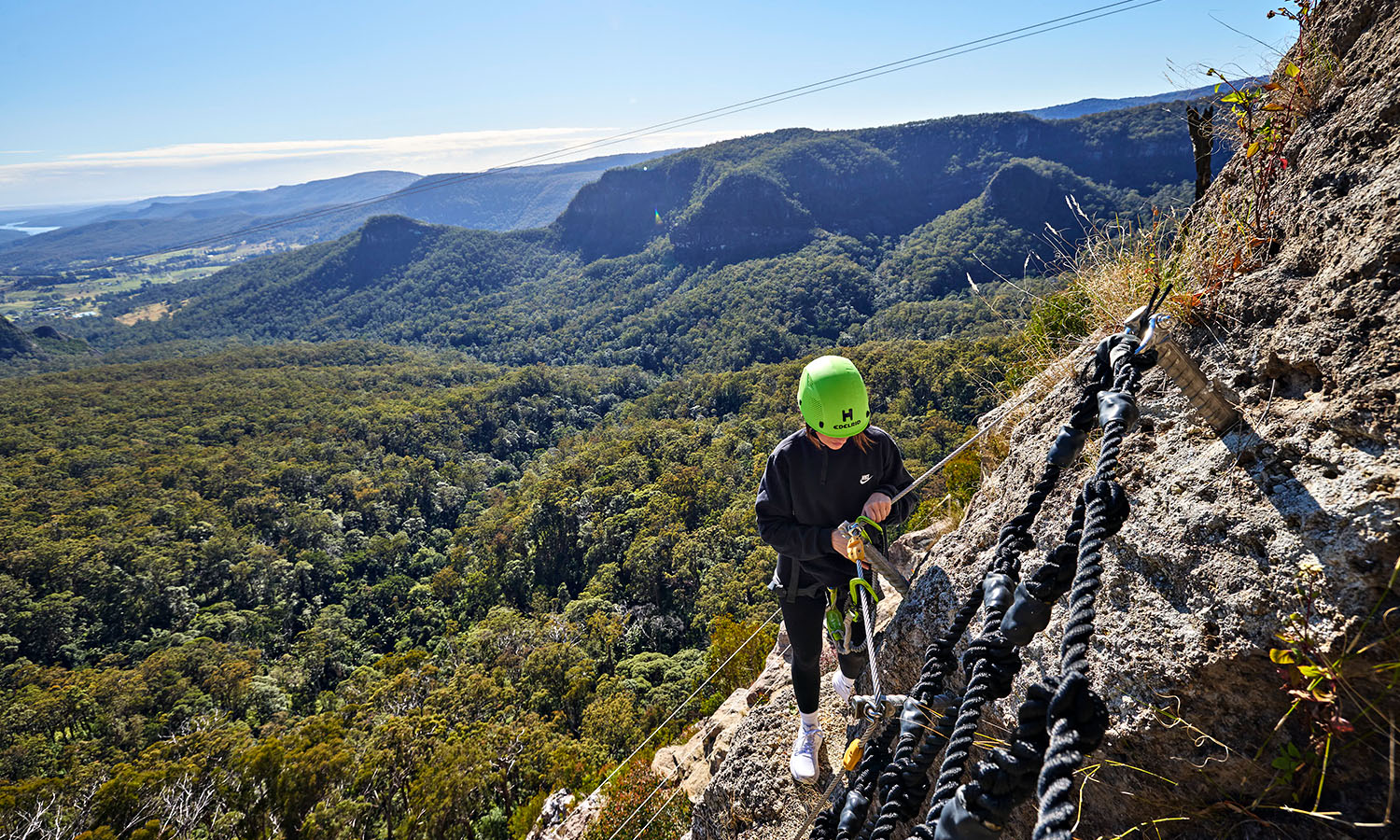
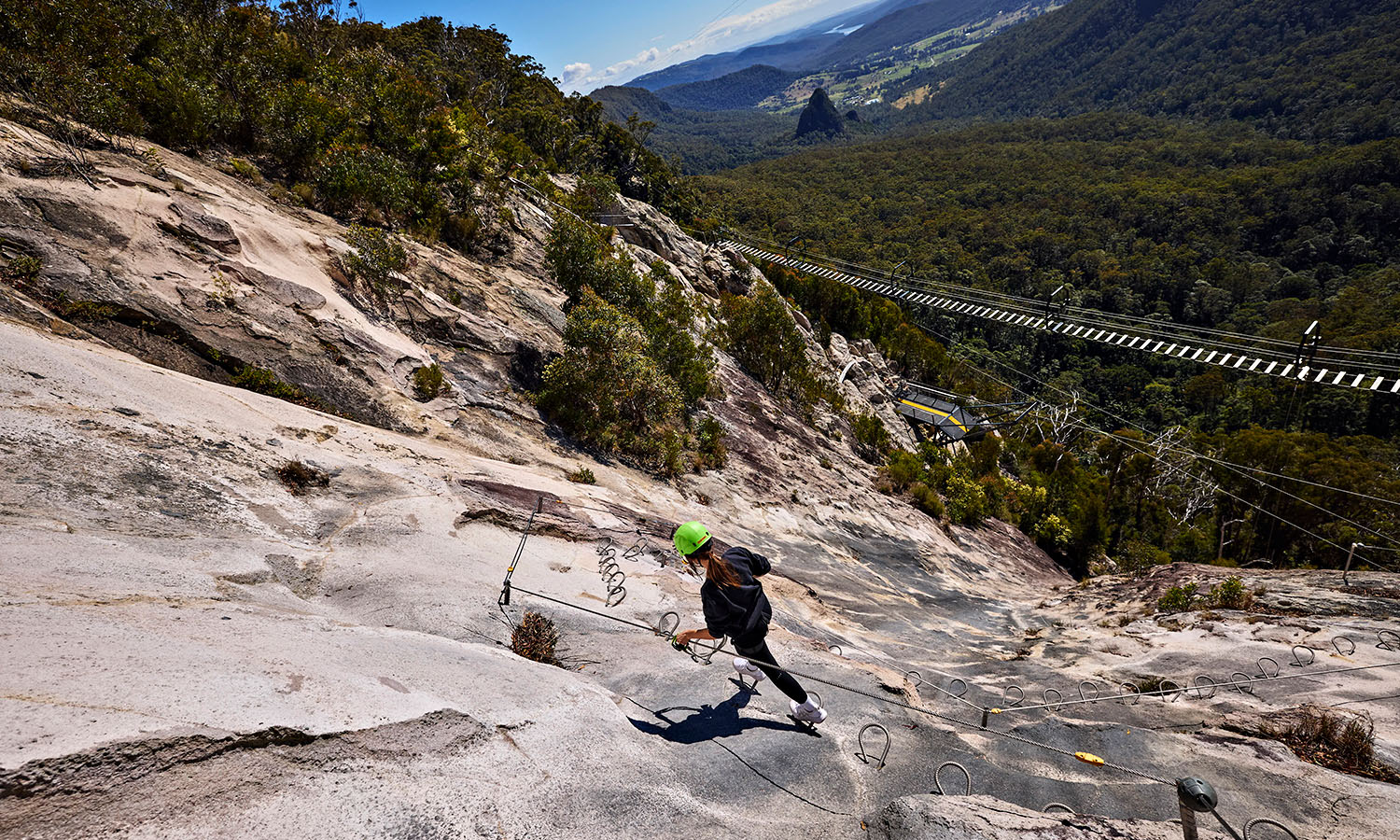
And by “cliff face” I don’t mean a gentle overlook with a safety rail. Nope. Happitat is perched on the edge of a 200-metre-high escarpment in the World Heritage-listed rainforest. Seriously, birds look tiny because you are that high up.
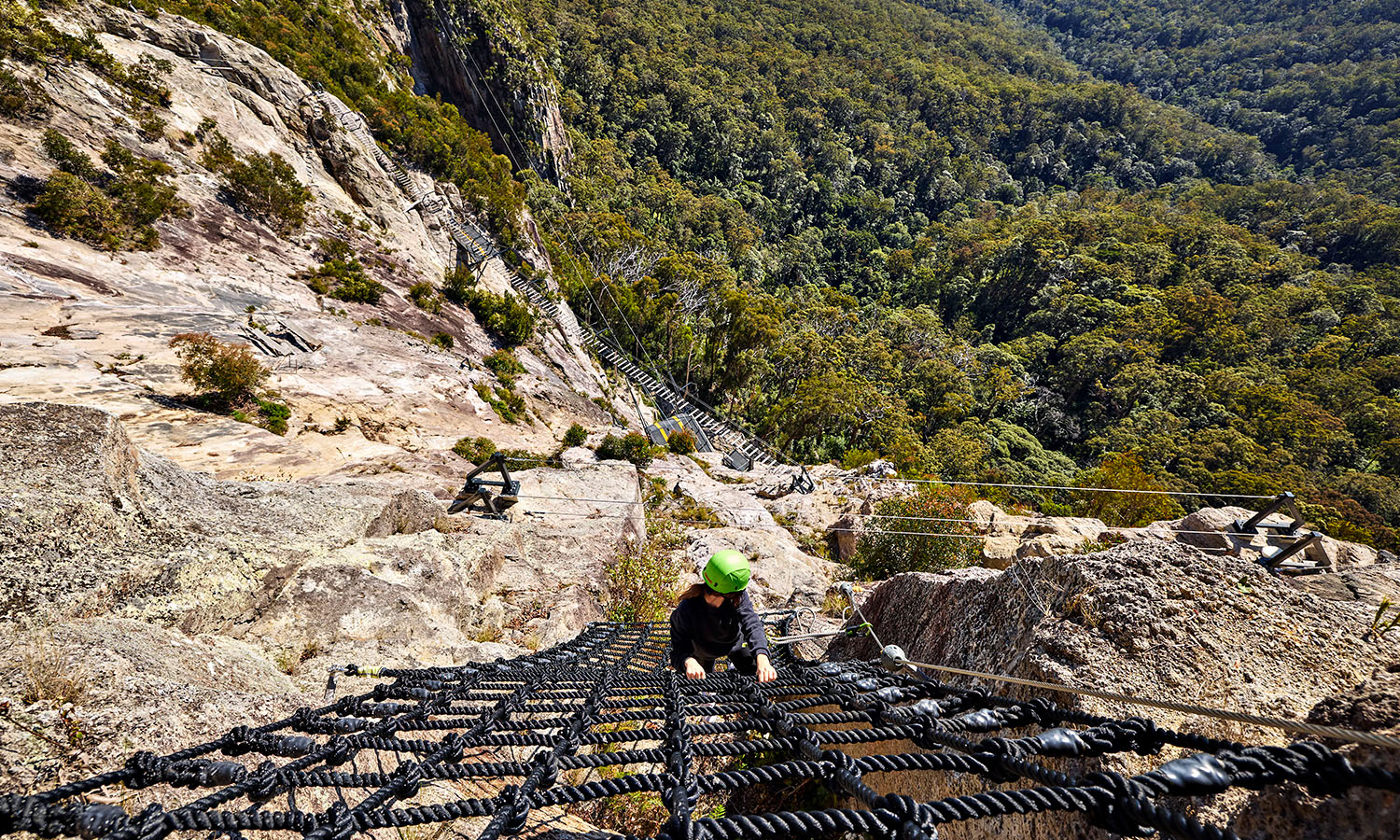
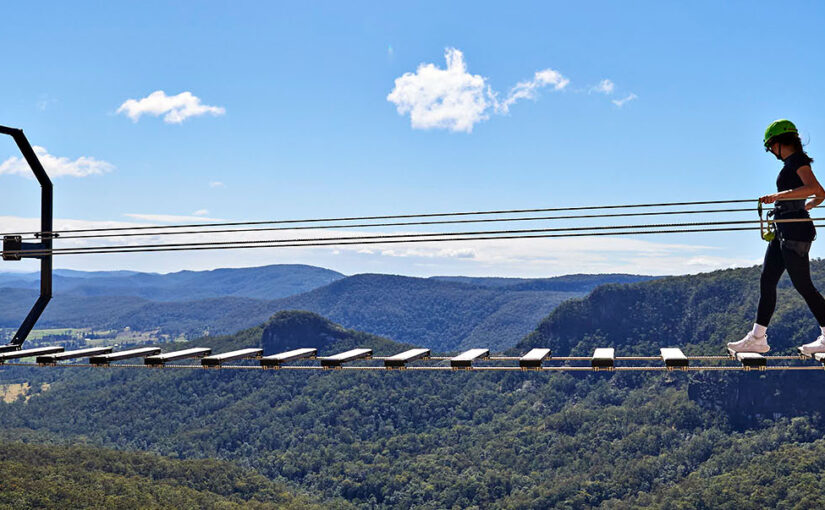
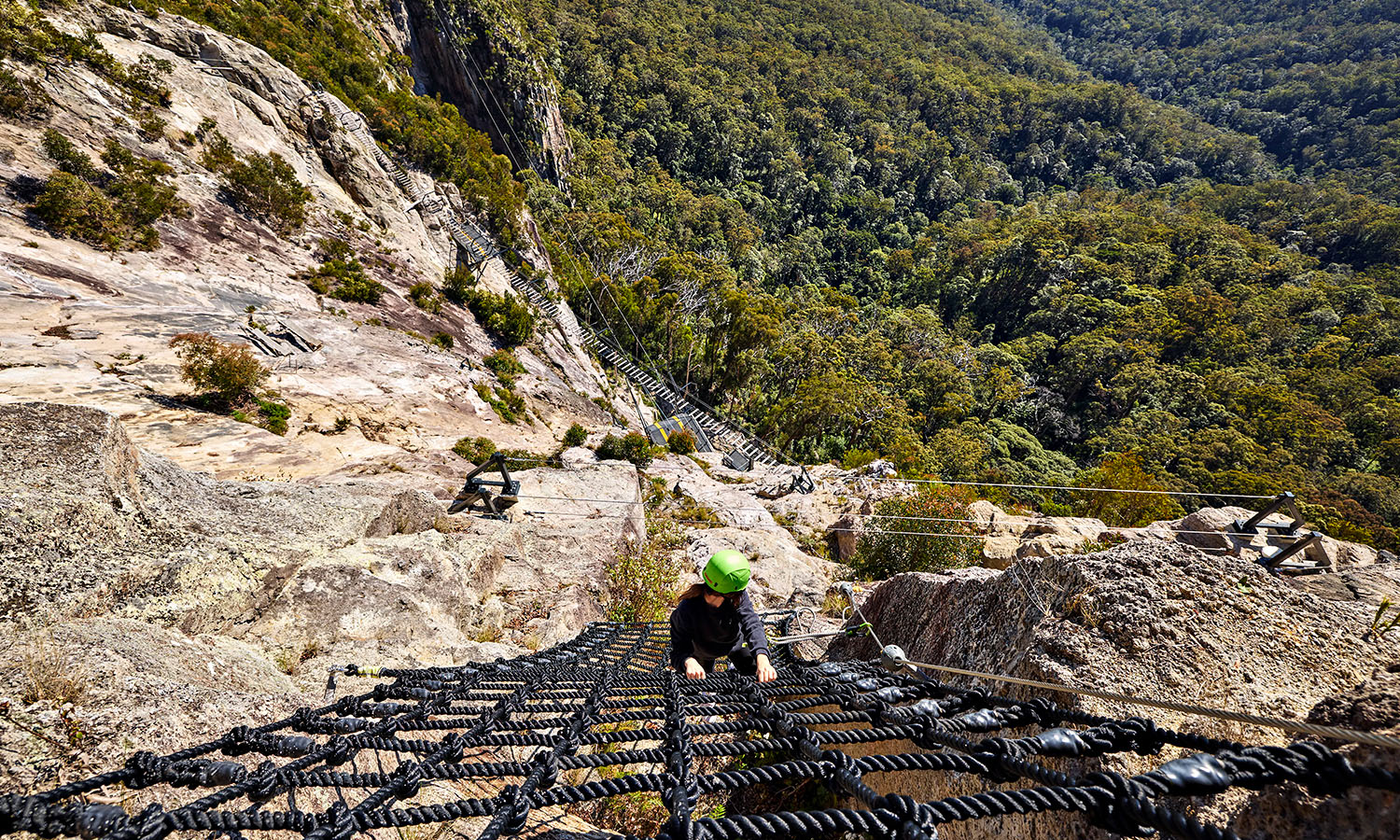
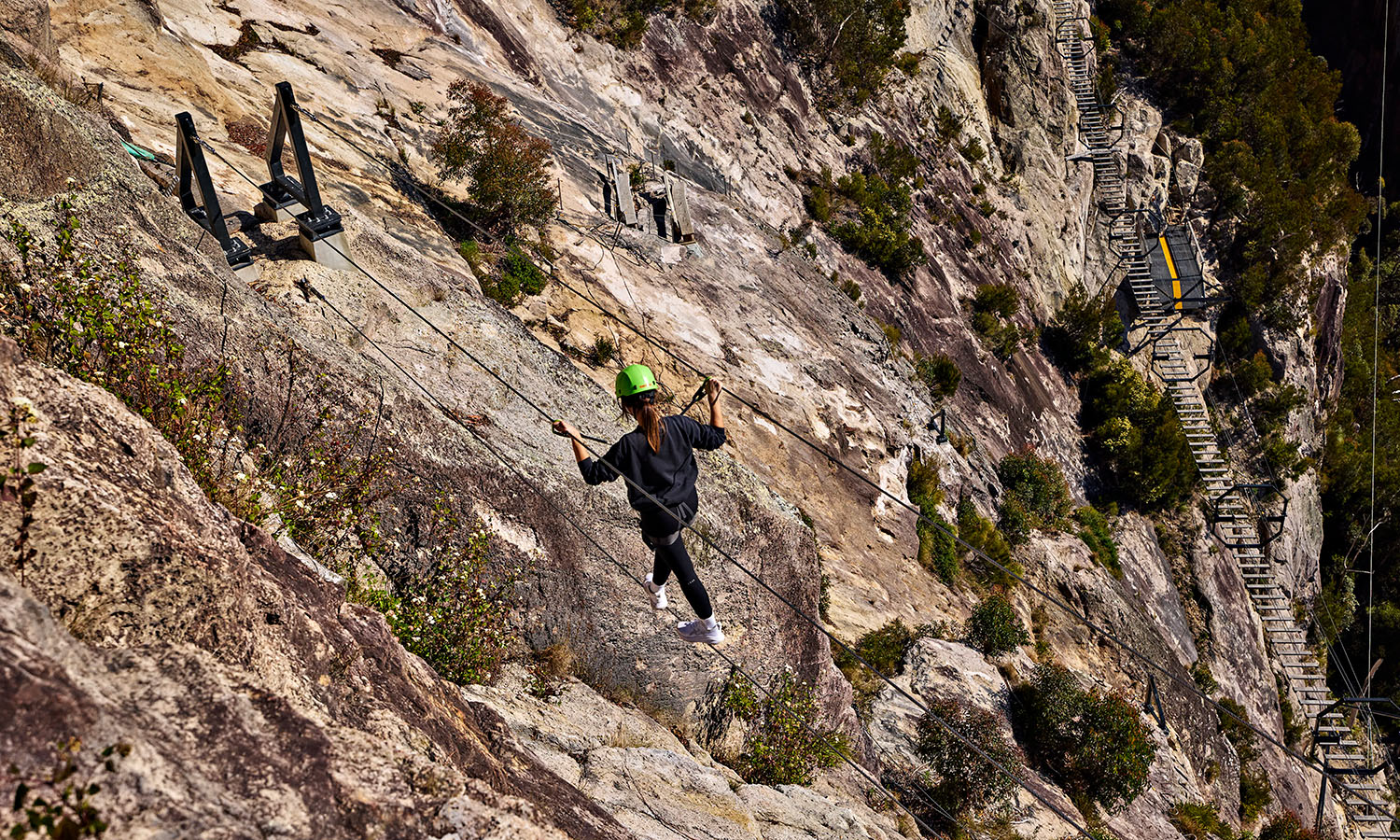
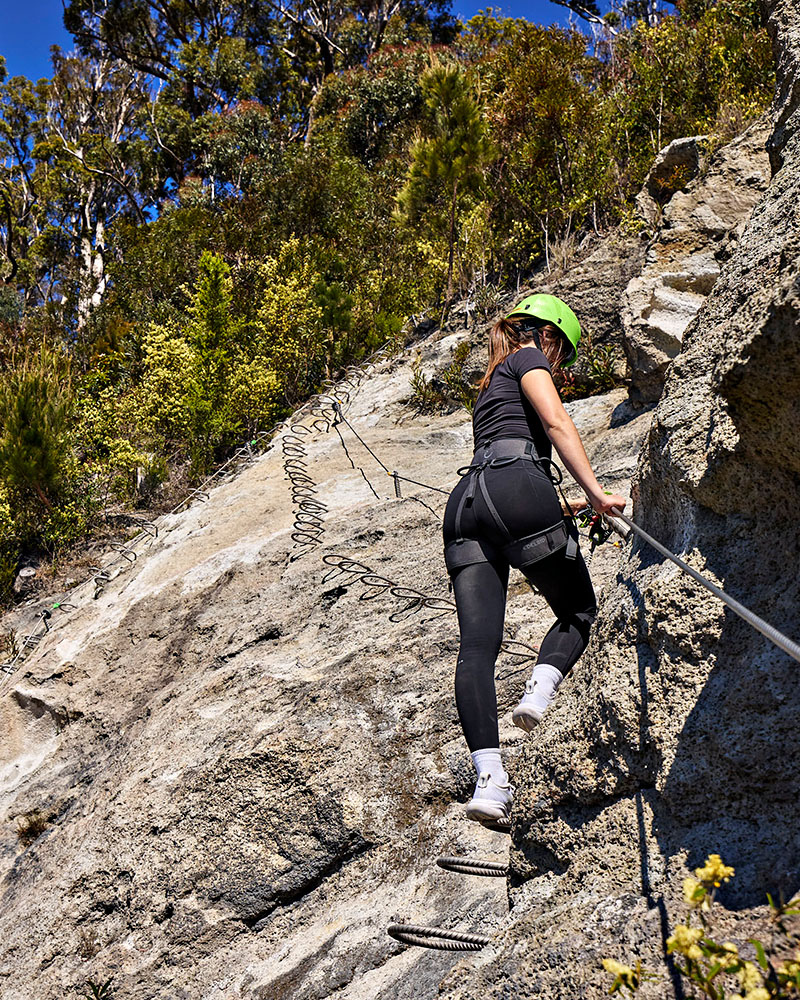
My first mental milestone was the Arete Via Ferrata: a climbing route that cackles in the face of ordinary walking trails. Harnessed in, I stepped out onto a mixture of tightropes, steel cables, timber log crossings, climbing nets and one 80-metre suspended bridge that swayed like a slinky caught in a breeze. I felt like I was starring in a mix between an episode of Wipeout and some sort of Fearfactor ninja training course.
That first step over the edge was the moment Happitat’s ethos hit home: adventure isn’t just about the adrenaline; it’s about stripping away every mental “what if?” and replacing it with a refreshing “why not?”
It’s advertised as the ultimate zipline, which should tell you everything you need to know. On paper it sounds like something you’d scroll past on Instagram before getting distracted by a cat smacking a baby in the face. In reality? I was clipped in, I leaned back, and suddenly the wind was zipping past me faster than I thought possible. You’re 400 metres above pristine rainforest canopy, rock walls to one side, untouched valleys to the other, and you’re absolutely gunning it.
Then there’s the Overhang Zipline Course; a trio of lines that take you skimming past waterfalls, scraping cliff sides (in a safe way, promise), and above secret pockets of rainforest that are so lush they look like someone’s screensaver from 2008. Unfortunately, I had a plane to catch so I couldn’t actually try that one out, but you better believe I’ll be back.
And after all that high-octane fun, you can also walk shaded bush tracks and stand on a cantilevered platform that extends 12 metres over the valley. Here, the soundtrack is birdsong and leaf rustle, not screaming (mine or anyone else’s).
If I had a wheel of feelings about Happitat, half of it would be “That was scary (in a good way!)” and the other half would be “Wow, that view!” with a sprinkle of “Did I really just do that?” But that’s kind of the point. The folks behind this park, led by former pro snowboarder Michael Neururer, didn’t build it to be a typical theme park with bad fried food and queues. They built it to make you feel present, to stop your brain’s constant chatter and give you a front-row seat to nature’s spectacle.
There’s a subtle message tucked between every steel cable and every forest step about reconnecting with the wild. But it’s not preachy. It’s more like, when you push through your fear and are surrounded by super old trees, something inside you shifts.
Also worth noting, Happitat is intentionally designed with sustainability and regeneration in mind. They carefully chose materials that are durable and recyclable, and the entire park can be dismantled in the future to leave the cliff face undisturbed. Insert shocked face emoji.
By the end of a few very busy hours; after forests, constant clipping in, and views that make your phone storage scream more photos please, I found myself at the Happitat base, sipping some much-needed water (QLD in summer is no joke), and smiling. There’s a quiet joy in looking around you and thinking, if I could do all that today, what else might I be capable of? And I think that’s exactly what this park was built for.
From stone-paved villages to mountain passes, this is Japan at walking pace; immersive, timeless, and quietly epic.
From stone-paved villages to mountain passes, this is Japan at walking pace; immersive, timeless, and quietly epic.
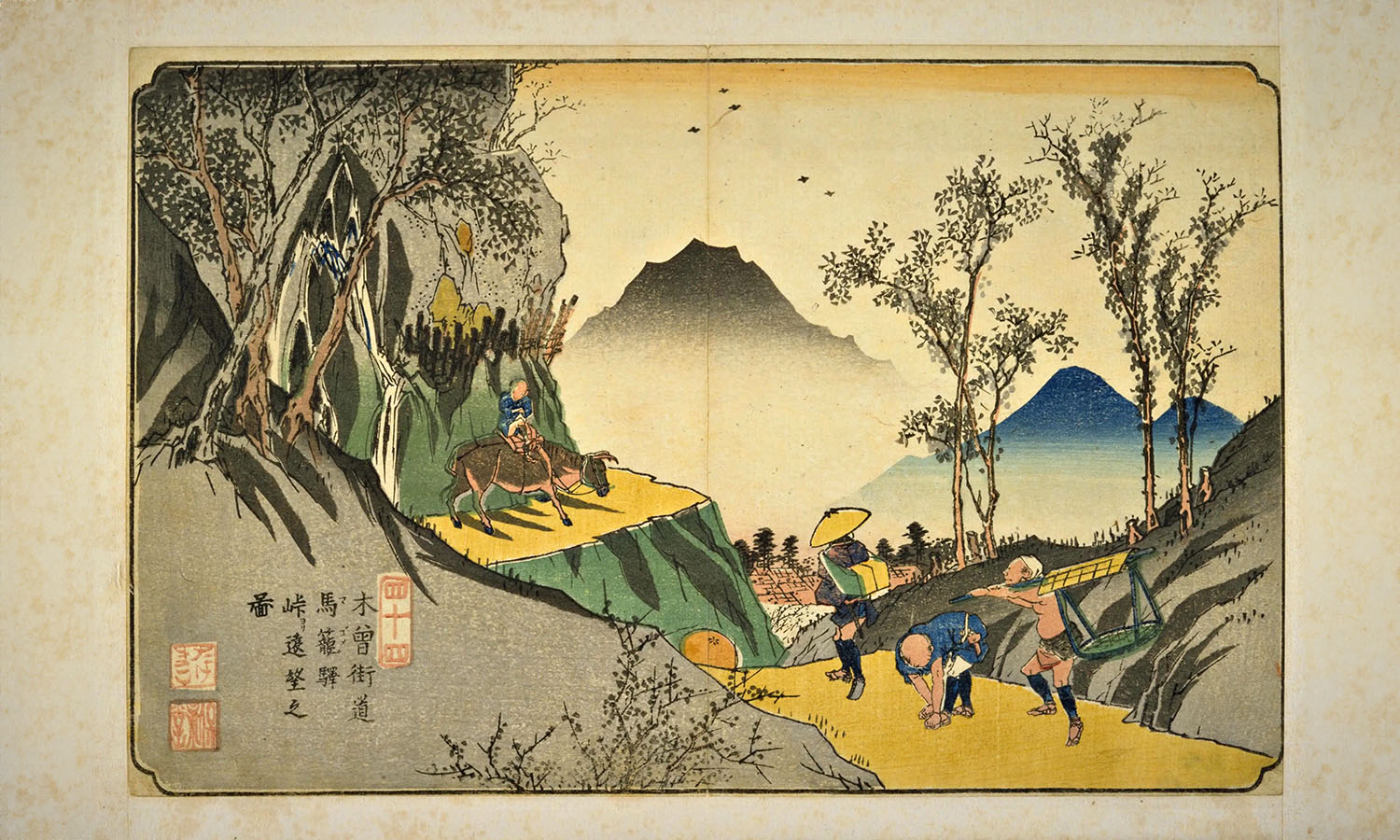
Japan does walking trails very well. But the Nakasendō Trail isn’t just a hike, it’s time travel with good legs and an appetite for immersion. This is one of the Five Great Roads of the Edo period, a historic artery that once connected Kyoto with Edo (modern Tokyo), carrying samurai, merchants, monks, messengers, and the occasional unlucky bloke walking in straw sandals during a snowstorm.
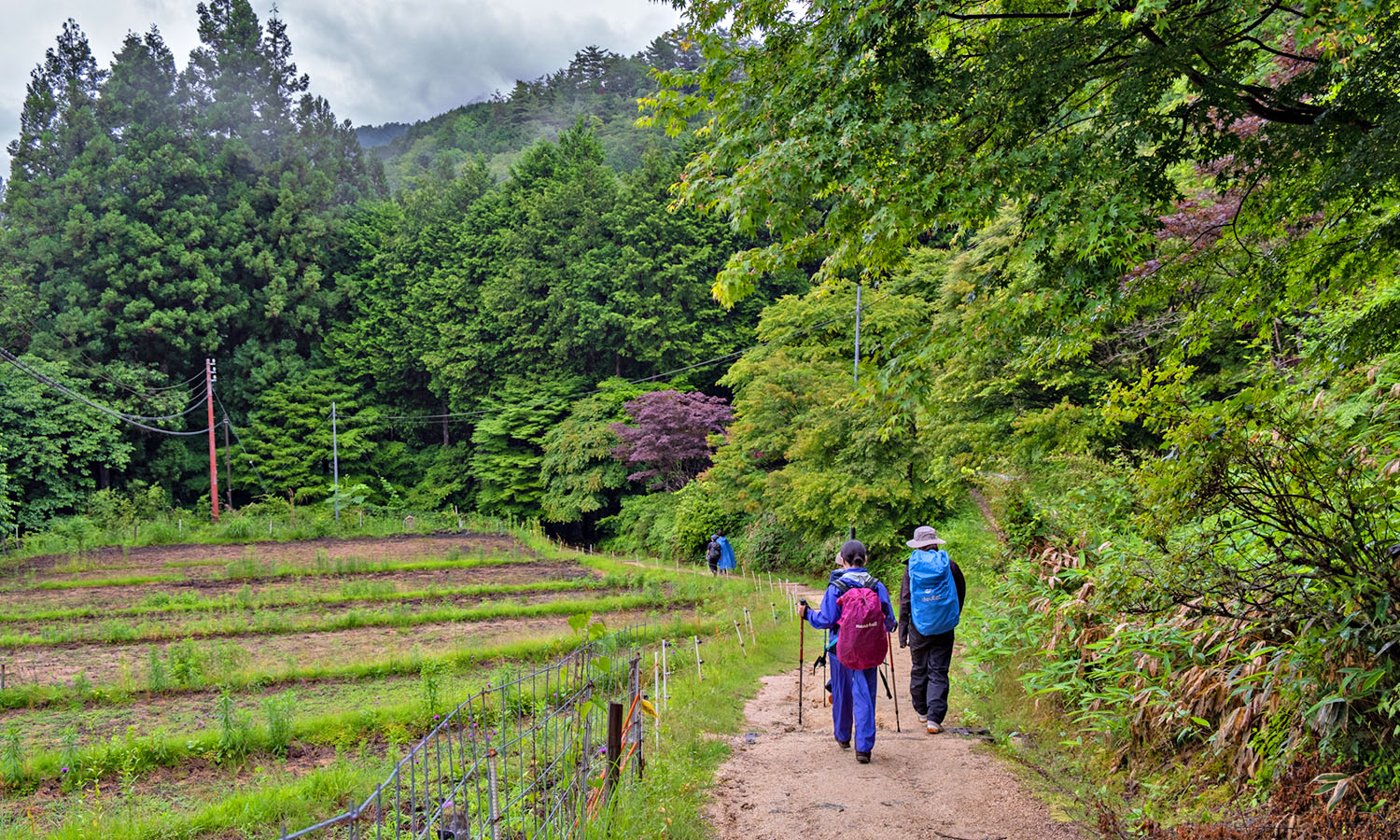
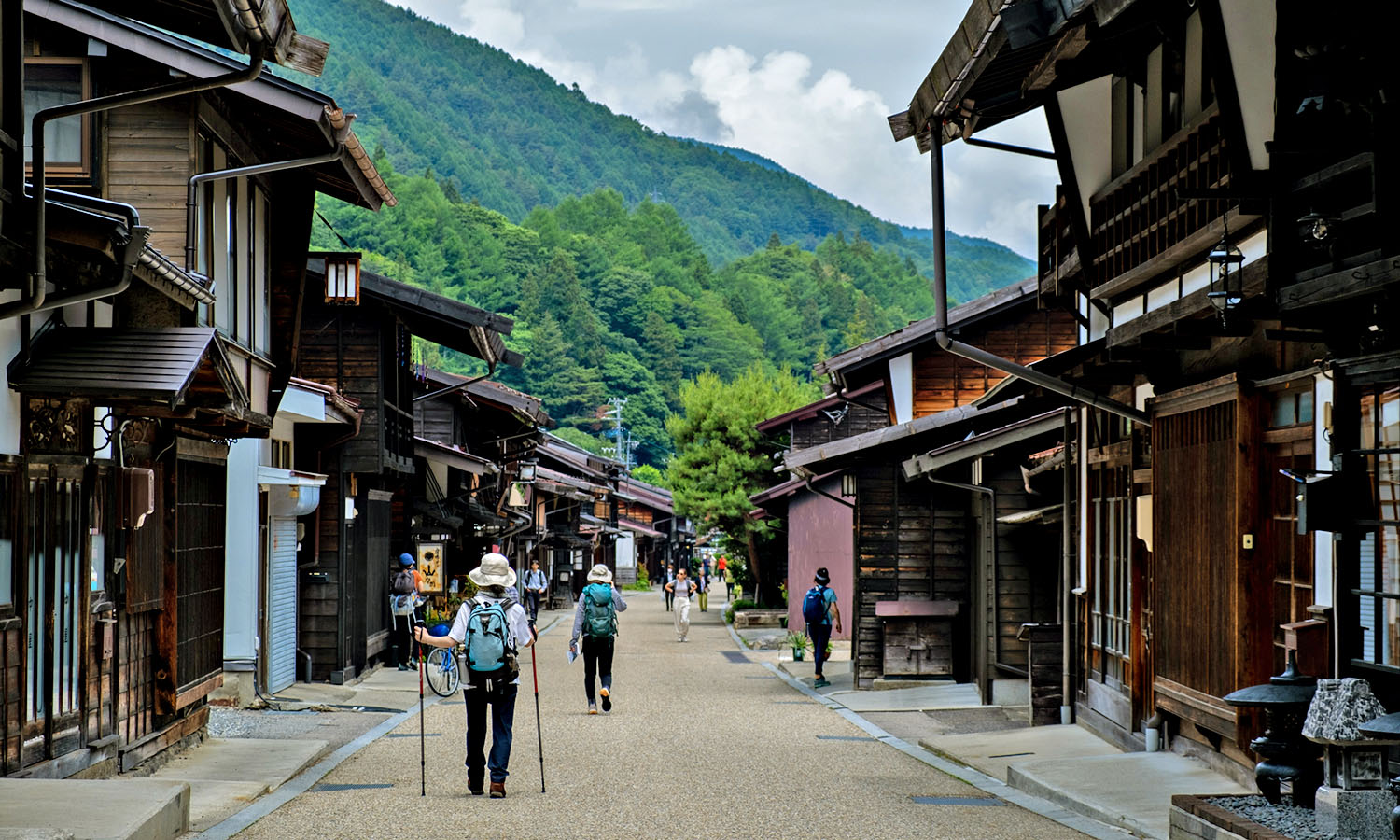
Today, you can still walk large sections of it. Not on a treadmill. Not behind a flag-waving guide. But on foot, at your own pace, through cedar forests, over stone-paved passes, and into post towns that look like the Edo era forgot to leave.
For travellers chasing something deeper than neon lights and selfie queues, the Nakasendō delivers that sweet spot of immersive adventure. It’s physical without being punishing. Cultural without being stuffy. And quietly spectacular in a way that sneaks up on you somewhere between a mossy stone Buddha and your third bowl of miso soup.
The genius of the Nakasendō is that it was built for walking. Unlike coastal routes designed for speed, this inland road winds through Japan’s mountainous heart; through forests, valleys, rivers, and passes that force you to slow down and pay attention.
Walking sections range from gentle village strolls to satisfying half-day hikes, making it accessible even if your idea of “training” is walking to the café. And because it’s broken into manageable segments, it fits neatly into a broader Japan itinerary alongside Tokyo, Kyoto, or the Japanese Alps.
Most importantly, the Nakasendō shows you a version of Japan that many visitors never see: quiet, rural, deeply traditional, and refreshingly human.
Day 1: Magome-juku to Tsumago-juku (8 km, ~3 hours)
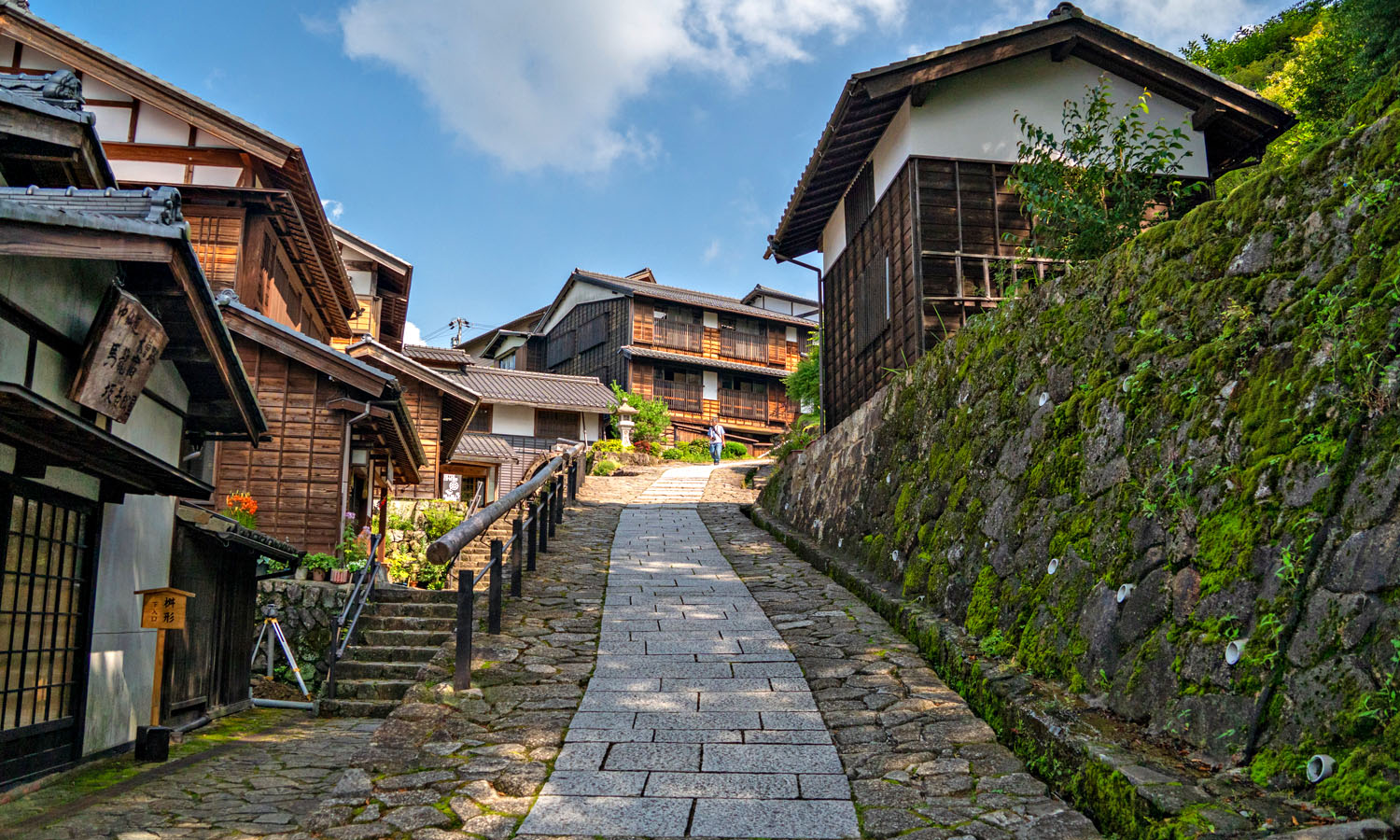
You begin in Magome-juku, one of the most photogenic post towns in Japan. It climbs a steep stone-paved slope lined with wooden inns, waterwheels clacking away like they’ve always been there (because they have), and views back toward Mount Ena that feel almost painted on.
Leaving Magome, the trail slips into forest. Sunlight filters through cedar trees, stone paths crunch underfoot, and waterfalls (including the charmingly named Male and Female Falls) appear just when your legs start to complain.
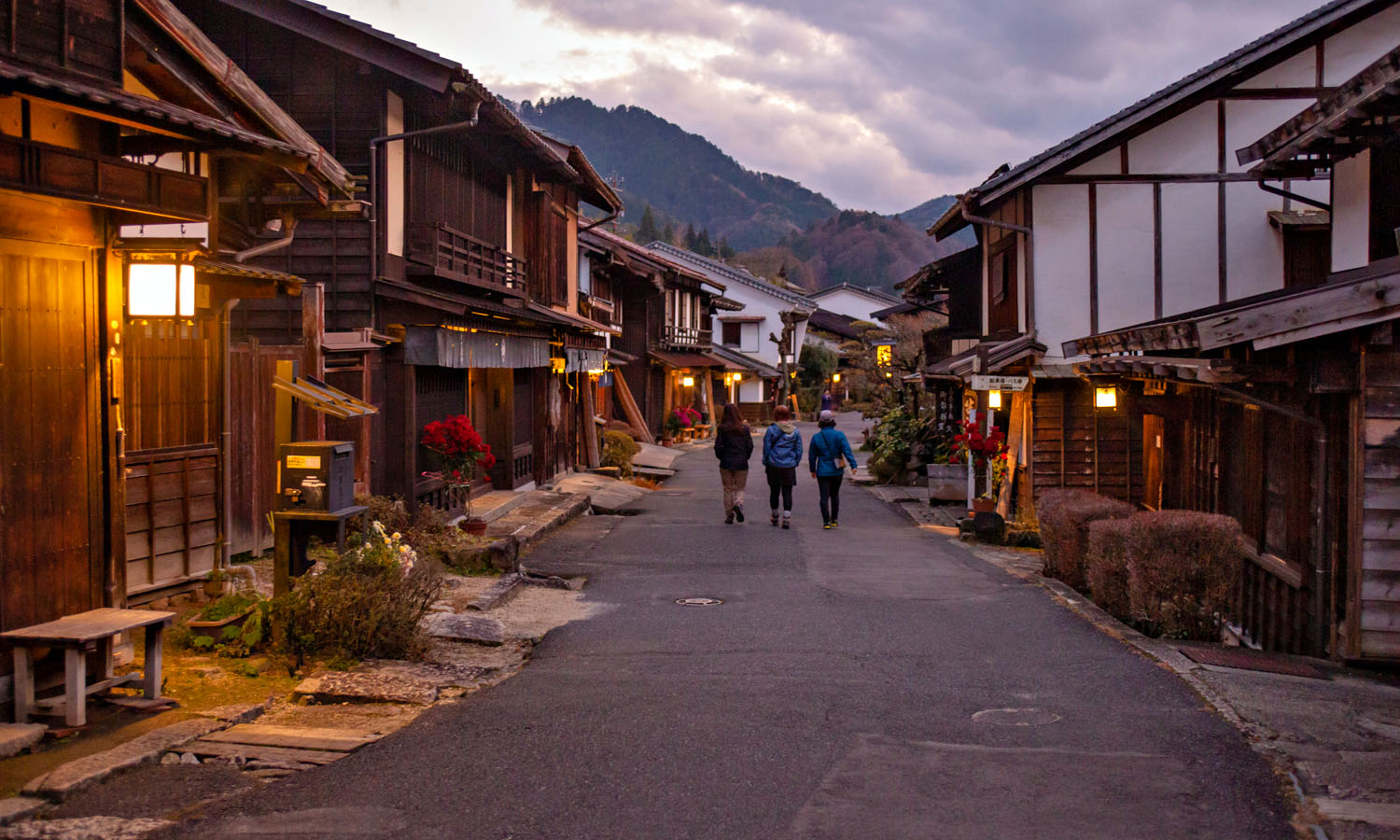
The reward is Tsumago-juku, Japan’s first officially preserved post town. Its streets follow a strict philosophy: do not sell, do not rent, do not destroy. The result is a place that feels lived-in rather than staged. You overnight in a local minshuku or ryokan, eat a seasonal dinner, and sleep very well.
This is a quieter, more contemplative day. The crowds thin. The forests deepen. You walk through Kiso cypress groves and rural countryside where time seems optional.
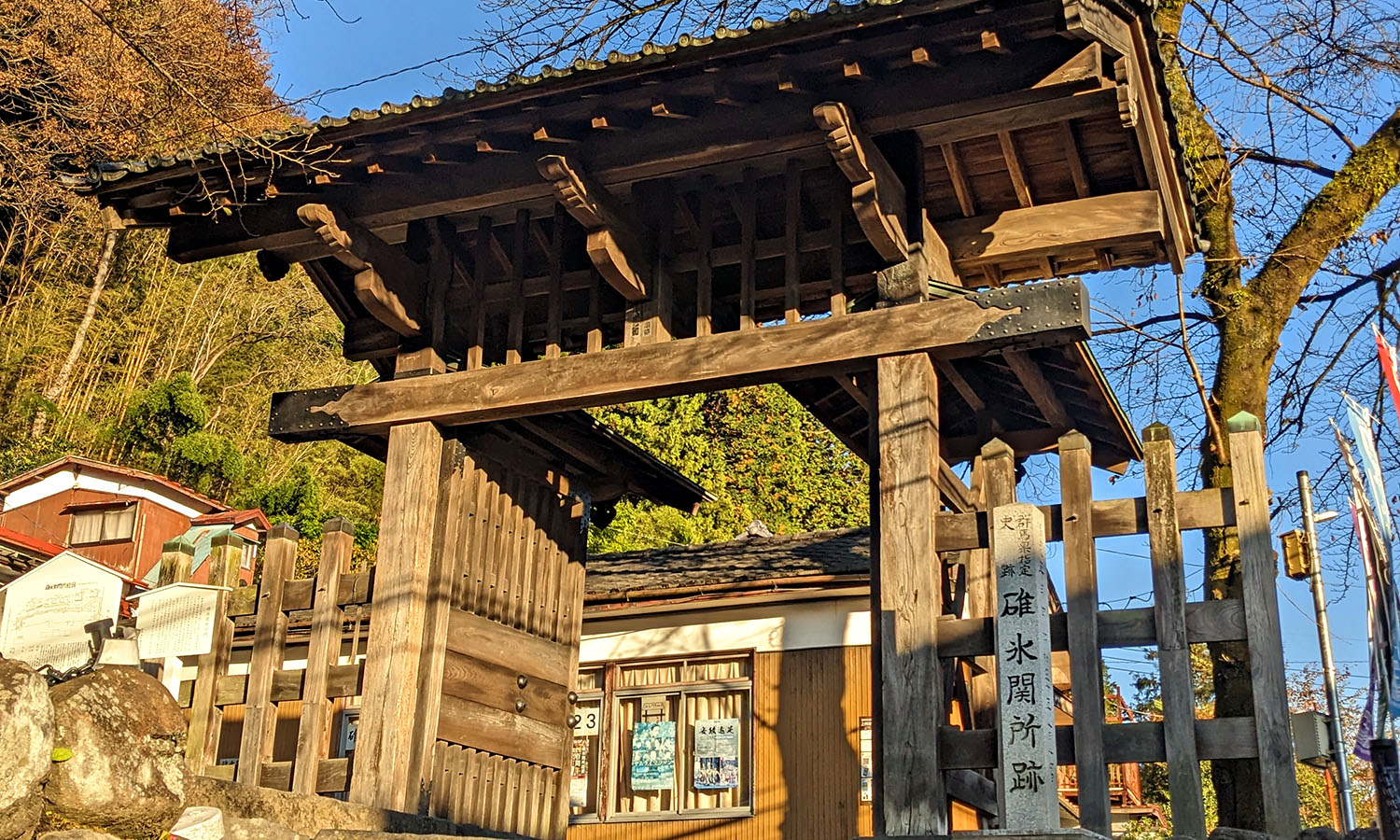
After the walk, you transfer by train to Kiso-Fukushima, once guarded by one of Edo Japan’s four great checkpoints. The ruins remain, a reminder that travel here was once tightly controlled. A soak in a free foot bath by the river helps ease the legs.
Day 3: Yabuhara-juku to Narai-juku via Torii Pass (7 km, 2–3 hours)
Starting in Yabuhara-juku, birthplace of the delicate Orōku comb, the trail climbs steadily toward Torii Pass, one of the highest points on the Nakasendō at 1,197 metres.
Stone Buddhas line the way. Poetry monuments appear unexpectedly. Matsuo Bashō passed through here, and it’s easy to see why he lingered.
Descending into Narai-juku feels like walking into a film set that forgot to modernise. Nearly a kilometre long, Narai is known as “Narai of a Thousand Houses,” with lacquerware shops, cafés, and beautifully preserved wooden buildings.
That night, you head toward Matsumoto and sink into an onsen at Asama or Utsukushigahara, a reward Edo travellers could only dream about.
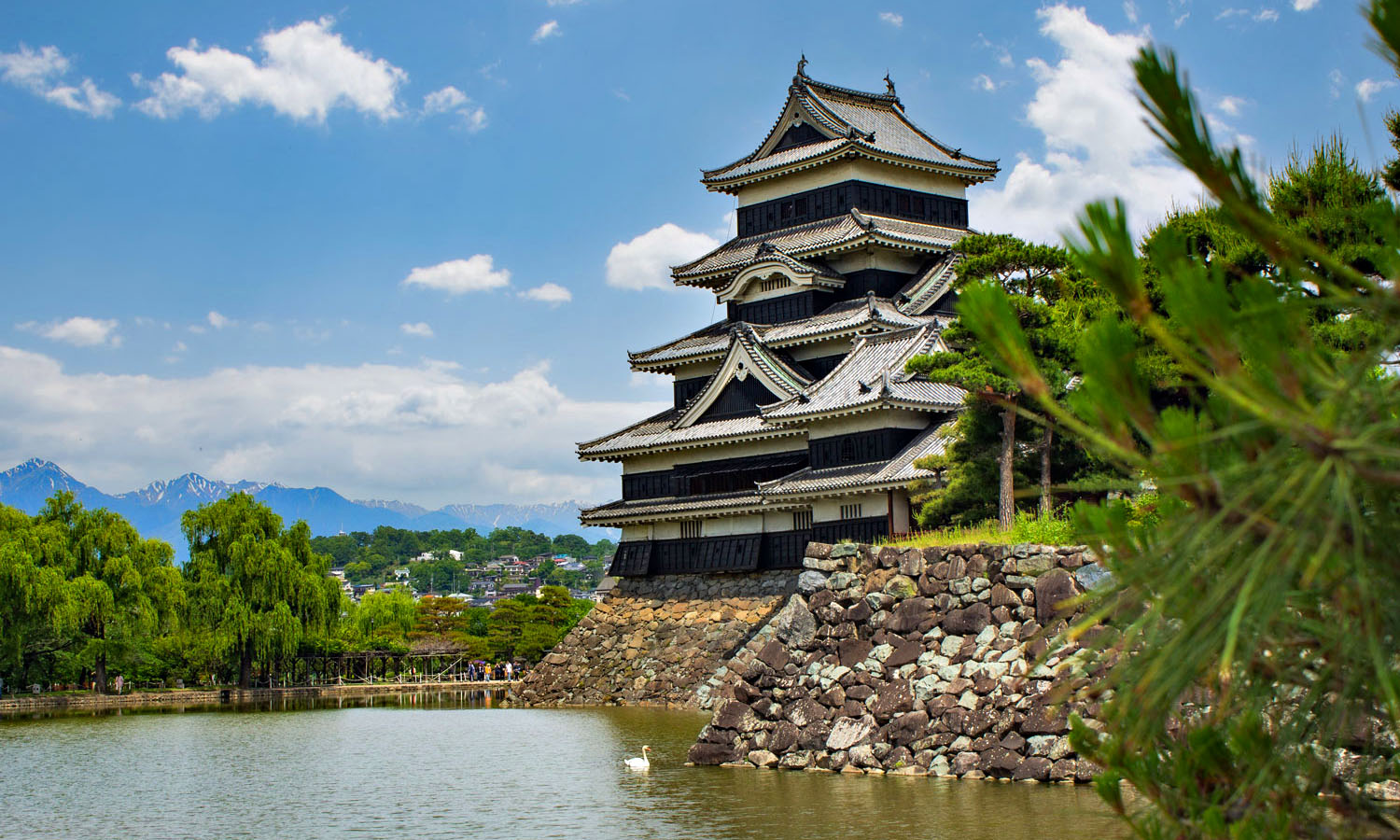
This is your cultural breather day. Matsumoto Castle, one of Japan’s original castles, rises black and imposing against the Alps. From here, you travel on to Karuizawa, a refined mountain resort town with leafy streets, historic churches, and excellent coffee. It is a surprisingly good base for what comes next.
Day 5: Usui Pass — Walking Like It’s the Edo Period
If the Nakasendō has a showstopper, Usui Pass is it.
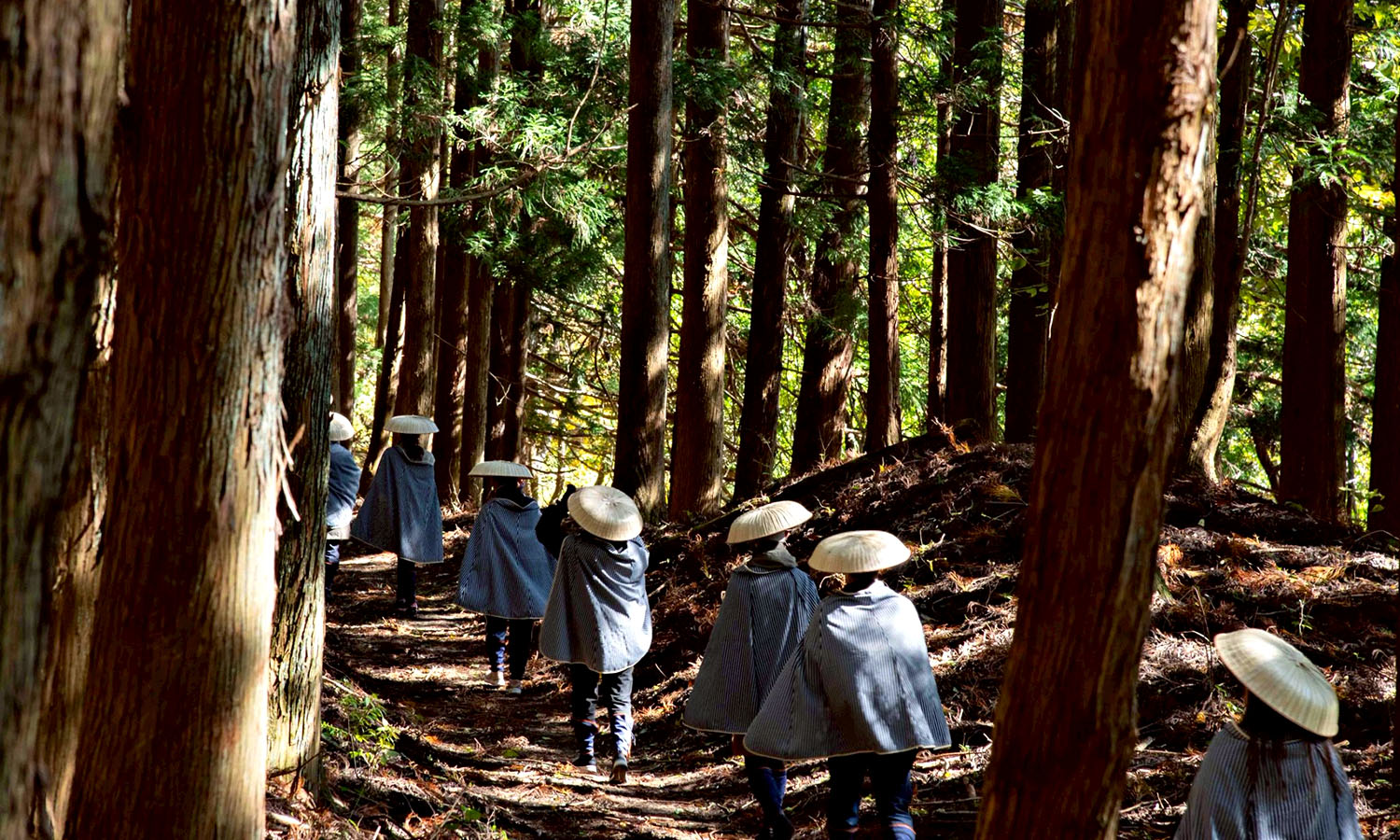
Once notorious for its steep gradients and unpredictable weather, Usui Pass connected Karuizawa with Gunma Prefecture and tested the resolve of Edo-era travellers. Today, it’s been restored as a tranquil forest trail. It is dramatic without being brutal, scenic without trying too hard.
And here’s where immersion levels up.
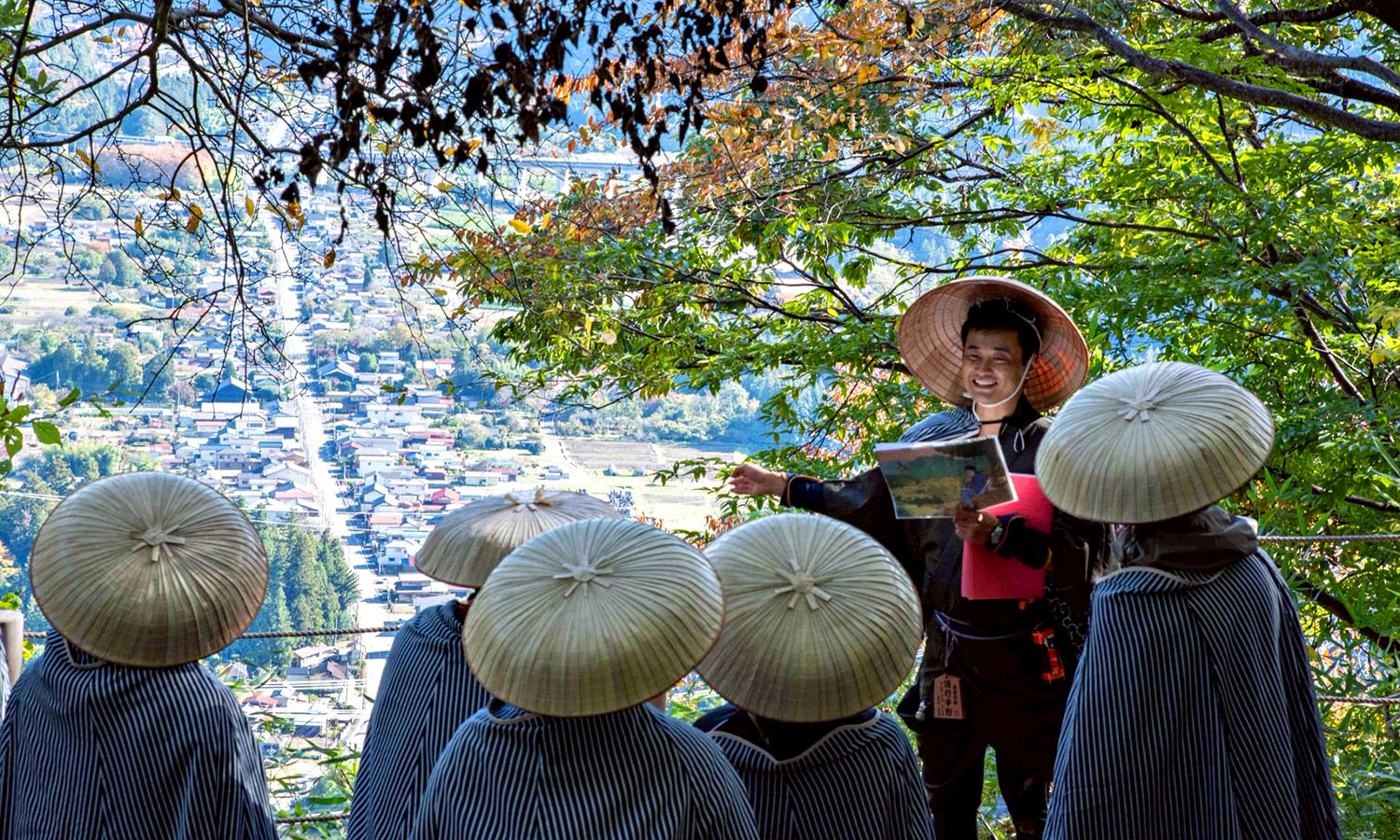
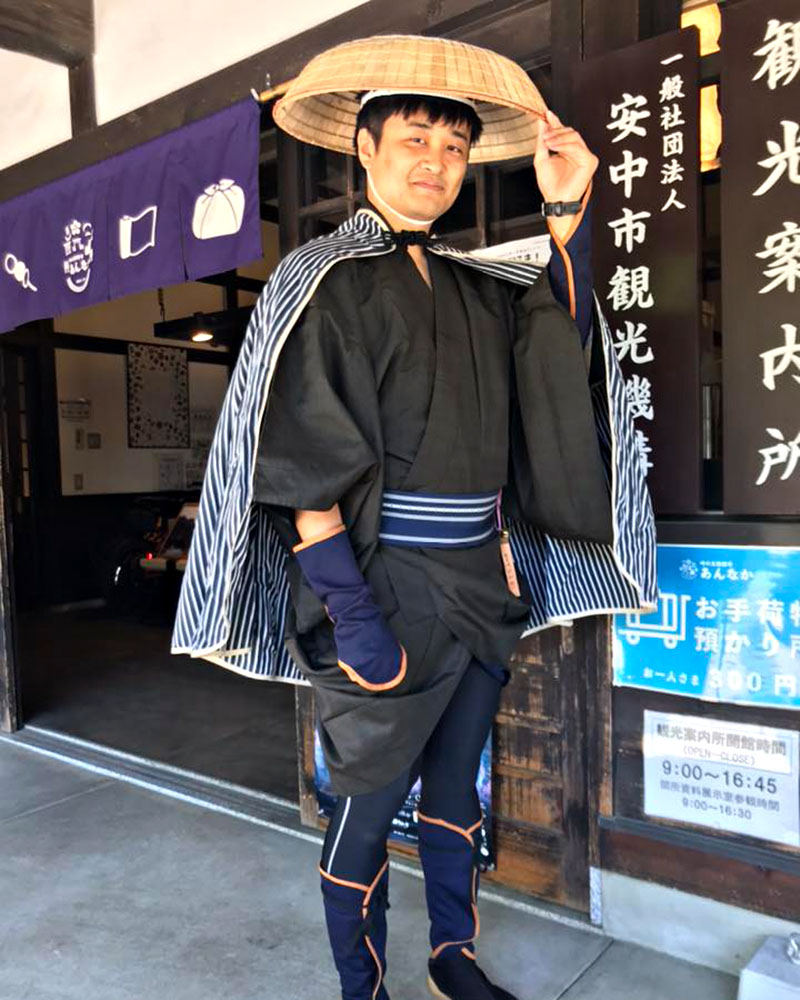
Before setting out, you don authentic Edo-period travel attire: traditional hat, rain cape, arm guards, leggings, and even a replica travel permit tucked away like you’re clearing checkpoints. It’s not cosplay, it’s context. Suddenly, the weight of history feels real. The trail narrows. The forest closes in. Your footsteps echo differently.
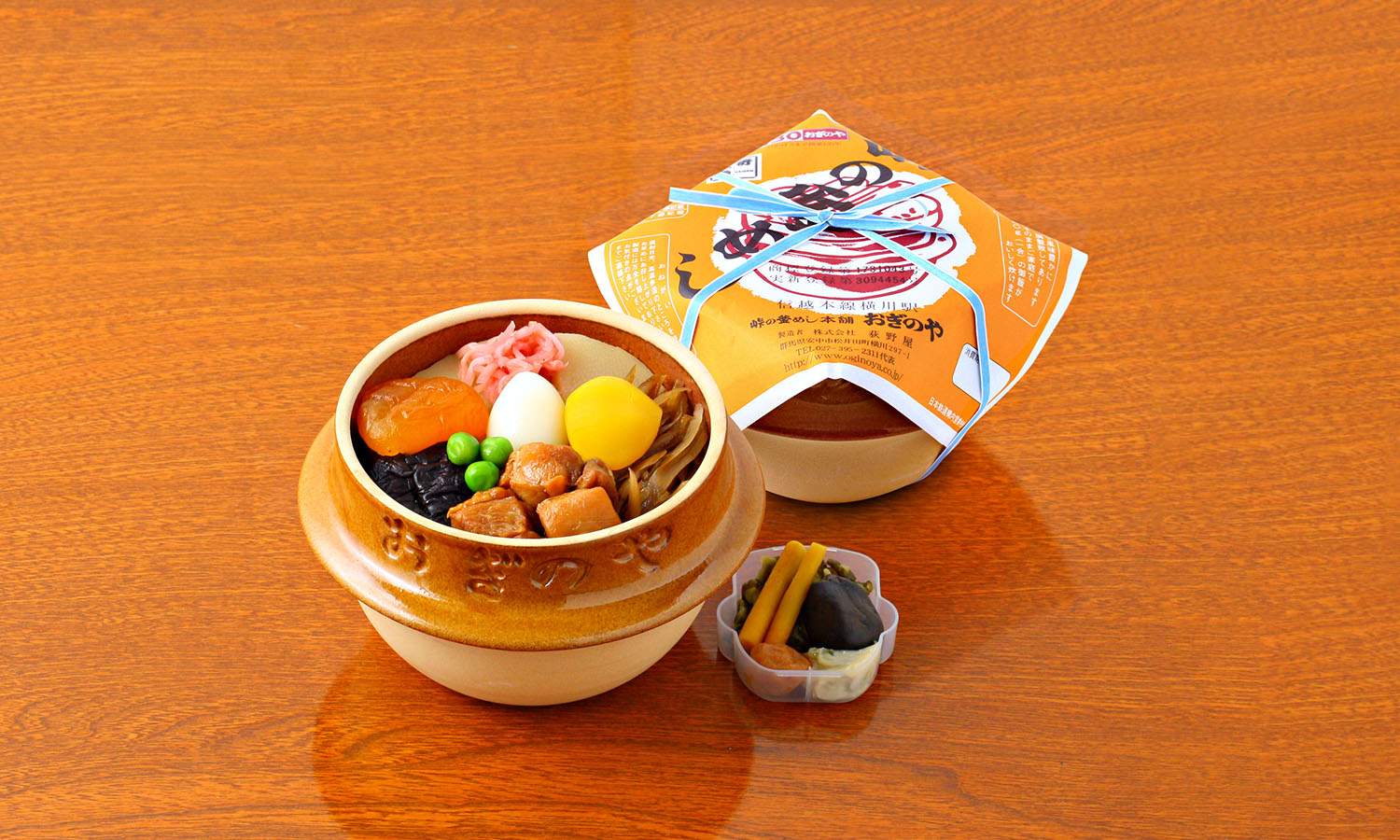
At scenic viewpoints, Mount Myōgi rises jagged and theatrical above the valleys. You stop for a bento inspired by historic teahouses, including tōge no chikara-mochi — “power mochi” once eaten by travellers tackling the pass. It’s simple, satisfying, and strangely perfect.
Illustrated storytelling along the route adds depth, tracing the evolution of this road from the Nara period through early modern Japan. By the time you reach the ruins of the Usui Pass Checkpoint, you’ve stopped walking through history and started walking with it.
The descent leads toward Sakamoto-juku and on to Yokokawa, home of railway heritage and the famous tōge no kamameshi, a fitting final meal to celebrate finishing the journey.
The Nakasendō isn’t about ticking boxes. It’s about rhythm. Walking, eating, soaking, sleeping, repeating. It’s about seeing Japan at human speed, where forests feel alive, towns feel real, and history isn’t behind glass.
As a self-guided journey, it gives you freedom without friction. Routes are clear. Logistics are handled. Support is there when needed. You walk alone, but never lost.
Booking Information Tour Operator: Oku Japan
Oku Japan launched Japan’s first self-guided walking tours in 2010 and has become a leader in sustainable, off-the-beaten-path travel. Their trips focus on immersion, local stays, and meaningful travel experiences across Japan.
Most Popular Tour: Nakasendō Self-Guided Walking Tour – 5 Days
Park Hyatt Tokyo reopens with jazz, whiskey, and five-star swagger
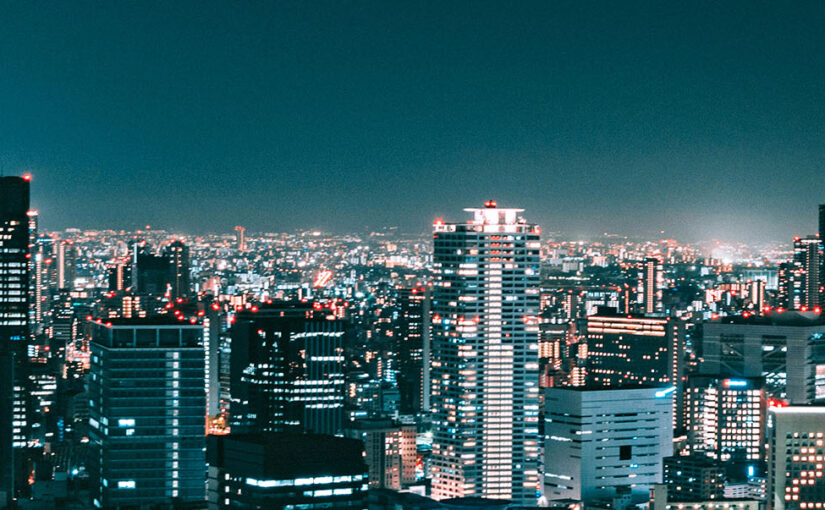
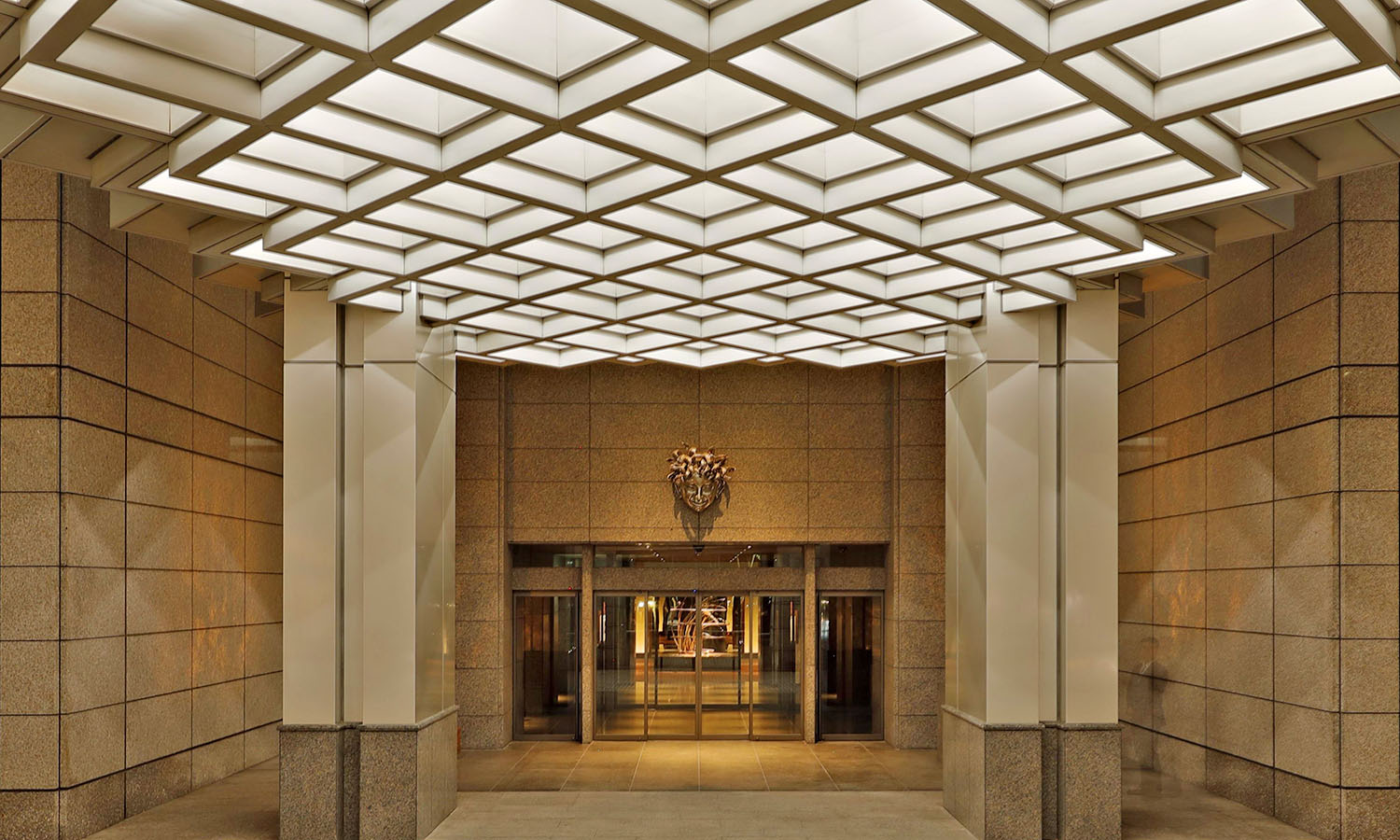
Tokyo has a way of making you feel small. It’s the endless neon skyline, the tidal wave of humanity pouring through Shinjuku Station, the sheer buzz of a city that never switches off. And then there’s the Park Hyatt, perched like a glass-and-steel temple to sophistication above it all, reminding you that, in Japan, even chaos can be wrapped in elegance and served with a perfectly measured whiskey.
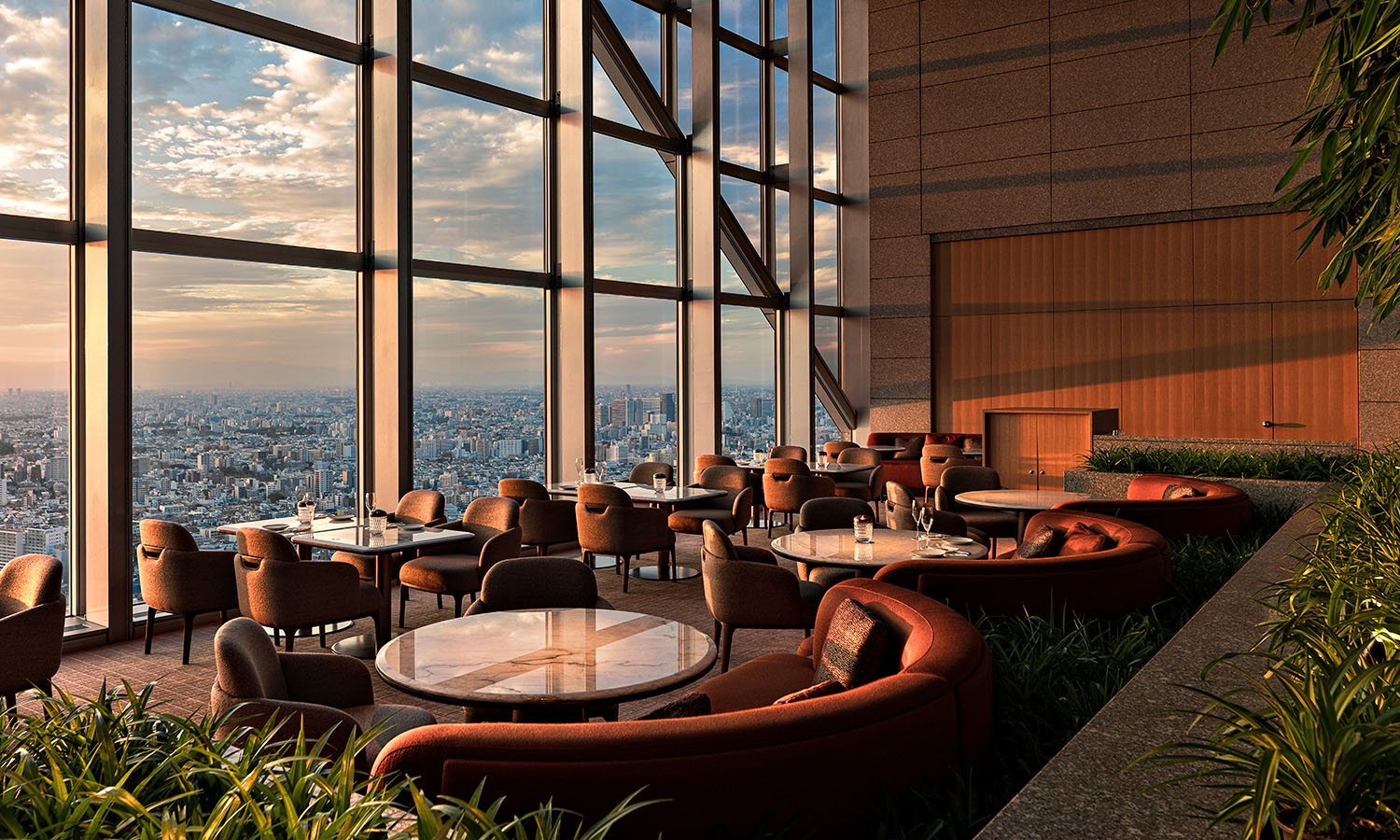
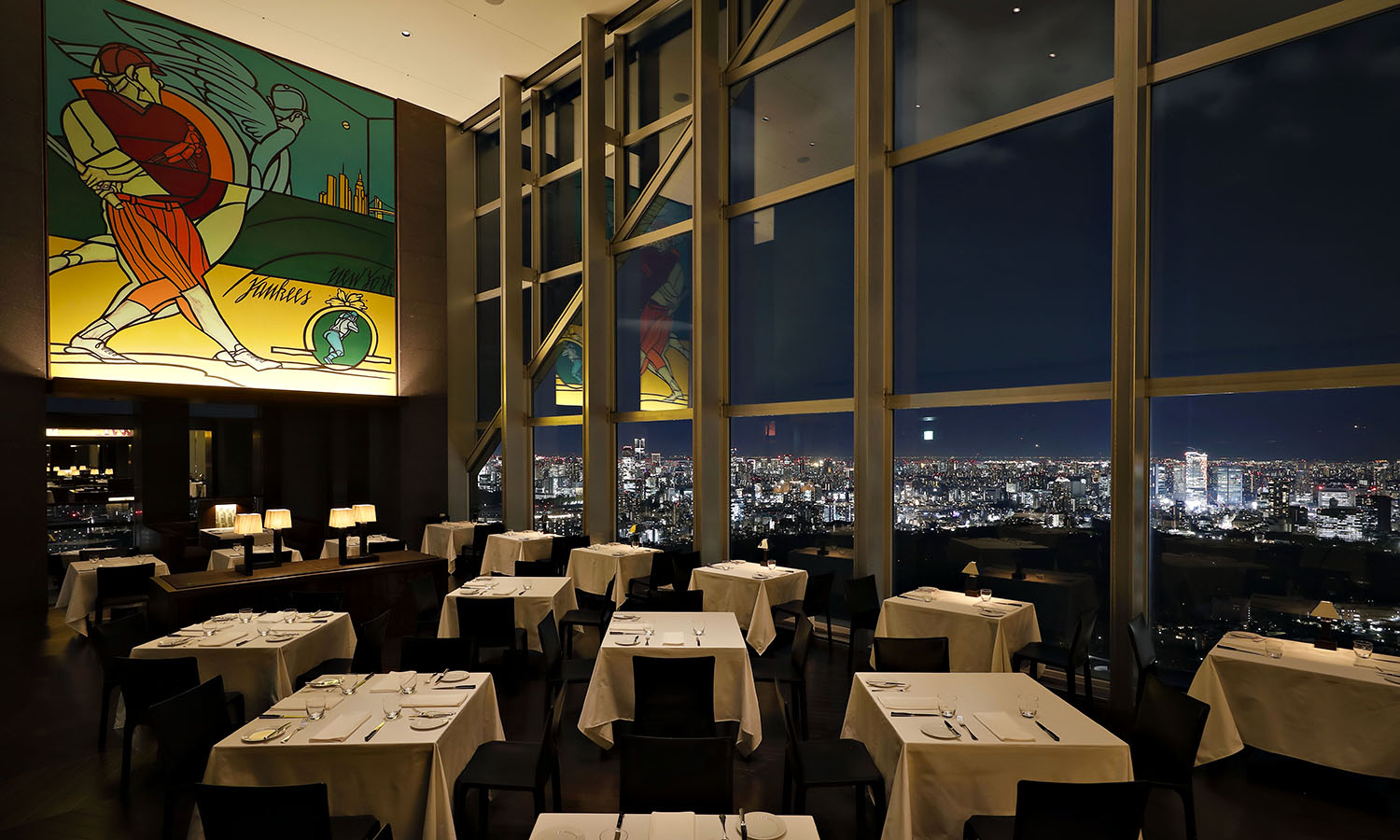
I remember the last time I was here, sinking into a deep leather chair at the New York Bar, Bill Evans’ piano easing through the room while I nursed a single malt and pretended I was in Lost in Translation (minus Scarlett Johansson, sadly). It’s one of those rare bars that makes you feel cooler just by walking in. It’s the kind of place where conversations hum in five languages and bartenders in crisp waistcoats nod like they already know your drink order. And now, after a year-long glow-up, it’s back.
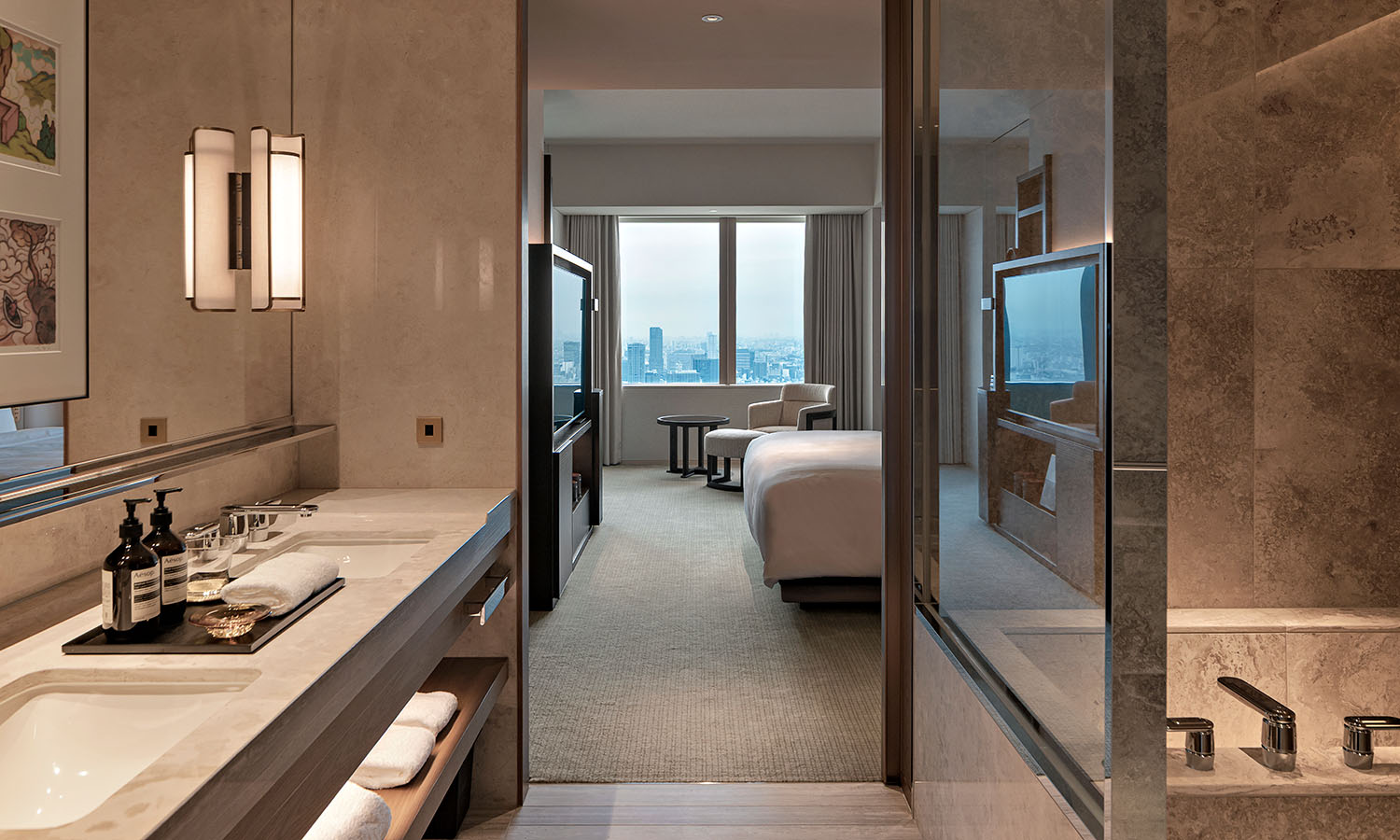
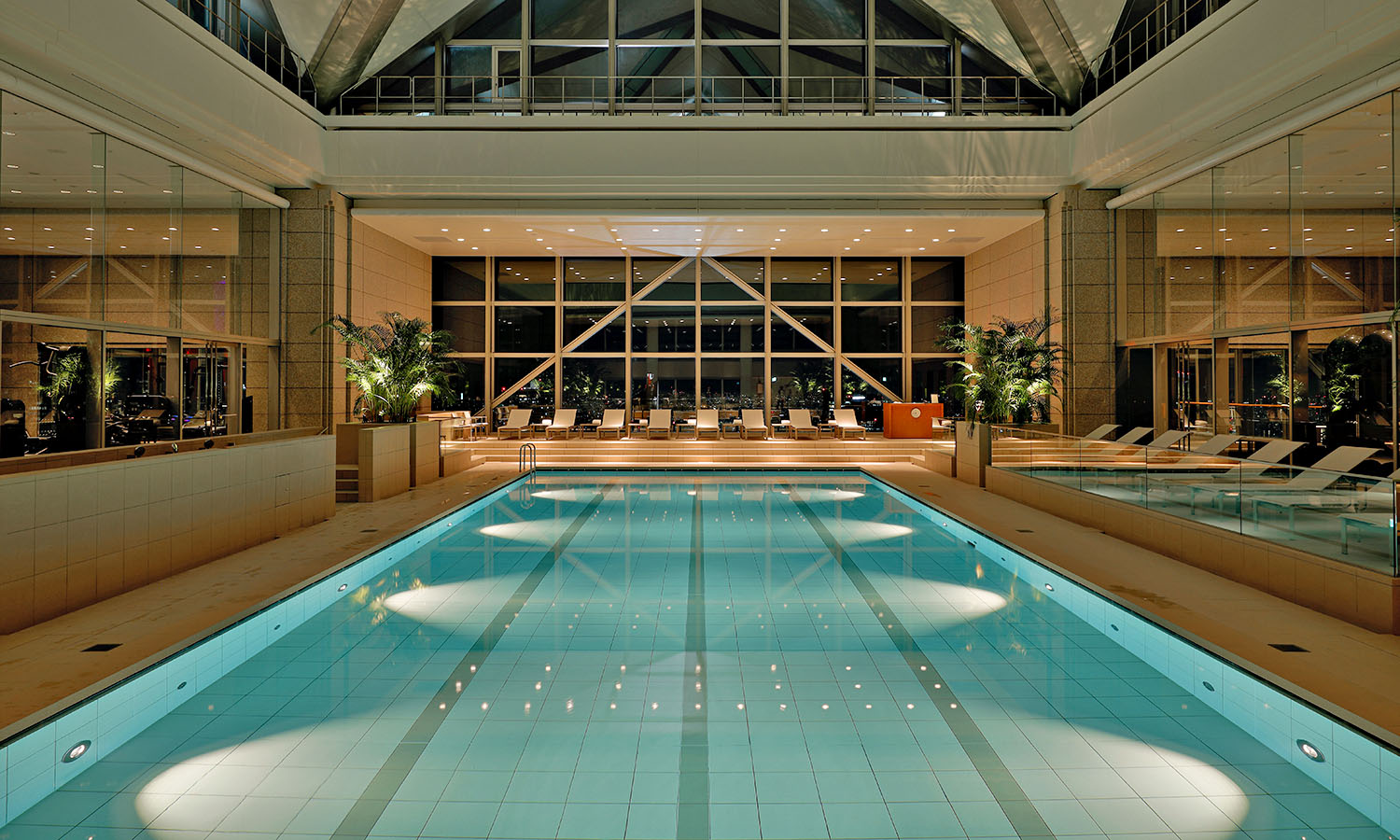
The Park Hyatt Tokyo, Japan’s original high-rise icon of understated luxury, reopens this December after closing its doors in May 2024 for a top-to-bottom revamp. Since its debut in 1994, tucked into the top 14 floors of Kenzo Tange’s Shinjuku Park Tower, this place has been the city’s go-to crash pad for Hollywood royalty, jet-lagged billionaires, and people like me who are happy to blow the budget for the chance to be Bill Murray. Back then, Tokyo welcomed about 3.5 million tourists a year. These days? Try almost 37 million. The city’s changed, and the Park Hyatt is keeping pace.
If the name sounds familiar, it’s because this is the hotel that gave us one of cinema’s most memorable hangovers: Sofia Coppola’s Lost in Translation was filmed here in 2003, and Anthony Bourdain drank his way through its hallways a decade later for Parts Unknown. Both times, the real star wasn’t Bill Murray or Bourdain it was the Park Hyatt itself, most notably, the New York Grill & Bar.
The recent overhaul is more evolution than revolution and thankfully, the hotel’s iconic spaces remain gloriously familiar, in particular, the 52nd-floor New York Grill & Bar still offering the best skyline views in the city.
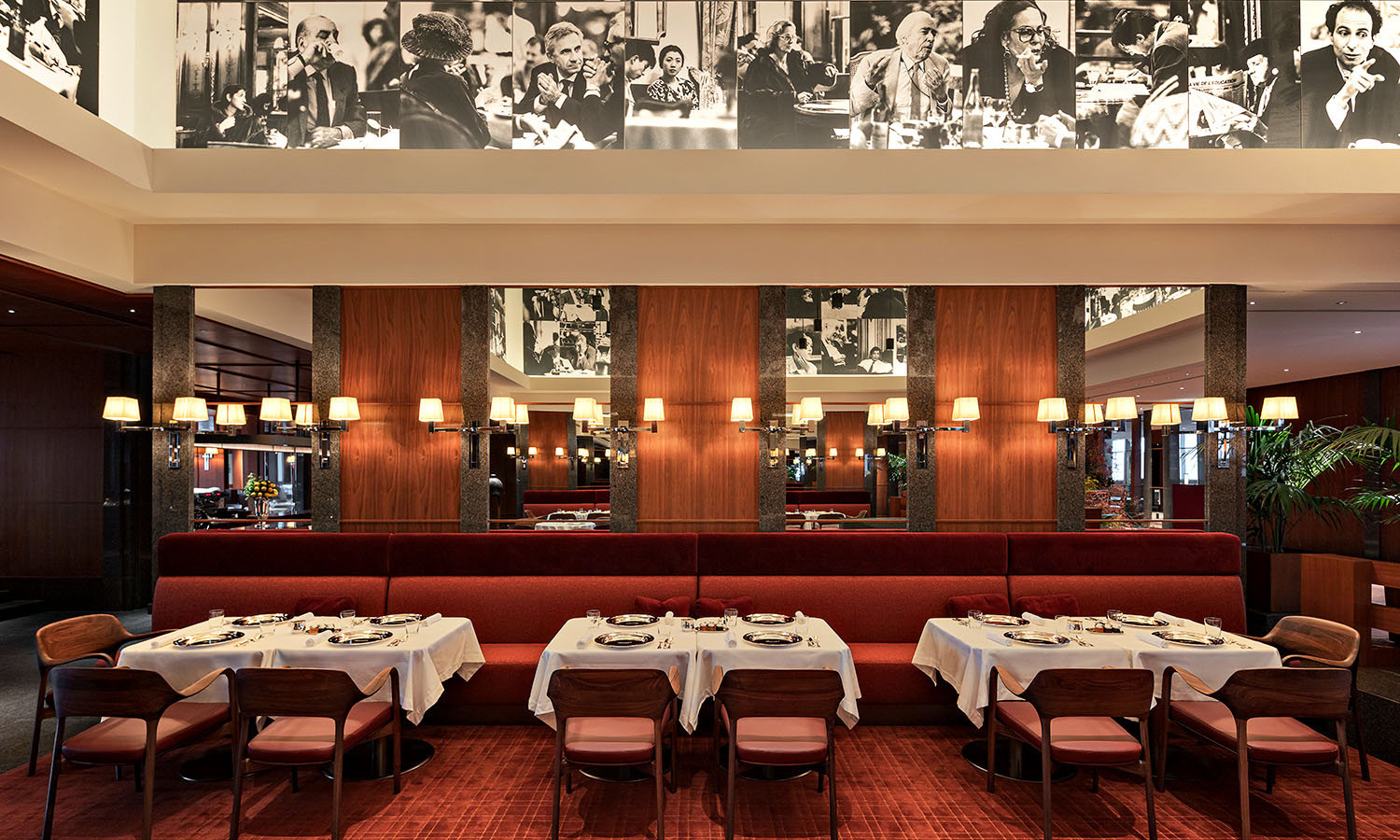
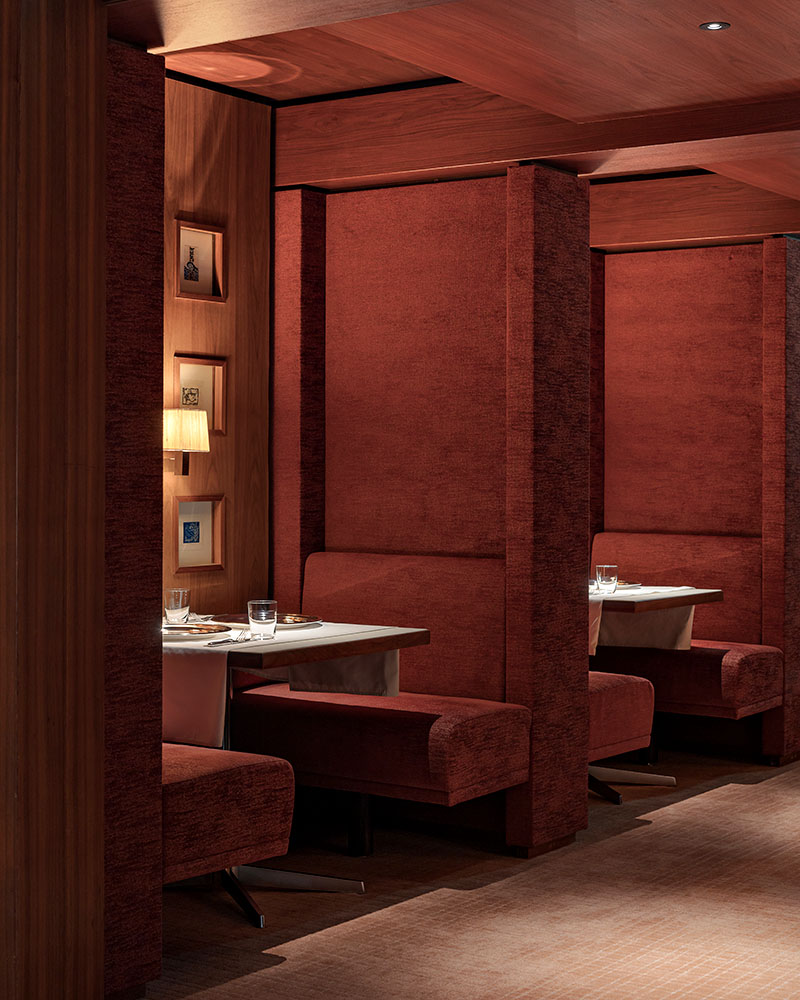
There are tweaks, of course. French brasserie Girandole now carries Alain Ducasse’s name and a slightly healthier menu. A new marble bar now anchors the space, serving breakfast in the morning and cocktails when the sun dips below Mount Fuji.
What hasn’t changed, and probably never will, is the soul of the place. Many of the staff have been here since the early days, greeting regulars like long-lost friends and treating newcomers with the kind of practiced grace that makes even the most jaded traveller feel special. It’s that combination of impeccable service, cinematic atmosphere, and quiet confidence that keeps people coming back, even if room rates now start at AU$880 a night (plus a healthy dose of taxes and service fees, naturally).
So, now that the Park Hyatt Tokyo has reopened its doors (did so on December 9), I’ll be back, probably in that same leather chair, sipping whiskey and listening to jazz, waiting for Scarlett Johansson to walk in. She probably won’t. But then again, that’s the magic of this place: for a few hours, it makes you believe anything could happen.
Equalise your ears and prepare yourself for a deep exploration of the top spots to dive and the cosiest places to stay in the piece of paradise that goes by the name Tahiti
If your idea of a perfect holiday involves tugging on a wetsuit and submerging yourself in vibrant, sea creature-filled underwater worlds by day and friendly, family-run accommodations by night, hang on to your scuba gear because we’re about to show you some places that will blow your flippers off.
A 50-minute flight from Tahiti’s capital is all you need to reach Rangiroa, the world’s second largest atoll and home to some of the world’s best dive sites according to French oceanographer and filmmaker Jacques Cousteau – and he knows stuff.
Rangiroa is made up of about 415 small islets and sandbars filled with crystal-clear waters that teem with marine life. Advanced divers can tackle the Tiputa Pass, sharing the water with curious dolphins and the occasional hammerhead shark, mantas, sting rays, tuna, and sea turtles.
When the water visibility is up to 39 metres and its temperature hovers between 26.7 to 28.9 degrees Celcius, it’s hard to drag yourself out of the ocean but you don’t need to go far when you stay at Rangiroa Bliss.
The guesthouse has its own private beach and its six rooms abutt the lagoon. Rangiroa Bliss caters more to sandy feet than fancy pedicures and trades room service for unforgettable starry nights and family-cooked meals. It does have WiFi if you want to connect to the outside world. Bet you won’t.
If you want to know what Moorea looks like, get your mum to pull out your kinder drawings of an island paradise. You’ll have nailed it. Jagged volcanic mountains and powder-like sandy shores. Moorea is so lovely it even takes the shape of a heart from above, which helps attract honeymooners as well as diving fanatics.
Most of the island’s dive spots are to the north, accessible via short boat rides. Highlights include Tiki Point, known for its clear waters and abundant marine life, including lemon sharks and vibrant coral reefs.
These traditional bungalows are hugged by lush, exotic gardens and boast their own private beach where you can enjoy your breakfast served with a side of ocean breeze. Kick back on the steps of your bungalow and eat your breakfast with your toes digging into the sand or enjoy a meal in the communal outdoor dining area where you can swap stories with fellow travellers and the friendly owners.
If deep-sea diving and exploring oceanic caves is your jam, Rurutu is blessed with incredible drop-offs and underwater caves and vibrant coral reefs that provide habitats for a myriad of marine species.
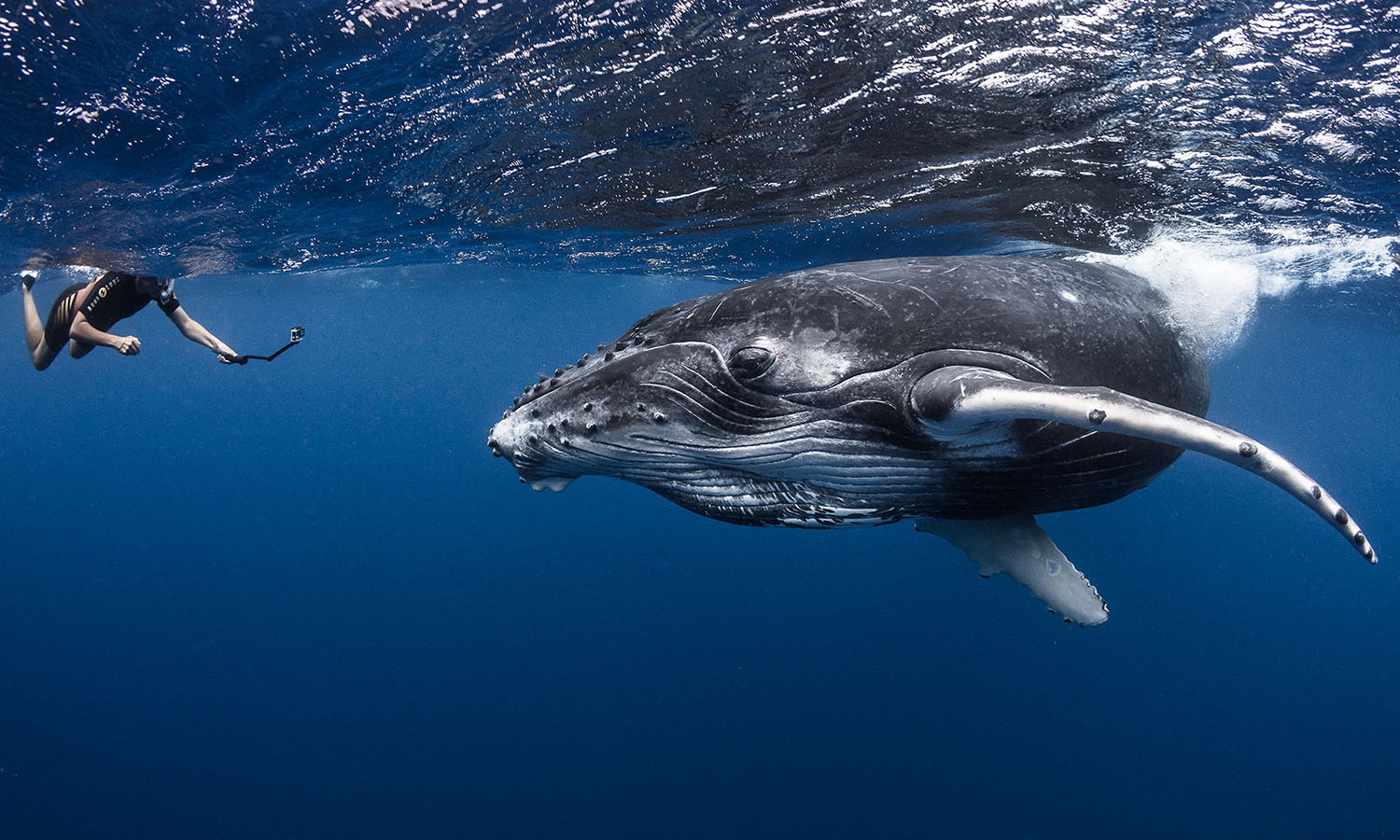
Known as ‘Whale Island’, Rurutu is on the annual migratory route for humpback whales, which means there’s not only the opportunity to spot humpback whales, but to share the water with them. The experience of swimming in the ocean with a whale song as your backing track? Priceless.
Luxury hotels just aren’t a thing on Rurutu and why would they be when you can stay at an authentic family-run Tahitian guesthouse like Vaitumu Village where the hospitality is as warm as the ocean breeze.
Located on Rurutu’s northwest coast, the village offers seven charming bungalows, a large communal area with a bar where you can relax after a day’s diving while soaking up local tunes or continue your love affair with the water at the pool. If the beach pulls you back, keep your eyes peeled for a glimpse of whales breaching.
On the edge of the lagoon, Vaiama Guest House tells its guests they will ‘Come for the views, stay for the vibe’ – and you couldn’t argue. After a day of underwater exploration, there’s nothing like a home-cooked meal in a cozy setting where you’re treated like family.
The guest house has an idyllic setting on a pristine white beach. You won’t want to leave the deck over the water, which offers the perfect vantage point to watch colourful schools of fish and the occasional stingray swim by during the day, and ponder life, the universe, and everything under the incredible sky at night.
Tikehau is the underwater equivalent of a tropical fish parade, with schools of colourful creatures putting on a display that makes Mardi Gras look like a Sunday stroll.
Divers from around the world talk in hushed tones about the vibrant underwater world on display at Tuheiava Pass where manta rays and reef sharks will accompany you on adrenaline-pumping drift dives.
Le Tikehau is more of a luxury stay than the others on this list but when your forced to literally decompress from your diving adventures before flying home, it’s pretty tempting to end your stay somewhere you can indulge in a little pampering.
At Le Tikehau, your biggest stress will be whether to stay in a lux bungalow on the beach or over the water, but you’ll be able to massage the tension of that decision away at the resort’s spa, where you can trade saltwater for an oil and coconut scrub.
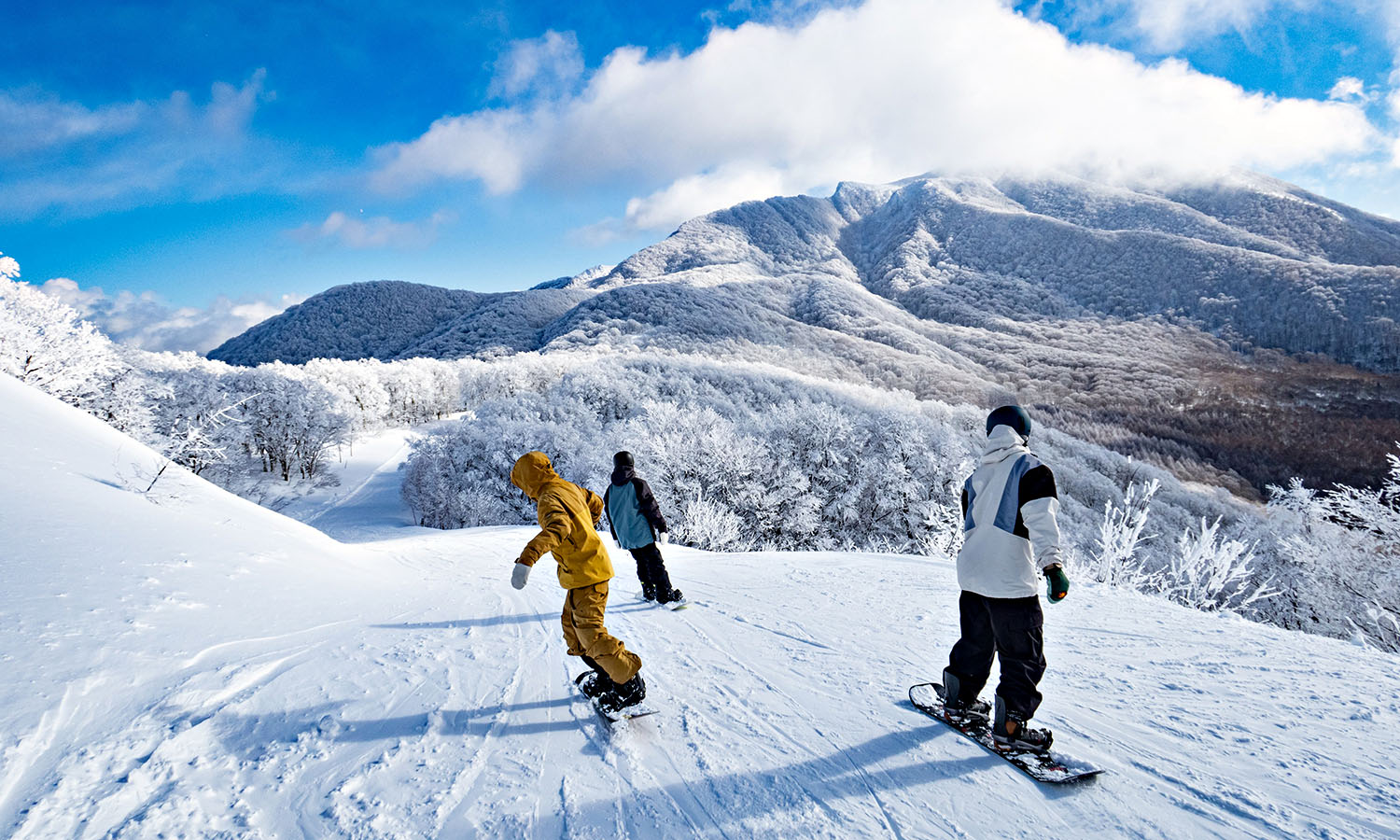
Imagine you’re gliding through snowfall so light it feels like skiing on icing sugar.
No elbows to the ribs from a neon-jacketed influencer. No ramen queues. No one blasting DJ remixes of “Last Christmas” over a megaphone. Just pure, silent powder that whispers rather than screams.
That’s Aizu. And it’s the Japan snow escape you’ve been desperately trying to keep secret from your mates.
Aizu lives in Fukushima Prefecture’s wild mountain country. This is the place people in Tokyo nod knowingly about but never explain why. It’s old-soul Japan: samurai spirits, cedar forests, ryokan steam curling out of wooden eaves. A ski trip here isn’t another smashed-in gondola ride followed by overpriced IPA; it’s a cultural immersion where the locals actually look you in the eye and the slopes feel like they’ve been waiting centuries just for you to carve the first tracks.
And here’s why your skis (and your inner powder gremlin) should point themselves toward Aizu.
In Aizu, nobody is Instagramming themselves while they block the lift line. The snow falls deep here (around nine metres of the feather-light stuff each season), and the slopes feel unguarded and more importantly untouched.
Urabandai even breaks the rules of physics with its micro-fine powder: soft, dry, and more than forgiving. You’ll find more than 80 runs and 30 lifts spread across the region, meaning you can carve until your quads beg for mercy without ever queuing like cattle.
NEKOMA Mountain, the newest darling of the Ikon Pass, delivers varied trails and that magical ski-in/ski-out setup via Bandaisan Onsen Hotel. EN RESORTS Grandeco serves up long, graceful cruisers and face-tickling powder stashes. If you’ve got little shredders (or adults who need a confidence boost), Ashinomaki Snow Park is a candy store of snowmobiles, tubing and laugh-until-you-fall-over fun.
This is skiing for people who crave the sport, not the circus.
Most ski towns have a sad attempt at “local history” that involves a framed black-and-white photo of a dude holding a shovel. Aizu laughs at that.
This is a region with centuries of sword-drawn drama: Tsuruga Castle, rebuilt after 19th-century warfare; clusters of preserved samurai homes; and Ouchi-juku, a time-capsule post town with thatched-roof houses that look like they belong in a folktale. And the culture isn’t just behind glass.
Aizu is the beating heart of lacquerware craftsmanship. You’ll see artisans paint and polish pieces that look like they belong in museums, then sell them to you for prices that don’t make you faint. Kids paint Akabeko (little red cows), said to protect against illness and you’ll end up taking one home because suddenly, you believe in lucky cows too.
This isn’t sightseeing. It’s stepping through a portal into Japan before bullet trains, vending machines and TikTok attention spans.
When the lifts close, Aizu-Wakamatsu doesn’t transform into a snow-glitter party town with AU$28 cocktails. It becomes warm: wood smoke curling through alleys, paper lanterns glowing, kitchens humming with slow-cooked local staples.
If you’re smart enough to stay at the Bandaisan Onsen Hotel, you’ll get access to Izakaya GO, the hotel’s secret weapon. A van scoops you up and drops you at back-street izakayas you’d never find yourself. Think Oku-Aizu wagyu, grilled local chicken, seasonal vegetables, and sake that tastes like the mountains around you. You’ll laugh with the chef. You’ll toast strangers. You’ll wander back snow-speckled and full, and you’ll swear you just had the best meal of your life.
Not into curated tours? Fine. Go rogue. Order Kitakata ramen, one of Japan’s holy trinities of noodle styles, at a back-alley shop where the old guy behind the counter has been hand-rolling noodles since before your parents met. Chase it with a glass of local sake and realize you don’t need après that screams; you just need après that feeds.
Aizu doesn’t do “resort spa.” It does historic hot spring villages that whisper you into submission.
Ashinomaki Onsen sits in a gorge so tucked away it was once called a “phantom village.” Steaming baths, dripping icicles, the soundtrack of rushing water. You’re only 25 minutes from town but it feels days away. Stay overnight and you’ll understand why people call this place a reset button for the soul.
Closer still is Higashiyama Onsen, 1,300 years deep in samurai sweat and healing. Wooden ryokans hug the riverbanks, steam rises between pines, and everything slows down. Samurai used to soak here after battles. You’ll do the same after a long powder day, or just after your third bowl of ramen. Both battles count.
The Japan skiing you wanted all along
This isn’t another “Japan is magical!” brochure. Aizu is where the powder is soft, the crowds are scarce, the history is alive, and the locals pour your sake like they mean it.
It’s skiing that doesn’t feel like tourism. It feels like being invited into someone’s home.
 (
(