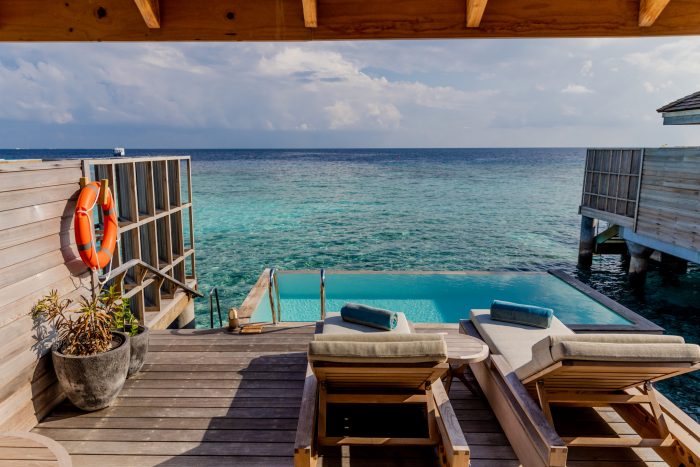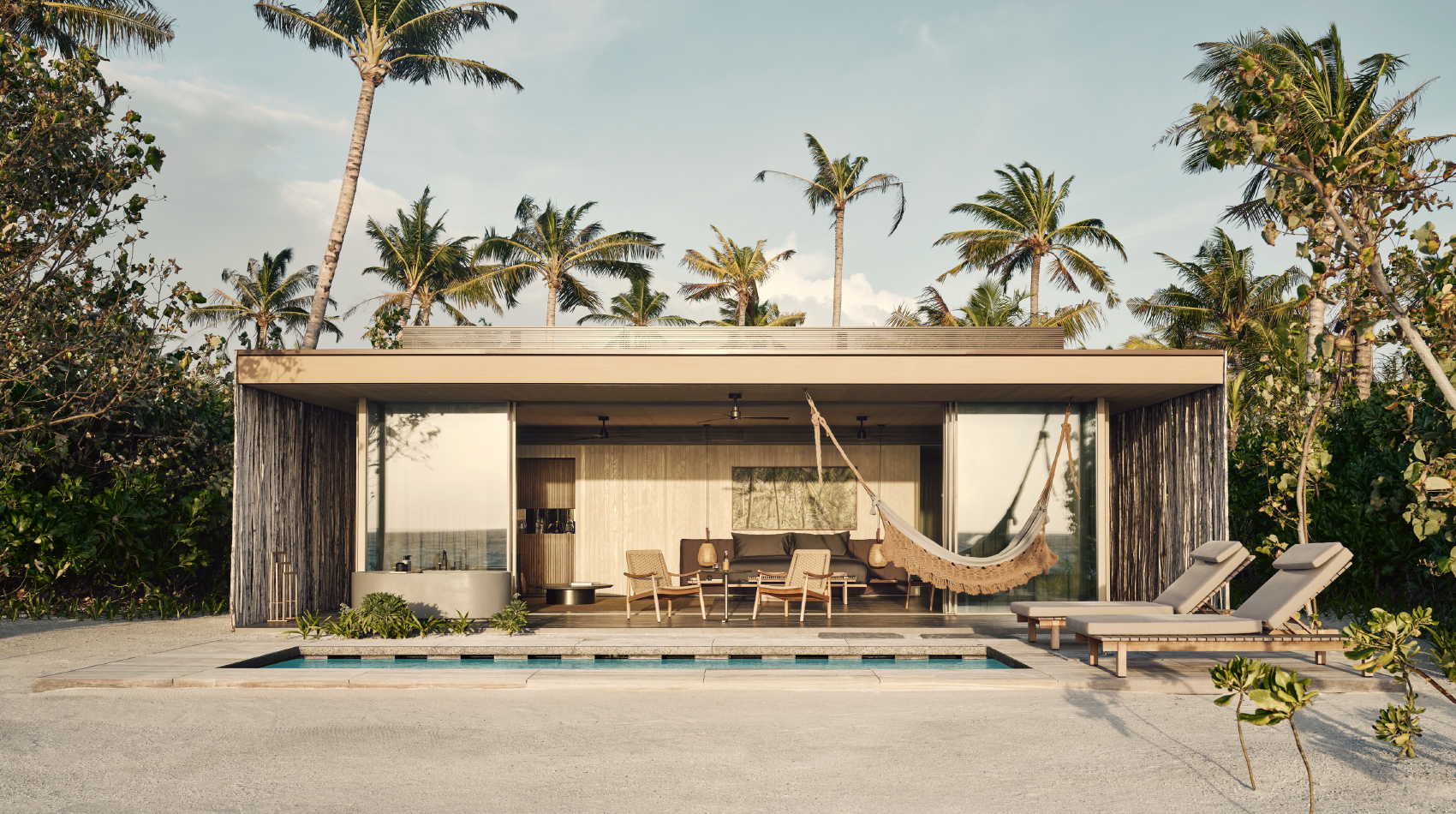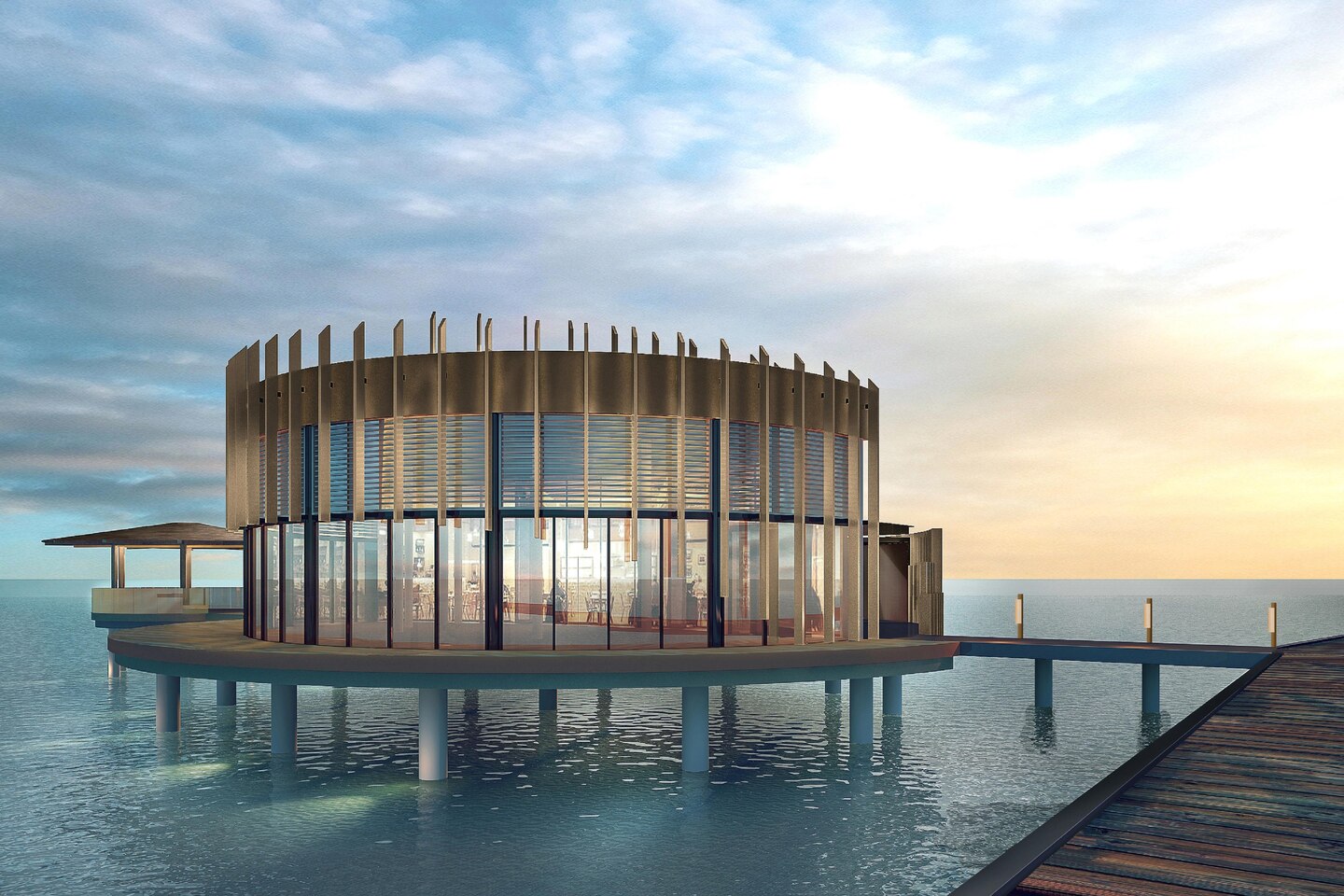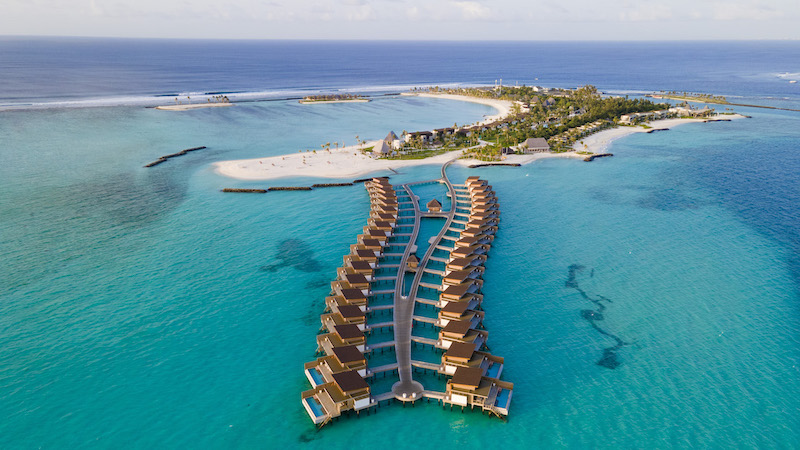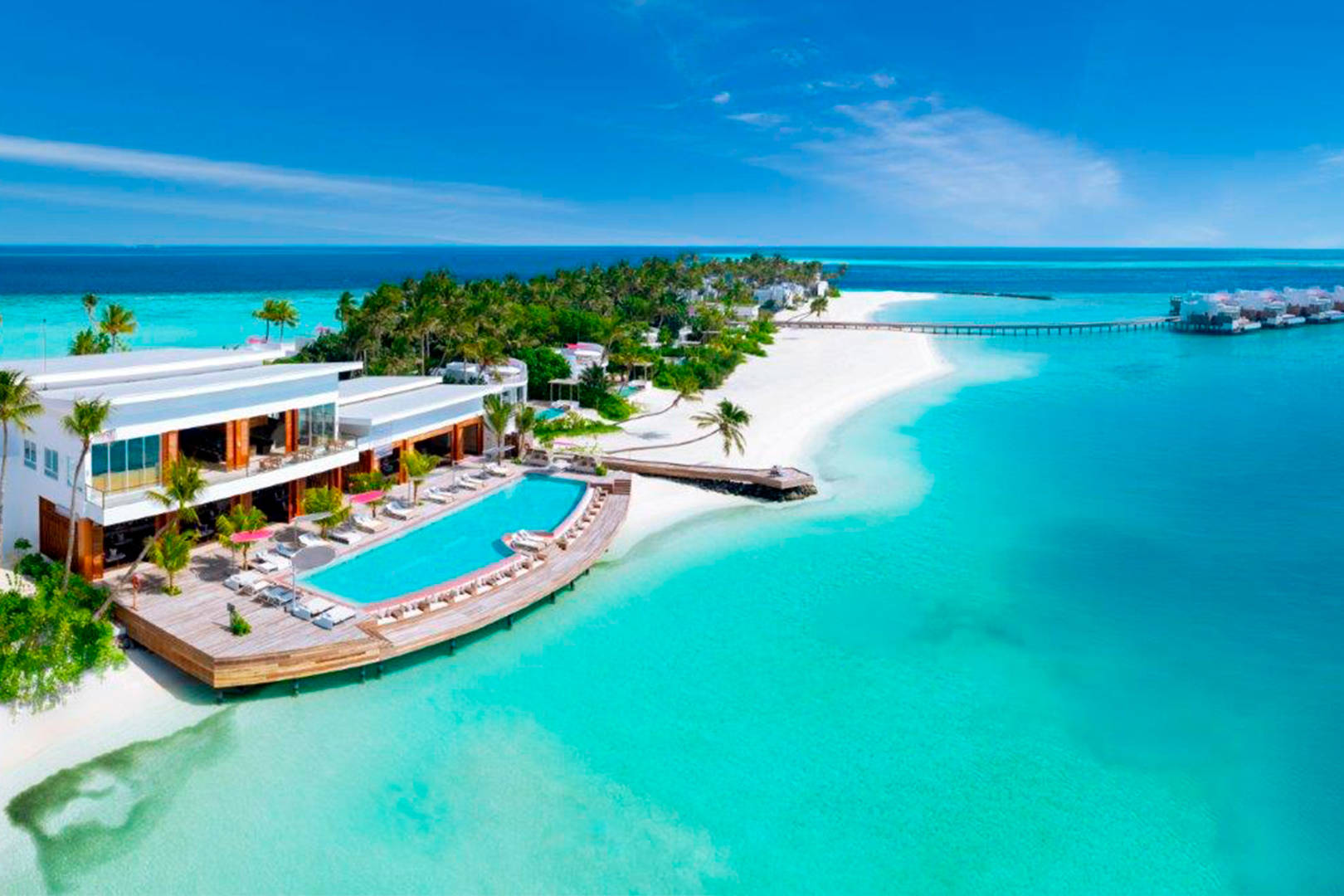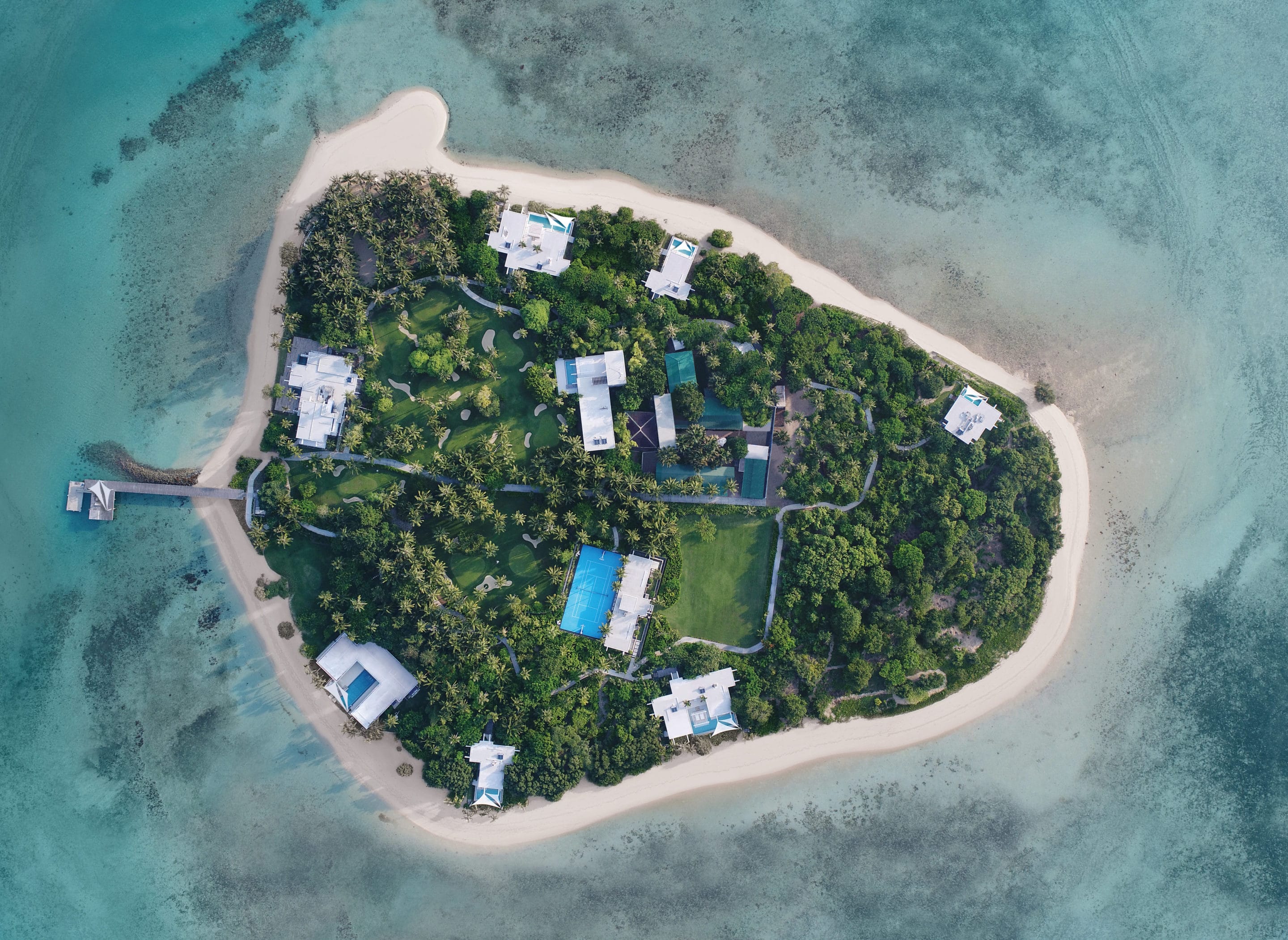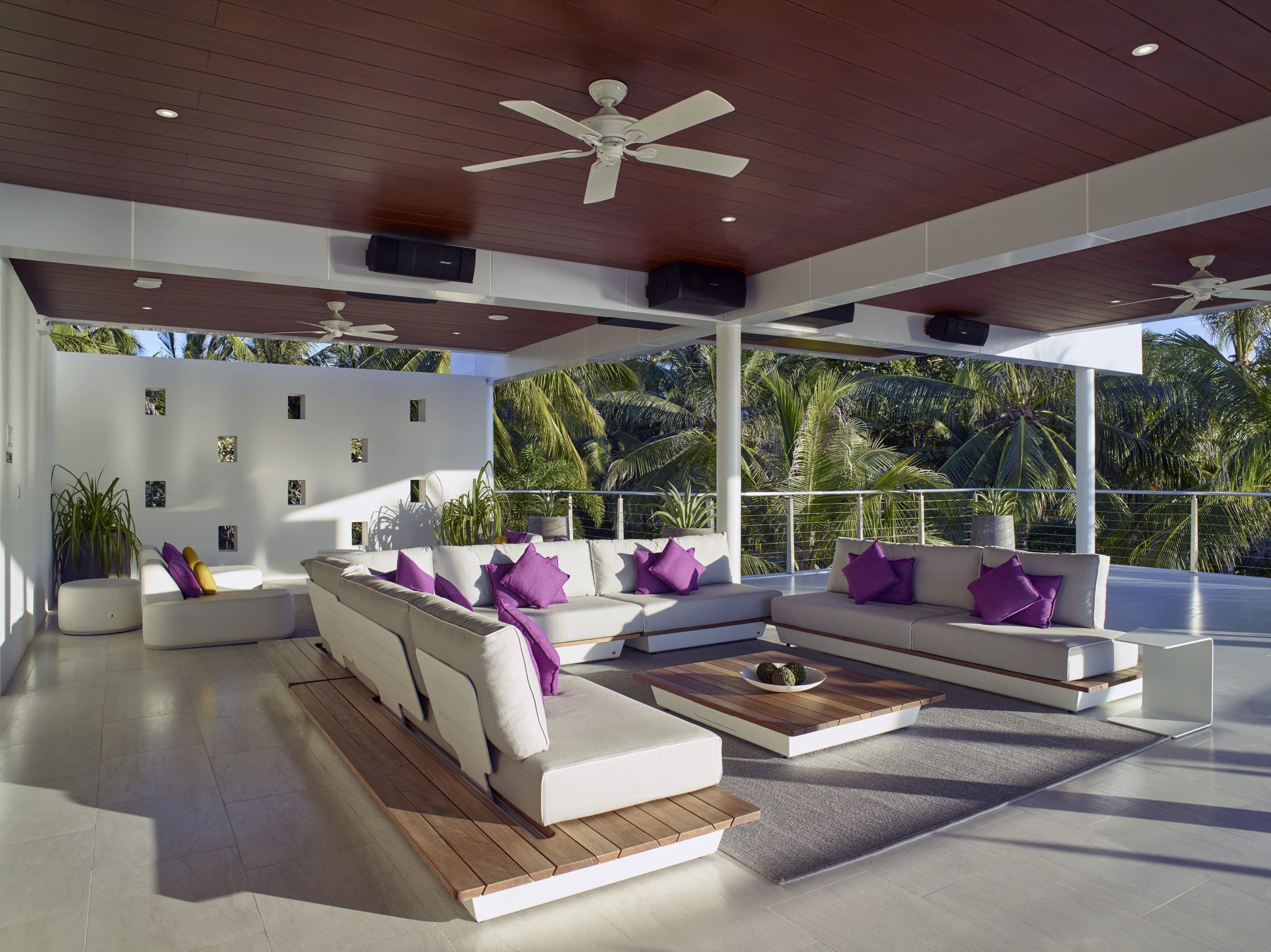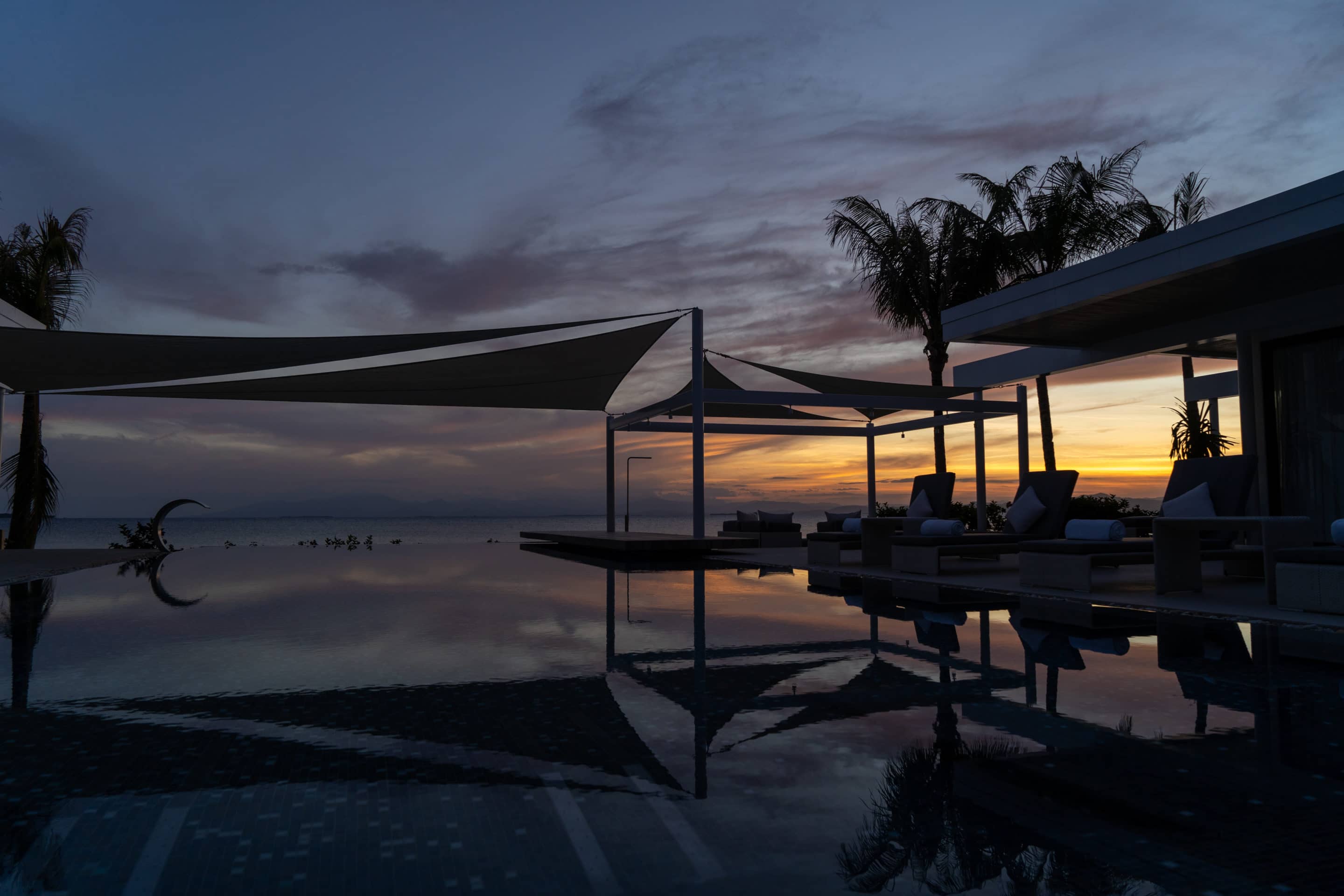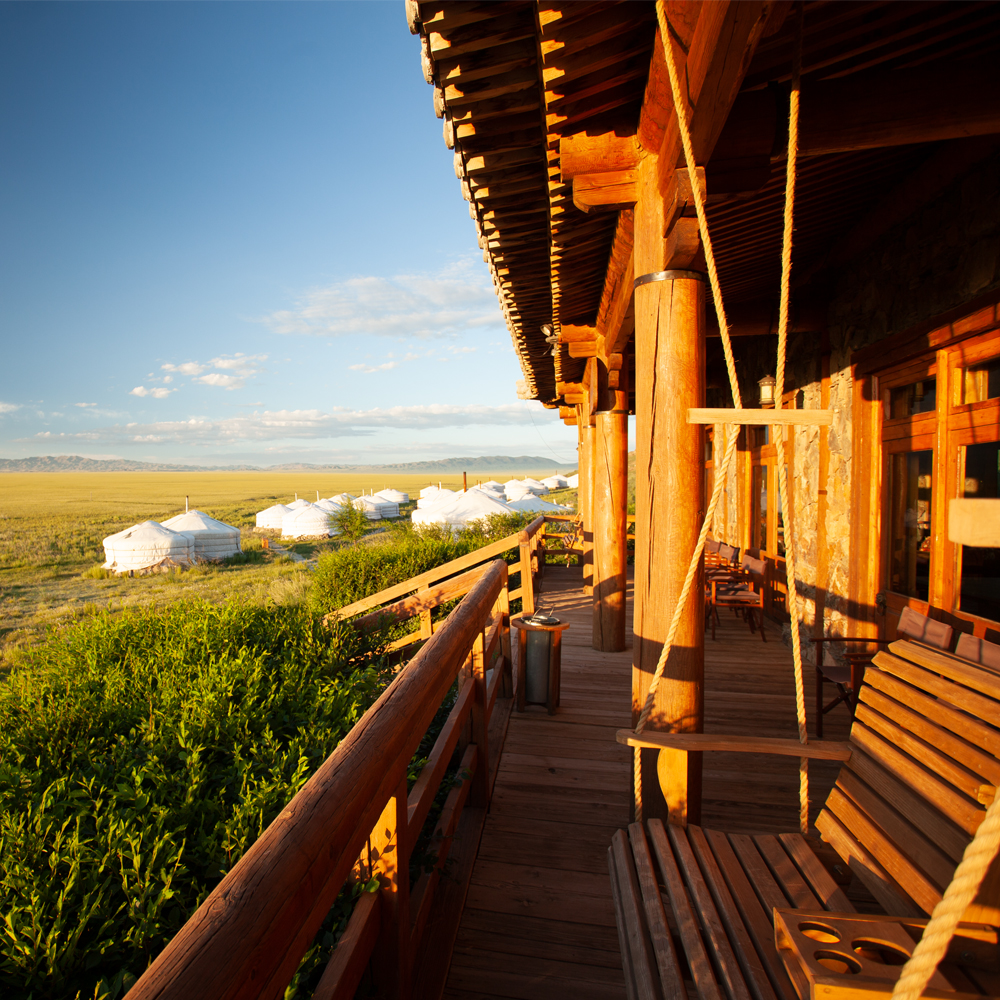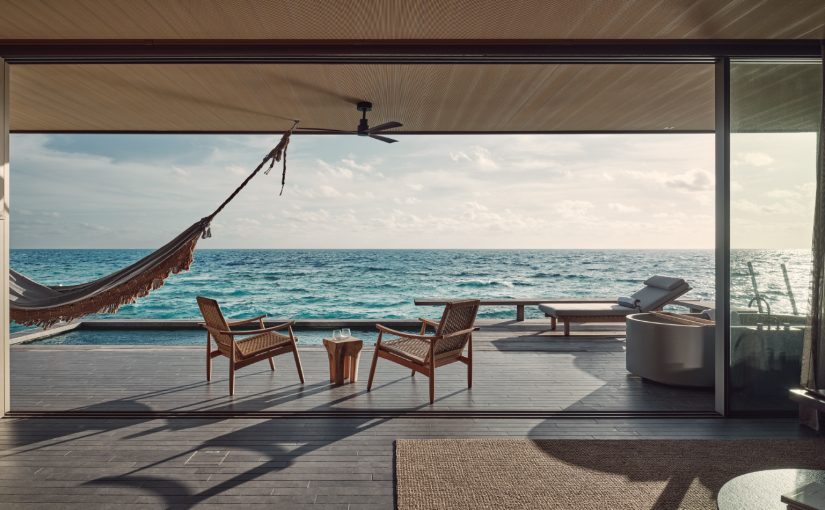
Soneva has added a number of awesome experiences to their Maldives-based Soneva in Aqua Yacht.
A long time ago sailing meant getting from point A to point B, but it can now mean experiences like moonlit snorkeling expeditions, swimming with manta rays, paddling to deserted sandbanks and stargazing with astronomers.
There’s also the brand-new Dolphin Sled, a unique and exciting looking way to get closer to these curious creatures where individuals glide along with the pod underneath the water’s surface.
Then, when you’re above the water’s surface, you’ve got the extraordinary island landscape of the Maldives to enjoy. It’s a win-win.
It seems rare and unique experiences like these are becoming more and more of a focus at sea and we, as travellers, are the beneficiaries of this.
On China’s Li River, located in the Guangxi Province, a bamboo raft floats beneath the twilight sky. Atop it sits a fisherman and his cormorants as they embark on their hunting journey. Ropes tied around their necks to prevent them from swallowing any prey, the birds impress with their natural hunting ability and obedience to their masters. On the hazy waters enclosed by enormous mountains, the fishermen watch their cormorants capture fish, all while softly humming and gently rocking the rafts to motivate the birds. The night is quiet and only oil lamps on the rafts light up the river.
The tradition of cormorant fishing dates back thousands of years, but is now a dying art. Only the elderly retain the skills and preserve the tradition. Global warming and environmental pollution, as well as a lack of interest on the part of younger generations, are slowly wiping out this unique custom. The few who still practise it these days make most of their income working in tourism, showing visitors a skill they may not be able to witness for much longer.
Bangkok has so many opportunities for visitors to see a whole variety of attractions. Some of these offer a great insight into the Kingdom’s rich culture and Thai traditions, while others provide a glimpse into the seedier side of humanity. We recommend avoiding the popular ping-pong balls and instead head to one of Bangkok’s more salubrious tourist attractions, Wat Pho (the Temple of the Reclining Buddha).
Located in the Phra Nakhon District, Wat Pho is on Rattanakosin Island, directly south of the Grand Palace. It’s one the oldest and largest temples in the city and the star attraction is the Reclining Buddha. This majestic monument is the largest in Thailand, measuring more than 45-metres in length.
Walking through the temples and gardens of Wat Pho you’ll be able to gain a greater appreciation of Thailand through the rich tapestry of art, culture and history on show. Along with the famous Reclining Buddha, it features 394 other Buddha statues which are spread out between four temples.
If that’s not enough to shoot this place straight to the top of your must-visit list, in addition to being a place of worship, Wat Pho is also an education centre that focuses on traditional medicine. You’re guaranteed one of the best Thai massages in the city here.
We recommend visiting early to avoid crowds, dressing respectfully, engaging a knowledgeable guide who can share further details and, most importantly, bringing a wide angle lens if you have one. Price of admission is only AU$5 and that includes a bottle of water.
Does a James Bond-themed revolving restaurant at a height of almost 3,000 metres float your boat? It may sound a little touristy, but located atop the stunning mountain of Schilthorn, this interactive 007 experience – which houses both a museum and cinema – is far from naff.
You’ll start with a one-hour gondola trip through the picturesque Lauterbrunnen Valley and Bernese Alps. The summit was the location for the sixt film in the Bond franchise, On Her Majesty’s Secret Service. It’s fair to editorialise and say that this installment wasn’t one of the better films in the series, but it also happened to feature the Australian model George Lazenby. With no acting credits to his name, George was chosen as the replacement for Sean Connery.
Both the Skyline Walk and Thrill Walk offer guests an adrenaline-inducing experience on a glass platform that dangles high above a precipice, providing a panoramic view of the snow-covered Jungfrau massif.
Spectacular views of the Eiger and Mönch also await and you can follow in James Bond’s footsteps at the interactive Bond World exhibition or the 007 Walk of Fame. Highlights include gazing upon the original screenplay, enjoying a simulator flight in the original chassis of a decommissioned Air Glaciers Alouette III helicopter and creating your own Bond chase montage in a bobsleigh.
So do you need to be a James Bond fan to enjoy this experience?
It certainly helps, but the Schilthorn is such an incredible location in itself that it wouldn’t really matter what the exhibits were.
So grab yourself a martini, (shaked, not stirred, of course), from the revolving restaurant, and if you’re visiting in winter you can really get into character by strapping on your skis and tackling the black run from the movie while pretending to outrun the baddies.
It’s one of the most iconic bridges in the world, overlooking one of the most recognisable and picturesque harbours in the world. Should you bite the bullet and climb the Coathanger for an eagle’s view? We say, absolutely.
Traversing the top of Sydney Harbour Bridge is a must, and climbs are available from dawn until dusk.
While it can be quite challenging to climb you don’t have to be a trained mountaineer to get to the top and you’ll be assisted every step of the way. And as you take in the extraordinary views you’ll be plied with interesting facts about the bridge by a laconic Aussie guide with a decent sense of humour and pathos.
There are several climbs available that range in time lengths, but all offer fantastic vantage points for looking out over gorgeous locations such as Milson’s Point, Lavender Bay, McMahons Point, Luna Park, the North Sydney Olympic Pool and Kirribilli.
If the view from the top is always different, what’s the opportune time to climb? Dawn would be our choice, but there are limited departures so book well in advance.
It’s the official drink of Irish people right across the world, and even if you aren’t a fan of Guinness, chances are someone you know is.
But does the idea of spending an entire afternoon in a seven-storey visitor centre dedicated to the dark drop tickle your tastebuds? We know that sounds like a long stretch for any museum, even one filled with beer. However, we can assure you that even if you don’t love the rich, malty good stuff, you’ll still enjoy a visit to the Storehouse.
Located at Dublin’s St James Gate Brewery, the Storehouse is a shrine to all things Guinness. Think interactive exhibits, old brewing equipment and an incredible collection of artefacts, historical records and ad campaigns. You can even learn the fine art of pouring the perfect pint. According to the master brewers, to produce the perfect ratio of the dark liquid draught and cream-coloured head it takes exactly 119.53 seconds for the beer to settle between the first and second pours. So if your bartender serves up a pint with a huge head of foam, it just isn’t a proper Guinness.
Finish your tour in the Gravity Bar where you’ll be treated to panoramic views over the city while enjoying a complimentary, perfectly poured, Dublin-brewed Guinness.
When visiting San Francisco one of the most touristy activities you can do is jump on a cable car and ride it right down to the harbour, where you’ll look across to the now shuttered penitentiary of Alcatraz.
To visit or not to visit?
We say no trip to Frisco is complete without venturing across the bay to Alcatraz, and whatever hype you’ve heard about it being a tourist trap should be taken with a grain of salt. The Alcatraz tour offers a riveting and fascinating insight into one of the world’s most notorious jails.
Starting from the ferry ride to the island you’ll take in some stunning views of the city including both the Bay and Golden Gate bridges. Upon arrival it’s pretty clear you’ll get unparalleled access to the site and can pretty much explore as you wish without a single velvet rope in sight.
While wandering around the prison you’ll sense an eerie melancholy and hear stories about infamous inmates such as Al Capone, The Birdman of Alcatraz and Machine Gun Kelly. You’ll also learn about the 1969 Native Occupation of Alcatraz. Your journey is narrated by ex-guards or prisoners, and the chequered history will genuinely make the hairs stand up on the back of your neck. For a truly immersive experience, you can also be locked up in one of the cells to get that nasty, claustrophobic feeling of incarceration.
Those looking for a fright are encouraged to take the night tour which is not for the faint of heart.
The verdict? Yes, Alcatraz is a major tourist attraction, but you will get a massive return-on-investment with this one.
Singapore is firming up as one of the first overseas destinations that Australian’s will be able to visit once travel restrictions ease, and despite the city boasting a heaving population of five million people above ground – there are also adventures underground where you can completely disappear from sight and discover an entirely new side to the city-state
If you’re the type of person that thirsts for lesser-known or unique tours, an adventure trek into the Marsiling Bunkers right on the border with Malaysia involves an adrenaline and claustrophobia-inducing experience that shouldn’t be missed.
This sprawling maze of underground tunnels are tucked deep into the Singaporean jungle and were leftover from British rule during World War II. They were used by the British as fuel storage depots, but were also temporarily occupied by the Japanese until Singapore gained independence.
Beyond Expeditions Singapore now trek guests through the forest to a tiny, hidden porthole, from where they can then descend into an underground tunnel for a full day of exploring.
Trek through ankle-high, mud, tight squeezes and come across thousands of giant tropical geckos. This unique tour will show you a side of Singapore you won’t find anywhere else on the island.
It's early morning, not long after sunrise, but the searing heat has already zapped my energy, sending me in search of fresh young coconuts and a banyan tree to sip them under. The sound of peacocks crooning fills the morning air, dragonflies buzz over lily-dotted ponds, spotted deer totter clumsily across the dewy ground, and tufted grey langur monkeys preen in tree branches, occasionally letting out a howl when another tribe member gets too close. We’re well and truly in the tropics here, wandering through historical relics amid thermals that are as fiery as the country’s cuisine.
We’ve arrived in Polonnaruwa on two wheels, pedalling around the central plains of Sri Lanka at the only pace this weather permits: slow. Less than 80 kilometres away is Anuradhapura, the country’s ancient capital and the site where Buddhism was introduced to the locals. Between 377 BCE and 1017 CE it was the most important place on the island, and kings built temples and statues and worshipped sacred trees here.
Anuradhapura’s crowning glory is an enormous fig known as Jaya Sri Maha Bodhi, thought to be the oldest living tree planted by humans. It began its life in 288 BCE as a clipping from the Indian Bodhi tree under which Buddha sat to gain enlightenment. It’s kind of a big deal. Understandably, locals are fiercely protective of this gracious green-topped gem, whose branches reach skywards like gnarly fingers. There’s a total development ban around it, lest ruthless digging damage its roots.
Polonnaruwa was also ruled by royalty some 800 years ago, when it was a thriving cultural and religious centre. Nobles commanded the erection of massive stupas and vast temple complexes across the city, not to mention a 14-metre prone statue of Buddha carved into granite cliffs. Most of the archaeological treasures here are remarkably well preserved, offering even the most casual observer a vivid perspective of how this World Heritage Site would have looked in its heyday. Sri Lanka’s other eight UNESCO attractions are in equally good condition – you’d be hard pressed to find another destination on the planet that has so many protected wonders packed into such a small area.
My journey around Sri Lanka begins, as most journeys here do, in Colombo, a heavenly accumulation of wide-open spaces, tree-lined avenues, chaotic traffic and whitewashed villas. The charming capital was one of the reasons why, in late 2018, Lonely Planet named the teardrop-shaped island it calls home the number-one place to visit for the following year. Six months later, on Easter Sunday, 259 people were killed across the city in a series of coordinated terrorist suicide bombings.
The devastating attacks came almost a decade after the end of Sri Lanka’s protracted 26-year civil war with Tamil separatists. Visitor numbers had jumped to record highs during that decade, only to be slashed back down by a seemingly impossible 186 per cent year-on-year decline, with more cancellations than new bookings, according to Reuters. “The people hurt; I didn’t work for three months,” says my guide George, visibly upset by the impact of the tragedy.
It isn’t the only disaster to have hit this fragile slip in the Indian Ocean: in 2004, the Boxing Day tsunami resulted in more than 30,000 fatalities along the country’s southern shore. It has been heartbreak after heartbreak. Add in a pandemic where tourism again ground to a halt and it’s incredible how resilient these places – these people – are.
The past devastation lends a certain sharpness to the great beauty of the island, adding a dusting of charisma to the time-warp capital, where so many images seem to be drawn straight from a Graham Greene novel. Like the sarong-clad man riding an antique bike through a downpour, his back ramrod-straight as he holds aloft a battered black umbrella. Or the waiters in crisp white jackets at the Galle Face Hotel, who decorously call me madame as they serve cocktails on the sea-facing veranda. It’s this quiet beauty and unassuming hospitality that draws me back again and again. Then there’s the unquiet beauty.
The drive northeast toward the island’s heart is a bit like playing Tetris with animate (and inanimate) objects. We dodge dozy dogs sprawled in the middle of the skinny single-lane highway, scoot around overladen motorbikes and tuk-tuks, then slot back into traffic behind horn-blasting public buses painted in a rainbow of colours and packed with more people than it’s possible to count.
In a stroke of genius, someone high up in the country’s transport ministry decided to give these colourful chariots “personalities”: we pass one called Dam Rajina (Purple Queen), amused by the decidedly un-bus-like eponymous plum-hued exterior. Another is known as Monara Patikki (Little Peacock), for the regal plumage painted across her iron bodice. Some of these buses have become so popular they have their own Facebook pages; others come with disco lights and top-end sound systems.
We’re a fringe away from roadside stalls hocking prickly durian, pineapples and bananas. And there are school children everywhere, dressed in inexplicably white starched uniforms – girls flick long glossy braids over their shoulders, boys gather around whoever has a mobile phone. The factories of outer Colombo give way to palm plantations and fields of fragrant mango trees, so heavy with ripe fruit their branches almost touch the ground.
Amid it all is Aliya Resort & Spa, its paradisiacal pool plonked into the middle of the jungle. Villas and open-air public spaces envelop the water, each taking design inspiration from the elephants that thrive in nearby Minneriya National Park. The retreat’s backdrop is the twin rock formations of Sigiriya and Pidurangala. We tackle the latter at sunset, clambering over boulders worn smooth by thousands of flip-flop–wearing adventurers.
The former we explore at sunrise, when mist lies low over lily-lined moats and water gardens that sit at the foot of vertiginous staircases. Before reaching the summit, formed by magma from an extinct volcano, we encounter remarkable frescoes and a pair of colossal lion’s paws carved into the bedrock. The ruins at the pinnacle are like Sri Lanka’s answer to Machu Picchu: a somewhat inconceivable assemblage of structures that was the fortress of Mauryan king Kashyapa I between 477 and 495 BCE.
Sri Lanka’s other sacred Buddhist shrine – one with an even more personal connection to Siddhartha Gautama than his fig – lies 80 kilometres south in Kandy. The city’s willow-lined lake and grand mansions nod to the region’s colonial heritage. The British came here in the nineteenth century, planting the rolling countryside with tea. The first tea factory opened in 1872 and, within a century, the nation had become the world’s biggest exporter of the leaf.
Remnants of the English colonial years, when the country was known as Ceylon, remain in its language, architecture and industry. Original processing factories survive, with machines running on belt drives and light dappling the wooden floors. In plantation-style bars, wooden fans whir overhead and dapper bow-tied waiters deliver icy gin and tonics.
It has been a day full of history lessons – only hours earlier we visited the Temple of the Sacred Tooth Relic, which, admittedly, doesn’t leave much to the imagination in its name. Within Kandy’s royal palace lies a vaulted, heavily protected pavilion, said to enclose a relic of Buddha’s tooth. Said to because you don’t actually get to see the tooth when you visit. But that doesn’t stop piles of pilgrims from lining the marbled temple confines, worshipping, humming, meditating.
The rail journey from Kandy south to Nuwara Eliya is as bone jangling as it is fun, our train click-clacking its way uphill into countryside where tea plantations cling to mist-draped mountains. From afar, deft-footed female pickers in pastel saris look like jewels embedded in an undulating emerald crown. Up close, you can see the struggle they endure walking the steep paths, filling baskets strapped to their heads with leaves and buds.
This part of Sri Lanka is dubbed Little England for obvious reasons. The landscape is cooler here and is embellished with colonial-era bungalows, Tudor-style hotels, fragrant rose gardens, golf courses, dense cloud forest with tumbling waterfalls and butterfly sanctuaries. The train continues on to the tiny backpacker-loved town of Ella, crossing over the spectacular Nine Arch Bridge along the way. Architectural ingenuity aside, this construction spanning the jungle is postcard pretty – small wonder it’s popular with selfie-stick wielding visitors in the minutes leading up to the train’s crossing.
Ella’s primary allure is its wilderness hikes up Little Adam’s Peak (1,141 metres) and (big) Adam’s Peak (2,243 metres). Both walks offer respite from the humid climes of Sri Lanka’s lower levels, with views that instantly ease you off the travel accelerator. And when we clamber back down, bamboo-built restaurants and bars await, where we toast our efforts. Our group orders sour fish curry with eggplant pickle, and espresso martinis dusted with toasted young coconut. It’s a flavour clash somewhat analogous to just about every encounter I’ve had on this island: unexpected bites of fire are tempered by head-swirling cool highs; piercing heat pairs with soul-reviving sweet; Asia meets Europe; ancient meets modern; disaster begets recovery.
At the peak of its mining boom, and with more than 5,000 people calling it home, Japan’s Hashima Island – a tiny stretch of land only 480 metres long and 150 metres wide – held the record for the highest population density in the world. Now it’s a crumbling example of the country’s rapid industrialisation; a ghost island that looms eerily off the coast of Nagasaki. Also known as Gunkanjima, which means Battleship Island (for its resemblance to a Japanese battleship), it was bought by the Mitsubishi Goshi Kaisha group in 1890 and developed into a major undersea coal mine. Workers and their families were shipped to the island (some as forced labourers, a controversial part of Hashima’s history), where high-rise apartment blocks were built alongside a school and hospital. Then, in 1974, the mine was closed and the island was deserted, left to the mercy of the elements. Only in the past 10 years has Hashima reopened to visitors, and although access is limited there’s no denying the lure of its post-apocalyptic vibes.
It may look like an idyllic swimming hole, but what remains of Estonia’s Rummu Prison offers an insight into its dark past. Located around 40 kilometres from the capital Tallinn, the prison was established in 1938 by the Soviet Union and soon housed almost 400 inmates, all of whom were required to work long, backbreaking hours in the neighbouring limestone quarry. When Estonia regained its independence in 1991 and the Soviet regime collapsed, so too did the prison. It didn’t take long for the quarry to fill up with water, submerging buildings, watchtowers and leftover mining equipment. Now it’s an eerie backdrop for those looking for adventure. On dry land you can wander past old cellblocks and barbwire-topped walls, while below the surface awaits a smorgasbord of prison paraphernalia. The clear, natural groundwater ensures great visibility, so it’s no surprise divers have flocked to the area, keen to take the plunge and explore this watery wasteland.
Step back in time to a long-lost era of shoot-outs and saloons when you visit Bodie, an old gold-mining town hidden deep in California’s Sierra Nevada mountain range. It was 1859 when four prospectors struck it rich in the region, establishing a small settlement that would later form the foundations for a thriving hub. By the 1880s the town’s population had blown out to almost 10,000 residents. Banks, brothels, bars and a post office, jail and church popped up, with the mines producing a whopping US$34 million dollars in profit. But the boom didn’t last forever, and Bodie soon fell into a rapid decline. With no more gold to be found people left in droves, leaving behind everything they couldn’t carry. Today, it’s nothing more than a ghost town preserved in a state of arrested decay. It sits at the end of a remote dirt road and is made up of about 110 structures, some with bars still stocked, others with dinner tables still set, in a haunting homage to the Wild West.
Need a little reminder of just how terrifying Mother Nature’s unrivalled power can be? A visit to Samoa’s Saleaula Lava Field should do the trick. In 1905 Mount Matavanu in central Savai’i erupted, spewing a vast river of lava that would eventually swallow five villages before running into the sea. And here’s a truly frightening fact: in some parts, the depth of the lava flow was 120 metres. It defies belief to think that anything could have survived such devastation, but miraculously, not all was lost. Half-buried churches remain standing, with streams of swirly lava now set like cement on the floor, the imprints of trees or corrugated iron still visible. Then there’s the Virgin’s Grave, which belongs to a high chief’s daughter who died of tuberculosis. Legend has it she was so pure that the lava passed around her grave, leaving it completely untouched. As for the rest of the blackened land, it’s slowly being reclaimed, as greenery and plants assist in covering up the natural atrocity that occurred.
Looking like something straight off the pages of a sci-fi novel, the forgotten Maunsell Forts are rusted reminders of the very real threat World War II posed to the United Kingdom. Originally erected in 1942 in England’s Thames Estuary, the seven stilted structures – each consisting of a central command tower and connected buildings – were part of a military plan to detect and destroy German aircraft, as well as prevent attempts to lay mines in the vital shipping channel. Each fort housed hundreds of soldiers and some impressive weaponry, which resulted in 22 planes and 30 bombs being shot down. After being decommissioned in the 1950s, the forts were once again commandeered in the 60s for use as pirate radio stations, before falling into various states of disrepair. You can still get up close to these decaying wartime relics (the ones that remain standing) by boat, otherwise your best bet is spotting them on a clear day from East Beach, in Southend-on-Sea.
Any chance to visit a sake brewey in Japan should be jumped at, especially when that brewery is the oldest and biggest brewery in Takayama and also includes sake tasting.
The Hida Sake Brewery Tour located in the Gifu Prefecture offers an in-depth insight into how sake is made and having produced it for more than 400 years you’d expect them to have a pretty decent handle on it…and indeed they do.
Takayama city loves sake so much that 300 years ago there were 56 brewers hawking their wares thanks to the pristine waters and favourable environment. Today there are seven brewers inside a 200 metre area of Takayama. You know what they say, competition is good for business!
The tour starts at Hida-Hagiwara station, where you’ll enjoy an easy walk to the sake brewery while a guide explains the history of the town. The brewery you will visit is Tenryo Sake Brewery and the best part about it is you will taste 5 or more different kinds of premium sake, depending on the season.
As your sake expert explains the step by step instructions on how sake is brewed you will taste various varieties and receive tips on how best to drink and saviour your sake – for instance, it’s recommended to only take a small sip, and let it linger in your mouth before you swallow it. For those who prefer warm sake, place the tokkuri (porcelain flask) in a pan of boiling water. And what would the ideal temperature be to enjoy? About 40-45 degrees celsius is the optimum temperature to warm sake.
This is 1.5 hours you will savour…or not…depending on how many sakes you consume; it’s also the only tour around Takayama available for foreign travellers where an detailed explanation by a sake brewer of the brewing process inside the sake brewery is possible. Kanpai!
We stare at the tree. Its gnarled and knotted trunk only hints at a history that stretches back almost 2,000 years. At its base it is eight metres around, and its branches stretch higher than 20 metres towards the light that comes from a break in the forest canopy. According to the sign near the tree, the Buddhasugi (or Buddha cedar) has 10 other plants living on it. It is its own community.
We are on one of the shorter trails in Yakusugi Land, a 270-hectare nature reserve sitting at 1,000 to 1,300 metres above sea level on the island of Yakushima, part of the O¯sumi group. The only places further south in Japan are the Satsunan Islands and Okinawa. It means this tiny outcrop of land with its soaring mountains has an enticing number of ecosystems, from subtropical rainforest near the coastline to subarctic moors. For much of the year, its highest peaks are capped with snow.
These cedar forests, once a valuable source of roofing shingles but protected for the past six decades, are Yakushima’s most famous natural feature. Some of the trees are thousands of years old – from here in Yakusugi Land you can take a 12-hour round-trip trek to the 7,000-year-old Jamonsugi – but this one is revered.
“They say the enlightened can see Buddha in the tree,” says guide Cameron Joyce. I squint and look closer. “I can see a pug,” he says, pointing to a twist in the trunk.
“It looks a bit like the creature that bursts out of people in Alien,” I tell him. Fair to say there’s a long way for me to go in the enlightenment department.
We amble off and stop to study a huge stump, one of the relics of long-ago logging. It is covered in mosses of different varieties, tiny ferns and scurrying insects. It’s as if a miniature forest has sprouted in the space of less than a square metre.
“Look behind you,” Cameron tells me. “See those two trees? They were planted when this one was cut down.” Even a hundred years ago, the loggers understood the importance of protecting this environment. And it has paid off in spades.
“There are about 600 species of moss here, so the Princess Mononoke animators used 600 different shades of green [in the film] to recognise that,” Cameron tells me. Studio Ghibli’s ties to the island have been one of the drawcards for the 300,000 or so tourists who arrive here each year.
“Ninety per cent of the tourists are Japanese,” he continues. “Westerners are a bit of a combination. Some hike, others dive, but there are also the comic book dorks who know about the island’s connection to Studio Ghibli.”
We are circumnavigating the island by car, a journey that, should you decide to tackle it without stopping, can take three hours. It’s only about 130 kilometres around, but there’s plenty to take in along the way, including the island’s two towns. Most people live in Miyanoura, but even during mid-afternoon its streets are quite deserted. Anbo, close to the hotel where I am based, is even smaller, but has a few restaurants and stores, including the island’s oldest craft business, Kashima Kougei, where woodcarvers work their magic on fallen cedar.
Considering the sparse population it’s a surprise to stop at Ohko-no-taki Waterfall and find a busload of kindergarteners – boys in blue shorts, girls in red – has beat us to it. With their teacher in the lead, they scramble across rocks towards the almighty torrent of water. As they squeal and tussle, we follow the path back towards a deserted beach covered in black stones. Kites soar above the waves, the cloudless sky a vivid blue behind them.
The locals joke that it rains 35 days a month on Yakushima, but the weather during early autumn is spectacular. Down by one tiny port, the warm water has the clarity of vodka. A man is sitting with his legs dangling over the edge of the concrete, basking in the sun and staring out to sea. Another is on his boat organising his fishing lines. My decision to leave my swimmers at home was a big mistake.
About 90 per cent of the land on Yakushima is protected, but some of it was given World Heritage status in 1993. Of course, there are plenty of regions in Japan that have achieved the UNESCO tick of approval, however most are recognised for their cultural and historical significance; Yakushima is one of the few identified for its natural splendour. While there are about 1,900 species of plants here, 94 of them are endemic. There are also four endemic mammals, including a macaque known as Yakuzaru and a species of sika deer. These two beasts are unexpectedly good buddies and, because they have no natural predators, neither gives a good goddamn about people and their cars.
We come around a bend in the road to find a family of macaques sprawled across the bitumen picking through each other’s thick coats. A lone deer walks among them.
“I once saw a male deer walking back and forward in front of three teenage monkeys,” Cameron tells me as we sit in the car observing them. “I thought, ‘He wants them to jump on his back,’ so I started filming on my phone and, sure enough, one of the monkeys jumped on to the deer and started grooming it.”
Lest you think him a fibber, it’s not at all uncommon and many locals tell similar stories. Pity none of them bother to warn the long-distance cyclists who decide to take on the island circuit about the monkeys. As we’re observing them, a bike rider appears in the rear-vision mirror.
“They don’t like bikes very much,” says Cameron. “Probably because bikes are quiet and sneak up on them a bit. We’ll just wait here a minute and see if this gets interesting.”
It doesn’t, but my guide has a wicked sense of humour, which is probably not completely unexpected. Cameron is originally from Rotorua, but has lived in Japan for years, first in Tokyo but then on the island when his wife became pregnant and they couldn’t imagine bringing up a child in the city.
Friends of his, who were hired to carry out a search and rescue mission on neighbouring volcanic Kuchinoerabu Island, told him about Yakushima and its incredible hiking. He organised a solo eight-day trek soon after and by the end of the first day was making plans to move here.
It is rather like a tiny version of New Zealand – rugged landscape, rainforest, gorgeous beaches with black sand on one side of the island and white sand on the other. DNA tests have also revealed that the oldest inhabitants of the islands are related to Polynesians. “Japanese people don’t really know about that, but it means I don’t get too homesick,” Cameron says.
We wind up our day with organic matcha soft serve at a teashop called Hachimanjyu Chaen, and a local tip for dinner: friends of Cameron’s own a bar called Riverside Cafe Sanpotei.
Louis Armstrong is playing when I walk in. There are thousands of CDs piled in both rooms and the barman hands over an English menu. The local delicacy in these parts is tobiuo (flying fish). The evening before I’d had it fried as part of the expansive set dinner at Yakushima Green Hotel. “Don’t eat the head or the bones,” the waiter had told me as he set it on the table. He seemed impressed when he came back and I’d demolished not just the fish’s body but also its fins and tail, leaving just the head and backbone. (Not quite as impressed as when I ate a small bowl of ‘turtles’ feet’, which are, in fact, a type of goose barnacle called kamenote.)
Flying fish is caught seasonally by fleets of two or more boats. Often men will jump into the water to set the fish ‘flying’ into nets stretched between the vessels. At Santopei, flying fish comes in fishcake form. There’s also juicy fried chicken and cocktails created using local liqueurs made from passionfruit and the big, sweet oranges called tankan.
The following morning, armed with nothing more than some scant instructions on how to catch the bus, I head towards Shiratani Unsuikyo Ravine. As the bus labours slowly towards the snow line, I count eight other visitors on board, but they quickly disperse once we arrive at the ticket stand.
The Yayoisugi cedar trail is practically deserted. At first all I can hear is the thundering river, but it soon fades into the background. With no one coming up behind me, I decide to slow right down, taking in the sights, smells and sounds of my surroundings.
Although the forest is immense, you begin to see the details – the way the sun backlights moss on a stump, the glimmering web of an orb spider moving in the breeze, a single azalea bloom that hasn’t realised it’s November – when you slow your pace to a virtual crawl. The trickling of water fades, but I occasionally hear a crash in the bush. No matter how hard I look, I can’t see anything, and start to suspect the kodama (tree spirits) people talk about here are real.
Finally I reach the Yayoisugi. It’s growing sideways out of the hillside but has warped towards the sunlight. It is thought to be 3,000 years old, which I calculate in a more human way. If there is a new human generation, say, every 30 years, this tree has outlasted more than a hundred of them. Contemplate that, I think to myself before heading back down the mountain.
Located in central Japan, and with easy access from Tokyo, Osaka and Kyoto, Gifu is home to stunning natural sites that have been preserved for centuries offering a range of outdoor gems and cultural experiences for travellers to explore.
Start with Old Nakasendo Road on the South-East corner of Gifu, it’s steeped in medieval history and home to a large portion of the road that connected Tokyo with Kyoto in the Edo Period. Explore remnants of the original cobblestone and pass through forests and valleys, stopping at waterfalls, historical sites, and terraced rice paddies.
Mt. Norikura is part of the Northern Japan Alps that sit on the border of Gifu Prefecture, and offer visitors stunning mountain vistas, exquisite hot spring valleys and many climbing routes to explore. The imposing Mt. Norikura reaches 3,026 metres above sea level and is home to the highest road in Japan – the Norikura Skyline.
Hida Osaka Falls is located at the foot of the live volcano Mt. Ontake that forms part of Gero City. It is home to 216 waterfalls stretching over 5 metres tall, as well as 14 hiking trails. A selection of tours and guided walks can be booked to gain a first-hand experience or stay a night or two in neighbouring Gero City; home to one of the three most famous hot springs in Japan.
To finish, explore the mystical forests of Goshikigahara that contain 3,000 hectares of forest sprawled across the southern end of Chūbu Sangaku National Park. This unspoiled haven is home to an abundance of wildlife, flowing mountain streams and waterfalls to enjoy. There are several walking treks including the Kamoshika (antelope) course that connects seven waterfalls, the Shirabiso (silver fir tree) course that meanders through a landscape of water and mossy rocks, and the Gosuwara (lava plateau) course that traverses the primeval forest. Get going, there’s lots to see and do!
Cape Maeda is known by local Okinawans as a soul healing spot. The cape, which is located on the west coast of the main island is a coral plateau where huge rocks lie amongst the tip of the cape with a raised coral reef surrounded by Okinawa’s crystal-clear waters.
Scuba divers from across the world are attracted by this fascinating location with its calm sea and the undulating geographical features below. The reef’s shallow area has a sudden downfall, which is one of the many reasons scuba divers visit. There is also a variety of fish to see including flying fish, butterfly fish, damselfish, and clownfish.
One of the must-see spots at Cape Maeda is the Blue Cave (Kumagaa Gama) which is located just below the cliff. In the cave, the ocean sparkles with a stunning cobalt blue colour. It can become quite crowded but is definitely worth the effort. If you don’t wan to be swamped by other snorkellers and swimmers a weekday visit is an option.
If diving is not your thing, you can also access the cave with kayaks so that you can also enjoy the scenery. If time permits, the sunset from the cape is also equally as stunning and worth witnessing. With an abundance of natural beauty, centuries old Ryukyu culture and many untouched regions to explore, Okinawa makes for an ideal post pandemic escape.