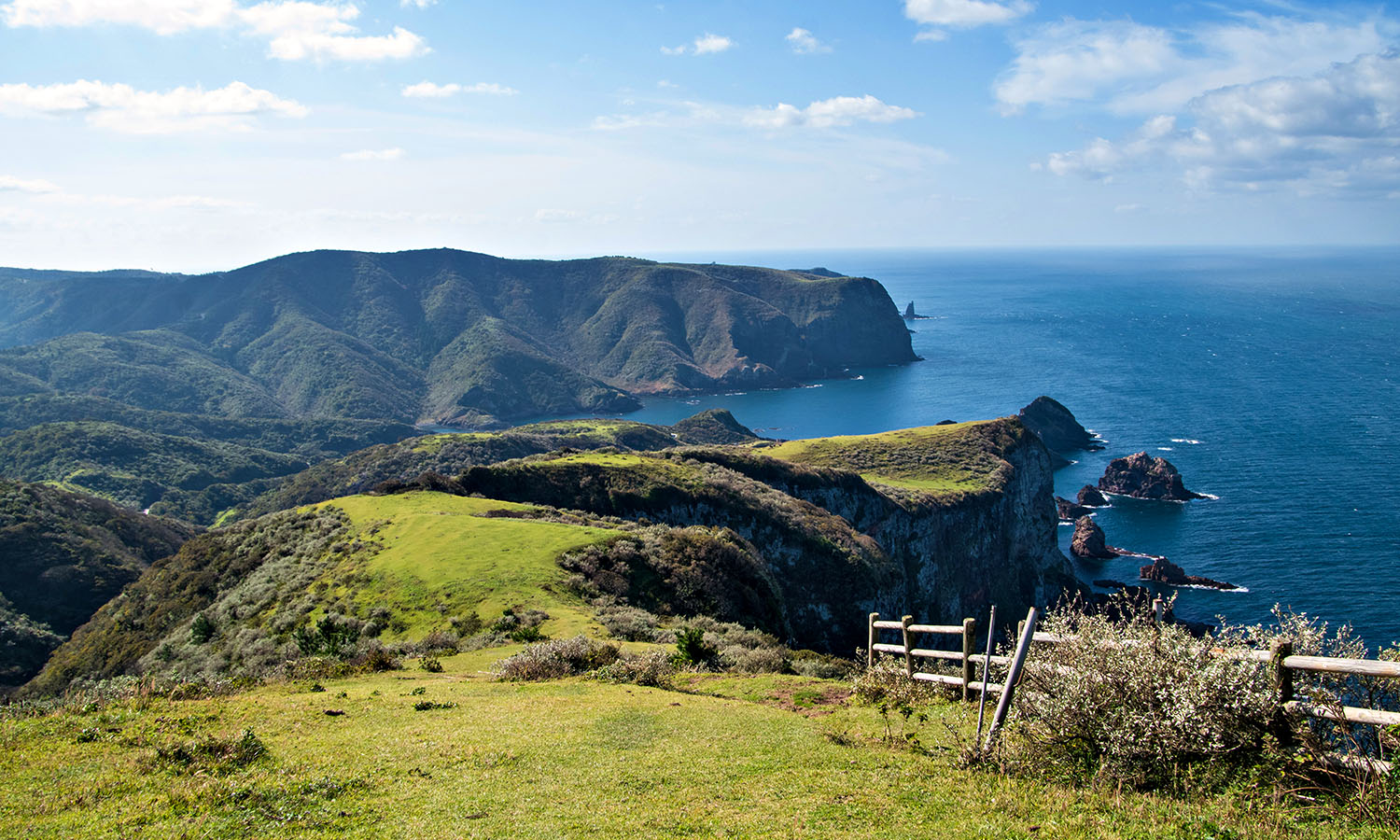
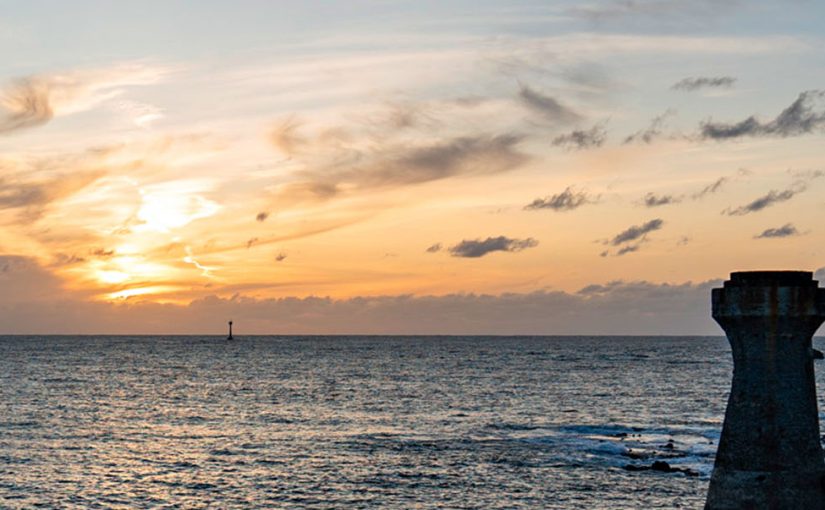
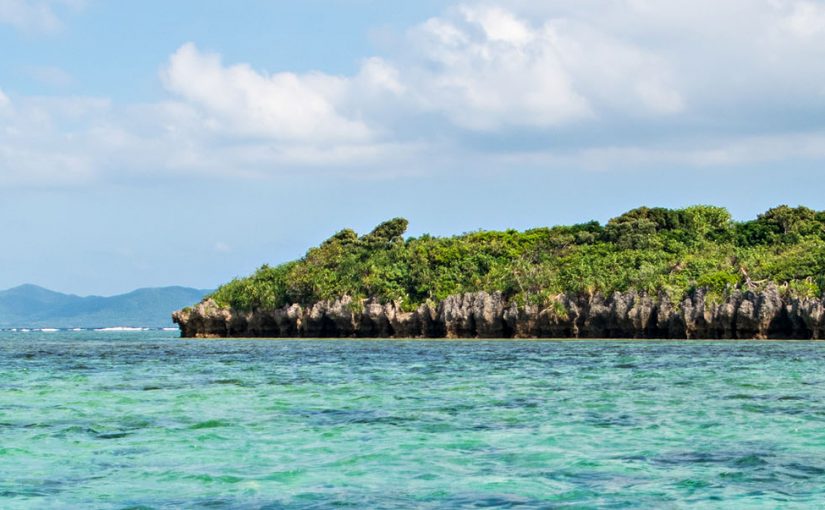
With rolling green hills dotted with grazing cows and views of sapphire-blue oceans on the horizon, you could be forgiven for thinking you’re on the English coastline. This scene, however, also describes Japan’s Oki Islands, in the Shimane Prefecture. It’s still a mystery why they aren’t swarmed with tourists.
The peacefulness of the islands – from largest to smallest, Dogo, Nishinoshima, Nakanoshima, and Chiburijima – has much to do with their isolation. It’s not the easiest place to reach, and travelling between islands requires catching ferries, but that’s the charm of it. Like an ice-cold Asahi is better after a steamy summer day exploring the city or a bowl of ramen more delicious after hours spent conquering pristine slopes, the effort to reach Oki makes you appreciate its charms even more.
At Shichirui Port on the mainland, I hop on the Oki Kisen ferry bound for Saigo Port on Dogo. In the year 724, Oki’s islands were designated as a prison for both criminals and exiled noblemen, including 14th-century emperor Godaigo. As I begin to explore these scenic islands, with their stunning views, sacred sites and abundant seafood, it’s difficult to believe being sent here was a punishment.
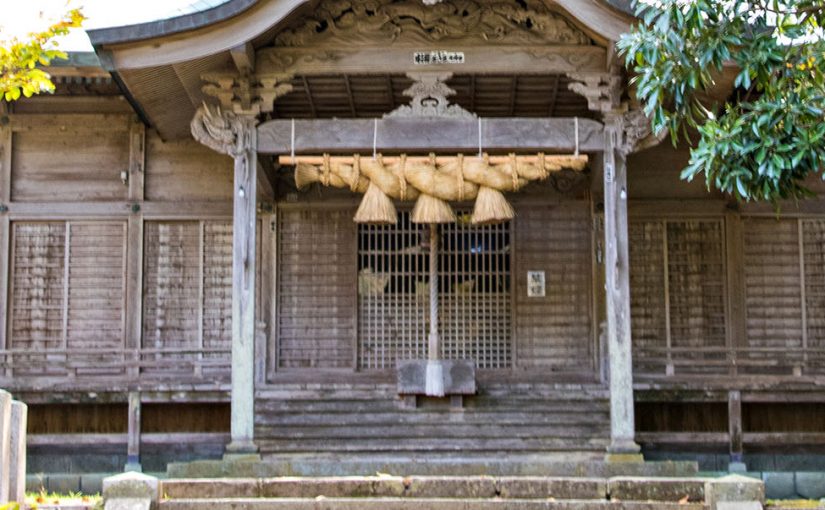
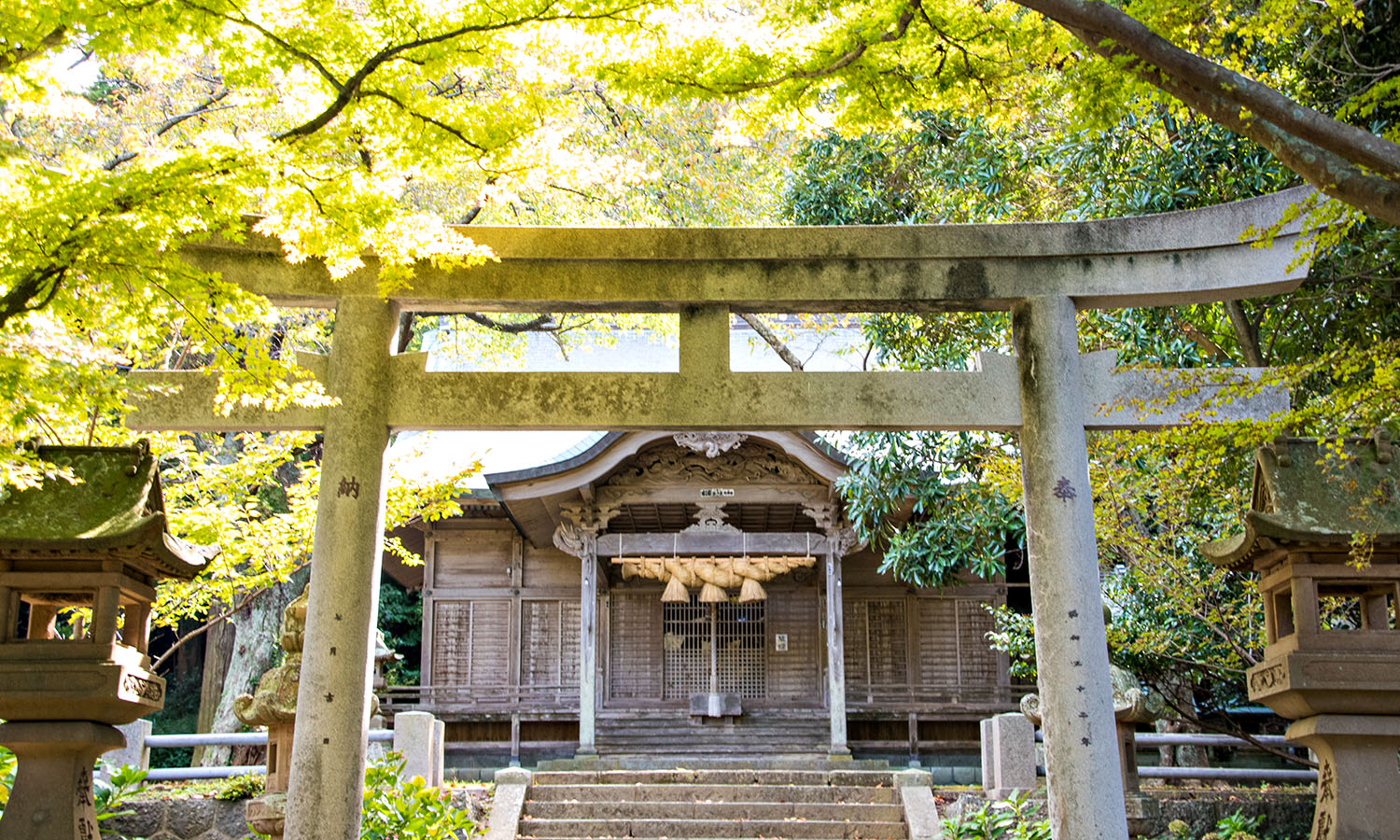
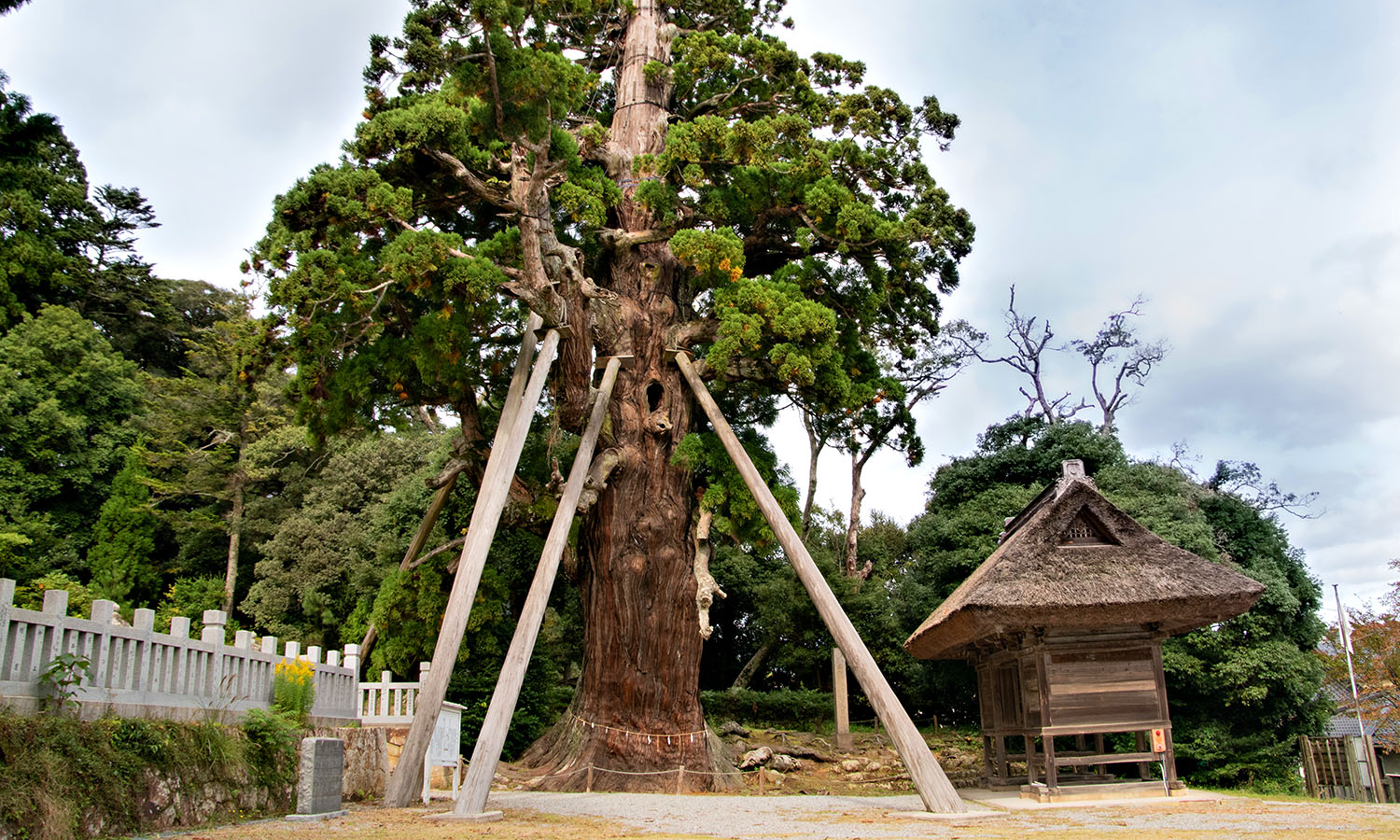
My first stop is Tamawakasumikoto Shrine, the main shrine on the islands and one with a recorded history that can be traced back to the Heian period (784–1185). These days it has been designated an important cultural asset of Japan. Despite the impressive architecture of the temple, it’s the Yaosugi tree I can’t stop staring at.
At 30 meters tall, this Japanese cedar, thought to be almost 2,000 years old, is the largest in Shimane Prefecture. It’s almost as if you can read the history of the island in this rugged and powerful tree’s branches and the cracks that penetrate the thick bark. It has been adorned with shide, zig-zag paper cut-outs most often seen hanging on the front of shrines, and a signifier of the Japanese spiritual appreciation for nature and beauty.
The next stop on Dogo is the roadside Kawai-no-Jizō, a freshwater spring where water levels remain constant. Even during drought or after a typhoon, everyone on Dogo knows this is a safe, accessible source of fresh, clean water.
Oki is a cluster of islands formed from volcanic activity. During the lifespan of the archipelago, layers of porous volcanic rock have built up. Rainwater passes through the volcanic layers where it’s naturally filtered. It pools deep inside this rock until pressure from the surrounding ocean pushes it back to the surface. The water is clean enough to drink, and locals often fill up bottles to use for drinking, making shochu (Japanese spirit) and cooking rice. I take a sip while statues of Jizō Bodhisattva, one of Japan’s most loved enlightened figures, watch over the spring.
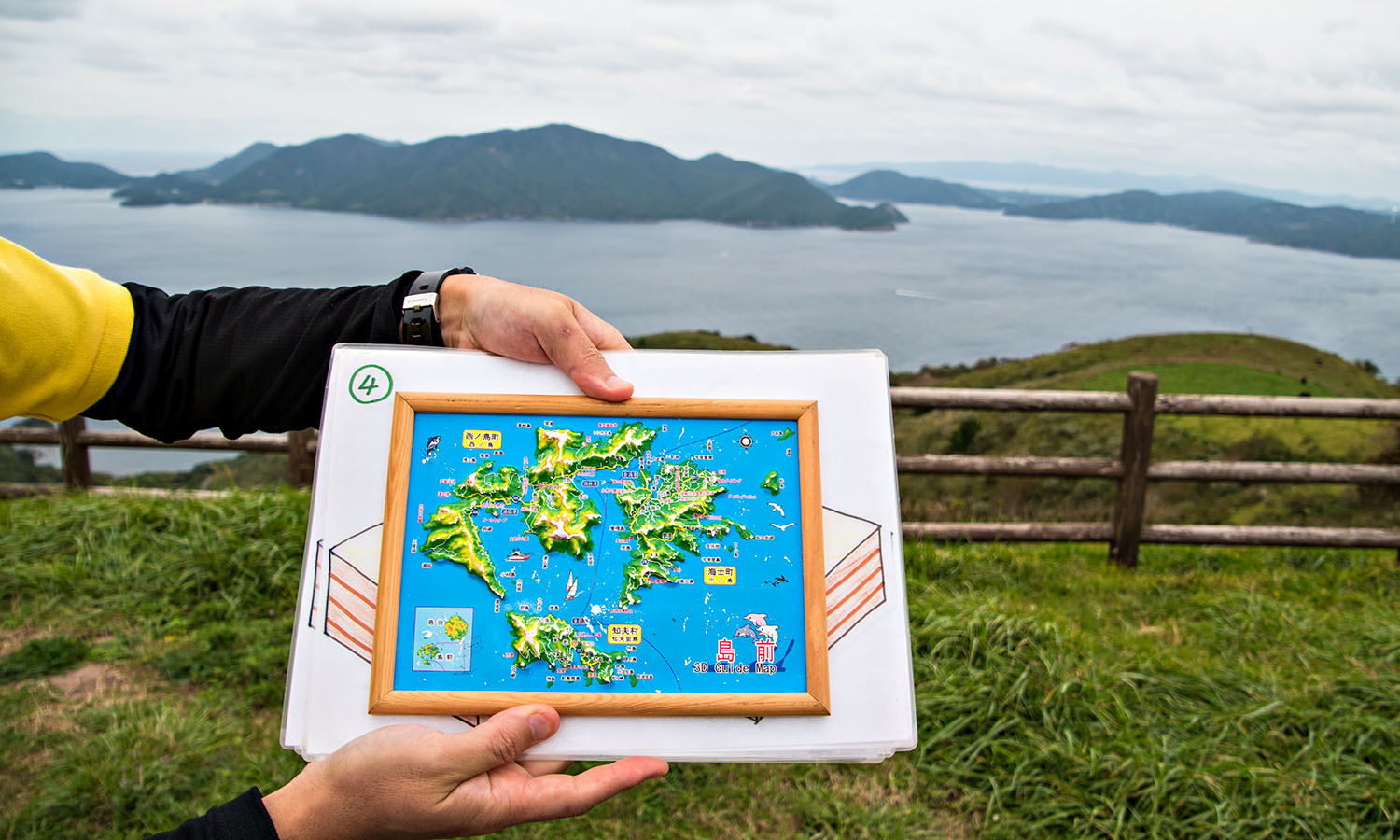
Intrigued by the volcanic heritage of the island, I head by ferry to Mt. Akahage, the highest point on Chiburijima Island. From here, my guide points out that the four smaller Oki Islands are, in fact, sub-sections of the same volcanic crater. The ocean between them is the volcano’s crater, which erupted about 10 million years ago.
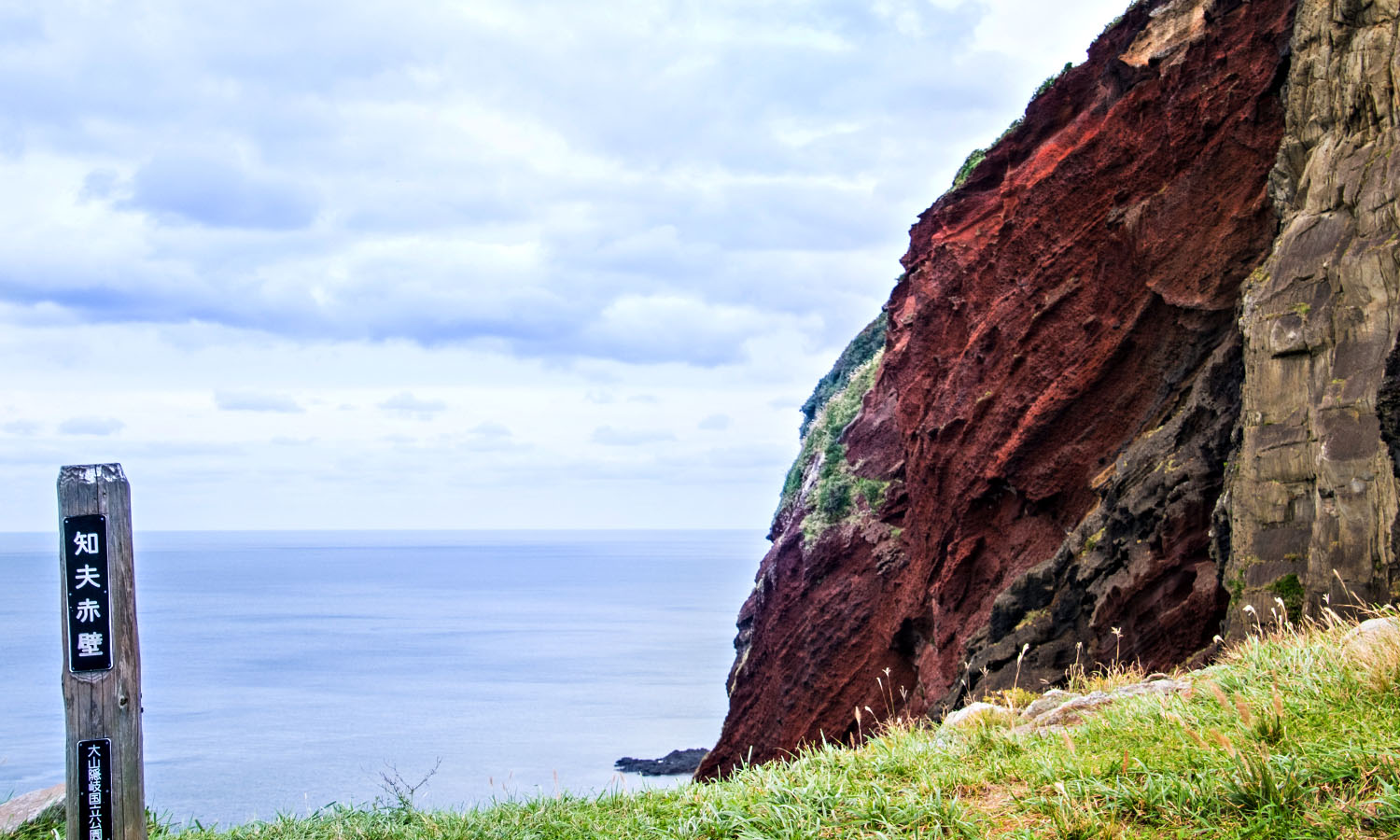
Trekking down Mt. Akahage, I make my way to the Sekiheki Red Cliff, a dramatic one-kilometre-long feature that follows the west coast of Chiburijima. Its gorgeous colour is another example of the island’s fascinating volcanic history. During an eruption, splashes of molten lava, rich with iron, shot from the volcano. Once it hit the air, the iron oxidised to create this firey red wall that cuts a striking figure over the blue sea.
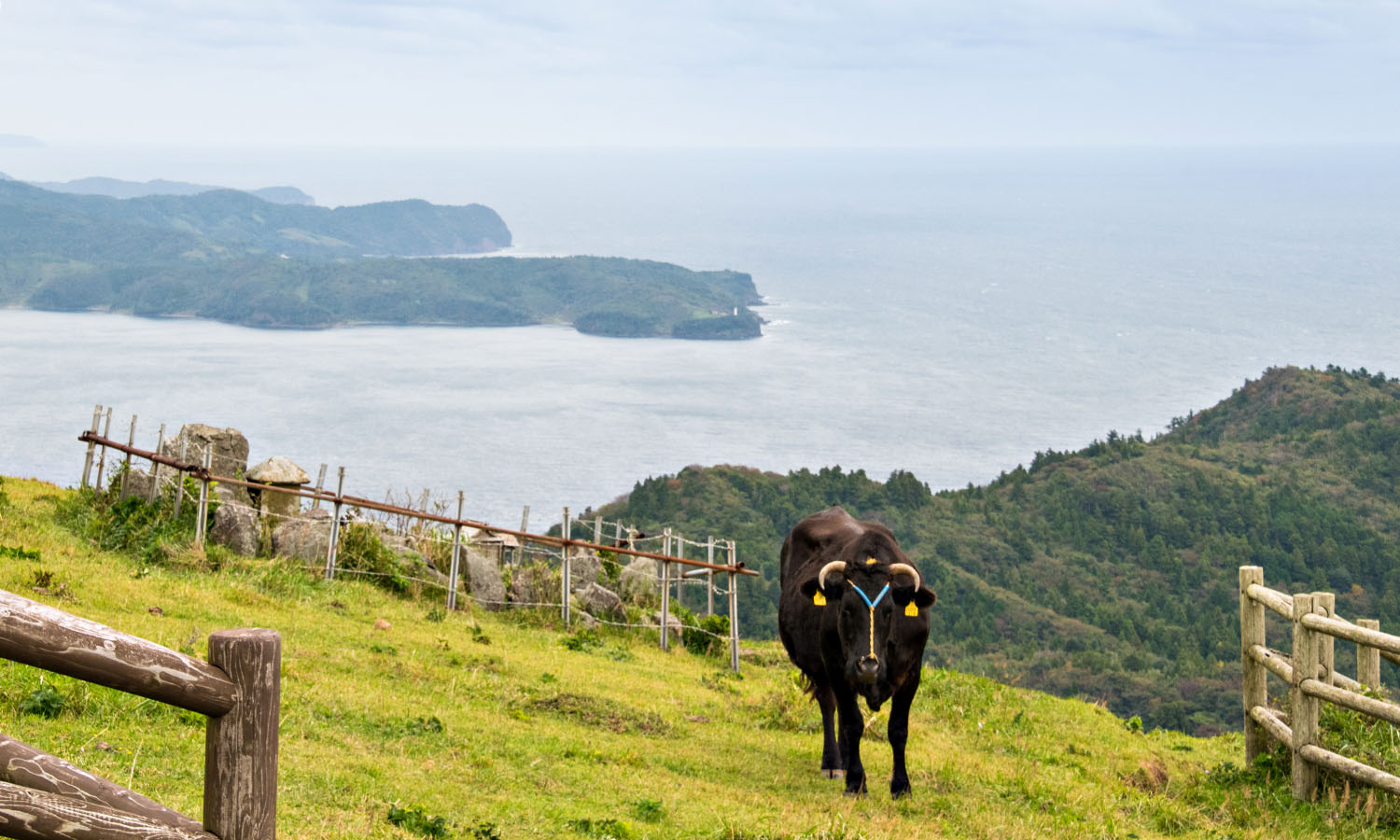
From Chiburijima I make my way to the island’s northwestern neighbour, Nishinoshima, to witness a stunning display of untouched natural beauty. For 2.5 kilometres, the Kuniga Coast Hiking Track – the locals call it the skywalk – follows verdant hills, where cows and horses graze, with the deep blue ocean playing backdrop. While walking the serene trail you may feel as though you’re traversing the edge of the world.
Back at sea level is Nishinoshima’s immaculately decorated Yurahime Shrine. In a far cry to the serenity of the Kuniga Coast trail, the shrine holds some rather raucous festivals. During July, it is home to the Yurahime Shrine Matsuri, a traditional festival where tipsy local men carry a mikoshi (portable shrine) through the streets, chanting and swaying like the ocean tide.
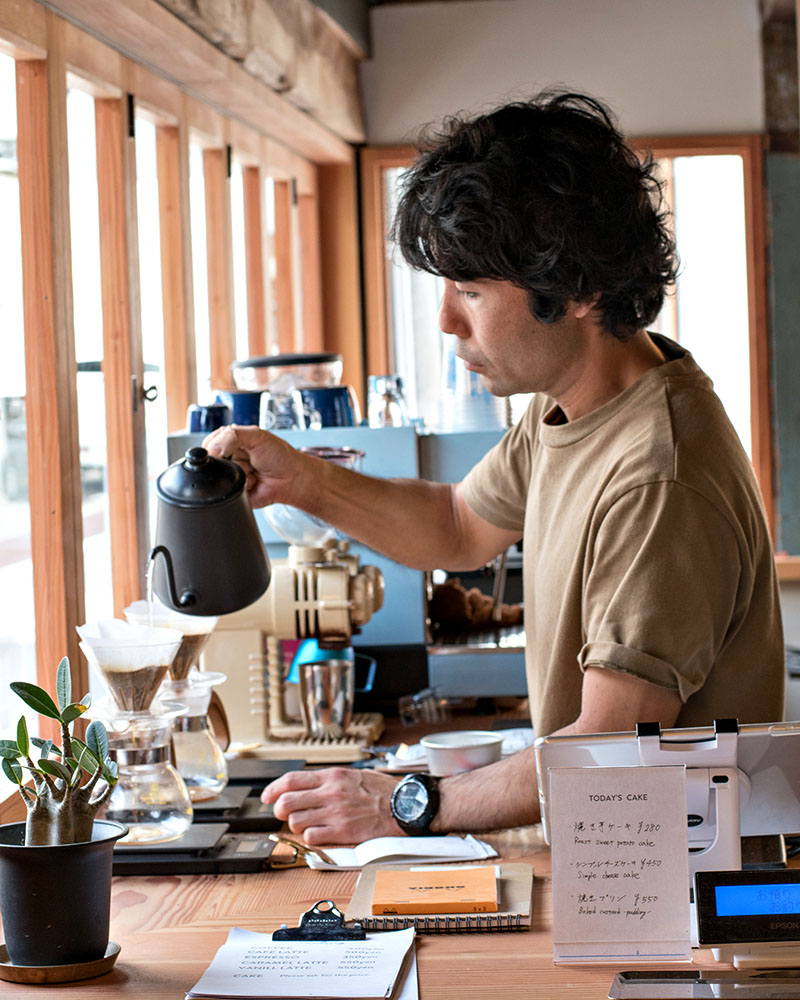
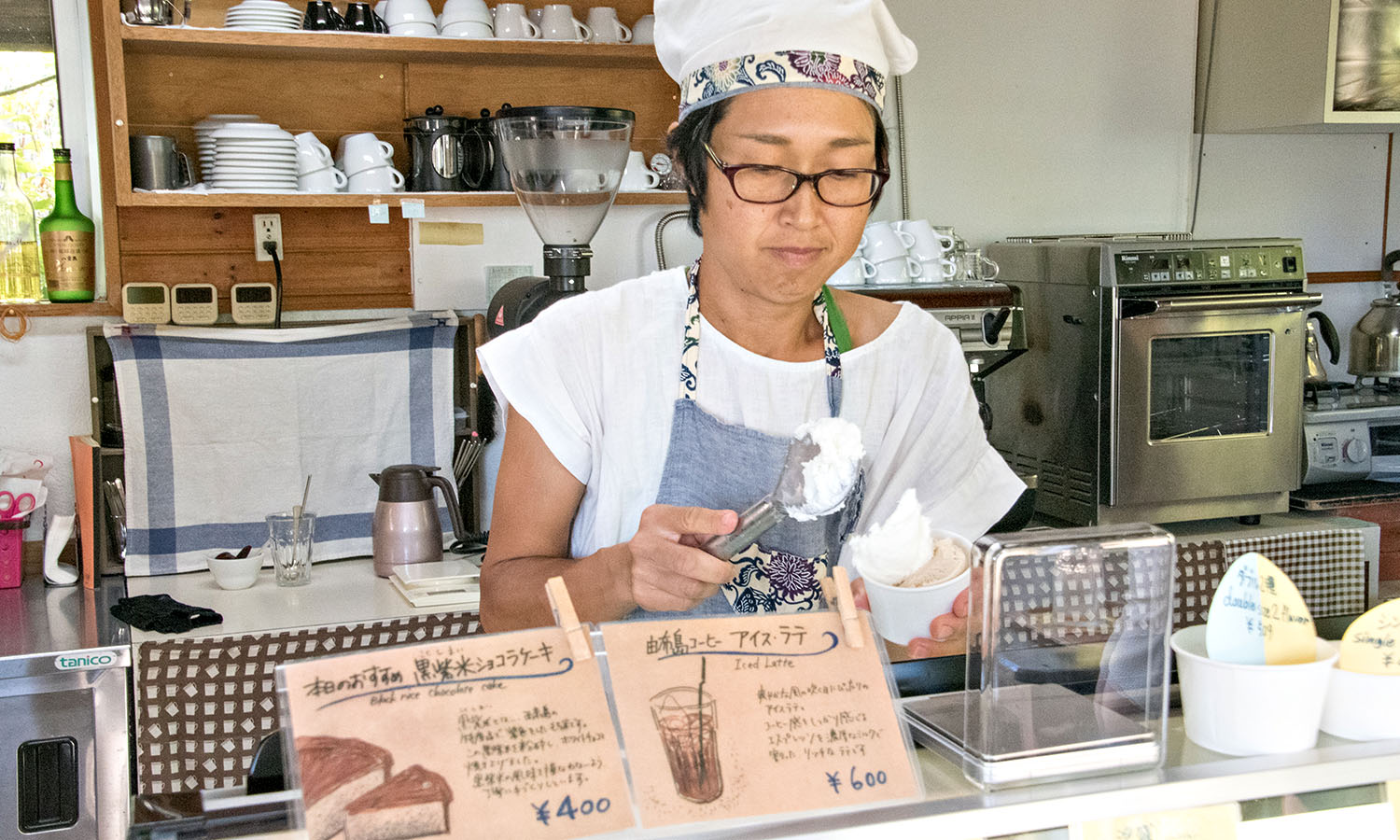
Nishinoshima isn’t all about the past, though. I visit Sailing Coffee, a trendy third-wave cafe tucked between aging houses and sake shops. This coffee shop, gallery and retail space only opened in the second half of 2019, but is already gaining traction with the locals and guests who enjoy a masterfully crafted espressos while sitting in the afternoon sun. It’s places like this that are breathing fresh energy into Oki’s tradition-rich landscape.
One of the last places I want to visit on the itinerary is Chichi Sugi Tree, a mystical and mysterious cedar growing near the top of Mt. Daimanji on Dogo. Chichi means breast in Japanese and this is a reference to its unique root formations that dangle from the tree, as well as the 800-year-old cedar’s motherly energy.
Similar to Tamawakasumikoto Shrine’s cedar, where I started my journey, Chichi Sugi is a reminder of how spiritually connected the people of Oki are to their natural surroundings. Practising spirituality isn’t a duty or something separated from everyday life, but as natural and honourable as these trees that sprouted long before this generation exited and will continue to live long after all who look over it have gone. There’s something inherently humbling about that thought.
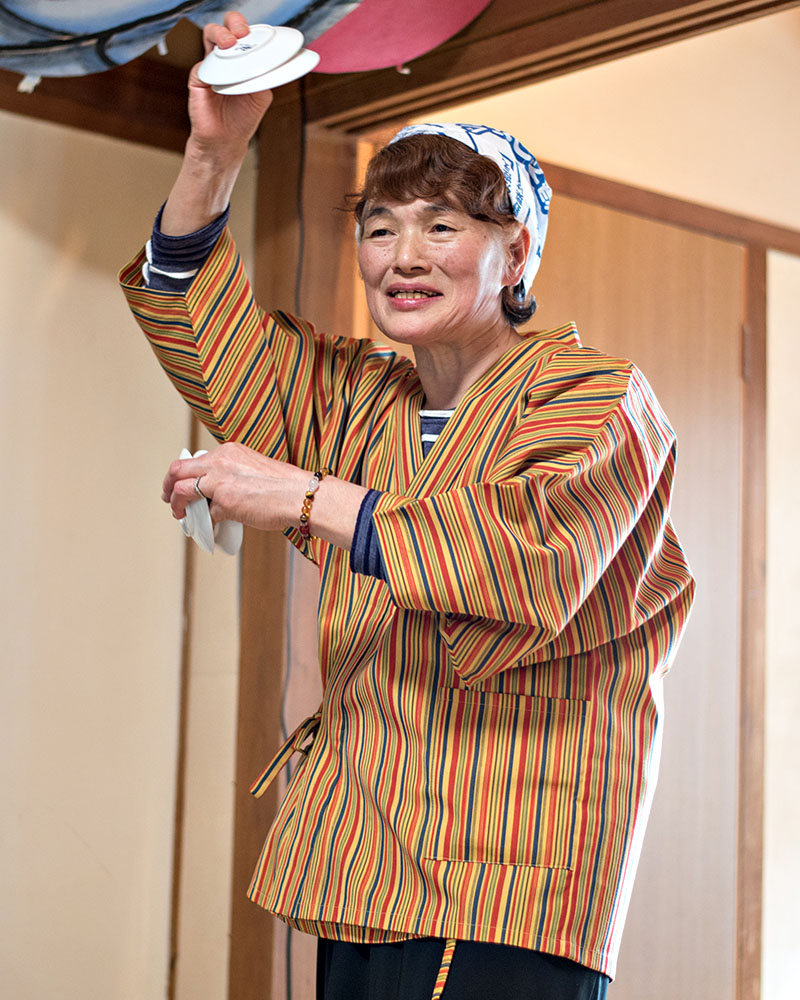
Before hopping back on the boat, I stop by Dogo’s Tsuki Akari Cafe to get my last fix of Oki’s incredible seafood and am treated to a live shamisen and folk songs performed by Oki locals. The traditional songs come from tradespeople, sailors and people from far away, but are today performed with a narrative shaped by the Oki Islands.
I ask one of the staff members about a kite hanging from the ceiling, and she tells me that, during a festival in April, two giant kites similar to this are made and inscribed with the names of the children born in the previous year. It’s an ode to the future generations who will continue to shape these magnificent islands.
This story is sponsored by JNTO (Japan National Tourism Organization).
It’s known as Japan’s island of gold, not only because it was the country’s main source of the precious metal but also because it is a microcosm of the past. The culture on Sado was formed in three waves: the first – the aristocratic culture – was due to forced exiles; the second – samurai culture – was a response to the goldmine; and the third – merchant culture – was thanks to Sado’s location in the physical centre of the Japanese archipelago.
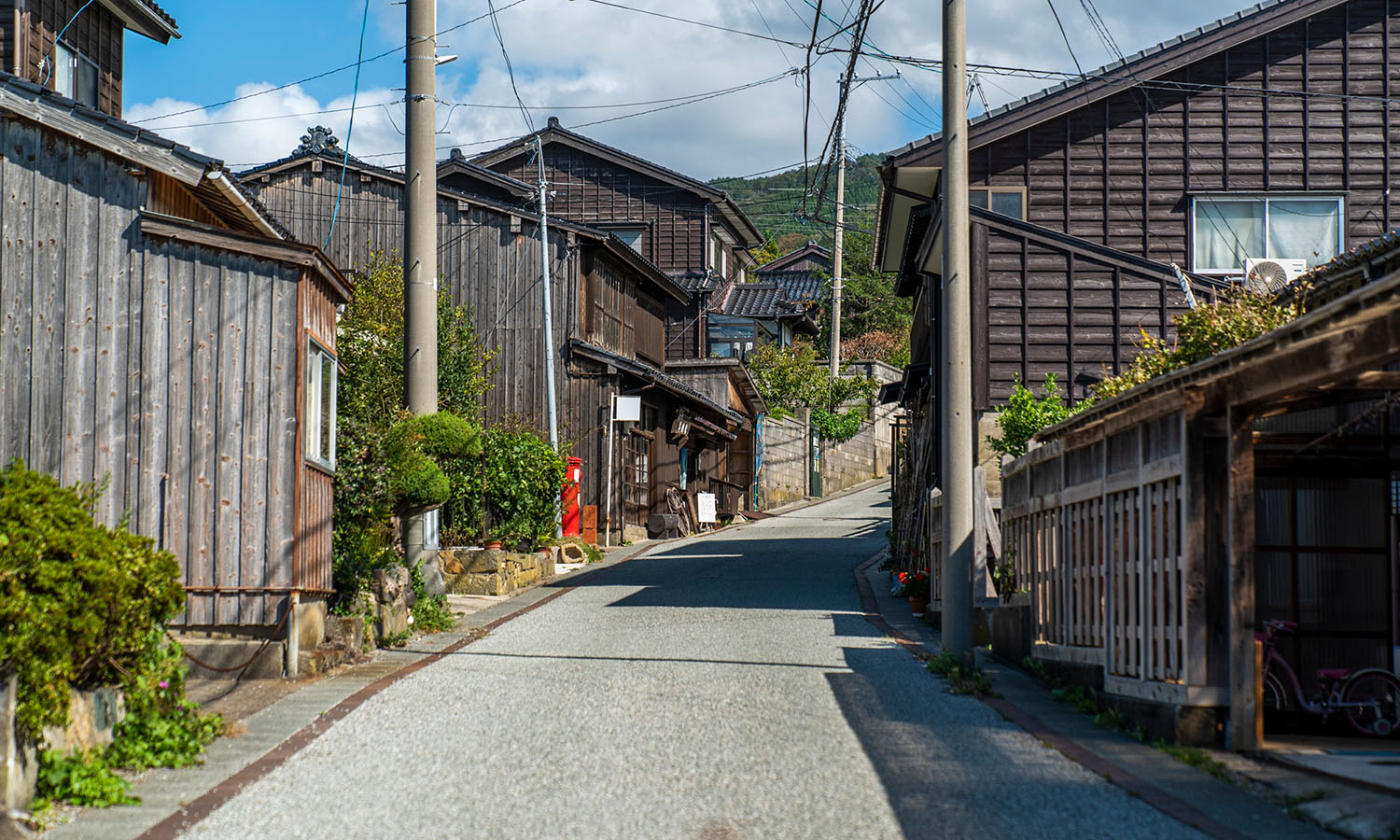
The old town of Shukunegi was the base for merchant culture in Sado. As the gold mine was flourishing, this village thrived as a port of call for ships travelling from Osaka to Hokkaido. Those living there made out very handsomely, at one stage taking in a third of all money made in Sado. Once the port was moved from Shukunegi to Ogi, five kilometers away, those who built the ships started living here and the area has been preserved in that form to this day.
The village is very dense with more than a hundred houses packed together, and as soon as you enter you can really get a sense of what it must have been like to live here in times gone by. The vast majority of buildings, however, are still lived in, with a few even open to the public. Inside they are exquisite with no expense spared. You can see how they were expanded from one to two floors, with lacquer walls and large hand-painted fusuma sliding doors. The ship carpenters’ skills did not go to waste.
It’s a bit of a challenge. I’ve got a mere two days to explore as much of the tropical islands of Yaeyama as possible, but I suspect there is far more to do than I’m ever going to be able to manage in that timeframe. There are 23 islands in the archipelago after all – not all of them inhabited – but I am concentrating on just two: Iriomote and Ishigaki.
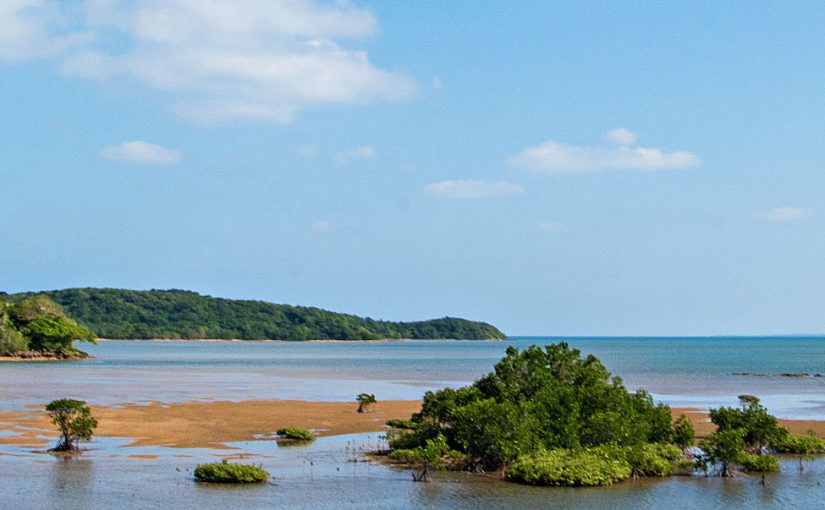
I start on Iriomote, the second largest island in Okinawa Prefecture (the Yaeyama Islands are in its southwest). Of its 290 square kilometres, 90 per cent of Iriomote is covered by rugged subtropical jungle and mangrove forests.
One of the best ways to experience the untouched beauty of Iriomote’s wild side is by joining a half-day Urauchi River jungle cruise. Urauchi River is the main artery that runs across Iriomote. It’s at its widest in the island’s northwest corner, but tapers off into a cluster of tributaries once it hits the middle of the map. Along its reaches, it is home to a diverse ecosystem of wildlife – both salt and freshwater – and is the jumping-off point for some of the most spectacular waterfalls in Okinawa.
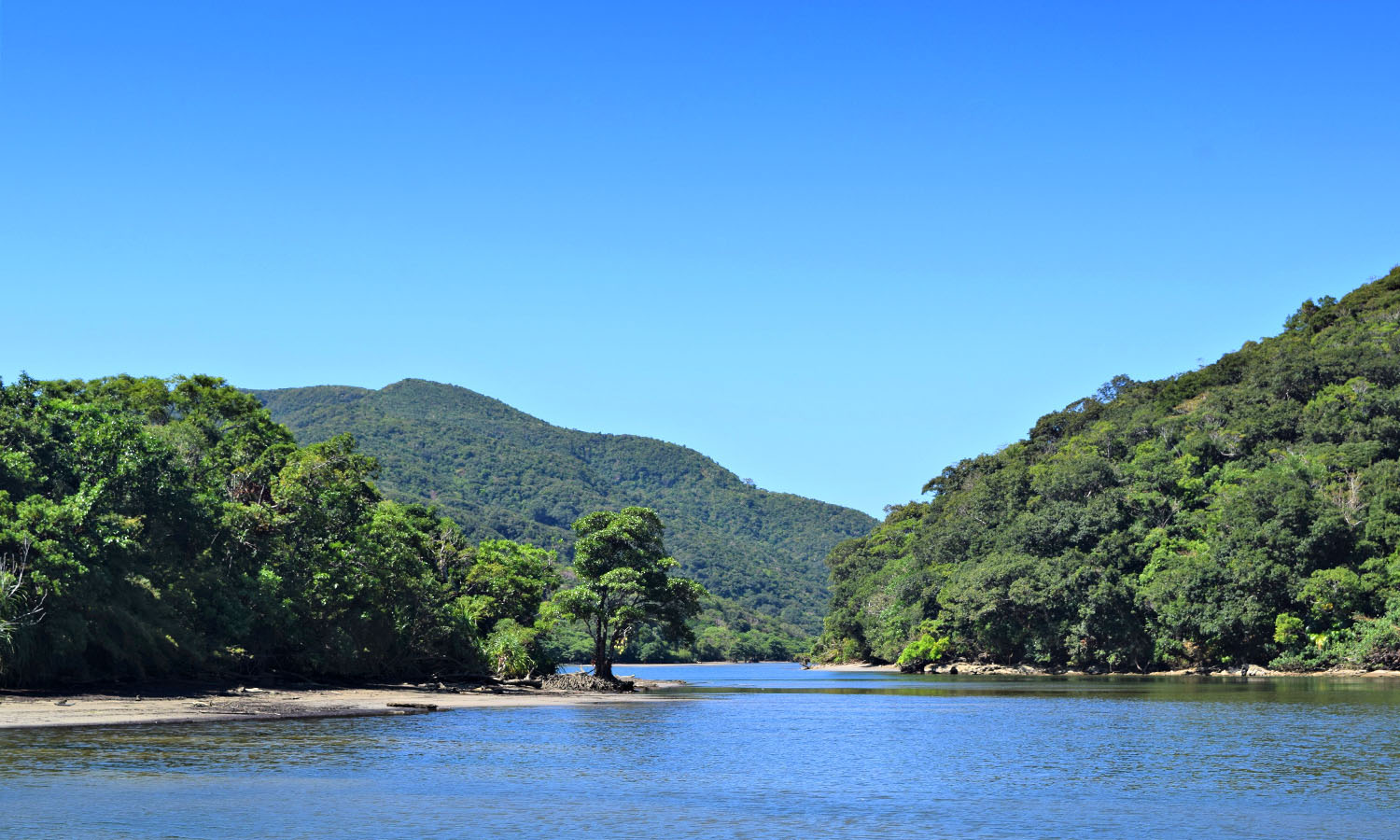
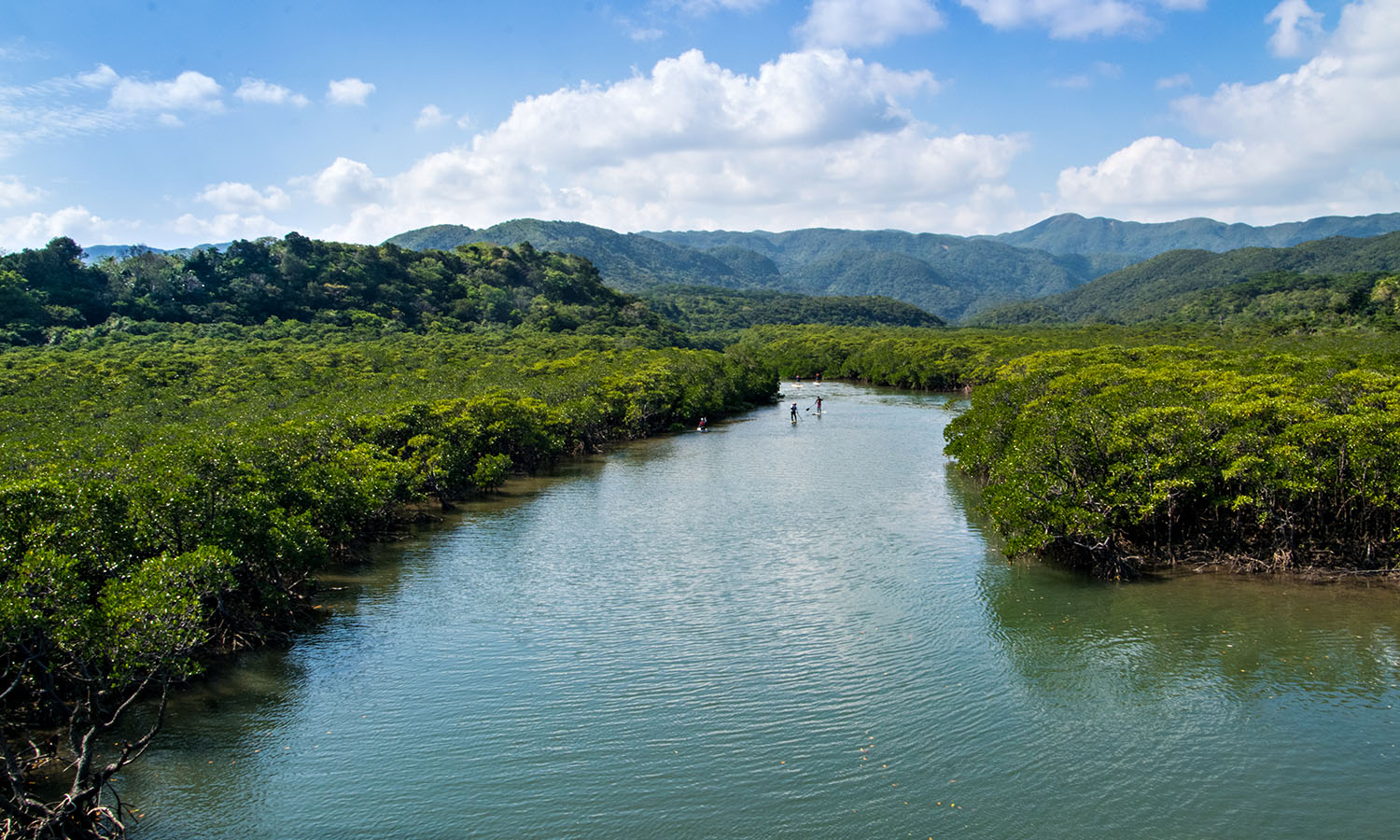
After leaving the port, the journey takes us down the river, flanked by lush mangroves that are themselves backed by views of rolling green mountains. Thirty minutes later I’m at my first destination: a rocky shore and pathway leading into the jungle. I follow the narrow trail to Mariyudu Falls, the first point of interest on the walk. Here the water almost seems to defy gravity, flowing across almost perfectly flat horizontal banks before finally tipping into the pool.
Kanbire (Kanpira) Falls, a 20-minute walk down the path, is the highlight. Like a scene from Jurassic Park, it is oversized and prehistoric in its geological make-up. Looking at its wide ledges flooded with water, it’s almost impossible to believe this is Japan. Satisfied with what I’ve witnessed, it’s time to leave Iriomote in search of beachier surrounds.
In recent years, Ishigaki has become the ‘go to’ destination for those who consider themselves in the know. Ishigaki is home to what is regarded as the urban centre of the Yaeyama Islands family, and the region’s major airport and ferry terminals. It’s tourist-friendly but has avoided any major commercialisation, making it somewhere with plenty of activities to offer visitors but also a dedication to preserving culture.
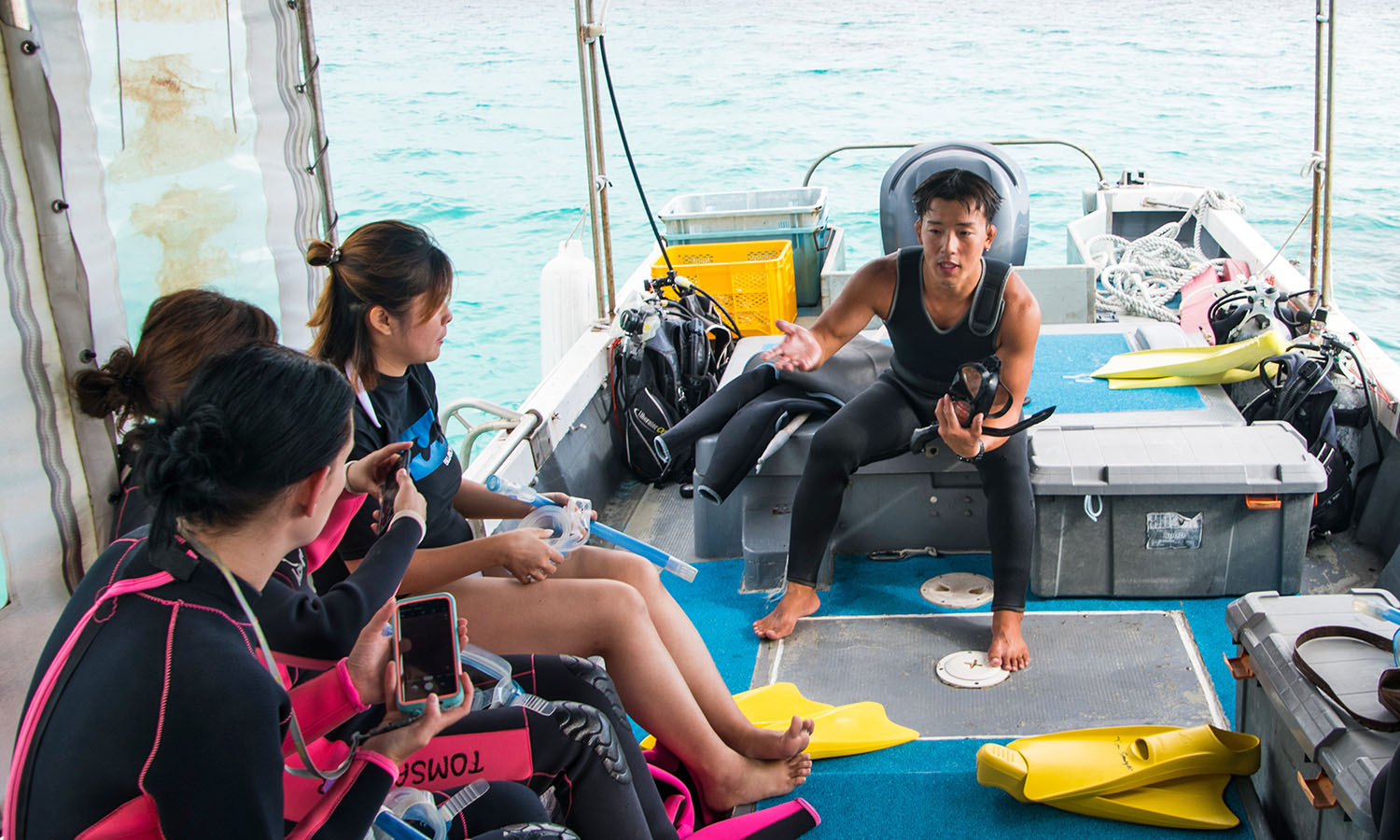
I visit Tom Sawyer Marine Shop, conveniently located just a short walk from the port, and sign up for a snorkelling trip. I pick up a wetsuit, grab some goggles, hop on board the boat and head out to sea. During the 15-minute cruise, the guide gives everyone a rundown on what’s going to happen, but this isn’t my first snorkelling experience, and the conditions are near perfect, so I don’t have much to worry about. Then we’re in the water, free to paddle out over the reef to inspect the vivid coral and sea life below us.
There’s something about the energy of Ishigaki that seems to fuel creativity. I suspect it’s a result of the optimistic feeling of freedom that comes with living in a tropical paradise that is at once seemingly removed from the rest of the world, but still imbued with culture. I visit the Minsah Kogei Museum and find a place where history and forward-thinking creativity combine. During Okinawa’s Ryukyu Dynasty period (15th century to 1879), a time when Chinese influence and local kings ruled, a local form of weaving known as minsah flourished. Innovative local designs have kept the trade alive to this day and, in the store, you can choose modern accessories adorned with the minsah chequerboard-style pattern.
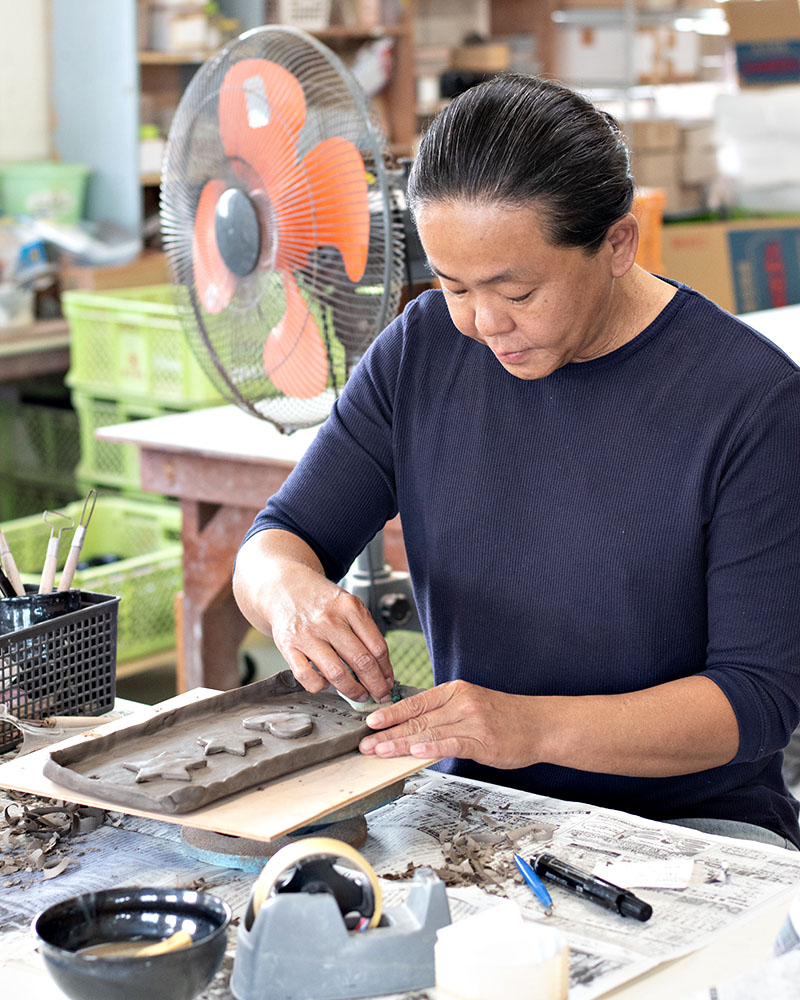
On my mini-art tour, I also make a stop at Ishigaki Pottery Studio. Also known as Ishigaki-yaki or tenmoku these ceramic pieces were inspired by techniques crafted in China, but the rich blue that features heavily in the design is unmistakable as Okinawan, much like the seas that surround the islands. The pieces are so beautiful they’re found across the world in institutions including the British Museum, the V&A, the Metropolitan Museum of Art in New York, and the Freer and Sackler Galleries at the Smithsonian Institution in Washington DC.
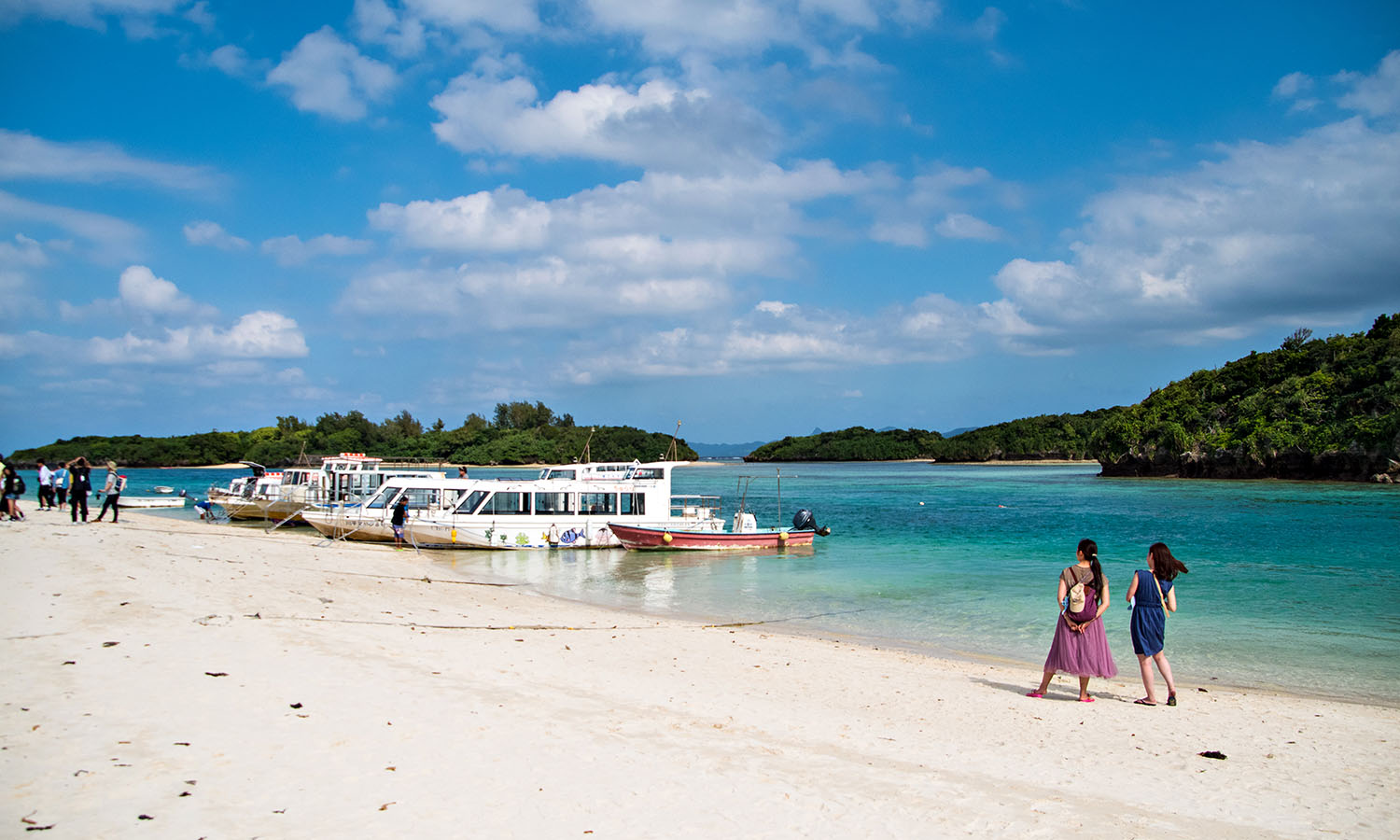
On the north coast of Ishigaki is Kabira Bay, which is as close to paradise as you can find in this part of the world. It’s the island’s most famous beach with good reason – pure white sand, bright aqua blue water and rocky cliffs topped with tufts of green make it seem as if tropical islands across the world have donated their best features. The sprawling beauty that can be seen from the shoreline is only half of what’s in store. On a glass-bottomed boat, I see colourful fish, monolithic growths of textured coral and even the occasional turtle surfacing to say hello.
Further inland, the Ishigaki Stalactite Cave is my next stop. The cave was formed more than 200,000 years ago and many of its naturally crafted sculptures are more than three metres high. While passing through I come shoulder to shoulder with the cave’s star – a cluster of stalactites that look like the silhouette of Totoro, Studio Ghibli’s most famous furry giant. Occasionally the cave plays host to live musical performances, which one can only imagine would have to be some of the world’s most magical gigs.
By way of Banna Park Observation deck – from it you can almost see the entirety of the Yaeyama Island family before you – I head to Yaima Village for a soba lunch and a trip back in time. This amusement park, built in the image of old-world Yaeyama, is the perfect place to get an idea of what Okinawa once looked like. It’s home to replica Ryukyu Kingdom houses complete with snarling shisa (lion dog) figures guarding homes against unwelcome guests.
Intrigued by theatrical squeals and singing, I make my way to the back of one of the traditional homes where I find an older couple performing to a pair of bemused but enthralled guests. The woman is like a human tornado leaping, shouting and running, while her male companion is almost still apart from his fingers keeping the rhythm of his sanshin playing.
The izakaya is a stable of Japanese social life. A combination of bar, dining establishment and community hangout, it’s where families come to eat, co-workers come to relax, and weary travellers arrive to knock back a few frosty mugs of local Orion Beer before the day is done. While food is a regionally specific experience throughout Japan, it’s a whole different level in Okinawa, where the seafood is more diverse and the techniques and flavours are influenced by both the country’s proximity to China and Taiwan and the islands’ American military history after World War II. I pop into brightly lit Izakaya Satsuki and order sashimi, goya champuru (a stir-fry of bitter melon, pork and tofu), and umi budo, the salty, pop-in-your-mouth seaweed that’s famous around these parts.
As I drain my beer and empty my plates, I feel the grains of sand from Kabira Bay floating around in the soles of my shoes. I think about how sand seems to follow you wherever you go after a beach holiday, hidden in the folds of every shirt, nestled into the fibre of your beach towels. And while it’s going to take me a while to get rid of it all this sand, it feels like a gift to be able to bring a tiny piece of this Okinawa back home.
This story is sponsored by JNTO (Japan National Tourism Organization).
There’s a cluster of islands in the southwest of Okinawa Prefecture, in the corner of the Pacific Ocean just east of Taiwan, that are the most remote part of Japan. Making the journey to the Yaeyama Islands is worth it though; picture-perfect beaches, beasts big and small, and a culture far removed anything you’ll find in Tokyo or Kyoto reward the dedicated traveller.
With its tropical climate, white beaches and lush mangrove swamps, the Yaeyama Islands are one of the nation’s best-kept beach secrets. But as I learn during my visit, if you want to be a part of the secret you’ll need to move fast; while this region is still relatively unknown to international visitors, part from the people of Taiwan, word is spreading fast.
I begin my few days exploring Yaeyama by arriving at Iriomote, the largest of its islands and the second largest in Okinawa. While it’s long been a popular destination with domestic travellers looking to escape the rigidity of mainland Japanese life without having to acquire a passport, the island still bears a level of laidback unrefined charm more typical of other tropical destinations like Bali or Fiji.
A large portion of Iriomote has managed to avoid the impacts of commercial tourism with more than 90 per cent of its 290 square kilometres still covered in rugged jungle and mangrove forests. Within those untamed grounds lives the elusive Iriomote yamaneko, the island’s famous mountain cat.
While it’s no secret Japan has an affinity for the feline – think maneki-neko (waving cats) and Hello Kitty! – Iriomote only has eyes for its own. At the Iriomote Wildlife Conservation Center, a compact, but informative natural-history museum dedicated to the non-human inhabitants of this diverse island, visitors can learn more about this enigmatic figure.
The display features taxidermy figures of the yamaneko, which looks surprisingly like a large domestic moggy. With their round ears and distinctive markings, the yamaneko is the island’s pride and joy, even though the locals didn’t realise the cat was special until the mid-1960s. Before the late Tokyo-based journalist turned ecologist and novelist Yukio Togawa visited the island in 1965, they didn’t know this graceful and furious figure was unique to the island.
One of the guides tells me the cat is so critically endangered its population numbers sit somewhere in the very low hundreds. While the evolution of the island, including the development of major roads and the introduction of a growing number of cars, poses the biggest threat to the nocturnal beast, local organisations are campaigning to protect the cat.
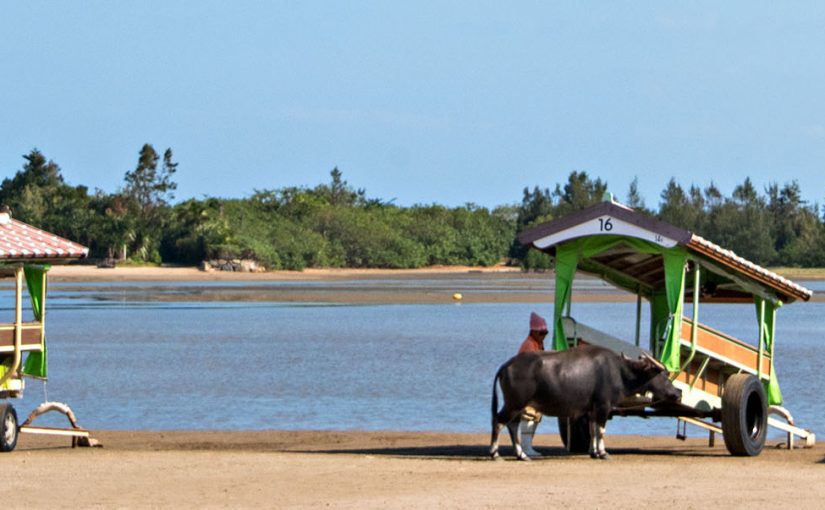
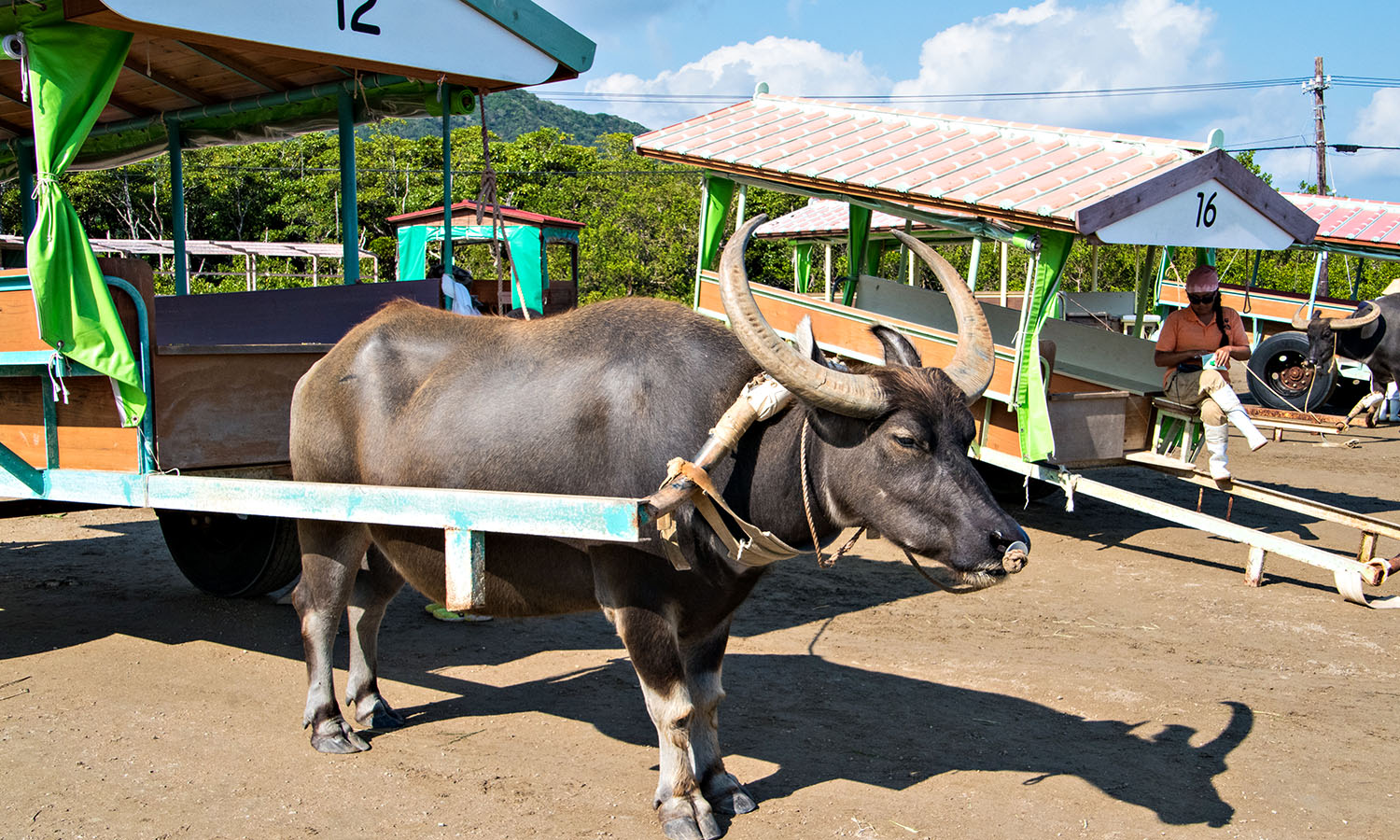
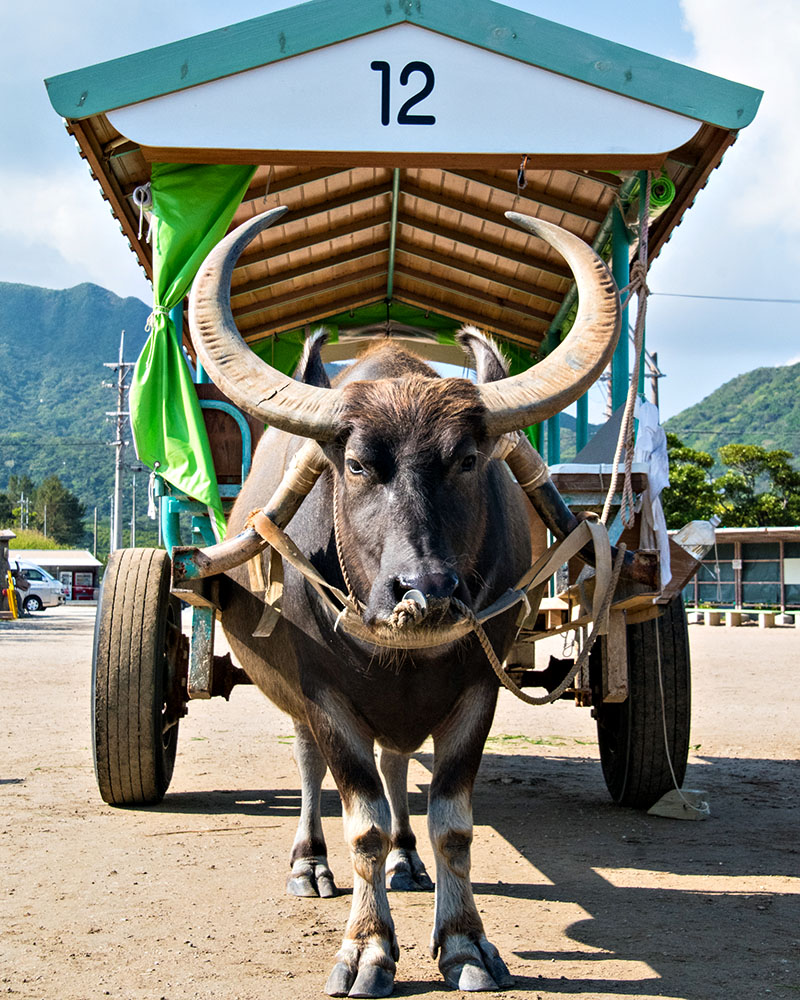
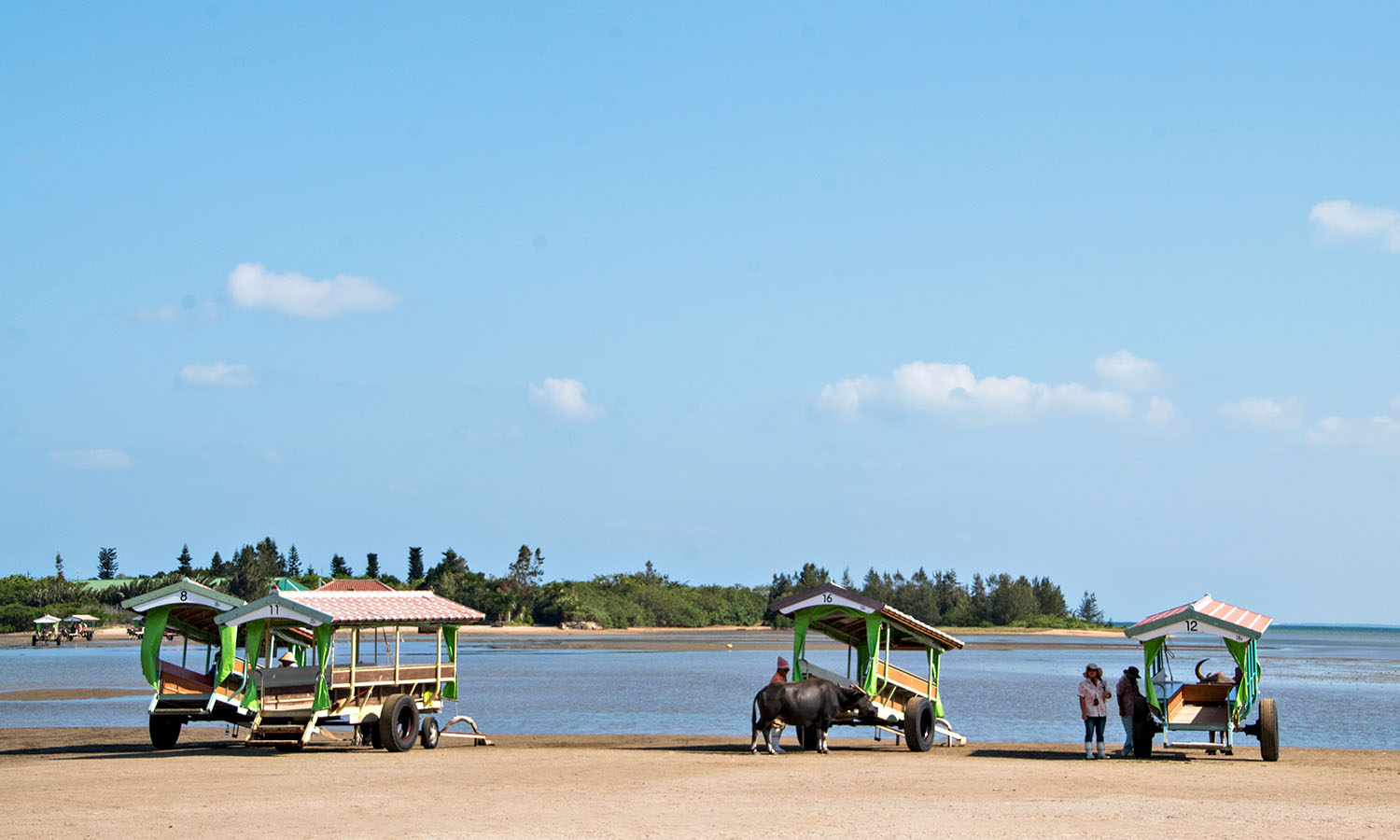
While it’s incredibly rare to catch sight of a yamaneko, another of Iriomote’s animal residents is far more conspicuous. At Mihara Village, water buffalos dragging carts take visitors across the shallow water to Yubu Island.
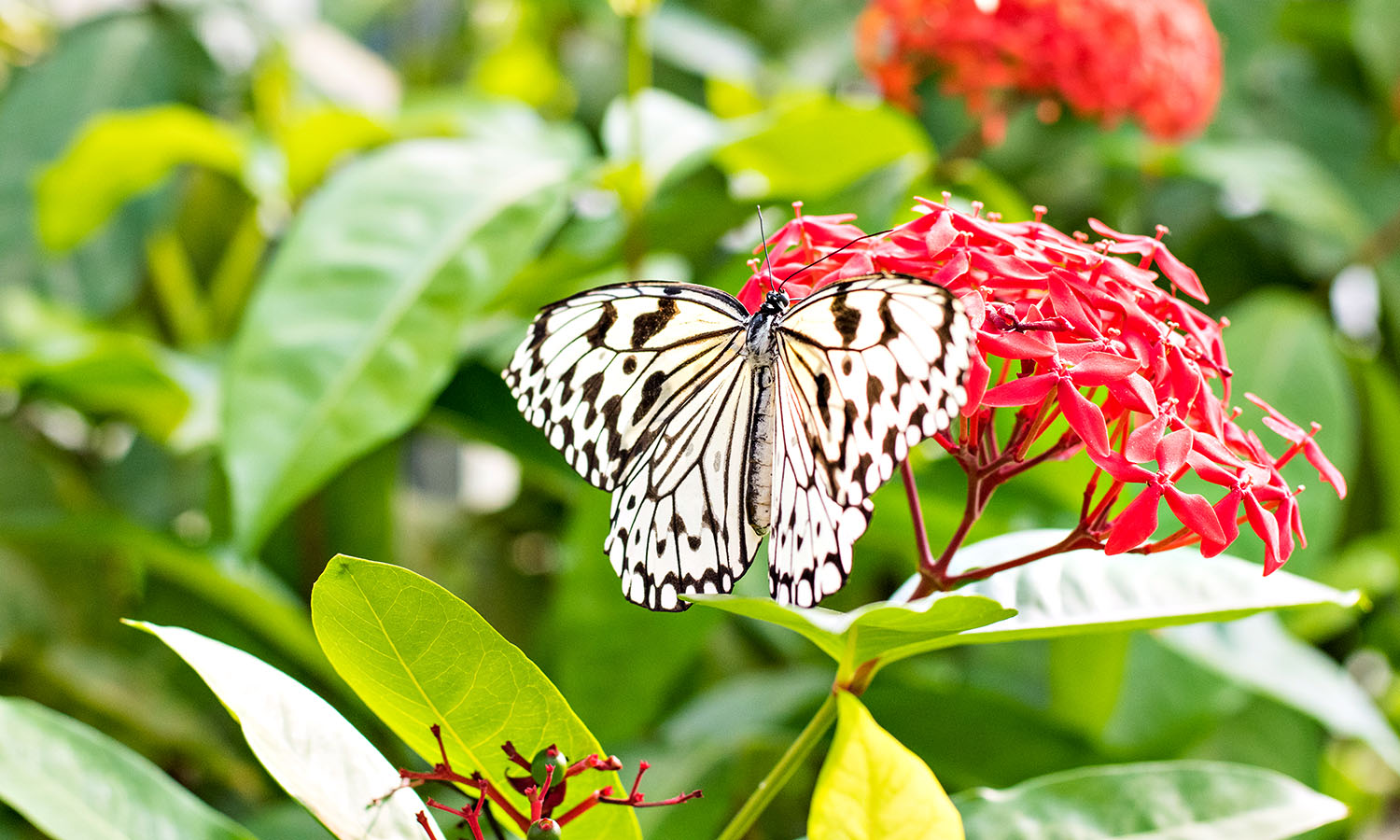
Located approximately half a kilometre off the coast of Iriomote, Yubu Island is a microcosm of Okinawa’s subtropical perfection. Part of the island is covered in sparkling white sand, while the rest is carpeted in green and home to rainbow-coloured flora. While it’s only 1.5 metres above sea level and formed from accrued sediment flowing out of Iriomote’s Yonara River, the island has an almost amusement park-like ambience. That could be in large part thanks to the butterfly house, the quaint cafe, subtropical botanical garden and buffalo adorned in novel headwear, but it’s also helped along by the fantastic journey to the site.
The primary mode of transport to Yubu is aboard the water buffalo cart. When the water is shallow, slapping the shins of our hairy, leisurely paced oversized chaperones, it still takes around about 20 minutes to make the crossing, although the length of the journey is rather dependent on how the buffalo feels. I hop onto the car of Sota-kun, just behind the driver, who tells me Sota is the only buffalo he directs – buffalos and drivers are paired for their entire careers and, over time, build a bond. If one is having an off day, the driver tells me, the other knows how to help.
Upon arriving on the Yubu shore, I hop out and make a circuit across the island to see it all before my ride – the last one of the day – back to Iriomote. The journey back, at about 4.45pm, takes much longer than the one to get there. I wonder whether it’s the tide or if the buffalo is tired after a long day transporting guests. The driver laughs and explains his buffalo companion knows it’s the end of the day – he’s being sulky because he has to take the last of the passengers back to Iriomote even though Yubu is his home. Seems the end-of-day work struggle transcends species.
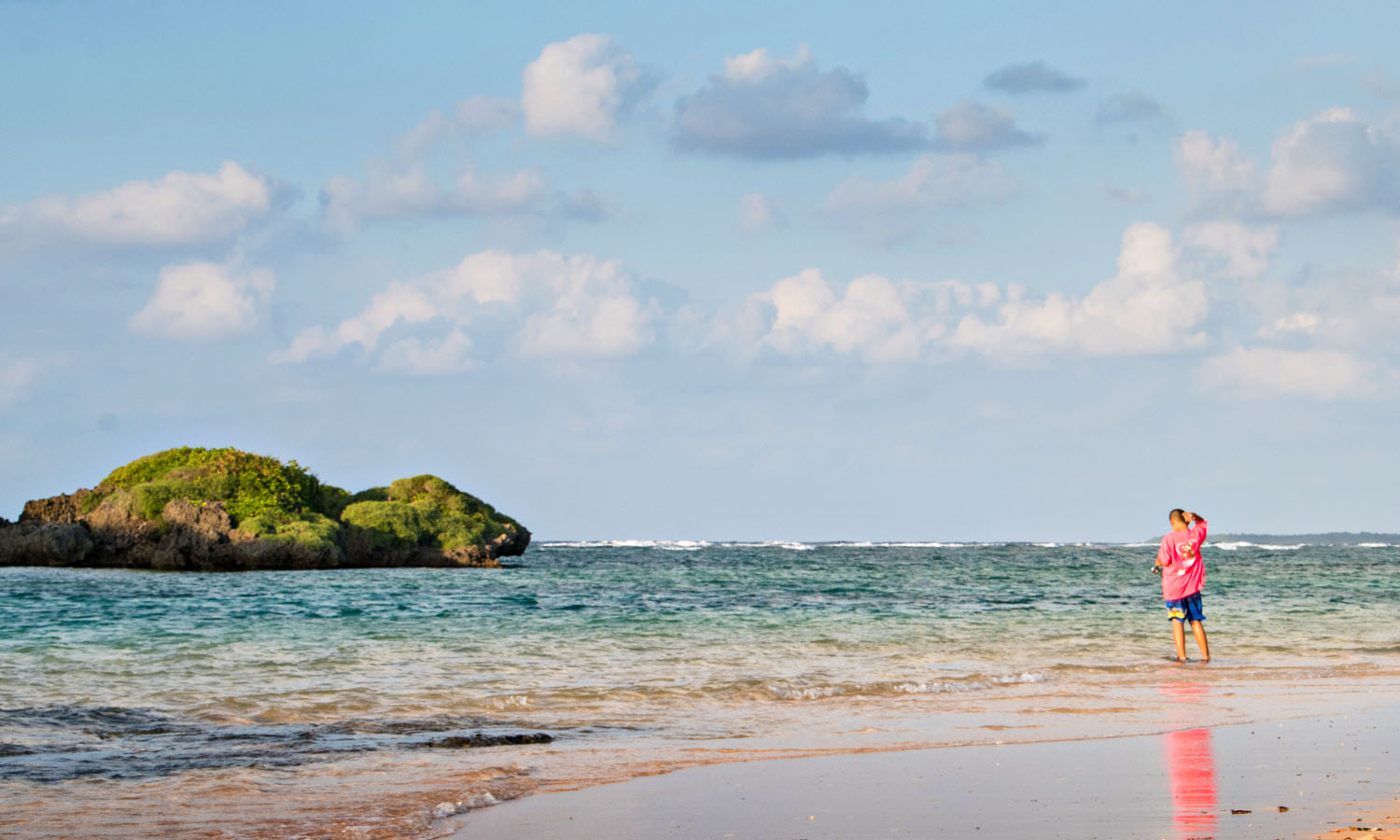
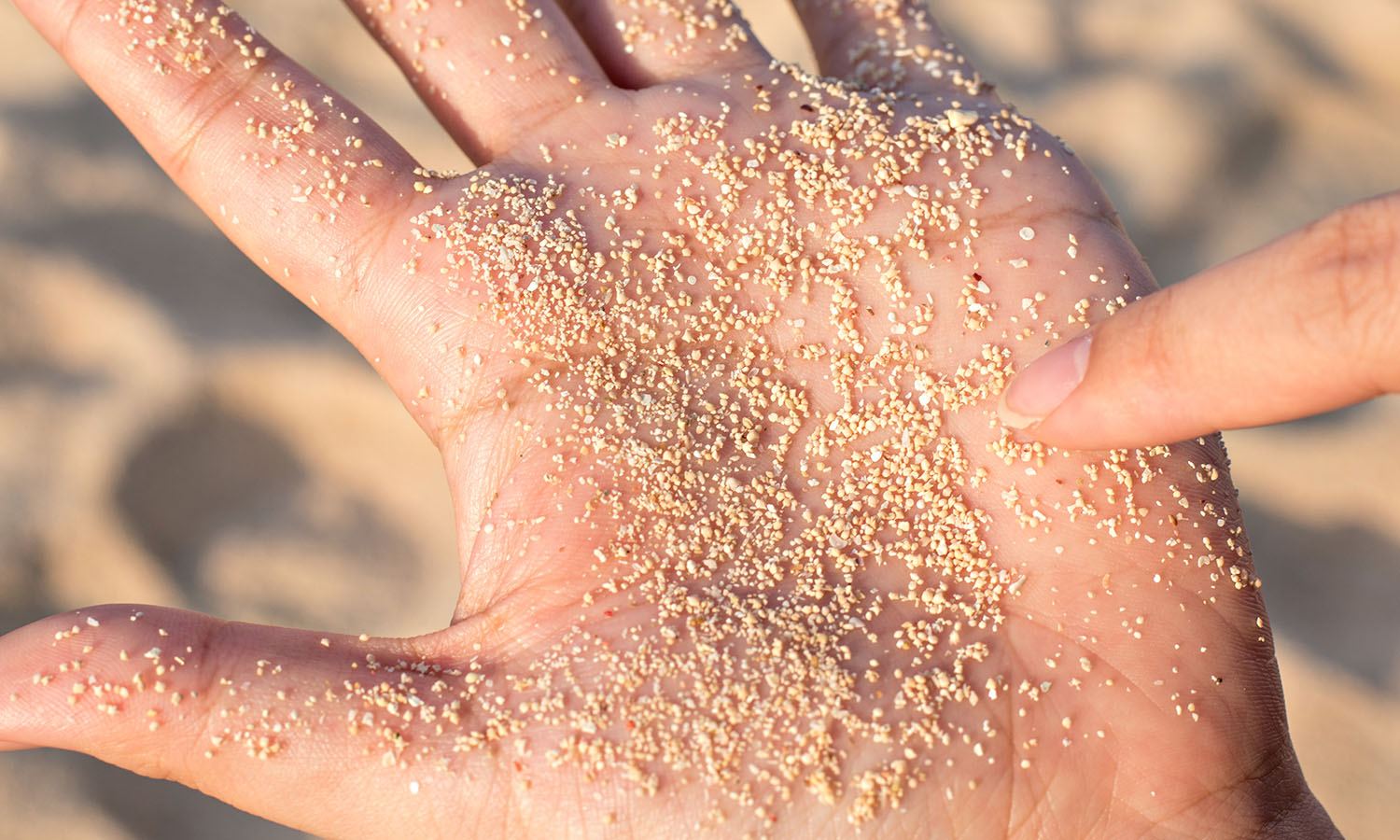
The rest of the day is reserved for the beach – specifically Hoshizuna Beach. Known in English as Star Sand Beach, Hoshizuna is stunning – the norm for Okinawa’s numerous stretches of sand – but it also has something a little more unique that’s right under my feet. I zoom in on the small granules of sand that dust the shoreline to find tiny star-shaped grains. They’re not even sand at all, but the dead microscopic, unicellular protists known as foraminifera. These organisms live in sea grass. When they die, their exoskeleton washes up on the shore and mixes with the grains of regular sand. It’s the perfect camouflage to the unsuspecting eye.
As the dipping sun starts to paint the skyline a vibrant blend of purple and orange, Star Sand Beach is the perfect place to finish the day. It’s also the perfect analogy for visiting Okinawa and, on a broader level, travelling Japan. While we think we may know a place, until we take the time to look a little deeper we won’t discover it for what it genuinely is.
This story is sponsored by JNTO (Japan National Tourism Organization).
For an island that’s only 1.5 metres above sea level and has a perimeter of two kilometres, Yubu has a lot going for it. Sitting just 500 metres from the eastern coast of Iriomote Island in Okinawa, Yubu formed when sand flowing from Iriomote’s Yonara River and picked up by the sea’s current settled here. Its lush landscape is home to a subtropical botanical garden, butterfly house, cafe and incredible ocean views. But the most memorable part of a visit to Yubu is the ride there.
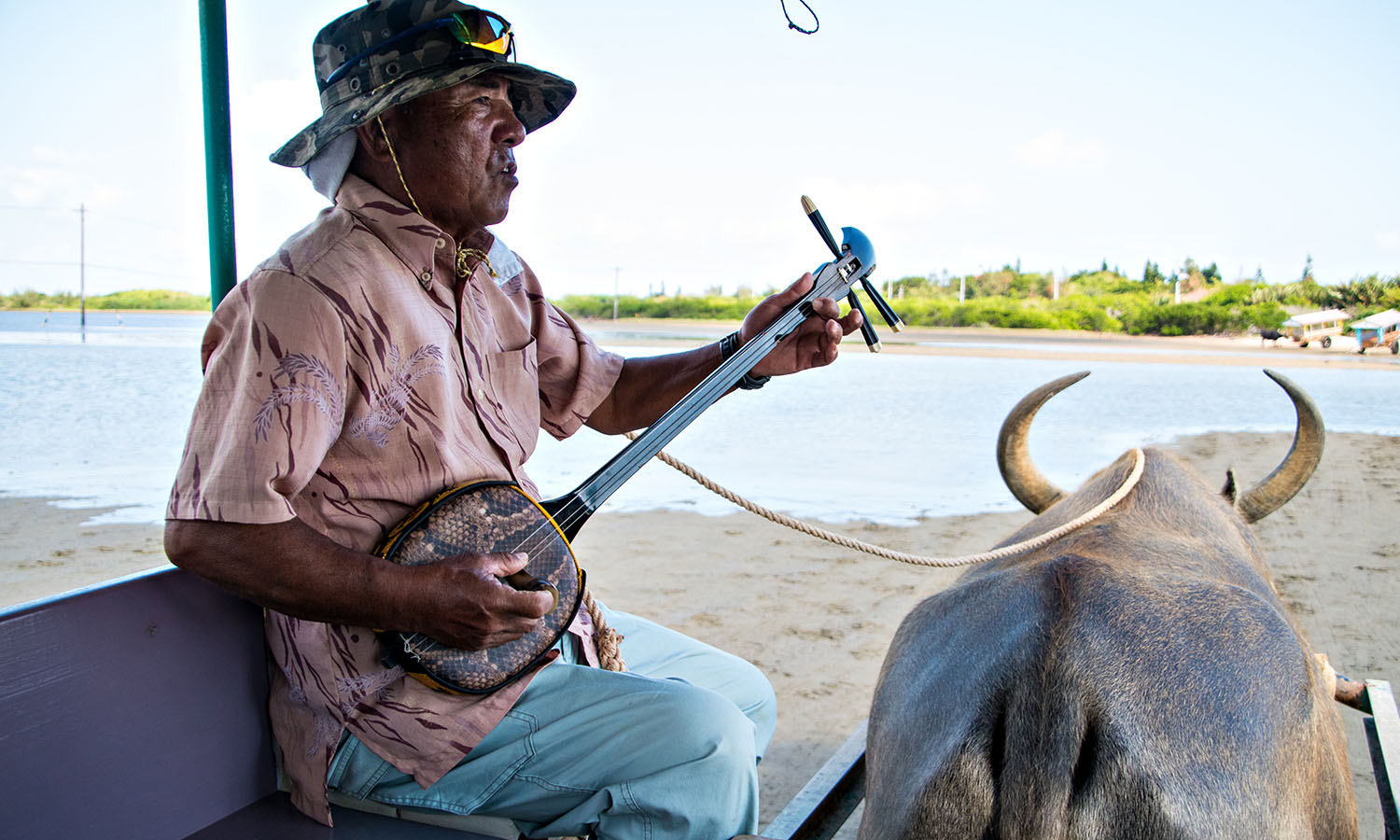
To access Yubu, you’ll have to hop aboard a cart, which is then pulled through the water – it never gets any deeper than an adult’s knees – by a buffalo. The journey takes 15 to 20 minutes – the timing is greatly dependent on the temperament of the ox – and features a performance by the cart driver on the sanshin, a traditional Okinawan stringed instrument.
The buffaloes and their drivers share a bond, as they’re paired up for the entirety of their careers. This is the perfect way to witness man and animal working together, making the experience all that more special.
Want to know more about what to do while you’re in Okinawa? Check out the feature stories on Okinawa’s wild side and the Yaeyama Islands.
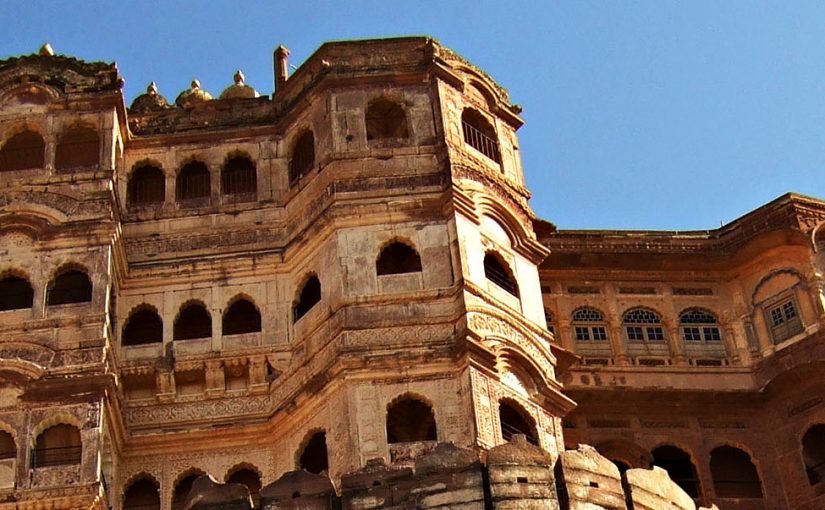
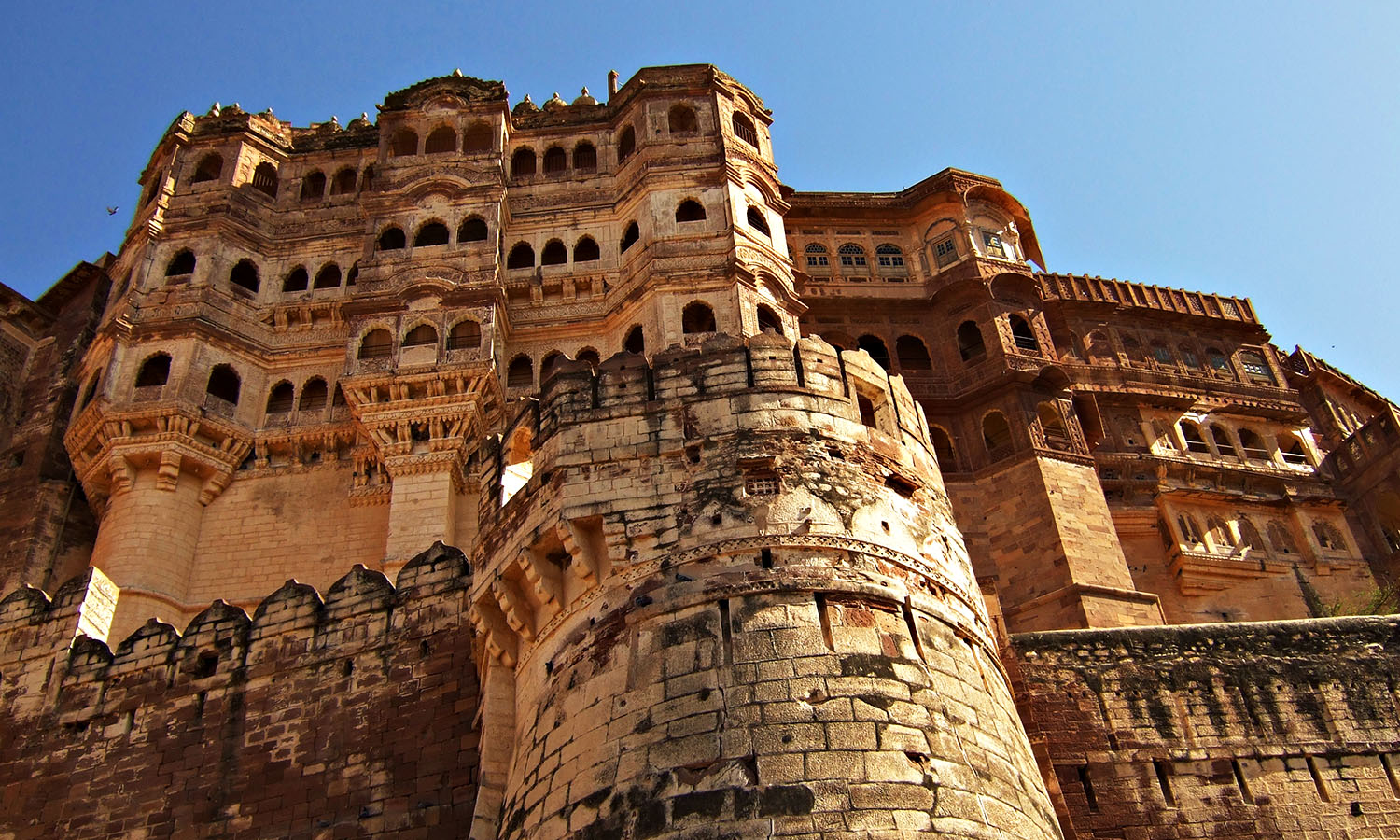
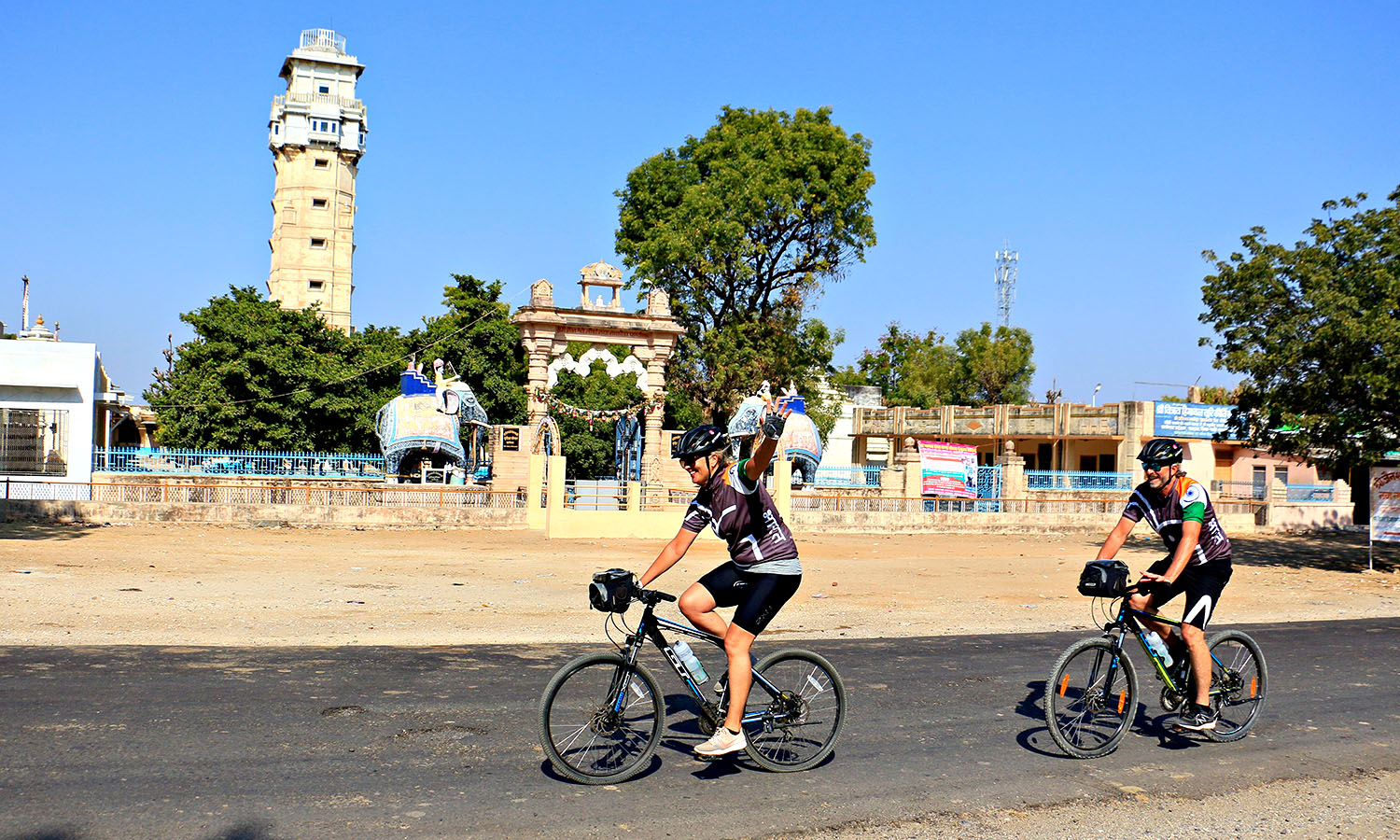
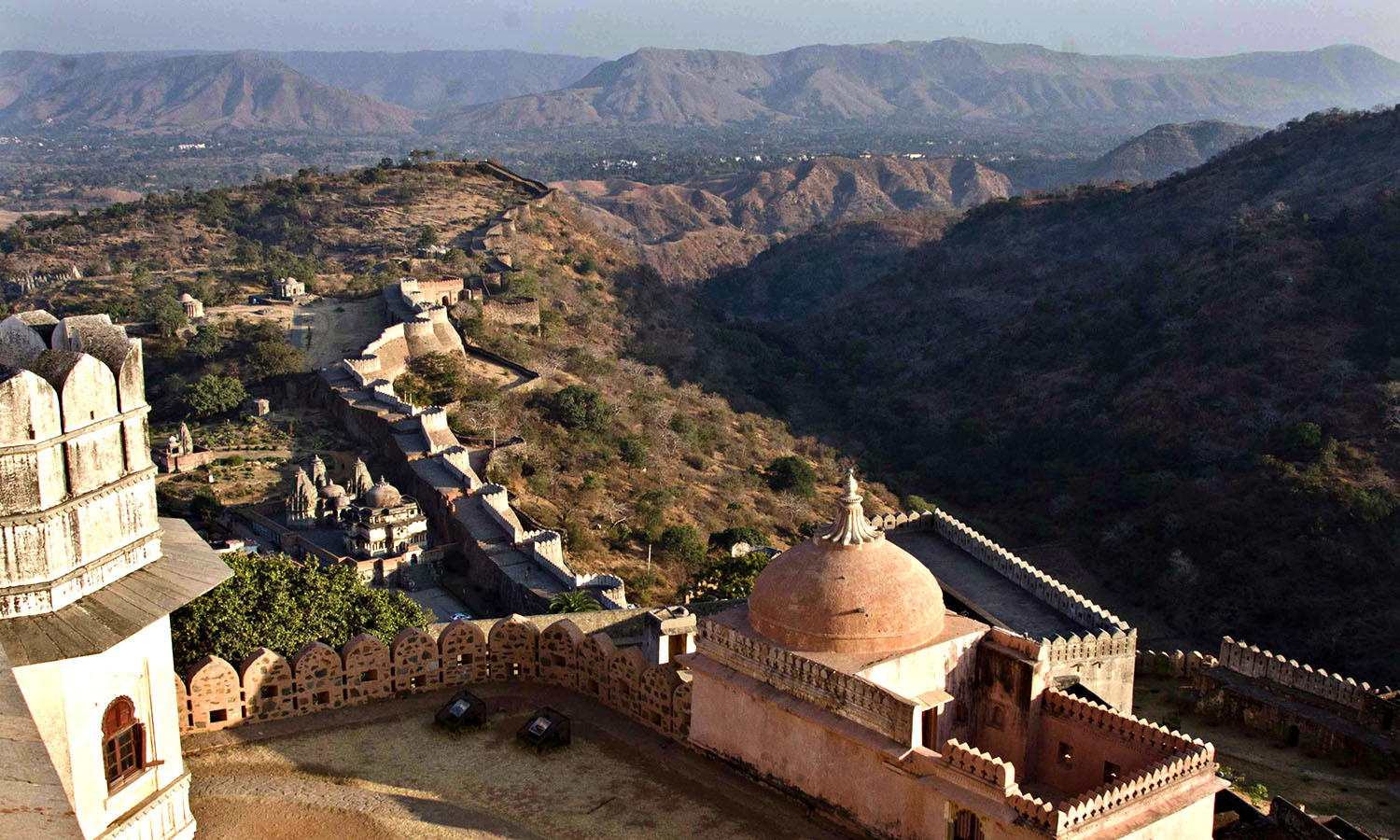
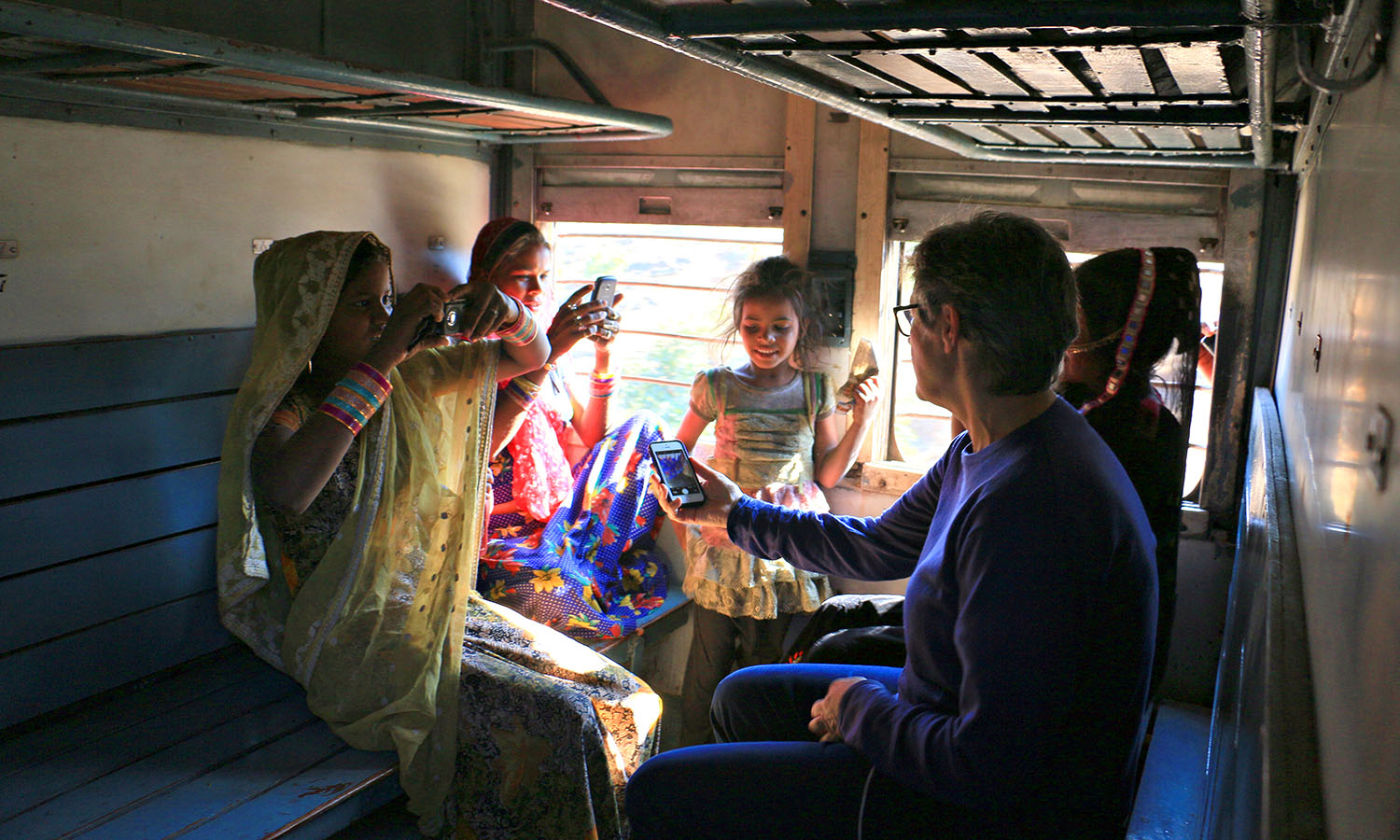
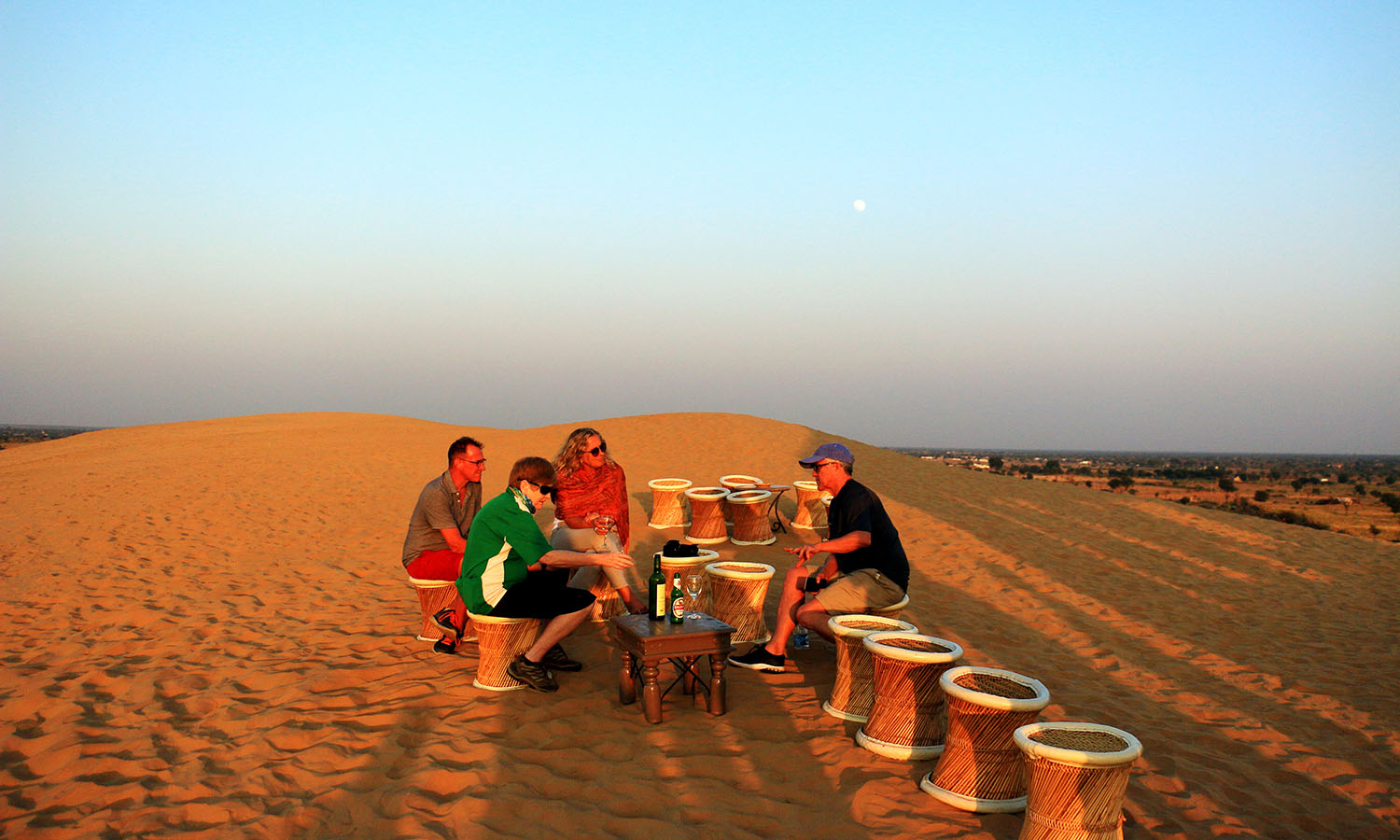
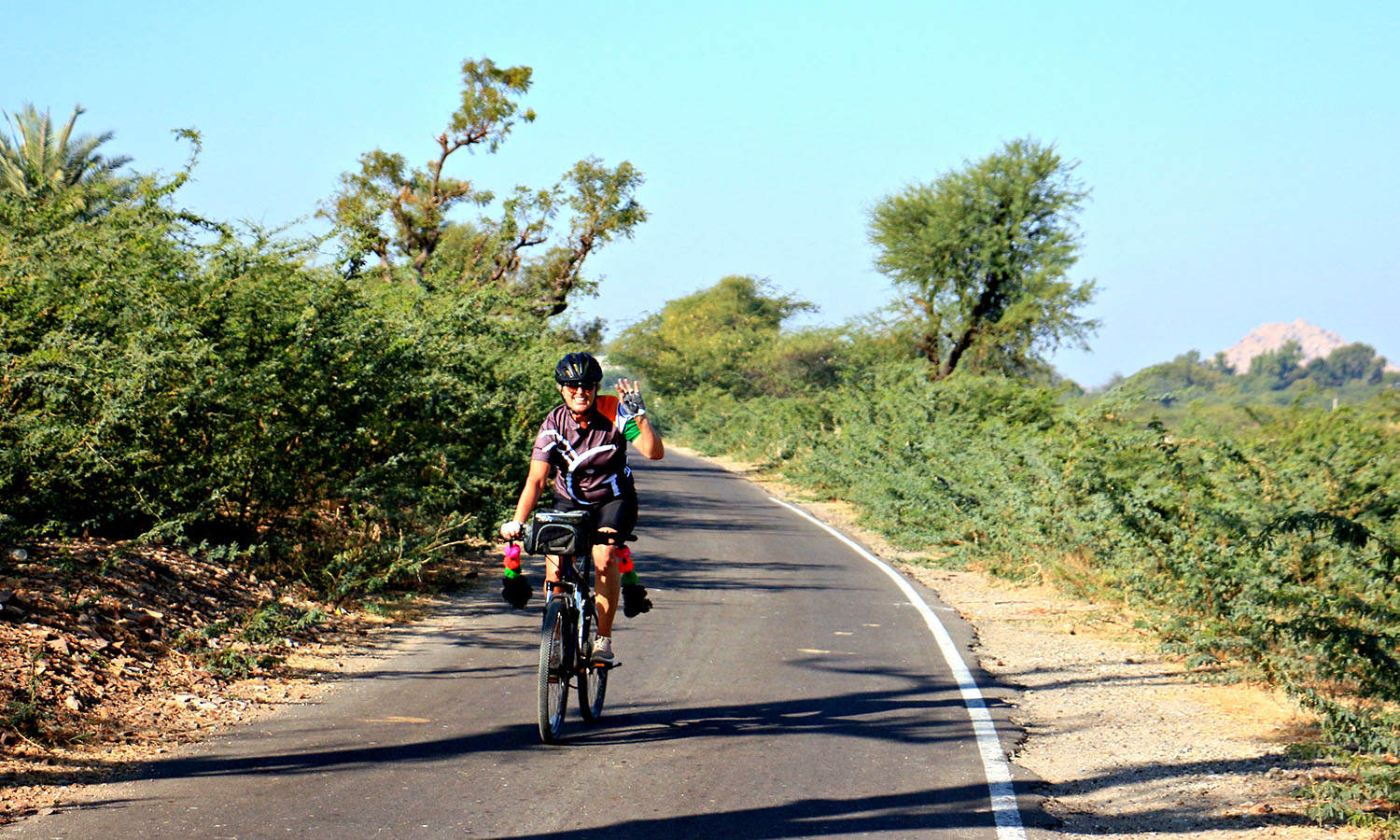
Start stretching and warming up because this Grasshopper Adventures cycling tour through India’s largest state, Rajasthan, will require some serious pedal power. You’ll kick things off in Jodhpur with a leisurely two-wheel cruise through the Blue City and a tour of the ancient Mehrangarh Fort, before riding onwards to the likes of Rohat, Jojawar, Ranakpur and Udaipur. Grand palaces, ancient forts, remote villages and bustling spice markets will make keeping your eyes on the road a tough ask, as will the Rajasthan landscape as it evolves from desert and farmland to lush valleys and wooded forests.
While the back roads of rural Rajasthan are mostly flat with little traffic, there are a few days of hill riding that should get your heart pumping. We hear the views are worth it though.
People had questions, but it was difficult to work out where they were coming from. How big are the boats?! asked one friend in a comment beneath a photograph of the festival grounds on Instagram. “Not that big,” I replied after trying to work out what he meant. “Big enough for 10 or so people.
So how do they get the elephants on the boat? Then it struck me. When you talk about elephant boats to people who aren’t in the know, their minds go to literal elephants on actual boats.
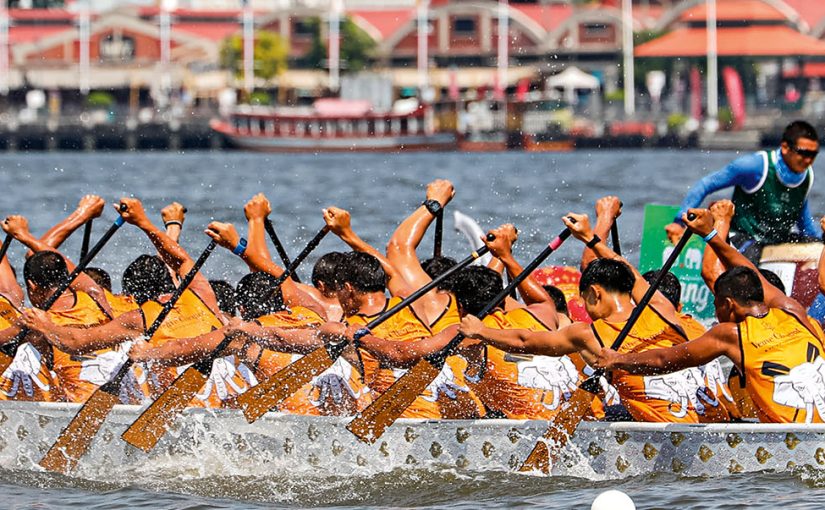
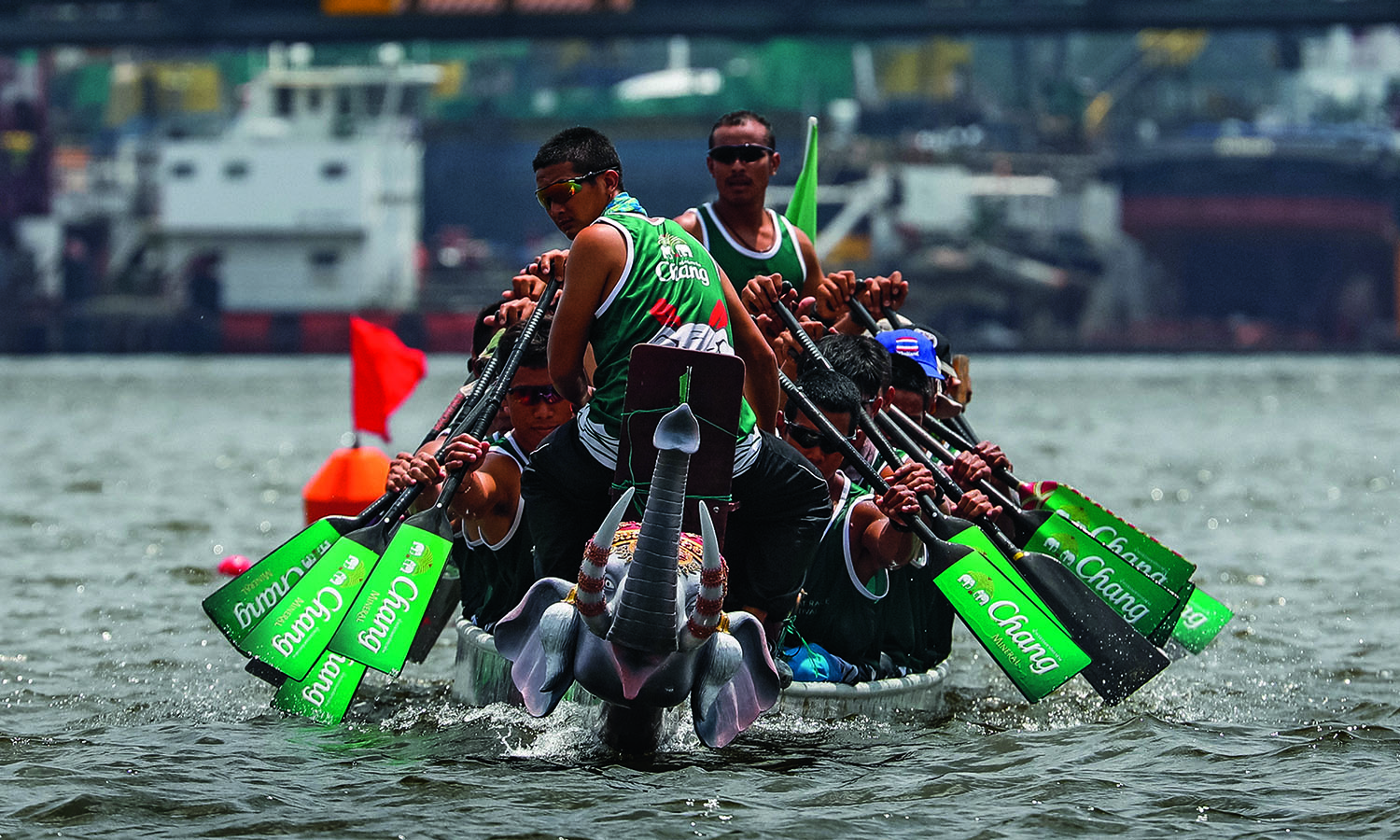
“There are no elephants involved,” I send back. “They’re like dragon boats, but decorated with elephants instead.” Until this point it had never occurred to me someone would think the inaugural King’s Cup Elephant Boat Race & River Festival would involve scenes that could have been plucked straight from the pages of a revised edition of Horton Hears A Who!. Although a surprise elly being rowed down the Chao Phraya River would certainly have attracted a crowd.
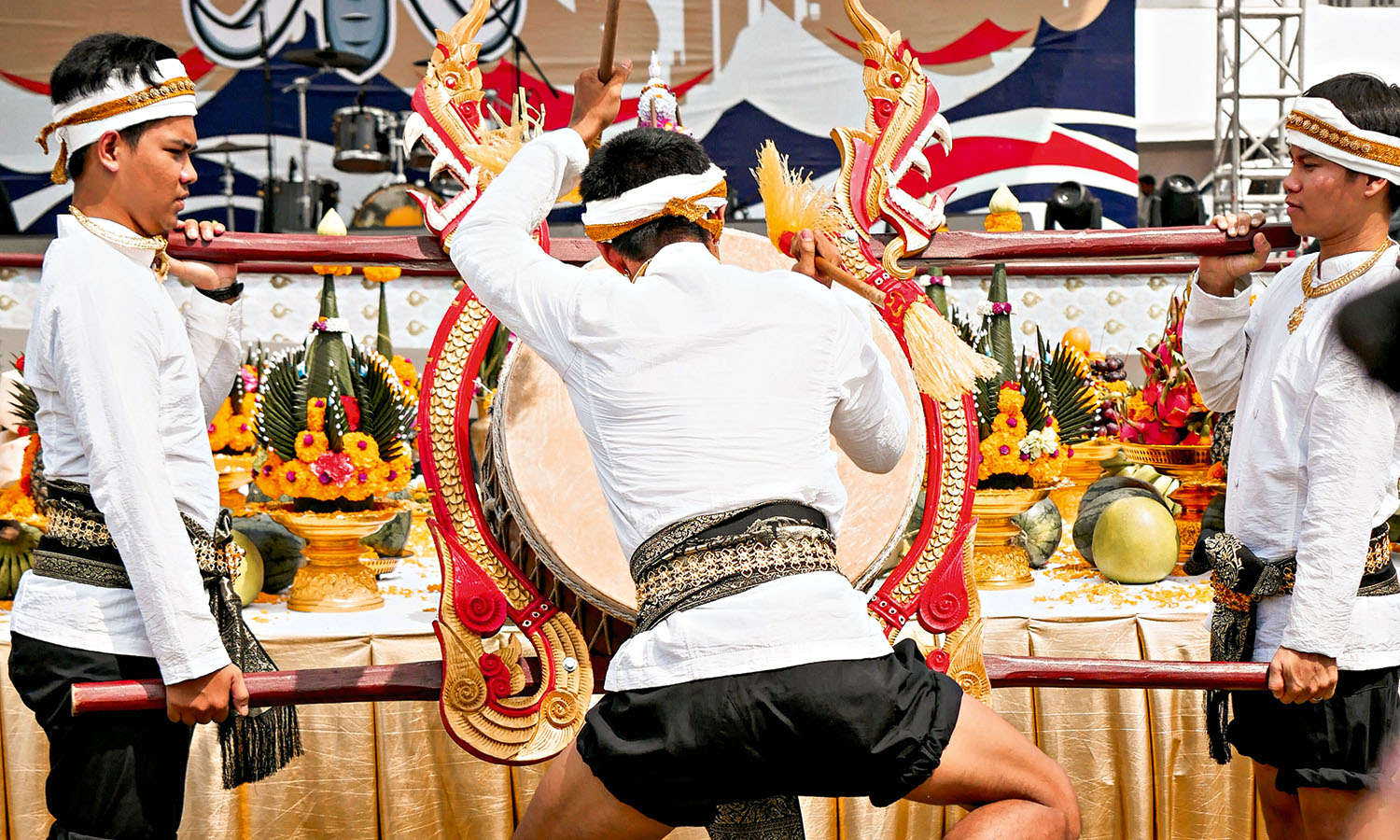
Not that there isn’t one here already. On the banks of Bangkok’s famous river, people are gathering for the opening ceremony. There are tables piled high with fruit and flowers, and a spiritual blessing is offered. Dancers twirl and pivot, and men beat out a rhythm on their traditional drum and gong. Kathy Heinecke, wife of Minor Hotel Group’s founder Bill, welcomes the guests and hangs a floral garland around the neck of one of the elephant boats. By the time the ceremony is over the heat of the sun is beginning to take its toll, and everyone rushes to take cover beneath the marquees where smartly dressed barkeeps are serving up all manner of thirst-quenching beverages, including cocktails created using the local golden spirit, Mekhong.
It’s the first of three days of racing to crown Thailand’s best and fastest on water. There are 12 teams competing, with athletes from Thailand, China and the Philippines rowing in the name of some of the event’s sponsors. It’s obvious right from the start of proceedings, however, that the crowd favourite is the team from the Royal Thai Navy Seals. What they say about men in uniforms holds true regardless of what part of the world you’re in.
The River Festival and boat racing is the replacement charity event for the King’s Cup Elephant Polo, which, for 16 years, raised funds to help rescue elephants who had once worked in the logging industry, as well as supporting a range of other elephant-focused causes.
The use of beasts of burden in Thailand’s timber industry was banned in 1989 and, since then, these huge creatures and their owners have been forced into cities, where the elephants beg for food and tourists pay a few baht to have photos taken with them. It is a bleak and depressing existence – their only way to survive outside this system is to be rescued and taken to a sanctuary.
Like the one we’d visited just a few days before, in the hills outside Chiang Rai on Thailand’s border with Laos and Myanmar. At the Anantara Golden Triangle Elephant Camp, 25 elephants now live peaceful lives, feasting on organic grass, sugar cane and bananas.
They also spend time out on the river flats, plucking the leaves from trees, scratching their butts on stumps and splashing about in the Ruak River, while tourists watch their every move and take photos.
“It costs about AU$26,000 a year to care for each elephant,” says Ou, the camp manager. “And that doesn’t include wages for the mahout, schooling for his children and other expenses.” Expenses that the Golden Triangle Asian Elephant Foundation (GTAEF) contributes.
While wide-eyed guests offset some of that cost – there are a number of programs on offer, including Walking With Giants, the Elephant Learning Experience, and Dining by Design at the Elephant Camp – there is still a shortfall. Plus, there are other projects to fund. As well as rescuing and improving conditions for captive elephants, the GTAEF has a number of programs that bring children who are autistic or under-privileged together with the gentle giants, support community enterprises, and protect the small populations of wild elephants still found in Thailand and Cambodia. None of it comes cheap.
Which delivers us firmly back riverside. There are a number of other events being held around the grounds. Teams of international rowers are taking part in the Asia Cup Indoor Rowing Tournament in a marquee at the back. There’s an exhibition of vintage cars near tables of prizes being sold in a silent charity auction. Kids are fishing rubber ducks from a pool of water in the hopes of winning a prize, while a dubious-looking clown (look, I’m not sure but suspect he is at least related to Pennywise) is encouraging others to pitch water balloons to come away with a stuffed bunny.
But, apart from general socialising and wandering between the food tents trying to decide what tasty morsels to snack on, the focus here is most definitely on the water. The race announcers give the crowd a general 10-minute warning before the next group of four teams is about to hit the water. Initially, a few people flock to get front position; most hold off until the paddlers are almost ready to row so as not to have to stand in the sun for too long. (This definitely becomes a recurring theme as the weekend goes on.)
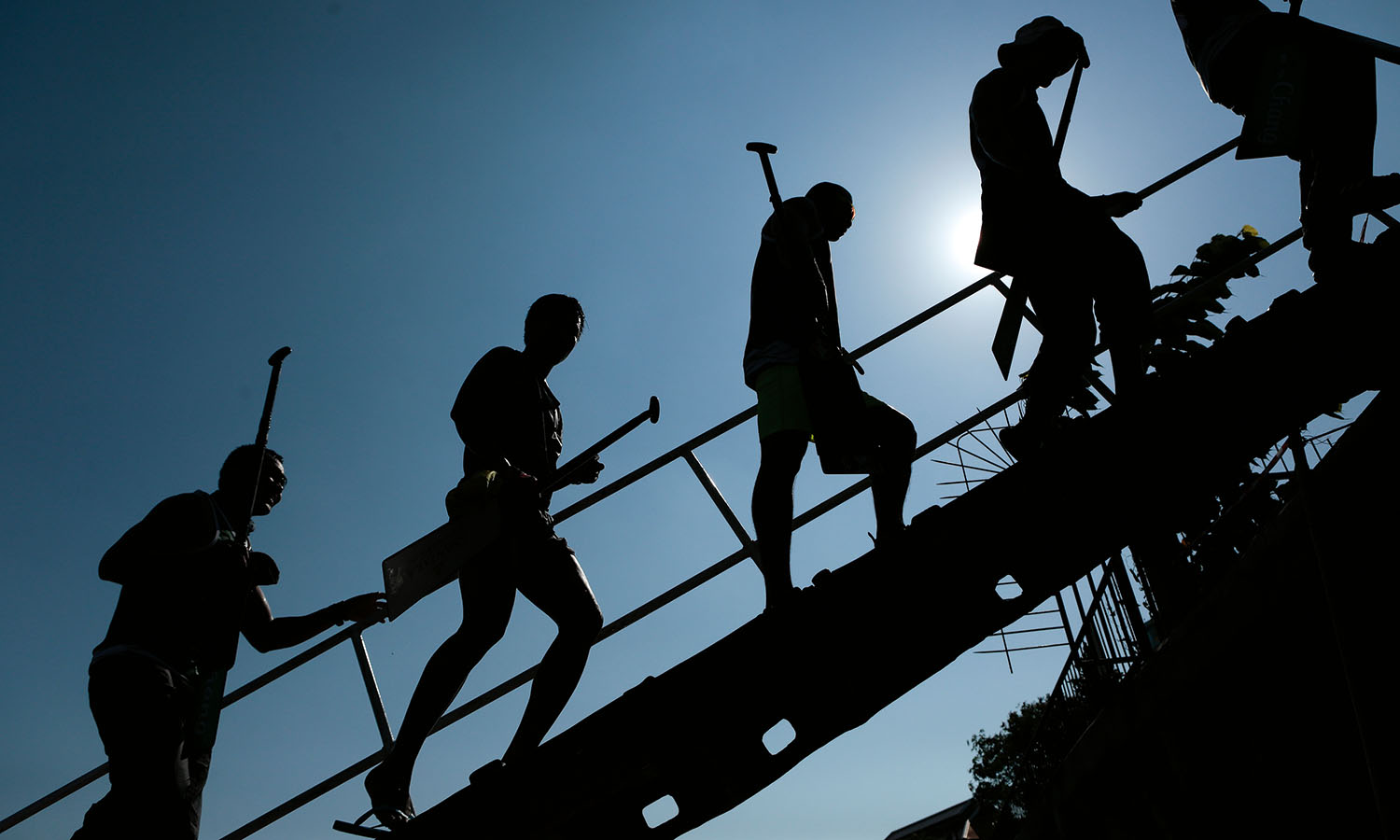
You don’t want to wait too long, however. The races are held over 200 metres with four teams competing against one another. In each boat, beautifully decorated with a painted elephant’s head and a fish tail, 20 blokes paddle for their lives, one hangs out at the back on the tiller keeping them going in a straight line, and one sits at the front, facing the rowers and beating out a rhythm on a traditional drum. The starting gun goes off, the commentators begin yelling, the crowd cheers as one, there’s a flurry of splashing and, less than a minute later, it’s all over. Well, for the moment anyway. A round-robin batch of heats will determine the finalists.
Between races, party people stroll around and observe the other happenings. There’s a best-dressed competition with women wrapped in exotic silks and draped in jewels. “She could win that,” stage whispers a woman to her friend as the two finalists are announced – one of them is a young woman barely in her teens. She is, in fact, named the winner and Bill Heinecke presents her with the prize: a luxury stay at Anantara’s divine Maldives properties. Mostly they jockey for position at the bar, where Chang beer and chilled Chilean chardonnay flows liberally.
On the last day, it comes down to four teams from the Institute of Physical Education, the central province of Nonthaburi, the Royal Thai Navy and the Royal Thai Navy Seals. Before the start of the final there is just four seconds separating the teams’ best times. A minute later, it’s all over. Crowd favourites the Seals paddle their way to victory, claiming the glory and the cup. As the sun dips in the sky and the teams wander away, the stage is lit up one last time. Some of Thailand’s best pop performers are here to send off the crowd in style.
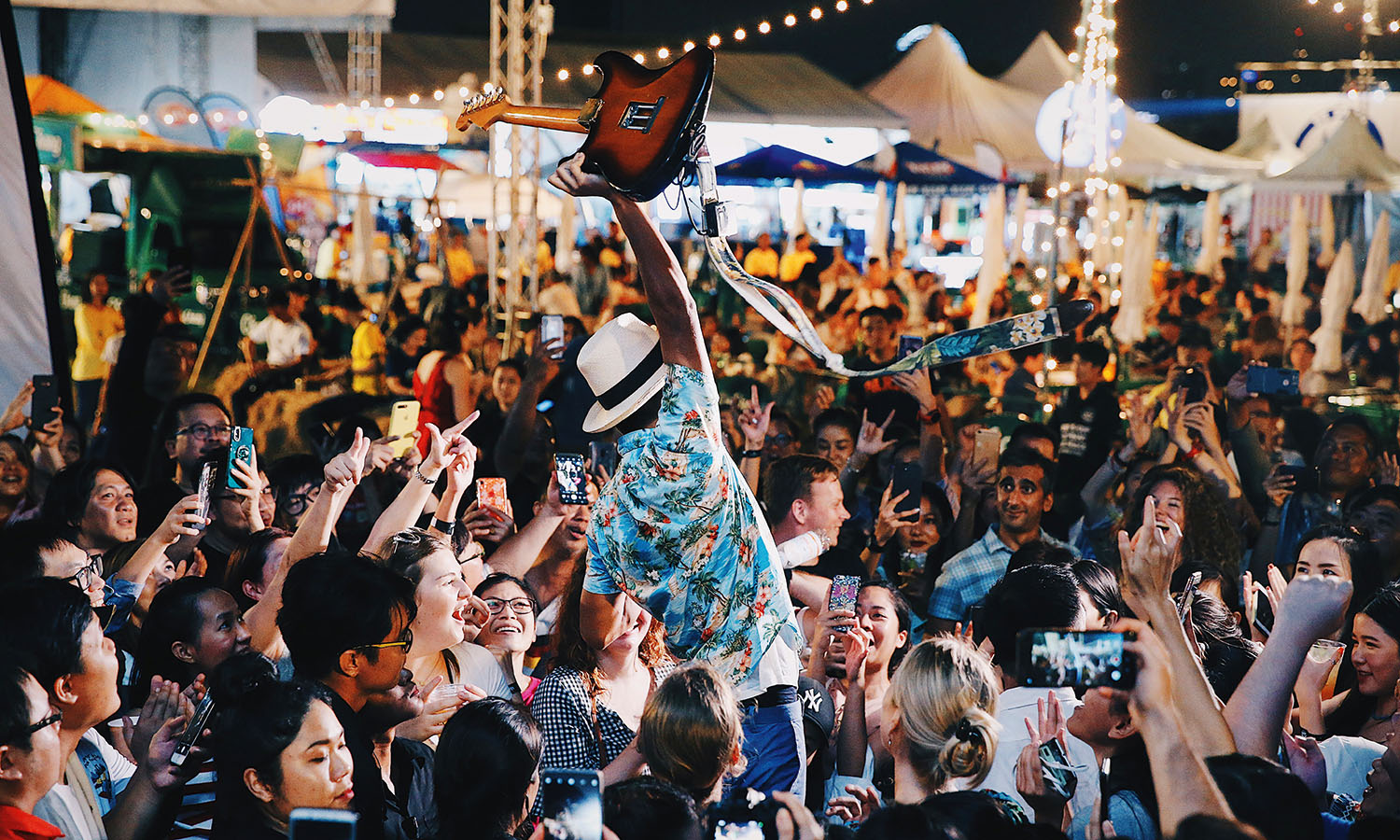
Singto Numchok gets the crowd going with his local hits then invites a woman from the crowd on to the stage. He hands her the mike and begins strumming Ed Sheeran’s ‘Thinking Out Loud’. She appears to be horrified and thrilled all at once. No high notes are hit, but the crowd goes suitably wild.
As we’re leaving the grounds late that night, people are still boogie-ing in front of the stage. Out the front of Anantara’s sales marquee, a man has fallen asleep on a banana lounge, a bottle of water fiercely gripped in one hand. Like everyone else here, he’s had a weekend to remember. Or maybe not.
The heavy-laden alpine trees creak and crack before their dead, brittle branches give way and thud into freshly fallen snow. The wallop echoes through the trees, slicing the silence in Japan’s Aokigahara Forest. I sense someone is there, but when I turn it’s just me and my guide, Také, who’s standing next to me like a protective beacon in his fluorescent orange jacket. He seems to realise something I don’t; a knowing expression is pinching the corners of his mouth. Again I jump when more snow dumps from the trees, dusting our beanies in a layer of powder-white flakes. Still, there’s an indescribable darkness.
Také tells me Mt Fuji’s Aokigahara forest, in Yamanashi Prefecture, is also known in Japan as the Suicide Forest. People suffering with mental illness make the journey, knowing it’s unlikely they’ll be found in the thick forest. Their Buddhist beliefs tell them they’ll be reincarnated. There are even signs along the pathways. “Your life is a precious gift from your parents,” states one. “Please reconsider.” I note the first three letters of the forest’s name – AOK – and wonder if it’s a coincidence.
I’m here in April with Wendy Wu Tours on the company’s Trails of Japan dossier. At this time of year it’s almost unheard of to have snow. In the forest there is no background din, only the crunch of compacting snow under foot as we round each bend and come across fresh, untrodden trails. Also dubbed the Sea of Trees, the dense forest is as eerie as it is magical, and the afternoon passes in a reflective mindfulness at being able to enjoy the crisp, energising mountain air.
It’s been a day of firsts, including trekking the base of Mt Fuji and sitting cross-legged on soft plump pillows at a ryokan for a kaiseki feast. Each of the delicately sliced beef, raw seafood and julienne-style vegetable dishes is so artistically designed it looks too good to eat. And the dishes keep coming at the hands of demure, kimono-clad waitresses until I can’t possibly eat any more. At night, I feel as though I’m camping inside as I bed down and drift off on a softly stuffed futon placed on a tatami mat floor.
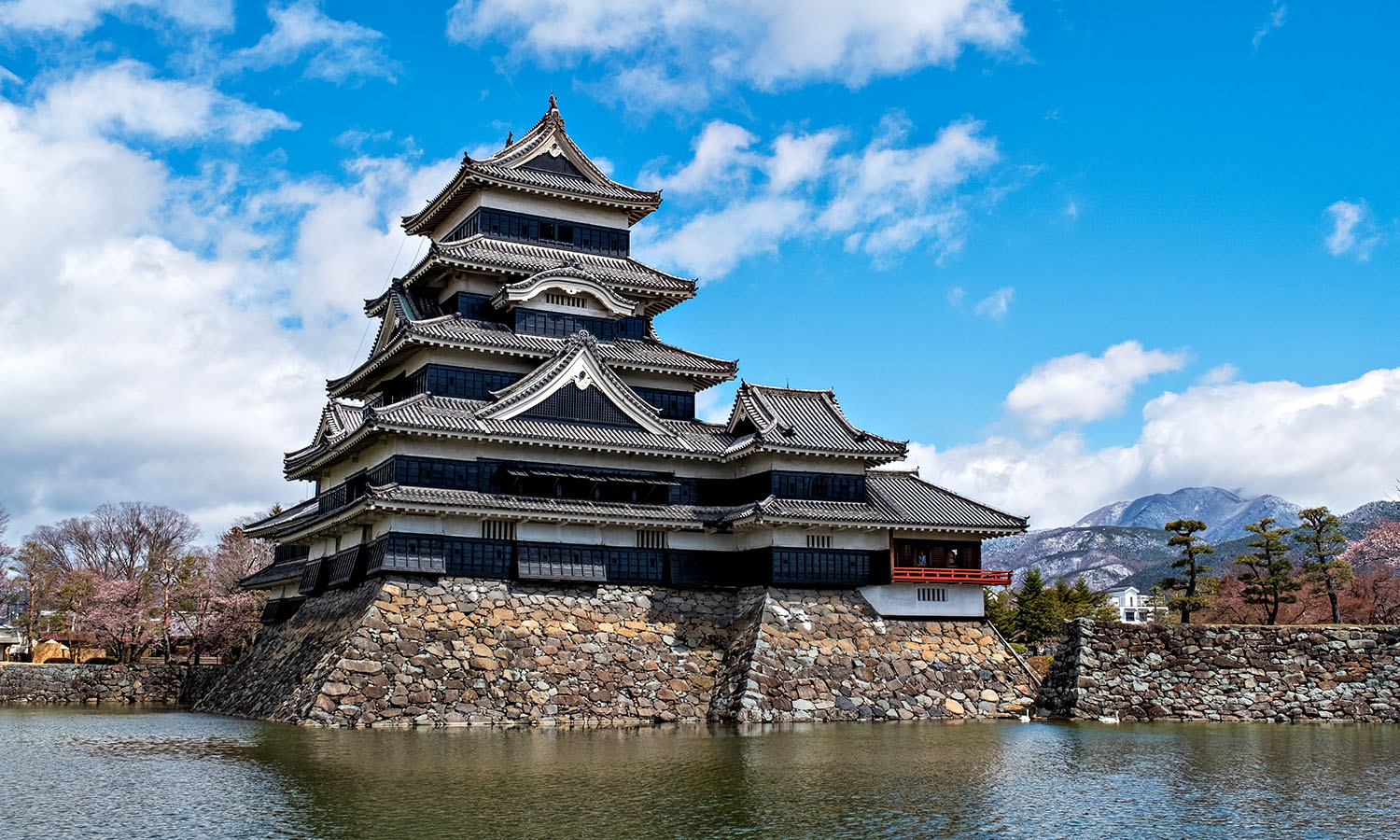
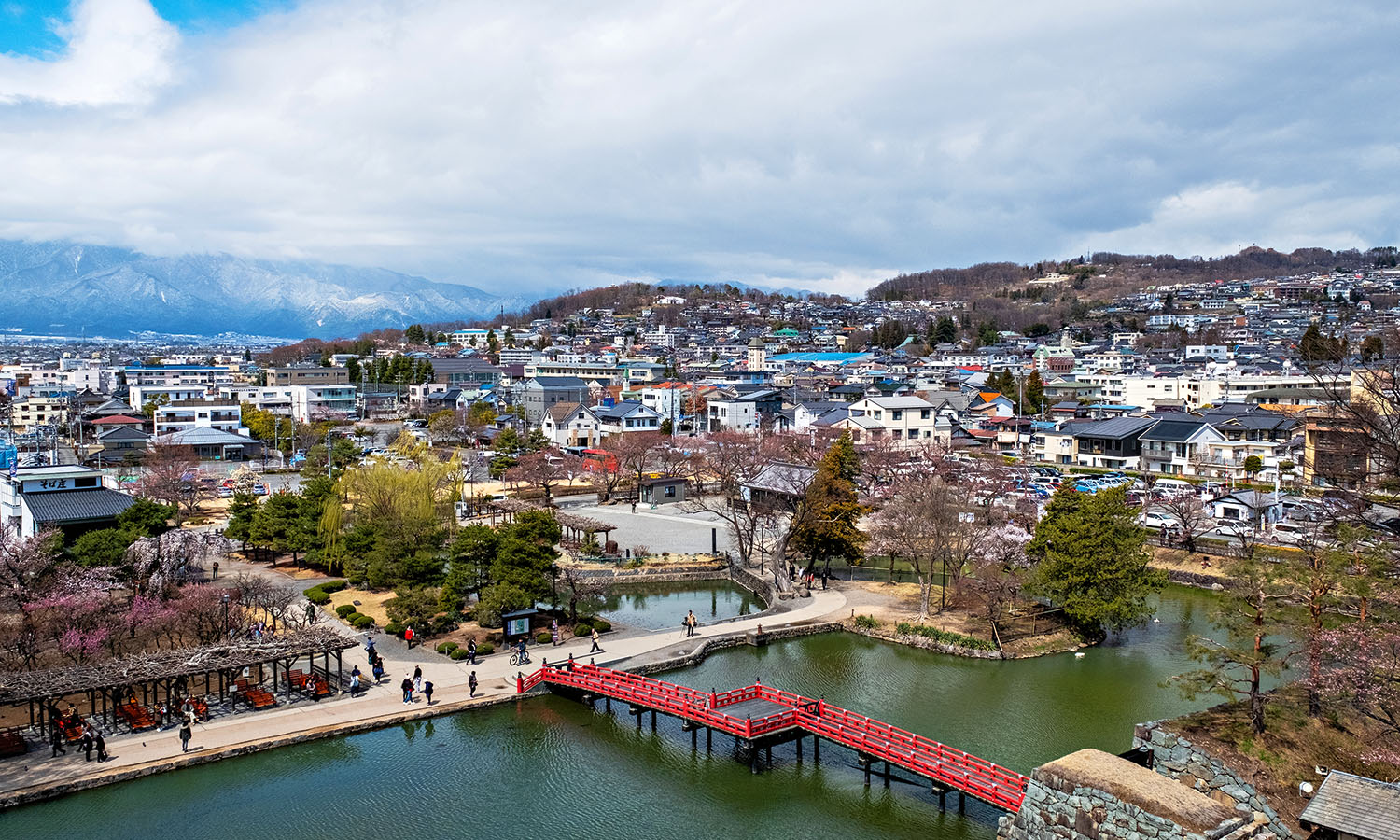
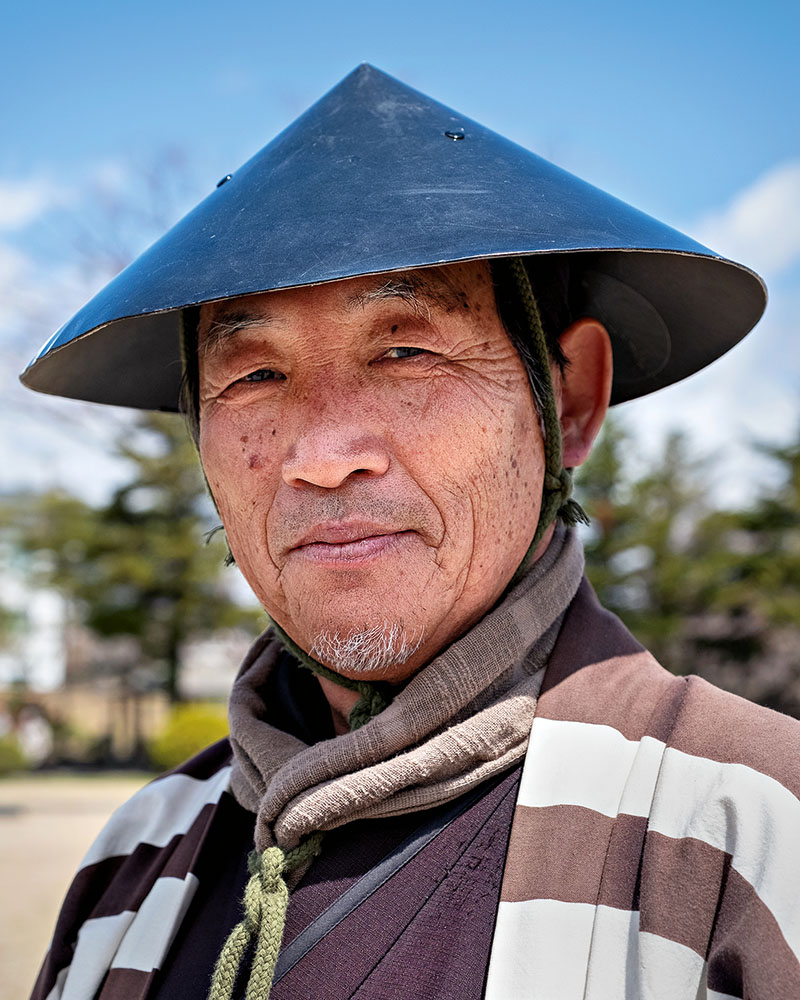
At dawn, a misty Mt Minobu tempts me to walk through its tiny deserted village before heading to one of Japan’s most famous castles. I stroll past vending machines stocked with hot beverages and closed cafes displaying their menus by way of sampuru (plastic food models) in outdoor cabinets. It’s a complete contrast to entering the foreboding and busy interior of Matsumoto Castle two hours later. Also nicknamed the Crow Castle because of its black six-storey exterior, the structure – dating back to 1594 – is now a national treasure. It’s easy to understand why. This magnificent fortress exudes power and is spectacular against the snow-capped Japanese Alps. I clamber up narrow steep staircases to reach the sixth floor and learn the castle was painted black to instil fear among the enemy. Lookouts are positioned on each compass point, allowing a bird’s-eye view of the castle’s extensive grounds and blossoming cherry trees. In the distance, a labyrinth of ancient thin streets is juxtaposed with the manicured castle grounds.
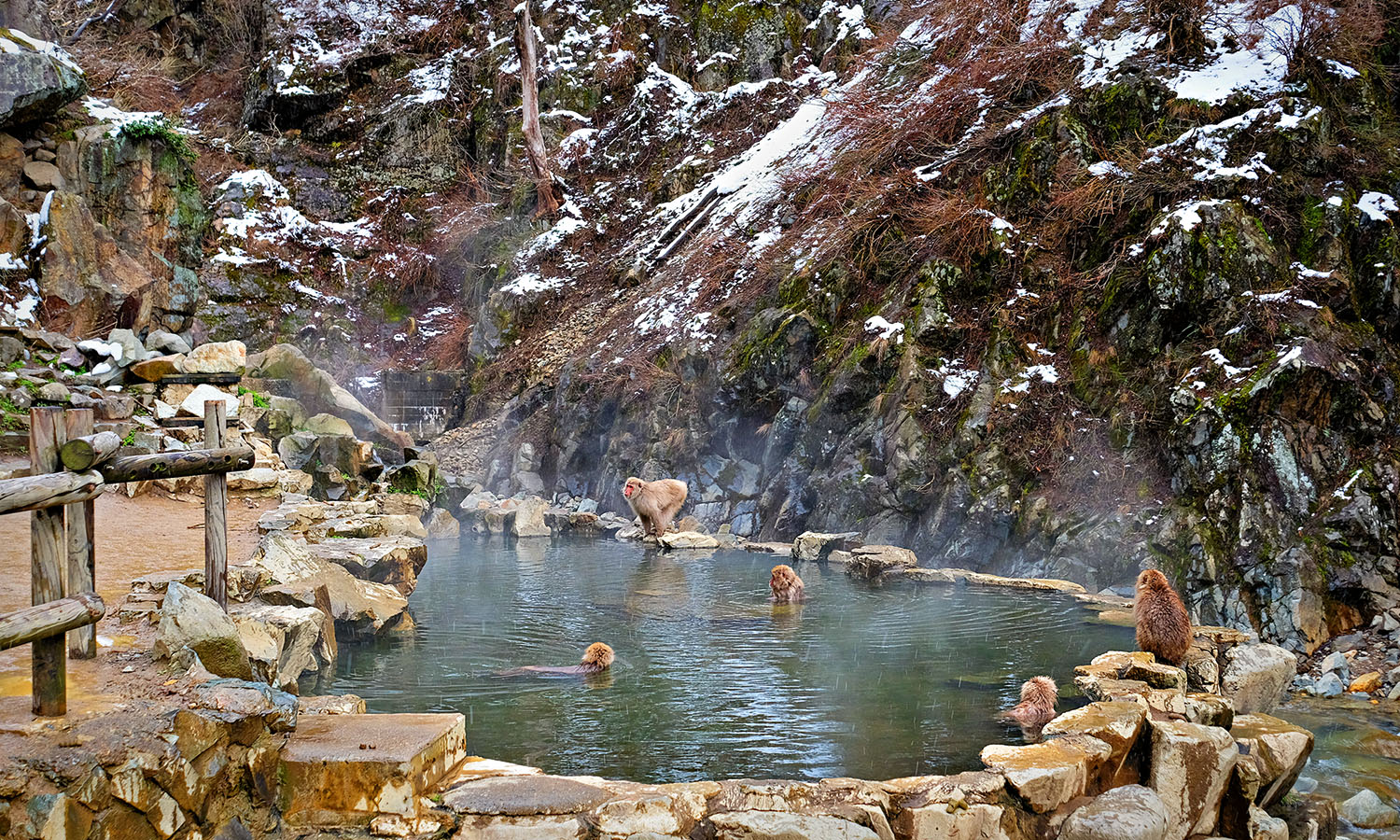
Také is all smiles as we leave the flatlands of the castle behind and head towards Nagano, the main gateway to the Japanese Alps. It seems he’s been communicating with the weather gods as it’s snowing in Jigokudani Park, home to the Japanese macaques – aka the snow monkeys. The park is the only known place in the world where monkeys bathe in natural hot springs. When I’d checked the weather before travelling to Japan, sun symbols dominated the charts. I’d had visions of the macaques sunbathing and running amok in spring temperatures. I mutter a ‘let there be falling snow’ mantra, feeling like a wanting child praying their to-die-for present is under the Christmas tree.
Blue skies peel away and the terrain transforms as we hug rising switchback roads to reach the colossal jagged mountains of Hakuba.
We arrive in Yokoyu River Valley, 850 metres above sea level, to gently falling snow. Sudden bursts of steam shoot from the harsh craggy cliffs as we half run along slender paths, overly excited to see the monkeys in their natural environment.
When we finally see them, a family of macaques is huddled in the hot spring, grooming one another as snow falls around them and melts on the steamy surface. Their red faces peek out, exposed to the cold, as the dominant male scans the mountains for gatecrashers from lower ranking groups. I learn females stay in their family group, while males seek out other packs before they sexually mature. In many respects, their social system is like ours. Také tells me outsiders who come down from the mountains are often pushed out by the main gang or the boss of the pack. The head honcho protects his females, which in return bodes well for him during mating season.
It would be easy to watch their playful antics until dusk, but two hours pass quickly and it’s time to leave the monkeys soaking in the warmth. Having ticked off a wish-list experience, I stroll down through the park and wonder why Jigokudani is also known as Hell Valley when, above, celestial snow-tipped pine trees glow like giant candles.
As dusk edges day’s end, the sun’s fading rays pierce low-lying clouds, casting a sliver of golden light across the Alps. I feel like a snow monkey that night as I bare all to immerse myself in an onsen and enjoy one of Japan’s most popular pastimes. The mineral-infused water soon takes away any inhibitions as I slip into deep relaxation. Then a group of middle-aged Japanese women surrounds me, checking me out. “Where you from?” one asks. I tell them Australia. “Oh, Ooorstraaylia,” they repeat, nodding and laughing. “How old you?” I answer, and again they find this funny. I feel like one of those snow monkey outsiders coming down the mountain, but the humorous pidgin English continues for the next 30 minutes, with us sharing details about our ages and health regimens. Being naked grants a sense of freedom that clothes seem to inhibit.
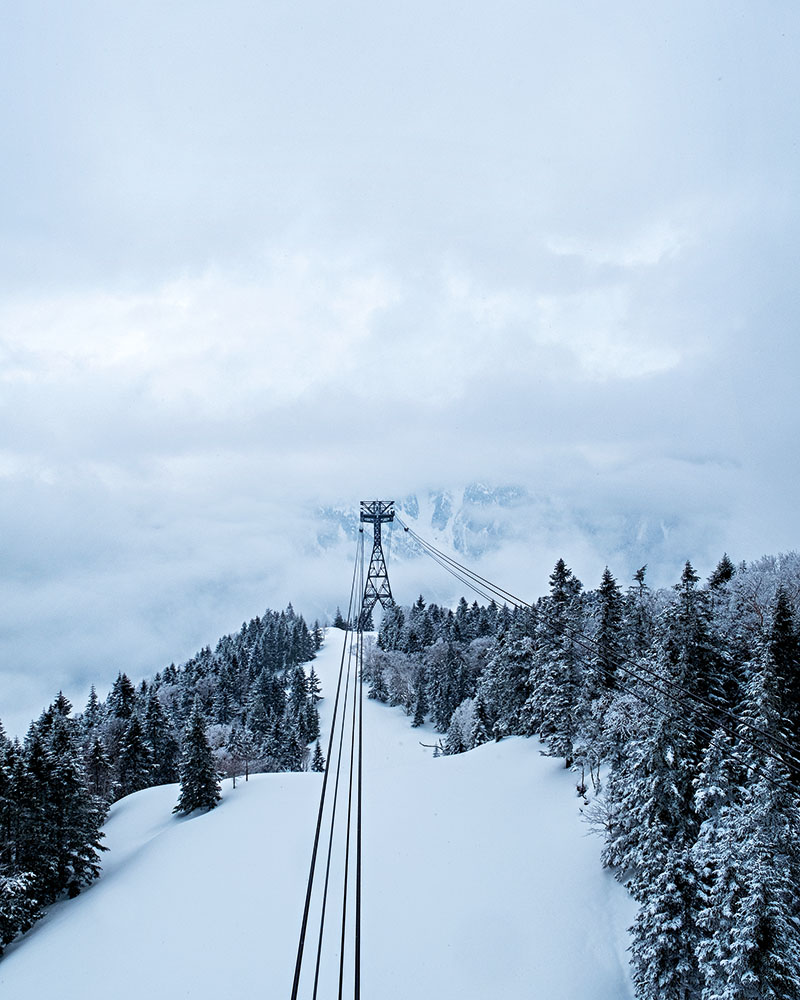
“This is the lucky, unexpected tour,” Také announces the next morning as we head to the peaks of Mt Hotaka, Japan’s third-largest mountain, to ride the Shin-Hotaka Ropeway. With an elevation of 1,000 metres, it’s the highest and longest cable car in Japan. “Unexpected snow, late-blossoming cherry trees, and now a two-metre snow drift on top of the Alps,” Také continues as we board, clearly excited. “In seven years I’ve never seen this.”
A sudden jolt signifies our double-decker gondola has begun its 200-metre ascent on the first climb up the Alps’ northern side. Within seconds we’re gliding on a single cable ropeway, skimming treetops to reach the first landing. Keen to get to the summit, no one stops at the midway-point art gallery and gift shop, instead heading straight to the second departure platform. The gondola spasms into motion as we begin the steep 800-metre climb to the upper station. Although not one to normally worry about heights, my heart thumps in my chest a few times as we jerk precariously and rise rapidly on a steep gradient. With the operator back at the embarkation point, it feels as though we’re flying in a bus without a driver.
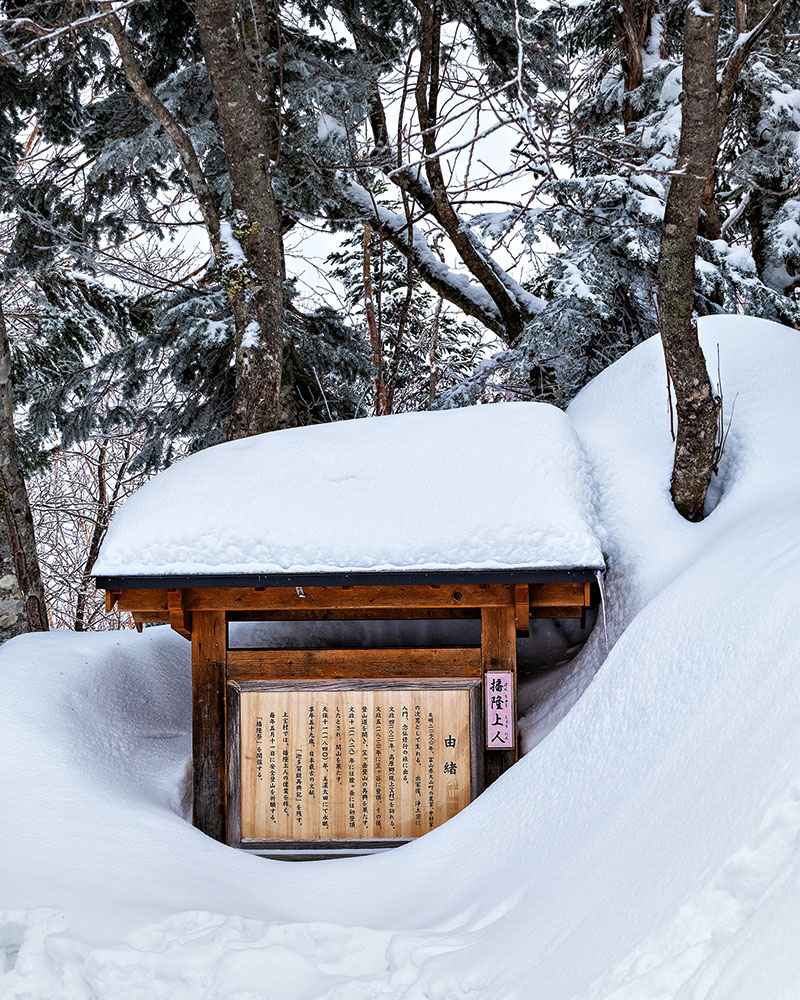
At 2,156 metres I step out to look across a dazzling valley of snow-drenched pine trees. I feel as though I’m a small child again. I want to dive into the snow, make snow angels and build a snowman with a carrot nose and a hat. I marvel at nature’s ability to take the breath away – and not just because the temperature is –6°C. I walk down a path cut into snowdrifts taller than me and unexpectedly find a Buddhist shrine. It’s a moment where anything seems possible and everything feels right.
On the descent, the landscape appears different, as though someone has flipped the next image across on a moving slideshow. It could still take its place on a postcard, but after exploring Hotaka’s spectacular peaks it just doesn’t compare.
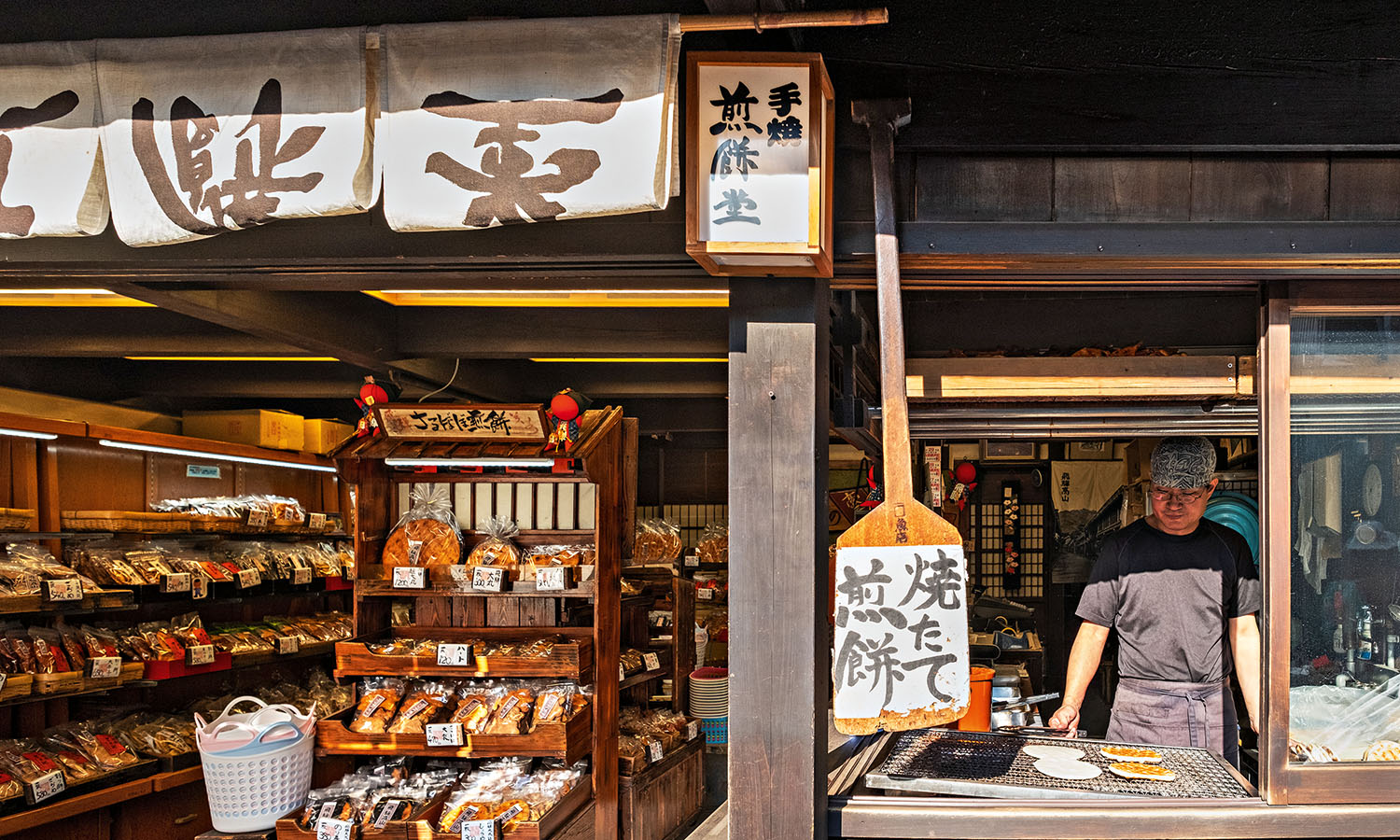
In the late afternoon I wander the streets of Takayama’s old town, where the distinctive smell of freshly brewed sake infuses with the crisp early-evening air. I pop in and out of ancient merchant stores clad with dark wooden facades selling strong coffee and delicately wrapped Japanese candies.
I sample sweet-smelling street food and end the day sitting under drooping cherry blossom branches, where late buds fall like snow, covering the pavement in a soft blanket of pink and white.
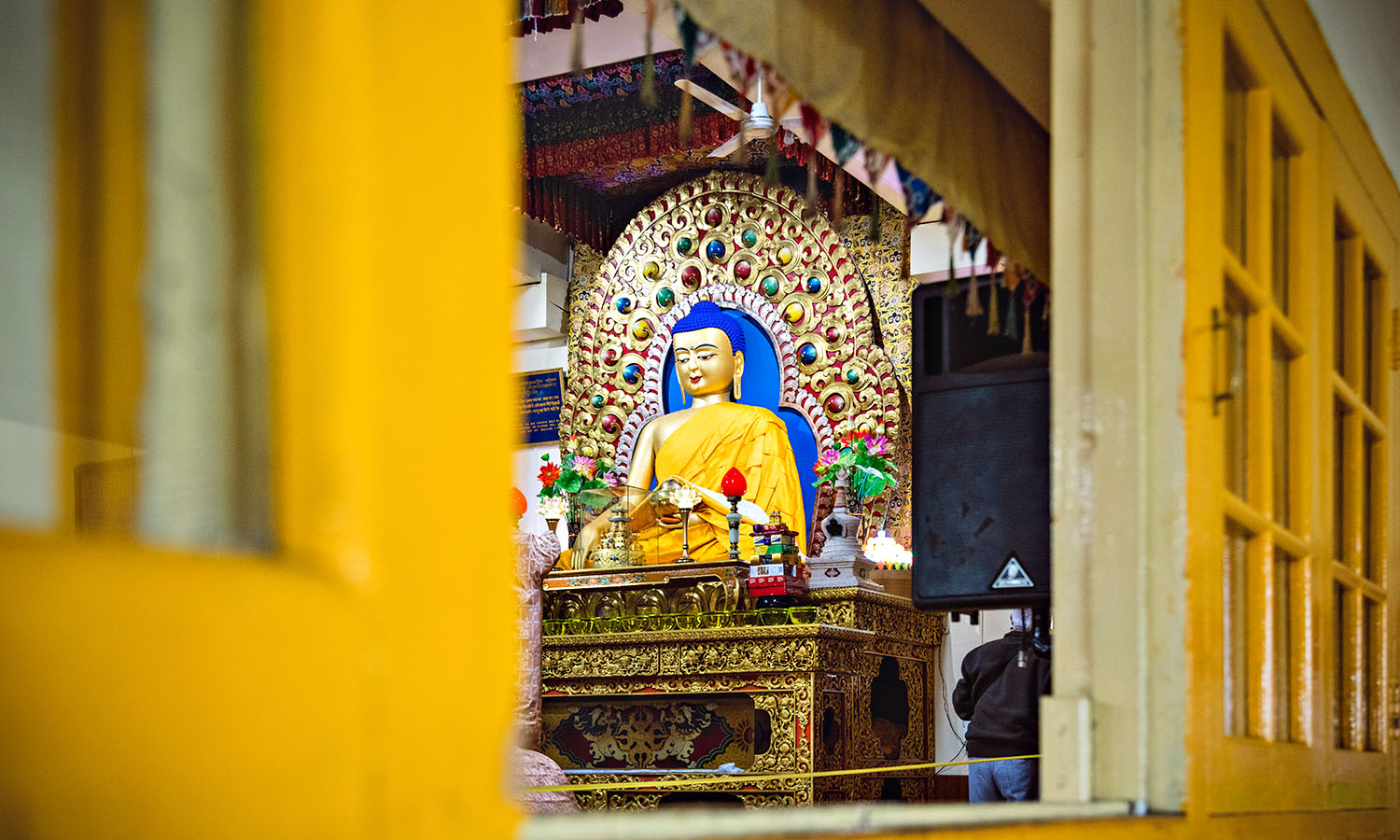
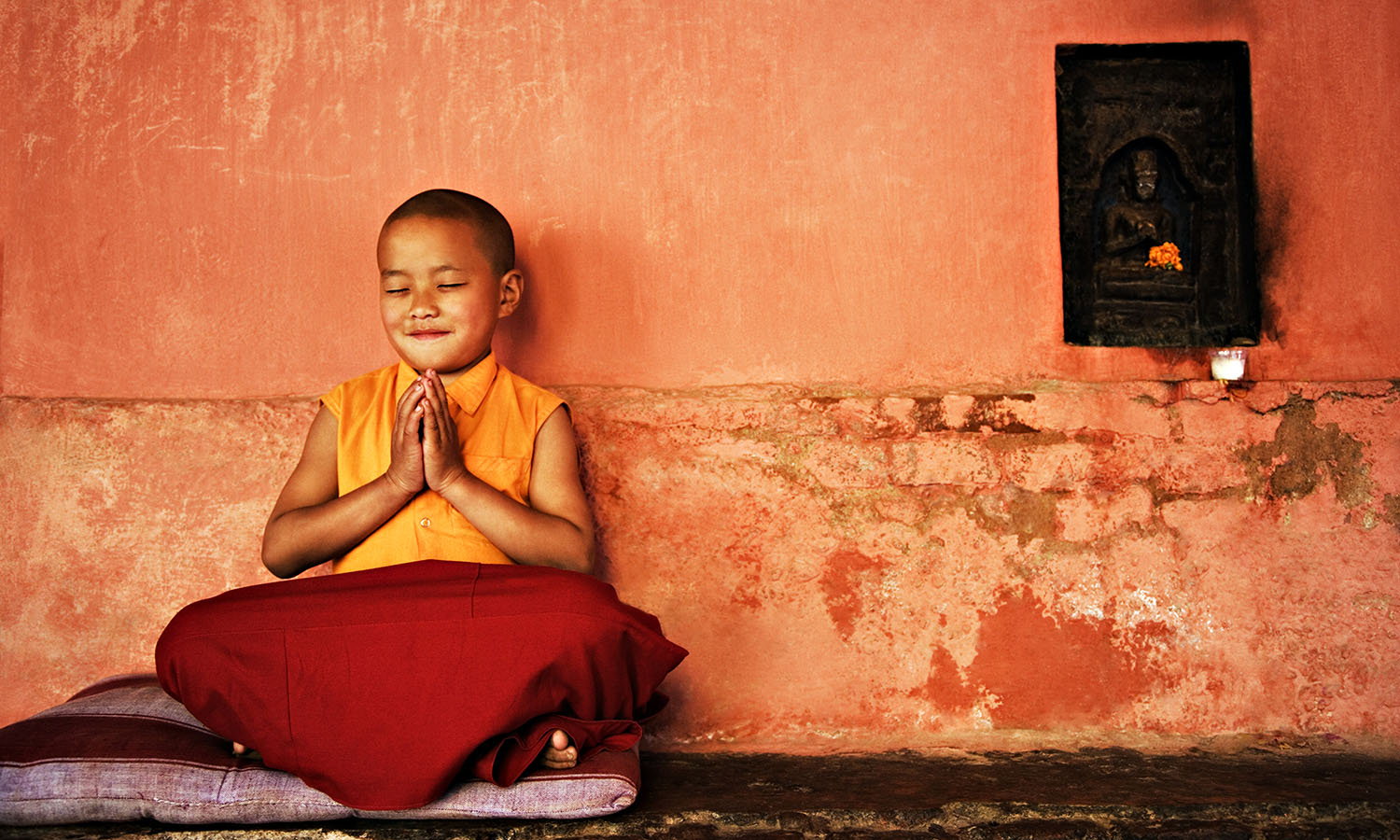
Interested in Buddhism? Looking to inject more meaning into your life or have a little existential itch that just won’t quit? You can do all this and more in India’s Bodh Gaya, the birthplace of Buddhism.
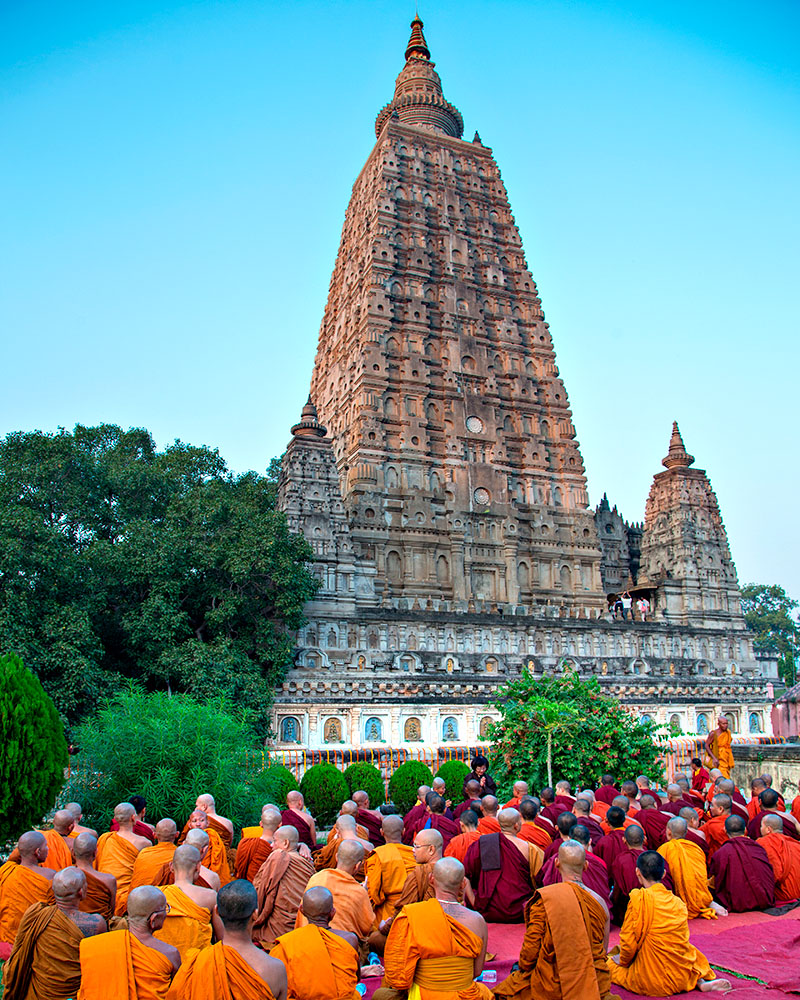
The town of Bodh Gaya in Bihar, in East India, bordering Nepal and divided by the River Ganges is the birthplace of Prince Siddhartha Gautama (Buddha) and is one of the most important Buddhist pilgrimage sites in the world.
So how did all of this come about? One day the sheltered young prince decided to wander outside his privileged and palatial quarters and was shocked when he saw intense suffering and decay. His response was to abandon his riches in search for truth and enlightenment. After several years of searching and meditation, it is believed he attained nirvana in Bodh Gaya to become Buddha (the enlightened one). The rest, as they say, is history.
Today, pilgrims and tourists flock to the tranquil 2,500-year-old city to soak in its spiritual ambience, retrace the footsteps of Buddha, understand his philosophies, pay homage or attend one of the many Buddhist workshops.
Head to the Dungeshwari Caves (also known as the Mahakala Caves), located 12 kilometres northeast of Bodh Gaya. It is here Lord Buddha meditated for six years before he attained enlightenment. Six years? Think about that for a moment. Most people can’t sit still for six seconds.
Situated 40 kilometres from Bodh Gaya is a cluster of four caves know and the Barabar Caves: Karan Chaupar, Lomas Rishi, Sudama and Visvakarma. Carved from granite rock, they are said to have been constructed by emperor Ashoka for the use of Ajivaka ascetics.
Scattered within the ruins of one of the greatest education institutes in history and located on the UNESCO World Heritage Site of Nalanda is the resplendent Nalanda University.
No trip to Bodh Gaya would be complete without visiting the famous Bodhi Tree. Situated next to the Mahabodhi Temple, it marks the spot where the original Bodhi tree once stood, under which the meditating Prince sat for more than a month before he attained enlightenment.
The ultimate question is will you find what you’re looking for in Bodh Gaya? There’s only one way to find out!
Imagine Japan. What do you see? Likely the cloud-tickling skyscrapers of Tokyo and ancient teahouses of Kyoto. In reality, those two images are far from representative of Japan’s compact but diverse landscape. Less than two hours by boat north of the mainland of Shimane Prefecture, I find myself surrounded by the Sea of Japan, at the doorstep of the Oki Islands, a volcanic cluster of unrefined beauty and drama.
From largest to smallest, the rundown of the Oki Islands goes like this: Dogo, Nishinoshima, Nakanoshima and Chiburijima. Together they’re home to spectacular coastal scenery, including epic cliffs and pristine beaches, lush mountain walks through ancient forests, diverse populations of wildlife and, in more recent times, UNESCO Global Geoparks Network recognition.
While you can get to the islands by aeroplane, it’s far more scenic and affordable to catch the Oki Island Ferry. By the time the ship has sailed, it’s clear this is also the best way to understand the locals’ love of the sea.
While the other three of the Oki islands are clustered together in tight formation, like three pieces of a slowly separating jigsaw puzzle, Dogojima is a separate entity. Compared to Tokyo, the large, lonely island’s population of just 15,000 residents seems minuscule, but it plays the role of the capital of the islands. It’s the biggest fish in a small pond. What Dogojima lacks in population, however, it makes up for in unparalleled scenic views and ecological diversity.
If you were to ask the locals to pick just one location on the map that was representative of the island, they’d likely pick Candle Rock, also known as Rosoku-jima. Sitting just off Dogojima’s northwest coastline of, Rosoku-jima is a 20-metre-tall rock formation only accessible by a sightseeing boat.
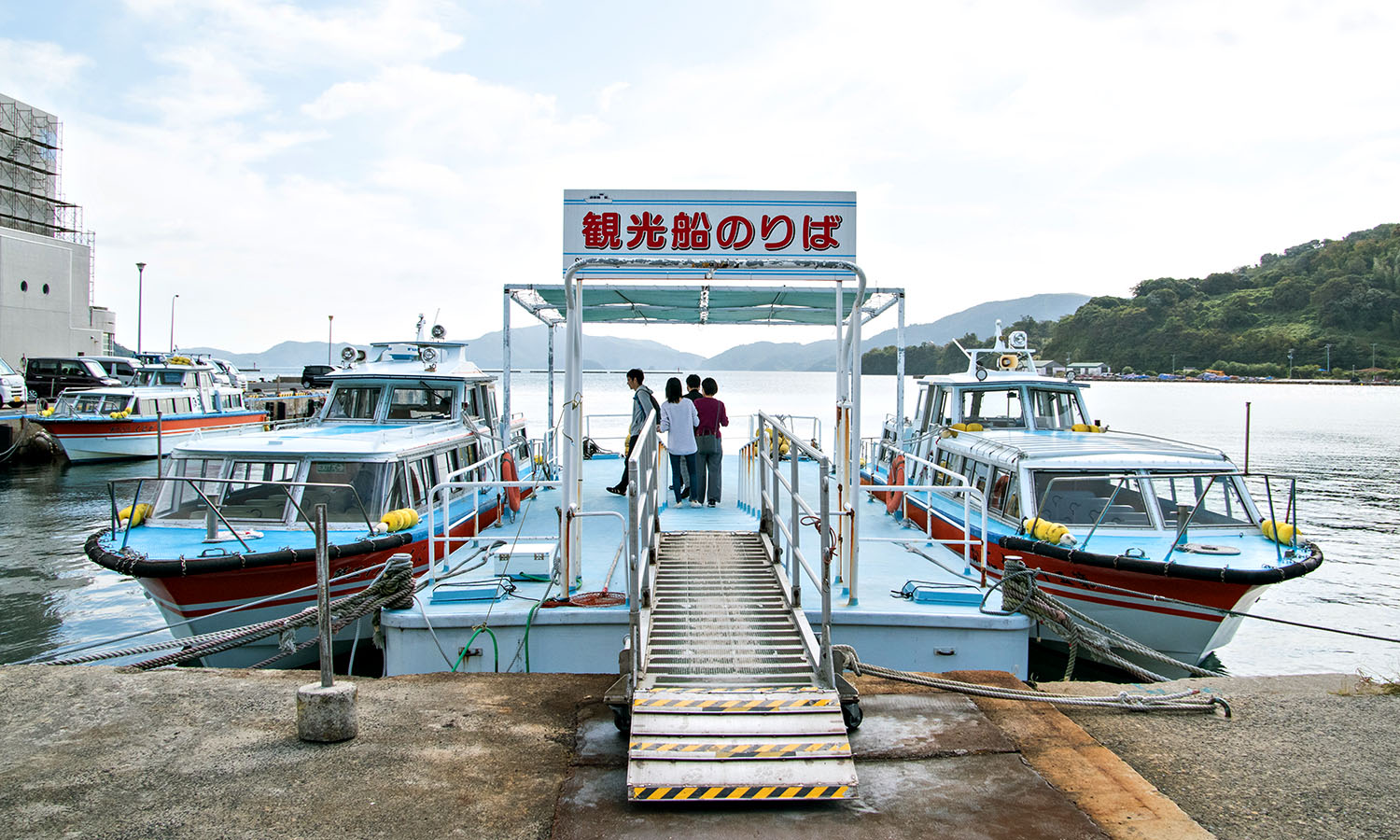
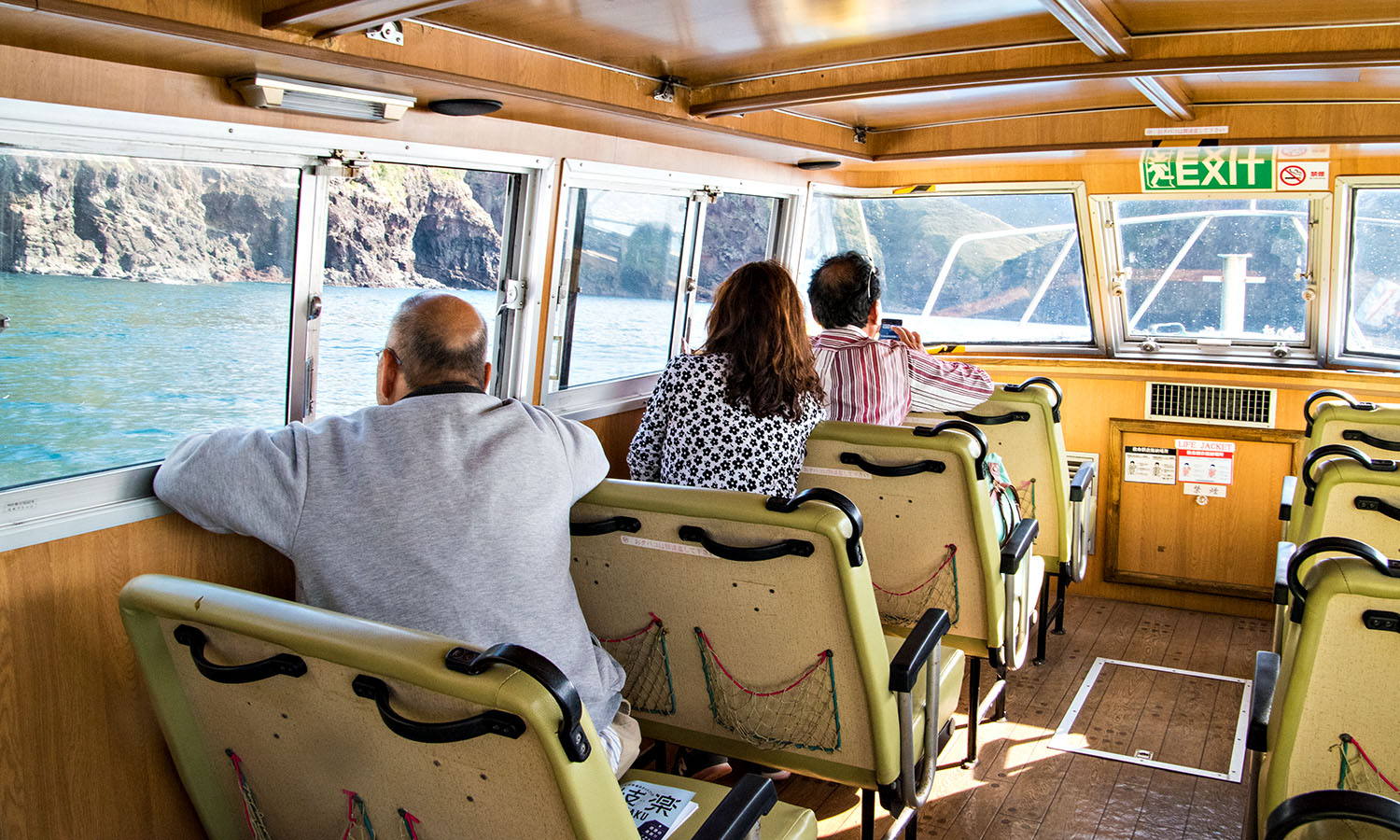
At 4pm we head out on the cruising boat, cameras poised and skipper primed to manoeuvre his charge into position. While the rock’s uniquely tapered, candle-like shape is impressive throughout the day, it’s especially so pre-sunset. With boat, rock and setting light source correctly aligned, the sun plays the role of the candle flame, glittering gold and red light atop the slim rock.
Battling greying skies and a mischievous ocean breeze that coated camera lenses in a fine layer of sea water, we take shot after shot in an attempt to capture the balanced fragility and compelling beauty of this icon of Dogojima.
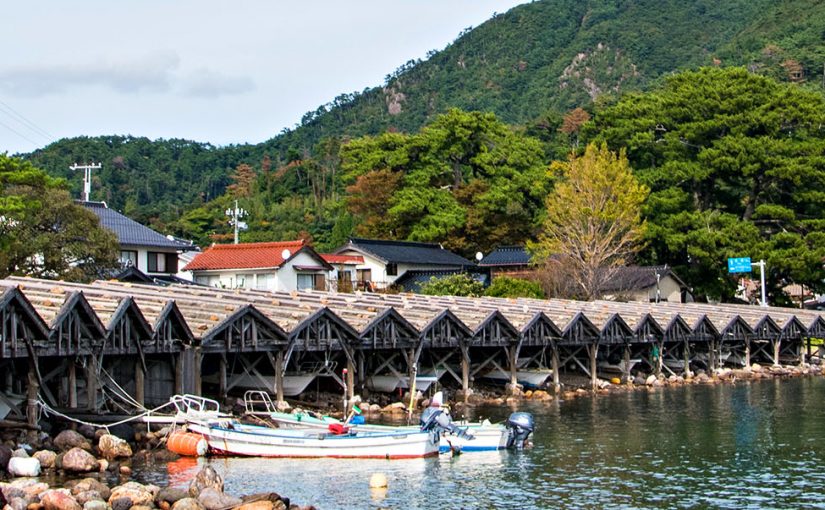
A little closer to shore sits another of Dogojima’s famed attractions: the humble boathouses that line the rocky beach. With roofing held down by oversized stones and at just ¥1,500 (about AU$20) a year to rent, they are a perfect example of Dogo’s laid-back yin to the dramatic yang of Candle Rock.
While Dogojima is the largest of the Oki family, when it comes to coastal attractions, biggest doesn’t necessarily mean best. Nishinoshima is the home of the Kuniga Coast, a rugged 13-kilometre-long fringe of the island with eroded cliff formations that resemble oversized abstract sculptures.
At 257 meters tall, with its blood red face contrasting against the impossibly blue water of the Sea of Japan, Matengai is the centrepiece of Kuniga Coast. Walking tours take visitors to admire the stunning site, but the best way to get up close is by boat.
On an almost impossibly perfect day, we depart Beppu Port to cruise Nishinoshima’s most dramatic side. Chugging past the monstrously tall Kanabo-iwa and So Butsuzo-iwa cliffs, and intermittently dipping in and out of sea caves Otohime-goten and Takimi-no-iwaya, we’re treated to endless naturally crafted masterpieces, each more dramatic than the last. But if the preceding cliffs are masterpieces Matengai Cliff is the Mona Lisa, such is its perfection.
While the Oki islands are without question a boat lover’s paradise, when the waves are rough – no rarity here – it doesn’t mean the opportunity to admire the coastal beauty is only out at sea. You can easily be swept away by incredible views while still having two feet planted on solid ground.
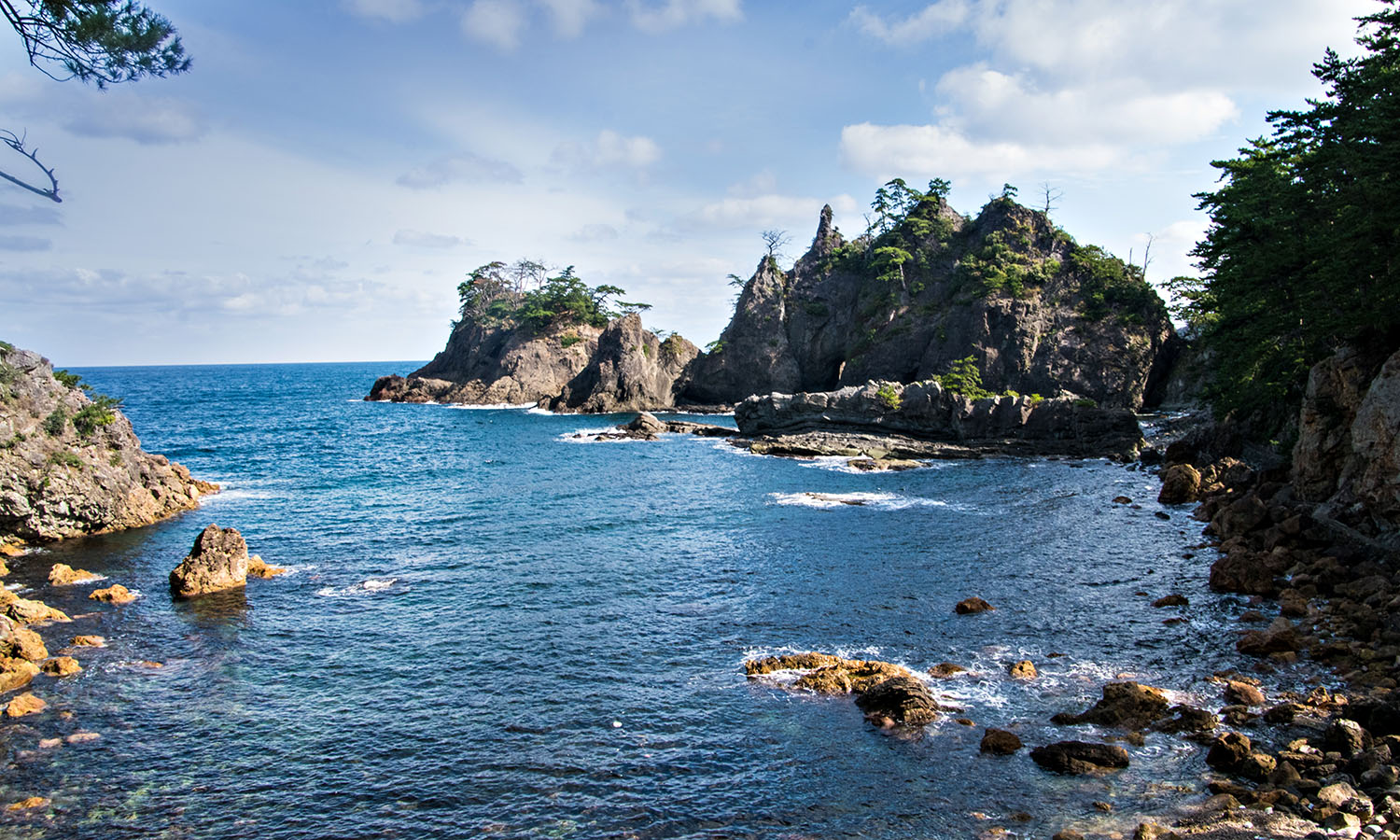
In a northeastern corner of Dogo Island is the Joudogaura Coast, a pocket of picture-perfect views that’s easy to hunt down if you can write in Japanese (search 浄土ケ浦海岸). To get to its most scenic section, our guide tells us to take the slippery, foliage-covered walking path. It isn’t an easy trek but is well worth the extra 15-minute slog to arrive at a primo spot for photography. Around 2.65 million years ago, volcanic activity crafted this dramatic scene. Thick basalt lava spewed 10 metres into the air then settled along the coast and nearby Cape Sakiyama to create a black layer-cake effect. It feels somehow prehistoric but sea erosion and wind constantly sculpts and reforms its shape in a type of live art performance. You can almost read the history in every sagging lava rock and sharp cliff edge that towers above the deep ocean.
Dogo’s other must-visit viewpoint is the Shirashima Coast Lookout, located on the northernmost tip of the island. The geological formations that make up the neighbouring landscape are yet another example of the almost logic-defying diversity of this small landmass. Just moments ago we were snapping photos of the dramatic black landscape at Joudogaura, and now we’re admiring the pure white rocks that make up the cliffs of Shirashima.
While they’re better known for their outdoor pursuits than their artistic output, you can certainly get a little creative here on the Oki islands. After a long few days trekking along the coast and bobbing in the ocean, we head to Dogo’s Kurui Port to experience the marine world in a different way.
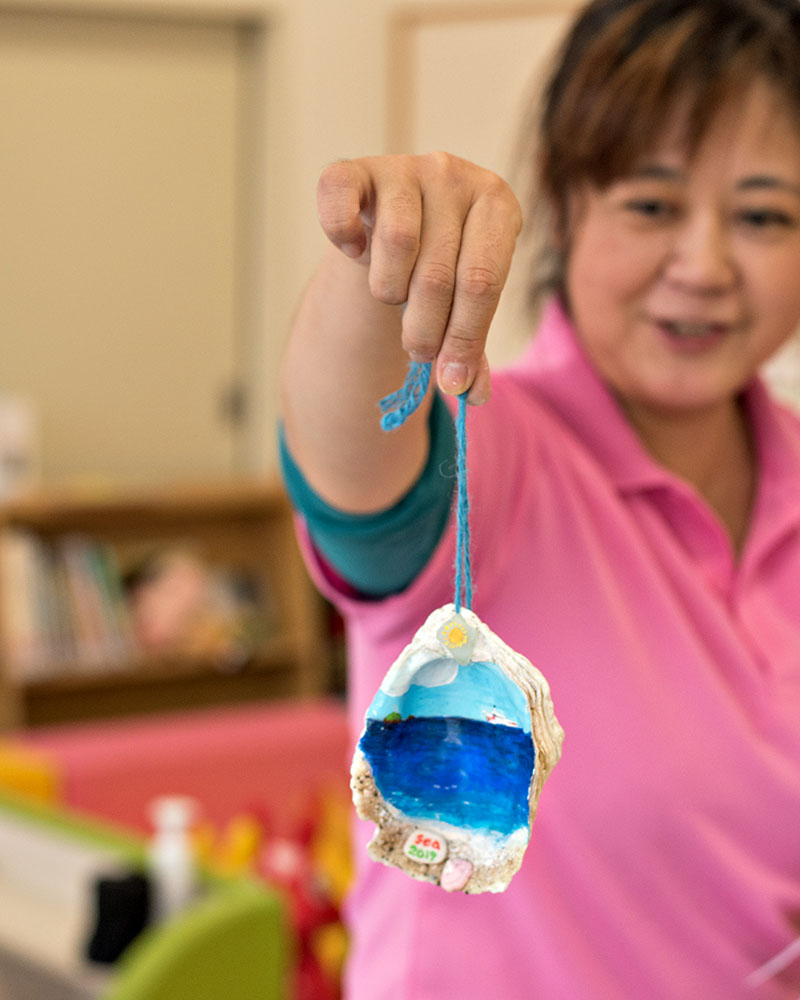
The paints are set out in the classroom, newspaper is laid down and there’s a box of clean, palm-sized shells from which to choose for an oyster decorating class. The teacher shows us a few example pieces before giving us a rundown on the process. Basically, there are no rules; just do as you want and let your creativity run wild. Others in the class outline maps of the island and re-create beach scenes. I decide to paint the tanuki (Japanese raccoon dog), a mischievous symbol of Dogo. These fuzzy Japanese natives can be spotted across the island, weaving in and out of the bush. Painting the shell is more tranquil art therapy than class and much more fun than I had thought it was going to be. After about 40 minutes of almost zen-like concentration, carefully tracking the tiny peaks and valleys on the shell’s interior, I have a tanuki-adorned oyster as a souvenir of my time exploring this untouched island corner of Japan.
This story is sponsored by JNTO (Japan National Tourism Organization).
 (
(