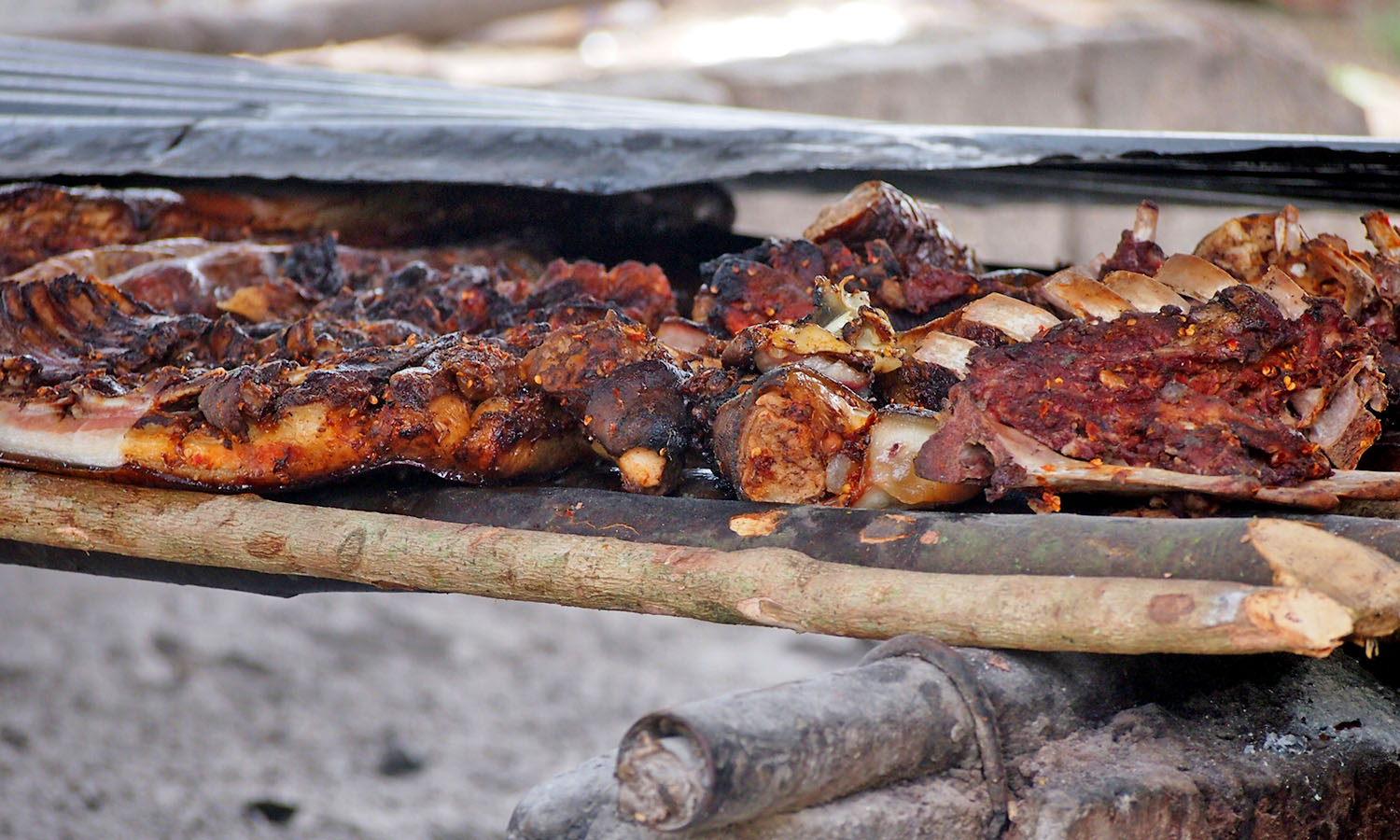
All along the main road that leads down to Boston Bay, sturdy home-made grills sit in front of brightly painted shacks, deep grey smoke billowing from the hot coals. It carries with it the smell of spiced, blackened meat and fish, for this is the birthplace of the Jamaican specialty ‘jerk’. Jerk chicken, jerk pork, jerk fish – it’s all served up here, with generous helpings of dumplings, plantains and vegetables best washed down with a cold Red Stripe.
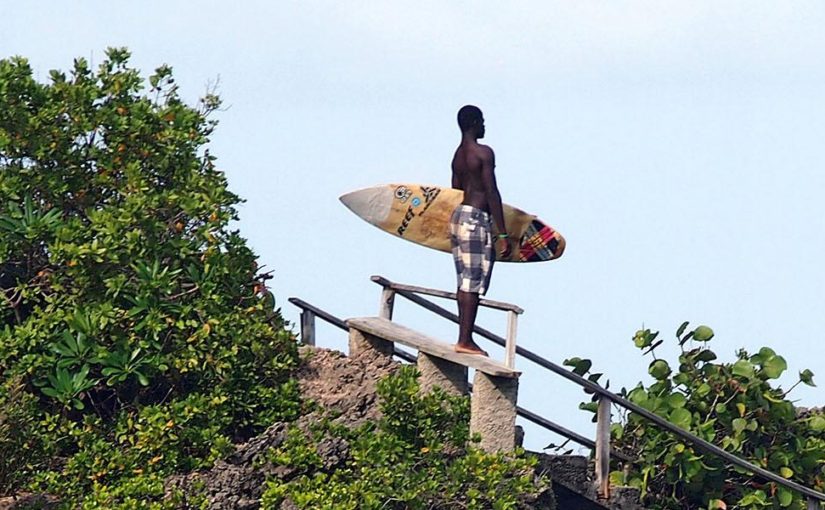
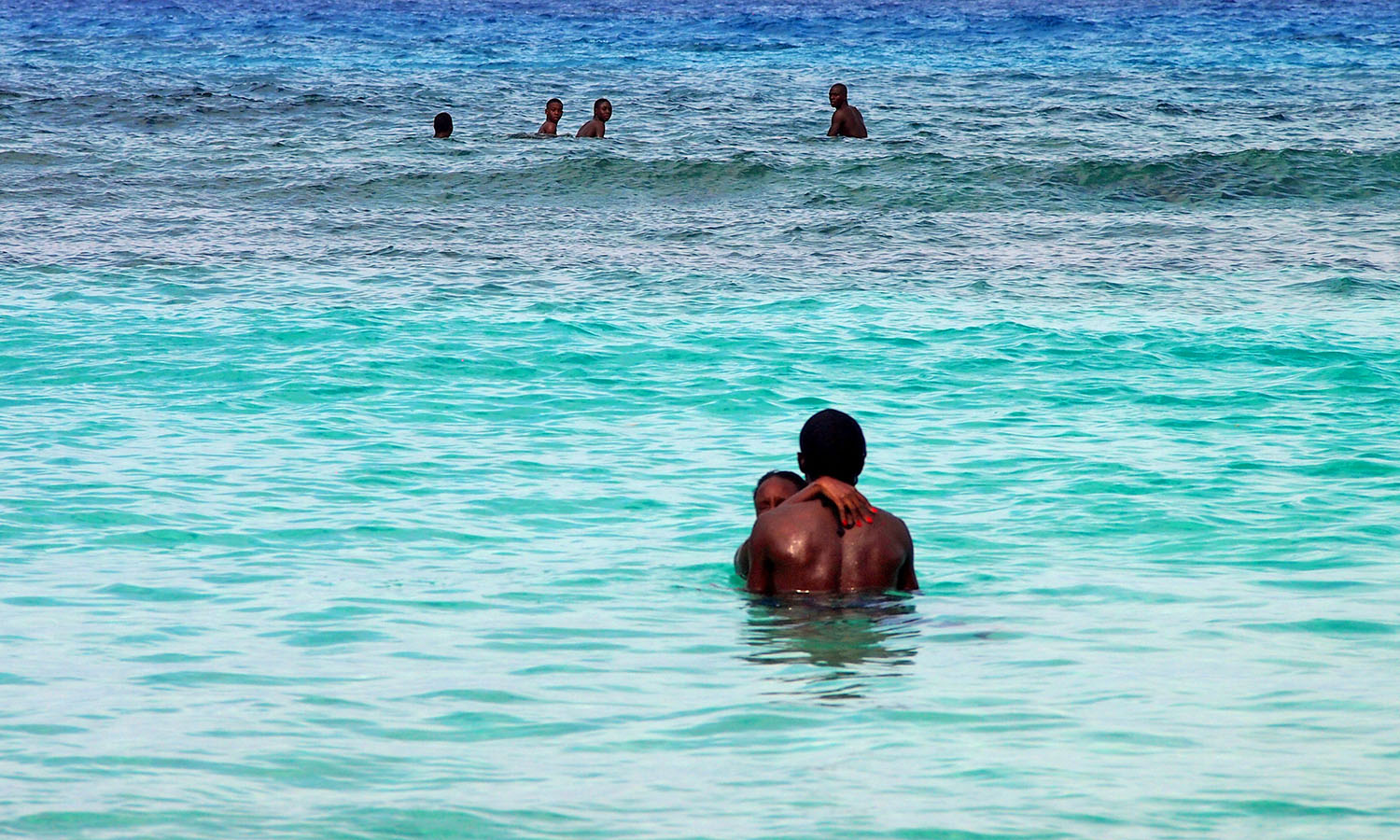
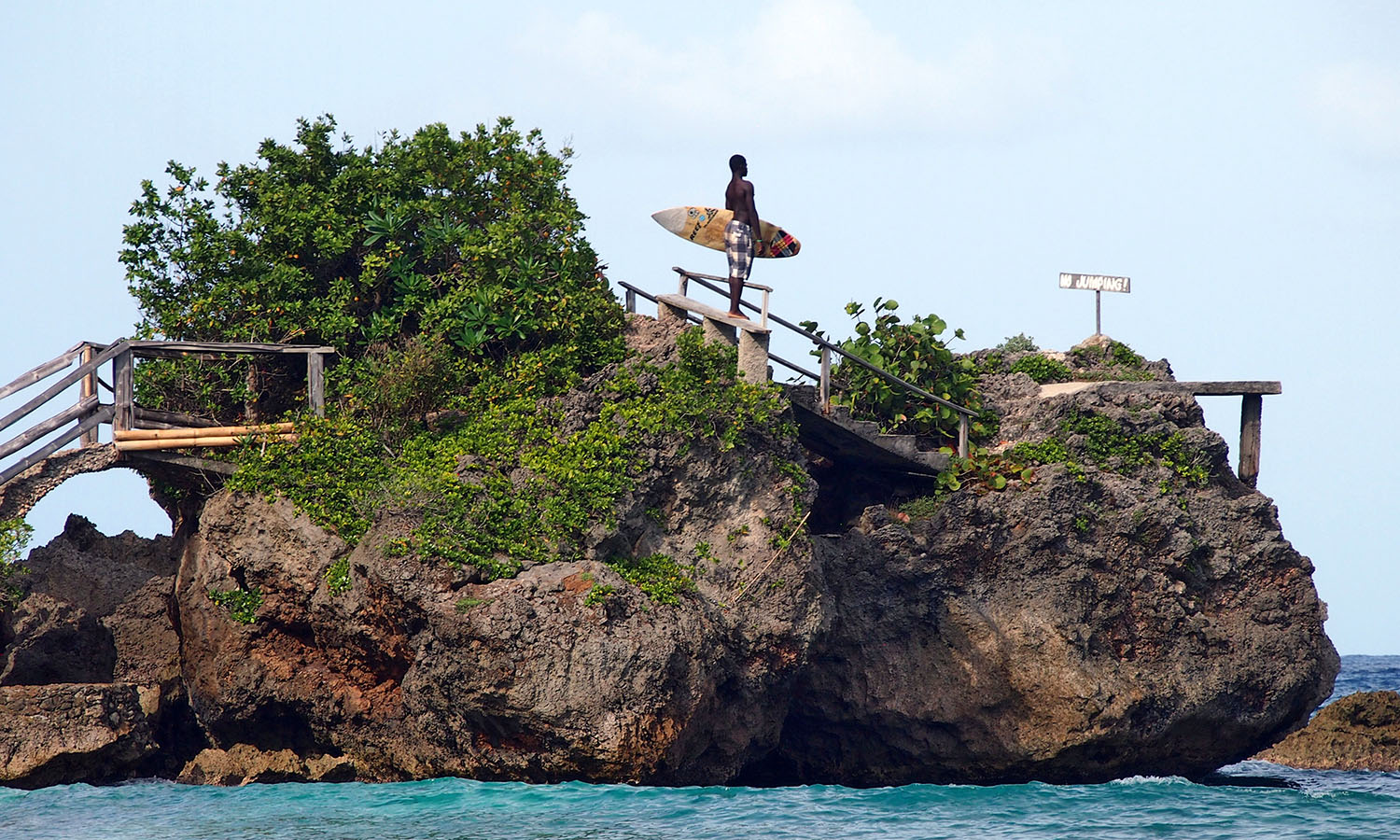
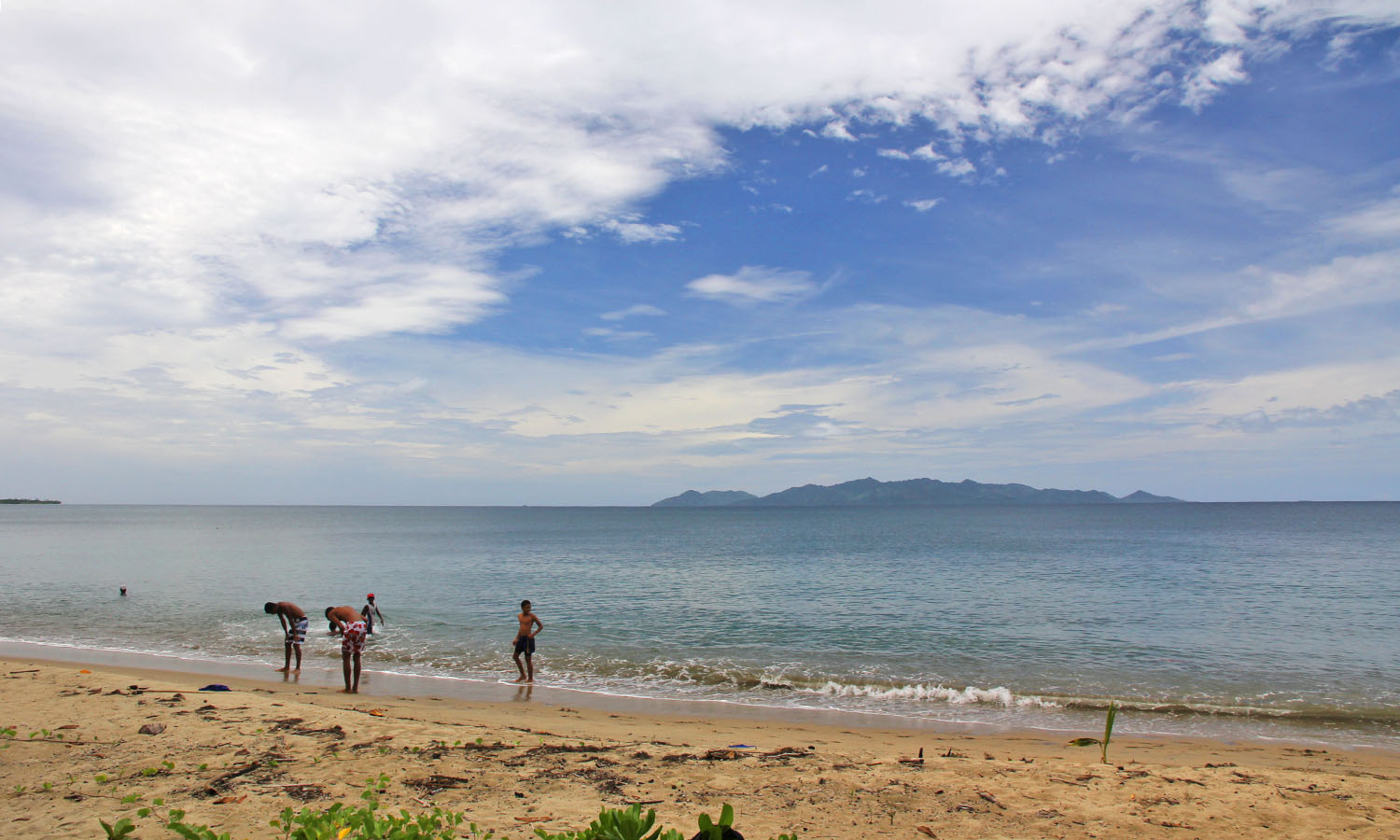
But the tasty grub is not the only reason to venture this far east – well beyond the traditional tourist hot-spots of the west and north. Boston Beach itself is a pretty and undeveloped stretch of sand with a fraction of the tourists who spread out their towels at Negril. It’s pretty popular with locals though, with tunes pumping and vans parked nearby serving snacks and drinks. It’s also something of a surf hot-spot. Here, Jamaicans and travellers wade into the turquoise waves with their boards from the shore, or jump off from a rocky outcrop further out.
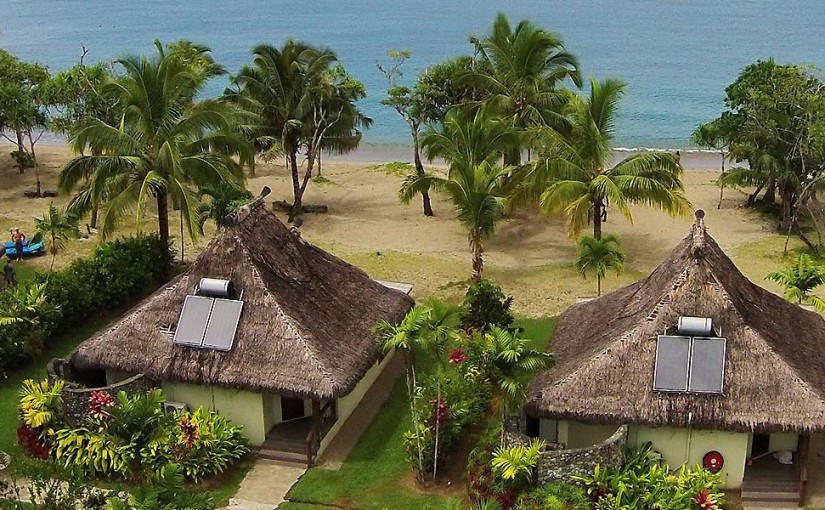
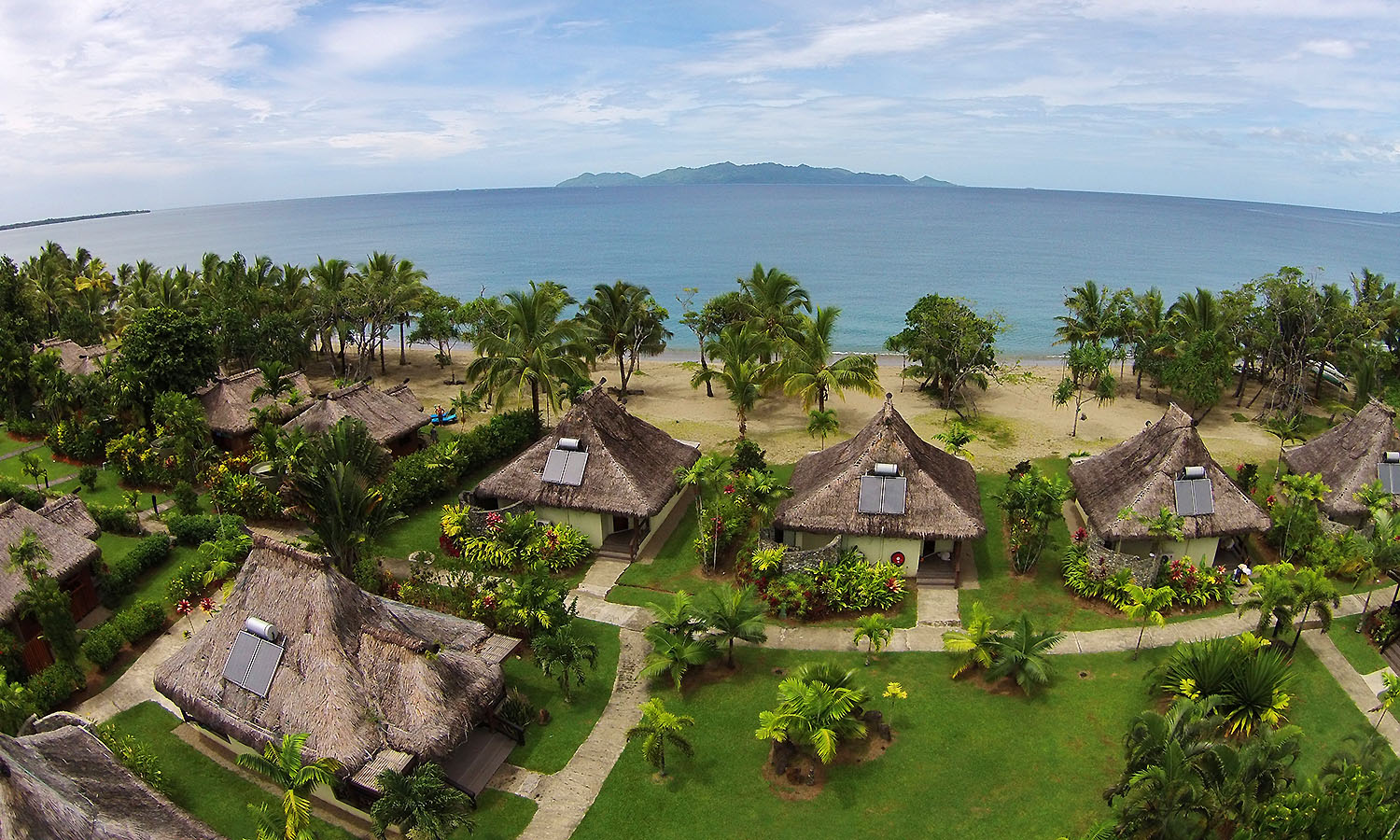
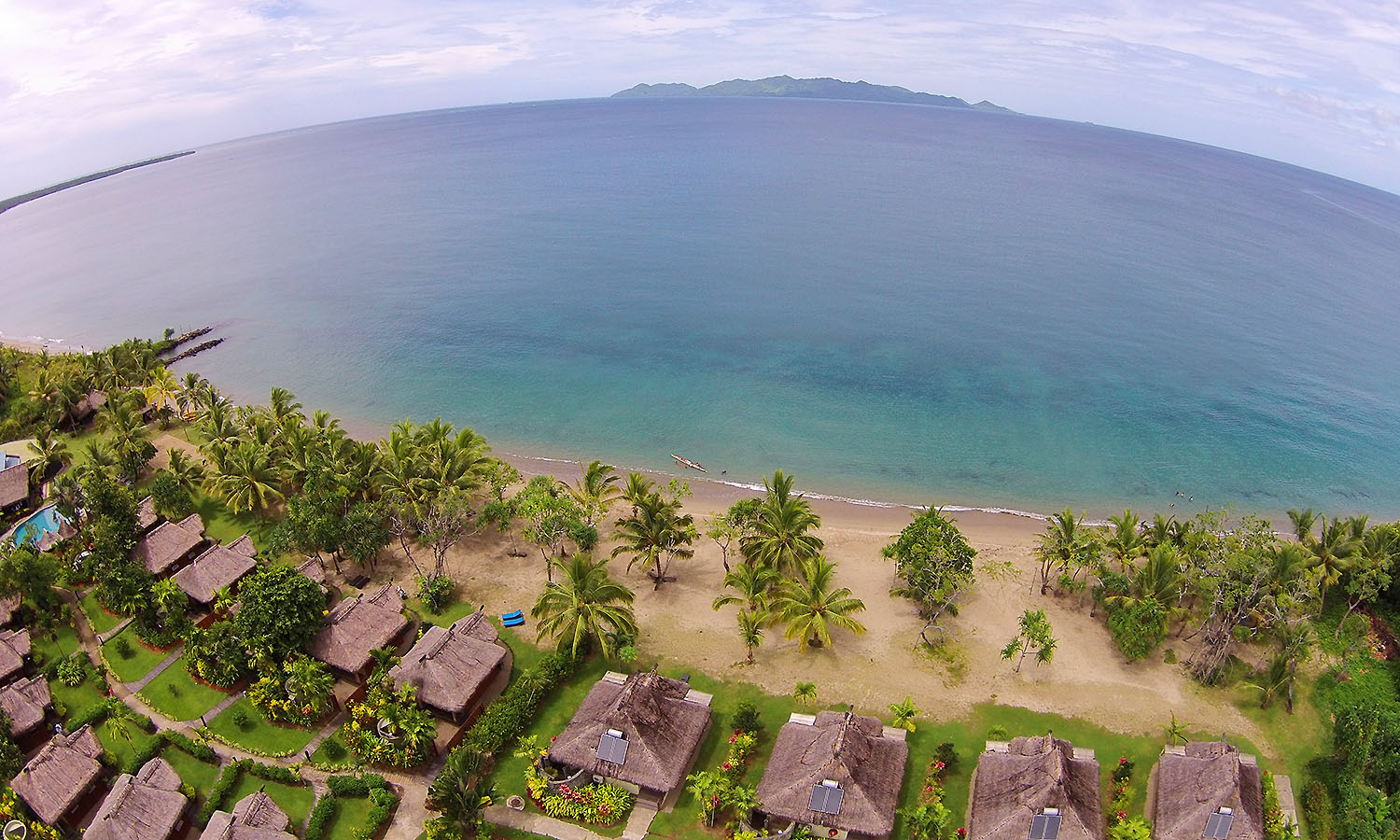
If you look hard enough on Fiji’s main island of Viti Levu you’ll find a select few bungalow resorts offering an escape from the all-inclusive, buffet-serving, cookie-cutter behemoths that have somehow taken up most of the Coral Coast. The Uprising Beach Resort is one of them.
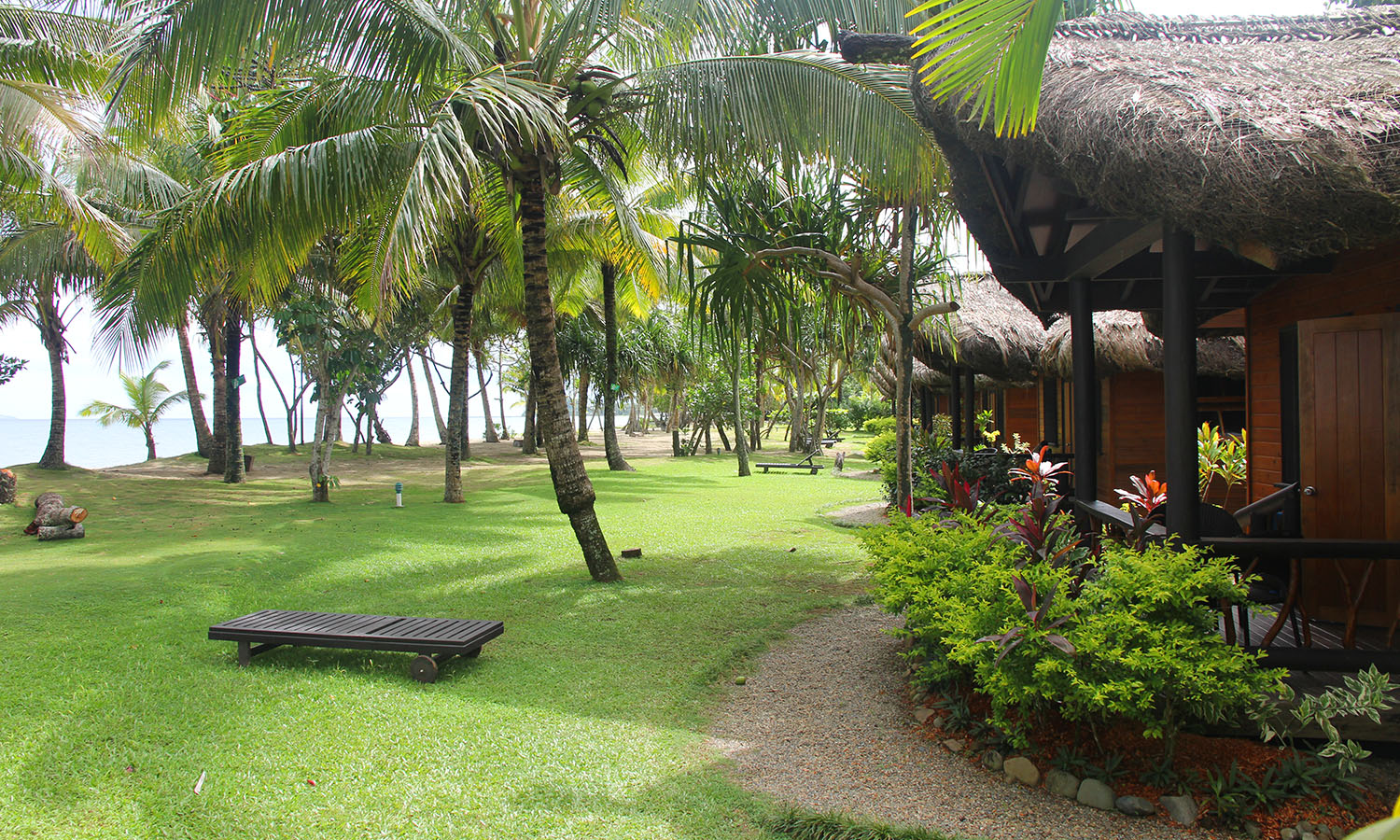
Perfectly positioned bures along the beachfront and larger villas off the sand make up the resort. It is small enough to give you space on the beach, but large enough to offer all the amenities you might need. The food is good and the bar lively. There’s a field on the resort grounds where the Fiji Rugby 7s train and volleyball courts where the local villagers play each evening. They welcome new players, but be aware: they are serious.
The friendliness of the staff is second to none and they can arrange some amazing nearby activities, from shark feeding off Beqa Island to whitewater rafting in the untouched hinterlands.
“It’s not perfect, it’s paradise” is the motto and it sums the whole place up, well, perfectly.
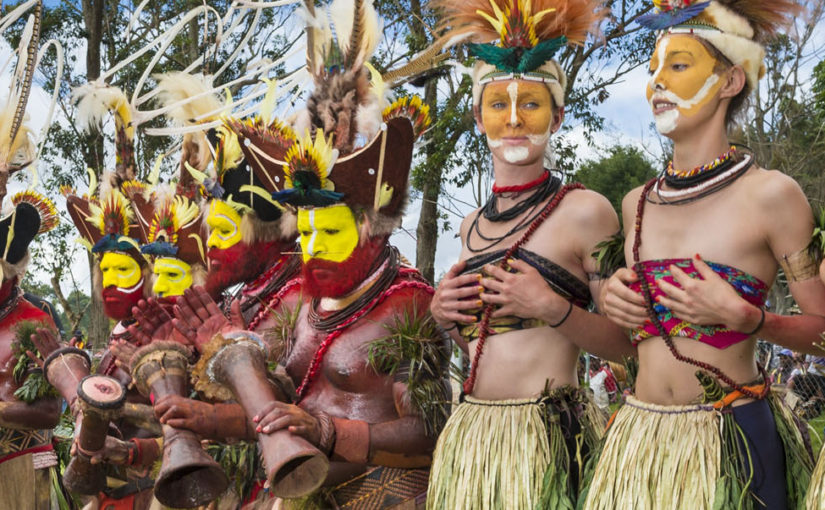
Joining a traditional Papuan dance troupe, three dancers from the famous Parisian cabaret, the Lido, take part in the biggest tribal gathering in Papua New Guinea: the Mount Hagen Cultural Show. PNG explorer Mundiya Kepanga invited the French cabaret stars to his home country after being dazzled by their show during a trip to Paris. Images: Marc Dozier, LightMediation
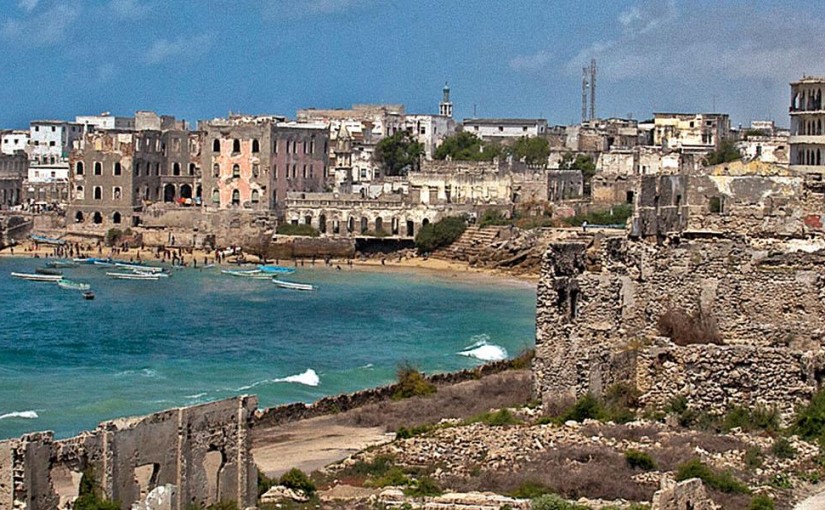
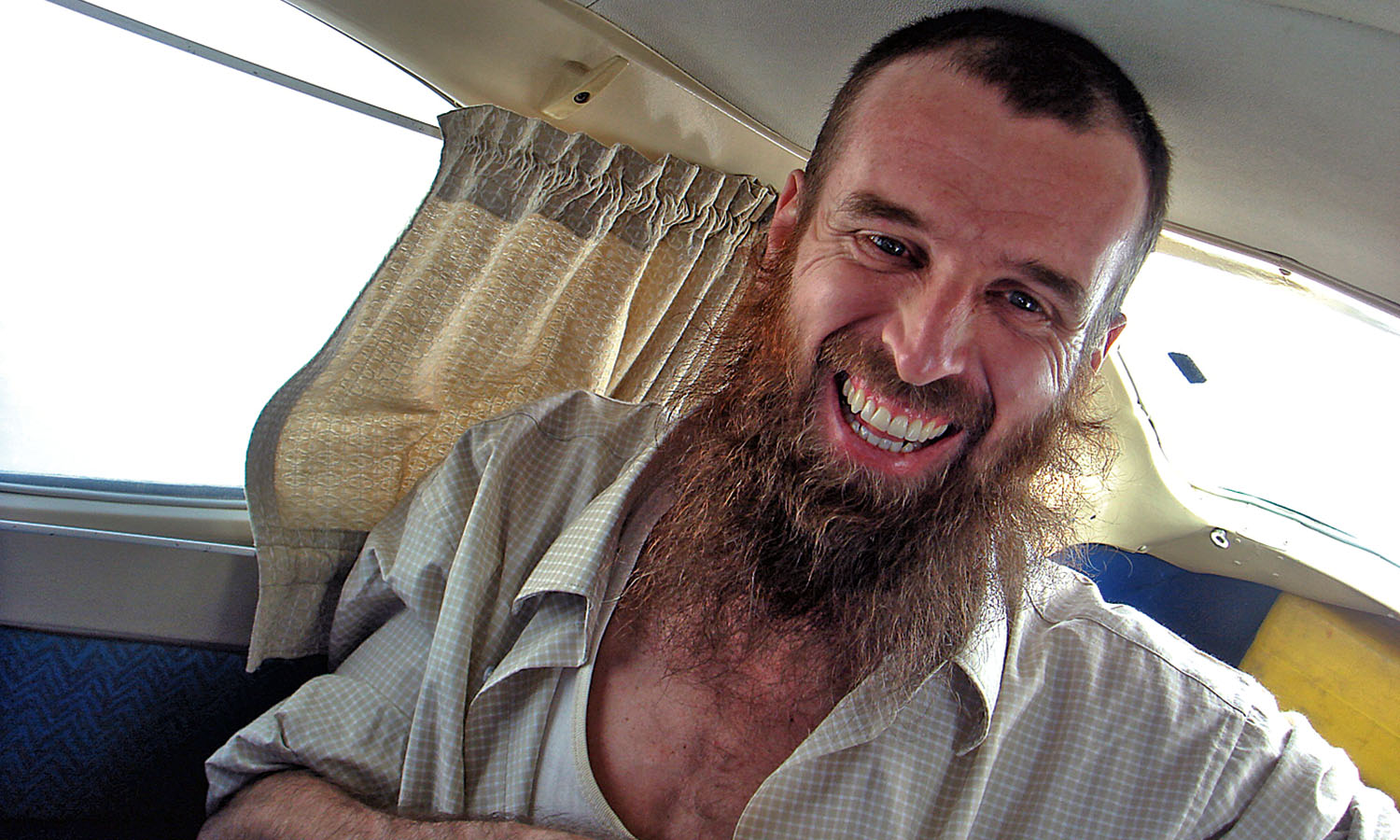
Naked, blindfolded and beaten, Nigel Brennan felt the barrel of an AK-47 pressed to the back of his skull, heard a click, and shuddered. “If you run again, we’ll kill you,” hissed one of his Somali captors.
“There’s that constant fear that you live with as a hostage, that this could end at any moment,” says the former photojournalist, who was held captive by Islamist insurgents for 462 days after being kidnapped outside Mogadishu in 2008.
Brennan was eventually freed in November 2009, after his family raised a $650,000 ransom, risking prosecution for ‘financing’ a terrorist organisation. His period of captivity was the longest suffered by an Australian outside a prisoner of war scenario.
In some jobs, no amount of training can substitute for real-life experience. No classroom can replicate the utter terror of being ambushed at gunpoint, threatened with death, tortured, shackled and held in isolation for months. And that is why Brennan decided to channel his harrowing experience into a new career path.
Today, he is a kidnap and ransom specialist, employed to train high-risk travellers in counter hostage skills before they deploy to some of the most hostile countries on earth. Brennan’s also the go-to man when travellers find themselves on the wrong end of an AK-47. He’s the kind of man you hope you never have to call on abroad.
“People say it’s quite a strange job I’ve found myself in, and I guess it is a bit of a niche market,” Brennan, 40, says. “But I guess to have that knowledge base and to not use it would be such a waste. It’s good to help other people.”
Brennan is a consultant for crisis and risk management firm Dynamiq, which, in partnership with Accident and Health International (AHI), is the only Australian-owned company to offer travel insurance underwriting and response for kidnap and ransom, detention and extortion. AHI is the underwriter and Dynamiq the 24/7 duress dynamo. When an Aussie is in strife overseas, be it a health emergency, kidnap, terrorist attack or natural disaster, it’s Dynamiq’s team of ex-commandos that leaps into action.
Dynamiq has assisted with the release of hostages in Mexico and Papua New Guinea, rescued clients in peril during the Mumbai terrorist attacks and Bangkok riots, chaperoned journalists to war zones, and led the search and recovery operation for the Sundance Resources plane crash in the Congo, which killed the entire board of directors in 2010.
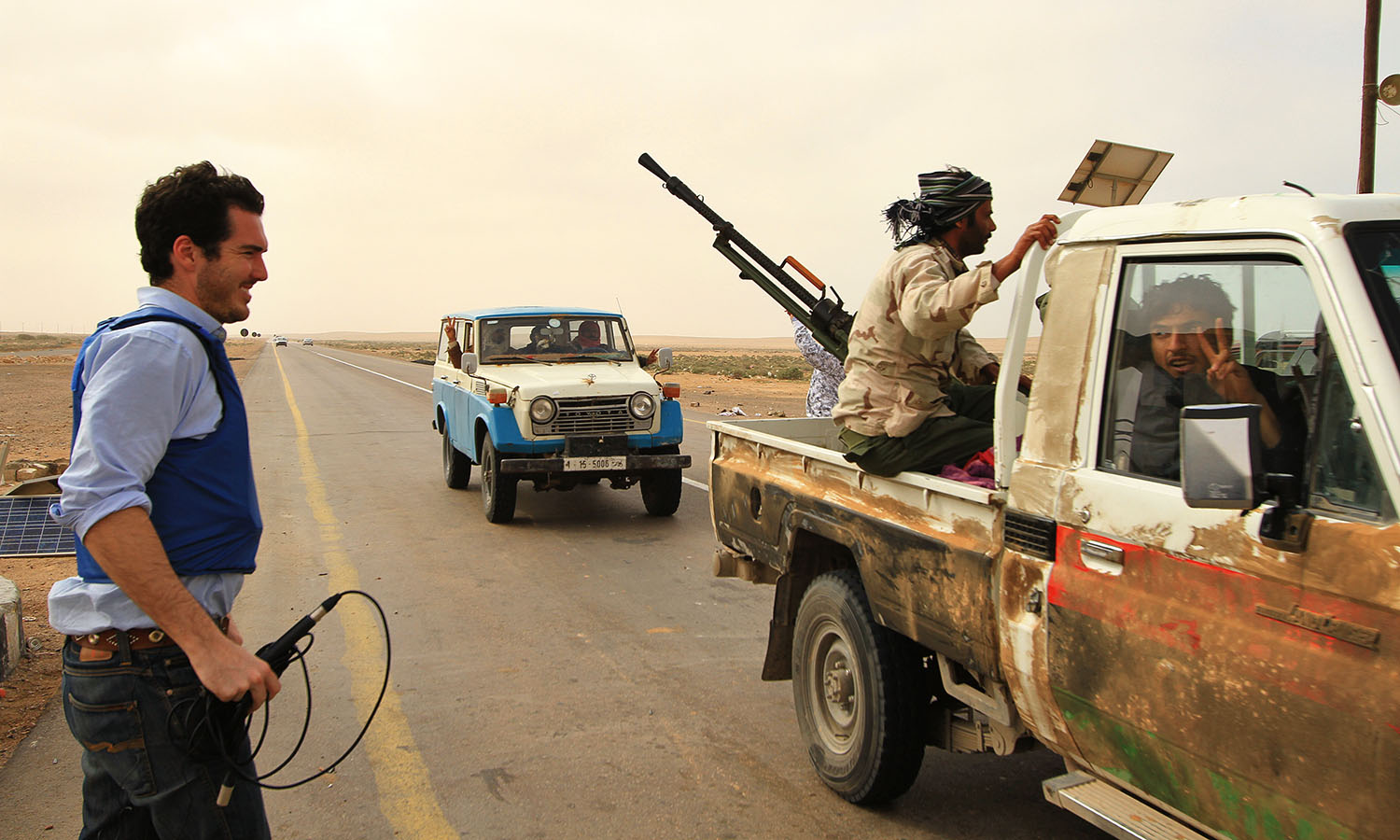
Part of their brief is helping prevent clients from getting into trouble abroad in the first place. Dynamiq runs a series of travel safety and hostile environment training courses to wise-up high-risk travellers on personal security. Brennan takes the hostage and ransom module, and realises now how “green and naive” he was going into Somalia to report on the humanitarian crisis in 2008. He says there were several ‘red flags’ that should have rung alarm bells in his head, like a last minute change of driver on the day he and Canadian journalist Amanda Lidhout were ambushed on their way to a refugee camp.
Other warning signs he teaches travellers to attune to are unexpected changes to travel plans, and an absence of people on the street, which could foreshadow a looming ambush or bomb blast.
Then there is old-fashioned gut instinct. “We all have this animal instinct,” Brennan says. “An hour before we actually left the hotel (on the morning I was kidnapped) my instinct was telling me that something was up. It felt like I had a squirmy stomach. I just had this massive knot in the bottom of my stomach, which I think was my instinct saying ‘something’s not right’.”
There’s a misconception that kidnapping is a random, opportunistic crime. In fact, they are usually carefully planned and premeditated, with victims sometimes flagged as a target the moment they touch down at the airport. Brennan, who was “sold out” by a trusted local, says travellers should avoid setting routines, and keep their travel plans quiet.
Brennan also teaches hostage survival tactics. They’re skills he hopes his students never have to use, and are a toolkit for not only staying alive, but building mental resilience.
“From the first day, I was like, ‘I need to make these people like me as quickly as possible’,” Brennan says of those dark days held hostage. He talked about his family so that he would be seen as a human being, not a commodity: “If they’re threatening to kill you, it’s going to make it harder,” he says. He tried to build rapport with his captors and show empathy, asking them about their lives, teaching them yoga poses, sharing food and even engaging in humour. Brennan converted to Islam, believing they were less likely to execute a Muslim, and voraciously read and recited the Koran.
Half the battle is in your head, he says. Setting a routine, including prayer and cleaning chores, helped lift him out of a drowning swamp of despair. “That sort of stuff [is important] because boredom is such a horrific thing when you’re trying to fill 14 hours of your day under constant threat, thinking ‘are they just going to walk in today and shoot me?’ Living under that constant fear and stress is pretty demoralising.”
Each year around the world there are between 15,000 and 20,000 reported kidnapping cases, and most occur when the victims are in a vehicle. Nick Berry, a former army captain who heads Dynamiq’s kidnapping and ransom division, says in 65 per cent of cases a ransom is paid and the victim freed. A fraction are released, rescued or escape, while nine per cent die – often from medical complications.
The global kidnap danger hot spots are Somalia, Venezuela, Afghanistan, Nigeria, Pakistan, India, Kenya, Sudan and the Philippines, with Papua New Guinea on a ‘watching brief’. Clients with kidnapping and ransom cover are mostly in the mining, oil and gas industries. There is also demand within the education sector, sport and recreation groups, and humanitarian organisations.
When the panic button goes off at Dynamiq HQ in Sydney, a team is swiftly mobilised to hit the ground within 24 hours. Brennan’s role is to either liaise directly with the hostage’s family or fly out to the kidnap zone to be part of the ransom negotiation and extraction team.
He’s a rookie in the industry, but life experience counts for a lot. And in the tumult of a kidnapping, victims and families draw comfort in dealing with an insider: someone who has been there, stared terror in the face and survived.
“I’ve met quite a few hostage survivors,” Brennan says. “Emotionally we’re all quite normal people considering we’ve gone through one of the most horrific things you can go through in life – where you have the simplest of human rights taken away from you, which is your freedom.”
Travellers to the Pacific Islands will be familiar with the phenomenon of ‘island living’, the languid way in which people arrive late to every appointment, leave cars and houses unlocked and break into a sweat at only the most important of occasions. For the uninitiated, this laid-back approach can be as endearing as it is frustrating, and the Kingdom of Tonga is no different. Faka Tonga (the Tongan way) has ensured the country and its underwater paradises have remained unspoiled and raw, making it an adventure destination ripe for exploration.
Snorkel
Boarding a tiny eight-seater plane from the airport in the capital, Nuku’alofa, I fly across the archipelago to the Ha’apai chain, a group of pancake-flat tropical islands made famous by the visits of Captain James Cook during his explorations of the Pacific Ocean.
Ha’apai’s main settlement of Pangai is not just the place that gave birth to Christianity in Tonga. It is also renowned for having some of the best snorkelling sites in the country. Arriving on the island with not another tourist in sight, it seems that directions to the coral gardens off the coast of the northern beaches may be hard to come by. If this were Southeast Asia, boats would be vying for every tourist’s business. Internet cafes and tour companies would dominate the town in a jumble of techno music and banana pancakes. Here in Pangai, however, the streets are empty, save for the pigs and the large Tongan lady who is heading towards church in her giant straw tupeno (like a belt but often three feet wide) to escape the midday tropical heat.
I stop in at the local general store to ask for a map. The only items for sale seem to be Coca Cola, sweet potatoes and packets of dried kava. Surprised that I’m not a visiting Mormon, the shy Tongan girl behind the counter points me towards the road that bisects town. Follow that and I’ll find it. One advantage of Ha’apai’s size is that it’s virtually impossible to get lost along the island’s only main road.
I borrow a bicycle and head through the fields of cassava and sweating papaya across the causeway and towards Foa Island. The earth is hot and wet as I skid along the single lane to the headland. Ha’apai locals have recounted some of the islands’ naval history: the mutiny on the Bounty occurred just offshore and the sacking of the Port Au Prince occurred near Foa Island in 1806, leading to William Mariner spending four years with Ha’apai’s chief and writing his renowned account of the people of the Tongan islands.
With a blink-and-you’ll-miss-it turn across from the jungle-shrouded Sandy Beach Resort, I grab my snorkel and spy two big inky rifts in the otherwise turquoise ocean. With no one in sight along the coast I snorkel along the coral gardens off Foa Island. I duck-dive down to the tiny communities hiding in the clumps of soft coral, swimming through sponges that shelter clown fish the size of my thumb and past brown-spotted moray eels that screech at my approaches as I swim below their caves.
The unbroken line of the coral reef is fluorescent and I continue exploring the rose-shaped coral beds until a banded sea snake hiding underneath a mushroom-shaped outcrop on the edge of the reef is spooked by my exploration. I kick away from the coral in a panic as the blue and white snake coils towards me with its mouth open and I surface for the first time in hours.
With no crowd noise or traffic to guide me, I’ve drifted hundreds of metres towards the open ocean. Tonga isn’t the sort of place that has lifeguards and flags, so I resign myself to the long swim back to shore, skimming across the reefs that captivated me for hours.
With hands like prunes and a head full of salt water, I trudge up to the Sandy Beach Resort. The cook is waiting with a chilled coconut and a plate of fresh swordfish. There are only two other guests at the resort so I am welcomed for dinner. With the Pacific Ocean swallowing the sun, I decide it is time to look for my next adventure. The north and the underwater wonders of Vava’u beckon.
Dive
The next morning I catch a ride on a tiny twin-propeller plane from the isolation of Pangai to Neiafu, the major town in Vava’u. With its sheltered jungle islands and migrating whales, this northern archipelago draws the majority of visitors to Tonga. I arrive on a Saturday evening and, after the lonely evenings of chirping geckos and fat mosquitos on Pangai, I am hopeful of encountering some kind of nightlife.
It is monsoon season and I stroll through Neiafu at dusk, greeting the few locals with a malo e lei lei. I find the library, a cafe and a few boarded-up restaurants. Stopping for a beer at the Aquarium Cafe I notice that the bay and the pastel colours that shift across its water are what captivate. Visitors are indifferent to the town itself. The ocean is what draws people to Vava’u. Whether they are snorkellers, yachties or divers, the real action is out towards the horizon.
I join them the following day, signing up for a Discover Scuba tour with the Dive Vava’u outfit in Neiafu. We are soon aboard the Tonga Tango boat and venturing beyond Lotuma and the Swallows Cave. I pull on my wetsuit and attach the tank, ready to explore this Pacific playground. With me is Paul Stone, a veteran of more than 16 years as a dive instructor and 12,000 dives. I’m a novice, so Paul is gentle with me – nothing like the brittle men in town who mull around the port with week-old beards and whisky breath prodding me for loose change.
The surface appears thick and choppy as we plunge in at aptly named dive site Benny’s Bounty. Even though I’ve dived once before, my first breath is one of panic. I draw in a mouthful of salt water and push the purge button frantically to get the artificial oxygen pumping. Paul gives me the symbol for OK and, after a moment, I respond. We kick our fins and descend. Once the membrane of the surface is peeled away, I see the life that is buzzing only metres below.
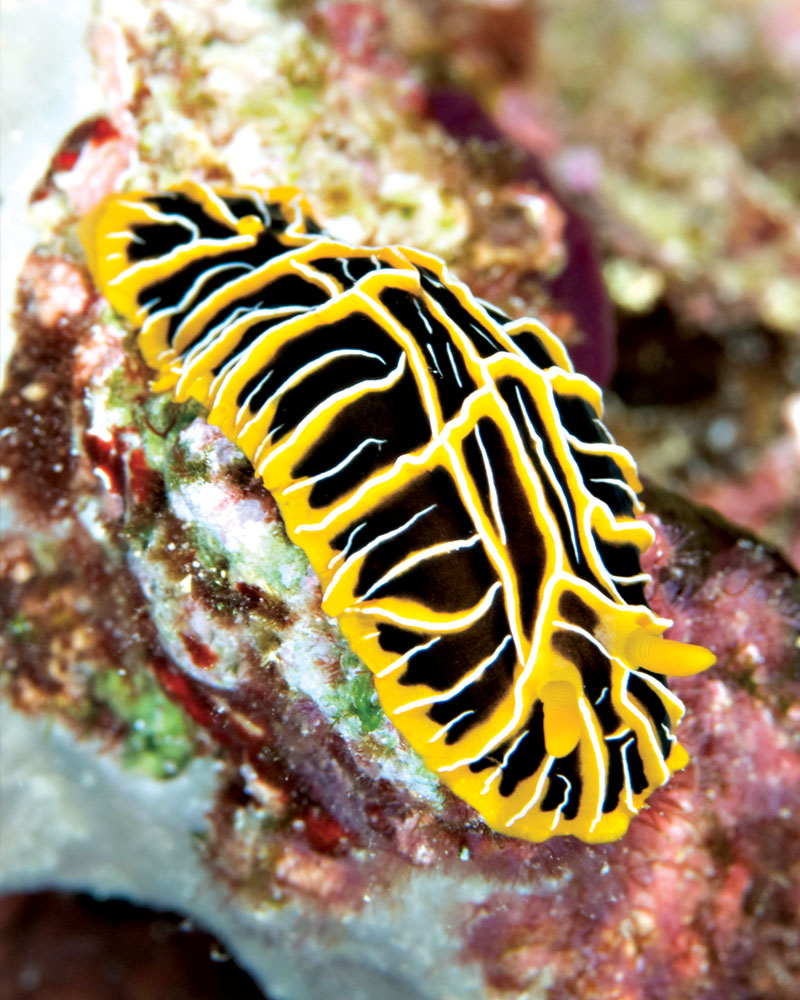
Our dive is not just about identifying the big names of the ocean, the shark, whale and stingray; the miniscule and vulnerable are just as captivating. Paul points out a black and orange fleck the size of a fingernail. It looks like a piece of seaweed but on closer inspection I see that it is a flatworm. Similar to a piece of lettuce, this tiny worm shimmies through the sea like a ribbon in the breeze looking for food and shelter.
We sway past pincushion starfish and angelfish gliding along the sand below us. I can tell Paul loves his office as he clasps his hands and drifts from treasure to treasure in the 50-metre visibility. As he explains later, “When you’re down deep with the reef below you and a wall of fish beside you, you just hang there, floating. I think it’s the closest thing in the world to actually flying.”
On the next dive at Sea Fans, Paul tells me to copy his posture. I hold my body as still as possible while we explore, gently kicking to conserve oxygen and prolong the experience.
Looking across the vast cavern at the bottom of the ocean, I see the other divers in our group exploring a great rift in the wall that shelters white-tipped reef sharks. As I swim through a band of gorgonian sea fans, thick with tiny fish circling in and out, I feel strangely at home.
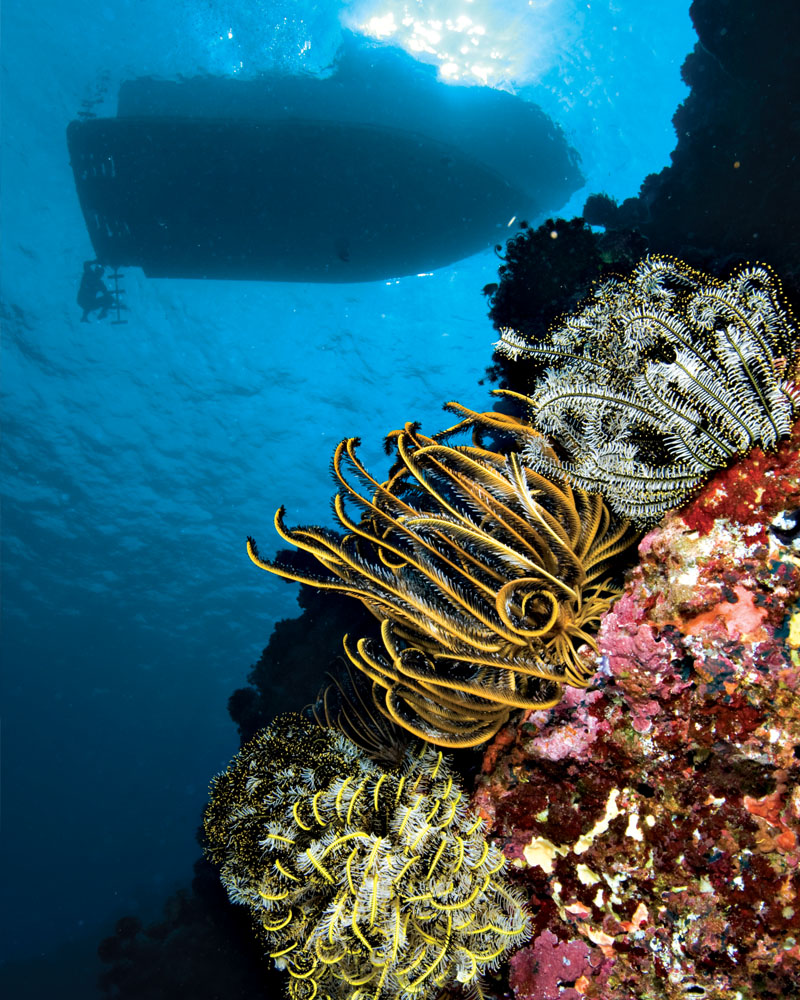
We pass through an aperture in the coral and everything is silent except the gasp of my regulator. Seahorses dart through anemones, an elongated trumpet fish swims below and a school of fluoro parrotfish nibble on the fronds and branches of purple and yellow coral. With my oxygen running low I know time is nearly up. I look to the undulating surface above and see the sun streaming down into the depths. Although I can’t take a photo, it is one of those moments I will not forget.
Kayak
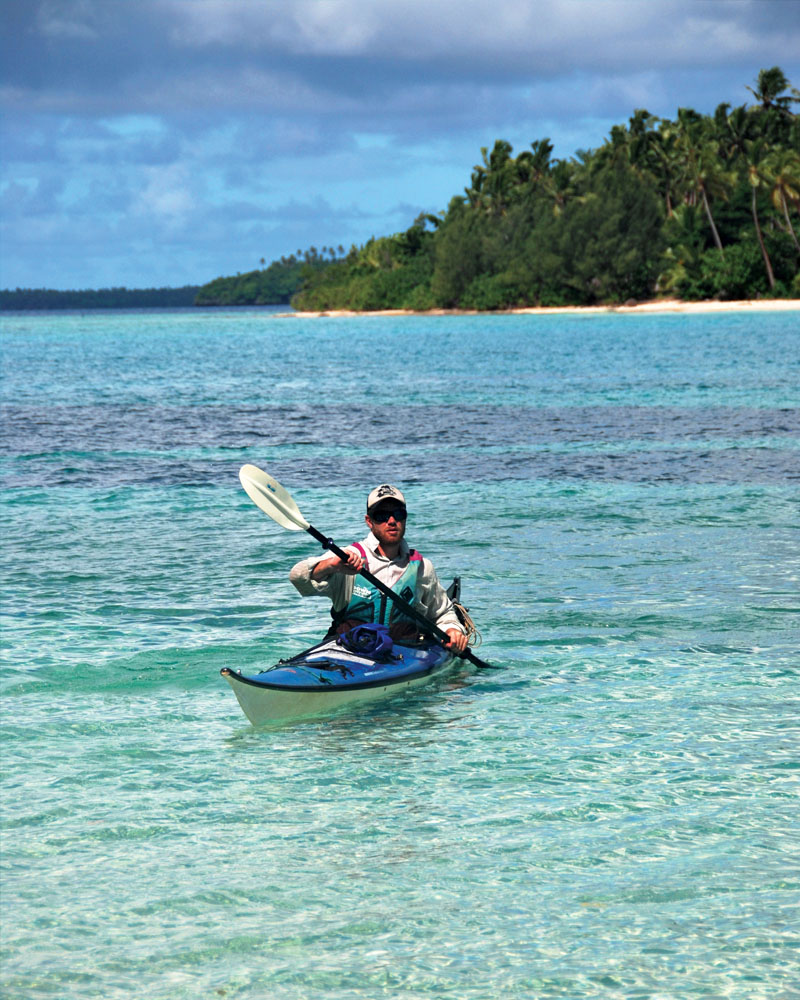
There is barely a murmur of activity in town the following day as I rent a sturdy sea kayak in Neiafu to clear the fog from my kava hangover. I head out with three other kayakers across the Port of Refuge on another day in which to immerse myself in island living without the comforts of running water, refrigeration or internet connections. We carry tents and fresh water in our hulls as we paddle towards the island of Kapa.
Tongans don’t see the point in swimming or snorkelling for pleasure, so Epeli, a local guide who has lived on these islands for more than 50 years, gives me an introduction to Tongan hunting and gathering in his spare time. He teaches me to fish with the line dangling from my teeth as we paddle. I also learn to spear fish with a Hawaiian sling that has a serious kink to the left. Our catch will supplement the jungle fruits we snatch along the way.
The islands of Vava’u were not discovered by Europeans until relatively late, with Spanish explorer Francisco Antonio Mourelle stumbling across the archipelago in 1781. As a result of its isolation, this part of Tonga has retained its cultural way and the languid pace of island time is even more pronounced than in the south. Whenever we inquire about meal times or our sleeping arrangements on the banks of Kapa, Epeli reflects the relaxed nature of his home: “Eat whenever you are hungry, sleep wherever you like. We are on a deserted island!”
Over the next few days we explore tiny islands ringed by tropical fish. Occasionally we happen across a fisherman or a tiny village, but for the most part we live a Robinson Crusoe fantasy. Snapper and yellowfin tuna caught during the day are eaten each evening, and we bathe in the ocean as storm clouds are stirred by lightning on the horizon.
Pushing our kayaks past the reef on the island of Ovaka, we stop for the night on Euakafa and hike up into the bowl of the island. Epeli shows us Queen Talafaiva’s crumbled tomb, a fifteenth-century coral enclosure that conceals the legend of a cheating wife and a king so vengeful he couldn’t allow himself to live with her betrayal. Peering into its depths, I don’t want to see if the bones are still lying there, but I have a feeling that they may be – covered in moss and waiting for the king’s forgiveness.
We paddle through the afternoon, travelling from Euakafa through breaking waves and onshore winds to the curved island of Taunga. Once our camp is set I wander across the sandbar to explore the island of Pau, made famous by travel writer Paul Theroux. As I walk along the shore with no footprints but my own for company, my shoulders ache from the paddling, mosquito bites from Eua itch my legs and I realise I haven’t washed properly in days. The faka Tonga has kept the islands pristine and unspoiled and, as I pitch my kayak back into the water, I’m glad that I have discovered some of the wild insides of Tonga.
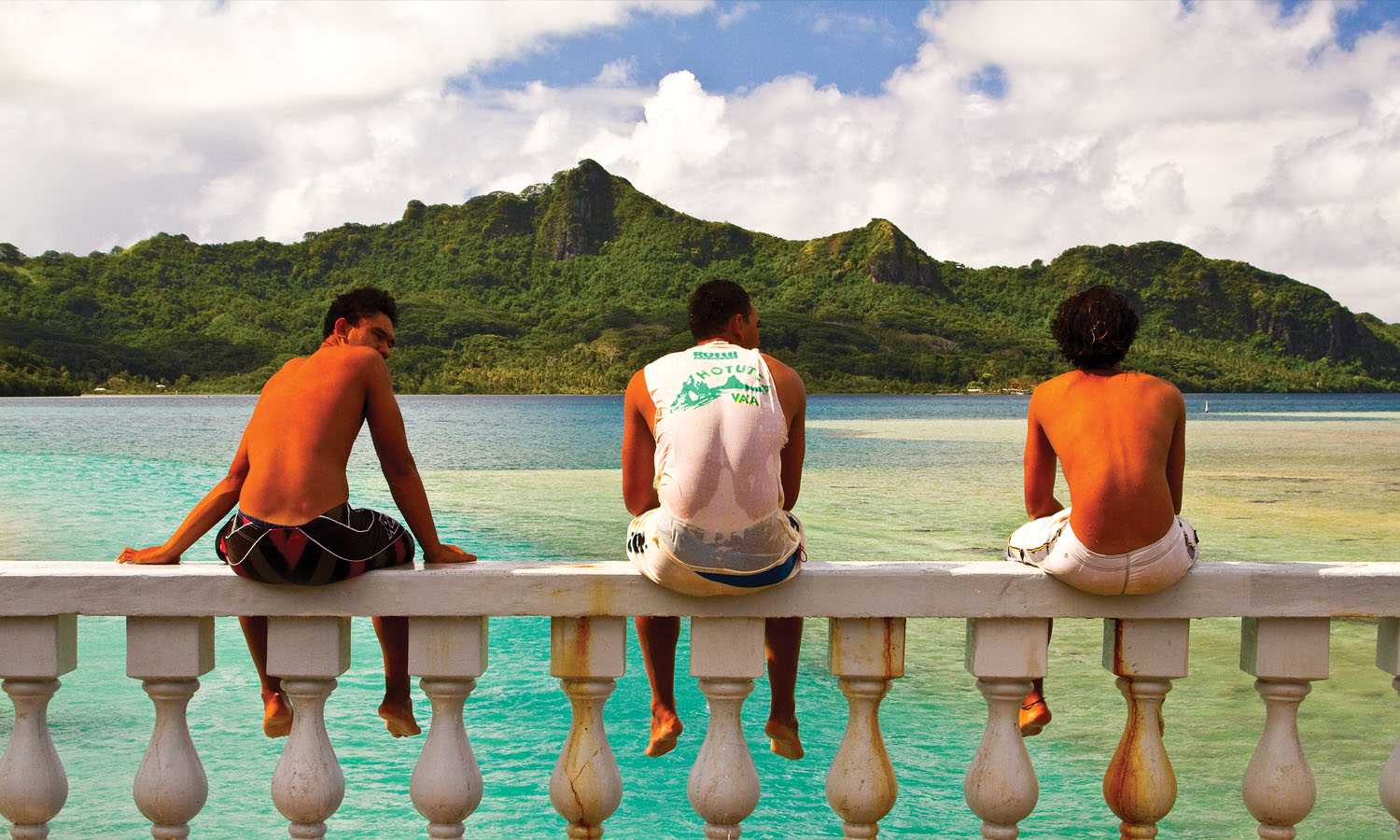
Hearing of our travel plans, a couple of friends joked that me and my buddy Dave should fly to Tahiti on a package honeymoon. But as anyone who’s been to French Polynesia will know, there’s far more to it to than canoodling couples sipping cocktails under nodding palms, and taking occasional breathers to shop for black pearl earrings. And besides, my ears aren’t pierced.
Tahiti is an anachronism wrapped in a culture clash enveloped in a Polynesian Eden, tens of thousands of kilometres from its infatuated coloniser. It’s said that French Polynesia, a nominally autonomous overseas dependency of France, costs the French government a billion euros a year. It has no natural resources, little obvious strategic advantage, and a growing independence movement, but the French just can’t let it go – it’s just too achingly beautiful. Meanwhile, the locals couldn’t really live without the French: zero income tax for anyone who’s not self-employed; outstanding healthcare, education and infrastructure; and government-mandated minimum prices for crops such as copra that are well above the regional average. All of this manifests in ethnic Tahitians gadding about with baguettes, the ready availability of heart-stopping French pastries, and hulking, tattooed young men playing Sunday afternoon petanque.
In the balmy light of our first morning on Tahiti, from the balcony of our room, we’re greeted by Bora Bora, hazy in the distance. We walk outside to a compressed staircase of folded green mountains, rising high into Tahiti’s deep interior, where there’s a two-day hike to the summit of the highest peak.
We’re in French Polynesia for 10 days, island hopping around the Society Islands group, of which Tahiti is principal, to see what makes the region tick. The first thing I want to do is a circumnavigation by road (117 kilometres in this case). What is commonly known as Tahiti is actually two islands – Tahiti Nui (Big Tahiti) and Tahiti Iti (Little Tahiti) – joined like a lopsided barbell by a narrow strip. Despite the presence of that four-lane highway on Nui (of which many of the locals are immensely proud), at the other end of the two-island complex there’s no road at all. If you want to keep going it’s a precarious predicament of picking your way over rocks, and defending yourself against stray dogs as mad as hellspawn. It’s like driving from the backblocks of Paris to the edge of the earth in about half an hour.
Some way along Iti we’re struck by a string of waterfalls, ribboning down the mountainous spine of the mini island and disappearing into the density of treetops behind roadside villages. We pull over. And stare. Imagine a thundering waterfall in your backyard.
Around 300,000 lucky people call the 130 or so islands of French Polynesia home. Well over half live on the island of Tahiti, the overwhelming majority of whom (about 120,000) live in and around the sprawl of the capital, Papeete.
The populace is ethnically stratified into resident French, native Tahitians, a significant and long-term diasporic Chinese population, and the demi, as they call themselves, who are mixed-race. That said, everyone is such a melange that in many cases these distinctions don’t apply. As a result of all the intermingling, racism seems virtually non-existent.
Barely a take-off and landing away from Tahiti, Raiatea is an island with very different energy – it’s said this is the spiritual ground zero for Polynesians, where all souls must pass through to get to heaven. And from where all souls come in the first place. Some of the rarest plants in the world grow here. There’s something special, odd, in the air. Maybe that’s why the eels are so big. We’re snorkelling off the side of a private speedboat, maybe a kilometre or so offshore when I take a deep drag of air and dive to the sandy bottom. I’m met with schools of brightly coloured fish, the occasional coral crop, and a ray in the distance. Just near a drop-off, a monstrously long moray eel nips in and out of its hide. Almost in greeting; almost in reproach. And then I see another. Even bigger. Probably two metres long, if it felt like revealing its entire self.
I could be imagining things, but when I surface and remove my mask, I can smell vanilla. It’s wafting from the plantations on the nearby island of Taha’a, only a few kilometres away, and in plain view. Later on, when we do get to Taha’a, you really can smell vanilla in the air, well before we reach the plantation, where I buy a bundle of 20 pods for about US$23. They’re the finest in the world, with a perfect moisture content, sun-dried by hand, shifted and turned to face the rays, for at least a year. You’d struggle to find them in Australia, and if you did, they’d cost almost twice that much each.
The other great culinary highlight of French Polynesia is the local tuna – kilo upon kilo of the freshest, most supple fish I’ve ever experienced. In an all-night supermarket, alongside a range of baked sweets, we find fresh tuna in all its glory – great big inky hunks of it presented as sushi, sashimi and all the rest. Beats Doritos for a snack. At every lunch stop along the way, poisson cru (the local raw tuna salad) is the star dish, alongside melt-in-the mouth carpaccio de thon – paper-thin slices of fish drizzled with vanilla-infused olive oil. If you like your tuna cooked, you’ll find it smothered in rich vanilla sauce. Given half a chance, I would have sat around eating various forms of tuna for the entire trip.
Local specialities aside, France ensures that all the denizens of its national mistress are fed and watered with the finest the world can offer. Here, New Zealand beef is streaks better than the best of what the Kiwis eat. Every French cheese known to man is available in the hangar-sized Carrefour supermarket near the airport in Faaa. A nice bottle of bordeaux with the evening meal seems a constitutional right.
A 20-minute hop from Raiatea is the marvellous tangle of mountains, inlets and lagoon known in Tahitian as Huahine. For better or worse, this translates most directly as ‘vagina’. I’m not entirely sure what that’s about. A local tells us it’s likely Huahine means something closer to ‘woman’, in which case it’s probably got something to do with all the many curvy curves of the island, and its extraordinary aesthetic attributes.
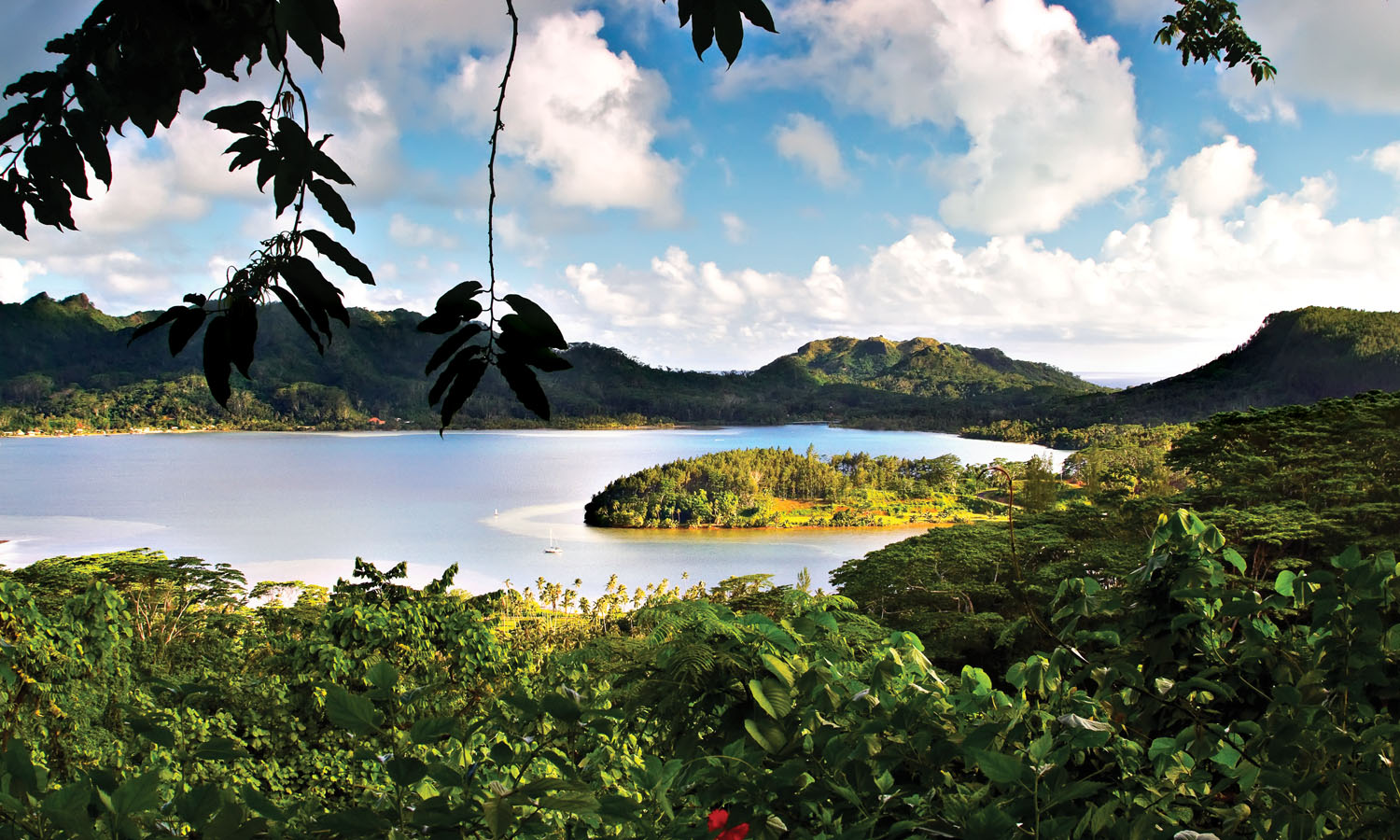
As soon as we arrive on Huahine, we hire some underpowered Yamahas. It’s 60 kilometres around the island, which is structured like Tahiti, with a Huahine Nui and a Huahine Iti linked by an isthmus, and our steeds manage much of it, with the notable exception of an outlandishly steep section on the west side of the island up to the belvedere or lookout. Putting along like a golf cart containing a sumo wrestler, our Yammies deliver us to the lookout and its cloud of ravenous mosquitoes, through which we take in an expansive confluence of blues and greens of inlets, lagoons and forested hills. By the time we return to our digs, the colour palette has changed to yellow, orange and ochre. The sun drops below Taha’a, setting it ablaze.
The next day we find ourselves on an isolated promontory of Huahine in the village of Haapu. Here, we find a clutch of petanque players and, after a few passes on the scooters, we climb delinquent-like through a hole in a chain-link fence to join them. A backdrop of bright water and mountains, the handful of singleted men and their almost dainty, chrome balls play out their game as if in provincial France. We engage in some banter about the weather “Chaud,” I remark, sweating profusely to emphasise the point. “Oui,” one of them indulges me, sweating only a little: “Très chaud.” It’s only when we scoot off, and around the rest of the island, that we realise this is one such scene of many. There is petanque, swimming kids and family gatherings the whole way around.
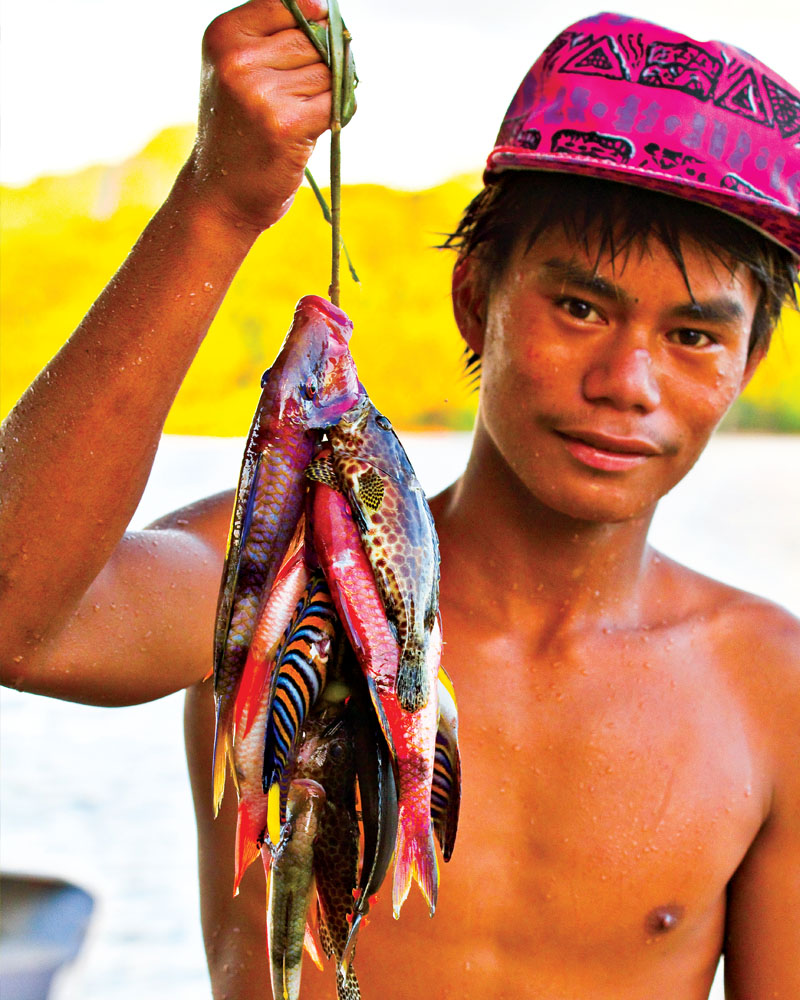
At the beginning of a slow dusk, near the island’s main village of Fare, we’re out on another promontory, watching an adolescent fisherman haul in his catch. His mum and dad wait for him, lazing under a small shelter. There’s a beaten-up Corolla hatch, with a boombox in the back playing something 90s. Then fisherboy turns around, with the most incredible riot of rainbow-splashed fish I’ve ever seen. It’s like a scaly disco ball, dangling at the end of his line. He chucks the fish in the boot where they slap against the boombox. We hop on our scooters, wave goodbye, and ride into the sunset.
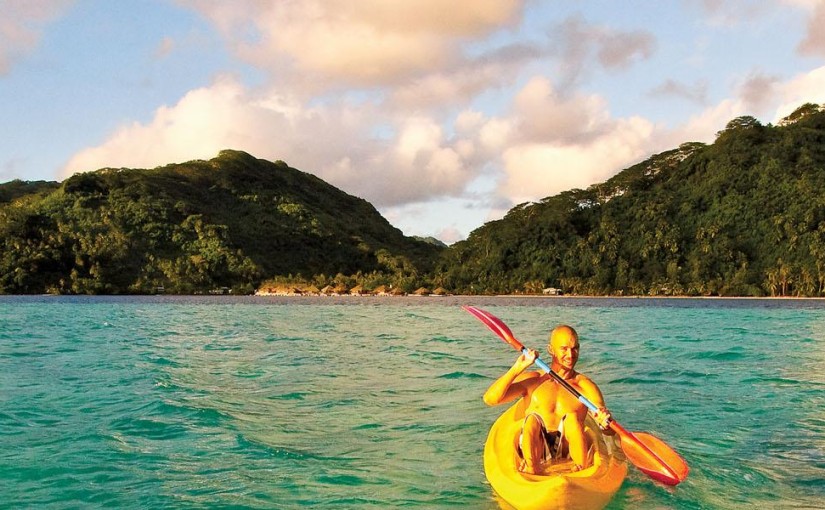
On our last afternoon on Huahine, we’re paddling out near where the reef drops off into the ocean. We’ve had a go at the heavy wooden outrigger canoe that is the national sport here, the va’a, but we ended up going round in circles and traded it for two plastic kayaks. The lagoon is so perspex blue it’s like an artist’s impression of how a lagoon should be. A ray smudges grey along the bottom. The sun is low, the water blood warm, and the sprawling amorphous shape of Huahine appears as nothing more than a green lump on the horizon. We contemplate paddling around the coast to the stunning, fjord-like inlet where we’d seen the fishy disco ball. Stroke by stroke, the lagoon turns purple, blends into the sky, and I can already taste tonight’s vanilla-sauced tuna.
There is nothing on earth like Tasmania’s MONA. From the rumours surrounding its enigmatic, casino-busting creator, David Walsh, to its cavernous spaces more akin to a Bond villain’s lair than an art gallery, Australia’s largest privately funded museum has fast become one of the country’s seriously hot spots.
If you’re thinking it’s not worth hopping Bass Strait just for a museum, then think again. Twice a year, Walsh and his minions bring Tassie to life with MONA’s dual festivals: Dark Mofo in June and MONA FOMA in January. The two seven- to 10-day events are extensions of the museum’s bacchanalian themes, fusing international and local art, music, food and drink into a defiant and ballsy contradiction to any festival Australia has on offer.
In one day you can fill your stomach with locally sourced food while listening to Tibetan throat singing, experience sensory overload as international composers choreograph a giant industrial laser, and lose your mind to The Presets as they blow the roof off Macquarie Wharf.
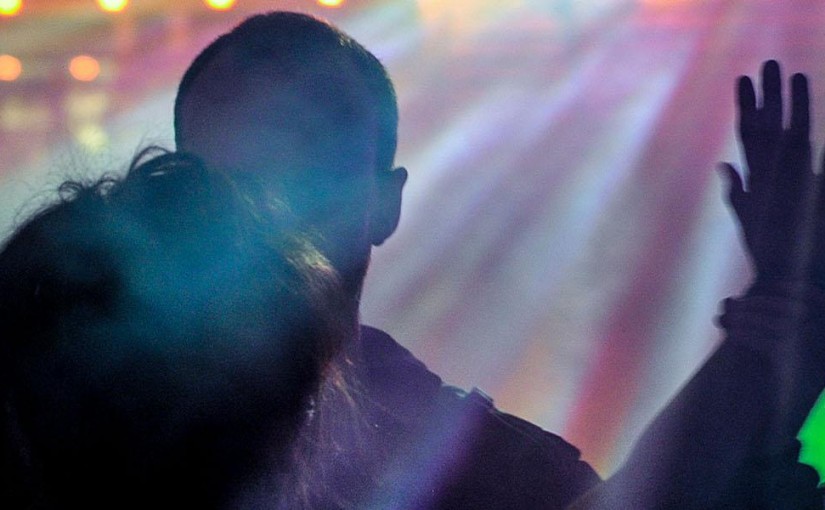
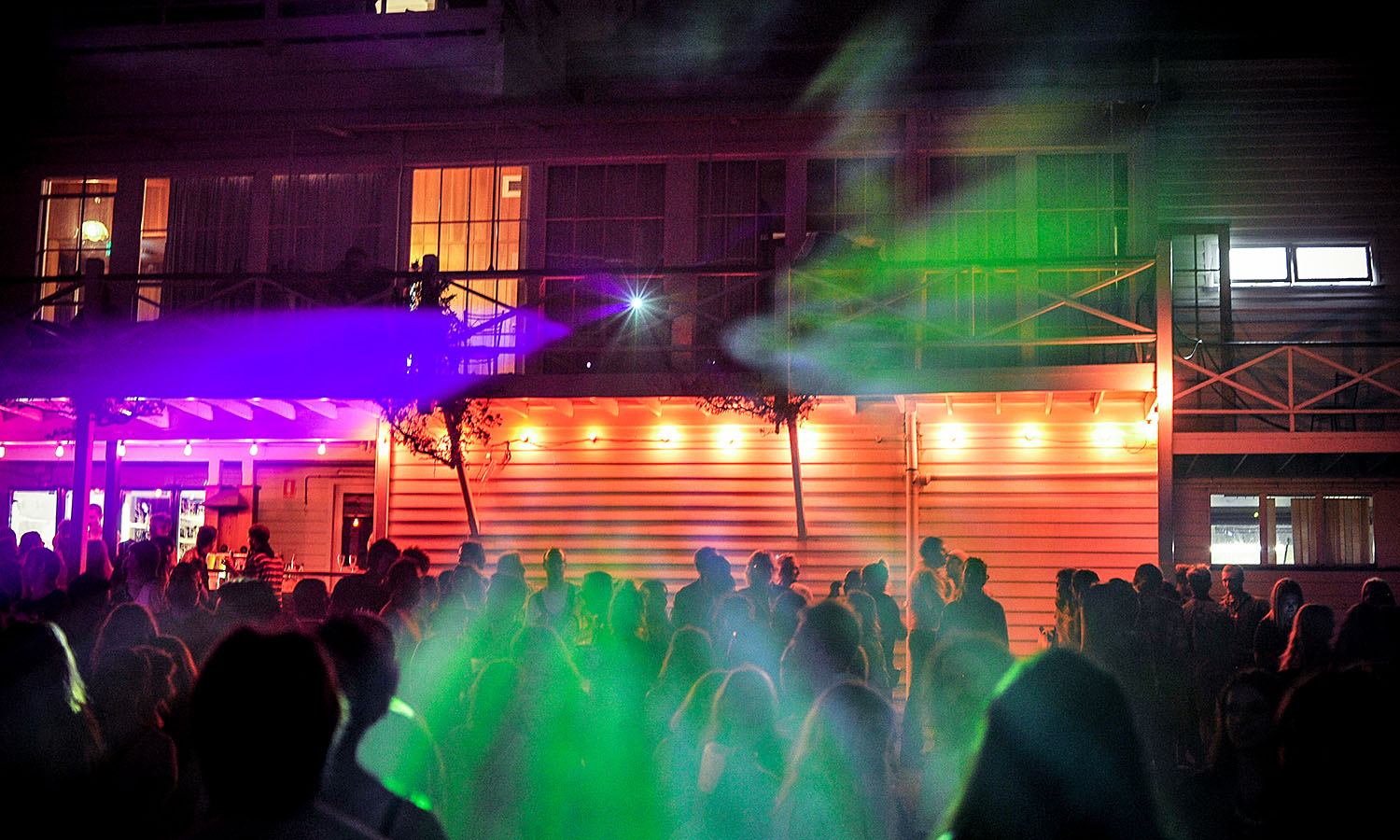
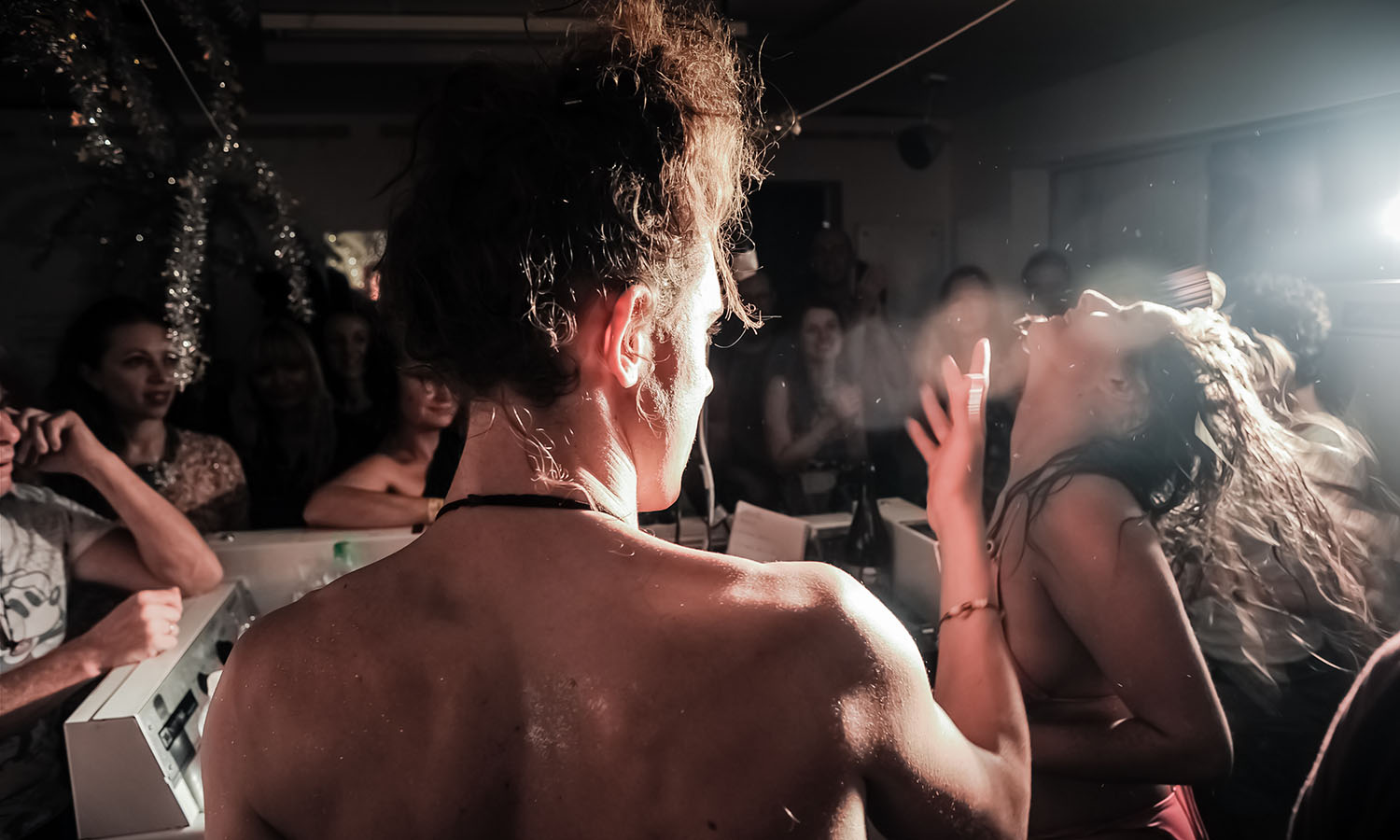
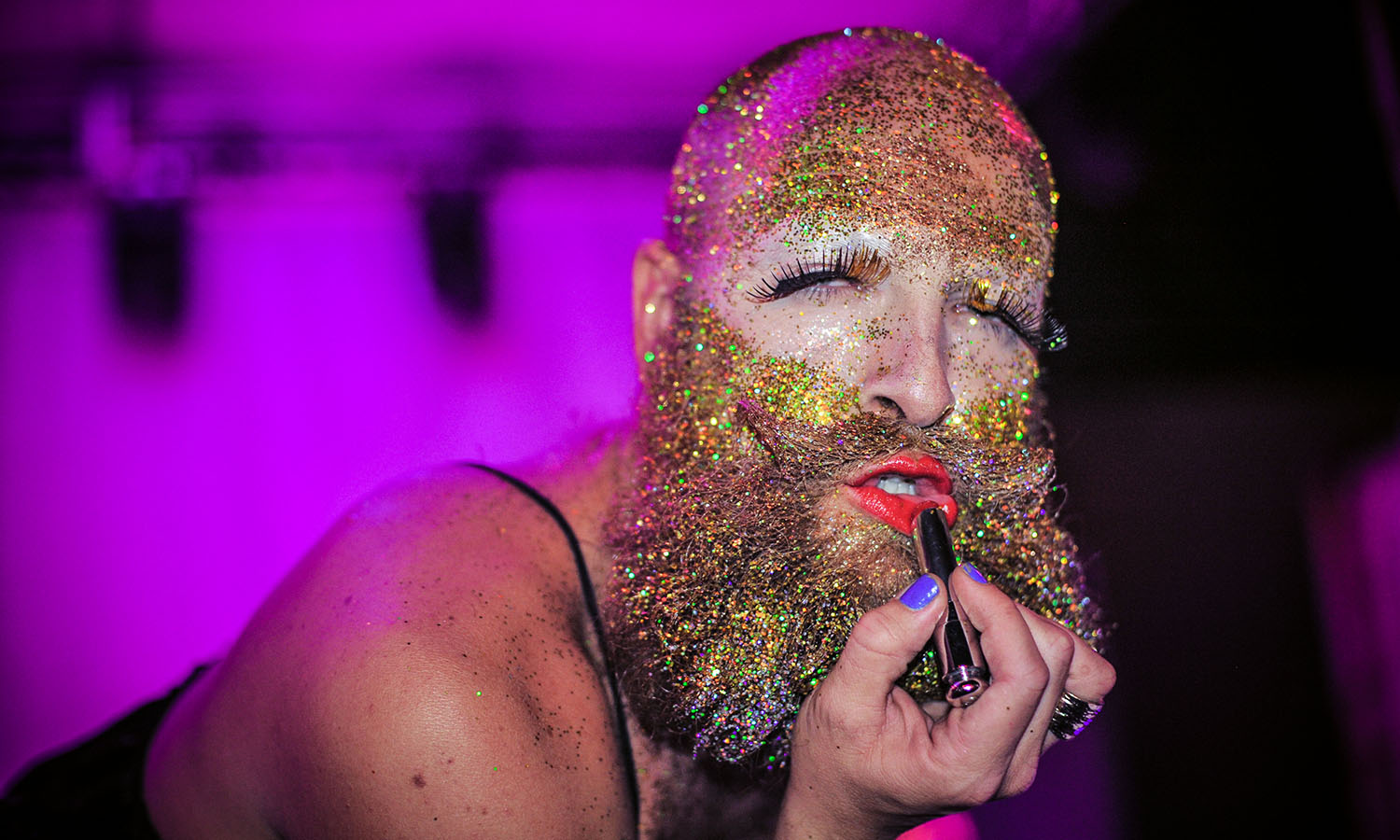
The best part, however, takes place after the sun goes down. Without a doubt one of the highlights of both events is Faux Mo, the festival’s after-party. Held on each evening of the program, this sweaty, hedonistic communion will have you cheek to cheek with transvestite burlesque dancers, throwing your hands up in the air in a converted coin laundry and wishing on everything you hold dear that they don’t announce last drinks.
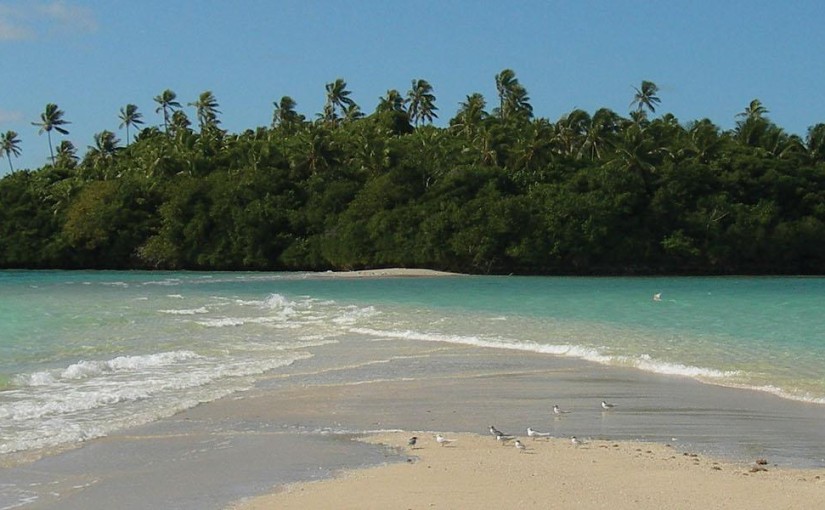
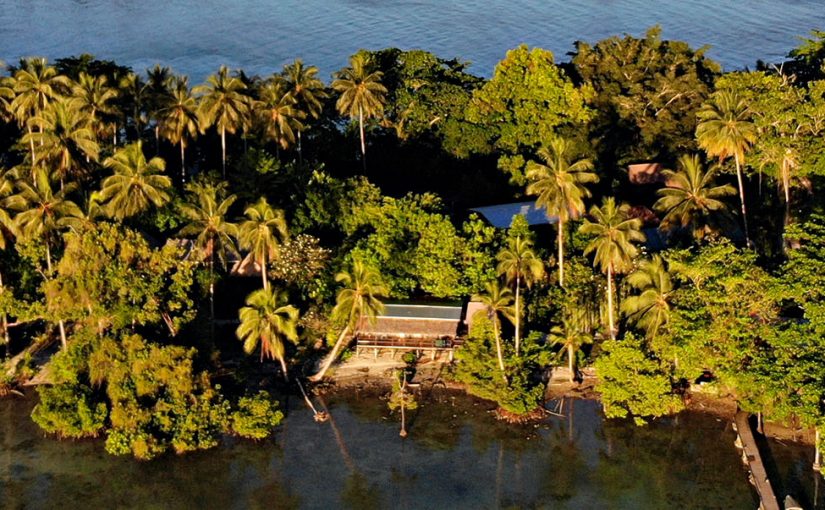
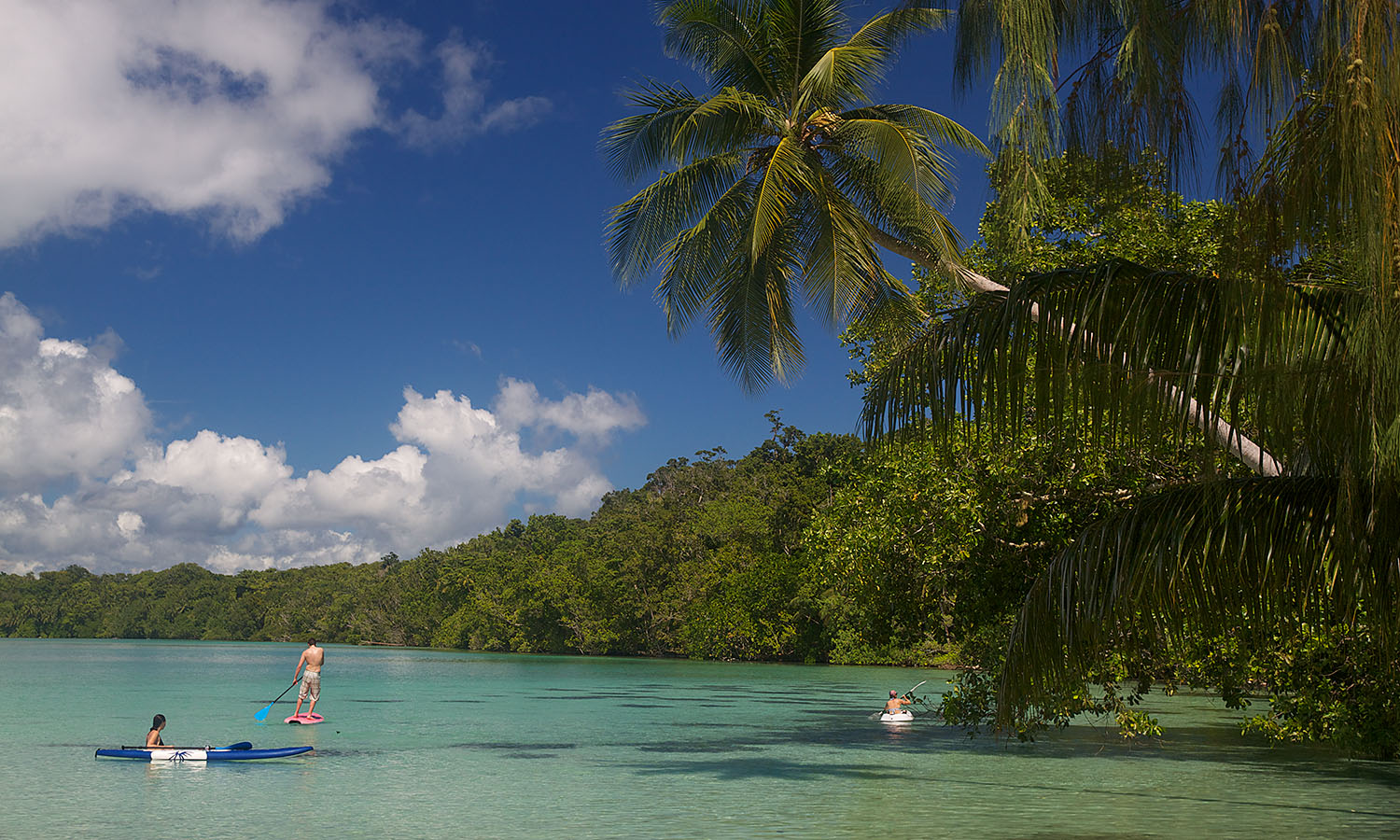
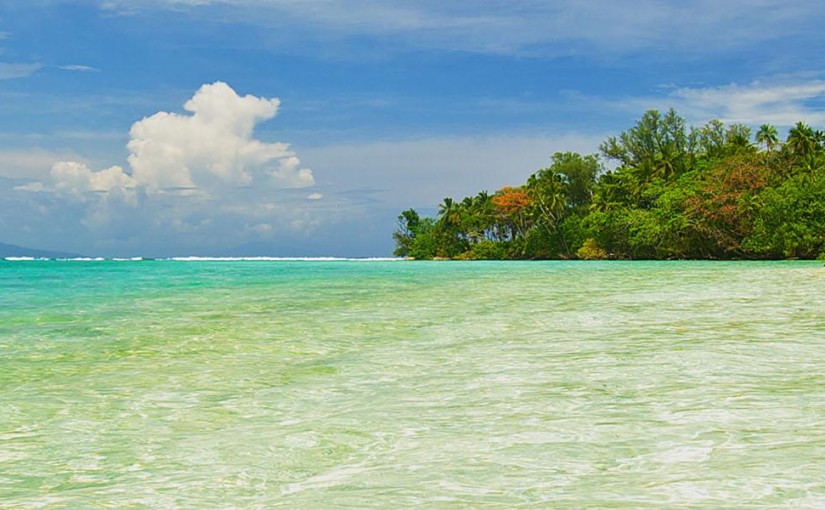
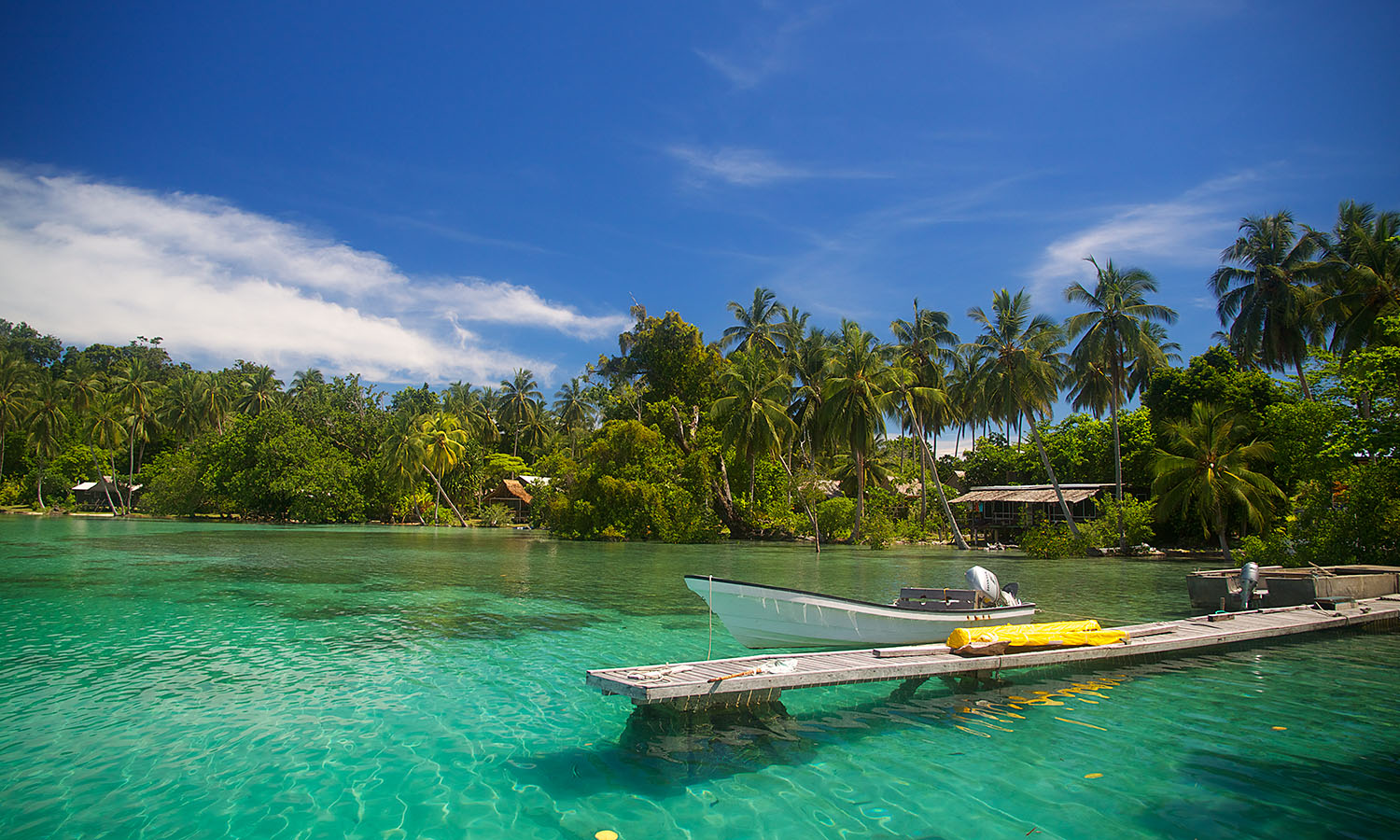
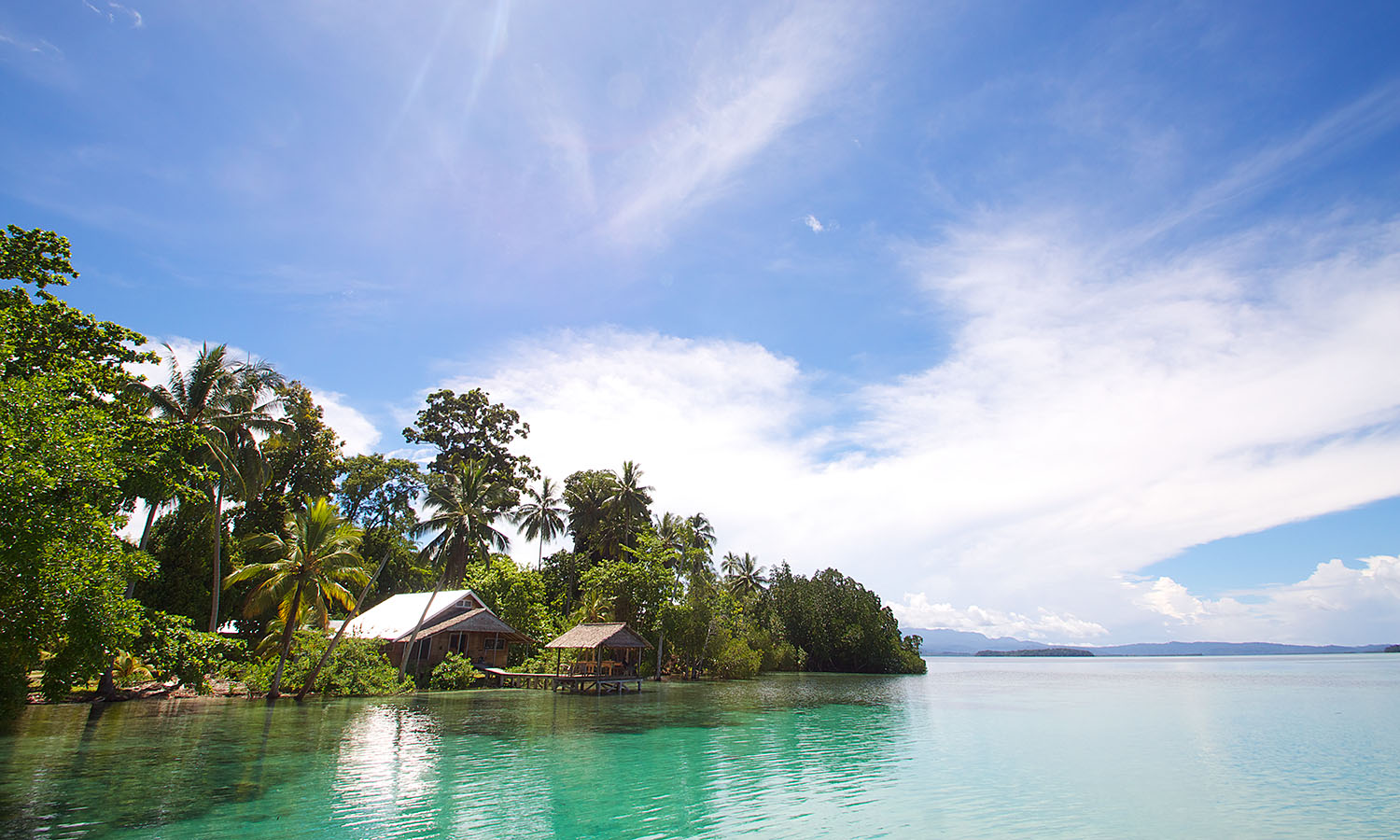
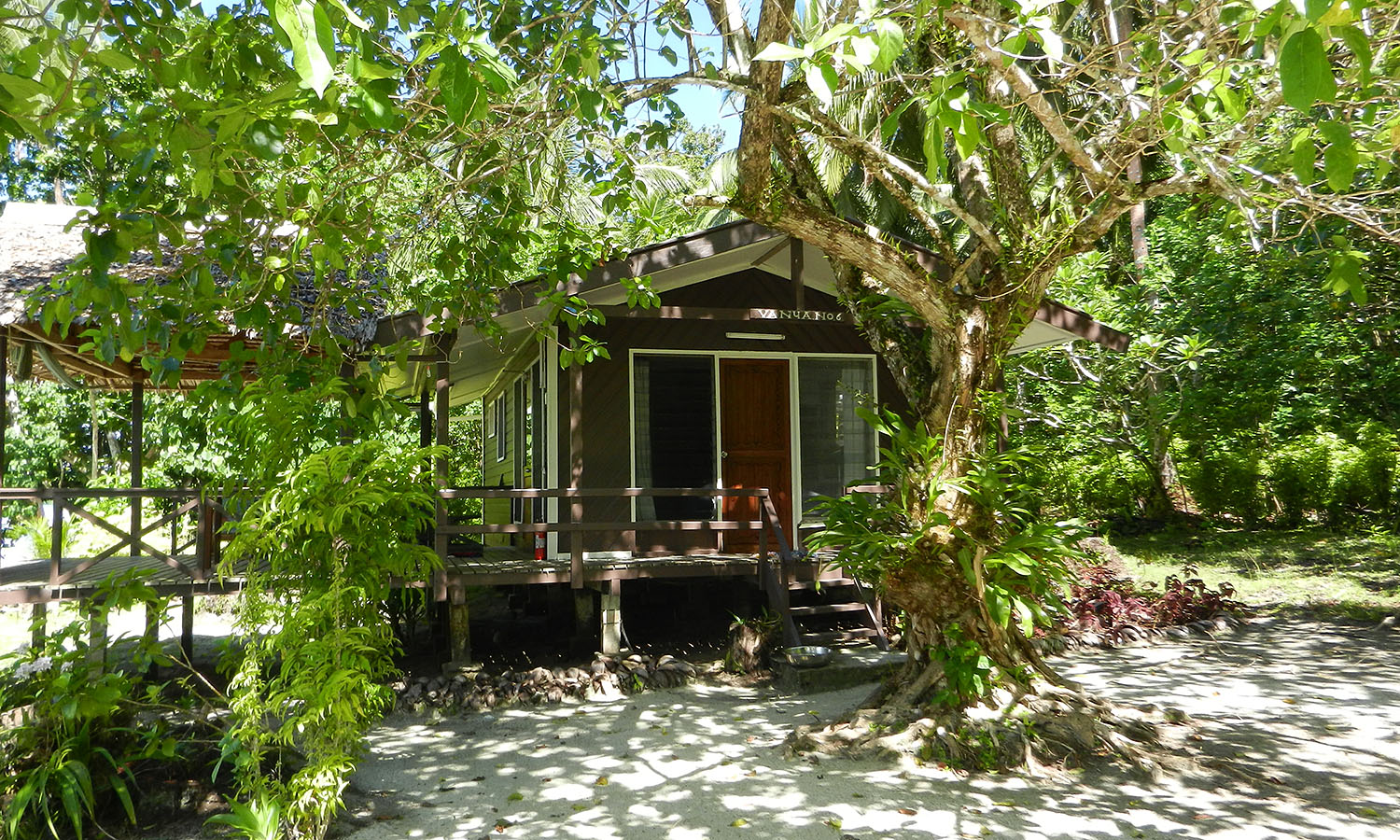
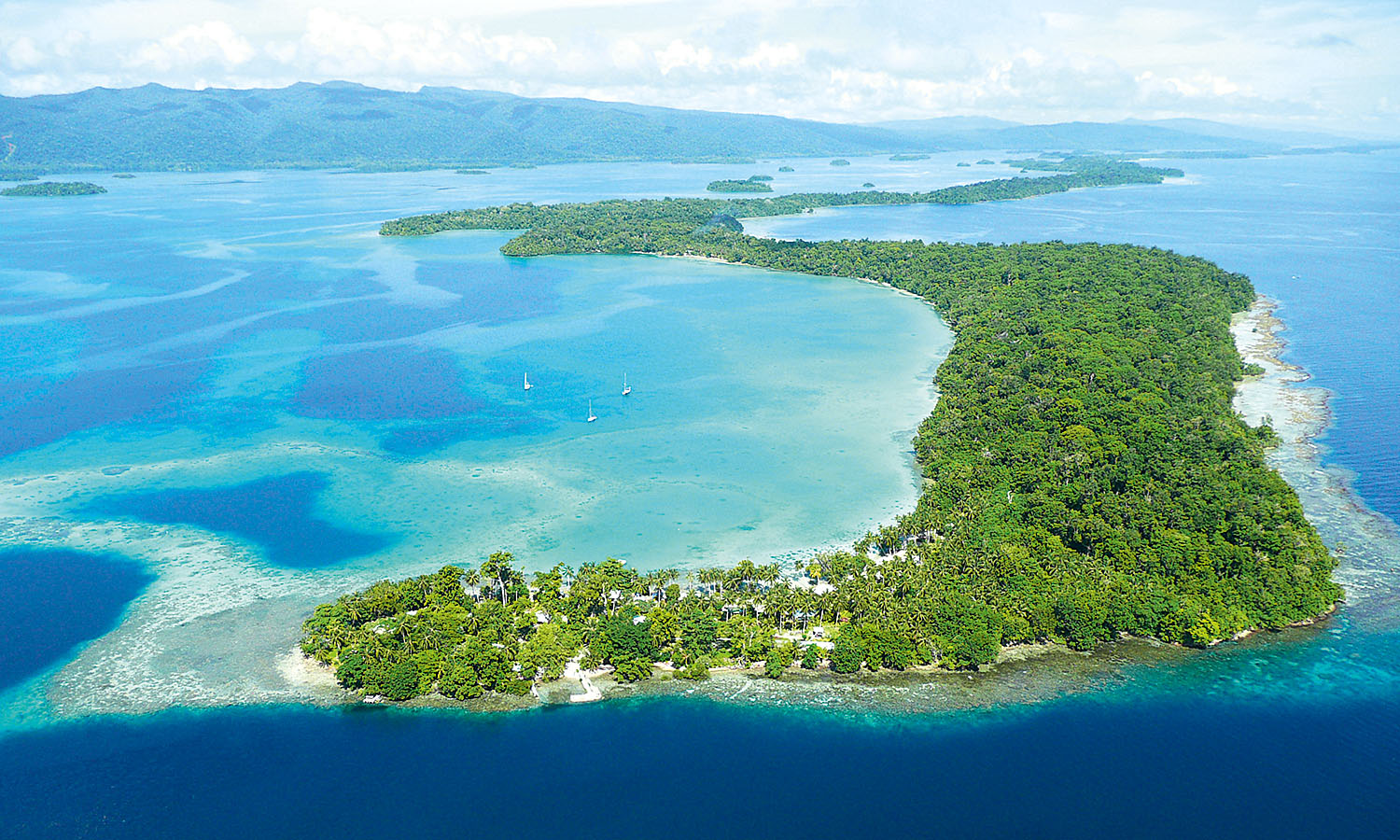
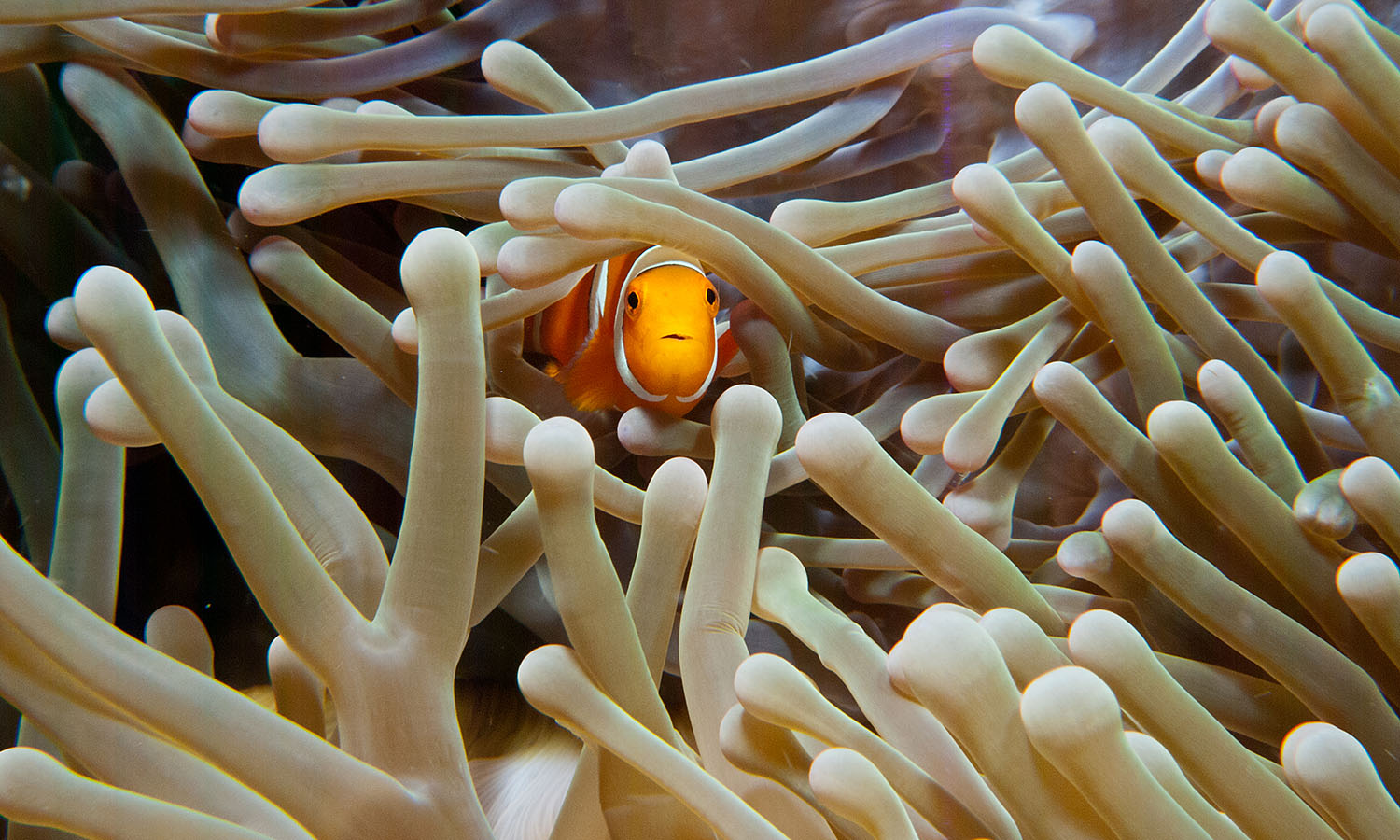
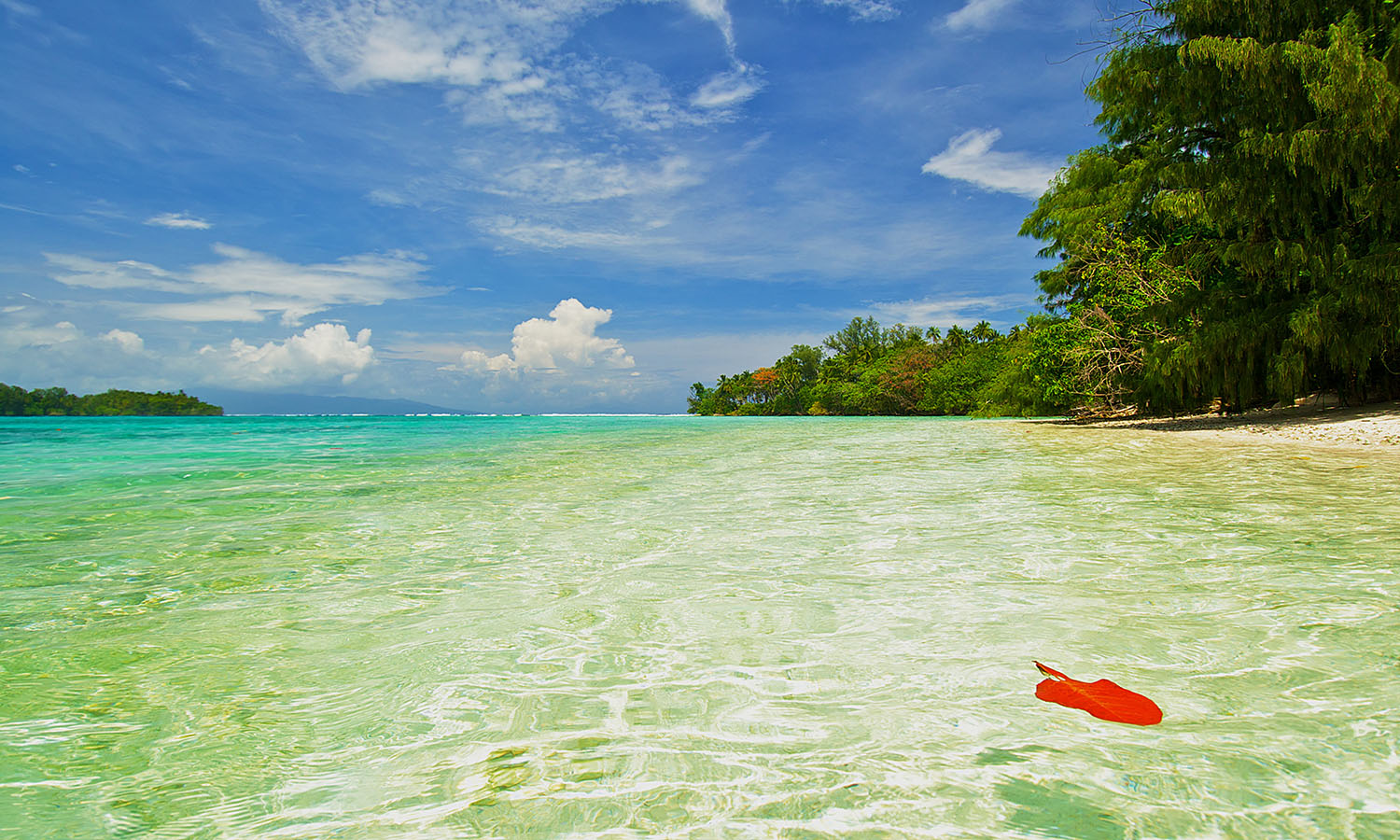
This little tropical getaway is situated at the edge of the longest lagoon in the world, the Marovo Lagoon (nominated for World Heritage listing). The diving and snorkelling are fantastic, with the seaward edge of the island dropping down to an incredible 2,000 metres. There are six spacious bungalows for families or couples, two units and two guest rooms. It’s the type of place where 20 guests is considered a full house. Uepi is the epitome of a lost island escape but with all the comfort trimmings.
The Solomon Islands is a country just waiting to be discovered and Uepi is a must on that adventure.
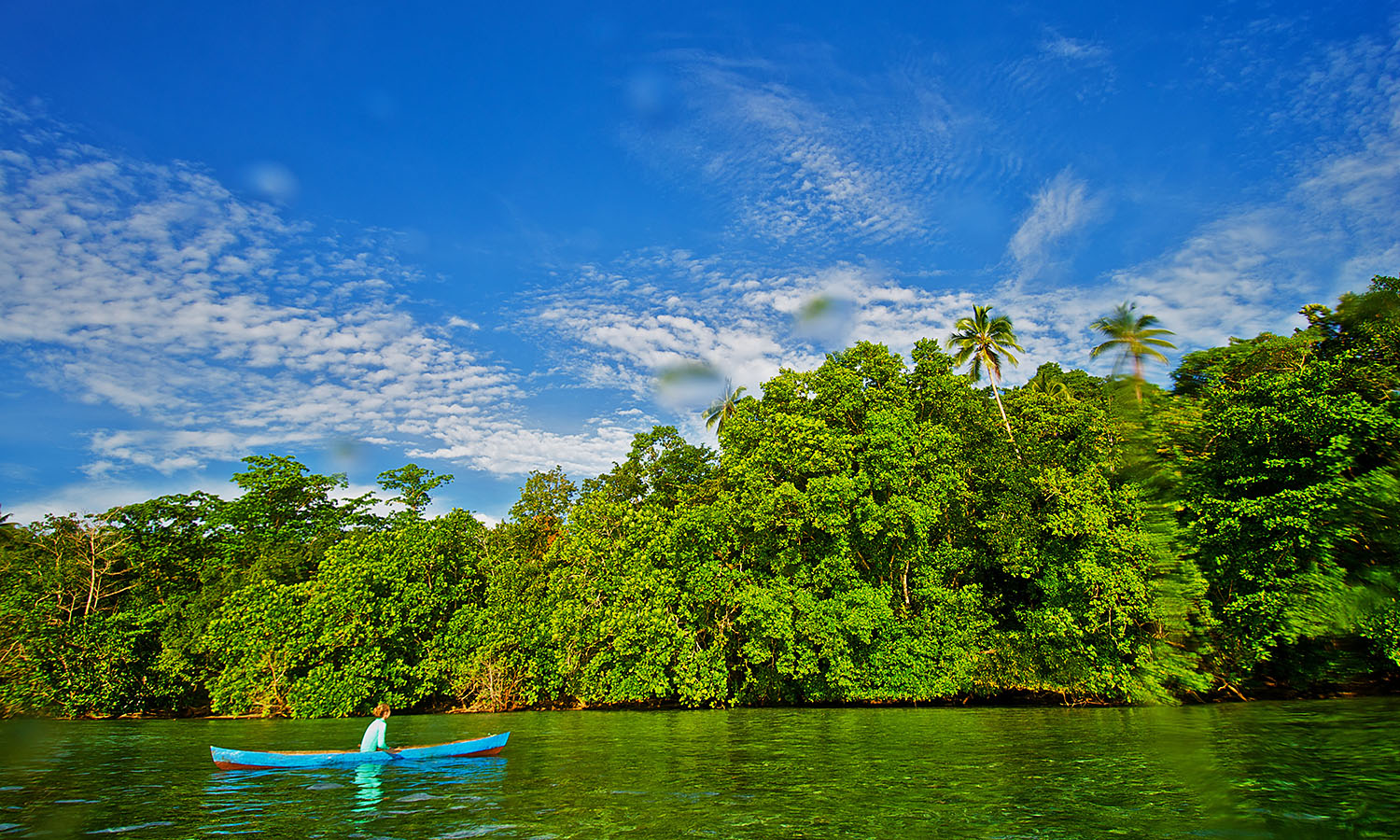
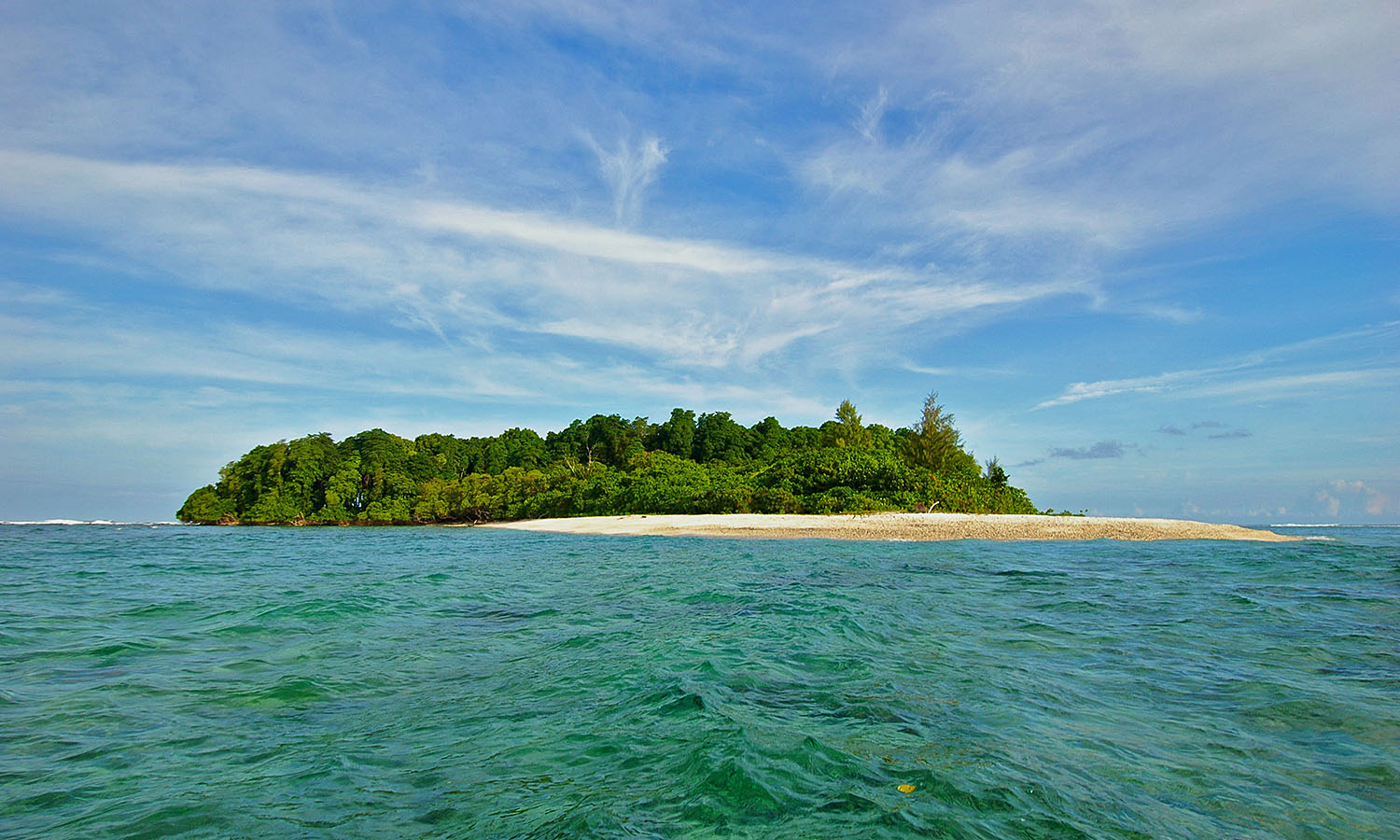
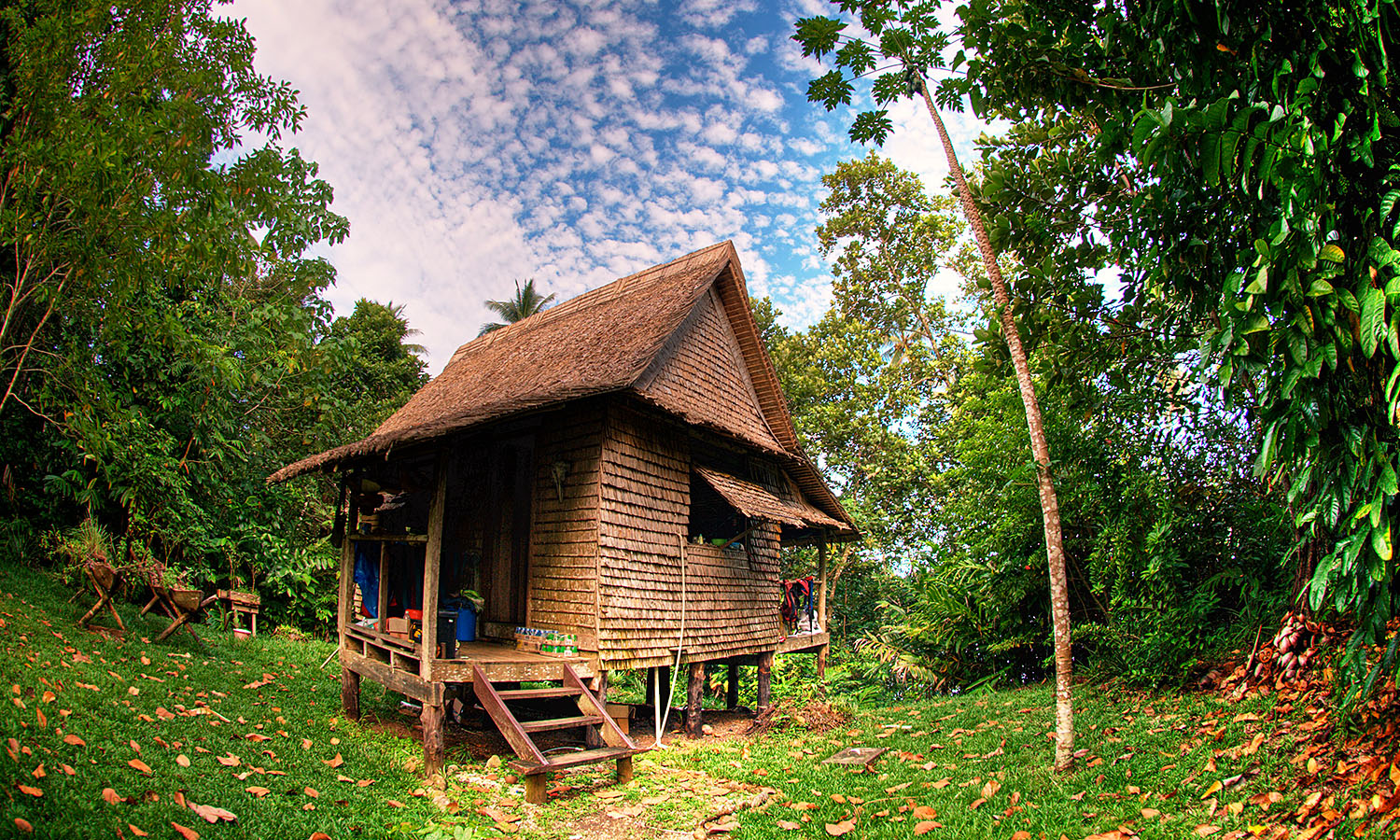
Known as a ‘conservation jewel,’ Tetepare is a unique, locally owned and managed eco lodge, housing only 13 visitors at a time. You’ll sleep in a leaf-house set on the edge of the rainforest, close to a sparkling azure lagoon. Explore rich coral reefs and cultural sites, assist rangers with conservation work and snorkel in one of the largest marine protected areas in the Solomons.
 (
(