If you’ve paid more than a passing glance at those lists telling you where to visit before anyone else gets there, you may have noticed Colombia turning up with alarming regularity. It’s easy to see why. After decades of being off limits due to violence and corruption, there’s been a massive turnaround, with the country now deemed safe for travellers. Which is perfect, because there’s plenty to discover, whether you’re the type who delves into urban landscapes or takes off, pack on back, ready to hike to adventure.
Pristine Caribbean coastline one day; the Andes the next. This is one of the most biodiverse countries in the world and its landscapes range from desert to savanna, Amazon jungle to snowcapped mountain peaks.
Its capital, Bogotá, is super stylish, but not a city driven by the needs of tourists. Instead, the traveller enjoys what the locals do. And, each Sunday, the main roads are closed to motor vehicles to make way for the residents who walk, bike and skate to their hearts’ content.
Medellín, famous for its most infamous former resident Pablo Escobar, is now the fashion capital of South America. It also has an incredible elevated Metro system that includes two Metrocable lines climbing high into the hills surrounding the city. An all-day ticket to scale the heights costs less than a dollar.
The country’s third-largest metropolis is also the world’s salsa capital. Cali, one of the oldest cities in the Americas, also has a specific forward–backward style of the sultry dance called salsa caleria.
Once you danced, shopped, eaten and partied (did we mention Colombia hosts one of the biggest Carnival celebrations?), head to the little-visited northern pocket of the country, La Guajira, where you’ll find flamingos, sand dunes, swamps and Wayuu villages. Or perhaps lost cities are more your cup of finely blended Colombian coffee. A three-day walk through the jungles and rivers of Sierra Nevada will take you to Ciudad Perdida, built by the Tayrona people hundreds of years before Machu Picchu was a glint in the Incas’ eyes.
From north to south it stretches more than 4300 kilometres, yet take a look across it from east to west and Chile, at its widest point, only just makes it to 350 kilometres. If you intend to explore its length you’re going to need a few months’ leave from work. Were you to catch a bus (the main method of overland transportation in the country) from Arica in the north to Punta Arenas in the south, you’d need about 70 hours – and a butt of steel.
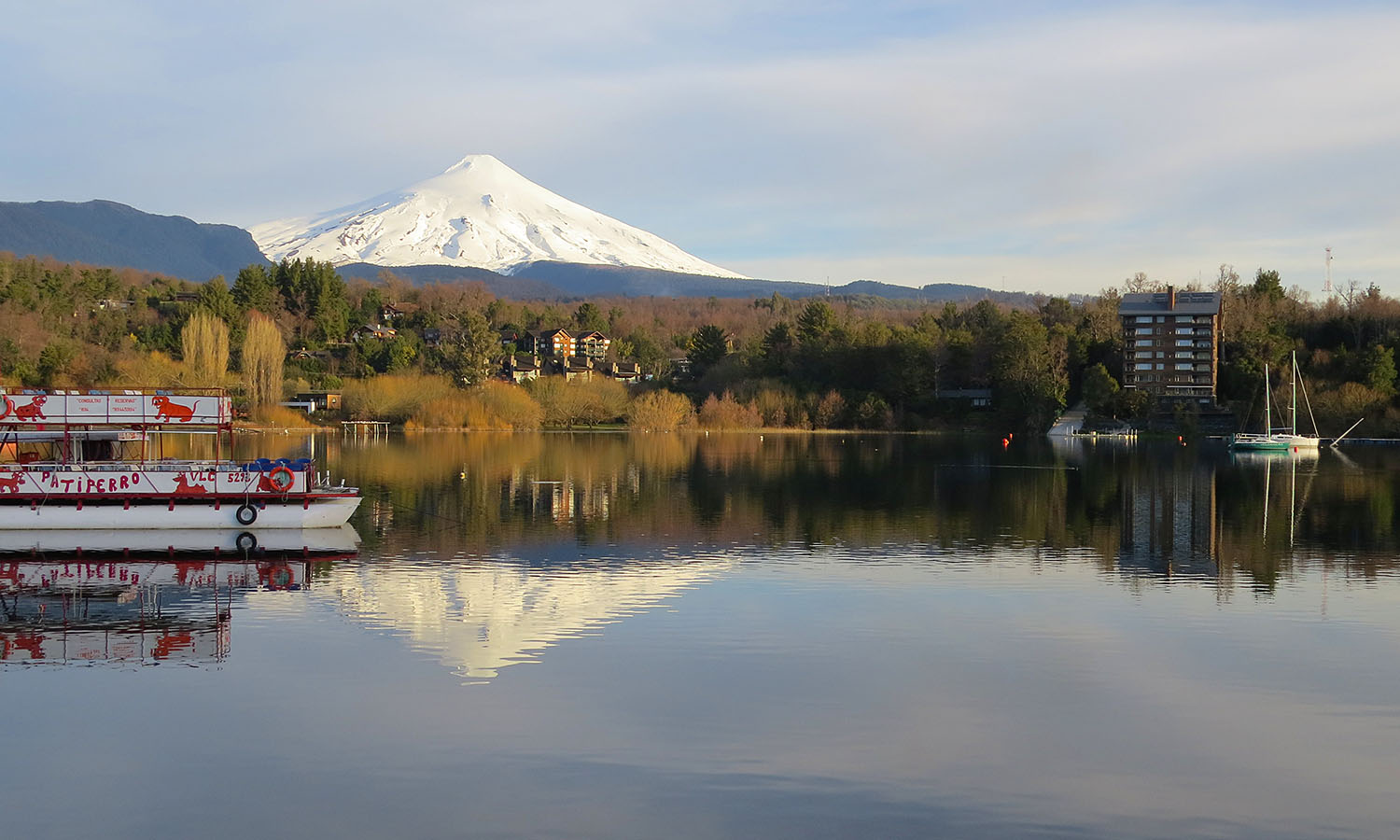
Hemmed in by the Pacific on the west and the Andes on the east, this amazing country boasts a landscape that straddles desert, volcanic peaks and dense temperate forest. In fact, the Atacama Desert, with its white salt pans and lava formations, is one of the most popular destinations for travellers to Chile. It’s also the driest non-polar desert in the world.
The central regions are home to ski resorts – Valle Nevada, Portillo and Termas de Chillán – with powder as good as any you’ll encounter in Europe (the average snowfall is six to seven metres), but without the huge crowds. An added bonus is the top-quality Latin après options.
In the southern reaches of the country it’s all about Patagonia and the Torres del Paine National Park, with its landscape of glaciers, lakes, rivers and mountains, including the three enormous granite peaks known as the Paine Massif. Popular with hikers, who may stray across guanacos (a relation of llamas), pumas and the tall, flightless Darwin’s rhea, the fresh powder of the highest peaks is also accessible to skiers who have the means to employ the help of a helicopter pilot.
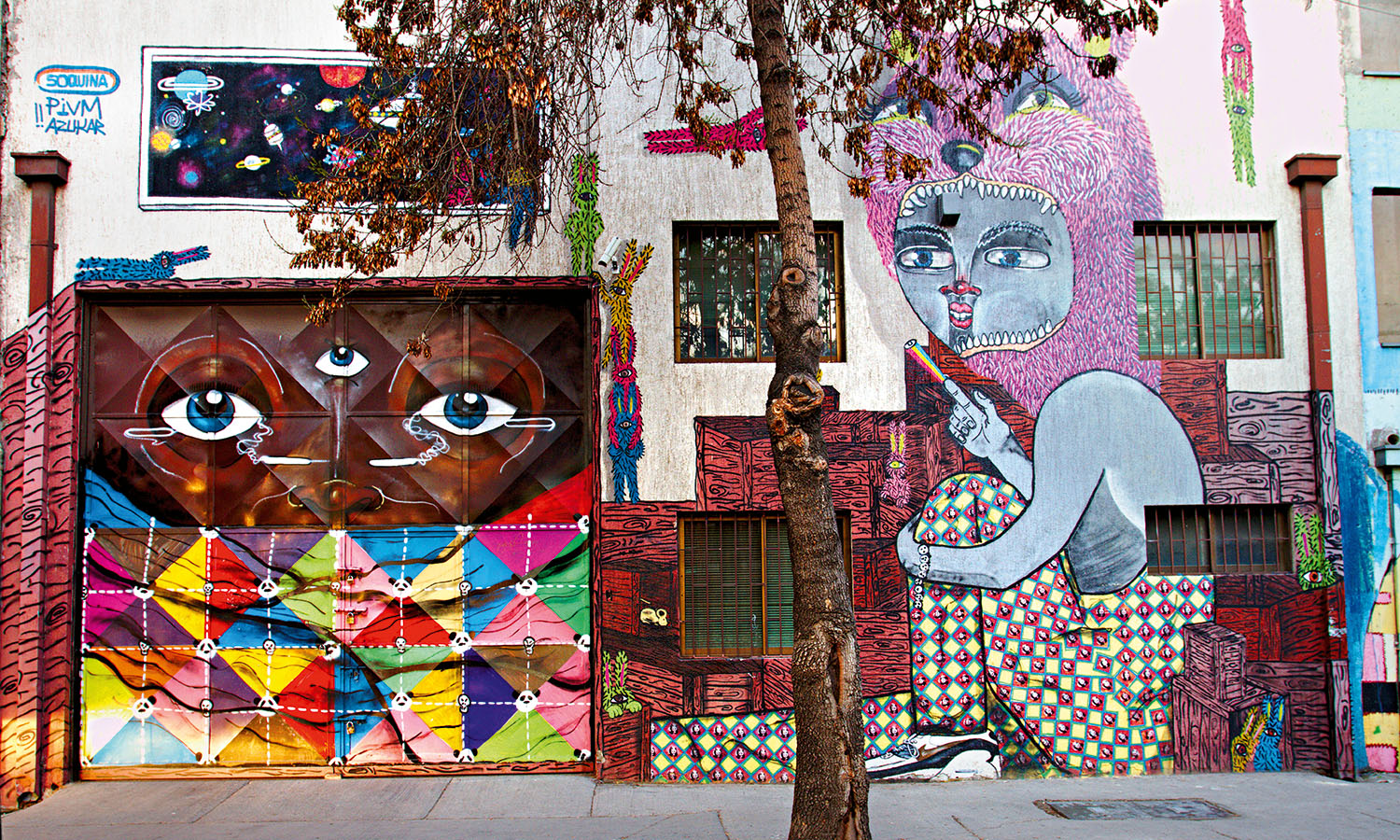
Santiago, one of the most popular points of entry to South America, is a vital city, with excellent architecture, shopping and nightlife. No trip to Chile, however, would be complete without a visit to the cool, seaside city of Valparaíso. This port town thrived in the 1800s, but fell on hard times when the Panama Canal opened in 1914. As the number of docking ships diminished, members of the city’s elite packed up and abandoned their mansions. These days Valpo, as it’s affectionately known, is in the throes of a cultural revival and, in 2003, was honoured with UNESCO World Heritage status. Artists have splashed cobblestone alleys with swathes of colour and new restaurants dish up some of Chile’s finest cuisine.
Beautiful beaches, bootylicious bods and brown skin all spring to mind when we think of this South American playground. But drag yourself out of the surf and away from the main cities and you’ll discover wilderness areas with more natural good looks than the people (hard to believe, we know).
Brazil is the biggest country, in size and population, of South America, and upholds its reputation for grandeur in many ways. Dive in the deep end of this wonderful country. You won’t regret it.
South America’s poorest nation happens to be one its richest in terms of attractions, natural resources and travel experiences. There’s culture aplenty with South America’s biggest indigenous population and an indigenous, socialist president. The locals can be a bit guarded towards westerners, which is not surprising given the history of foreign invasion and repression. Don’t expect capitalist standards of customer service – the Bolivians staunchly resist consumerism and have been extremely protective of the exploitation of their natural resources. But it’s also one of the cheapest places to visit in South America making it damn good value if you can stomach perilous bus rides and dodgy hygiene practices.
Horse ride in the wild west country where Butch Cassidy and the Sundance Kid met their demise, wander in wonder at the witch market in La Paz, mountain bike the so-called World’s Most Dangerous Ride, get ravaged by mozzies in the jungle, or visit the world’s biggest salt plain with its impressive Dali-esque landscapes. Plus, Spanish lessons here cost less than a coffee at home.
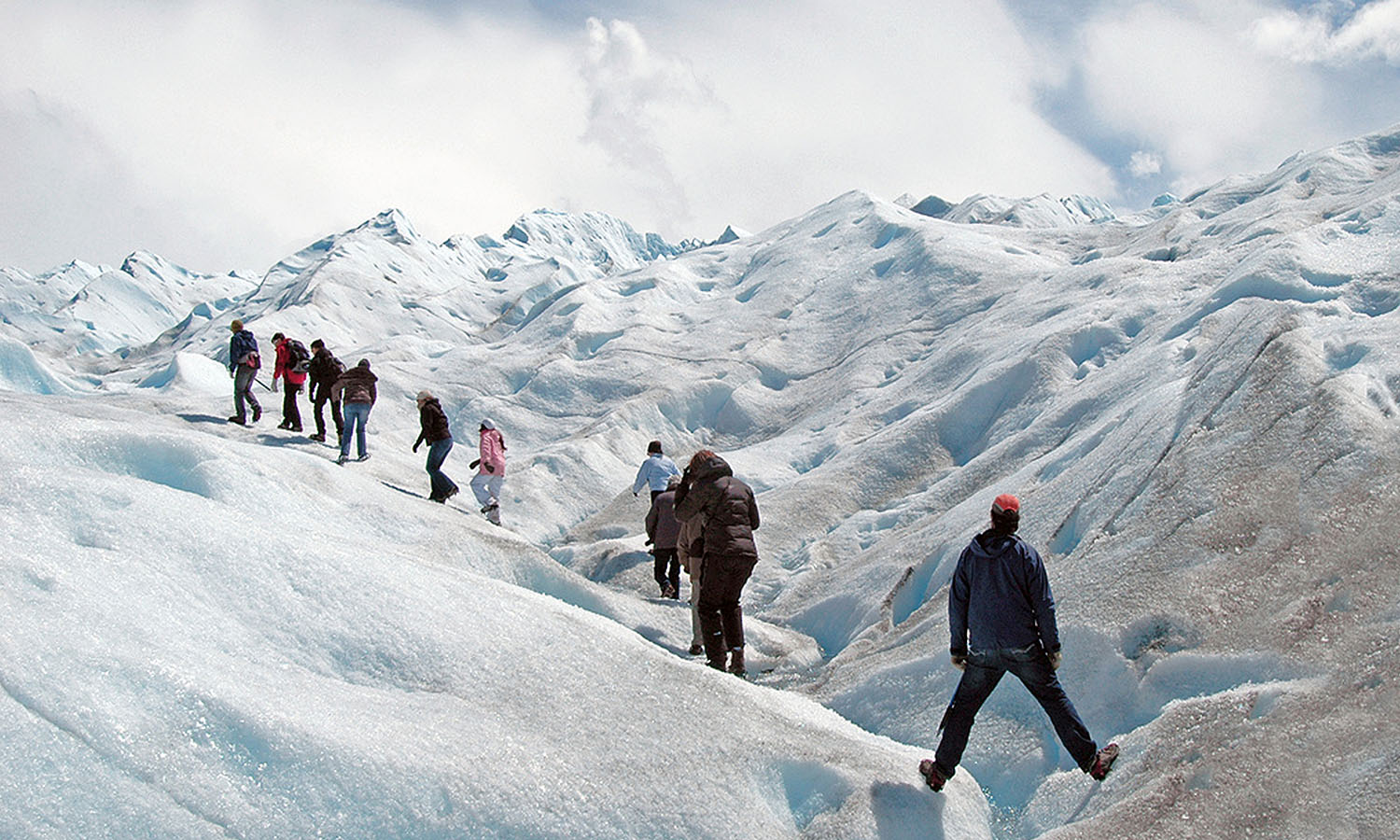
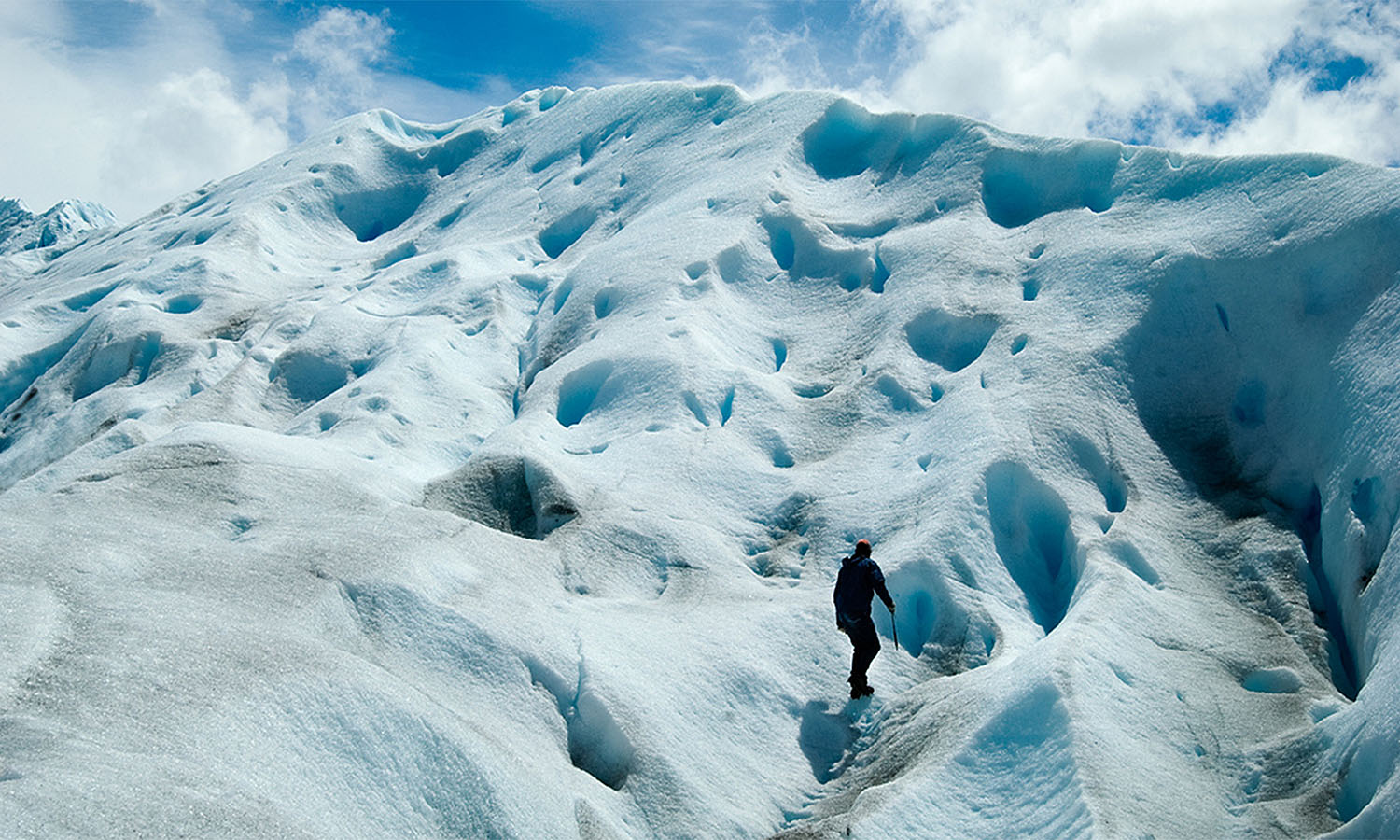
How can you top standing in the shadow of a monstrous Patagonian glacier measuring 250 square kilometres and a whopping 15 storeys high? By hiking it, of course.
From a boat on Argentino Lake, Perito Moreno Glacier looks impenetrable. Sharp, tooth-like peaks jut out of a seemingly endless wall of ice, and colossal chunks crumble into the water. But as the boat draws nearer, the peaks become more rounded and hikers appear like ants moving around the blue lagoons and caves. It’s time to strap on your crampons and straddle crevasses as you tackle Argentina’s most famous glacier.
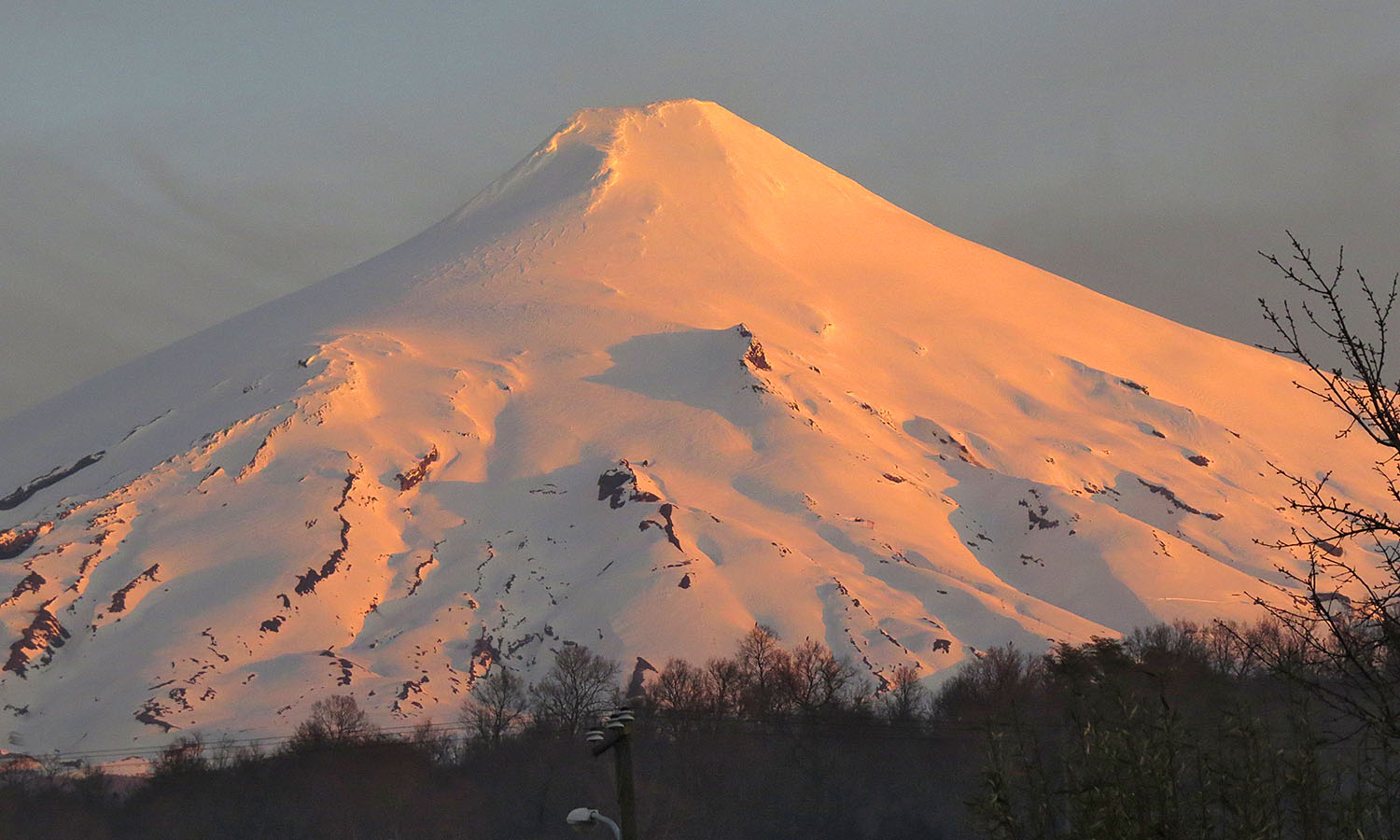
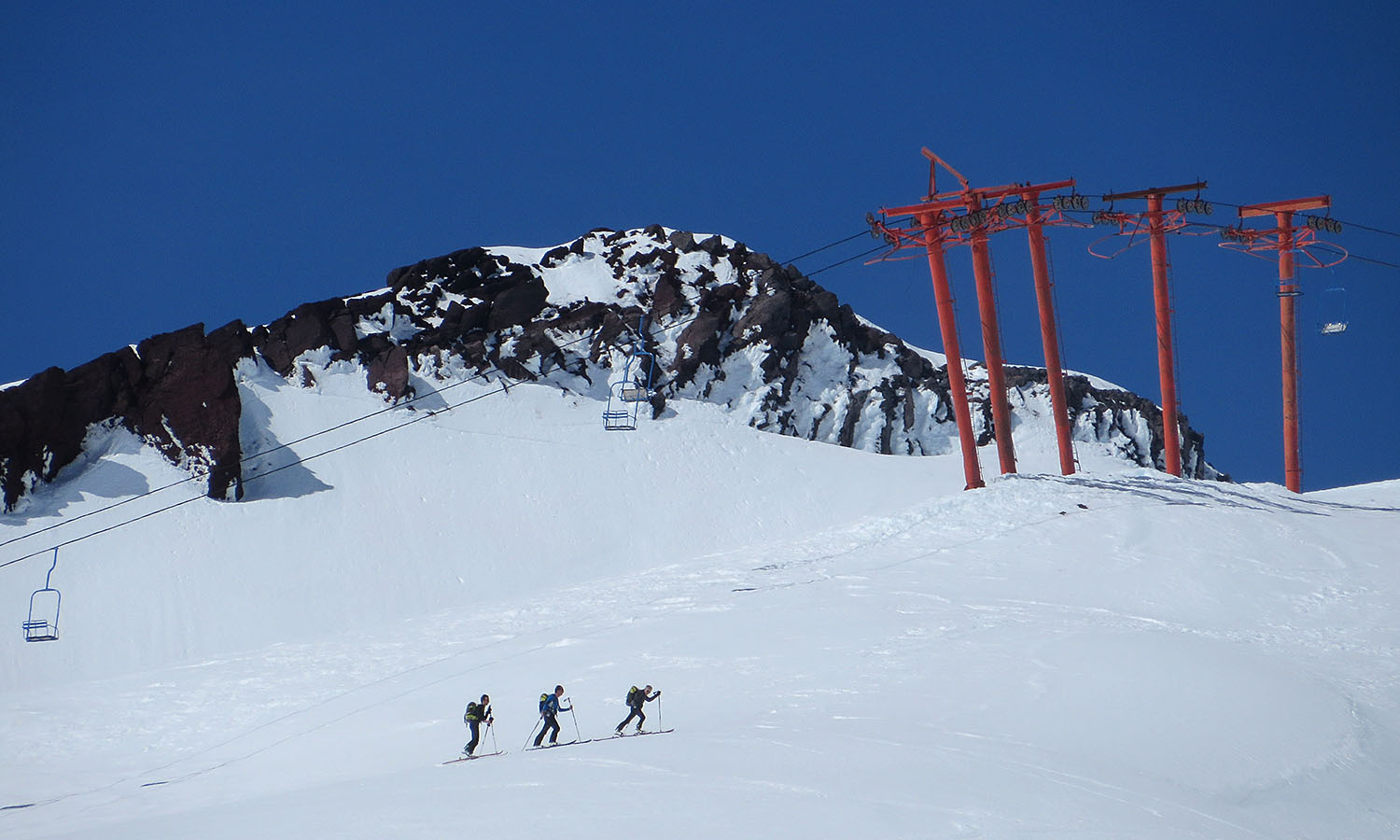
The powder runs of Chile’s Pucon Ski Resort are hot property. And not just because they combine downhill thrills with spectacular Andean views. The resort occupies a precarious position on the flanks of an active volcano. While setting up shop by a rumbling pit of molten magma may seem a little risky – the charred remains of the old ski lift can still be found – the naturally occurring half pipes and jumps make it a worthwhile endeavour.
If the slopes don’t satiate your adrenaline craving, switch your skis for crampons and hike six hours uphill to peer into the crater before strapping on your skis for what we imagine will be the quickest run of your life.
A taut mosquito net and a dusty yellow curtain are all that stand between my head and a spider the size of a bread plate on the window a metre away. The day’s first light has created the perfect, albeit terrifying, silhouette.
Is it on the inside or the outside, I wonder. Freeing the edge of my carefully tucked-in mosquito net, I slip out, move closer and ever so slowly pull back the curtain. Inside! My inner sook screams as I dive back into bed and tightly stuff the mozzie net back in.
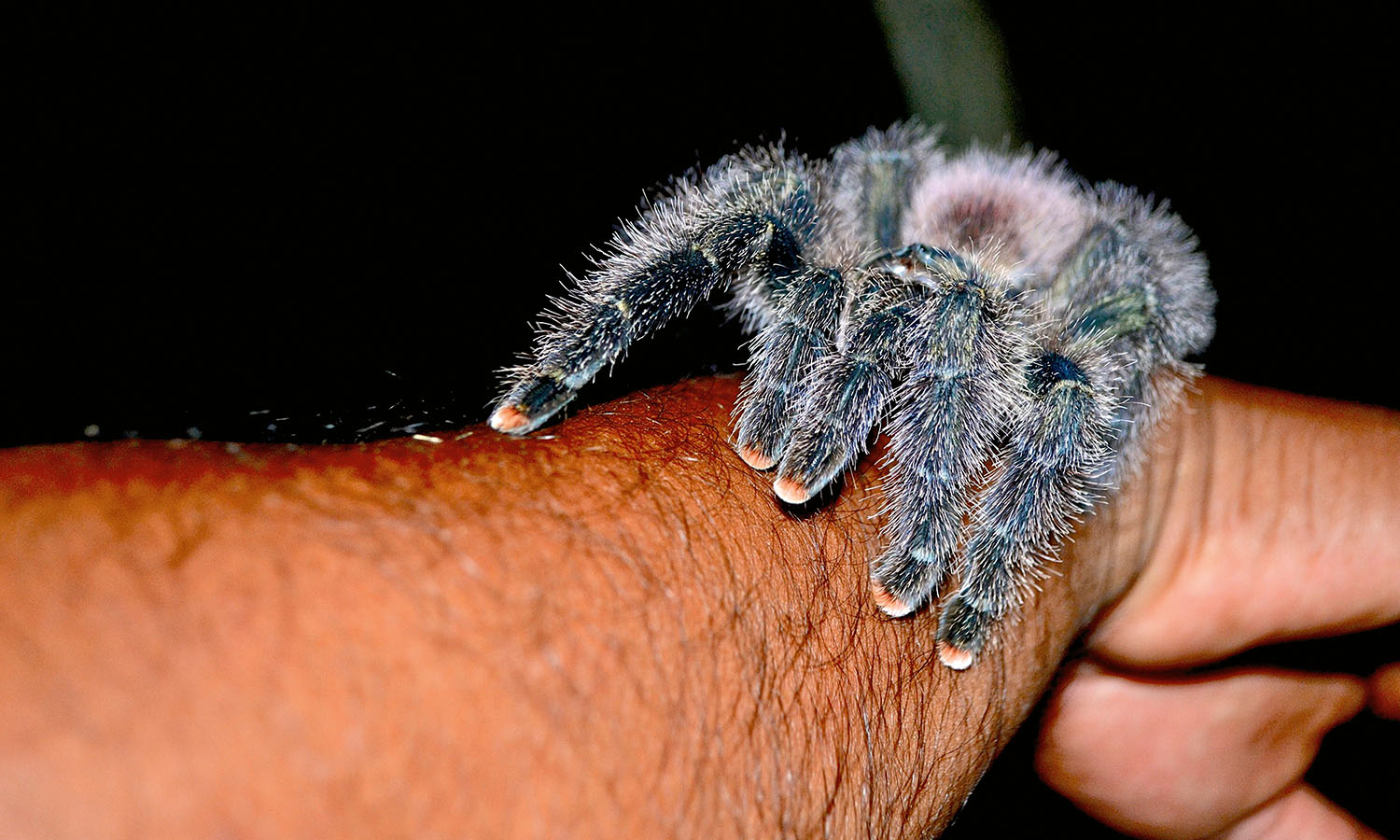
Finding myself within arm’s length of hairy, scary arachnids is something I expected when I signed on for an eight-day Amazon eco-adventure with Pulse Tours. Still, it’s one thing to conceptualise encounters with such creatures, another entirely for it to become a daily reality. When jungle guide Victor takes a large pink-footed tarantula from a thatched roof and offers it to the group, I demur while the others snap photos of it walking up their arms. Victor even lets it crawl across his face.
For four days, our small group will trek into the Amazon jungle before spending the remainder of the tour at a spiritual centre participating in the region’s shamanic rituals. The route is a twenty-first century reprise of parts of the more rugged Gringo Trail blazed throughout the 1960s and 70s by seekers like brothers Terence and Dennis McKenna – psychonaut pop philosopher and leading ethnopharmacologist, respectively – and Beat Generation poets William S Burroughs and Allen Ginsberg. In those days, gringo ‘seekers’ stepped off the plane into a true unknown, cultivating allies and bartering for information among mestizos (people of mixed race) and Indians from more than 50 tribes. For many of these people the Spanish language was exotic, never mind Inglés.
There are just eight of us – all men, all in their twenties except for me (53 in chronological years, 23 in my mind) – accompanied by Pulse’s owner Dan Cleland and his partner Tatyana. The combination of eco-adventure and spiritual quest was the siren call for everyone in the group, which I later nickname the Ayahuasca Test Pilots, after a sign painted on a mototaxi. Brotherhood of the Screaming Abyss had already been snagged by Dennis McKenna as the title for his autobiography.
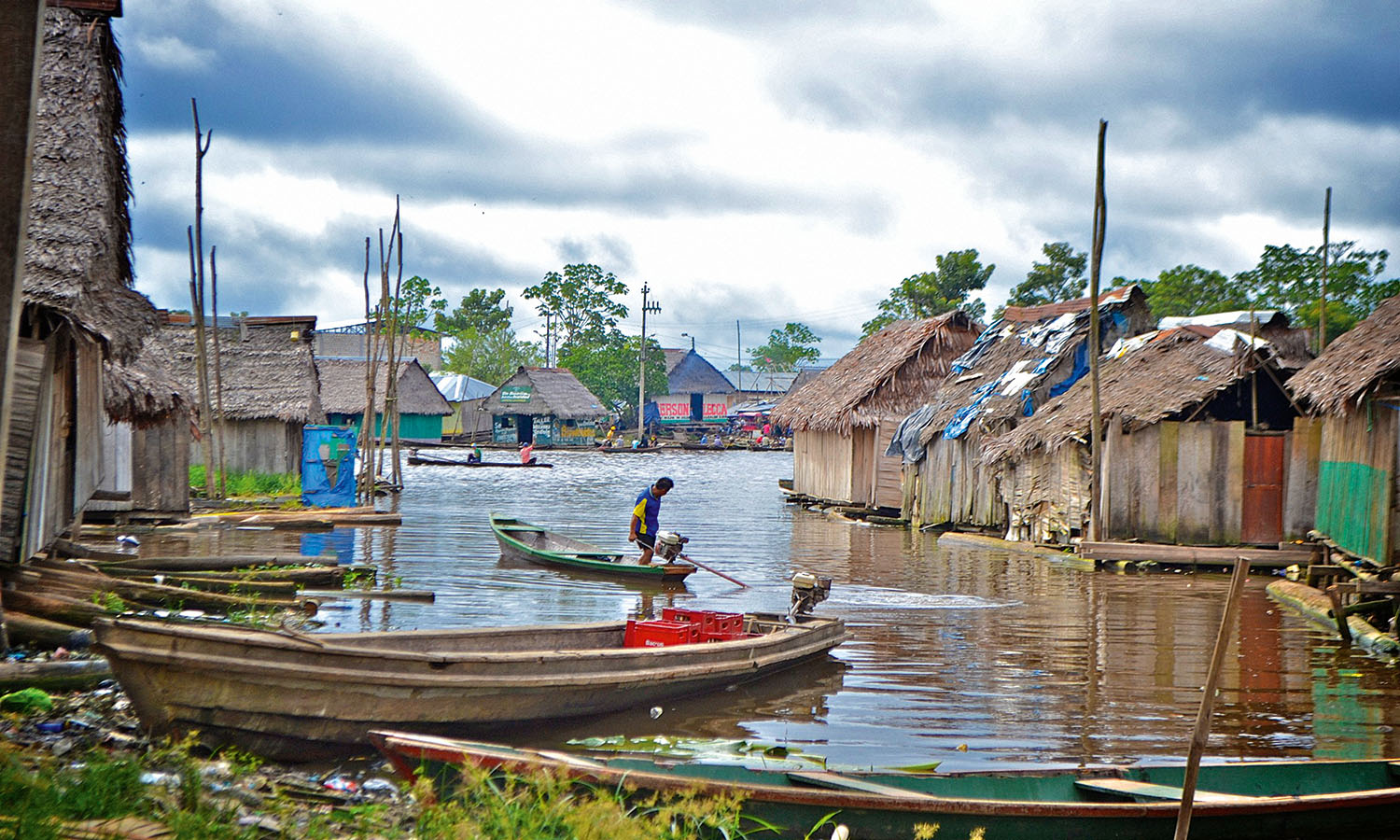
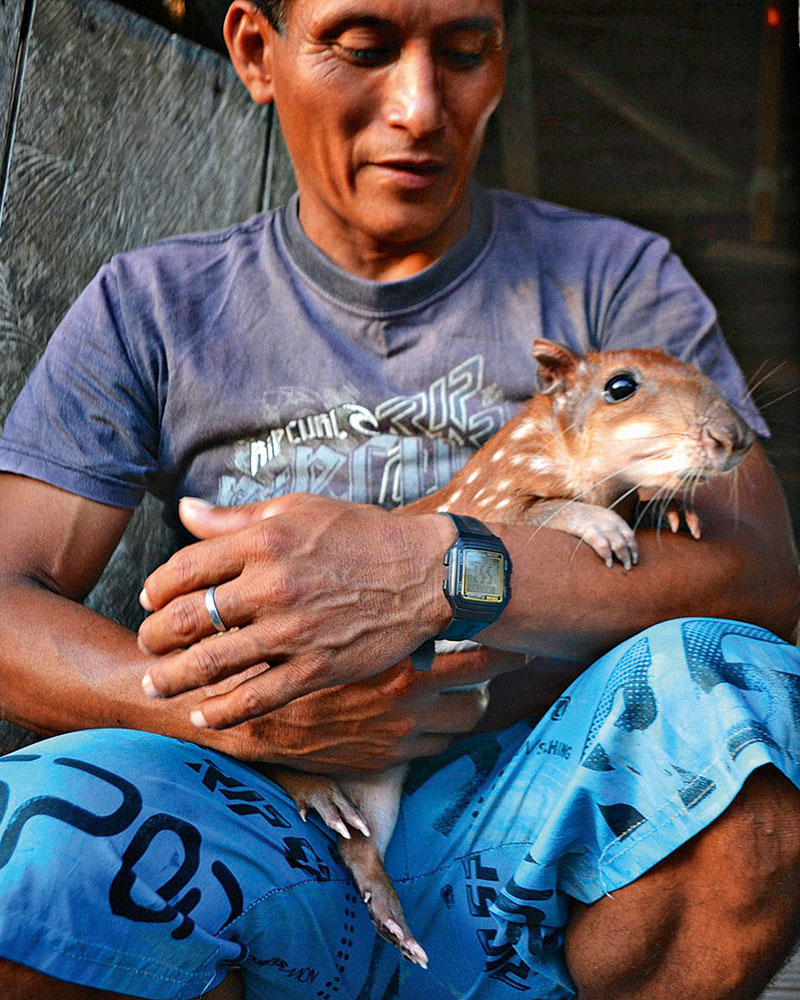
Our group bonded in Iquitos – first over cerveza (beer) at Al Frío y Al Fuego, a restaurant and bar floating on the Itaya River, then at the vast open-air Belén Market, where we recoiled at the oddities on display. There were pickled vipers in jars, freshly butchered tortoises with twitching limbs, and the splayed corpses of ‘jungle rats’ on the footpath. Jungle rat is nothing like you might imagine. While alive, the dog-sized guinea pigs are actually quite cute, and guilt almost stops me from trying a roasted one at a roadside barbecue. For the record, yes, it does taste like chicken. The others buy hand-rolled mapachos, the sacred tobacco used by Amazonian shamans, although there is very little sacred about the smell when you’re downwind.
My eight-legged friend and I are temporary residents of a rustic lodge on the banks of the Peruvian Amazon, about a half-day by mototaxi and motorised canoe from Iquitos. Not being able to return to sleep in my new pal’s presence, I shake out my boots, pull them on and shuffle along the plank bridge to the bathroom. It’s about three metres above the ground, so I concentrate on not falling. Today’s plans include a morning, afternoon and night jungle trek and I need both ankles intact.
Over the coming days I discover that, unlike the African veldt, where the creatures are big and impressive, the Amazon’s wildlife is small and unexpected. It’s a mural versus scrimshaw kind of thing. Sure, jaguars, anacondas and croc-like caimans are impressive, but they’re also elusive. We see neither big cat nor huge snake, but find a pitiful baby caiman immersed in a mangrove swamp during a night-time boat excursion. Yet there’s no disappointment – just being out in the wild is reward enough.
When your vision narrows there’s also plenty to find. We spy an army of cutter ants carrying large bits of leaf in an endless line along the forest floor. Their domed anthill is the size of a baseball diamond and shoulder high. Another interesting animal we encounter is an anteater-like rodent called coati that can climb trees like their raccoon evolutionary cousins. Alipio, the assistant guide, climbs a tall tree and knocks down a giant lizard hiding up there. He makes the mistake of holding it by the tail to show it off; the tail falls twitching to the ground and the lizard scurries away.
I get to hold a three-toed sloth and see a giant iguana up close. At one point, I step off a boat to pee wearing only flip-flops. Big mistake. Punishment ants sneak between my toes and start biting. They are almost invisibly small, but their venom is so strong each nip smarts like a bee sting. Their name comes from their punitive application. They are known to have been set loose on men caught cheating by their partners, for example. I can’t even imagine.
One time Alipio uses a machete to cut a branch and bring a black viper to the jungle floor. Guide Victor holds it, wrapped around his forearm.
“This snake can kill you,” he says rather casually. For the first time I wonder if there’s antivenom back at the lodge.
The most common deadly creatures we encounter are black scorpions (sometimes attached to leaves at eye level). The numerous pink-footed tarantulas we spy are not as toxic, but they’re creepy as hell when viewed during night-time treks in the light of a small headlamp.
Now and again during day trips we stop the boat mid-river for a cooling dip. The deeper water away from the banks means less chance of encounters with the piranhas and anacondas that tend to hang out near the water’s edge. We spot the famous pink river dolphins breaching the surface of the river and I wonder how they manage in the zero visibility of the brackish water.
This aggressive serpent is so poisonous there’s almost no hope of survival if you’re bitten, and if their heat sensors mistake your foot for a jungle rodent they can strike hard enough from four metres away to break your leg.
The thought of piranhas and anacondas doesn’t freak me out enough to prevent me swimming, but Victor’s description of the bushmaster snake – which he talks about on night jungle walks, naturally – terrifies me. This aggressive serpent is so poisonous there’s almost no hope of survival if you’re bitten, and if their heat sensors mistake your foot for a jungle rodent they can strike hard enough from four metres away to break your leg. Shivers.
One of the highlights is a visit to La Isla de Los Monos – Monkey Island – where howlers, capuchin and other primates climb aboard our canoe, eating the fruit and necking the water we hand them. They also try to make off with anything shiny we mistakenly have dangling around our necks or, worse, looping though our earlobes. They are as fun as a barrel of… well, you get the picture.
By the time we come to the end of our jungle expedition, the three daily treks – some have been on foot, others in canoes powered by two- stroke engines that scuttle over the river’s surface like noisy water bugs – have taken their toll. Still, on the last night, we challenge the guides to a game of barefoot soccer in a nearby village. Needless to say, we lose spectacularly, but the guides have a grand time, as do the village onlookers.
When it’s time to pack up early the following morning to head to the shamanic centre, my spider friend has disappeared for the first time since our introduction. This is more unsettling than actually seeing it there, splayed across the window. Thankfully my backpack is strapped tight and my clothes and other belongings sealed in their own waterproof kayaking bags. No room for a hitchhiker in there.
Nihue Rao Spiritual Centre is deep in the jungle, close to the small village of Llanchama along the Nanay River. It’s still quite basic, but there are warm showers and the spiders are on the outside of the windows. Curandero Ricardo Amaringo and his assistants are the real deal, leading us through three shamanic ceremonies. We listen to the beautiful and rhythmic icaros (sacred songs) late into the night after drinking small cups of ayahuasca, the sacred brew that opens the mind to spirit-world visions. Everyone in the group will later agree that this part of the adventure is the most life changing.
The ceremonies take place in a large, round temple-like structure called a maloka. Each person lies on a mat around the interior edge, propped up on pillows, waiting about 40 minutes for the psychedelic effects to kick in. The shamans drink the brew too, dim the candles and begin their sacred songs.
Over a period of four or five hours I experience waves of profound visions, at first seeing complex geometric forms made of precise lines of neon-bright colours as intricate as any Persian rug. Everything is moving. Over time these shapes morph into animal forms and ‘energy beings’ that I interact with. I’m shown events from my life, and lessons in how my actions affected other people and how they felt. Sometimes the images are nightmarish, other times I see landscapes so beautiful I weep. I refuse to call them hallucinations: these are real events in another dimension made entirely of consciousness. I interact directly with a universal consciousness that feels like a female creator, analogous to what some people call God.
This affects me profoundly. I used to be an atheist but am no longer, although my concept of ‘God’ is very different from the one in Sunday school. I no longer fear death, believing this life is but one of many incarnations.
But I’m still afraid of spiders, and I never want to meet a bushmaster snake. There are apparently some things even shamanic medicine can’t change.
Around the world, tequila is many things to many people. Lauded by some as a finely crafted spirit with all the subtleties and complexities of highland whisky, it’s deeply mistrusted by others as a cheap fast-track to inebriation and regret. To Mexicans, tequila has its roots in the mystical, agave-based beverages of the Aztecs, and is a symbol of their nation’s history, culture and environment. Nowhere is that connection more evident than in the township of Tequila, in the central state of Jalisco, the heartland of Mexico’s blue agave growing region.
Although tequila is one of Mexico’s most famous exports, people are often surprised to find that there is an actual place called Tequila. Similar to the regulations surrounding champagne, Mexican law states that agave-based spirits can only be labelled ‘tequila’ if they are produced in Jalisco or a limited number of regions in neighbouring states.
So, what is it like to visit Tequila? Picture a famous wine-producing region, only replace grapes with agave. Instead of cellar doors, visitors tour distilleries, known as tequilerias. For aficionados and neophytes alike, the experience is equal parts enlightening and throat-warming. Even people scarred by prior stomach-churning experiences with low-grade tequila find themselves savouring the refined flavours and smooth drinkability of the more highly regarded brews. Still, a solid session of tequila tasting tends to lead to intoxication very, very quickly. A formal experience marked by snobbish staff and uber-serious, pucker-faced ‘connoisseurs’ this is not.
This is rural Mexico, so forget white tableclothed fine-dining establishments. Instead, envisage a colourful colonial town with a bustling market and a handful of bars that heaves into the wee hours most nights of the week. Add a bold, rich and spicy regional cuisine and a dash of gregarious Mexican hospitality, and you’re getting close to imagining what the Tequila experience is about.
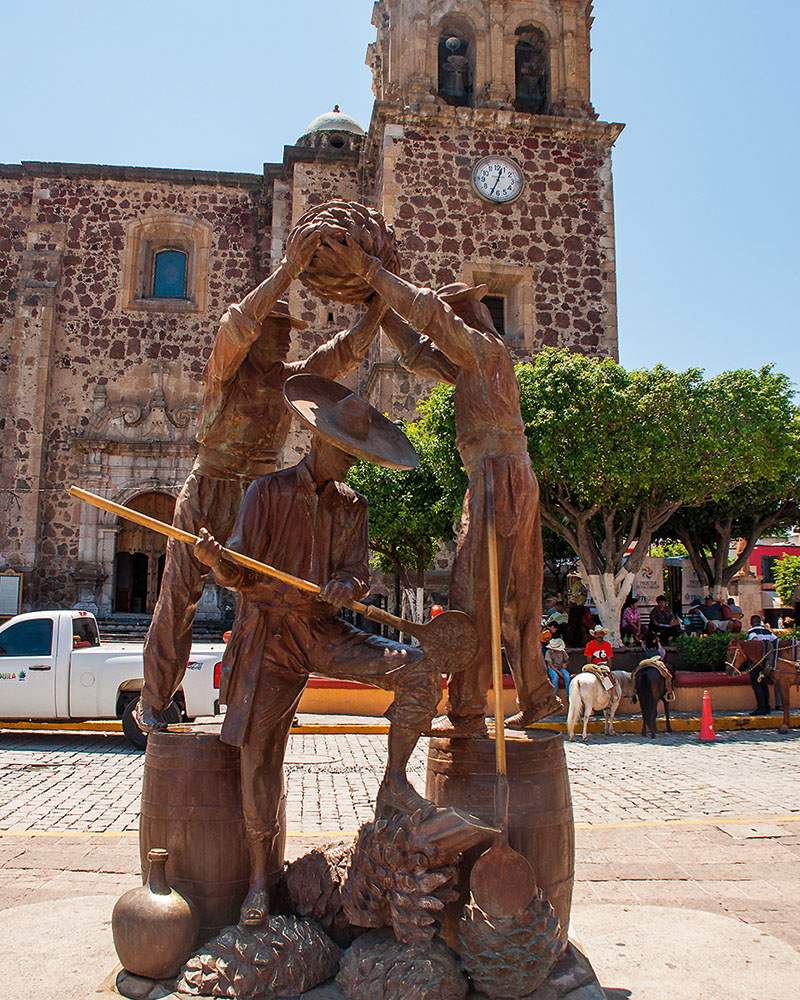
I arrive in Tequila’s historic main plaza on a sunny summer afternoon. Agents from the big-name distilleries, Jose Cuervo and Sauza, quickly descend on my travel partner and me in the hopes of selling us a tour. Each distillery has its own production methods and an incredible range of tequilas to try (the largest distilleries produce up to 40 different brands), but we kick off our tasting experience at La Cofradia, known for its more traditional-style production.
La Cofradia is a few kilometres out of town and the drive serves up a beautiful snapshot of Jalisco’s pastoral countryside. In the shadow of the 2700-metre Tequila Volcano, vibrant blue agave fields stretch as far as the eye can see. We end up being the only non-Mexican guests at La Cofradia, so the knowledgeable, English-speaking receptionist agrees to lock up the office for the afternoon and take us on a private tour of the estate. After strolling the plantations and learning about the lifecycle of the blue agave, we’re led inside the distillery where the agave hearts (known as piñas for their pineapple-like appearance) are steamed in giant ovens before being pressed to extract the sweet, distinctive nectar, ready to be fermented and distilled. The distillery tour is absorbing and walking the stunning grounds of La Cofradia is an experience in itself, but it’s the tastings that are the highlight of any tequileria trip.
La Cofradia charges 300 pesos (US$17) for tours, including transport to the estate and a margarita in its spectacular underground restaurant. Best of all, the ticket includes tasting as many house-made tequilas as you can handle. Our guide talks us through the unique characteristics of blanco (white or un-aged tequila), reposado (tequila rested in oak barrels for up to 11 months), and añejo (a deeply flavoured variety aged for a year or more). La Cofradia produces the Casa Noble brand, co-owned by Mexican–American guitar god Carlos Santana. It’s expensive tequila by anyone’s standard, but the Cofradia guides will happily ply you with all the top-shelf samples you desire. We try, only partially succeeding, to exercise some self-control, saving ourselves for another round of gourmet goodness back in town.
Returning to Tequila’s centro, we find the square alive with indigenous dance performances put on for the summer holidays. With fiery liquor still smouldering in our bellies, we hit the indoor market, hoping to soak up things with some street food specialities. Tequila’s market is almost solely devoted to the regional cuisine of Jalisco. A popular offering is birria, an intense savoury stew of tender slow-cooked goat. There’s also torta ahogada (drowned sandwich), a salsa-soaked bread roll filled with spicy pulled pork, as well as seafood dishes from the coast. Of course, there are taco stands aplenty, and the smell of smoky, sizzling meat fills the air.
Sated from our street food extravaganza, we head for the corridor of bars lining the main square just as a rainstorm makes its thunderous presence known. We race to the nearest bar, where the undercover terrace is packed with punters – bottles of tequila in hand – ready for a long night of revelling. It is Sunday evening, after all. As the sound of Jalisco’s other famous export, the mariachi band, begins to fill the air, patrons spill out onto cobblestone streets. Dancing arm in arm in the pouring rain, they embody the Latin tradition for flamboyant displays of romance, fuelled by tequila – the lifeblood of this joyous town.
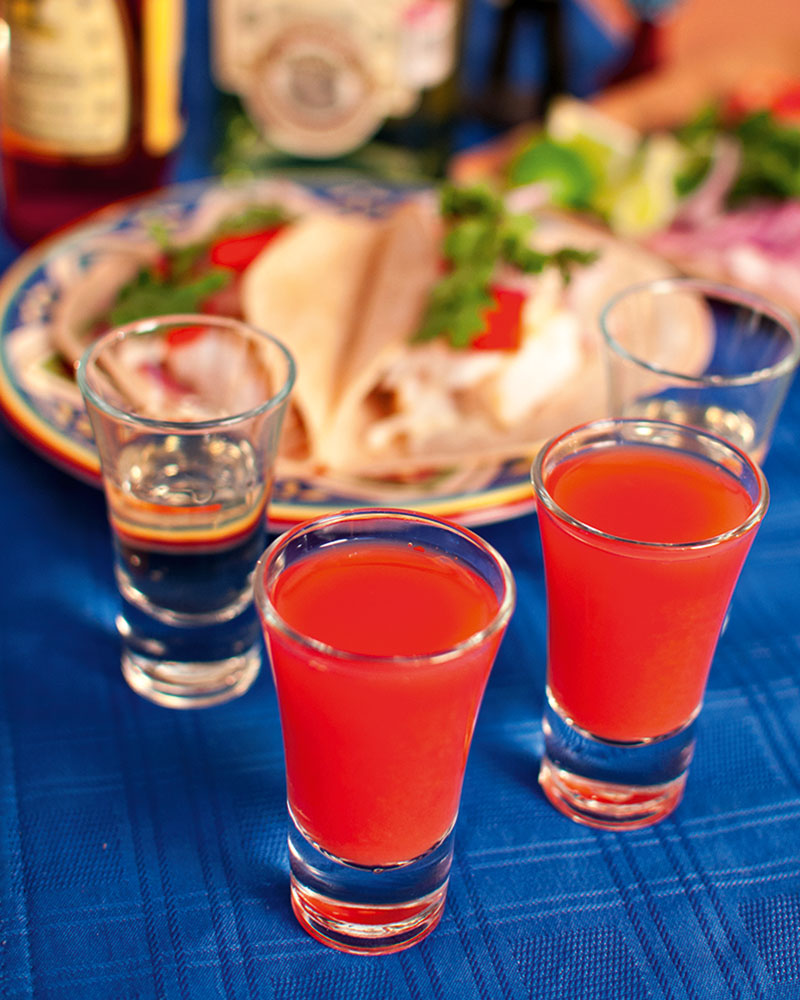
Sangrita (meaning ‘little blood’) is a traditional accompaniment to tequila blanco, although it also pairs well with the peppery taste of reposado. Its sweet and tart flavour helps temper the heat of the alcohol. Rather than being gulped down as a chaser, it’s best used as a palate cleanser in between sips of good tequila.
Ingredients
30ml freshly squeezed orange juice
20–30ml freshly squeezed lime juice
15ml real pomegranate grenadine
3 dashes of hot sauce or ¼ tsp chilli powder
Method
Mix all ingredients together, chill and serve with your favourite tequila or mezcal.
Barrio Brasil is the part of Santiago where the Chilean spirit meets a bohemian atmosphere. It may have fallen into decline in the 1950s, but seduced by cheap rent and neighbours who didn’t mind noise or creative endeavour, the 90s saw musicians and artists move in. In the years since, everyone else has followed.
Although its proximity to central Santiago means it’s easy to get to, the fact that it has been almost cut off from the city’s historical centre by the construction of the Norte-Sur Highway means the barrio has retained a certain individuality. It’s the sort of low-key neighbourhood where everyone walks to where they’re going, enjoying the sunshine and the still-standing rococo and gothic-style mansions built by some of Chile’s wealthiest families back in the 1920s. Many of them have now been converted into hotels and apartments.
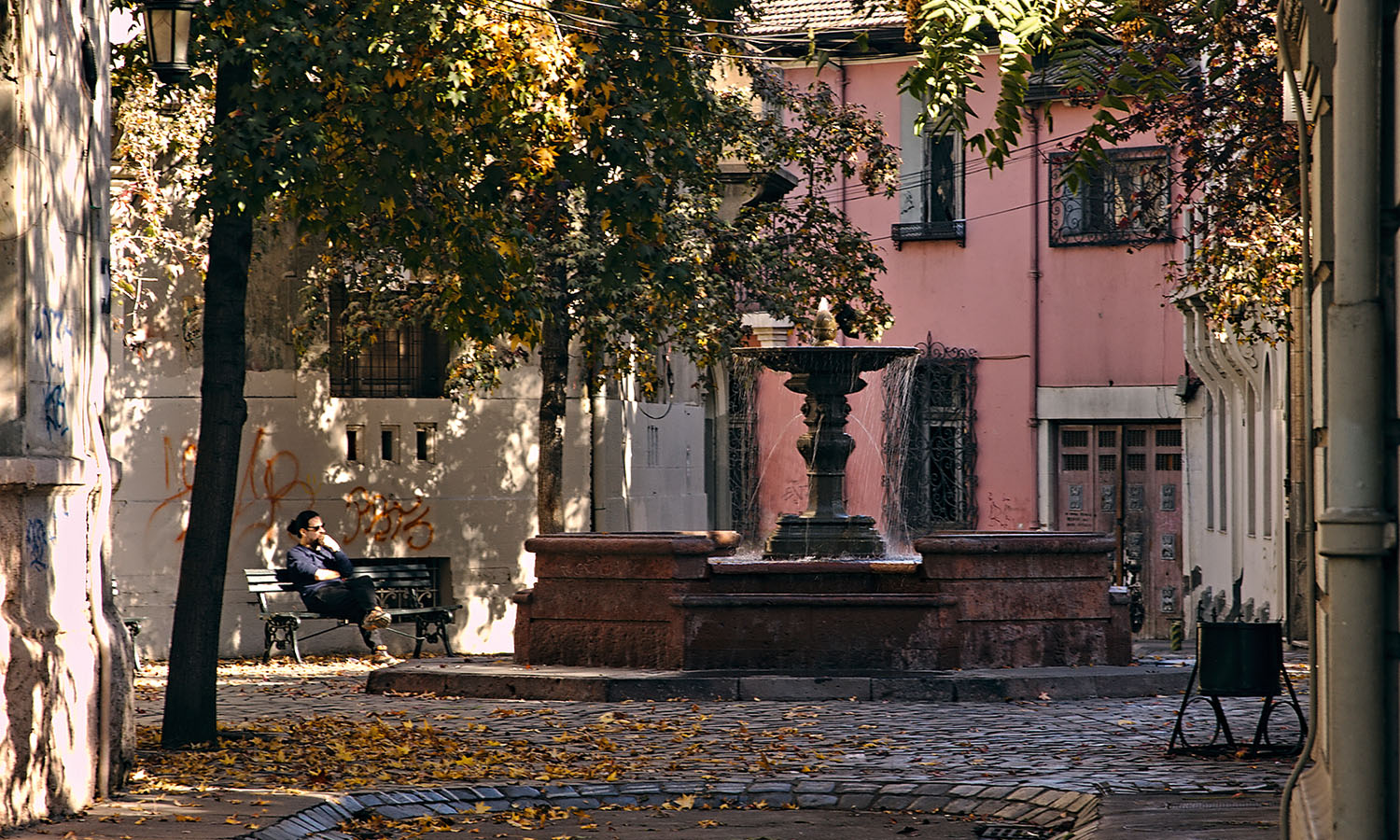
The main boulevard, Avenida Brasil, runs from north to south, and is where mechanics’ garages and classic architecture create a visual puzzle. Just off it is a small street – and neighbourhood – called Concha y Toro, with cobbled streets and historic buildings. There’s a strong French influence here, but the focal point is a beautiful plaza, with a fountain at its heart. Sit in the window at Tales, order a coffee and watch the passing parade of people.
If you really want to eat something traditional, though, head to Santo Barrio and order chorillana, a plate of french fries topped with sliced beef, egg and fried onion. It goes perfectly with a litre of Torobayo pale ale from the Kuntsmann Brewery in Valdivia, in southern Chile.
For something more substantial, Restaurante Juan y Medio sets the benchmark when it comes to Chilean cuisine. You can order any number of specialties, which range from roasted chicken and spicy pork ribs to brined rabbit, but be aware: this restaurant is known for its huge portions. Nearly everyone who eats here goes home with leftovers.
All of these places – and many more – are located along Avenida Brasil, where the epicentre of the neighbourhood is the Plaza Brasil, the local square at the corner of Calle Huérfanos. Tiny, welcoming cafes surround it and, on hot summer days, you’ll find people sitting around, chatting and drinking beers. There are also a number of colourful sculptures by Federica Matta, where children play and hide from one another.
Here is home to Galpón Víctor Jara, a cultural centre covered in vibrant murals honouring Jara’s memory. He was a theatre director, singer-songwriter, poet, political activist and member of the Communist Party of Chile, who was tortured and killed soon after the Chilean coup of 1973. Although most of his recordings were burned by Pinochet’s military dictatorship, his wife Joan managed to smuggle some out of the country and they were later copied and distributed. Joan opened this centre to keep Víctor’s music and artistic legacy alive, both by ensuring his archive is kept safe and continuing his work.
The square is where many nights out begin. Those looking for something sophisticated and modern should head to Baires Sushi Club (its sister establishment Cosmopolitan is almost directly across the road). Grab a seat outside to browse the long cocktail list and take a peek at the attractive locals. But if raw fish is your end game, try Estrella Marina Sushi Fusión, overlooking Plaza Brasil. Combining the flavours of Japan and Peru, it offers some of the best sushi in Santiago.
There are also plenty of other options around here for a meal. You’ll smell Las Vacas Gordas – where huge steaks and racks of ribs sizzle on the grill – before you see it. You can try the Chilean version of a Pisco Sour here – made with Chilean pisco and pica lime – but most locals go for red wine. The service is great, too – not that you’ll go hungry, but the bread on the table never seems to run out.
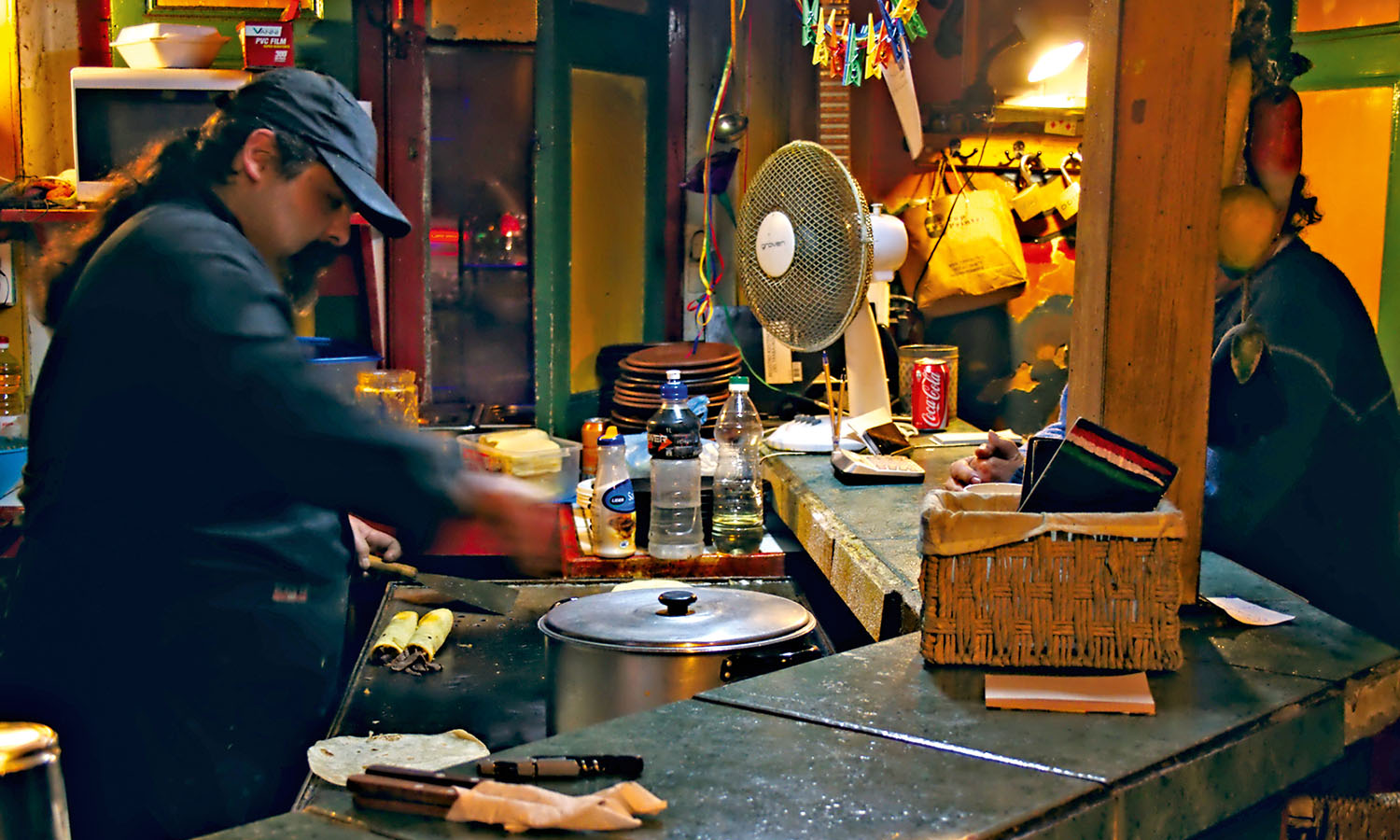
Another of my favorite places, El Charro de Oro, a Mexican taqueria, isn’t too far away either. It’s a small but colourful spot – there’s a large mural representing Aztec culture – serving different types of tacos best consumed with a bottle of Tecate. Further north in the neighbourhood, visit Galpón Persa Balmaceda, a huge warehouse space filled with antiques dealers. Wandering from stall to stall is a bit like time travelling through different eras of Santiago. If you walk here on Sunday (when it’s open until 6pm) you’ll see Barrio Brasil at play. This is our day off, and it’s when families enjoy one another’s company, often touring the barrio on bikes.
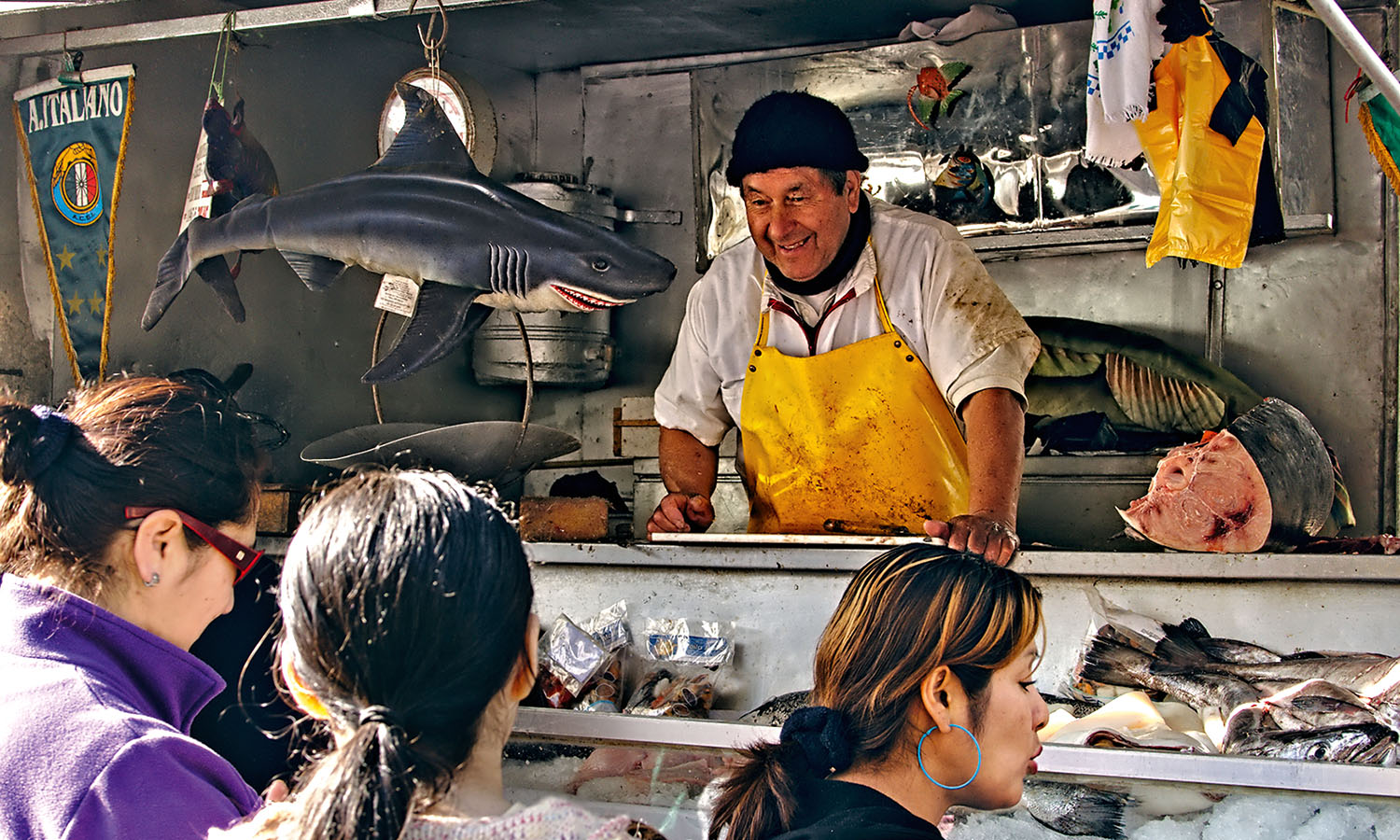
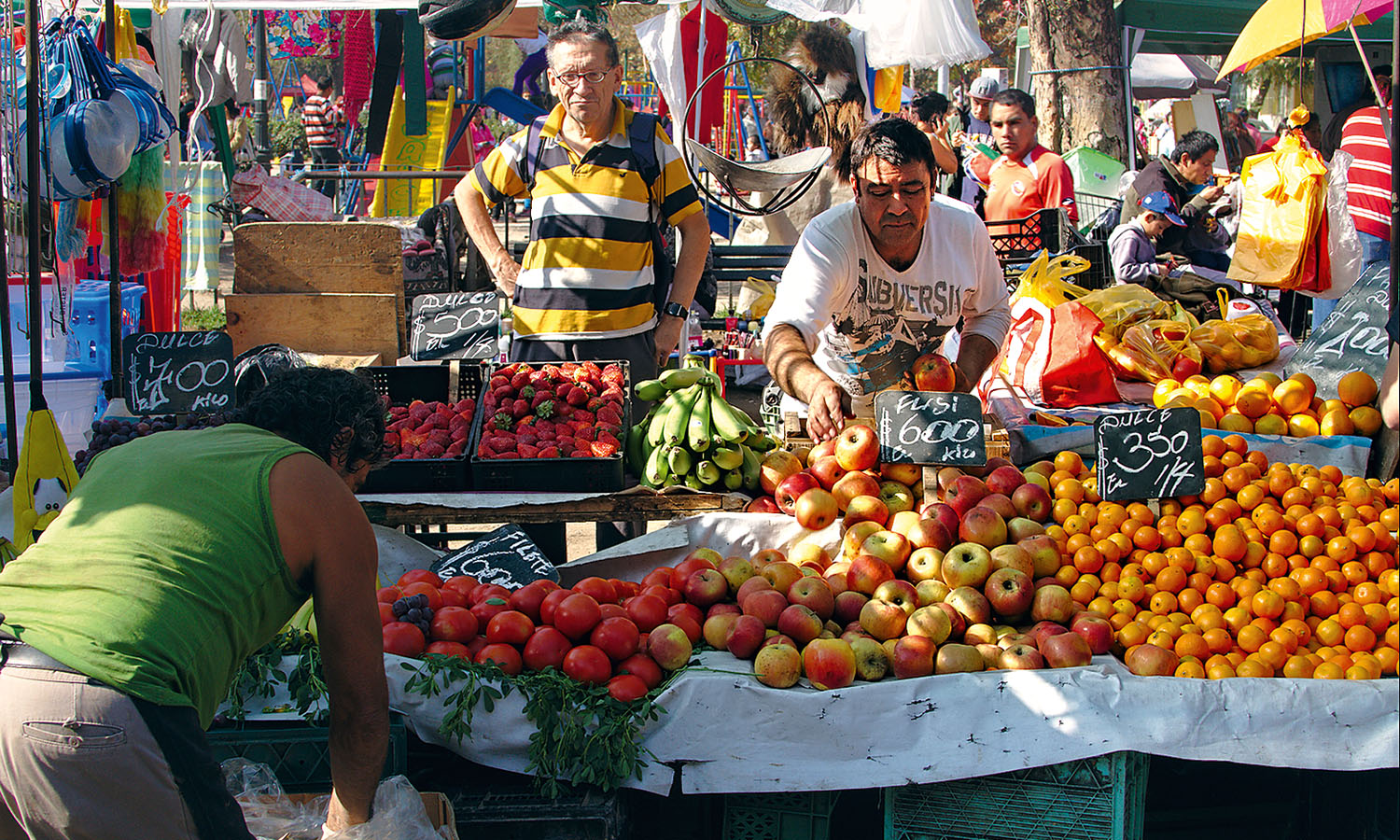
Calle Agustinas is a true representation of the neighbourhood. A market pops up here on Sunday where people, mostly immigrants from Peru, Colombia and Ecuador, sell tables of items, from used hardware to handmade clothing. This is where I go for a Sunday breakfast of juices made from mango, passionfruit and pineapple and, at Avenida Libertad, pick up produce for the rest of the week – seafood, purple corn, cassava and potatoes are all on offer. It’s here you witness the true essence – the life and soul – of Barrio Brasil.
 (
(