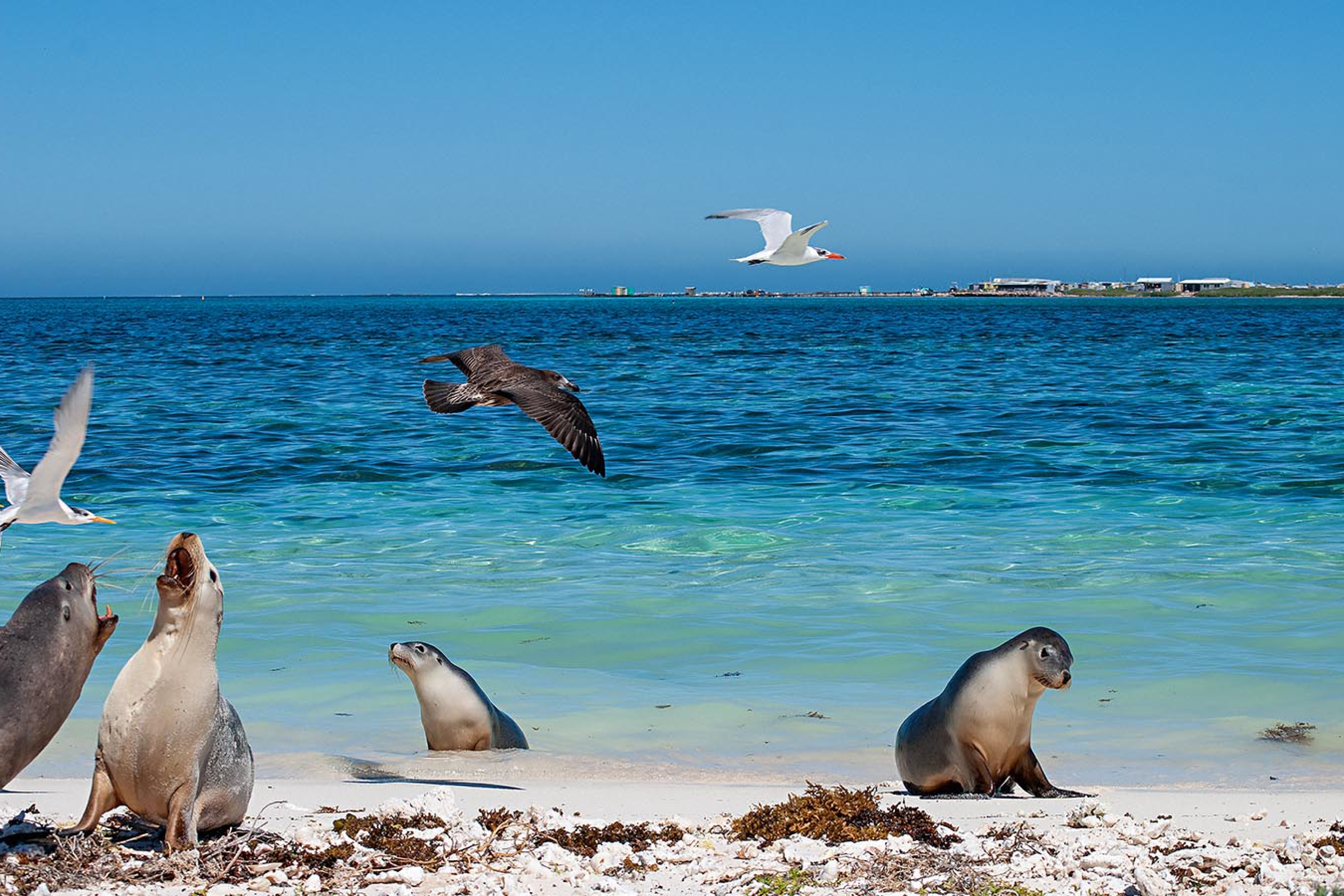
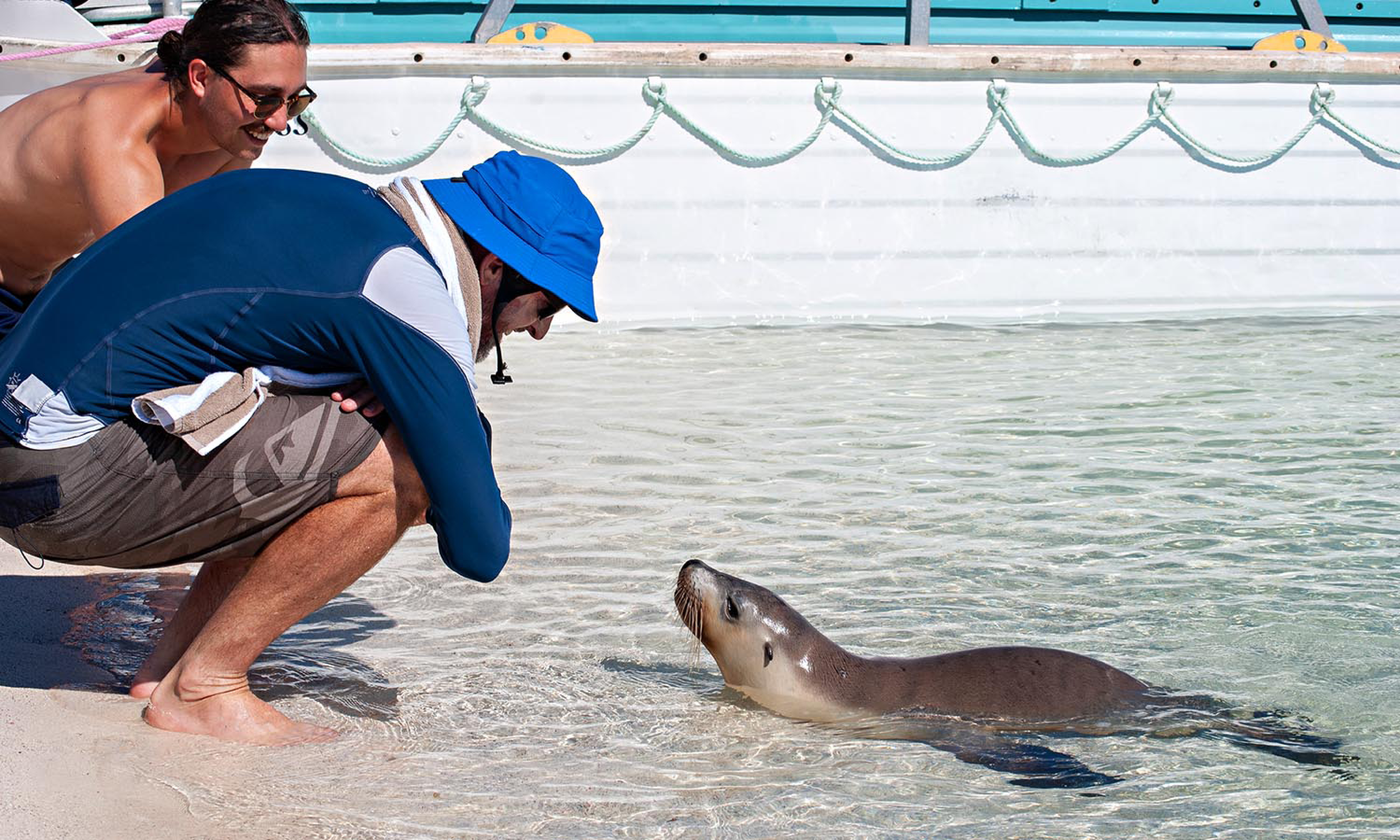
I never imagined I’d feel obliged to entertain a baby sea lion. I had watched her from ankle-deep water, but she stared at me, unimpressed. She clearly wasn’t the passive type. I slide into the water and start splashing and somersaulting.
To my delight, she twists and turns alongside me. She scrutinises me through my mask, quivering whiskers almost touching me, before torpedoing away and circling back.
I stop to rest, and she lies on the bottom, dejected puppy eyes imploring me to swim. I’m just about spent, but her life force seems inexhaustible.
My sea lion experience is one of many encounters with the pulsating life of the Houtman Abrolhos Islands. Locally known as just the Abrolhos, the islands lie 60 kilometres west of Geraldton, Western Australia. The 122 islands are clustered into three main groups and have exceptional natural and historic value. In 2019, 100 of the islands became a national park. The other 22 islands host colourful lobster fishing and aquaculture camps, only usable by the lease holders.
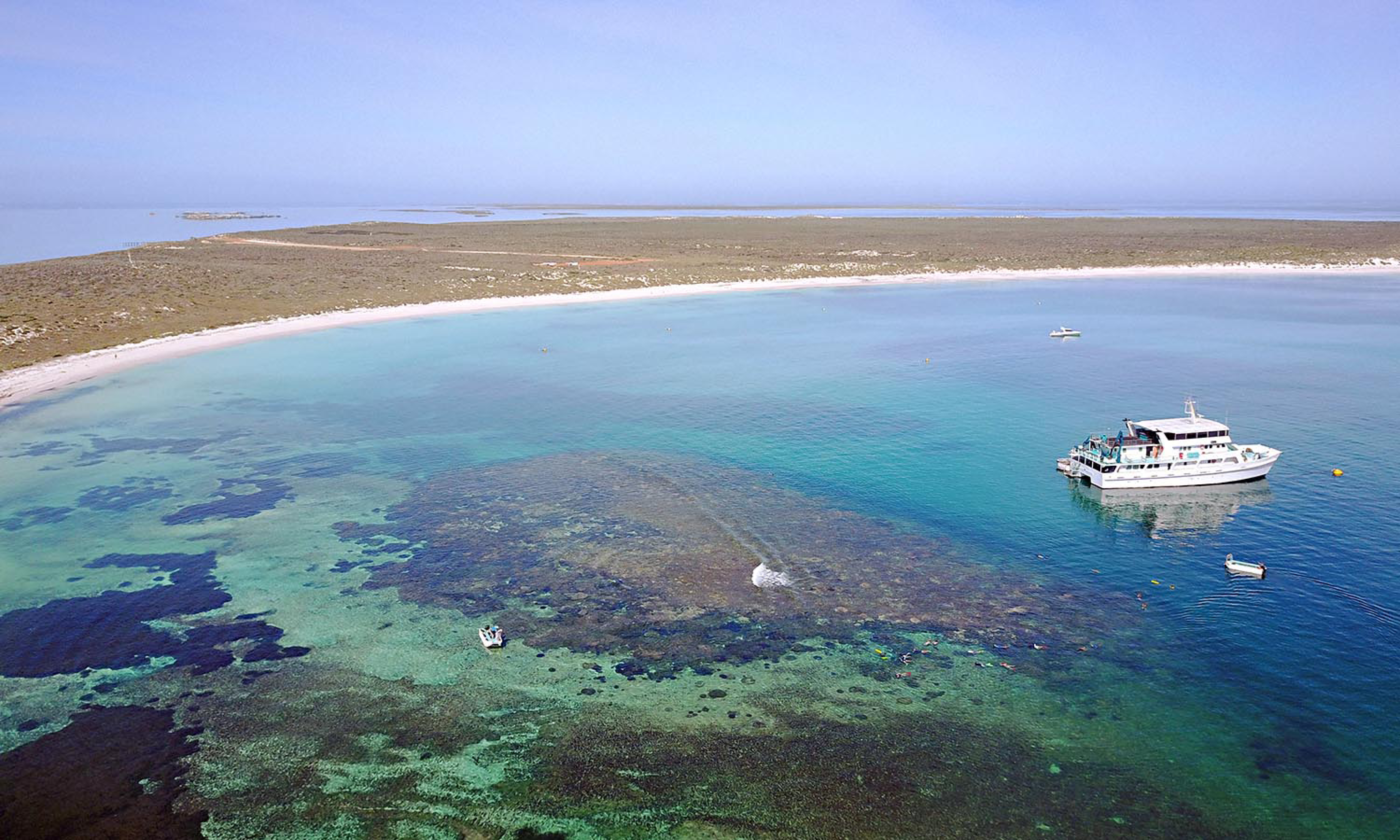
For those of us without our own fishing camp, it’s tricky to stay at the Abrolhos. There are no hotels and the best way to explore the islands is on the low-key cruise boat, Eco-Abrolhos.
The Eco-Abrolhos’ itinerary showcases all the unique offerings of the Abrolhos, including its wildlife, characters and history. It’s a boutique affair, with a relaxed and friendly vibe. While some cabins have king beds, I’m staying in a more budget-friendly lower-level bunk room. The crew is led by father and son, Jay and Bronson Cox, who are owner and skipper respectively, and whose sledging interaction means they double as a comedy duo.
The Abrolhos ecosystem is unique, and my sea lion experience is made even more remarkable by the latitude at which it occurs. Australian sea lions are traditionally found in cooler parts of the country, but here, in the northernmost part of their range, I’m watching them play in coral gardens. The coral reefs themselves are unusual, being the southernmost coral reefs in the Indian Ocean. Cooling currents from nearby deep waters have so far helped the reefs resist the worst of coral bleaching.
Sea birds also join the biological bonanza here. During nesting seasons, the islands are a riotous place, hosting millions of bird pairs. Species include white-faced storm petrels, little shearwaters, sooty terns and brown noddies. The overlap of temperate and tropical species and the sheer intensity of life here means these islands have sometimes been called Australia’s Galapagos.
Our trip commences as sunrise peers over the yachts in Geraldton harbour. Although the Abrolhos have a fearsome reputation for wind-induced seasickness, today is uncharacteristically smooth. As the boat chugs through its four-hour journey to the islands, I sit up front watching flying fish skim the glassy surface.
Eventually, a smudge on the horizon morphs into the islands known as the Southern Group. Only a few metres high and composed of rubble and shrubby vegetation, we wonder how anything survives here.
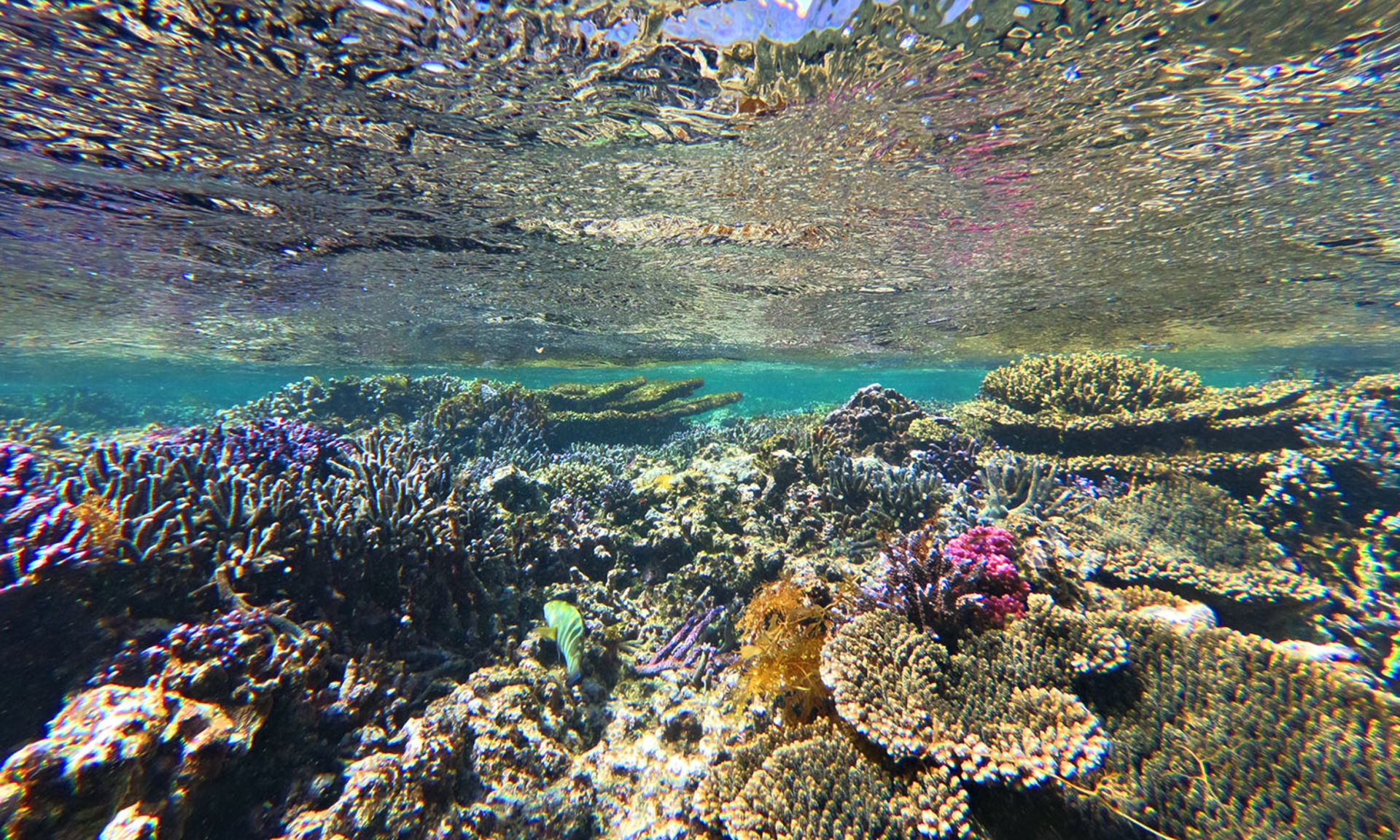
Underwater, life is as rich as the land is stark. Donning masks and snorkels, we slide into the sea at Coral Patches. Staghorn corals outstretch their fingers in beige, purple, cream and blue, sheltering butterflyfish and damselfish as schools of buffalo bream buzz by. Bumphead parrot fish casually graze on corals, shimmering in turquoise and purple. Peeking under tabletop corals, I find the spaces jampacked with lobsters, their masses of antennae appearing tangled.
“Peeking under tabletop corals,
I find the spaces jam-packed with
lobsters, their masses of antennae
appearing tangled.”
Next, we peek into the Abrolhos lifestyle by visiting tiny Basile Island. Jetties protrude from the island like bike spokes, and the ramshackle houses are mostly cobbled together from asbestos sheets. What they lack in architectural credentials, they make up for in bright colour schemes, and shacks here are resplendent in blue, purple, orange and yellow.
Our tender eases over the corals and turquoise shallows. Reaching the island, we’re warmly welcomed to the home of brothers, Peter and Nino Scarpuzza, second-generation lobster fishers.
“My father came out in ‘52 from Sicily,” says Peter, as he brews real Italian coffee for our group. Peter explains that previous rules restricted the fishing season to several months, prompting fishing families to relocate to the islands fulltime to maximise catches during this time. Since 2009 the fishery has been managed on an annual basis and there are now fewer people here at once. But Peter and Nino prefer to be here anyway. “Why would you want to go into town?” Peter says. “Too many people!”
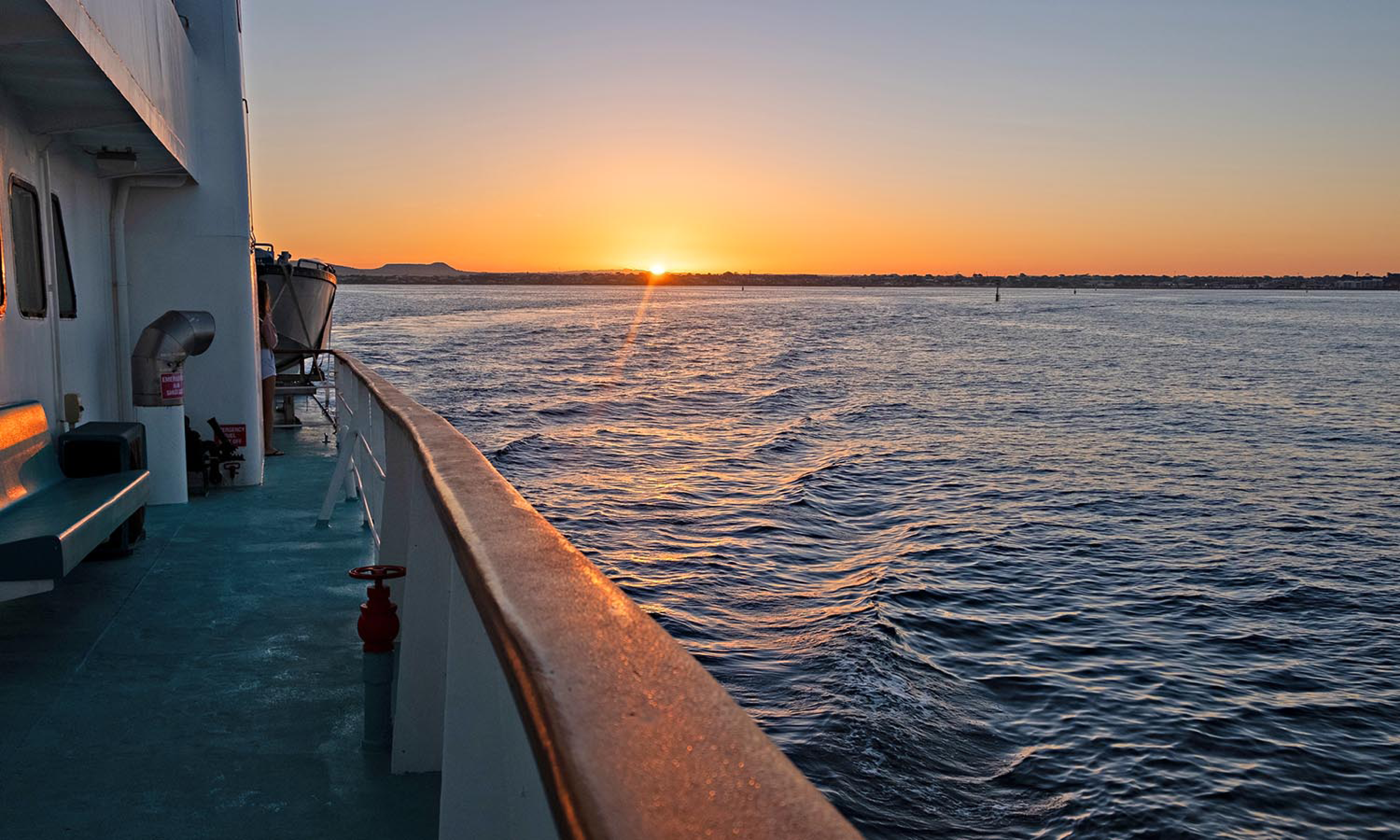
All this talk of lobsters is making me hungry, so the next morning I join Jay and my fellow adventurers for a fishing tour from the large tender, King Diver. Skimming through a dusky pink dawn, we arrive at pots that Jay baited yesterday. I’m transfixed as our deckhand pulls up the pots, each one containing up to 10 of the prized crustaceans.
It’s an industry that Jay knows inside and out. He worked as a lobster fisher here until he started this business in 2003. The lobster fishery is strictly managed, but their abundance means we can easily, and legally, catch enough to keep us decadently scoffing lobsters, cooked every way possible, for lunch and dinner every day of the cruise.
Our next stop is Post Office Island, historically a drop-off point for mail for the surrounding islands. The limestone rubble island curves like a donut missing a bite, and encircles a milky, aqua lagoon.
Bizarrely, our first stop is a long-drop toilet. A now decommissioned relic of past disposal methods, it directly overhangs the ocean. Today, the pathway to this museum piece is marked by the rib bones of a long-deceased whale, and it’s surely one of the most photogenic toilets in the world.
The undisputed queen of this island is Jane Liddon. She was one of the first female lobster skippers, working alongside her dad and her pioneering aunt, Muriel Thomas, who was better known as Moo. These days Jane’s sons run the lobster business, while Jane herself cultivates black pearls.
Her home perches between the sea and lagoon and is delightfully eclectic. Incorporating corrugated iron and salvaged wood, it’s painted a cheery turquoise. In the courtyard, we sit among oceanic curios like dolphin vertebrae and sculptural chunks of coral. Jane passes around different pearl shells and describes the intricate process of pearl production, from seeding by Japanese technicians to harvest, five years later.
Despite the larger-than-life characters and the prolific wildlife, every visit to the Abrolhos involves confronting tales of death. Shipwrecks litter the reefs, and we hear stories about the Zeewijk and the Windsor. But the darkest shipwreck story of all is that of the Batavia. 

Share >




More Stories
Every country has its fair share of tacky, guidebook attractions. But sometimes these spots do stack up and can genuinely surprise us.
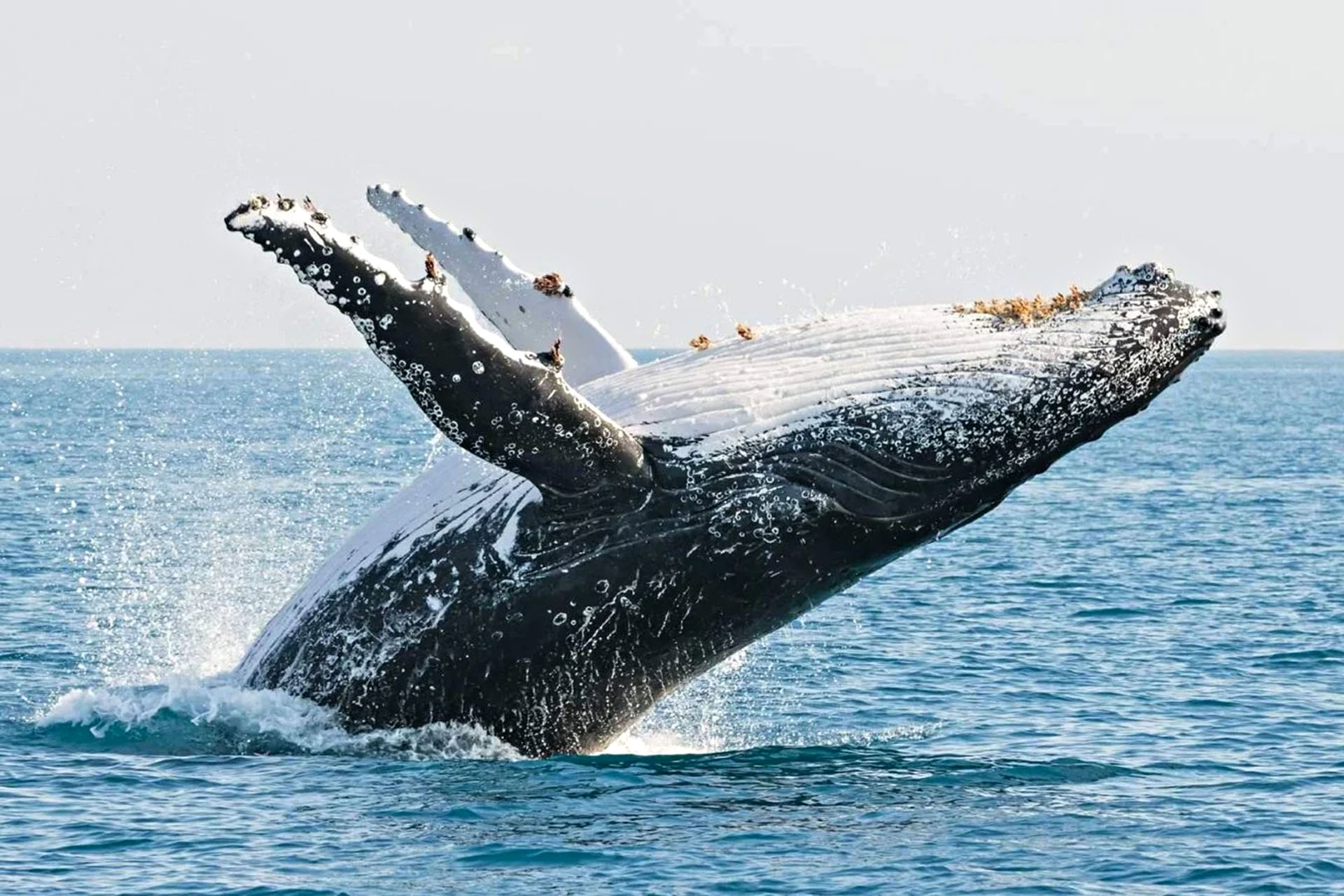
From shipwrecks and whales to crystal-clear lakes, floating rivers and an after-dark forest that glows, these are the Fraser Coast attractions you absolutely shouldn't skip. Especially if you’re travelling in winter.
Just an hour away from her childhood home in Adelaide, Anna Kantilaftas learns that sometimes to connect the past, you just have to look up and join the dots.