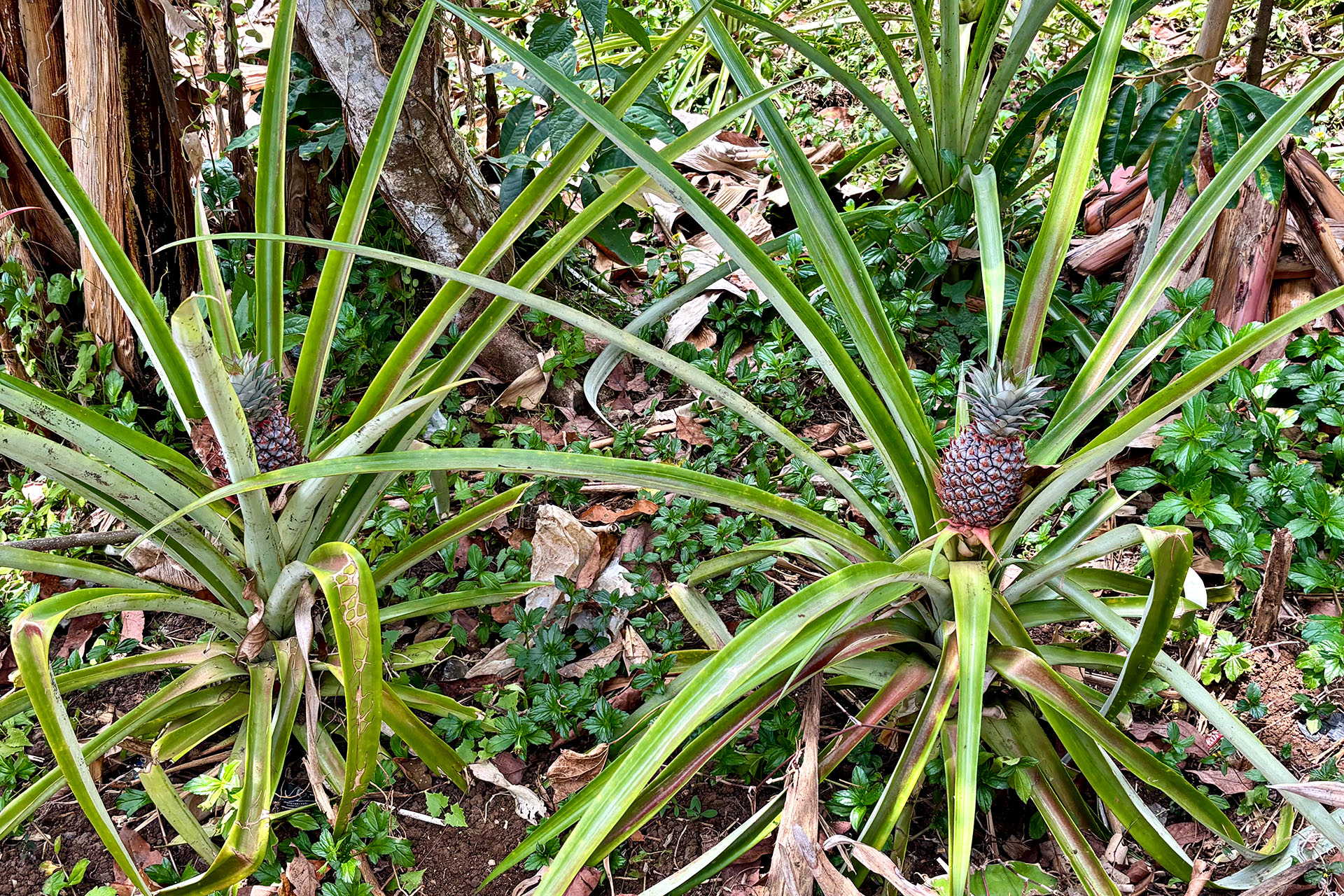
There are nine different types of fruit growing within about ten metres of me and I reckon I could confidently identify three.
Papaya? Easy. Pineapple? Obviously. Grapefruit? I’m backing myself.
I need help with the rest.
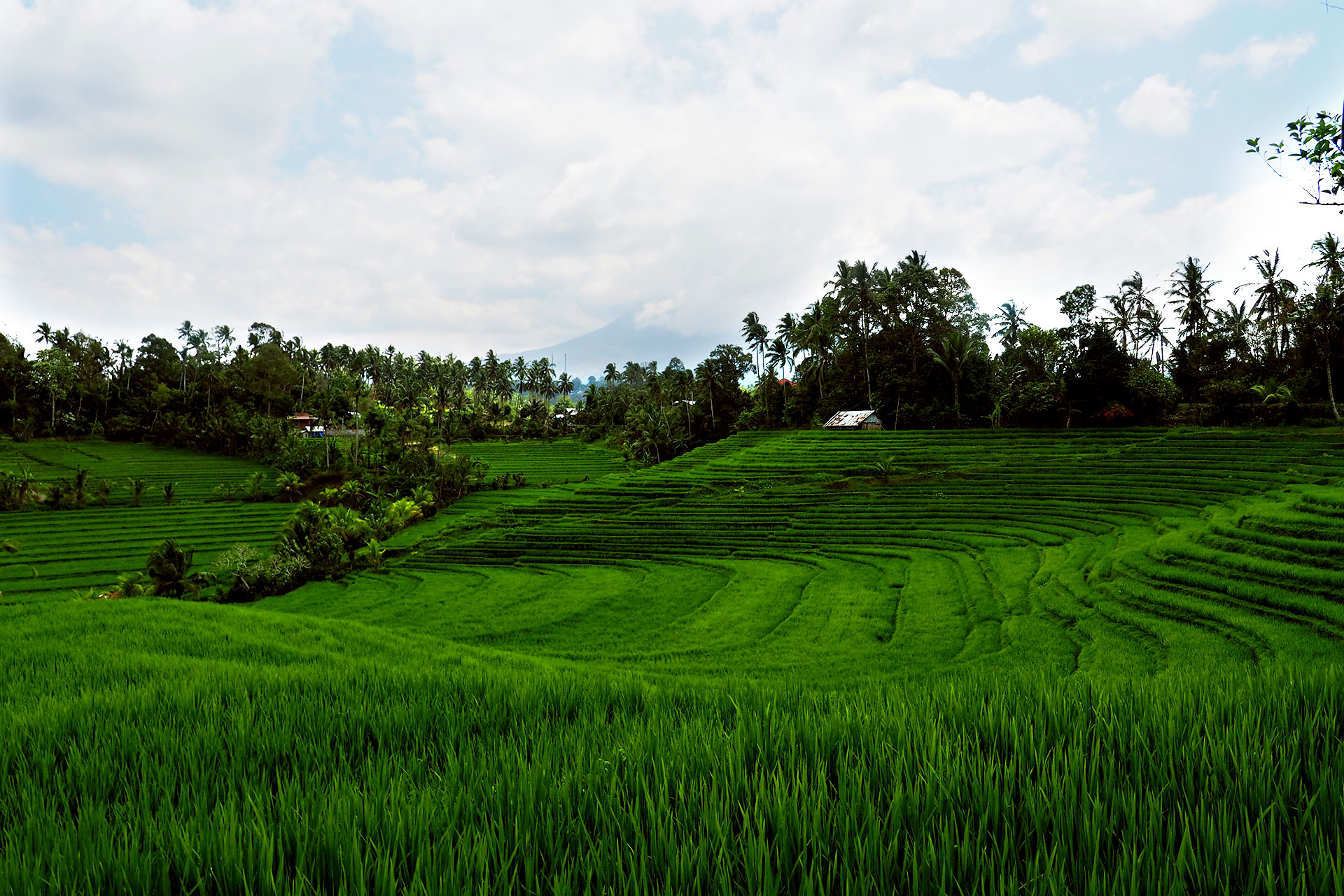
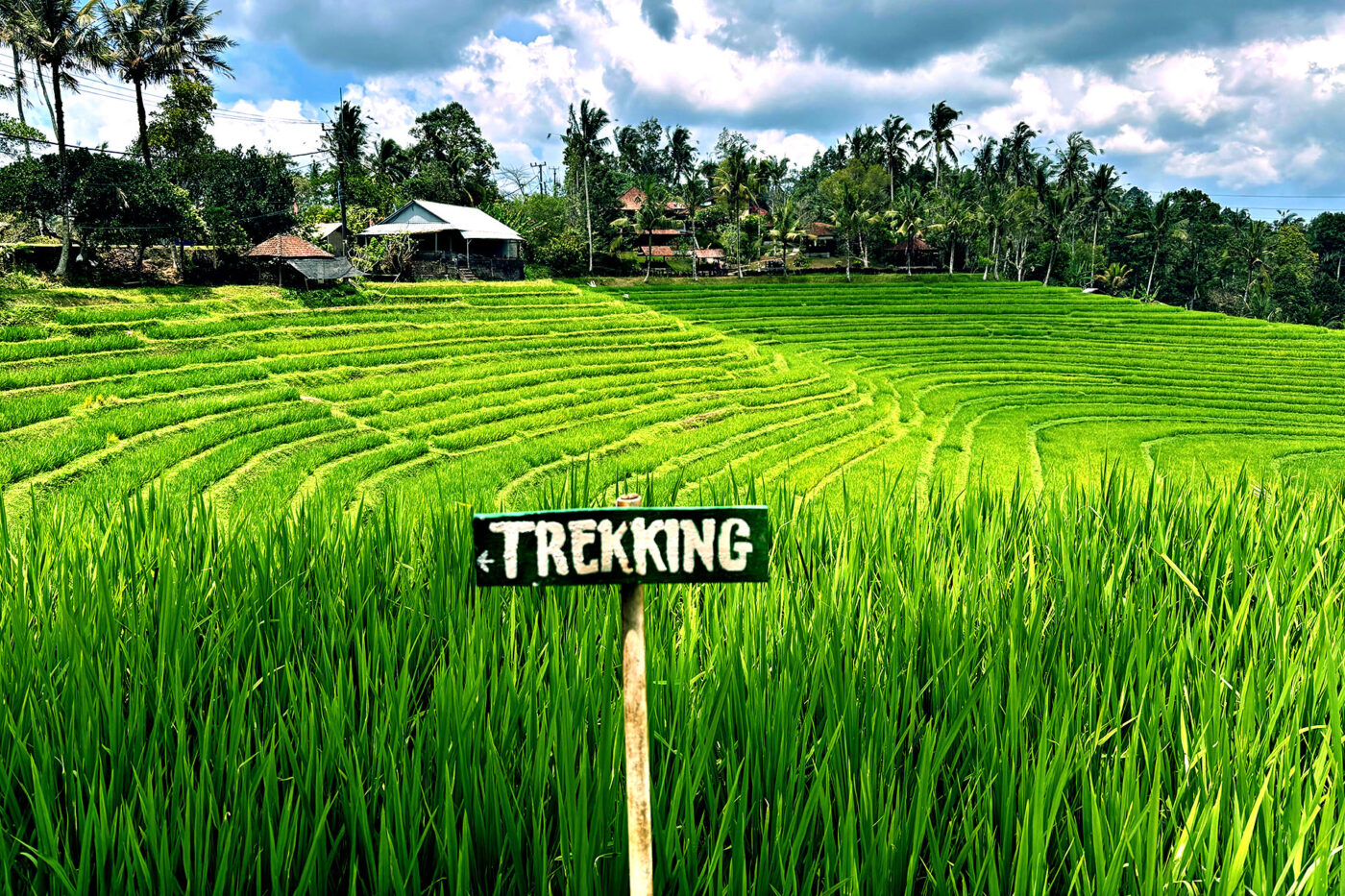
We’re walking through Belimbing, in Bali’s west, and our guide is pointing out cocoa, coffee, durian, mangosteen, nutmeg, vanilla and jackfruit as casually as someone pointing out houses on their own street. Around us, rice terraces cut giant green steps into the hills.
It’s day one of our Explore Worldwide trip through Bali and Flores and we’re technically trekking, although progress is difficult when every few metres somebody discovers another thing growing beside the path.

Here in Belimbing, rice grows year-round. One crop takes roughly six months from start to finish, and many of the surrounding paddies belong to local families. From a distance they’re the sort of luminous green rice fields that have probably sold several million flights to Indonesia. Down here, though, people are working in them.
And already I’m learning that Indonesia gets way more interesting when you stop looking at the big picture. Over the next few days, this keeps happening.
There are major attractions on our itinerary, sure. But Explore has also threaded in stops that would be very easy to skim past on paper. A school. A workshop. A village. A coffee farm. But, *spoiler alert*, they end up being some of the best bits.
Case in point, our next lesson involves flowers.
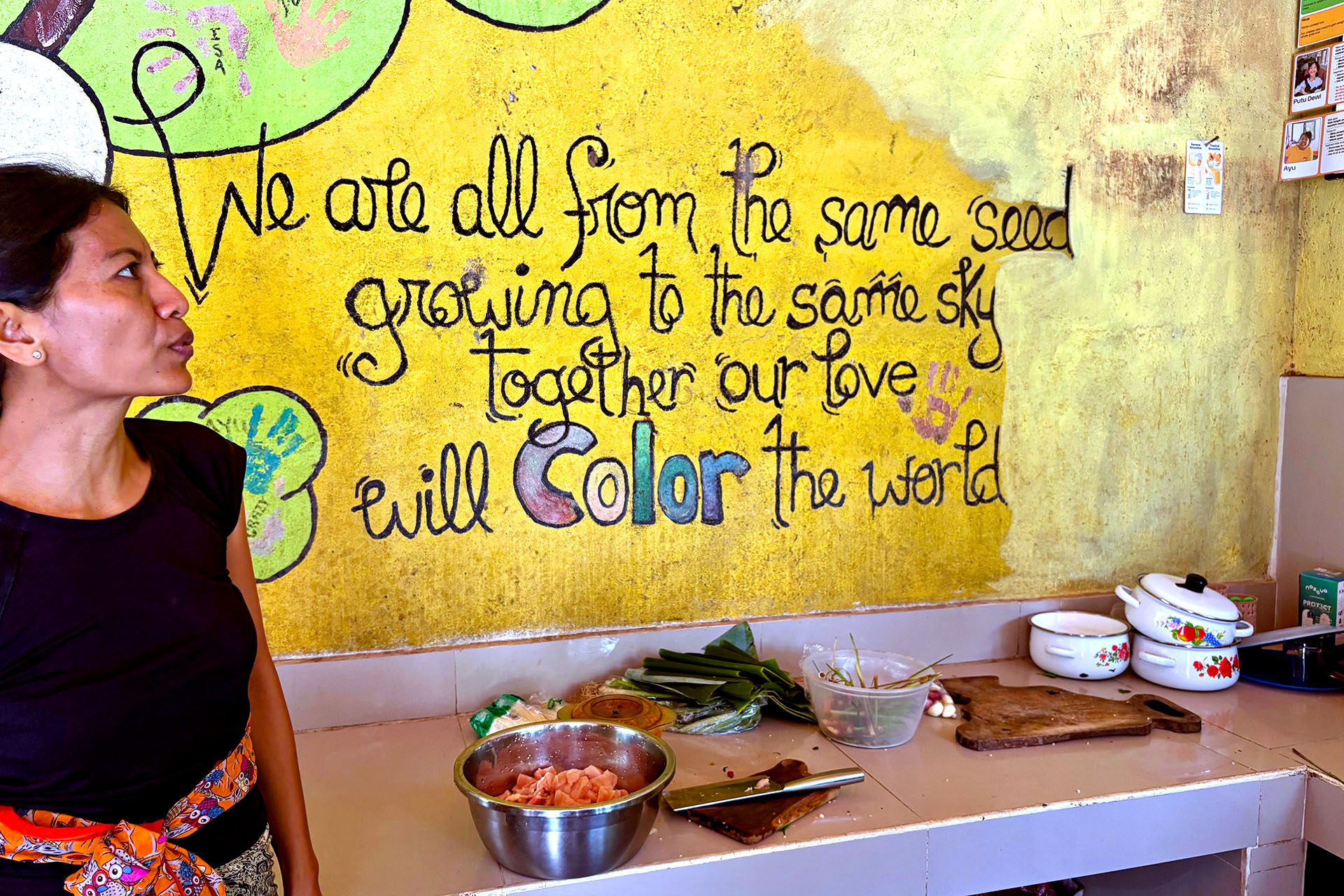
Since 2016, Explore has supported Yayasan Wide Guna Bali, a local school for children and young people aged five to 16. The school began working with children in 2005 and today has 98 students, including 48 with special needs.
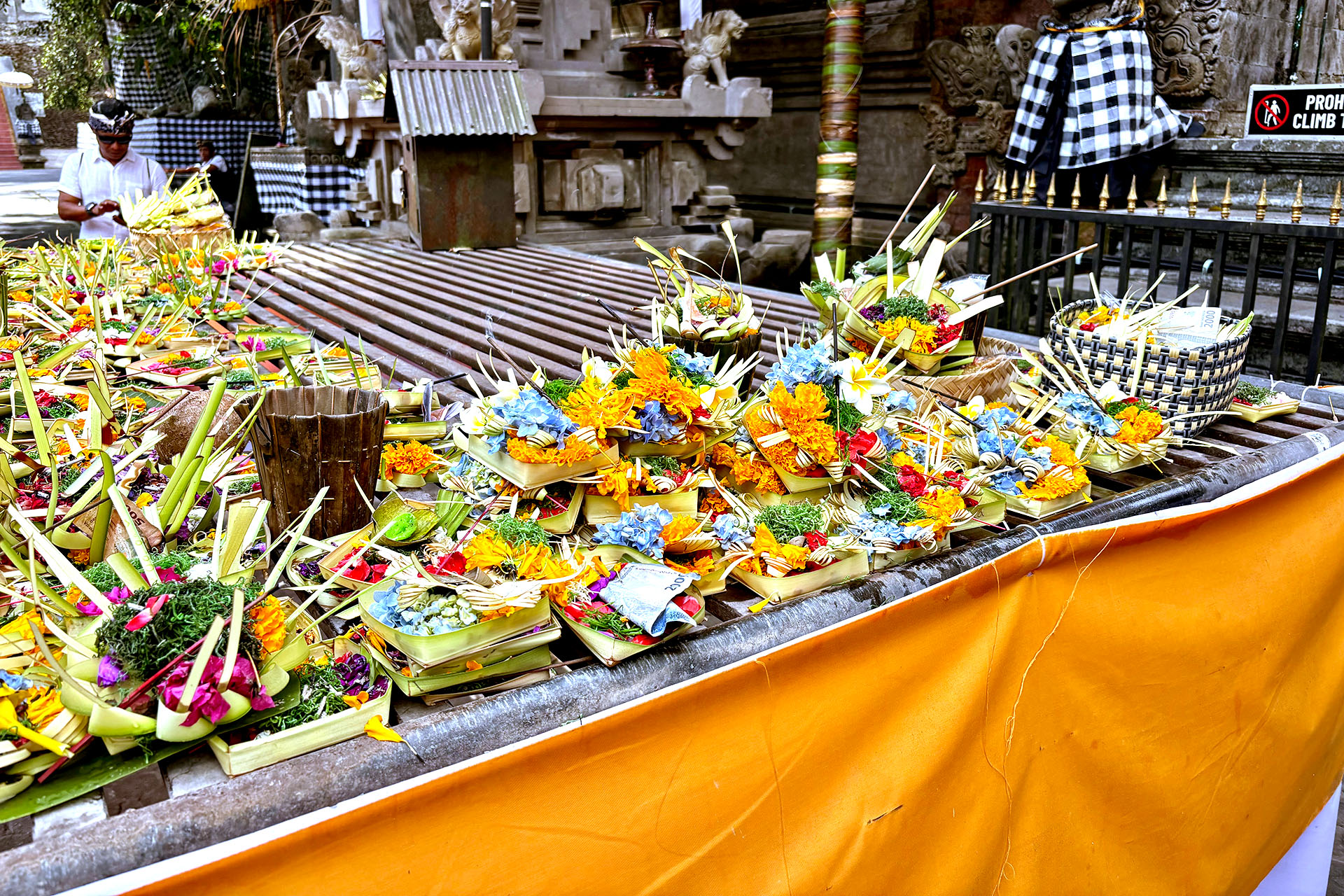
We’re here to learn how to make the small offerings that appear across Bali every day.
My fingers are now covered in tiny marks from the toothpicks used to fashion everything into place.
One by one, marigolds, pandan, hortensia, water rose, and frangipanis are arranged into an offering that, in more experienced hands, comes together remarkably quickly. Mine requires a lot more concentration. But I’m mighty proud of the finished product, even if my fingers are now covered in tiny marks from the toothpicks used to fashion everything into place.
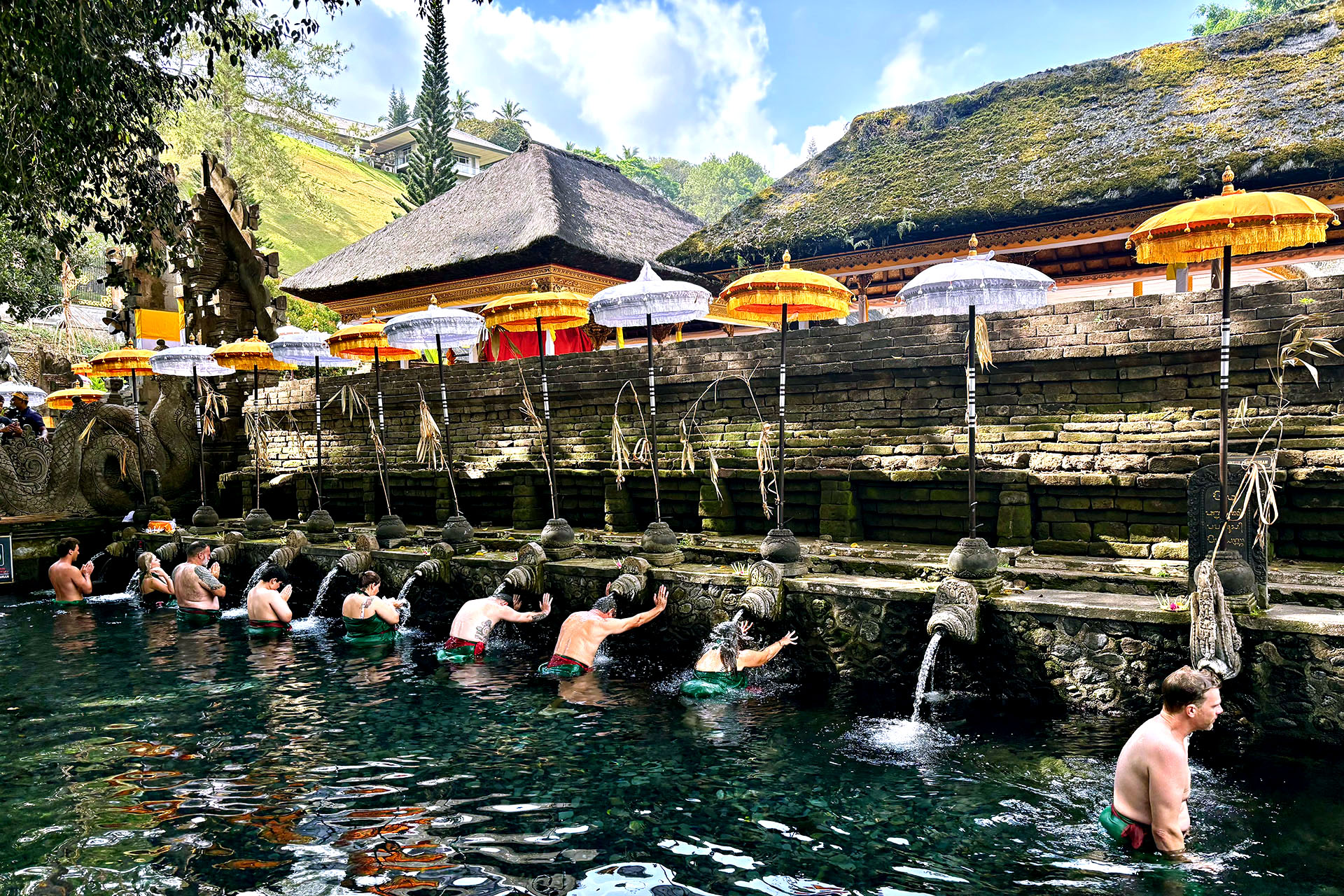
Later that day, creations in hand, we head to Tirta Empul to offer up our offerings. Here, holy spring water has drawn Balinese Hindus for centuries. Visitors can take part in the purification ritual too, although our guide offers an important PSA before anyone starts gulping from the fountains.
“For us, it’s holy water,” he says. “For you, it’s Bali belly water.” Ah, so spiritual enlightenment has limits. At least, it does if you come from Australia.
By the time we reach Flores, we’re still making things.
At a bamboo workshop started in 2015, we meet Markus, who learnt how to work with bamboo in perhaps the least ancient way imaginable: YouTube. I love it.
Growing. Making. Teaching. Weaving. Roasting (and not just from the heat and humidity).


There is something very tempting when travelling to reduce every craft to ‘centuries-old tradition’, preferably performed by someone sitting cross-legged beneath a palm tree. Instead, Markus wanted to work with bamboo, so he went online and figured out how to do exactly that. Now we’re standing in his workshop. The power of the internet, hey?
Further into Flores, the stories get a little older.
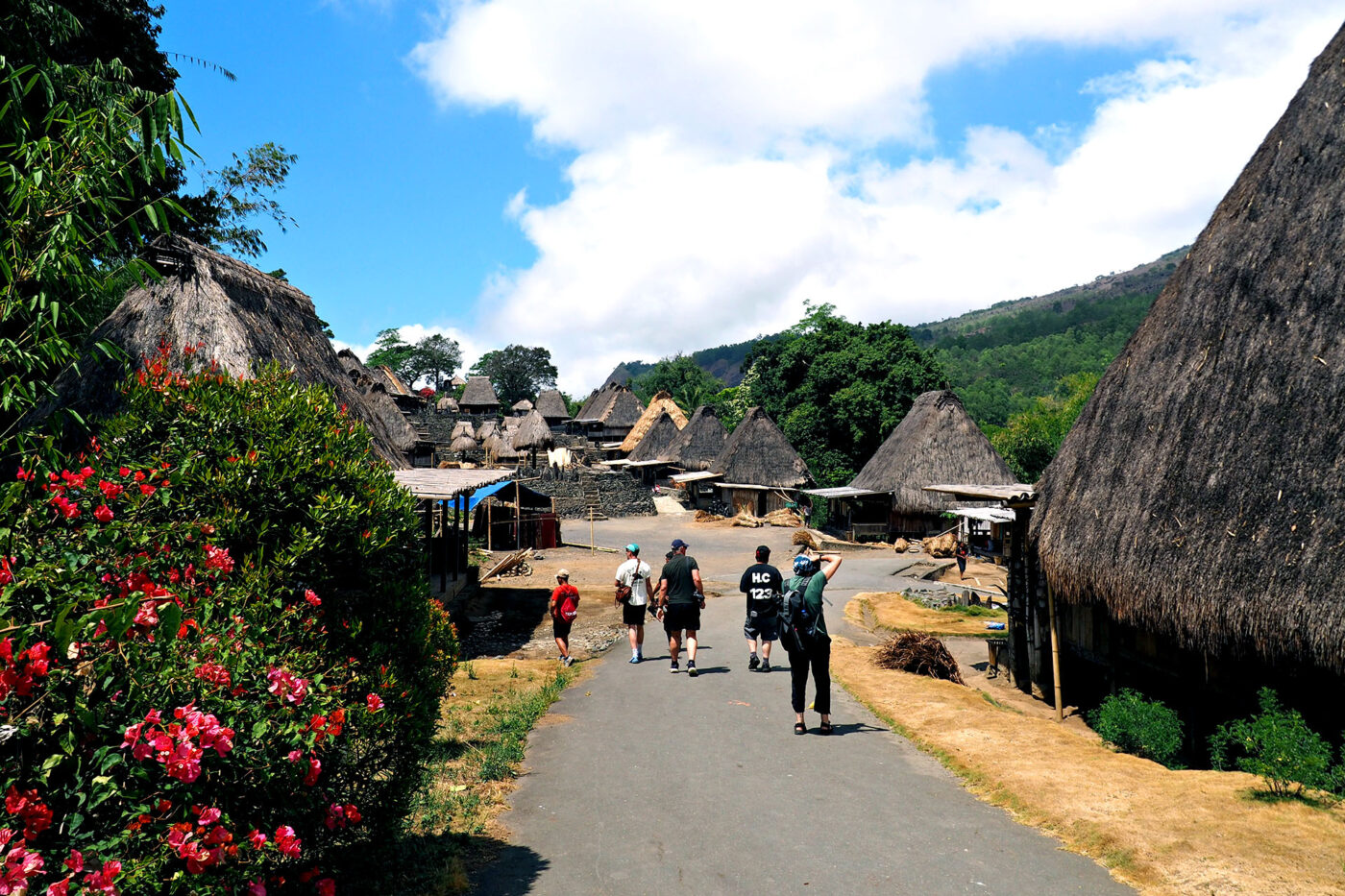
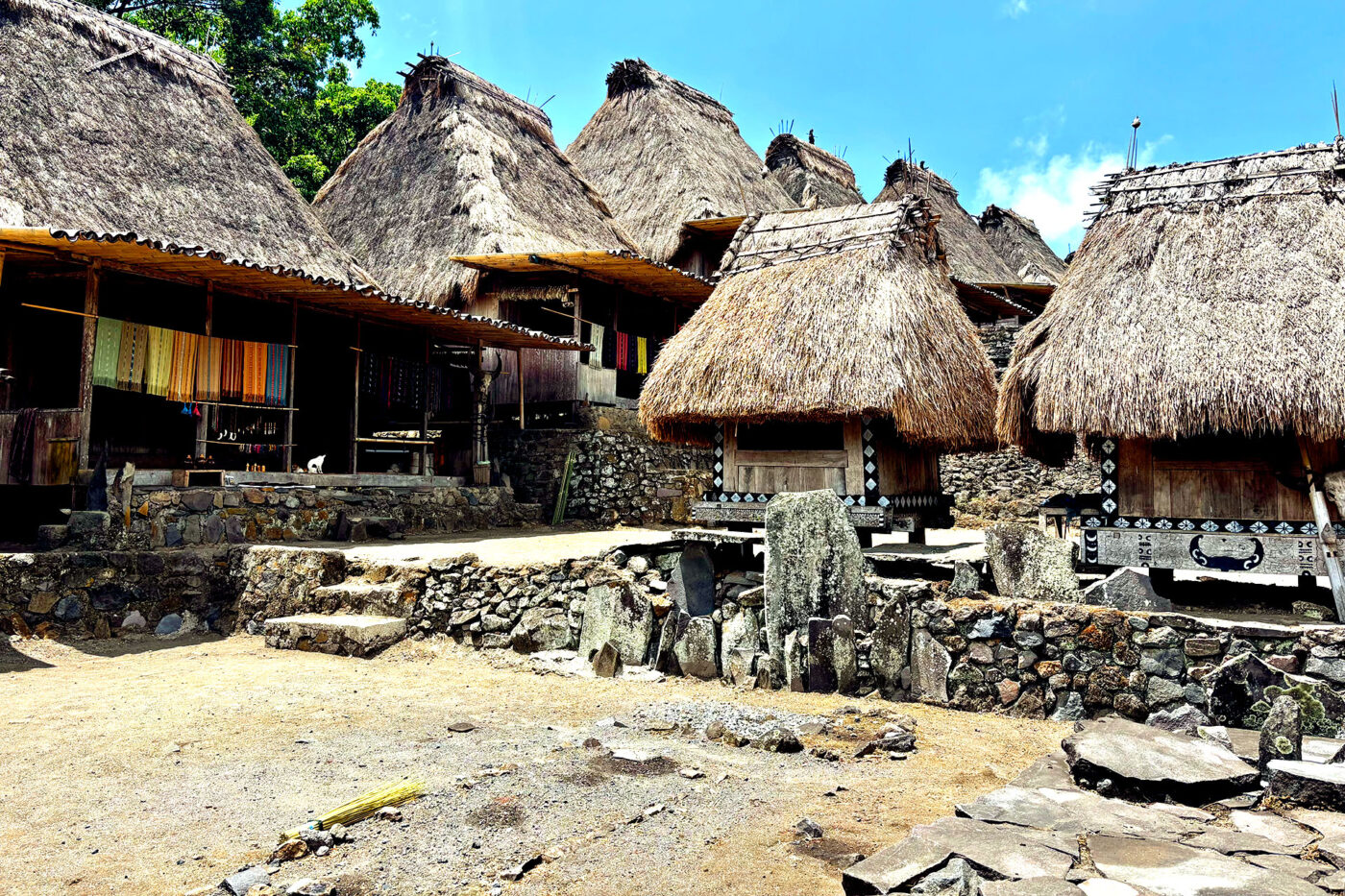
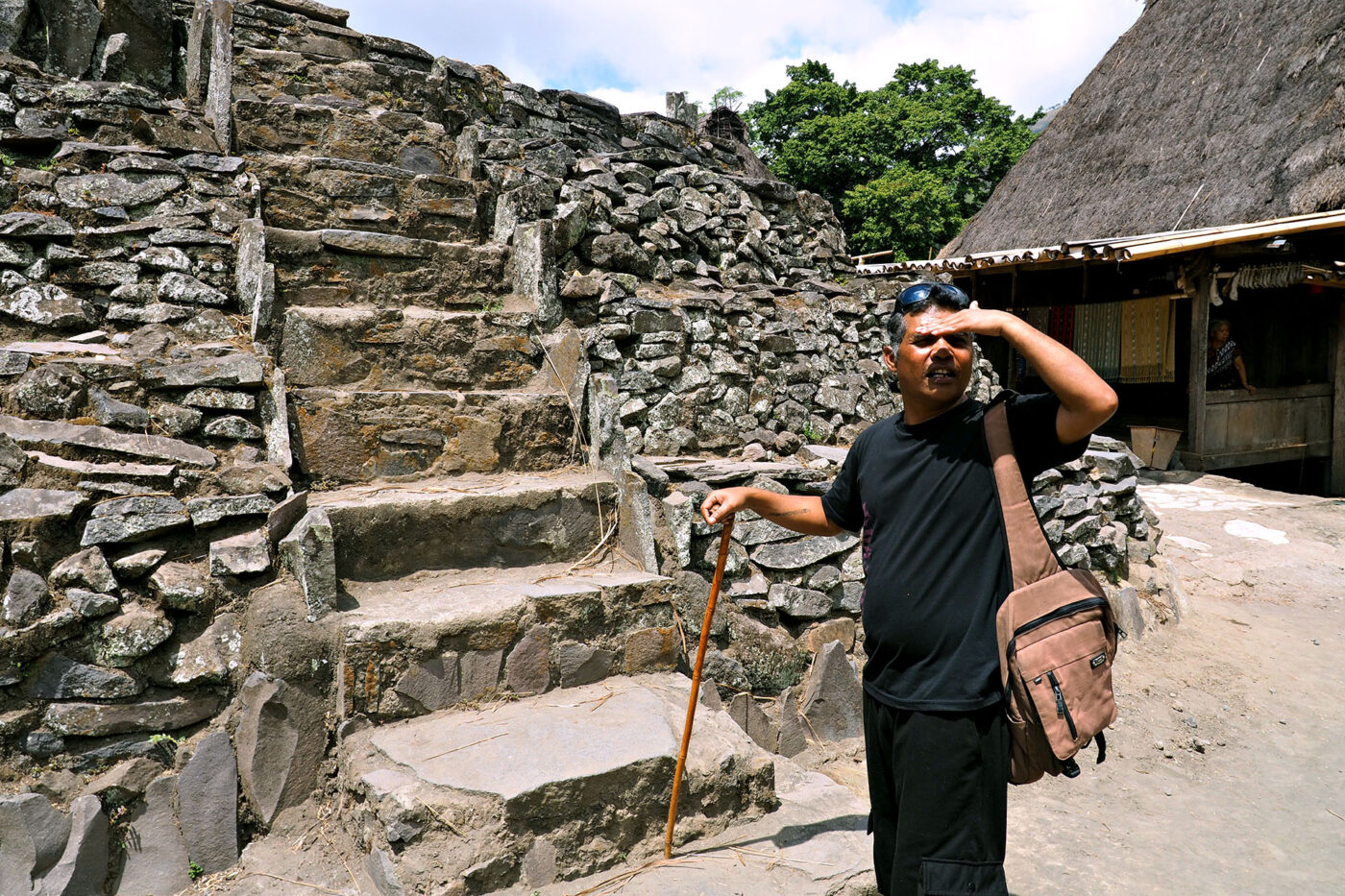
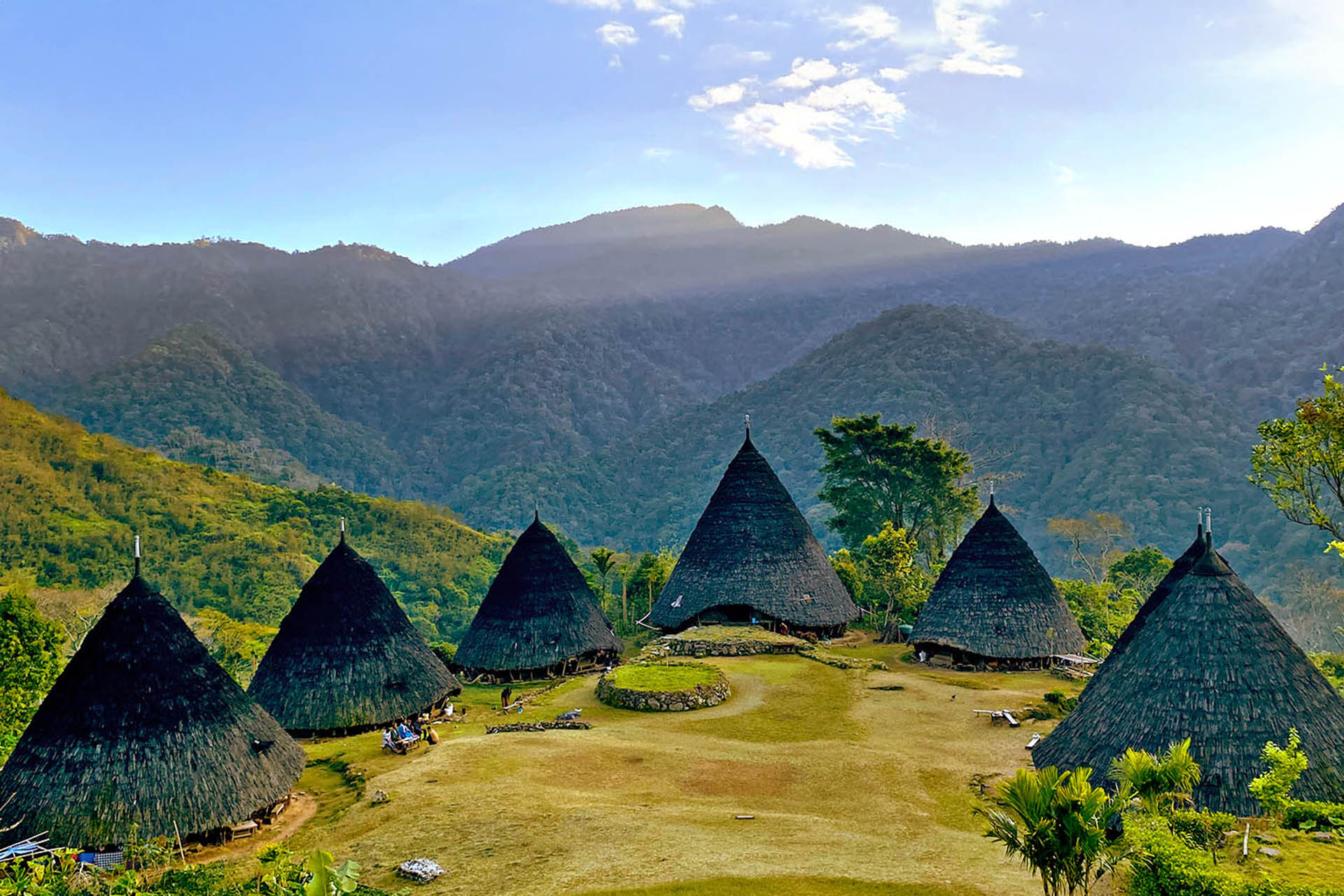
At Bena, a traditional village beneath the hulking shape of Mount Inerie, the nine steps leading towards the meeting place represent the nine clans that call the village home. Each has its own name and place within a community organised around a matriarchal system.
Here, women hold the power (*ahem, as they should*).
And homes carry a person’s story from the very beginning to the very end. A baby’s placenta is brought back and buried at the house they belong to. When that person dies, their body returns to the same house. Birth, death and everything in between tied to one patch of ground.
Almost everywhere we stop, someone is finding a way to make something work.
By this point we’ve travelled a fair distance from the Bali where our trip began, and I’m starting to notice a pattern. Almost everywhere we stop, someone is finding a way to make something work.
Our final stop brings several of those things together.
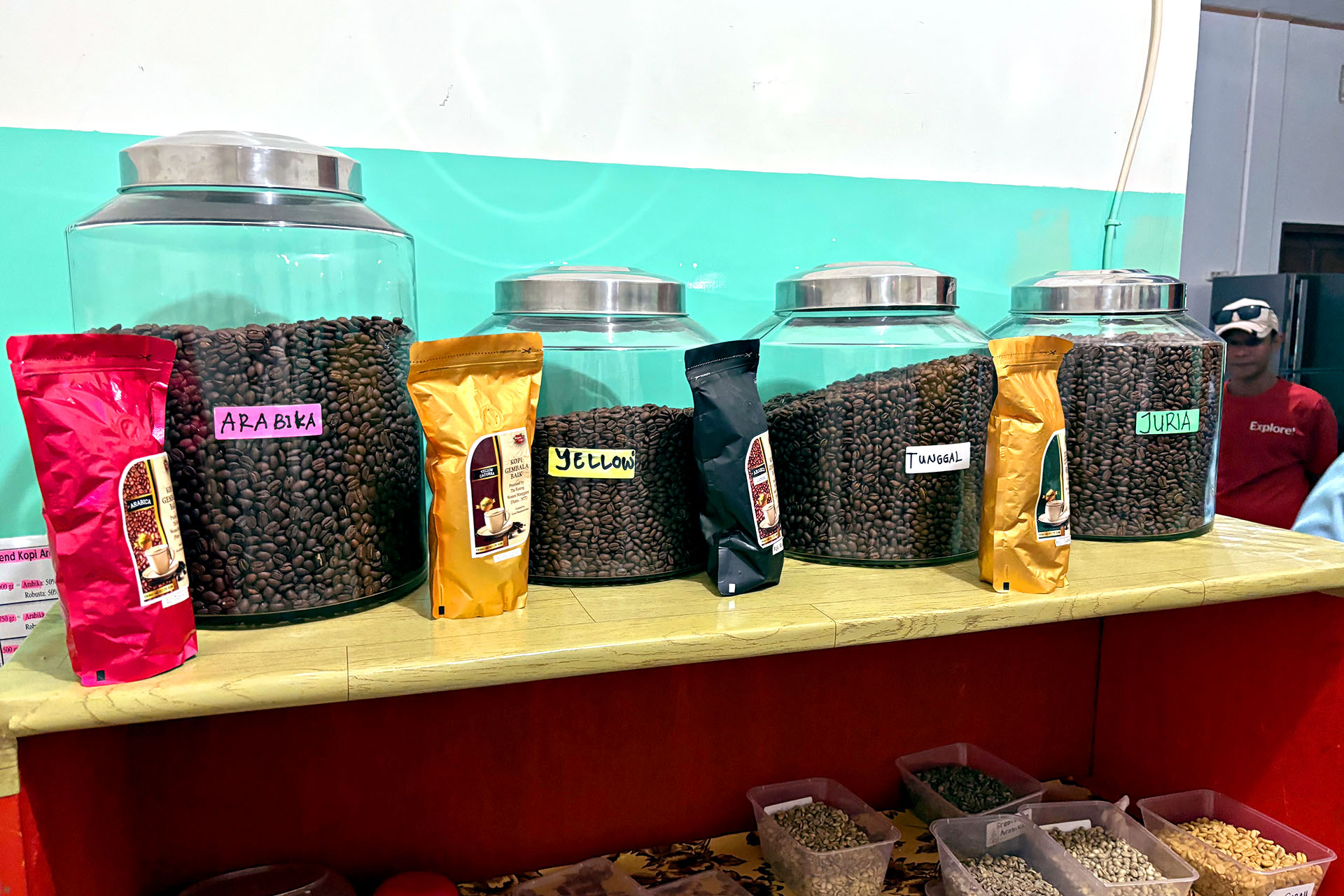
At Gembala Baik, we meet Sister Natalia.
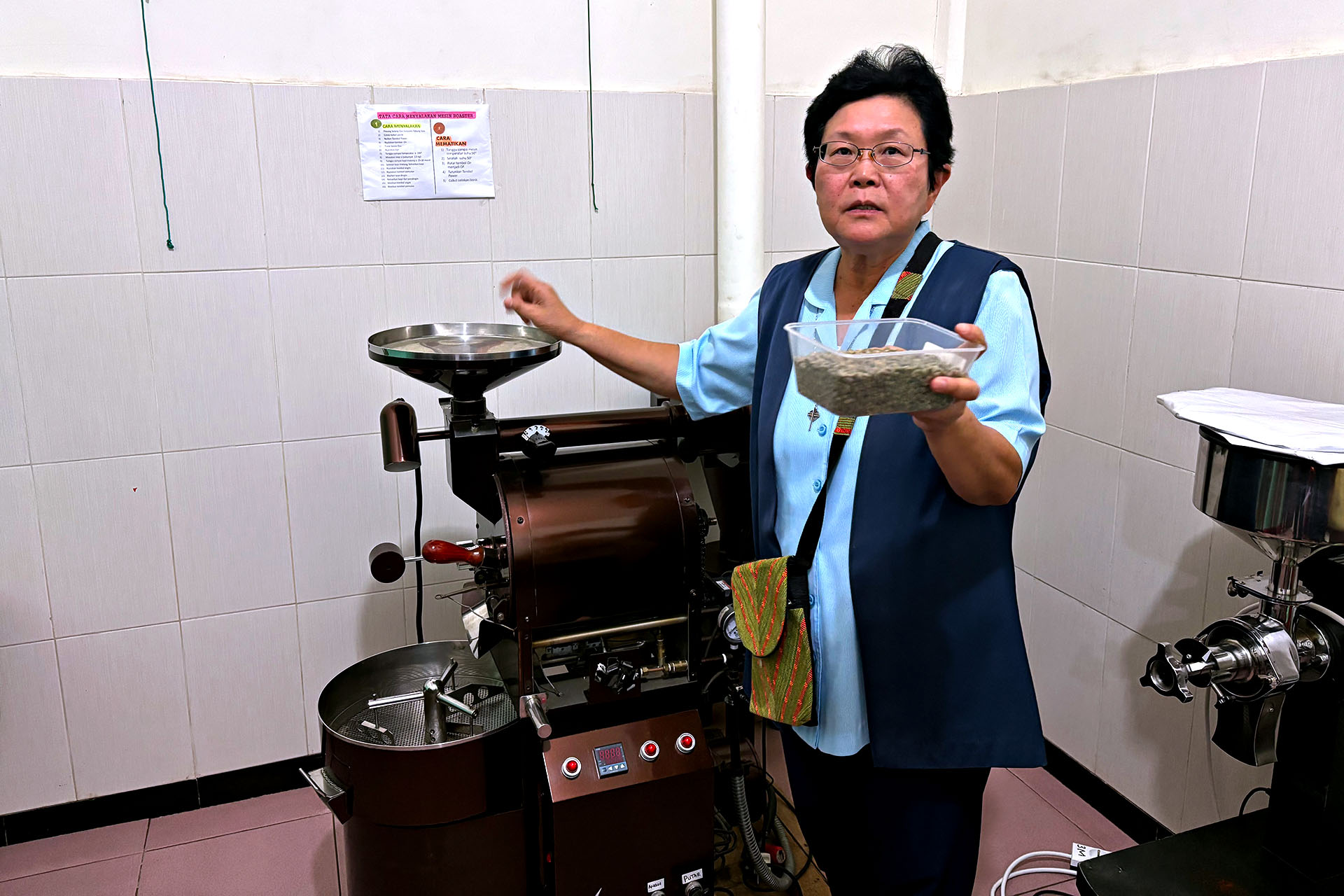
The building housing the coffee operation used to be a kindergarten. Today, it’s part of the international Good Shepherd Sisters’ work supporting women and children, including those from broken families who come here for counselling and shelter.
Around 20 women work here. Some weave hats and bags to sell and support their children. Others work in the coffee and tea operation, where beans from around 30 local farmers are roasted on the premises.
Sister Natalia shows us around. She talks about the organisation’s mission to support women and the wider community, and about faith. The sisters believe God will provide what they need. They pray a lot, and Sister Natalia says that God delivers.
It makes me think. Indonesia isn’t exactly short of things capable of hijacking a camera roll. But the moments I’ve found my mind snagging on haven’t been the ones you’d circle on a map before leaving home.
Funny, then, that the stops I probably would’ve skimmed straight past on the itinerary are the ones still rattling around in my head.
The big names might’ve been what got us here but Explore kept finding reasons to stop in between them.
By the end of the trip, I wasn’t entirely sure which bits were supposed to be the main event. I love that kind of travel.

Share >


More Stories

Lien's enviable calves leave me in his wake and rapidly propel him up the mountain.
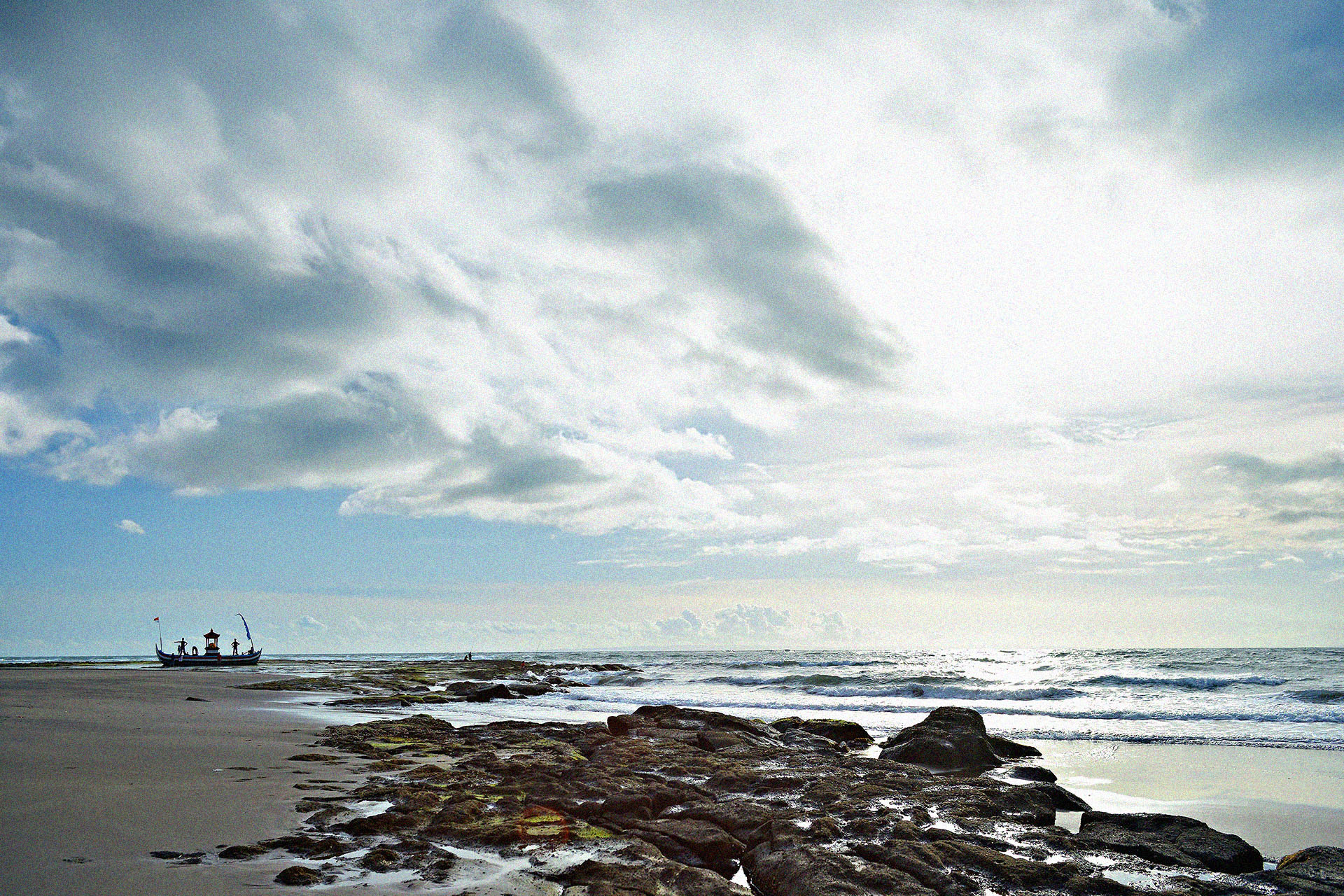
It’s a favourite destination for seekers of days in the sun and nights on the tiles, but the Indo island lost its allure for many travellers long ago. There’s another side to Bali, though. Resident Mark Eveleigh takes a slow road trip through its wild west in search of that old-school vibe.