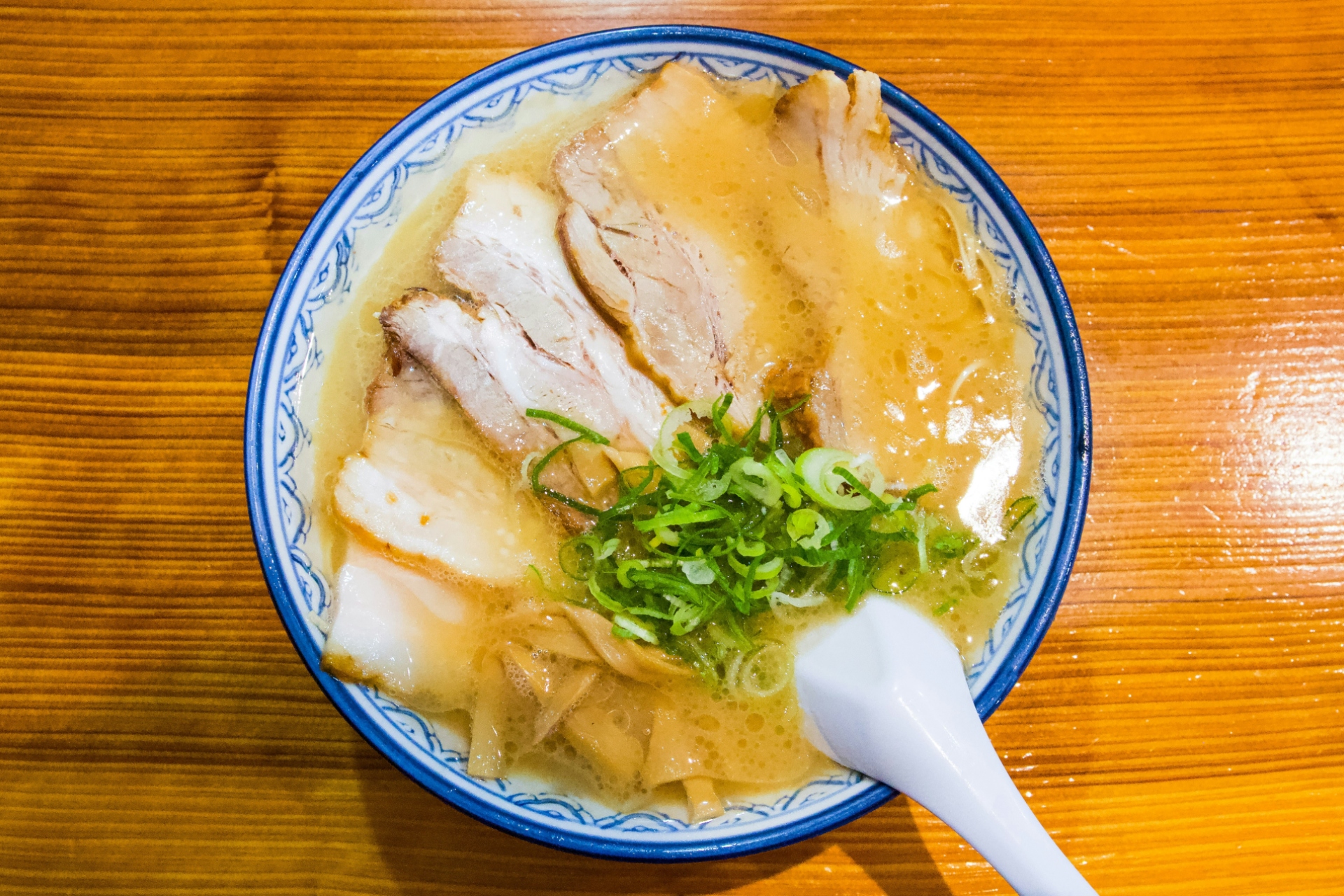
his culinary country has a way of making you hungry even when you’ve just eaten. You walk past a ramen shop, catch a whiff of something sizzling and that perfectly filling lunch you had 20 minutes ago is ancient history.
Down in Kyushu, the southernmost of Japan’s four main islands, this becomes a daily problem.
The island’s seven prefectures each have their own culinary obsession, and the locals are fiercely proud of them. Fukuoka has spent decades perfecting pork-bone ramen. Saga takes its beef very seriously. Over in Oita, entire neighbourhoods seem to be dedicated to fried chicken. And that’s before we get to the mustard-stuffed lotus root.
Volcanic soil, fertile farmland and a coastline that rarely leaves you far from the sea have helped make Kyushu one of Japan’s most interesting places to eat. And the best bit is that much of the good stuff is found well beyond the usual tourist circuit, in family-run restaurants, market stalls and tiny shops that have been making the same dish for generations.
So it’s about time you loosened your belt.

What to Eat in Kyushu: 7 Local Dishes Worth Travelling For
1. Get Yourself Into Hot Water (And Pork Broth)
FUKUOKA | HAKATA RAMEN
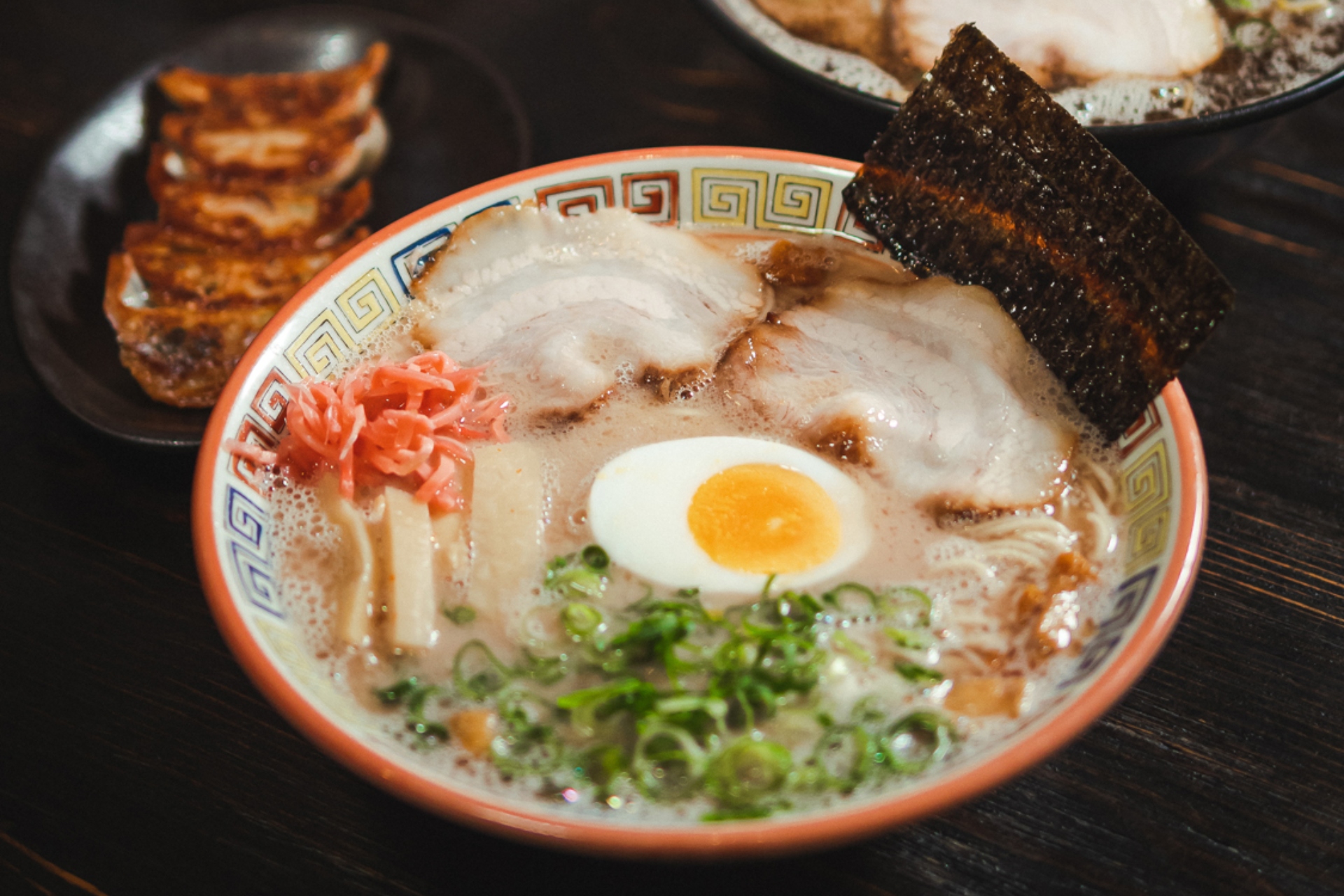
There are few things in life more satisfying than a really good bowl of ramen and in Fukuoka, they’ve made a whole identity out of it.
Hakata ramen is famous for its cloudy, rich tonkotsu broth, made by boiling pork bones until they surrender every last bit of flavour. Add thin, straight noodles, slices of pork and a scattering of spring onions, and you’ve got a bowl worth slurping over.
You’ll find ramen shops all over Fukuoka City, but for the full experience, pull up a stool at one of the city’s famous yatai (open-air food stalls). These little roadside kitchens are part of Fukuoka’s after-dark food culture, and eating elbow-to-elbow with strangers is all part of the fun.
Noodle enthusiasts should also know about kaedama, the glorious practice of ordering extra noodles to finish off your leftover broth because wasting perfectly good pork soup would be criminal.
Pro tip: Order your noodles barikata (extra firm) at least once. It’s a very Fukuoka way to eat ramen (and nobody wants soggy noodles).
2. Raise the Steaks
SAGA | SAGA BEEF
Saga doesn’t muck around when it comes to beef.
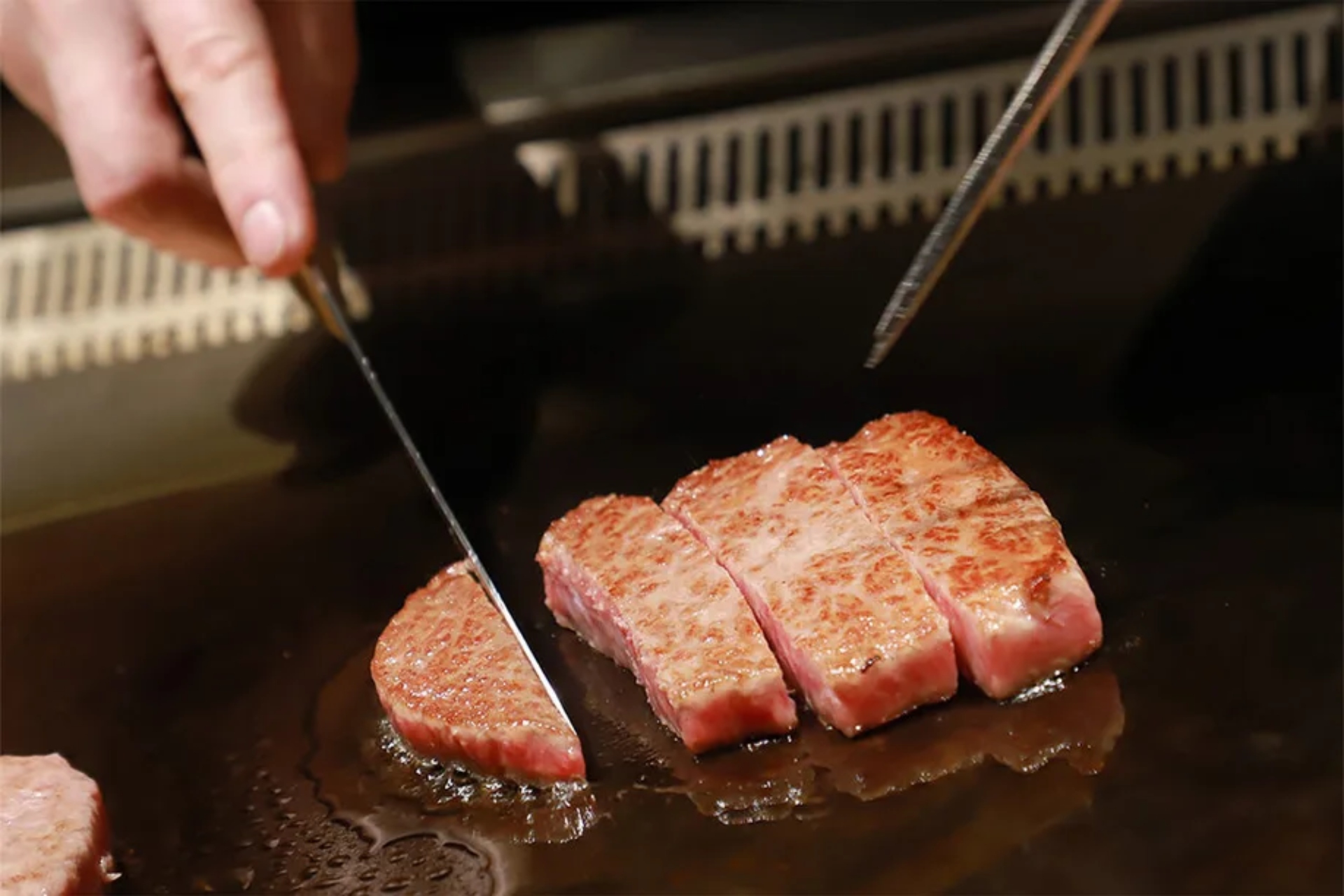
The prefecture produces some of Japan’s most prized wagyu, with Saga Beef known for its intricate marbling and outrageously tender texture. We’re talking the sort of steak that barely requires chewing, which feels a little unfair to every other steak you’ve ever eaten.
The cattle are raised under strict quality standards, and only beef meeting specific grading requirements earns the Saga Beef name. It’s a serious business, and one that becomes much easier to appreciate once there’s a sizzling piece of it sitting in front of you.
Order it as a steak, try it grilled at a yakiniku restaurant or splash out on a teppanyaki experience where a chef cooks it right before your eyes.
Yes, it’s a splurge but you won’t regret it, trust.
Pro tip: Try Saga Beef at a teppanyaki counter. Watching someone cook your dinner with the precision of a surgeon is almost worth the bill alone.
3. Good Things Come to Those Who Slurp
NAGASAKI | GOTO UDON
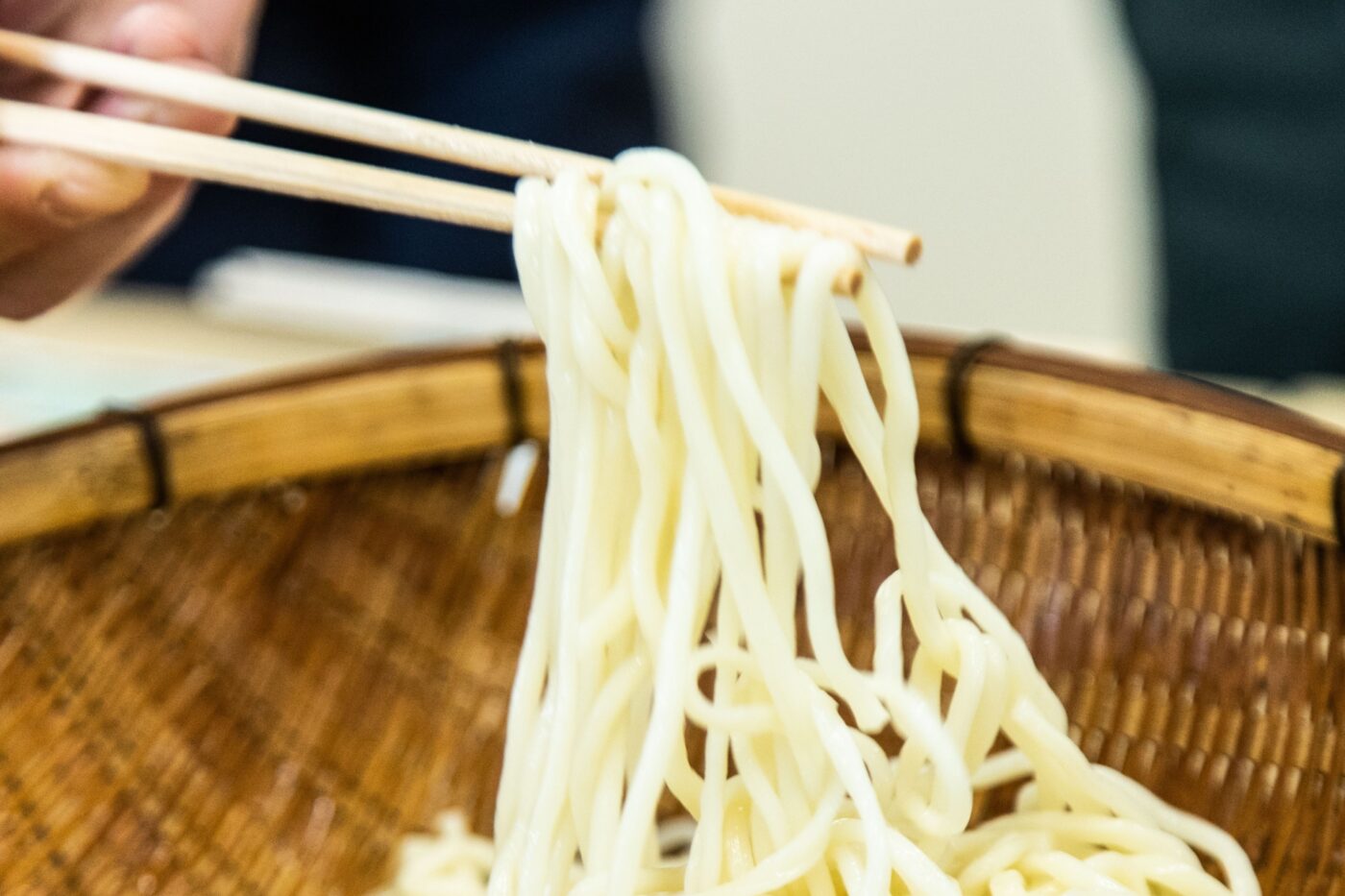
The Goto Islands, off Nagasaki’s western coast, have been quietly making some of Japan’s finest noodles for centuries. And frankly, they’ve got every right to be smug about it.
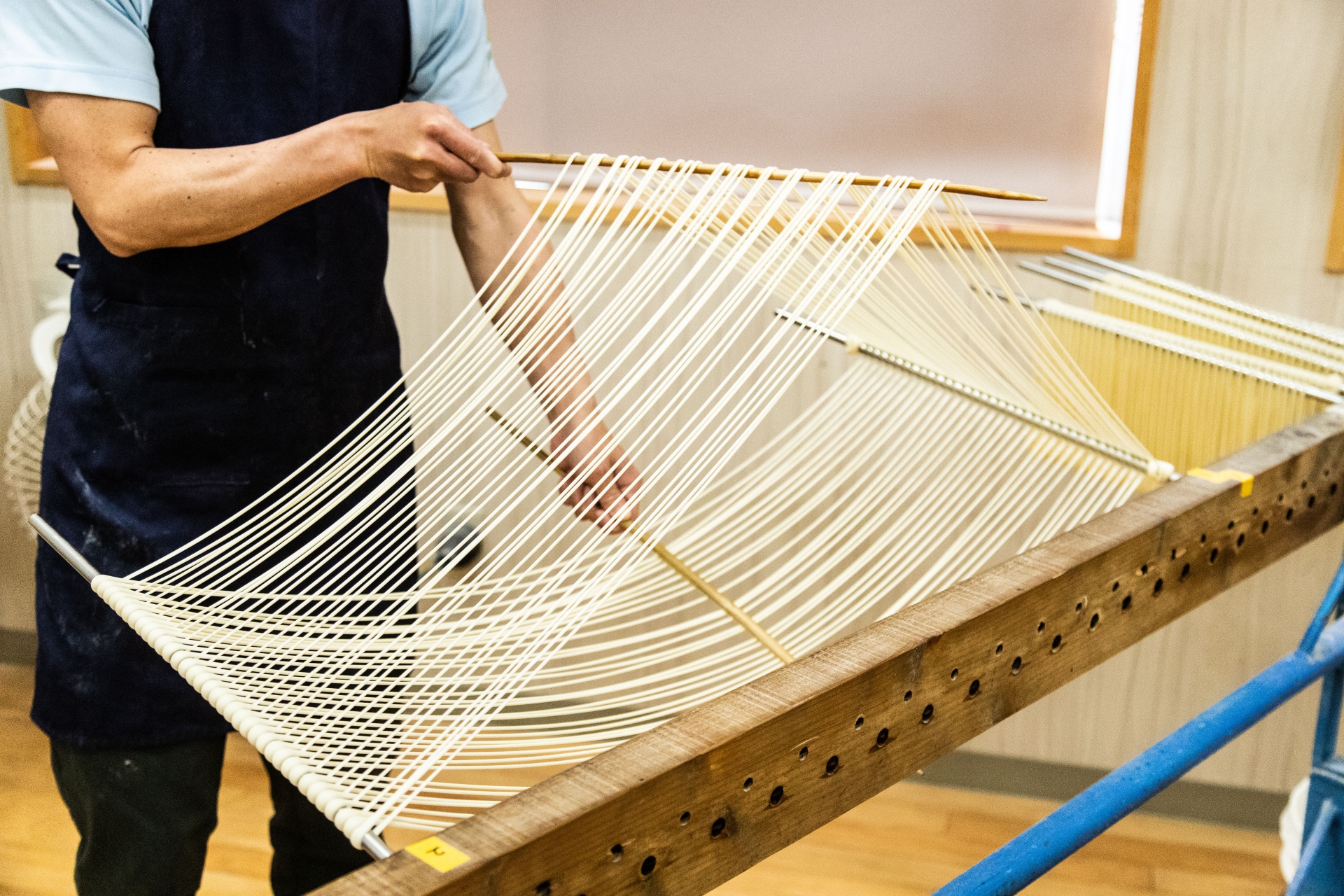
Goto udon is thinner than your average udon, with a wonderfully smooth texture thanks partly to the camellia oil used during production. The noodles are traditionally hand-stretched and have a satisfying firmness that holds up beautifully in hot broth.
For the local experience, order jigoku-daki, where freshly boiled noodles arrive in a pot of bubbling water and you fish them out yourself, dipping each mouthful into a savoury sauce.
The name roughly translates to ‘hell boiling’, which seems unnecessarily dramatic for something this delicious. Then again, the water is pretty bloody hot (read: blow before you slurp).
Pro tip: Try jigoku-daki on the Goto Islands themselves. A bowl of noodles tastes better when you’ve crossed the sea to get it.
4. A Root Awakening
KUMAMOTO | KARASHI RENKON
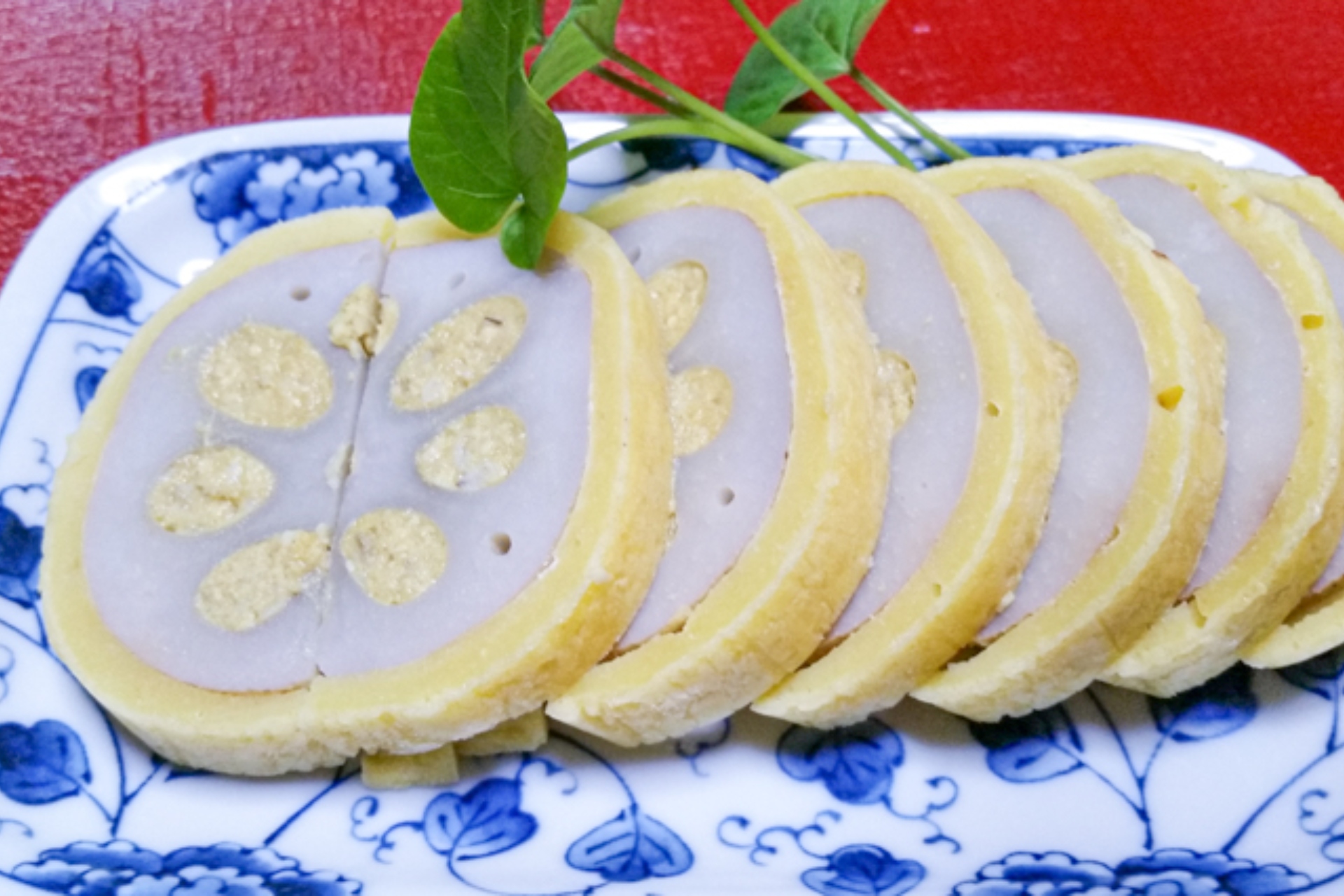
Somebody in Kumamoto once looked at a lotus root and thought, ‘You know what this needs? Mustard.’ And thank goodness they did.
Karashi renkon is one of the prefecture’s most distinctive dishes, made by stuffing the holes of a lotus root with a punchy mustard-miso mixture, coating the whole thing in batter and frying it until golden.
Slice it open and you get a rather fetching yellow pattern, followed by a crunchy bite and a mustard kick that’ll clear your sinuses.
The dish reportedly dates back around 400 years, when it was created for a local feudal lord. These days it’s a popular snack and souvenir, although it’s probably not the sort of thing you’d want to absent-mindedly eat an entire packet of. Unless you really, really like mustard.
Pro tip: Pick up freshly made karashi renkon from a specialty shop in Kumamoto City. But start with a small slice, you can always get cockier later.
5. What the Cluck?
OITA | NAKATSU KARAAGE
The city of Nakatsu has a fried chicken problem…
Namely, there are so many places selling the stuff that deciding where to eat becomes a full-time occupation.
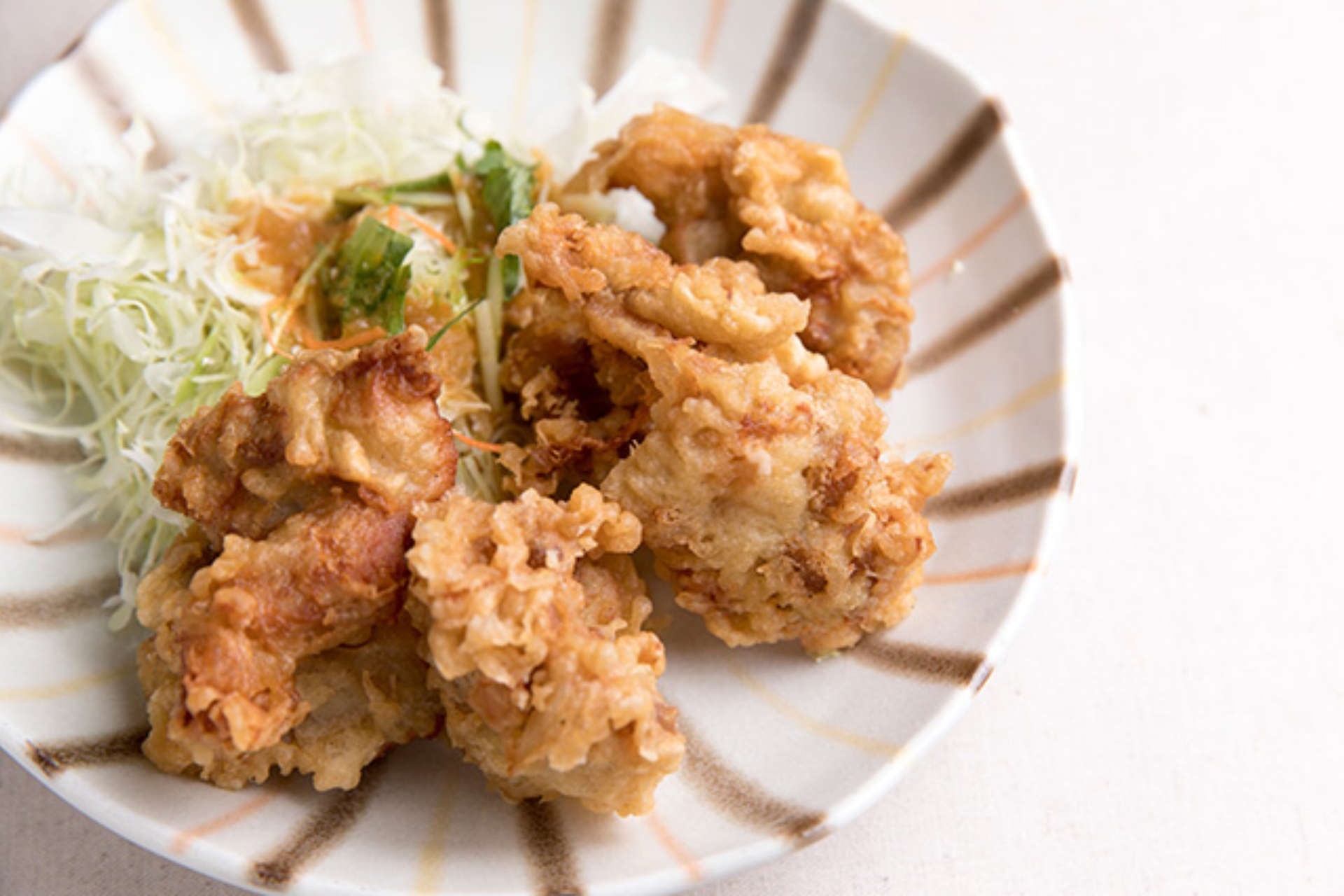
Nakatsu is one of Japan’s great karaage destinations, with specialist shops turning out golden, juicy pieces of chicken marinated in their own closely guarded blends of soy sauce, garlic, ginger and spices.
Some favour white pepper. Others crank up the heat. Some serve boneless pieces, while others insist chicken tastes better when you’re forced to work around the bones (yuck).
The city has also built a formidable reputation at Japan’s Karaage Grand Prix, where fried chicken makers compete for national bragging rights.
Your best strategy is to buy a small portion from one shop, wander a few streets and repeat. It’s important culinary research.
Pro tip: Do a DIY karaage crawl through Nakatsu. Two or three shops should give you a decent idea of whose secret recipe deserves your loyalty.
6. Chicken With a Side of Chicken
MIYAZAKI | CHICKEN NANBAN
Miyazaki looked at fried chicken and decided it needed a little more attention.
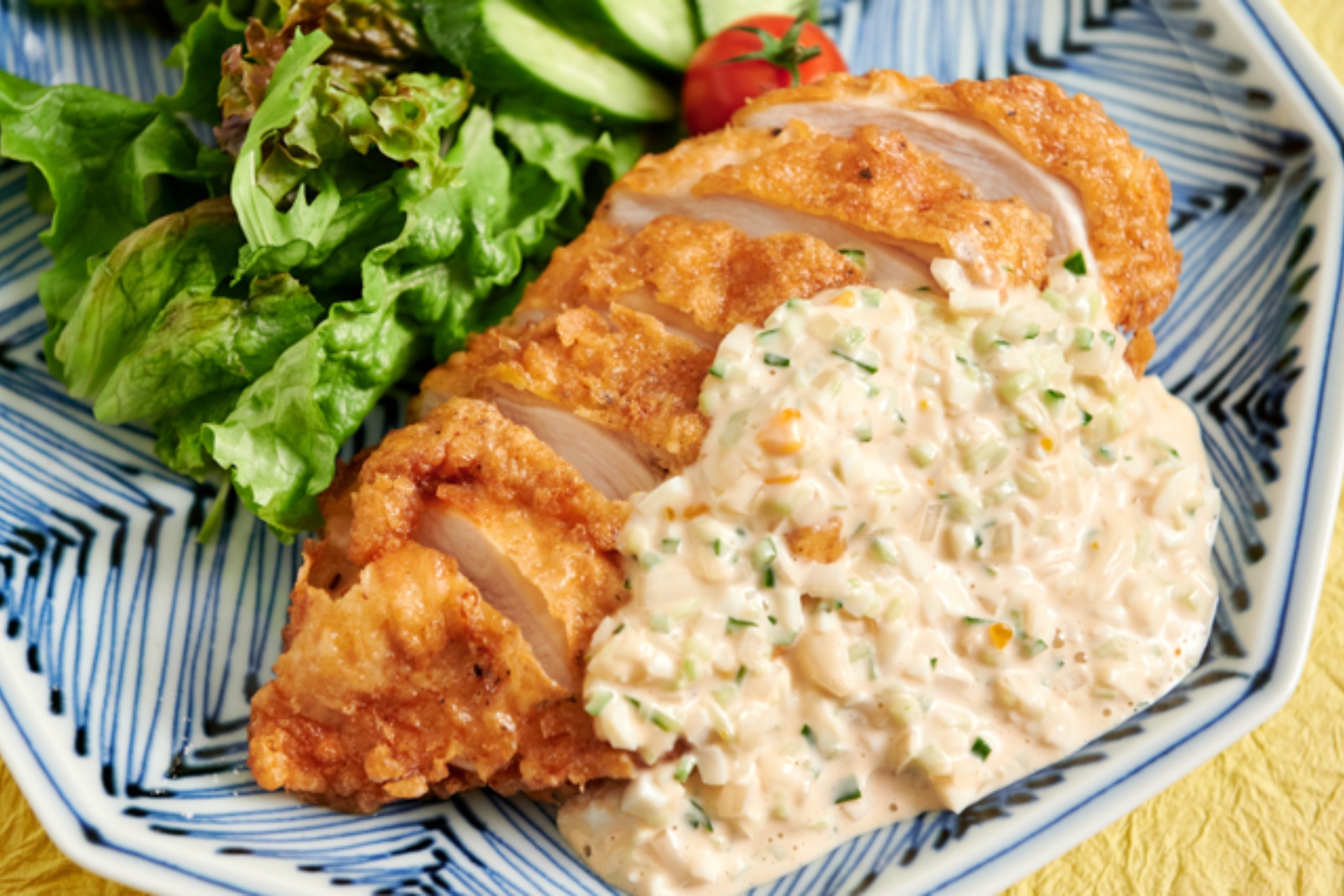
Enter chicken nanban, a local favourite that takes fried chicken, coats it in a sweet-and-sour vinegar sauce and finishes the job with a generous helping of creamy tartar sauce. It’s tangy, rich, crispy and extremely messy.
Chicken nanban originated in Miyazaki and has since spread across Japan, although locals will quite rightly argue that the original is worth seeking out. You’ll find it in casual restaurants and family-run eateries throughout the prefecture, often served with rice and shredded cabbage.
And yes, it’s completely acceptable to use the cabbage to mop up the leftover sauce.
Pro tip: Compare the chicken nanban at a couple of local restaurants in Miyazaki City. Tartar sauce recipes vary, and finding your favourite is a responsibility best taken seriously.
7. Pork Your Troubles Aside
KAGOSHIMA | KUROBUTA PORK
Kagoshima has volcanoes, hot springs and some very, very good pigs.
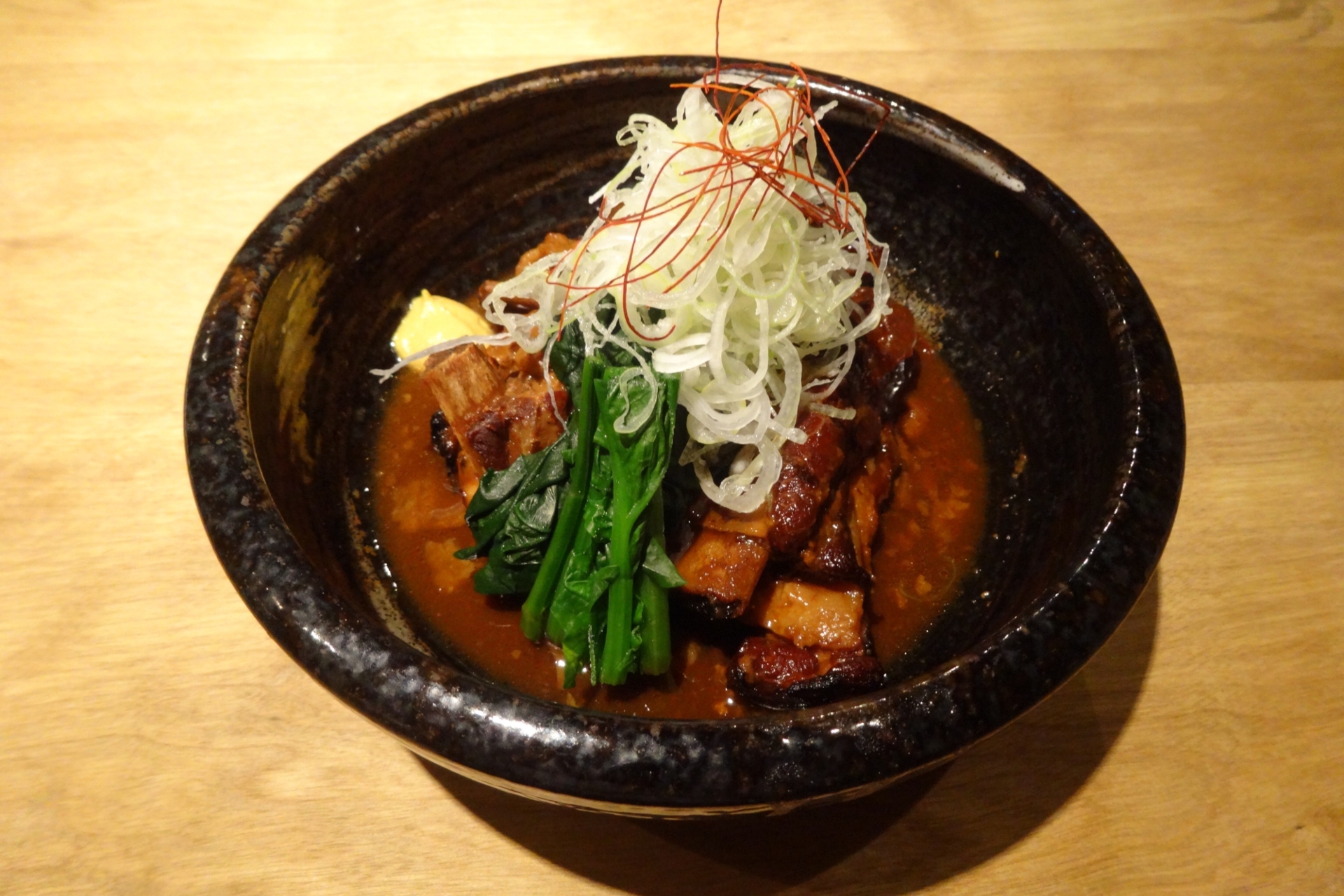
The prefecture is famous for Kurobuta, a prized breed of Berkshire pork celebrated for its tenderness, delicate fat and rich flavour; meat that makes you never want to eat a supermarket pork chop ever again.
You’ll find Kurobuta served all sorts of ways, from crispy tonkatsu cutlets to slow-cooked dishes, but shabu-shabu is a particularly good place to start.
Thin slices of pork are briefly swished through simmering broth, then dipped into sauce and eaten while still beautifully tender. It’s simple but you’ll quickly find yourself ordering more. And more. And then some more.
Given Kagoshima’s reputation for exceptional pork, you’d be doing the prefecture a disservice by stopping at one plate.
Pro tip: Sit down for a Kurobuta shabu-shabu dinner in Kagoshima City. The pork only needs a quick dip in the broth, so don’t cook the life out of it.
Planning a Food Trip Around Kyushu
Fukuoka makes a handy starting point, with its international airport and excellent rail connections. From there, you can work your way around the island by train, bus or hire car, depending on how many little towns and roadside food stops you fancy squeezing in.
For travellers looking to venture further, the Goto Islands offer a particularly good excuse to slow things down, while Kumamoto, Miyazaki and Kagoshima reward anyone willing to put a few extra kilometres between themselves and the usual Japan itinerary.
The food alone is reason enough to visit. But between meals, there are steaming hot springs, volcanic landscapes, historic towns and plenty of opportunities to walk off that third helping of fried chicken.

Share >


More Stories

There’s rich samurai history hidden behind every noren in Yanagawa; a history which is also being reimagined for the modern visitor.

Justin Jamieson embarks on a pretty packed itinerary full of ancient temples, enchanting districts, traditional eats and spiritual experiences to squeeze as much culture out of Nagano and Kanazawa as humanly possible. This is how it went.
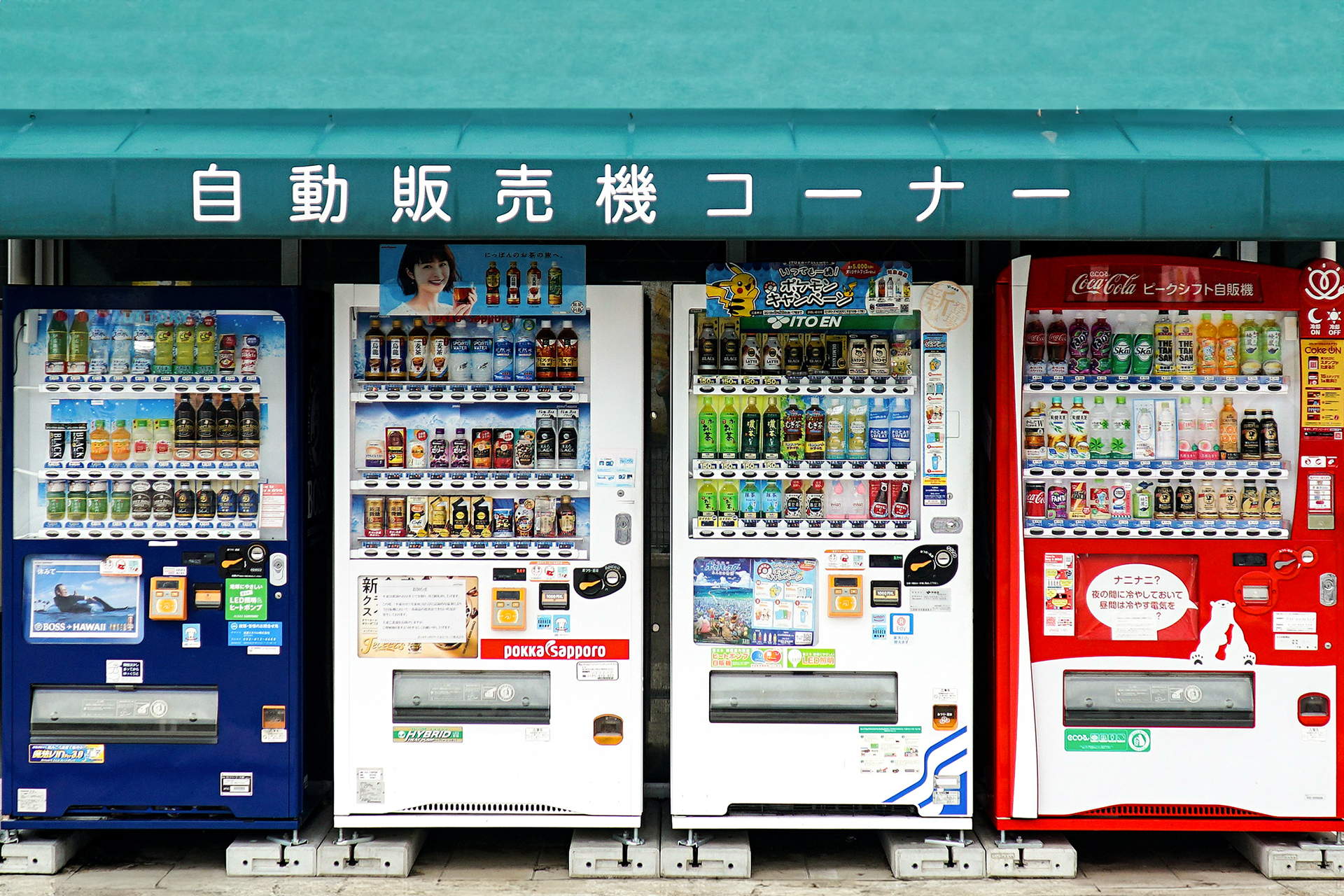
The streets of Japan are a never-ending vending machine safari. We set out to prove that the jidohanbaiki, a 24-hour robo-buffet, is all you need for a good feed.