(
(
Japan
Japan
The Old Road Still Knows the Way:
From stone-paved villages to mountain passes, this is Japan at walking pace; immersive, timeless, and quietly epic.
Japan does walking trails very well. But the Nakasendō Trail isn’t just a hike, it’s time travel with good legs and an appetite for immersion. This is one of the Five Great Roads of the Edo period, a historic artery that once connected Kyoto with Edo (modern Tokyo), carrying samurai, merchants, monks, messengers, and the occasional unlucky bloke walking in straw sandals during a snowstorm.
Click to view gallery

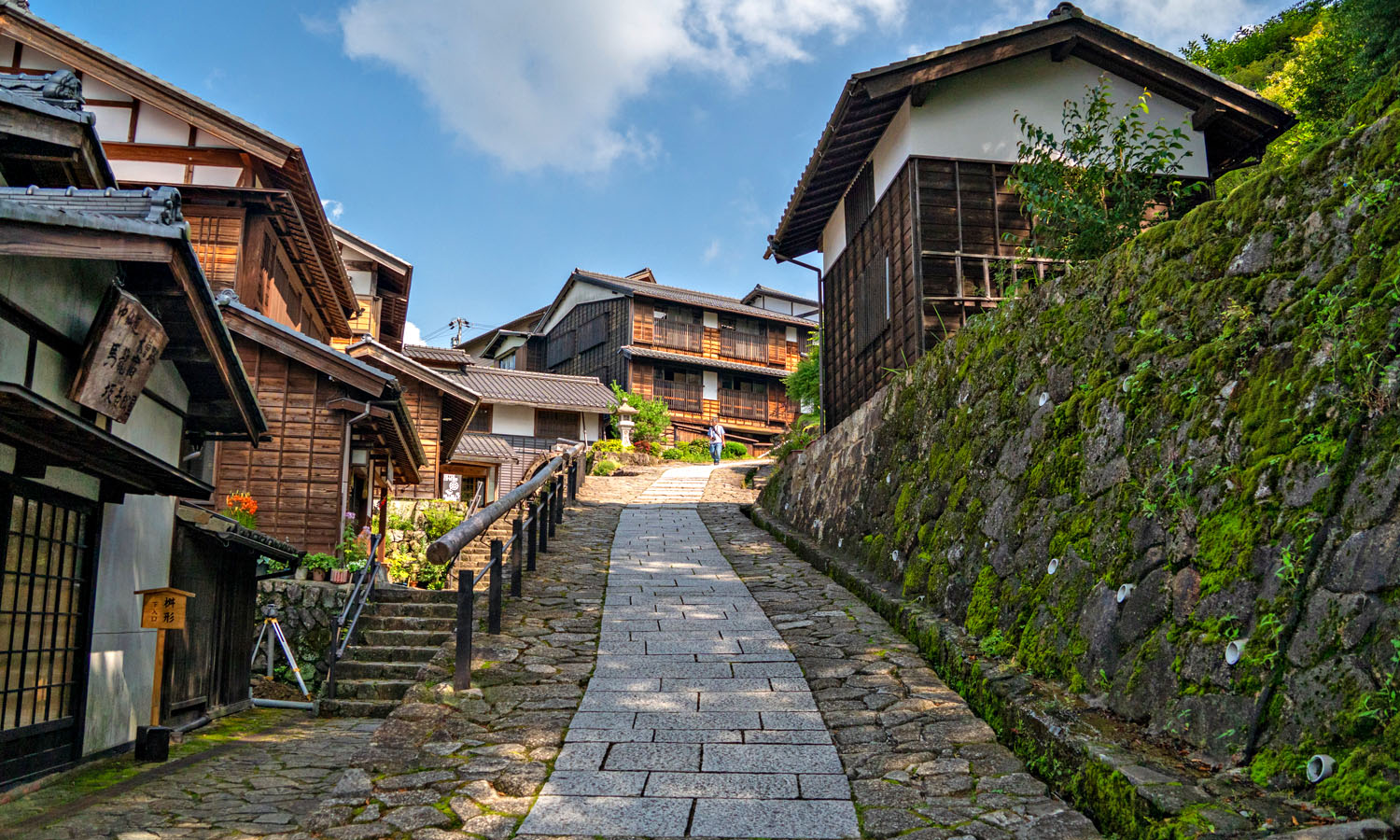
Today, you can still walk large sections of it. Not on a treadmill. Not behind a flag-waving guide. But on foot, at your own pace, through cedar forests, over stone-paved passes, and into post towns that look like the Edo era forgot to leave.
For travellers chasing something deeper than neon lights and selfie queues, the Nakasendō delivers that sweet spot of immersive adventure. It’s physical without being punishing. Cultural without being stuffy. And quietly spectacular in a way that sneaks up on you somewhere between a mossy stone Buddha and your third bowl of miso soup.
Why the Nakasendō Works So Well on Foot
The genius of the Nakasendō is that it was built for walking. Unlike coastal routes designed for speed, this inland road winds through Japan’s mountainous heart; through forests, valleys, rivers, and passes that force you to slow down and pay attention.
Walking sections range from gentle village strolls to satisfying half-day hikes, making it accessible even if your idea of “training” is walking to the café. And because it’s broken into manageable segments, it fits neatly into a broader Japan itinerary alongside Tokyo, Kyoto, or the Japanese Alps.
Most importantly, the Nakasendō shows you a version of Japan that many visitors never see: quiet, rural, deeply traditional, and refreshingly human.
Click to view gallery
Sample Itinerary: Five Days Along the Old Road
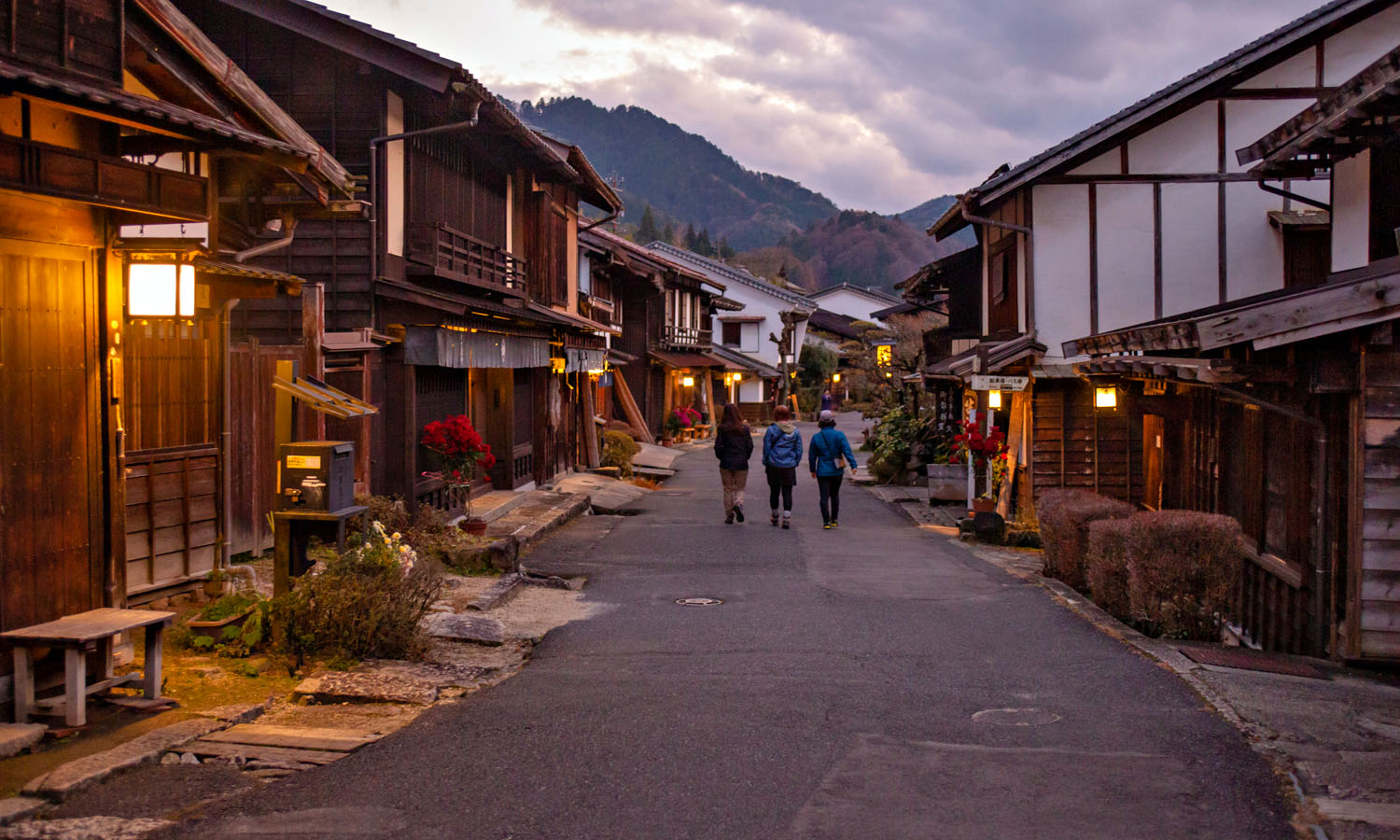
Day 1: Magome-juku to Tsumago-juku (8 km, ~3 hours)
You begin in Magome-juku, one of the most photogenic post towns in Japan. It climbs a steep stone-paved slope lined with wooden inns, waterwheels clacking away like they’ve always been there (because they have), and views back toward Mount Ena that feel almost painted on.
Leaving Magome, the trail slips into forest. Sunlight filters through cedar trees, stone paths crunch underfoot, and waterfalls (including the charmingly named Male and Female Falls) appear just when your legs start to complain.
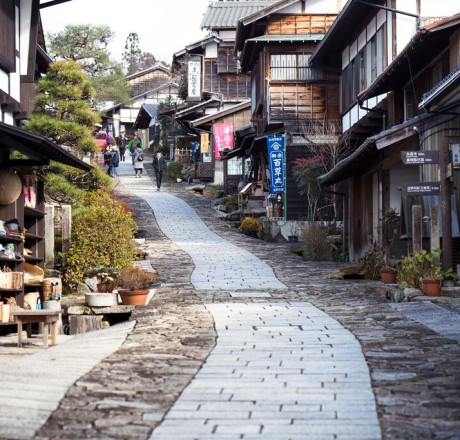
The reward is Tsumago-juku, Japan’s first officially preserved post town. Its streets follow a strict philosophy: do not sell, do not rent, do not destroy. The result is a place that feels lived-in rather than staged. You overnight in a local minshuku or ryokan, eat a seasonal dinner, and sleep very well.
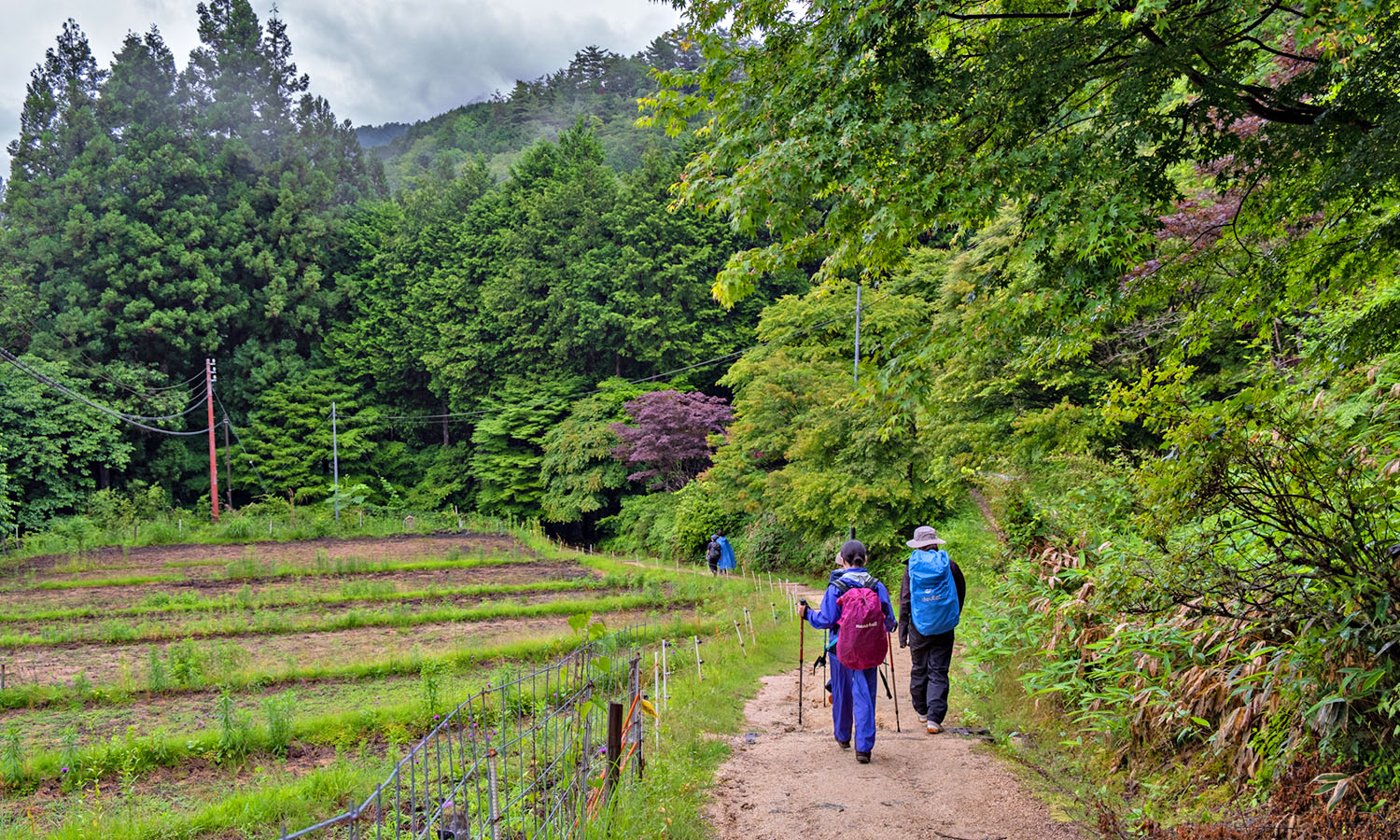
Day 2: Tsumago to Nojiri → Kiso-Fukushima
This is a quieter, more contemplative day. The crowds thin. The forests deepen. You walk through Kiso cypress groves and rural countryside where time seems optional.
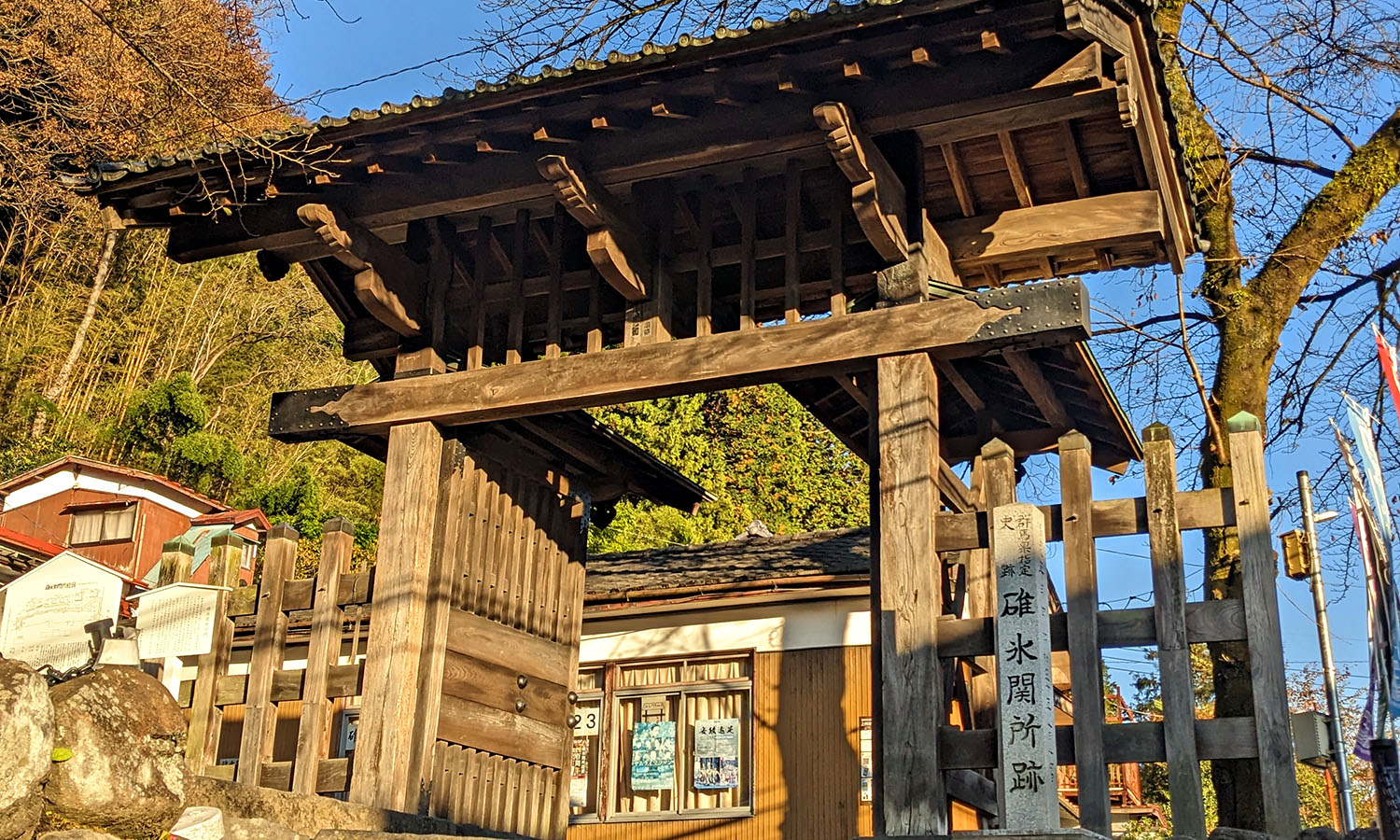
After the walk, you transfer by train to Kiso-Fukushima, once guarded by one of Edo Japan’s four great checkpoints. The ruins remain, a reminder that travel here was once tightly controlled. A soak in a free foot bath by the river helps ease the legs.
Click to view gallery
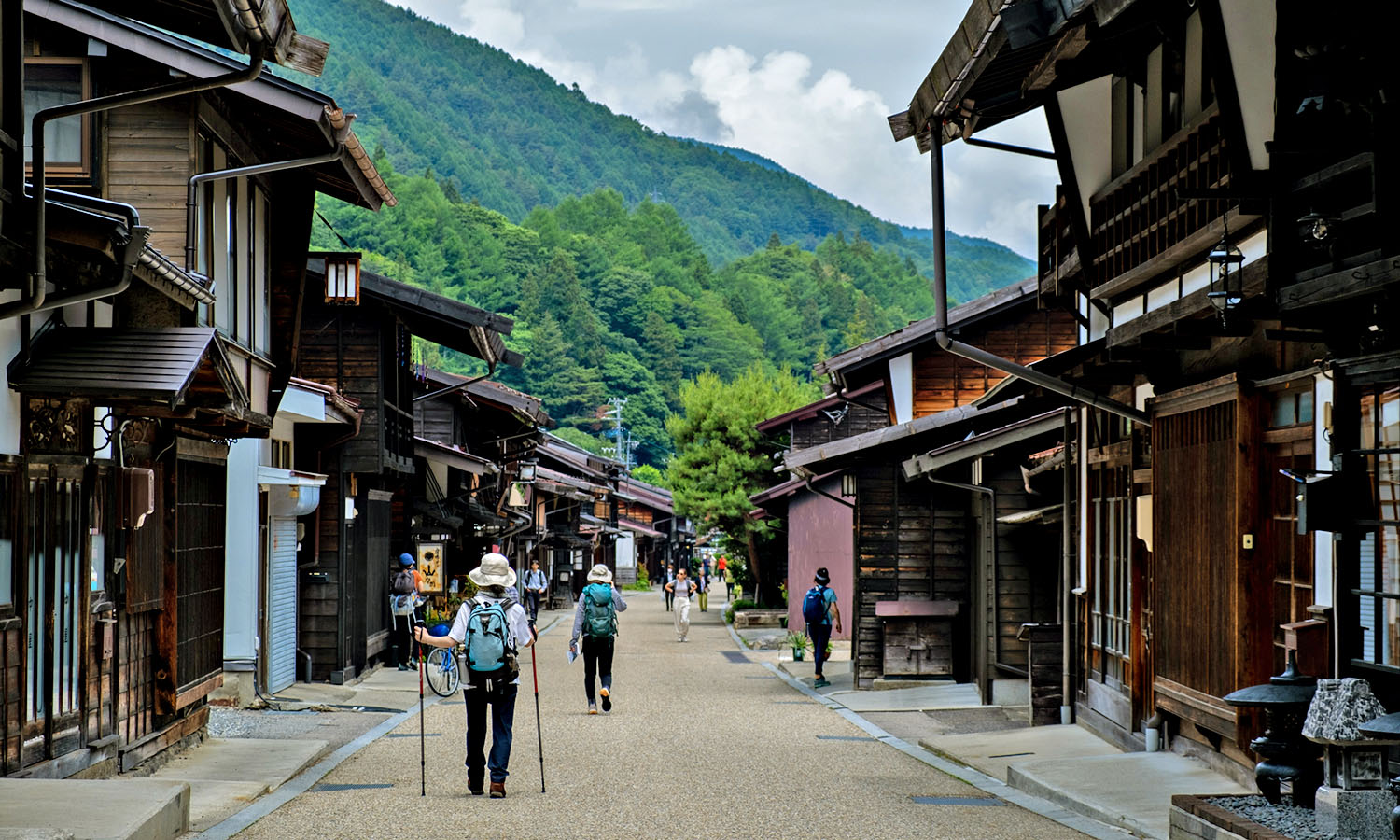
Day 3: Yabuhara-juku to Narai-juku via Torii Pass (7 km, 2–3 hours)
Starting in Yabuhara-juku, birthplace of the delicate Orōku comb, the trail climbs steadily toward Torii Pass, one of the highest points on the Nakasendō at 1,197 metres.
Stone Buddhas line the way. Poetry monuments appear unexpectedly. Matsuo Bashō passed through here, and it’s easy to see why he lingered.
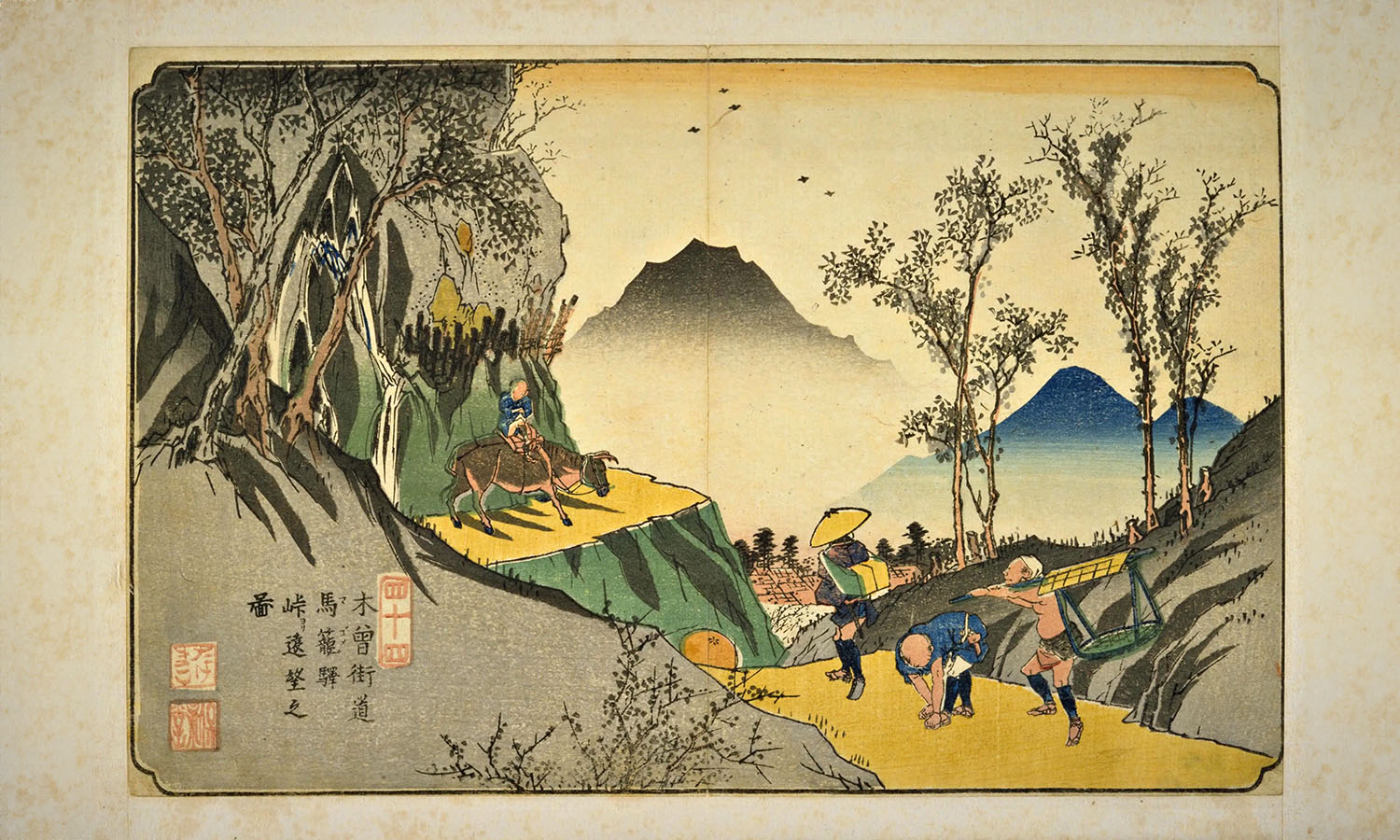
Descending into Narai-juku feels like walking into a film set that forgot to modernise. Nearly a kilometre long, Narai is known as “Narai of a Thousand Houses,” with lacquerware shops, cafés, and beautifully preserved wooden buildings.
That night, you head toward Matsumoto and sink into an onsen at Asama or Utsukushigahara, a reward Edo travellers could only dream about.
Click to view gallery
Day 4: Matsumoto to Karuizawa
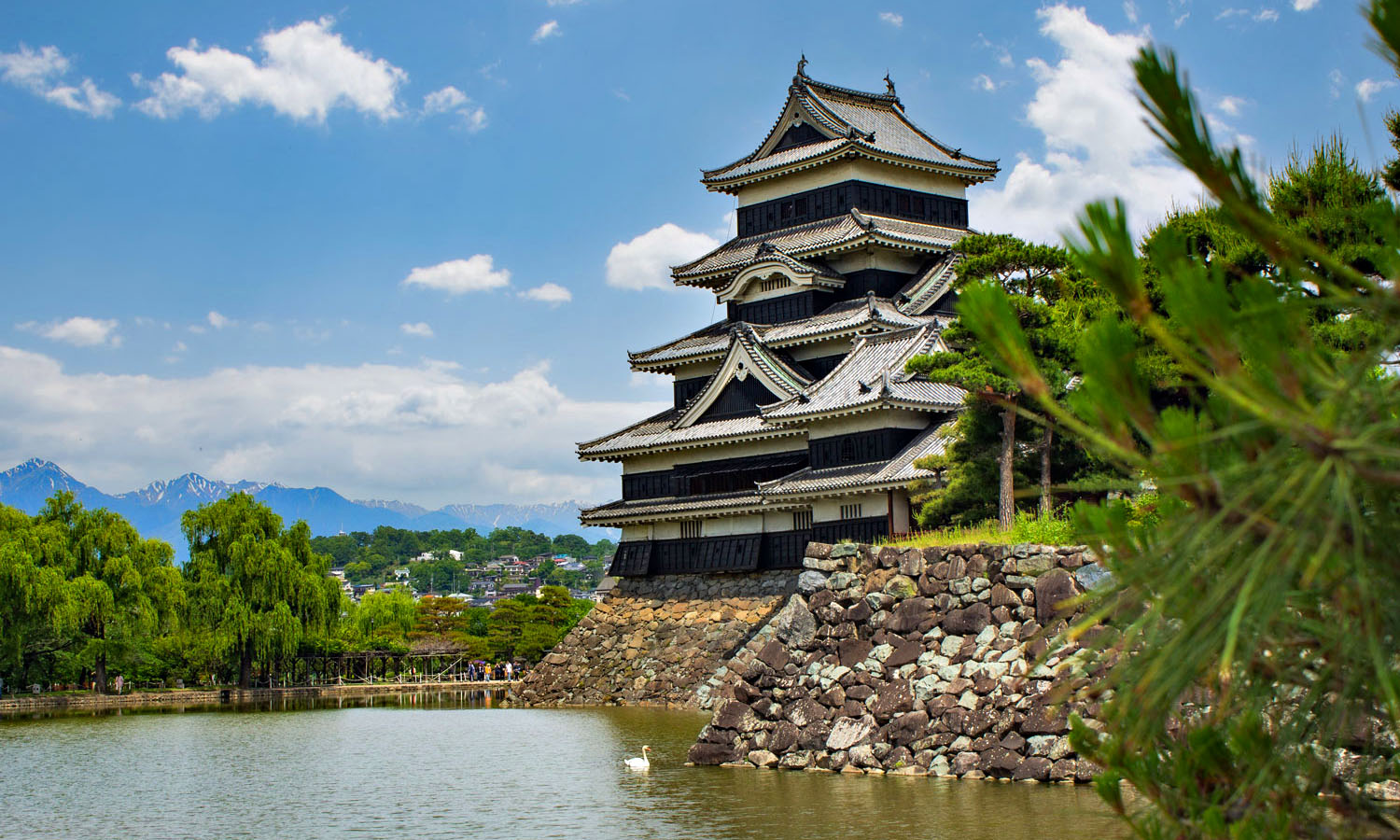
This is your cultural breather day. Matsumoto Castle, one of Japan’s original castles, rises black and imposing against the Alps. From here, you travel on to Karuizawa, a refined mountain resort town with leafy streets, historic churches, and excellent coffee. It is a surprisingly good base for what comes next.
Day 5: Usui Pass — Walking Like It’s the Edo Period
If the Nakasendō has a showstopper, Usui Pass is it.
Once notorious for its steep gradients and unpredictable weather, Usui Pass connected Karuizawa with Gunma Prefecture and tested the resolve of Edo-era travellers. Today, it’s been restored as a tranquil forest trail. It is dramatic without being brutal, scenic without trying too hard.
And here’s where immersion levels up.
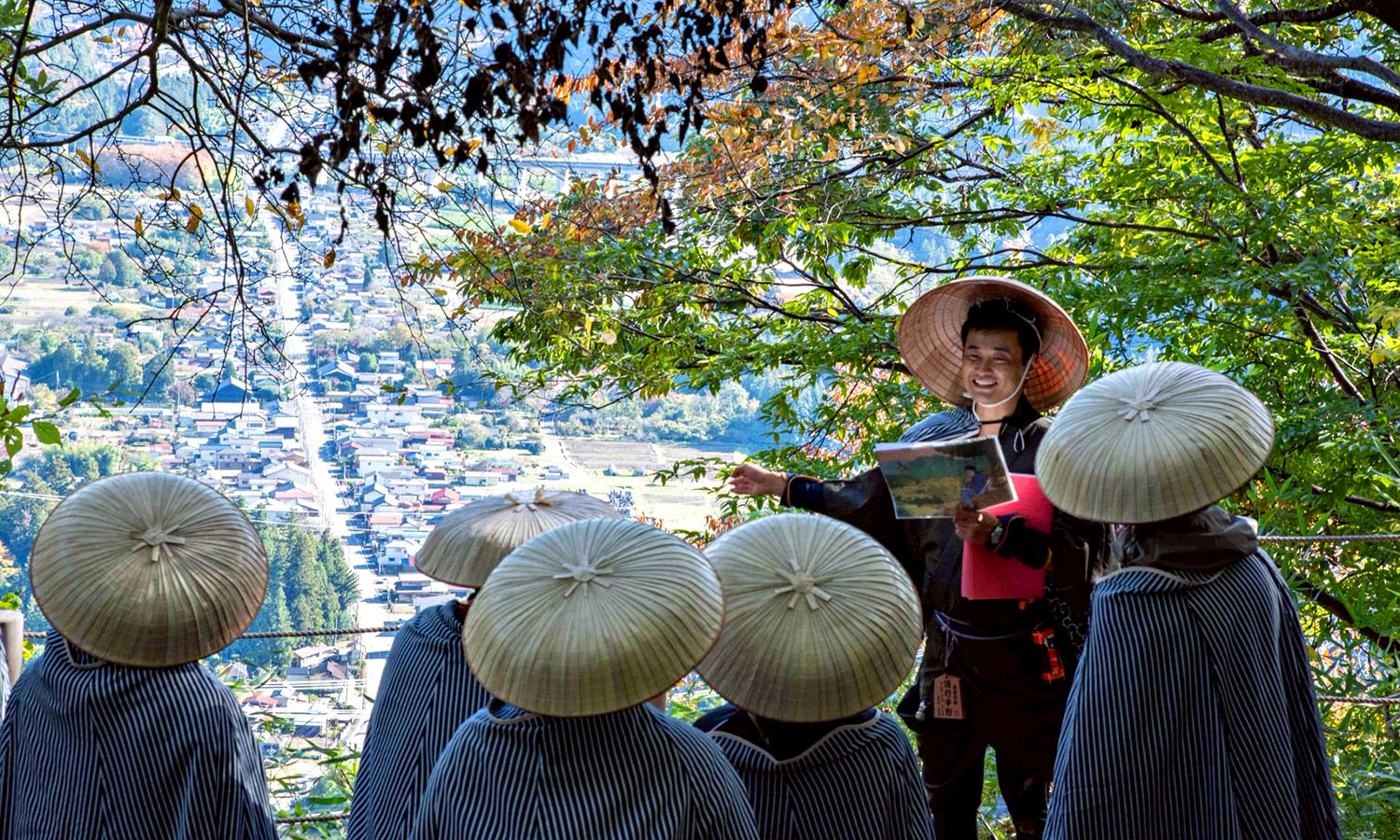
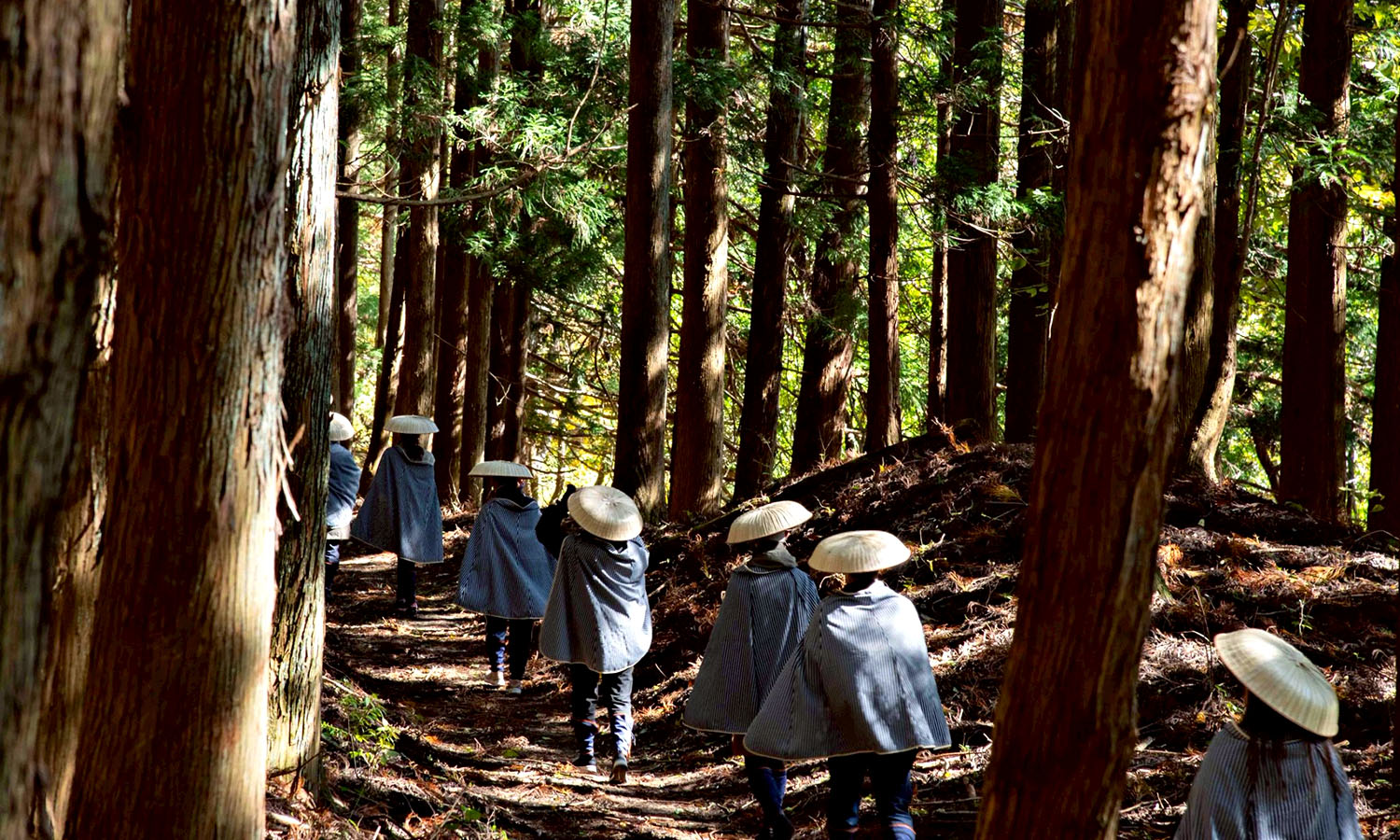
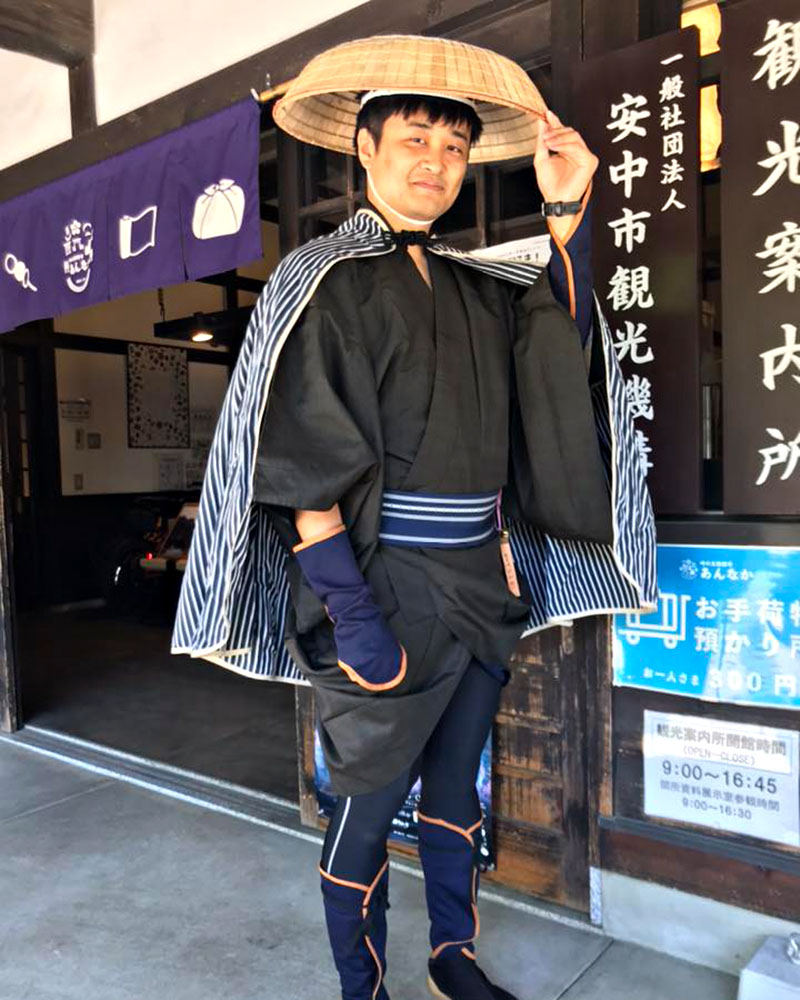
Before setting out, you don authentic Edo-period travel attire: traditional hat, rain cape, arm guards, leggings, and even a replica travel permit tucked away like you’re clearing checkpoints. It’s not cosplay, it’s context. Suddenly, the weight of history feels real. The trail narrows. The forest closes in. Your footsteps echo differently.
At scenic viewpoints, Mount Myōgi rises jagged and theatrical above the valleys. You stop for a bento inspired by historic teahouses, including tōge no chikara-mochi — “power mochi” once eaten by travellers tackling the pass. It’s simple, satisfying, and strangely perfect.
Illustrated storytelling along the route adds depth, tracing the evolution of this road from the Nara period through early modern Japan. By the time you reach the ruins of the Usui Pass Checkpoint, you’ve stopped walking through history and started walking with it.
The descent leads toward Sakamoto-juku and on to Yokokawa, home of railway heritage and the famous tōge no kamameshi, a fitting final meal to celebrate finishing the journey.

Why This Journey Stays With You
The Nakasendō isn’t about ticking boxes. It’s about rhythm. Walking, eating, soaking, sleeping, repeating. It’s about seeing Japan at human speed, where forests feel alive, towns feel real, and history isn’t behind glass.
As a self-guided journey, it gives you freedom without friction. Routes are clear. Logistics are handled. Support is there when needed. You walk alone, but never lost.
Booking Information Tour Operator: Oku Japan
Oku Japan launched Japan’s first self-guided walking tours in 2010 and has become a leader in sustainable, off-the-beaten-path travel. Their trips focus on immersion, local stays, and meaningful travel experiences across Japan.
Most Popular Tour: Nakasendō Self-Guided Walking Tour – 5 Days
Get there

A five-day self-guided hiking journey along the historic Nakasendō Trail, combining village paths and forest trails. Rated easy to moderate, with daily walks ranging from 1 to 6 hours.
Best from April to November.
Get Informed

Itinerary Highlights
• Magome to Tsumago over Magome-tōge
• Tsumago to Nojiri with onsen stay
• Yabuhara to Narai via Torii Pass
• Matsumoto sightseeing
• Karuizawa to Yokokawa over Usui Pass
What’s Included
• 4 nights in traditional minshuku/ryokan
• 4 breakfasts and 4 dinners
• Train tickets to and from the trail
• Detailed maps, directions, and local phone support
What’s Not Included
• Flights and airport transfers
• Lunches, drinks, some local buses
• Optional luggage transfers and single supplements
Tour There

Book the Nakasendō Self-Guided Walking Tour
If you’ve ever wanted to walk into Japan’s past, properly, quietly, and on your own two feet, this is the road.
Book the Short 5-hour Usui Pass Edo Era Walk
This guided walking tour takes you across the Usui Pass, once known as the most difficult section of the route, while immersing yourself in history and nature.







While you're here

If 2026 is the year you want to finally hit the slopes then the Ikon Pass has...
If 2026 is the year you want to finally hit the slopes then the Ikon Pass has your back -...

Calling all shutterbugs, storytellers, and video visionaries, Fujifilm’s...
Calling all shutterbugs, storytellers, and video visionaries, Fujifilm’s GFX Challenge...

SHIZUOKA, JAPAN
You, a flurry of pink petals, and landscapes so breathtaking they look...
You, a flurry of pink petals, and landscapes so breathtaking they look straight out of...

TOKYO, JAPAN
First there was Squid Game and now, after the resounding success of...
First there was Squid Game and now, after the resounding success of Netflix’s latest...