(
(

Japan
Japan
Sushi. Samurai. Sake. Swimming.
Organised by Cross Country Swimming, this is the kind of trip where you eat tuna at dawn in Tokyo, watch sumo wrestlers attempt to fold each other in half, then spend the rest of the week swimming along a volcanic coastline so dramatic it looks like it’s been sketched by a moody anime director.
Welcome to Izu. Bring goggles. And an appetite.
Click to view gallery

Day 1: Tokyo Turns It On
You land in Tokyo and immediately realise this city has more personalities than a Bond villain.
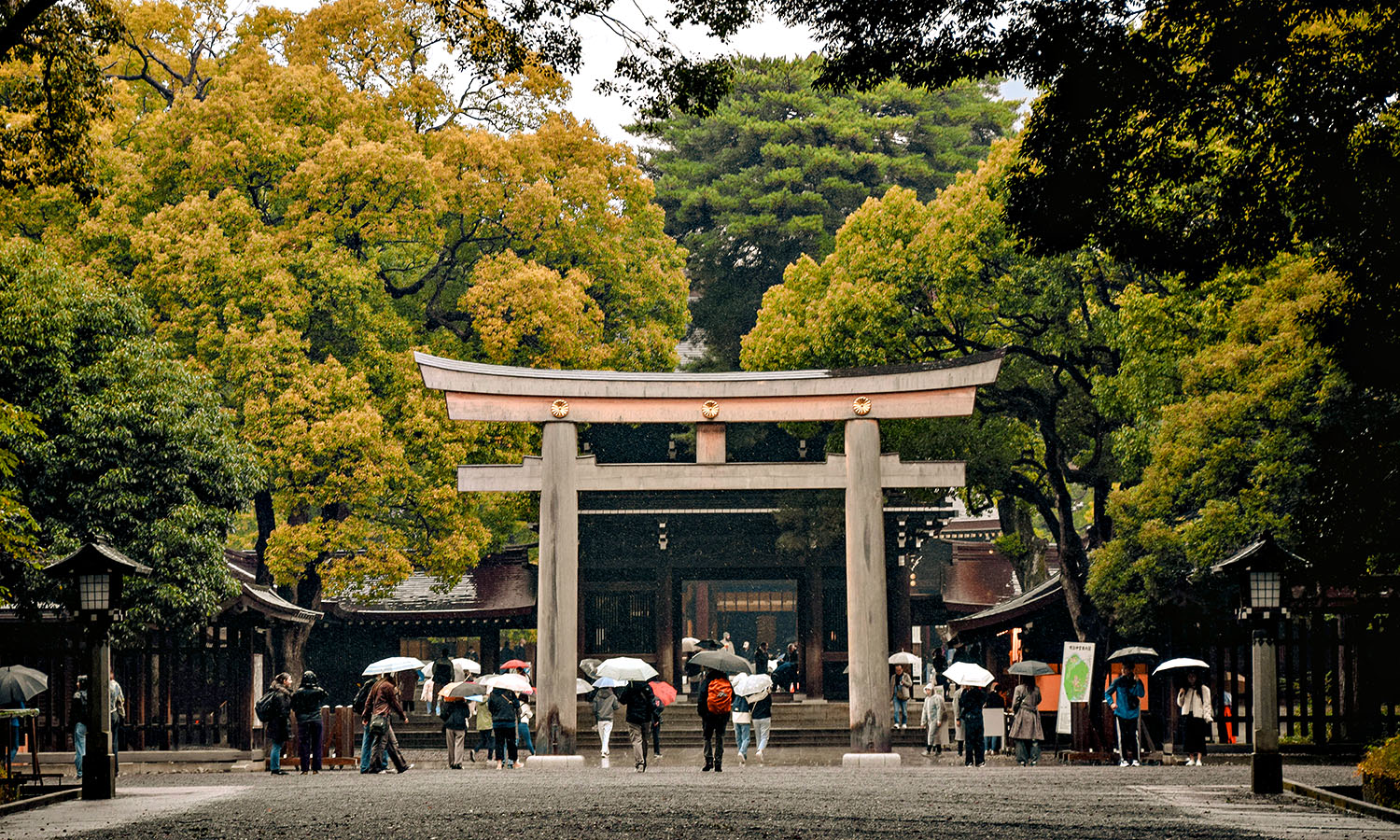
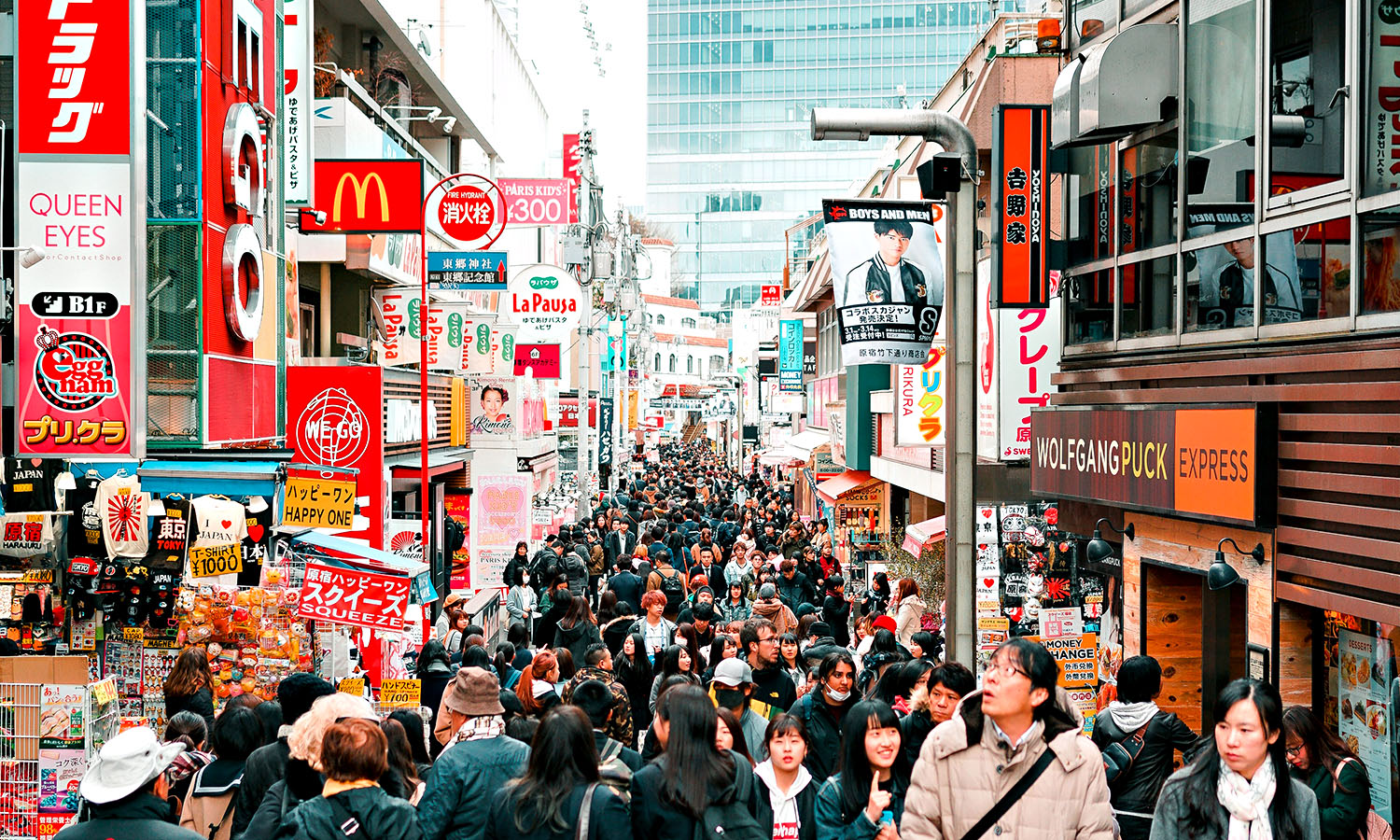
You start in Harajuku, because of course you do. One minute you’re standing under the towering torii gates of Meiji Jingu, surrounded by 120,000 trees and Shinto serenity. The next you’re dodging cosplayers, vintage denim hunters and teenagers dressed like intergalactic cartoon villains.
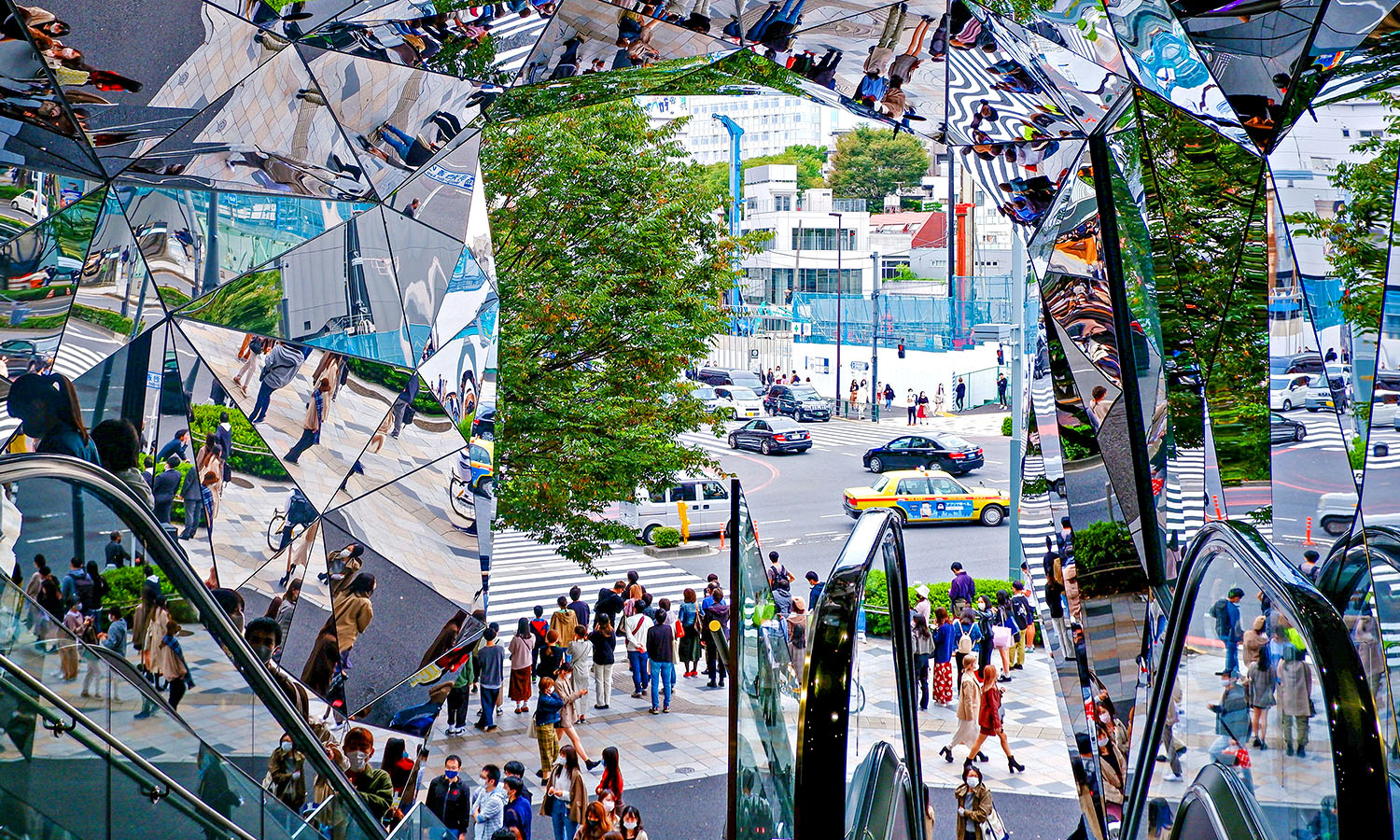
You drift past Yoyogi Park, birthplace of the 1964 Olympic dreams, then get spat out at the human washing machine that is Shibuya Crossing, 3,000 people crossing every few minutes in choreographed chaos.
That evening you meet your swim leaders, both coach and part ocean whisperer, and sit down to your first Japanese feast. It’s your introduction to oishi (delicious) and the unspoken rule of this trip: you will swim hard, and you will eat even harder.
Click to view gallery
Day 2: Sumo & Sea Cliffs
Breakfast is at Tsukiji Outer Market, where Tokyo’s kitchens wake up. Prepare your stomach, the fish here is incredibly fresh.
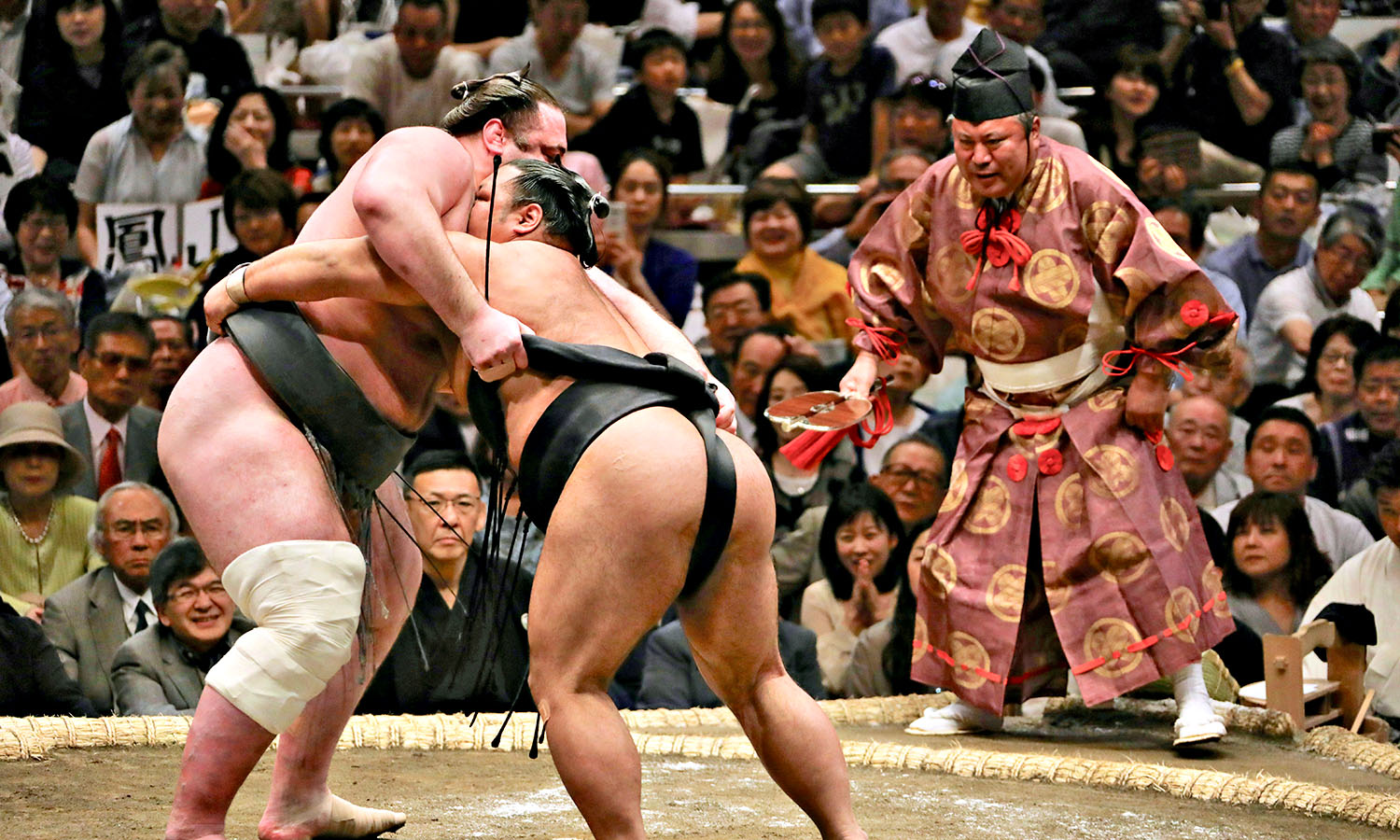
If timing aligns, you’ll witness sumo training, enormous athletes moving with surprising grace and terrifying intensity. It’s kinda ballet and kinda like controlled demolition.
Then you board the train south. Rice paddies blur past. Small towns flicker by. And, if the clouds behave, Mount Fuji looms in the distance, symmetrical, sacred, smug.
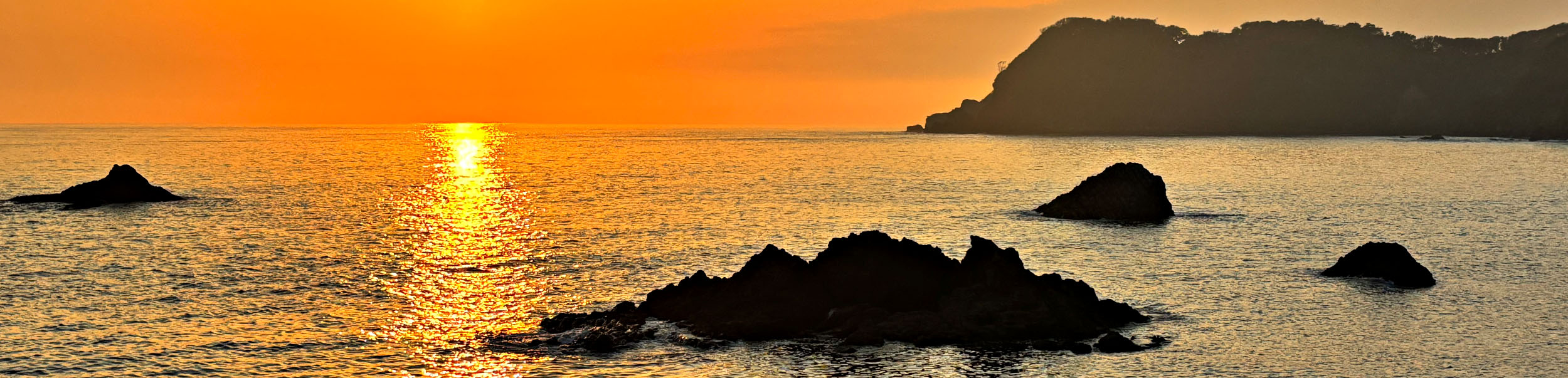
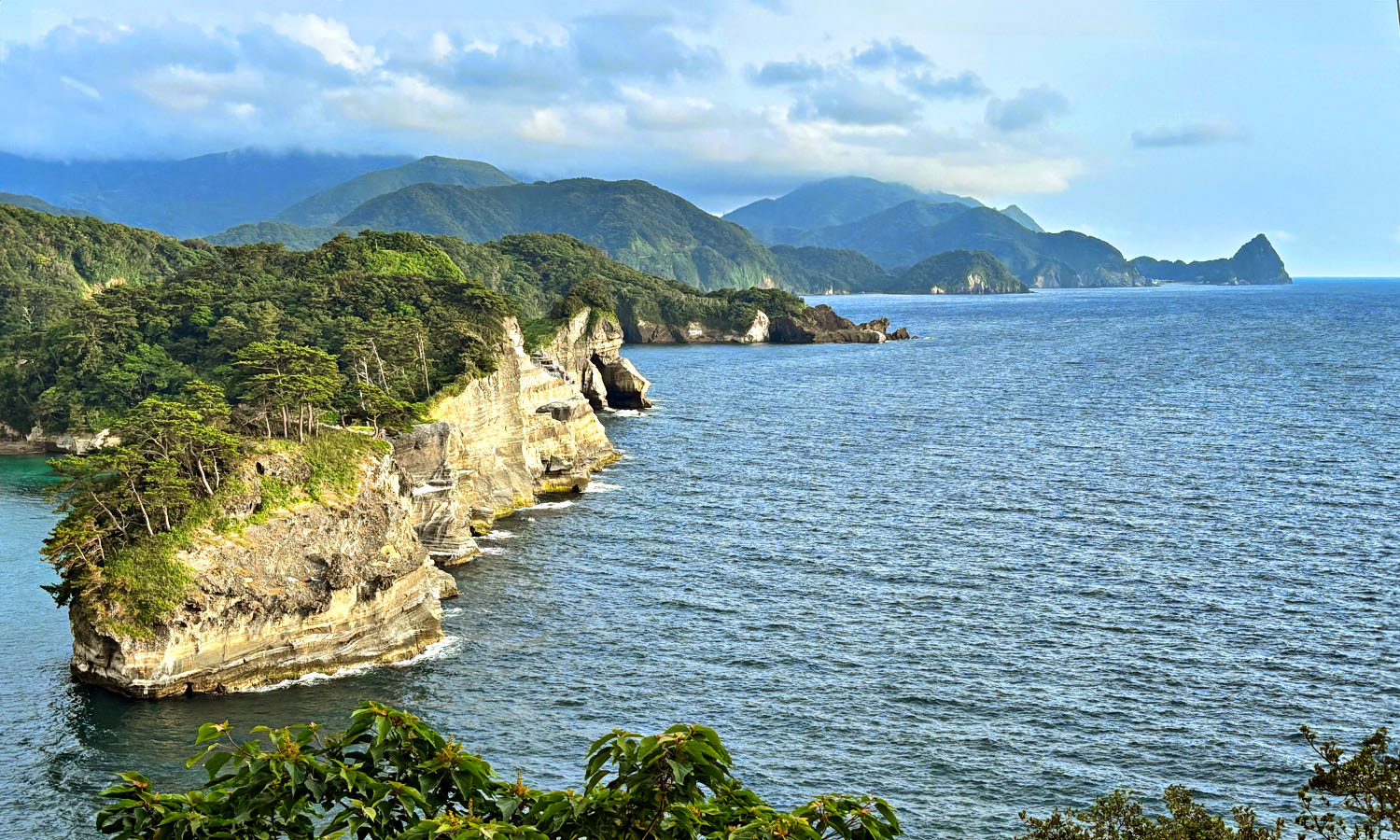
You tunnel through mountains and suddenly the Pacific appears. Cliffs. Points. Jade water. You’ve arrived in Matsuzaki on the Izu Peninsula.
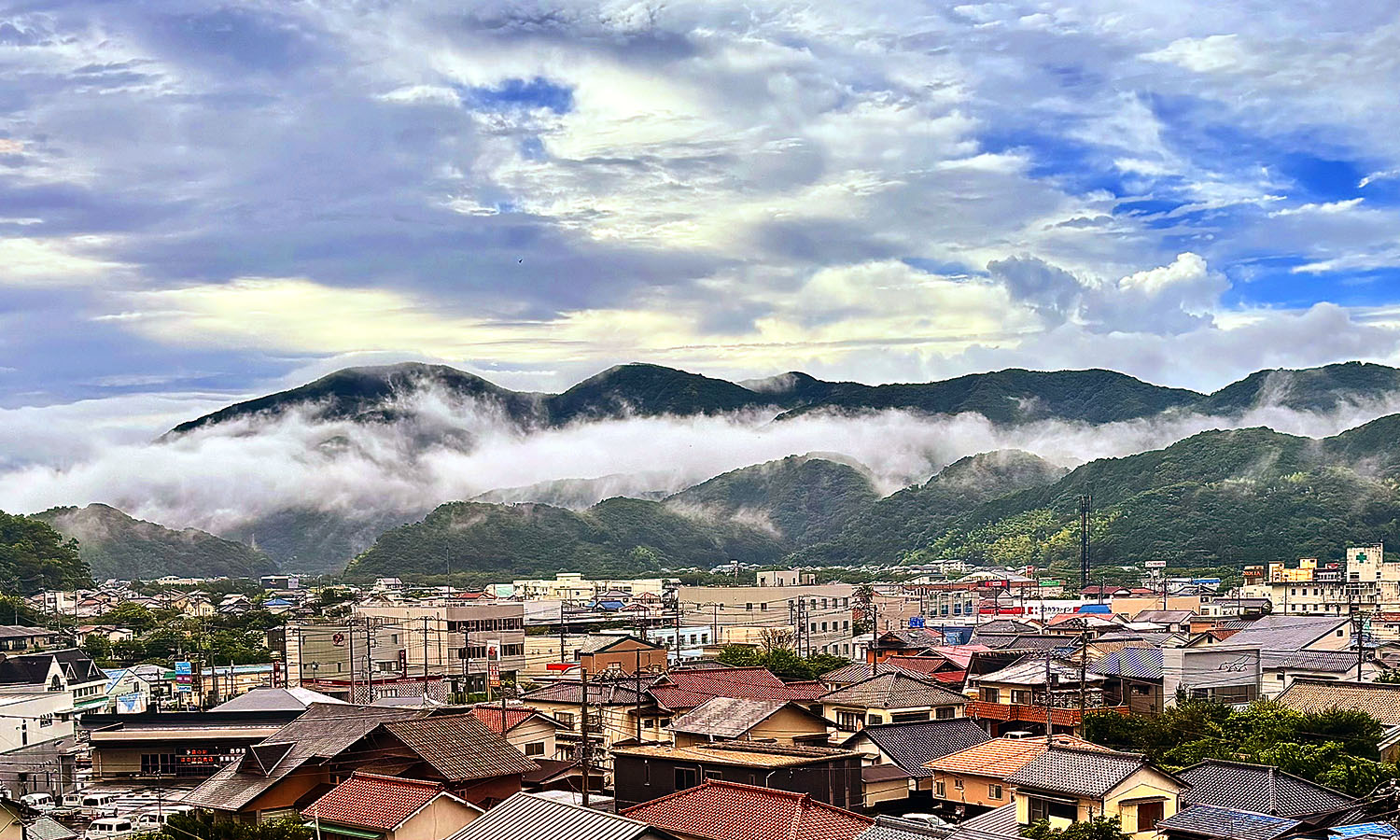
Your home is Izu Matsuzaki-so, a local-run inn perched above Suruga Bay. There’s a hot spring bath on the roof. There’s a restaurant called SUNSET. There’s sake. You’re going to be just fine.
Then it begins.
Your first swim: 3km from the beach along a volcano-formed coastline. Fishing boats idle offshore. Locals watch from the sand. The water deepens to ocean blue but stays calm, protected. It’s the perfect “hello” to Japan.
You climb out grinning, salty, already addicted.
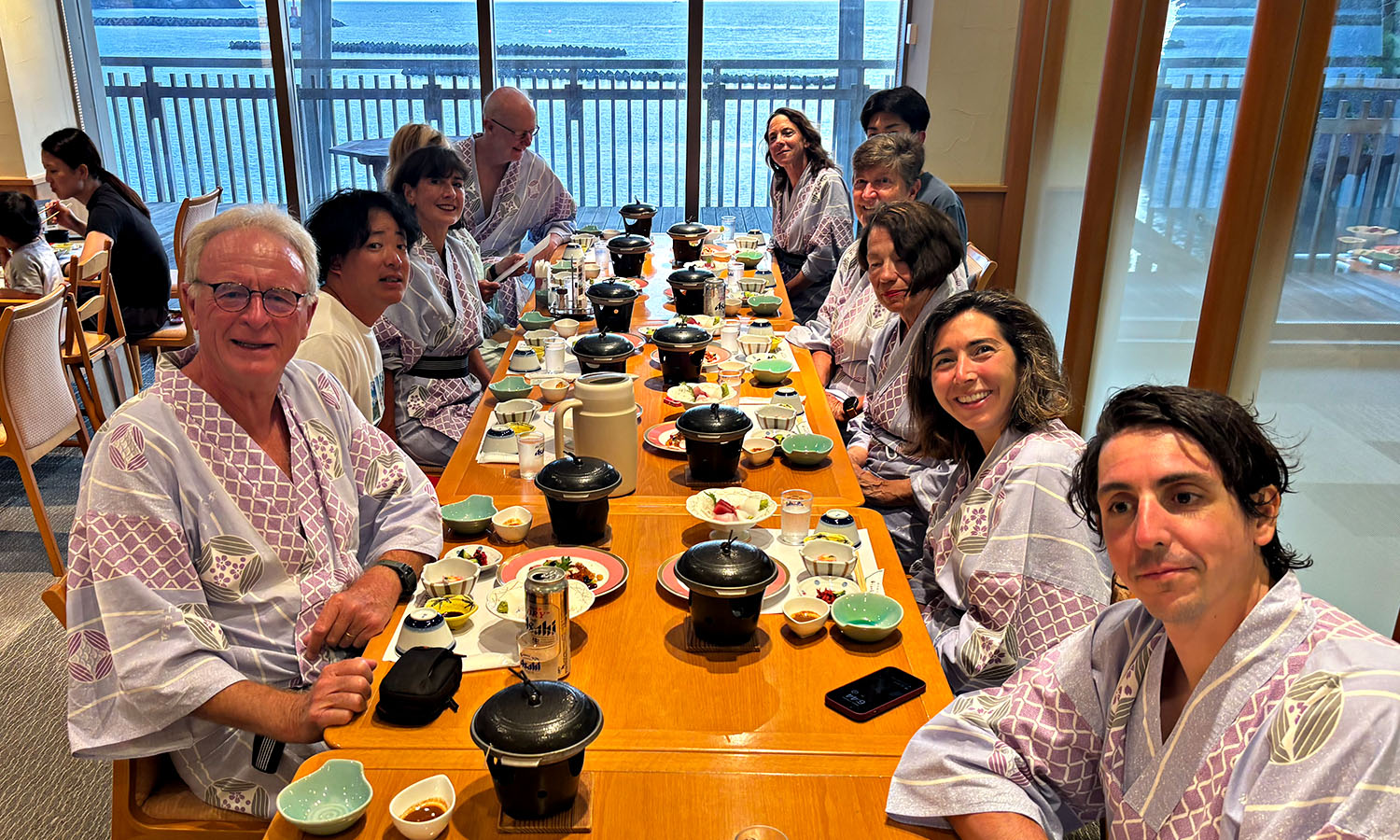
Dinner is local fish, shrimp and shellfish. You soak in the rooftop onsen and stare at the coastline you just swam.
This is how weeks should start.
Click to view gallery
Day 3: Silent Beach & Secret Soaks
You wake to ocean light. Fresh fruit. Coffee. A cheeky pre-breakfast dip.
Today is Iwachi, home to an annual open water swim. Conditions decide the plan. Two 1.8km swims. Race pace if you’re feeling heroic. Leisurely cruise if you’re not.
You glide along “Silent Beach” in Nishi Izu, then toward Ishibu. Both beaches have outdoor onsens, freshwater springs spilling into the sea. You soak where hot mineral water meets salt. It feels illegal. It isn’t.
In the afternoon, you can hike rolling hills, nap like a professional, or go full send with a sunset run-swim session.
Before dinner, you hop on a local boat for deep-sea snorkelling. Reef drops into cobalt blue. Fish flash silver. The Pacific shows off.
Dinner? Freshly caught fish from the port. Of course.
Click to view gallery
Day 4: Caves & Coasteering
Today is for the adventurous.
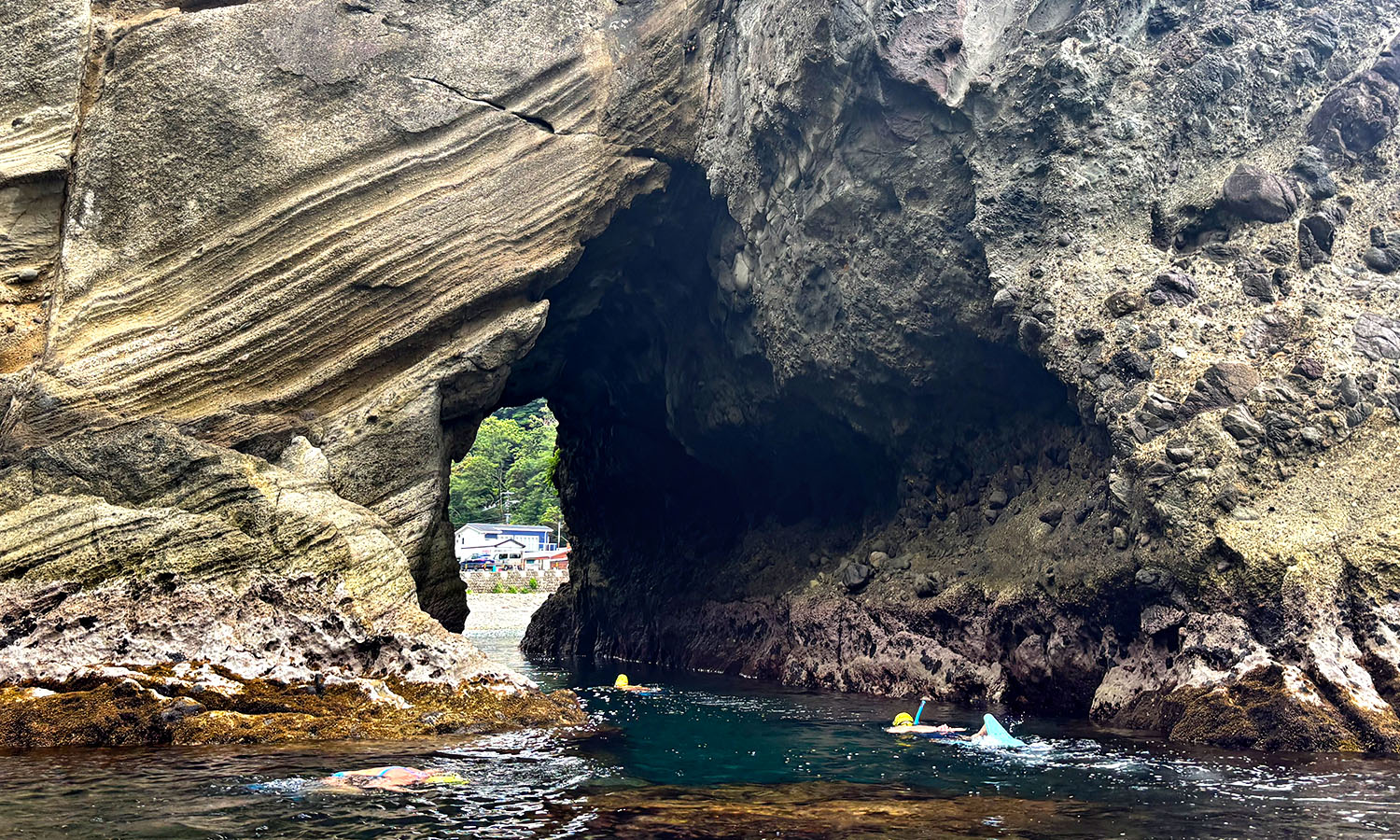
You start at Senganmon, walking through a cave to begin your swim at Hagachizaki Beach. It’s cinematic. You feel like you should have background music.
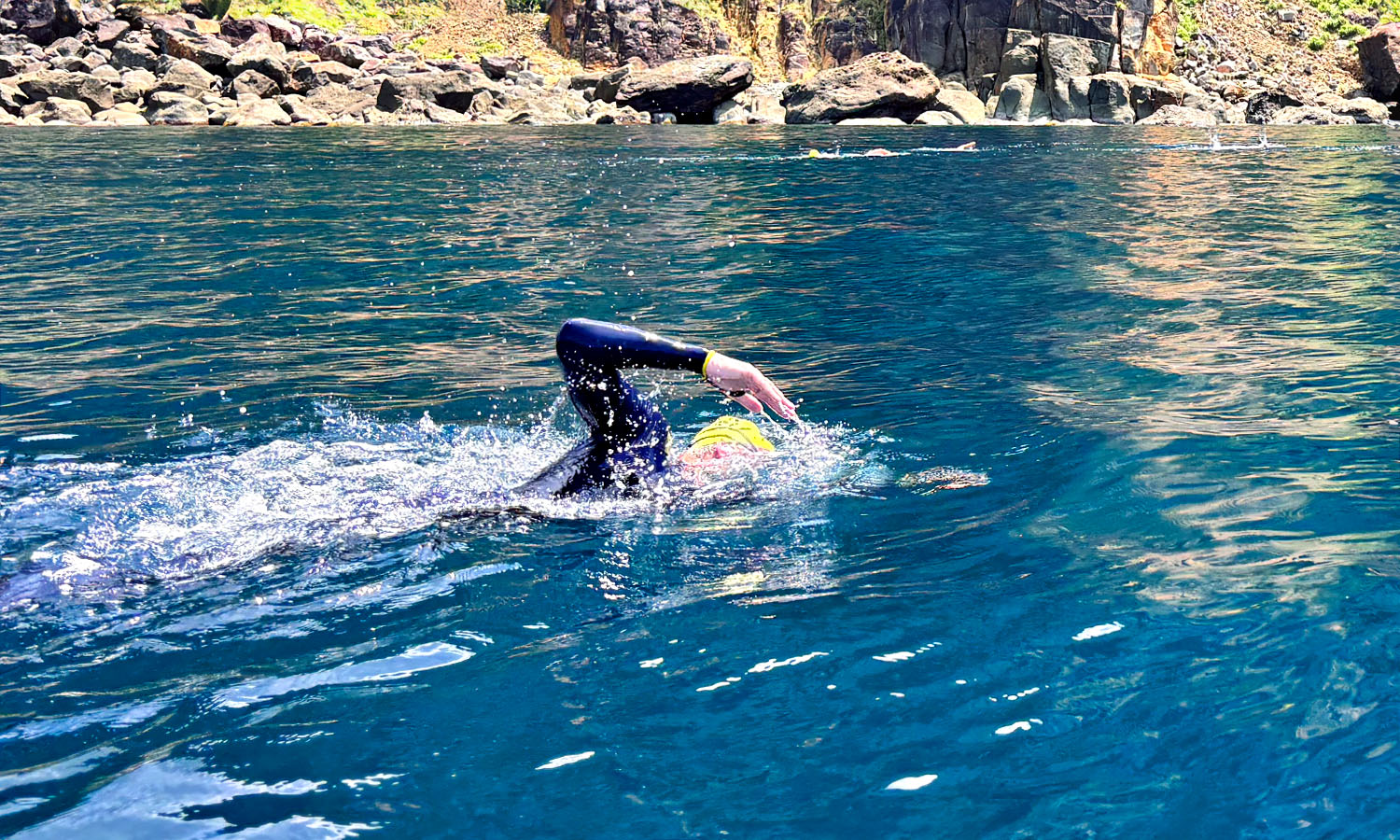
The day is two 2km swims, broken by beach lunch and whatever flavour of adventure you crave: technique session, full relaxation, or coasteering with expert guides.
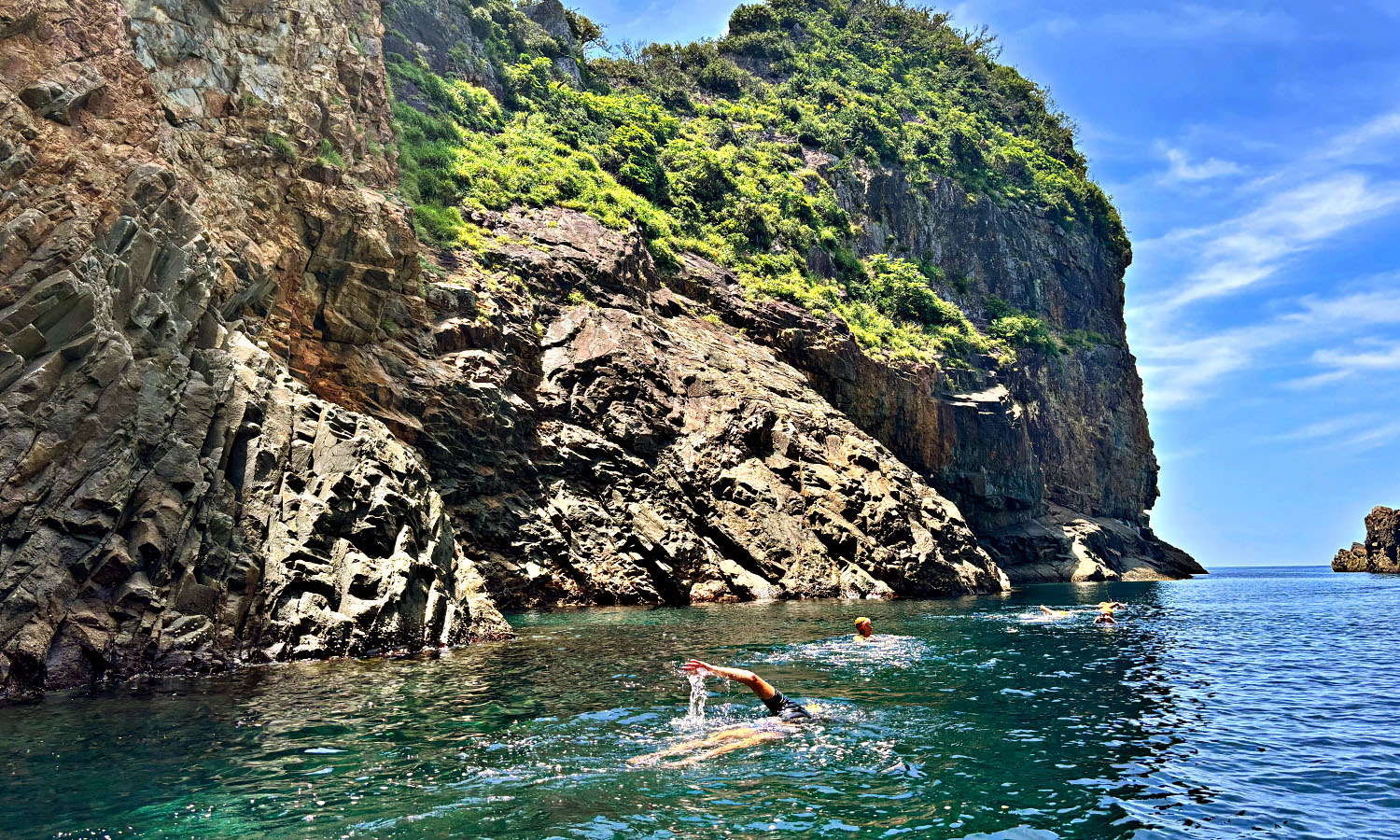
Climb rocks. Leap into hidden coves. Swim through sea caves. Discover secret islands that look like they’ve been misplaced from a Miyazaki film.
If you’ve ever been swimming and thought, “What’s just around that corner?”, today you find out.
Dinner brings warm or cold sake, depending on mood. By now you’re speaking fluent “just one more glass”.
Click to view gallery
Day 5: The Long Stroke
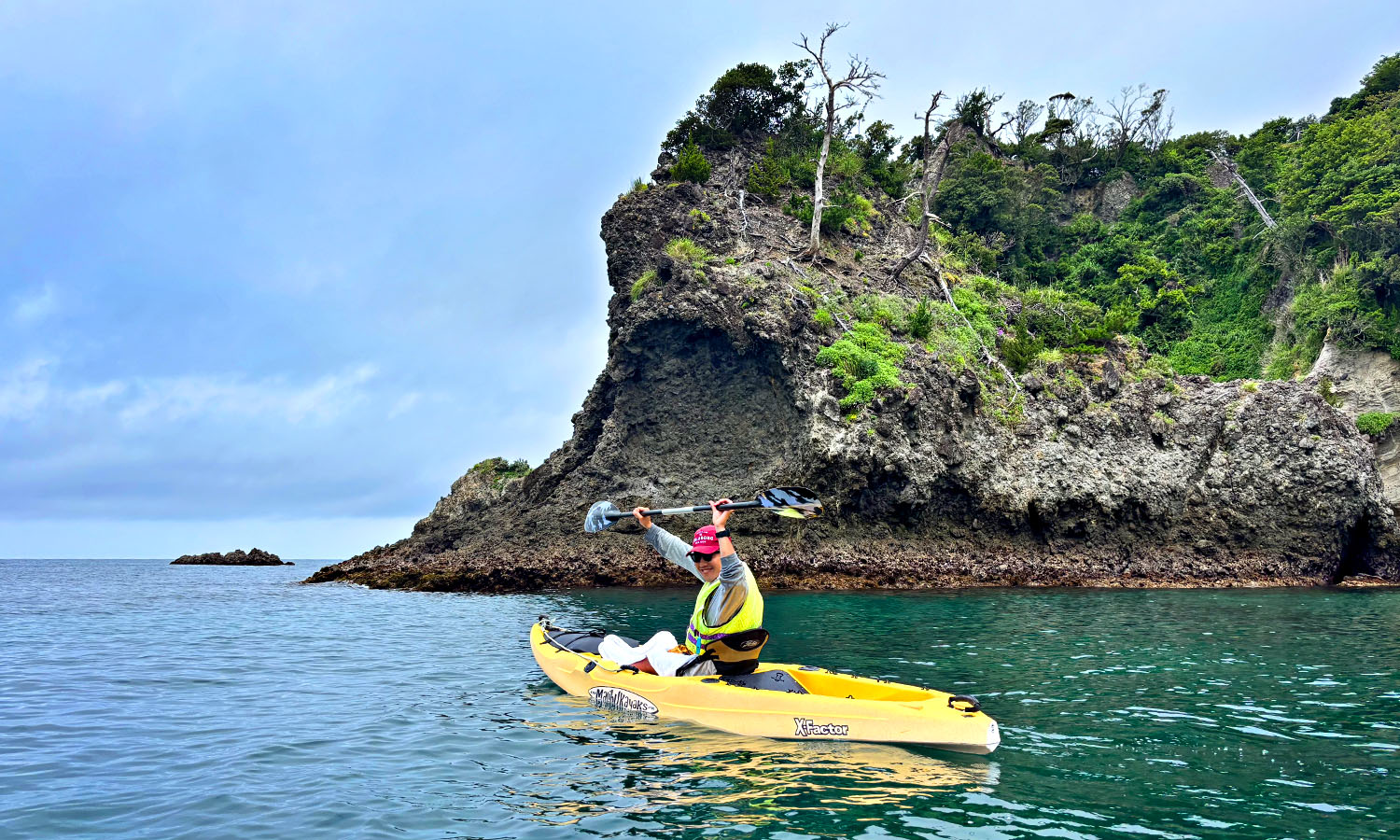
Matsuzaki Beach curves in a perfect arc, pine groves guarding white sand. Today’s headline: 4.2km from a small fishing village back toward Matsuzaki.
This is your chance to stretch out. Find rhythm. Let your stroke settle into something meditative. Or slap on fins and conserve energy, no ego here. You pass cliffs, fishing boats, and water so clear you can see shadows dancing beneath you.
You’re fitter now. Calmer too. The ocean’s no longer intimidating, it’s inviting. Dinner is more local seafood. You’re starting to consider moving here.
Click to view gallery
Day 6: Island Hopping & Karaoke Courage
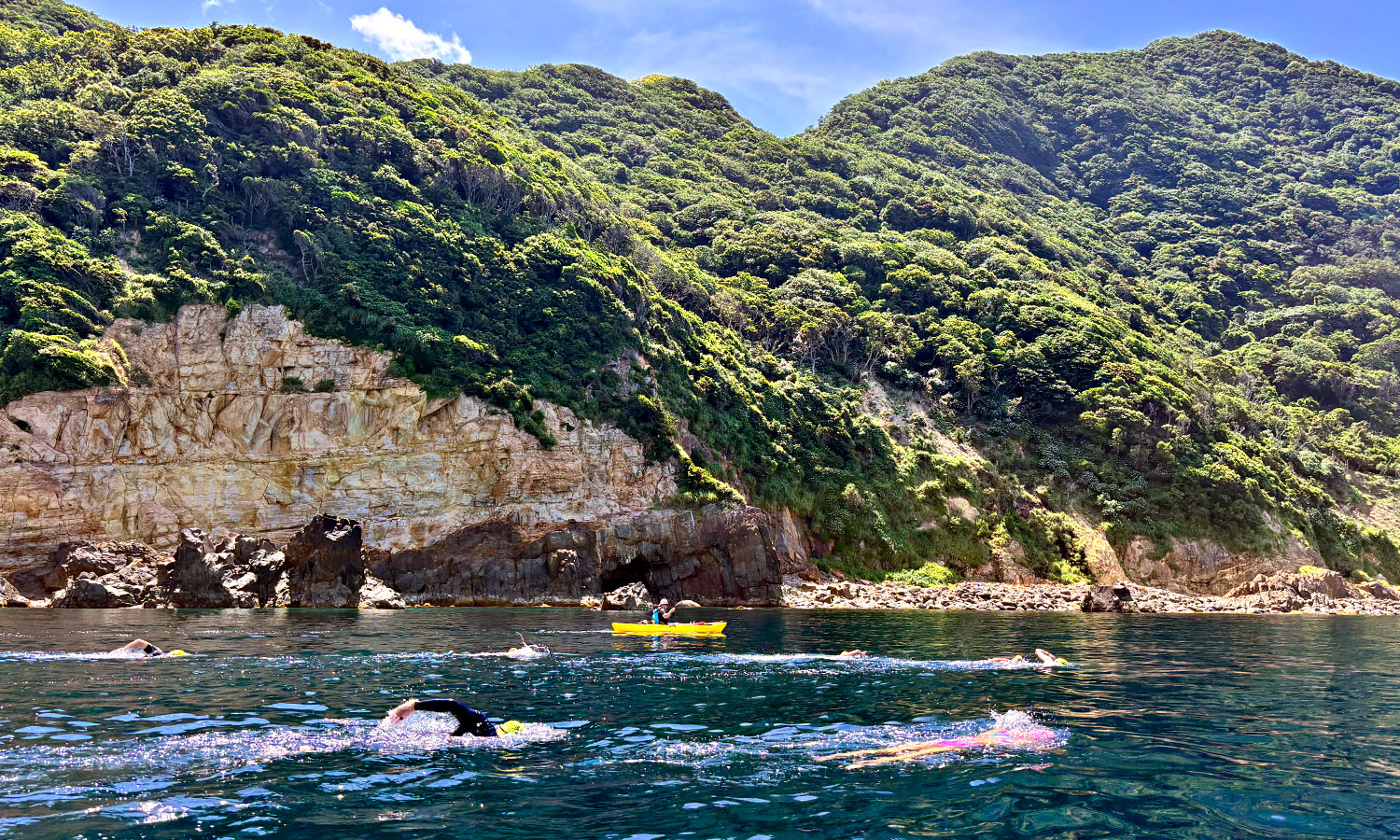
Morning brings a visit to the local fish market. Squid ink tea? Raw octopus? Why not. You’re in Japan. Then it’s island hopping in Nishi Izu. Two 2.5km swims toward Sanshiro Island, with a lunch break on the island itself. At low tide, you can literally walk across shallow channels, spotting octopus, sea horses, sea cucumbers and the occasionally terrifying fugu.
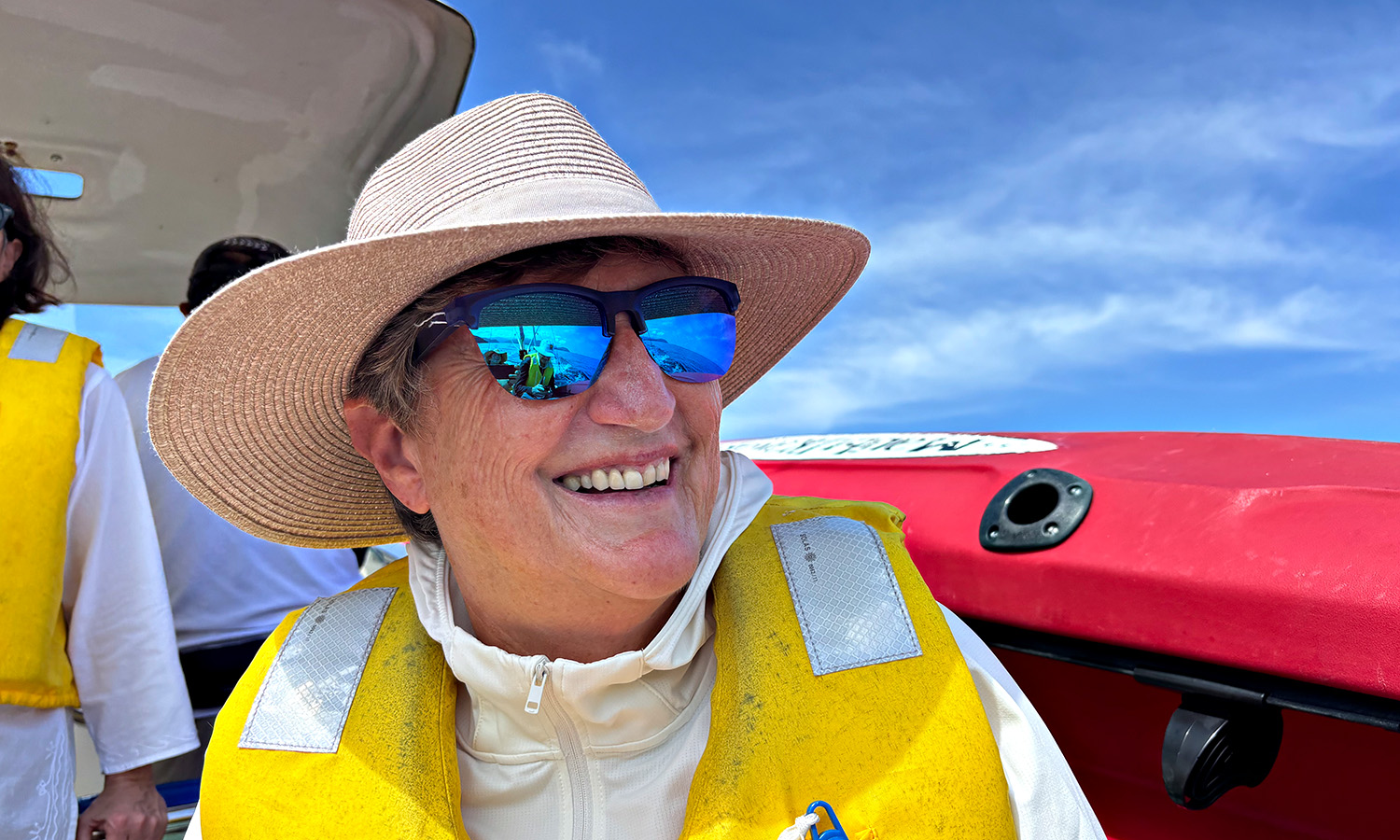
It feels like you’re swimming through an aquarium designed by Mother Nature on a creative streak.
Tonight, there’s optional karaoke in a tiny fishing village. You haven’t truly bonded as a swim group until someone attempts Bon Jovi in broken English.
Click to view gallery
Day 7: The Big One
This is what you’ve built toward. A 5km swim from Futo Beach to Tago Island.
There’s a lighthouse waiting. On clear days, Fuji watches from afar like a dignified supervisor. You stop mid-swim, tread water, and stare at that perfect volcanic cone rising above the sea.
It’s challenging, yes. But you’ve earned this. Support boats track you. Fins are welcome. Smiles mandatory. You land on the island knowing you’ve done something real.
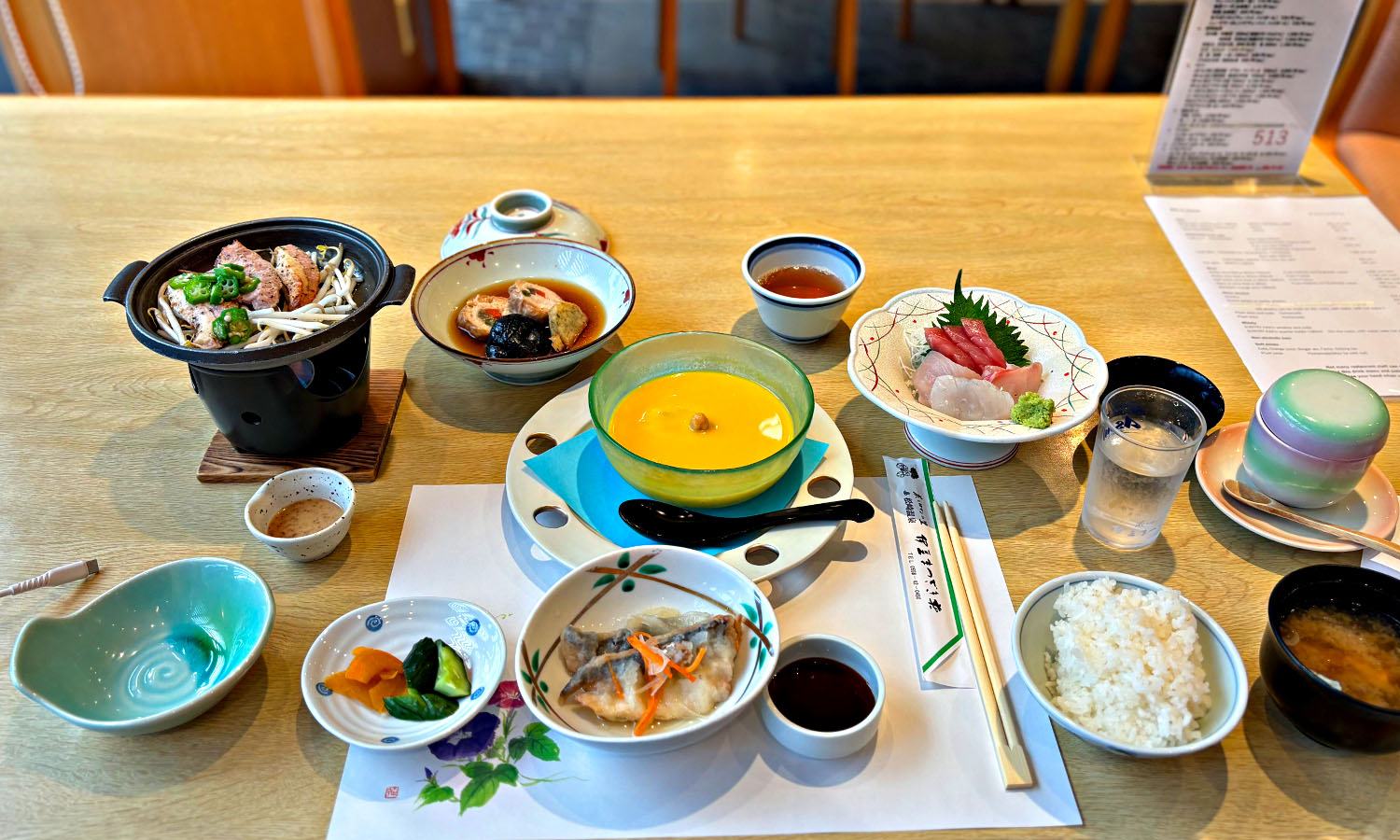
After lunch, you say goodbye to Izu and return to Tokyo, neon lights replacing sea cliffs. Your final dinner is loud, joyful, reflective.
You’ve swum along volcanic coastlines, soaked in mineral springs, eaten like royalty and pushed your limits in open water.
Day 8: Departure (Reluctantly)
Breakfast. Bags. Farewells. Tokyo hums. You head home. Salt still in your hair.
Why This Trip Works
This isn’t just a swim camp. It’s 7 nights of local inns and ryokan stays; 7 breakfasts, 5 lunches, 6 dinners. Fully supported ocean swims. All transport. All listed activities. It’s tradition and technology. Neon and nature. Sushi and sea cliffs.
Japan is where the past and present shake hands. The Izu Peninsula is where the land meets the Pacific in a blaze of volcanic drama. And this trip? It’s where your swimming goals meet a bucket-list adventure. You come for the kilometres. You stay for the sake.
Get Informed

You can book this trip from AU$3,000 per person here.
All you have to do is complete the reservation details, pay a deposit and wait for the Cross Country Swimming team to send across further details.






While you're here

If 2026 is the year you want to finally hit the slopes then the Ikon Pass has...
If 2026 is the year you want to finally hit the slopes then the Ikon Pass has your back -...

Calling all shutterbugs, storytellers, and video visionaries, Fujifilm’s...
Calling all shutterbugs, storytellers, and video visionaries, Fujifilm’s GFX Challenge...

SHIZUOKA, JAPAN
You, a flurry of pink petals, and landscapes so breathtaking they look...
You, a flurry of pink petals, and landscapes so breathtaking they look straight out of...

TOKYO, JAPAN
First there was Squid Game and now, after the resounding success of...
First there was Squid Game and now, after the resounding success of Netflix’s latest...