
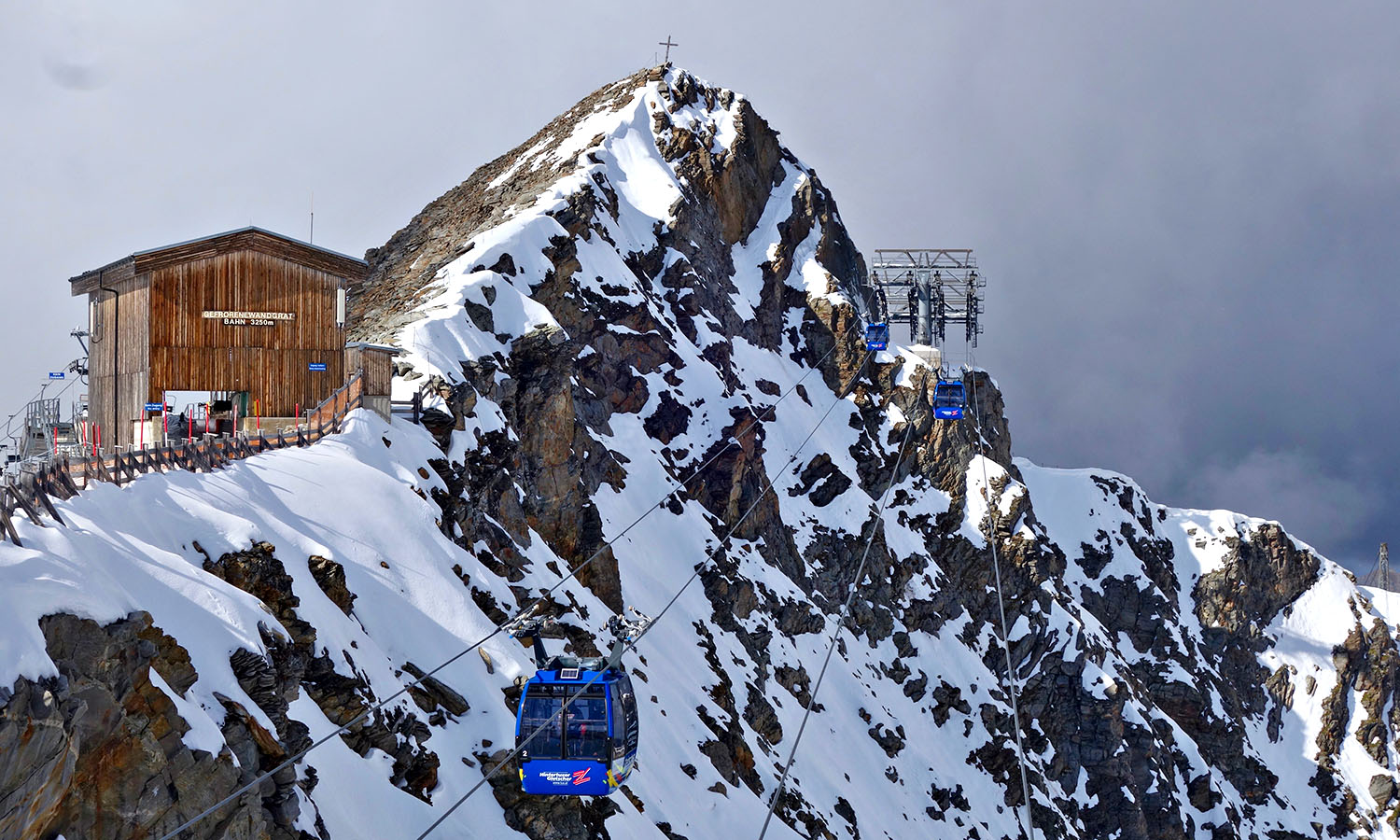
I’m drowning in a sea of national ski training uniforms, as I wait for the gondola to Austria’s Hintertux Glacier. Tucked into a Tyrolean valley, Hintertux is Austria’s only year-round ski spot and so, unsurprisingly, it’s a magnet for ski teams. Is this a sign of good pow? For sure. Is it also extremely intimidating? Definitely. Especially for an Aussie snowboarder who is a wobbly intermediate (at best) and hasn’t seen the snow in three years.
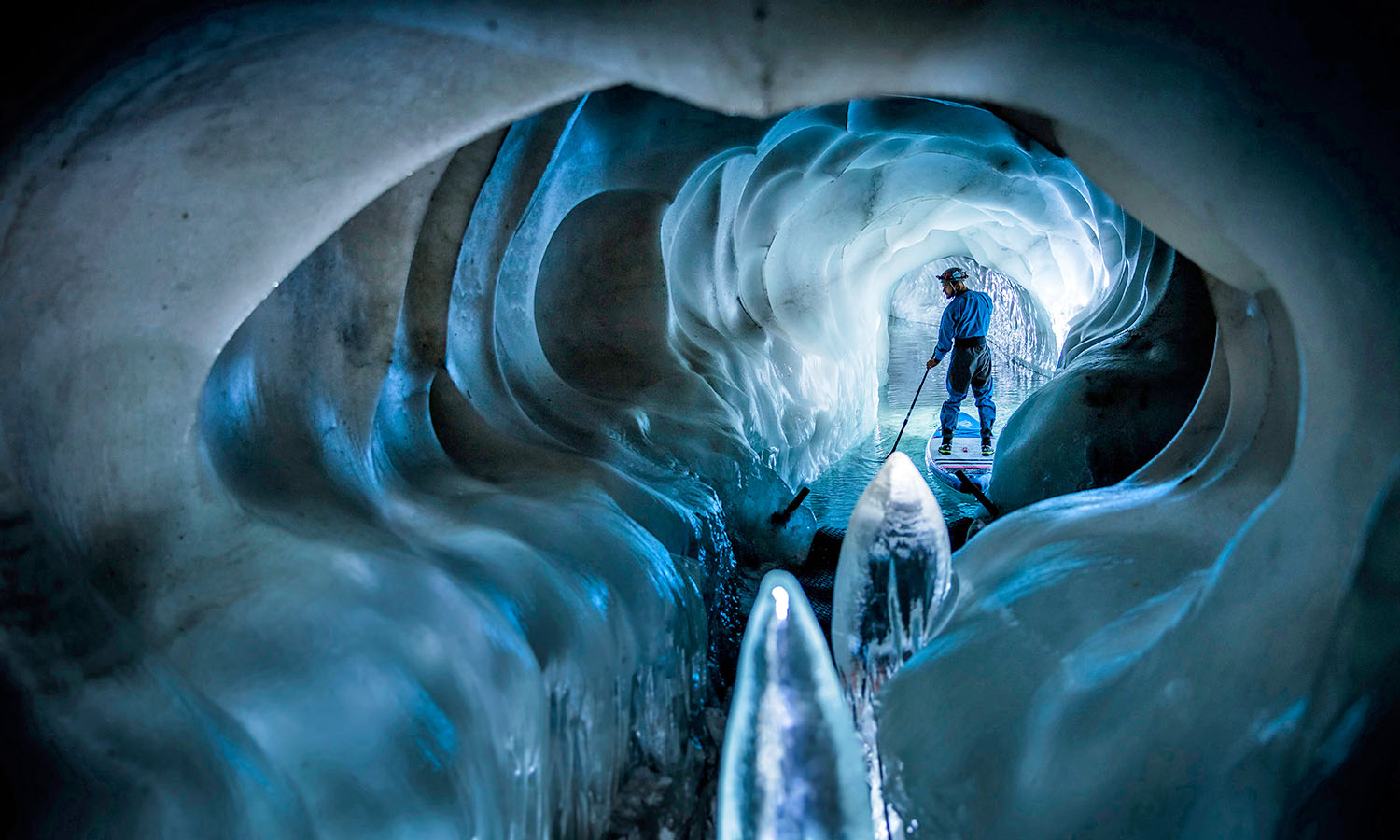
Lack of snowboarding prowess aside, I can’t pass up a slide on these first-class slopes. But what I’m really pumped about is what lies beneath them—a subterranean world of glittering ice ‘stalactites’, known as Nature’s Ice Palace. Back in 2007, a guy by the name of Roman Erler was out skiing when a tiny, 10-centimeter gap in an ice wall caught his eye. Two days later he returned with his axe and hacked a shoulder-width passage into a cavernous secret.
After thousands of hours of exploration and the installation of a few rubber mats, a bunch of steel ladders and hundreds of metres of cable, Nature’s Ice Palace opened to the adventurous. Nowadays, you can explore this glacial labyrinth under the guidance of the research and conservation team who continue to study it.
To get there, you’ve got to catch three gondolas—a journey that puts you 200-metres away from the glacier’s highest point. From there, you’ve got about five minutes of unrestrained slipping and sliding to the cave entrance (arguably the most challenging part of the whole experience).
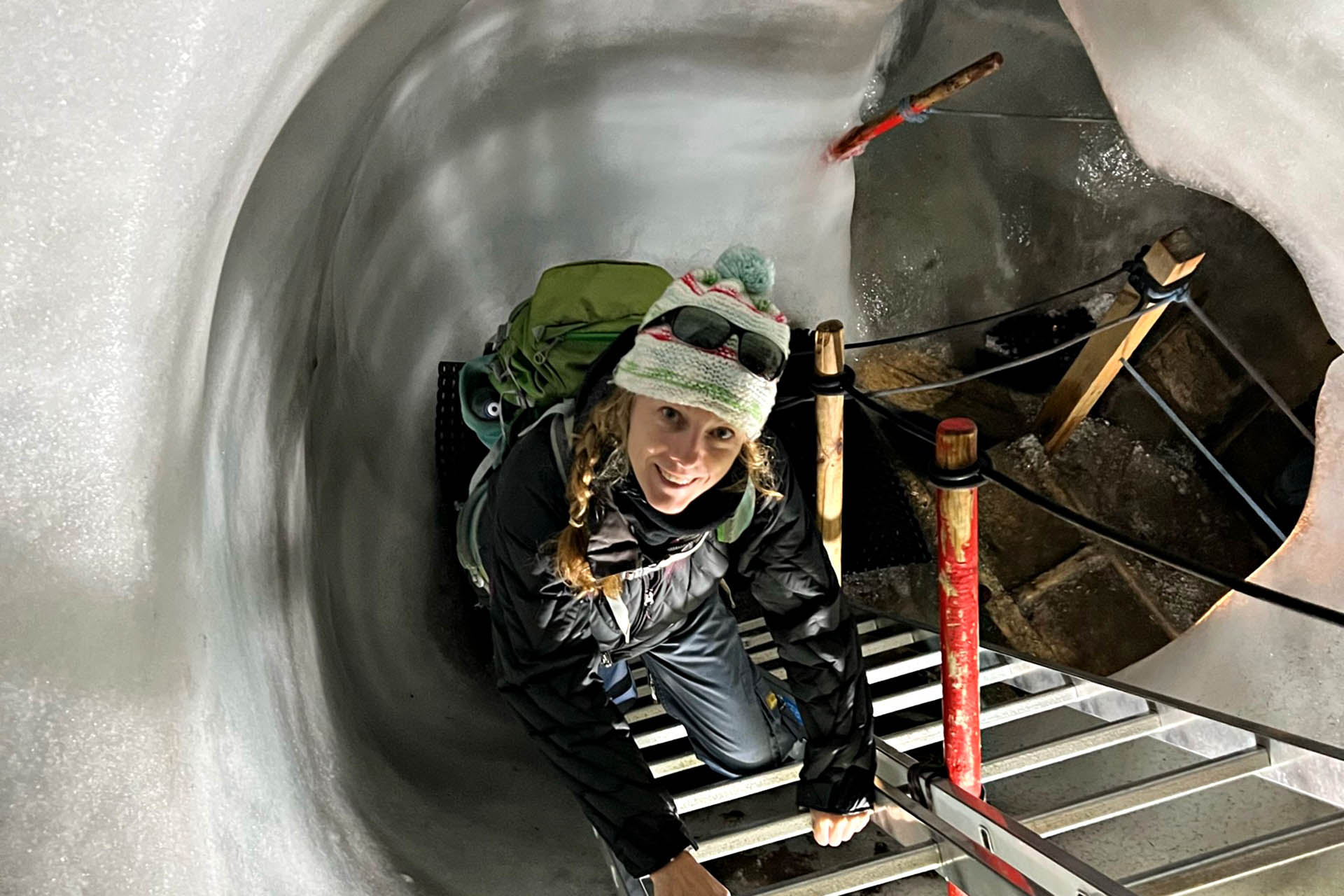
“If you fall, make sure you fall far enough that no one can hear you,” jokes Thomas Kurz, structural engineer and tour guide. Against the immense white, the small hole in the mountain—reinforced with a few wooden planks—looks as official as a Wild West mine. It starts with ice stairs (I’ve never been so happy to see a rubber mat), then moves on to ladders. Mountaineers normally clank over metal rungs like these when bridging crevasses, but today we’re using them to descend.
RELATED ⟶ TIROL HAS NO OFF SWITCH
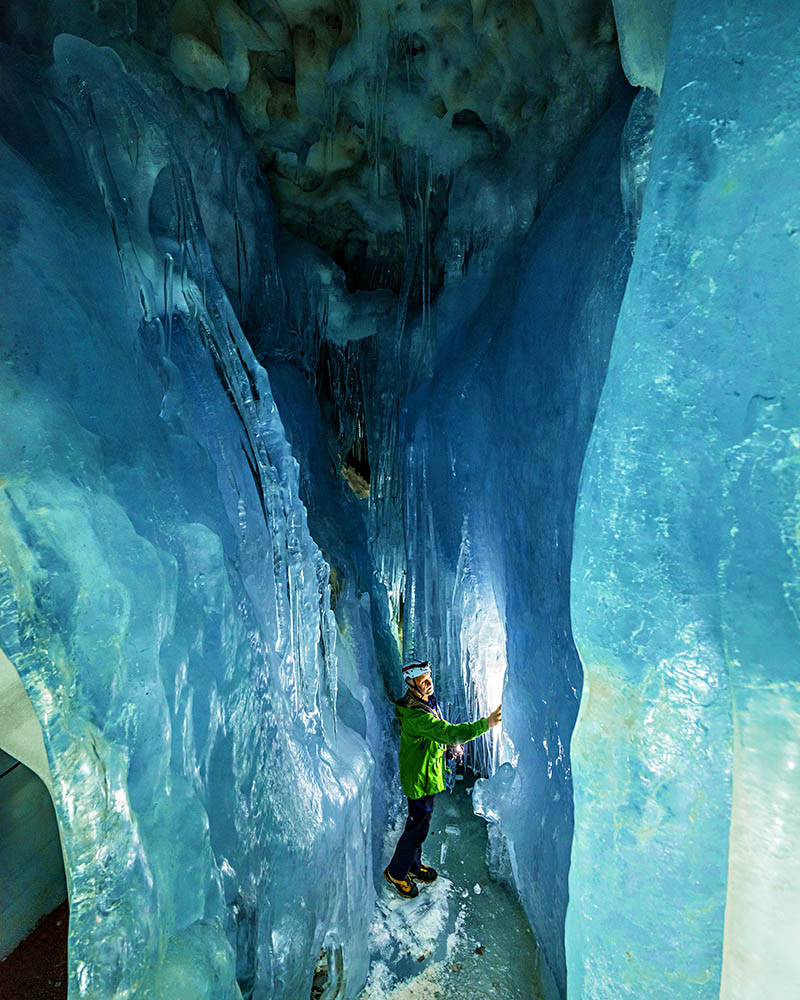
Ladders and mats aside, the passageways themselves are entirely natural, made of pure ice carved by water and wind. It’s hard and slippery, sometimes glass-clear with a sprinkle of frozen bubbles or frosted white and pale blue. I feel like I’m suspended in a cocktail ice cube. The most impressive part? When the cave opens out into the full ‘ice palace’, revealing great spears of frozen water hanging from unseen corners.
It’s like some architectural masterpiece from Gaudi.
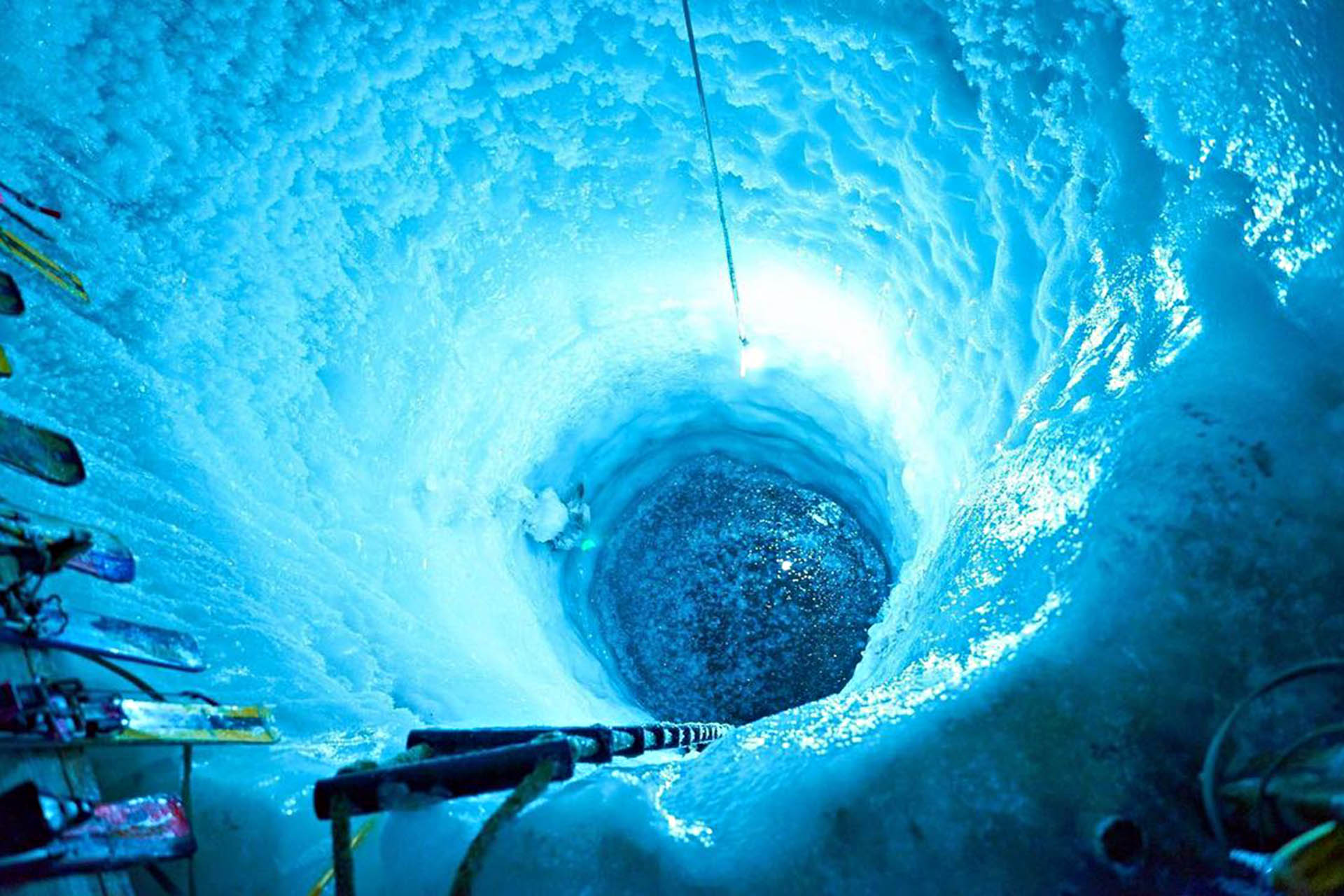
The how’s and why’s behind the formation of this system has attracted researchers from around the world. These aren’t conventional crevasses but rather cavities formed by tensile forces that deform the compacted ice. Lubricated by water, they usually glide at ‘glacial pace’ through the valleys that hold them but here the ice is locked solid onto permafrost, and a 52m research shaft lets Thomas and his team regularly inspect it.
“When I go down and I see permafrost, all is good,” says Thomas. “If I don’t see the permafrost then we close the cave, we are running! The glacier could move.” Peering down the 52-metre research shaft is like looking into a blue hole. The frozen rope ladder descending its depths is almost absorbed by the ripples of ice that line it.
At this point, I start to lose all sense of direction, depth and distance, working up a minor sweat despite the zero-degree temperature. At 20-metres deep, we’re below ski piste number five. At 30-metres, we’re under the gondola top station. Here, water fills a crevasse to form a tiny lake—like a window to another world, all pale blue water and submerged icy curves.
For another few euros you can swim in it—in fact, Josef Koberl almost achieved an Ice Mile here in 2021 after swimming 1,511 metres in 38 minutes—but we opt for a short raft ride instead. Only a sliver of rubber separates me from the freezing water and 20-metre-deep crack below as Thomas pulls us through the water tunnel.
As far as exploring cracks go, it’s the wedgy of a lifetime. 
GET THERE Qatar Airways fly from Australia, via Doha, to Vienna and Munich. From either city you can catch a train to Mayrhofen—three hours from Munich or five from Vienna.

Share >




More Stories
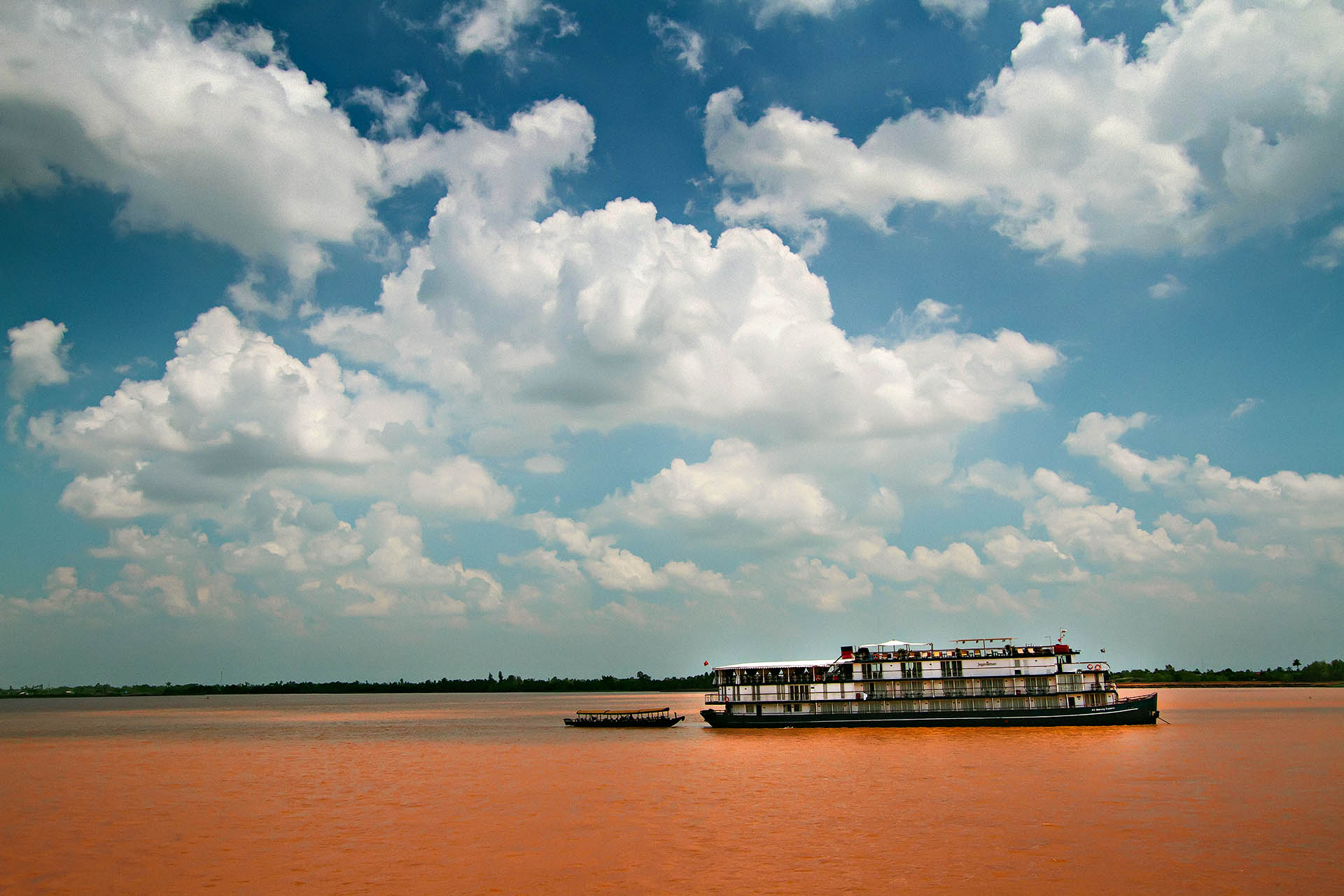
Kirk Owers hops on a cruise boat to explore the Mekong River, the lifeblood of Cambodia and Southern Vietnam, and absorbs a history lesson by osmosis as he drifts along the mighty waterway.
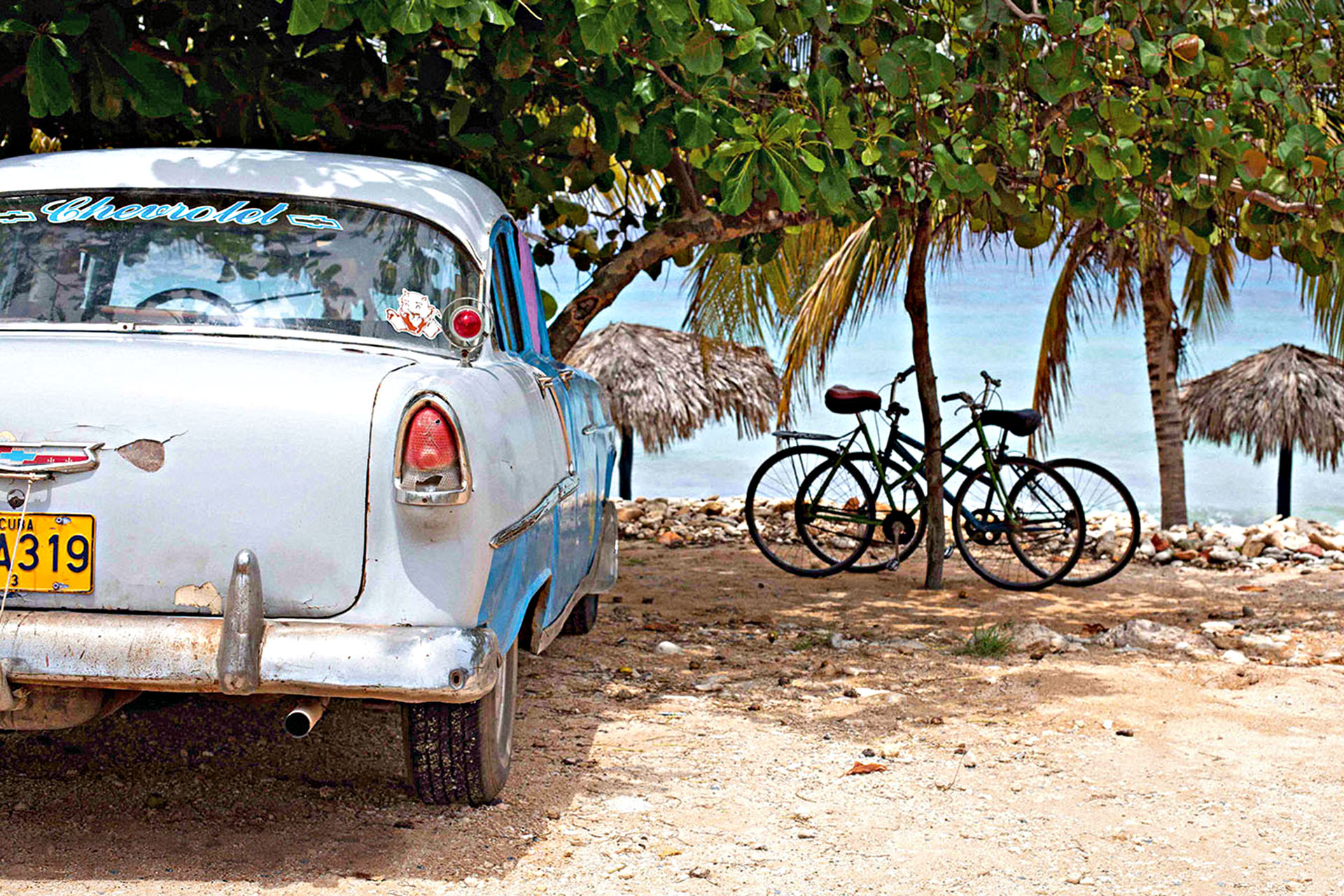
On a mission to experience the real Cuba, Guy Wilkinson rents some dilapidated wheels and tackles crumbling roads and a corrupt constabulary on a road trip from Havana to Trinidad.

For decades it was relegated to the international sidelines, but visit Cuba now while its true heart still beats. And there’s no better time to get out and about in its capital than after the sun sets.