New Digital Nomad Visa for Japan

Ever wanted to stay in Japan for more than the three months the tourist visa allows?

Yeh, same.
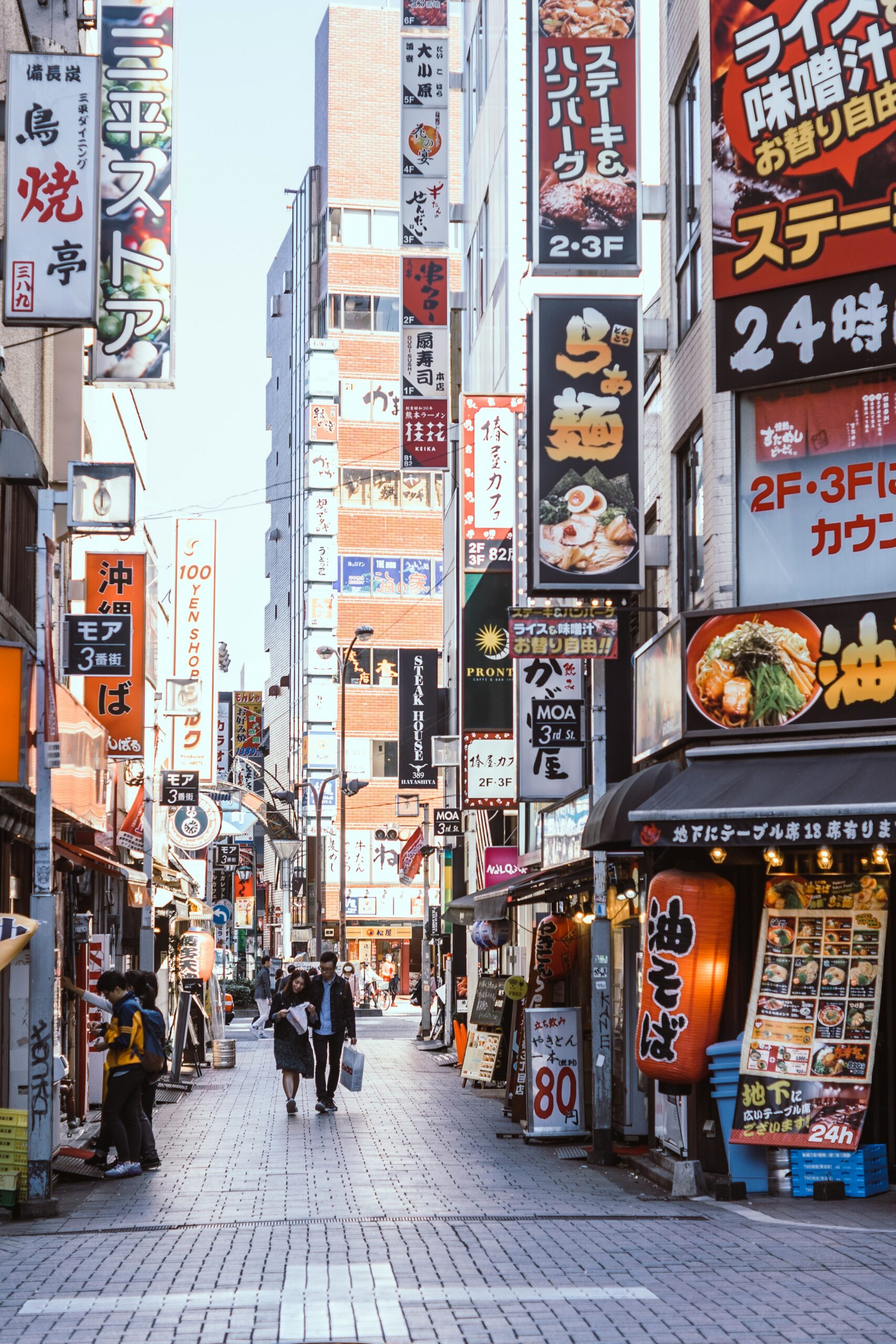
We’ve got good news. News out of the Land of the Rising Sun is that a Digital Nomad Visa is about to drop, meaning you can now stay for up to six months.

If you’re from one of the selected 49 countries (anyone in the EU, plus the U.K, Australia, the U.S. and a few more) you’re good to apply.

There are a few conditions; 1) they are targeting super-skilled applicants with an annual income of 10 million yen (just over AU $100,000). 2) you gotta have public health insurance.

They are especially after IT gurus so if that’s you and you love Japan, you’re in business.

The program is expected to launch in March, so we’ve got no link to send you to yet.

Japan represents an epic place to spend time as a digital nomad. Unbelievable food, adventure, and weather from heavy snow to blazing sun to suit your needs.

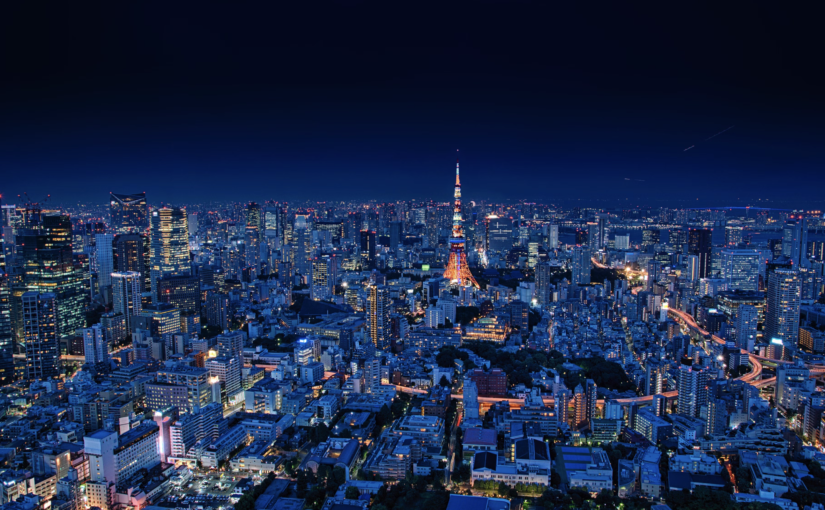
Cities like Tokyo are likely to be an expensive stay, but lesser-tread prefectures like Nagano, Gunma, Hiroshima and even Ehime in the south-west of Japan represent fantastic, and affordable options as places to live and work.

Check out our best from the ‘New Golden Route’ in Nagano and Gunma prefectures.

South Africa is a country which prides itself on its diversity, and that 100% includes its travel experiences.

From vibrant neighbourhoods overflowing with energy and vibes, to stunning natural landscapes and the wildlife that call them home, South Africa is a kaleidoscope of colour, adventure and culture.

Click play to WATCH

Like a movie you haven’t seen before, expect twists and turns and adventure gems in every corner of this country.

This is our lowdown of the unheralded and lesser-known, but still epic experiences, spanning all nine provinces.

PROVINCE: NORTH WEST
SAFARI FROM THE SKIES

Okay, so going on any safari is incredible, life changing, bucket-list stuff. But going on safari from a hot air balloon? ABSOLUTELY WILD TIMES. Just imagine floating above a pride of lions as they take down a gazelle, or watching giraffes saunter across the plains under an African sunset.

Pilansberg National Park is all about crafting these super tranquil safari experiences. Not that we need any more convincing but they’ll even throw in a glass of bubbles, which never hurts. If animals are cool but you’re more of a geology nerd, this birds-eye view is a unique opportunity to see a dramatic volcanic landscape from above. Pretend you’re a vulture or an osprey or a fish eagle.

Click to RISE UP

Click play to WATCH

Also in the North West:
Get a history lesson at Sterkfontein Caves

Inside these caves, scientists discovered hominid and other animal fossils that date back more than 4-million years, to the birth of humanity. Forget your high school history classes, this is where it’s at.

Click to GO CAVING

PROVINCE: FREE STATE
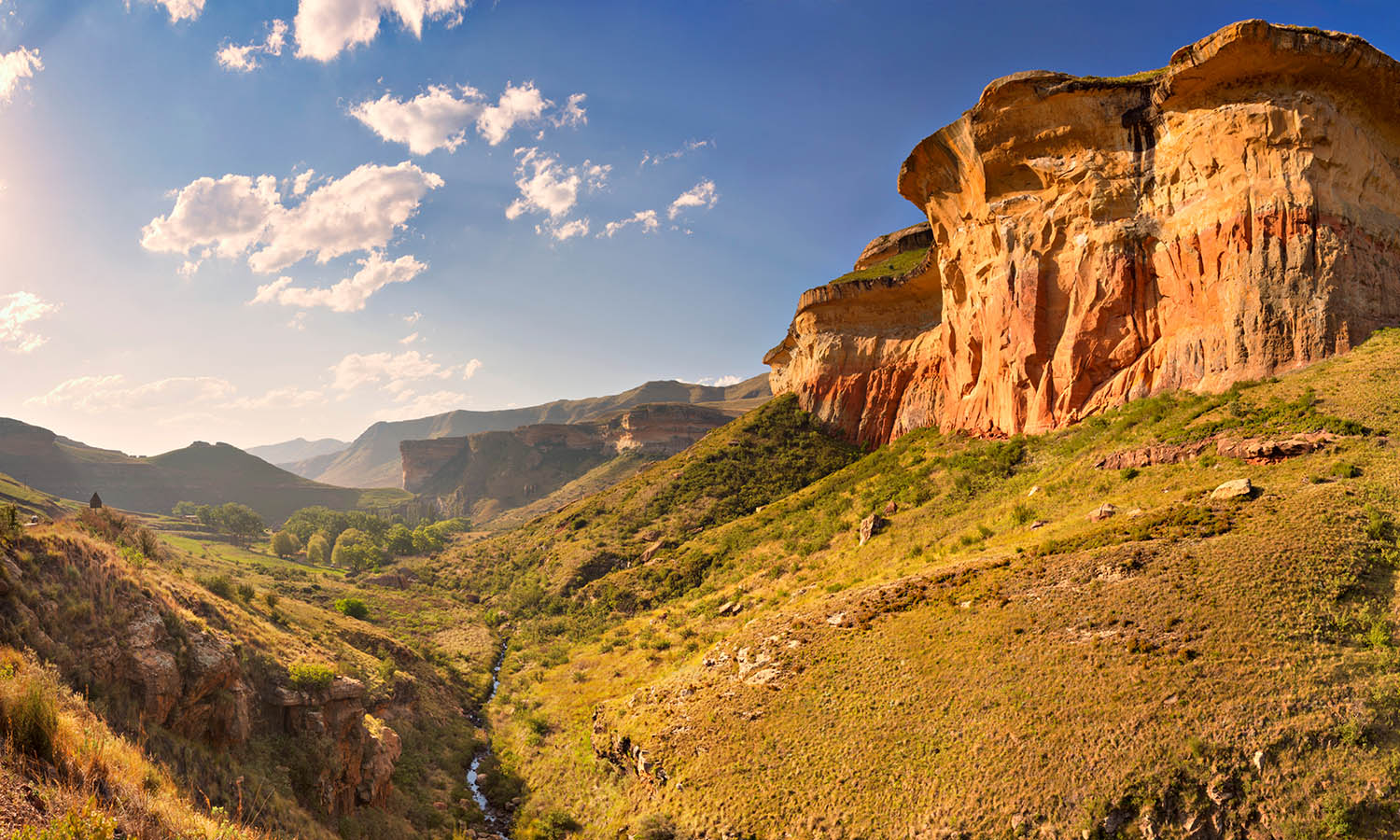
HIKE TO HEAVEN IN THE GOLDEN GATE

It’s pretty hard to hide something that spans 340 square kilometres, but it seems Golden Gate Highlands National Park has managed to stay well and truly out of the spotlight.

Not to be confused with its more famous San Fransican namesake, South Africa’s Golden Gate NP boasts sweeping landscapes and some of the most epic hiking in the country (a competitive field). Not to be missed is its Pride Rock-style sandstone cliff. It’s giving Simba.

Other impressive hikes include the Cathedral Cave Walk which descends through several natural caves, including one filled with water. Then there’s the Wodehouse Peak Trail, a 10.5 kilometre loop taking in all the classic African game; zebras, elephants and the like. The cruisy three-hour drive from both Johannesburg and Bloemfontein is also a big plus.

Click for GOLDEN GAY TIMES

Also in the Free State:
Go back in time at Vredefort Dome

Vredefort is one of South Africa’s eight UNESCO World Heritage Sites, and it does not disappoint. It’s actually an impact crater that dates back millions of years when a massive meteorite made impact with the earth.

Click and CHECK IT OUT

PROVINCE: GAUTENG
YEBO AROUND SOWETO

yebo (ˈjebaʊ)
South Africa informal an expression of affirmation

Word origin Zulu
yebo yes, I agree

“Yebo” is important slang to know when in Soweto.

It’s a greeting, a confirmation, an invitation and a positive vibe all in one, and synonymous with Soweto—South Africa’s largest and most famous township—just out of Johannesburg. The great Nelson Mandela grew up around these parts on the famed Vilakazi Street—the only street in the world with two Nobel Peace Prize winners to its name (Desmond Tutu being the other).

Not everyone knows this but the see Soweto is by tuk-tuk or bike, starting at at Lebo’s Backpackers, which is hostel in name only. Lebo’s is actually a four-star accommodation with friendly and knowledgable staff who will show you Mandela’s childhood home (bullet holes still visible), shebeens (pubs known for their role in the anti-apartheid movement), workers’ hostels (ditto), churches and community centers that give a feel for the rhythm of the streets. Come ready to learn some of South Africa’s most important history.

Click for YEBO AT LEBO’S

Also in Gauteng:
Hit up Victoria Yards market

One of the country’s best, and tastiest, market experiences. Come with an empty belly and a big appetite.

Click to MARKET OFF YOUR LIST

PROVINCE: EASTERN CAPE
GET SUPER-TUBED

Jeffrey’s Bay, or J-Bay, (or J-Baai if you’re a local, or J-Bae if the bay itself is your best friend) is in the upper, upper echelons of famed surf spots. Labelled the ‘fastest wave in the world’, this is the wave that put Africa on the surfing map in the 60s.

From May to August the swells and offshore winds are best, but it’s hardly fickle – you could visit any time of year and still catch some waves. There are around five different breaks to catch at J-Bay, but Supertubes is the most famous and serious of these, and home to the World Surf League event since 1984.

South Africa boasts an array of epic spots on each coastline and cape, all reachable within a few weeks. But there’s no doubting which is the king.

Click and GO FULL OCCHILUPO

Also in the Eastern Cape:
Bungee off the Bloukrans Bridge

Just a casual 216 metre bungee jump off a bridge and into a deep valley oblivion. Easy. Just don’t look down.

Click and LET’S BUNGEE

PROVINCE: NORTHERN CAPE
VISIT THE DESERT THEATRE

The exclamation mark at the beginning of !Xaus Lodge is part of the local ‡Khomani San language, but it may as well summarise travellers’ excitement at getting to a desertscap and seeing the epic night sky.

Situated in the !Ae!Hai Kalahari Heritage Park, this place one of very few ‘Dark Sky Sanctuaries’ in the world, as recognised by the International Dark Sky Association (yes that’s a real thing). The sky is spiritually and culturally significant to the ‡Khomani, one of the world’s oldest ‘First People’, whose culture is full of skylore: tales of the sun, moon, stars, and galaxies.

Let a guide tell you the stories of the sky, and then retreat back your stay—an eco lodge overlooking a gigantic salt pan, in the midst of the beautifully unforgiving Kalahari Desert.

Click for DESERT LIGHTS

Also in the Northern Cape:
Go for a desert surf

What do we mean by that? You can sandboard the epic Witsand Dunes. Fun fact: also known as ‘roaring sands’ due to the way the grains rub together to emit a deep reverberating hum.

Click for SURF’S UP

PROVINCE: LIMPOPO
GRAB A BEER IN THE MOUNTAINS

Being at Zwakala, in the mountainous north-eastern town of Magoebaskloof, sort of feels like being at a really cool, relaxed house party which happens to have amazing beer on tap.

There’s a large, green lawn for you to stretch out on and enjoy the South African sun, often with bands playing. Obviously there’s a braai (BBQ), and beer pong and giant jenga—the whole place is a proper vibe.

In Zulu language Zwakala means ‘come closer’—which seems to summarise the setup. Zwakala is an award-winning micro-brewery, so you know the beers are on point; we recommend the Weekend Special – a white IPA named South African Beer of the Year.

Click and COME A LITTLE CLOSER

Click play to WATCH

Also in Limpopo:
Chill out (big time) at Bela-Bela Hot Springs

Set in the foothills of the beautiful Waterberg mountains, Bela-Bela’s hot springs were originally used for healing purposes by the Tswana people hundreds of years ago.

Click and SOAK IT IN

PROVINCE: WESTERN CAPE
SNORKEL WITH A SEA DOG

Fur seals are rowdy creatures, especially when you find them in a hundred-strong gang just off the Cape’s west coast. You’ll probably smell the pod before you see them—they come with a strong scent of fish guts. Or you might hear them first—their hoarse barking is hard to miss. And while on land you might mistake their blubber for boulders, in the water they’re playful acrobats.

Don’t pass up on the warm wetsuit, these waters are chilly. And if you want to spend any amount of time watching the fur seals play beneath the waves, then you’ll want an extra layer of protection. What to expect: choppy waves (depending on the weather), beautiful kelp forests and the occasional dive bomb from a silly little pup.

Click to SEAL THE DEAL

Also in the Western Cape:
Fly down Chapmans Peak, two abreast

Go full Batman and Robin in a classic motorcar experience, just outside of Cape Town.

Click to CHECK IT OUT

PROVINCE: KWAZULU NATAL
HIPPO AND CROC SAFARI

Fancy a little adrenaline on your South African adventure? If you’re in KwaZulu-Natal, make sure to stop by St. Lucia where experienced teams can take you out onto the estuaries teeming with hippos and crocs.

While there might be bigger names elsewhere in terms of national parks, iSimangaliso Wetland Park – where the St Lucia estuary flows – is host to some 115 different mammal species. Take an incredible boat trip that cruises past the beautiful (albeit slightly terrifying) hippos and Nile crocodiles from a safe distance.

Click and CROC THE BOAT

Also in the KwaZulu Natal:
Hike time in the Drakensberg Ranges

In this beautiful region, you’ve got your pick of epic mountain ranges, massive waterfalls, tall peaks and lush valleys.

Click and PUT ON YA BOOTS

PROVINCE: MPUMALANGA
CHOOSE YOUR OWN BLYDE ADVENTURE

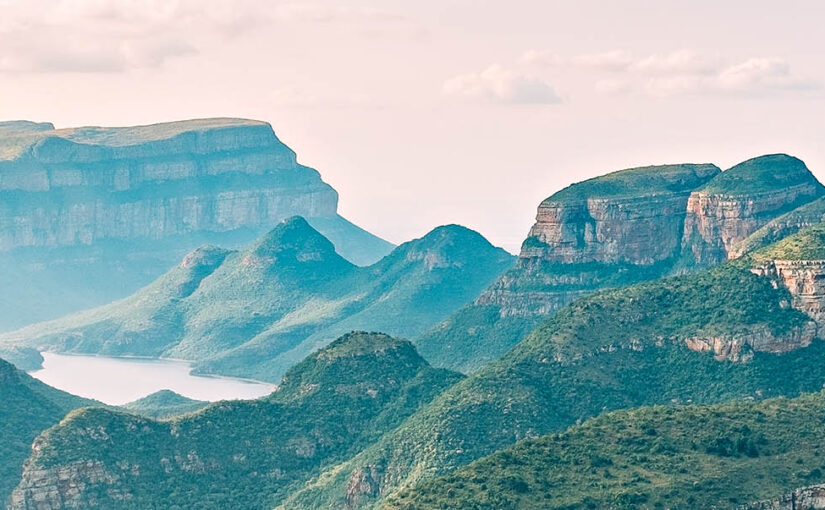
At 26km long and an estimated 1km deep, the Blyde River Canyon rivals most around the world for vastness, but what you don’t expect is how strikingly green the canyon is.

Dense layers of subtropical vegetation wrap the bulk of the precipitous cliffs, between which the Blyde River snakes its way through. You can hike most of the canyon here, and be sure to check out the crazy cylindrical slots known as Bourke’s Luck Potholes. But we reckon the best place to absorb this epic scene is smack bang in the middle of it all, in a damn boat. Meander downstream, take it easy, watch the crocs. Blyde means ‘happy’ in Afrikaans – we think we’d be happy here too.

Click to be HAPPY IN THE BLYDE

Also in Mpumalanga:
Go safari camping at Kruger

If you want the full experience at Kruger National Park, book a spot in one of the communal campsites. You’ll not only hear all the jungle noises through your tent walls but you’ll also get to witness a famous Kruger sunrise.

Click and BYO SLEEPING BAG

Why Nagano and Gunma are golden

There’s a new Golden Route in Japan – it’s greener than the other, and it’s probably not where you thought it was.

A triangular itinerary which loosely tracks Tokaido Road – the most travelled path during the Edo Period, connecting Kyoto to Tokyo – is the old Golden Route and still the go-to for most first-time Japanese travellers.

Maybe you’re a full-blown Japanophile and this is your 12th trip to the Land of the Rising Sun, or maybe you just don’t like crowds – say no more fam. We have an alternate ‘Golden Route’ for you.

A few hours bullet train west of Tokyo are Nagano and Gunma prefectures – based in Central Honshu’s mountainous region. Nagano will be familiar to snow lords as a sick destination in winter (Nagano City hosted the 1998 Winter Olympics to great acclaim and are set to host the 2026 ones).

get lost took the ‘New Golden Route’ in summer, which took us from laidback Karuizawa, up into the mountains Nozawa Onsen, through Gunma’s stunning apple growing country, across to tranquil Lake Nojiri and finishing at the not-so-tranquil rapids at Tone River.

Here’s eight of the best experiences we vibed along the New Golden Route:

  1. Max chilling in Karuizawa

We spent a day ambling the streets of Karuizawa, one of the first stops on the New Golden Route, and immediately understood why the town attracts a lot of domestic holiday-makers, looking for a break from the hustle and bustle of Tokyo.

There was something incredibly tranquil about strolling the neat, green streets of this laidback town in summertime, getting a coffee and receiving far more than I bargained for (a massage? Aftershave?) during a haircut, where we also managed a pretty good conversation considering neither of us knew a lick of the opposing language. Suzuki Barber Shop ftw.

FIND OUT MORE ABOUT KARUIZAWA

  1. Sprucing up at Hoshino Onsen Tombo-no-Yu

A stunning, modern onsen which allows tattoos, Tonbo-no-Yu is among the most attractive onsens in the country. Making use of Karuizawa’s natural geothermal hot springs, the springs are situated in amongst lush green, and it’s easy to drift away here.

The onsen has been here since 1916, but has recently undergone its own spruce up. Almost worth a day trip from Tokyo on its own.

TOMBO NO YU

  1. Chasing (Shiraito) Waterfalls

Shiraito Waterfall is unlike any waterfall I’ve ever come across. It’s only 3 metres high, but 70 metres wide, bending around in a horseshoe shape so that when you approach the water’s edge, it feels like it surrounds you from all sides. The trail up to the falls is short, and the area most beautiful (but somewhat busy) in summer amongst verdant green surrounds.

  1. Mountain Biking at Nozawa Onsen

Shredders might consider it sacrilege to visit Nozawa Onsen in summer, when there is no snow at the area legendary for its snow.

The slopes become mountain bike trails in the summer, with different trails for everyone. We took the ‘medium’ difficulty route and found it very challenging…apparently there are two levels further up than that.

GO DOWN THE MOUNTAIN 

  1. Rokumon – Karuizawa to Ueda

Easily the most delicious train we’ve ever been on.

It serves local beers and wines; there is something incredibly satisfying about drinking a wine in your own private little booth as you cruise past the vineyards where the grapes in that wine were grown.

Demolishing an 11 (11!) course meal is satisfying too; the menu consisted of tateshina pork and Shinshu mushrooms, paprika mousse and Shinshu salmon, roast beef, plus a totally droolable (not a word but you get the idea) fruit compote.

The train is stunning, with timber sourced locally and classic Japanese furnishings which give a luxurious, exclusive feeling. The best way to travel from Karuizawa to Nagano.

READ MORE ABOUT THE ROKUMON

  1. Forest Bathing at Lake Nojiri

get lost’s heart rate went down a number of notches in a Shirin-yoku (forest bathing) session at Lake Nojiri, near the town of Shinano. Over 80% of Nagano Prefecture is covered in forest, which passes the ey test here as we take an easy hike through a green jungle, where we learnt which flora and fauna helps us sleep better and aid our digestive systems, and which kills us almost instantly, we meditated and then took a dip in the soothingly fresh waters of the stunning lake. I’m not usually the meditative, reflective type, preferring energy over quiet, but this did it for me.

BATHING BAE

  1. Sleeping at Bettei Senjuan

Traditional luxury at the foothills of Mount Tanigawa, Bettei Senjuan is a stunning place to stay, with every room in the joint giving you views of mountain peaks or jungle, and an open-air private pool in each as well.

It’s not hard to find good food in Gunma and Nagaino but Bettei has won awards for its cuisine, and plate after plate of sumptuously plated food stood was evidence enough of this.

STAY AT BETTEI SENJUAN 

  1. Tone River Rapids

Tone River is the epicentre of Japan’s white-water rafting. A half-day course has you careening down 12km of world-class grade 3-4 rapids, which takes in three different canyons: Momiji Canyon, Minakami Canyon and Suwa Canyon.

Spring (April – June) is actually a better time to go than summer, but you are able to raft all the way through until October. If the rapids are slower, the sessions turn into half-rafting, half-canyoneering and jumping off rocky ledges.

RAPID LYF

Epic Asian flight sale for Australians

Low-cost flight legends Scoot have launched a New Year network sale, which you need to know about.

READ: A FIRST TIMER’S GUIDE TO BALI, FROM A 30-YEAR-OLD BALI VIRGIN

The name of the sale is kind of misleading; you haven’t missed it, it’s happening now, from 16 January until 22 January.

If your new year’s resolution was to travel somewhere in 2024, you probably aren’t going to get a much better sign than this.

There’s 55 adventure-filled destinations to travel to, including the main ones in Singapore, Malaysia, Japan, Thailand, Indonesia, China, India, the Philippines, South Korea, and Vietnam, and some left-field destinations in those places too.

South Korea is shaping up as one of the hottest destinations of 2024, on the topic of which, if you haven’t read our exploration of South Korea’s clash of culture, you’re kidding yourself.  

Back to the sale though. A quick scan and the ones that looked good to us include:

  • Ho Chi Minh City, Vietnam – from $185

  • Denpasar, Indonesia – from $190

  • Singapore – from $195

  • Cebu, Philippines – from $215

  • Jeju, South Korea – from $295

  • Osaka, Japan – from $315

Travellers looking to make the most of the sale will be able to book now until 23 January 3:00AM AEDT. Please see the full list of sales from Scoot and more information flyscoot.com/en/promotions/au-jan-gotta-scoot

Where we want to go in 2024

Where would you like to travel to this year?

It’s quite a simple question but when we asked our writers this, they surprisingly (or perhaps unsurprisingly) found the task difficult, umming and ahhing, fidgeting and unwilling to commit, mainly due to the tricky task of narrowing the list down from literally everywhere to one destination.

CLICK HERE TO LET US KNOW WHERE YOU’D LIKE TO TRAVEL TO IN 2024

Here’s what they come up with:

ISTANBUL

I once spent six hours at Istanbul airport, and enchanted as I was by the ample charging ports and Starbucks, I couldn’t help but think there was more to Turkey than this.

I love chaotic places, so this year I’d like to amble through the frenzy that is Istanbul, crushing gozleme and sampling the lively nightlife on the Bosphorus. I’d like to avoid flares and death at the Intercontinental Derby football match between Fenerbahce and Galatasaray, and I’d especially like to cop an absolute beating at a traditional hammam, leaving as a new man, my creaky 31-year-old joints made to feel 29 again.

– Tim McGlone, Editor

Insta: @mcglone.jpg

READ: DIVING IN THE DEEP END

ANTARCTICA

I’m going to the last place I haven’t been; Antarctica. It’s the final continent. The brass ring for me, saving the best and coldest for last. Something fitting about it, having thirsted after all the colourful, flavourful, wild destinations around the world to leave the frozen tundra as my final continental experience.

I look forward to the white void ahead, the adventure it brings, and as always, sharing it with my get lost family who always seems to find me no matter how far off the radar I get.”

– Roberto Serrini, contributor

Insta: @serrini

READ: 48 HOURS IN WEST HOLLYWOOD

SHIMANAMI KAIDO

Topping my travel wish list for 2024 is a cycling trip to Japan to tackle the Shimanami Kaido route. The 280km journey connects six Japanese islands dotted throughout the Setouchi Inland Sea. Apart from stunning views of the islands, water, temples, and whirlpools, it features the Kurushima Kaikyo Ohashi — one of the world’s longest suspension bridges.

Apart from indulging in my odd love of riding over a long bridge, what better excuse to indulge in a luxury ryokan onsen stay than a day spent in the saddle?”

– Kate Robertson, contributor

READ: TIROL HAS NO OFF SWITCH

BEST FOR: NIGHTLIFE… OF A DIFFERENT KIND.
IZU OSHIMA, JAPAN

We love the stars here at get lost, and who would have thought that just 25 minutes (flight time… less than an episode of ‘Pokemon’) from Tokyo you can get some of the most stunning star-gazing in the world.

The Oshima islands are a chain of volcanic islands south-east of Honshu. Izu Ōshima specifically is an incredible spot covered in small black volcanic rocks. Very Mars-like, very wow. During the day, take on the black desert known as Ura Sabaku, and at night, curl up in a sleeping bag and listen to an astronomer tell you the stories of the sky.

DO
Climb Mt. Mihara and gaze out over the black desert landscape.


Click PLAY to watch

BEST FOR: THE PERFECT WAVE
N’GOR ISLAND, SENEGAL

Bruce Brown’s seminal 1968 film ‘The Endless Summer’ follows two Californian surfers on the hunt for “the perfect wave”. The film concludes not in Hawai’i, California, or Australia, but in Senegal — on N’gor Island, a tiny little islet just off the coast of bustling Dakar.

The miniature island bears the brunt of the North Atlantic swell, giving rise to (at most recent count) 21 breaks for every kind of surfer. It’s only a ten-minute boat ride from the capital, but that ten minutes is enough to immerse yourself in a different world; eat, sleep, surf, repeat.

DO
Stay at N’gor Island Surf Camp, for easy access to the beach, gear and a great crowd.


Click PLAY to watch

BEST FOR: NIGHTLIFE… OF A DIFFERENT KIND.
IZU OSHIMA, JAPAN

We love the stars here at get lost, and who would have thought that just 25 minutes (flight time… less than an episode of ‘Pokemon’) from Tokyo you can get some of the most stunning star-gazing in the world.

The Oshima islands are a chain of volcanic islands south-east of Honshu. Izu Ōshima specifically is an incredible spot covered in small black volcanic rocks. Very Mars-like, very wow. During the day, take on the black desert known as Ura Sabaku, and at night, curl up in a sleeping bag and listen to an astronomer tell you the stories of the sky.

DO
Climb Mt. Mihara and gaze out over the black desert landscape.


BEST FOR: A ONCE-IN-A-BUCKET-LIST WHALE EXPERIENCE
UOLEVA, TONGA

Located in the Ha’apai Island group in the centre of the Tongan archipelago, Uoleva Island is long on soft sand deserted beaches and perfect crystal clear lagoon, but Uoleva’s real charm is its proximity to the migrating humpback whales’ ‘nursery’.

From July to October the surrounding waters are where these majestic mammals mate, give birth and educate their young on how to survive. Breakfasts on the island are regularly interrupted by a “thar she blows” from a guest spotting a whale either spouting, breaching or lobtailing in the distance. Then begins the rush to the boat to swim with them, more often than not without another tourist in sight.

DO
Stay at one of the three completely isolated, off-grid “resorts” (we’re talking a handful of fales with perfect water views).


Click PLAY to watch

BEST FOR: THE PERFECT WAVE
N’GOR ISLAND, SENEGAL

Bruce Brown’s seminal 1968 film ‘The Endless Summer’ follows two Californian surfers on the hunt for “the perfect wave”. The film concludes not in Hawai’i, California, or Australia, but in Senegal — on N’gor Island, a tiny little islet just off the coast of bustling Dakar.

The miniature island bears the brunt of the North Atlantic swell, giving rise to (at most recent count) 21 breaks for every kind of surfer. It’s only a ten-minute boat ride from the capital, but that ten minutes is enough to immerse yourself in a different world; eat, sleep, surf, repeat.

DO
Stay at N’gor Island Surf Camp, for easy access to the beach, gear and a great crowd.


Click PLAY to watch

BEST FOR: NIGHTLIFE… OF A DIFFERENT KIND.
IZU OSHIMA, JAPAN

We love the stars here at get lost, and who would have thought that just 25 minutes (flight time… less than an episode of ‘Pokemon’) from Tokyo you can get some of the most stunning star-gazing in the world.

The Oshima islands are a chain of volcanic islands south-east of Honshu. Izu Ōshima specifically is an incredible spot covered in small black volcanic rocks. Very Mars-like, very wow. During the day, take on the black desert known as Ura Sabaku, and at night, curl up in a sleeping bag and listen to an astronomer tell you the stories of the sky.

DO
Climb Mt. Mihara and gaze out over the black desert landscape.


BEST FOR: CULTURE AND ADVENTURE COMBO
JEJU ISLAND, SOUTH KOREA

You would think 1,833 square kilometres would be difficult to keep a secret, but South Korea seems to have managed. I mean, have you heard of Jeju Island, the slice of paradise just a 75 minute flight from Seoul?

Koreans know this island well, but have managed to keep it all to themselves; the volcanic craters, the underground lava tubes, the pretty forests and the decent swells. Explore all of these and feast on beer and fried chicken while you’re at it – you’ve earned it.

DO
Go with one of Inside Asia’s epic Jeju tours, where you might get a glimpse of the incredible ‘haenyo’, Korea’s free-diving sea women.


BEST FOR: A ONCE-IN-A-BUCKET-LIST WHALE EXPERIENCE
UOLEVA, TONGA

Located in the Ha’apai Island group in the centre of the Tongan archipelago, Uoleva Island is long on soft sand deserted beaches and perfect crystal clear lagoon, but Uoleva’s real charm is its proximity to the migrating humpback whales’ ‘nursery’.

From July to October the surrounding waters are where these majestic mammals mate, give birth and educate their young on how to survive. Breakfasts on the island are regularly interrupted by a “thar she blows” from a guest spotting a whale either spouting, breaching or lobtailing in the distance. Then begins the rush to the boat to swim with them, more often than not without another tourist in sight.

DO
Stay at one of the three completely isolated, off-grid “resorts” (we’re talking a handful of fales with perfect water views).


Click PLAY to watch

BEST FOR: THE PERFECT WAVE
N’GOR ISLAND, SENEGAL

Bruce Brown’s seminal 1968 film ‘The Endless Summer’ follows two Californian surfers on the hunt for “the perfect wave”. The film concludes not in Hawai’i, California, or Australia, but in Senegal — on N’gor Island, a tiny little islet just off the coast of bustling Dakar.

The miniature island bears the brunt of the North Atlantic swell, giving rise to (at most recent count) 21 breaks for every kind of surfer. It’s only a ten-minute boat ride from the capital, but that ten minutes is enough to immerse yourself in a different world; eat, sleep, surf, repeat.

DO
Stay at N’gor Island Surf Camp, for easy access to the beach, gear and a great crowd.


Click PLAY to watch

BEST FOR: NIGHTLIFE… OF A DIFFERENT KIND.
IZU OSHIMA, JAPAN

We love the stars here at get lost, and who would have thought that just 25 minutes (flight time… less than an episode of ‘Pokemon’) from Tokyo you can get some of the most stunning star-gazing in the world.

The Oshima islands are a chain of volcanic islands south-east of Honshu. Izu Ōshima specifically is an incredible spot covered in small black volcanic rocks. Very Mars-like, very wow. During the day, take on the black desert known as Ura Sabaku, and at night, curl up in a sleeping bag and listen to an astronomer tell you the stories of the sky.

DO
Climb Mt. Mihara and gaze out over the black desert landscape.


BEST FOR: HARDCORE REMOTENESS
TRISTAN DA CUNHA, BRITISH OVERSEAS TERRITORY

If you want to escape, you can’t get much further than Tristan de Cunha. This island’s closest mainland city is Cape Town, and that’s still a six-day journey by ship depending on the weather.

A British Overseas Territory, this island has around 300 permanent inhabitants and the only way to get to Tristan da Cunha is either by cargo ship or expedition boat. And even then you need permission, plus a special permit, to visit. But once there you can play spot the albatross, go hiking or check out the active volcano with its heart-shaped crater lake.

DO
Hit The Albatross Bar after a big day of adventure — the world’s most remote pub.


BEST FOR: CULTURE AND ADVENTURE COMBO
JEJU ISLAND, SOUTH KOREA

You would think 1,833 square kilometres would be difficult to keep a secret, but South Korea seems to have managed. I mean, have you heard of Jeju Island, the slice of paradise just a 75 minute flight from Seoul?

Koreans know this island well, but have managed to keep it all to themselves; the volcanic craters, the underground lava tubes, the pretty forests and the decent swells. Explore all of these and feast on beer and fried chicken while you’re at it – you’ve earned it.

DO
Go with one of Inside Asia’s epic Jeju tours, where you might get a glimpse of the incredible ‘haenyo’, Korea’s free-diving sea women.


BEST FOR: A ONCE-IN-A-BUCKET-LIST WHALE EXPERIENCE
UOLEVA, TONGA

Located in the Ha’apai Island group in the centre of the Tongan archipelago, Uoleva Island is long on soft sand deserted beaches and perfect crystal clear lagoon, but Uoleva’s real charm is its proximity to the migrating humpback whales’ ‘nursery’.

From July to October the surrounding waters are where these majestic mammals mate, give birth and educate their young on how to survive. Breakfasts on the island are regularly interrupted by a “thar she blows” from a guest spotting a whale either spouting, breaching or lobtailing in the distance. Then begins the rush to the boat to swim with them, more often than not without another tourist in sight.

DO
Stay at one of the three completely isolated, off-grid “resorts” (we’re talking a handful of fales with perfect water views).


Click PLAY to watch

BEST FOR: THE PERFECT WAVE
N’GOR ISLAND, SENEGAL

Bruce Brown’s seminal 1968 film ‘The Endless Summer’ follows two Californian surfers on the hunt for “the perfect wave”. The film concludes not in Hawai’i, California, or Australia, but in Senegal — on N’gor Island, a tiny little islet just off the coast of bustling Dakar.

The miniature island bears the brunt of the North Atlantic swell, giving rise to (at most recent count) 21 breaks for every kind of surfer. It’s only a ten-minute boat ride from the capital, but that ten minutes is enough to immerse yourself in a different world; eat, sleep, surf, repeat.

DO
Stay at N’gor Island Surf Camp, for easy access to the beach, gear and a great crowd.


Click PLAY to watch

BEST FOR: NIGHTLIFE… OF A DIFFERENT KIND.
IZU OSHIMA, JAPAN

We love the stars here at get lost, and who would have thought that just 25 minutes (flight time… less than an episode of ‘Pokemon’) from Tokyo you can get some of the most stunning star-gazing in the world.

The Oshima islands are a chain of volcanic islands south-east of Honshu. Izu Ōshima specifically is an incredible spot covered in small black volcanic rocks. Very Mars-like, very wow. During the day, take on the black desert known as Ura Sabaku, and at night, curl up in a sleeping bag and listen to an astronomer tell you the stories of the sky.

DO
Climb Mt. Mihara and gaze out over the black desert landscape.


BEST FOR: A SLICE OF AFRICAN HISTORY
LAMU, KENYA

Lamu Island, part of the Lamu Archipelago off Kenya’s far north coast, is a UNESCO World Heritage Site. And for good reason.

This island is considered by eminent researchers as the “cradle of Swahili civilisation”. It became a super important religious centre, attracting Swahili and Islamic scholars, and has been inhabited for over 700 years. It’s also crazy beautiful, home to perfect beaches, has a no-car rule and an Old Town that is perhaps the oldest and best preserved Swahili settlement in all of East Africa.

DO
Sail on a traditional dhow boat… what a vibe.


BEST FOR: HARDCORE REMOTENESS
TRISTAN DA CUNHA, BRITISH OVERSEAS TERRITORY

If you want to escape, you can’t get much further than Tristan de Cunha. This island’s closest mainland city is Cape Town, and that’s still a six-day journey by ship depending on the weather.

A British Overseas Territory, this island has around 300 permanent inhabitants and the only way to get to Tristan da Cunha is either by cargo ship or expedition boat. And even then you need permission, plus a special permit, to visit. But once there you can play spot the albatross, go hiking or check out the active volcano with its heart-shaped crater lake.

DO
Hit The Albatross Bar after a big day of adventure — the world’s most remote pub.


BEST FOR: CULTURE AND ADVENTURE COMBO
JEJU ISLAND, SOUTH KOREA

You would think 1,833 square kilometres would be difficult to keep a secret, but South Korea seems to have managed. I mean, have you heard of Jeju Island, the slice of paradise just a 75 minute flight from Seoul?

Koreans know this island well, but have managed to keep it all to themselves; the volcanic craters, the underground lava tubes, the pretty forests and the decent swells. Explore all of these and feast on beer and fried chicken while you’re at it – you’ve earned it.

DO
Go with one of Inside Asia’s epic Jeju tours, where you might get a glimpse of the incredible ‘haenyo’, Korea’s free-diving sea women.


BEST FOR: A ONCE-IN-A-BUCKET-LIST WHALE EXPERIENCE
UOLEVA, TONGA

Located in the Ha’apai Island group in the centre of the Tongan archipelago, Uoleva Island is long on soft sand deserted beaches and perfect crystal clear lagoon, but Uoleva’s real charm is its proximity to the migrating humpback whales’ ‘nursery’.

From July to October the surrounding waters are where these majestic mammals mate, give birth and educate their young on how to survive. Breakfasts on the island are regularly interrupted by a “thar she blows” from a guest spotting a whale either spouting, breaching or lobtailing in the distance. Then begins the rush to the boat to swim with them, more often than not without another tourist in sight.

DO
Stay at one of the three completely isolated, off-grid “resorts” (we’re talking a handful of fales with perfect water views).


Click PLAY to watch

BEST FOR: THE PERFECT WAVE
N’GOR ISLAND, SENEGAL

Bruce Brown’s seminal 1968 film ‘The Endless Summer’ follows two Californian surfers on the hunt for “the perfect wave”. The film concludes not in Hawai’i, California, or Australia, but in Senegal — on N’gor Island, a tiny little islet just off the coast of bustling Dakar.

The miniature island bears the brunt of the North Atlantic swell, giving rise to (at most recent count) 21 breaks for every kind of surfer. It’s only a ten-minute boat ride from the capital, but that ten minutes is enough to immerse yourself in a different world; eat, sleep, surf, repeat.

DO
Stay at N’gor Island Surf Camp, for easy access to the beach, gear and a great crowd.


Click PLAY to watch

BEST FOR: NIGHTLIFE… OF A DIFFERENT KIND.
IZU OSHIMA, JAPAN

We love the stars here at get lost, and who would have thought that just 25 minutes (flight time… less than an episode of ‘Pokemon’) from Tokyo you can get some of the most stunning star-gazing in the world.

The Oshima islands are a chain of volcanic islands south-east of Honshu. Izu Ōshima specifically is an incredible spot covered in small black volcanic rocks. Very Mars-like, very wow. During the day, take on the black desert known as Ura Sabaku, and at night, curl up in a sleeping bag and listen to an astronomer tell you the stories of the sky.

DO
Climb Mt. Mihara and gaze out over the black desert landscape.


BEST FOR: GHOST STORIES
POVEGLIA, ITALY

Smack dab in the middle of the Venetian Lagoon is this hella haunted islet. Back in the 1800s it was used as a quarantine station for people with the Bubonic Plague (or people who were thought to have come in contact with the plague).

Then in the 1930s it was an island asylum featuring mad doctor-type experiments, then said mad doctor was found dead at the bottom of the bell tower. The tower was removed but some locals reckon they still hear it peal, while other locals swear 50% of the island’s soil is made of human remains.

Poveglia is thought to be so haunted that access is restricted, so we recommend jumping on a boat and circumnavigating the island to sense its foreboding presence.

DO
Ask locals in town for their best ghost stories before you go.


BEST FOR: A SLICE OF AFRICAN HISTORY
LAMU, KENYA

Lamu Island, part of the Lamu Archipelago off Kenya’s far north coast, is a UNESCO World Heritage Site. And for good reason.

This island is considered by eminent researchers as the “cradle of Swahili civilisation”. It became a super important religious centre, attracting Swahili and Islamic scholars, and has been inhabited for over 700 years. It’s also crazy beautiful, home to perfect beaches, has a no-car rule and an Old Town that is perhaps the oldest and best preserved Swahili settlement in all of East Africa.

DO
Sail on a traditional dhow boat… what a vibe.


BEST FOR: HARDCORE REMOTENESS
TRISTAN DA CUNHA, BRITISH OVERSEAS TERRITORY

If you want to escape, you can’t get much further than Tristan de Cunha. This island’s closest mainland city is Cape Town, and that’s still a six-day journey by ship depending on the weather.

A British Overseas Territory, this island has around 300 permanent inhabitants and the only way to get to Tristan da Cunha is either by cargo ship or expedition boat. And even then you need permission, plus a special permit, to visit. But once there you can play spot the albatross, go hiking or check out the active volcano with its heart-shaped crater lake.

DO
Hit The Albatross Bar after a big day of adventure — the world’s most remote pub.


BEST FOR: CULTURE AND ADVENTURE COMBO
JEJU ISLAND, SOUTH KOREA

You would think 1,833 square kilometres would be difficult to keep a secret, but South Korea seems to have managed. I mean, have you heard of Jeju Island, the slice of paradise just a 75 minute flight from Seoul?

Koreans know this island well, but have managed to keep it all to themselves; the volcanic craters, the underground lava tubes, the pretty forests and the decent swells. Explore all of these and feast on beer and fried chicken while you’re at it – you’ve earned it.

DO
Go with one of Inside Asia’s epic Jeju tours, where you might get a glimpse of the incredible ‘haenyo’, Korea’s free-diving sea women.


BEST FOR: A ONCE-IN-A-BUCKET-LIST WHALE EXPERIENCE
UOLEVA, TONGA

Located in the Ha’apai Island group in the centre of the Tongan archipelago, Uoleva Island is long on soft sand deserted beaches and perfect crystal clear lagoon, but Uoleva’s real charm is its proximity to the migrating humpback whales’ ‘nursery’.

From July to October the surrounding waters are where these majestic mammals mate, give birth and educate their young on how to survive. Breakfasts on the island are regularly interrupted by a “thar she blows” from a guest spotting a whale either spouting, breaching or lobtailing in the distance. Then begins the rush to the boat to swim with them, more often than not without another tourist in sight.

DO
Stay at one of the three completely isolated, off-grid “resorts” (we’re talking a handful of fales with perfect water views).


Click PLAY to watch

BEST FOR: THE PERFECT WAVE
N’GOR ISLAND, SENEGAL

Bruce Brown’s seminal 1968 film ‘The Endless Summer’ follows two Californian surfers on the hunt for “the perfect wave”. The film concludes not in Hawai’i, California, or Australia, but in Senegal — on N’gor Island, a tiny little islet just off the coast of bustling Dakar.

The miniature island bears the brunt of the North Atlantic swell, giving rise to (at most recent count) 21 breaks for every kind of surfer. It’s only a ten-minute boat ride from the capital, but that ten minutes is enough to immerse yourself in a different world; eat, sleep, surf, repeat.

DO
Stay at N’gor Island Surf Camp, for easy access to the beach, gear and a great crowd.


Click PLAY to watch

BEST FOR: NIGHTLIFE… OF A DIFFERENT KIND.
IZU OSHIMA, JAPAN

We love the stars here at get lost, and who would have thought that just 25 minutes (flight time… less than an episode of ‘Pokemon’) from Tokyo you can get some of the most stunning star-gazing in the world.

The Oshima islands are a chain of volcanic islands south-east of Honshu. Izu Ōshima specifically is an incredible spot covered in small black volcanic rocks. Very Mars-like, very wow. During the day, take on the black desert known as Ura Sabaku, and at night, curl up in a sleeping bag and listen to an astronomer tell you the stories of the sky.

DO
Climb Mt. Mihara and gaze out over the black desert landscape.


Click PLAY to watch

BEST FOR: UNDERWATER ADVENTURES
UEPI, SOLOMON ISLANDS

Perched on the edge of the world’s longest saltwater lagoon, Uepi Island also hosts Uepi Island Resort — a boutique paradise with six bungalows scattered throughout the island’s tropical rainforest.

But it’s below the water where this island really comes to the fore. Bordering the 2,000-metre-deep ‘The Slot’, the diving here is world-class and super crowded (just not with other divers). You gotta share these waters with plethora of incredible marine life.

Not a diver? Not a problem! A jump off the jetty and into the depths of The Slot with just your mask and snorkel is enough to join the reef sharks swimming through this marine wonderland.

DO
Swim with the angelic ocean manta rays. You won’t regret it.


BEST FOR: GHOST STORIES
POVEGLIA, ITALY

Smack dab in the middle of the Venetian Lagoon is this hella haunted islet. Back in the 1800s it was used as a quarantine station for people with the Bubonic Plague (or people who were thought to have come in contact with the plague).

Then in the 1930s it was an island asylum featuring mad doctor-type experiments, then said mad doctor was found dead at the bottom of the bell tower. The tower was removed but some locals reckon they still hear it peal, while other locals swear 50% of the island’s soil is made of human remains.

Poveglia is thought to be so haunted that access is restricted, so we recommend jumping on a boat and circumnavigating the island to sense its foreboding presence.

DO
Ask locals in town for their best ghost stories before you go.


BEST FOR: A SLICE OF AFRICAN HISTORY
LAMU, KENYA

Lamu Island, part of the Lamu Archipelago off Kenya’s far north coast, is a UNESCO World Heritage Site. And for good reason.

This island is considered by eminent researchers as the “cradle of Swahili civilisation”. It became a super important religious centre, attracting Swahili and Islamic scholars, and has been inhabited for over 700 years. It’s also crazy beautiful, home to perfect beaches, has a no-car rule and an Old Town that is perhaps the oldest and best preserved Swahili settlement in all of East Africa.

DO
Sail on a traditional dhow boat… what a vibe.


BEST FOR: HARDCORE REMOTENESS
TRISTAN DA CUNHA, BRITISH OVERSEAS TERRITORY

If you want to escape, you can’t get much further than Tristan de Cunha. This island’s closest mainland city is Cape Town, and that’s still a six-day journey by ship depending on the weather.

A British Overseas Territory, this island has around 300 permanent inhabitants and the only way to get to Tristan da Cunha is either by cargo ship or expedition boat. And even then you need permission, plus a special permit, to visit. But once there you can play spot the albatross, go hiking or check out the active volcano with its heart-shaped crater lake.

DO
Hit The Albatross Bar after a big day of adventure — the world’s most remote pub.


BEST FOR: CULTURE AND ADVENTURE COMBO
JEJU ISLAND, SOUTH KOREA

You would think 1,833 square kilometres would be difficult to keep a secret, but South Korea seems to have managed. I mean, have you heard of Jeju Island, the slice of paradise just a 75 minute flight from Seoul?

Koreans know this island well, but have managed to keep it all to themselves; the volcanic craters, the underground lava tubes, the pretty forests and the decent swells. Explore all of these and feast on beer and fried chicken while you’re at it – you’ve earned it.

DO
Go with one of Inside Asia’s epic Jeju tours, where you might get a glimpse of the incredible ‘haenyo’, Korea’s free-diving sea women.


BEST FOR: A ONCE-IN-A-BUCKET-LIST WHALE EXPERIENCE
UOLEVA, TONGA

Located in the Ha’apai Island group in the centre of the Tongan archipelago, Uoleva Island is long on soft sand deserted beaches and perfect crystal clear lagoon, but Uoleva’s real charm is its proximity to the migrating humpback whales’ ‘nursery’.

From July to October the surrounding waters are where these majestic mammals mate, give birth and educate their young on how to survive. Breakfasts on the island are regularly interrupted by a “thar she blows” from a guest spotting a whale either spouting, breaching or lobtailing in the distance. Then begins the rush to the boat to swim with them, more often than not without another tourist in sight.

DO
Stay at one of the three completely isolated, off-grid “resorts” (we’re talking a handful of fales with perfect water views).


Click PLAY to watch

BEST FOR: THE PERFECT WAVE
N’GOR ISLAND, SENEGAL

Bruce Brown’s seminal 1968 film ‘The Endless Summer’ follows two Californian surfers on the hunt for “the perfect wave”. The film concludes not in Hawai’i, California, or Australia, but in Senegal — on N’gor Island, a tiny little islet just off the coast of bustling Dakar.

The miniature island bears the brunt of the North Atlantic swell, giving rise to (at most recent count) 21 breaks for every kind of surfer. It’s only a ten-minute boat ride from the capital, but that ten minutes is enough to immerse yourself in a different world; eat, sleep, surf, repeat.

DO
Stay at N’gor Island Surf Camp, for easy access to the beach, gear and a great crowd.


Click PLAY to watch

BEST FOR: NIGHTLIFE… OF A DIFFERENT KIND.
IZU OSHIMA, JAPAN

We love the stars here at get lost, and who would have thought that just 25 minutes (flight time… less than an episode of ‘Pokemon’) from Tokyo you can get some of the most stunning star-gazing in the world.

The Oshima islands are a chain of volcanic islands south-east of Honshu. Izu Ōshima specifically is an incredible spot covered in small black volcanic rocks. Very Mars-like, very wow. During the day, take on the black desert known as Ura Sabaku, and at night, curl up in a sleeping bag and listen to an astronomer tell you the stories of the sky.

DO
Climb Mt. Mihara and gaze out over the black desert landscape.


Click PLAY to watch

BEST FOR: A KNOCK AROUND GAME OF FOOTBALL
HENNINGSVAER, NORWAY

Name a more epic football pitch, we’ll wait. Henningsvær Stadium sits on a small rocky outcrop on the southern tip of Austvågøya, Lofoten archipelago’s largest island.

Whew, what a mouthful. And while this pitch is only used for amateur football (imagine the cost of flying teams out on the regular!) it’s become a bona fide social hub for the fishing village. If you dig cold weather island life, getting up close with the Northern Lights AND football—pack ya boots and get here.

DO
Try rakfisk (fermented fish), but only if you’re brave.


Click PLAY to watch

BEST FOR: UNDERWATER ADVENTURES
UEPI, SOLOMON ISLANDS

Perched on the edge of the world’s longest saltwater lagoon, Uepi Island also hosts Uepi Island Resort — a boutique paradise with six bungalows scattered throughout the island’s tropical rainforest.

But it’s below the water where this island really comes to the fore. Bordering the 2,000-metre-deep ‘The Slot’, the diving here is world-class and super crowded (just not with other divers). You gotta share these waters with plethora of incredible marine life.

Not a diver? Not a problem! A jump off the jetty and into the depths of The Slot with just your mask and snorkel is enough to join the reef sharks swimming through this marine wonderland.

DO
Swim with the angelic ocean manta rays. You won’t regret it.


BEST FOR: GHOST STORIES
POVEGLIA, ITALY

Smack dab in the middle of the Venetian Lagoon is this hella haunted islet. Back in the 1800s it was used as a quarantine station for people with the Bubonic Plague (or people who were thought to have come in contact with the plague).

Then in the 1930s it was an island asylum featuring mad doctor-type experiments, then said mad doctor was found dead at the bottom of the bell tower. The tower was removed but some locals reckon they still hear it peal, while other locals swear 50% of the island’s soil is made of human remains.

Poveglia is thought to be so haunted that access is restricted, so we recommend jumping on a boat and circumnavigating the island to sense its foreboding presence.

DO
Ask locals in town for their best ghost stories before you go.


BEST FOR: A SLICE OF AFRICAN HISTORY
LAMU, KENYA

Lamu Island, part of the Lamu Archipelago off Kenya’s far north coast, is a UNESCO World Heritage Site. And for good reason.

This island is considered by eminent researchers as the “cradle of Swahili civilisation”. It became a super important religious centre, attracting Swahili and Islamic scholars, and has been inhabited for over 700 years. It’s also crazy beautiful, home to perfect beaches, has a no-car rule and an Old Town that is perhaps the oldest and best preserved Swahili settlement in all of East Africa.

DO
Sail on a traditional dhow boat… what a vibe.


BEST FOR: HARDCORE REMOTENESS
TRISTAN DA CUNHA, BRITISH OVERSEAS TERRITORY

If you want to escape, you can’t get much further than Tristan de Cunha. This island’s closest mainland city is Cape Town, and that’s still a six-day journey by ship depending on the weather.

A British Overseas Territory, this island has around 300 permanent inhabitants and the only way to get to Tristan da Cunha is either by cargo ship or expedition boat. And even then you need permission, plus a special permit, to visit. But once there you can play spot the albatross, go hiking or check out the active volcano with its heart-shaped crater lake.

DO
Hit The Albatross Bar after a big day of adventure — the world’s most remote pub.


BEST FOR: CULTURE AND ADVENTURE COMBO
JEJU ISLAND, SOUTH KOREA

You would think 1,833 square kilometres would be difficult to keep a secret, but South Korea seems to have managed. I mean, have you heard of Jeju Island, the slice of paradise just a 75 minute flight from Seoul?

Koreans know this island well, but have managed to keep it all to themselves; the volcanic craters, the underground lava tubes, the pretty forests and the decent swells. Explore all of these and feast on beer and fried chicken while you’re at it – you’ve earned it.

DO
Go with one of Inside Asia’s epic Jeju tours, where you might get a glimpse of the incredible ‘haenyo’, Korea’s free-diving sea women.


BEST FOR: A ONCE-IN-A-BUCKET-LIST WHALE EXPERIENCE
UOLEVA, TONGA

Located in the Ha’apai Island group in the centre of the Tongan archipelago, Uoleva Island is long on soft sand deserted beaches and perfect crystal clear lagoon, but Uoleva’s real charm is its proximity to the migrating humpback whales’ ‘nursery’.

From July to October the surrounding waters are where these majestic mammals mate, give birth and educate their young on how to survive. Breakfasts on the island are regularly interrupted by a “thar she blows” from a guest spotting a whale either spouting, breaching or lobtailing in the distance. Then begins the rush to the boat to swim with them, more often than not without another tourist in sight.

DO
Stay at one of the three completely isolated, off-grid “resorts” (we’re talking a handful of fales with perfect water views).


Click PLAY to watch

BEST FOR: THE PERFECT WAVE
N’GOR ISLAND, SENEGAL

Bruce Brown’s seminal 1968 film ‘The Endless Summer’ follows two Californian surfers on the hunt for “the perfect wave”. The film concludes not in Hawai’i, California, or Australia, but in Senegal — on N’gor Island, a tiny little islet just off the coast of bustling Dakar.

The miniature island bears the brunt of the North Atlantic swell, giving rise to (at most recent count) 21 breaks for every kind of surfer. It’s only a ten-minute boat ride from the capital, but that ten minutes is enough to immerse yourself in a different world; eat, sleep, surf, repeat.

DO
Stay at N’gor Island Surf Camp, for easy access to the beach, gear and a great crowd.


Click PLAY to watch

BEST FOR: NIGHTLIFE… OF A DIFFERENT KIND.
IZU OSHIMA, JAPAN

We love the stars here at get lost, and who would have thought that just 25 minutes (flight time… less than an episode of ‘Pokemon’) from Tokyo you can get some of the most stunning star-gazing in the world.

The Oshima islands are a chain of volcanic islands south-east of Honshu. Izu Ōshima specifically is an incredible spot covered in small black volcanic rocks. Very Mars-like, very wow. During the day, take on the black desert known as Ura Sabaku, and at night, curl up in a sleeping bag and listen to an astronomer tell you the stories of the sky.

DO
Climb Mt. Mihara and gaze out over the black desert landscape.


BEST FOR: AN ARCTIC SAFARI
BAFFIN ISLAND, CANADA

Baffin is immense. It’s actually the fifth largest island in the world. So if you’re craving vast, Arctic steppe and grand fjords, head here stat.

Sirmilik National Park is affectionately known as the “Yosemite of the North” where you can spy snowy owls, narwhal and polar bears. Or head out to the ice floe to spy a few beluga whales swimming the freezing waters.

DO
Tuck into a Baffin surf-n-turf freshly caught Arctic char and some roasted caribou. Maybe even a little muktuk (whale skin and blubber) if you’re feeling adventurous.


Click PLAY to watch

BEST FOR: A KNOCK AROUND GAME OF FOOTBALL
HENNINGSVAER, NORWAY

Name a more epic football pitch, we’ll wait. Henningsvær Stadium sits on a small rocky outcrop on the southern tip of Austvågøya, Lofoten archipelago’s largest island.

Whew, what a mouthful. And while this pitch is only used for amateur football (imagine the cost of flying teams out on the regular!) it’s become a bona fide social hub for the fishing village. If you dig cold weather island life, getting up close with the Northern Lights AND football—pack ya boots and get here.

DO
Try rakfisk (fermented fish), but only if you’re brave.


Click PLAY to watch

BEST FOR: UNDERWATER ADVENTURES
UEPI, SOLOMON ISLANDS

Perched on the edge of the world’s longest saltwater lagoon, Uepi Island also hosts Uepi Island Resort — a boutique paradise with six bungalows scattered throughout the island’s tropical rainforest.

But it’s below the water where this island really comes to the fore. Bordering the 2,000-metre-deep ‘The Slot’, the diving here is world-class and super crowded (just not with other divers). You gotta share these waters with plethora of incredible marine life.

Not a diver? Not a problem! A jump off the jetty and into the depths of The Slot with just your mask and snorkel is enough to join the reef sharks swimming through this marine wonderland.

DO
Swim with the angelic ocean manta rays. You won’t regret it.


BEST FOR: GHOST STORIES
POVEGLIA, ITALY

Smack dab in the middle of the Venetian Lagoon is this hella haunted islet. Back in the 1800s it was used as a quarantine station for people with the Bubonic Plague (or people who were thought to have come in contact with the plague).

Then in the 1930s it was an island asylum featuring mad doctor-type experiments, then said mad doctor was found dead at the bottom of the bell tower. The tower was removed but some locals reckon they still hear it peal, while other locals swear 50% of the island’s soil is made of human remains.

Poveglia is thought to be so haunted that access is restricted, so we recommend jumping on a boat and circumnavigating the island to sense its foreboding presence.

DO
Ask locals in town for their best ghost stories before you go.


BEST FOR: A SLICE OF AFRICAN HISTORY
LAMU, KENYA

Lamu Island, part of the Lamu Archipelago off Kenya’s far north coast, is a UNESCO World Heritage Site. And for good reason.

This island is considered by eminent researchers as the “cradle of Swahili civilisation”. It became a super important religious centre, attracting Swahili and Islamic scholars, and has been inhabited for over 700 years. It’s also crazy beautiful, home to perfect beaches, has a no-car rule and an Old Town that is perhaps the oldest and best preserved Swahili settlement in all of East Africa.

DO
Sail on a traditional dhow boat… what a vibe.


BEST FOR: HARDCORE REMOTENESS
TRISTAN DA CUNHA, BRITISH OVERSEAS TERRITORY

If you want to escape, you can’t get much further than Tristan de Cunha. This island’s closest mainland city is Cape Town, and that’s still a six-day journey by ship depending on the weather.

A British Overseas Territory, this island has around 300 permanent inhabitants and the only way to get to Tristan da Cunha is either by cargo ship or expedition boat. And even then you need permission, plus a special permit, to visit. But once there you can play spot the albatross, go hiking or check out the active volcano with its heart-shaped crater lake.

DO
Hit The Albatross Bar after a big day of adventure — the world’s most remote pub.


BEST FOR: CULTURE AND ADVENTURE COMBO
JEJU ISLAND, SOUTH KOREA

You would think 1,833 square kilometres would be difficult to keep a secret, but South Korea seems to have managed. I mean, have you heard of Jeju Island, the slice of paradise just a 75 minute flight from Seoul?

Koreans know this island well, but have managed to keep it all to themselves; the volcanic craters, the underground lava tubes, the pretty forests and the decent swells. Explore all of these and feast on beer and fried chicken while you’re at it – you’ve earned it.

DO
Go with one of Inside Asia’s epic Jeju tours, where you might get a glimpse of the incredible ‘haenyo’, Korea’s free-diving sea women.


BEST FOR: A ONCE-IN-A-BUCKET-LIST WHALE EXPERIENCE
UOLEVA, TONGA

Located in the Ha’apai Island group in the centre of the Tongan archipelago, Uoleva Island is long on soft sand deserted beaches and perfect crystal clear lagoon, but Uoleva’s real charm is its proximity to the migrating humpback whales’ ‘nursery’.

From July to October the surrounding waters are where these majestic mammals mate, give birth and educate their young on how to survive. Breakfasts on the island are regularly interrupted by a “thar she blows” from a guest spotting a whale either spouting, breaching or lobtailing in the distance. Then begins the rush to the boat to swim with them, more often than not without another tourist in sight.

DO
Stay at one of the three completely isolated, off-grid “resorts” (we’re talking a handful of fales with perfect water views).


Click PLAY to watch

BEST FOR: THE PERFECT WAVE
N’GOR ISLAND, SENEGAL

Bruce Brown’s seminal 1968 film ‘The Endless Summer’ follows two Californian surfers on the hunt for “the perfect wave”. The film concludes not in Hawai’i, California, or Australia, but in Senegal — on N’gor Island, a tiny little islet just off the coast of bustling Dakar.

The miniature island bears the brunt of the North Atlantic swell, giving rise to (at most recent count) 21 breaks for every kind of surfer. It’s only a ten-minute boat ride from the capital, but that ten minutes is enough to immerse yourself in a different world; eat, sleep, surf, repeat.

DO
Stay at N’gor Island Surf Camp, for easy access to the beach, gear and a great crowd.


Click PLAY to watch

BEST FOR: NIGHTLIFE… OF A DIFFERENT KIND.
IZU OSHIMA, JAPAN

We love the stars here at get lost, and who would have thought that just 25 minutes (flight time… less than an episode of ‘Pokemon’) from Tokyo you can get some of the most stunning star-gazing in the world.

The Oshima islands are a chain of volcanic islands south-east of Honshu. Izu Ōshima specifically is an incredible spot covered in small black volcanic rocks. Very Mars-like, very wow. During the day, take on the black desert known as Ura Sabaku, and at night, curl up in a sleeping bag and listen to an astronomer tell you the stories of the sky.

DO
Climb Mt. Mihara and gaze out over the black desert landscape.


BEST FOR: SELF-PROFESSED DIRTBAG CLIMBERS
KALYMNOS, GREECE

If you say the words ‘crag’, ‘belay’ and ‘chimney’ all on a regular basis, then Kalymnos is the island for you. No doubt.

Considered one of the world’s best rock climbing spots—because of its infamous (and craggy) limestone cliffs—Kalymnos is equal parts stunning beauty and world-class slab routes. Throw in views across the Mediterranean and as many gyros as you can handle, and this sounds like a bucket list climbing experience.

DO
Head to sandy hamlet, Masouri, for beach views and a Byzantine fort when you’re feeling too gassed to climb.


BEST FOR: AN ARCTIC SAFARI
BAFFIN ISLAND, CANADA

Baffin is immense. It’s actually the fifth largest island in the world. So if you’re craving vast, Arctic steppe and grand fjords, head here stat.

Sirmilik National Park is affectionately known as the “Yosemite of the North” where you can spy snowy owls, narwhal and polar bears. Or head out to the ice floe to spy a few beluga whales swimming the freezing waters.

DO
Tuck into a Baffin surf-n-turf freshly caught Arctic char and some roasted caribou. Maybe even a little muktuk (whale skin and blubber) if you’re feeling adventurous.


Click PLAY to watch

BEST FOR: A KNOCK AROUND GAME OF FOOTBALL
HENNINGSVAER, NORWAY

Name a more epic football pitch, we’ll wait. Henningsvær Stadium sits on a small rocky outcrop on the southern tip of Austvågøya, Lofoten archipelago’s largest island.

Whew, what a mouthful. And while this pitch is only used for amateur football (imagine the cost of flying teams out on the regular!) it’s become a bona fide social hub for the fishing village. If you dig cold weather island life, getting up close with the Northern Lights AND football—pack ya boots and get here.

DO
Try rakfisk (fermented fish), but only if you’re brave.


Click PLAY to watch

BEST FOR: UNDERWATER ADVENTURES
UEPI, SOLOMON ISLANDS

Perched on the edge of the world’s longest saltwater lagoon, Uepi Island also hosts Uepi Island Resort — a boutique paradise with six bungalows scattered throughout the island’s tropical rainforest.

But it’s below the water where this island really comes to the fore. Bordering the 2,000-metre-deep ‘The Slot’, the diving here is world-class and super crowded (just not with other divers). You gotta share these waters with plethora of incredible marine life.

Not a diver? Not a problem! A jump off the jetty and into the depths of The Slot with just your mask and snorkel is enough to join the reef sharks swimming through this marine wonderland.

DO
Swim with the angelic ocean manta rays. You won’t regret it.


BEST FOR: GHOST STORIES
POVEGLIA, ITALY

Smack dab in the middle of the Venetian Lagoon is this hella haunted islet. Back in the 1800s it was used as a quarantine station for people with the Bubonic Plague (or people who were thought to have come in contact with the plague).

Then in the 1930s it was an island asylum featuring mad doctor-type experiments, then said mad doctor was found dead at the bottom of the bell tower. The tower was removed but some locals reckon they still hear it peal, while other locals swear 50% of the island’s soil is made of human remains.

Poveglia is thought to be so haunted that access is restricted, so we recommend jumping on a boat and circumnavigating the island to sense its foreboding presence.

DO
Ask locals in town for their best ghost stories before you go.


BEST FOR: A SLICE OF AFRICAN HISTORY
LAMU, KENYA

Lamu Island, part of the Lamu Archipelago off Kenya’s far north coast, is a UNESCO World Heritage Site. And for good reason.

This island is considered by eminent researchers as the “cradle of Swahili civilisation”. It became a super important religious centre, attracting Swahili and Islamic scholars, and has been inhabited for over 700 years. It’s also crazy beautiful, home to perfect beaches, has a no-car rule and an Old Town that is perhaps the oldest and best preserved Swahili settlement in all of East Africa.

DO
Sail on a traditional dhow boat… what a vibe.


BEST FOR: HARDCORE REMOTENESS
TRISTAN DA CUNHA, BRITISH OVERSEAS TERRITORY

If you want to escape, you can’t get much further than Tristan de Cunha. This island’s closest mainland city is Cape Town, and that’s still a six-day journey by ship depending on the weather.

A British Overseas Territory, this island has around 300 permanent inhabitants and the only way to get to Tristan da Cunha is either by cargo ship or expedition boat. And even then you need permission, plus a special permit, to visit. But once there you can play spot the albatross, go hiking or check out the active volcano with its heart-shaped crater lake.

DO
Hit The Albatross Bar after a big day of adventure — the world’s most remote pub.


BEST FOR: CULTURE AND ADVENTURE COMBO
JEJU ISLAND, SOUTH KOREA

You would think 1,833 square kilometres would be difficult to keep a secret, but South Korea seems to have managed. I mean, have you heard of Jeju Island, the slice of paradise just a 75 minute flight from Seoul?

Koreans know this island well, but have managed to keep it all to themselves; the volcanic craters, the underground lava tubes, the pretty forests and the decent swells. Explore all of these and feast on beer and fried chicken while you’re at it – you’ve earned it.

DO
Go with one of Inside Asia’s epic Jeju tours, where you might get a glimpse of the incredible ‘haenyo’, Korea’s free-diving sea women.


BEST FOR: A ONCE-IN-A-BUCKET-LIST WHALE EXPERIENCE
UOLEVA, TONGA

Located in the Ha’apai Island group in the centre of the Tongan archipelago, Uoleva Island is long on soft sand deserted beaches and perfect crystal clear lagoon, but Uoleva’s real charm is its proximity to the migrating humpback whales’ ‘nursery’.

From July to October the surrounding waters are where these majestic mammals mate, give birth and educate their young on how to survive. Breakfasts on the island are regularly interrupted by a “thar she blows” from a guest spotting a whale either spouting, breaching or lobtailing in the distance. Then begins the rush to the boat to swim with them, more often than not without another tourist in sight.

DO
Stay at one of the three completely isolated, off-grid “resorts” (we’re talking a handful of fales with perfect water views).


Click PLAY to watch

BEST FOR: THE PERFECT WAVE
N’GOR ISLAND, SENEGAL

Bruce Brown’s seminal 1968 film ‘The Endless Summer’ follows two Californian surfers on the hunt for “the perfect wave”. The film concludes not in Hawai’i, California, or Australia, but in Senegal — on N’gor Island, a tiny little islet just off the coast of bustling Dakar.

The miniature island bears the brunt of the North Atlantic swell, giving rise to (at most recent count) 21 breaks for every kind of surfer. It’s only a ten-minute boat ride from the capital, but that ten minutes is enough to immerse yourself in a different world; eat, sleep, surf, repeat.

DO
Stay at N’gor Island Surf Camp, for easy access to the beach, gear and a great crowd.


Click PLAY to watch

BEST FOR: NIGHTLIFE… OF A DIFFERENT KIND.
IZU OSHIMA, JAPAN

We love the stars here at get lost, and who would have thought that just 25 minutes (flight time… less than an episode of ‘Pokemon’) from Tokyo you can get some of the most stunning star-gazing in the world.

The Oshima islands are a chain of volcanic islands south-east of Honshu. Izu Ōshima specifically is an incredible spot covered in small black volcanic rocks. Very Mars-like, very wow. During the day, take on the black desert known as Ura Sabaku, and at night, curl up in a sleeping bag and listen to an astronomer tell you the stories of the sky.

DO
Climb Mt. Mihara and gaze out over the black desert landscape.


BEST FOR: ALIEN LANDSCAPES
SOCOTRA, YEMEN

You ever heard of the mega successful blockbuster, Avatar? Lol, of course you have.

Well, some of Pandora’s otherworldly landscapes are based on this super unique island in the Arabian Sea. Interestingly, Socotra is both one of the most remote islands in the world AND has historic evidence of human habitation dating back over 2,000 years. It’s home to the famous Dragon’s Blood trees, ancient tombs and cave sites, plus over 700 endemic plant species. It’s so close to being its own planet, it’s not funny.

DO
Trek the incredible Hajhir Mountains (best in October and November).


BEST FOR: SELF-PROFESSED DIRTBAG CLIMBERS
KALYMNOS, GREECE

If you say the words ‘crag’, ‘belay’ and ‘chimney’ all on a regular basis, then Kalymnos is the island for you. No doubt.

Considered one of the world’s best rock climbing spots—because of its infamous (and craggy) limestone cliffs—Kalymnos is equal parts stunning beauty and world-class slab routes. Throw in views across the Mediterranean and as many gyros as you can handle, and this sounds like a bucket list climbing experience.

DO
Head to sandy hamlet, Masouri, for beach views and a Byzantine fort when you’re feeling too gassed to climb.


BEST FOR: AN ARCTIC SAFARI
BAFFIN ISLAND, CANADA

Baffin is immense. It’s actually the fifth largest island in the world. So if you’re craving vast, Arctic steppe and grand fjords, head here stat.

Sirmilik National Park is affectionately known as the “Yosemite of the North” where you can spy snowy owls, narwhal and polar bears. Or head out to the ice floe to spy a few beluga whales swimming the freezing waters.

DO
Tuck into a Baffin surf-n-turf freshly caught Arctic char and some roasted caribou. Maybe even a little muktuk (whale skin and blubber) if you’re feeling adventurous.


Click PLAY to watch

BEST FOR: A KNOCK AROUND GAME OF FOOTBALL
HENNINGSVAER, NORWAY

Name a more epic football pitch, we’ll wait. Henningsvær Stadium sits on a small rocky outcrop on the southern tip of Austvågøya, Lofoten archipelago’s largest island.

Whew, what a mouthful. And while this pitch is only used for amateur football (imagine the cost of flying teams out on the regular!) it’s become a bona fide social hub for the fishing village. If you dig cold weather island life, getting up close with the Northern Lights AND football—pack ya boots and get here.

DO
Try rakfisk (fermented fish), but only if you’re brave.


Click PLAY to watch

BEST FOR: UNDERWATER ADVENTURES
UEPI, SOLOMON ISLANDS

Perched on the edge of the world’s longest saltwater lagoon, Uepi Island also hosts Uepi Island Resort — a boutique paradise with six bungalows scattered throughout the island’s tropical rainforest.

But it’s below the water where this island really comes to the fore. Bordering the 2,000-metre-deep ‘The Slot’, the diving here is world-class and super crowded (just not with other divers). You gotta share these waters with plethora of incredible marine life.

Not a diver? Not a problem! A jump off the jetty and into the depths of The Slot with just your mask and snorkel is enough to join the reef sharks swimming through this marine wonderland.

DO
Swim with the angelic ocean manta rays. You won’t regret it.


BEST FOR: GHOST STORIES
POVEGLIA, ITALY

Smack dab in the middle of the Venetian Lagoon is this hella haunted islet. Back in the 1800s it was used as a quarantine station for people with the Bubonic Plague (or people who were thought to have come in contact with the plague).

Then in the 1930s it was an island asylum featuring mad doctor-type experiments, then said mad doctor was found dead at the bottom of the bell tower. The tower was removed but some locals reckon they still hear it peal, while other locals swear 50% of the island’s soil is made of human remains.

Poveglia is thought to be so haunted that access is restricted, so we recommend jumping on a boat and circumnavigating the island to sense its foreboding presence.

DO
Ask locals in town for their best ghost stories before you go.


BEST FOR: A SLICE OF AFRICAN HISTORY
LAMU, KENYA

Lamu Island, part of the Lamu Archipelago off Kenya’s far north coast, is a UNESCO World Heritage Site. And for good reason.

This island is considered by eminent researchers as the “cradle of Swahili civilisation”. It became a super important religious centre, attracting Swahili and Islamic scholars, and has been inhabited for over 700 years. It’s also crazy beautiful, home to perfect beaches, has a no-car rule and an Old Town that is perhaps the oldest and best preserved Swahili settlement in all of East Africa.

DO
Sail on a traditional dhow boat… what a vibe.


BEST FOR: HARDCORE REMOTENESS
TRISTAN DA CUNHA, BRITISH OVERSEAS TERRITORY

If you want to escape, you can’t get much further than Tristan de Cunha. This island’s closest mainland city is Cape Town, and that’s still a six-day journey by ship depending on the weather.

A British Overseas Territory, this island has around 300 permanent inhabitants and the only way to get to Tristan da Cunha is either by cargo ship or expedition boat. And even then you need permission, plus a special permit, to visit. But once there you can play spot the albatross, go hiking or check out the active volcano with its heart-shaped crater lake.

DO
Hit The Albatross Bar after a big day of adventure — the world’s most remote pub.


BEST FOR: CULTURE AND ADVENTURE COMBO
JEJU ISLAND, SOUTH KOREA

You would think 1,833 square kilometres would be difficult to keep a secret, but South Korea seems to have managed. I mean, have you heard of Jeju Island, the slice of paradise just a 75 minute flight from Seoul?

Koreans know this island well, but have managed to keep it all to themselves; the volcanic craters, the underground lava tubes, the pretty forests and the decent swells. Explore all of these and feast on beer and fried chicken while you’re at it – you’ve earned it.

DO
Go with one of Inside Asia’s epic Jeju tours, where you might get a glimpse of the incredible ‘haenyo’, Korea’s free-diving sea women.


BEST FOR: A ONCE-IN-A-BUCKET-LIST WHALE EXPERIENCE
UOLEVA, TONGA

Located in the Ha’apai Island group in the centre of the Tongan archipelago, Uoleva Island is long on soft sand deserted beaches and perfect crystal clear lagoon, but Uoleva’s real charm is its proximity to the migrating humpback whales’ ‘nursery’.

From July to October the surrounding waters are where these majestic mammals mate, give birth and educate their young on how to survive. Breakfasts on the island are regularly interrupted by a “thar she blows” from a guest spotting a whale either spouting, breaching or lobtailing in the distance. Then begins the rush to the boat to swim with them, more often than not without another tourist in sight.

DO
Stay at one of the three completely isolated, off-grid “resorts” (we’re talking a handful of fales with perfect water views).


Click PLAY to watch

BEST FOR: THE PERFECT WAVE
N’GOR ISLAND, SENEGAL

Bruce Brown’s seminal 1968 film ‘The Endless Summer’ follows two Californian surfers on the hunt for “the perfect wave”. The film concludes not in Hawai’i, California, or Australia, but in Senegal — on N’gor Island, a tiny little islet just off the coast of bustling Dakar.

The miniature island bears the brunt of the North Atlantic swell, giving rise to (at most recent count) 21 breaks for every kind of surfer. It’s only a ten-minute boat ride from the capital, but that ten minutes is enough to immerse yourself in a different world; eat, sleep, surf, repeat.

DO
Stay at N’gor Island Surf Camp, for easy access to the beach, gear and a great crowd.


Click PLAY to watch

BEST FOR: NIGHTLIFE… OF A DIFFERENT KIND.
IZU OSHIMA, JAPAN

We love the stars here at get lost, and who would have thought that just 25 minutes (flight time… less than an episode of ‘Pokemon’) from Tokyo you can get some of the most stunning star-gazing in the world.

The Oshima islands are a chain of volcanic islands south-east of Honshu. Izu Ōshima specifically is an incredible spot covered in small black volcanic rocks. Very Mars-like, very wow. During the day, take on the black desert known as Ura Sabaku, and at night, curl up in a sleeping bag and listen to an astronomer tell you the stories of the sky.

DO
Climb Mt. Mihara and gaze out over the black desert landscape.


THE WORLD'S BEST ADVENTURE ISLANDS

ACCORDING TO WIKIPEDIA, THE WORLD IS HOME TO ROUGHLY 900,000 OFFICIAL ISLANDS.

And while some are celebrity-level private (hello Richard Branson!) and others have been historically off-limits (howdy North Sentinel!), that leaves about 899,998 islands that are up for adventuring.

Today, we break down our top island idylls, from Mexico’s whale-shark-infested Revillagigedo Islands and Yemen’s alien Socotra landscape to going on an Arctic safari off the coast of Canada.

Click PLAY to watch

BEST FOR: WILDLIFE ENCOUNTERS
REVILLAGIGEDO ISLANDS, MEXICO

Known as the ‘Galapagos of Mexico’, these islands off the coast of Baja California Sur are a UNESCO-listed, fully protected, marine wonderland.

We’re talking sharks, dolphins, manta rays and humpback whales. There’s even a handful of fish species that can’t be found anywhere else in the world. Throw in crystal waters, four epic volcanic islands and a migratory channel for whale sharks and hammerheads, and you’ve got yourself an oceanic experience worthy of David Attenborough.

DO Scuba dive Isla Socorro, keeping an eye out for giant manta rays.


BEST FOR: ALIEN LANDSCAPES
SOCOTRA, YEMEN

You ever heard of the mega successful blockbuster, Avatar? Lol, of course you have.

Well, some of Pandora’s otherworldly landscapes are based on this super unique island in the Arabian Sea. Interestingly, Socotra is both one of the most remote islands in the world AND has historic evidence of human habitation dating back over 2,000 years. It’s home to the famous Dragon’s Blood trees, ancient tombs and cave sites, plus over 700 endemic plant species. It’s so close to being its own planet, it’s not funny.

DO
Trek the incredible Hajhir Mountains (best in October and November).


BEST FOR: SELF-PROFESSED DIRTBAG CLIMBERS
KALYMNOS, GREECE

If you say the words ‘crag’, ‘belay’ and ‘chimney’ all on a regular basis, then Kalymnos is the island for you. No doubt.

Considered one of the world’s best rock climbing spots—because of its infamous (and craggy) limestone cliffs—Kalymnos is equal parts stunning beauty and world-class slab routes. Throw in views across the Mediterranean and as many gyros as you can handle, and this sounds like a bucket list climbing experience.

DO
Head to sandy hamlet, Masouri, for beach views and a Byzantine fort when you’re feeling too gassed to climb.


BEST FOR: AN ARCTIC SAFARI
BAFFIN ISLAND, CANADA

Baffin is immense. It’s actually the fifth largest island in the world. So if you’re craving vast, Arctic steppe and grand fjords, head here stat.

Sirmilik National Park is affectionately known as the “Yosemite of the North” where you can spy snowy owls, narwhal and polar bears. Or head out to the ice floe to spy a few beluga whales swimming the freezing waters.

DO
Tuck into a Baffin surf-n-turf freshly caught Arctic char and some roasted caribou. Maybe even a little muktuk (whale skin and blubber) if you’re feeling adventurous.


Click PLAY to watch

BEST FOR: A KNOCK AROUND GAME OF FOOTBALL
HENNINGSVAER, NORWAY

Name a more epic football pitch, we’ll wait. Henningsvær Stadium sits on a small rocky outcrop on the southern tip of Austvågøya, Lofoten archipelago’s largest island.

Whew, what a mouthful. And while this pitch is only used for amateur football (imagine the cost of flying teams out on the regular!) it’s become a bona fide social hub for the fishing village. If you dig cold weather island life, getting up close with the Northern Lights AND football—pack ya boots and get here.

DO
Try rakfisk (fermented fish), but only if you’re brave.


Click PLAY to watch

BEST FOR: UNDERWATER ADVENTURES
UEPI, SOLOMON ISLANDS

Perched on the edge of the world’s longest saltwater lagoon, Uepi Island also hosts Uepi Island Resort — a boutique paradise with six bungalows scattered throughout the island’s tropical rainforest.

But it’s below the water where this island really comes to the fore. Bordering the 2,000-metre-deep ‘The Slot’, the diving here is world-class and super crowded (just not with other divers). You gotta share these waters with plethora of incredible marine life.

Not a diver? Not a problem! A jump off the jetty and into the depths of The Slot with just your mask and snorkel is enough to join the reef sharks swimming through this marine wonderland.

DO
Swim with the angelic ocean manta rays. You won’t regret it.


BEST FOR: GHOST STORIES
POVEGLIA, ITALY

Smack dab in the middle of the Venetian Lagoon is this hella haunted islet. Back in the 1800s it was used as a quarantine station for people with the Bubonic Plague (or people who were thought to have come in contact with the plague).

Then in the 1930s it was an island asylum featuring mad doctor-type experiments, then said mad doctor was found dead at the bottom of the bell tower. The tower was removed but some locals reckon they still hear it peal, while other locals swear 50% of the island’s soil is made of human remains.

Poveglia is thought to be so haunted that access is restricted, so we recommend jumping on a boat and circumnavigating the island to sense its foreboding presence.

DO
Ask locals in town for their best ghost stories before you go.


BEST FOR: A SLICE OF AFRICAN HISTORY
LAMU, KENYA

Lamu Island, part of the Lamu Archipelago off Kenya’s far north coast, is a UNESCO World Heritage Site. And for good reason.

This island is considered by eminent researchers as the “cradle of Swahili civilisation”. It became a super important religious centre, attracting Swahili and Islamic scholars, and has been inhabited for over 700 years. It’s also crazy beautiful, home to perfect beaches, has a no-car rule and an Old Town that is perhaps the oldest and best preserved Swahili settlement in all of East Africa.

DO
Sail on a traditional dhow boat… what a vibe.


BEST FOR: HARDCORE REMOTENESS
TRISTAN DA CUNHA, BRITISH OVERSEAS TERRITORY

If you want to escape, you can’t get much further than Tristan de Cunha. This island’s closest mainland city is Cape Town, and that’s still a six-day journey by ship depending on the weather.

A British Overseas Territory, this island has around 300 permanent inhabitants and the only way to get to Tristan da Cunha is either by cargo ship or expedition boat. And even then you need permission, plus a special permit, to visit. But once there you can play spot the albatross, go hiking or check out the active volcano with its heart-shaped crater lake.

DO
Hit The Albatross Bar after a big day of adventure — the world’s most remote pub.


BEST FOR: CULTURE AND ADVENTURE COMBO
JEJU ISLAND, SOUTH KOREA

You would think 1,833 square kilometres would be difficult to keep a secret, but South Korea seems to have managed. I mean, have you heard of Jeju Island, the slice of paradise just a 75 minute flight from Seoul?

Koreans know this island well, but have managed to keep it all to themselves; the volcanic craters, the underground lava tubes, the pretty forests and the decent swells. Explore all of these and feast on beer and fried chicken while you’re at it – you’ve earned it.

DO
Go with one of Inside Asia’s epic Jeju tours, where you might get a glimpse of the incredible ‘haenyo’, Korea’s free-diving sea women.


BEST FOR: A ONCE-IN-A-BUCKET-LIST WHALE EXPERIENCE
UOLEVA, TONGA

Located in the Ha’apai Island group in the centre of the Tongan archipelago, Uoleva Island is long on soft sand deserted beaches and perfect crystal clear lagoon, but Uoleva’s real charm is its proximity to the migrating humpback whales’ ‘nursery’.

From July to October the surrounding waters are where these majestic mammals mate, give birth and educate their young on how to survive. Breakfasts on the island are regularly interrupted by a “thar she blows” from a guest spotting a whale either spouting, breaching or lobtailing in the distance. Then begins the rush to the boat to swim with them, more often than not without another tourist in sight.

DO
Stay at one of the three completely isolated, off-grid “resorts” (we’re talking a handful of fales with perfect water views).


Click PLAY to watch

BEST FOR: THE PERFECT WAVE
N’GOR ISLAND, SENEGAL

Bruce Brown’s seminal 1968 film ‘The Endless Summer’ follows two Californian surfers on the hunt for “the perfect wave”. The film concludes not in Hawai’i, California, or Australia, but in Senegal — on N’gor Island, a tiny little islet just off the coast of bustling Dakar.

The miniature island bears the brunt of the North Atlantic swell, giving rise to (at most recent count) 21 breaks for every kind of surfer. It’s only a ten-minute boat ride from the capital, but that ten minutes is enough to immerse yourself in a different world; eat, sleep, surf, repeat.

DO
Stay at N’gor Island Surf Camp, for easy access to the beach, gear and a great crowd.


Click PLAY to watch

BEST FOR: NIGHTLIFE… OF A DIFFERENT KIND.
IZU OSHIMA, JAPAN

We love the stars here at get lost, and who would have thought that just 25 minutes (flight time… less than an episode of ‘Pokemon’) from Tokyo you can get some of the most stunning star-gazing in the world.

The Oshima islands are a chain of volcanic islands south-east of Honshu. Izu Ōshima specifically is an incredible spot covered in small black volcanic rocks. Very Mars-like, very wow. During the day, take on the black desert known as Ura Sabaku, and at night, curl up in a sleeping bag and listen to an astronomer tell you the stories of the sky.

DO
Climb Mt. Mihara and gaze out over the black desert landscape.


Click PLAY to watch

It’s noon in Mauritius, and while I could be lounging in a hammock instead I’m hair-up in the hotel kitchen scraping fresh spices against a slab of volcanic rock.

I’m doing so willingly, I should probably add. It’s not like payment for my ocean-view room is in manual labour. No, I’m just staying at SALT of Palmar—a boutique adults-only hotel—where the focus on food is very, very immersive. Immersive to the point I’m learning how to make a traditional chicken curry, the most traditional way, from their local chefs.

Hence, the slab of rock. It’s like the Mauritian mortar and pestle—used for centuries to create ridiculously aromatic curry pastes. “This is how our mum, how our grandparents have always cooked,” Chef Visham tells me, as he crushes cumin and coriander, cardamom and cloves against the black slab. He gestures for me to add fresh tomato to the mix; I’ve already lost count of the ingredients going into this curry.

For those of you who don’t know, Mauritius is a small island off the coast off the bigger island of Madagascar, off the east coast of Africa, and a comfy flight with Air Mauritius. But it’s also a literal melting pot of cultures, from African and French, to Indian and Chinese. All of which makes modern Mauritius an underestimated gastronomic giant.

I had no idea about this culinary diversity before I arrived. To be fair, I knew very little about Mauritius, full stop. I didn’t know it’s the wealthiest African nation (per capita); has over 27 microclimates; can be circumnavigated in a day; is the only country in Africa with Hinduism as its dominant religion; is home to one of the world’s largest coral reefs and an underwater waterfall; or that Mark Twain once said “Mauritius was made first and then heaven, heaven was copied after Mauritius”.

I journeyed to this island blind. Which isn’t a bad way to travel, it just means everything comes as a surprise.

Like, I didn’t expect to be staying at a hotel that so deeply values using local ingredients that even my bathrobe is coffee-infused and my slippers are imbued with cinnamon. I didn’t expect a rooftop mixology session where I learned to make a ‘No Smoke Without Fire’—a cocktail inspired by the burning sugar cane fields during harvest time.

And I didn’t expect to be joining Chef Visham in his kitchen, and yet here I am, listening to the popping sounds of the masala dry roasting over high heat. He asks me, what I can only assume is a rhetorical, slightly existential culinary question: “If you’re going to eat a curry, you need to feel the spice in your mouth, otherwise what is a curry?”

Well Chef, you got me there.

One morning I journey to Flacq market. A picture-perfect island farmers market, with rows and rows of verdant veggies and boisterous hawkers—plus a little cafeteria out the back where locals go for a cheap feed.

My French is pretty much non-existent and I don’t have a guide, so we default for sign language. Pointing is universal, after all. I point to coconut-dusted balls (ladoo) that are syrupy and moreish. I point to a milky drink (alouda) that looks like boba and tastes like… well, a sweeter boba. I point to a sign that says dholl puri and am handed a flatbread stuffed with split peas and turmeric, topped with two types of curry.

There’s biryani and fried noodles, little pink cakes and fluffy brown dhal fritters. I can taste a hell of a lot of Indian ingredients, see a heap of French pastry skills and more than a little Chinese influence. But it’s all got its own Mauritian twist. There’s a surprising amount of tomato-based curries and very few coconut milk substitutions. I find myself so full I’m handing out bags of Mauritian sweet treats to children, like a weird, foreign, female Santa Claus.

Another morning I join Chef Yannick in his pastry kitchen where we make sourdough baguettes using his 35-year-old starter. That’s right, his sourdough starter is older than me. “We’re very good parents”, Chef Yannick tells me with a wink. “We feed it apple and grape juice every single day… because baking is not just learning how, it’s doing it with love.”

The French would be delighted.

It’s that love, and tradition, which keeps Chef Visham grinding his curry masala against that epic piece of stone, instead of using a machine. I ask him what dish on his (impressive) menu is the most popular, and he laughs— “this one”, he says pointing to our half-made chicken curry.

And when I finally sit down to eat, I am overwhelmed with all the reasons why. This dish tastes like centuries of culture have come together in a bowl. Chef Visham’s grandmother would be very, very proud.

get lost flew as a guest of Air Mauritius and stayed with SALT of Palmar.

As the only point of entry into his home village, Lien has made this steep journey many times. The trek itself isn’t long – only about six kilometres – but it’s through dense mountainous jungle at a vicious incline.

I sweat profusely, I swear often. We arrive late in the afternoon, and I’m surprised at how taken aback I am.

As travel writers, we’re priveleged to be sent around the world to see some very beautiful places. Because of this, we’re not easily left in awe. But it’s immediately plain to me that I’ve climbed to a truly exceptional corner of the planet.

This is the village of Wae Rebo, on the island of Flores.

Click PLAY to watch

TEN HOURS EARLIER

We leave Labuan Bajo, a diving mecca on the lesser-visited Indonesian island Flores, at the crack of dawn and drive for four hours along winding, hilly roads to the town of Denge. We encounter qualms at a river crossing but a particularly entrepreneurial bunch of barefooted lads—none older than 12—help us cross the river by manoeuvring a bunch of stones (for a small fee), like a bunch of tiny proverbial Moses’ parting the sea.

After a hairy 30-minute motorbike ride (that my insurance company definitely wouldn’t have had any interest in) we reach the base of the mountain and find a local person abandoning the trek—the going too tough. Ominous sign.

Entering the rainforest at the mountain’s base feels like you’re being teleported somewhere else, not least because of the change in temperature; we go from a humid 33 degrees to something much, much cooler. Sometimes it is muddy, sometimes it is slippery, sometimes it is rocky. A fiery red insect crawls by me at water break. Lien isn’t sure of the name but he’s certain of its intentions: “Danger, danger, danger,” says Lien wagging his finger, as if to say “don’t fuck with that insect, bruh.”

Lien’s father is the leader of the village, but he’s in Labuan Bajo for Lien’s sister’s wedding. I feel guilty at taking him away from the celebrations, but glad to have him with us on account of his knowledge of both village, and deadly insects.

“How long has your family lived there?” I ask.

“Twenty,” he answers, but then pauses; “But we count in generations. When the leader of the village passes away, he is replaced, and then we have a new generation.”

So if we conservatively estimate the average head of the village to last at least 50 years each, that means the Manggarai people have been living at Wae Rebo for…

“Over 1,000 years,” he says, as if he can hear the math crunch in my brain. “It is probably more than 1,200 years, but no-one really knows exactly.”

COFFEE, HONEY, ARAK

The Mbaru Niang are wooden, cone-shaped, thatched-roof huts that the Manggarai people call home. Roughly 10 metres tall and situated in a semi-circle at the entrance to the village, the huts are flanked on one side by the elevated village cemetery and stunning mountain views to the other. They are unlike any dwelling I’ve laid eyes on.

When you combine this with the extraordinary location of the village – perched 1,100 metres above sea level in the jungle – it makes for a surreal scene.

There are as many as five floors in each hut, with different families living quarters’ taking up each level, and a communal eating and greeting area at the bottom. There is seemingly always coffee brewing on the bottom floor, the smell percolating through the entire village.

The best place in the Mbaru Niang, however, is by the windows where light softly filters through. I’ve drank some coffee in my time but perhaps no cup has been as peaceful as the fresh coffee I have sitting here in the cool of the hut, coffee warming my insides and sunlight warming my face.

It is good coffee too. The Manggarai people have been making their own Luwak coffee for about ten generations. Luwak coffee is the most expensive coffee in the world, taken from the faeces of Asian palm civet native to the area. Unlike other Luwak coffee, where the civet are kept in cages in an intensive, battery-cage operation, the civet here run wild.

It makes collecting the poo—just imagine searching for the shit of a tiny cat in a big jungle­—and brewing the coffee very time consuming. But it also makes for a far better product than most commercial Luwak. It is also delicious. Lien says he drinks six cups a day, I get close to this. I also buy so much that I’m forced to declare it on my way back to Australia.

For a long time coffee was the Manggarai’s currency; representatives would head to the bottom of the mountain and trade with it, mainly for rice. Even today, in 2023, the village doesn’t lack for much—it sees to its own livestock, harvests its own vanilla, fruit, vegetables, honey and produces its own arak.

A man named Benedictus pours me a shot of half honey, half arak (produced from sap of nearby palm trees). The glorious sweetness of the fresh honey hits my senses just before the explosiveness of the arak.

Benedictus says they measure the alcoholic content by lighting the arak on fire—the easier it lights, the more alcoholic it is. A few more honey araks and I feel like I am on fire, or flammable at the very least.

We spend the night wandering around the village in complete darkness, thanks to the cloud cover. At one point I find myself at a small waterfall, bathing my face in the dark to wash away bad spirits. The arak stays with me.

The clouds eventually clear and the village is illuminated. We lay on the grass outside the Mbaru Niang and gaze at stars that have gazed back at the Manggarai for over a thousand years. It’s 1am and I can still smell coffee somewhere.

EAT SOAK SAKE REPEAT

Tranquil soaking and sake-ing in rural Japan

“Take an Onsen. You will feel new again” says Kazuhiro Otani, the owner of Bettei Otozure, a ryokan that blends tradition with a luxurious hint of modernity.

Click play to WATCH

I’ve just arrived in Nagato Yumoto, a stunningly picturesque mountain village in the Yamaguchi Prefecture on Japan’s westernmost tip. I’m bleary-eyed, aching and only just starting to feel my feet again after far too long up the back of a Qantas A330, boarded in Sydney.

“Are you sure?” I ask. “It seems odd to have a bath at two in the afternoon.”

“Trust me,” says Kazuhiro with a look of intense assurance. “This onsen is very special. We onsen here whenever we need it.”

This exchange marks the first, but certainly not the last time, on this trip that I feel like Tom Cruise in The Last Samurai as he takes lessons from Katsumto—a man with more mystic wisdom in his little finger than in Cruise’s entire (albeit little) body.

It’s said that 600 years ago, the god­—Sumiyoshi Daimyojin—blessed this village with the Onto hot spring to thank the local Buddhist monks for instructing in the way of the Buddha. The hot spring grew in fame, and for centuries locals and travellers alike have bathed in its soothing, spiritual waters.

Kazuhiro is a sixth generation Nagato Yumoto resident. So he knows a thing or two about the healing powers of this water.

“Rest up,” he says. “And I will see you for dinner. Six o’clock. Plenty of time to feel better and tonight we eat kaiseki!”

I slip into my private-balcony onsen, and with the water at a strict 39 degrees Celsius, things happen quickly. The bath is square and deep; crystal-clear hot spring water pouring from an ornate miniature Japanese waterfall. The result: absolute bliss.

I don’t know if it is the supernatural hot spring water, or the exhilaration of being in rural Japan for the first time, but after just 15 minutes, I’m feeling back to one hundred percent.

Refreshed—and now famished—I don my perfectly-pressed yukata (a kind of dress kimono and required dining attire when staying in a ryokan) and make my way to meet Kazuhiro. I’m led to my table, a private partition with window views to the surrounding pine trees.

The table is immaculately laid out and a smiling waitress bows and pours a local craft beer. She bows again as she leaves, and I feel obliged to bow back. I nod my head awkwardly, much to her amusement.

The Japanese are renowned for their attention to detail, food not excluded. But kaiseki dining is on another level again. The best way to describe this style is it’s an uber-fresh. Kazu (we’re into the sake and so we’re on a casual name basis) insists I first try dishes individually and then mix.

“Now you taste the real flavour,” he says.

There’s a broth-y miso-type soup with several miniature pickle dishes. A plate of soft sashimi fresh from the nearby Japan Sea is matched with a plate of Fugu sashimi, a fish more poisonous than cyanide and deadly if not prepared correctly.

“Only a few each year,” answers Kazu to the inevitable question.“But no one has ever died here… yet.”

Desserts are served and then promptly demolished, and after 10 courses I’m not bloated or nauseous; rather I feel perfectly fed.

Nagato Yumoto itself is quaint and quiet, with the Otozure River splitting the town in half. There’s a sense of calm, as if the town itself has just bathed in the hot spring. Terraces are scattered along the riverside for people to sit and enjoy the fresh air.

Central to the town is the newly built Onto Onsen, an architecturally-designed structure where you can bath in the waters directly bubbling from the bedrock—just as people have done for the last 600 years.

We meet Masahiro Sakakura, a sixteenth-generation sculptor (16!) and unassuming genius, whose family began crafting masterpieces in the region no less than 350 years ago. He shows us around his workshop and the 100-year-old Fukawa kiln, and as we sip bitter green tea from one of his great grandfather’s teacups I ask what it would be worth. Answer: about US$12,000. I carefully put the cup down.

Rural Japan is time stood still, but younger generations are beginning to add their own touches, influenced by the outside world. The best example of this is Ohmine Shuzou, a sake brewery a short drive from town. Here, the ancient method of sake brewing has been restored (the original brewery was unused for over fifty years) with a modern twist. The building is an architectural feast for the senses, with clean design and a modern café and tasting room.

We order a tasting plate of four limited edition sakes all of which are smooth and subtle. Which makes sense considering they’ve been brewed with so called ‘Water from the Gods’. I’m thankful I’m not driving.

On our last afternoon Kazu takes me to his favourite yakitori bar, Komori in Nagato town.

It’s a small hole-in-the-wall with the traditional noren (vertical cloth slits) entry. Kazu is a popular figure here. He tells me his perfect day off is eating yakitori and enjoying the beers. Normally from 4pm until closing.

“What time is that?” I ask.

He smiles broadly. “About 9 o’clock.”

I get the feeling he does this often.


The bar Master and his wife hold court of conversation, and while beer flows to the ten or so patrons (at capacity) his wife tends to a small coal-fired barbecue, laying on sticks of chicken, pork and beef yakitori. Kazu tells me the chicken here is the best in Japan and I find it hard to argue.

I promised myself I’d try everything on this trip and so when Kazu orders a plate of raw liver, I again take his word for it.

For the first time since I arrived I lose my smile.

Thankfully the Master is on hand with a beer to wash the taste away.

Click play to WATCH

We finish the evening at The Bar Nagato, an upstairs speakeasy looking over the Otozure river. Presiding over proceedings is Daisuke Kuroda, a mater barman with over 30 years of experience. He’s dressed in a white jacket and black tie, and takes his time with every minute detail, concocting a martini so delicious, one is not nearly enough.

“You’ll be having an onsen in the morning I think,” says Kazu.

And he was right.

People are staring, cheese fondue is flying and there’s a small dog sitting in the passenger seat.

It’s my first night in Switzerland and I’m seeing Zurich’s historic Altstadt (Old Town) in a rather unconventional manner—from the back seat of an electric tuk tuk that’s serving up fondue by the caquelon (pot).

Click play to WATCH

At first I was sceptical. Hot cheese and cobblestones sounds more like a recipe for second-degree burns than a good Euro night out. But once I master the art of skewering small bites of bread while bouncing down a 14th century stone alley, I come to appreciate the fresh breeze that’s cooling my stick of molten cheese.

Our etuktuk driver, who navigates Zurich’s Augustinergasse like Keanu à la Speed, lets me in on the Swiss fondue secret: dip your bread in white wine before dipping it in cheese. It’s a culinary revelation; I think I might have found heaven.

Click play to WATCH

It’s not even my first brush with the afterlife today. This morning we spent an idyllic Sunday cruising the city on e-bikes (which you can rent from one of many docking stations in the city). The sun was out, batteries fully charged, bellies full of pretzels.

Then I put the bike in Turbo Mode, shouted “let’s go Turbo Mode!” and proceeded to stack it in a Zurich gutter. My life, and all the pretzels I’m still yet to eat, flashing before my eyes.

Click play to WATCH

Turbo Mode is a pretty accurate description of the next six days, when I’ll be going from city to summit to city to summit (that’s right, two cities and two summits) in an effort to identify what makes Switzerland so… well, Swiss. Besides economic prosperity and internationally renowned chocolate—what’s at the heart of this landlocked country? And what will I find at the top of its mountains?

Hit play!

DAY 2

I can’t see my hand in front of my face. The menu is in braille. And with my loss of sight, I’ve also lost my appetite—an interesting neural connection. I’m at Blindekuh, the world’s first restaurant in the dark. Having been led (literally single file, hands on shoulders) into the darkened dining hall, the blackness is overwhelming. Borderline claustrophobic.

The experience is designed to offer sighted people an insight into the world of those who cannot see. All our waitstaff are sight-challenged, the menu is a chef’s surprise and I’ve already surprised myself by starting to eat with my hands. Wielding a knife is proving both difficult and dangerous. Flavour identification has also gone to hell—is this a bread dumpling or slice of veal? Who am I? Is there life on other planets? What happens if you type google into Google?

Eat Tip

Search out the Bäckerei Vohdin in Old Town, a family-run bakery that’s been doling out cinnamon cookies and city-best pretzels since 1626.

Travel Tip

Grab a city key from Zurich’s Town Hall these keys open up some of the city’s private, most historic laneways. You’ll feel like a VIP.

DAY 3

I’m soaking in a bath in a century-old vault that used to be a brewery. Earlier this morning I watched the sunrise above the Zurich cityscape from a thermal rooftop pool. In a few moments I’m going to move into the floral steam room to detox the floral gin highballs I downed last night.

The Hürlimannbad & Spa, located in the former site of the Hürlimann brewery, is both an ode to brewing and a take on Roman bathing rituals. Neither of which are surprising to me. The Swiss love beer, with records showing that brewing was taking place as early as 754 CE in St. Gallen. And they’ve also got a tonne of Roman artefacts floating about, as Zurich was once a Roman army stronghold. Frothies and forums, that should be Zurich’s historic motto.

Drink Tip

Venture to Langstrasse, formerly the red light district and now prolific bar street. According to our guide “it’s the dirtiest you’ll get in Switzerland”. In the best kind of way.

Travel Tip

Head to Industriequartier, a neighbourhood in Zurich’s west, for super trendy nightlife. We saw Malian jazz legend Boubacar Traoré at Moods. And it was a big mood.

Click play to WATCH

DAY 4

Lake Lucerne is 114 square kilometres of cobalt blue and I’m kayaking a fraction of it with Kanuwelt Buochs en route to a lakeside sauna. My paddles glide through the placid water; the surrounding mountains are hazy in the morning light; the tinkling of cowbells float in on valley winds.

We caught two trains and a bus to get to evergreen Buochs and if I learned anything about the Swiss today it’s that their public transport is terrifyingly punctual.

With the traditional sauna cranking at 70 degrees celsius, I alternate between sweating and (very cold) swimming. I feel like every man I’ve ever dated who has told me about Wim Hof would be proud right now. I also feel like my Swiss grandparents (if I had any) would be proud of me too. This is how you stay healthy in Switzerland, apparently.

DAY 5

The world’s steepest cogwheel railway is, as you might expect, really freaking steep. I try not to think too hard about the Swiss engineering required to drag this giant red caterpillar car up a giant alpine mountain. But the panoramic views are out-of-this-world, and the hotel—Pilatus Kulm—is straight out of a Wes Anderson movie.

Mount Pilatus stands 2,132 metres above sea level and proudly overlooks central Lucerne. In the Middle Ages, people believed dragons with super healing powers lived in the mountain’s craggy crevices. I see no evidence of dragons, but I do watch a sunrise so beautiful it has me believing in magic.

DAY 6

Dragons, angels, castles on hills. Lucerne, also known as the ‘City of Lights’, is a fairytale—and I’ll fight anyone who says otherwise. This is where mythical Switzerland comes to play. As the story goes, an angel landed on a hill just outside of the valley and showed the first arriving settlers where to build a chapel in honour of St. Nicholas (note: not Santa Claus), the patron saint of fishermen, sailors, archers, repentant thieves, brewers AND pawnbrokers.

Angel or no angel, I eat the best sausages of my life, cry at a statue of a dying lion (in memory of the French Revolution), walk the Carpe Diem bridge and am told in no uncertain terms by a chocolatier that I have a “very educated palate”. How do you say “I love Lucerne” in Swiss German?

Eat Tip

Try your own hand at a bespoke chocolate tasting at Max Chocolatier. As they say “trying single origin will turn you into a chocolate snob”.

Stay Tip

For a bonafide slice of Swiss history, stay at Hotel Schlüssel. This boutique hotel has been welcoming guests since 1545, and is a picture-perfect heritage site.

DAY 7

Cable cars and cog wheels and gondolas, oh my! We make moves to Engelberg—adorable ski town, picturesque valley, delightful train station—only to make further moves up the mountain to Titlis. At 3,238 metres above sea level, my Converse sneakers slip in the snow. That’s right, snow. I don’t regret much this trip, but I do regret my shoe choice today.

The TITLIS Cliff Walk is the highest suspension bridge in Europe, and I squint against the bright sun as I try to spot Germany. I squint again in the low light as we walk through a slippery glacial cavern. Then I cradle a hot coffee and squint at the epic view to the Uri Alps, and wonder what they’d look like in the winter.

Click play to WATCH

It’s at this moment I realise I’m not done with Switzerland. My seven day odyssey might be over, but I’ve only just scratched the Swiss surface.

Yes, the Swiss are perennially punctual people. Yes, their menus are overwhelmingly dairy heavy. Yes, the grass here is, quite literally, greener than Australia (where I call home). But I’ve also learned that Switzerland’s cities are laden with centuries of history, their mountains are sprinkled with magic, and their culture is warm and welcoming but forthright and fair.

It’s a place where you can eat pretzels made to a centuries-old recipe one day, and drink schnapps in the Alps the next.

In Switzerland, you really can have your fondue (in an electric tuk tuk), and eat it too.

get lost travelled as a guest of Switzerland Tourism.