(
(
Presented by Amazing Thailand and Singapore Airlines
Archives: Feature Articles
Allows the user to create Feature Articles

Allows the user to create Feature Articles
Presented by Amazing Thailand and Singapore Airlines
And you know what else makes us grin? Unearthing super genuine cultural experiences and avoiding hordes of tourists. Luckily, you can do both here in Thailand.
This is the ultimate bucket list for any traveller who wants max culture and zero crowds on their next trip to the Land of Smiles with Singapore Airlines:
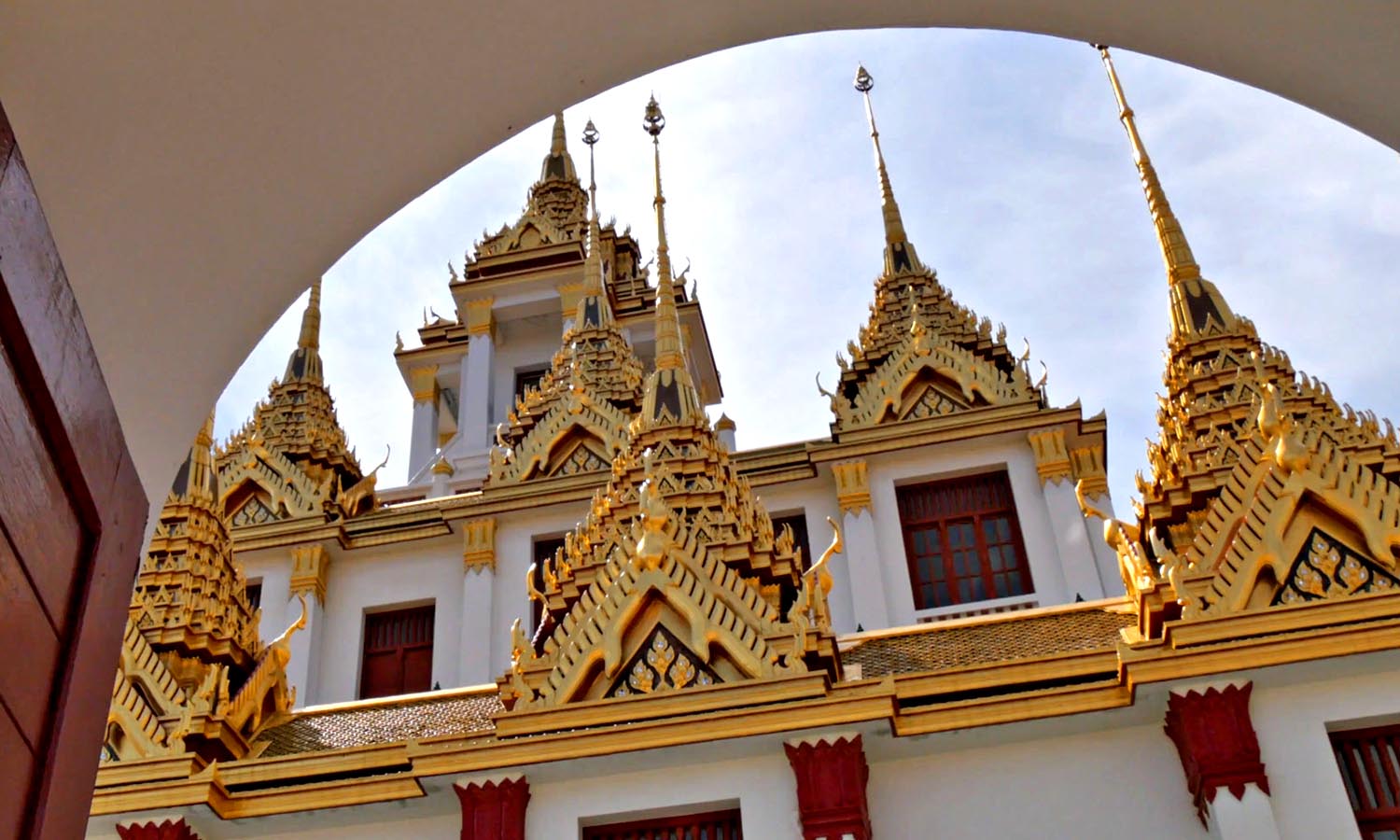
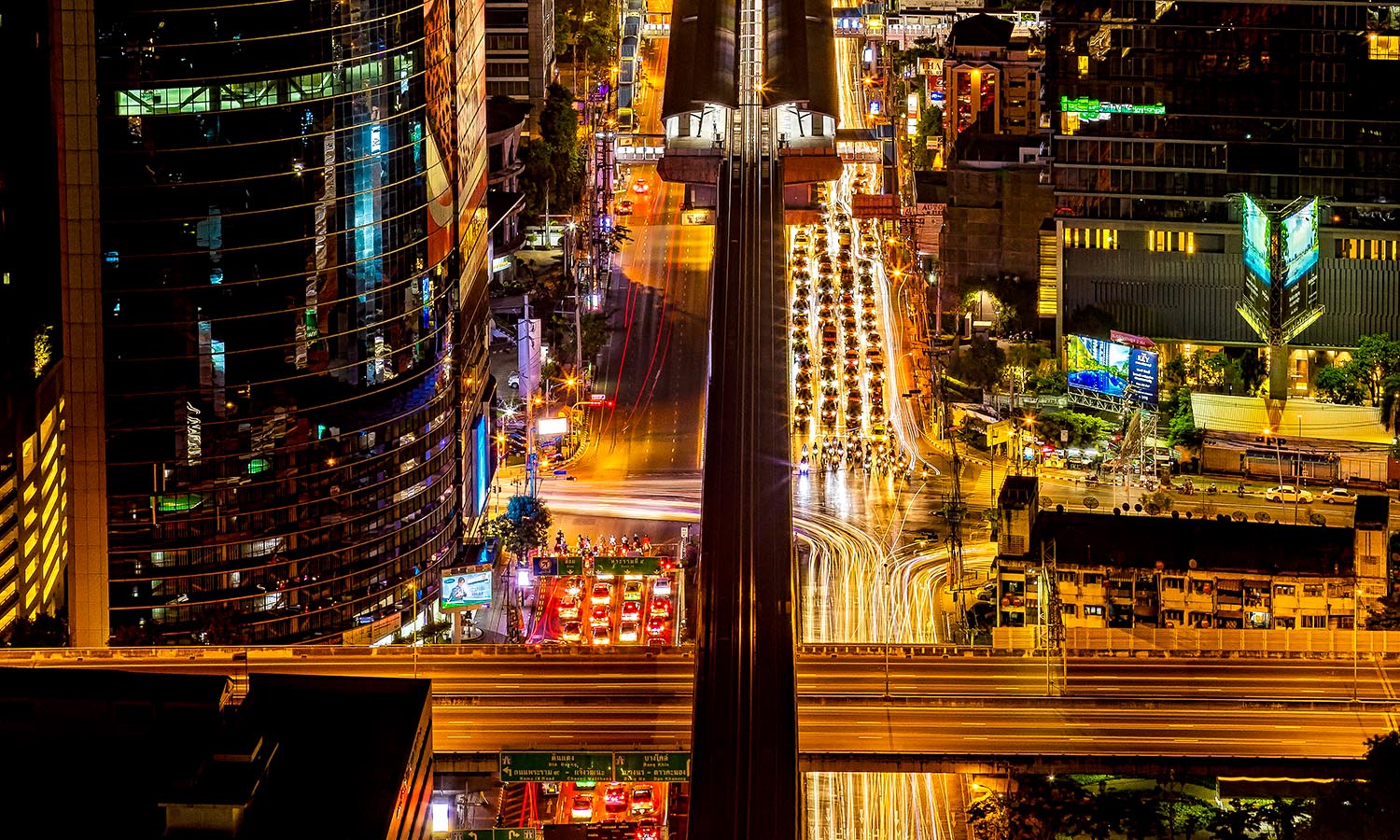
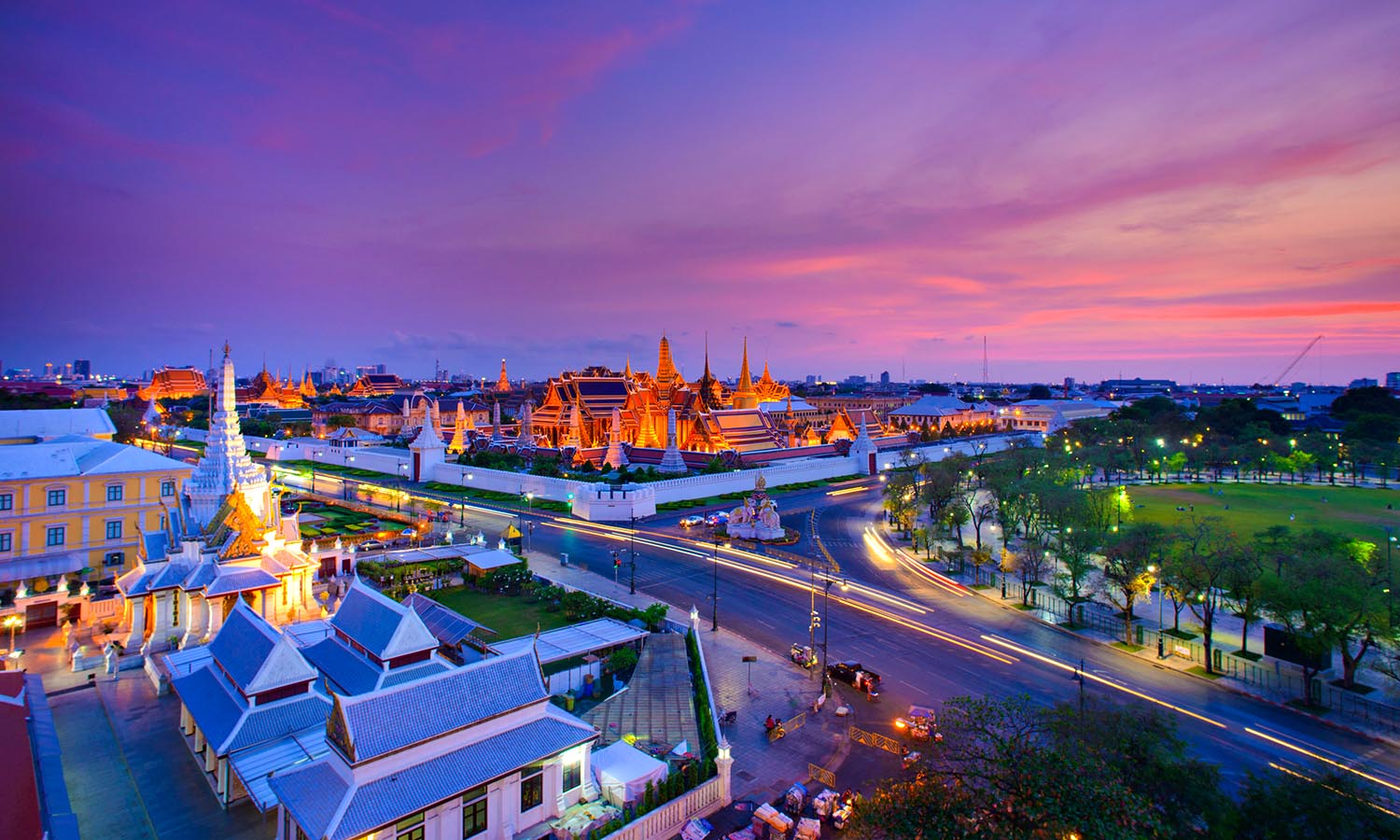
Buzzing and larger-than-life, Thailand’s capital city is a beautiful, extraordinary blend of the ancient and contemporary, modern skyscrapers and golden temples.
Whether you want to soak in the traditional culture at the Grand Palace or explore the exciting street food scene, Bangkok will always surprise and never disappoint.
FOR MAX CULTURE
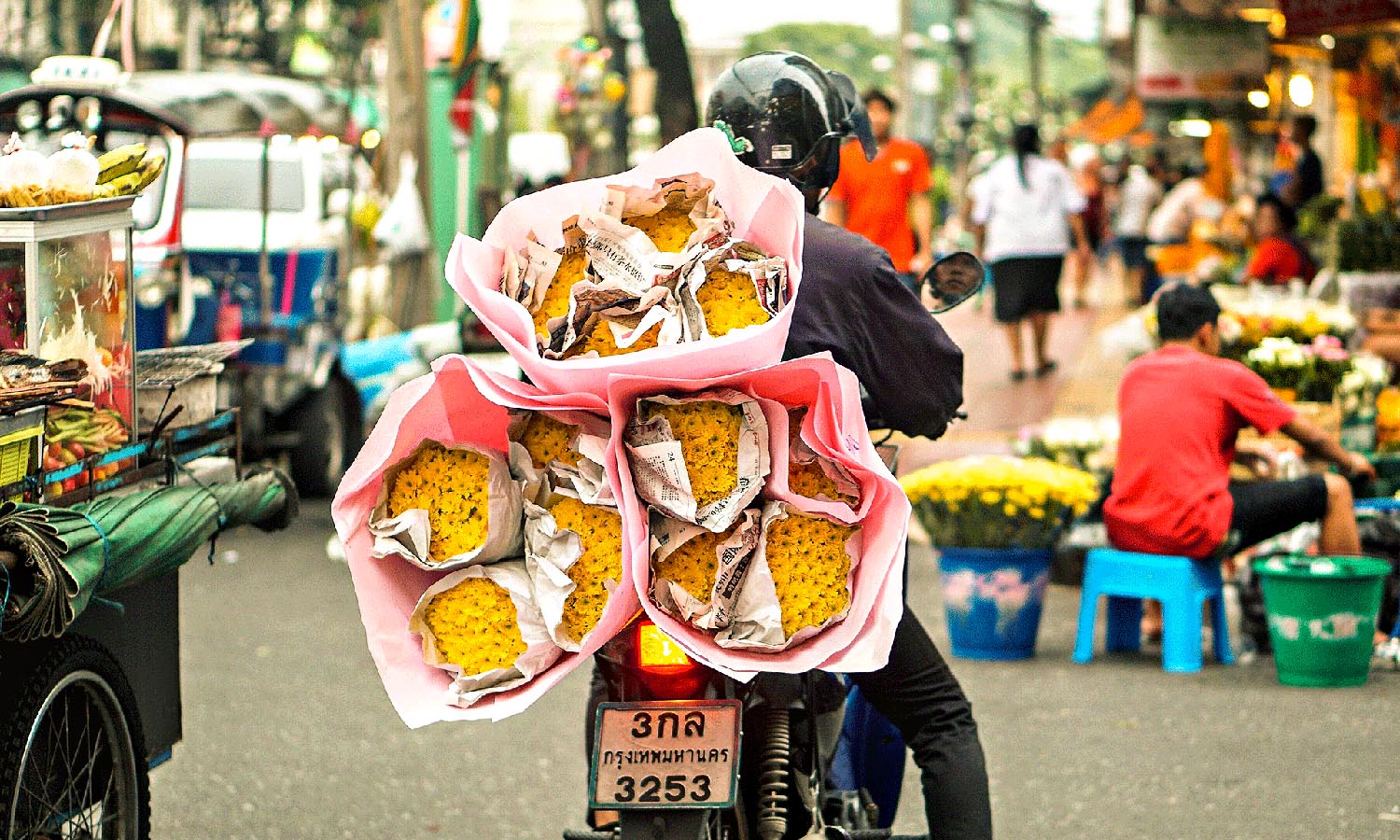
Did you know Bangkok is home to one of the world’s largest 24-hour flower markets? Now you do.
For travellers, this market is the ultimate in people-watching and flower-buying. At its busiest early in the morning, Pak Khlong Talat is packed with locals buying and selling the prettiest bunches. It’s a colourful, slightly chaotic dance of cut roses and dried carnations, garlands of marigold and the scent of jasmine. Why not buy a bunch to adorn your altar / bedroom at home?
Click to FLY WITH SINGAPORE AIRLINES
FOR ZERO CROWDS
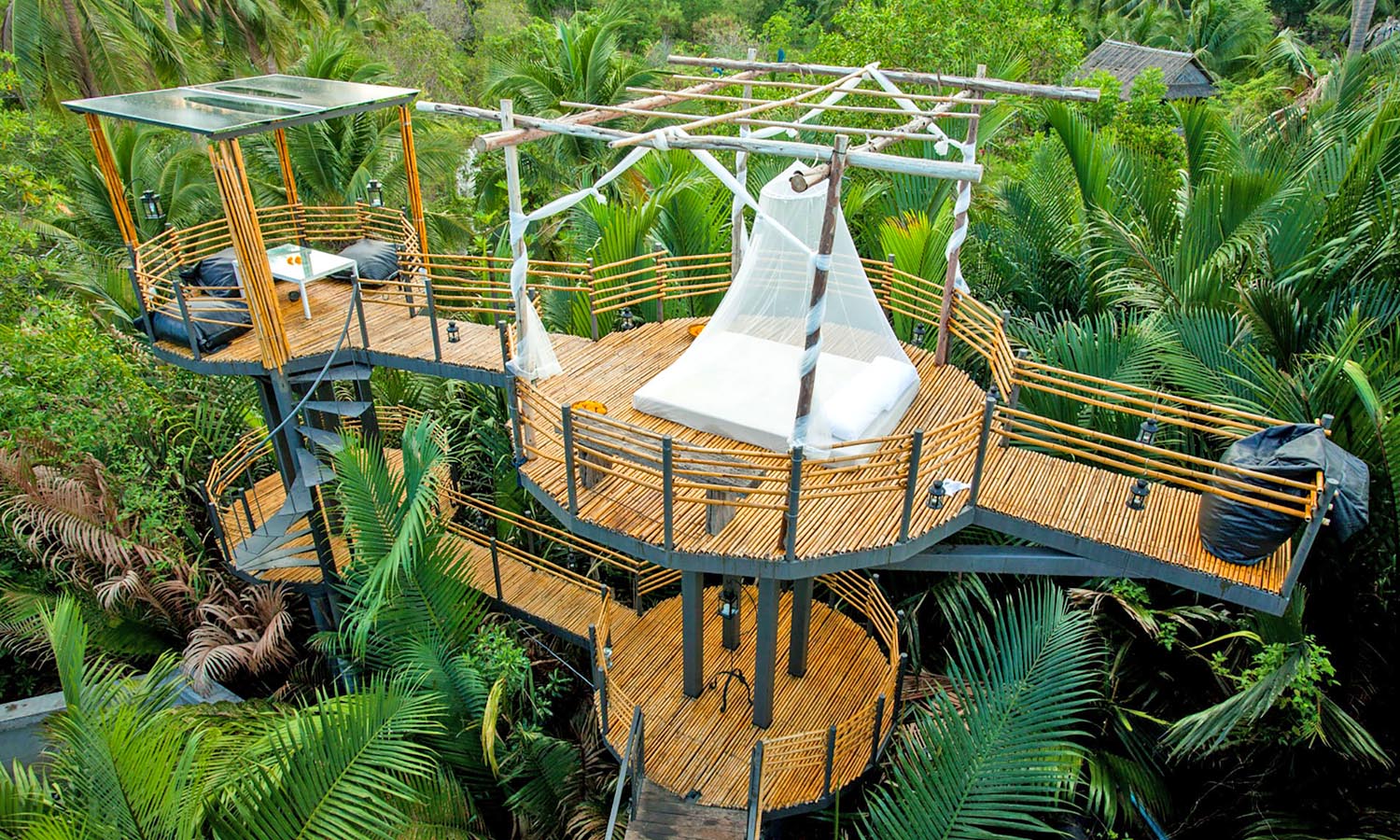
Looking for an eco-friendly escape, or super spot for remote working, in the middle of Bangkok? That’s right, Bangkok Tree House is a breath of fresh air located in the tropical treetops of Bang Krachao Island.
If you’re a vista-lover, the View with a Room is pure paradise: an open-air bamboo villa set seven metres above the ground. During the day borrow a bike (they’re free) and explore the nearby jungle, waterways and temples. On your return, take a dip in the natural swimming pond then head to the 24-hour ice-cream bar for a cool treat.
Jump on a MovMi electric tuk tuk for a seamless city experience.
Tuk tuk go!
FOR MAX CULTURE
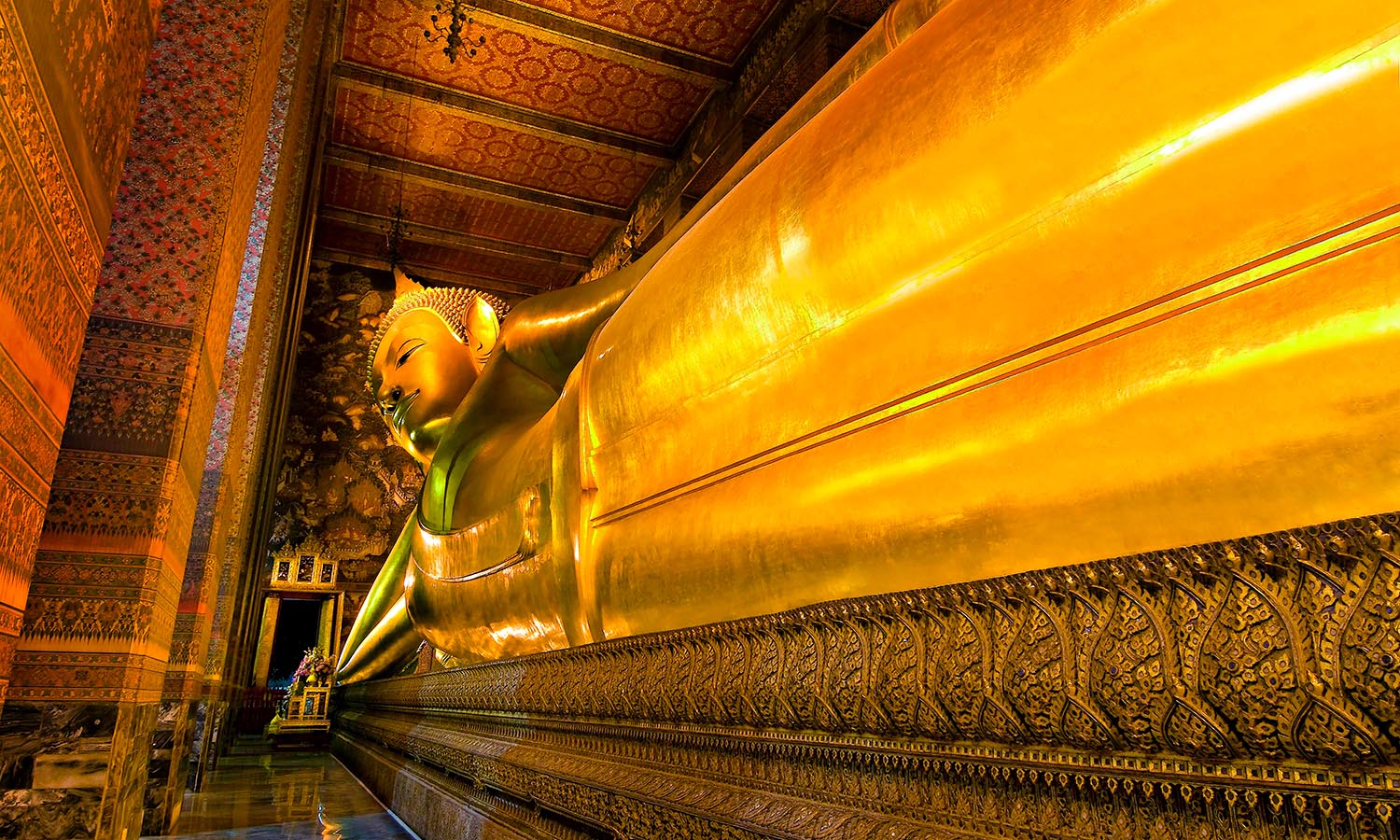
Wat Pho is considered a Bangkok must-see for good reason.
Located in the Phra Nakhon District, Wat Pho is on Rattanakosin Island, directly south of the Grand Palace. It’s one the oldest and largest temples in the city and the star attraction is the Reclining Buddha. This majestic golden monument is the largest in Thailand, measuring more than 45-metres in length. Impressive!
Click to FLY WITH SINGAPORE AIRLINES
FOR ZERO CROWDS
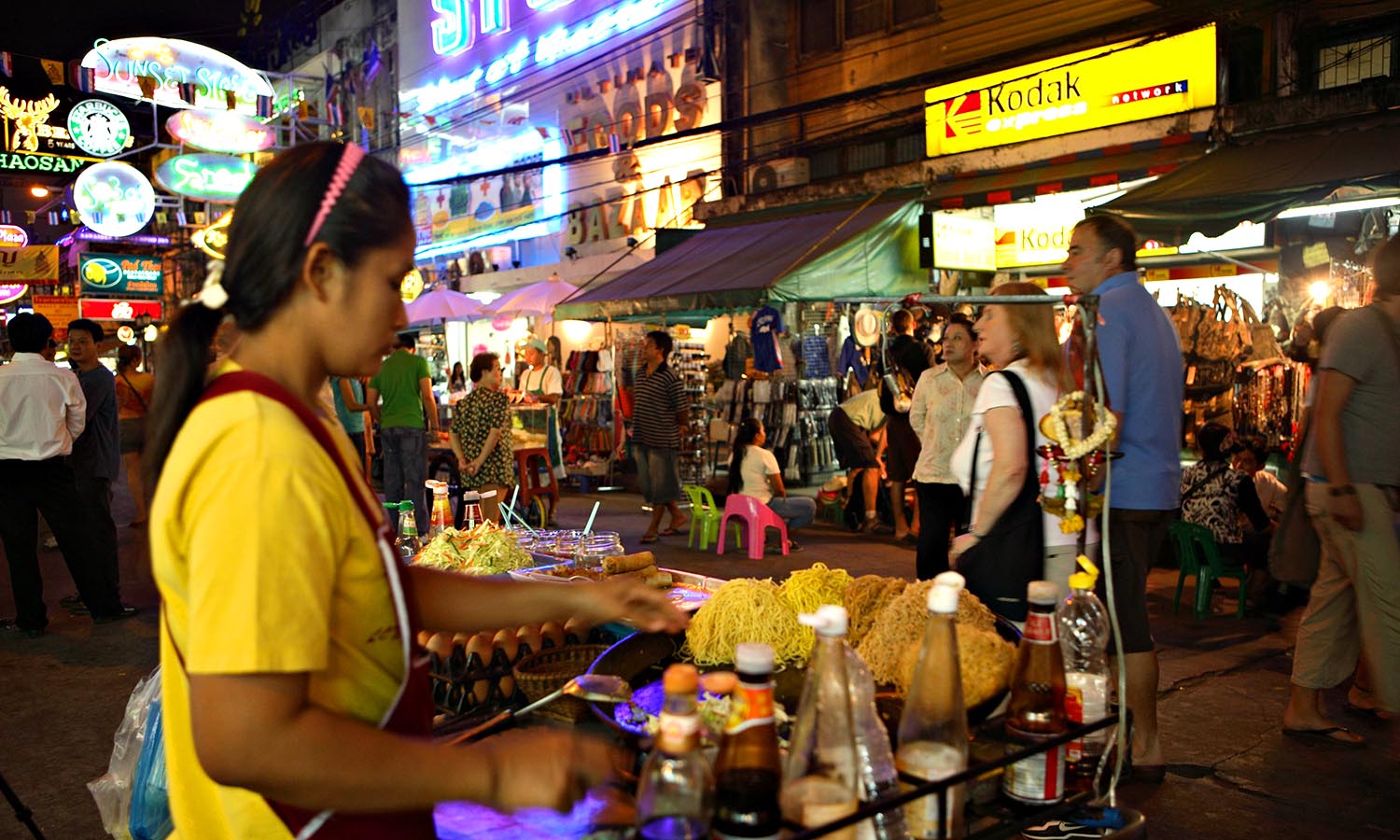
Beat the foodie crowd by signing up to a bona fide private cooking class to learn pad thai secrets from a local.
Thai food is internationally renowned for good reason: it’s flavourful and fresh; available at street stalls or the bougiest fine dining restaurants. A family-run cooking class from the legends at Courageous Kitchen also supports local causes. Win-win!

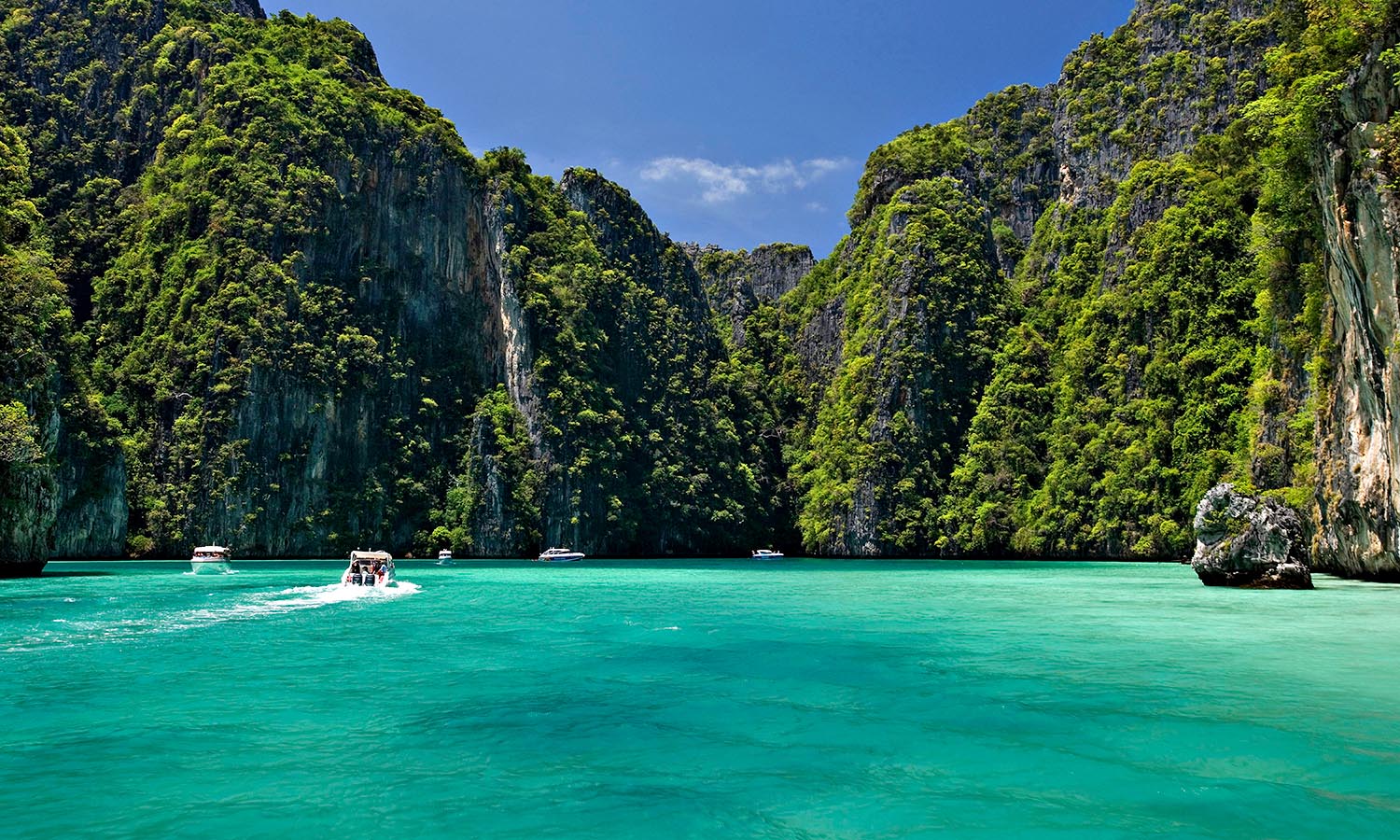
As Thailand’s biggest island, and a certified tropical utopia, Phuket is home to a smorgasbord of lush experiences, beautiful destinations and culture to boot.
With incredible views to the Andaman Sea, Phuket offers up rest, relaxation, adventure and nightlife, depending on what type of holiday you’re vibing.
Click play to watch
FOR MAX CULTURE
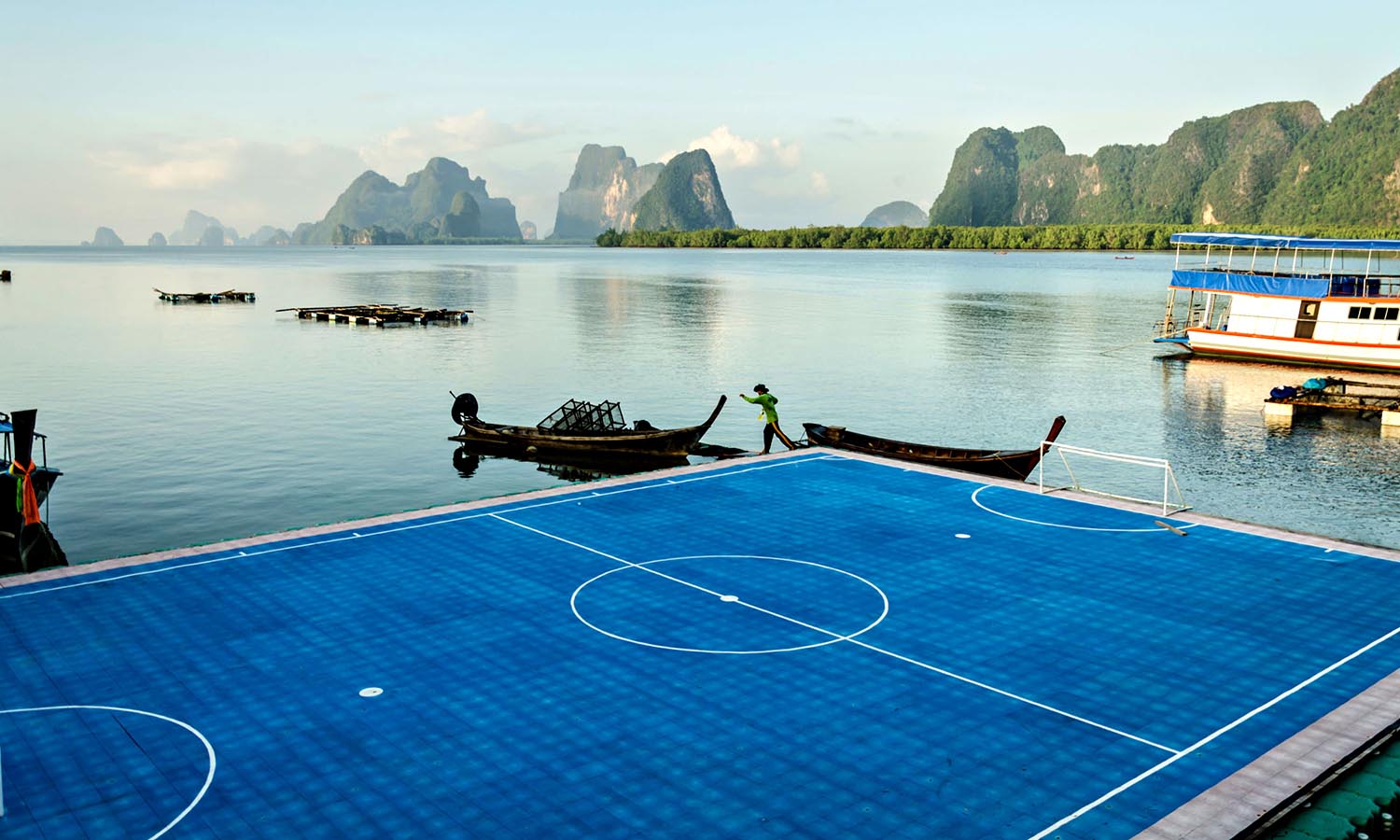
We get it: it’s hard to pass up catchin’ rays at pristine Phuket beaches, like Patong and Freedom. But Koh Panyi floating village is offbeat and worth the trip, trust us.
Situated just off the coast of Phuket, Koh Panyi is made up of stilted houses (and a soccer pitch!) built over water, which look as if they’re floating. The houses might appear precarious, but they’re not—this village dates back to the 18th century. So they know how to build a floating house or 20.
Click to FLY WITH SINGAPORE AIRLINES
FOR ZERO CROWDS
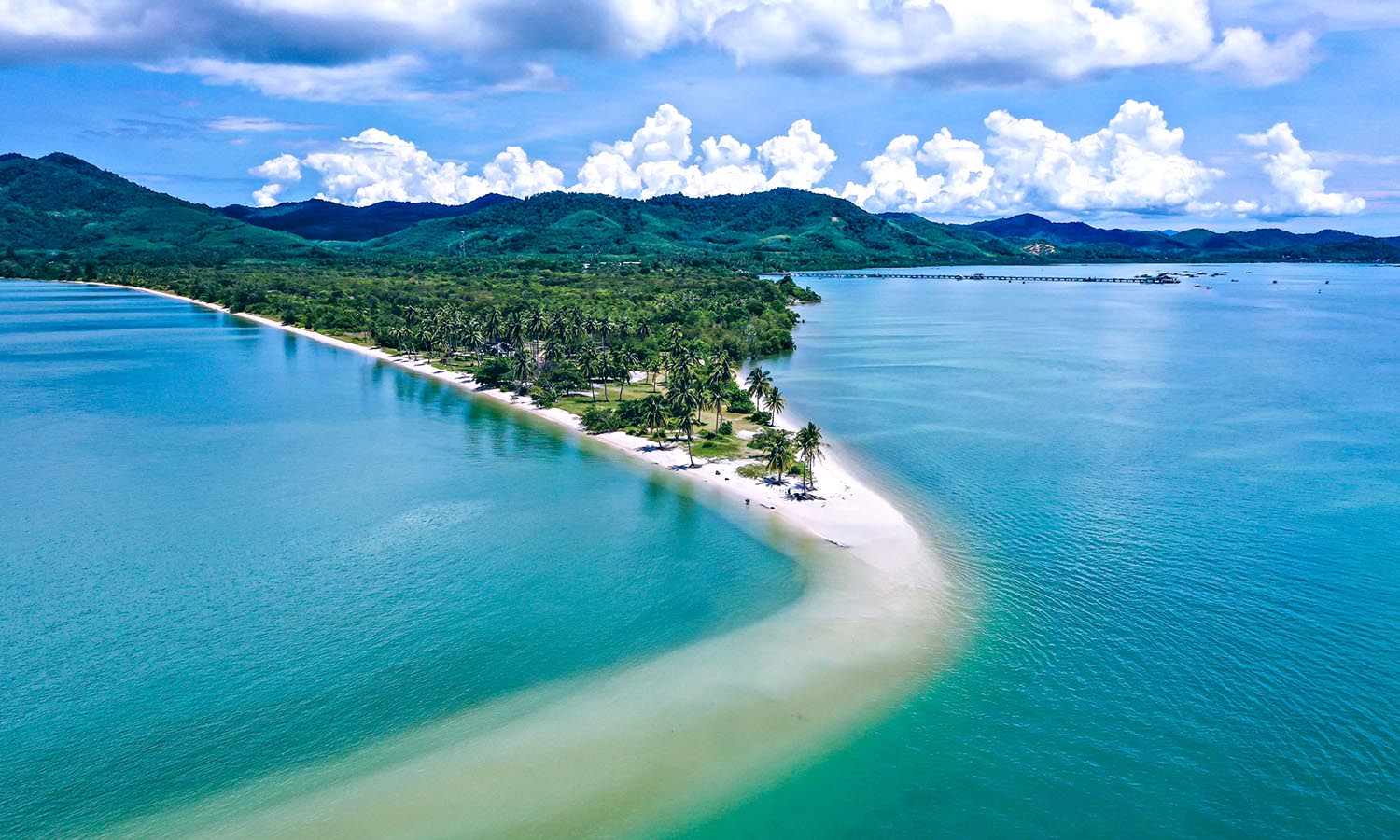
Ko Phi Phi is beautiful, and yes, Leonardo Di Caprio has indeed set foot on those sands, which makes it a worthwhile addition to any Thailand itinerary. BUT! If you’re looking to escape the crowds, Koh Yao Yai is where it’s at.
The perk of not being featured in a major Hollywood blockbuster means this island is quite often deserted, even during peak season. The other perk? This secret stretch of sand is only a 30-minute ferry ride from Phuket mainland. The other other perk? Relaxing by the beach, drinking coconut water and working remotely from paradise. This is not a drill, this is a Thai reality.
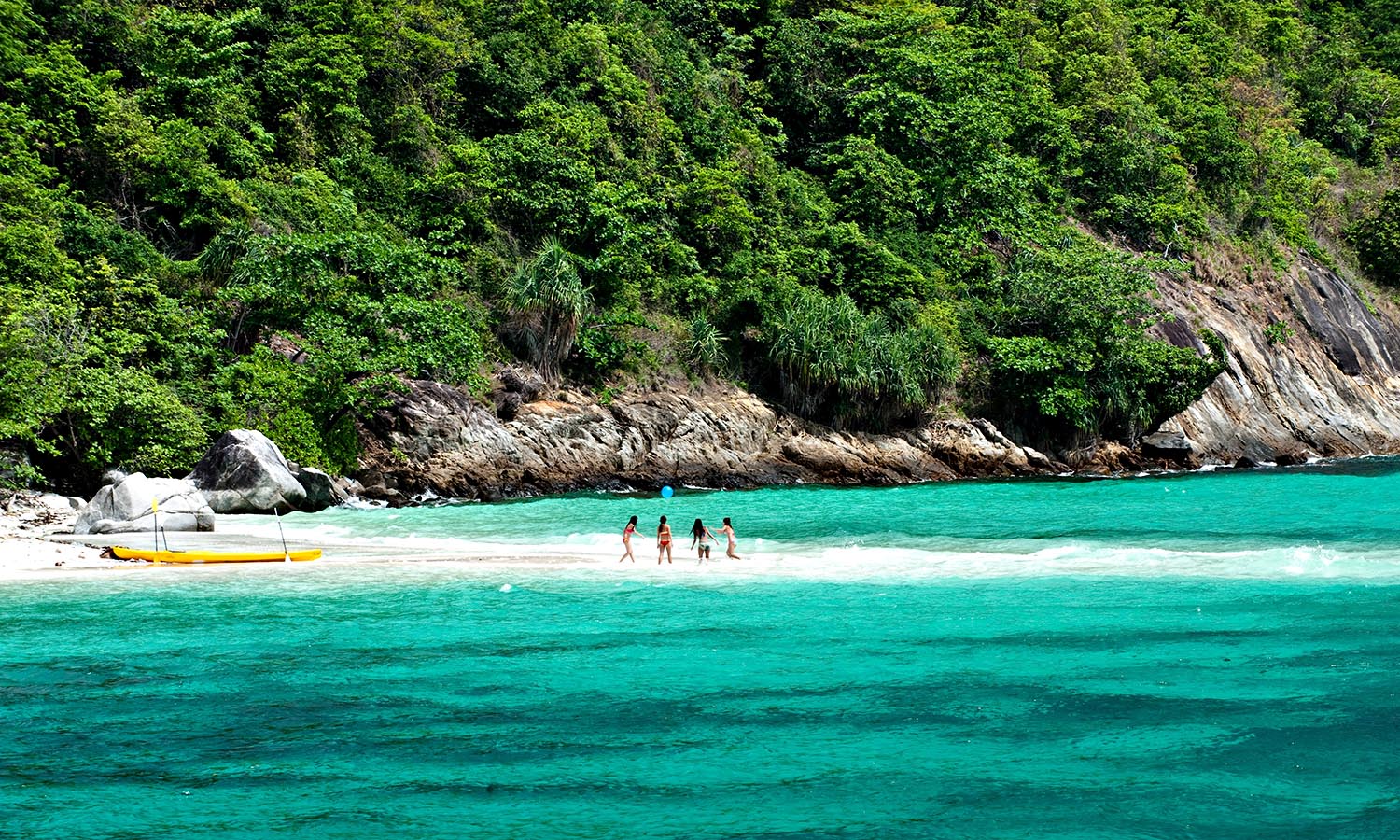
Pack a scarf and long skirt / pants for entering any temple or sacred space.
Respect is everything!
FOR MAX CULTURE
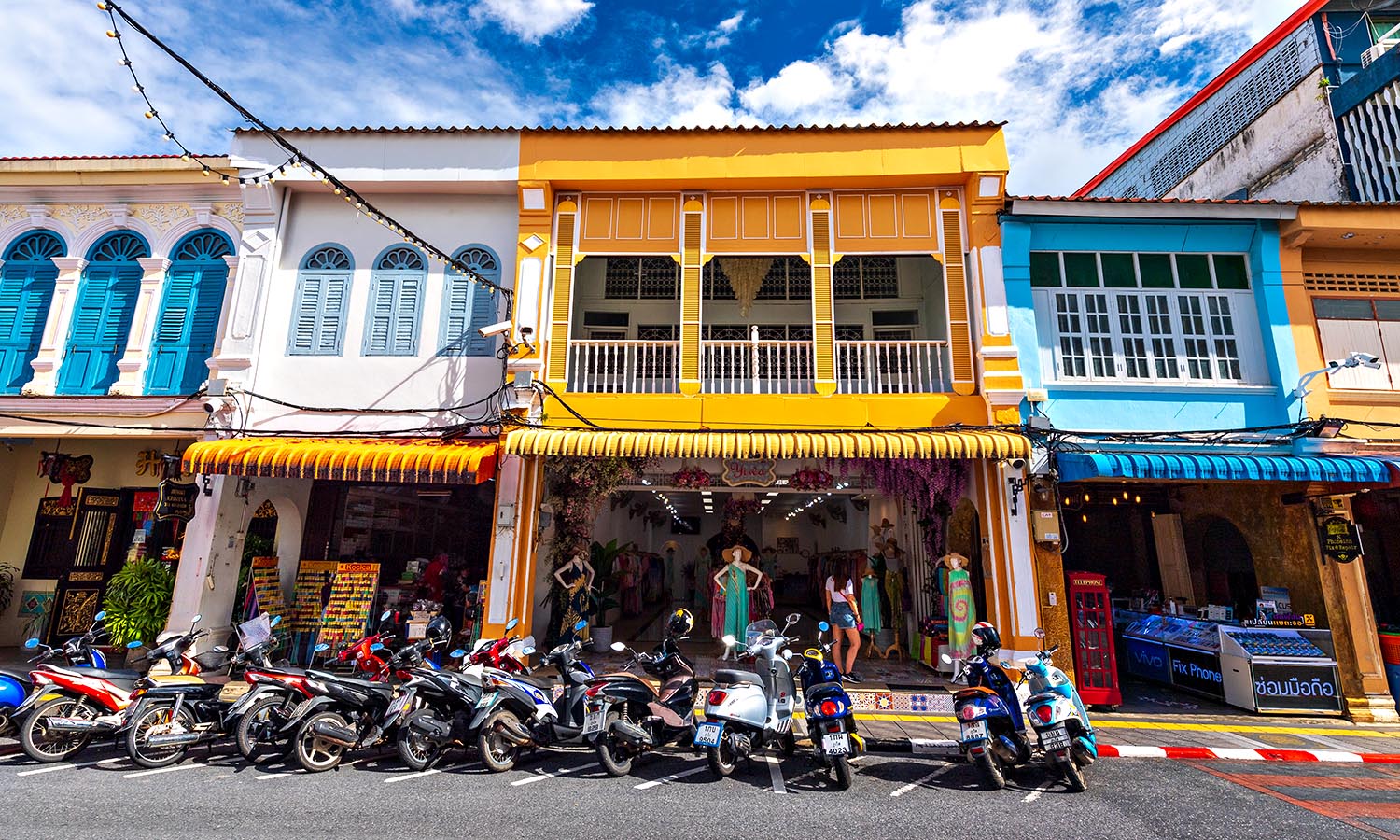
Beautiful architecture, exceptional museums and a thriving night market, Phuket’s Old Town is a perfect introduction to the cultural scene.
Even better? It’s tucked away from the super touristy part of town. This is old world charm, steeped in heritage and perfect for exploring on foot. Especially beautiful is Soi Rommannee with its super colourful buildings and first-class cafes.
Click to FLY WITH SINGAPORE AIRLINES
FOR ZERO CROWDS
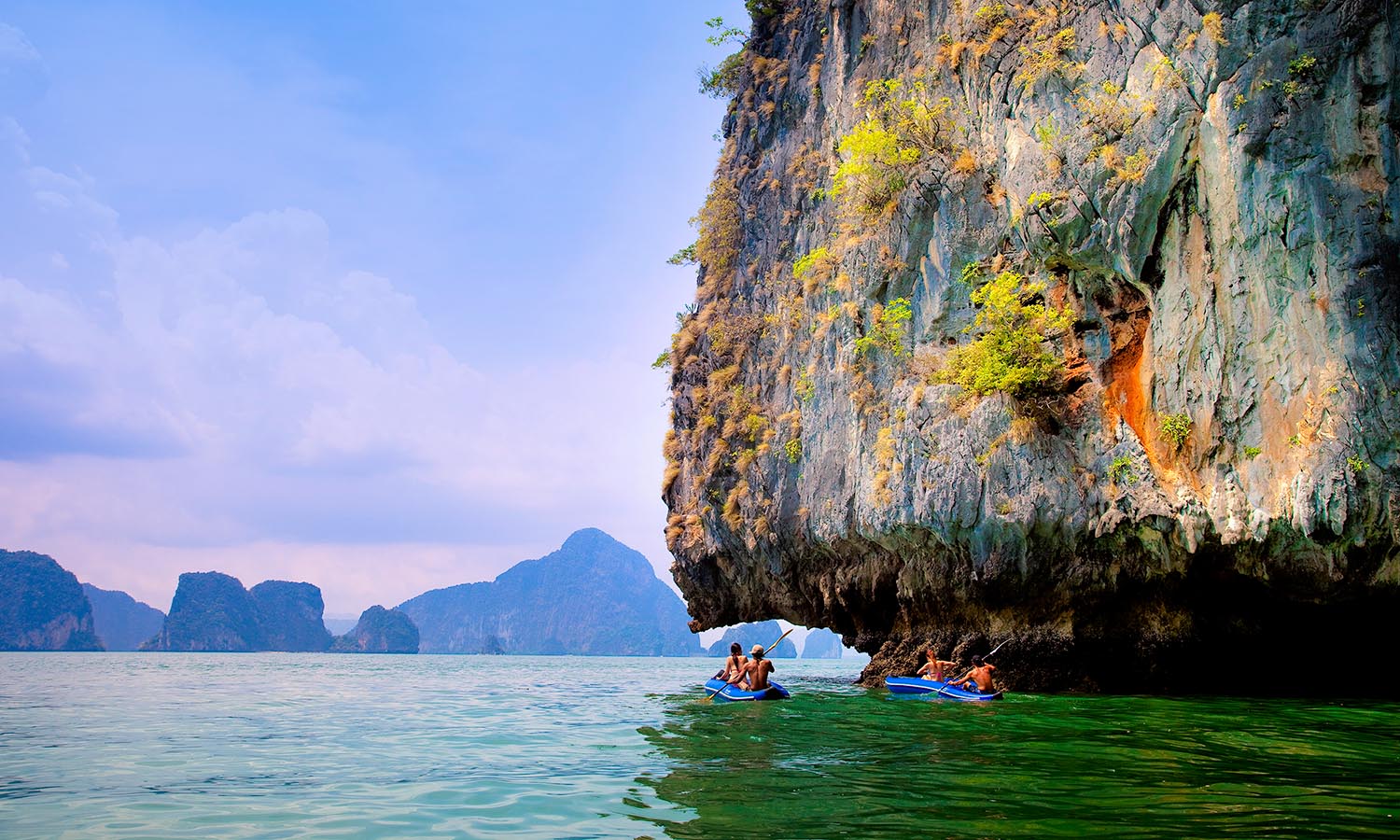
Feeling adventurous? Jumping in a kayak and exploring the gorgeous coastline is a crowd-free no brainer.
Jump on a tour with a local guide that specialises in intimate group sizes, and paddle your heart out! Keep an eye out for epic limestone cliffs and James Bond-ish sea caves. Make sure to bring a waterproof camera because a day on the sea will never be so photogenic.

Click to FLY WITH SINGAPORE AIRLINES
Click play to watch
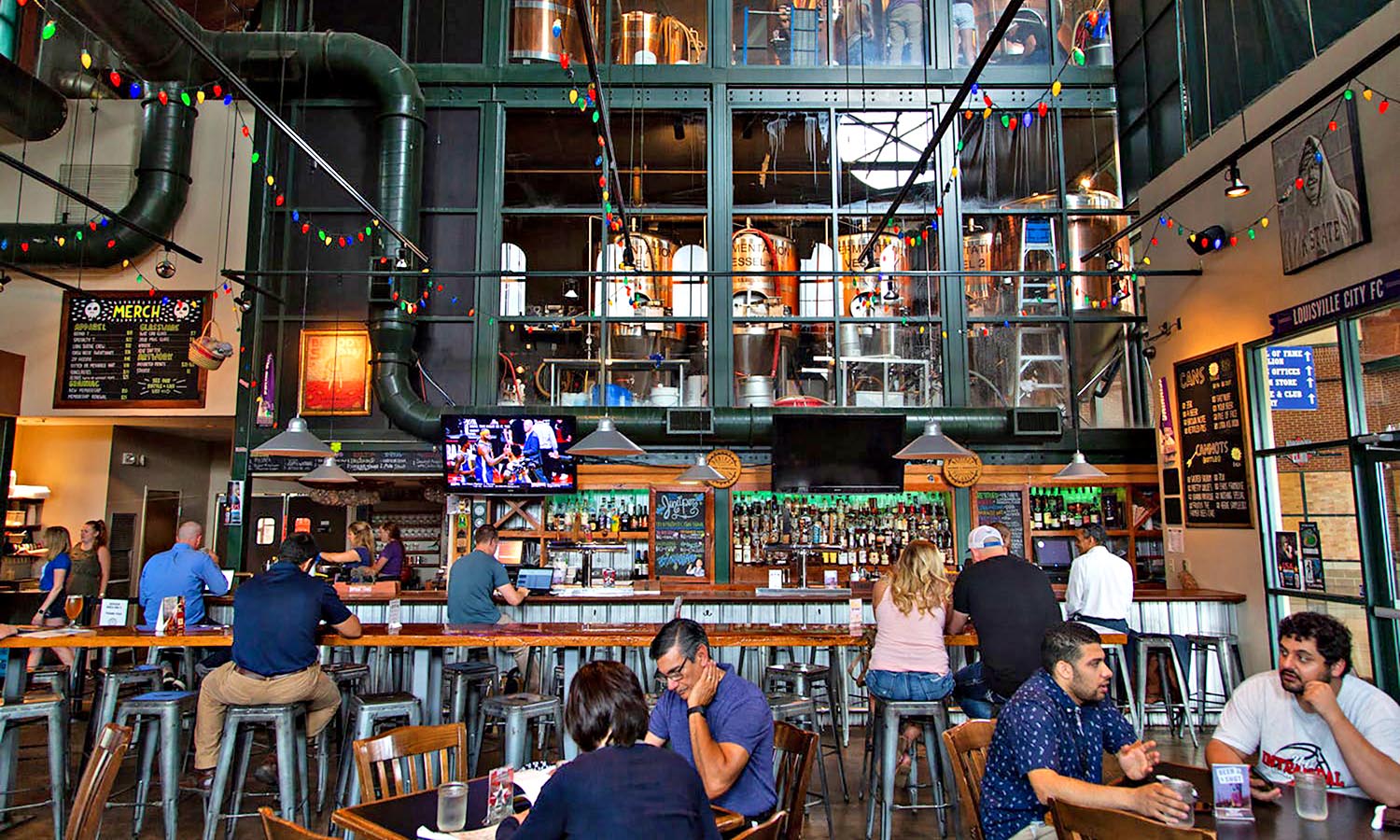
Americans love going to the ballpark. Imagine how much they’d love it if every ballpark was also home to a brewery.

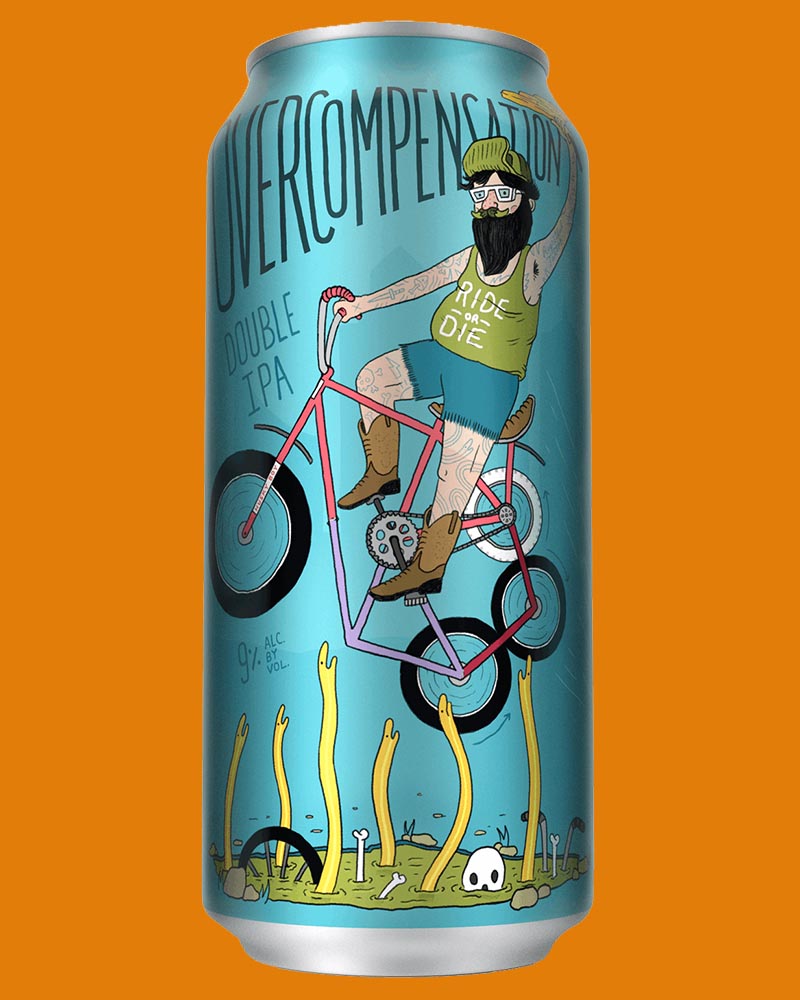
Just out of right-field at Louisville Slugger Field, home of the (not so) famous Louisville Bats, is this left-field location of a brewery. They serve up classic southern American food alongside impressively unimaginatively named beers like A Beer (lager) and Cold Ass Beer (amber ale). The Overcompensation is more interesting, an imperial-style 9% Double IPA. Knock back a few of those and you’ll be seeing double or even triple in the outer—if it’s hit your way, your best bet is to try and catch the middle ball.
Go Bats.

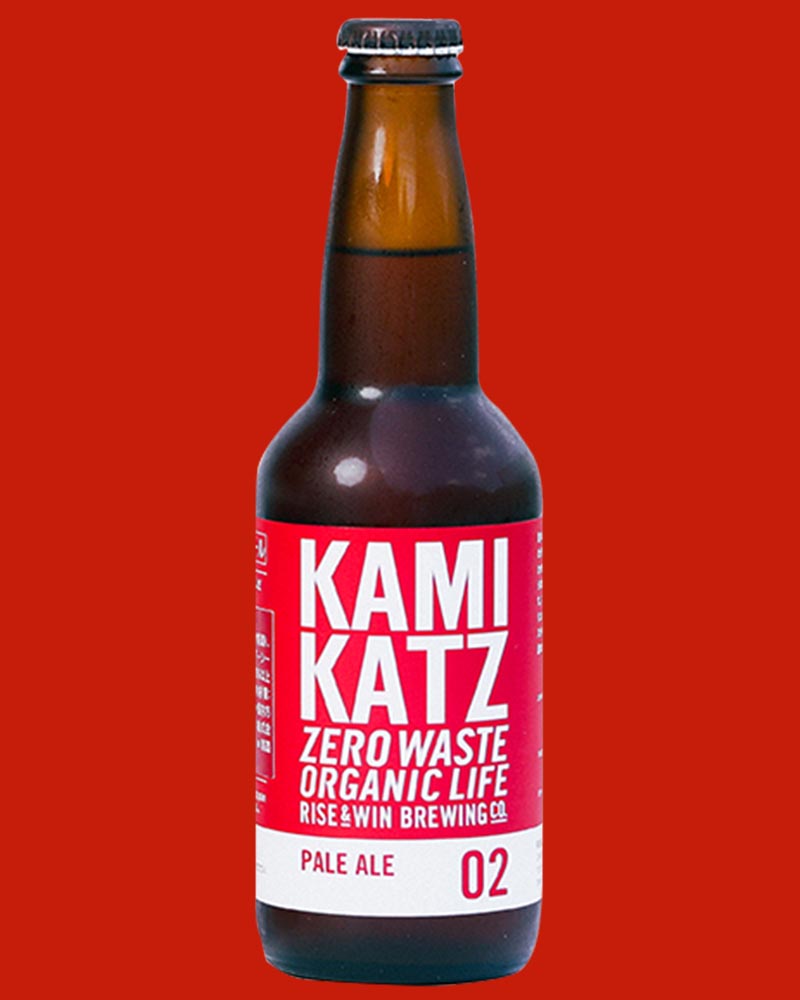
To understand RISE & WIN, you have to understand Kamikatsu, the Japanese town where it is located. Kamikatsu is keen to become the world’s first ‘zero-waste town’, and judging from their brewery, they’re well on their way.
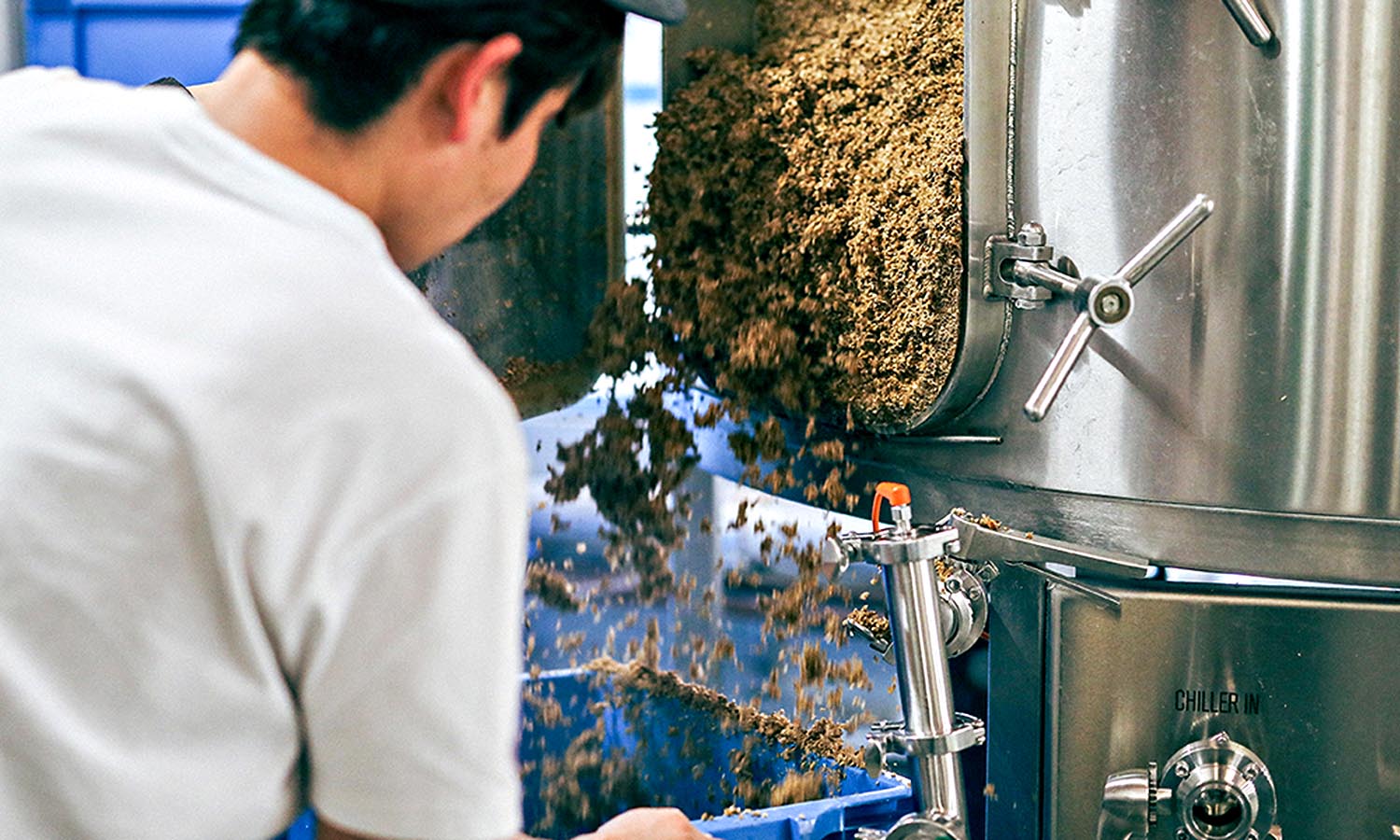
RISE & WIN (it’s all in capitals so I guess you have to shout it) is made from mostly recycled materials. Notable mention to the epic patchwork of windows at the front of the building, all nabbed from abandoned houses in the area. Even the malt dregs, a by-product of the beer brewing process, is recycled and not discarded. Instead, it’s composted into liquid fertiliser which is then used to enrich the soil of the local barley farms. The very same farms that provide the barley that’s used to brew fresh beer. Pretty cool.
Beer-wise there’s everything from a lighter summer ale through to a stout, and a tasty looking, Japanese-BBQ-inspired menu.
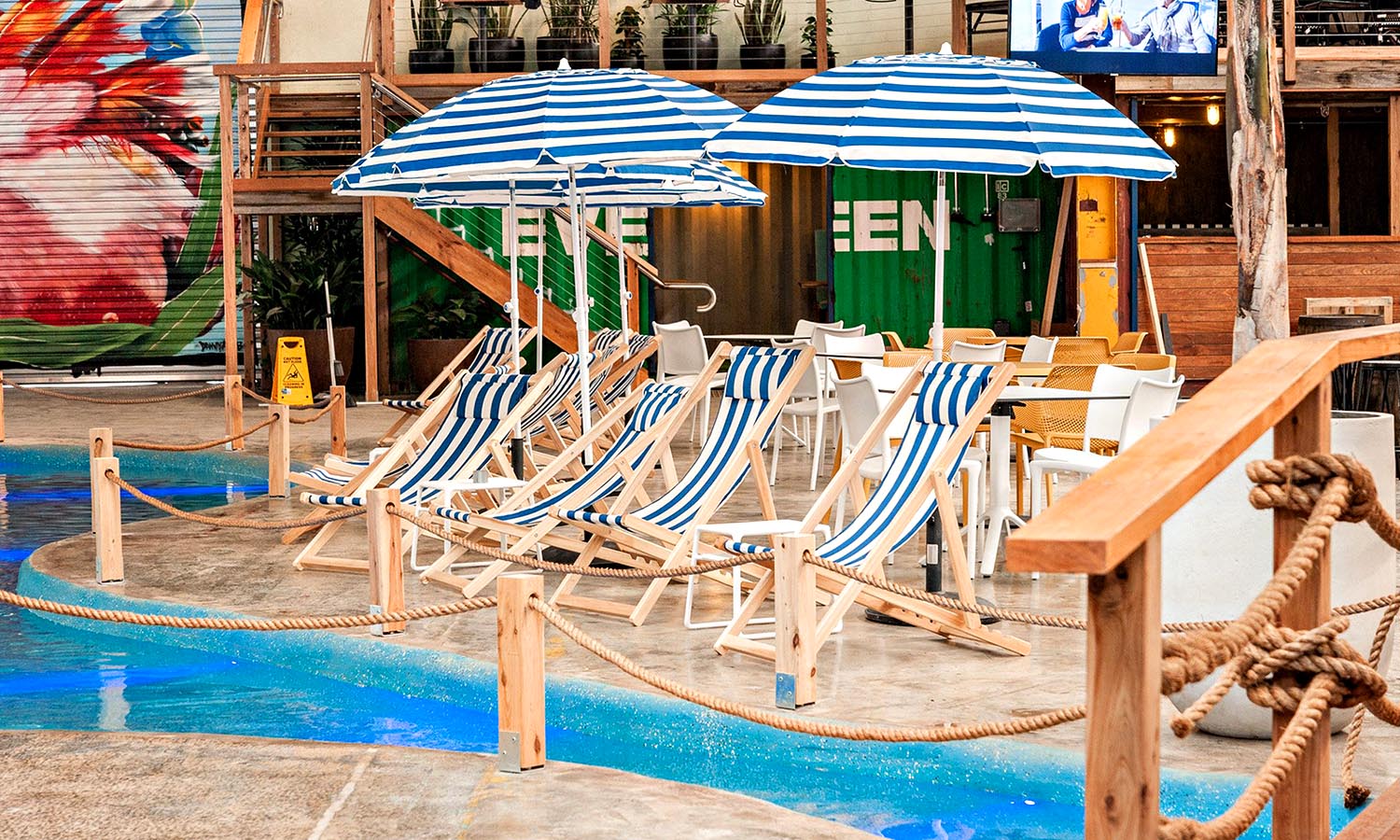
If you asked a bunch of kids (actual kids) to design a brewery, they’d probably come up with Moon Dog World in Melbourne’s trendy north. And we mean that as a compliment. Moon Dog is wild and weird in the best kind of way.
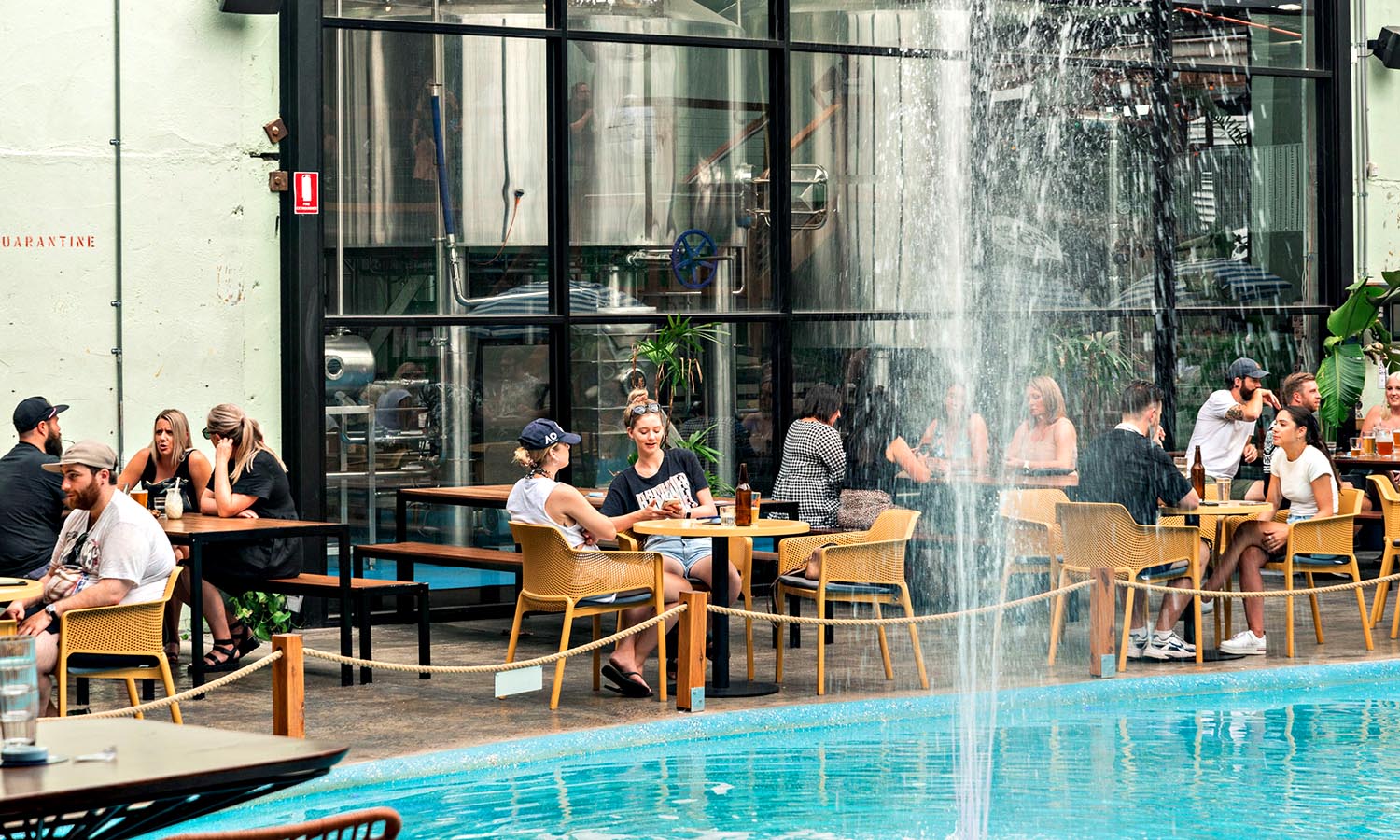
There’s a river flowing through the middle of a large pond/lake type of thing (what do you call a body of water in a brewery?), a sports arcade room and a full-sized indoor playground for the kids and drunk adults.
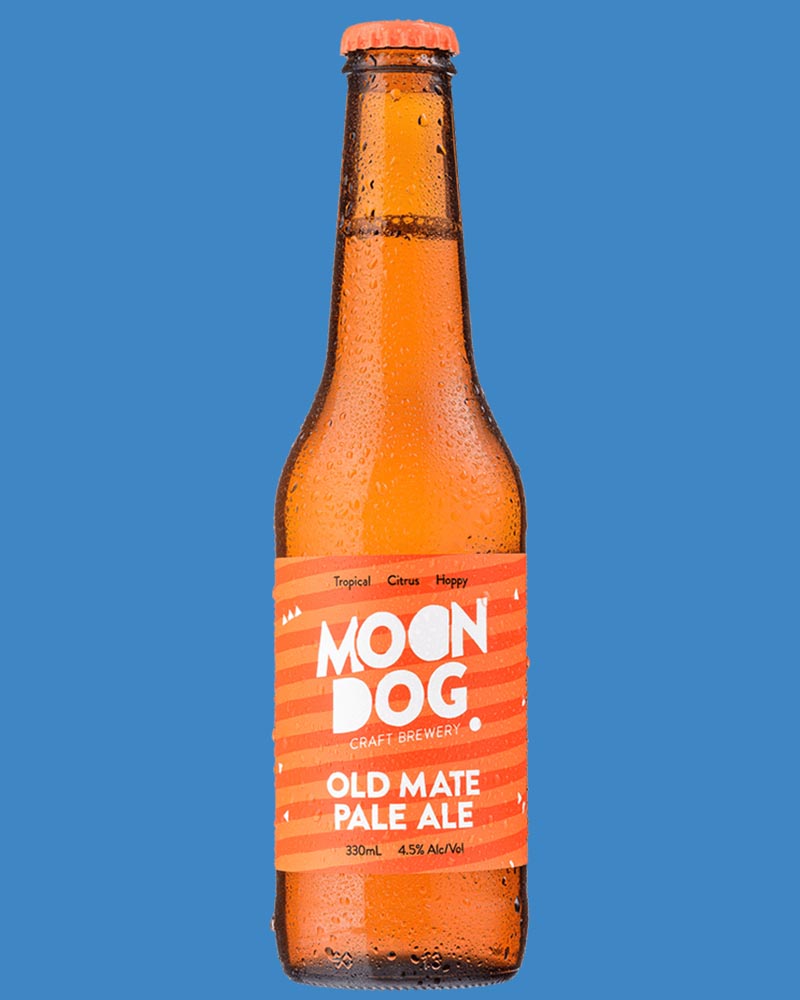
They also brew really, really good beer. At get lost we love the term ‘sessionable’—used to describe beer of which you could drink a shitload. Of the 72 beers on tap at Dog World, we reckon the Old Mate Pale Ale is probably the most sessionable.
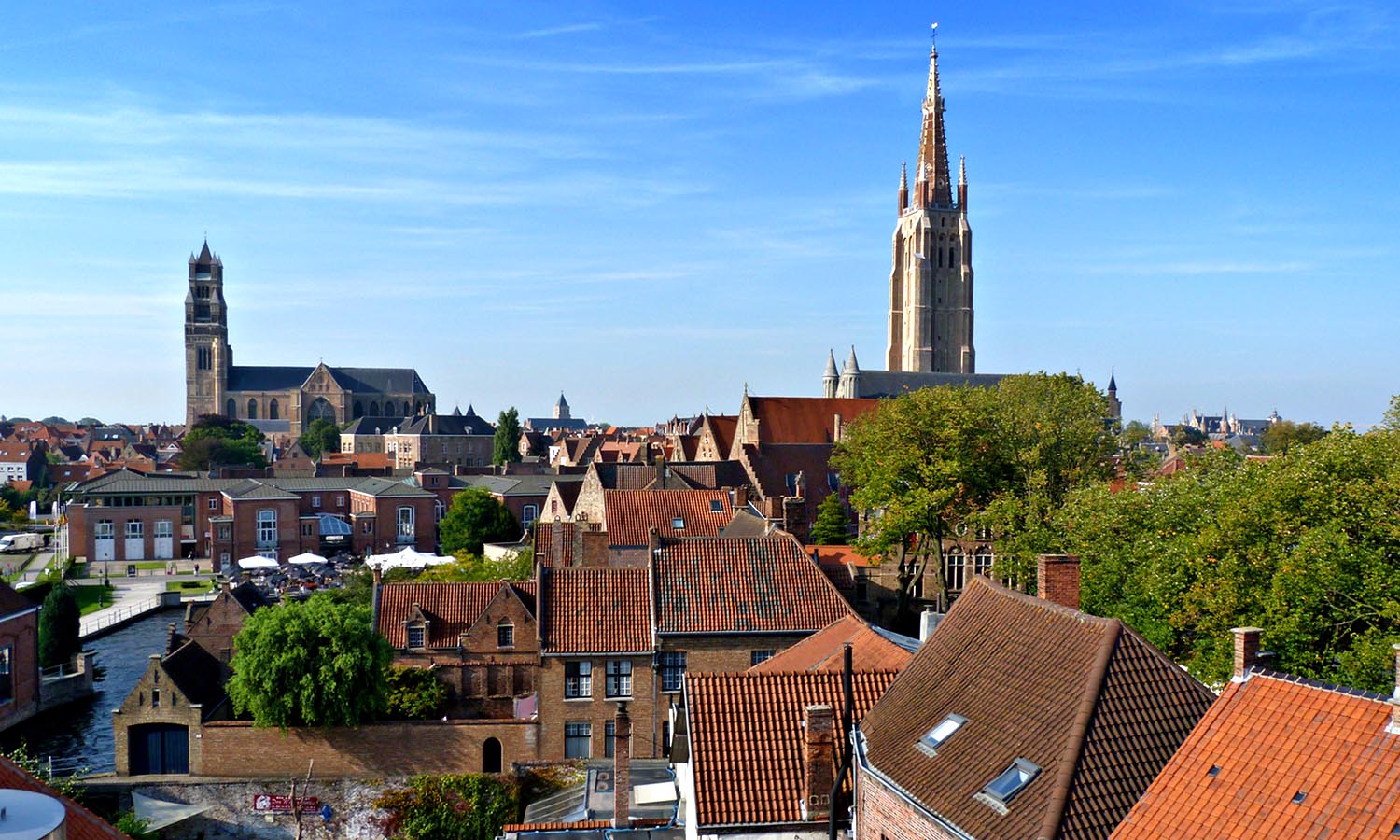
This brewery features an underground beer pipeline that stretches for over three kilometres, connecting the brewery to its bottling plant on the outskirts of Bruges. Not dissimilar (we imagine) to Homer’s Beer Baron operation in The Simpsons:
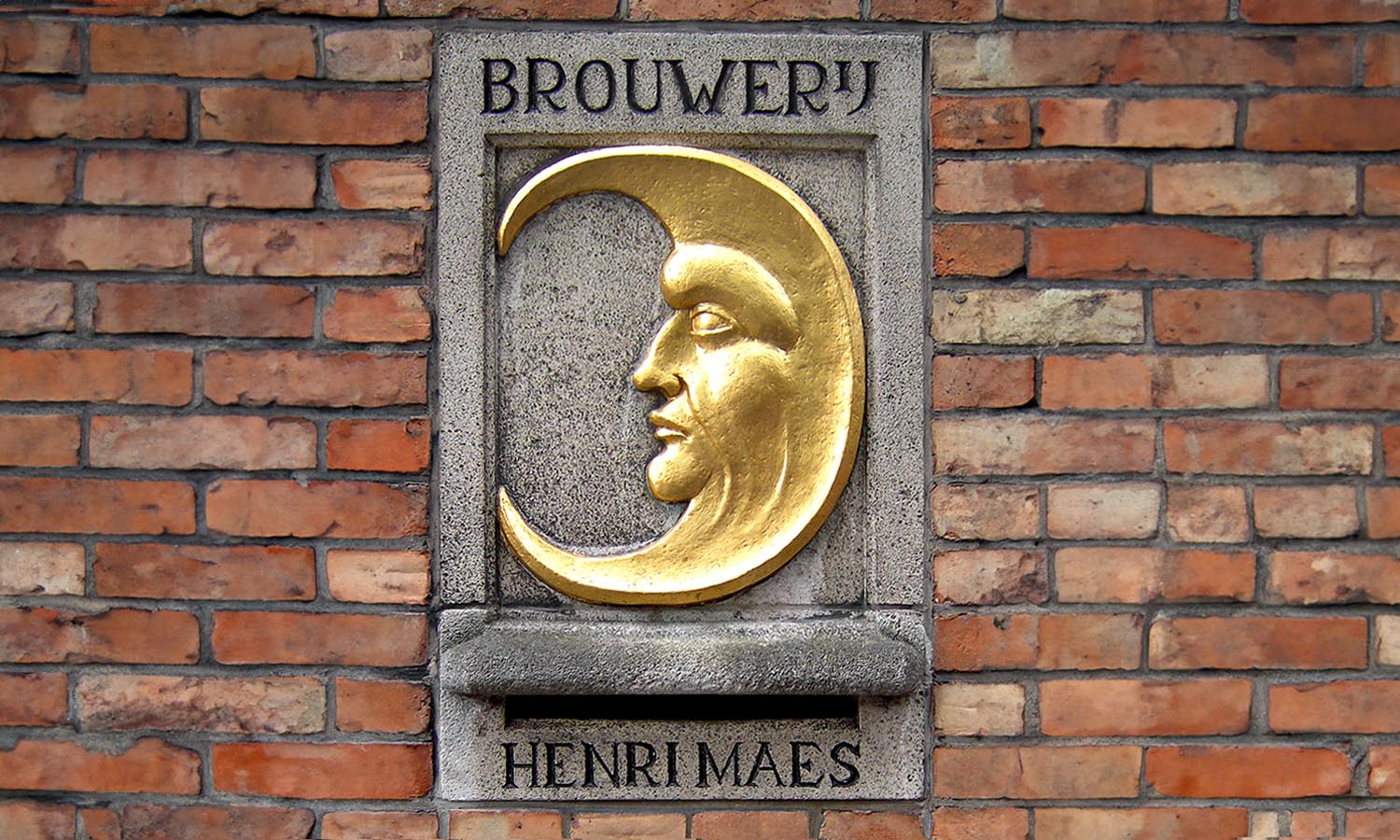
They sure know what they’re doing when it comes to brewing wheat beers in Belgium, and if you ever find yourself In Bruges like Colin Farrell and Brendan Gleeson, you could do worse than taking a tour of The Half Moon, before tipping a few 9% Straffe Hendrik Tripels back (out of a goblet, obviously) in the sun in its stunning courtyard.
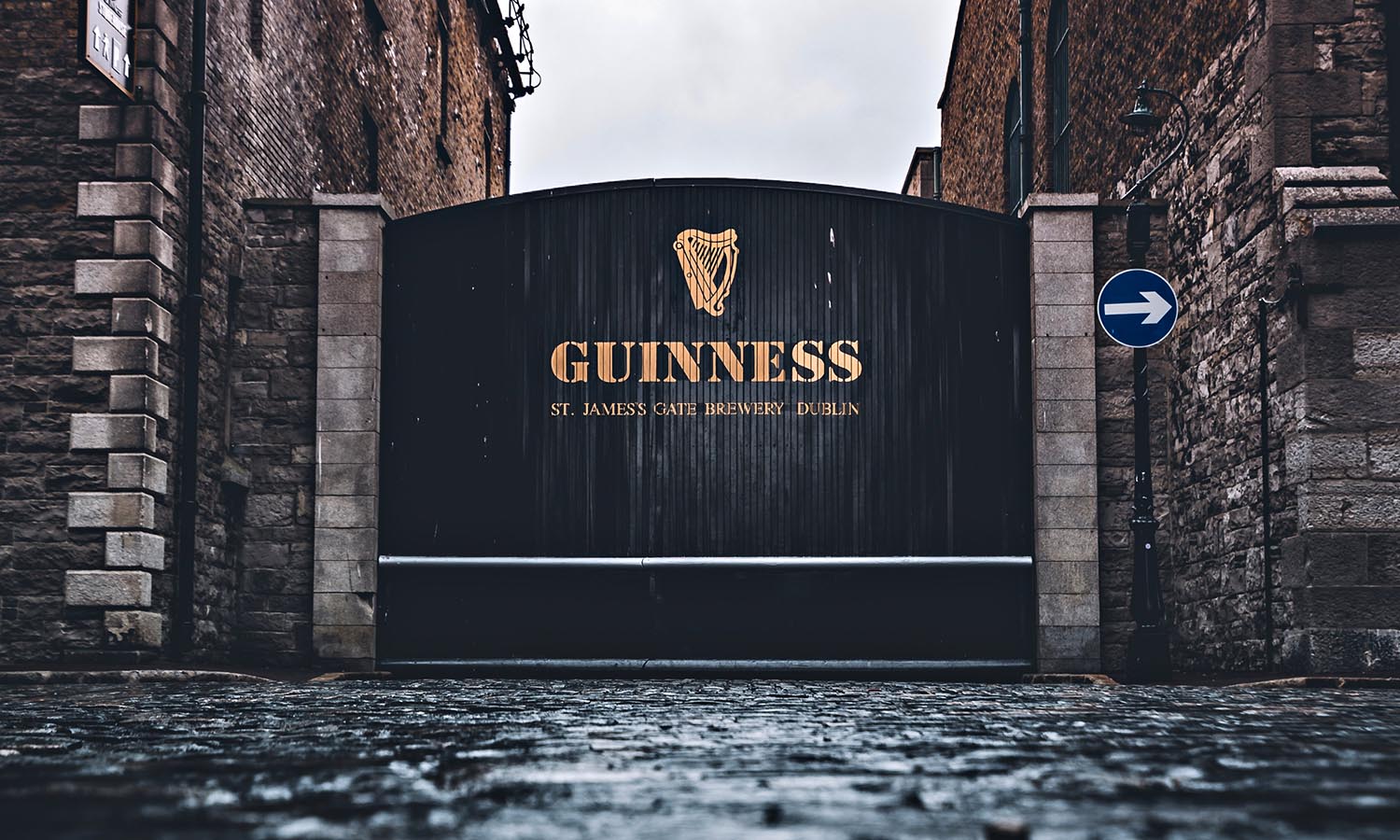
This is where the magic happens.
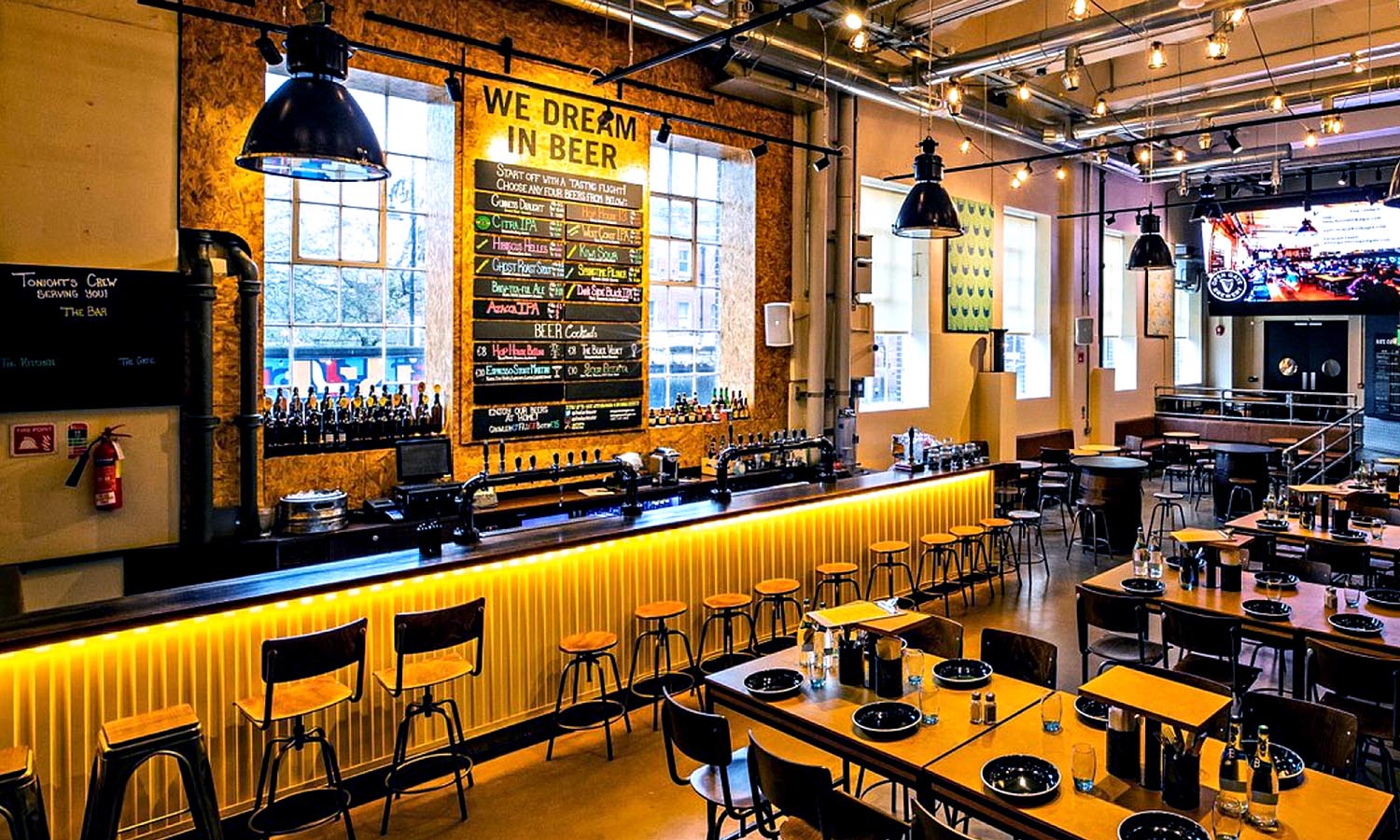
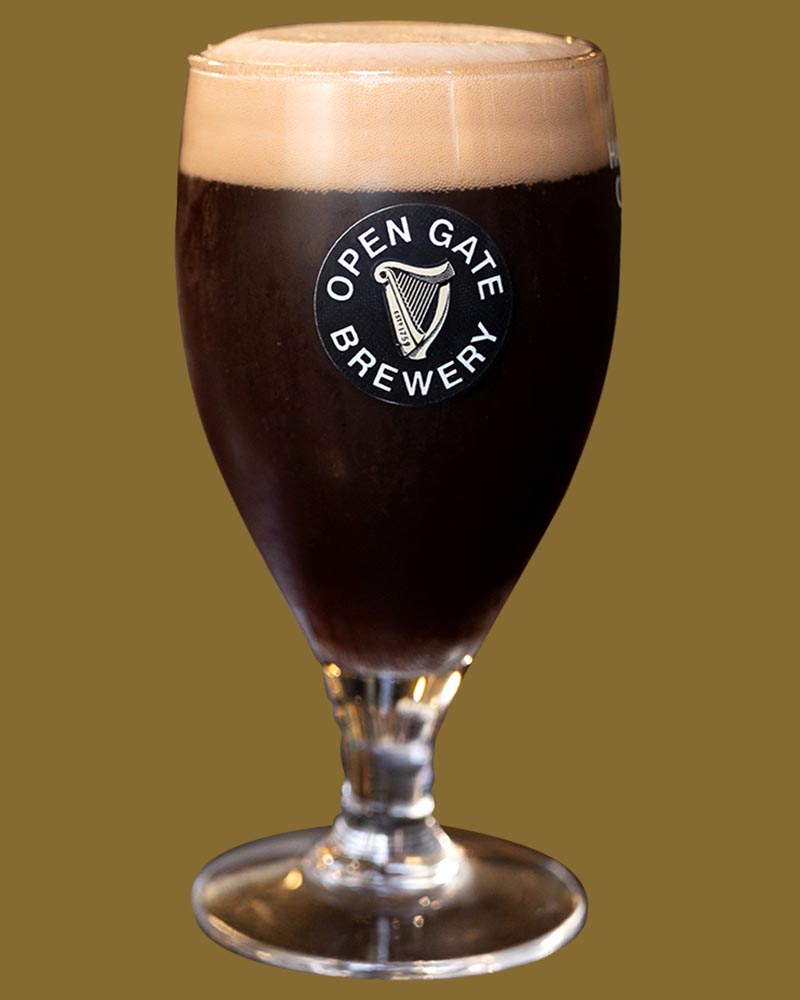
We get it. You know all about the Guinness Storehouse tour; probably the world’s most well-known and well-loved beer tour. But did you know about the slightly more obscure Open Gate Brewery?
Much like Willy Wonka’s Chocolate Factory (the original, not the Johnny Depp one), you can go ‘behind the gates’ and talk to the brewers who are given a license to go full experimental. We’re talking Mango Chilli Smoothie Ale and Guinness Nitro Fruit Stout. It’s a fascinating insight into the crazy minds of those who do God’s work (just don’t stay too long!).
The on-site bar serves up a rotating range of experiments, many of which can literally only be found here. Consider this a kind of utopia for home and craft brewers. There’s also a range of beer cocktails. Sláinte.
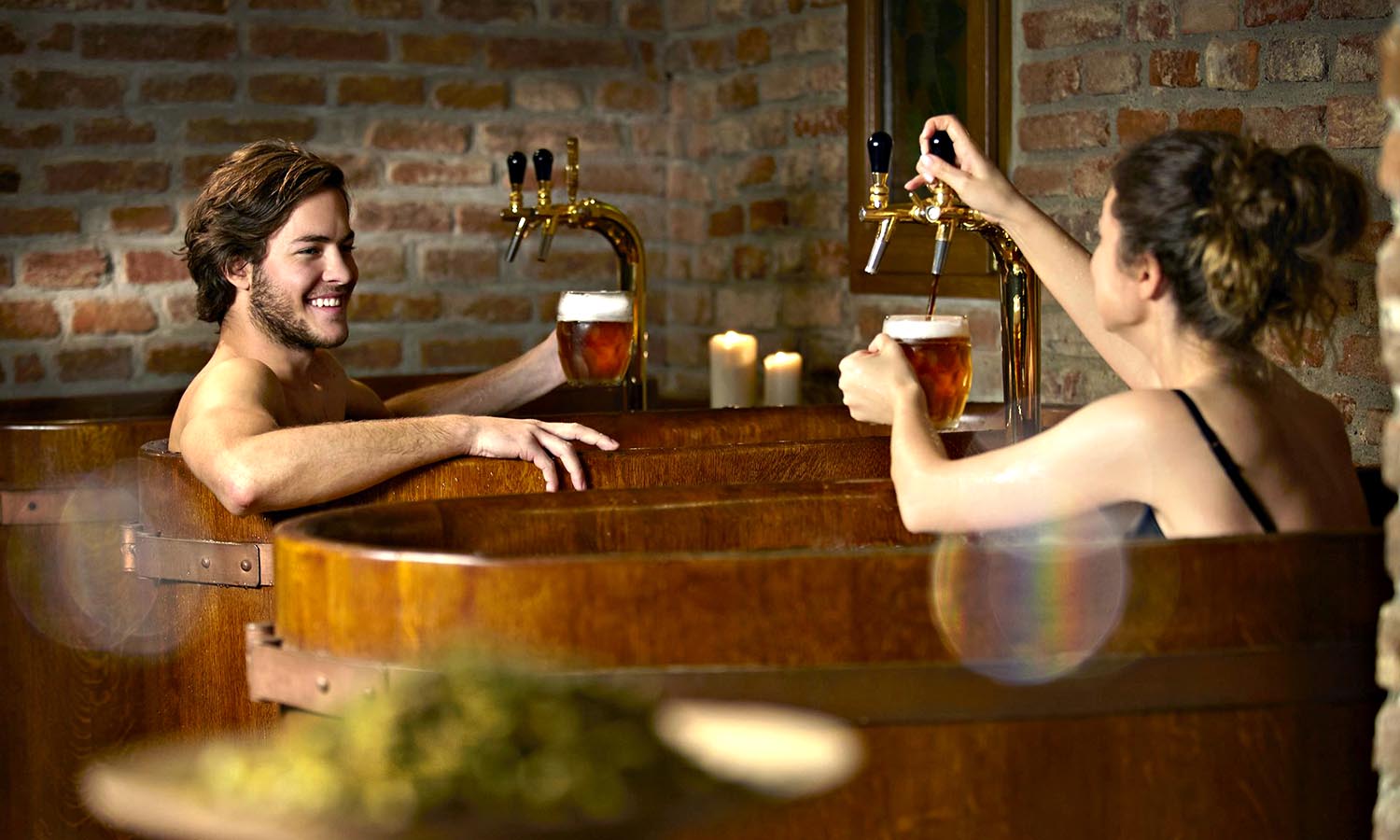
Have you ever heard of a more conflicting title than ‘Family Brewery and Spa’? The Czechs just don’t seem to give a fuck, emphasized by Chodovar’s self-ascribed description as ‘a beer wellness land’. Finally! A wellness trend we can really get behind.

The spa therapy is a combo of hot mineral water, dark bath beer and dry herbs. Drink a beer in the beer—that’s kind of the point. After that you get a massage.
The noughties saw a few beer spas pop up but Chodovar was likely one of the first. It’s also a brew-hotel, another groundbreaker, so you can stay the night if you envision tipping more than a few back.
These guys know their ales too, having been brewing here since at least 1573, and possibly longer. That’s a long time to work out how to brew a good froffie. There are some really nice, typically golden, typically European beers. We recommend the Zlatá Jedenáctka, meaning ‘Golden Eleven’—a refreshing, über-popular beer from Bohemia.
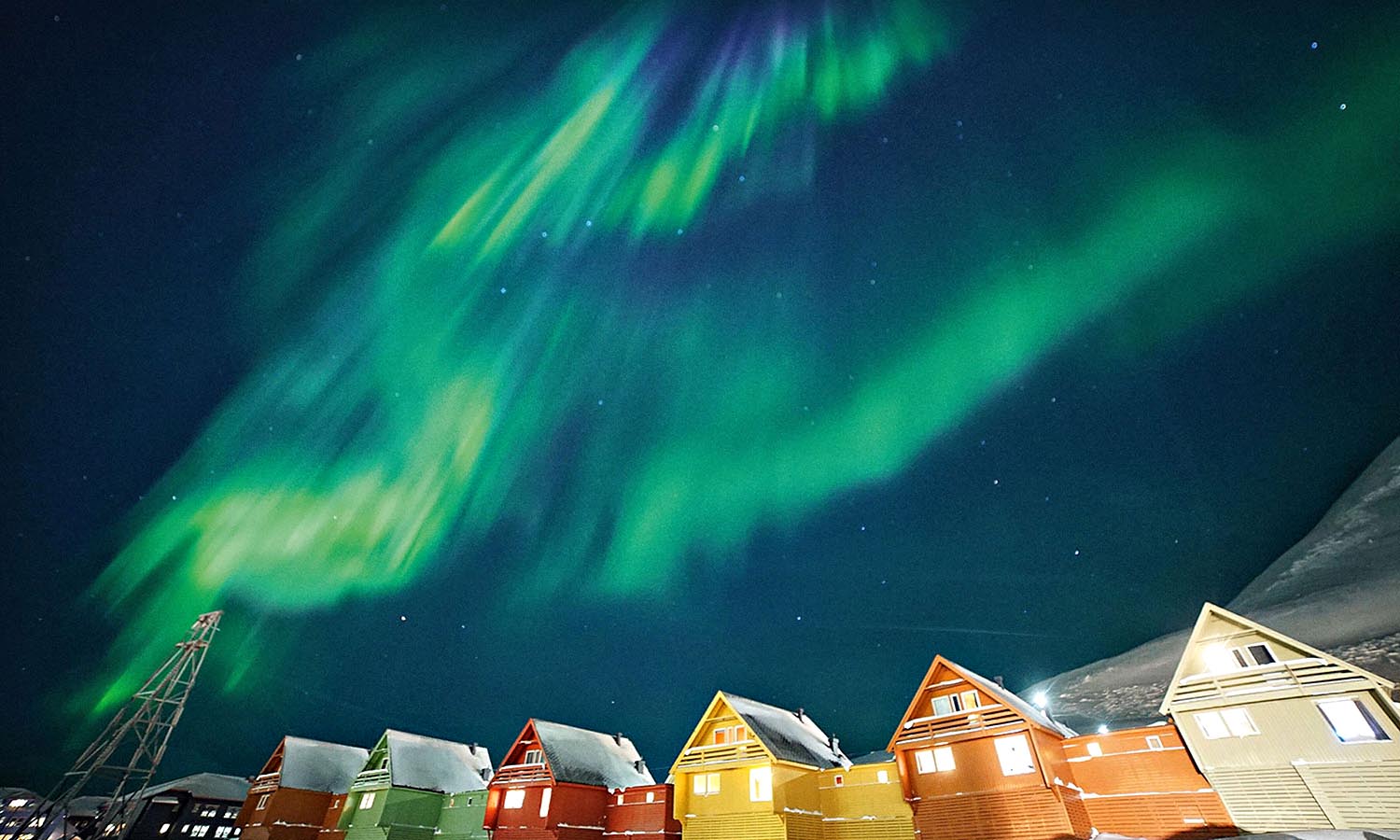
There are cool places to drink a beer. And then there’s drinking a beer beneath the northern lights at the world’s northernmost brewery.
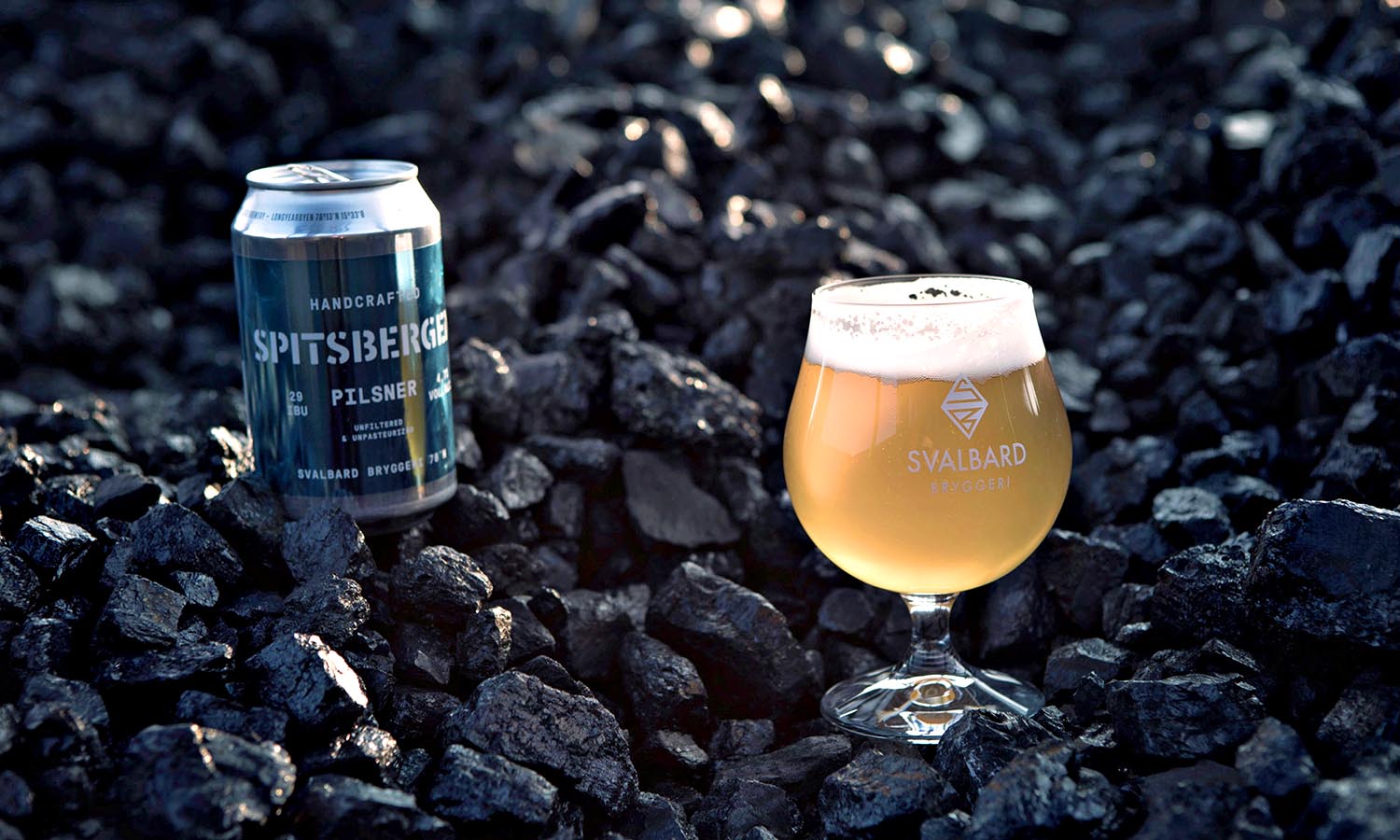
Svalbard Bryggeri is based about five minutes out of Longyearbyen, which is a long way in complete darkness, especially if you’re blind drunk.
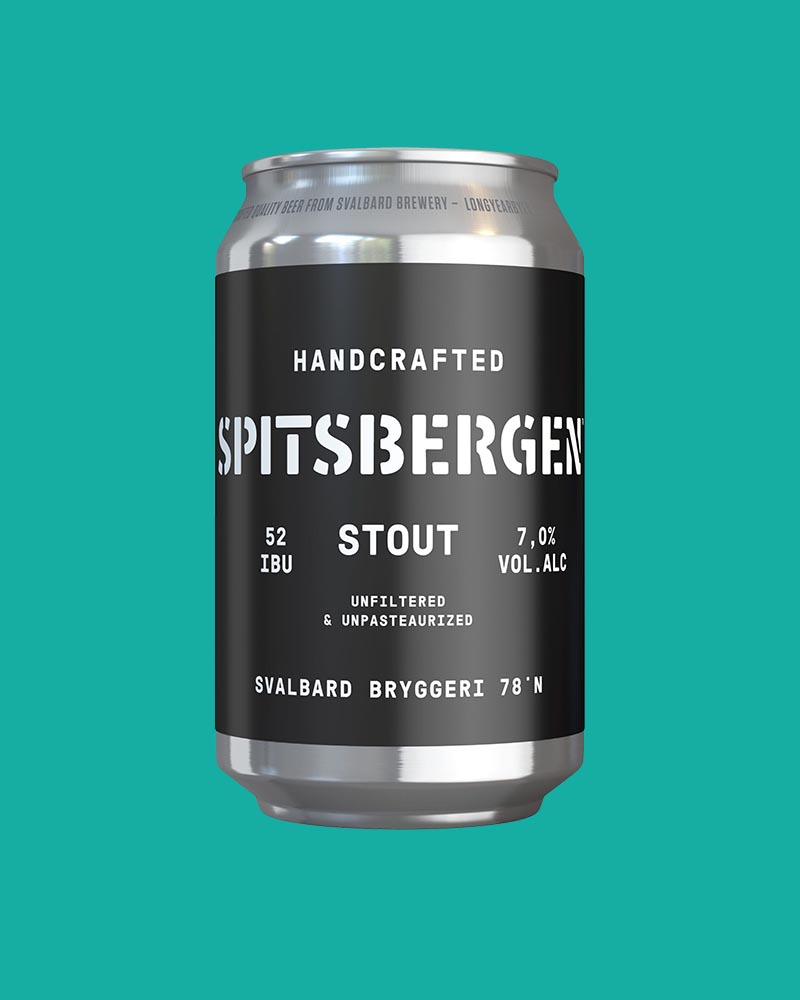
You’d think you’d be able to guarantee that the beers here would, at the very least, be ice cold. Their beers are made with 16 per cent local glacial water, but it’s actually a lukewarm Spitsbergen stout that the locals recommend, which kind of makes sense given the climate.
“Drink enough of this and you will see the northern lights with your eyes closed,” said Robert, head brewer, when get lost visited recently. Challenge accepted.
I’m sitting in Khadim’s living room watching him strain a pot of café touba—Senegal’s claim to coffee fame. Café touba is often described as a spiced coffee, but drinkers be warned: it’s less pumpkin spice and more kick-you-in-the-face-with-pepper spice. Warming like a shot of whisky, enjoyed year-round in Senegal and rumoured to hold aphrodisiac powers, café touba is 100% better than your average flat white. No offence to your barista.
Going ‘all the way to Senegal’ involves adding five sugar cubes to your cup like a true touba aficionado. Halfway is for chickens like me who don’t want to ride a caffeinated sugar high well into the early morning. It’s already 7pm, this gal needs her beauty sleep.
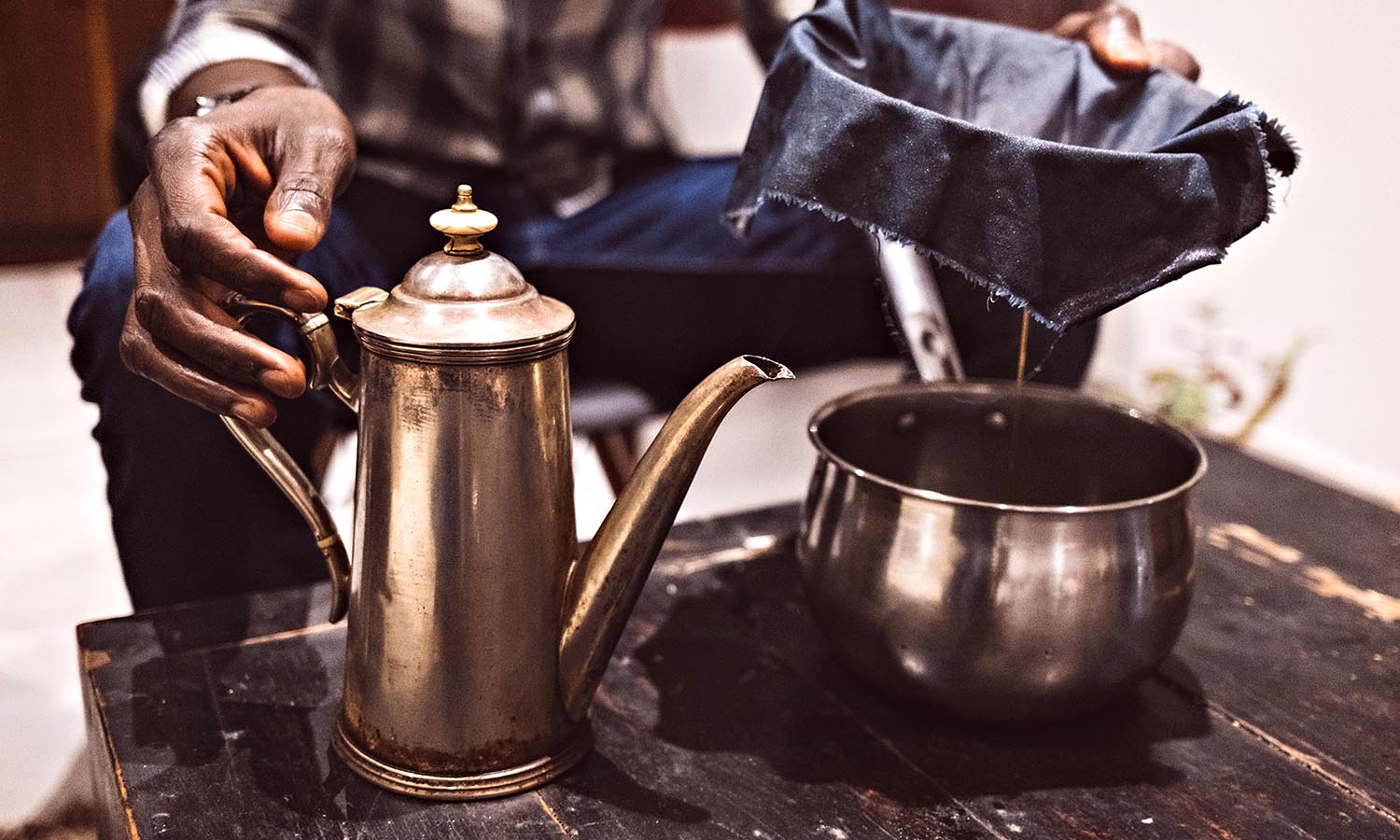
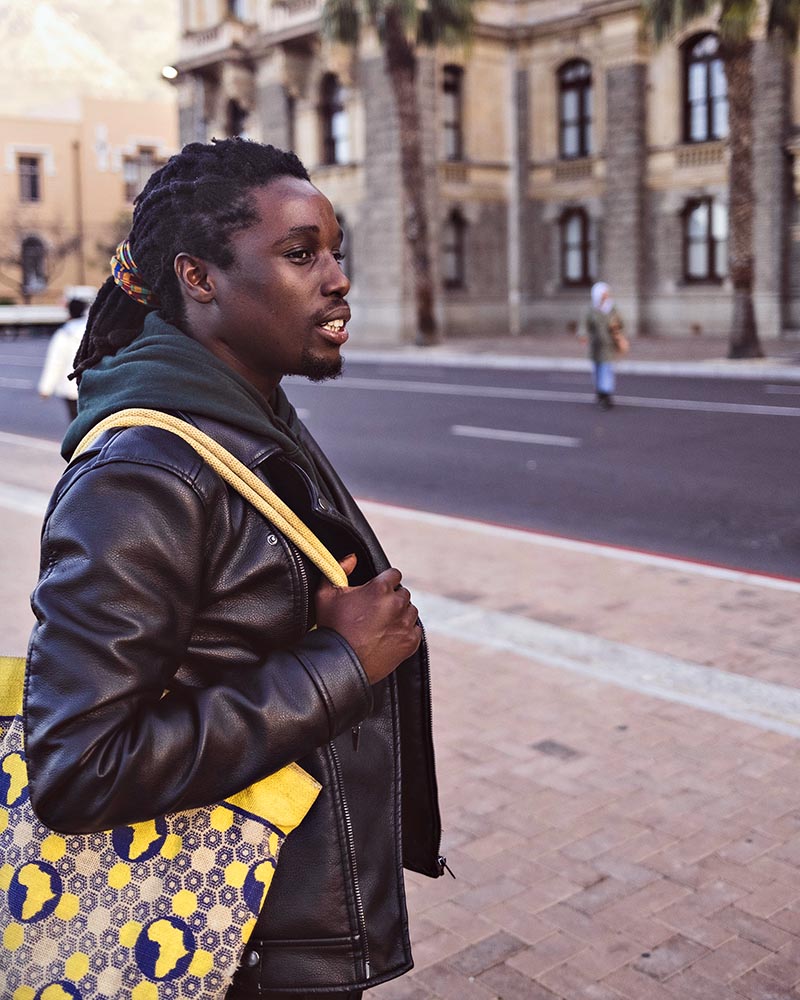
Khadim’s living room (the only place in Cape Town offering traditional café touba) is my last stop on what has been an African food odyssey led by local musician and guide, Sindile Kamlana, AKA Khofhi the King. In just one afternoon Khofhi and I have Gatsby’d and chapatti’d; been to Mali and Ethiopia, and back again. And now I’m feeling very full—with both food and stories. If this was a date, it’d be the best date of my life.
You might be thinking—why do you need a date/guide to eat African food in South Africa? Well, the thing about Cape Town is it’s actually quite hard to find African cuisine if you don’t know where to look. And sometimes you just need a break from Western Cape wine farm experiences.
“African food here in Cape Town has been sidelined for a long time,” Khofhi explains. The cosmopolitan city’s fusion centric and fine dining restaurants tend to get more airtime than the local joints. Hence, the need for a local who knows where to eat and when.
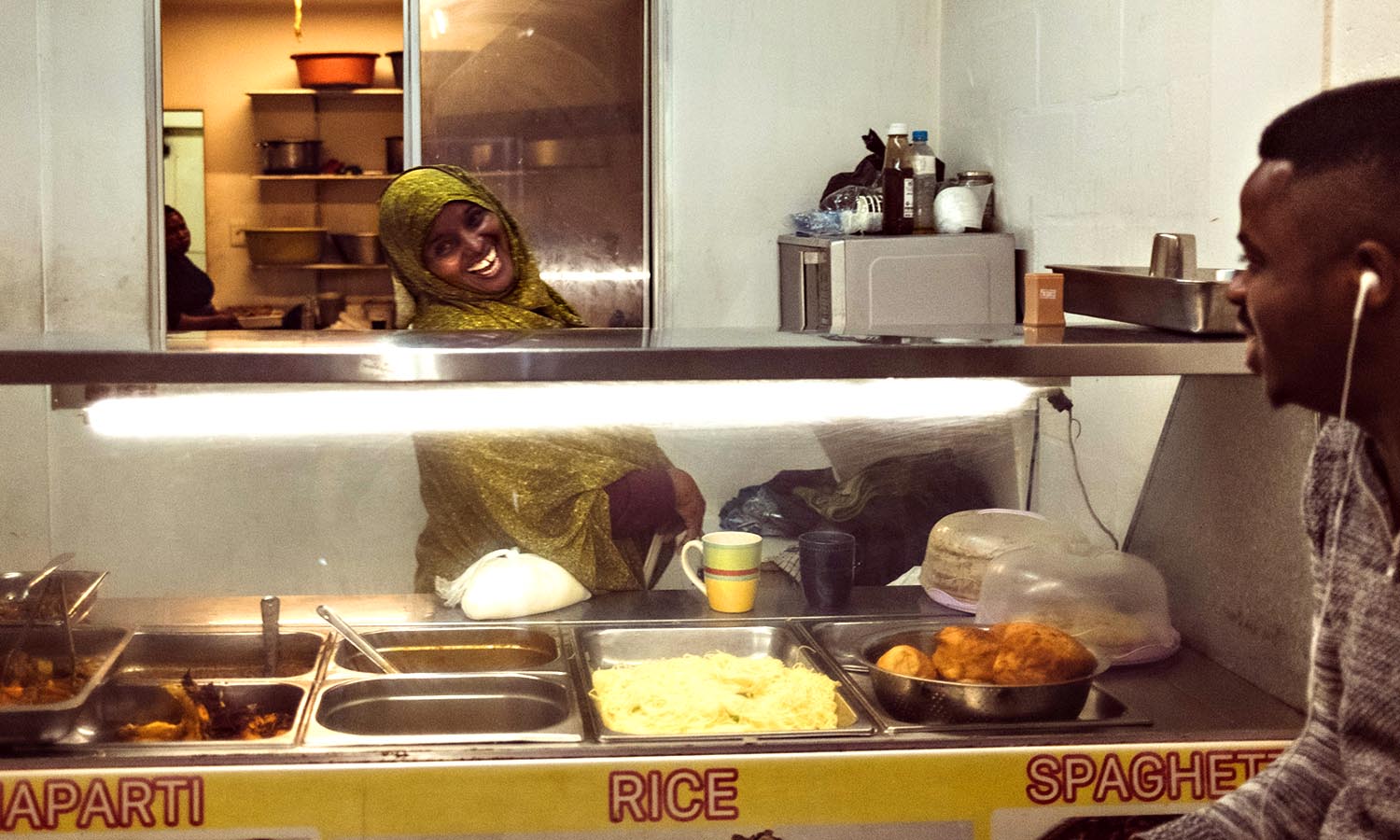
Our first stop is a seemingly unmarked Somali cafe, home to a loaded bain-marie and a bunch of aunties cackling while they’re cooking out the back. We’re here for the chapatti (flaky flatbread, like roti’s delicious cousin) and shaah (a chai-esque Somali tea, very sweet). This is an in-and-out style kitchen, with all kinds of CBD workers popping in for a plate of goat stew or the famous Somali spaghetti topped with banana. Yep, banana. Don’t doubt it till you’ve tried it.
We throw back our shaah’s, tip the aunties and hot foot it to our next meal. “Remember to pace yourself,” Khofhi warns me as we walk. “We’ve got a lot to see and eat today”.
We wander through the Cape’s oldest post office-turned-market, stopping to taste some Durban spices. I wave at the statue of Nelson Mandela as we pass by the mighty town hall, before arriving at Nobantu.
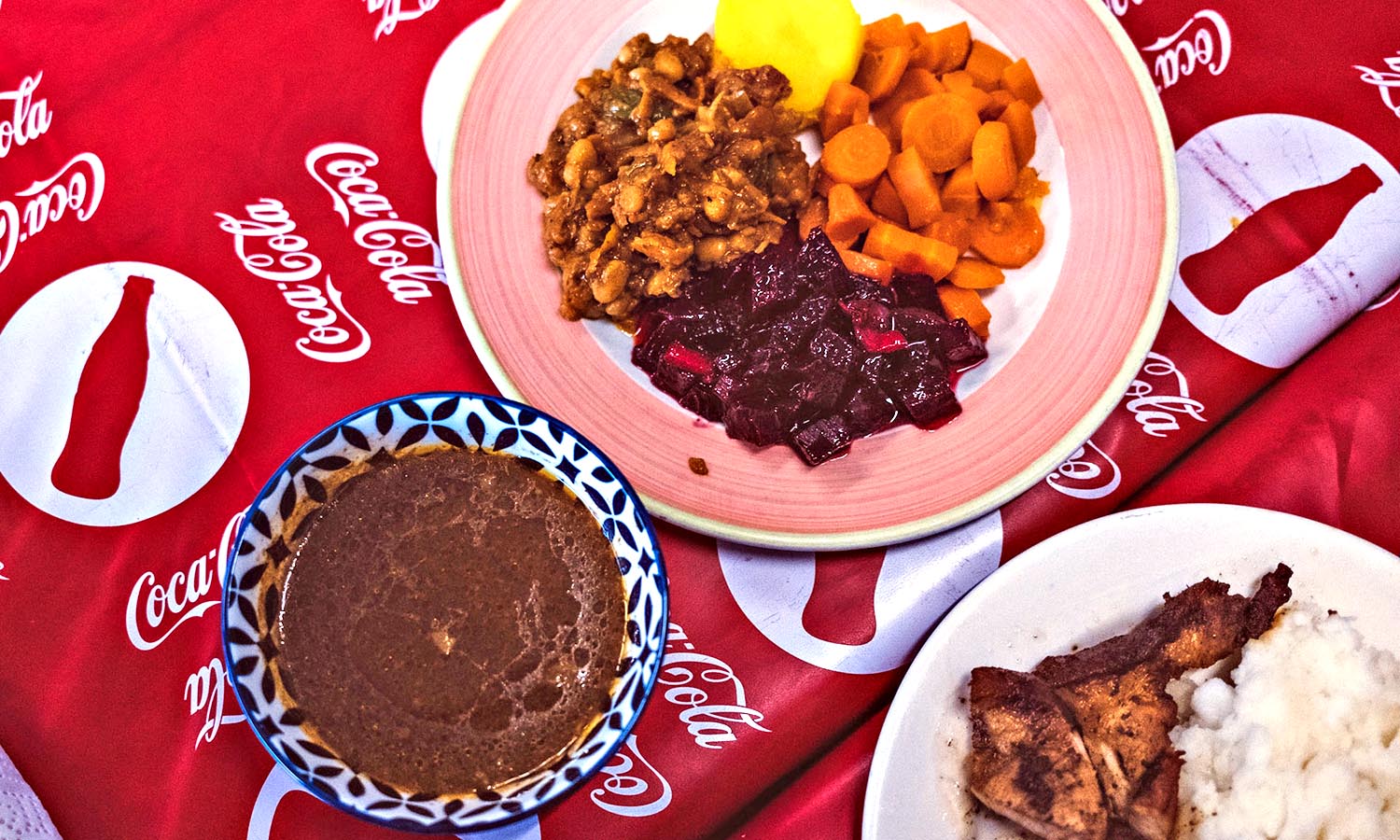
Nobantu is a small sit-down place that serves politicians and bus drivers alike (it’s right next to the city bus depot). Here, cooks from Cape Town townships are dishing up South African quintessentials, like pork and pap (a porridge made from maize) and chakalaka, also known as “South Africa’s favourite salad”. Chakalaka, a dish made from beans and fresh veggies, is a staple you’ll find on any menu and at any braai (barbecue). It’s delicious, and sometimes spicy. Great on toast, even.
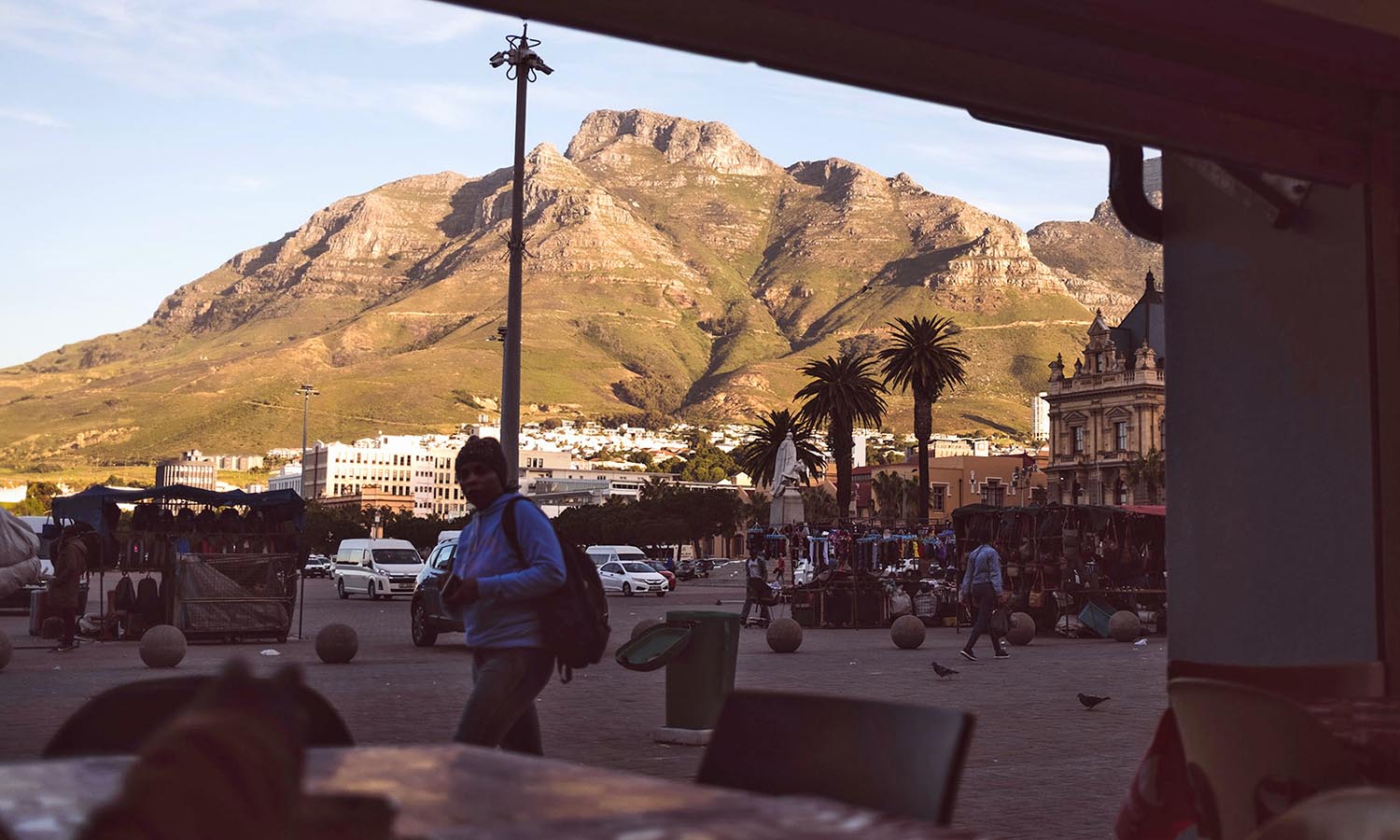
But the most impressive thing about Nobantu would have to be its unrivalled view to Table Mountain. Who needs fine dining on the waterfront? Not us.
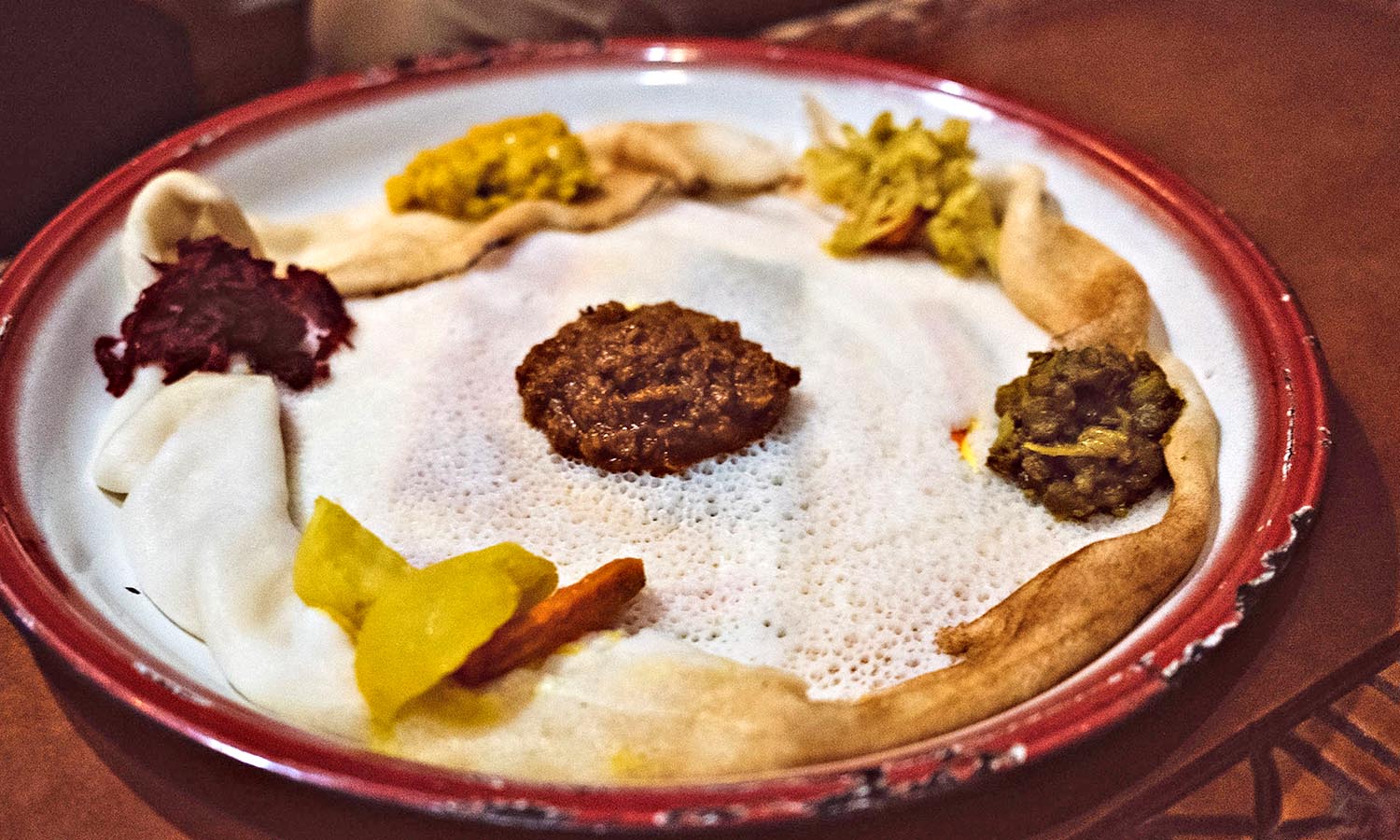
One sweet, sticky cinnamon koeksista (similar to a donut) and a plate of spongy Ethiopian injera bread (made from teff flour) later, we find ourselves at Fatima’s Restaurant on Long St. This place is the epitome of a local gem; a bona fide melting pot of African cuisines. At Fatima’s they cater to everyone, but especially to those who love ‘Africa’s most controversial dish—jollof rice’. Controversial because Nigerians steadfastly maintain their jollof is the best jollof.
I’m close to exploding / unbuttoning my pants at this point, but I’m not going to pass up the opportunity to taste the Mali version of Nigeria’s most coveted dish. “I’m really proud of Fatima’s restaurant,” says Khofhi, “this place attracts people from all African countries in one space. It’s a hot spot for people who love to watch football… Fatima comes in the evenings and her sister is also in the kitchen… it’s a real family business.”
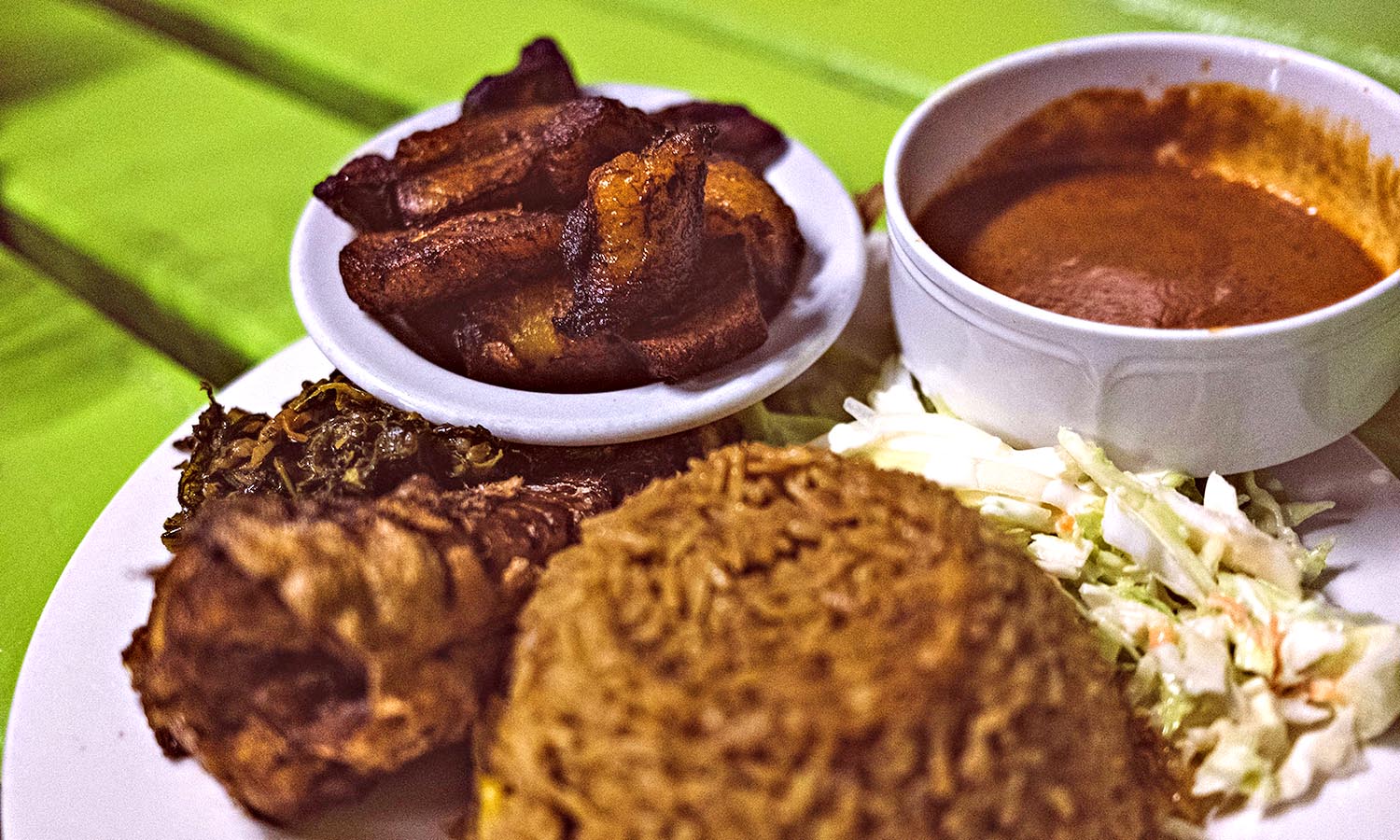
When I ask Khofhi what African cuisine he likes best, he tells me it’s without a doubt food from Mali—“people from Mali put a lot of love into their cooking,” he says.
And that’s the common culinary thread today—love.
Food is nothing without the love of the cook, just like café touba is nothing without the love of Khadim. And as I drink my spicy coffee and listen to Khadim’s story, I feel warmed. Touched, even. Maybe it’s the djar spice. Maybe it’s the aphrodisiac. Who knows.
But maybe next time I’ll go all the way to Senegal.
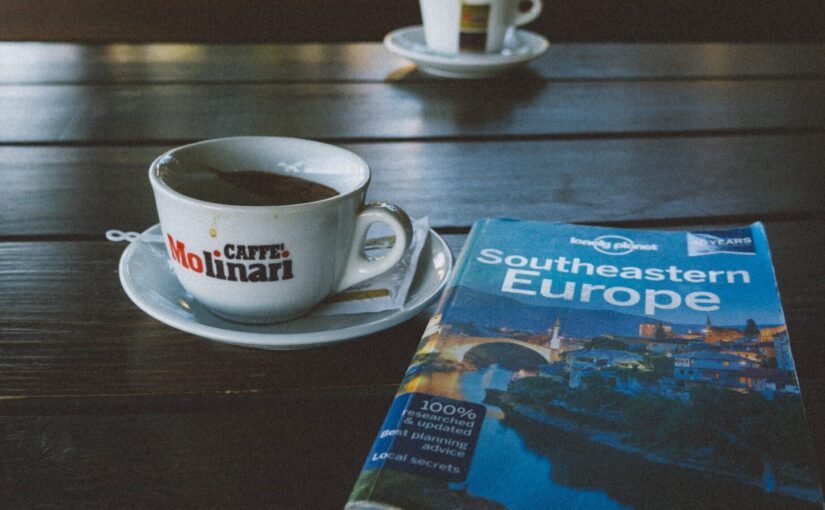
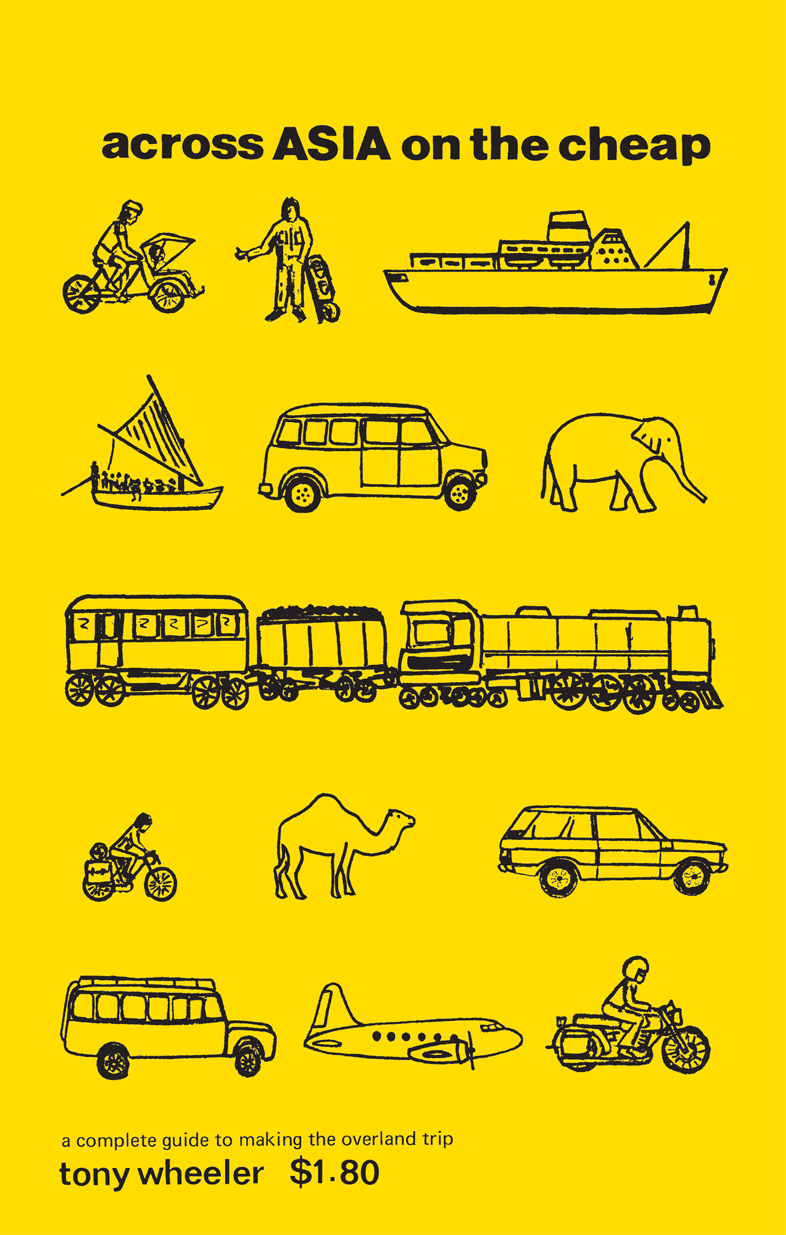
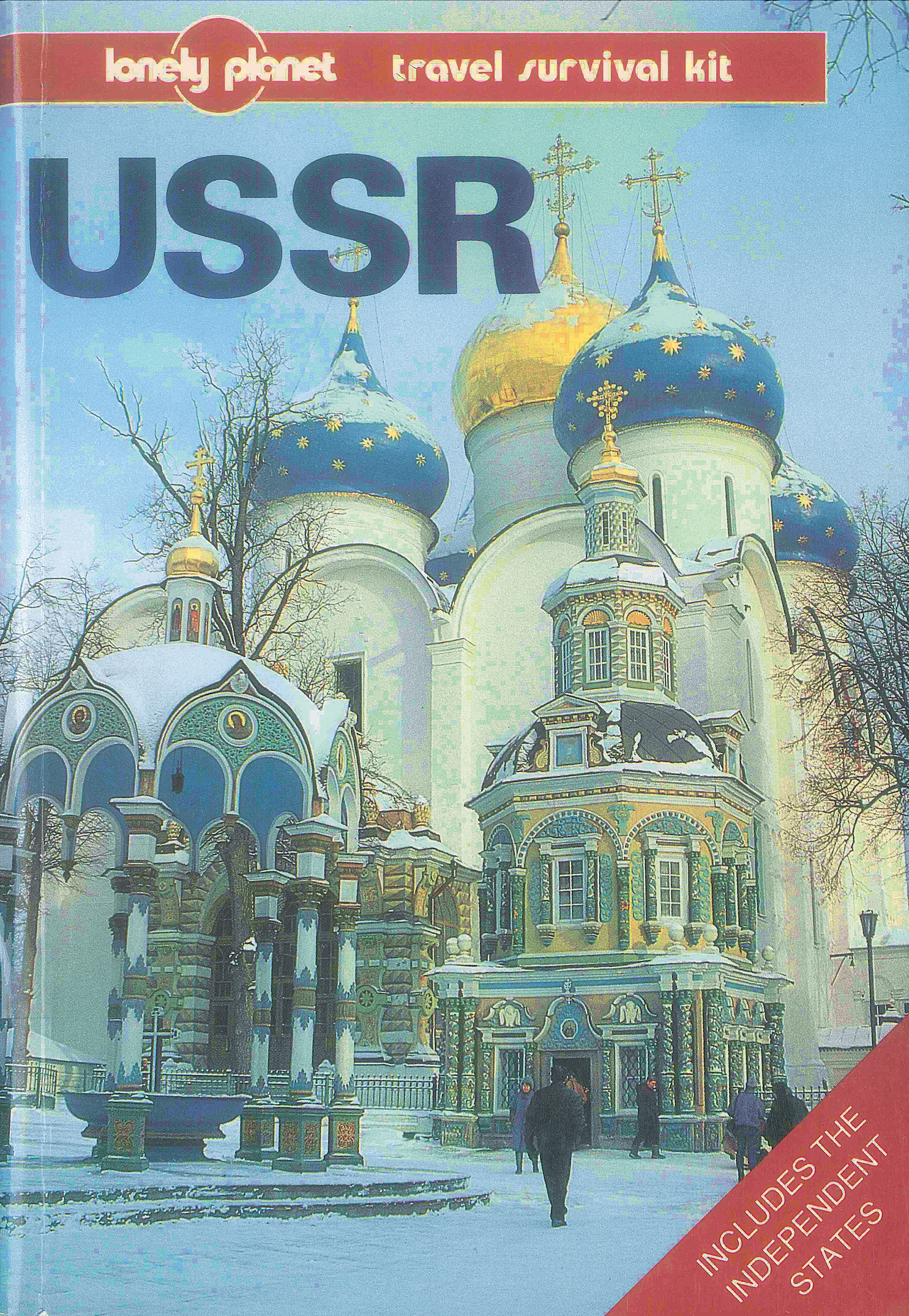
One of the world’s most trusted travel brands has turned 50. Lonely Planet has been the bible for adventurous travellers the world over ever since the release of Across Asia on the Cheap in 1973.
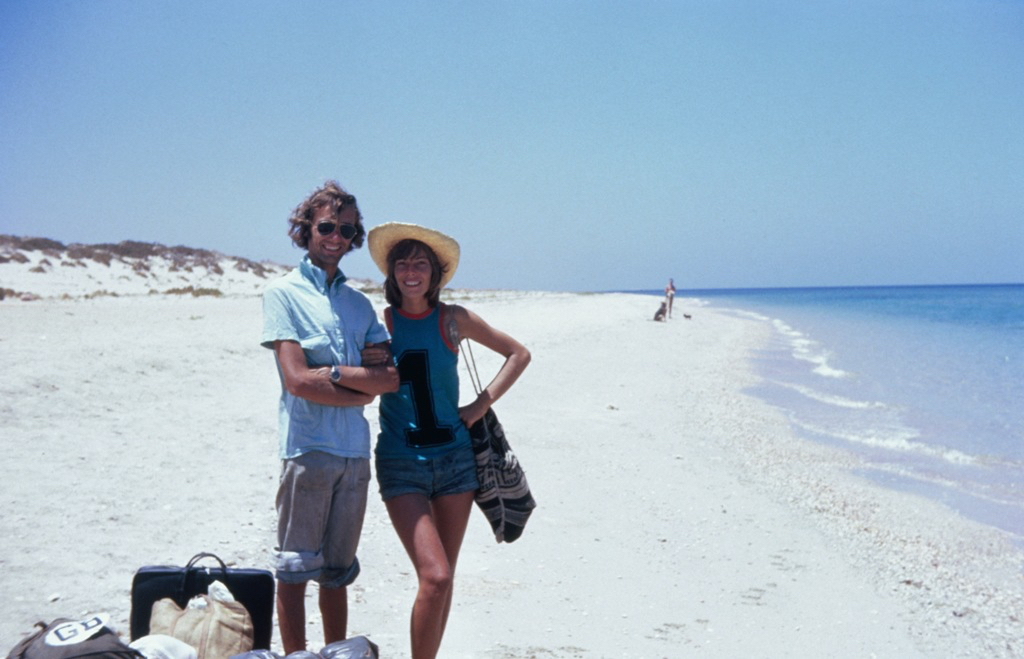
Conceived by British-Australian power-travel-couple Tony and Jill Wheeler (pictured below, arriving in Australia in 1972), the little blue books have been like super powers for intrepid travellers over the last five decades, concealed somewhere in a backpack until revealing, when called upon, the coordinates of a bar deep in the Amazon or a difficult-to-find hostel next to waterfall in Thailand, or how to say hello in Yoruba.
From one set of travelling pioneers to the OG – congratulations on 50 years of bailing us out of trouble in the farthest flung locations.
It’s surely Australia’s best kept travel secret.
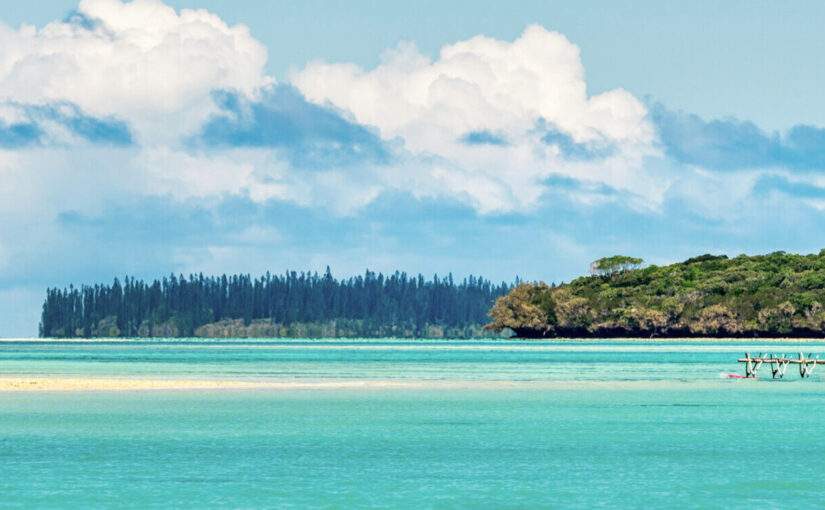
New Caledonia is one of Australia’s closest neighbours, yet somehow manages to fly under the radar as a destination, despite boasting extraordinary beach vistas that look like they’ve been photoshopped (they haven’t) plus a broad range of adventure activities and a unique culture to immerse yourself in.
Flights to our neighbours have just opened up again from Melbourne, joining the 3-hour flights further north up Australia’s East Coast, from Brisbane and Sydney.
Here’s seven reasons why you should drop absolutely everything you are doing, and book some flights:
Amedee Island, a tiny coral atoll located around 24 kilometres south of Noumea, is a great place to spot these gentle creatures. Make sure to wear reef-friendly sunscreen.

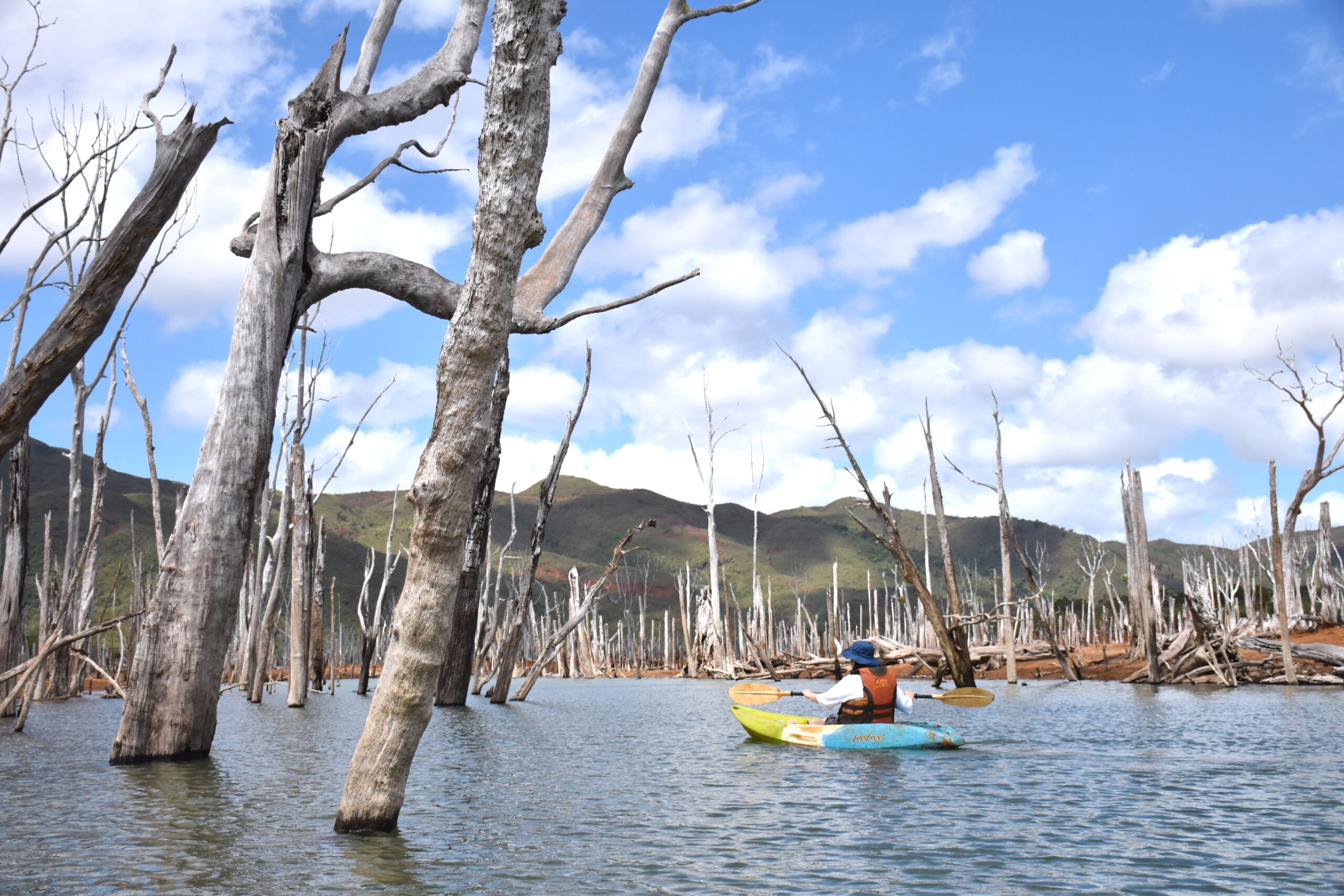
It isn’t hard to work out how the ‘Drowned Forest’ in Blue River Park got its name. Paddle between the trees in a kayak for a bit of adventure in between days lazing on the beach.
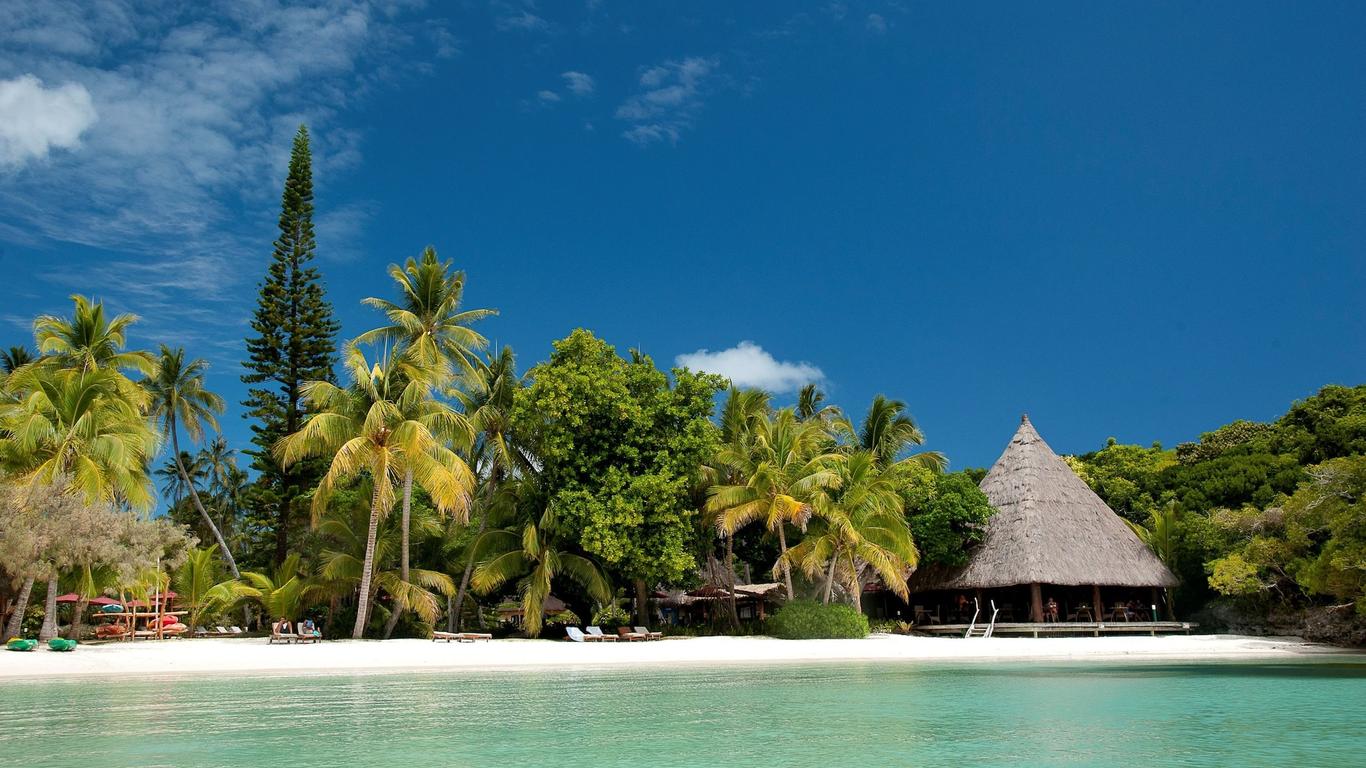
Gorgeous clear waters and 25km of immaculate sand – which should be enough. We’re not sure what heaven looks like, but it could do worse than this.

Barefoot luxury personified, take a few steps at be on the beach. The thing we like about this place is it doesn’t try too hard for premium luxury – there’s not much concrete, it blends into the environment…and the environment here is ace.
It’s little known that New Caledonia boasts some incredible hikes. The Koniambo Trail is a difficult, but rewarding 17km trail that can be done in a day or two. Glorious panoramas included.

I mean, we’re in the Pacific after all? Some epic swells hit this country, even if they can be tricky to get to at times. Bourail is one of the most accessible, and one of the most beautiful too, with rocky outposts flanking the two right handers that break here.

There’s heaps of em.

Global travel favourite Hawaiʻi has been hit by some of the most devastating wildfires ever seen in the United States in recent weeks.
There aren’t many destinations in the world as universally loved as the Aloha State.
If you’re a traveller heading to Hawaiʻi, or you know someone who is, here’s what you need to know.
Wildfires are still currently burning on the island of Maui, particularly in West Mauʻi, including one in Lahaina, a major tourist destination on the island. They have been burning for around two weeks.
Over 100 fatalities have been recorded and losses are estimated at over U.S. $6 billion. The fires have been labelled “the worst natural disaster in the history of Hawaiʻi.”
No-one should consider travelling to West Maui.
Travellers are still able to visit other areas of Mauʻi, according to Hawaii Governor Josh Green.
“No one can travel to West Maui right now…but all of the other areas of Maui, and the rest of Hawai‘i are safe,” Governor Green said.
“When you come, you will support our local economy and help speed the recovery of the people that are suffering right now.”
Hawaii Tourism is advising travellers to continue visiting the areas of Kahului, Wailuku, Kīhei, Wailea, Mākena, Pāʻia and Hāna, as well as the other Hawaiian Islands of Kauaʻi, Oʻahu, Lānaʻi, Molokaʻi and Hawaiʻi Island.
Paying heed to the areas you are advised not to visit is the most important thing any travellers to Mauʻi can do, as well as treating with the island and it’s people with an appropriate understanding of the situation. Around 2,000 people are sheltering at the Kahului Airport on Mauʻi, which remains open.
Visit mauistrong.info for information on where you can make financial donations to support wildfire relief.
The State of Hawaiʻi website is constantly updating with information and news on the wildfires.
The Australian Government’s Smart Traveller website is always a solid choice for travel information for Australian travellers.

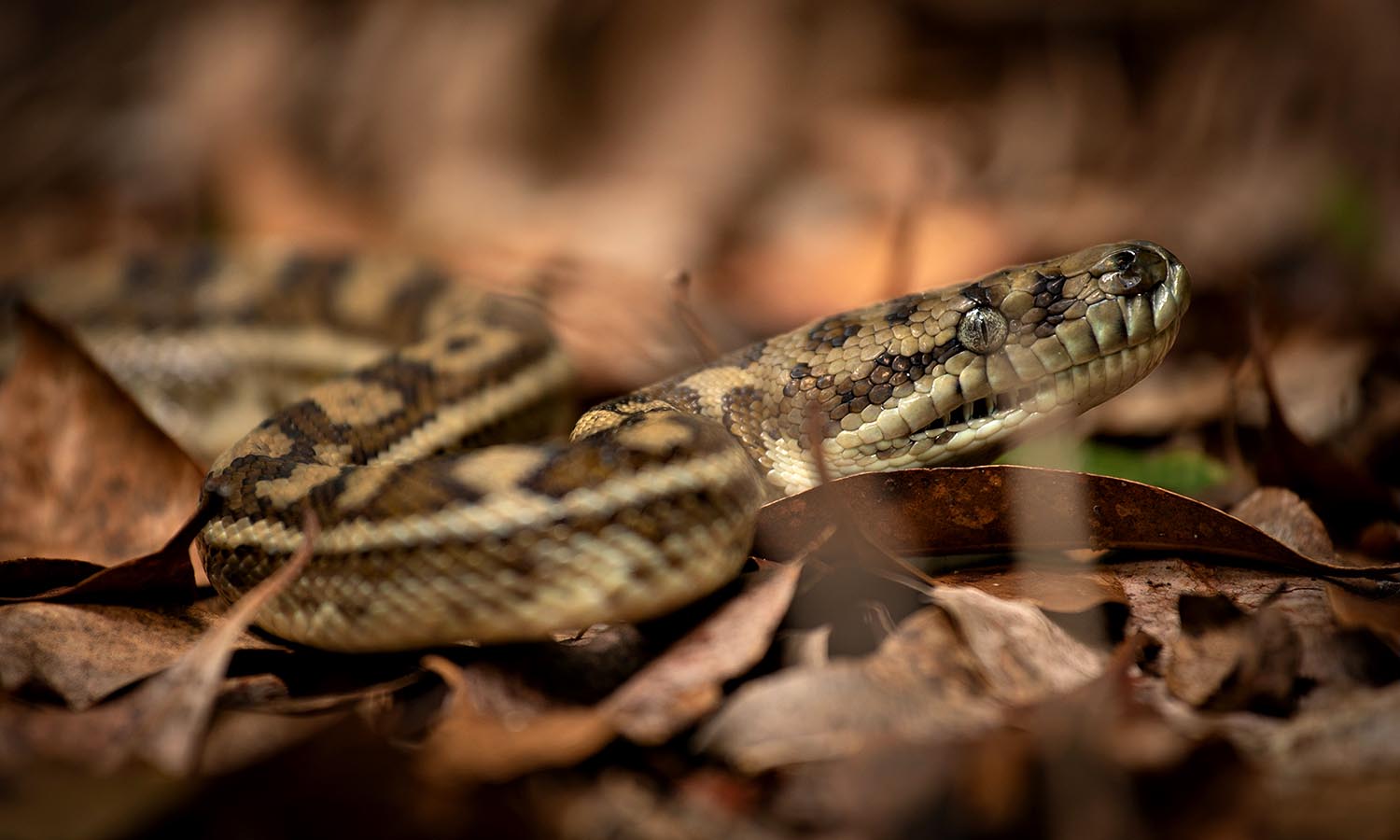
I lurch off the trail, shouting “it’s a f*cking snake!” My girlfriend, a few paces back, lets out a little squeal and runs an unnecessary distance back. Regaining my footing, I look closer—laying just where my foot was meant to be planted is a perfectly camouflaged carpet python, her scaly back glistening in the day’s light, tongue flickering in and out as she tries to figure out what this big, blonde, hairy alien is doing in her forest.
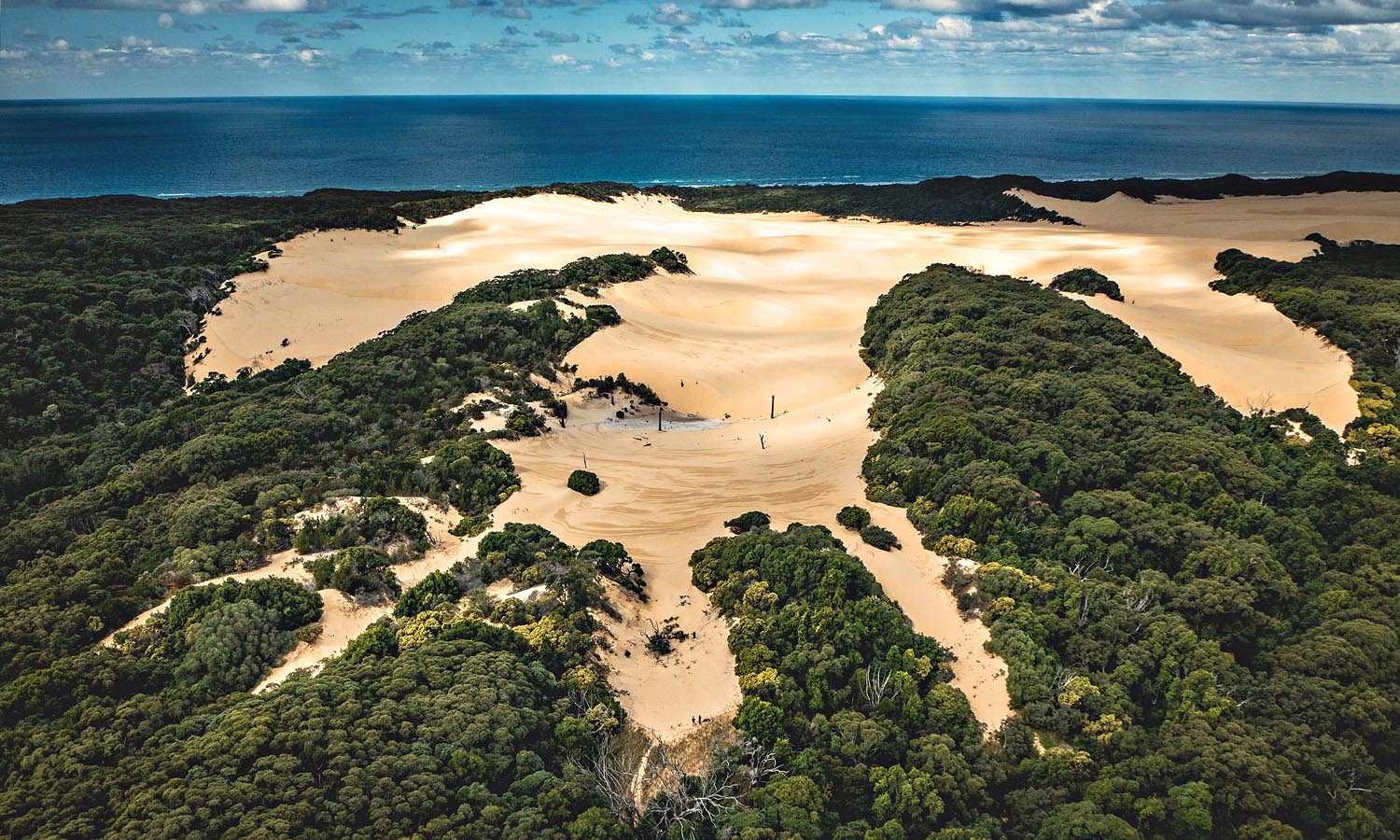
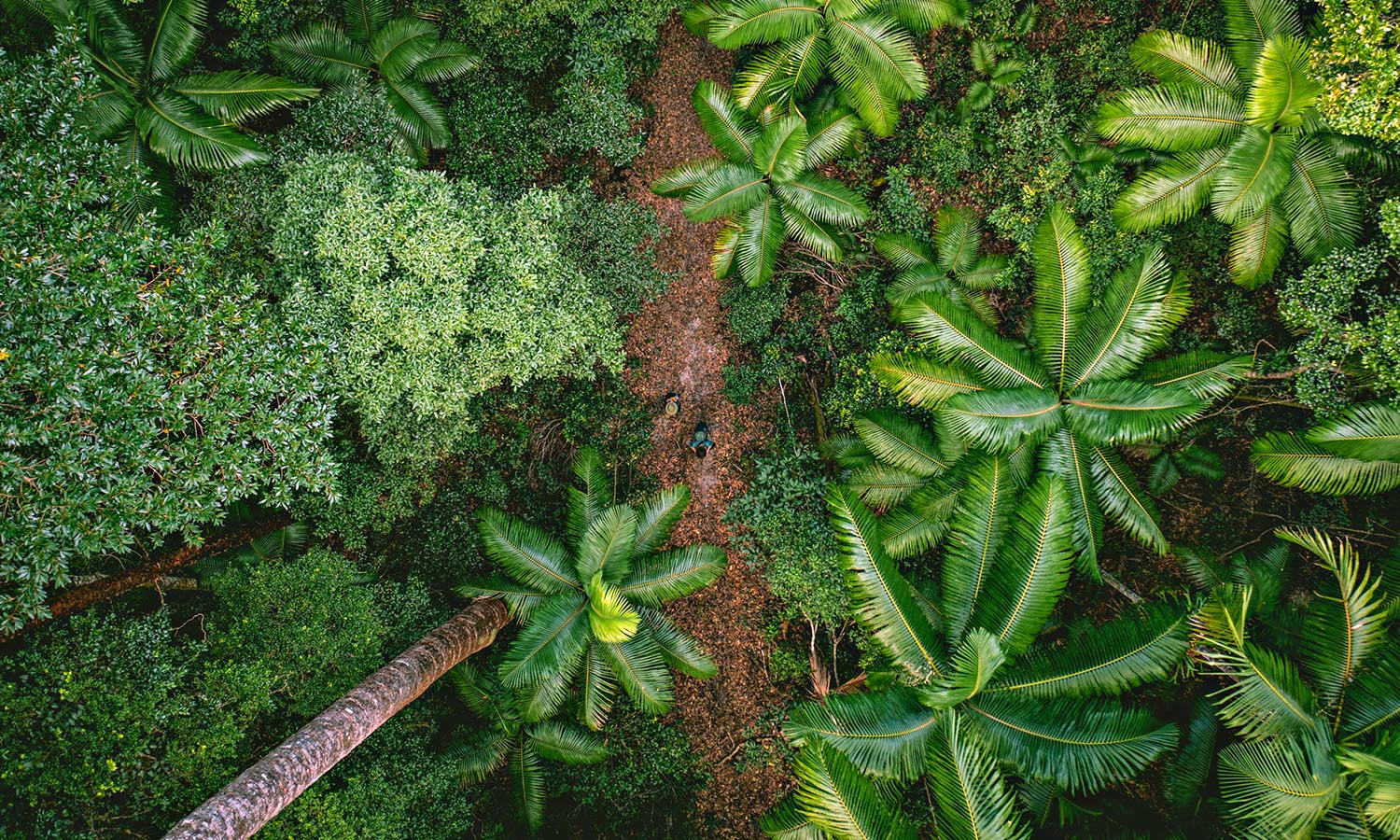
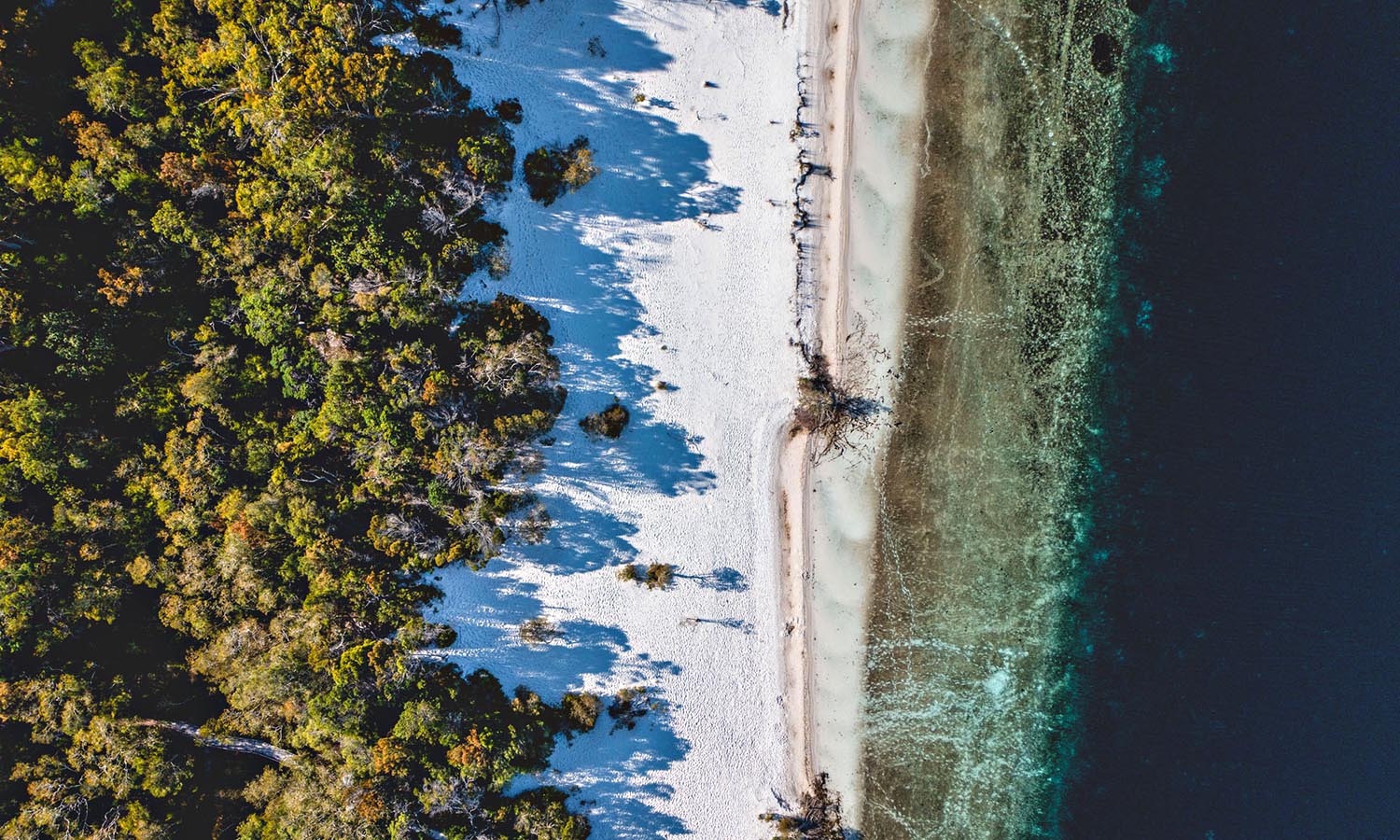
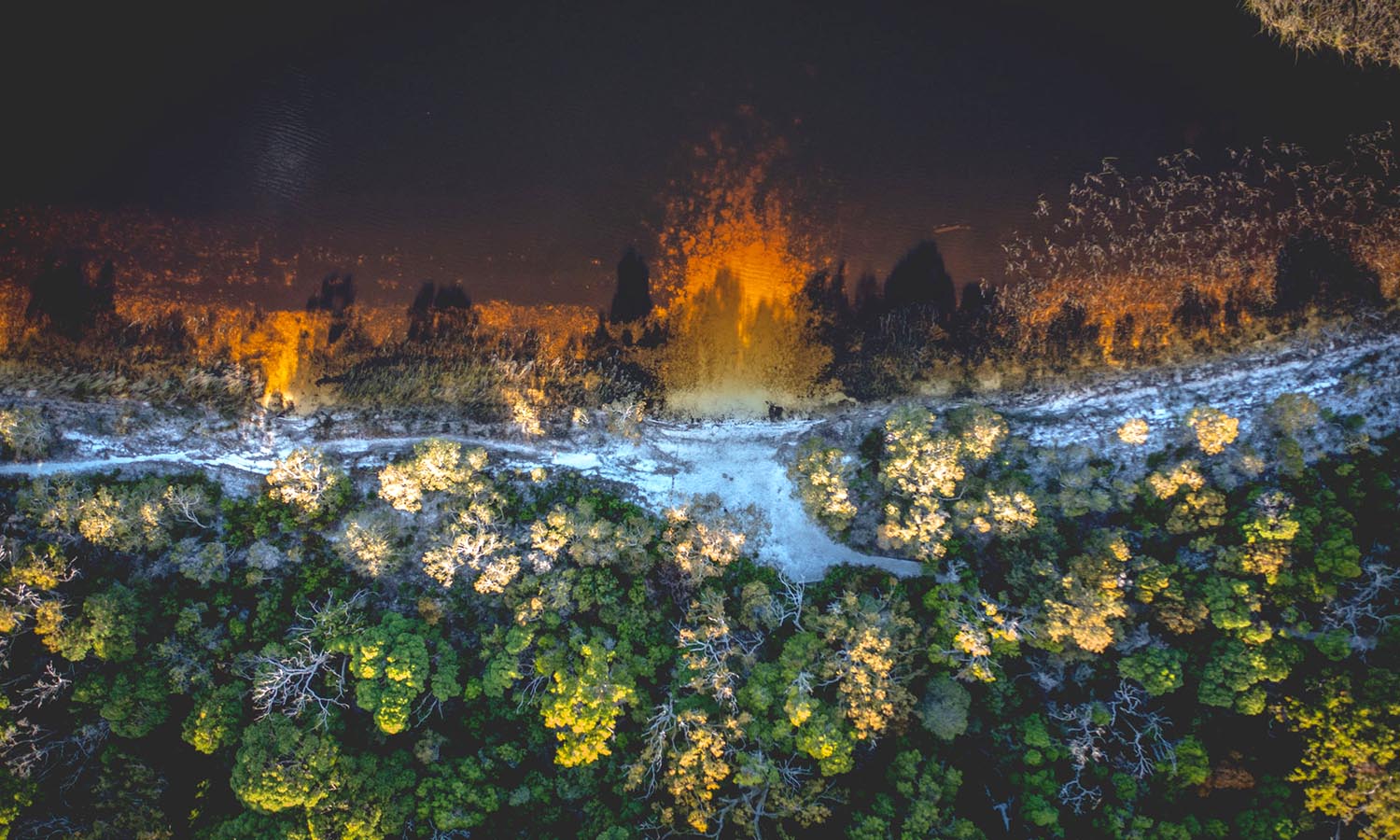
We are exploring a different side of K’gari, the world’s largest sand island, formerly known as Fraser Island. We’re hiking through extraordinary rainforest where thousand-year-old trees reach up to create a dense green canopy, and crystal-clear streams trickle through lush undergrowth. Right now, we’re two days into the trek and we’re yet to see another hiker hit the trail. The only sounds we hear are the myriad of birds that call this utopia home.
Click play to watch
The story of K’gari’s creation continues to echo in my mind, since it was shared with me by Luke Barrowcliffe, one of the island’s traditional owners. Luke is a part of the Butchulla nation, a group of people who, according to archaeological evidence, have lived on and cared for this island for at least 5,000 years, and possibly up to 50,000 years.
“When we think about K’gari, it’s like home to us, it’s our country,” he says.
“It’s like walking into your own house that you own —when you walk in that door, you feel at home. When we come over here, we feel that same way every time.
“You feel totally removed from urban civilisation. As soon as you come across here, you leave it all behind,” he explains.
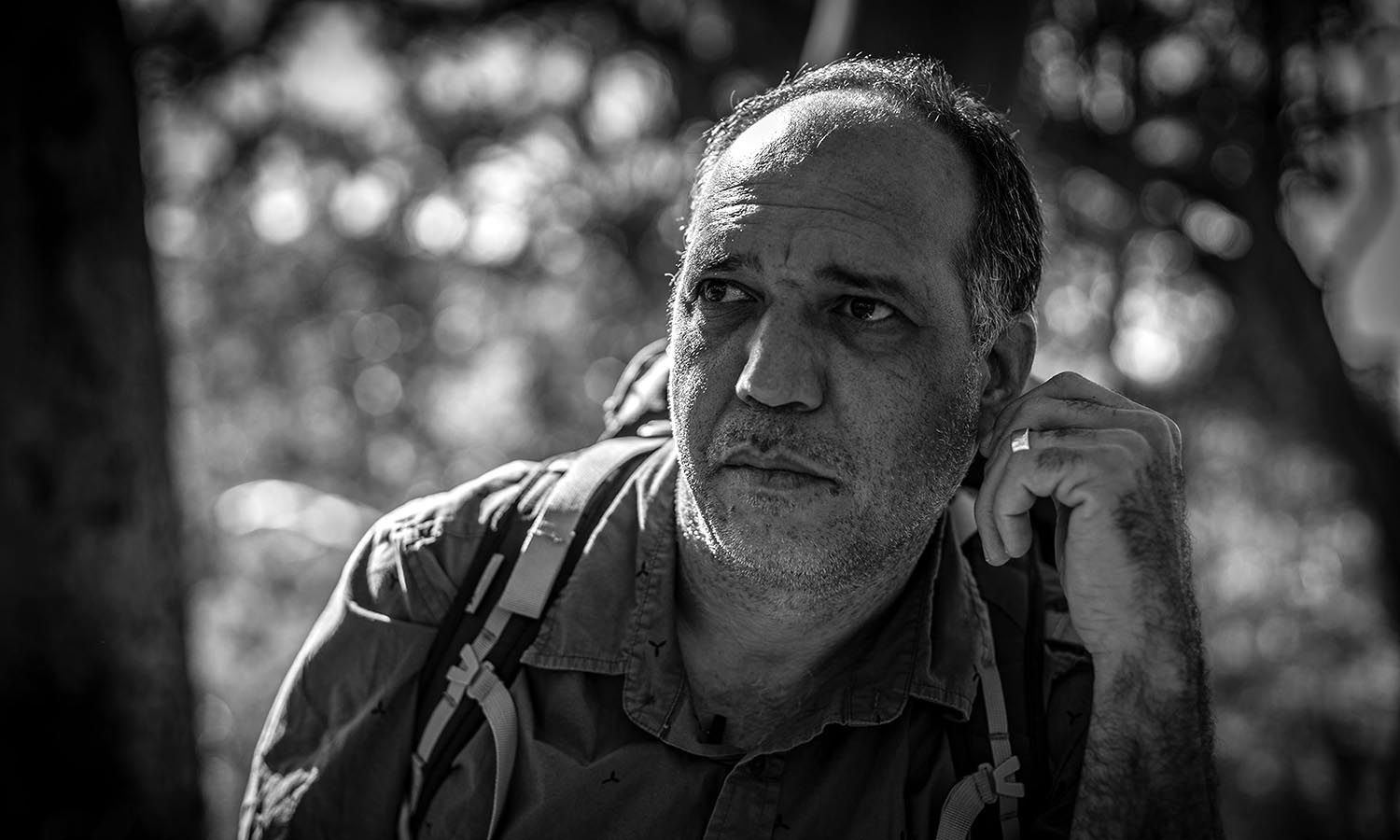
According to Luke, K’gari was a white spirit who helped the god Yendingie create the most beautiful place of all. K’gari then decided to rest there, and transformed into the island itself.
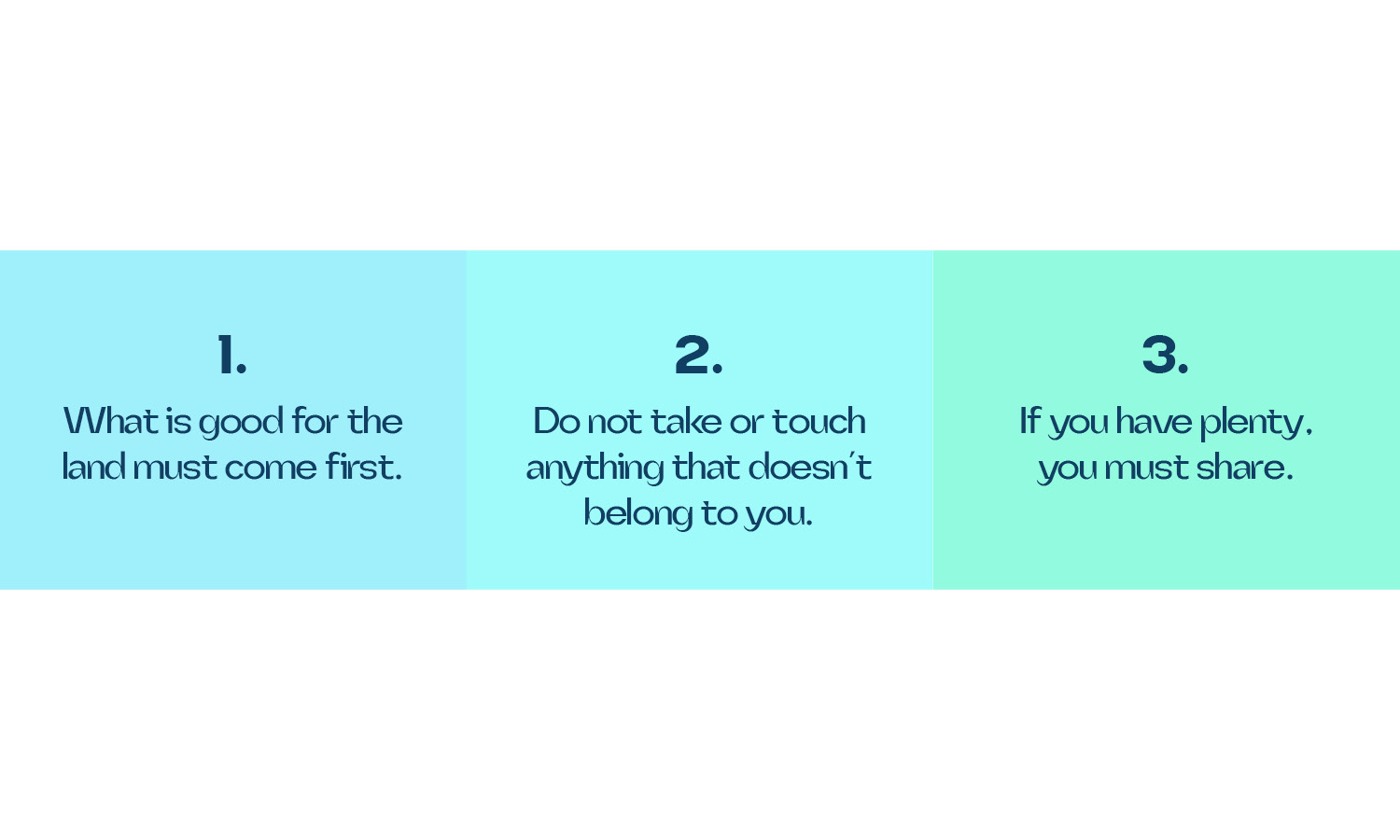
K’gari (pronounced ‘Gurri’) in Butchulla language, was created with her eyes forming the lakes—always facing up to the sky country. She was clothed with trees and shrubs before the Butchulla People were created, so as time went on, K’gari would never be lonely. The Butchulla People lived and died by three laws:
This story is with me now as I wander through the same bushland Luke’s ancestors did thousands of years ago. I wonder how K’gari felt when the Butchulla People were forcibly removed from her?
Our sandy trail winds through and around some of the largest and most impressive trees I have ever laid eyes on. We’re in the aptly named ‘Valley of the Giants’ and I feel tiny in their presence. There are even giants among the giants here; some of these satinay trees are a mind-bending 1,000 years old, meaning we are in the presence of some of the oldest continuously living organisms on earth.
As I lean against an ancient trunk, I imagine Butchulla ancestors moving silently through this same forest, gathering food and making shelter, possibly under this very tree. This tree was chilling here when the Vikings were raiding Europe; when Genghis Khan and Marco Polo were born, this tree was already over two centuries old. In Europe, tourists line up to take photographs of ancient artwork and relics, here we can walk among a different, even older, kind of beauty.
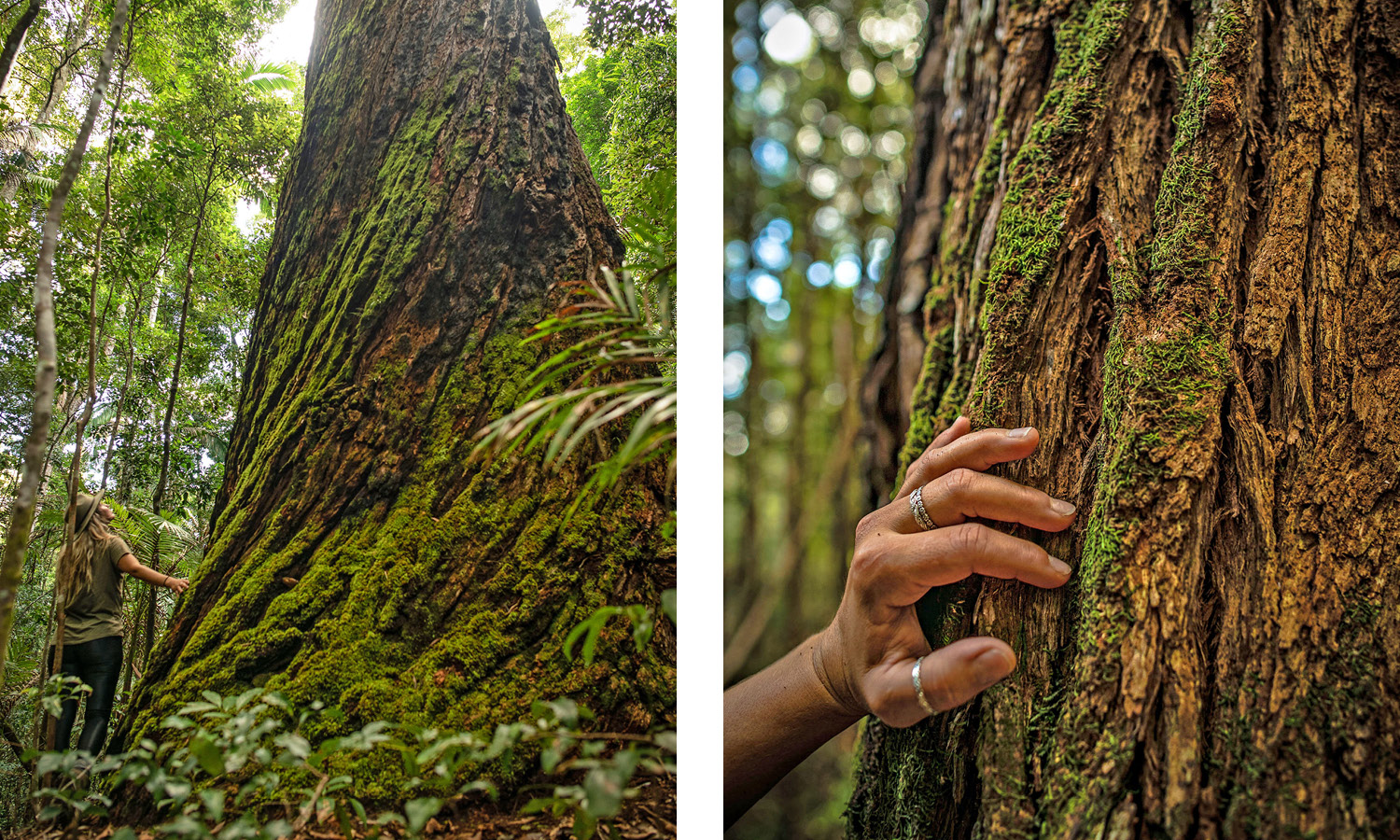
It is easy to find an adventure that works for you on K’gari (see our guide below). There’s over 90 kilometres of diverse trails to tackle, and a multitude of operators catering for small group adventures who have an excellent head for sustainability.
Take our pack free, eco-hike for example. Following a much-needed rinse off in the misty Lake Garawongera, we amble dripping and sandy-footed into our picturesque little bush camp. Our tents are set up already, our overnight bags are there waiting to be ripped apart in search of less pungent attire, there are cold beers to drink and fresh food ready to cook. I could ABSOLUTELY get used to this pack-free life.
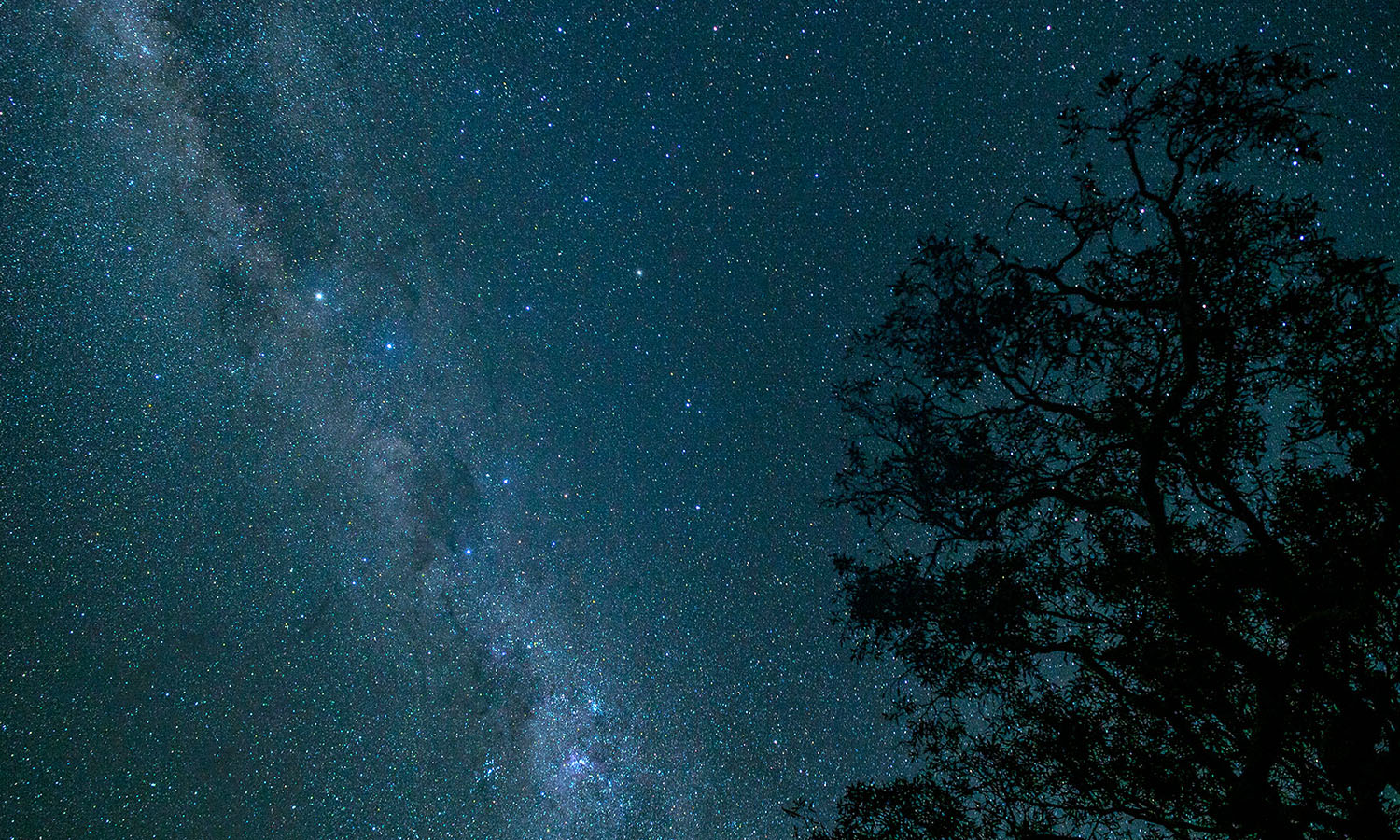
There’s also plenty to explore here, from wildlife and adventure, to tracing back through the branches of time. It’s even better when you have the opportunity to explore this wondrous island through the stories, songs and dances of its First Nations peoples.
For this island to reclaim its name is powerful and important. The island was formerly named ‘Fraser Island’ after Eliza Fraser, a Scottish shipwreck survivor in the 1830s (who was proven to have lied profusely about the Butchulla’s poor treatment of her). Before that, it was erroneously named the ‘Great Sandy Peninsula’ by Captain James Cook during his 1770 voyage. Neither of these are right or fitting for this slice of heaven.
Luke speaks passionately about his island, and he explains that there is a growing movement for Butchulla People to move back to their ancestral homeland, bringing with them their ancient culture that is completely entwined with this magical place. Hopefully soon, this paradise will have her people back again.
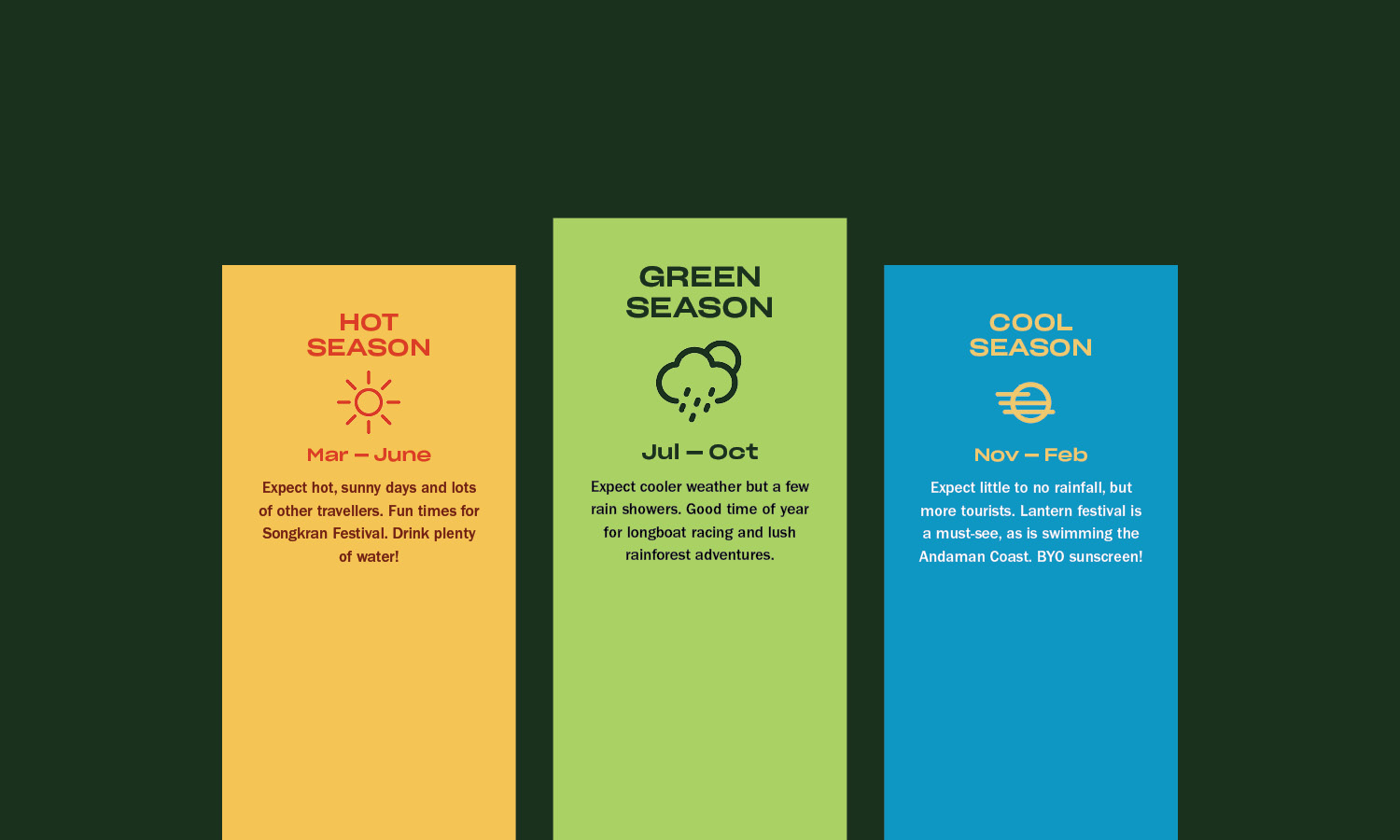
In fact, green season (aka off-peak) travel is where it’s at.
Imagine this: you’ve got a national park all to yourself, the beaches are empty, the ocean view bungalow is always available AND the humidity doesn’t feel like it’s going to kill you. Welcome to the beauty of green season travel in Thailand!
Spanning July to October, this lush travel period is epic and underrated. Sure, it might rain—but it won’t rain for long. To spark your off-peak interest, here’s where we want to travel this green season:
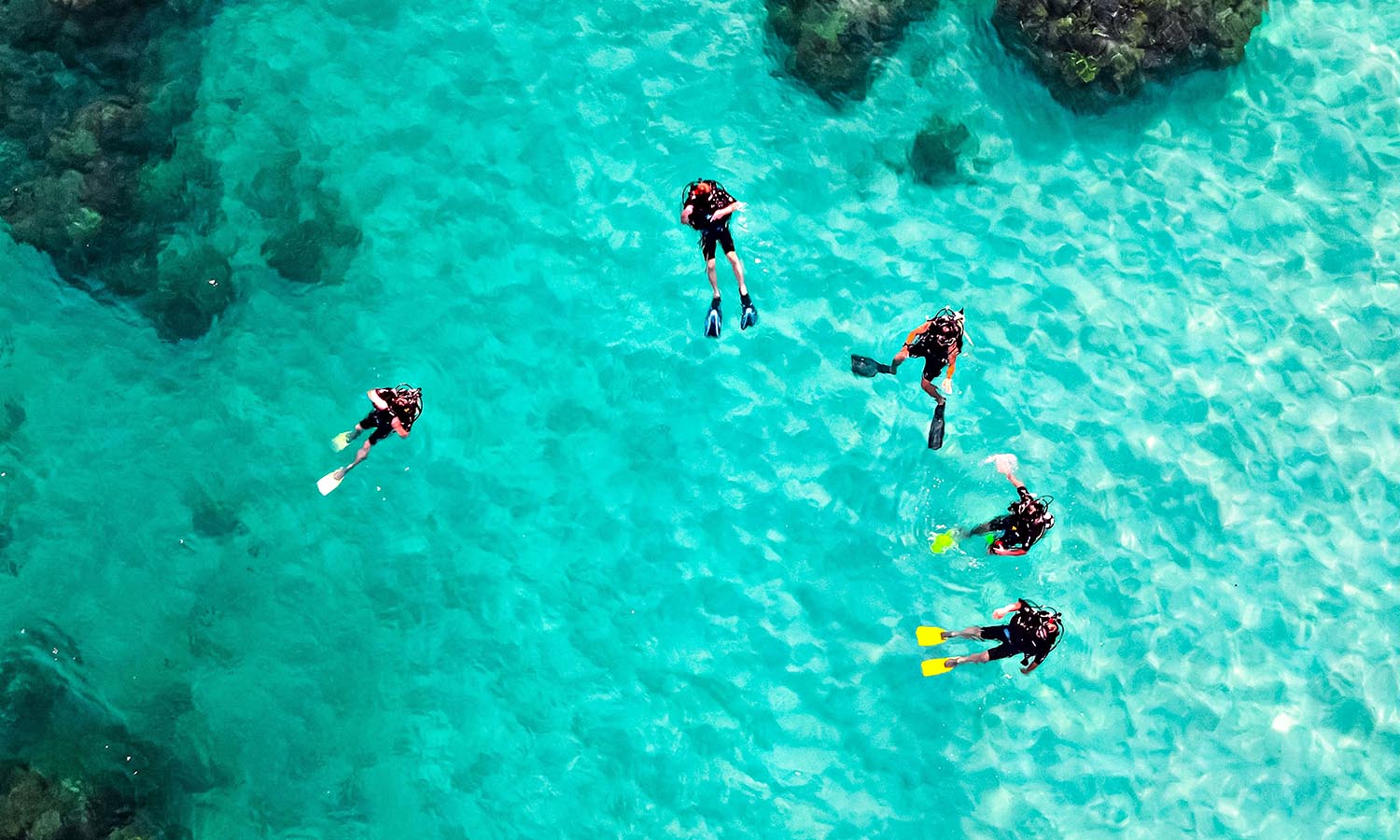
For super cheap scuba diving
Koh Tao has long been a global hotspot for travellers itching to get their underwater PADI / SSI diving licence. When it comes to worldwide scuba meccas, this Thai island is up there with Cairns (Australia) and Utila (Honduras).
Koh Tao itself is a tropical paradise; an island off the mainland that’s defined by palm trees, white sand beaches and serious hammock-time. But it’s also home to some serious dive sites. Chumphon is a crazy submerged granite pinnacle that’s absolutely covered in sea anemone and huge schools of barracuda; at White Rock you can swim with the sea turtles; and if wrecks are more your scene, HTMS Sattakut is a former US Navy ship that’s now home to whip rays and gobies playing hide-and-seek in its rusty crevices. Very The Little Mermaid.
Why dive during green season? It’s more like WHY NOT?! If you’ve got flexibility with your dive days then go for it—there will be less travellers on the island, fewer fins in the water and probably a bunch of decent discounts around town.
Click play to watch
For lush rainforest and bursting waterfalls
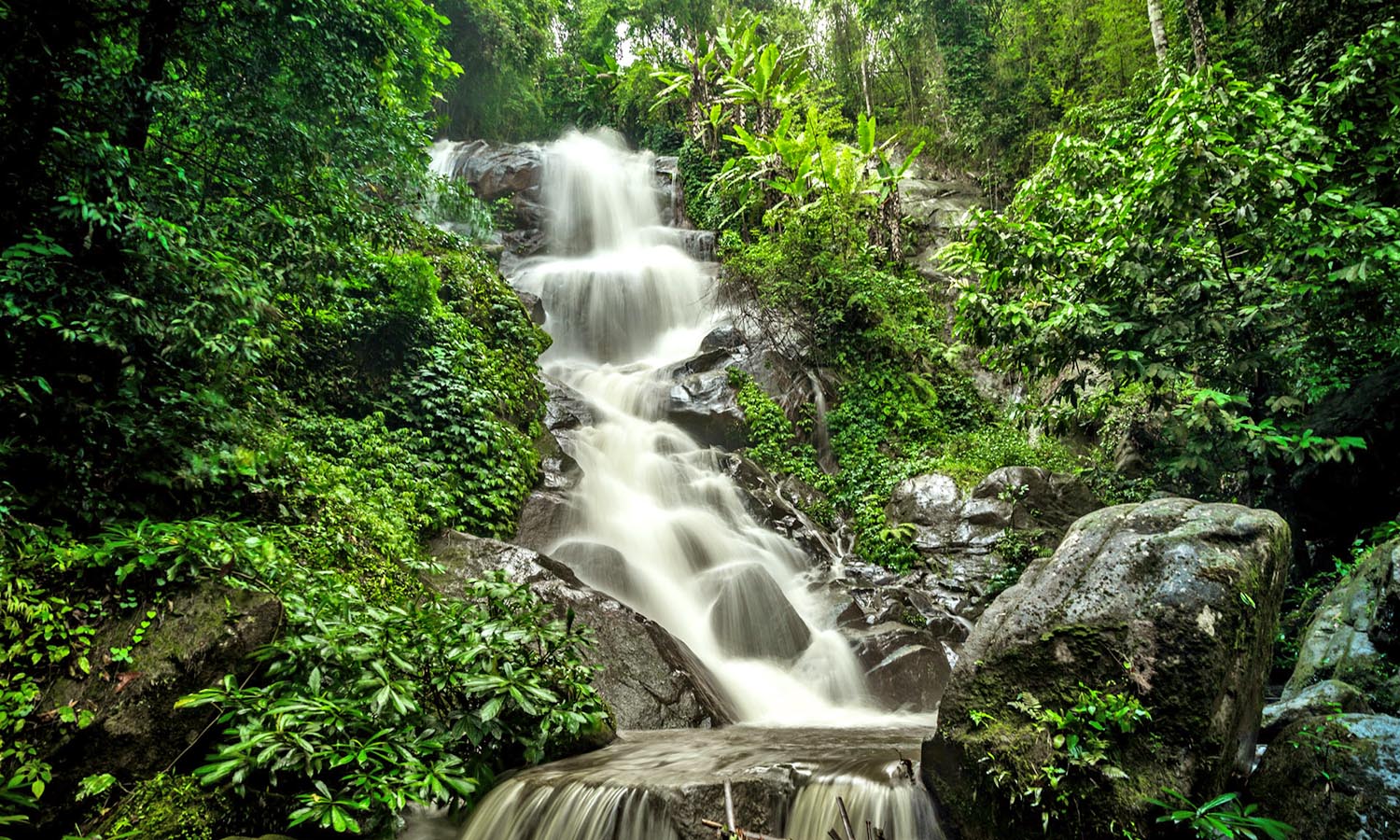
Head north and you’ll find yourself in tranquil, mountainous Chiang Mai. Green season is actually the ideal time to hightail it north because the weather is cooling, the waterfalls are full and the monsoon rains are washing away all the smoke and dust from the hot season. It’s a literal breath of fresh air. It’s also ridiculously, super green. Lush, you’d say. Verdant, even.
Chiang Mai is a must-travel for any nature enthusiasts / hikers / outdoor aficionados. It’s home to some of the country’s most epic national parks and Thailand’s tallest mountain. Such a flex. Doi Inthanon National Park is an expanse of biospheres, rainforest and hiking trails. While here make sure you stop by Mae Yai waterfall, where water crashes from a staggering height of 100 metres. Twitchers: keep an eye out. There’s over 300 species of birds hiding in these treetops.
Click play to watch
For a crowd-free UNESCO experience
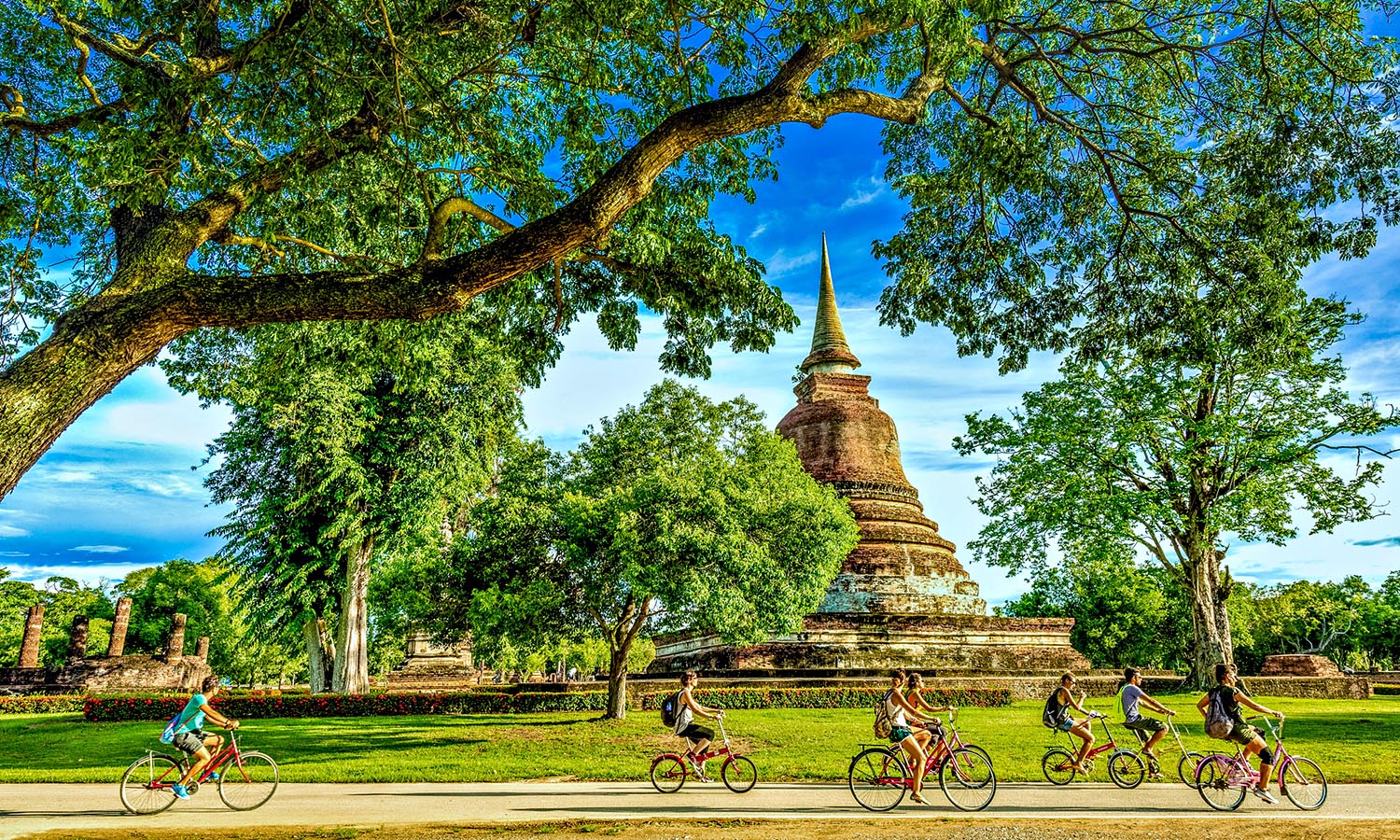
Welcome to Thailand’s ancient capital. Established in the early 13th century, Sukhothai literally means ‘Dawn of Happiness’—pretty apt for the Land of Smiles, right? This region was ruled by a bunch of different kings, but the most famous was King Ramkhamhaeng the Great who ticked a few important things off the royal to-do list, like: create the Thai alphabet and lay the foundations for politics. Impressive.
Nowadays, Sukhothai Historical Park is best discovered by bicycle. And it’s even better during green season when there are less tourists to share the trails. This UNESCO site is home to royal palaces, Buddhist temples, ancient moats, walls and city gates. Then there’s Wat Maha That complex which is everything you’d want from a grand ancient pagoda—go forth and explore like Lara Croft / Indiana Jones.
For a feast, no matter the weather
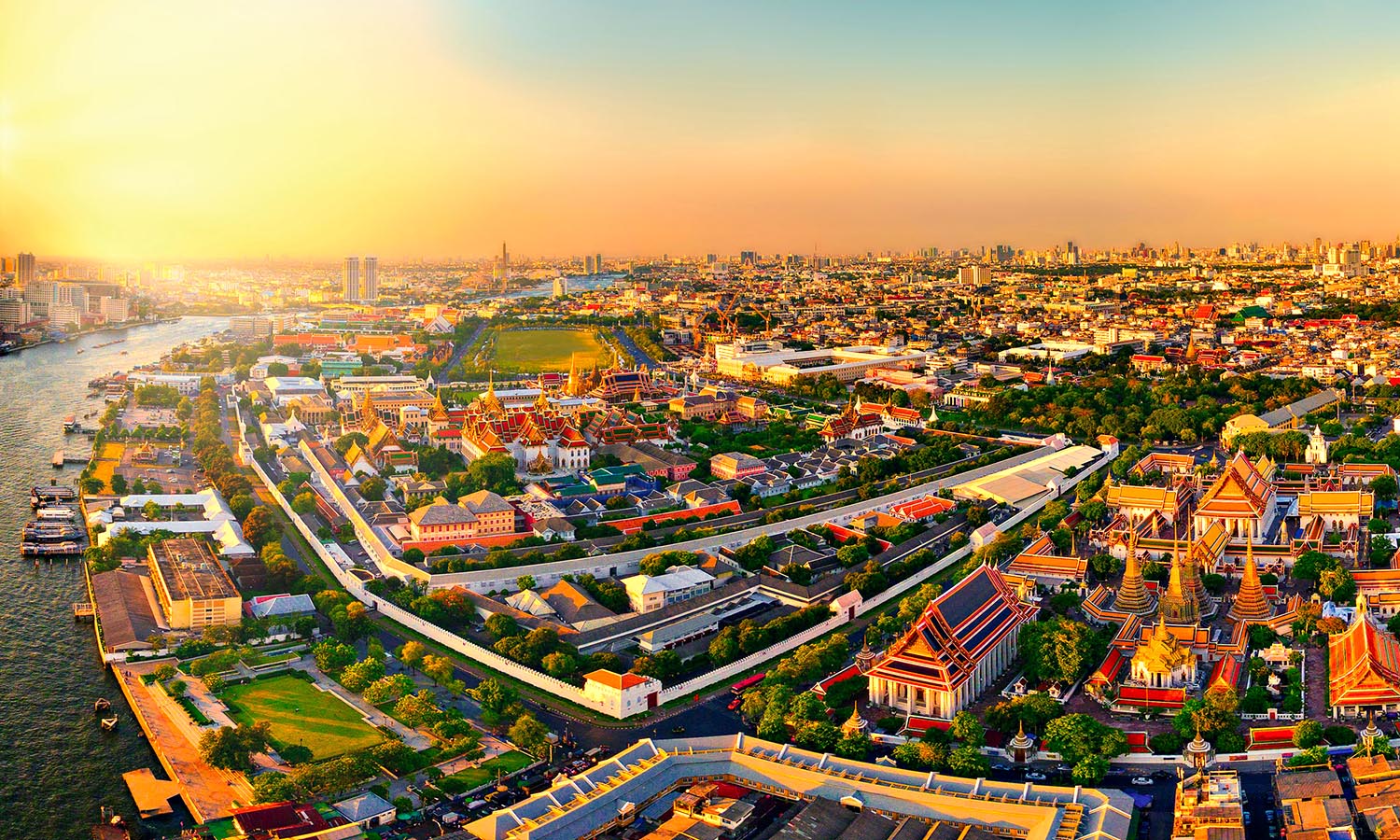
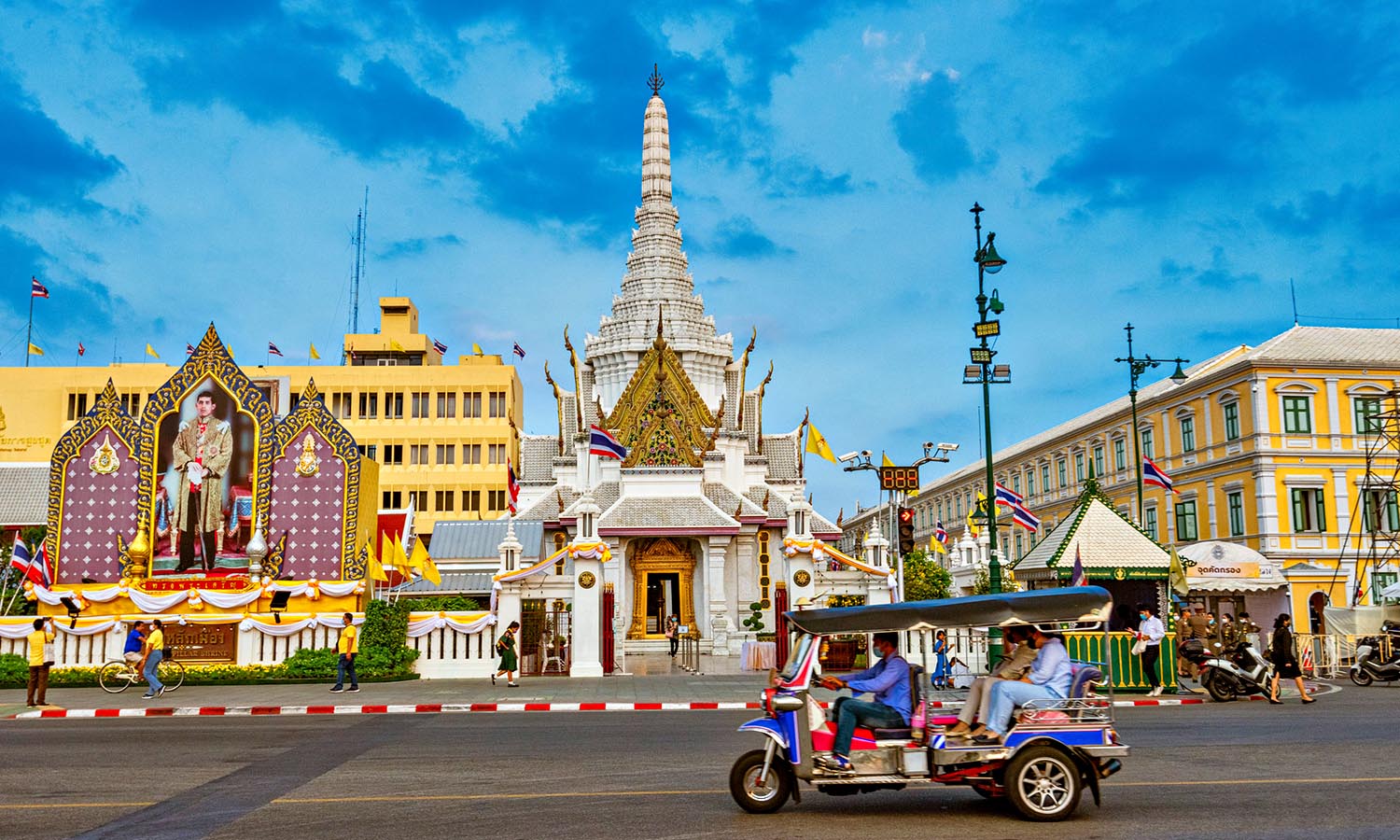
Bangkok, quite literally, shines in any weather. You can also gorge yourself in any weather too. You don’t need clear skies to eat your way through a city market. It doesn’t matter if it rains when you’re inside learning how to cook legit pad thai from a woman named Anong. If anything, the cooler weather will make tom yum soup more enticing; you might even be persuaded to add a little extra chilli to your noodles.
If it does drizzle, just grab an electric MuvMi tuk tuk (you can order one and rideshare anywhere in the city!) and take yourself on a food tour of Old Town. Ask your tuk tuk driver to stop at their local and order exactly what they’re having. Pull over at street stalls for tasty, unidentifiable skewers. In the evening, make a reservation at one of the city’s more bougie fine dining restaurants. A little rain never hurt anyone’s appetite.
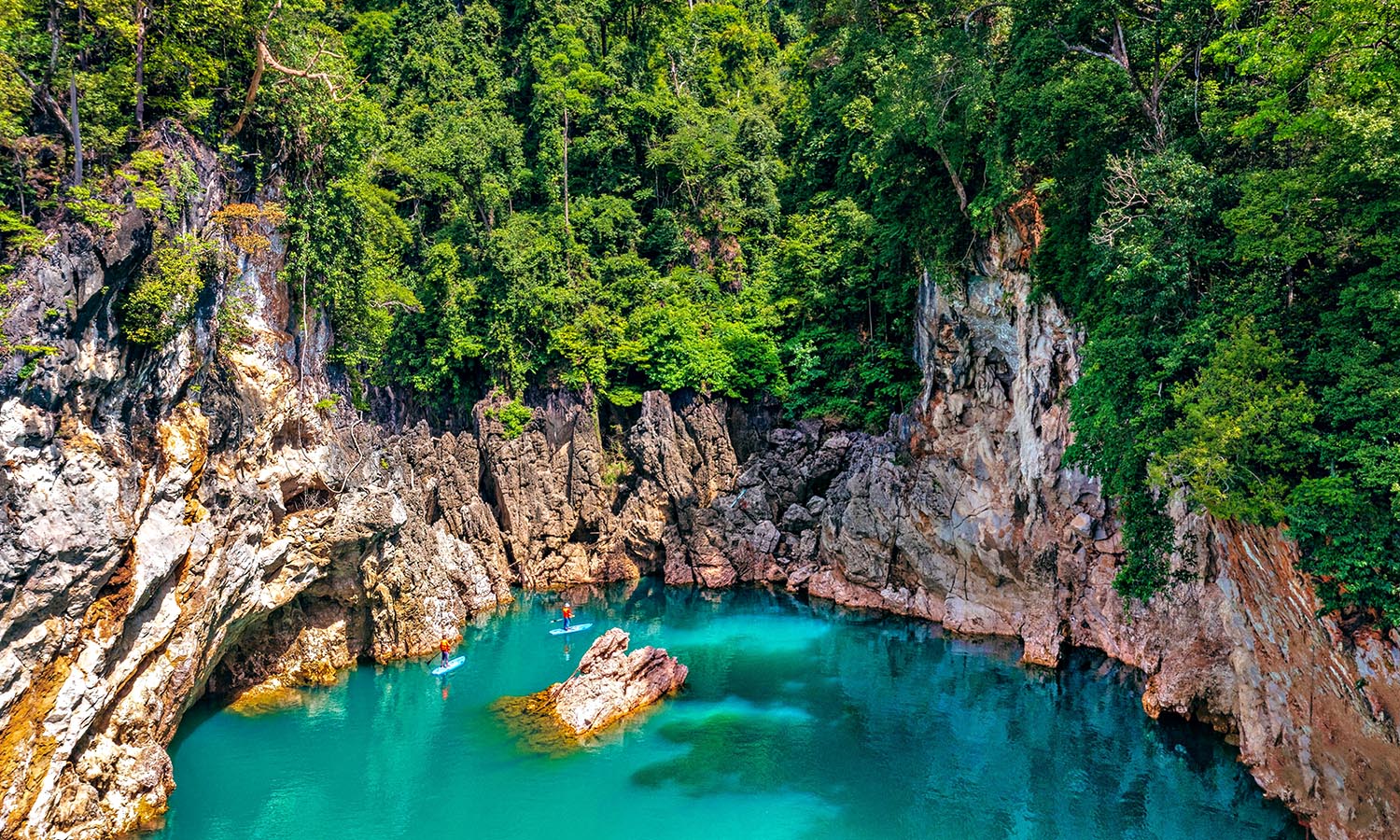
For a seriously good safari
Safari? In Thailand? You heard us. Khao Sok, in Thailand’s south, is a pristine parcel of wilderness just waiting to be explored by foot, by longboat and even by kayak. Play spot the sun bear / leopard / tiger! Count the innumerable reptiles slinking out of the rainforest! Get ready to witness the most majestic of birds!
But is safari a good wet weather activity, you ask? Heck yeah. The cooler weather brings out a different, noisier side to the rainforest. And it also makes for more comfortable trekking. A light afternoon sun shower is the best way to wash the sweat off. Trust us.
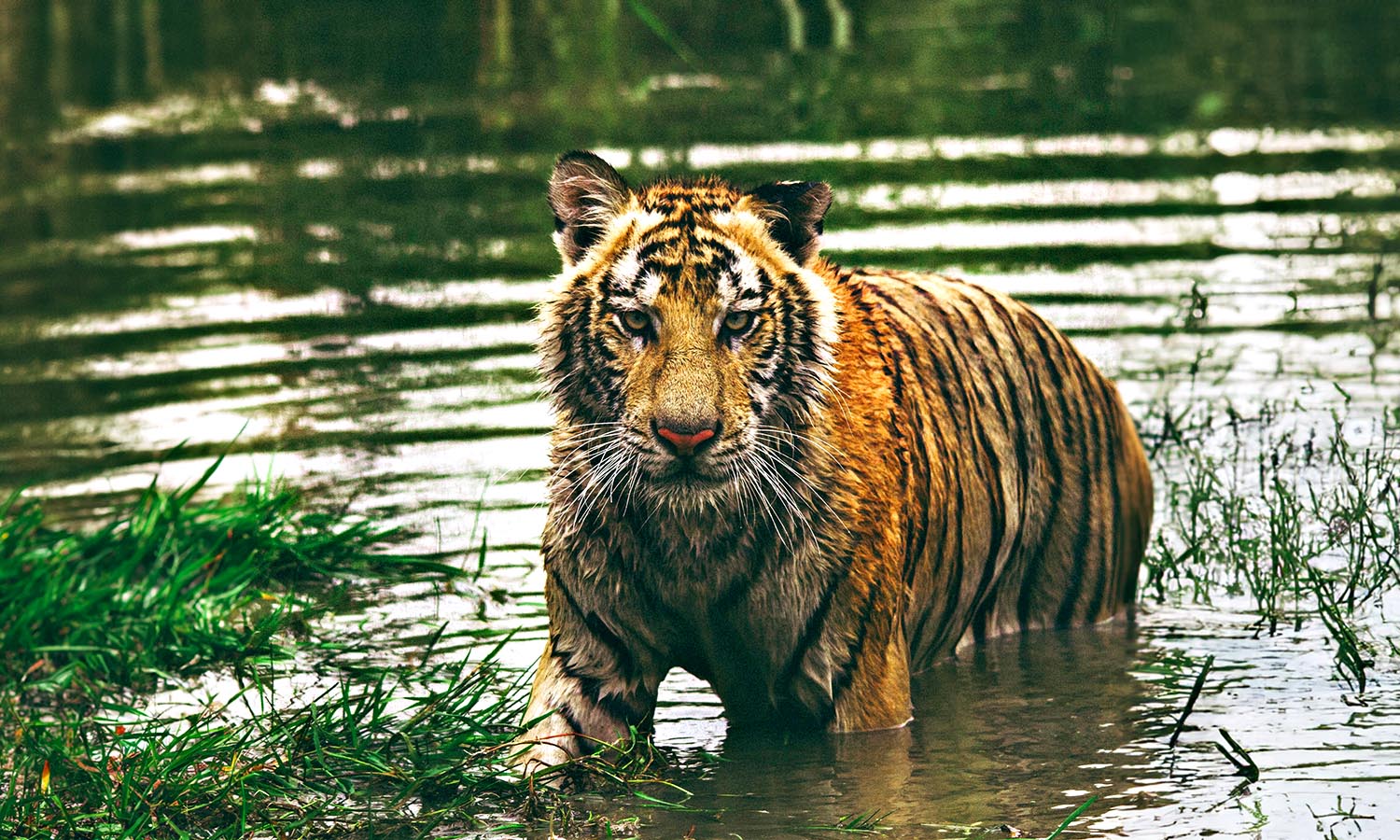

For deserted beaches all to yourself
Okay, we’ve all seen The Beach. And we’ve all wanted to go to The Beach. Well, before it gets weird and Leo video-games his way through weed fields. ANYWAY, point of the story is that deserted beaches are amazing. Waaaay better than crowded beaches.
Krabi is the picture of perfection, and its beaches are decidedly less busy in the green season. From Railay to Ao Nang to Ton Sai, you’re promised white sand, crystal waters and more than enough space to lay your towel down. What if it rains? Then take shelter for an hour and devour some laarb, before donning your snorkel once again. The rainstorms here never last too long, that’s a guarantee.
Click play to watch
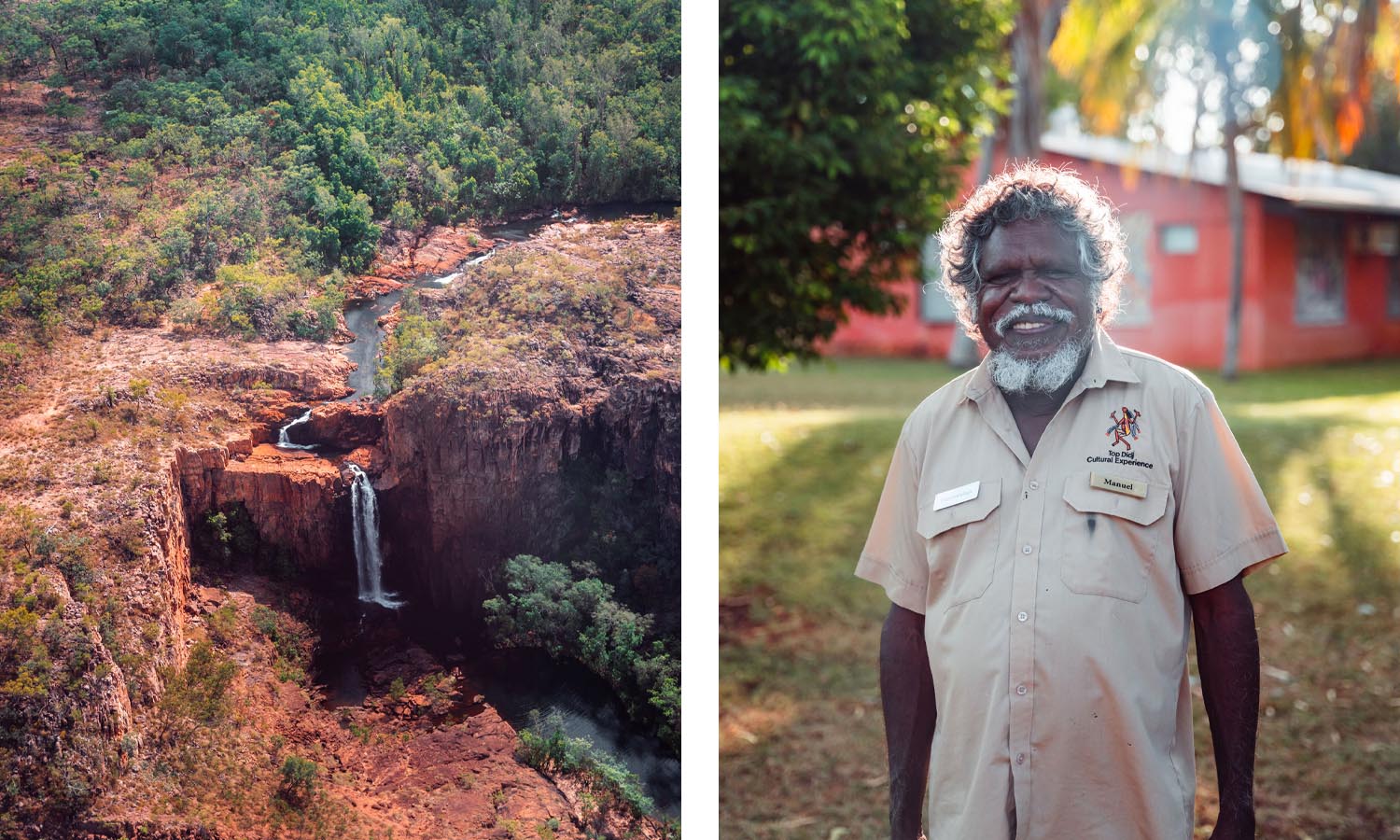
he was born sometime in July when the kapok flowers bloom; he has the best head of hair in the Northern Territory; and sharing Weet-Bix just isn’t the same as sharing campfire yams.
“We would share everything,” Manuel says, while demonstrating how to paint a perfect Mimi spirit (a fairy-like being from Arnhem Land) with just a bendy piece of bamboo grass. “That’s how we lived, how we still live… whatever the men would bring back from hunting and whatever the women would collect—that’s what we’d share.”
Born on Jawoyn traditional land—a 55,000 square kilometre parcel stretching north-west of Katherine, across to the southern part of Kakadu National Park and Arnhem Land, then down to Mataranka—Manuel’s home country is vast and ancient, full of sandstone gorges and epic waterfalls. Having grown up out bush, he speaks three languages—Dalabon, Kriol and English; can tell a Dreamtime story like no other; and is an award-winning painter. Hence the art class.
Click play to watch
Now, I’m not normally a creative who blames their tools, but trying to paint with a single piece of bamboo grass is harder than it looks. Frustrating, even. If you turn the canvas upside down, my bush bat looks more like a fat sheep.
While we paint (or at least I attempt to), Manuel tells me about making bark art with his dad, sleeping under the stars with goannas for pillows and the Dreaming serpent who created all the nearby Nitmiluk gorges. “The first time I saw a white man, I was so scared,” he laughs. “I ran back to my mum, I thought a ghost was in the creek.”
Manuel is a storyteller at his core—a gift that’s at the cultural heart of our First Nations peoples. For millennia, knowledge has been passed down through stories just like this, whether it’s a Dreamtime tale, song or dance. It’s one of the reasons I’m here in the Top End: I’m headed to Barunga Festival, a celebration of all things community, custom and culture. And I’m most excited for the stories.
Click play to watch
Barunga, where Manuel spent most of his childhood, is a small community about an hour’s drive from Katherine, where the town’s 400 person population grows by a whopping 1000% every June as different mobs gather and festival-goers stream in from around the country.
This year is particularly auspicious: the event has been handed back in its entirety to the Bagala Aboriginal Corporation; it’s been 35 years since the Barunga Statement was drawn up; and the Voice referendum is happening in a few months. Everything considered, it’s set to be a big one.
The Barunga Statement, if you’re not in the know, is an historic document created at the 1988 Barunga Festival. The artwork calls for a recognition of land rights, self-determination and a Treaty between Indigenous and non-Indigenous Australians, and it was signed by then Prime Minister Bob Hawke. In fact, Yothu Yindi wrote the mega hit ‘Treaty’ in response to this gathering at Barunga. The history! The impact! It’s enough to give you goosebumps.
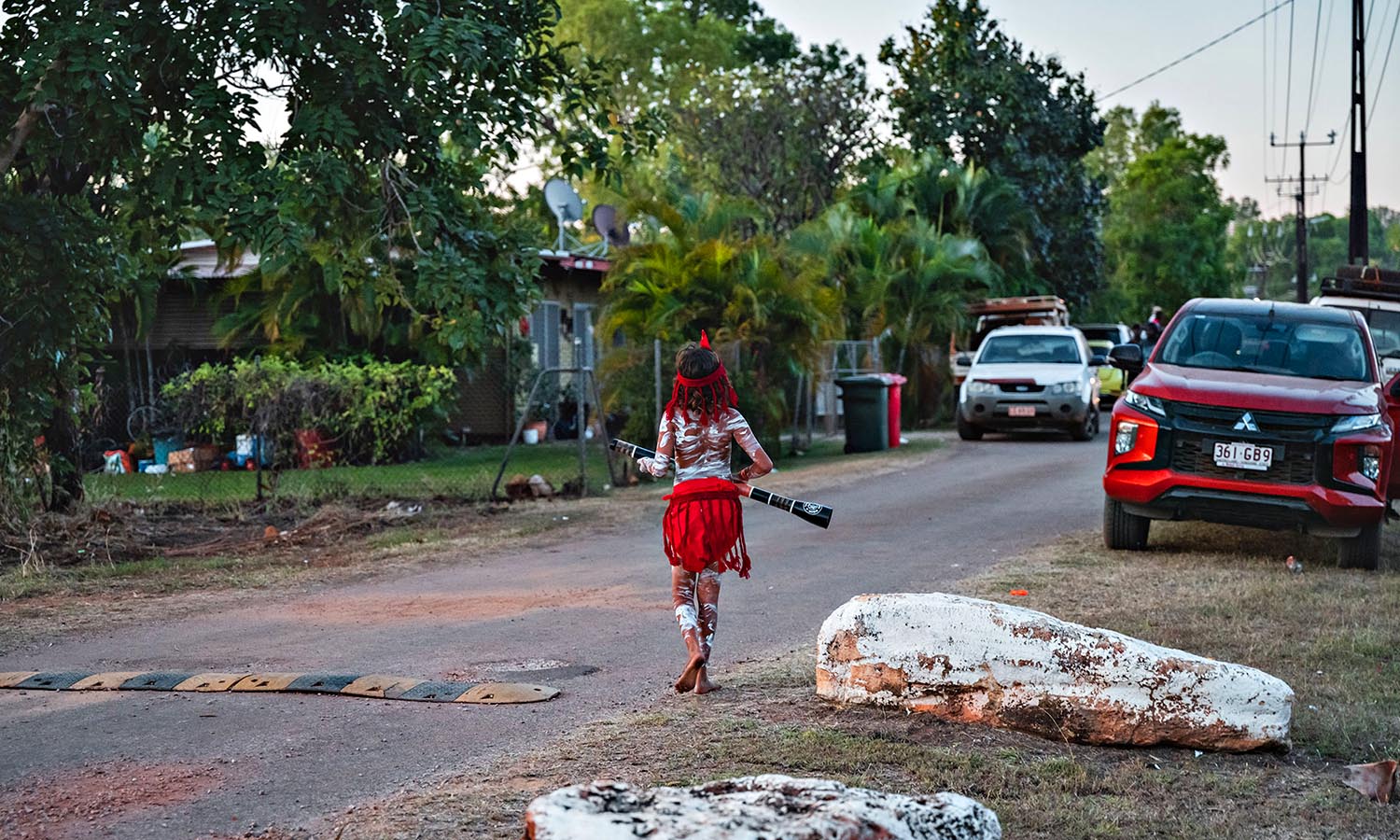
The drive into Barunga is classic Northern Territory: red dirt roads and big blue skies. The occasional eagle catches an updraft to float above our campervan. As we arrive, hundreds of tents and troopy’s are already setting up camp next to the oval or behind the main stage; there’s a group of kids playing Marks Up in the break between football games; Drake is blasting from the basketball court where two local teams are going head-to-head in a dunking (literally, they can all dunk) competition. The energy is joyous.
That energy shifts into excited anticipation as the entire festival crowd takes a seat for the opening ceremony. We’re all gathered outside, around a large sand stage, when the didgeridoo (traditional wind instrument) starts to sound. There’s nothing quite like the hypnotic drone of a didgeridoo—it’s haunting and otherworldly, echoing the cries of a dingo or kookaburra.
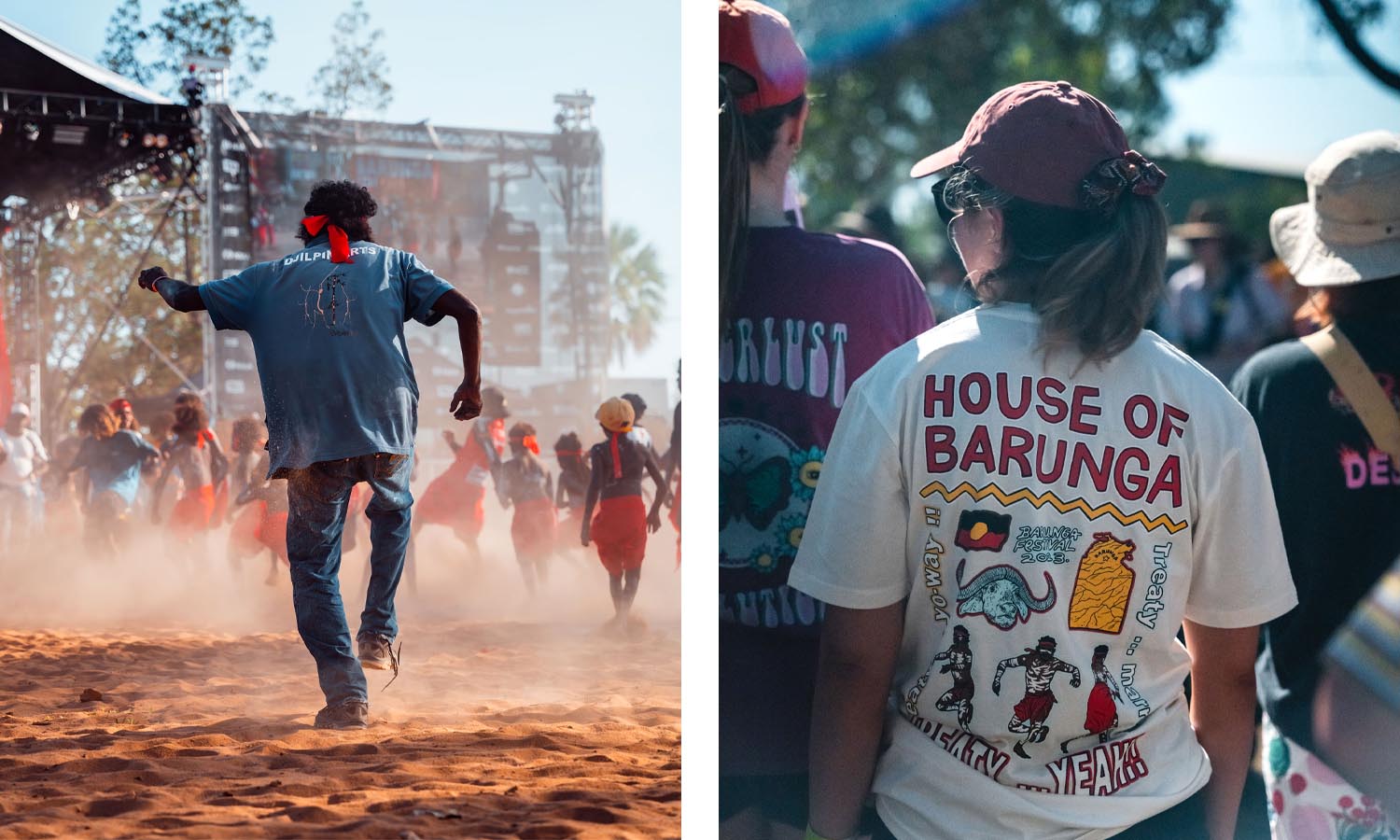
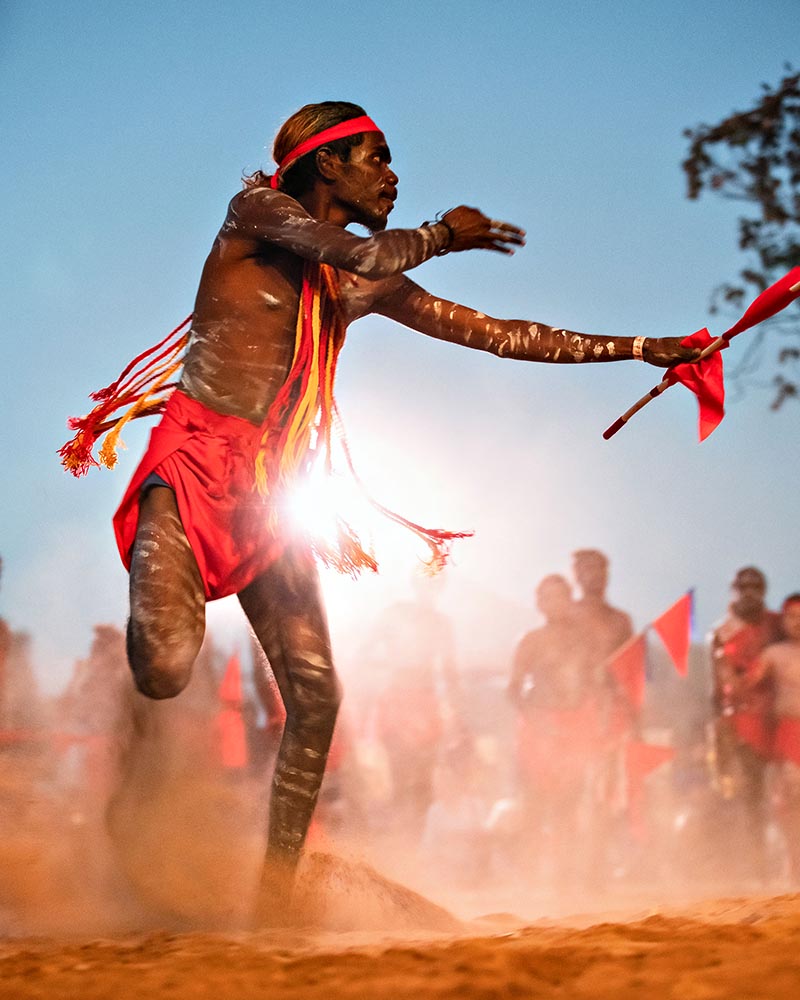
Then the dancers appear. Covered in traditional ochre body paint, they kick up a sandstorm in the evening light, throwing invisible spears. Every dance tells a story, some about hunting kangaroo others how to catch a river fish. It’s frenetic at times—their bodies moving to the beat of clapping sticks—and fluid at others. I feel a collective hair-raising happen around me; this is what it feels like to be truly welcomed onto country.
“You’re on Bagala land now,” says Lisa Mumbin, Jawoyn Associate Chair and remote East Arnhem land woman, to the crowd. “We welcome you, we don’t turn you away… but before we can go forward, I want to make sure that my message gets through to everyone today: Jawoyn supports the Voice to parliament.”
I’d been wondering what the approach to the coming referendum—where Australians will be asked to vote on the creation of an Aboriginal and Torres Strait Islander Voice that will represent Indigenous Australians to the parliament and federal government—would be. It turns out the four Northern Territory land councils have spent the last week in discussion. The result? A unified ‘yes’ in support of constitutional recognition. Once again, Barunga stands as a place to do historic, significant business.
“You’re going to be enriched in the next few days, remember to listen and to listen carefully,” says Lisa.
Her words become my mantra as I explore the festival. I sit with women from Wudiculpyderr and Merrepen, Peppimenarti and Nemarluk as they weave dilly-bags and fish traps; Chiyo Andrews shows me how to grind lemongrass and eucalyptus to make bush medicine balms and oils; I watch women make damper over open fire and men sand back didgeridoos; and I take a tour of the town with the Barunga Guides, a group of shy school kids, one of whom is a traditional owner and she’s only six.
One afternoon, I’m peed on by about a hundred terrified bats; another morning, I take a dip in the river, keeping an eye peeled for crocodiles. This is the Northern Territory after all, and life here is pretty wild.
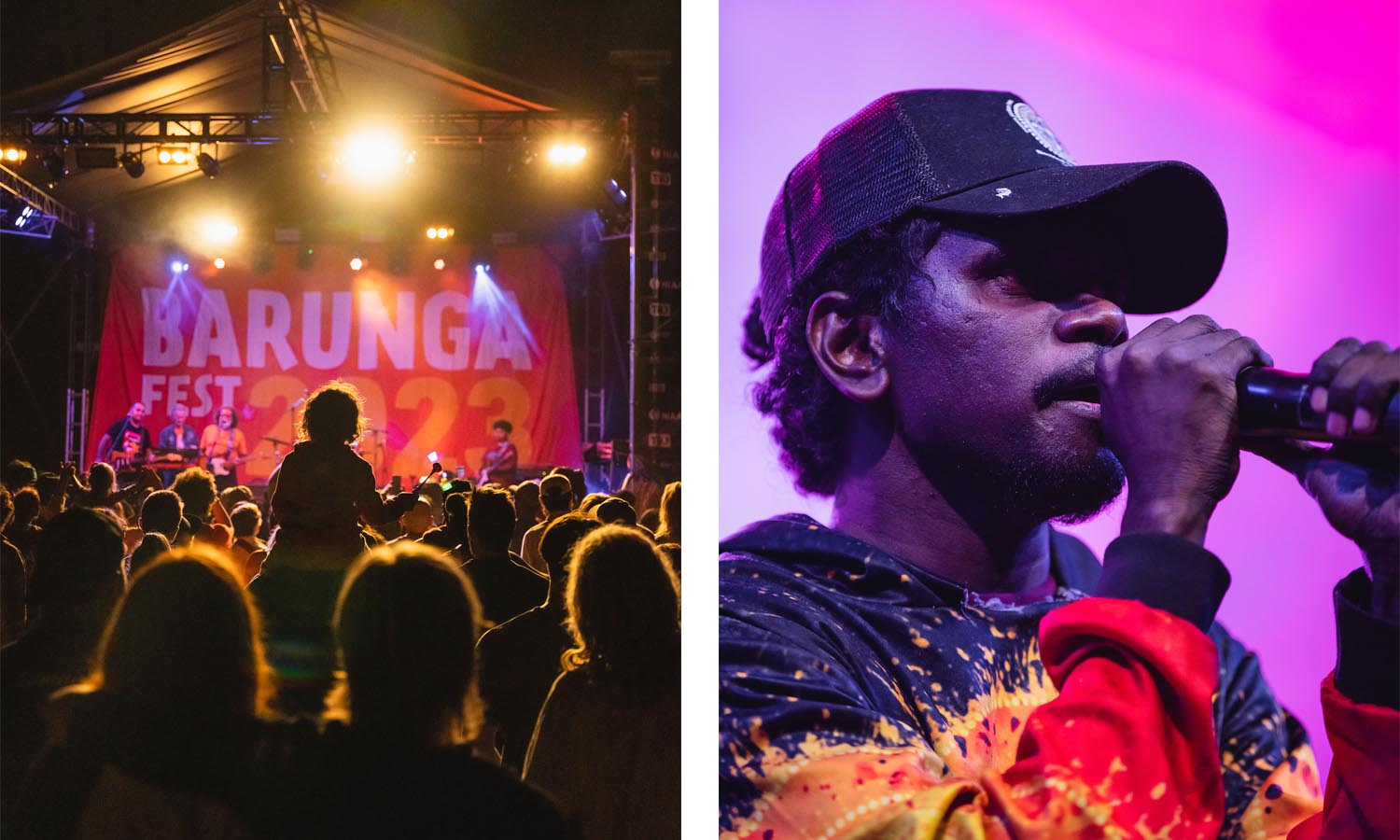
At night, the music starts. The crowd lets loose as Coloured Stone play their 1984 hit ‘Black Boy’; they go wild for Yilila band’s mix of traditional Red Flag songs and high energy reggae and rock; songman and ceremony leader, Ngulmiya Nundhirribala, sends the audience into a trance with his god-like voice. Ngulmiya sings versions of formerly private ceremony songs—they’re all in native language and it’s impossible not to be moved.
Then there’s Terry Guyula, the frontman and songwriter from Drifting Clouds, whose main inspiration is Yothu Yindi. Barunga Festival is Terry’s first big gig and he has all his family here to support him. They erupt when he steps up to the mic.
On the last night, Ngulmiya invites his grandson—who can’t be older than six—up on stage. “These songs we’re singing tonight are hundreds of years old,” he says. “Whenever we perform overseas, we think of this land… being here in the Northern Territory is where we’re most comfortable, because we’re sharing our songs with our family.”
Click play to watch
And sharing, I realise, is what is at the heart of Barunga Festival. From Manuel sharing his stories and Chiyo sharing her medicine knowledge to Ngulmiya sharing his cultural songs and Lisa, quite literally, sharing her land with us.
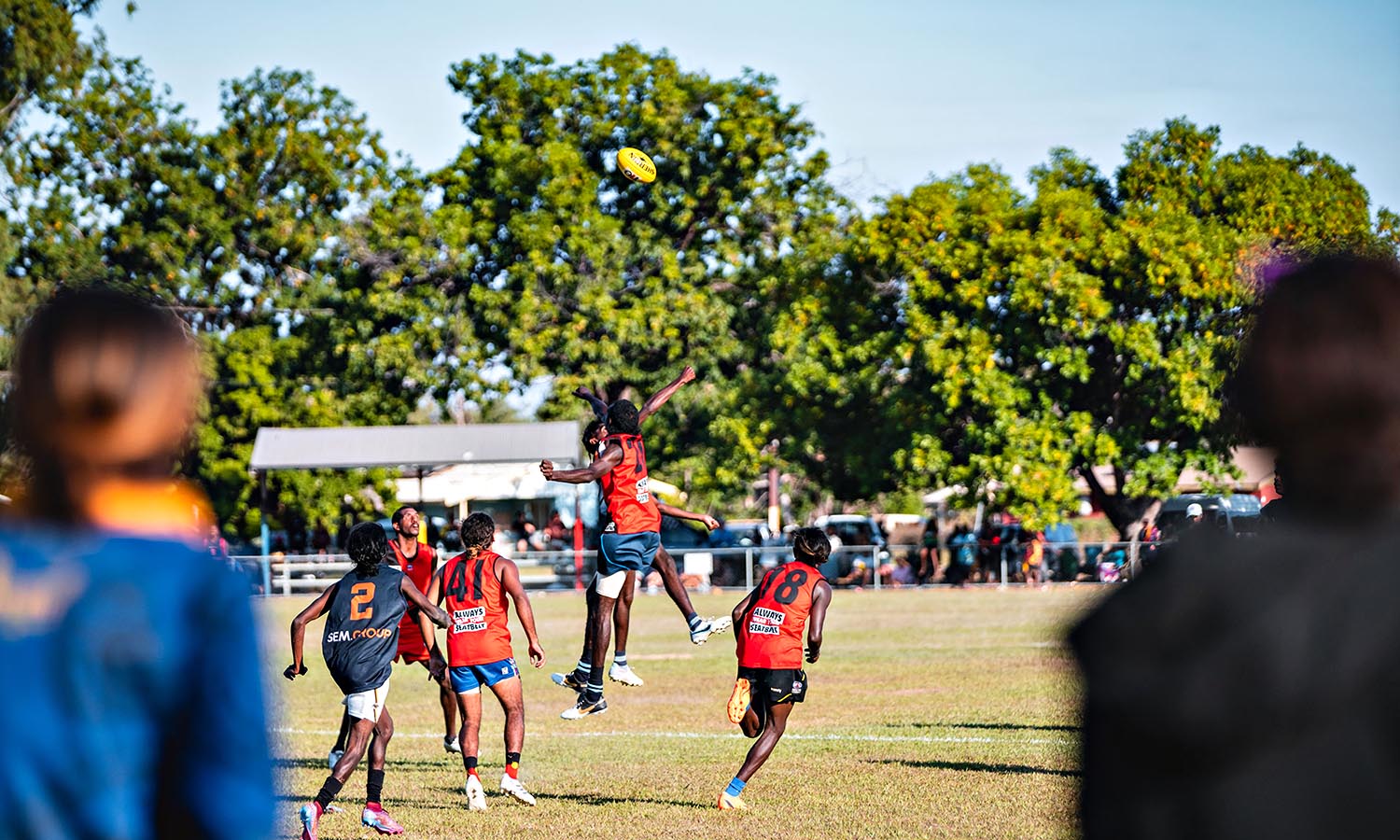
At the footy grand final on the last day, the supporters are going absolutely wild for their teams. Young kids are clapping and old women are screaming as the players throw themselves at the ball. It’s do or die; footy is everything up here. There’s a woman standing next to me, she’s tiny but she’s got a set of Pavarotti lungs, when I hear her shout: “take it easy you lot, we’ve all got mob on both sides… this is for everyone.”
And apparently even footy glory has got to be shared at Barunga.
IN PALAU
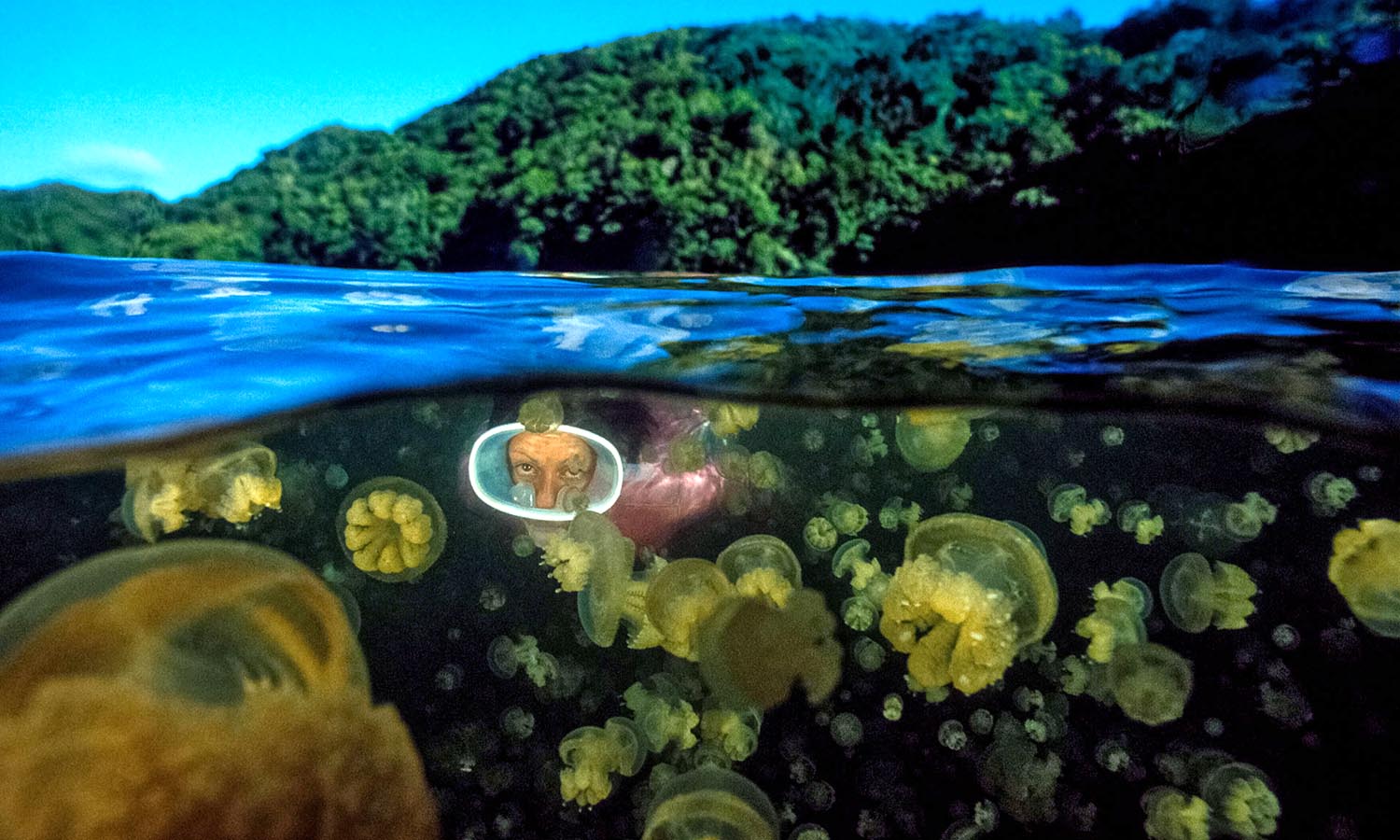
Just few years ago, Palau’s Jellyfish Lake on Eil Malk island was closed to swimmers and divers due to declining jellyfish numbers. This was a smart decision by the Palau powers-that-be; just another instance of a small government leading the way in conservation and preservation of the natural world.
Click play to watch
The good news: Jellyfish Lake is back open. Even better news: the population of (harmless) ethereal golden jellyfish are well and truly on the rise. Having built the population back to pre-tourism levels, a number of measures have been introduced to ensure this extraordinary phenomena can be experienced safely and without disrupting the natural environment.
Perhaps the best news is that while most migrations might take place once a year, or once in a blue moon, the jellyfish here migrate EVERY SINGLE DAY (also known as a diel migration), spending much of their lives on the move as they follow the arc of Big Yella.
IN MEXICO
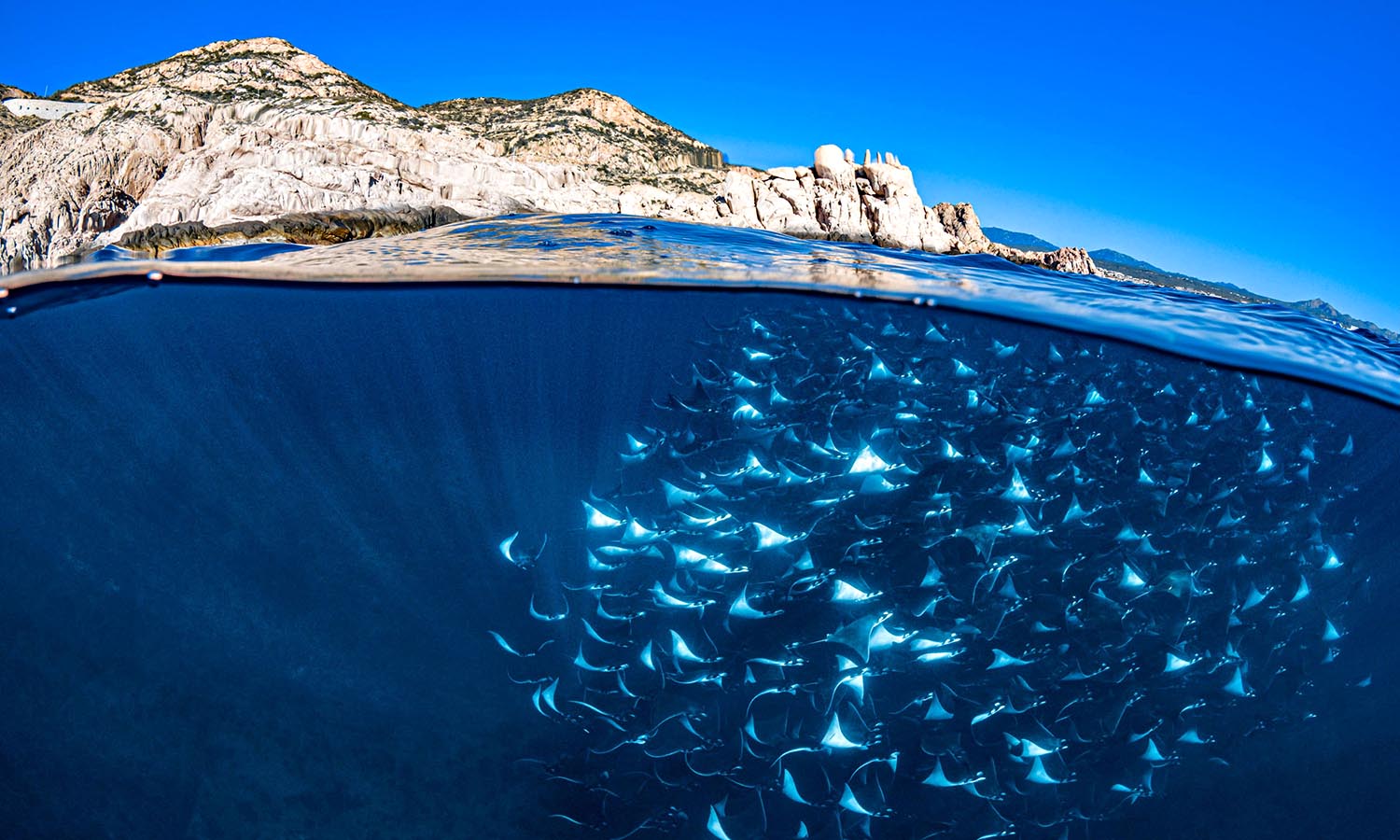
Mobula Rays are a species of ray that move in thousand-strong squadrons along the Sea of Cortez off Mexico’s Baja California Peninsula.
Click play to watch
Our favourite fact about Mobulas? They leap as high as two metres out of the water to impress a potential mate. What a sick way of flirting.
Witnessing their acrobatics up close isn’t difficult to organise. The Mobulas aren’t secretive about their migration—Mobula madness takes place along the Sea of Cortez coastline every year from April to August and then again from November to January.
They’re pretty chill with human interaction too, so divers and decent swimmers can paddle up close alongside the Mobulas during this show of extraordinary aquatic acrobatics.

IN CANADA
Imagine: thousands of reindeer (also known as caribou) hurtling, slipping, sliding and galloping across a mass of white snow and ice.
Click play to watch
That’s what to expect from Canada’s reindeer migration, where the fairytale-like (but very real) creatures make the trek north to preferred breeding grounds. The 80-kilometre trip sees hundreds of thousands of reindeer travel from Inuvik to Richards Island, Northwest Territories, anywhere from late-March to late-May.
It is a fascinating (if a little chilly) event to witness. At Arctic Haven Wilderness Lodge in Nunavut (a long way north) you can actually watch them go by from the comfort of your own room, given they *fly* straight past the lodge.
We recommend getting out there and amongst it—you can get pretty close without affecting the natural order of the herd. The sound of so many majestic beasts flying towards you, and around you, will make you feel as if the tundra you stand on is on the move.
IN GEORGIA
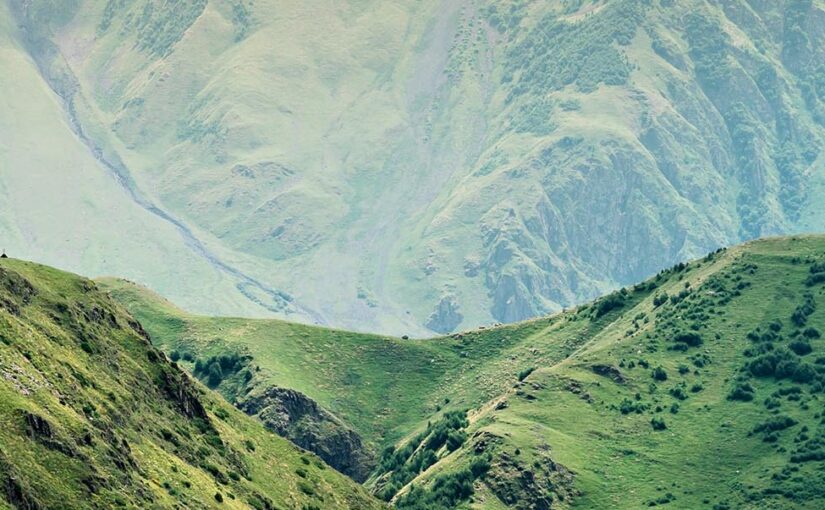
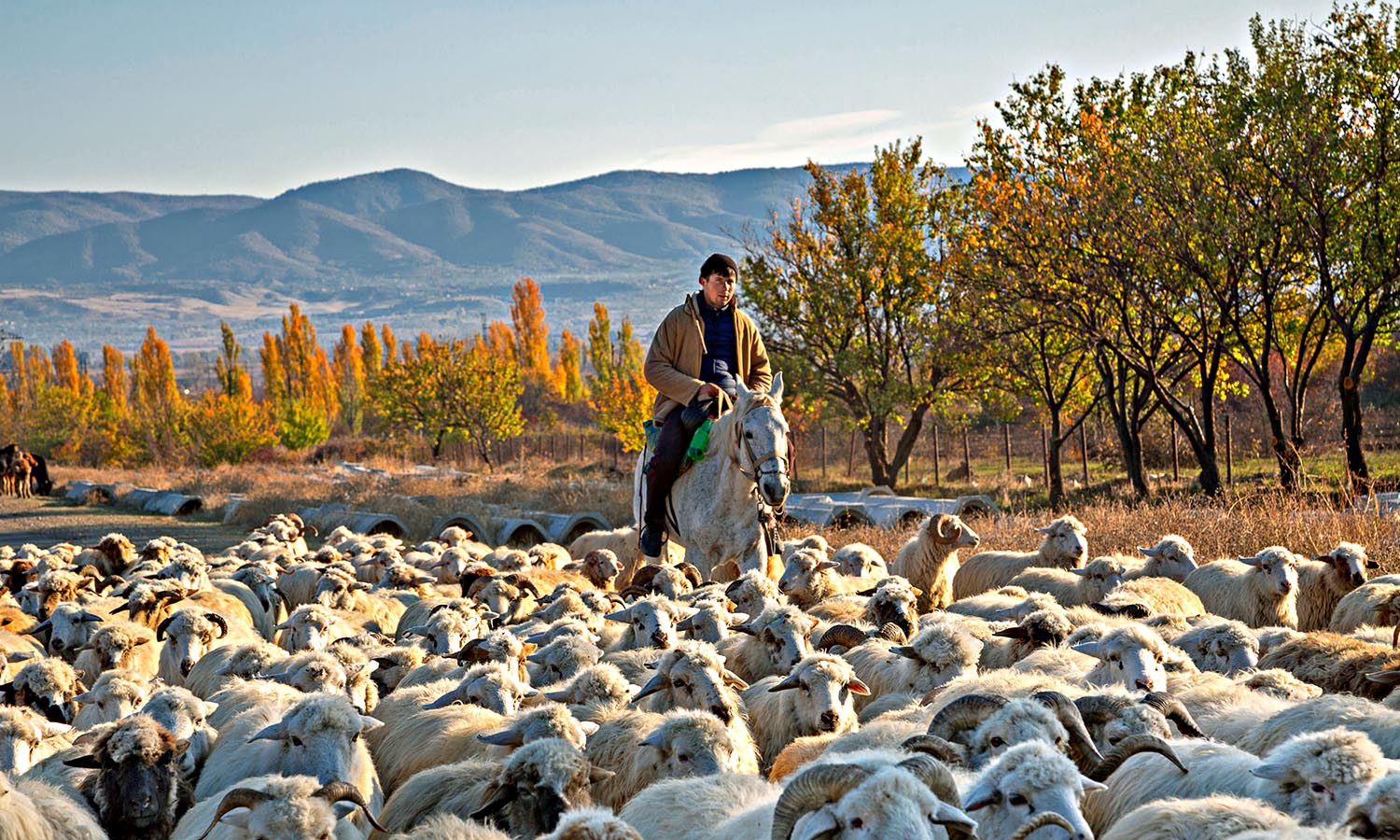
While Tbilisi, Georgia’s capital, might be a trendy metropolis of art, culture and cool bars, the rest of the country is somewhat different. Take the Tusheti region in the country’s northeast, for example; a poster-destination for remote, untouched, rugged beauty.
Every September, the shepherds of Georgia’s north herd flocks of sheep down mountains to a warmer climate. What is done by trucks in other countries is not possible here; the narrow, slippery roads that hug the steep bends of the Caucasus Mountains are not safe enough to transport livestock by vehicle. It is therefore done the old-fashioned way—by foot and on horseback.
For an incredible experience, head to the high-altitude village of Omalo around the end of September, and follow the same trails that have been walked for thousands of years. Hospitality is a big part of the culture here, and in the little villages dotted along the trails you’ll be sure to find guesthouses and delicious home-cooked meals. And probably (definitely) wine.
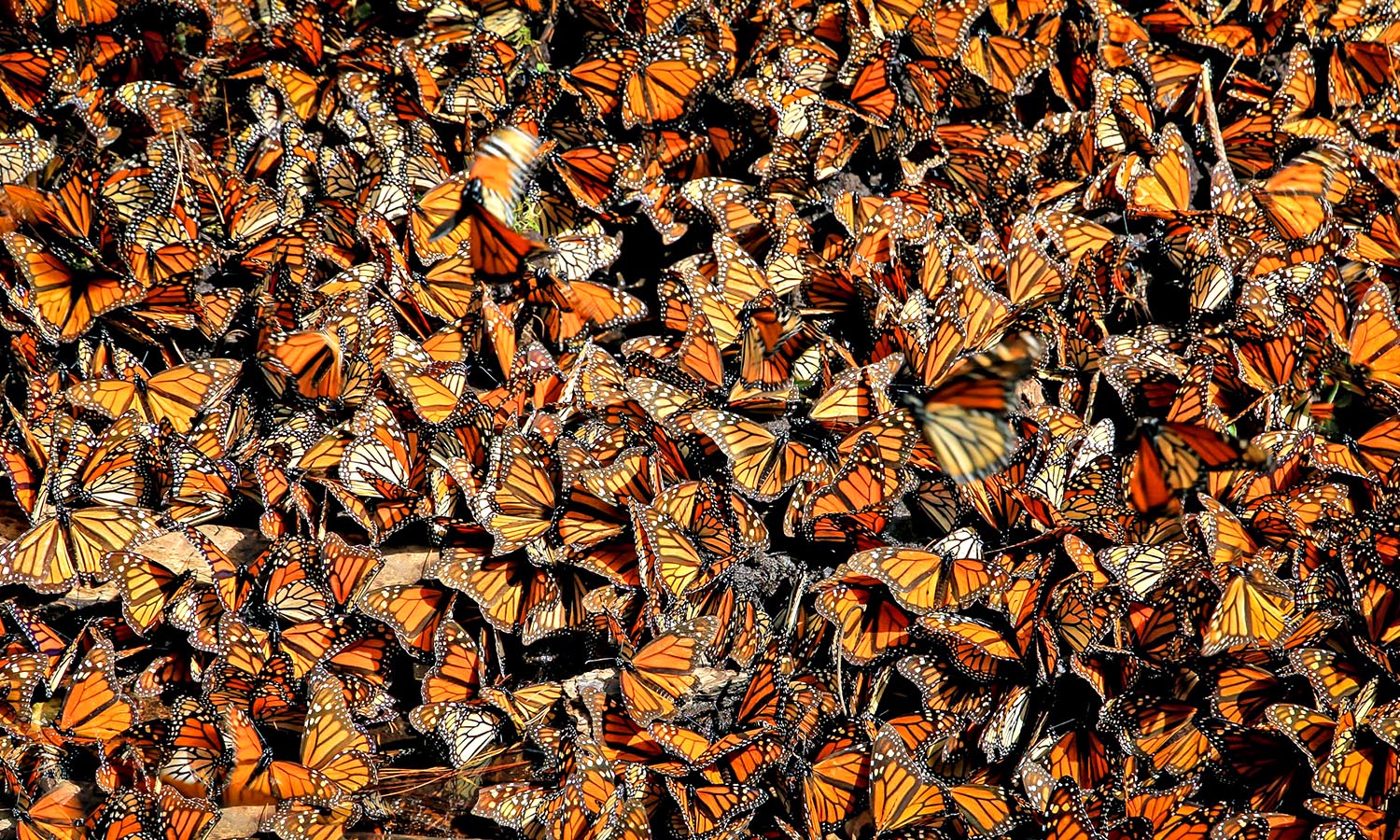
IN MEXICO
You might be thinking entomology AKA insect watching is less get lost and more Pensioner’s Weekly; a safer alternative to bird watching (you never know when the rare black-browed babbler might swoop). But trust us, when we say Mexico’s monarch butterfly migration is absolutely get lost-worthy.
Click play to watch
We’re not talking about a few hundred or a few thousand butterlies here—we’re talking colonies of no less than 20 million of these pretty flutterers travelling south, upwards of 120 kilometres per day.
They leave Canada and the U.S. for the warmth of Mexico in the winter, and then head back again in summer (ain’t no wall stopping these guys, Trumpy). If you’re in Mexico, butterflies start arriving in November through to late-March. We highly recommend visiting one of their summer sanctuaries to witness them landing en masse. Pretty epic.