(
(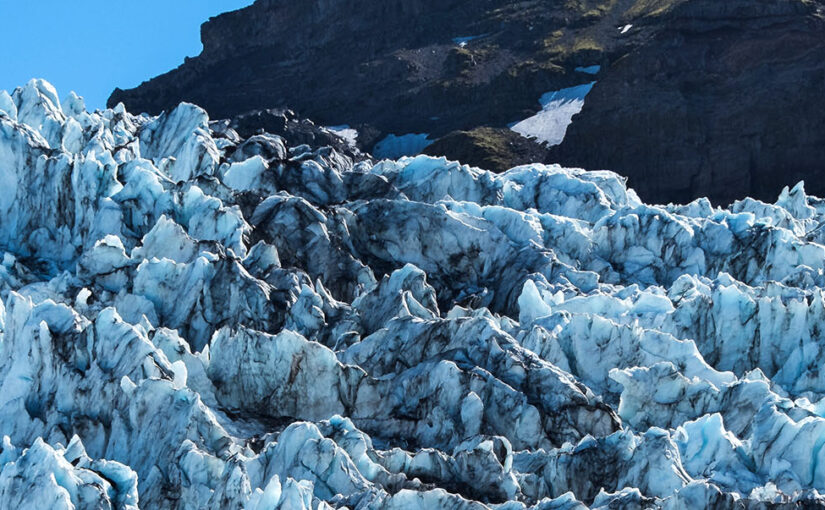
The awe-inspiring landscapes surrounding Iceland’s Vatnajökull glacier are a reminder to grab life by the reins.
Archives: Feature Articles
Allows the user to create Feature Articles

Allows the user to create Feature Articles
The awe-inspiring landscapes surrounding Iceland’s Vatnajökull glacier are a reminder to grab life by the reins.
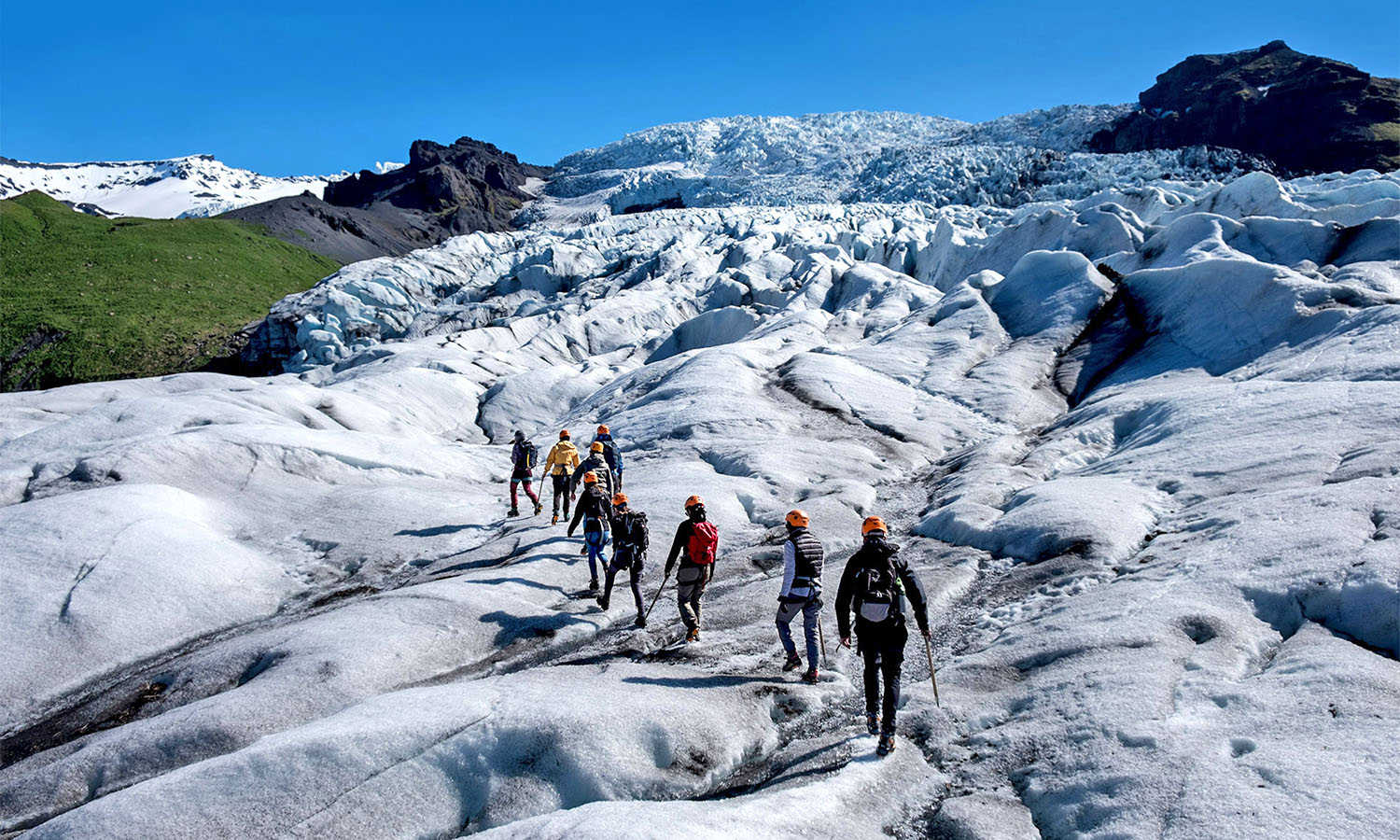
We slam our pickaxes down into the ice, taking a breather from our rabid scramble up the glacier.
Suddenly, a thunderous cracking sound bounces off the mountains on either side of us. Our chatter dies away as we whip our heads up in unison, scanning the cavalcade of jagged ice above for signs of movement.
When nothing stirs, our guide Kasha breaks the silence.
“Let’s hope the Öræfajökull volcano doesn’t erupt today!” she laughs, picking up her axe and turning to face the looming ice wall. Everyone is oddly quiet as we fall in step behind her.
It’s a startling reminder of where we are: hiking across the largest glacier in Europe in one of the wildest countries in the world. The glacier, Vatnajökull, is unfathomably huge, covering around 10 percent of Iceland, complete with several of the country’s most explosive volcanoes beneath. It’s the perfect place in Iceland for thrilling adventures – exactly what I’m here to experience.
“That’s one of the best things about being in Iceland; nowhere is safe from natural disaster. But as we like to say here, þetta reddast, which means ‘It’ll all be OK in the end!’” giggles Kasha.
This is Iceland’s unofficial motto, and Kasha’s easy-going attitude in the face of such powerful nature is a common theme on my trip around the southeast corner of the country.
It’s here that offers the easiest access to the glacier and the landscapes that surround it, all protected as part of Vatnajökull National Park. And despite a booming tourism industry in Iceland, the number of people out this far from Reykjavik have dwindled, congregating around a few select sights.
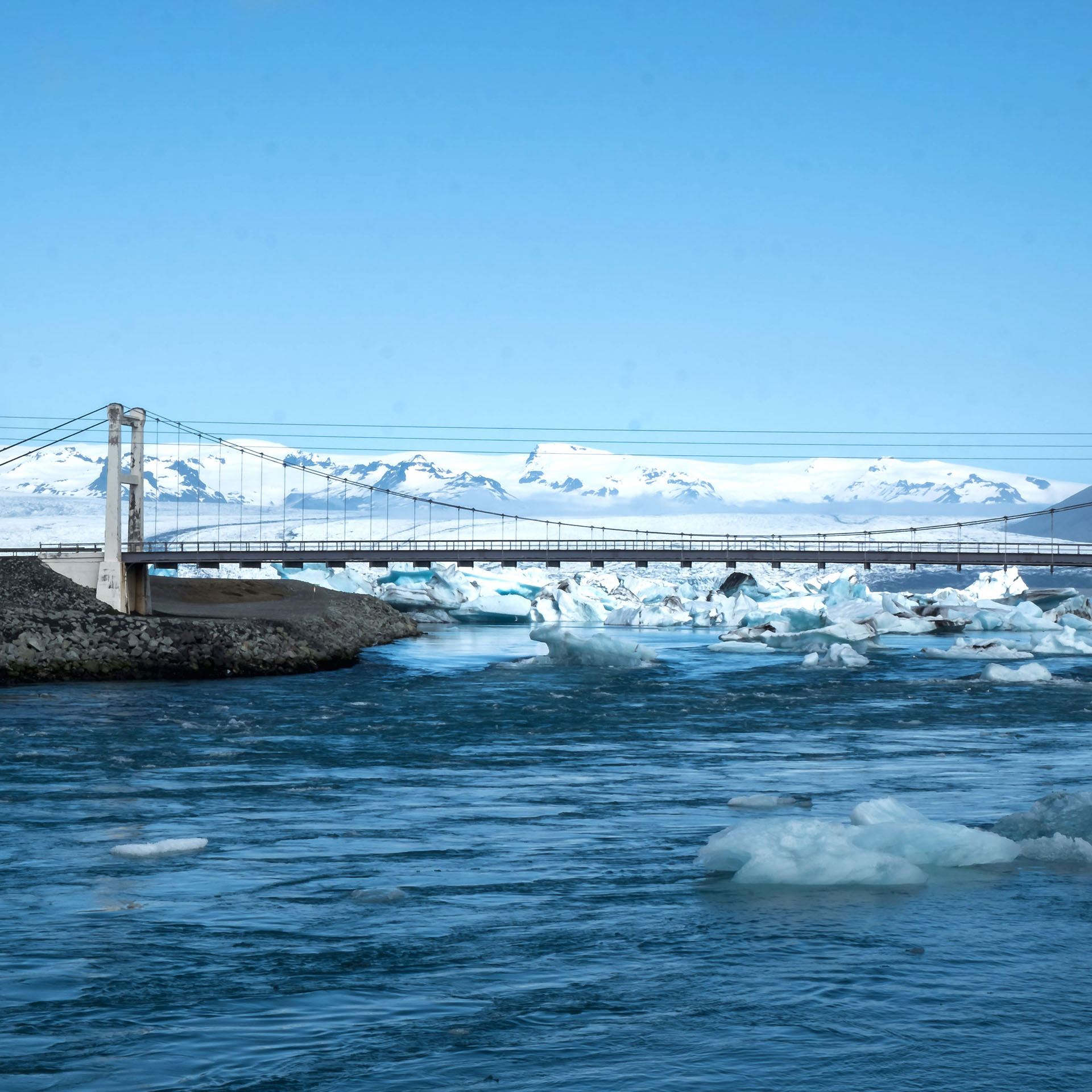
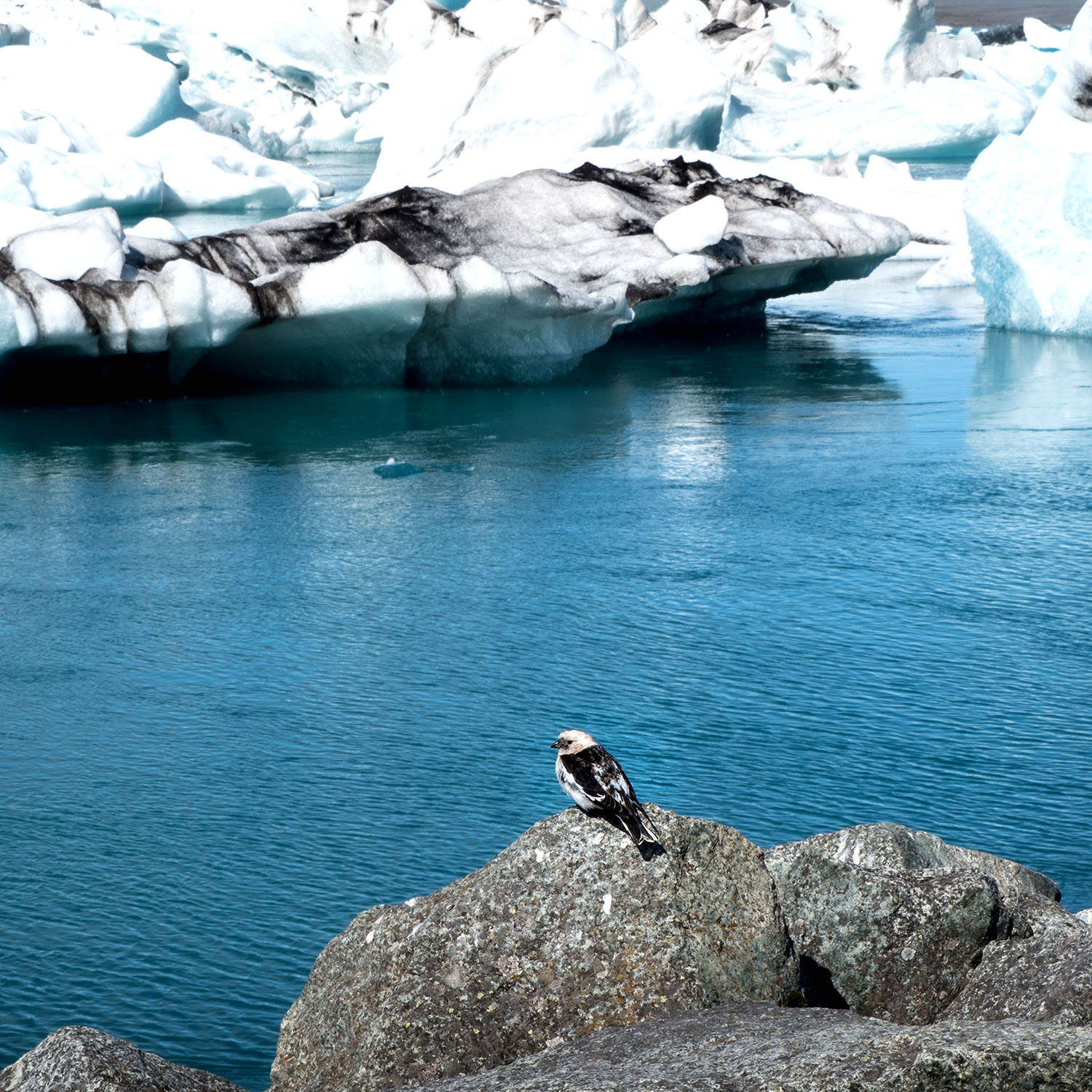
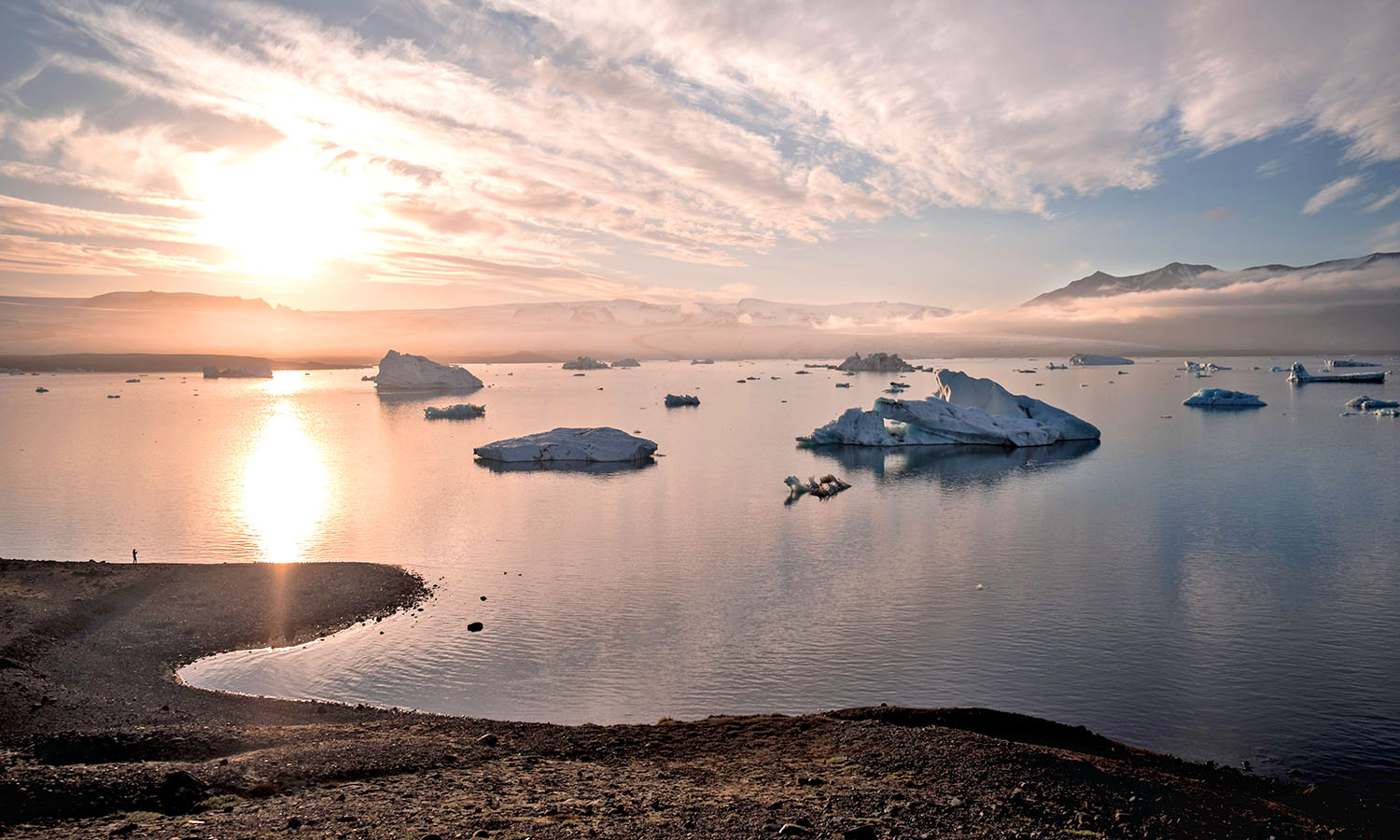
One of those is the Jökulsárlón Glacier Lagoon, where giant icebergs are pulled across the large body of water by underwater currents and Iceland’s fierce winds. I skip the crowds by visiting after dinner; in summer, Iceland enjoys almost 24 hours of daylight, making it easy to avoid the large crowds touring late at night. Near midnight, I watch as the golden glow of ‘sunset’ unfolds across the water, in the background the faint cries of birds and the splash of seals as they frolic in the calm water.
The next day sees me arrive at the shores of a different glacier lagoon, this one far more unknown: Heinabergslón. Together with my guide Óskar, we set out to explore the lagoon in kayaks, paddling out as a mist claws its way across the giant icebergs. For a few hours, we glide between the chunks of ice, admire pocked caves, and drift underneath large ice overhangs. The scenery is otherworldly.
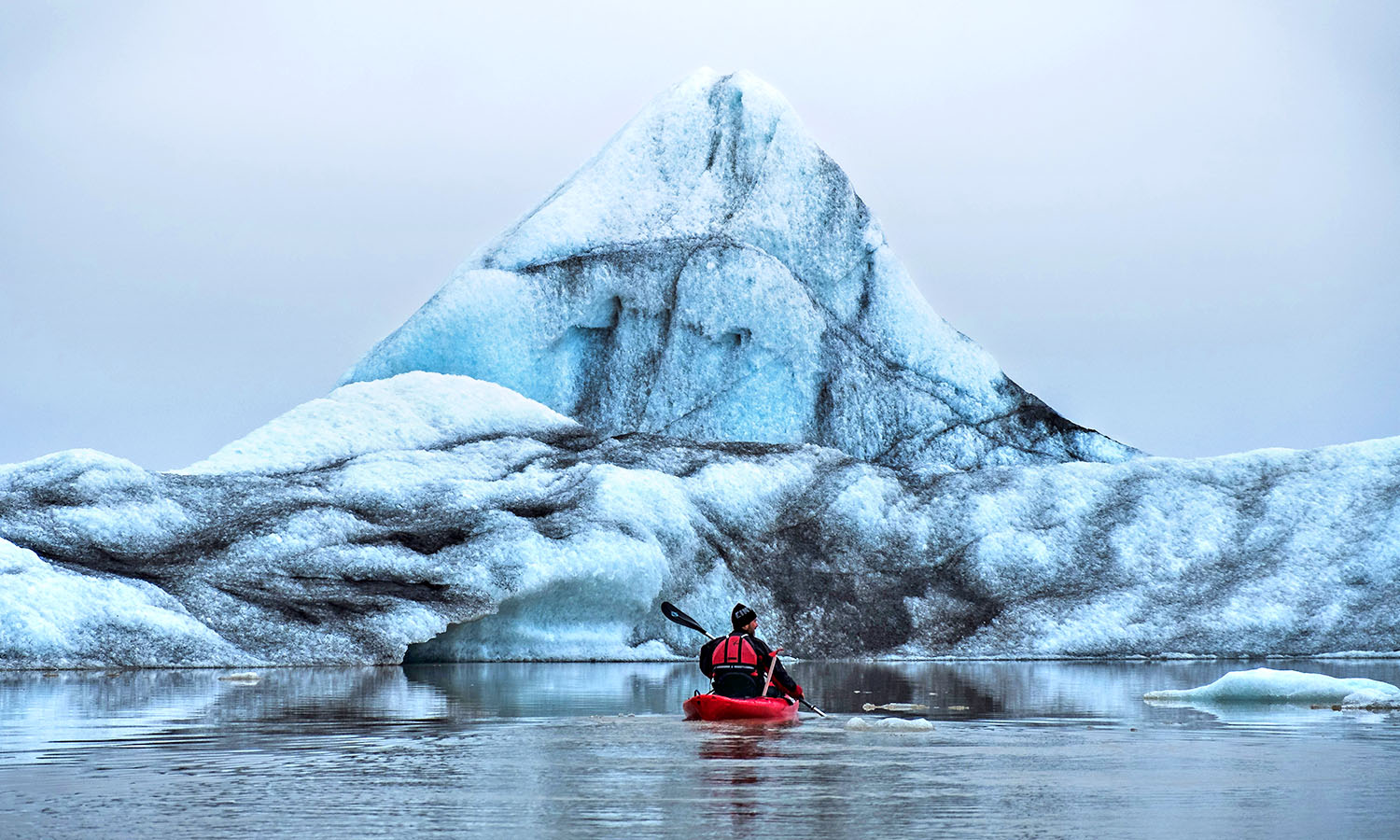
“Looks like a good place to land over there,” muses Óskar, making a beeline for a large iceberg. He steers his kayak into the ice, the nose crashing up onto ‘land’. He jumps out and motions for me to do the same. I paddle hard, lifting my oar up as the nose of my kayak edges up onto the glacier, the bottom scraping as Óskar pulls me onto the iceberg.
We strap on crampons to our gumboots, the sharp spikes letting us freely roam without fear of slipping. “This is the only place where it’s safe to walk on icebergs,” says Óskar. “Here, they get larger towards the bottom, making them stable. In the other glacier lagoons, it’s the opposite. They can flip at any time.”
It’s another reminder that Iceland is a country not to be trifled with. Each day I’m dwarfed by my surroundings, driving up dirt roads that end at dramatic glacier tongues, towering mountains all around, hardly another soul to be seen.
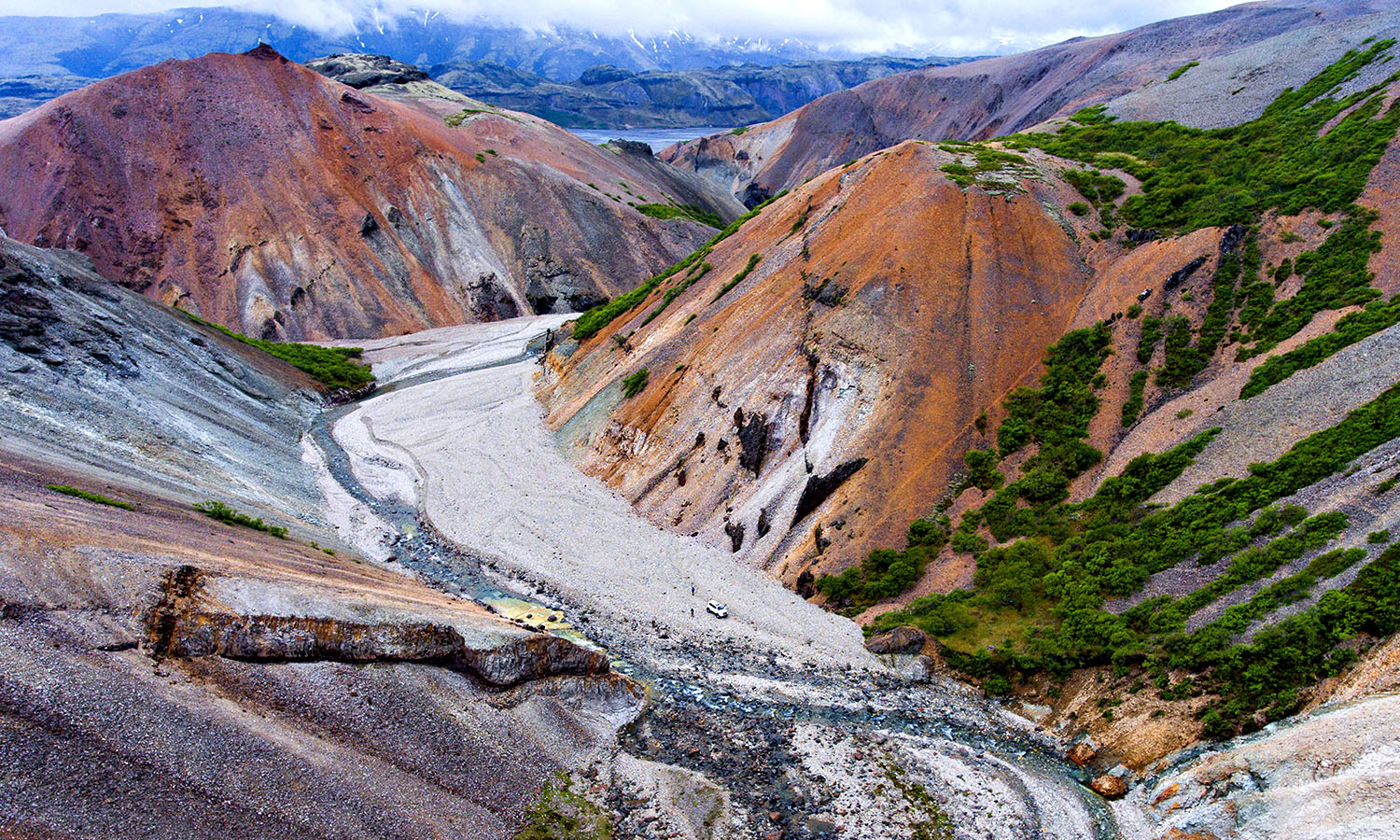
On my final day, more of the same. With my guide Siggi I’m venturing into the Lónsöræfi Nature Reserve, an area next to the glacier thick with twisting valleys, birch forests, and rushing glacial rivers. It’s one of Iceland’s last wilderness frontiers. “Only around 600 to 700 people come hiking here each summer,” Siggi points out. “I think you’re going to love it!”
He’s not wrong – the place is fantastic. We bump along rough dirt tracks while Siggi catches me up on the gossip of the area: who sold what house, for how much, family feuds – he knows everything and everyone. That’s the nature of an island like this.
Things get more serious as we start driving across the shifting black sand of the valley floor, fording steely-grey glacial rivers. I get out of the car at various points to explore on foot, winding my way through birch forests and alongside rivers, even startling a reindeer.
My final hike for the day is a doozy. Siggi lets me out in a valley and agrees to meet me on the other side of a mountain. I scramble up the steep slope, arriving at a windswept and barren plateau with my camera in my hand.
I feel suddenly vulnerable, aware that I have no phone reception and that the weather in Iceland can change in an instant. With dark clouds at my back, I step up the pace across the plateau, the trail now dwindling into nothing, leaving me to scout for landmarks Siggi had mentioned.
‘þetta reddast’ I tell myself, adopting the Icelandic motto as I push on.
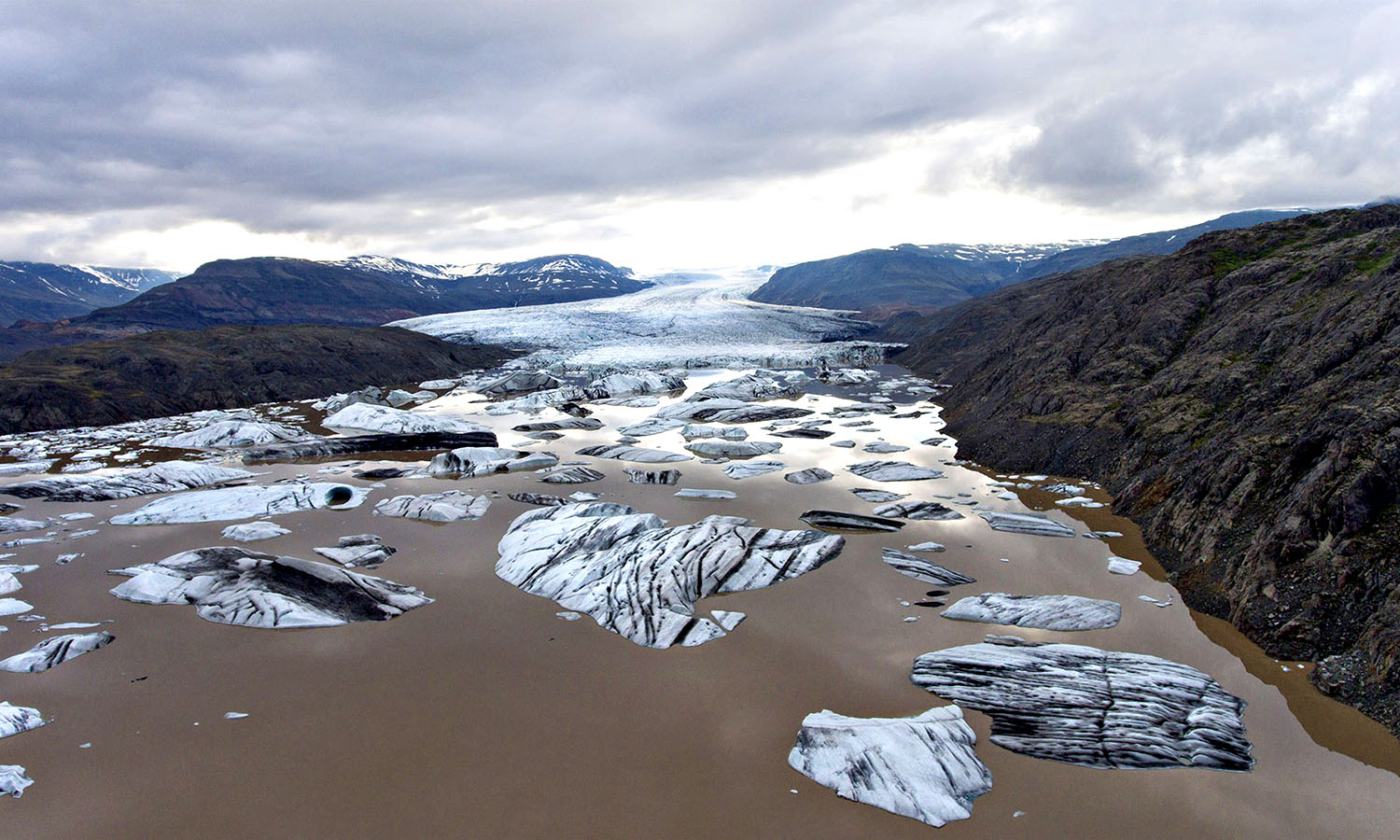
Despite the nagging worry that I might be heading in the wrong direction, it’s hard not to be impressed by my surroundings. The panoramas from here are incredible. I can’t see any roads, hear any cars, or see a single house; I could be the only person in this entire nature reserve, or the entire country. It’s exhilarating.
I do make it back to Siggi, but the feeling of being alone in a vast wilderness stays with me long after our day is done.
These landscapes aren’t simply meant to be admired and photographed. Instead, it’s about being humbled by the gargantuan nature of this country which immediately puts our life and all our worries into perspective.
get in the know Vatnajökull National Park is the largest protected area in Europe.
It’s no secret that Australians love visiting the USA in the winter.
With over 400 ski resorts to choose from, the country has a buffet of snow and cold weather experiences that will have you either chewing deep powder, climbing glaciers or kicking back in a luxurious mountain treehouse.
From the Rocky Mountains in the country’s wild west to the highest (underrated) peaks of the Appalachians in its east, here’s 16 unmissable snow experiences for an unforgettable winter spent in the USA.
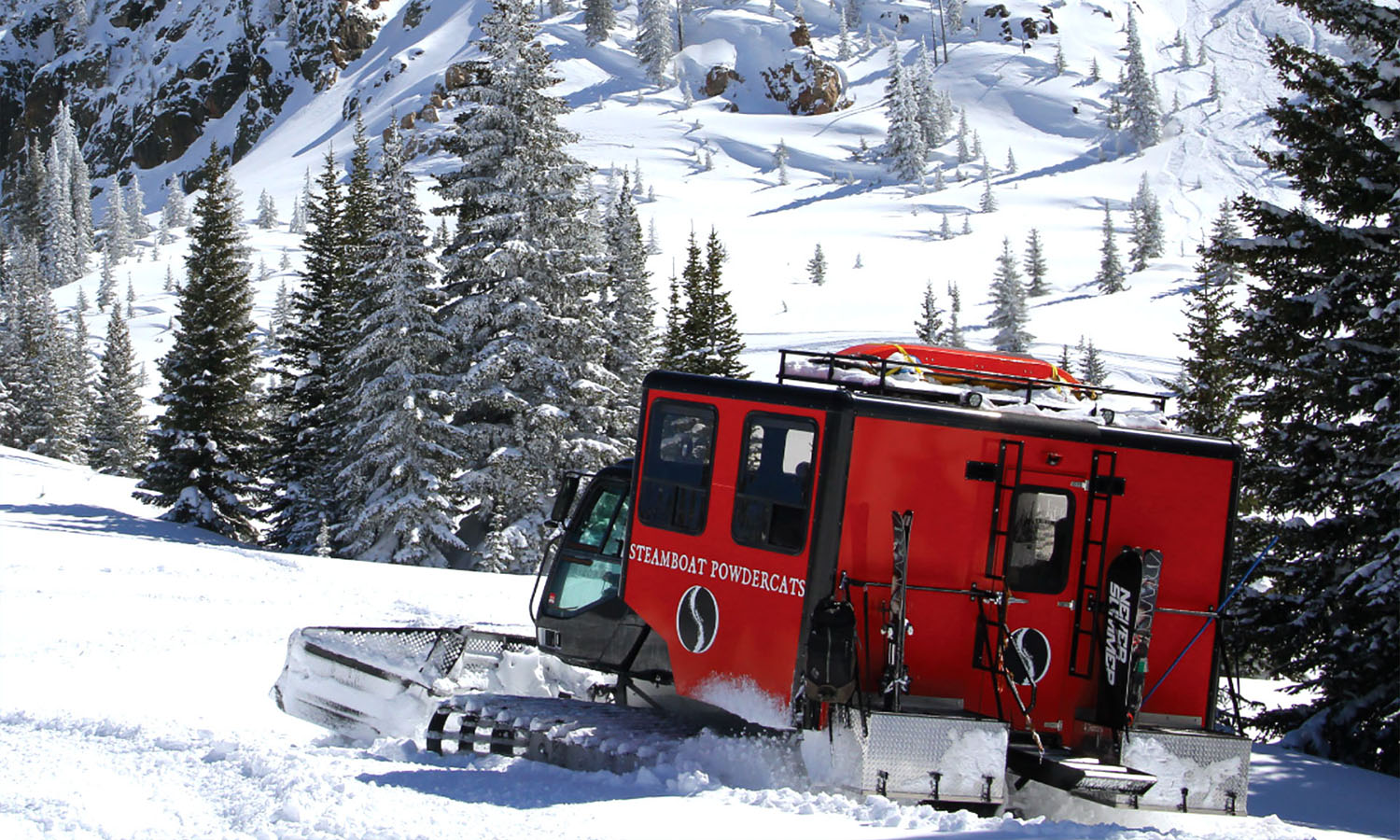
Steamboat Powdercats, Steamboat Springs, Colorado
Cat skiing offers all the same remote, untracked fun as heliskiing without the noise, chaos and the skiing abilities of James Bond.
With professional backcountry guides, as well as plush, heated snow cats, Steamboat Powdercats takes advantage of the literally trademarked Champagne Powder® in Colorado’s Buffalo Pass.
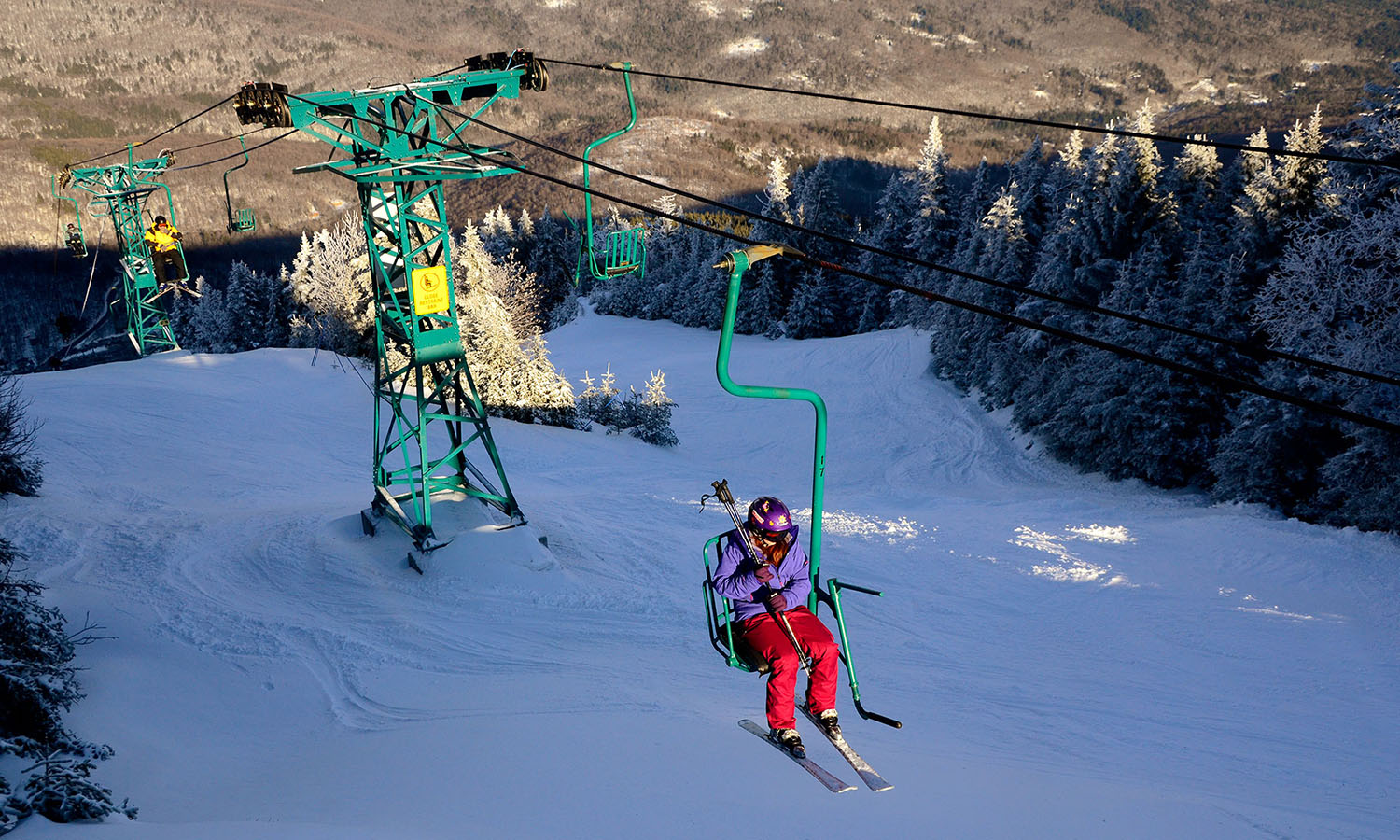
Mad River Glen, Vermont
The east coast mountains don’t get nearly as much airtime as the Rocky’s, but Mad River Glen in Vermont should be on your radar.
It has some of the most challenging and diverse terrain in the country, but a hard day of riding is perfectly complemented by the fire inside Stark’s Pub. This watering hole has regularly been named one of America’s best snow pubs for post slope brews. Mad River Glen is a skier-owned cooperative resort with an old-fashioned vibe which we love.
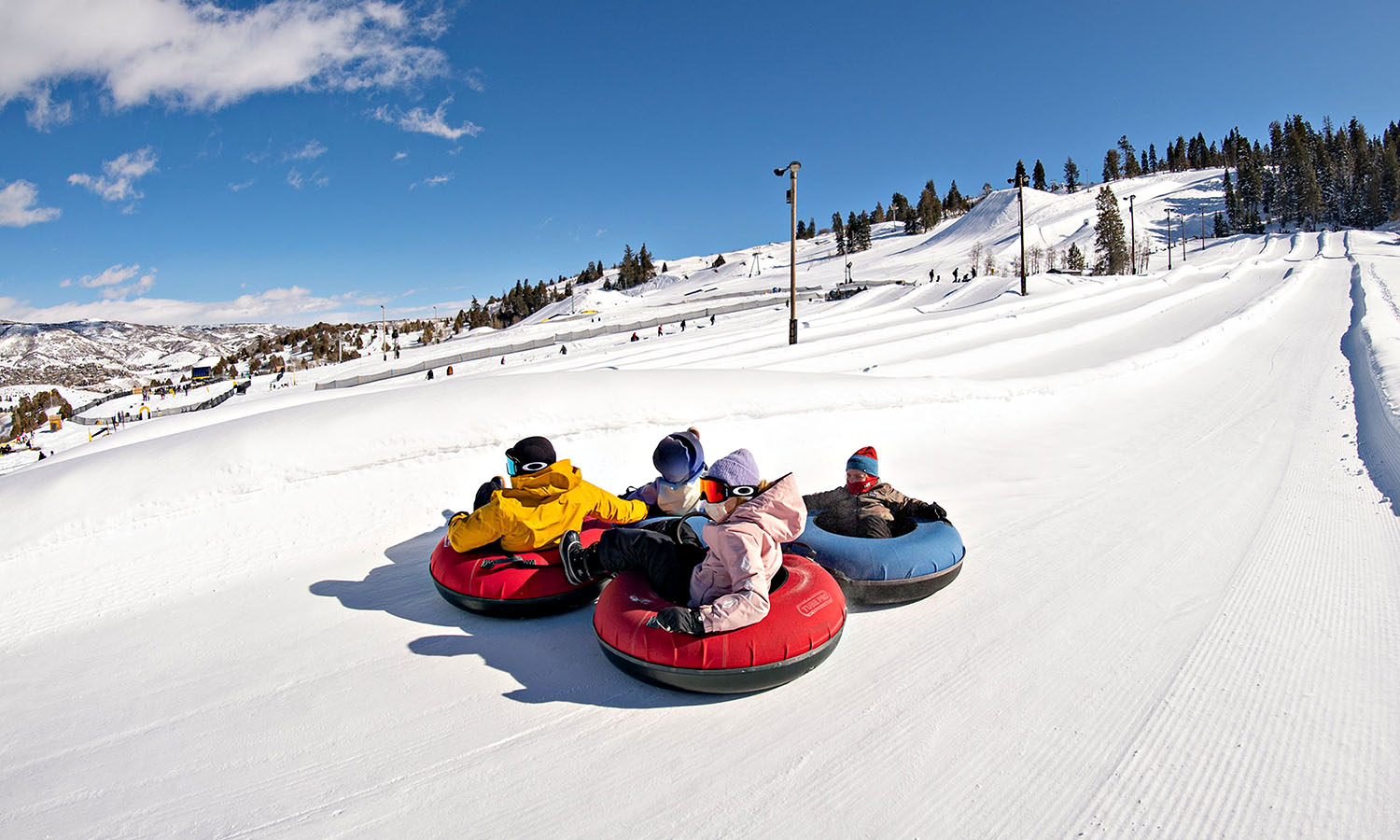
Woodward, Park City, Utah
A favourite American winter pastime, ‘tubing’ (which involves sliding down a ramp of ice in an inflatable inner tube) is now an extreme sport at Woodward in Park City, Utah.
With two magic carpets that take you to the top of Utah’s longest and wildest tubing slide, this activity is perfect for those who want all the extreme speeds from a snow experience without the need to ever strap on a pair of skis or a snowboard.
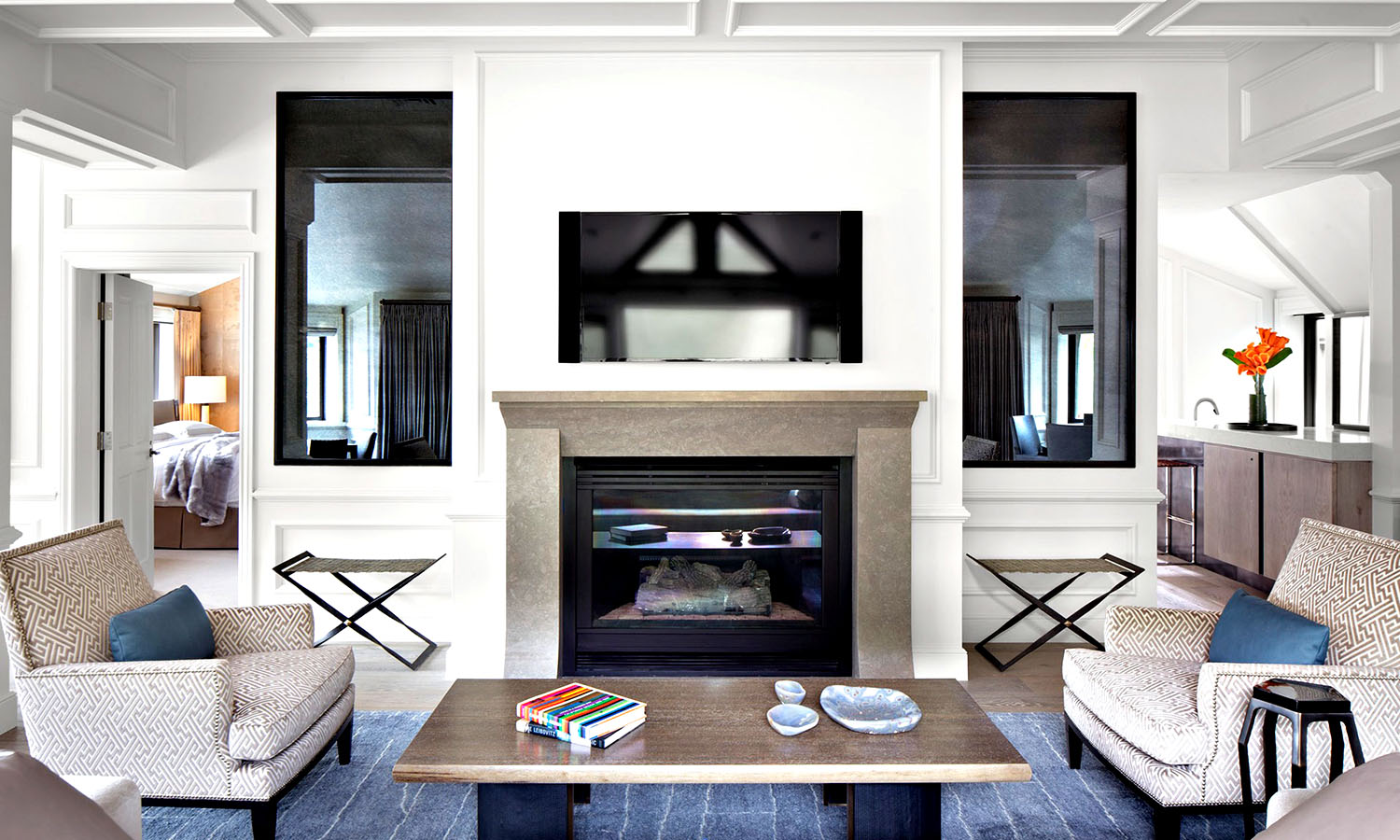
The Little Nel, Aspen Colorado
Perfection is not a word that the get lost team dishes out regularly when it comes to hotels.
But Aspen’s Little Nel certainly ticks all the boxes for the ultimate destination in opulence. This incredible ski-in-and-ski-out hotel is the haunt of celebrities and millionaires from around the planet. Our favourite is the personal ski concierge and the hidden, invitation-only wine cellar.
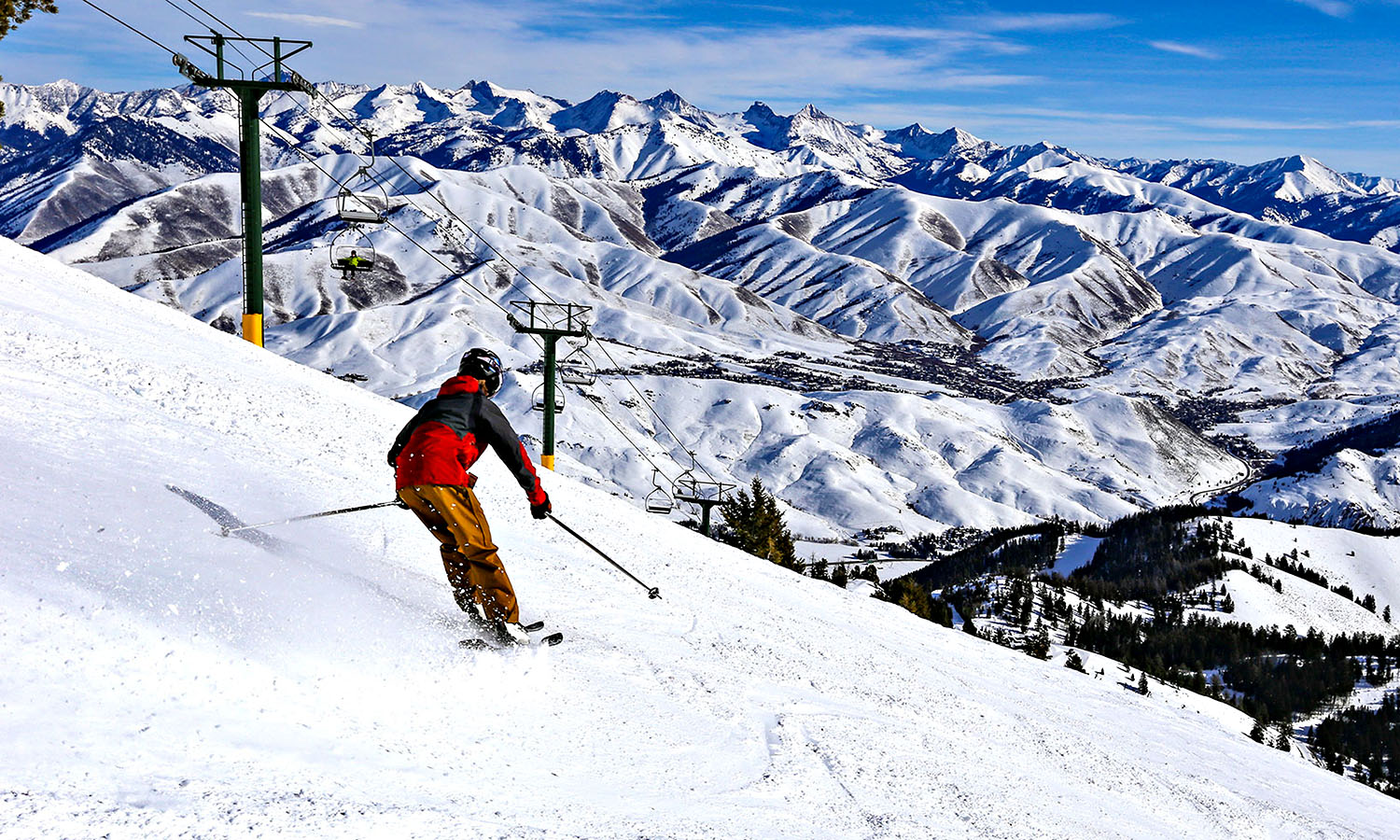
Sun Valley Resort, Ketchum, Idaho
Sun Valley is a true year-round resort but it’s in winter when it really sparkles.
Built in 1936, Sun Valley in the city of Ketchum is not only the oldest ski destination in America, it is also home to the country’s first chair lift. There’s a sense of Hollywood at Sun Valley Lodge and the foyer alone makes you feel like you’ve just walked onto a movie set. But don’t let the opulence fool you, everyone here is going to be your best friend by the end of the trip and that is the real secret to a visit to Sun Valley. Get ready for the warm Idaho hugs.
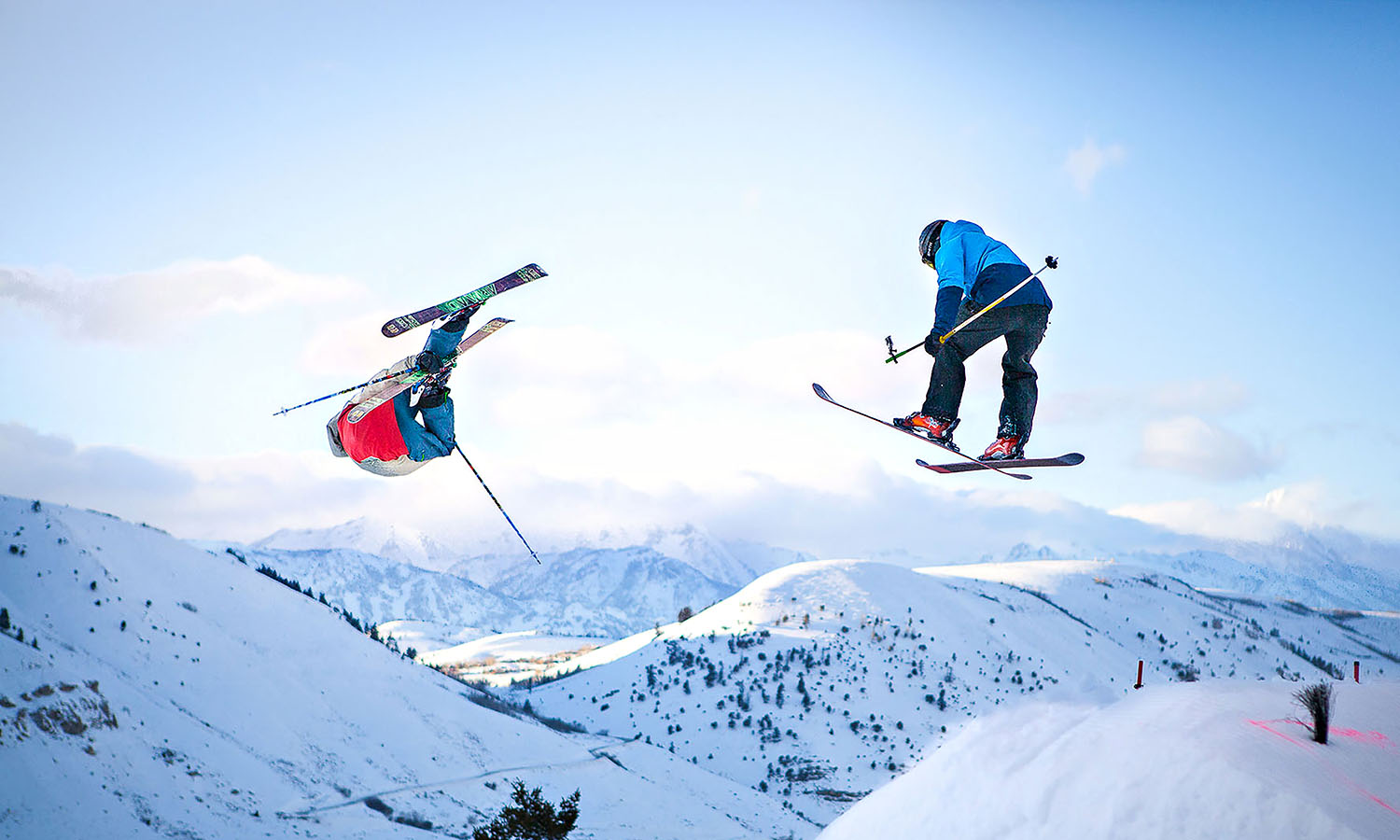
Snow King Mountain Resort, Jackson, Wyoming
For decades, Snow King Mountain in Jackson has been overshadowed by its much more popular neighbour, Jackson Hole.
But with its quintessential local-feel and zero lift lines, you’ll be able to bust out a few trackless runs early one morning without the usual Wyoming winter crowds. But don’t cut anyone off here or you might end up coming to blows with a local. Remember, this is their mountain and you’re only visiting.
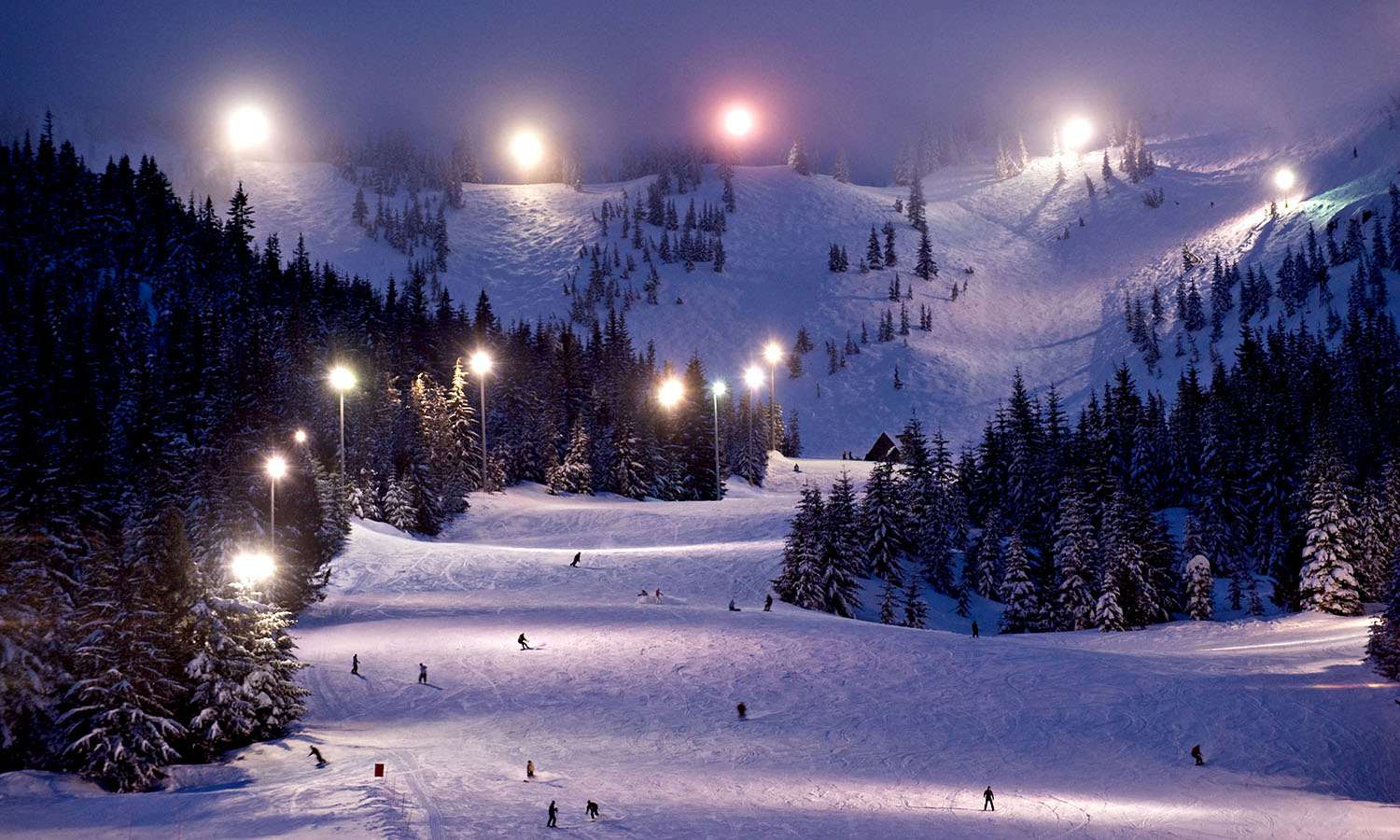
Mt Hood Skibowl, Oregon
We can’t do night skiing here in Australia because the risk of death and injury on our icy runs is just too high, but in the US it’s an institution.
At Mt Hood in Oregon, we’re not just talking about a few bunny runs flanked by magic carpets. This is America’s largest night ski area, where all the lifts have lighting (sometimes neon lighting) meaning there’s 36 runs to choose from right through to the end of Spring. Go get it, powderhounds!
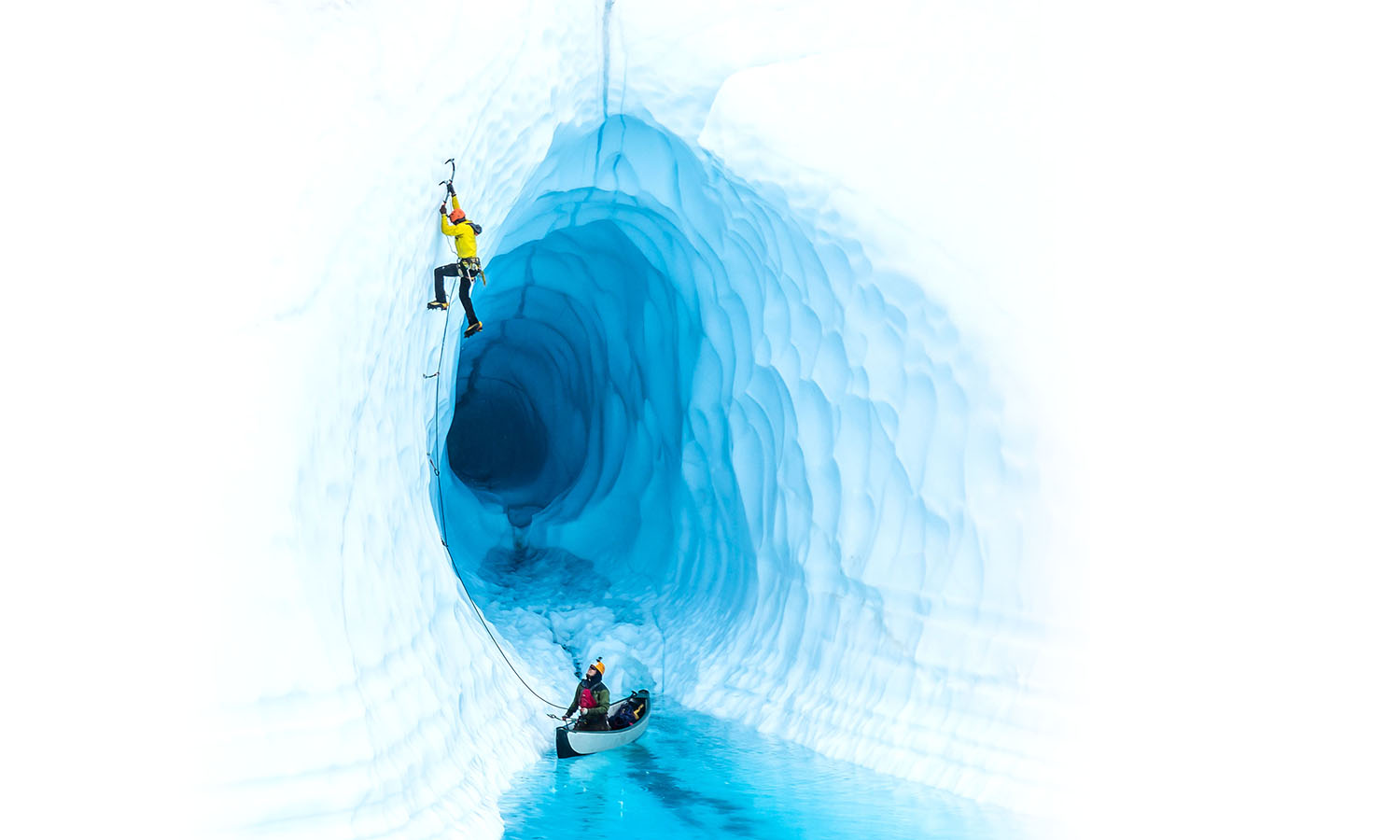
Matanuska Glacier, Alaska
With over two decades of teaching under their belts, MICA Guides are experts when it comes to taking newbies climbing on the Matanuska Glacier in Alaska.
After donning your gear and a quick briefing, you’ll hike over an hour across a breathtakingly beautiful turquoise glacier before reaching some simple to moderate ice slopes designed to help you refine your climbing techniques. But beware, this experience is only for those with ice in their veins. It’s tough, but well worth it.
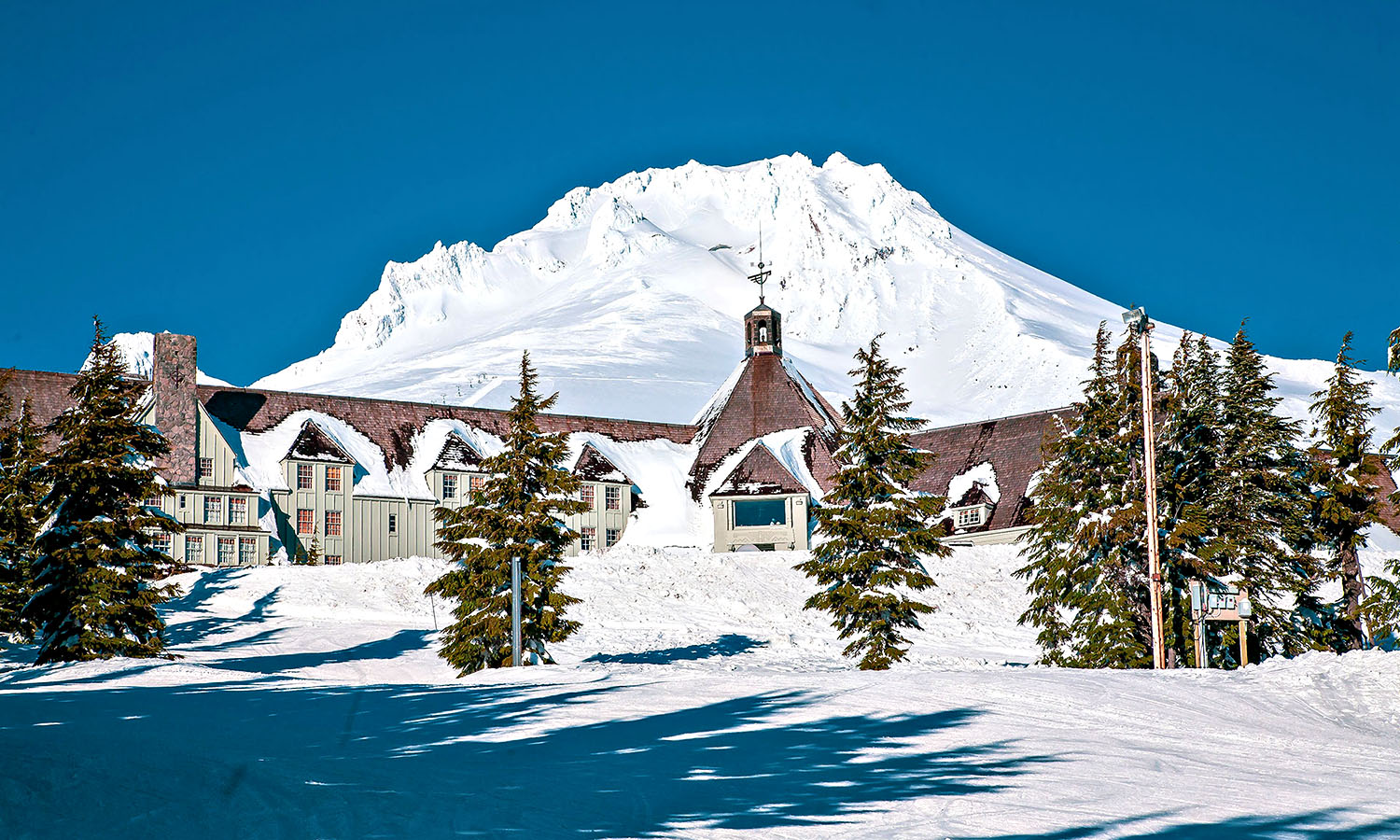
Timberline Lodge, Oregon
This luxury ski lodge in Oregon’s picturesque mountains has all the hallmarks of an archetypal American ski experience.
Timber clad rooms, roaring open fireplaces and snow draped roof pitches. It is both so beautiful and eerie that it was also used as the exterior of the Overlook Hotel in the 1980 horror thriller, The Shining. We’d recommend staying away from room 217 (notable from King’s book) and instead opting for one of the Premiere Fireplace rooms.
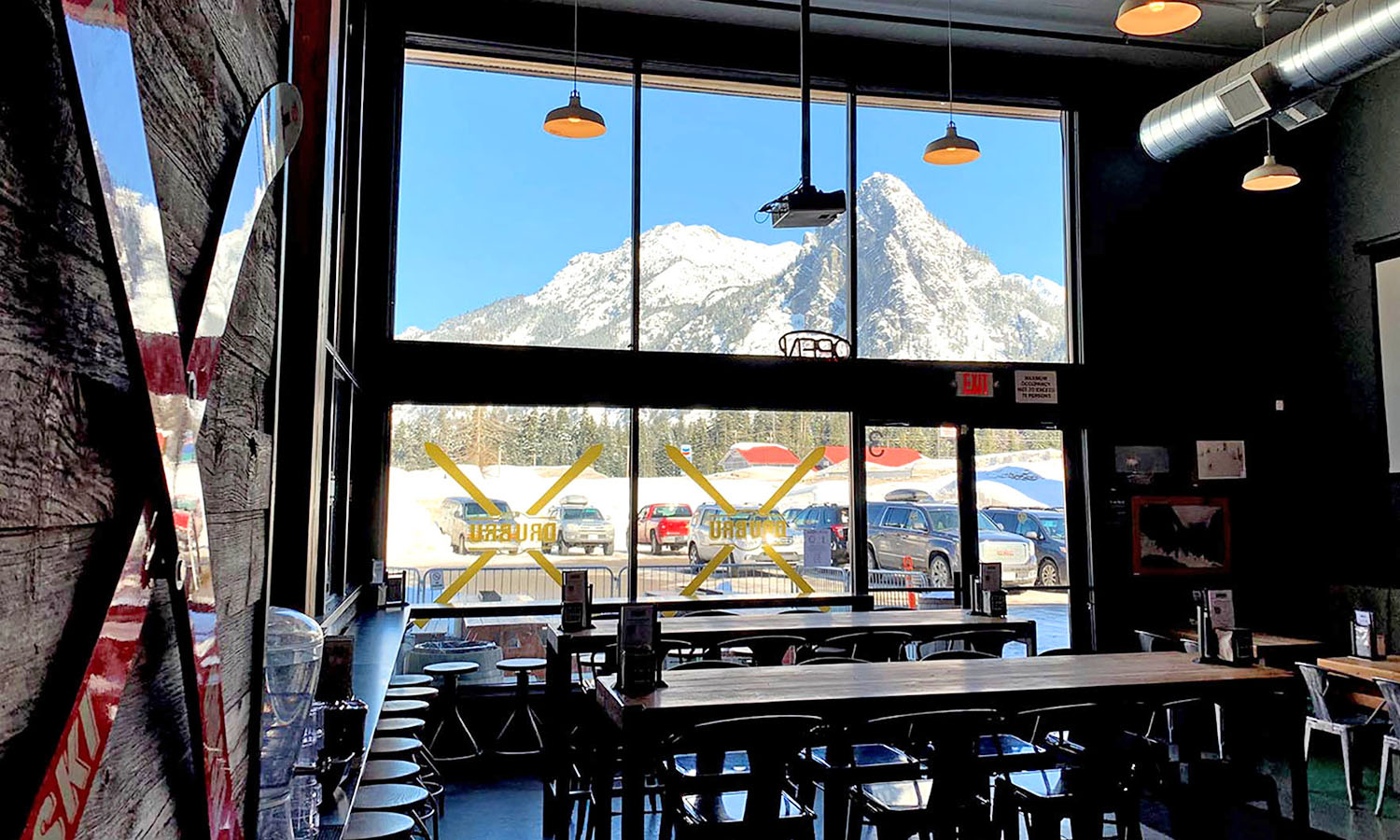
DruBru | Snoqualmie Pass, Washington
With a beer list that would rival most German beer halls, this local Washington microbrewery in the shadow of Snoqualmie Pass brews its award-winning craft beers from fresh mountain water and serves them to thirsty skiers and snowboarders in their huge beer hall with floor-to-ceiling windows and views of the ski area.
Try the DruBru IPA, or a full flight if you’re unsure … heck, try them all. We won’t judge.
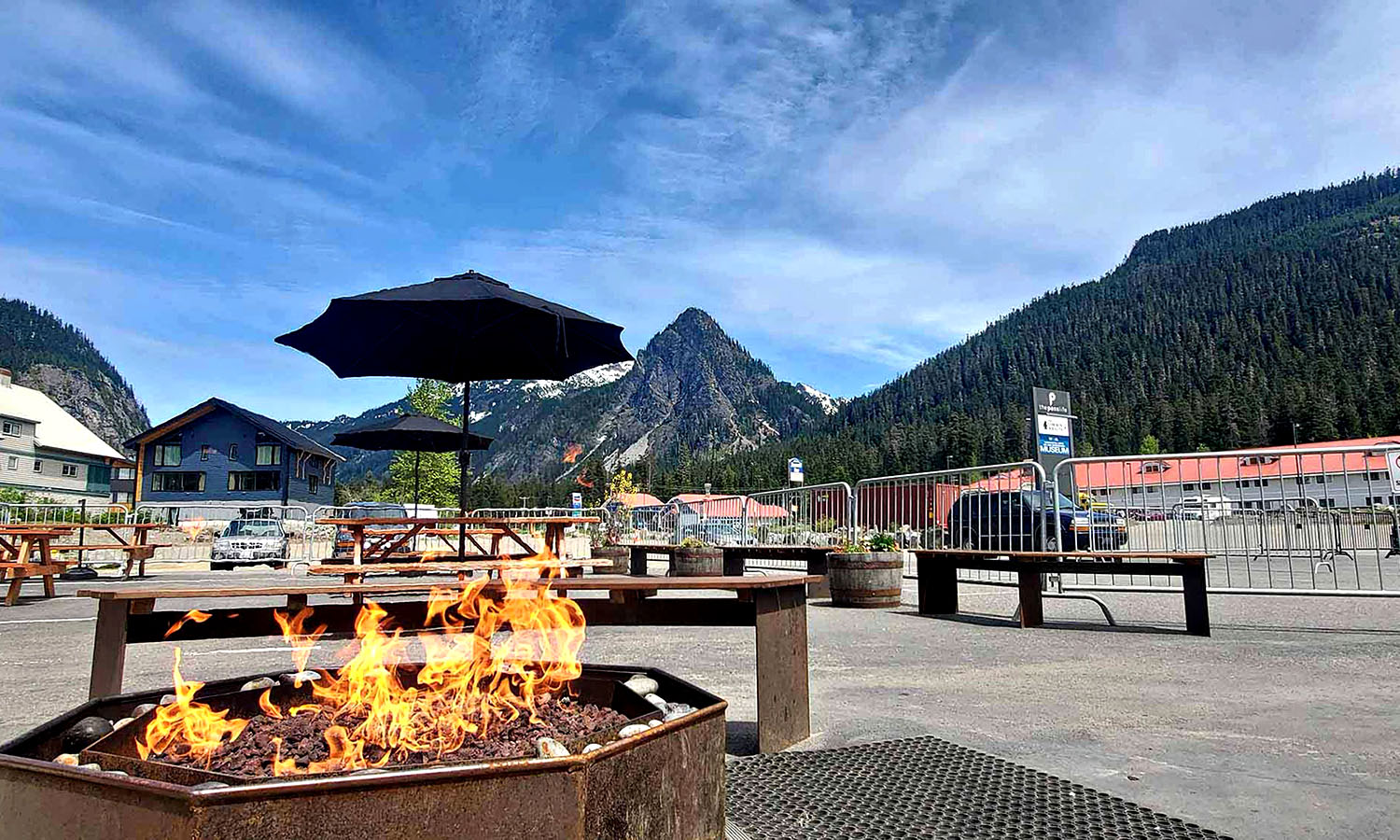
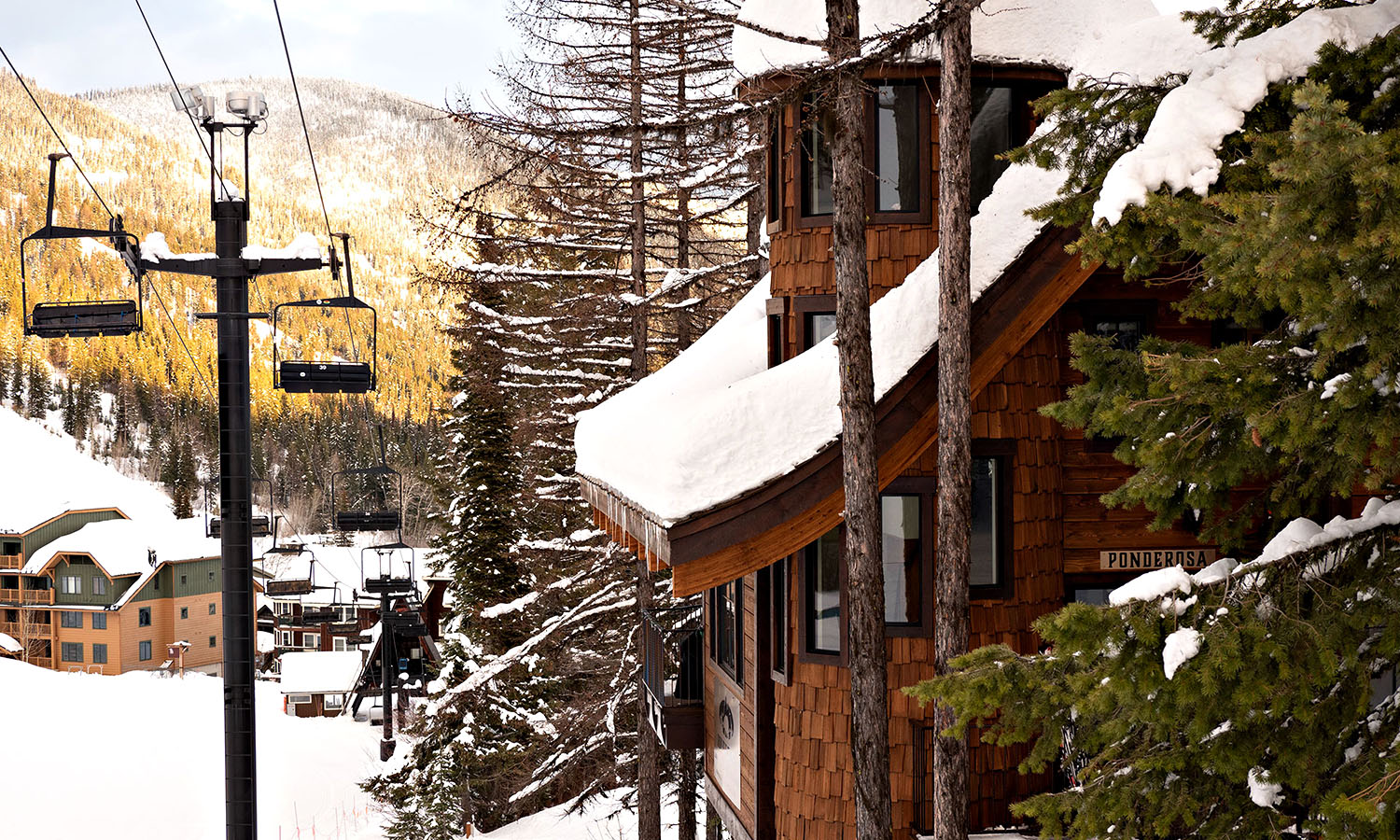
Ponderosa Treehouse, Whitefish Mountain, Montana
When we say that this magical treehouse is located on Whitefish Mountain Ski Resort, we mean that it is actually ON Whitefish Mountain’s famous Hope Slope.
That’s right. You can ski to the Hope Slope lift from your bed to the ski lift in less than 30 seconds. With two huge bedrooms, including an epic star filled loft for the kiddos, your legs are going to love finishing a big day of riding and falling into the private hot tub.
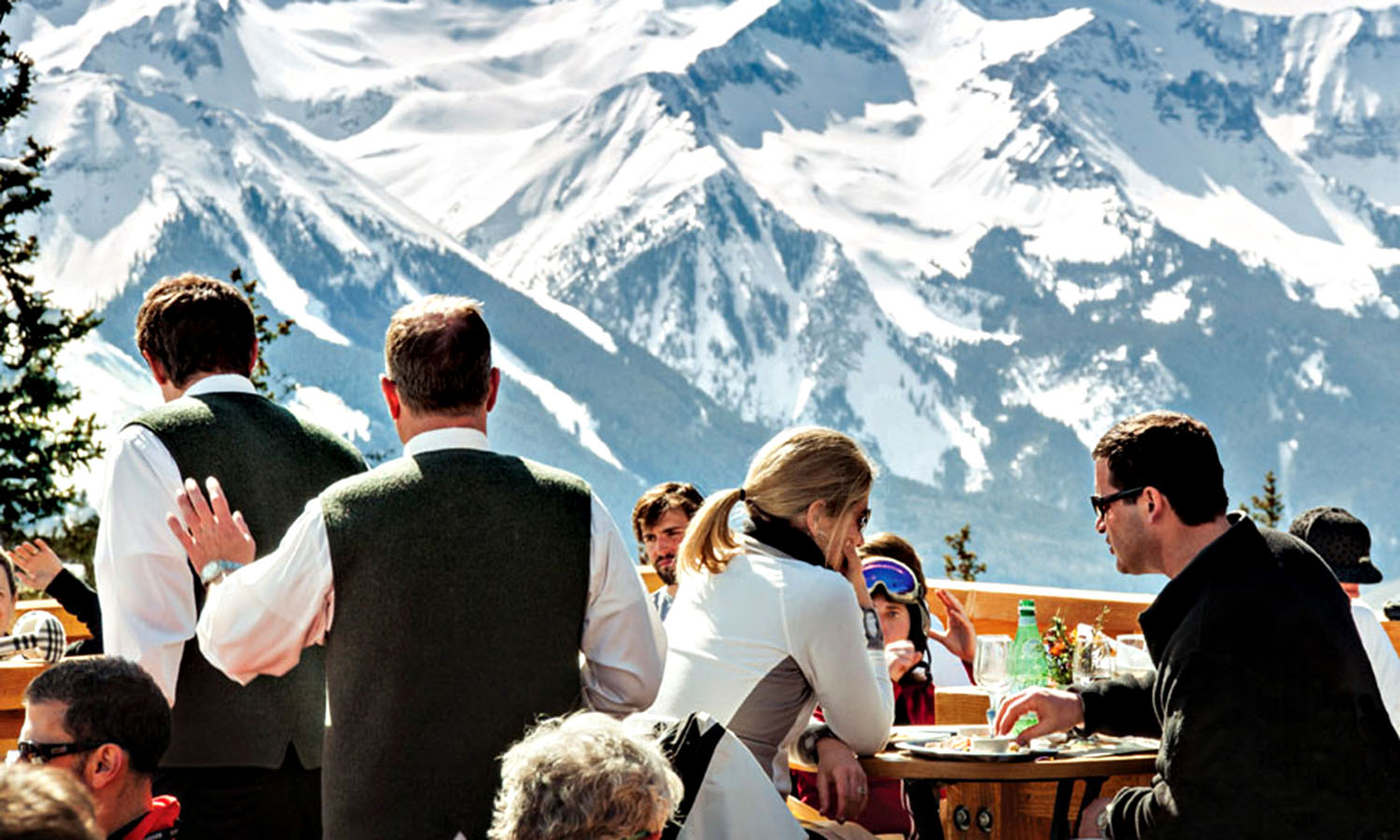
Alpino Vino, Telluride
Close your eyes, breathe in that fresh mountain air and from this altitude your brain will trick you into thinking you’re actually in the Dolomite region of Northern Italy.
Instead, this quaint European wine bar and restaurant is in Telluride, Colorado. Alpino Vino is the highest altitude restaurant in all of North America and has an all Italian lunch menu with pastas, pizzas and extensive wine pairing. Enjoy the views of the Wilson Range while you can, because the way the wine flows here, things can get a bit blurry after 6pm.
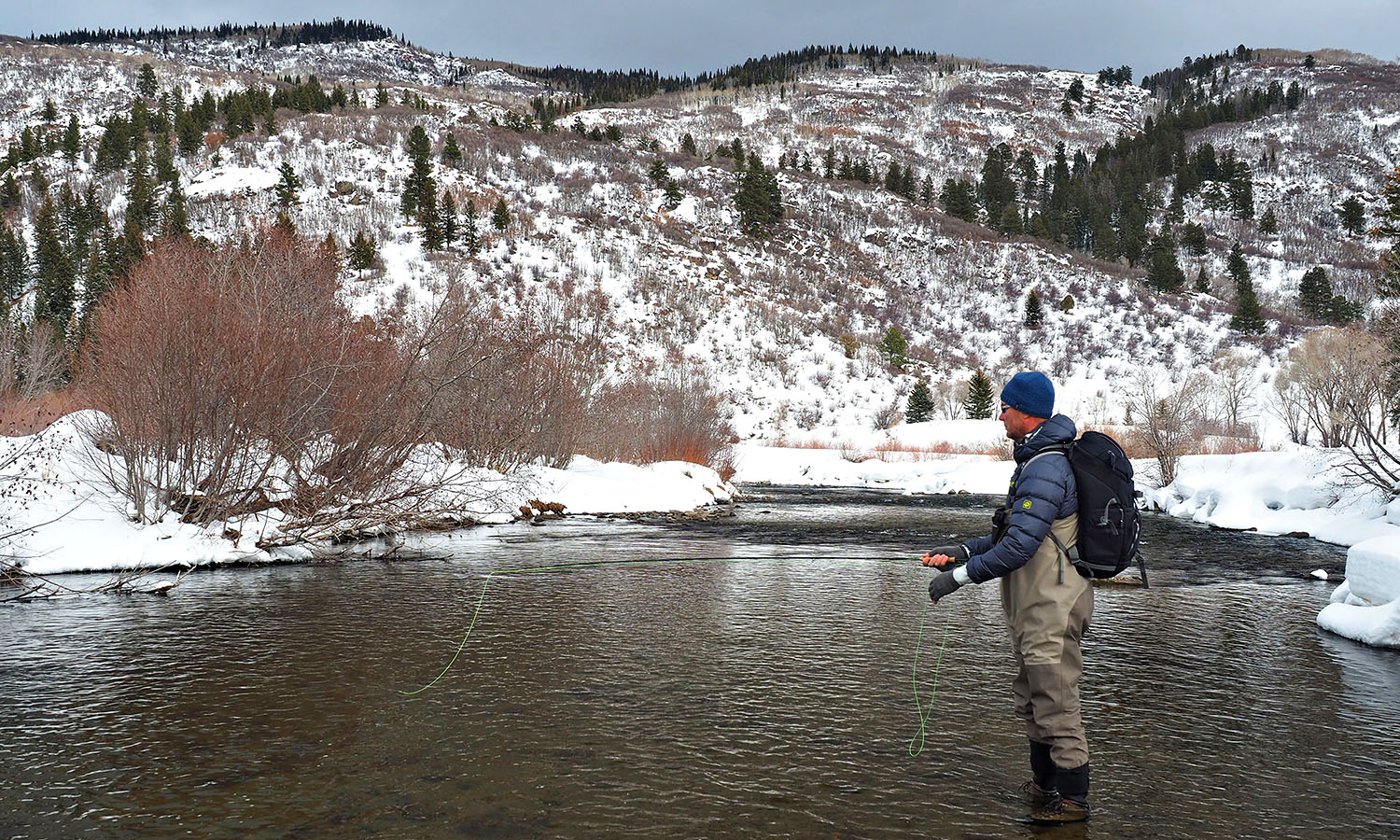
Fly Fishing, Steamboat Springs, Colorado
The fish don’t stop biting during the winter in Colorado. In fact, some would argue this is the best time to hit the Yampa River when the crowds are down.
You can opt for a private guide through Steamboat Flyfisher to provide all your boots, waders, rods, reels and flies but you are advised to dress warmer than you would if you were skiing.
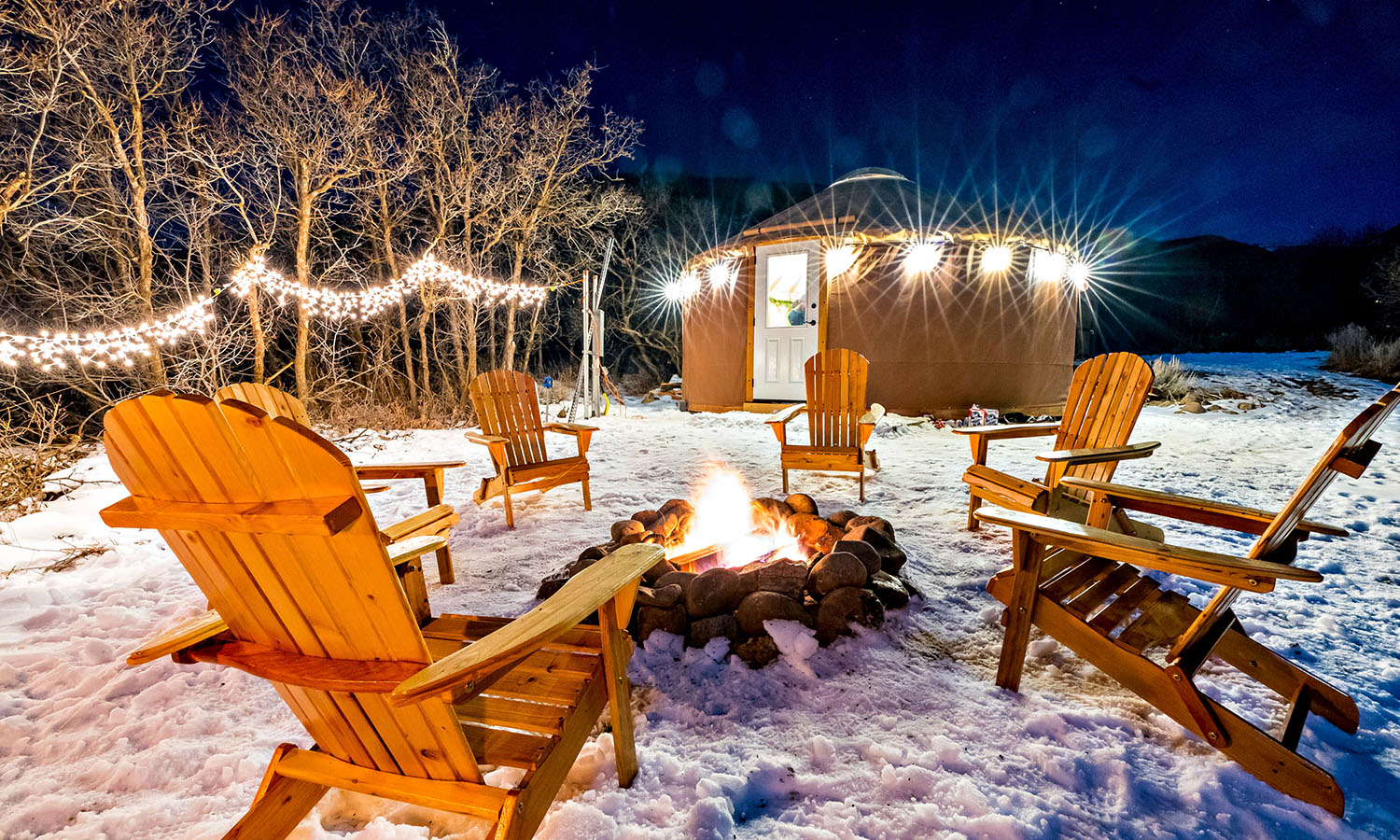
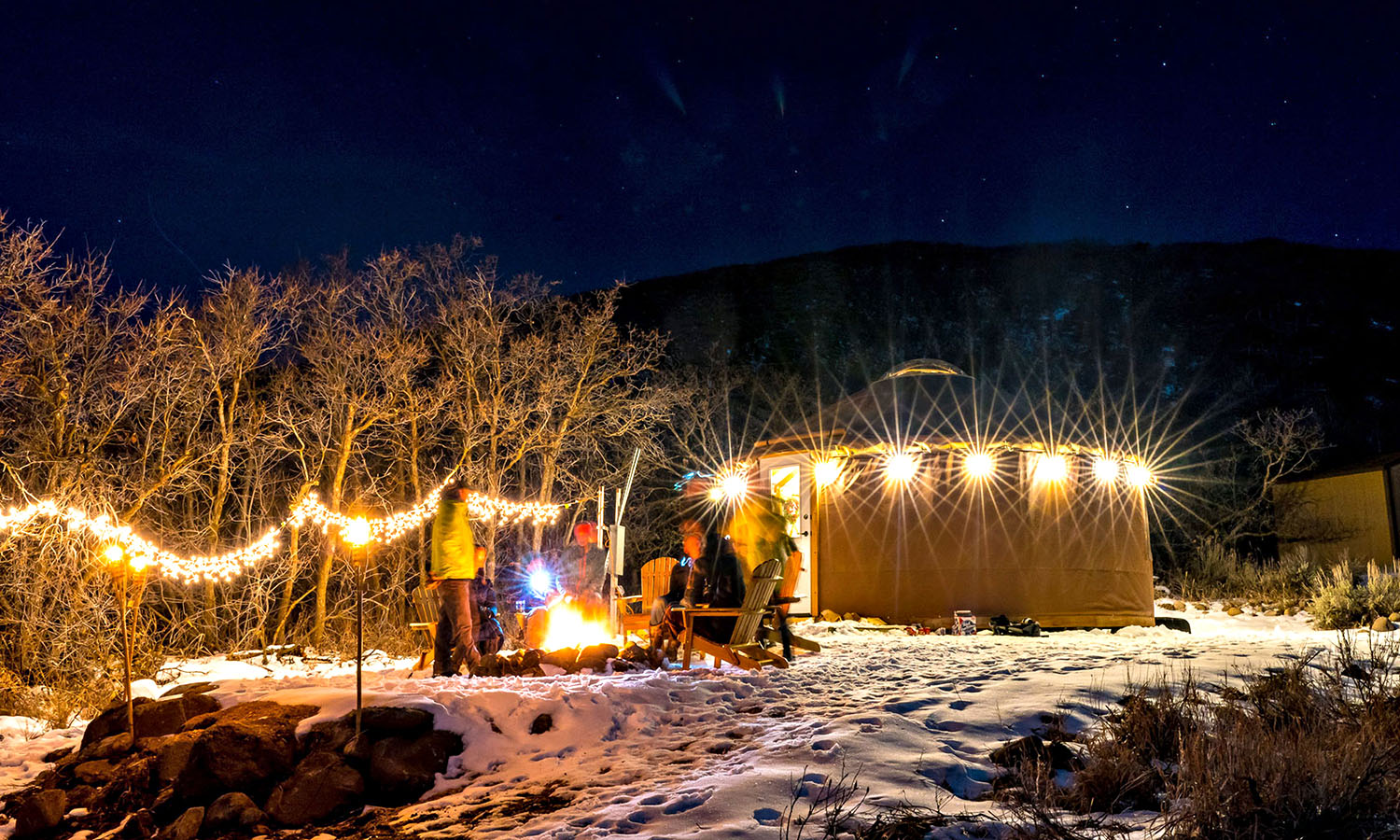
Creekside Yurt Dinner, Midway Utah
Snowshoeing gets a bad rap. But that’s often because it adds a layer of complexity to the already laborious task of walking.
But on this magical evening of guided snowshoeing through a forest lit by starlight, you’ll be finishing your short snowshoe at your own private yurt deep in the Wasatch Mountain State Park, sitting down inside for a four course meal, endless booze and roasted marshmallows around an already lit fire.

Jackson Hole to Granite Hot Springs, Wyoming
Get on and hang on! This wild adventure through the snowy Gros Ventre wilderness starts with an early pick up at your hotel.
Your team of dogs (and your sled ‘Musher’) will guide you through Jackson Hole’s most iconic scenery in an exhilarating, once-in-a-lifetime adventure. The team from Jackson Hole Iditarod Sled Dog Tours work with a hybrid breed of Alaskan sled dog racers and Northern Huskies who will be responds to your commands by the end of the day. Bring your togs, because this adventure takes you all the way from Jackson to Granite Hot Springs for a much welcome soak, before returning back to your hotel in the afternoon.
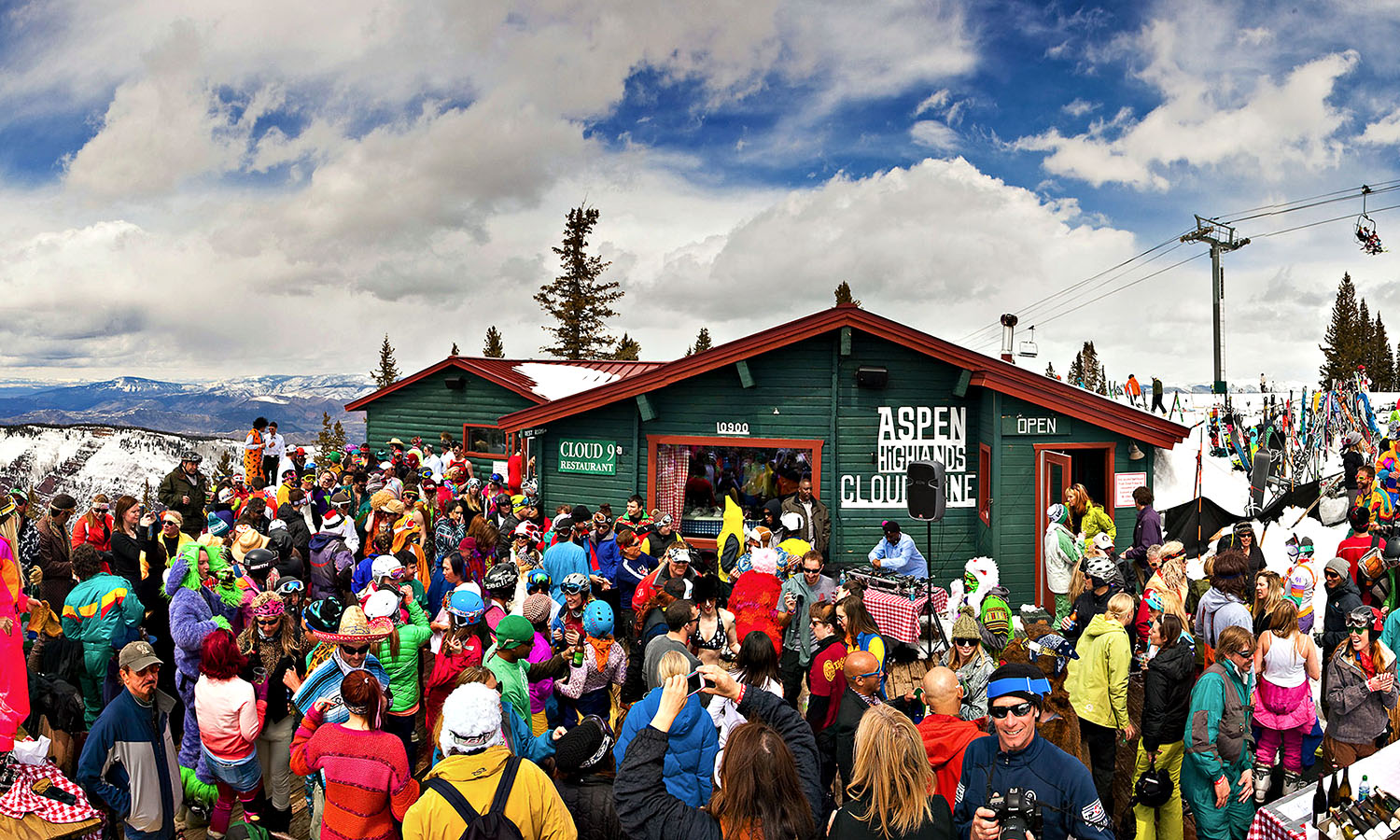
Cloud Nine, Aspen Colorado
At 3pm everyday, Cloud Nine in Aspen becomes a hedonistic melting pot of debauchery and we absolutely love everything about it.
In no other ski town in the world would this sort of drinking shenanigans be possible, let alone deemed appropriate. Revel in pure joy as overly expensive bottles of champagne are popped and sprayed over you and your guests while you dance and watch the sun drop over incredible mountain views.
The iconic, the beautiful and the downright sketchy — five unbelievable roads for road trips you’ll never forget.
PAKISTAN
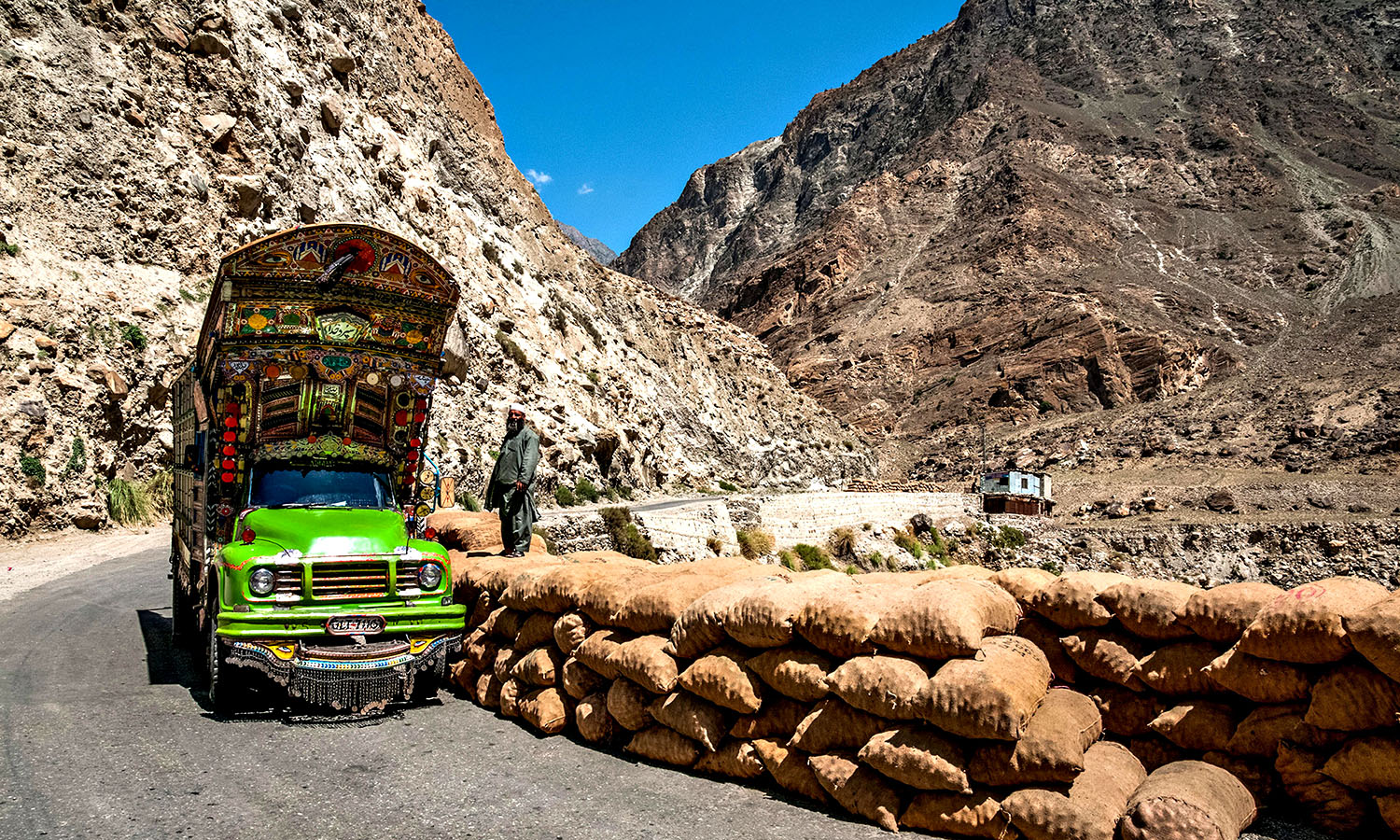
Dusty, rocky landscapes meet the locals and the intrepid types that journey along the Karakoram Highway in Pakistan.
The 1,300 kilometre long highway is also one of the world’s highest, reaching a peak of 4,714 metres — high enough to take you halfway up Mount Everest.
It connects Pakistan to China and although the landscapes on this route are a little more monotone than others on this list, there is more than enough colour to be found in the locals along the way who are tending to flocks and working roadside stalls. Not to mention the lorries covered in bright, epic art.
If you’re bold enough to make this journey you’re probably bold enough to take on the Hussani Hanging Bridge: a truly-hectic 200-metre bridge of precariously low-detail suspended above the Hunza River.
AUSTRALIA
Are you a waver? A finger lifter? Single or double honk?
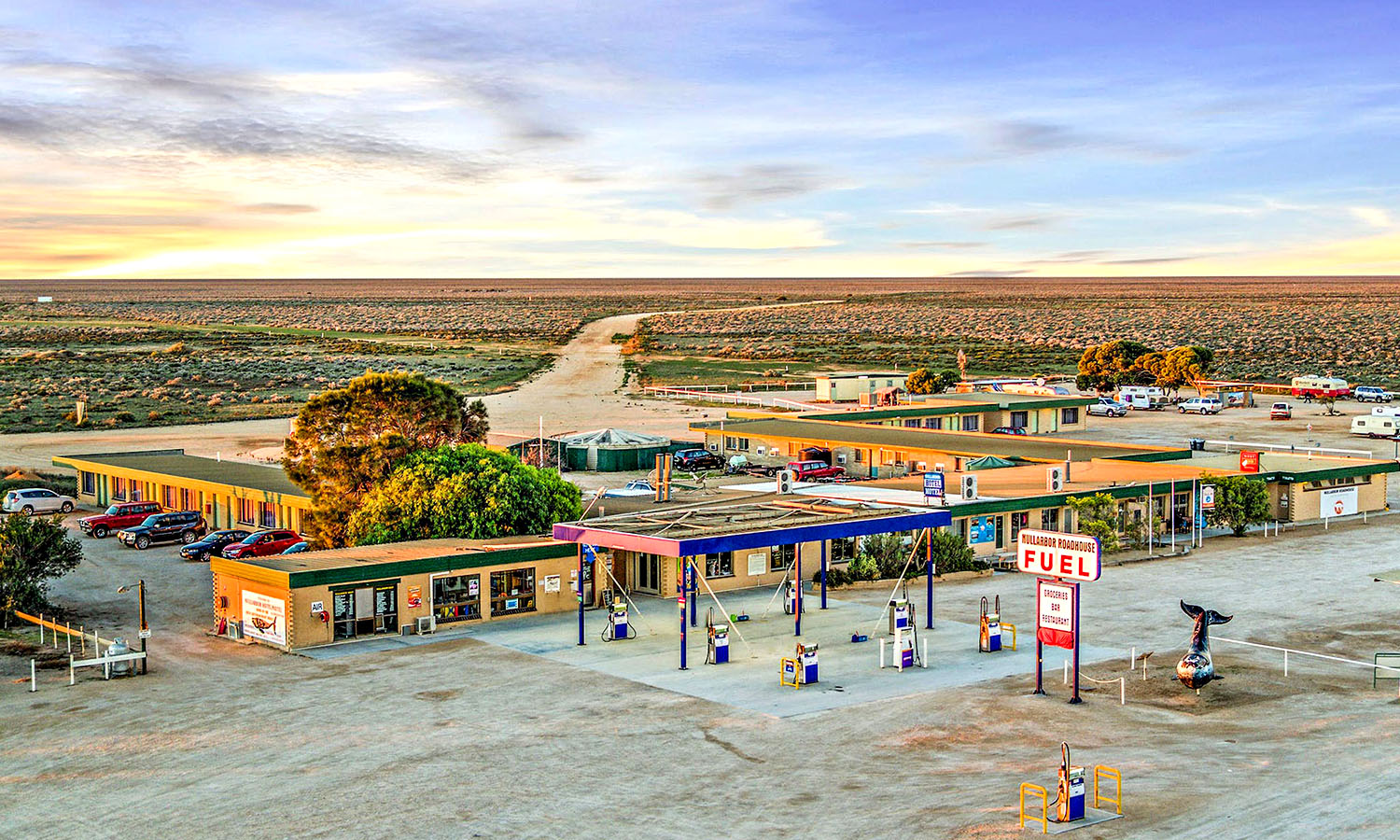
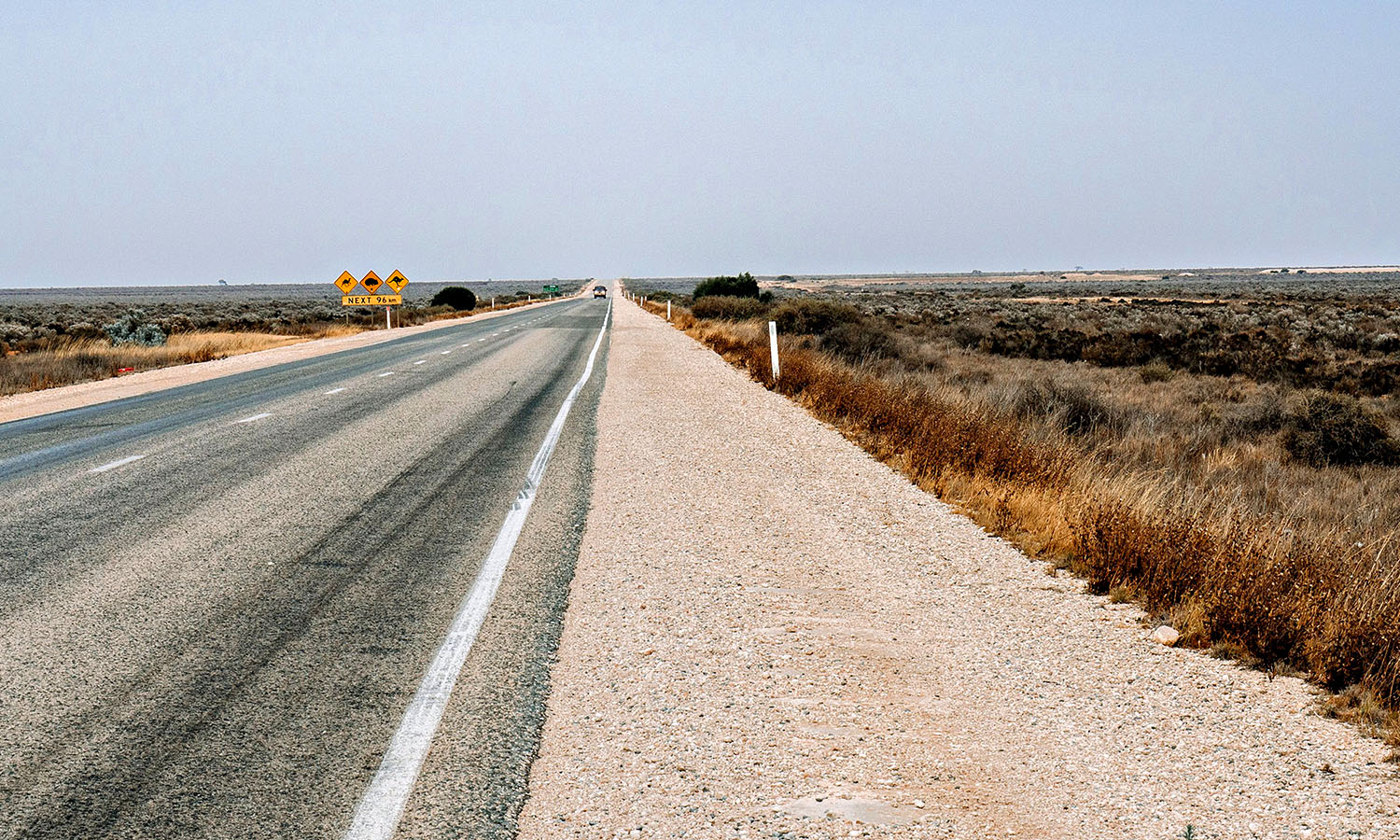
These are the critical decisions you must be prepared for on the rare occasion you pass another driver on the Nullarbor (Eyre Highway), one of the world’s longest straight roads, in Australia’s south-west.
The word Nullarbor means ‘no trees’ in Latin and they’re not kidding around – when get lost drove the 1,664 kilometre stretch in 2021 we saw no trees, no animals, and not a single sign of life, save for the excitement of each service station spaced a few hundred kilometres apart. This really is the outback.
There’s a golf hole at each of these, giving you the opportunity to play the Nullabor Links: the world’s longest round of golf at 1,365 kilometres long.
BOLIVIA
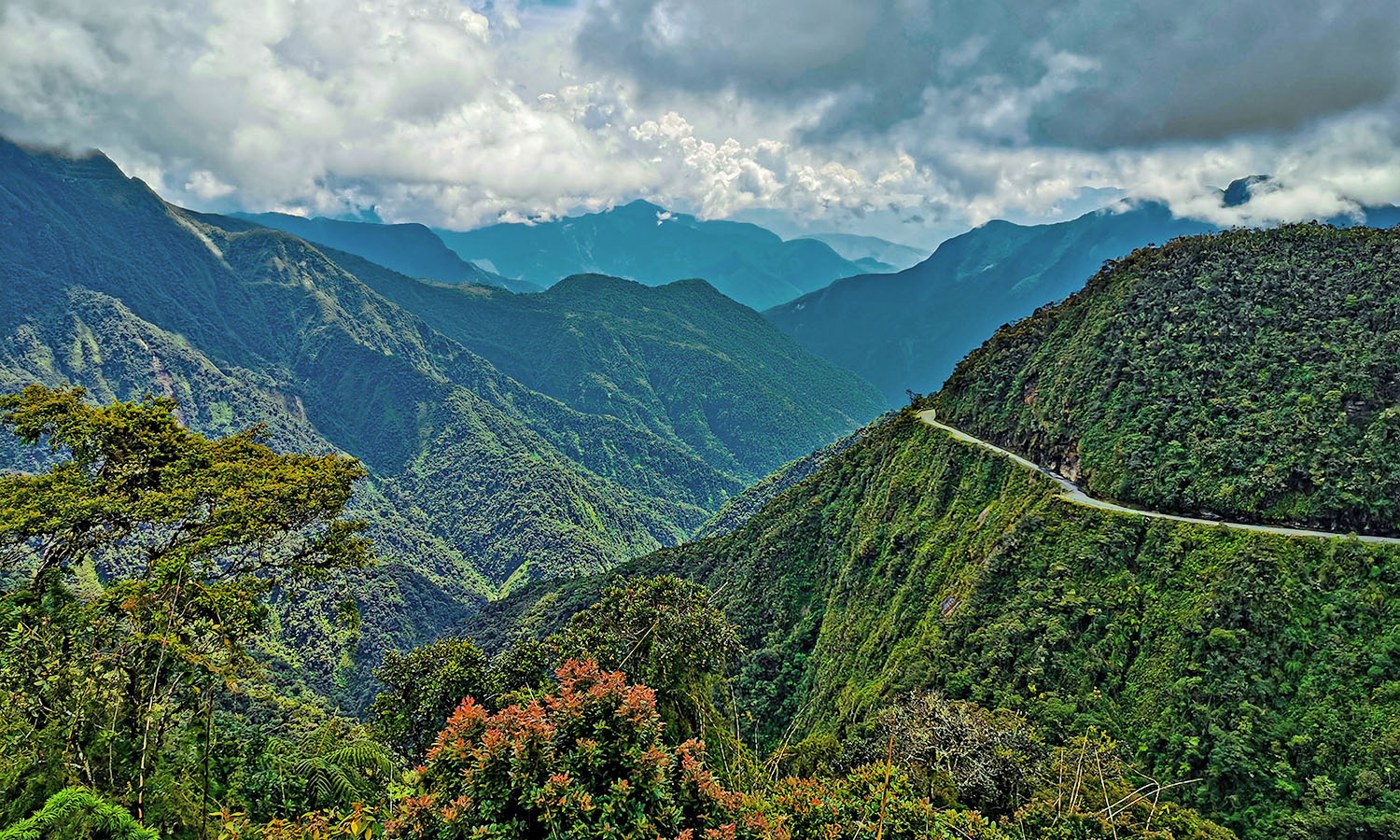
Carretera de los Yungas, in the west of Bolivia, is much better known by a different name: Death Road. Not the sort of title that inspires confidence.
This infamous, albeit perilous, 60 kilometre stretch connecting La Paz with the Yungas region weaves through fog and around 600-metre-high cliffs, and has frequently been referred to as the world’s most dangerous road.
Parts of the two-way road are just three metres wide. To put that into perspective, the width of one Toyota Camry is 1.85 metres…yep, let that one sink in.
Still, the road has been drawing cycling, motorcycling and longboarding maniacs from around the world for a years, all wanting to say they’ve conquered the world’s most dangerous road.
ICELAND
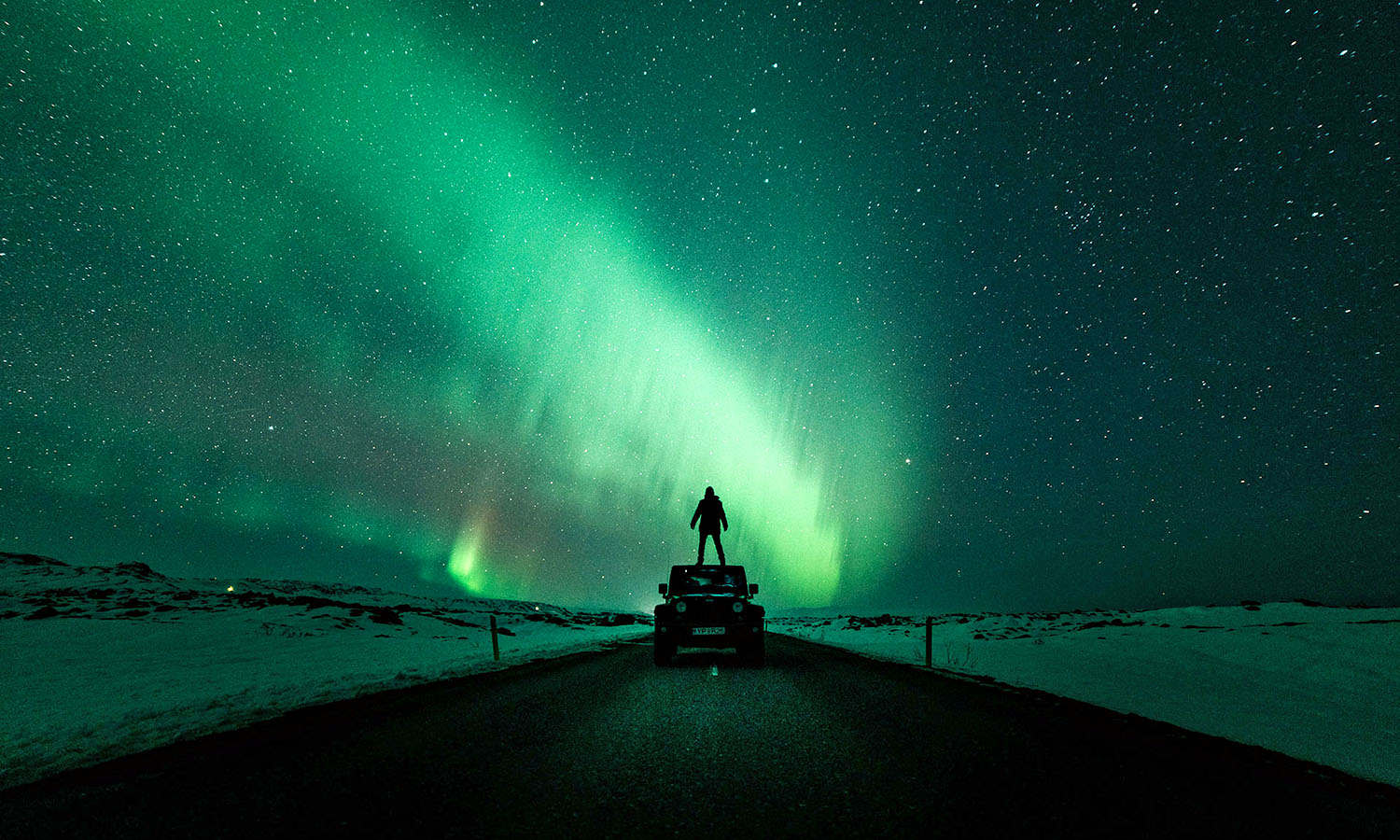
Northern Lights roadtrip, anyone?
There’s no need for streetlights when you’ve got Aurora Borealis up above to light the way.
Every corner you turn on Iceland’s Ring Road feels like it could be the front cover image of an Icelandic tourism campaign, such is the frequency of unique natural wonders that exist here.
The Ring Road is a 1,322 kilometre circulation of the entire country, and the perfect route to take if you’re pining to get to all of the extraordinary spots in this extraordinary country.

JAPAN
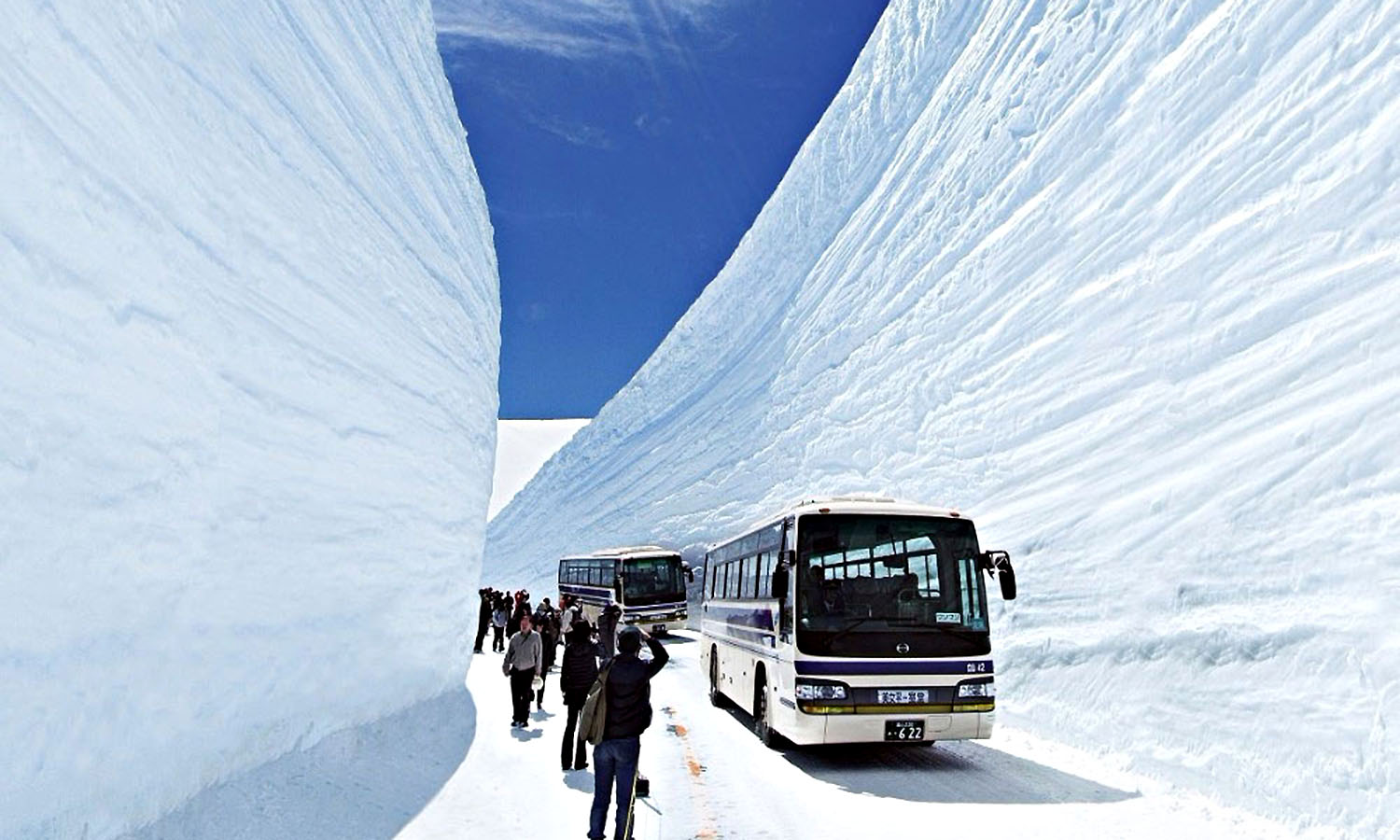
Japan is reopening to the world, although one section that won’t be open just yet is the Japanese Snow Corridor, a seasonal road which snakes through towering 20-metre-high walls of snow.
Heavy snowfall blocks the road in winter, and the corridor only re-opens in spring (March to May).
It sits along the 90 kilometre road aptly named Tateyama Kurobe Alpine — ‘The Roof of Japan’ — not a bad way to take a break from the slopes.
It’s not just limited to the forests, mountains, islands, beaches and deserts either, there is wilderness to be found in the cities as well.
We’ve discovered seven truly unbelievable experiences to be had right across Canada’s vast expanse:
ALBERTA
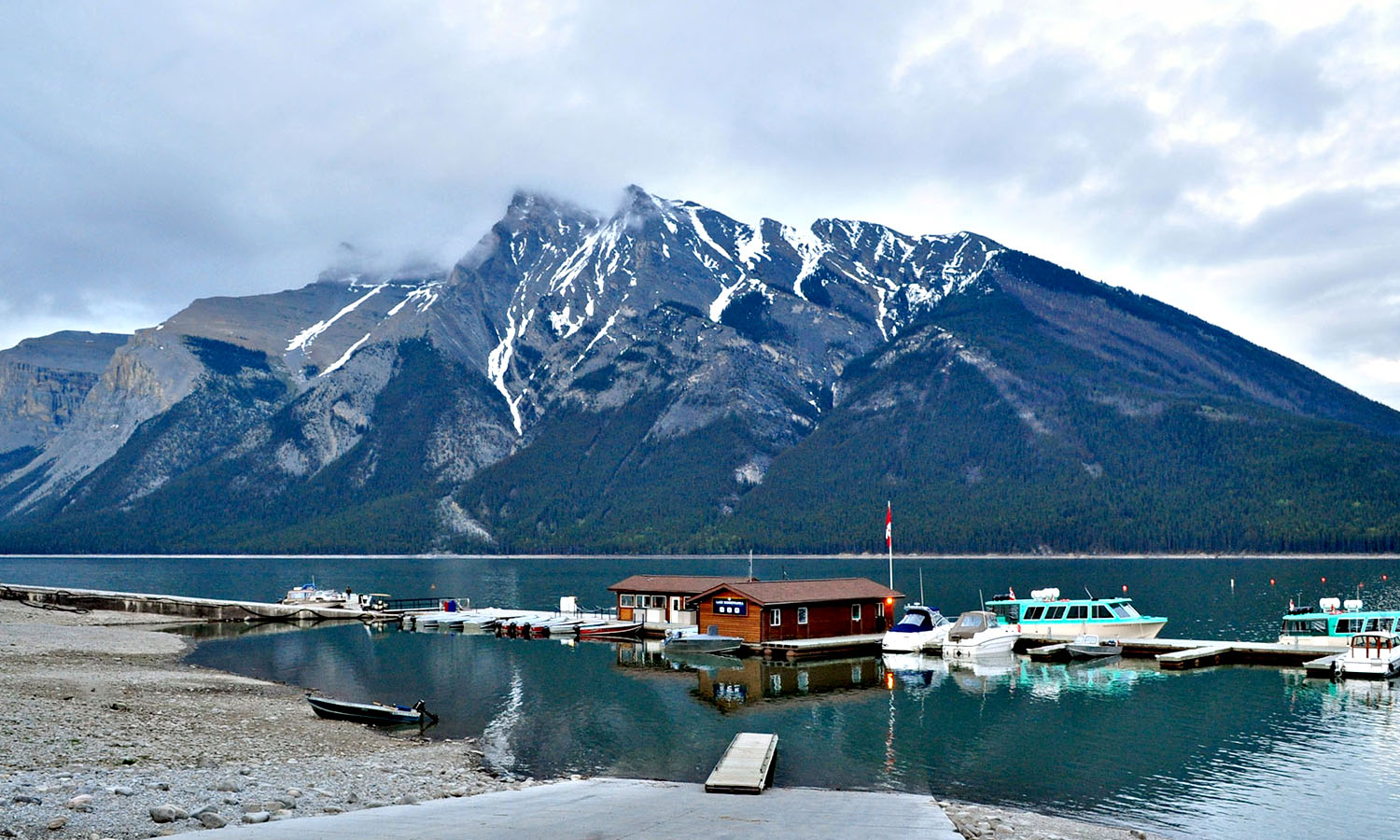
Like the lost city of Atlantis, Minnewanka Landing is a ghost town that sits beneath a picturesque lake in Banff National Park, Alberta.
Those brave enough to take on the icy cold waters are able to dive through a once-thriving town, that was flooded in 1941 following construction of a nearby dam, making for a magical, if a little spooky, diving destination.
YUKON TERRITORY
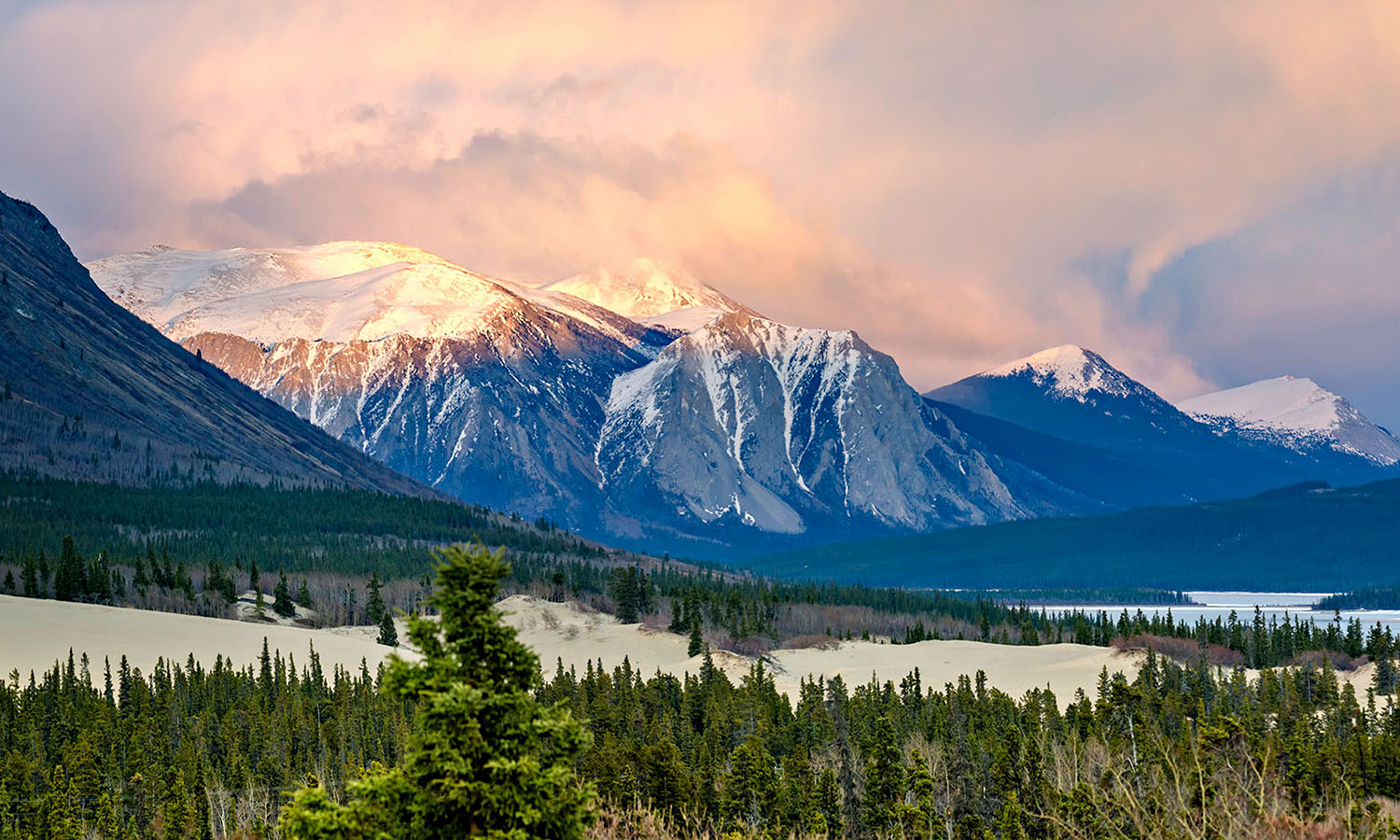
Yukon is a place of extremes, and so it comes as only a minor surprise to find that there is a desert located here — the world’s smallest.
An excellent stop on a road trip up the Klondike Highway, the Carcross Desert is where the mountains and desert meet. At just 600 metres wide, it’s hardly the Sahara, but there’s still plenty of space to sandboard and drive an ATV, if that’s your thing.
It sits in the company of a lake and mountains, the latter intercepting northeast winds and therefore any rain that it would otherwise receive.
NEWFOUNDLAND AND LABRADOR
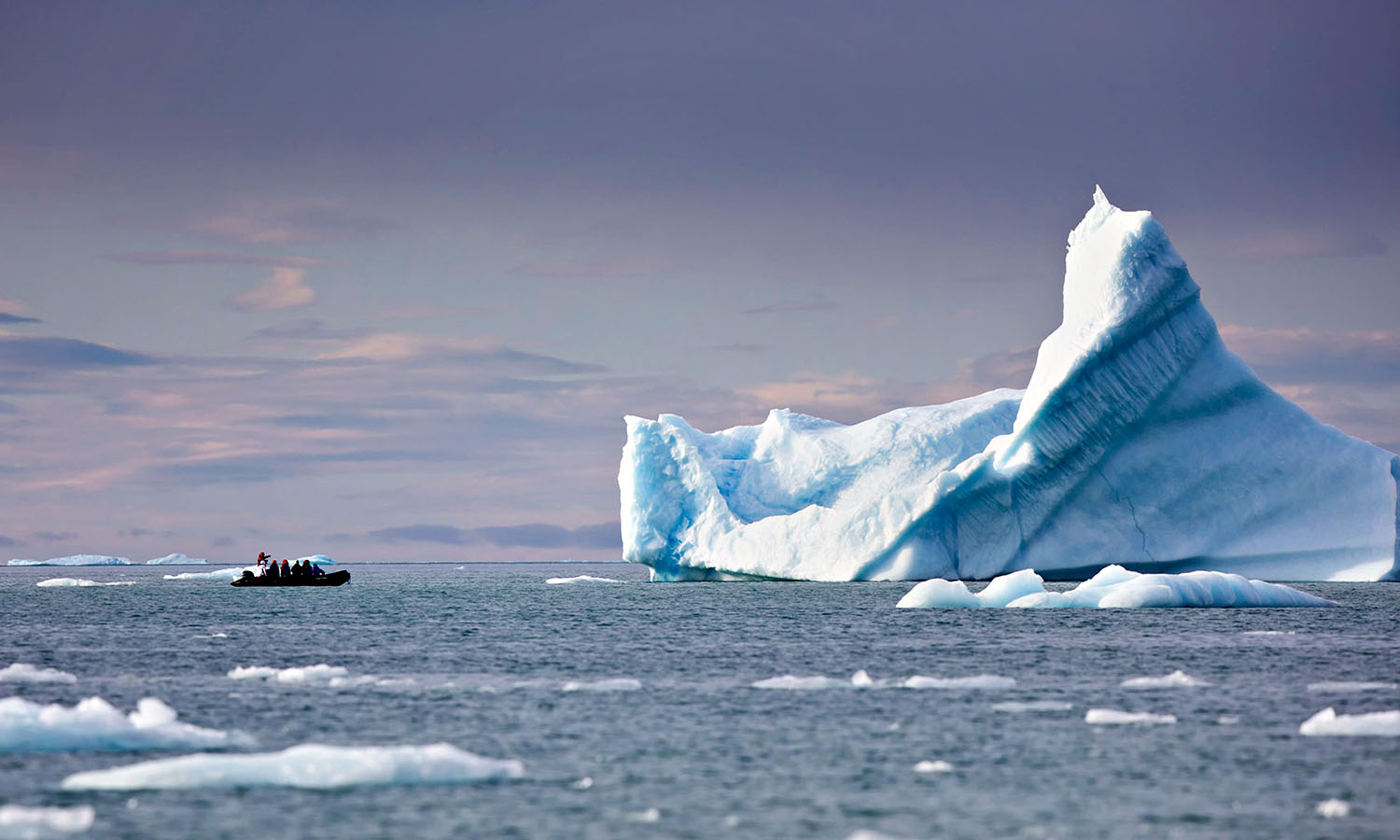
Iceberg Alley is the appropriately named stretch of water along the coasts of Newfoundland and Labrador, where icebergs the size of your house float freely in the water.
This extraordinary phenomenon happens every spring, as the island thaws out from a long winter — late May and early June are the best times for berg viewing.
NOVA SCOTIA
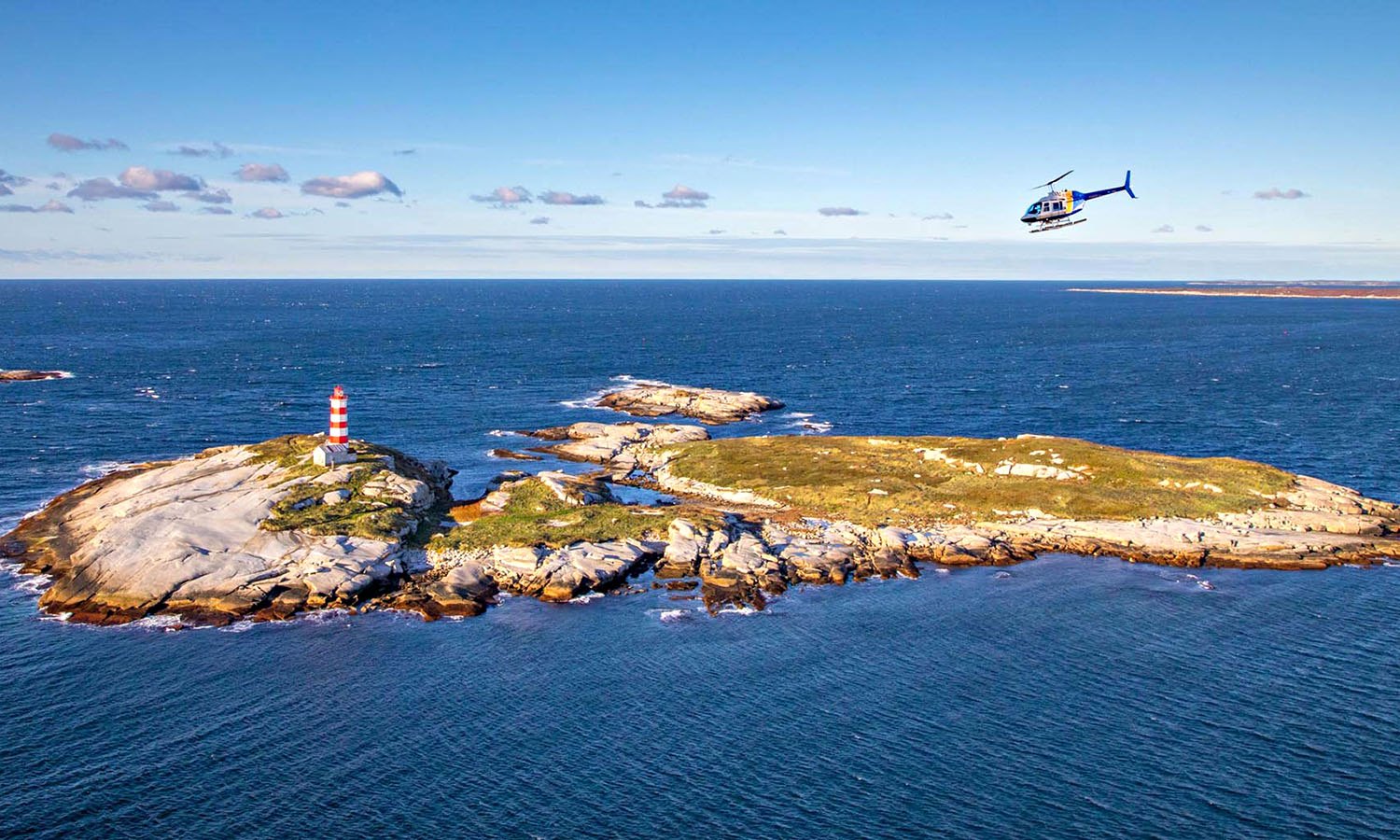
Why picnic when you could heli-picnic instead?
From Halifax in Canada’s eastern province of Nova Scotia, take a chopper over to Sambro Island, which has a population of just one, and that one is a lighthouse.
On a private beach, explore a secluded cove and enjoy a small feast — wine, charcuterie and cheeses all sourced locally, as well as a personal sommelier to talk you through the decadence.
VANCOUVER ISLAND
From the far-east to the far-west.
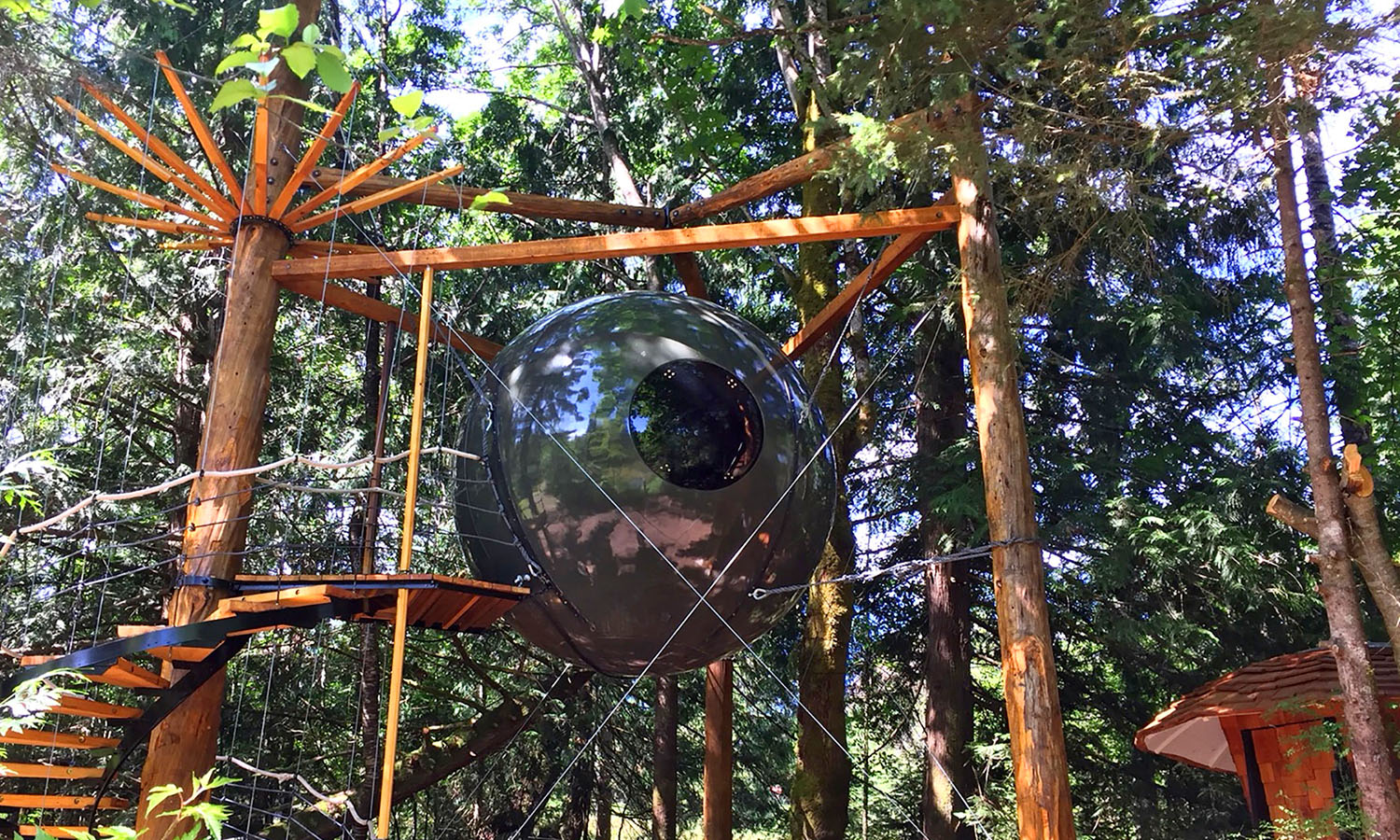
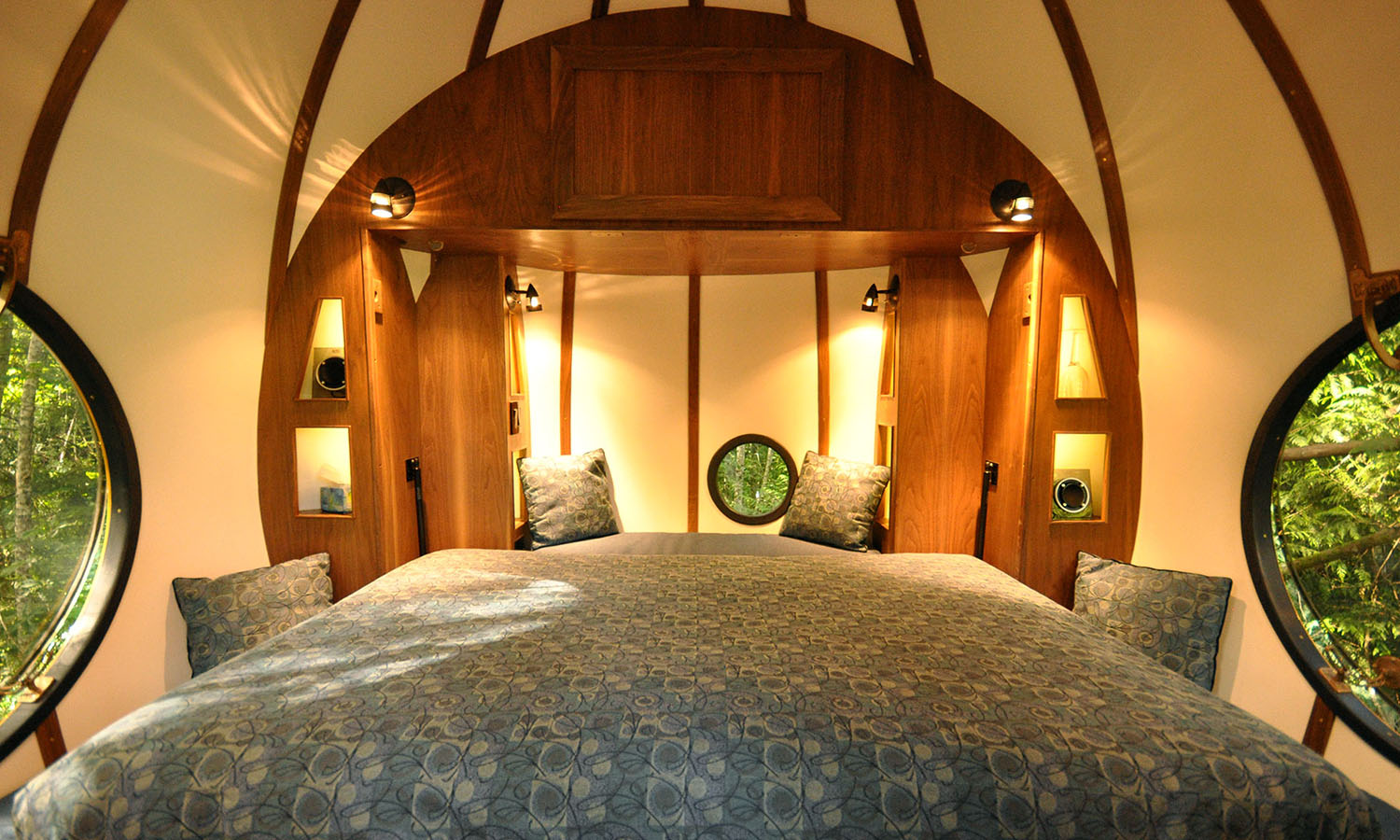
Free Spirit Spheres bill themselves as ‘the most unique accommodation in the world’ and to be honest, it’s hard to argue with them.
The spheres are built from fibreglass and the native spitka spurce tree, and are suspended metres in the air in forests around Vancouver Island, British Columbia. This really is living in the wild.
CALGARY
Pipeline, Bells Beach, Uluwatu…Calgary?
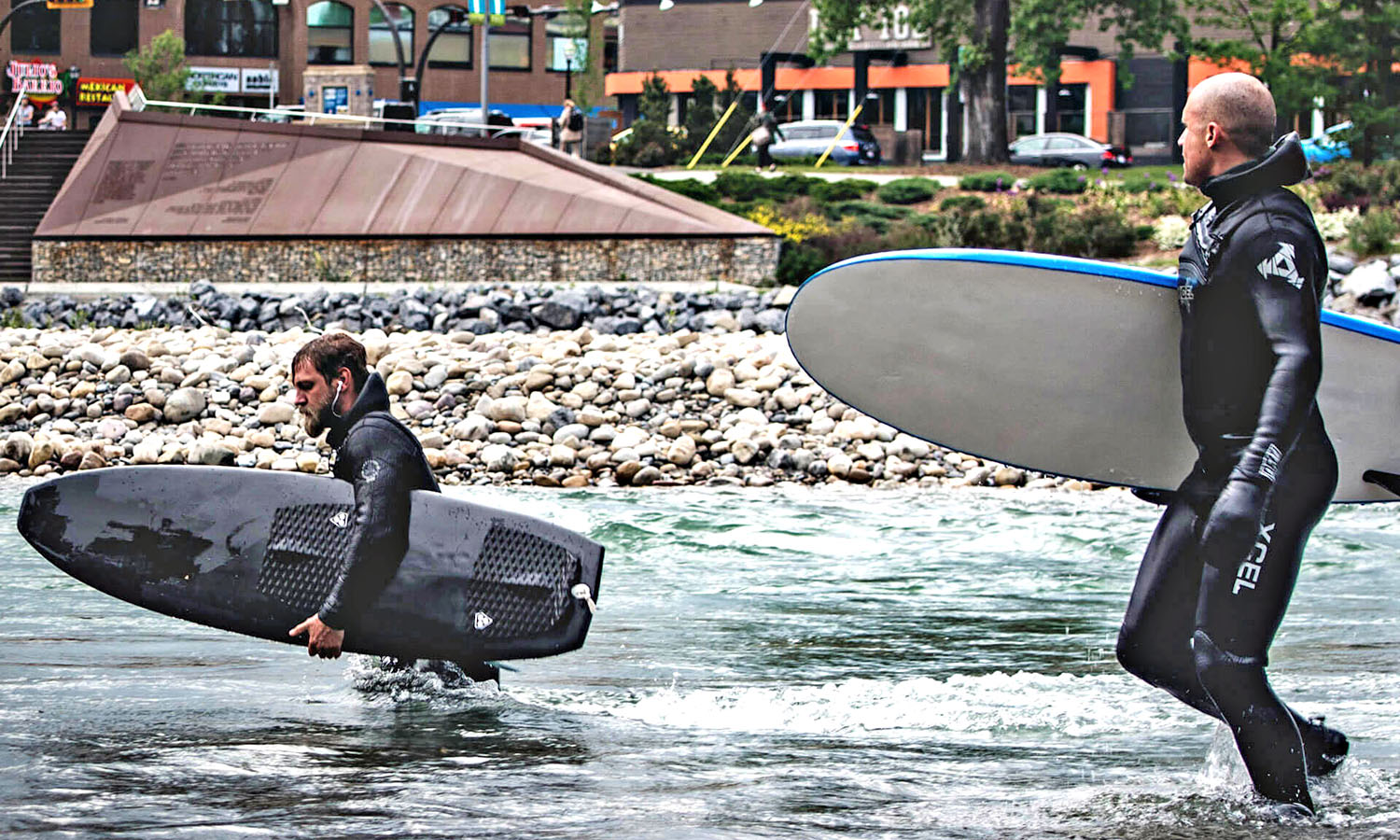
Surfing is not something you’d usually associate with Canada, but in Calgary, Alberta, river surfing has emerged as an accessible way to get waves. Natural and man-made breaks have sprung up across town, with several a little further out, providing rippable sections for all levels of skill — dust off your wetty and start practicing that shaka.
NORTHWEST TERRITORIES
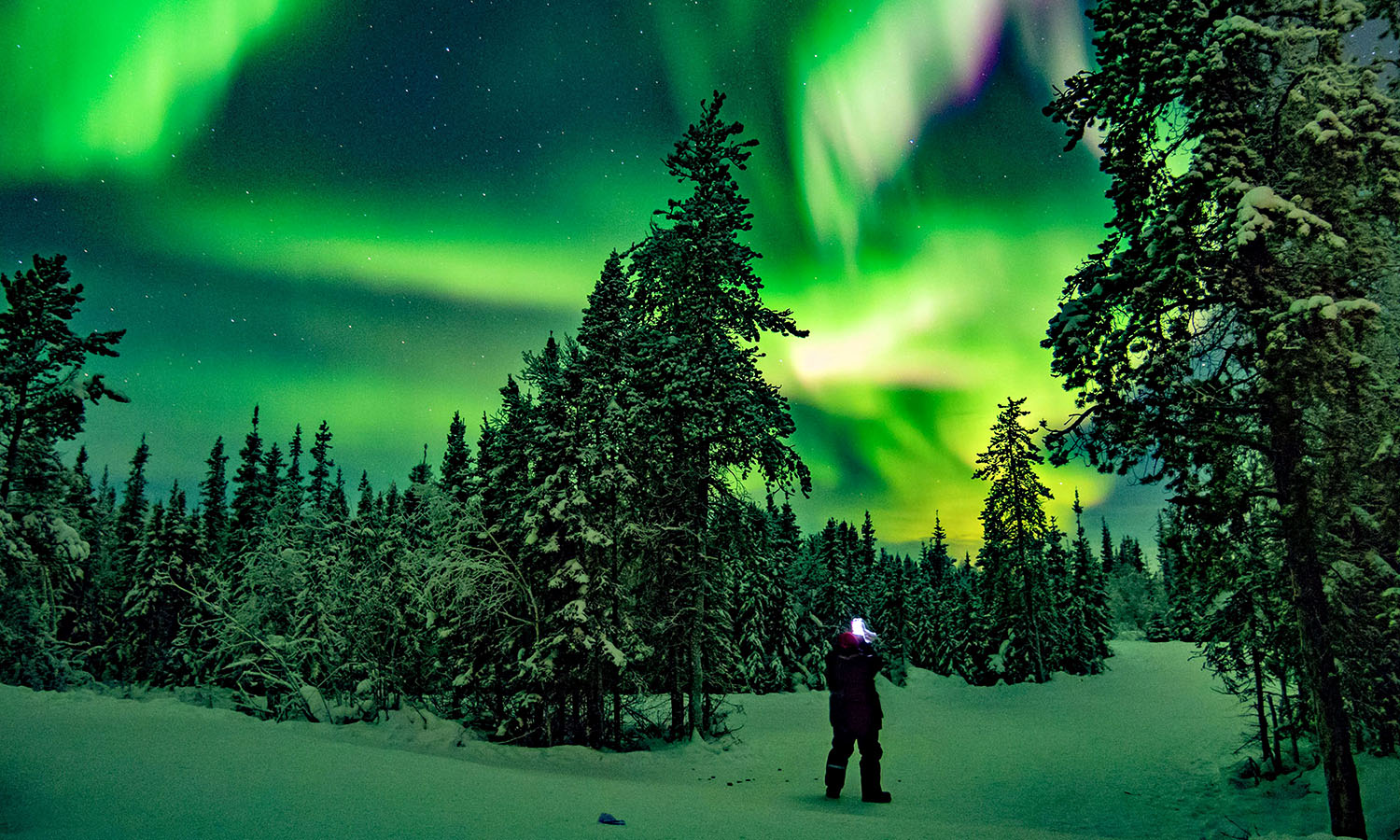
It is extraordinary to think that as well as being thrilling on the ground, in the water and in its trees, mountains and dunes, Canada’s sky is something to behold as well. Arguably the best place on earth to see the shimmering Northern Lights is at Blachford Lake Lodge in Yellowknife. The lodge is located directly underneath the auroral oval, and is accessible only by bush plane or skis in the winter. This means there’s no light pollution from nearby towns, cities, cabins, or road traffic. Sit back at a lakeside cabin and let the magic unfurl in front of you.
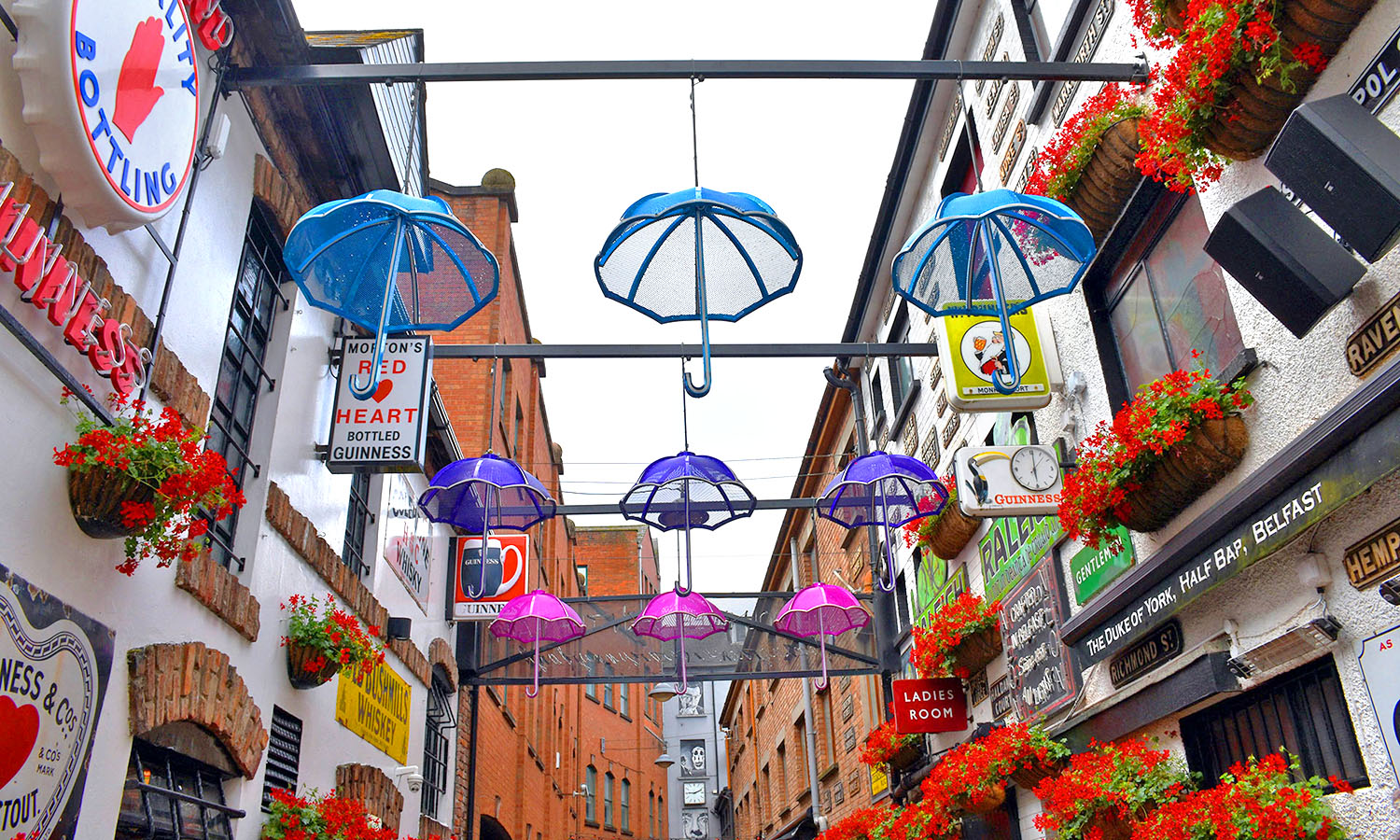
Dolores Vischer is a professional Green Badge Tour Guide based in Belfast, whose knowledge of the area extends from 1950s showbands to punk, to modern day pop and everything in between. She also knows where to see the best gigs, making her a good person to know in a town that’s been newly anointed a UNESCO City of Music.
“In the punk days, there wasn’t the security there is now. You could jump on stage and dance alongside the band,” she says. During a The Stranglers gig in 1979, teenage Dolores did just that, hopping over to drummer Jet Black and announcing she could play. No sooner had the words left her lips, than she was left holding the sticks as he ran to the loo. “I think I did OK.”
Ulster Hall this morning, at the start of our three hour walking tour, is more quilting society meet-up than punk rock dive (the Ulster Orchestra is performing here tonight). But if the walls of this Victorian music hall could talk, they might ring with the melodic pop-punk of The Buzzcocks, the headbanging rock of AC/DC or dark pop of The Pixies. It’s not who has played Ulster Hall, but rather, who hasn’t.
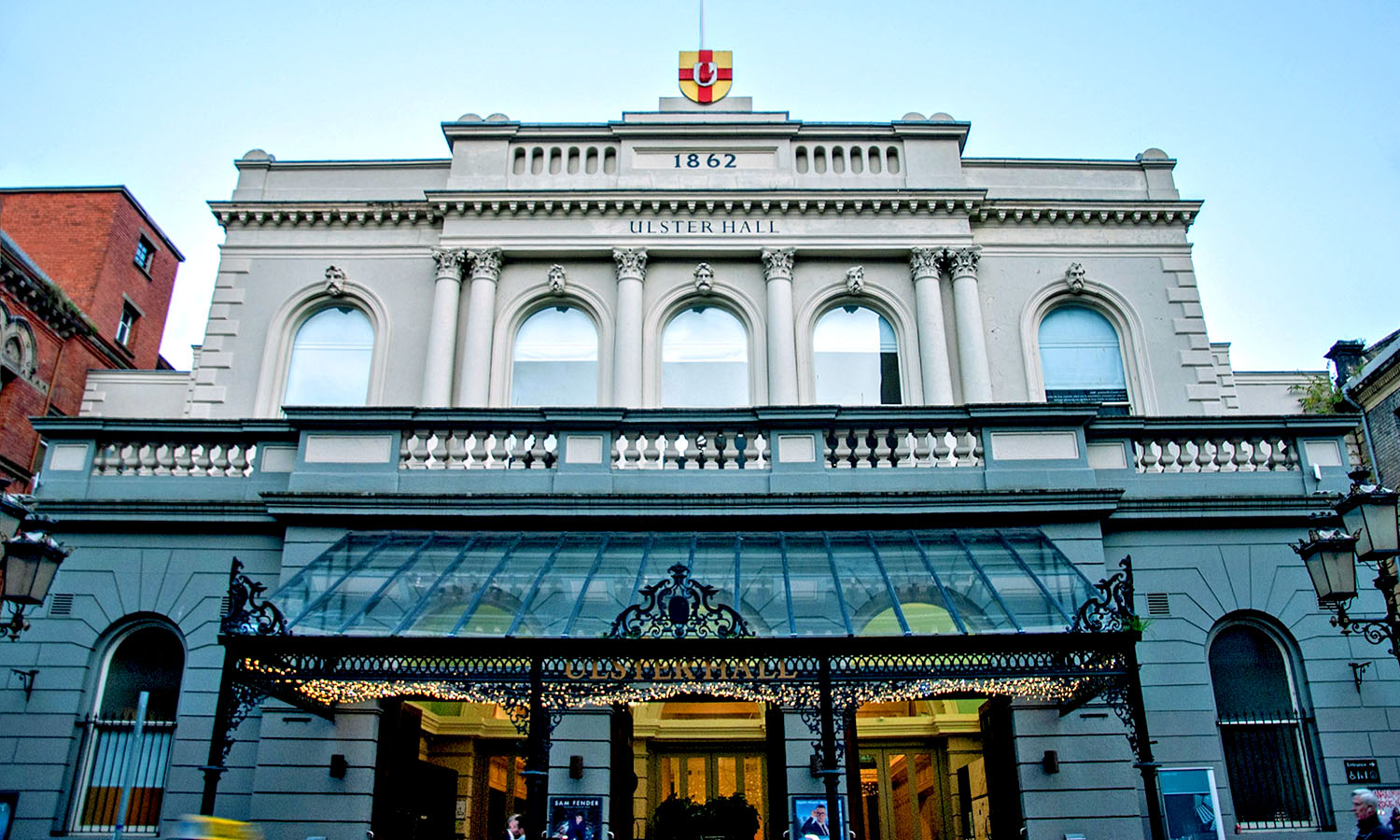
During the Troubles, the city lay in darkness, cordoned off at night. Ulster Hall was the music-goer’s equivalent of a pot of gold at the end of the rainbow. Sitting just outside the no-go zone, it played host to local and (the occasional) international artist.
Led Zeppelin famously debuted Stairway to Heaven here in 1971. As the story goes, punters were more invested in getting a Guinness at the bar than listening to a song they didn’t know. A decade later, Dexys Midnight Runners rocked out their singalong, clomp-a-lot hit Come on Eileen when the floor caved in. “Nobody stopped dancing, they just moved further back from the big hole,” says Dolores.
Click play to watch
Belfast has had many incarnations since becoming a city in 1888. Shipbuilding, linen, whiskey, tobacco and rope were its lifeblood. Filming of the big budget US fantasy drama television series, Game of Thrones helped its reinvention. But it’s music that helped raise it up and out of its darkest times and which continues to unify it today.
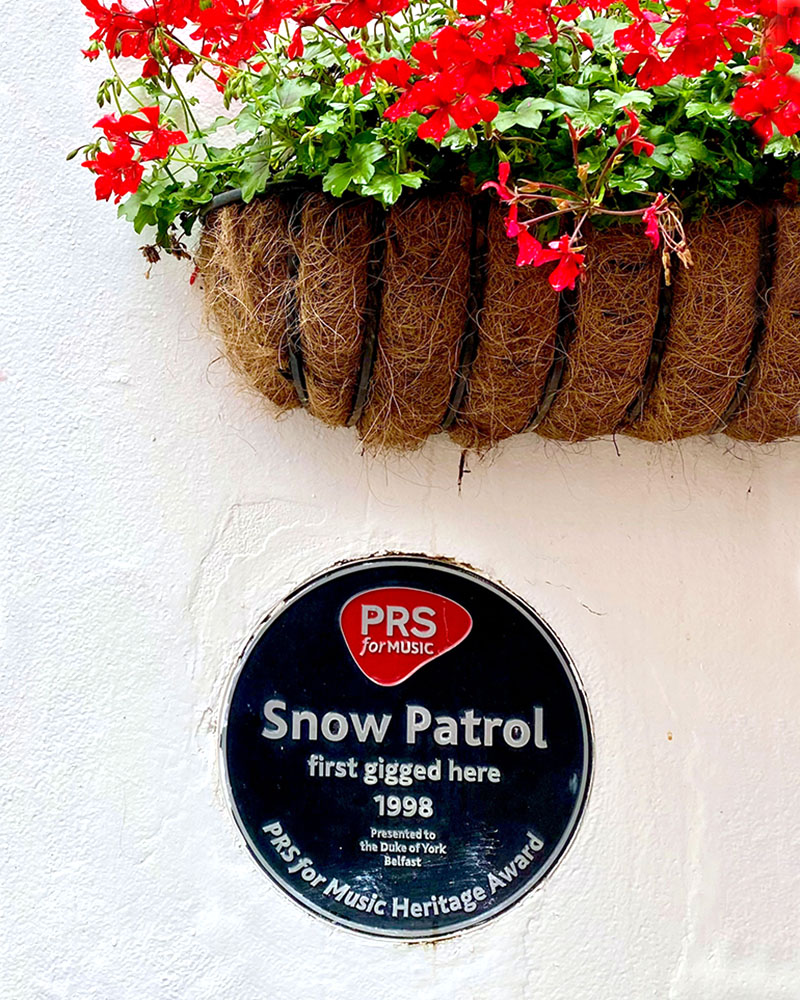
“Music is woven into the DNA of Belfast,” says Snow Patrol frontman Gary Lightbody, who along with Emmy-nominated composer Hannah Peel is one of the Belfast Music patrons. “We have so many incredible bands and artists — and more every single year. I’ve watched in these last 25 years of relative peace the music scene grow and then thrive and now burst at the seams with fearless and limitless talent.”
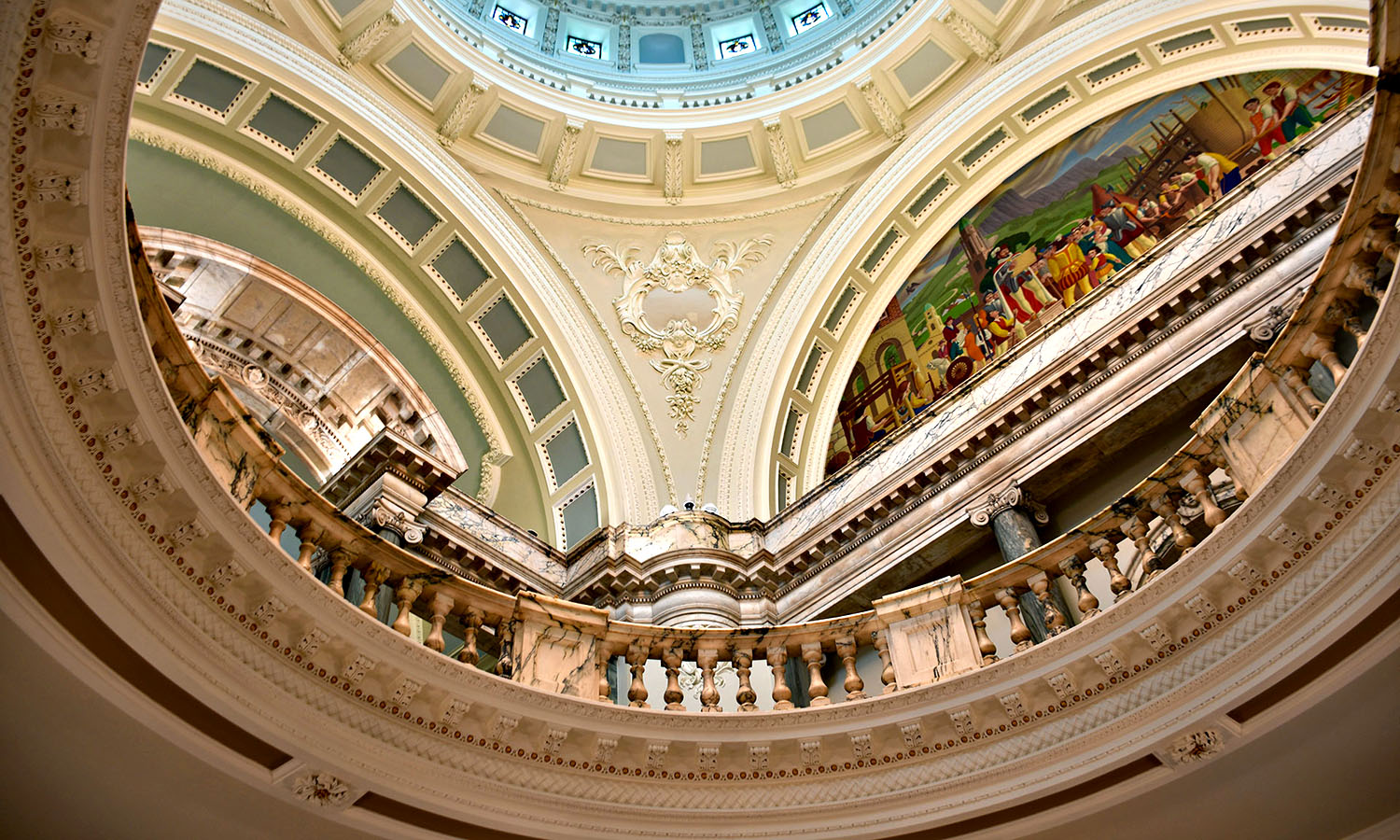
Belfast City Hall was built in 1906 to commemorate the city, and it’s here the Belfast City Council conceived its UNESCO bid. We come to it via streets slick with rain, its copper dome bright green against grey mushroom skies. Inside the Neo-Baroque building, chequerboard floors and marble staircases lead to decorative arches, frescoes and a dome inlaid with stained glass.
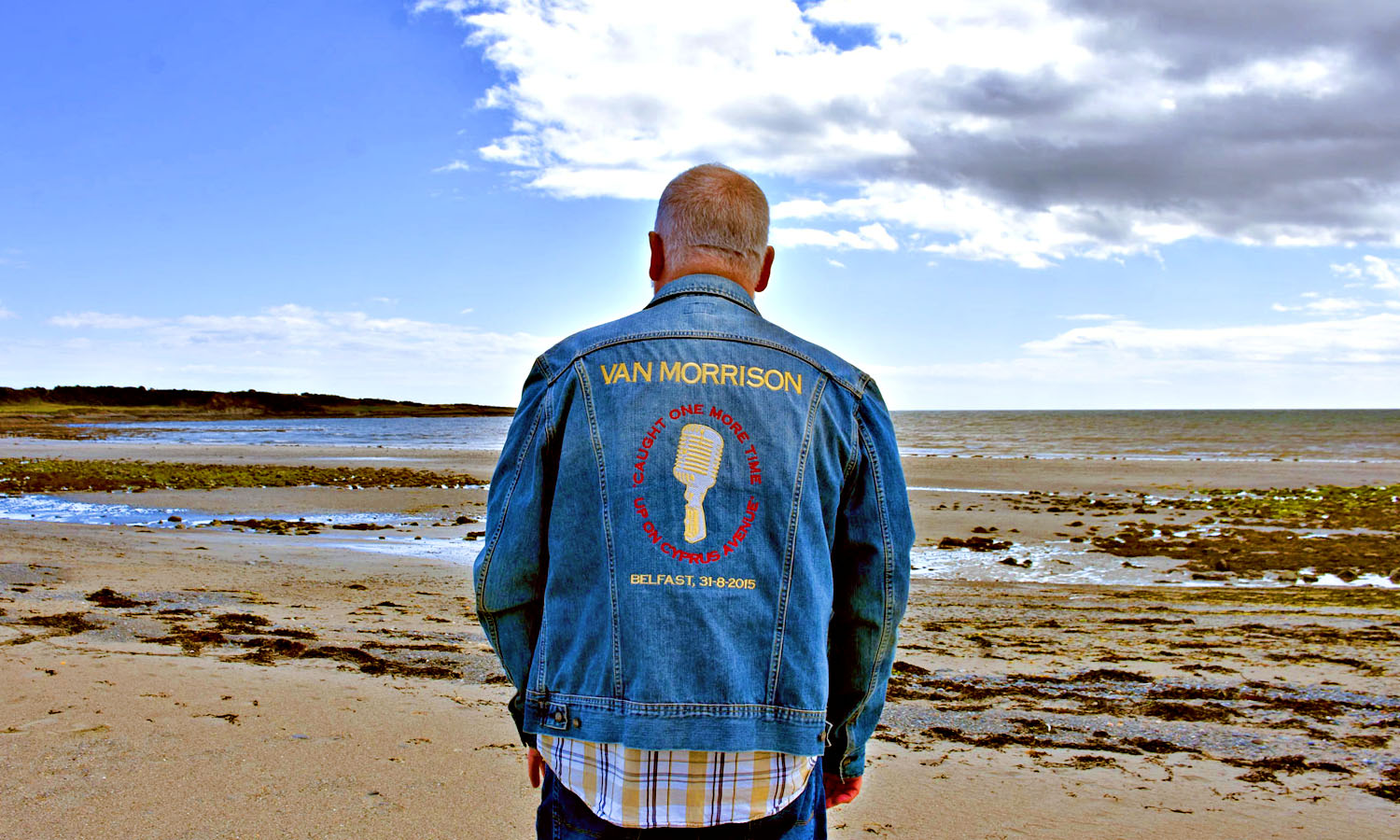
All that remains of the Maritime Hotel is a brick wall and blue plaque announcing it as ‘the birthplace of the rhythm and blues in Belfast in 1964′. That’s when a young Van Morrison stepped onto the stage, launching his global career and putting Belfast on the musical map. “Before the Beatles and the Rolling Stones, we had American swing music and jazz,” says Dolores. “The Maritime Hotel changed that.”
For five years leading up to the Troubles, it was the place to be. Van Morrison wrote the raunchy rock song Gloria on its stage. Local artists The Aztecs, The Loving Kind, and even Rory Gallagher, a Donegal lad who turned down a spot in the Rolling Stones to pursue a solo career, performed here with his band Taste.
We swing past the Presbyterian Church where the HARP congregation organised the first Belfast Musical Festival, music store Starr Records and around the corner to Kelly’s Cellars, a traditional pub claiming to be Belfast’s oldest (one of several jostling for the title). It’s closed but later, I find a cosy tavern and beer garden where a young brother-sister duo playing violin and acoustic guitar perform a rousing traditional set.
On a Saturday afternoon, the maze of graffiti-splashed lanes and warehouses of the Cathedral Quarter is packed with good craic, free flowing beer and a remarkable number of cover artists toting a guitar.
It’s spitting distance from where legendary punk hangout Harp Bar once stood. Good Vibrations record label founder Terri Hooley held gigs late at night in this once-bombed, heavily fortified bar in the heart of the no-go zone at the height of the conflict. Under the cloak of darkness, young punks from both sides of the divide would come together to pogo and share good craic.
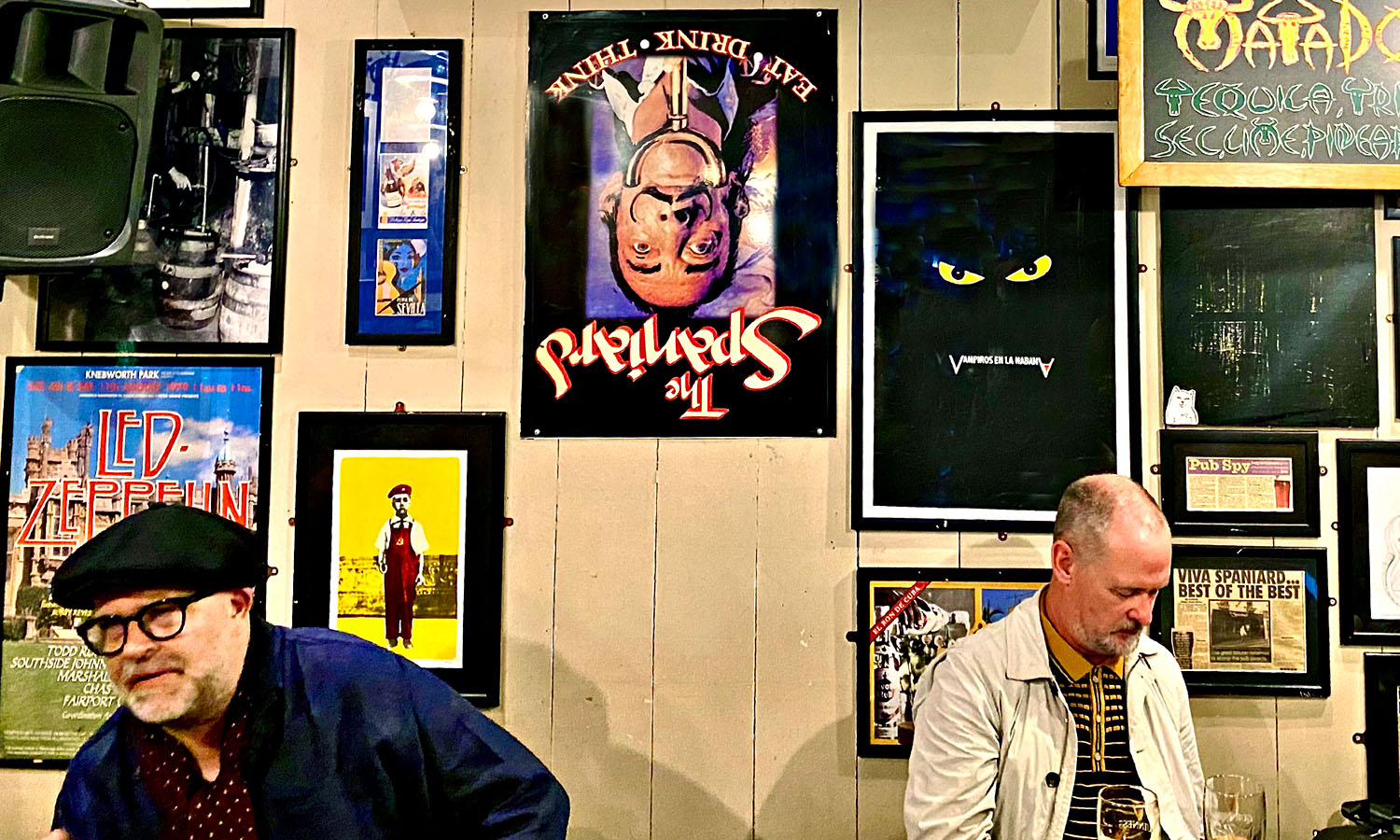
Around the corner at the Oh Yeah Music Centre, a not-for-profit studio and performance space where our tour ends, the DIY sentiment continues with a performance from local indie pop artist Sasha Samara. The theatrette is a music-lovers cornucopia stuffed with memorabilia from local and international artists including the guitar used in Snow Patrol’s song Chasing Cars and a vintage street sign of Cyprus Avenue.
“Terry Hooley said ‘New York has the haircuts, London has the trousers, but Belfast has the reason,” recalls Dolores. “We were desperate to get good music.” Turns out necessity is the mother of all invention. We fall quiet as Sasha Samara takes the stage.
I’m halfway between Taveuni Island and Qamea Island, islands within the Vanua Levu Archipelago, when the ferry’s skipper, Junior, turns to me. “Ropate,” he shouts above the chugging sound of the ferry’s motor, “that is your Fijian name!” Junior erupts into laughter as we arrive on the shores of the Maqai Beach Eco Surf Resort.
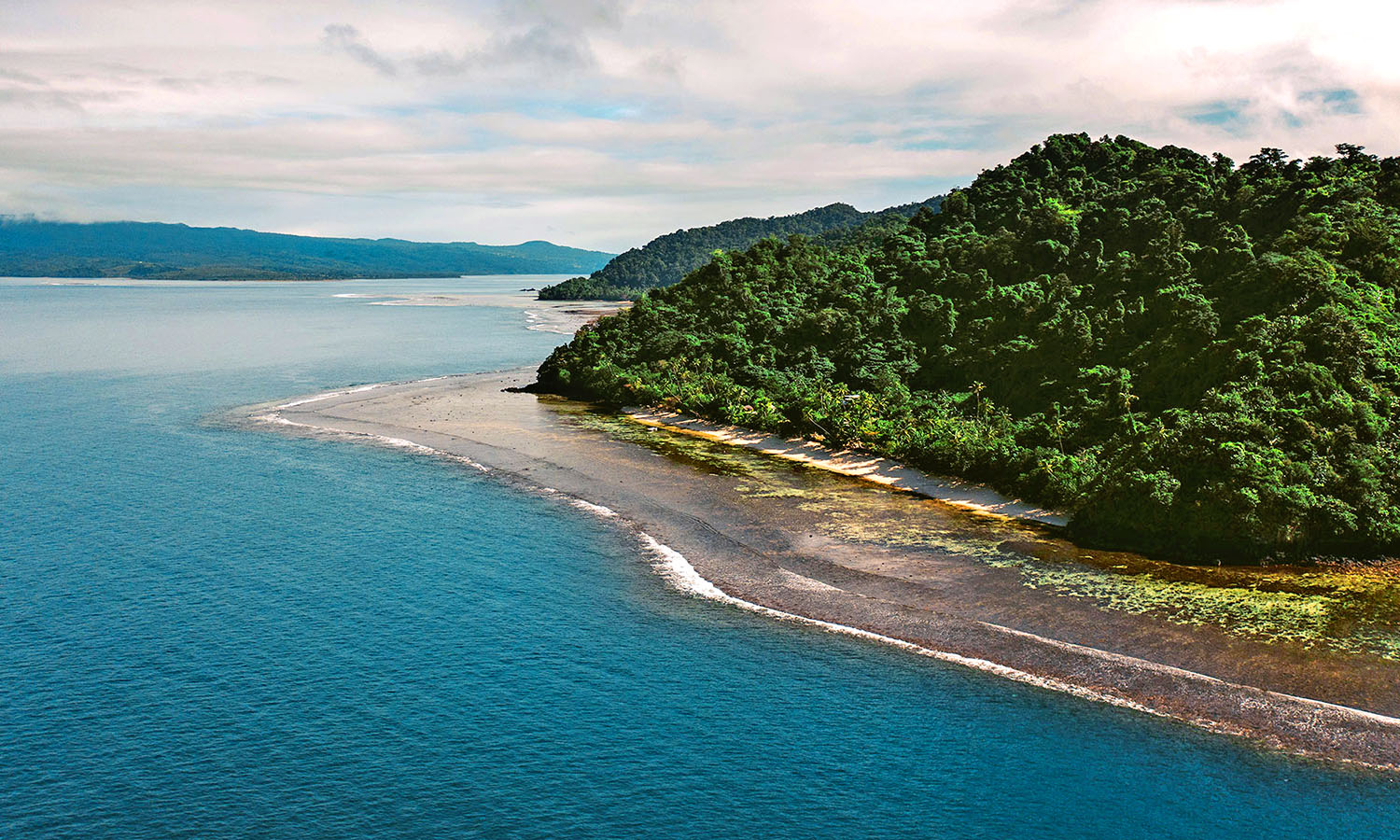
There’s something to be said about a resort run by Fijians, particularly a Fijian family. Cathy and her husband, Wani, are the first Fijian resort managers on Qamea Island. They stand proudly on the beach, joined by the rest of their local staff, strumming ukuleles and guitars.
I’m serenaded with warm smiles and a welcome song as I trudge through shallow waters. “Welcome home, Ropate!” I’m handed a chilled coconut and escorted through the sand bar, and then cheered onto the beach volleyball court, joining the afternoon staff game. They’re right. Home is how this resort feels.
But lovely staff and beachfront bures aside, I was here for a surf break. And I couldn’t wait to get in the water.
Rauli, Maqai’s surf instructor to the stars (naming Demi Lovato among his mentees), waxes his board as our small boat is rocked by the aftermath of two-metre swells. With land a few kilometres behind us and an endless expanse of turquoise ocean in front, we have this entire wave to ourselves.
A few hours of being knocked about by Maqai’s surf break felt like child’s play compared to the washing machine I found myself in at Natewa Bay. Natewa Bay is the largest bay in the South Pacific and is a hot spot for scuba divers, snorkelers and kayakers, and apparently, manta rays.
With little time to think, I’m thrown my goggles and flippers, and before I can say, “hmm, that water seems a little rough,” I’m neck-deep in a swell and kicking out towards the current – and the squadron of manta rays that have congregated in search of plankton.
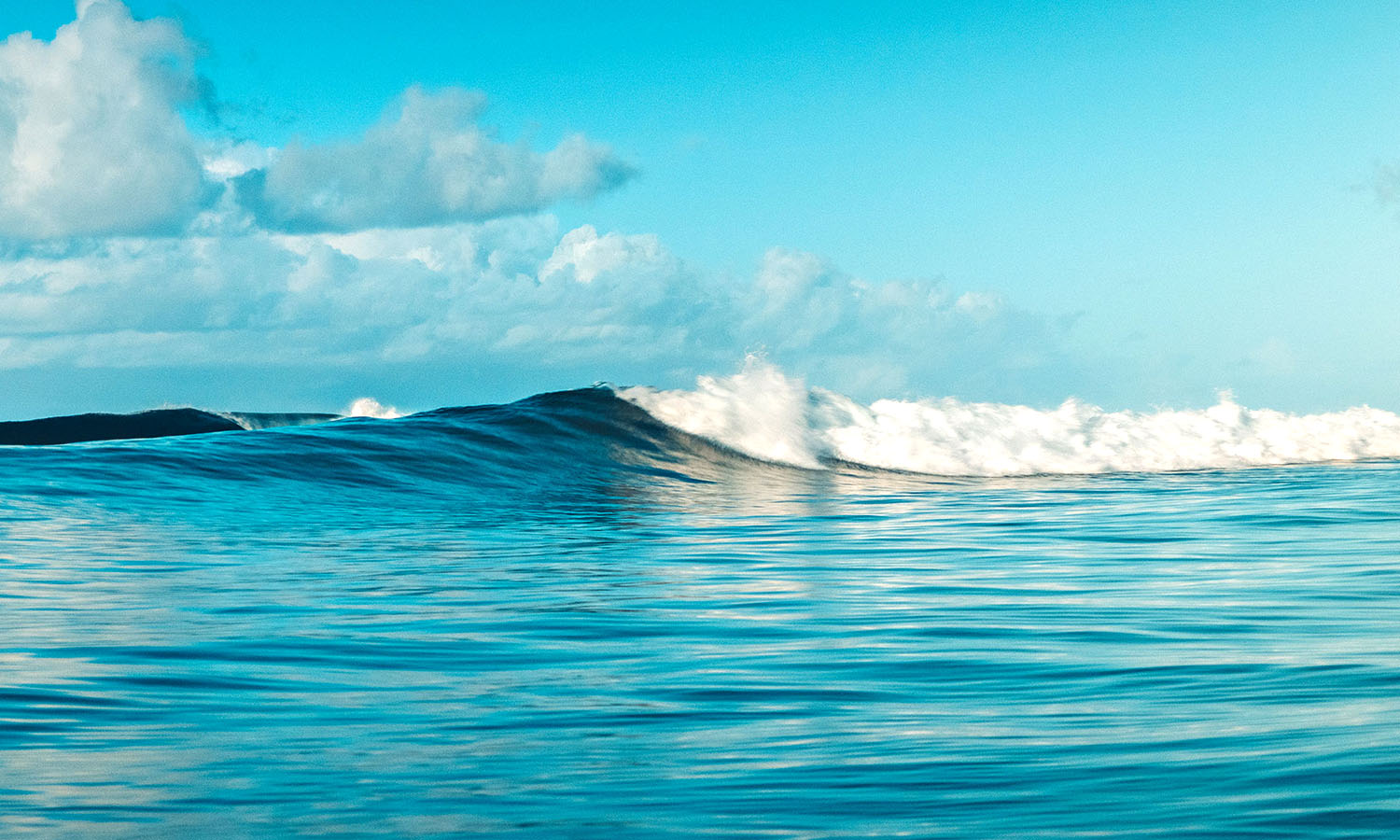
Slightly disorientated and unsure where to look, I duck my head underwater. When I turn to face my fellow thrill-seekers, I’m met with a gaping, wide-open mouth. Imagine a creature out of a Ridley Scott alien flick, and you’re close. My heart beats out of my chest as the majestic black sea blanket nears closer, its sheer size enough to leave anyone speechless. As it glides over me, I catch a glimpse of a couple of remora fish, who have hitched a ride on the manta’s underside.
Any Australian will understand how liberating it is to swim in open water without the worry of saltwater crocs, famished Great Whites or poisonous jellyfish. In fact, I’m told that nothing in Fiji is poisonous, and although I’m slightly dubious, it’s a comforting thought as I snorkel Rainbow Reef. Which could easily be mistaken for the set of Finding Nemo.
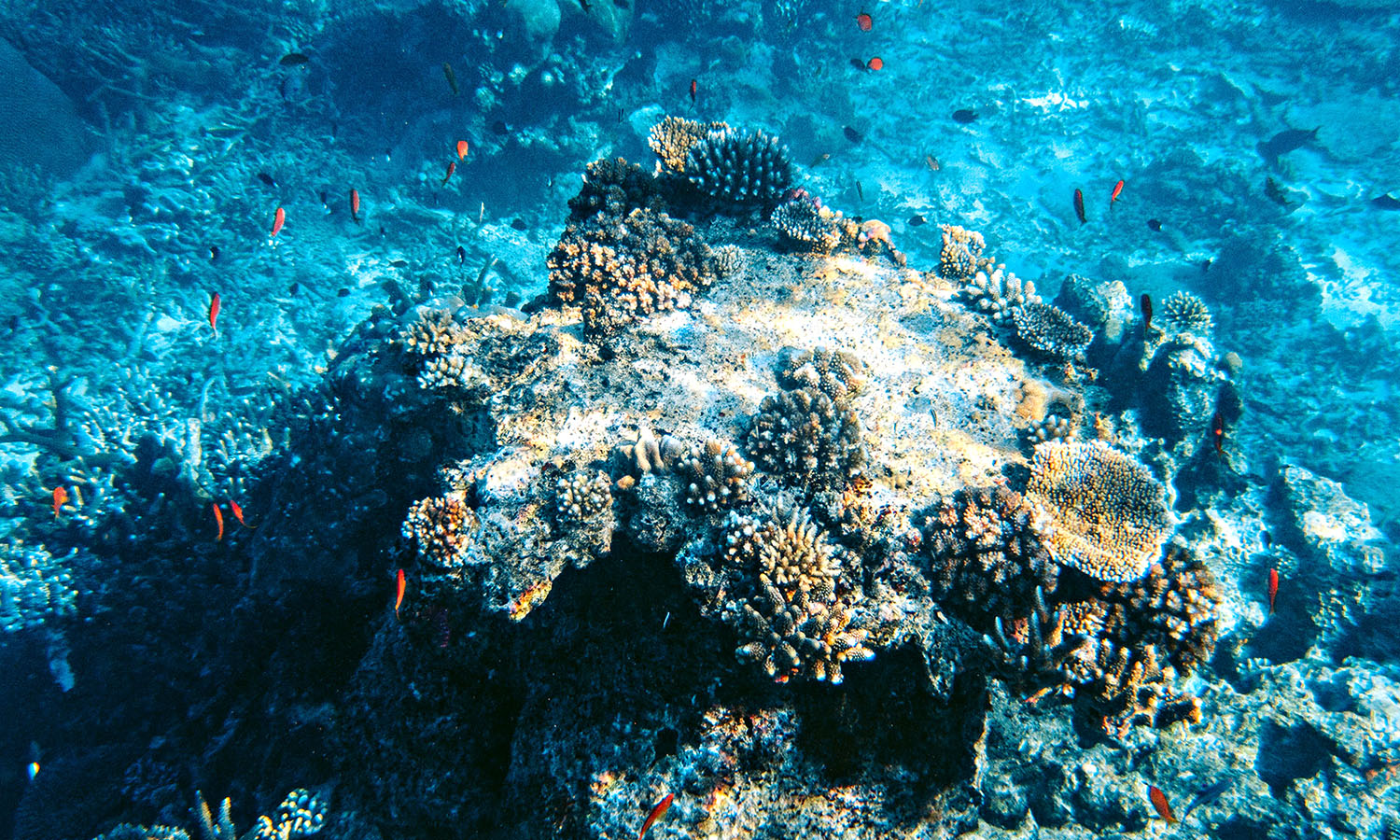
Discovered by Jacques Cousteau and situated in the Somosomo Strait between the Fijian islands of Taveuni and Vanua Levu, Rainbow Reef is known as the soft coral capital of the world. Strong tidal currents provide a healthy supply of nutrients to the reef, paving the way for a diverse and abundant marine scape. I traverse the reef, zigzagging through schools of fish, turtles and small reef sharks who chill out in the currents below.
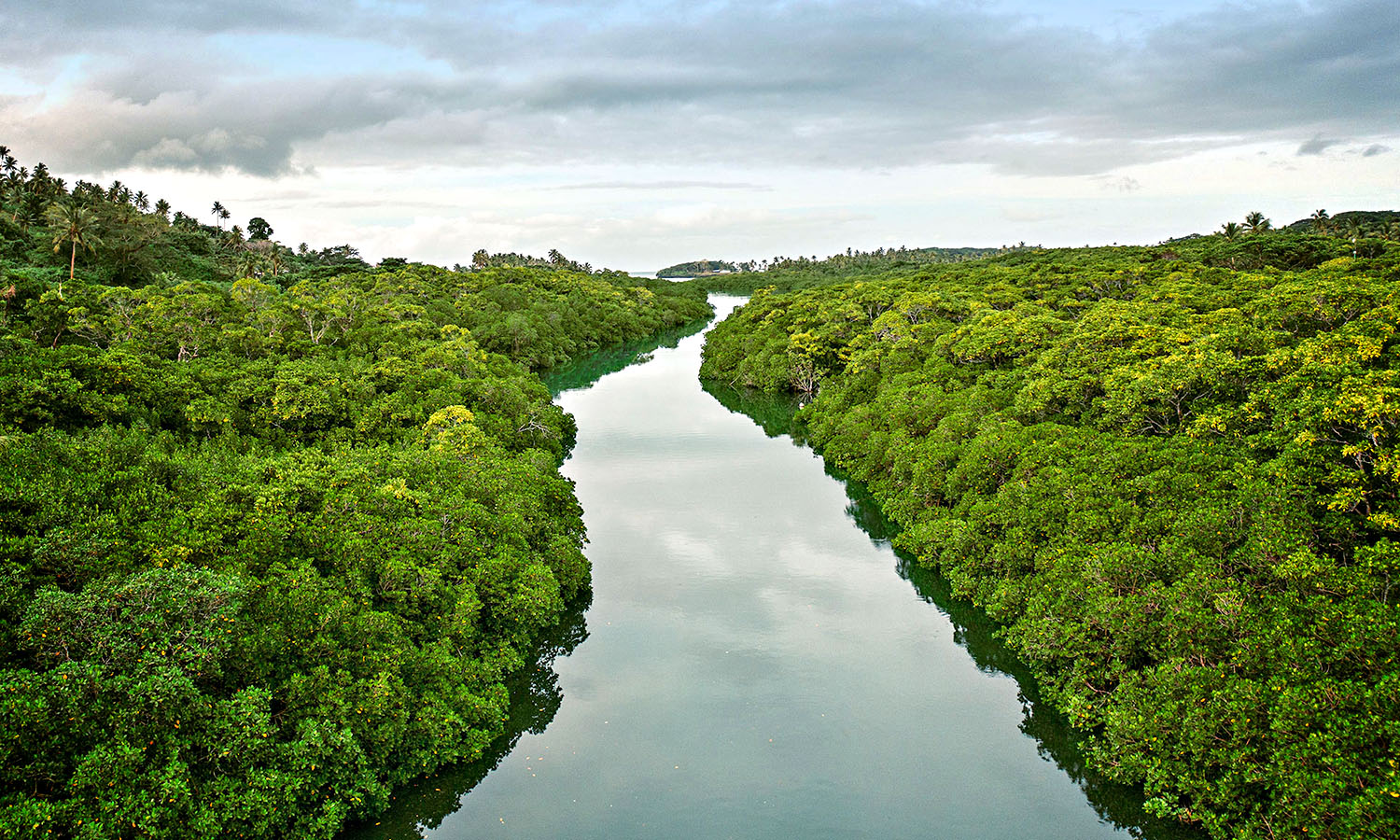
No marine reserve is more dazzling than the one that lines mainland Vanua Levu’s south coast in Savusavu. Known as ‘the hidden paradise of Fiji’ and famous for being the source of Megan Markle’s pearl necklace, Savusavu is home to bustling local markets and Kokomane, a boutique cocoa farm selling scrumptious, handmade Fijian chocolates. A short but stunning trek through the jungle takes you to Nakawaga Waterfall or you can kayak the waters of the Qaloqala River past mangrove forests to the stunning Salt Lake.
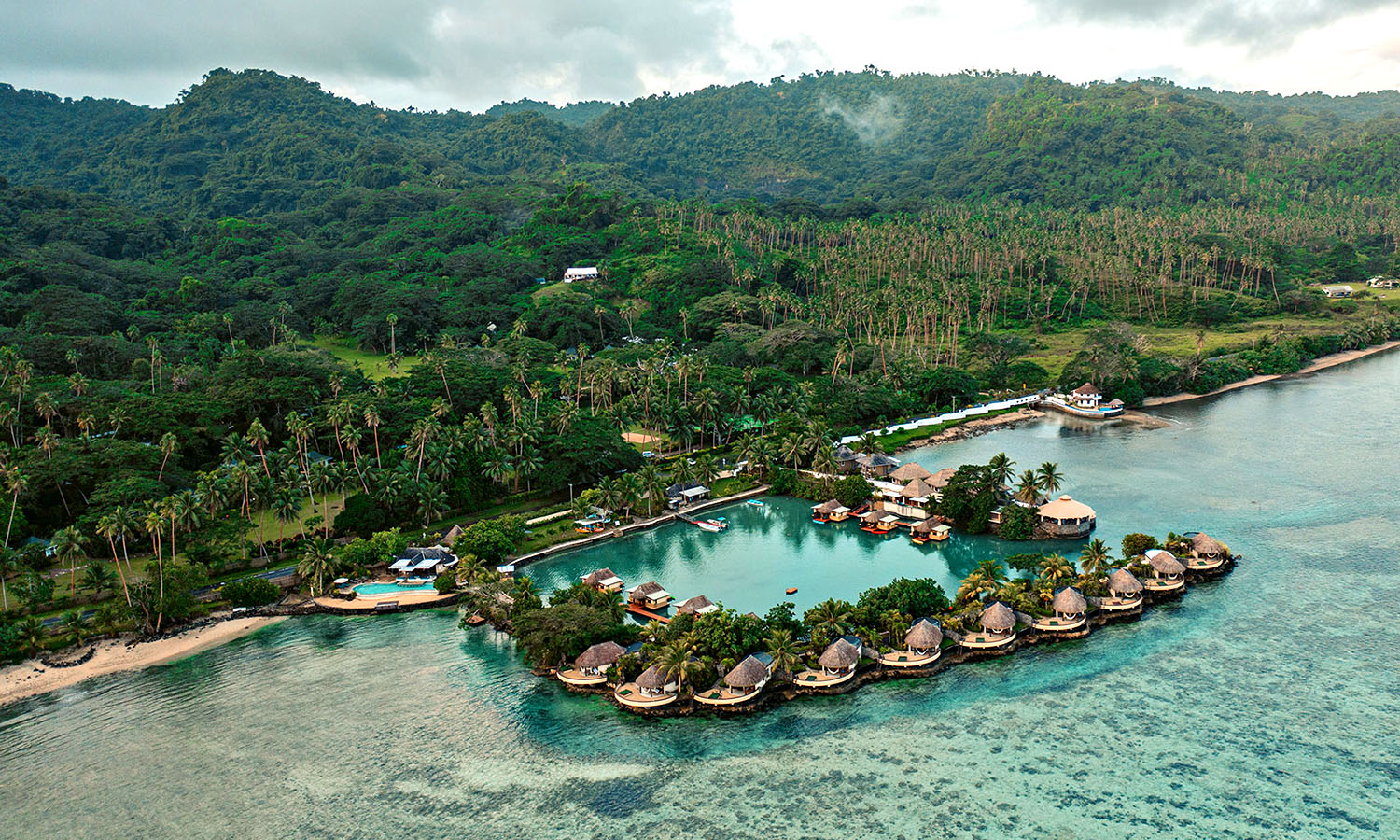
“Would you like a traditional Bobo massage, Ropate?” asks my masseuse politely at the Koro Sun Resort. Now back on dry land, I’m slathered in coconut oil as I listen to the soothing soundscape of a waterfall trickling through rainforest.
Later I lay crescent-shaped on my beachfront bure’s hammock and drift peacefully off to sleep, listening to the rhythmic sounds of waves crashing onto the crystal clear Vanua Levu shores. It’s the perfect soundtrack, a closing regale to my Fijian sea experience — a country as beautiful underwater as it is on its shores.
“I left Switzerland, and all I can think about is getting back there,” says Sean. “It’s a postcard, you just can’t beat the Swiss landscape. A sunrise at the Matterhorn is spectacular — there’s a reason it’s the most photographed mountain in the world. And then a sunset on the Schilthorn is incredible, just surrounded by those huge mountains.”
We caught up with Sean to chat alpine cows, James Bond mountain huts and how to keep your Swiss adventuring clean, green and epic.
Here are his tips:
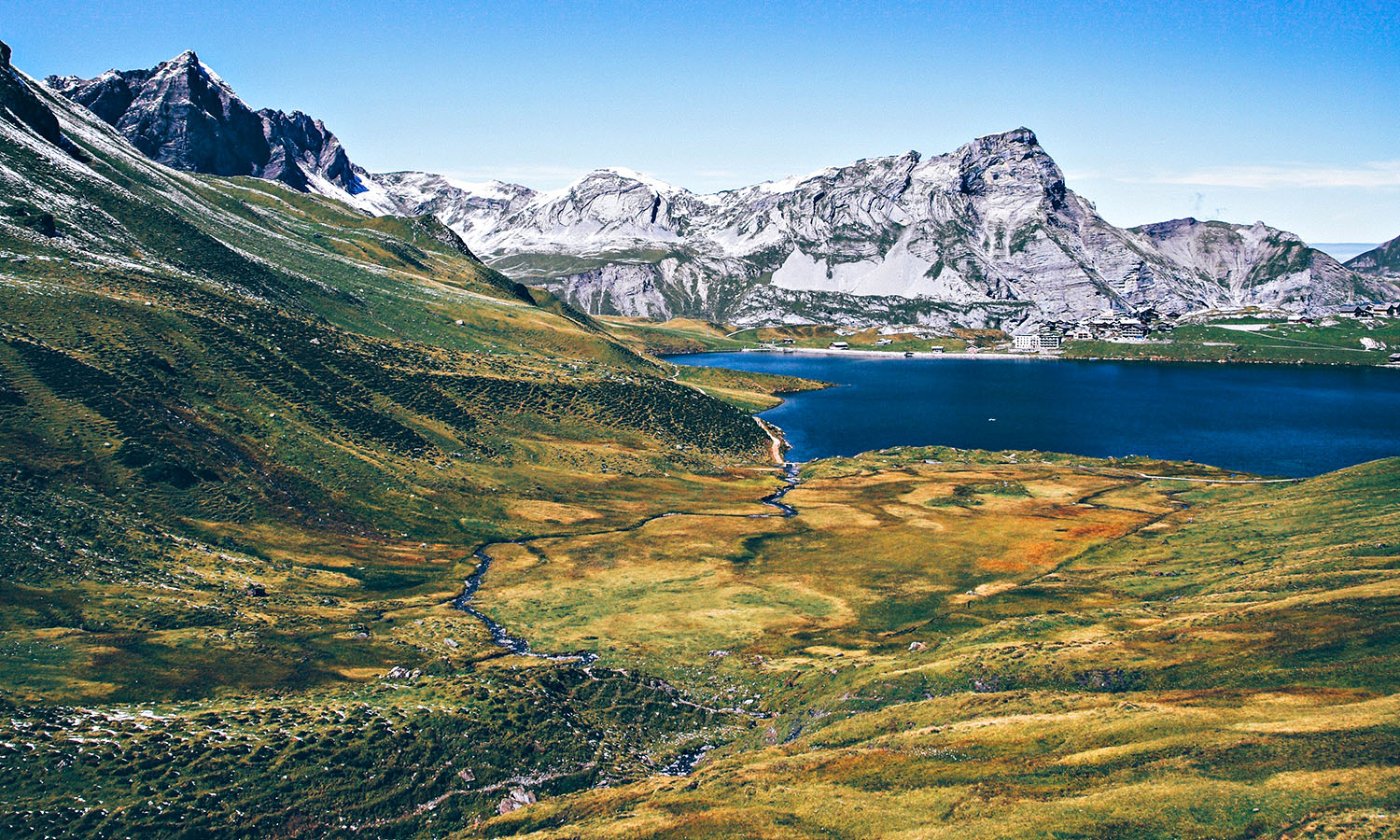
There’s perhaps no activity with less of a carbon footprint than hiking. And according to Sean, the trails through Switzerland’s Alps are competing for the best in the world. Himalaya, who?
“The Swiss love their hiking and they’ve got trails to suit all different levels. But nothing beats starting your hike from the top of one of the gondola rides,” he says. “You’re already so high up, my knees were shaking some of the time…but the landscapes are just surreal.”
Between Engleberg and Melch-see Frutt, this trail is stupidly perfect. Imagine postcard-worthy views of snow-capped peaks and cerulean skies, then times it by a billion.
Almost 100 metres high and 500 metres long, this doozy of a pedestrian crossing (just outside of the village of Randa) is the longest suspension bridge in the Alps. People with vertigo, beware!
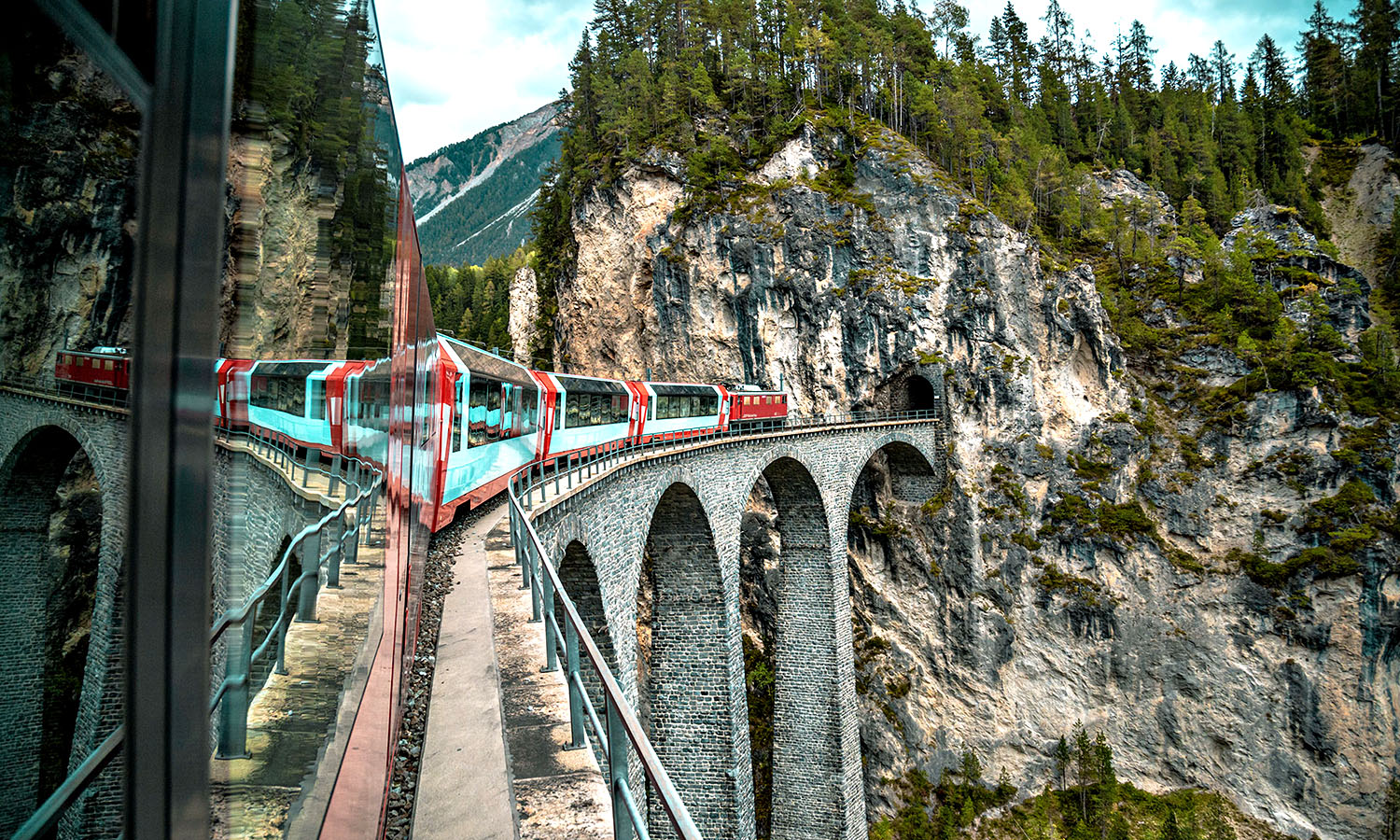
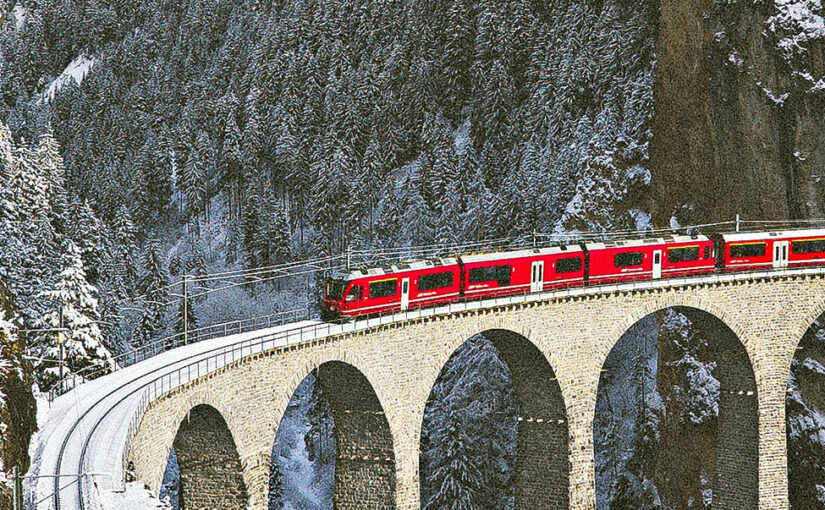
The Swiss have taken their public transport engineering to the next level. Not to mention almost 100% of the routes are electric. So if you want to swap that road trip for a guilt-free rail trip, Switzerland is the place to do it.
“The trains are just spectacular. Some of them are world-heritage listed and so, so beautiful. You can literally jump on anywhere, jump off for photos, catch them to the top of mountains,” says Sean. “The gondolas cross glaciers, go tip to tip — they’re peaceful but epic. We could even see ibex from our view out the window.”
See the Matterhorn in all its glacial journey from a super high vantage point on the world’s slowest, but seriously steezy, express train through the Alps.
The Brunni-Bahnen Engelberg is a climate-neutral cable car that uses solar panels to produce enough electricity to not only function but also churn out Co2-free snow for the pistes. Yew!
Click play to watch
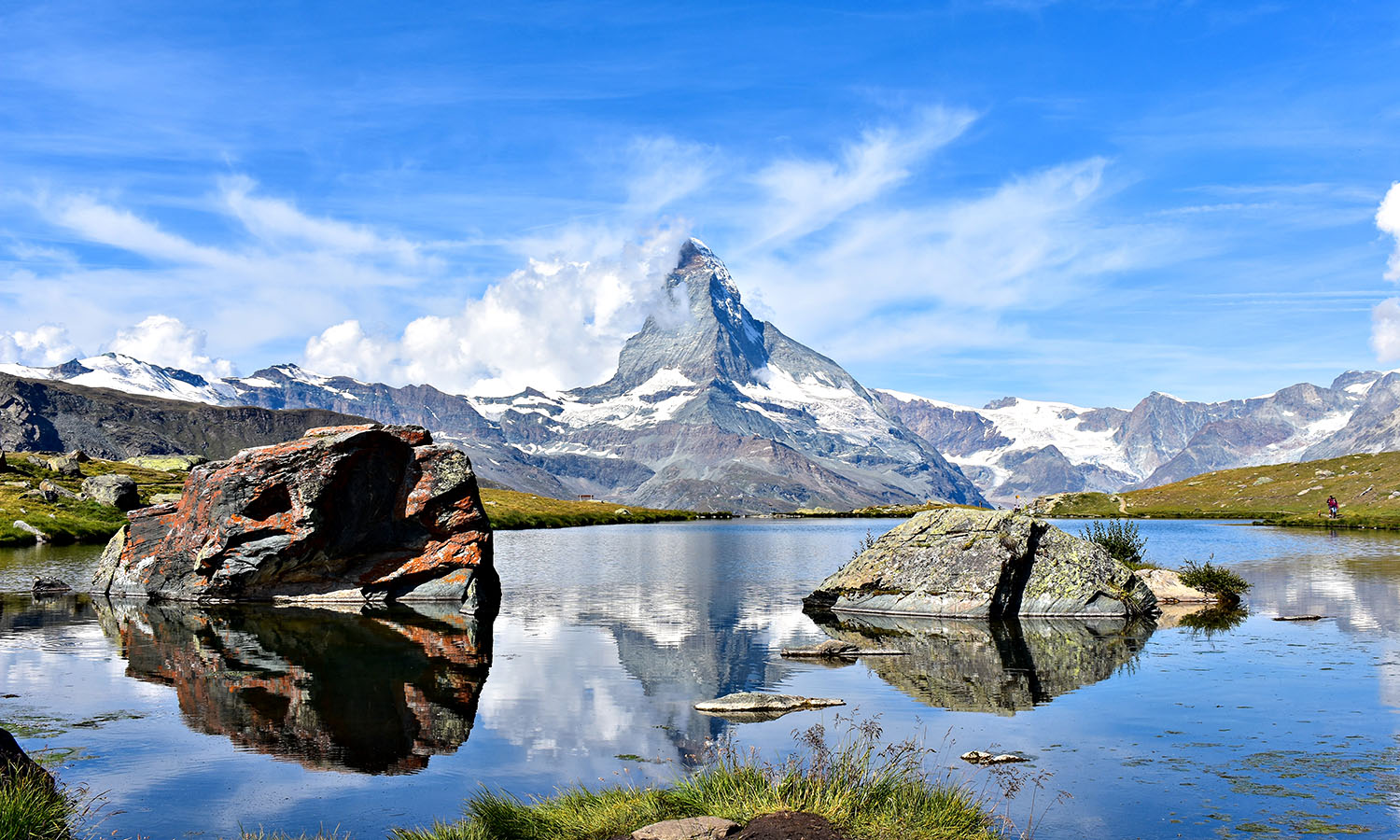
Less of a mountain goat and more of a mermaid? Don’t stress about Switzerland being all kinds of landlocked, it’s basically one big moated bastion with over 1500 lakes and a whole bunch of rivers, from the Rhine to the Rhone. Not to mention the nation is so freaking clean that you can swim, quite literally, in the middle of its cities.
“Jumping into those glacial lakes, especially after hiking, is the perfect reset,” says Sean. “They’re in spectacular locations, and we’d almost always have the lakes to ourselves. It would be 25 degrees outside but the crystal clear water is freezing, like actual icebergs floating in them. But a dip is exhilarating, refreshing and spectacular all in one.”
Once known as the ‘Evil Road’ this wild gorge has gone through a successful reputation transformation and now is a must-explore spot for canyoners and aqua aficionados.
There are lakes as far as the eye can see here, but it wouldn’t be a trip to Switzerland without a dip in a freezing, glacial lake.
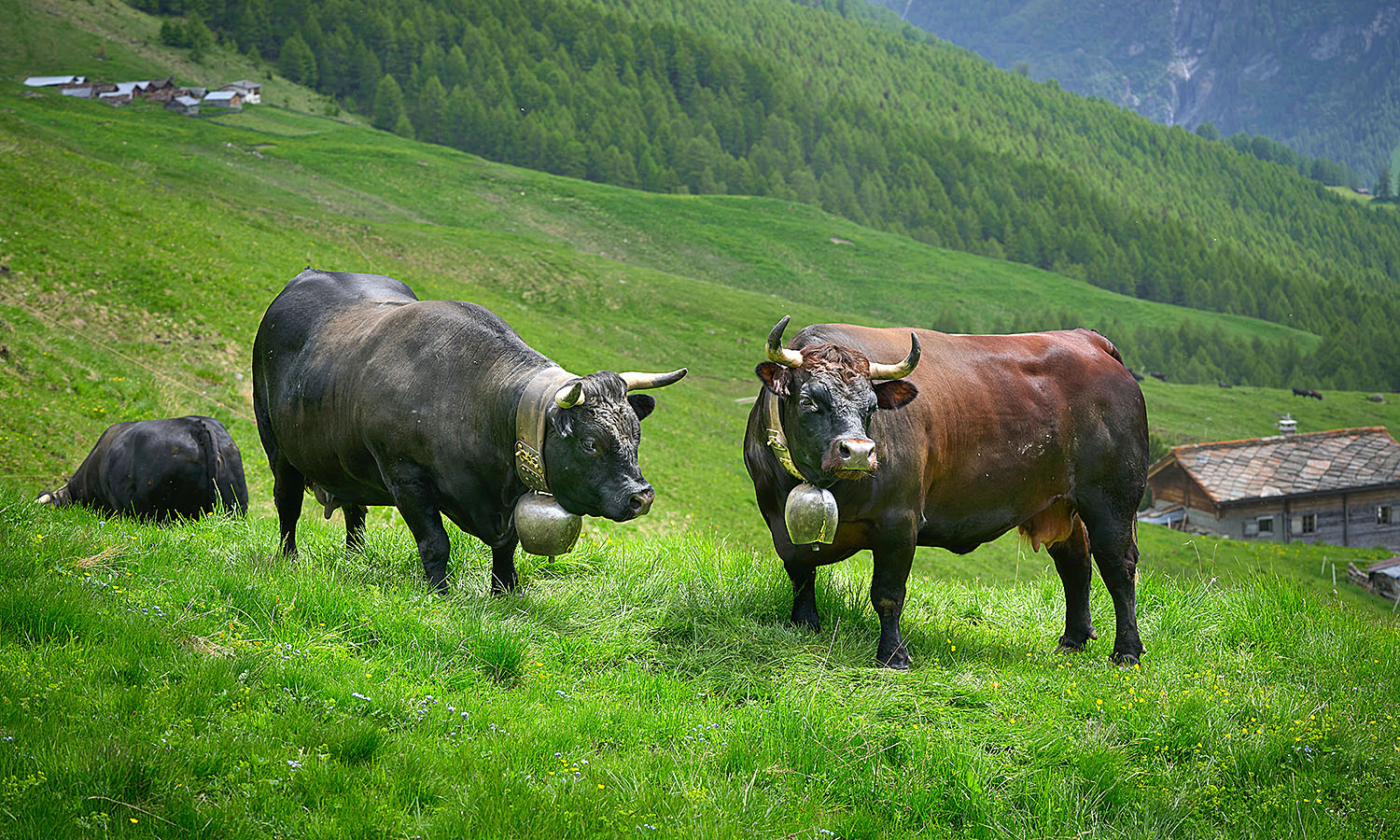
The rule for eating in Switzerland? The more regional, the more seasonal, the better (and delicious, FYI). And luckily, fresh produce isn’t hard to find. In fact, in 2020 the Swiss took out the gold medal for the highest consumption of organic goodies per capita IN THE WORLD. So, like, the food is good.
“The cows are such an important part of Swiss culture, especially the Alps cows. In the summer they’re high up in the mountains and then they’re brought down to their barns in the winter,” says Sean. “I went out to this small village famous for making special cheese fondue from these alps cows — it was so authentic, and just a really lovely traditional food experience.”
High above Lake Uri, this mountain hut has taken the local cuisine and made it extra gourmet. Expect fresh mountain herbs, and lots of them.
Stefan Weissner already has one Michelin star but he’s not stopping there. All the ingredients here are locally-sourced and foraged. First up? Snow-smoked soup.
Click play to watch
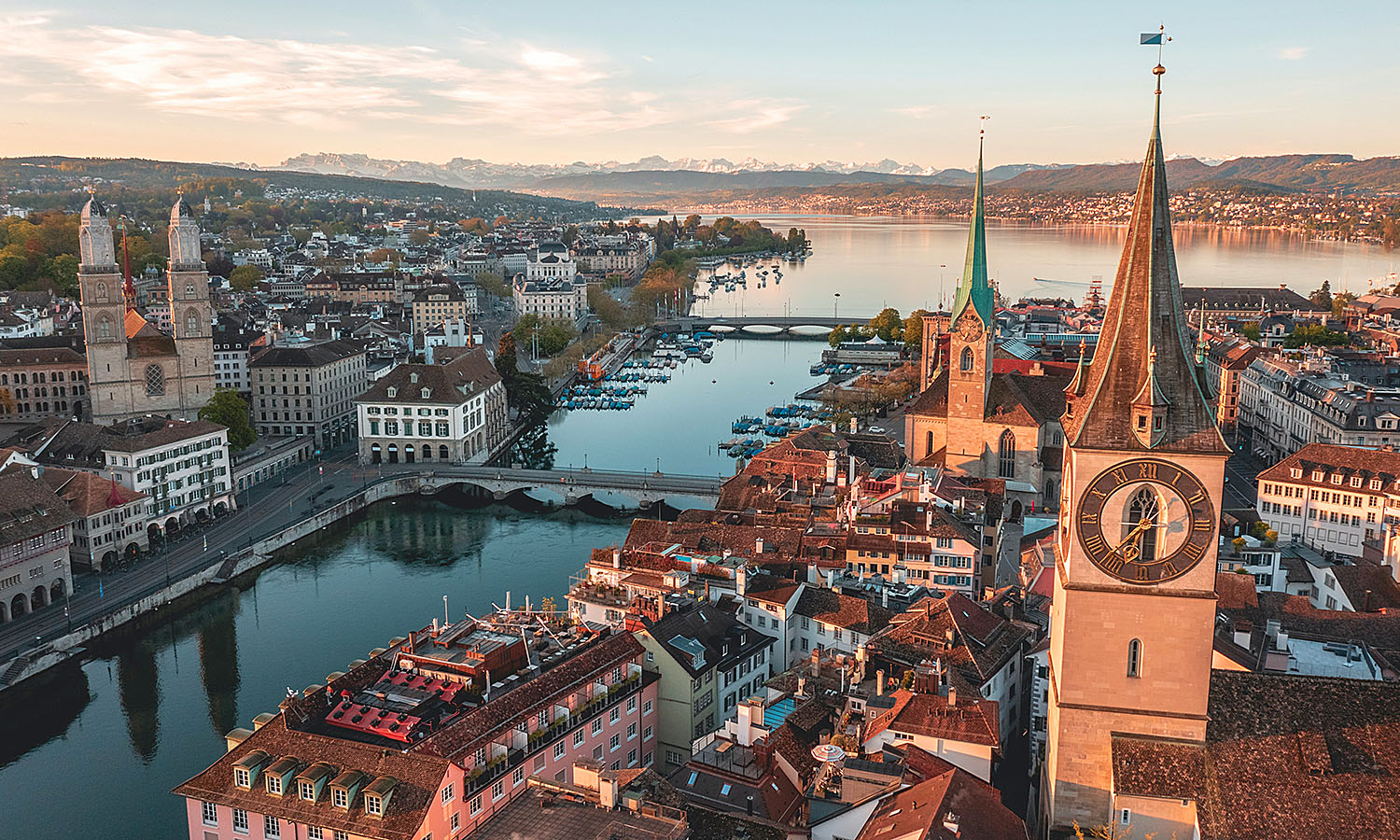
Mountain huts, eco-friendly hostels, the former retreat of an Austrian Empress. You can’t say the Swiss don’t deliver when it comes to sweet places for travellers to rest their weary heads.
“There are these incredible mountain huts, one was even a James Bond location, and they’re usually balanced on some amazing peak. They’re pretty spectacular,” says Sean. “Zermatt is also a nice, eco-friendly town. There’s no cars there, everyone is walking or catching trains and cable cars, the whole vibe is busy, but beautiful with the Matterhorn looking down on you.”
Fresh mountain air, beers on tap, gourmet meals. Waking up in an alpine hut before a day of hiking the Swiss Alps is a bucket-list experience.
Stay in this castle (formerly the playground of an Austrian Empress) and enjoy a completely natural experience, from your bed linen to the homegrown produce in the kitchen garden.
Click play to watch
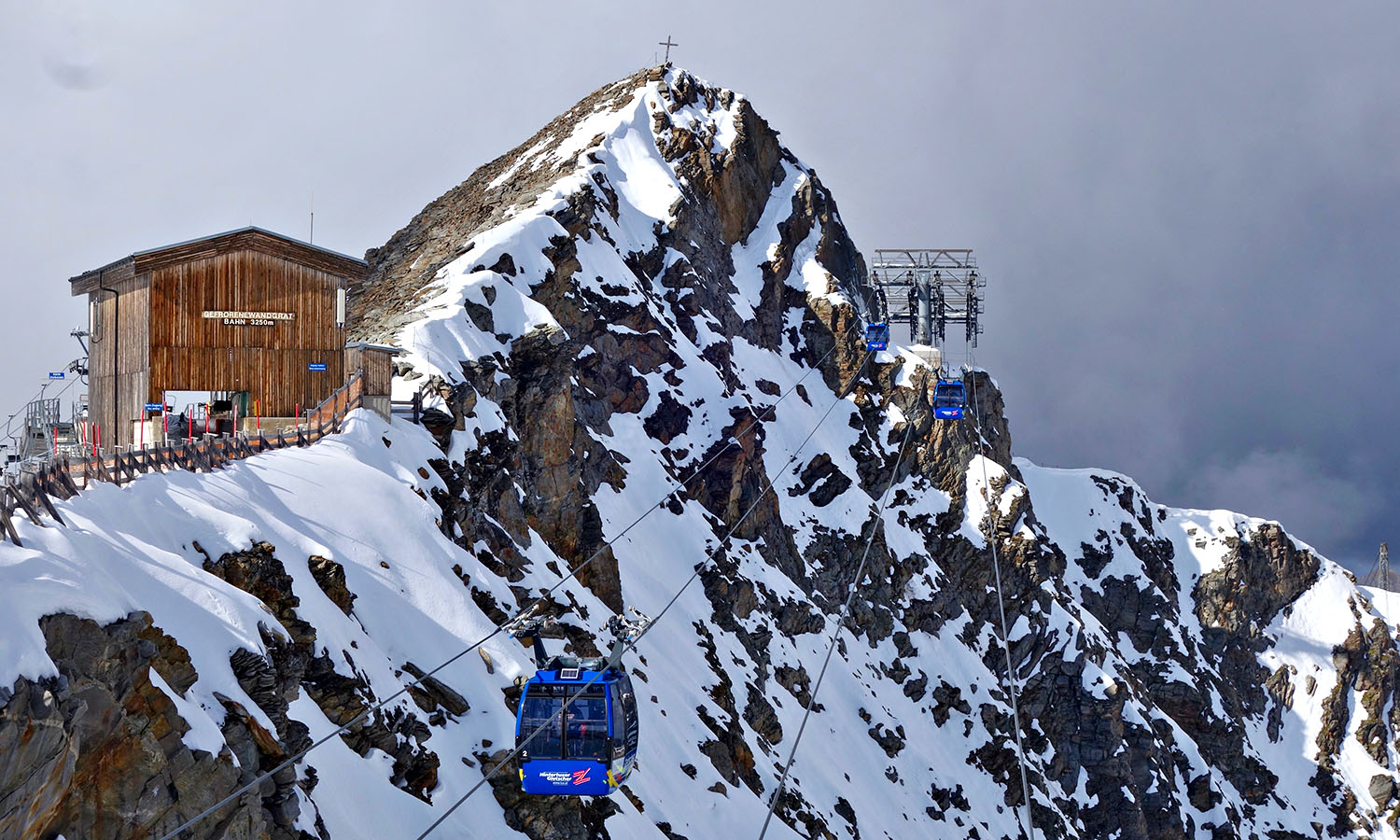
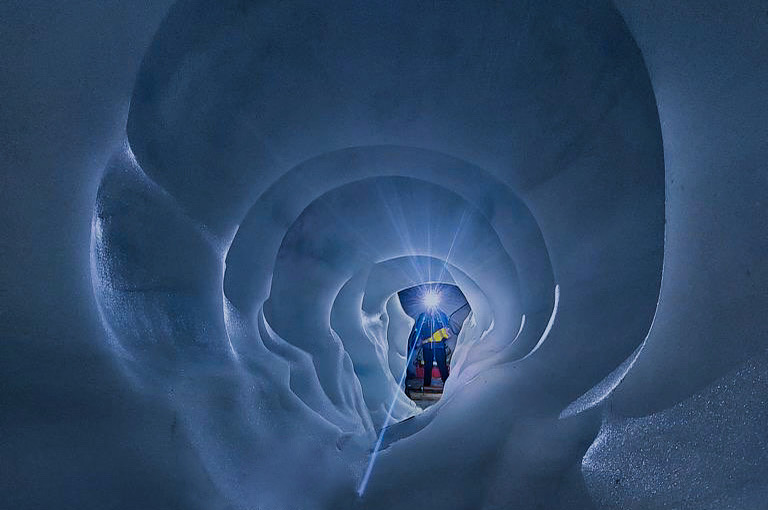
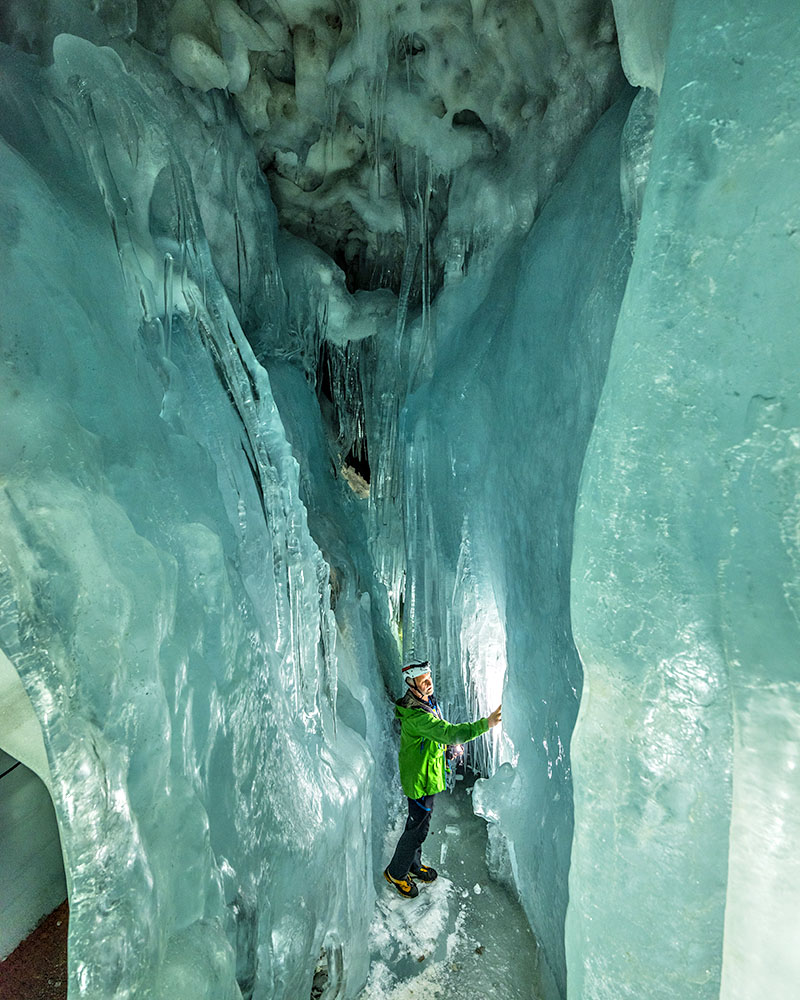
Lack of snowboarding prowess aside, I can’t pass up a slide on these first-class slopes. But what I’m really pumped about is what lies beneath them—a subterranean world of glittering ice ‘stalactites’, known as Nature’s Ice Palace. Back in 2007, a guy by the name of Roman Erler was out skiing when a tiny, 10-centimeter gap in an ice wall caught his eye. Two days later he returned with his axe and hacked a shoulder-width passage into a cavernous secret.
After thousands of hours of exploration and the installation of a few rubber mats, a bunch of steel ladders and hundreds of metres of cable, Nature’s Ice Palace opened to the adventurous. Nowadays, you can explore this glacial labyrinth under the guidance of the research and conservation team who continue to study it.

To get there, you’ve got to catch three gondolas—a journey that puts you 200-metres away from the glacier’s highest point. From there, you’ve got about five minutes of unrestrained slipping and sliding to the cave entrance (arguably the most challenging part of the whole experience).
“If you fall, make sure you fall far enough that no one can hear you,” jokes Thomas Kurz, structural engineer and tour guide. Against the immense white, the small hole in the mountain—reinforced with a few wooden planks—looks as official as a Wild West mine. It starts with ice stairs (I’ve never been so happy to see a rubber mat), then moves on to ladders. Mountaineers normally clank over metal rungs like these when bridging crevasses, but today we’re using them to descend.
Ladders and mats aside, the passageways themselves are entirely natural, made of pure ice carved by water and wind. It’s hard and slippery, sometimes glass-clear with a sprinkle of frozen bubbles or frosted white and pale blue. I feel like I’m suspended in a cocktail ice cube. The most impressive part? When the cave opens out into the full ‘ice palace’, revealing great spears of frozen water hanging from unseen corners.
It’s like some architectural masterpiece from Gaudi.
The how’s and why’s behind the formation of this system has attracted researchers from around the world. These aren’t conventional crevasses but rather cavities formed by tensile forces that deform the compacted ice. Lubricated by water, they usually glide at ‘glacial pace’ through the valleys that hold them but here the ice is locked solid onto permafrost, and a 52m research shaft lets Thomas and his team regularly inspect it.
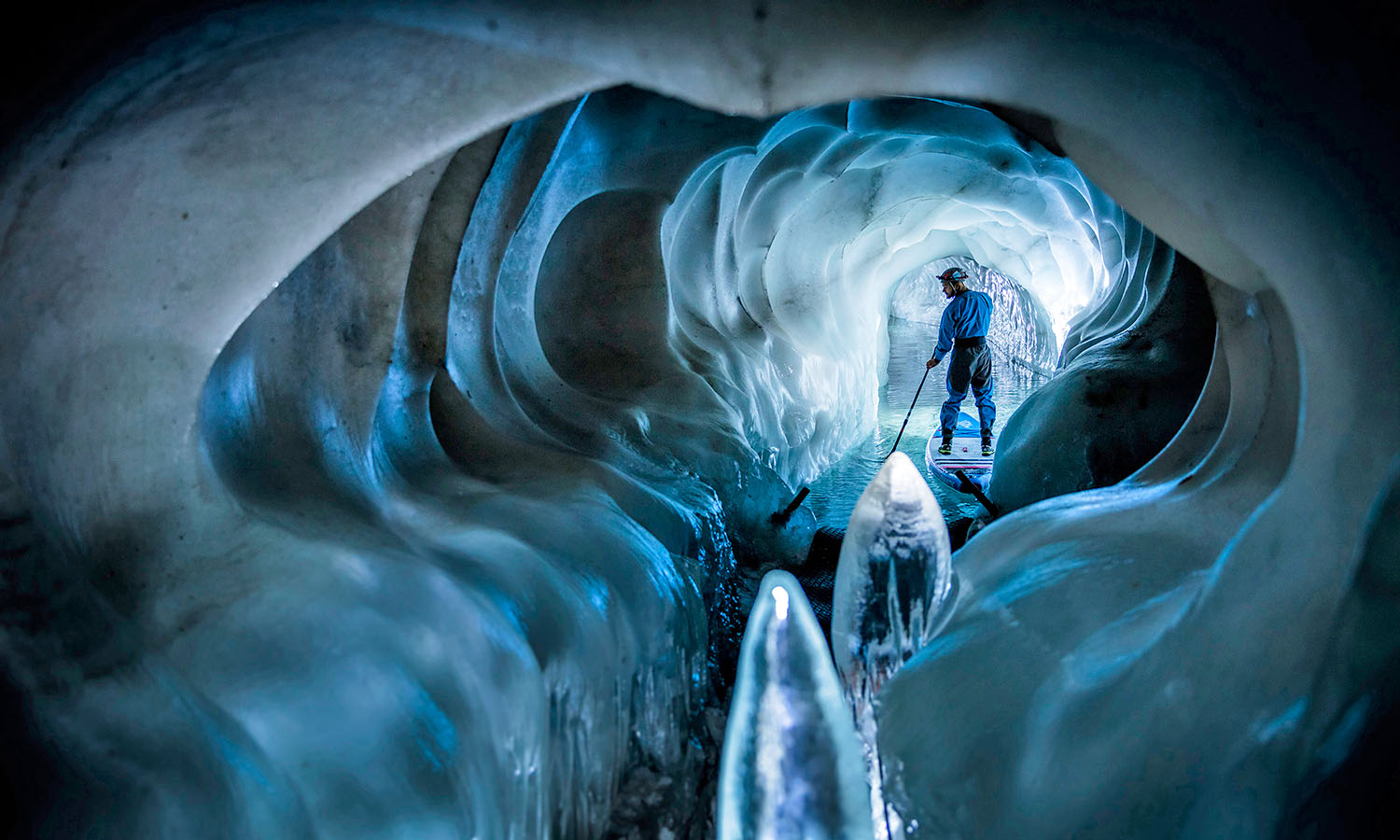
“When I go down and I see permafrost, all is good,” says Thomas. “If I don’t see the permafrost then we close the cave, we are running! The glacier could move.” Peering down the 52-metre research shaft is like looking into a blue hole. The frozen rope ladder descending its depths is almost absorbed by the ripples of ice that line it.
At this point, I start to lose all sense of direction, depth and distance, working up a minor sweat despite the zero-degree temperature. At 20-metres deep, we’re below ski piste number five. At 30-metres, we’re under the gondola top station. Here, water fills a crevasse to form a tiny lake—like a window to another world, all pale blue water and submerged icy curves.
For another few euros you can swim in it—in fact, Josef Koberl almost achieved an Ice Mile here in 2021 after swimming 1,511 metres in 38 minutes—but we opt for a short raft ride instead. Only a sliver of rubber separates me from the freezing water and 20-metre-deep crack below as Thomas pulls us through the water tunnel.
As far as exploring cracks go, it’s the wedgie of a lifetime.
Laura Waters travelled as a guest of the Austria Tourist Office.
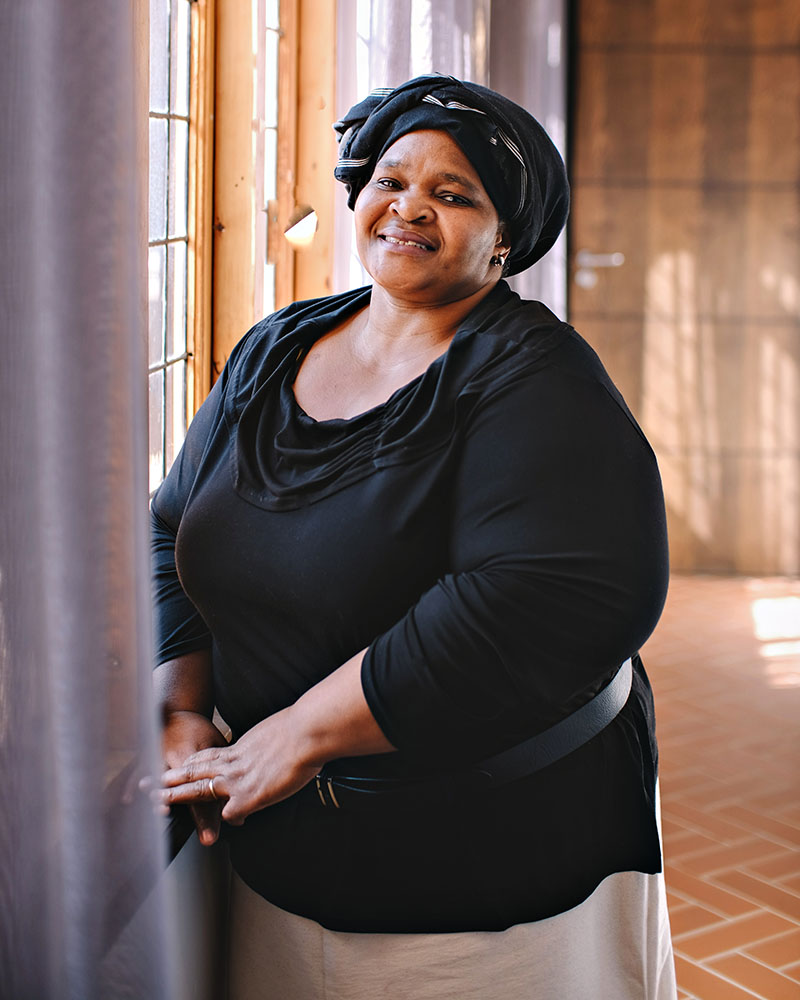
In the 1990s, Ndoyiya orchestrated a plan to deliver a classic South African dish into the U.K to the then South African President Nelson Mandela, for whom she was a private chef for over two decades.
“He spent a long time in London one year and I got a call from one of his advisors, and they told me: ‘Nelson is not behaving so well, we need you to send some food over’,” she told get lost over dinner at Sanctuary Mandela, Madiba’s old residence in Johannesburg. The Sanctuary has been made into a boutique hotel, and Ndoyiya has returned as Head Chef.
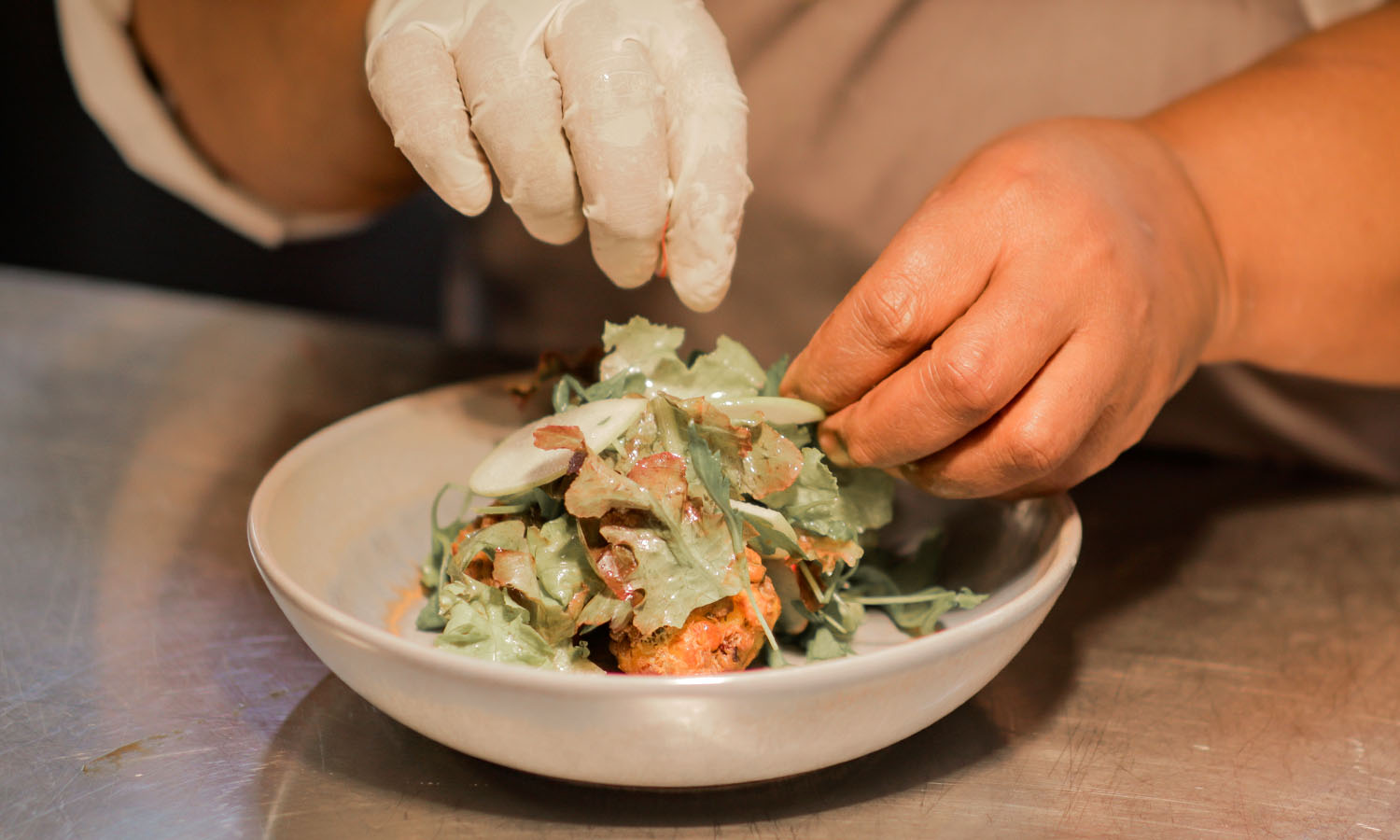
“It was Umphokoqo—not a meal you can get in London, I don’t think. You cook the maize nice and fluffy, and it goes with a sour milk that you make with cottage cheese,” says Ndoyiya.
“I wrapped it like it was a present and gave it to his friend. And they smuggled it in—I was a smuggler!
“But when we came back he teased me. He would say to me: ‘they are going to put you in jail!’”
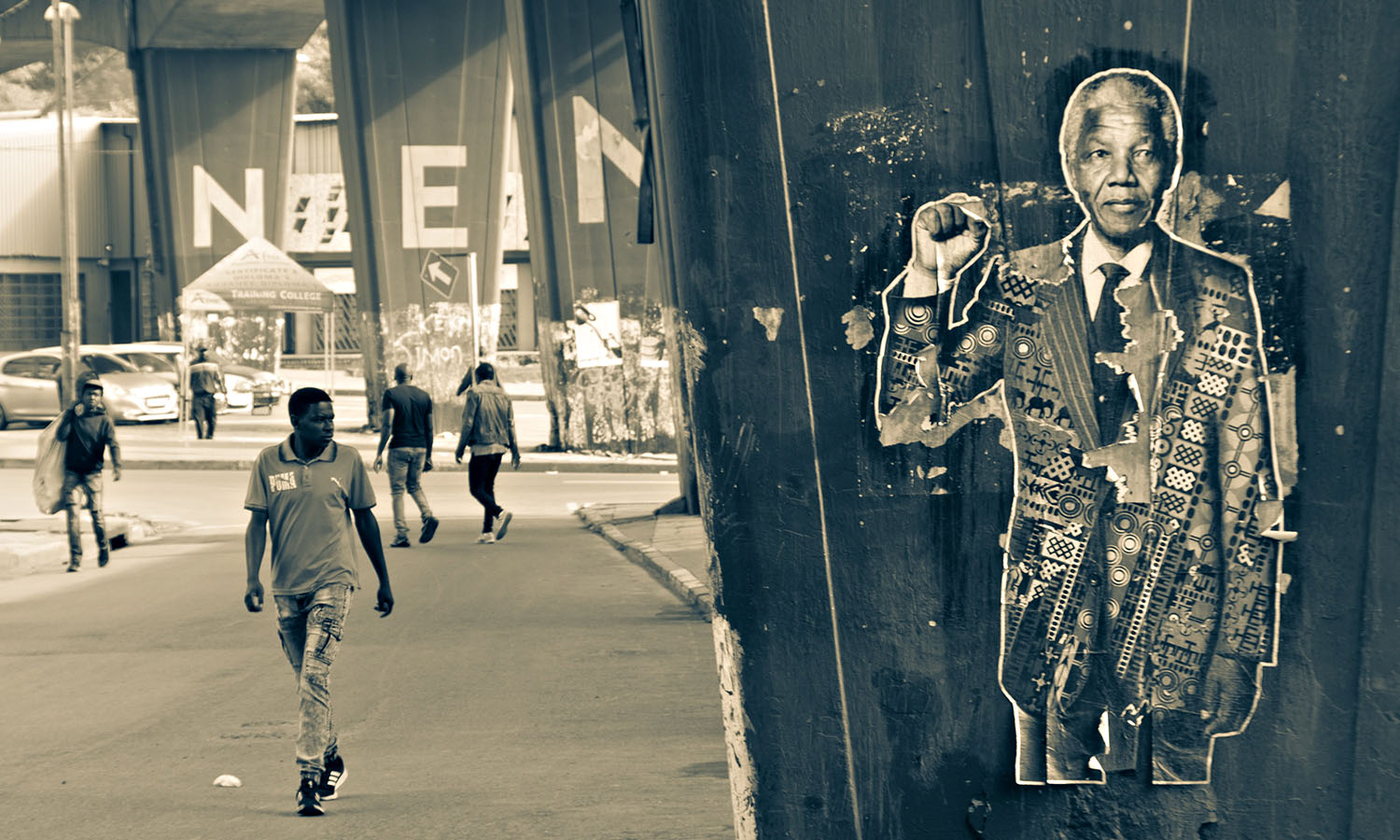
Ndoyiya was born and raised in Queenstown, in South Africa’s Eastern Cape, where Mandela also hails from.
She was plucked from relative obscurity to cook for one of the 20th century’s most iconic figures. “It all started at home as a young girl. My grandmother and my mother were the people I learnt from, and who inspired me,” she tells us.
“I was at school and decided I liked cooking, and I knew my parents could not afford to send me to the cooking school, so I left and came to Johannesburg. I was introduced to Nelson by a friend of mine who owned the hotel I was working at, someone who knew me and trusted my cooking,” says Ndoyiya.
“The thing was, when I met him, I didn’t know that I was coming for an interview! Nelson said ‘I need you to cook home food for me, can you do that?’ And I didn’t hesitate, I just said yes, and that was it. I worked as his chef from that day until his very last day.”
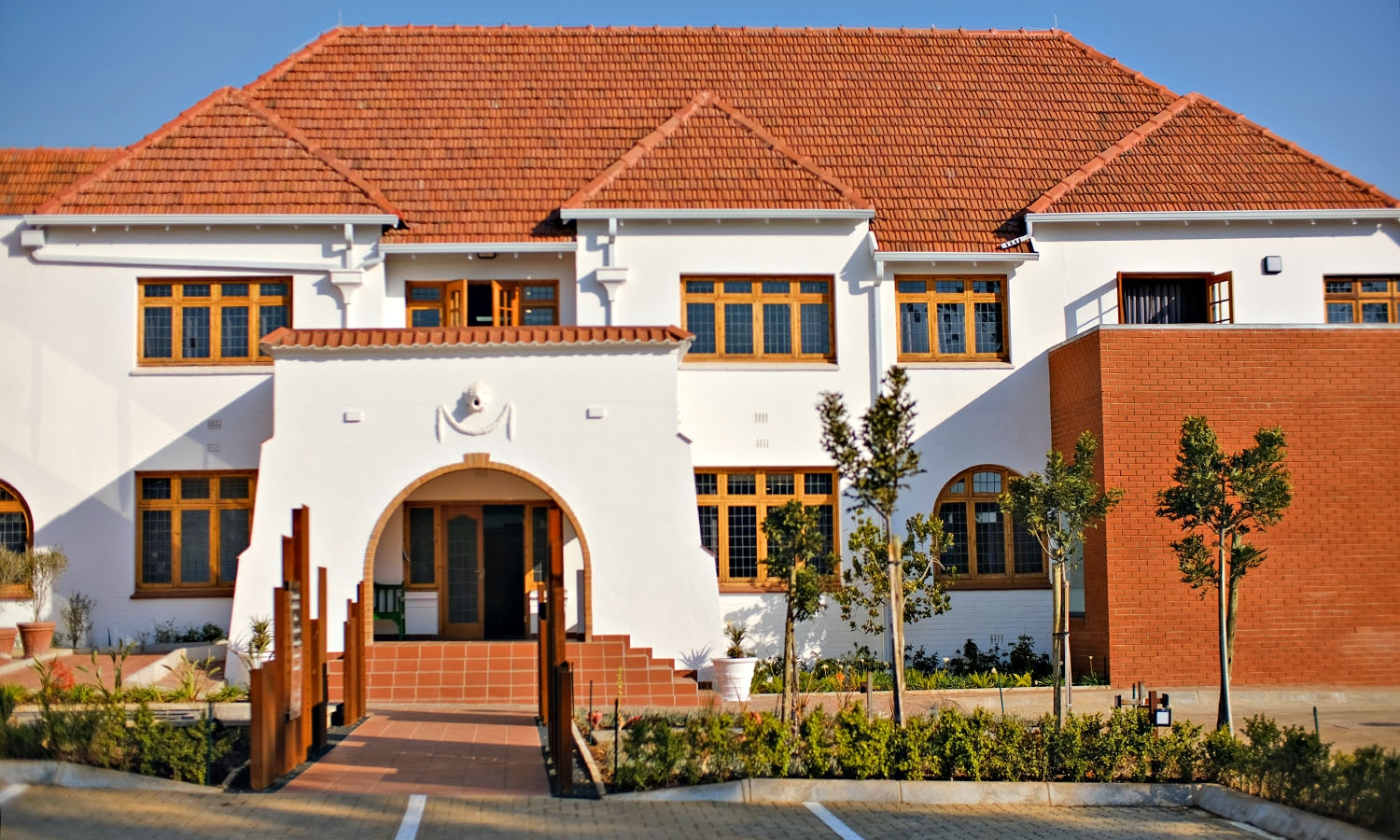
White paint adorns the façade at the Sanctuary, which was Madiba’s residence between 1992 and 1998. He was based here for all the significant moments in the Rainbow Nation’s history, such as negotiating the multi-party talks that led to South Africa’s democratic rebirth, and South Africa’s famous 1995 Rugby World Cup win.
Much remains the same here, including the arched entrance once made famous by the iconic photo of Mandela reading the newspaper.
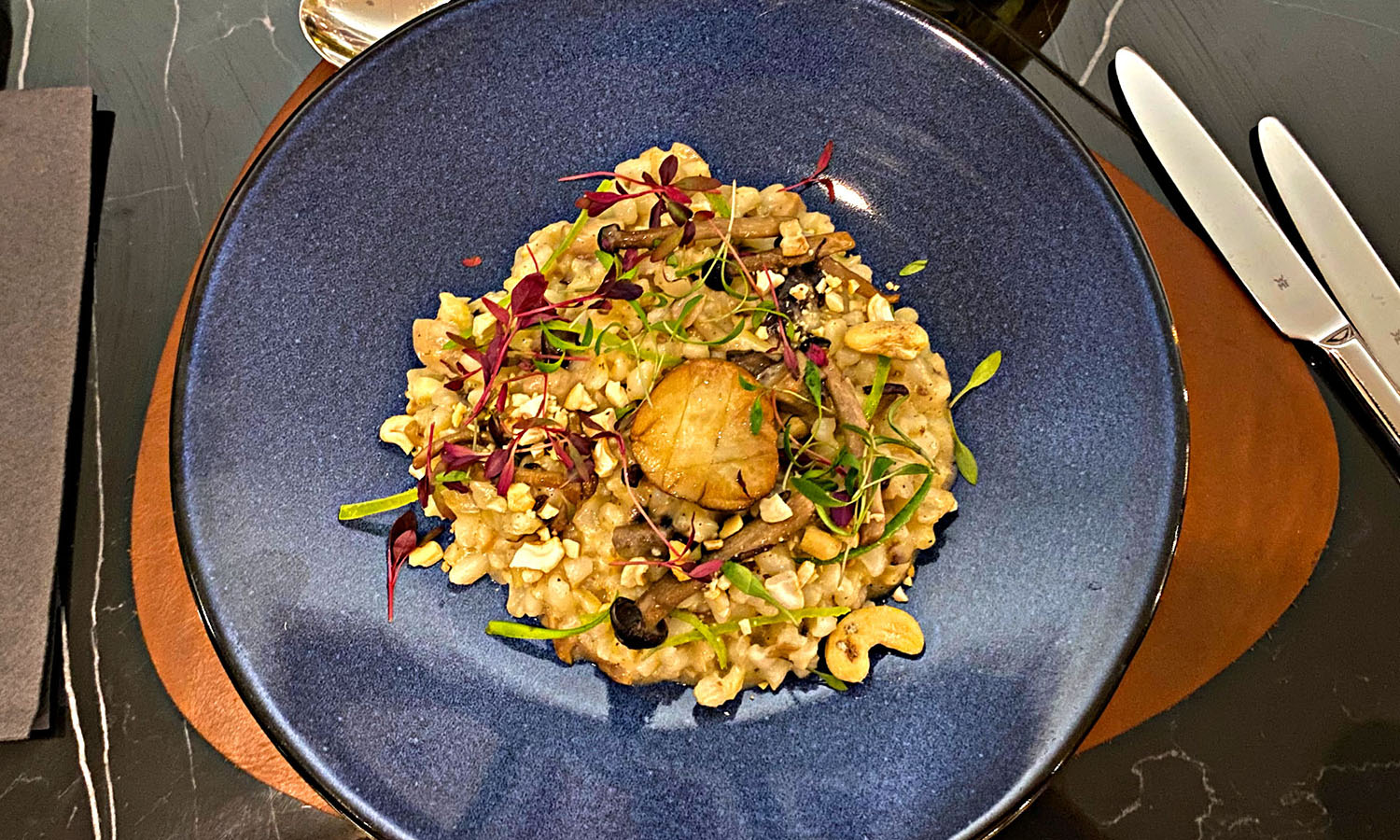
While returning to the same kitchen, Ndoyiya has swapped cooking for world leaders and dignitaries for the general public. Today she presides over a menu which blends contemporary South African cuisine and Mandela-inspired dishes; the Umngqusho—samp (dried corn kernels) prepared risotto style with pan-fried king oyster mushroom, sugar snap peas & toasted cashews—was one of the great man’s favourite dishes.
Ndoyiya also notes Mandela had a sweet tooth, and while admonishing grandchildren and others for eating sweet food, he was more than partial to baked treats.
It is striking to hear the reverence in her voice when she speaks of her old boss, despite it being almost a decade since his passing.
“He was always asking about our families, he wanted to know about everyone who worked for him. He knew my mother quite well.
“He was so whole-hearted. I would see him teaching people everyday with my own eyes and he taught me so much as well. He was so good to everyone around him and to the people of South Africa,” she says.
“All the values he left with me—I will never forget them.”
A quiet veneration can also be felt throughout the plush nine-room sanctuary, which is part Madiba museum, part boutique hotel.
Hand-written letters from the former President to various people around the world are framed, and a large image of a young Madiba during his boxing career hangs in the hallway.
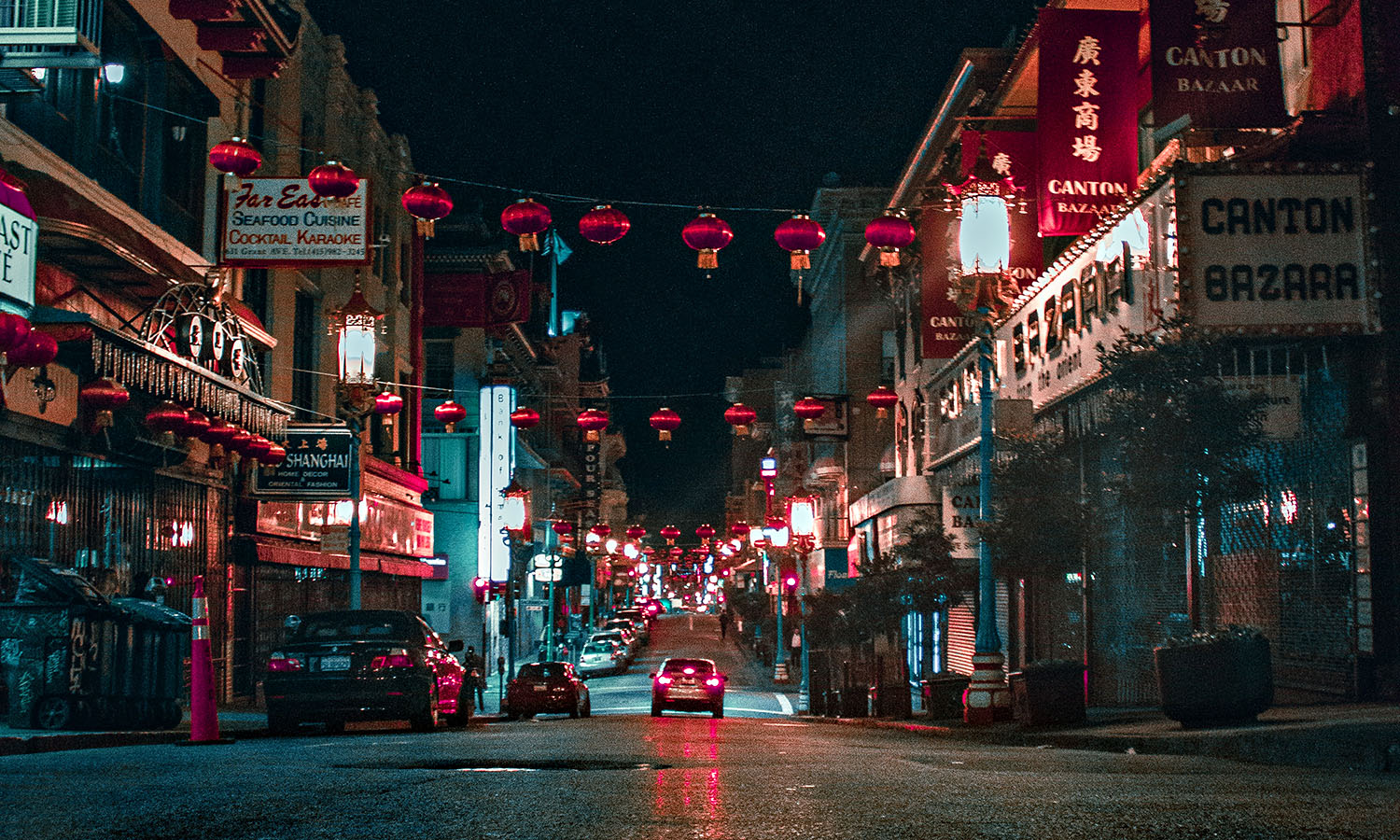
CHINATOWN
It might seem remiss to ignore the classic San Fran go-to’s, like Union Street’s electric nightlife and the dive bar scene of Haight-Ashbury, just to head to Chinatown instead.
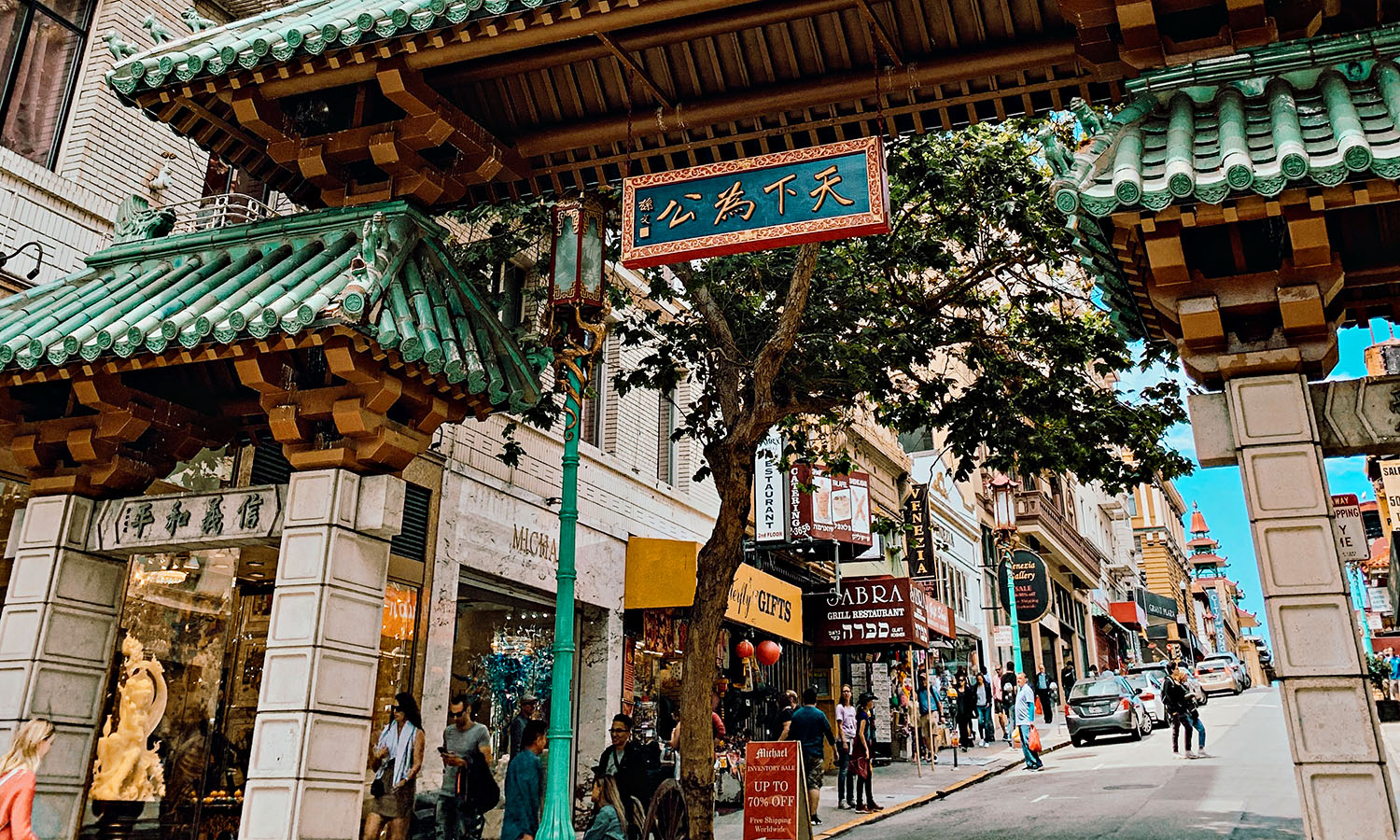
“I’ve got a Chinatown in my hometown,” we hear you say. But this is not just any old Chinatown. This is one of the largest Chinatowns in the world, and—according to us—it’s the best.
The bottom of the neighbourhood (which starts at the gate with the three guard lions) is home to both Michelin-star restaurants and humble, family-run operations. Both just as much of an experience as the other.
Take Sam Wo’s for example. The infamous restaurant became a San Fran icon not because of its food (they’ve been serving solid, if slightly unspectacular, fare since 1907) but thanks to the rudeness of its waitstaff. People now come from far and wide to be told to “sit down and shut up” a’la the legendary 1980s waiter, Edsel Ford Fong. AKA the worst waiter in the world.
Then there’s Moongate Lounge—a trendy cocktail bar with red-velvet booths; and the Golden Gate Fortune Cookie Factory—a building that generates an unfathomable 20,000 fortune cookies a day.
LITTLE INDIA
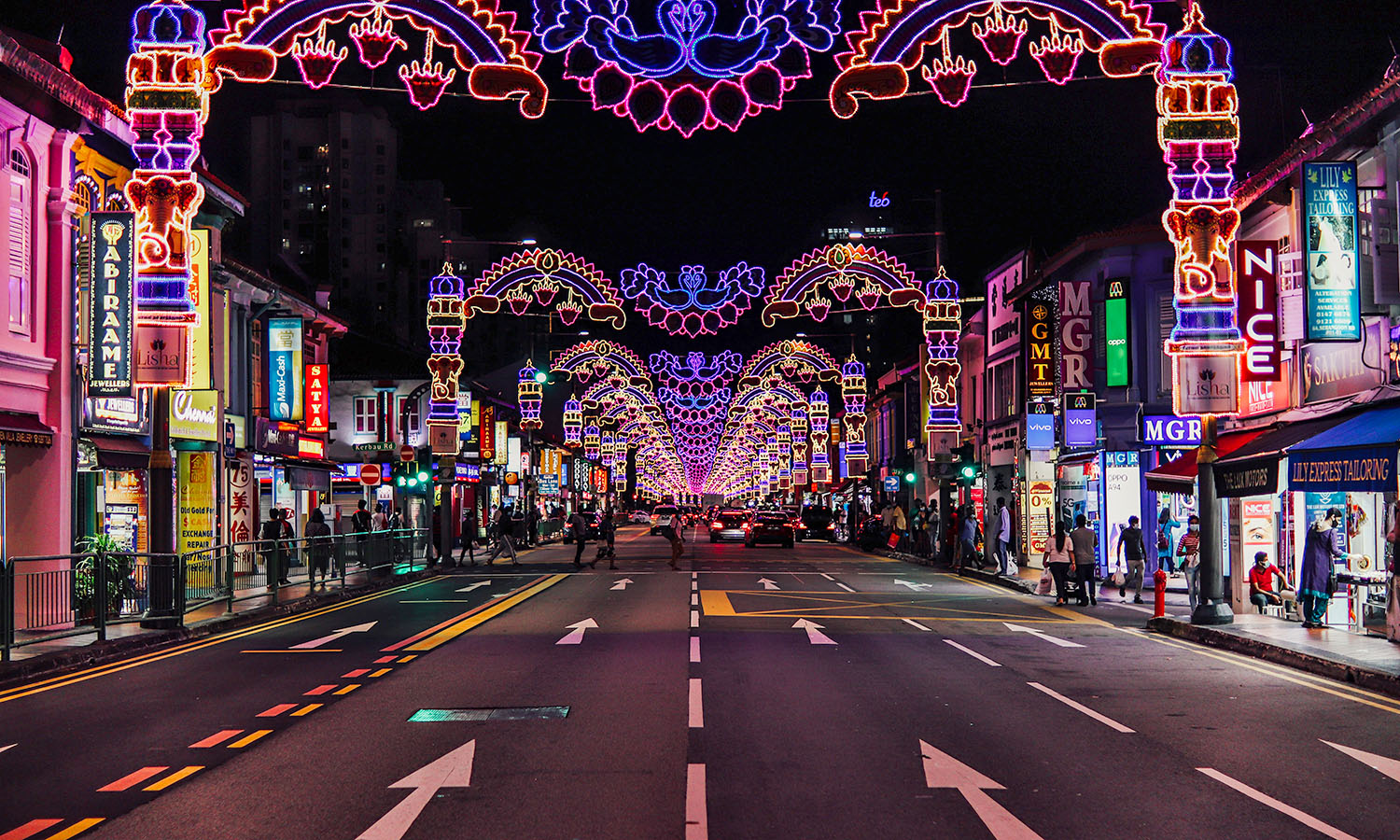
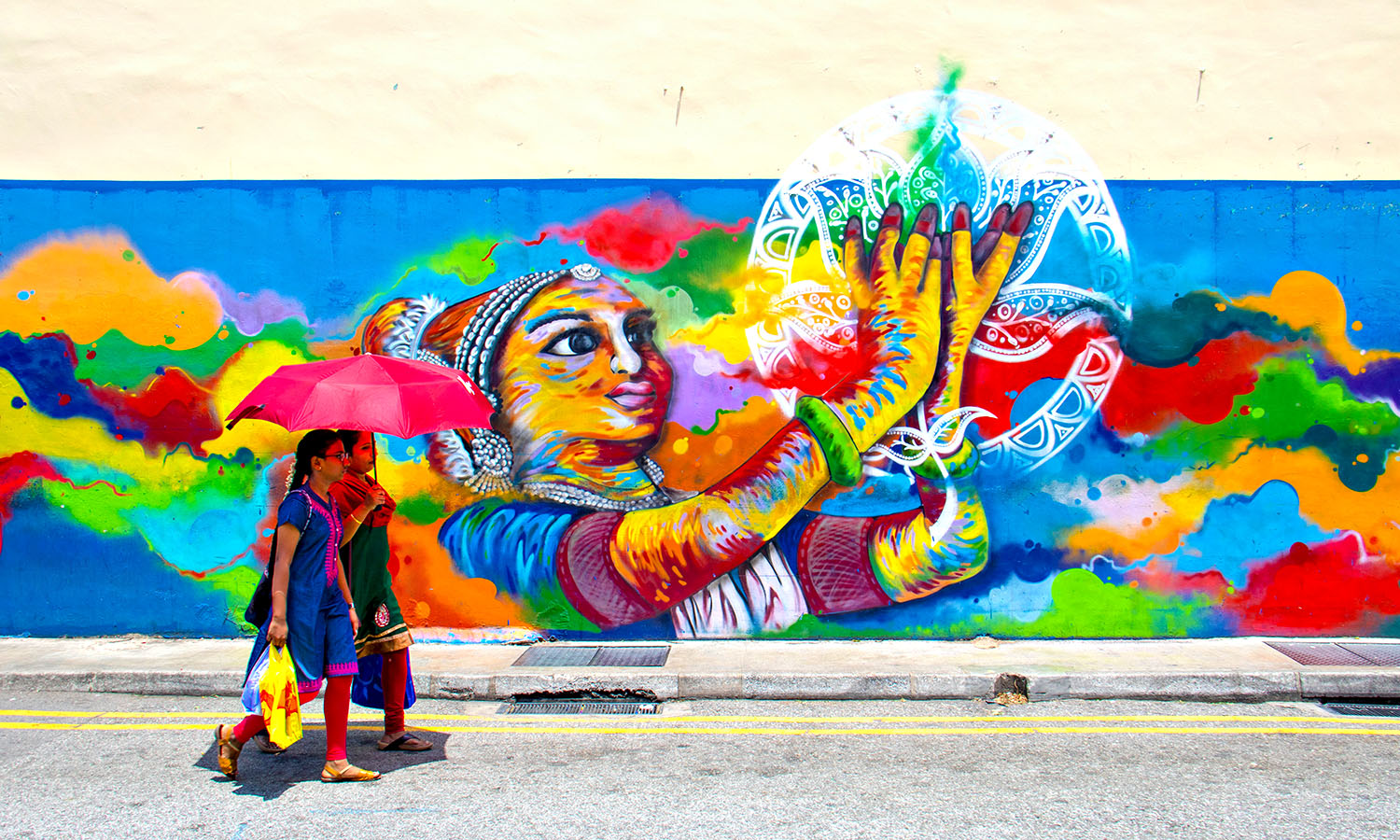
A lively enclave where the spices and energy of the subcontinent have made a new home in the orderly streets of a culinary capital.
In a city of chilli crab it might feel weird to opt for Indian, but we’re pretty sure India must have sent its best cooks here in the early 20th century because the grub is just that good.
Serangoon Road, with the Tekka Centre at its centre, is a splash of colour followed by a whiff of ginger. We recommend getting the prawn noodles from Whampoa, a little stall ran by a third-generation Indian family at the Tekka. If you can’t find it, just ask someone for directions to Ruifang’s—they’ll show you where to go.
LITTLE AMSTERDAM
We cannot stress enough that Little Amsterdam in Cebu is not named because it shares a fondness for doobies (like the famously relaxed Dutch capital).
It does not. And believe us, drug laws in the Philippines are not ones you want to flirt with.
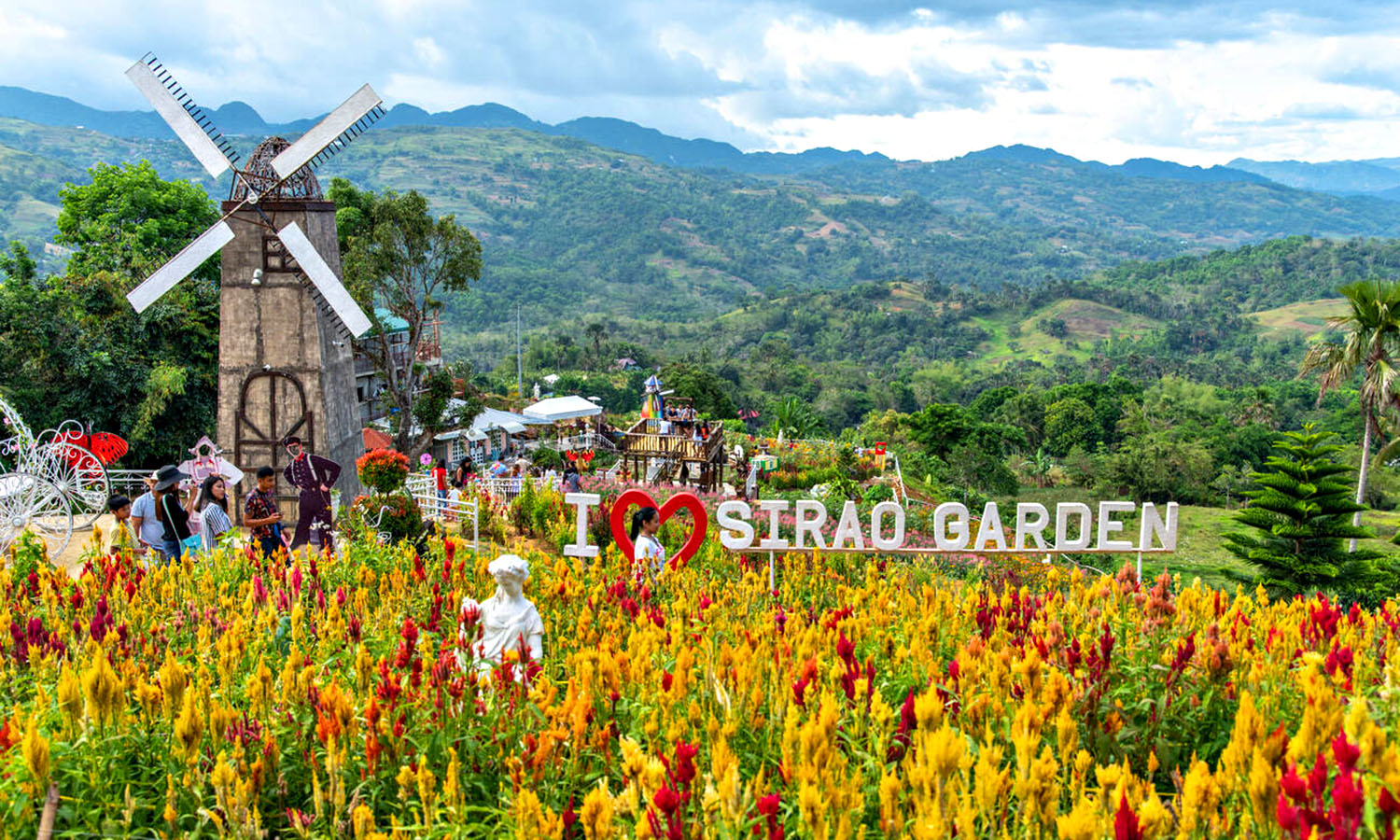
What it does share is a fondness for flowers. Sirao Flower Garden is a colourful patchwork of gardens, windmills and mountains, a massive ode to the Dutch tulip fields that are—ironically—atypical of Amsterdam itself, and found more commonly in the countryside of Holland.
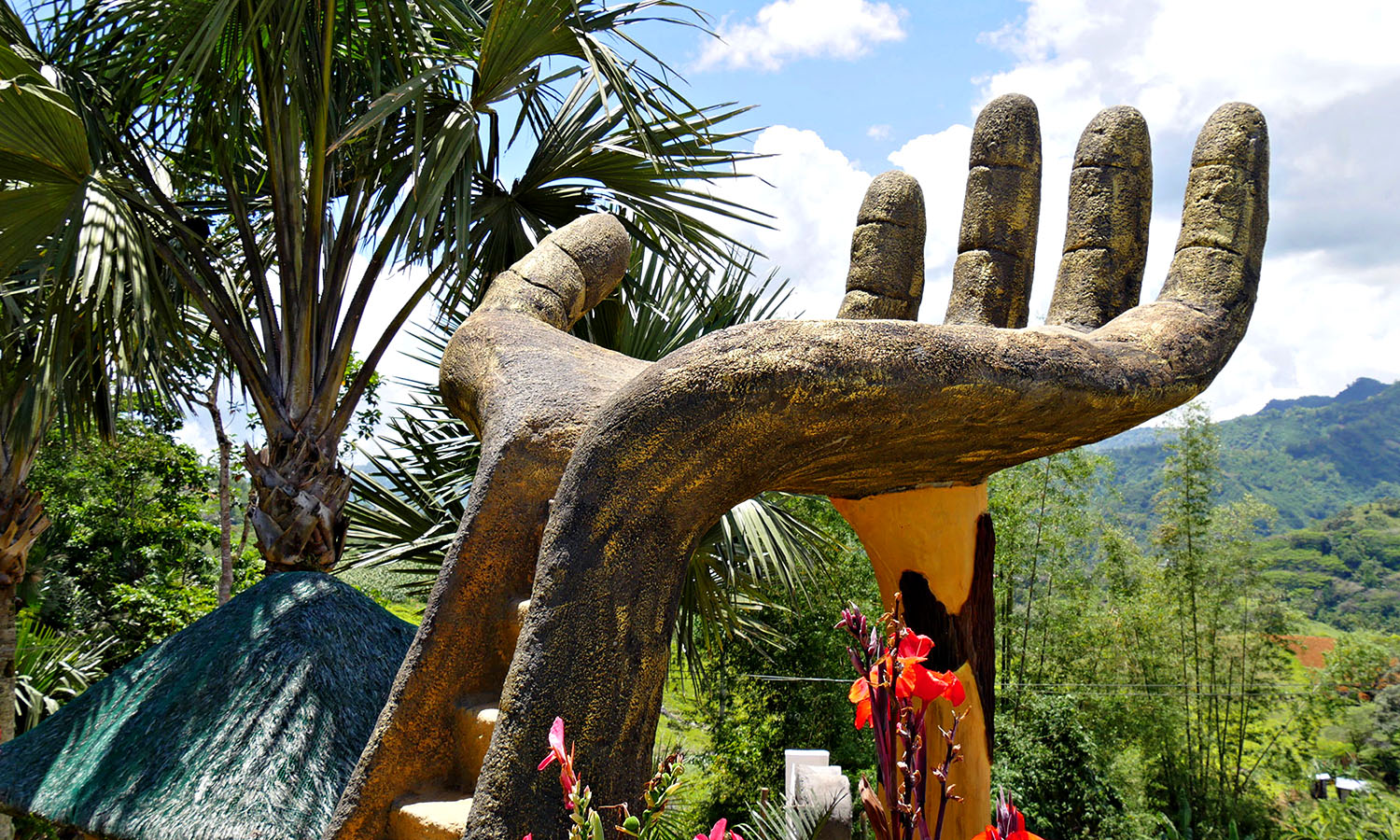
The area is a haven of fresh air and very Instagrammable spots, like the gigantic, golden, open palm, which gives the impression of being held up to the Gods.
If you’re needing a break from the beaches and chaos of Philippines’ urban centres, a day ambling around the paths here should do the trick. Just don’t light anything up.
LITTLE ITALY
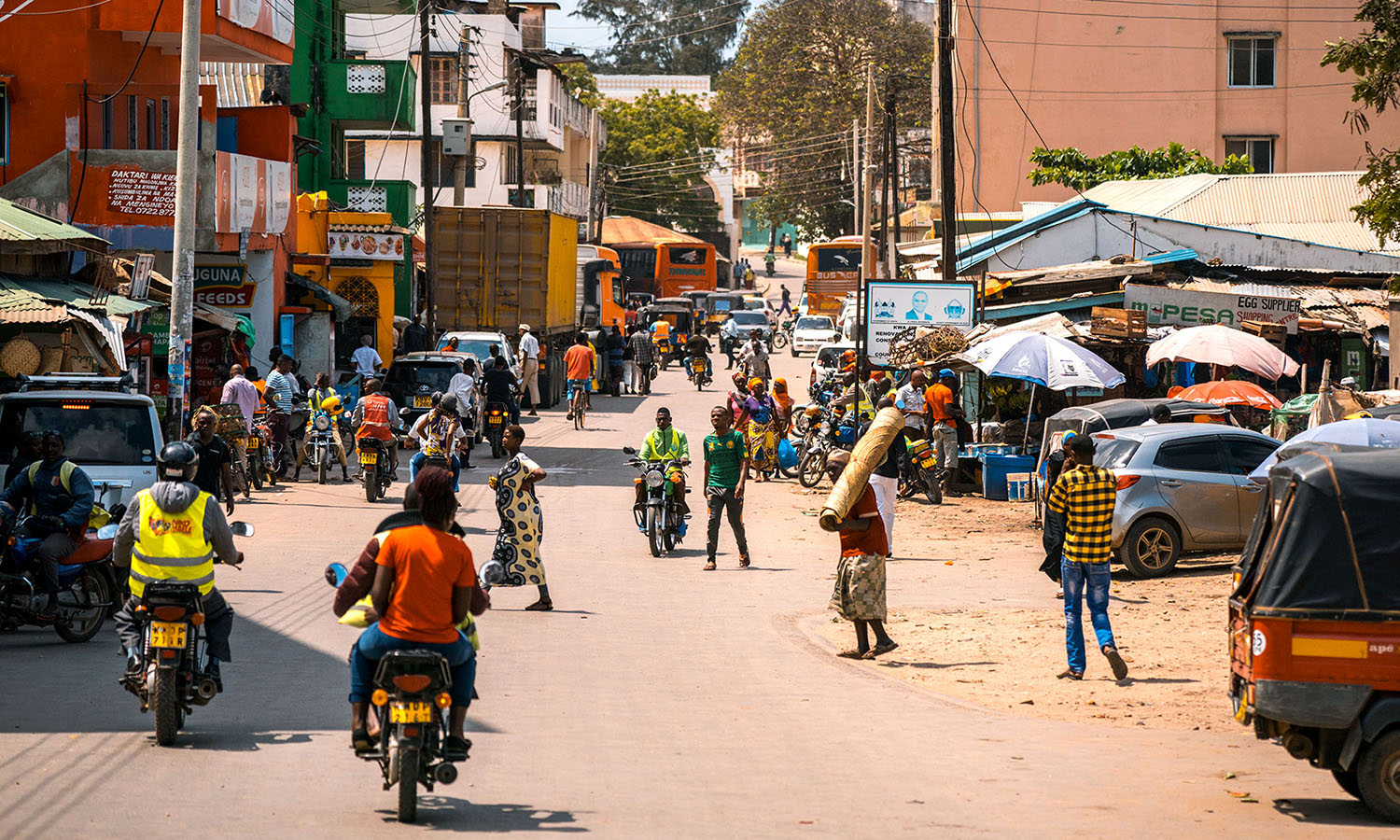
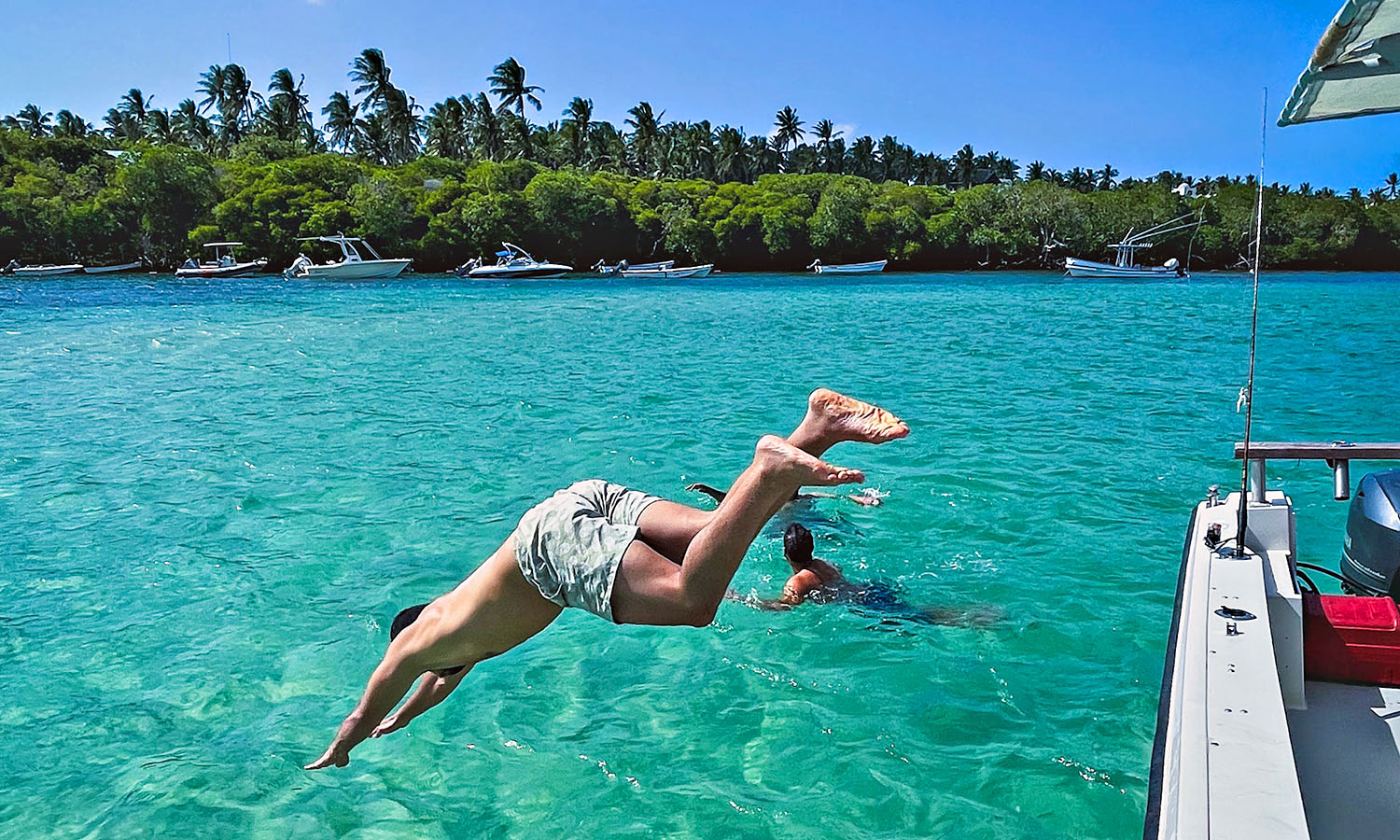
Sure, Italians have spread their wings far and wide, but Kenya probably isn’t the first (or second, or even third) place you think of when you imagine a centre of Italian culture and gastronomy. But then you’ve probably never been to Malindi.
Malindi has been teeming with Italians since the 1960s when the Luigi Broglio Space Centre (this may shock you, but Luigi Broglio was an Italian) was established just around the corner. The spaceport was well-positioned near the equator to launch things into space, and it did just that, not to mention bringing many Italians over for work while they were at it.
Pizzerias and gelato shops line the streets; limoncello and Aperol are the after-dark go-to’s. European-style day beds can be found on pristine beaches, and the sing-song Italian language can be heard everywhere you go, including from Malindi’s locals.
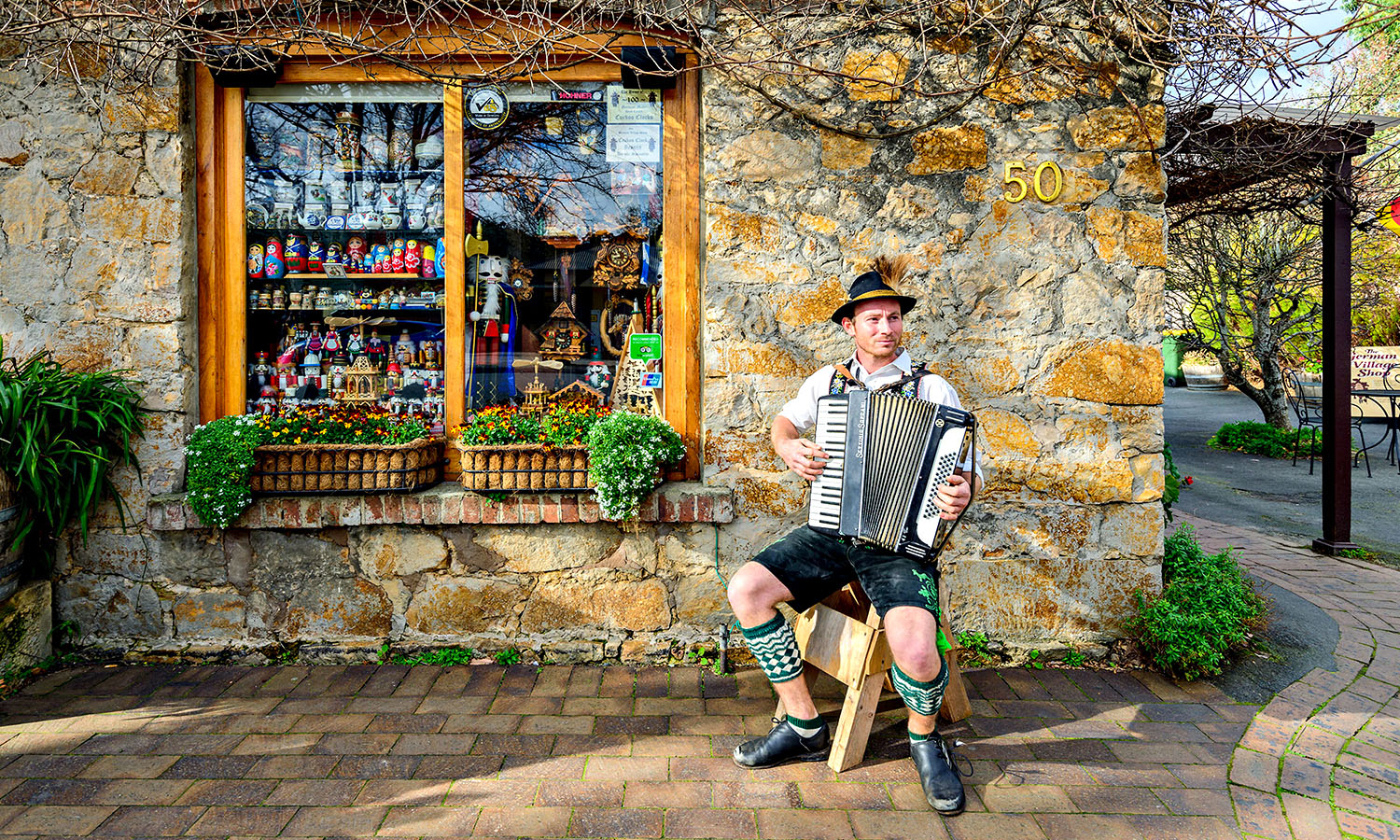
HAHNDORF
An eccentric South Australian town with an eccentric German history (and an über German main street). Hahndorf (which means Hahn’s village) was settled by Lutheran Germans in the 1830s—not exactly recently. But a drive through town today will make you feel like you’re cruising Bavaria on your way to Oktoberfest.
Quaint fachwerk style buildings line the main street, where German-style pubs serve German beer and buskers in German lederhosen play the (maybe German?) accordion on weekends.
It all feels like one big theatrical event…either a German festival or a very German Truman Show that’s been running for 180 years.