“Go, go, go!” On that command, I plunge into the water and am momentarily blinded by a flurry of fins and bubbles. The snorkel amplifies my accelerated breathing as I frantically try to peer through the foggy waters. A dark form emerges and I realise I’m floundering in the direct path of a shark the size of a minibus. Apparently it is a mere juvenile, but I’m still dwarfed by the seven metres of pure bulk, and I kick furiously to keep pace.
The shark is covered with ornate dot patterns as if it’s had a canvas of Aboriginal art stretched over its immense form. Ribbons of sunlight dance over its wide head and tapered body, and its perpendicular gills, carved along its sides, ripple with the current. The gaping mouth hangs open like a sideshow alley clown’s, capturing a microscopic diet of floating sea life, while clusters of suckerfish hitchhike on its underbelly, enjoying an easy feed.
‘Filter feeder’ is a term I hadn’t heard until I arrived in Western Australia. It describes the eating methods of the whale shark and manta ray, respectively the largest fish and ray in the ocean. Both are listed as vulnerable to extinction, yet I’d arrived hoping to not only catch a glimpse of these rare creatures but also swim alongside them.
Barely qualifying as a town, Coral Bay is a huddle of accommodation and tour operators on the coast. It’s also the jumping-off point for Ningaloo Reef, best known for the whale sharks that, attracted by plentiful plankton, travel through from March to July. So far this season Coral Bay Ecotours, which sends spotter planes out to guide the boats to deeper water, boasts an impressive 99 per cent strike rate. During our amazing encounter, we rotate in two groups and experience multiple drops with four different sharks before heading back to shore.
With so many kilometres of reef to explore, however, I abandon land to join Sail Ningaloo on a five-day tour. Its luxury catamaran Shore Thing – crewed by skipper and owner Luke, Travis the dive master/deckhand, and cook ‘Ally in the Galley’ – travels to remote areas along the World Heritage-listed coastline. Soon after departure I grasp a champagne in one hand and a fishing rod in the other. The former stays magically full, while the latter is re-baited for each cast.
For the coming days our mission is to get into the water as often as possible. Here, even snorkellers can see the big three: manta rays, sharks and turtles. Normally I’d be terrified to tread water in open ocean, but hand me a snorkel and I naively expect everything to be friendly. Reef sharks, with their black- or white-tipped fins, timidly scatter from my path, before a bulky tawny nurse shark, who seems to be intently circling, sets off alarm bells.
The fish – reportedly 500 or so species on this reef – appear to be created from an endless box of moulds and myriad colour combinations. Precise strokes and patterns accentuate the unique body shapes. Sometimes a fluoro dot decorates an otherwise nondescript fish, making it just as striking as one flaunting all the colours of the rainbow. Names like semicircle angelfish, many-spotted sweetlip and butterflyfish are apt descriptions of nature’s handiwork.
Near a shallow coral bed a turtle scoots up beside me. It’s so close I can study its tessellated shell and wrinkled fist-shaped head as it moves around me with lazy strokes. I sway powerless against the currents, hoping not to collide with the turtle as its shell grazes my belly. A cluster of bubbles springs from the back of the shell. My rad little friend just farted!
Throughout our journey plans are altered by the hour. Sometimes the distance between the shore and the reef is 200 metres, at others seven kilometres, all of which means conditions change radically. When you’re sailing with no agenda and surrounded by a vast undiscovered playground, a typical day runs something like this: breakfast, sail, snorkel, snack, snorkel, lunch, snorkel, shower, sunset, fishing, dinner.
Meals become our timekeepers and the food, along with the aromas wafting from the galley throughout the day, is exceptional and plentiful. Warm berry and coconut muffins greet us after snorkel sessions. Chilli mussels, kangaroo skewers and freshly baked bread are just some of the lunch and dinner feasts.
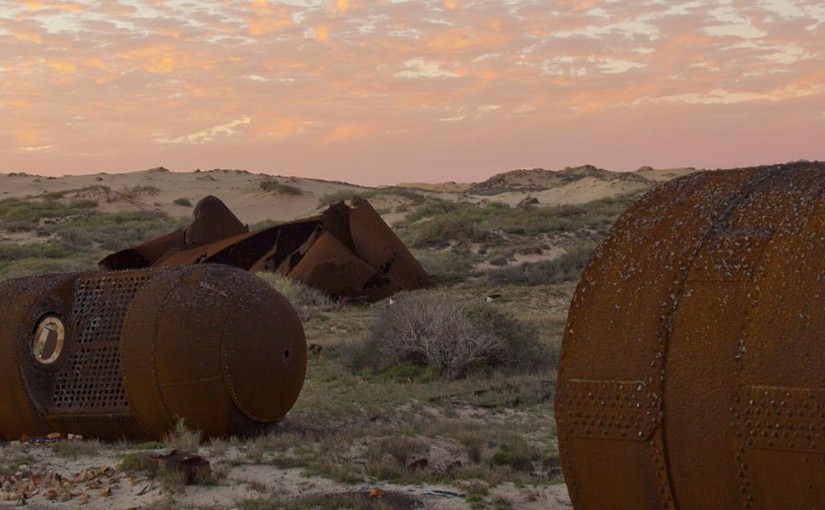
On day three we reach the remains of the Norwegian Bay whaling station, the tour’s turnaround point and a welcome chance to step on land. Here, when the station was operational between 1912 and 1957, thousands of whales perished in the abundant waters. Whalers drove them into a natural passageway then harvested from the trapped pods. Corroded remnants of the abandoned station litter the beach, and blistered metal buried in the sand glows in the afternoon sun like an art installation. The supersized winches elicit visions of whales being hauled up the ramps to be processed into a mountain of flesh. Off the beach the twisted shells of immense storage tanks, pressure cookers and digesters resemble a devastating plane wreck. It is a haunting place, rich in history but steeped in brutality. As darkness conceals the evidence, it is comforting to know these waters are now a haven for pods of the recovering southern right and humpback whales.
My favourite part of the day quickly becomes the end of it. Each evening the sky transforms as we watch from the deck with a glass of wine and a sunset snack. Australia’s west coast delivers some of the most intense sunsets I’ve ever experienced.
On our final morning we sail into Mauds Landing and hit the manta ray fast-food strip. Somehow I’d completely underestimated the size and presence of these underwater beasts, and I’m immediately infatuated. The first manta we see gently glides along the seafloor, yet keeping up with it is a losing battle. Its four-metre-wide wings ripple like a Mexican wave and effortlessly contort into stunning manoeuvres.
From the helm Luke spots a telltale flash of underbelly – one is feeding. Manta rays gather food by barrel rolling through schools of plankton in a continuous reverse somersault – much like a gymnast tumbling with zero gravity. Freeloading remora fish cling on for each rollercoaster loop. For an hour we are the audience to this graceful underwater ballet that leaves me buzzing for days.
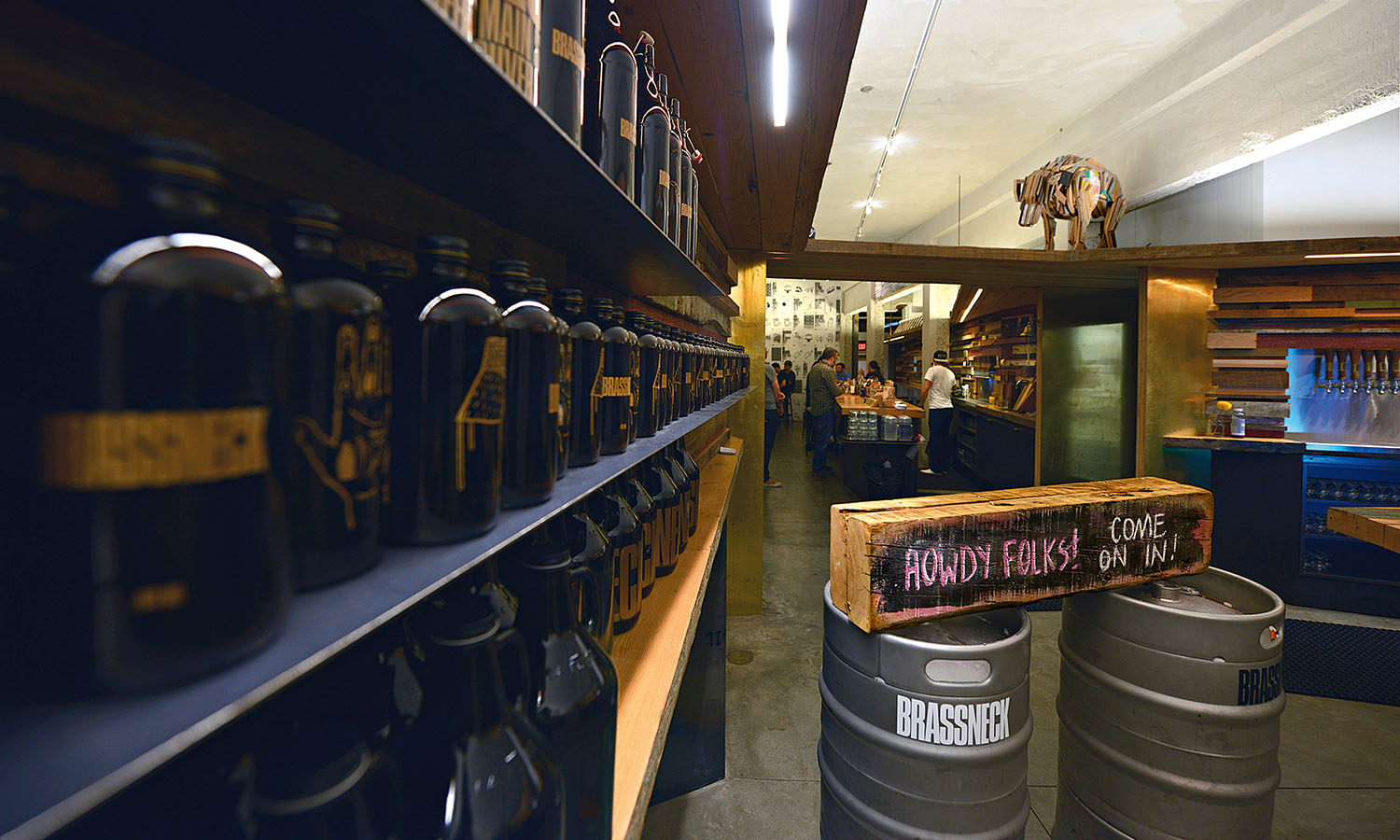
On most weekends, Downtown Vancouver’s neon-lit Granville Street teems with giddy young party monsters ever on the verge of their next vomitous episode. But ask discerning locals where to drink and, if they like you, they’ll tell you to avoid ‘the Strip’. Vancouverites have a hot list of favoured night-time haunts, from craft beer charmers and under-the-radar dive bars to tiny live stages and steaming dance floors. All are within easy reach, as long as you know where to go.Growlers at the Brassneck Brewery.
6.00pm
This is the home of Canada’s best craft beer scene and new microbreweries are popping up in Vancouver every few weeks. But despite the frothy clamour, one ale-maker stands out from the crowd. Since opening in 2013, Brassneck Brewery has concocted more than 50 different beers and hooks drinkers with an ever-changing chalkboard of intriguing libations with names like Magician’s Assistant and Passive Aggressive. Arrive early for a seat in the tasting bar – holes punched in the wood-plank walls reveal the brewery beyond – and couple your sampler flight with cured sausage from the jars on the counter. Still hungry? There’s often a food truck parked outside and you’re encouraged to bring your grub into the bar. Brassneck Brewery 2148 Main Street, Mount Pleasant brassneck.ca
7.00pm
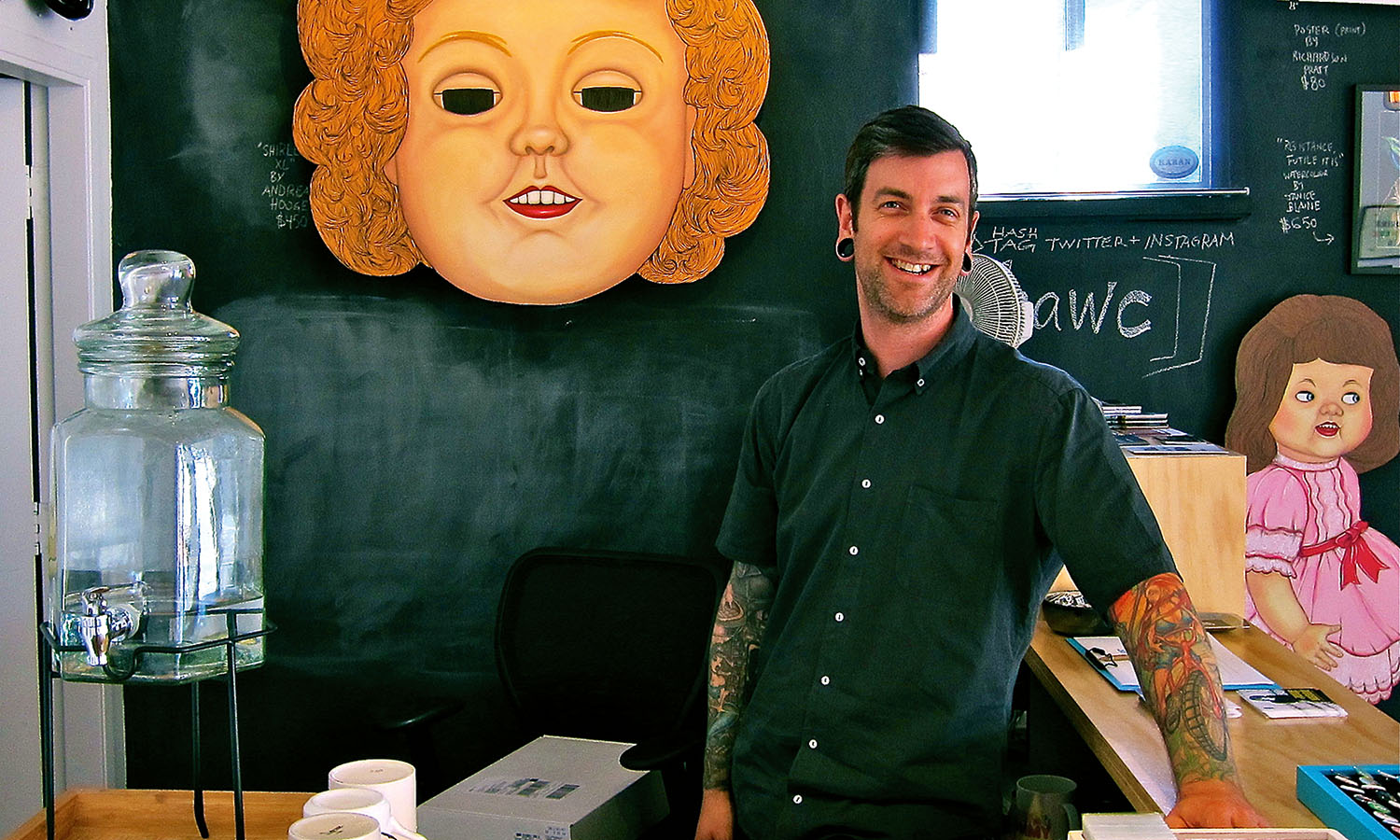
Check the online calendar of nearby Hot Art Wet City gallery to add an early-evening side event to your big night out. One of Vancouver’s most eclectic art spaces, HAWC opens late on the first Thursday of every month and hosts regular night-time happenings, from artist talks to burlesque-themed sketch classes. But the best way to meet local artsy types is to grab a few drinks at a gratis show opening. New exhibitions kick off monthly and there’s always something fun and fancy worth rubbing your chin at – recent shows have covered embarrassing teenager art, disembodied dolls’ head paintings and clever designs applied to bike saddles and beer bottles. Hot Art Wet City 2206 Main Street, Mount Pleasant hotartwetcity.com
8.30pm
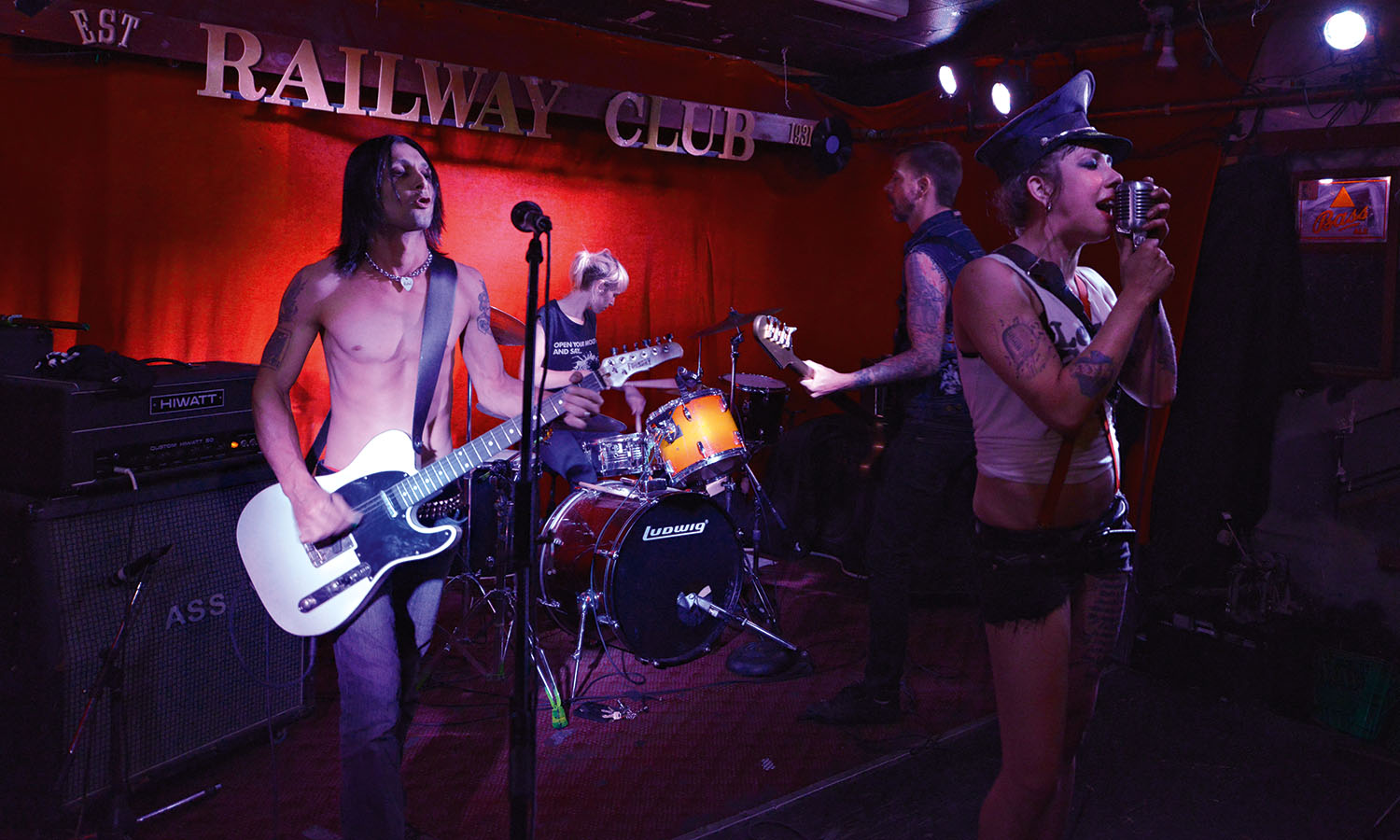
Hop on the number 3 transit bus outside the gallery and you’ll be downtown in 10 minutes. But you’re not heading for the Strip. Tucked above a 7-Eleven, the sticky-tabled Railway Club – launched as a respite for train workers in the 1930s – is Vancouver’s best old-school bar. Now a laid-back, all-embracing hangout for everyone from red-nosed old lags to penny-pinching students – plus those easily tempted office slaves who couldn’t resist dropping by for an after-work brew three hours ago – there’s a hole-in-the-wall food hatch and a generous array of great local-made booze. The hoppy Driftwood Fat Tug IPA comes recommended. But the Rail’s main attraction is a small, sweaty stage with a near-nightly roster of bands of the emerging and obscure variety. Railway Club 579 Dunsmuir Street, Downtown therailwayclub.com
10.00pm
The frayed-around-the-edges Railway Club flirts with the whole dive bar aesthetic, but Pub 340, with its aroma of stale beer, is the real deal. A 10-minute downhill walk away, it’s home to a gaggle of glassy-eyed regulars during the day – where else can you find dirt-cheap booze sans a side order of communicable diseases? – while a younger, hipper crew rolls in as the night unfolds. Few, however, are here for the greasy floors and grubby beer-hall ambience. Instead, they purchase pints to take to the front-of-house pinball room. For a dollar a game, you’ll have your choice of 11 tables, including the ever-popular White Water and the bells-and-whistles Wizard of Oz. Need to rest your flipping fingers? There’s also a console programmed with 1980s video games. Pub 340 340 Cambie Street, Downtown pub340.ca
11.00pm
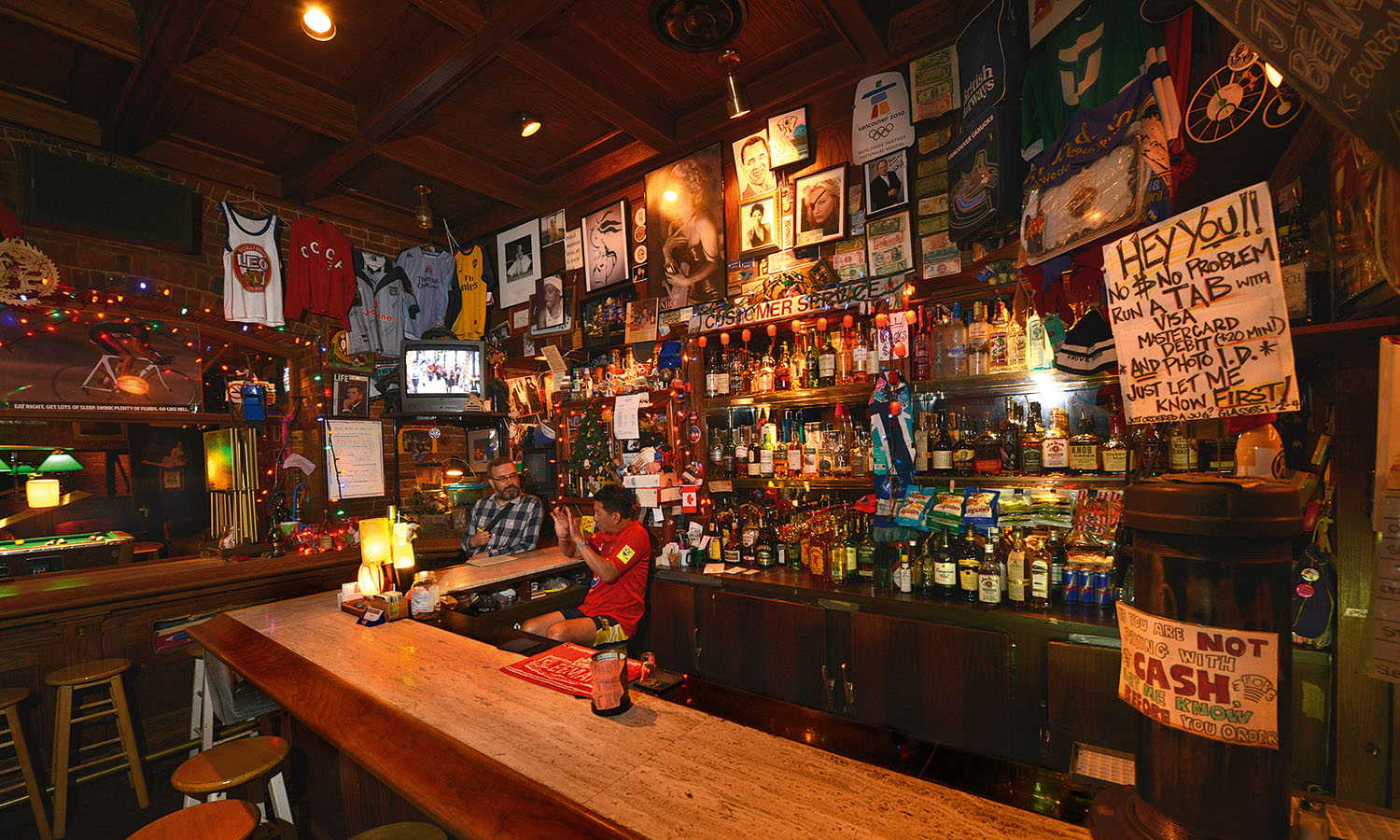
Move swiftly along Hastings Street – heart of gritty Downtown Eastside – then turn right onto Main Street’s Chinatown stretch; you’re keeping your eyes peeled for the faded awning of the Brickhouse. Echoing a 1970s family room, this bar’s eye-popping interior is lined with dog-eared books, fairy-lit movie posters and neon-bright fish tanks twitching with aquatic life. Crammed with more knick-knacks than a jam-packed junk shop – from vintage 7UP fridges to dusty Bakelite radios – it’s the physical extension of owner Leo Chow’s eclectic mind. “We’re 60 per cent British pub and 40 per cent American tavern,” he’s fond of saying as he pours well-priced draughts for the friendly young folk and international backpackers who regard the room, with its sagging sofas and ever-busy pool table, as their personal den. Brickhouse 730 Main Street, Chinatown
12.00am
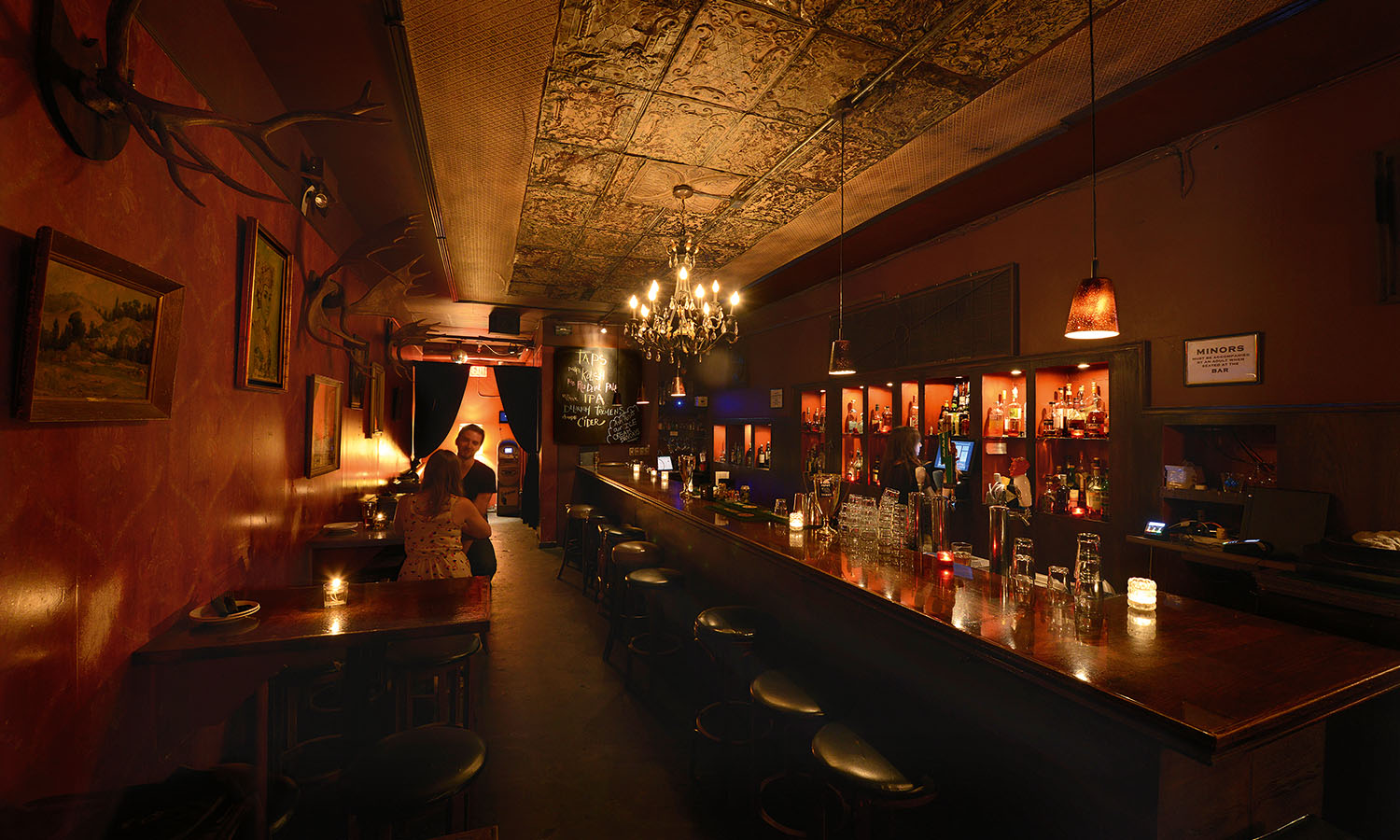
Main Street noses uphill as you aim for the intersection with 3rd Avenue and a red light bulb mounted above an otherwise anonymous doorway. When the light is on, the Narrow Lounge is open. Descend the graffiti-lined stairway and you’ll suddenly emerge in a cosy, subterranean speakeasy no bigger than a train carriage. Grab a perch at the glowing bar and order from the list of traditional martinis and classic cocktails – you can’t go past an Old Fashioned – or snag a tiny table beneath the antler horns and garage-sale artworks. There’s also a secret Mexican-themed garden out back, complete with piñatas, painted picnic tables and a kitsch Jesus shrine flickering with candles, making this one of Main’s best hidden hangouts. Hungry? Order the Guinness mac and cheese for a late-night fuel-up. Narrow Lounge Corner Main Street and 3rd Avenue, Mount Pleasant narrowlounge.com
1.00am
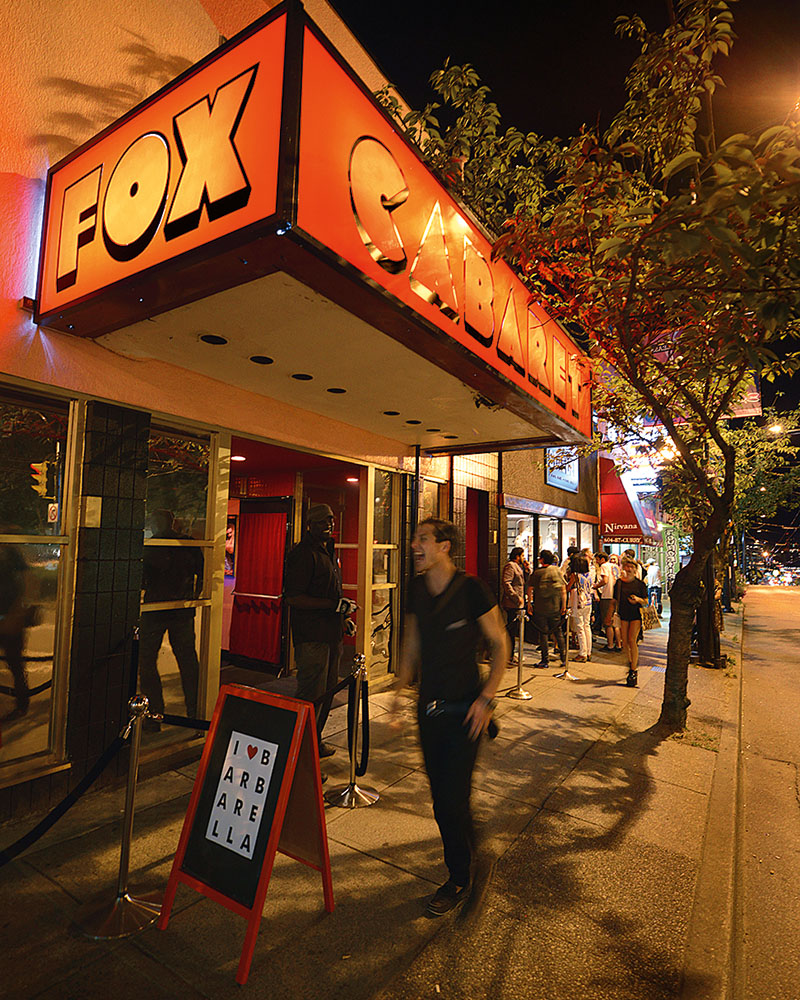
You’ve now looped back to Brassneck territory, but it’s long past the brewery’s closing time. Luckily, there’s still plenty to do nearby. The popular Biltmore Cabaret (biltmorecabaret.com) once had a nightlife monopoly in this part of town – its dance floor, band nights and burlesque shows are still hot items – but a challenger arrived on the scene in early 2014. Formerly one of North America’s last-remaining porn cinemas, the new owners of Fox Cabaret have transformed (and fully pressure-washed) the venue, ditching the dodgy flicks in favour of live music, DJ nights and Sunday night comedy. Far friendlier than the characterless Granville Strip clubs, it’s the perfect spot to end your Vancouver night out. Fox Cabaret 2321 Main Street, Mount Pleasant foxcabaret.com
It’s Summer in the Kalahari and the temperature, normally an energy-sapping 30-something degrees Celsius, is pushing 44. The wind is picking up and purple clouds, the colour of a bruise, are gathering. Serious rain is on the way. A herd of skittish springbok antelope hightails it to the dunes, and the swirling sand fills our mouths and eyes with grit. With no chance of picking up fresh tracks, the search for our big pride male lion is abandoned until daybreak.
Back at camp, while turning chops on the braai (South African for barbecue), we’re treated to a mother of an electrical storm above the distant dune ridges. It lights up the campsite with long flashes of piercing white light, like someone’s flicking the switch on a fluorescent lamp. Luckily the rain doesn’t come until much later, but when it does, the relentless drilling noise it makes on our tent means we’re hardly rested when it’s time to hit the trail again at sunrise.
At least it’s stopped raining. Provided we get out before anyone can spoil the trail with their tyre tracks, the wet sand should preserve any fresh pugmarks. The search is on for the black-maned bruiser who, like a tawny-skinned Tony Soprano, heads up the local pride. We’ve named him Big Daddy because he’s a massive brute and has recently fathered cubs. They’re old enough to be tumbling along with the family group, so there’s a chance we’ll catch up with them. Although, in these parts, the mortality rate for young lions is high. Abandonment and starvation are common, if the jackals don’t finish them first.
The lions of the Kalahari are legendary, topping the bucket list of every self-respecting bushwhacker in southern Africa. Experts will tell you there’s no real difference in physique between them and other African lions; that other lions can have luxuriant dark manes like this and other males can grow just as big. But they’ll also not deny that when you see a Kalahari male standing proud in this arid landscape he’ll appear bigger, more handsome and far more imposing than his savannah cousins.
We’re staying at Mata-Mata rest camp on the South African side of the remote Kgalagadi Transfrontier Park. This vast national park, straddling the border with Botswana, is renowned for its big cat encounters. In addition to the famous lions, it’s also one of the best places on the planet to see a cheetah at full tilt, while the leopards, elsewhere shy and elusive, can be as bold as brass. Mata-Mata nudges the border with Namibia. The tourist track from here runs parallel with and close to the dry riverbed of the Auob, which flows only once every one hundred years. The open terrain is prime territory for wildlife watching, although it’s not the place to tick off the big five – there are no elephants, buffaloes or rhinos here. Instead you get close encounters. On successive game drives over subsequent days, you can follow individual animals, observing their behaviour and piecing together their stories. Along the way there’s the chance to meet some of the other critters – meerkats, ground squirrels, foxes, jackals, giraffe, brown hyena – who play cameo roles in this daily drama.
Despite its stifling temperatures and dramatic storm bursts, summer is one of the best times to see lions, who lounge close to the waterholes and patrol the riverbeds where prey like wildebeest and gemsbok gather after rain.
From the moment we leave camp our eyes are fixed downwards, scanning the trail before us. The secret stories of the Kalahari night are laid bare in this complex tracery of animal tracks. Here, there are the tiny tramlines of a tok-tokkie beetle, so-named because he makes a ‘tokking’ sound as he bumps his rear end on the ground to attract a mate. There, the jaywalking steps of an opportunistic jackal. He got sidetracked, digging out a rodent burrow, before moseying on his way. Swirling hoof prints highlight where a herd of wildebeest thundered over the sandy banks in a panic, disturbed during their nocturnal feeding.
Following tracks like this is the best chance to pick up the resident pride male before he disappears into the shade to rest. Lions can spend 20-plus hours sleeping each day so there’s only a narrow window of opportunity to see him at his majestic best.
It means skipping breakfast, but a combination of adrenaline and panic fuels the morning’s search. Tactics are discussed. Should we stake out Craig Lockhart waterhole, a popular meeting place for his pride, or Dalkeith waterhole on the edge of his range? For six days we’ve followed our lion through this wilderness in the hope he’ll lead us to his youngsters, but in the past 48 hours we haven’t seen a whisker.
Our attention is caught by the ‘wee-chee-choo-chip-chip’ flight calls of sandgrouse on their way to water. The birds must be an omen because not only do we notice there’s a huge rainbow hanging over the dunes, but there in the road is also a set of plate-sized prints, unmistakably lion. We slow to a crawl following the heavy impressions, picturing the alpha male laying claim to this track in the dead of night with his swinging, muscular movements. He might be anywhere by now and we could be stymied if his tracks leave the road, but the terrain here is open and, unless he’s already flat out under a thorn tree, there’s a faint chance we might still pick him up.
Then we’re on his tail, literally, being hypnotised by the cocoa-coloured pompom of fur flicking from side to side. Some 250 kilos of Africa’s largest carnivore is nonchalantly planting one gigantic paw in front of the other, creating the very trail we’re following. He’s not bothered by our intrusion. Even the thrum of the approaching engine isn’t enough to divert him from his progress. It’s only when we draw to a complete stop that he turns his massive head, disdainfully, to face us.
It’s difficult to describe just how vulnerable you feel when your eyes meet the unwavering stare of a predatory lion. We’re close enough to see the scars on his muzzle. From the look of his full stomach, he has been away on a kill.
The male stops, shakes out his mane then lifts his tail to scent-mark the nearby bushes. He yawns before settling down on the sandy bank by the track. There’s no sign of the other pride members. It’s highly likely this is the end of the morning’s excitement so we relax a bit and have a snack, as you do when you’re parked next to a huge male lion.
Suddenly he’s alert, staring intently beyond our vehicle. Through binoculars we make out the distinct shapes of two lionesses ambling this way. There, among their legs, are three fat cubs. When the youngsters join the male, they begin pulling his tail and play-fighting in the shade right by us. They’re comical to watch. One even peeps out at us from behind a tree trunk, fascinated, no doubt, by the constant clicking of our cameras.
The sighting is typical of the intimate wildlife encounters that reward your patience in this magical place. But heart-warming as this little domestic scenario may seem there is no room for sentiment or complacency. Big Daddy’s cubs may be safe for today but tomorrow in the Kalahari the daily struggle for survival starts over again.
If ever you find yourself staring wide-eyed at a breathtaking vista and suddenly notice a cheery Brit facing the opposite direction with a trowel in his hand, say, “Hello Tom!” and prepare yourself for an ear-bending. But in a good way.
Tom Hart Dyke is a plant-mad globetrotter, as passionate about leafy things as the average Brit is about beer, and there’s no one else on earth who could entertain you so eloquently – or animatedly – on the subject of botany. Even if it does get him into serious trouble from time to time.
On the hunt for rare flowers in southern Panama in March 2000, Tom and a fellow backpacker found themselves kidnapped at gunpoint and threatened with execution. Miles from civilisation in the lawless Darién Gap, which separates Panama and Colombia, Tom thought his number was up. It was a feeling that rarely left him during the next nine months he was in captivity.
“We definitely thought we were going to die, but keeping little gardens wherever we were dragged around to helped me deal with it,” Tom says. “It sounds ridiculous, but they were accusing us of being drug runners, CIA, all sorts, and growing plants was a way of me expressing who I really was.”
On 16 June, three months into his captivity, Tom was told he had five hours to live. With shaking hands he reached for his diary and started sketching out a plan for a botanical gardens shaped like a map of the world and featuring plants from every continent.
“It just came to me, totally instantaneously,” he says. “I’d never thought of it before – this guy and his AK-47 were inspirational. When it transpired that we weren’t dead in five hours, I kept the idea and it kept me going throughout the rest of the ordeal.”
More than that, it provided Tom with a grand plan that, once he was released, has kept him occupied ever since. With more than 8000 species, Tom’s ‘World Garden’ in Kent – which is open to the public – is one of the largest private collections in Europe. And getting the plants has been half the fun.
“The highlight of my plant-hunting career was in 2010, when I went to a remote part of Peru, near the border with Bolivia,” he says. “I was at 14,000 feet above sea level and was hoping in particular to see the world’s tallest flower spike, the queen of the Andes, a bromeliad called puya raimondii.”
He found not just one but 10,000 of them, in a valley where almost no man had ever set foot before. “Some were 44 feet tall,” he says. “These huge, phallic symbols growing up into the skies. It was like something from Jurassic Park, just extraordinary, and to bring back some of their seeds and have some growing at the World Garden and nowhere else in the UK is magnificent. It proves that plant hunting still has its place.”
Tom first got his hands dirty when he was just three, after his grandmother gave him a packet of carrot seeds and pointed him at some soil. Growing up in the lovely surrounds of historic Lullingstone Castle – the 650-year-old Hart Dyke family seat – Tom found gardening was just the hobby for an outdoor-loving nipper with acres of land at his disposal, and it wasn’t long before he noticed the myriad plants dotting the Kent countryside around his home.
“Forget going to the pub,” he laughs, “I had a little greenhouse which was just about able to keep the temperature above freezing and that was a gateway to tropical plants.”
Tom’s real love is orchids – the delicate, extravagantly flowered, almost mythical flora that have kept plant hunters in a state of nirvana for centuries – and surprisingly, they were to be found in abundance in his own neighbourhood.
“I think what really got me hooked, though, was a cycling trip I took across France, Spain and Portugal in my teens,” says Tom. “Being in the Pyrenees and seeing orchids in the wild was hugely exciting.”
Tom can talk for hours about orchids and his travels to find them, and gets especially excited when explaining how they often grow in unusual and little-seen places. Predictably, his dream discovery involves the kind of voyage that Charles Darwin would have approved of. “It’s the black orchid,” Tom gushes, “and it has yet to be found. But it is rumoured to be on Kalimantan on the island of Borneo.”
While Tom clearly gets something out of plants that most of us don’t, he’s adamant that anyone who travels is missing a treat if they neglect to pack their flora goggles. “You go to the Canaries, which is the botanical Galapagos of Europe, or even to Sydney and you spend two weeks in the bar and getting sunburned without realising you were 15 feet away from some incredible and rare plants. That, to me, is ridiculous.”
But what if we don’t like flowers?
“It doesn’t matter,” he shrugs. “Just a couple of hours to observe your surroundings would make your trip so much more fulfilling.”
Travis Beard was a tourist in Iran in the aftermath of the 9/11 attacks in 2001, and that’s how he discovered Afghanistan – completely by accident.
The Melbourne-born photojournalist, community activist and musician was due to go to Yemen on holiday, but the country had closed its borders. Instead, the 36-year-old spent a month shooting confronting images and video in Afghan refugee camps for NGOs and global media after hooking up with BBC journalists and crossing into the war-torn nation. He soon discovered he had caught the Afghan bug and couldn’t shake it off.
But documenting the war for media outlets such as The Australian led to Beard becoming jaded by the industry, its level of risk assessment and lack of money. “I used to risk my arse, but I don’t want to anymore,” he says. He decided instead to take his media expertise into event management, to start a revolution promoting free expressionism.
Beard moved to Kabul permanently in 2006 and has since been leading a cultural evolution in the city, helping empower young Afghans to get involved in music and the arts. He mentors and encourages bands in the surprisingly diverse metropolis; a place where creative expression has been subdued for years, crushed under draconian Taliban rule.
“I have a love-hate relationship with this country,” Beard admits. “Afghanistan is enchanting, exotic and has hospitable people, but the lack of a system and corruptness makes things harder to do. Everyday life is quite a challenge: Kabul is a physically and culturally restrictive place; progress has been slow but it has improved. When I first came, there was power only every second day. Electricity is very important for what I do. I wanted to have a creative impact and to create something great.”
In 2006, Beard set up Kabul’s first ever alternative rock band, Kabul Dreams. Now there are 10 more. Beard is also a guitarist with White City, Kabul’s first expat rock band. “It is a small scene and we have to be strategic about the way we conduct our events,” he says. “Melbourne is spoiled – saturated with the arts; when you go to an event in Kabul people go crazy.”
But it’s not all about music. In 2007, Beard co-founded charity Skateistan, the first ever skateboarding school in Kabul. Even members of the Taliban have attended classes. “I remember the first day, when we saw the joy on their young faces. The confidence it gives is fantastic, and you can really notice the trend across the city as it has got more and more popular.”
Another of Beard’s big successes has been the Wallords art and graffiti project, started in 2010 after a British street artist visited Kabul. Contemporary art was non-existent here, now it is blooming alongside the music scene. “These kids had never seen, let alone touched, a spray can before,” he explains. “They love to get out and paint out of curiosity. They are now travelling the world and teaching others about street art as well as selling their work at exhibitions they put on at embassies.”
Beard still loves to travel. With friend and fellow-Australian journalist Jeremy Kelly, he set up the Kabul Knights Motorcycle Club to do one- and two-week epic journeys exploring places most foreigners have never been. They have seen 80 per cent of the country – there are five provinces left, but currently they’re too dangerous. “The roads have improved but security has gone down a lot recently,” he says.
Despite ongoing security issues, times are definitely changing. Now there is theatre, puppetry, breakdancing and many kinds of music on offer in Kabul. Beard says he has to be patient, open-minded and sensitive to the cultural situation, but a bit aggressive too.
While he still earns a living as a photographer, shooting pieces for NGOs, Beard is also producing a documentary on Kabul’s nascent rock scene. “One band has just been touring in India,” he says. “Their parents went too and it was a fantastic experience. The kids are going to study music courses instead of engineering; there has been a shift in the perception of music. The industry is very young and the Afghans need to accept the more modern parts of the culture or they will be back to an oppressive Taliban society.”
Beard’s biggest accomplishment came in 2011 when he and his fellow White City band members pulled off Kabul’s first ever alternative festival, Sound Central. The location had to be kept secret until the last minute due to fears of extremists targeting the event, but 600 people came to see bands from Afghanistan, Uzbekistan and Australia. The following year, a whopping 5000 fans attended the grassroots festival – about 70 per cent were Afghans seeking an education in international music. This year, the festival will be expanding across Central Asia.
“We even had our first ever stage dive at this year’s festival,” Beard laughs. “That was symbolic.”
In two decades as a photographer for National Geographic magazine, Joel Sartore has been chased by bears, lions and elephants. However, sometimes it’s the smallest creatures that are the most dangerous.
“I’ve been charged by musk oxen and grizzly bears while on assignment, and either one of them could’ve very easily killed me,” Joel says. “But most times, wolves and anacondas aren’t the biggest sources of concern. In many parts of the world, photographers face malaria, yellow fever, typhoid and myriad other nasties.”
While on a trip to Uganda, Joel had a close brush with the deadly Marburg virus. He was in a cave photographing Egyptian fruit bats, and caught a dollop of fresh guano (bat poo) directly in his eye. He was subsequently told by the Ugandan Centre for Disease Control that the cave was a breeding ground for the Marburg virus, that he shouldn’t have gone in there and to go home immediately before he became contagious.
The virus causes a gruesome death. Closely related to the Ebola virus, it creates haemorrhagic fever, meaning victims basically bleed from multiple organs and orifices. The disease is 90 per cent fatal in Africa. Joel made it through the incubation period miraculously unscathed and, although that experience might scare some with less dedication, he’s been back to Africa three times since, all without incident.
He was less fortunate in South America. Following a trip to Bolivia, Joel noticed a wound on his leg that wouldn’t heal. He had developed leishmaniasis, caused by a flesh-eating parasite he’d contracted through a sandfly bite. The infection spread to his lymph system and created a hole in his leg that could only be treated with surgery and chemotherapy. He won’t know for a few more years if he’s fully cured.
It was also in Bolivia Joel learned about man-eating pigs during a challenging assignment that put him at the mercy of the local wildlife. His guides relayed stories about the pigs he was trying to photograph and how they had pulled one man out of a tree and torn him to pieces. Another local survived an attack, minus his backside. “He didn’t get quite high enough in the tree and the pigs bit it off,” Joel says.
Even a seemingly innocuous expedition photographing Bolivian butterflies brought with it a sting in the tail. “I was lying in my own urine on the beach for several hours, hoping to draw in butterflies to photograph them. I was stung by wasps on both hands and bats urinated on my face each night through the mosquito netting.”
It’s enough to put off the most snap-happy budding photographer, but not, apparently, Joel’s many admirers. The question he is most often asked is: “How do I become a National Geographic photographer?” His short reply: “By being very persistent.”
“I got into photography in high school after borrowing an old Olympus camera from a friend’s father. After taking classes in everything from astronomy to beekeeping, I majored in photojournalism at the University of Nebraska–Lincoln.”
Joel sent in his best work for more than two years before clinching his first assignment.
“To get into National Geographic, you have to offer them something they don’t already have access to, which is a tall order. It’s not enough just to be a great photographer. You have to be a great photographer and be able to dive under sea ice, spend days in tree stands in the tropics, or be an absolute genius at lighting impossible situations. I worked like crazy on those early assignments and did everything I could to make sure the photos were stellar.”
Through his travels over the years, Joel has become increasingly concerned about the environment he photographs. His first assignments introduced him to nature photography and also allowed him to see the human impact on the environment firsthand.
I was lying in my own urine on the beach for several hours, hoping to draw in butterflies to photograph them. I was stung by wasps on both hands and bats urinated on my face.
Today, through his photography, Joel is on a mission to document endangered species in order to illustrate a world worth saving. His latest passion is a project called the Photo Ark. Already he has photographed more than 2800 species, including upwards of 150 during a recent visit to Australia and New Zealand.
“The goal of the Photo Ark is to document biodiversity, show what’s at stake and to get people to care while there’s still time,” he says. It started simply enough with endangered amphibians. “I read an essay on amphibian decline and knew I needed to do something to show these species to the world before they were gone forever. As I went from place to place, I’d hear about other species in trouble: primates, reptiles, migratory birds and more. So now I photograph anything that will hold still on a background long enough for me to take a picture.
“At current rates of decline, many scientists predict we could lose up to half of all species by the year 2100 [reports in 2016 show about 60 per cent of the world’s fish, animal and bird populations have been wiped out in the past four decades]. It’s folly to think that we can doom that many species to extinction, but that people will be just fine. We must have pollinating insects to provide us with fruits and vegetables. We must have healthy rainforests to regulate our climate. The real truth is that when we save species, we’re actually saving ourselves.”
Joel enjoys photographing endangered species, especially the smaller creatures nobody has ever heard of. In some cases, he says, a well-timed article can save a species by drawing attention to its plight. For example, one article and images on Bolivia’s Madidi National Park drew international attention to the area, and assisted in derailing plans for a hydro-electric dam.
“It’s not enough, nor is it responsible journalistically, to just show pretty animals in an idyllic landscape,” he explains. “We must show the threats to these creatures as well. We can’t pretend any more that everything is lovely. Our photos need to inform readers of what’s really going on out there.
“It’s imperative that we try our hardest to do the most good we can with our time on earth. Heroic acts aren’t necessary and small things can add up to a big difference. You simply have to care.”
Has there ever been a better excuse to start drinking beer early in the day – well, before lunch – than the fact the local beer should be downed the same day it’s made?
In Vietnam’s northern city of Hanoi, kegs of bia hơi (fresh beer), brewed daily without preservatives, are strapped to the back of motorbikes and are on their way to bia hơi joints – the local equivalent of a pub – before most visitors to the frenetic city have sipped their first cup of cà phê sữa đá (Vietnamese iced coffee).
In Hanoi, the day starts early. Soon after dawn, around the atmospheric Hoan Kiem Lake, groups of energetic older residents are getting their morning exercise, while, at phở stands all over town, noodle soup is being ladled into bowls. Elsewhere another daily ritual is taking place. Stainless-steel 100-litre kegs of draught beer begin rolling out of the three main breweries – Hanoi Brewery, Viet Ha Brewery and South East Asia Brewery – to bia hơi spots around the city.
While it was the French who introduced beer to Vietnam, it was the Vietnamese who made it fresh, to be consumed the same day as production – just like almost every dish of traditional Vietnamese food. Today bia hơi makes up about 30 per cent of the beer sold across Vietnam, the bulk of which is downed in Hanoi, where bia hơi culture is very firmly rooted. Here, there’s a beer joint on every city block, and in Hanoi’s labyrinthine old quarter there’s one on almost every corner.
While the old quarter bia hơi outlets range from a bare room in someone’s shop-house to an open-sided corner-block ‘pub’, the further you travel from the centre the more you’ll see purpose-built, shed-like structures with enough room to house more than a hundred thirsty punters.
In a typical bia hơi, the beer is kept cold through some often innovative contraptions that surround the keg in ice, with the beer flowing into endearingly imperfect recycled glass tumblers via a hose, often of the garden variety. If the bia hơi joint doesn’t have a fancy ‘cooling system’ you’ll be presented with the alternative: a bucket of ice and tongs.
If a bia hơi is having a particularly busy morning – or afternoon or evening – you’ll see a motorbike screech to a halt outside to offload another keg, which should see the establishment through a busy drinking session that can attract groups of a dozen or more locals who pull up tiny plastic stools and join tables together to settle in for the night.
At a popular bia hơi you’ll see groups ordering round after round of the refreshing beer yet still not swaying. That’s because bia hơi is low in alcohol – 2.5 to 4.5 per cent – making it a very quaffable brew. It’s also low on cost – fetching about 8000 Vietnamese dong a glass (about 35 cents).
Each joint has its idiosyncrasies that attract regular drinkers. Some are known for being early openers, catering to the older, retired guys who start early and drink slowly as they methodically nibble at mountains of pumpkin seeds. The more ‘upmarket’ places – and we use that term loosely – feel more commercial, with fast service, shiny stainless-steel tables and an extensive menu of food designed to go down well with a few brews.
For these places, the food is as big an attraction as the icy amber liquid. The moment you arrive the waiter will toss you a packet of spiced peanuts (a Hanoi specialty) while you take in the aromas of dried squid grilling over a portable charcoal burner or a seafood hotpot bubbling on the next table. Drinking dens popular with Hanoi’s burgeoning hipster set serve hot cheese sticks and sugary French fries. Other bia hơi places are beloved for more filling fare, such as fried tofu and roasted pork ribs, or more ‘exotic’ treats like fried eel and grilled frog legs.
While it was the French who introduced beer to Vietnam, it was the Vietnamese who made it fresh, to be consumed the same day as production.
At our favourite spot, Bia hơi Ha Noi Cua Hang Ngoc Linh, it’s the delicately fried tofu, lightly salted ribs and fresh morning glory sautéed with garlic that keeps us going back. On our first visit there, two guys at the next table were having a post-work beer – or five – and ordering dishes in anticipation of their mates turning up. As plates started to fill their table, we took to pointing and ordering whatever we thought looked delicious.
Noting that we could eat – and drink – like the locals, our table neighbours were soon pointing sticky fingers at the menu to suggest further dishes, demonstrating how to eat them and mix the sauces. A few beers later and we were ordering each other rounds, clinking glasses before every gulp. Thanks to the low alcohol content of the beer these nights can be memorable – and still be able to be remembered.
One of our most unforgettable bia hơi experiences happened on our first night in Hanoi. Pulling up a tiny stool at an old town streetside bia hơi at around 10pm, we had just clutched our first beers when the local police decided it was too late for these footpath establishments to be trading. Mayhem broke out and before we could stand, the proprietor whisked our plastic stools from beneath us and packed the whole place away before the police could confiscate his gear. Like the other patrons, we briskly disappeared into the night, quickly downing our beers as we went.
In the three months we spent in Hanoi, we were drip-fed tips on places to try for the atmosphere or a dish that a particular bia hơi did well. But, like the locals, we always returned to our favourites. Once you get into the habit of heading to a particular bia hơi, it becomes as essential a ritual as that early-morning phở or mid-morning coffee.
The most surprisingly delicious dish at a good bia hơi joint is fried tofu. Tofu is made daily in Hanoi, so find the freshest you can to make this dish. The dipping sauce, muoi tieu chanh, is not as famous as nuoc cham (the ubiquitous fish sauce-based dipping sauce), but is just as present on Vietnamese tables and lifts any dish it touches.
INGREDIENTS
200ml vegetable oil
500g silken tofu (the firmer the better), drained, patted dry, and cut into 3cm bite-sized cubes
1 bunch Vietnamese basil (or Thai basil), leaves removed and roughly torn Muoi tieu chanh (salt, pepper and lime dipping sauce)
coarse salt
white pepper
lime wedges
bird’s-eye chillies, thinly sliced ((to taste)
METHOD
Make the sauce first. Muoi tieu chanh is always mixed to personal taste. Start with, say, a tablespoon of salt, half a tablespoon of pepper and the juice of a quarter of a lime, mixed to make a sauce. Taste and adjust as necessary. Locals will usually put a couple of pieces of chilli into the sauce and mix it around to give the sauce more kick.
Heat the oil to medium-high in a deep saucepan or wok. Dip a wooden chopstick into the oil to check the temperature – when bubbles form around the chopstick, you’re ready to cook. Place the cubes of tofu carefully into the pan. Cook until lightly browned and puffy (around three minutes) and place on absorbent paper. Plate the tofu on a serving tray and mix with the basil. Eat by dipping a piece of tofu and a basil leaf into the sauce.
Everything you’ve heard is true. The people of Buenos Aires pay no heed to the earth orbiting the sun. Day and night are merely words to these party people. Forget New York. This is the city that never sleeps.
I’ve had the good fortune to visit and paint red many a town across this world, but none compare to BA, with its writhing streets and pumping suburbs. Where else is 12.30am prime time to start making plans and inviting friends over for a few pre-party drinks? Where else is it considered commonplace to meet your grandma for a coffee and a caramel-centred cookie at 1.30am? Where else is 5am an appropriate hour to hit the first club of the night? Welcome to the Argentine capital, where the weekend begins on Tuesday and the night begins on the other side of midnight.
5pm
OK, so starting an evening’s shenanigans at 5pm is perhaps not the most fashionable way to do things in this city, but sitting around in a hotel on your holiday isn’t either. Visiting La Boca, the historic suburb famous for its colourful architecture and the even more colourful and larger-than-life football legend Maradona, is one of those things that needs to be ticked off in Buenos Aires. As touristy and tacky as it can be in parts, there’s still a flicker of the good old days about the place. Strolling around its most well-decorated streets, dodging tango touts and snapping a few photos, makes for quite a relaxing afternoon. Security-conscious locals will invariably suggest it’s best to make tracks out of La Boca before the sun goes down. I’ve never hung around long enough to find out if there’s good reason for their concern.
7pm
Ease your way into the evening at Feria de Plaza Francia in the suburb of Recoleta. This is an arts and crafts market with a nice vibe and a big grass hill to settle on and people-watch while cracking open a can or two of the locally brewed Quilmes. As the sun takes cover over the horizon, a local band will bang out some reggae tunes, joints will make their way around, hands-in-the-air dancing will begin and you’ll start to feel irie, Argentine style. La Feria de Plaza Francia Pueyrredon y Del Libertador, Recoleta feriaplazafrancia.com
8.30pm
You thought it was time for dinner, right? Not quite. Grab yourself a quick empanada if you’ve got the munchies, as the nightly meal is a little later. Buller Pub Downtown is an artisan beer house not far from Plaza Francia. If you’re worried about getting tired (yes, you should be worried) grab a taxi to get here. This place has assembled a bunch of micro-brewed beers and is a top spot to sample something other than the canned Quilmes. The honey beer is well worth a try. Buller Pub Downtown Paraguay 428 bullerpub.com
9.30pm
Buenos Aires is known worldwide for two things: gigantic steaks and long-legged ladies at tango shows. Although world-class meat eating and dancing don’t often go hand in hand, at around 9.30pm it’s probably safe to assume you’re ready to partake in both. Cafe de los Angelitos delivers portions of each in generous measures. Once a popular haunt for politicians, musicians, poets and artists, this beautiful old cafe invites guests to enjoy a sit-down meal while watching a wonderful tango spectacular, with a live band and a whole troupe of polished performers. The tango, which was born in Buenos Aires and reached its popularity in the 1940s and 50s, is a joy to watch. With one eye on the action on stage and another on the hefty slab of cow on the plate before you, you’ll leave here feeling entertained and full. The malbec wine with dinner is highly recommended. Cafe de los Angelitos Rivadavia 2100, Balvanera cafedelosangelitos.com
12am
The demon hour has arrived. Before any thoughts of sleeping off the malbec enter your head, remember where you are. And keep in mind you mightn’t be back here for a very long time. Take a deep breath and get ready to party like a Porteño (Buenos Aires local). San Telmo is a fun, cool suburb with plenty going on. Much of the action here is to be found in the Plaza Dorrego. On a summer evening, the plaza and little streets enclosing it become a mini outdoor festival, with drumming and dancing and general good times aplenty. Skinny-hipped youth smoke and talk loudly and gyrate together in the humid night. It’s here where you get a true taste of the Latino lust for life. If you’re not a dance-like-nobody-is-watching type, then grabbing a pew at one of the outdoor cafes is your best bet to watch the goings-on. Plaza Dorrego San Telmo welcomesantelmo.com
2am
Some of the bars in BA can be a little showy, if not wanky. But La Puerta Roja – the Red Door – is one of the city’s more cruisey establishments. No cover, no being told by bouncers there’s an imaginary private function, no nonsense. The Red Door’s easy and welcoming attitude makes this joint a local hotspot. Get yourself a Cuba Libre (rum and coke with a squeeze of lime) and kick back on the leather couches. Or, if you’re keen to practise your Español, grab a stool by the bar and chat with the affable bartenders. La Puerta Roja Chacabuco 733, San Telmo
4am
Now it’s time for some glitz and glamour. Get yourself a taxi (giving directions to the driver always seems easier after several Cuba Libres) and make a beeline for Recoleta. Milion is a fancy-pants mansion and undoubtedly one of the swankier, more stylish watering holes in this big city. Think marble, terraces, secret balconies. Milion, with its almost-porno vibe, is a well-known hangout for BA’s celebrities and socialites. Make sure you dress the part, but don’t be too concerned about the prices. Oddly enough, it won’t cost you a million pesos to buy a round at Milion. Have a cocktail shaken for you then rub shoulders with the rich and famous. Milion Parana 1048, Recoleta milion.com.ar
6am
Yep, it has to be done. A big night out in BA is not complete until you’ve checked out a proper dance club in the wee hours. The monstrous Alsina, with a capacity of about 3000, employs DJs like Sasha and Carl Cox to knock out the beats on the king-sized dance floor. The gay nights here are welcoming and fun no matter what your bent is. Be warned: the Porteños can dance. The gringo shuffle, with a beer in each hand, just won’t cut it here. Tap into your inner Latino and shake it till the sun comes up. Alsina Adolfo Alsina 940 facebook.com/palacioalsinaba
8am
The sun is up. The Red Bull no longer works. While some of the Porteño party people are preparing for the day clubs, it’s probably time for bed.
When we meet Paul Mac he doesn’t know all that much about the Meredith Music Festival. One of Australia’s seminal electronic music artists, Mac first rose to prominence as one half of dance act Itch-E and Scratch-E, famously thanking the “ecstasy dealers of Sydney” when accepting the group’s 1995 ARIA award. He has collaborated with the likes of Silverchair, remixed everyone from Kylie Minogue to George Michael and carved out an accomplished solo career. But when we meet Mac he has not been to Meredith. Not quite yet anyway.
The setting for our encounter is a campervan depot in Melbourne’s western suburbs one Friday afternoon in December, the opening day of the Meredith Music Festival. A sense of nervous anticipation is evident amongst those collecting vehicles for the 90-minute drive to the festival site. Mac is billed to take to the stage at 2am on Sunday morning as part of Itch-E and Scratch-E, and is genuinely intrigued as to what awaits him at the end of the highway. A three-day music festival with only one stage? And you can bring your own alcohol?
When Meredith was first held in 1991 as an end-of-year party in a paddock for friends and friends of friends, the home movie footage of the gathering gave no inkling it would become a staple on the Australian festival calendar. The musical entertainment was showcased from the back of a truck and at times drew what appeared to be only passing attention. Attendees sat on hay bales and drained cans of beer before staggering to tents and cars as the air temperature dropped and fatigue set in. “It wasn’t even meant to be a festival,” festival co-founder Greg Peele later observed. “It was just a party in the bush.”
Yet the DNA of the event that has flourished in subsequent years, accruing goodwill annually among its rusted-on followers, was evident at this first tentative step. One stage. BYO alcohol. No commercial branding.
The story of the festival is the story of the Nolans – Jack and Mary – on whose family farm the festival is staged, and their son Chris, one of the event’s instigators. In the four years following its debut, Meredith grew organically, adopting a ‘better before bigger’ mantra.
However, the personal circumstances of Chris Nolan meant that 1995 was almost the final festival. While working as a lawyer in Hanoi, Chris suffered a multi-organ collapse. Critically ill, he spent six months in a coma. The brain injury he sustained means that, 16 years later, Chris is confined to a wheelchair and cannot see or speak. However he is able to communicate and his passion for the festival and its music is undiminished. Festival-goers drop by each year to Chris’s ‘tent with a view’, dubbed the Nolan Stand, to convey their personal connection with the event that still bears its host’s fingerprints.
The open-air, multi-day music festival is a global phenomenon, but each variation has quirks and characteristics that reveal something about its hosts. Attending a local festival is a sure-fire way to plug into a destination. Glastonbury is unmistakably English, from the stiff upper lip required to stare down grim weather conditions, to the eccentricity evident in its counter-culture heritage. The Fuji Rock Festival, which has not been staged at Mount Fuji since the disastrous initial event in 1997, is a window into Japanese culture. And Serbia’s Exit Festival has a unique history (it began as an anti-government protest) and location (on the banks of the Danube) that provides visitors with an appreciation of its host nation.
Australian music festivals also wear their sense of place on their sleeve. The Woodford Folk Festival is unambiguously a Queensland gathering, and Adelaide’s parkland setting and arts community distinguish WOMADelaide. Similarly, the essence of the Meredith Music Festival can be traced to its locale. The whistlestop township of Meredith is located between western Victoria’s two major regional cities, Ballarat and Geelong.
As the organisers acknowledge, the festival site can sometimes feel like its very own country, but local people and local features abound. The City of Ballarat Municipal Brass Band has opened proceedings each Saturday morning since 2005, and members of Meredith’s sporting and community groups toil over the hotplates at the perennially popular Tucker Tent. Funds raised from sales of bacon-and-egg breakfast rolls to hungry patrons recently helped the Meredith Primary School acquire gym equipment, funded an upgrade of the Meredith Golf Club’s mower and bankrolled the repair of the nets at the Meredith Tennis Club.
A Festival Soundtrack
The single stage at Meredith sits at the bottom of a gently sloping tree-lined tract dubbed the ‘Supernatural Amphitheatre’, or ‘Sup’. The evil of drink tickets has no place here. Coolers loaded with BYO beverages are dragged into place with couches for what is invariably top-shelf people watching, backed by a superb soundtrack. Ringed by food outlets and two bars, the setting is never static. As the day progresses in the Sup, the sun crosses overhead before dipping beneath the paddocks in the west. The human tide ebbs and flows from nearby campsites as artists arrive, perform and take their leave.
It’s all about the music, right? The brains behind Meredith back their knack of programming a crowd-pleasing on-stage lineup. The pre-festival primer, never shy of eyebrow-raising adjectives, billed the 2012 line-up as a “eucalyptic, pre-apocalyptic neuvo classic charismatic flyin’ purple people eater bush rave-up happening…featuring the crackest squad of musical mavericks”.
It was certainly eclectic, ranging from 85-year-old blues saxophonist Big Jay McNeely to Syrian wedding singer Omar Souleyman. It was also contemporary, boasting Perth-bred psych-rockers Tame Impala and Canadian ‘dream pop maven’ Grimes, both of whom featured atop many critics’ best-of-2012 lists. And it was, at times, transcendent. Never more so than throughout Spiritualized’s Friday night performance and then during the amphitheatre singalong the following evening when Primal Scream delivered ‘Come Together’. Asked about the set months later, Primal Scream frontman Bobby Gillespie recalled a “really magical energy in the audience… It was like a force field. I loved that gig”.
Meredith trades in traditions: moments that have been repeated and then enshrined as part of the folklore of the festival. The most infamous is the Meredith Gift, a footrace that was devised at short notice to fill time when Spencer P Jones was running late for his Sunday afternoon spot in 1994. The handful of entrants swelled annually in proportion to the festival and the dash became more fiercely contested and, well, more naked, on account of the stipulation that runners be ‘nude or underpanted’.
Another Meredith ritual is ‘the boot’. Melbourne live music audiences are not a particularly demonstrative bunch. Their non-expressive ways have prompted visiting musicians to dub the Victorian capital ‘the city of folded arms’. However, over the course of the weekend at Meredith, at least one act will be left in no doubt as to the level of audience appreciation. A moment will arrive, most likely late in their set, when they will gaze out over the amphitheatre to a sea of footwear being held aloft.
‘The boot’ was first witnessed during the 2007 edition of Meredith’s sister festival, Golden Plains, staged at the same location every March. Patrons of Meredith’s December event quickly adopted the custom, bestowing the honour on the likes of Paul Kelly (2009), Neil Finn (2010) and Graveyard Train (2011). According to the festival’s mythical matriarch, Aunty Meredith, this collective display “happens when the whole of the amphitheatre unites in appreciation of something that has wildly exceeded expectation. You can’t plan the boot. It can strike at any time of day or night.”
Other organic traditions await the uninitiated, including ‘the red tree’ (a painted gum where red-haired festival-goers gather at an appointed time) and the ‘arch of love’ (a mysterious installation that has hosted wedding ceremonies since first appearing in the mid-90s). The next Meredith tradition? My vote is for the regular return of the homemade Nick Cave rocking horse, delivered by one proud punter to the amphitheatre in 2011.
Uncooperative weather conditions are the scourge of outdoor music festivals the world over. Meredith is preceded by a fortnight of anxious scrutiny of meteorological predictions for the presence of unwanted guests: blazing heat, wind gusts that send tents cartwheeling, and torrential rain that transforms walking tracks into watercourses. Fortunately, conditions at December’s festival were benevolent: a made-to-order summer evening on the Friday followed by a blustery but dry Saturday.
Most Meredith veterans will recount the weather-affected years with a mix of disbelief and pride. Surviving the 2004 festival, that of the ‘100-year storm’, is often worn as a badge of honour. The tempest that descended on the Friday evening was so brutal that the plug was very nearly pulled on the entire weekend. The following night, festival favourites The Dirty Three performed against a breathtaking backdrop: an electrical storm that hissed and spat over neighbouring paddocks but ultimately spared the festival site. Melbourne musician Dave Larkin, who has graced the Meredith stage with his former group Dallas Crane, was among the gobsmacked crowd. “The band is incredible without the light show,” he says. “But with God on lights, they were amazing.”
If that episode constituted a near miss by Mother Nature, her aim was true at the 2008 edition of the festival headlined by MGMT. It really rained. And then rained some more. Some attendees were woefully ill-equipped for the onslaught. Others were creative in their battle with the elements, a number donning both full-length wetsuits and football boots for the duration of the weekend. A wise man once said: “Only bad drugs or bad weather can ruin a weekend at Meredith.” Experience suggests that even very bad weather may not be enough.
A Festival Convert
It is approaching 3am on Sunday morning, around 36 hours after our encounter with Paul Mac at the campervan depot. Mac has just closed out Itch-E and Scratch-E’s 60-minute set to a throbbing Meredith amphitheatre and has seen enough to make an assessment of this annual gathering.
“Hey, Meredith,” declares Mac as he prepares to depart the stage to a cheering early morning crowd, “this is the best fucking festival!”
Weeks later, when the paddock dust has settled, Mac’s opinion is more considered but has not changed. “Amazing, such a pleasure to play,” he says, listing with approval Meredith’s distinguishing features: BYO alcohol – “super cool, instead of being ripped off by stupid bar prices” – and a single stage – “makes for a more universal experience, where we all go through it together. I was told that it was the music lover’s festival before I got there, and that was totally true.”
It should come as no surprise that a seasoned festival pro like Paul Mac has been seduced. After all, to know Meredith is to love Meredith.
Staring in through the gigantic underwater window, the two beautiful batfish seem very interested in my starter. I don’t blame them – it’s a sensational seafood bisque – but over their shoulder a big barracuda looms, possibly with murder on its mind.
Briefly I worry for the batfish – they seem such a lovely couple, I’d hate one of them to get eaten because they’re eyeballing my entree – but then the main course arrives (a juicy steak, barbequed to perfection out on the deck) along with another glass of shiraz, and my attention is distracted from the threat of imminent carnage outside.
The batfish seem to have a standover guy protecting them anyway, a massive Maori wrasse called George. Apparently, until recently George used to be girl, but then his boyfriend died and, well…it’s complicated out there in the big blue.
My host, Nathalie, gives me all the gossip as she refills my glass before serving dessert. Over crème brûlée I peer through my personal portal out onto the Great Barrier Reef and wonder what will swim past next. It’s a million times better than a night in front of the TV this. Nearly all the M-rated action takes place on the reef at night and all the drama is live, totally wild and completely uncensored.
I feel like I know most of the main characters. I was hanging out with many of them barely an hour before, during a night dive from the moon deck that leads to the open ocean from the staircase next door. Earlier I’d snorkelled with another couple of locals, a two-metre giant Queensland groper and a turtle called Chunk, who is missing a bit of himself thanks to a shark.
Unless you fork out for an expensive live-aboard diving trip, it’s hard to get a good goggle at the Great Barrier Reef by night. Even then, you might get an hour-long night dive – if you’re qualified and good on your air – and that’s it. What I’m experiencing is altogether in another league (under the sea).
I’m the first sleepover guest on a semi-permanent pontoon anchored close to Hardy’s Reef, an hour’s boat trip from Hamilton Island in the heart of the Whitsundays archipelago in tropical North Queensland. Earlier it had been packed with daytrippers, but I waved them all goodbye on the 4pm boat and have had the place to myself since. Well, me and a crew of two reef-sleep hosts and a couple of dive masters who have been guiding me around the reef.
On the top deck, where we had a sundowner as the sun slipped into the Coral Sea, Amos, the captain of this structure, has set me up a swag to sleep in. Retiring for the night, belly and brain full with fine fare and food for thought, I stare up at a kaleidoscope of stars and planets as the movement of the pontoon gently rocks me to sleep.
There’s zero light pollution out here, and the sky above is as mesmerising as the sea below. Tomorrow I’ll venture up, instead of down, and check out the scene from above in a helicopter tour over Hardy’s Reef.