()
() 
But when you wake up in a new place every morning and you don’t know the lay of the land, it’s an easy matter to get lost – especially here, in the Auxerrois, a province in the Burgundy region of central France, where apparently it’s simpler to stumble upon an immense subterranean cavern full of bubbly than it is to find a bakery.
We’re in the Caves Bailly Lapierre, which burrow into the hills above the riverside village of Saint-Bris-le-Vineux. Within its four-hectare labyrinth, the premium produce of 71 local vineyards is gathered together and sold in a front-of-cave tasting room.
To get here (after spying an intriguing looking riverbank sign, which curiosity refused to let us ignore) we climbed a vertiginous hill, cycled through a hole in the cliff face and pedalled several hundred metres through a gloomy tunnel, before emerging into a huge chamber lined with bottles. There, beneath a buxom vision of an effervescent wine angel sculpted into the stone ceiling, a bloke offered us a glass of Crémant, the speciality of the region.
You can’t argue with serendipity in such circumstances, and it would have been rude not to try a few sips of the local varietal; plus we needed to sate the thirst we’d earned by cycling up the hill. Even at this early hour we’re not alone. Some of our fellow early-bird tasters are spitting their wine out, but we wouldn’t dream of being so wasteful. By the third glass, our erstwhile quest has gone completely out of focus.
It’s not until we get back in the saddle and wobble off down the hill, four bottles of Crémant Réserve clinking away in the breadless baskets of our bikes, that we realise a story is going to be required. Our crew has grown used to feasting on fresh bread for breakfast – we’ve been gone for hours and the bounty we’re returning with is not what they ordered. This could end in mutiny.
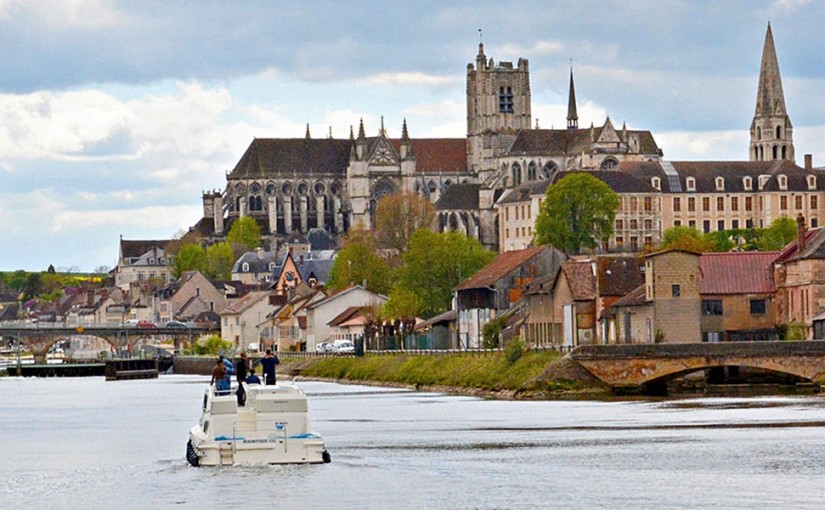
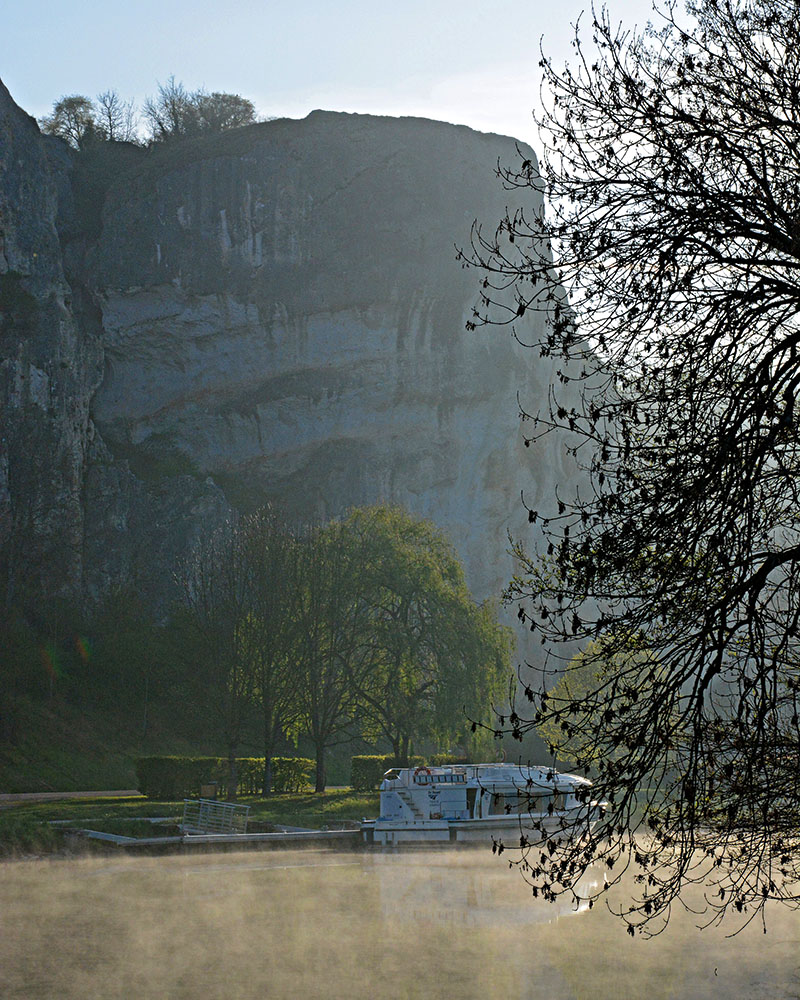
We’re deep into a self-sail boat trip along the Yonne river and Canal du Nivernais, twin – sometimes conjoined – waterways wending their way through the Bourgogne and forming an umbilicus between the Loire and Seine valleys. Things have been going smoothly so far, almost too smoothly – a revolution will liven things up nicely. So long as no one gets keelhauled or guillotined.
Potential insurgencies aside, this is slow travel at its best. It’s barefoot boating for those who want to explore the countryside, villages and vineyards of inland Europe, rather than the coast; a travel experience for people who love boats, but can’t bear the thought of being a passive passenger on a clinically planned cruise.
As captain of your own craft, you can choose your crew, explore at your own pace, stop as often or as little as you like, and there’s no need to unpack and repack gear at every port of call. It’s like having a floating campervan, except a whole lot cooler.