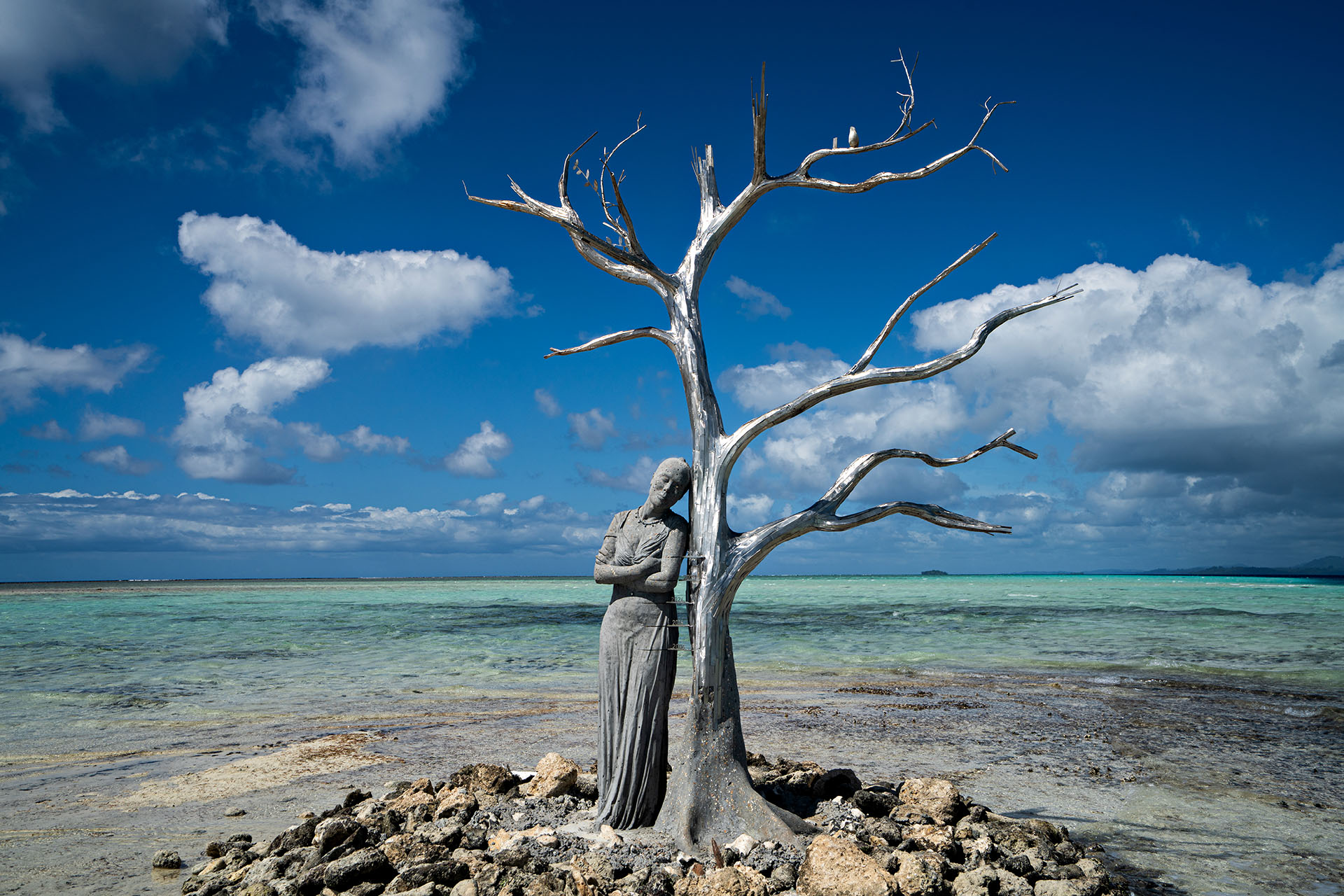
Award-winning environmental artist Jason deCaires Taylor, widely regarded as the pioneer of the underwater sculpture movement, has unveiled The Solomon Siren: a striking new installation that blends art, conservation and one of the country’s most important climate stories.
Located in one of the world’s most remote corners of the Pacific, the sculpture tells the story of Solomon Islander Gladys Habu Bartlett, whose ancestral home on Kale Island was gradually claimed by rising sea levels. Once spanning around 50,000 square metres, the island has now disappeared beneath the ocean, making the artwork both a memorial and a powerful reminder of the realities facing many Pacific communities.
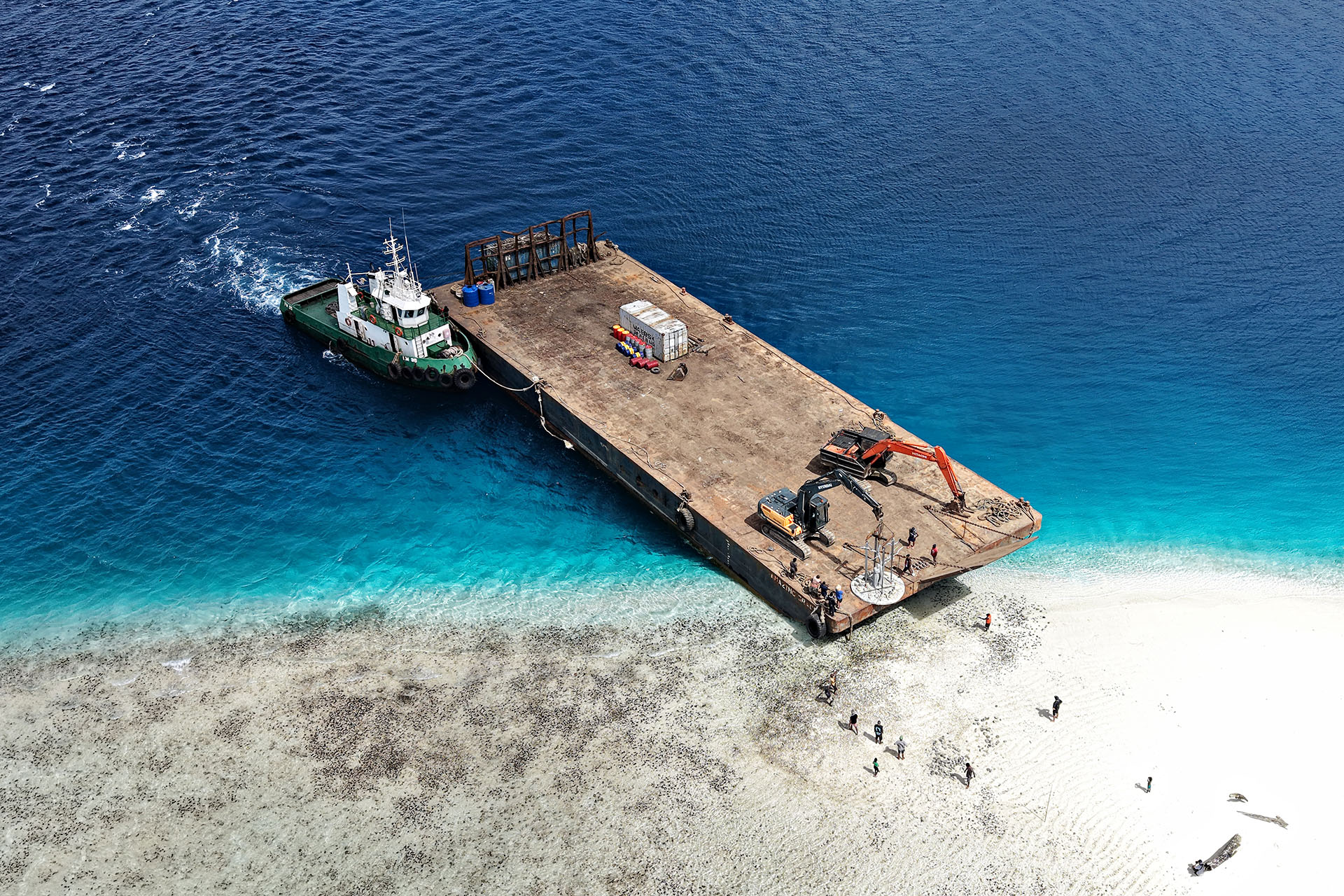
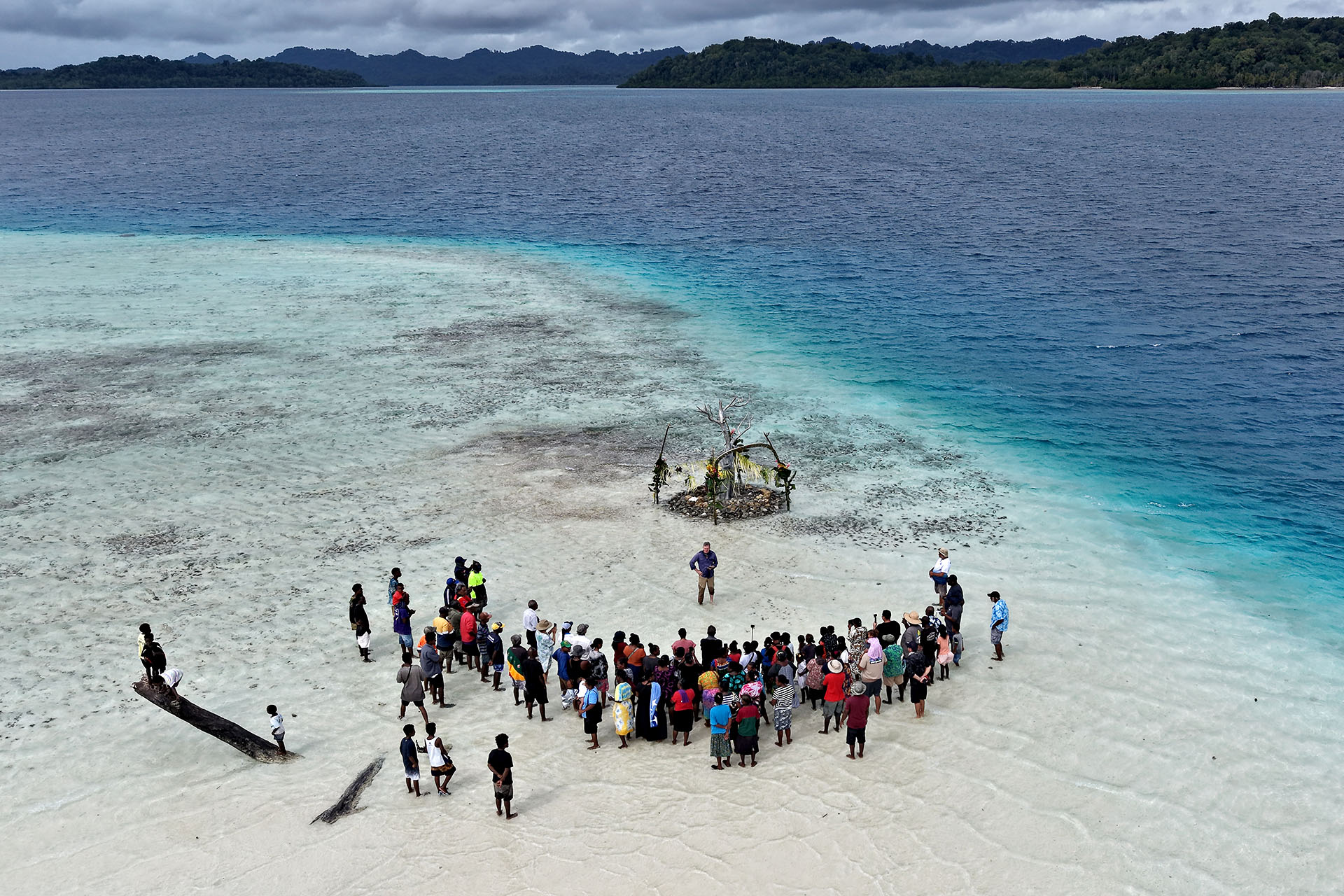
Rather than sitting behind ropes in a gallery, The Solomon Siren has been designed to become part of its environment. Installed in the intertidal zone, the life-sized sculpture will gradually transform into a living reef as corals, algae and marine life colonise its textured base, while the stainless-steel tree provides a resting place for seabirds above the waterline.
Dates carved into the sculpture trace Kale Island’s disappearance.
Visitors who experience the installation won’t simply be looking at a piece of public art. They’ll be witnessing a story that continues to evolve with every passing year. Dates carved into the sculpture trace Kale Island’s disappearance and project into the future, quietly illustrating the ongoing rise of sea levels across the region.
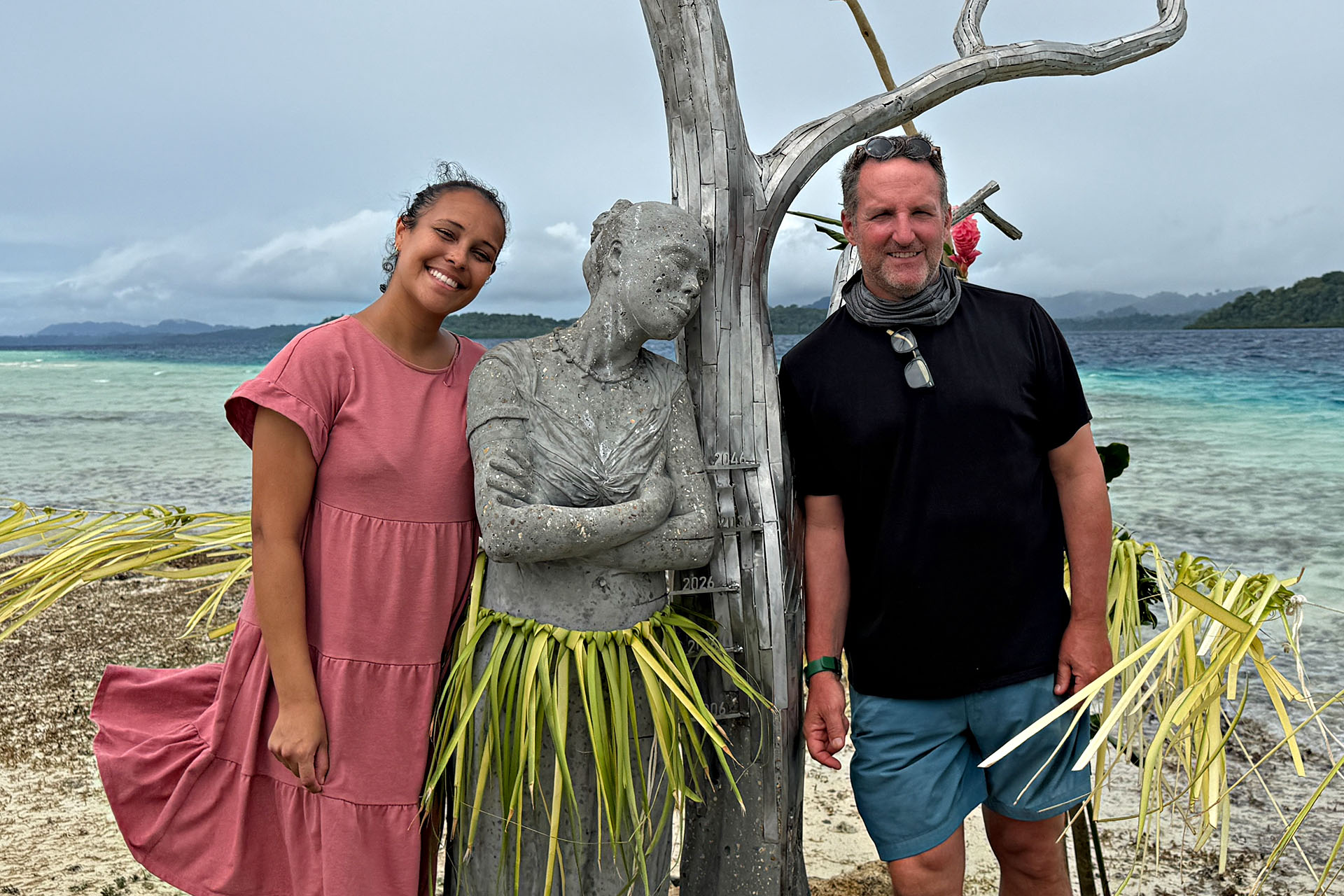
Created in partnership with local landowners and communities, The Solomon Siren adds another compelling reason to explore the Solomon Islands beyond its world-famous diving, WWII history and untouched reefs. It’s an experience that lingers long after you’ve surfaced.
Share >




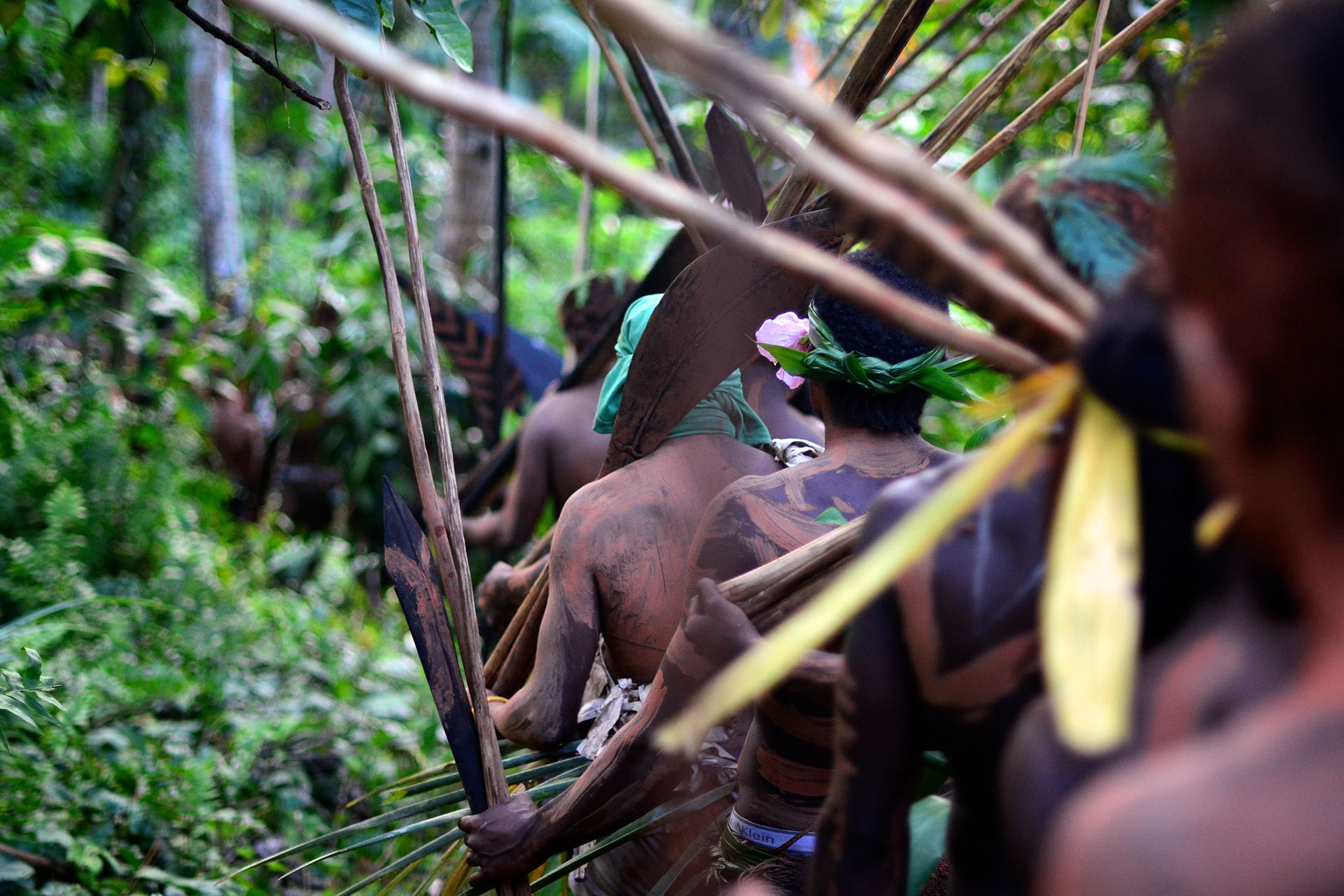
Tom Perry avoids being skewered at a festival in the Solomon Islands that celebrates sorting out problems the old-fashioned way.
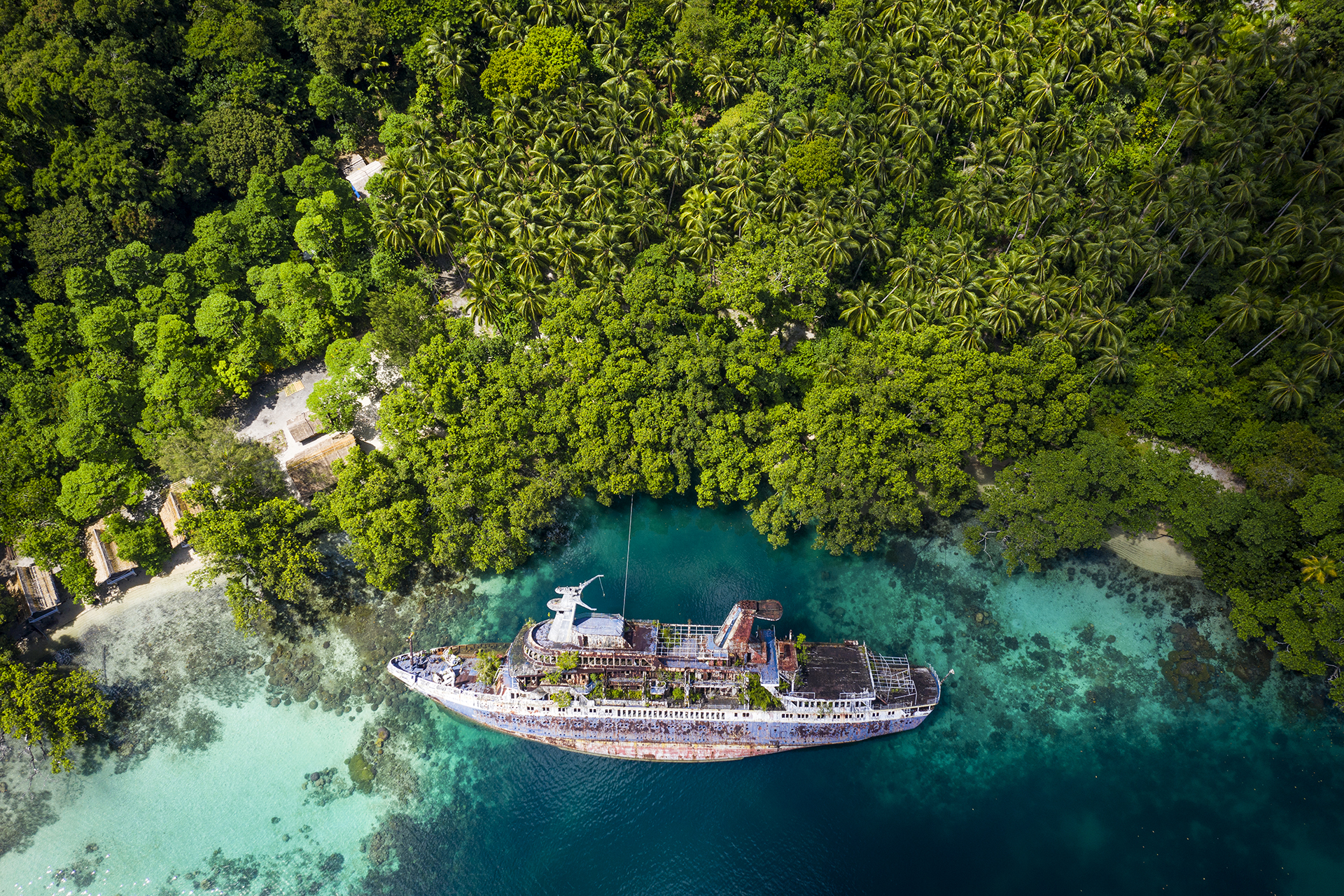
Finding solace in the Solomon Islands is an easy task on a new cruise that combines history, nature and culture.

You don’t book Oravae Cottage. You disappear to it.