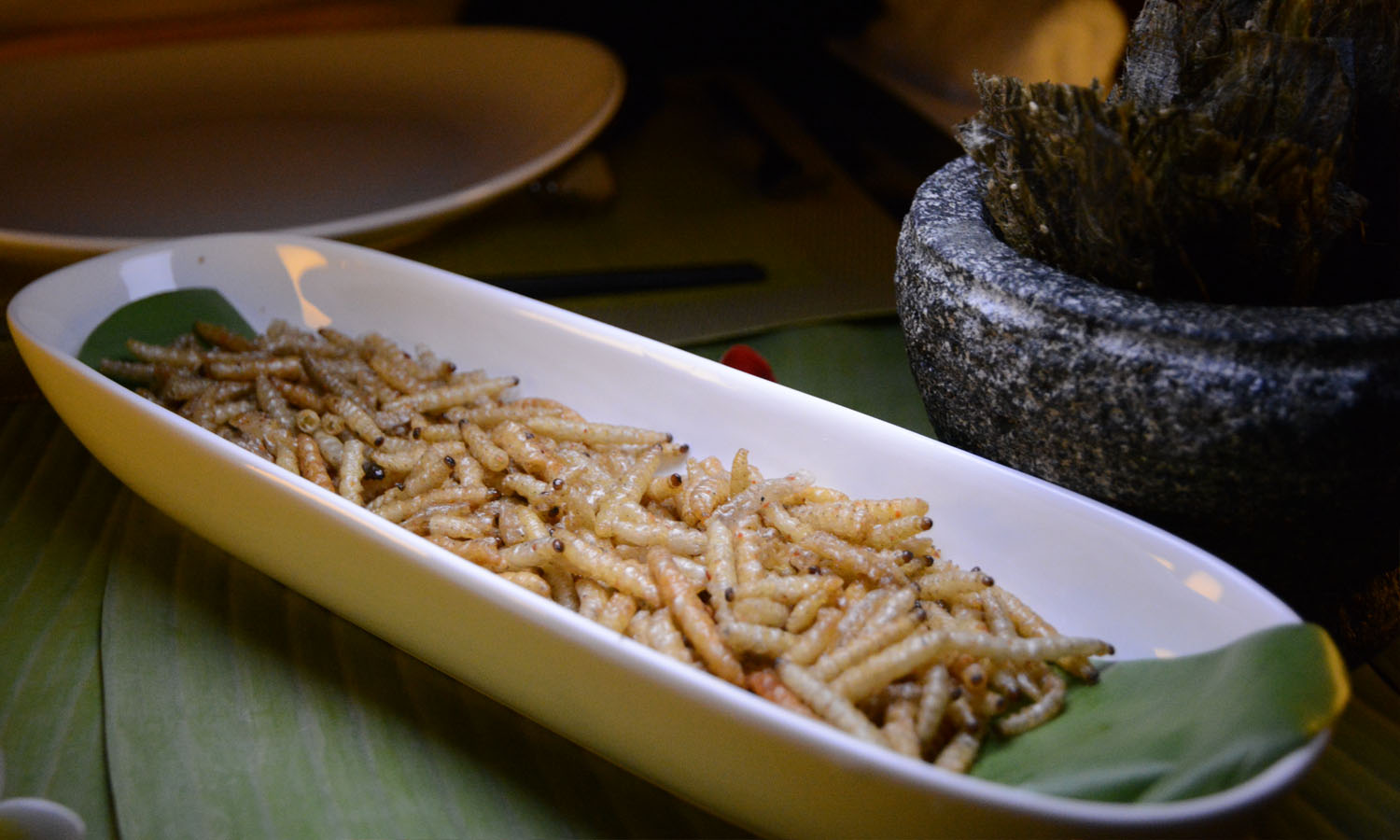
Bulging eyes plead for mercy. I’ve caught my first ever bamboo worm in the trap of my chopsticks. Fried into crispy waifs, these critters are the Chinese version of beer nuts. I pause, surveying its lifeless body, and pluck up the courage gnash off its head.
With bugs teeming in the humidity, it’s no surprise these protein-packed slippery suckers have wound up in sizzling oil and on the plates of hungry Yunnanese.
I pluck my next victim from the pile. Its skin crunches under my teeth, leaving just an empty husk. I wash it down with a swig of Kingstar. This amateur foodie has arrived in the real China.
Ditching greasy memories of sweet and sour pork and noodles slick in cardboard boxes, I find myself in Xishuangbanna in the south of the Yunnan Province. Far from Guangzhou and its sugar-swamped Cantonese cuisine, China’s so-called utopia is a land where salt and sour reign supreme.
Home to the Dai people, Xishuangbanna lures Chinese tourists with its muggy climate and the promise of elephants romping through tropical rainforest. To foreigners though, this ‘Amazon of the East’ remains a little-known lick of land, dipping between Myanmar and Laos.
Keen to sink my teeth into the local culture, I join a cooking class run by Mi Wei An, the head Dai chef at Anantara Xishuangbanna Resort & Spa. Like any culinary journey, the class starts at the source: the local market in Menglun. Mi Wei An grew up nearby, learning to make traditional food with her neighbours before Anantara persuaded her to nourish their guests.
At the market we exchange faded cash for a handful of yangmei, Chinese strawberries the size of lychees, with skin like a cat’s tongue. I scalp a rambutan, rubbing its waxy hair between my fingers as I munch on the translucent flesh.
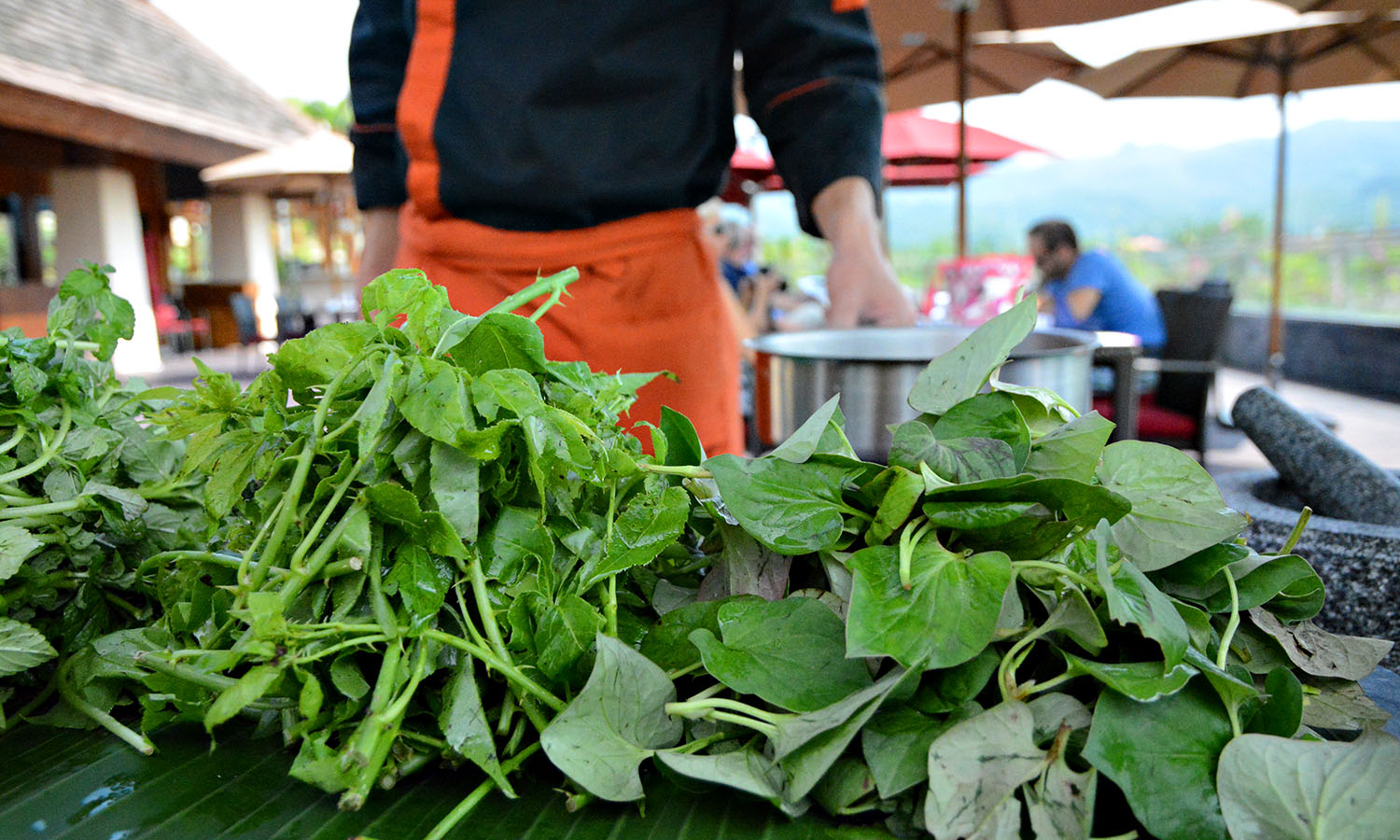
“Without herbs there is no Dai food,” a cook translates, while Mi Wei An describes the local fare. They point out a tangle of fragrant herbs on a table next to bulging melons and vegetables with tongue-twisting names.
The Dai minority is one of 56 recognised ethnic groups in China, and Mi Wei An explains that there are three types of Dai, each linked to their local environment. “There’s one that’s very close to the Han people, the main Chinese, and then another Dai lives in the mountain,” she says. This second group is known as the Huayao Dai. Our chef hails from the third: the Shui Dai, or Water Dai. “They’re living very closely beside the water, the river.”
The prominence of water spills into their cuisine. My first Dai dish was strewn with moss plucked from the river, dried and pounded into sheets and then barbecued. But I can’t see any of this popular and surprisingly tasty snack at the market.
Chatter wafts behind loaves of pig’s blood and men hack at meat, their cleavers thumping into wood. A butcher heaves pork belly onto a metal dish and I salivate remembering the morsels I ate in Guangzhou. The best pork belly is said to have five layers of alternating flesh and fat topped with crispy skin. The Cantonese dunk theirs in sugar – a finale our chef would dismiss with a grimace.
I pass a flock of leathery birds, gutted, splayed and skewered. With heads and legs still intact, they look like prostrate bats. At the next stall I paw a parcel of glutinous rice. Wrapped in banana leaf, the patty is one of the few sweets made by the locals. Our guide tells me they’re traditionally eaten at Dai New Year in April. After a nibble I suspect this bundle’s hung around since last year’s celebrations.
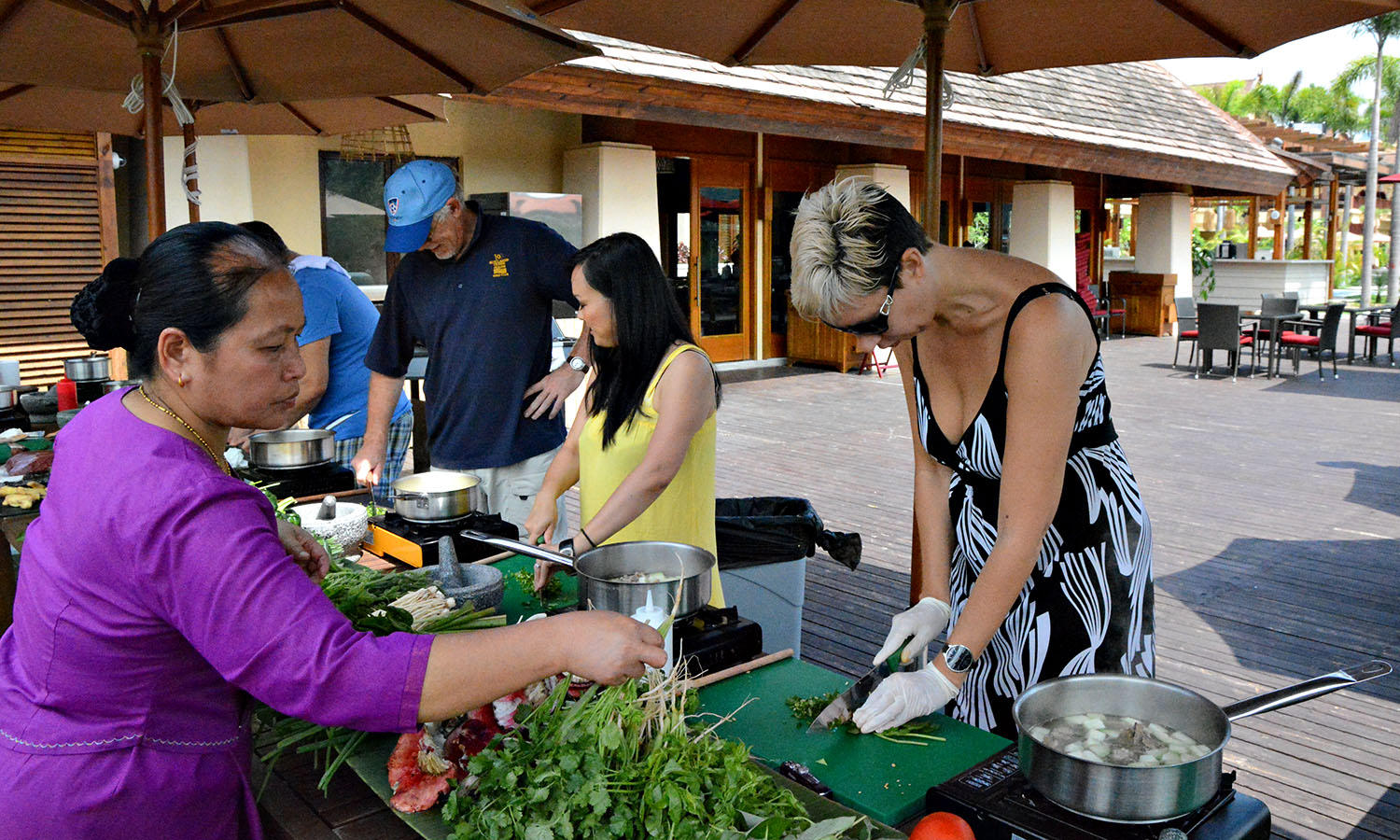
Back at the hotel, we muster at our cooking stations overlooking the rust-coloured Lancang River, the northern arm of the Mekong, and a fitting backdrop for a Water Dai feast. Fishermen wade in the shallows as we set to work.
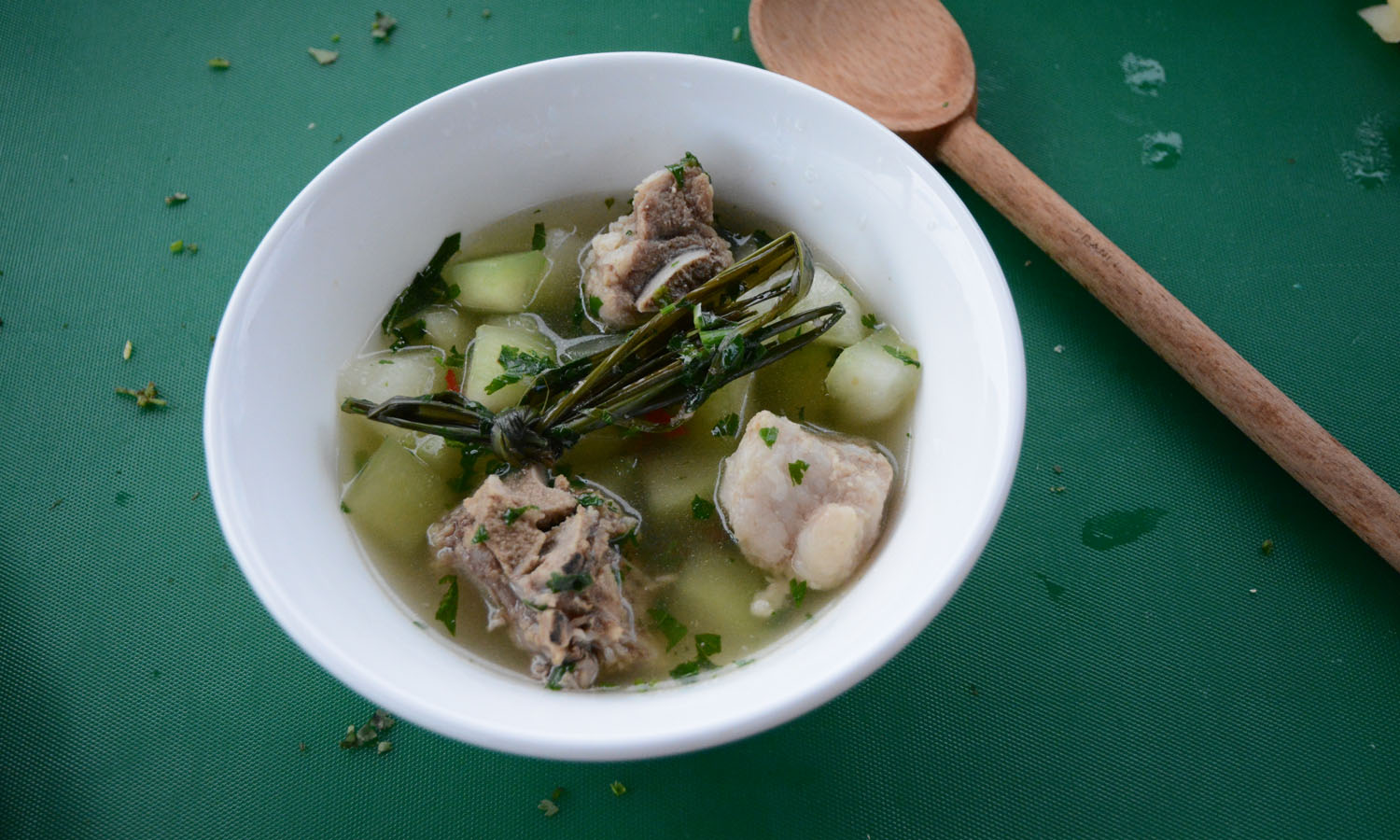
For entrée we prepare a pork rib, basil and winter melon broth. My shoulders tinge pink as I dart between shaded stovetops, comparing the clarity of each broth and the texture of the melon. Our concoctions pale compared to Mi Wei An’s, and as she samples my soup she suggests shovelling in more salt than I’d normally dare ingest.
Locals source their salt from a village in the mountains. Although they use a lot, it never goes to waste, Mi Wei An says as she tosses a pinch into her pot.
Next we whip up a shredded chicken salad with tongue-numbing basil. The meat is bland and dry until we crush seasoned lime juice into the flesh with our fists. The battered dish croons with flavour.
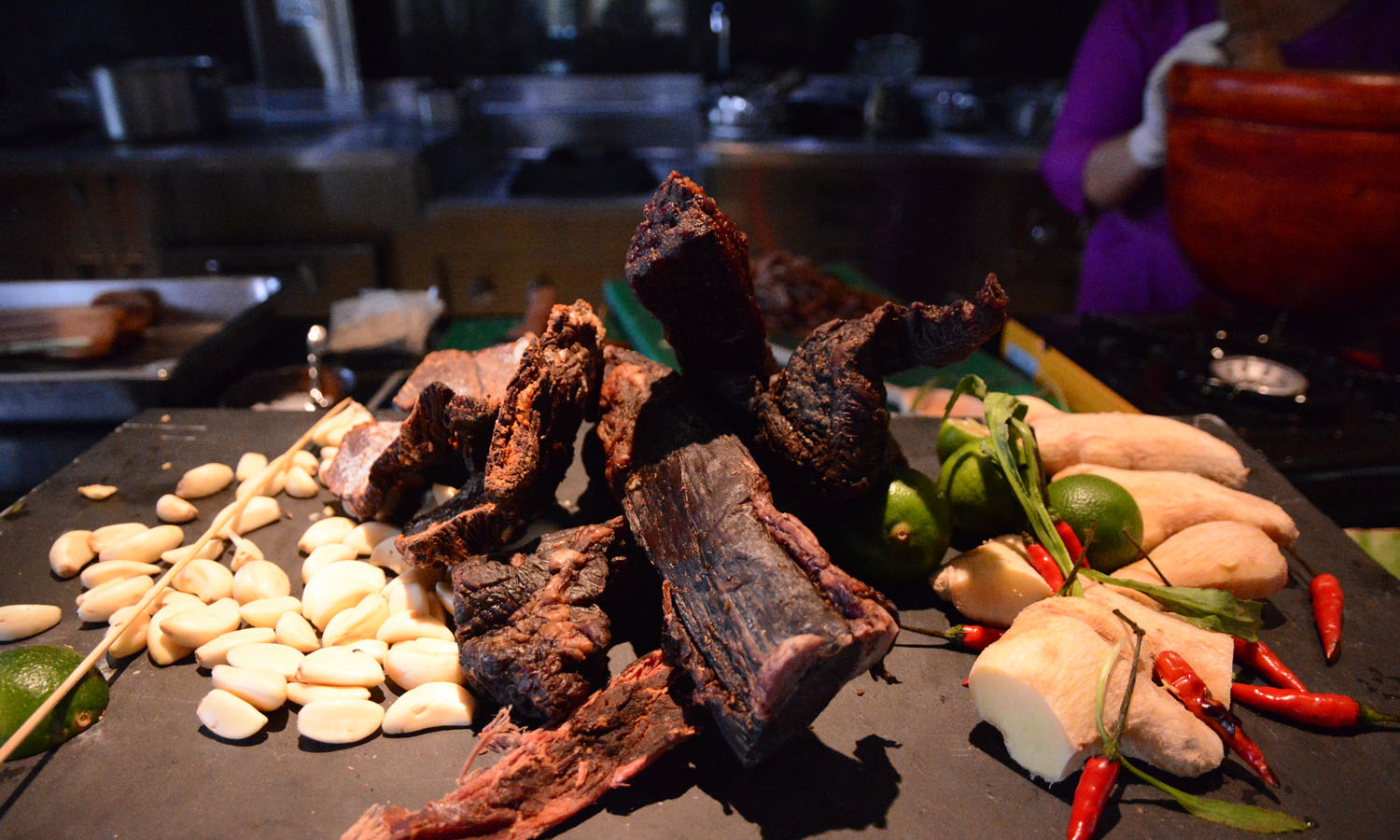
We barbecue long, firm eggplants, the purple skin morphing to yellow then golden brown. I gobble the creamy flesh mixed with mint, coriander, chilli and garlic. Strips of ganba (dried beef) hit the flames before we marry the salted, slow-dried rump with a blend of local herbs in a marathon mortar and pestle mash.
Preoccupied with the first four courses, I’m blind to the brewing clouds. As rain lashes the deck, the umbrellas offer little protection from the plump, tropical drops. It’s no wonder Xishuangbanna claims China’s crown for biodiversity. Lightning slices into the botanical gardens across the river and cooks swarm, whisking chillies, chopping boards and stoves inside.
This warm, volatile climate keeps the region alive. Each family grows herbs outside their bamboo stilt houses, and many forage for honey and the mushrooms that thrive in the hills. “If we get snow here, we get hungry,” a local explains. “No food.”
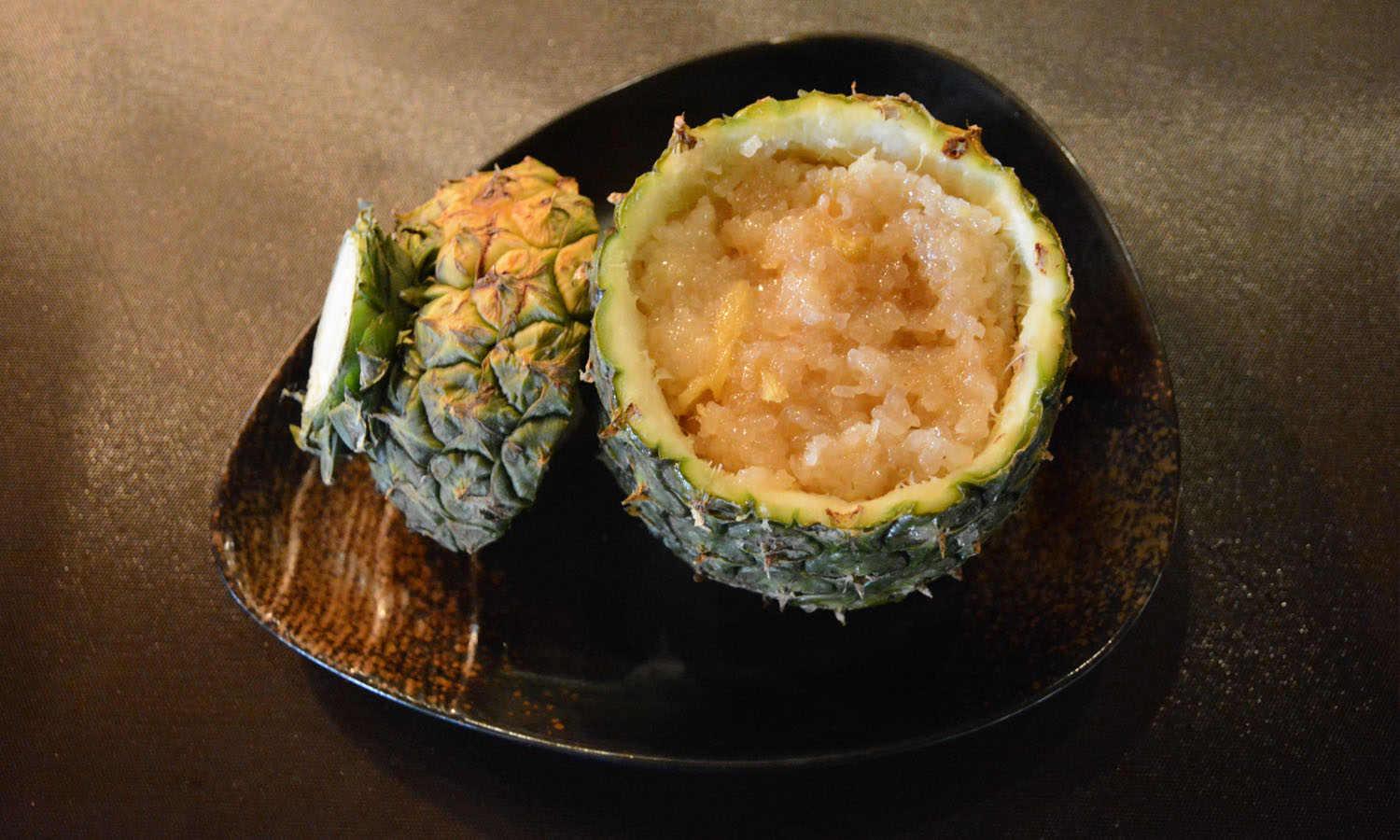
In true Dai style, our feast shuns sugar bar the boluo fan, glutinous rice with clandestine slithers of sweet pineapple, a staple dish of Dai gastronomy, which Mi Wei An serves as a delicious side to stir-fried lemongrass beef and banana flower salad.
Later I head into town for a late-night snack. A round of baijiu (white liquor) melts some space in my stomach and I graze from the street stalls that have sprung up at the entrance of the market. I chew a curl of fried cowhide and raise my beer with a group of local girls, who, between giggles, welcome us to Menlung. Xishuangbanna is a gourmet’s paradise, and Dai food sure hits the sweet spot.
METHOD
Rinse the rice and soak it in water overnight. Strain rice and steam for 30–40 minutes, until cooked. Scoop the flesh from the pineapple with a spoon, leaving the skin as a bowl. Chop the pineapple meat, discarding the core. Mix the cooked rice, chopped pineapple and sugar together. Steam again for around 15 minutes. Fill the pineapple shell with the mixture, and serve.
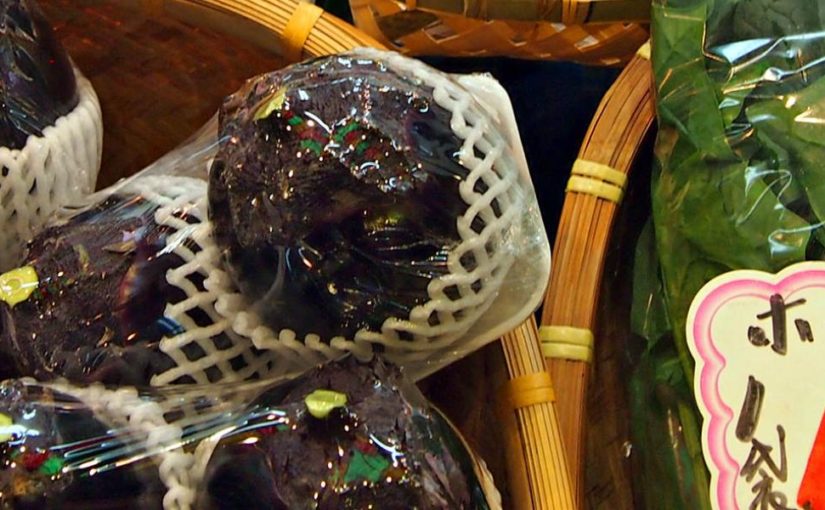
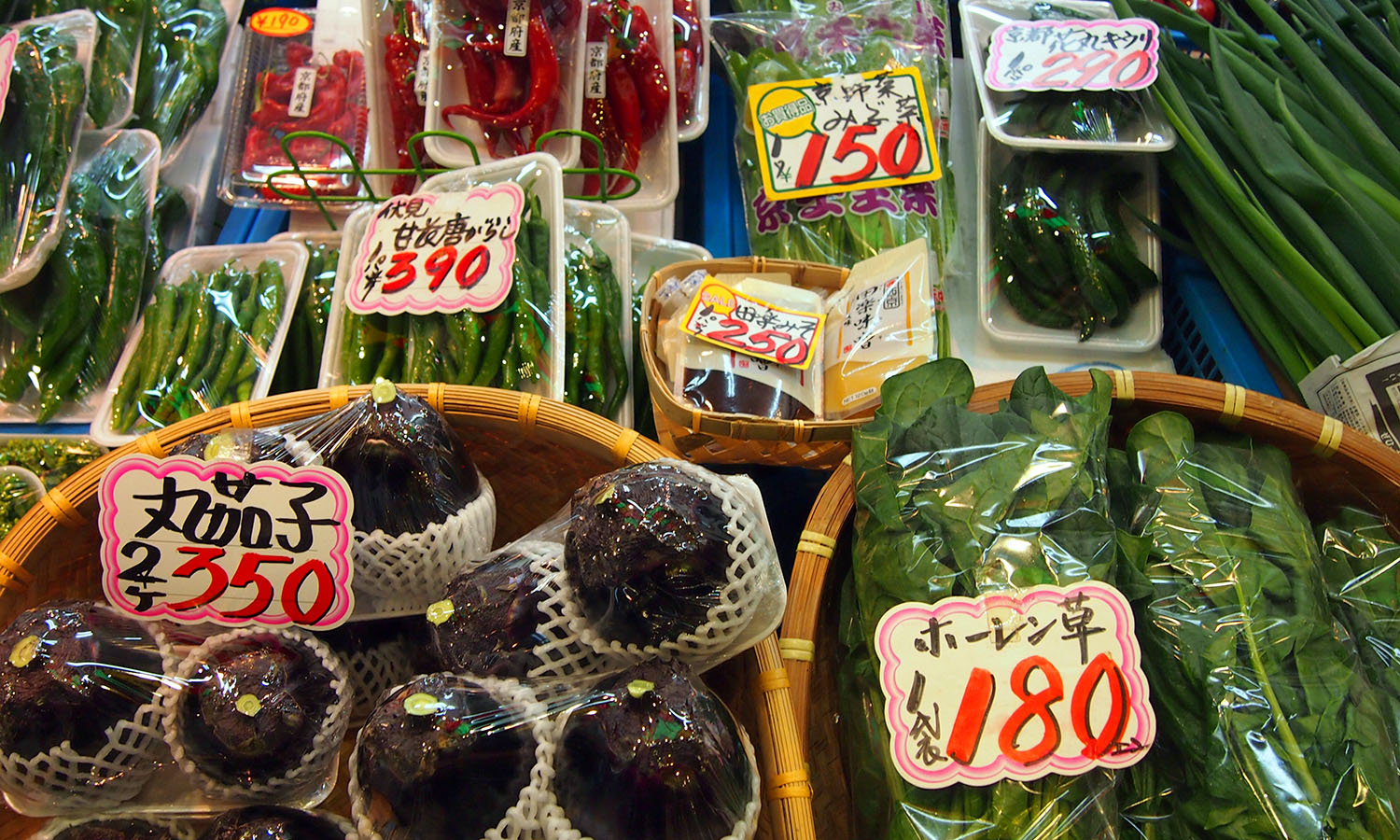
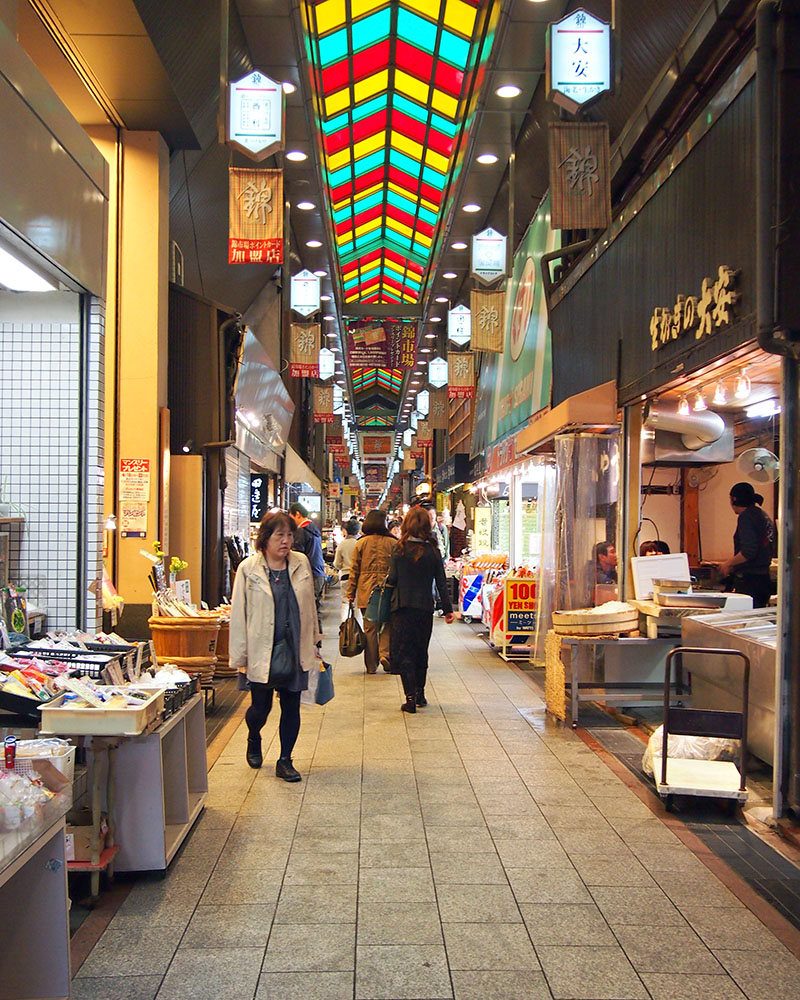
The neatly stacked shelves and colourful displays of Nishiki Market’s 126 shops and stalls inspire both curiosity and hunger. Although camera-clutching foreigners can be found wandering the 390-metre strip under the shelter of the checkered stained-glass roof, this is no tourist trap – it’s a functioning market packed with fresh, locally produced and procured goods, known by some as the ‘kitchen of Kyoto’.
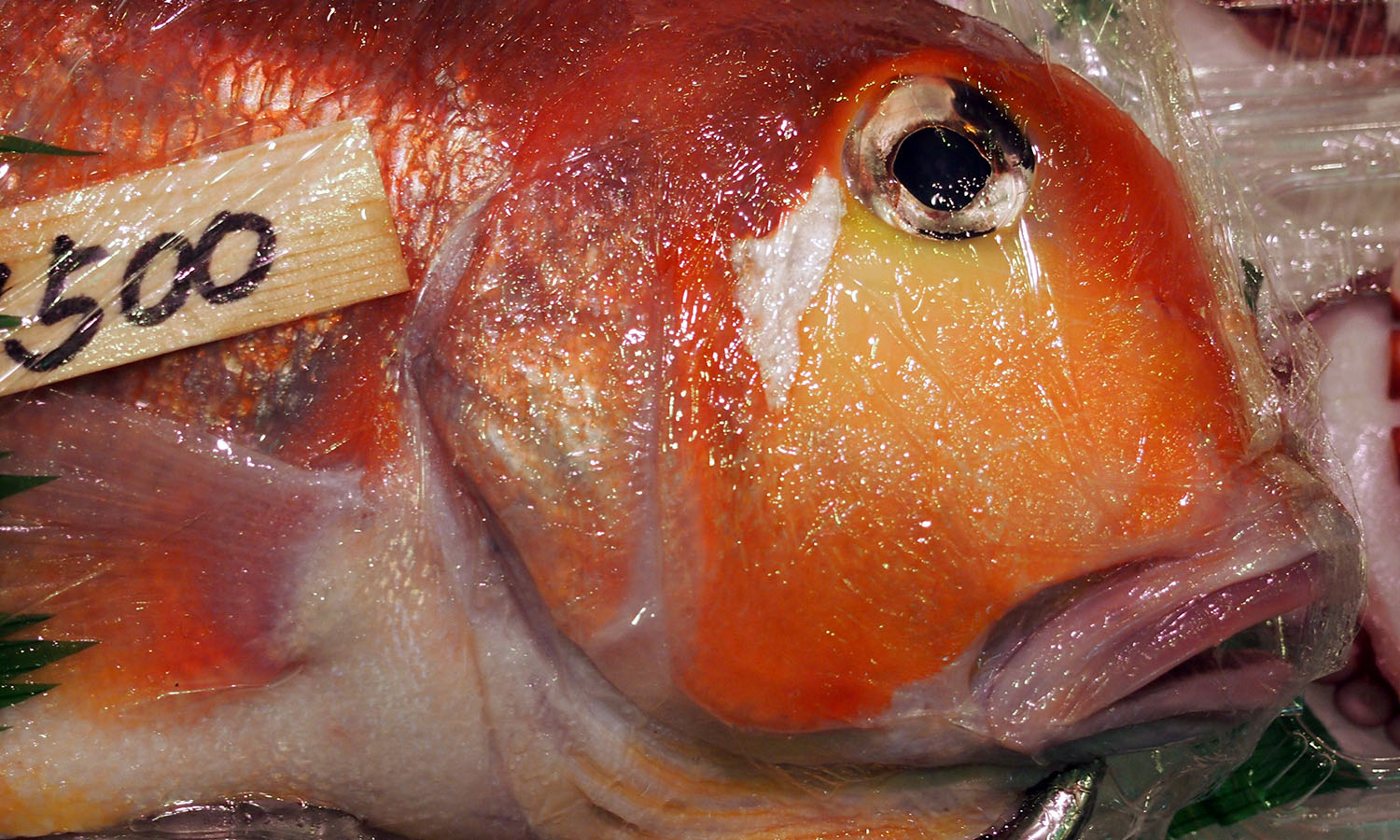
Glittering fish and gnarled molluscs are carefully laid out on beds of crushed ice, vast wooden barrels are filled with rice to one side and green tea on the other, and trays of crayon-bright sweets add blasts of colour to the scene. Less easy to identify are the yellow-smeared bulbs crammed in wooden crates, or the wood-like sticks stacked side by side. Although its name literally means ‘brocade market’, Nishiki actually started off as a fish market, with the first store opening as early as 1311 and others soon springing up around it. You can still find an incredible array of seafood here, but there are plenty of other items also on sale, as well as several small restaurants close at hand, serving dishes that are just as exciting as the raw ingredients.
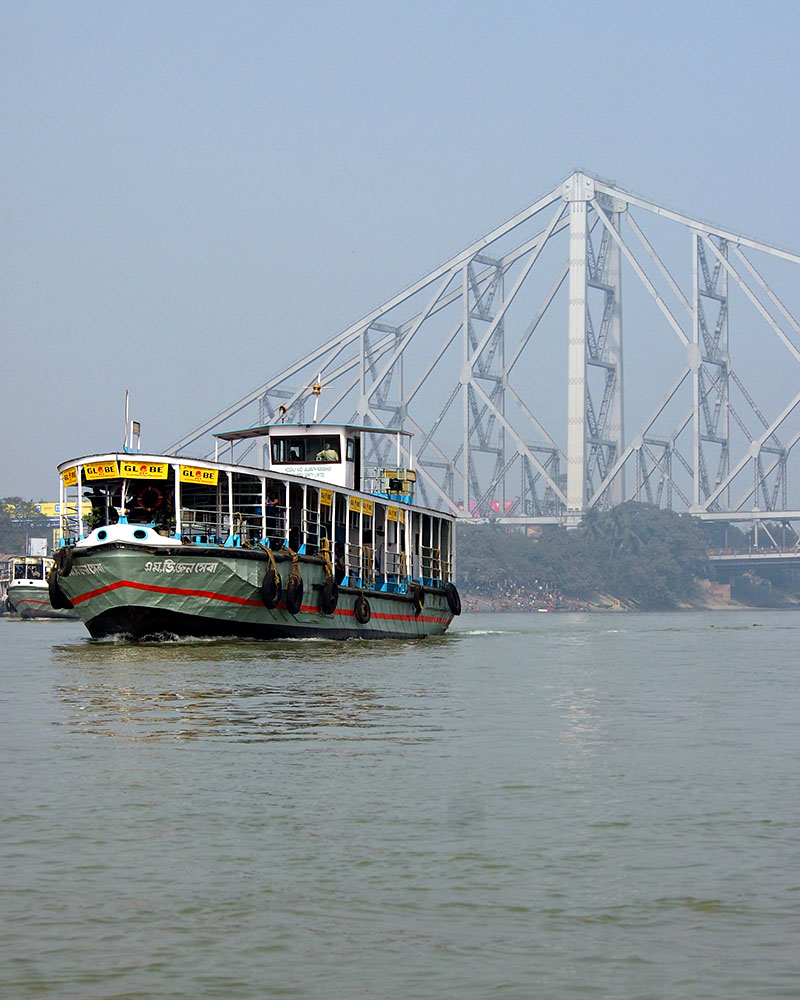
The sacred River Ganges has long been a massive tourist drawcard because of its immense significance – both spiritual and practical – to the people who live along it. Fittingly, the vast majority of visitors keen to have an encounter with the river god tend to head to the city of Varanasi to glimpse its grey waters and the throng that surrounds it. But this arm of the river, called the Hooghly, is just as fascinating.
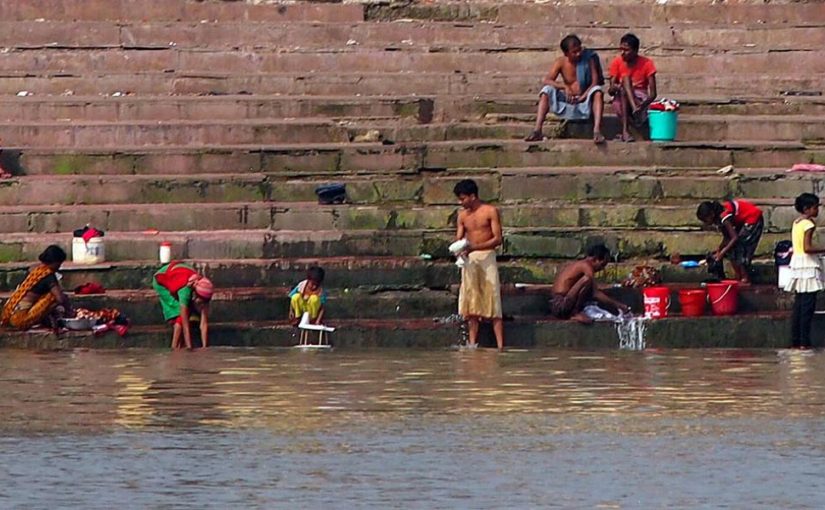
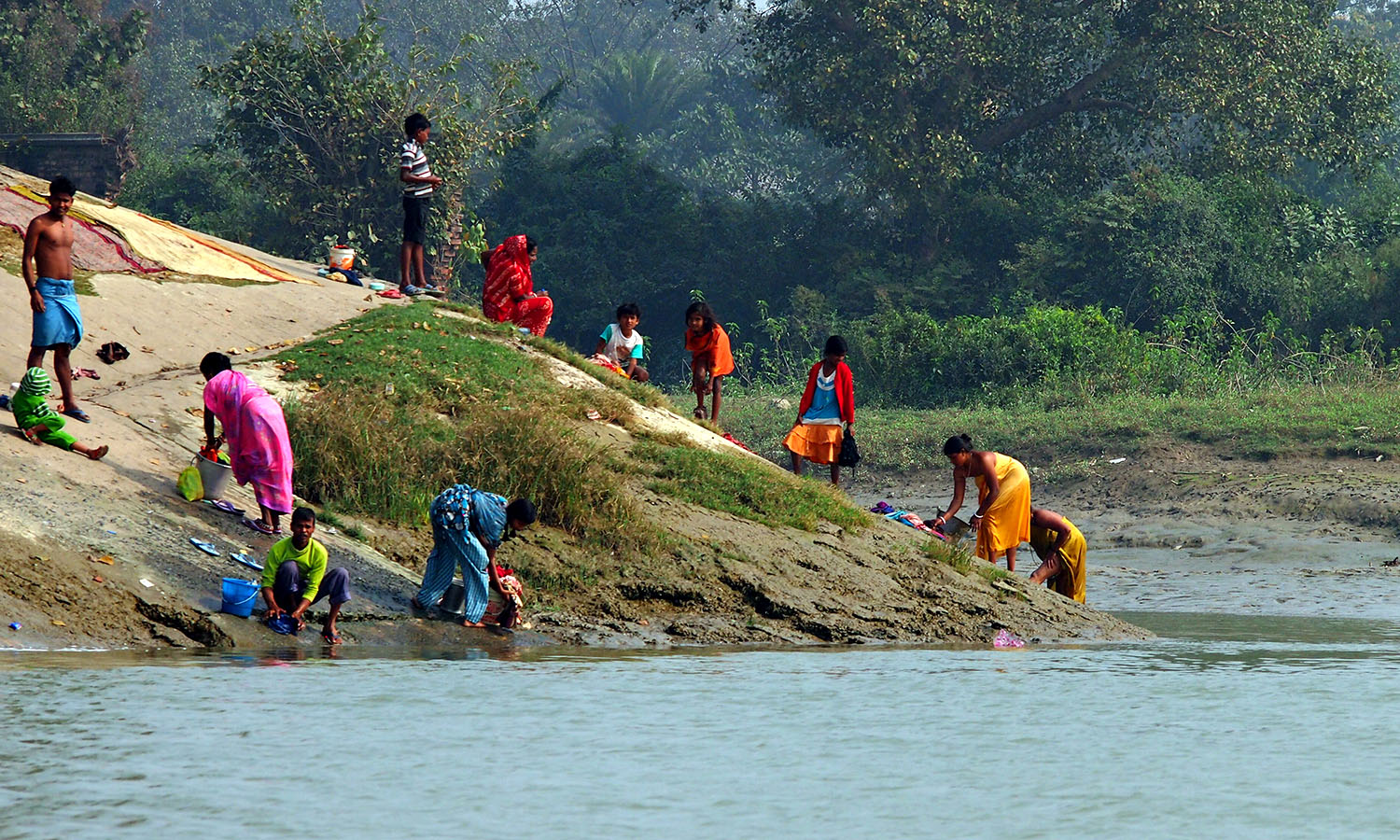
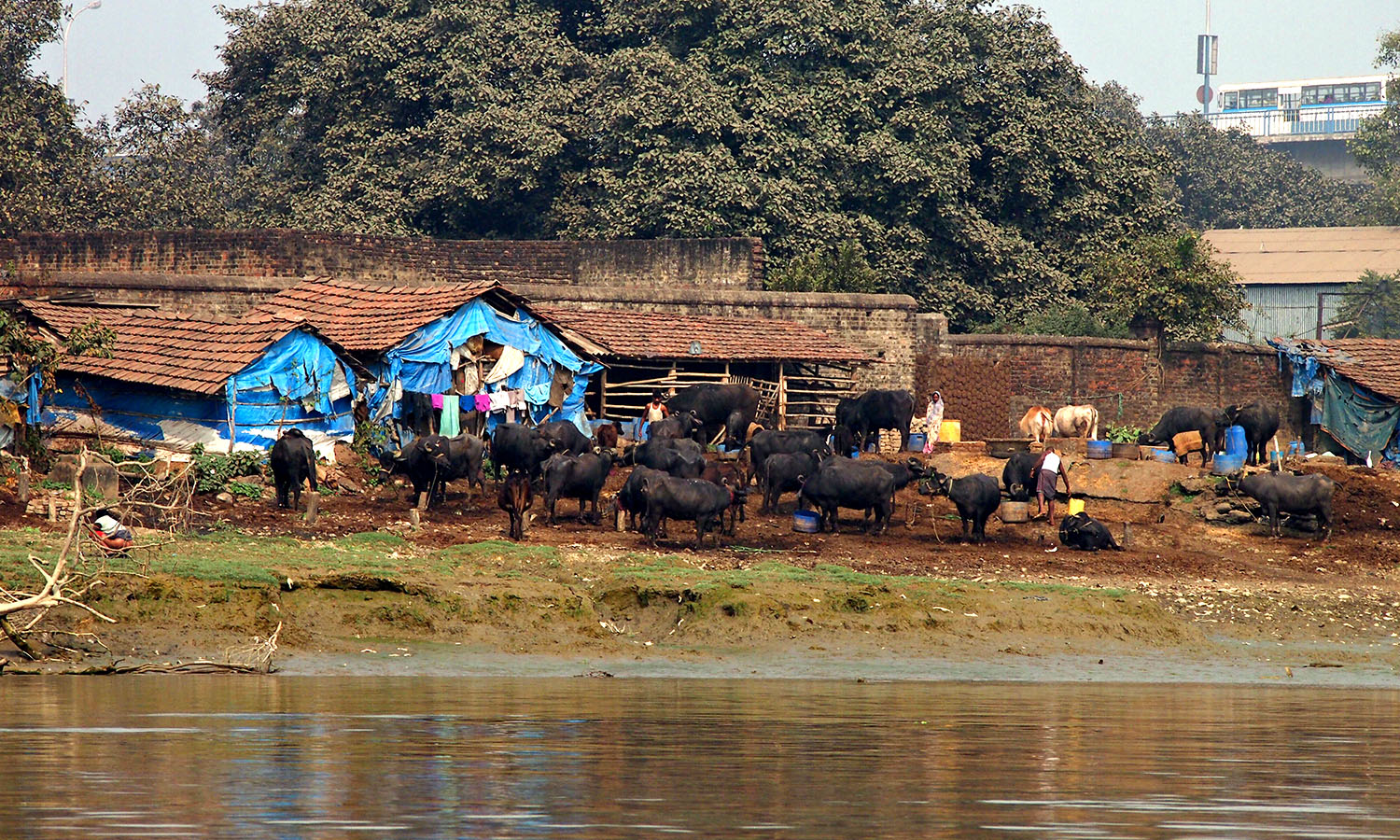
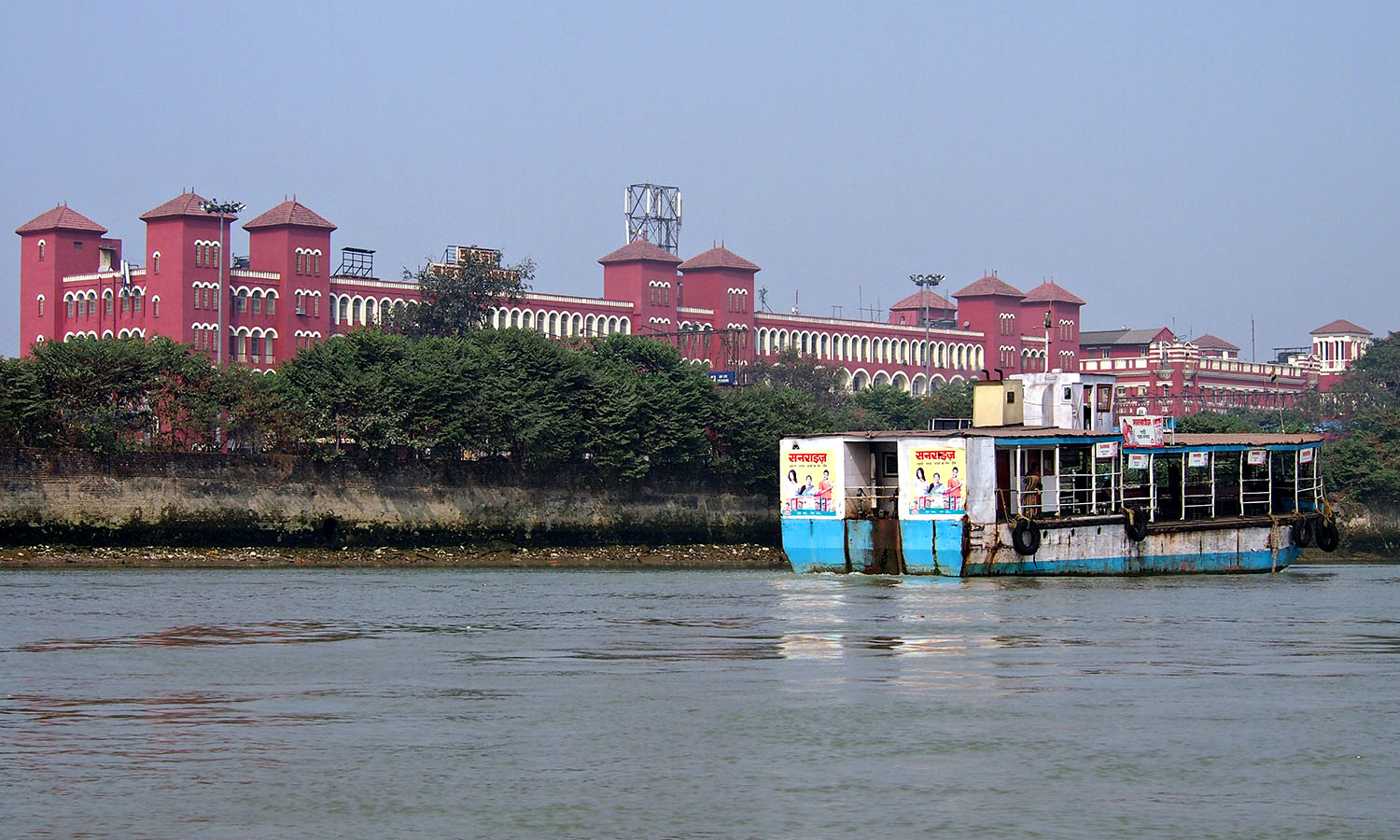
Take a cruise along the water and pray for a sighting of one of the river’s resident Gangetic dolphins as you take in the crumbling edifices of the British Raj, the Howrah Bridge, the funereal burning ghats and temples such as the Dakshineswar Kali Temple. You can also take in some fascinating scenes of daily life – the vibrant fabrics laid out to dry on the river banks, the bullocks wading through the khaki shallows or the mischievous children splashing their way through bath time.
It’s 2am and we’re on a breezy hotel balcony overlooking the South China Sea. While many people have long entered the land of dreams, Niall Macaulay is still winding down. The sound engineer has just finished another long day at the Rainforest World Music Festival in Sarawak, Malaysia, so it’s time for a Tiger beer and a relaxed debrief with his wife, photographer Maria Bakkalapulo, who is checking the images she shot from the photo pit. She’s got a good one of a Korean dancer mid-cartwheel.
Macaulay’s home base is Glasgow, but it’s not somewhere he and Bakkalapulo spend a lot of time. Last week they were trekking through sleet in the Scottish Highlands. This week they’re in the Borneo rainforest. Another day, another continent.
For the past 10 years, Macaulay has been the live mix engineer with folk bank Shooglenifty, worked for the BBC and designed and overseen music events in the UK, Canada, Asia, Europe, Russia, Cuba, the USA and South Africa. He’s recorded live concerts and produced albums for the likes of Tuvan throat singers and English folk artists. He met Bakkalapulo in the rainforest – at this very festival, in fact – back in 2005. “Maria was working for [US radio station] NPR, seeking to plug in her Marantz recorder to grab some of the show while I was mixing the sound,” explains Macaulay. “We clicked, and kept in touch online. After a year in separate hemispheres, I finally travelled to Bali where we had our first free time together.” Journalist and ethno-musicologist Bakkalapulo was house-sitting a veritable Shangri-La there – infinity pool, moat, staff, the works.
The pair married five years later, and has been on the road almost constantly. The lack of routine and sometimes challenging assignments have helped them refine a travel routine – well, almost. “We tend to leave a trail of items behind us, not all of which we manage to recover,” says Macaulay. “We store bags of cables, extra shoes, toiletries, motorbike helmets, coffee makers and boogie boards in various places awaiting our next visit. Our journalism work can be fast-moving and unpredictable, and the kit bag for each event or interview can vary wildly. Keeping track is difficult and long-haul flights can make you incredibly fuzzy-headed. Last year I left a brand new laptop on a self check-in machine in Heathrow. Thankfully, it was still there 10 minutes later when I noticed it missing.”
Macaulay calculates he has clocked up 110,000 kilometres in the air in the past year (he offsets the carbon emissions through Climate Care), but as any traveller is well aware, you can’t fly everywhere. “We had a recent experience with a Jakarta taxi driver falling asleep at the wheel and running into the kerb, thankfully going too slowly to cause serious whiplash,” Macaulay recalls. “We once also had to abandon our tiny car that couldn’t make it up the steep sides of Mount Kinabalu. And Maria was practically dragged up the side of Bali’s Mount Batur by an extremely fit Coca-Cola vendor, if that counts as a mode of transport.”
Between work gigs, Macaulay takes time for inspiring side trips. In Gunung Mulu National Park near Sarawak it was treetop walks, exploring caves and observing orangutans, insects, bats and birds. On the nearby Talang Talang Islands, he and Bakkalapulo participated in the Turtle Conservation Project. “Having friends in many countries gives you an off-the-beaten-track experience,” he says. “The general chaos of humanity rushing past can be overwhelming; the unpredictable is always happening. Sitting for hours waiting to see teenage girls in a trance balancing on 20-foot-high poles one day, buying overpriced cocktails at a swanky city jazz club to fit in with the crowd the next. We are truly blessed with a wealth of experiences.”
Often, though, these don’t happen spontaneously. You have to be open to all the possibilities on offer. “Follow your own nose,” advises Macaulay. “Forget guidebooks. The time spent reading them is better spent asking a local. You’ll likely find out more and faster, and make a friend in the process. You never quite know who you’ll meet or what connection they’ll lead you to. Be kind and polite to everyone along your way and tip good service. Your taxi driver or bellboy could one day be your prime ‘fixer’ to meet a local celebrity or find a great restaurant.”
As well as their independent projects, Macaulay and Bakkalapulo also work together on a number of assignments. In 2014, 10 years after the Indian Ocean tsunami that killed an estimated 275,000 people in Asia, more than half of them from the Sumatran province of Aceh, the couple completed a documentary about Aceh’s punk scene. Hard-line Sharia law had grown post-tsunami, with an ongoing crackdown driving punks, whose work includes social activism and fundraising for orphanages, further underground. During one interview, the filmmakers attracted the attention of police and military and were taken in for questioning. But it’s all in a day’s work.
Back at the rainforest festival the next day, artists dance and jam together for the finale. After final bows are taken, Macaulay sends Sister Sledge’s ‘We Are Family’ through the speakers. It’s become something of a tradition to play this song at the event’s end, and the punters cheer, embrace and dance on. What will be best about getting home to Scotland? “Not grovelling inside a suitcase to find things, cooking our own food and having reliable high-speed internet,” says Macaulay without hesitation. “After two weeks of that, the feet start to get itchy again.”
It’s a drag, it’s a bore, it’s really such a pity – to be looking at the board, not looking at the city,” laments Murray Head in the pop hit ‘One Night in Bangkok’ from the musical Chess.
Head’s hairstyle may have dated dramatically since the 1980s, but his words remain true – you’d be nuts to stay inside participating in longwinded board games for two when Bangkok is your evening’s playground. With the right strategy, you can negotiate your way by foot, ferry, taxi and skytrain back and forth across this great big busy city. Because, as the song goes, “One night in Bangkok and the world’s your oyster…”
6.00pm
Roll the dice and watch it land on WTF in Thong Lor. The moment you arrive at this retro-styled three-storey cafe, bar, restaurant and exhibition space you’ll know you’re off to a good start. There’s a relaxed vibe, delicious cocktails to try, poetry reading nights, upstairs gallery spaces, a dance floor and a screening room. The place was established only a few years ago as a creative social club aimed at exposing art to a broader public audience in an informal environment. The strategically chosen name stands for Wonderful Thai Friendships. You could easily spend a few hours in WTF or the whole evening exploring the bars and restaurants of Sukhumvit Road, but that’s not the aim of the game. On the way to the nearby skytrain, take a detour to Sukhumvit soi 38 for some sublime street food. WTF Café and Gallery 7 Sukhumvit soi 51, Watthana wtfbangkok.com
8.15pm
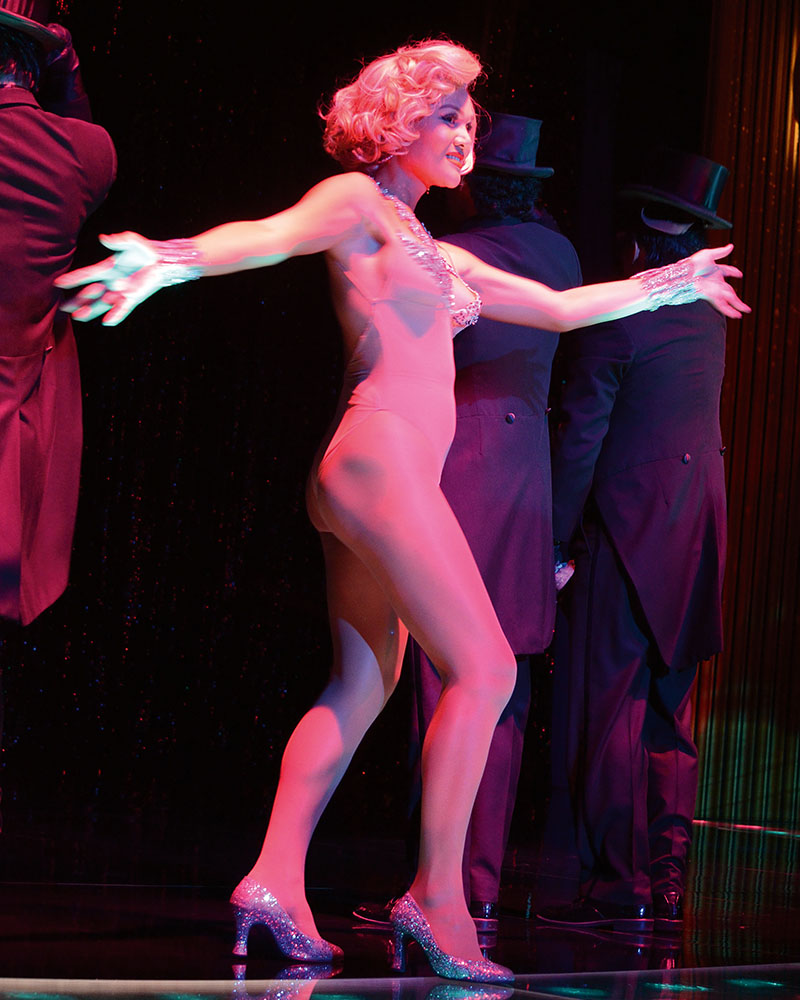
A visit to Bangkok without seeing ladyboys is like a game of Uno without wildcards, but it doesn’t have to involve supporting the country’s sex industry. Calypso’s good, cleanish fun cabaret can be found in the south of the city. Bangkok’s evening traffic is at its gridlocked peak between 5pm and 7pm and takes a while to subside, so avoid the roads and travel by skytrain and then free water shuttle down Chao Phraya River. Within a sea of Asian tourists you’ll be shown to your comfy red seat in the pseudo-swanky theatre and given a free drink. The show is cheesy, charming and fun, with everyone from a comic Carman Miranda to an absurdly luscious Marilyn Monroe. The stage is swimming with fishnets for ‘All That Jazz’, while ‘Blossom’s Blues’ is performed solo with nipples-popping-from-bustier gusto. Book ahead to save any unnecessary hanging around in the touristy wastelands of Riverside. Calypso Bangkok 2194 Charoenkrung 72-76 Rd, Prayakrai, Bangor Laem calypsocabaret.com Star-crossed lovers in the smoking room at Iron Fairies.
10.00pm
As soon as the show’s over, jump in a taxi and head back to the Thong Lor area for (fingers crossed) jazz at Iron Fairies. After Calypso, the scene could not be more different. This low-lit bar and burger joint is more a dream space than a drinking hole. Squeeze in past the band, a tableful of mythical metalwork figurines and a spiral metal staircase that winds up to nowhere past shelves full of jars labelled “fairy dust”. Order absinthe at the bar if you dare. Follow the staircase that leads to somewhere and find a secret entrance through a bookshelf into the smoking room. Inside it may be completely deserted, jam-packed and smoky, or you might interrupt a couple in the throes of negotiating the rules of their torrid weekend love affair. From wherever you make yourself comfortable, the Thai singer will sound like Frank Sinatra reincarnated. After the trumpet blows its final note at the stroke of 11, return to the street outside, blink a few times, pinch yourself and hail a cab. Iron Fairies 395 Sukhumvit soi 55, Watthana theironfairies.com
11.30pm
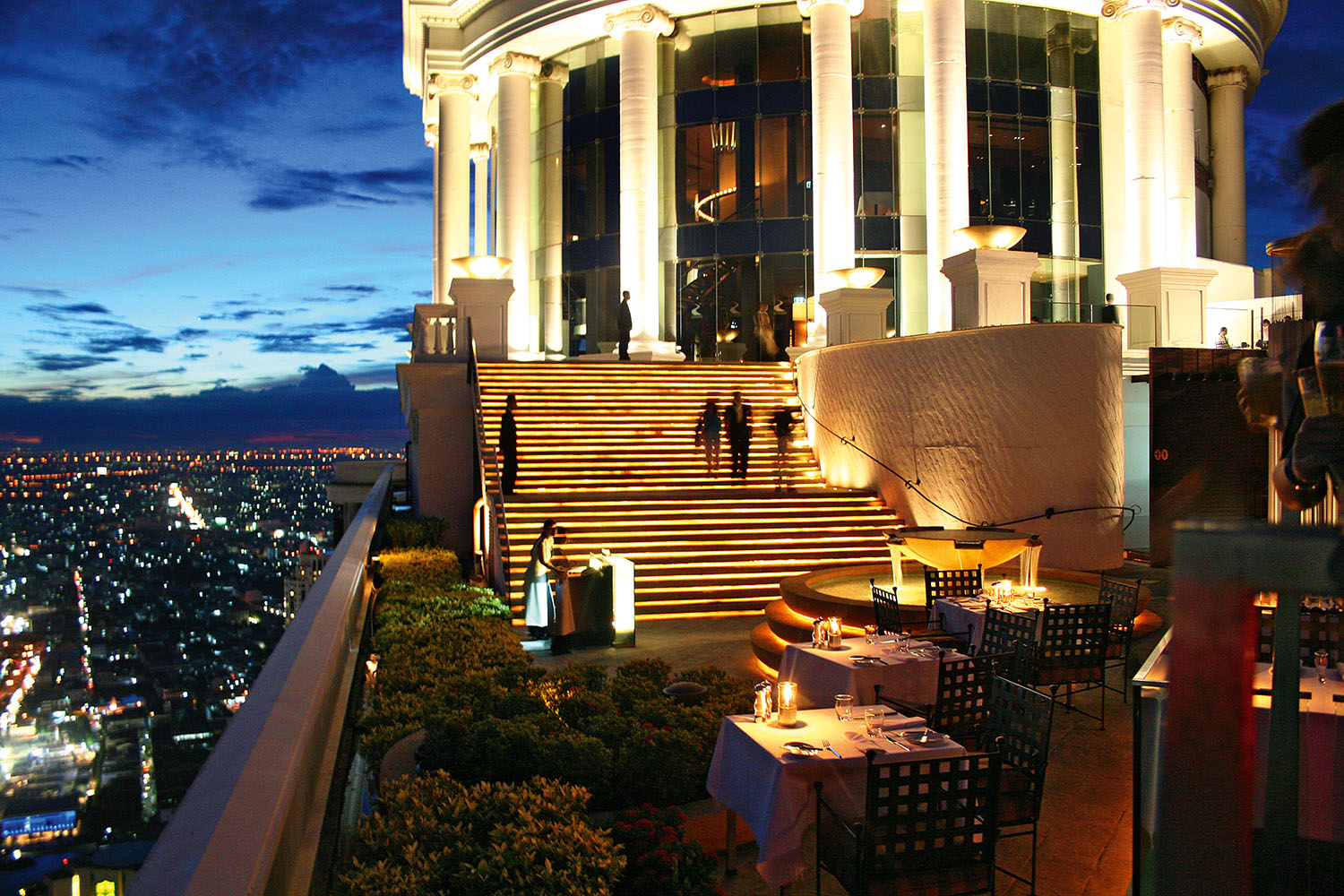
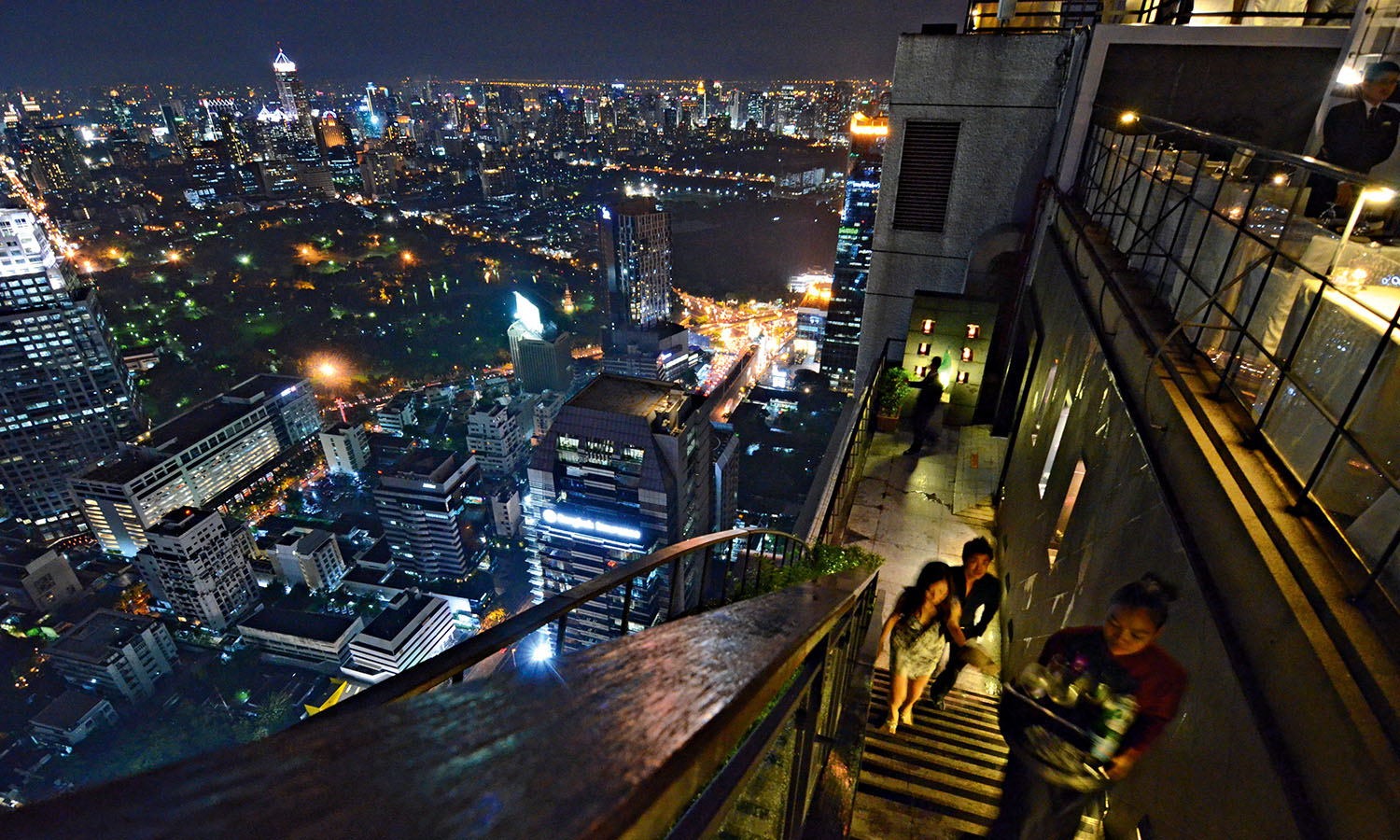
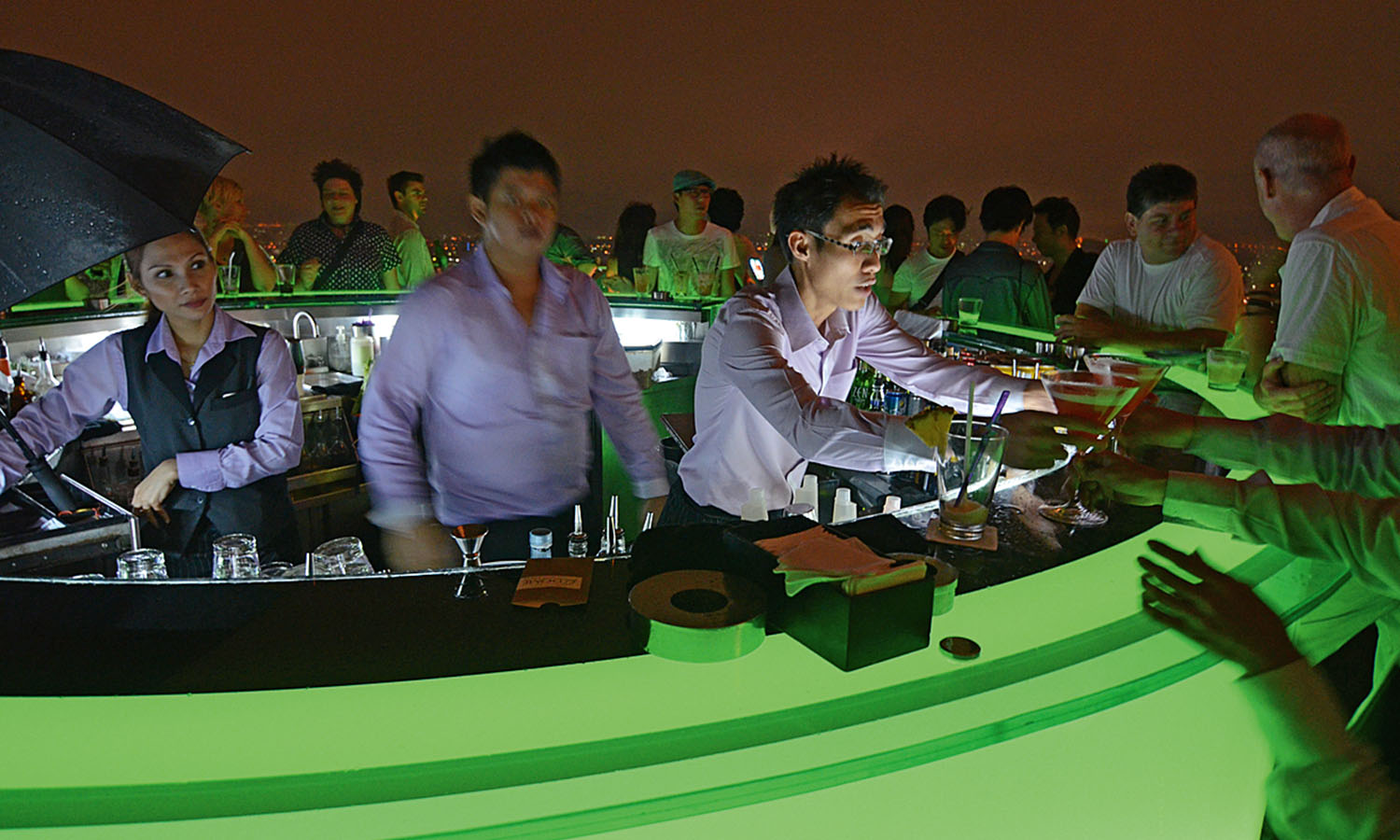
Skybars are so hot right now in Bangkok and sprouting everywhere like fresh foliage in the city’s towering canopy. On the way to the next destination you will pass the Banyan Tree, where Vertigo offers an open-air oodles-storey-high view of the city. At State Tower whiz 64 flights up and emerge from the lift to be greeted by four smiling faces discretely checking you’re suitably attired. The punishment for attempting to enter a Bangkok skybar in thongs is an evening of wearing the establishment’s heavy Amish-style black clogs and a guarantee of going home alone. Swan, preferably in your own footwear, down the broad staircase towards Sirocco’s neon-lit bar, perched on the side of the building like something from a movie. Sirocco The Dome at lebua, 1055 Silom, Bang Rak lebua.com
1am
Strict drinking laws in Bangkok mean most bars and clubs close around 2am, but we all know the knock-on effects of prohibition. Wong’s Place first opened in 1987 and the bar has changed hands only once. When the original owner, ‘Wongsie’, died in 2003 his brother, Sam, re-opened the joint due to popular demand. Wong’s is open most but not all weekends and can be tricky to find after curfew when it’s pretending to be closed. But it’s worth the search; watching 1980s music videos and talking to washed-up expats and chatty locals under tattered Chinese lanterns in this dingy, smoky, lively little dive until the sun comes up can be a great end to a great game. Wong’s Place 27/3 Soi Sri Bamphen, Sathon
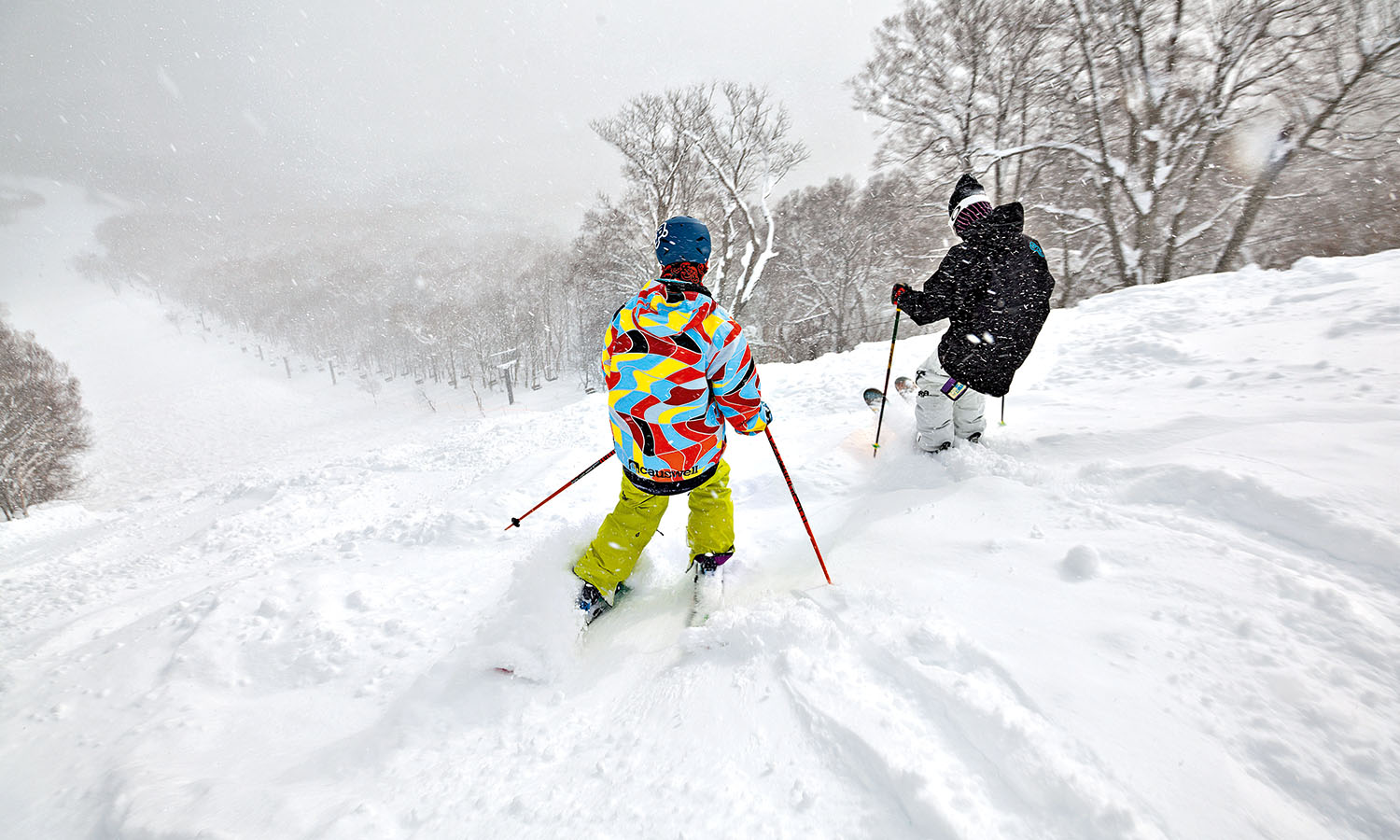
As far as ideas go, this doesn’t seem like one of my best. The front 10 centimetres of my snowboard juts out over the edge of a 20-metre vertical drop. The backlit spike of Mt Iwate hovers ahead like an apparition. A sea of snow peaks and troughs below me, little powdery tornados forming on its surface. The world shrinks. I start making slushies in my stomach. All I can hear is my breath and the blood pounding in my ears. I shimmy closer to the edge, point my board down and count slowly to three.
Shimokura at Hachimantai is one of 17 ski areas dispersed around Iwate-san, the highest peak (2038 metres) in the Tohoku region of northern Honshu, Japan. Here, powder is god, foreigners are unheard of and if you don’t attempt a three-metre wide, double-black diamond run – even as a beginner – then you’re missing out.
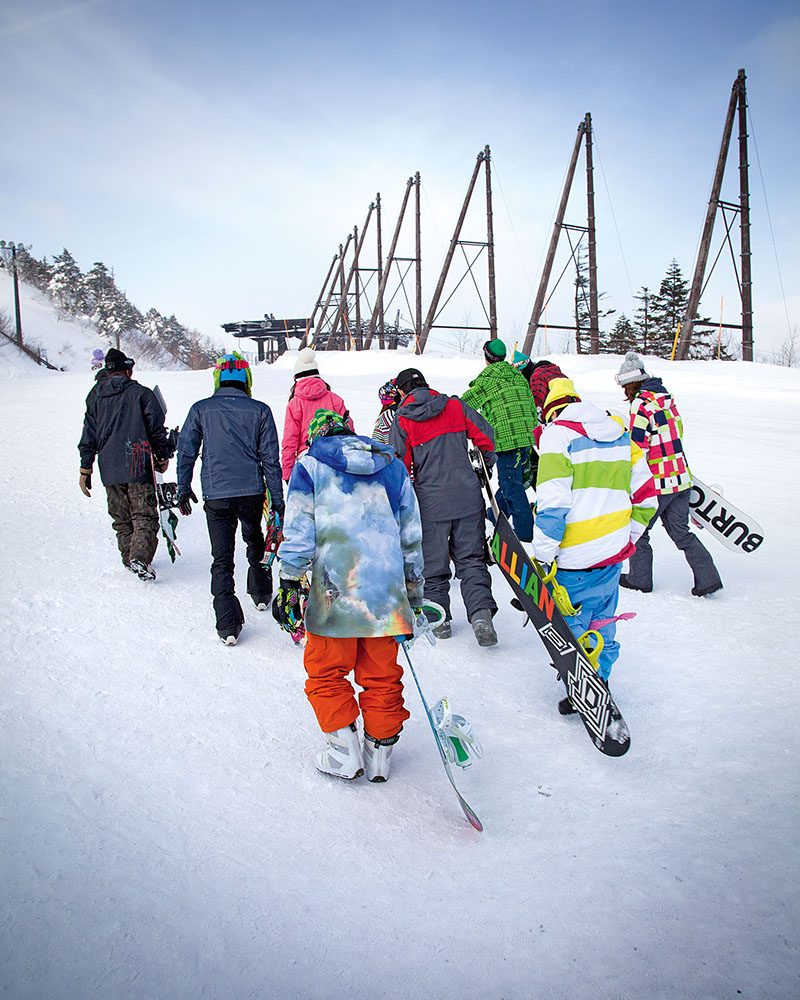
I arrived at Appi, the first stop on my itinerary, a complete novice snowboarder (I’ve attempted it once before). My mission, over the next seven days, is to sample several of the best ski areas in the Iwate prefecture and go home a confident boarder.
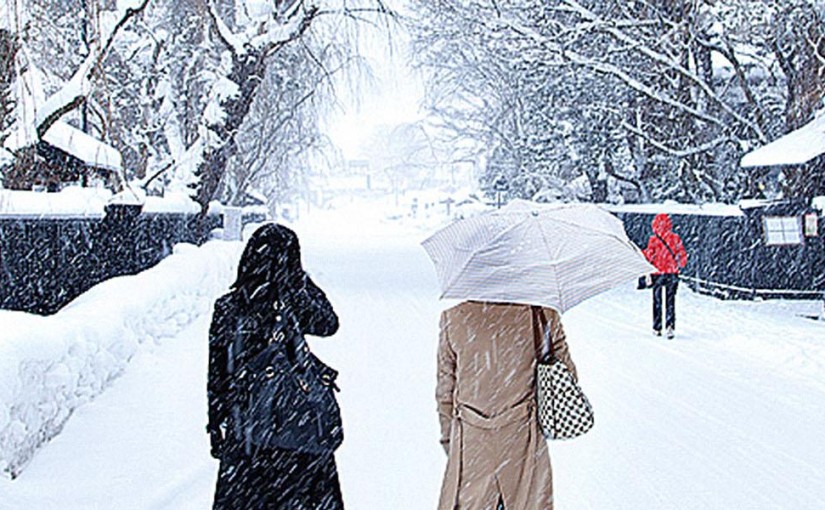
I exit the chairlift on the first day – one foot strapped to my board – with the grace of a two-tonne elephant. Parking myself on the side of the wide, powdery white, groomed run, I try to make a snowball. But the tiny snowflakes refuse to stick and float away from my gloves like dust. This is what they mean by aspirin snow. It’s the light, dry and just-right stuff that makes even the most diehard snow junkie regress to a giggly 10-year-old.
“An ogre once lived on the mountain,” says Aki, my guide, pointing to the cup-shaped summit of nearby Iwate as I click the other foot into my board. “He kept annoying the local people so they asked him to stop. The ogre promised he would, but the people made him sign a contract by putting his hand on the rock. That’s how Mt Iwate got its name ‘rock hand’.”
I soon discover the most scenic, and thrilling, run down a mountain in Tohoku is achievable for even the most timid boarder. Appi’s yamabato run is a 5.5-kilometre beginner trail that starts at the summit of Mt Maemori and ends 20 minutes later at the backdoor to the hotel. It’s one of just a handful of spots in the region where beginners can actually descend from a mountain top.
Midway down the run, my concentration wavers from piloting my snowboard to looking around in awe. The outline of Iwate looms behind us as we glide over plains and past young forests. I hear the occasional swish-swish of ski pants and some nasally J-pop drifting from speakers as we pass the gondola.
It’s not long before I take my first tumble. After the initial shock of being rotated as if I’m on a spin cycle, I realise it’s more like rolling around in fluff. As soon as I recompose myself, the adrenaline kicks in. I soon find a rhythm and any fear of falling evaporates. My board gains momentum at shocking speed and I arrive at the bottom with a ridiculous grin on my face.
I spend the next couple of days getting some quality boarding time under my belt. I test out the gentle slopes of Shizukuishi, the intermediate snow at Geto Kogen and the squeaky blue-tinged runs at Tazawako, which offer a spectacular panoramic view of Lake Tarawa – at 423 metres, Japan’s deepest lake.
By the end of the fourth night, I’ve pretty much mastered turning, but my lower body feels like it’s in a coma. It’s time to test out the onsen.
The après-ski scene in Tohoku is far from the VB-swilling hoards at Niseko. Here, bars are non-existent, painful karaoke renditions of ‘Like a Virgin’ are mandatory, and steaming, sulphur-infused hot springs to relieve sore muscles are a must.
I find a particularly unusual onsen one evening at my hotel near Amihari. Instead of a hot tub and wet room with all the little soaps and shampoos, I discover a long space with unflattering McDonald’s-like lighting and a two-metre wide trough stretching down the middle. A couple of shower-capped heads poke out from beneath the surface of a big mound of dirt, which looks and smells like something you’d feed to a horse.
A woman in a pair of green gumboots steps towards me. She motions for me to disrobe and step into a coffin-sized hole in the muck. I resist the urge to put up a fight when I see she is waving a large garden shovel. Instead, I settle myself naked into the ground and watch as she covers me in chaff.
I’m told that the Japanese fermented rice bran bath has super-strong healing powers. The bran, which gets heated up to a toasty 55°C, is supposed to aid muscle relaxation, help weight loss and decrease body fat by up to three per cent. Why hasn’t Oprah cottoned on to this yet?
Twenty minutes in and I’m sweating like a stuffed chicken in a roasting tray. I signal I’m done to the woman in wellies by sweating through my eyes and squealing like a helpless animal. I wiggle my toes and fingers, break the surface like I’m Godzilla and go to wash up. My skin is smooth and my muscles feel like jelly, but my body smells like breakfast.
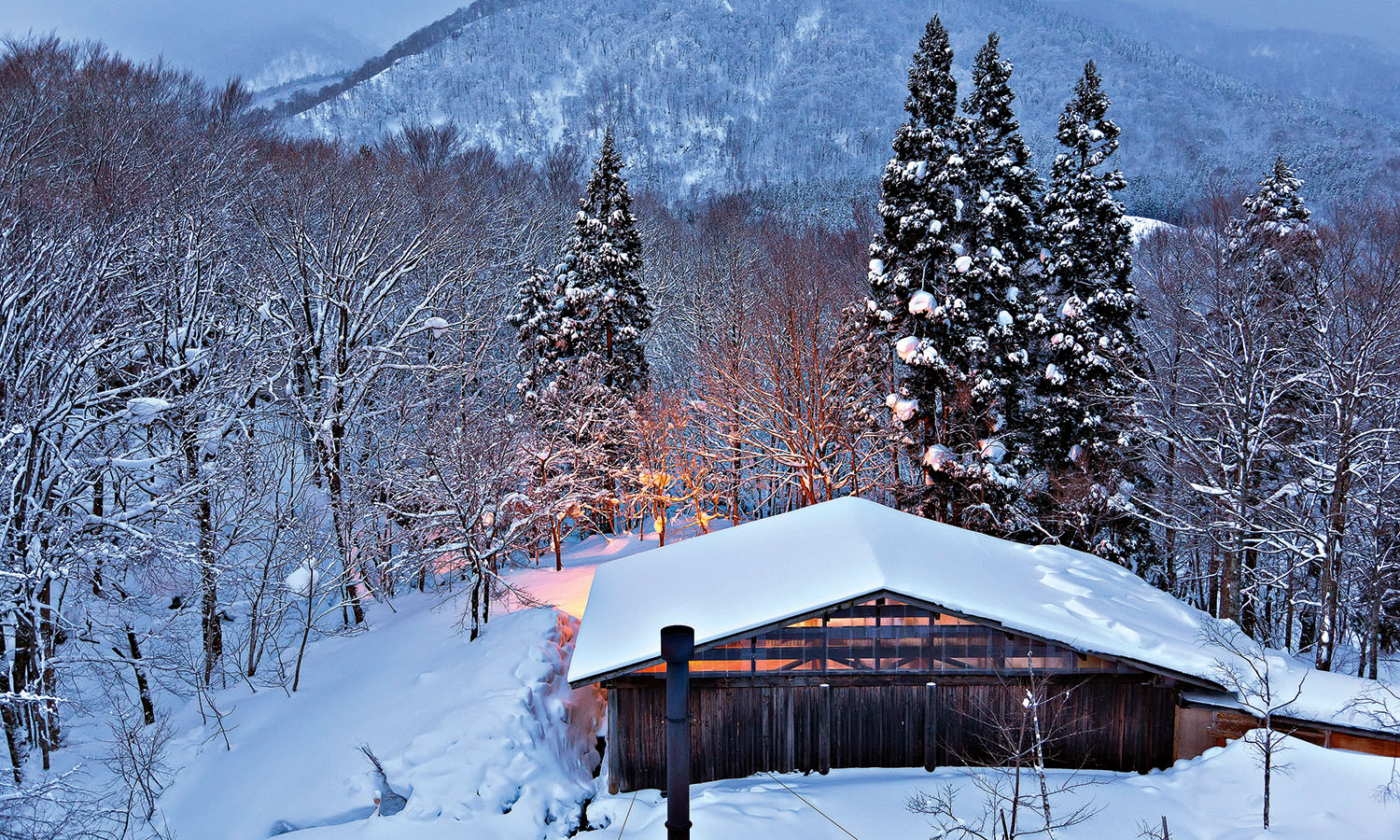
Iridescent blue skies and an unusually clear head greet me the next morning at Amihari. I jump onto a completely empty chairlift with my rosy-cheeked guide, Koami, heading towards the summit of Mt Inukura. Beneath my dangling legs, snow-cloaked firs give way to rows and rows of cedar trees, their powdery branches twisted like arthritic fingers in the chilly air. At times, the chairlift rumbles as it rises higher into the clouds. At other times, Koami breaks long-spells of silence with offers of “Beautiful?”, “Cold?” or “Mint chew?”
Three chairlifts later, I’m at the top of the mountain crunching through waist-deep snow. My arms struggle to hold onto my board with each gravity-defying moon-like leap. The low sun paints everything with a golden light and long blue shadows. A gentle wind sends peppery crystals into the sky. I follow Komai’s tracks like a snow-blind explorer. My mind oscillates between illusions of Santa’s Grotto and dancing elves in silly hats with bells.
After 10 minutes, we reach the beginning of the run. I struggle to strap in with so much snow, especially when my whole body is shaking with anticipation. I signal to Koami that I am ready, shuffle my hips, lean in and fly.
The snow before me gives way and I lose sight of my legs. Speed builds rapidly; fear disintegrates like snowflakes. It’s like riding the world’s creamiest ice-cream. My board sinks, scoops and glides as I rock all my weight to my back foot. We cut through some adventurous – possibly out-of-bounds – terrain that causes me to go faster and imagine I’m being chased by spies in the latest James Bond blockbuster.
“Sorry for snow,” apologises Koami, when I land back on earth 30 minutes later. “Not good season. We normally have many, many more snow.” I take a moment to catch my breath and finish shaking the entire Iwate prefecture from my goggles.
Over the next few days, if I’m not on the slopes then I find it impossible to concentrate. We sail the Geibikei (Geibi Gorge) in a traditional yakatabune (houseboat) and I picture myself getting airborne between the 100-metre cliffs. We go to see a festival of giant snow castles and Kirin bears at Koiwai Farm and I want to upturn a plastic tray and scream down the toboggan run. Instead of admiring the history of the Buddhist temple of Chuson-ji or the samurai houses of Kakunodate, I become transfixed by a pile of grubby snow under a bare cherry blossom. Snowboarding, it seems, has become an obsession.
And that brings me to the final day of my trip and back to the vertical drop at Shimokura. I suck in a deep breath and silently yell, “Three!” My emotions flit from nerves to excitement to an overwhelming sense of dread. The snow before me parts like I’m Moses and it’s the Red Sea. I hear myself yelp and whoop – or maybe it’s a scream – before a white wave swallows me.
After days of hardcore lower-body work and a whole load of thrills (and spills), I’m done. The mission is complete. Collapsing at the bottom of the mountain, legs shaking, I look back up at the black double-diamond run I’ve just survived. Over seven days, I’ve skied six different spots. I’ve boarded through snow so light and dry it disappears in your fingers. I’ve been up mountains, down runs, through forests and, most importantly, I’ve had a ball. After all, I conclude, often it’s the seemingly stupid ideas that actually end up being the best.
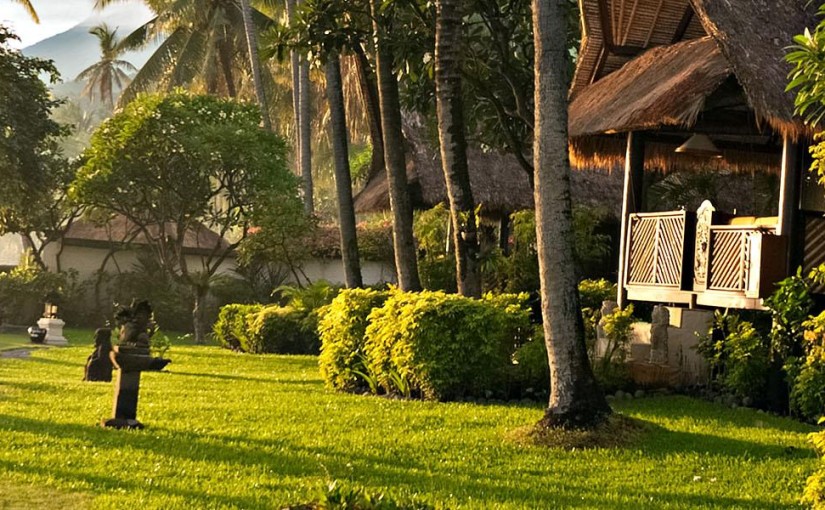
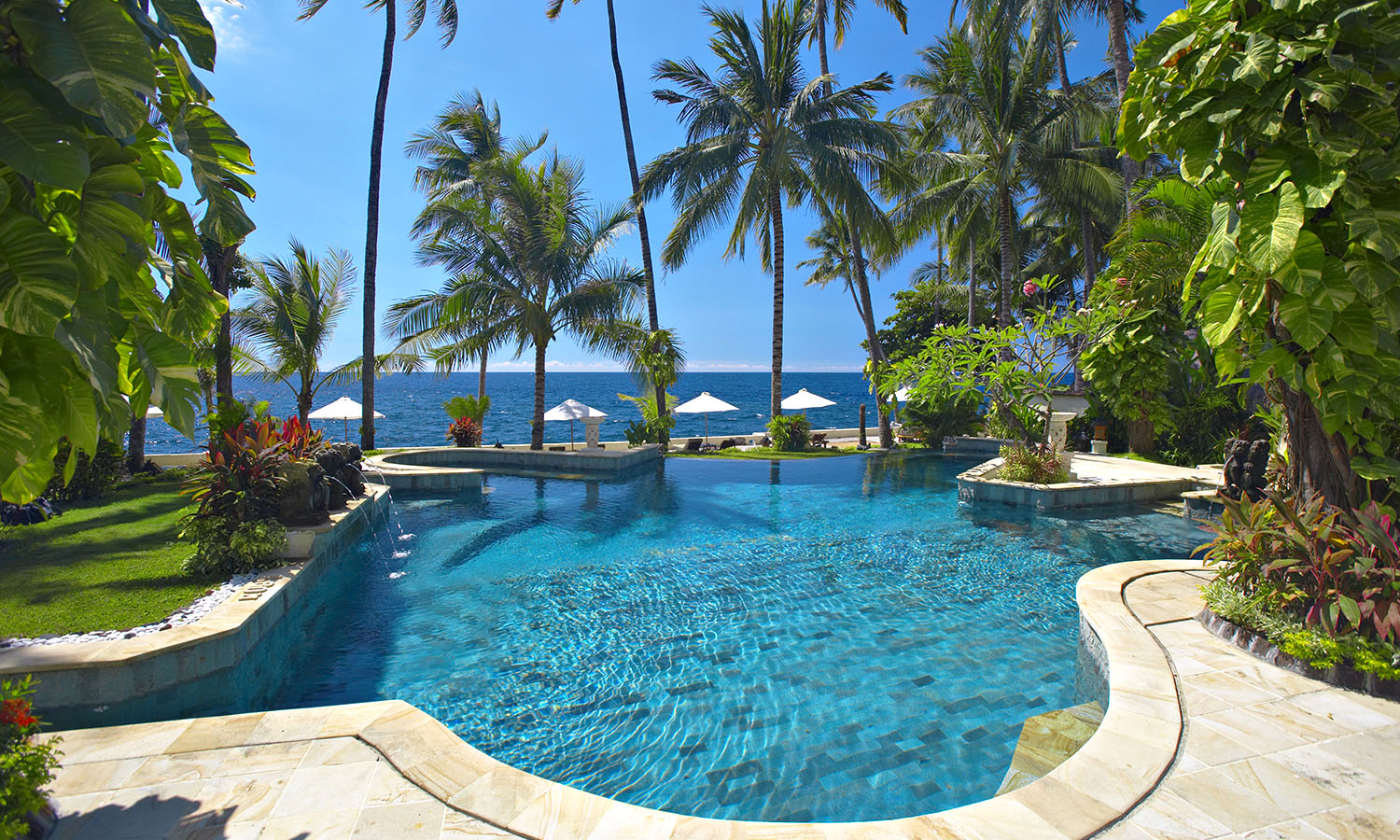
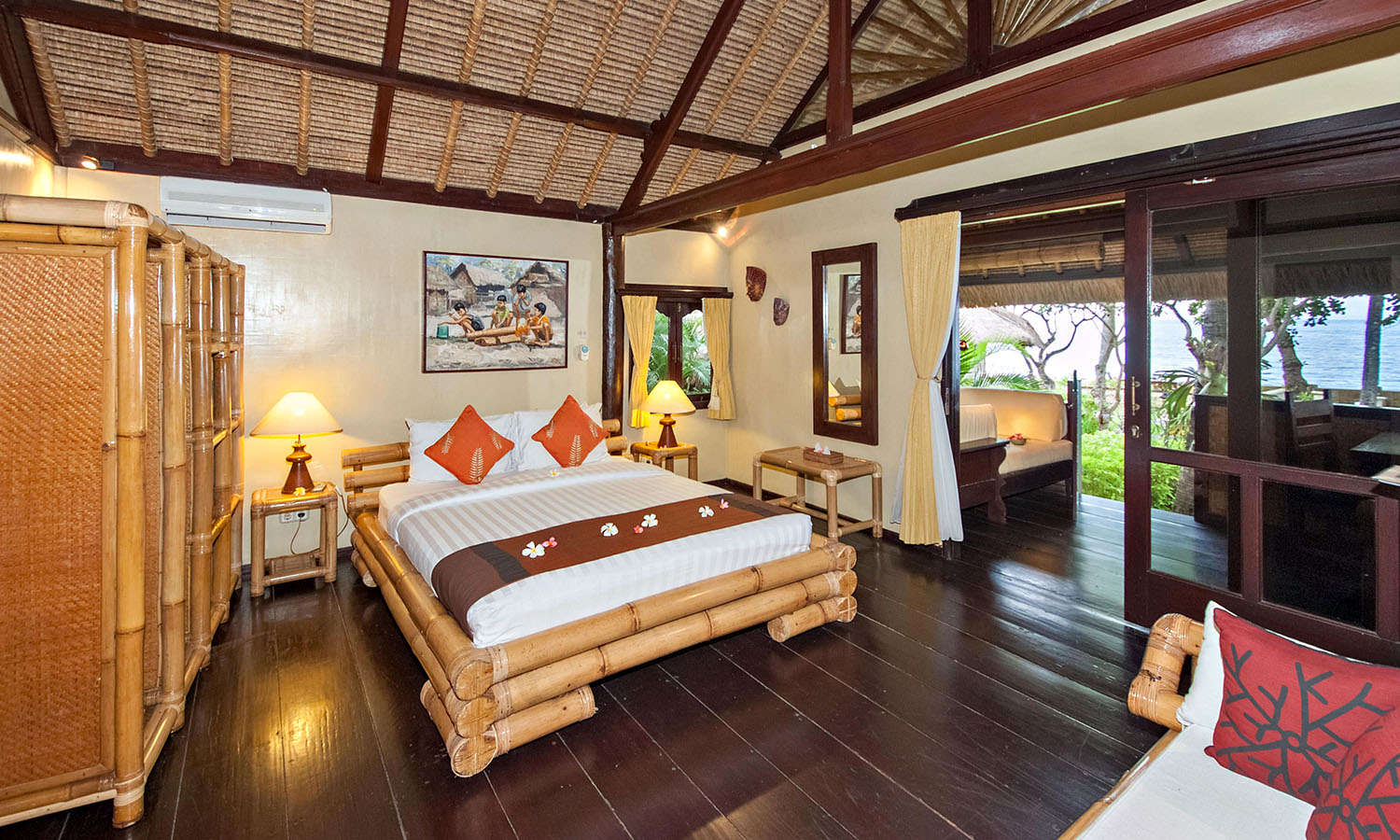
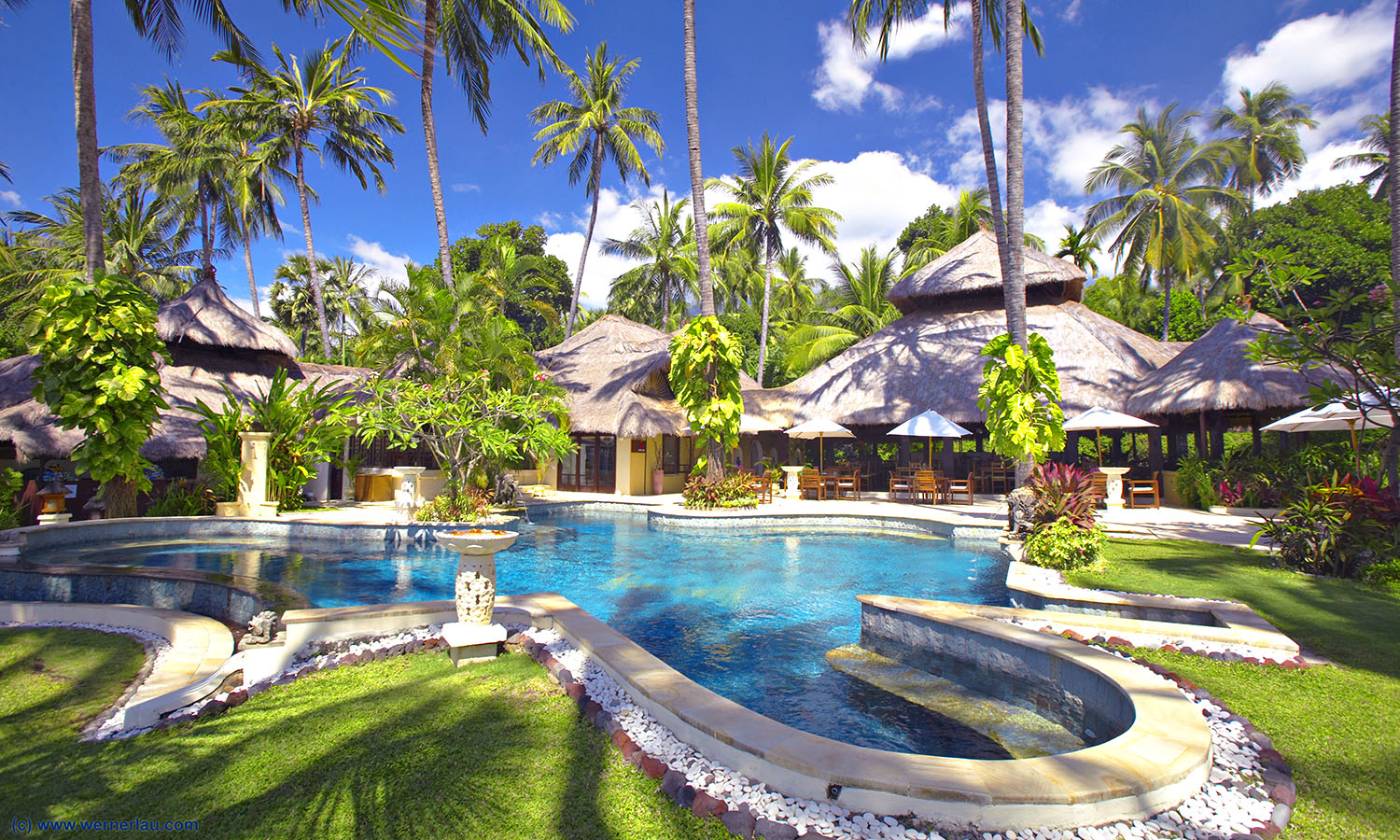
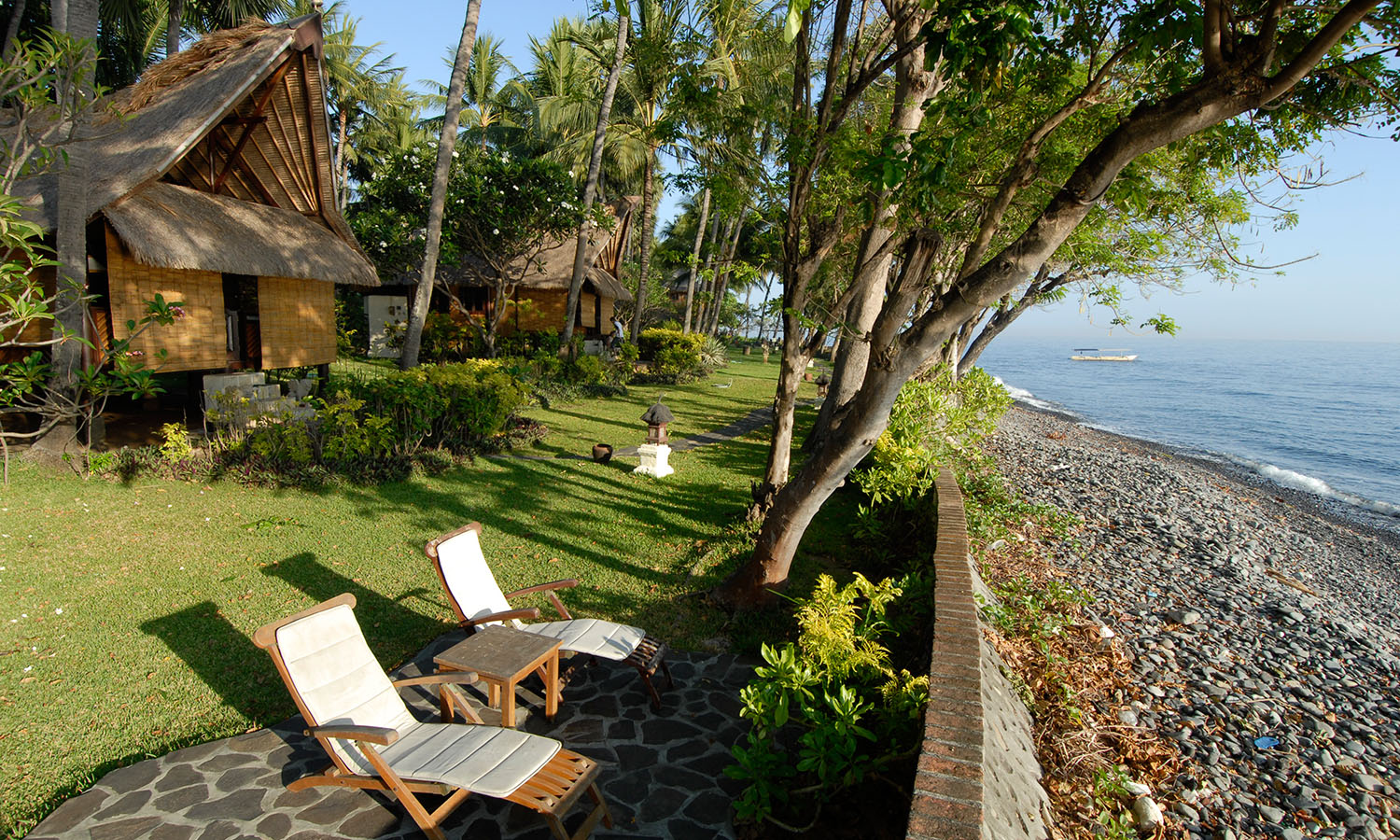
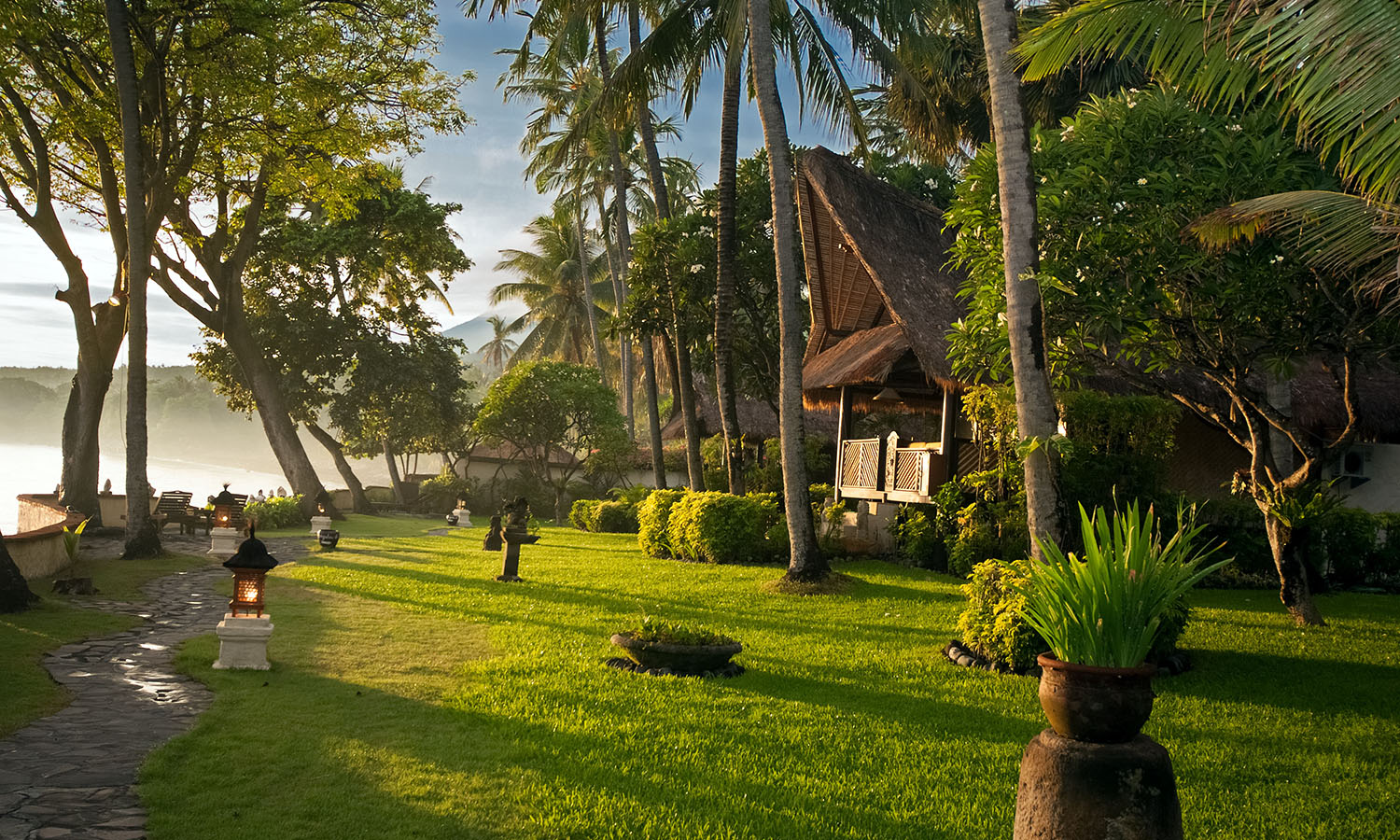
An adults-only holiday in Bali that’s far from the crowds? It’s rare, but possible. A stay at Alam Anda Ocean Front Resort & Spa goes way beyond the ordinary beach holiday, allowing you to experience this island in its real sense and immerse yourself in a traditional Balinese environment.
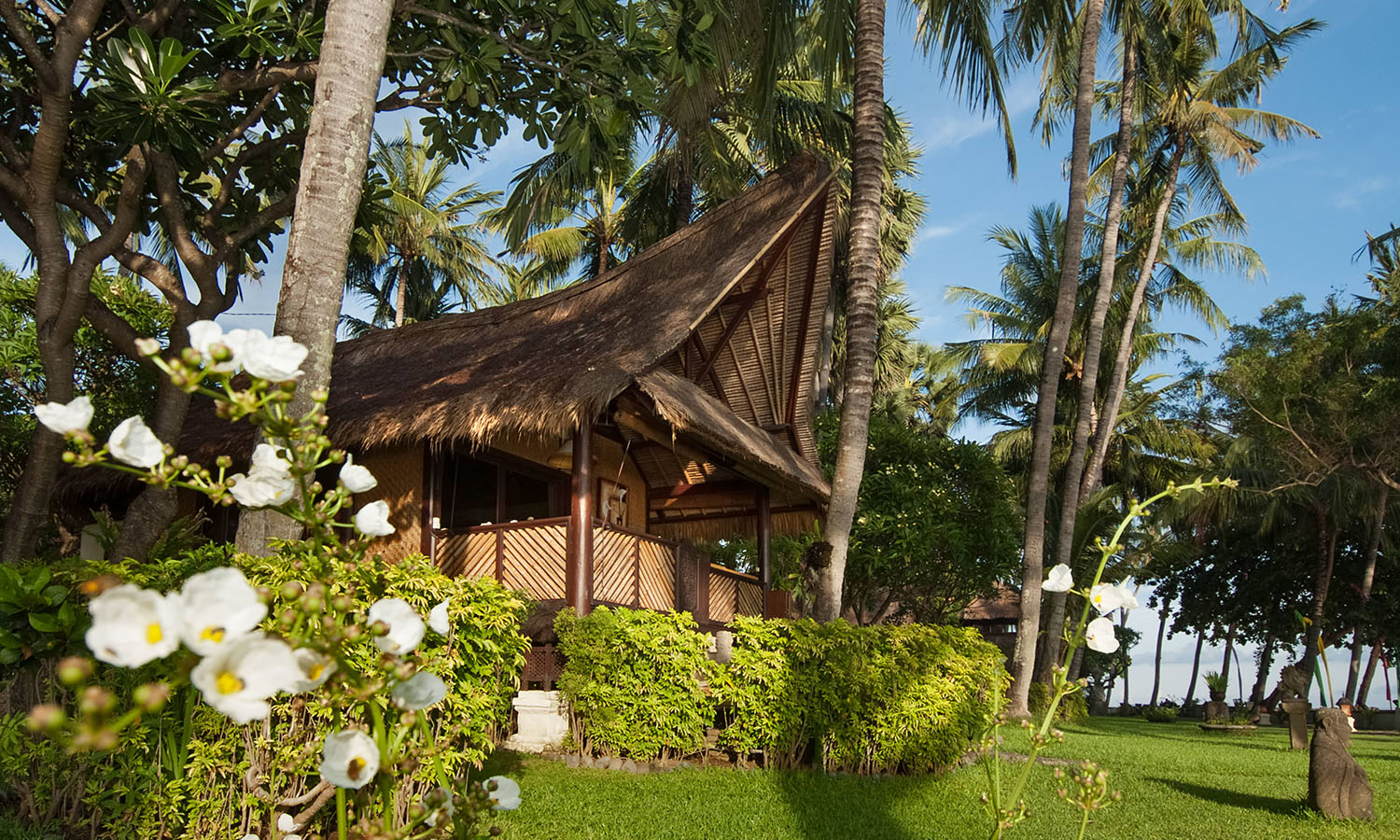
The four-star resort is boutique in size and offers beautiful, traditional single-storey bungalows and villas, each designed in typical Balinese style.
Pamper yourself in Alam Anda’s fantastic spa, wellness and relaxation area, then learn what Balinese cuisine is all about with a cooking class at the resort and a trip to the local market.
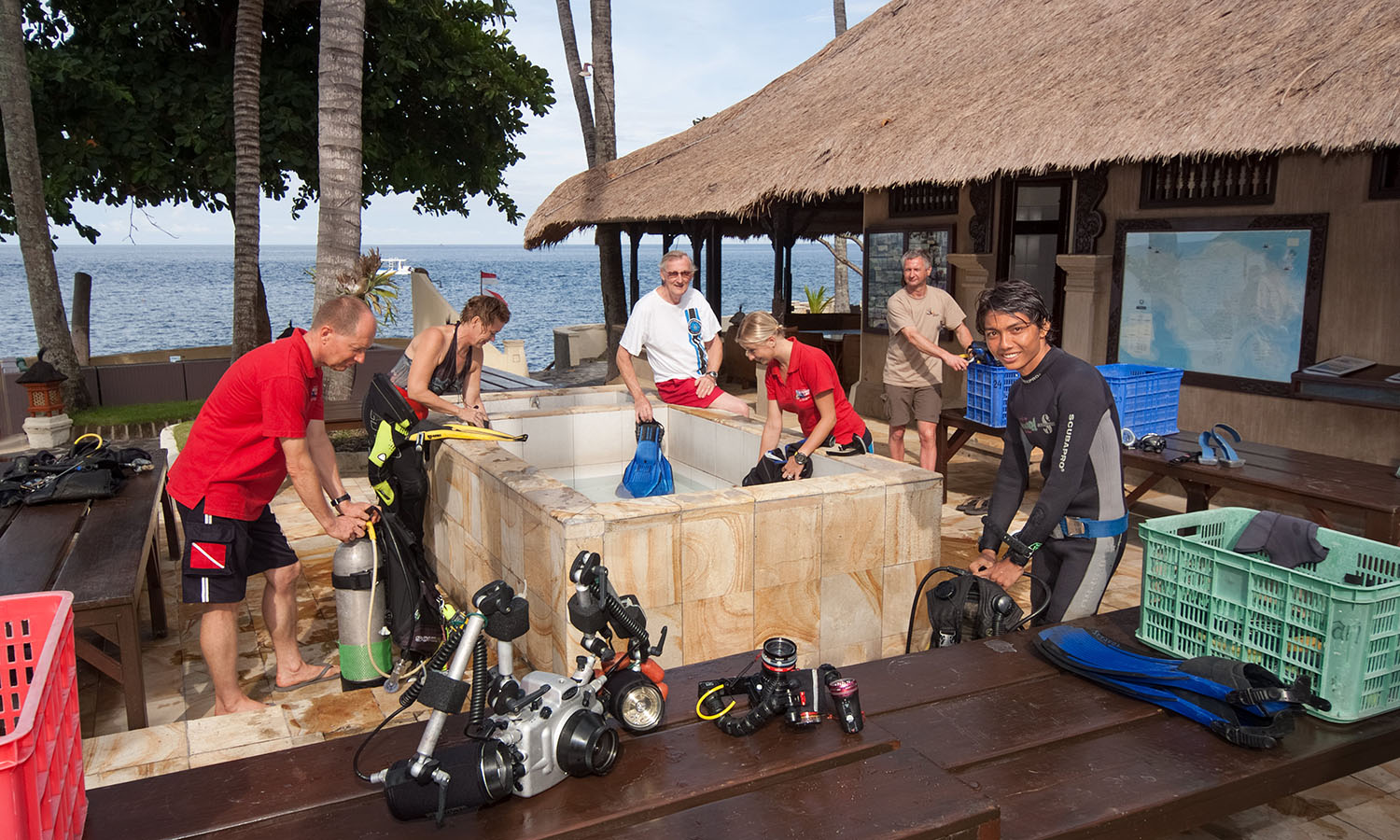
Water babies will find an exceptional dive centre at the resort, with world-class dive schools and a house reef just off the beach. There are some incredible dives in close proximity to the resort, too, including the wreck of the USS Liberty. For something land-based, a drive past rice fields, coffee and cocoa plantations to the great temple Pura Ulun Danu Batur at the edge of the crater of the Batur Volcano offers memorable scenery.
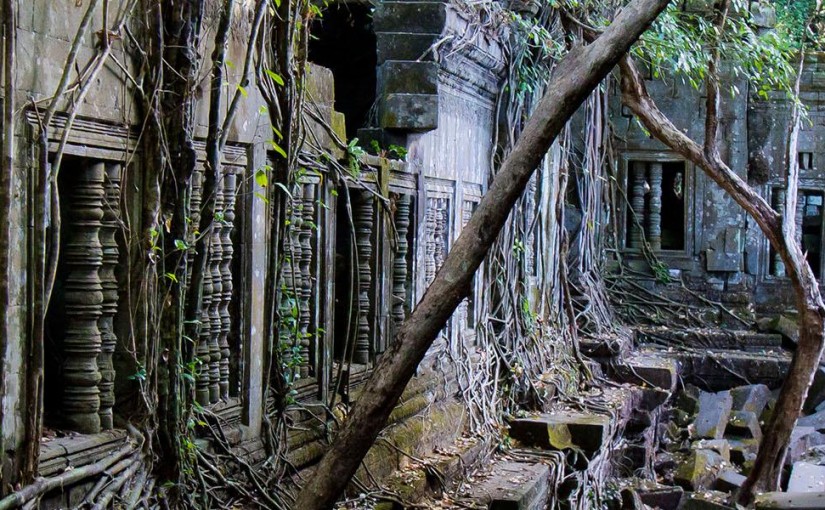
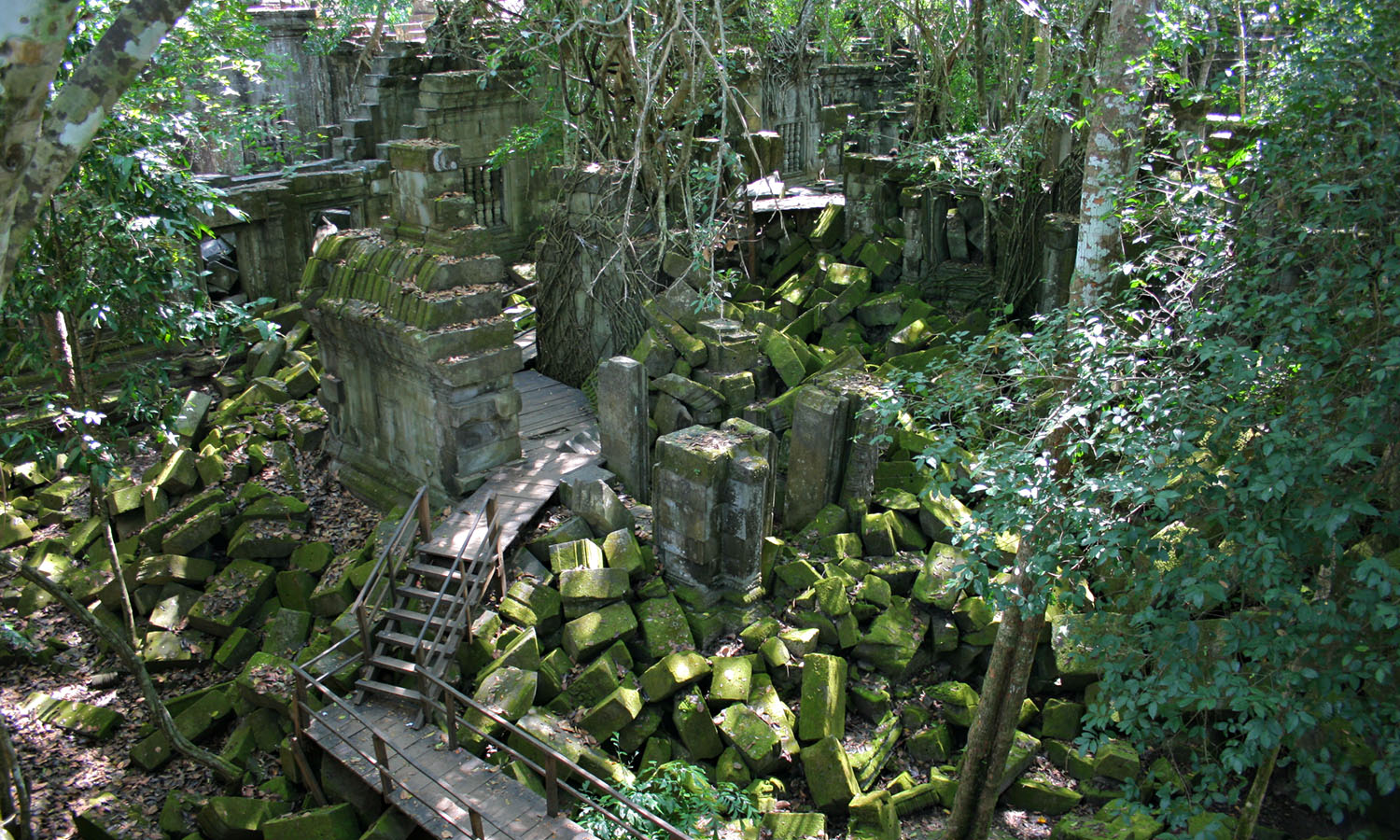
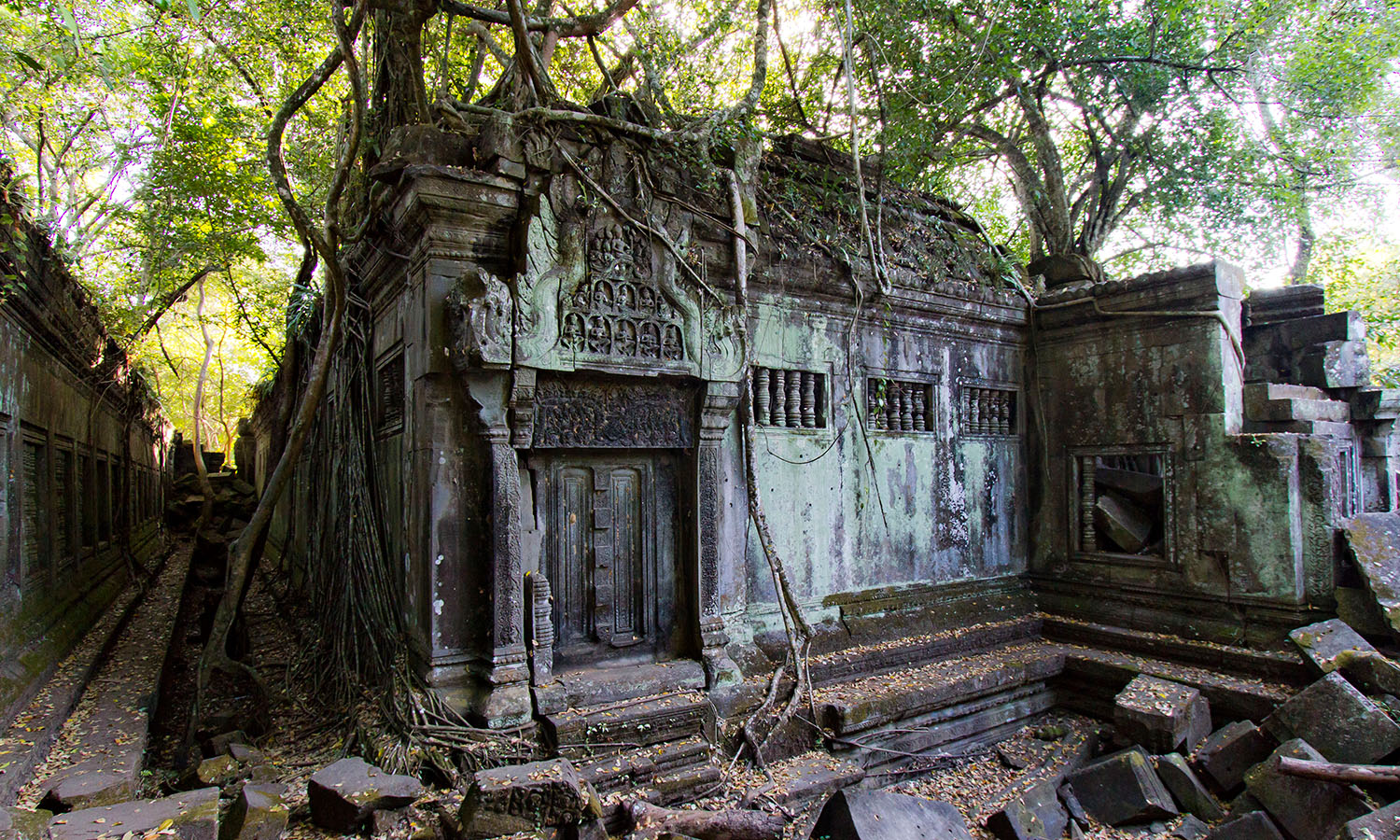
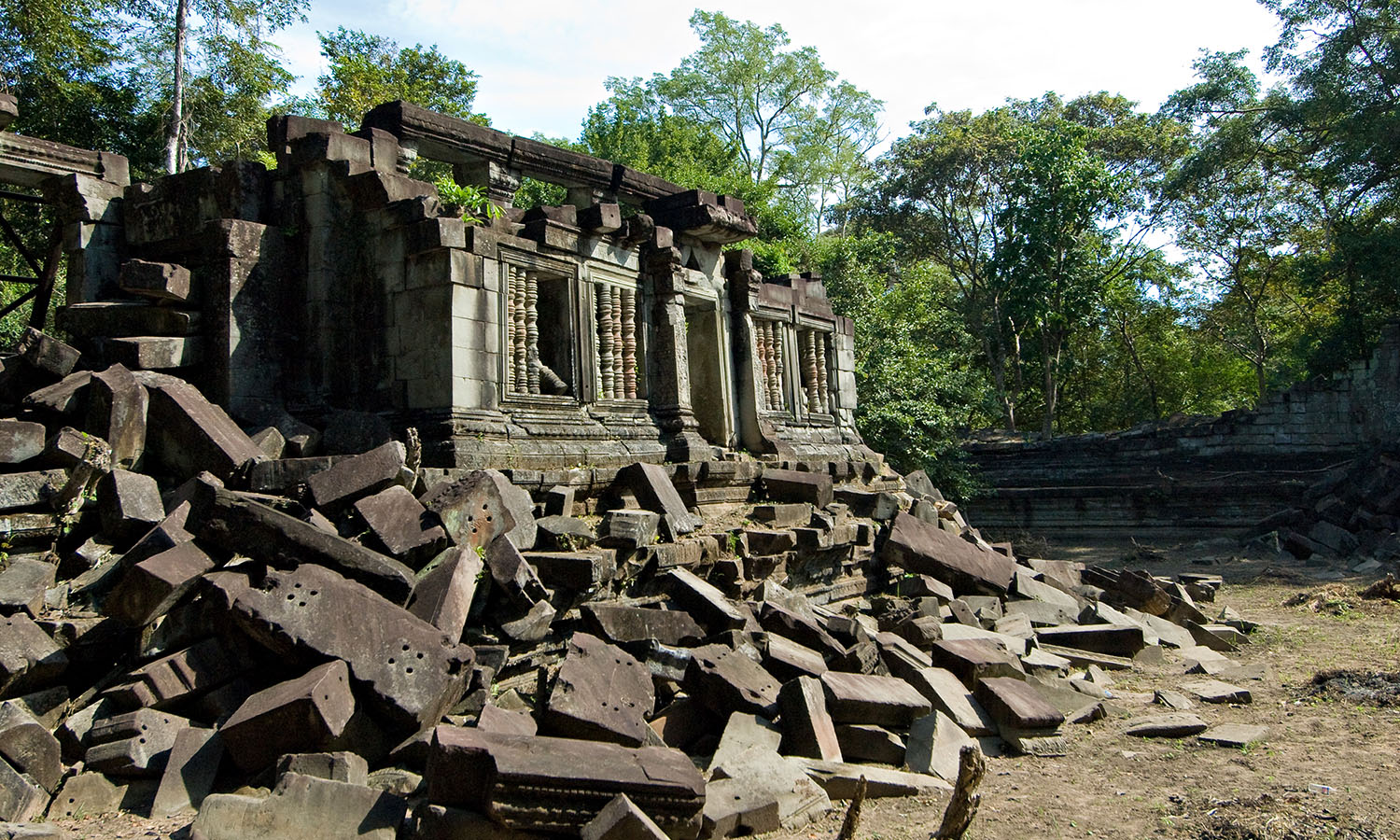
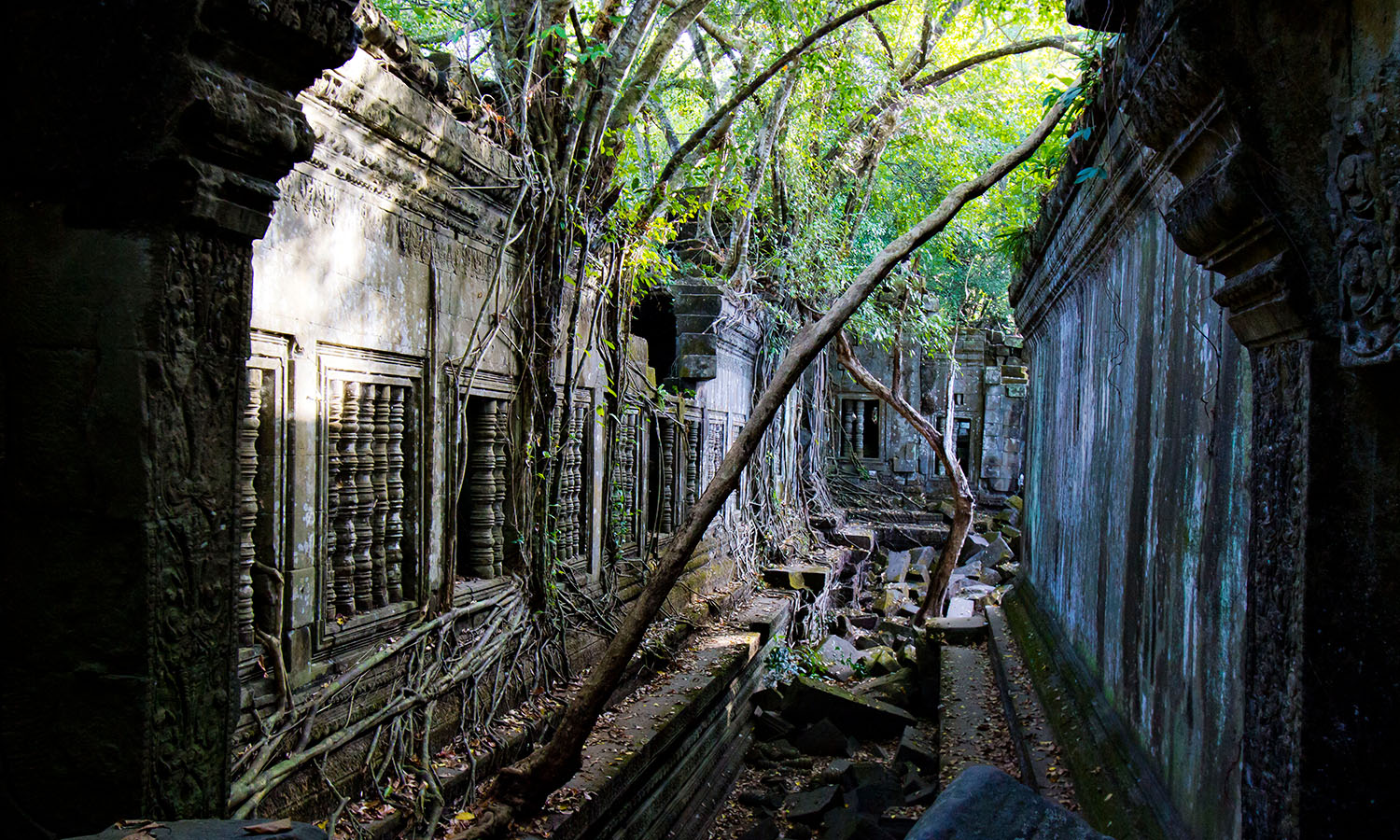
Forget tourist-heavy Angkor Wat. Some 40 kilometres east you’ll find Beng Mealea, a large unrestored temple that’s completely overrun by nature. Built in the twelfth century, the temple is surrounded by a 45-metre-wide moat (mostly dry) and once marked the centre of an Angkorian-era town.
Now in a state of disrepair, the maze-like ruins are best navigated with a guide. To access the most interesting parts you’ll need to climb over large stones, up walls and around dense foliage. It’s sweaty work but worth the effort.
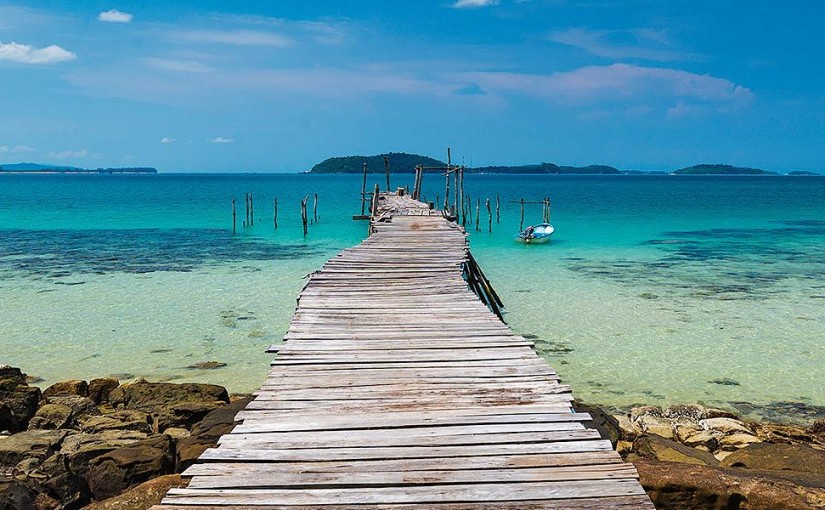
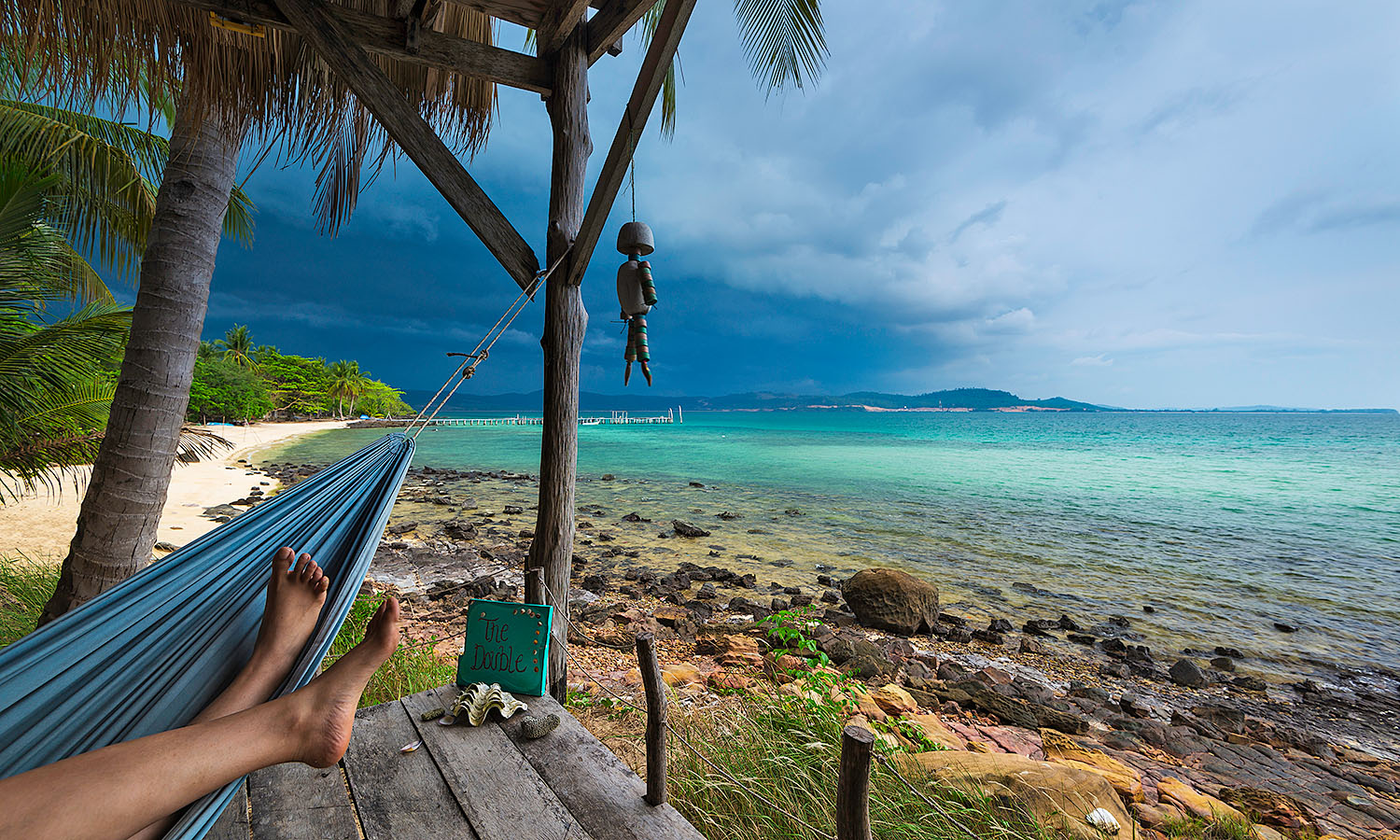
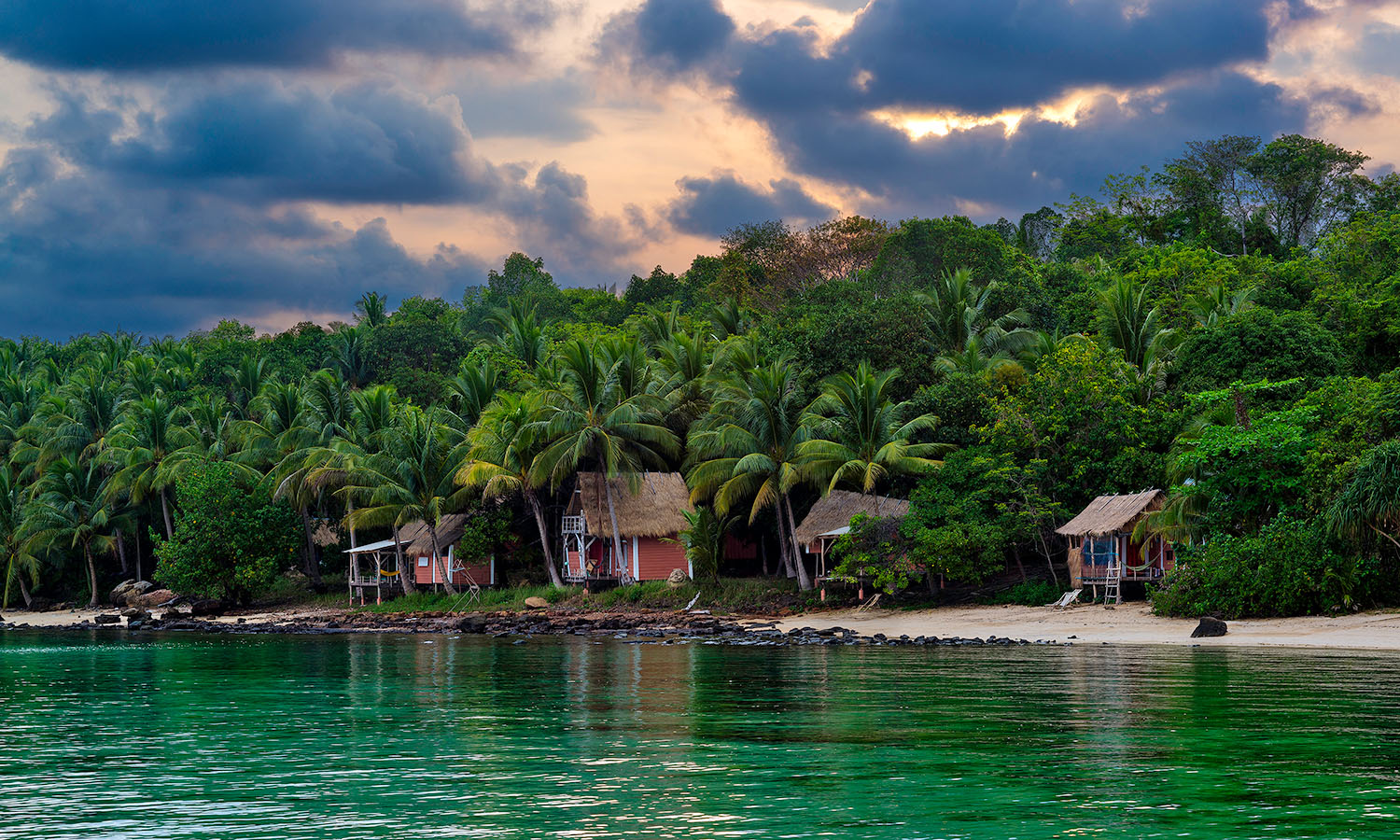
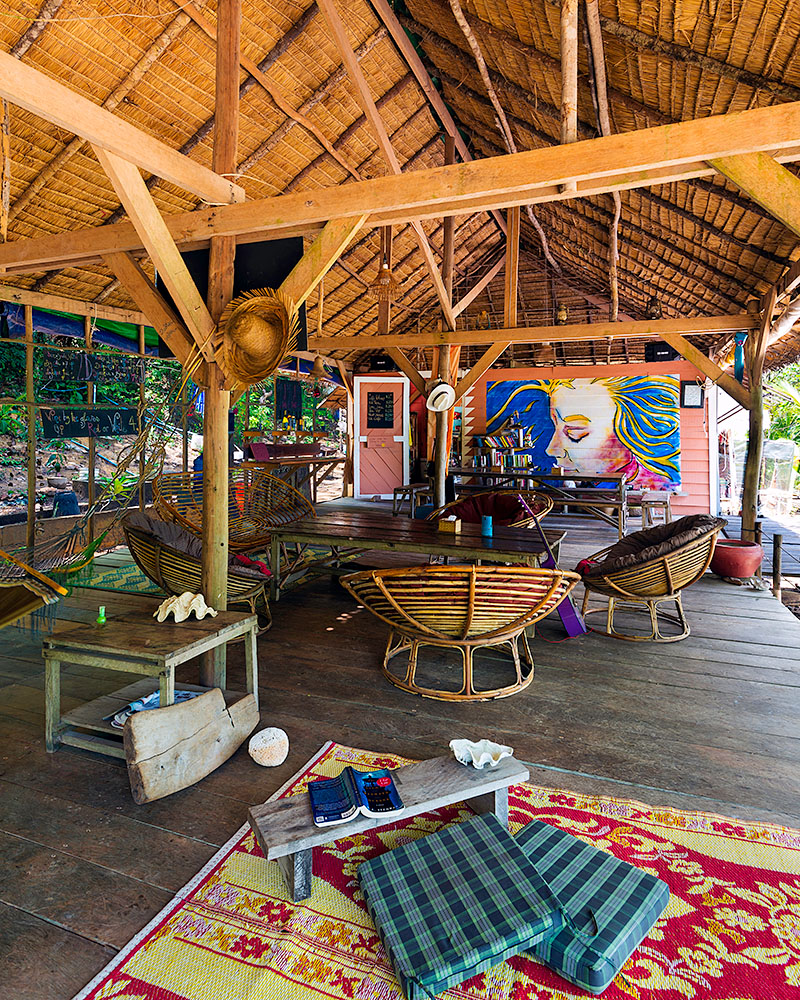
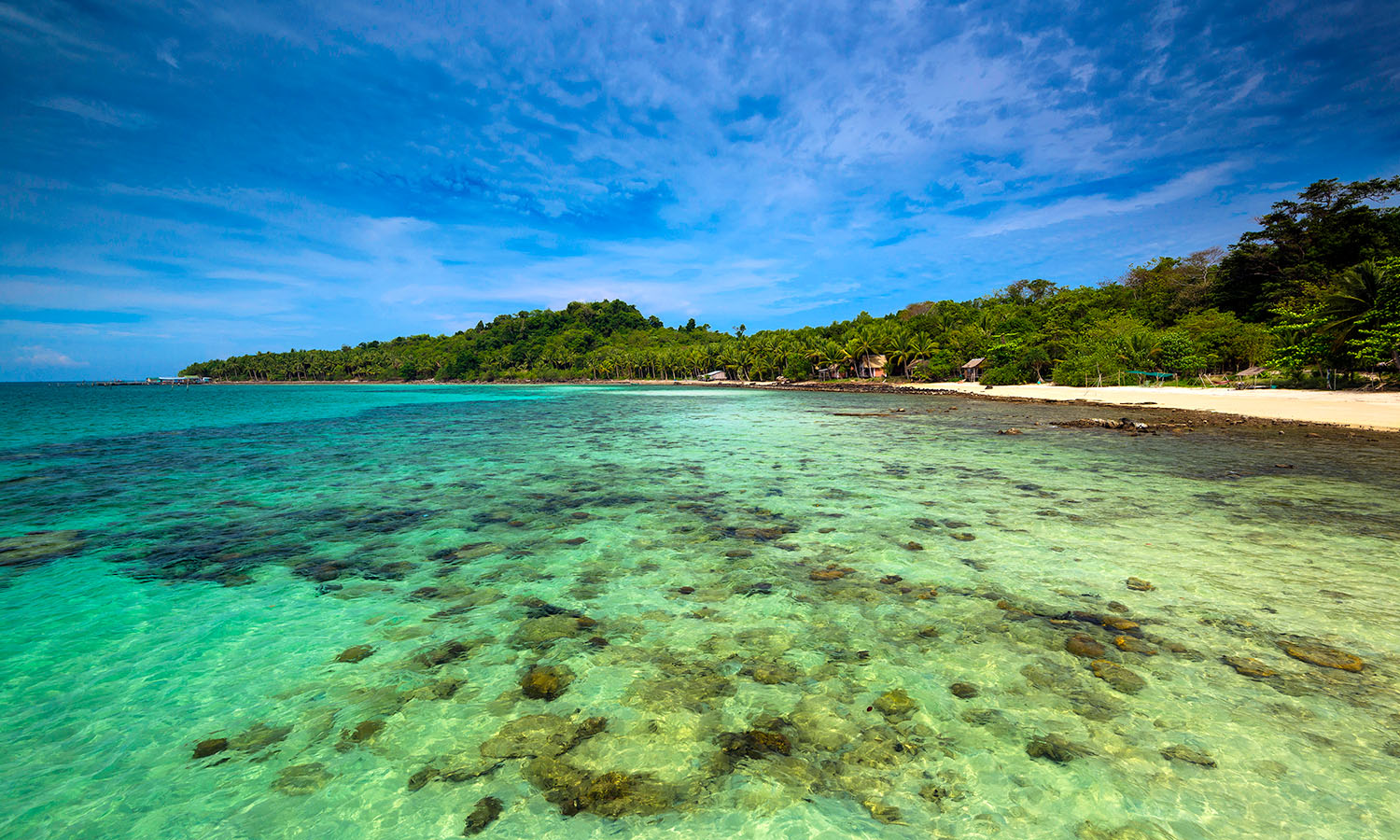
The beautiful, tiny and undeveloped island of Koh Totang is part of a 12-island archipelago in Cambodia’s Koh Kong province. The only accommodation here is Nomads Land, an eco-friendly guesthouse, restaurant and bar that relies solely on rainwater and solar panels, keeping it completely off the grid.
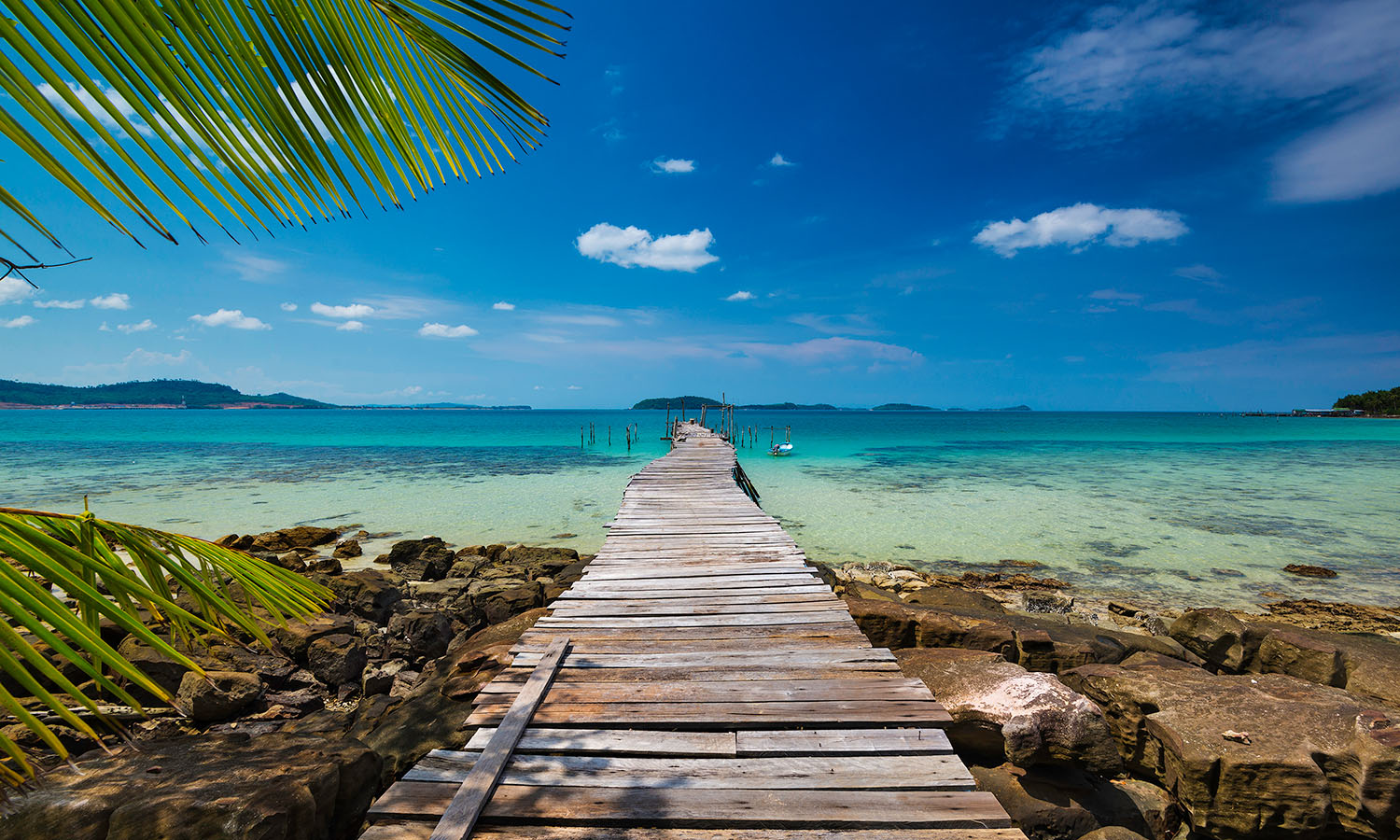
Five rustic bungalows face the beachfront, each with a private terrace and hammock perfect for lazy days. The island is surrounded by coral reef, so find a hidden beach on the rocky shore, grab a mask, and fin over the ocean life. Go searching for iguanas in the jungle. At night, phosphorescence gives the beach a neon glow and fireflies illuminate the sky. It’s only a five-kilometre boat ride to Koh Sdach, the largest island in the group – head there and check out the fishing village if you’re in need of a little more stimulation after a few days spent swimming and strolling.
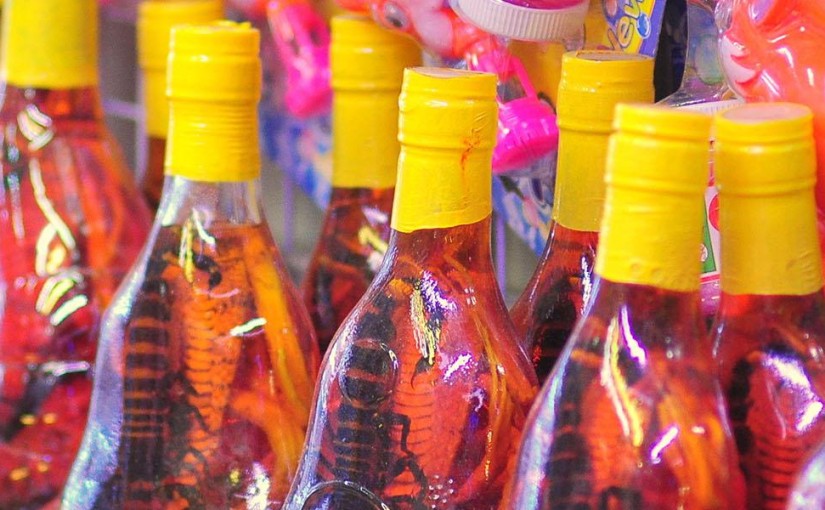
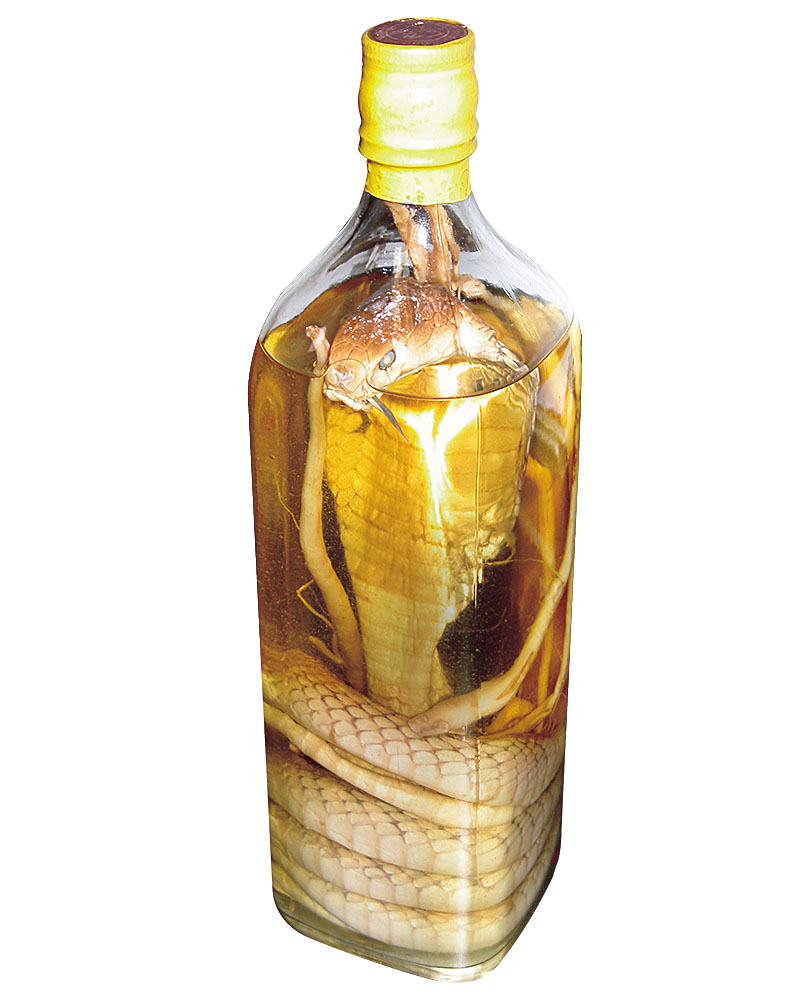
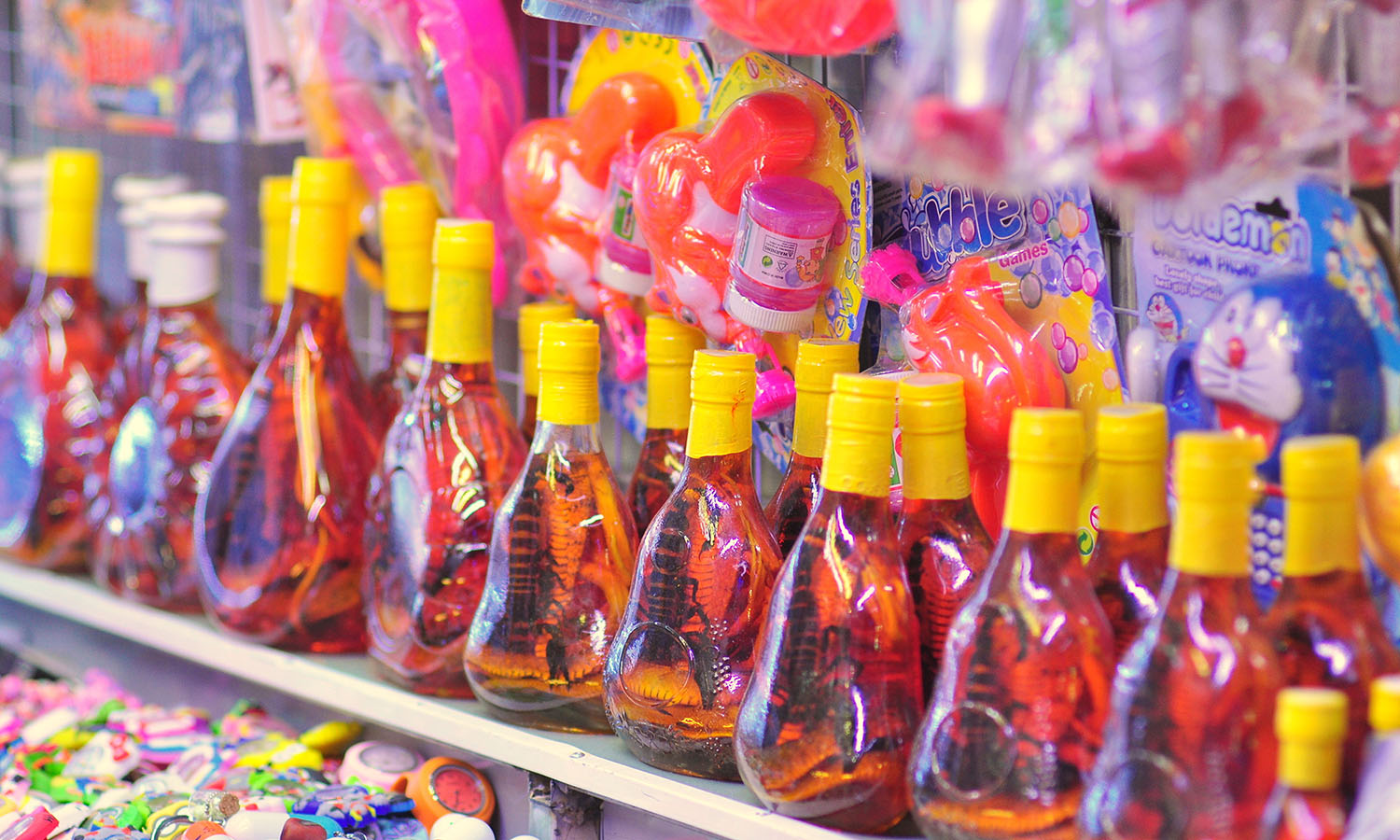
Step 1) Find a glass bottle.
Step 2) Stick a whole venomous snake in it, like say, a cobra.
Step 3) Leave it to ferment so the venom seeps into the alcohol.
Step 4) Try and get Westerners to drink it by telling them it cures everything from poor eyesight to hair loss.
If you’re feeling particularly brave, drunk or stupid, you might also have a go at downing a shot of blood from the still-beating heart of a snake. It, like so many things in Asia, is said to increase male virility.
Head to the reputable snake meat and liquor restaurant, Quoc Trieu, in the famed ‘snake village’ of Le Mat near Hanoi. There you will find all manner of snake dishes and, if you request, they can even source you a live cobra.
 (
(