Sometimes you can count biodiversity by the roadkill. Within the first hour our bus out of Salvador swerves to avoid hitting the carcass of a small rhea, followed soon by what I guess are the remains of a margay. Discounting a couple of armadillos and a creepy vampire bat that lies dead by the snack bar at Itaberaba where we break up the journey, what raises the biggest roar is the maned wolf lying by the side of the road after Seabrá. At least the black urubu vultures circling above had prepared us for the sight.
It’s six long hours from Salvador to Chapada Diamantina, the Diamond Highlands of Brazil, and roadkill breaks the monotony of the featureless Brazilian sertão (hinterland). Occasionally, we encounter the odd farmhouse with concrete walls and a corrugated roof. Dogs bark while chickens cackle loudly and avoid our bus just in time. They must have clocked what happened to their less-nimble brethren.
I’m heading to Lençóis, the gateway to the Chapada Diamantina National Park, whose remoteness and lack of infrastructure are its biggest assets. Backpackers are slowly discovering this forgotten corner of the world and the adventure operators who have sprung up can’t find enough tour leaders to cope.
When I arrive, I immediately seek out Esmeraldo, a veteran with shoulder-long white hair and one of the most experienced Chapada guides. He shares with me a few beers on my first night out in Lençóis.
“Three days?” he says and shakes his head when he hears how long I plan to stay. “It takes three days to hike to the valley of Capão! You can go trekking, canyoning, climbing, biking, caving, swimming – but you have to stay for a week or so.”
He teams me up with Nils, a sensible, sociable Swede who is snacking on cassava chips a few tables back. He’s here for three days, too.
The next day Nils and I are up early for a jeep ride with Esmeraldo to pick up the trail to Lapa Doce, the third largest cave in Brazil. Not only does the landscape change after every turn, but so, it seems, does the ecosystem. We leave the shadow of the last vestiges of the thick Atlantic rainforest and enter the distinctive woodland savanna of the Cerrado. Here canopy cover is patchy and the sun hits us like a rock.
Esmeraldo points at trees we haven’t heard of before: this one here with the large trunk is a mulungu, whose bark has been used for centuries as a sedative. That one is an aroeira – its resin smells of soap and the essential oil is used in cosmetics. As for the one over yonder whose leaves form a tuft at the top – that’s an amburana honey tree, whose seeds are crushed to give tobacco a sweet perfume.
“As for this one,” Esmeraldo says touching a strong, sturdy tree, “this one is a braúna. The best hardwood you’ll find. Used in construction everywhere in Brazil, ’cos it’s termite-resistant.”
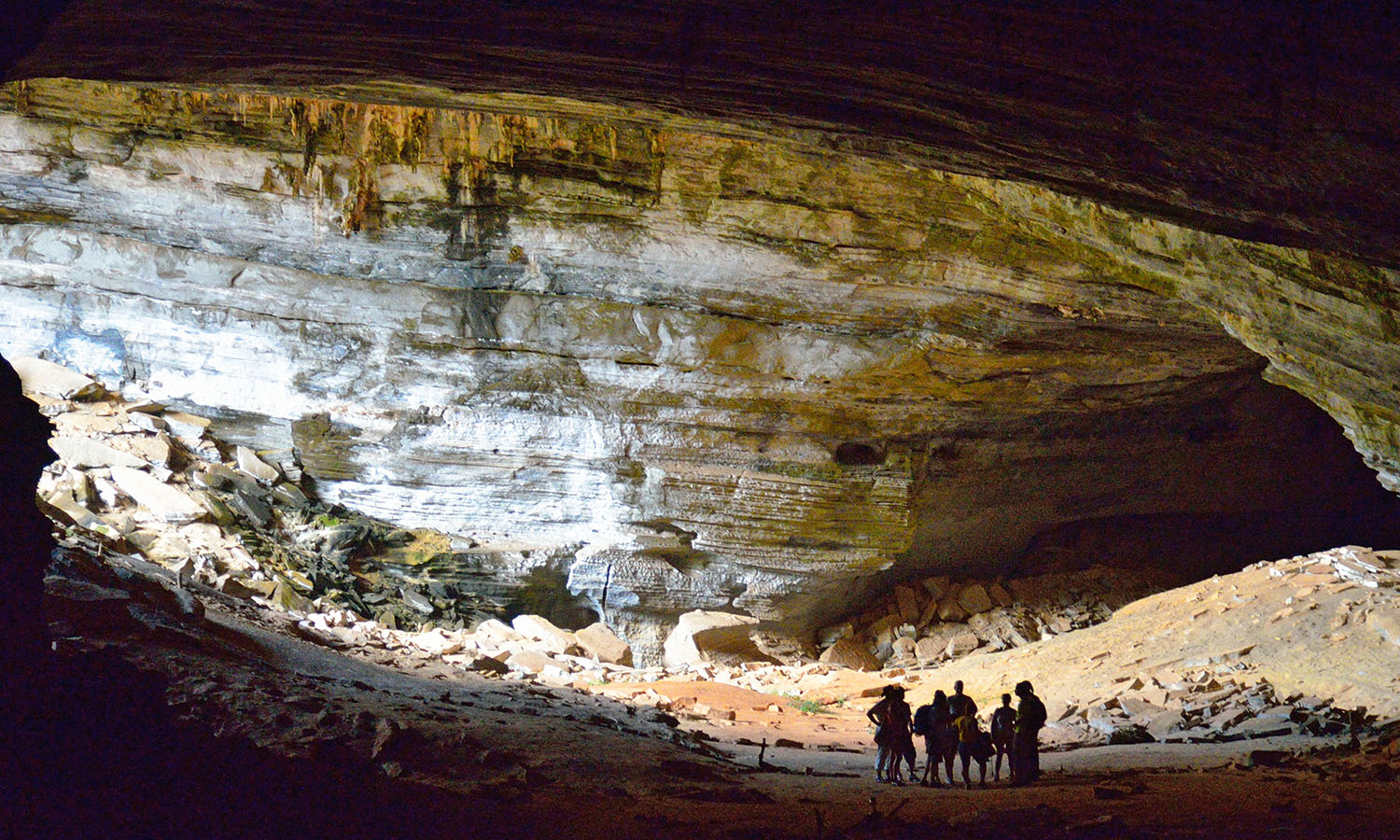
When we finally reach the cave entrance, Esmeraldo dons a dust mask. Why? Because, unlike most caves, Lapa Doce is not wet, slippery and cool, but dry, sandy and warm. Its floor is covered with fine silica particles that float when disturbed.
“You’re both OK,” says Esmeraldo. “It’s us guides who come here frequently who need protection. The dust can cause lung problems.”
But he still gives us a form to sign our rights away.
Despite being dry, the cave has stalactites, formed during the wet season that lasts for six months. They are thin and slightly crooked because of a faint yet permanent breeze we can only just perceive on our skin. The dimensions are staggering: you could fit a cruise boat in the first chamber and still have space to turn it around. The soft floor muffles our steps and magnifies the pervading stillness. Deep in the cave’s innards, rusty irrigation water from the farmland above has caused its most memorable sight: a curtain of stalactites white on one side and dark red on the other, like a bleeding wound.
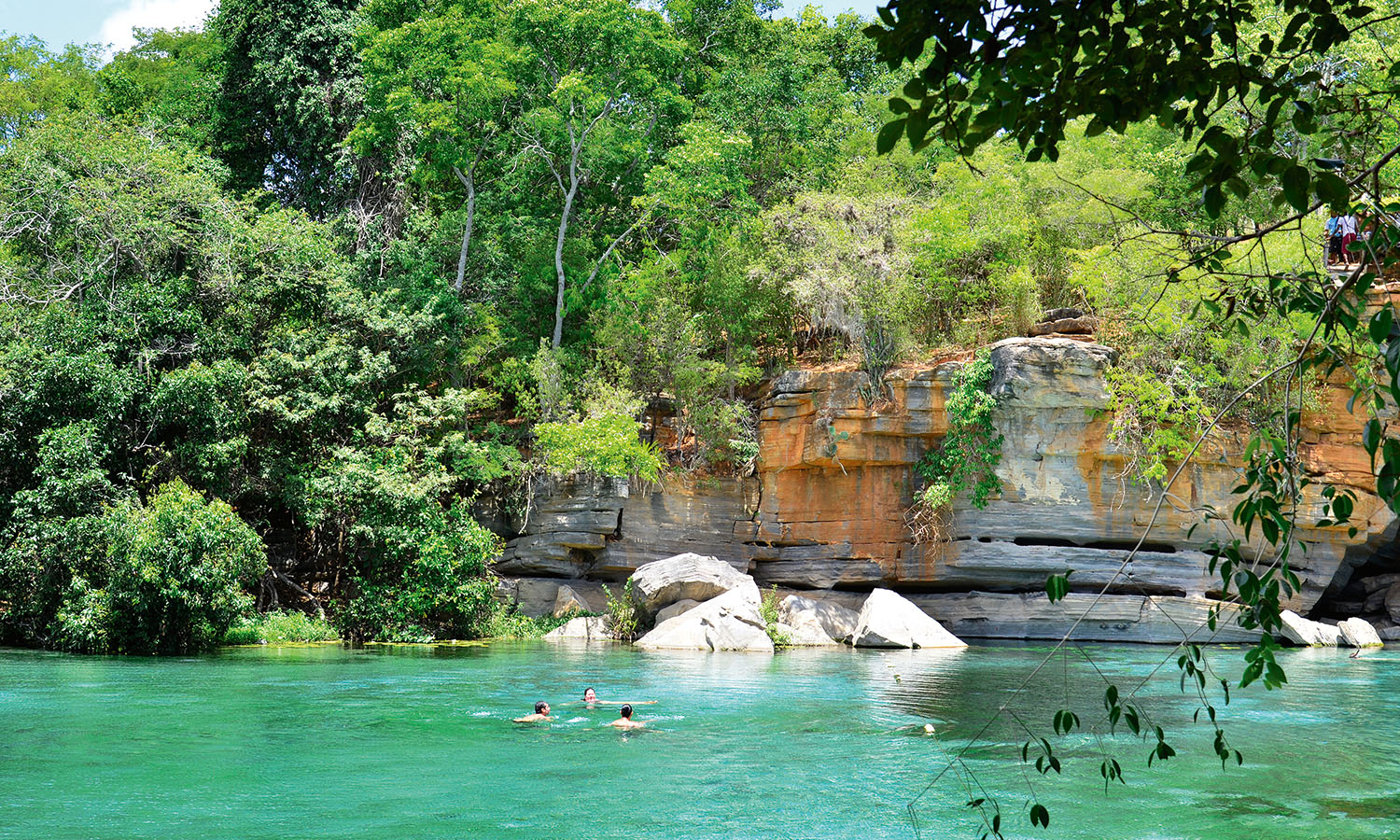
East of Lapa Doce, a new ecosystem merges with the Cerrado: the Caatinga, which brings to mind the chaparral of the American West. The vegetation is arid lowland scrub, while the soil is poor and acidic, giving rise to oases whose waters are as transparent as cellophane. Seven or so kilometres later, we reach Pratinha (Little Silver). It’s not really a lake but the mouth of a submerged river flowing out of a cavern decorated by xique-xique cacti, shaded by lianas and framed by water lilies. The river continues inside the cavern where you can snorkel underground, following a guide boat through a narrow channel. It costs extra, but it would, wouldn’t it?
Nils opts for snorkelling, while I lie in the sun outdoors and refresh myself in the lake. When he emerges, his skin full of goosebumps the size of my nipples, I know I made the correct decision.
Deep in the cave’s innards, rusty irrigation water from the farmland above has caused its most memorable sight: a curtain of stalactites white on one side and dark red on the other, like a bleeding wound.
“The water is icy cold and dark – you can’t see a thing,” he says with a disappointed expression. “But I’ve learned something interesting.” He dives in the lake and emerges with a handful of sediment. “Look closer,” he tells me.
I rub my fingers in the sand. It’s white and brittle.
“It’s dead mollusc shells,” he explains. “They live so far inside that no one has ever found a live one yet. They’re washed out of the depths of the cave when they die.”
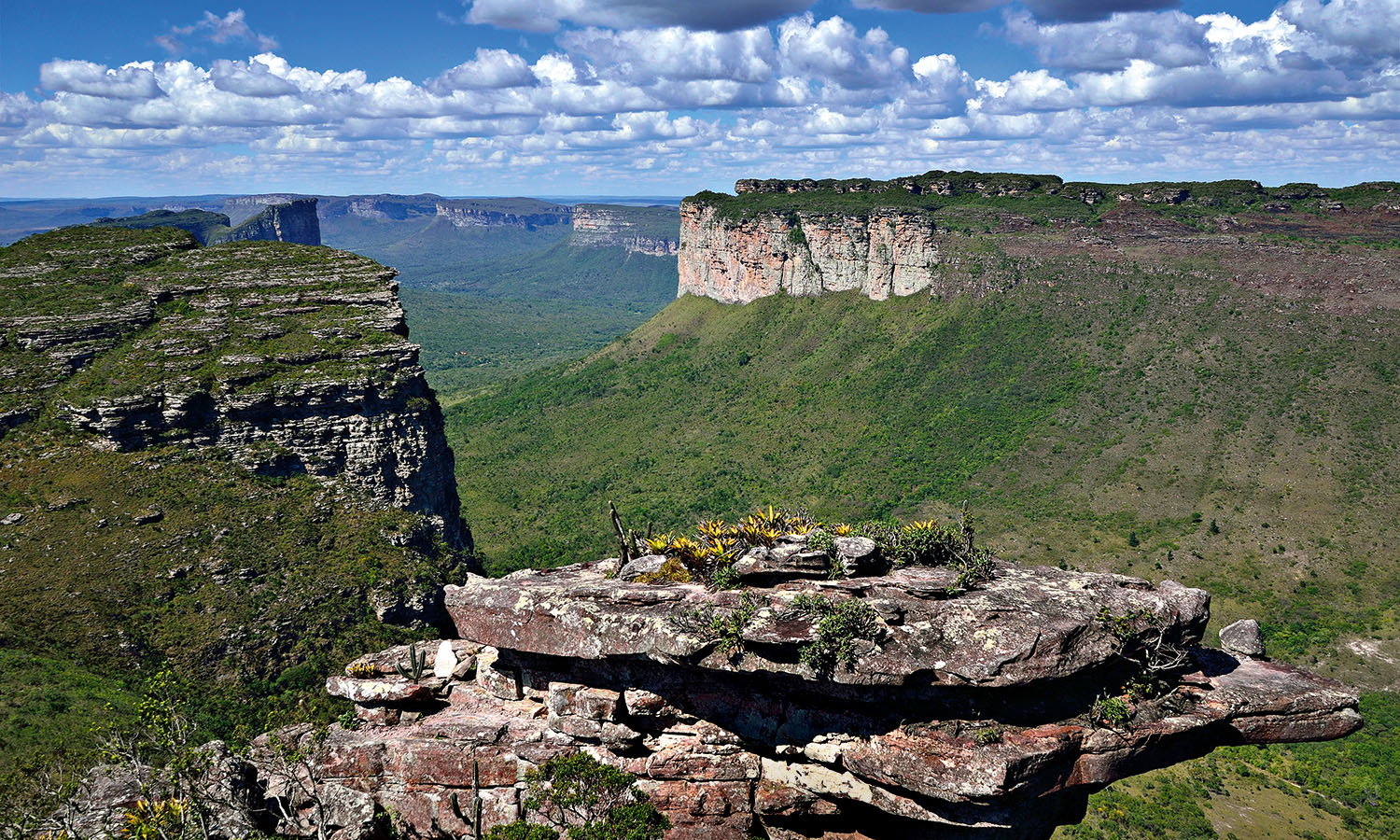
The next day’s hike is at the northern tip of the park. Around us are large craggy domes. We are aiming for the peak of Pai Inácio, the picture-postcard of the Chapada.
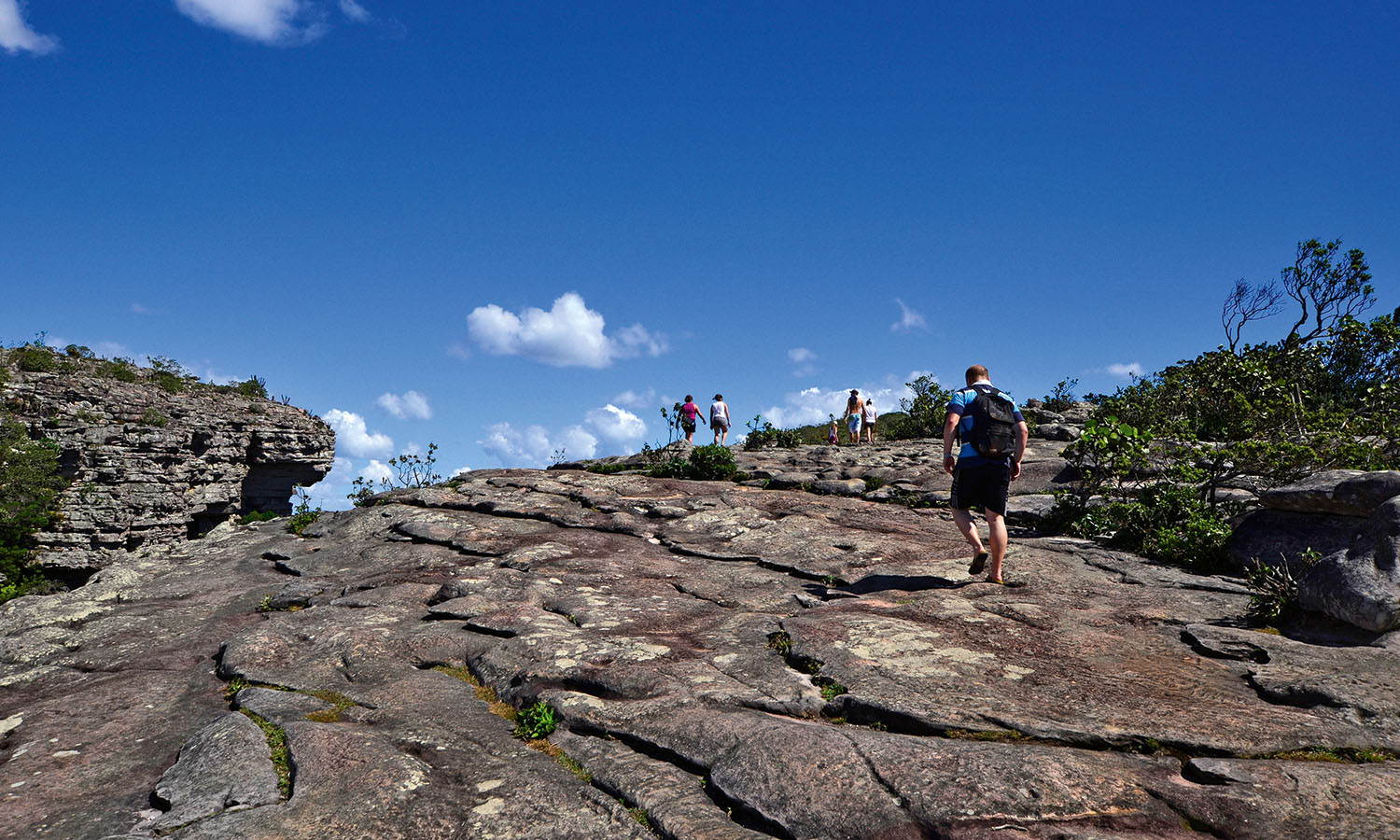
It’s a short and strenuous near-vertical climb to the top, but the eagle’s-eye view from the summit is worth it. The Sincorá range that forms the backbone of the park ends in solitary wind-eroded outcrops, each one an island with its own ecosystem. Indeed, nature has built a veritable Japanese rock garden at our feet. Each boulder is mottled with multi-coloured lichen, while bromeliads have taken shelter in every crack and depression. Plants here have waxy leaves to reduce evaporation and hardy roots that make the best out of the thinnest topsoil imaginable.
The careful hike down takes longer than the trek up. Sweaty and thirsty, we order juice at a mobile canteen. The trees of the Cerrado are thin and frequently stunted, their leaves slight and plentiful, and their fruit undersized and tart. There are the old supermarket faithfuls: mango, banana, coconut and papaya. But umbú? The size of a kiwi and with the skin of a smooth lime, this fruit has greenish-yellow juice that tastes like a sweeter version of grapefruit. I imagine it mixed with gin and order a second one.
We pick up the trail by Rio Mucugezinho, a river that crosses the park, with water the colour of tea. There is no trail other than the riverbank, necessitating climbing over large boulders, jumping across rocky slabs and negotiating tricky bogs under a gallery forest. We are followed by the screeches of a marmoset family we hear more than see. Every upwards glance is a sign for them to scamper quickly to the canopy. When we reach a bathing spot with a sizeable crowd of swimmers they disappear. But no, it’s not because they’re afraid of people. As Esmeraldo explains, this lucrative location is the home of a rival marmoset clan. These guys are much less circumspect, hanging from the branches of the trees trying to spot discarded biscuits.
Another 20 minutes and we reach Poço do Diabo (Devil’s Pool) where the Rio Mucugezinho forms a small cascade – if 20 metres is small for you. Nils and I jump in feet first, swim to the falls and let the current thump our shoulders for an environmentally friendly hydromassage. The water is cold and works wonders on our aching muscles. We are tired with satisfaction fatigue, for our bodies are responding to exertion with a heavy dose of adrenaline.
That night, exhausted, I drink Nils under the table. Months later, I find out that I made him miss his early bus to Salvador.
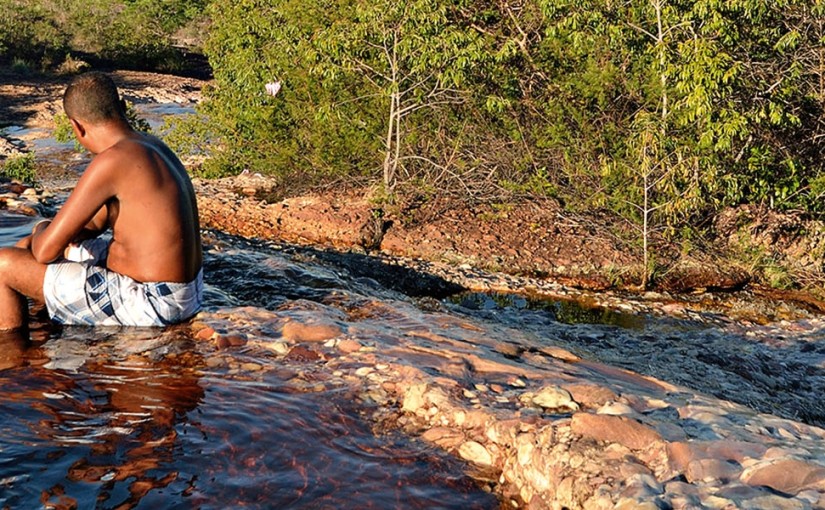
I spend my last day in Lençóis walking around the town, taking in its imposing, diamond-baron palaces, many of them now neglected and decomposing under the tropical sun. I end up making the short trek to the Serrano waterholes – shallow rock pools where the constant swirling movement of the Lençóis River turns them into natural jacuzzis. I am the only gringo there, but have visions of a future spa right by that copse of trees on my left. It’s going to call itself an ecolodge because it will be built from local, termite-resistant braúna tree. But make sure you beat the spa there.
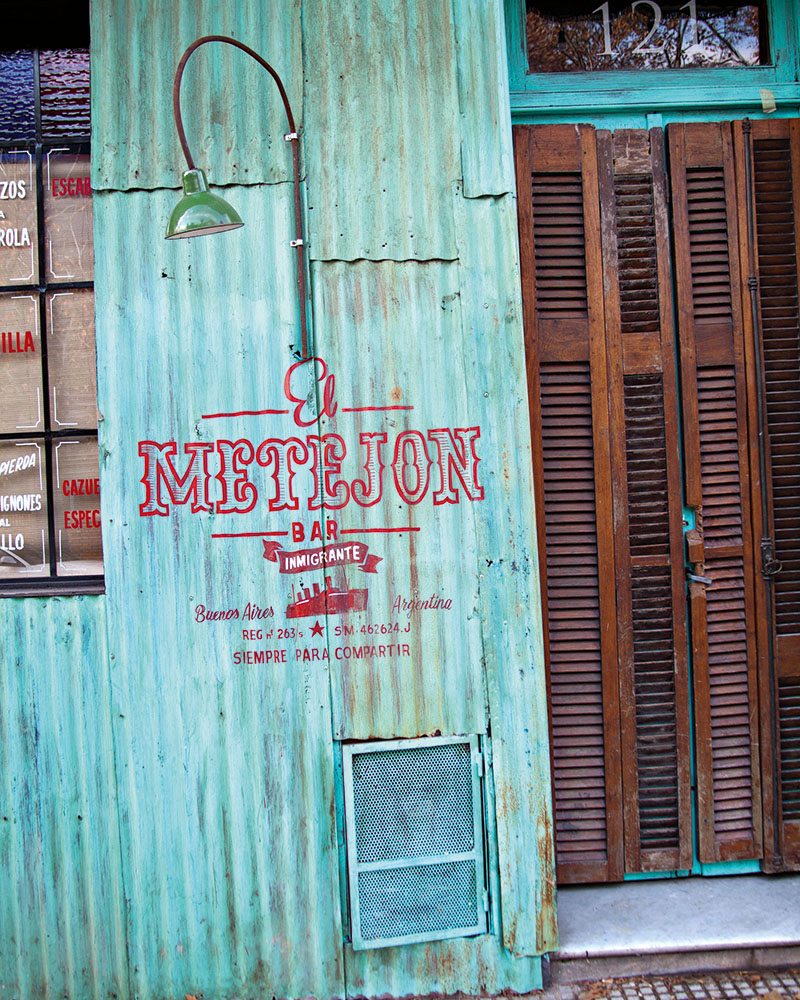
The windows are shuttered and a lopsided ‘Closed’ sign hangs in the front door. Almost hesitantly, our guide presses a buzzer. Moments later a burly bloke in a stained black apron appears in the doorway. Glancing furtively up and down the street, he ushers us in. Anyone watching might suspect a shady drug deal was about to go down.
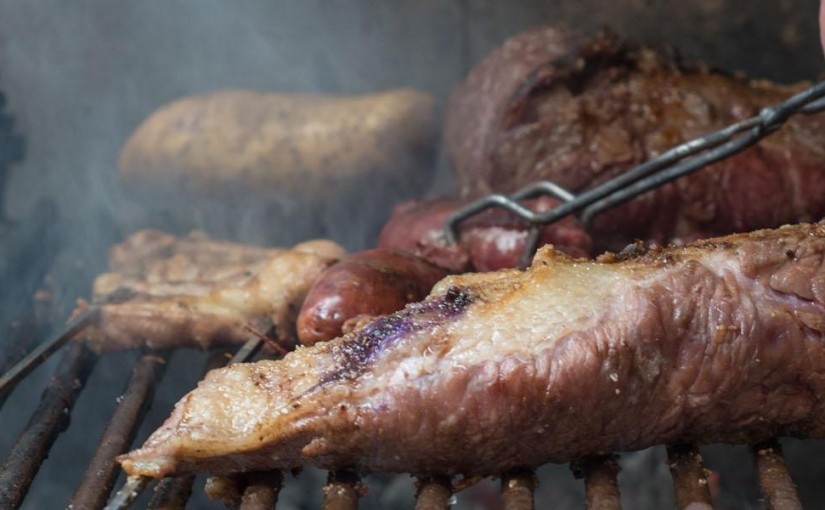
Inside, the restaurant is already filling up. The aroma of seared meat wafts over from a grill against the far wall with its bed of glowing charcoal.
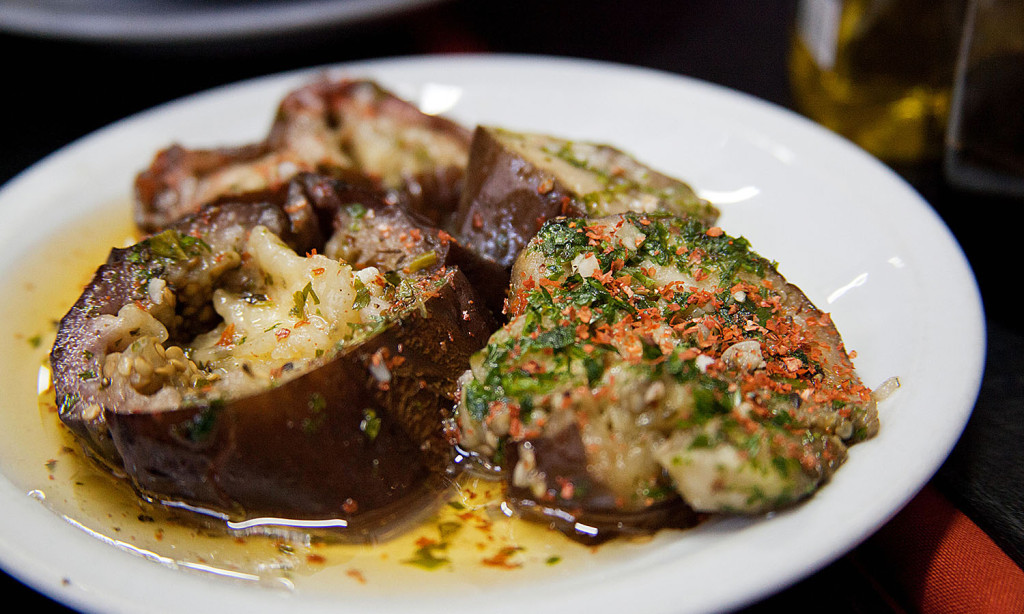
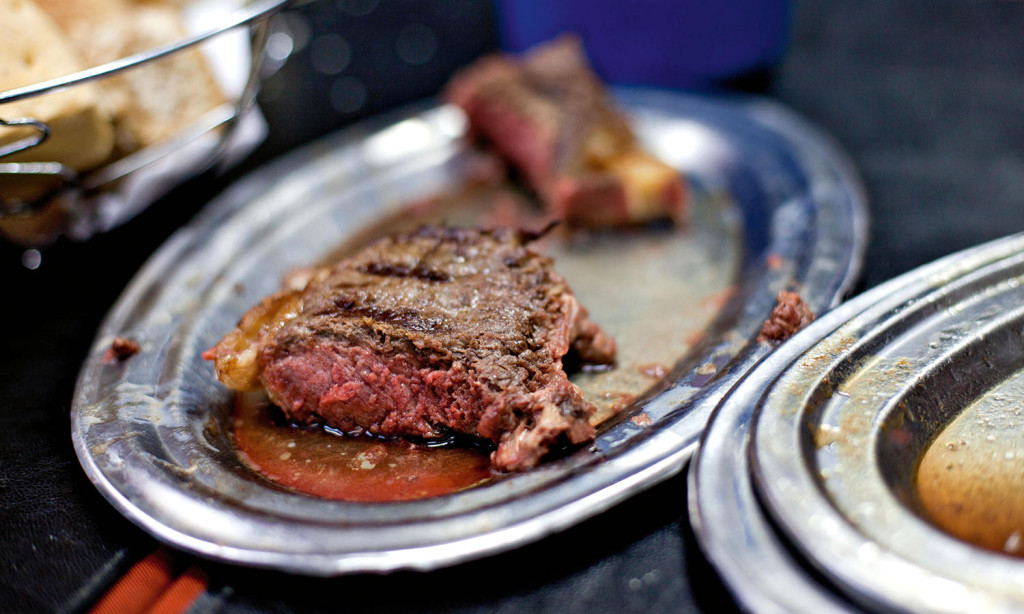
We’re directed towards a table where bottles of malbec are slammed down in front of us. Service is curt and efficient; social niceties are clearly unnecessary. When the food arrives it’s clear why. Succulent pink cuts of steak are served alongside provoleta, cheese topped with chilli and oregano and heated under the grill until crispy. Our other side dish is berenjena al escabeche, eggplant marinated in garlic, red pepper, vinegar and olive oil. It has a rich, tangy flavour and some serious attitude; proof that not all eggplant dishes are for people who knit their own sandals.
Food in Argentina doesn’t get any more traditional. We’re inside a parrilla, the name given to a no-frills Argentine steakhouse that’s as synonymous with local culture as tango or the Beautiful Game.
It’s estimated that more than 50 per cent of restaurants in this country are parrillas (named after the grill) and Argentines are currently the world’s second largest consumers of beef, wolfing down an average of 58 kilograms each a year.
The meat itself is seasoned only with salt and pepper – “otherwise you’re weird,” says our waitress – and cooked at a low temperature over hot coals to prevent it from becoming tough. Despite the use of charcoal, most parrillas tend to avoid smoky flavours. Essentially, it’s the opposite of Texas barbecue.
While parrilla restaurants are ubiquitous throughout Buenos Aires, it’s important you choose carefully. This particular place is so acclaimed the owners change the name every three weeks to keep it strictly for in-the-know locals. Ordinarily I would never have found it, but I’m here as part of a small group tour with David Carlisle, an American expat and former wine merchant who decided to set up Parilla Tour Buenos Aires after being repeatedly badgered for food recommendations. His business partner, local boy Santiago Palermo, is probably the only reason we’re allowed on such hallowed turf.
Having gorged ourselves on tender cuts of steak and malbec, we push on to La Cañita another traditional parrilla in the Las Cañitas section of the Palermo neighbourhood.
“We pick these places based on authenticity and quality of food,” says Carlisle, who also admits some of the restaurant owners laugh at the idea of his tour since locals will regularly spend three or four hours in one parrilla rather than experiencing several in such a short time frame.
Too stuffed for another juicy beef onslaught, we sample a handful of other bite-sized local classics, including choripán, a simple chorizo sandwich. It’s served with chimichurri sauce, an intoxicating blend of chopped oregano, parsley, diced capsicum and garlic soaked in olive oil and vinegar. It’s a favourite pairing with steak – the meat is so sparsely seasoned, particular attention is given to concocting sauces with genuine punch.
Down the street, we pause outside La Fidanzata, famed for its legendary empanadas. Deliveries are popular with porteños (residents of Argentina) and the shop is a firm favourite with local businesses. What sets La Fidanzata’s bad boys apart from all the others is the filling. The cooks here use real hunks of steak rather than ground beef and the difference is palpable. It’s a bit like comparing Shane Warne and Xavier Doherty. With Carlisle holding out a tray piled high with a batch straight from the oven, we rip into them like a pack of wild dogs.
Trying hard to banish Monty Python’s “wafer-thin mint” sketch from my mind, we round off the tour at La Cremerie, one of the city’s most revered heladerias (ice-cream parlours). Thanks to a history of Italian immigrants – many came here in the 1870s – porteños have developed a fetish for ice-cream and this shop contains enough outlandish flavours to facilitate some kind of nightmarish Sex and the City marathon.
Like a swollen, contented pig, I hoe into a double scoop of cookies ’n’ cream and tiramisu flavour. As with all the food today, it’s nothing short of sublime.
And while it’s true there’s no shortage of parrillas to choose from in Buenos Aires, the insider knowledge definitely makes all the difference.
When grilling meat in Argentina, the only seasoning used at the time of cooking is coarse salt called sal parrillera. If you do want a little bit of extra flavour with your meat, one of the most traditional condiments you’ll find at parrillas throughout the country is salsa criolla, a fresh and flavourful sauce made of raw vegetables, oil and vinegar. Below is a great recipe for making your own salsa criolla at home.
INGREDIENTS
1 onion, finely chopped
2 red capsicums, finely chopped
1 tomato, seeded and finely chopped
1 clove garlic, finely minced
1 tbs parsley, finely chopped
½ cup olive oil
¼ cup white wine vinegar
METHOD
Combine all the ingredients and season to taste with salt and freshly ground black pepper. You can serve the sauce immediately, although resting it for an hour or two will allow the flavours to develop.
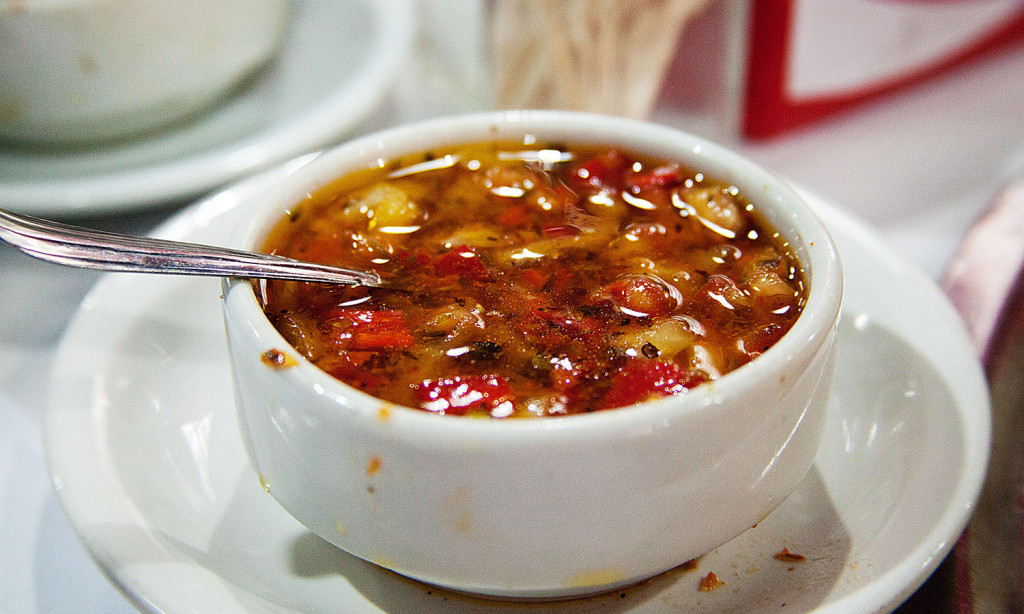
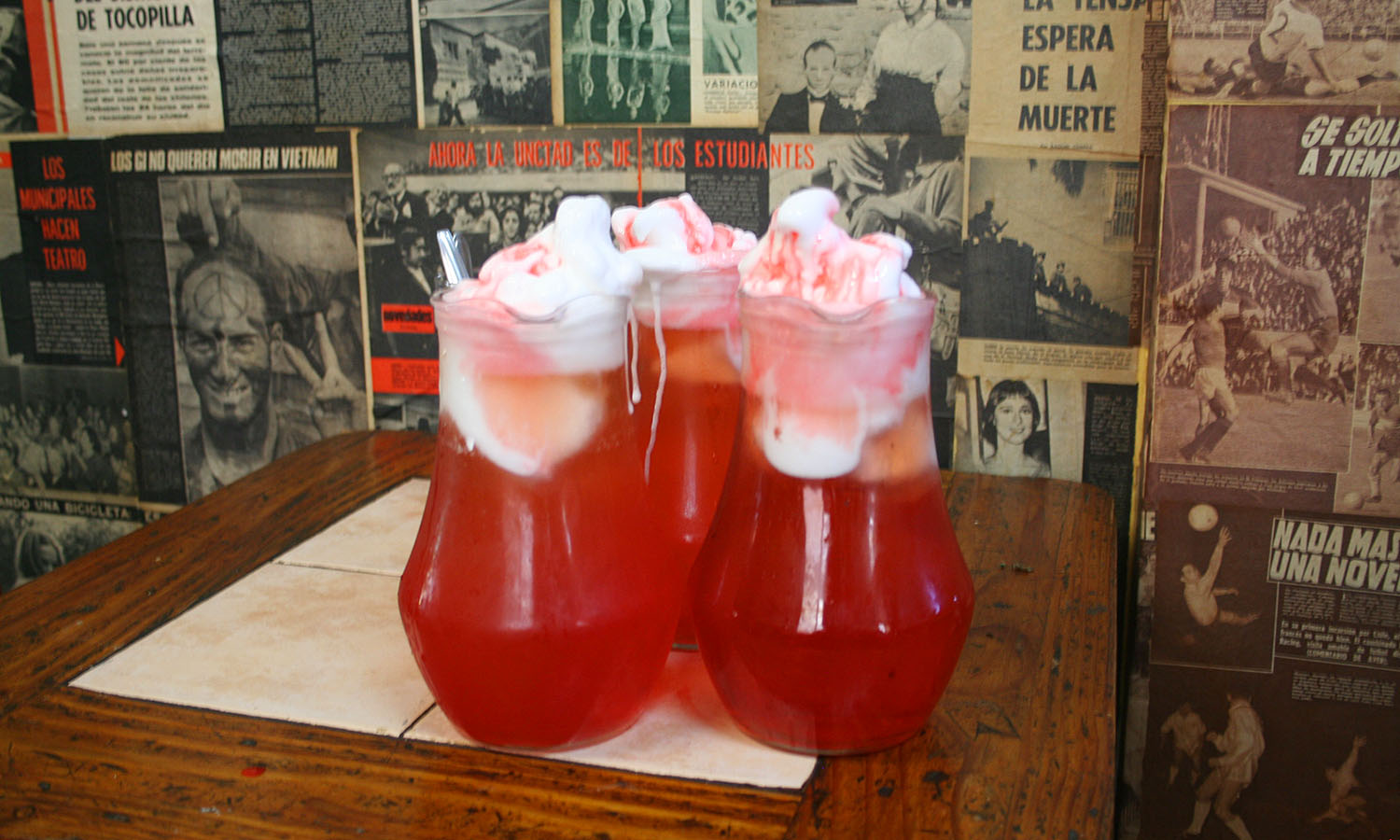
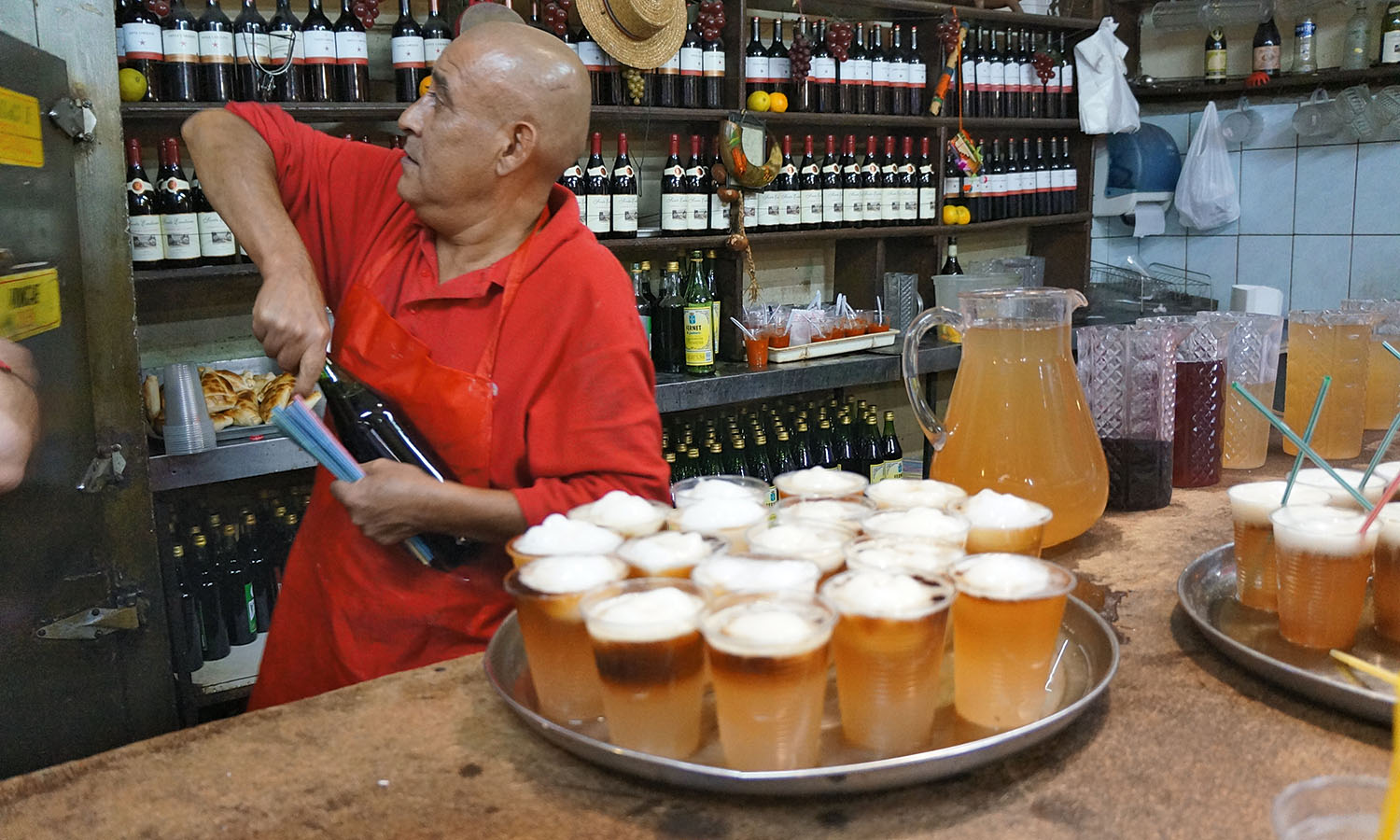
Encounter the only earthquake you ever want to feel at one of Chile’s watering holes. As local legend goes, the terremoto (earthquake) cemented itself in the nation’s boozing scene in 1985 when a German journalist reporting on a quake was served pipeño (sweet fermented wine) bastardised with a dollop of pineapple ice-cream. “This truly is an earthquake!” he is said to have exclaimed on tasting the strong brew.
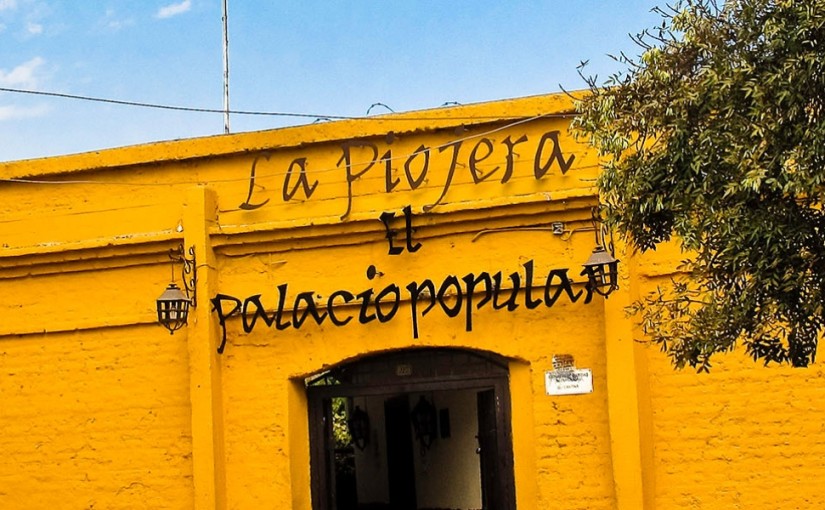
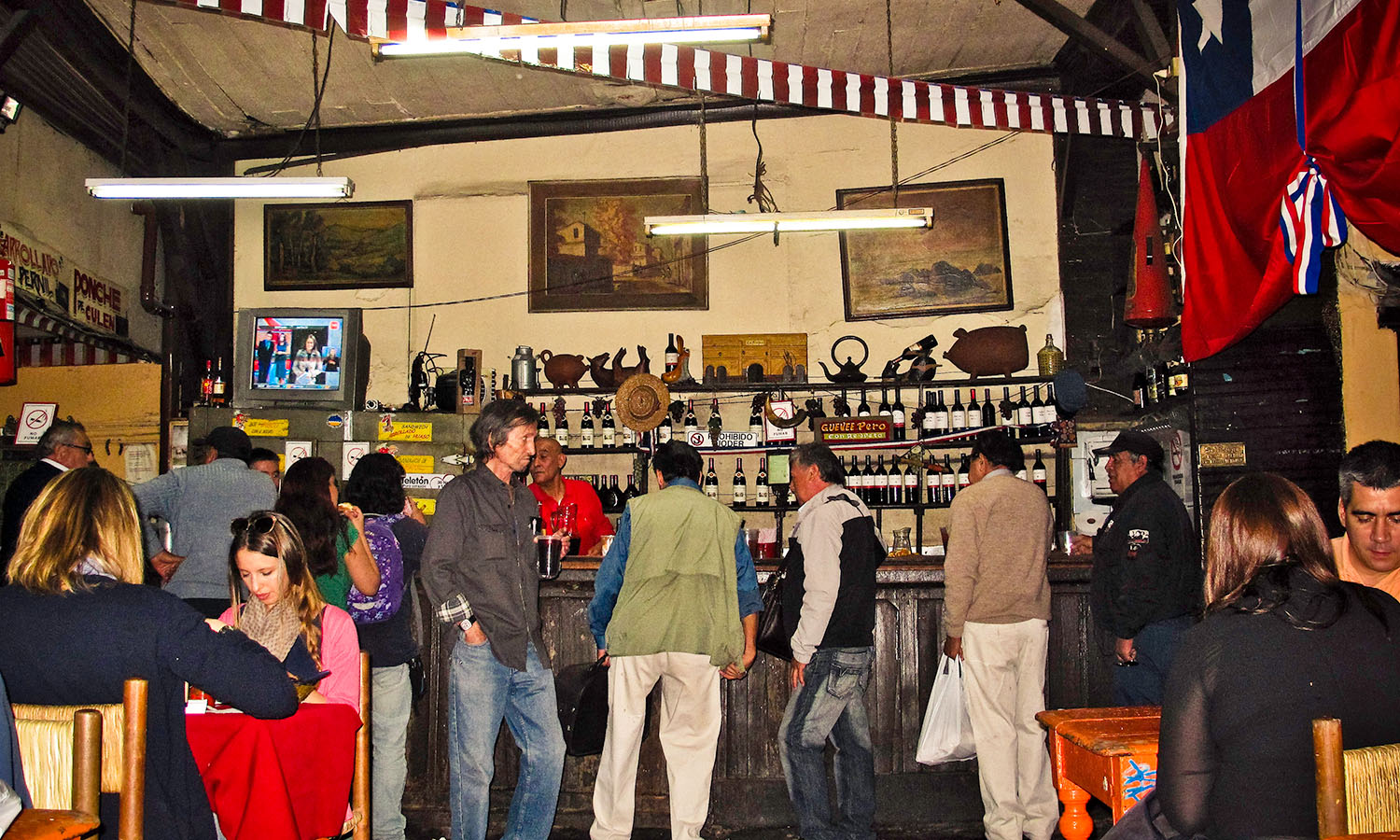
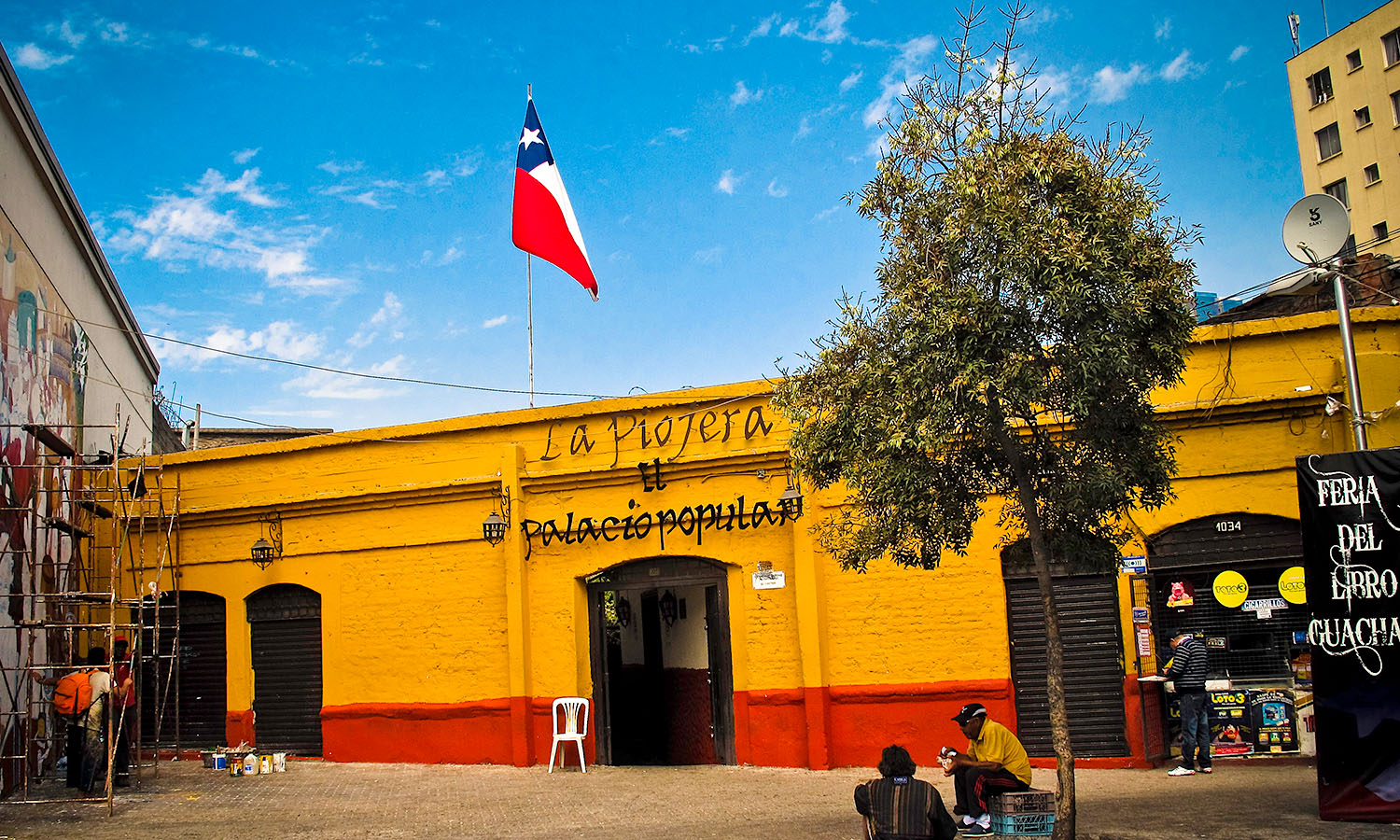
Try it at La Piojera, a grimy but lively establishment in Santiago. Previously named Restaurant Santiago Antiguo, the working-class joint was unintentionally anointed La Piojera, or ‘fleahouse’, by then president Arturo Alessandri during a visit in 1922. The jibe stuck. These days a dash of pisco or fernet is added to its terremoto mix, and it’s still strong enough to leave you legless.
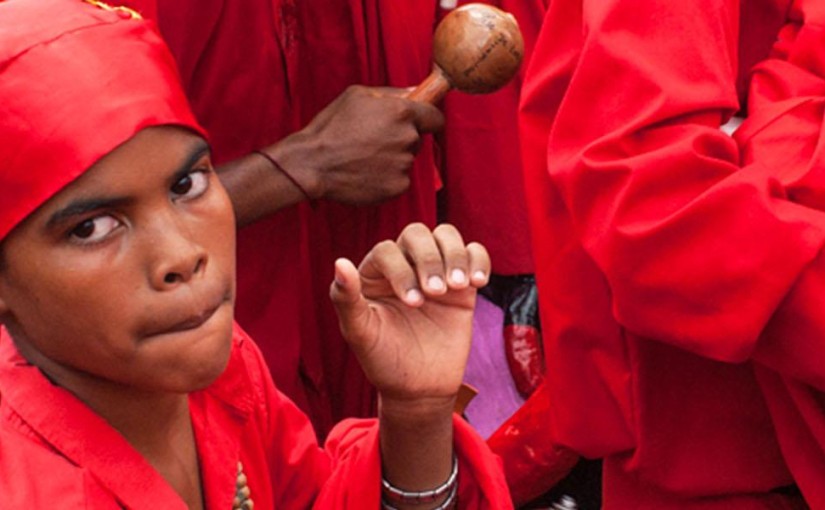
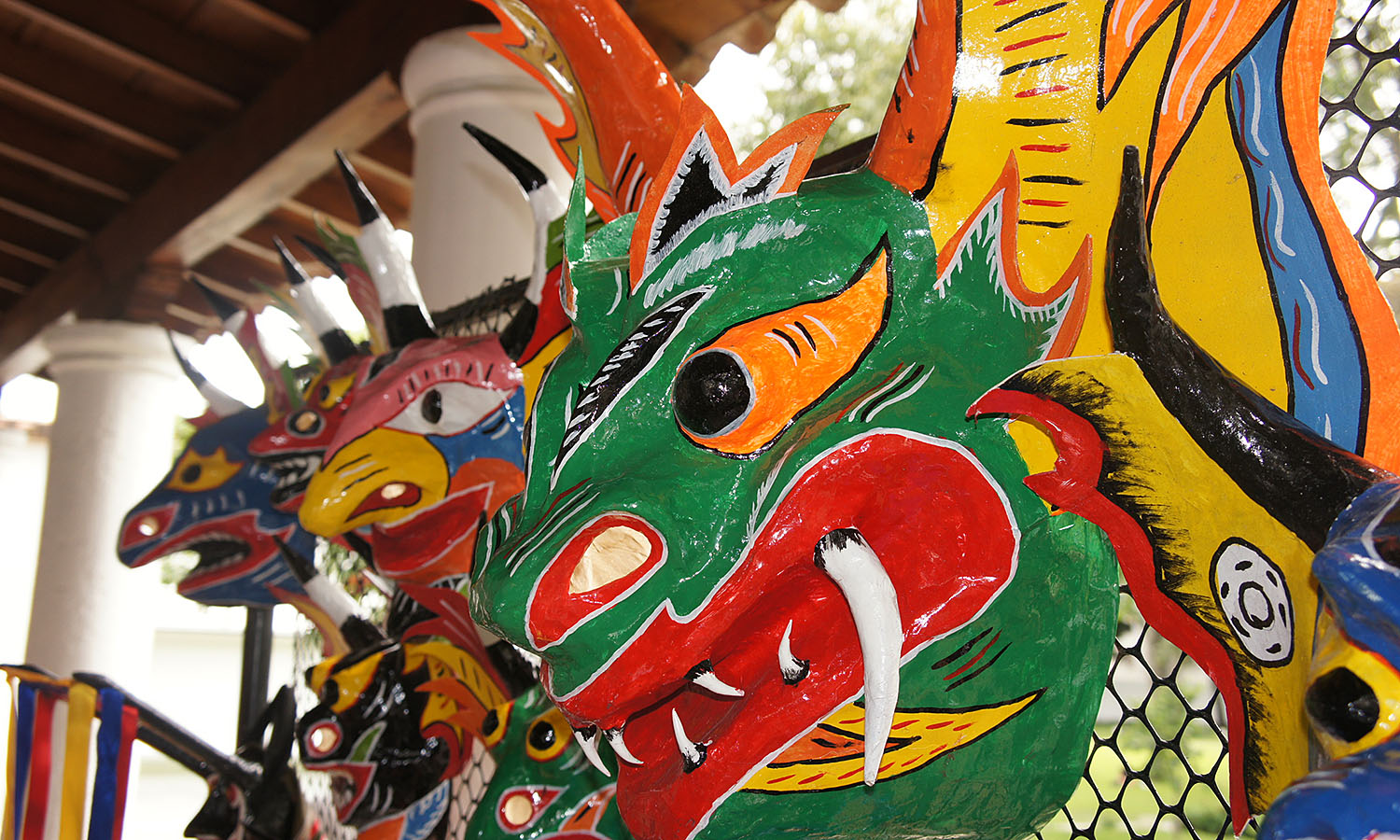
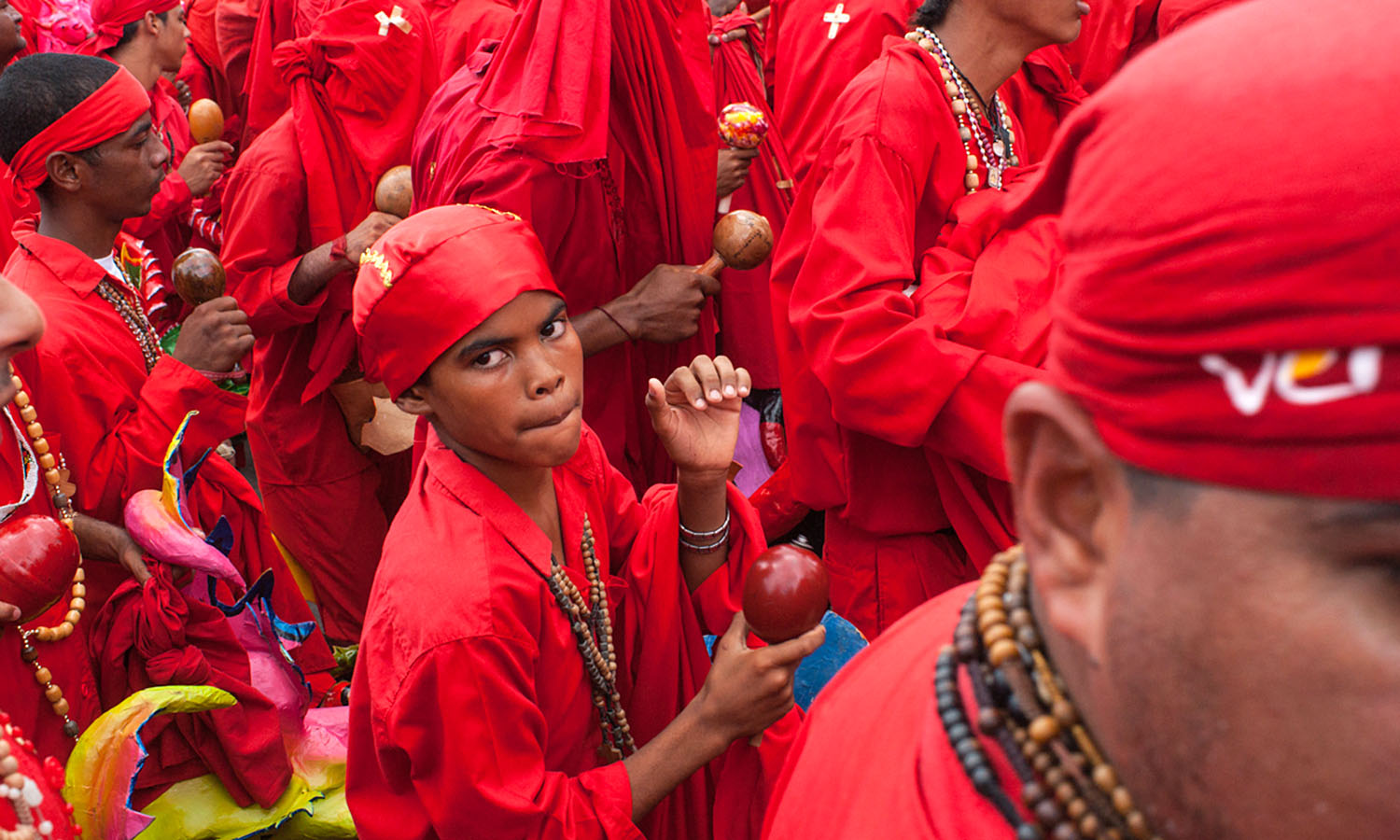
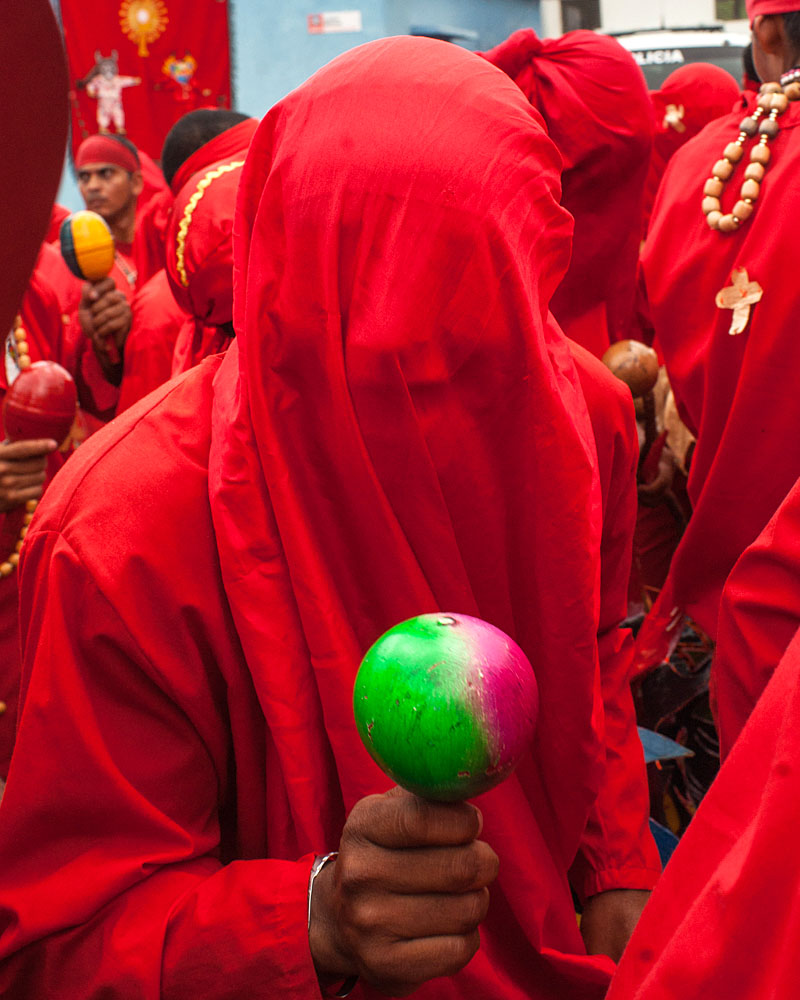
Dancing devils at a religious festival designed to commemorate the triumph of good over evil? What?! It might sound like Satan’s sidekicks have stolen the show, but the Diablos Danzantes del Yare (Dancing Devils of Yare) celebrate the symbolic chasing away of evil spirits and purifying the community, a ritual so full of frenzied passion it’s become the biggest festival in Venezuela.
Celebrated throughout the central coast regions, the festival sees locals dressing up in fiery-coloured, elaborately embroidered costumes and fierce devil masks. Dances are performed mostly by men, with groups strutting through the streets with crucifixes, rosary beads and maracas to ward off evil spirits as they make their way to church. Here, the devils surrender in the final act of good triumphing over evil. Dancing with the devil has never been so exciting.
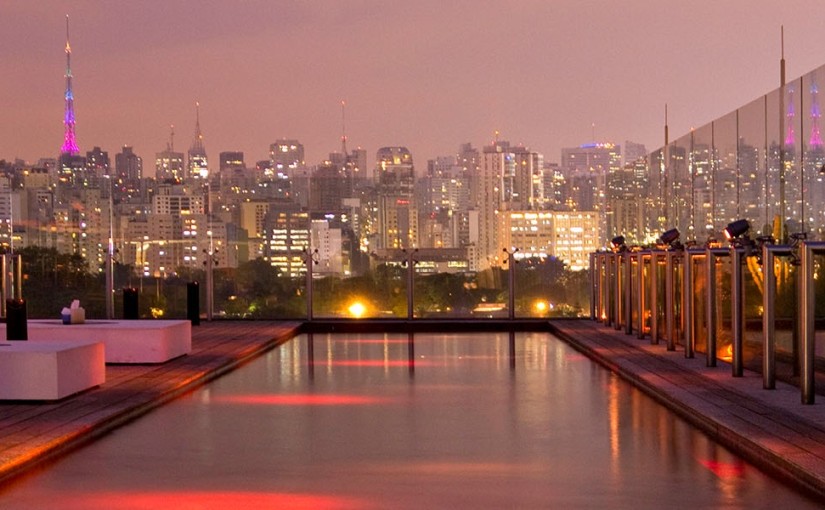
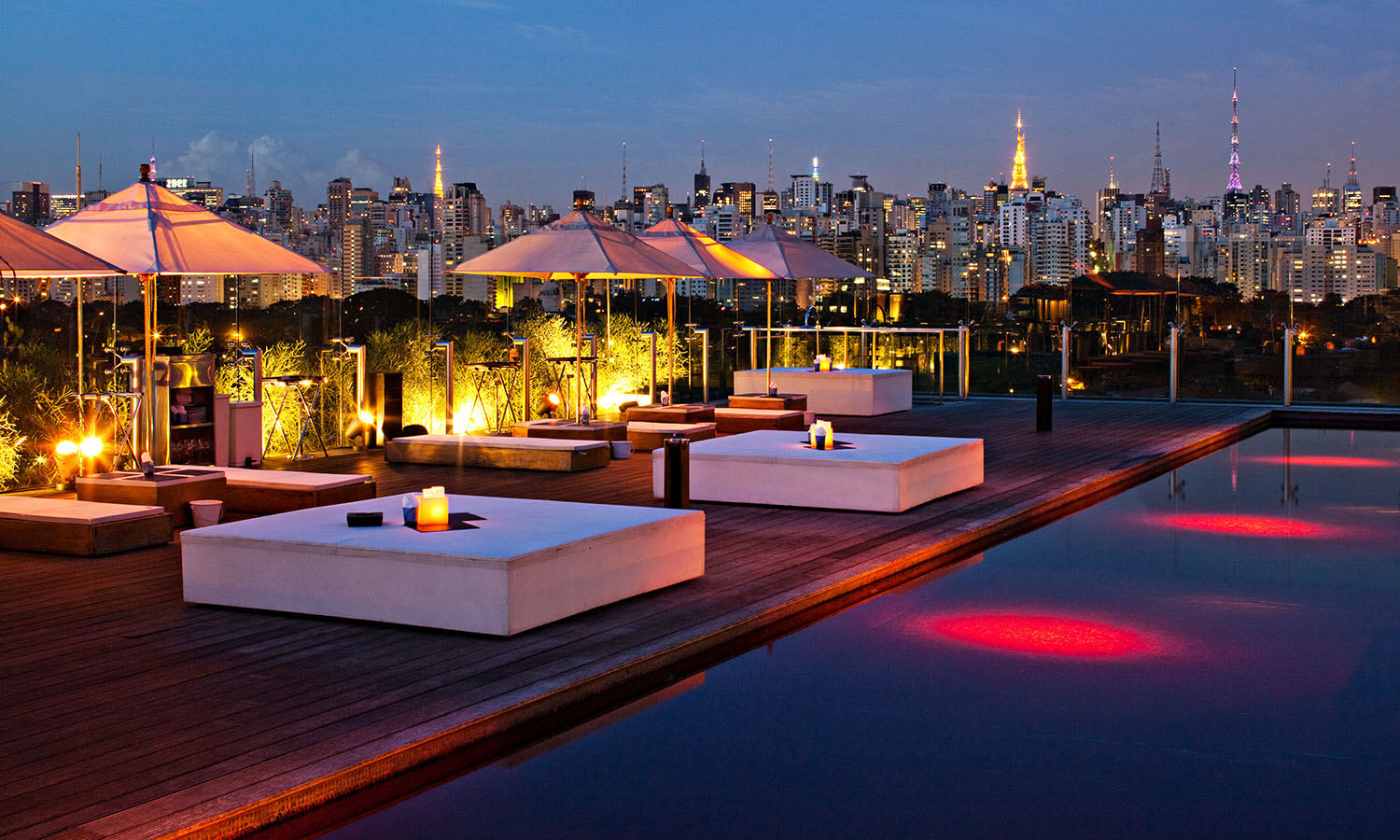
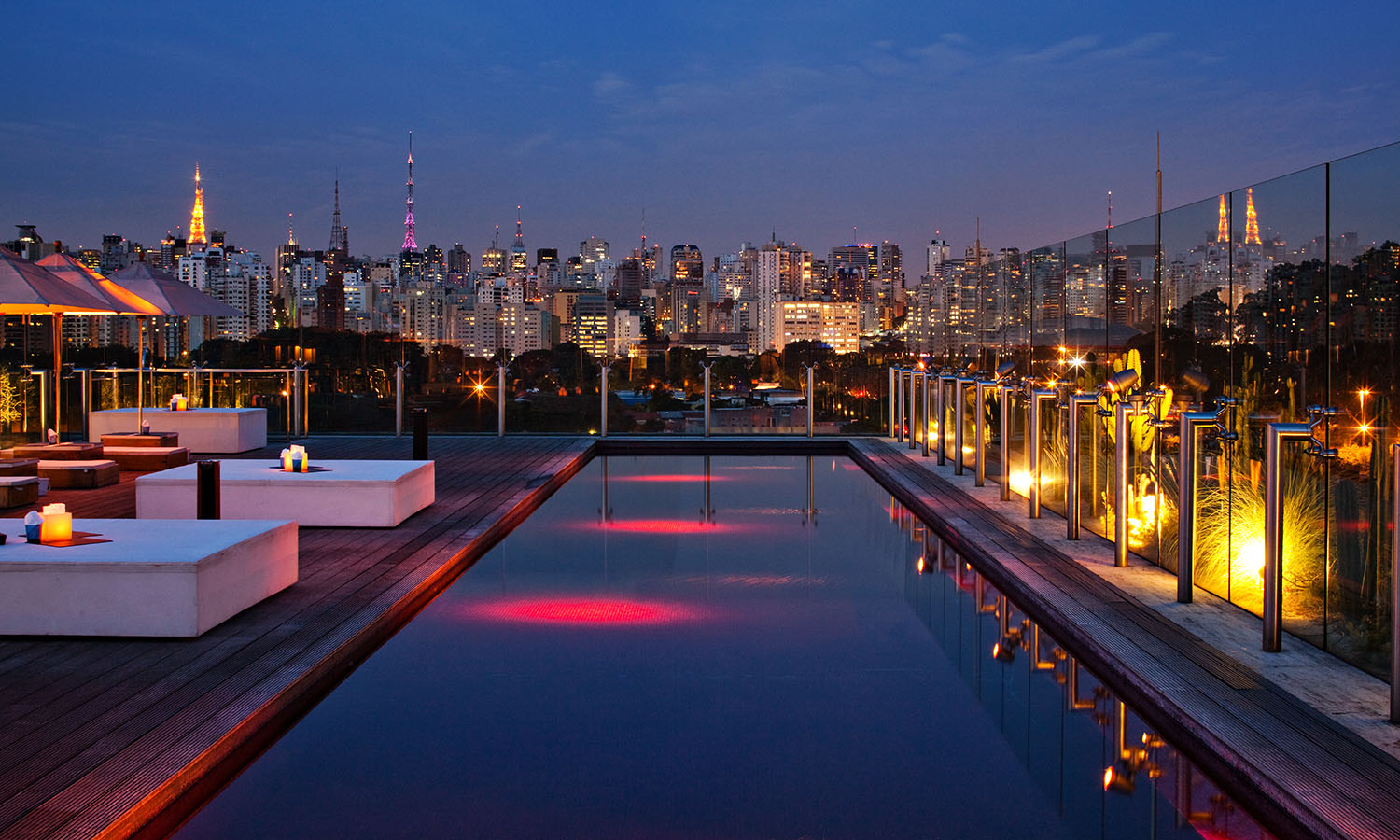
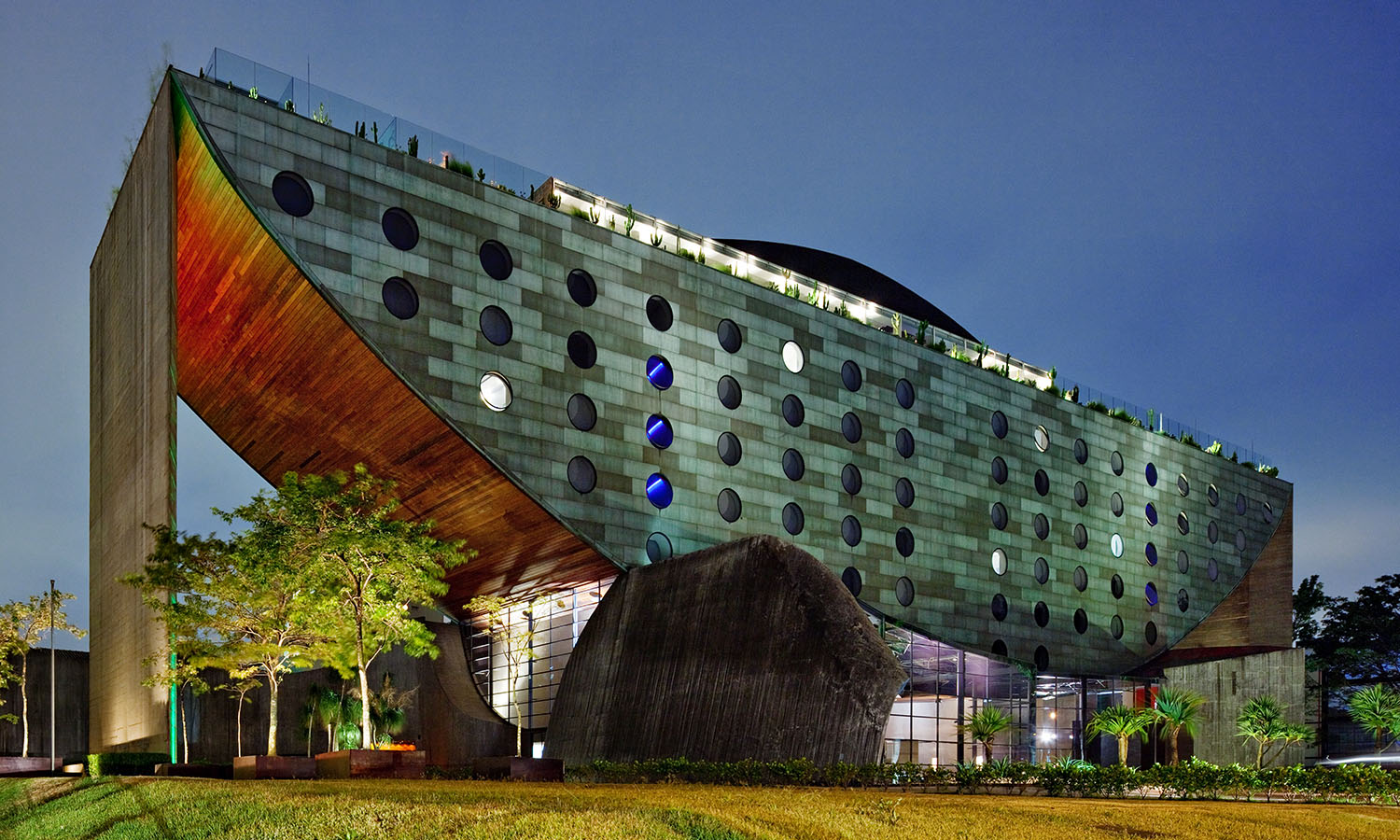
What better way to enjoy the sunset in São Paulo than from atop a hotel shaped like a slice of watermelon? Situated on the rooftop of five-star Hotel Unique, this fruity beauty oozes glamour. Take the panoramic elevator to the top and step into a sophisticated sky of ambient beats, cosy lounges and a glowing crimson pool, complete with underwater sound system for your subaquatic pleasure. Come early to beat the queues and grab a seat for sundown cocktails.
Drinks aren’t outrageously expensive, and the glitz and 360-degree views over the city’s 20 million inhabitants make it worth the visit. If you’re feeling peckish, order some treats crafted by French celebrity chef Emmanuel Bassoleil, who commands the adjoining restaurant. Grab an apple mojito and settle in for an evening of sky high jinks.
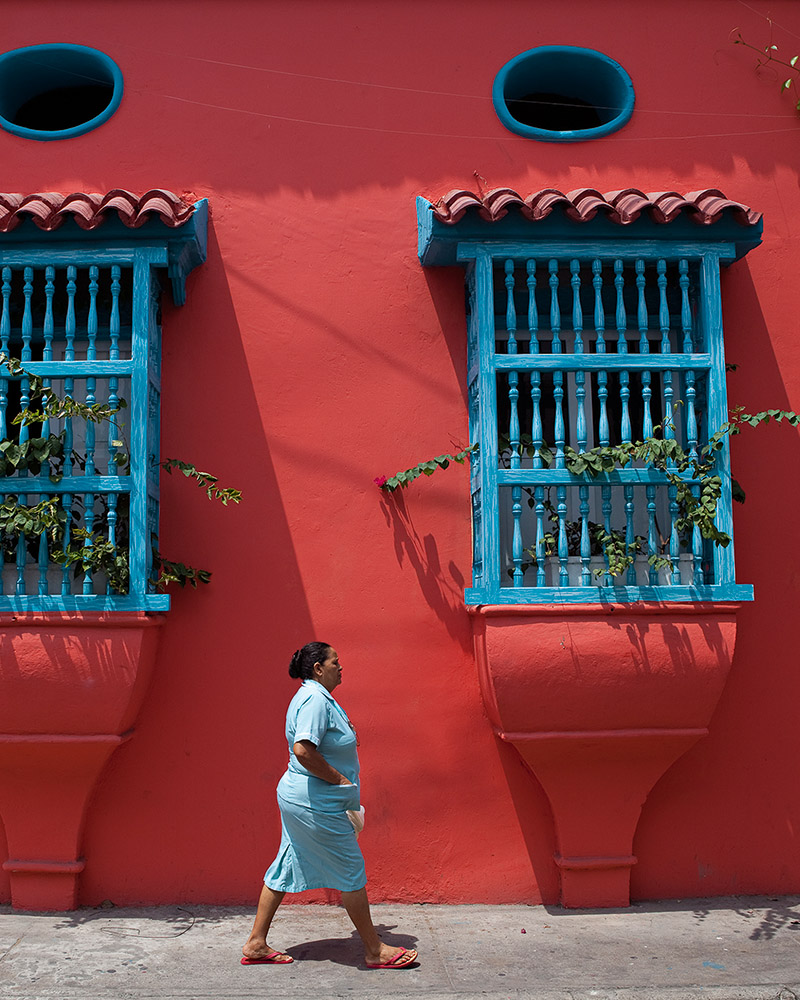
Even from two blocks away I can tell it’s live salsa. I’m on Calle de Media Luna, the street where Africans in chains were once marched straight from the slave ships. Centuries later, it’s their conga-driven percussion that’s spilling onto the footpath and luring me inside Café Havana. I’ve officially entered the Cuban sphere of influence, even though I’m more than a thousand kilometres from the island Columbus once named Isla Juana. This is Cartagena de Indias, historic capital of Colombia’s Caribbean coast and a surreal tropical canvas for 500 years of conquistador invasion, slave rebellions, smuggling, piracy and several wars of independence.
At the bar I order my first mojito and take in the clave and contrabass. After my second I’m stepping on the one and pausing on the four. The origins of salsa – both the music and dance – are heavily disputed, but nobody denies it is a mix of transatlantic traditions that, once thrown together in the Americas, found an intoxicating new expression. Here, the percussion and full-body dances of West Africa met vibrantly with the brass, strings and implied movement of European ballroom. As I discover in the coming days, however, the broader narrative of music extends to all the arts in Cartagena.
Guiding me through the heart of the UNESCO World Heritage walled city is Rainbow Blue Nelson, a former journalist and local of more than 10 years. After signing up for a walking tour of Cartagena’s art scene, I’m thrown by the fact he’s British (his name, which he puts down to his parent’s hippie phase, doesn’t help), but sometimes it takes a bilingual expat to know what’s worth pointing out to foreign eyes. “When I first visited in 1996,” Nelson says, “I was blown away by how unlike Colombia is to other countries on the Latin American circuit.” He stayed for a girl and over the years has watched his adopted home emerge with new hope from the shadow of the drugs trade conflict.
I glimpse the shadows of young lovers stealing kisses between ancient cannons on the city wall and, at street level, mimes perform for crowds sipping cocktails.
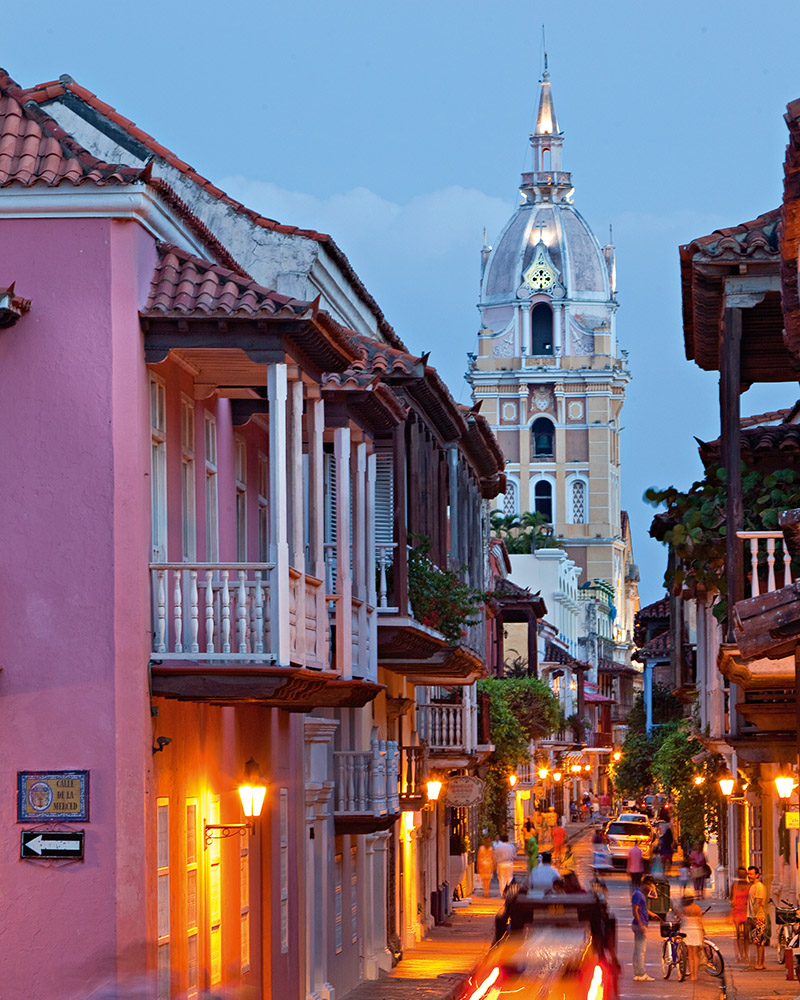
The first theme of the tour is performance, and the first stop is Teatro Heredia at the seaside end of town. Built with a modest exterior in 1911, it secretly guards a beautifully chandelier-lit, oval-shaped interior and frescoed ceiling inspired by the Great Theatre of Havana in Cuba. In January it hosts the Cartagena International Music Festival, but each March the world’s film stars land in its three tiers, drawn by the city’s annual International Film Festival. And the notables don’t just fly in, fly out. On the street Nelson points out the private residences of Jagger, Bieber, Sheen and Gibson – alongside Colombia’s elite, such as the late literary great Gabriel García Márquez – who’ve chosen to acquire and immaculately restore the pastel-coloured Spanish Colonial and Republican-era buildings that typify the old city.
From the 11-kilometre-long city wall, we descend a staircase into a dim underground chamber that opens as a pop-up performance space and art gallery. In the past, however, it was prized for servicing the Castillo de San Felipe (city fortress) with fresh water during the many pirate sieges. All the most notorious pirates (and privateers) of the Caribbean featured on the roster. French Huguenot Robert Baal was the first to plunder Cartagena; he was followed by Englishman John Hawkins and, more notoriously, his nephew Francis ‘El Draque’ Drake, who took the town and held it to ransom for 107,000 pesos in 1586. Timber-shivering names like Henry Morgan, Bernard Desjean and Martin Cote followed El Draque – with varying degrees of terror and pillage – until the final and greatest siege saw Cartagena face an unprecedented combined British–American force of 186 warships and 27,000 soldiers. The year was 1741, but the ensuing Battle of Cartagena would stand as the largest amphibious attack in history until the Invasion of Normandy in 1944. Defending the town was maimed Spanish admiral Blas de Lezo (who had only one arm, one leg and one eye), and a local garrison of a mere 4000 men and six ships. It must have seemed a miracle from the Virgin when they sent the Anglos home vanquished, but the truth is a powerful ally stepped in to save the day: yellow fever.
The focus of Nelson’s tour is visual art, and it’s here he reveals a world invisible from the street. At the former personal residence of the Spanish Viceroy (now a university that hosts a gallery on the ground floor) we walk into the middle of a boisterous student concert, while at the Sofitel Legend Santa Clara I meet Mateo, a resident toucan who lives in the restaurant garden. Nelson points out a huge piece by Olga de Amaral, an internationally acclaimed Colombian artist and one of the few Latin Americans with work in both the Met and MoMA in New York, as well as in a host of prestigious permanent collections worldwide. She paints real gold onto tapestry, and many of her works aim to communicate how mineral wealth has ripped apart the fabric of pre-Columbian society.
It’s a reminder that while the Spanish often played victim to pirates from other European powers, there was really no honour among thieves. After all, it was their vast, barbarically plundered riches from the Indigenous American civilisations that first put them in the crosshairs of corsairs.
Towards evening I glimpse the shadows of young lovers stealing kisses between ancient cannons on the city wall and, at street level, mimes perform for crowds sipping cocktails. We have just enough time to visit a contemporary gallery before close of business. At the newly opened NH Galería (sister institution to New York’s Nohra Haime Gallery), I’m captivated by local artist Ruby Rumie’s installation Hálito Divino. It’s a project she designed as catharsis for female victims of domestic violence, featuring 100 ornate ceramic vessels, each filled with a single experience recorded personally by interview. Downstairs, a pre-Columbian Bart Simpson by Nadín Ospina rests nervously on a plinth, stared at menacingly by Nicola Bolla’s crouching, anatomically perfect puma made from black Swarovski crystals. In different ways the work here reflects why international interest in contemporary Colombian art is surging. But my most unexpected find is one of Nelson’s favourites: Rafael Dussan, a former priest who now makes a living by painting ‘ecstatic’ nuns. “He gave up his vows and just went for it,” Nelson chuckles with a shake of the head.
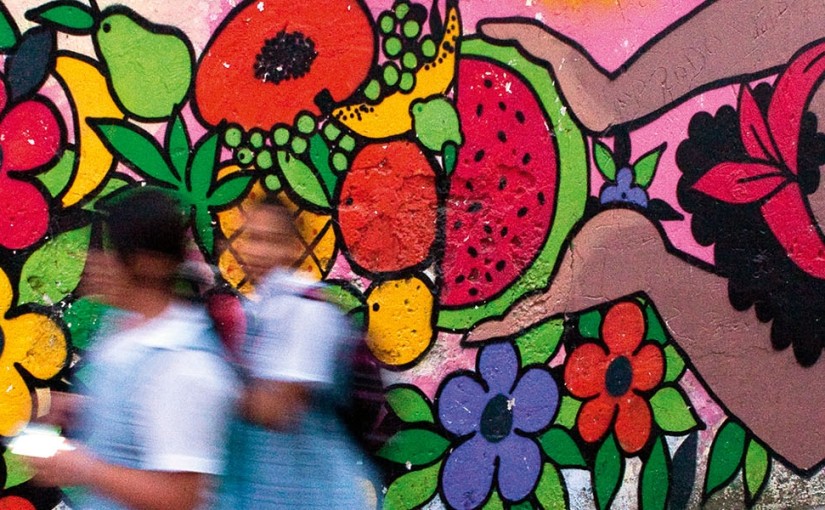
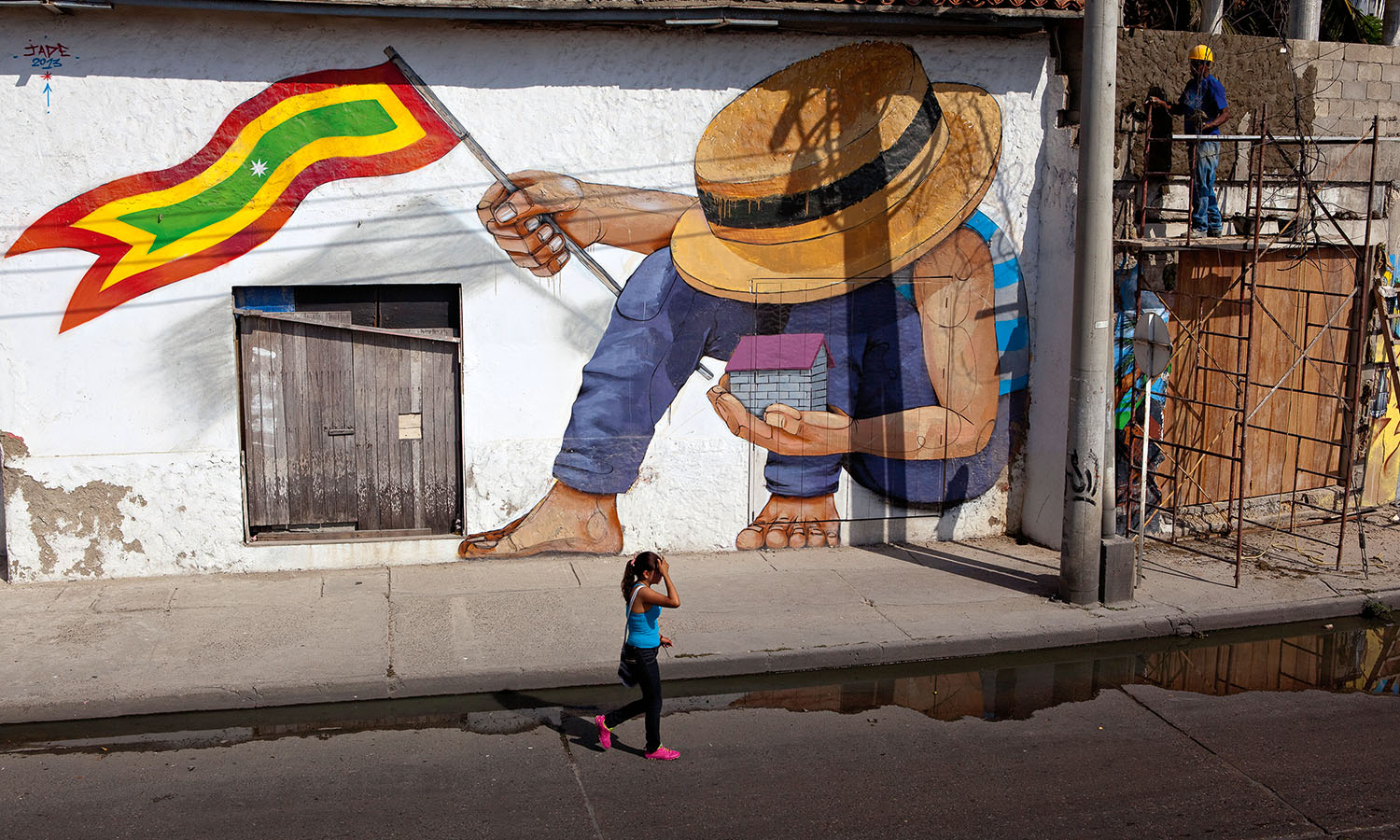
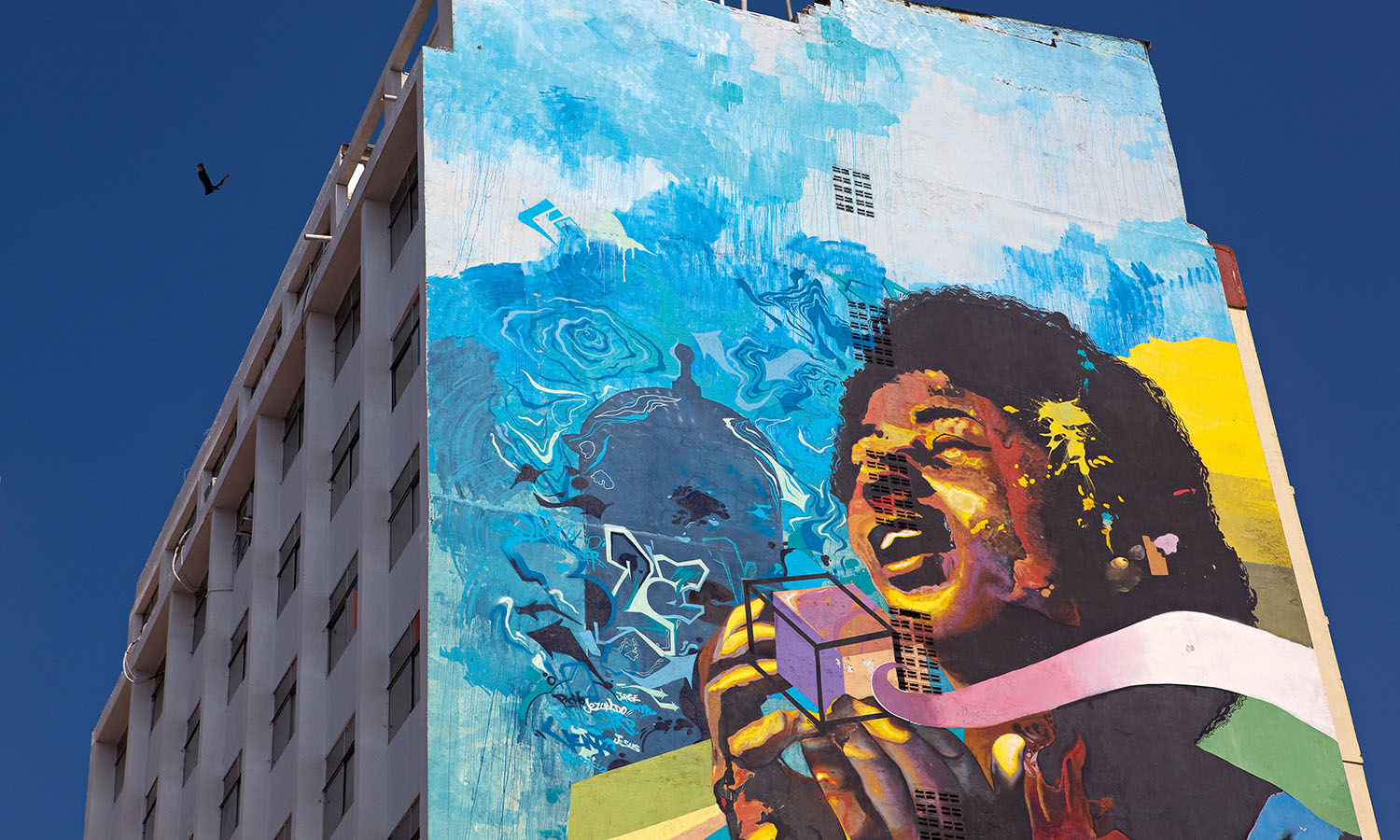
On the final leg of the tour we walk to the guide’s own barrio (neighbourhood) for a taste of the street-art scene. Getsemaní is as old as the walled part of Cartagena, and from the scaffolds surrounding the more prominent buildings I can see it’s gentrifying, too. But Nelson insists that, for the moment at least, locals can still afford to live here, and its walls aren’t so historic they can’t feature contemporary artistic expression. In December 2013 they were the principal canvases for Cartagena’s inaugural Ciudad Mural, the International Festival of Urban Art. For six days and nights, an international team led by Colombian street-art crew Vertigo gifted the city more than 30 epic murals. One of them, Prisma Afro, is a 35-metre high, colour-splashed tribute to Afro-Colombian women that now stands as the tallest in Colombia.
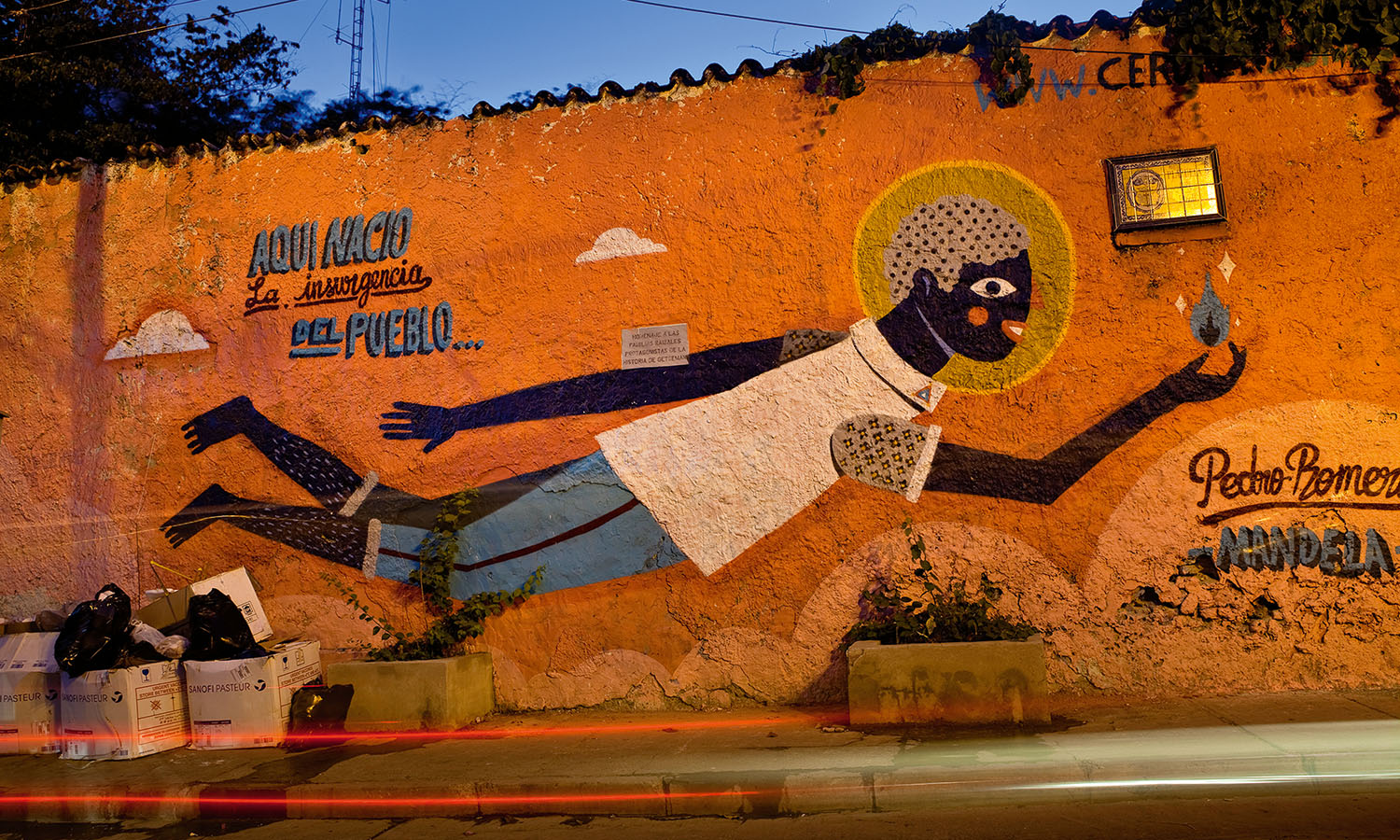
Like Prisma Afro, most of the murals here champion local identity, but they also provide insight into Getsemaní’s remarkable place in Colombian history. At Plaza del Pozo, opposite D’Arte (a small restaurant owned by local sculptor Edgar Carmona), a funky, black-skinned astronaut is painted bearing a flame in an outstretched hand. The words “Here the insurgency of the people was born!” are written near it. The figure is a contemporary visualisation of Pedro Romero, a local who, in 1810 – as a person of mixed European–African descent during the era of slavery – formed a militia to expel the Spanish governor and declare Cartagena independent from Colonial rule. It was a move that would cost Romero his life, but it was the beginning of the eventually successful independence struggle that would see him remembered as a national hero.
Another Afro-Colombian hero depicted in Getsemaní is Joe Arroyo. He was a composer, songwriter and singer who rose to national fame as the frontman for Fruko y sus Tesos, one of the great salsa bands of the 1970s. He then became even more successful during a prolific solo career, eventually becoming one of the greatest Latin American performing artists of all time. One of the reasons he remains so popular at home is because his unique style paid tribute to the many genres in the Caribbean’s African diaspora and because his lyrics played on themes of the injustices they’ve faced. One particular phrase written on Joe Arroyo’s mural is one I’ve spotted all over town: “No le pegue a la negra!” It’s a line from his biggest hit, ‘La Rebelión’, which recounts the story of a slave in the 1600s who rebels after his wife is savagely beaten by their master. As the band at Café Havana rouses the crowd, I recognise the lyrics and realise they’re playing a rendition of the famous song. I can’t think of honouring Cartagena, its history and its artists in any way more fitting than by finishing my mojito and, one last time, stepping on the one and pausing on the four.
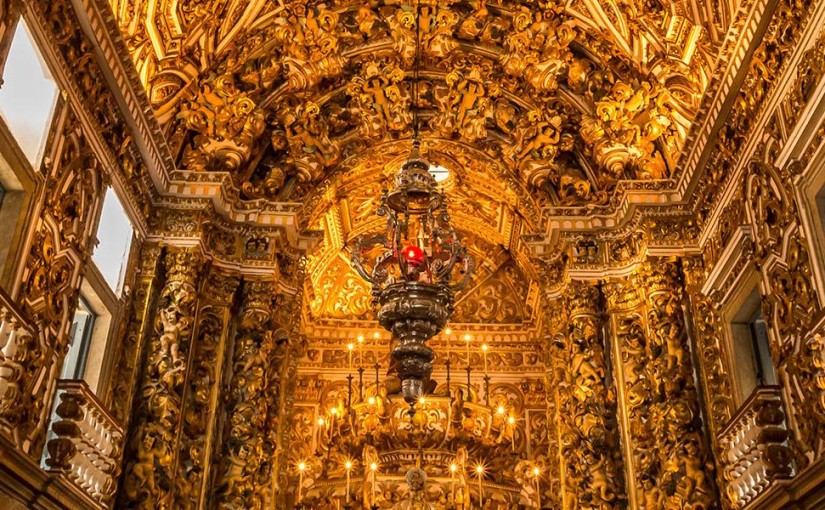
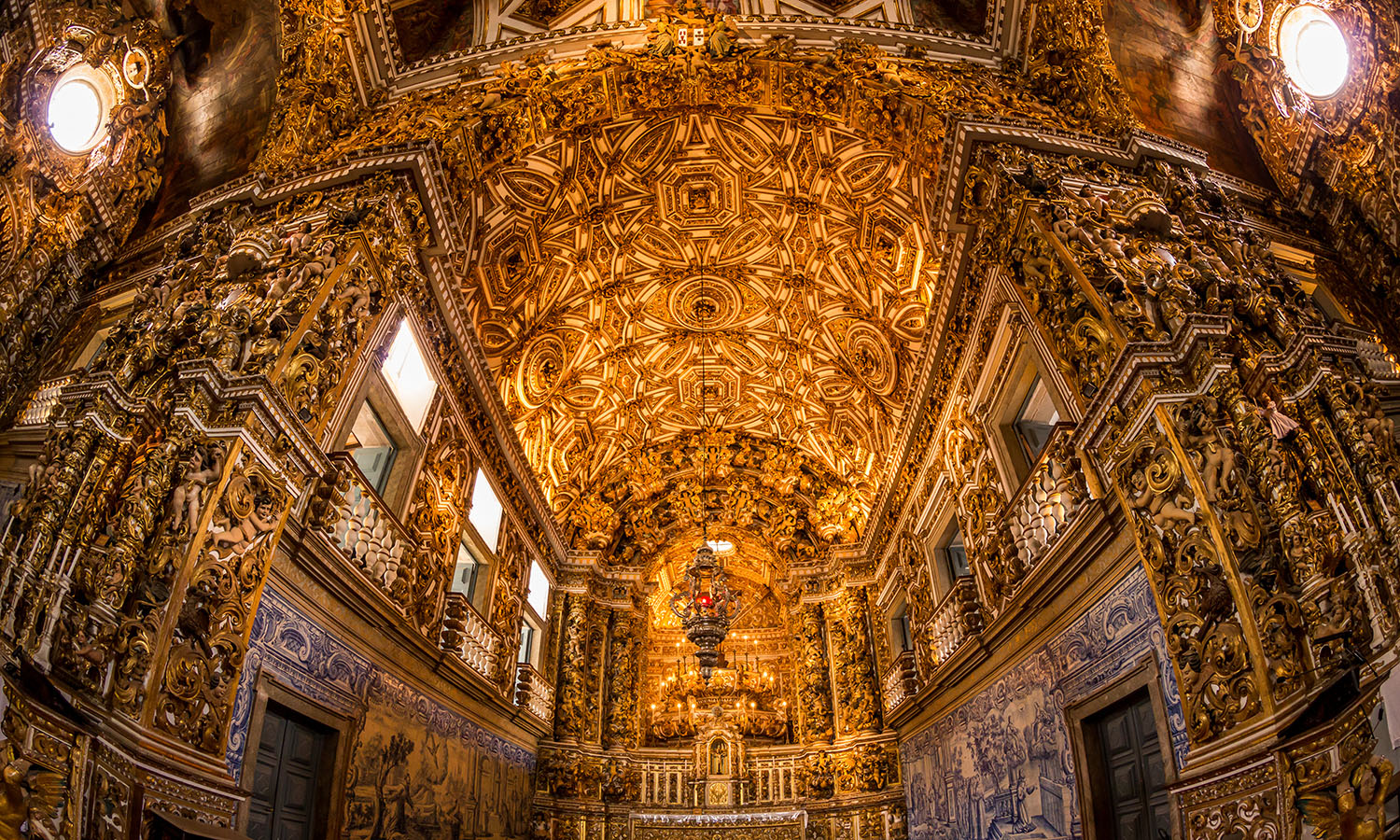
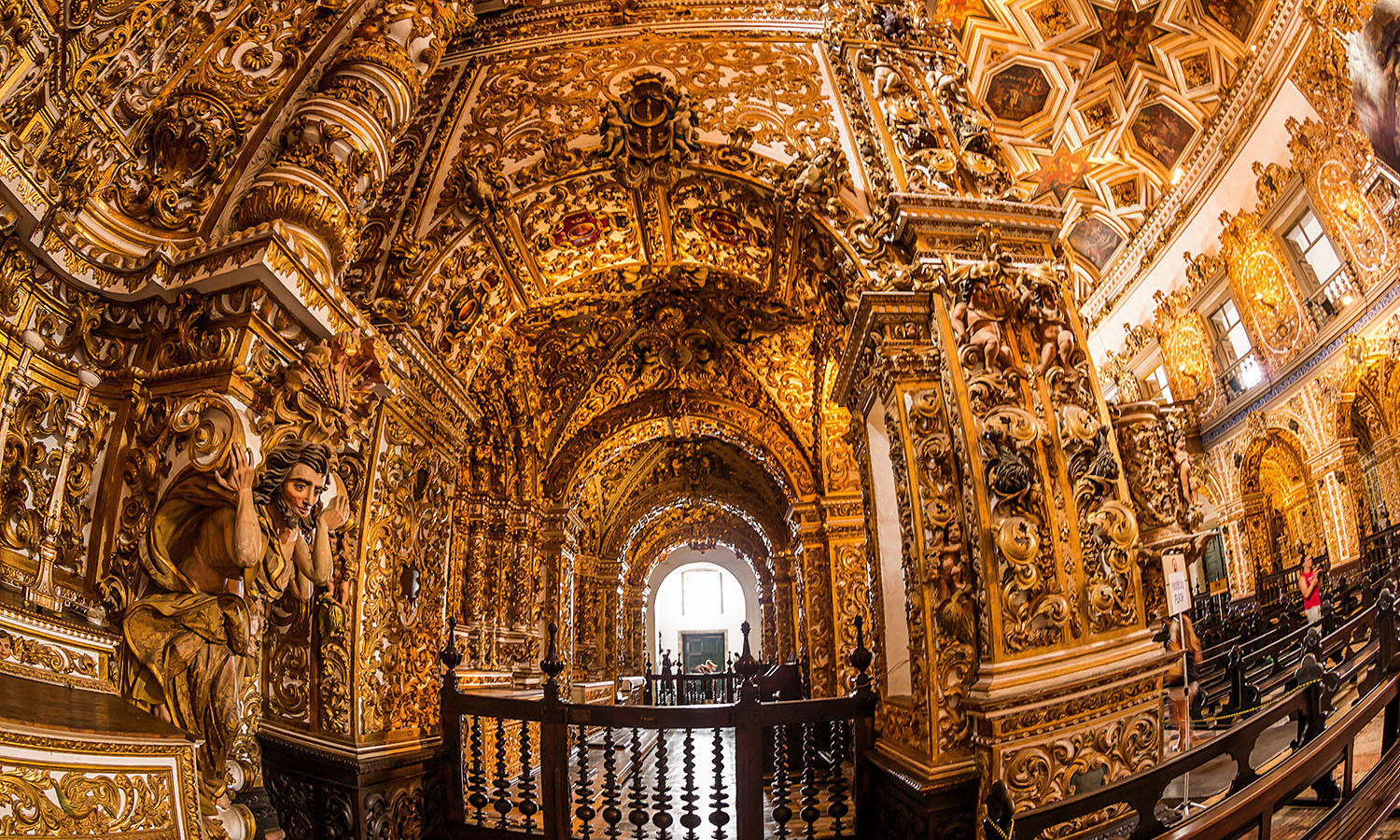
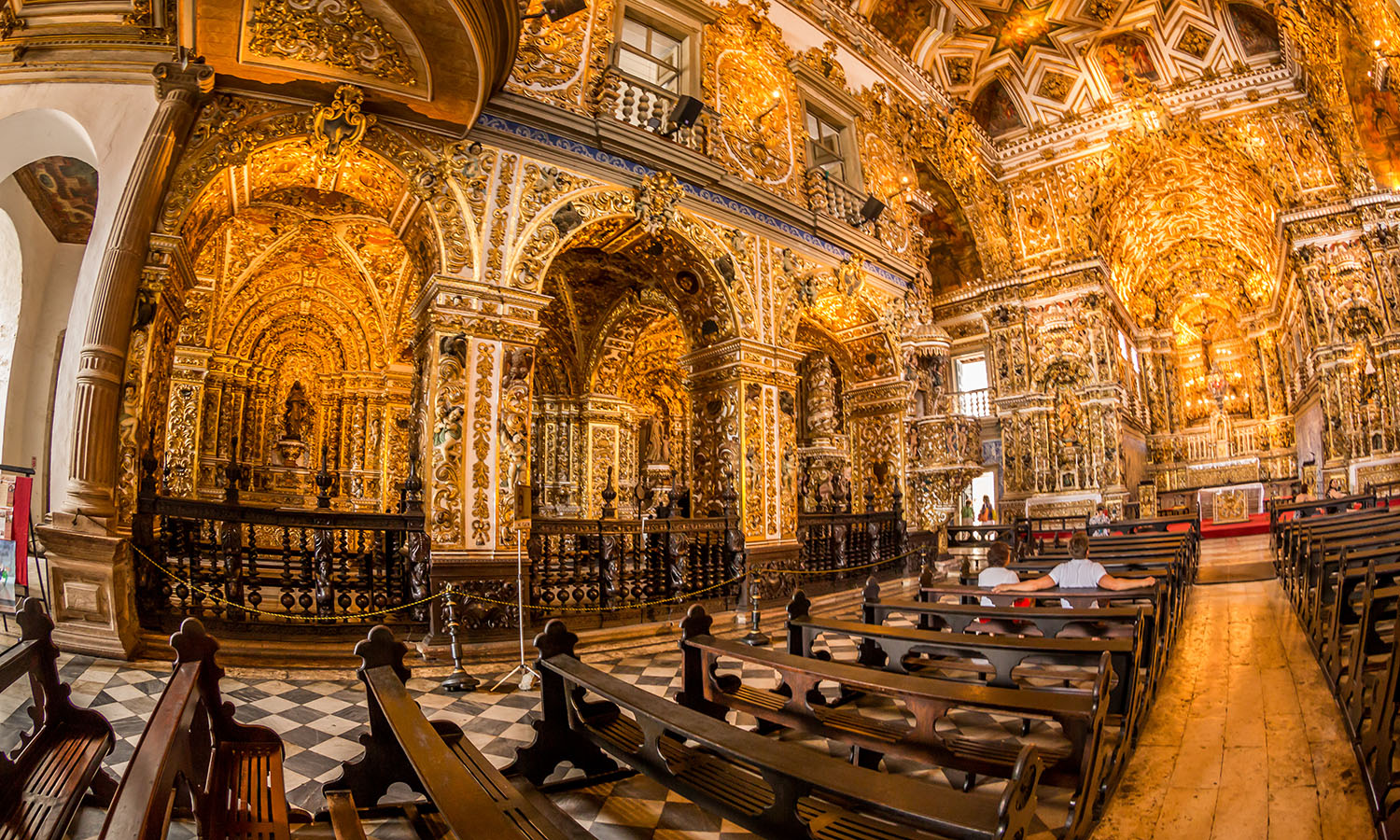
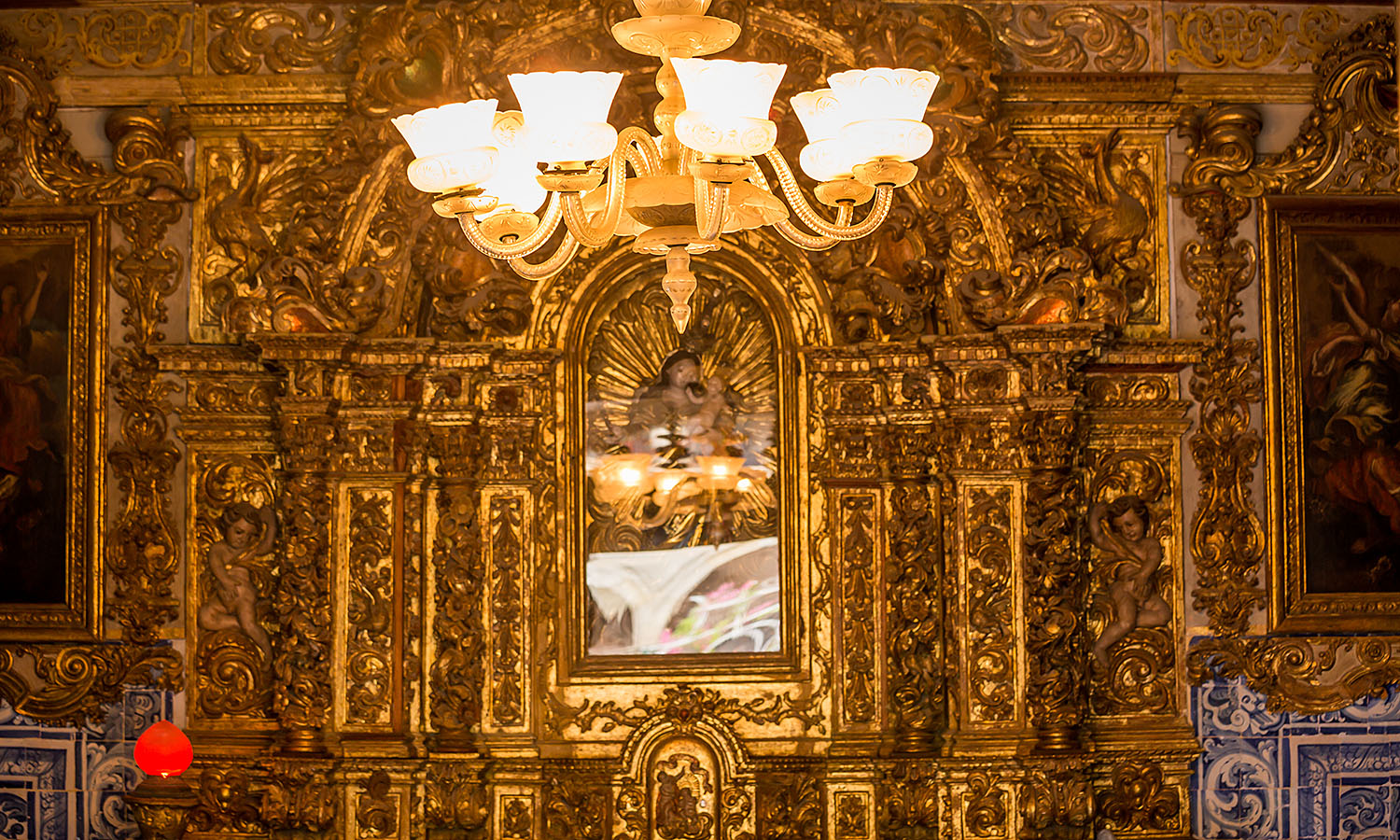
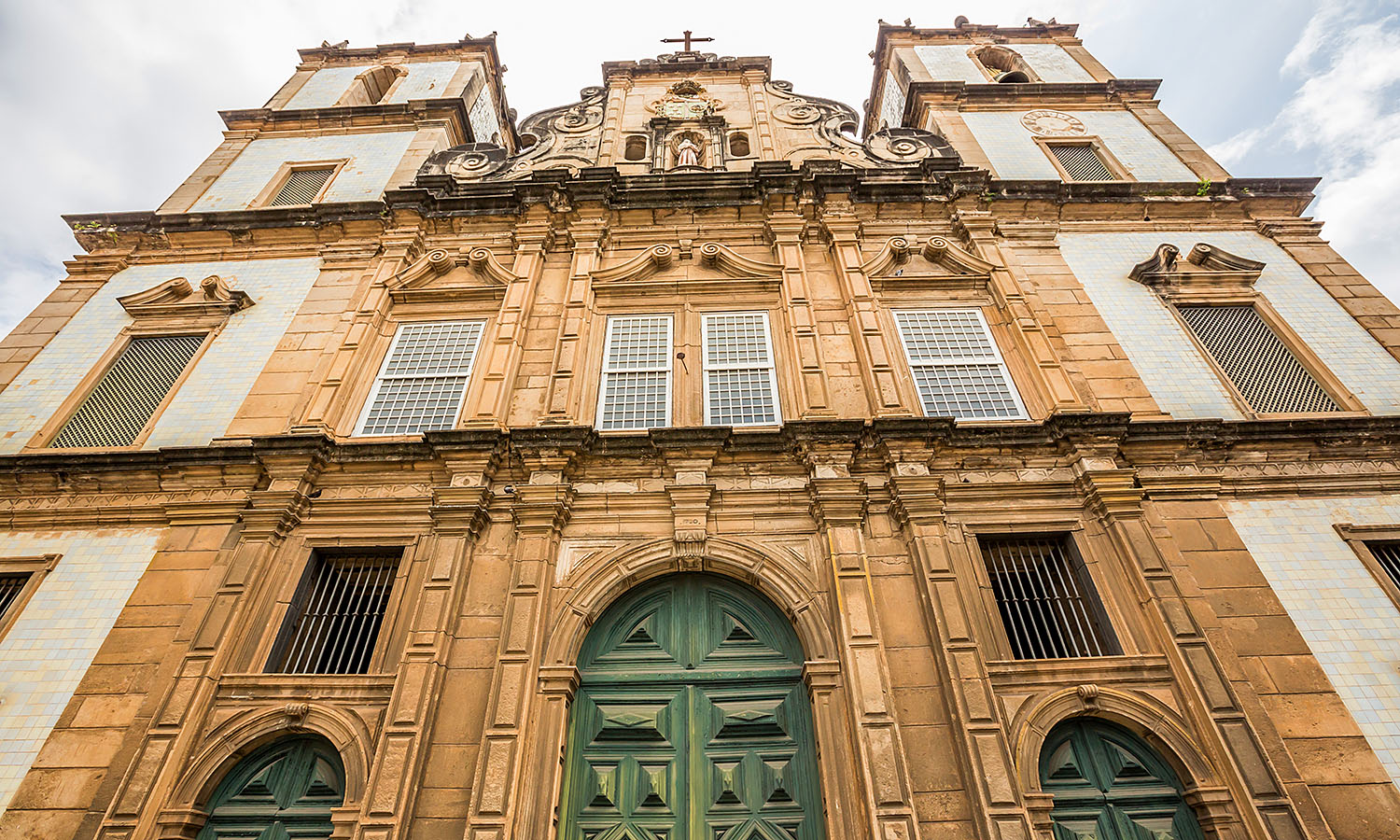
Whether you believe in god or not, a visit to this magnificent place of worship in Salvador’s colonial quarter is a religious experience in its own right. The elaborate Franciscan church dates back to 1686 and took decades to complete due to the intricate, gilded design of its facade and interior.
Pay a visit during Sunday morning mass and prepare to be dazzled by the ornately painted ceilings and woodwork, plated with nearly a tonne of gold leaf, or come on a weekday evening to bask in quiet contemplation amid the glow of prayer candles.
If you don’t believe in ancient Greek gods, let alone their hold over the South American continent, prepare to have your convictions rattled.
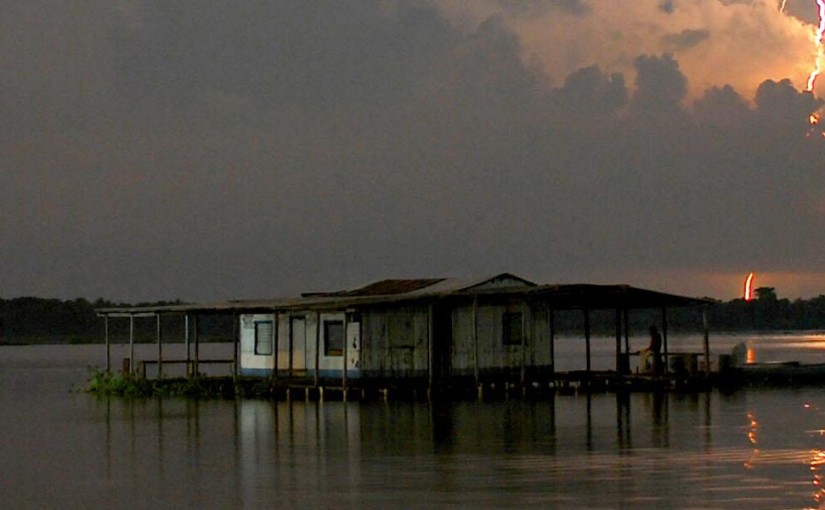
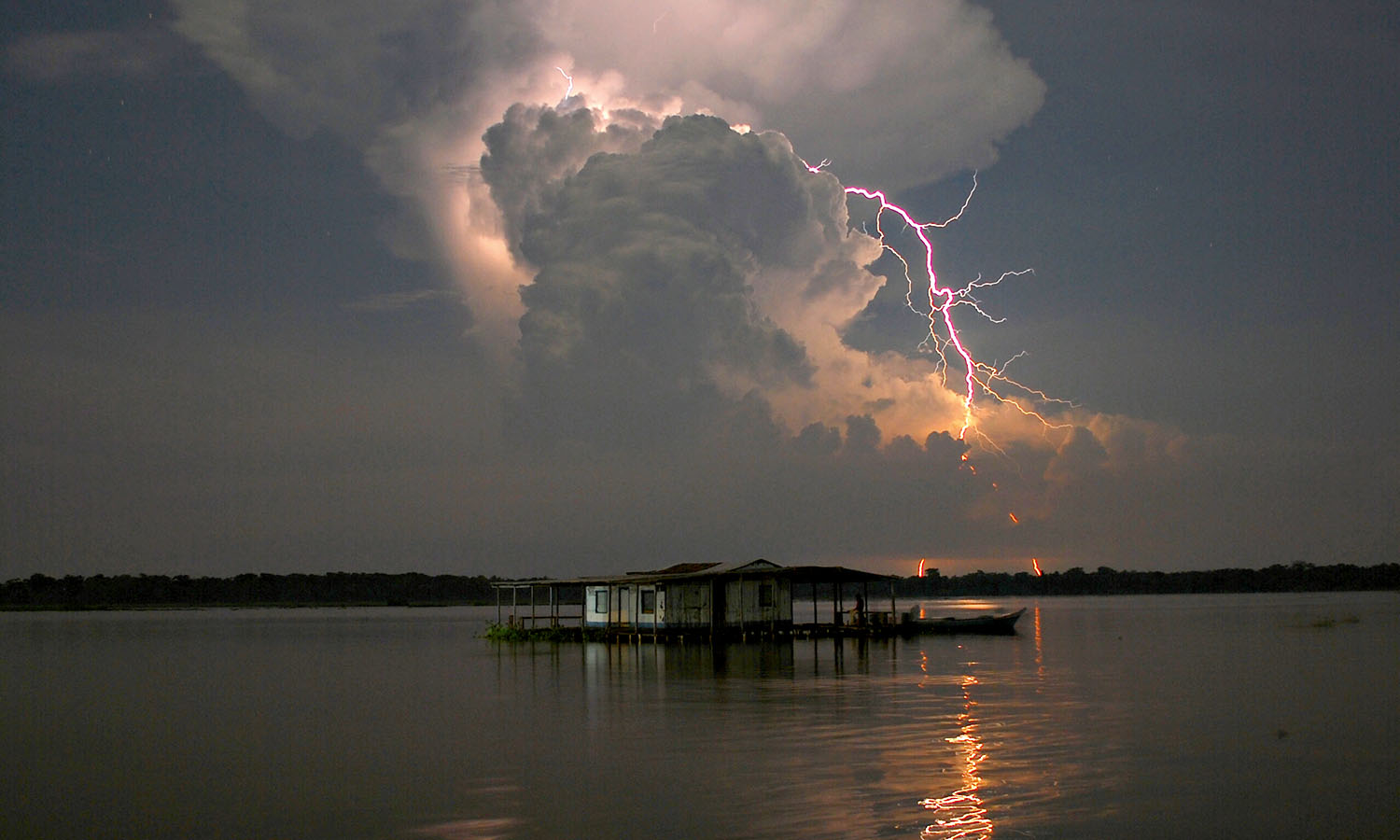
In the Catatumbo Delta you will be gobsmacked as Zeus – the god of sky and thunder – slices a fiery incision across the heavens with his infamous lightning rod.
The mouth of the Catatumbo, where the river empties into Maracaibo Lake, is an electrical hot spot, where lightning strikes up to 280 times an hour, on about 150 nights a year.
Start your journey by boat, cruising through Juan Manuel National Park, where you’ll spot howler monkeys, iguanas and exotic butterflies, before moving onto Maracaibo Lake, home to freshwater dolphins, pelicans and more than 130 different types of fish.
As the sun sets, cruise into the stilt village of Ologa, settle in to camp and prepare for a spectacular show as the night sky blazes.
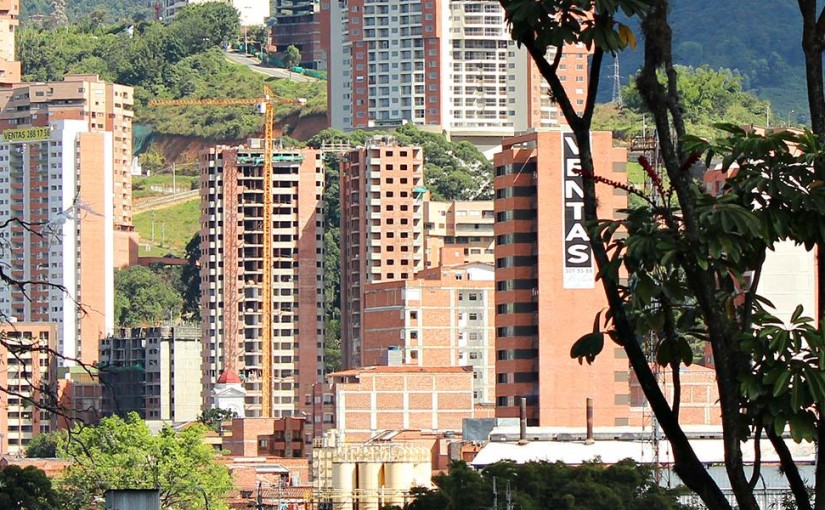
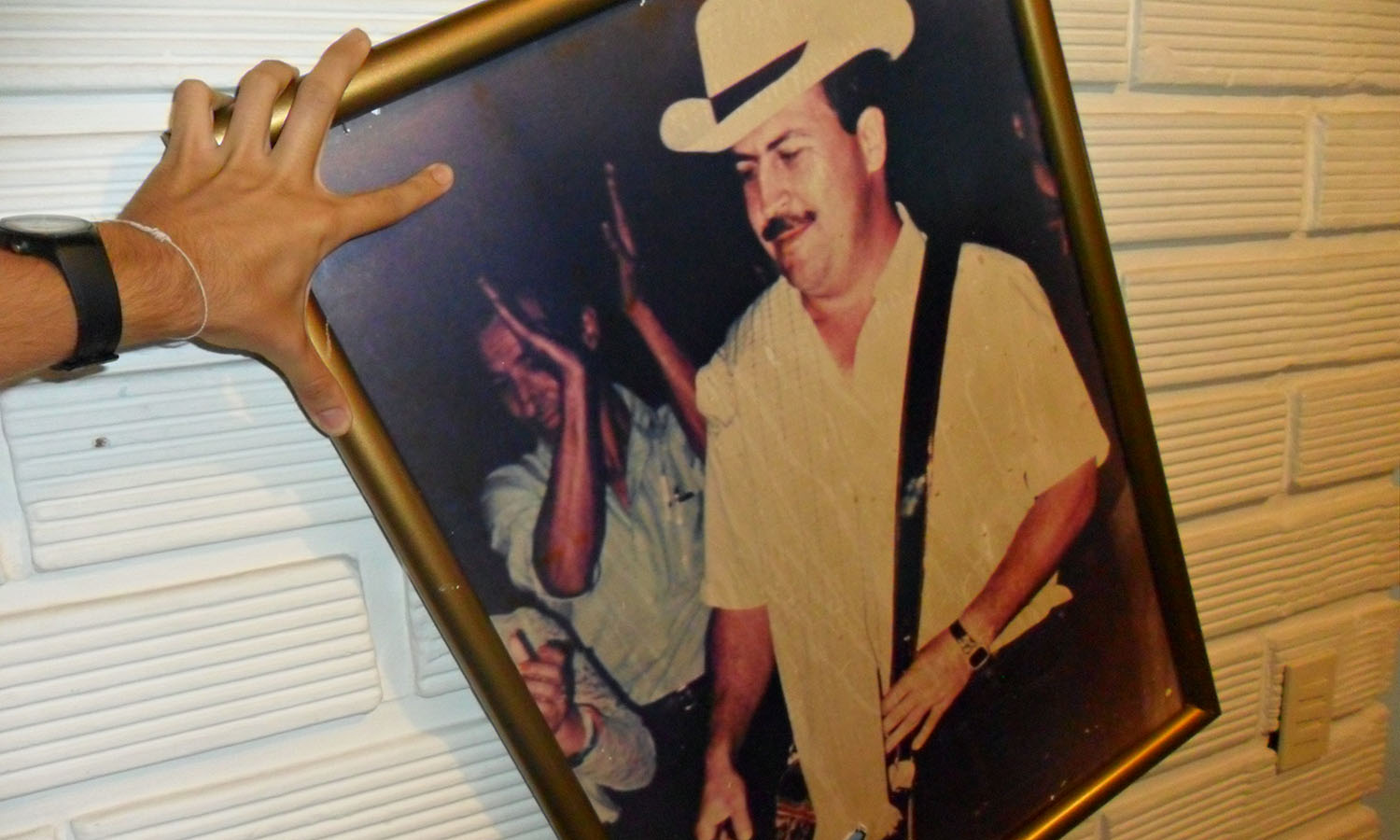
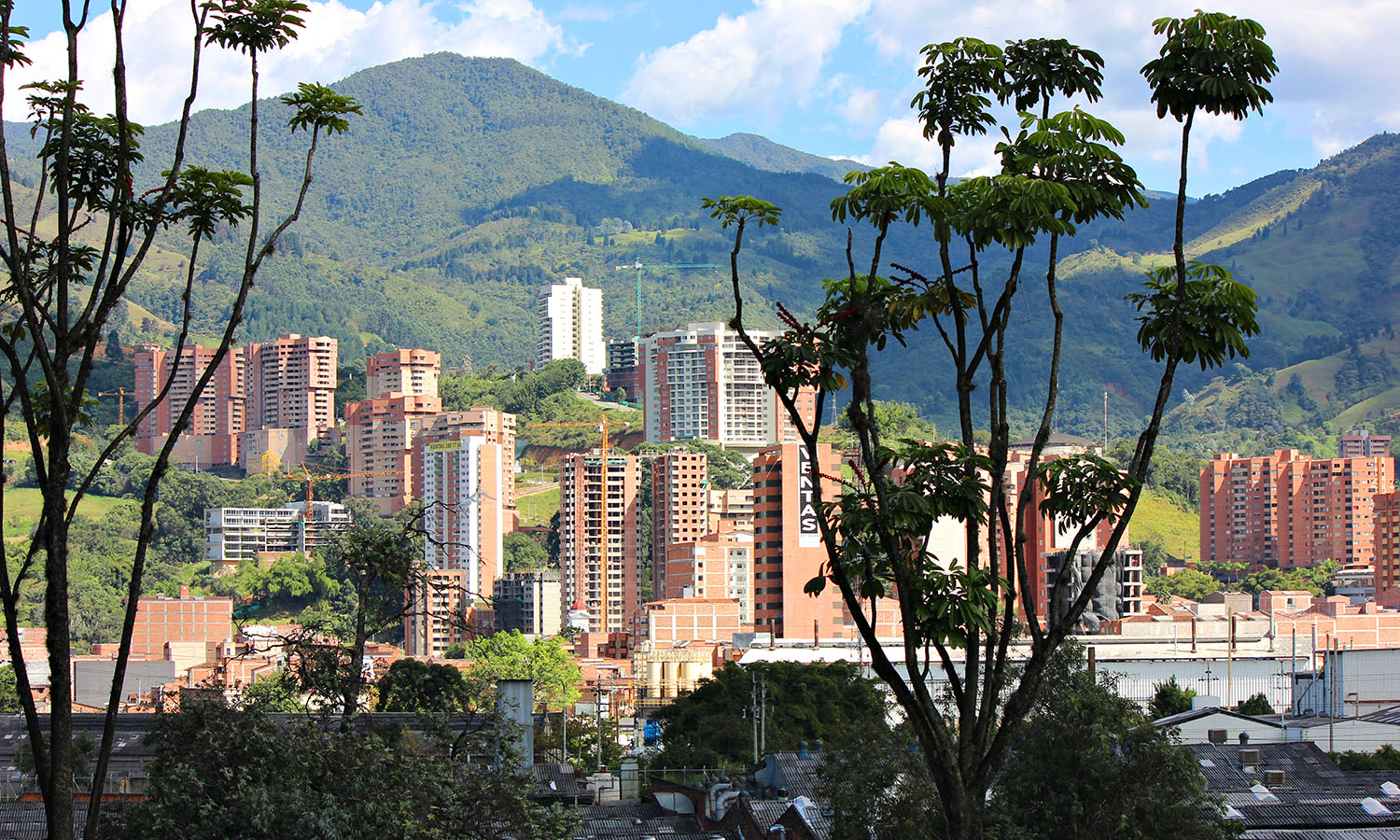
It’s impossible to visit Colombia without encountering vivid reminders of the country’s fraught history of drug cartels and the world’s wealthiest, most infamous criminal: Pablo Escobar. A larger-than-life cocaine kingpin estimated to have been worth US$30 billion, Escobar was also something of a hometown hero, who gave back to Medellín’s poor by investing millions in schools, hospitals, churches and sports stadiums.
On this thrilling, in-depth historical tour of the city where Escobar grew up, built his criminal empire and died in a hail of bullets in 1993, you will get a candid, colourful account of his life and enduring legacy in Medellín. Visit the Monaco building, the site of an attempt on Escobar’s life, as well as the house where he was eventually killed, as bilingual tour guides regale you with juicy details of his extensive criminal operations.
Peruvians prefer to work out their differences head-on, and there’s no better time to wipe the slate clean than just before the new year. People don’t come to the high-altitude Takanakuy festival (usually held on 25 December) to hold hands and sing ‘Auld Lang Syne’ – they get straight to the point with an all-out scrap.
Romantic disputes, stolen llamas and trivial gripes are all fair game in this cathartic airing of grievances. Considering this is how many drunken new year celebrations end up back home, they probably have a point.