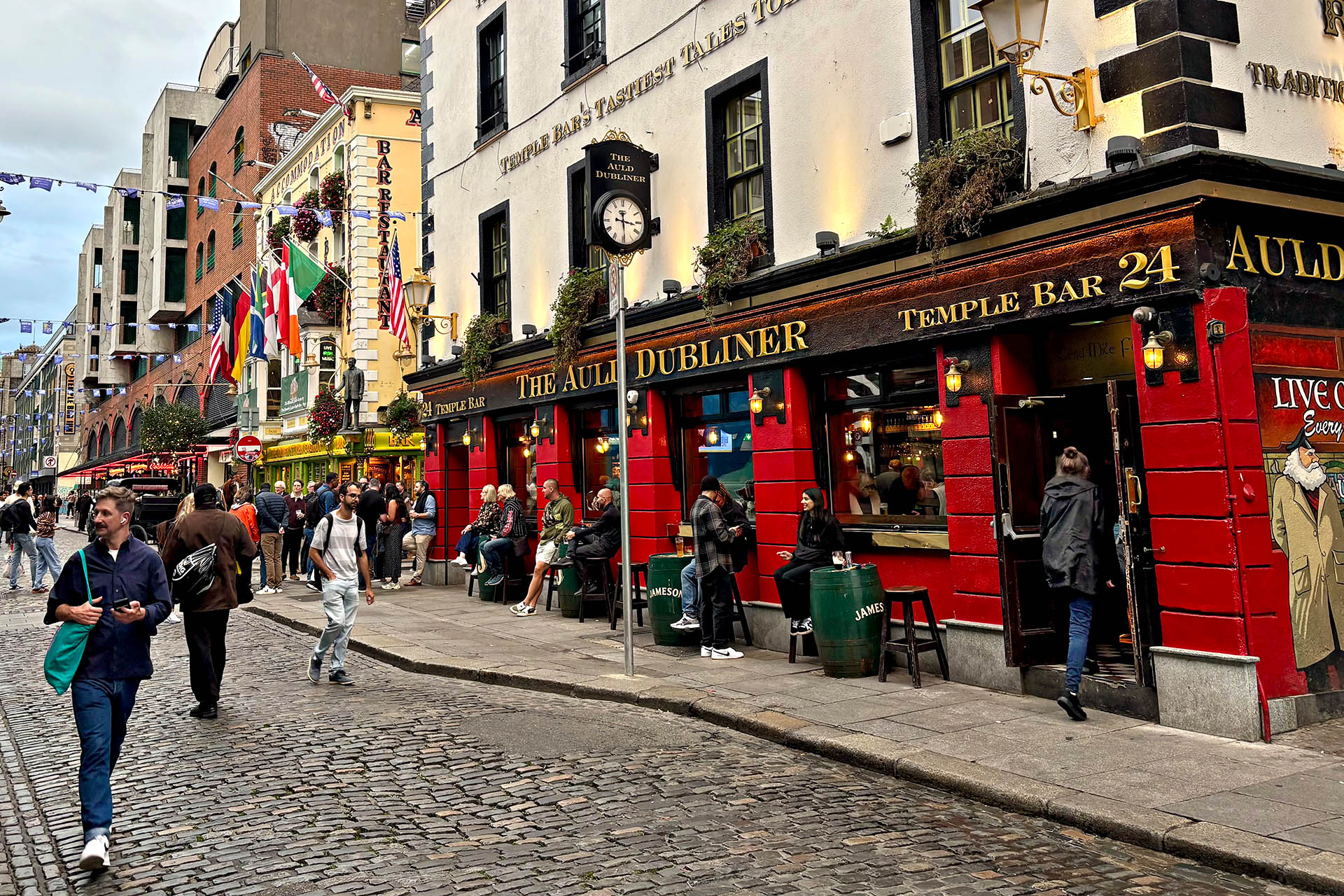
Before I came to Ireland, I knew precisely three things about the Irish. They drink a shit tonne of Guinness (in fact, it’s practically a food group), they are very precious about their potatoes and each and every one of them has an apparent genetic ability to turn a pub full of strangers into a singalong. Safe to say, National Geographic wasn’t calling me for my expertise.
So, on my first trip to the Emerald Isle, simply spending my time sightseeing wasn’t going to cut it. I wanted to do Ireland. To squeeze every last drop of Irish juice out of the week until somebody confiscated my passport or I developed an accent offensive enough to get me deported.
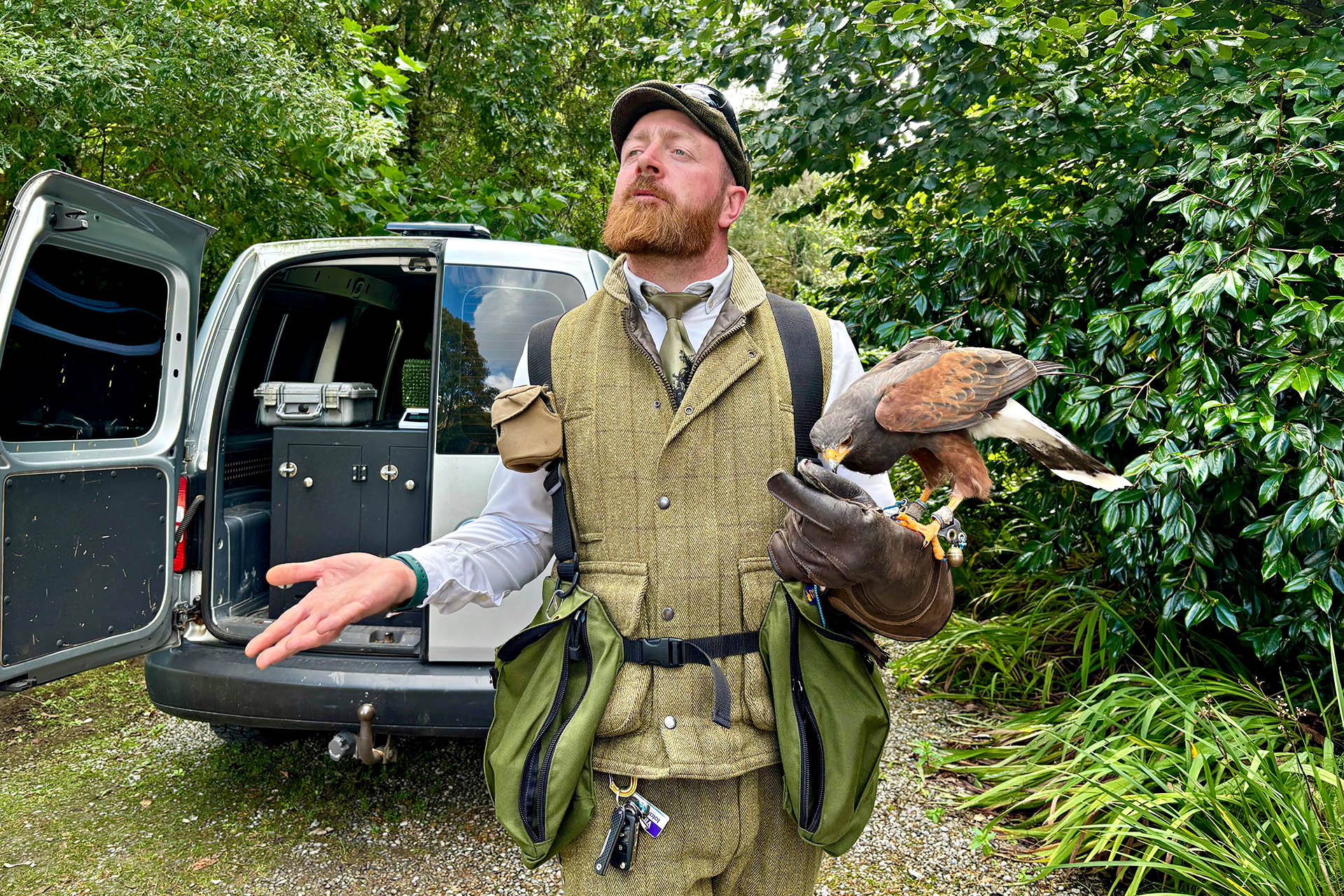
Which is how I found myself standing in the grounds of Ballynahinch Castle with a leather glove on my left hand and a hawk swooping somewhere above my head.
“Keep your arm straight, and turned up,” Master Falconer Jason Deasy told me. I kept my arm very straight and turned up. The consequence of not doing so would feel a lot like talons piercing my pale, bare arm skin.
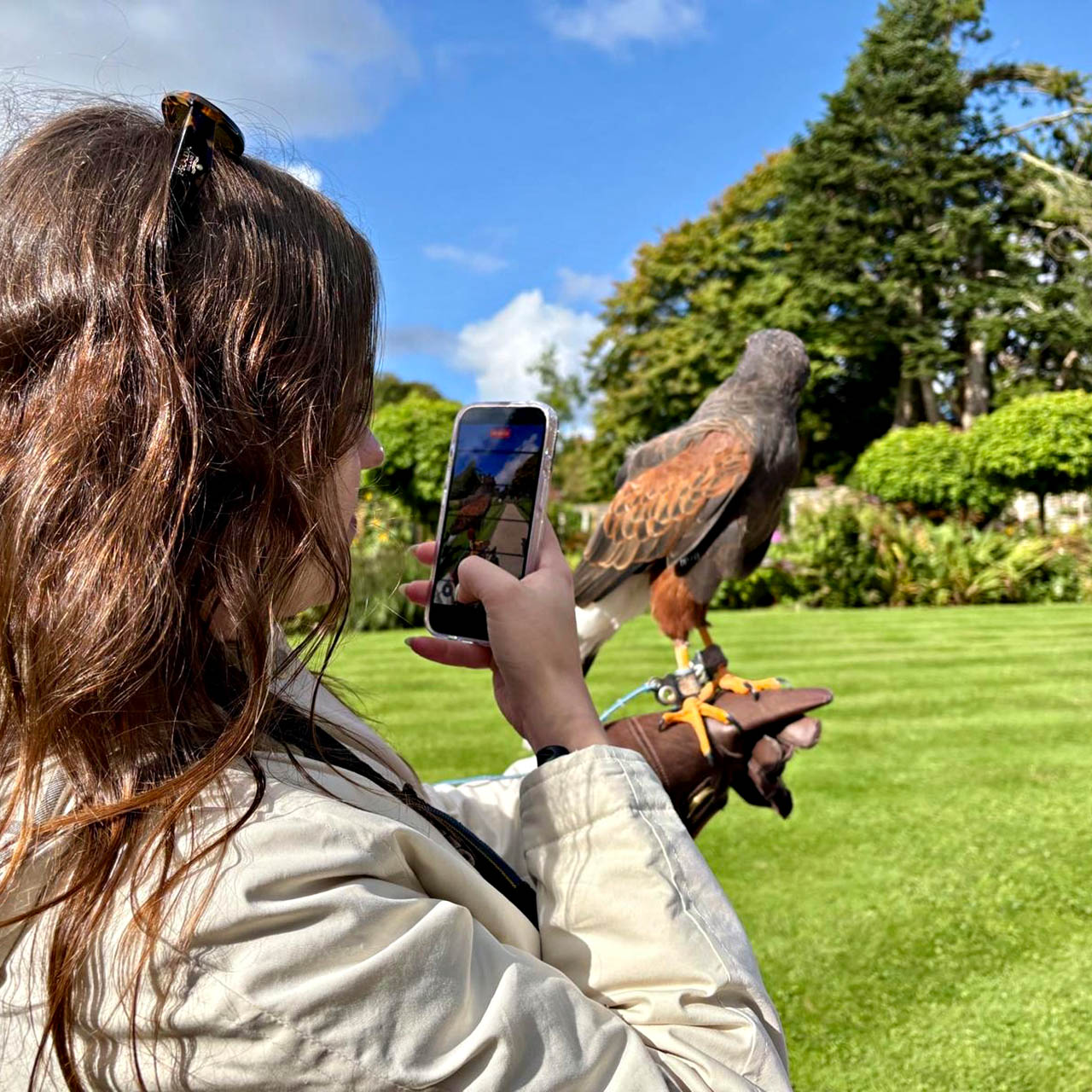
A few seconds later, I felt a rush of wings and understood that there was now way more Harris hawk perched on my arm than there had any right to be. But I rolled with it. I mean, it was either that or freak the f*ck out and I had a feeling little Luke Skywalker wouldn’t appreciate that (yes, that was the hawk’s name).
Falconry is one of those things that looks very regal when somebody else does it. There are paintings of noblemen standing around looking magnificent with birds of prey perched obediently on their fists. Nobody in those paintings appears to be wondering whether the bird can sense fear. I, on the other hand, very much was.
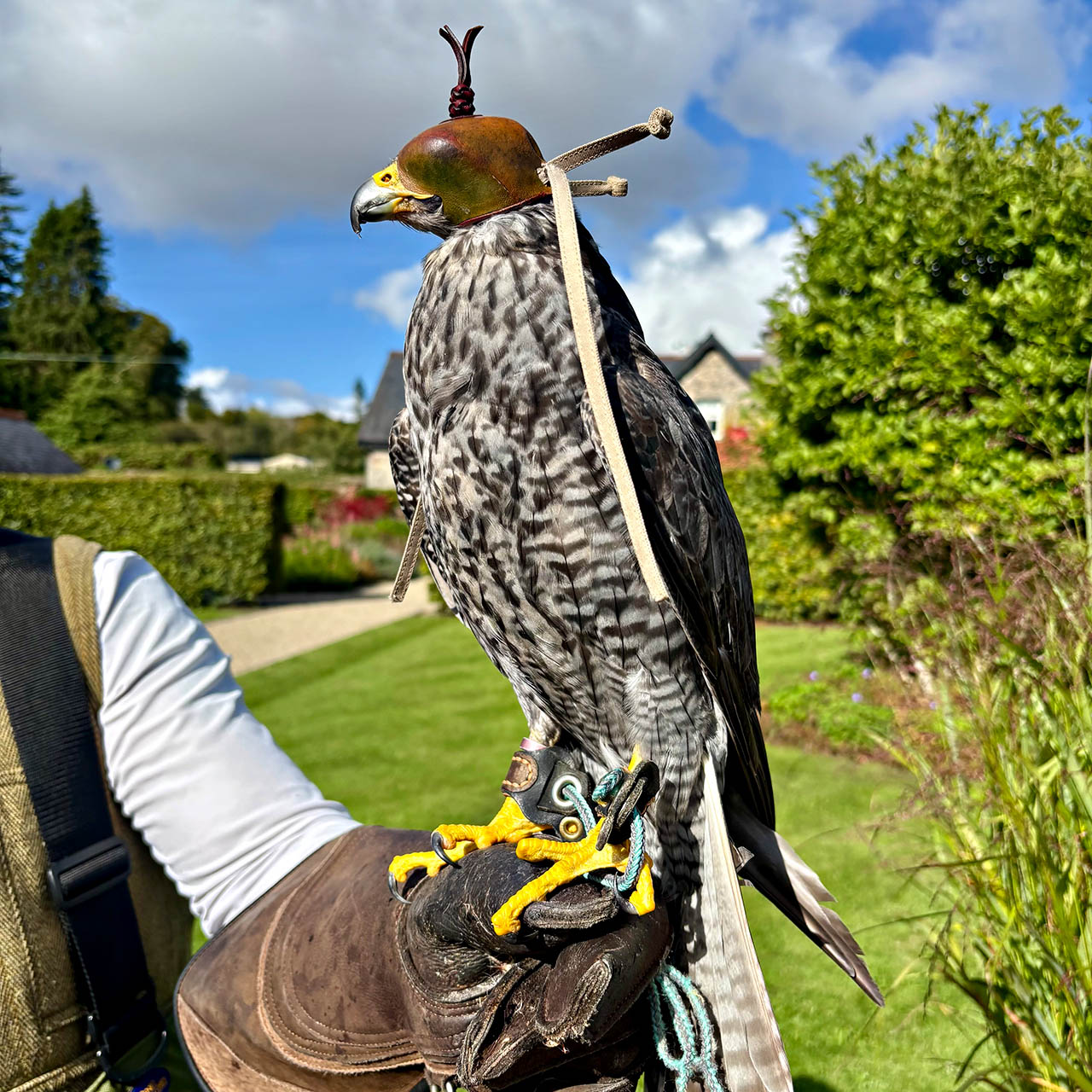
But the longer Luke sat there, the less intimidating he became. After he’d had his fill of feathery chicken bits, he disappeared into the trees. Jason called him back, and down he came. This time, he perched himself on someone else’s arm. And again. And again.
That was lesson number one. Ireland, I was beginning to realise, wasn’t going to reveal much from behind a bus window. I would have to get my hands involved. A day later, those hands were holding a bodhrán. The bodhrán is a traditional Irish frame drum. It looks simple enough: round frame, stretched goatskin, small wooden beater. Three ingredients standing between you and your inevitable career in traditional Irish music. Or so I thought.
In Roundstone, Malachy Kearns has spent decades making them by hand.
People from all over the world have stumbled into his workshop, yearning for a Malachy made instrument of their own (even the Obamas; ask him about it). And if you get a good one, it’ll last longer than you. So, I quickly learned that describing it as a ‘cool drum’ doesn’t exactly cover it. There’s the skin, the timber, the tension, the way it’s made and, crucially, the person making it. Then there’s the matter of actually playing one. I took the beater I was handed and tried to follow along.
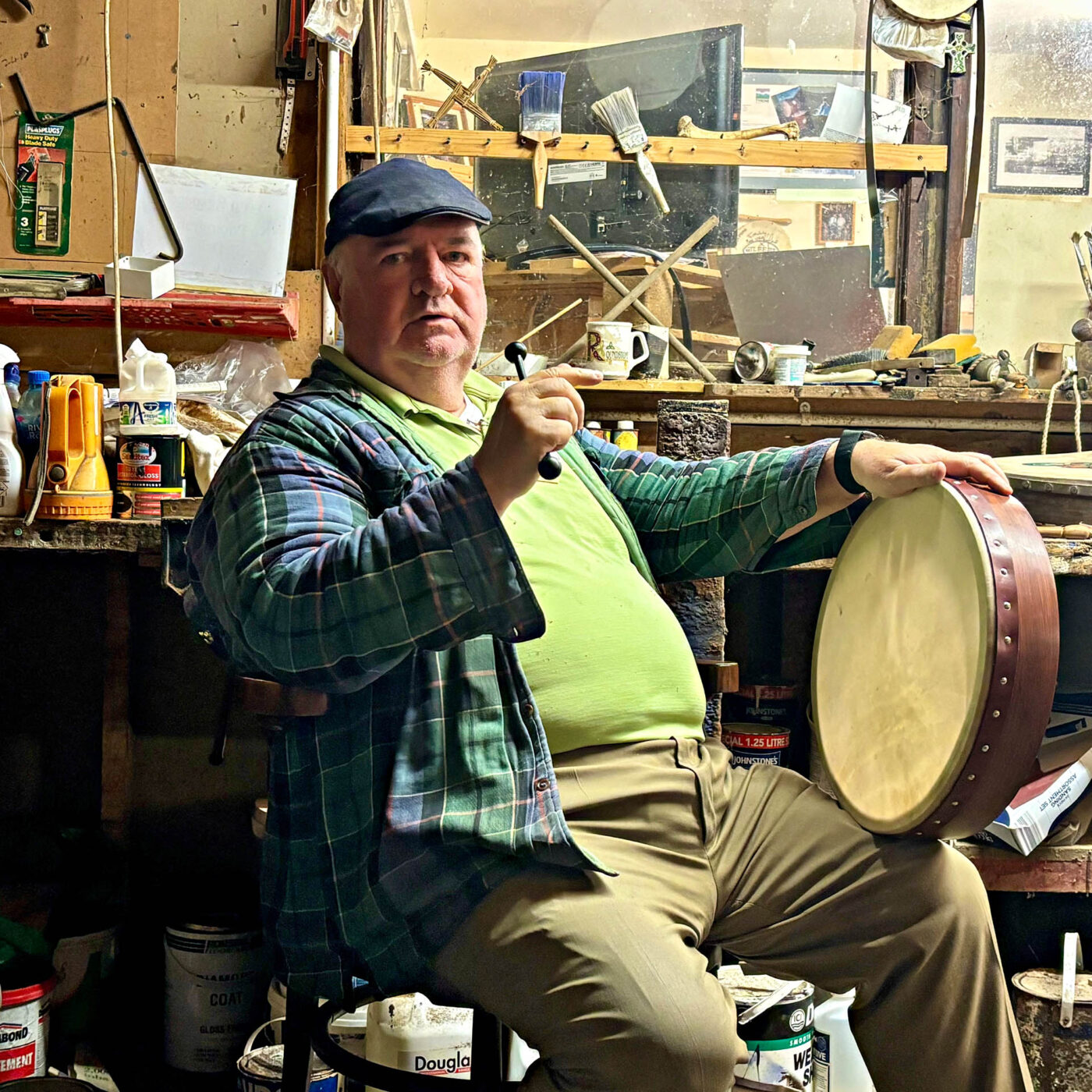
My own extensive musical abilities began and finished with playing hot cross buns on the recorder in grade five, so expectations should’ve been real low. Some kind of noise came out of the thing, but whether that noise technically qualified as a tune is between me and the people unfortunate enough to be standing nearby.
I learned that the trick isn’t simply walloping the thing. One hand controls the beater while the other works behind the skin, changing the tone as you play. When someone like Malachy does it, the beat rolls along underneath a tune, quick and effortless. When I did it, it sounded like somebody had dropped a shoe down a staircase. Still, I felt a vague satisfaction in being terrible at it.
It’s very easy to travel somewhere without ever having to be bad at anything. We look. We photograph. We listen to somebody explain what we’re looking at. Then we move on. But in this tiny, cluttered workshop in the Connemara region of western Ireland, I had to participate. And participation came with a very real risk of public humiliation.
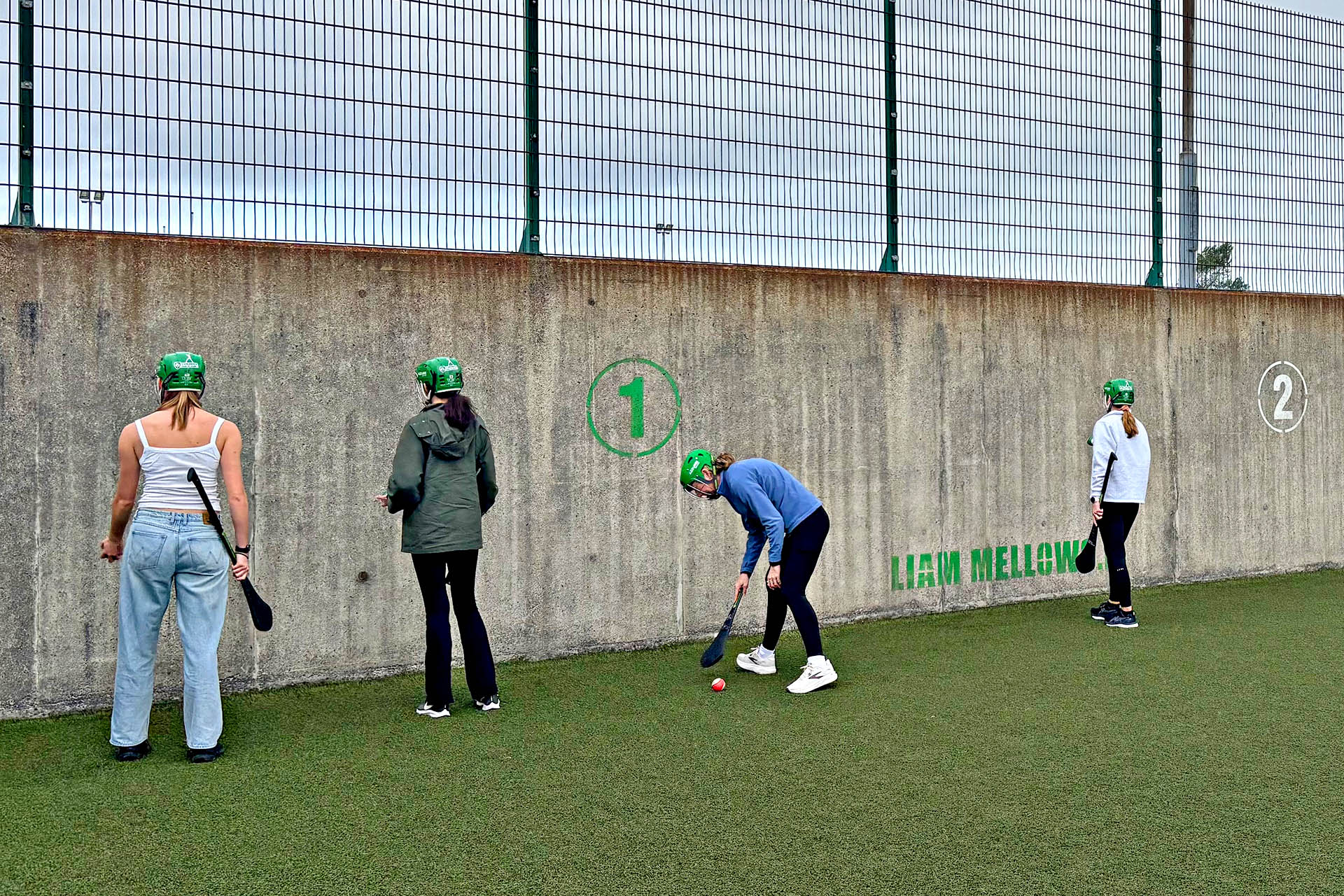
This became abundantly clear when our group arrived in Galway. By the time Stephen handed me a hurley at Liam Mellows GAA Club, I’d developed a wariness of Irish people giving me objects I’d never seen before. Growing up, I preferred my sport from the safety of the sidelines. But being Australian, I dove in headfirst with the misplaced confidence of someone from a country that has invented several sports largely based around running into other people. How hard could it be?
First came balancing the sliotar on the hurley while moving. Then hitting it. Then catching it. Then attempting to string these things together without losing the ball, the stick or my dignity.
Unfortunately for Stephen, he was tasked with teaching us the basics of hurling, a sport that involves a stick, a small ball called a sliotar and a level of hand-eye coordination I definitely did not possess.
Hurling moves at an absurd speed when played properly. The sliotar can be struck well over 100 kilometres an hour, which feels like an important piece of information to receive before somebody hands you a hurley. It’s also the fastest sport played on grass in the whole world. Learning to hit the damn thing was only part of the lesson.
Spend any time around Gaelic games and you quickly realise the club matters almost as much as the sport. The GAA is stitched into towns and neighbourhoods across Ireland.
After an hour at Liam Mellows, hurling started to make a little more sense. Not my hurling, obvs. That remained super tragic, regardless of all the encouragement Stephen was heaping on me. But the fierce loyalty surrounding it did. Your club says something about where you’re from, who you grew up with and, quite possibly, who your parents told you to support.
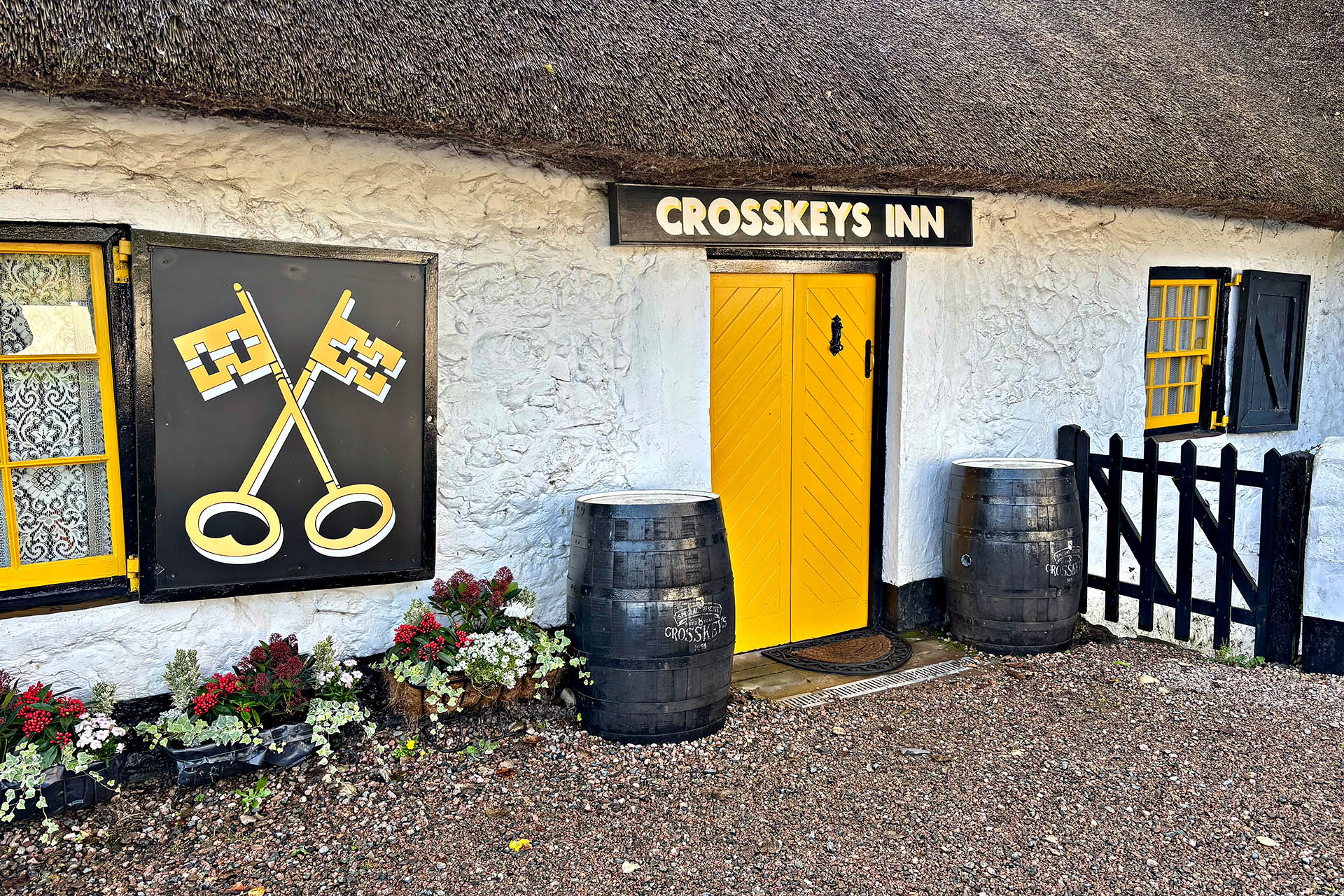
My practical education continued north. The Crosskeys Inn in County Antrim has been serving drinks since 1654, which means people have been sitting around drinking here since long before Australia was called Australia (wait, what?)
A pint of Guinness looks easy to pour. Glass. Tap. Beer. Job done. Drink. Irish bartenders, however, have had generations to turn this into a minor science.
It also meant the stakes felt high when I was invited behind the bar to pull a pint.
There’s the angle of the glass, the pour, the pause, the settle and the top-up. Rush it and you’ll know. Get the angle wrong and you’ll know. Produce a head large enough to require its own postcode and everyone else will know too.
I pulled the tap. For a few seconds, things looked promising. Then they looked foamy. Oh god, I was massacring the Guinness.
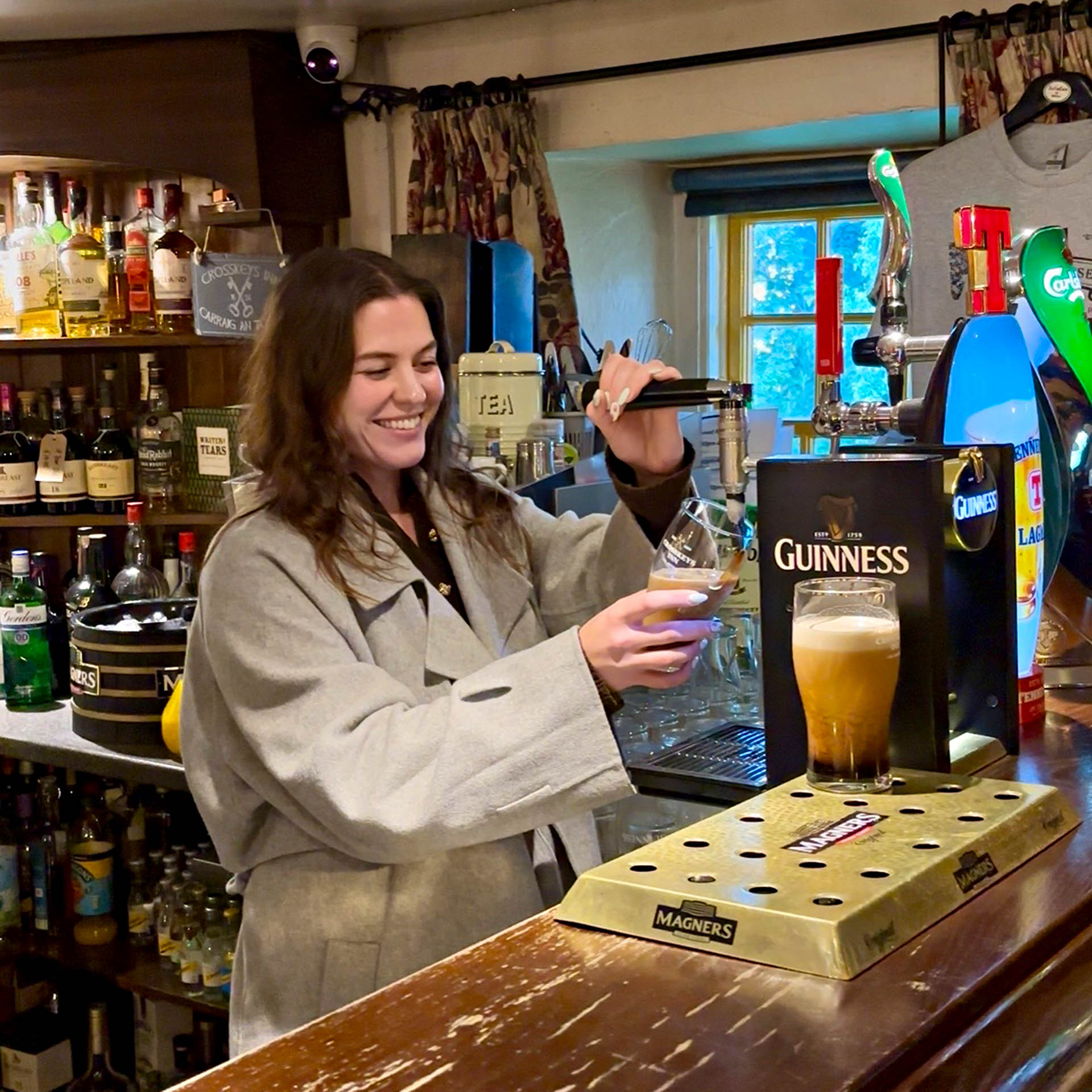
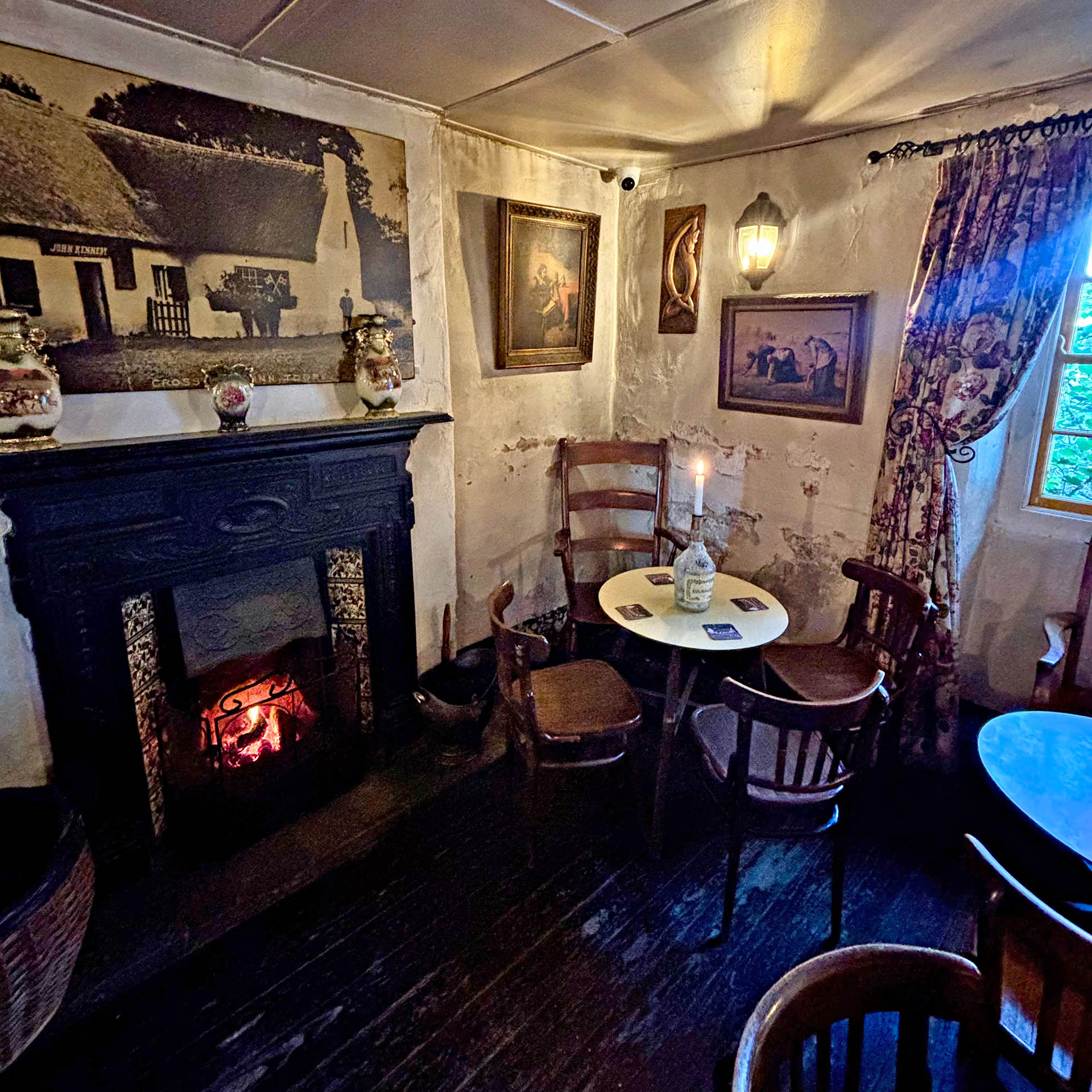
Eventually, though, I had something resembling a pint. More importantly, I did it all by myself. I quickly took it to the other side of the bar, where I belonged. And it wasn’t until later that the music started.
Traditional Irish music had followed me around the country all week. It came out of pubs and hotel bars from musicians who seemed capable of picking up an instrument and joining a tune halfway through without anybody needing to discuss what was happening. At Crosskeys, sitting in a pub that had been doing more or less the same thing for hundreds of years, it finally clicked why all these lessons had felt more revealing than simply ticking landmarks off a list.
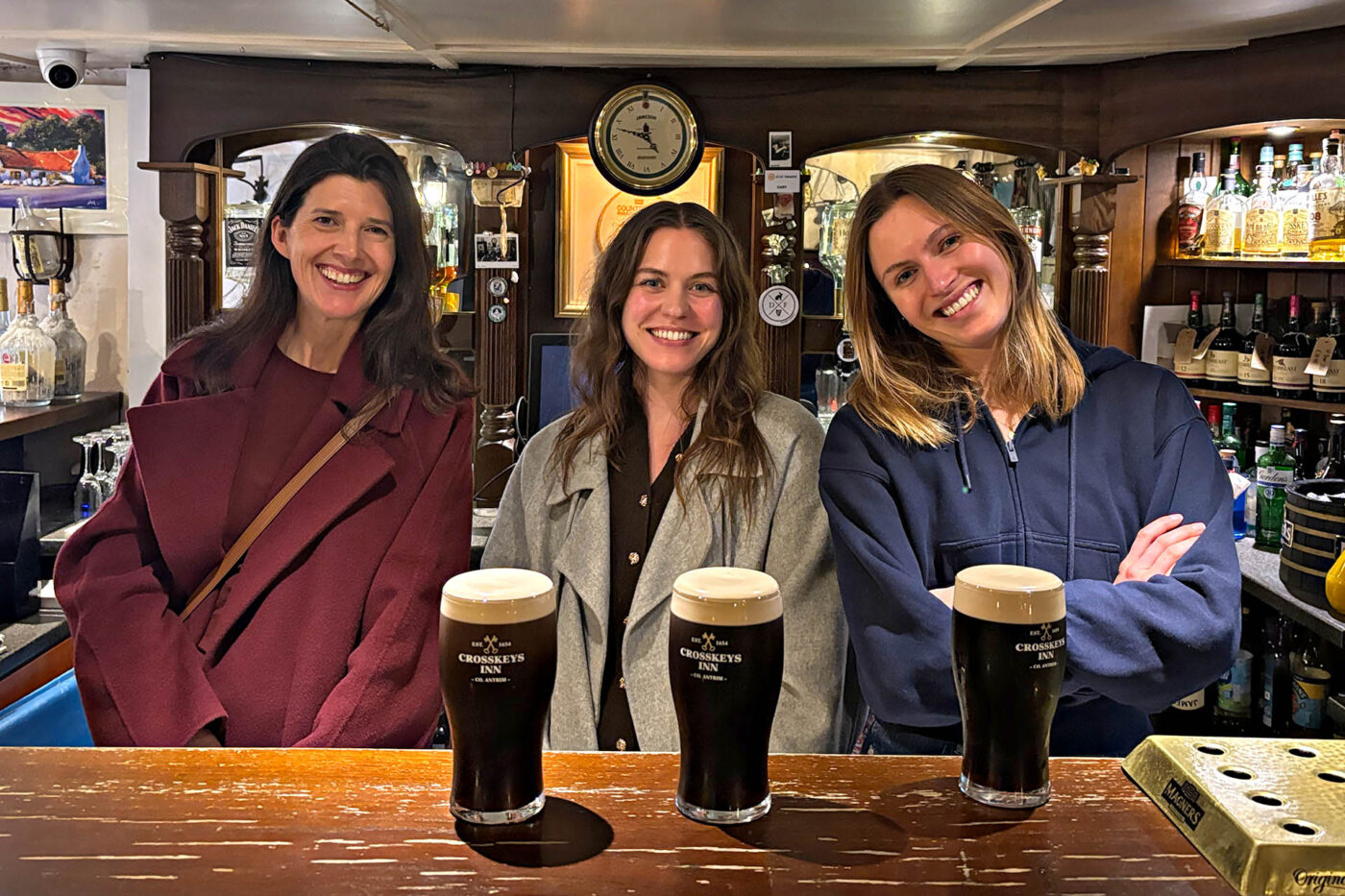
I’d come to Ireland determined to squeeze as much Irishness as possible into a week. Jason had trusted me with his birds. Malachy had put one of his drums in my hands. Stephen had spent an hour encouraging a hurling career that was very clearly going nowhere. And the legends at Crosskeys had made the arguably unwise decision to put me in charge of perfectly good Guinness.
Each knew their little corner of Ireland intimately, and each was willing to hand part of it over to a complete beginner and say, essentially, your turn. And that’s what I didn’t understand before I touched down at Dublin Airport. Culture is easy to observe, but it’s much more interesting when somebody lets you have a crack at it.
By the time the music was bouncing around Crosskeys, I’d stopped trying quite so hard to learn Ireland. I wasn’t wondering what the next quintessentially Irish experience was, or mentally adding another thing to the list.
I had a pint in front of me. There was music in the room. Nobody had been injured by my hurling (what a win). For a first trip, that felt like a pretty decent result. Although my Guinness pouring skills still needed work.
Get There
I flew from Melbourne to Dublin with Qatar Airways, connecting through Doha. From Australia, there are no nonstop flights to Ireland, so expect at least one stop along the way. Depending on where you’re flying from, Qatar Airways is one option, while Emirates, Etihad and various Asian and European carriers can also get you to Dublin with a connection. Once you land, caffeine and Guinness are both acceptable forms of jet lag management.
Tour There
Want to learn Ireland the hard way too? Start in Connemara, where Ballynahinch Castle offers falconry experiences on its 700-acre estate. Roundstone Music & Crafts is home to master bodhrán maker Malachy Kearns, whose handmade drums have even been used by Riverdance.
For the hurling portion of your Irish education, look for Gaelic games experiences around Galway; and if your ambitions are more pint-shaped, plenty of pubs will happily demonstrate what a properly poured Guinness should look like. Whether they’ll let you loose on the tap is another matter.
Stay there
Ballynahinch Castle Hotel sits on a 700-acre estate in the middle of Connemara, surrounded by woodland, river, lakes and around 16 kilometres of trails. The castle makes a very handy base for exploring western Ireland, but there’s enough happening on the estate to derail those plans entirely: falconry, fly-fishing, hiking, cycling, woodland saunas and long walks followed by an open fire and something strong in a glass.
Share >




More Stories
get lost discovers Belfast’s credentials as one of the music capitals of the world.
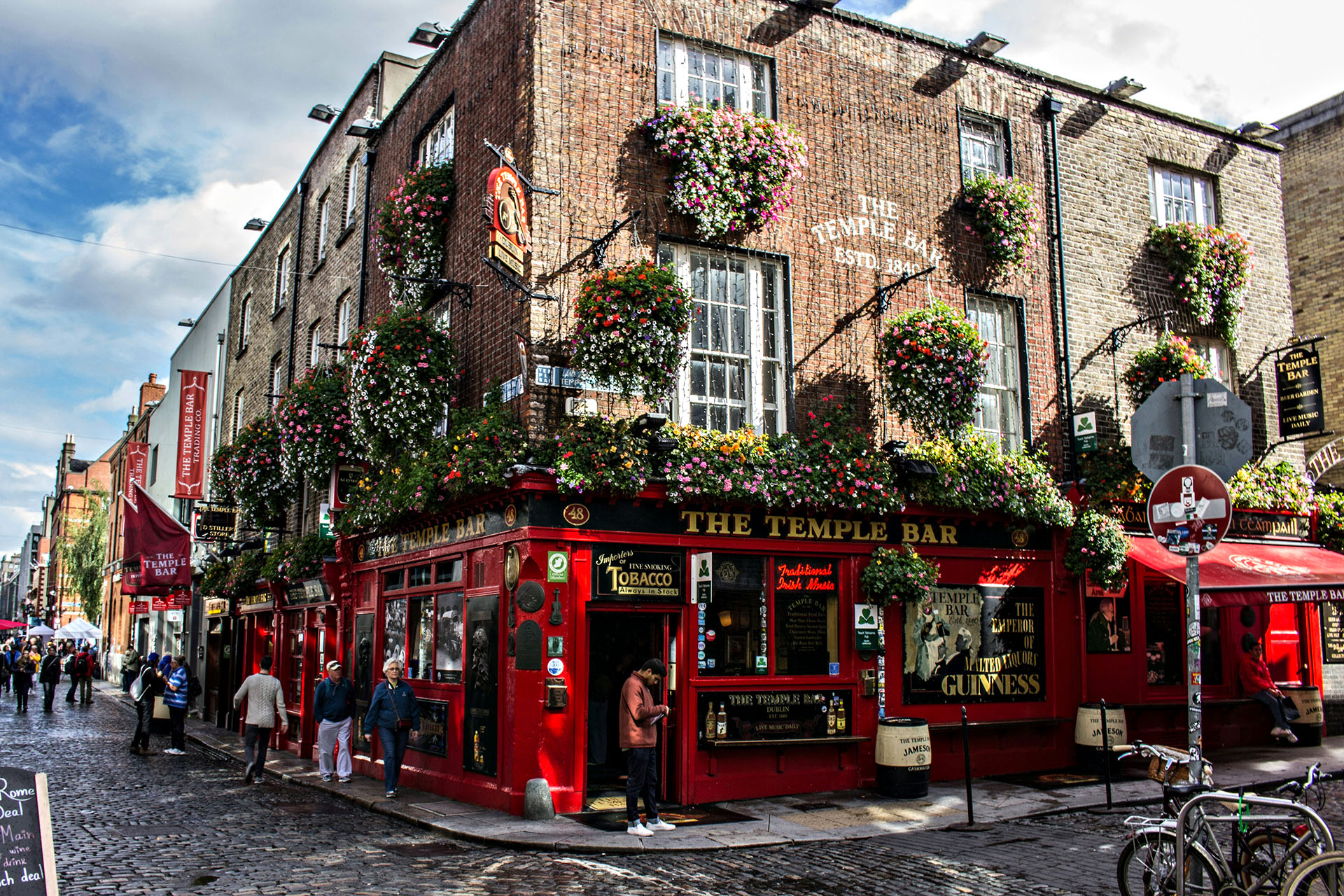
Since before St. Patrick drove all the snakes out of Ireland, it’s been well known that there’s no shortage of good fun to be found in Dublin.