15 ADVENTURES FOR THE SERIOUSLY SNOW STOKED SWAP THAT ISLAND FOR A SNOW FIELD, WE DARE YA!
Controversial opinion: winter is seriously underrated. Don’t get us wrong, we love a balmy paradise as much as the next former backpacker, but the world is home to some ridiculously epic, insanely unique cold weather experiences. You’re missing out if you’re sleeping on them.
From getting slammed with snowballs in a Japanese Yukigassen game, to going ice fishing in the coldest inhabited region on Earth, these are the chill thrills that make us want to book a flight to the Arctic/Scandinavia/Kyrgyzstan asap. BYO puffer jacket and sense of adventure. Wimps not welcome.
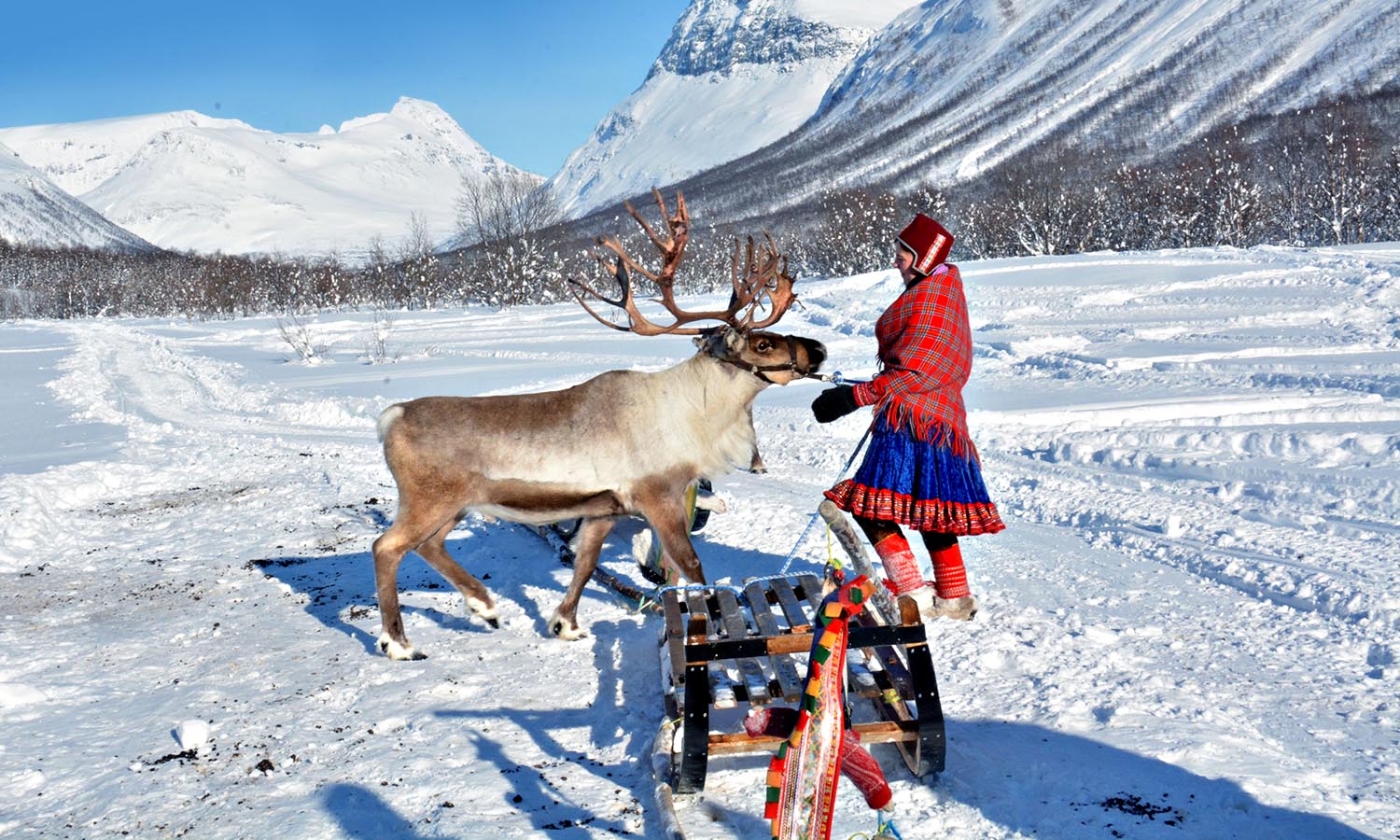
The indigenous Sámi people live in the northern parts of northernmost parts of Europe and Russia’s Kola Peninsula, and are historically, seasonally nomadic reindeer herders.
A trip to this part of the world involves some serious cultural immersion; staying in traditional lavvu tents and getting up close and personal with Rudolf, Prancer and Vixen. The whole reindeer gang. If you’re into pristine wilderness, you should probably get to the Arctic asap.
Australia is many things—epic stretches of coastline, humid rainforest, red desert. But is there enough snow for dog sledding? The answer is YEP.
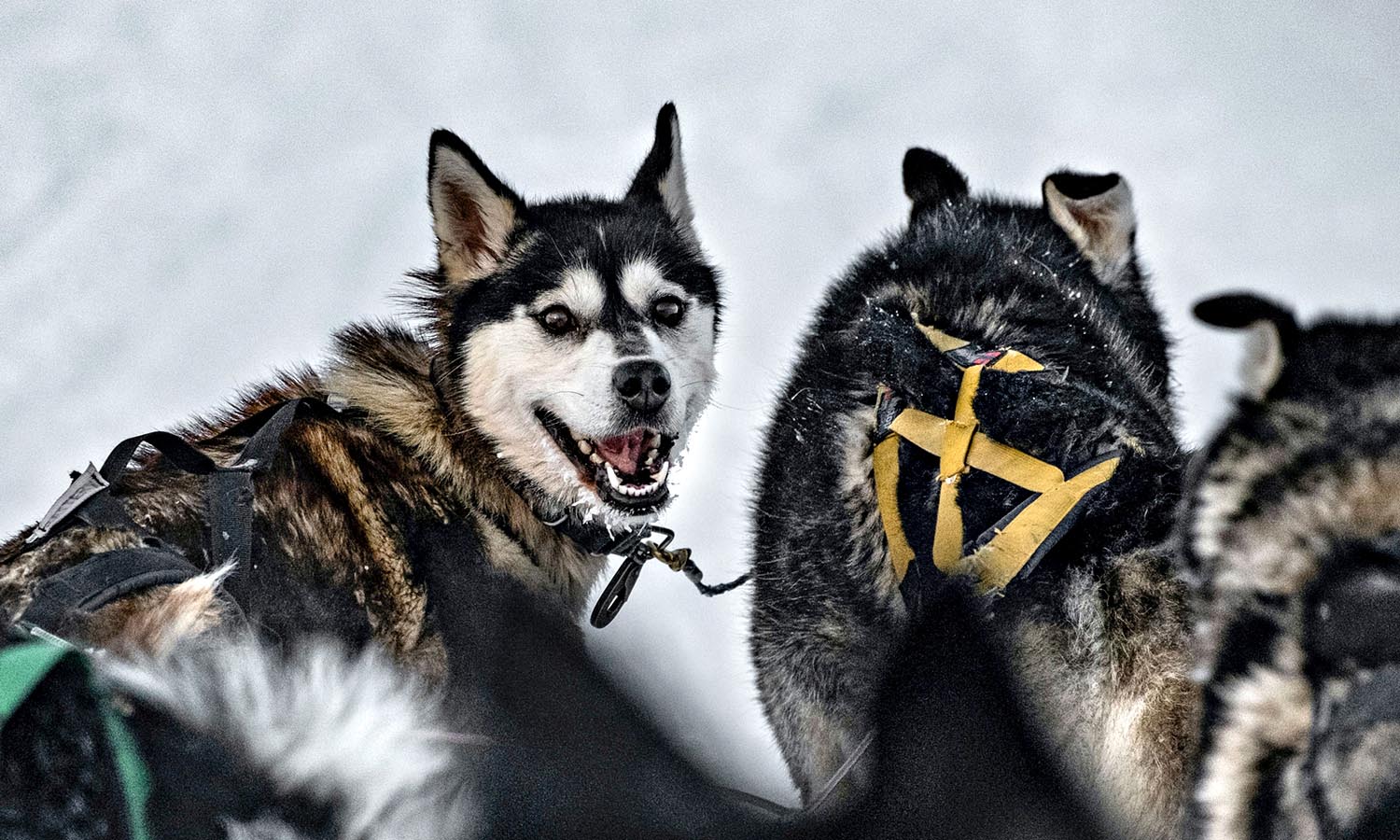
Forget the Arctic, all you have to do is head to Victoria’s Alpine National Park region and you’ll find a few companies offering bona fide husky dog sledding. You’ll join a pack of 10 doggos on a race down snowy ski slopes and across backcountry bush in a mesmerising whirl of white.
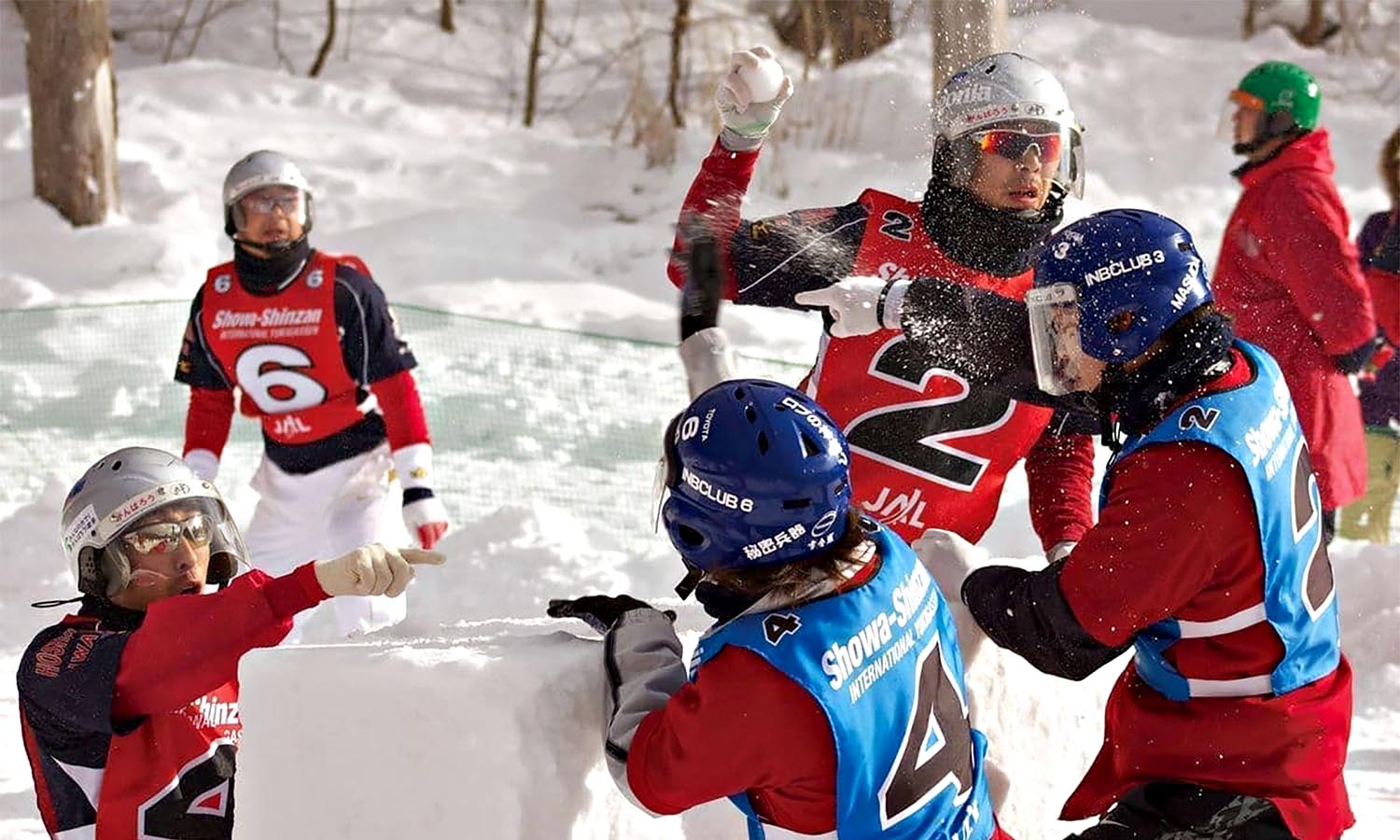
Also known as ‘the world’s most epic snowball fight’ the Japanese take their snow battles seriously.
So seriously they turned it into a legit sport. Yukigassen (which literally translates to snow-battle) is played with seven players and 90 snowballs per side, on a court that features small snow barriers that players can hide behind. The concept is a bit like dodgeball, in that if you’re hit by a snowball you’re out. The aim of the game is to either capture the opposing team’s flag or just smash each and every one of them with a snowy hard hitter. Whichever you choose.
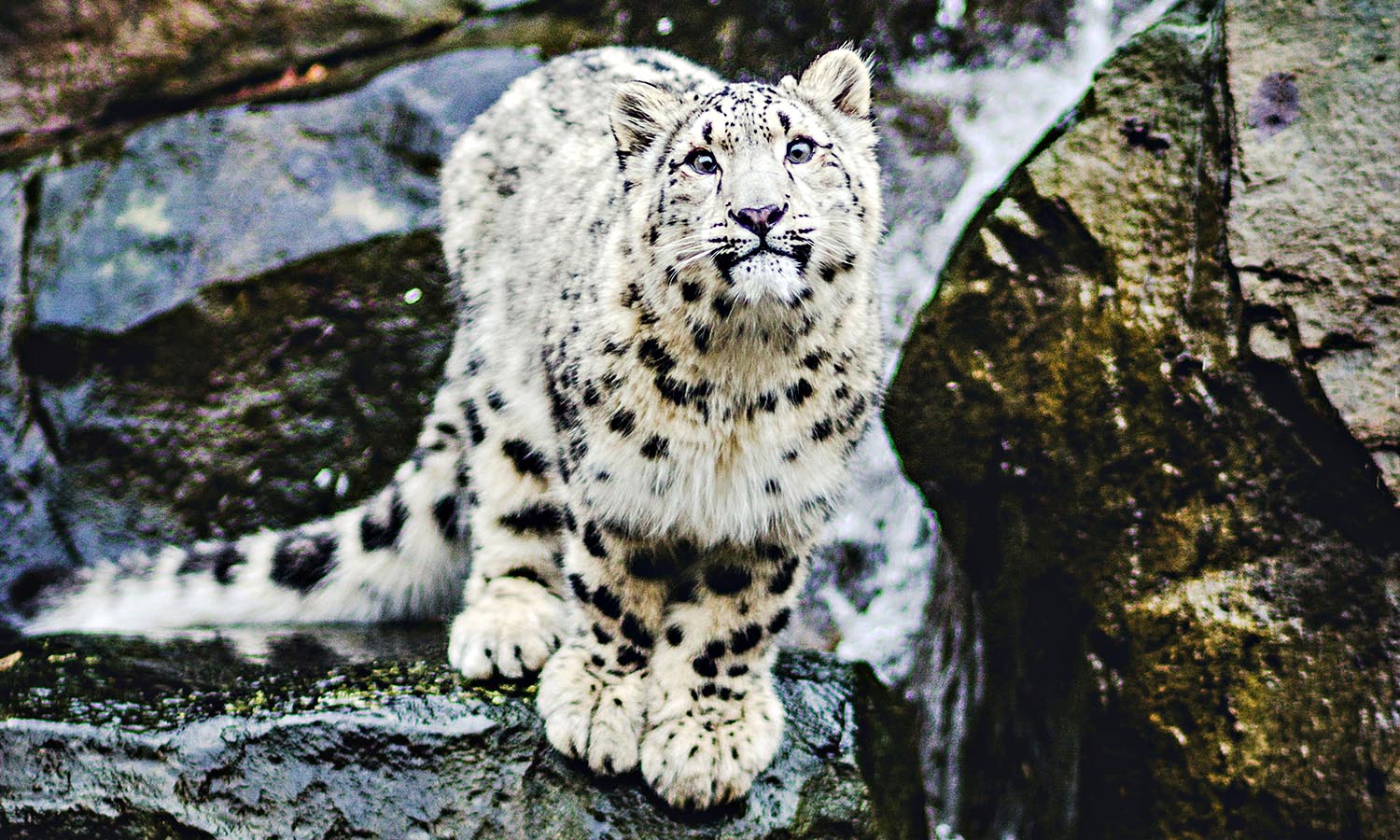
The rare and elusive snow leopard can be found across roughly 12 central Asian regions, but arguably the best perch for great cat sightings is wild Ladakh.
Sitting high (literally) at an altitude between 3,300 and 6,000 metres, this region gets super cold and delightfully snowy in the winter time. Perfect for spotting leopards on the prowl. Prepare yourself for a real adventure—you’ll be flying over the Himalayas, then driving and trekking into pow-covered valleys.
Uncrowded runs? Cheap ski prices? Deep powder? If you’re looking for an off-beat, adventure-fuelled ski destination—Kyrgyzstan needs to be added to your winter bucket list. Stat.
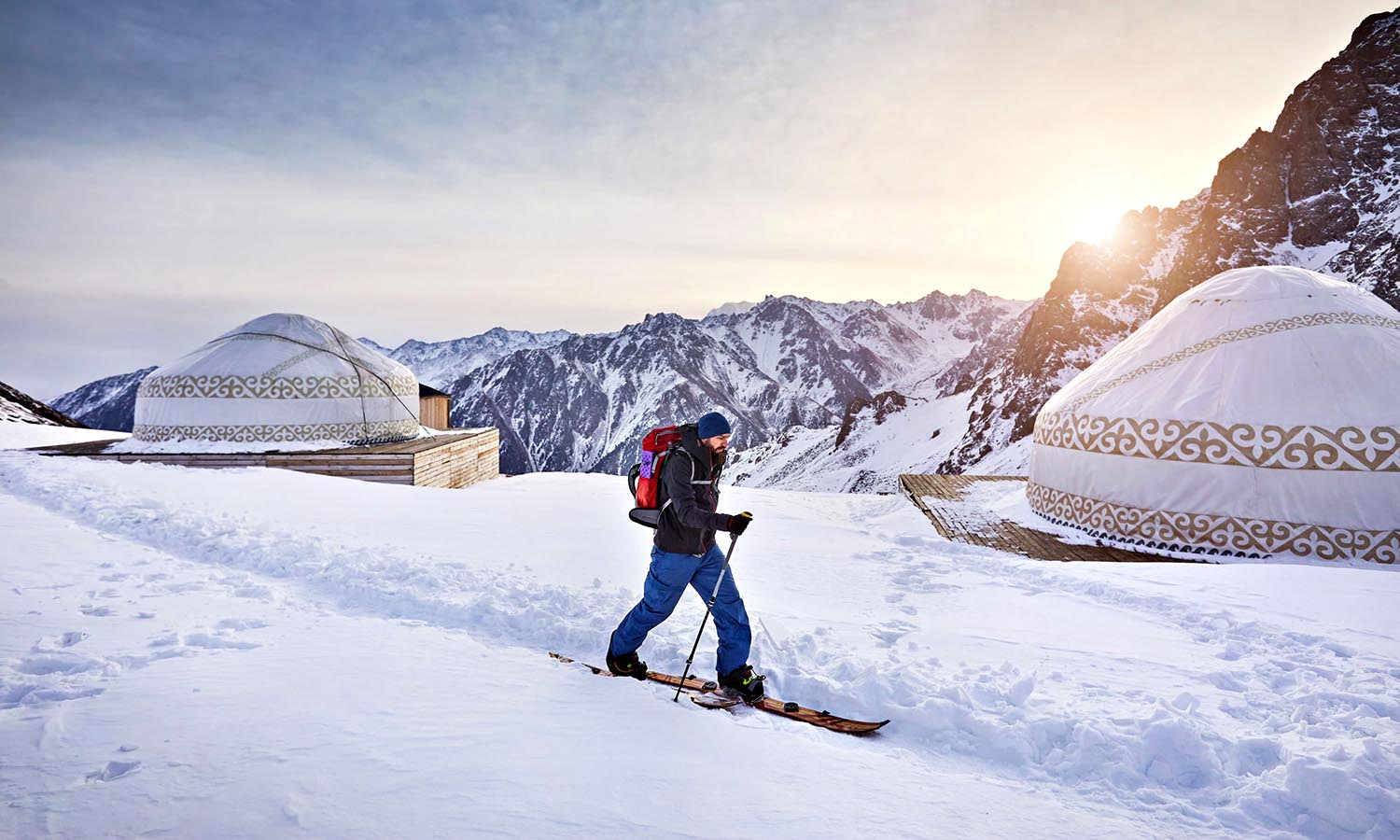
This landlocked Central Asian country has been a popular snow spot for Russians and Kazakhs in the past, but the rest of the world is only juuuuust starting to realise it’s a competitor to North America and Europe. With a bunch of parks to choose from, flowy tree runs and epic off-piste, plus cosy yurts to rest your head after a big day on the slopes, Kyrgyzstan won’t disappoint.
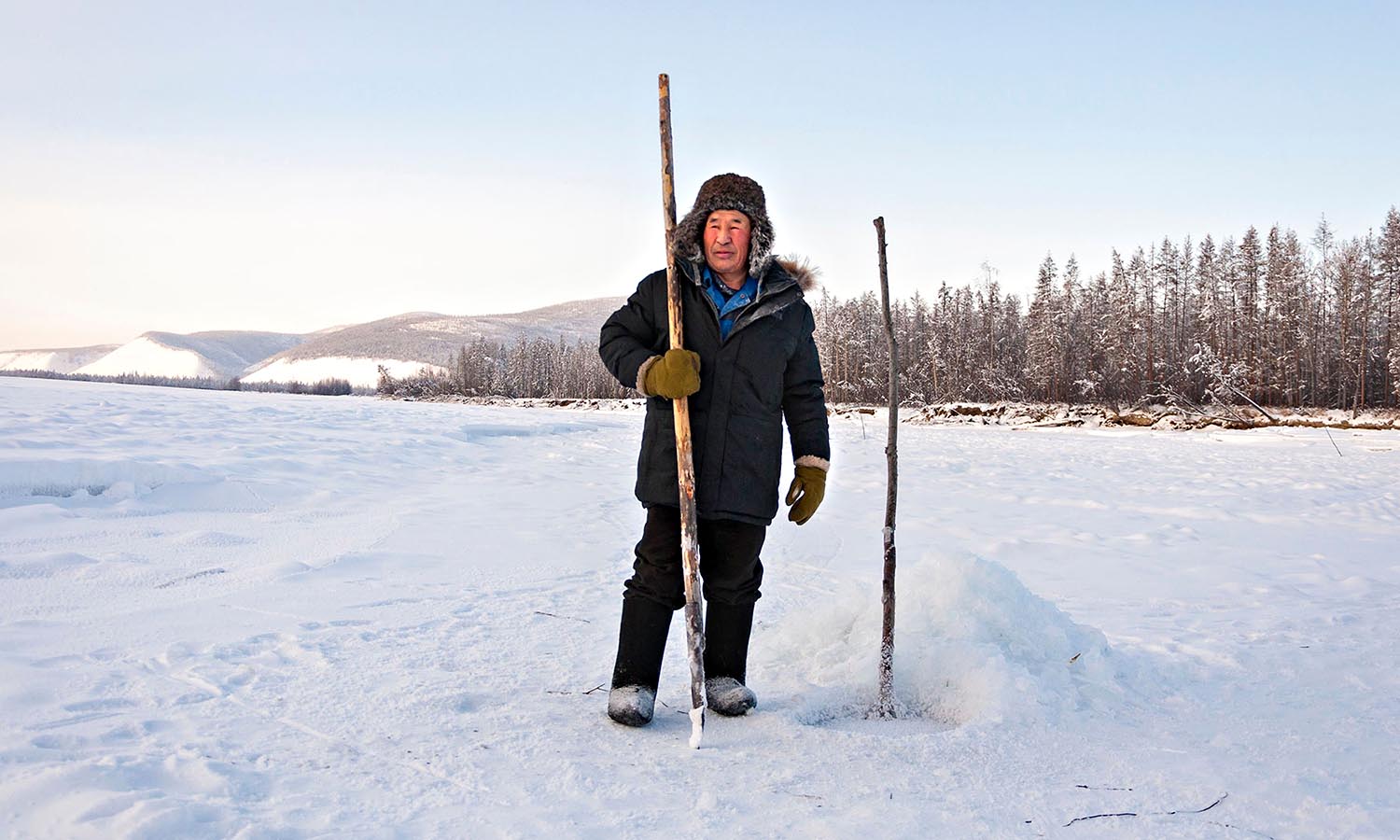
… In the coldest inhabited place in the world—Yakutia. Located in the Republic of Sakha, in Russia’s far east, Yakutia sits along the Arctic Ocean where temperatures can get down to -64°C some winters.
In Yakutia’s autumn, you can join locals in some traditional fishing, known as ‘munkha’. This is a unique, innovative fishing ritual that involves multiple ice holes and one super large net. It’s hard work, but it’s rewarding. Every year entire villages can gather hundreds of kilograms of fish—a haul that will feed them all through the winter.
* This is a region in Russia, and travel to Russia is strongly discouraged / impossible right now. BUT! That doesn’t mean we can’t add the tiny town of Yakutia to our bucket lists. One day…
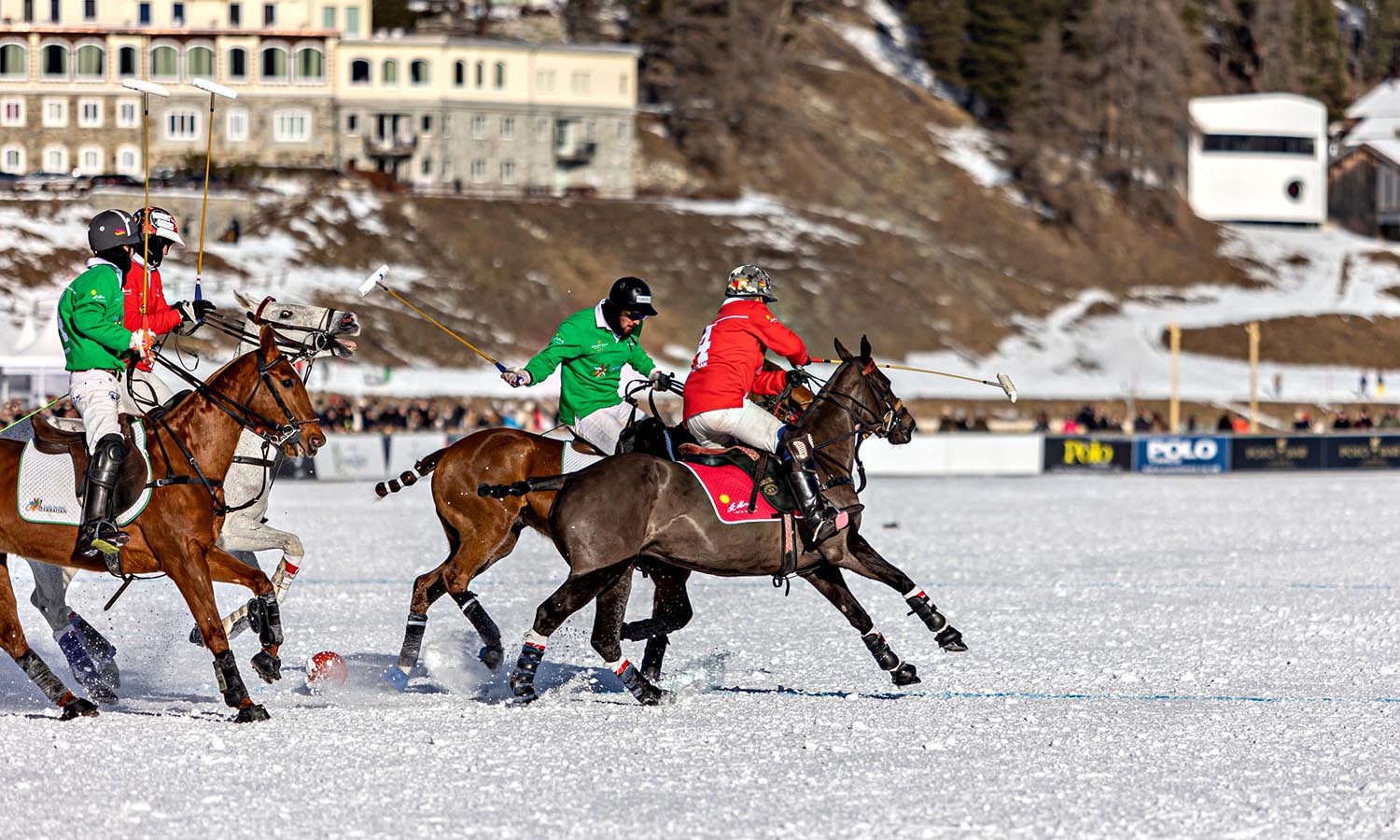
This is for those of us who want a fancy snow experience. And it doesn’t get fancier than the prestigious ‘high goal’ snow polo tournament on St. Moritz’s frozen lake.
An annual bash originating in 1985, this equestrian spectacle sees two teams compete for victory in the world’s highest-paying tournament on snow. To truly enjoy the exclusive snow polo event, consider splashing out for a VIP ticket (you’ll probably spot a celebrity or three) and indulge in world-class gastronomy and free-flowing Champagne.
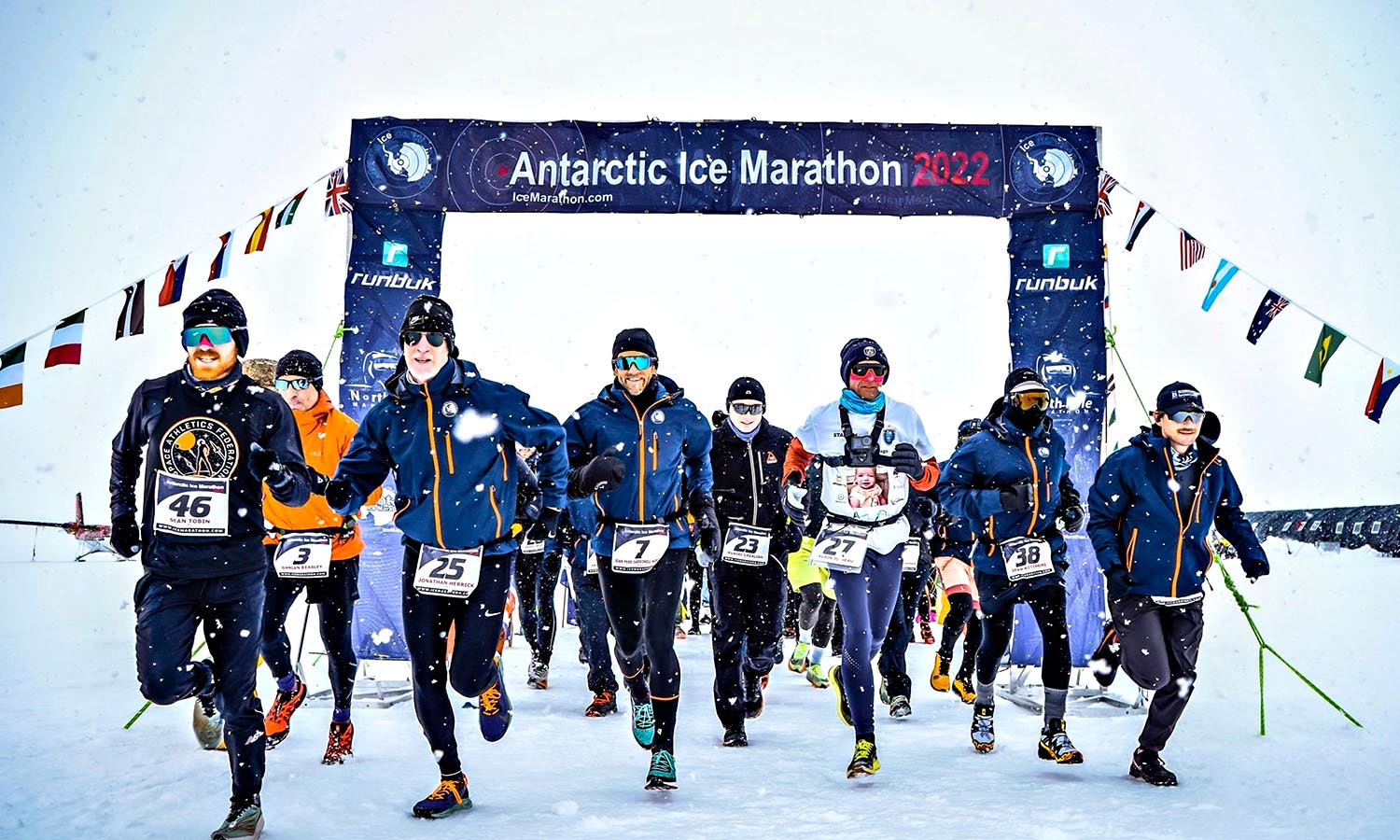
Not feeling challenged by a 42-kilometre jog on regular old asphalt? You could give Antarctic ice a go.
This has got to be one of the most intense races in the world, with contestants fronting up against snow and ice, an average windchill of -20ºC and an altitude of 700 metres. Worth it to join The 7 Continents Marathon Club? Heck yeah. Don’t expect a PB though, those Antarctic winds are gnarly and can blow at a steady 10 to 25 knots any given day. Wild.
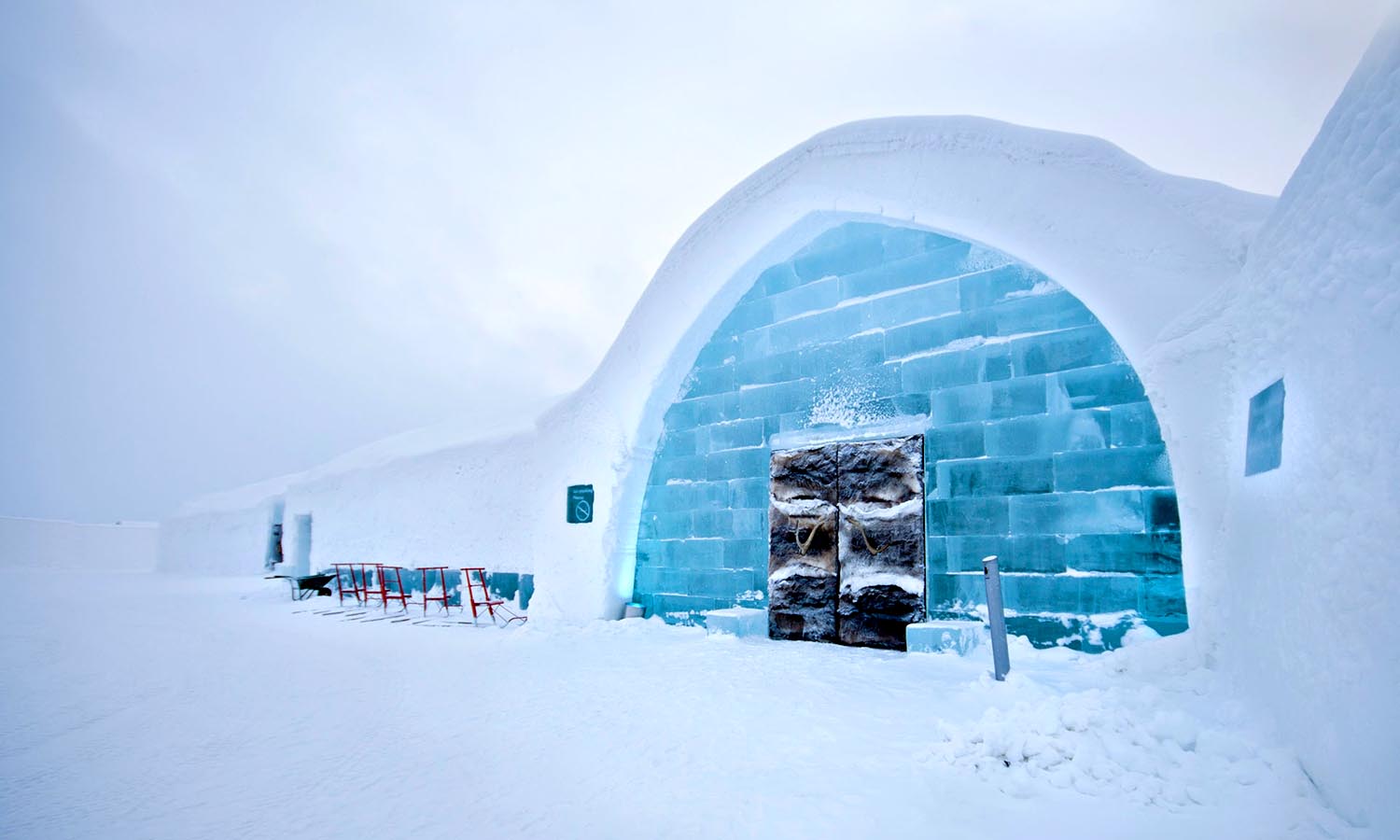
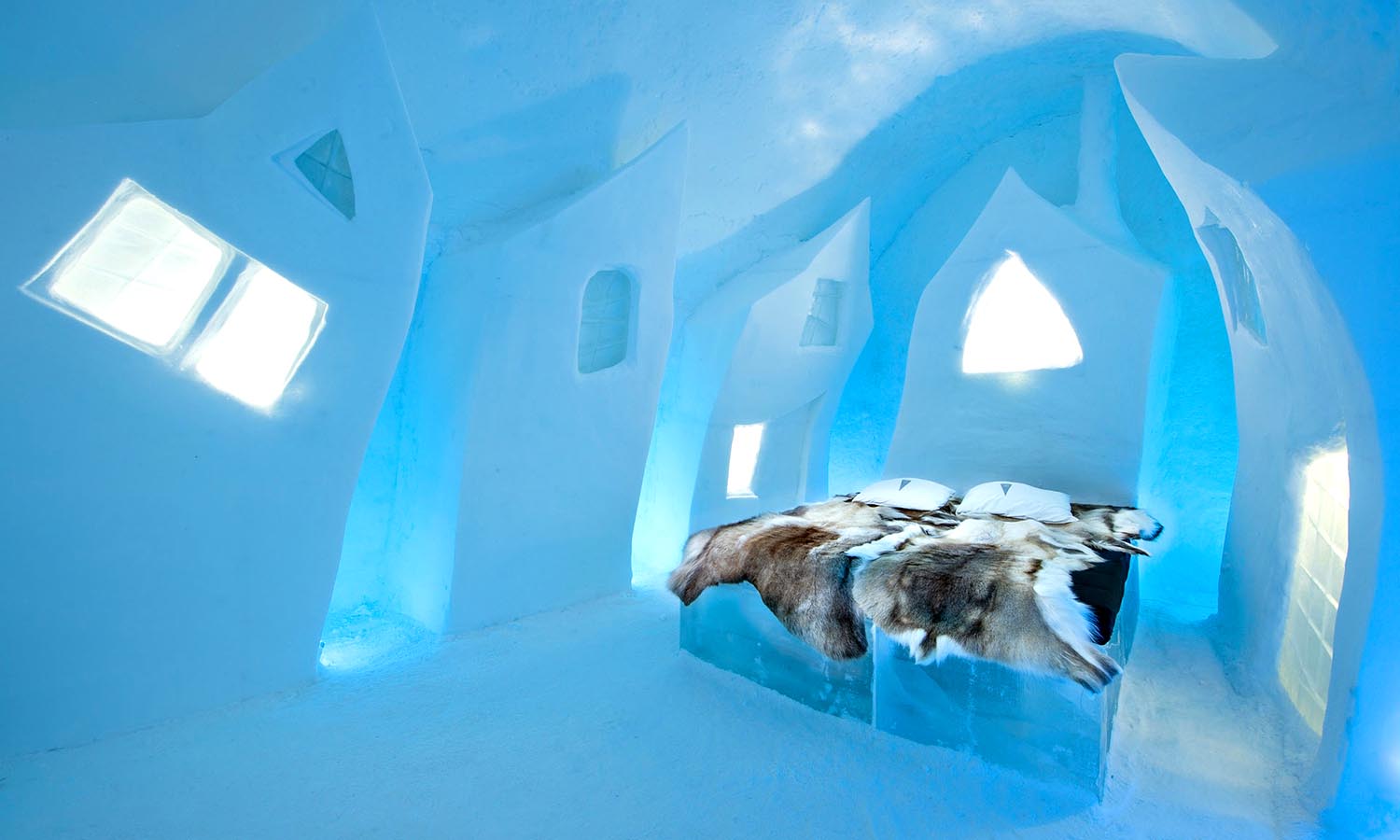
You don’t think the word ‘cosy’ can be synonymous with ‘ice hotel’? Guess again. The gang at ICEHOTEL in Jukkasjärvi have created a fairytale-like wonder.
Located in a tiny Arctic village up in Swedish Lapland. This hotel is rebuilt every winter because—if you’re still not understanding—IT’S MADE ENTIRELY OF ICE. They use snow and ice blocks from the Torne River to build a veritable fortress including an ice bar, ice church and some seriously cool (sorry!) suites.
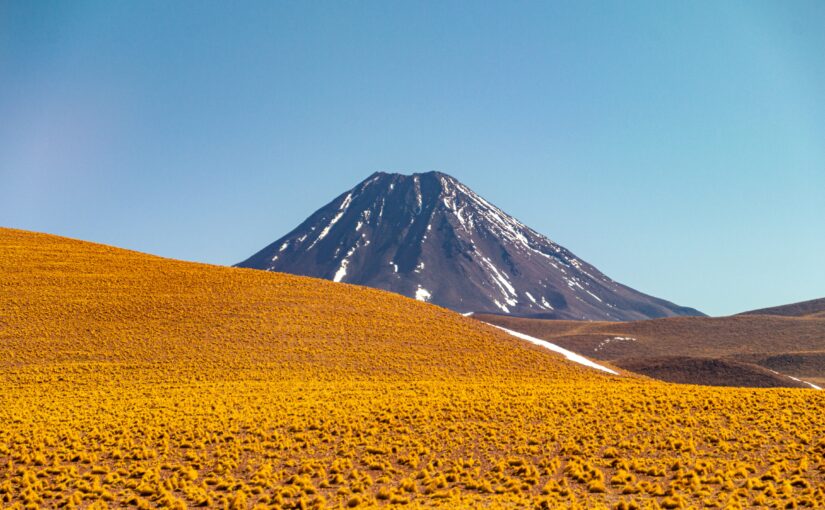
Gorgeous refugios, world-class steaks and powder-packed volcano bowls: welcome to skiing in the Andes!
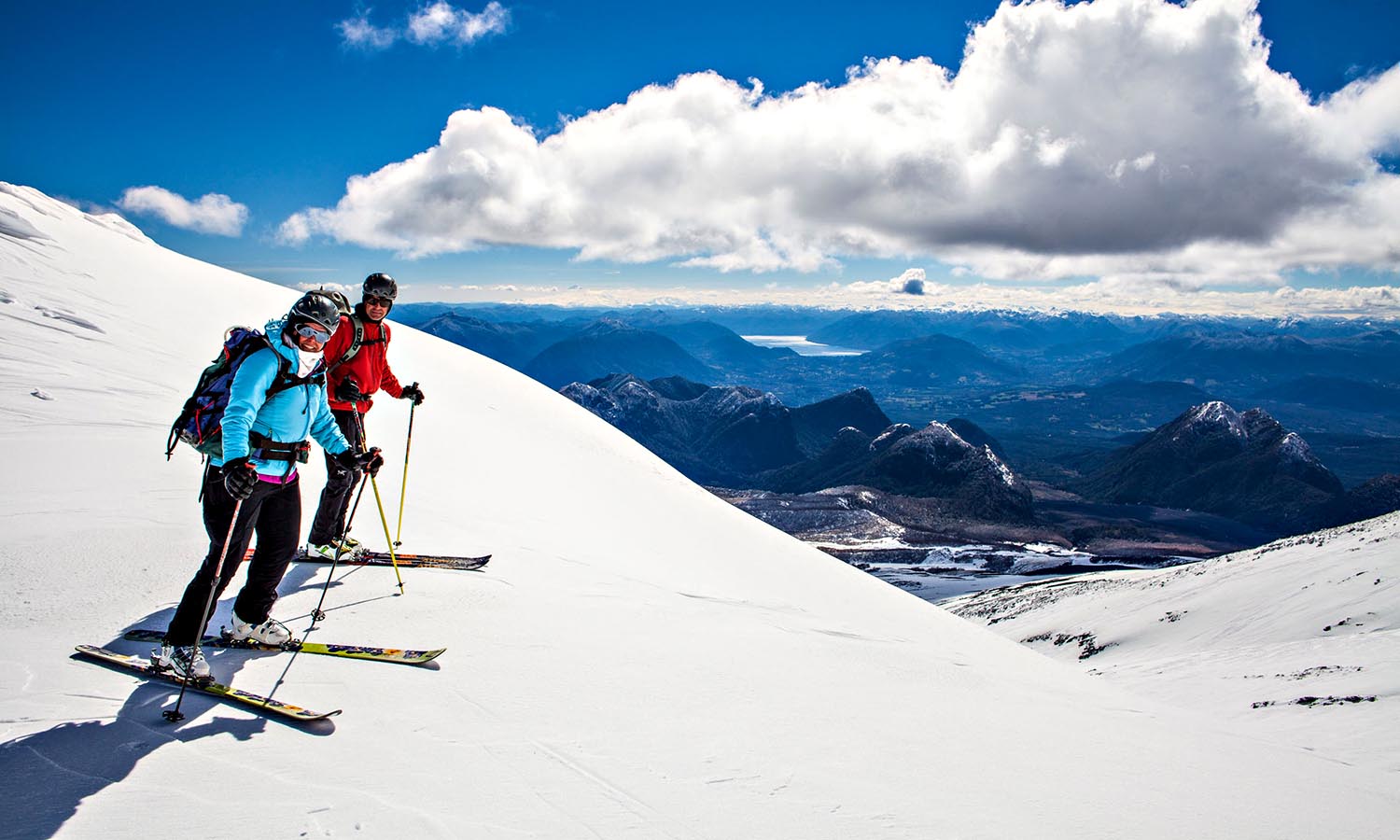
Backcountry Chile is home to a bunch of ski-able volcanoes, like Volcano Lonquimay, Volcano Villarrica and Volcano Lanin, where you can slide down their steep sides in a magnificent flurry of snow and adrenaline straight into a volcanic hot spring. VAMOS, AMIGOS.
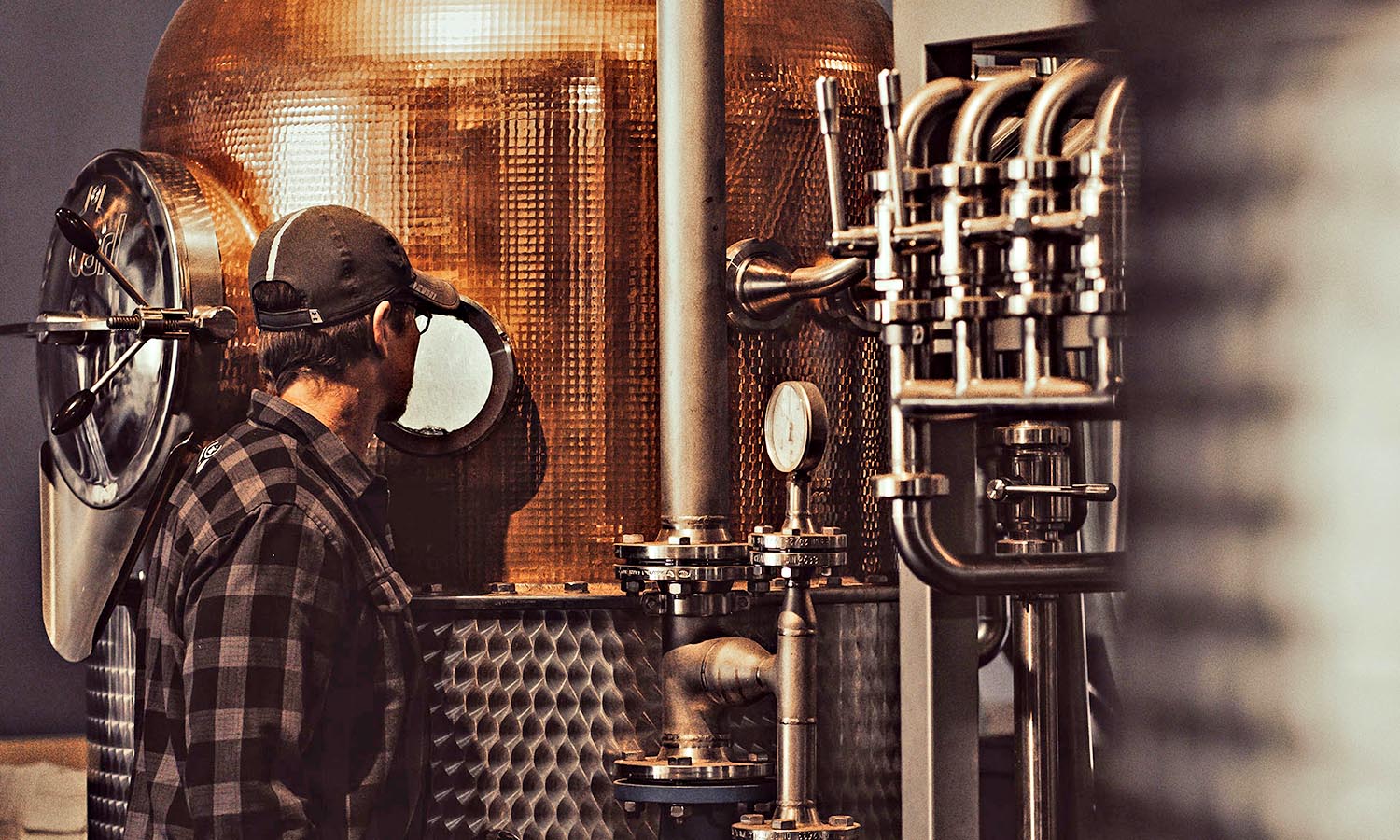
From professional snowboarding to coffee roasting to beer brewing, the gang behind Shelter Distilling in Mammoth Lakes are a versatile bunch.
Nowadays they’re focused on creating spirits that mirror the grand nature of the Eastern Sierra. They’re all about finding adventure on the mountain and then sipping on a spirited something or other (pick your delicious poison) as a sundowner.
Never heard of Steamboat Springs? Grab a world map and put a pin on it!
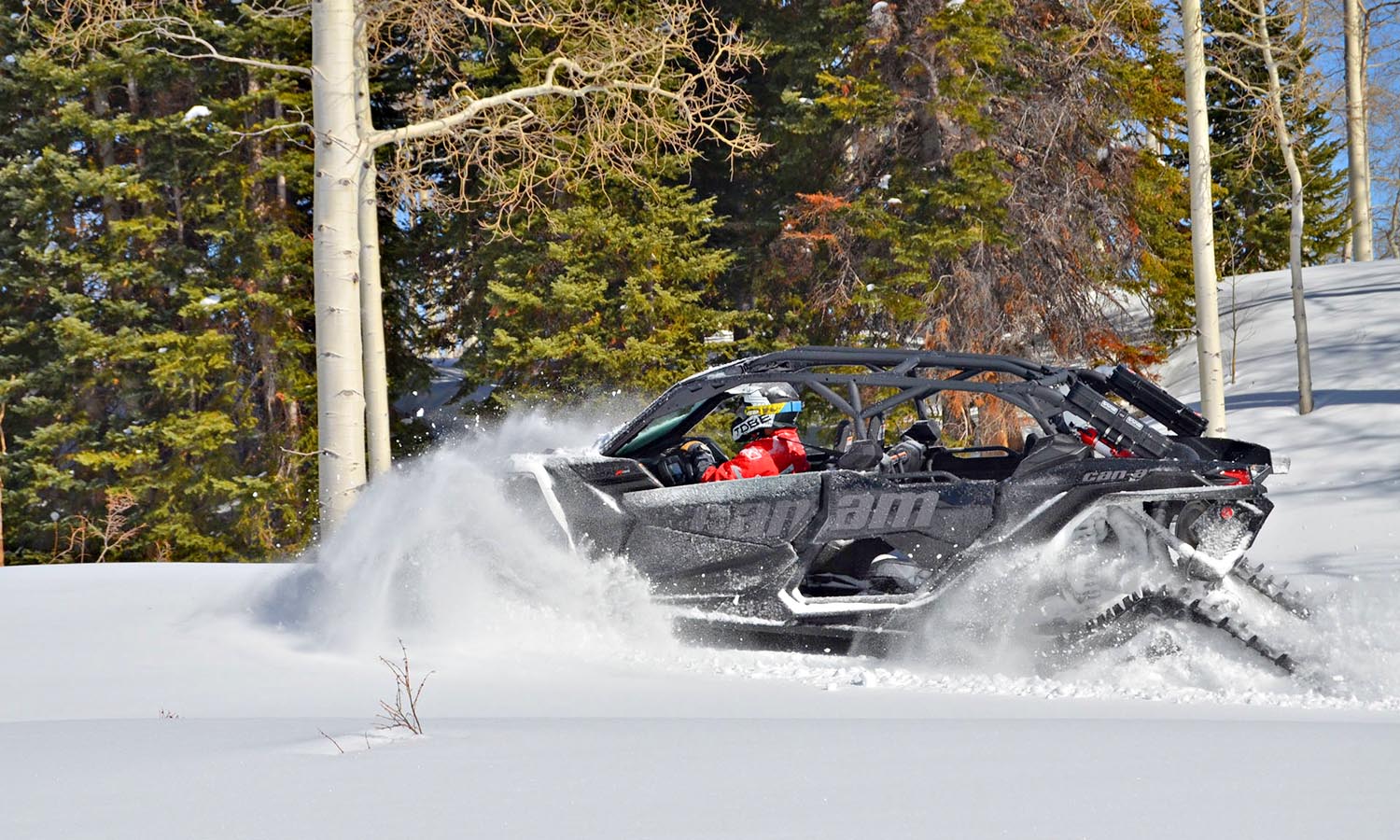
This winter haven in Colorado is chill thrills central, from world-class skiing and snowboarding to jumping on a fully enclosed UTV snow buggy. These monster buggies seat up to four people and will see you shredding (in a different way) across the pow-packed landscape.
Forget Kilimanjaro. Did you know that six of Africa’s 10 highest peaks are all in one Ugandan national park?
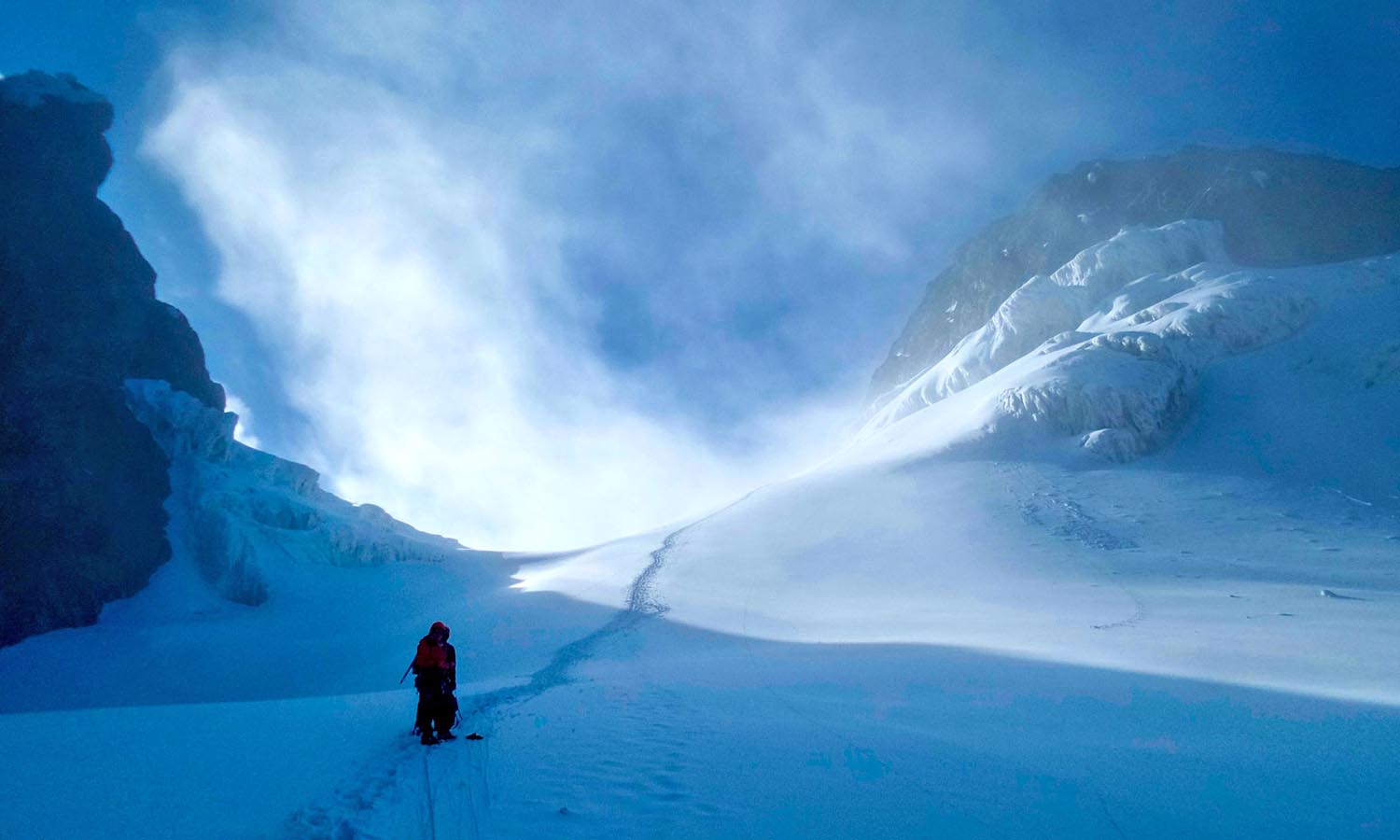
And did you know the region reaches such heights that there’s snow and ice and glaciers to be found? IN AFRICA, NO LESS. The Rwenzori Mountains NP is probably one of Africa’s best kept secrets, meaning you’ll probably have the park all to yourself. If you’re a technical climber, tackle the famed Mt. Stanley’s Margherita Peak for a serious snow challenge.
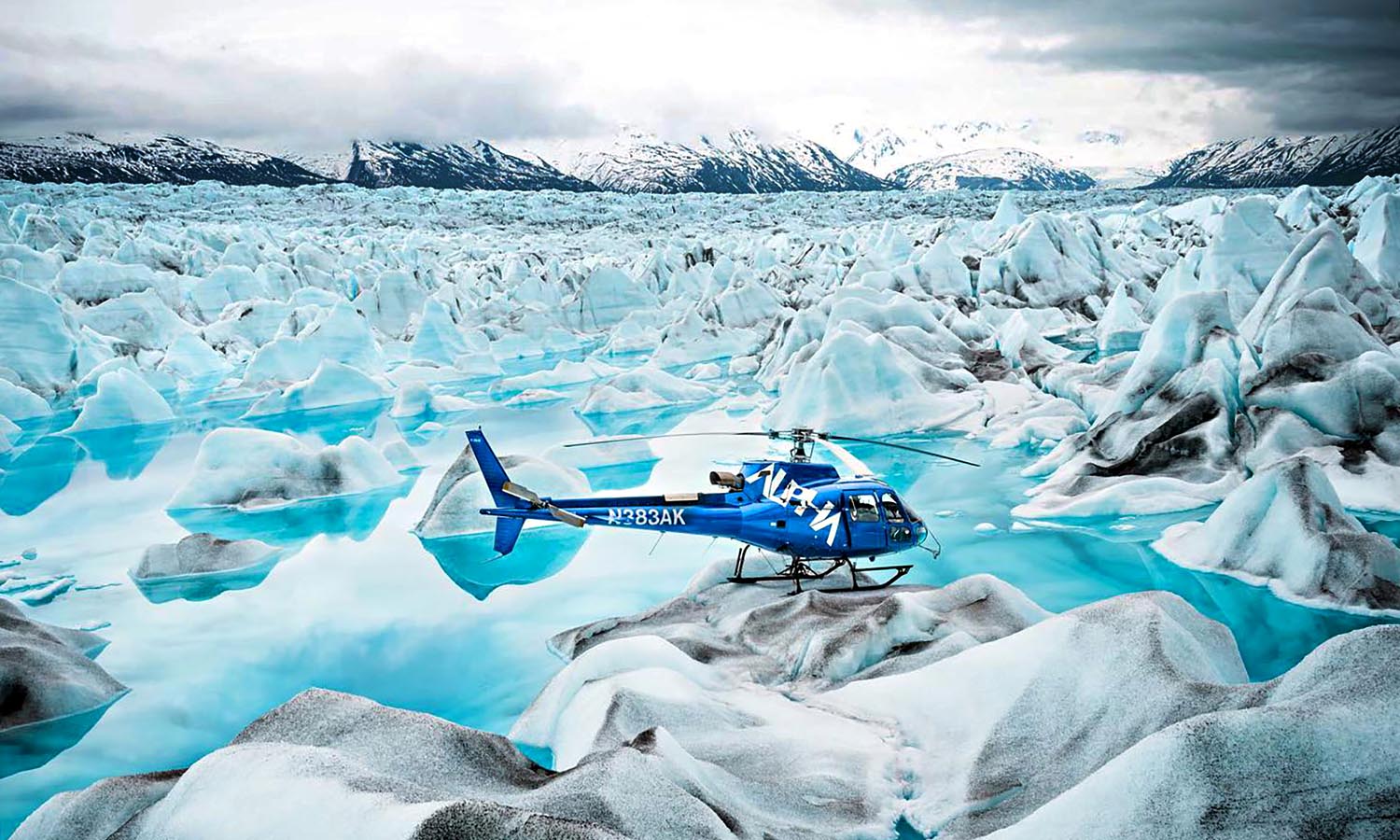
This has got to be one of the most epic ways to get to a glacier. And just generally scope out wintertime Alaska.
The gang at Alaska Helicopter Tours will fly you over the ridiculously massive, and ridiculously beautiful, Knik River Valley glaciers. Just a short flight from Anchorage.
These flights operate year-round, but we reckon winter is your best bet, with a heap of glacier landing options available where you can get out of the chopper and walk the brilliantly blue frozen landscape. Gotta be seen to be believed!
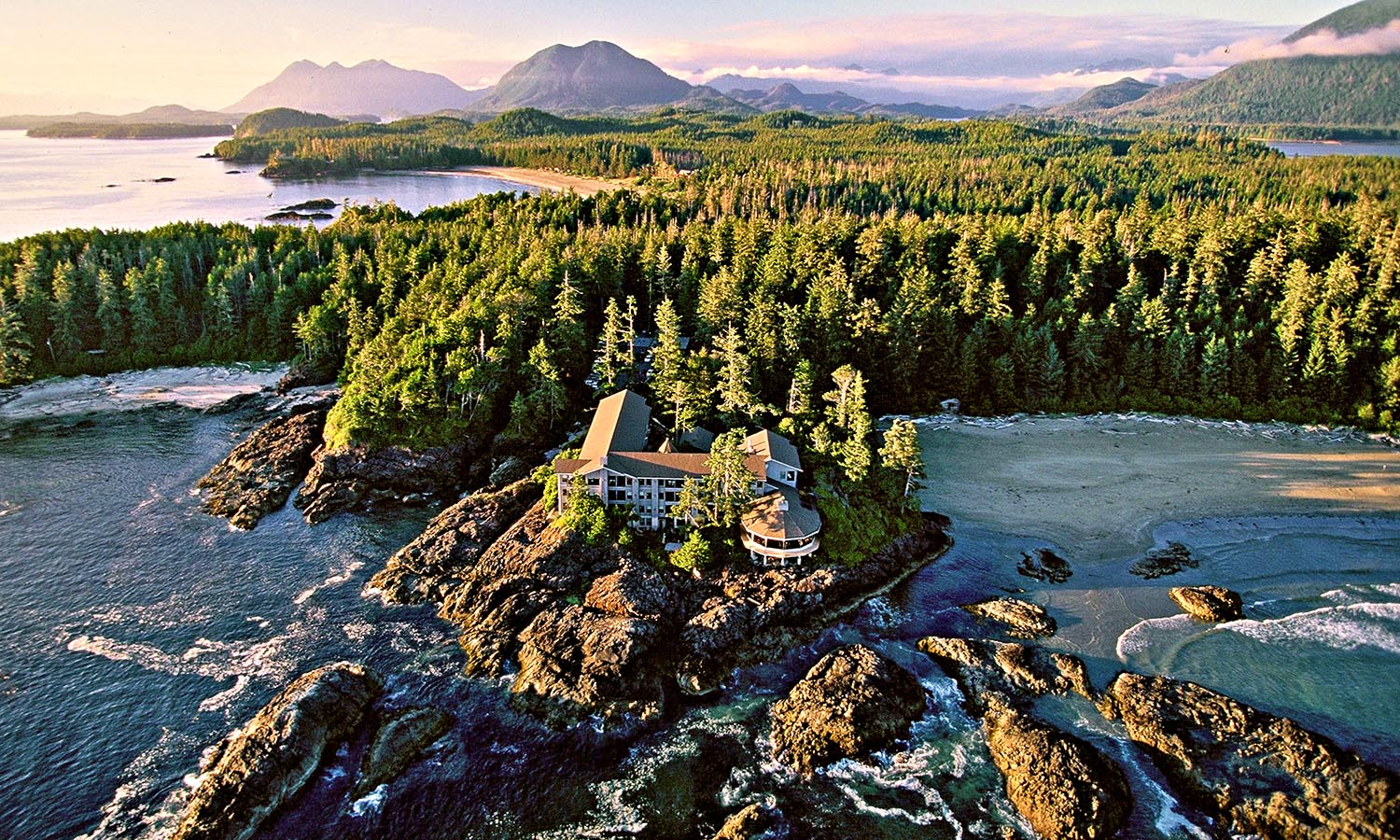
Fancy braving the elements without actually being in them? British Colombia’s most epically cosy spot for a bit of winter storm watching is the luxurious Wickaninnish Inn in Tofino.
Perched on the very edge of the coast, this location has long been a go-to local spot for watching the wild waves break upon the rocks.
Strap in, winter in BC brings gale force winds, huge waves, snow and energetic skies. This landscape really comes alive during winter. Chasing an adrenaline rush? The lovely people at the Wickaninnish Inn have complimentary rain gear on hand for any brave explorers.
This is what get lost are vibing, and what we aren’t vibing, in travel right now.
IN:
get lost nominated for travel publication of the year
The nominations for Mumbrella’s Travel Publication of the Year were announced yesterday, and what do you know…little old get lost found themselves in the list of nominees.
We’re not big on back-pats, but this is a big IN for sure. Thanks to all our readers for your support over the last year – we love bringing travel inspiration your way.
BABY SEATS
A women and her six-month old sit next to me for my overnight Melbourne to Bali a few weeks back. “Oh fuck,” I think to myself. Or maybe I said it, because she looks at me and says (the mother, this is, not the baby) “Don’t worry, I’ve got a secret weapon.” Her husband emerges from somewhere else further back on the plane not long after take-off with a blow up baby bed that attaches to the seat, then disappears once his work is done. I swear I’ve never seen anyone – baby or fully grown human – sleep as soundly as this little guy did, through turbulence even, nestled so comfortably in what must feel like some sort of safe, cosy cloud. I wish there was an adult version of this.
New Zealand SkyNests
Speaking of sleep, haven’t the Kiwis just gone and outdone themselves with this operation. The Skynests are the pods that allow you to get some quality shuteye on a long haul, that can be booked out for four hours at a time. They’re a little pricey, sure, but what price can you put on sleep on a plane.
OUT:
PRICEY H20
We get it – you get what you pay for with low-cost carriers, but paying for water on aeroplane just seems kind of barbaric.
PAYING FOR WI-FI
In the same vein as the above, our publisher was recently charged around AU $30 for Wi-Fi at a hotel. We’re all for being off devices and interacting with each other as much as possible, but in 2023, Wi-Fi should be free. So when it’s 30 bucks? Ya gotta be jokin.
NATIONAL CARRIERS NOT STOCKING NATIONAL BEERS
Everything is global these days, which is why it’s just as important as ever to preserve national identity through the little things – like national carriers, and beer.
For instance, we reckon it’d be great if you got on a Qantas flight and were greeted with only Australian beers; a Fosters (even if it is brewed in Scotland) or VB, plus a selection of local craft beers to go with it. Same goes for the wine list.
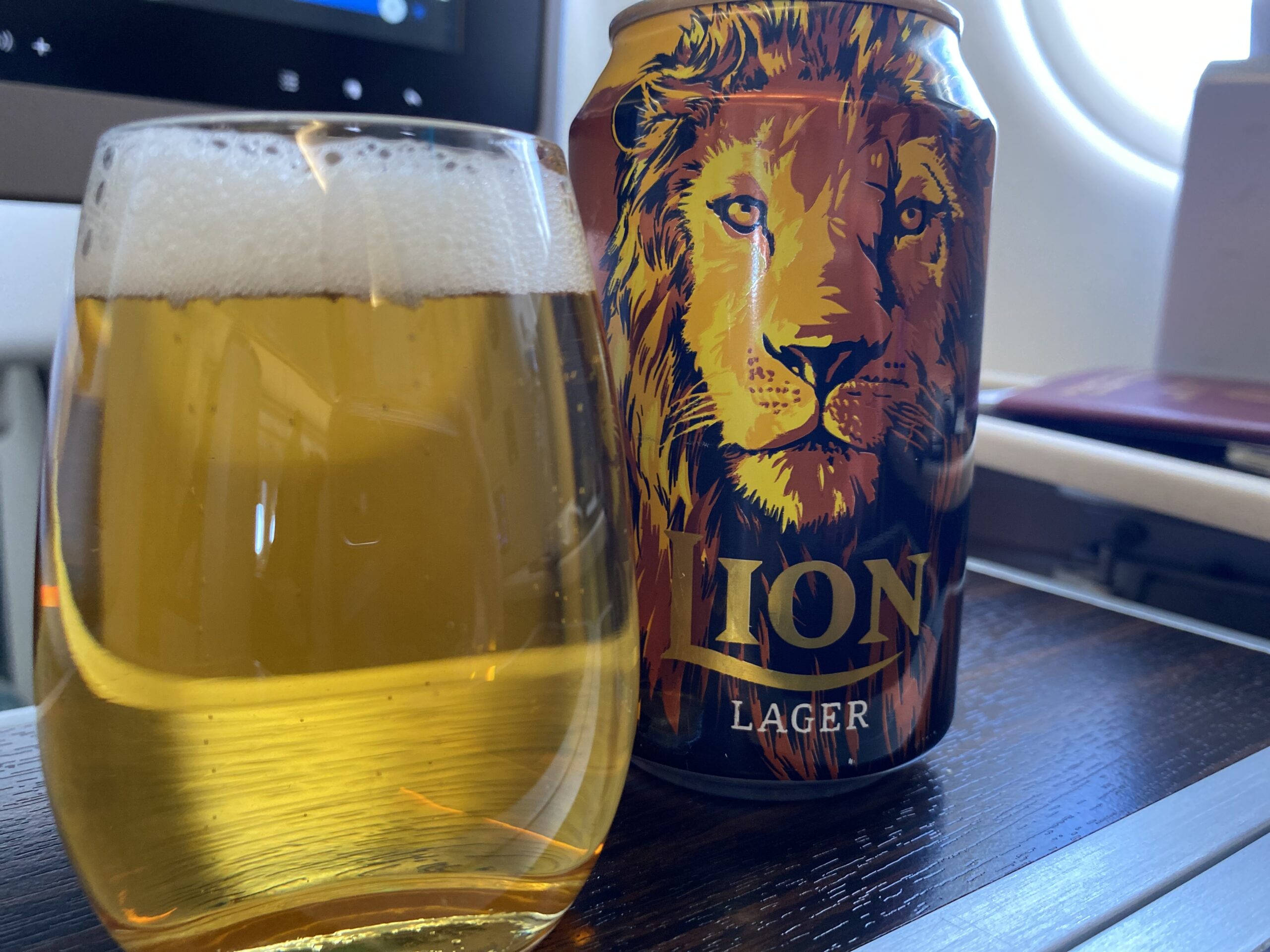
We reckon everyone needs to take a leaf out of Sri Lankan Airlines’ books, who will happily pour you an ice cold Lion Lager – the national beer that is proudly stocked everywhere throughout the entire country.
THE SEATBELT SIGN GRAND PRIX
This one really grinds our gears.
The mad rush when the seatbelt sign comes off has always been ridiculous, but we think it’s reaching absurd levels.
There is nothing more anxiety-inducing than an uneven queue to get out, people jostling for position at the overhead lockers, jumping the line in an attempt to break away and set a world record through customs. Like we get it, everyone’s keen to leave, but take it easy and follow this one simple step: never (unless waved through) go until the row in front of you has gone. Simple.
You’ll probably have to wait together at the baggage carousel anyway. Chill out.
***
Get in touch: info@getlostmagazine.com if you’ve got any thoughts on the above, or any INS and OUTS of your own.
It’s been quite the transformation for filmmaker Wes Anderson in recent years, whose surrealist films have gone from Avant Garde to trending on social media.
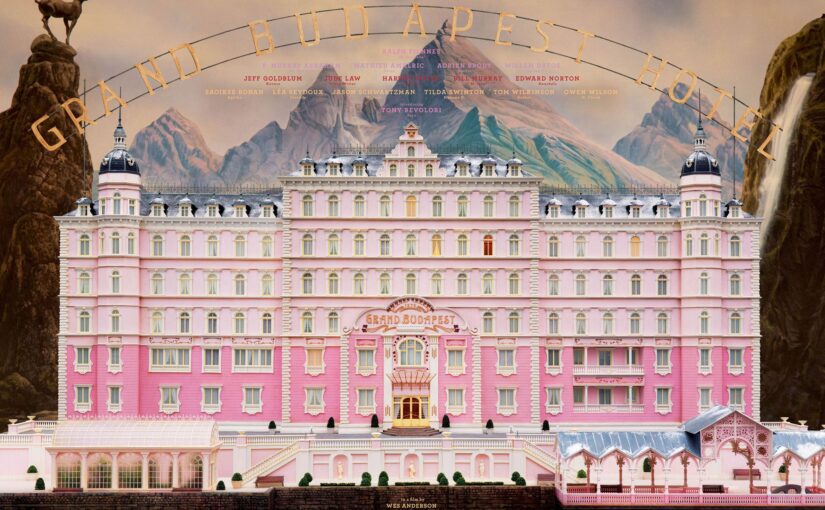
Even if you haven’t seen The Grand Budapest Hotel (which you NEED to watch, btw) you know the aesthetic, and you know the trend: bright pastel colours in aesthetically pleasing scenes marked by complete symmetry, with dainty background music to boot.
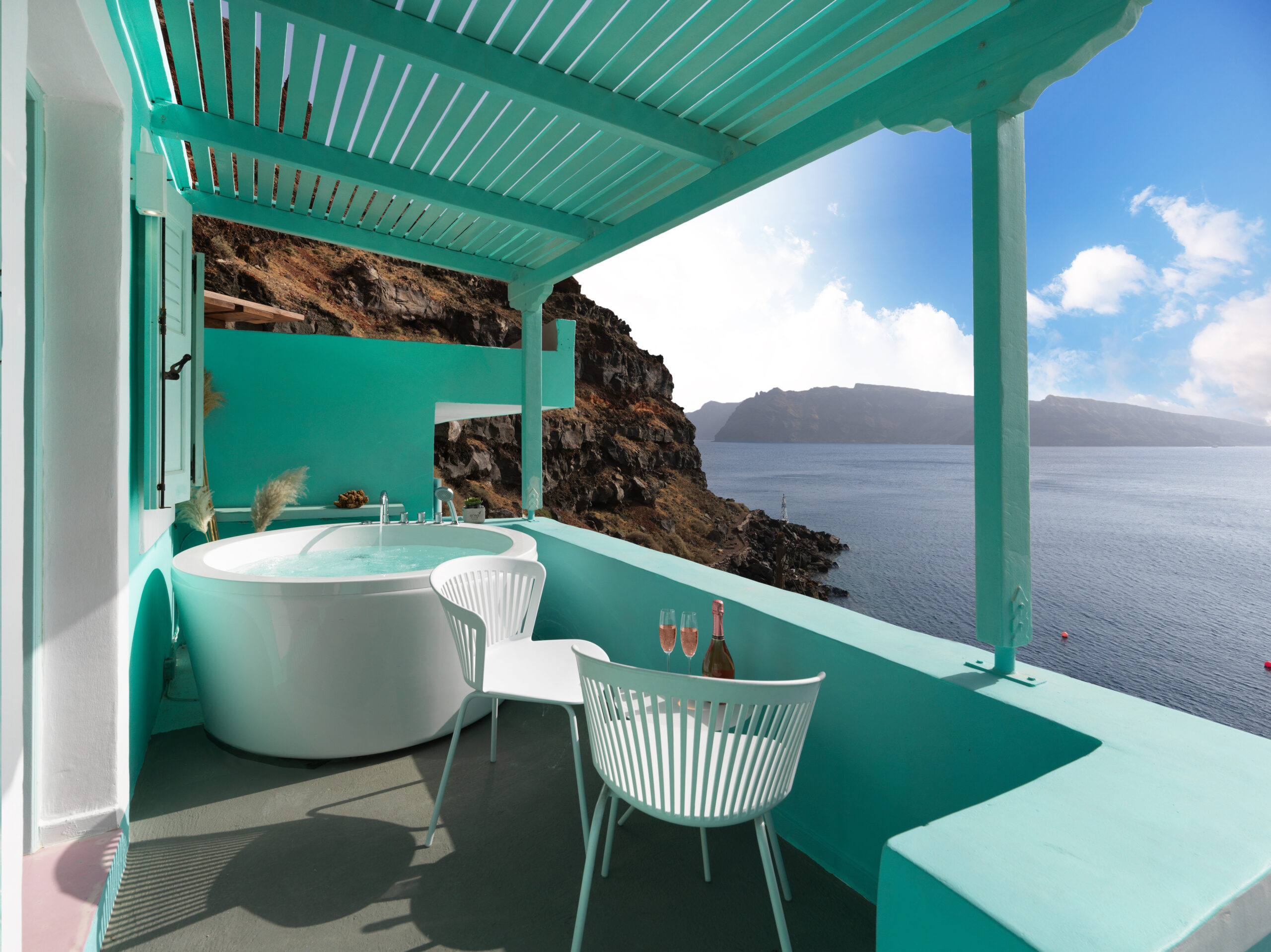
To mark Wes’ latest film, Asteroid City, AirBnB and get lost have found five stays where you can live out your wildest Wes Anderson-themed dreams – BYO ludicrous adventure.
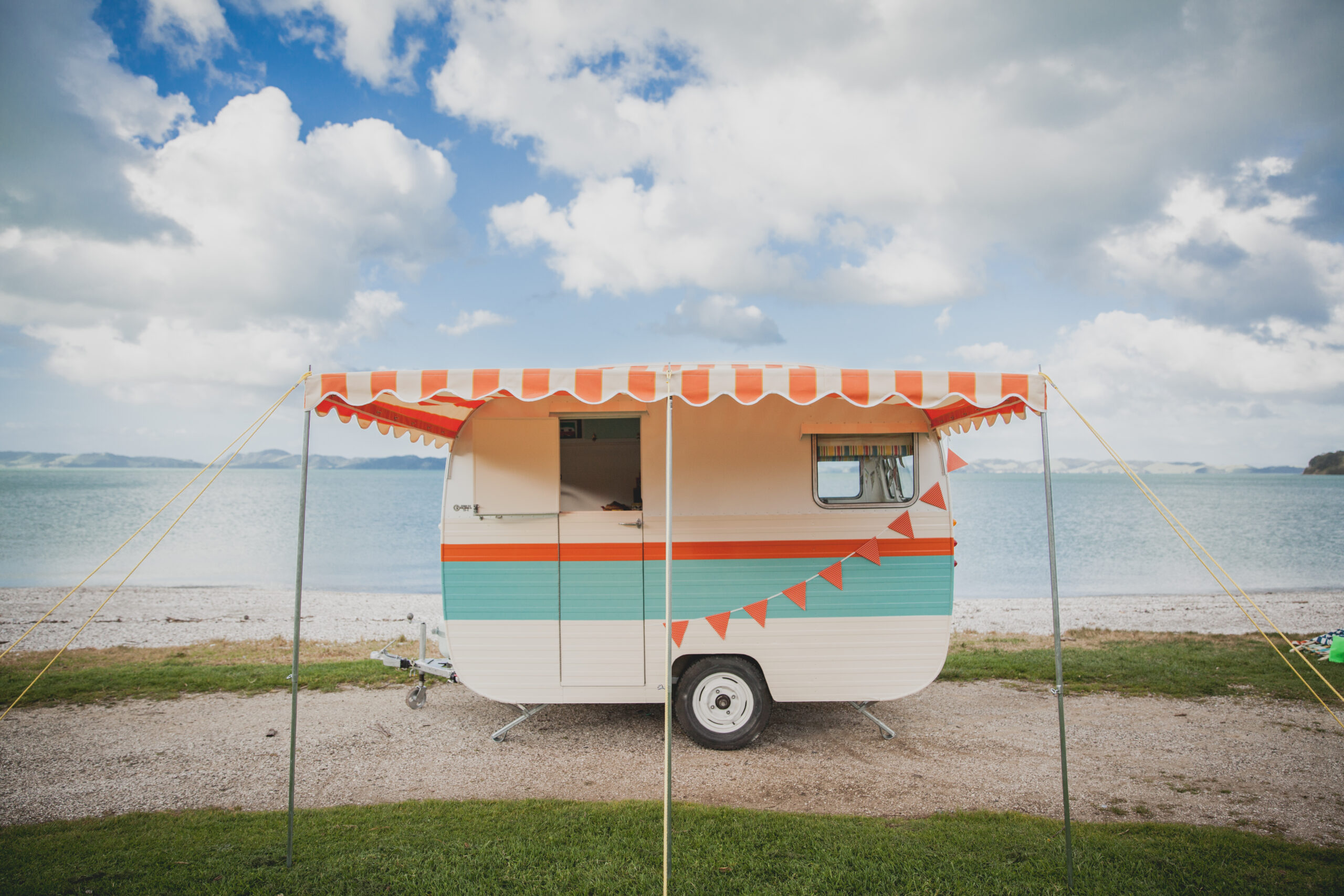
1. Retro Caravan Nights, Auckland, New Zealand
Claris is a rebuilt 10.4′ Clipper Caravan that was saved from demolition on a north island farm 2 years ago. Now it’s a pastel coloured dream in Omana Clifftop Regional Park in New Zealand, on the doorstep of Hauraki Gulf. We absolutely love this little gem.
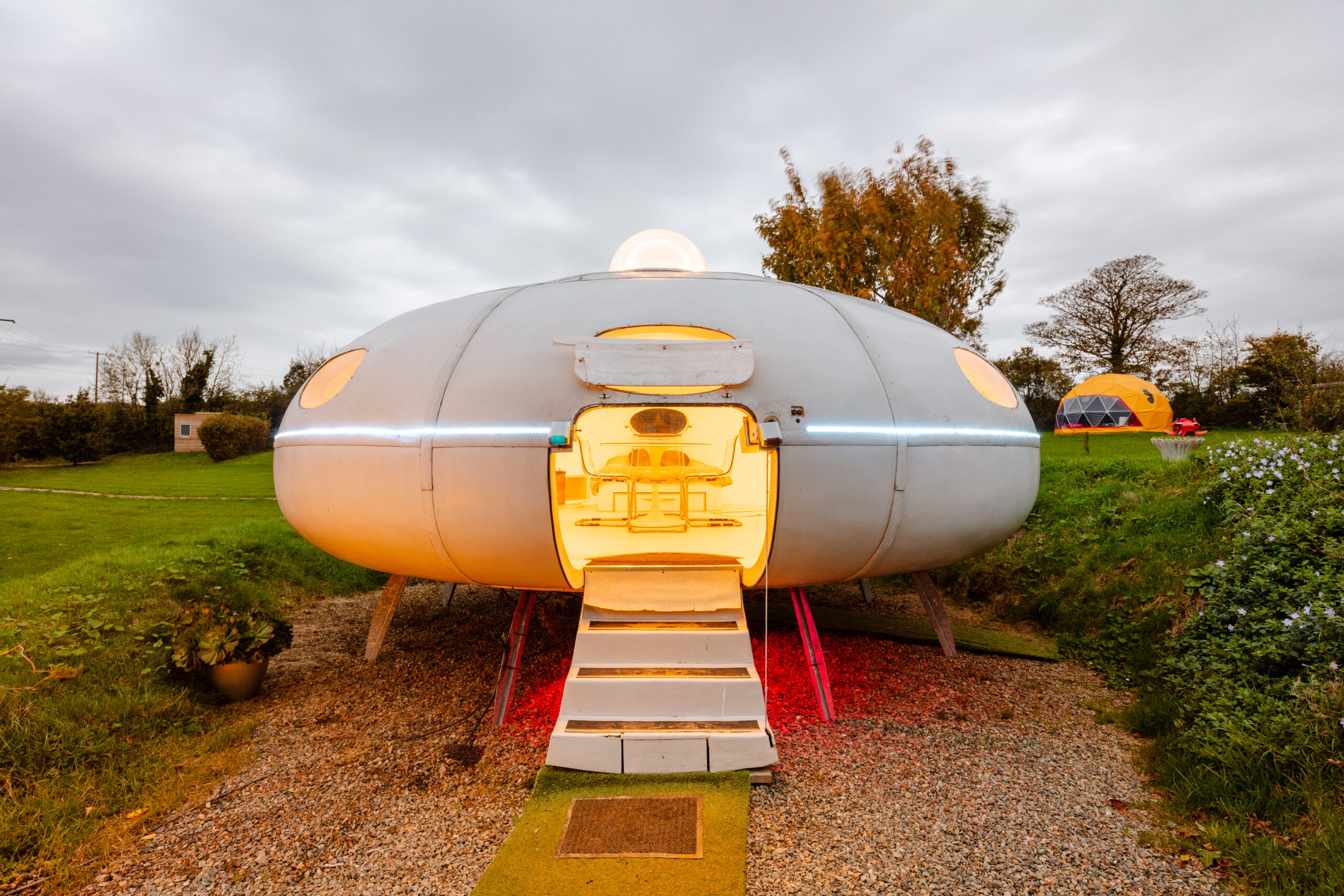
This one is much more Asteroid City than it is French Dispatch or Grand Budapest Hotel. It’s a spaceship in the English countryside that consists of a double bed and two single beds, which can be used as sofas. There is a monitor for gaming classic 80’s games like space invaders and defender and the hatch is remote controlled. There is also an escape hatch in case of emergency, which sounds quite cool to us: “QUICK, THE ALIENS ARE HERE, THEY KNOW WE STOLE THEIR CAR… TO THE EMERGENCY CHUTE!”
At ‘Secret Suite’, which probably isn’t that secret given we’re sharing it to our audience as a global travel inspiration magazine, you’ve got the best of both worlds. It’s like a pastel version of your classic Mediterranean white and blue, still overlooking a tranquil slice of heaven that is Amoudi Bay, a 200 step walk from Oia town. Some Greek nationalists and architecture purists might turn their nose up at the colours here but to us, it is glorious.
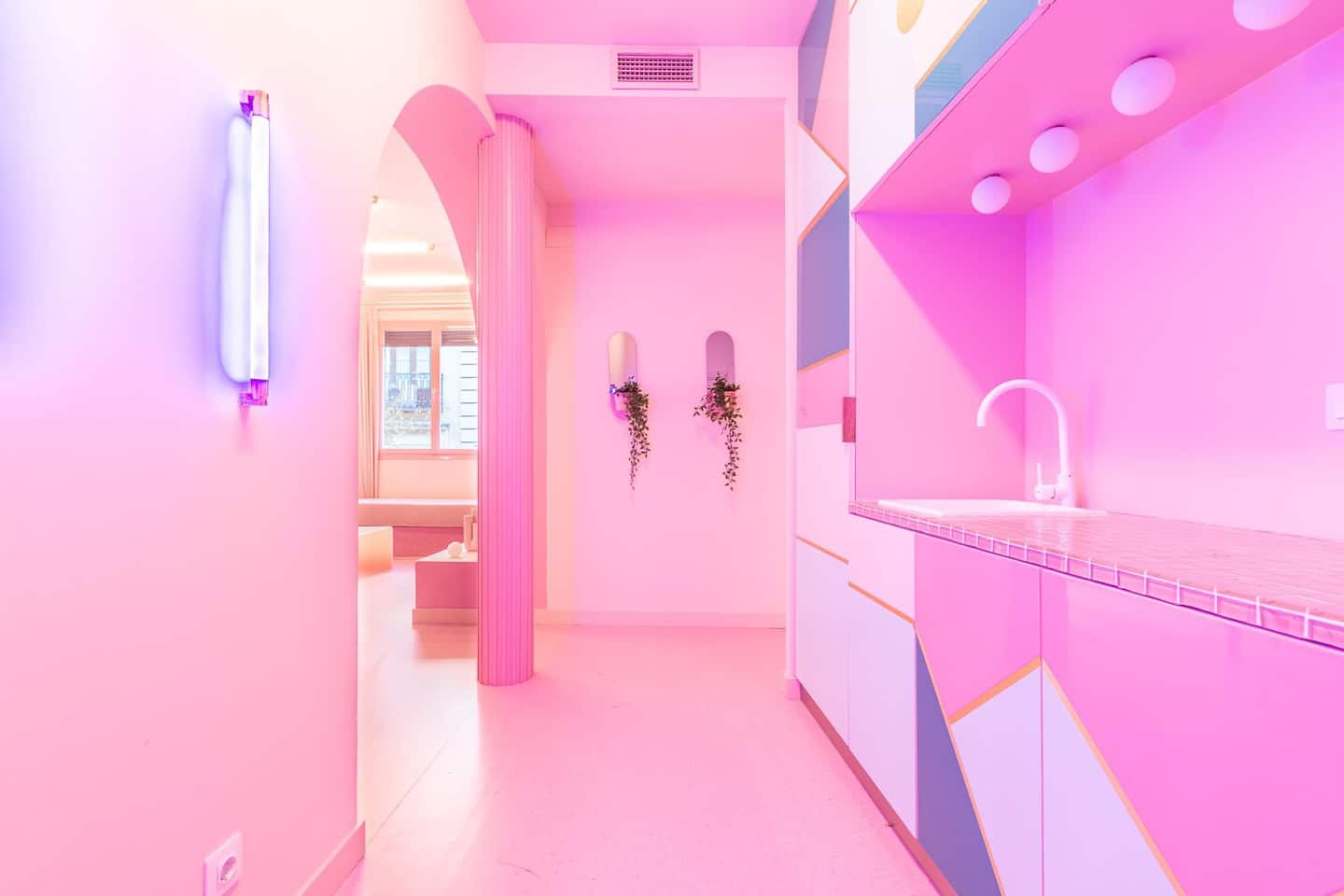
We’re not sure how big Wes is in the Spanish-speaking world, but these guys have clearly come under his influence stylistically.
Bright pink everything and slightly futuristic, the flat is right in the middle of the Spanish capital. Madrid is trendy af right now, and this is a cool and affordable place to stay, which would make you trendy: level omega.
Back to Greece, where we find part of the owners description of this assuring us:
“There is no reason to fear the special entrance of the apartment building, nor the speed of the elevator, as they are both parts of the scene!”
We’re not entirely sure what that means – does the elevator go really fast, or really slowly – but it does sound exciting. There are plenty of elevator scenes in The Grand Budapest Hotel in particular, so this New York loft-style apartment gets the nod on this list. We also love the bookcase.
So there’s this island in Indonesia, about a six-hour flight from the Eastern states and even less from the west. It’s an incredible destination: epic beaches, delicious food, surf and wild parties. AND it’s super cheap, even for really nice accommodation.
It’s called Bali. Ever heard of it?
Alright I get it, we’re not breaking any exclusives when we tell you about Bali, where Australians have been travelling like a 9th state/territory since at least the 1960s.
Most Aussies have found themselves there at some point. But not me, which is kind of crazy when you think about it; a 30-year-old Australian travel writer who hasn’t been to Bali.
It’s not like I didn’t want to go, but was it top of the list? Meh…I mean I’ve seen everyone’s Instagrams…what more could there be?
Here’s a few things I learnt on my first trip to Bali:
1) It’s underrated.
O.K hear me out. I have this belief that New Year’s Eve, as a party/holiday, is underrated because of the way everyone says it’s overrated. Everyone says that, your expectations are low, and before long you’re hugging your friends on a beach somewhere, there’s homemade fireworks going off and you’re drunk and you’re discovering that it’s actually an epic time. Bali is the New Year’s Eve of travel destinations. I constantly found things were pleasantly surprising me, for example…
2) Balinese food: massively underrated
One of the most primary sources of pleasant surprise came from the food. Time and time again over the course of a week, we ate like Kings and Queens, devouring mild and spicy and everything in between. Bubur Ayam is like chicken porridge, and the best one in Bali can be found at the Archipelago International restaurant in Ubud
3) It’s beautiful
This one might not come as much of a surprise, but it needs to be said. Bali is one of the places that is just as good in reality, as it is on social media. There’s no let down when you reach the beach; it really is long stretches of sand, warm, light-blue water and bars as far as the eye can see.
4) It’s no busier than Europe’s tourist traps
At least here you can spread out; find your own little stretch of sand to chill out in, or spread your money across the numerous bars and restaurants that line the narrow streets. Whereas in Paris, there literally is only one Mona Lisa.
5) You can be whoever you want to be
A group of teenagers and early-twenty-somethings can go to Bali and party and have the time of their life, with stories coming out of their asses when they get back. But by the same token, Bali is also suitable for a married couple of 40 years, honeymooners, full-moon hippie types, the clean eaters and yogis, the bookworm, the adventurer and the person who just needs to get away for a week. There’s something for everyone.
6) Each area has its own personality
We stayed in Canggu, where there was an exceptional beach party happening on the main beach just down the road each night. We then transferred to Ubud, where I could not have been any more zen. Pick the suburb that’s right for you.
7) I will be back
Everyone who can afford to (which is anyone who can afford an international holiday, given its affordability) needs to get to Bali once in their life. Take it from a reformed Bali sceptic.
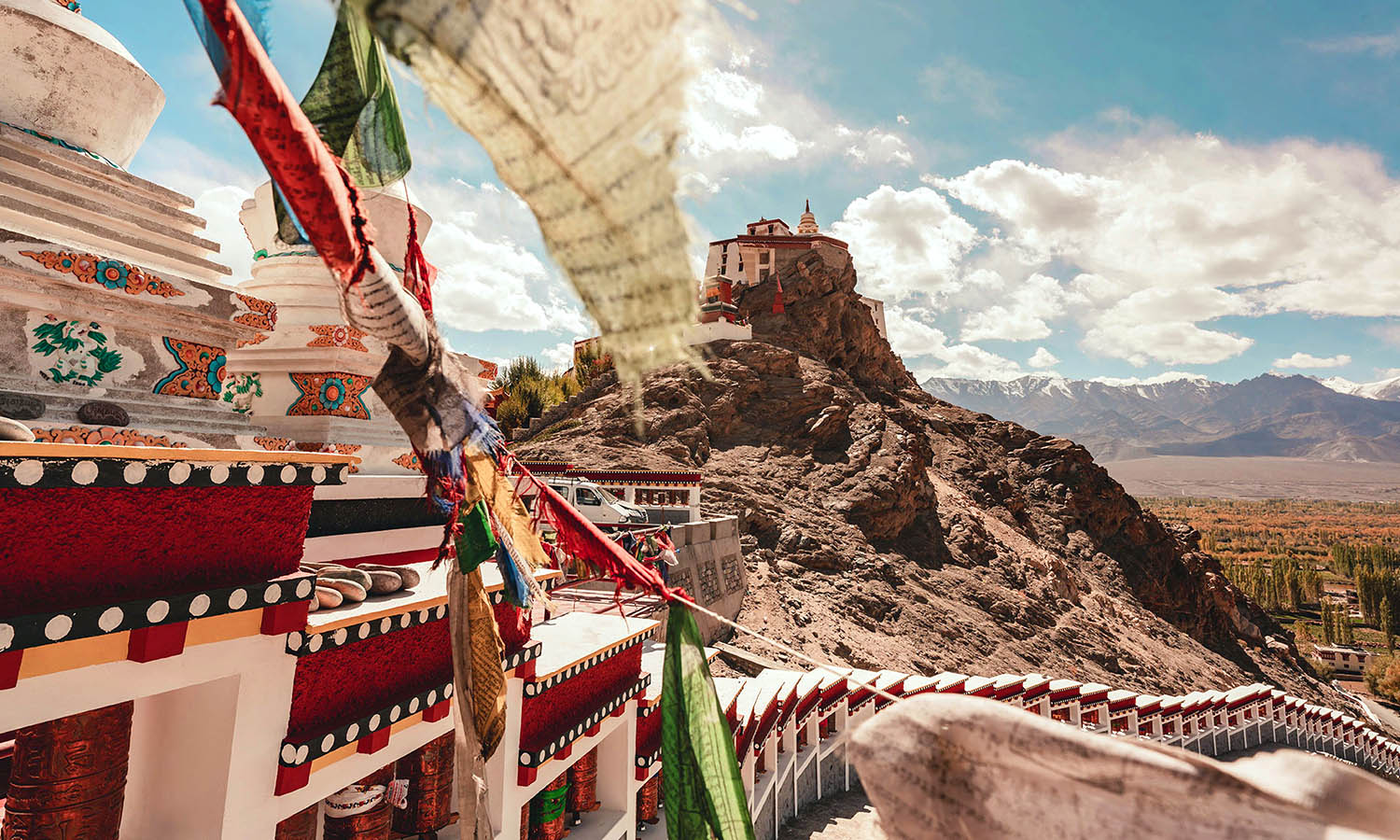
…of the Buddhist monastery as wisps of smoke drift up and dissipate in front of faded frescoes.
A monk sits in front of me, chanting to the beat of a drum and the ring of a prayer bell, eyes rolling back in his head. He’s praying for good fortune and health on our upcoming expedition—tomorrow we’re venturing on foot into the heart of Ladakh, gateway to the Tibetan Plateau.
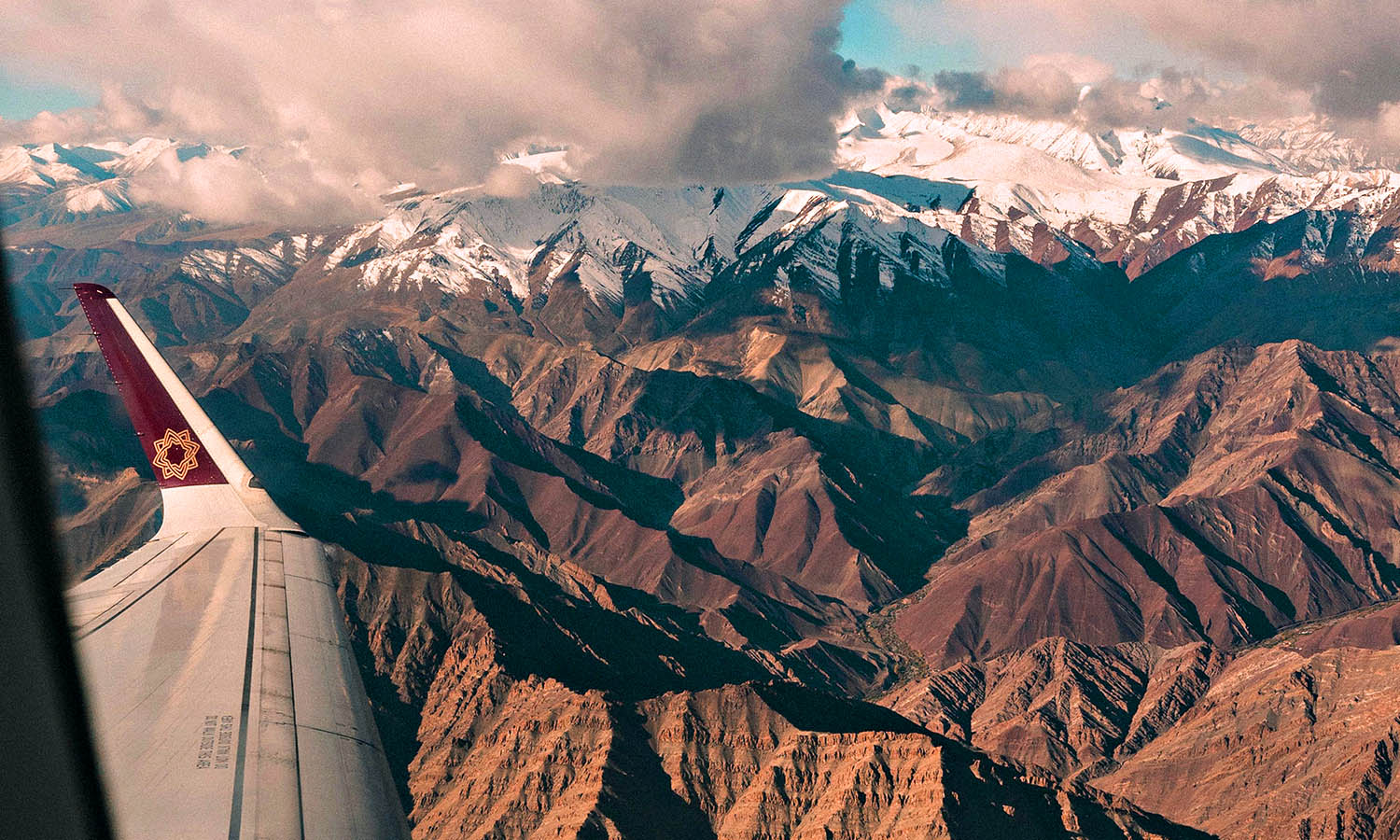
We touched down three days ago, flying in from Delhi to land at the small dusty airport just outside of Leh. The old city feels like a forgotten quarter of Kathmandu has been lifted up and dropped onto the slopes of Annapurna. The surrounding peaks of the Indus Valley are crowned with icy spires, while nearer to hand foreboding military compounds line the motorways—a reminder of the geopolitical border tensions between China and India.
I’m on the ground with Paras Loomba, electrical engineer and founder of Global Himalayan Expedition (GHE). After a transformative experience in Antarctica, Paras was inspired to create a company at the intersection of engineering and tourism, enlisting travellers to provide solutions to the climate crisis. The result? Over 200 communities in India now have electricity, thanks to GHE, including the monastery we’re sitting in.
Click play to watch
Crossing the kingdom with cigarettes and carrot cake.
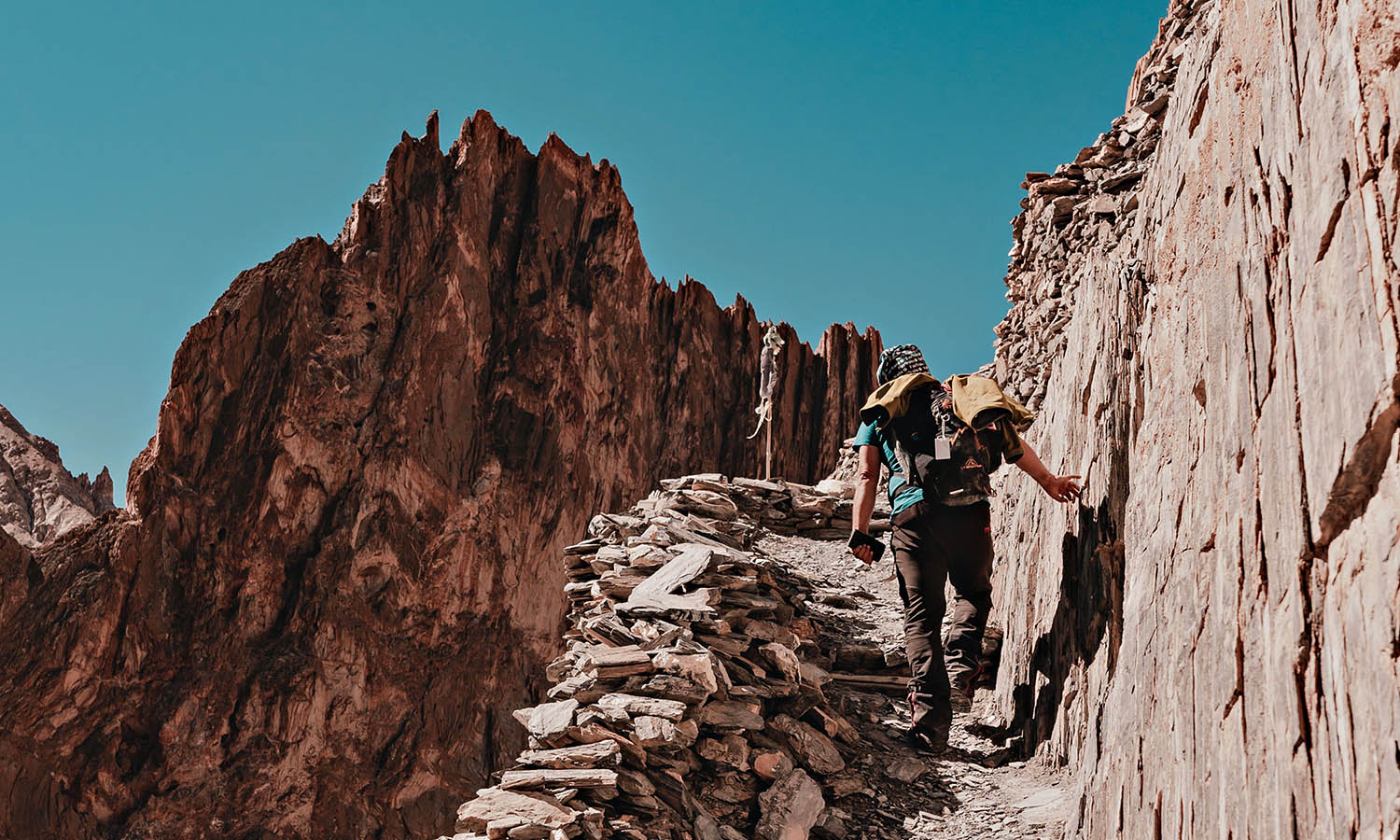
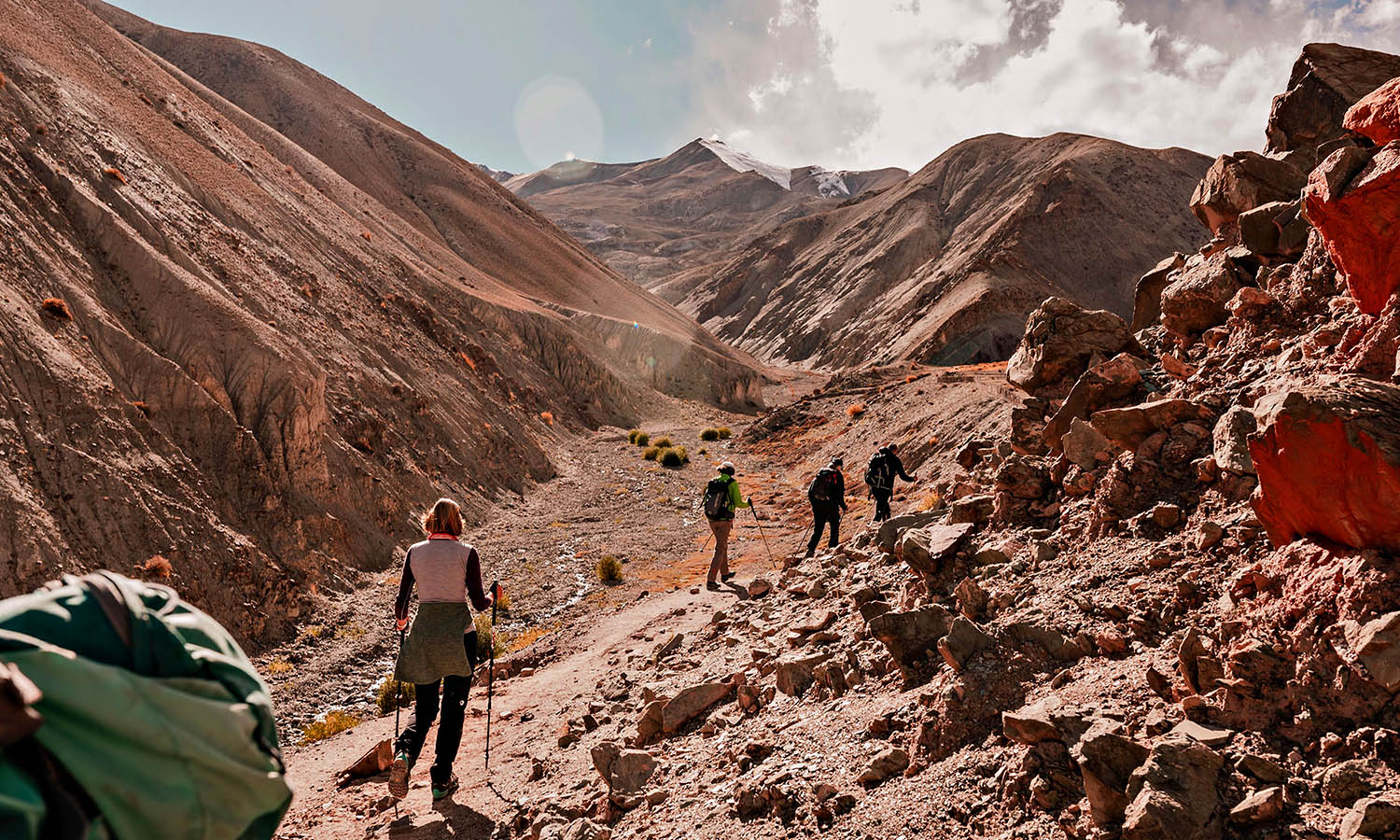
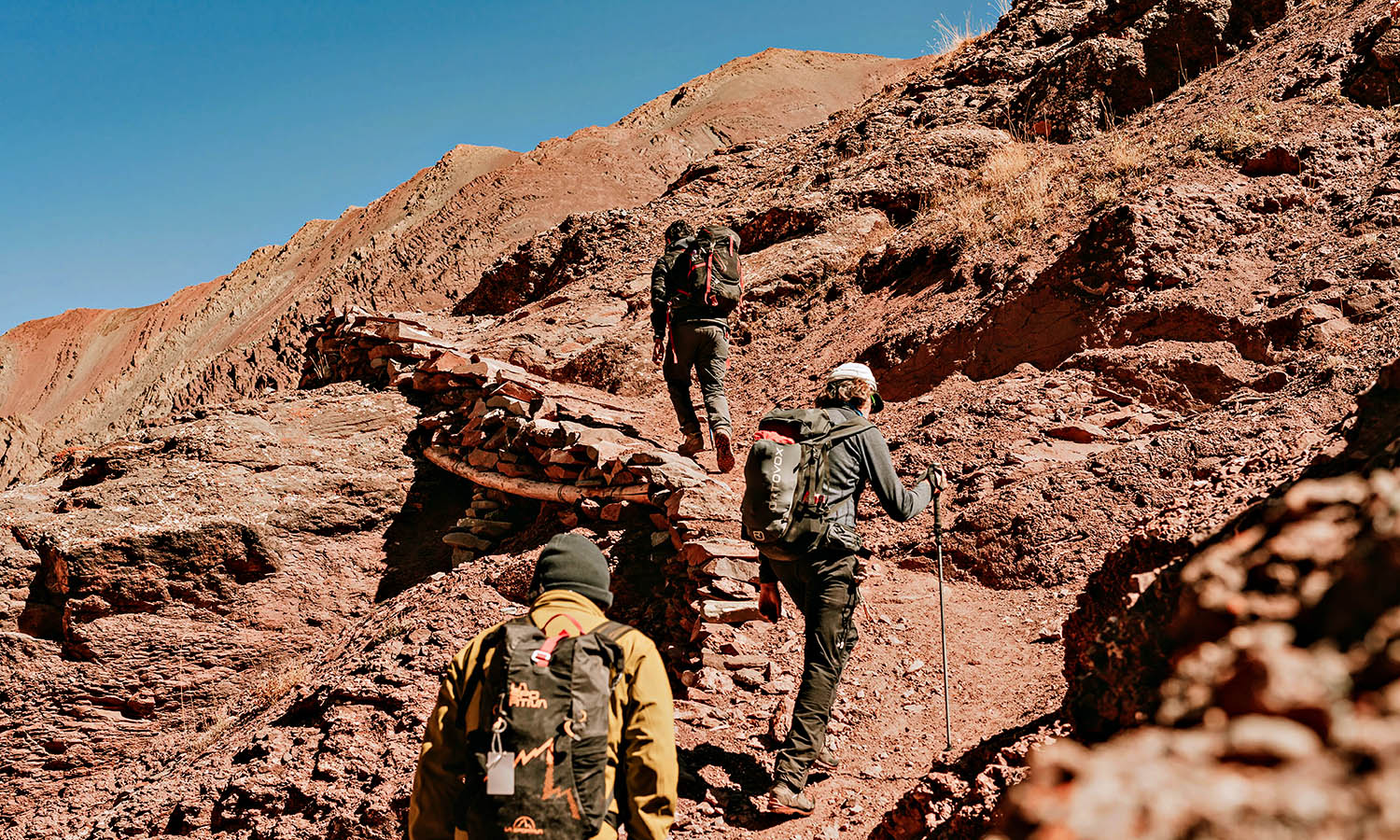
With three days of acclimatisation under our belts, we finally set out for the vast Hemis National Park. It’s a six-day expedition and we’re supported by a small crew, plus our baggage horses—all seventeen of them. The landscape here is arid, dotted with simple villages and solitary stupas set against cracked and crumbling mountains. Under a warm winter sun, we splash our way barefoot across a brilliant blue river that carves a path through a valley rife with groves of golden poplars, cries of “jullay!”(hello) ringing out from villagers and homesteaders as we make our way.
I’m unused to trekking in such luxury. Our crew organises and breaks camp, serving tea and coffee to our tents each morning. Our Nepali cooks are surprisingly unhindered by the lack of facilities—preparing everything from pizza to carrot cake out of the magical mystery mess tent.
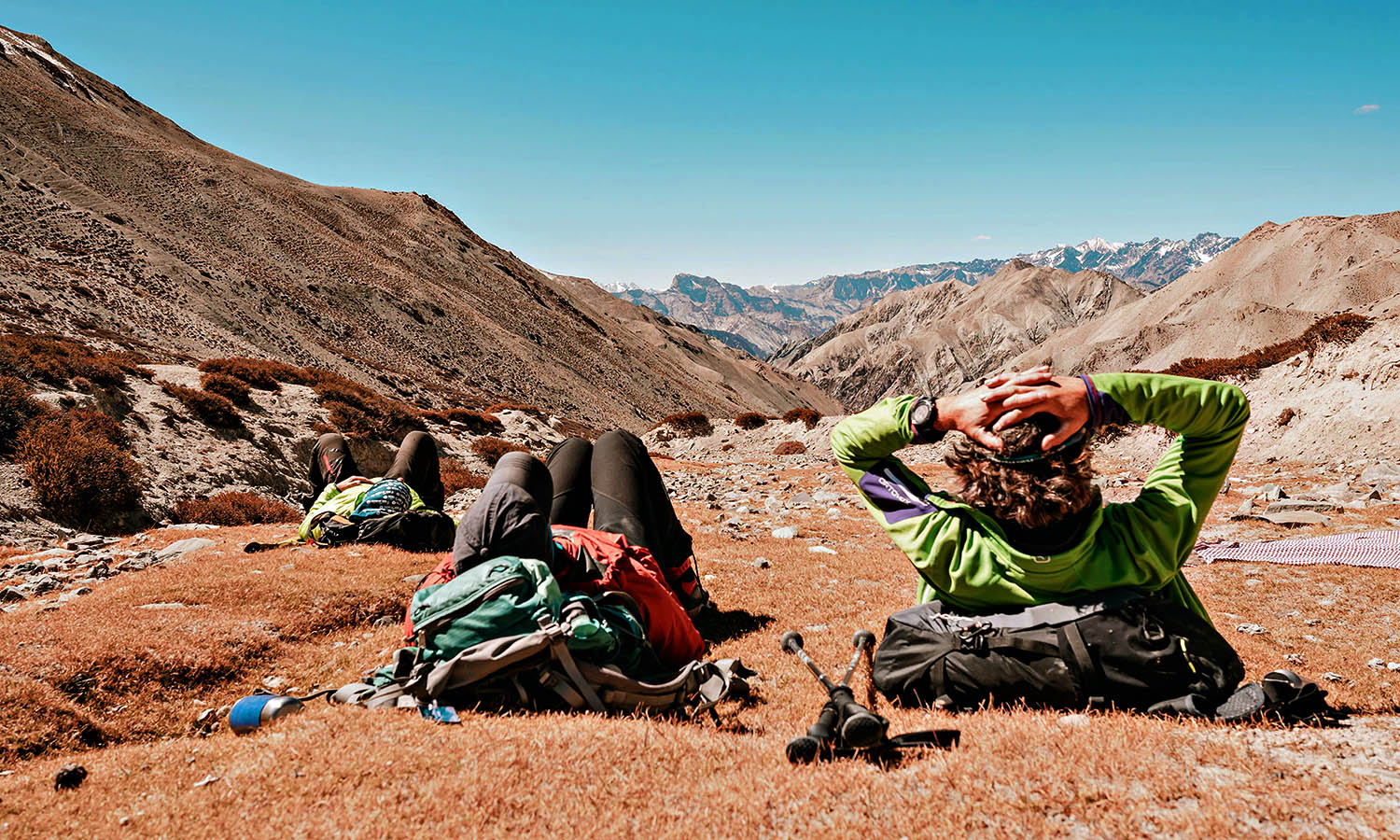
The pampering, though, is much appreciated as the trek itself is gruelling. By the second day, we’re already plodding breathlessly upward to the 4,900 metre Ganda La pass. A 69-year-old Austrian trekker on our team, Horst, gratefully accepts a lift to the top on the back of one of the horses that we unanimously nickname ‘Hero’. My nickname for Horst is ‘Horizontal Horst’ due to his penchant for casting his pack on the ground at every break and lying on his side, Titanic-style, to smoke a handful of cigarettes. Not that I’m in great shape myself. My last Himalayan trek was almost a year ago, and already my calves and quads feel like they’ve been sliced to ribbons from the inside.
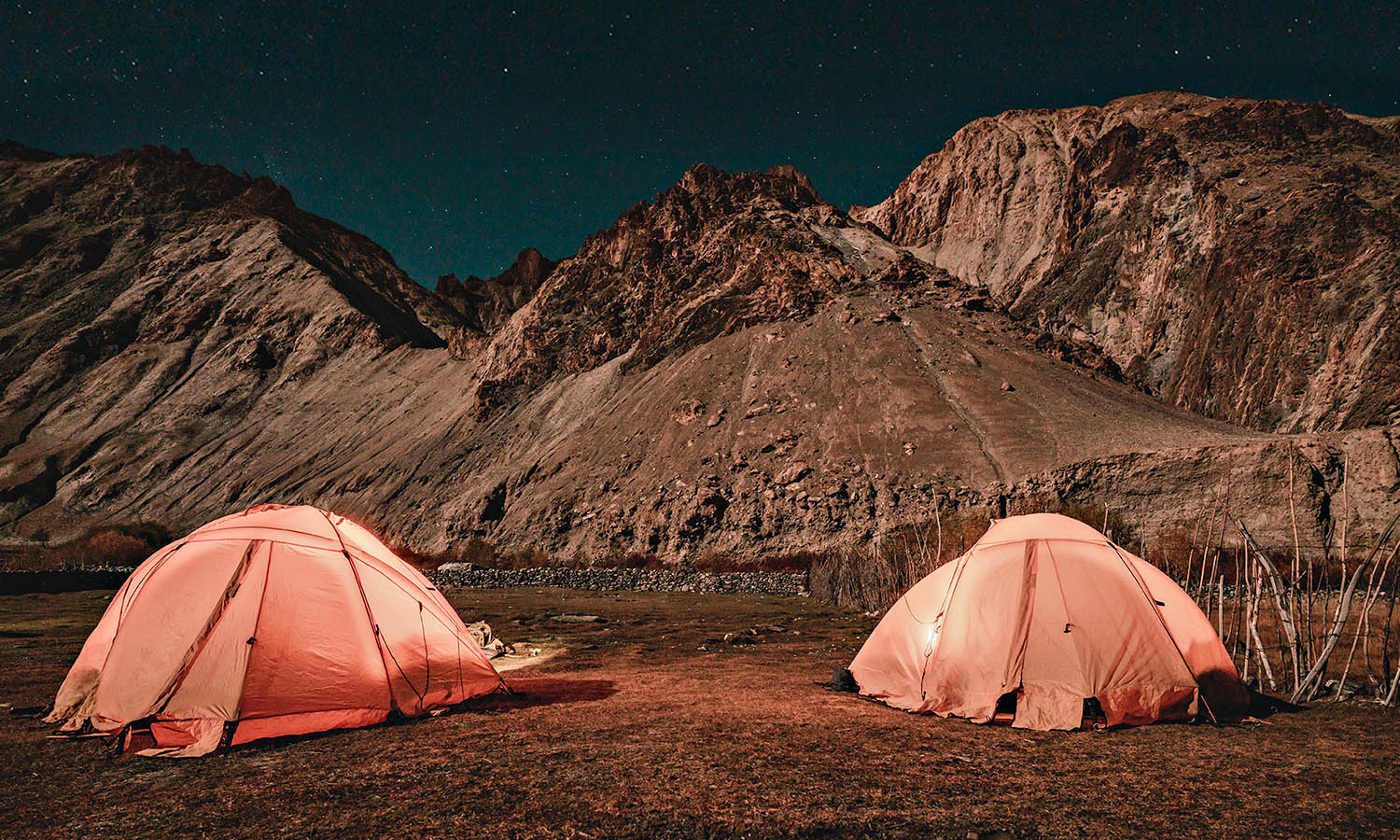
The complete lack of mobile reception is as invigorating as the lofty altitude is debilitating. I spend any downtime we have in my tent, bundled up in either meditation or engrossed in a book, trying to fight the creeping lethargy. Our fifth night finds us camped at 4,700 metres—the highest point I’ve ever braved in a tent—on a plateau under starlit skies. It truly feels like the edge of civilization as we know it.
During the night, my tentmate Gunter Mussnig—another Austrian—and I struggle to exist, let alone sleep, as each breath becomes a battle. Outside, a wild dog barks with ceaseless endurance. Gunter is the founder of Trail Angels, an Austrian sustainable tourism developer, and the reason I’m here photographing this expedition.
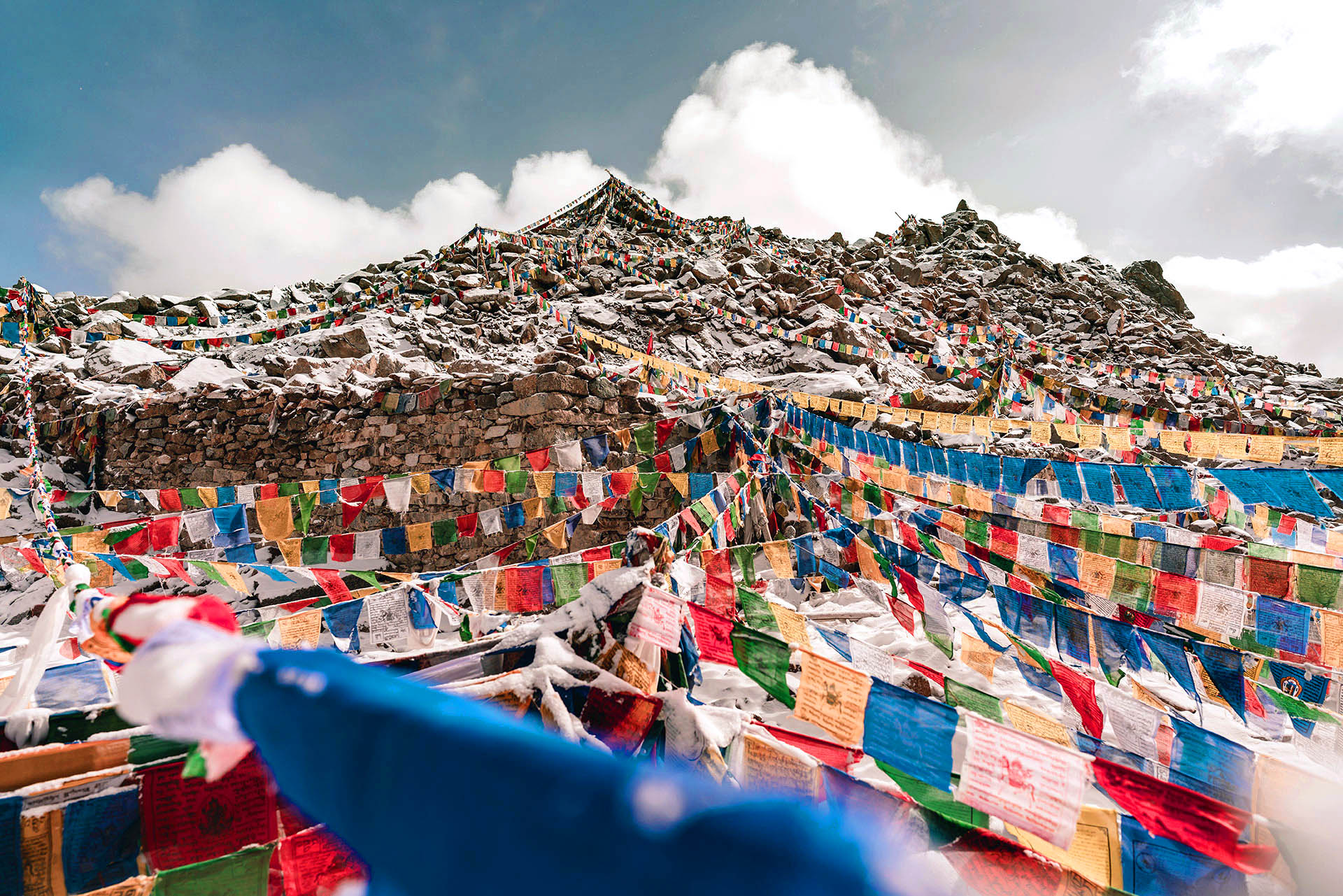
The next morning as we push onward up to Kongmaru La (5,236 metres), I reflect on what has drawn me here, to this journey. Was it an unexplainable longing for Tibet, or perhaps to answer the question of whether travel can serve a purpose outside of myself? While gasping for air at the top of the pass, prayer flags rippling in the wind around me, I remember something Gunter said that struck a chord: “I would not like to live in a world without travel. That’s why we are doing this, to make travel possible in times of climate crisis”.
Click play to watch
A warming experience, literally
The climate impact project for our expedition is to subsidise the cost of 17 solar water heaters for Boorma, a remote village in the Nubra Valley, where the Himalayas meet the Karakorum. As we walk into the village, a sandstorm grows in the grey distance. Closer by, young children scurry with excitement back to whitewashed dwellings to announce our arrival. We are welcomed wholeheartedly under a colourful nomad pavilion by smiling villagers in traditional maroon woollen garments.
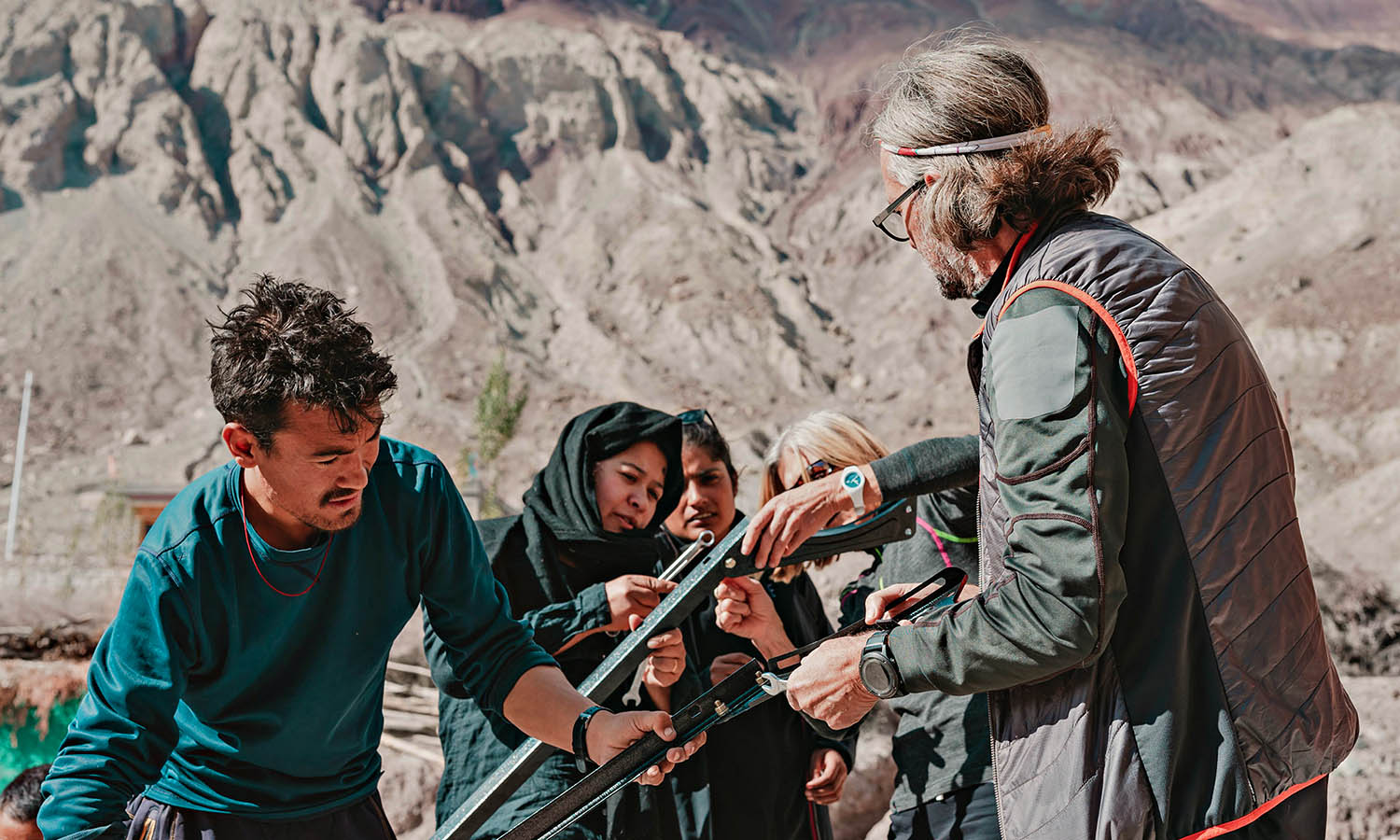
Together, we work to install the solar heaters. Each heater will not only provide hot water for bathing and cooking during the harsh Ladakhi winters, but will also replace 2.3 tonnes of carbon over the course of its lifetime. More than offsetting the footprint of our trip. In fact, even when accounting for international flights, our trip is totally carbon-negative. Every expedition with GHE is slightly different, as each one paves—as Paras puts it—“inroads to new [eco-friendly] destinations”. The beauty of expeditions like this is that previously unreached communities can partner with GHE to develop sustainable livelihood opportunities.
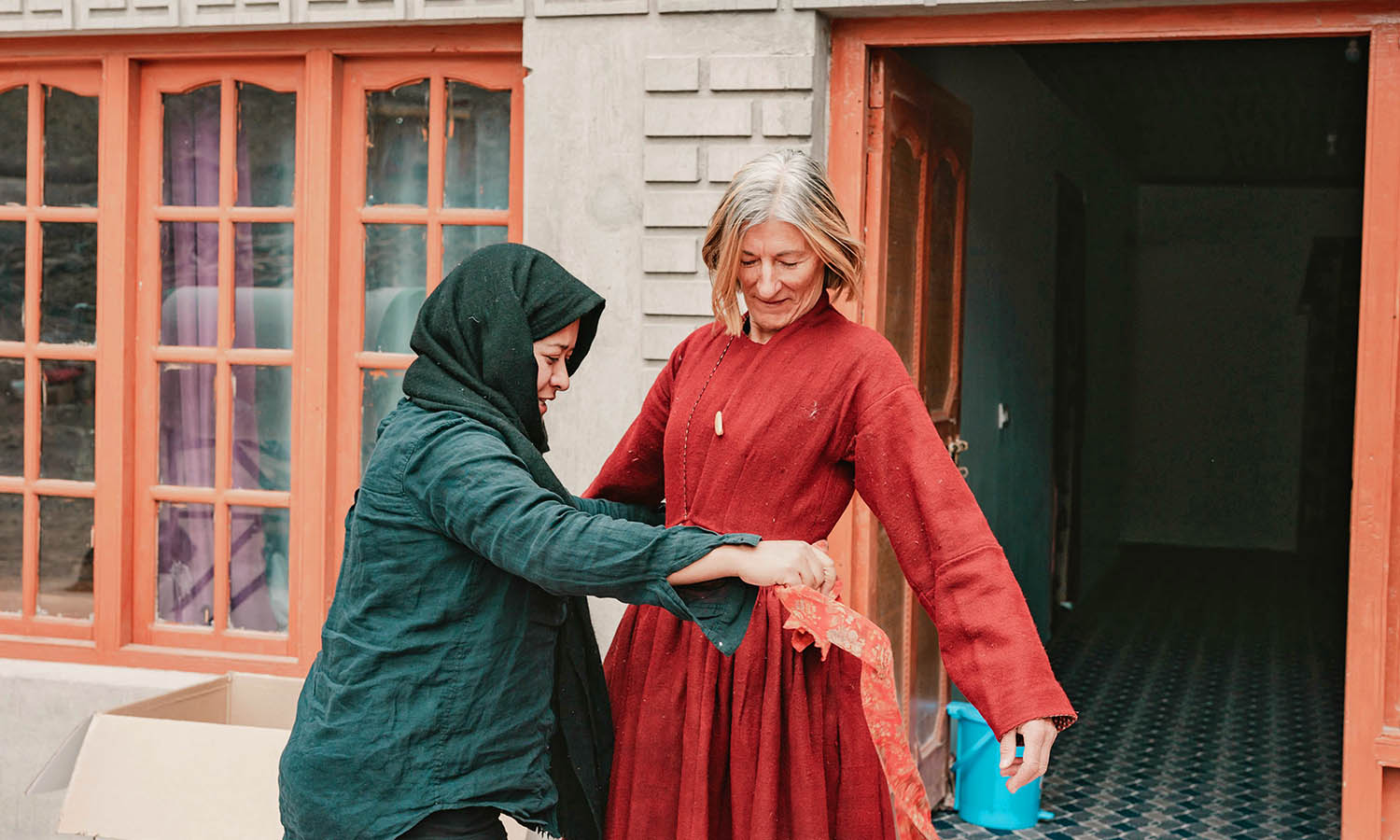
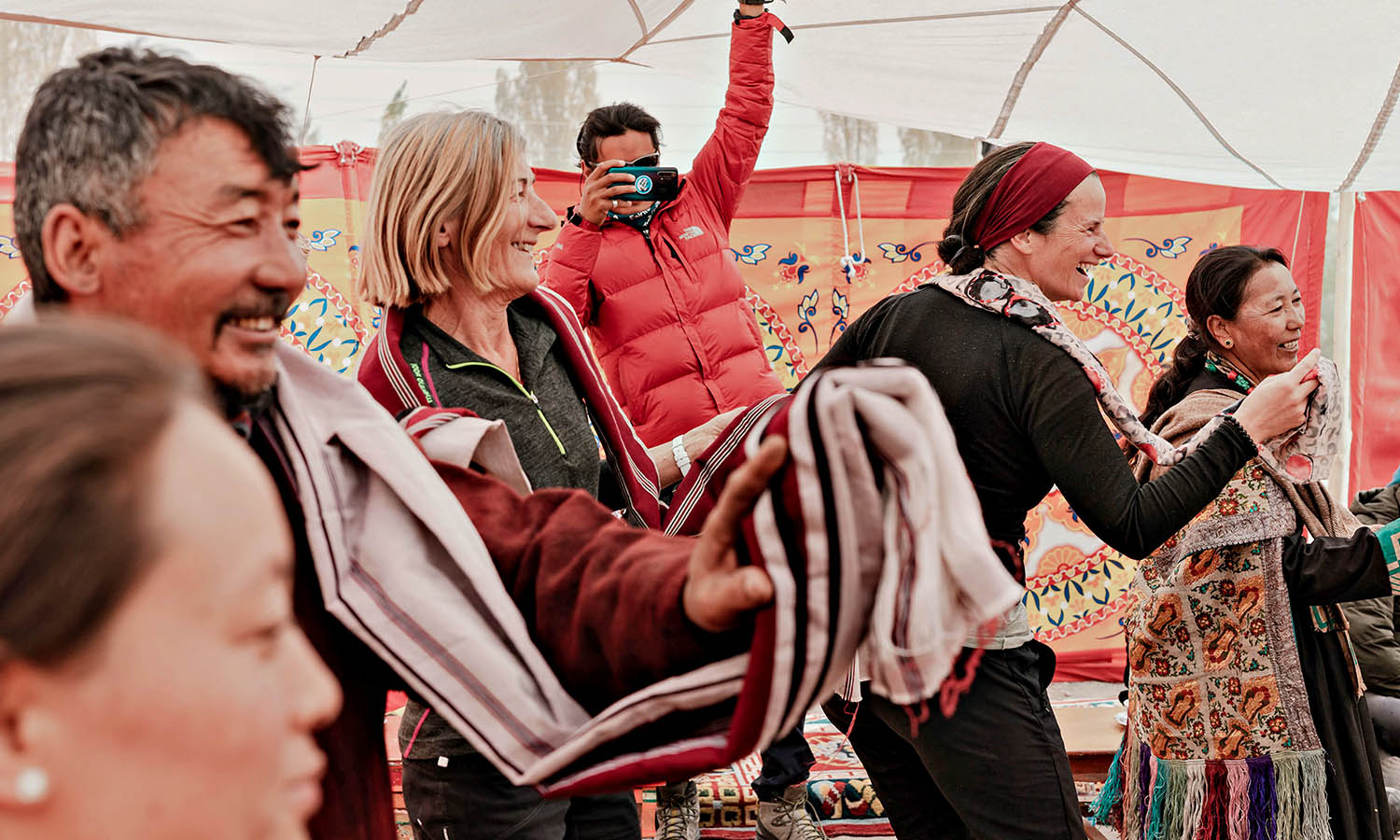
After a shared meal, coated with a light dusting from the sandstorm raging outside, we’re invited to don local garb and join the villagers in a traditional dance. We dance, and we laugh, and we exchange gifts—school supplies and sweets for the children—who accept them with gusto. Almost in a trance, I manage to take the group’s photo before the teary goodbyes begin. As our van wheels around, the villagers climb the rock wall parallel to the road and wave goodbye as we bounce off into a dusty Karakoram haze.
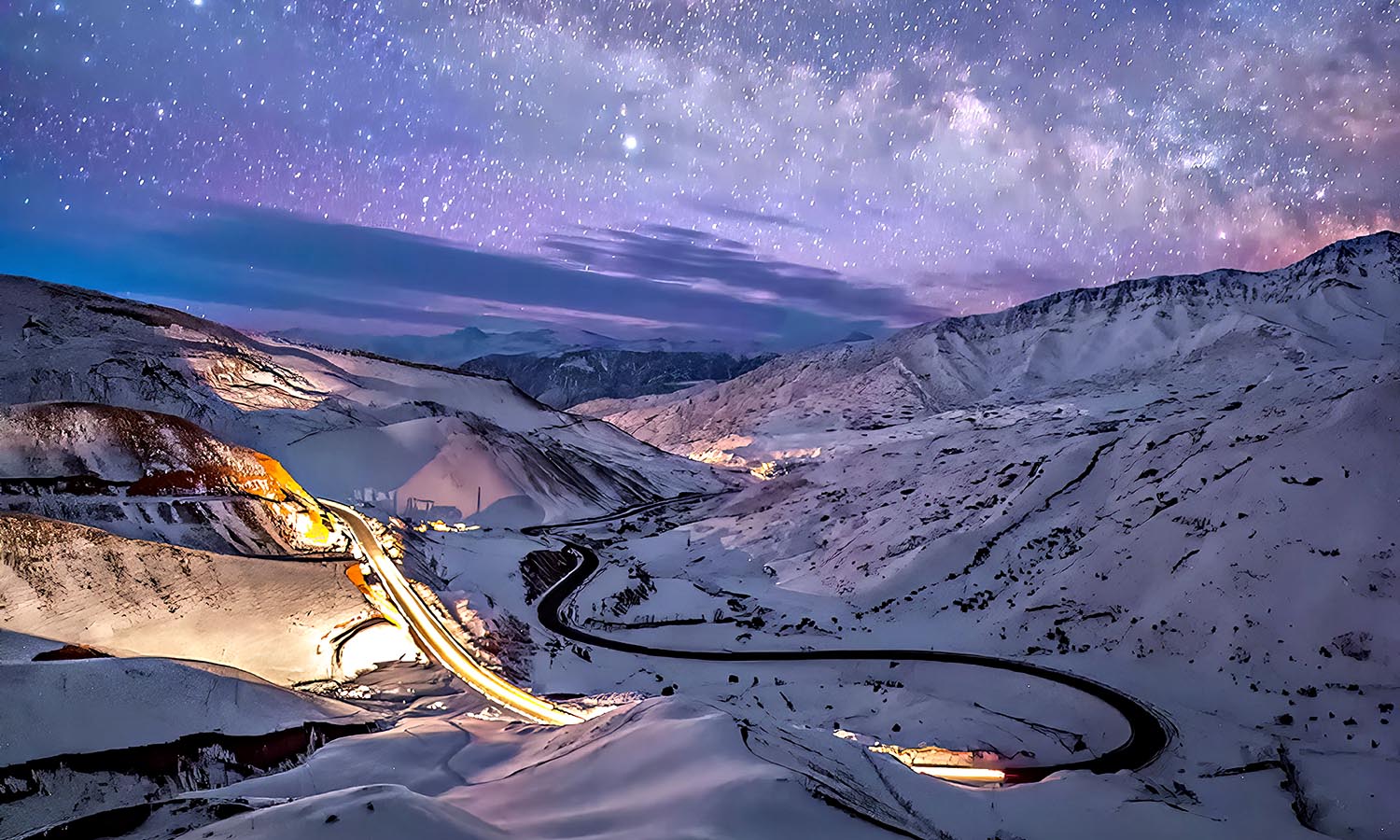
Hours later, our tires spinning in the accumulating snow at Kardung La—the world’s second-highest motorable pass—I slide open the frosted window and stick my head out into the white void. Dusk has set in and the temperature is plummeting, but my heart is full. In that quiet moment, I recall the whispers of a prayer, from a monk in my not-so-distant past, and I finally understand its significance. And I know, without any doubt, that this won’t be my last time in Ladakh.
Big sky, a hidden hamlet in Montana, is an R-rated destination. But get your minds out of the gutter, friends, by that I mean it’s all about relaxing, rejuvenating, reconnecting and returning refreshed. Situated just an hour’s drive from Yellowstone—one of the world’s greatest natural playgrounds—and home to the biggest skiing in the US (they’ve got over 5,800 acres of world-class terrain), Big Sky is the gateway to a true outdoor heaven.
Click play to watch
After driving through Big Sky canyon and alongside the pristine Gallatin River (known for its ridiculously large and rather naive rainbow trout), I end up in downtown Big Sky—a charming town that feels small but is densely packed with eclectic galleries, bars and artisanal storefronts.
I wash up on The Rocks, a local resto-bar that draws me in with its siren song of laughter and clinking glasses. “I’ll gladly get you anything you want my friend, as long it’s from Montana,” says Maddie from behind the bar. Turns out The Rocks only serves Montana-made hooch, of which there is—I am quick to find out—quite a lot.
I opt for a flight of their local amaro (a bitter type of liqueur), which ranges in flavour from ‘eating the forest floor’ to ‘a kiss of honey and angel song’. When the drinks and the altitude become apparent in my posture—Big Sky sits at 2,200 metres above sea level—Maddie slides a giant bowl of homemade pho and fresh bread across the bar. “Trust me,” she says. I do, and it’s everything and a crouton more than I could’ve hoped for. That’s just the way with Montana hospitality.
The next morning I wake with a happy hangover, quickly neutralised by a strong coffee and some fresh mountain air, before driving out to the Beehive Basin Trailhead. I park my car, cross a small wooden bridge and find myself totally immersed in virgin wilderness. The sheer vastness of Montana’s wilds is unlike anything I’ve experienced—the mountains seem both looming and distant; the trails take you through lush pastures and up rocky inclines. Nature is a force to be reckoned with here.
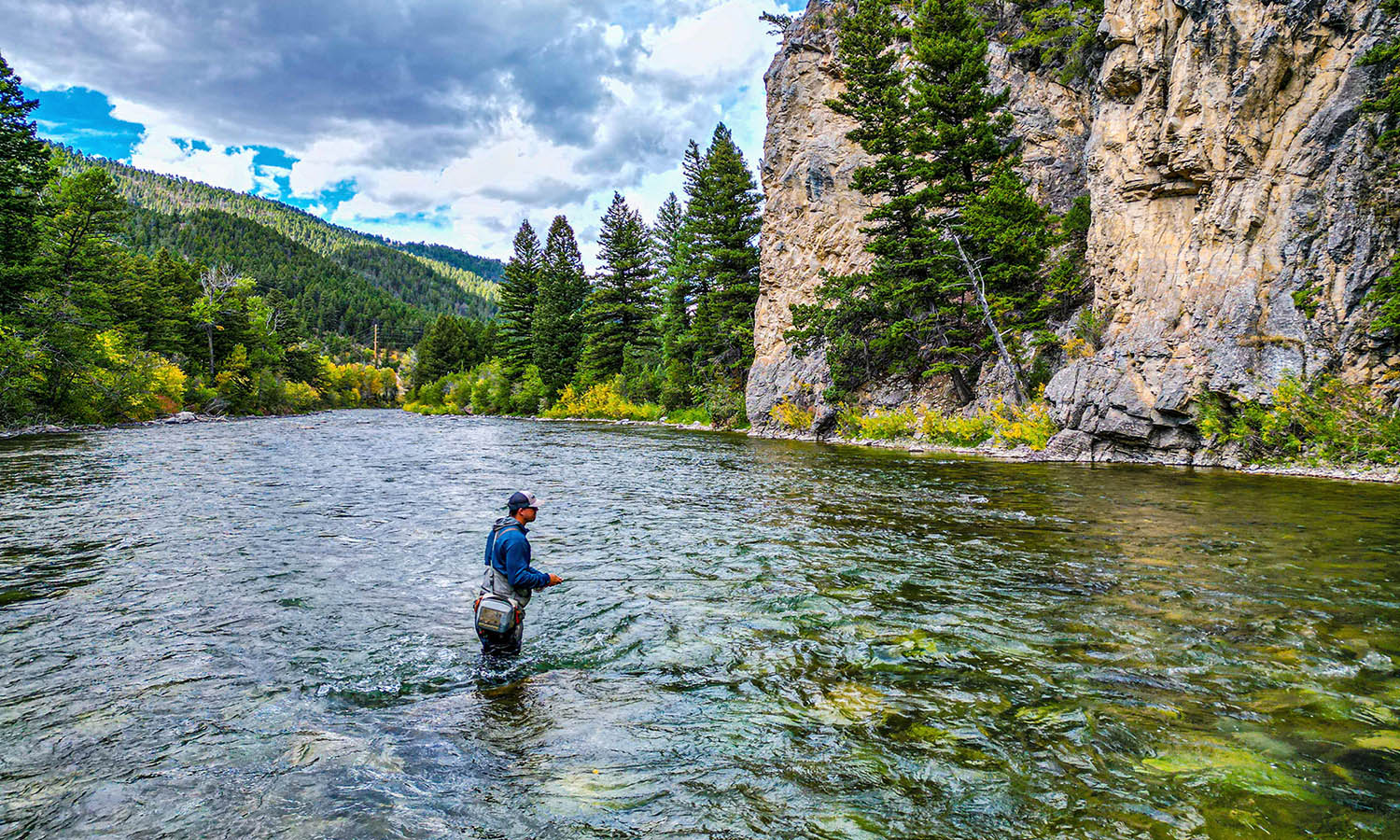
A few minutes down the road, at Gallatin River Guides, a huge dog bounds over to greet me. “Don’t worry ‘bout him, he just loves people,” says a friendly voice from behind a huge fly fishing display. The voice belongs to Garrett, a young local guy with a big smile under a baseball cap. “You must be Roberto… first time here?” he asks.
“It’s that obvious?” I respond. “It’s the shoes. Come on, let’s get you set up,” says Garrett. Within moments, I’m sheathed in nylon waders and neoprene boots and am climbing into Garrett’s truck. “This whole river is teeming with wide mouths,” he tells me, “but if you’re up for it I know a little place just past Cafe 191 that’s very special.” So we barrel down the highway.
I’ve only gone fishing once in my life, and that was for tuna in Cabo. I was 12 years old and I didn’t like it enough to go for a repeat. Fly fishing, for those that don’t know, involves standing in waist high water (another thing I’ve only done once before—on NYC’s Avenue A during Hurricane Sandy) and attempting to snag a slippery one.
“Fly fishing is all about mimicking nature,” Garrett says while latching two lures, “you want to be invisible to the fish, make them believe they found a real lunch.” He throws his line in the water with an Indiana Jones-style whip, and pulls out a sizeable fish. It took a total of 12 seconds.
Not convinced, I throw my own line in. I watch the way the current takes it. I realise this is just a game—me versus fish—and it becomes more addictive than Fruit Ninja. Each time I cast, I get a little bit better until my line eventually disappears into the river. Invisible, like Garrett told me. That’s when I feel the tug, so I snap back on instinct and hook my first fish.
“See!” he says again. I saw. And I can feel a new hobby firmly taking hold. This fly fishing stuff is magic. When I ask Garrett if he ever eats his catch he says “oh no, never—these fellas are my coworkers, I would never eat them.”
Click play to watch
STAY AND PLAY AT BIG SKY RESORT
Looking for a one-stop-accommodation-shop?
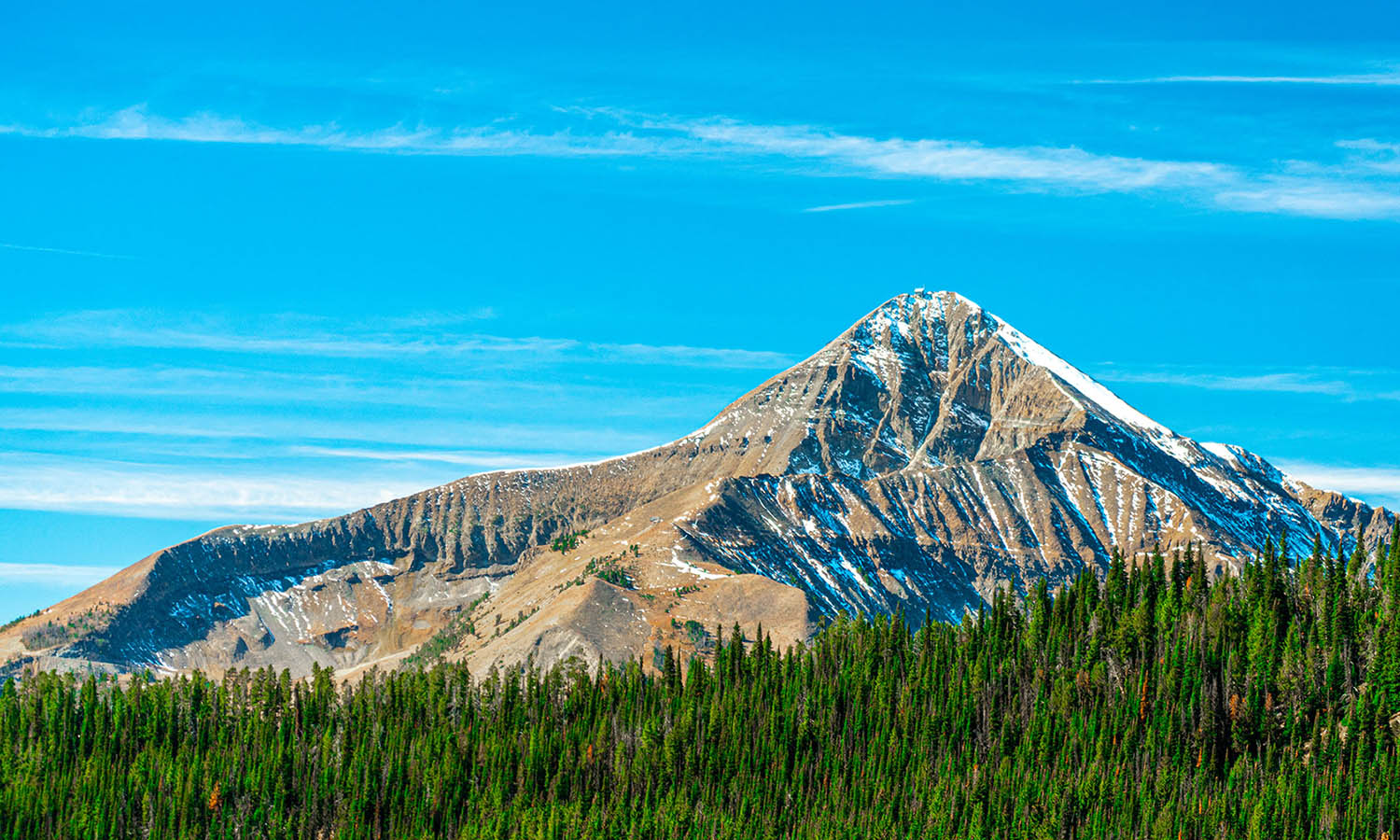
Big Sky Resort is our Montana go-to. It’s not just for the winter time, either. In summer you can catch us ziplining from across green meadows, hiking Lone Mountain, biking down forested runs, rafting whitewater rapids, climbing really really big rocks and even playing a spot of golf. Before bunking down for the night in one of their (many) lodging options. Life is good at Big Sky.
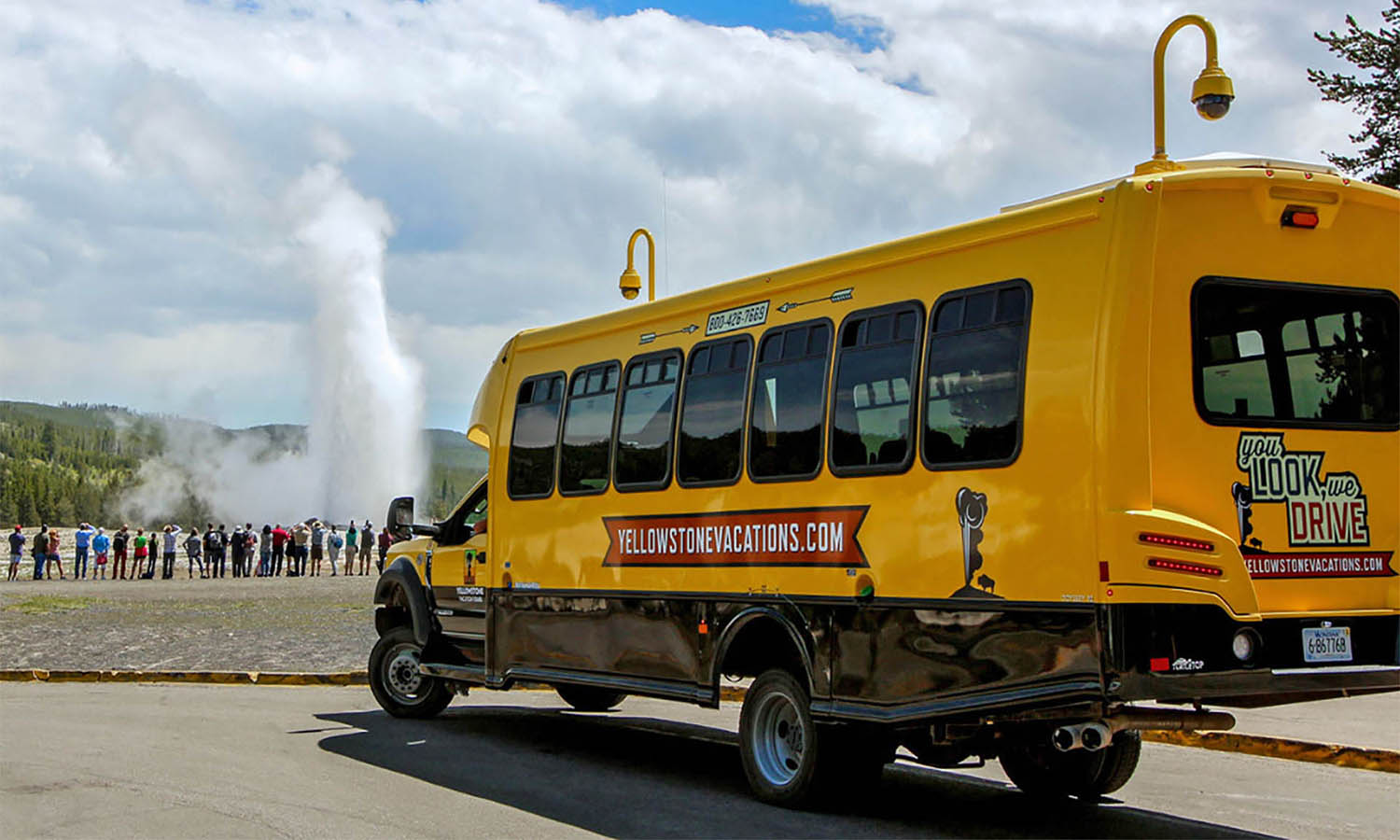
West Yellowstone town is as cute as it sounds—ice cream shops selling fresh huckleberry creams and little Western shops dotting the drive, flags waving in the morning sun. The Yellowstone Vacation Tours are impossible not to spot, with their sunshine yellow tour-bus-on-steroids sitting out front. I meet tour guide Jason, who goes by the name ‘Gypsy’, and within minutes we’re roaring into the heart of one of the most pristine natural landscapes on the planet.
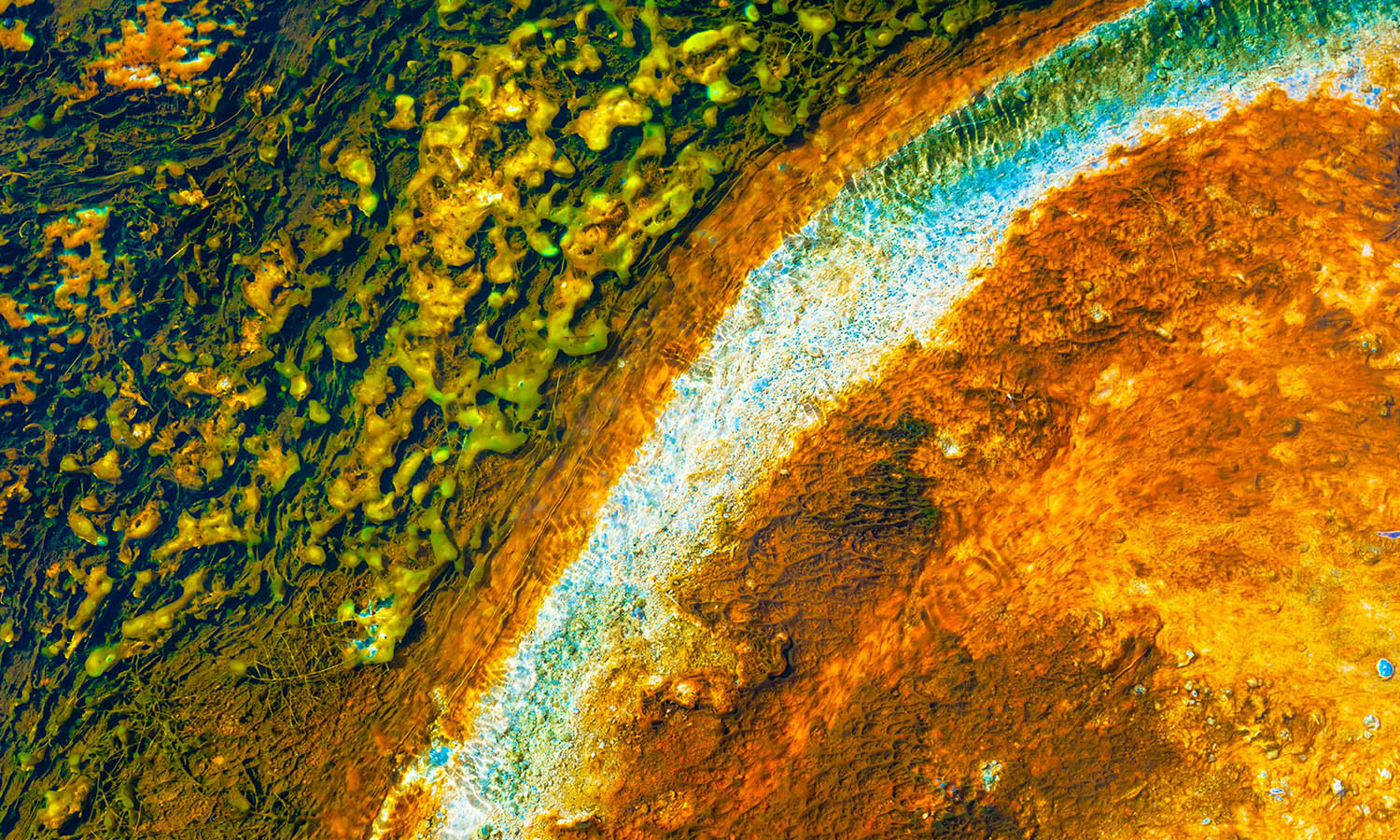
“If it’s alright,” Gypsy pipes up as he picks up speed, “I’d suggest heading deeper into the park, that way I can show you more in less time. It can get a bit crowded here, especially if the bison are up early causing traffic jams.” In his capable guiding hands, we see the absolute best of the park: hot sulphur pools with irradiated colour bands that (literally) birthed life on our planet; giant mud pots and incredible waterfalls; the Continental Divide which determines the way the water flows—east to the Mississippi River or west to the Pacific Ocean; and herds of bison so close you could ride them.
Gypsy is, hands down, the best guide I’ve ever had. He knows an absurd amount of facts about the park—well beyond any reference book—and how to share that knowledge without it every being boring. At Yellowstone’s most famous geyser, Old Faithful, he predicts an eruption in eight minutes. The geyser blows in eight minutes and four seconds. Guiding is a special skill, and Gypsy is a master of it.
Click play to watch
Later in the day, Gypsy tells us there is one final showstopper in store. We pull into a small parking lot, pour out of the bus and begin walking down the gravel path before Gypsy stops us. “Listen, just humour me. I want you all to look down at your feet from this point on, don’t look up, just follow the feet of the person in front of you. I’ll tell you when to look up,” he says mysteriously. “Trust me, it’s better this way.”
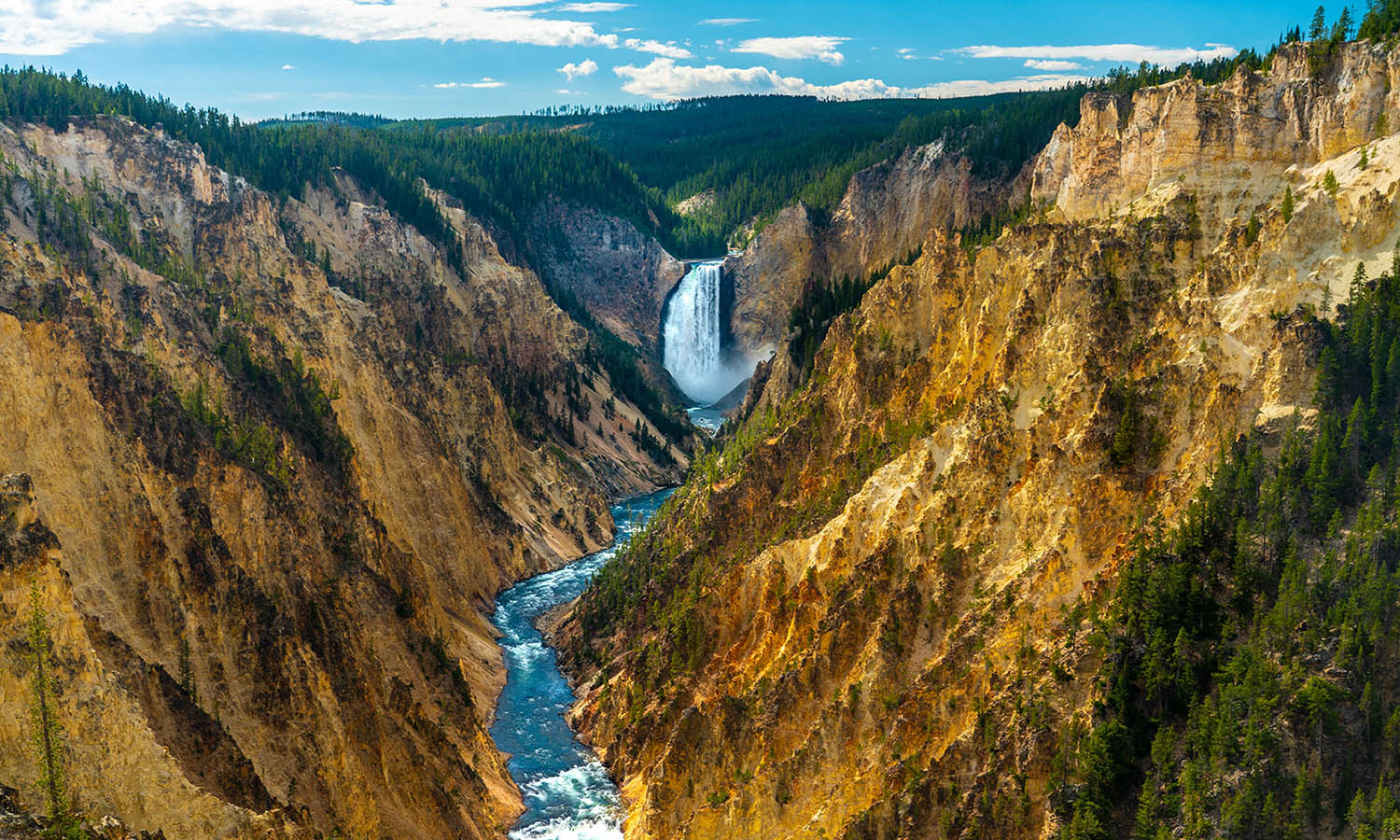
We follow him, blindly, for 100 metres before he tells us to look up. Everyone gasps. We’re in the middle of the Grand Canyon.
The Grand Canyon of the Yellowstone, discovered in 1869, defies words. You feel both within the canyon and above it as the mighty Yellowstone Falls cascade into the ravine nearby. The geology of the area is still ancient, and the bright, brindle colouring of the rock walls fascinating. Gypsy was right, this is certainly the cherry on top of an epic tour.
“You know, if you drove all the roads in Yellowstone, you would only see one percent of the park,” Gypsy says, like a cowboy sucking on a corn pipe. “This right here is more country than anyone will ever see, and has more treasure than we’ll ever know.”
I can’t agree more. And moreover, it’s a sentiment that applies to the entirety of Big Sky, Montana. A small town atop such a wealth of natural beauty it feels like one could never fully explore it all. But I reckon I might just give it another go next spring.
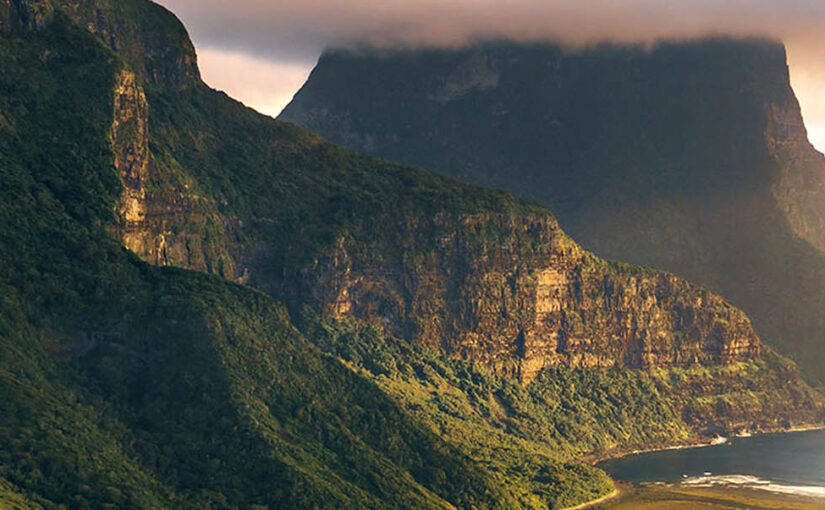
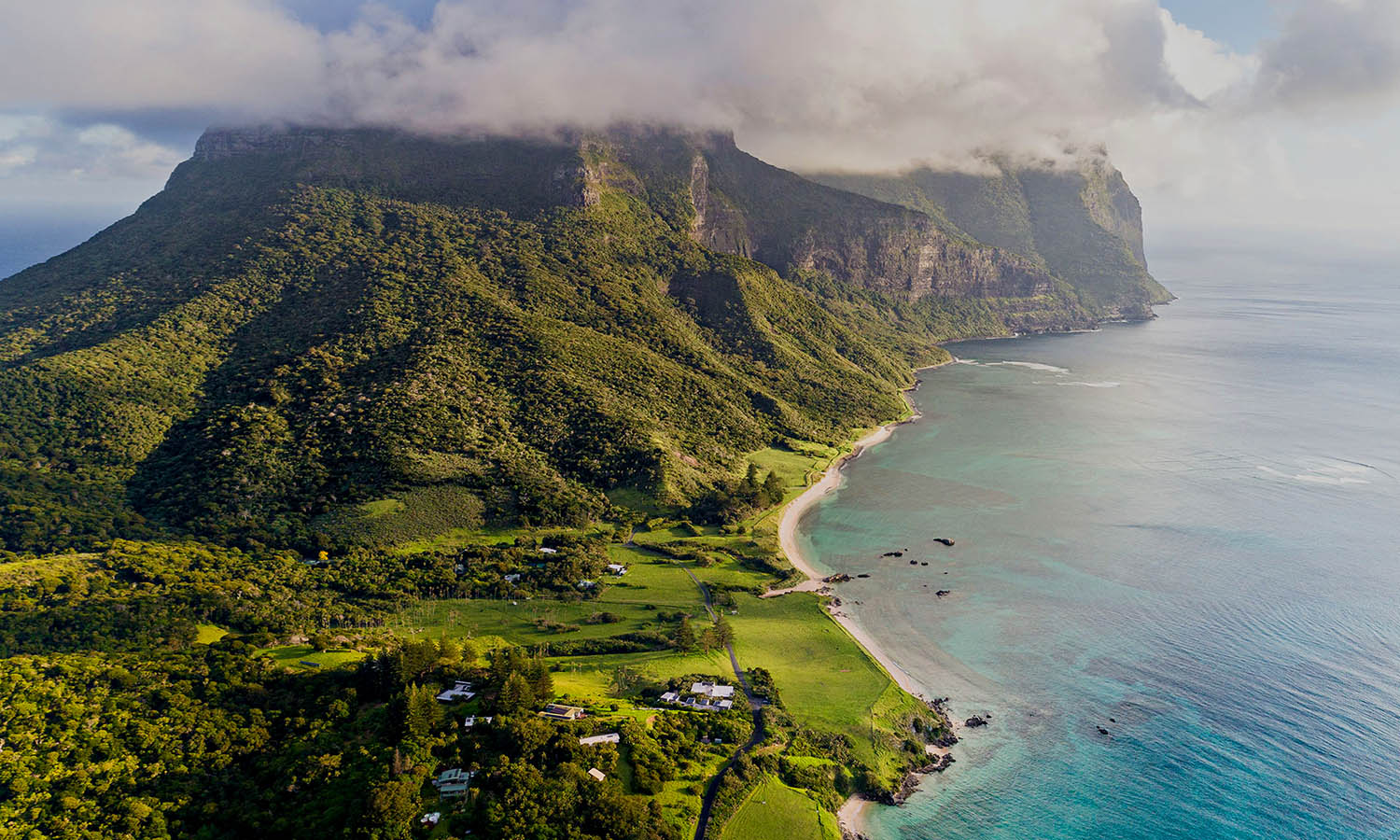
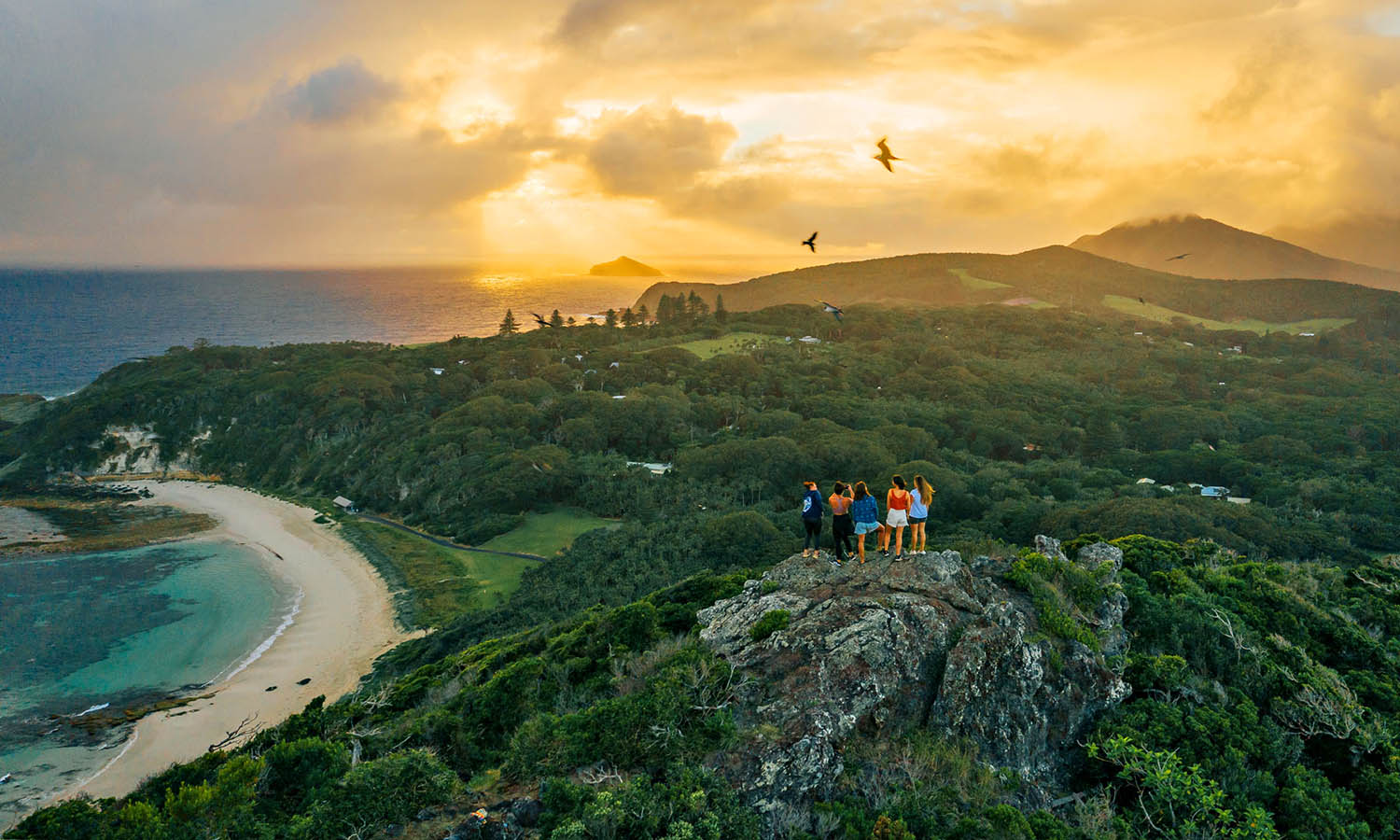
Nine things you didn't know about Lord Howe Island, Australia's secret paradise.
You’d be forgiven for not knowing much about Lord Howe Island. No one even knew it existed (according to Western history books) until 1788, when European settlers became the first known people to set foot on the island.
Nowadays it’s a protected, pristine (UNESCO World Heritage Site, whattuppp) haven for wildlife and nature; a prime example of what the natural world could look like when it’s preserved in its incredible integrity.
Lord Howe has long been one of Australia’s best kept secrets, and we’re going to let you in on it right now. Without further ado, here’s nine things you probably don’t know about Lord Howe and all the reasons why you should get there stat:
If you look Lord Howe Island up on a geopolitical map, you’ll find it is a part of New South Wales, an eastern Australian state.
But really, Lord Howe is out there existing on its own, just chilling, completely isolated in the Tasman Sea, about 700km northeast of Sydney as the crow (and plane) flies. While isolated, the flight time from mainland Australia clocks in at only two-hours. Making it unheralded but also accessible.
The official population of Lord Howe, at any given time, sits somewhere around 380 people.
From there, a maximum of 400 travellers are allowed onto the island. This rule is in place to keep the rainforests pristine, the reefs and oceans clean, and the animals undisturbed. The best part? If you do make it to Lord Howe, you’ll feel like you have it all to yourself.
Ever laid eyes on a Dryococelus? How about a double-headed wrasse? Or a Lord Howe woodhen? No, we bet ya haven’t because these creatures are endemic to Lord Howe Island.
That means you can find them on Lord Howe and Lord Howe only. The island has proven to be a spectacular environment for living creatures in the air, on the ground and in the water, and rivals the famous Galapagos Islands in terms of its unique biodiversity.
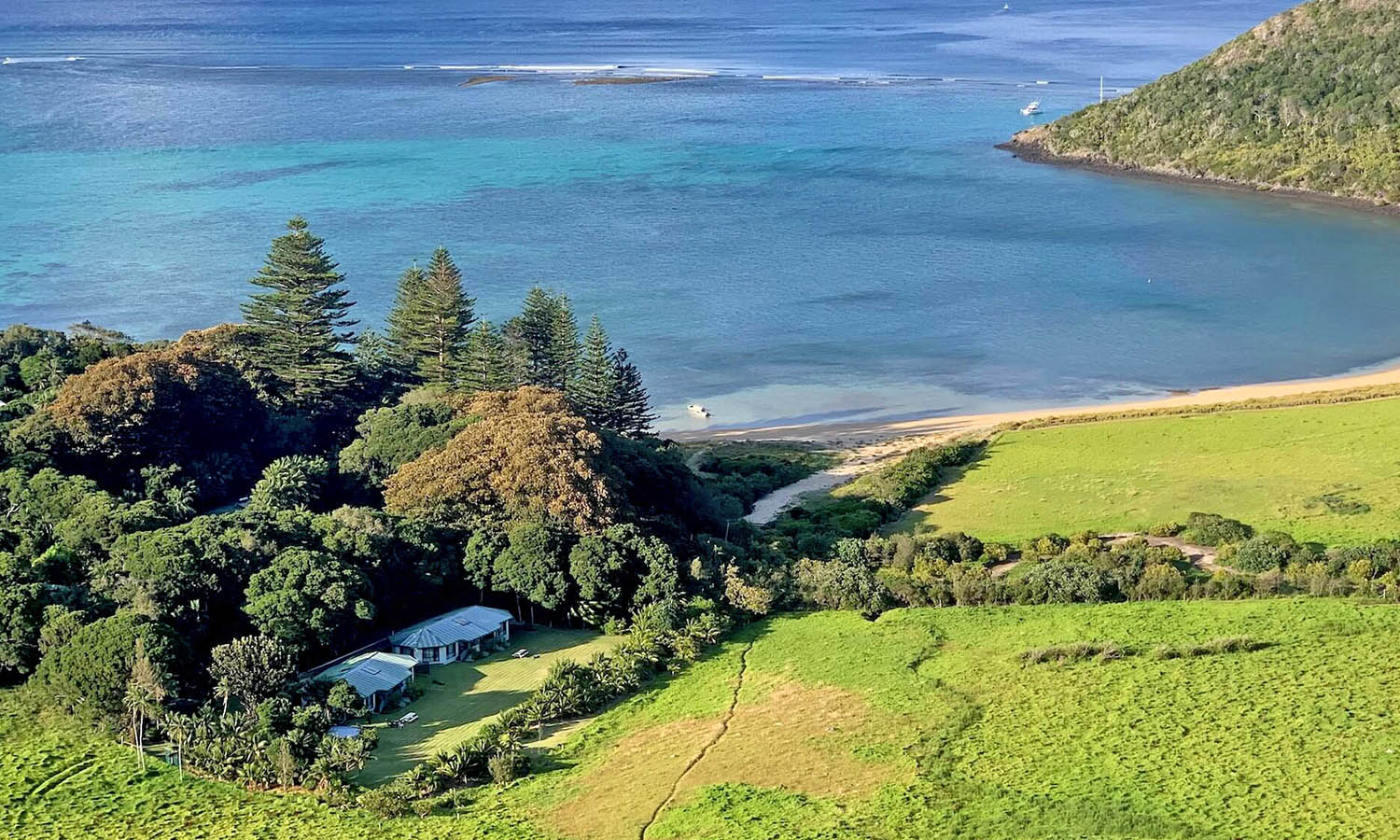
Built in an architectural style that’s reminiscent of the luxury homes you might find along Victoria’s Great Ocean Road, Capella Lodge is relaxed, charming and the epitome of coastal cool. You’d expect nothing less from a Luxury Lodge of Australia.
There are nine suites (all of equally stunning beauty, much like the island) with epic views. But we reckon the best vista might be from Capella’s all-time swimming pool, which wouldn’t look out of place in our Hot 5 this issue.
Your pockets don’t have to be as deep as the Tasman Sea to stay somewhere stunning on Lord Howe.
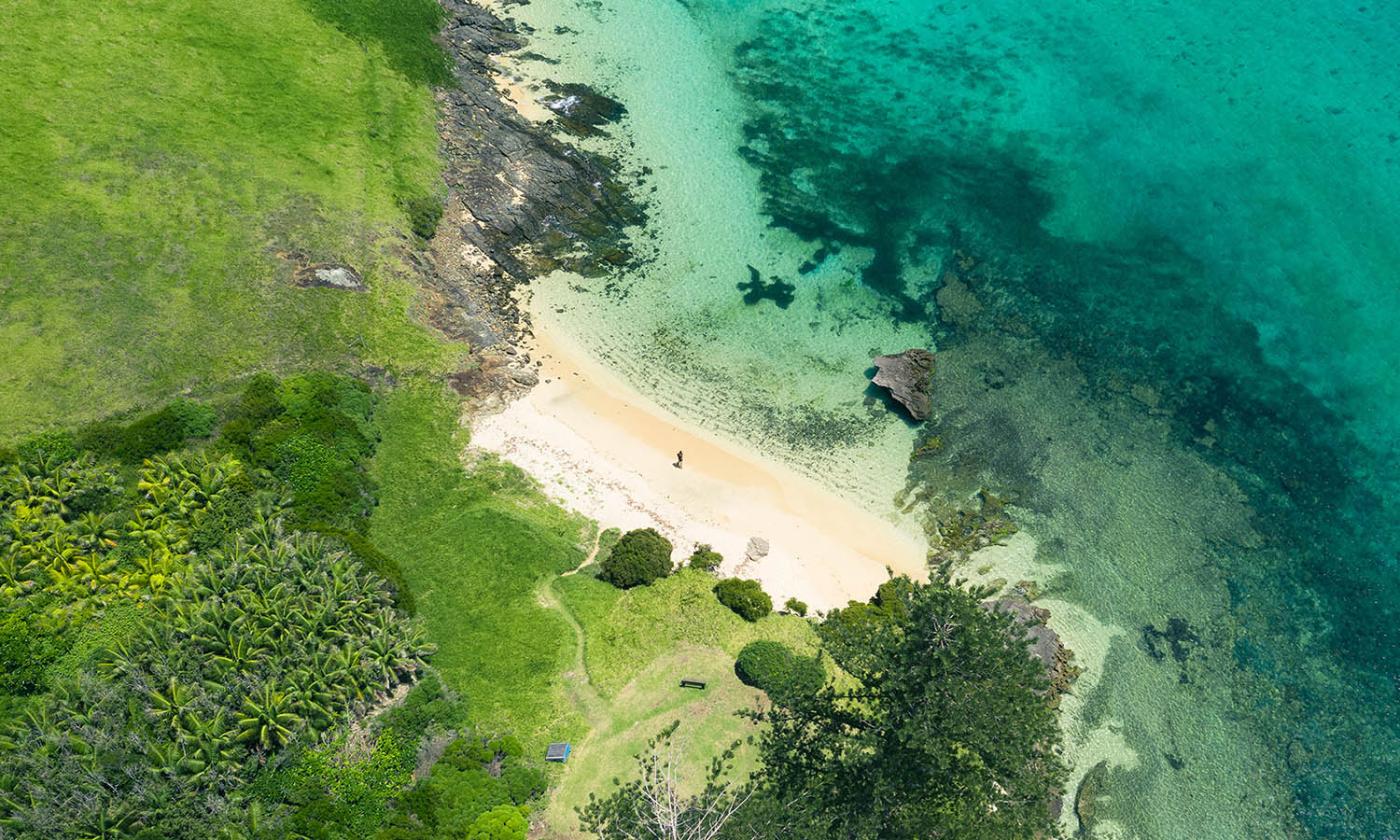
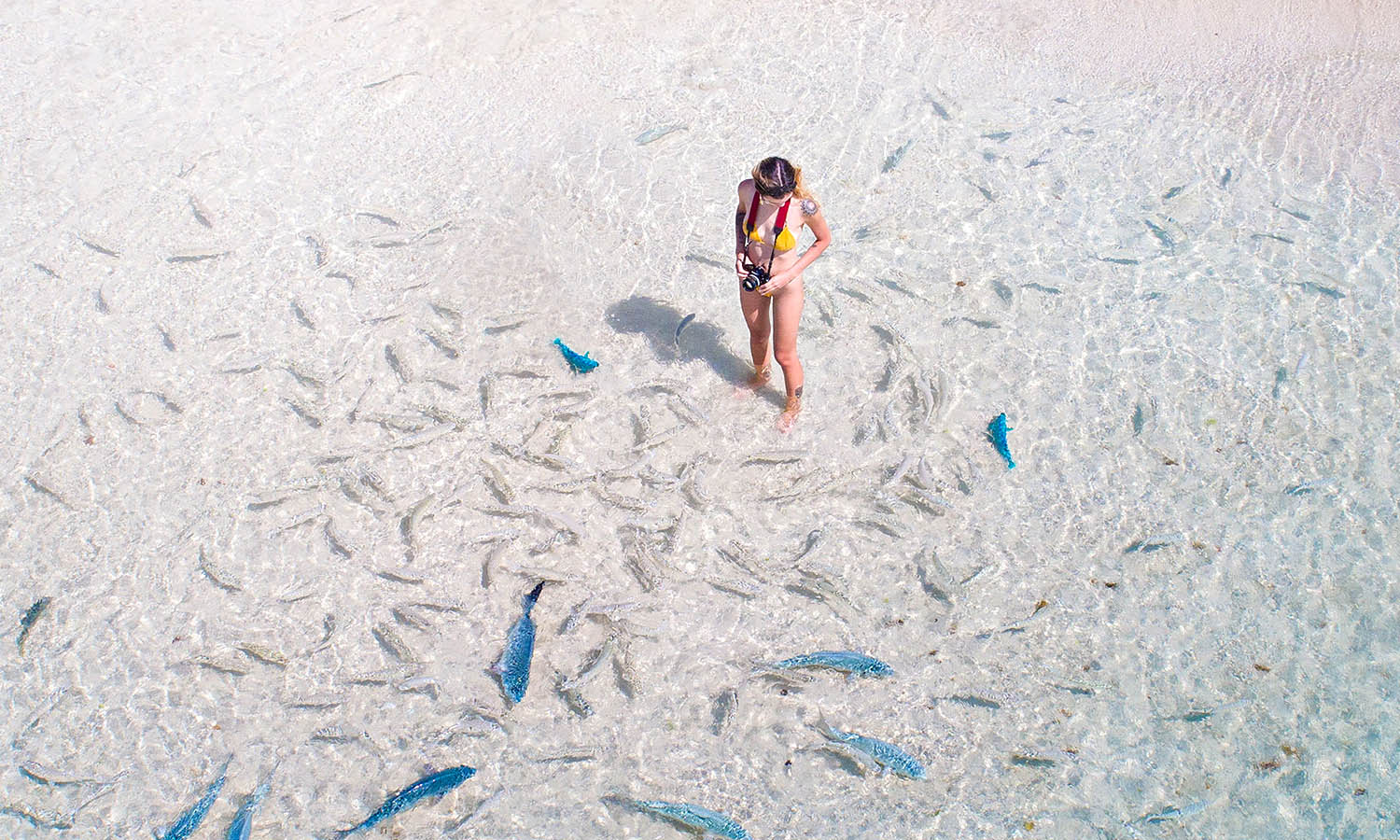
Nestled in quiet spot amongst a grove of Banyan trees are Milky Way Villas, right around the corner from the secluded Old Settlement Beach. The villas are comfortable and affordable, and allow your focus to stick to the important – like having turtles and fish of every colour swimming a minute from your front door.
It’s one thing to encourage people to stay off their phones, and it’s quite another thing entirely to go to an island where there is no phone reception at all.
If it’s a digital detox you’re after, say no more fam. There’s also very little internet, meaning less dings and buzzing, and more feeling close to mother nature and your travelling companions. We’ll let you decide which relationship is more important to you.
7. YOU PROBABLY ALREADY KNEW THIS, BUT WE'RE GOING TO TELL YOU ANYWAY: THERE ARE WORLD CLASS WATER ACTIVITIES TO EXPERIENCE
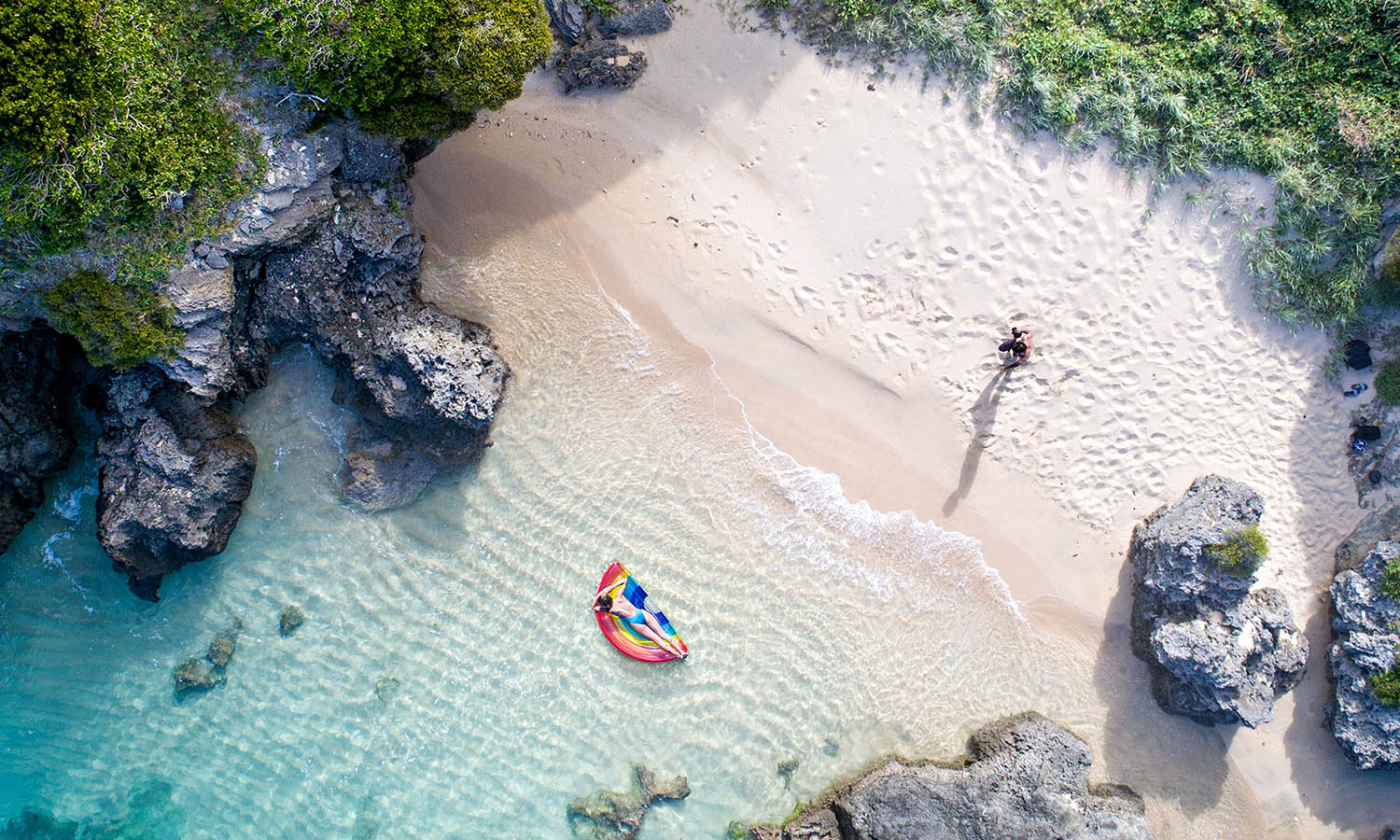
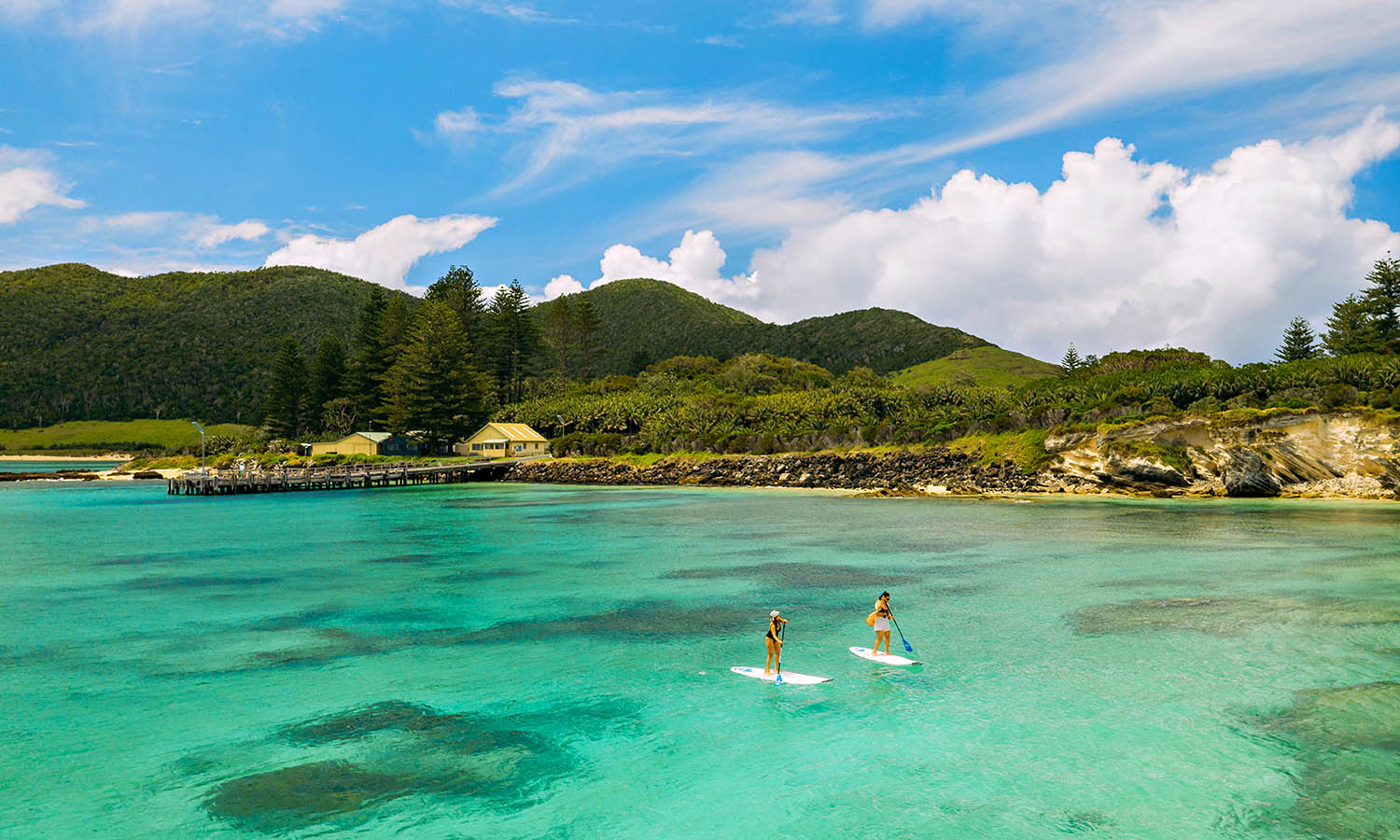
Whether you love the water or you are figuratively – and literally – just wanting to dip your toe in, this is the place to do it.
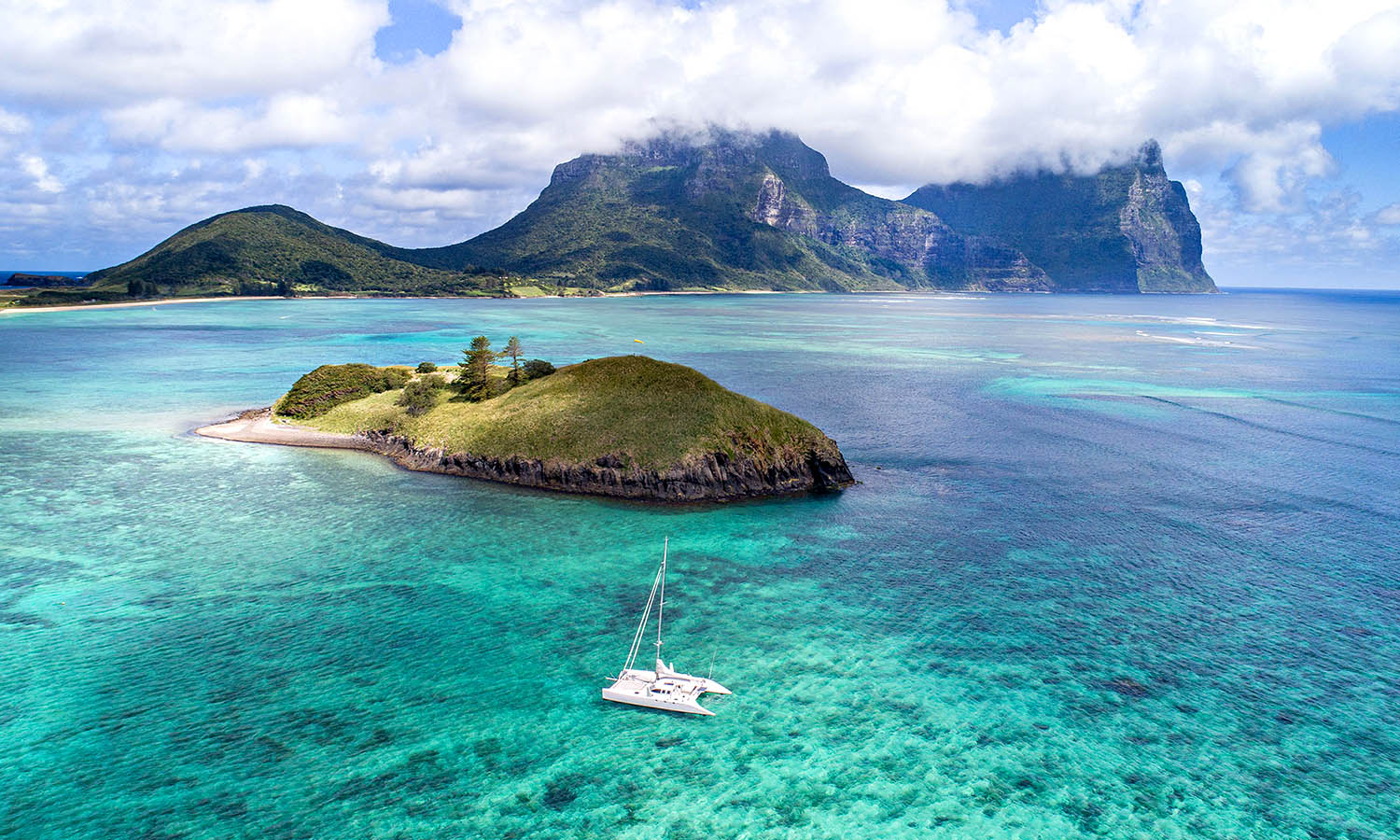
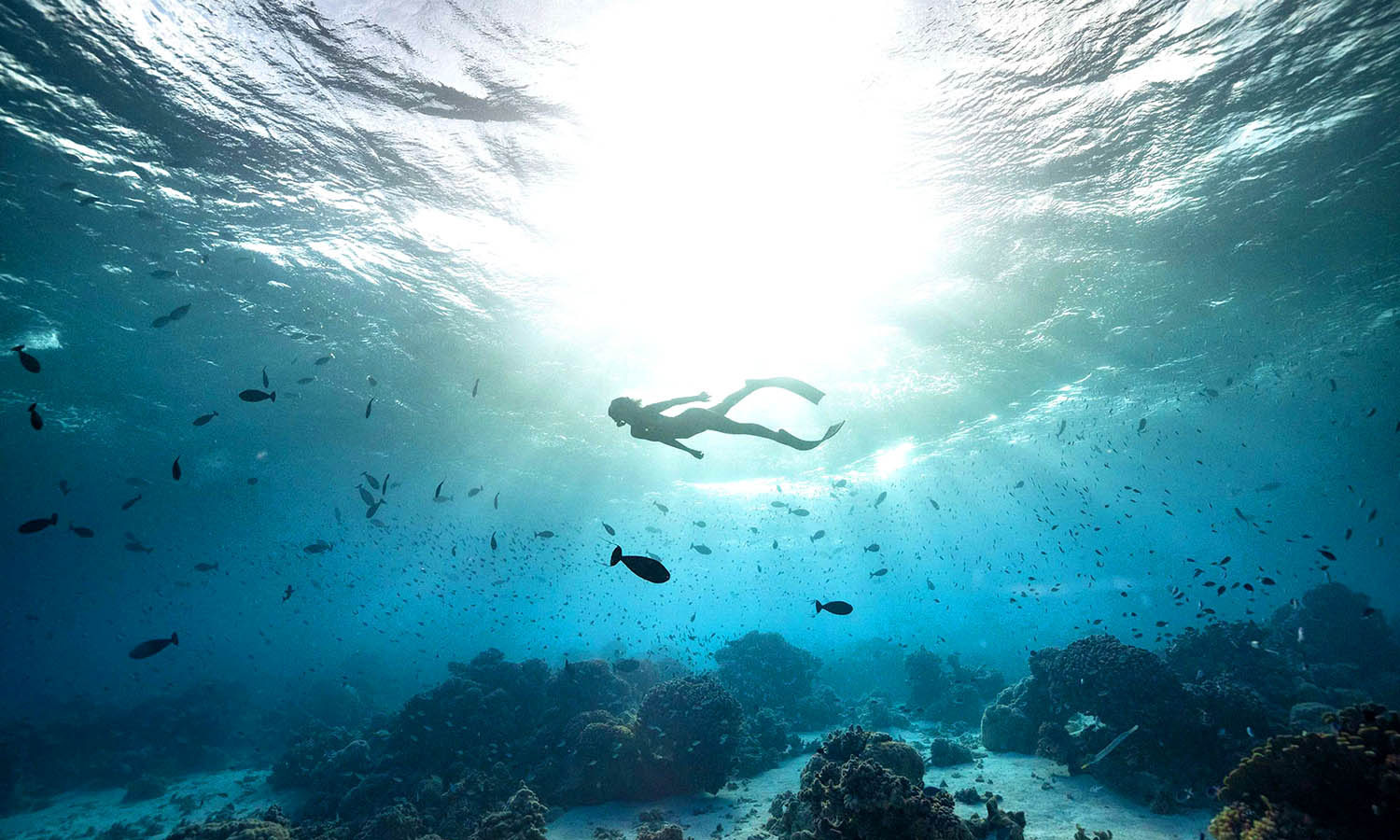
Experienced divers can tackle Balls Pyramid, a legendary diving spot home to the world’s largest sea stack, and the only recreational dive site where you can see Ballina angelfish. While the less experienced can dive or snorkel the reefs closer to shore. And it’s Australia, so there’s surf, obviously – Blinky’s Beach is a ripping spot for uncrowded waves.
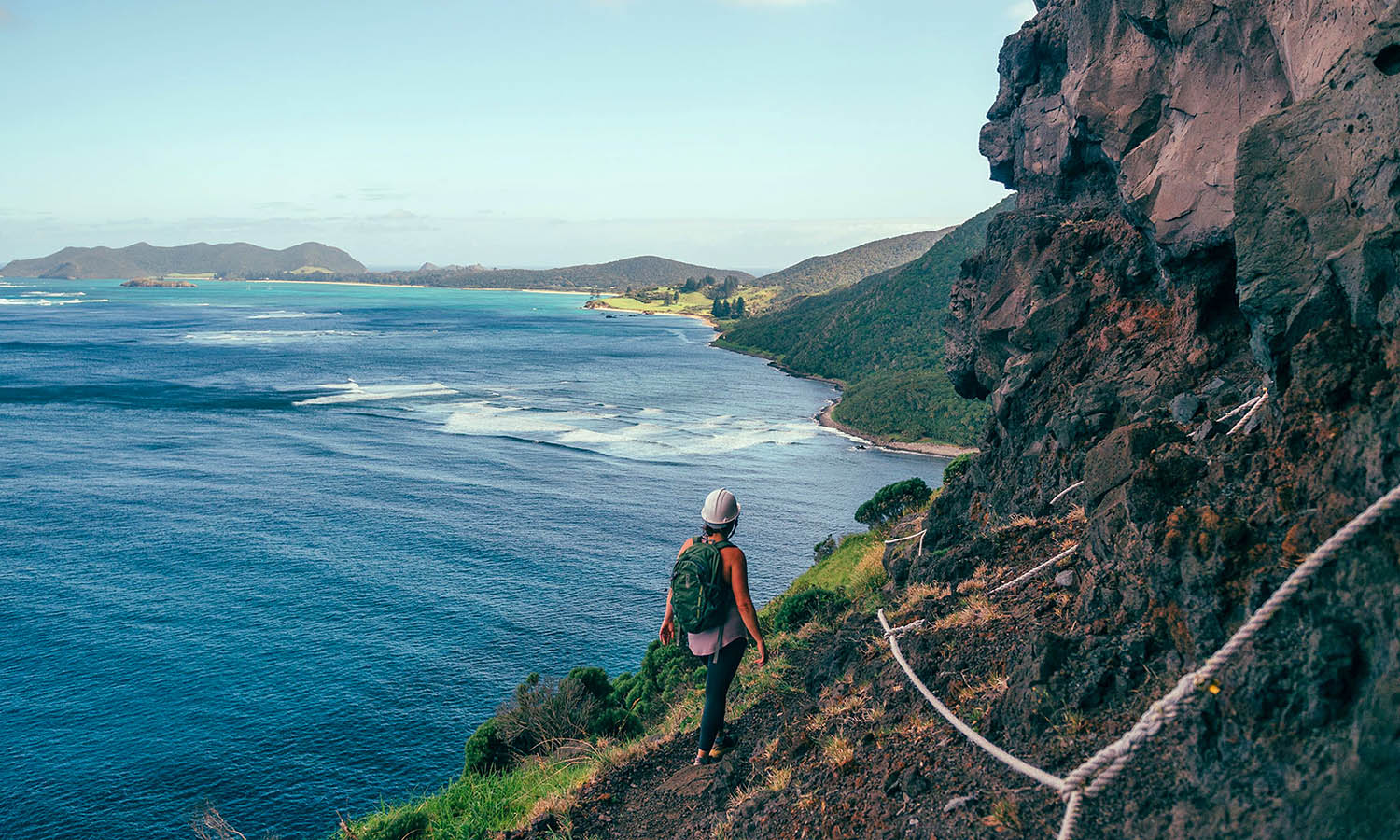
Lord Howe is a hiker’s mecca, a pilgrimage that must be made at least once in order to experience the extraordinary trails in and around this natural paradise.
Although only 2km wide and 11km long, you can make your way through any number of landscapes in a single hike—rainforests, beaches and, most spectacularly, through caves. Goat House Cave is arguably the best one: a steep climb that leads to a natural volcanic ledge overlooking Lord Howe’s settlement to one side, and Ball’s Pyramid on the other. If you’re into travelling by foot, it doesn’t get much better than this.
In fact, there’s a few breweries (don’t forget we’re still in Australia, after all).
The island overcomes obvious proximity challenges to create the unlikeliest of food and drink scenes, punctuated by fresh fish, and delicious beers.
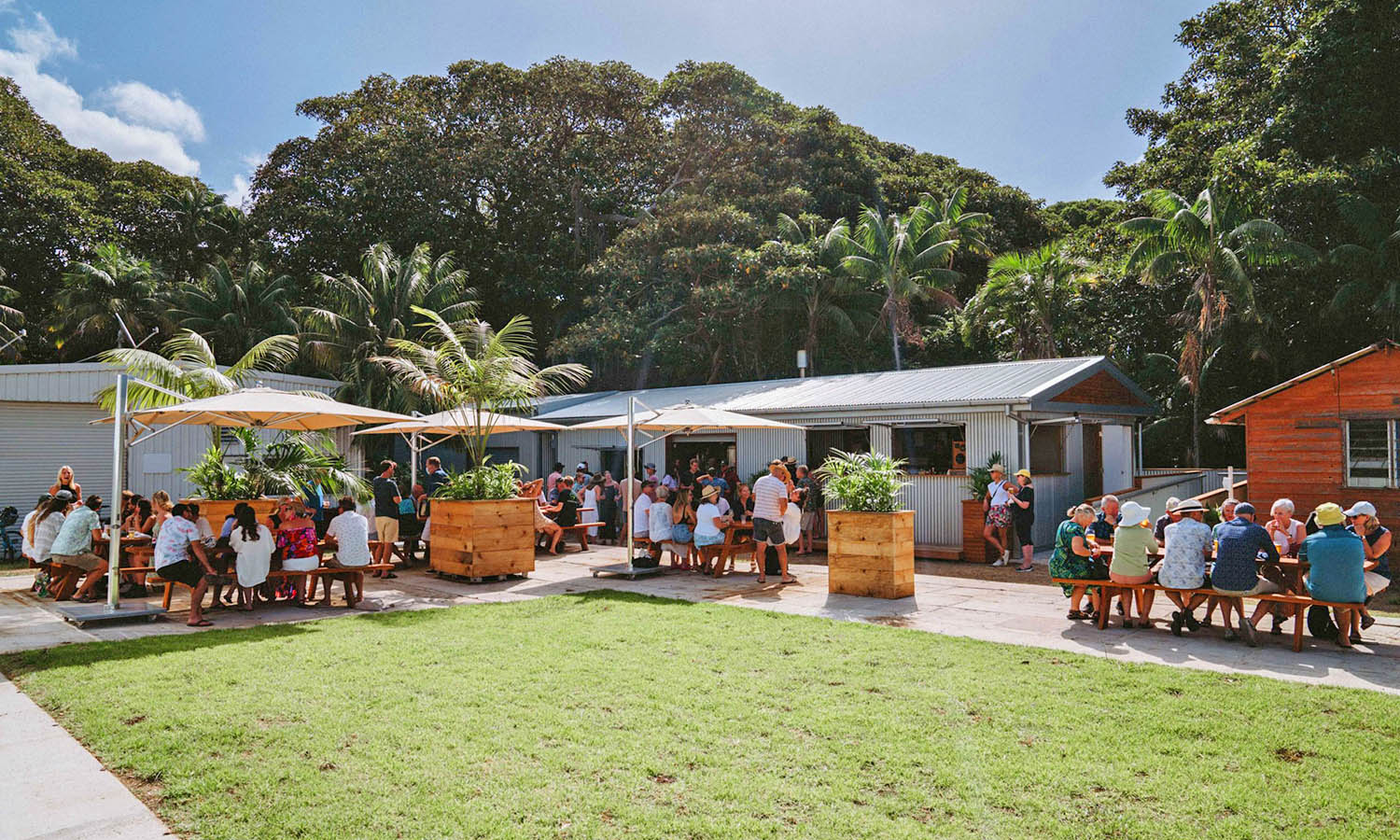
Our pick is Lord Howe Island Brewery, who brew their own beer on the island in a picturesque little brewery, and offer a great place for a well-earned knockoff (only you’re knocking off a mammoth day of island exploring, instead of work).
From where I’m hovering on the reef wall of Fakarava’s North Passe, there’s a screen of sharks in front of me and a bunch more swimming through clouds of reef fish behind me. It’s magnificent.
Click play to watch
These are grey reef sharks—the friendly kind, not the 1975 Jaws kind—and they gather in a huge shiver (that’s what you call a group of sharks, FYI) in this channel every morning on the incoming tide. Along with half of the reef fish in the South Pacific, apparently.
Click play to watch
The number and the diversity of species here is just staggering. Not to mention the water clarity. My view in each direction is at least 50 metres, making this underwater coral landscape one of the most spectacular I’ve seen.
It’s also one of the most healthy in the South Pacific. Home to more species than you can imagine—from damsels and butterfly fish to Moorish idols, angel fish, big eyes and wrasse. There are huge schools of snapper, and thousands of unicorn fish darting like butterflies between sharks. The gang’s all here, in numbers.
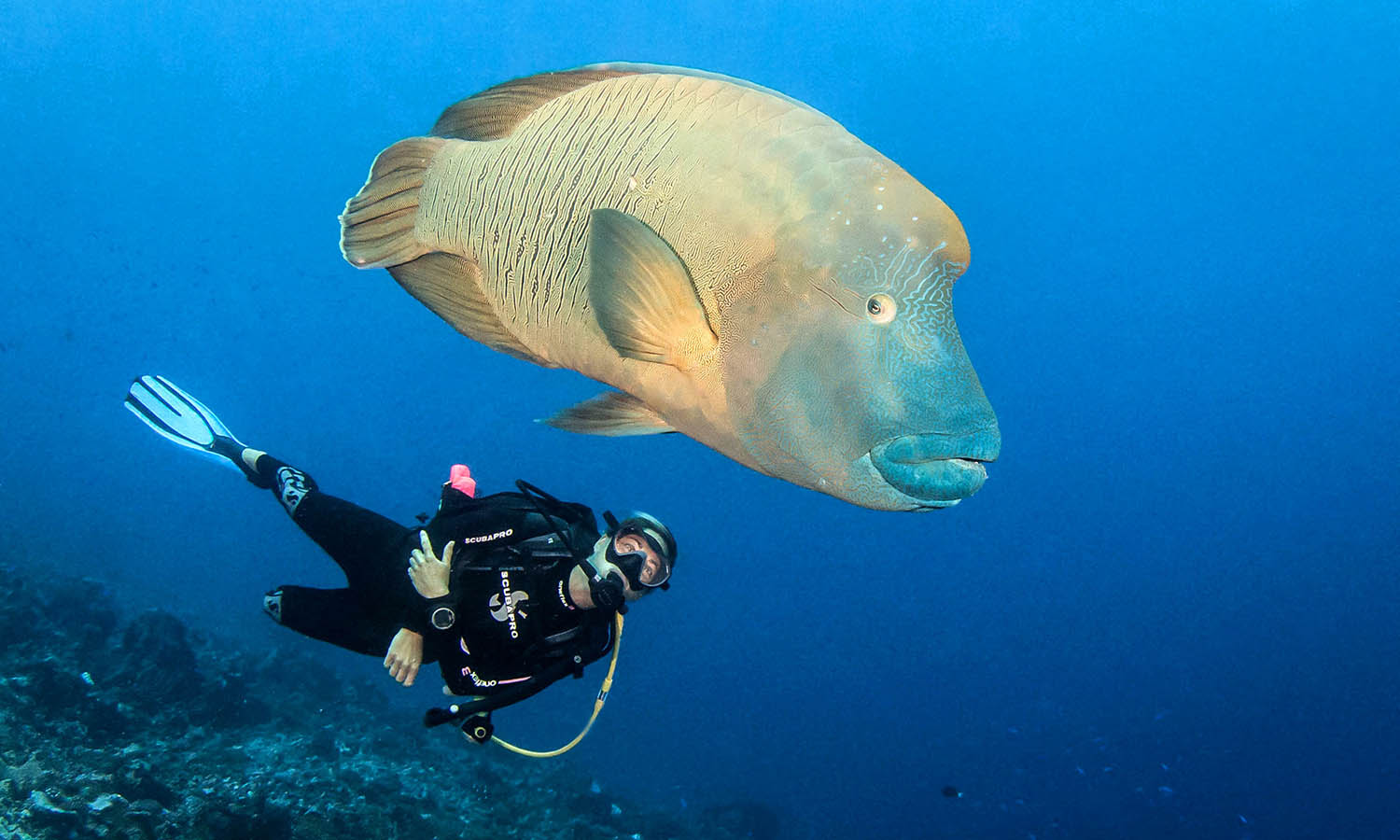
To put it in perspective—on an average dive at our homegrown Great Barrier Reef you can expect to see one giant humphead wrasse (sometimes called Napoleon or Maori wrasse, or nicknamed something like ‘Barry’) at each popular dive site. Here, I can see at least six giant humphead wrasse, each measuring around a metre in length.
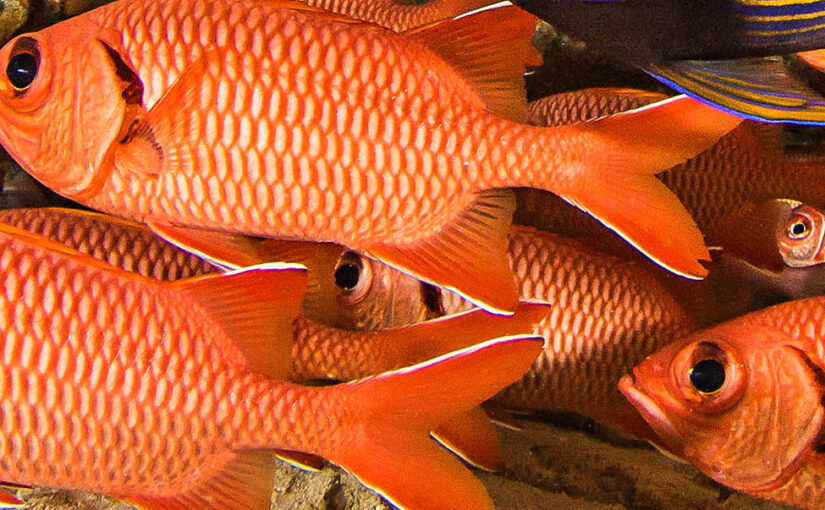
On the Great Barrier Reef, you might see one or two odd-looking (and very shy) trumpet fish hiding under a table coral. Here, a dozen of them are darting around me. And then there’s the cardinal fish, a shy little red fish with large eyes that are usually found hiding in groups of 10 or 12 under overhangs or in small caves. Here, they congregate in the thousands, forming a thick red blanket over the reef.
In a gully called Ali Baba, there are so many cardinal fish that I can barely see my dive dive buddy through the school. Every now and then a shark will part the red sea, cruising through, before it closes again in its wake.
After watching this spectacle for a while, my buddy and I give in to the incoming current and fly through the gullies at high speed. When we surface, we’re already impatient to take the plunge again.
This is just one of several once-in-a-lifetime marine encounters I’ve been lucky enough to experience while here in French Polynesia. I’ve spent most of my time on Fakarava and Rangiroa, two islands in the Tuamotu Archipelago, roughly an hour’s flight from the main island of Tahiti.
French Polynesia, also known as the Islands of Tahiti, has long held its reputation for being a luxurious, romantic destination. And it’s not hard to see why, with its picture-perfect bungalows poised over crystal clear waters.
But there’s another, wilder side to these islands. Beneath the waves, you can find some of the most exciting marine encounters in the world. Topside, you can by-pass the 5-Star bungalows for a more down-to-earth style holiday. A mix of small resorts, pensions and home stays offer communal tables and home-cooked meals; a place to eat and share your diving adventures with the other guests.
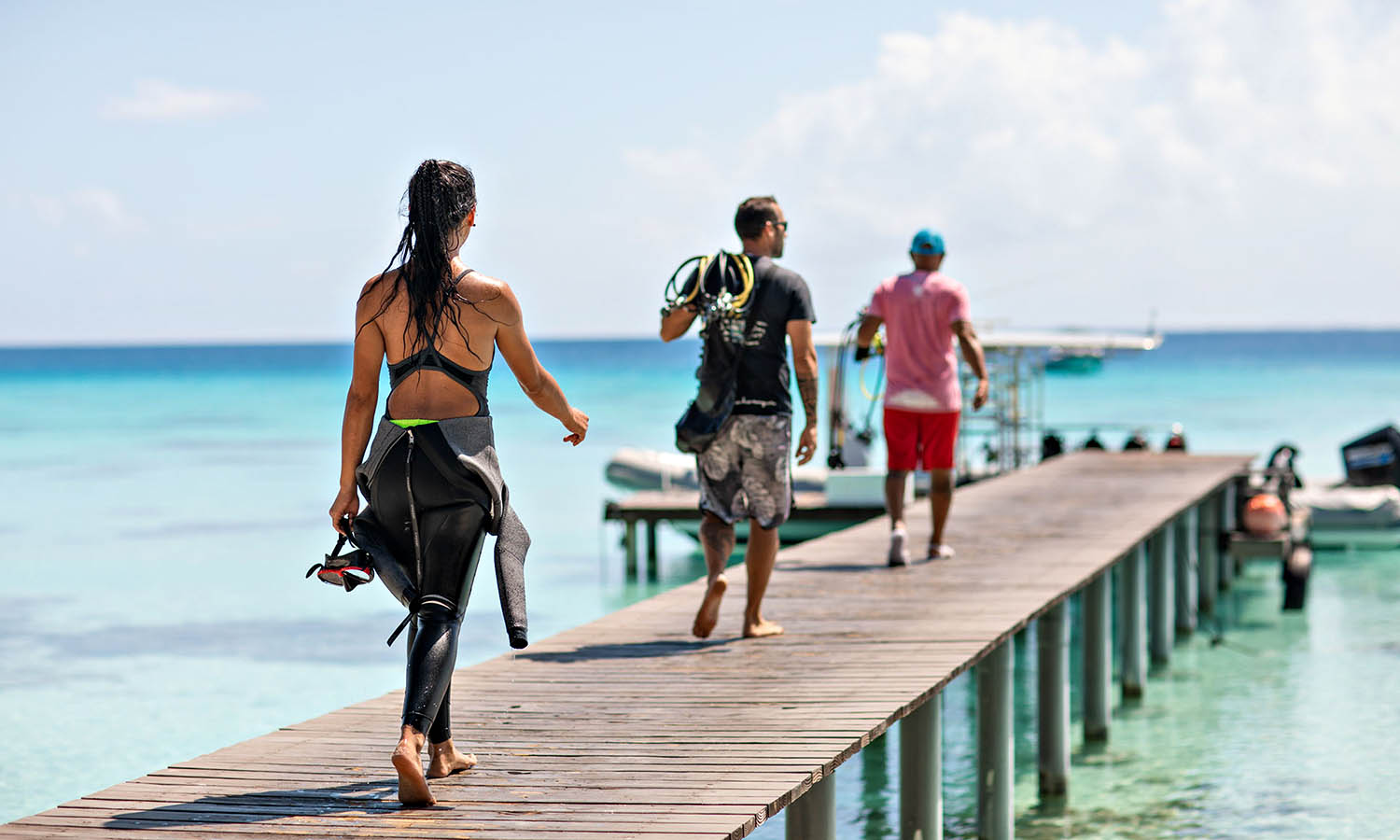
My first leap into French Polynesia’s big blue is on the coral atoll of Rangiroa, a thin circle of islands surrounding an enormous lagoon. In the morning we dive on the incoming current, drifting slowly through Tiputa Passe, weaving through clouds of purple anthias, schools of butterfly fish, snapper, cardinal fish and humphead wrasse. Along the way we spy white tip and black tip reef sharks, grey reef sharks and—below us at depth—two great hammerhead sharks. An exhilarating sight.
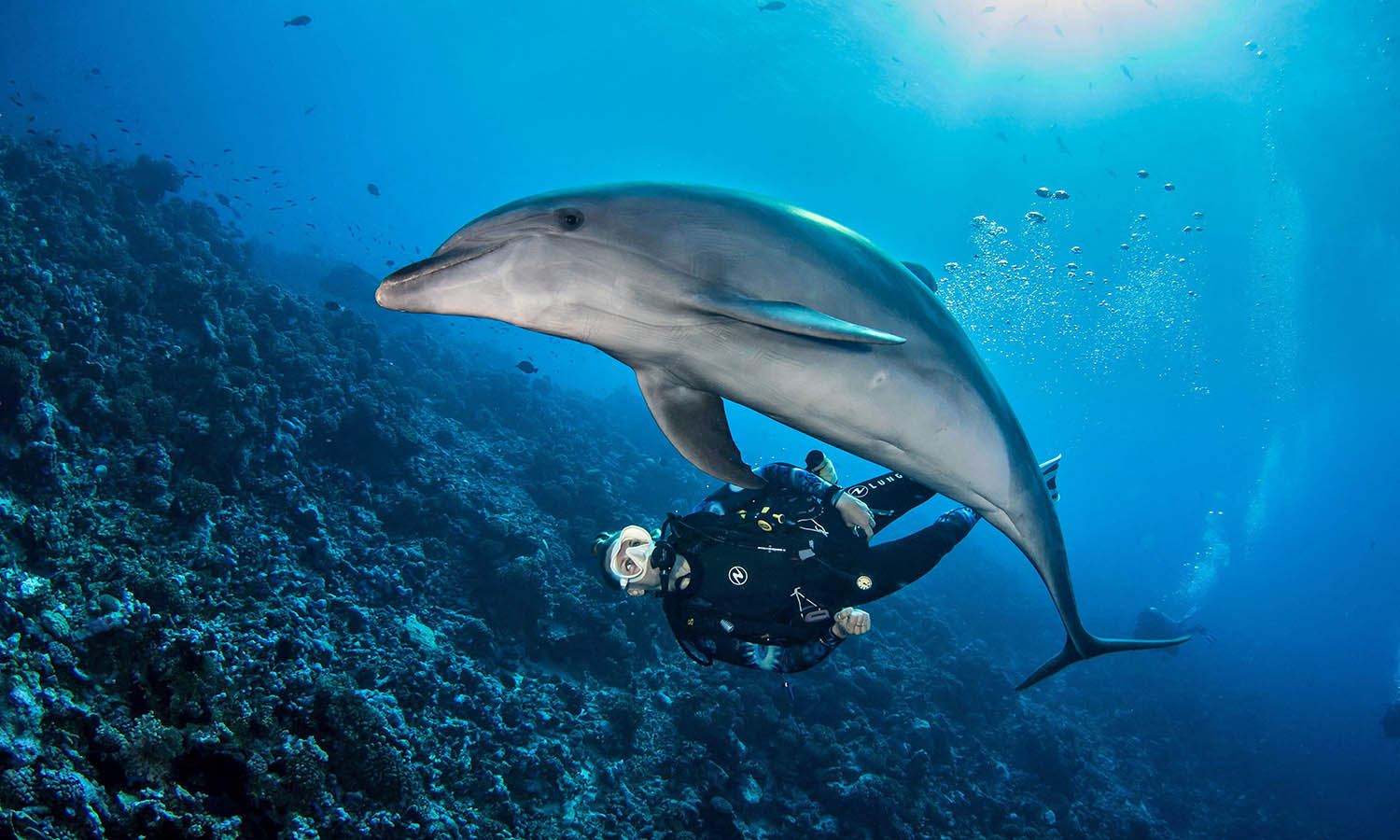
In the afternoon, we spend time on the outer reef. As the tide goes out, waves form in the channel, making it a bumpy ride for us but great fun for the bottlenose dolphins who leap through the surf. The dolphins follow us for most of the dive. They circle us, dance with us and, as we’re distracted by some colourful wonder on the reef itself, we’re buzzed by them several times.
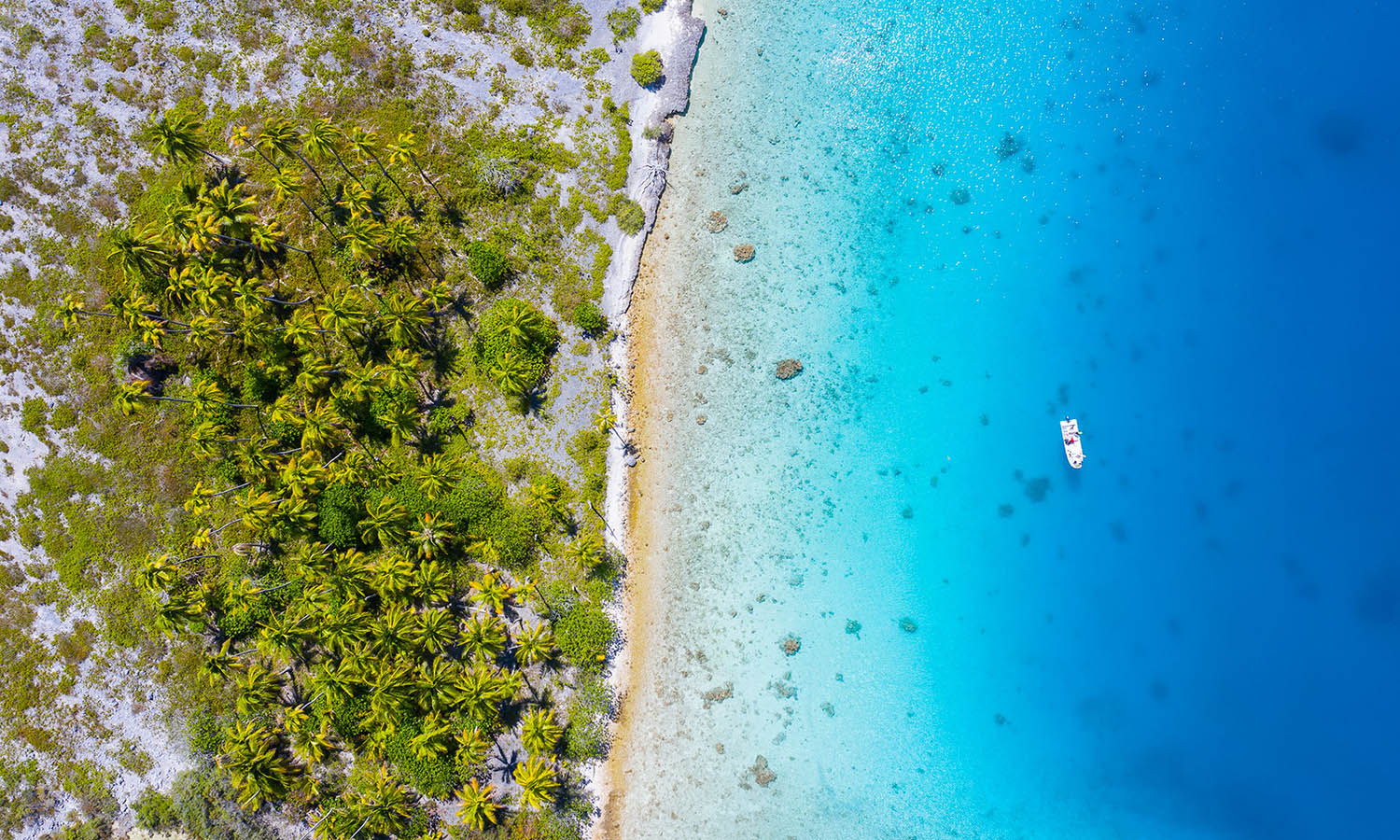
Before the infamous shark dive at Fakarava, I take a trip out to the atoll’s famous Blue Lagoon, situated on the far side of Rangiroa’s vast lagoon. We stop for a snorkel at the (aptly named) Aquarium, then paddle in the palm-fringed turquoise pool. Soon, we’re joined by a group of baby black tip reef sharks who circle us in their dozens. The memorable marine encounters just keep coming.
My final dive on Fakarava provides yet another. As we head out, I ask if we’re likely to see any sharks on the afternoon’s dive. The answer is “no, but maybe some mantas”.
There’s little to no current on the outer reef, but the water is alive with schools of reef fish. There are even a few grey reef sharks (much to our surprise) and then—the marine pièce de résistance—we see the two manta rays.
As they approach, we flatten ourselves on the reef top to watch. They dance and swirl above us for 10 minutes or more, coming so close I have to duck to avoid contact. It’s a fitting end to a magical week of marine encounters. Now I just need to figure out how to move here permanently.
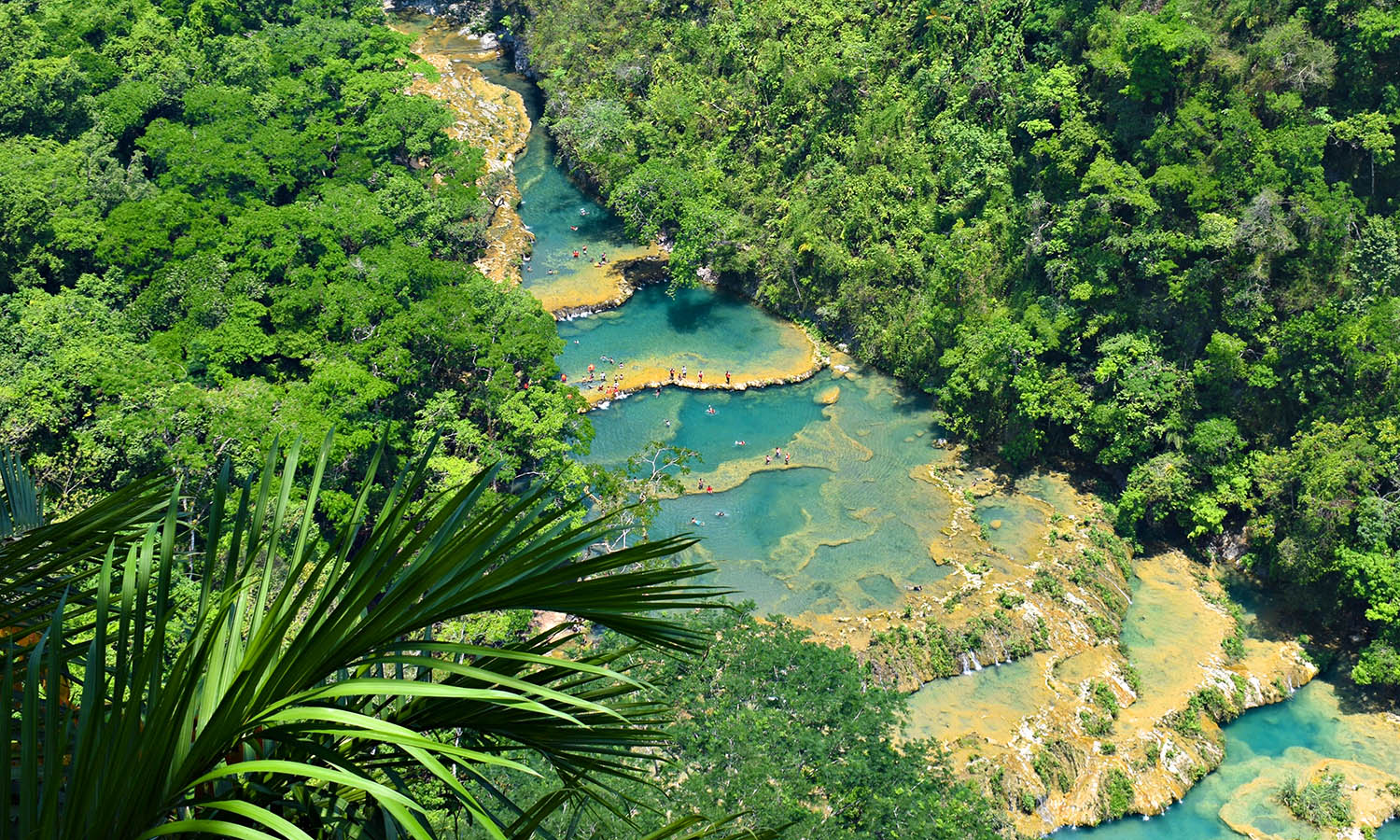
We all know Mexico has cenotes and Turkey has Pammukale—but have you heard of the natural terraced swimming pools hiding out in the Guatemalan jungle? NOW YOU HAVE.
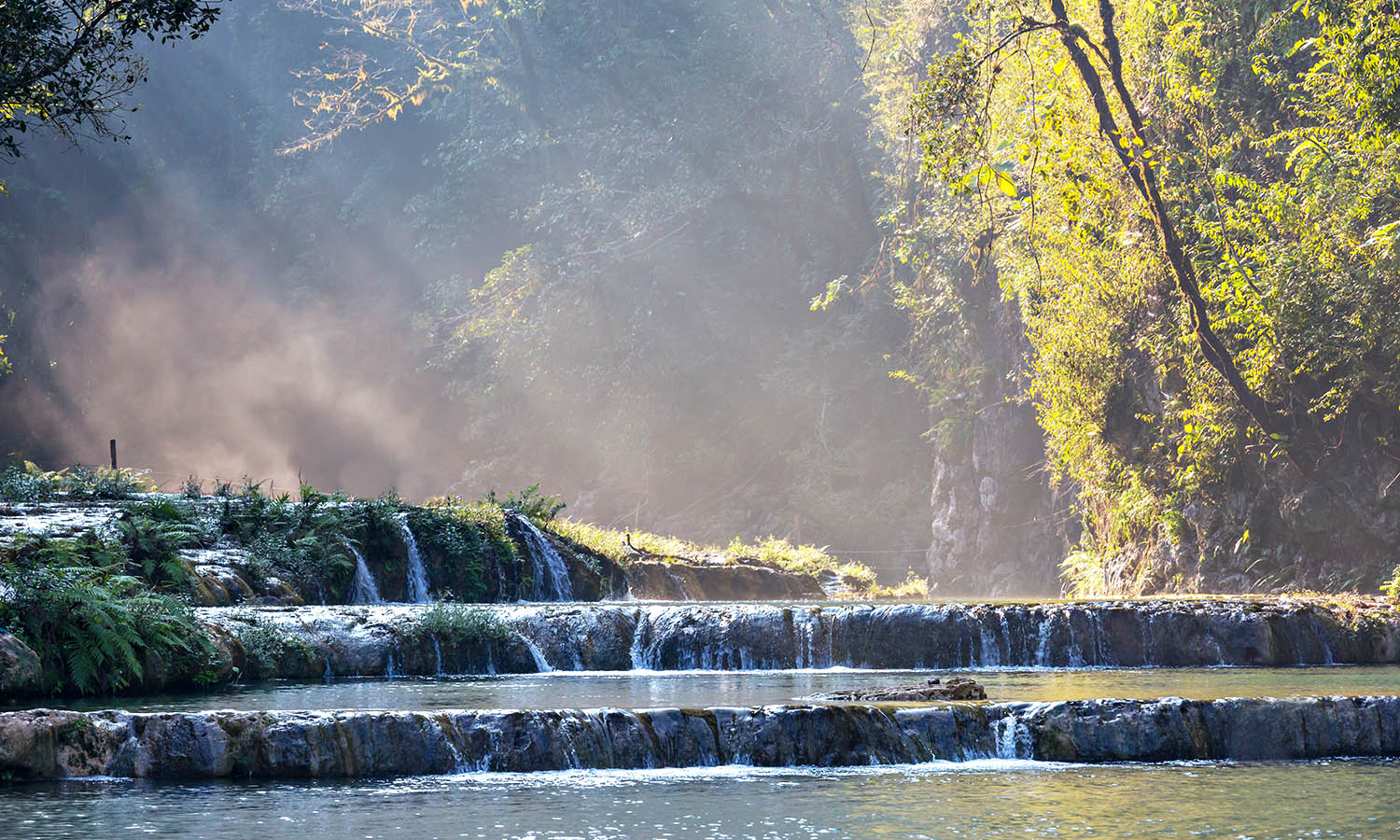
Semuc Champey isn’t the best kept secret, but it’s worth a dip nonetheless. A series of limestone bridges and caves make for a fairytale-like river adventure, perfect for fresh-water paddling, rock jumping and even night-time cave swimming if you’re really brave. Vamos!
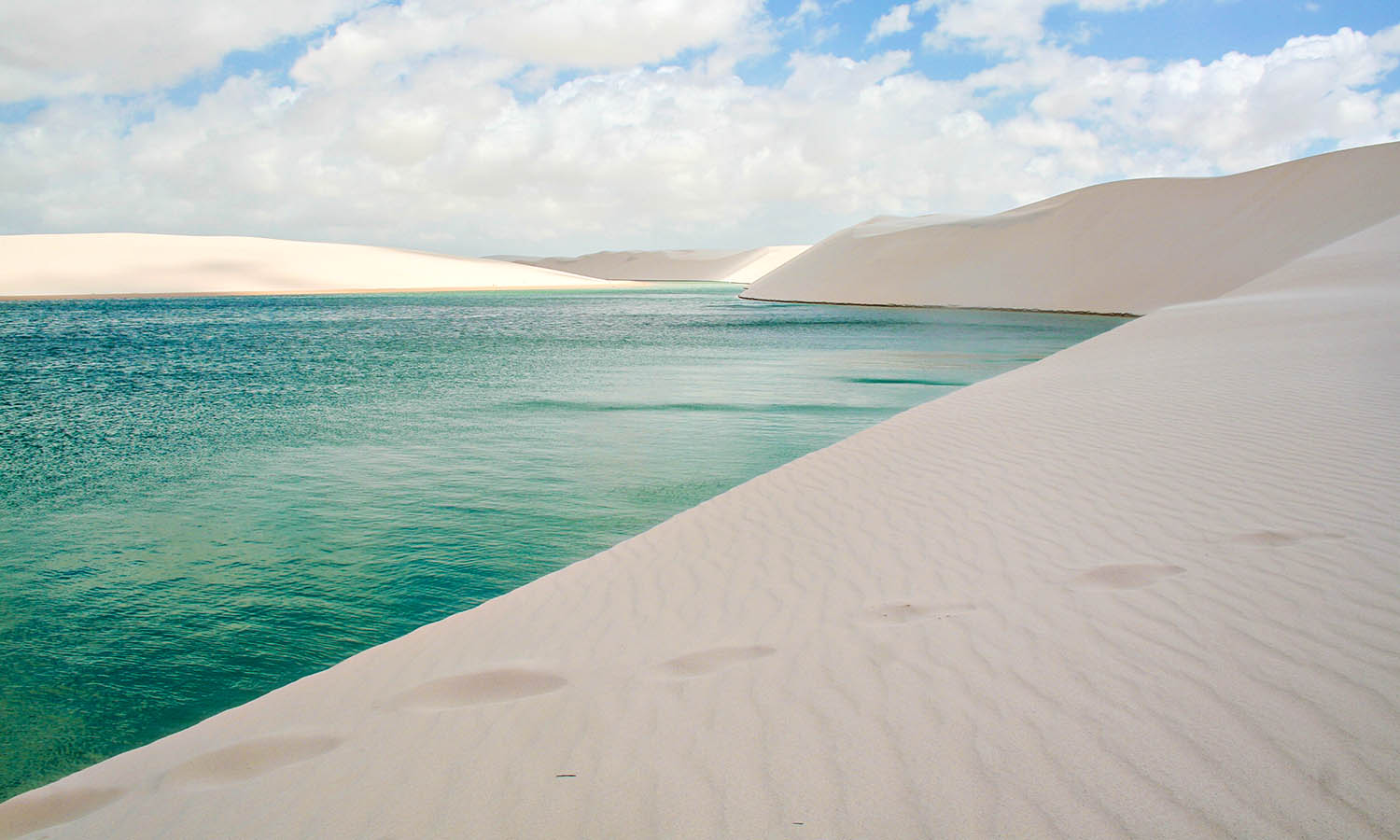
For the majority of the year, Lençóis Maranhenses National Park is a spectacular sandscape.
Those big dunes, blue skies kind of vibes. And then the rainy season hits and it gets… even more spectacular! Duh. You see, the valleys between these dunes fill up with rainwater to create an oasis of cerulean lagoons—some of them big enough to swim in. If you want to dune dive, make sure to visit the south of Brazil between January and June, and BYO togs.
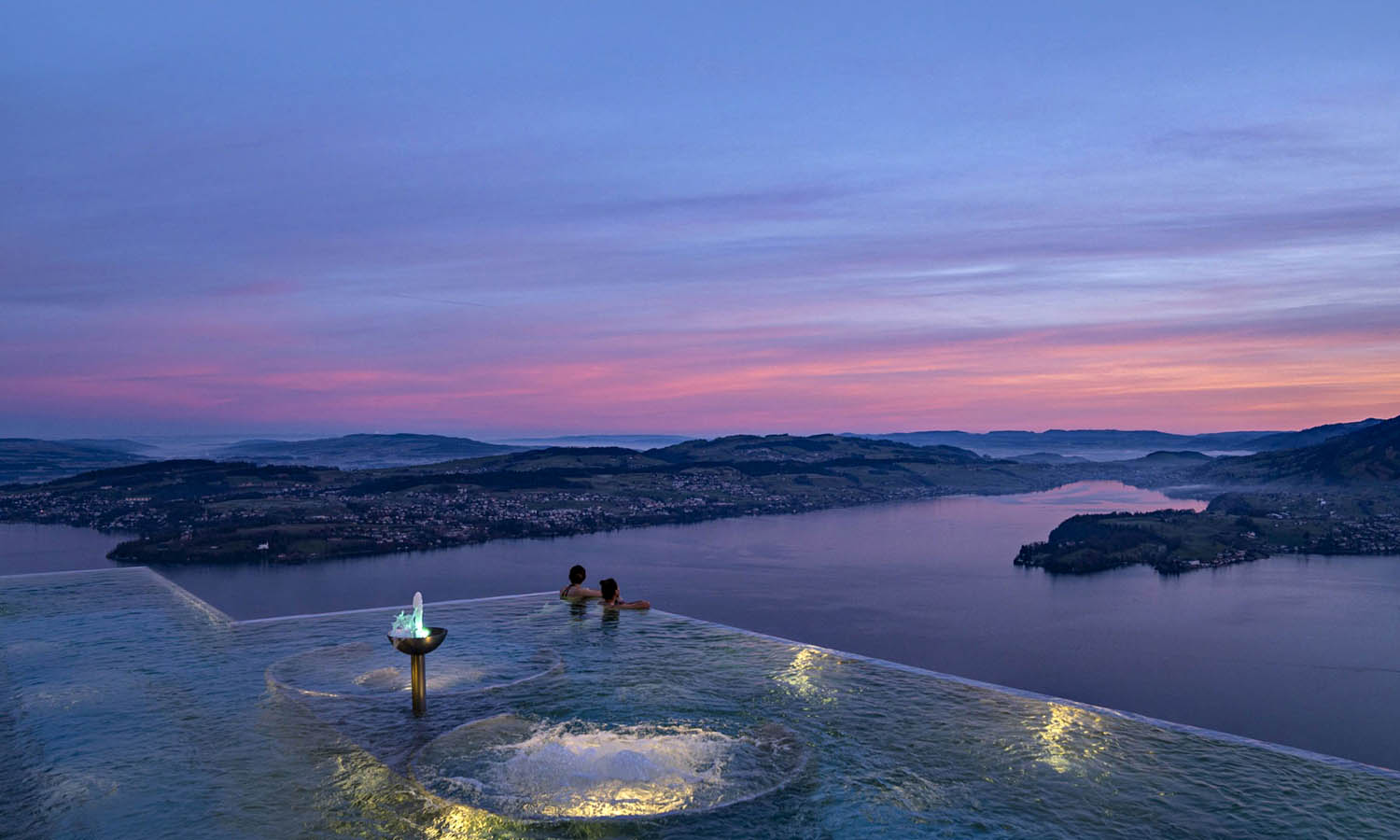
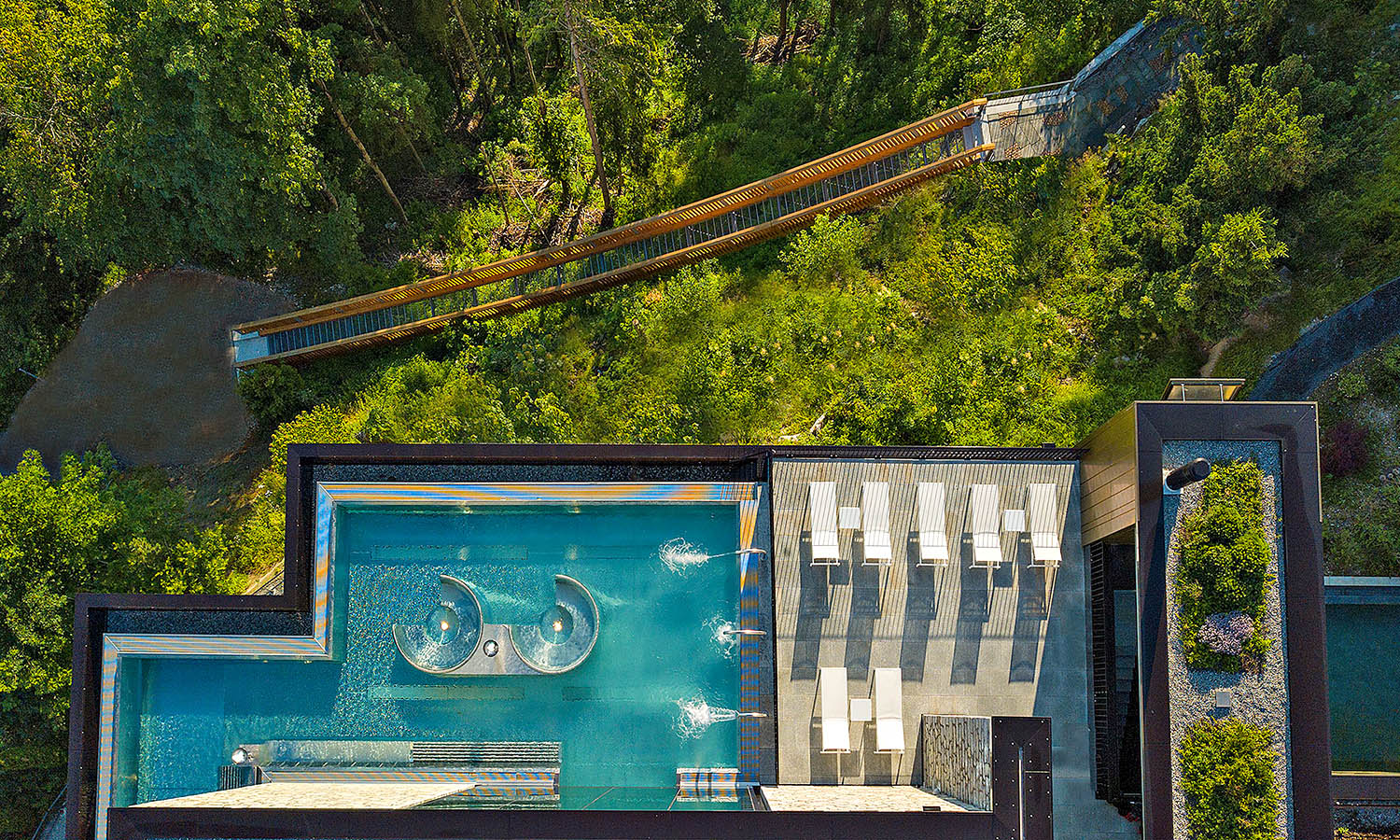
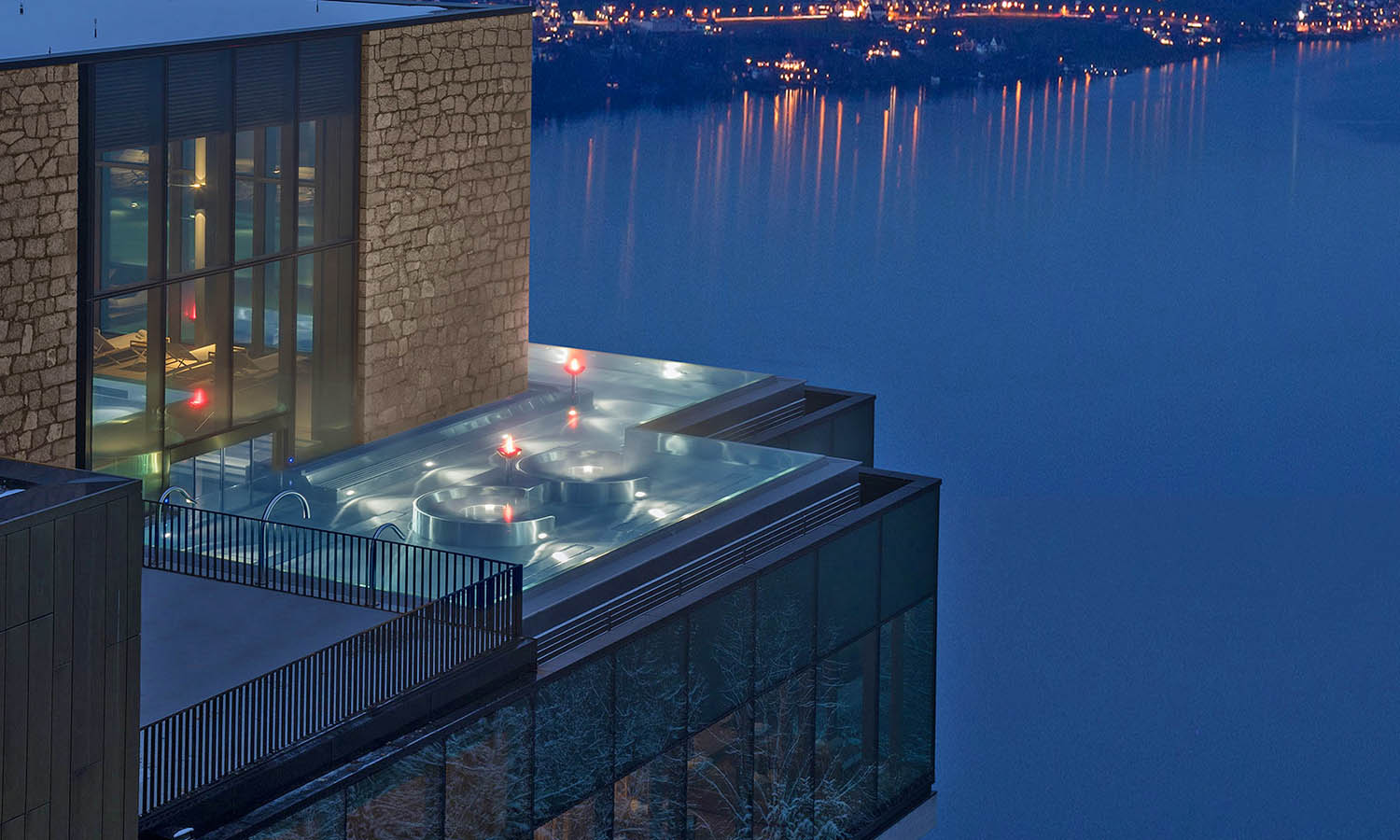
Spanning 60-acres of lush-as-hell central Switzerland, the luxurious glass pool in this luxurious complex has a luxurious view to Lake Lucerne. LUX-UR-IOUS. Not to mention, there’s a spa IN the pool. So you can swim in the depths of winter—with a snow-capped Swiss Alps vista to treat your eyeballs. Hurry up and get on that funicular.
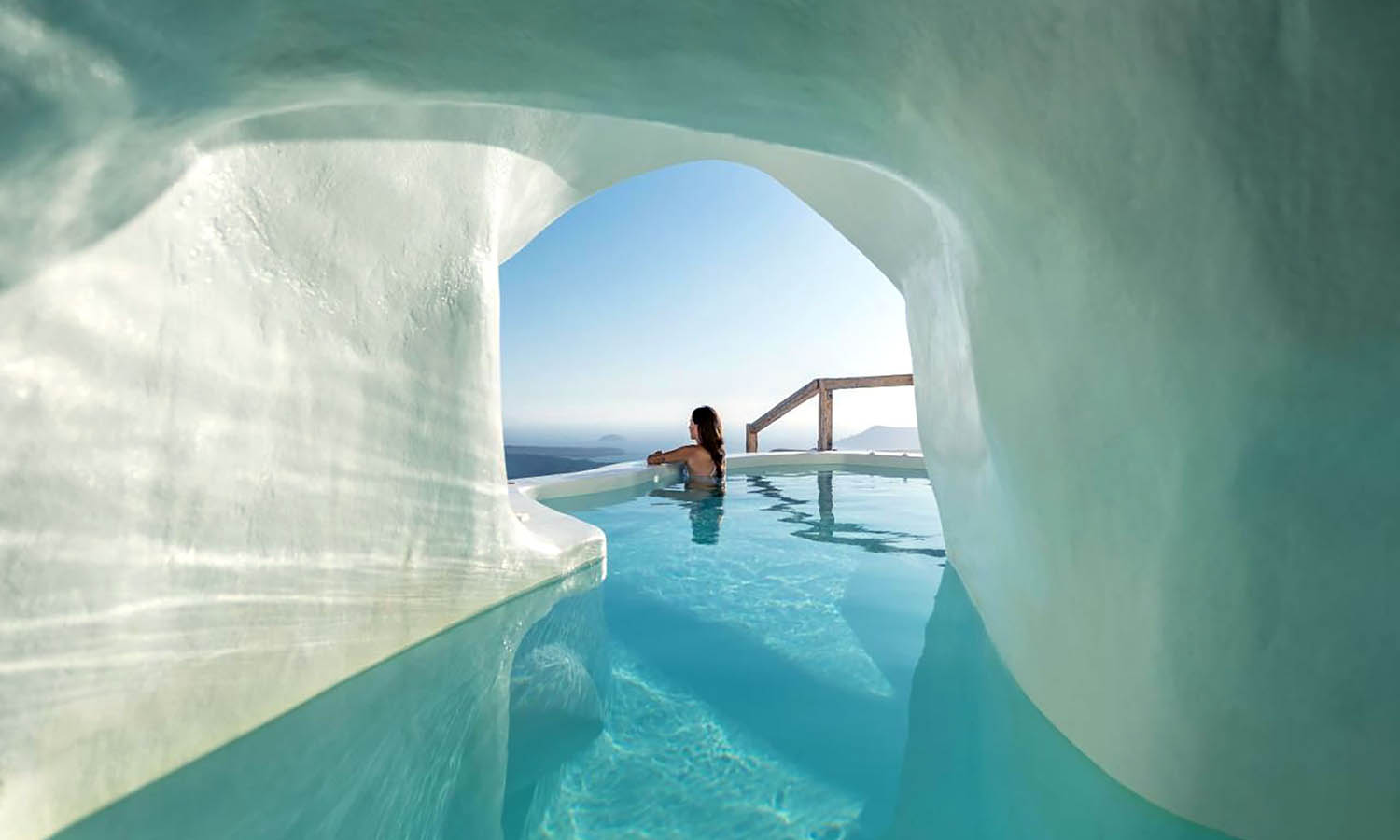
There are a bunch of hotels on Santorini and Mykonos that have IG-worthy whitewashed pools. Some swim up to a private bar, some—quite literally—swim up to your bedroom. Add on a blindingly beautiful, panoramic view to the Aegean (and more haloumi than your body can reasonably handle) and you’ve got yourself the dream holiday.
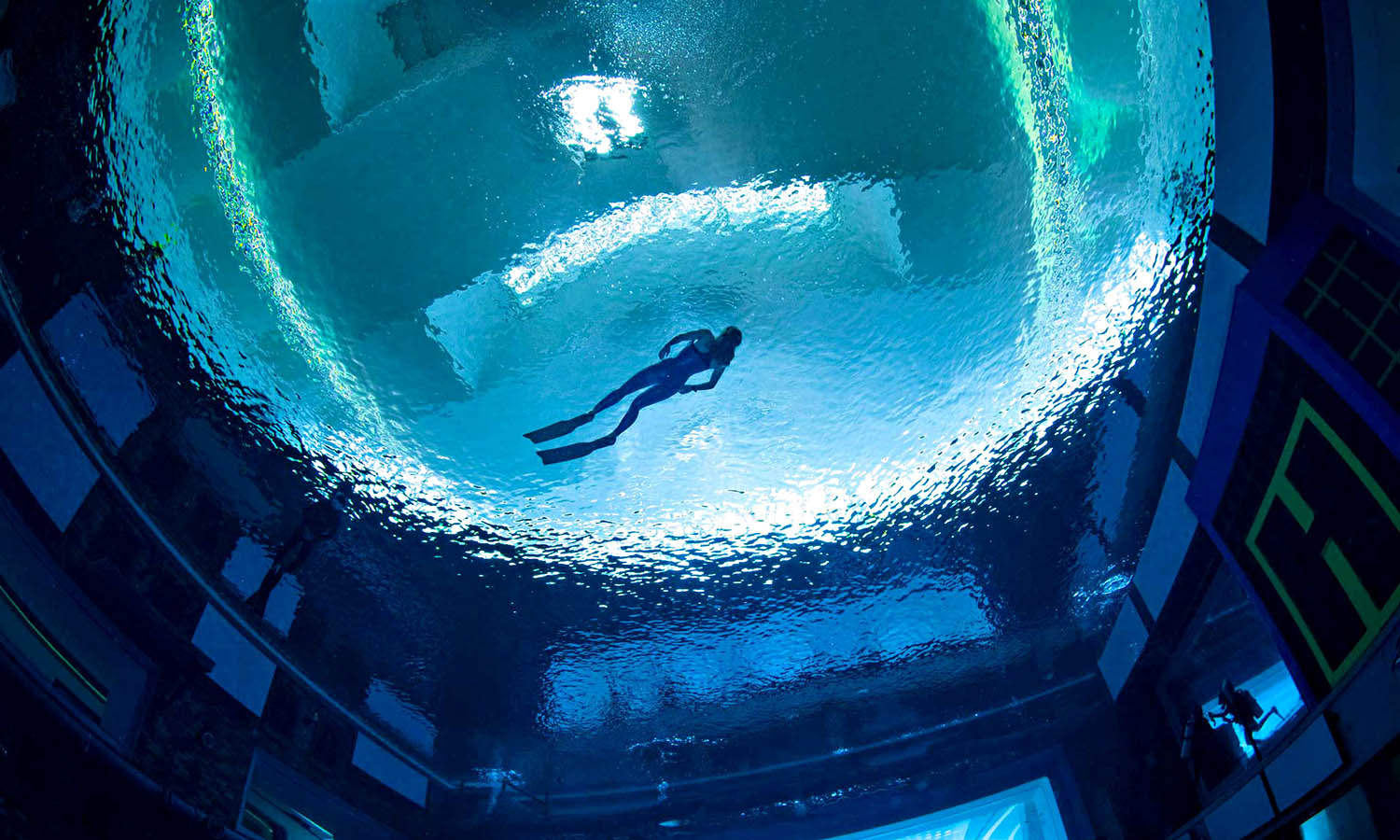
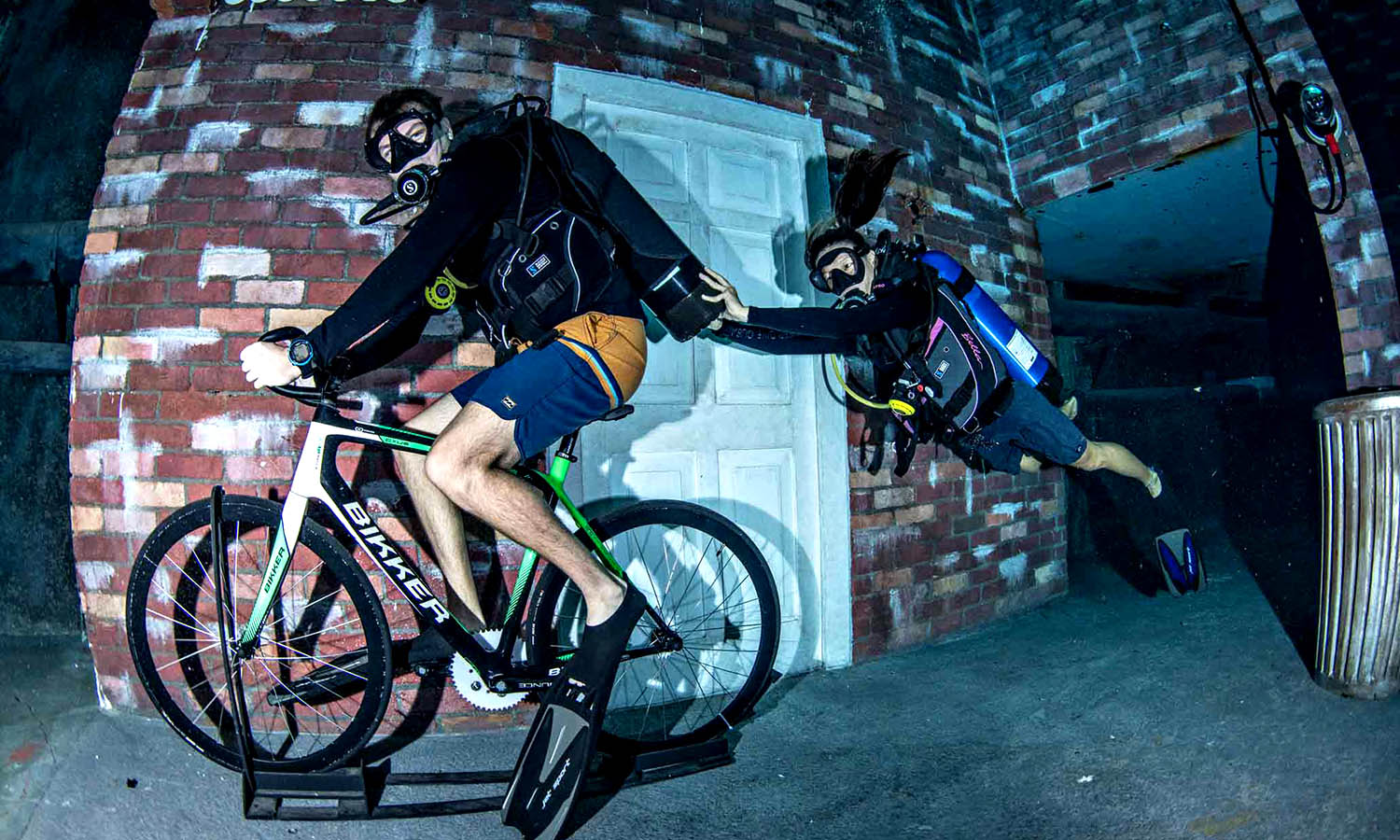
And it’s, with no trace of irony, also inside a mall. Classic Dubai. This watery behemoth is 60-metres deep, has the volume of six Olympic-sized swimming pools and includes an underwater mini-arcade. The whole pool is set up like an abandoned underwater city building, allowing divers to explore a sunken apartment building. Less paddling and more PADI to be had here.
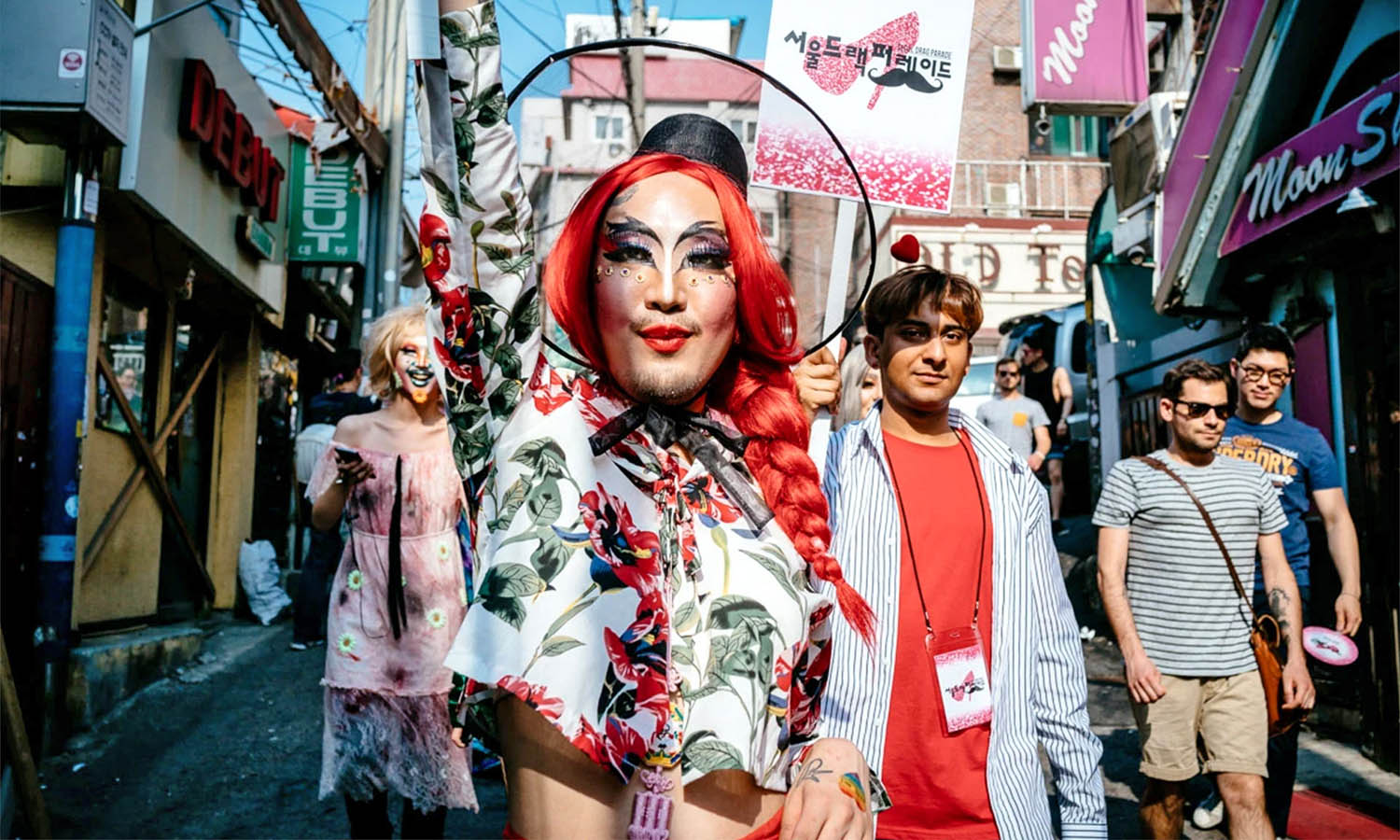
Move over RuPaul, Hurricane Kimchi has taken to the stage. Inspired by Korea’s regional queer festivals, Heezy Yang (AKA Hurricane Kimchi) founded the annual Seoul Drag Parade back in 2018. And it’s been a showstopper ever since.
Click play to watch
While it’s a totally inclusive LGBTQIA+ event, this parade focuses on—you guessed it—the art of drag. In a blog post, Yang says they had several dreams for the parade: firstly, they wanted to “bring drag into the daylight”; secondly, they wanted to include and display all types of drag, not just the “skinny and pretty drag queens who are cis-gendered male Korean nationals”; and lastly, to give kids access to the drag-dom. AMAZING. Go off, Seoul. The inaugural parade welcomed over 1,000 artists and allies, and this year’s party is set to be a blow out. BYO best wig, and get those stilettos outta the closet.
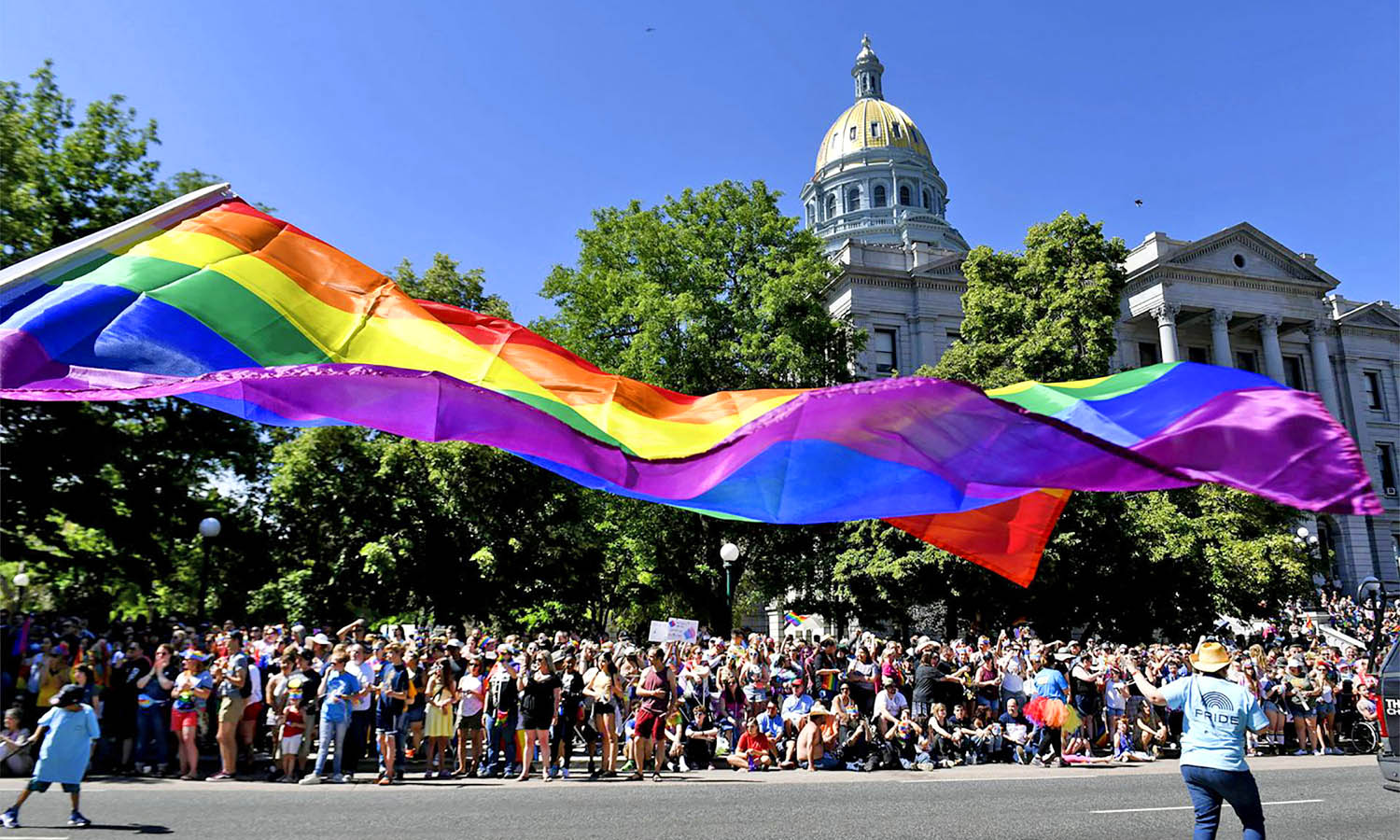
Sure, a fun run isn’t exactly everyone’s idea of a fun time (despite the name). BUT! What about running five kilometres through the streets of Denver during PrideFest?
Click play to watch
Now that’s a vibe. A fun, gay vibe. Still not sold? Spectators are welcome. Maybe even bring a giant ’80s boom box and inspire the runners with a little Kylie or Cher, or >insert-other-incredible-party-anthem-icon-here<. Whether you’re a member of the queer community or an ally, everyone is encouraged to “run, walk, roll or sashay” at Civic Centre Park (where the race starts and ends). You should also stick around for the other Pride festivities, like the annual Dyke March or the beer bust at the Denver Wrangler.
Think you can only be Pride-ful in the summertime? Guess again, amigos.
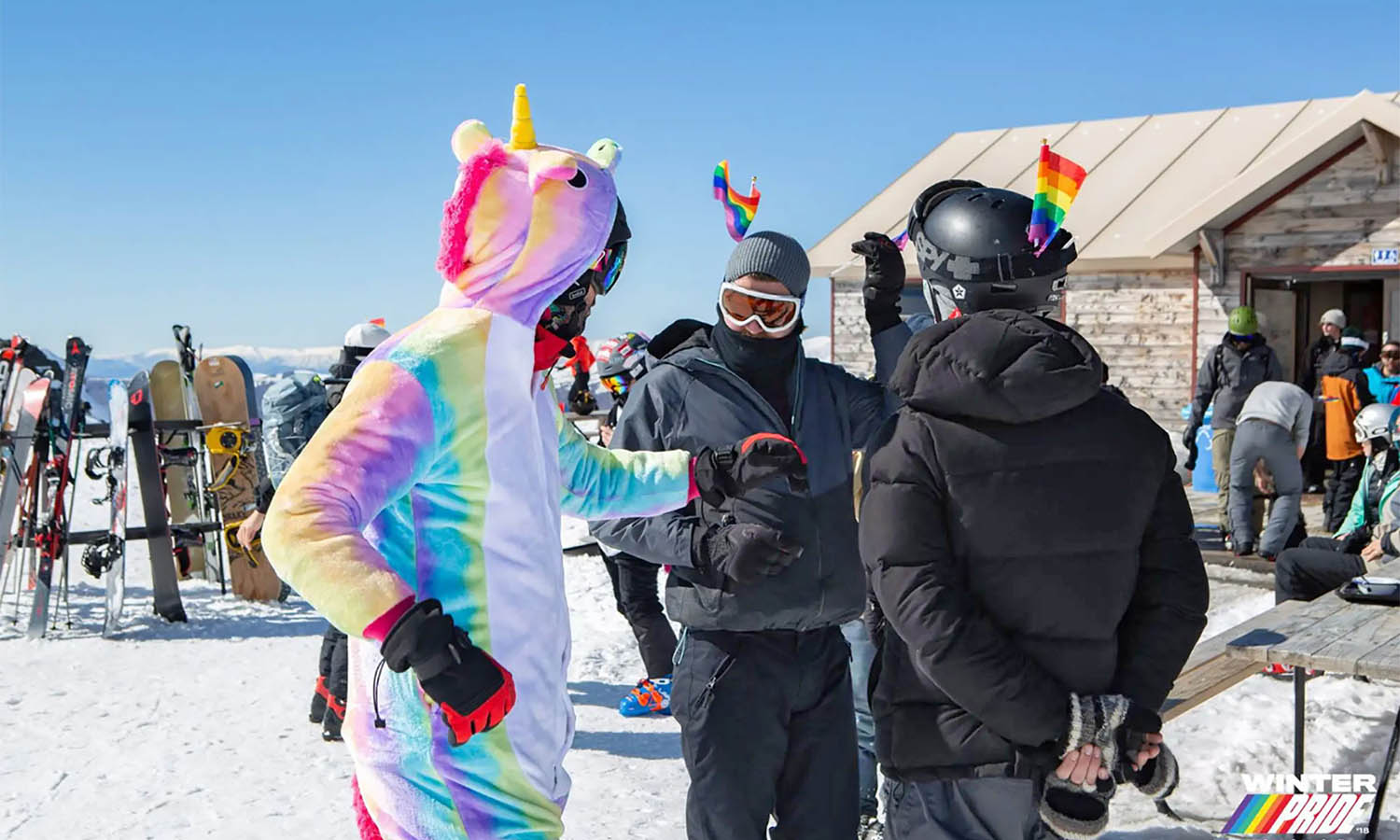
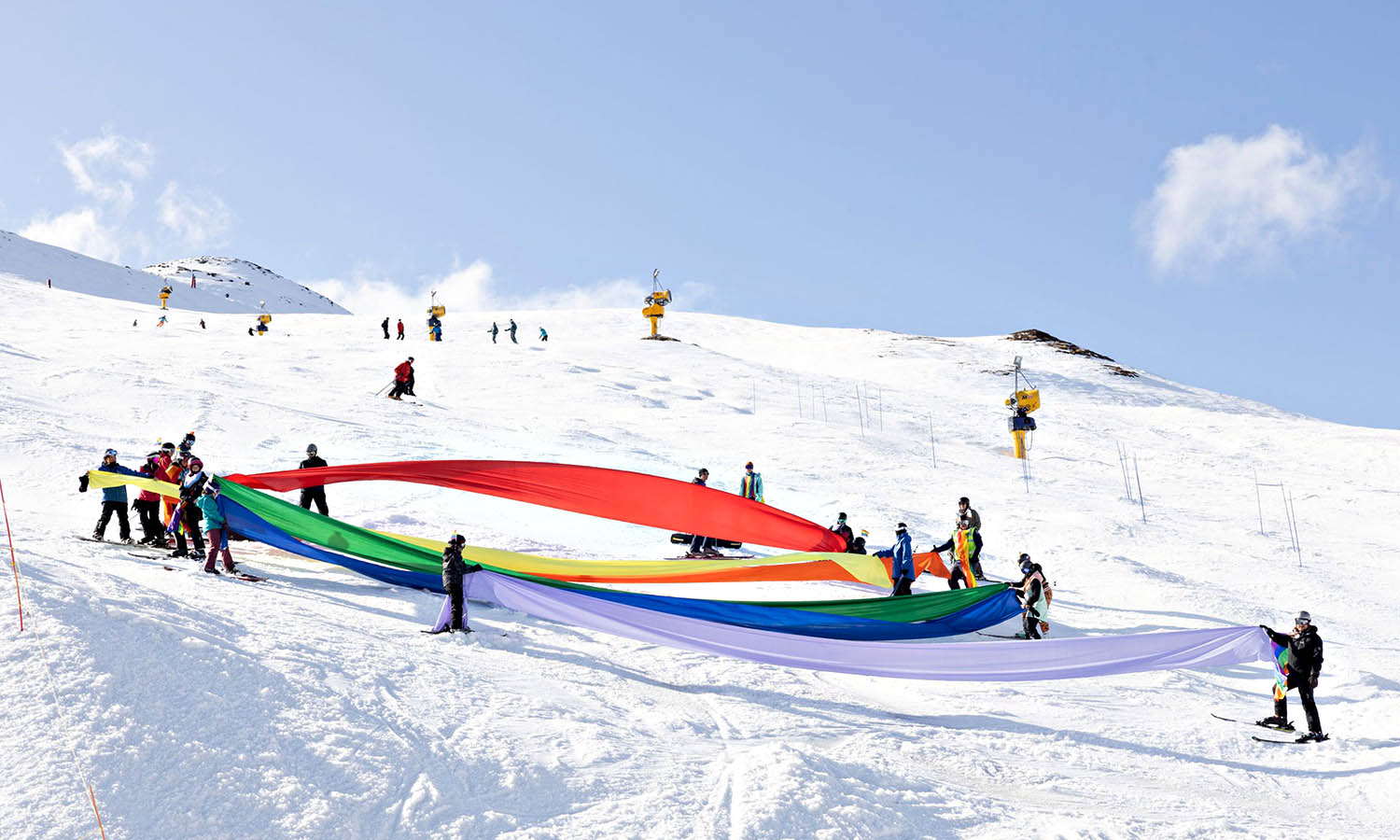
New Zealand has gone ahead and forged a new queer path with its very own Winter Pride week that’s all about skiing, slaying and supporting the LGBTQIA+ community. There’s gonna be over 24 parties, eight on-mountain days and a bunch of delightful Kiwi accents. Hosted in Queenstown, so you know the pow is going to be fresh, the chance of bluebirds high and the après-ski vibes on point. Lots of aroha (love) from our mates down south.
Never seen The Adventures of Priscilla: Queen of the Desert? You now have official get lost-prescribed homework. Widely considered an Australian cinematic masterpiece, the 1994 film centres on two drag queens and a transgender woman travelling from Sydney to Alice Springs through the outback. Hugo Weaving! Guy Pearce! A tour bus named Priscilla!
Click play to watch
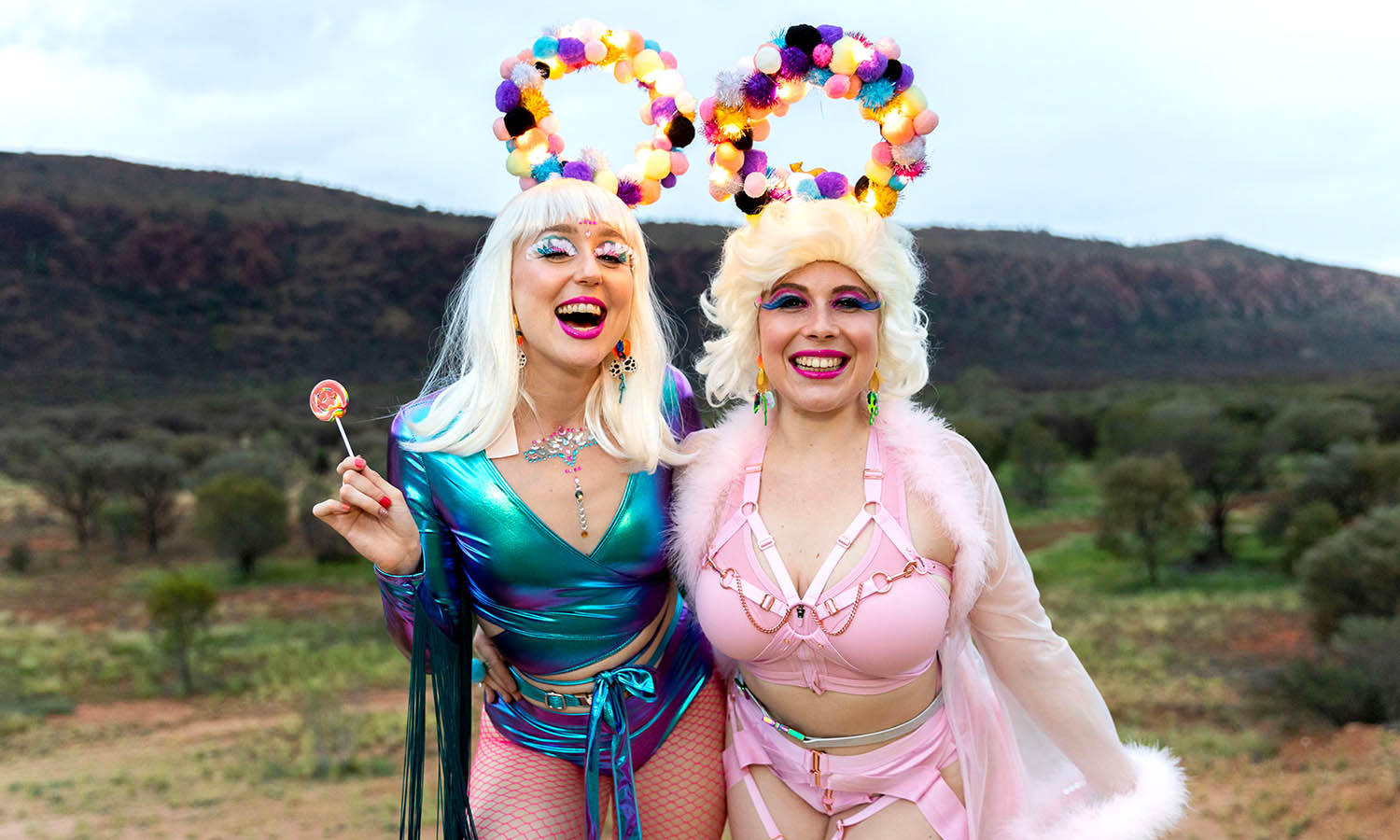
Fast forward to 2023 and Alice Springs now has its very own Pride Week, aptly named fabALICE, that extends Mardi Gras and WorldPride celebrations to the Red Centre.
Super family-friendly and packed with all the glitter that you’d expect from a Priscilla-inspired Pride event, you can choose from partying in Todd Mall, heading to a lip sync battle hosted by Marzi Panne and Miss Elleanous, drag queen bingo or even a The Sound of Music sing-a-long.
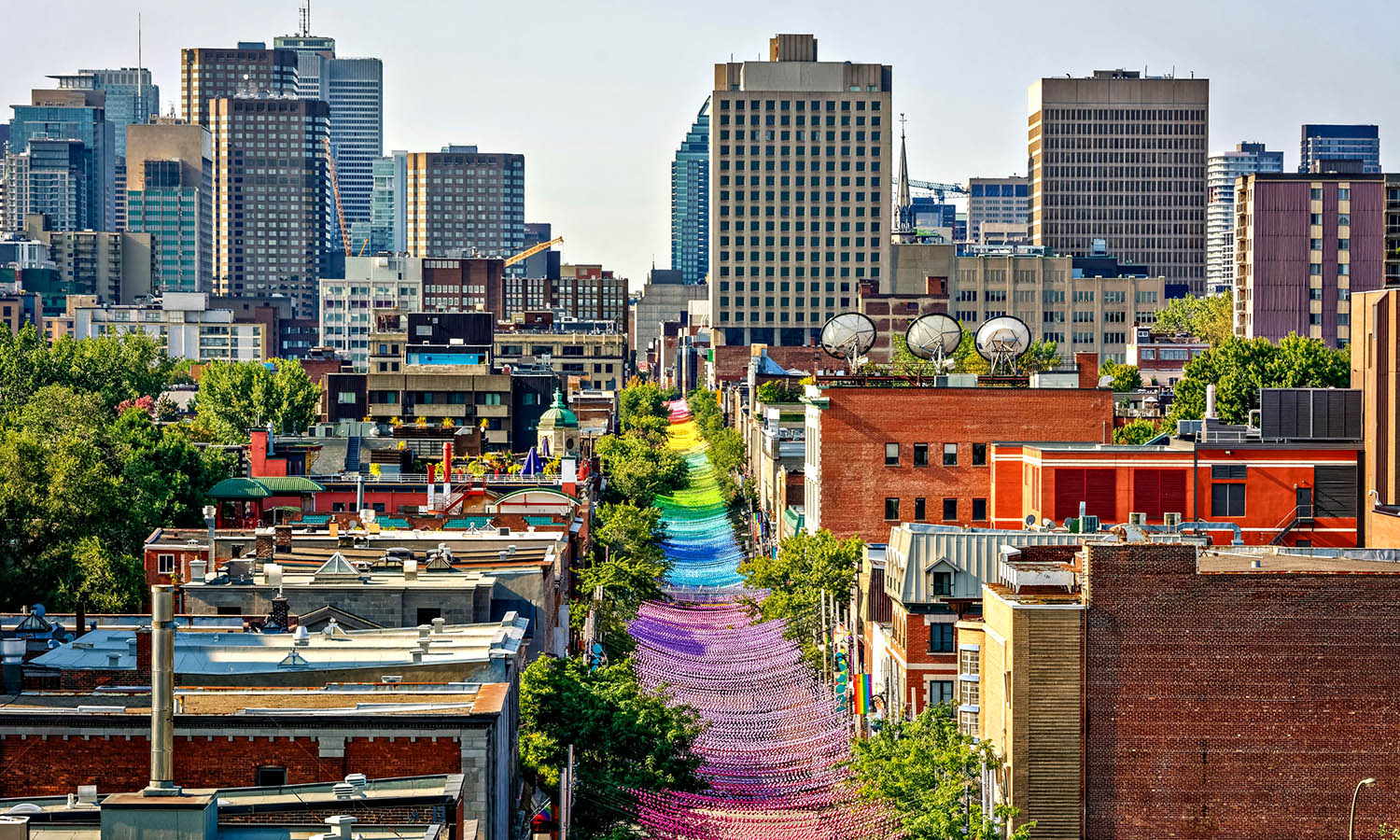
Looking for a classic Pride celebration, but with a twist? Montréal is the city pour vous.
Founded in 2007, after the city’s prior Pride festival repositioned itself as a general arts and music festival. Now, it’s one of the largest queer festivals (attracting over three million visitors) in the world. SLAY, MONTRÉAL, SLAY.
There are a tonne of local events, but try and centre your time around the city’s gay neighbourhood—perfectly named Gay Village—where you’ll find a week-long street party, some of the world’s top drag performers, and DJ’s a plenty.
 (
(