(
(
Archives: Feature Articles
Allows the user to create Feature Articles
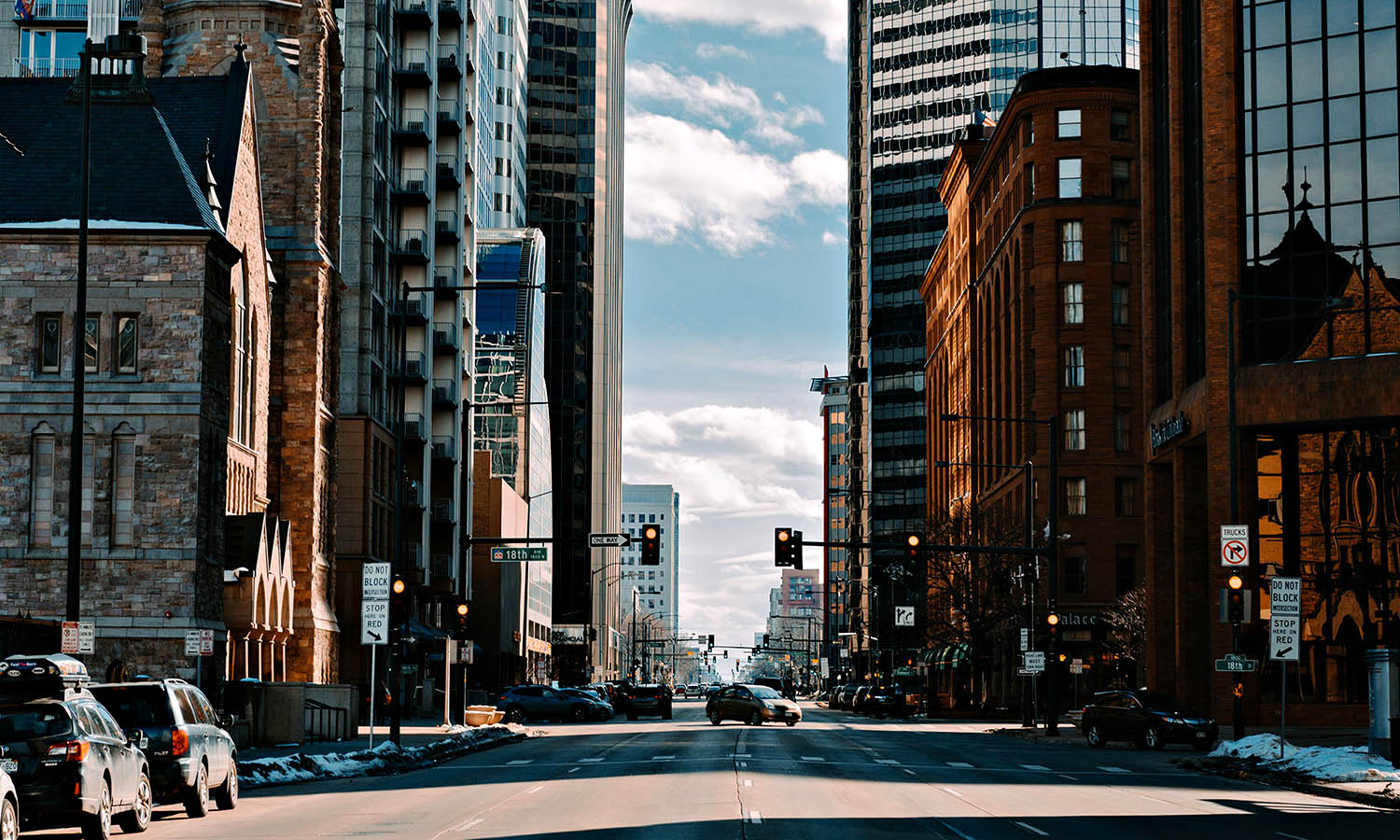
the US city with little oxygen (hello high altitude), but a whole lot of love. Bordering Utah to the left and Kansas to the right, Colorado’s capital city is a medley of undiscovered gems, situated (exactly) a mile into the sky.
It’s also one of the fastest growing cities in the US, with new brunch spots, breweries and bars popping up everyday. To save you screenshotting a million spots on Tripadvisor, we’ve eaten and drunk, and danced our way through Denver, and created the perfect long weekend itinerary. You’re welcome.
Click play to watch
Descend upon the prim and polished Cherry Creek neighbourhood, full of shopping, fun eats, and Moxy—a hip little Marriott-owned boutique play and stay where the check-in desk is actually the bar. THE BAR, GUYS. It’s the perfect introduction to Denver; a city where there are over 150 craft breweries to drink your way through.
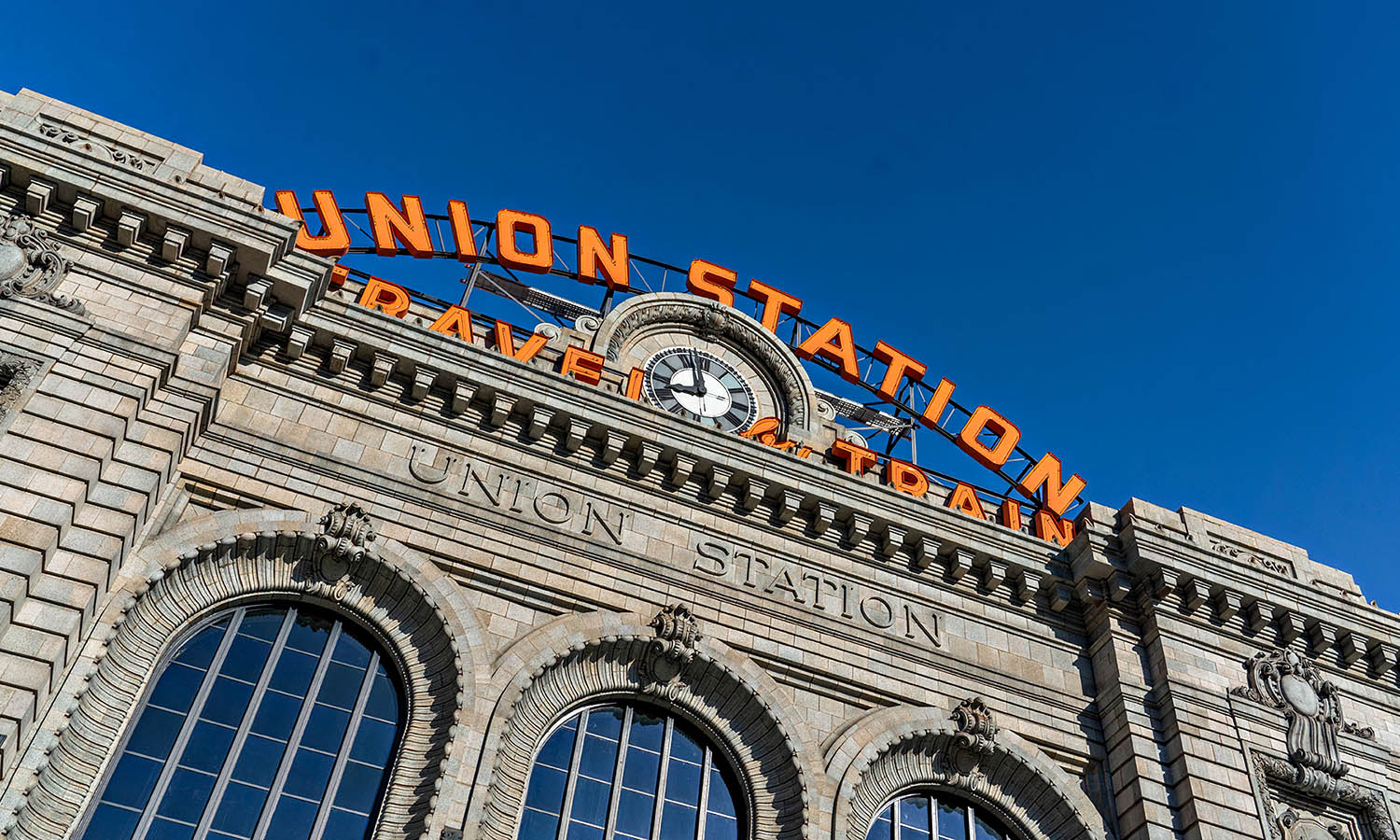
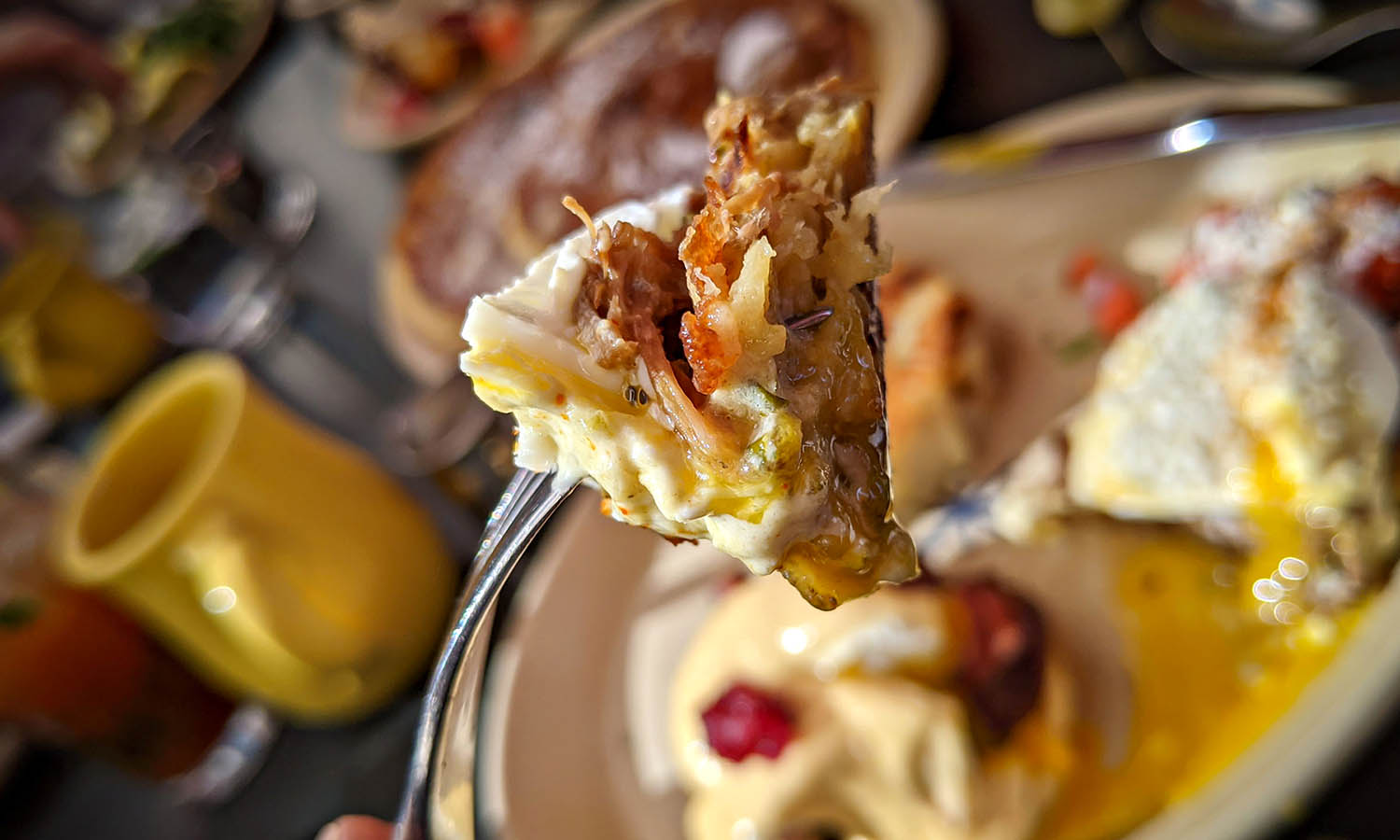
While the hotel is super fun, you should probably head over to the famed Union Station in the heart of downtown. Truly charming and stylish, this Beaux Arts-style beauty is the perfect spot to check out the local art scene. You’re likely starving now, and Snooze is considered one of the best brunch spots in town. It’s colourful, retro and the long wait lines are worth it, trust us. The breakfast here is an event unto itself, whether you’re having their decadent flavour bomb pancakes or the elaborate eggs Benedict — both of which require, for health reasons, one of their loaded Bloody Mary’s to wash everything down.
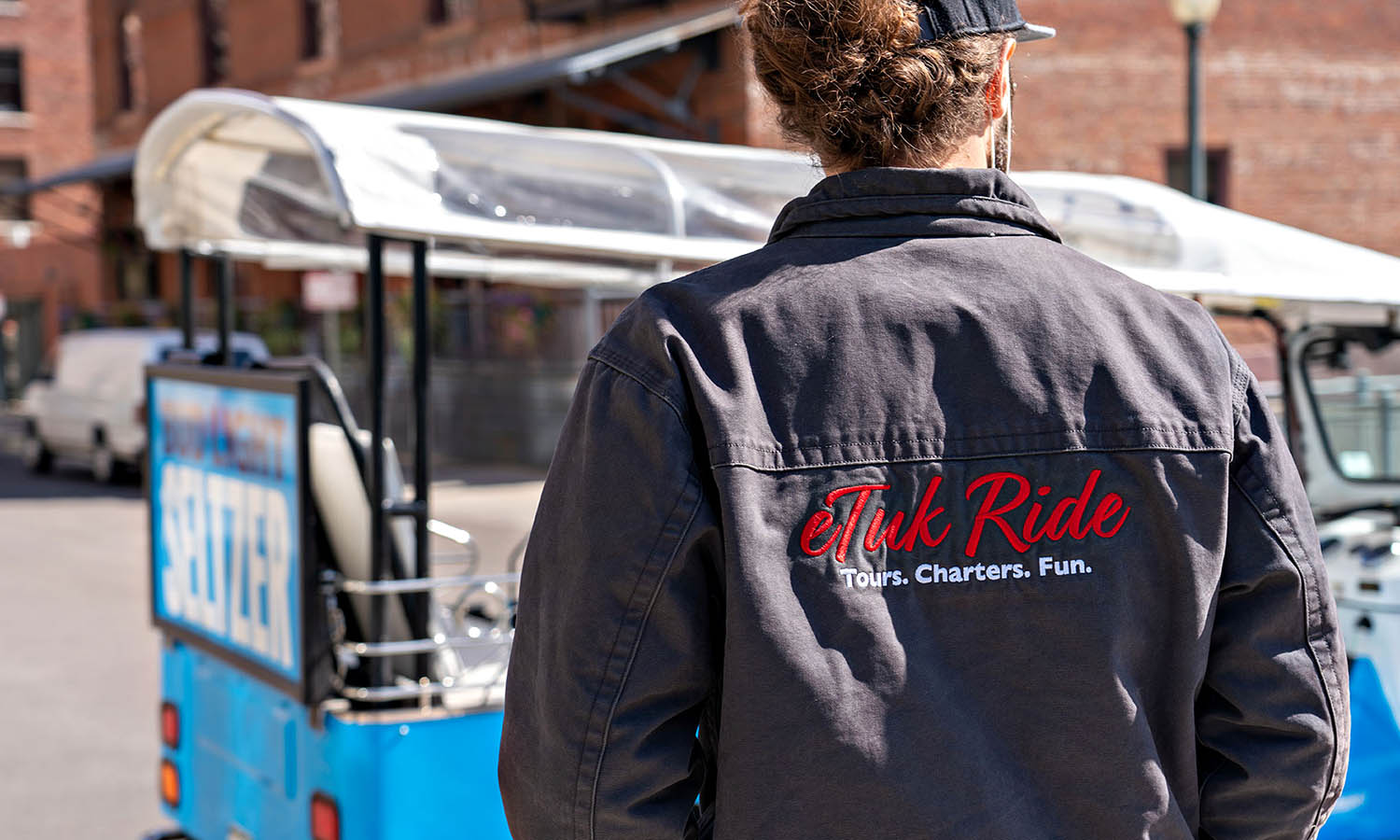
You’re going to be stuffed now, so it’s time to see more of the city while you digest. And there’s no better way to do it than with eTuk, Denver’s premier environmentally friendly tour company. These locally manufactured, fully electric tuk-tuks come with heated seats and fantastic views of the city, letting you whip around downtown to take in all the sights.
Spots to look out for: Cherry Creek pedestrian bridge, the decadent Cruise Room located at the Oxford Hotel, the lovely Larimer Square and the opulent Performing Arts Center, which proudly showcases two giant Botero sculptures.
Go sleep it off at the Moxy.
Hit play to watch
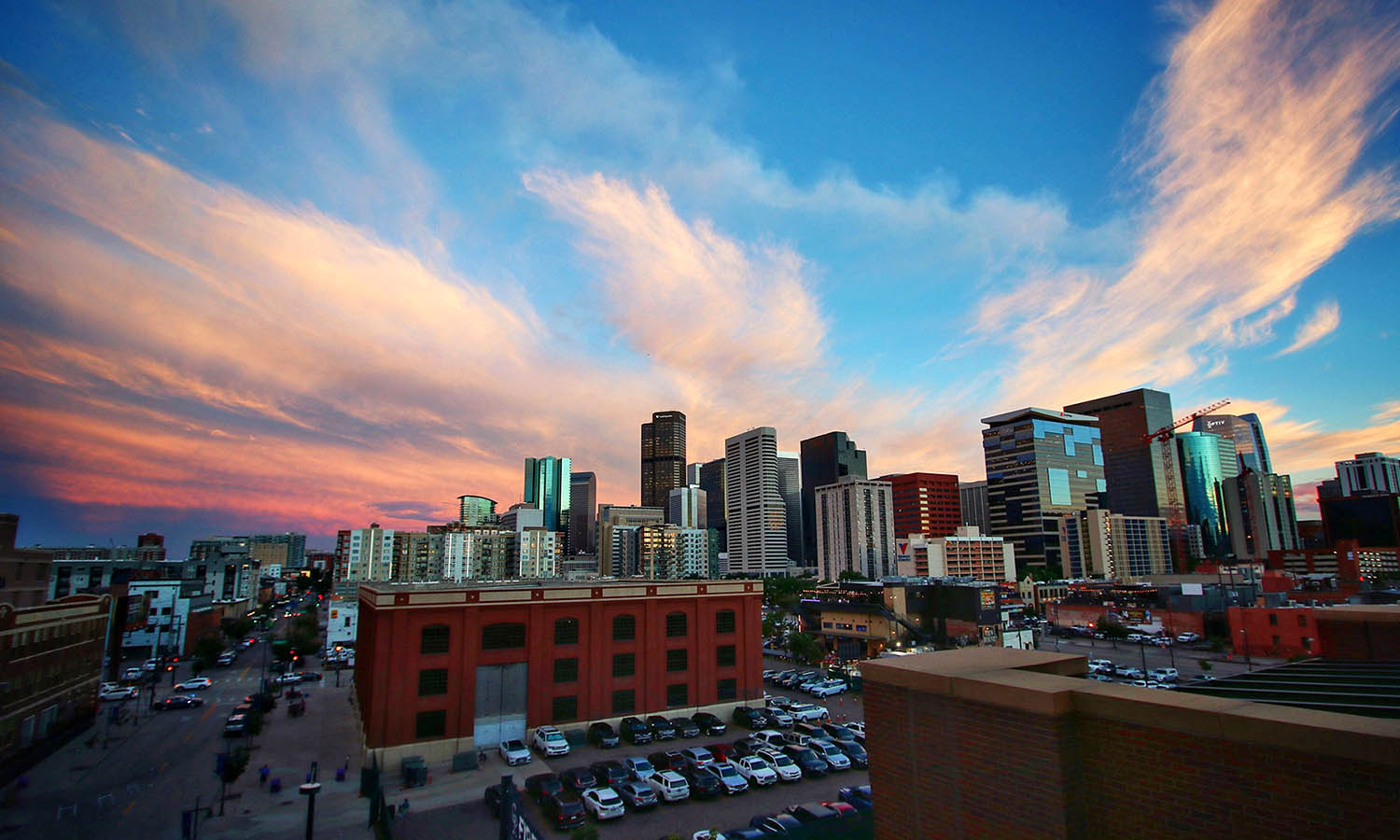
Today we leave the old school charm of downtown Denver and pop over to River North, or RiNo Arts District, famed for its world-class street art and cafes. A trip to RiNo isn’t complete without hitting up the Denver Central Market, located in a reclaimed warehouse. Chock-full of anything and everything you could want to imbibe or ingest, the market is the perfect spot to pick up something for dinner. And dessert (obviously)—the famous Temper Chocolates are a must-chow.
Heading across the Platte River to the hip Highland District, where you can continue eating in very photogenic places. Like Happy Camper Pizza, where food is served beneath a giant disco ball. Or Little Man Ice Cream where crazy flavours are housed in the largest milk pails you’ve ever seen.
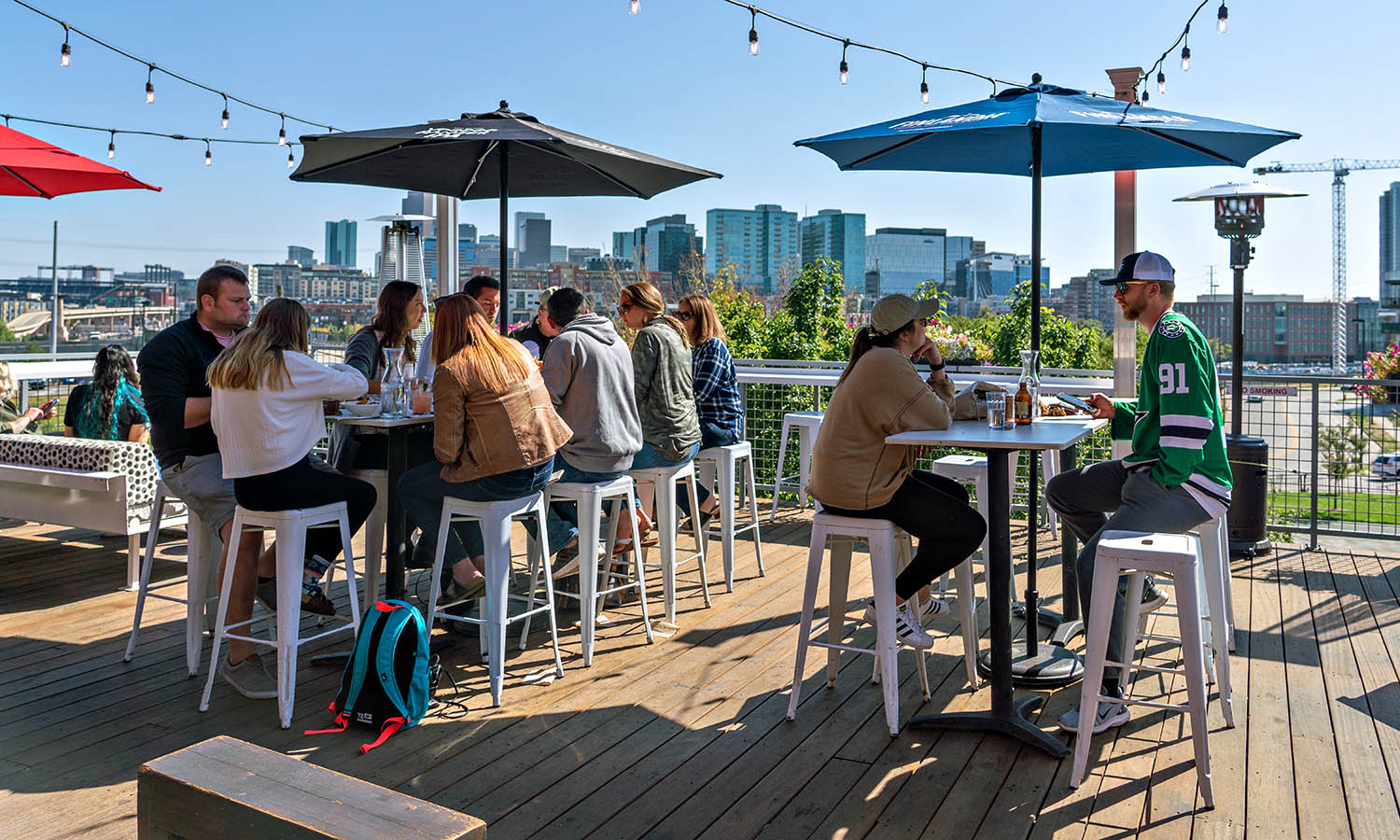
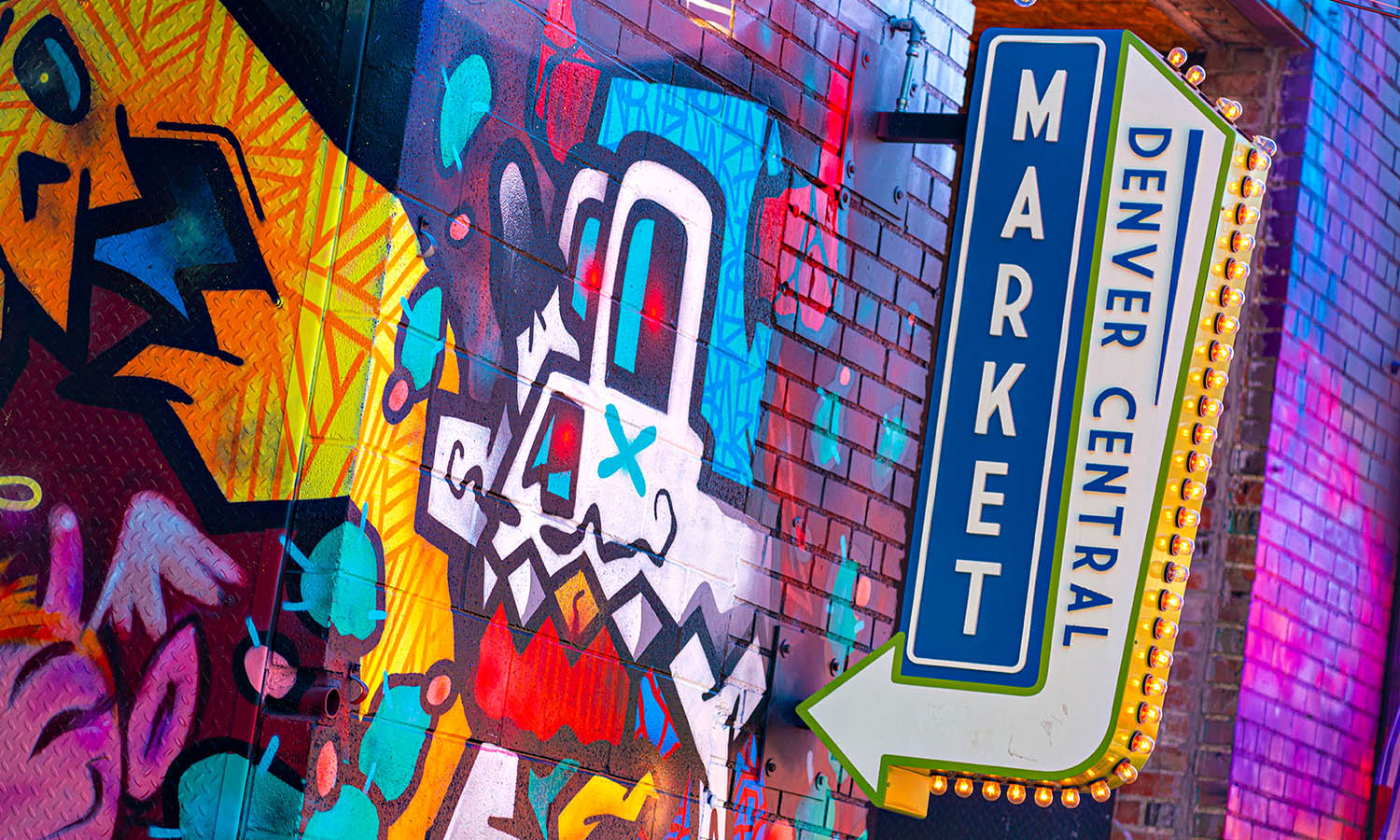
Avanti F & B is a collective eatery, which basically means a place where foodies can die and go to comfort food heaven. Throw in a great indoor/outdoor space to nosh on your new favourite nibbles and life is good.
Hopefully you’re now sated and happy, so it’s time to take in some culture at Denver’s world class art museum. This institution boasts some of the most outrageous exhibits, from Keith Haring to Skull Riding triptychs. Cap off the night with a good lol at the Comedy Works Downtown for big laughs.
Go on, watch it, we dare ya
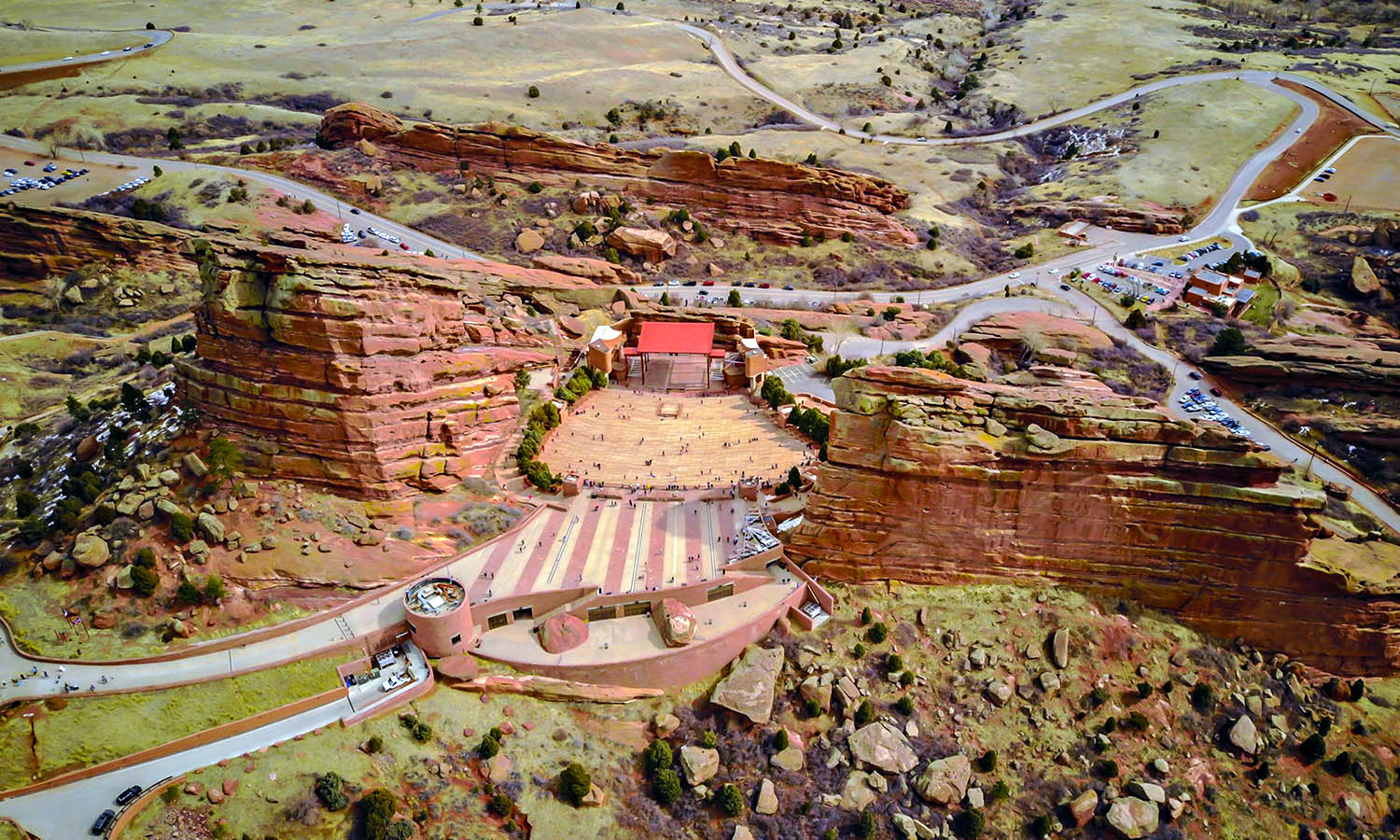
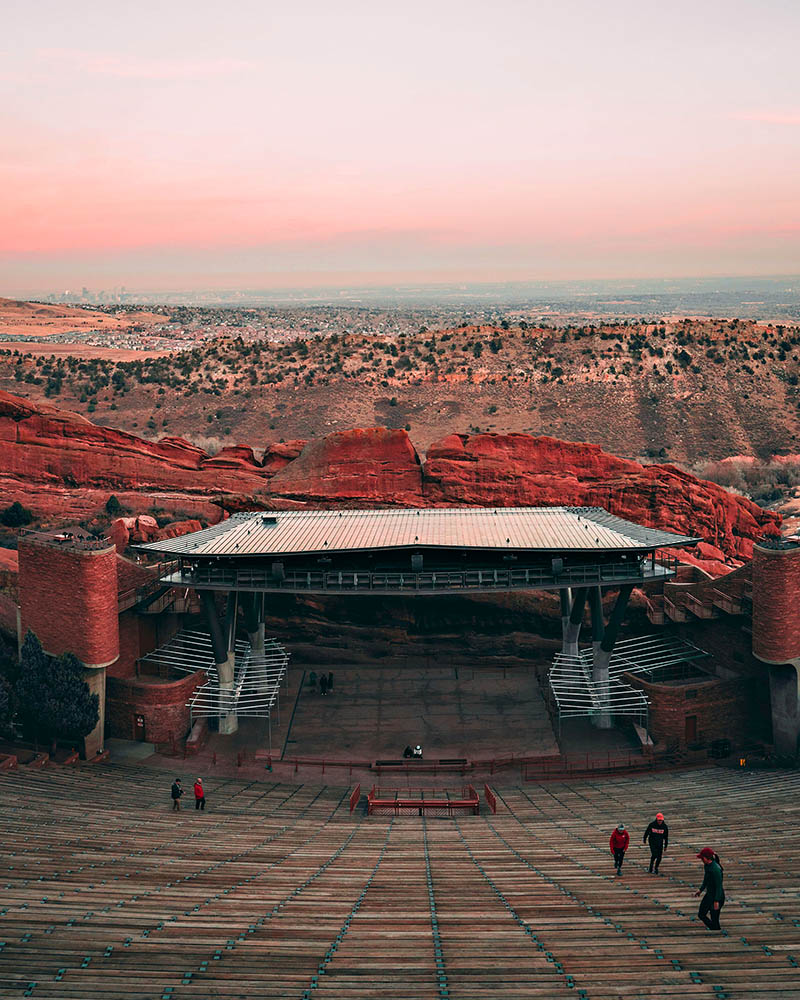
Today is the day for some of that famous Colorado outdoors. A quick cab ride, just 20 minutes, will take you to the Red Rocks Amphitheatre, which is by far the most beautiful naturally occurring theatre you’ll see in your life. When a show isn’t on, locals use the amphitheatre as a giant gym (which is more than I can say for Madison Square Garden).

Next up, take a trip (lol) to the International Church of Cannabis. Founded in 2017, this place is quite literally in a church and it’s also quite literally dedicated to weed. Think of it as part religious institution, part art exhibit. Daily guided tours and laser light shows play with art installations, making for a rather mind-bending experience.
As the sun starts to set on the Queen City of the Plains (yes, that’s what they call Denver), head back downtown for dinner. If you’re feeling low key, hit up Duffy’s Cherry Cricket for no-frills charm, excellent burgers and boozy milkshakes. Or if you want to go all out, go to the fine dining Mediterranean marvel, Rioja, on Larimer Street. And don’t you dare skip dessert.
An after-dinner evening stroll completes what should be a rather perfect travel day. Or rather, three days. From the amazing food to the interesting cultural scenes, it’s easy to see why many residents call it heaven on earth—and it’s not just the altitude.
Click for adventure
Click play to watch
These are the lynchpins of the Euro circuit for good reason. There’s no doubting why most of the Western world spends their workdays dreaming about booking a one-way flight.
The thing is, everyone wants to go to these places.
And it’s causing chaos. Local residents are being driven out by hordes of holiday-makers, and those holiday-makers are being forced to queue for hours in sweaty lines, paying top dollar for a glimpse of the Mona Lisa from 50 metres away. BYO binoculars.
But we’ve got good news—there’s more to Europe than Italy, France and being rejected from Berghain. Chic spots are popping up everywhere, replacing the old firm as the continent’s trendiest. So why not give an alternate Euro trip a go? Besides going to cool AF places your friends have never heard of, your back pocket will also be better off (especially considering the current cost of flights), and the locals will say thanks.
So, here’s our guide to a European odyssey sans crowds, with trips for every type of traveller and personality (OK we haven’t done a Myers-Briggs on this, but it’s pretty comprehensive):
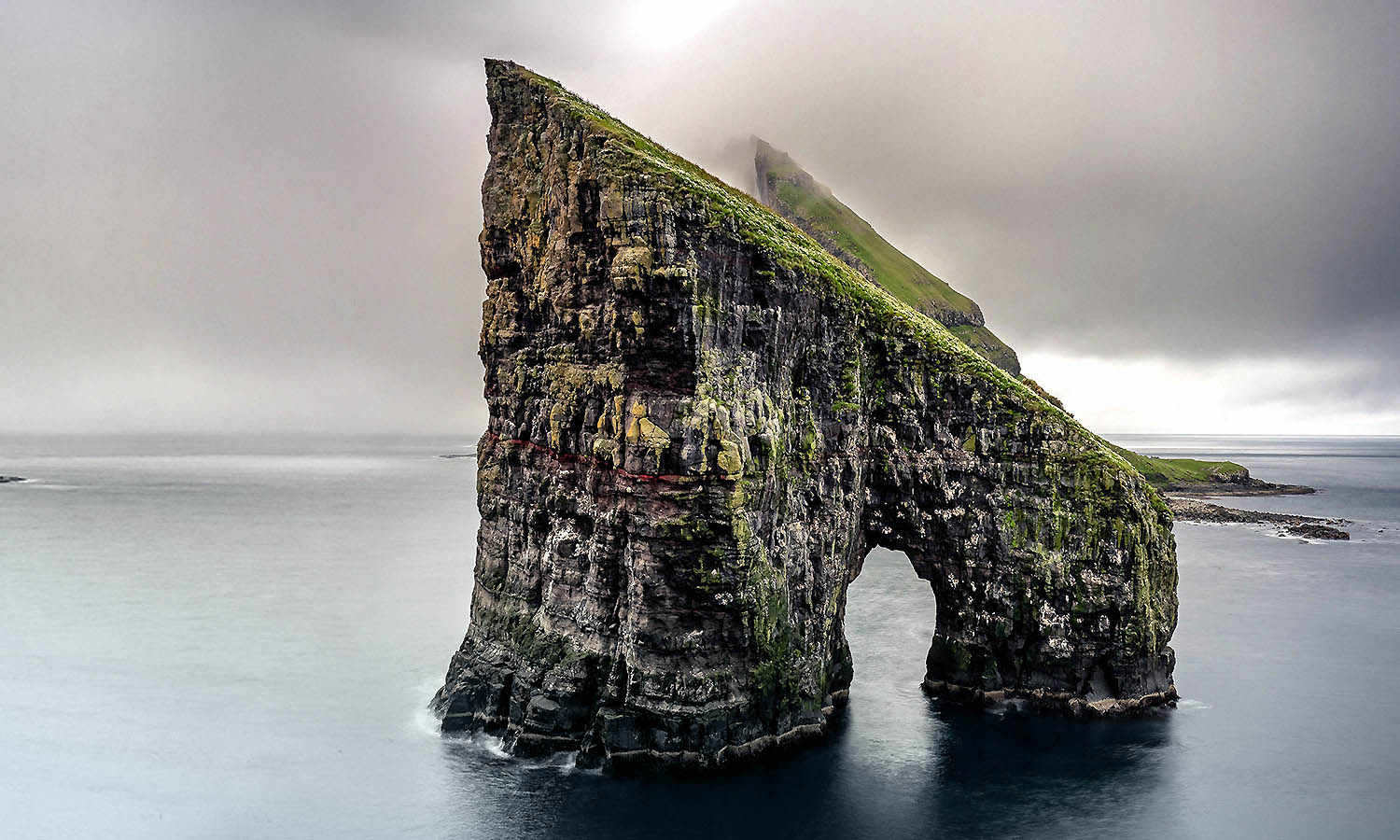
FAROE ISLANDS > NORWAY
It takes a pretty wild thinker to go: “yep, the Faroe Islands is where I’d like to go next for my holiday”. But often wild thinkers are right on the money. I mean, take Isaac Newton proposing the world was an ‘oblate spheroid’. Wild thinking, indeed.
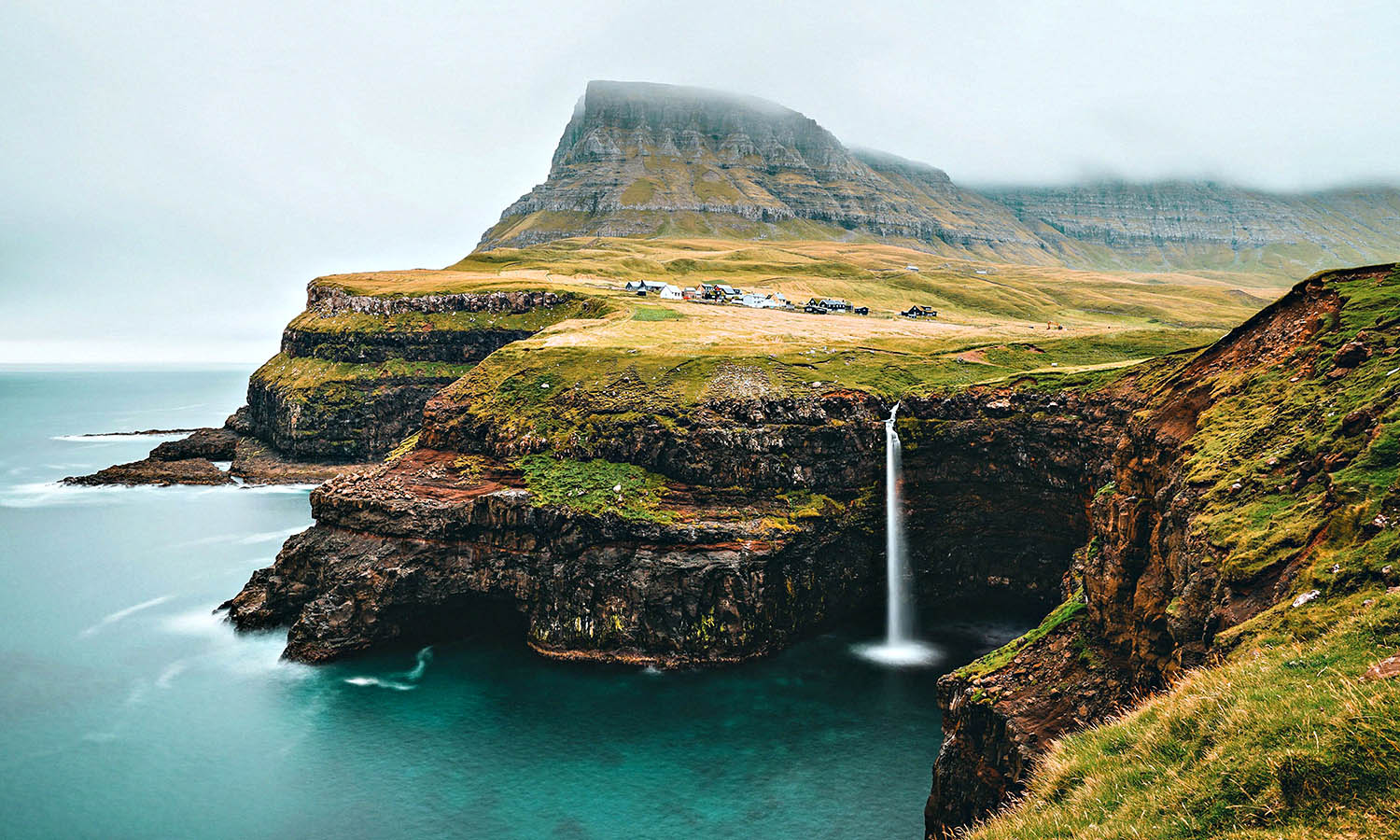
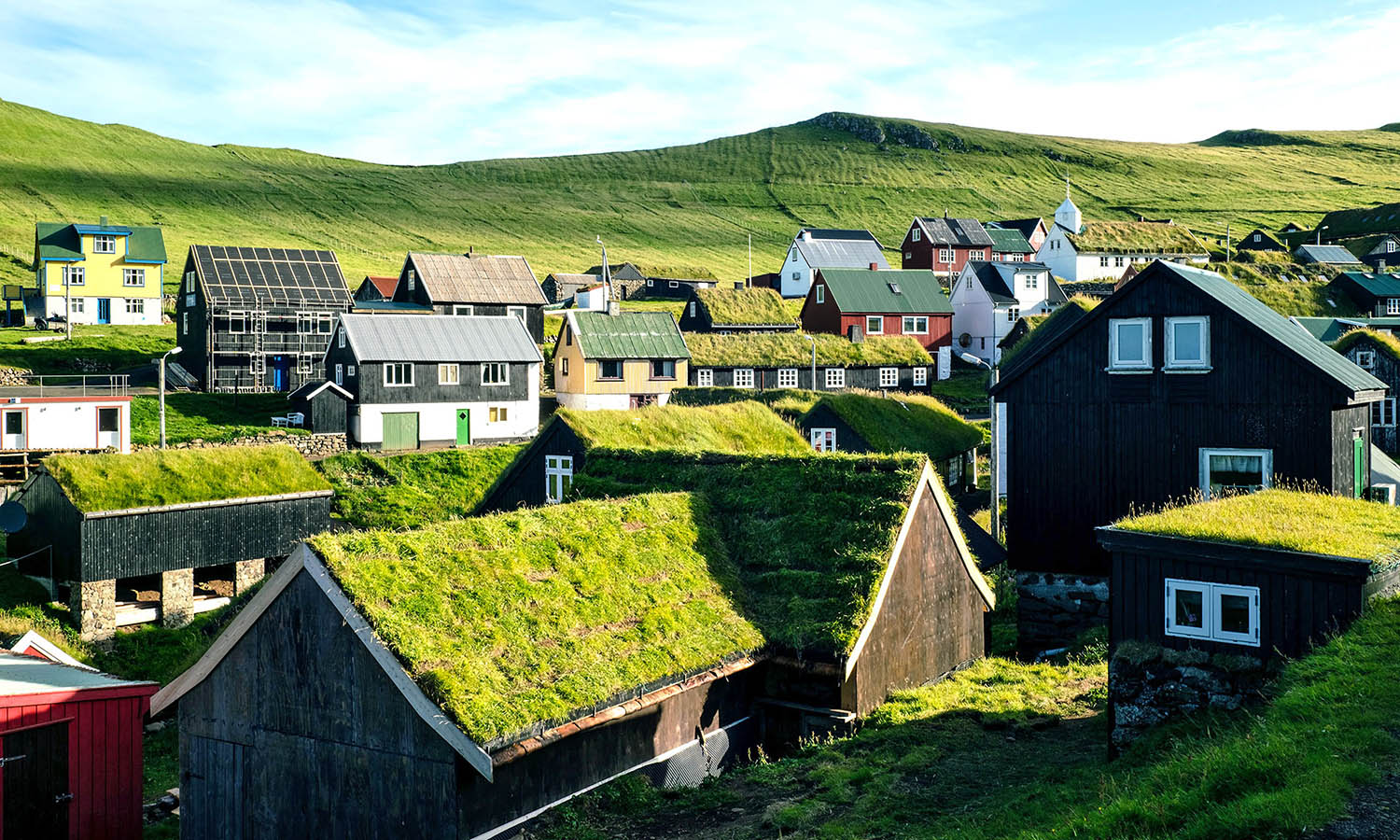
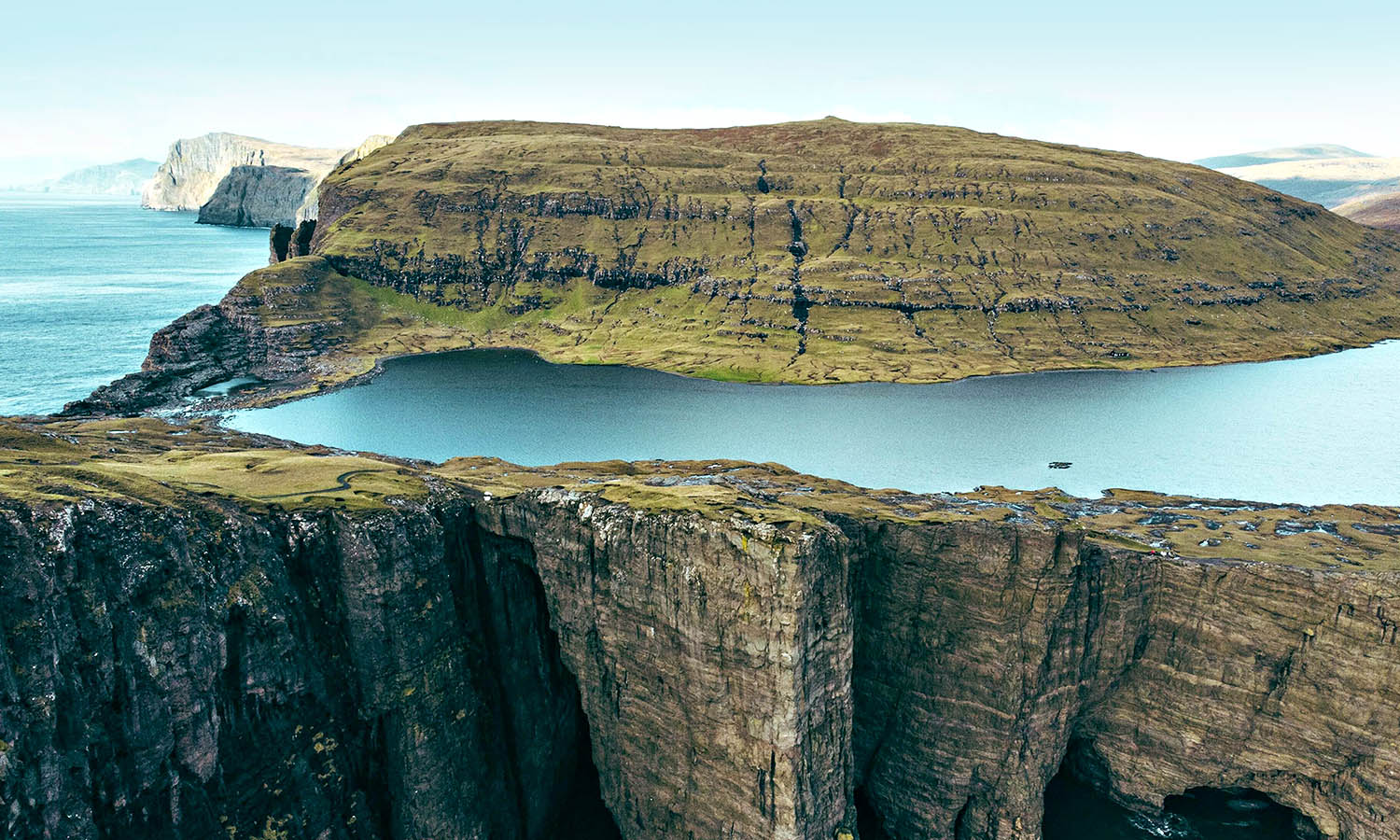
A sparsely populated group of island specks in the North Atlantic Ocean, about halfway between the U.K. and Iceland, the Faroes are all about outrageous, raw beauty. There are 18 volcanoes to hike, wild ocean to swim and a culture that is both fascinating and somewhat gnarly (they eat whale, unapologetically). It all makes for an absorbing place to visit: not bad from a population of just 50,000 people.
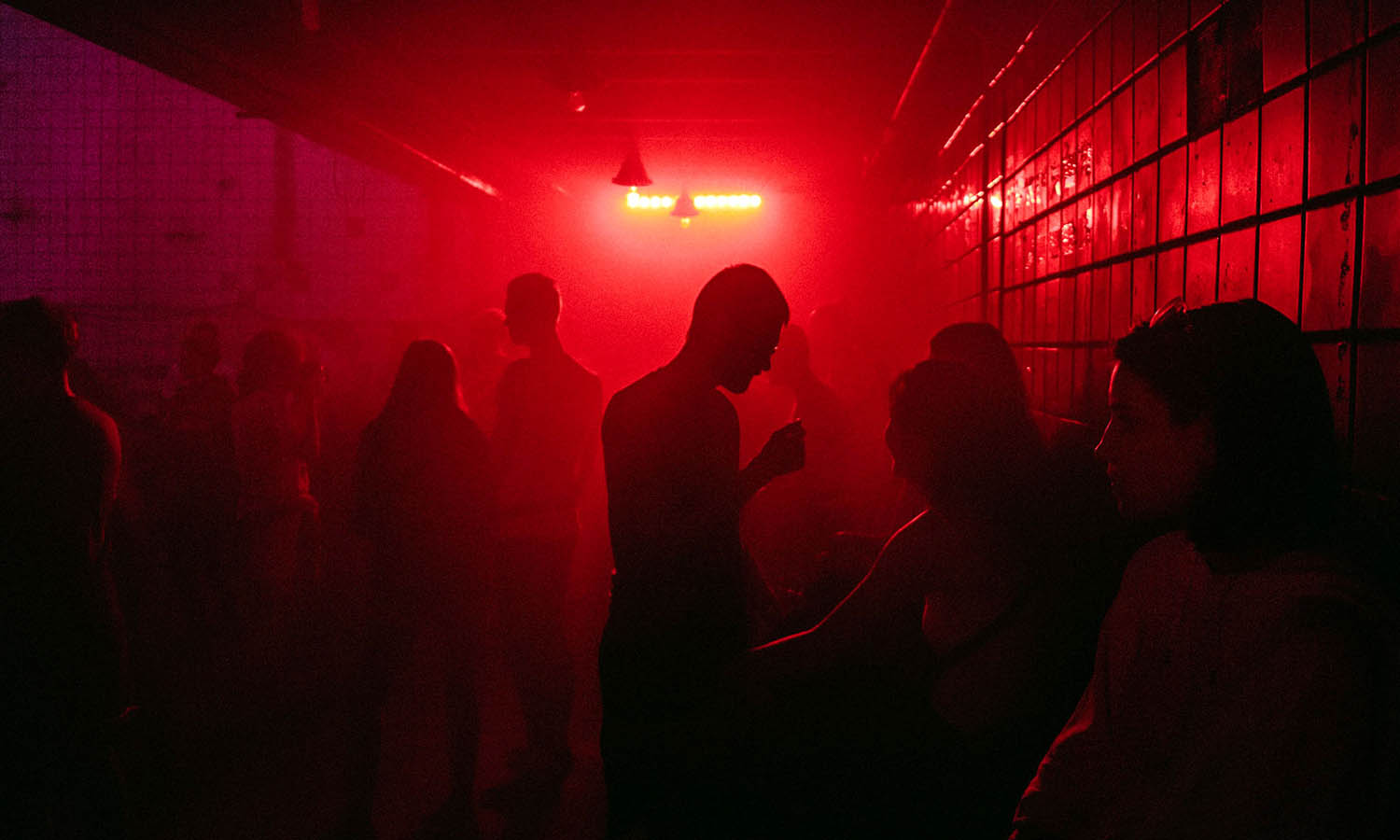
BELGRADE > BERLIN
Didn’t get into Berghain? Say no more, fam. Eastern Europe’s unofficial party capital is Belgrade, a city where they say the hyperinflation of the 1990s taught people how to really live in the moment.
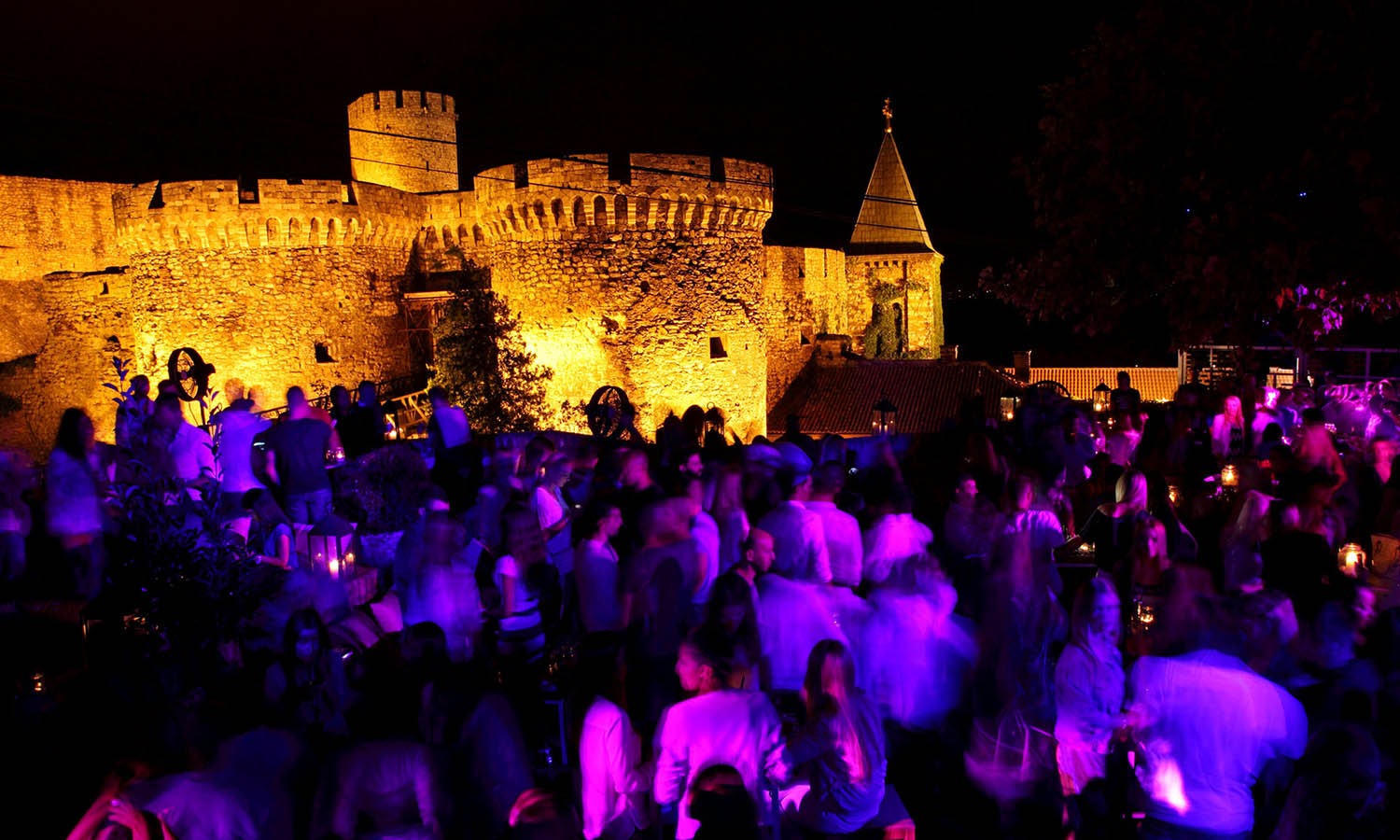
There are DJs spinning patrons into a frenzy on the Danube River in floating nightclubs (known as Splavs), and gigs at the mighty Belgrade Fortress that looms over the city. How many times have you seen a world-class band play in a 1,700-year-old fortress?
DEPLAR FARM > EVERY OTHER PRICEY HOTEL
Large, fancy hotels are out. Farms are in.
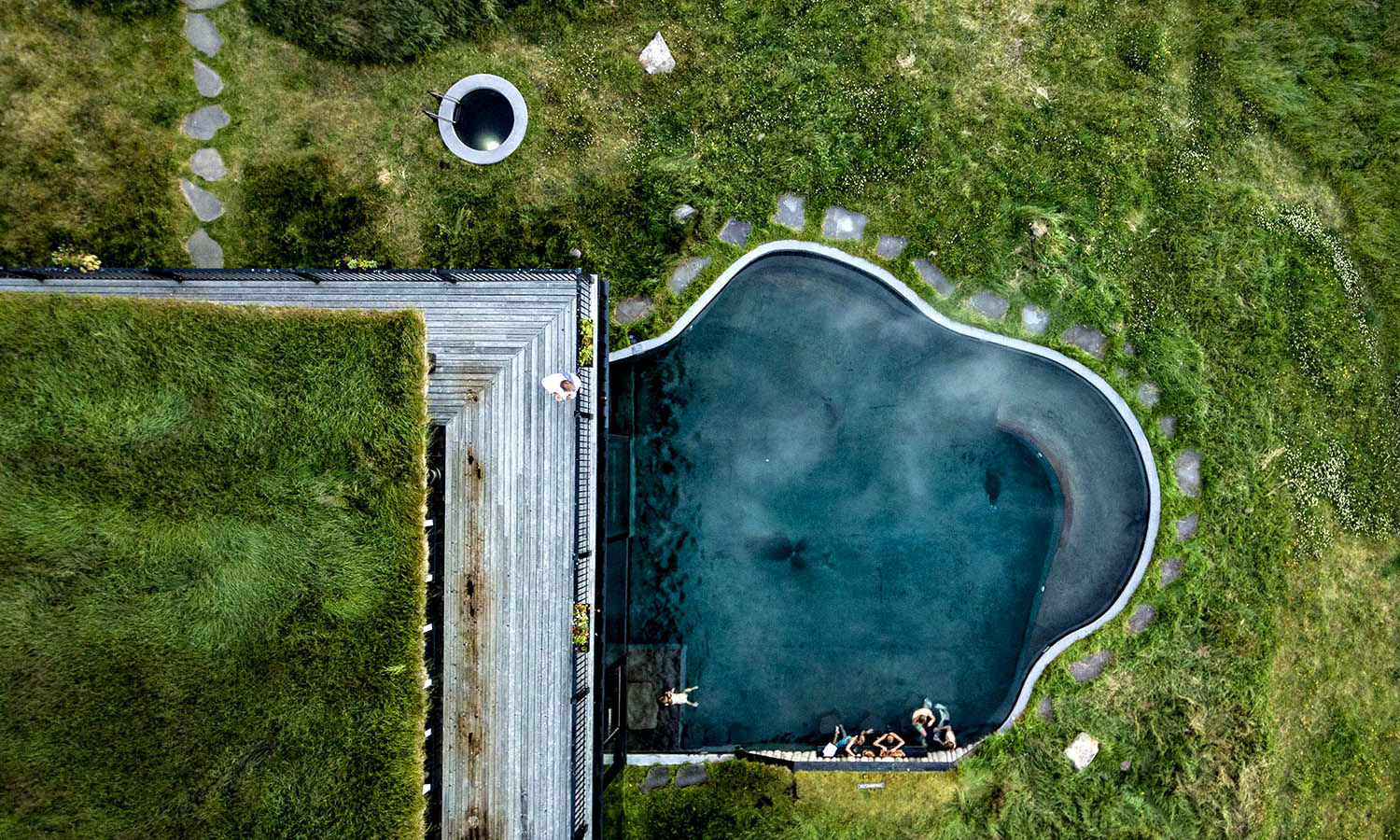
Deplar Farm in Iceland’s north is no ordinary, Old McDonald kind of farm—the turf-roofed accommodations here are some of the most extraordinary on the planet. The word ‘farm’ is a serious understatement for what you’ll find here, and we love that. Not only is this place epic, it’s humble too.
Click play to watch
Deplar is pushing the boundaries of what luxury is: guests are encouraged to take on mental and physical challenges that get them out of their comfort zone. This might be salmon fishing, sea kayaking and mountaineering, or something more left of field like axe -throwing or ‘sensory-deprivation’ night walks.
There’s the Viking Float—a kind of spa and sauna combo that looks out over the rugged beauty of the (deceptively ugly sounding Troll Peninsula). We’re not gonna lie, this place is going to hit you in the back pocket. But if you’ve got cash to burn, this might be the greatest place you ever stay.
FINNISH LAPLAND > THE SOUTH OF FRANCE
Swimming in summer? Yes. They go hand in hand, like Batman and Robin, or Brendan Gleeson and Colin Farrell. Swimming in Finland? Less likely, but a surprising delight. Like ice cream and hot chips.
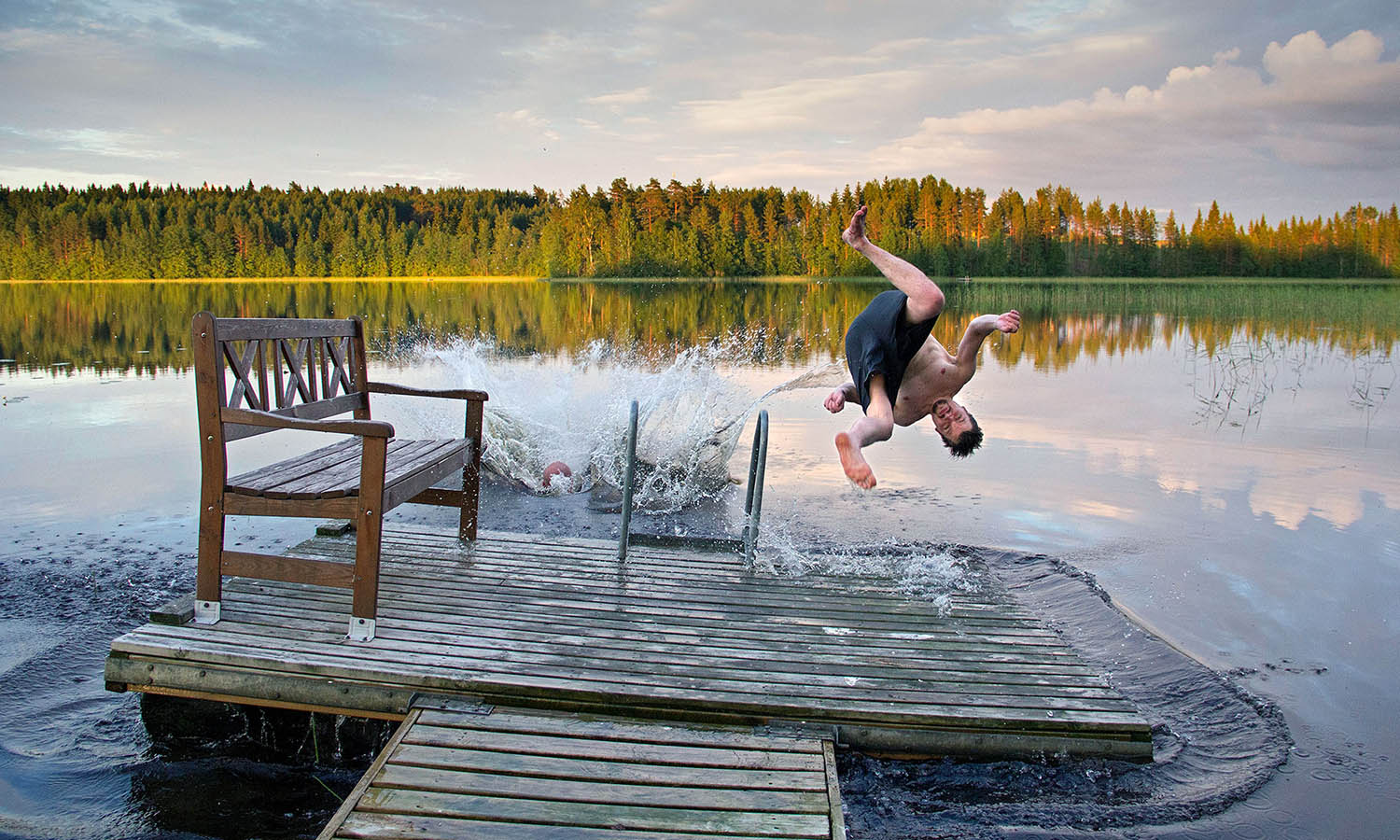
Owing to its abundance of lakes (the moniker ‘Land of a Thousand Lakes’ is misleading as there are actually over 187,000 lakes across the country) swimming is a big deal in Finnish culture. The warmth of the midnight sun means night swims are aways a go—midnight skinny dips are less recommended, unless you’re an exhibitionist. Lake Saiima in the southern Lakeland region is stocked with gorgeous log cabins you can rent that allow you to enjoy river swimming and then smoke saunas—in that order, on repeat.
It gets up to a balmy 22°C in summer and although the water is coolish, the seemingly unending sun means it’s time for a dip 24/7. Pack the kossies and nothing else.
MEADOWS IN THE MOUNTAINS > GLASTONBURY
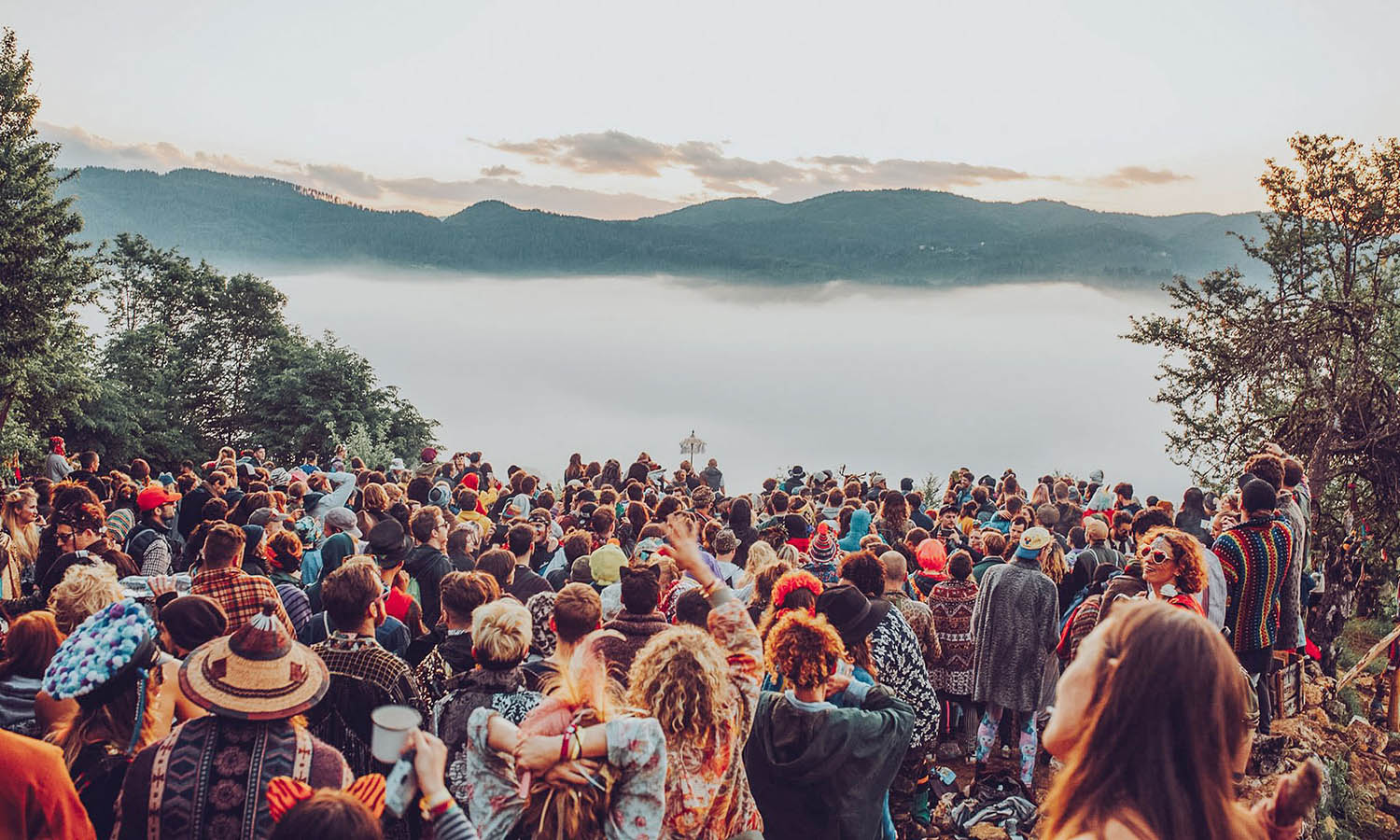
The nature-first commitment at Bulgaria’s Meadows in the Mountains is evident in the universally agreed upon highlight of the festival—which is neither band nor DJ. It’s the sun.
Yes, Big Yella himself emerges above the mist, and between the mountains, to sensational acclaim each year in the serene setting of Bulgaria’s Rhodope Mountains. As it has done since the dawn of time, but now with the approbation it deserves.
Meadows in the Mountains (June 1 – June 5) has been described as a cross between Glastonbury and Burning Man—a Brit and banter-heavy crowd gathering with the shared desire to lose the plot. But with additional sprinklings of creative energy and an appreciation for nature. It’s cheaper and much easier to get tickets than most other European summer festivals, and when you do make it to bed at night you can stay with locals at the bottom of the mountain.
GEORGIA > ITALY
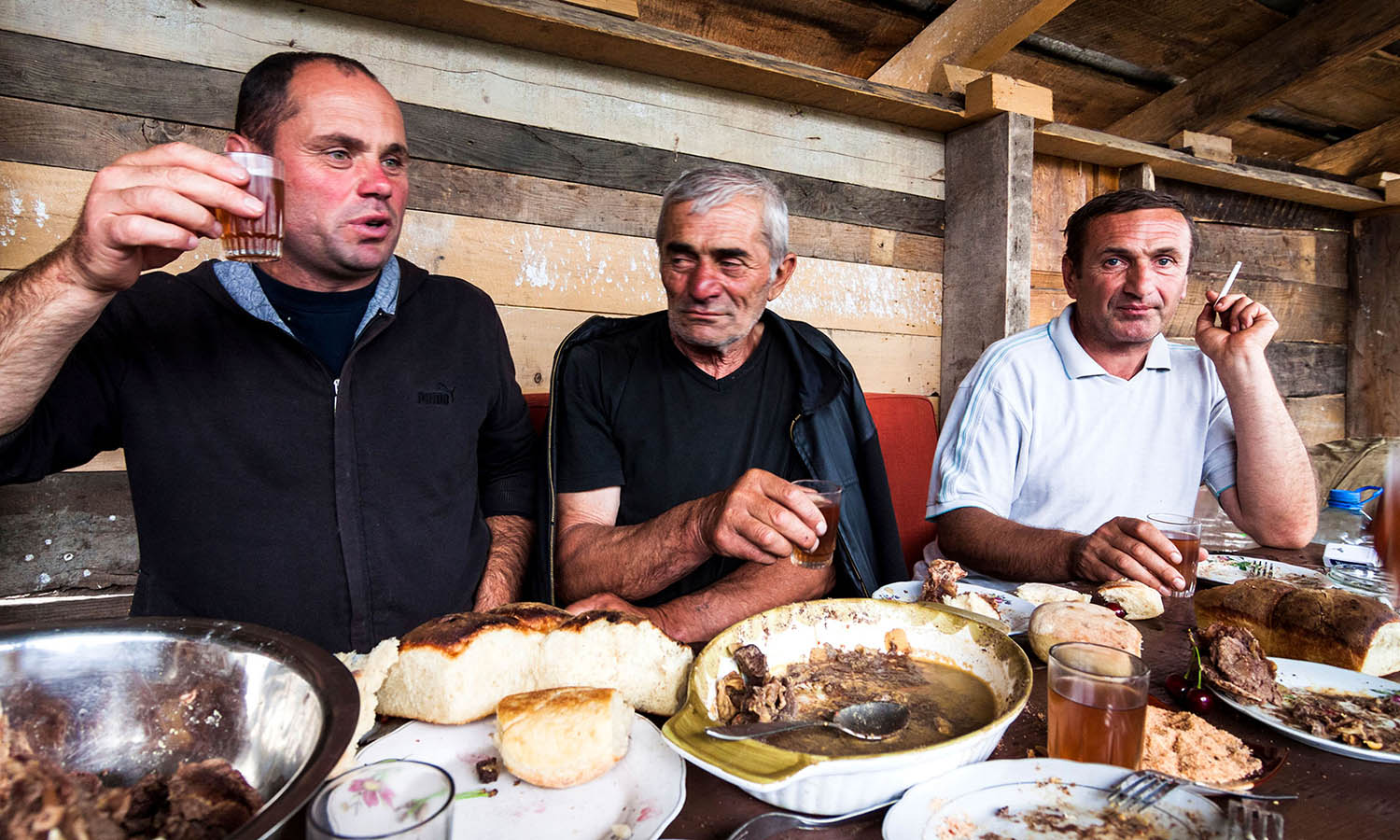
We’re not about to take on Italian food—that is one delicious behemoth deserving of its culinary crown. BUT! We reckon Georgian cuisine—from the small country south of Russia in the Caucasus Mountains—is one of the most underrated in the world.
Think dumplings, heaps of cheese, stews and spices served in scenic locations by Georgian nannas who simply won’t take no for an answer. Georgia also has a pretty strong claim on inventing wine, and there are excellent trips to wineries where you can spend a day ‘working’—that is,‘stamping and sampling’ the grapes. Stamp away, and think of it as an act of appreciation for their gift to the world.
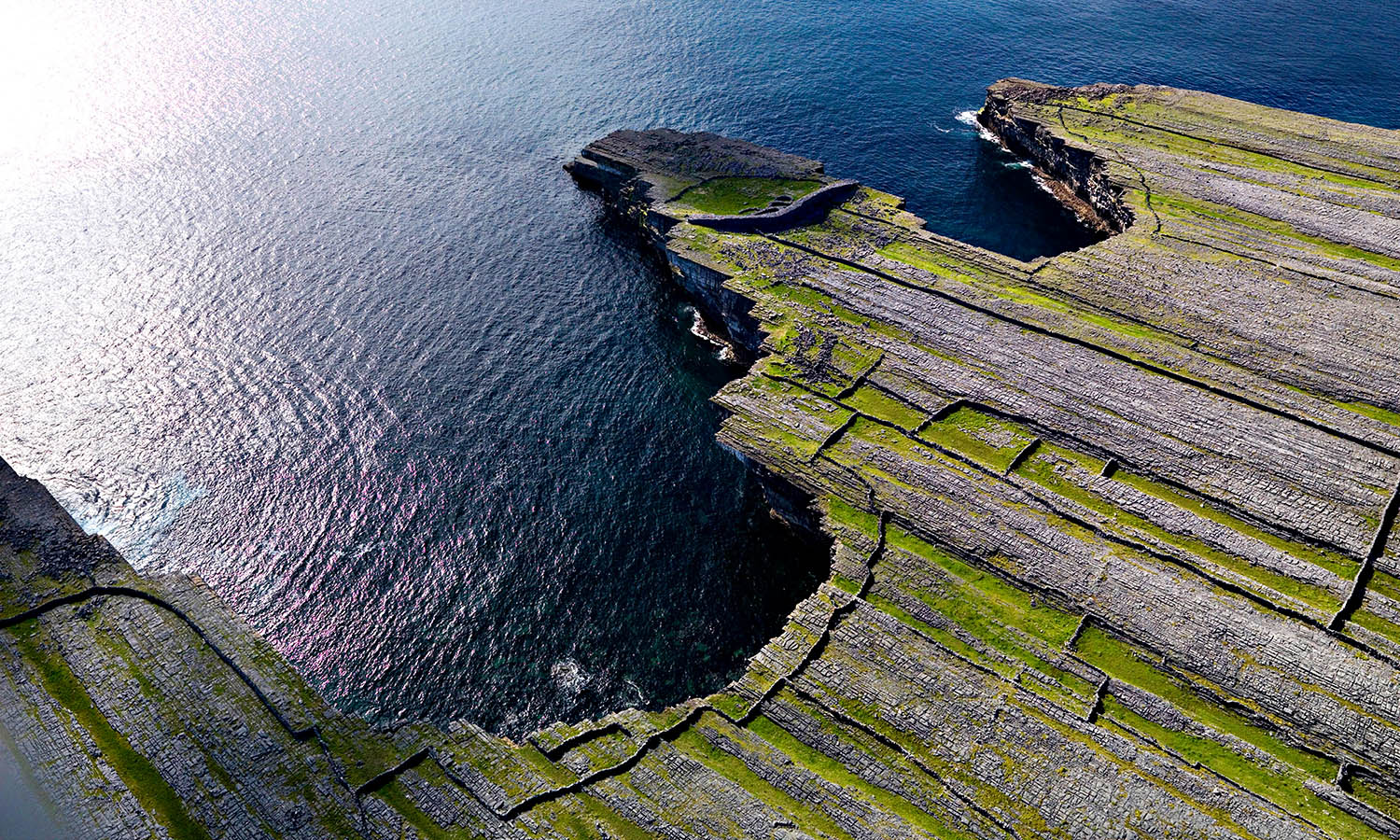
ARAN ISLANDS > GREEK ISLANDS
Sure, Mykonos, Santorini and co. are among the prettiest places on earth. But if they are pretty in the manner of say, Timothée Chalamet, then the Aran Islands—a chain of rocky isles off the wild Irish west coast—are the roguishly good-looking European cousin… Idris Elba.
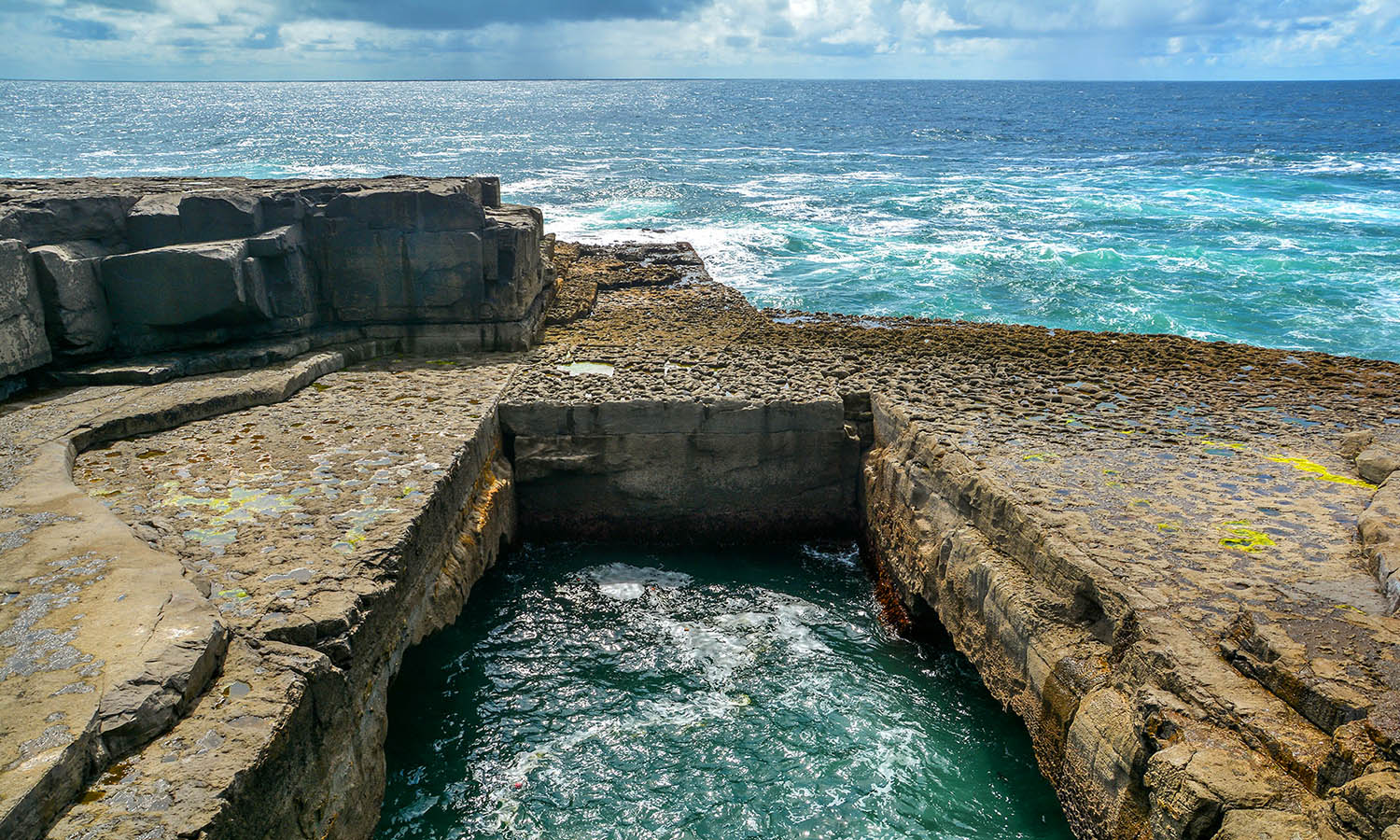
The largest of these is Inishmore (Inis Mór), thinly veiled as the location of Best Picture nominated Banshees of Inishirin. Take the Wormhole for example—an extraordinary natural swimming pool in a near-perfect rectangular shape where locals jump for fun and Red Bull holds cliff-diving competitions. No resorts, party spots or gyros, just fresh air and plenty of outdoor craic.
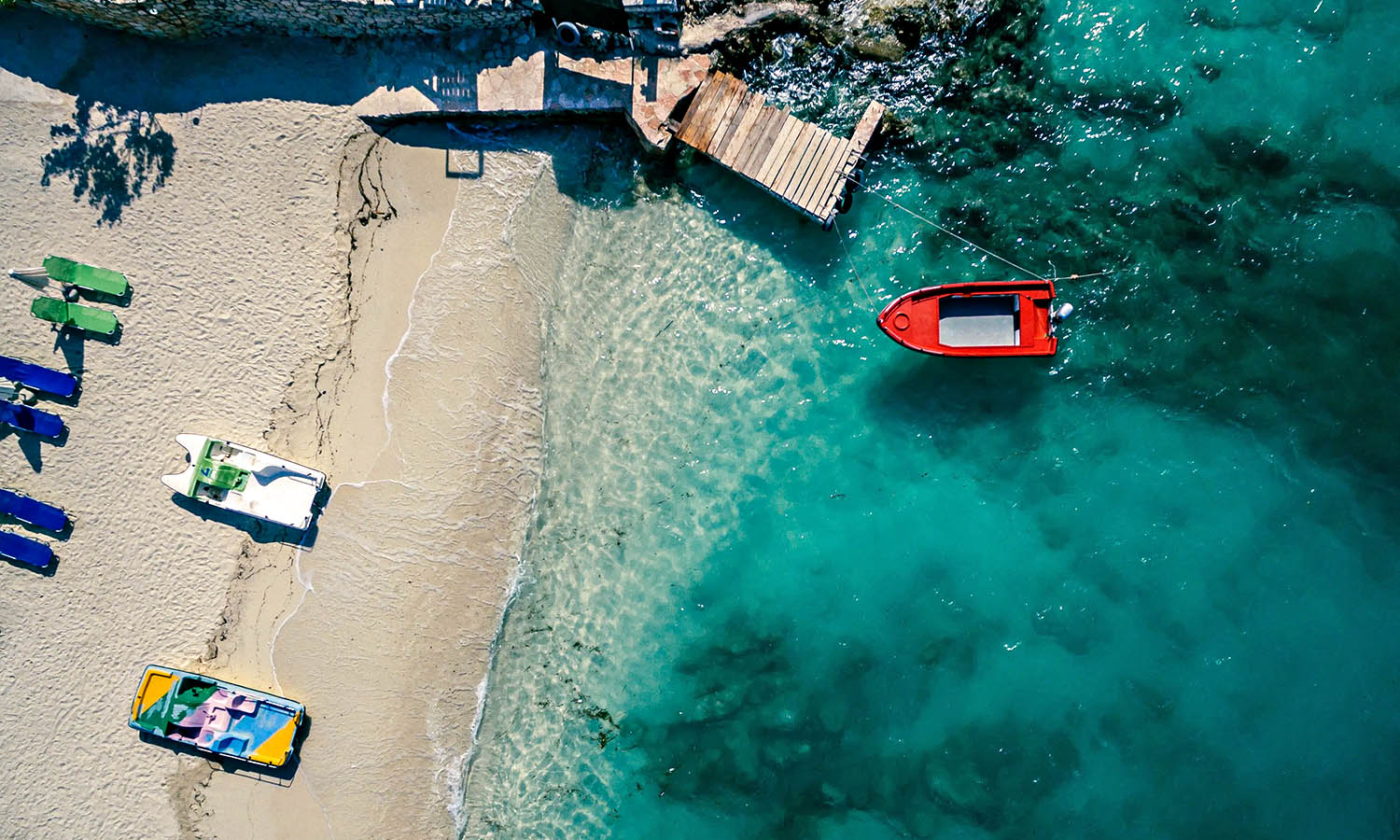
ALBANIA’S SECRET BEACHES > DUBROVNIK
Albania is known by a few (nerds) as the place where Lord Voldemort went into hiding during his Harry Potter-enforced exile. And if you were privvy to the stunning Adriatic beaches here, you’d go into hiding too.


The Karaburun Peninsula is dotted with extraordinary, unheralded beaches where you won’t be charged 10 euro for a chair because, in all likelihood, you’ll be the only one there. There are even caves to explore, if you’re less of a beach bum and more of an ocean adventurer. Plot twist: maybe Voldemort was never in exile at all. Maybe he was just taking it easy, sipping cocktails and enjoying the view to the Adriatic. Get to your nearest portkey, or apparate here immediately, before the crowds do.
Presented by Solomon Airlines and Tourism Solomons
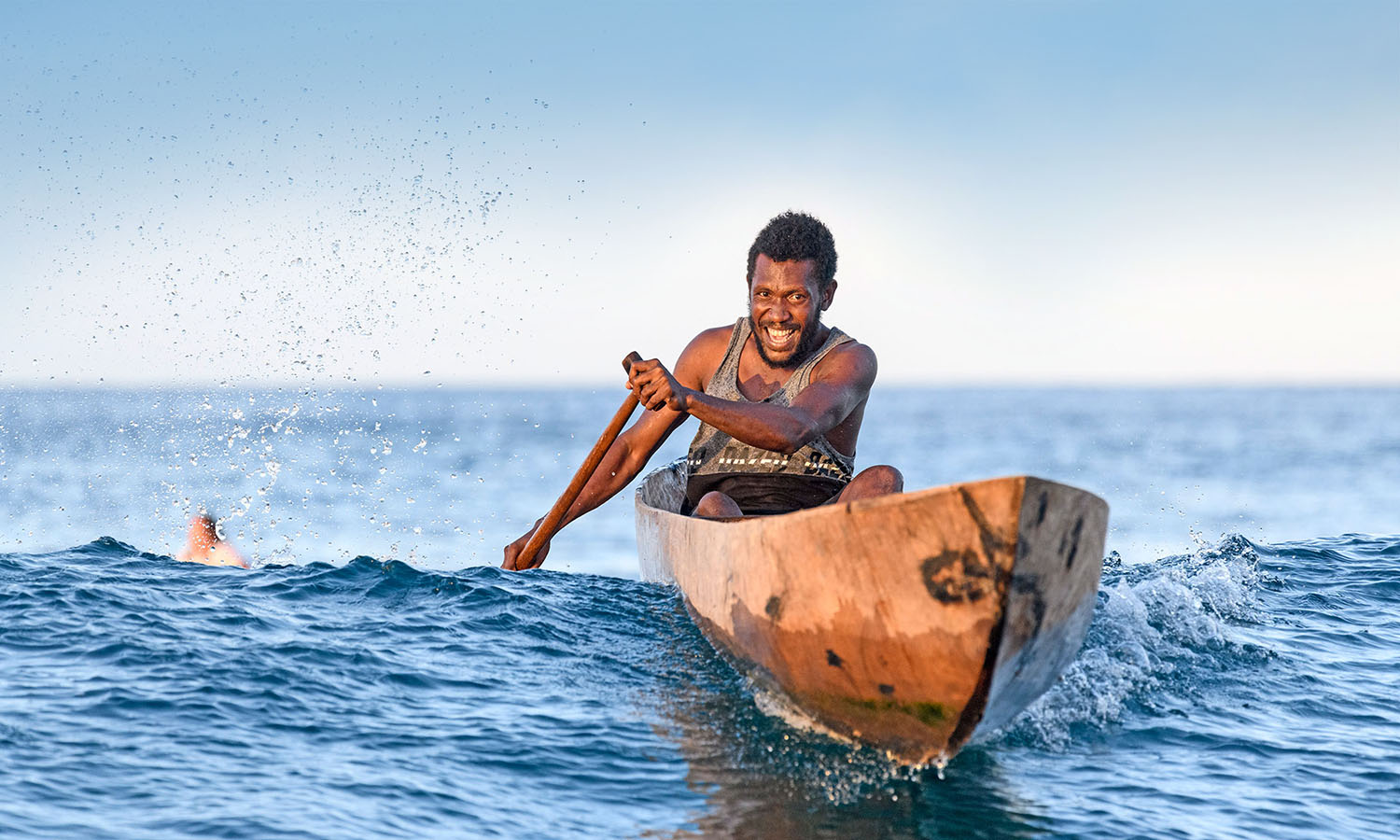
And considering the Solomon Islands have 994 islands in its archipelago—there’s plenty of adventure (and culture, and relaxation) to go around. In fact, we reckon the Sollies is the most epic getaway within a few hours of Australia.
From thick jungle and pristine beaches, to extraordinary underwater reefs and gnarly above water waves, there’s a landscape here to suit every kind of explorer. Plus, the warmest of people with the warmest of welcomes.
To prove our point, we’ve rounded up six of the most extraordinary adventures this paradise has to offer. We bet at least one tickles your travel fancy.
Click play to watch
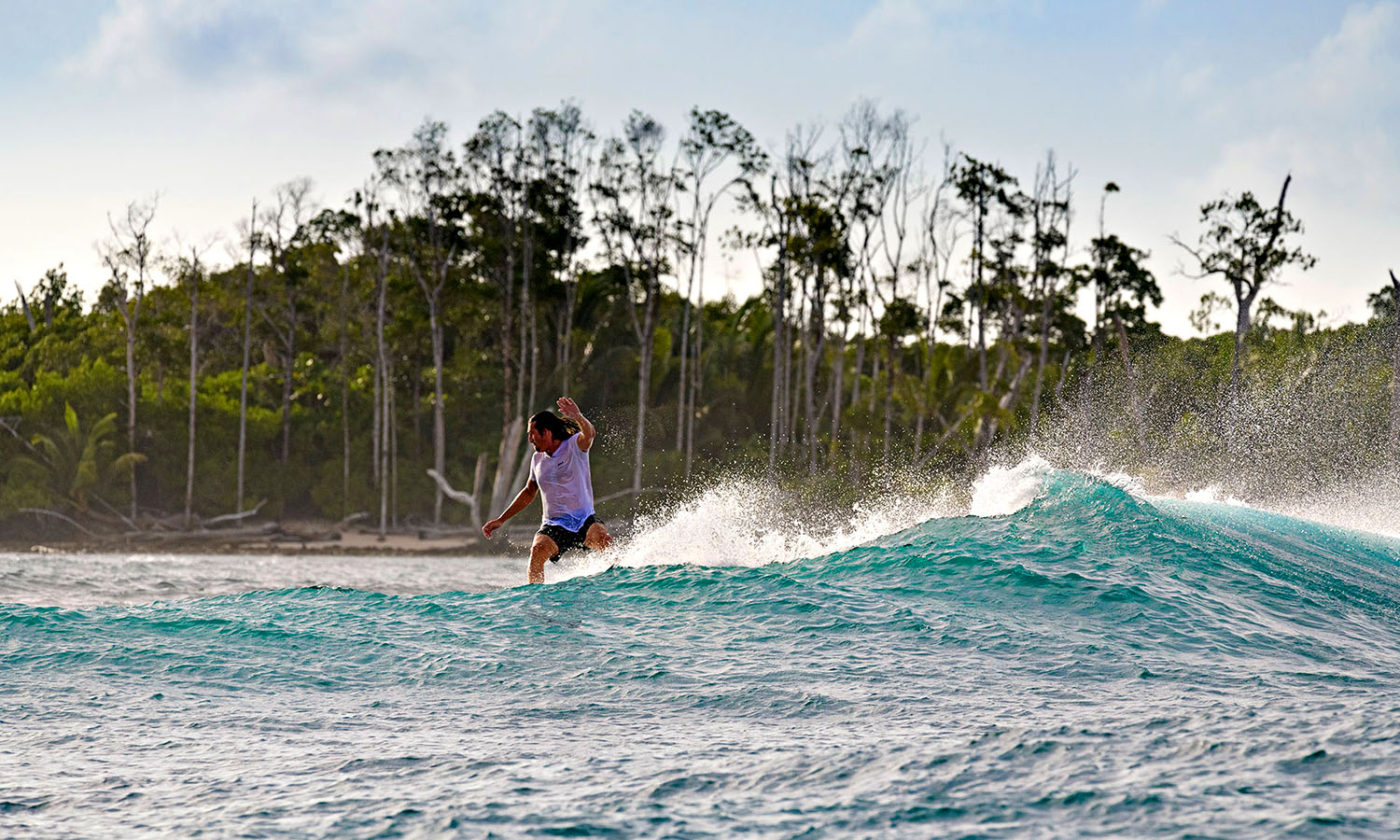
No sharks, uncrowded waves, and the same swell that hits Hawai’i. Sounds too good to be true, right? Wrong.
Solomon Islands is basically the ideal surf destination. Especially if you’re based in either Australia or the Pacific, where the waves are only a short flight away. The Sollies receive Hawai’i’s swell a week later, which takes the edge of some of the world’s most hectic breaks and makes for more accessible waves.
Where should you go? The eastern region is always good. Toi is one of the premier waves in the Solomons—a big right-hander that will give serious surfers plenty of time in the tube. In the same neck of the woods is Charlie’s Right, a consistent right-hander, while Kofiloco is the perfect longboarder’s wave.
Regular storms mean the November to March period often has the best conditions, but many breaks are surfable year-round.
Where to stay: There are a number of surf camps and operators who can show you the best waves, and one of those includes Vavaghio Guest House (on Santa Isabel Island), where well-equipped bungalows stand back from the beach in the cool of the mangroves. Surfing, diving and fishing are all catered for here, where there is a capacity of just 8 guests.
Click to Visit Vavaghio Guest House

Click to Book now
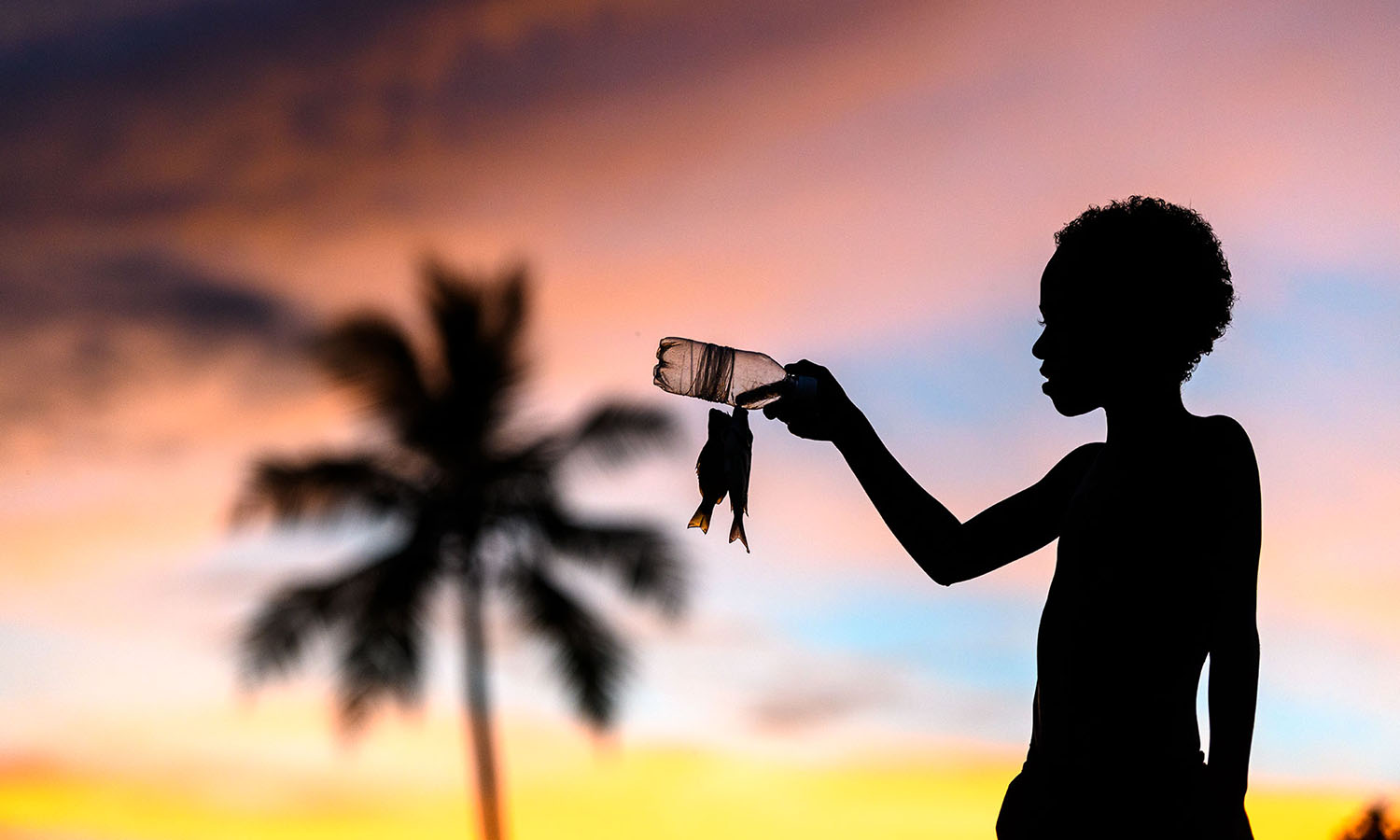
Given the country is made up of six major islands and over 900 smaller ones, it is no surprise that there is an abundance of ocean fishing to be found.
As well as this, there is great inland fishing to be had at a number of rivers that weave their way through the islands like arteries.
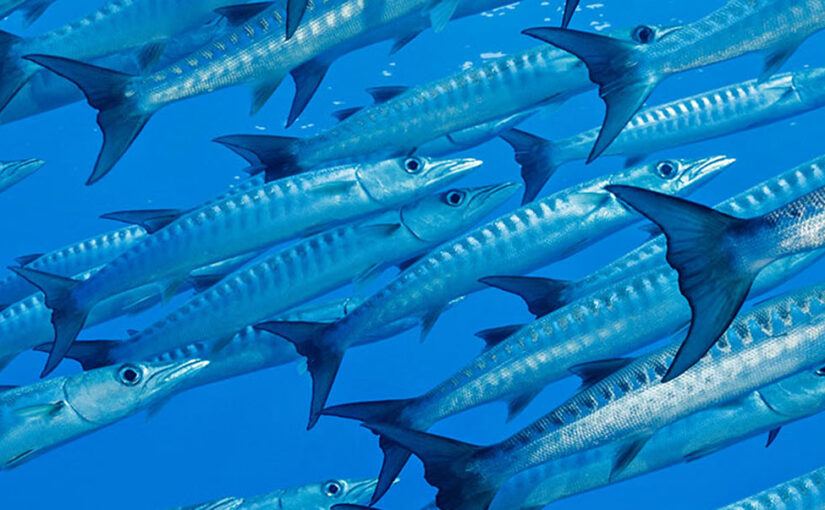
We recommend heading to Santa Isabel Island for the fishing adventure of a lifetime. You’ll find everything from sail fish, shark, sweet lip, coral trout, cod, job fish, kingfish, trevally, wahoo, mackerel, barracuda, wrasse and snapper. While mangrove jacks, spot tail bass and ox eye herring are catchable inland.
Where to stay: Arguably the best place to base yourself is at Papatura Island Resort. Boats and gear can be hired here, and there are guides to take you to some of the best reefs, atolls, islands and bommies throughout the South Pacific.
Click to Explore Papatura Island Resort
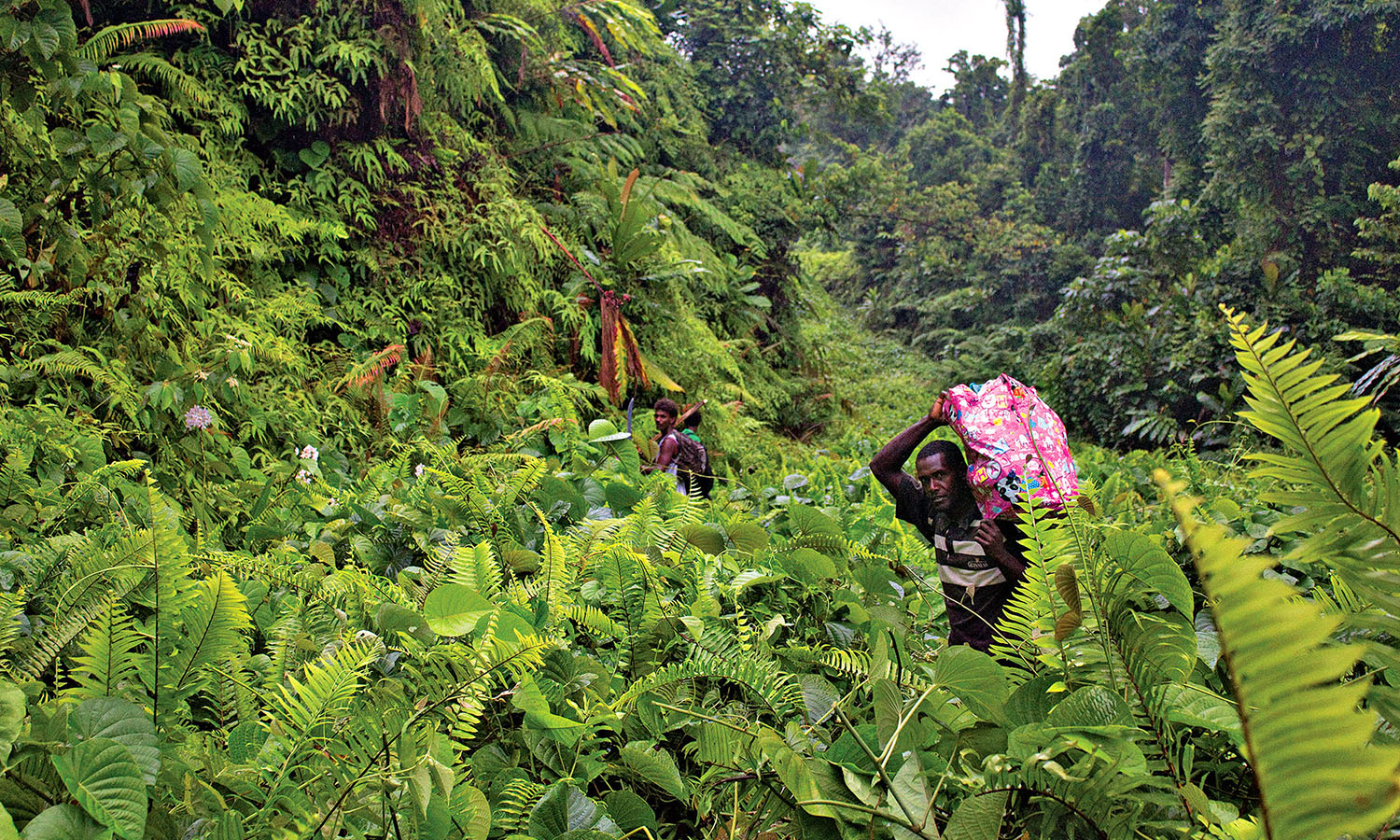
There’s a heap of jungle hiking to experience here. From the impressive curves of Mount Rano to searching for waterfalls just outside of Honiara.
If you’re in the Western Province, get yourself a boat over to Kolombangara Island where you can tackle the 1,770 metre Mount Rano summit. This is no cookie-cutter hike; there’s chopping and cutting tracks, clawing through mud and rivers and scrambling uphill. Once you get there though, you’ll be rewarded with Lord of the Rings-worthy views.
Staying closer to Honiara? Don’t miss a hike (roughly a four-hour return trip) to the incredible Tenaru Falls where you can swim in the cool pools, do a spot of birdwatching and explore the surrounding jungle.
Where to stay: An inland paradise, Paranjiju Mountain Lodge—located in the hills of central Guadalcanal, just an hour from Honiara—offers up breathtaking rainforest and ocean views. The lodge itself is built with sustainable materials and powered by solar energy, and is well-regarded for its commitment to preserving the environment.
Click to See Paranjiju Mountain Lodge
Click play to watch
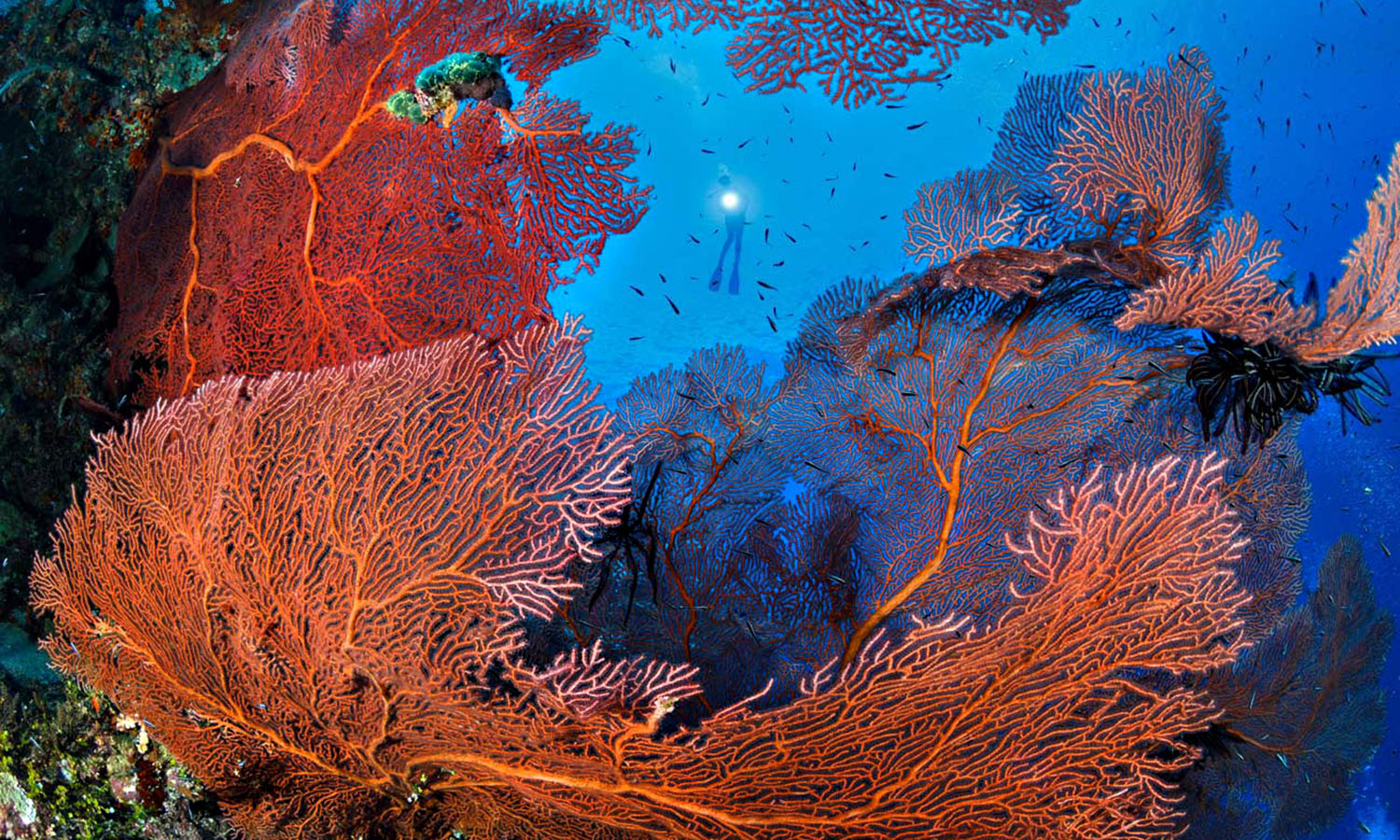
A dive location unlike anywhere else in the world.
Being based in the, aptly named, Coral Triangle, the Sollies boast some of the most active marine life anywhere in the world, with amazing reefs, fish of every variety and super clear waters.
As well as this, it’s been 80 years since the fierce World War II battle for Guadalcanal, where the advance of the Japanese imperial forces across the Pacific was halted by the United States and Allied forces. A number of wrecks from the battle now serve as fascinating dive spots, and important reminders of the past.
Where to stay / dive: In the idyllic village of Munda, Dive Munda offers customised diving experiences based on the needs of each person. Diving, free-diving and snorkelling is also available here. Best of all, Munda is in close proximity to an array of marine life, wreckages, spectacular underwater walls and more.
Click to Go deep, go diving
Click to Book now
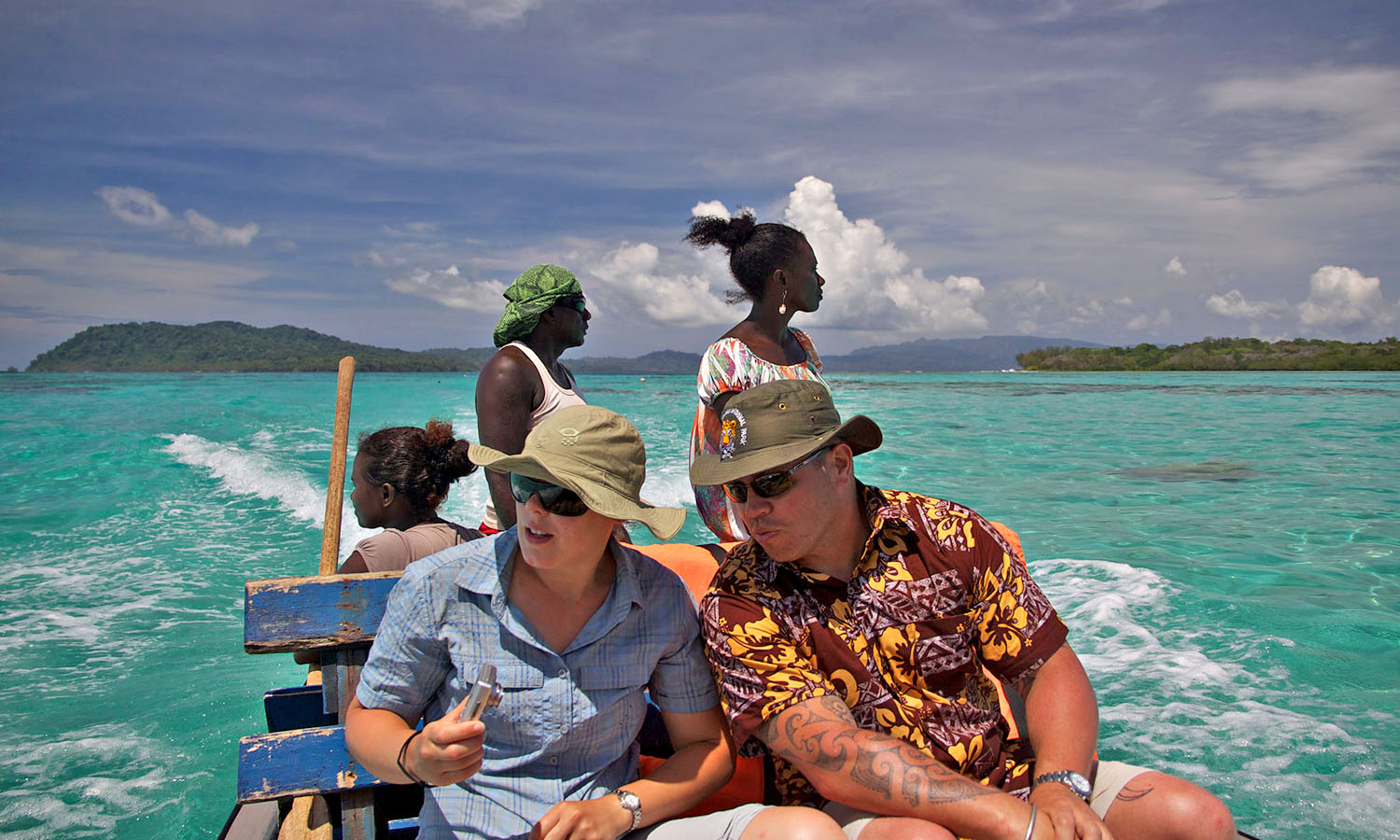
There’s wild, and then there’s Tetepare Island.
The largest uninhabited island in the South Pacific, Tetepare is 27 kilometres by seven kilometres of rugged, jungle-filled chaos, unspoilt by tourism or anything else.
Travel companies often offer ‘wild’ eco-resorts, but this is the real deal. Rampant jungle and colourful reef are your playground, the island is yours to take on and conquer. Swim with reef sharks and dugong before breakfast before exploring the island’s other gifts by foot. Take it easy in a hammock in the arvo, then try your chances with giant leatherback turtles at night.
Facilities are basic but functional and wi-fi is non-existent, as are people, more or less. For those that value adventure and relaxation in equal measure, there mightn’t be a better place to stay in the South Pacific.
Click to Check out Tetapare
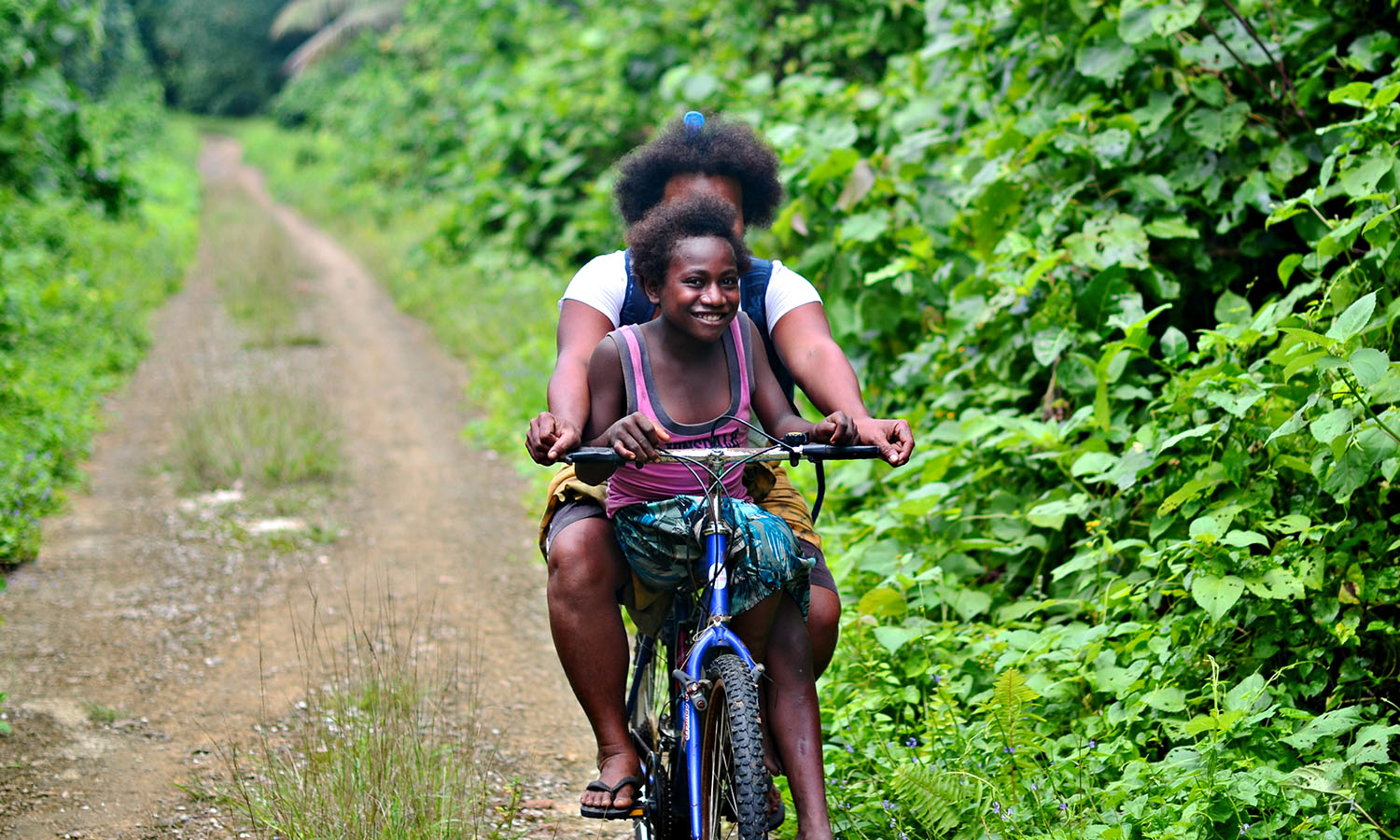
Life is different everywhere you go.
Adventures come in all shapes and sizes. In the Solomon Islands, they come on beaches and forests, up volcanos and on reefs. But you can also find adventure in the little villages.
Saeragi is one such village. A little settlement of just over 100 people, it’s just a 20 minute boat trip from Gizo. Alternatively, you can drive from Gizo via a coastal track in a 4WD. The area offers the opportunity to visit several villages where you can experience rural and traditional life, from chewing the fat with village men to making a canoe or watching the Solomons grommets surf. Typically, Saeragi has a long stretch of stunning beach, but it’s the people that make this place truly beautiful.
Click to Find a stay
Follow me on a thrilling journey through the Andes Mountains, as I embark on a risky trek filled with unexpected obstacles and humorous interactions with locals.
I had always been an adrenaline junkie, seeking out thrilling experiences to get my heart pumping. And so, when the opportunity arose to trek through the Andes Mountains, I leaped at the chance. Little did I know just how risky this adventure would be.
My journey began in the town of Huaraz, located in the Cordillera Blanca range of the Andes. With a group of fellow hikers, we set out to conquer the Santa Cruz trek, a four-day journey that promised stunning views and challenging terrain. As we began our ascent, I felt invigorated by the crisp mountain air and the stunning scenery around me. But soon, the trek became more challenging than I had anticipated. The steep inclines and rocky terrain made every step feel like a test of my endurance.
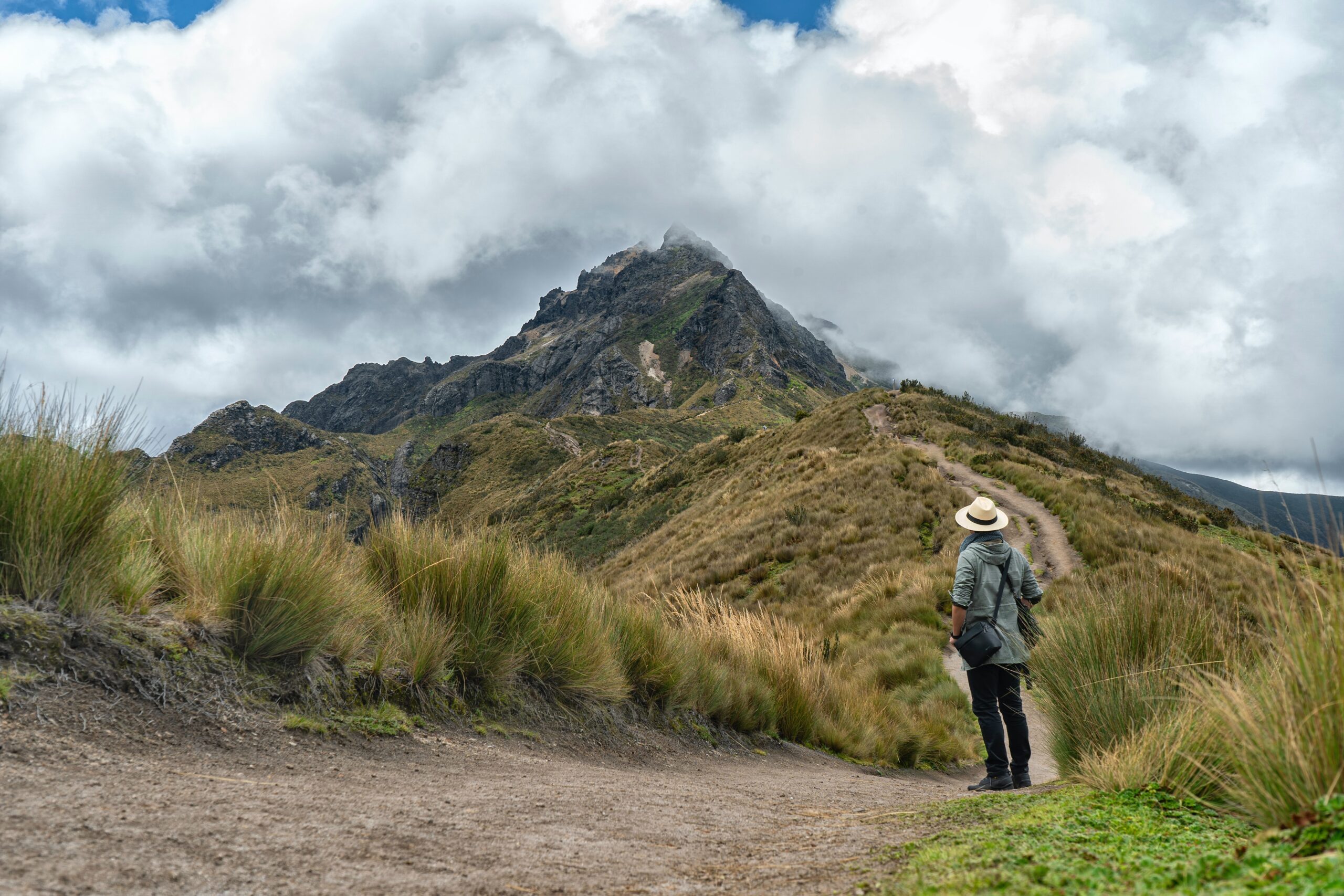
To make matters worse, we were hit with unexpected weather. Rain poured down in sheets, soaking us to the bone and making the already treacherous terrain even more slippery. I felt my heart racing as I clung to the side of a mountain, trying to find my footing on a slick rock. But perhaps the most risky element of this adventure came in the form of an unexpected encounter with a local. As we approached a small village, we were greeted by a group of friendly farmers who offered to show us the way.
One particularly jovial man, with a twinkle in his eye and a mischievous grin, insisted on leading the way.
As we followed him, he began to regale us with tales of his life in the mountains. His Spanish was heavily accented, making it difficult to understand him at times, but his humor was infectious.
He joked about the treacherous terrain, laughing heartily as he described the many hikers who had slipped and fallen on their way through. At one point, we came to a rickety wooden bridge that spanned a chasm.
The local man urged us to cross, assuring us that it was safe. But as I took my first step onto the bridge, I felt it wobble beneath me. I turned to him, my heart racing, to see him doubled over with laughter.
Despite the risks and challenges we faced, the trek through the Andes was one of the most exhilarating experiences of my life. From the stunning mountain vistas to the unexpected encounters with locals, every moment was filled with excitement and adventure. And as I looked back on my journey, I couldn’t help but feel a sense of pride and accomplishment for having conquered the Andes.
This article was written by AI and did not actually happen. Email us at info@getlostmagazine.com to tell us if you thought it was terrible, or if you think we should replace all our writers with artificial intelligence.
CLICK PLAY TO WATCH
THIS WAS ONCE AN EXPERIENCE THAT WENT HAND IN HAND WITH WEALTHY OCTOGENARIANS AND BINOCULARS. NOW, IT’S BEEN AMPED UP.
Africa is often thought of as the final frontier for those who have been to Southeast Asia as backpackers or already hopped on and off trains around Europe in our youth, leaving a trail of debauchery in our wake.
But this continent is different. A safari is different. It’s a considered journey and rightly so. It evokes a sense of wonder, awe and appreciation for all the reasons we travel in the first place.
But when you go, it’s important that you boil it right down to the best bets: from an epic, elevated pool where you can cool off while watching game, to being up-close with a tribe, and the most magic of sundowner spots.
To make things easy for your next visit, we’ve compiled the ultimate in African safari experiences:
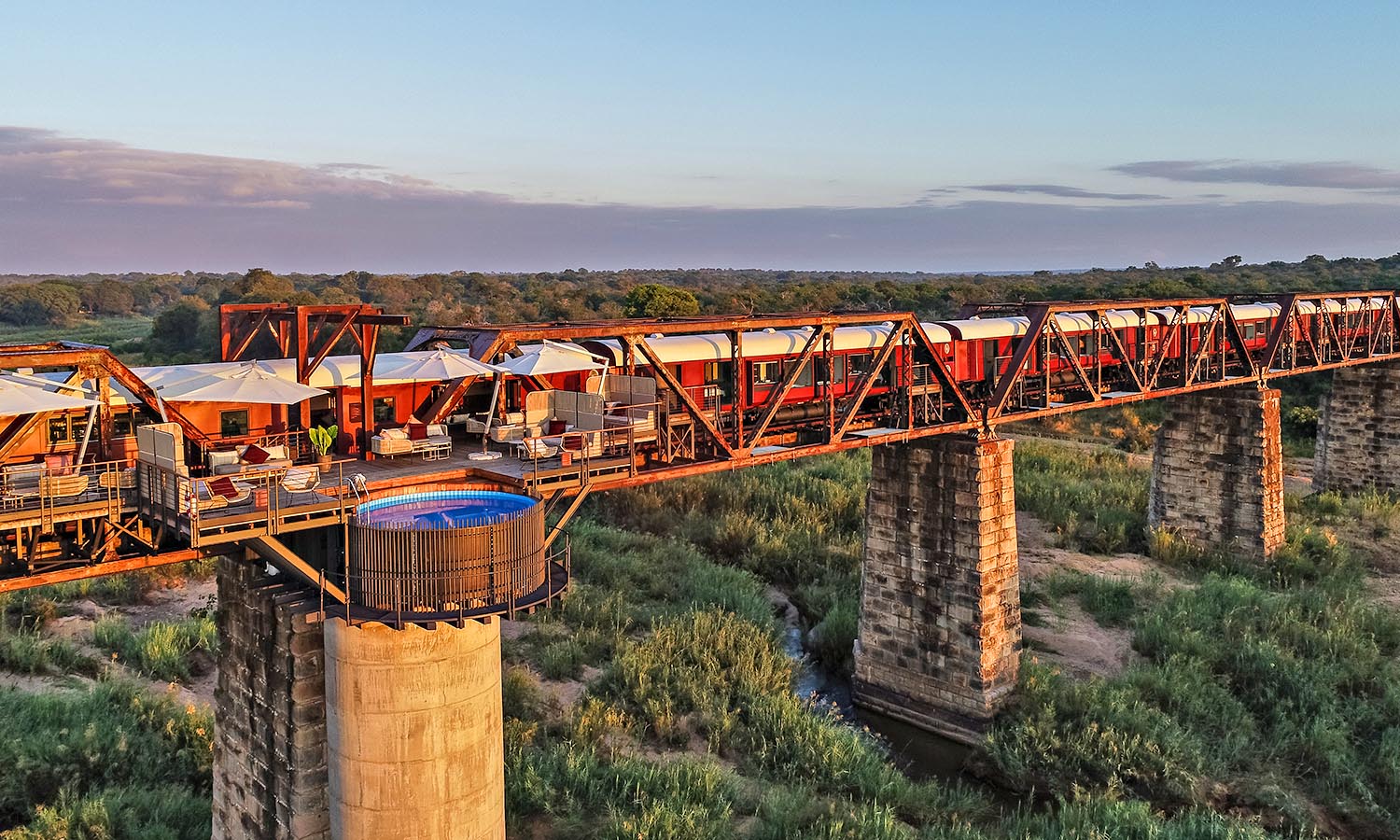
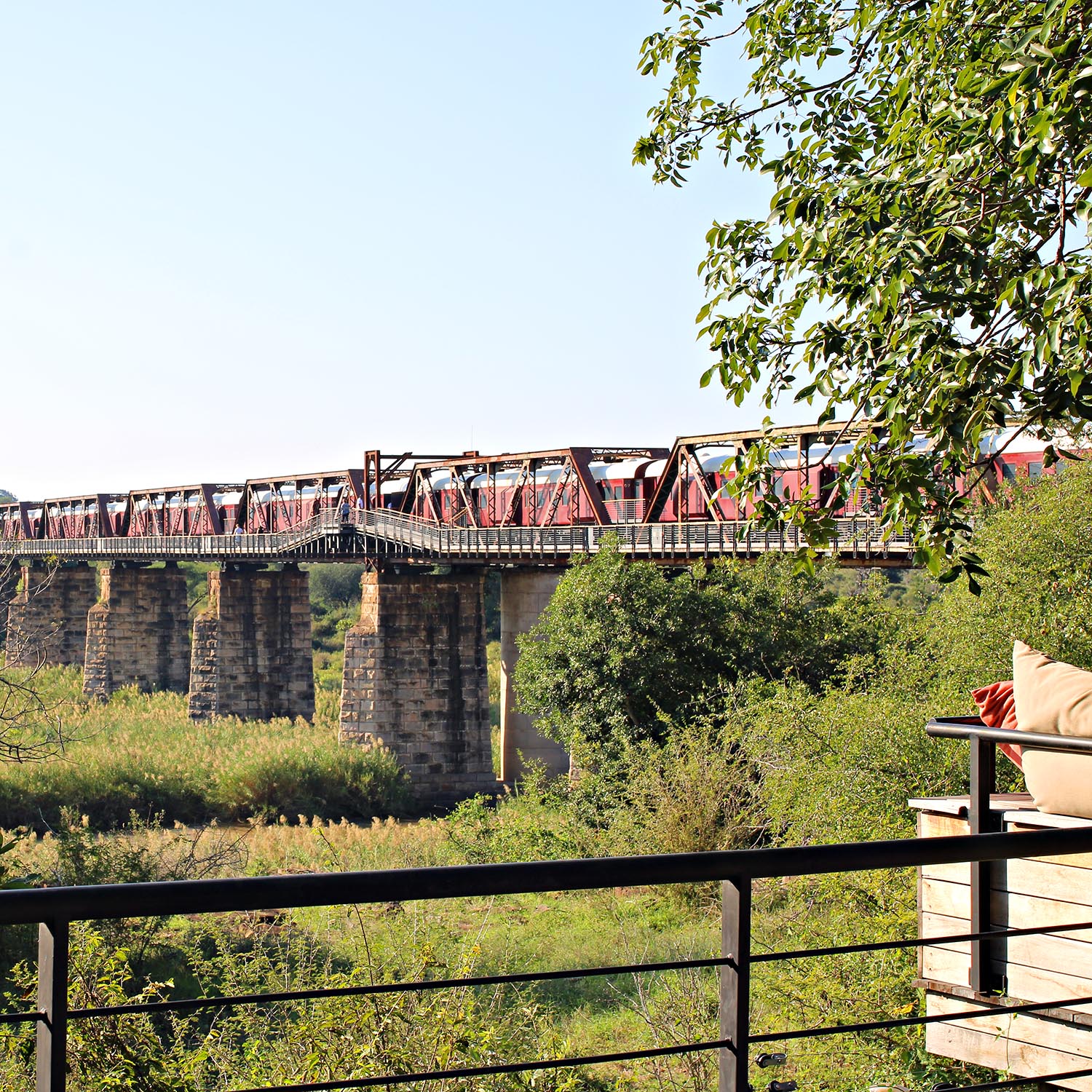
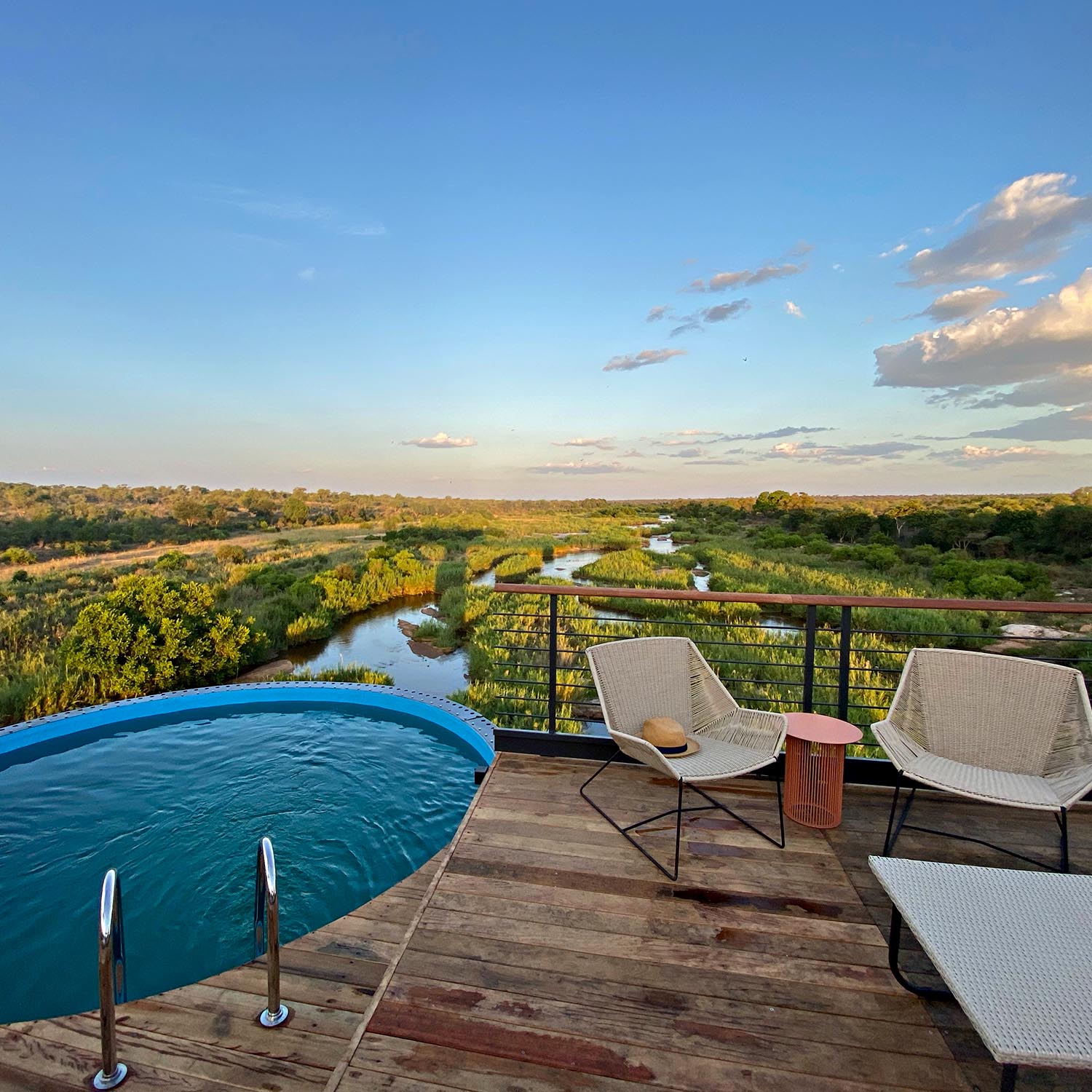
Floating in a serene swimming pool, on a train, parked on a bridge, as wild crocodiles and hippopotamus roam below: this is kruger shalati in a nutshell.
From the 1920s until 1976, trains ran across the Selati Bridge above Sabie River, travelling from Port Elizabeth to Mozambique and back. The line lay disused for many years but has recently been converted into the legitimately one-of-a-kind accommodation that it is now: seriously, nothing like this exists anywhere else in the world.
Click here to TAKE A TRAIN TO THE WILD
WATCH THE FULL VIDEO
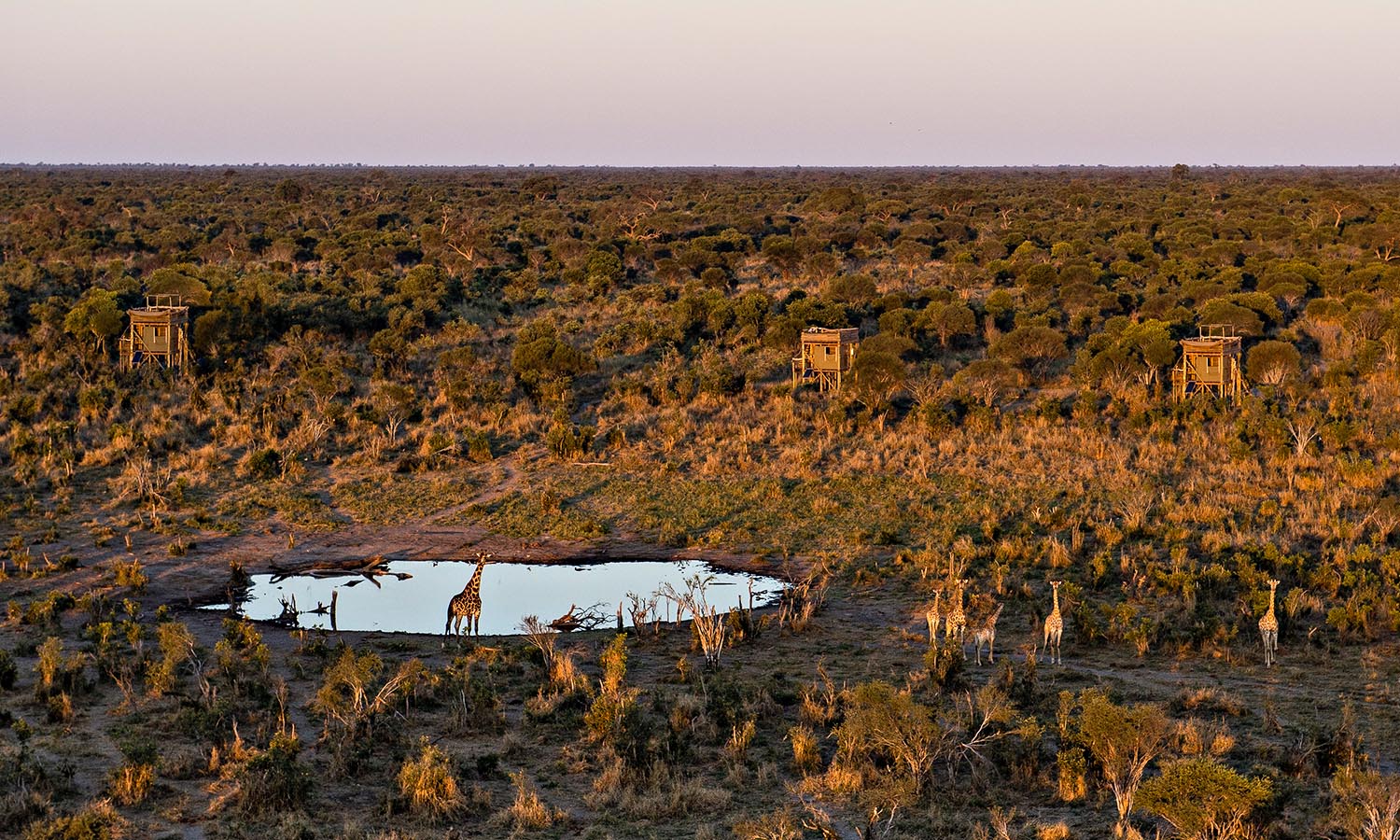
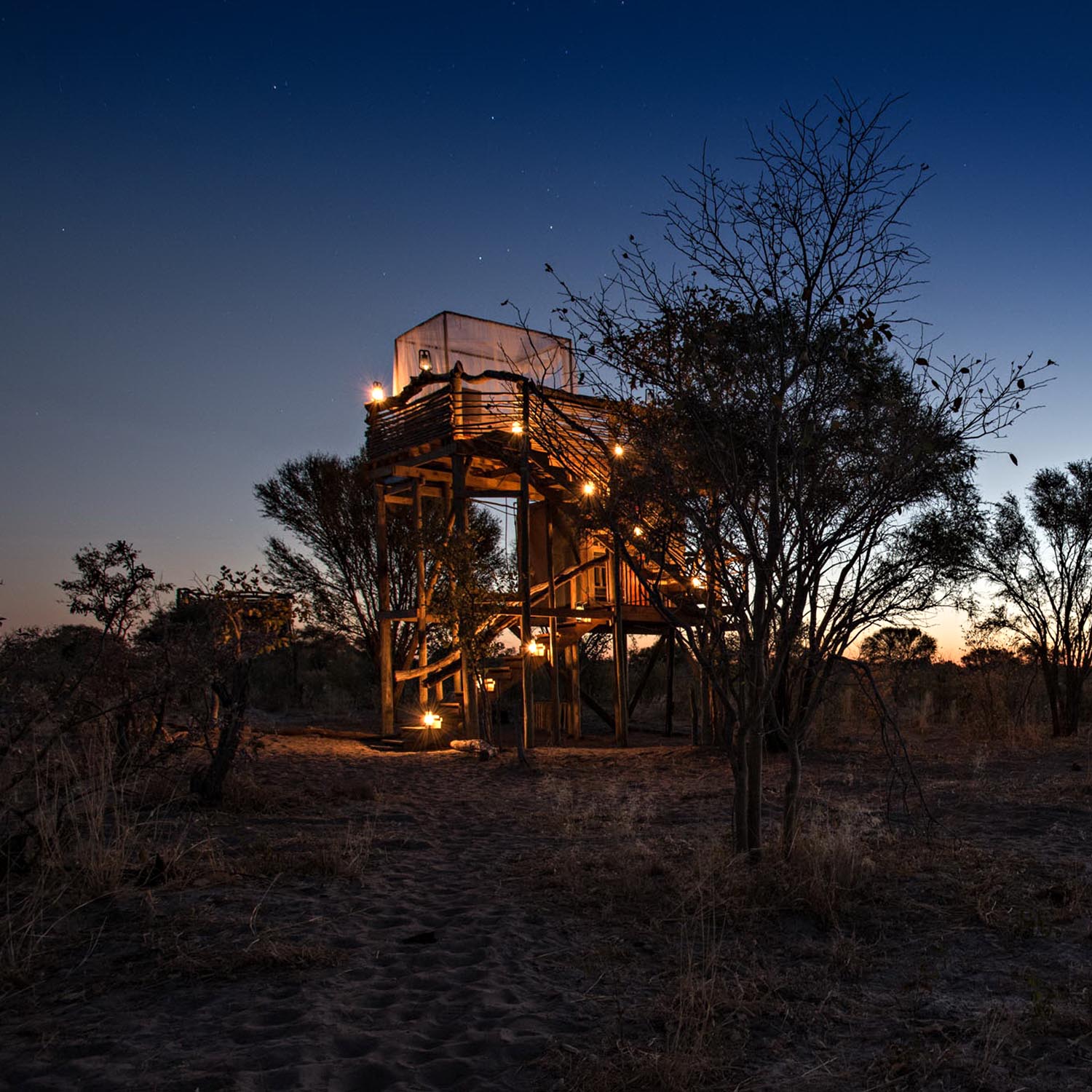
Safari from your bed — this is something we can totally get around.
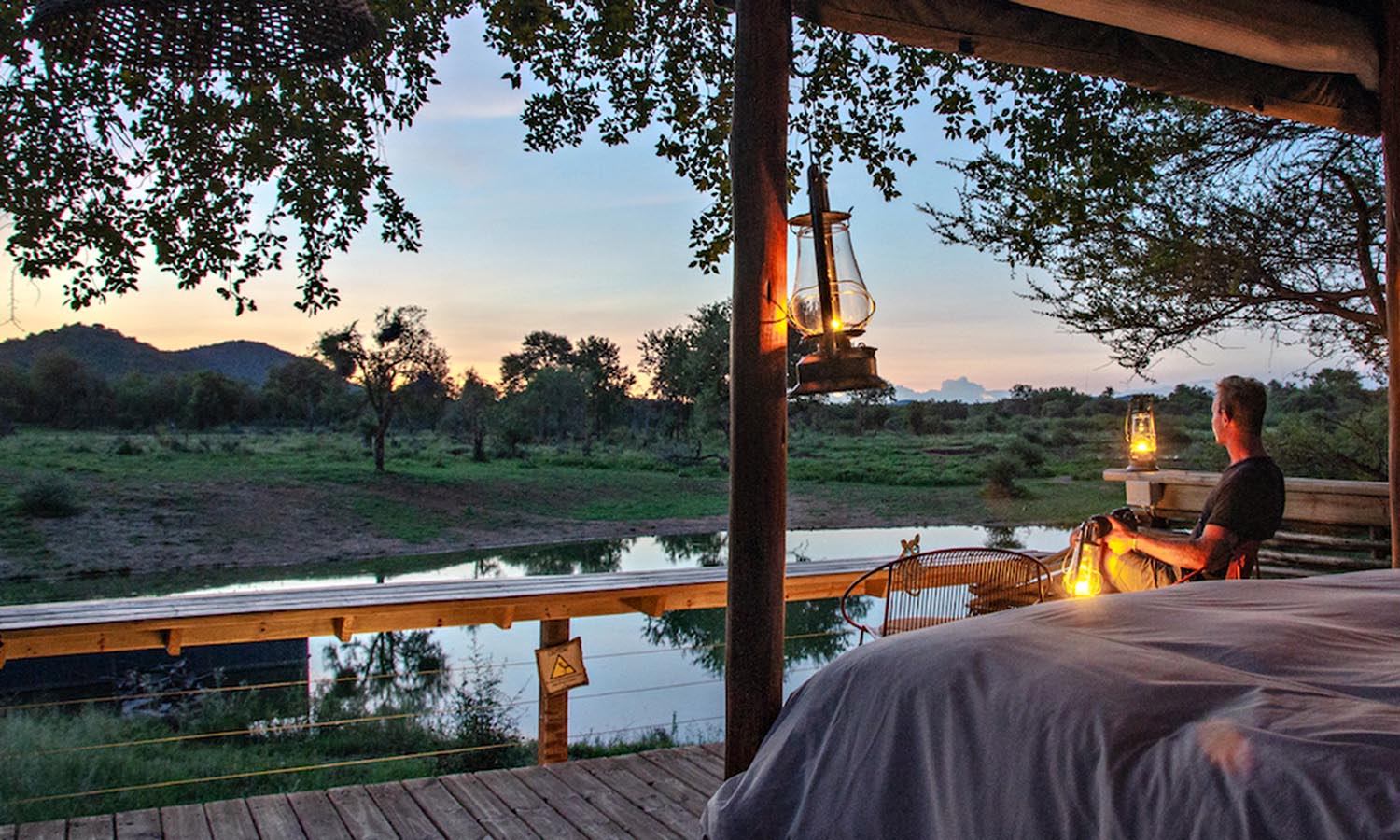
You won’t have slept anywhere like the Khwai Skybed. As well as being lofted five metres into the sky (as the name suggests) you’re also deep in a game reserve in Botswana, perched above a busy waterhole in Moremi National Park.
Wake up as the sun rises in the morning, and spot lion, leopard, eland, zebra and more – all from under the sheets.
Click here for a SAFARI UNDER THE SHEETS
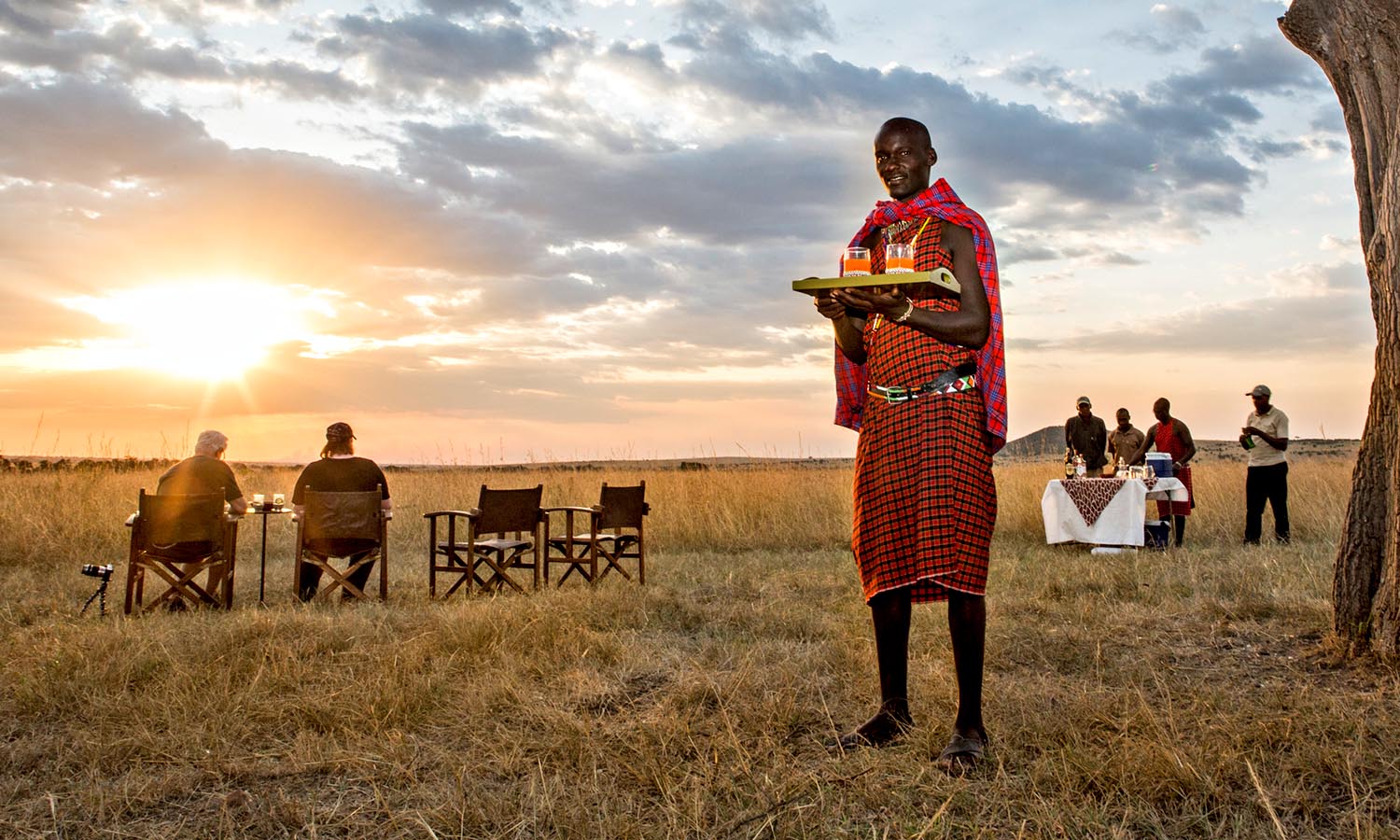
The sundowner tradition on safari started as a way to protect against malaria.
They’re still just as important now, even if you haven’t seen a mozzy in days.
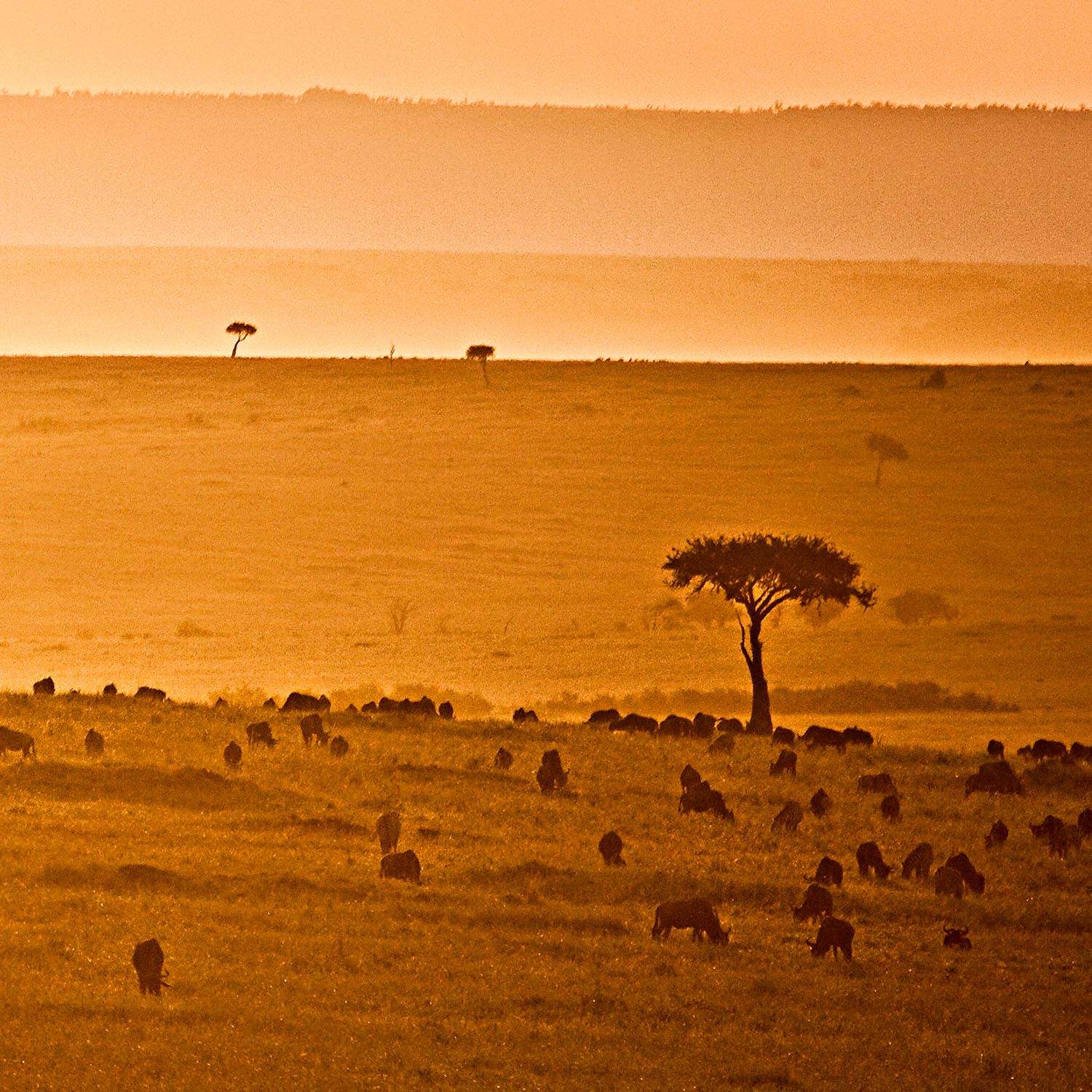
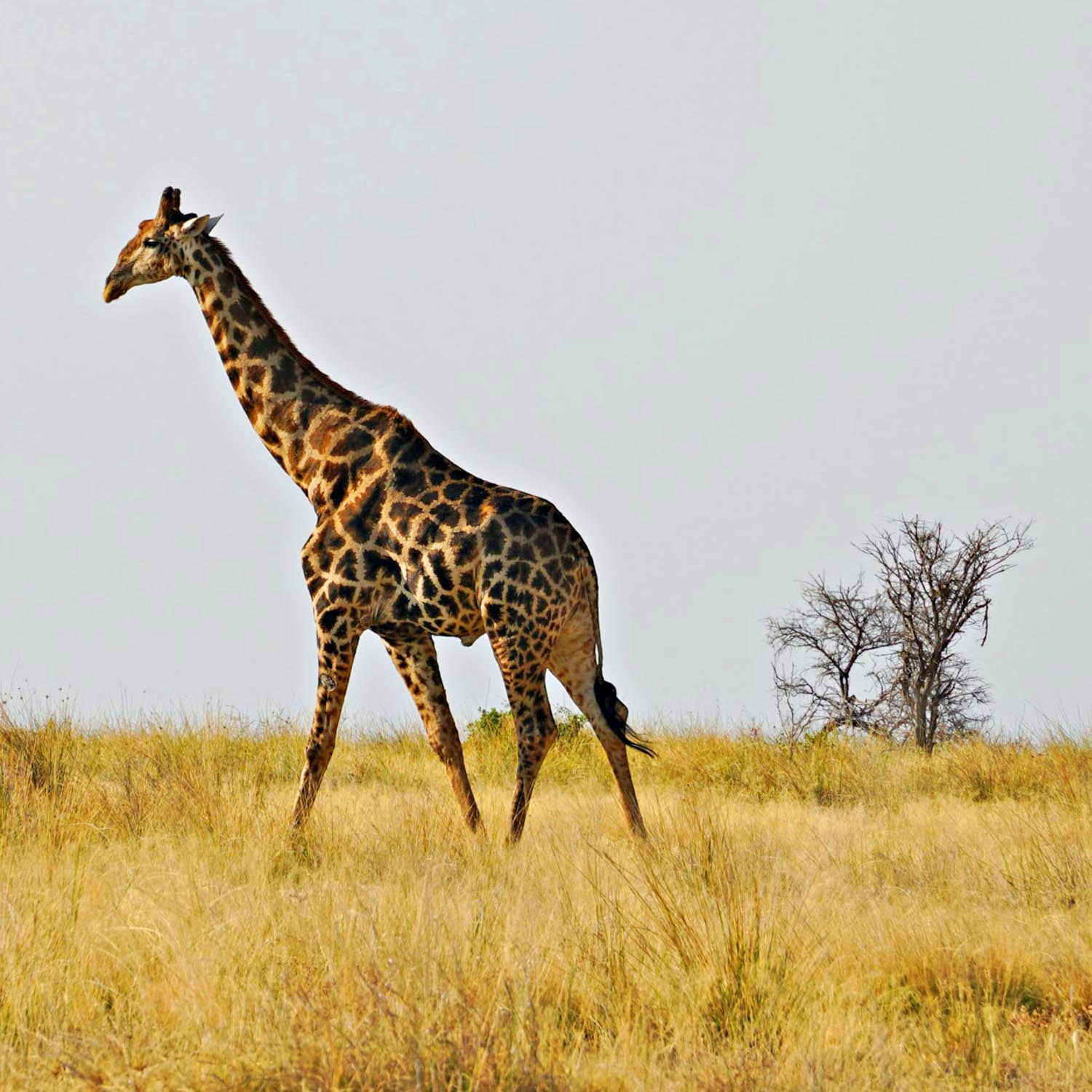
The rolling hills of the Masai Marai is the best spot for this. Beer, champagne or gin, that classic red African sun setting over rivers and grassy plains as giraffes and elephants amble past, Africa’s heart beating contently in front of you – it doesn’t get much better than that.
Click here for MAN’S NOT A CAMEL
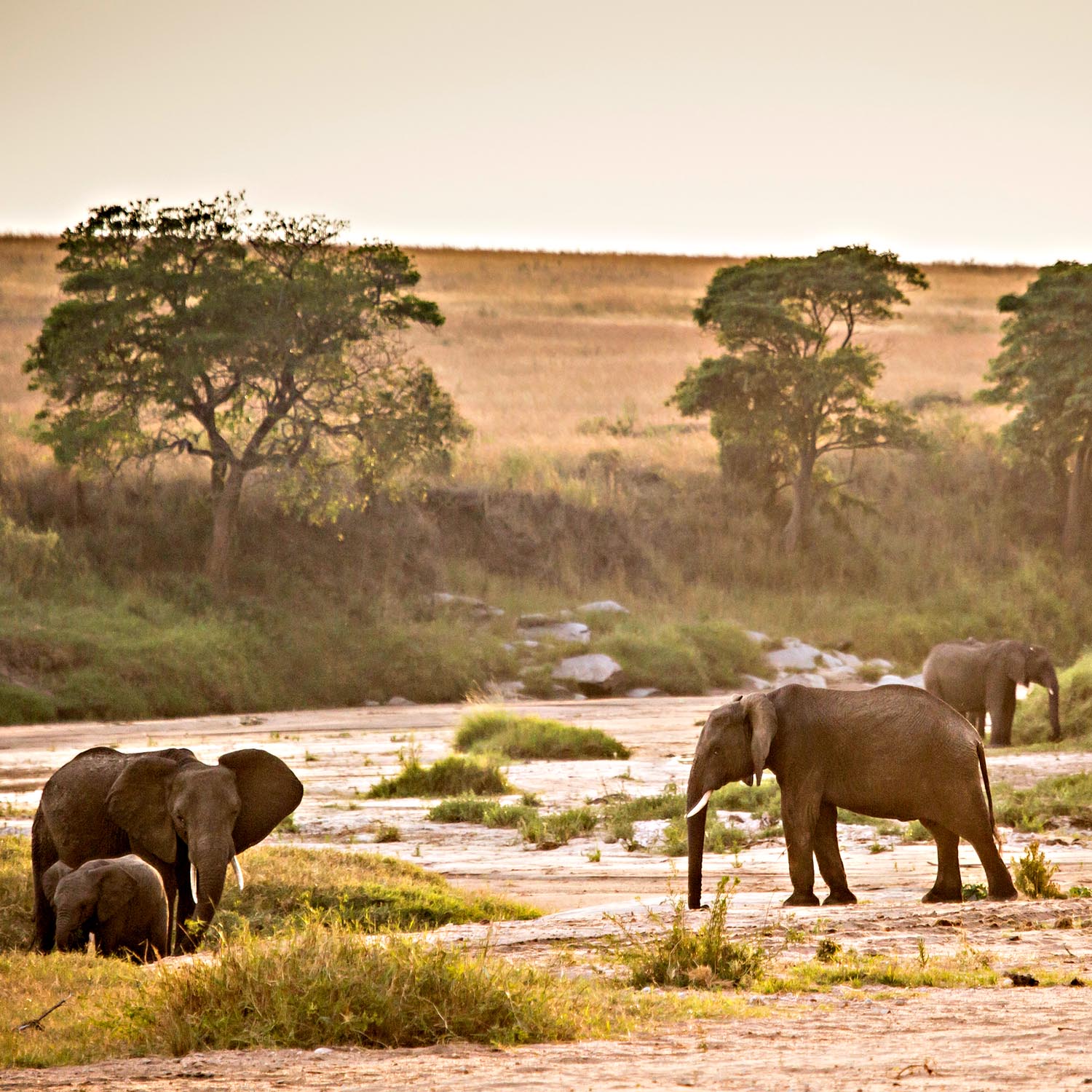
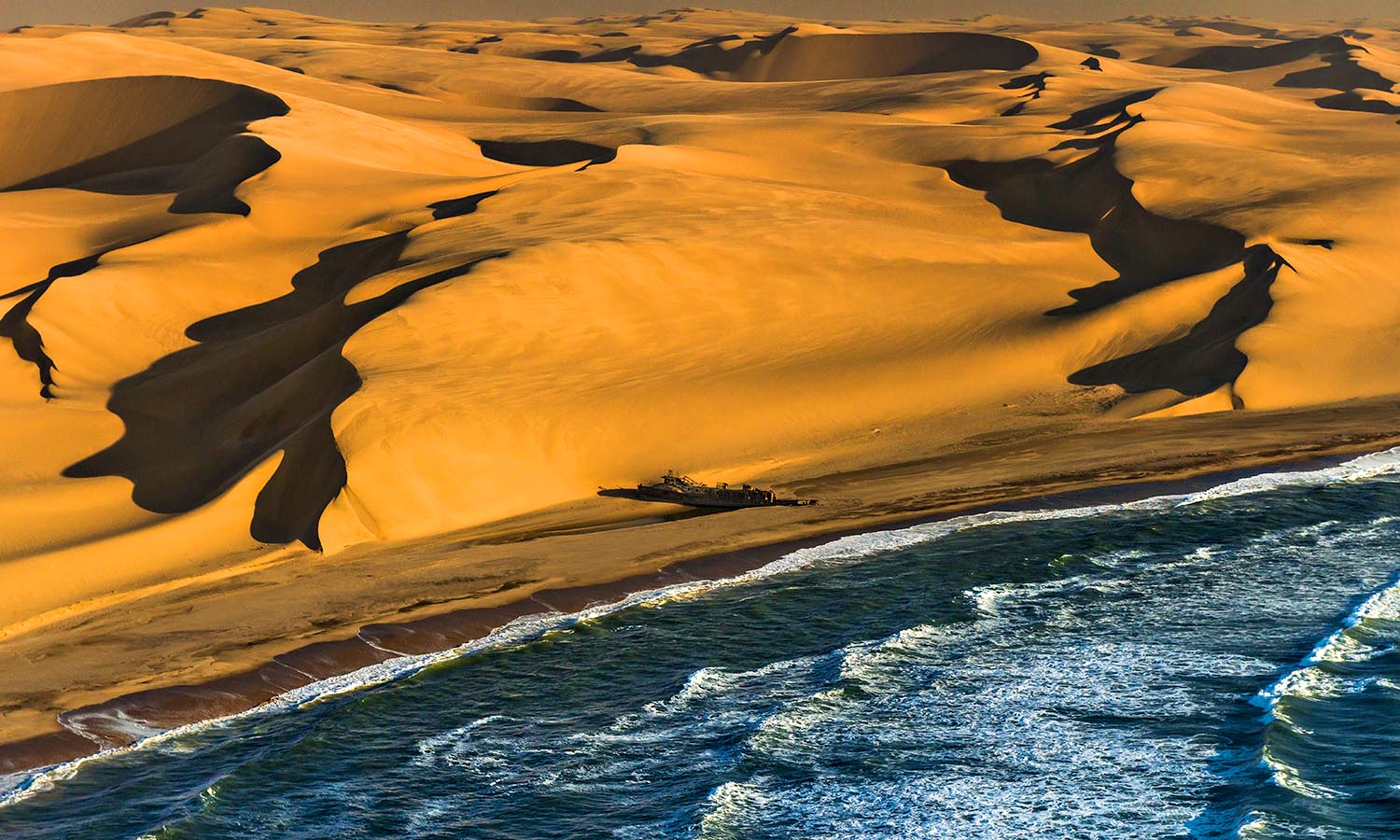
Strap yourself into the driver’s seat and do as Fleetwood Mac would do (go your own way) in Namibia.
Self-drive safaris are becoming more popular and for obvious reasons; it gives you the freedom to go where you want, whenever you want. The expansive plains of Namibia are perfect for this. Get into a 4×4 and discover the gems in Etosha National Park, where arid landscapes produce a unique selection of wildlife to spot.
When you’re done spotting wild game, do as the Village People would do (go west) and explore the extraordinary Sossusvlei dunes and ‘end of the earth’ vibes of the Skeleton Coast to complete the ultimate African road trip.
Click here to GO YOUR OWN WAY

WATCH THE FULL VIDEO
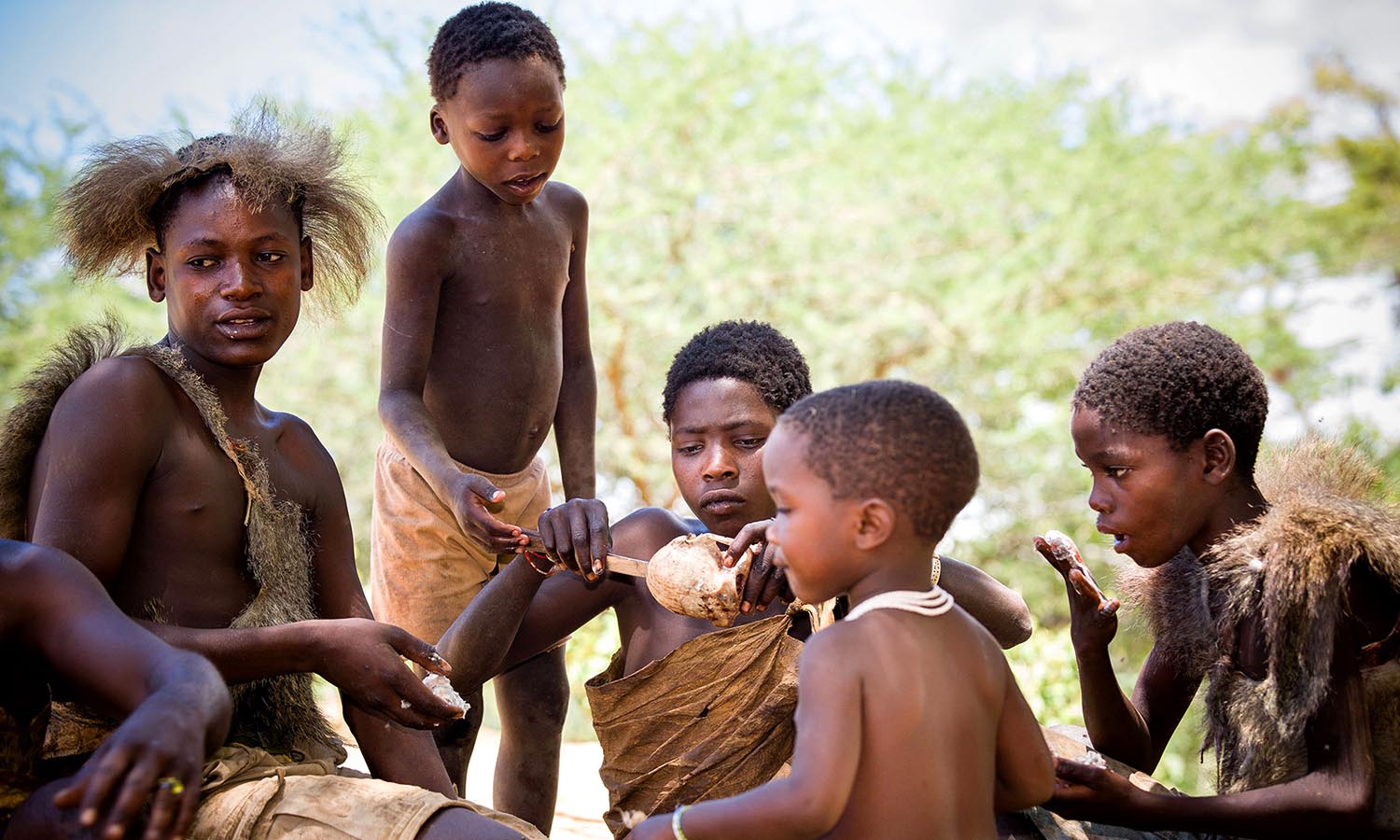
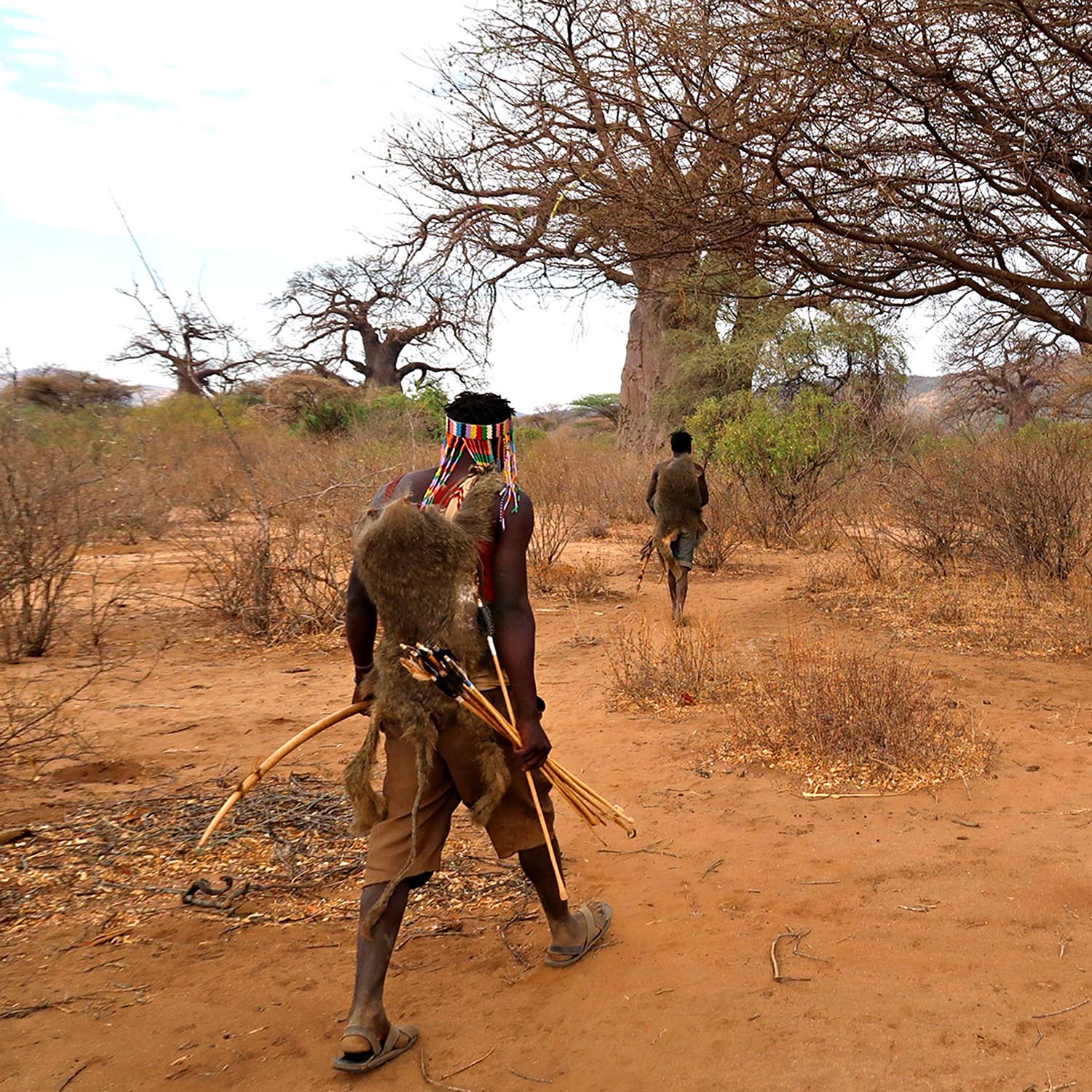
Hunting for Bushmeat (often monkeys), collecting honey from wild hives… calling the four-day immersion experience with the Hadza people in Tanzania a ‘walking safari’ doesn’t quite tell the full story.
Sure, you do hoof it on foot to find some amazing wildlife in the area near Lake Eyasi, but it is the interaction with the Hadza that is the most epic part about this. Be one of them and help catch lunch, and feel what it would be like to live in a way that is completely different to your life.
Not for the faint hearted, game hunts can cover up to 10km.
Click here to JOIN THE TRIBE
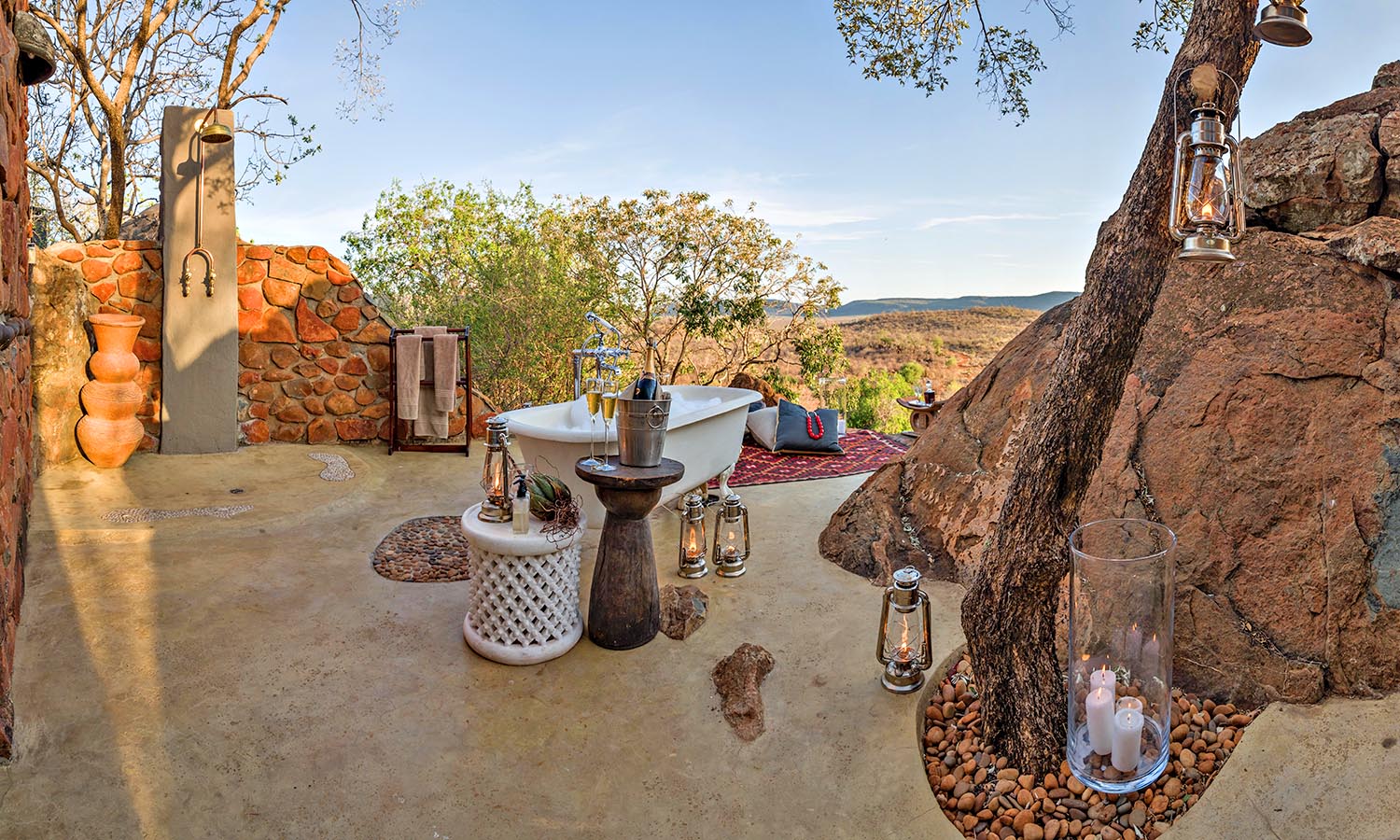
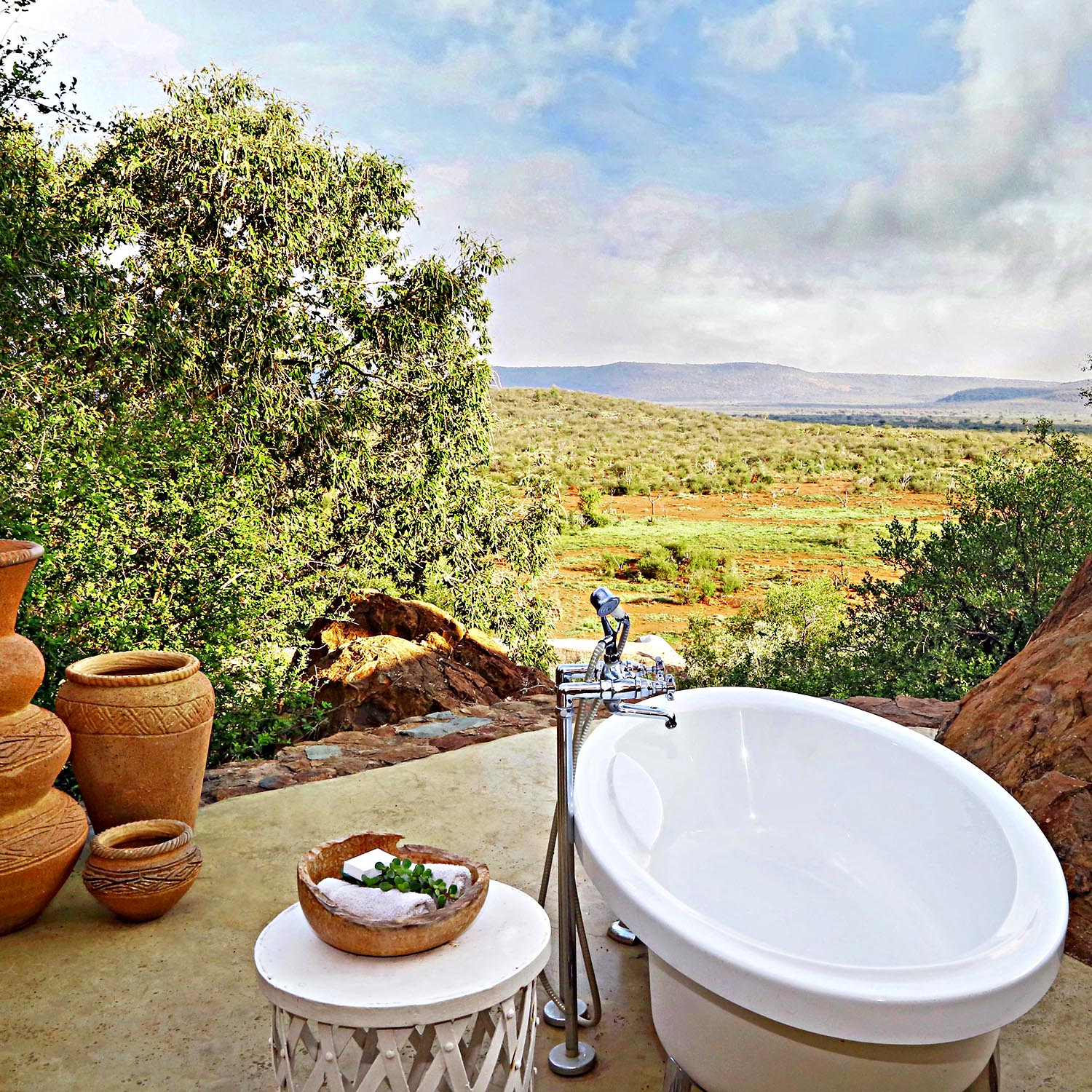
A great bathtub is probably not at the forefront of your safari planning, nor does anyone want to see photos of you in the tub when you get back and show photos of your trip on slide night.
But it’s a growing trend in lodges these days to have a belter of a tub on the property. And when you think about it, it makes sense – imagine having an elephant or giraffe stroll by while you’re taking it easy in the rub-a-dub?
Madikwe Hills Private Game Lodge in Madikwe Game Reserve has the absolute king of these, secluded amongst some large boulders and facing out to bush. While absolutely starkers, chill out with a champagne or a beer with only Africa’s best wildlife strolling by for company.
Another worthy contender would be the tub get lost relaxed in at Ahaspokuna Eco Camp in Sri Lanka for issue three of our digital magazine.
Image credit: Madikwe Hills Private Game Lodge, Madikwe Game Reserve by Seasons in Africa.
Click here for some TUBTHUMPING
CLICK TO WATCH
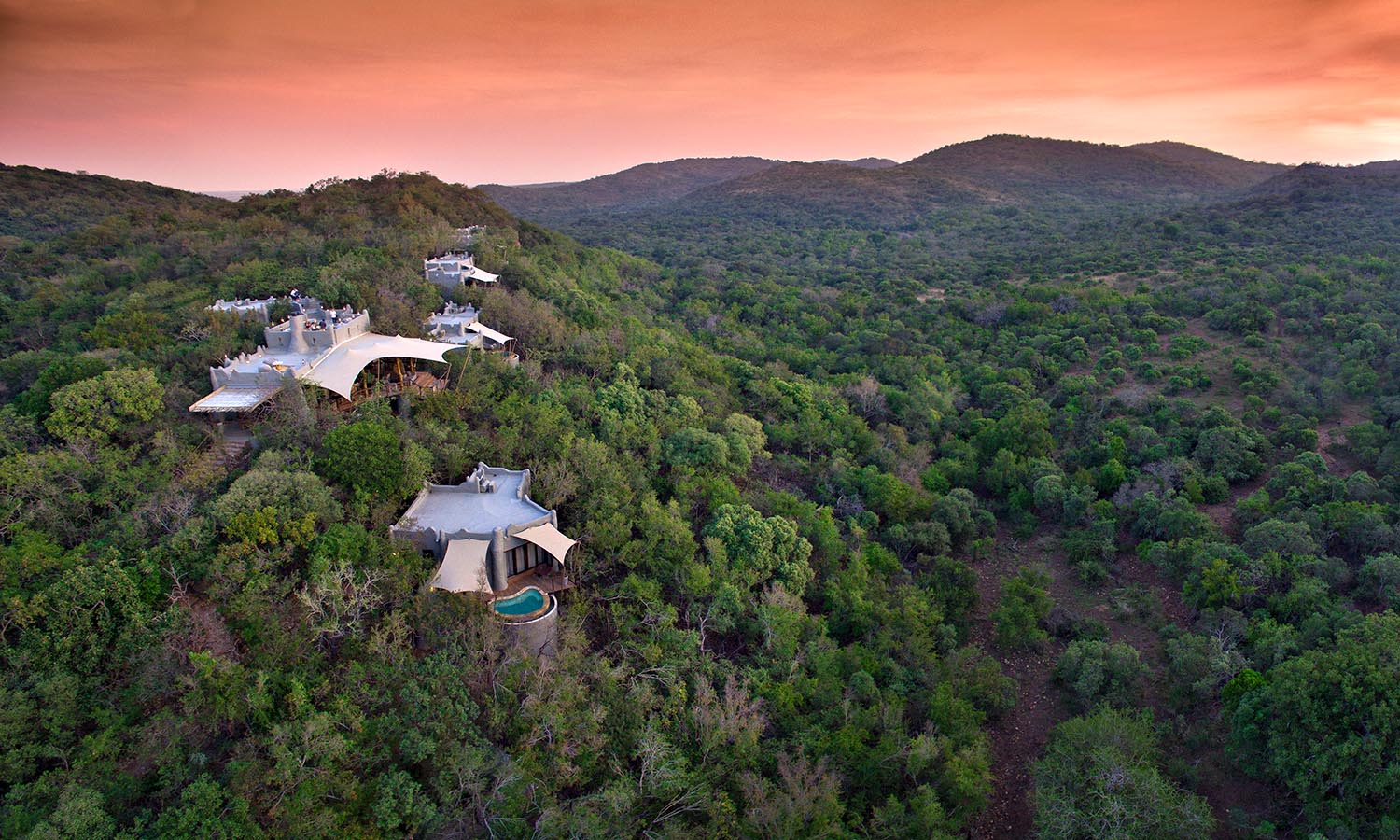
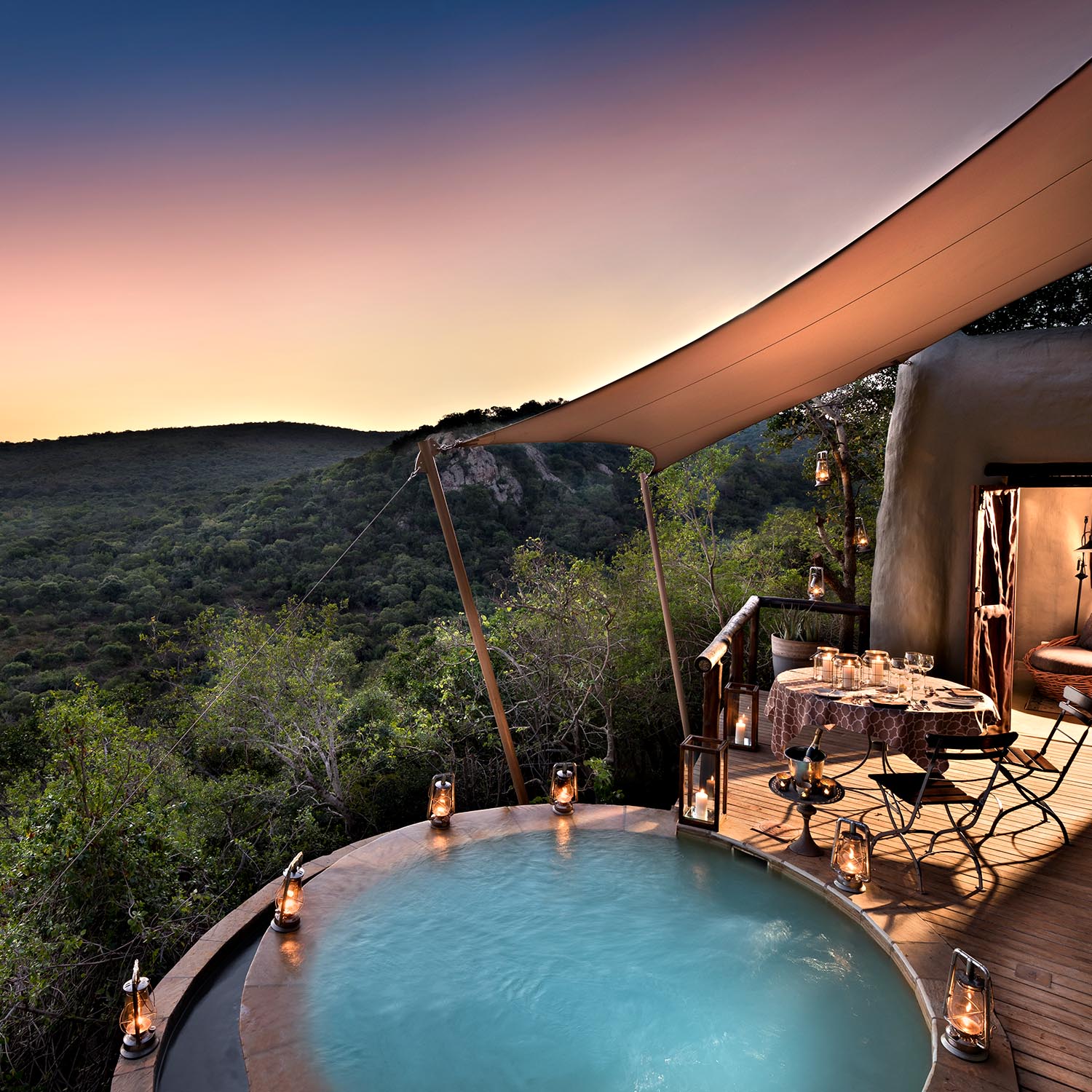
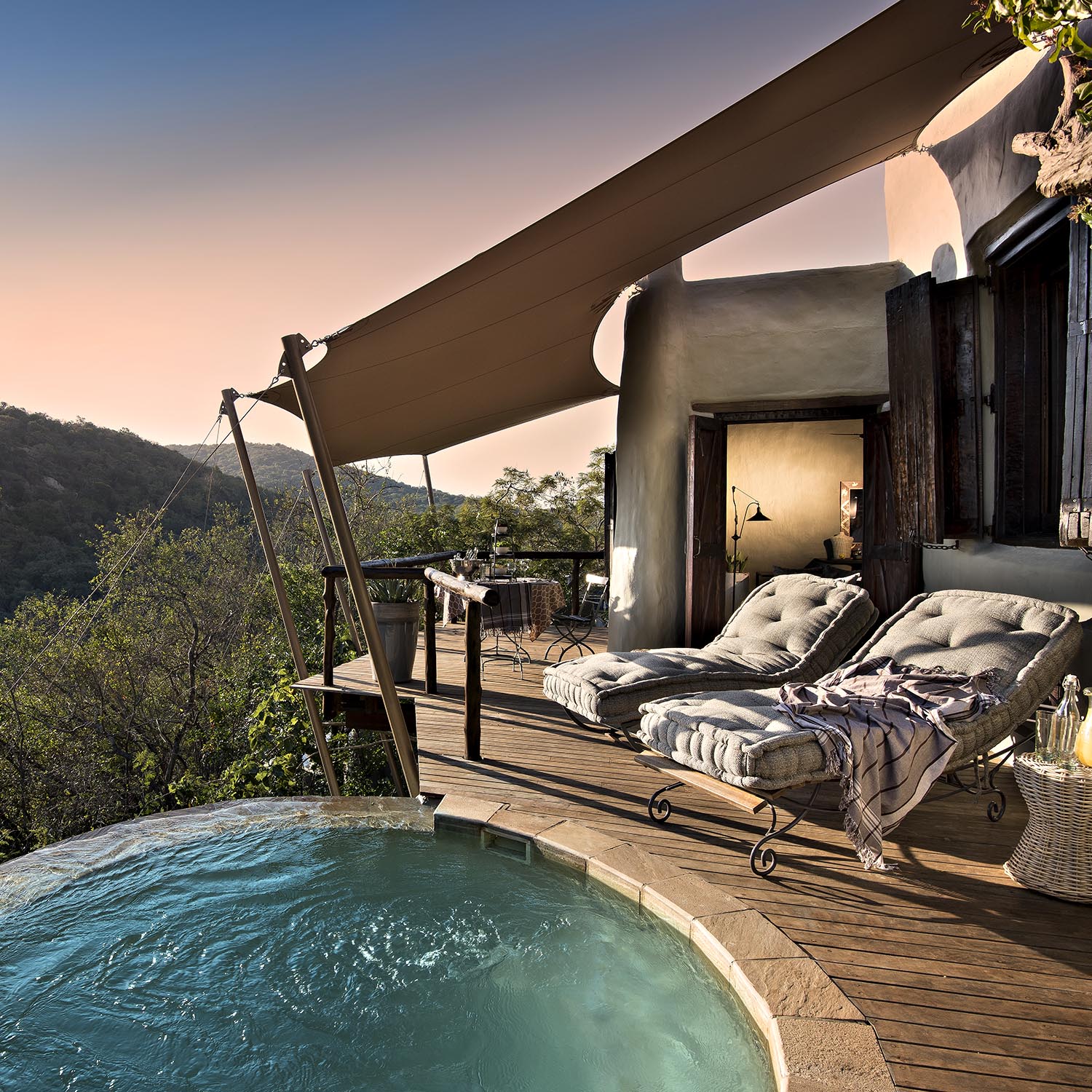
Phinda Rock Lodge is set dramatically on a cliff face, in the breathtakingly stunning Zululand region of northern KwaZulu Natal, South Africa. And if that were the only sentence we wrote about this place, that would be enough for this section.
But it’s really the Lodge’s six private suites and their turquoise-blue plunge pools that steal the show. Each seemingly dissolves into the endless green horizon, with views of the Phinda Private Game Reserve and unparalleled intimacy for you and your loved one.
Click here to go ON A LEDGE
WATCH THE FULL VIDEO
Pools are important in Africa. Almost mandatory for a Safari these days.
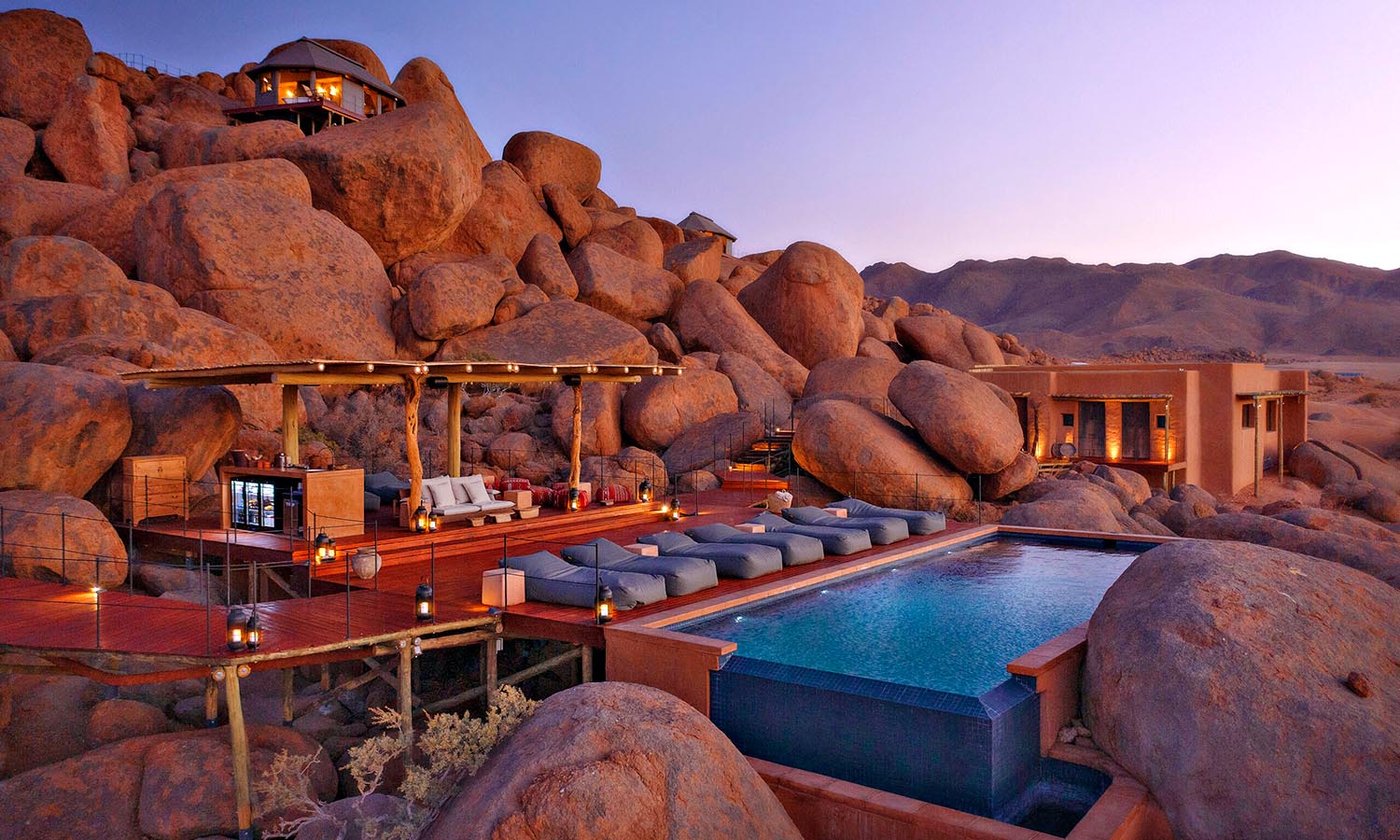
But they’re especially important in an African desert and this one in the Namibian desert is hard to go past.
Scrap that. This pool is elite. There are no competitors.
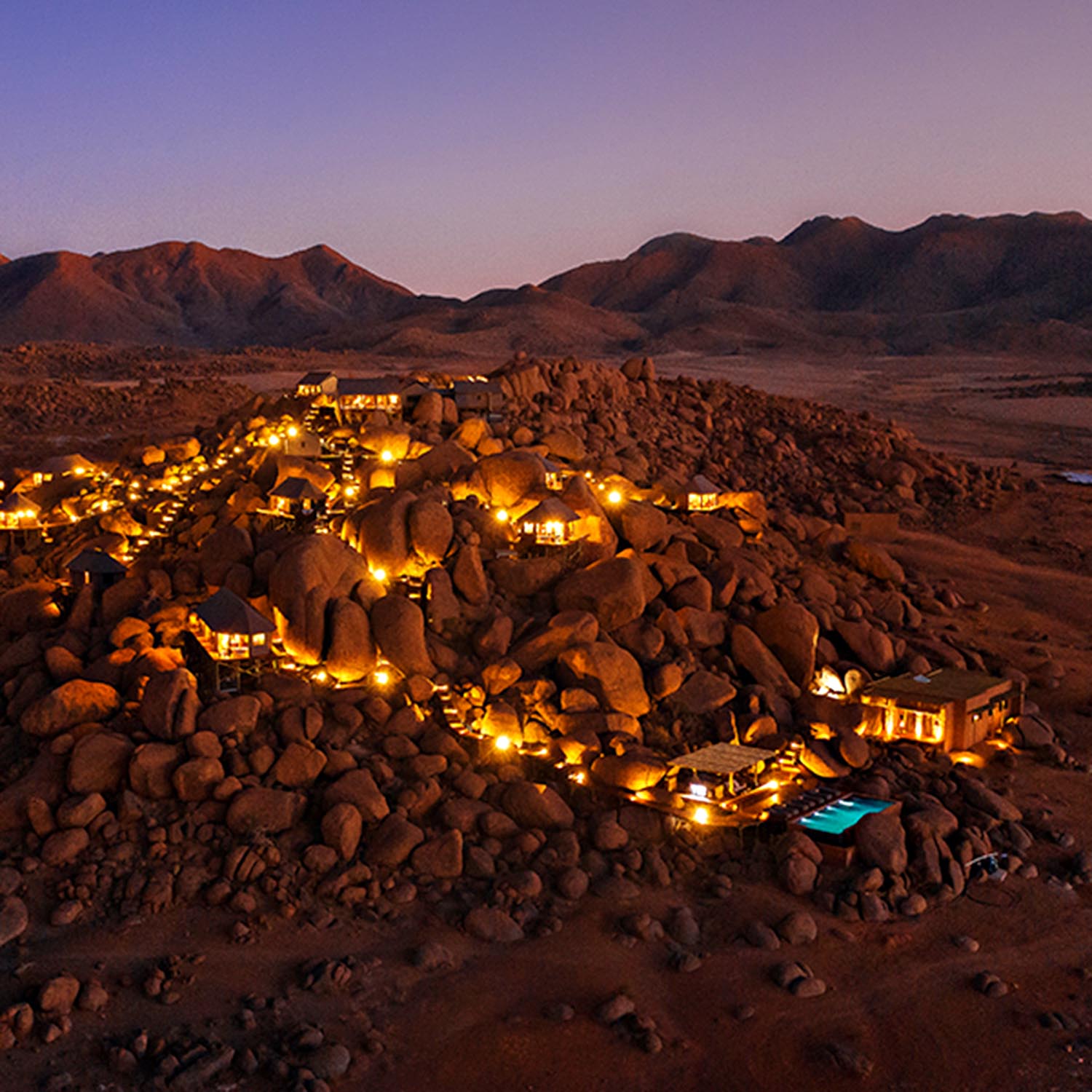
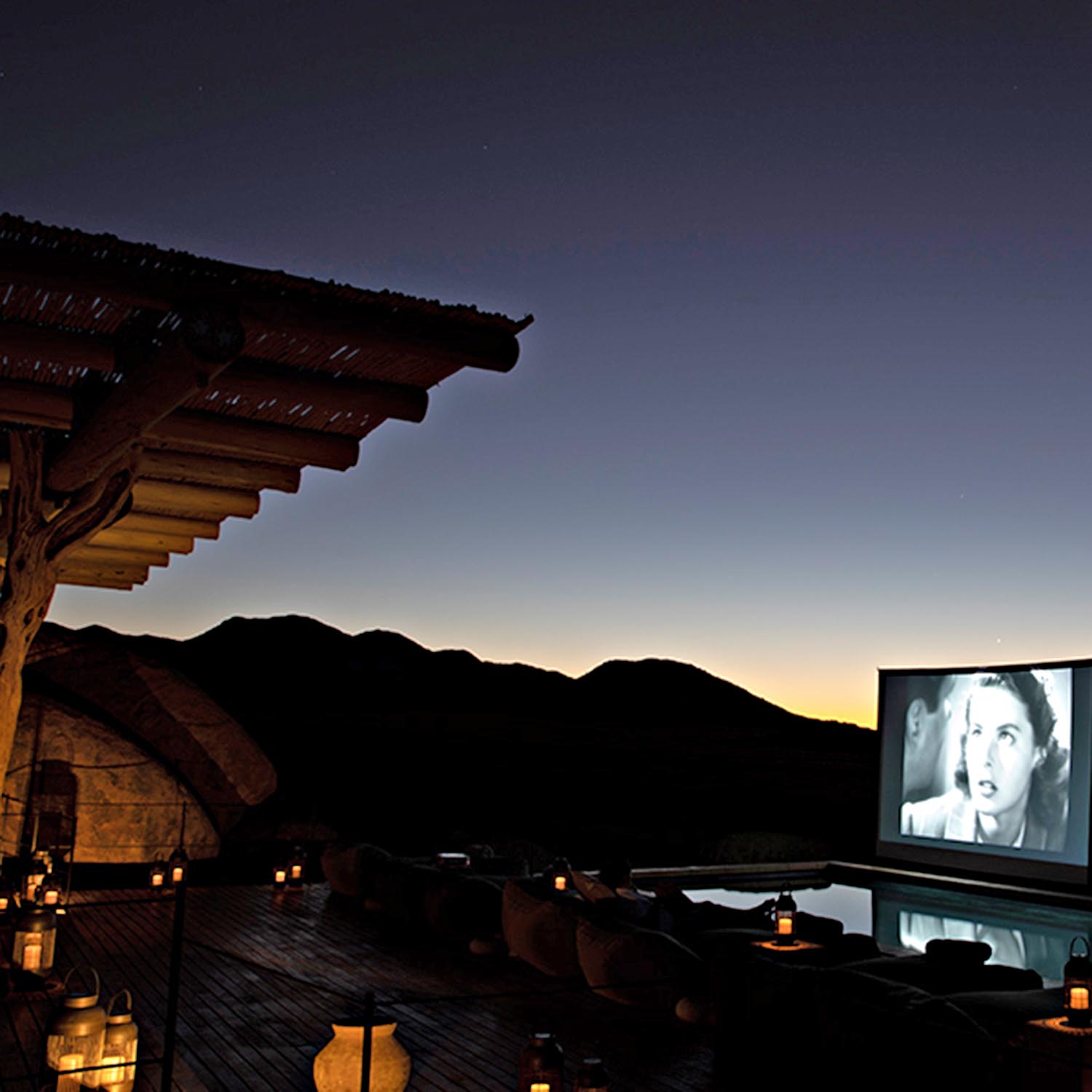
While the lodge here has 10 luxury tented suites, somehow spectacularly constructed on granite boulders, the desert infinity pool here is the centrepiece. Offering uninterrupted views, sunrise to midnight dips and even classic movies on a custom-built big screen.
Click here to COOL OFF
WATCH THE FULL VIDEO
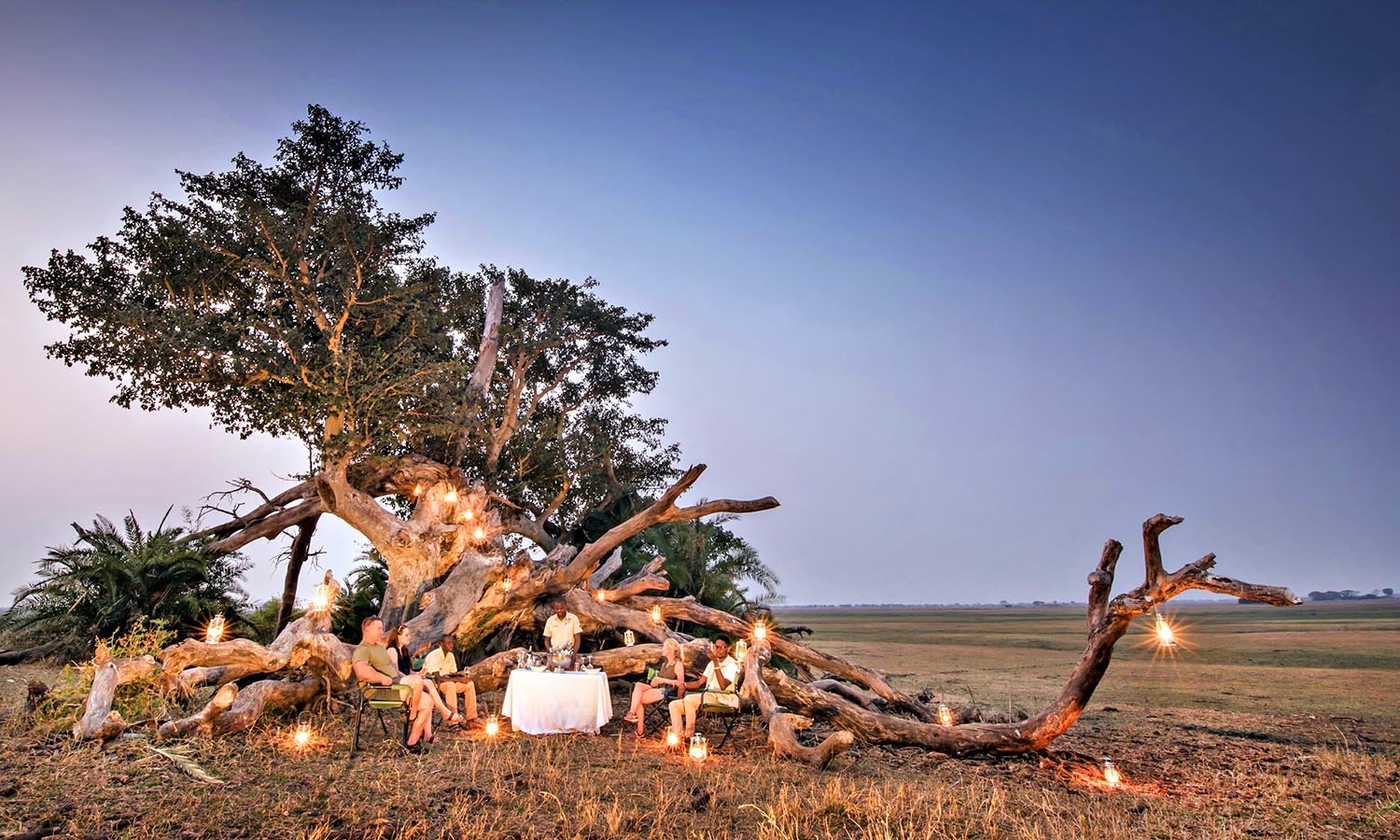
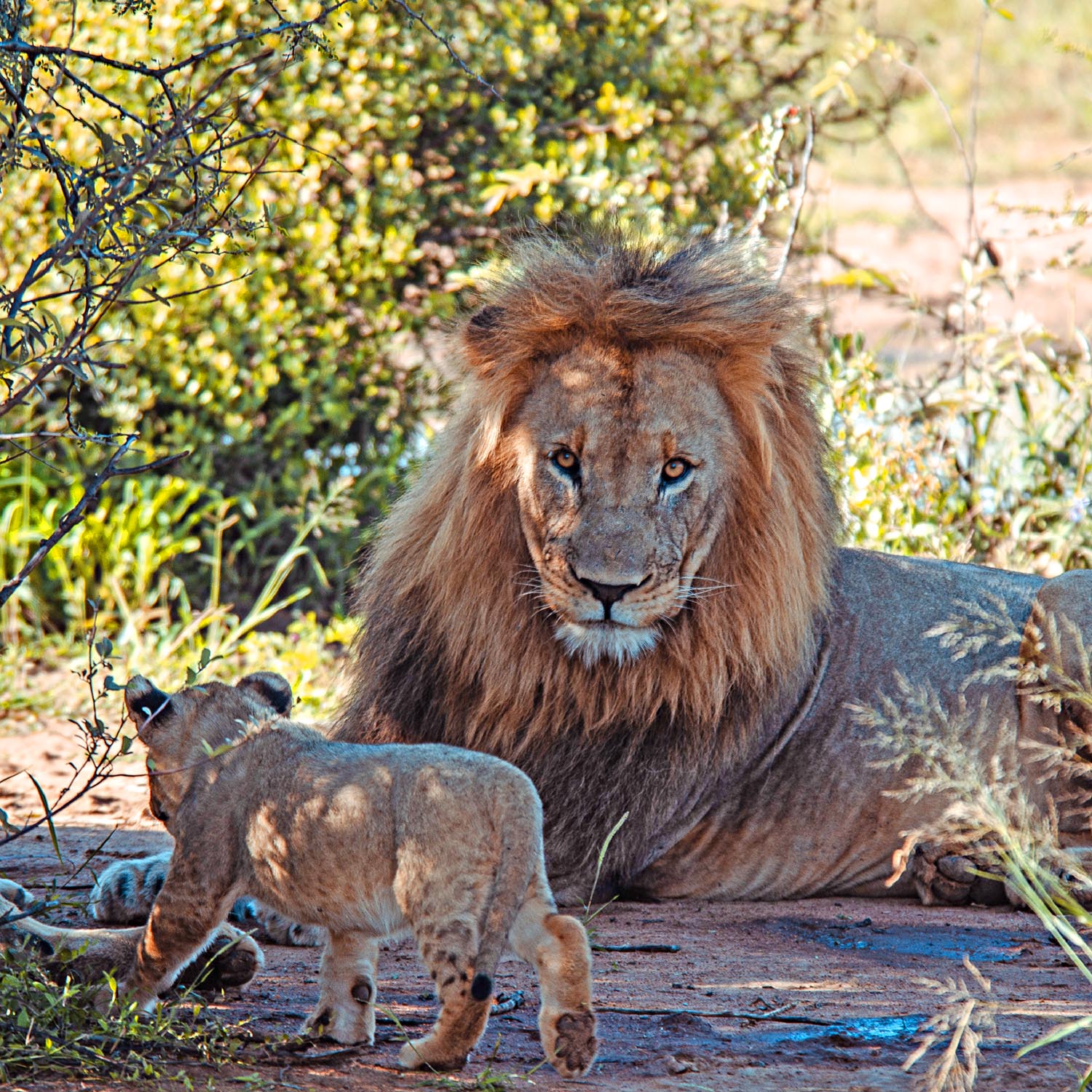
This corner of Kafue National Park in Zambia is famous for its lion sightings, so it’s just as well that all the accommodation at Chisa Busanga Camp is built on stilts.
With just four cocoon-like rooms, the nests have been designed to resemble the endemic weaver birds’ nests that can be found in the surrounding trees around Chisa Busanga.
Take flight each morning for a spectacular view across the Kafue plains or head back to the common areas for a dip (and a drink) in the Camp’s plunge pool.
While the lodge here has 10 luxury tented suites, somehow spectacularly constructed on granite boulders, the desert infinity pool here is the centrepiece. Offering uninterrupted views, sunrise to midnight dips and even classic movies on a custom-built big screen.
Click here for a BIRDS EYE VIEW

CLICK TO WATCH
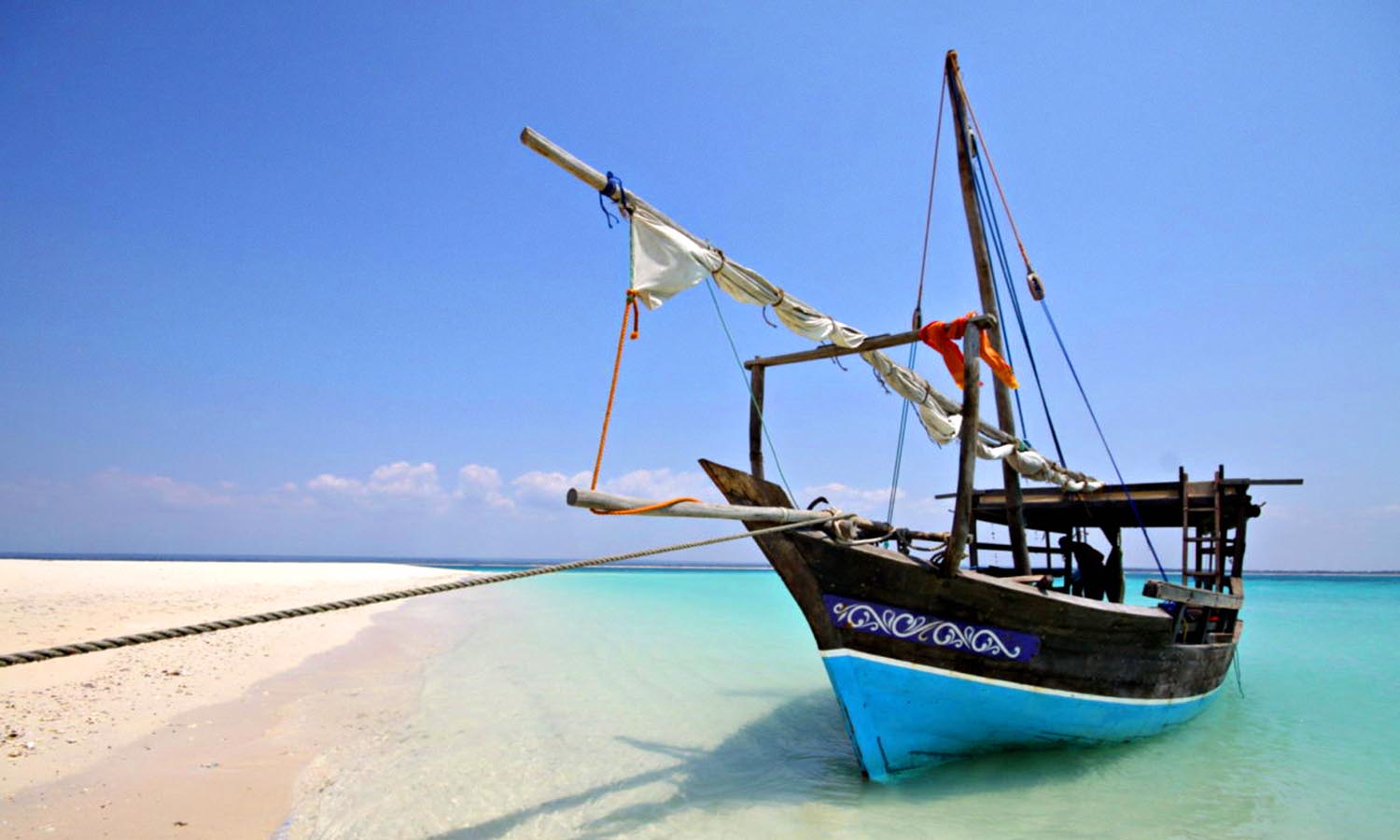
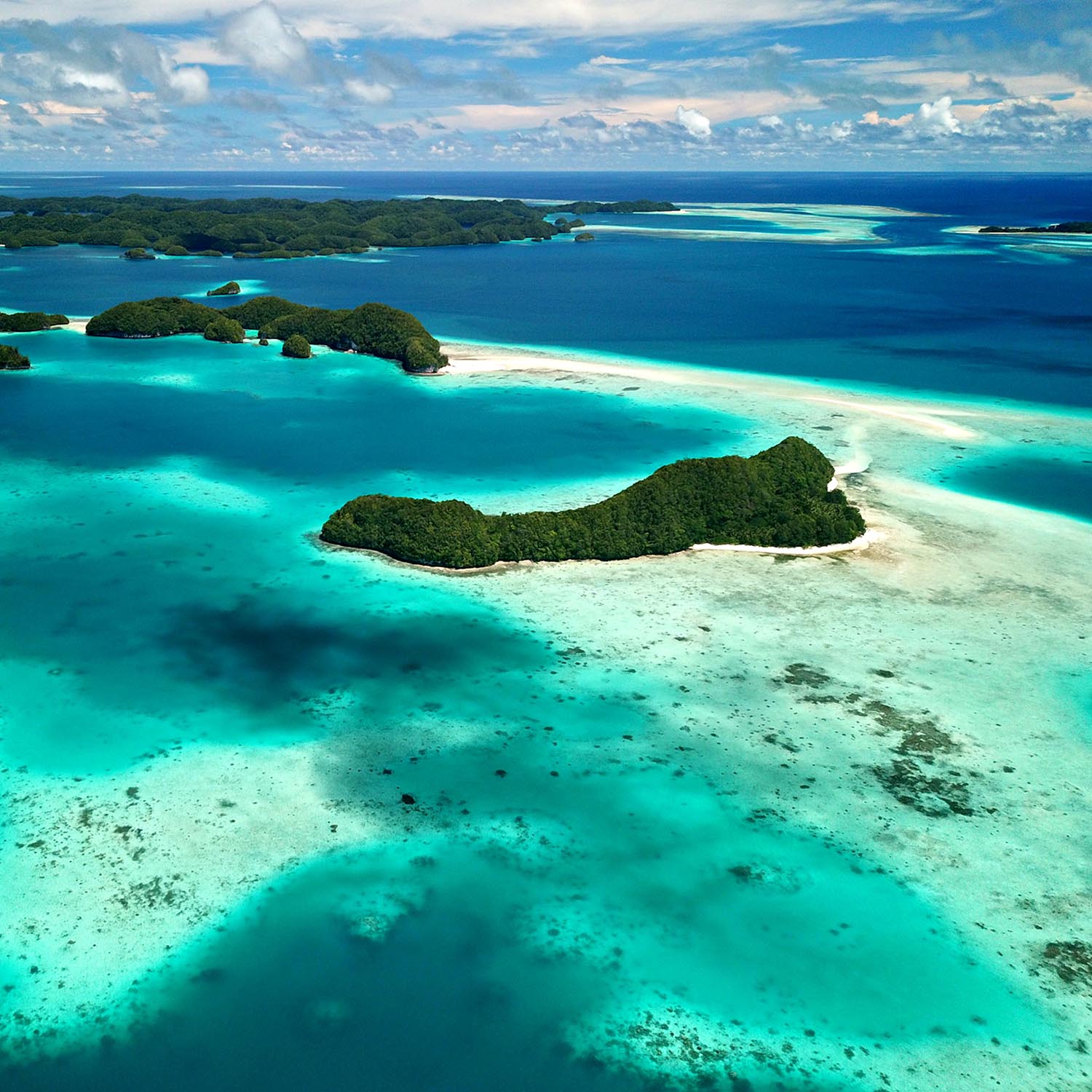
Forget Zanzibar in Tanzania, this is Africa’s newest island paradise. The Quirimbas islands in Mozambique are stunning and there’s no better way to rip the lid off both the underwater adventures here and the rich colonial history than by traditional wooden dhow.
On this safari with an ocean twist, you’ll first spend three nights in a meticulously restored colonial lodge on the former Portuguese island outpost of Ibo before heading for the high seas for the real adventure.
Across four nights on a mobile safari dhow, you will sail into crystal clear waters and safari under the waves with expert guides helping you on your daily snorkel.
Your guides will also set up camp under palm trees on the remote Matemo Island and return you to Ibo where you can finish your trip exploring the ruins of what was a once thriving Portuguese colony off the coast of Mozambique.
Click here to be a BEACH BUM

WATCH THE FULL VIDEO
First there was mountain biking, but then some African genius decided that some of the biggest sand dunes in the world were also worth riding as well. But hear us out, this one is pretty epic.
Introducing the Fat Biking Safari, which is an eight-night guesthouse and camping experience through the Namib Desert on specially designed bikes built for specifically tackling sand.
There’s no denying that this adventure is tough and is for experienced riders only. Some days you’ll spend up to eight hours in the saddle, but you’ll also get a fully catered experience with endless starry nights. Expect to see oryx and jackals for this once in a lifetime safari.
Click here for FAT DUNES
CLICK TO WATCH
It would be enough to say that Jaci’s Lodge in the Madikwe Game Reserve is a must-visit in its own right on your next safari to the Rainbow Nation.
But Jaci’s Lodge is also home to one of the best game photography experiences on the planet. Their underground terrapin hide is literally the best hiding spot. Semi-submerged in a natural watering hole, wild animals are completely unaware you are just metres away with your finger on the shutter.
The hide is accessible 24/7 through an underwater tunnel and comes fully equipped with state-of-the-art photography equipment. The Lodge also offers some of the best photographic courses in the continent, so you know exactly what to do when a herd of elephants get so close to the hide, you can actually count their eyelashes.
Click here to SNAP IT UP
WATCH THE FULL VIDEO
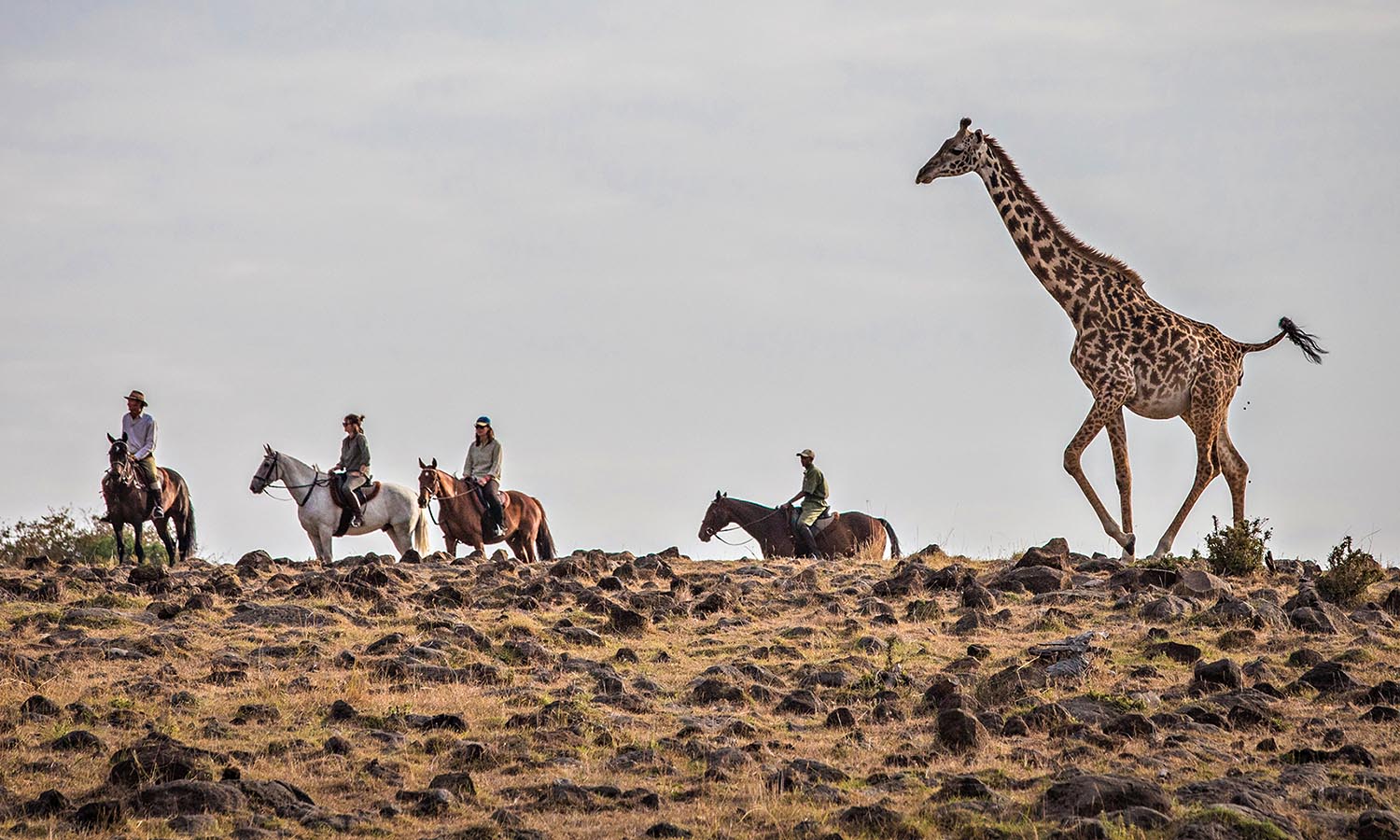
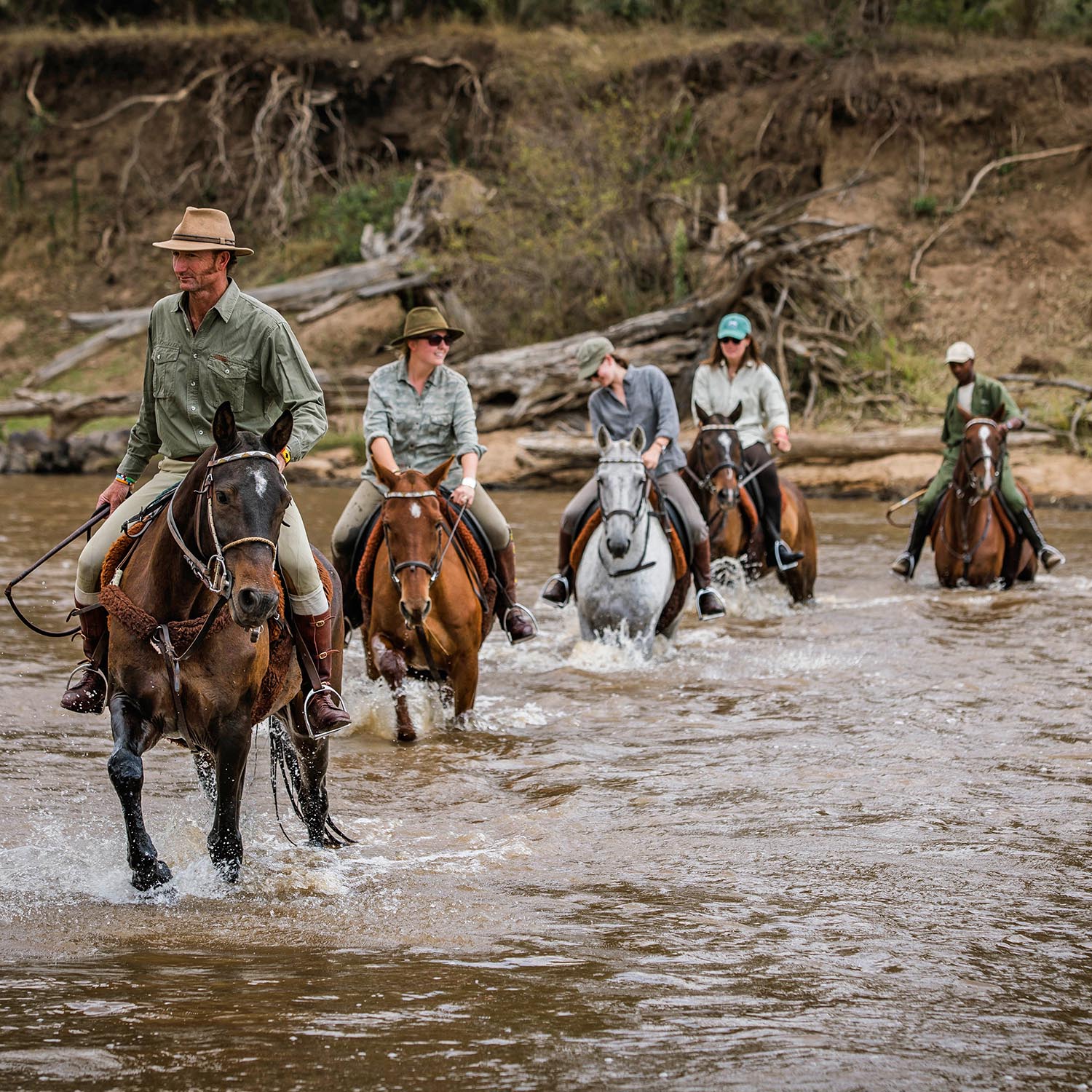
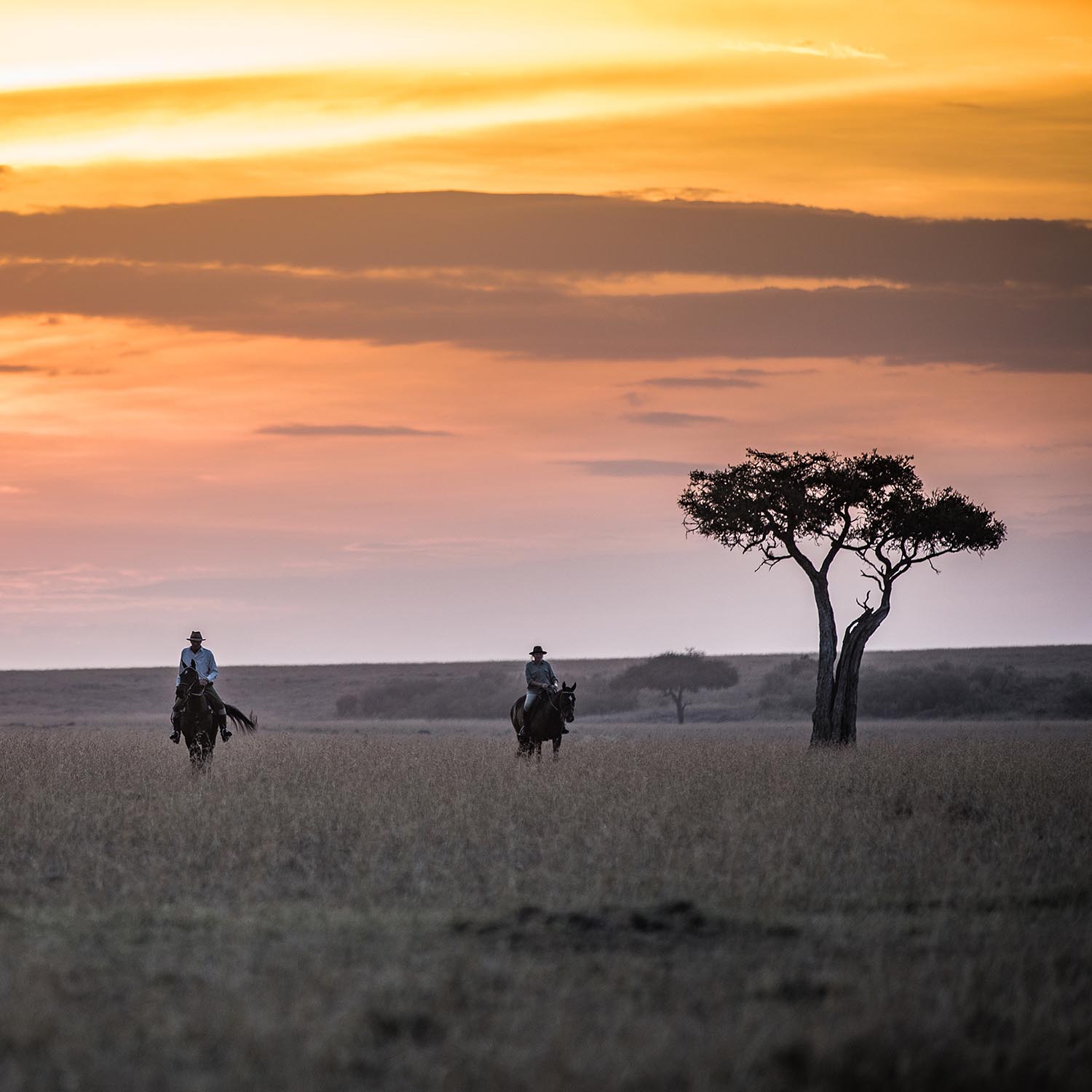
The Masai Mara is often one of the first safari experiences for new visitors to Africa. But just next door you’ll find the Greater Mara Conservancies in south west Kenya which also overlap into the Serengeti plains of Tanzania. This hidden (and often overlooked) golden savannah in Kenya features wide open grasslands that make for the perfect backdrop for this unique horseback safari.
Gallop your way into some of the most untouched areas of the Mara’s private concessions over nine days where you’ll camp each night and encounter wildebeest, zebra and even the local Maasai people.
Instead of the noise of a roaring 4WD engine, this journey on horseback can provide the best (and most natural) way to encounter game in this unforgettable corner of Kenya.
Click here to SADDLE UP
WATCH THE FULL VIDEO
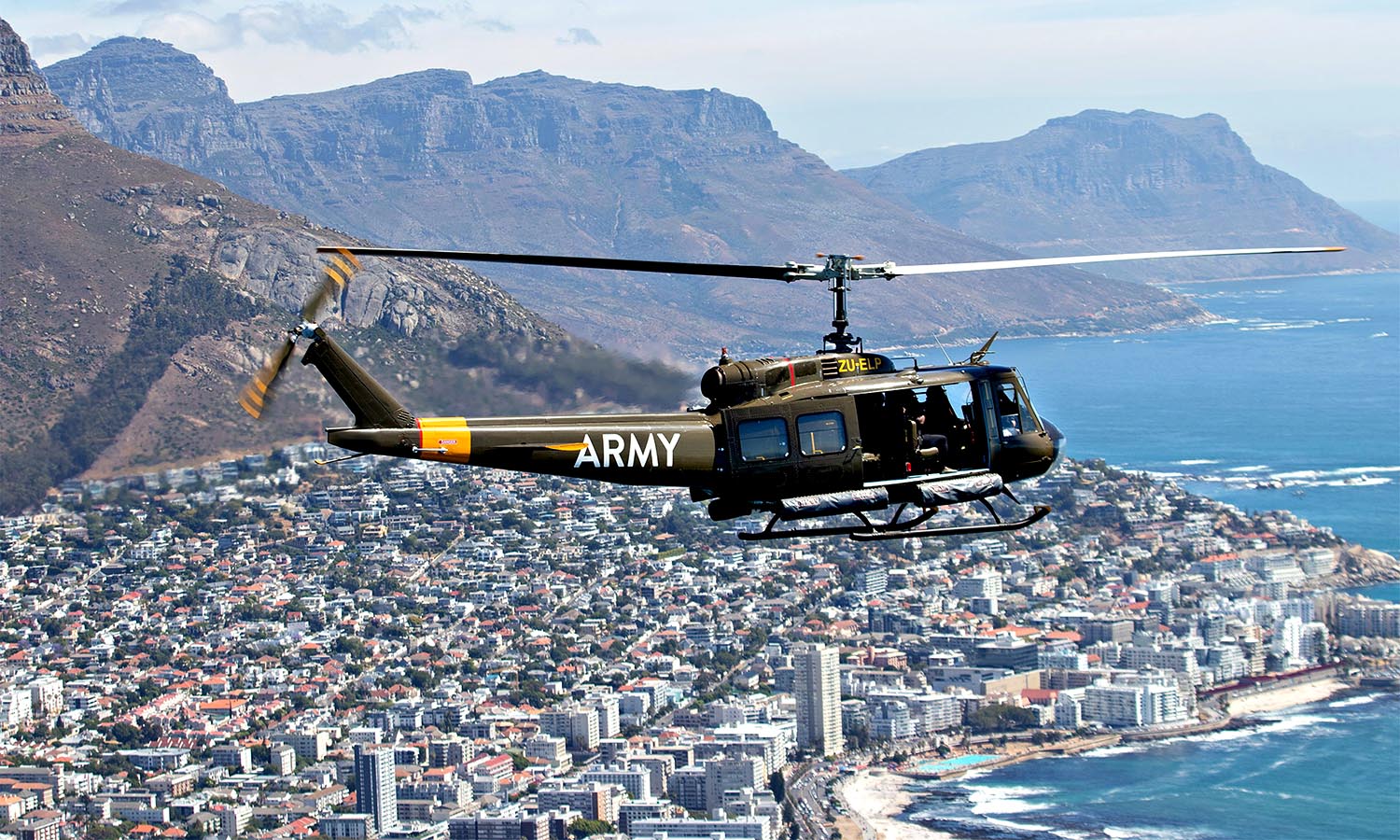
The stunning Cape Town backdrop is definitely best viewed from the air, and without any doors on your mode of transport.
Strap yourself in for an unforgettable and exhilarating helicopter ride over the Atlantic seaboard or Table Mountain on the only privately owned Bell UH-1 Iroquois helicopter – nicknamed ‘Huey’ – in the world.
This meticulously restored machine was designed specifically for combat and low level flying and actually did two tours of Vietnam, so you can channel your favourite character from Full Metal Jacket or Apocalypse Now.
Fly The Huey also offers guests the opportunity to book a white-knuckled ‘Combat Mission’ which involves low-level flying skimming the waves along the beaches of Big Bay and Melkbos.
Click here to GET TO THE CHOPPER
CLICK TO WATCH
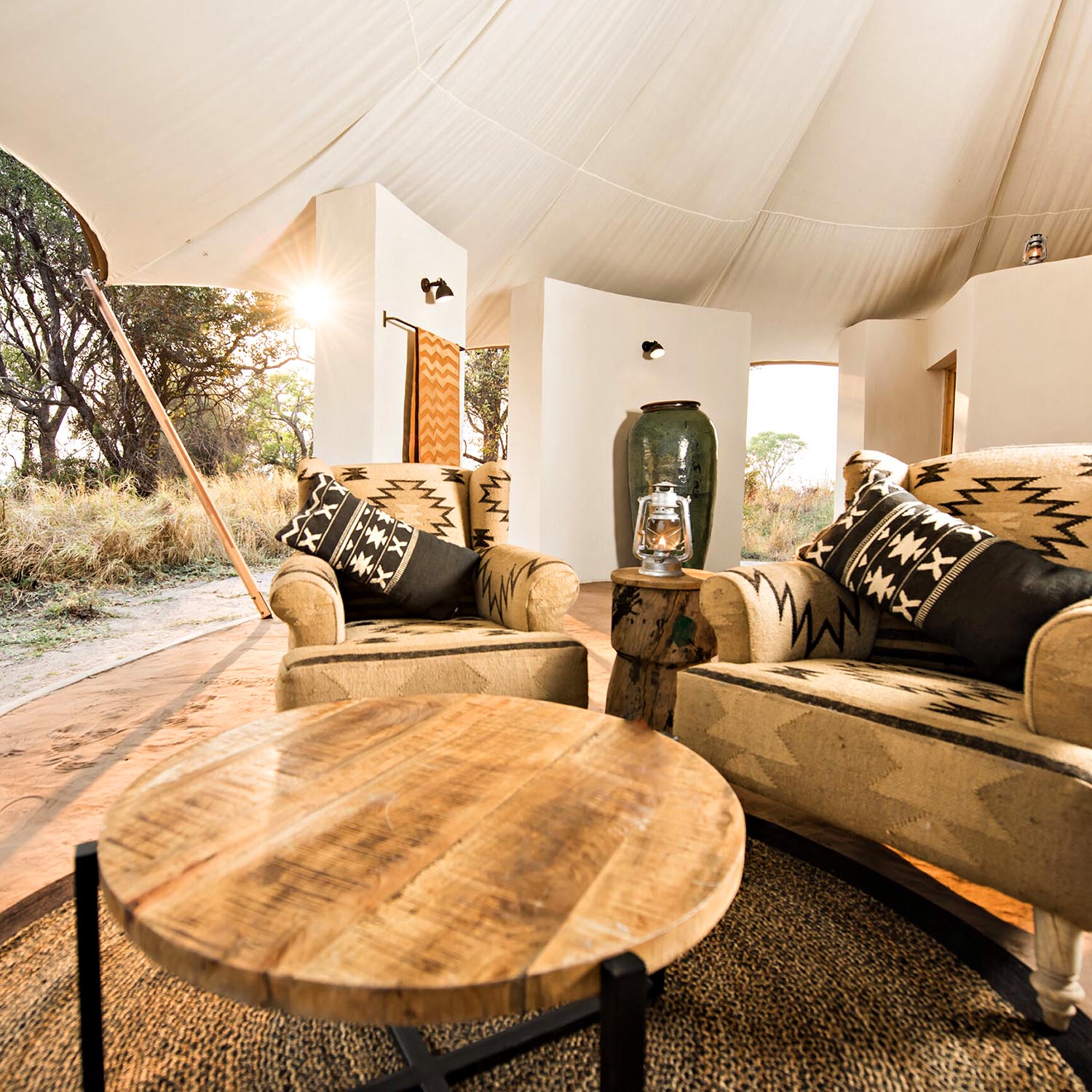
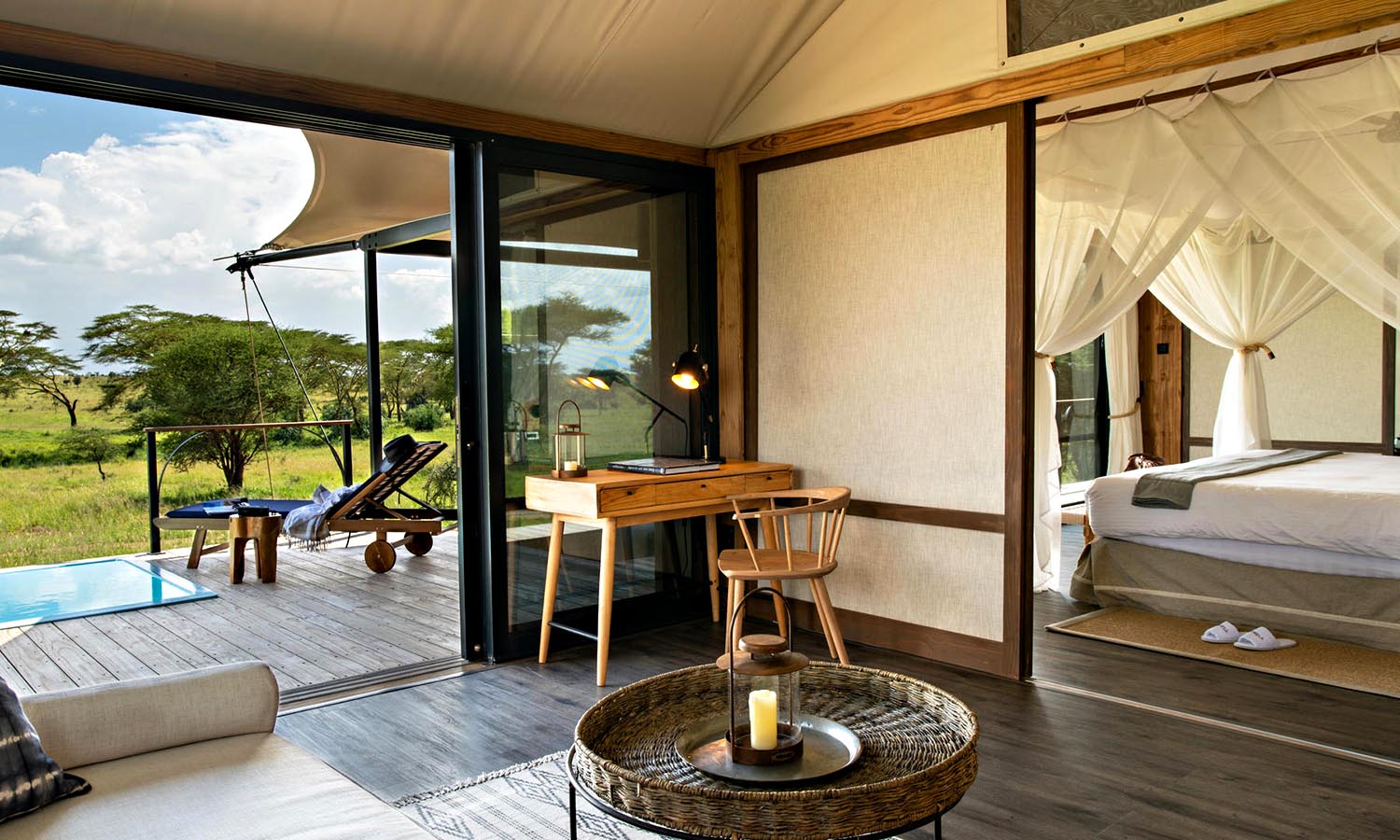
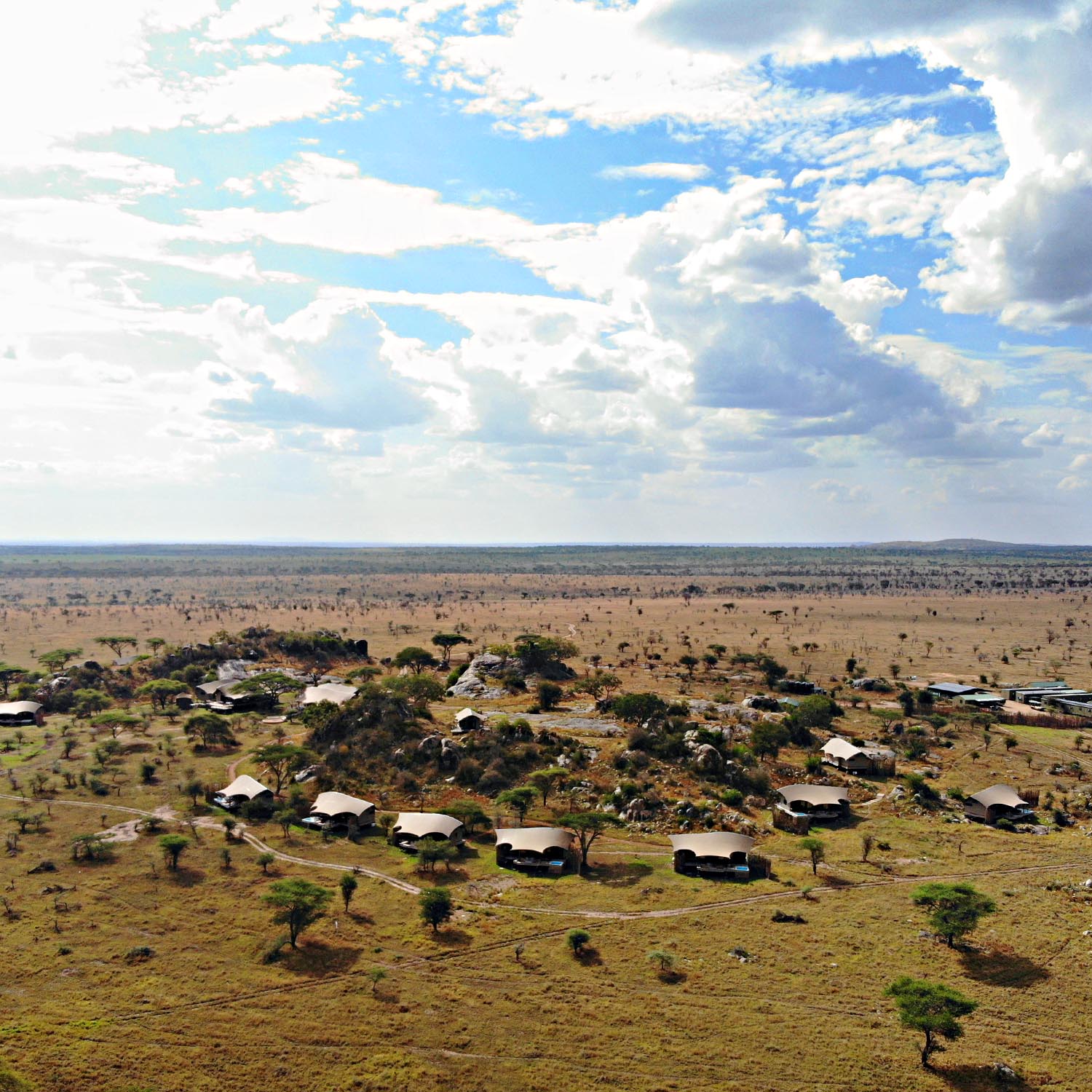
Technically, you’re sleeping in a tent at Nanyukie Lodge in the Serengeti. This may well be the biggest undersell in Africa.
The camps at Nanyukie are probably nicer than where you usually sleep. A large, church-style pyramid tent is filled with stylish furniture, the room leading out to a hardwood deck from which you can see the wonders of the Serengeti, be it wildlife or that red sun setting in the distance.
And did we mention the private swimming pool? Oh yeh, there’s one of those for most rooms as well.
Click here for something BETTER THAN YOUR HOUSE
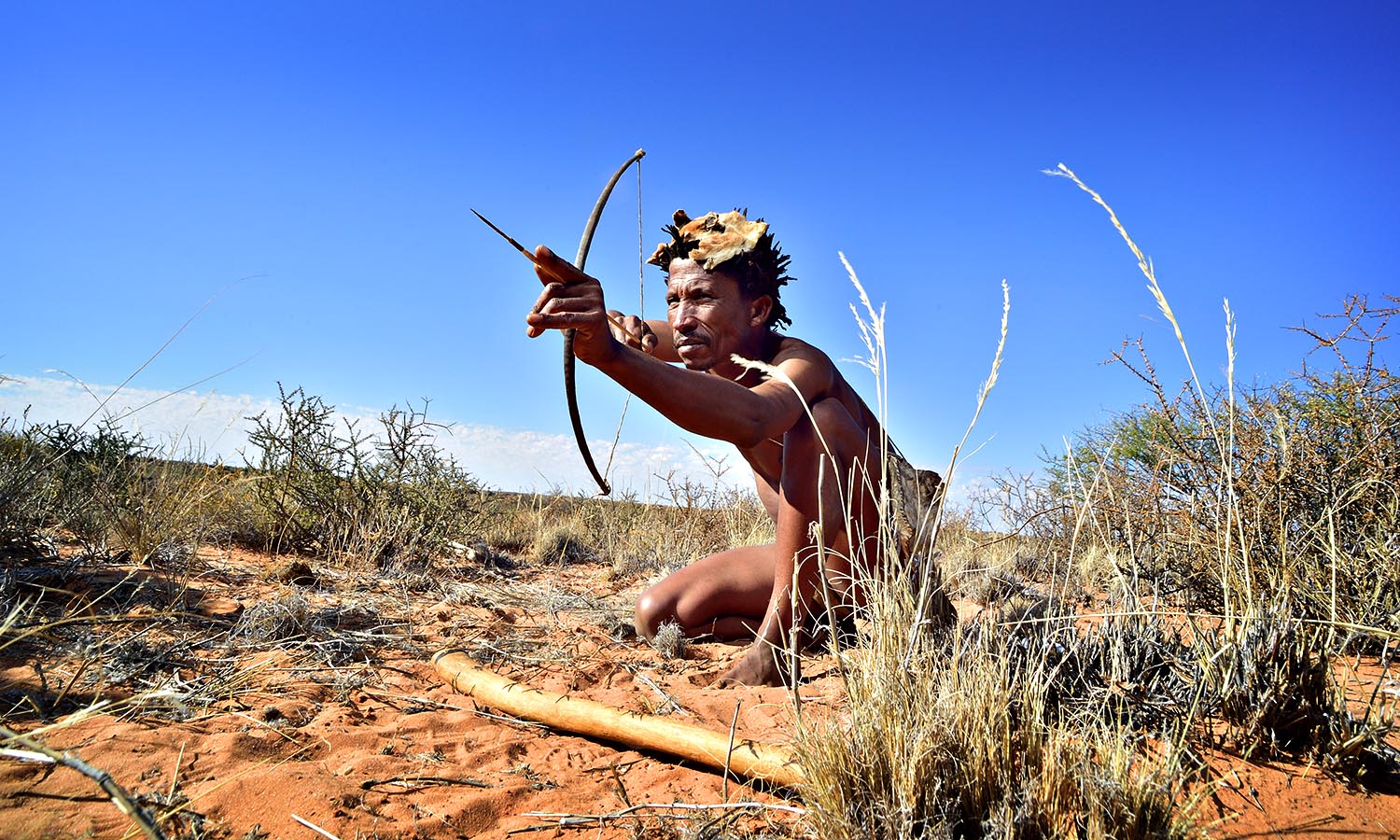
A Bushman Safari in the Kalahari Desert is not your usual kind of safari.
As well as spotting wildlife, get a first-hand, as close as possible glimpse into the life of the ‡Kohmani San, living among this group who have been based in the desert for 20,000 years.
This is for the more intrepid travellers; in a remote, sandy outpost in South Africa’s Northern Cape, learn how to hunt with a bow and arrow, go on an exhilarating four-wheel drive trip over the desert’s red dunes, and witness a trance dance – a powerful, state-altering healing dance.
Click here for DESERT DAYS
WATCH THE FULL VIDEO
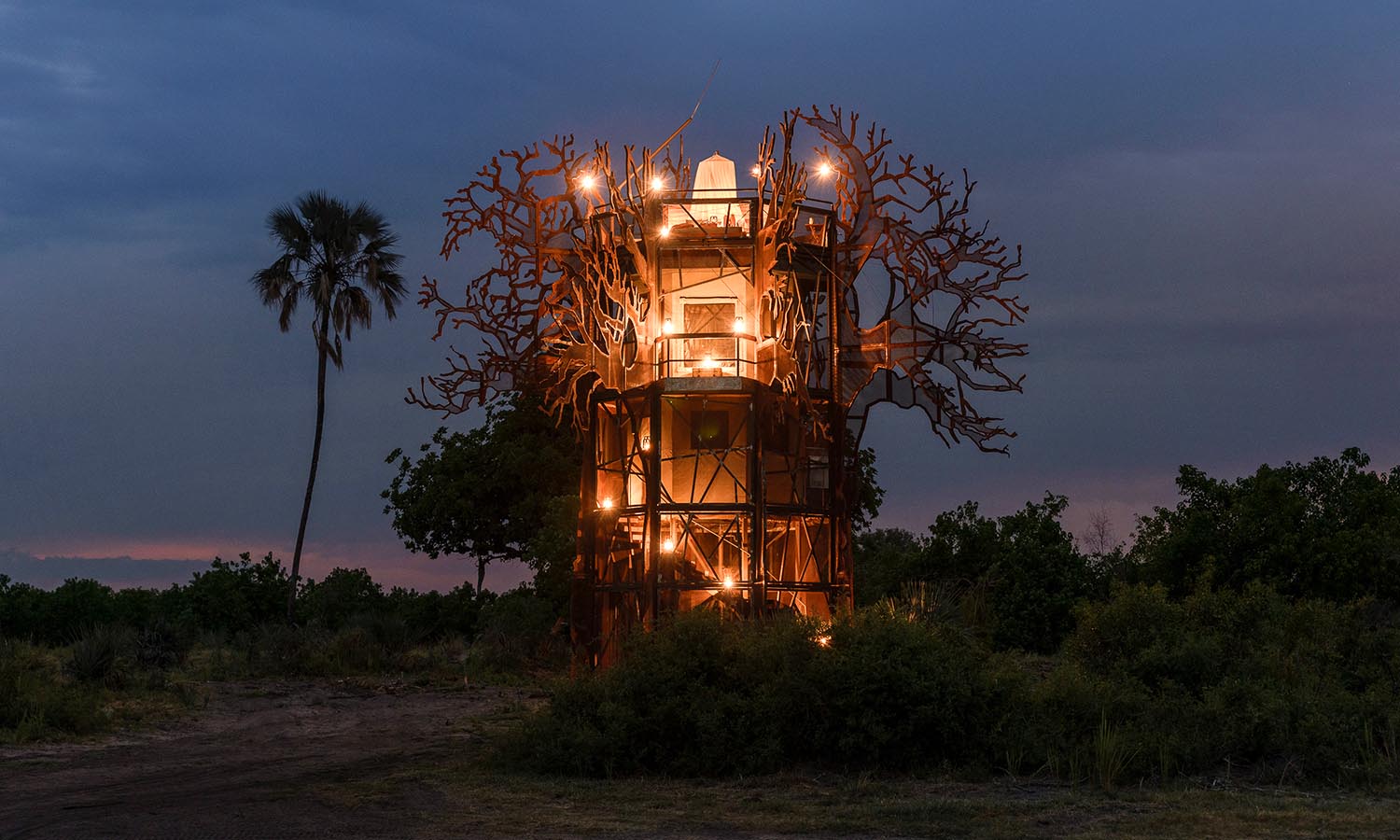
Xigera Safari Lodge really is cream of the crop when it comes to safaris.
The lodge’s Baobab Treehouse is a combination of indigenous Croton trees and steel designed in the shape of a Baobab tree, soaring ten metres into the sky and giving three levels of panoramic views over floodplains where all sorts of wildlife are known to graze, and where the stars above are like a cinema in the middle of a bush.
The lodge itself is based within Botswana’s legendary Okavango Delta, with land, water and helicopter safaris available to you.
Images: Xigera Safari Lodge
Click here for the BEST OF THE BEST
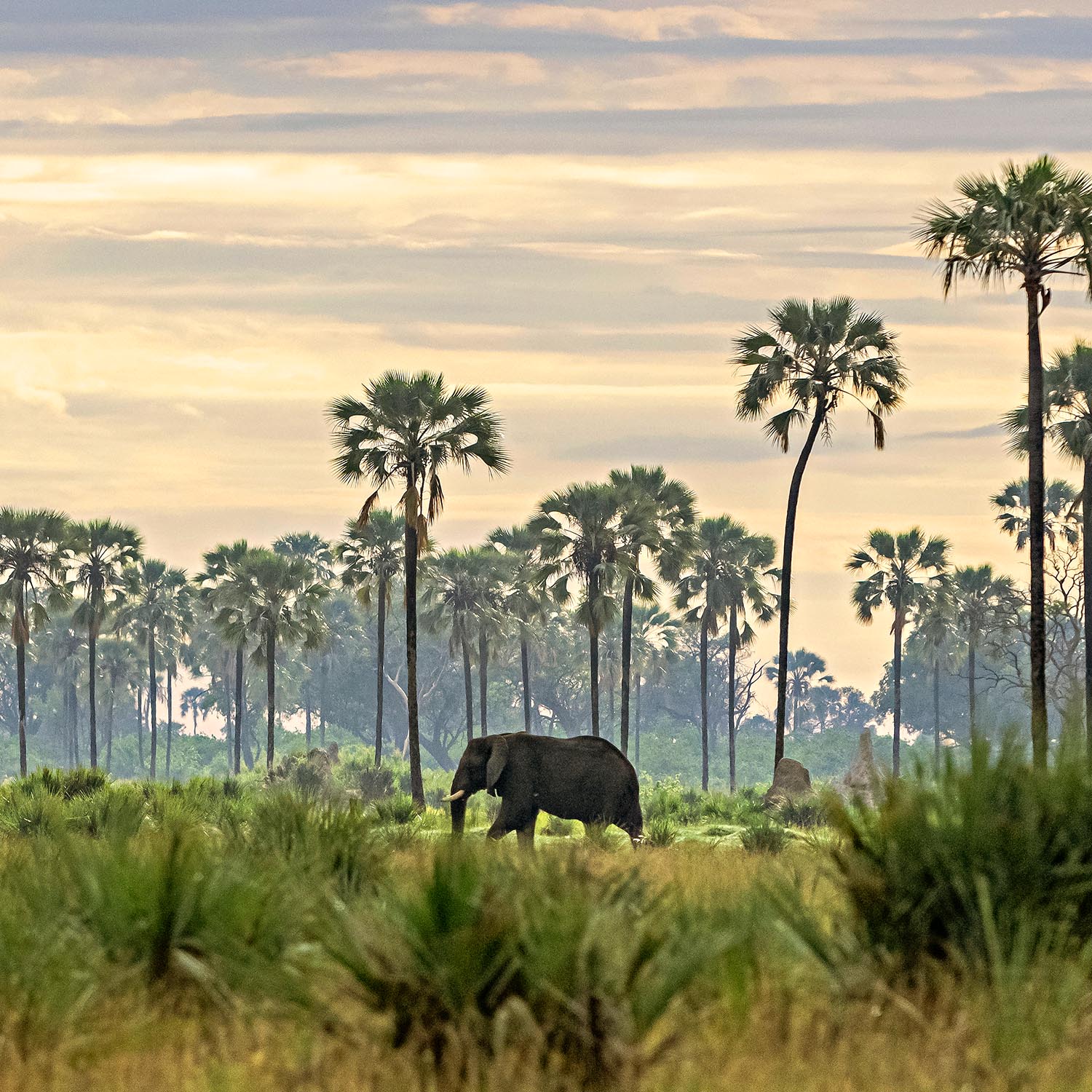
Well, good reasons—plural—if we’re being totally fair. From super jungly jungle (packed with caves and sinkholes and trekking, oh my!) to perfectly pristine coastlines and an unmatched food scene, this slice of paradisiacal pie has got a little something to suit every kind of traveller.
But with great travel experiences often comes great travel crowds, right? True. Guess it’s lucky we’re here to help you get off the well-trodden rice paddy path and into some of Vietnam’s most underrated experiences then.
Without further ado, here’s our (non-exhaustive but fairly comprehensive) list of where to go in Vietnam for a rabble-free trip:
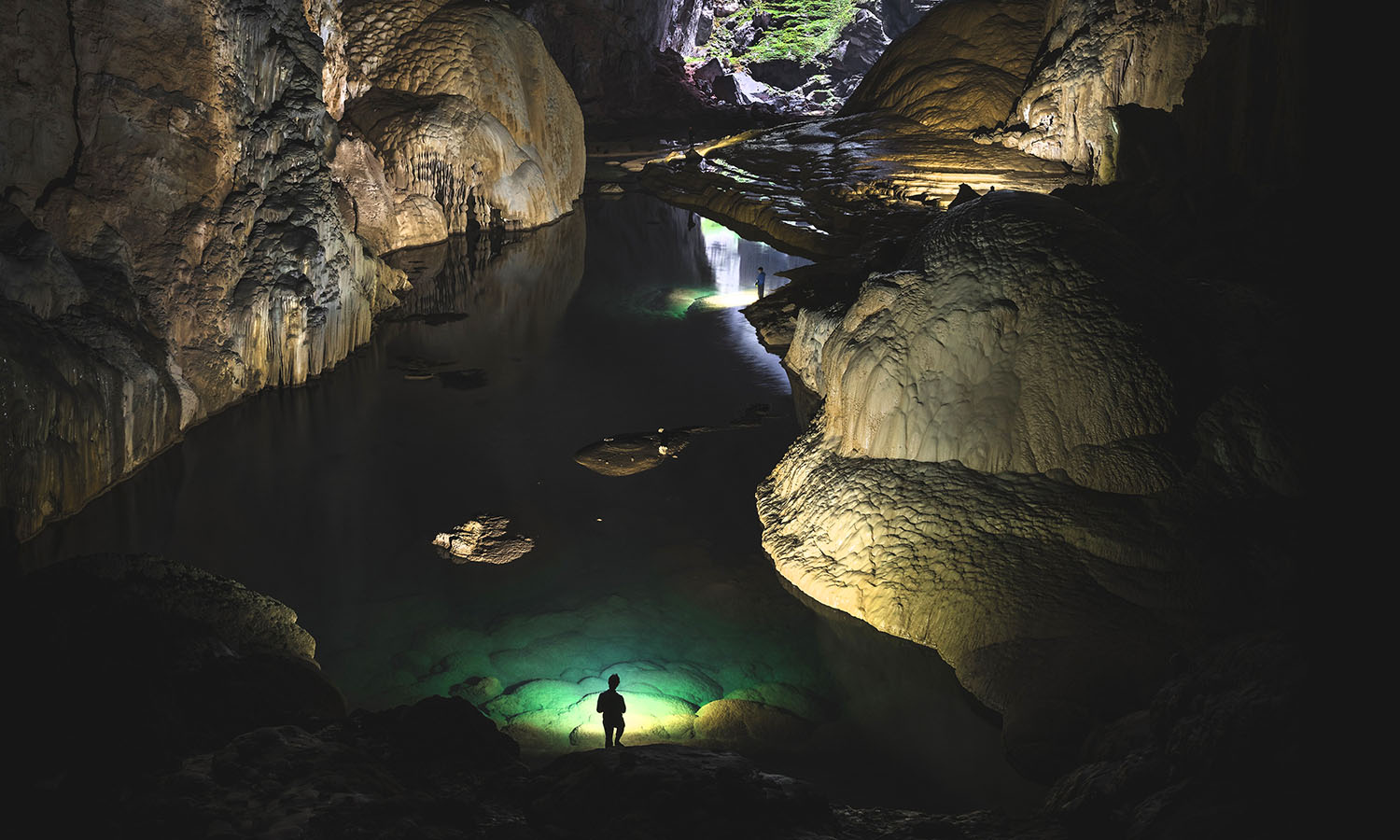
Imagine a cave so big it could house an entire New York City block of 40-storey skyscrapers; a subterranean system so vast it creates its own weather system; and a home to a micro-ecosystem of lakes, rivers and concealed jungle. Just IMAGINE.
First explored in 2009 and later officially declared the largest cave in the world, Hang Son Doong in Phong Nha Ke Bang National Park, north-central Vietnam, is a geological marvel. You can join a seven-day expedition led by experts from the British Cave Research Association and discover the secrets of this fascinating network of limestone chambers, karst pinnacles, stalagmites and stalactites.
Wade through thigh-deep water by torchlight, examine 350-million-year-old fossils and keep your eyes peeled for white spiders and shrimp. A Boeing 747 could comfortably fly through the largest cavern but you’ll make the trek on foot with a team of porters and guides.
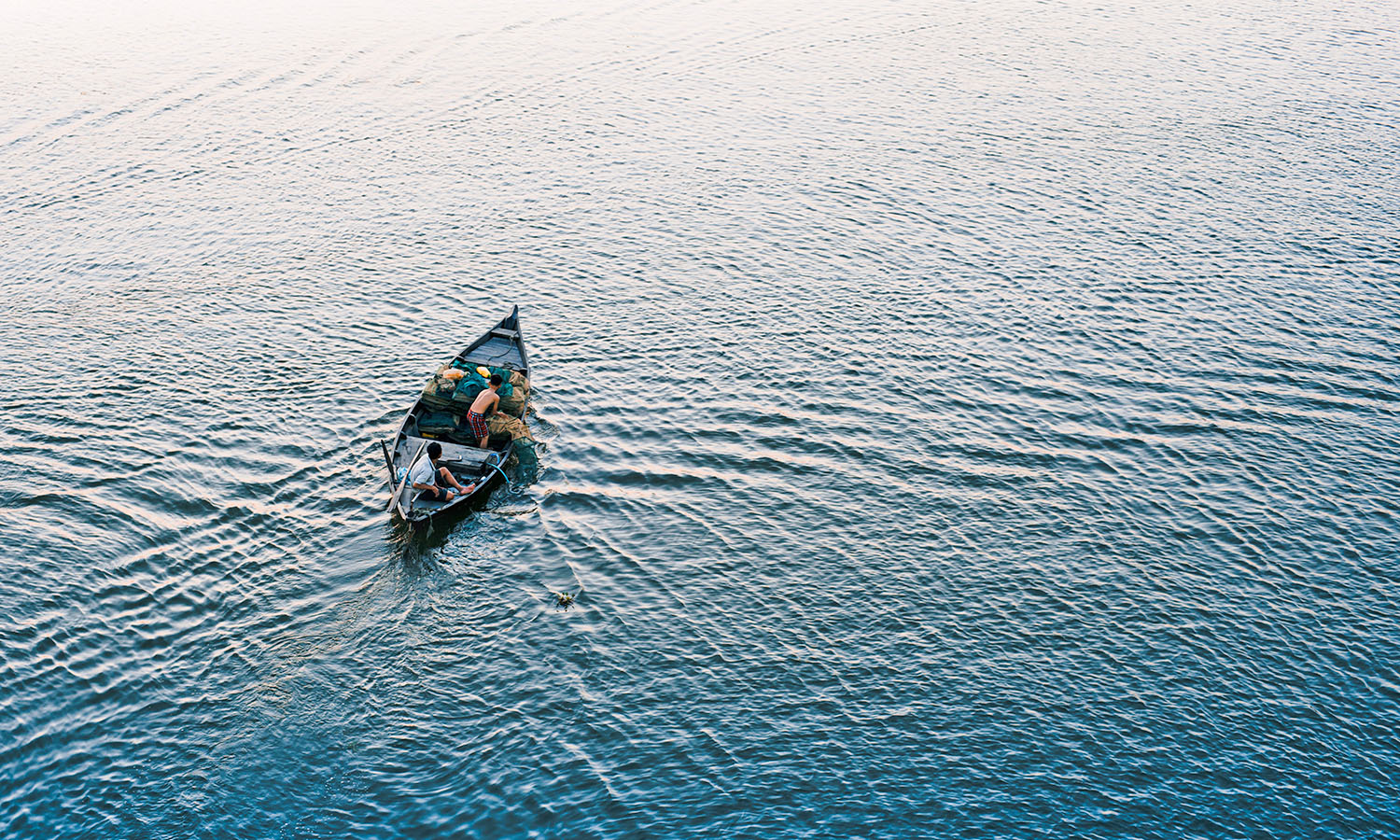
Into calamari? Like to chow down on a little squid ceviche? Enjoy a bit of angling from time to time? Then you better jump on a squid fishing fleet and try your hand at catching dinner.
The easiest way is to nab a spot on one of the tours that depart from Duong Dong Harbour at sunset. These locals will show you the ropes or, for a serious squid-jiggling jaunt, you can commission your own boat and skipper at An Thoi Port in Ganh Dau.
Largely undeveloped, Phu Quoc is located in the Gulf of Thailand, about 15 kilometres off the coast of Cambodia, and is made up of white-sand beaches and lush tropical jungle, with most of the island declared a national park. If you like fish sauce with your squid, check out one of the local distilleries. Nose pegs recommended.
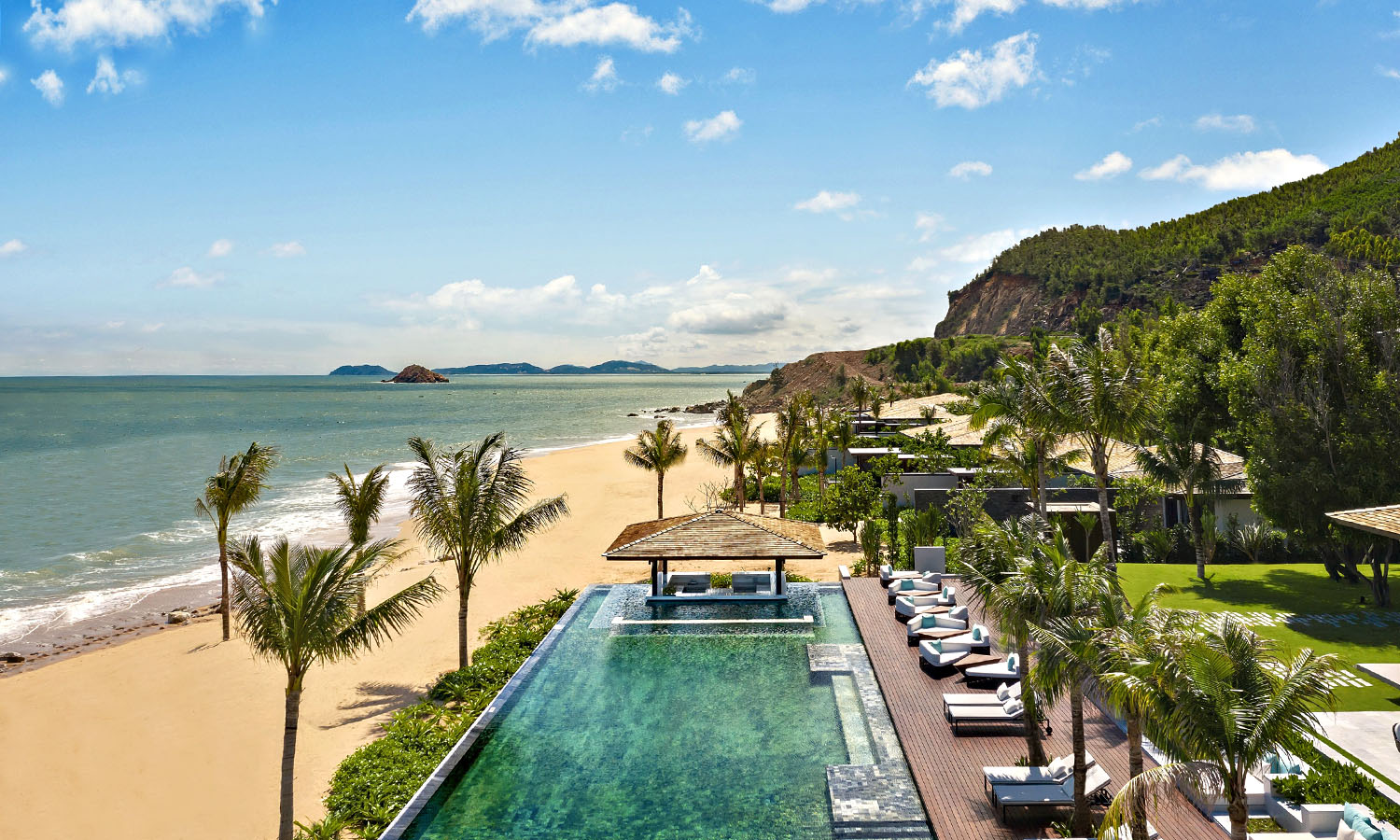
Perched on the edge of a soft-sand beach in a part of Vietnam so far undiscovered by the masses (it’s about halfway between Da Nang and Nha Trang), sits Anantara’s newest resort. With only 26 villas, expect the very best, including plunge pools that boast stunning sunrise views and minibars with fridges larger than the one you have at home and stocked with the best wines and craft beers from around Vietnam.
While away the days frolicking between the beach and the pool bar or take one of the hotel’s experience tours and explore the Quy Nhon’s Champa ruins, dine in neighbouring fishing villages, or party the night away with the locals.
Click play to watch
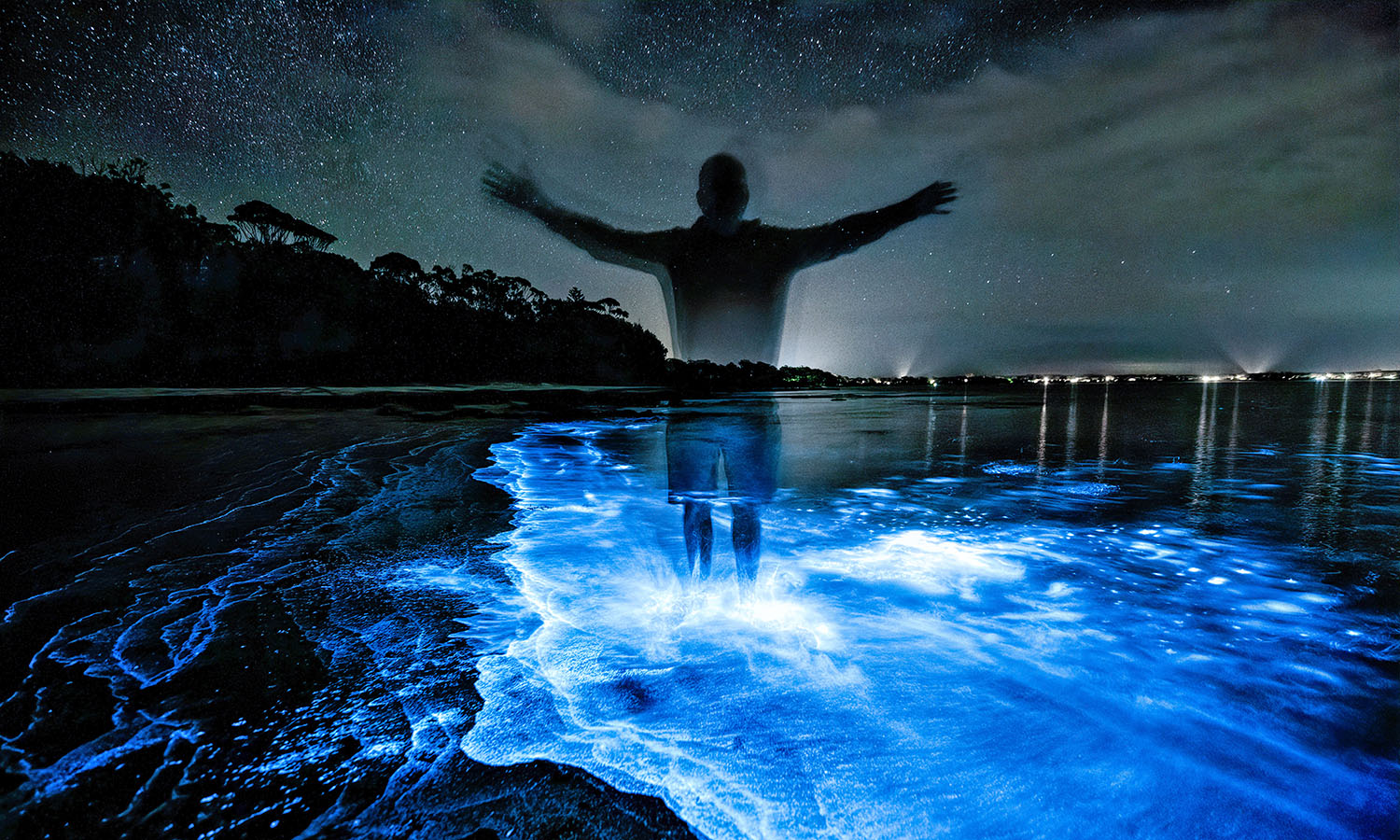
Seeing really, really sparkly plankton is an incredible life experience. You should definitely get yourself to the beautiful Cát Bà island in Vietnam’s north and spend an hour or two witnessing the pretty phenomenon. In fact, don’t just witness it—get in the water and swim with the sea of stars.
If you’ve got enough time, get out of the main town and into nature. There’s heaps of it here. You could hike the Đỉnh Ngự Lâm peak or explore the super remote Viet Hai village. The island is your oyster, friends. There are probably oysters here too, actually.
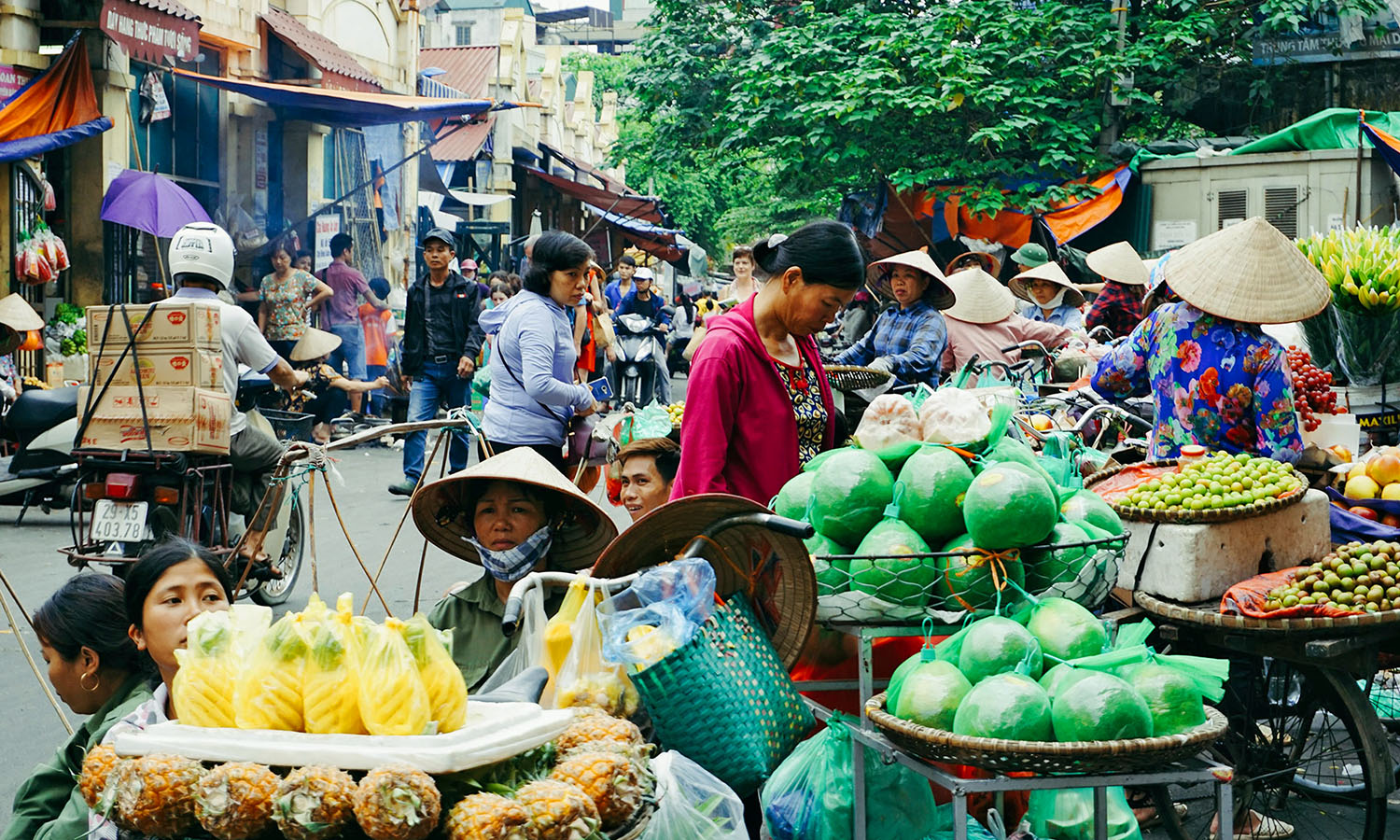
Okay, we’re aware that this is technically quite a popular part of Vietnam. BUT—we’re sending you in search of snails. And not every traveller is doing that. Vietnam is big on sea snails and they come in all shapes, sizes and spices. One of the best ways to slurp down a snail is in ‘bun oc’ soup—a street food classic.
Normally eaten at night, your best bet is to sniff out the snails after sunset. The correct way to eat them: choose your snails, choose your cooking method, choose your seasoning and then chow down.

Wanna get really remote? The mountain ranges in northern Vietnam are super untouched and worth the trip. The best, and only, way to do it? On the back of a motorbike. The Ha Giang Loop will take you about four days, starting in Ha Giang and winding north till you finish up near the border of China.
Expect beautiful villages, breathtaking scenery, some seriously wild mountain passes and big adventure. Make sure to stop off at Heaven’s Gate and the waterfall at Du Gia (cliff jumping encouraged if that’s your bag).
Click play to watch
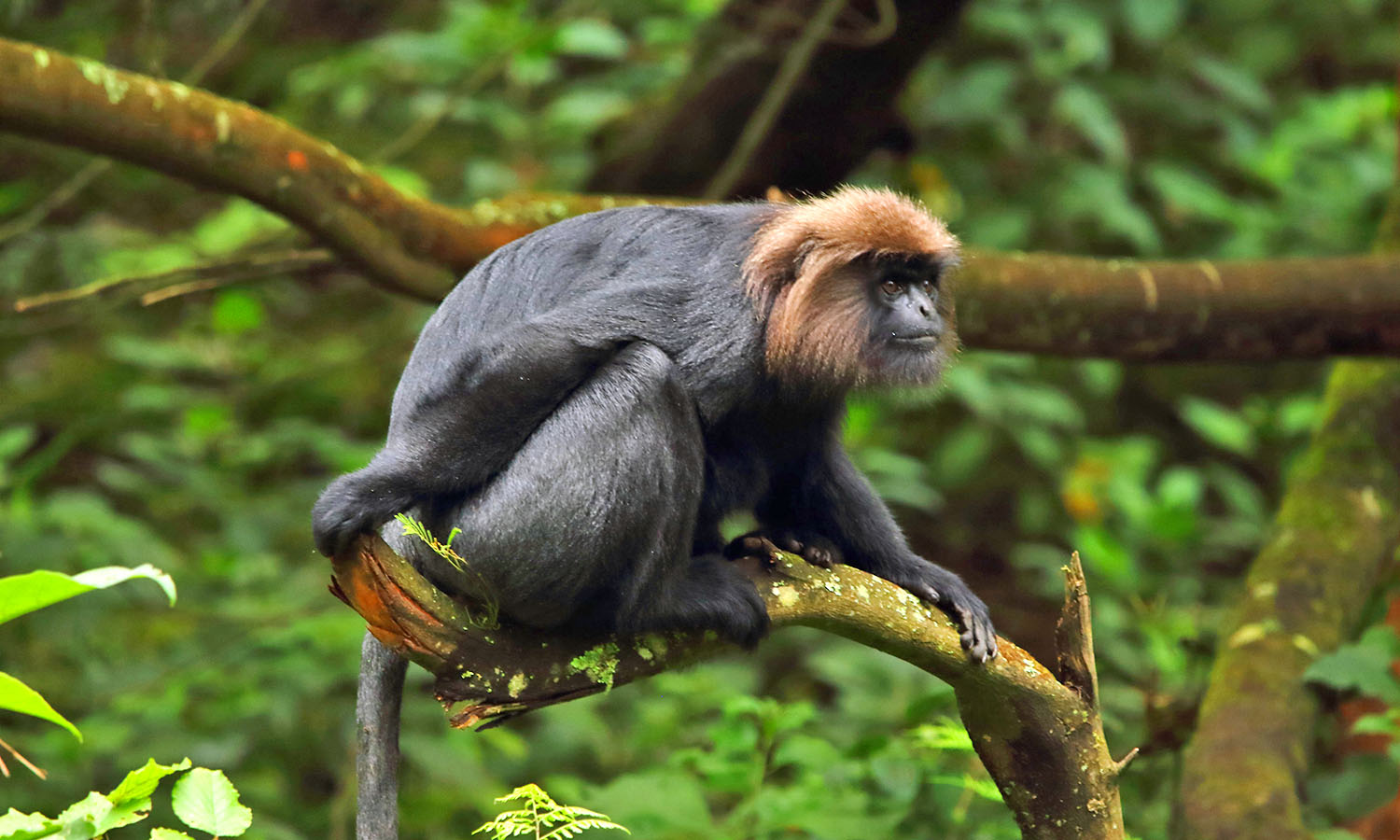
Last year, UNESCO named two brand spanking new biosphere reserves in Vietnam—Nui Chua National Park in Ninh Thuan Province and Kon Ha Nung Plateau in Gia Lai Province. If you’re a nature addict or conservation aficionado, these are the spots for you.
Nui Chua is about 20,000 hectares of lush forest, seascapes and serious biodiversity. It’s also home to the endemic black-shanked douc langur (a very cute species of monkey, fyi). Over on the other side, Kon Ha is a massive 65,000 hectare patch that’s got the endangered grey-shanked douc langur. Time to play spot the douc langur!
Click here for something SPHERE-IOUSLY INTERESTING
But it’s not what you might think—the man is a traditional bushman, wearing cultural namba (a leaf penis sheath), and he’s guiding us through Malekula’s drenched jungle.
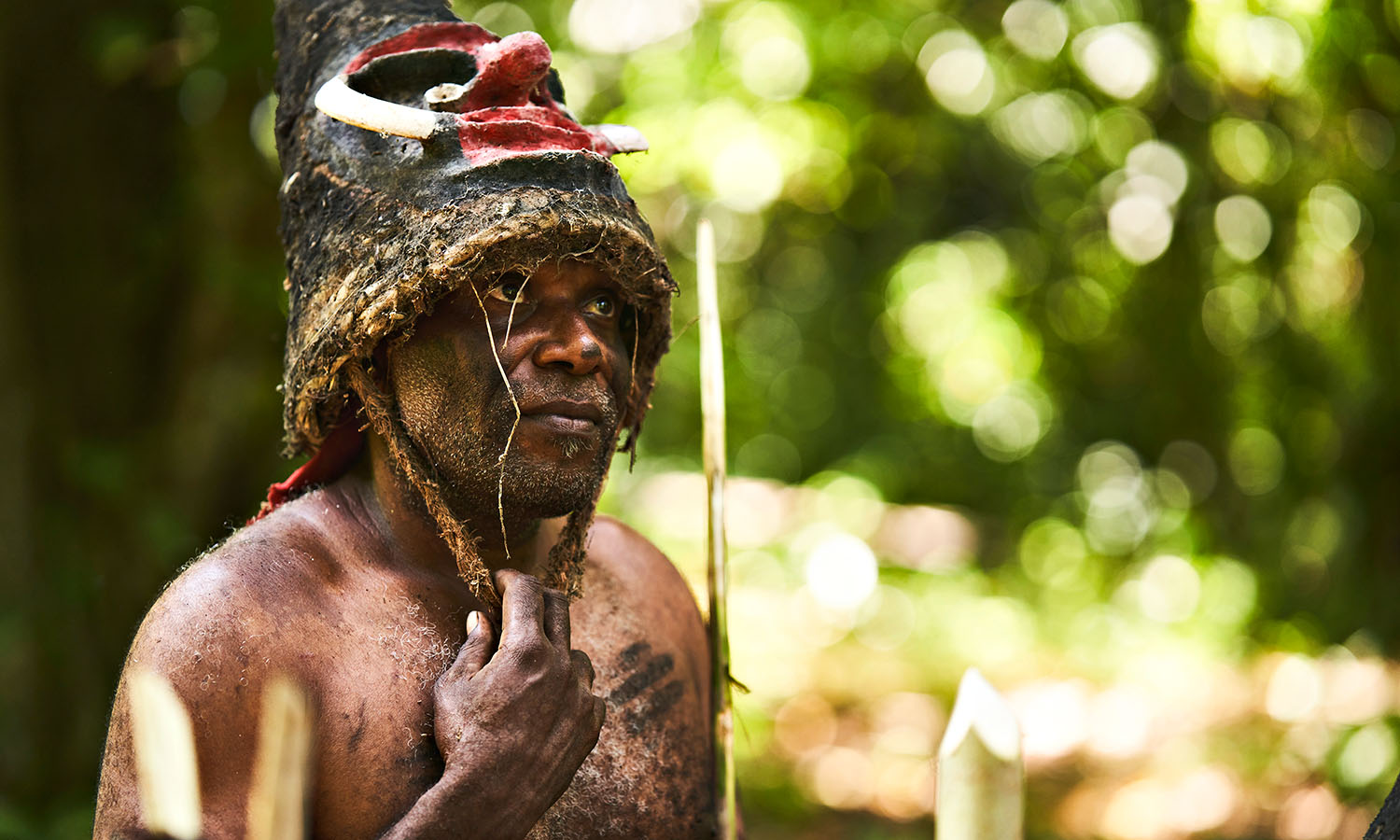
Actually, he’s more than guiding us. He’s saving us. After falling three hours behind schedule, our trekking day has turned into a long, torrential trekking night. So any shortcut, even if it means striding waist-deep through a river during a storm, is welcome. But as we continue to trudge, dripping and mud-caked, into a sugarcane field—the stalks so tall they block out the moonlight—I start to question why I came to Vanuatu. And why, specifically, I agreed to hike the Manbush Trail.
Then, with a crash of thunder to match my epiphany, I remember—because I like my adventure served with a side of challenge. And it’s been too long between expeditions.
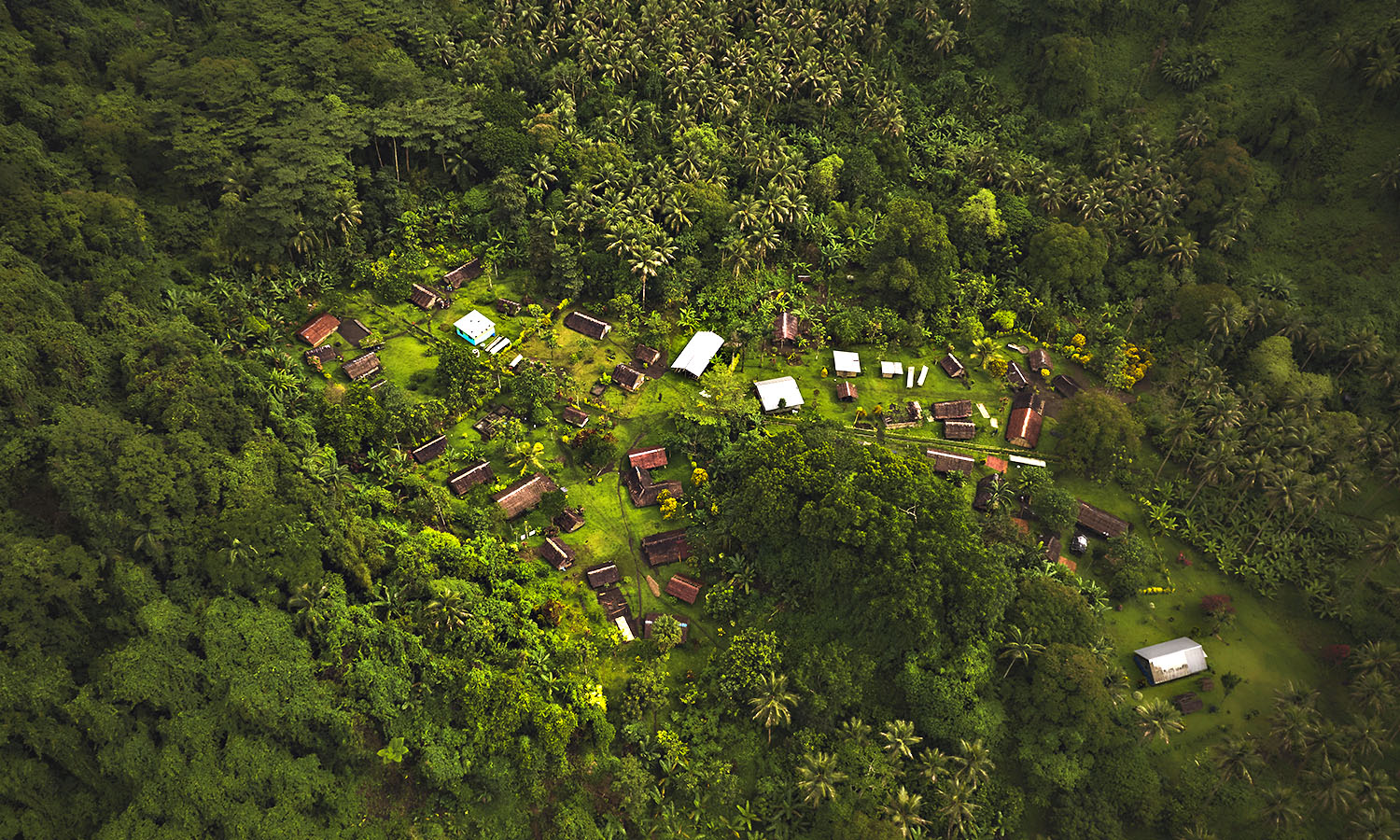
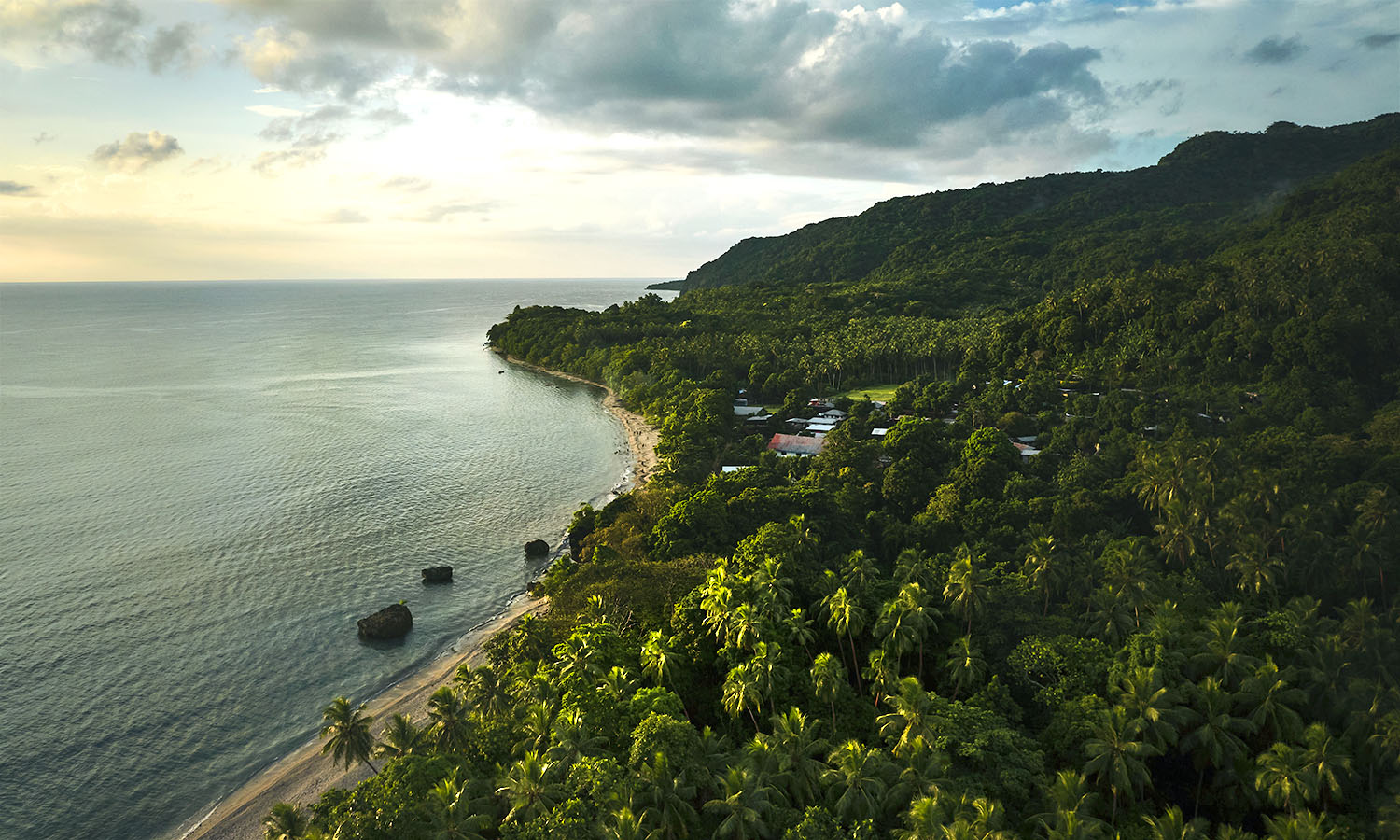
Shaped like a sitting dog, Malekula is the second largest and one of the most culturally diverse islands in Vanuatu’s archipelago. And yet it’s also one of the least-visited thanks to its reputation for being remote and inaccessible (oh, and historically cannibalistic). Flying into Malekula, the island certainly looks remote and inaccessible. From above, its jungle is an impenetrable fortress of green, dotted with rivers that glint like lost gold and a smattering of thatched roofs. No major highways or signs of beach-side mai tais. Just the way I like my islands.
“Slowly, slowly,” says Eddie, one of the local guides, as we brave a particularly strong current. Eddie is half my height, and probably half my weight too, but he’s got a vice-like grip on my upper arm—the only thing stopping me from sailing downstream. As we make it to the other side, pants wet but cameras dry, he high-fives me. I think Eddie is enjoying himself. I’m enjoying myself too.
Watch the full adventure
I’m trekking with a small group of Ni-Vans (Vanuatu people) from neighbouring islands; an Australian travel photographer; and a crew of local guides and porters. For the first few days, we tackle the Dog’s Head Trek—a coast-to-coast traverse from the east to the west part of the island’s north. The region here is split into Smol Nambas and Big Nambas tribal territory and is packed with ancient stories, myths and legends. And some of Vanuatu’s most remote bush villages.
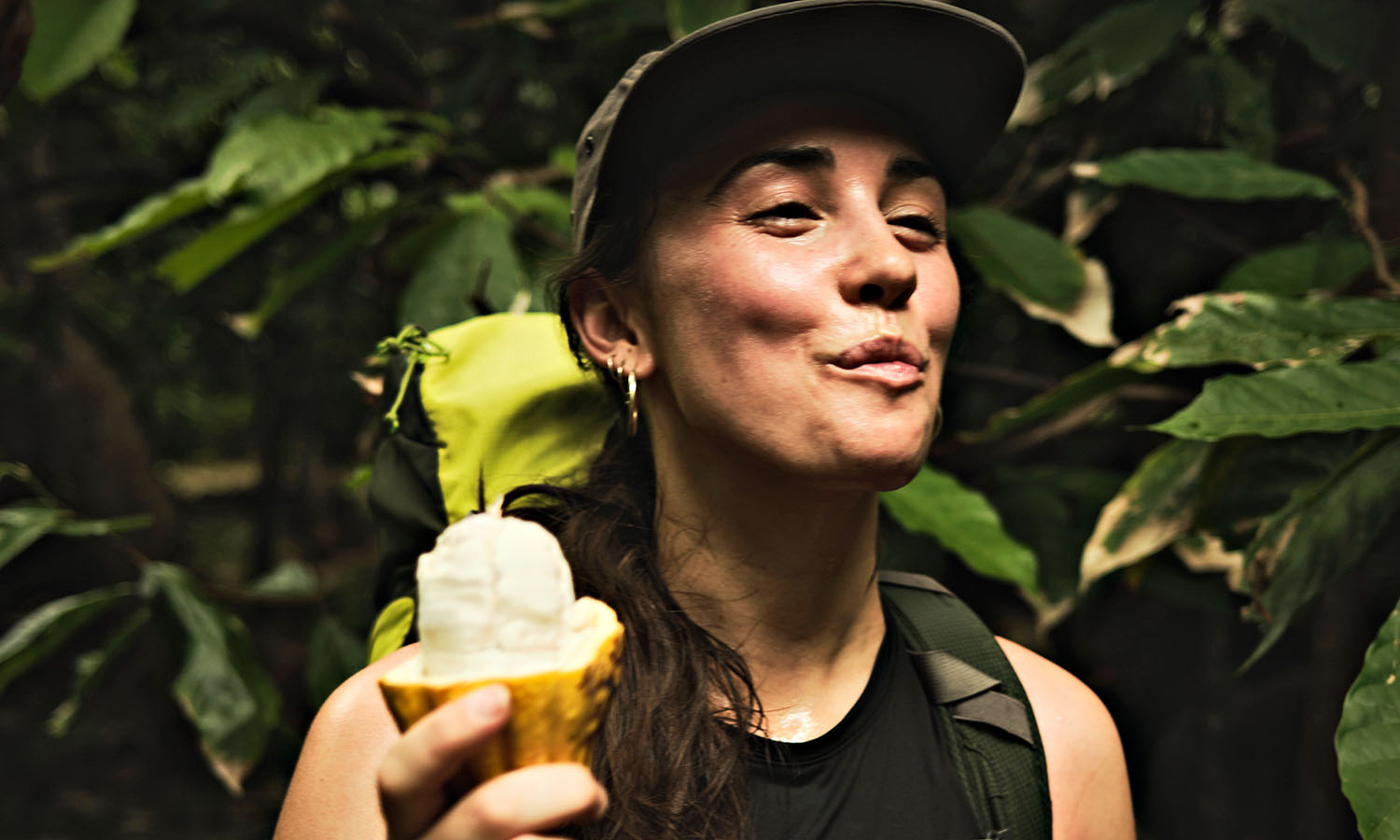
The days are sweaty as we explore the volcanic landscape; walking through lush rainforest, stopping to eat fluffy navara (coconut heart) and crack open nangainuts. I suck on sweet cacao flesh, drink fresh water out of a bamboo trunk and taste the centre of a palm tree. It’s a bit like creamed corn. “You’ll never go hungry in the jungle,” says Stepson, a Malekula local who now calls Port Vila home. And I believe him; this trek has turned into quite the food tour.
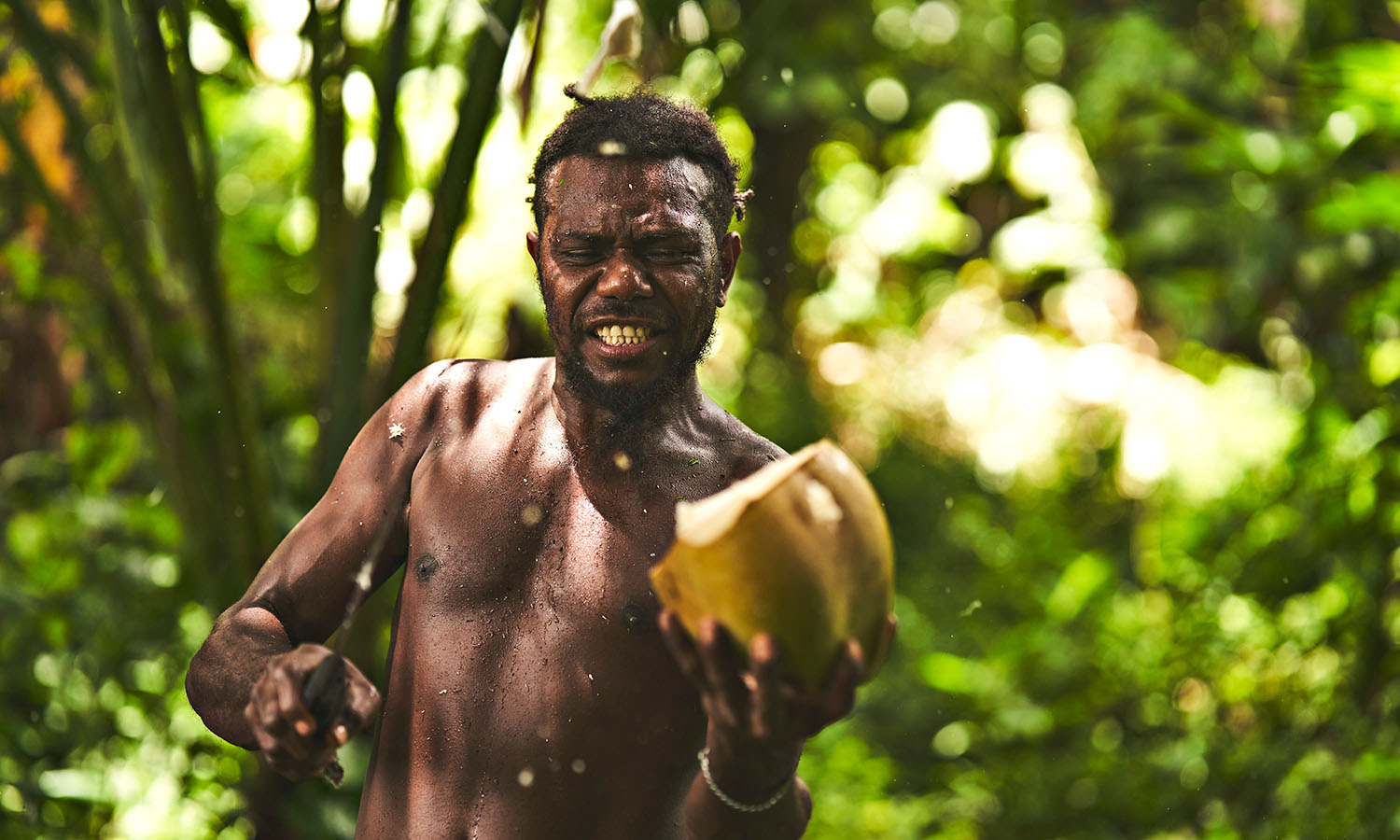
Speaking of food, we’re quickly—and intimately—acquainted with Vanuatu’s national dish, lap lap. Like a gelatinous cake crossed with a casserole that’s made love to a stew, lap lap is made from grated root vegetables (often taro or yam) wrapped in banana leaves and baked underground. Then slathered in fresh coconut. It’s a hearty meal and good trekking fuel, even if the texture takes a little getting used to.
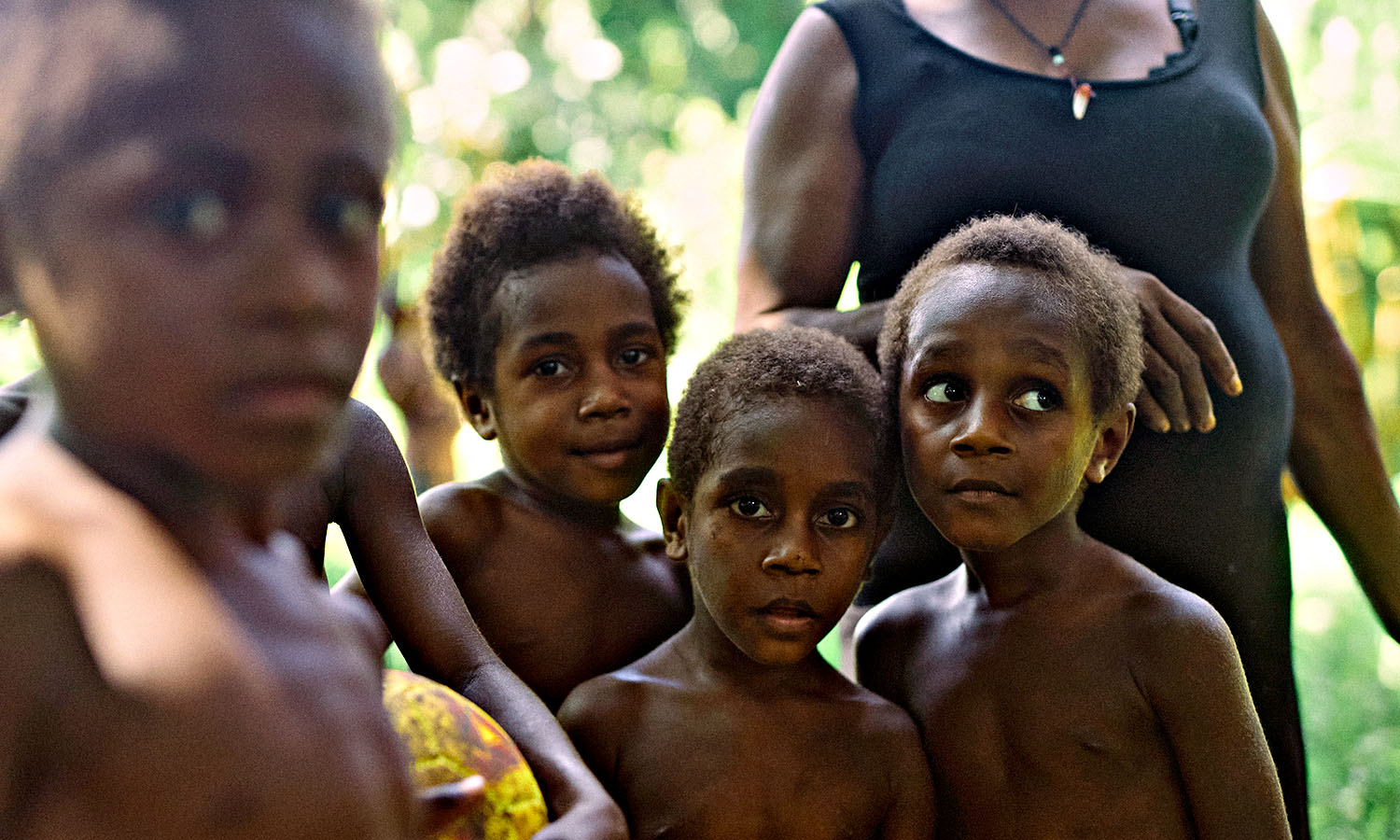
The interior of Malekula is basically ‘on-foot only’, meaning vehicle access is patchy in parts and completely off the table in others. How these communities got solar panels, rainwater tanks and roof sheeting to the far flung corners of this jungle is borderline miraculous. But here they all are—their little bare-chested kids running out as sentinels as we arrive.
Click play to watch
I shake hands with chiefs and smile at local mamas; I coo at tiny babies and take photos with kids. I feel like the president doing an electoral meet-and-greet. It’s customary to welcome guests with food, so we’re ushered into homes to feast on freshwater prawns and juicy hunks of paw paw. I’ve been told in the past that Ni-Vans are the friendliest people in the world, and this level of hospitality is only proving it to be true. At night we bucket shower off the sweat and sleep on the floor of local huts, waking with the crow of early rising roosters.
The Manbush Trail, on the other hand, is more extreme. The days are longer, the landscape is larger and the villages are even more isolated. It’s a five-night odyssey; exactly the kind of journey I’ve been craving.
We’re joined on the first day by Robert, chief of 13 clans and big man in town. Robert is the brains behind the Manbush Trail, having liaised with all the villages along the 70-kilometre route to bring it to life. In the morning, he teaches me how to husk a coconut. At lunch, he shows us how to light a fire “like a real bushman”. As we climb and scramble, slip and slide, up and down the dense valleys, his rallying cries (somewhere between a yodel and cooee) ring louder than the cicadas. Men from nearby villages cry back at him.
At night, Robert welcomes us to the land with a kava ceremony at the nakamal (meeting hut). Kava is an earthy-tasting traditional drink—dating back over 3,000 years—made from the root of the kava plant and served in half a coconut shell. Known for its calming effects on the nervous system, Ni-Vans like to say ‘alcohol makes you stupid but kava makes you wise’.
“Drinking kava is bonding,” Stepson explains to me, handing over a shell. “We drink it in the dark, in the quiet—it’ll make you feel so peaceful.” Turns out Stepson’s a bit of a kava king, so I’m learning how to imbibe from the right guy. That night he downs three shells; his snores echo through the hut walls.
I stop trying to stay dry and learn to embrace the daily downpours. One day, in between showers, we eat lunch—roasted taro and wild boar—on a cloud of banana leaves. We use a banana leaf as a plate. Sometimes as an umbrella. The night before we even slept on banana leaves. Ben, the travel photographer, tells me his fitness watch tracked it as his best recorded REM in months. Five-star beds? Don’t need them.
On the third day, George—another local guide—signals for us to stop by a huge, Tarzan-like banyan tree. “We’re about to enter a kastomarea,” he says. “From here, until I say, we have to be quiet. No spitting. No talking. No toilet stops.” This taboo area is a sacred place, it’s blessed with salt water, despite being nowhere near the sea.
Our group falls into single trekking file as we navigate the roots and rocks down hill. The rain eases, as if even its droplets are too loud. A bird, somewhere to my left, takes flight and I hear the soft rustle of its wings. I’ve never experienced a jungle falling silent before; goosebumps break out over my body that have nothing to do with the breeze. Trekking the Manbush is some of the most technical hiking I’ve ever done, but doing it in silence is an almost meditative experience.
I’m learning that there’s a lot of magic here. Like the spring that promises eternal youth (the porters knocked back litres of the stuff) or the part of the forest where whistling is outlawed (because it will bring on a plague of mosquitoes) and the couple who had an affair and were subsequently turned into banyan trees.
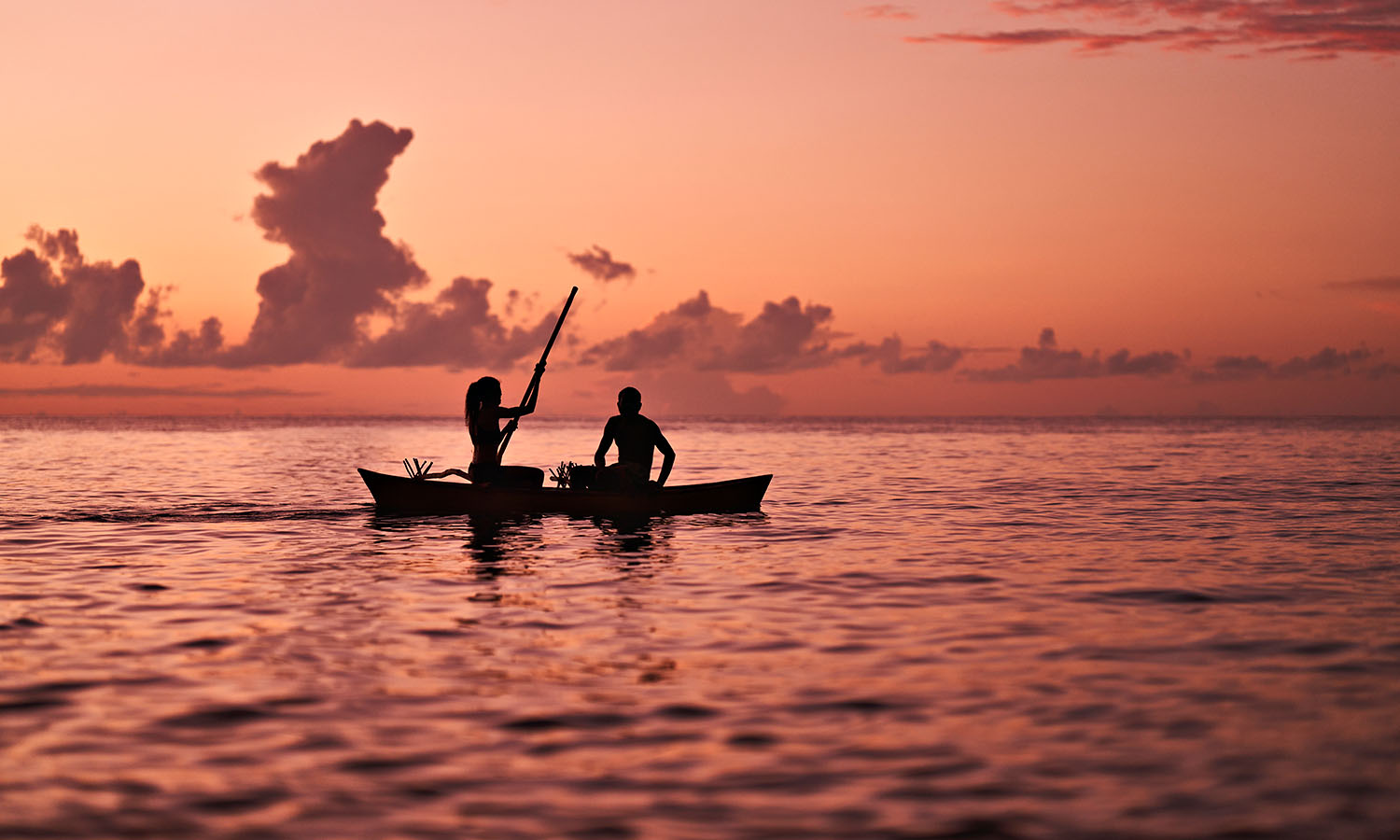
And then there’s the sea, which appears like a magical mirage on the horizon, just as my bones start to feel weary and my boots begin to rub. In a collective daze—trekkers and guides and porters alike—we do the final slog down to the coast and collapse into the water. Clothes, and in some cases, boots, still on.
We let the Pacific Ocean soothe our cuts and scrapes. We wash the sweat from our hair. And in true Malekula style, it starts to rain. Heavy, pounding drops that cloud the water and sting my face. And I can’t help but laugh—I came to Malekula craving an adventure, and that’s exactly what Malekula delivered. A soggy, scenic, spectacular adventure.
Now I just need a kava shell, or two, to celebrate.
Okay, let’s talk about greenwashing. Not to be mistaken for the time you accidentally slipped your St. Patrick’s Day leprechaun outfit into a regular white wash, greenwashing is a deceptive form of marketing spin that implies a business / company / product is more environmentally aligned than they really are.
Why bother, you ask? Good question. Because many people now actively prefer to support business / companies / products that are sustainable and ethical, some sneaky (less ethical) providers green sheen their offerings in order to compete for consumers. Or, they make a lot of PR noise about their sustainability principles, when in reality they have none. Dastardly, we know.
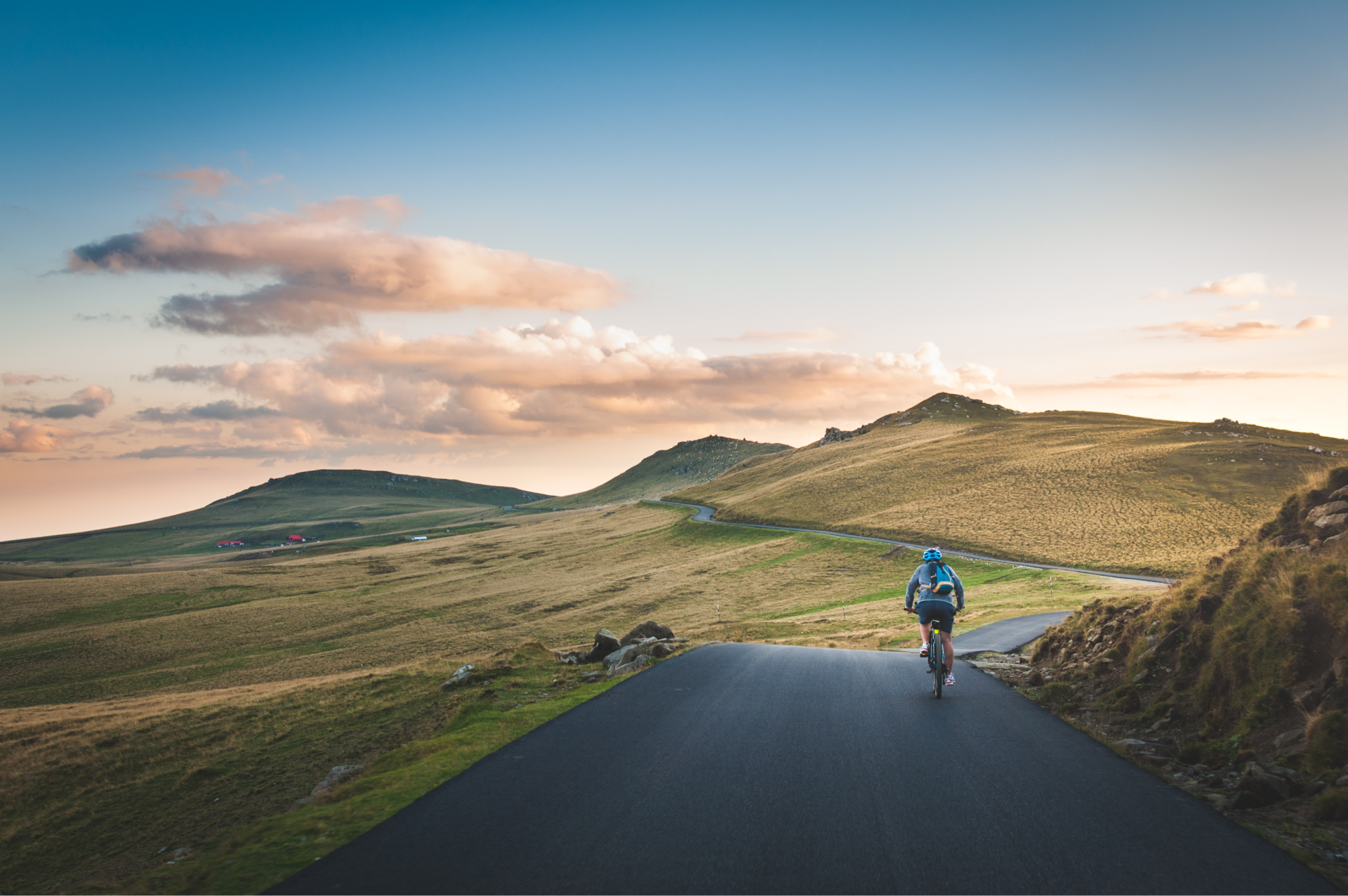
But surely this doesn’t happen in the travel industry? Guess again, amigos. In the spirit of Earth Day, here are five common examples of greenwashing and how to stay the heck away from it:
Looking to book with a ‘sustainable’ tour operator in Morocco? Really fancy a week in an ‘eco retreat’ in Bali? Good on you, chase those travel dreams. But also remember to chase a little bit of legitimacy. If the operator is making vague claims, ask them for credentials. There are a bunch of certifications, like B Corp and Global Sustainable Tourism Council (GSTC), that independently vet and certify good businesses with great practices.
Just in general. We are super, exceptionally cynical when it comes to any region in the world marketing wildlife attractions. We’ve learned enough from the elephant trade. That’s not to say there aren’t bona fide sanctuaries doing great things for the rehabilitation of species, but do your research well. Legit elephant sanctuaries won’t let you ride or play with the animals, and that’s how it should be. Love nature and want to get up close and personal? Go see them in the wild! Cruise down the Amazon, jump on a safari, sit on a deck chair and wait for the meerkats to wake up. Trust us, it’s better than going to a zoo.
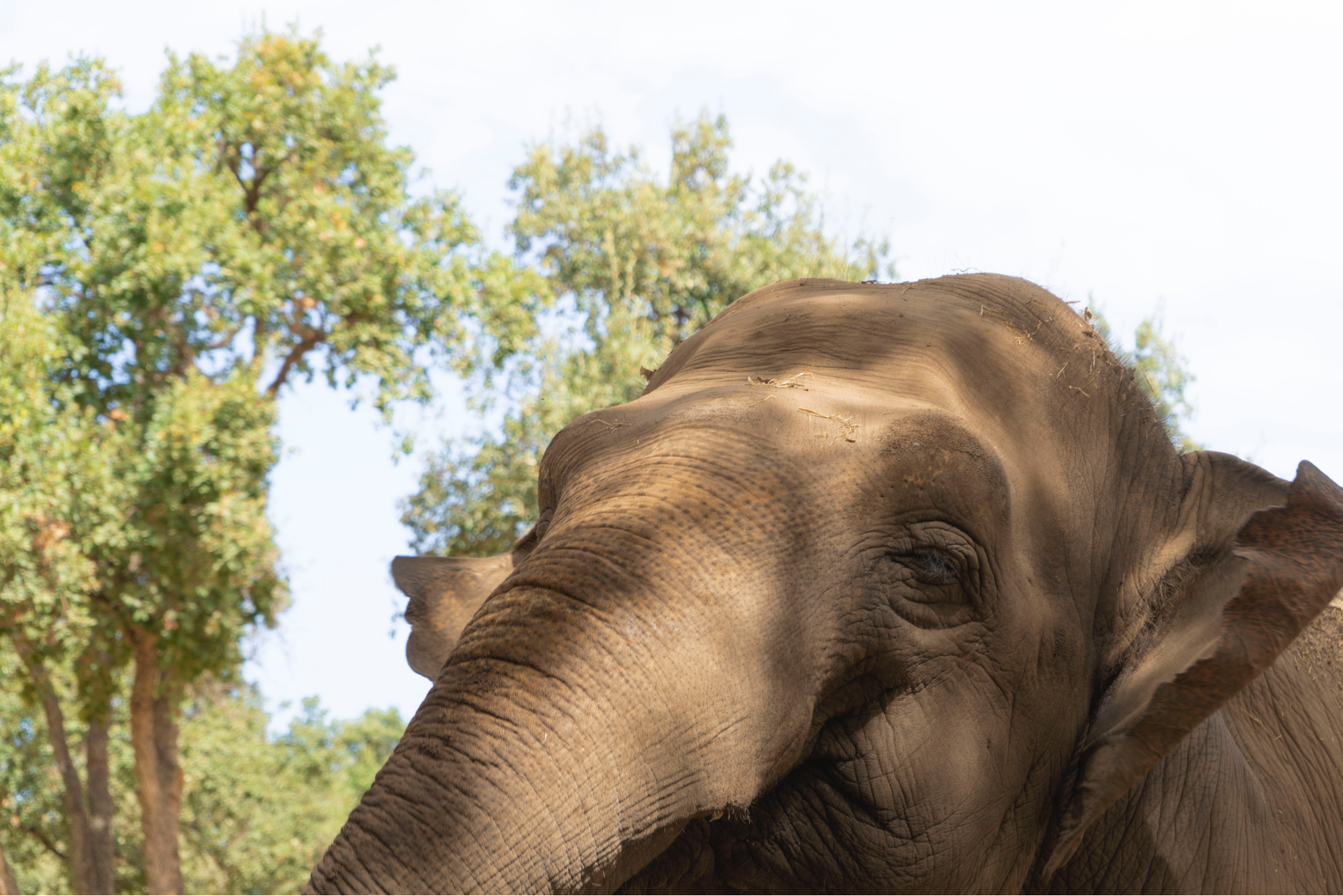
Don’t get us wrong, we love a good cultural immersion trip. But you’re right to be wary of any tour operators that claim to directly benefit the local community, without showing proof of said benefit. Common examples? Orphanage and school visits, or heading into an ethnic community just to take a bunch of photos. That’s not cool. Know what else isn’t cool? Unsustainable, plastic, trinkety souvenirs.
Sure, bio-plastic is better than regular plastic but it’s definitely not the most sustainable option. A lot of remote areas of the world don’t have access to proper recycling outlets and so these plastics end up in landfill regardless—and, surprise, bio-plastic doesn’t break down naturally. Always opt for restaurant or bar or hotel that has reusable kitchenware.
Just because a travel experience takes place in a natural setting, doesn’t mean it’s low impact. Especially not if they’re serving lunch in plastic or tramping off-track, disturbing wildlife and vegetation. If you’re headed out bush or desert or dune, look for experiences and operators that have a Leave No Trace policy. That way you know they’re well-intentioned and taking steps to actually minimise their impact, rather than just talk about it.

We live on such a beautiful planet.
On Earth Day, Saturday 22 April, we’re celebrating the rivers and the lakes, the steppes and the mountains, the oceans and the skies, the beaches and the rolling green hills. All of it, in it’s naked and unadulterated glory.
And we’re celebrating you! Our reader, who knows this Earth as well as anyone. We know this because of the photos you send us every issue for our Frame Your View competition, where the winner receives an Olympus OM-5 + 14-150mm Kit, valued at AU$2,339.
Here’s seven of the best Earth shots (that rules you out, Buzz Aldrin) you guys have sent us already in 2023:
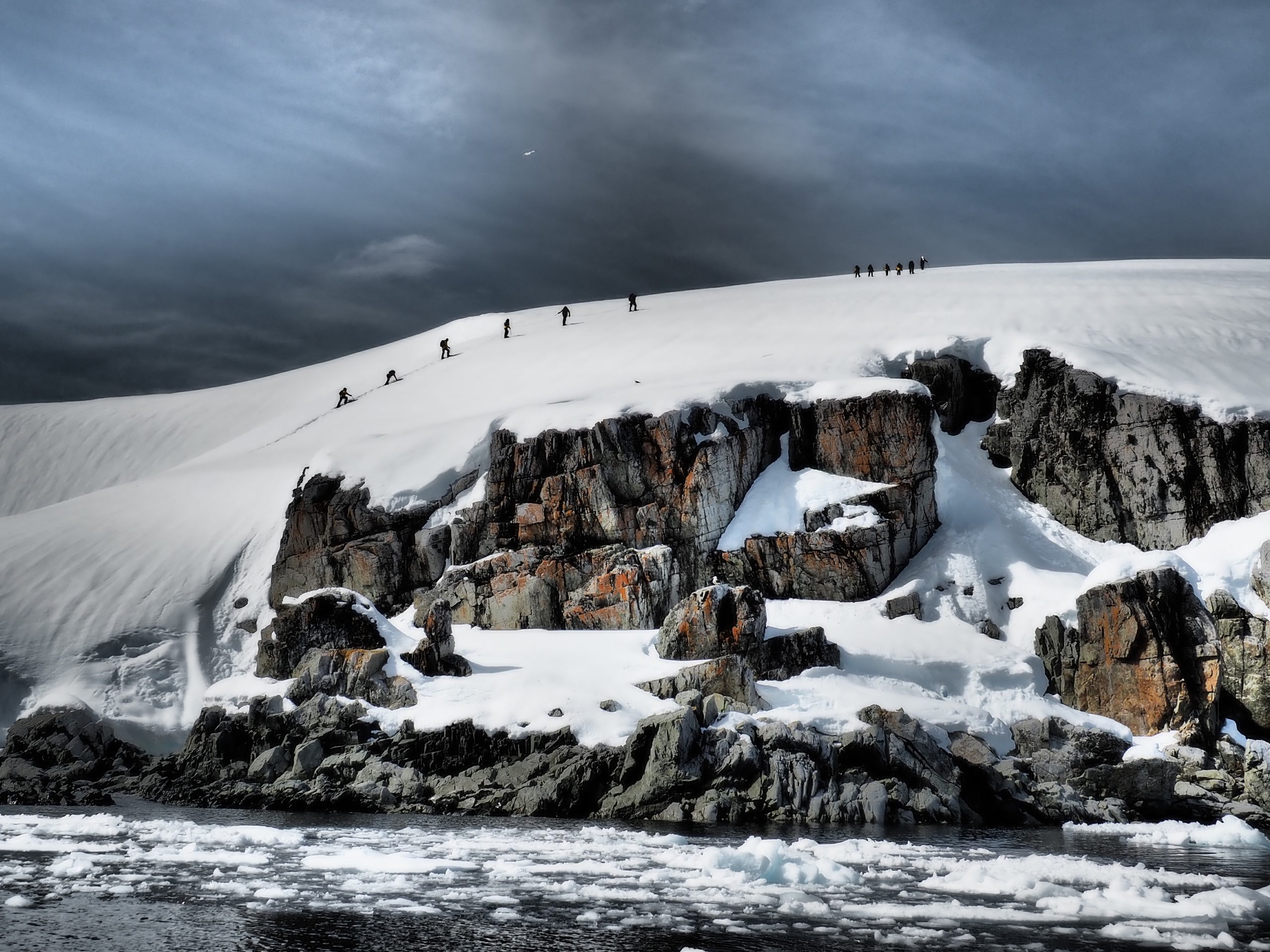
…from the edge of his Zodiac while on expedition in Antarctica, he knew he was onto a winning frame. Under an angry sky and above an unforgiving ocean, this is Earth’s final frontier for those travellers seeking the ultimate get lost experience. We’ve got chills just thinking about it.
© Travis Satur
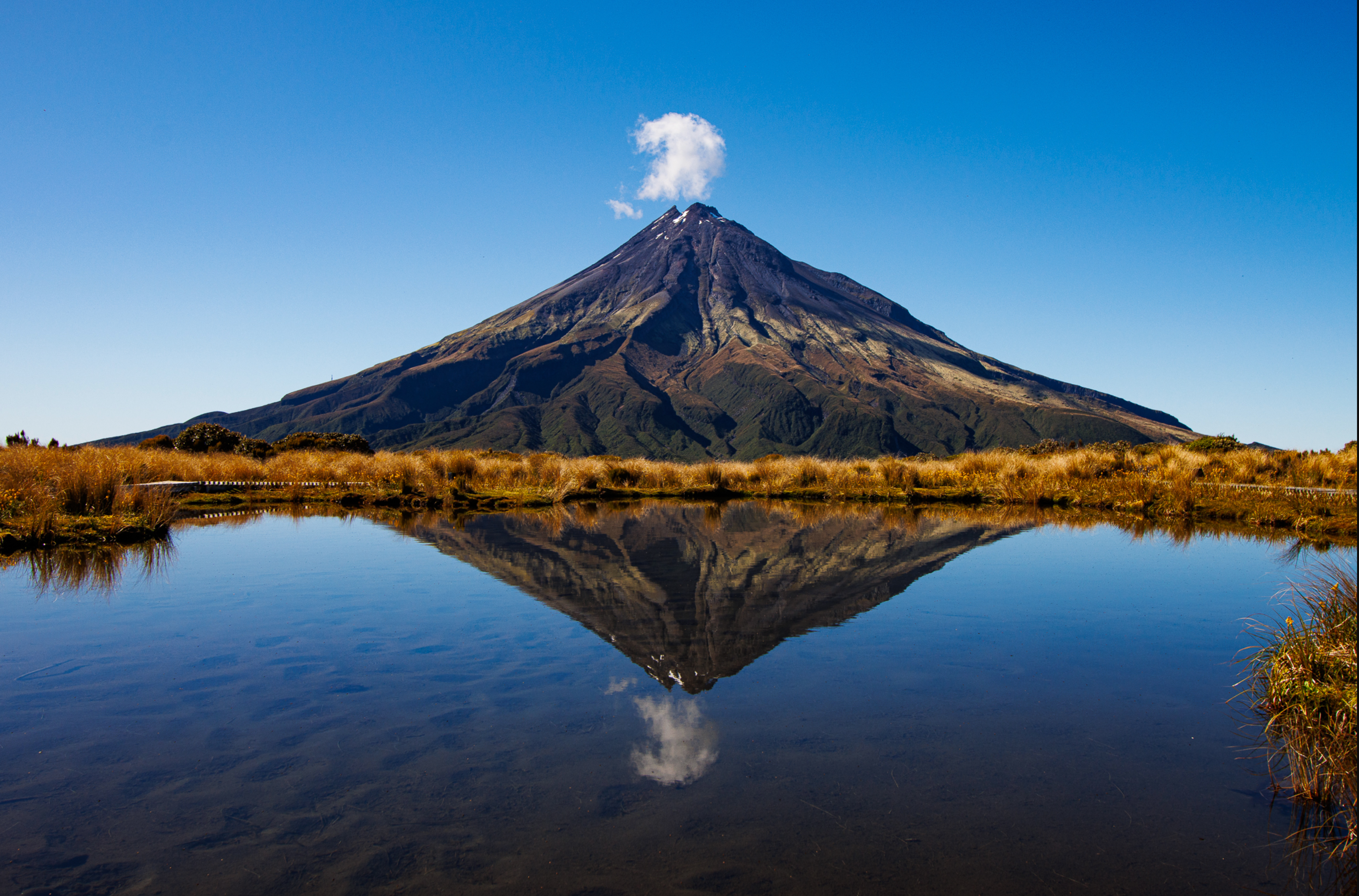
…by Maori legend to perpetually hide his face after rejection from his lover. He did though, come out of hiding for just one day to share his beauty with the world.
© Emilie Keijzer
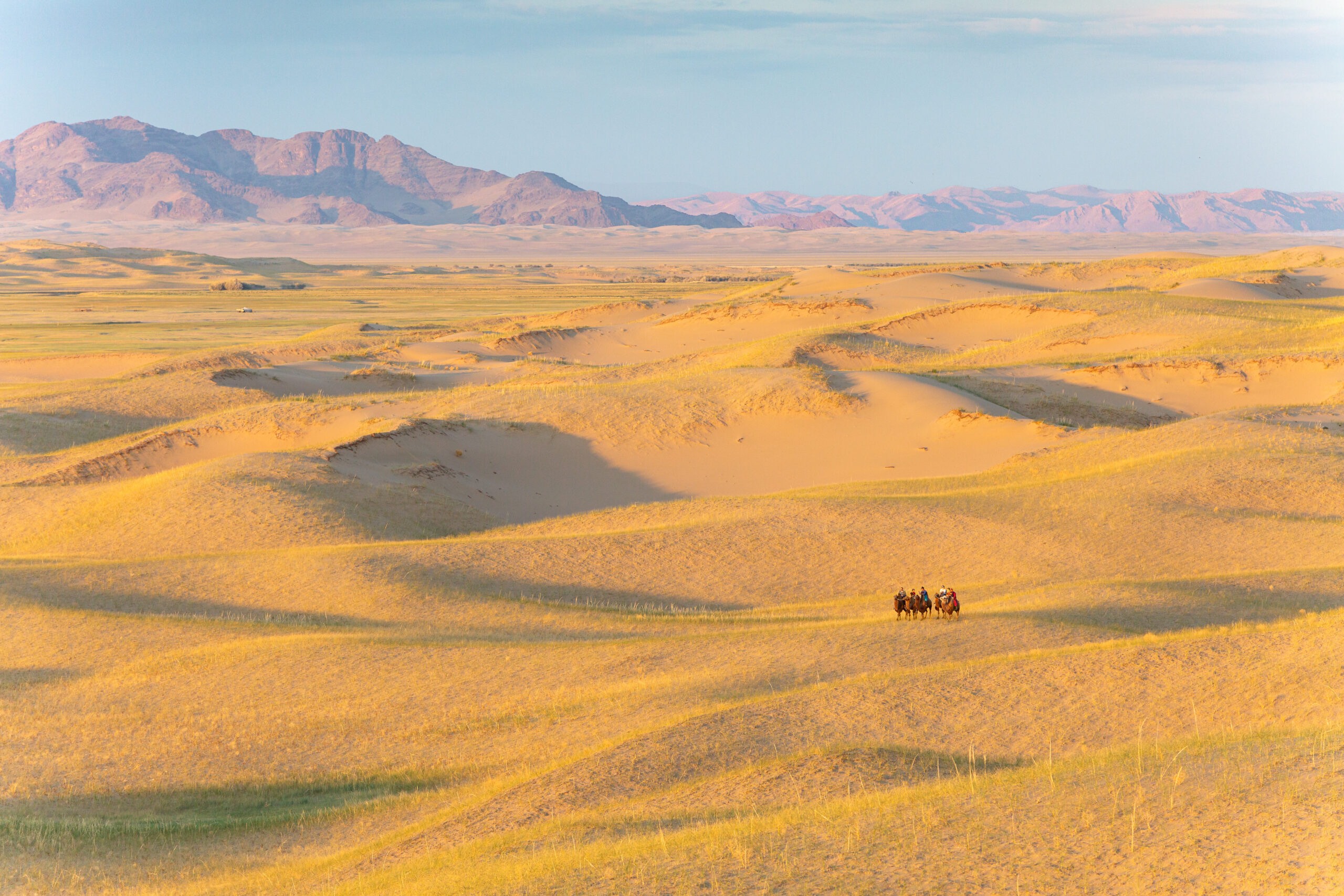
…in the Mongol Els sand dunes.
© Mark Daffey
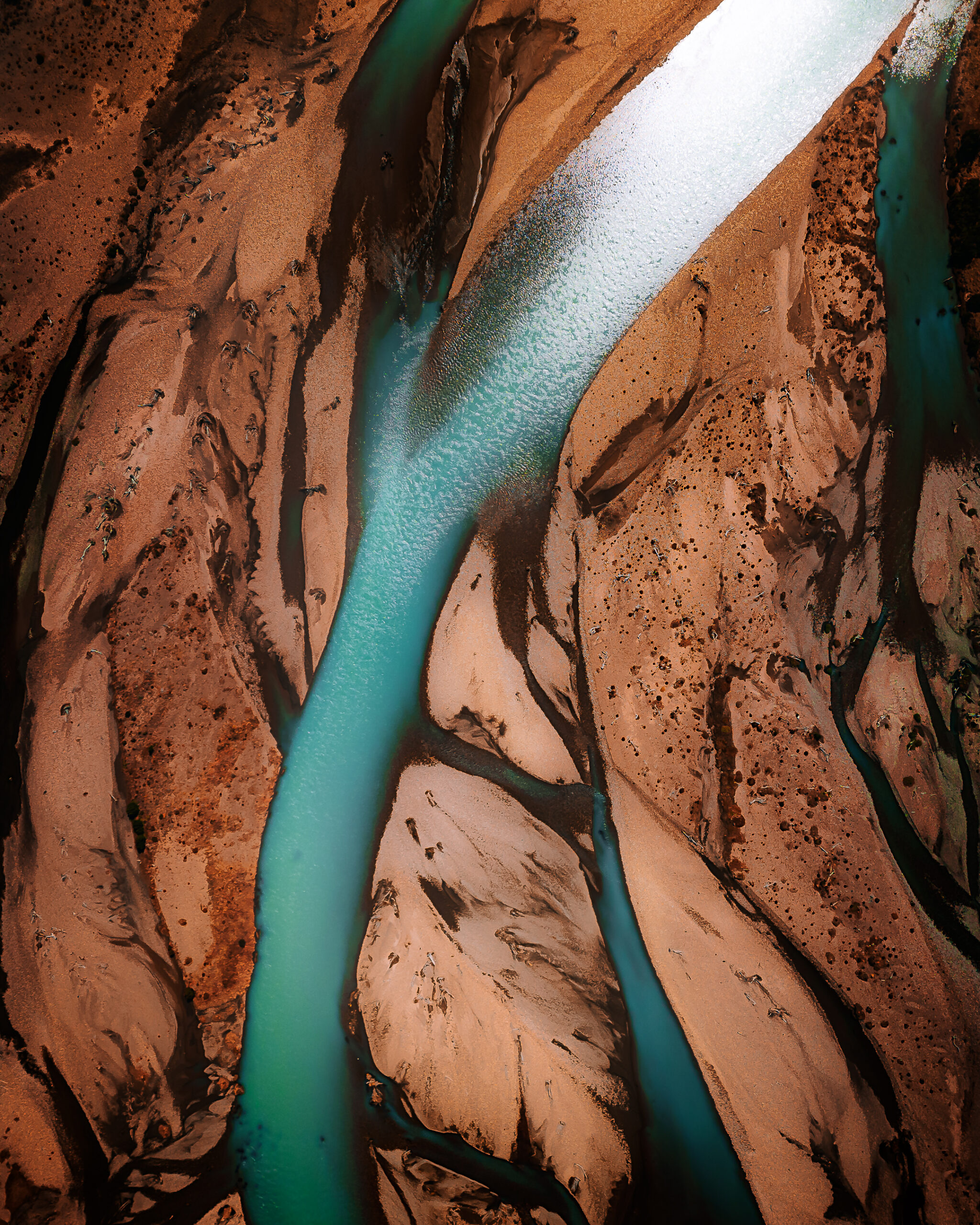
of the the river ‘Rio de las Vueltas’ in Patagonia’s El Chalten is beautifully surrealist. The striking colours, the interesting textures—the landscape looks, quite literally, otherworldly. If we were told this was Mars, we’d believe it.
© Santiago Gonzalez Redondo
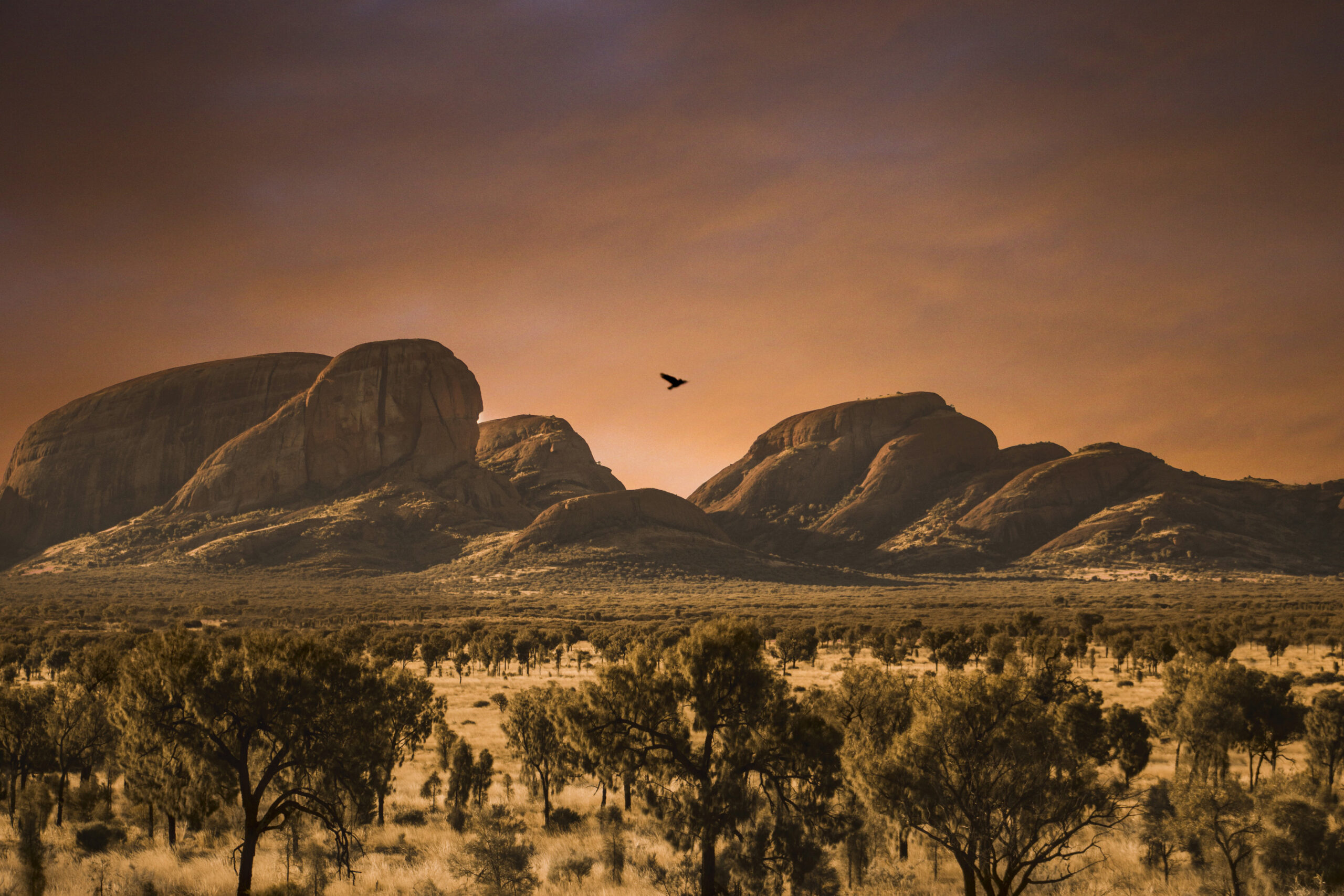
of an Uluru-Kata Tjuta National Park sunset.
© Tess Mazzella
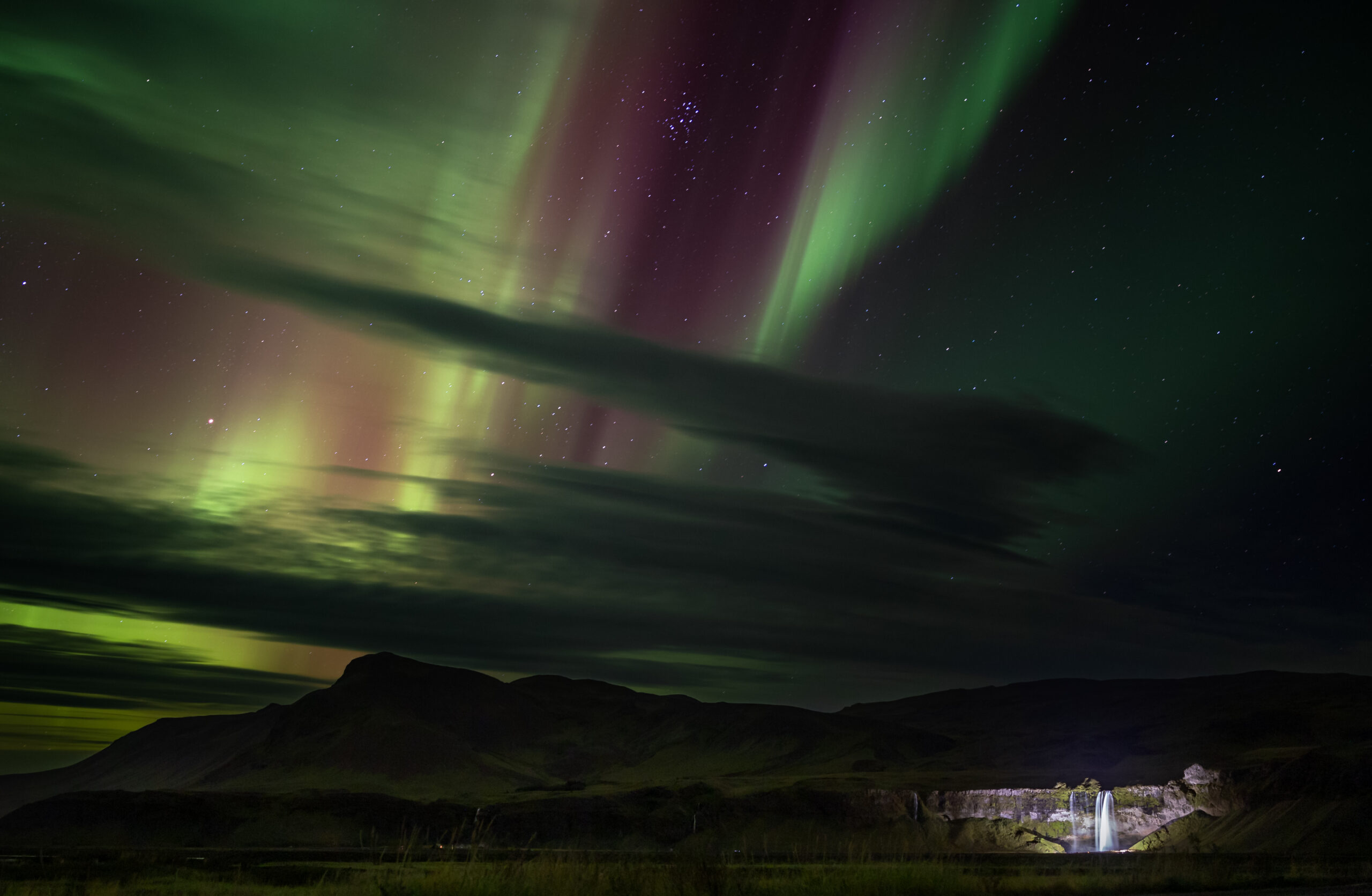
…of the northern lights illuminating a waterfall in Iceland is about as good as photography of this planet gets.
© Panagiotos Rontos
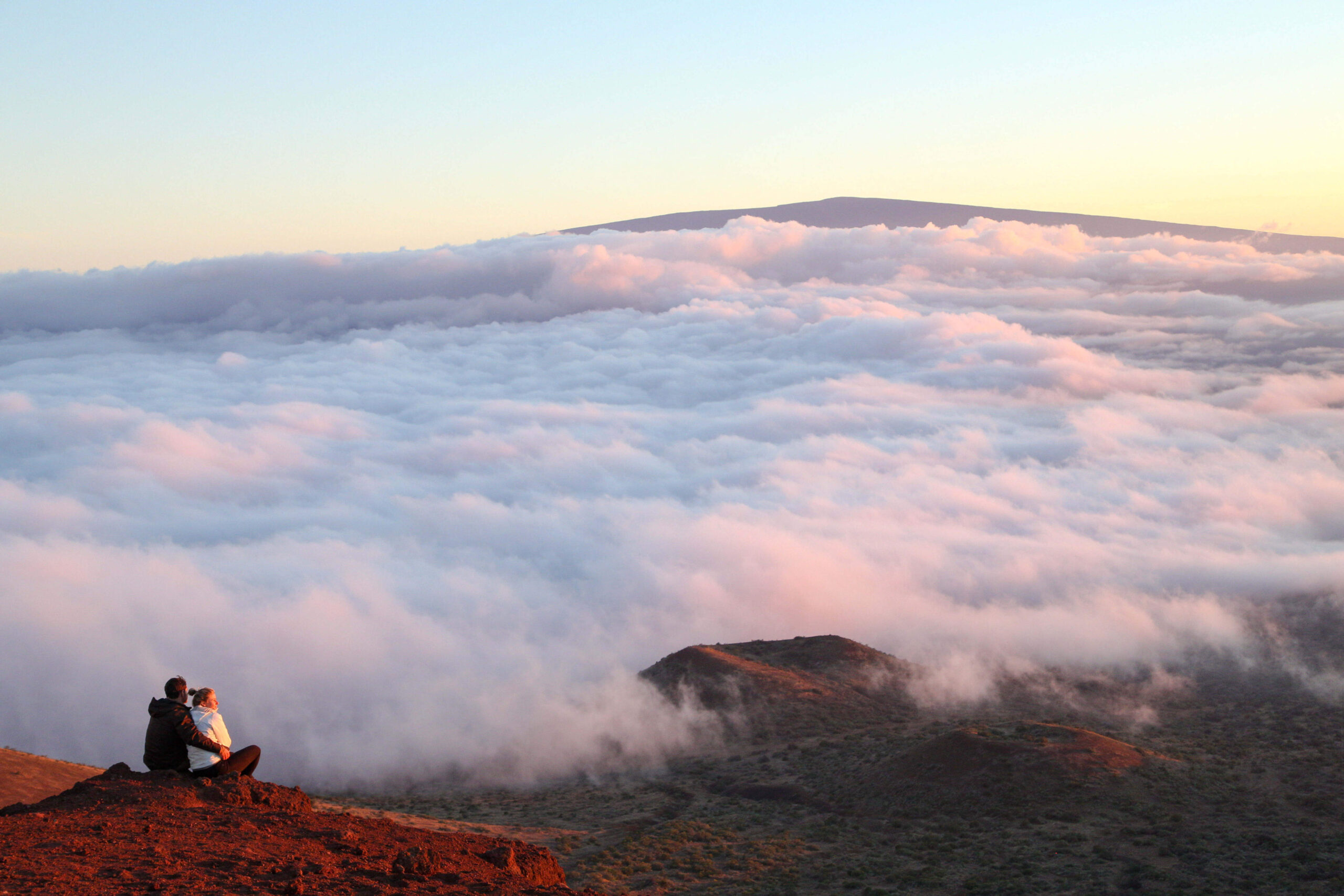
…or at least, the top of Hawaii. Mauna Kea Hawaii, the dormant volcano that is Hawaii’s highest point.
© Alexandra Buxbaum
Got ya. Happy first of April, fools.