Justin Jamieson boards a luxury riverboat, eats something mildly illegal, drinks something definitely dangerous, and floats gloriously into oblivion. It’s just another day cruising from Chiang Rai to Luang Prabang on the Gypsy.
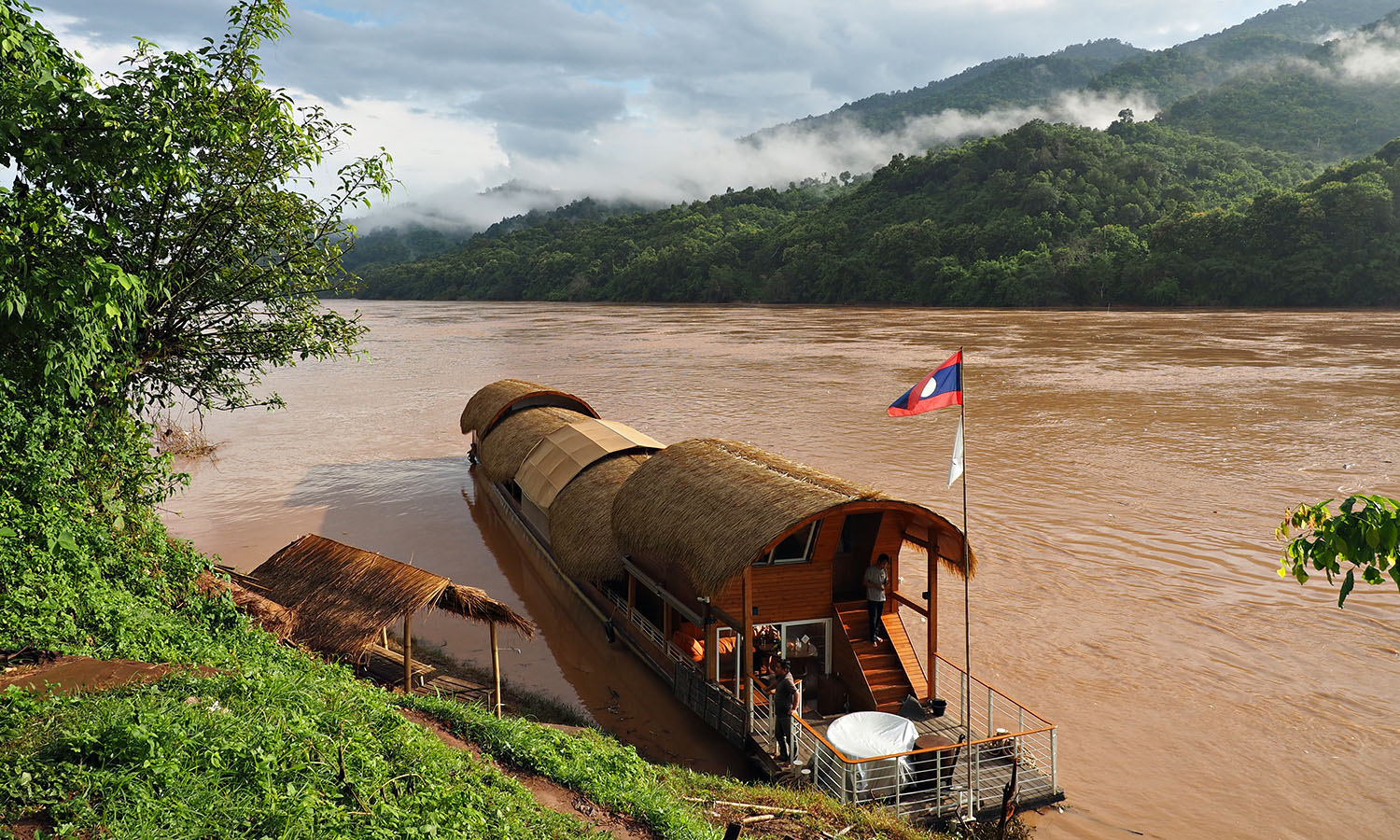
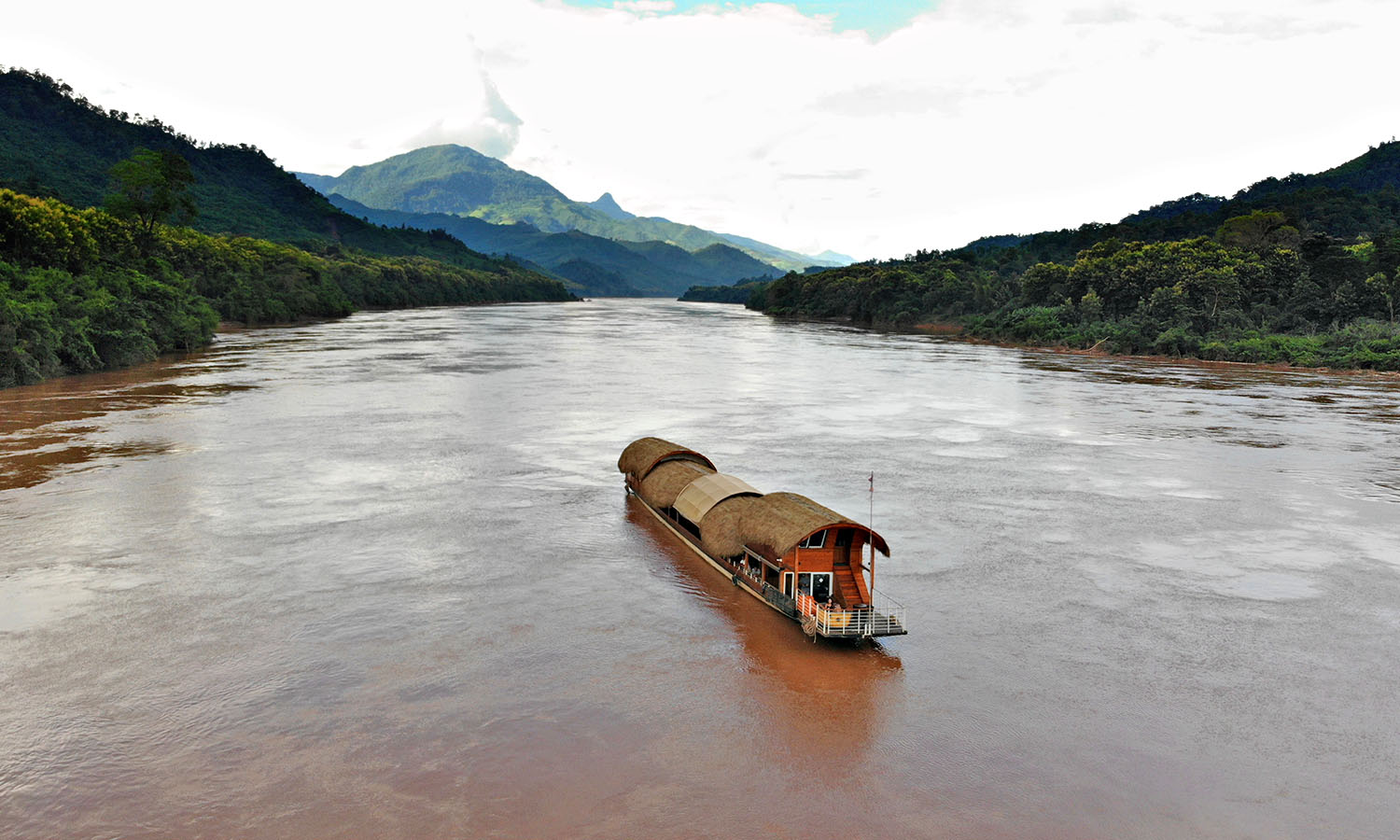
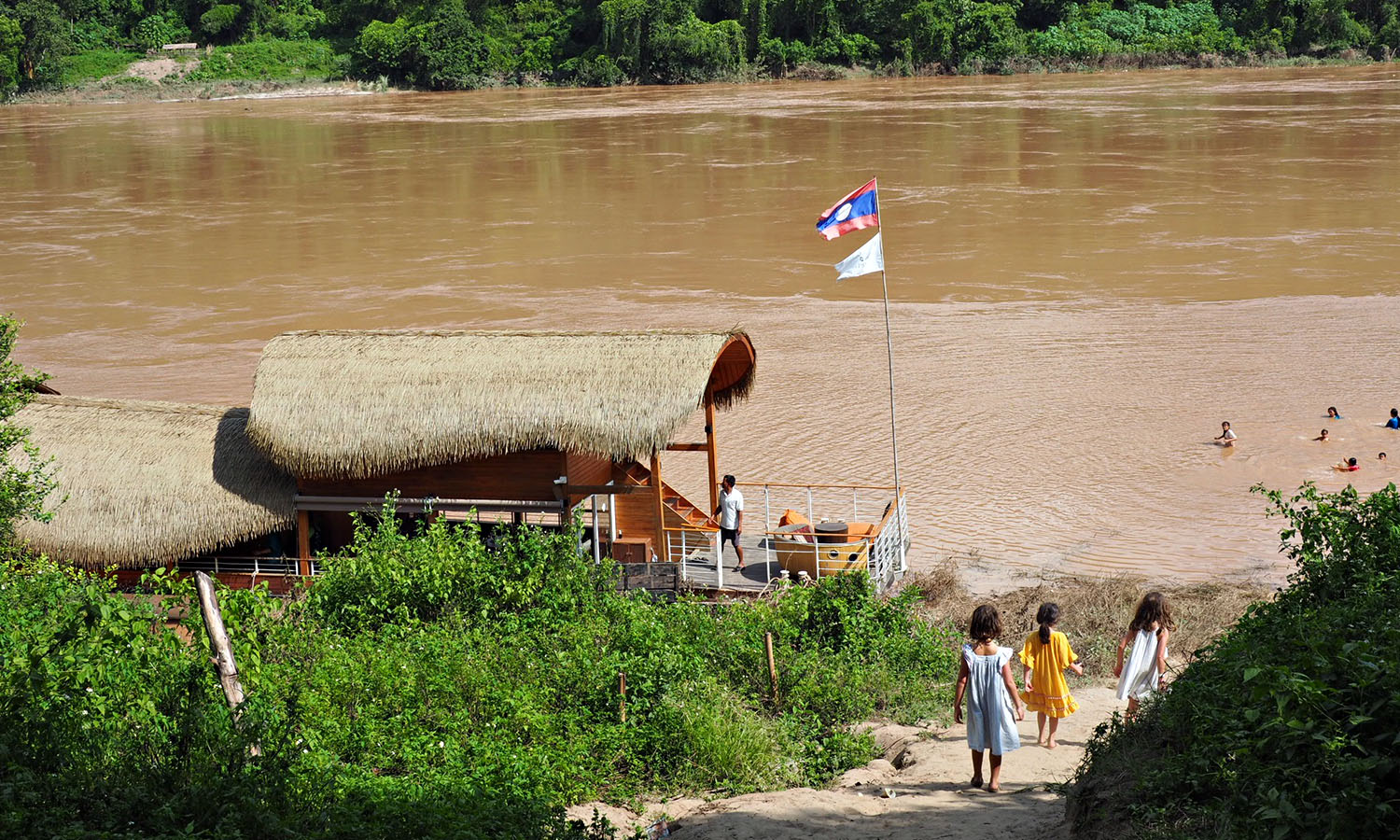
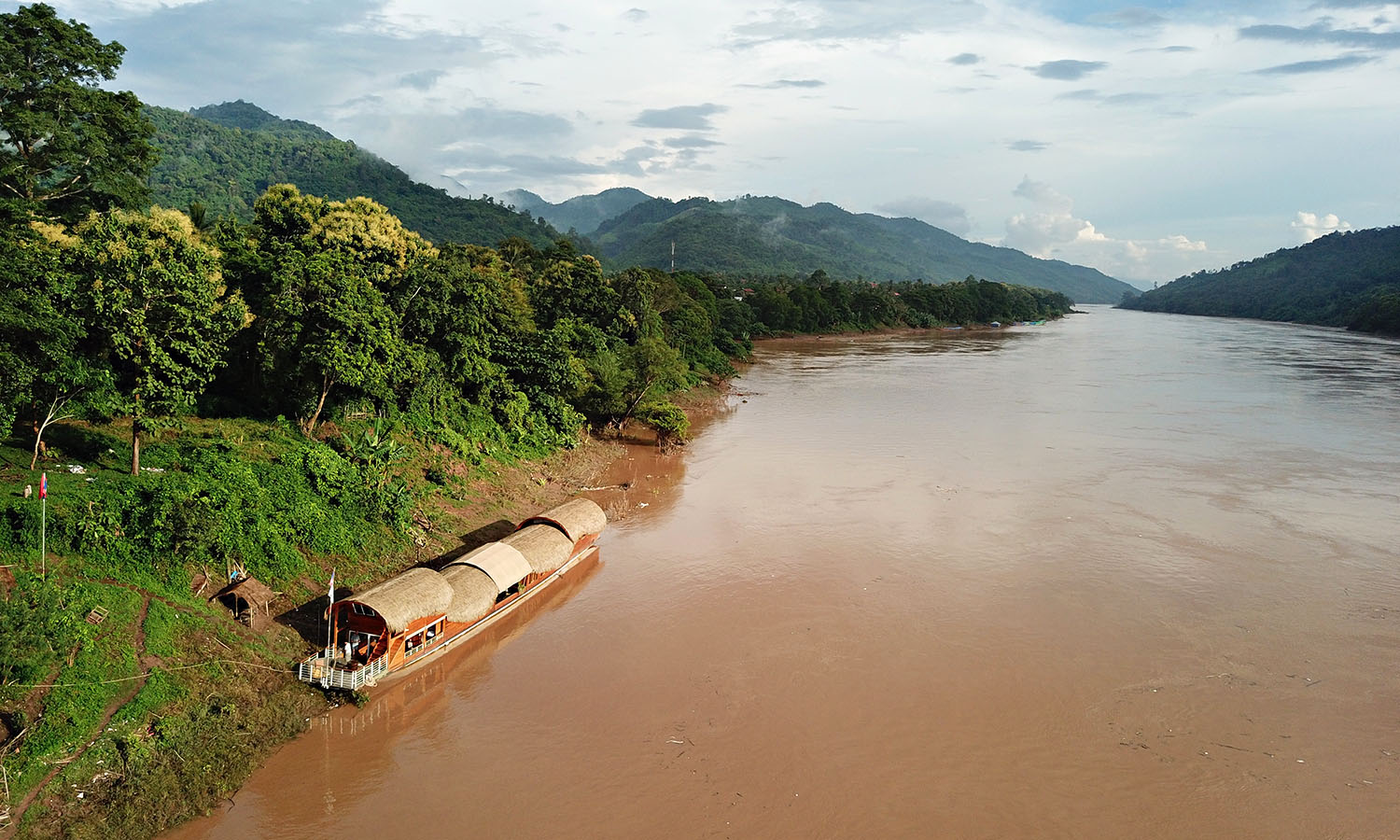
It starts, like all great adventures, with a boat that looks too good to be true and a glass of something suspiciously strong in my hand. I’m standing barefoot on the Gypsy, a two-cabin floating dream built to drift slowly down the Mekong River from Chiang Rai to Luang Prabang, and already wondering if I’ll ever want to walk on solid ground again.
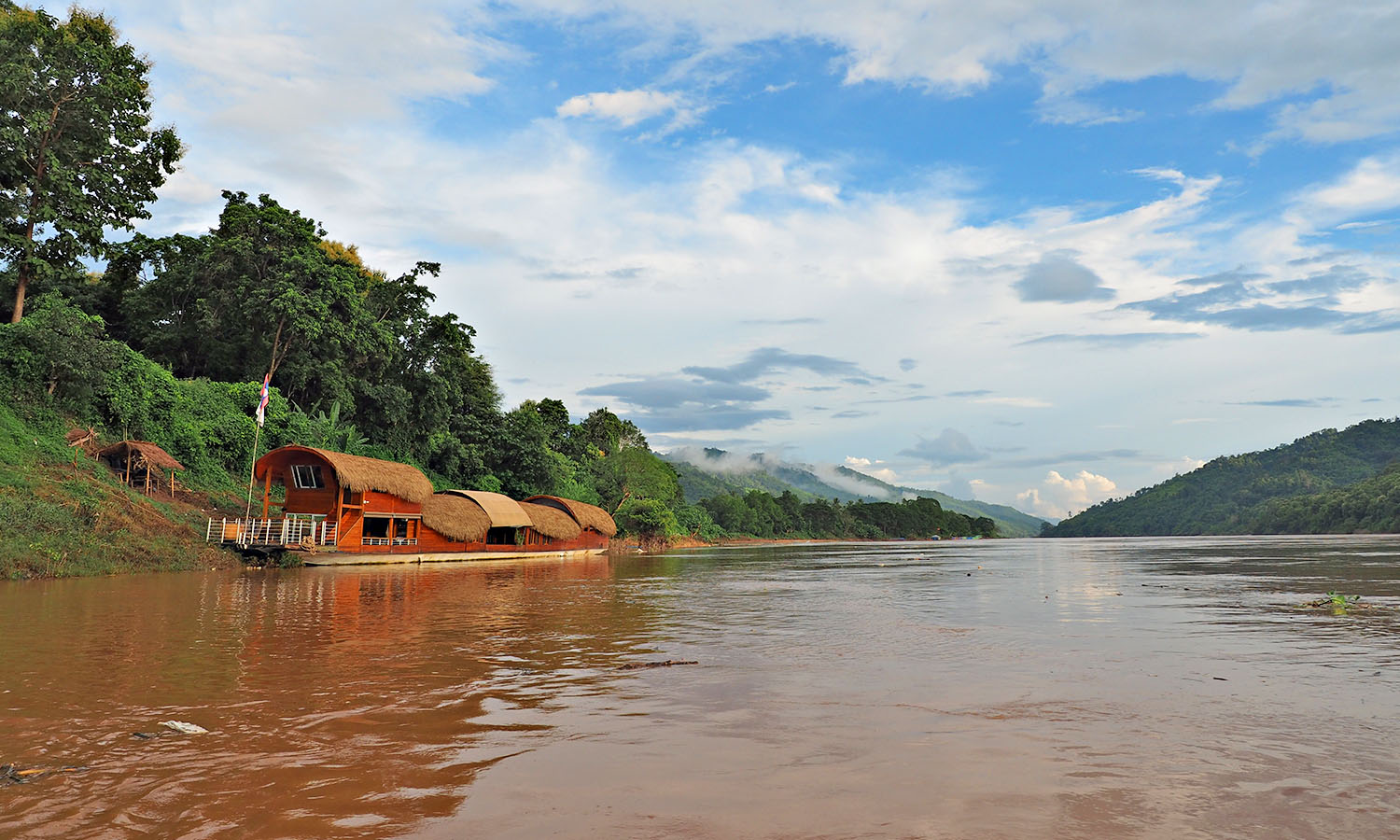
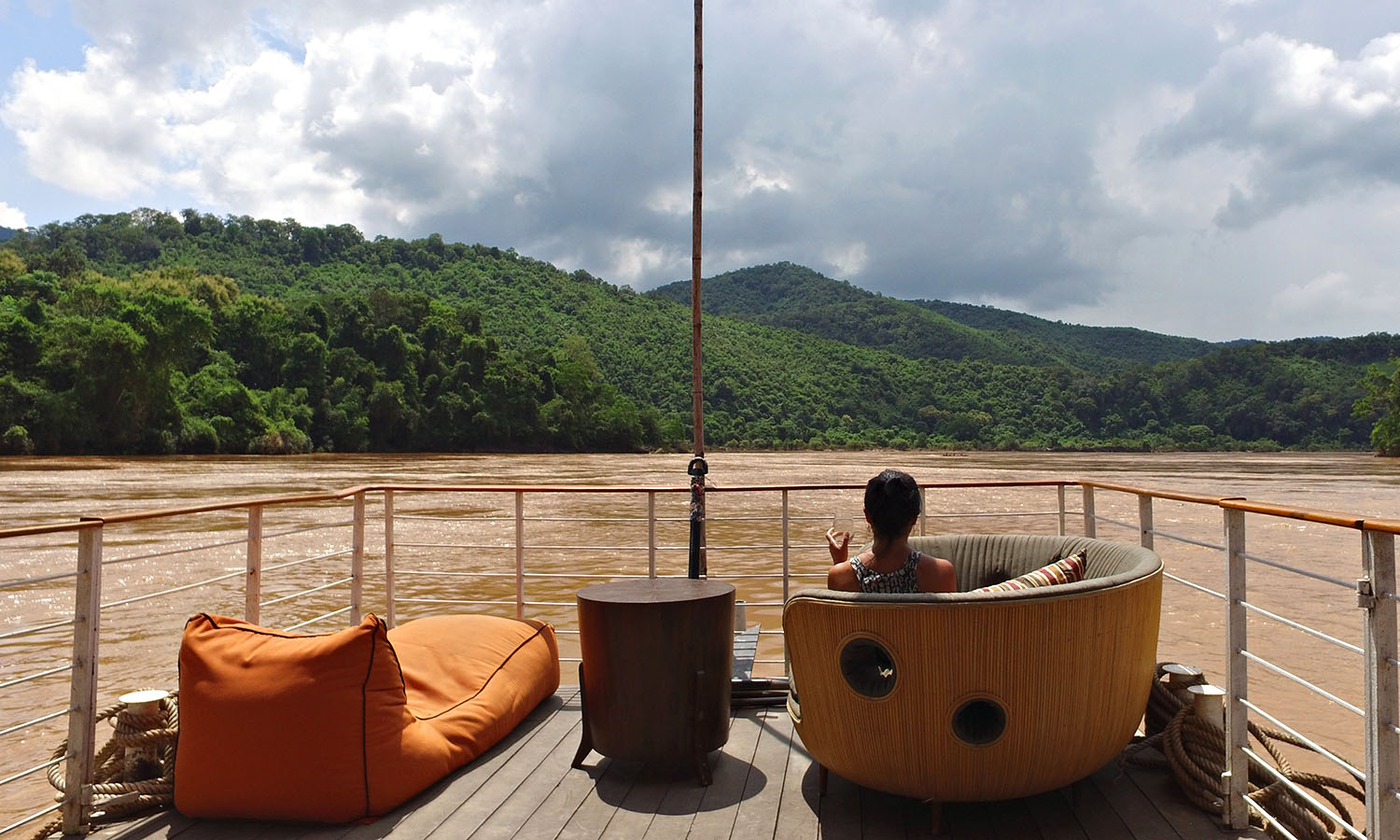
The Gypsy is outrageously good-looking, all teak and soft cushions and open spaces made for doing absolutely nothing. It’s the kind of boat you imagine Hemingway would have chartered if he were less grumpy and had a thing for throw pillows. Two staff flit around discreetly like river ninjas, ensuring that my biggest problem is deciding between another ice-cold Beer Lao or a nap in the sun.
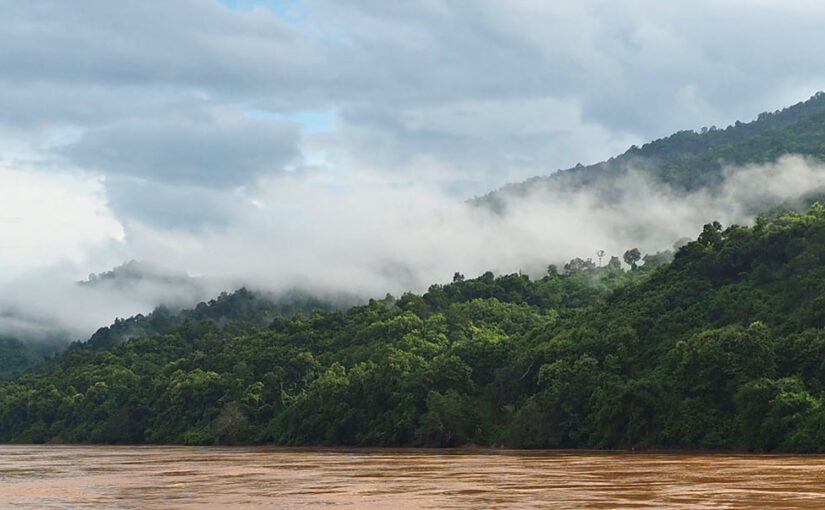
Leaving Chiang Rai behind, we carve through the thick morning mist. Jungle-clad hills rise up on either side, and every now and then, a lone fisherman stares at us, presumably wondering which minor royal or washed-up pop star is floating past.
I spread out across the daybed, sipping G&Ts and reading a book I have absolutely no intention of finishing. This is a slow cruise, and the Mekong, a muddy, muscular beast of a river, doesn’t so much flow as swagger downstream. It suits me perfectly. River boats chug slowly along, the ones heading upstream fighting a battle against the fast-moving Mekong. A “fast boat”, which is basically a surfboard with a massive engine and 8 people strapped to it, zips past us, and I’m reminded of my last trip on this mighty river. Backpacking, sleeping in hammocks and clinging to the edges of a “fast boat”, wishing I’d taken a Laotian “nerve settler” in Pakbeng before climbing on. I toast myself and the Gypsy with another Beer Lao!
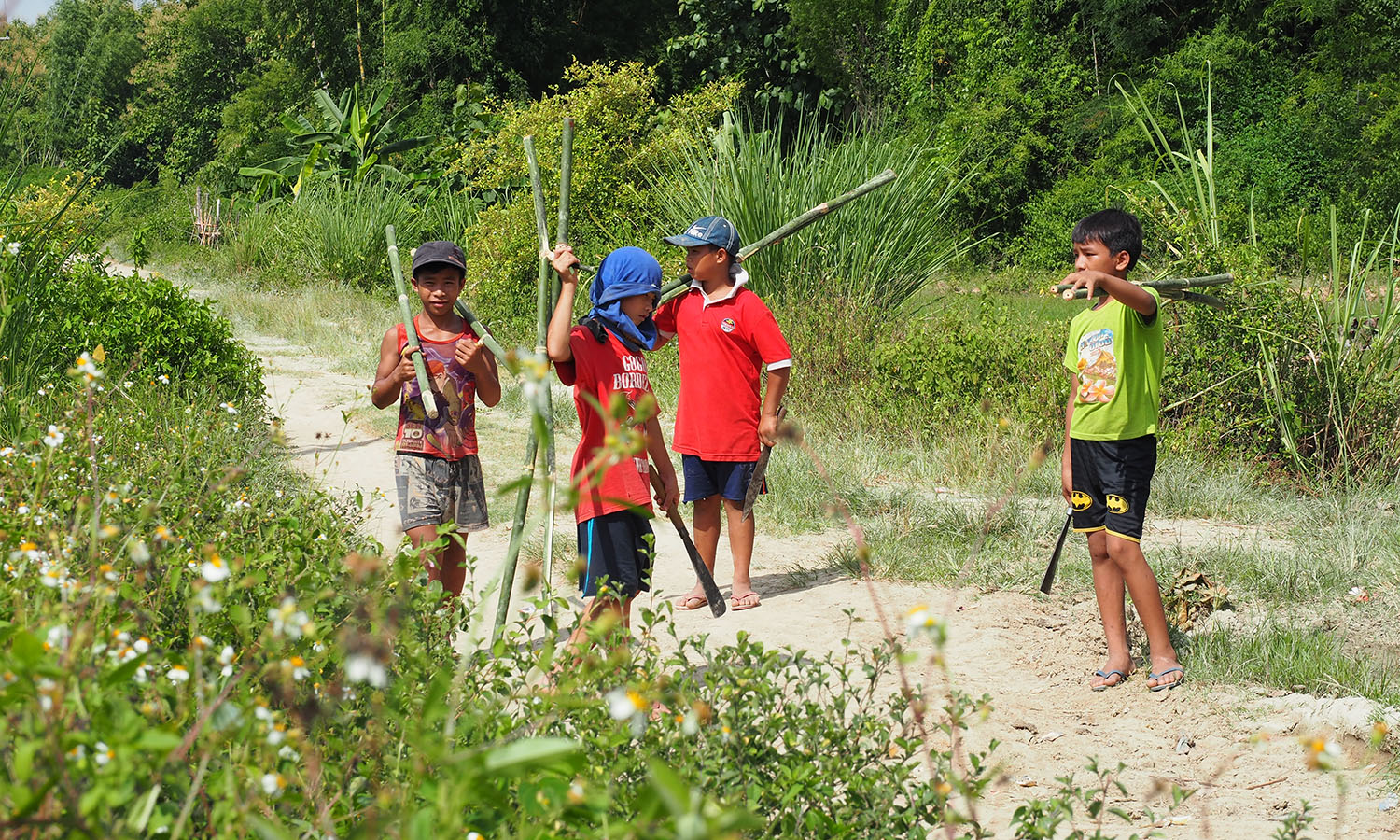
The days quickly fall into a rhythm: wake up to the sound of the river coughing and spluttering past, eat something stupidly delicious, lounge about pretending to write deep thoughts in a notebook, wave half-heartedly at passing kids, and drink more things that would make my liver file for a restraining order. But it’s the nights where the real magic happens.
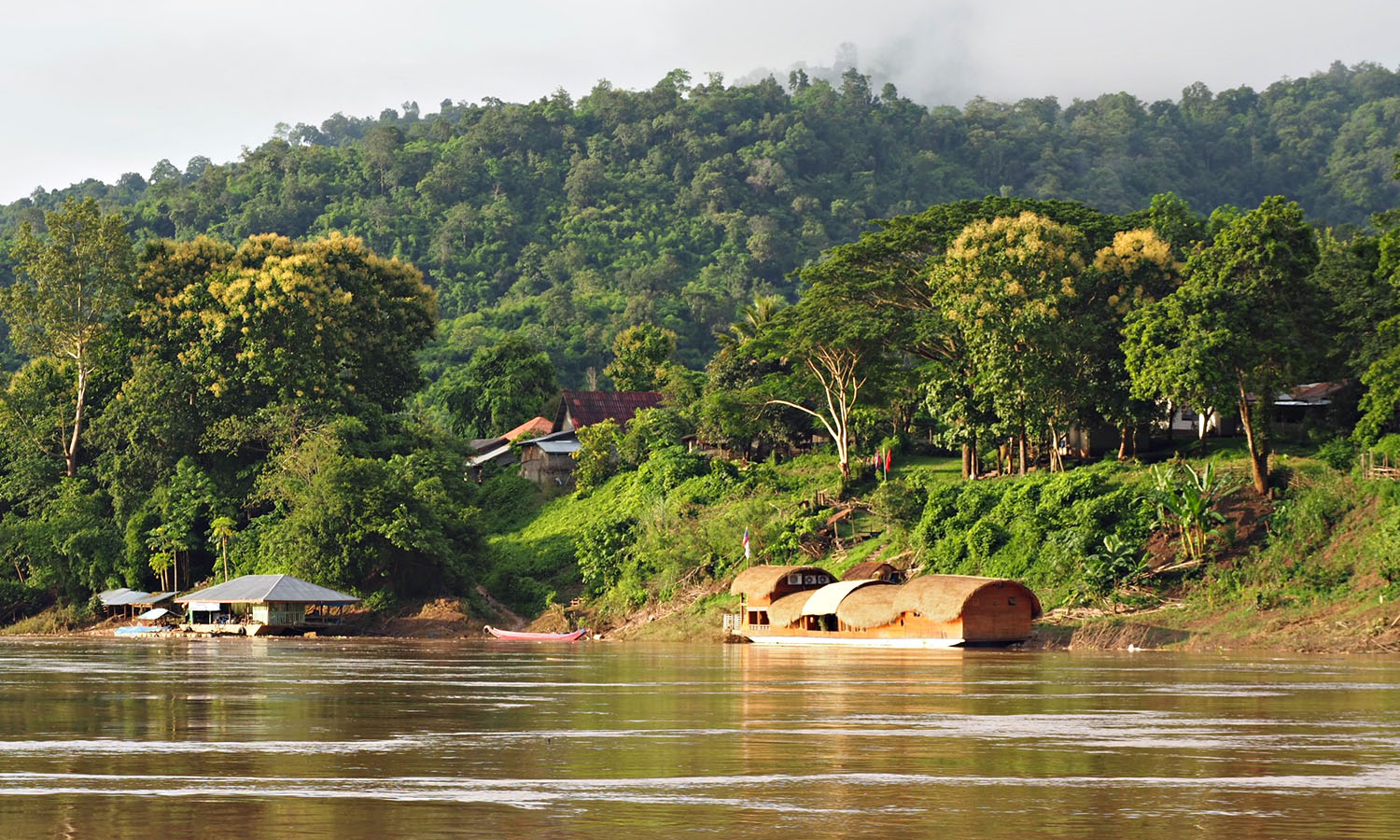
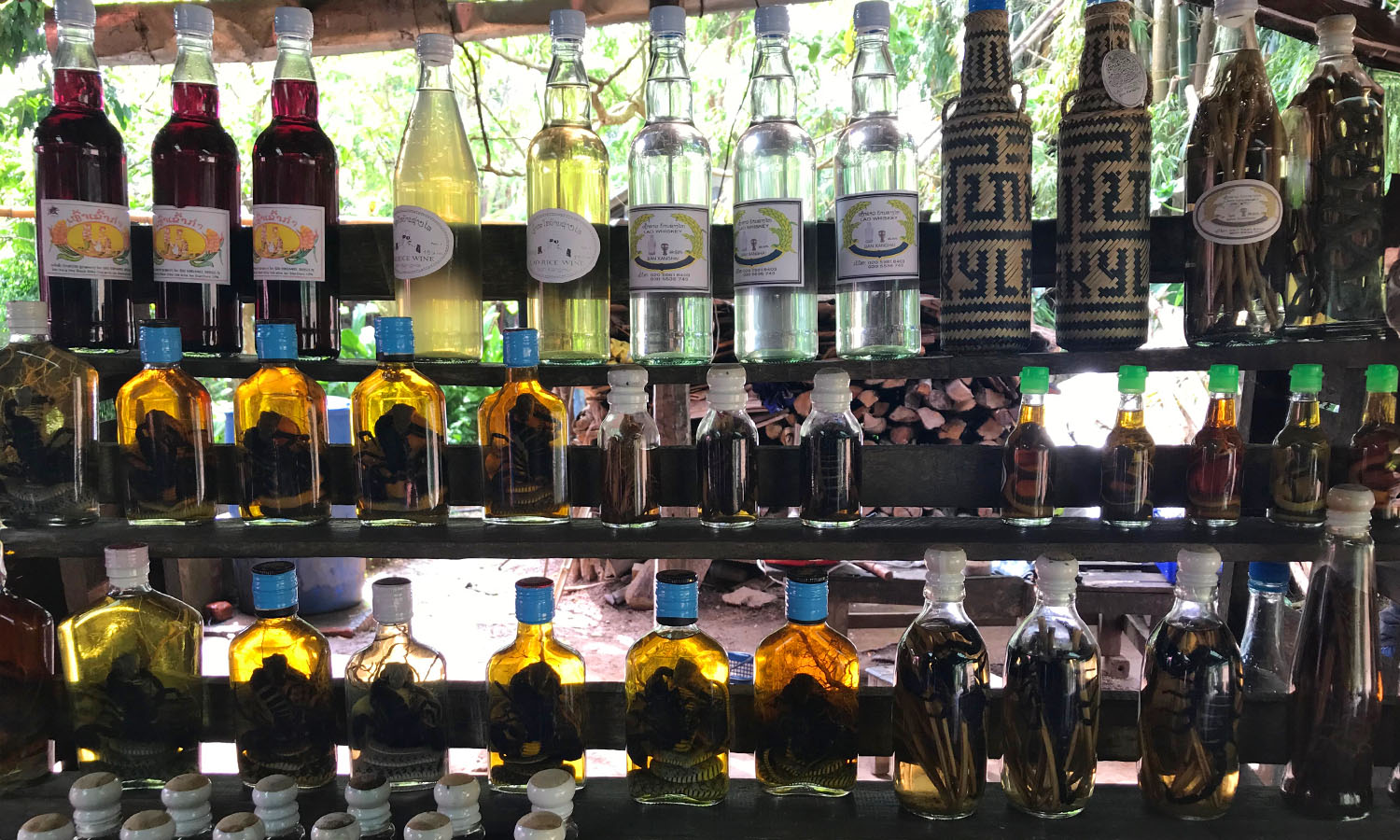
On our second evening, we pull up near Xanghai Village, a pocket-sized cluster of stilt houses so charming it feels like I’ve stumbled into a very well-curated Instagram post. This place is famous, at least to those in the know, for its handmade Laotian whiskey, which is basically rice wine’s bigger, badder, drunker cousin. Somsak, our guide, suggests we head ashore. “Good people here,” he grins. “Good whiskey too.” A statement both promising and deeply ominous.
We weave through the village’s dusty laneways, past chickens scratching around ancient motorbikes, women weaving barely glancing up, and end up in a small courtyard where a handful of locals are already getting a head start on the evening’s festivities. There’s a fire pit crackling away and something roasting over the coals that even from a distance does not look regulation.
Somsak mutters something to the group, and before I can fake an allergy, I’m handed a bamboo skewer topped with what is, unmistakably, a bat.
“Barbecue bat,” Somsak confirms unnecessarily. “Good for stamina.”
Wonderful. Because if there’s one thing I’ve been worried about lately, it’s stamina.
Trying not to think about wingspan, I take a bite. It’s… crunchy. Burnt rubber with notes of despair and regret. I immediately chase it with a shot of the village’s famous whiskey.
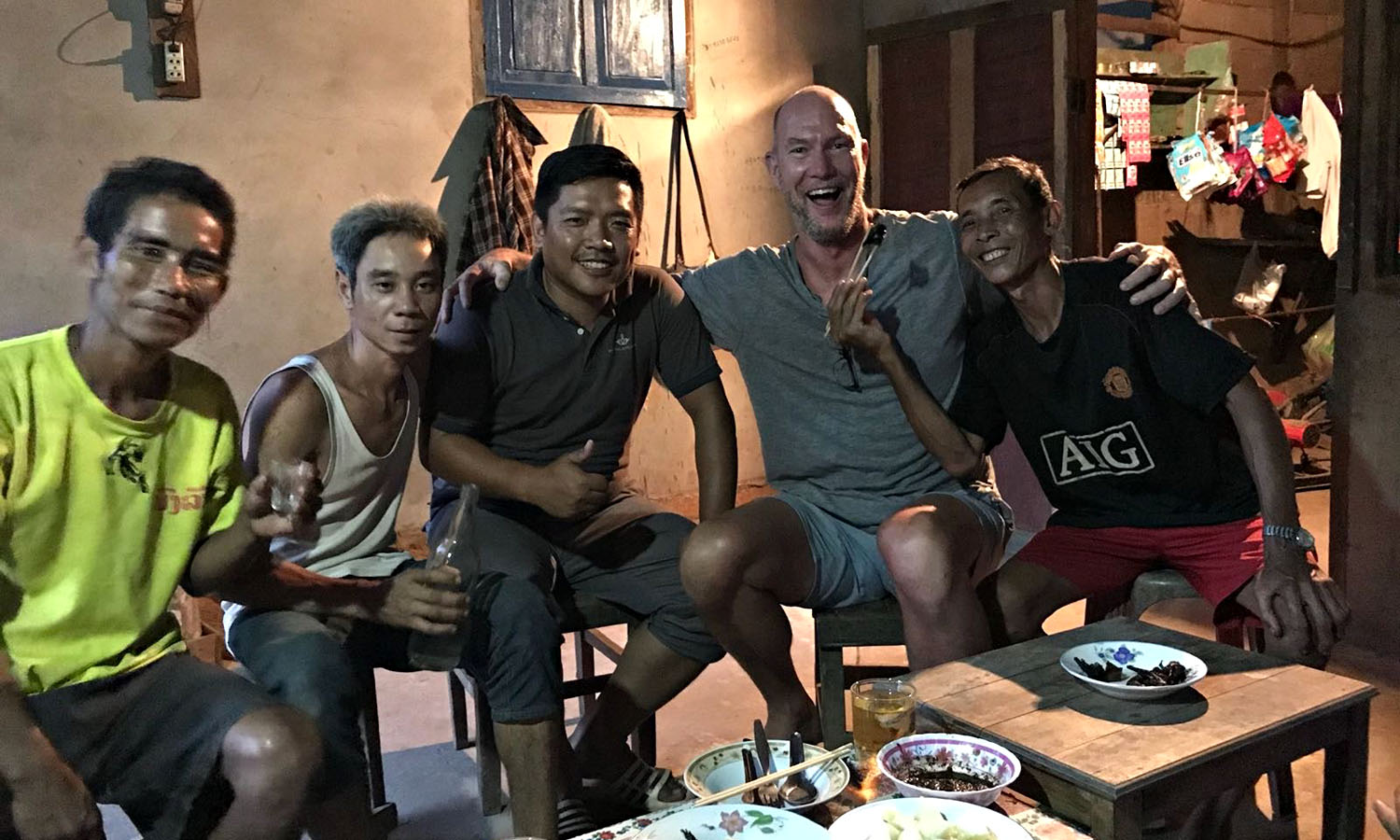
The whiskey hits like a freight train. My eyes water. My soul briefly leaves my body. Then someone yells, “Another!” and just like that, I’m locked into a drink-off with men whose livers have clearly been forged in fire. We laugh, we clink tiny glasses, I try to teach them a Johnny Cash song, and I decide that, bat aside, discovering Xanghai village might be the best part of this adventure.
We stumble back to the Gypsy, smelling like smoke, bat, and Mekong mud, and I pass out in the comfort of my soft cosy double bed. Honestly, if I’m going to vomit up questionable wildlife, this is exactly the sort of five-star setting I’d want to do it in.
The next morning, hungover but proud, I drag myself to the sun deck, where the crew, clearly veterans of worse nights, greet me with strong coffee and a delicious breakfast sans wings and fangs. The Mekong, wide and uncaring, keeps on rolling, dragging me deeper into Laos and deeper into a kind of blissful, sun-drenched stupor.
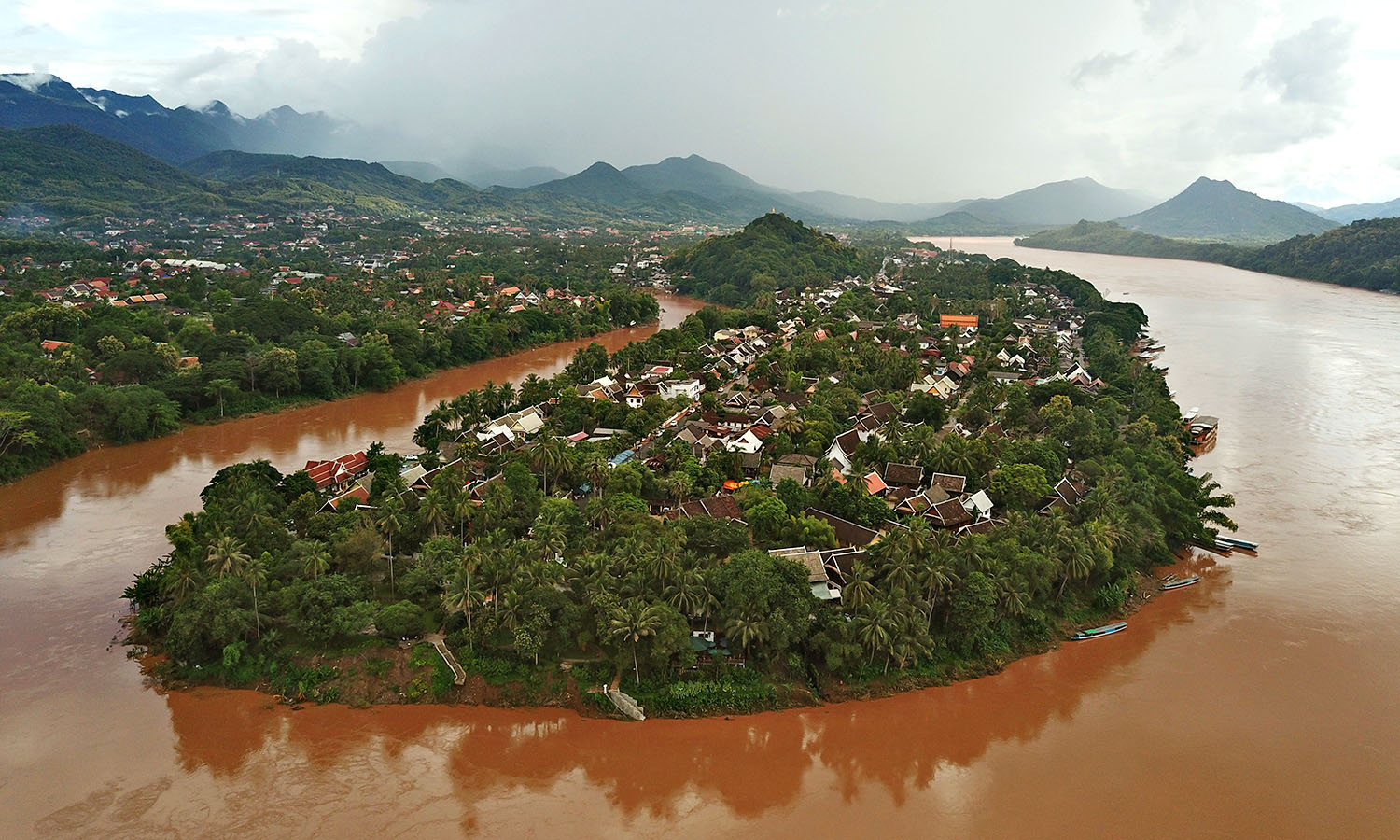
By the time we glide into Luang Prabang, all crumbling French mansions, orange-robed monks, and mango-scented magic, I am practically a new man. A bloated, mildly poisoned man, sure, but a new one, nonetheless.
As I disembark, I look back at the Gypsy bobbing on the river, a little slice of teak-and-cocktail heaven in a mad, beautiful world. I give a small, dignified wave.
And then promptly stagger off to find the nearest pharmacy. Manpower, it turns out, has a price.
One man’s mission to survive Innsbruck’s beer, schnitzel and snow.
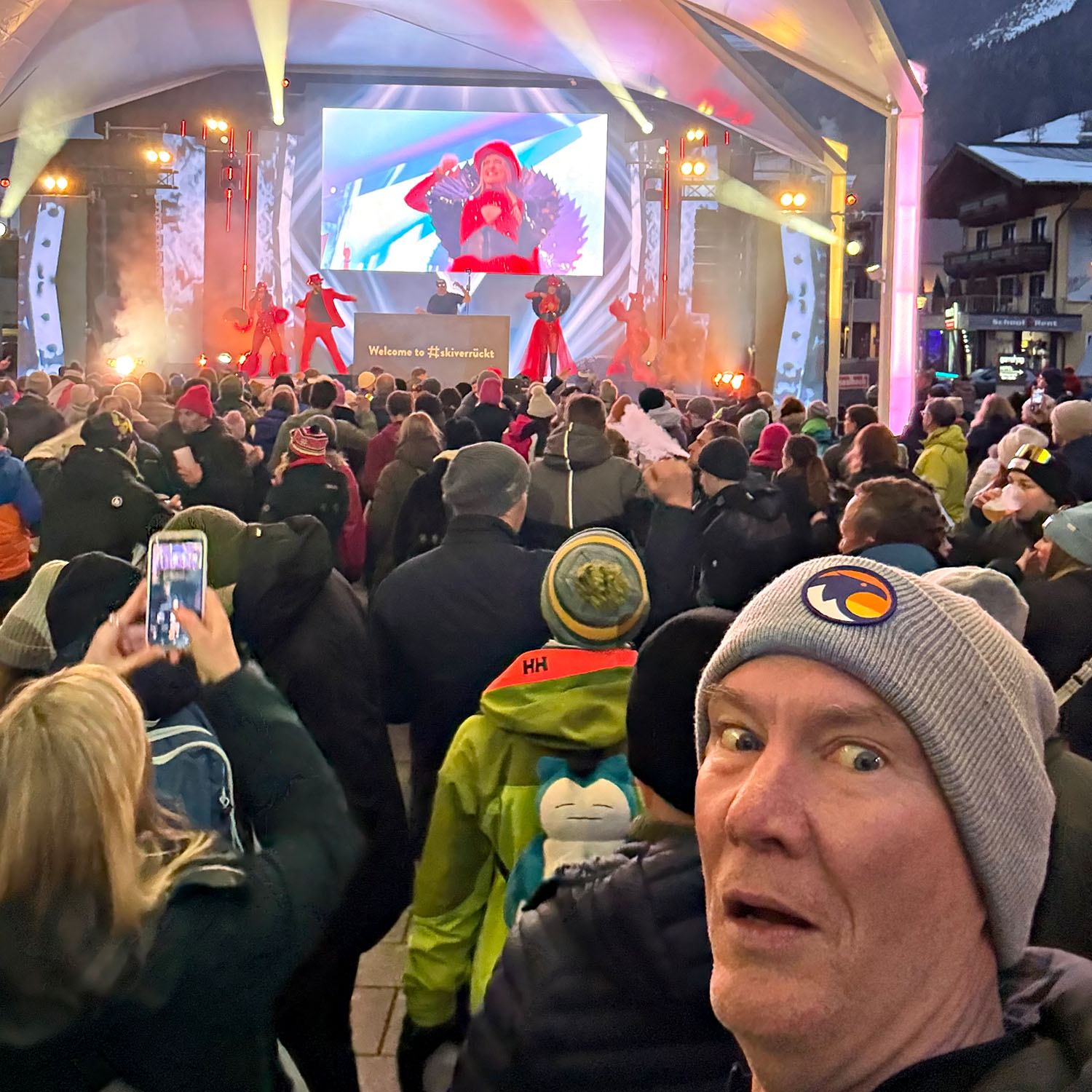
I’m dragging my hungover carcass through the medieval alleyways of Innsbruck. This is a city where baroque opulence collides with snow-covered adrenaline. Did I mention the hangover? The kind of hangover that only comes from partying with Austrians during the Downhill World Championships in Saalbach the night before. Austrians plus snow plus a world-class event equals real partying. We’re talking schnapps-fuelled, lederhosen-wearing, après-ski mayhem that makes Ibiza look like a book club.
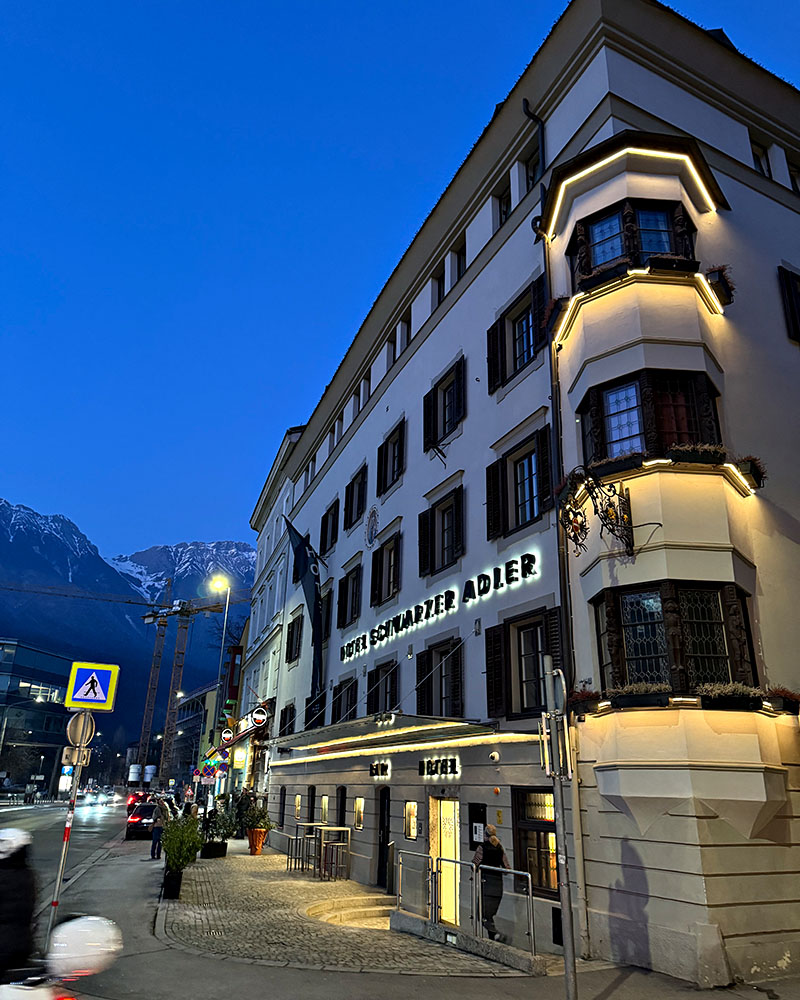
I’m extremely thankful for the warmth of an early check-in at the Hotel Schwarzer Adler, a hotel 400 years older than my own country. I wonder if Mozart himself ever wandered the hallways. I check in and collect my Ski Plus City Pass. This little card is the golden ticket to Tyrolean fun, giving me access not just to ski lifts in nearby Kühtai, but also to city attractions, public transport, museums, and even Swarovski’s shimmering fever dream of a museum. I do what any responsible journalist would do: go find some crystals.
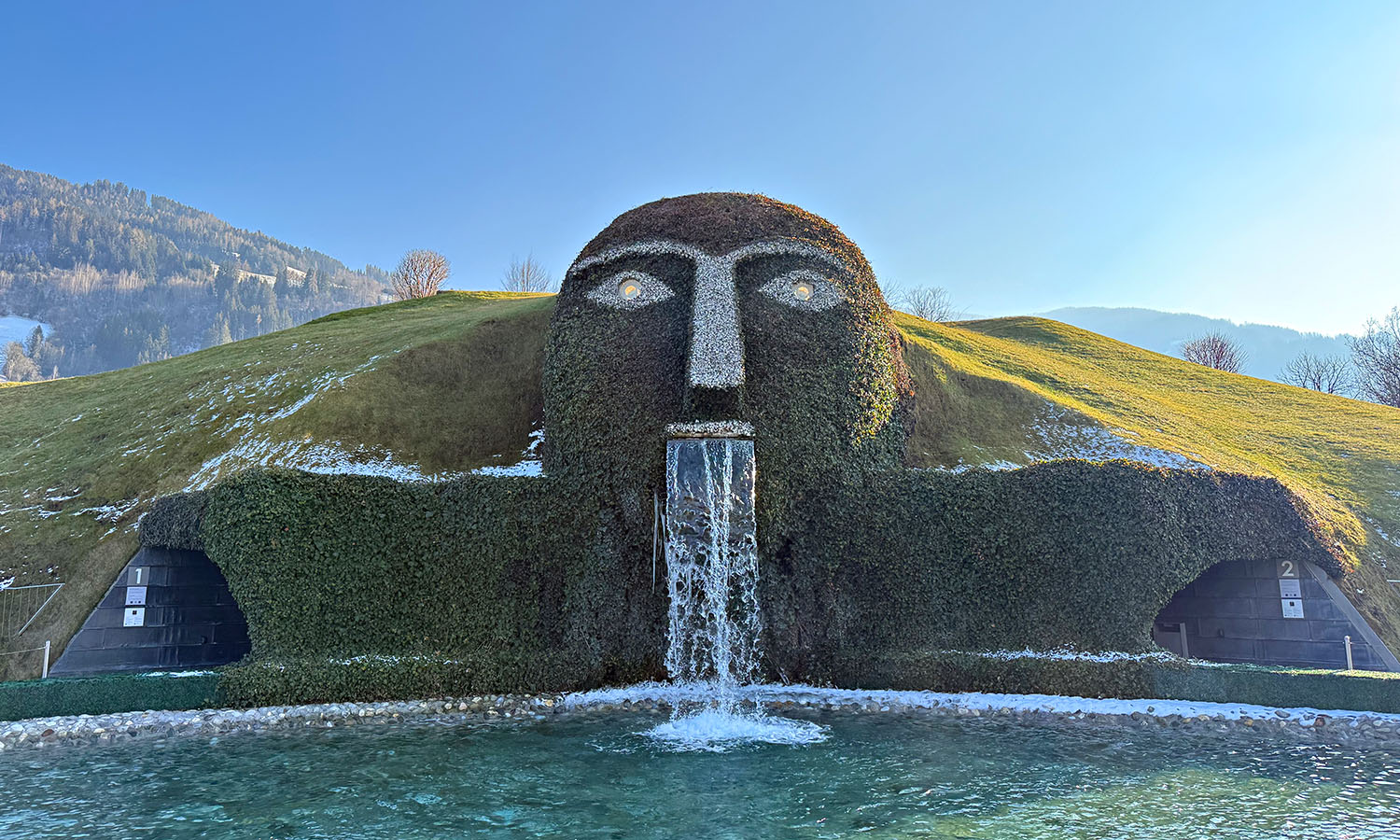
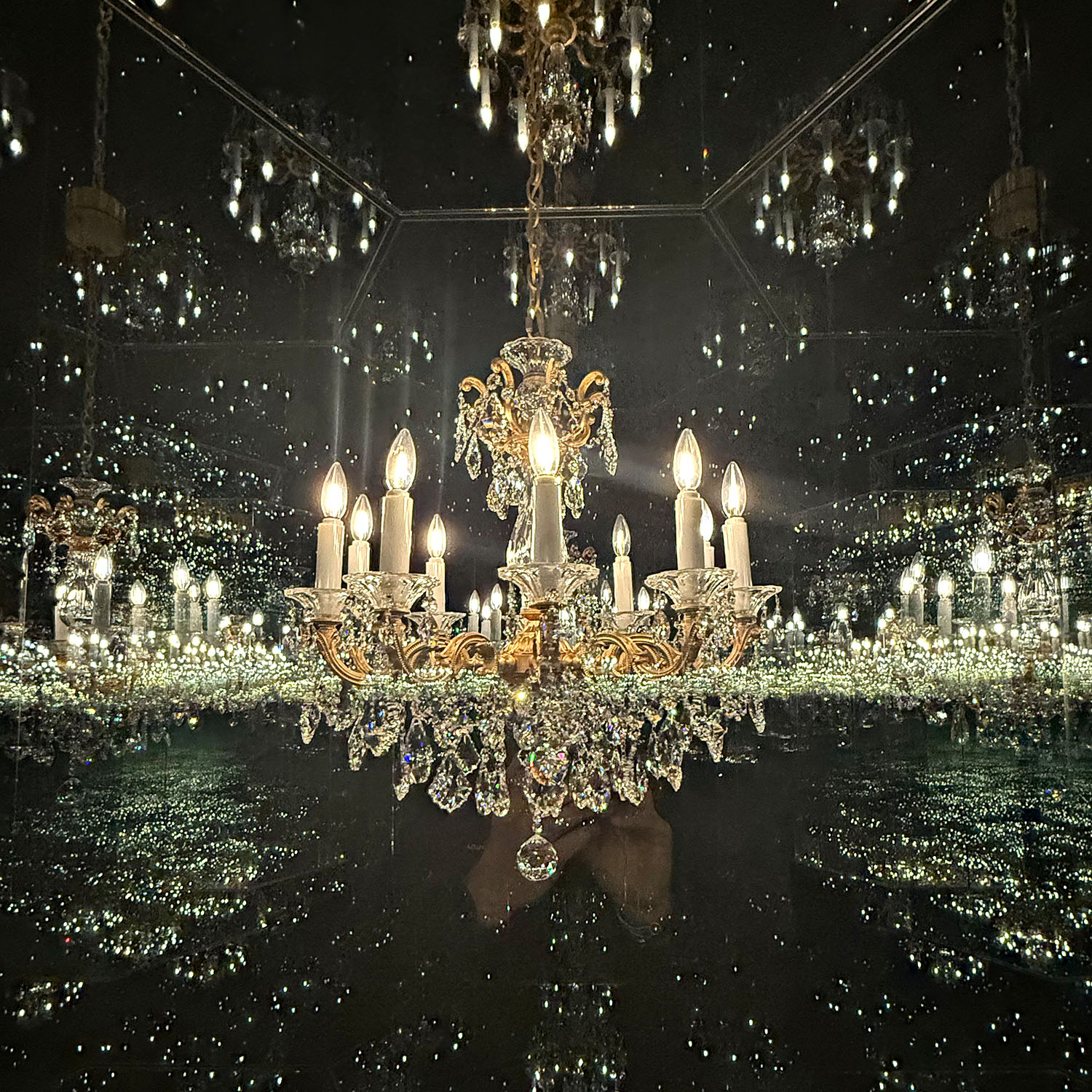
Swarovski Kristallwelten is like falling headfirst into a glittering fantasy land. The entrance is a grass-covered giant’s head with crystals for eyes. It’s actually more like a Bond lair than a museum. Inside, rooms explode in light, mirrors, and existential sparkle.
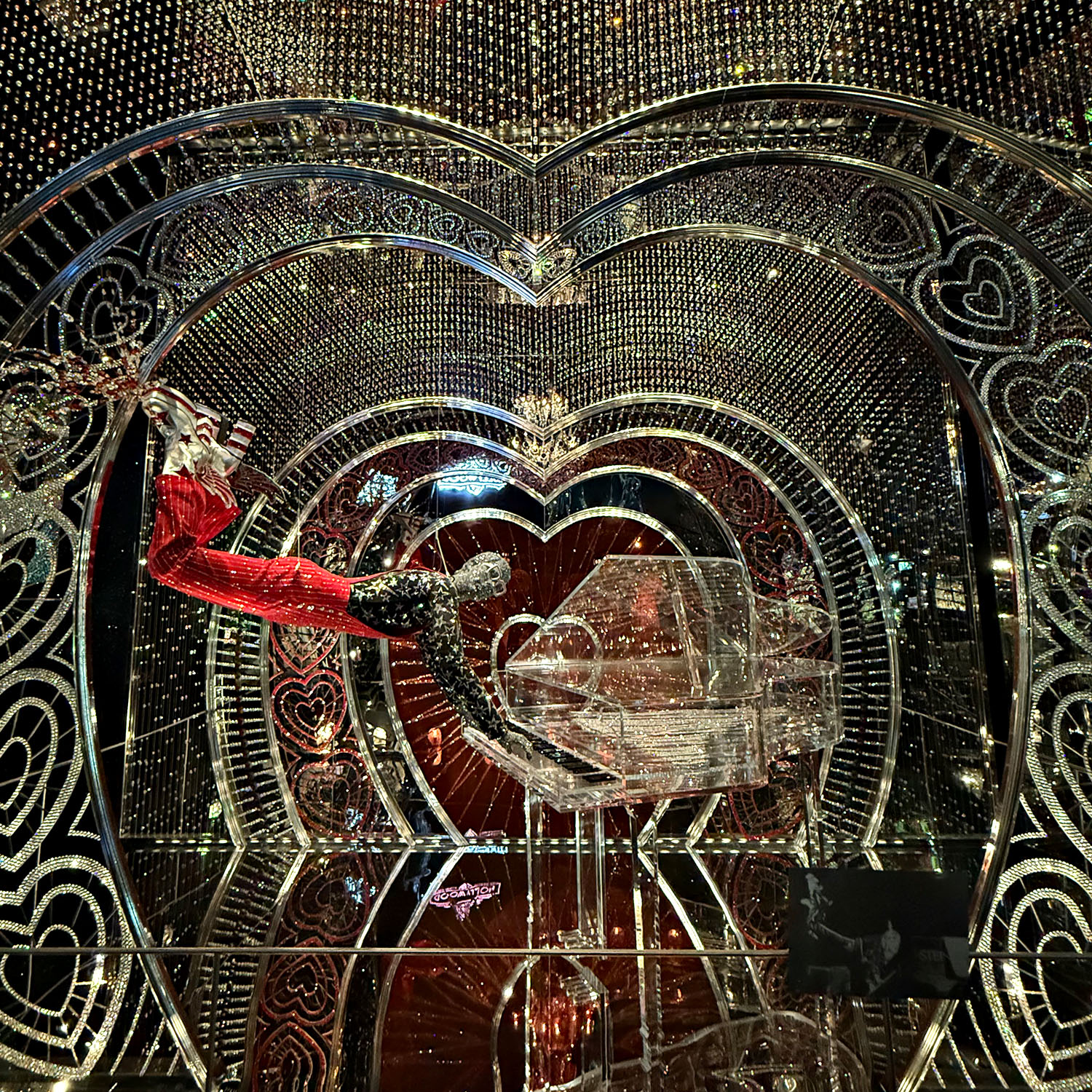
One gallery casually displays the number of Swarovski crystals embedded in celebrity costumes over the decades, which is frankly obscene. Elton John, unsurprisingly, leads the charge. His outfits shimmering with enough bling to light a runway you can see from space. There’s a mechanical birdcage, a silent snowstorm that never ends, and a room of music-playing crystals that feels like Brian Eno went on an acid bender at a jewellery store. The highlight is a walkway with a roof of hundreds of crystal speakers, each one speaking to you as you walk underneath; languages from all over the world. It’s truly surreal.
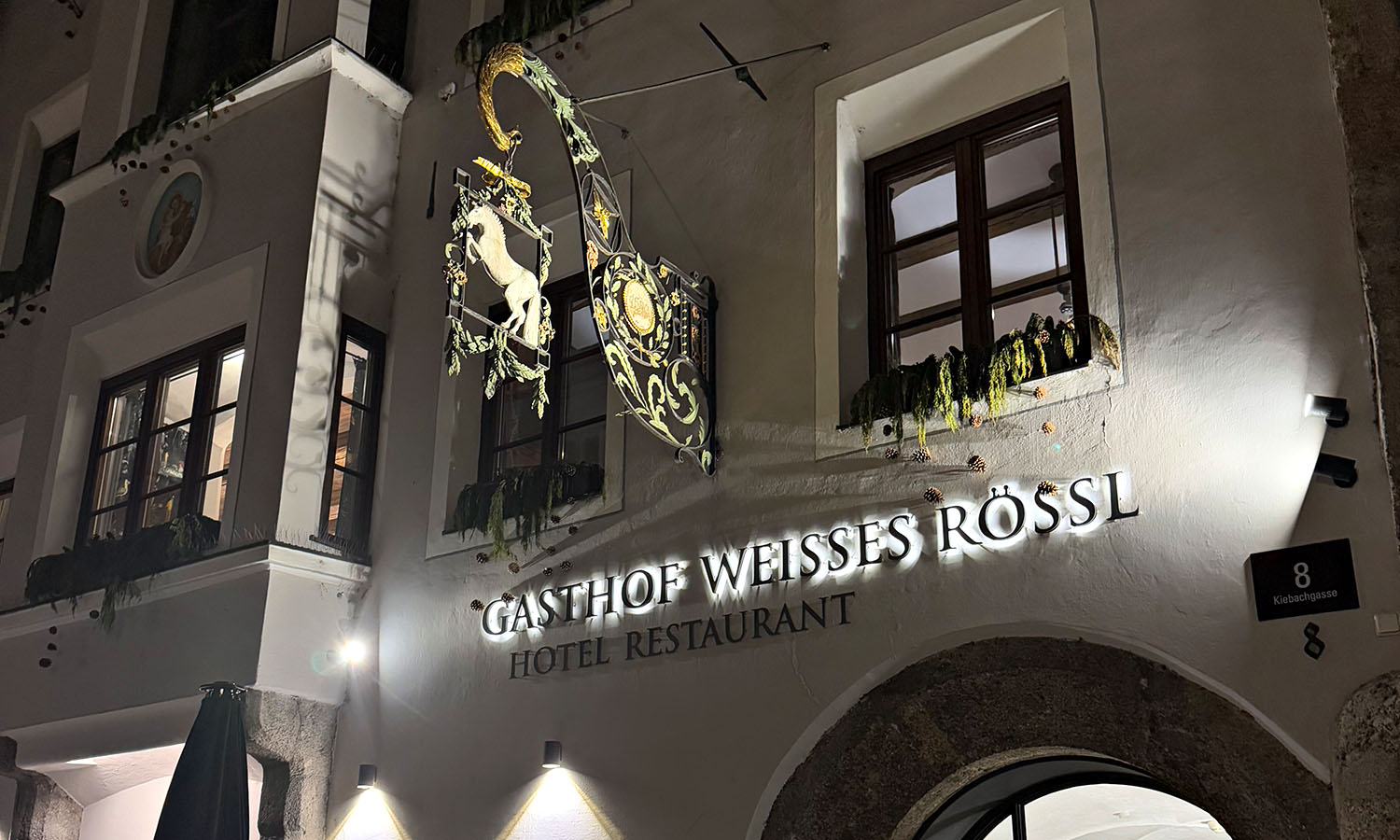
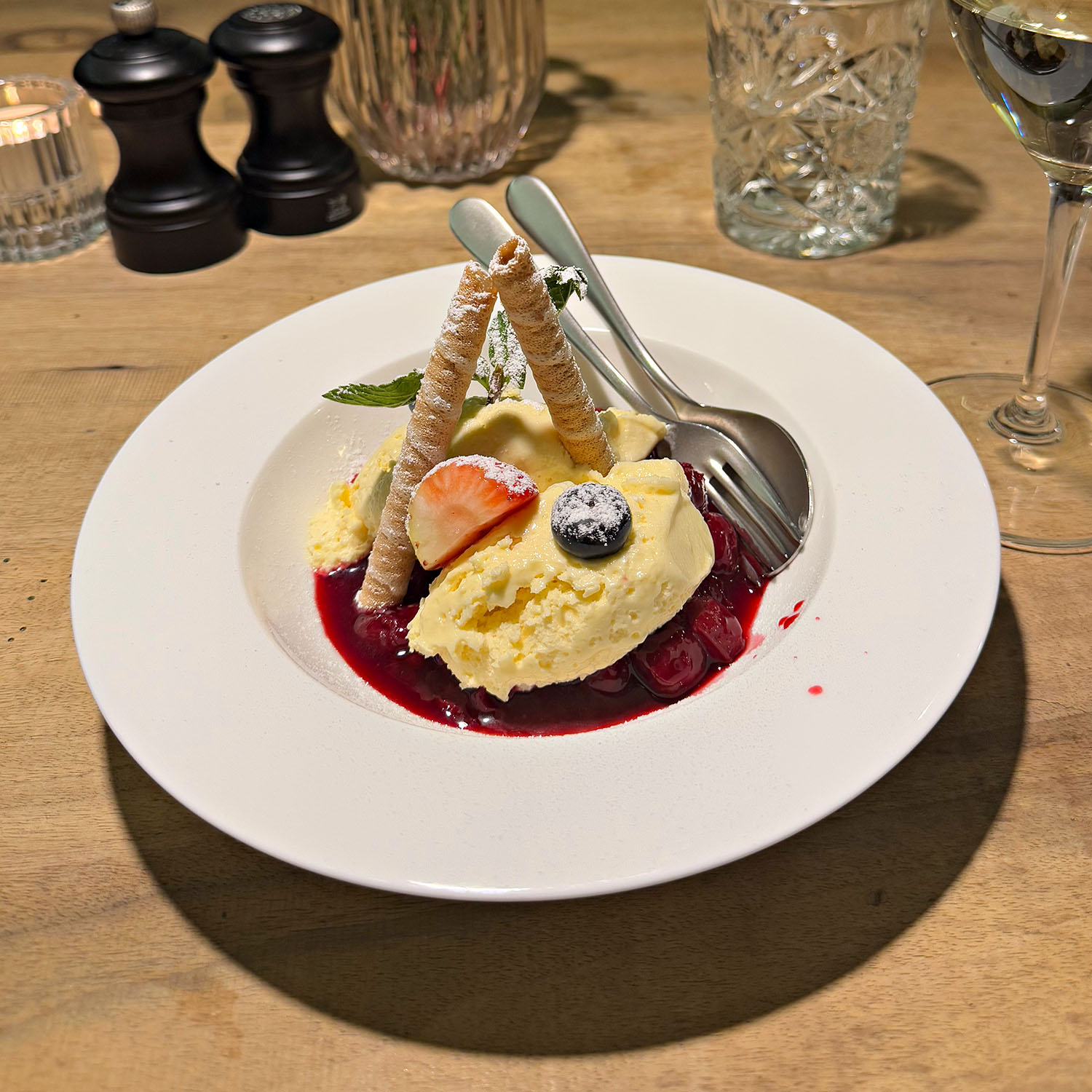
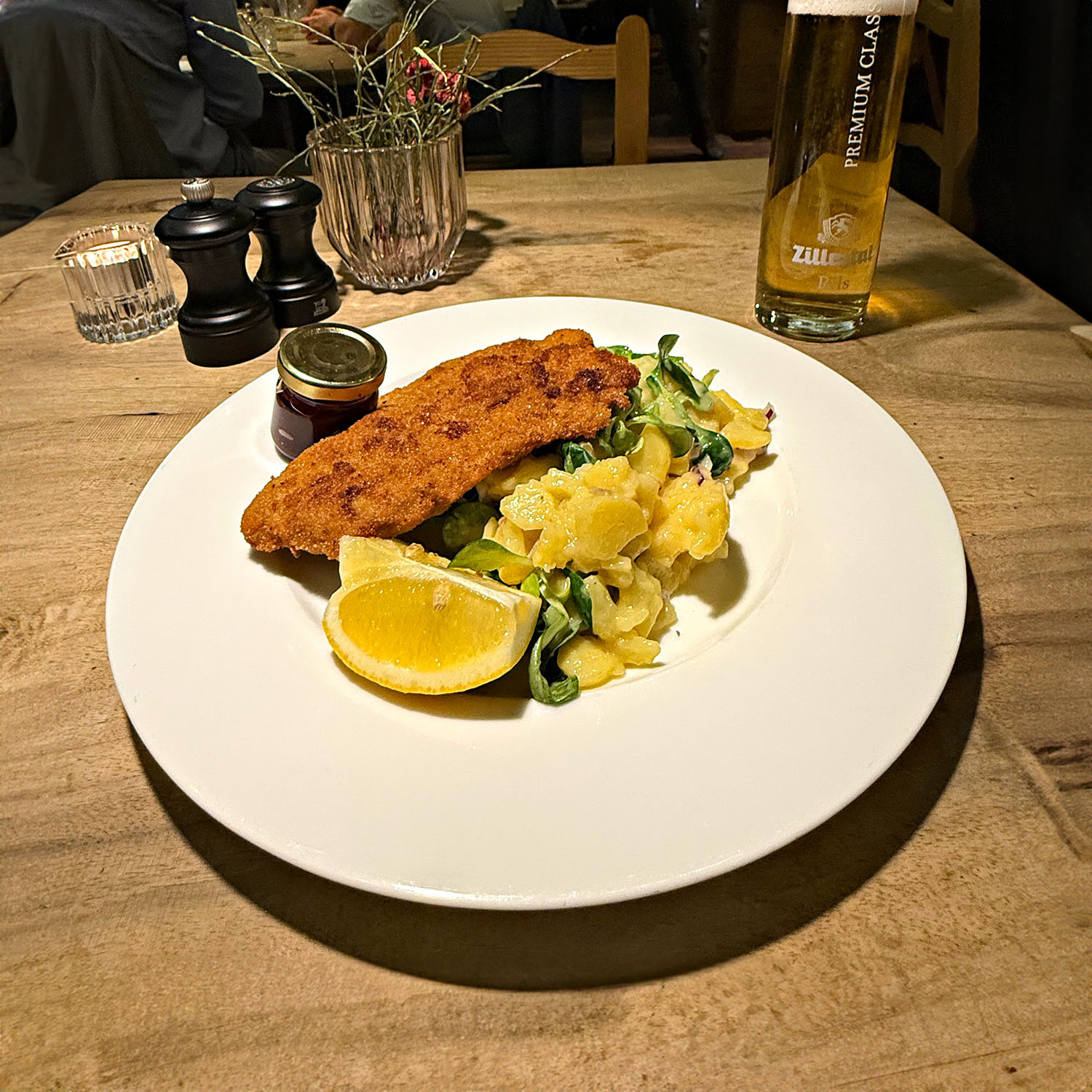
I go full Austrian for dinner with a hearty plate of Tiroler Gröstl and a schnapps at Weisses Rössl, one of Innsbruck’s most traditional inns. It’s all low timber beams, candlelit corners, and centuries of Alpine gemütlichkeit (that’s friendliness). The waitstaff wear dirndls like they mean it, and the menu reads like a greatest hits of Austrian comfort food. I ordered the schnitzel, because you have to. What arrives is a golden, perfectly crisp, pan-fried miracle roughly the size of a snowboard. It crackles under the knife and melts like butter in the mouth. It is easily the greatest schnitzel I’ve ever eaten.
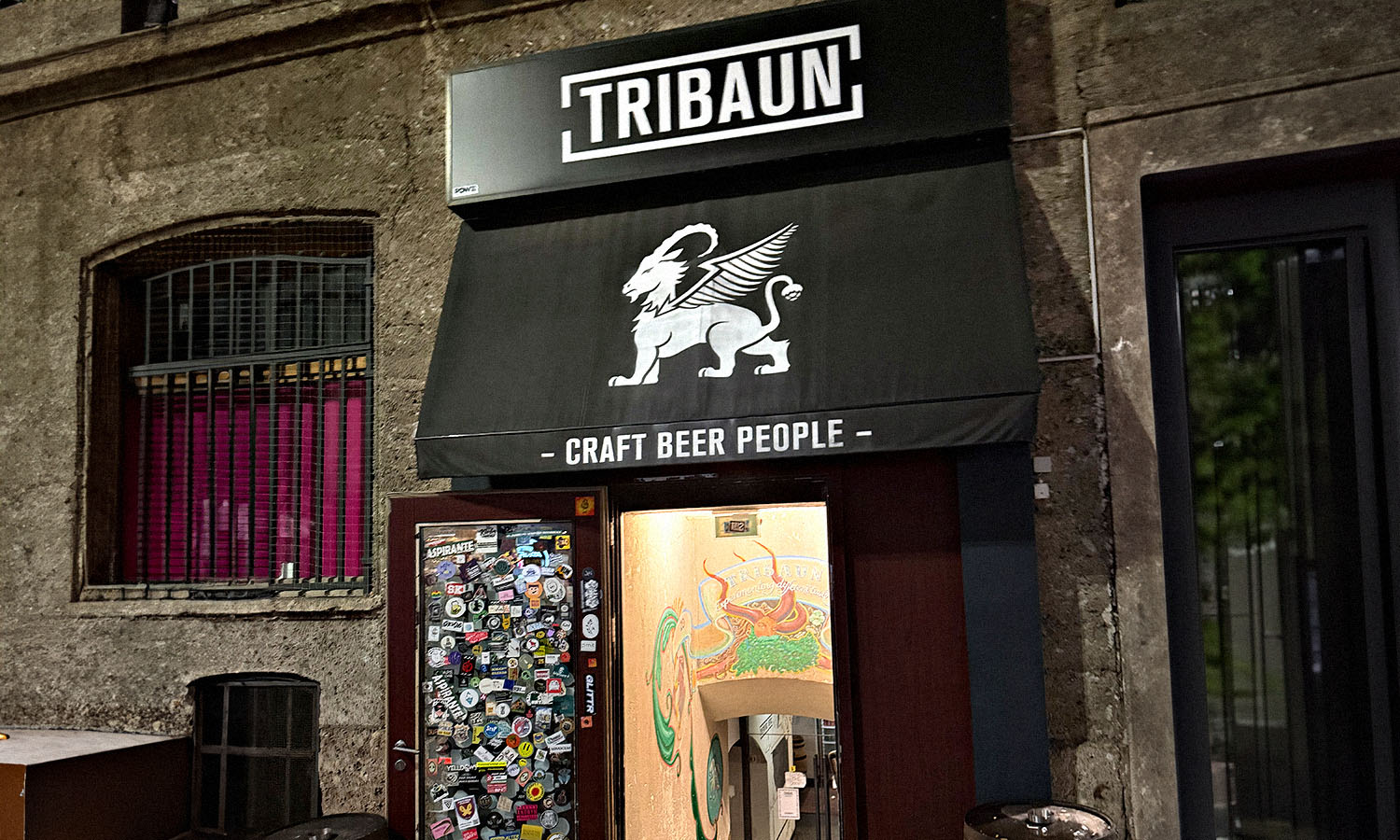
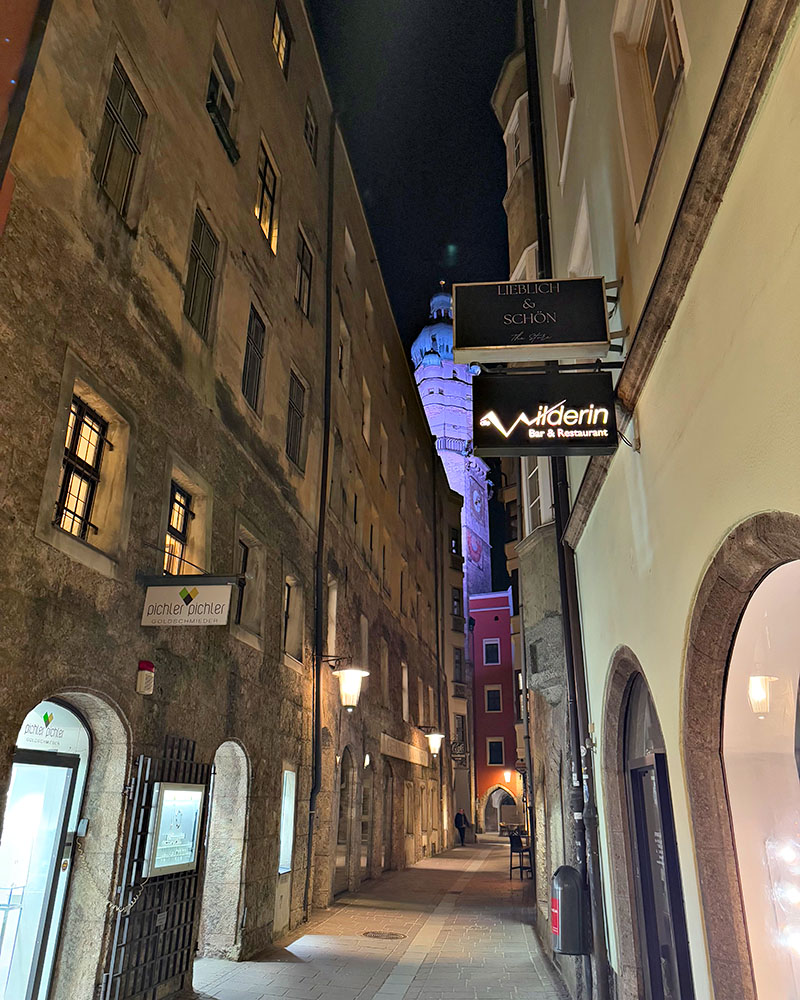
After dinner, I wander slowly and bloated through the backstreets in the moody glow of gaslights and gothic arches. It’s here, happily lost in the old town of Innsbruck, that I stumble upon Tribaun.
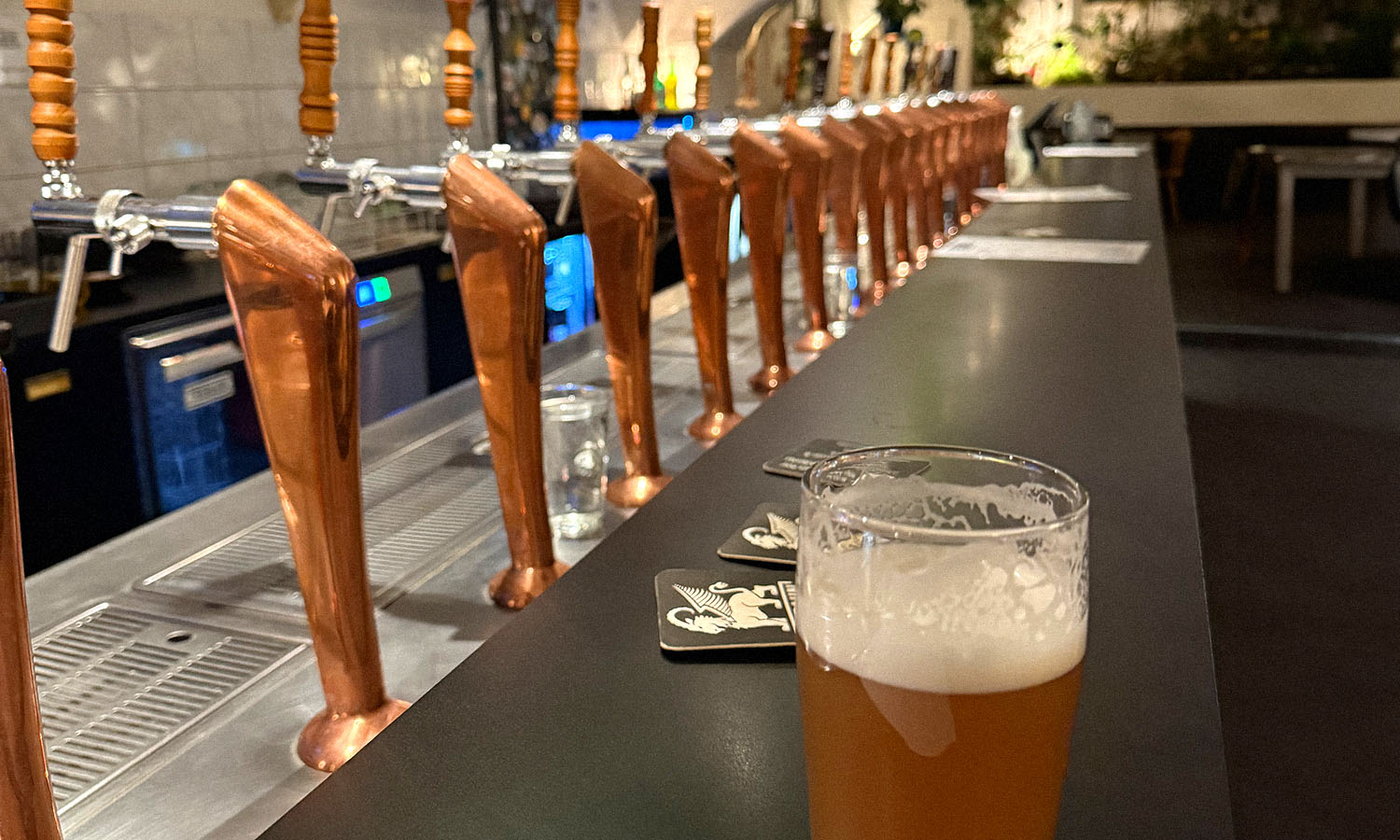
It doesn’t look like much. Just a door. But down the steps is a den of hops-fuelled sin. Craft beer from all over Europe, tattooed bartenders with opinions, and a crowd that looks like they argue about fermentation methods for fun. I fall in with some locals who pull me into a “shout”, an endless cycle of buying and consuming increasingly aggressive beers. One hazy IPA hits like a freight train of citrus, pine, and regret. I think I’m winning until I try to stand up.
Morning. Kühtai. A yodelling demon pounds timpani drums in my skull. My ski instructor sizes me up like a butcher choosing which bit to cut first. I’m pale, I’m trembling, but I’m committed.
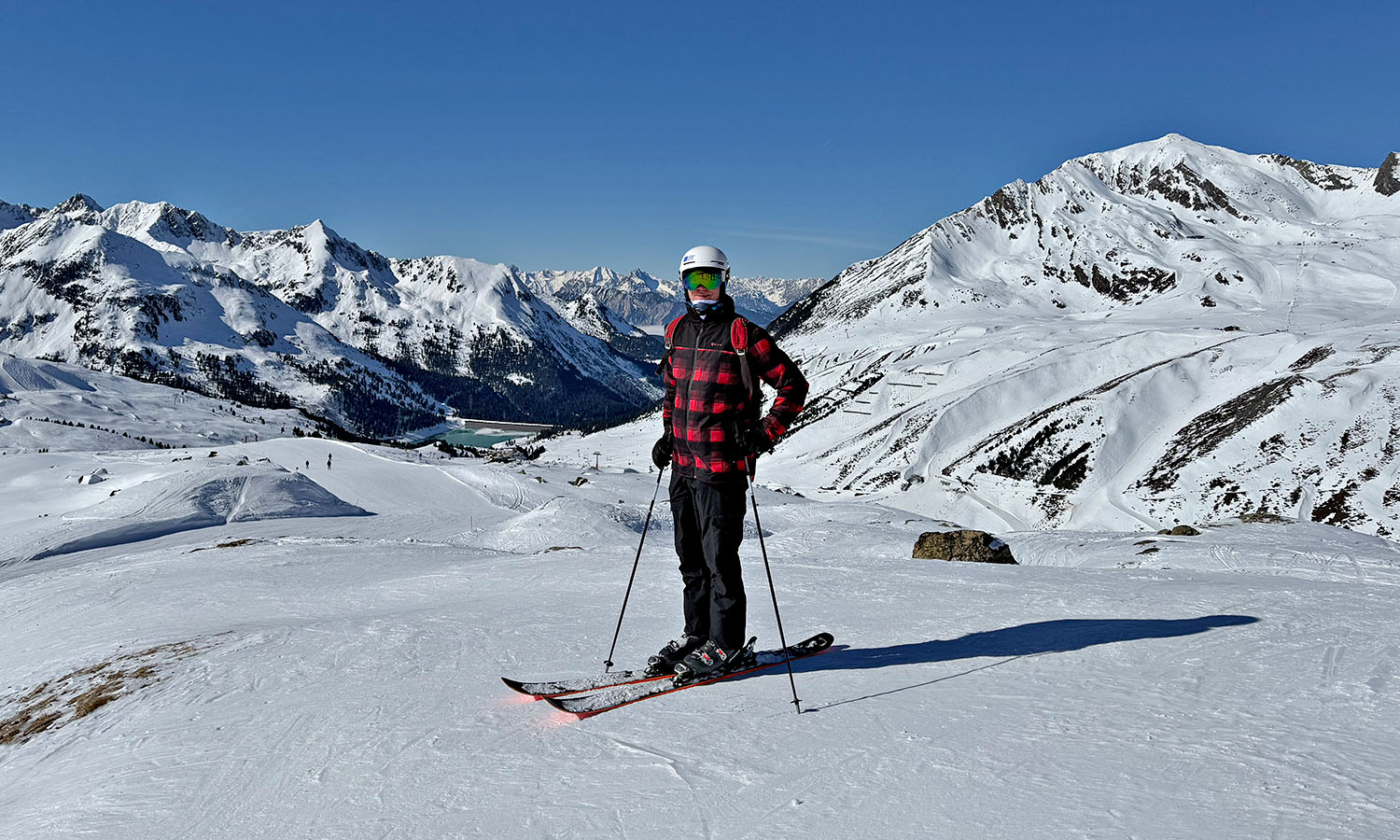
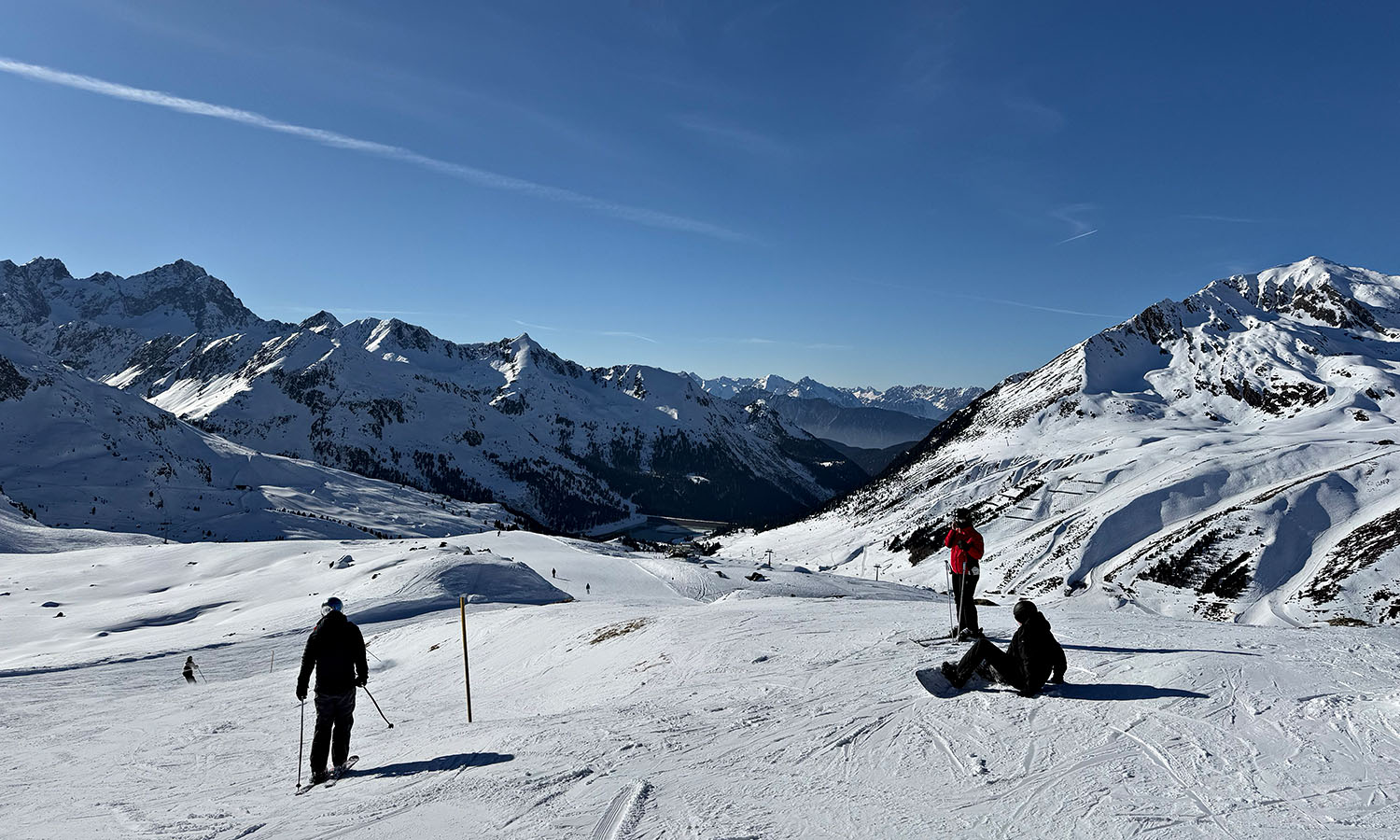
Kühtai is Austria’s highest ski village, perched at over 2,000 metres, which means snow is pretty much guaranteed. The drive up from Innsbruck is a leisurely forty minutes with increasingly stunning views as you wind up through villages and into Kuhtai. The slopes here are a glorious patchwork of wide cruisers and narrow chutes, flanked by rugged peaks. There’s something for everyone here, easy-going blues that lull you into confidence, and then out of nowhere, sneaky reds and aggressive blacks that demand respect (and functioning knees).
I start with a gentle run to test the structural integrity of my head. It’s going well until I hit an icy patch, and I’m suddenly skiing backwards. Still, my instructor is encouraging, or at least I think that’s what he’s saying in thick Tyrolean dialect while trying not to laugh. We traverse tree-lined paths, open powder bowls, and even flirt with a mogul field. The stunning views make it hard to concentrate on the snow in front of me. The snow is perfect, the air is merciless, and gravity is no longer my friend. I wobble, I slide, I survive. Just.
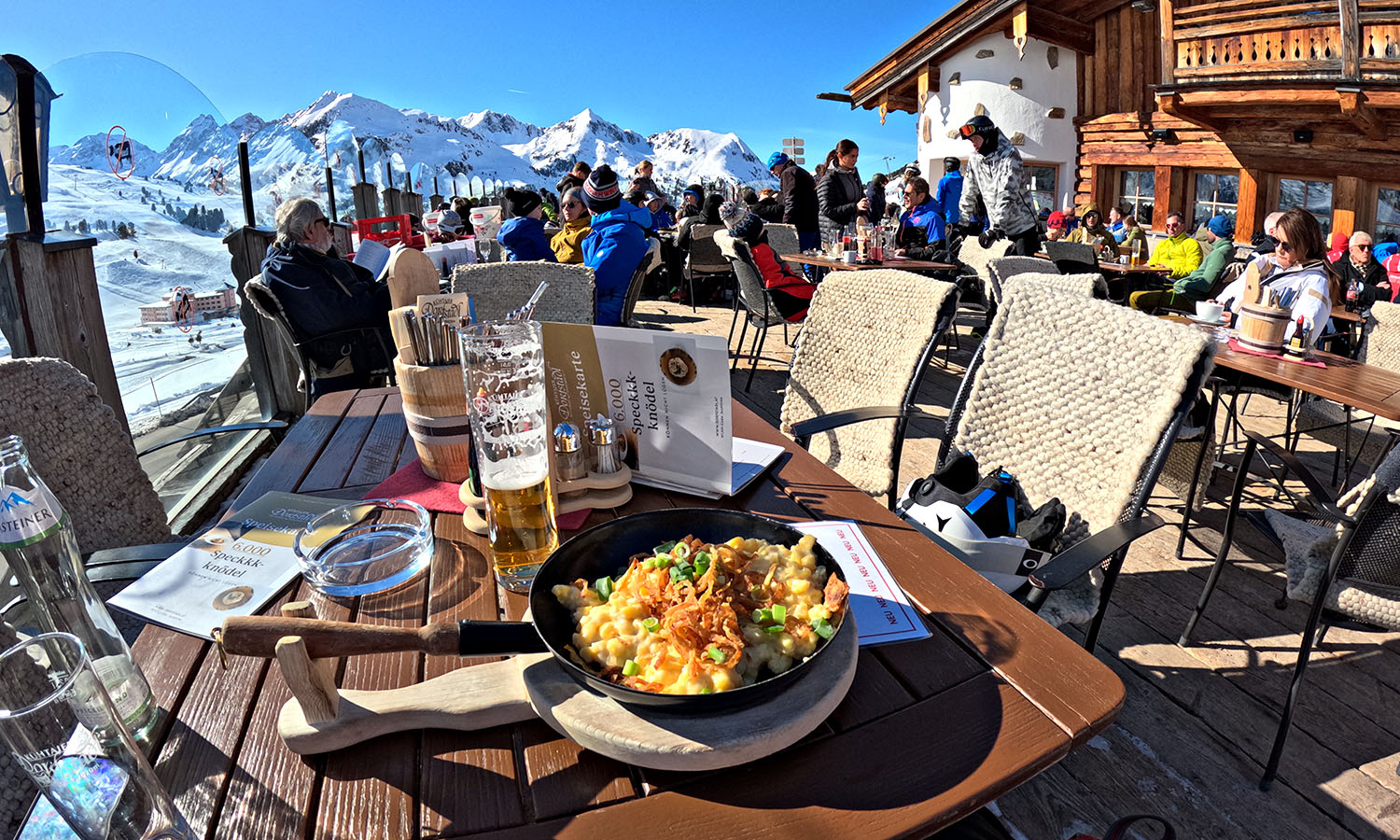
Lunch saves me. At Kühtaier DorfStadl, out on the deck, I devour a heaving plate of Käsespätzle (think cheese, pasta, bacon, delishessness) and a crisp pilsner, and I’m back! I emerge from my hangover cocoon, part man, part dairy product, but ready to return to the slopes.
Back in Innsbruck, the Old Town waits like a storybook villain: pretty, polished, and probably dangerous. I wander past Rococo buildings, duck into the Hofburg Palace for a hit of imperial delusion, then lose myself in AUDIOVERSUM, a science museum about sound where my battered ears get one last chance at redemption.
Dinner at Wilderin is everything you want a final supper to be. This place is uber local, seasonal and paired with just enough wine to forget the hangover but remember the fondue. I sit up at the bar and befriend the owner, Michael, whose passion for sustainable cuisine is remarkable. He convinces me to try the Austrian specialty, Beuschel. He refuses to disclose the ingredients, and I trust him. It’s delicious. And even after Michael explains that it is a traditional Austrian “grandmother” specialty stew of lung, spleen and heart, I mop up the stringy bits with bread. It’s that good.
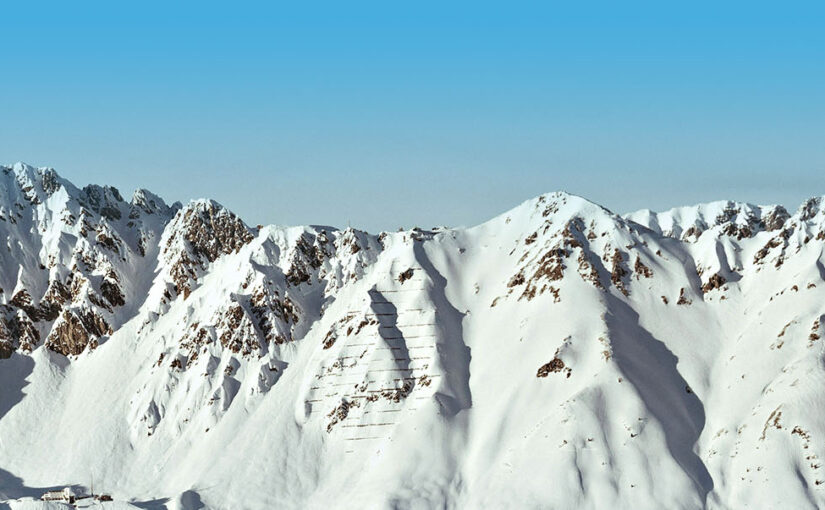
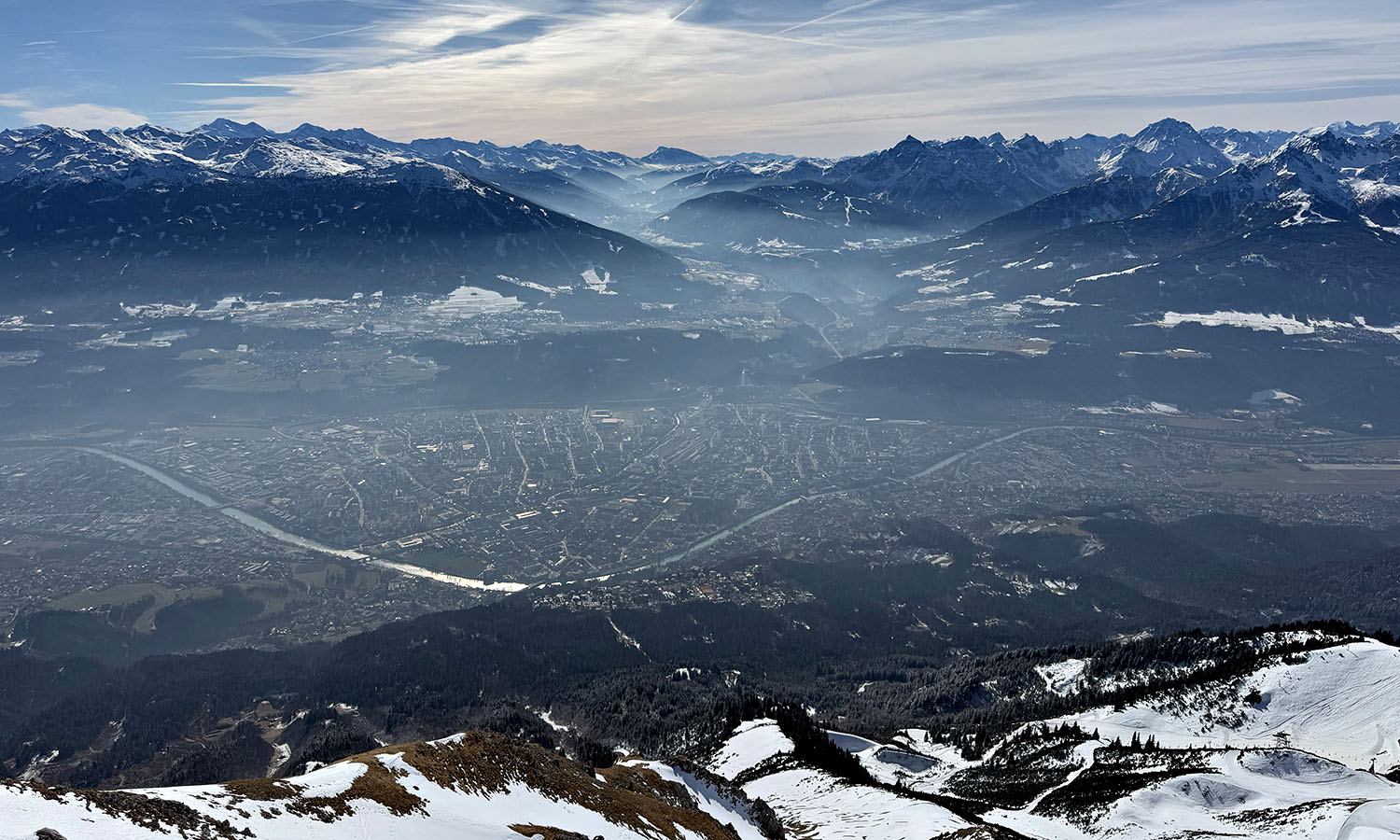
On my last day, I head up to Nordkette. It’s three cable cars to the top, each one peeling back layers of the city until all that remains is air, snow, and ego. At the final stop, Hafelekar, I lace up my boots and take the short, snowy hike toward the famed peak, the Top of Innsbruck. It’s not a long walk, but every step carries the weight of 2,300 metres of altitude and the kind of drop-offs that inspire awkward laughter and sweaty palms. One small slip here and I genuinely believe I could slide all the way into Germany, passport-free, face-first, and screaming.
The view is outrageous. On one side, Innsbruck spreads out like a gingerbread model city: spires, pastel facades, and neatly squared-off streets framed by the Inn River. Spin around and you’re staring into the raw, jagged Alps and beyond, the valleys of Bavaria. It’s like standing on the edge of two countries, one foot in Austria, the other dangling temptingly toward a bratwurst-fuelled future. The wind bites, but the scenery punches harder. It’s the kind of panorama that makes you whisper-swear in amazement.
Innsbruck sprawling below, mountains all around. “Fark.”
At lunch, I toast the Tyrol with a glass of something cold, stare into the endless white, and feel like I’ve survived something.
Then, of course, there’s time for one last hurrah. With my train departing in the early evening, I have just enough time for one last visit to Tribaun. The bartender gives me a knowing look and pours another hazy IPA. I raise my glass to Innsbruck, the city that broke me, rebuilt me, and broke me again.
...delivers staggering views and lingering legends.
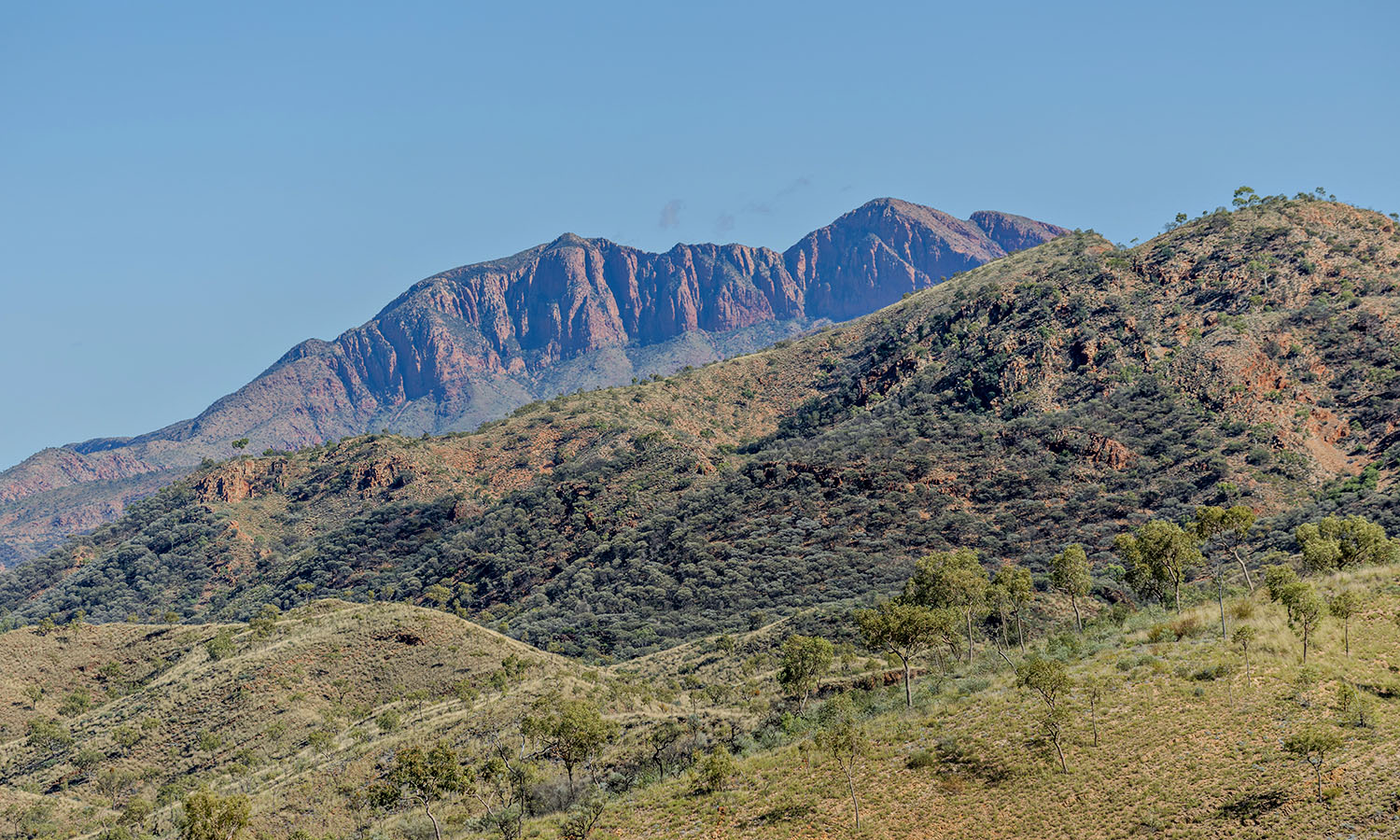
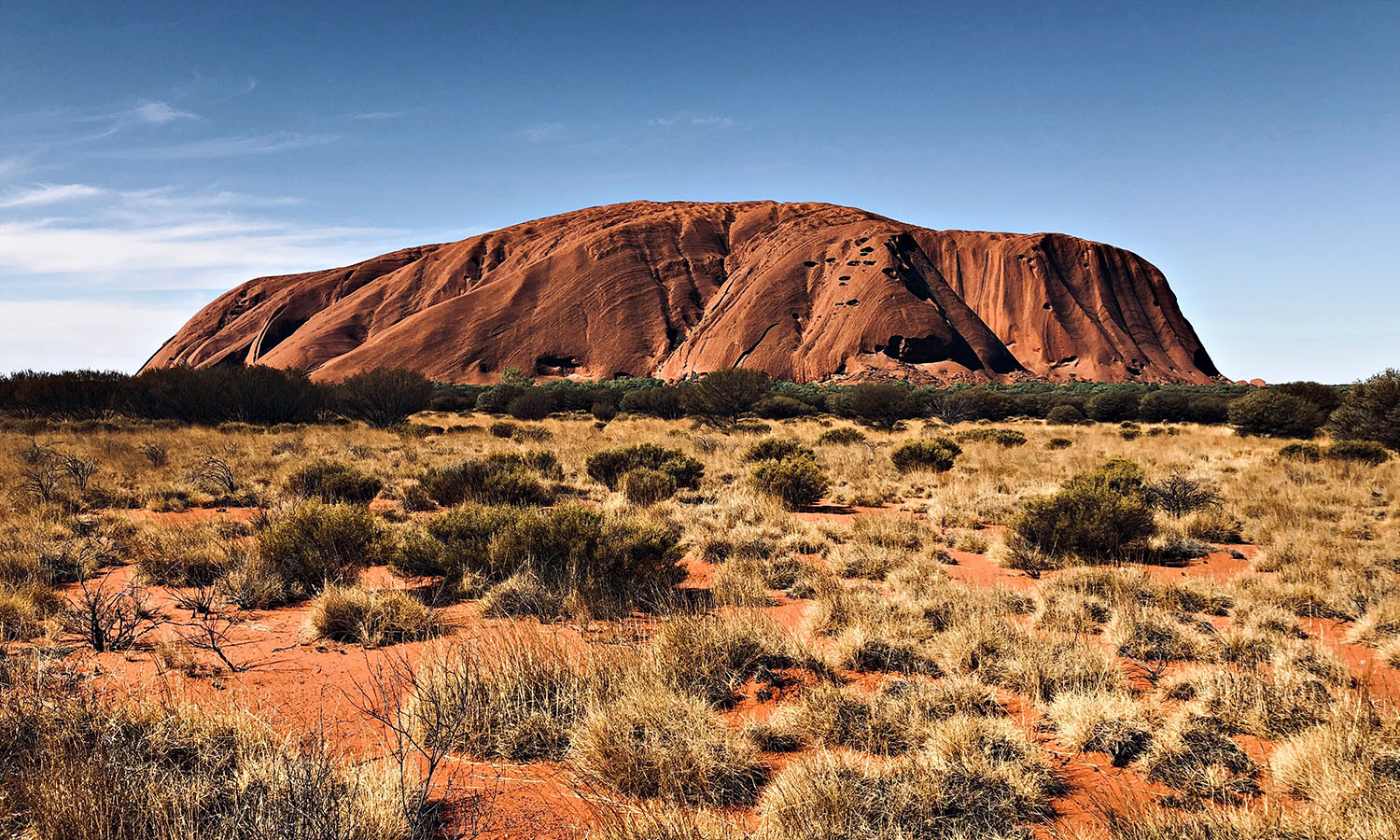
It’s 3 am when I’m woken by the sound of tents unzipping. The crisp, dry night air of April in central Australia is perfect for our pre-dawn amble up Mount Sonder. It may only be the Northern Territory’s fourth-highest mountain, but for the past four days, its silhouette has loomed in the background of our hikes: its sunlit peak like a distant beacon, quietly reminding us to conserve our energy for what lay ahead.
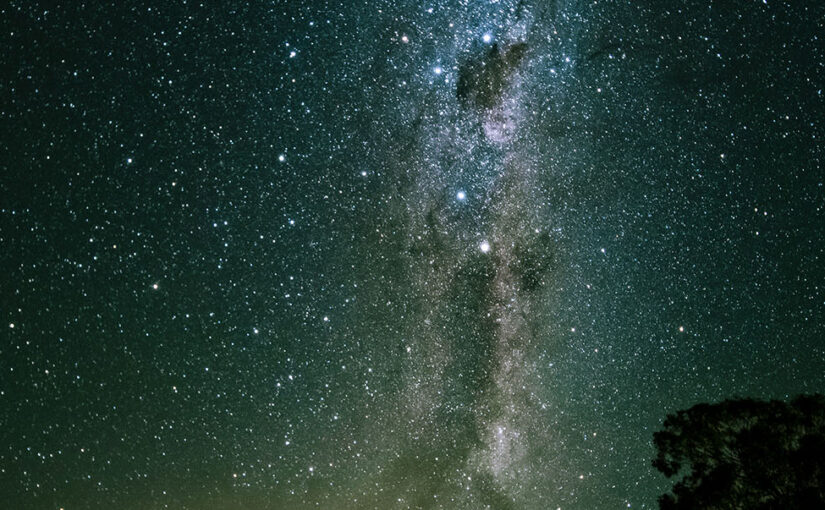
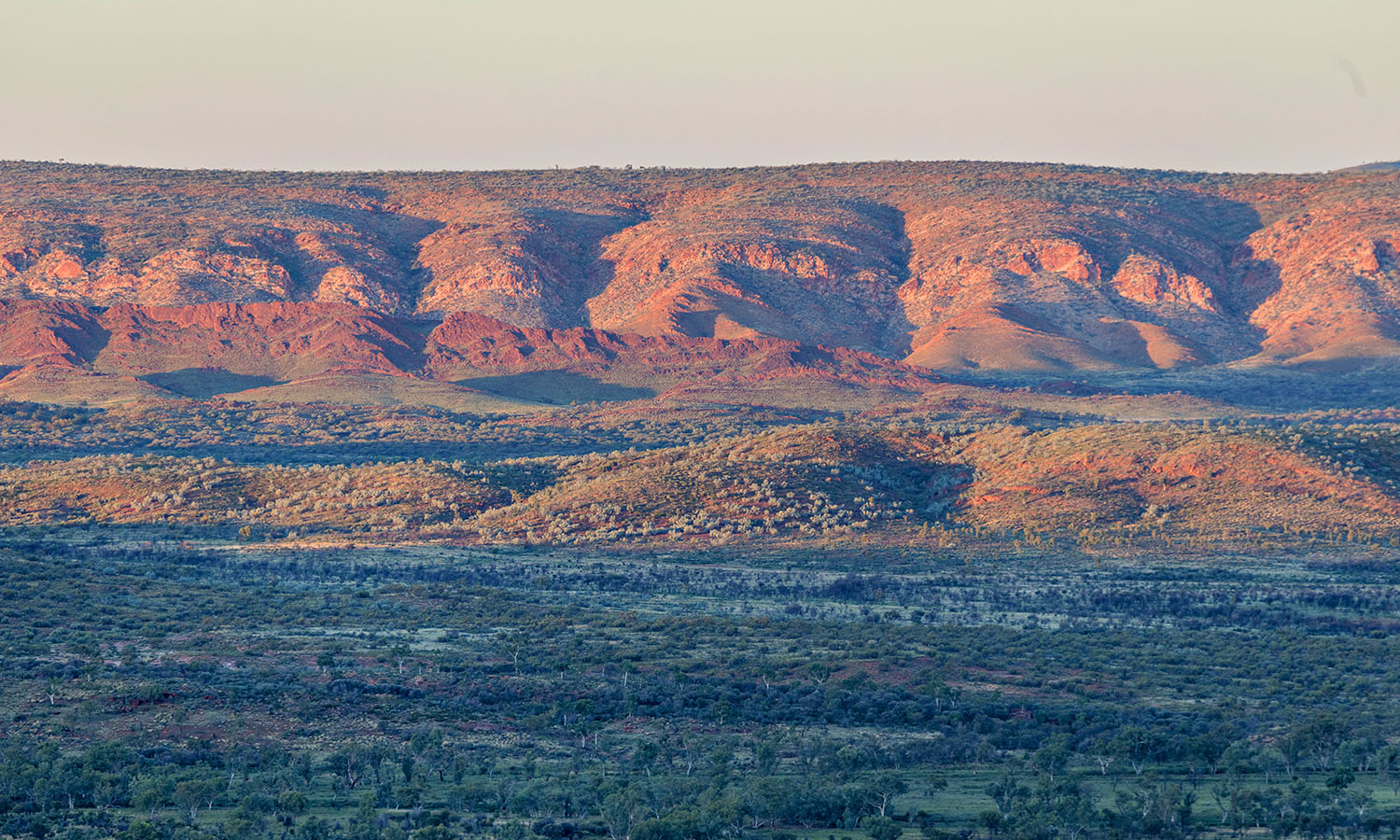
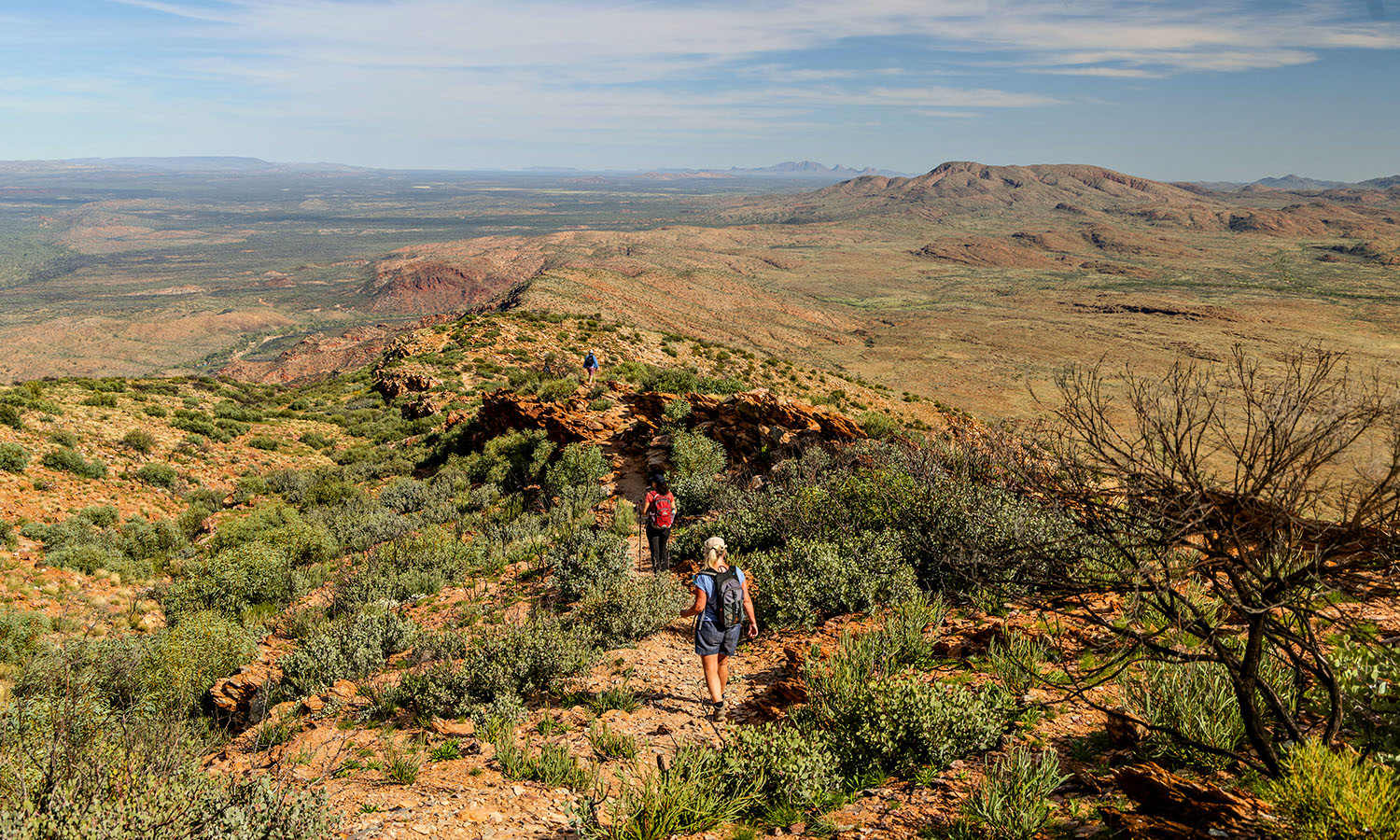
When we arrive at its base, the night sky is startlingly bright. Our headtorches light the path beneath our feet, while starlight softly reveals the vastness of the surrounding landscape. We hike for an hour to the saddle – a flattened section of the trail – where we pause to watch the sun rise, slowly igniting the ridges in hues of glowing red.
From there, it’s another two hours to the summit. I’m surprised by how jubilant and light-footed I feel, despite having only four weeks to prepare for this six-day, 67-kilometre journey with Tasmanian Walking Company along the highlights of the Larapinta Trail.
But as physics reminds us, what goes up must come down. The descent is deceptive – long, steady, and unforgiving. As the sun climbs higher, its rays beat down on the exposed slopes. Jagged rocks seem to materialise from nowhere, and I slam my toes into them again and again. The chattiest member of our group falls silent. Gaps between us grow. The downhill path feels endless.
That’s when it hits me: a surge of emotion wells up, unstoppable. Hot tears stream down my cheeks, a release of exhaustion and the heaviness of a difficult year. I keep moving – fuelled by adrenaline, sips of water, lolly snakes, and the distant promise of a seat on an air-conditioned bus. And I wonder: is this the emotional journey the Aboriginal elder was referring to by the campfire last night?
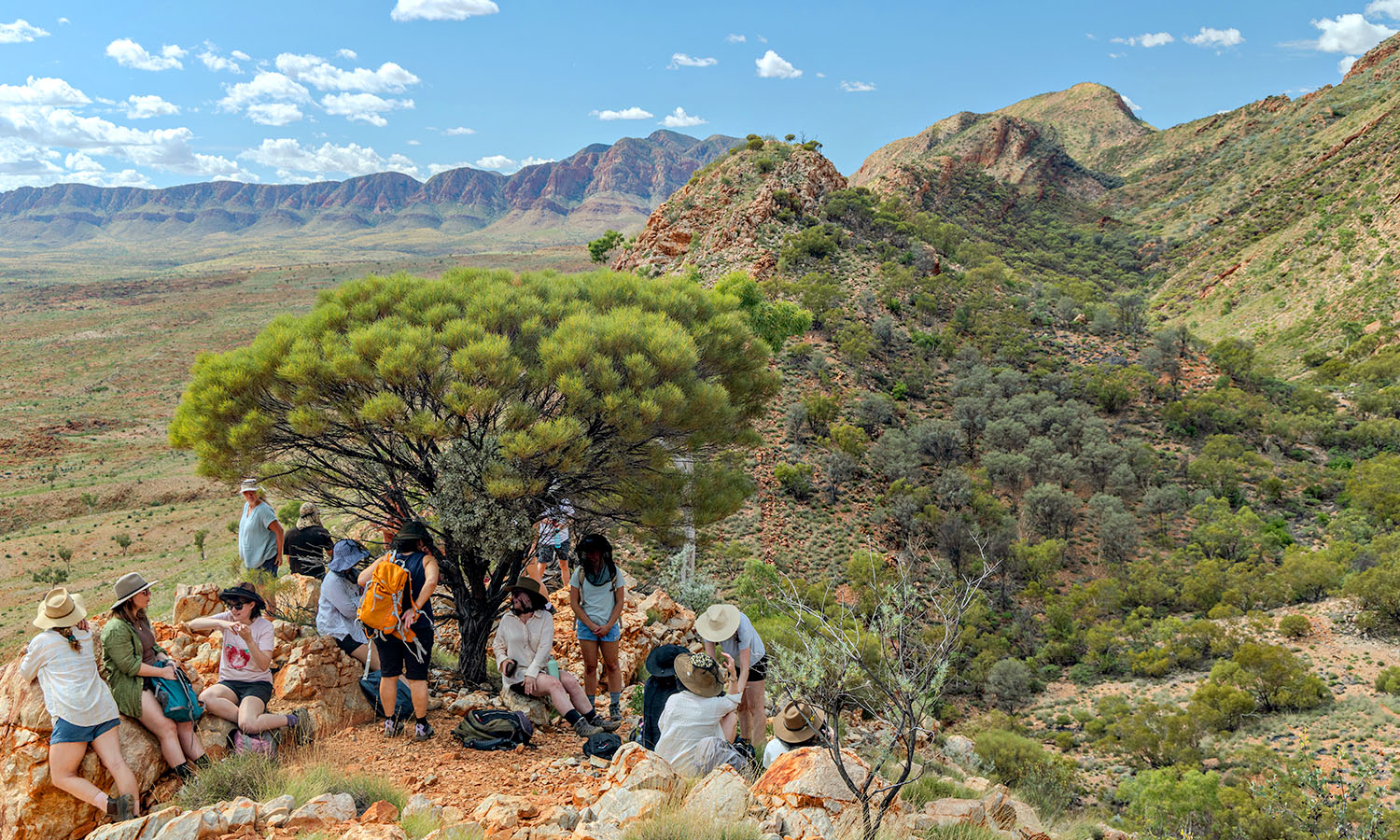
“We are not just storytellers, but teachers as well,” Benji Kenny told us. “And this is more than just walking from point A to point B. Our ancestors used to walk along here and rest,” he said, gesturing toward our fireside tents – luxurious by comparison, with double beds, comfy mattresses and linen sheets. He asked each of us where we came from and why we were here. Though the words varied, the essence of our answers was the same.
“You come out here to see the beautiful country and the place,” he said, “but in reality, there could be something personal or spiritual for yourself. And hopefully, what you found made you feel good. We’ve had people open their minds, feel so emotional – and they went back feeling better,” he tells, reassuringly.
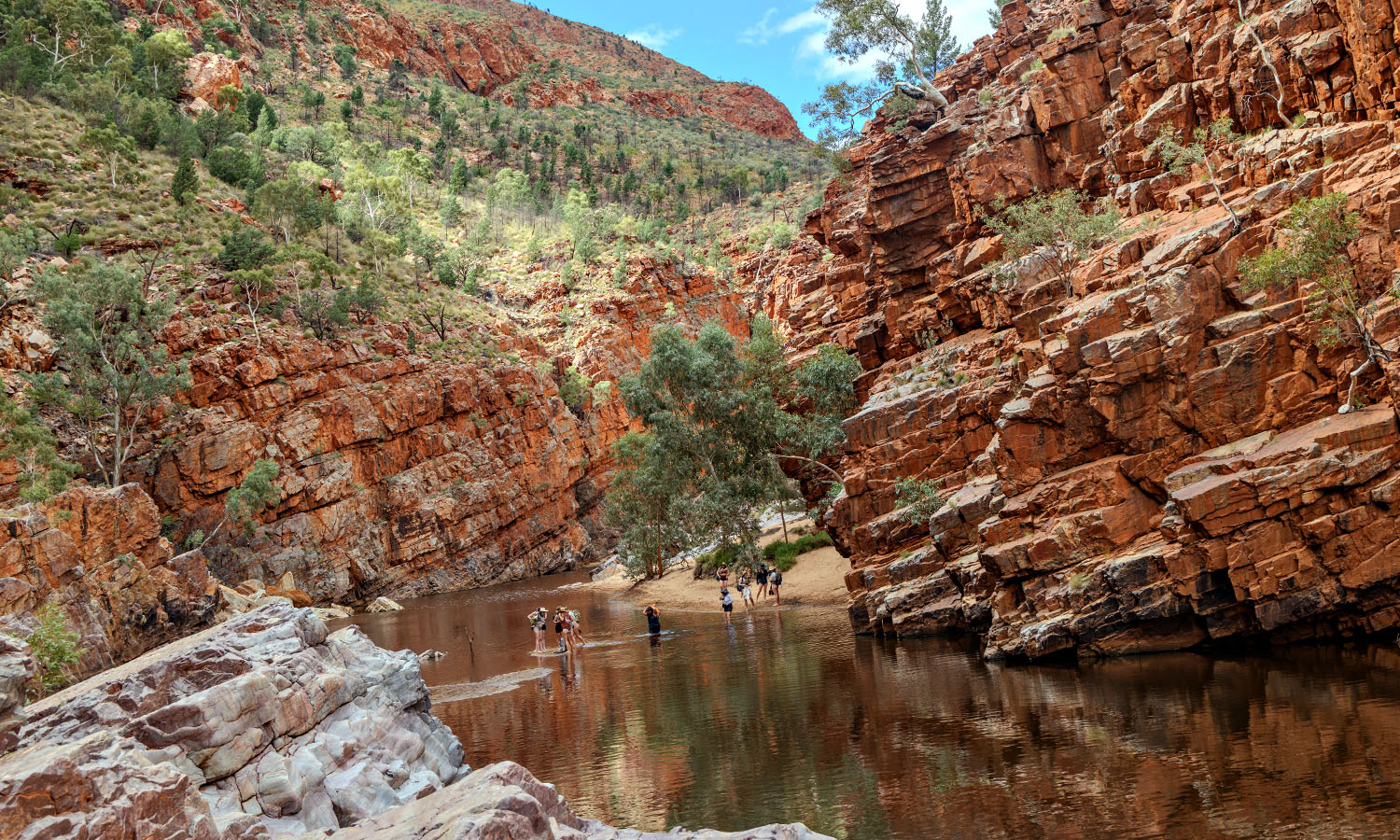
Millions of years ago, the parallel ridges of the West MacDonnell Ranges were as tall as the Himalayas, but erosion has softened them into their current breathtaking form. They carry many stories, which Benji shares without hesitation. One of our guides, who lives in Alice Springs, tells us how young Aboriginal adults often seem glued to their phones. But out here, in the bush, they instinctively put their devices away. “Our ancestors are welcoming us,” they say.
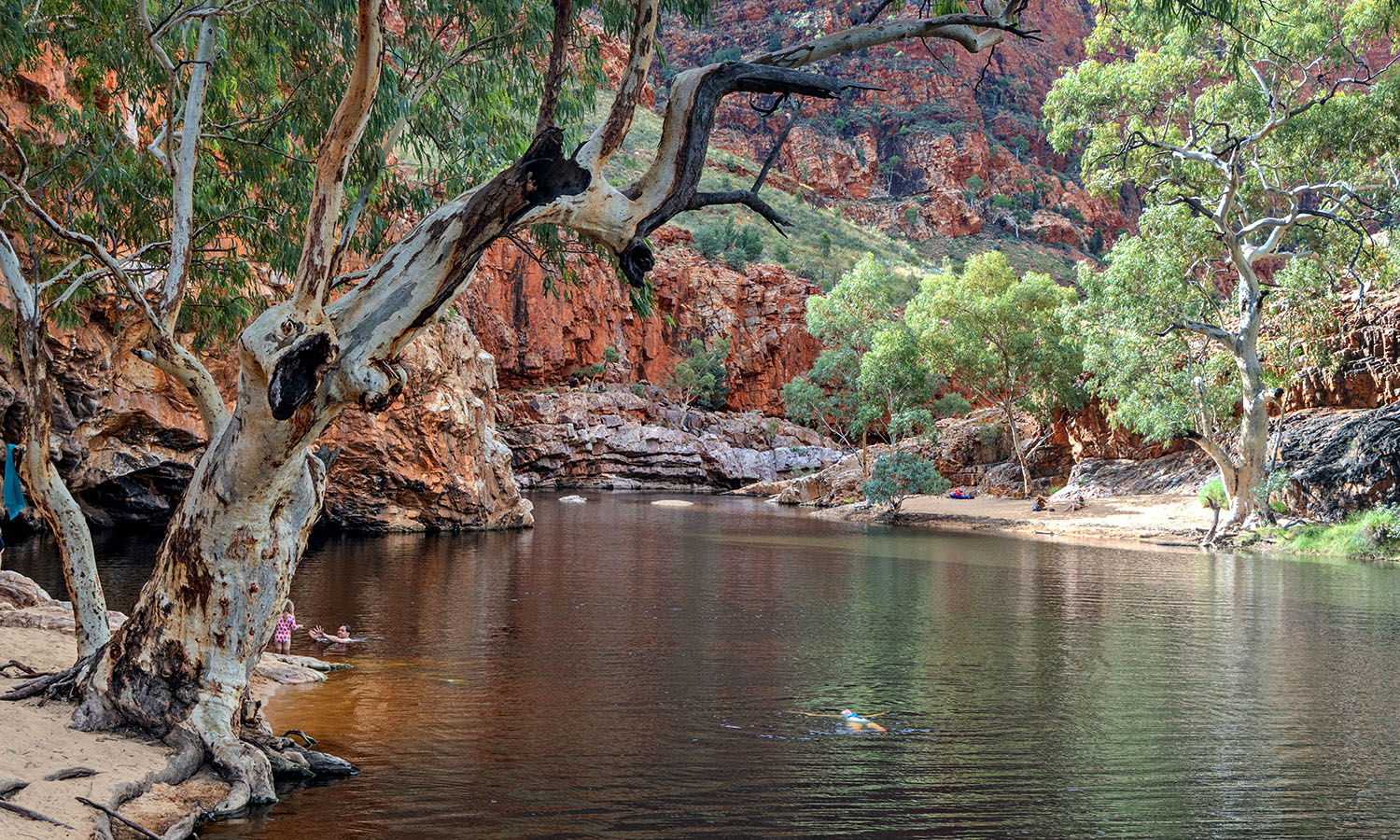
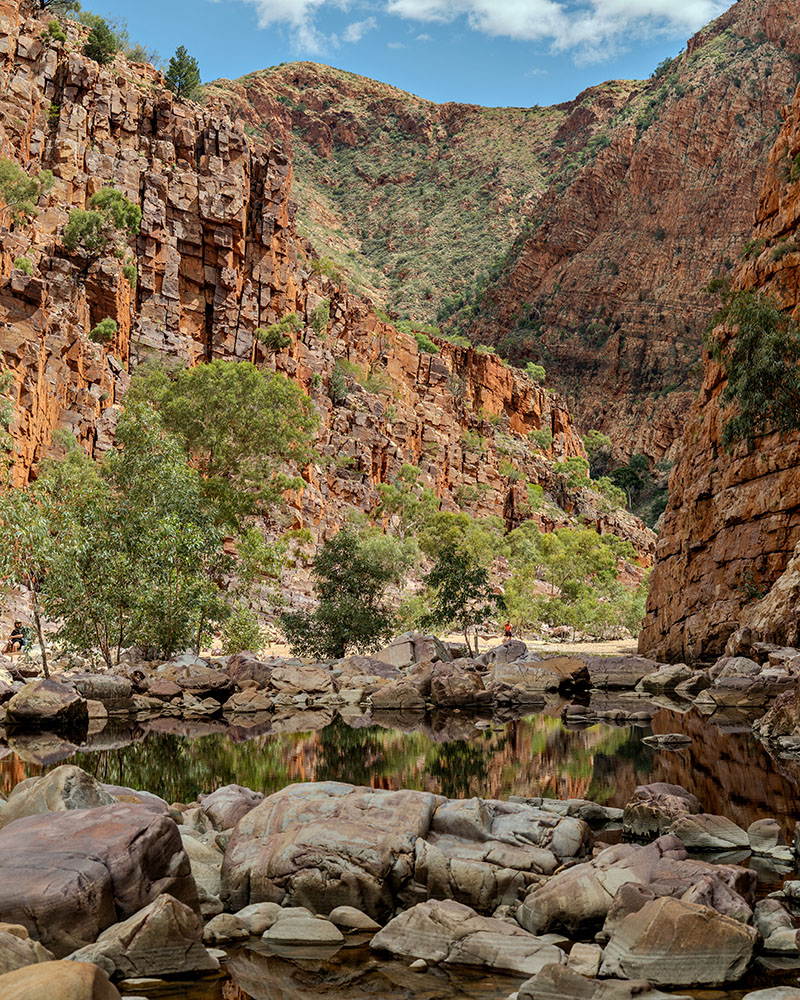
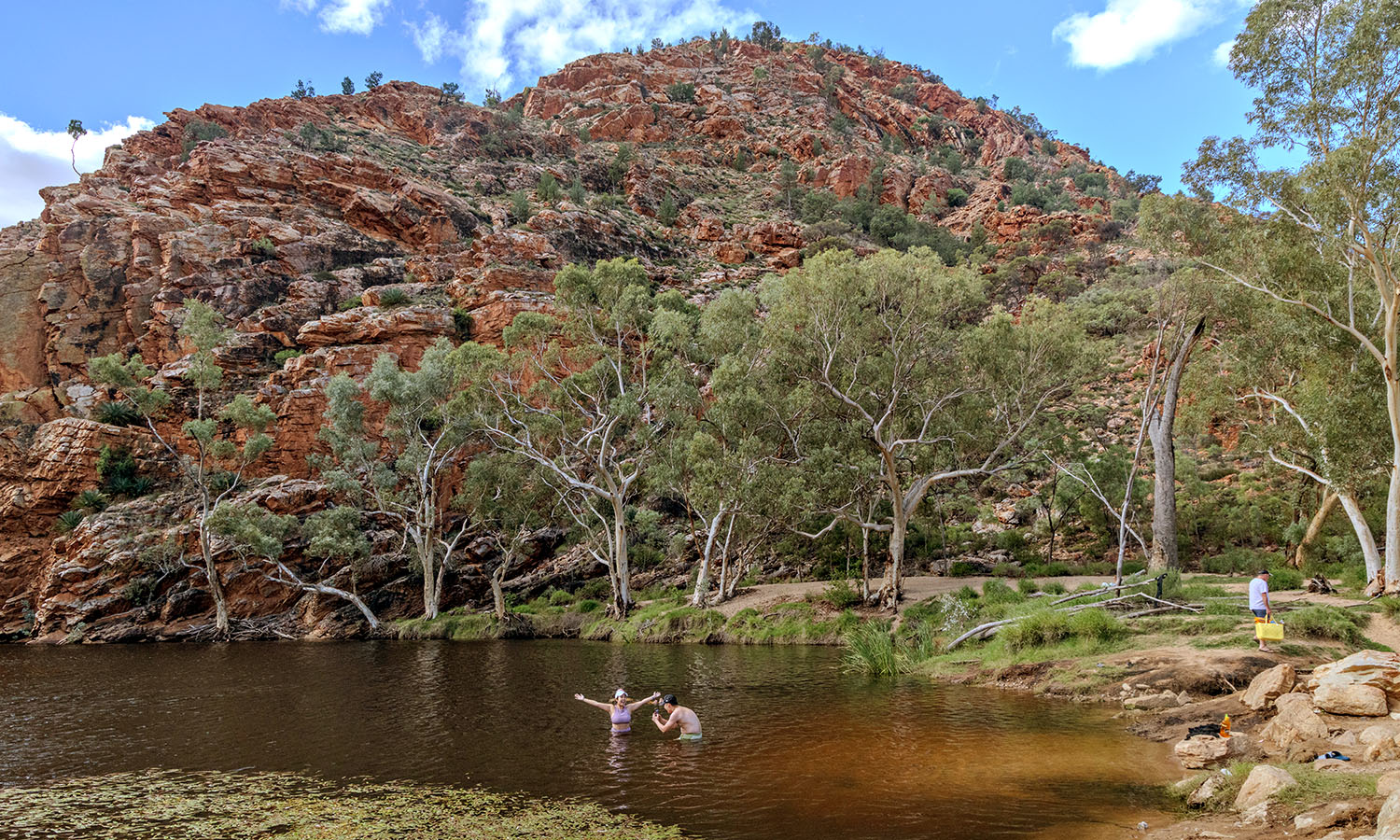
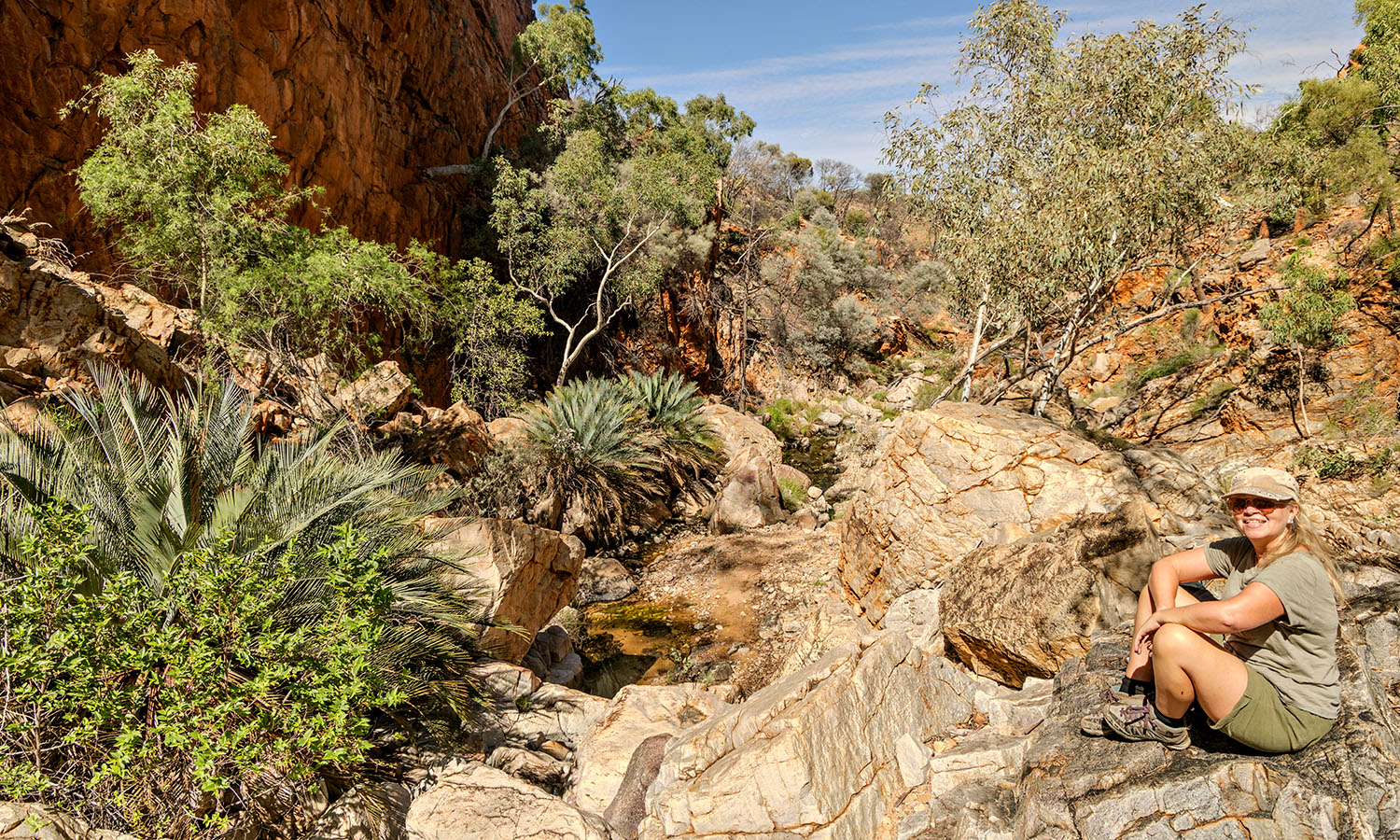
In the gaps between the ranges, natural water holes have formed – our swimming pools at the end of long, dusty hikes. Each one is filled with still, icy water. Their very existence in such a rugged, arid landscape feels almost miraculous. Ghost gums cling to the red rock walls, growing at right angles, defying logic. Cue the bunyips.
Just over the border in South Australia lie the Flinders Ranges – once part of the vast inland sea that covered this part of the continent around 120 million years ago. Over time, tectonic plates collided to form the dramatic mountain ranges, waterholes, and gorges that shape the landscape today. My father, whom I lost last year, loved the Flinders. He took us there often on family holidays, returning again and again to a place that clearly meant something to him.
Was this the connection Benji was talking about? That sense of belonging to a country, even if you weren’t born to it, even if you were just passing through. My dad would have loved the West MacDonnell Ranges, too. As I walked, my thoughts kept drifting to him – sometimes quietly, sometimes all at once, like a wave. Stubbornly uninterested in any overseas trips I made, he would have been wrapt that I had made the time to come out here.
While my Bunnings straw hat and fly net were no substitute for his well-worn Akubra, I felt that I could finally appreciate this harsh brown land as much as he undoubtedly did. This first walk of the season followed an unusual bout of rain, and life sprouted from the dry, red dirt, covering the ground in lush green grass. Waterholes are replenished.
Tiny flowers cover the basin of Ormiston Pound, the week’s most pleasant hike. Part of the 8.5-kilometre loop is walked in silence, allowing us to fully absorb the solitude of this sacred place, which can only be reached on foot.
During the warm afternoons when our legs start to ache and blisters bloom, our thoughts turn to the luxuries of our camp: hot showers, baked goods, chilled glasses of wine and home-cooked meals waiting to restore us each evening.
As the final kilometres stretch behind us and we draw closer to the hum of everyday life, I carry more than just sore legs and red dust in my boots. I carry a deeper understanding of this ancient land, of the people who have cared for it for millennia. I came here expecting a hike. I didn’t expect to find my father out here. But in the silence, in the stone and water and sky, he was never far away. And perhaps that’s what the Larapinta Trail offers – and Benji reiterated – not just a walk through breathtaking country, but a space to lay things down, pick others up, and keep moving forward.
In 2026, Tasmanian Walking Company will launch a groundbreaking new trek between Uluru and Kata Tjuta, offering visitors the rare opportunity to stay overnight within the World Heritage-listed national park for the first time.
Staycation. It’s a word that usually makes me cringe, mostly because it’s about as exciting as binge-watching reruns of Dr Who with your agoraphobic cousin. After all, travel is about exploring new ‘hoods, finding new bars, meeting new people. But here I am, deliberately stranded in my own backyard of Melbourne, attempting the unthinkable: reframing my brain to look at this city like a tourist.
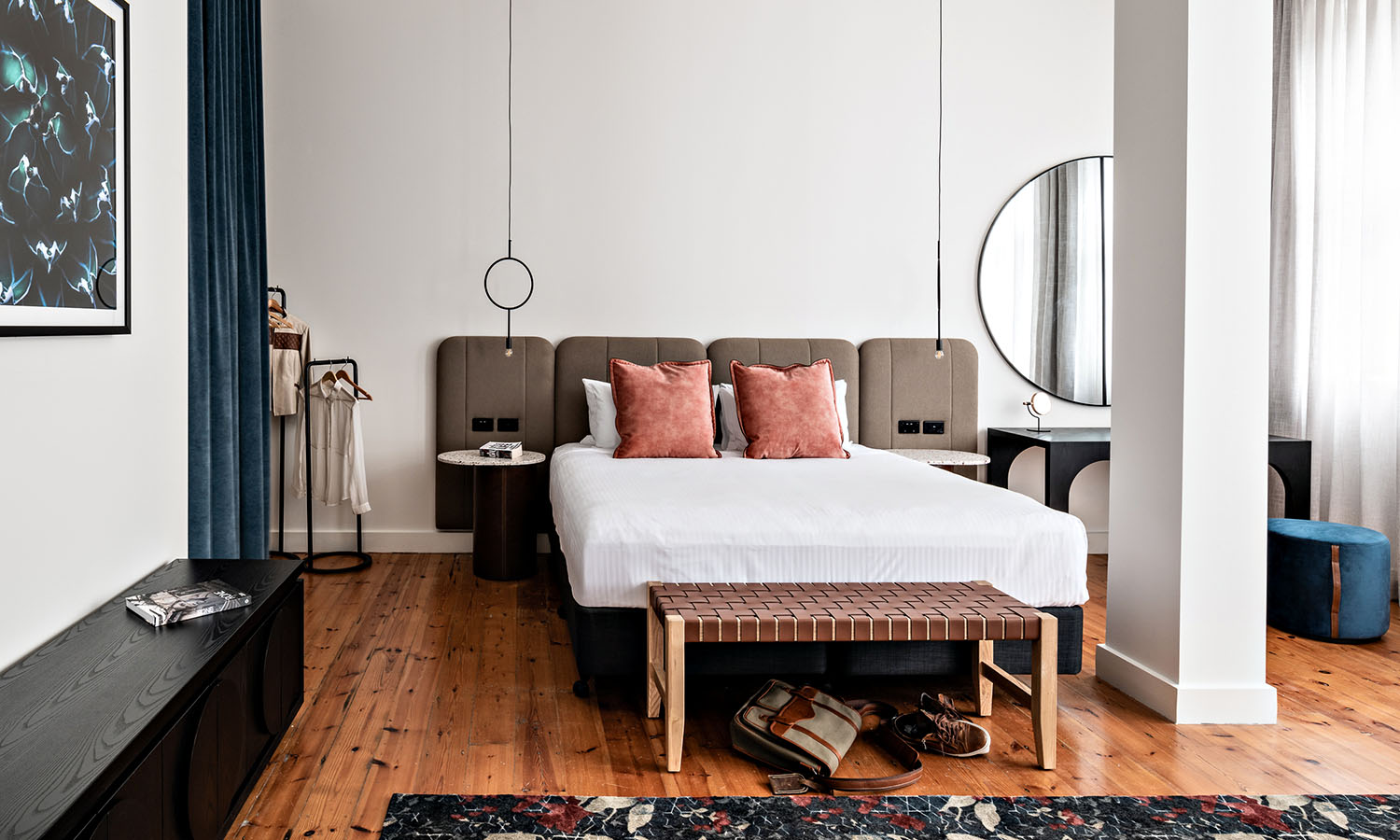
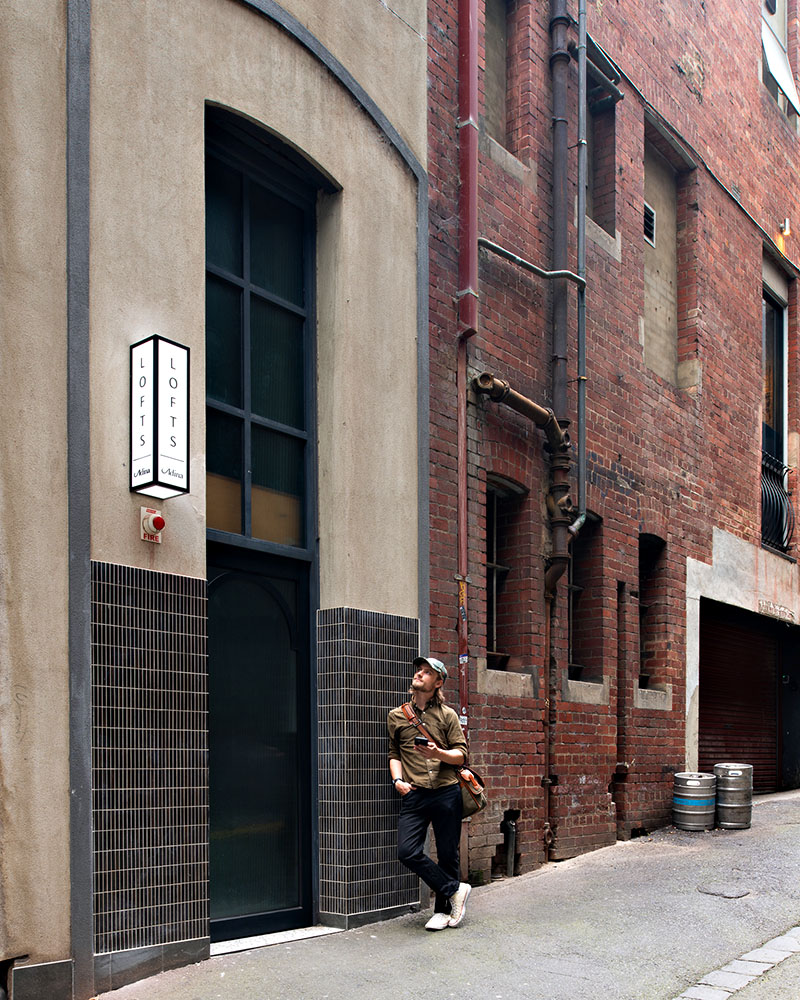
Step one, get out of the damn house. I check myself into the Adina Apartment Hotel on Flinders, specifically one of their loft apartments nestled in Malthouse Lane. If Melbourne had an illicit love child with New York City, this loft would be it. Exposed brick walls, industrial chic fittings, soaring ceilings, and mood lighting that practically demands I pour myself something strong. It feels like I’ve stumbled into a secret, grungy-chic Brooklyn hideaway. Only, thankfully, without Brooklyn’s enormous rats.
After making myself unreasonably comfortable (read: sprawled like Andy Warhol in Studio 54), I head out into the streets as dusk settles. It’s time to actually see my hometown properly. Not as the jaded local who complains about trams and footy crowds, but as the guy who flew halfway across the world to see something cool.
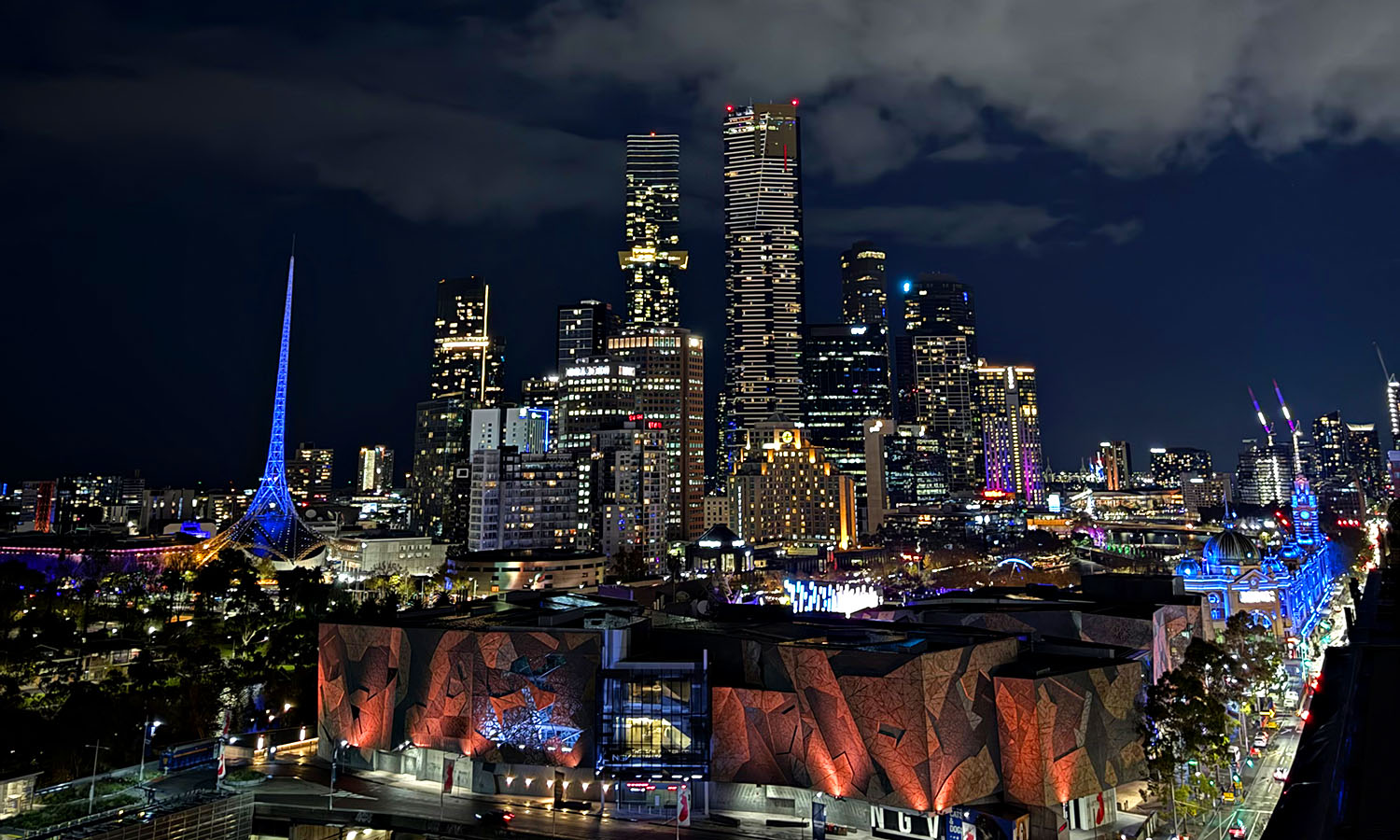
First stop: RISING. Melbourne’s ambitious, slightly chaotic winter festival of art, music, and sensory overload. Think Burning Man meets MoMA but with significantly more coats and scarves. Wandering installations, neon-soaked laneways, and avant-garde performances quickly turn the city I thought I knew into a psychedelic dreamscape. I’m part tourist, part Alice in Wonderland, completely blown away. The streets literally pulse with creativity.
Art absorbed, it’s time to let my stomach do the navigating. I find myself tucked into Pastuso, a hip Peruvian spot hidden away in AC/DC Lane (shaking me all night long), where the smell of ceviche is as intoxicating as the pisco sours they sling. It’s a bustling den of South American exuberance smack in the middle of Melbourne’s now famous graffiti-tagged laneways. Eating here feels like an illicit culinary tryst, clandestine yet thrillingly public. Every bite of kingfish ceviche and grilled wagyu rump skewer is a reminder that this city’s palate is wilder than any Uber Eats menu could dream.
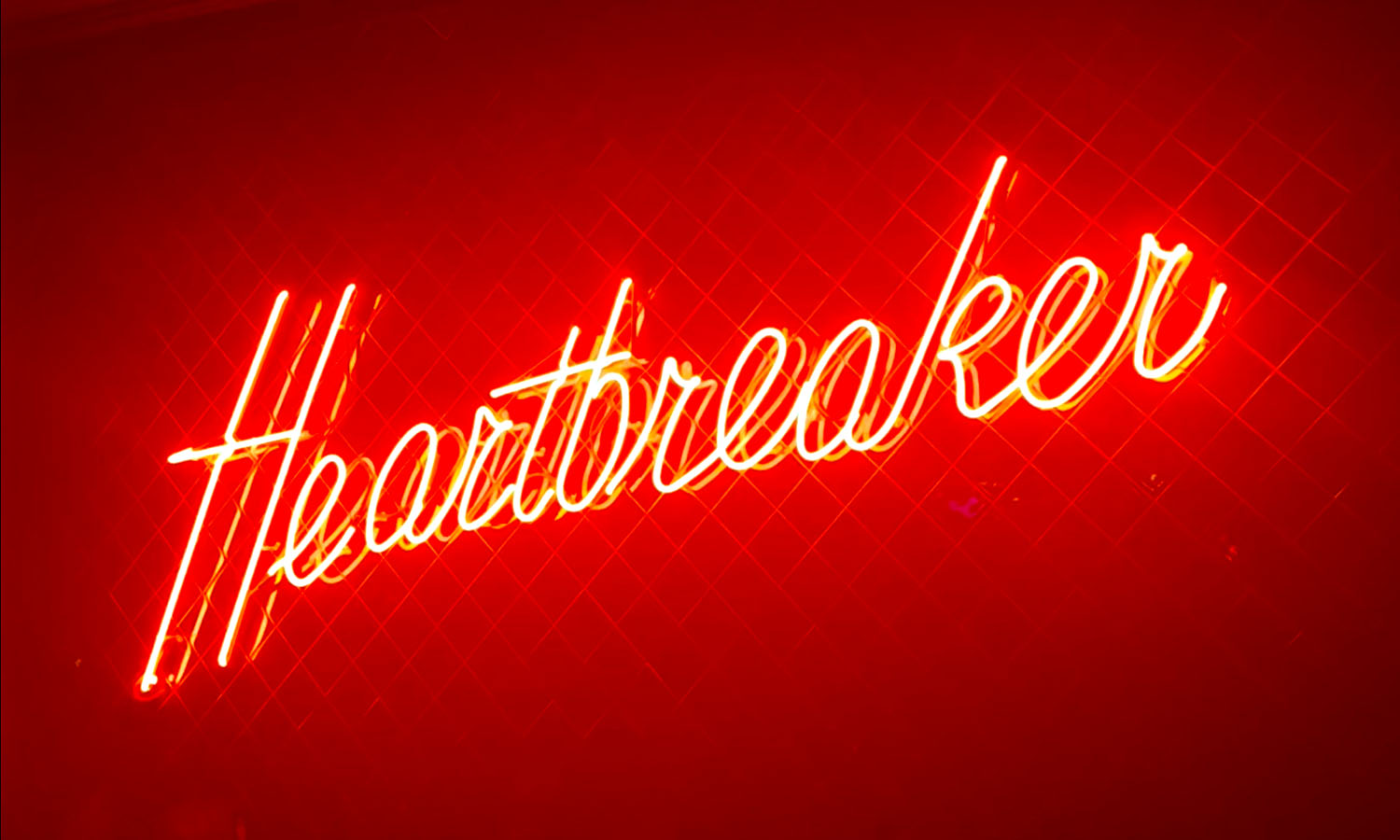
Post-feast, my internal compass guides me toward Russell Street’s Heartbreaker. This bar is Melbourne’s unapologetic answer to dive-bar perfection: dim lights, loud music, strong drinks, and zero pretension. It’s the kind of joint Anthony Bourdain would have felt at home in, downing whiskey while ranting poetically about the virtues of Led Zeppelin. As Robert Plant belts out from the jukebox, I nurse a hazy IPA potent enough to make tomorrow morning’s regrets almost certain. I trade stories with bartenders, drinkers, and a few characters who might just have stepped straight out of a Tom Waits lyric. For an hour or so I could be in the West Village of Manhattan.
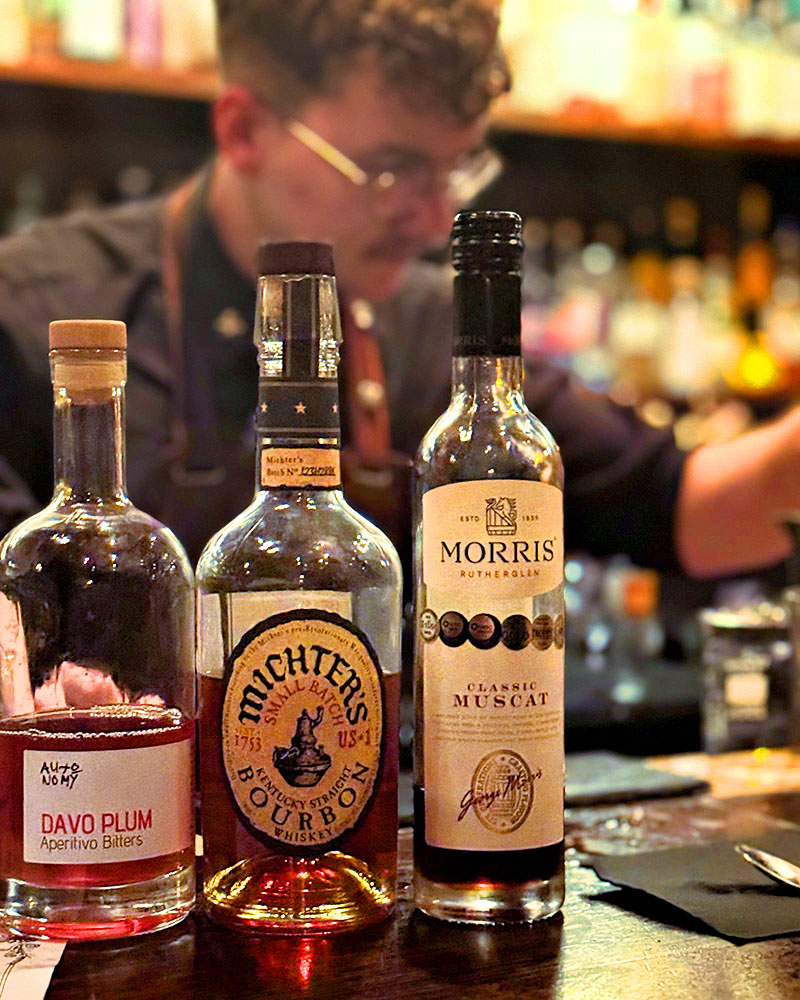
Feeling a mix of adventure and sophistication I stumble into Eau De Vie, a cocktail bar hidden like a speakeasy behind an unassuming façade and thankfully just a stone’s throw from my “NYC” loft. The bartender, a wizard in a waistcoat, shakes up a Blood and Sand cocktail, blending whisky, sweet vermouth, cherry brandy, and orange juice with the flair of a magician performing his best trick. It’s the nightcap I didn’t know I needed, sophisticated enough to make even my boozy exploits feel classy.
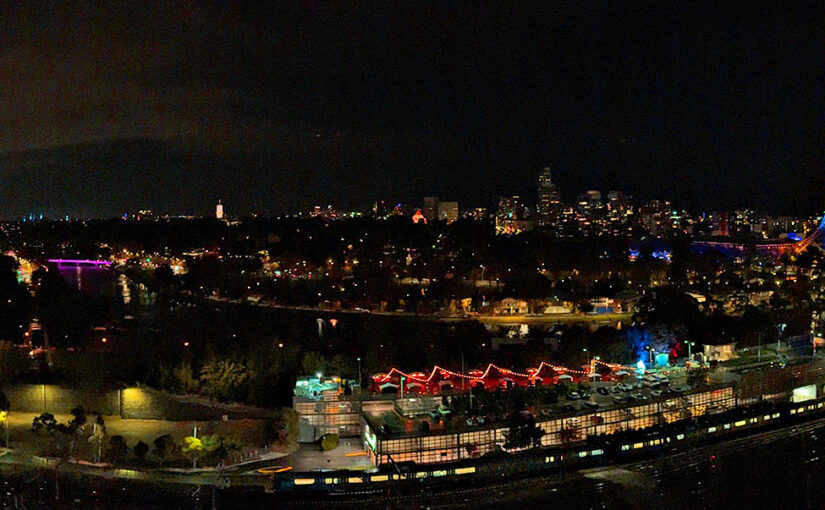
Hours later, climbing the stairs back to my loft feels like summiting Everest. Inside, Melbourne’s skyline flickers through oversized windows, a private show of glittering lights and endless possibilities. Reclining on the oversized couch, booze still buzzing through my veins, I reflect: being a tourist in this town called Melbourne is pretty bloody good.
As I drift into a hazy, contented slumber, I realize Melbourne has tricked me. It’s flipped my perceptions upside down. The place I’ve casually called home suddenly feels raw, adventurous, even a bit reckless. Who knew a staycation, once the dullest concept ever invented, could make a city you thought you knew feel gloriously unknown again?
Turns out, sometimes all it takes is a reframed brain and maybe one too many hazy IPAs to rediscover the place you never realized you loved.
Out here, the one-finger wave says more than a thousand words.
You know the one; hand stays on the wheel, index finger flicks up in a kind of lazy salute as you pass another car on the road.
It’s not much, but in Outback Queensland, it’s the equivalent of a heartfelt hug and a “G’day, mate.” After a few days out here, you find yourself doing it instinctively.
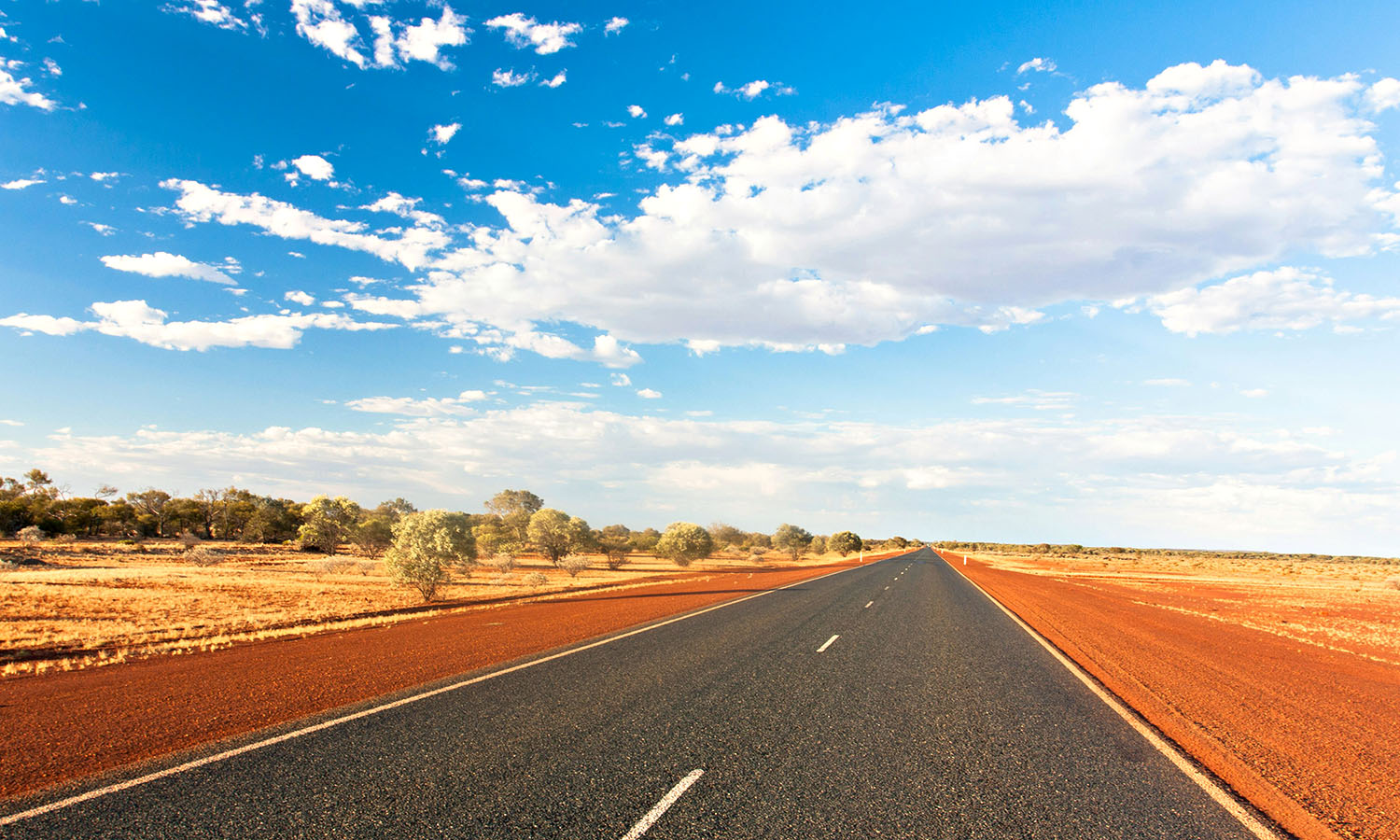
I’d set off on a road trip through Queensland’s Dinosaur Trail thinking I was going to be all about the fossils, the bones, and the big prehistoric creatures I never even knew existed. Turns out, it was the tiny towns along the way that really made me feel like I’d driven straight into a warm, dusty postcard – one that might be a little frayed around the edges, mostly forgotten at the bottom of a drawer, but with a picture still as bright and eye-catching as ever.
My first stop was Richmond. A place that’s small enough to blink and miss but big enough to hold a 100-million-year-old secret. You roll into town and immediately get that feeling like everyone knows you’re not from around here, but not in a suspicious way. More in a mildly curious and endearing, “Where do you come from,” way.
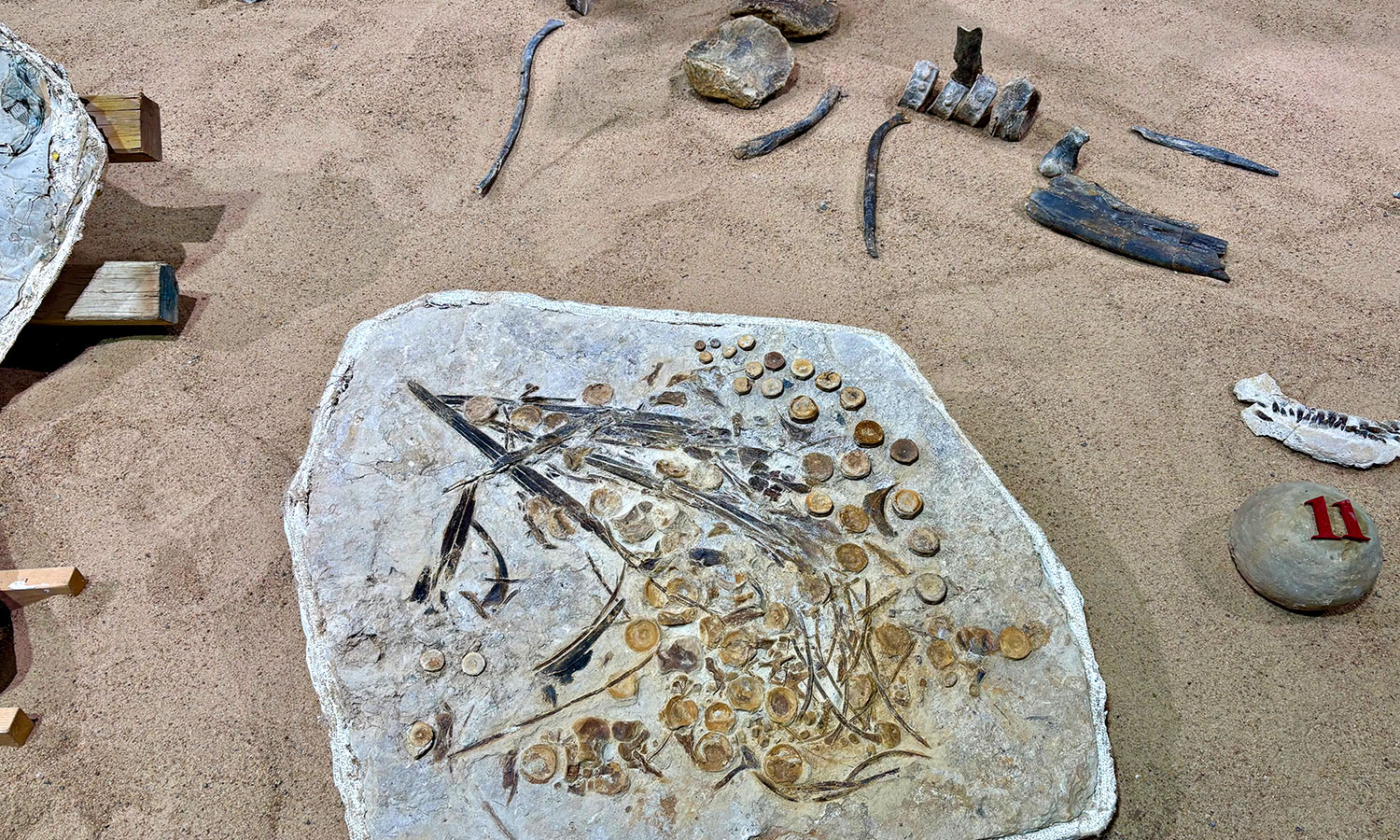
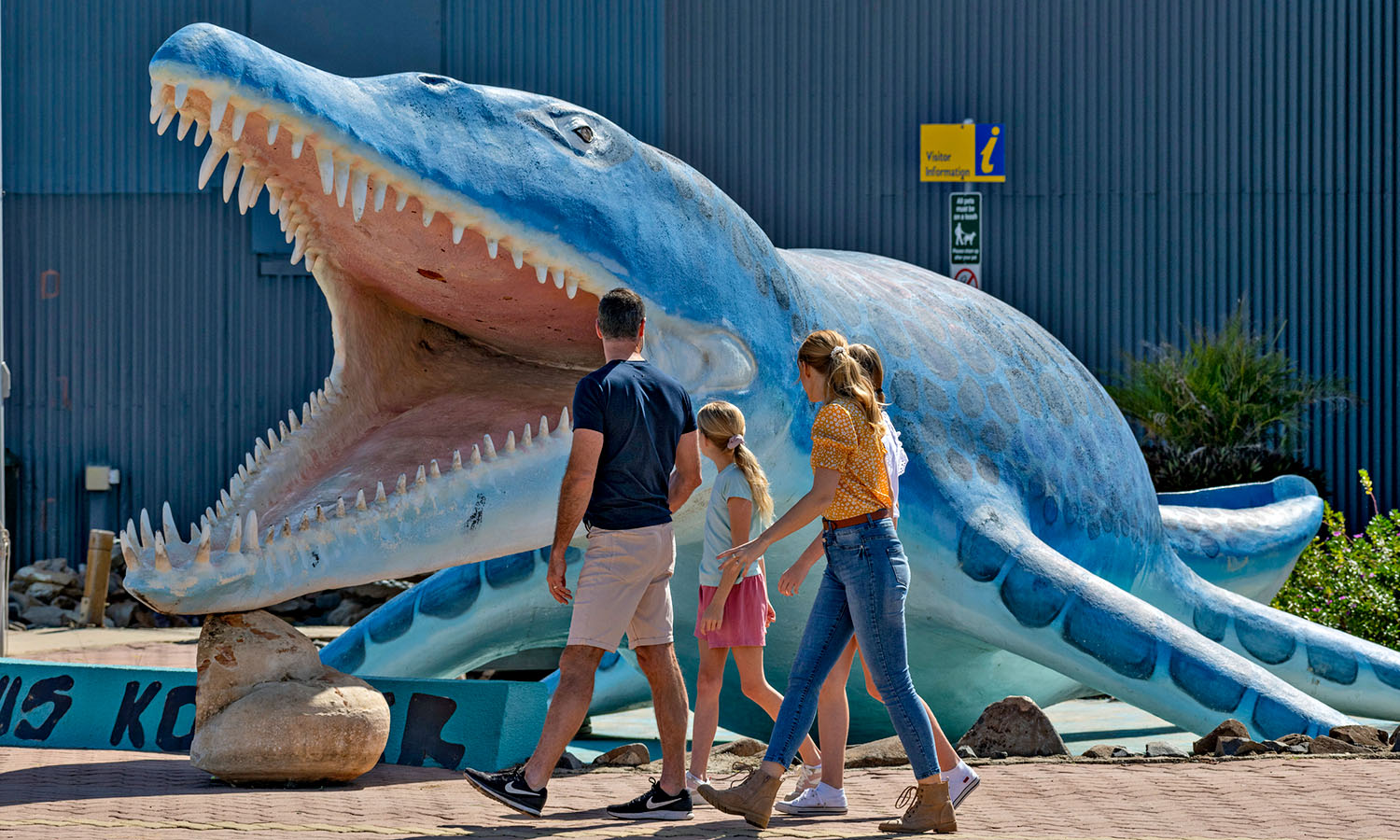
Kronosaurus Korner is the local Dino haunt, and I went in to learn all about the ancient sea monsters. What I left with was a brain full of mind-bending facts and a new appreciation for just how weird and wonderful Outback history really is.
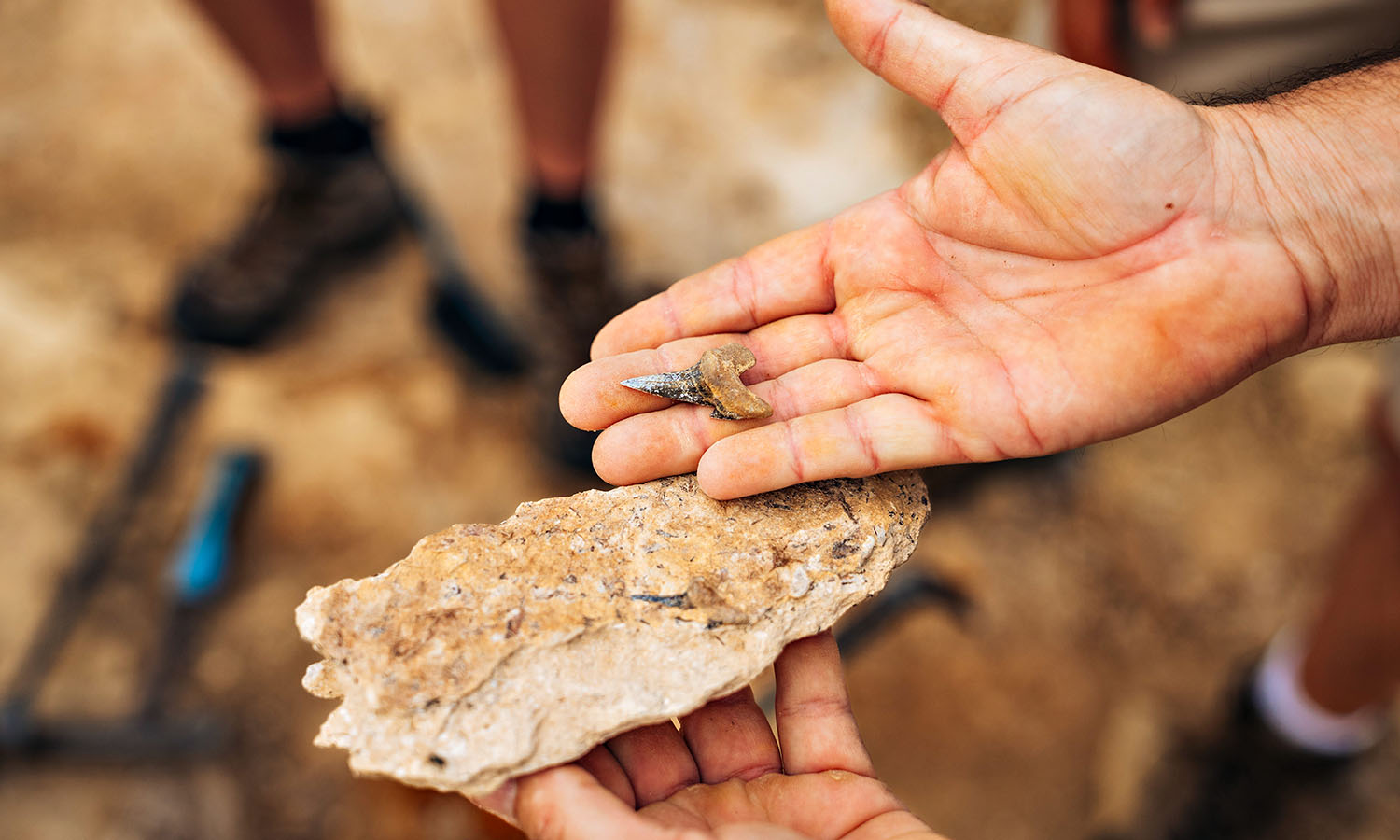
This place is where Richmond casually flexes its prehistoric muscles, showcasing 100-million-year-old marine fossils dug up right from the surrounding paddocks. You can even do a ‘dig at dawn’ experience that allows you to get your hands dirty, digging for fish scales, shells and coprolite (dino poop).
From there, I followed the dusty ribbon of highway to Hughenden, where there are roughly three shops, 27 dinosaurs (replica ones, but still), and the kind of country hospitality that makes you feel like you’ve accidentally joined someone’s family reunion.
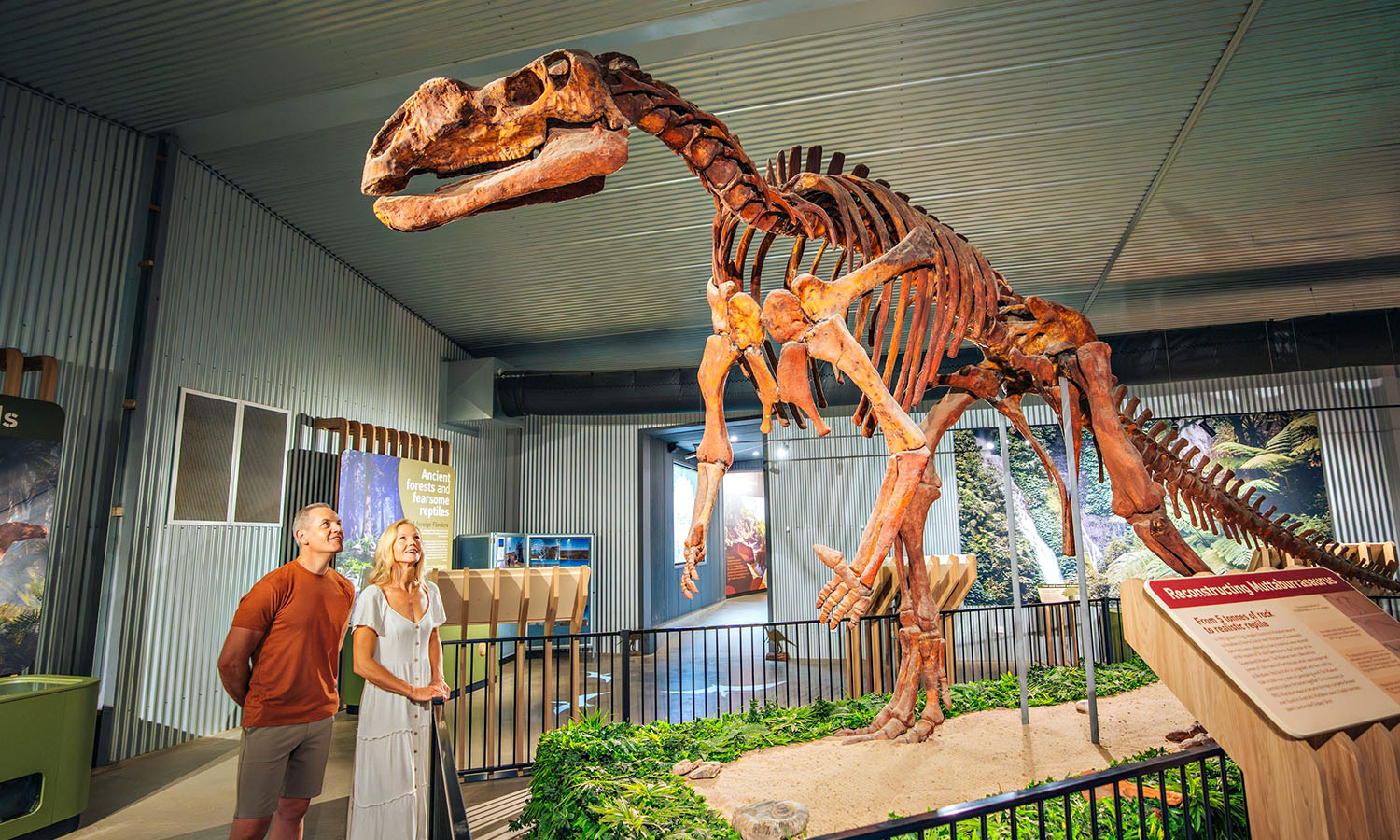
The Flinders Discovery Centre is where it’s all happening; it has a life-sized Muttaburrasaurus and an entire exhibit explaining how this part of the country was once an ancient inland sea. Standing there, looking at a fossilised fish that once swam above the very dirt I was now walking on, my brain did a kind of slow backflip.
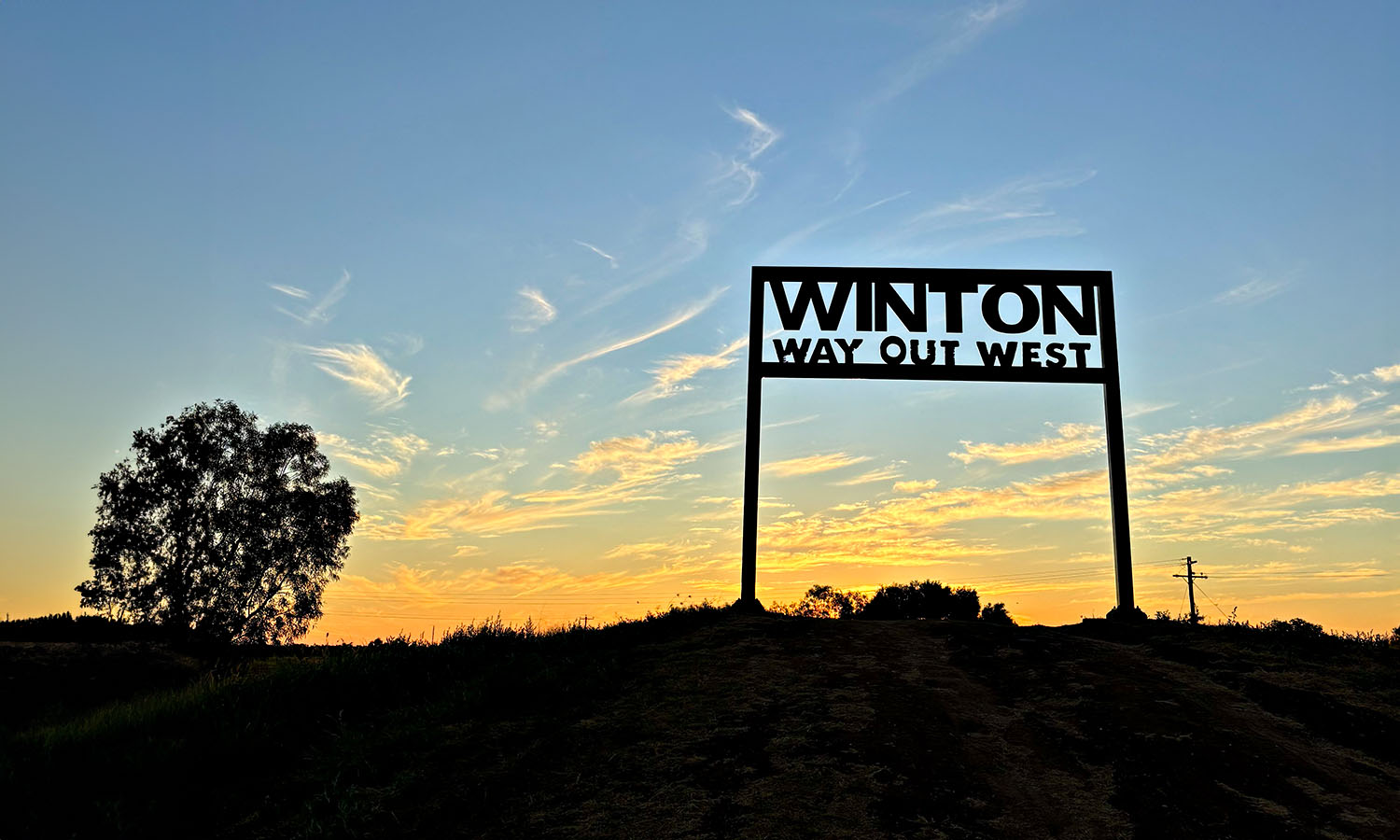
But nothing – and I mean nothing – prepared me for Winton.
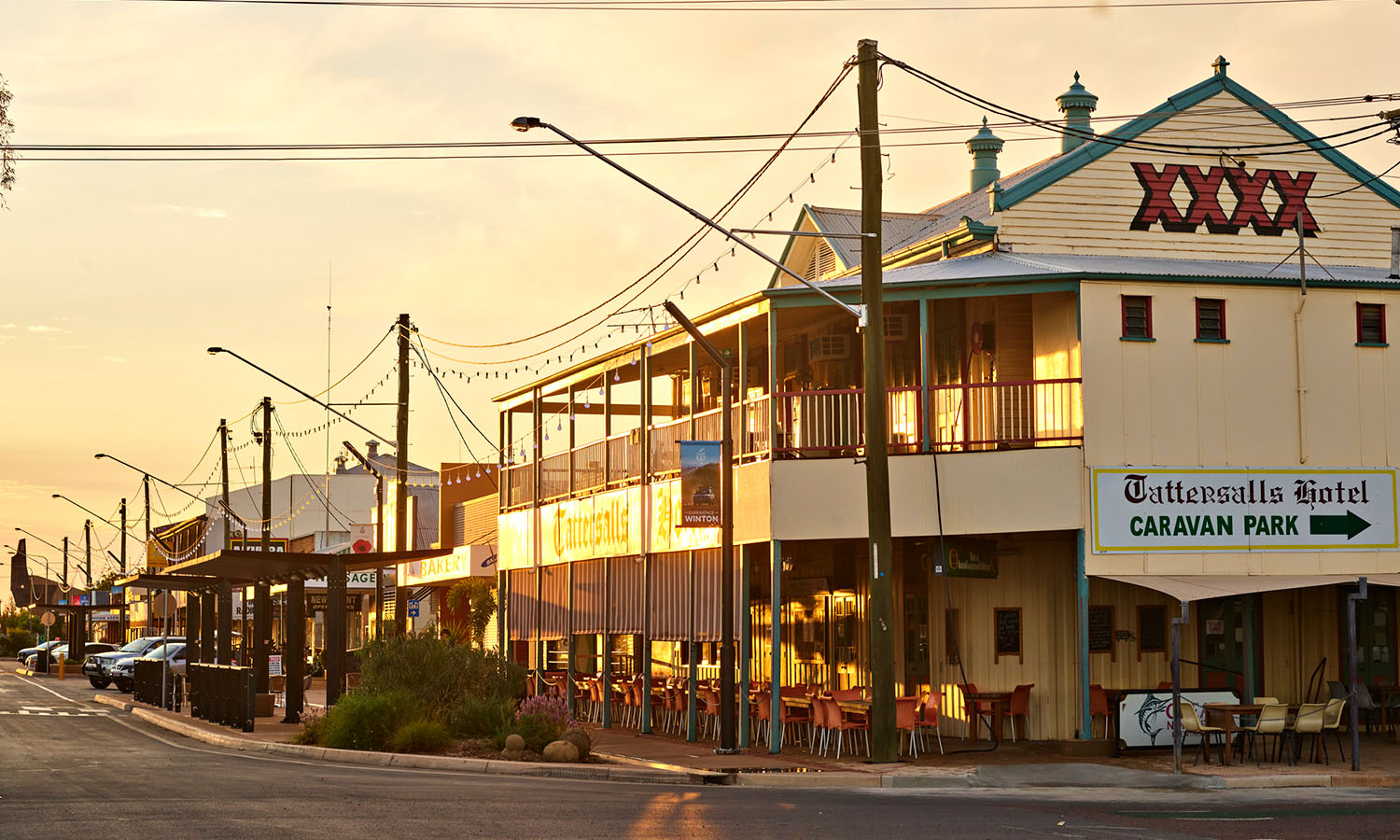
If Richmond and Hughenden are the entrée and main, Winton is dessert. It’s a proper outback hub, buzzing with caravanners, grey nomads, families with dust-covered kids, and that one guy in a kitted-out 4WD who definitely doesn’t know how to use any of the gear strapped to his roof. Winton is the kind of town where you can check into a motel, lose track of time, and end up staying three extra days without meaning to, especially when there’s Banjo Patterson poetry being performed at the local pub.
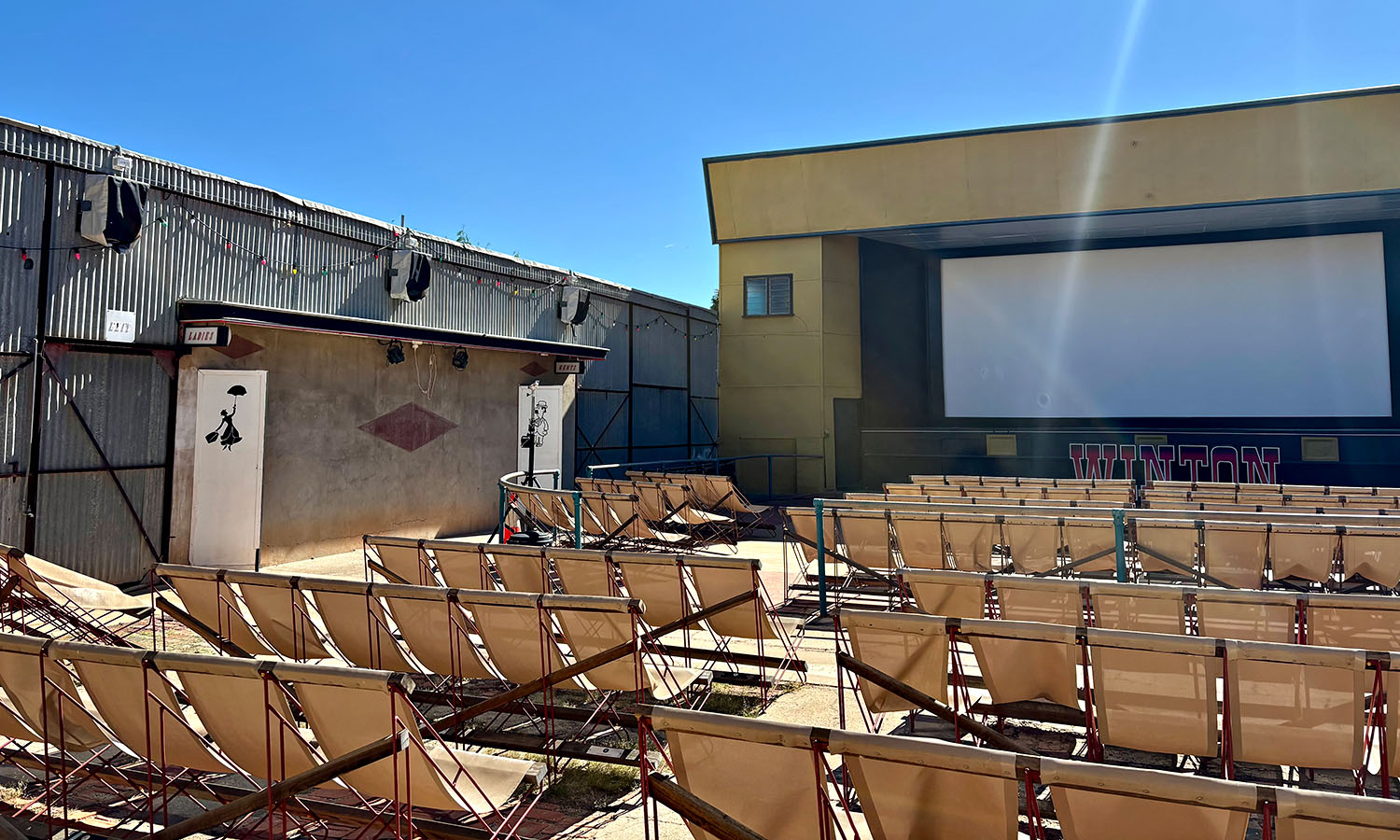
Let’s start with the Royal Open Air Cinema. It’s the oldest open-air cinema in the world, which means it’s got more stories than your nan and twice the charm. Sitting under the stars with a choc top in hand, watching a western while galahs heckle from the rafters – it’s like Netflix got tired of the same ol’ shit and moved to the bush.
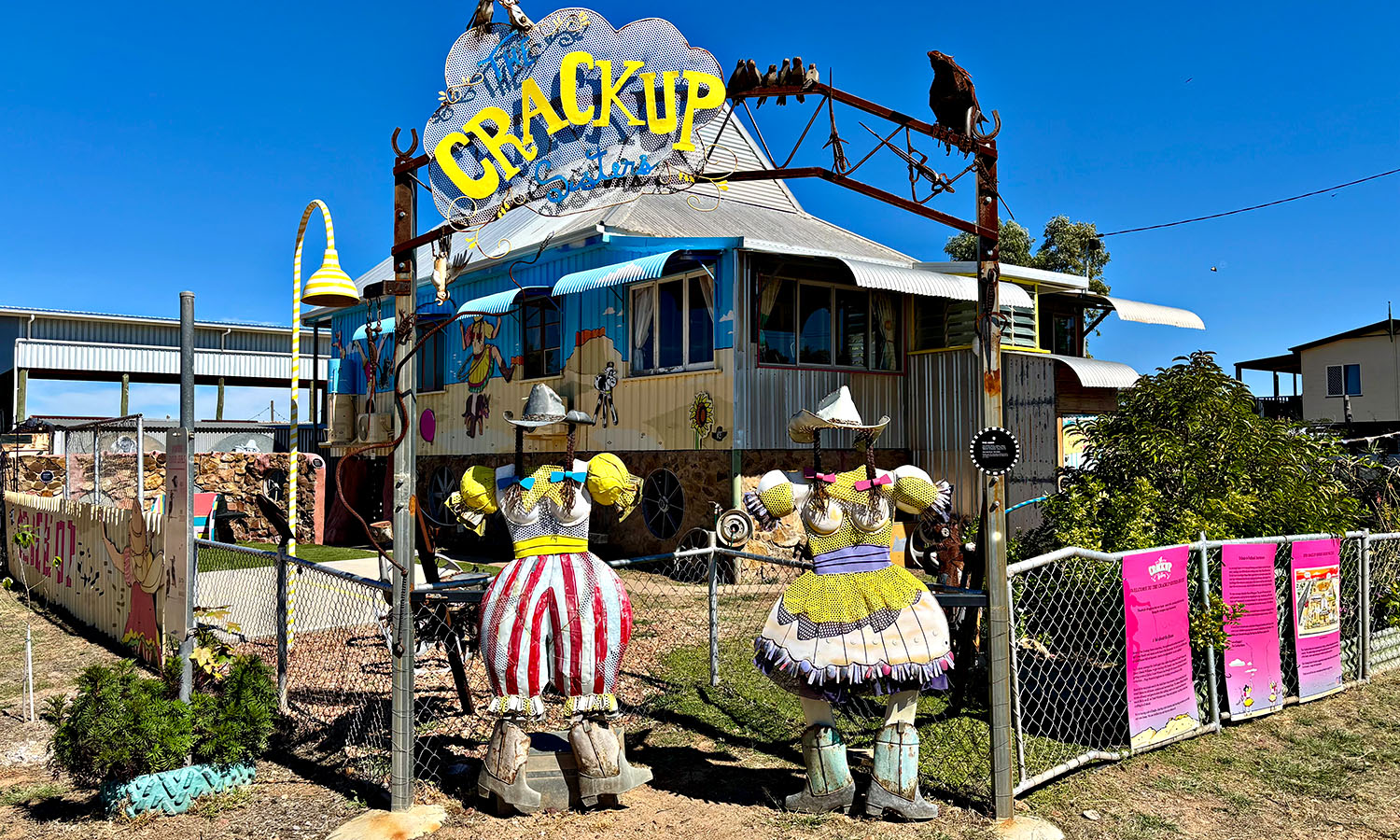
Then there’s the Crack Up Sisters museum, which is as bonkers as it sounds. It’s slapstick comedy, whip-cracking spectacle and living shrine to all things larrikin rolled up into one collection of crazy. It’s filled with memorabilia and oddities and will absolutely rope you into participating in something ridiculous before you leave (try having a luck shower).
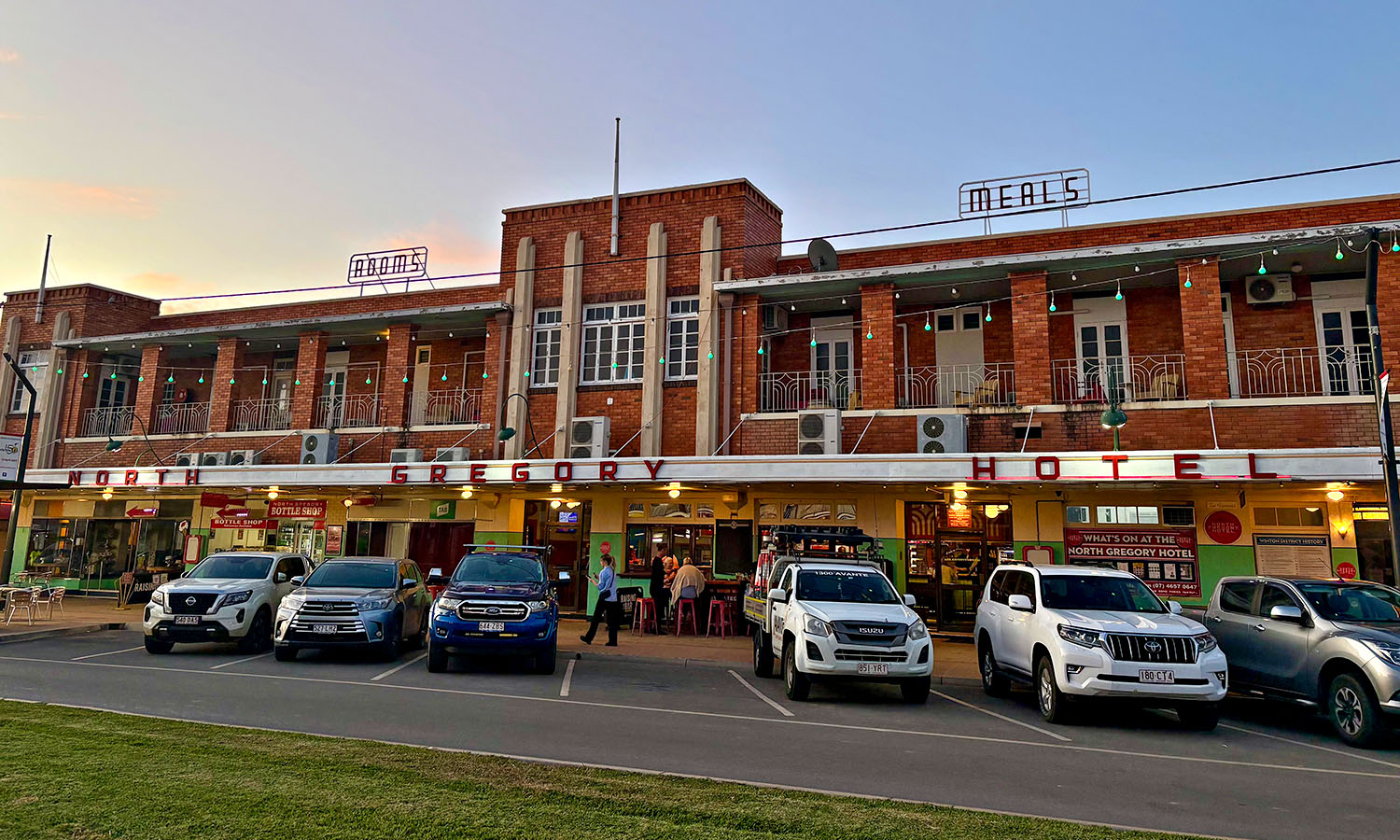
For dinner, I made my pilgrimage to the North Gregory Hotel, a pub with a name that sounds like a character from a Ned Kelly novel. The food was exactly what you want after a day of dusty adventuring; hearty, unpretentious, and likely served at the counter by someone who calls everyone “darl.”
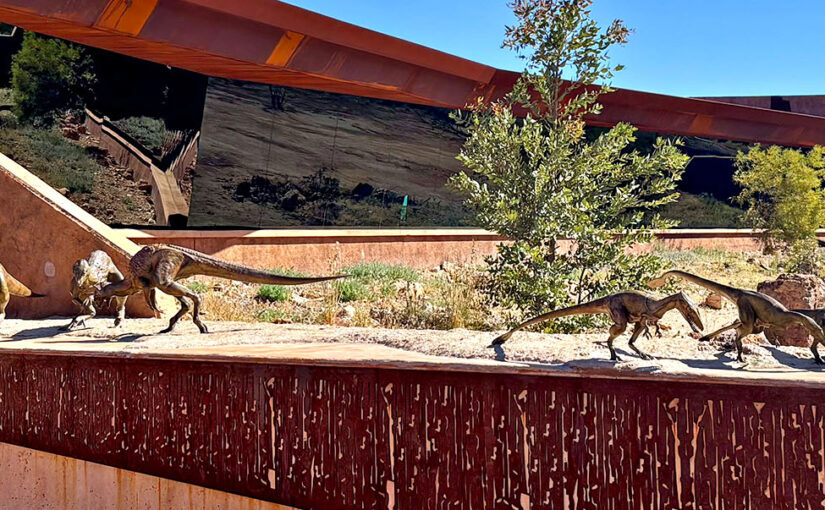
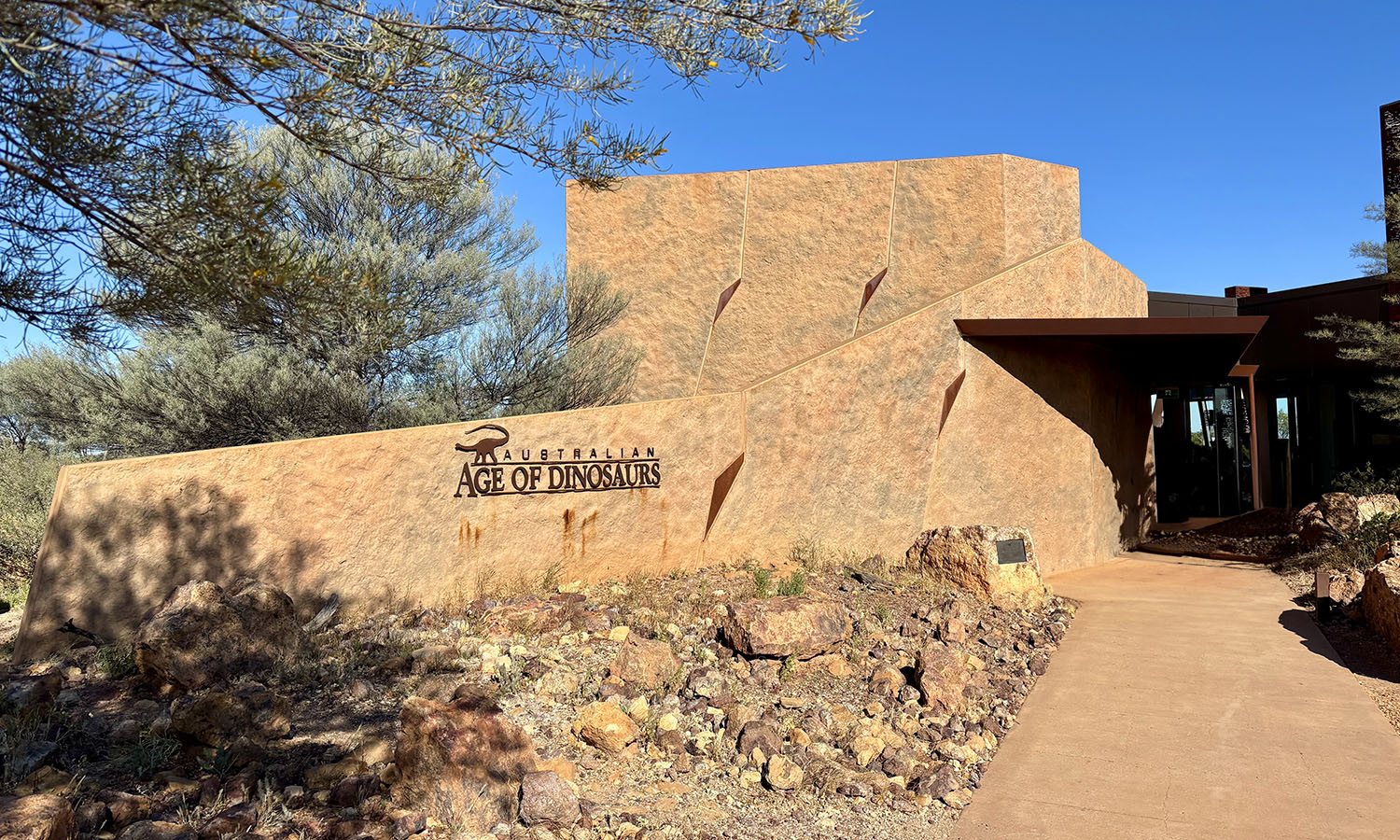
The next day, I drove to the Australian Age of Dinosaurs museum just outside of town. Perched dramatically on a jump up (which is a local word for “big rocky hill thing”), the museum gives serious Jurassic Park meets Mad Max vibes.
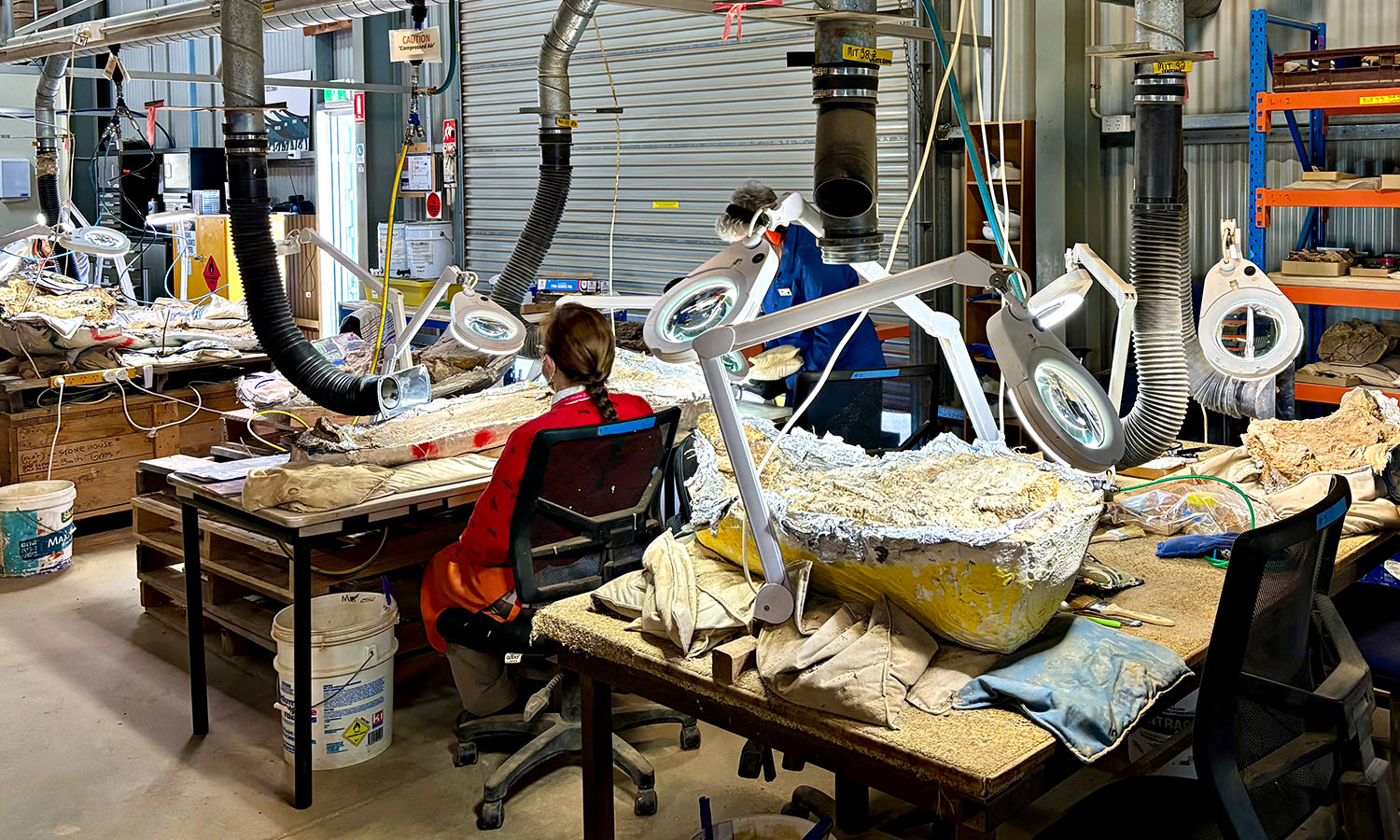
There’s a fossil lab where you can see scientists chipping away at bones and walking trails that make you feel like you’re being quietly watched by something with very sharp teeth and a complicated Latin name.
Learning how these creatures ended up in the middle of Australia, buried under eons of sediment and red dust, genuinely blew my mind. I left with a newfound respect for both palaeontologists and sunscreen.
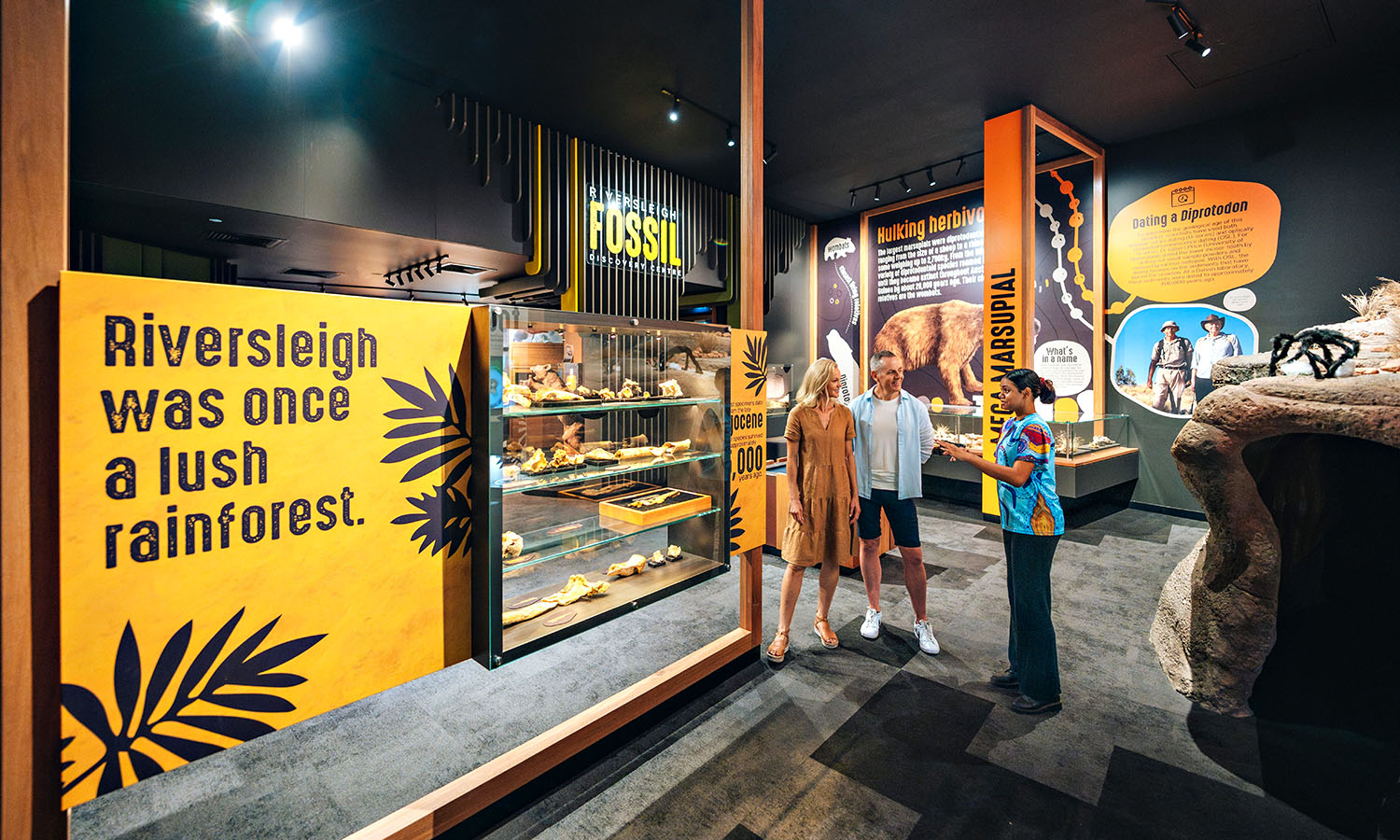
And just when you think you’re all fossil’ed out, Mt Isa throws its hat into the prehistoric ring with the Riversleigh Fossil Centre. While it doesn’t have a focus on dinosaurs, a tour around the museum will see you come face to fluff with Australia’s most ancient (and thankfully) extinct locals.
You’ll discover giant wombats, flesh-eating kangaroos and tree-climbing crocodiles in their brand new interactive exhibition. You can even take a closer look in their lab where tiny bat teeth and small rodent jaws are on display under microscope.
But for all the bones and beasts, what really stuck with me during this journey was the people. Every servo stop came with a yarn. Every cafe had a story. There’s a slowness to outback life that you don’t realise you’ve been craving until you’re sitting in a caravan park somewhere, listening to two local boys hand out raffle prizes as you eat homemade apple pie (with ice cream and custard) while trying not to get eaten alive by gidgee bugs.
The Dinosaur Trail might lure you in with the promise of ancient wonders, and fair enough, because those fossils are bloody impressive, but it’s the towns, the characters, and the glorious in-between that make the journey unforgettable.
Just don’t forget to lift that finger as you drive. You don’t wanna be that person who doesn’t.
Africa, you’ve had your moment. Sure, elephants and lions are impressive, but have you ever locked eyes with a humpback whale and questioned your entire life existence in the deep blue abyss? Didn’t think so.
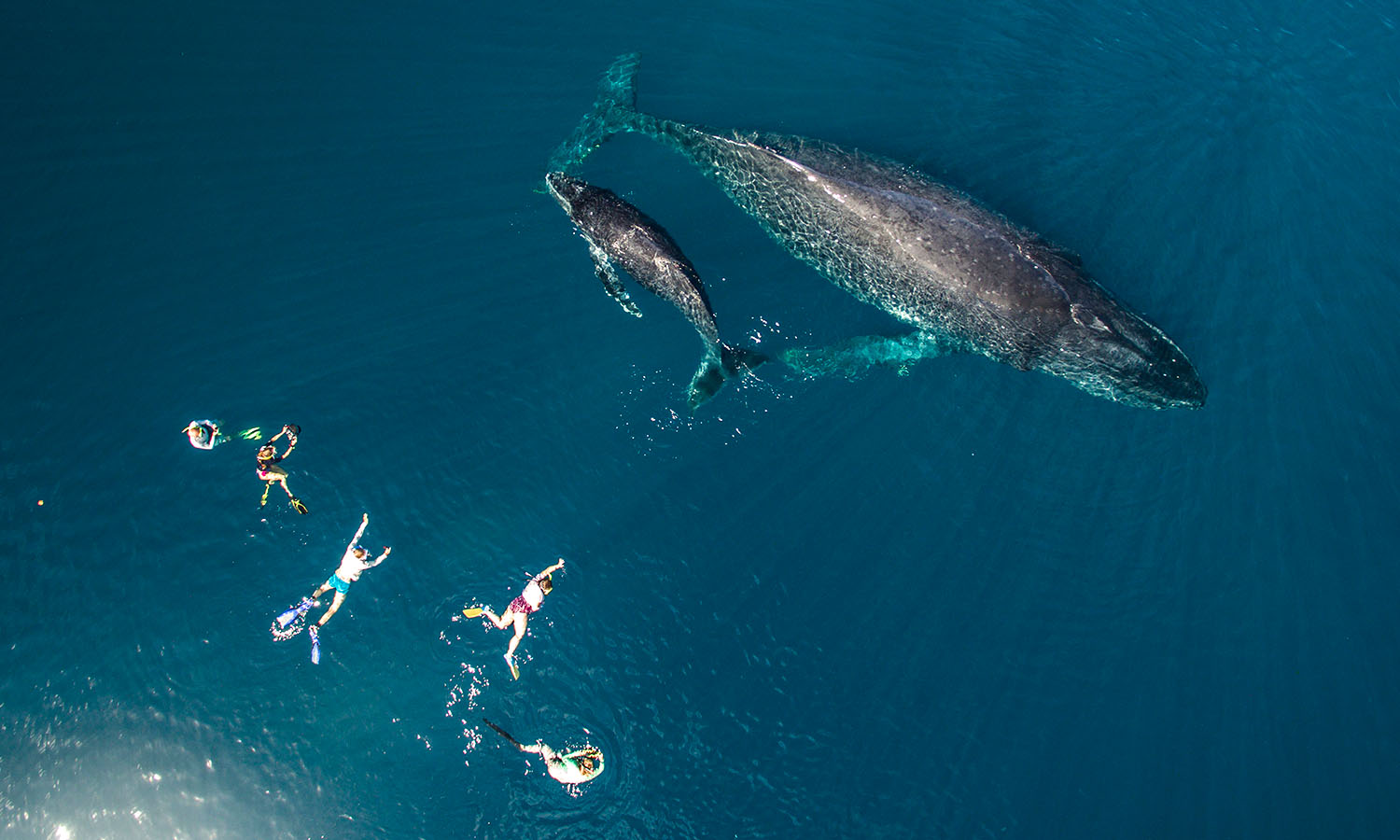
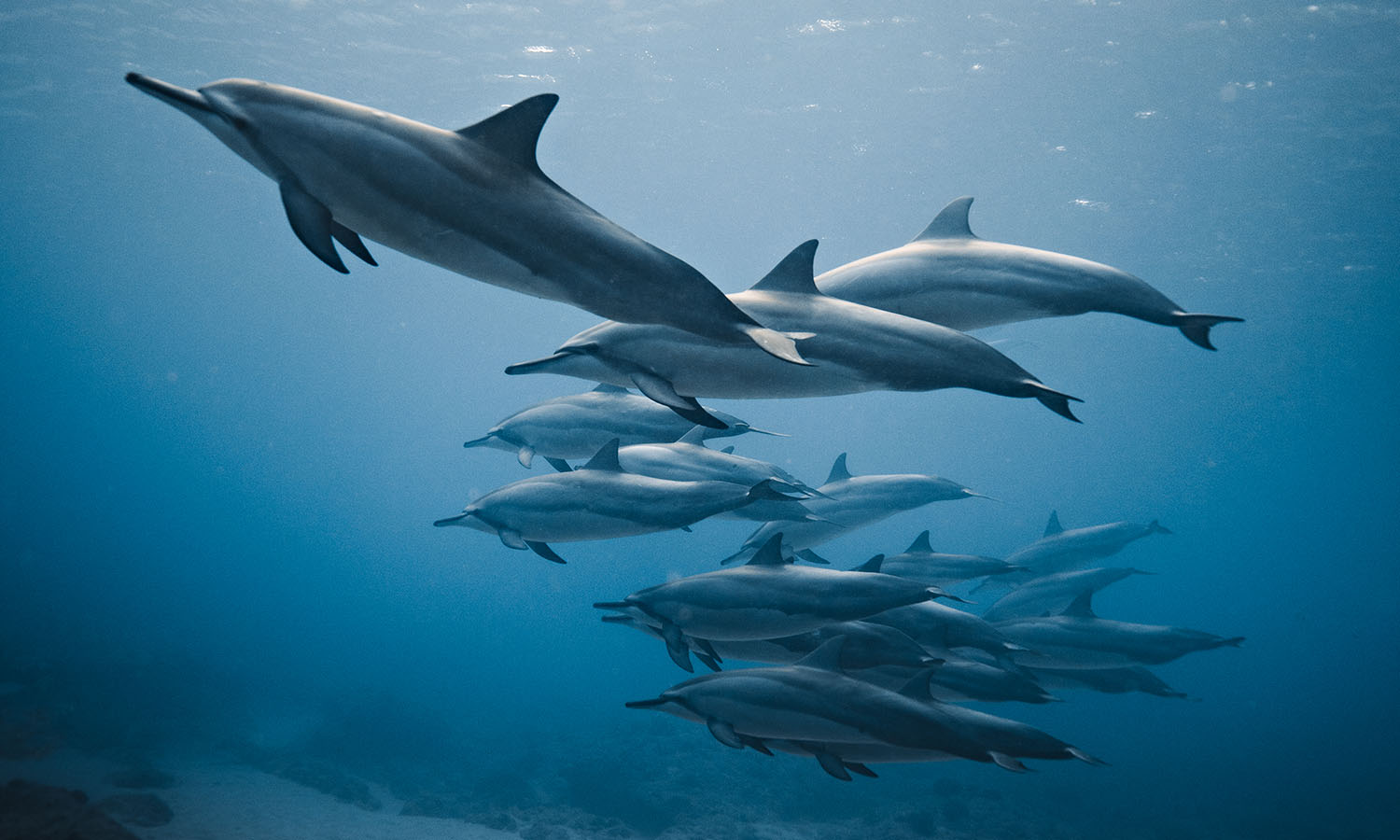
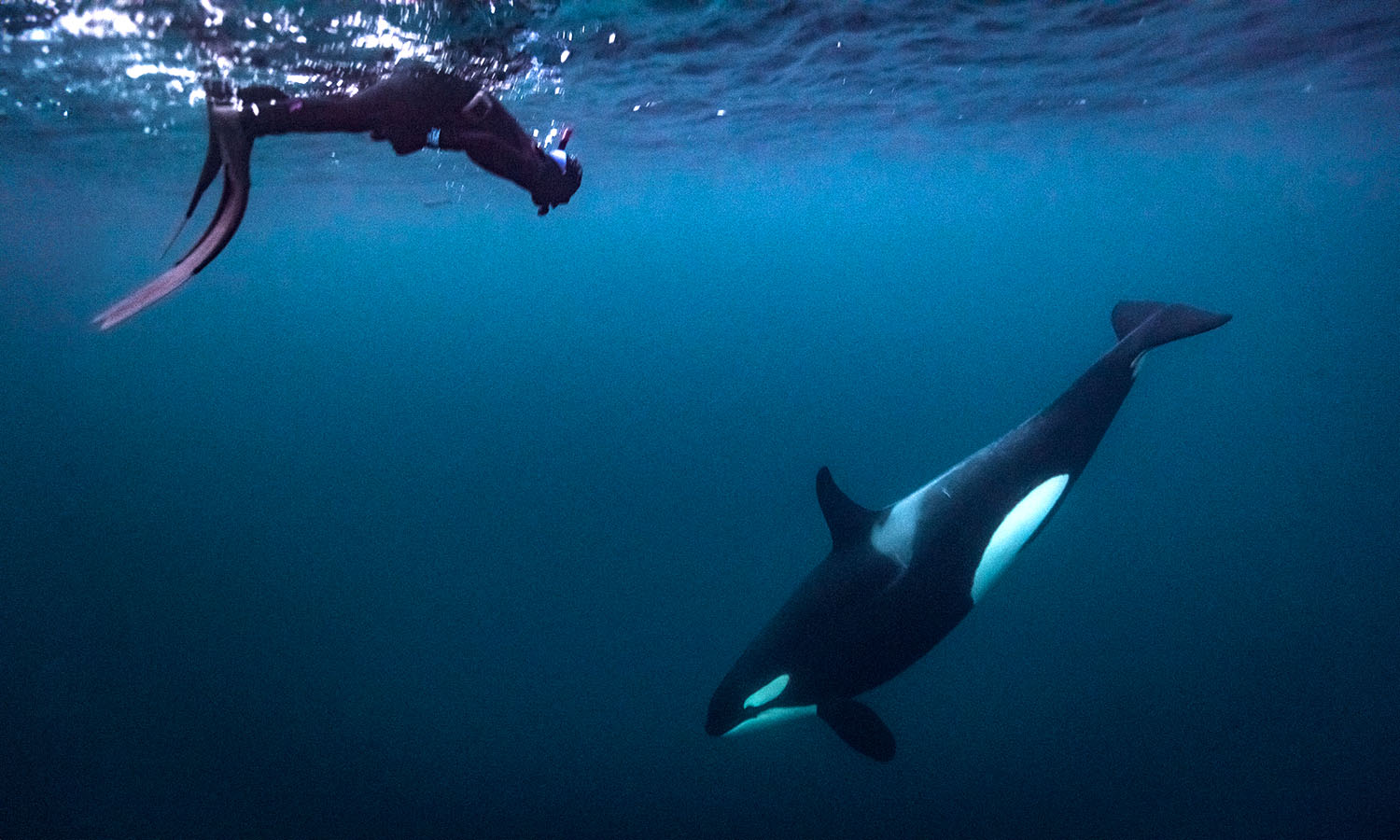
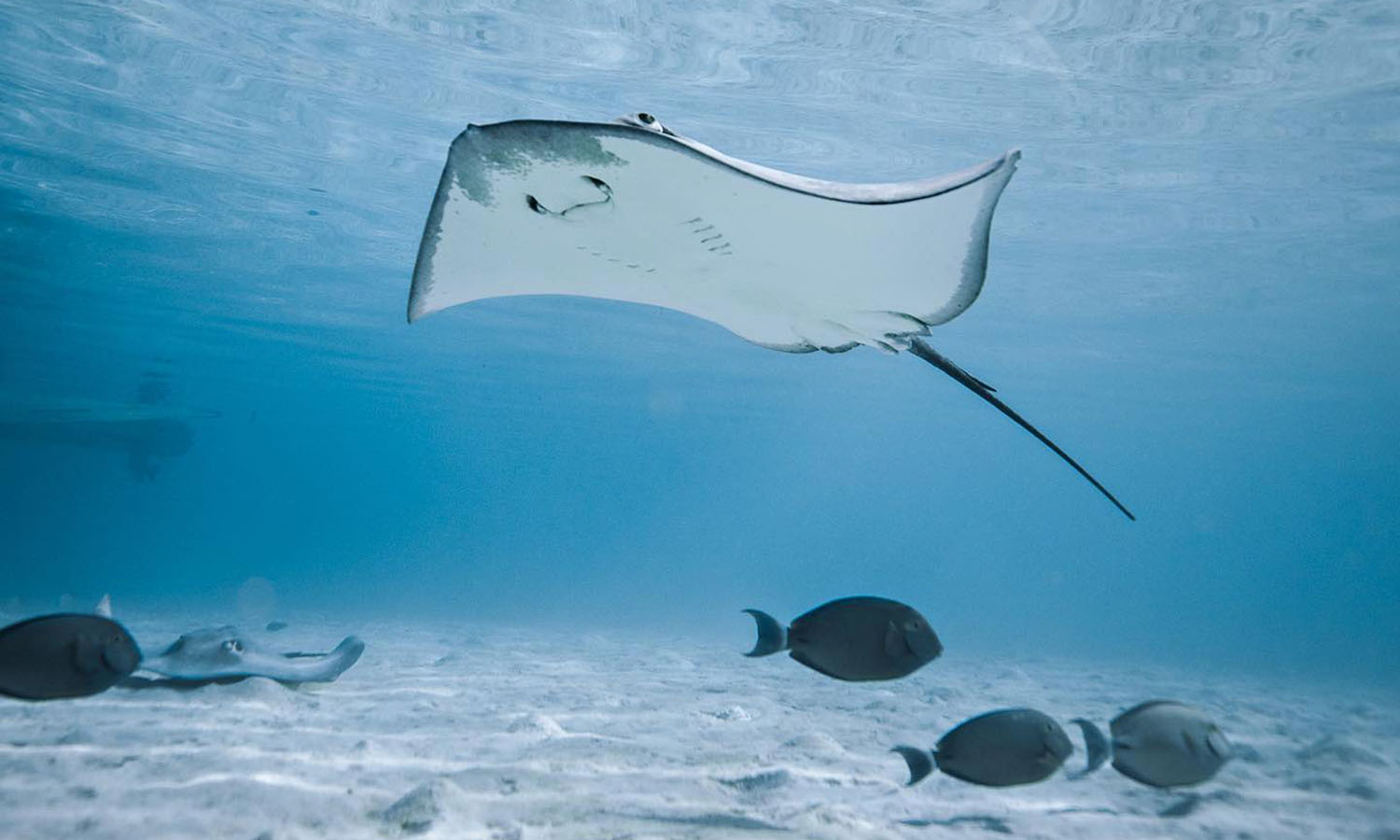
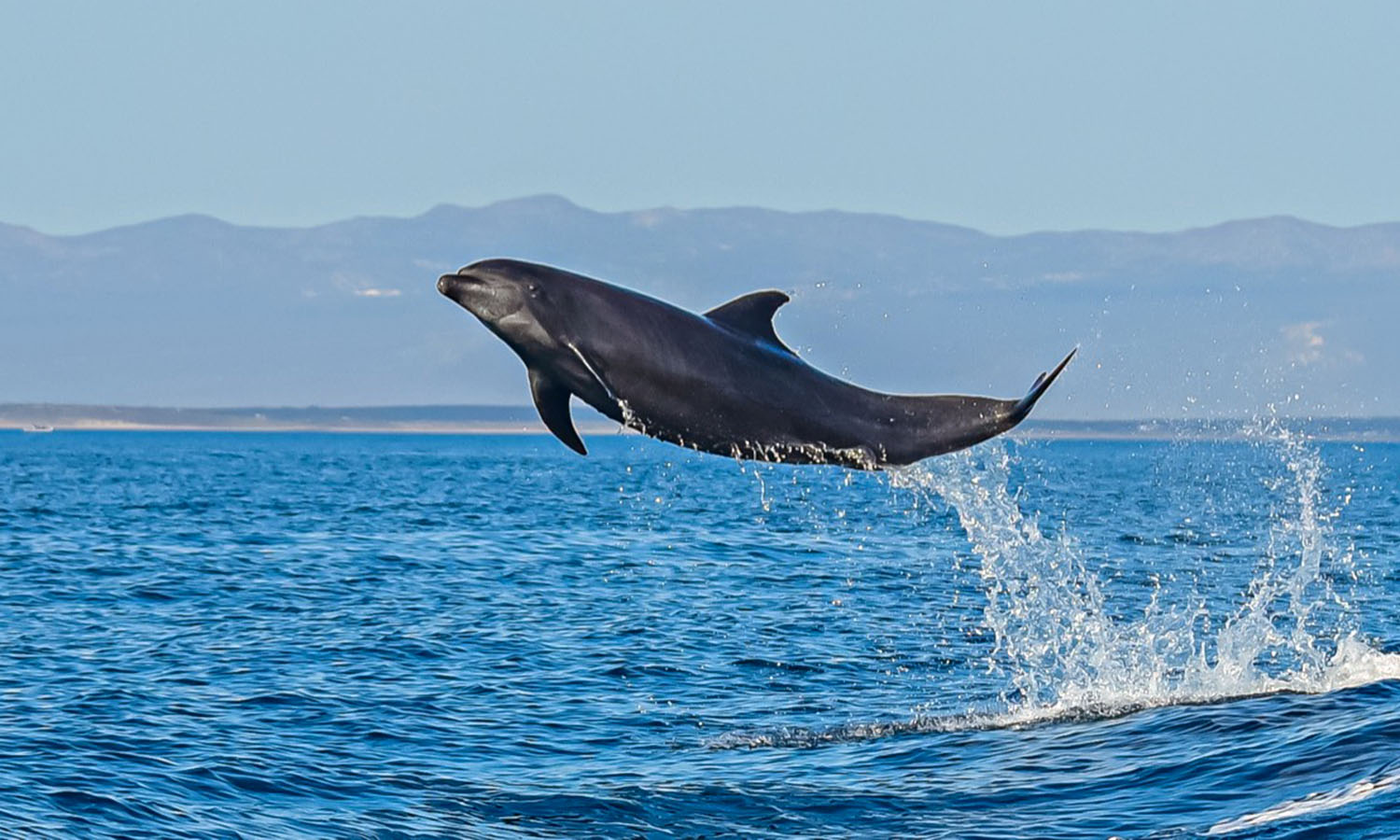
Welcome aboard Majestic Whale Encounters, imagine safari meets Atlantis with a generous side of aquatic chaos. They’ve unleashed their own underwater Big Five, starring Humpback Whales, Spinner Dolphins, Orcas, Manta Rays, and False Killer Whales. Move over, Simba, it’s officially time for whales gone wild.
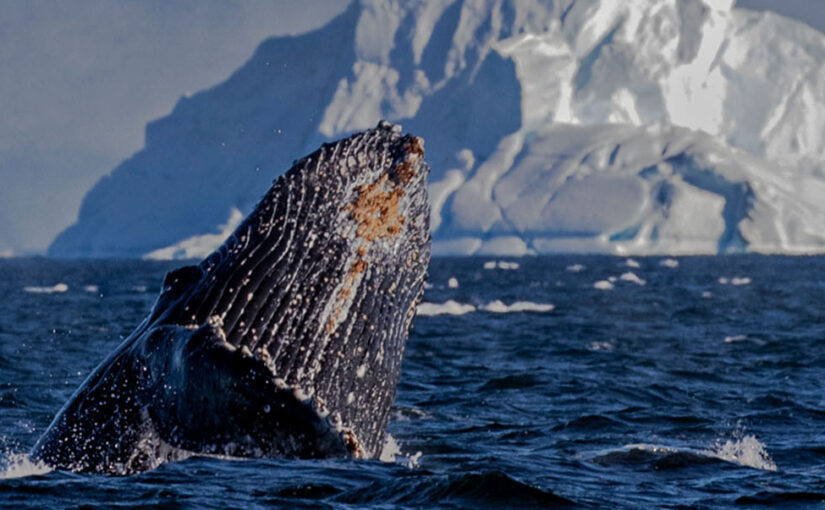
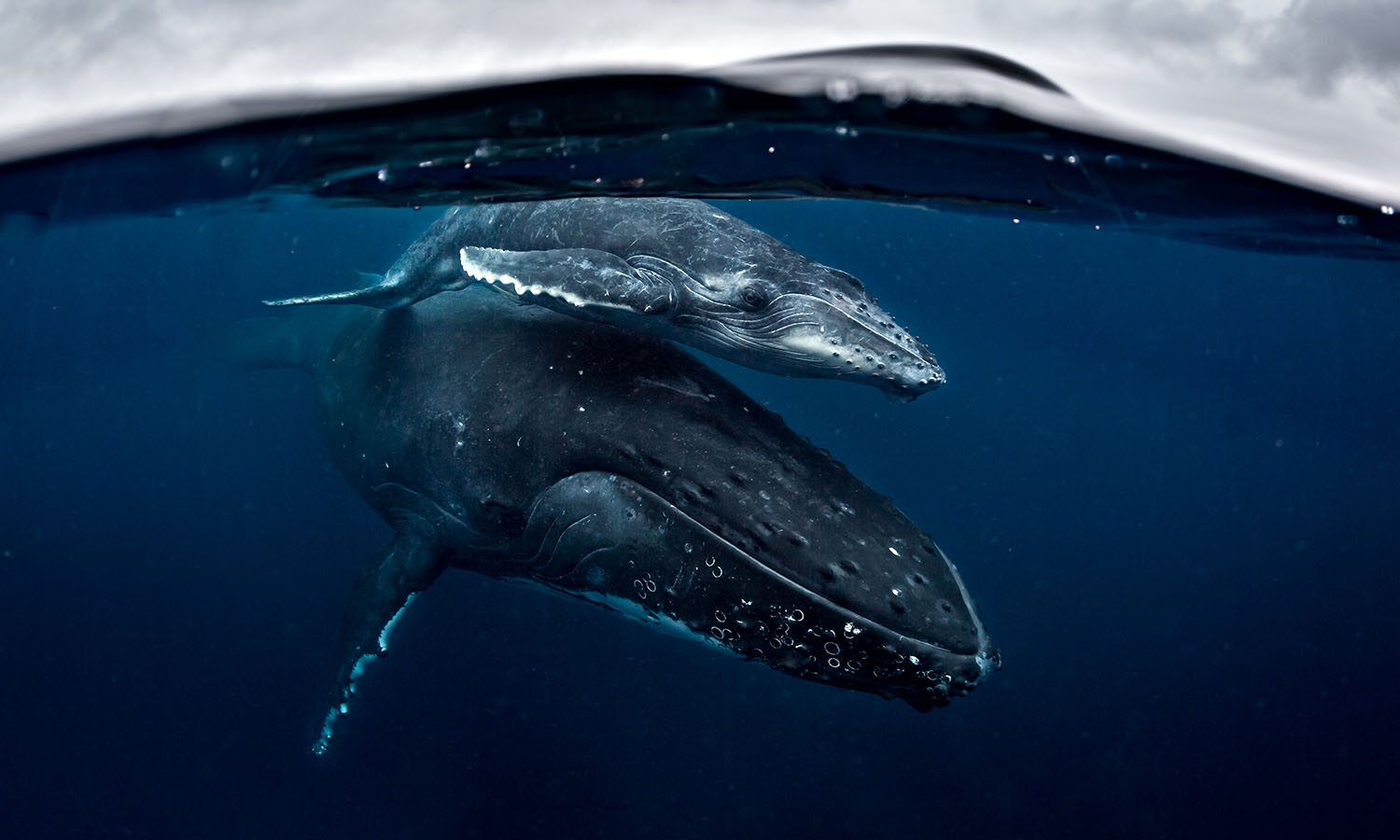
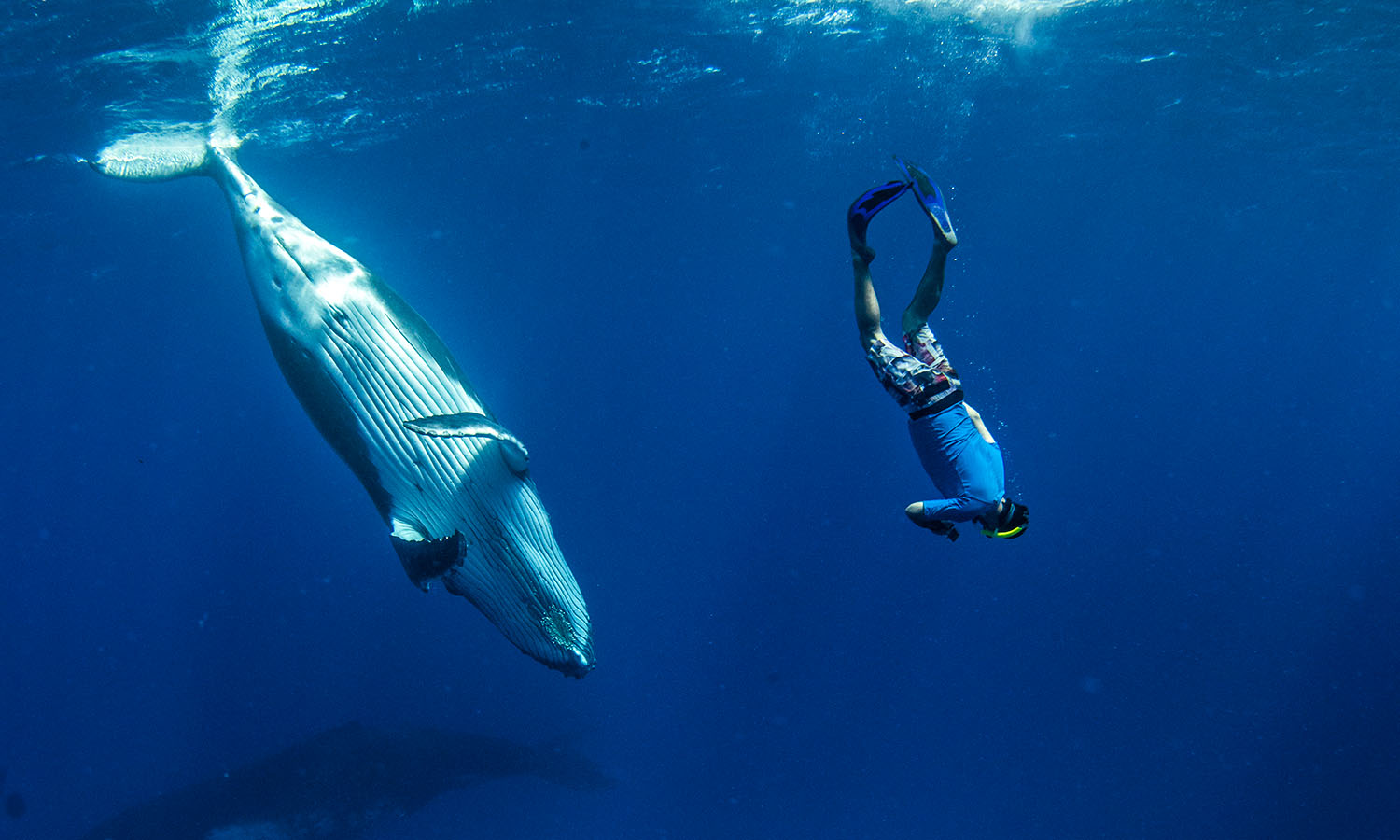
Let’s dive right in with humpback whales in the crystalline waters of Tonga, essentially the ocean’s heavyweight champion karaoke artists. Weighing in at around 40 tons, they’re famous for their spectacular breaches and dramatic tail slaps, putting every diva tantrum you’ve witnessed to shame. Underwater with these show-offs, you’re plunged into the aquatic equivalent of Coachella, minus the overpriced drinks and awkward sunburn. Trust me, when a humpback hits a high note, even Adele sits down and takes notes.
Spinner dolphins are next on the marquee, tearing up the warm waters off the coast of Hawaii. They’re essentially caffeinated toddlers at an aquatic trampoline park. These dolphins spin through the air faster than your hangover hits the morning after a tequila-fuelled beach party. Imagine hundreds of dolphins flipping, twisting, and generally showing off their skills like audition rejects from America’s Got Talent, endlessly entertaining and blissfully unaware of their lunacy.
Orcas, meanwhile, patrol the cooler waters of Norway with all the sophistication yet slight sinister allure of Bond villains. They don’t just swim; they prowl, exuding an aura of sleek, predatory confidence that’s equally terrifying and mesmerising. They might look like oversized aquatic pandas, but don’t let the cute monochrome fool you, these guys mean business. Gliding beside them is like infiltrating an exclusive underwater mafia meeting. Keep your flippers crossed that they appreciate visitors.
For sheer elegance, cue the manta rays, gracefully gliding through Indonesia’s vibrant coral reefs. They’re marine ballet dancers with wingspans that would make Batman jealous. Watching mantas glide effortlessly through the ocean is hypnotic, ethereal, and makes your awkward underwater flailing feel embarrassingly pedestrian. It’s an exquisite dance recital performed by nature’s finest artists, leaving you simultaneously breathless and humbled.
False killer whales round out the spectacle off the pristine shores of Australia, tragically burdened by nature’s worst marketing decision since the platypus. Despite their misnomer (seriously, someone owes these guys an apology), these whales are playful, sociable, and shamelessly inquisitive. Think oversized puppies of the ocean; dark, shiny, and unafraid to invade your personal space, offering judgmental glances at your flippers, wetsuit choices, and questionable snorkelling technique.
So, toss aside your binoculars, squeeze into that wetsuit (good luck), and dive headfirst into this majestic marine madhouse. Majestic Whale Encounters run not just your run-of-the-mill eco-tours; theirs are the ultimate oceanic rollercoaster of adrenaline, awe, and absolute absurdity. Sorry Africa, but this safari’s got whales that dance, dolphins that spin, and villains straight out of a spy movie. Frankly, it’s madness you can’t afford to miss.
So, with a glint in my eye and Google Maps set to stun, I veer off the tourist trail, bound for Wakayama and Nara—two lesser-known gems ready to blow my mind.
The shift begins quietly. As we leave the edge of Osaka, the urban sprawl fades into the countryside. The air takes on a salty, earthy scent. The road begins to wind. Hills roll into view, dotted with citrus trees and tiled-roof houses. The light softens. After an hour on the road, we reach the coastline and I catch my first glimpse of the sea, calm and glassy, stretching into the haze of the afternoon.
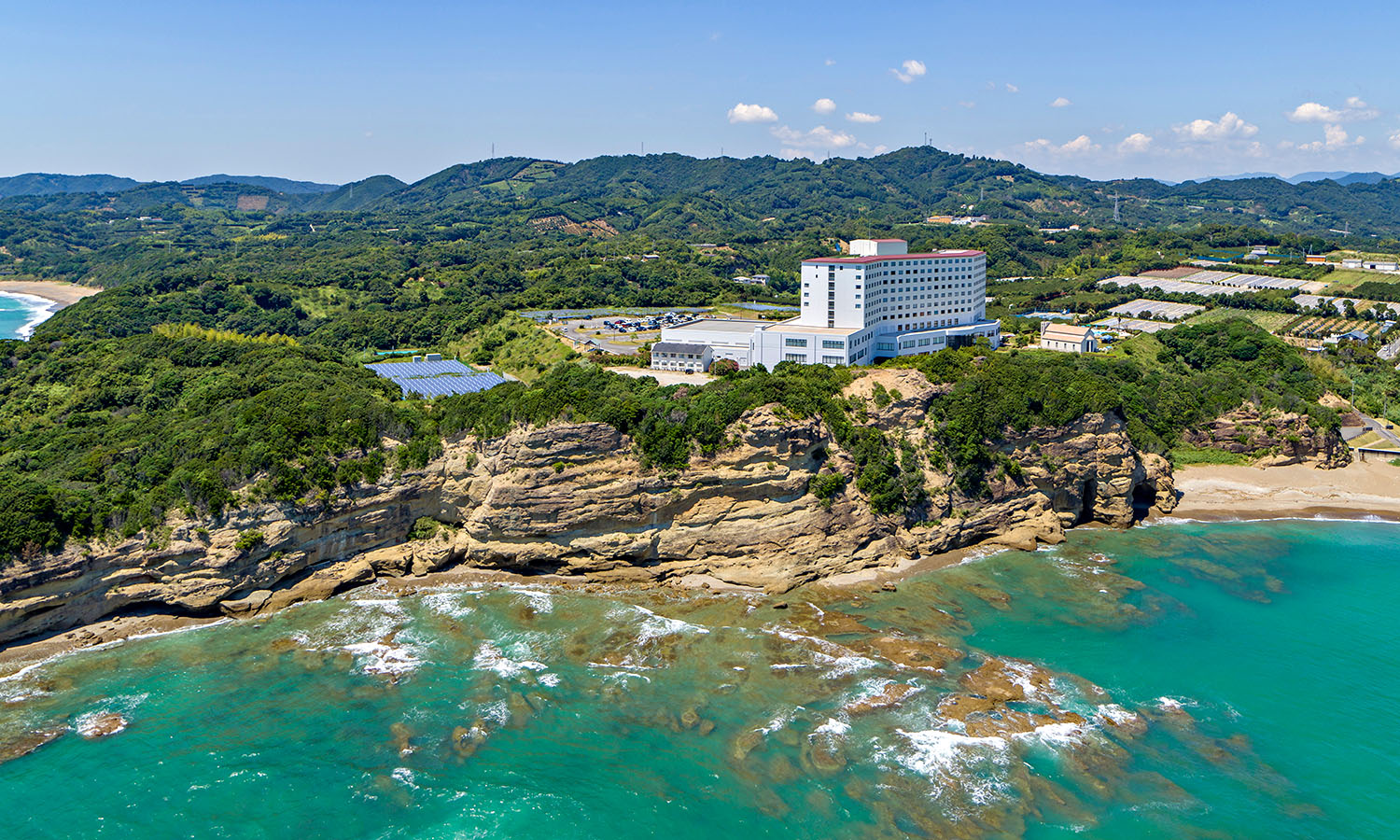
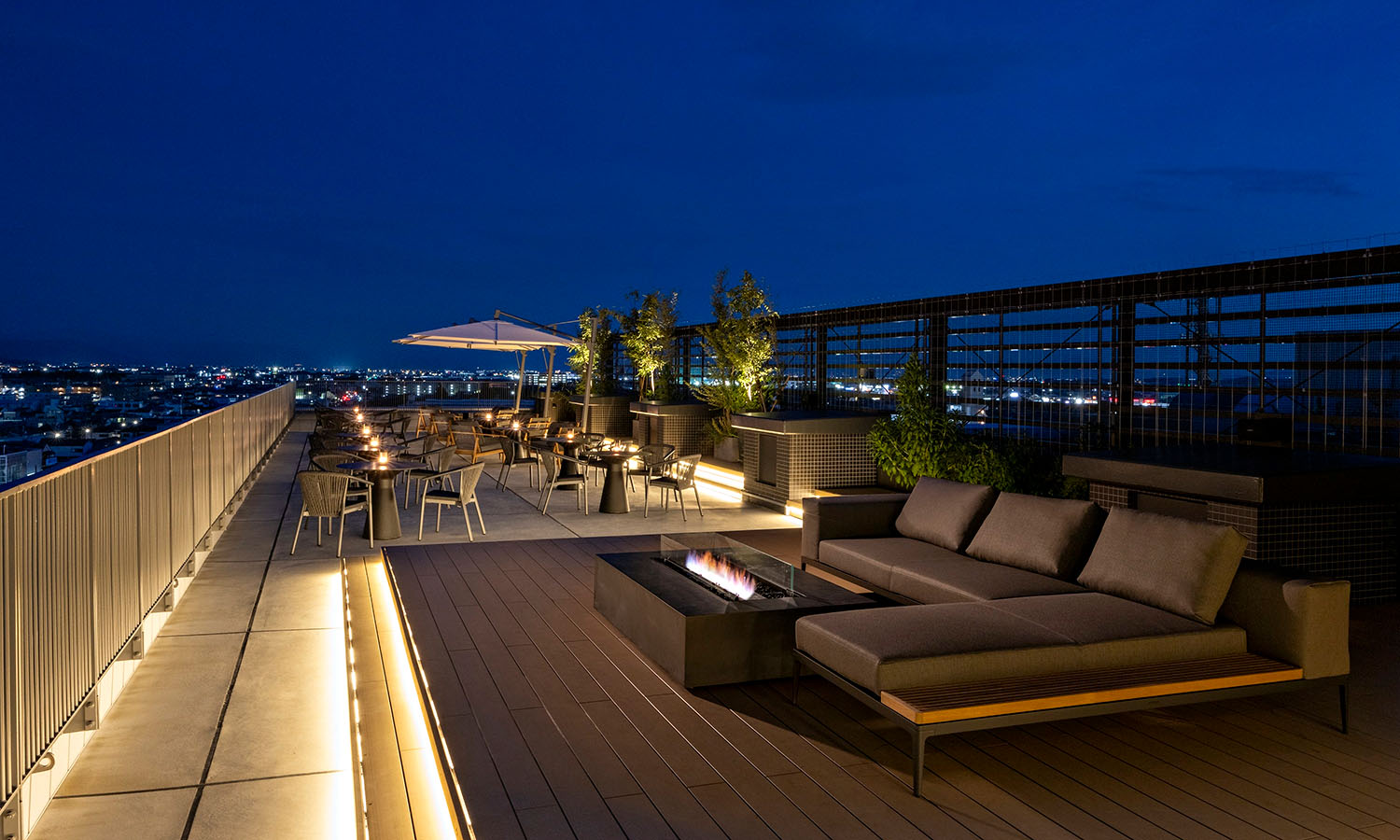
It’s here that I arrive at the Grand Mercure Wakayama. The hotel is perched above the water, a sleek and welcoming retreat that seems to hover between ocean and sky. It feels like stepping out of the everyday and into a different rhythm altogether.
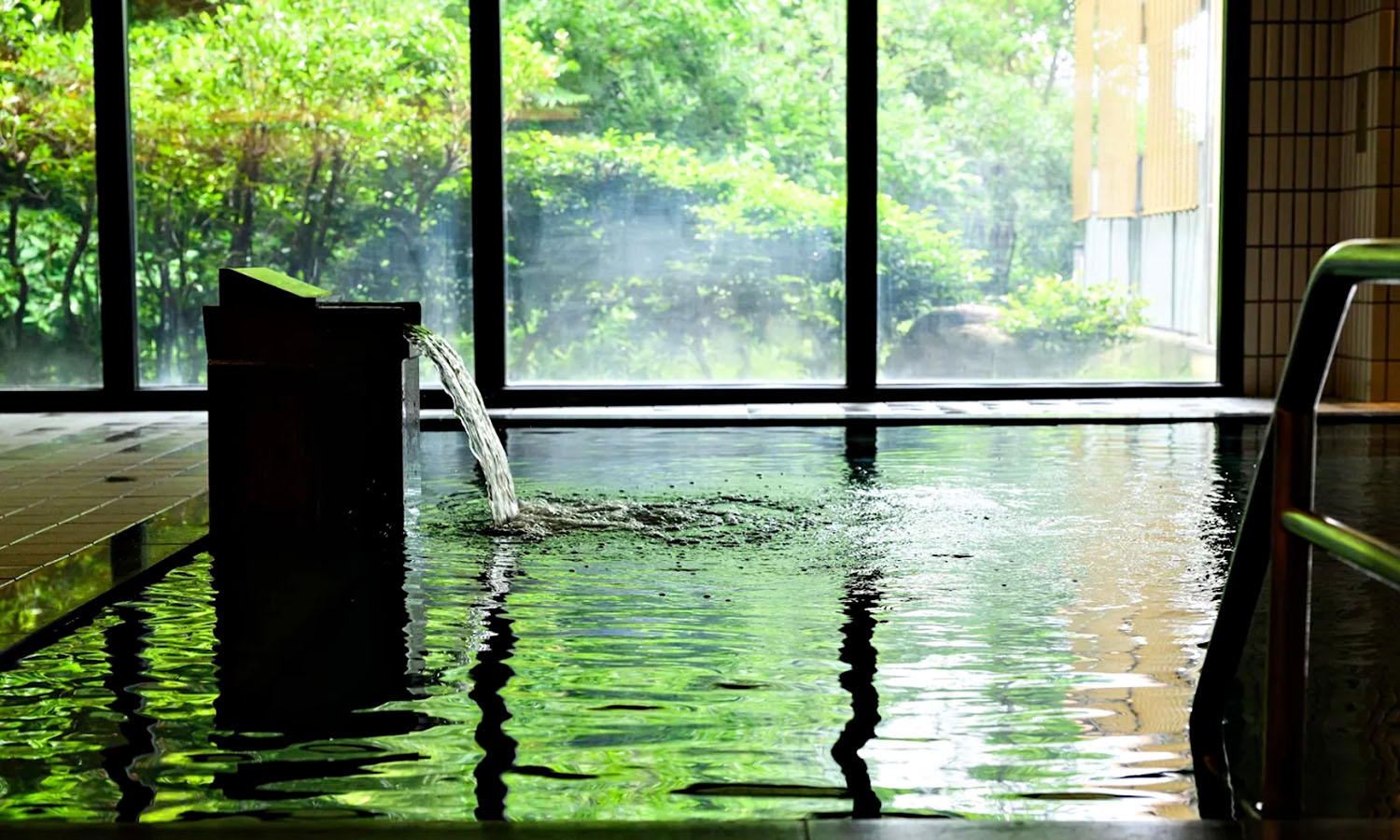
Without even unpacking, we head straight to the hotel’s ocean-view onsen. Built high above the coastline, the open-air hot spring is quiet except for the occasional call of a seabird and the gentle rush of steam rising into the breeze. The mineral-rich water is warm and soothing. The sky turns soft gold as the sun begins to set. I had planned an early night but when someone suggests a soak under the stars, I can’t resist. One glass of sparkling wine and a tray of snacks later, I am completely immersed, both body and mind.
Wakayama’s hot springs are famous for good reason. People come here to find stillness and to be held in warmth and quiet. This onsen is exactly what I didn’t know I needed. Restorative, grounding and full of that quiet cinematic beauty Japan does so well.
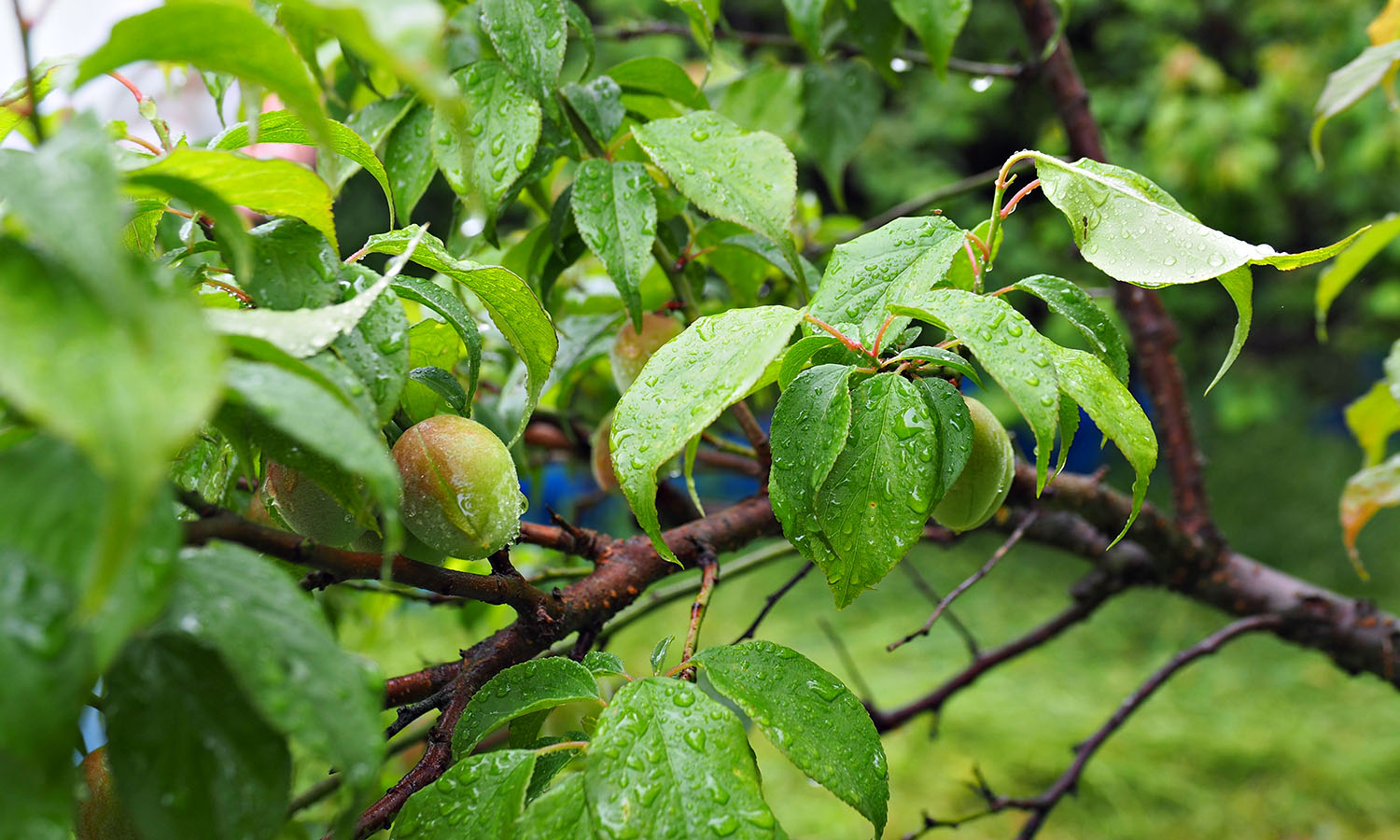
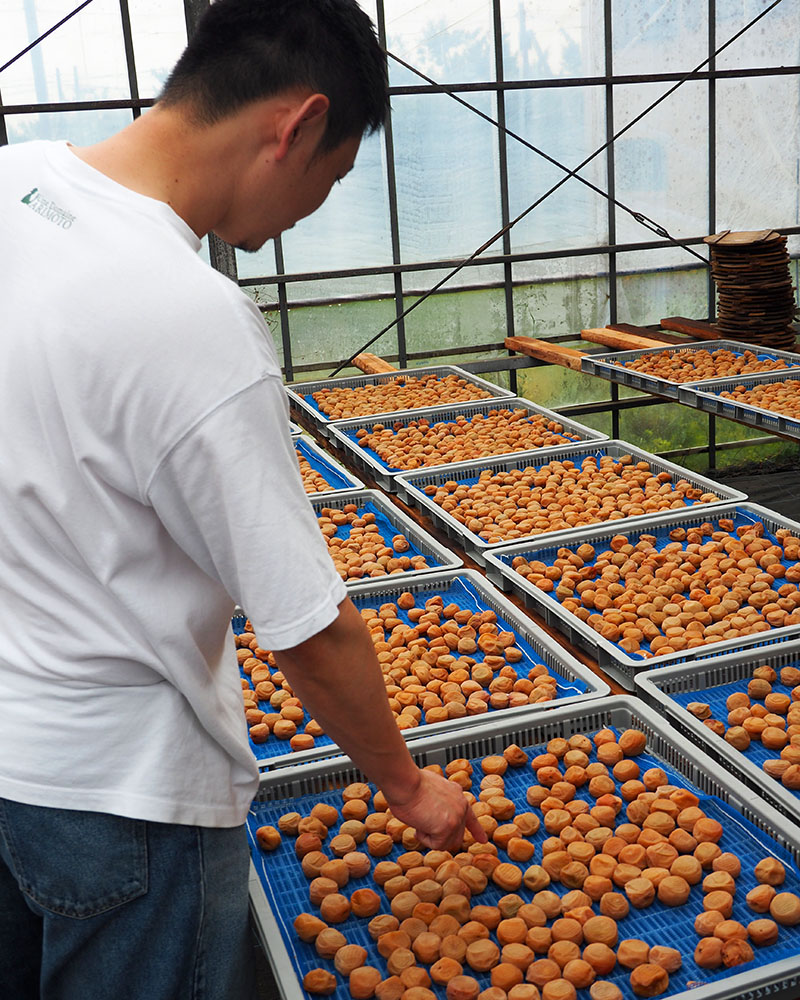
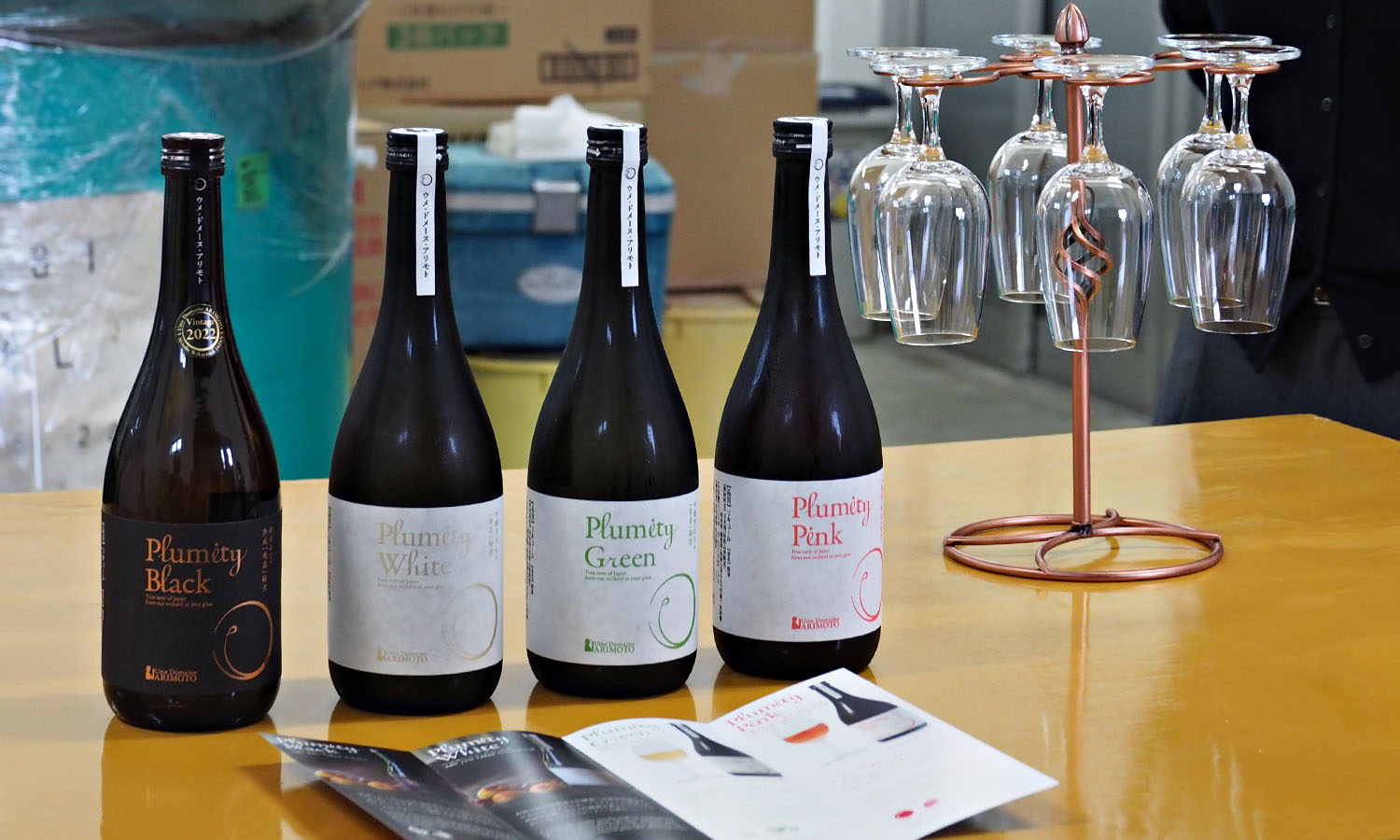
By 9 a.m. the next day, I’m holding a small glass of plum wine and standing in a sun-dappled orchard in Minabe, a sleepy inland town known for its ume plums. Rice doesn’t grow easily in this region, so the locals have perfected their craft with plums instead, turning them into Japan’s most beloved fruit liquor.
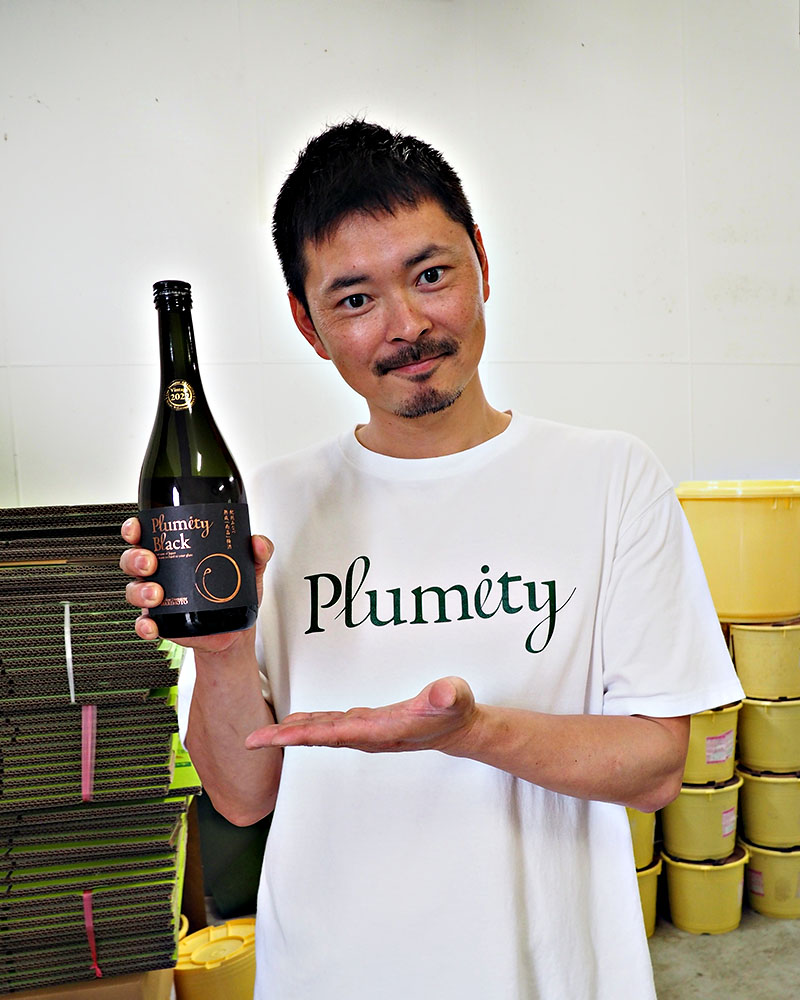
Yohei, our host, is a fourth-generation wine maker and horticulturist. With quiet pride, he explains that the plums are only harvested once they fall naturally from the tree. No rushing the process. We sample dried plums, some so salty they make my cheeks tingle, as we wander through the trees.
Then, the wine: smooth, slightly sweet, and surprisingly complex for something sitting at just 11 percent. Yohei has me hooked before I’ve finished the first sip.
The tour is only available via the Grand Mercure Minabe Resort & Spa, so you’ll need to plan ahead, but it’s worth it.
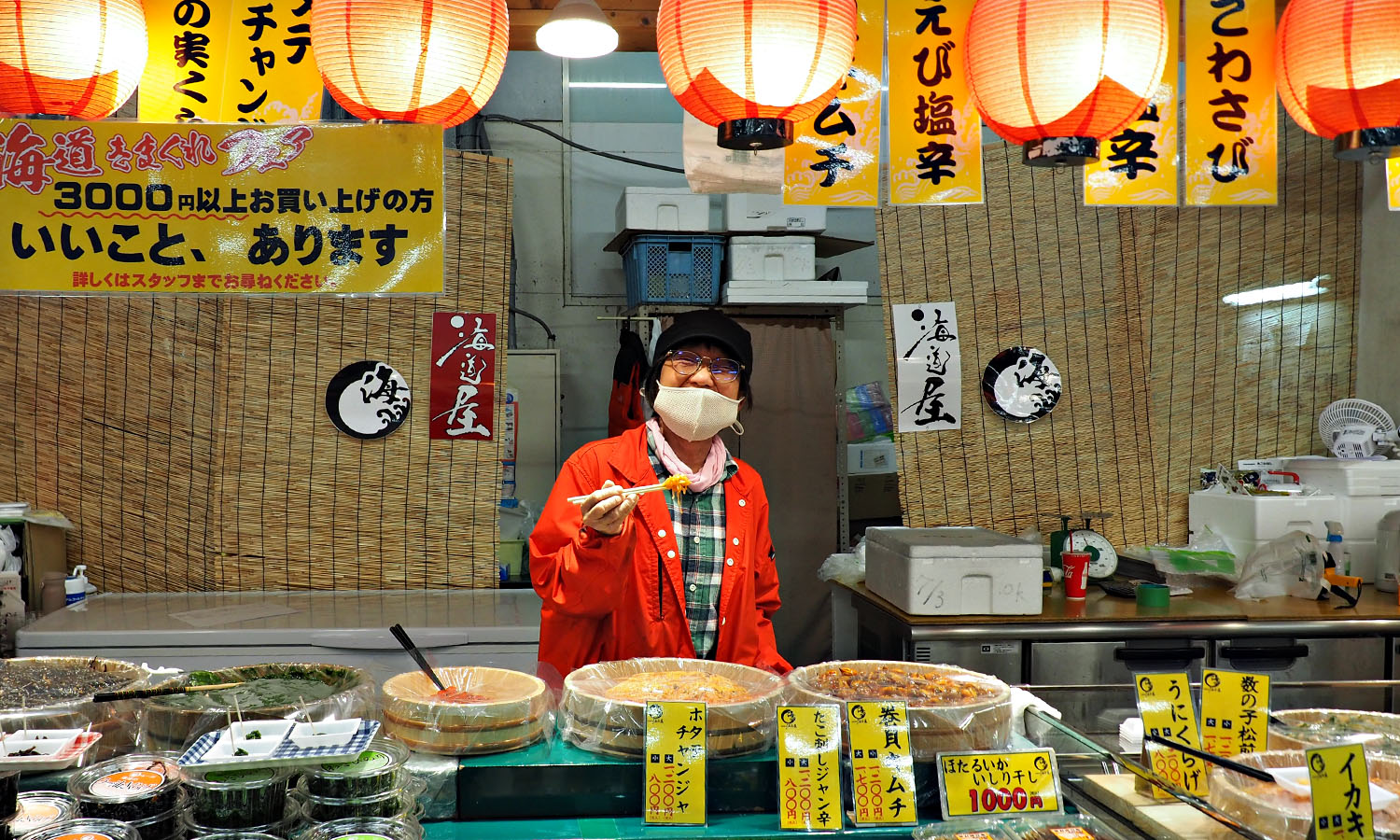
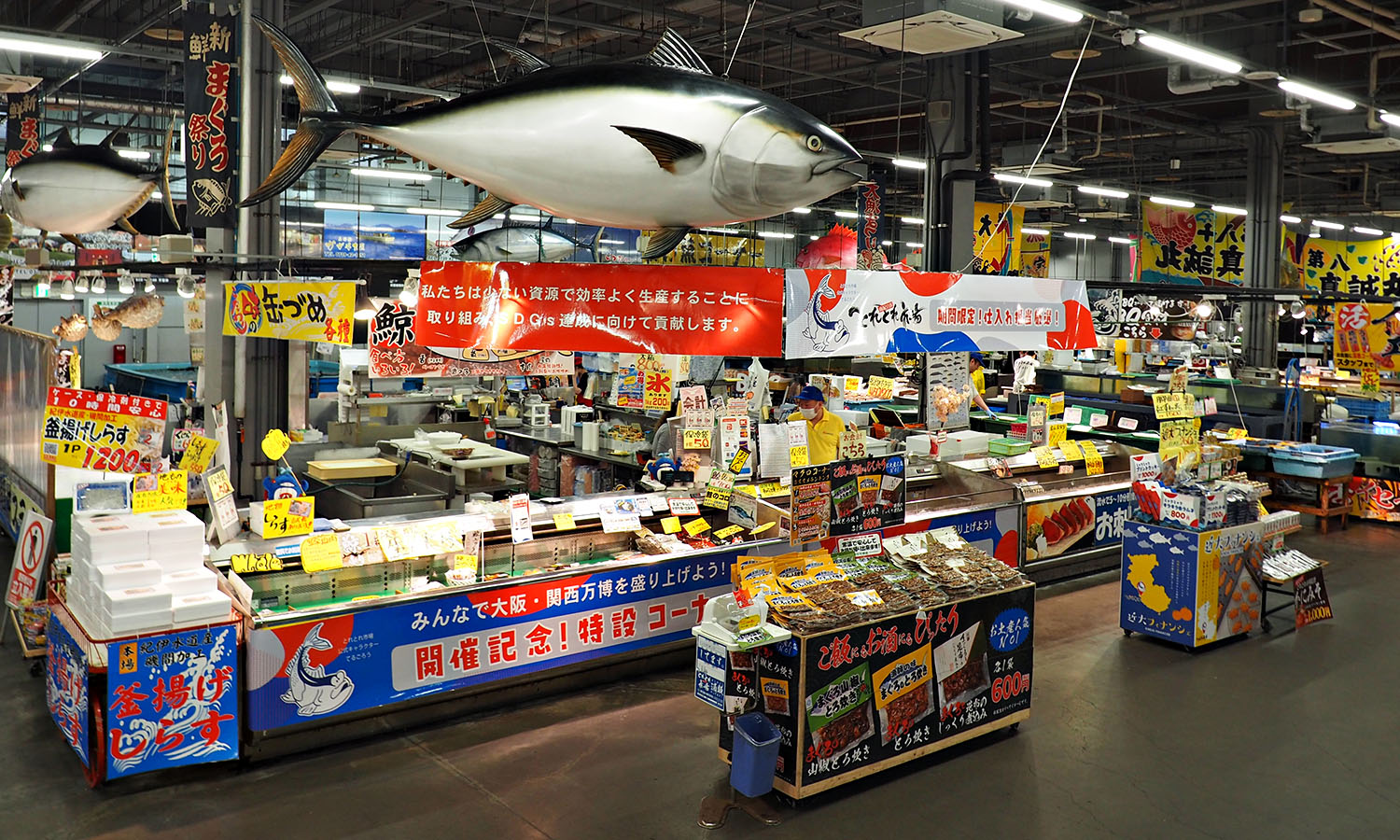
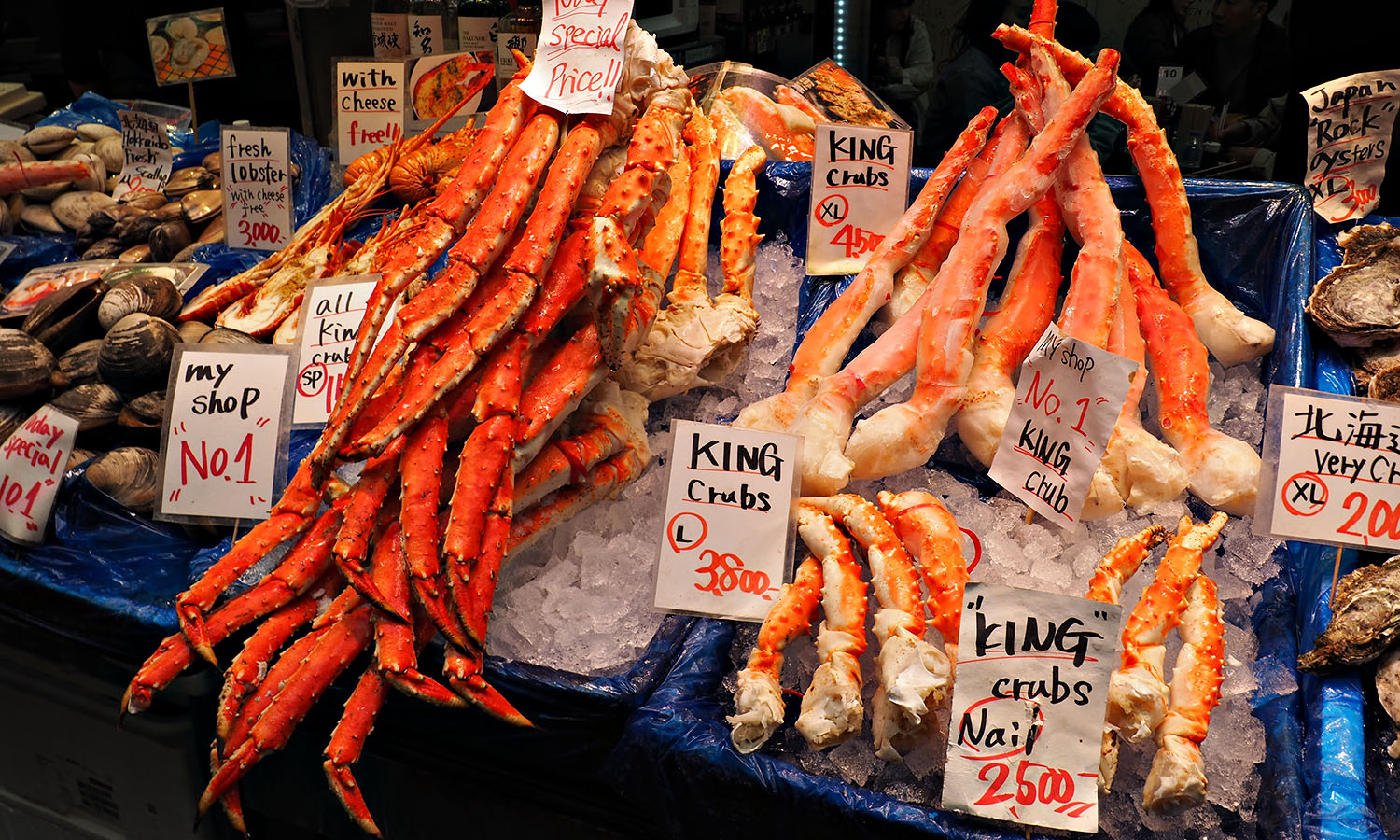
The morning wine stirs my appetite, so we head to Toretore Market, a chaotic wonderland of seafood, steam, and spectacle. It’s part market, part theatre. Giant crab legs tower over tanks of live fish, and the smell of charcoal-grilled shellfish fills the air.
I’m on a mission to find the biggest crab leg I can, and when I do, it’s everything I hoped for. Bold, buttery, and intensely satisfying. In one quiet corner of the market, I meet Mr. Noji Kanye, who’s been marinating mushrooms in chilli oil for over four decades. He hands me a sample on a toothpick with a sly grin. It’s spicy, earthy, umami-rich perfection. I immediately buy a jar and silently mourn that I didn’t get two.
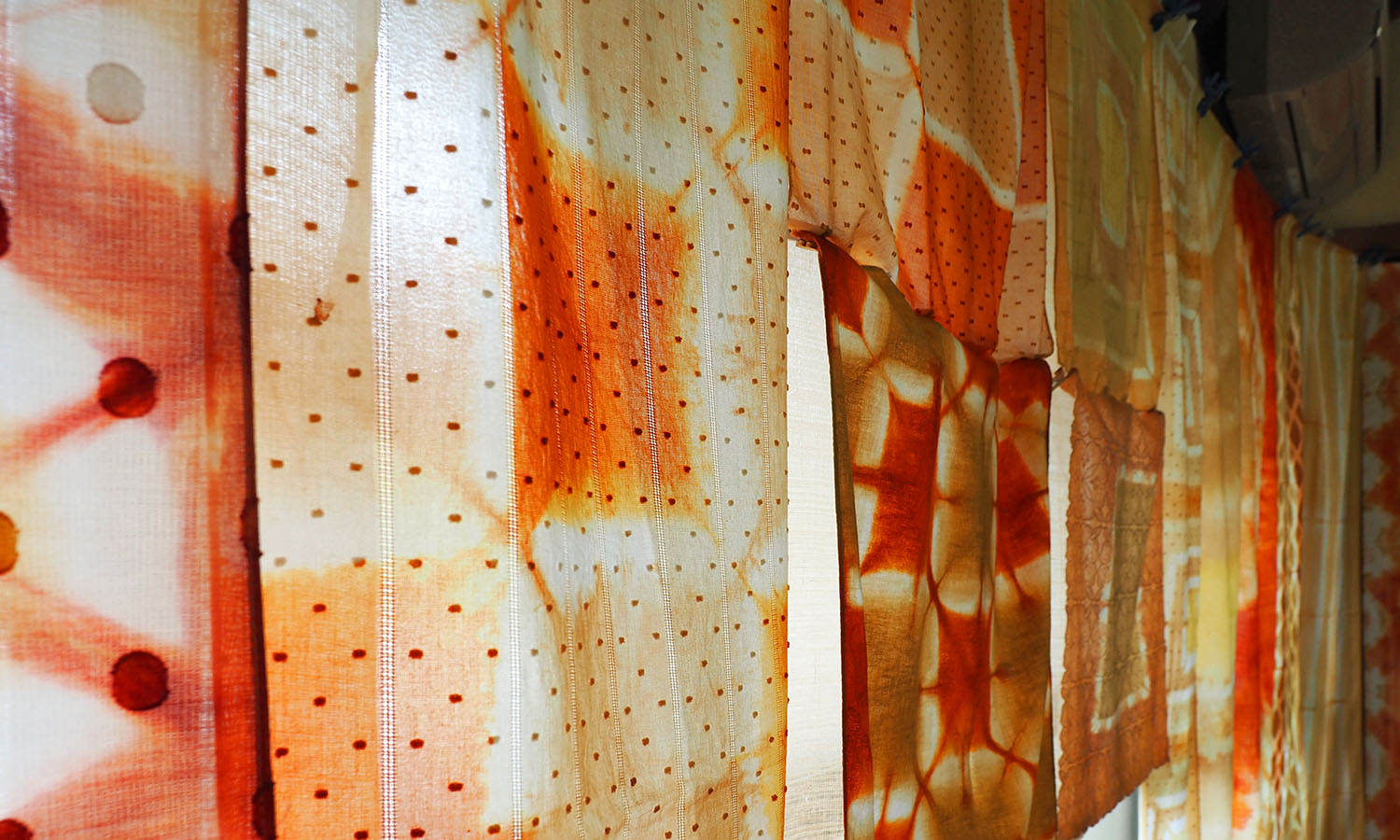
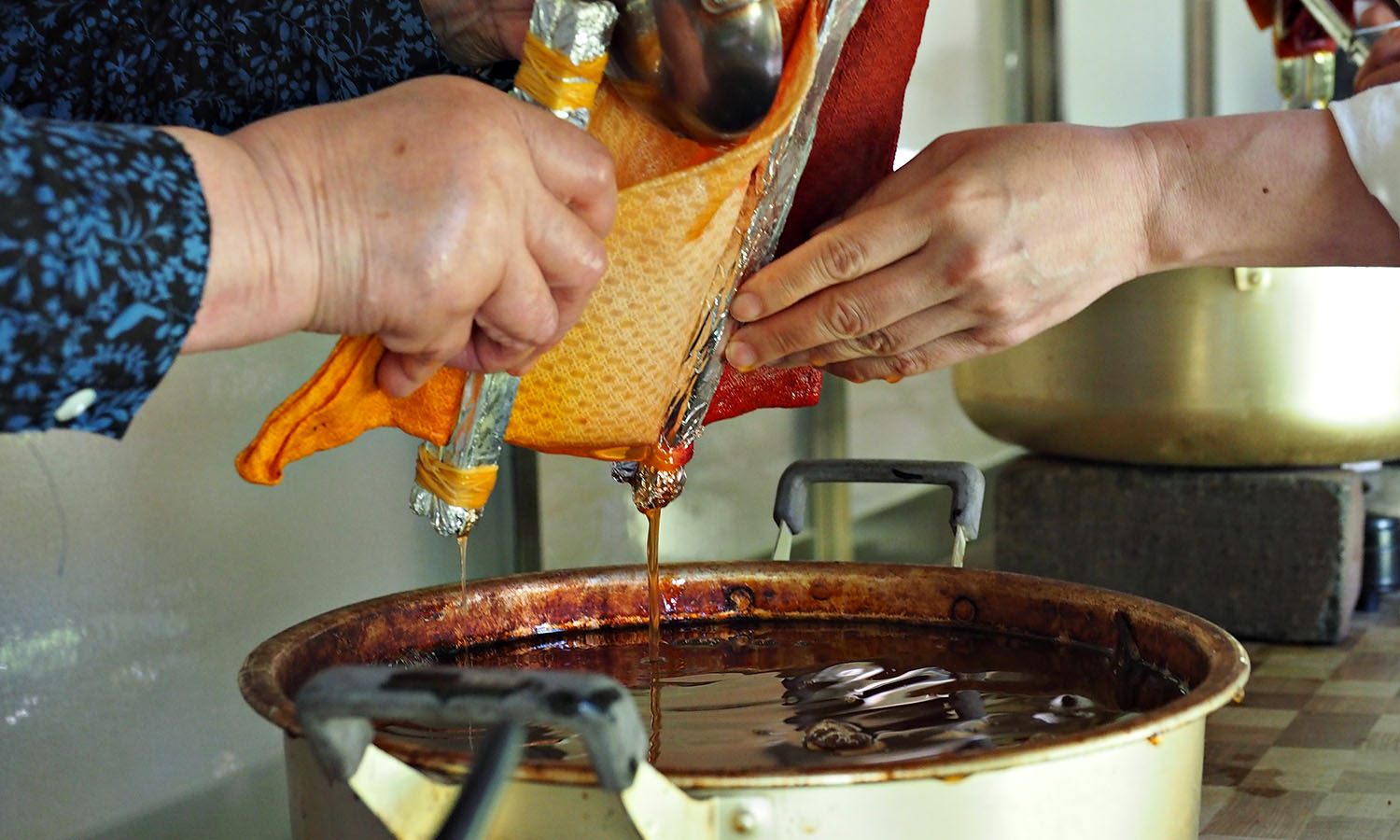
From Wakayama, we travel inland to Nara, where the energy shifts. It’s slower, more reflective. I join a small textile workshop inspired by shibori, Japan’s ancient indigo-dyeing technique that combines the patience of origami with the unpredictability of tie-dye.
With wooden blocks and rubber bands, I fold and bind a plain cloth before plunging it into vats of deep blue dye. When I finally unfurl my creation, it’s uniquely mine. Creased, saturated with indigo, and full of character. I fold it gently into my bag, a tactile souvenir of this moment.
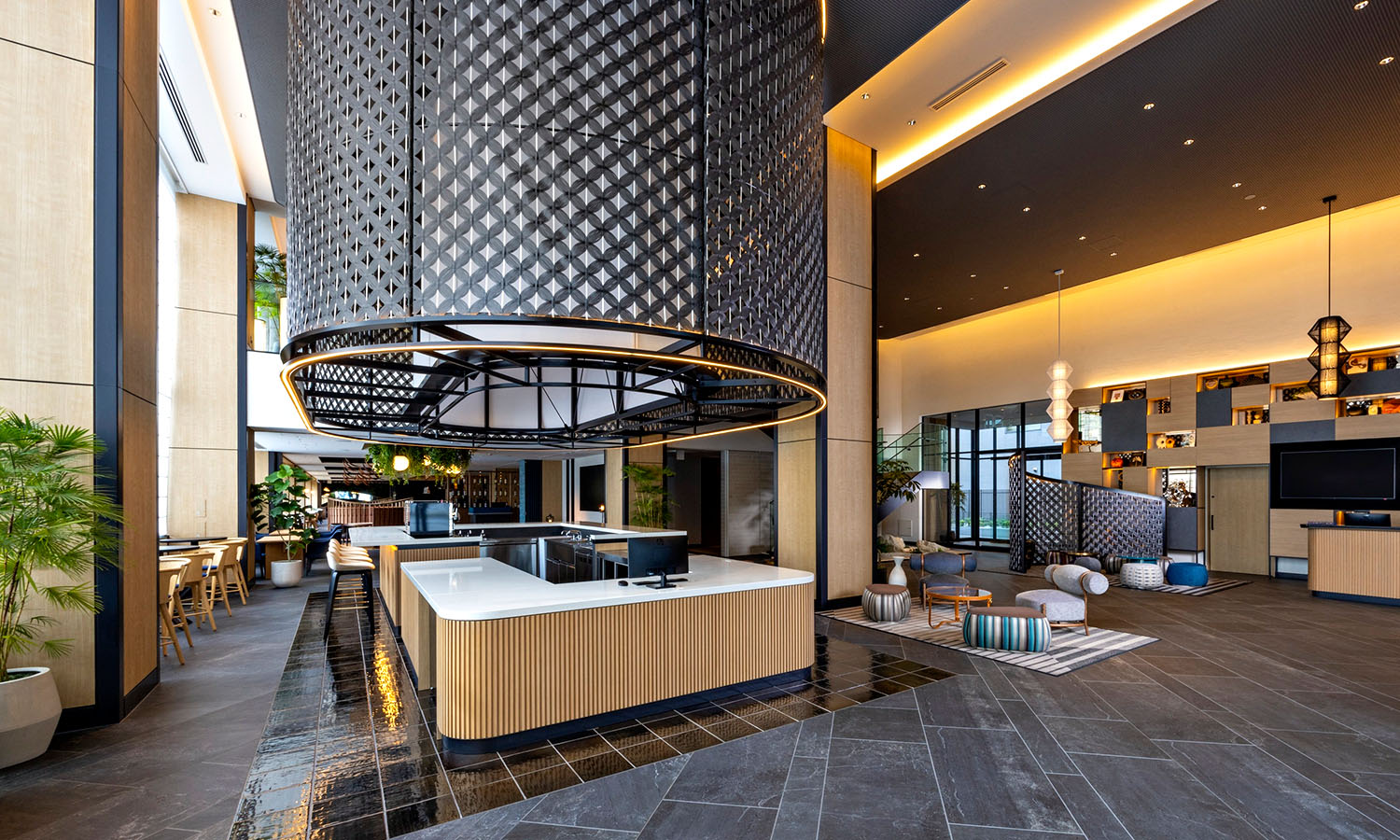
Checking into the Novotel Nara, I’m struck by how fresh it feels. Not new in a clinical way, but polished, local, grounded. The lobby is all warm tones and thoughtful design, a tribute to the city’s rich history. Upstairs, the Japanese-style rooms blend sleek tech with serene minimalism. Touchscreen mirrors double as concierge screens and the beds feel like clouds.
Over breakfast, the kind that ruins all other hotel buffets, I meet Makoto, the Hotel Manager. When I joke that the place is “boujee” and explain it means next-level luxe, he laughs and pours us both a sake. Kanpai, he says, and I happily toast.
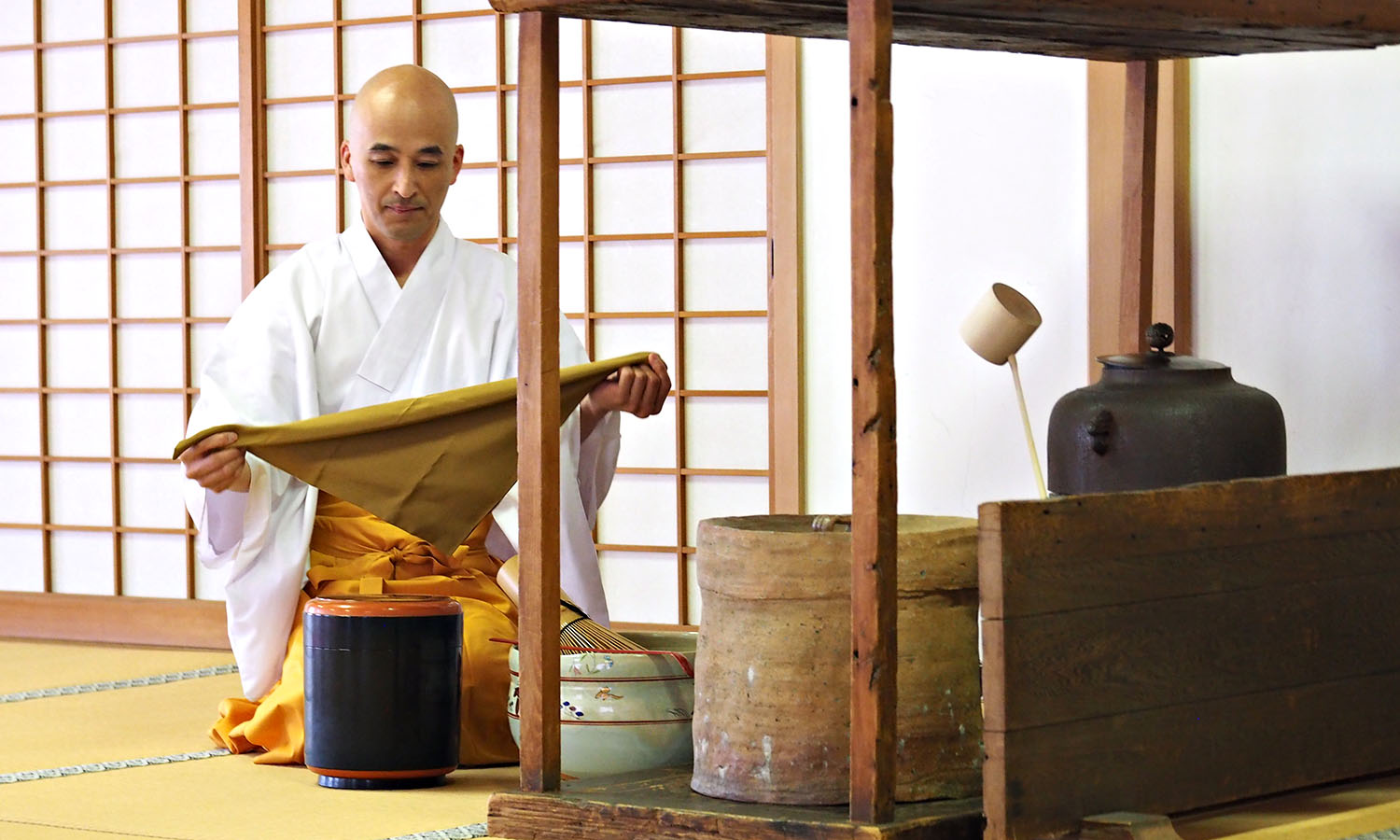
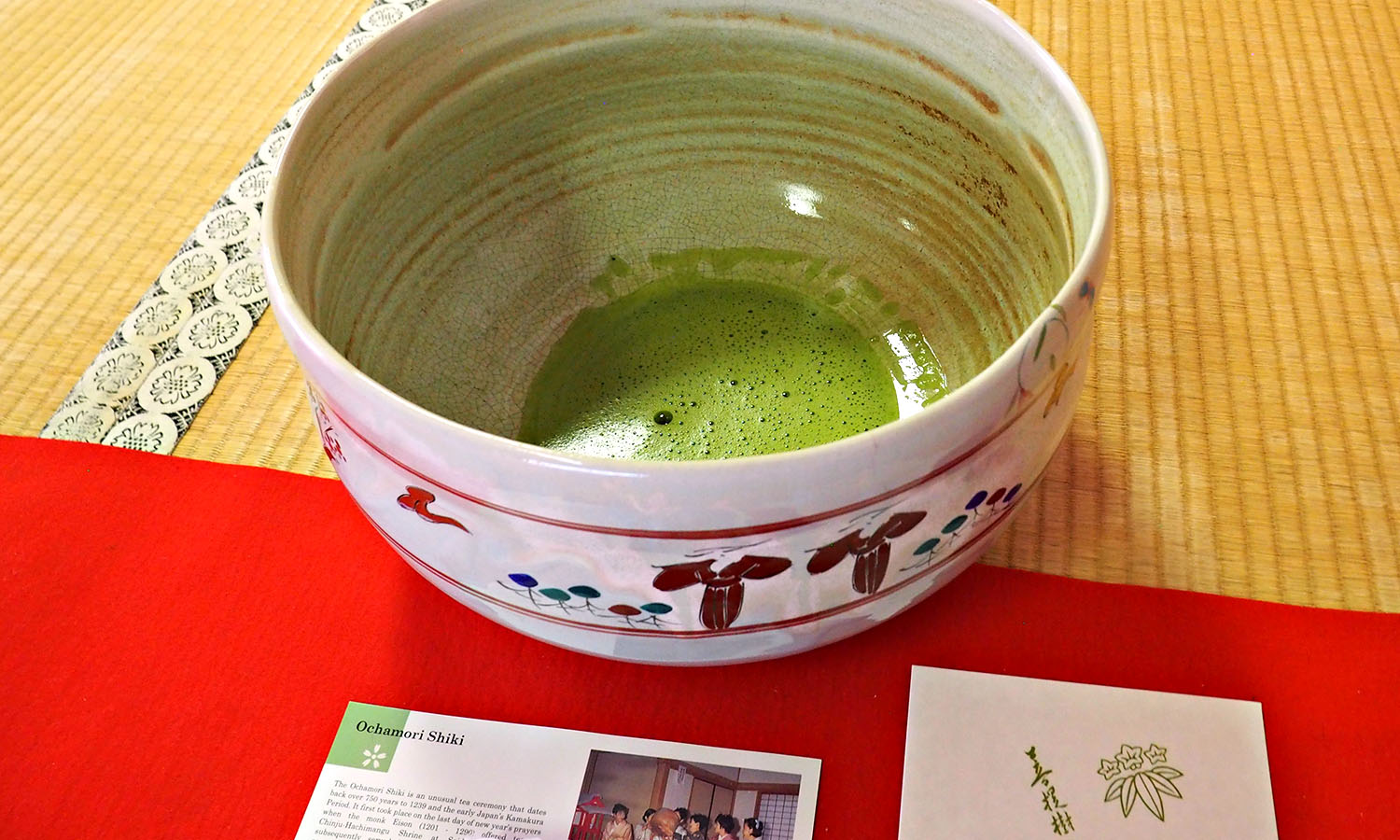
Makoto arranges something truly special. An invitation to the Great Tea Ceremony (Ochamori) at Saidaiji Temple. It only happens three times a year. Inside the temple, monks bow silently as we enter. We kneel, not just out of custom, but with real respect. The tea is thick and frothy and served in bowls the size of my head. Literally. The aim is harmony. A happy life. The ritual is grounding, reverent, and full of centuries-old grace.
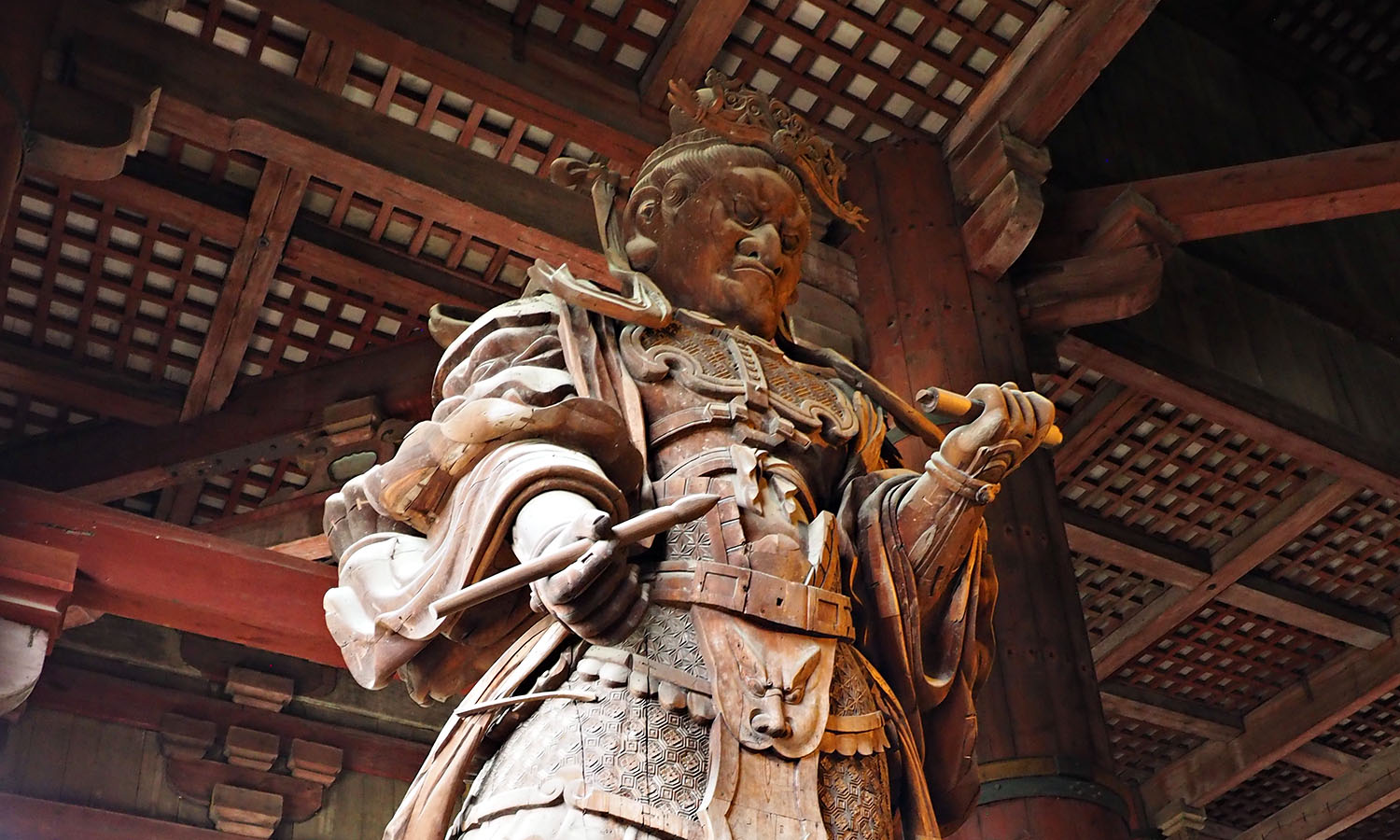
Remember the TV series Shōgun? Turns out parts of it were inspired by the temples in Nara, and stepping into Todaiji’s Great Buddha Hall makes that connection crystal clear. The scale is impossible to ignore. The original structure dates back to the 700s and even the current rebuild, from the 1200s, feels impossibly ancient.
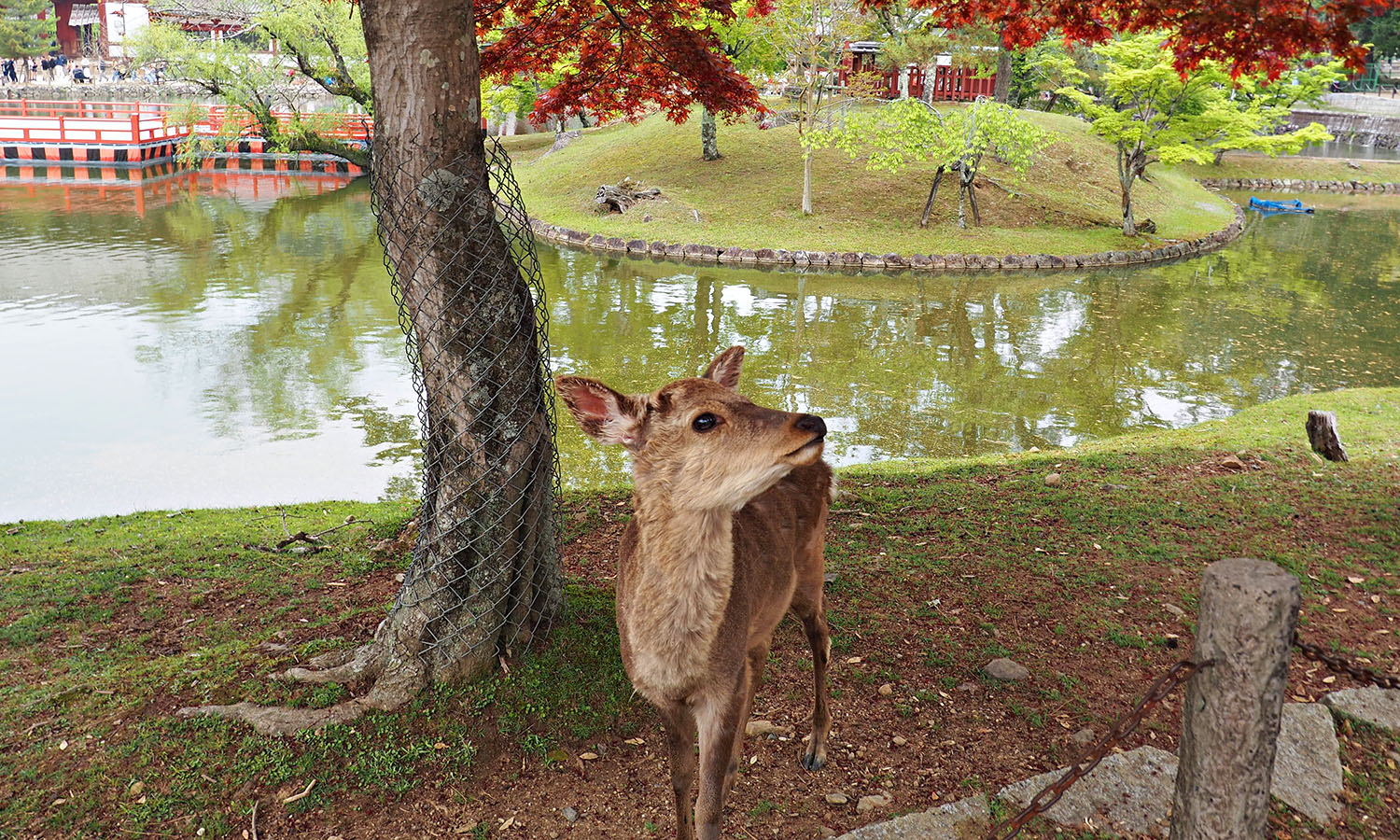
But almost more magical is the walk to the temple. We pass through a park filled with wild deer and trees glowing with crimson and amber. Despite the crowds, it feels peaceful and sacred. Nara has that effect. It was once the capital of Japan and the Emperor still visits. You can feel the weight of history in the hush between footfalls.
From ocean springs to ancient temples, fiery mushrooms to oversized tea bowls, this journey through Wakayama and Nara isn’t just a trip. It’s a complete reset. Gentle, unexpected, and rich with flavour, it stays with me.
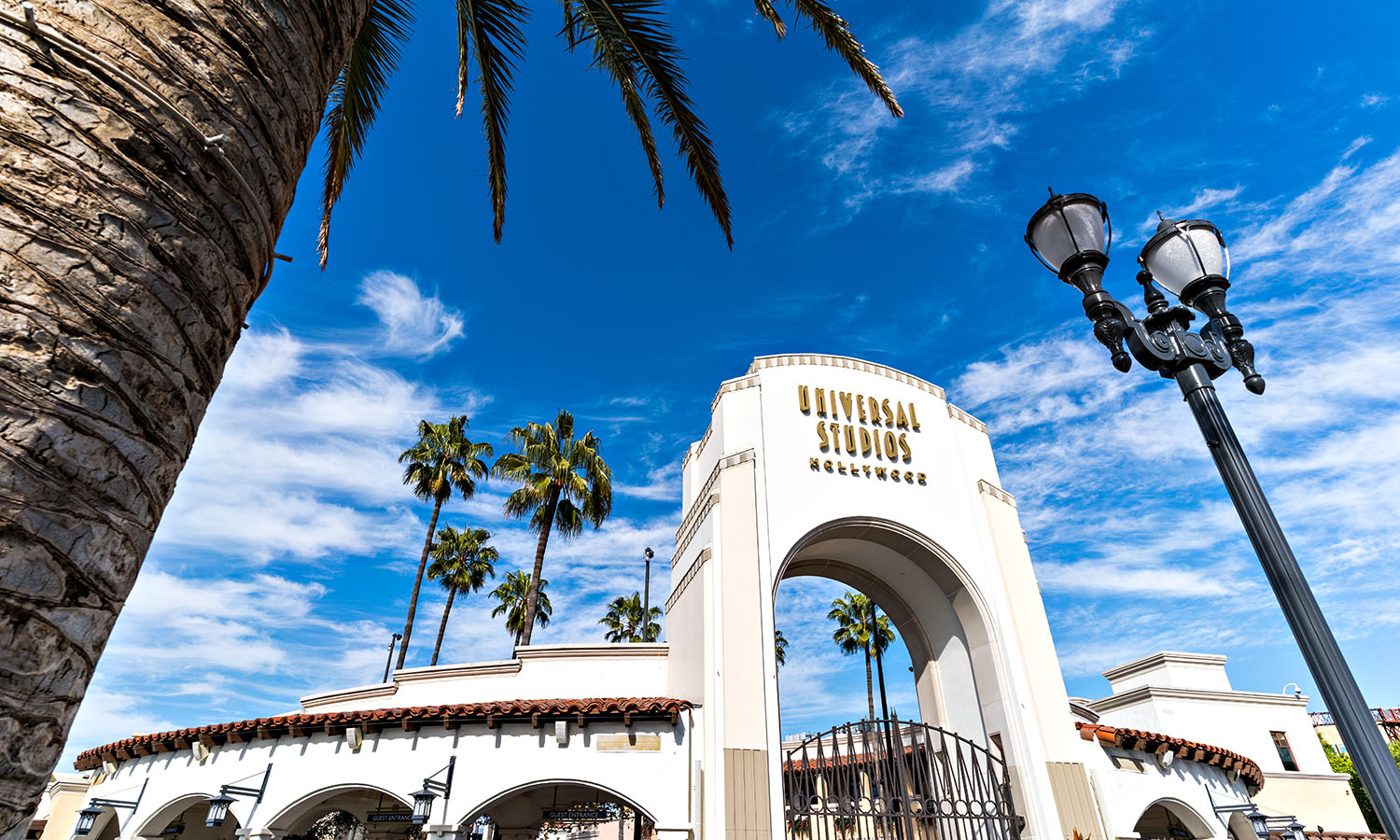
It’s a blue-sky morning in Los Angeles, and I’m standing at the gates of Universal Studios Hollywood, trying to pace my coffee intake so I don’t barf on a velociraptor before midday. Today, I’ve come for the blockbusters, not the kind you stream at home in pyjamas, but the kind you physically live through while being hurled sideways at 60km/h in a theme park that insists your chiropractor stay on speed dial.
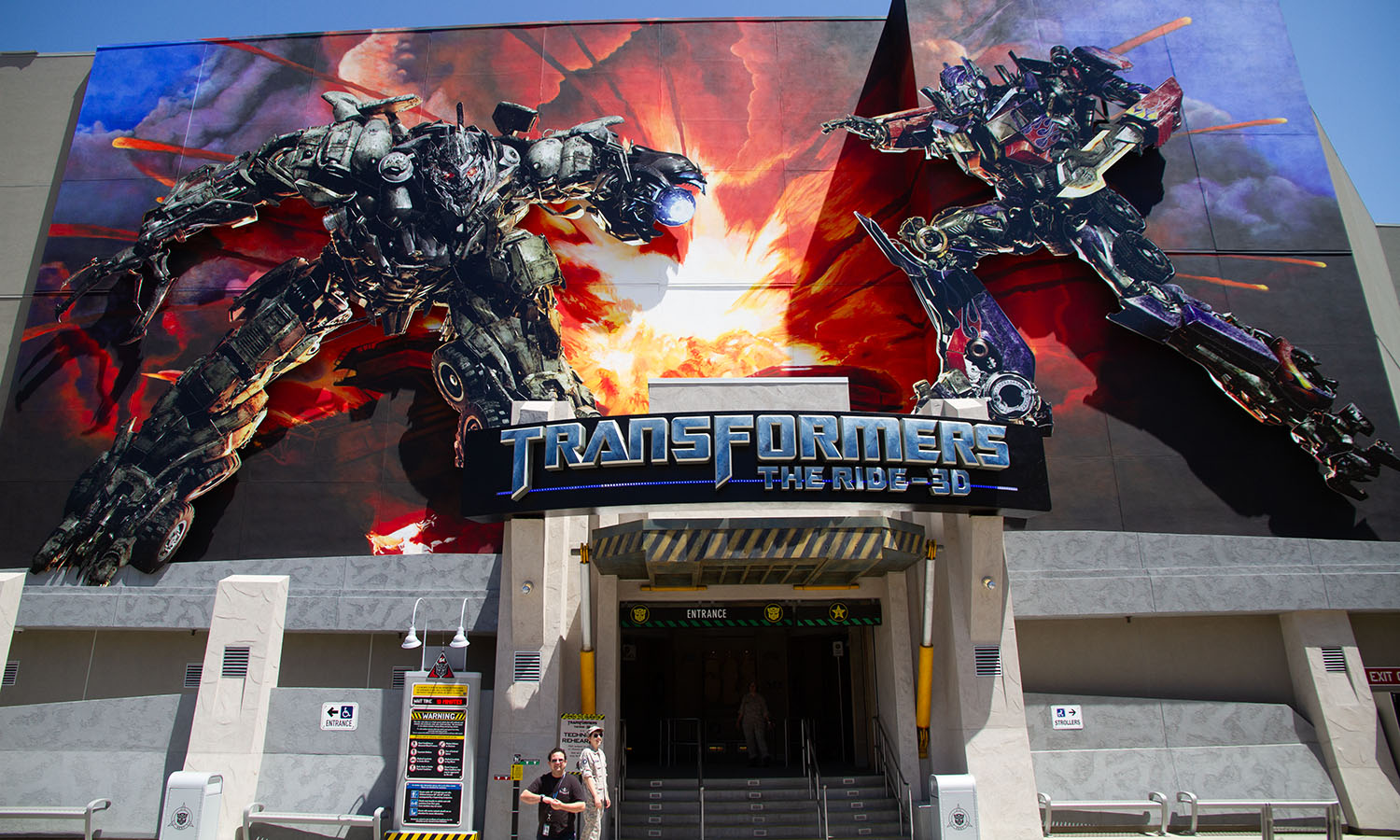
First stop: Transformers: The Ride–3D. This beast of a ride redefined theme park tech when it launched back in 2013 with a build budget of US$100 milllion and Steven Spielberg in attendance. Gone were the days of rickety rollercoasters and cardboard cut-out villains. Suddenly, we were inside the film. I’m dodging Decepticons, flying through cityscapes, and feeling flames on my face while Optimus Prime yells something vaguely inspirational in Dolby Surround. It’s hyper-real, hyper-fast and hyperventilation-inducing. It was revolutionary back then, and honestly, still is. Transformers proved rides didn’t need tracks, they just needed motion simulators, 3D glasses, and a healthy disregard for your equilibrium.
I stagger off, already questioning my life choices, but this is Universal. You don’t ease into it. You commit. You charge headfirst into cinematic chaos like a stunt double with something to prove.
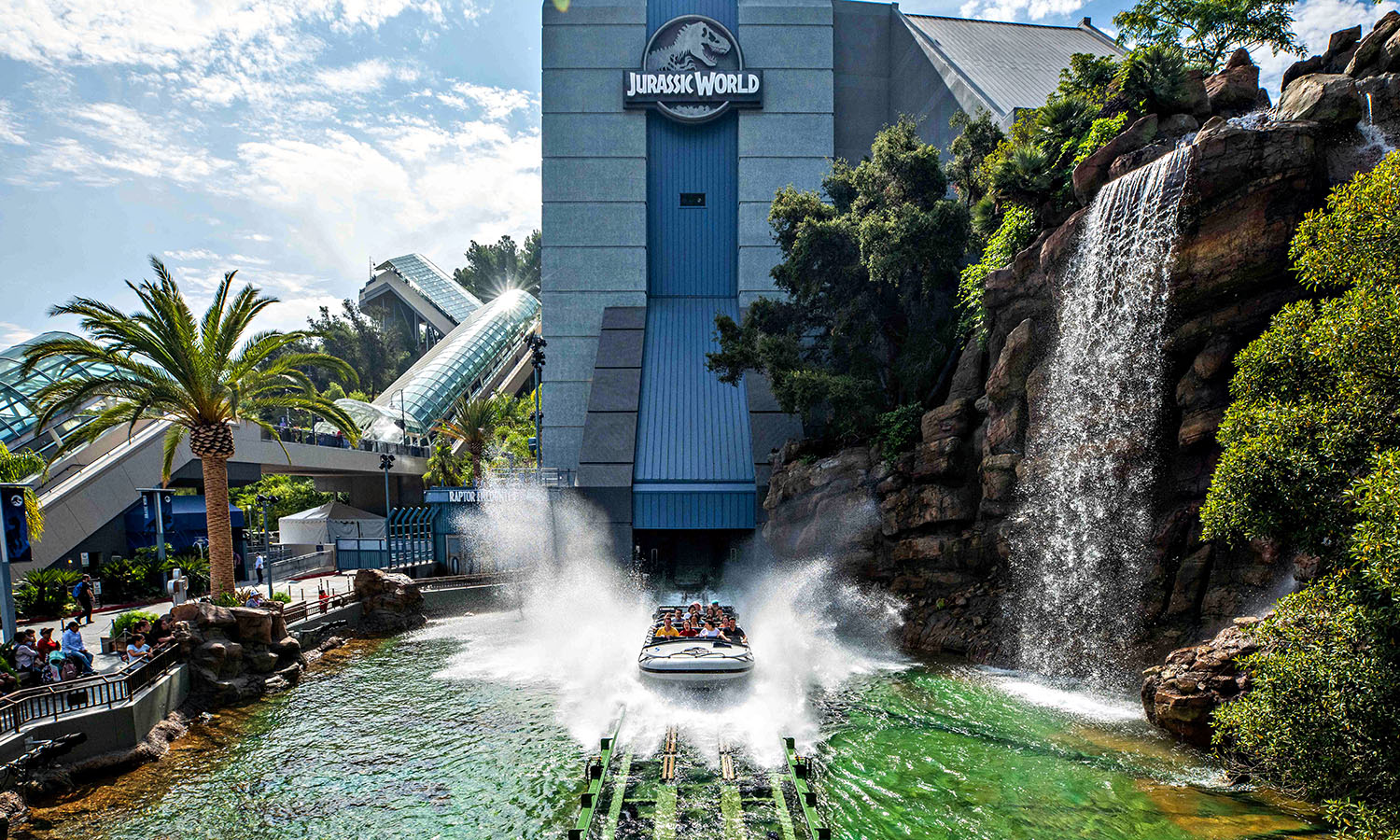
Next, I make a beeline for Jurassic World—The Ride, which has evolved from its original Jurassic Park incarnation like a raptor discovering Instagram filters. The bones are the same: you’re in a boat, you drift through foliage, and things go dramatically wrong. But now, it’s sleeker, meaner and more immersive. The screen effects are seamless. A mosasaurus tries to eat me through a digital aquarium. Velociraptors snarl with upgraded teeth. And that final T-Rex drop? It’s bigger. It’s wetter. It’s a full-blown Jurassic panic attack with a soundtrack.
I emerge completely soaked and totally alive, which is more than I can say for the churro I accidentally sat on.
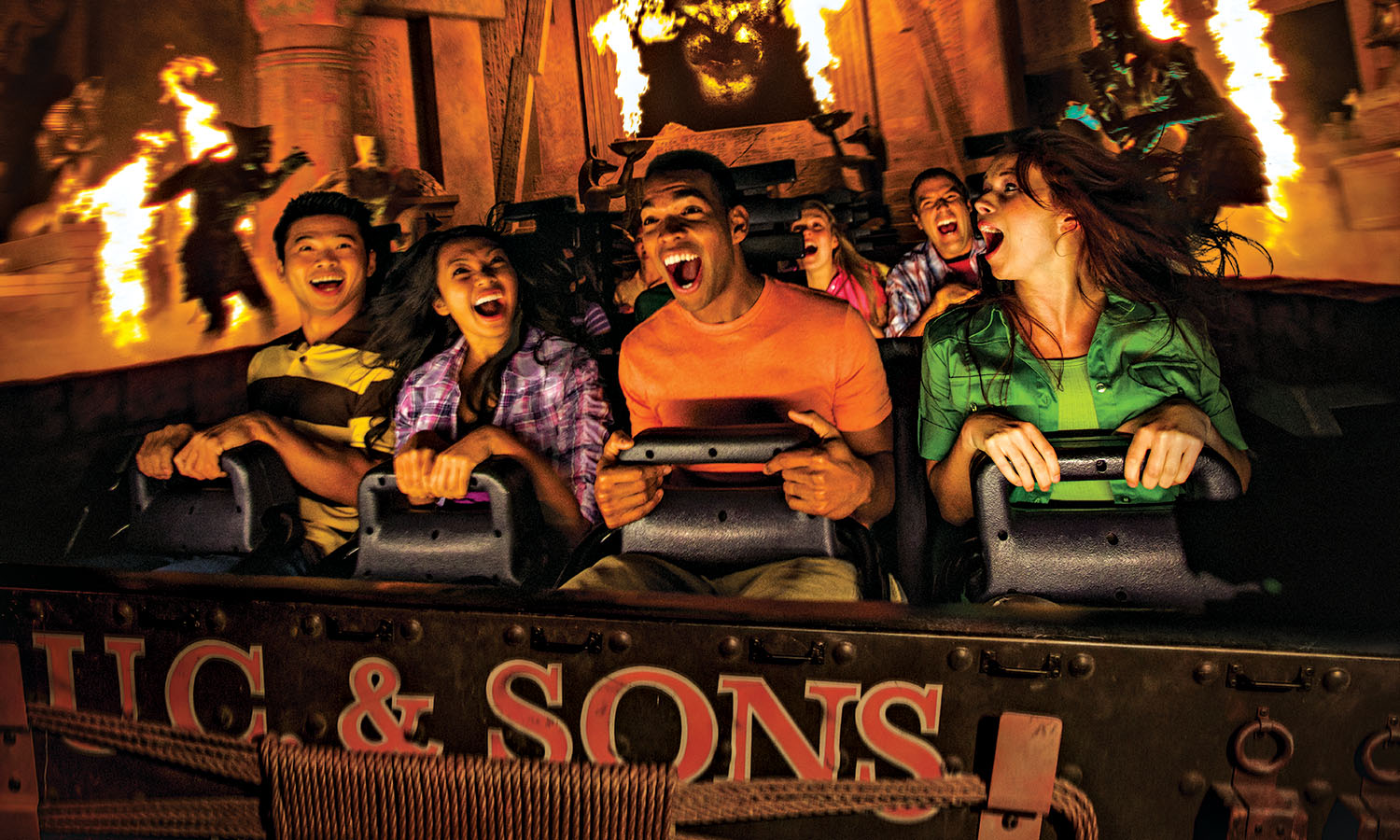
Now, once upon a time, Revenge of the Mummy was the crown jewel of Universal thrills. It had fireballs, backward launches, and an actual curse, at least that’s what my neck told me after whiplashing into 2004. But here’s the kicker: There’s a new kid coming to the lot. Fast & Furious: Hollywood Drift is Universal’s first-ever, high-speed outdoor roller coaster. And it’s coming in 2026.
Soon, as well as screaming at Mummy’s hanging from the ceiling, you’ll also be burning rubber with Dom Toretto and the family and while I love that curse-flinging lunatic that is Revenge of the Mummy, another part of me cannot wait to Tokyo Drift my face off.
To prepare for this spiritual transition, I hop on the Studio Tour, the OG experience, the one that’s been dragging tourists through movie backlots since the dinosaurs were in beta testing. But even this staple has had a glow-up. Gone are the days of a bored guide mumbling facts about soundstages while you squint at a beige warehouse. The modern Studio Tour is a full-blown hybrid of nostalgia and high-tech spectacle.
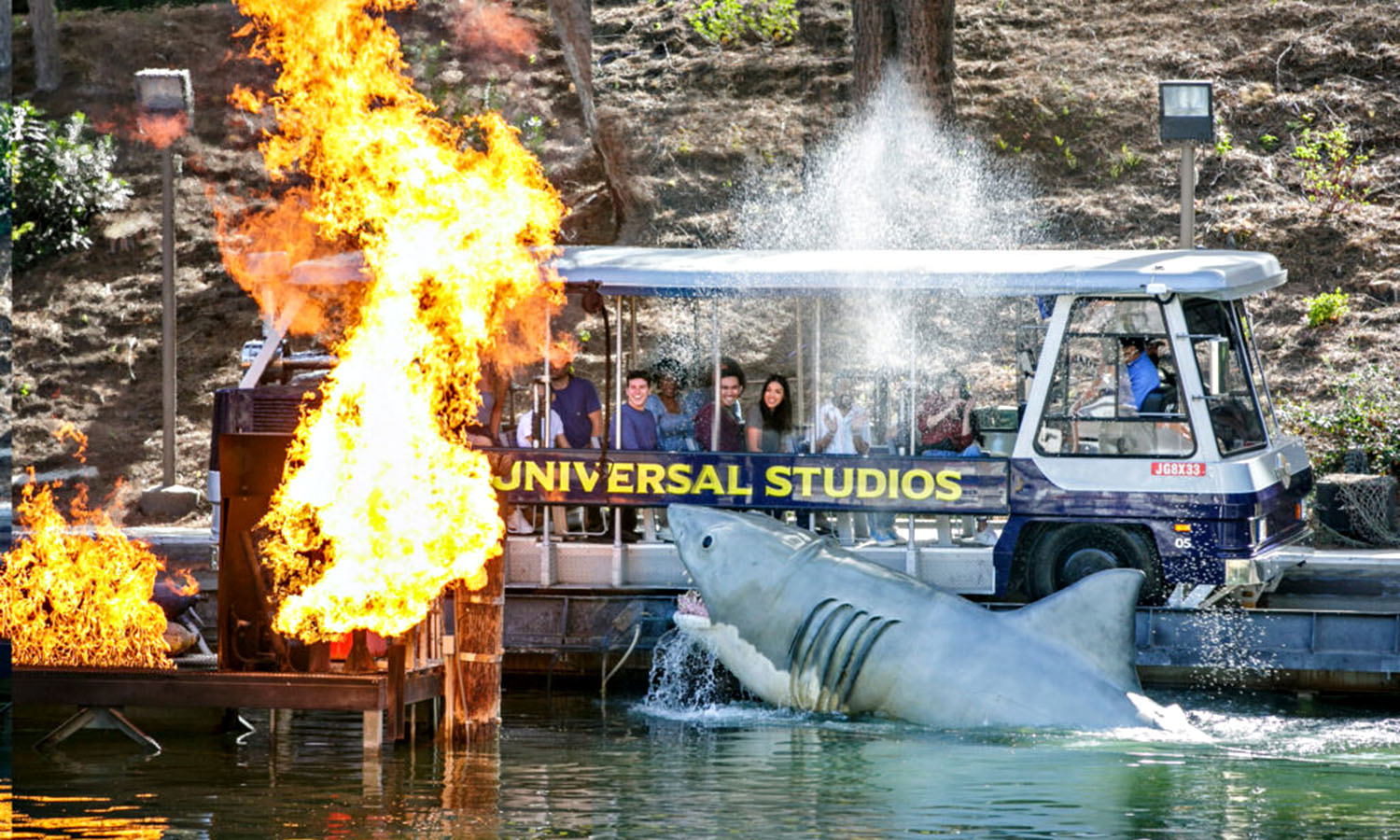
I hop aboard the tram and we roll through legendary sets. Yes, Norman Bates is still creepily stalking the Psycho motel (in real life I might add, now there’s an acting gig), and yes, “Bruce” the shark from Jaws still pops out with all the enthusiasm of a pensioner at bingo, but now we’re also treated to immersive 3D sequences, high-def projections and massive surround effects that make you forget you’re in a glorified golf cart.
The most outrageous addition? The Fast & Furious: Supercharged finale. Suddenly the tram isn’t a tram, it’s a street racer in a car chase through downtown LA. The vehicle shakes, the screens scream, and The Rock tells me I’m part of his team now. I didn’t train for this. I just wanted to see where Back to the Future was filmed. But I lean in. I scream. I believe. This is the Studio Tour 2.0, heritage with horsepower.
By now, my legs are jelly, my clothes smell vaguely of fake smoke, and I’m convinced Universal has figured out how to tap directly into our fight-or-flight response and charge admission for it.
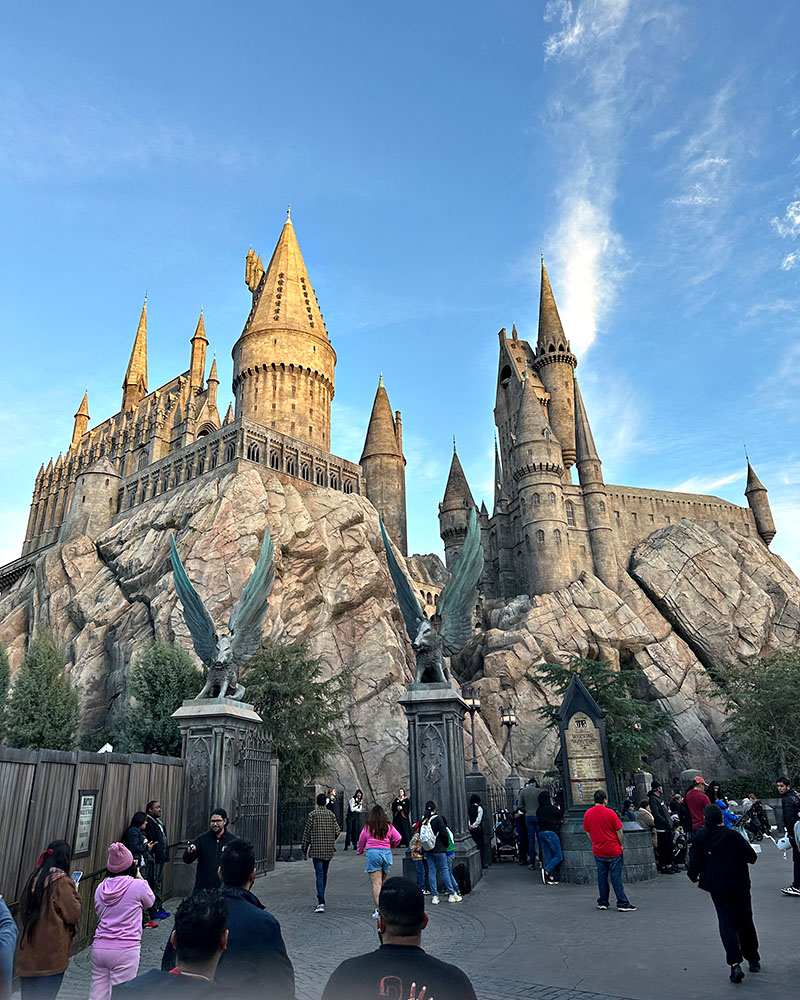
As I lurch past a life-sized Minion and a teenager dressed like Mario Kart, I realise this is what keeps Universal Studios relevant, relentless reinvention. They don’t just refresh, they replace, rebuild, and reboot like they’ve got a Hollywood scriptwriter for the entire park. In 2016, they waved a wand and conjured up The Wizarding World of Harry Potter, complete with Butterbeer, Hogwarts Castle, and a wand shop so immersive you forget it’s just a broom closet with good lighting. And in 2023, they hit the nostalgia jackpot again with Super Nintendo World, where you can literally punch question blocks, race Mario-style, and queue up in a giant green pipe. It’s like stepping into your Game Boy after a week-long bender.
Rides are no longer rides. They’re multi-sensory assaults disguised as entertainment.
And while it’s sad to say goodbye to the old classics, you have to respect the hustle. Universal doesn’t rest on nostalgia. It turbocharges it. Adds fire. Throws you into the backseat of a Charger doing 200 down a CGI freeway.
I leave the park exhausted, exhilarated, and at least 17% more likely to believe I could outrun a dinosaur or pilot a Transformer. I’ve dodged Decepticons, survived a mosasaur attack, got fast & furiously flung through LA traffic, and eased my nerves with a margarita. Yep, they serve booze. And honestly? I’d do it all again tomorrow.
Two minutes to open, and we saw the silhouette of the queue outside.
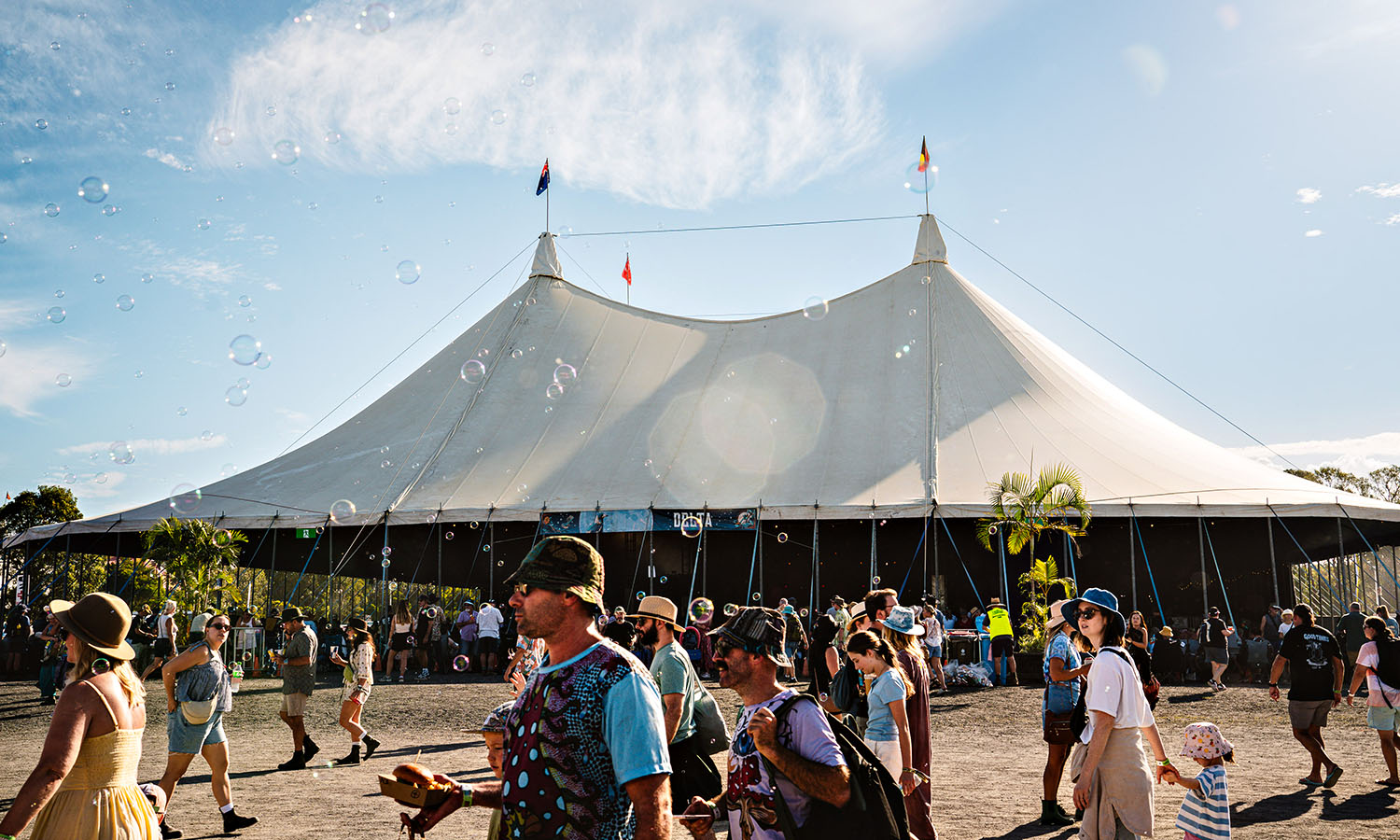
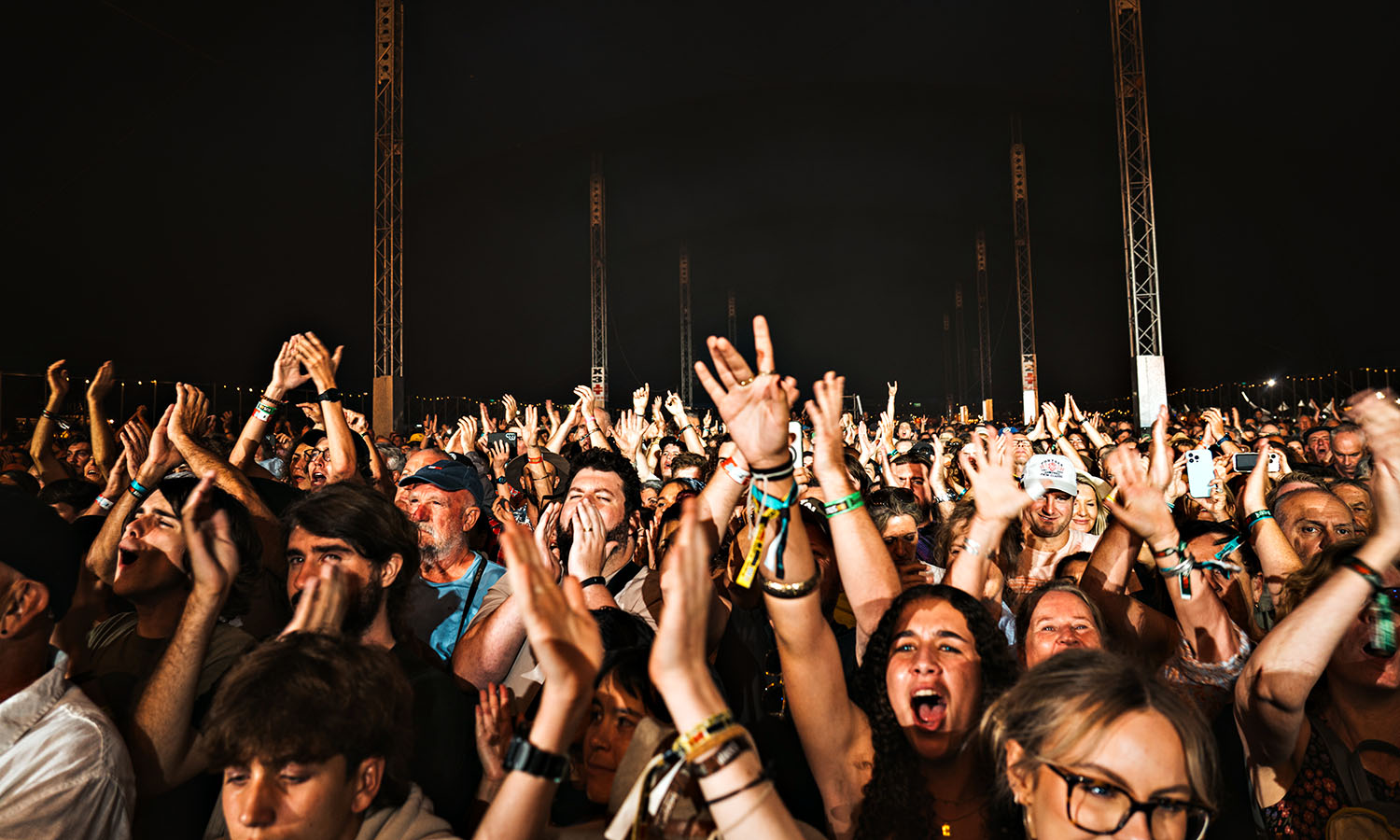
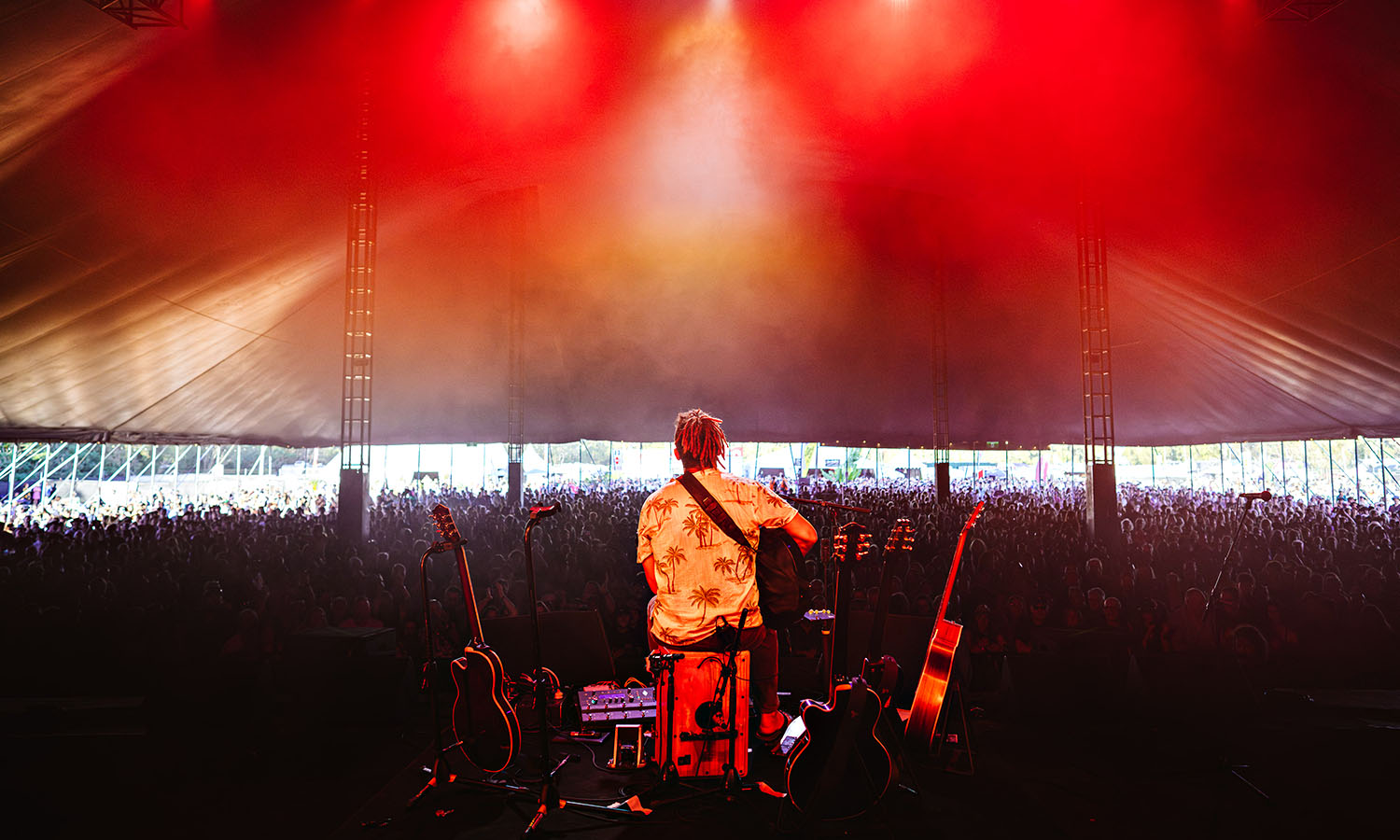
The staff were all smiles, but there’s a hum in the air: Is this the calm before the storm? Bluesfest 2025, the gates opened to a crowd that absolutely dwarfed last year’s. The fear of this being the last ever Bluesfest had attracted the third-largest crowd in the festival’s history: 109,000 patrons strong. The sun is blazing down, and the sky a perfect Byron blue. We’re back. And it’s big!
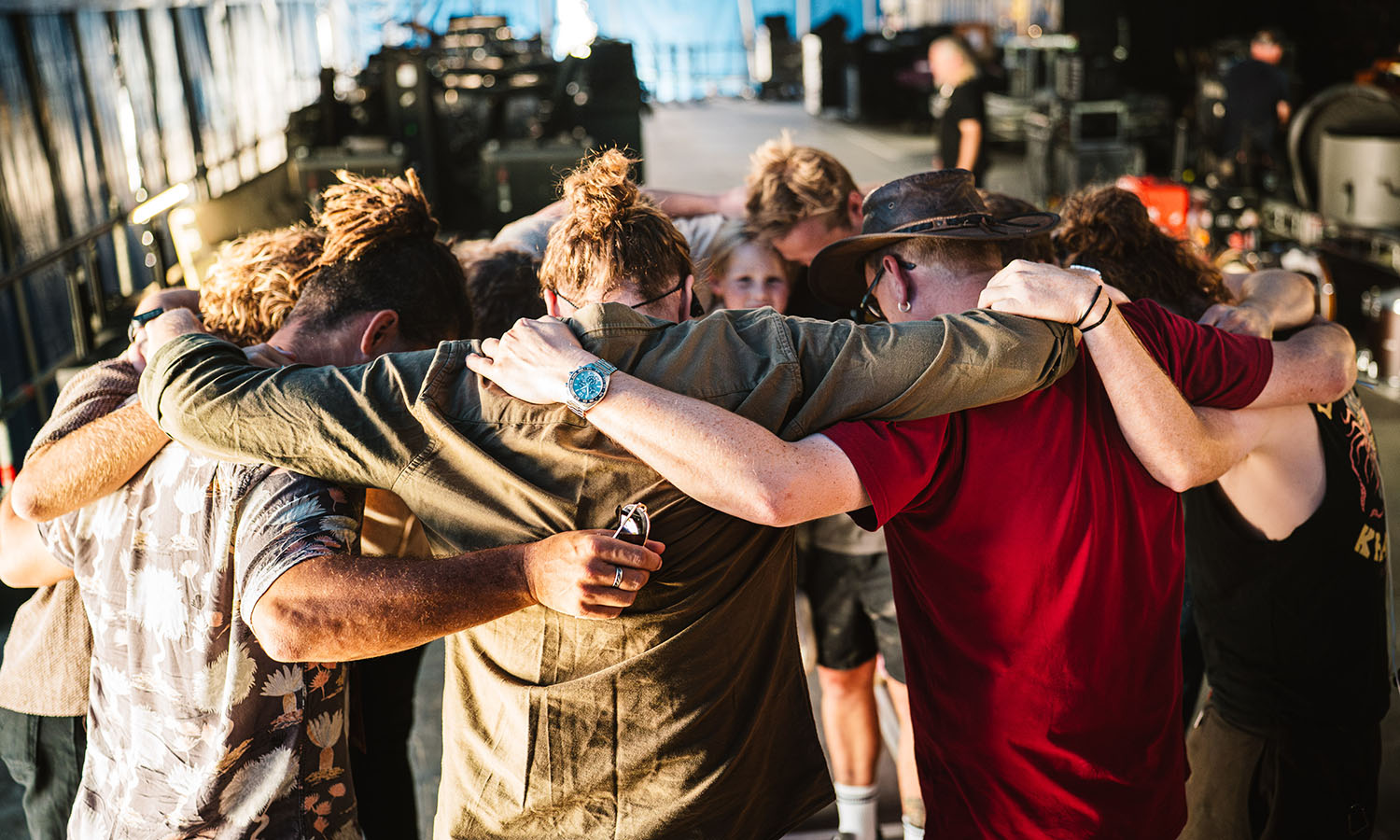
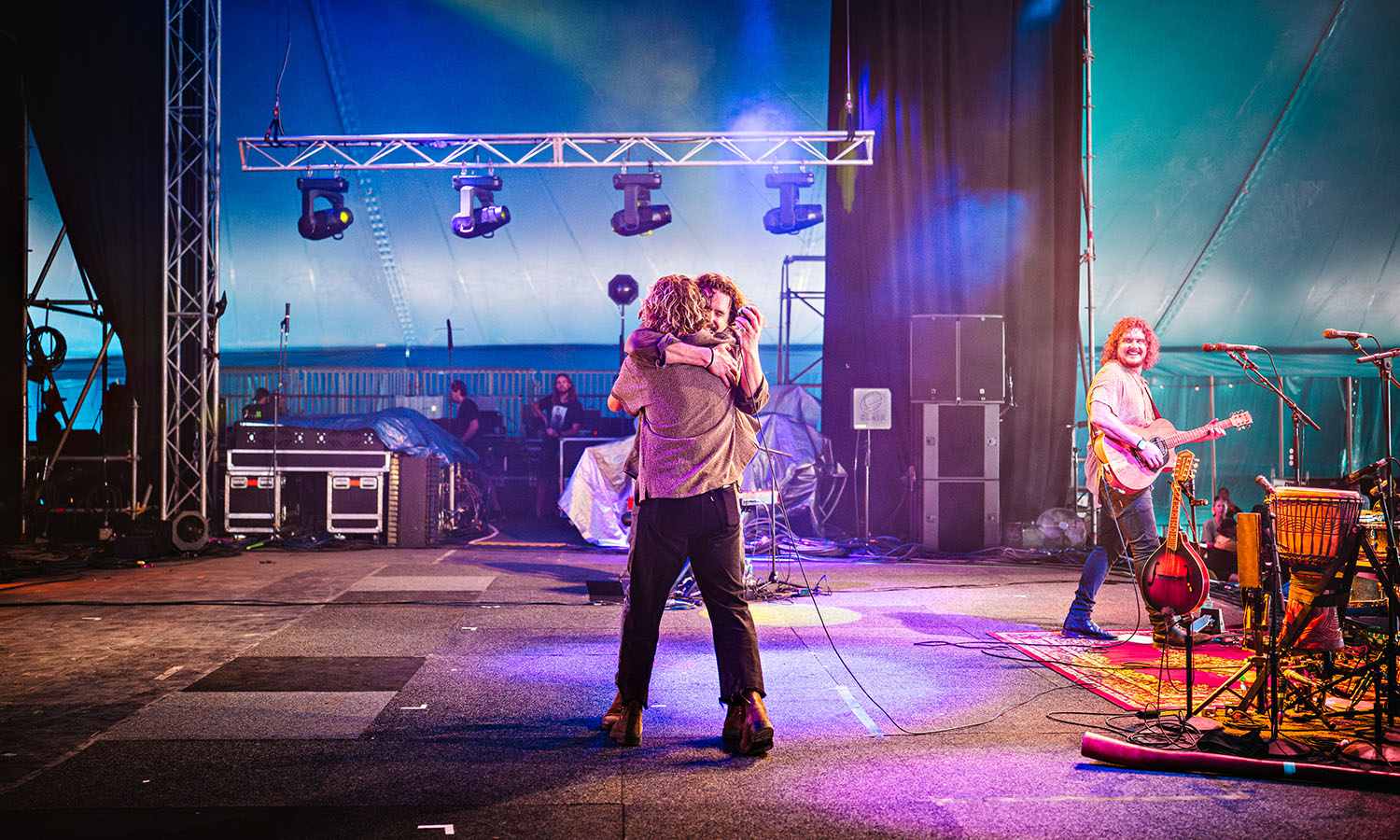
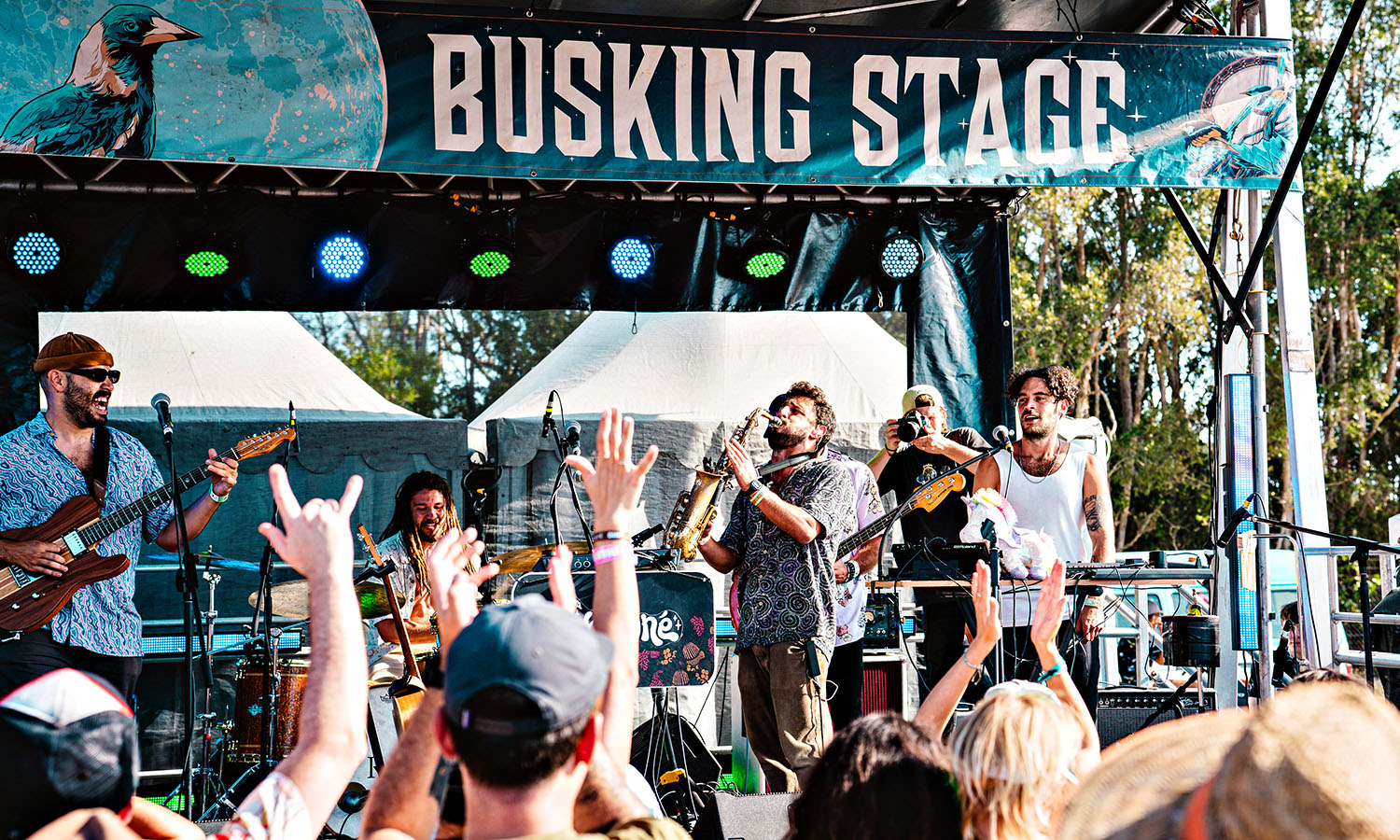
This year, we had the joy of backstage access, and we saw that the buzz was just as much in the artists as it was in the crowd. We witnessed musos cheering each other on from side stage, jumping in for surprise collaborations, and sticking around long after each set just to share the moment. There’s something contagious about that kind of joy, it’s the kind that ripples out from the stage and hits every person in the audience. You can tell when a musician is having an absolute ball on stage.
Almost every Aussie artist shared a personal Bluesfest story; the festival has always been more than just a lineup. It’s a reunion. A celebration. A chance for artists, fans, crews, and families to come together and be part of something bigger than themselves.
Kim Churchill was introduced as the “golden child” of Bluesfest. He first debuted on the busking stage in 2009, and now belts it out to a full crowd on one of the main stages. We saw him everywhere: side of stage at other sets, hopping in to play with Ash Grunwald, vibing with The Beards (big bushy fake beard included), and joining the Pierce Brothers’ incredible set. It became a thread running through the entire weekend. As with so many other musicians, the weekend wasn’t just about playing their own set, it was about coming together and celebrating each other’s music: “Bluesfest has always been my happy place. My musical home. And it’s all the little moments that make it that. All the in between bits of absolute life affirming wholesomeness.”
John Butler told the story of playing Bluesfest twenty years ago. The tent was barely a quarter full, “Then the rain brought everyone in… It was like petrol and fire, and we just exploded!” A crew formed around him after that set and became a family that still rolls with him to this day.
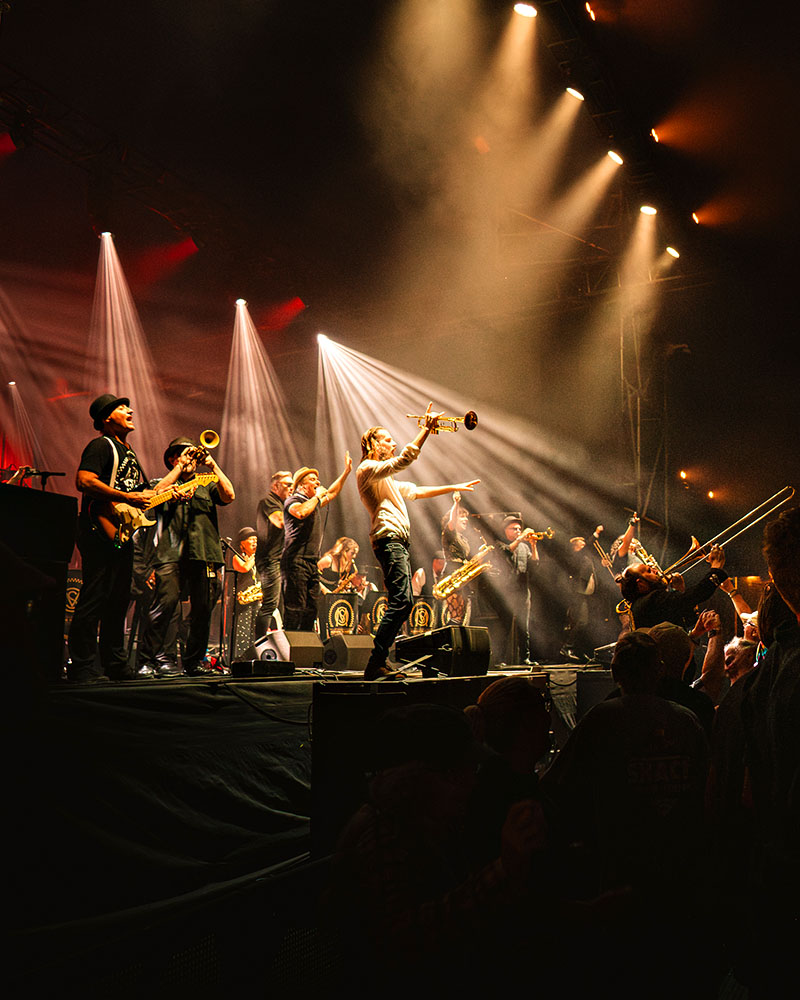
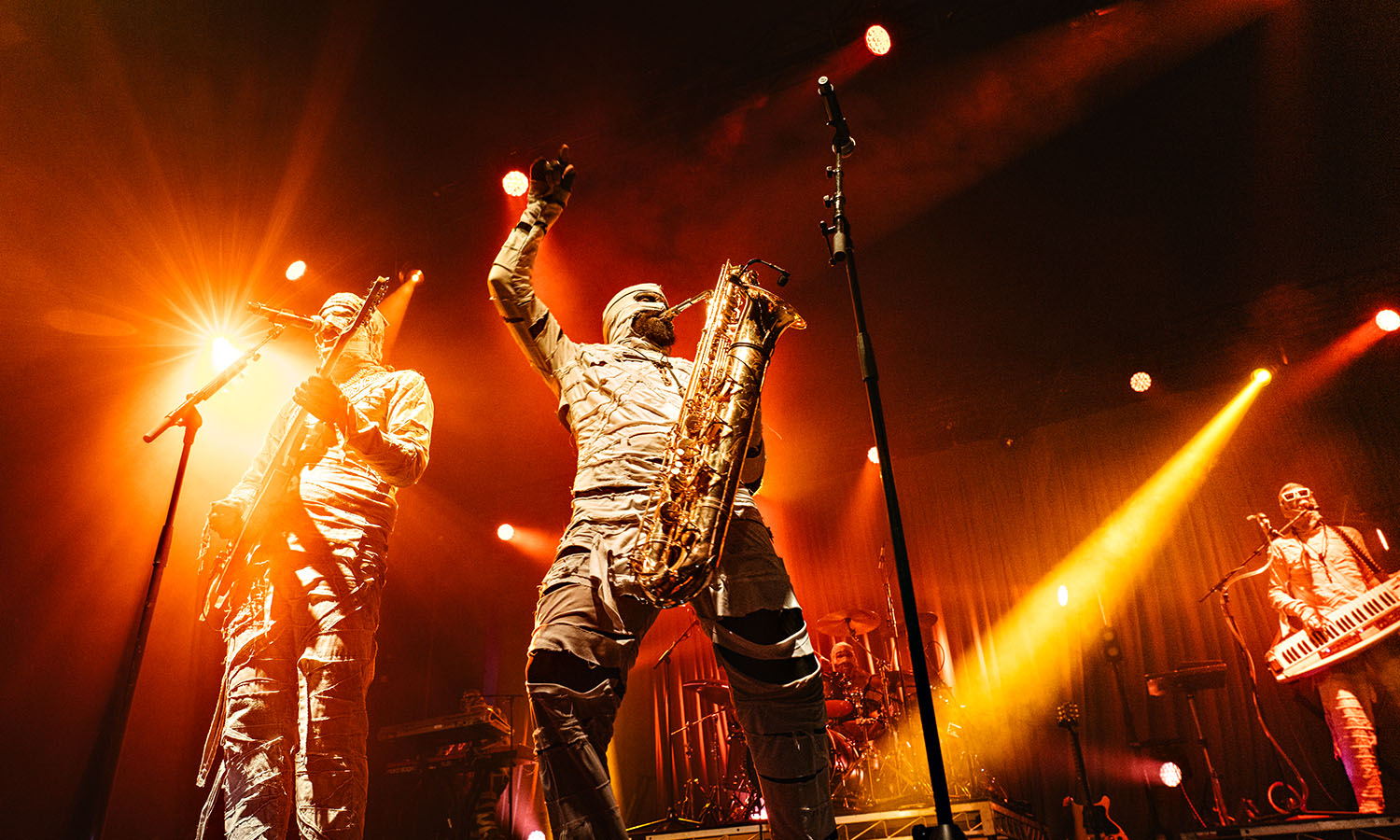
“Music runs through my veins,” said Missy Higgins – her third Bluesfest performance. When Melbourne Ska Orchestra hit the stage, they reminded us that this festival kickstarted their career too, landing them their first-ever record deal. The Cat Empire launched into How to Explain and reminded us why this festival still matters. “Music is the language of us all,” they sang, and the crowd screamed it back. Other highlights included the massive, thousands-strong singalong to Toto’s Africa, Chaka Khan absolutely belting it like it’s 1978, Xavier Rudd grounding us all, before making us jump up and down to Follow The Sun.
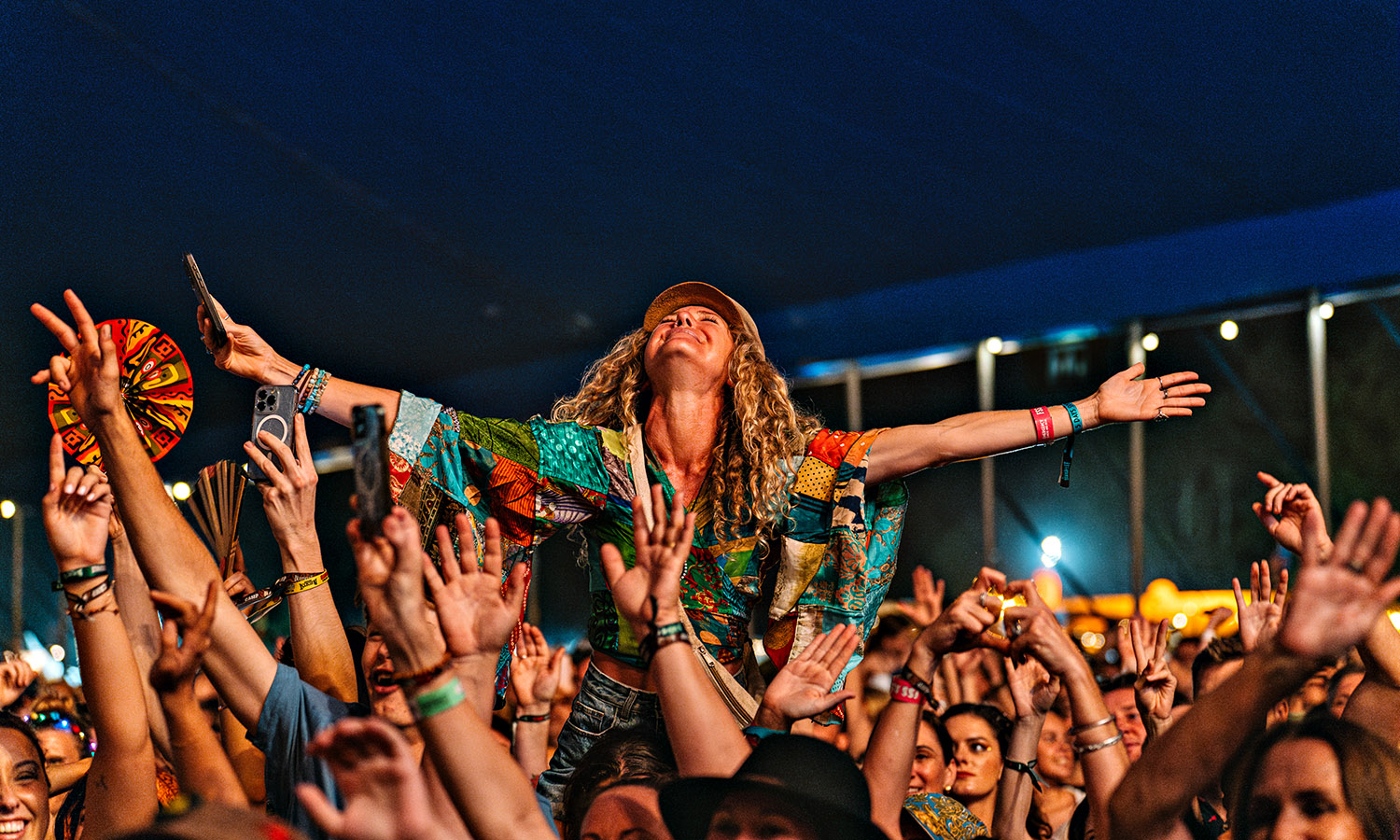
Because music really is the language of us all. It’s connection. Especially at a time when we’re all feeling a little disconnected. John Butler, Nicky Bomba, and Xavier Rudd all shared this message. In times like this, it’s important that we find common ground, that we dance and sing together, that we celebrate the good parts of humanity. Live music isn’t just entertainment. It’s culture. It’s connection. It’s sticky floors and shared anthems. It’s strangers hugging in the dark because that one track just hit. It’s a rite of passage for teenagers, a returning pilgrimage for adults, and a heartbeat for regional towns that host these moments of collective joy.
It’s been a rough few years for the Australian live music scene. Fires, floods, and the pandemic delivered blow after blow, cancelling show after show. More recently, its economic woes have quietly and cruelly crushed festivals. Longstanding events, pillars of the Aussie music scene, are falling over like dominoes in a country known for its music and easy-going lifestyle.
These events remind us that we’re not alone. It shakes something loose in us and breaks the routine. Music festivals give us a reason to drive ten hours, to camp in the rain, to throw our arms around strangers and scream the lyrics until we lose our voices, and to volunteer days of work just to dance in front of the front row when Hilltop Hoods perform The Nosebleed Section.
So, here’s to the venues still opening their doors. To the events rolling the dice, the staff and vollies holding it all together, and to the artists playing their guts out. We need live music now more than ever. And thank goodness: Bluesfest isn’t done yet.
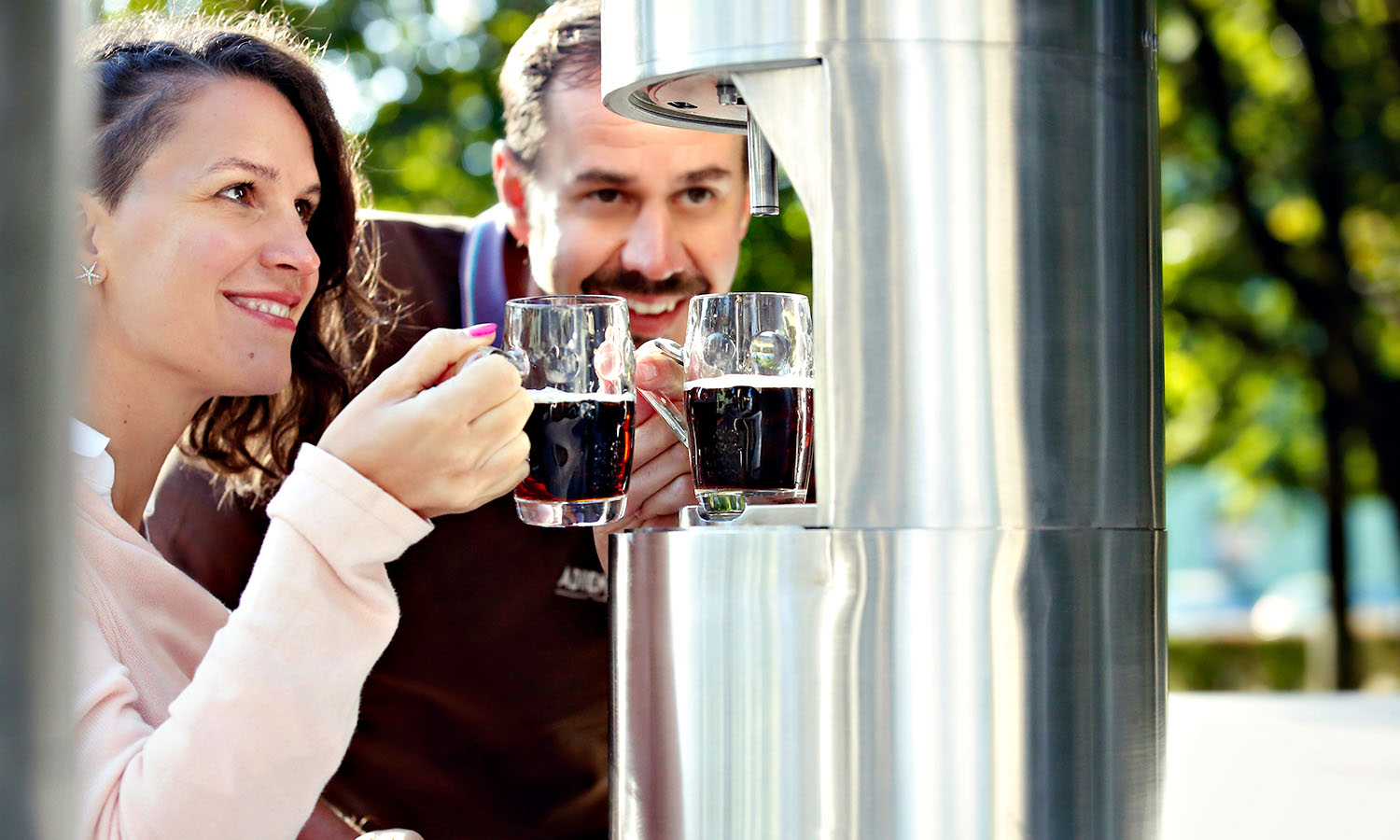
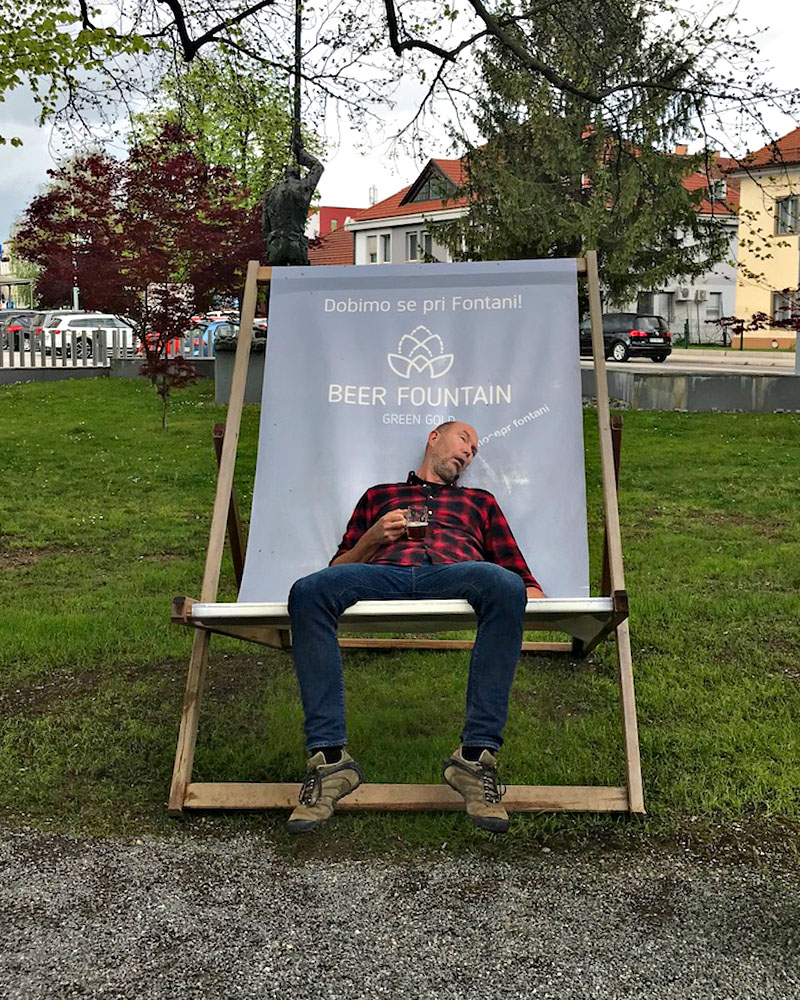
I’m standing in the middle of a Slovenian town, holding a sleek little glass with a microchip in it, and I’ve just poured myself a beer, from a fountain.
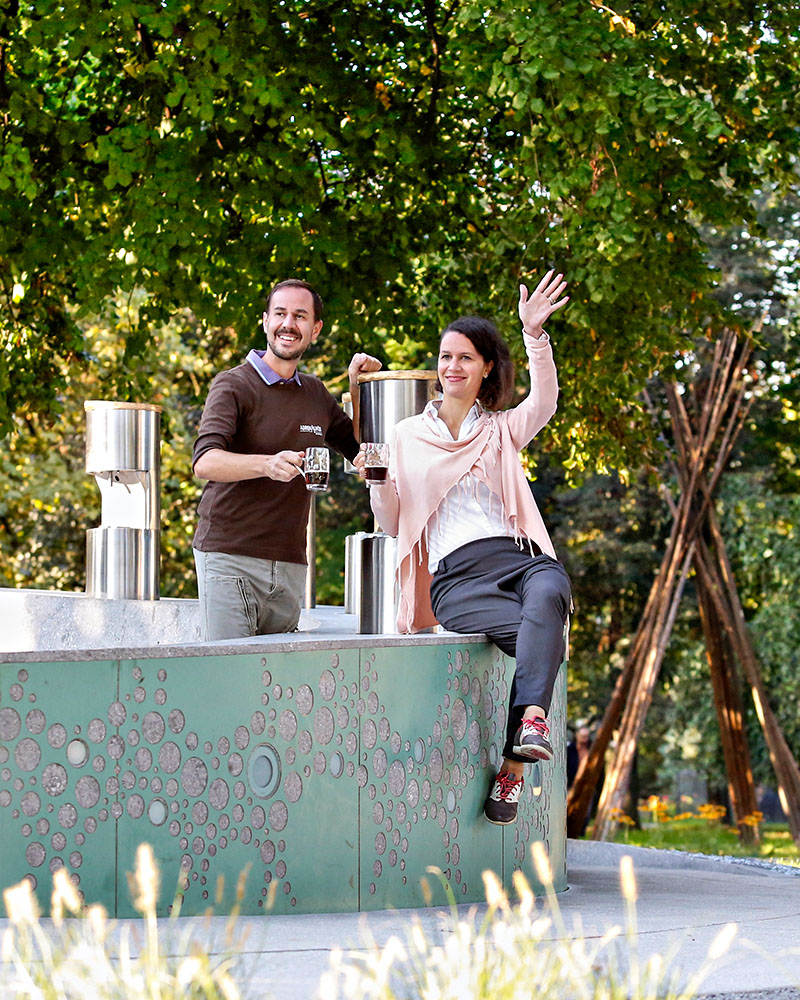
Let me repeat that slowly for those at the back still sipping lukewarm lager from a can: A beer fountain. In a public park. Flowing not with water, but with glorious, hoppy, golden nectar straight from the taps of local Slovenian breweries. Žalec, you beautiful, boozy genius.
Why every town on Earth hasn’t adopted this idea is beyond me. Libraries? Nice. Museums? Great. But a communal beer-dispensing installation in the local park? Now that’s culture.
They call it the Green Gold Beer Fountain, which sounds like something a leprechaun might bathe in, but it’s actually a tribute to the hops that grow in abundance in this region. The Styrian region of Slovenia has been growing hops since the Middle Ages, and Žalec, the self-proclaimed hop capital, thought: “You know what this history needs? A public drinking installation.”
You pay a few euros for this specially designed glass with a built-in chip (because it’s 2025 and even your pint glass is smarter than you), and you get six pours of different local brews straight from the futuristic beer taps poking out of polished steel columns. It’s like a high-tech pagan shrine dedicated to lager. I bow.
First pour: a crisp pilsner that makes my tastebuds do a little jig. Second: a punchy IPA that drops a hop bomb bigger than David Hasslehoff! I’m only two drinks in and already questioning everything I know about urban planning (in all honesty I don’t know much). Why do we have public fountains spitting out chlorinated water when they could be gently burping out craft beer instead?
The locals stroll past like this is the most normal thing in the world. There’s a pensioner reading a newspaper on a bench while a couple in matching Lycra refill their glasses post-bike ride. A man walks his dog with one hand and pulls a lager with the other.
“Respect!” I say, raising my glass to cheers him. He gives me a look as if to say “another overexcited tourist.”
Of course, I try them all. One beer has hints of caramel and smoke. Another is so light and citrusy I swear I hear tropical birds chirping in my ears. This isn’t just a gimmick, it’s seriously good beer. By my fourth pour, I’m contemplating buying real estate in Žalec. By the fifth, I’ve decided to start a grassroots movement to install beer fountains in every city back home. Imagine knocking off work on a Friday, strolling into the city square, tapping your glass to a gleaming steel column, and pouring a fresh lager straight into your soul. Heaven. Urban bliss. Social cohesion, one pour at a time.
By my sixth (and tragically final) beer, I’m genuinely emotional. I mean, sure, Paris has the Eiffel Tower, Sydney has the Opera House, and New York has almost everything (I love New York), but Žalec? Žalec has a beer fountain, and frankly, it wins. Every town deserves this. Every town needs this. Forget potholes and traffic congestion—give the people what they want: beer on tap in the heart of the city. A place to gather, to taste, to toast, and to tell your mates, “You’ll never believe what I found in Slovenia…”
And then, with a sly grin and a clink of your chipped-glass goblet, you tell them: “It was a beer fountain.”
 ()
()