"This gives new meaning to the term cattle class,” chuckles my friend as she hops aboard a set of scales as part of check-in for our domestic flight between Jaffna’s Palaly Airport and Colombo.
Having been herded into a spluttering Tata bus and driven to the ‘terminal’, we are shepherded through a process that involves the weighing of our bodies as well as our bags. Red-faced, we board our plane – a twin-engine Antonov AN-32 military aircraft – only to be coastalcoastwelcomed by boxes of stinking Jaffna prawns sweating it out in the searing 35°C heat of the unpressurised cabin.
Back when we’d been planning our trip to the Jaffna Peninsular, we were looking to experience exactly this sort of extraordinary. We wanted to travel, and to taste an adventure of the flavour you don’t usually find in Sri Lanka.
We hoped that by visiting the north – untouched by tourism and branded by 26 years of civil war – we would experience Sri Lanka at her most raw. Since the conflict’s dramatic climax in May 2009, thousands of locals have made the bone-crunching pilgrimage to the north, but few foreign travellers have followed suit. I was keen to be amongst the first to visit Sri Lanka’s final frontier, a region deemed to have more cultural similarities with India’s Tamil Nadu than with Sri Lanka’s Buddhist-dominated south.
So, after enlisting a group of like-minded friends and renting a van and driver, we finalised our route: we would head up the seldom-visited north-west coast to the island of Mannar, then voyage east to Vavuniya and north again along the A9 highway to Jaffna, via Elephant Pass. Instead of repeating our outbound journey, we’d fly back to Colombo.
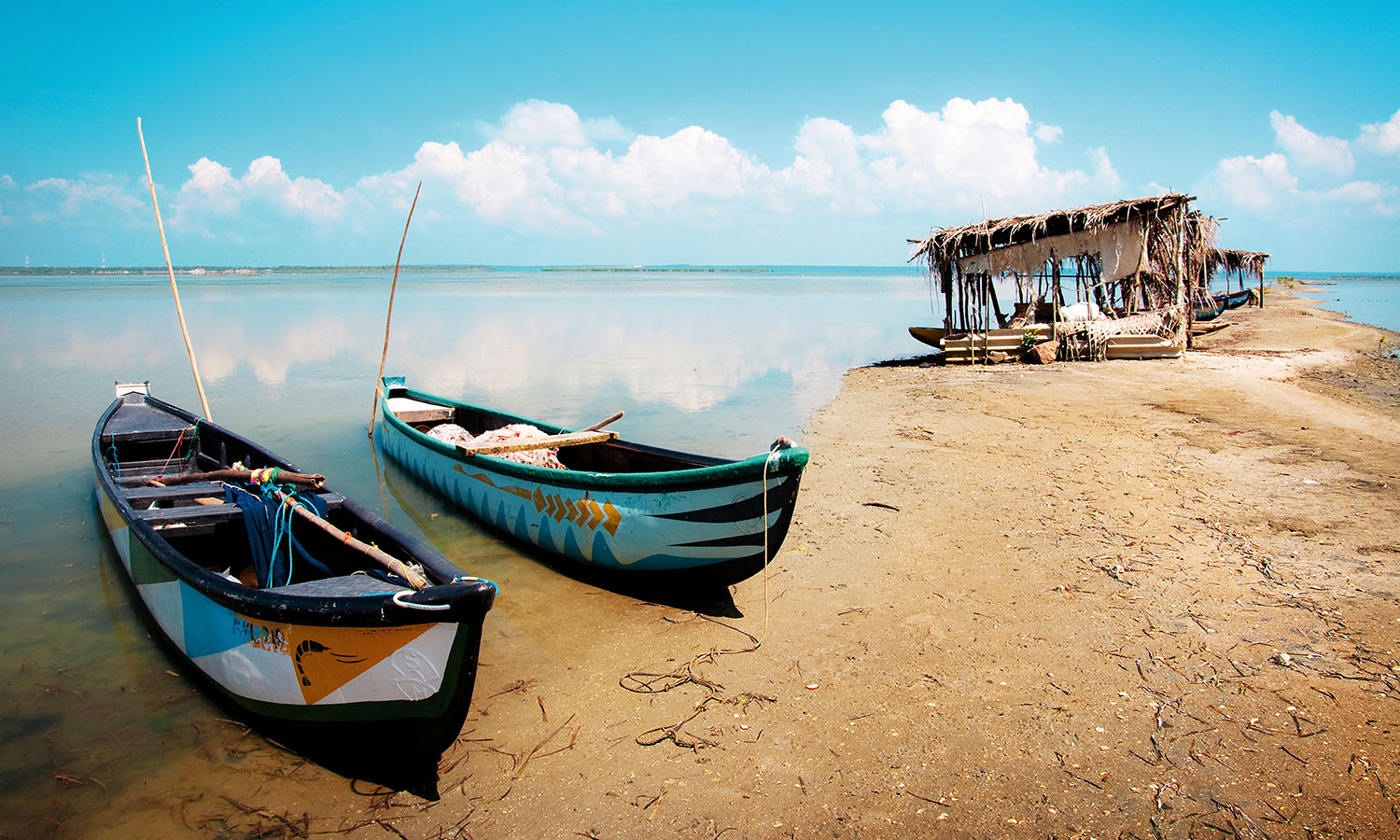
Setting off from the lush capital at dawn, we drive up the A3, passing by the fishing town of Chilaw and pushing into the dry zone. Just eight kilometres shy of Puttalam, curiosity sends us hurtling up the Kalpitiya Peninsula – a crescent-shaped landmass arching around the Puttalam Lagoon. The epic panorama of this arid, windswept landscape assaults our senses. The murky mangrove-pocked salt flats fringing the expansive grey-white lagoon have a raw, eerie beauty, whilst the pointed leaves of palmyrah palms crackle menacingly overhead. Kites dot the azure skies, and a line of wind turbines spin silently on the lagoon’s far eastern shore.
Kalpitiya’s beaches prove every inch as arresting. Given their relative proximity to the airport (just a couple of hours), we are surprised to see only a sprinkling of eco-resorts set back from Alankuda’s fir-fringed, near-deserted beach. Wandering along the sand, we encounter a gang of sarong-clad fishermen dragging a huge net onto shore, watched by a growing gaggle of villagers. Nearby, an earlier catch of fish lies shrinking and drying under the hot tropical sun. Kattawa (dried fish), a rather pungent delicacy used to flavour curries and sambals, is a particular speciality of the northern coastal regions, and we are to see many more of these hardened leathery hides dangling from the beams of shops.
Beyond Kalpitiya and Puttalam, the rust-red road pierces Wilpattu National Park and continues to Mannar, where we spend the night in a simple guesthouse eight kilometres east of town.
Mannar sits at the eastern end of a thin island attached to the mainland by a two-kilometre bridge. The island boasts a Portuguese fort and baobab bottle trees introduced by Arab traders from Africa 700 years ago, but the most interesting feature lies just beyond the far western tip. Adam’s Bridge is a chain of limestone shoals that extends to India, some 30 kilometre distant. Thought to be the route by which the earliest human settlers reached Sri Lanka 250,000 to 300,000 years ago, this was also the perilous pathway many displaced Sri Lankan Tamils used to flee the country during the war.
After a delicious breakfast of curries laid on by our generous hosts, we jump into the van and travel east towards Vavuniya. The journey is punctuated with stops at the serene Ketheeswaram Kovil, ringed by an iconic red-and-white–striped wall, and the huge, late nineteenth century Portuguese-style Madhu church, home to a 300-year-old statue of Virgin Mary.
Beyond Vavuniya, snaking along the infamous A9 through the sparsely populated northern landmass that is the Vanni, we are soon confronted with remnants of the war: desolate bullet-ridden houses, ghost towns, the headless trunks of palms severed by shelling, and yellow tape depicting the presence of mines.
The mood lightens as we reach the town of Kilinochchi. As the de facto capital of the rebel Tamil Tigers, this town was shelled repeatedly during the war, yet the scars of its casualties are harder to decipher, as buildings have been patched up or rebuilt, or lie hidden behind new, vibrant coats of paint.
A bombed water tower lying where it fell is the exception, and this is the first of a handful of war memorials we encounter on our 16-kilometre journey up towards Elephant Pass, the isthmus of the Jaffna Peninsula. Others include a grenade-charred armoured bulldozer, a bullet-scarred open-top jeep and, at Elephant Pass itself, a huge mounted map of Sri Lanka supported by four hands and topped with a blooming a lotus flower.
Here we begin chatting to local tourists. They’re interested to know our reasons for visiting a region with few obvious charms, and we are keen to know theirs. Thirty-six-year-old Dilhan Liyanage, a Sinhalese pharmacist from Dondra, in the southern district of Matara, echoes the majority sentiment: “I wanted to revisit a part of my country that was off limits for years,” he says. “Now we can safely travel here, I’ve brought my wife and children to see it for the first time.”
Others have come to visit the land where their loved ones fought and fell, and a few are paying visits to relatives and friends.
After finally crossing Elephant Pass, we arrive on the Jaffna Peninsula and travel towards town. On its quiet eastern fringes, we notice colourful bougainvillea and the fruit of karthacolomban (mango) trees draped across the spacious front yards of elegant Dutch period homes, gracefully adorned with pillared verandahs, carved roundels and engraved teak shutters. We encounter many more houses like this across town, although sadly most of them are abandoned, their owners having fled overseas at the advent of the war.
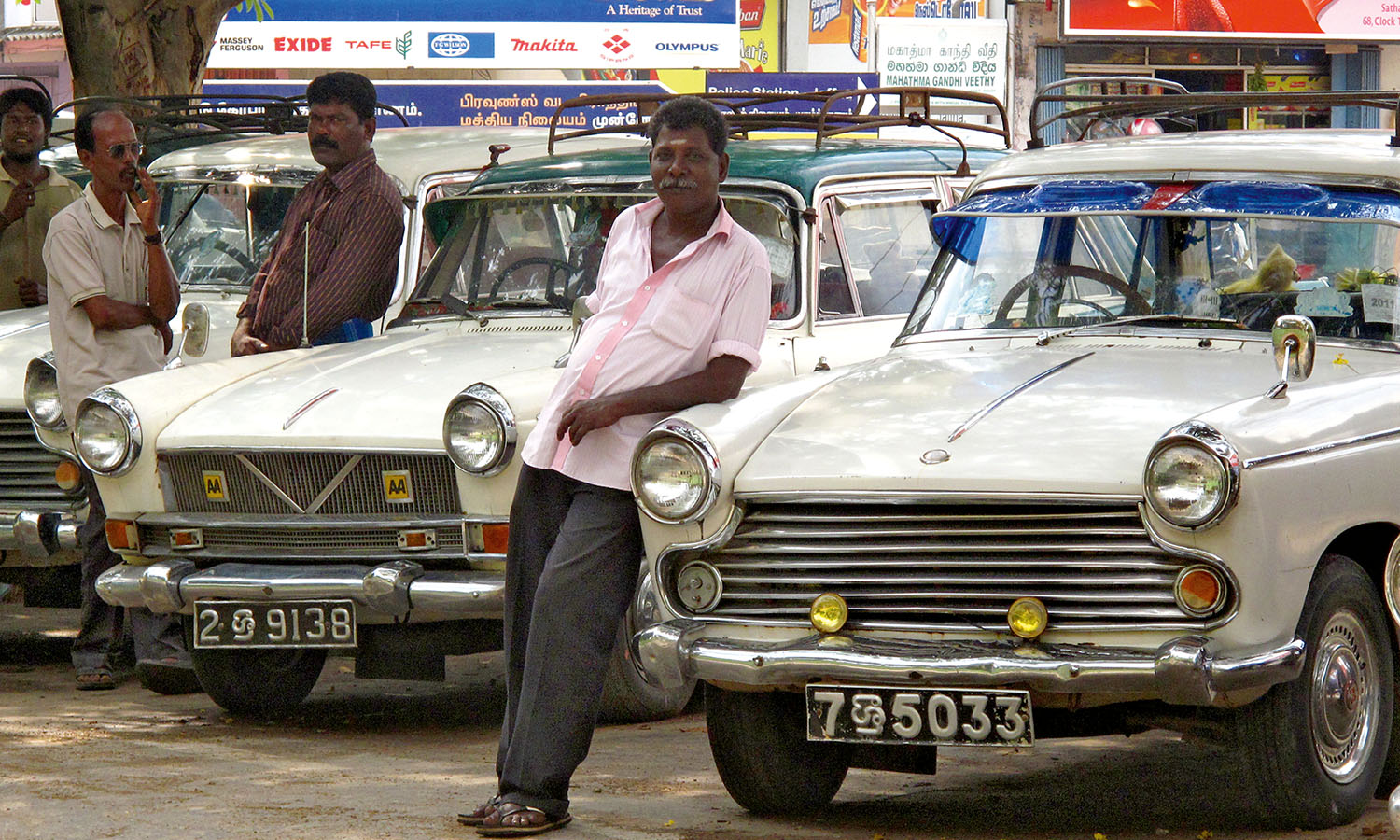
Driving straight into town, we pass the dome-crowned public library and stop off at the pentagonal Jaffna Fort, built by the Portuguese and extended by the Dutch. From its thick ramparts, we scour the views across to Kayts, an island connected to the Jaffna mainland by a narrow causeway topped by buses and bikes. Later, we pluck fruit from the vibrant yellow market stalls, pose beside a fleet of evocative Austin Cambridge taxis and stray up side streets in search of midi vedi, an explosively hot samosa whose name translates as ‘land mine’.
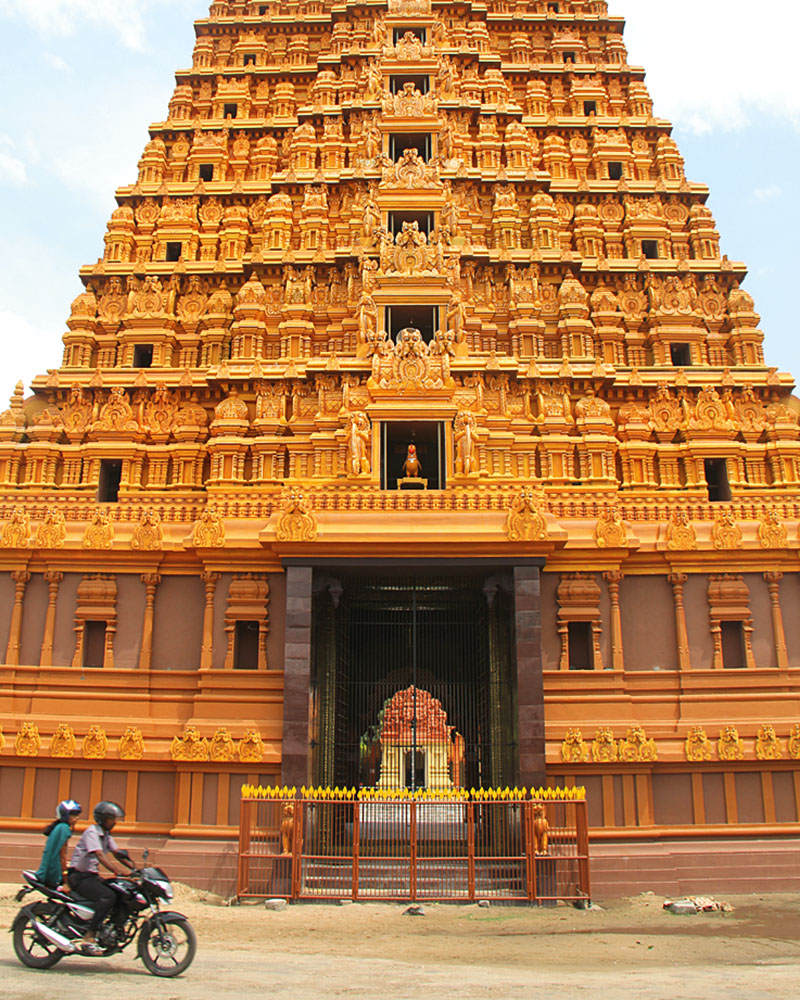
A visit to the Nallur Kovil, Jaffna’s biggest Hindu shrine, is a priority and our trip happens to coincide with Lord Skanda’s birthday. Leaving our sandals at the entrance, we keenly follow the rapt throngs of barefooted devotees as they offer prayers, flowers, incense and fire to their chosen gods. The frantic beating of the drums combined with the acoustics of the nadaswaram are atmospheric and strangely affecting. Afterwards, we devour toe-curlingly sweet sundaes from nearby Rio’s, one of Jaffna’s best loved ice cream parlours, as the rhythmic beats of Hindi music blare from the radio and the rapid dialogue of young Tamil families erupts excitedly around us.
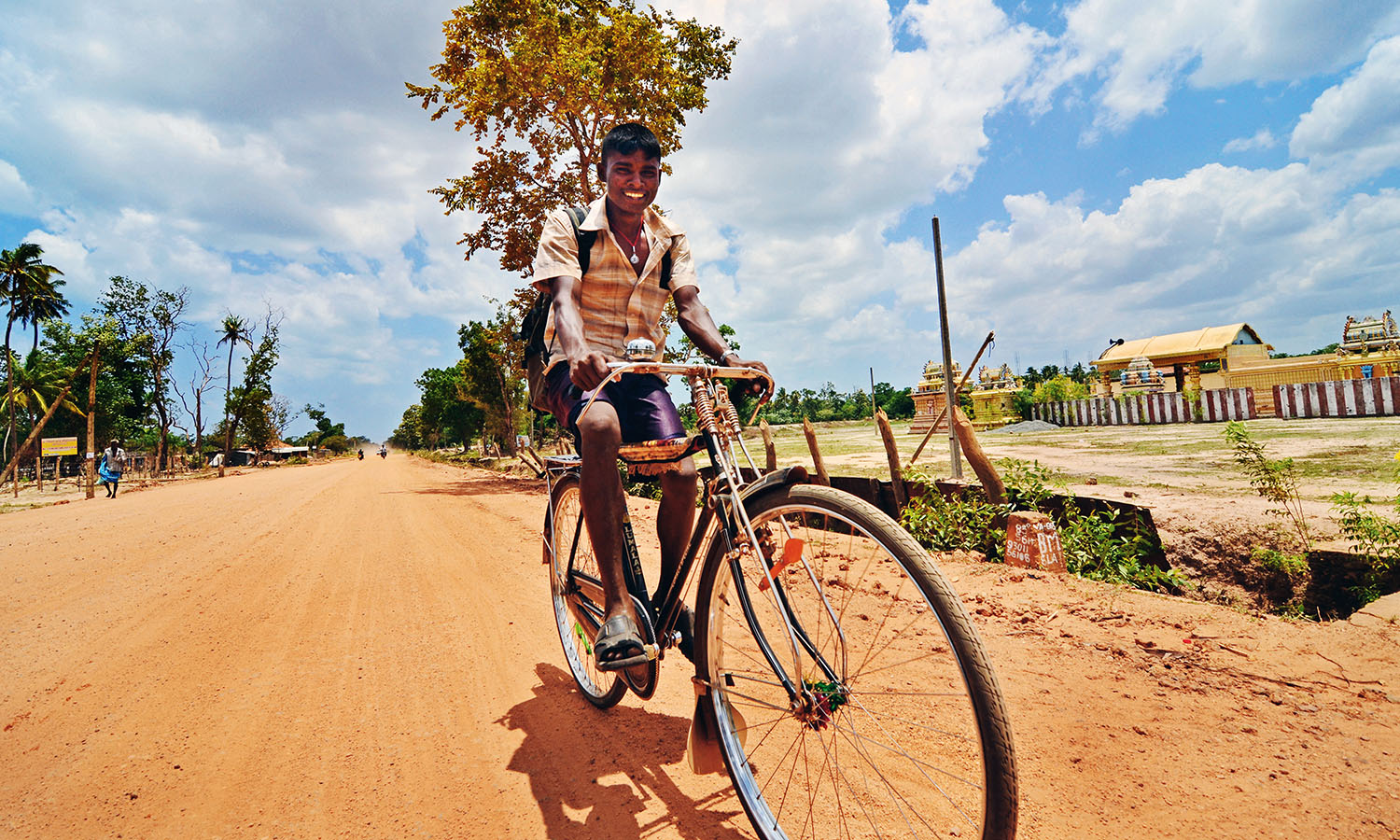
We explore the peninsula by bicycle, an iconic form of local transport, pedalling through farmland up to Point Pedro where a white flag on the beach marks the island’s northernmost point. The narrow, dusty streets of this sleepy backwater are lined with stalls selling live chickens, basketry and spices, and its lighthouse-fronted beach is prettified by a litter of jewel-hued fishing boats. Heading east, we visit Manalkadu’s sand dunes and the partial remains of St Anthony’s church, before returning to Expo Pavilion’s serene Margosa hotel. A dinner of succulent sweet Jaffna crab curry follows and sends us quickly to sleep.
On our final day, we set out to explore Jaffna’s islands. Choppy seas prevent us from visiting Delft, the peninsula’s furthest flung islet, but simply driving across such hauntingly beautiful open terrain feels escapist enough. Being a weekend, the popular golden-sand beaches of Casuarina and Chatty are busy with local families and groups bashing cymbals and drums, so we grab some deep-fried crab legs and head for the temples of Nainativu Island, a claustrophobia-inducing 15-minute ferry ride from Kurikadduwan dock.
In a region scarred by years of racial tension, it’s awe-inspiring to see a Buddhist temple and a Hindu kovil situated just 500 metres apart – two utterly different religions sharing such a small landmass. We watch as throngs of pilgrims from all over Sri Lanka pad barefoot between the two in apparent unity, and as they pay their respects to each temple, they stock up on the same goods (palm leaf-wrapped sweets, shells and toys) to take back home.
As we too head home – aboard our twin-engine bug basher of a plane, with its precious cargo of pungent prawns – I contemplate our trip. While, at times, Jaffna feels like an outpost of India – or certainly a very different place to the rest of the island – the curiosity, warmth and smiles of the resilient people we meet confirm it is part of the intoxicating story of Sri Lanka.
Mother Nature sure can be a bitch. Here we are, in a village in the midst of the Scottish countryside, preparing to honour one of the greatest rock ’n’ roll singers of all time, and she’s decided to dump a load on us. Of unseasonable spring snow, that is. Drums are removed from the back of a flatbed truck, pipers are sent packing and there’s a general scurrying towards the pub.
The Thrums is a cosy public house that takes its name from the works of one of Kirriemuir’s famous former residents, JM Barrie. You can imagine that, for most of the year, locals sit at the bar and chat about the Scottish premier league or whatever’s made the news. Today, however, the place is heaving. People are four deep waiting for their pint and crammed into the pub’s every corner. Bizarrely, the television is tuned to the game between North Melbourne and the Western Bulldogs. I strike up a small-talk conversation with an Australian couple also watching. It isn’t until they’re ushered away that I make the connection – the man is Mark Evans, former bass player with AC/DC.
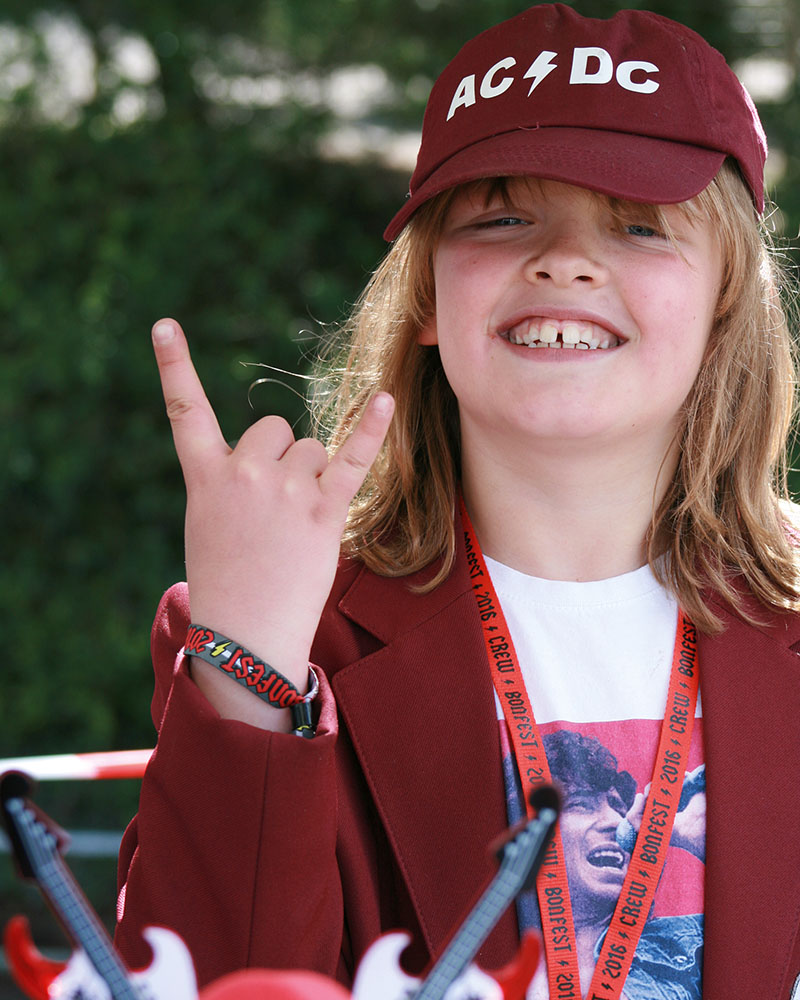
We’re in Kirrie, as everyone calls it, for the tenth annual Bonfest, a celebration of the village’s favourite son, Ronald Belford Scott. The three-day party offers free music in the town’s pubs and nightly gigs by rock bands and AC/DC tribute shows, as well as talks, signings and a market day. It was all due to kick off at 1.45 on this Friday afternoon with a re-creation of the famous film clip for ‘It’s a Long Way to the Top’ – well, as closely as you can re-create something shot on Melbourne’s Swanston Street in a tiny town in the Highlands. The fully loaded vintage lorry was all ready to go when the storm came. Stupid storm.
Still, you can’t keep a good rocker down, and the equipment has been hastily moved into the Thrums where the atmosphere is building. There are folks here dressed in kilts, denim jackets covered in AC/DC cloth patches and Bonfest ‘Crew’ t-shirts; then there are others who just look like your average beer drinker out searching for a quiet shandy. Are those guys going to be surprised. Finally, the band hits the stage and the weekend is officially on like Donkey Kong. If anyone was in any doubt they merely needed to check the number of empty glasses rapidly accumulating on the tables edging the room.
This year Bonfest is an especially big deal for organisers John Crawford and Graham Galloway. Not only is it the tenth year they’ve run the gathering, but this is also going to be the biggest one ever. The nighttime activities have moved from Kirriemuir Town Hall to a big top on a field at the bottom of the hill. They’ve assembled a huge cast of Bon’s band mates and friends – along with Mark Evans, there’s the rocker’s longtime confidante and sometime girlfriend Mary Renshaw, Tony Currenti, who drummed on AC/DC’s debut High Voltage, and Bob Richards, who filled in for drummer Phil Rudd when he was having some trouble with the law. Then there’s Saturday’s big event, but that’s getting ahead of ourselves because today things are just getting warmed up.
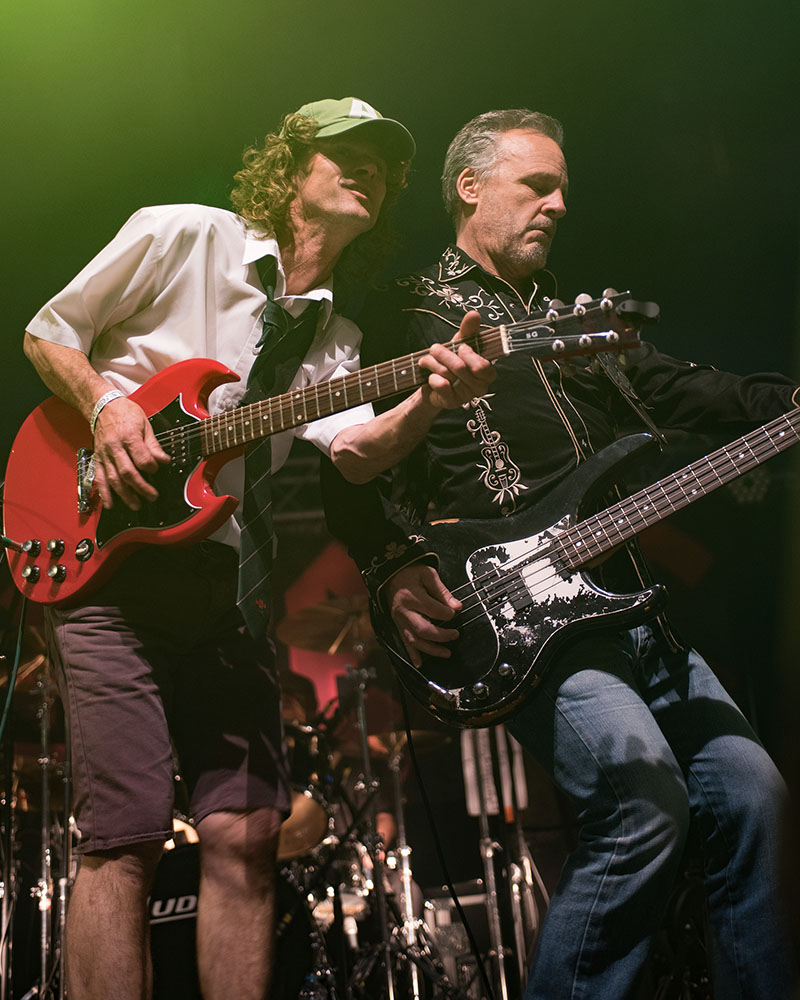
There’s not so much a stage at the Thrums as a part of the floor marked out by foldback wedges, speakers and equipment. The first band due to appear, a local trio called Ganked, has been bumped to accommodate the changing situation. Two fully decked-out pipers stand at either edge of the room, the members of Bon The AC/DC Show file in, Mark Evans grabs the bass, and they finally get to let rip with ‘Long Way to the Top’. ‘The Jack’, ‘TNT’ and lots of back-slapping and cheersing later, and we’re back on schedule.
The guys from Ganked finally get to take their spot. It soon becomes obvious Bonfest isn’t all about AC/DC, as much as the crowd would, perhaps, prefer it. This is more acoustic than metal, and Ganked plays a fistful of hits from the likes of the Police, Feargal Sharkey and Dexys Midnight Runners.
“When are you going to play some real fookin’ rock,” yells a red-cheeked bloke wearing a patched vest. Not to be intimidated, the band launches into ‘Video Killed the Radio Star’. Eventually, they give the crowd what they’ve been waiting for and play a lesser-known AC/DC track, ‘Big Balls’.
It could never have been the organisers’ intention, but AC/DC is definitely in the news this weekend. Long-time singer Brian Johnson had announced he’d be leaving the band due to hearing issues, and in the days before the gathering in Kirriemuir the group’s tour dates had been rescheduled with Guns N’ Roses’ Axl Rose as the replacement front man. No one, it seems, is happy.
“I’d rather do this than go and see AC/DC with Axl Rose,” a man in a kilt says to his mate in another of the local pubs, the Roods. “It’s all over now,” his friend replies, mournfully. “The drummer’s in prison, the singer’s deaf and the guitarist is gone.” He takes a long swig of his pint.
It’s a common conversation over the weekend. People who have tickets to see the band in Portugal, London and other cities in the weeks to come are trying to offload them to no avail. No one is sure how Rose, who is known to have a precarious relationship with time management, would go playing with the hardest working band in show business. There is talk that Angus, the only remaining original member, should simply call it quits. (Everyone’s fears were for nothing: Rose won acclaim for his gigs with the band. Johnson, meanwhile, has been testing a new in-ear monitor that should allow him to get back out on the road.)
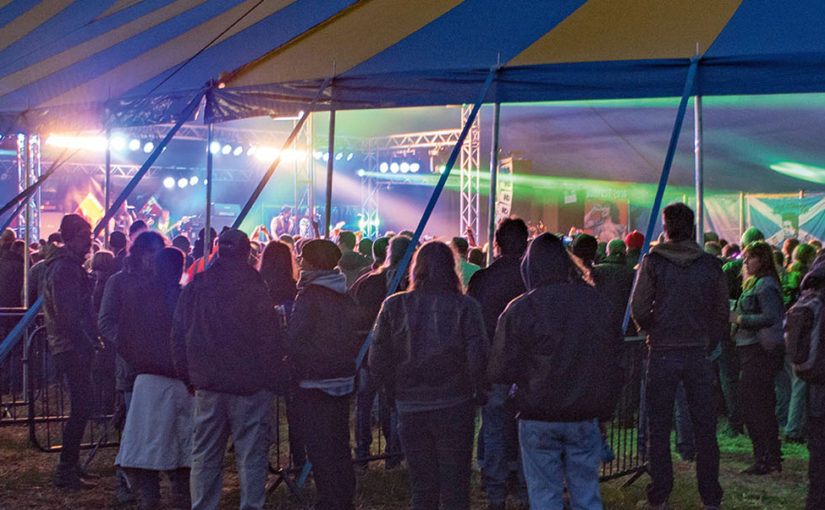
As the afternoon draws on, fans begin slipping out of the pubs to form a tiny procession down the Kirriemuir hill to the field where the evening’s entertainment will begin. There’s the huge big top, where the bands will play, two smaller ones selling merch and drinks, and a burger van. A small huddle of tents with a backdrop of hills doused in snow is pitched a small distance away. This is the sanctuary of the crazy-brave types who have booked the £20 weekend camping tickets.
Each evening, three bands are going to strut their stuff in the big top in front of about a thousand fans, some of whom have strung up AC/DC signs announcing their own home towns. There are a lot of Germans in attendance, but also guys (they’re invariably guys) who’ve travelled in from Spain and other parts of Europe. Mainly, though, there are a lot of Scots, many of them from Kirriemuir – every shop in the town has a Bonfest display in its window and the local sweet shop has Let There Be Rock candy canes for sale – and nearby villages, as well as cities further afield. Despite the huge number of people who’ve filled Kirrie to almost breaking point, there’s still the atmosphere of a village fete. It appears as though everyone knows everyone else, but, as the weekend wears on, it becomes apparent it’s more that everyone is quite happy to meet everyone else.
First up this evening is Reddog, a power trio from Crieff, about 75 kilometres away. The sound is certainly AC/DC-esque, but, thankfully – since how many times can you really listen to ‘Highway to Hell’ in one weekend? – they mix originals in with covers like ‘Cold Hard Bitch’ by Australian band Jet, who were once described by NME as a mix of the Rolling Stones and Acca Dacca. They’re followed by guitar rock band, the Ruckus, from Aberdeen.
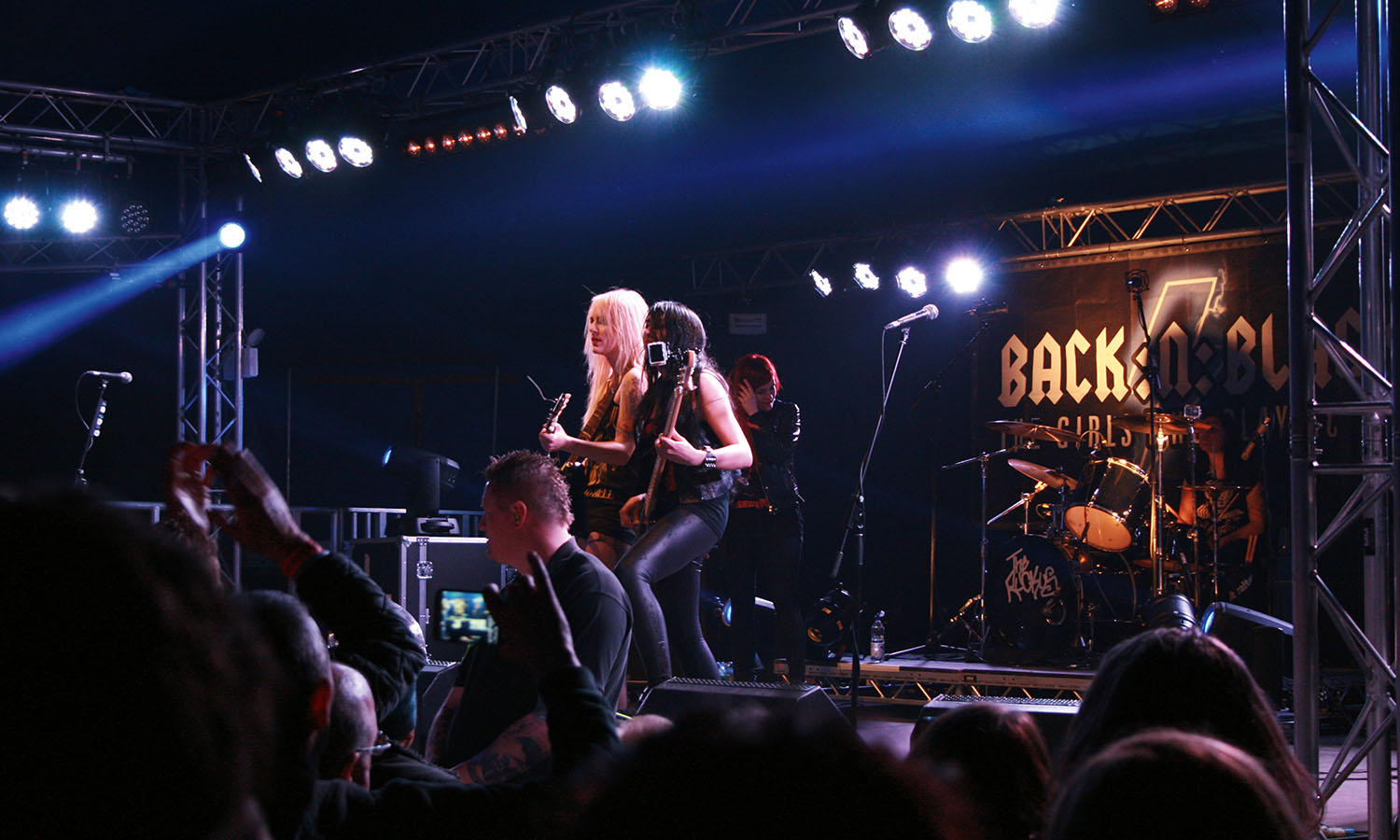
The crowd has grown as the sun has set, the beer tent has been doing a roaring trade and everyone is primed and ready for that night’s main event, Back:N:Black. Go to the band’s website and you’ll see this modest claim: “We’re just five girls who dig playing AC/DC more than anything.” Yes, girls. They’re based in Switzerland, tour the world, have played Montreux Jazz Festival and, from the second they step on stage, they’ve got the Bonfest crowd in the palms of their hands. It doesn’t hurt that they are smoking hot, but they certainly have the tribute band thing nailed. They are pure rock, from their torn tights to the note-perfect re-creation of AC/DC’s hits, starting with ‘High Voltage’ and leaving no fan favourite from their sprawling set list. No one, least of all them, it seems, is keen for the night to be over.
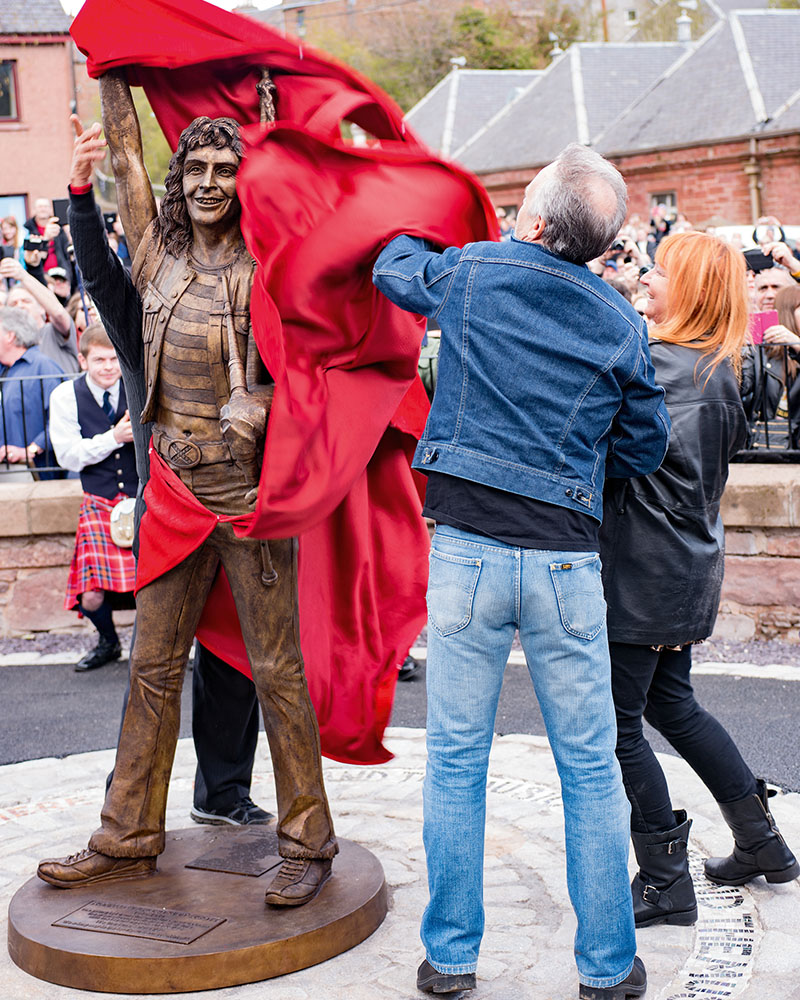
The next morning, there’s a collective sigh of relief. Today is the Big Day, and the sun has burst through the cloud. In the Kirriemuir car park, a substantial crowd begins to gather as the morning draws on. Stalls are set up selling coffee and baked goods, artwork and AC/DC memorabilia. There’s a truck (this one covered) set up with gear for an afternoon set by Spanish tribute band Chaman, and people are gathering around a tall iron fence. Within it there’s a large, blanket-covered form. For the past two years, the Bonfest crew and AC/DC fans have raised £45,000 to have a statue of Bon Scott made and erected in the town of his birth. As the time for its unveiling draws ever nearer the crowd swells. They’re banked up the hill and perched in trees and on fences – anything that’s a bit higher and gives them a view of proceedings. By the time Mark and Mary tear off the coverings to reveal sculptor John McKenna’s work – bagpipes, tatts and all – an estimated 2500 people are watching. It’s an emotional moment, particularly for those who knew the singer. “I always liked Bon, and now I know why,” says Mark to the assembled masses. “He was from here.”
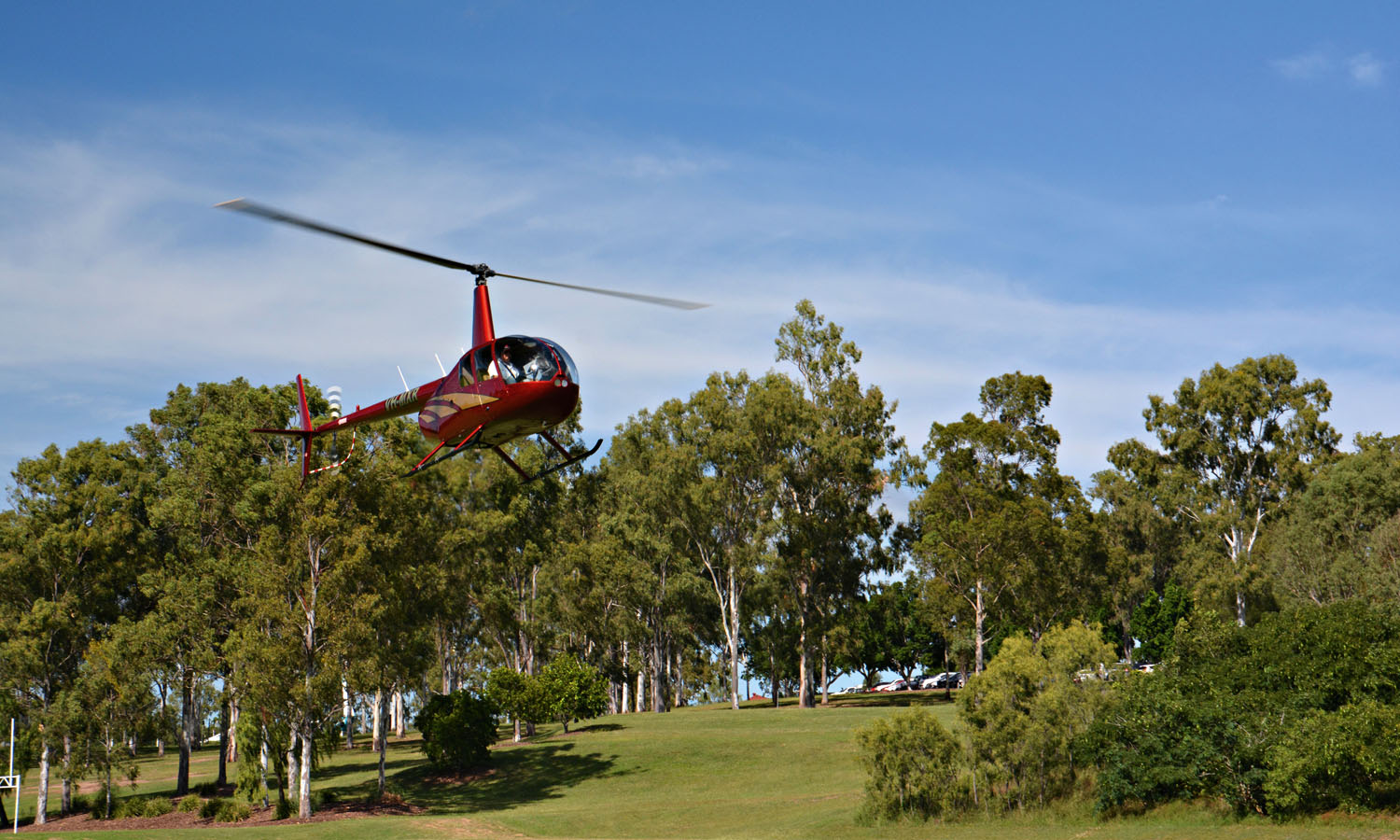
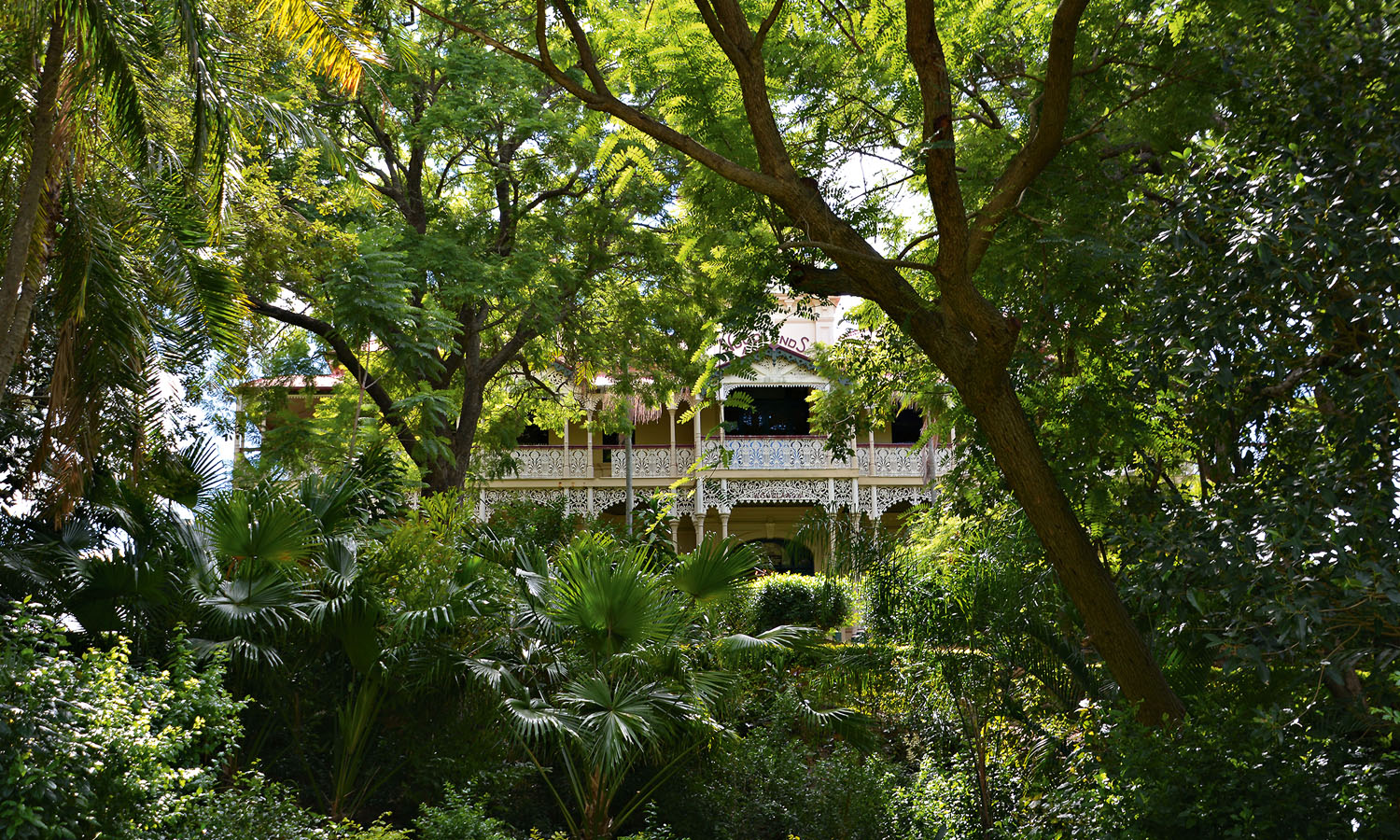
Queensland sun glints off the glossy red body of our afternoon ride. Our chauffeur, Captain Mike, swings the doors open, inviting us to climb inside. After a civilised morning spent sipping tea and nibbling pastries on the manicured lawn of one of Ipswich’s oldest mansions, we have a thirst for a different kind of brew. We could just walk across the highway to the Sundowner Saloon’s Wild West-style veranda, which sits less than two kays away, but where is the fun in that? No, we’re set to make a whirling entrance.
“Amberley Air Force Base is active today. So if we muck up, they’ll shoot us down,” warns Captain Mike, kicking the engine to life. Hopefully the Royal Australian Air Force doesn’t consider three people in a chopper heading to the pub a national threat, but we’re prepared to take our chances. Blades above us grind as though the machine’s out of gear before they twirl into a purr, and we spin off above the bunya pines surrounding the Woodlands of Marburg.
Minutes later we’re clutching amber pots of Tooheys Extra Dry and Hahn Pale Ale and watching 22-wheelers rolling from Brisbane to Toowoomba along the Warrego Highway. It’s quiet inside the saloon, with just a few day drinkers clustered at the bar. Our Robinson R44 helicopter is stationed out back behind the trade utes and oil tankers.
A bloke called Choppa, with tatts on his knuckles and grey hair frothing from his shirt, wanders over to join us on the porch. “Whenever you come here I like to sit out the back and watch,” he informs Captain Mike, grinning as he takes another slurp. “Last time you flew off with the nose down,” he continues. “You know why I do that?” asks Captain Mike. “Just because I can!” Seems a good enough reason for Choppa, who settles back in to consuming his beer in solitude.
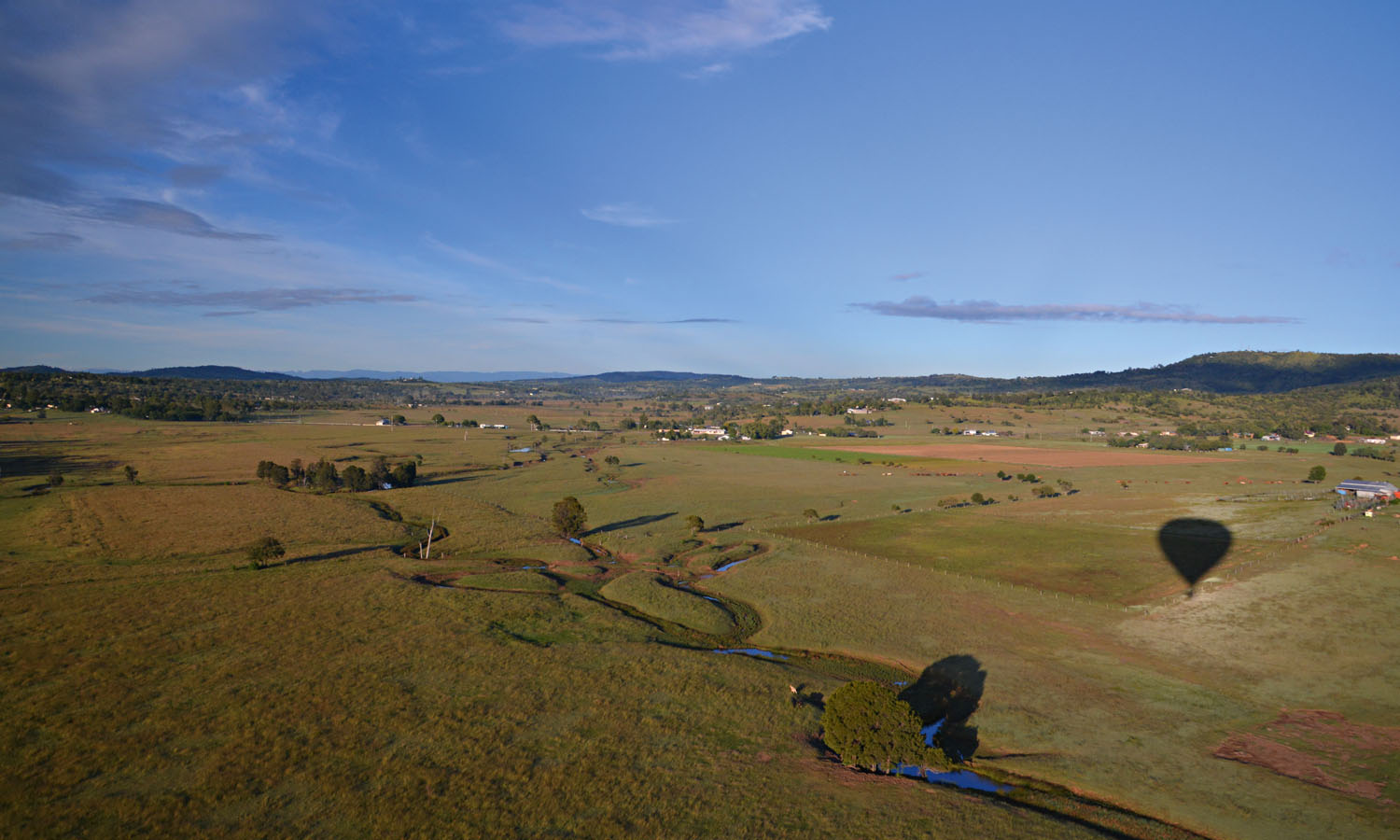
Choppa’s recall for detail might be top-notch, but I’m beginning to feel pleasantly fuzzy. Perhaps it’s because midday just trickled by and my beer seems to be evaporating, or maybe it’s because I was up before sunrise, taking in Ipswich from the comfort of an enormous wicker basket. The sky was bruised deep purple as we unfurled the hot air balloon onto dewy grass in a park in town and pumped it full of the same gas you pick up at a petrol station. Fumes crept through the air as raging heat propelled us above the treetops.
“Everyone brought their parachute?” joked Graham, our balloon master. “We’ve all got the same one, it’s attached to the basket,” my partner Lachie chuckled back. Bovines marching in single file below us broke rank, no doubt spooked by the groans that emerged from my fellow passengers.
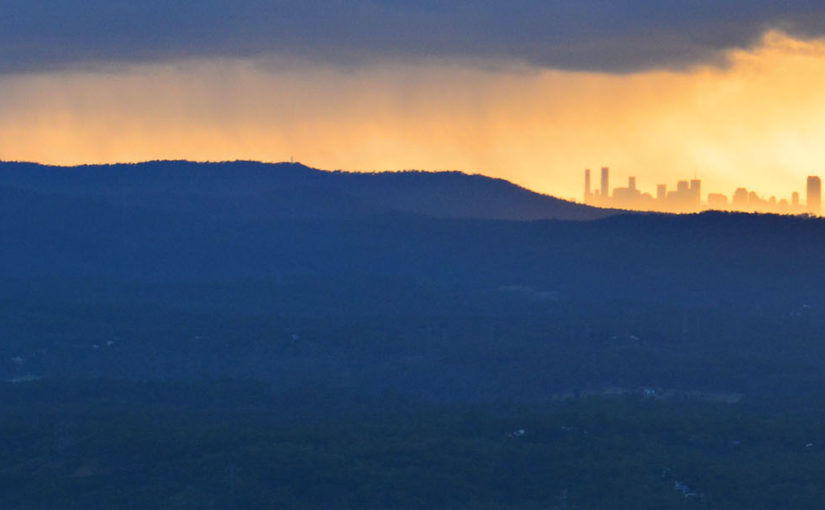
“Over there’s the little knoll where Pauline Hanson lived,” Graham pointed out, shortly after we sailed over the rail yard where Queensland’s first train departed back in 1865. More than 200 steam locomotives were constructed here, and during WWII it was the state’s largest employer. Catching a ride on a breeze, we swept in the direction of the Scenic Rim Region, while the rising sun burnt the sky behind Brisbane and our shadow raced to catch up. Wisps of cloud gathered on trees like cotton wool and dams transformed into metallic pools. By the time we bounced down into a field of grasses, leaving behind a smear of rusted earth and toppling a termite mound, I found myself convinced that dad jokes or not, balloon travel’s a superb way to explore the sights of Queensland’s oldest provincial city.
Doors open onto a wide verandah at the Cottage Restaurant, allowing a breeze to brush through former bedrooms of the National Trust-listed home turned fine-dining establishment. As we sup on plump gnocchi accompanied by a glass of French rosé, Captain Mike tells us about Pterodactyl Helicopters’ popular pub crawl, which takes in some of the region’s favourite drinking establishments. “The trip gives you a feel for what real Australia is like,” he explains. “We know the bar guys who are always there.” Perhaps our newfound pub-pal Choppa is actually on a retainer.
“Mike X-Ray Romeo… requesting clearance to become airborne,” Captain Mike radios in before we take off. By now more than one streak of bug blood graces the windscreen – the markings of a true rural Aussie trip. As it’s been at least a good half-hour since we’ve had our last drink, we’re destined for a vineyard where chardonnay and a cheese platter await on the porch of the 1920s miner’s cottage turned cellar door.
“Ipswich is coming of age,” Captain Mike muses. “There’s this beer culture that it’s really embracing,” he continues as we soar towards a tasting paddle at Tap’d, a craft beer bar considered the largest in the southern hemisphere. “We’re going to have a beer there… just because we can!” he chuckles. And we do. Many. But it’s the far smaller Pumpyard, home to the first brewery to open in Ipswich since 1903, that really takes my fancy. Shining vats of 4 Hearts Brewing fill one side of the industrial-style bar in an ornate brick building on Limestone Street, fermenting preservative-free frothies best consumed on one of the comfy leather couches. Bearing names like Ipswich Challenger light ale and Coal Miners stout, it seems as though head brewer and local bloke Wade Curtis is inviting punters to raise a glass to the historic mining town.
This isn’t the Ipswich I was expecting. And although it still doesn’t feel right referring to this collection of airy Queenslanders as a city, I’m beginning to understand why Captain Mike dropped the words “hidden gem” on more than one occasion. Themed restaurants and cafes serving single-origin espressos are setting up shop between bric-a-brac and clothes stores on Brisbane Street. A heritage-listed former church, now the Ipswich Antique Centre, brims with all manner of treasures. At Rafter & Rose we eye-off Alice in Wonderland-esque cakes by the cafe counter, their meringue mountains culminating in caramelised peaks, and pep up with a three-course flight of coffee.
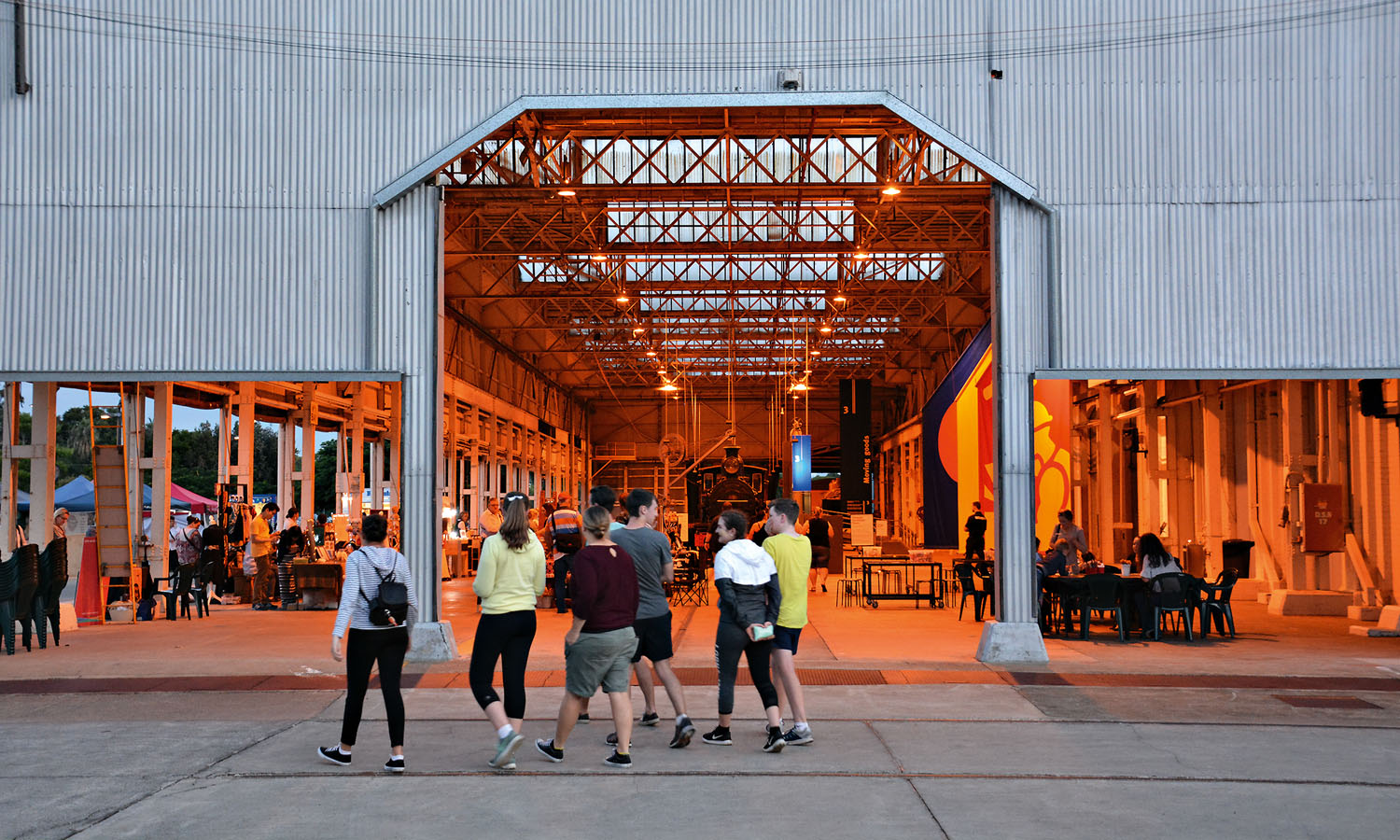
Once the industrial heart of the city, the redbrick buildings surrounding ‘The Workshops’ sit almost abandoned, giving the old rail yard a Walking Dead kinda vibe. But new life is pouring into the expansive site. A rail museum housing restored steam trains opened in the boiler shop in 2002, and over the past year Museum Twilight Markets have created a space for local craft makers to sell their wares between food trucks and stalls proffering gluten-free doughnuts and gourmet burgers. Hopefully one day the entire hub will transform into an entertainment enclave, with cafes and boutiques filling the cathedral-like powerhouse and old machinery halls.
A day later, I’m flying through the air once more, only this time there’s no pilot to guide me gently back to land. While distracted by a spider web so elaborate it resembles a dreamcatcher, I’ve managed to crash my bike into a berm and catapult into a sandstone boulder. Ankle and ego smarting, I clamber back onto the frame and pedal hard to catch up, an outline of the latticed pedal creeping across my shin. Mountain biking clearly isn’t my forte, but with a 10-course dinner at Homage – Spicers Hidden Vale’s hatted restaurant – on the horizon, I’m determined to work up an appetite. More than a hundred kilometres of bike trails wend through bushland on the property’s sprawling 4800 hectares, about 45 kilometres from Ipswich. Guests staying at the retreat share the paths with hikers and riders from Brisbane and beyond, who fang across the red earth and sandy rivulets, tackling switchbacks in eucalyptus-shaded gullies and even passing an abandoned light plane rusting in a clearing.
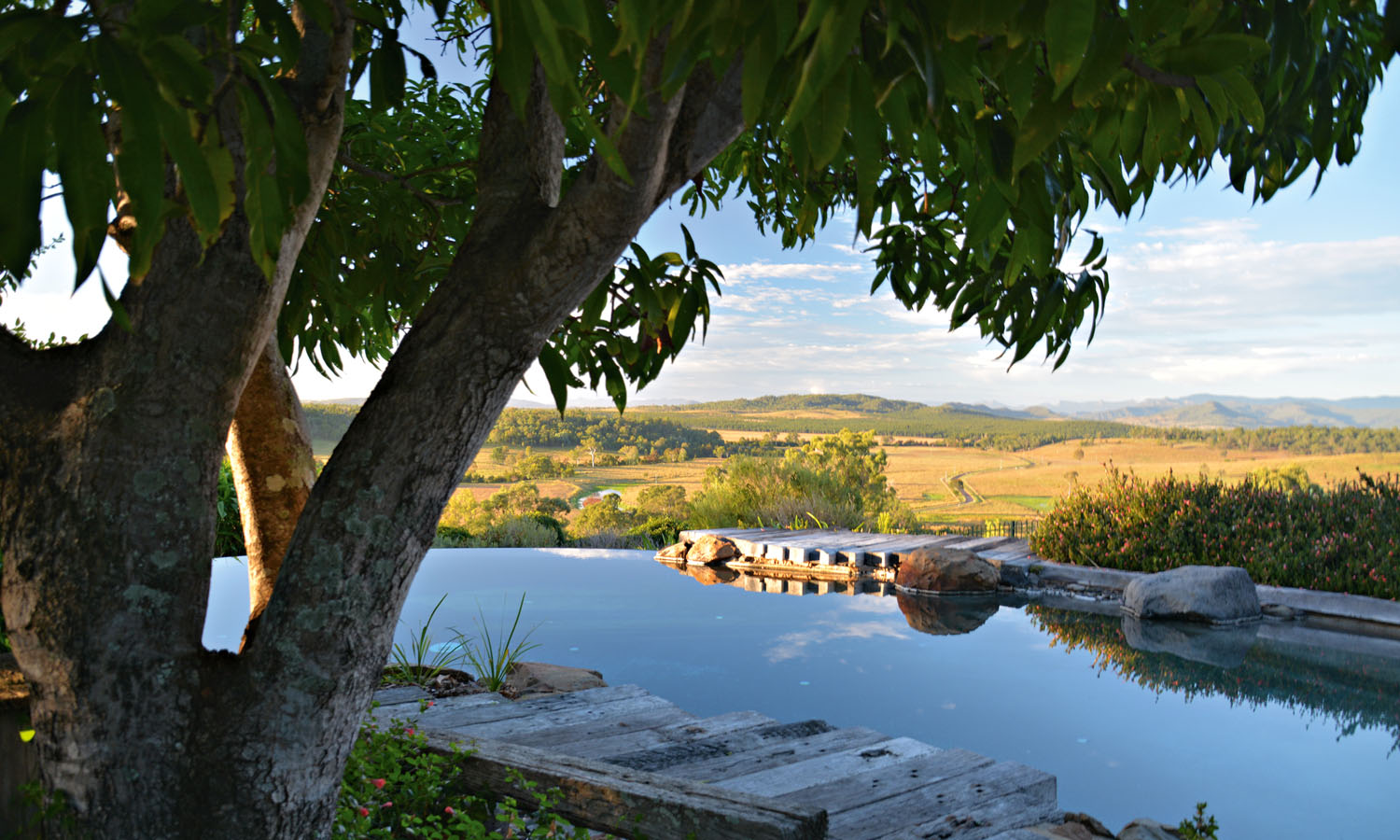
Back at Hidden Vale, restored cottages, many with guests’ bikes parked out front, spread out near the old homestead-turned-restaurant. A wide, airy porch overlooks a valley and the distant mountains forming the Scenic Rim. Geese honk for extra feed and piglets rush to the side of their pens, pushing glistening little snouts towards human company. Head chef Ash Martin, who works magic in the restaurant, throws me a bemused look when I ask after their names. Despite the bucolic scenery, luxurious guest cottages, spa and tennis courts on site, Hidden Vale is a fully functioning farm. Fellow city folk take note; naming a creature that will soon become breakfast bacon isn’t exactly kosher.
Sloe gins in hand, we sink into a couch at Homage, with Frank Sinatra crooning above wood crackling in the hearth (it’s actually cold enough to need a jumper when outside). Appreciative gasps punctuate the air as waiters reveal new dishes like magic tricks. Behind us a man slices into a choice cut of meat, a nest of flaming rosemary on top sending scented smoke above his head. A lady cracks open her dessert by dropping it from a height.
For a fine-dining restaurant it’s far from stuffy, which is probably because its fare invites you to eat with your hands. Working our way through the Forage tasting menu, we pluck ‘truffles’ – mushroom pâté encased in choux pastry – from a bed of soft turf and lick gum leaves laced with honey caviar, the sweet nectar collected from hives on the property. Our fingers seek out morsels of cured duck, charred mandarin and spicy nectarine that adorn a gnarled tree root, and we snack on freshwater natives the size of a pinky that sit atop a scrap of hessian, arranged like an Instagram flat lay. Cod is served delicately poached in macadamia milk and a confetti of puffed grains garnishes a dish of kangaroo tail. After an hour and a half we’ve sampled just half of our evening’s meal.
Come morning, my belly’s returned to its normal size and shape, and we sit on our cottage porch, watching king parrots flash scarlet and emerald plumes, willie wagtails flaunting their tail feathers and a wallaby grazing beneath an enormous ficus tree. “Let’s go for a pre-breakfast ride,” suggests Lachie. Taking stock of the bruises decorating my limbs I decide that, for now, my mountain biking days are over. “You go ahead,” I tell him. “I’m going to sit and soak up the sunshine. Just because I can”.
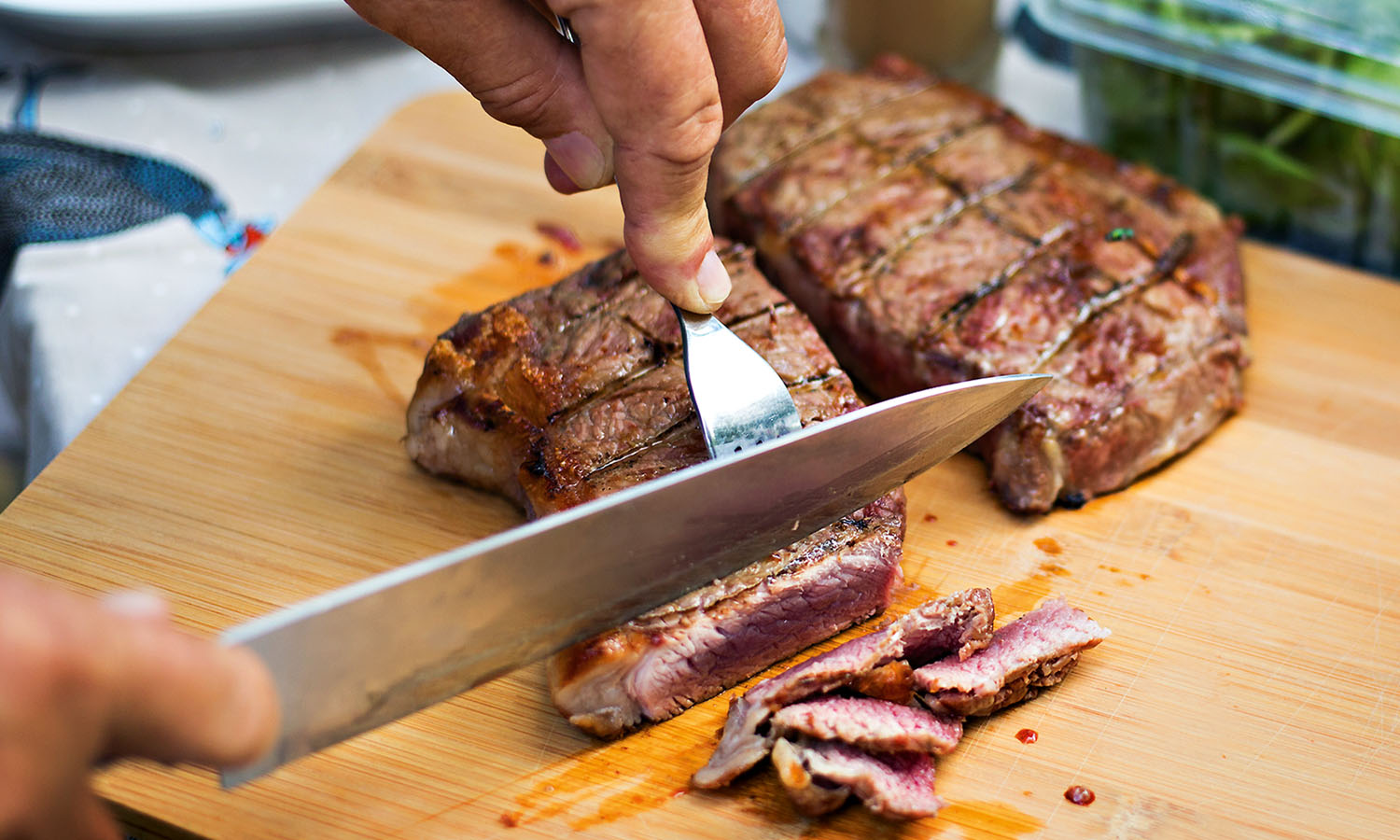
It’s possibly the most flagrant display of animal cruelty I’ve ever witnessed. Moments after being tenderised mercilessly with a blunt-edged instrument, the victim is thrown onto a searing metal grate above a bed of hot coals. There, it’s pricked, prodded and tossed about until it’s barely recognisable. Grid patterns score its flesh and sea salt is flung into its wounds. Who knew such abuse could be so mouth-watering?
In South Africa, the braai – an Afrikaans word meaning to grill – is the perfect excuse to gather with friends and family. With South Africa’s chequered history, you could say it brings the country together. Even Heritage Day, a public holiday celebrated on 24 September each year, is affectionately known as Braai Day.
The love of meat cooked over an open fire, traditionally fuelled by wood and often charcoal (but never gas) is something all South Africans share. It cuts through ethnicity, race and class. In the 11 official languages spoken in the Rainbow Nation braai is the only word recognised by all. Where Australians have MasterChef, South Africa has Ultimate Braai Master.
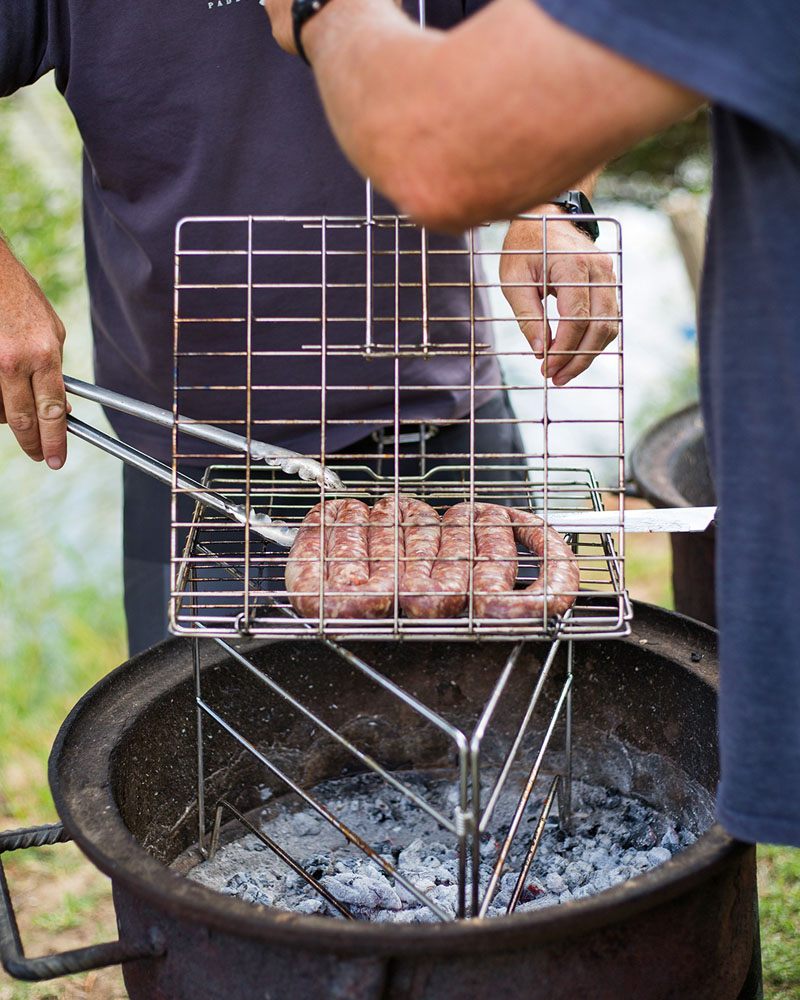
The bloodied carcass being thrown around our braai is a sirloin fillet, though cuts of ostrich, bok (antelope) and wildebeest aren’t unheard of, particularly in rural areas up north. Sharing the grill is an unsightly curl of boerewors (farmer’s sausage), similarly flung around with reckless abandon. Each skin has been stuffed with minced beef, pork or lamb and seasoned by a fiery blend of herbs and spices introduced by seventeenth-century Asian slave labourers. It smells great, tastes better and looks truly awful.
I’ve anticipated this meal since I flew into Johannesburg two weeks ago. For seven years I lived in the Middle East, often socialising with South African expats and gorging on barbecued slabs of marinated beef, lamb and chicken. Here in their homeland, though, the opportunity for me to indulge in a braai has, thus far, proved elusive.
The problem is that I’ve been holed up in various five-star establishments. Diddums, you say. But while I’ve certainly enjoyed their indulgent offerings, the buffet dinners served up night after night lack the intimacy of a backyard cookout.
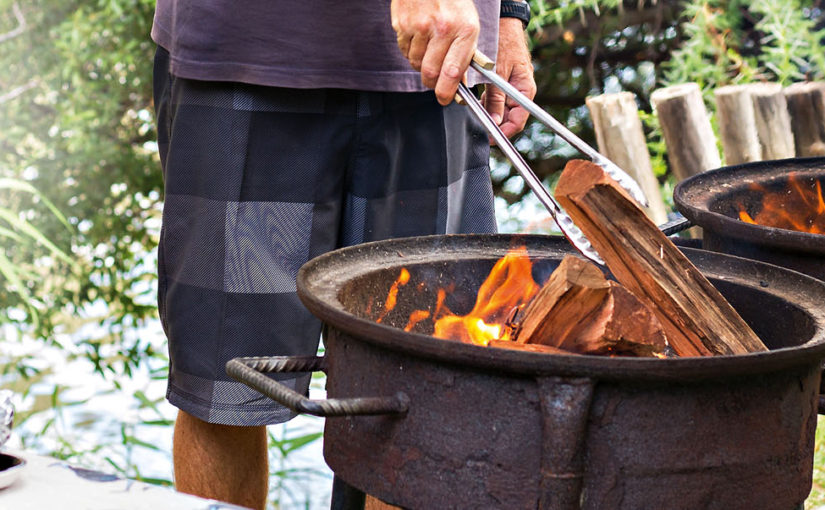
On this particular evening I’m standing on the patio of a friend’s cottage in the Cape Town seaside suburb of Fish Hoek. The sound of ocean breakers can be heard dispersing against the sand two blocks away and the last burning vestiges of sunlight reflect in the clouds, much like the charcoal embers glowing beneath the boerewors. Another Capetonian friend from those years in the Arabian Gulf brandishes a pair of tongs, clasping our meal as a heron might a fish.
Gareth flips the meat and tosses it around the grill, ensuring it’s evenly cooked. Watching his constant jostling drives me nuts – I adhere to a less is best philosophy when it comes to steak – but I dare not challenge him. The man with the tongs wields the power and etiquette dictates that advice can be sought but not forced.
Potatoes baking inside a blanket of foil rest on the coals while appetisers are spread on an adjacent table. Sides of coleslaw, garlic bread and warm butternut pumpkin salad baked with cream and chakalaka, a much-loved local vegetable relish, are brought out to complete the meal. In northern provinces, they might also prepare pap – a maize porridge that can be eaten dry and crumbling or dampened with rich gravy.
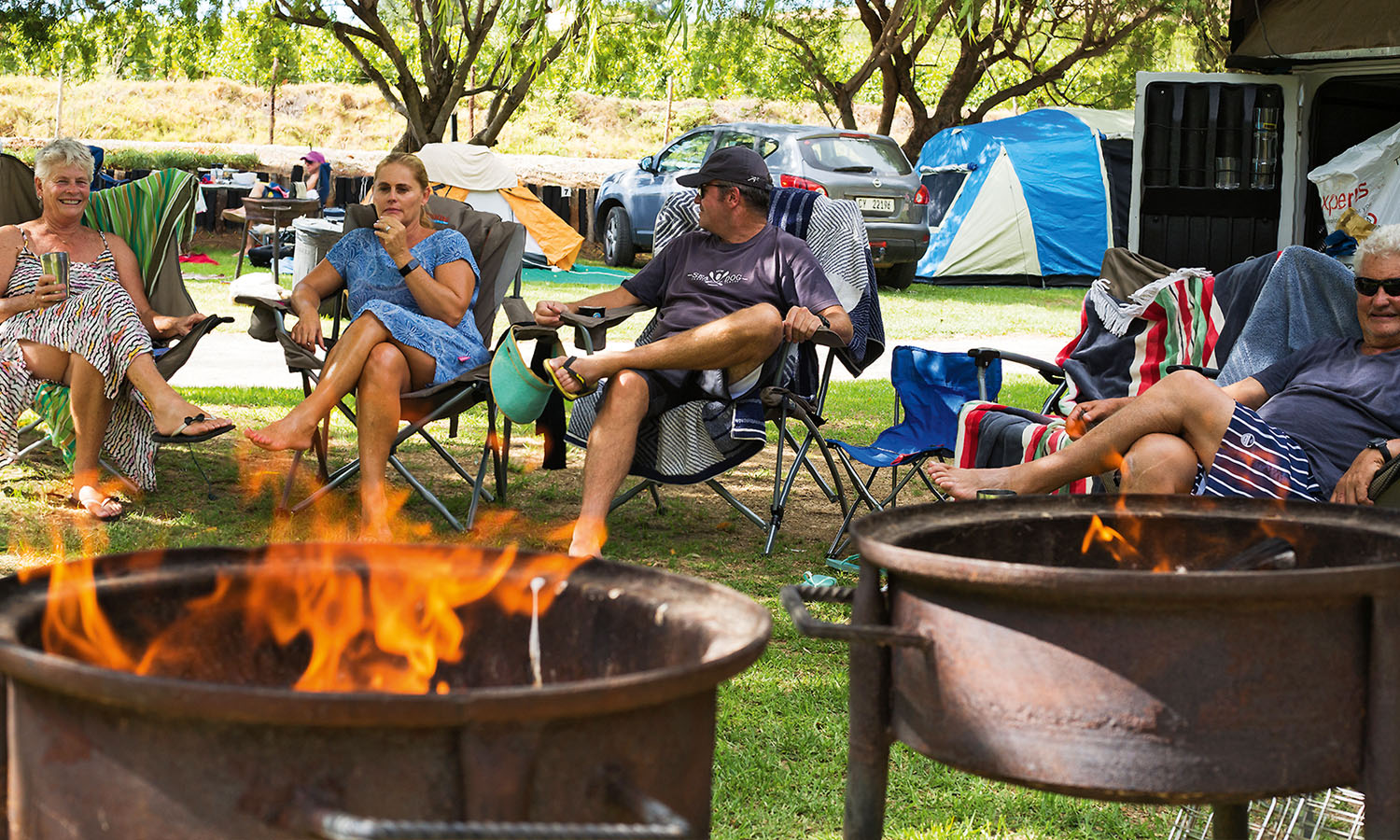
Each of us cradles a cold dop, the Afrikaans word for drink. In this instance, the dop is a stubby, but it might just as easily be wine, especially around Cape Town, where bountiful ‘wine farms’ produce decent pinotages and sauvignon blancs for as little as AU$5 a bottle. Brandy is another local drop we forgo this night.
Whenever the Springboks rugby team is playing, or the Proteas cricketers, fans organise braais around them. You’re expected to be able to cheer on a national team with a full stomach here. But tonight the television stays off, and conversation hums around the hearth – what some here call the ‘African TV’.
For now, I’ll just cheer on the process. Their barbecue technique is unfamiliar, but that’s not to say they do it wrong. Far from it. When you can savour the beautiful South African climate with a cold dop in hand and the warm glow of the fire nearby – especially with old friends to keep you company – it’s impossible not to feel that this is how life is meant to be lived.
Curried Butternut Pumpkin Salad
Serves 8 as a side
INGREDIENTS
1 medium butternut pumpkin
250ml cream
1 tin Hot and Spicy Chakalaka
Chakalaka is a curried tomato, carrot, capsicum and cabbage sauce available online from South African Products. saproducts.com.au
METHOD
Peel and dice the butternut pumpkin, discarding the seeds. Place the flesh in a casserole dish and pour the chakalaka and cream over the top. Mix to make sure the pumpkin’s evenly covered. Put the dish in a pre-heated oven set to 180°C for 60 to 90 minutes, or until the pumpkin is tender. Serve warm.
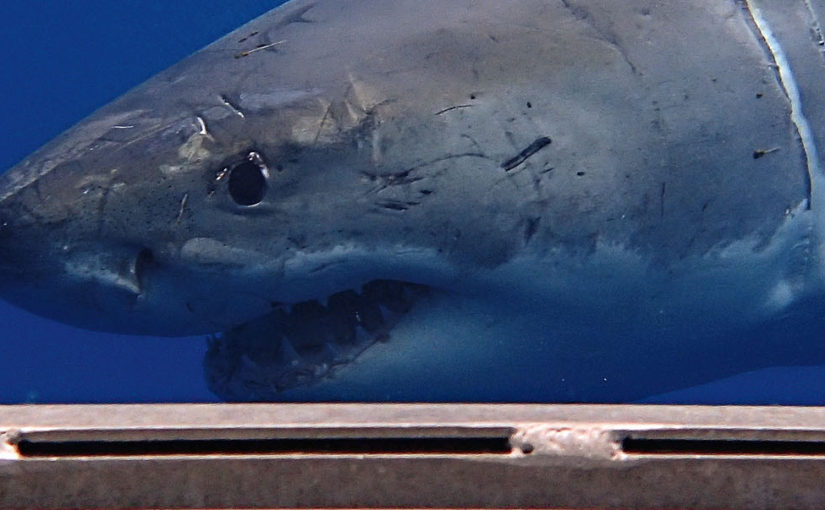
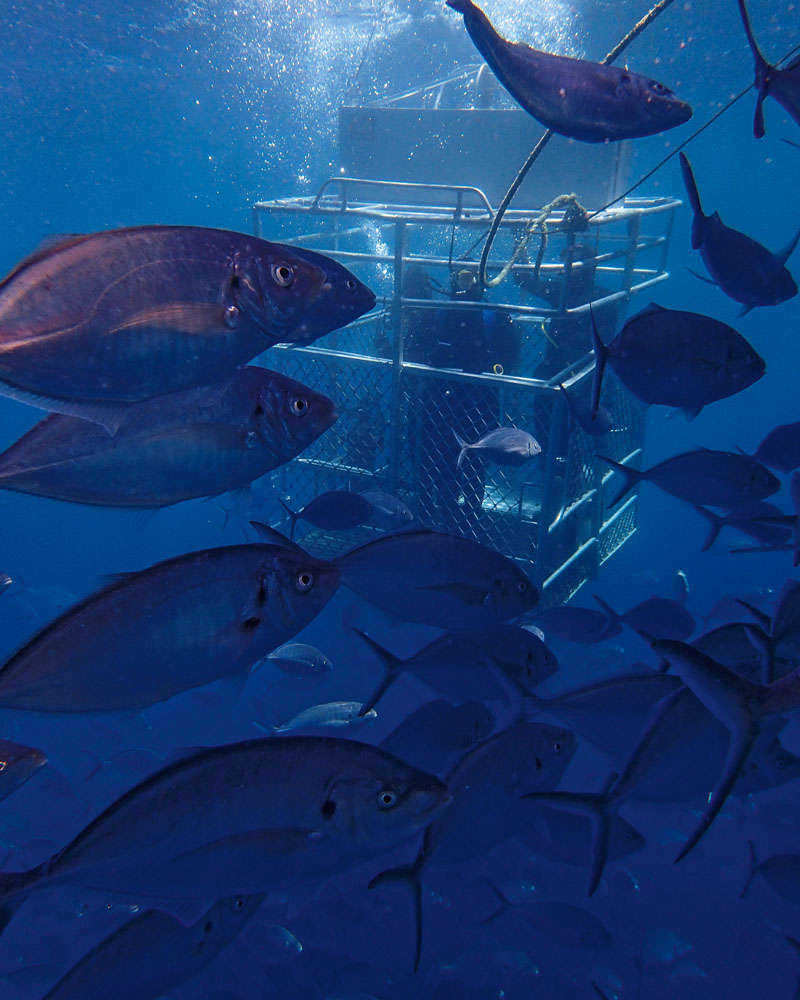
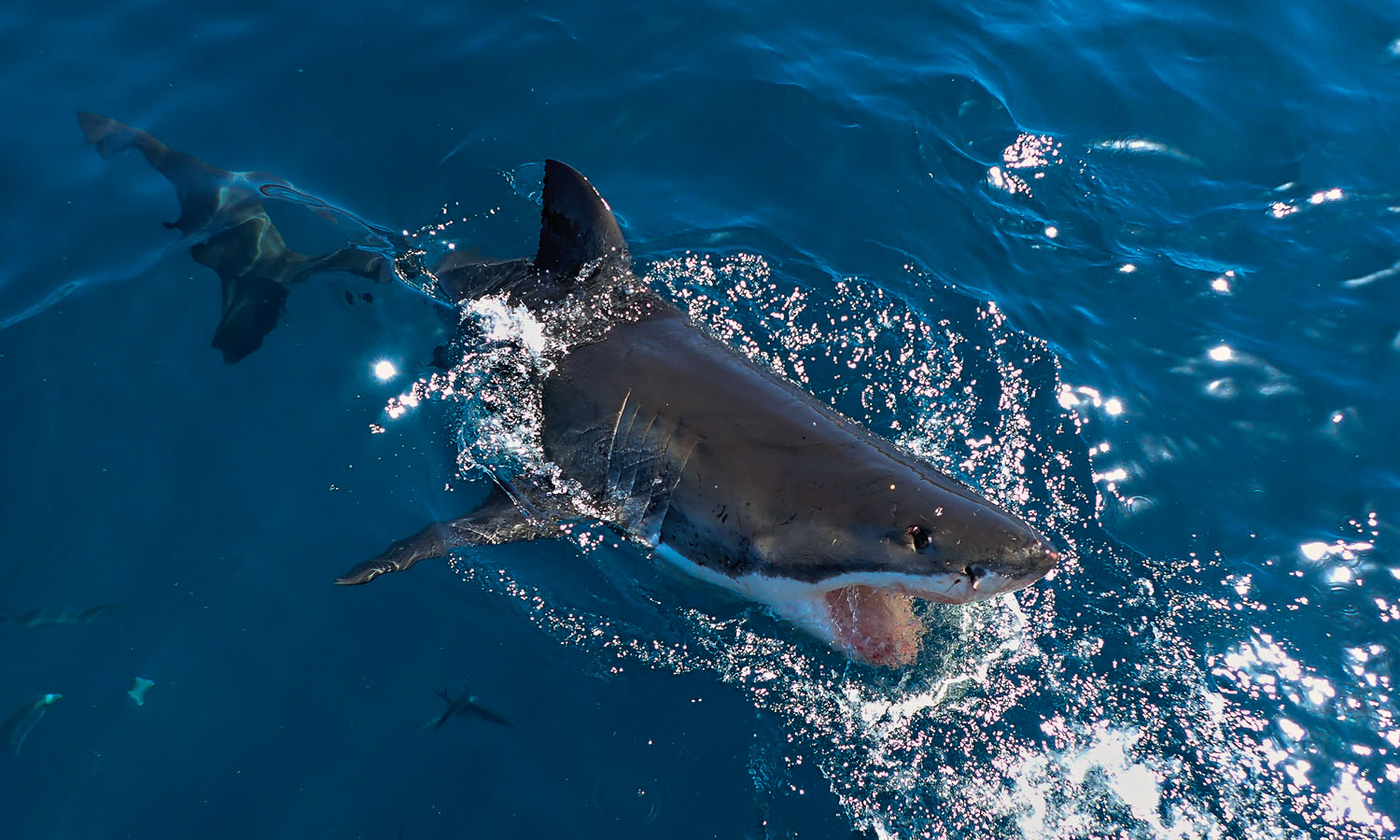
My face is centimetres from lethal jaws. Only a mesh barrier separates me from the teeth of a great white shark, whose body stretches twice the length of my protective cage. Even a little nudge against the metal enclosure hits with tremendous force. I regain footing and hold my position. Alone, and in patting distance of a killing machine, I should be petrified. Instead, I’m in awe.
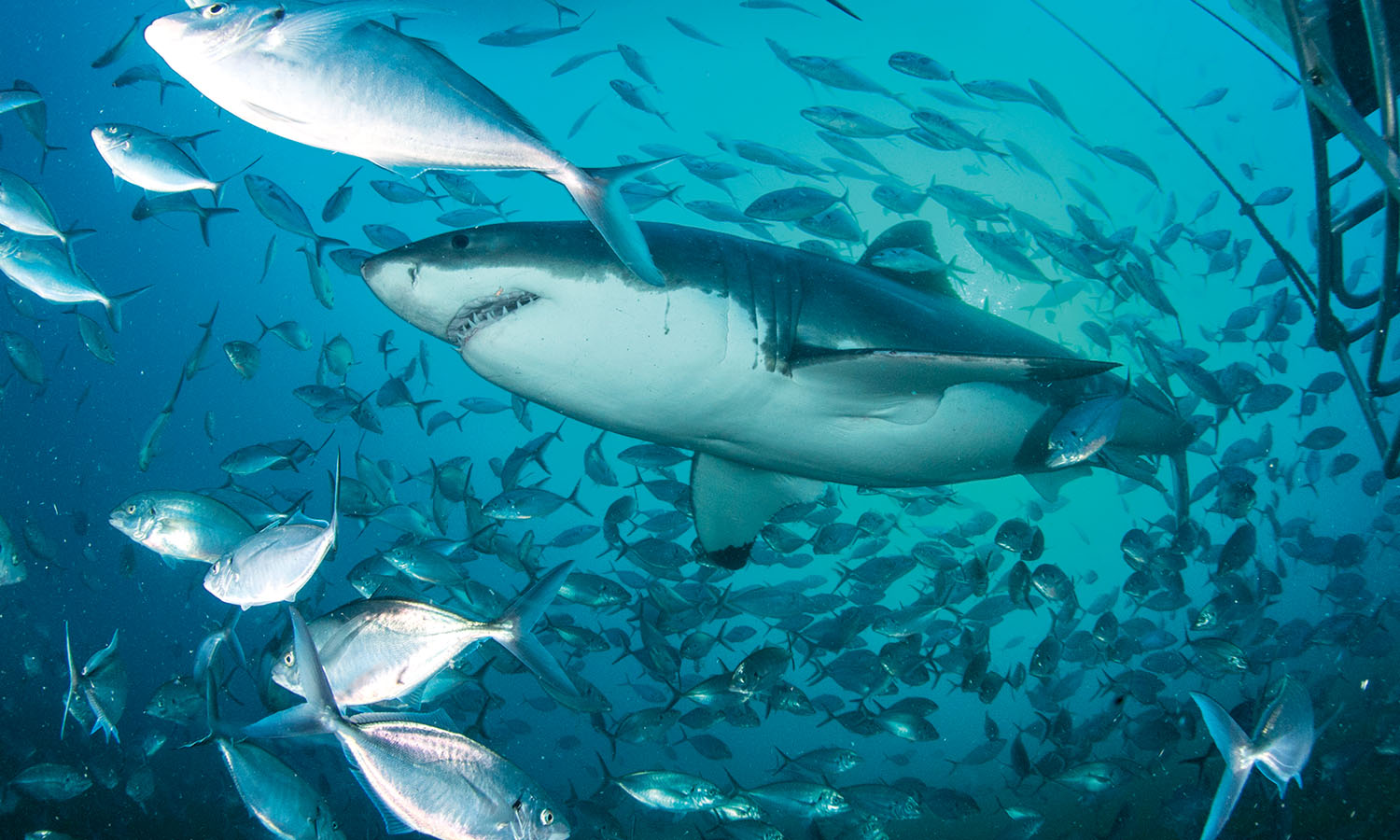
I’m staying on the Princess II for a four-night Rodney Fox Shark Expedition, cruising around the Neptune Islands – otherwise known as one of the best shark restaurants in the southern hemisphere. The isles, 70 kilometres from Port Lincoln, are also home to Australia’s largest fur seal colony. Peak breeding season is over summer, an opportune time for great whites to fill their bellies. From April, seal pups learning to swim make for tasty shark treats. It’s a twice yearly smorgasbord locked into a great white’s feeding calendar.
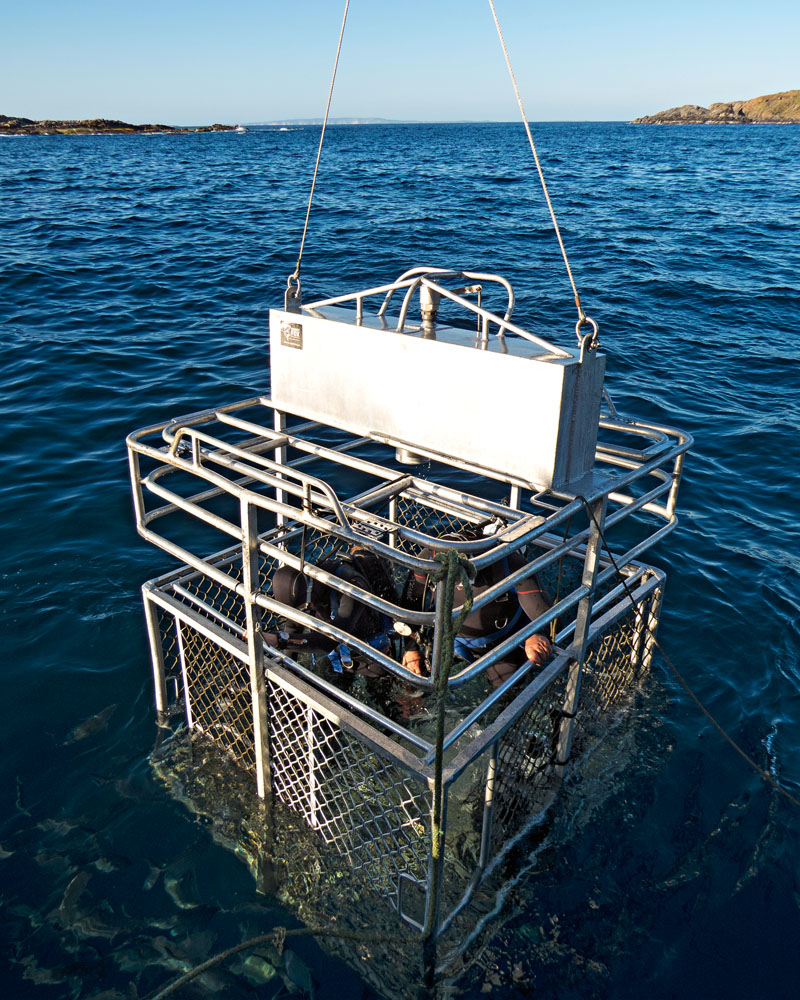
The cage protecting me from the shark’s powerful jaws was designed 50 years ago by Australian conservationist Rodney Fox. At the age of 23, Rodney survived a near-fatal shark attack during a spear fishing competition, and the ragged wounds coursing across his chest, right arm and hand had to be sewn closed with almost 500 stitches. The encounter left him with a fear fed by the prevailing ideology of the times – that the best shark is a dead shark. It also imparted a fascination for these creatures that he’s not yet been able to shake.
Rodney devised a plan to create a two-man cage that would keep him safe while he attempted to capture the first ever underwater footage of a great white. It worked. But as his 1965 documentary Attacked by a Killer Shark screened around the world and he dedicated more time to observing great whites, Rodney’s perception of these “man eaters” started to shift closer to curiosity. Even so, when Steven Spielberg’s production team came calling with a request for live recordings for their 1975 blockbuster thriller Jaws, Rodney obliged.
Realising he had unwittingly helped to turn ravenous great whites into the stuff of urban legend, Rodney set to work debunking myths about sharks. On his mission he created the world’s first shark cage tours to help divers meet them in the flesh. Today his son Andrew continues his advocacy work, taking travellers out to meet great whites on Rodney Fox Shark Expeditions. Over 15 years, Andrew has collated an extensive catalogue, identifying great whites through a renowned identification program that gathers behavioural and biological data, and monitors human impact as well.
Rodney Fox Shark Expeditions offers the only liveaboard shark tour in Australia, and it’s the only one in the world to also winch a cage to the ocean floor. PADI-certified divers who opt for this encounter lounge on the sea floor with front-row seats to the shark show. Non-divers like me get first dibs on the surface cage, which hangs in the water and offers speedy entry when the great whites turn up.
Actually spotting a shark comes down to luck and the good grace of Mother Nature. Andrew warns that we might have to wait hours, scouring the ocean’s waves for a teasing slice of a fin. Within seconds of the first sighting a wall of cameras materialises and the frantic race to kit up begins. I squeeze into a full-body wetsuit and booties, pull on a painfully tight hood, and finally don my gloves and mask. It’s a laborious process, but essential if you want to withstand the frigid temperatures of the water off Australia’s southern coast.
The tours operate with a berley permit allowing them to pique the sharks’ interest with bait. It’s standard practice, but not without controversy, as common belief holds that chumming and cage diving fosters human habituation. Andrew argues that scientific evidence indicates the outcome is quite the opposite; and a morsel of dead tuna makes an insignificant impact on a great white’s intake of teenage pups and vulnerable newborn seals. Time and time again, I witness circling sharks simply ignore the bait that lands in the water, and it’s roped back in unscathed.
Laden with a 20-kilogram weight belt, I bite onto the regulator and gingerly step into the cage. Swell surges over the top, rocking it out of sync with the boat. I brace at the bottom and take a few moments to adjust the breathing aid, trying to tap into some inner calm. My senses are on high alert, and every sound seems amplified. The only noise louder than my regulator’s Darth Vader-esque wheeze is the boom of the cage bashing against the boat. It’s a turbulent ride, exacerbated by my buoyant wetsuit. With my feet straining to anchor under the foothold I’m locked in a comical struggle. It’s as though I’m a human teabag being dunked vigorously in the ocean, infusing the waves with my scent, and I’m acutely aware of rogue limbs escaping the safety boundary.
I expect sharks to flock in an instant, but for now there’s nothing but water to be seen. I do a double take when a dark mass finally looms into view, growing rapidly in size. With a twisted grin this behemoth swimmer appears more like Bruce – the friendly great white vegetarian from Finding Nemo – than a human-eating machine. It slips past with little recognition or interest in the cage’s contents, propelling forward with what can best be described as a sashay of non-existent hips. I feel as though I’m gliding, too. Instead of the panicked, heart-racing encounter I expected, it’s a calm and magnificent affair.
The aluminium provides a surreal sense of security, easing any fear of becoming tonight’s dinner. As hours pass and new visitors swing by, noticeable personalities emerge. Some glide past with nonchalance, others stalk the bait without fail, their lips peeling back and jaws cracking open to reveal a conveyor belt of teeth and fluted gills. One even has me “gooing” and “gaahing” as though it’s an adorable puppy.
Cage diving is most commonly experienced on day trips that shuffle through dozens of tourists. But cruising around on the Princess II means we’re free to take our time, and every second I spend underwater fosters a deeper appreciation for these creatures. It’s addictive, and I’ll gladly accept numb extremities and pruning skin if only for one more glimpse.
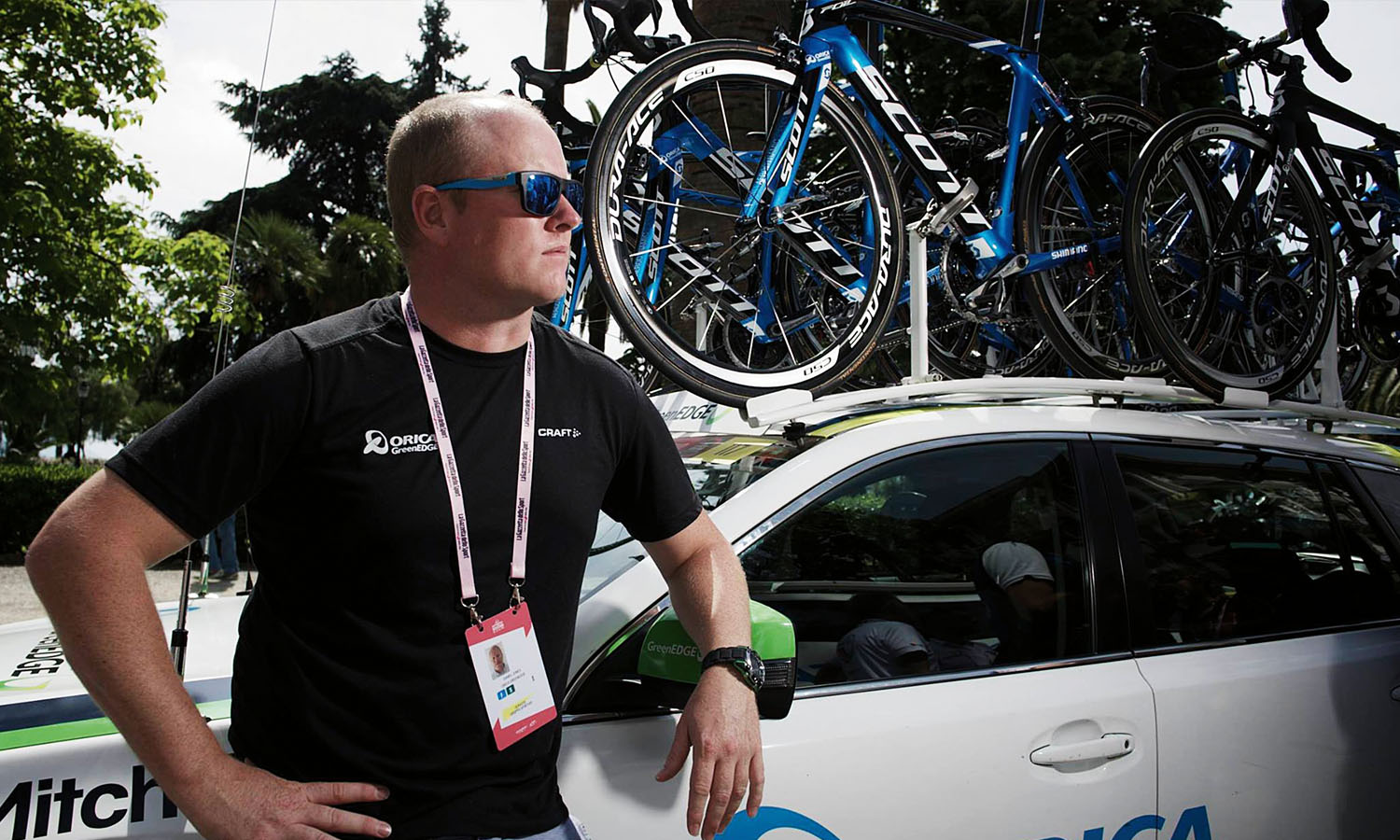
When Dan Jones’s father returned from the 2004 Tour de France with some amateur film footage and a bunch of stories, he unknowingly ignited a passion that would kickstart a career and – in no small measure – change cycling’s public image for the better.
Dan, a freshly graduated filmmaker at the time, developed a keen interest in cycling after watching his father’s videos. They served as inspiration for him to “tell human stories in the sporting world” using his own videography and production skills. Fast-forward a year and he’d scored the dream gig of making a feature-length documentary on the 2005 Tour de France, a project he repeated in 2007.
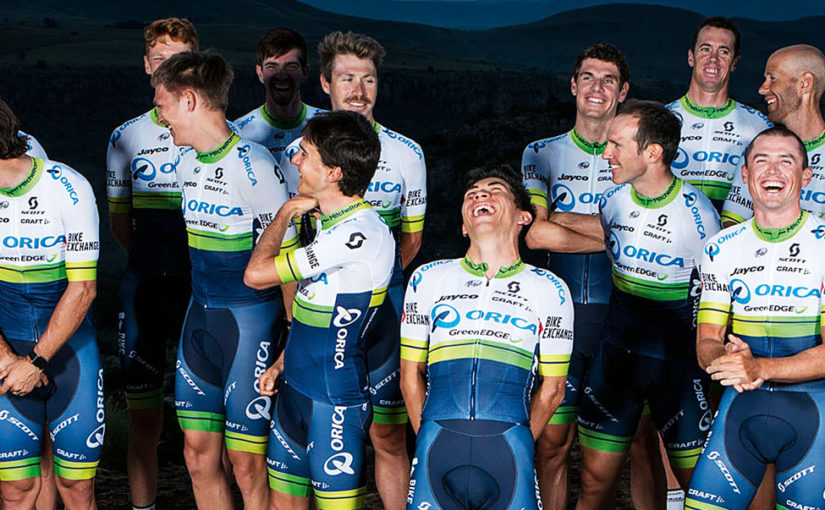
Despite feeling like “a shell of a man” by the time the race finished in Paris, Dan’s love affair with the tour continued. He covered the race for Fox Sports News between 2008 and 2011, but it was the birth of Australia’s own Orica-GreenEDGE team in 2012 (now Orica-Scott) that gave Dan his most significant break.
“I was friends with team owner [and founder] Gerry Ryan, so he approached me to come on board and film the journey with the team from its inception. He wanted to take fans along for the ride from the beginning,” Dan says. “I wanted to make content that appealed to not just your hardcore cycling fans but the wider audience, particularly those who know nothing about cycling.”
The pair rolled the dice and decided to do what no other cycling team had ever done – give their fans full behind the scenes access. The result was Backstage Pass, a distinctly Dan-Jones-flavoured YouTube series that doesn’t hold back on the laughter, the swearing or the silly jokes, but also captures the raw emotion and tension that comes with life on tour.
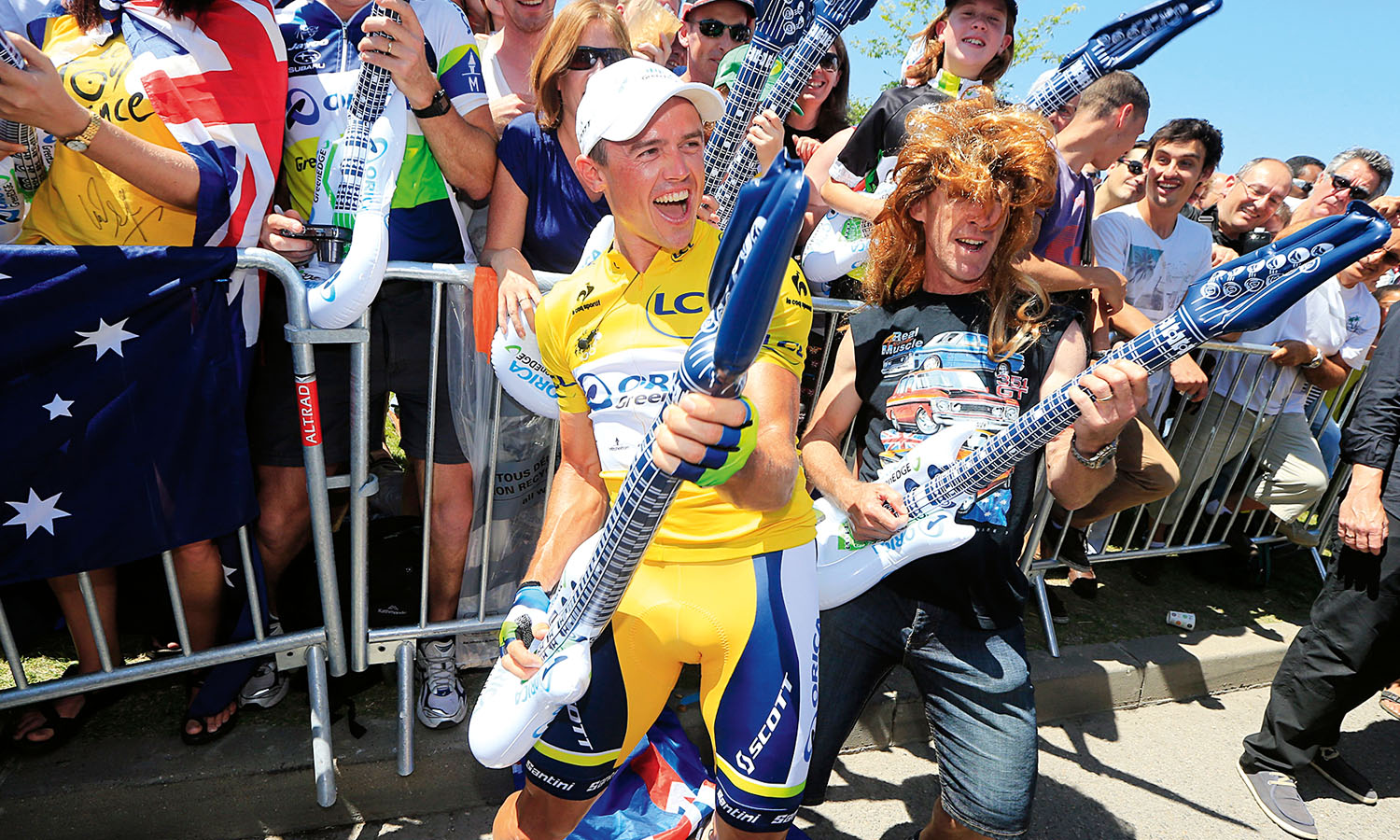
For the first time, Backstage Pass gave the public a glimpse beyond the secretive veil of cycling and into the lives of athletes who are not only determined and meticulous, but also down-to-earth, relatable and often very funny. In a sport whose public image has been so marred by doping controversies, these human stories provide a welcome breath of fresh air.
As an integral part of the team, Dan has spent between 150 and 200 days a year – or “a lot of hotel rooms”, as he describes it – on tour with Orica-Scott. His work has taken him to a host of countries in South America, Africa, Asia and across Western Europe. He’s spent a lot of time in Spain, where he was based with the team from 2013–16, and Brazil, with its aromatic food and frenzied passion for sport, remains a standout destination for him.
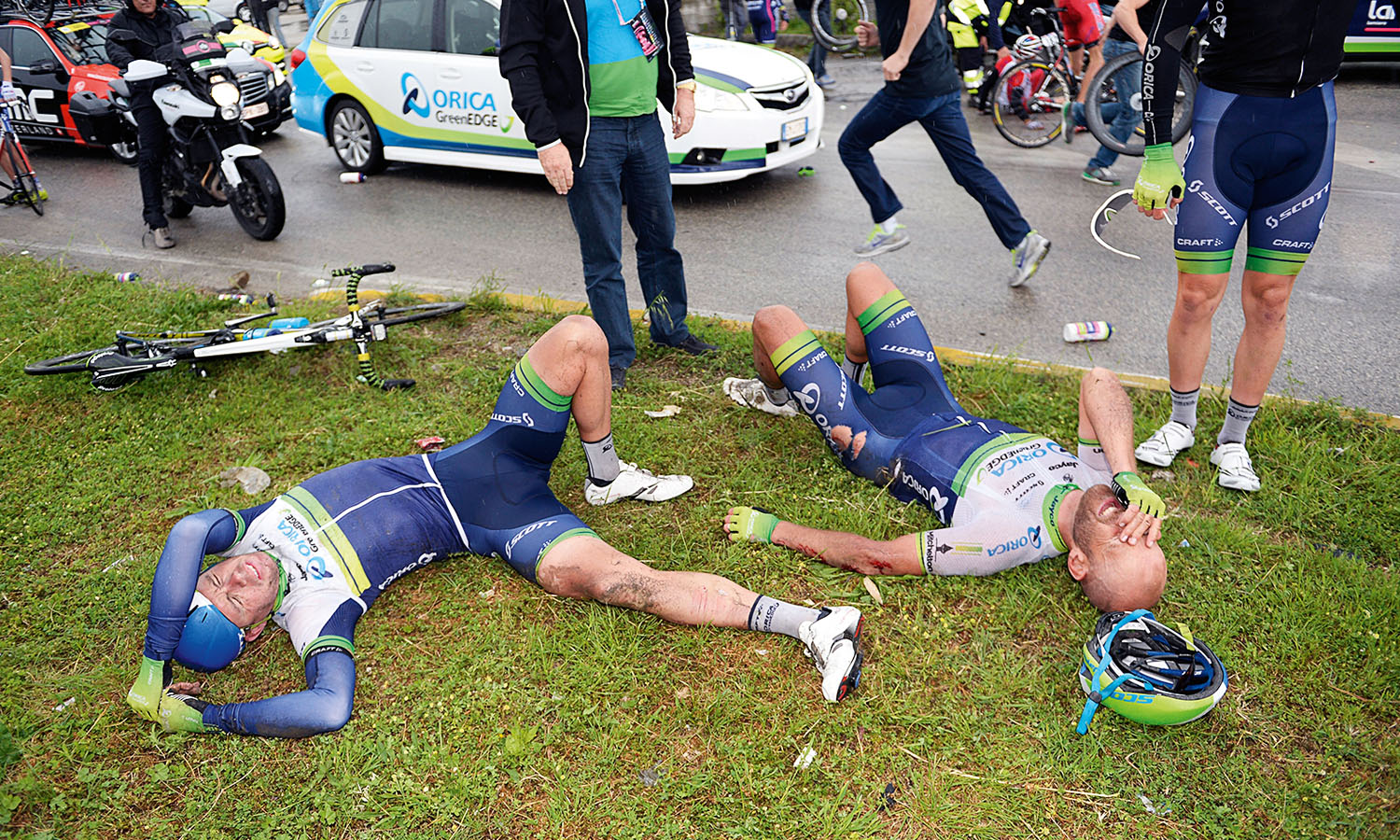
If he ever needs some extra inspiration for his work, Dan doesn’t have to look much further than Orica-Scott’s lead rider, Esteban Chaves. The fresh-faced Colombian with the cheeky grin had his promising career interrupted in early 2013, when a disastrous crash left him in a coma for two weeks. His injuries included a compound fracture of the collarbone, a smashed cheekbone and extensive nerve damage in his right arm. Nine of the 10 doctors consulted said Esteban would never ride again.
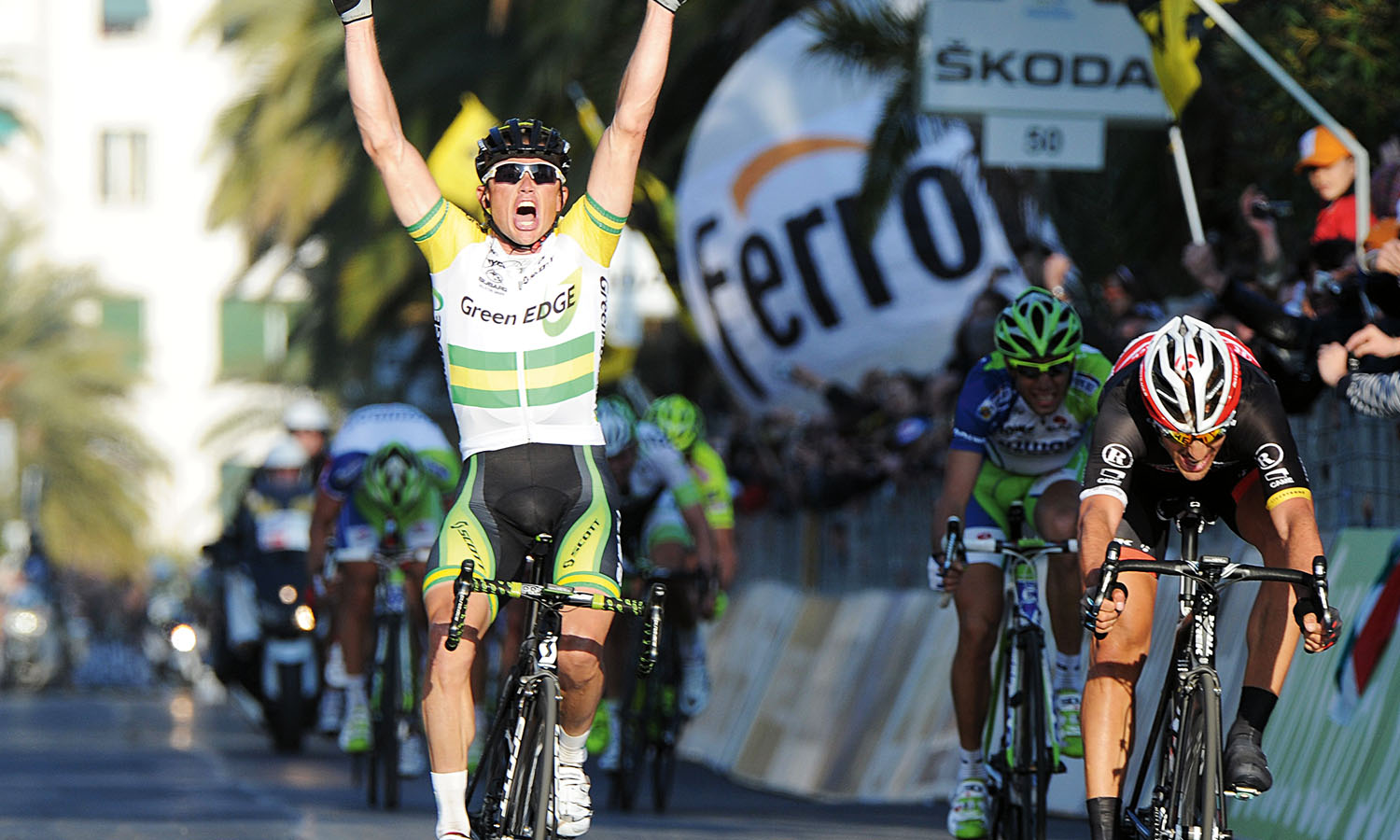
Not only did Esteban get back on the bike, but he made a mockery of his setbacks in 2016 by claiming podium finishes in both the Giro d’Italia and the Vuelta a España. Dan was there to film his entire journey.
“He defied the odds and has become one of the best riders in the world, but never lost the common touch,” Dan says. “He always has time for the fans and is super courteous to the staff and his teammates. A true legend both on and off the bike.”
Esteban’s story proved one of the main drivers behind Dan’s biggest project to date: the 2017 release of his first feature film, All For One.
“After Esteban’s breakthrough 2015 Vuelta, where he won two stages and held the leader’s jersey for a number of days, I knew the time was right to start work on a feature film,” he says.
All For One further showcases Dan’s ability to walk the line between humour and gravity. It traces Orica-Scott’s journey from its infancy up until the 2016 season, when the team celebrated some of its most iconic moments. Dan and his colleagues received recognition for their countless hours of work when the film won the Audience Award for Best Documentary at this year’s Melbourne International Film Festival.
“The reactions we have had to the film have been unbelievable,” he says. “I’ve received a huge amount of messages from people who have been touched by the film and the stories of mateship, determination and courage in a sport that had been tainted by controversy for so long.”
After 12 years on the bike, Dan’s involvement with cycling has just come to an end, with the 2017 Vuelta his last tour with Orica-Scott. His attention is now firmly focused on his newborn son, William, and his wedding later this year.
There are plenty of possibilities on the horizon, however. Dan is looking forward to “mixing things up a bit” and is considering making a tennis documentary in the future. But for the moment, his goals have “shifted from professional aspirations to being the best father and husband I can be”.
Because in the race of life, family always comes first.
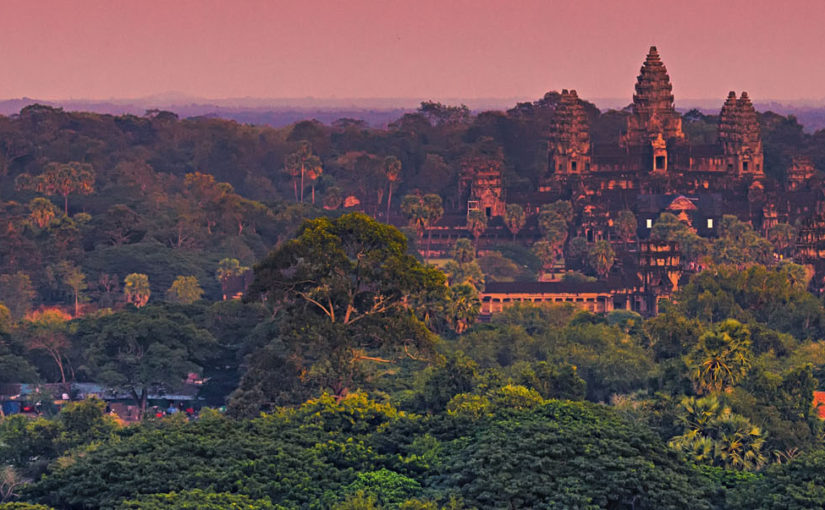
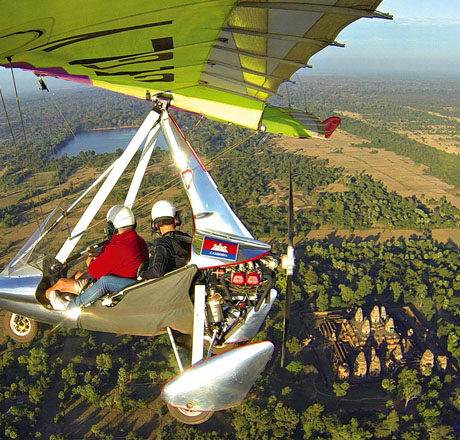
“Clear prop!” The words ring out like a golfer’s “fore” as the microlight’s engine grumbles to life. It’s a sweet sound, made sweeter by the fact that I am about to get a bird’s-eye view of the temples of Angkor.
It’s also my first time back in a cockpit after a four-year hiatus. Since leaving a life of weekend aviation adventures, the only thing I have truly been pilot-in-command of is my laptop. I am playing passenger today, but sightseeing in a microlight on the outskirts of Siem Reap is enough to scratch my flying itch.
American pilot Eddie Smith breaks my reverie and tells me to hop in. Strapped securely in the back seat, I feel like a novice facing the complexities of an aircraft for the first time. There’s no yoke; the simple cockpit is crude and communication with air traffic control is via a handheld radio. It’s a bare-bones plane, somewhat reminiscent of early flying machines and quite fitting for an adventure around Cambodia’s ancient edifices.
With more than 3500 hours on the trike, Eddie accelerates effortlessly down the dirt airstrip, and with slight forward pressure on the microlight’s control bar we break from the ground. After a brief climb to 180 metres, Eddie banks the flexwing east, passing the remnants of an ancient prasat (temple) shrouded by a thick grove of trees.
We press on, cruising low and slow over countryside where the rice paddies form a patchwork of emerald green. As we near Bakong, an imposing pyramid-shaped temple, Eddie launches into a history lesson about the Roluos Group, a set of three Hindu monuments dating from the late ninth century AD. While air law prevents us from flying directly over, we’re close enough to have a spectacular view of what remains of Hariharalaya, the ancient capital of the Khmer empire.
We soon head north towards the splendour of Angkor Wat. Outfitted with only a Plexiglas windscreen between pilot and rushing wind, the microlight offers a gripping perspective of the immense scale and complexity of ancient Khmer civilisation. My scenic tour has effectively become a trip back in time, when kings once ruled, warred and constructed vast waterways and temples.
My head is still in the clouds when the trike’s wheels touch down on terra firma. Eddie shuts down the little beast and asks how my flight was. My response? “We’re definitely doing this again.”
Waves collide against basalt cliffs, sending a cloud of salty spray into the air. Battered by wind and rain, it’s not an entirely pleasant day to be bumping across the North Atlantic, but I’m determined to reach Mykines, the westernmost isle of the remote Faroes and a paradise for migratory birds.
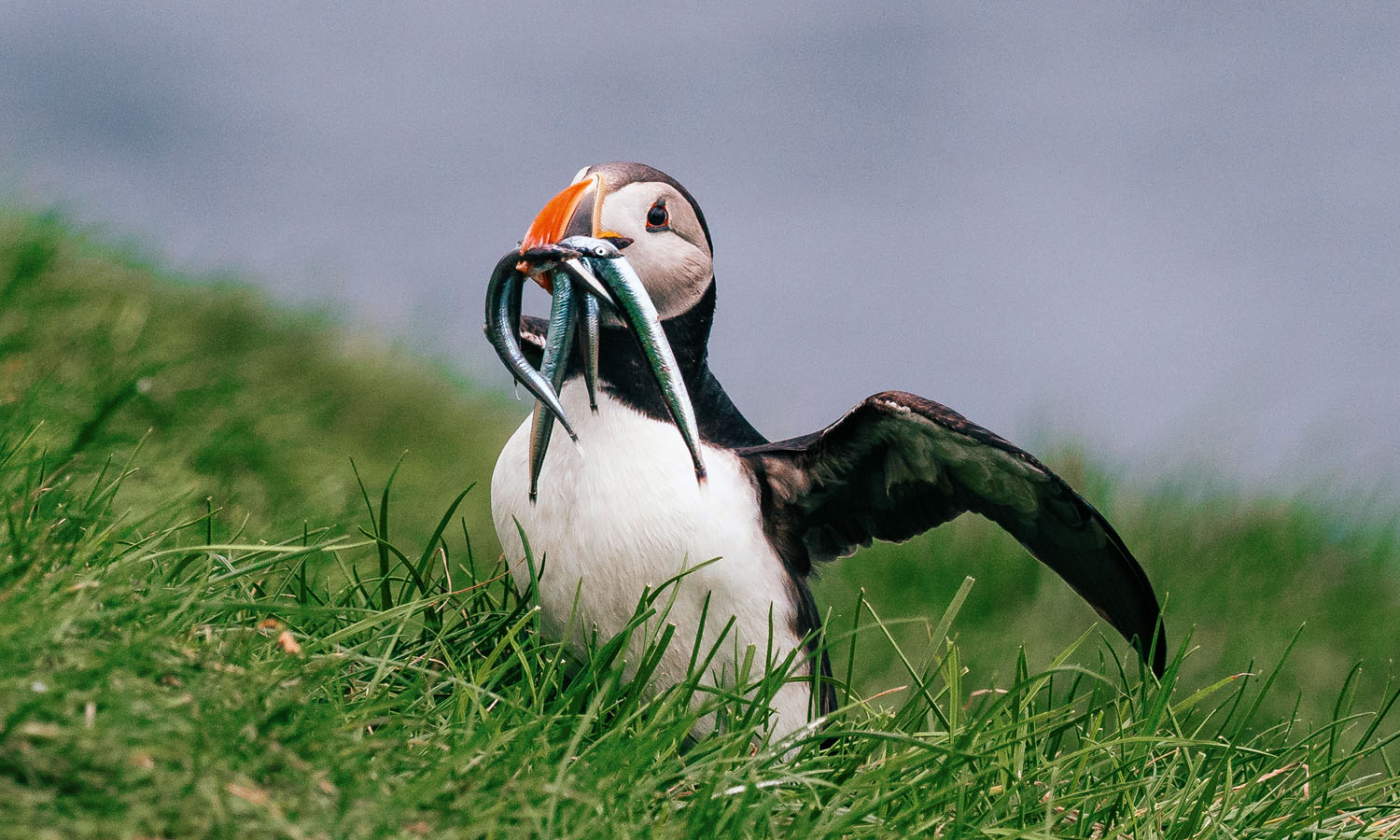
Although known for its breeding colonies of northern gannets, black guillemots and kittiwakes, it is the sweet and inquisitive stares of the puffins that have drawn me to the edge of the archipelago. With two unsuccessful scouting missions already behind me, I’m hopeful that today may be the day I spot these chubby little birds.
Twitchers aside, this remote and windswept cluster of 18 volcanic islands anchored between Scotland, Norway and Iceland remains largely under the radar, even as the popularity of Iceland soars. In my eyes though, it’s every bit as enticing.
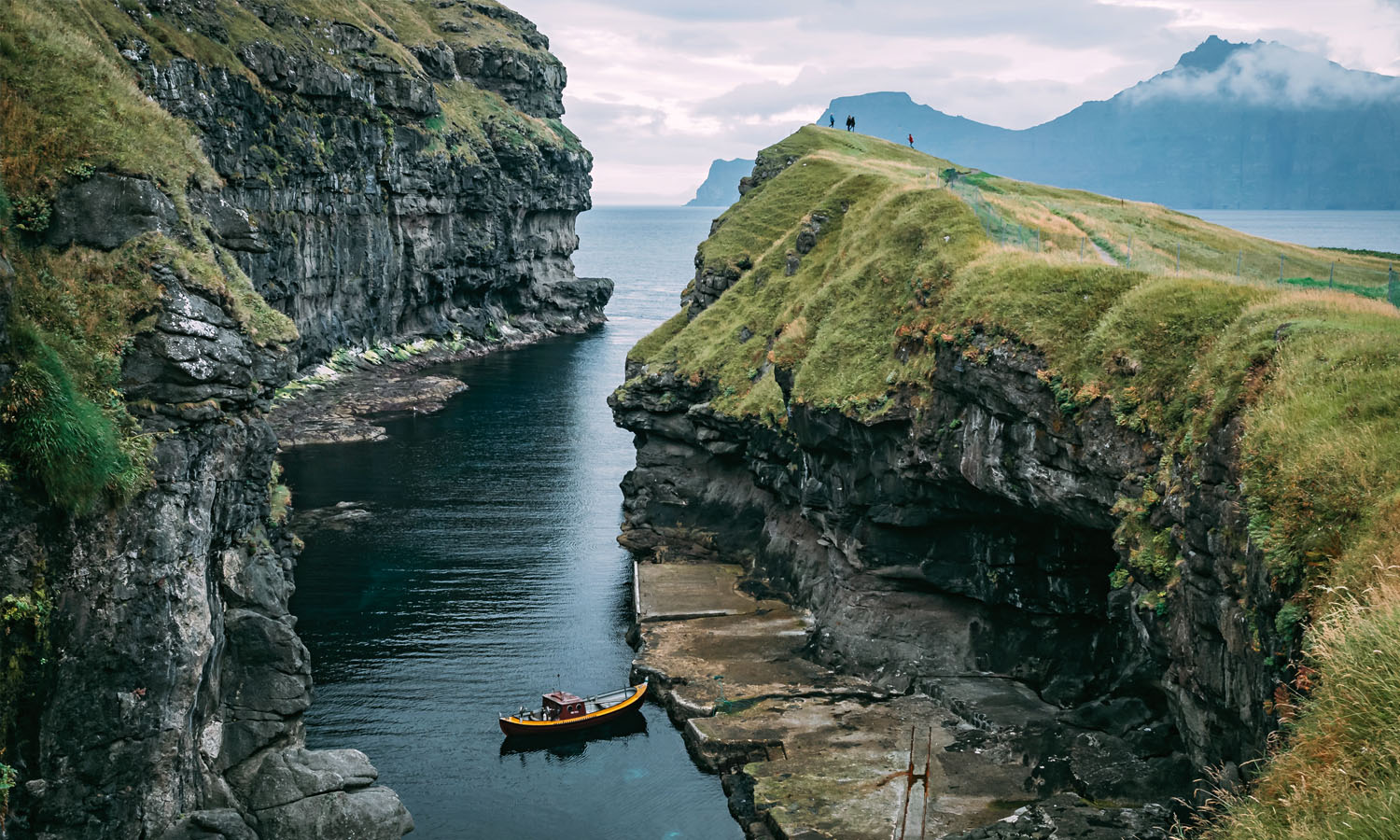
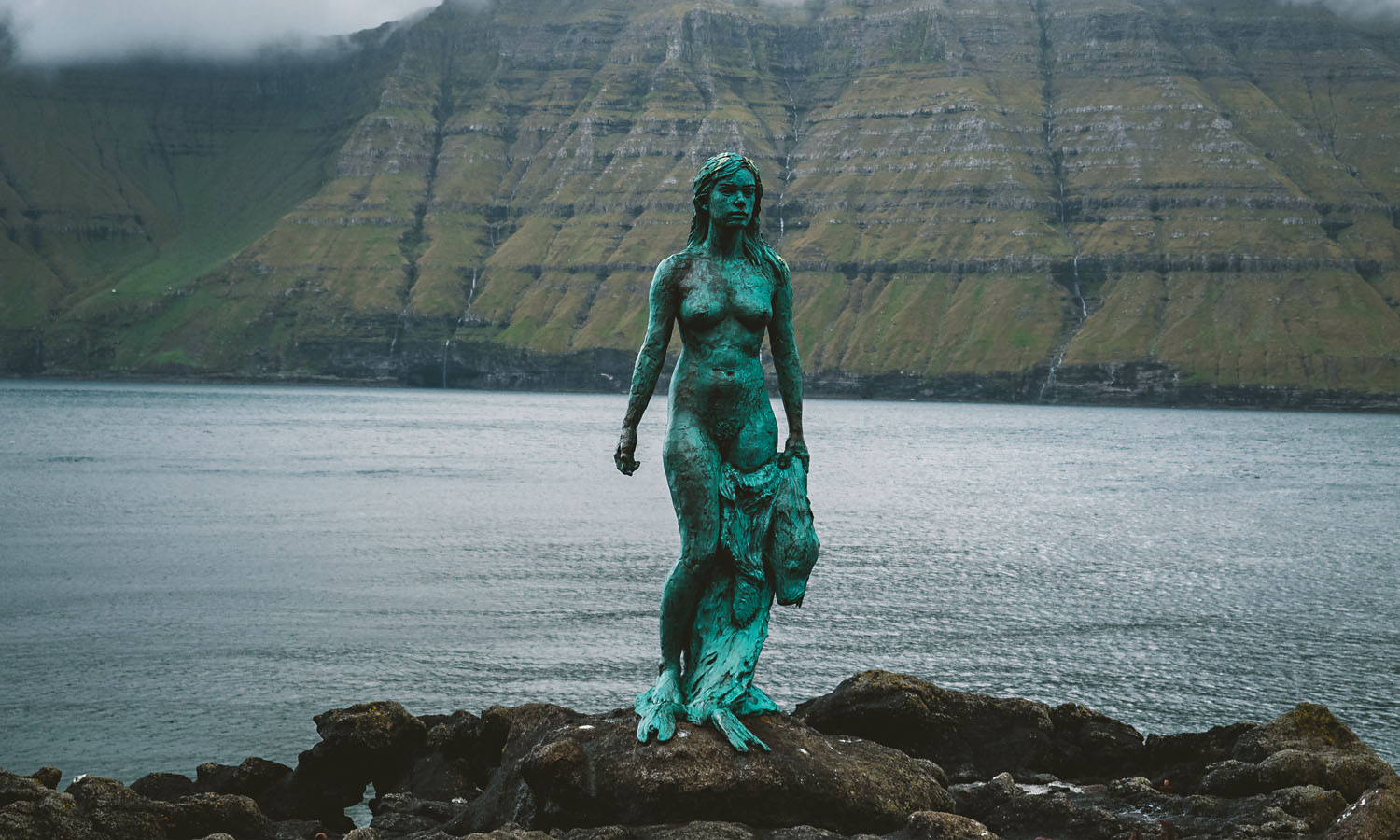
Cruising alongside a slate-grey wall dressed in moss, I can see why these rugged landscapes are woven with legends of epic Viking voyages and whimsical folklore. It’s only my fourth day here and I am already acquainted with the tale of the seal woman who cursed local men and the greedy Icelandic giants who stand as spires of rock fixed in the landscape after trying to steal an island.
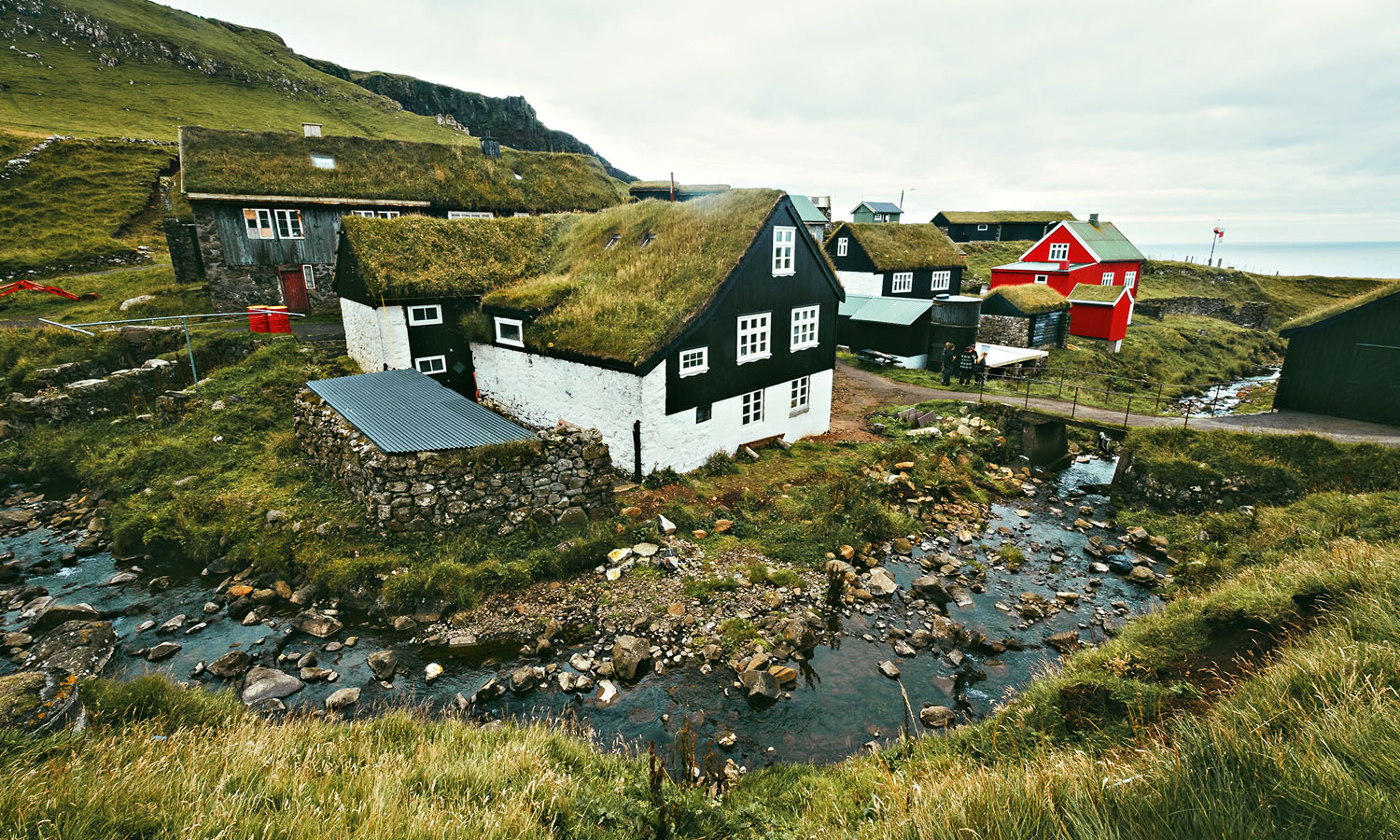
After 40 minutes of rocking and rolling on the ferry I’m relieved when a tiny marina wedged in a gap in the cliff comes into view. Scarcely more than a dozen inhabitants live in the island’s tiny settlement, a quintessentially Faroese village of manicured turf roofs and white window frames. A mosaic of dewy green fields carpets the way to the western peninsula, where puffins are known to nest. I march along the ridgeline under the watch of grazing sheep. Blades of grass poking through their teeth make them look like a scruffy gang of cowboys.
As I round a bend, a tornado of birds comes into view. Flashes of crimson speckle the horizon and I realise I underestimated the enormity of this spectacle. Puffins flounce through the air, furiously beating their wings in an attempt to keep portly bellies aloft, while thousands more ride the inky waves, their white bodies appearing like stars in a night sky.
After a series of loops in the aerial velodrome, several puffins land clumsily with glassy-eyed sardines drooping from their beaks. They disappear into burrows to feed expectant pufflings. At the westernmost point of the island a cackle of seabirds carries on the wind, rising from those breeding in the cliff walls. The stench of guano is almost unbearable.
A lighthouse pokes from the earth in the distance, kept company by a red-roofed keeper’s hut. To work out here, at what seems to be the end of the world, must be a beautiful but exceedingly lonely existence. Ferries to Mykines operate solely during summer, after which a helicopter is the only way to reach the isle. During harsh winters, storms can leave inhabitants stranded here for days at a time.
Looking back along Mykines toward the fjords undulating into the distance is tremendous. Rivulets have carved waves into the jet-black rock face over millions of years. I can’t ever remember setting foot anywhere more wild or at the mercy of the elements.
The days slide by in a blur of curious sheep, spectacular coastal roads and homes that would fit in the pages of any children’s fairytale. Although rain is almost constant and sombre skies unabating, it only seems to intensify the allure of the islands.
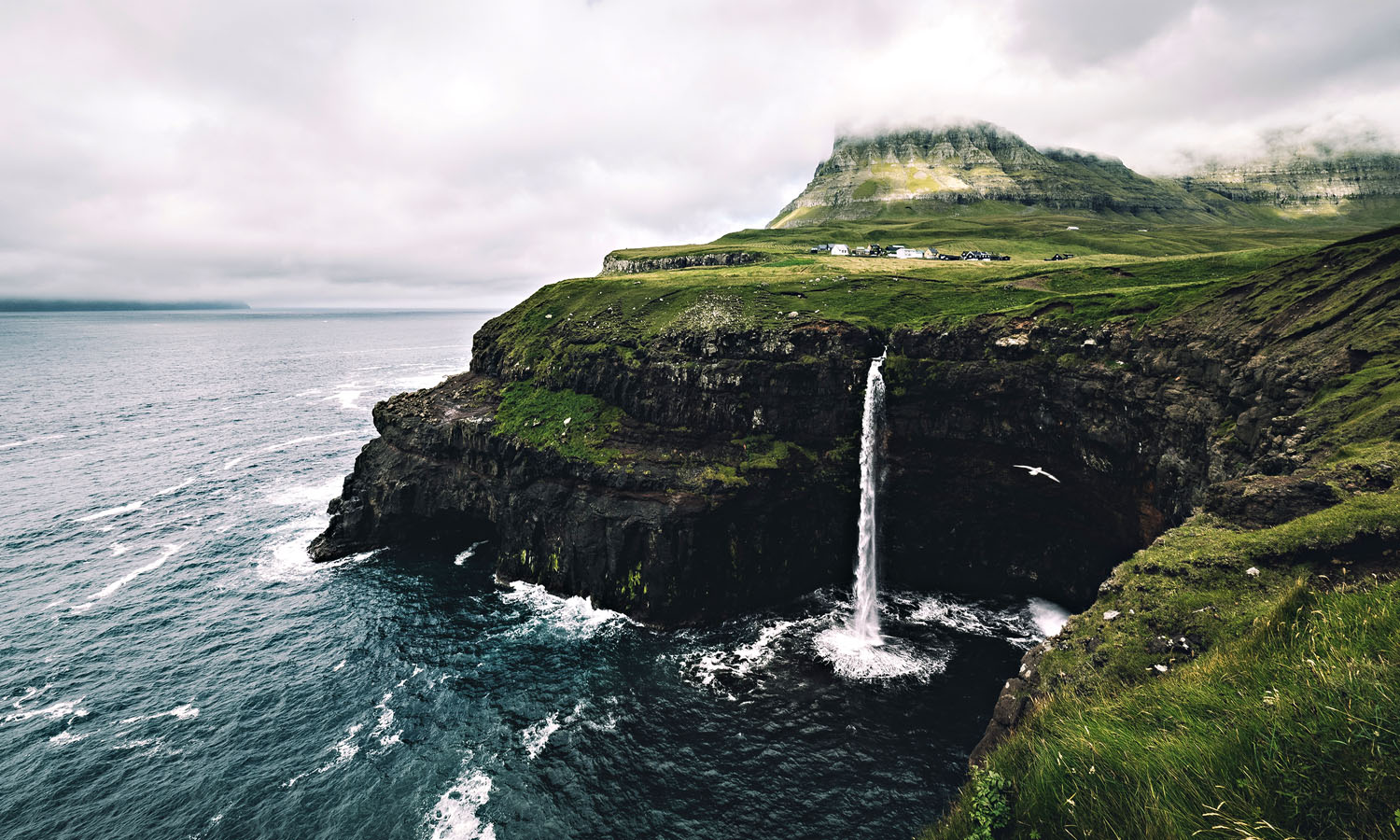
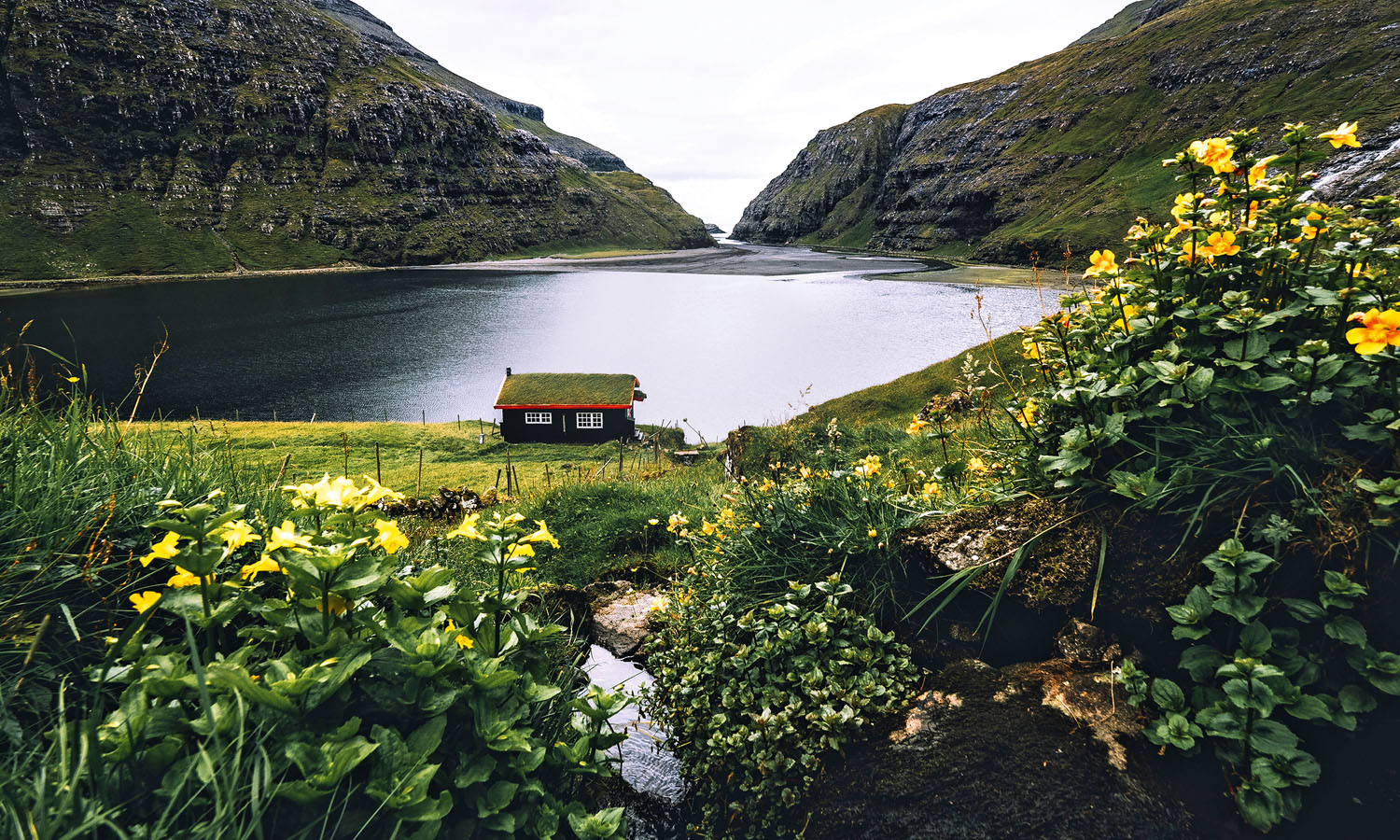
I marvel at the waterfall at Gásadalur that tumbles from a precipice toward the ocean, only to be whisked away by the wind, and wait for the incoming tide to flood the bay of Saksun and form a mirror of the sky. Later, I explore the medieval ruins of St Magnus Cathedral and contemplate indulging in the 17-course tasting menu at Kok, the only Michelin-starred restaurant in the archipelago. As I watch a tall ship with lowered sails pass narrow fjords and pinnacles of rock being assaulted by the northern seas, I wonder if perhaps they are the central characters of another local legend.
One surprisingly sunny day I venture north on the island of Streymoy along a serpentine road that delivers me to charming Tjørnuvík. Sat in the valley, this unassuming hamlet is hugged by a brilliant blue bay one might expect to find in the Caribbean rather than a moody archipelago so close to the Arctic Circle. Marking the horizon are the petrified figures of Risin and Kellingin, that sneaky giant and his wife, a witch, who unsuccessfully attempted to steal the islands and were transformed into sea stacks for their sins.
The scent of waffles pervades the centre of town, flowing from an open-air stand run by a couple who sit yammering on a wooden bench. Now that high season is over I may be today’s only customer. In this rare moment of warm autumn sunshine, waffles topped in cream and served with a side of jovial company are a welcome afternoon treat.
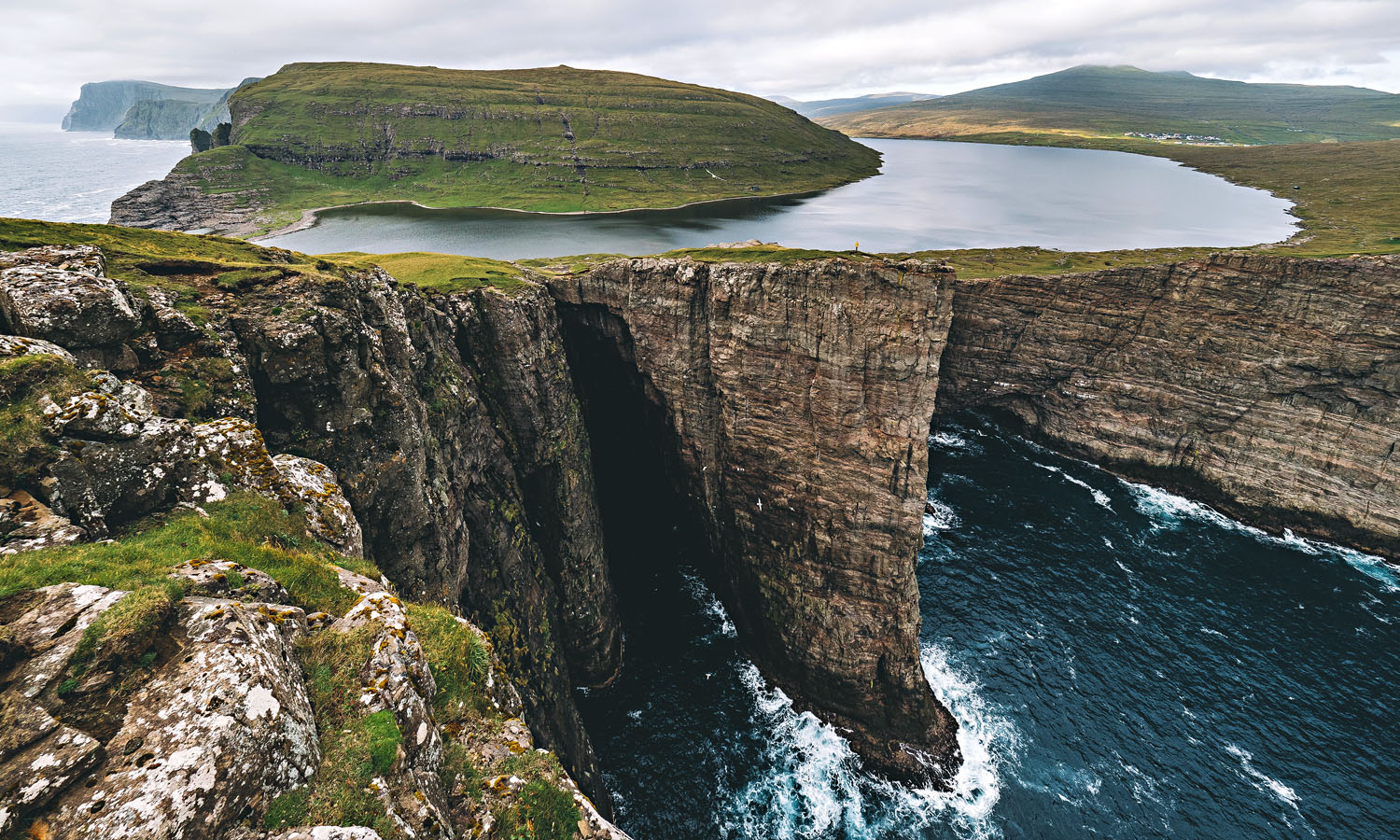
On the isle of Vágar sheep wend along the mossy banks of Sørvágsvatn, the largest lake in the islands, to a final incline leading to a ragged bluff. From here the curved lake appears to hover above the ocean, an optical illusion that has captured the imagination of keen photographers in recent years.
Leaning over the edge sends a bolt of adrenaline down to my feet. The Faroes are home to some of the tallest sea cliffs in the world, and although this one is more than high enough to send me trembling as I stumble away from the brink, it doesn’t even come close to qualifying for the top spot.
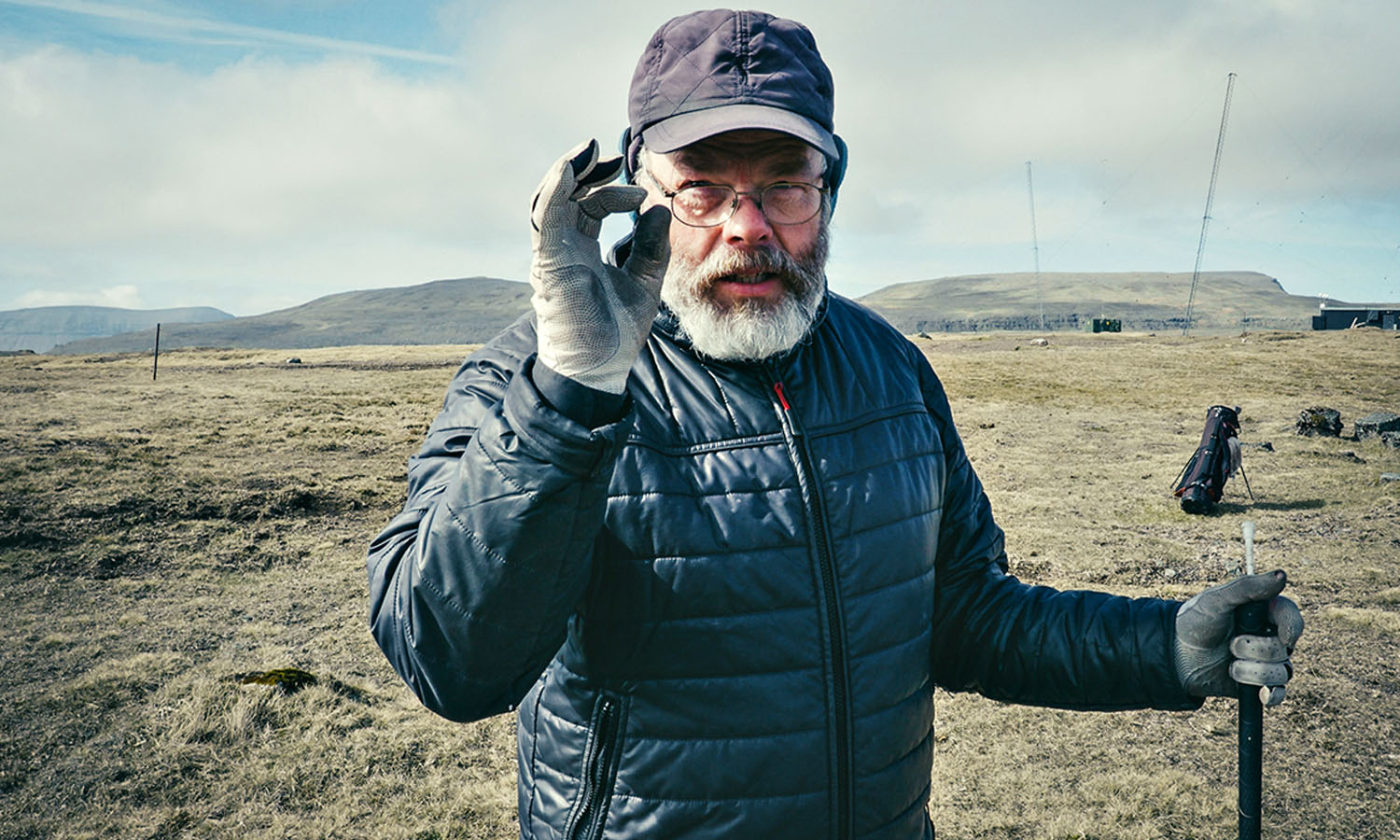
Later, Johannes Hansen, a local adventure guide, invites me in for a traditional feast. In his singsong accent, he relays the isle’s dark history, reawakening my sense of vertigo. According to legend, as a punishment for laziness or simply falling ill, slaves were tossed over the cliffs and into the angry sea. In a blissful daze after a few tots of homemade schnapps it’s hard to imagine these modern-day Vikings, with their cheerful, rosy cheeks, could possibly have ancestors – even fantasy ones – capable of such cruelty.
Conversation turns away from tales of malevolence and Johannes shares yarns about houses that have been transplanted between villages over the centuries, carefully shifted brick by brick, and explains why the Faroese always wear oversized hats jutting to the left – it’s so they can easily remove them when shaking hands with their right.
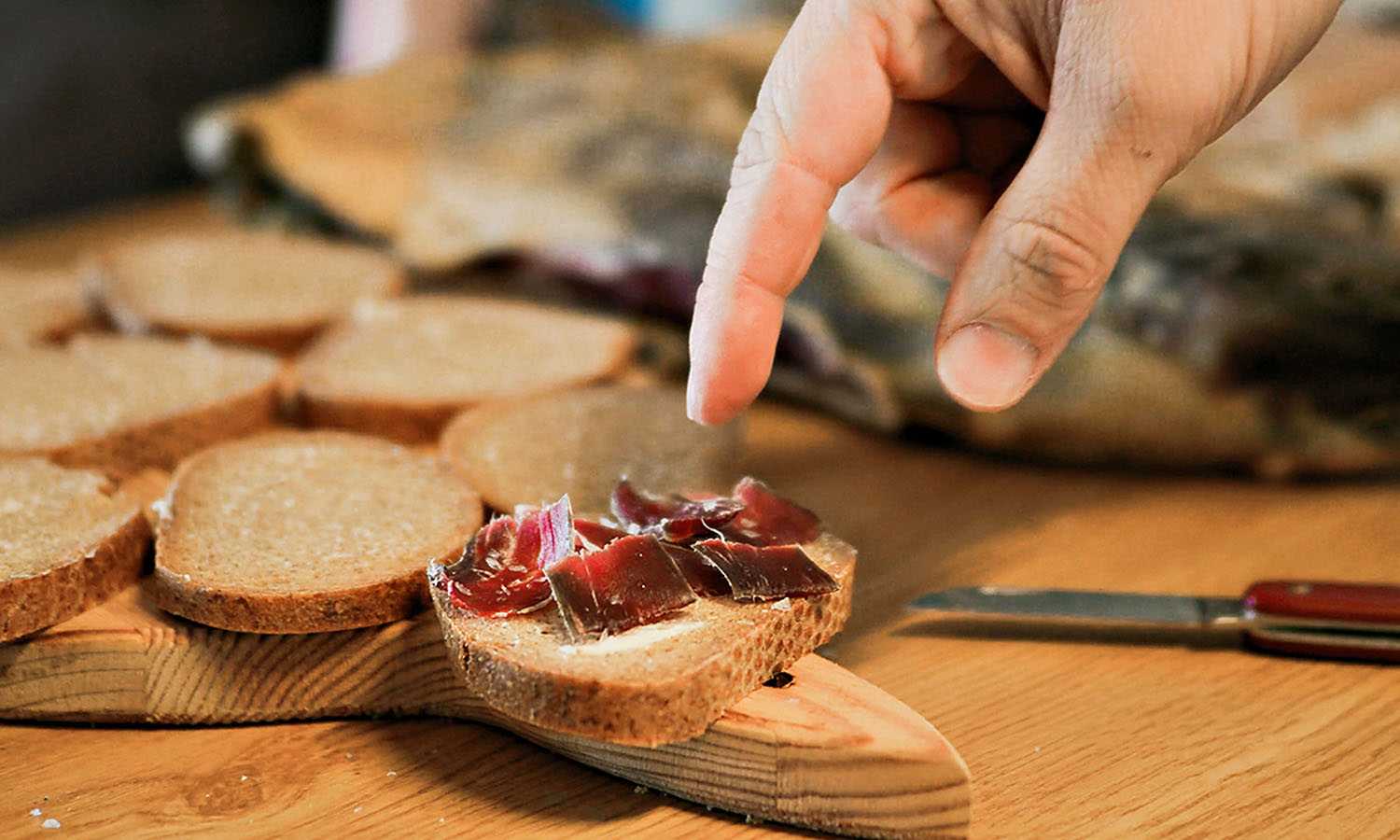
Famished, I work through a spread of unfamiliar meats. Skerpikjøt, a tender, wind-dried mutton that’s been hanging in Johannes’s shed for almost two years, gives off the funk of blue cheese. Dried flakes of fish and pilot whale blubber and flesh also feature on the menu. Although the annual grindadráp (whale hunt) is controversial on the international stage, locals fiercely defend the tradition. On these remote, rugged islands it’s difficult to survive on agriculture alone, and so whaling has sustained the communities through many harsh winters.
Overnight, mist envelops the homes of the 40,000 people living in the capital city of Tórshavn – almost the archipelago’s entire population – and I wake to a sea of white lapping at my window. Intent on embarking on a multi-isle road trip, I push on to the east along Highway 10. A bridge carries me over the sound between Streymoy and the isle of Eysturoy, where a sub-sea tunnel connects me to Borðoy and a ferry karts me to Kalsoy, a narrow island resembling a knobbly witch’s finger.
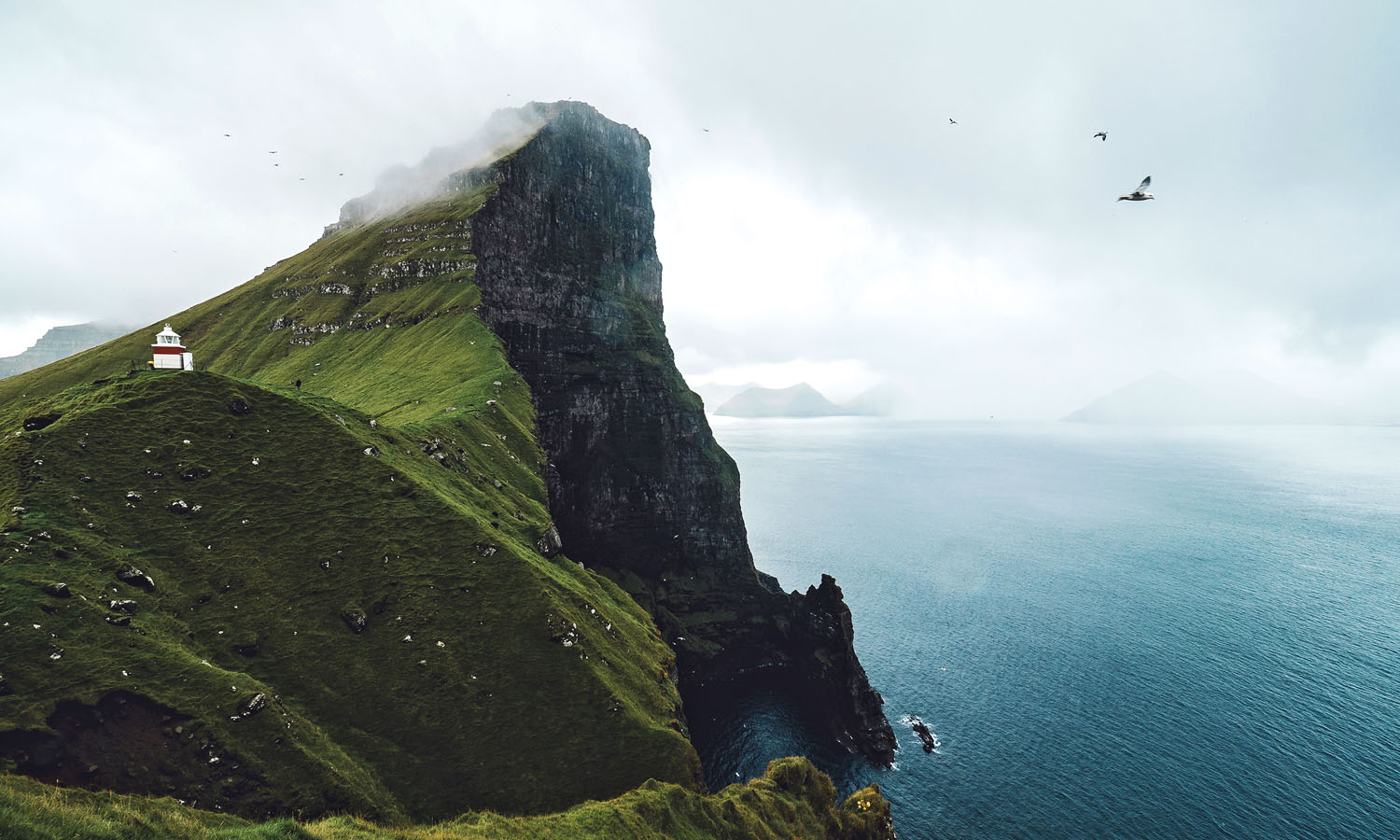
As is the case in many Nordic nations, the building philosophy seems to be “if we can’t go over it, we’ll have to go through it”. I lament the all-too-dim headlights guiding me into an unlit passage leading into the belly of a mountain. It spits me out at the village of Trøllanes, where I swap wheels for feet to reach my final destination. Perched by the Kallur Lighthouse, which stands sentinel on the emerald tip of the island, I watch the fog roll over the end of the earth.
Driving back between the fjords beneath a blanket of grey, I’ve come to realise that the melancholy skies lend well to the islands’ stark beauty and sinister legends. And yet, as if on cue, the clouds part and a halo of golden light spills across the landscape. Perhaps it’s a sign that I should do as the Faroese do and transplant my house brick by brick into this fabled landscape.
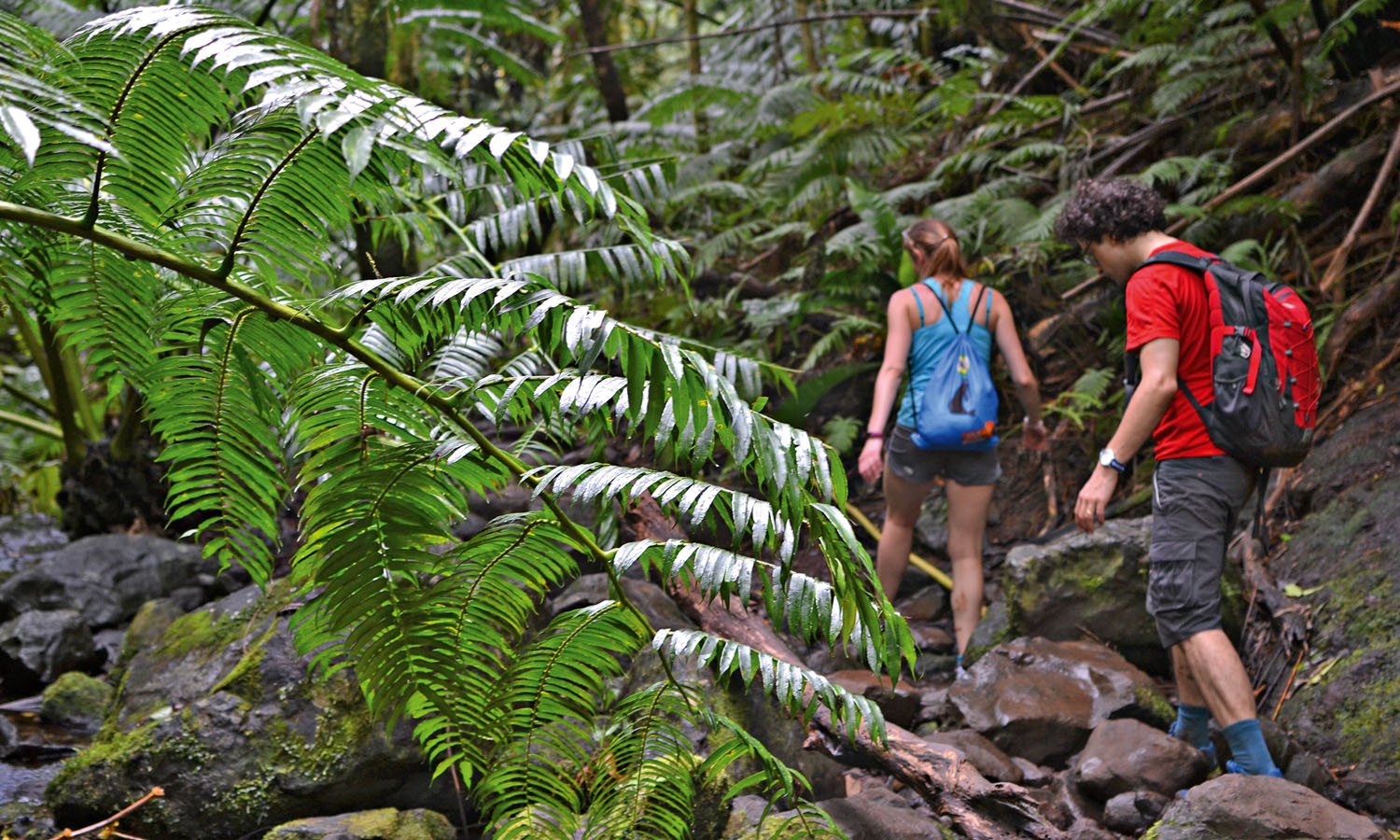
We are gliding like a troupe of figurines in Swan Lake: one minute cautiously, quietly pointing a foot, planting it toe to heel, before skating across the stage, spectators gawping in anticipation of a blunder. The next minute we are allegro: springing and bounding and leaping like a tornado. Our backdrop may be pure blockbuster, but this is no extravagant production. We are frolicking in mud, our Kmart plimsolls tacking to the ground, a glistening centrepiece of sweat gracing our foreheads, surrounded by a halo of humidity-induced frizz. It is glorious.
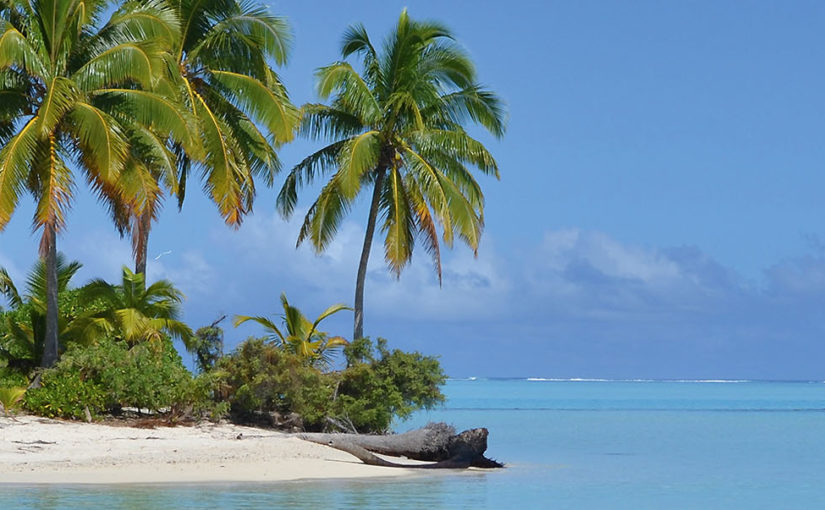
The Cook Islands might be known for its Listerine-blue lagoons, but the interior of rugged Rarotonga is unexpectedly inviting and practically tourist-free. And although the rains may have dampened our trail, punctuating it with portions of sloping quagmire, they’ve not dampened our spirits.
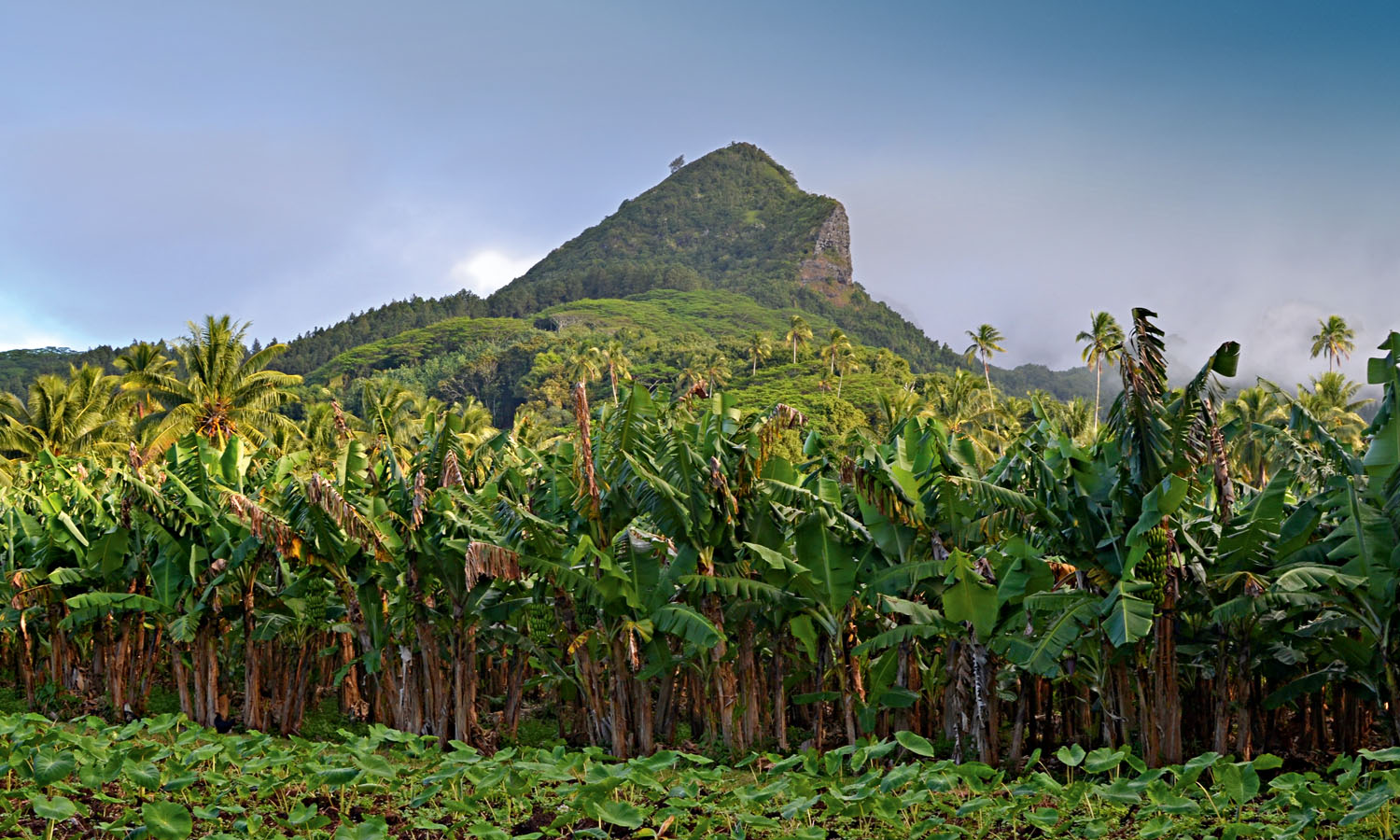
On a cross-island trek we plod from montane forest through cloud forest to the craggy tip of Te Rua Manga (the Needle), in the company of local hiking protégé Bruce, the nephew of Cook Islands’ medicine man Pa. “The air conditioning has come on,” he chuckles, stopping and grinning as the trade winds rush through chestnut trees dressed in moss. Having just climbed a near-vertical staircase of tree roots it’s a welcome relief; a cool lick slicing through soupy climes. In only three kilometres – and numerous lungfuls of air – we rise some 300 metres up this ancient volcanic cone. The slopes are so saturated in lusty greenery they feel primeval – like a T-rex could poke its head through the foliage at any given moment.
That these parts are so sparsely occupied is the legacy of the missionaries, who swept onto Rarotonga’s shores in the 1820s. “Everything changed in an instant,” notes Bruce. “They converted the chiefs then brought all the natives out to live by the coast.” Tattooing and Cook Islands Maori (the local language) were among the other cultural assets targeted by the colonists, although both survived the battle and have been revived by locals with increasing verve. The foreign intrusion has bestowed Raro with one gift, however: this relatively undisturbed primary montane rainforest is now one of the most pristine in all of Polynesia.
As the trail reaches a clearing we can finally survey the lavish layers of green unravelling towards the ocean in 360-degree technicolour, fairy floss clouds engulfing the serrated peaks adjacent. In the distant shadows we spy flat-topped Mount Raemaru, whose name means ‘empty shadow’. Legend has it warriors from Aitutaki, who were envious of Raro’s ample mountains, chopped off its crown while villagers were sleeping and sailed home with it. Curiously, islanders will tell you, Aitutaki’s highest peak today looks a lot like the stolen mountain.
With our ‘cardio’ session now complete, Bruce leads the vertigo-immune among us up the final stretch. Soaring some 413 metres into the heavens, the Needle demands a light dose of rock climbing and abseiling to reach its stony walls. Akin to a (leisurely) Cook Islands take on a via ferrata, we clutch chains and ropes and find our footing in hollows the size of eggs, hoisting ourselves up to the lichen-speckled crest of this rock pinnacle, where a 60-metre drop awaits below our toes.
The downhill ‘yoga’ portion of the trek transpires to be the most deceptively perilous, the coffee-brown soil now a viscous material, ever-encroaching on limbs. We crisscross streams where ferns bow over the water, curling up like musical notes, and wind down trails peppered with hibiscus flowers that glow like flames. We even chance upon a lesser-spotted pasty, naked Dutch man in a natural pool who was not expecting company. Bruce has been privy to some much more eye-opening encounters on these walks, he says.
With tourism still in its infancy here compared to several neighbours, some can afford to be bold with their life choices and get away with it. In 2016 the Cooks received some 146,000 travellers, compared to almost 800,000 in Fiji. But things are changing quickly, warns Bruce. “The last 10 to 15 years have gone boom here,” he says. “Right now there’s a good balance – it’s still not too touristy. The people that come here are typically looking for a smaller, less commercialised destination.”
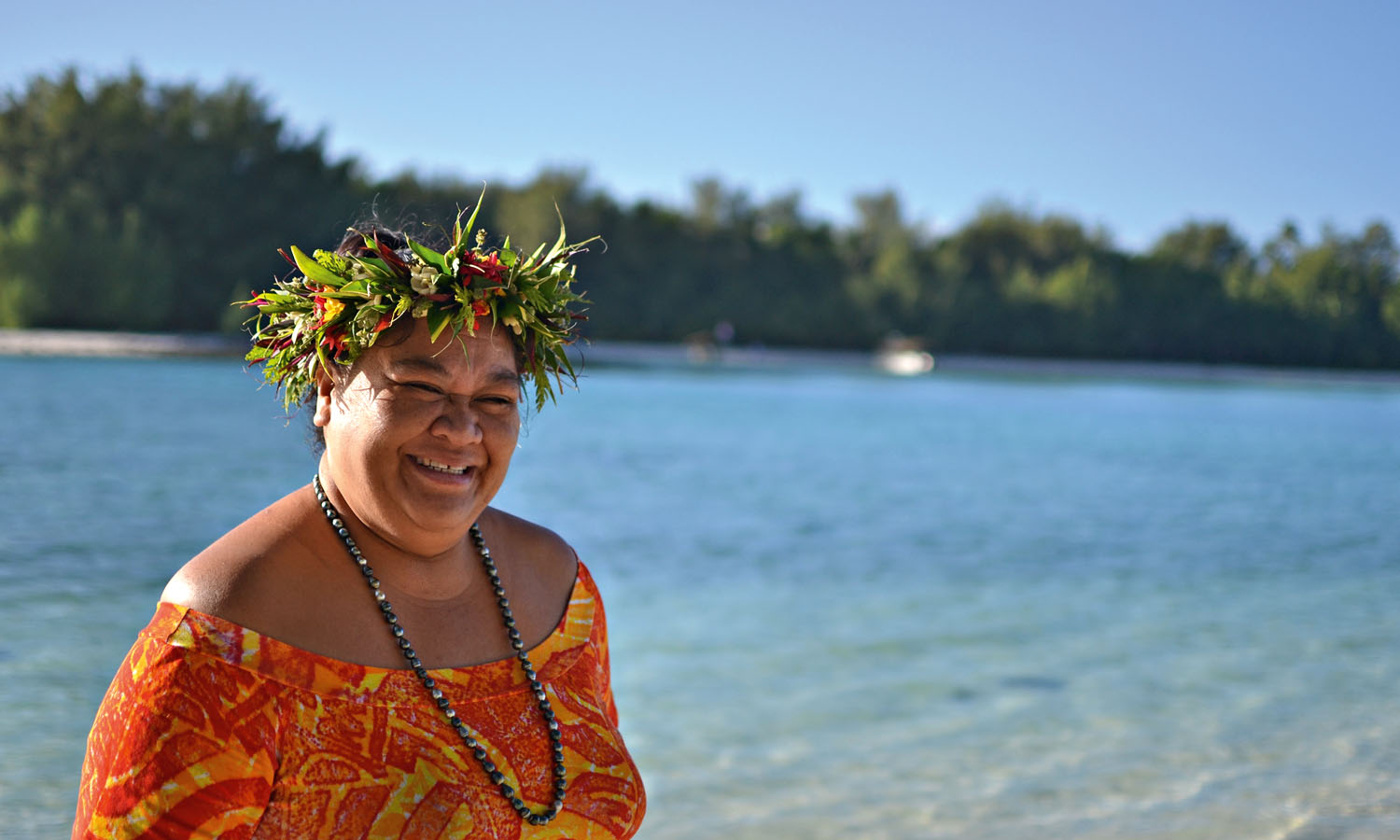
Down by the littoral lowlands that typify the Cooks, people are wearing decidedly more clothes. Local men on scooters sporting basketball singlets and shorts warble as they zoom past us on the island’s single main road, Ara Tapu, listening to tunes through their wireless headphones. Women in flower crowns and vivid floral dresses steer with one hand as they balance stacked polystyrene packets of food in the other, like an offering to the gods.
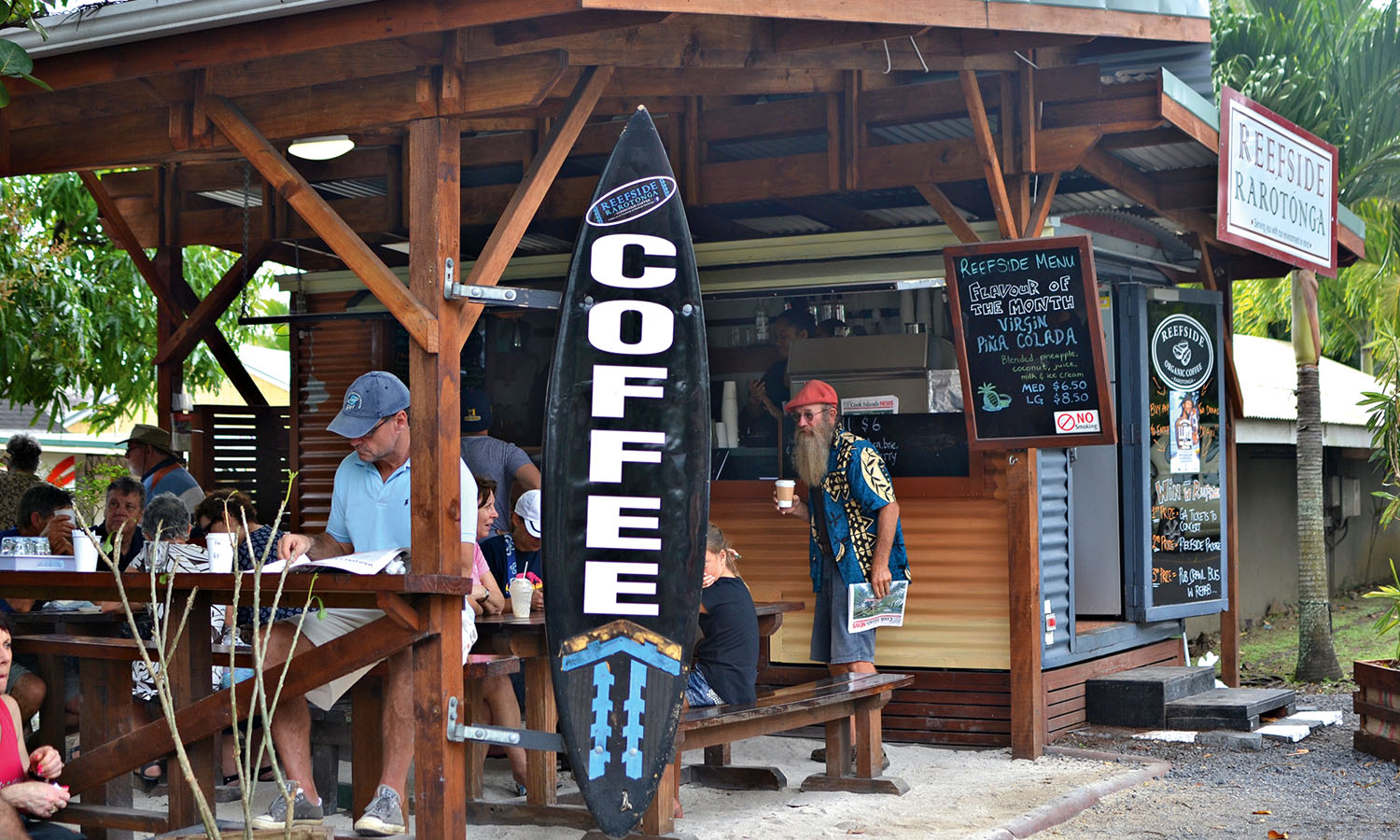
The road is lined with endless palms and salmon-pink breeze block houses, but peer between the two and you’ll spot surf-shack-style coffee shops that dispense velvety flat whites a Melburnian barista would be proud of. There are also wooden beach bars that serve up fish sandwiches the size of your head, shops fashioned out of shipping containers, and independent breweries doling out growlers full with amber nectar. Add to them the tropical hues that adorn shopfronts and low-rise buildings, and the resulting vibe feels more Caribbean outpost than stereotypical South Pacific resort town. But that’s not to say the island lies stagnant and stuck in the past. One global trend islanders are taking to with zeal is environmental TLC and, as the only remaining industry in the Cooks, tourism needs all the caretakers it can get.
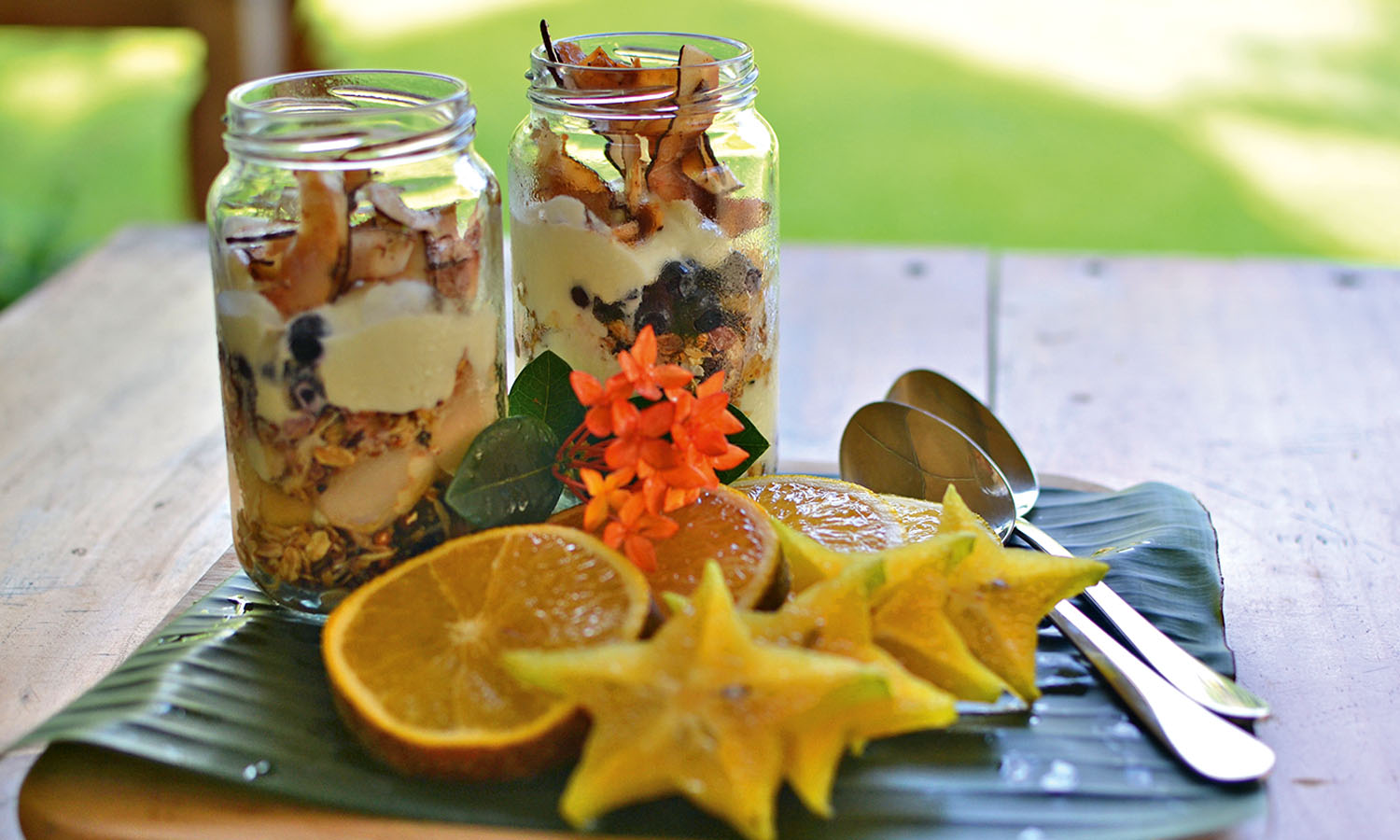
Ikurangi Eco Retreat is one of Raro’s principal pioneers, delving into upmarket glamping territory as well as directing focus away from the beach and back into the hinterland. Open since mid-2015, these luxury safari tents bathe in a sea of shrubbery and trees, and look like something plucked straight off Africa’s plains. There are free bicycles for pedalling around the quiet back roads, where chickens, dogs and stray goats roam around the crumbling remains of ancient marae, sacred ancestral places used for tribal ceremonies. Breakfast materialises on your private deck each morning, replete with Mason jars of granola, toasted coconut and plump berries, or fluffy pawpaw muffins, tropical fruit skewers and fresh juice, all locally sourced. From the plant-based toiletries to the saltwater swimming pool and composting toilet, everything is designed with sustainability in mind.
It’s a similar philosophy on Storytellers Eco-Cycle Tours. We leave almost no trace on our four-hour trip as we traverse taro plantations, where families yank the bulbous root from the ground, and climb old roads built from coral while piglets doze under nearby bushes. The outing revolves around the island’s history and heritage and 10 per cent of all profits are reinvested back into the local community.
But the most monumental step of all in the fight for sustainable tourism is Marae Moana. Covering an area similar in size to the landmass of Mexico, this ocean sanctuary was declared by the Cook Islands’ parliament in July. It’s said to form the largest multi-use marine park in the world, meaning these pristine waters will be safeguarded for generations of locals and visitors to come.
With land comprising less than one per cent of the Cook Islands’ territory, it’s little surprise most travellers come for the country’s surreal seascapes. And there’s no better place to wallow in its waters than at Aitutaki. Often lauded as the world’s most beautiful lagoon, the water is the clearest and boldest I’ve ever set my retinas on. So vivid are its greens and blues, it looks almost radioactive. So pure are its depths the entire contents of the ocean floor unfold before you in plain sight. You don’t need to don scuba gear, or even a snorkel, to admire the local marine life here – you can spot it with ease from the bow of any boat. Watch schools of giant trevally cruise through the water like underwater buses and small fish in shades of graphite dart to and fro, ogle blinding-white sandbars that suddenly materialise out of tranquil waters, and gaze at palm-drenched, uninhabited motu (islands) that dot the horizon in almost every direction.
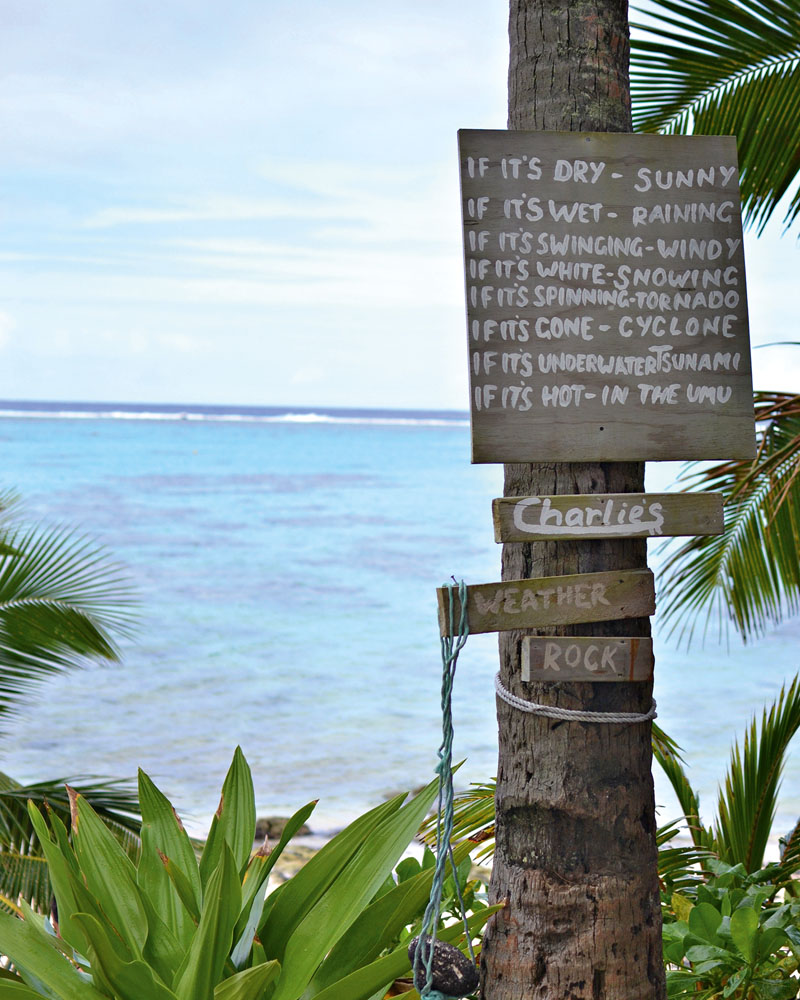
Although it takes almost an hour’s flight to reach, a surprisingly vast chunk of Aitutaki’s visitors are day-trippers. But a flying visit means missing out on all the little features that make this tropical isle a big charmer: the street signs scrawled by hand in red paint, the main township with its one ‘superstore’ and two fish and chip joints, beachcombing its deserted shores, devouring dense slabs of coconut cake at Tauono’s ramshackle garden cafe. It may be around a third of the size of Rarotonga, but Aitutaki is so sparsely speckled with houses that it somehow feels bigger and driving barefoot around its lengths with the windows down is surely one of life’s greatest pleasures.
Aitutaki’s staunchly loyal locals – and resident expats – love to bend your ear on what makes their island home the best. “It’s packed in Raro now,” a mustachioed gent tells me over NZ$4.60 whisky served in plastic cups at the Aitutaki Game Fishing Club, a greige concrete structure hidden among the shipping containers by the island’s docks. “Everyone’s always on the go and has no time to chat,” says another playing pool under the strip lighting. “Whenever we can we try and get the first flight out of there. It’s a zoo.” To call the Jamaica of the South Pacific a zoo makes me think he must have also had a run-in with that same pasty Dutch man.
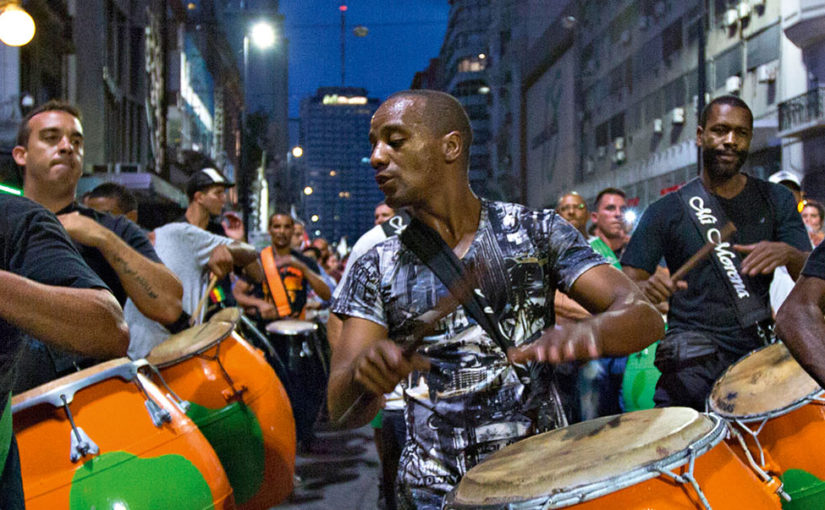
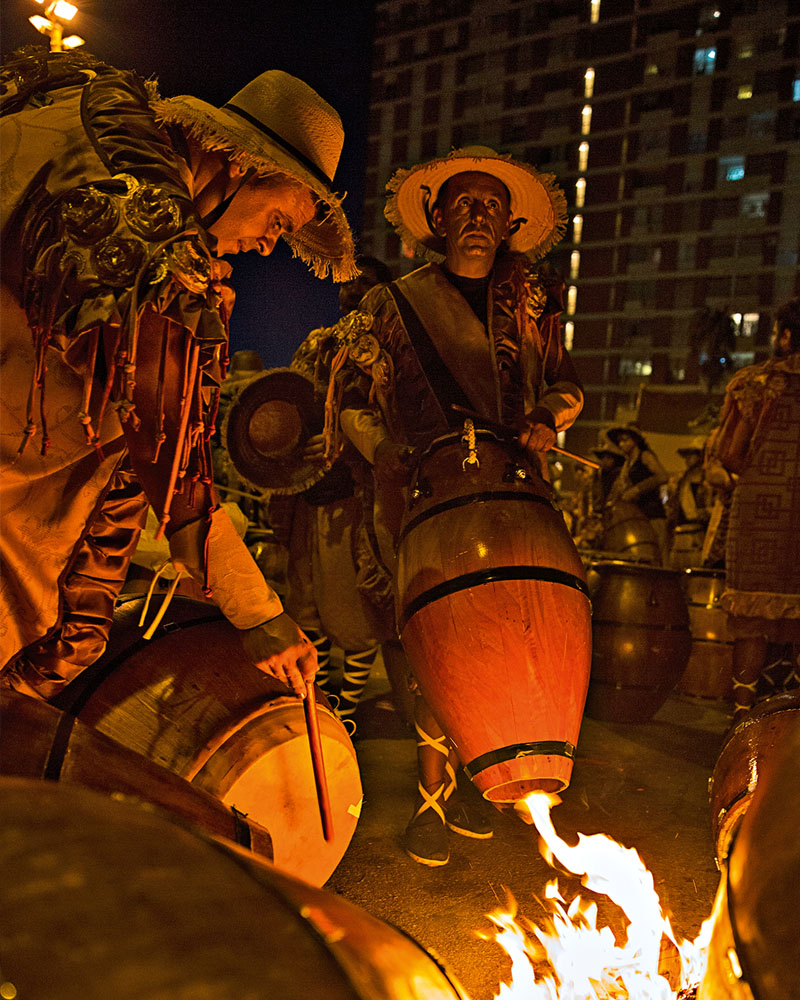
Small fires line either side of the street in one of the oldest sections of Montevideo. Men circle each, their brilliant blue robes and wide-brimmed hats standing in contrast to the flickering light. They’re warming the leather stretched across their wooden drums in preparation for a long night.
I pass a dancer in a bikini covering only the most essential real estate. After chatting with friends all wearing similar ensembles she takes one last drag of a cigarette, smoking down to the filter, carefully making sure the embers don’t ignite the enormous scarlet and gold tail feathers fastened to her back.
The usually sleepy neighbourhoods of Palermo and Barrio Sur are burning with life.
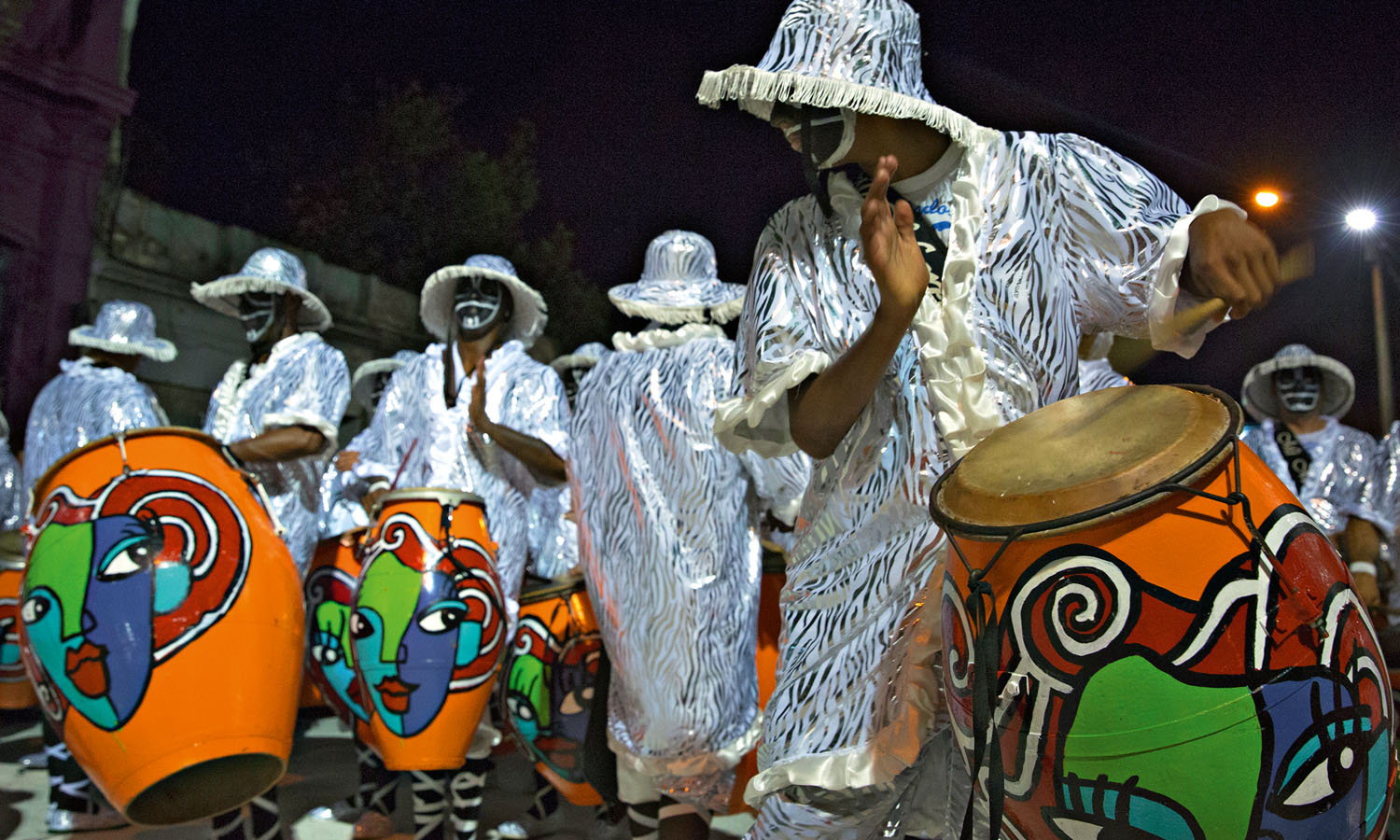
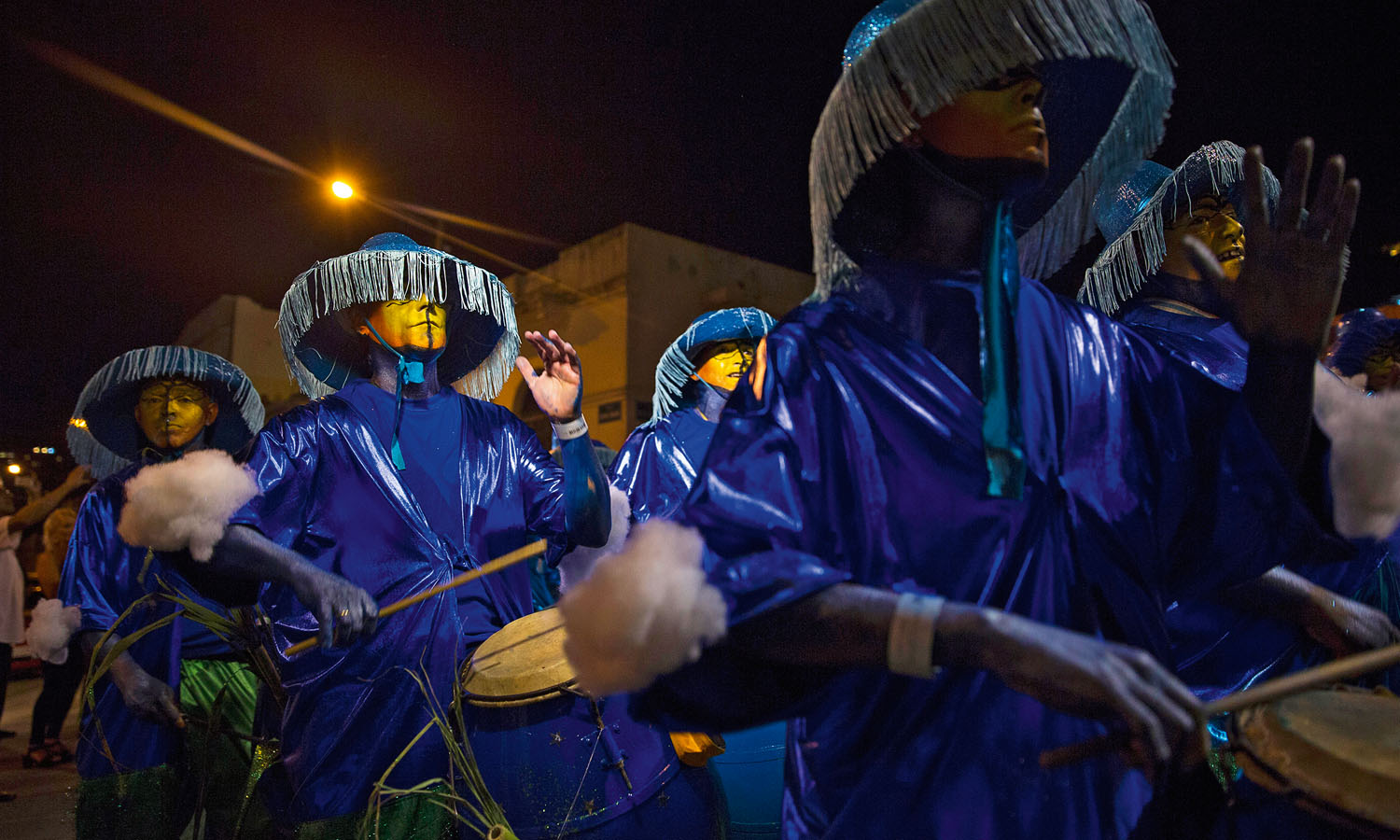
“Tonight is bigger than all of us!” declares a man to a troupe dressed in metallic zebra-print robes. “Tonight, you’re not just playing for yourselves – you’re representing your neighbourhood, your country and, most importantly, you’re representing Valeria. Play harder than you’ve ever done before.”
The rallying cry belongs to Juan Ramos, a battering ram of a guy who looks more like a rugby player than a musician. He’s covered in shadows, but the dim streetlights reveal a faded tattoo on the side of his shaved head that reads Mi Morena, an affectionate term loosely translating to ‘my dark-skinned girl’. It marks his allegiance to one of the city’s most respected comparsa (groups of drummers, dancers and flag-bearers) that represent different regions of Montevideo. And the Valeria mentioned in the pre-show sermon used to be one of their dancers.
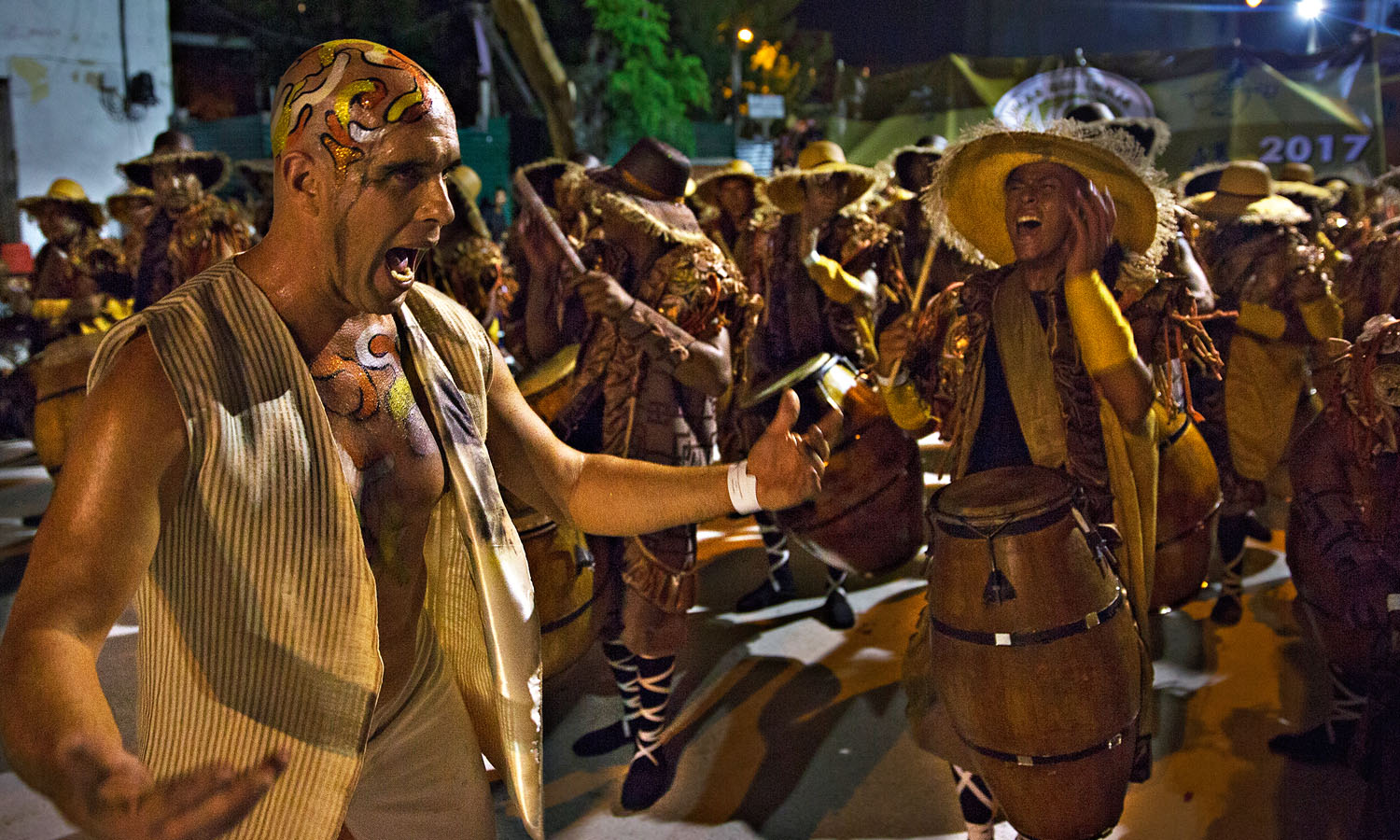
Tonight is the second night of Desfile de Llamadas, a parade through Montevideo and a cornerstone of the Uruguayan carnival celebration. Each February, comparsas march in wave after wave, for the viewing pleasure of thousands of spectators lining the streets. Beautiful women shake their tail feathers to the beats of candombe, drum music that has grown from African roots and been infused with a Uruguayan flavour along the way.
Las Llamadas has a precarious duality. Today, it’s the landmark celebration of Afro-Uruguayan culture, but just a few generations ago the political climate was quite different. Then the drums were used as a means of defiance – a way for African slaves ripped from their families to hold on to their culture; a culture slave traders attempted to extinguish. Playing the drums allowed those slaves to call out to their homeland and to each other. It represented a refusal to forget their identity and a refusal to go quietly into the night.
As the group separates following Juan’s pep talk, I feel a hand clasp my shoulder. “You’re part of our family. Do not forget.”
Through hours and hours of rehearsals over the course of many years, comparsa becomes like family, experiencing the ups and downs of its members’ lives together. Together they laugh; together they grieve.
A week earlier, my phone received a WhatsApp message from an unknown number.
“If you want to experience what candombe is all about, come to the Cordón neighbourhood. We’re having a protest.”
Organised by Juan, the rally was in honour of Valeria. The former Mi Morena dancer was murdered by her police officer husband and the government is refusing to launch a formal investigation. Juan asked me to photograph the event.
“By joining, you’re becoming a part of this family,” he explained. “This is a time when we need all of our family to band together.”
A few hundred people – members of the troupe, Valeria’s family and media – gathered in the largest and most important street in Uruguay. Pouring down the road like an avalanche, they amassed more and more protesters along the way until they numbered in the thousands. Traffic stopped in both directions. Drums led the way as the heartbeat of the movement, growing louder and louder until the swell arrived at the city hall. The message pounded out by the candombe was as clear as it was back in the nineteenth century: we will not forget.
The spirit of that march is with us again at Las Llamadas tonight.
Everyone takes their position – leading the way are the flag bearers, brandishing fabric almost eight metres long. Next are the dancers, some wearing jade, full-length dresses and others adorned in gold bikinis and, finally, the drummers, clad in the silver and white suits and hats, complemented by black and white face paint.
A man sporting an official-looking badge, wearing an official-looking polo shirt motions to Juan. The comparsa in front of us has just left the staging area, and it’s almost time for us to go on.
“This is our moment! Let’s go!” Juan booms, clapping his hands three times. The gates open and we’re live.
The high timbre ‘chico’ drums in front rush in fast and hard to set the tone, and are met by the thunder of the ‘piano’ bass drum. The beat touches on something primal in the spirit, making the hair on the back of my neck rise. It’s not as elegant or refined as an orchestra, but I feel ready for action, like I could run through a brick wall. The drum beat surges through the air, travelling through our bodies into the cobblestone street.
The music hits like a tidal wave and the crowd roars to life. Dancers pull locals from the audience to join in the parade, and kids reach out, trying to touch the flags as they fly overhead. Each member of Mi Morena performs with a purpose bigger than themselves.
In the chaos I catch a glimpse of a family of small girls, all holding up photos of Valeria and a sign with our name, Mi Morena. Las Llamadas, one of Uruguay’s oldest and most significant cultural gifts, is alive and fighting, just as it has done for the past hundred years.
 (
(