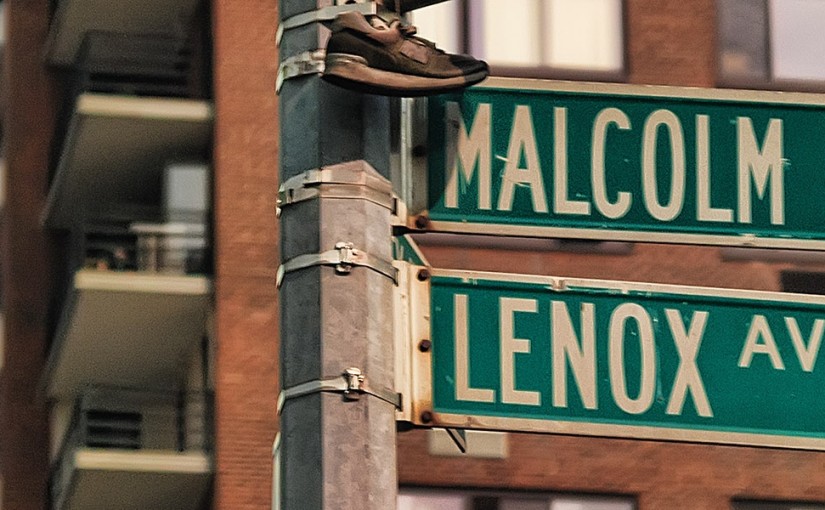
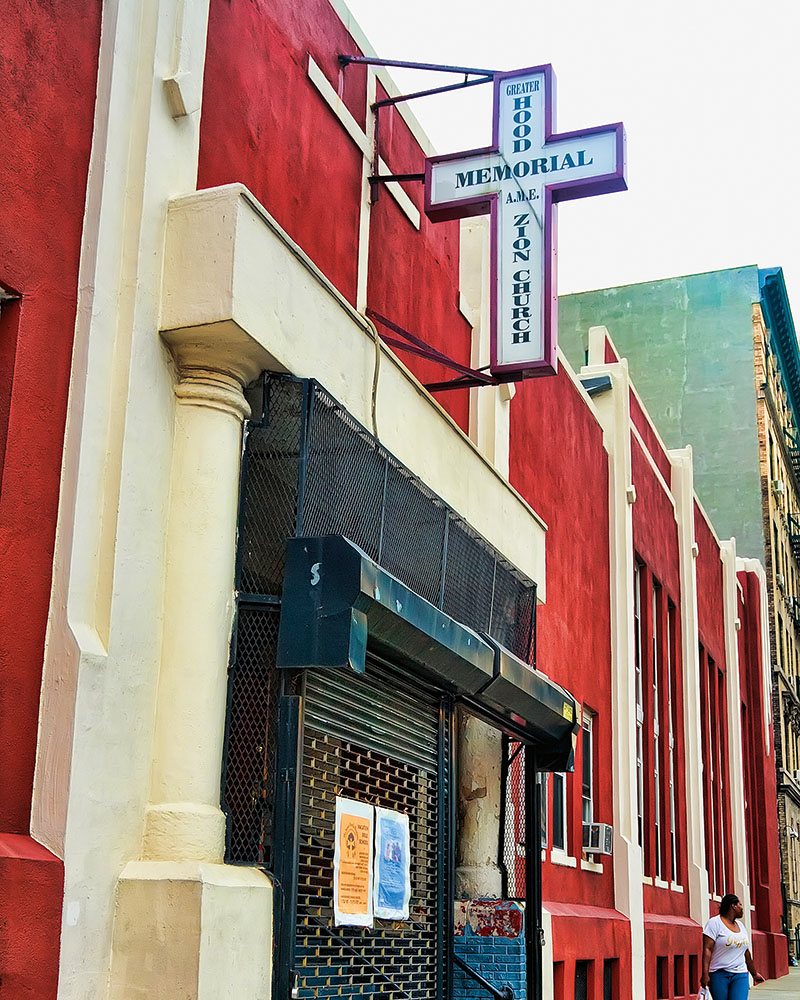
Down a Harlem side lane off 146th Street you’ll discover a divine diversion. At the Greater Hood Memorial AME Zion Church, hip-hop legend turned Reverend Kurtis Blow and a group of young rappers bring alternative worship to the ’hood.
The Rev requests that, as a sign of respect, do-rags and hats are not to be worn. There’s a shuffle as a hundred scraps of material are removed from their owners’ heads. As one, the congregation praises His name and a beat played at mega-decibels starts heads bobbing. Blow paces in front of his flock and begins to big Him up, rapping about how God changes people’s lives.
A wailing parishioner falls trembling to his knees, testifying his sins. When the hallelujahs and praise-be-to-heavens are done, the convert cries out, confessing even more wrong-doings. The transgressor, it seems, is having a good time unburdening himself of his bad deeds, and at each new shortcoming the congregation cries out in unison, praising God’s precious name. Each time the testimony gets particularly juicy a silence falls as the flock soaks up the newest offence. “Hear thy humble servant’s words,” the Rev pleads to the ceiling. Animated, he continues, spinning a holy rap to his gathering and working them into a dancing frenzy.
This unconventional approach to soul saving is hugely entertaining. To some it may seem somewhat bizarre, but the spirit of camaraderie, the urban street sounds and the unconditional bonding are real.
So many tourists to New York have a view of the metropolis heavily influenced by the settings of TV shows – Sex and the City, Law & Order – they never think to venture further than that narrow rectangle of Manhattan bordered by Times Square and Central Park. Head north, though, and you’ll discover a complex, colourful inner-city neighbourhood. Harlem has left faded bohemian seediness behind and blossomed to, once again, become a centre of culture.
Feeling cleansed of spirit I take a walk towards the jazz district. En route businesses have been spontaneously set up on footpaths outside homes. Whole families accompany them, having moved their sofas to the curb in order to better watch the world pass by.
On a street lined with pimped-out saloon cars, four beautiful women dressed in tight skirts shine an already gleaming vehicle. Its owner, relaxed in his curbside chair, approves of their work. From behind him a bear of a man slowly shambles towards me. His bleak expression suggests someone soured by the burdens of life. I fix him with the most respectful grovelling look I can muster and enquire if I can take a few photographs for a magazine. Time hangs like cobwebs in the air; I can see the questioning in his eyes then, suddenly, they sparkle and he signals to the man in the chair to join him on the bonnet of the newly polished car. “D’ya see dis?” he wheezes at one of the women. “My boy here and me, we’re gonna be famous, I tell ya.” Later he positions himself in a chair and poses again, arching an eyebrow at the camera.
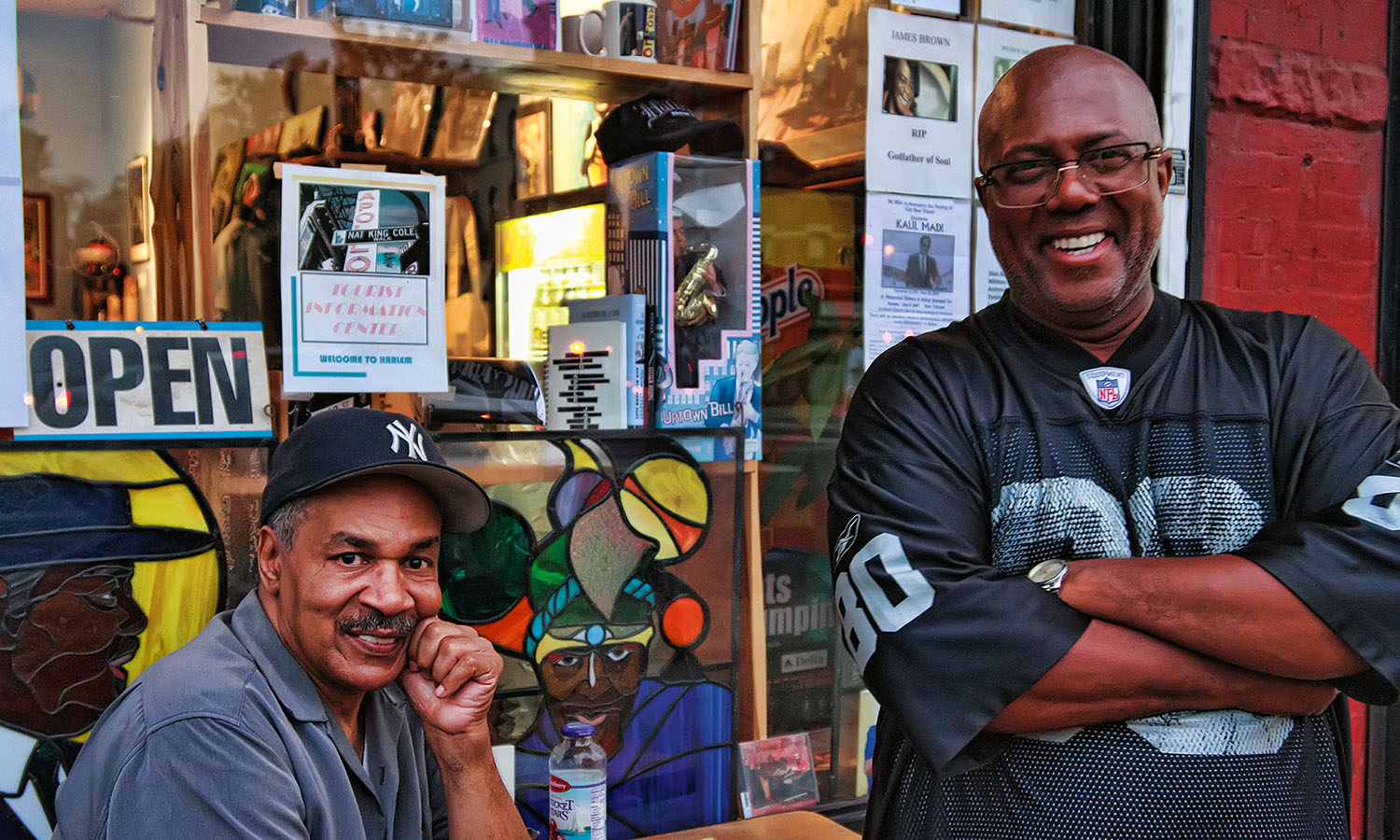
At the Big Apple Jazz bar I meet Bill Hill, a New York sporting legend, and his sidekick Rob. They are sitting outside on the footpath, either side of a small table, swapping yarns about the good old days. Blues music spills out around them, its lazy rhythm demanding immediate attention. Bill’s eyes shine with excitement as he relays memories of Harlem in the twentieth century and how it has experienced a social and economic gentrification. A police cruiser slides by, a wave of acknowledgement exchanged.
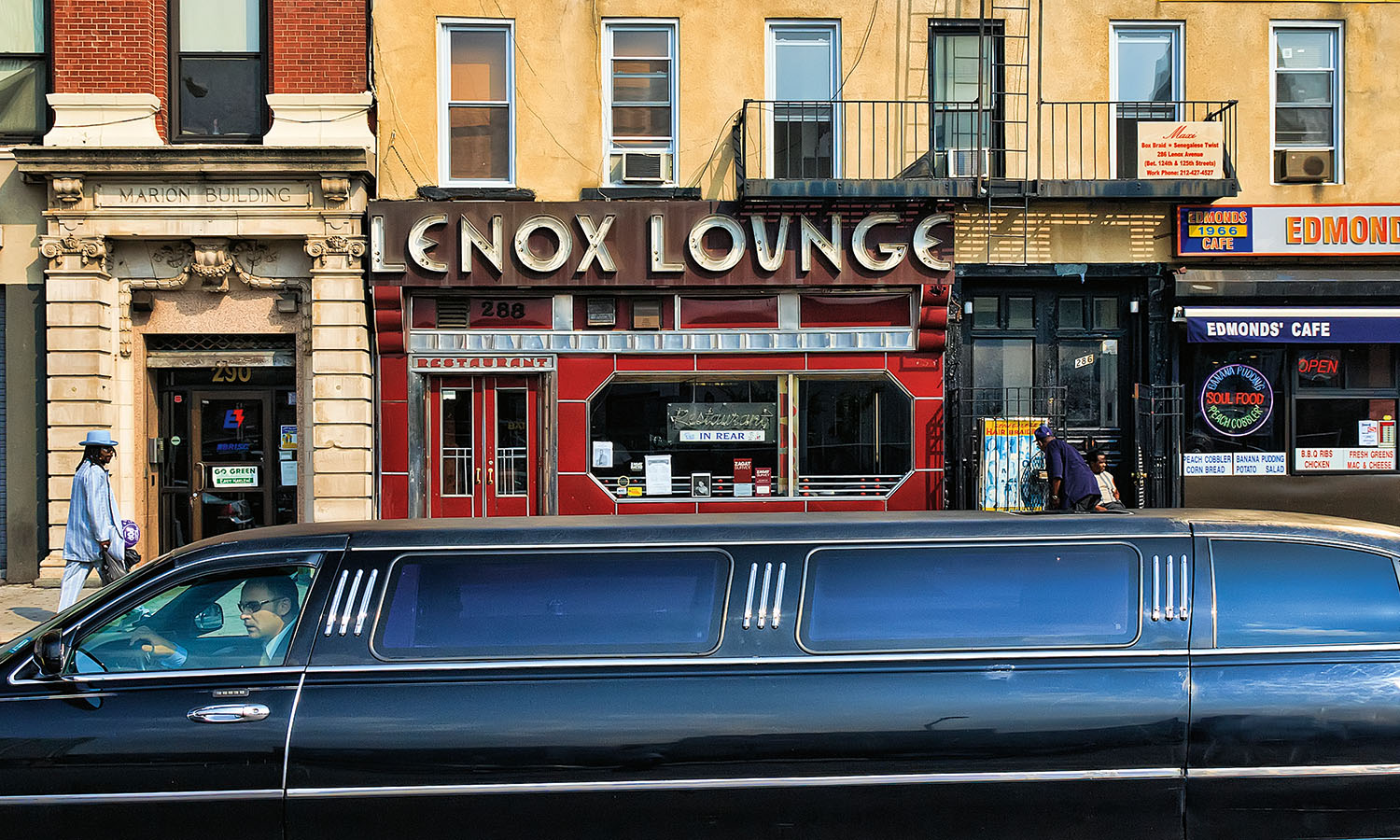
The early 1920s saw the beginning of Harlem’s renaissance. Back then, the junction of 7th Avenue and 131st Street harboured the Shuffle Inn and later Connie’s Inn. It was in this building Florence Mills, Louis Armstrong, Fats Waller, Duke Ellington, Bill ‘Bojangles’ Robinson and Eubie Blake entertained audiences from around the world. The 1930s and 40s then brought some of the world’s biggest musical legends. This was the era Harlem became the epicentre of the jazz world. Venues like the Cotton Club and Apollo Theater made stars out of entertainers such as Duke Ellington, Cab Calloway and Ella Fitzgerald, then in the ensuing years James Brown, Michael Jackson, D’Angelo and Lauryn Hill. While the Cotton Club closed its doors years ago, the Apollo marquee is still lit with the names of major acts.
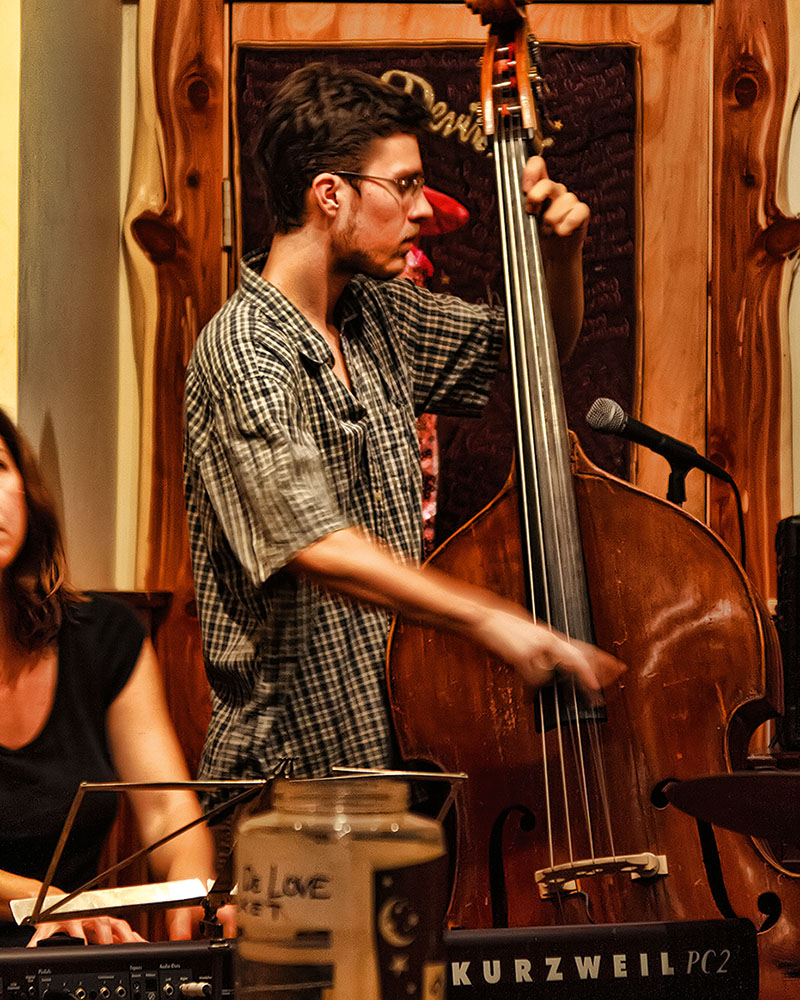
Today, the neighbourhood continues to shape the world’s musical and cultural landscape. Harlem’s historic district has experienced a rebirth, but the one aspect that remains constant is the music. From neighbourhood dives, small clubs in old brownstones, soul food restaurants and Art Deco clubs from its heyday, jazz can be heard throughout the district. It’s in this part of the city’s bones. Everywhere you’ll see jazz junkies nodding their heads in slow rhythmic agreement to the unhurried blues thump, because this is also where you’ll hear fresh talent destined for greatness.
Harlem is also where NYC’s provocatively potent hip-hop poets can be found teaching empowering life lessons. As a cultural phenomenon, hip-hop emerged from this neighbourhood and the Bronx in the 1970s. Around 125th Street, names like DJs Red Alert and Hollywood, Spoonie Gee and, of course, Kurtis Blow forged this new type of music from elements of other genres, playing two copies of the same record on different turntables while rapping over the beats.
Today the lyrical skills and heart-thumping rhythms of hip-hop are everywhere. It has taken the world by storm and become a cultural staple on every continent – in the United Arab Emirates, for example, brothers Salem and Abdullah Dahman, known as Illmiyah and Arableak (and collectively as Desert Heat), have given hip-hop an Arabic and Muslim sensibility.
If all you associate with hip-hop is the pimped-out cars and voluptuous women pushed by music videos, be prepared to experience the real deal on Harlem’s streets.
At a block party I meet MF Grimm. He raps about the first time he picked up a microphone as a kid, as well as the day he lost the use of his legs to gang violence. From a wheelchair, he tells of his incarceration, the rediscovery of his former self and his rise to the top of his game as a hip-hop grandmaster. His lyrics tell a gritty tale of righteous redemption. They leave no question unanswered and no apologies are made.
A visit to Harlem is a sensory experience – a vibrant fusion of music, a noisy explosion of sounds. It’s chaotic, intoxicating, raw, in your face and utterly exciting. And a completely different Manhattan scene to the one so often portrayed.
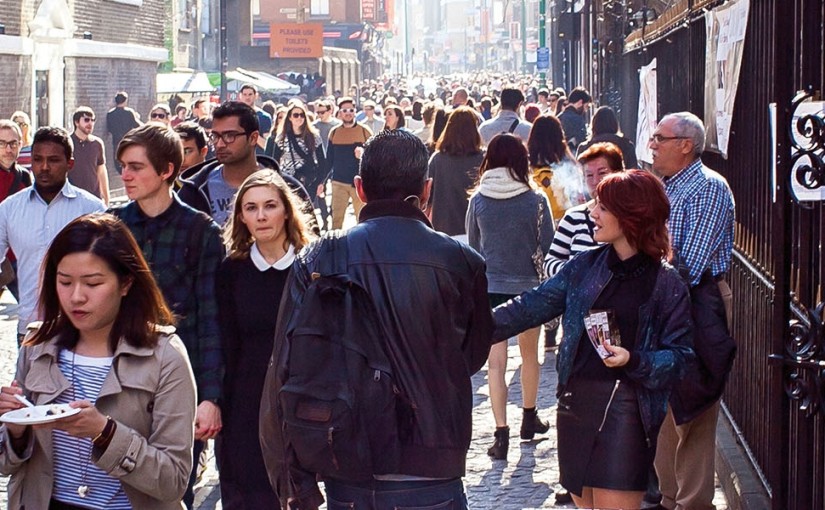
There’s no point following a guidebook. Sure, a book might point you towards the area, but it’s easy to be distracted from the gems by ultimately unfulfilling sights and bars full of out-of-towners (particularly on a Saturday night). For those of us who live here, Shoreditch encapsulates London’s multifaceted soul, from its gritty urban zones overflowing with creativity to the city’s answer to Silicon Valley.
The area is home to the UK’s first cat cafe, Lady Dinah’s Cat Emporium, as well as a mess of bicycle shops, restaurants, markets, canals, parks and pubs. It’s a hub for art and creativity nestled close to Liverpool Street, the stiff-upper-lipped professional centre of London.
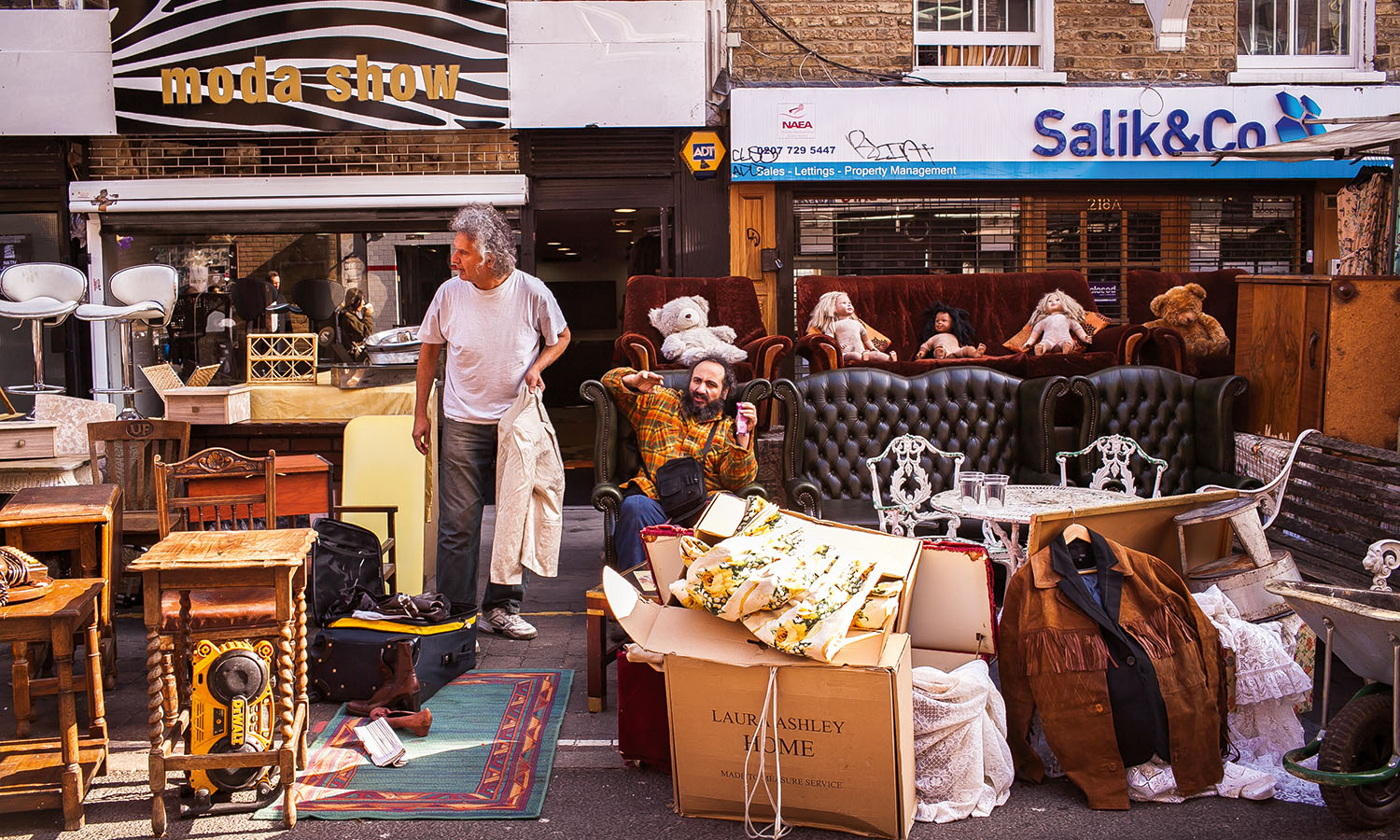
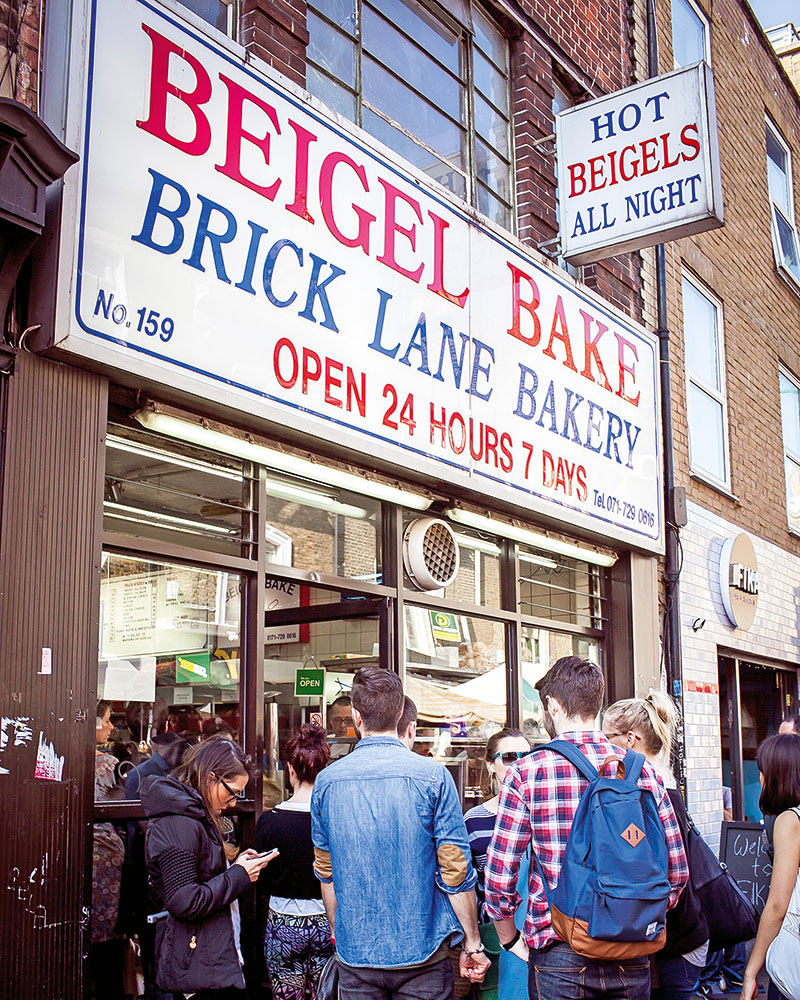
Take Beigel Bake, for example. Sitting at the top of Brick Lane, this dingy, crowded shop, complete with pock-marked linoleum and incredibly rude staff, serves the very best bagels in London 24 hours a day. The salt beef bagel, dripping with mustard, is a meal in itself. Tender slabs of beef are haphazardly slapped within a sweet, warm bun. Nestled in its brown paper bag, it is the perfect ambulatory meal for this crammed thoroughfare. At Brick Lane Market itself, open between 9am and 5pm each Sunday, you’ll find fresh fruit, broken chairs, vaguely disturbing paintings and endless ephemera alongside the shops and restaurants (which are also open during the week). It’s also the home of vintage clothing in London, but you might find yourself searching all day for a gem. Instead, head to a couple of carefully curated options.
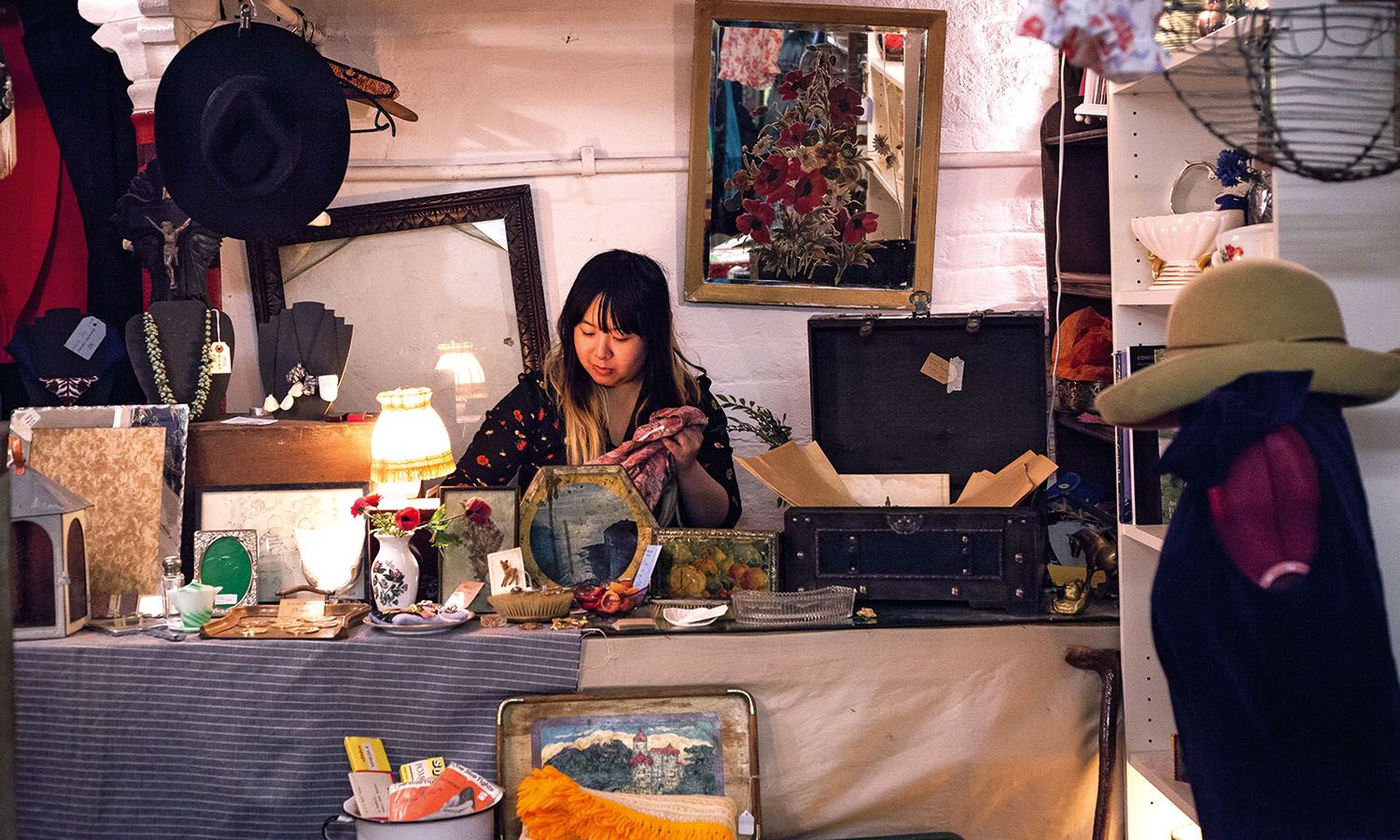
In the basement of the Old Truman Brewery you’ll find Sunday UpMarket. Racks of unique if occasionally musty items tussle for attention beside newer accessories. The price tags on the bags, fur coats and velvet dresses here may be slightly higher than out on the street, but you’re also far more likely to find something you can’t leave behind.
For those who can’t abide all that pre-owned stuff, there’s Backyard Market, just opposite. New designers – some stocked in stores like Anthropologie and Urban Outfitters, others who’ve only been selling their wares for a couple of weeks – line the covered, yet airy space. At Backyard you can also get a haircut, buy prints direct from artists and find jewellery you can be guaranteed won’t be seen on anyone else.
When you need reviving try Black Cab Coffee Co, where owners Graham Buck and Emmy Osman serve their own blend of South American beans from the back of a quintessential London taxi. The silky, almost honey-scented roast goes perfectly with the tiramisu cupcakes made by Graham’s mum.
It may seem odd to suggest, but one of the best restaurants in an area lauded for Indian food does, in fact, serve classic dishes from across the Channel. Chez Elles Bistroquet, towards the end of Brick Lane, offers beautifully simple cuisine in an over-the-top, flag-flyingly proud French cafe. The staff and clientele of Chez Elles all speak French and will assume you do too. Pick up a gossip magazine, sip an espresso and eyeball your chic neighbours. It’s certainly cheaper – and closer – than a trip to Paris.
Once you’re buzzing on all of the coffee and cake consumed during the day, move on to Shoreditch’s legendary night-life. Close to Old Street there is a plethora of bars and clubs to while away the night, but for something special try Happiness Forgets. Located in a basement, it’s tiny – really tiny – but don’t be dissuaded. The stunning cocktails are made by experienced barkeeps who may not look kindly upon an order of vodka and coke. After all, the bar’s slogan is ‘Great cocktails, no wallies’.
For great beer there’s only one choice: BrewDog. The independent Scottish brewery, founded in 2007 and with bars spreading around the world, offers a staggering array of bevvies you’ll have never tried before. Pull up a stool in the vintage-tiled, laid-back space and try pints with names like Punk IPA and 5am Saint (an amber ale and my personal favourite). More comfortable seating can be found downstairs in the New Orleans-inspired UnderDog, a craft beer and cocktail bar behind a secret door. Head here for honky-tonk piano, a ‘voodoo’ corner and dancing past the witching hour surrounded by snakes in jars.
Avoid at all costs the men with menus along Brick Lane who will try to lure you into an Indian restaurant with promises of mates’ rates or free booze. Invariably, these places put too much sugar and too little seasoning in their food. If you’re going for an Indian, you’re going to Dishoom. I’ll confess, I’ve never been one for biryani and butter chicken, but Dishoom is a revelation. Everything on the menu, from chilli cheese on toast (a Bombay classic, apparently) to the mind-blowingly delicious masala prawns, served with a pomegranate, tomato, mint and tamarind salad, bursts with elegance, simplicity and freshness. Eat it all with your fingers, just like a local.
Toni Basil’s 1980s hit song ‘Mickey’ blares out across a chilly night sky, and thousands of people crammed into the arena are treated to a pom-pom–shaking display by girls dressed as American cheerleaders and backed by two dozen performers wearing what may (or may not) be oversized Pokemon costumes. Welcome to the resolutely kitsch high point of the annual Taiwan Lantern Festival, an event where ancient eastern custom meets modern Asia in a collision of traditions and a mash-up of religion and technology. Oh, and there are lots and lots of lanterns.
In a world where many countries seem basically the same, Taiwan’s idiosyncratic touches and eccentric quirks make for a refreshing change. A 36,000 square kilometre country of super-fast trains and even faster drivers, of red-toothed betel-nut chewers and passionate-yet-confusing politics, its island status extends beyond the geographical.
It feels a bit like mainland China, a bit like Japan, and in parts like Korea, but in the end it’s definitely the island of Taiwan – officially the Republic of China – where it’s perfectly natural for ‘cheerleaders’ to go berserk to ‘Mickey’ at an ostensibly traditional event and for indigenous performers to strut in canvas loincloths to a techno beat.
The festival takes place in the middle of February each year, beginning on the 15th day of the first lunar month on the Chinese calendar to celebrate New Year. Not to be confused with Pingxi Sky Lantern Festival held in a small village east of Taipei, the official Taiwan Lantern Festival is a 10-day bonanza of tradition, lanterns, lights, performances and sensational Taiwanese street food markets. It has been held as a designated event in a different Taiwanese city or county each year since 1990 – a moveable feast, as it were, with 2014’s event taking place in the central county of Nantou, close to the island’s third-largest city, Taichung.
And so it comes to pass that we arrive at Taipei airport at 4am and are promptly whisked two hours south to our hotel in Taichung. With a few hours to kill before heading to the festival, we gratefully accept the chance to freshen up in our disconcertingly high hotel. I breathe deeply, try not to look out the window and, after a shower and a nap, am ready to take the one-hour trip towards the main festival site.
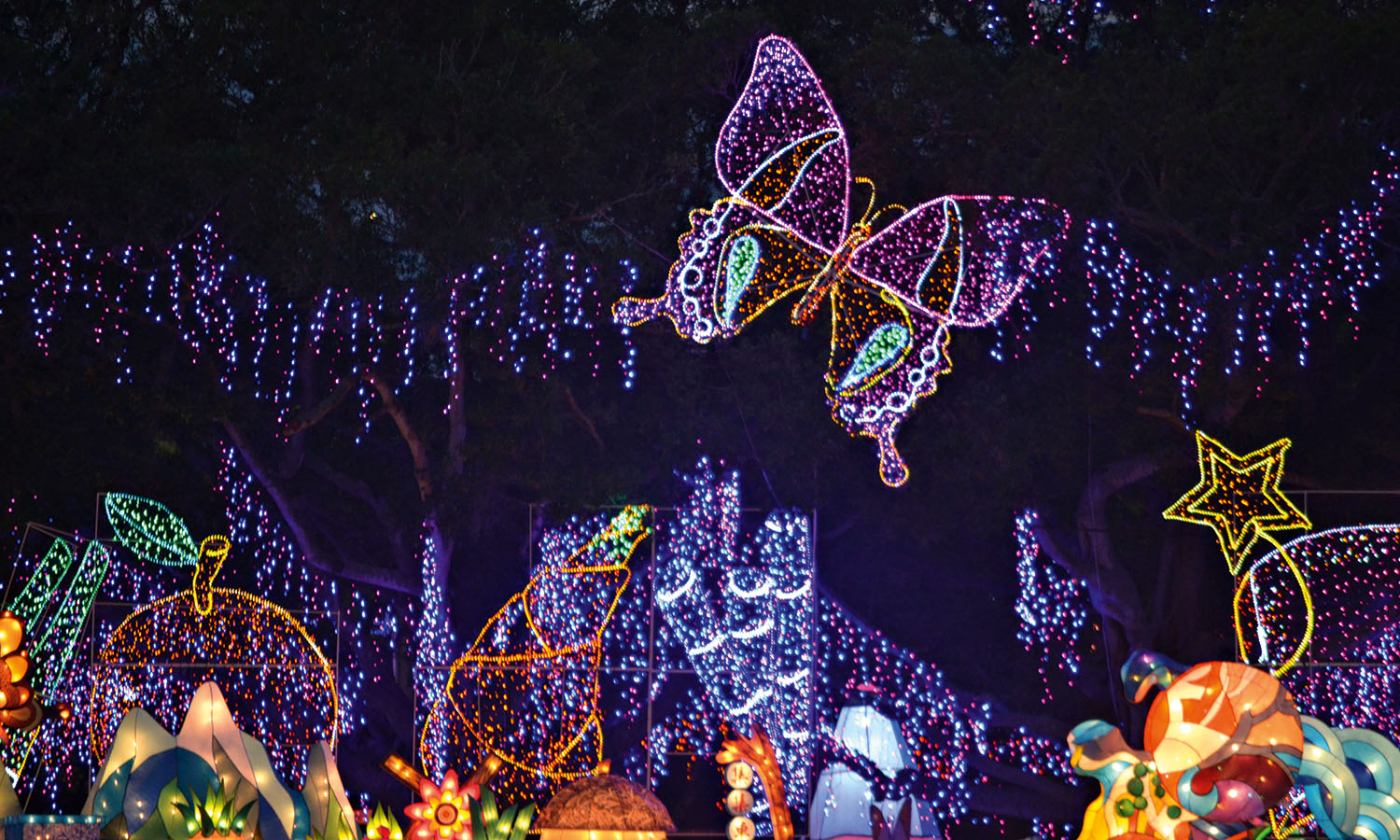
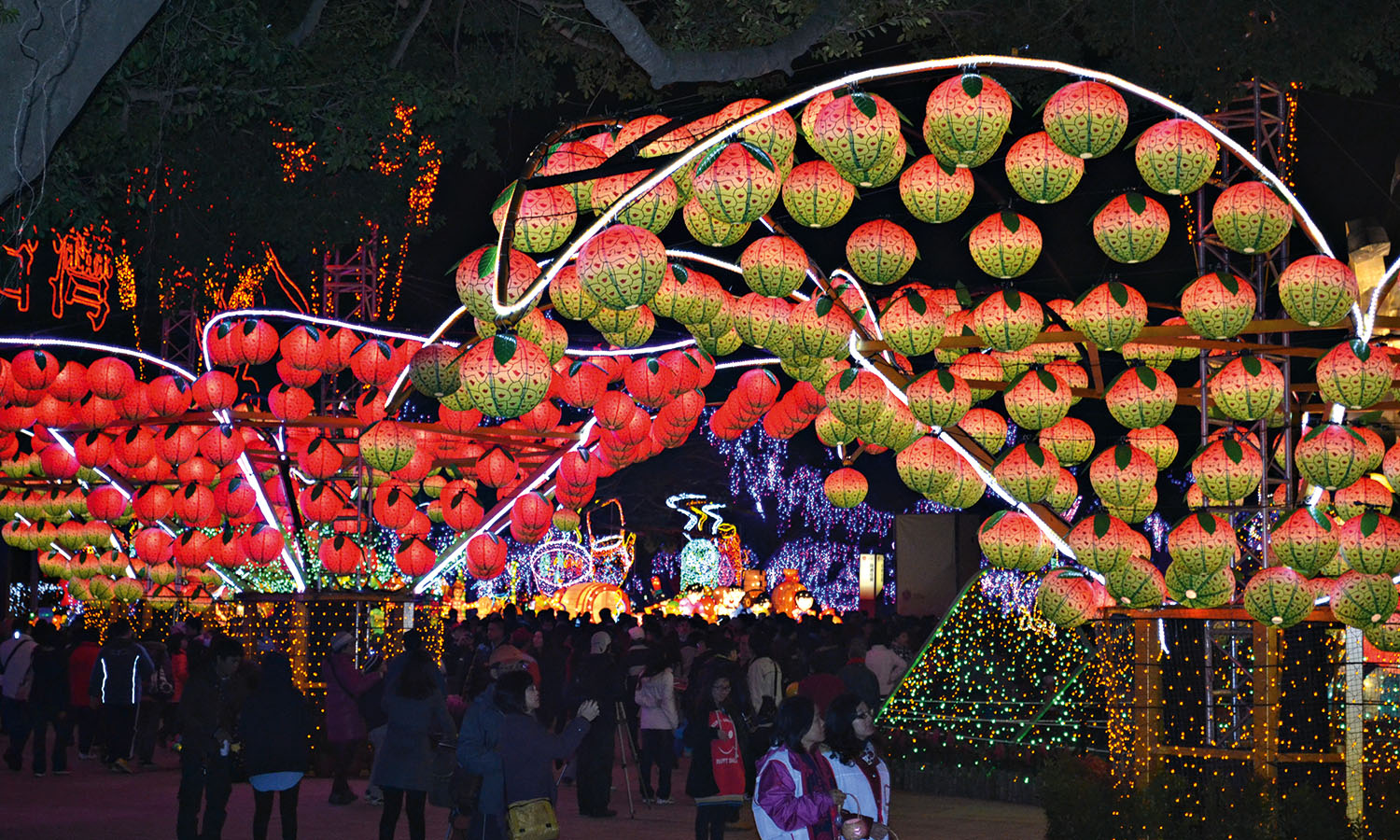
Deposited by a van in a nondescript field, we are ushered aboard a packed bus that takes us to an area where there is clearly something happening. We alight and, as a group of five, work hard to both stick together and go with the human flow in what we presume is the correct direction. We turn a corner and it’s clear that it is – heading up the hill is a boulevard of lighting display dreams. As far as we can see, the road ahead is festooned with lanterns and lights and bulbs and baubles. There’s little doubt the organisers know their way around a light show and, as we head to the main arena, where the performance is due to start at 6pm, it’s clear they’ve gone all-out in their efforts.
Large zones are designated as lantern displays and the inventiveness, colour and quirky humour on display is a treat. These aren’t lanterns like your grandma hung on the veranda at the holiday house. They’re intricate affairs, depicting everything from traditional scenes to the characters from popular Hollywood movies.
We continue onward, but before we get to the arena a detour is necessary. It’s one of the truisms of Taiwanese life that there will always be a street food market somewhere close to any gathering and the Lantern Festival doesn’t disappoint. Off to our left there’s a long lane of stalls offering everything from the sublime – dazzlingly fresh corncobs with sweet melted butter – to the near ridiculous (for my taste buds, anyway). I eschew stinky deep-fried tofu in goose blood for the corncob and some fried potato cakes, the memory of which I’ll find myself salivating over for days afterwards.
Appetite sated, it’s on to the main event. We ascend the road towards the arena and take our seats in an open grandstand overlooking the festivities. At ground level, various troupes gather in marshalling areas ready to take the stage. These include our ‘Mickey’ cheerleaders, the Pokemons, a large group of men in fetching yellow pyjama-like outfits and numerous indigenous Taiwanese performers. (Visitors to Taiwan are often surprised at the rich aboriginal traditions that exist on the island, and their recognition in wider society and incorporation into events such as this is a heartening indication of respect.)
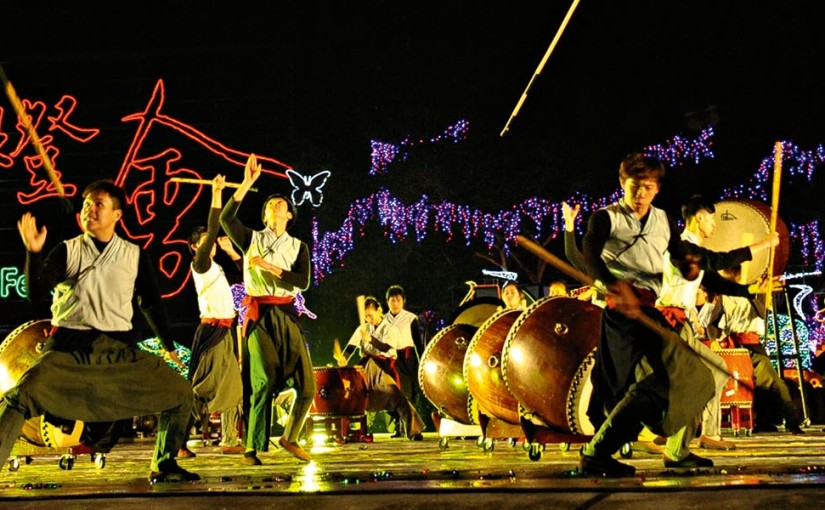
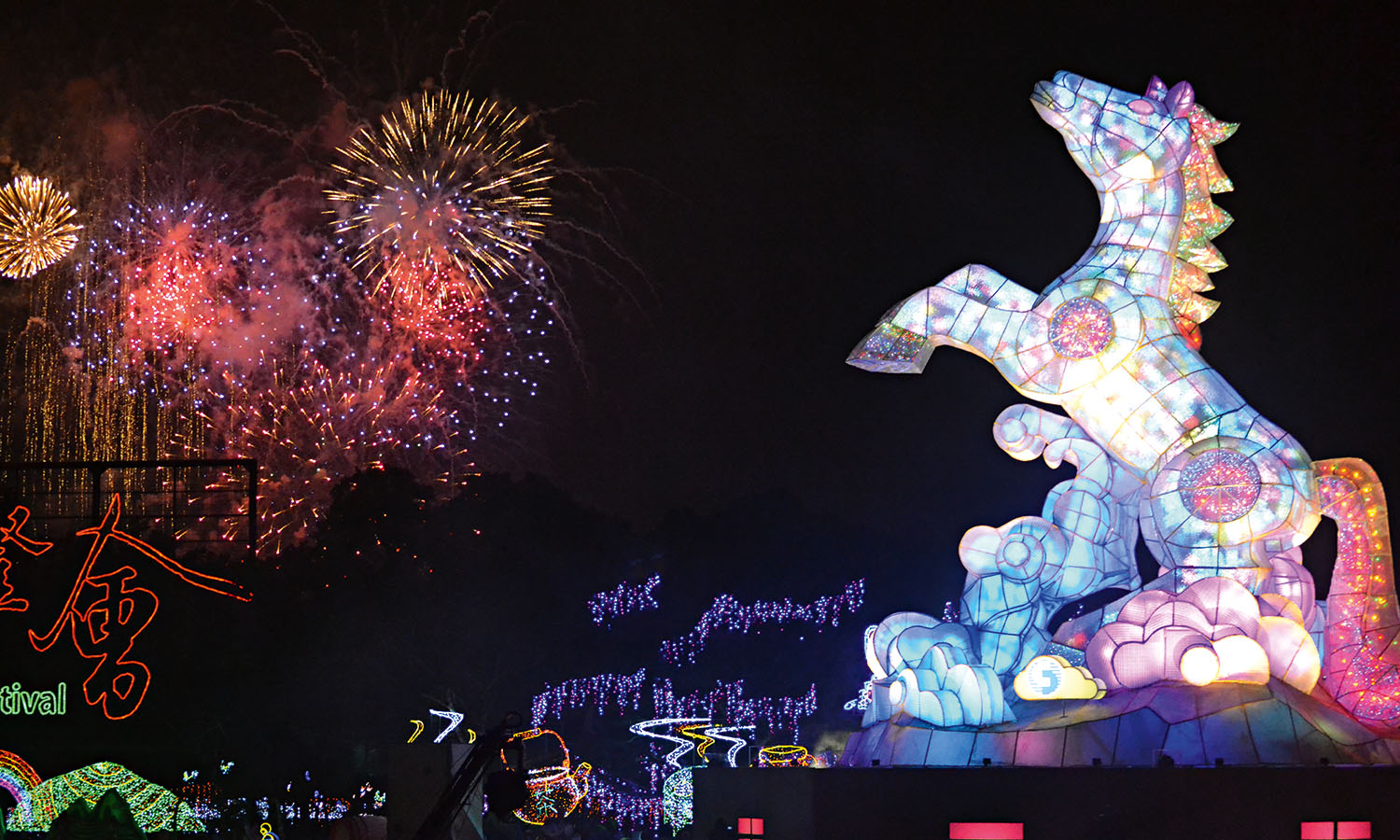
In the distance a massive structure in the shape of a rearing horse draws my eye and it’s explained to me that this is the festival’s pièce de résistance – this, after all, is the Year of the Horse. Some of the indigenous musicians then take to the stage. A dozen muscular men pounding massive timpani-like drums are accompanied by a thumping electronic soundtrack, which one suspects may not be wholly traditional.
With the crowd now building to capacity, I take a walk to ground level. Down here, it occurs to me the atmosphere is a bit like a night at the Big Day Out, just with less sweat, more dancers, more lights and a louder sound system. It’s then the opening strains of ‘Mickey’ are blasted out and, as the cheerleaders charge the stage and go bananas, I enter the realm of the surreal. Incense burns nearby, an earnest group of unsmiling youngsters files past holding signs reading ‘No smoking please’, dozens of strobe lights flash, the whole venue shakes to the throbbing beat and the heady aroma of stinky tofu reaches me from somewhere unseen.
It soon becomes apparent all this is leading up to the point when the giant lantern horse, which stands 25 metres high, is illuminated. The word around the venue is that the Vice President of Taiwan, Mr Wu Den-yih, is going to be the person who presses the button on this traditional symbol of good luck and prosperity. Eventually a countdown begins and, sure enough, the VP flicks the switch. The massive horse lights from within, fireworks fire and choreographed lasers and music blast across the now cold and dark sky.
Members of the crowd – all 30,000 of them seem to be watching the event via the screen of their mobile phone – cheer in a non-demonstrative Taiwanese way. The horse, which organisers say features state-of-the-art digital triggers, contains 200,000 LED light bulbs and weighs 30 tonnes, is a thrilling sight in the night air, deserving of its place as opening night’s centrepiece.
This searing display lasts for around an hour, the crowd transfixed and unmoving. Then, finally, there’s a climactic burst of lights, lasers and fireworks and, literally with a bang, it’s over.
People immediately begin to disperse; we’re shivering from what we’re told is a typical Taiwanese cold front that has come through during the course of the evening. It’s definitely time to go, so we wind our way through the throng, our over-stimulated minds abuzz from the show. As we head out of the arena, I spot one of the cheerleaders happily posing for photographs with thrilled punters. I consider telling her that the performance was “oh so fine, oh so fine, it blew my mind”, but I don’t. Instead we happily wander off to find our bus and head back to our hotel after a night immersed in Taiwanese festival life.
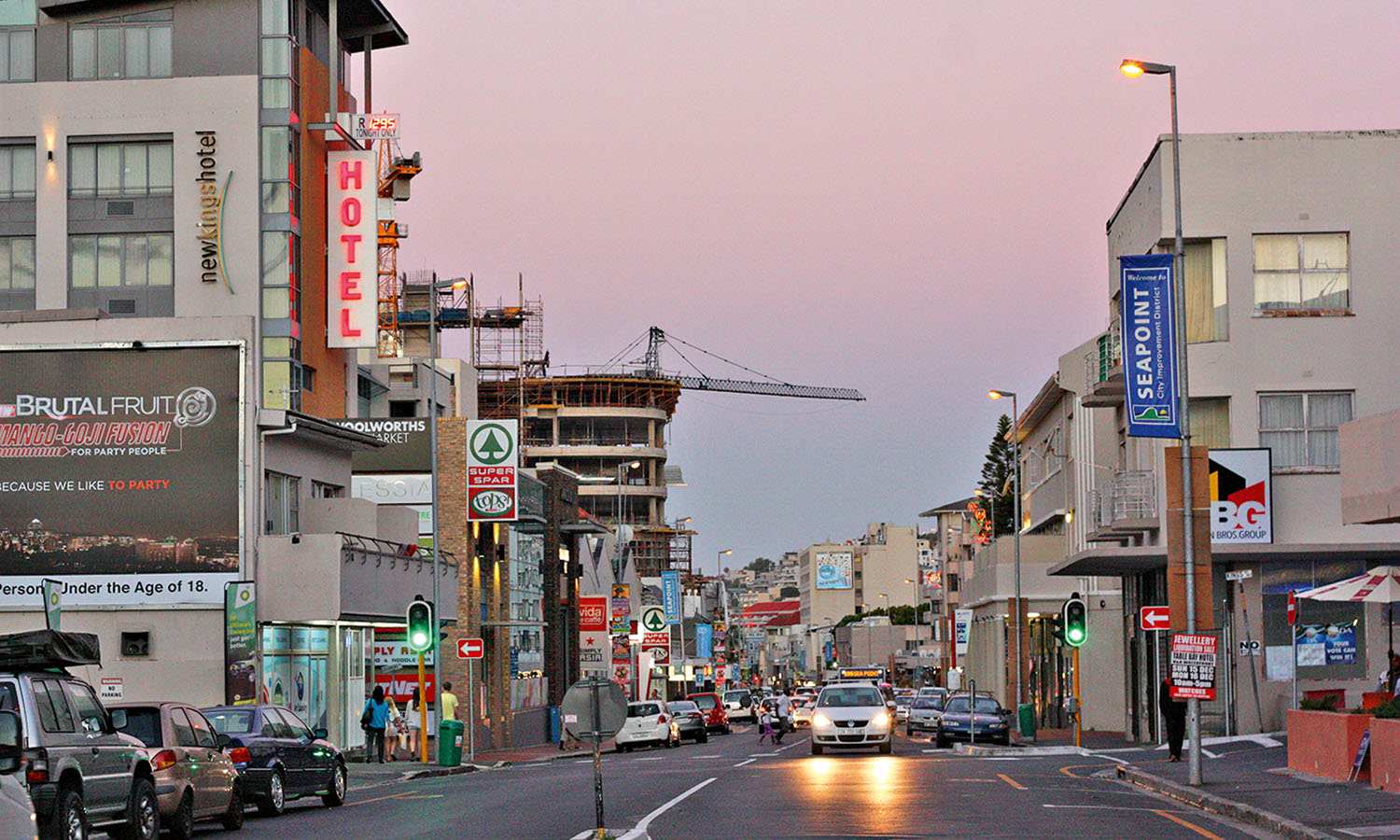
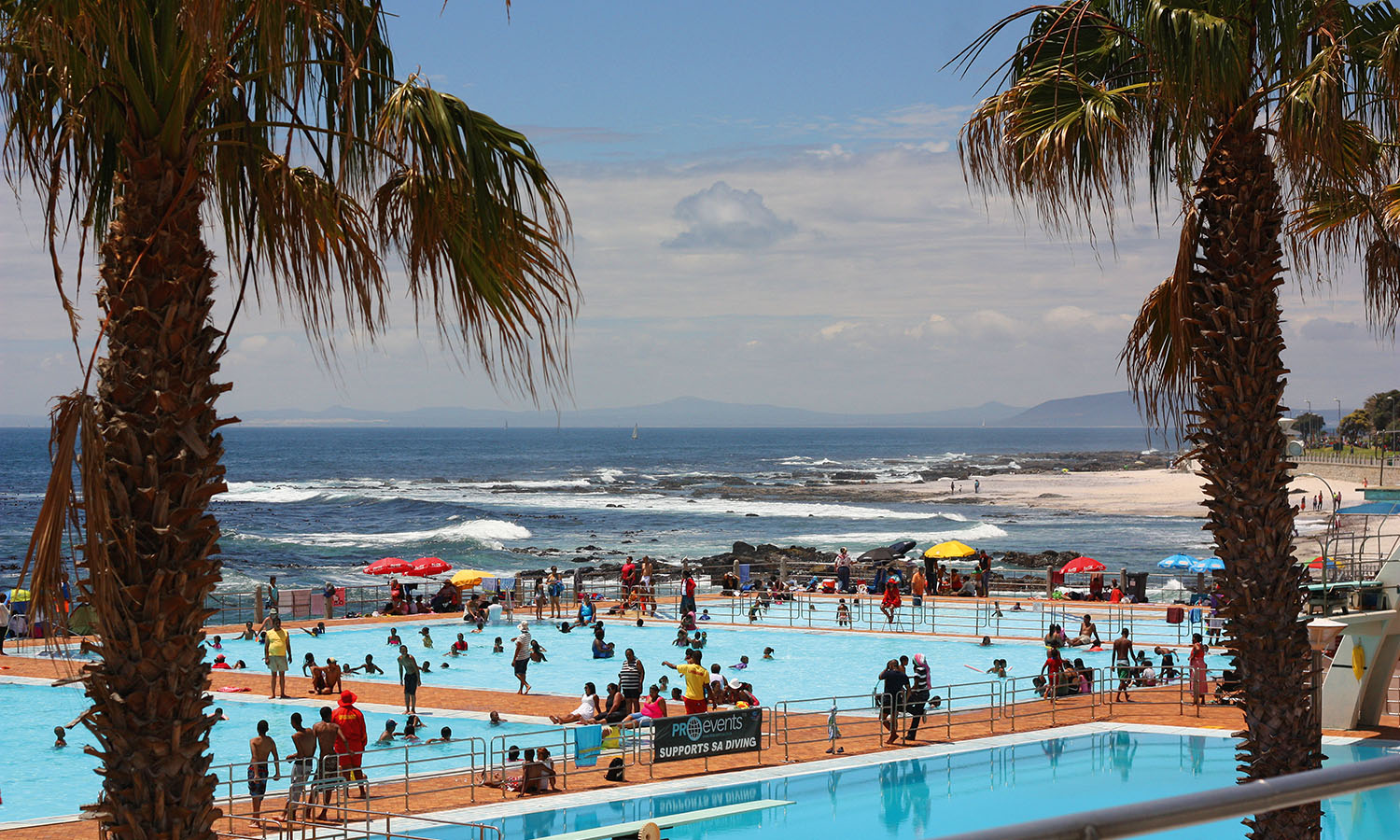
With almost every corner offering gluten-free pizzas and boutique-roasted soy lattes next to Chinese R5 stores and sushi take-away spots, Sea Point can only be described as a melting pot. This vibrant seaside suburb of Cape Town, the 2014 World Design Capital, seldom gives residents a reason to leave since we have everything we need right here, in a neat nucleus I like to call home.
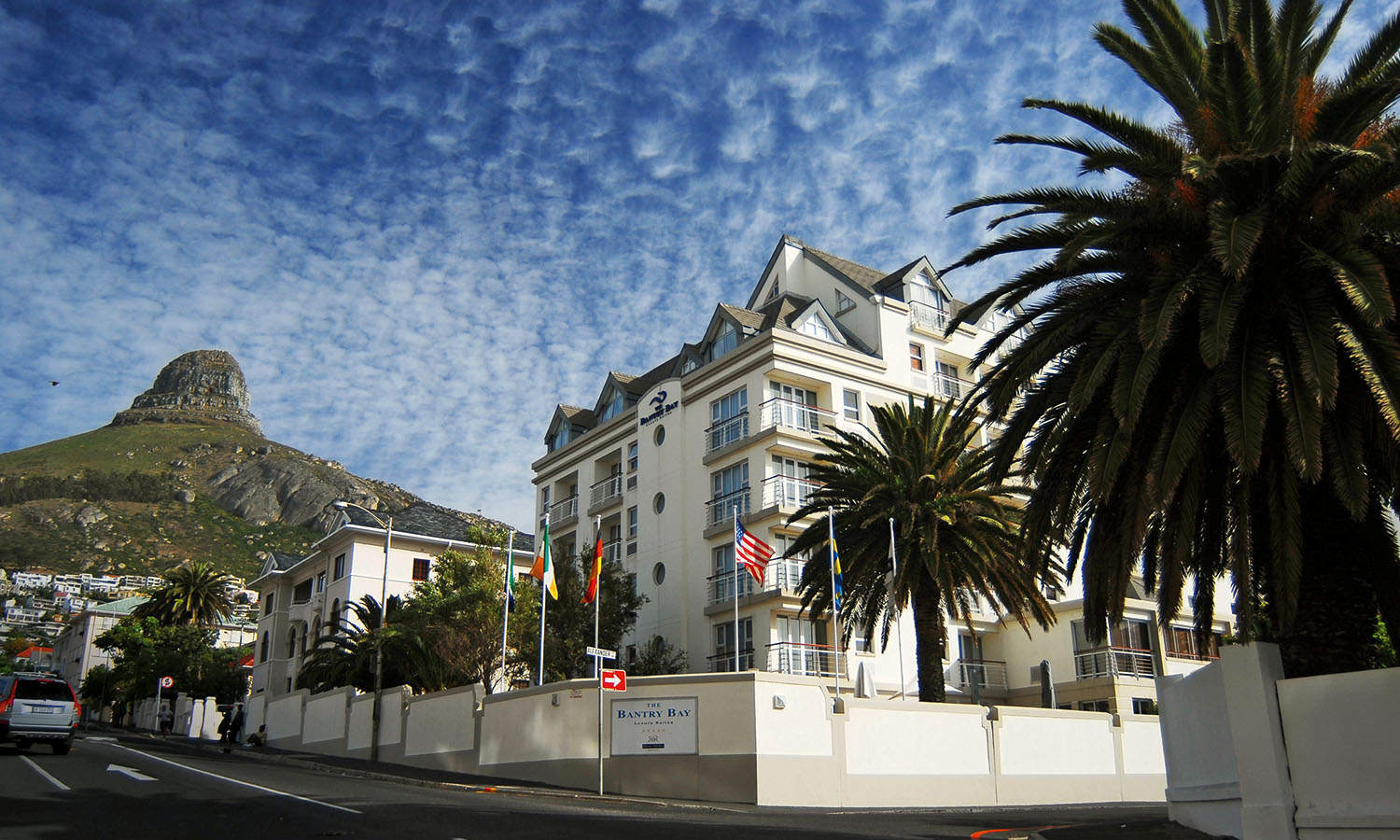
It is also one of the best areas in Cape Town in terms of weather – a large mountain protects us from most of the dreadful south-easter winds that rapidly clear bikini-clad bodies from Camps Bay Beach around the corner. It is also a haven for cyclists, runners and outdoor enthusiasts because of the beautiful promenade running the length of the suburb.
I stay on Regent Road, a fork off Main Road, running parallel to Beach Road and the promenade. I’m one block up from the beach and Queens surf spot, where the likes of Jordy Smith have tackled waves dangerously close to jagged rocks and forests of wine-red floating kelp. That’s just one of the many sights to enjoy during a walk or run on the promenade.
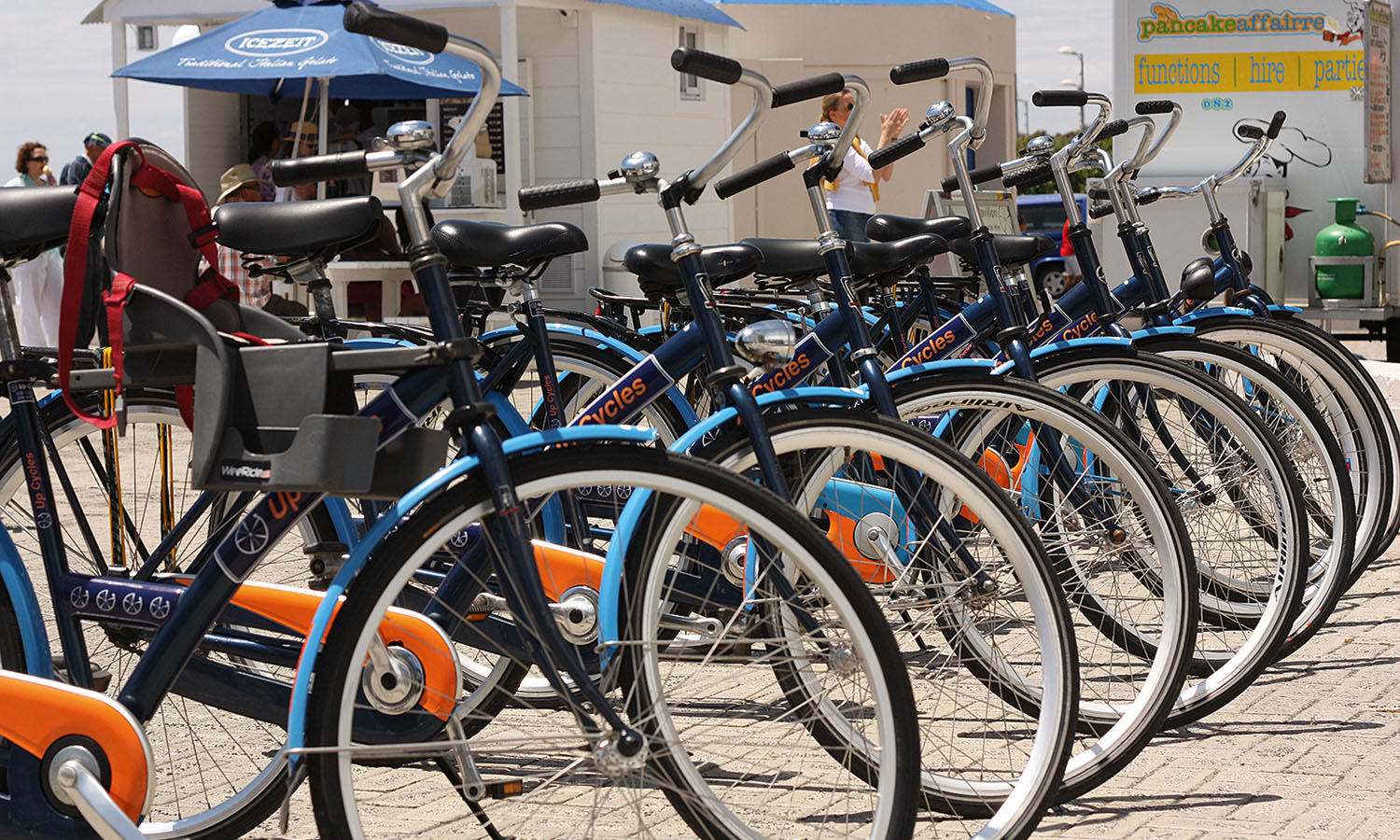
My husband and I often hire bicycles from a spot near the landmark Sea Point Swimming Pool and cycle from our apartment building to the V&A Waterfront taking in our gorgeous and amusing surroundings.
Bleached-haired skateboarders weave their way through Jewish grannies walking poodles in prams, while shirtless muscle maniacs do pull-ups at the public outdoor gym and lovers picnic under trees that grow away from the sea, towards the mountain.
I love watching paragliders land after soaring above our towering apartment blocks, envying the views they must have, but too nervous to try it for myself.
Stand-up paddle boarders and kayakers glide by on the sea while tuksies (our taxi tuktuks) buzz around Beach Road picking up and dropping off German tourists, Scandinavian models and locals like me when I’ve had one too many toots.
Further down the promenade we have putt-putt courses, ice-cream shops, cafes spilling out onto streets and South Africa’s oldest lighthouse, to whose foghorn no one ever becomes acclimatised.
I’ve lived here for five years now and the landscape is an ever-changing collection of restaurants, bars, coffee shops and delis. Some stalwarts have survived the test of time: Winchester Mansions, a boutique hotel in an old Cape Dutch-style building, famous for its lengthy Sunday brunches with live jazz; and La Perla restaurant, whose penguin-esque waiters have served the likes of Elvis Presley (or so they say).
La Boheme Wine Bar & Bistro, with more than 60 wines by the glass and a pork belly so drool-inducingly juicy it’s hard to stay away, is a regular hangout, and has been ever since I moved here. The same owners opened a craft beer and burger bar a few metres down the road called Engruna Eatery, offering a good variety of local boutique bevvies. They serve great pizza too, but if it’s a slice you want, Ristorante Posticino is the authentic Italian gem of the area. For French-inspired fine dining, chef Henry Vigar’s La Mouette has a courtyard for summer luncheons, fireplaces for cosy, wintery dinners and monthly tasting menus that are as affordable as they are fantastic.
The Duchess of Wisbeach, named after the road on which it is situated, has a quirky bar and a mussel pot to die for. It’s also the hangout of local architects, designers and creatives and a great spot to grab a glass of wine after work and get an eye-candy fix.
With all the regular wining and dining that goes on, I’ve developed a bit of a coffee addiction, and now can’t start the next day without a good cuppa. Luckily for me, a new coffee roastery and eatery called Bootlegger Coffee Company opened in December where the baristas make great flat whites. I have another faithful spot called Mischu. It brews a signature blend that earned the title ‘best cappuccino in Cape Town’, and only its grande lattes can bring me back from the dead after a late night. Another new addition to Regent Road is Knead Bakery, a hot breakfast spot and great place to pick up steaming, fresh kitke (traditional Jewish bread rolls), gluten-free bread and croissants. These go down amazingly with some smoked snoek (pike) pâté from the new Luckyfish & Chips takeaway across the road. Make a picnic out of it and head to the grass lawns next to the promenade to enjoy the sunset and, if the moon is full, watch as Lion’s Head comes alight like a Christmas tree at night, thanks to all the hikers climbing up Table Mountain’s little brother.
Sea Point is my bustling little haven that connects me to the greater creative city of Cape Town, and between the beach, the food and the vibrancy of life, there’s no place I’d rather be.
It’s Friday afternoon and I’m itching to get on the road. From Cape Town it’s about a two-and-a-half-hour drive – three, if there’s traffic – and I just want to leave. The car is packed to the brim with doonas, eskies, drums, fishing rods, wine and towels. Being a pedant, I go over my checklist one more time. “Just relax,” says my husband Tim. “If we’ve forgotten something we can always borrow it.” He’s an ultra-mellow surfer dude, hence my need to overcompensate on the organising front. “We need to stop at Riviersonderend to get ice,” I say. It’s the last town before the dirt road turn-off to Up The Creek.
This will be my sixth Up The Creek and, for so many reasons, it’s my favourite of all the South African music festivals on the calendar. Tickets are limited to about 3000 people, but the quality of music is as good as you’ll find anywhere in the country. Anyone who’s done their share of multi-day camping festivals will also appreciate that here there are toilets, proper toilets. OK, there are portaloos too, but they can be avoided.
At the entrance, we’re welcomed by Christina Rovere. As the chief hands-on admin-organising accommodation-sorting festival helper, she’s a woman you want to know. “I see you are glamping this year,” she says, spotting the two bands on my arm. A couple of sweaty, dusty men greet us with wheelbarrows ready to carry our gear to the tent that’s been set up by Heartbreak Motel – it’s only 30 metres away, but we let them. After all, we are camping in style this year. Well, as stylish as mattresses in a large tent with a complimentary bottle of Old Brown Sherry and two tin mugs can be.
Not long after setting off to find some friends – first-timers camping in the pleb section – I spy a white-bearded, wild-eyed man sporting a floral hat that looks as though it’s been in a dress-up box since the 1980s. It’s Anthony Bumstead, one of the organisers of this middle-of-nowhere gathering of licorice allsorts folk. He’s shouting orders at the sound guys in preparation for the night’s gigs. The first Up The Creek, held in 1990, was really just an awesome birthday party thrown for Bumstead by his pal Ann Sowden. The event grew, he went off to pursue other dreams and passions, but got involved again six years ago and now makes most of the musical decisions.
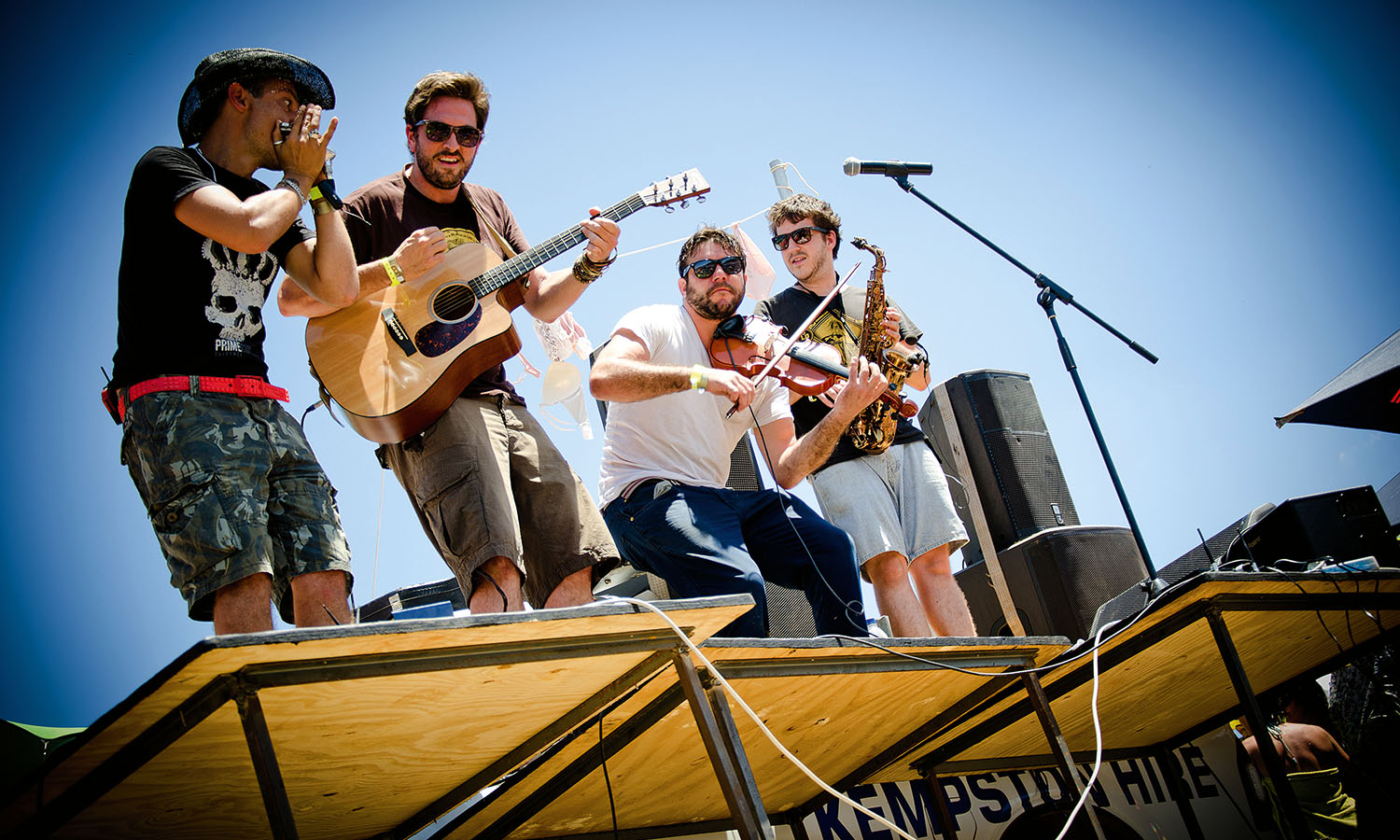
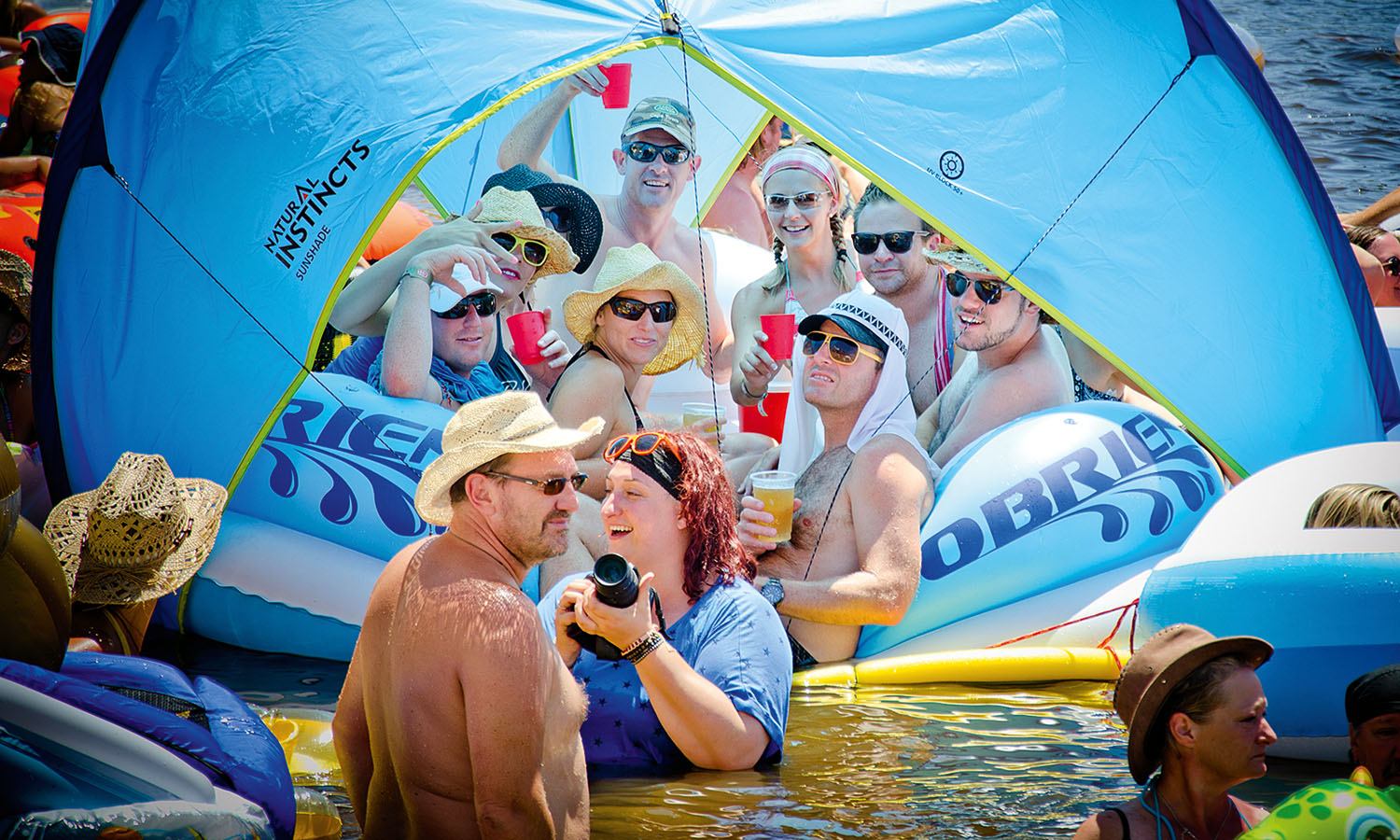
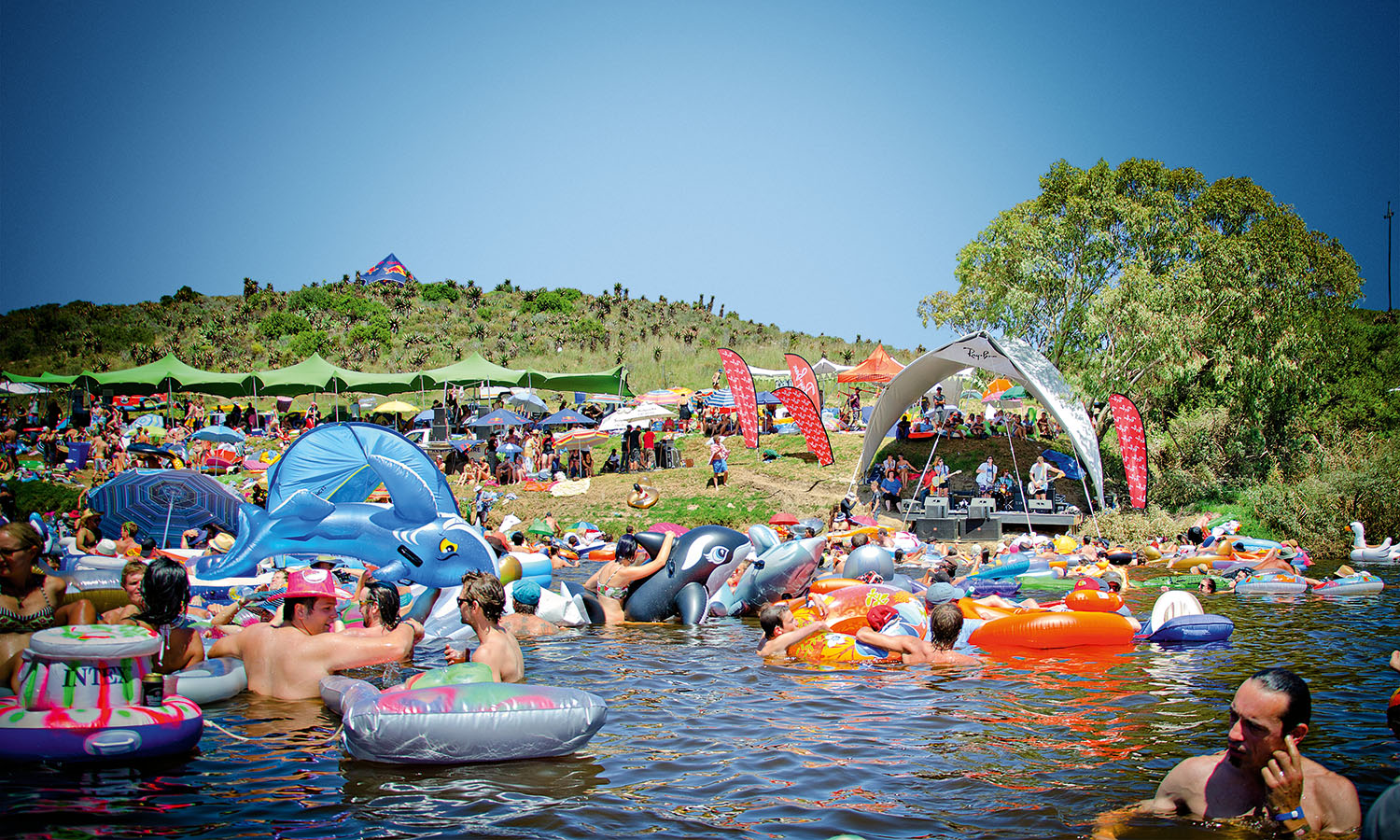
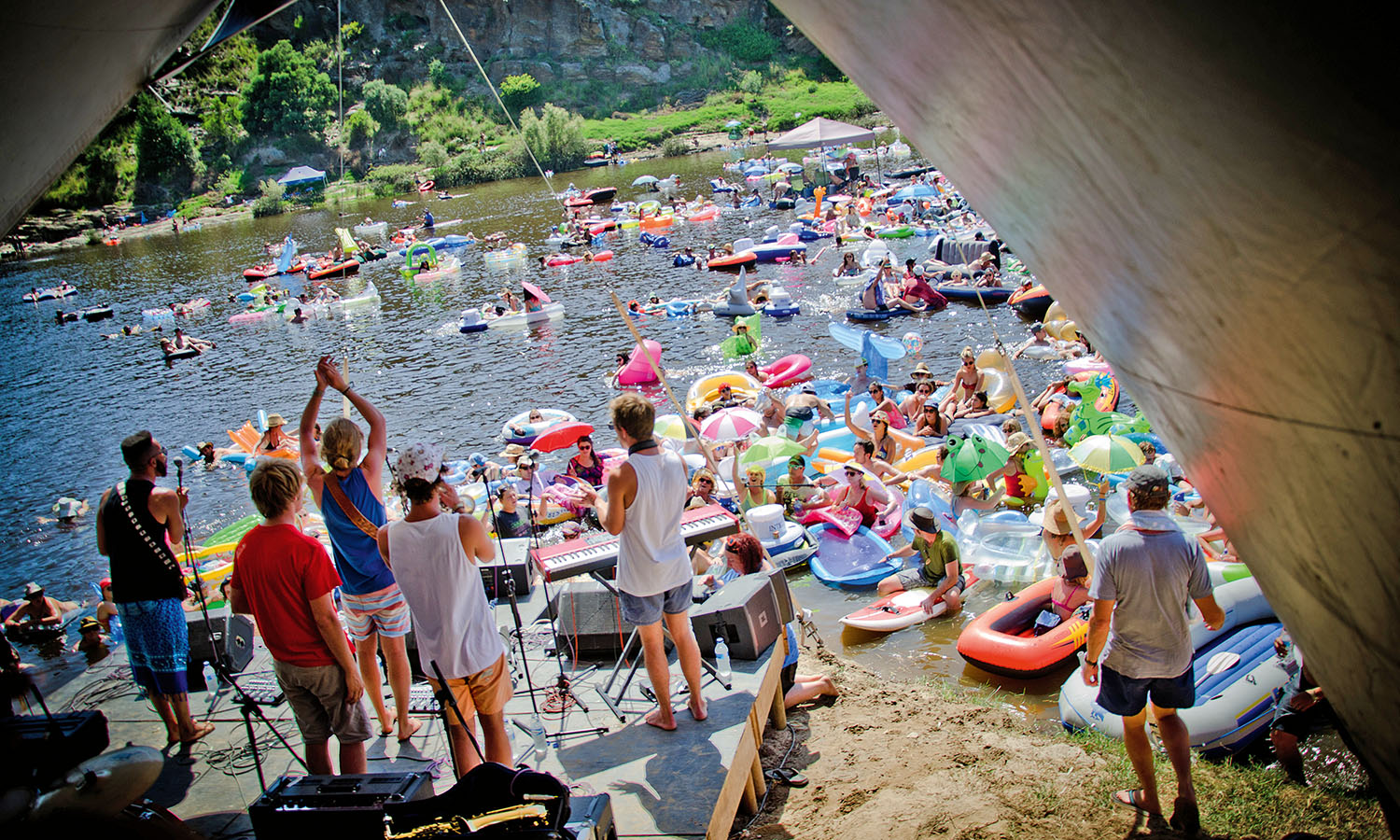
“The first thing we have to do,” I say to the first timers when I finally locate them, “is go look at the river.” Water bottles drained of H2O and refilled with gin, tonic and slices of lemon – we are nothing if not civilised – we head down to the water’s edge. The daytime River Stage is one of Up The Creek’s USPs. The bands play on shore while revellers on li-los, tyre tubes and giant blow-up animals kick back and watch the action. Last year the waterline was so low the stage was set up on a sand bank in the middle of the river, with everyone floating around it. This year is going to be quite different – we’ve had a lot of unexpected rain and the river is in full flow, meaning the stage has been shifted back to the grassy bank. The sky starts turning pale pink and we decide the river can wait till tomorrow – it’s time to hit the bar.
“What’s with all the blue drinks?” asks one of the newbies. They’re called Titanics and have been the festival cocktail for as many years as anyone can remember. I can’t really say what’s in one – vodka (or perhaps it’s gin), triple sec, blue curaçao and lemonade probably, plus whatever other alcohol is left over by Sunday, all served in half-litre plastic mugs. We order three and head to the post-sunset main stage.
Up The Creek is not really a platform for mainstream pop acts. Rather, you’ll discover the best rock bands, shredding blues guitarists, African drummers, skinny-jean punks and a mix of alternative, experimental and folk music. Most are local acts, but those who aren’t have some kind of link to South Africa.
After years of trial and error, we’ve developed a set of rules for festival survival. Never go too big on the first night. No man gets left behind. Always pack antacids. With this mantra running through my soon-to-meet-iceberg Titanic’d brain, I head to bed. Tomorrow is going to be a long, hot day, and I want to be ready for it.
There should definitely be a rule about endless queues at coffee stations at 8.30am during a festival. As I hold a spot in one, Tim goes in search of another. Some 20 minutes later he returns with two steaming espressos. At this point I’m so close to the front, I order a second round – the obliging barista taking my BYO soy milk to make a cappuccino.
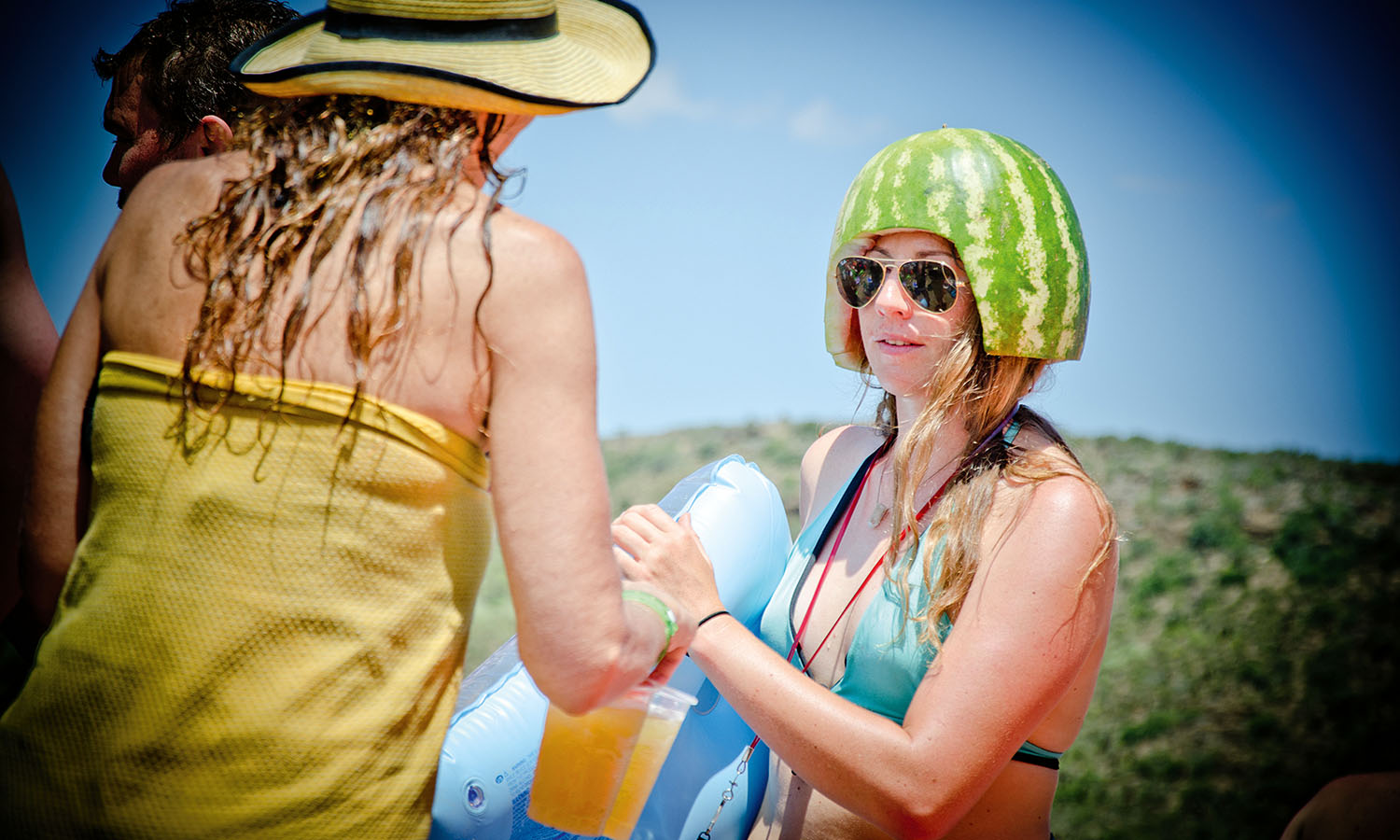
Even this early things are heating up, so we slather ourselves in sunscreen, don our cossies, blow up the tubes and head to the only place offering relief from the heat – the river. Almost immediately I lose Tim in the crowds of swimmers and blown-up dinosaurs, giraffes and sharks. The Nomadic Orchestra fires up jazzy brass instruments while I test the water’s depth. Passers-by offer sips of beer and the MC announces the winners of the best floating bar competition. A couple of hours later – you lose track of time here – I finally locate Tim, who informs me grumpily that he left his fishing tackle behind. I sympathise for a minute, but have other priorities – two more Creek virgins are arriving from Cape Town and they need a proper welcome. I fetch the coldest drink I have – a bottle of tequila that has been buried in ice since our arrival.
”You made it!” I say, jumping with joy and pouring shots down their throats. Wandering aimlessly, we meet guys who’ve set up a tight rope between two trees and are attempting to walk across. On another stage, local comedians are cracking jokes while sarong-clad girls doze on picnic blankets. As attractive as these distractions seem, we decide to seek shade and replenish drinks before heading back down to the river for an afternoon swim.
As evening draws near, it’s time to regroup in front of the main stage. The energy is contagious – everywhere you look people are singing, jumping, laughing and dancing. The lead singer from world-music band Hot Water sets his guitar on fire and the crowd goes wild. School friends I haven’t seen in years appear in front of me and we down shots from Coke bottle caps. The rest of the night turns into a blur of hugs, high-fives and drunken conversations. This Titanic is going down.
Sunday morning arrives and something stronger than a coffee is necessary. My aching head will only be saved by one thing: a plunge into the river. Well, that, two aspirin, a bacon-and-egg sandwich and a swig of free sherry. I rally the troops and we head down to the water for a lazy li-lo drift before the Sunday jam session, also known as the Church Service.
Musicians from all the bands get together, swapping in and out like tag teams and jamming some innovative and occasionally downright radical improvisational tunes. This is my favourite part of the festival, but it’s also bittersweet – the end is near. I dance in my swimmers with my inflatable tube around my hips as pack-up time edges ever closer. I attempt a game of hide-and-seek with Tim, making excuses for my constant disappearances to say goodbye to one person or the other until he looks at me sympathetically and says, “Baby, there’s always next year.”
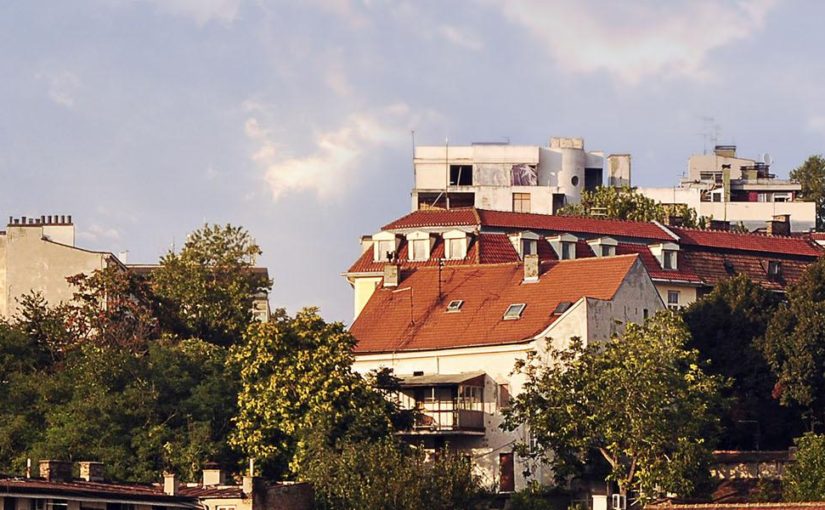
It takes a while to find your bearings in the noodle soup of Savamala, Belgrade’s enigmatic waterfront district. Streets wind up and down hills and along the curves of the Sava River, crossing each other at random before snaking off in altogether different directions. A route that promised to take you to the city centre might suddenly change its mind, leaving you back at the river and facing another steep, confusing ascent. Even more unnerving are the street signs in Cyrillic script: harsh, heavy characters that defy decryption by unfamiliar eyes.
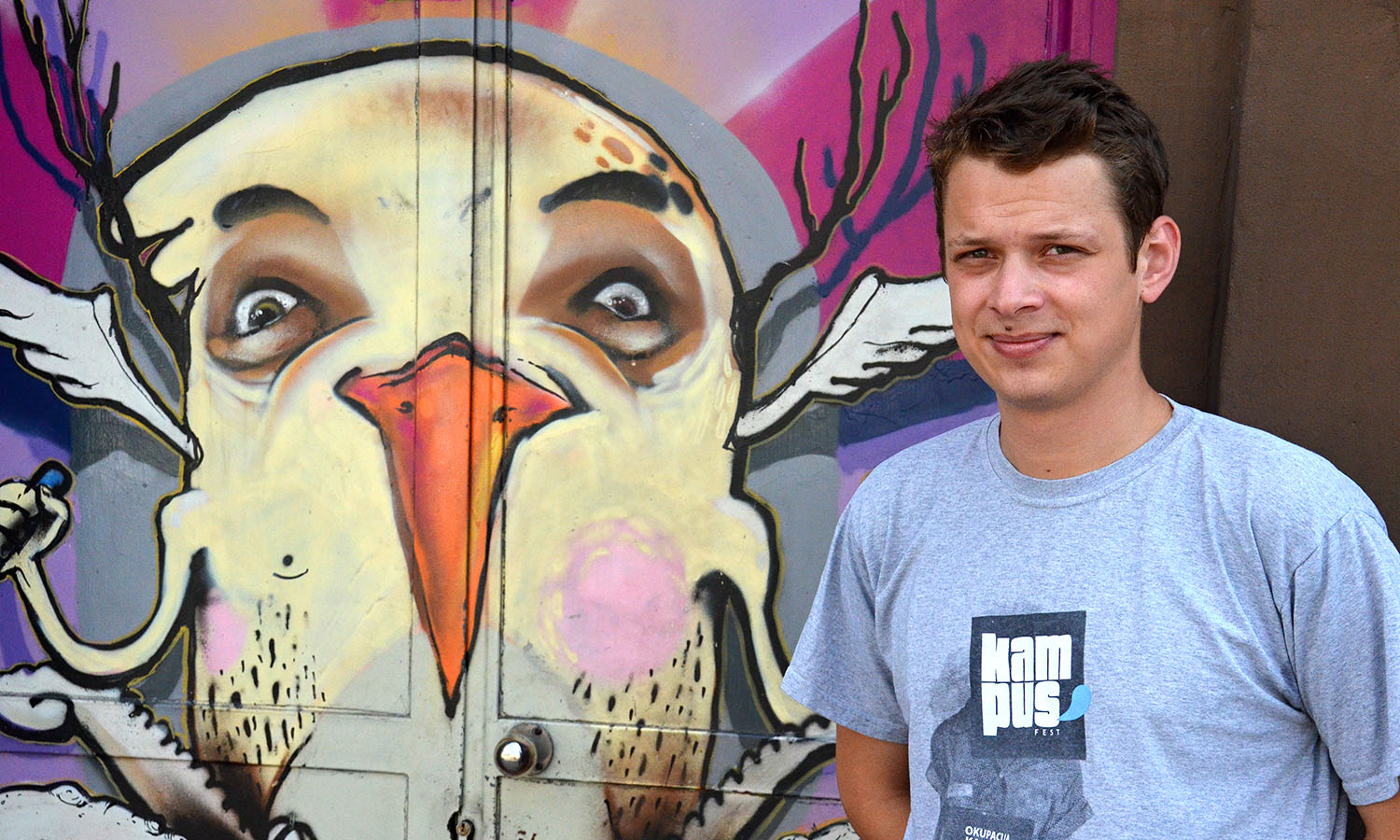
Like many of Belgrade’s residents, I’m an adopted local. When I was three, my parents and I escaped a besieged Sarajevo and relocated to Zlatibor, a pretty town in southern Serbia where the conflict seemed a world away. At the age of 18, I left those rolling hills for the big smoke and quickly found myself immersed in Savamala’s street-art scene. In the seven years since, I’ve seen a huge transformation, as the area, once considered the ugly junkyard by the train station, has become Belgrade’s vibrant artistic hub.
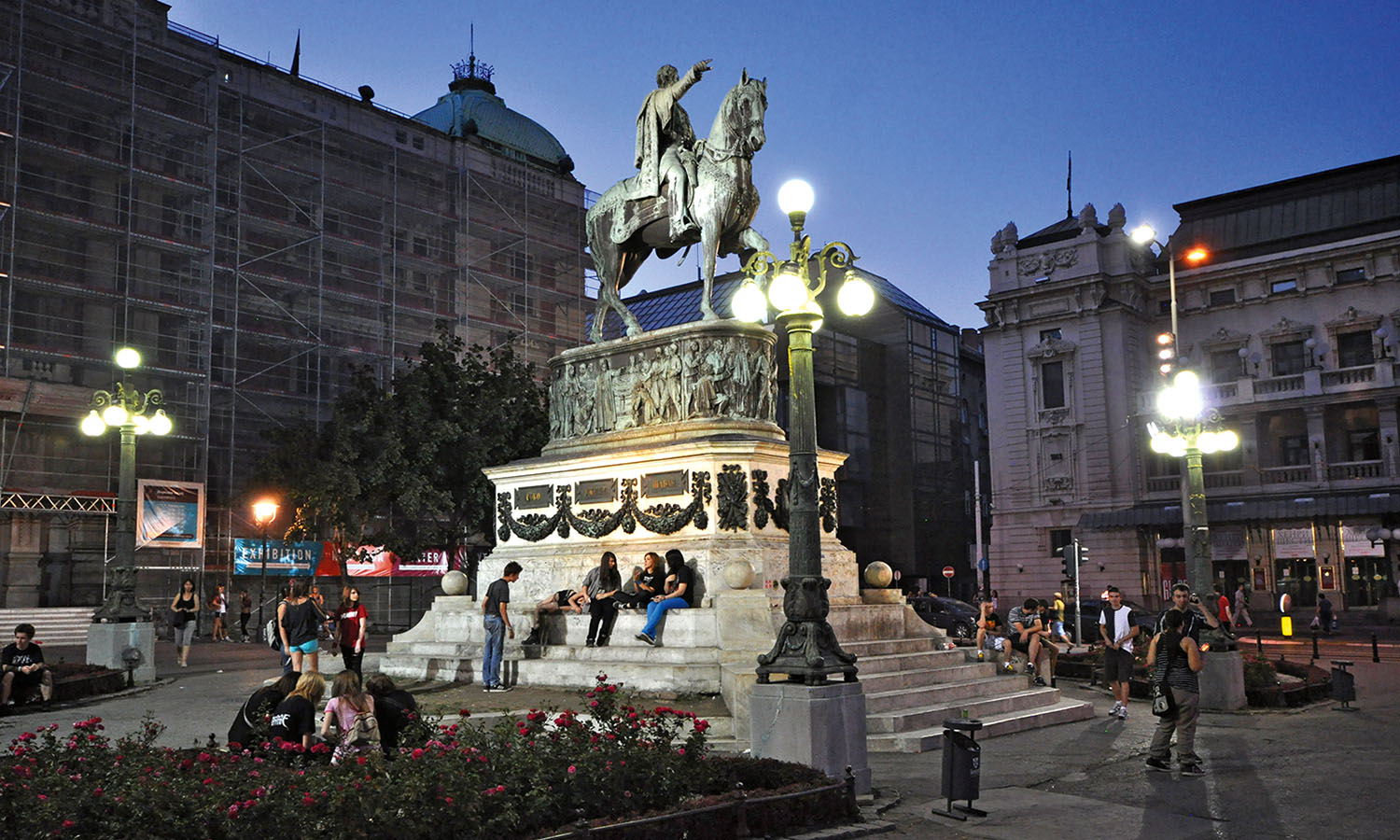
Savamala is just a few minutes from Republic Square, the true centre of the city. Start at the horse statue – Belgrade’s best-known meeting place – and head up Knez Mihailova, the posh main drag that leads to Kalemegdan Fortress. Before you reach the imposing castle, deviate into one of the many alleys to the left, weave through the bustling Zeleni Venac market and head towards Brankov Bridge. There’s a staircase leading to the heart of Savamala, but while you’re here make sure you duck round the corner to check out the Blu mural, one of the city’s most famous graffiti works. It’s probably a beautiful metaphor for how corporate society is destroying the earth. But who knows, maybe it’s just a man with bad teeth eating some broccoli.
Head back to the stairs and descend past Jazz Bašta, a hip little bar tucked away in a courtyard just off the staircase. Known for its sweet cocktails and even sweeter tunes, it’s the perfect hangout for locals who are prepared to pay an extra hundred dinars (about US$1) for some quality drinks and a bit of privacy. Just a few steps down is Gnezdo Organic, one of the city’s few organic restaurants and surely one of its best spots for modern dining. The menu is a refreshing alternative to the typical Serbian fare of meat, meat and more meat, offering vegetarian options like risotto and tagliatelle, as well as a range of liver-cleansing fresh juices. Those struggling to find meat-free options should also check out Radost Fina Kuhinjica, an excellent vegetarian restaurant within a stone’s throw of the fortress.
At the bottom of the staircase is a graffiti tribute to Robin Williams that popped up just days after the late comedian’s passing and gained instant fame online. Next to it is a particularly large mural. Actually, a few friends and I were paid by Converse sneakers to work on it. But please try to see it as art, not advertising.
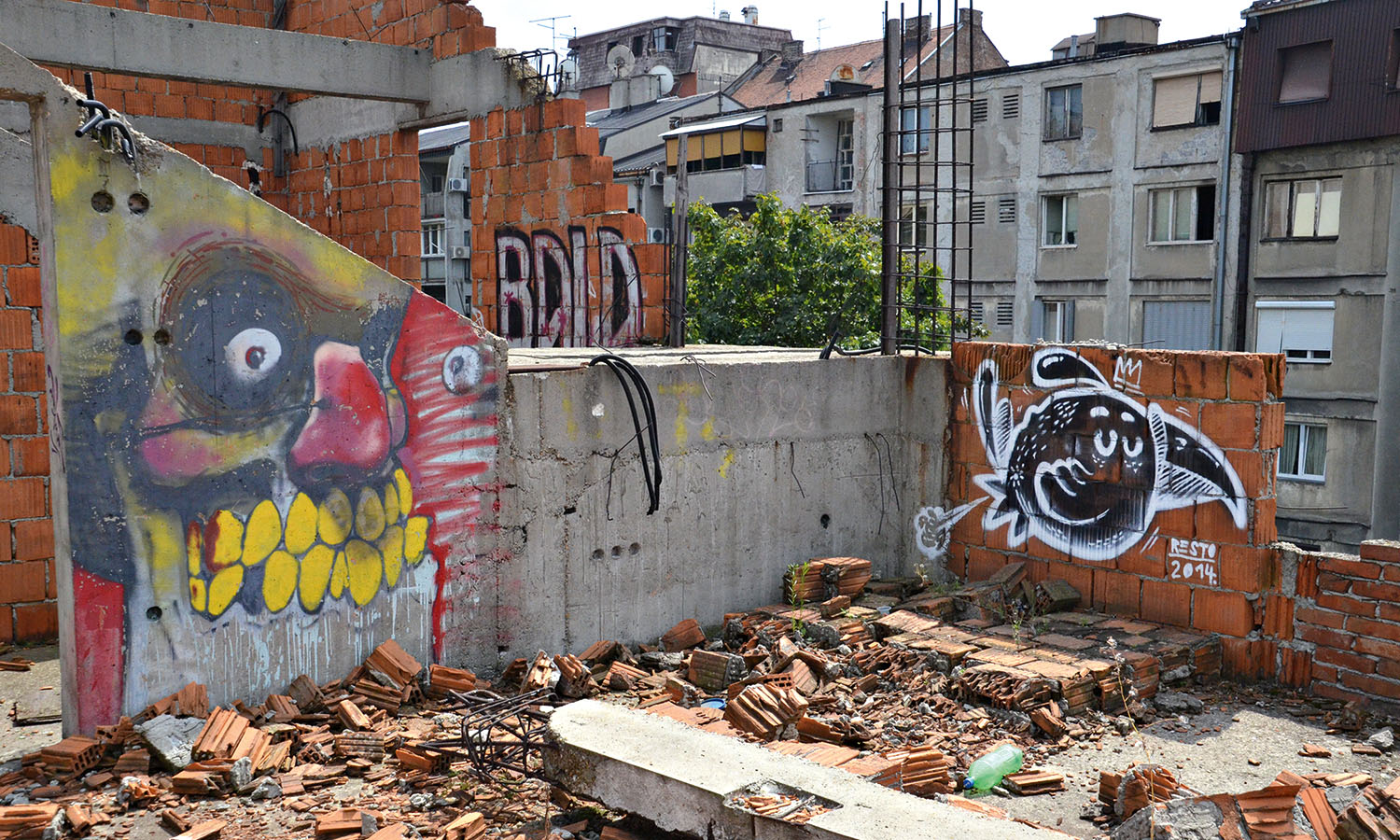
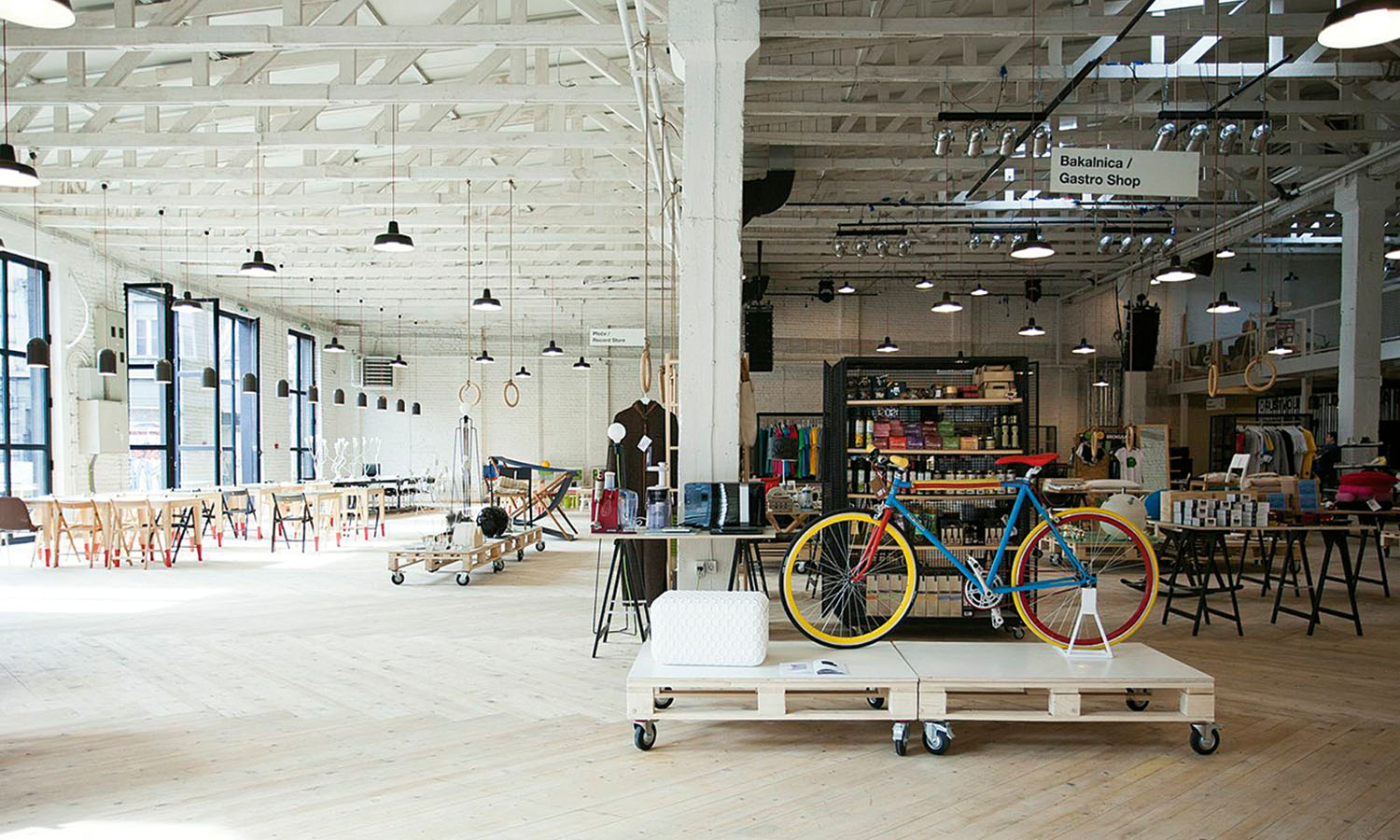
The next block contains some Savamala icons. Chief among them is Mikser house, a conceptual art gallery, cafe and bar rolled into one. It’s known as the birthplace of Savamala art culture and is as popular today as it ever was. Just up the road are the twin clubs Mladost and Ludost (‘youth’ and ‘madness’ respectively in Serbian). They’re good for a big night out but are quite pricey and can get very crowded. Those looking for a more chilled-out option should head around the corner to KC grad, which has a spacious but well-hidden beer garden that’s perfect for some arvo brews. While you’re there, pop next door to Španska Kuća, a semi-collapsed building that’s been transformed into an open-air gallery.
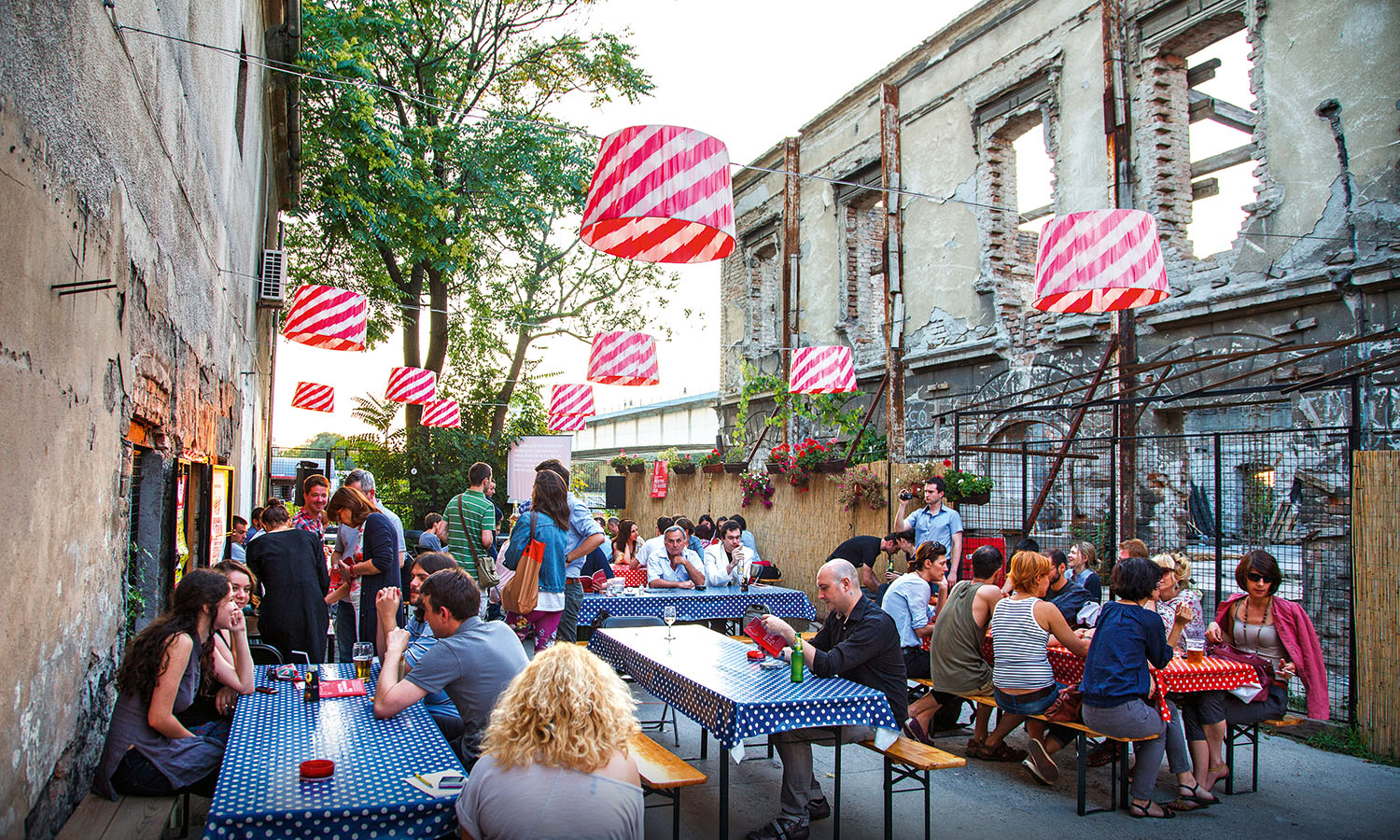
Stop for a drink at oh-so-trendy dvorištance, the bar behind the wooden gate on the bend of Braće Krsmanović St. You can come here to rub shoulders with Belgrade’s coolest crowd or you can just drink until the next train passes on the tracks outside (are there ever any trains?). My friends and I like coming to places like this, but at the moment it’s a rare treat; the economy is tough and the government gives practically no funding to artists like us. So most of the time we just hang out in the park with a few beers and good company.
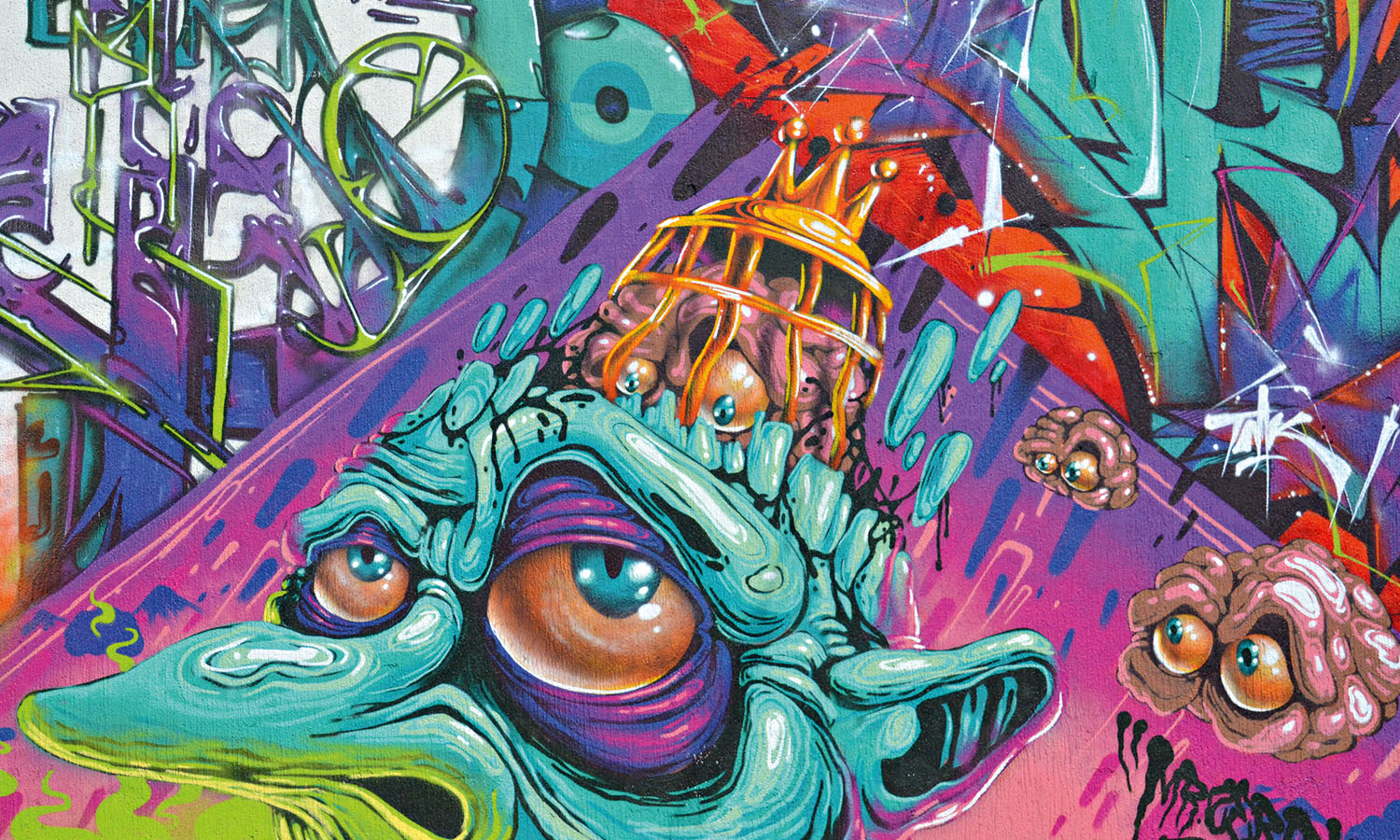
The street just around the corner – Mostarska – is perhaps the most striking in the city, purely for its graffiti. Colourful wall-to-wall art on either side gives you the feeling you’re walking through a real-life comic book. Actually it’s very recent; during the Mikser Festival in June last year, artists transformed the bland street into something memorable. Now the once-empty walls seem almost alive with astronauts, acid-trip brain goblins and swarms of cats.
Unfortunately, nowadays in Savamala there’s an elephant in the room. Actually, it flaps in the breeze above you; a row of big blue flags on which is written ‘Belgrade Waterfront’. These flags signify the Serbian government’s deal with a property developer to transform Savamala into an upmarket residential zone over the next decade. For artists like us, it stinks. Not long ago Savamala was a ruined area, so we came here and transformed it into what it is today. Now that it’s back on the map, the government sees the potential for profit and has stepped in to make a quick buck. They will move us from the place we made our own and, if they get their way, replace our art with soulless buildings. But if and when the time comes, we’ll go somewhere else and our expression will not be muted.
Nobody knows what Savamala will be like in 10 years’ time. That’s why you should come here now, to experience the heart and soul of one of Europe’s most interesting cities while it’s still in its prime. And if you decide to give a big blue flag a touch-up with some spray paint, well, I wouldn’t blame you.
In the open sea, waves lap at eye level making it difficult to focus. Between slaps of water I see a giant black dorsal fin cutting through the water directly towards me. The unforgettable shape, ingrained in my mind thanks to countless movies, triggers a primeval instinct to get out of there and fast. My heart is pounding so hard it threatens to burst out of my chest, but then I take a deep breath.
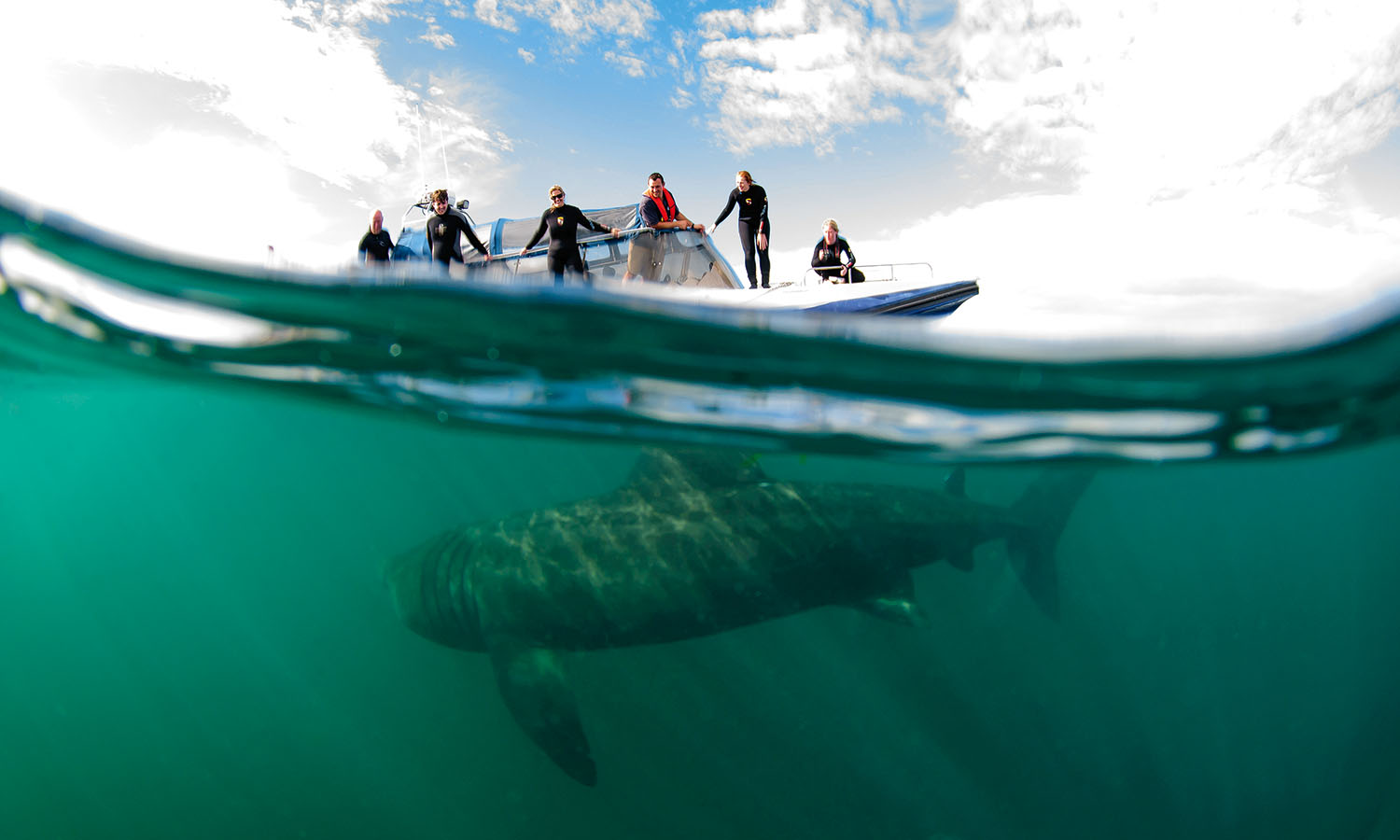
This is no predator. Growing to more than 10 metres long and weighing as much as a bus, basking sharks still have the capacity to inspire terror as they swim these temperate waters scooping up plankton with their vast mouths. But, really, these are the gentle giants of the ocean.
Generally Scotland’s travel reputation involves malt whisky, Edinburgh Festival, medieval castles and Hogmanay, but the waters surrounding the Hebridean islands on its west coast harbour world-class marine life. This underwater display peaks in the summer, when the sea fills with minke whales, numerous species of dolphin, diving puffins, large seal colonies and basking sharks. Scientists using satellite tagging and sighting studies have only relatively recently got a handle on the sharks’ movements and, as it turns out, the numbers here are incredible. Ask the locals though and they shrug in a nonchalant manner: “Aye, there are hundreds of them laddie. Ahh need tae slow ma boat doon tae avoid them.”
Although there are a number of whale- and dolphin-watching operators in the region there is only one dedicated shark-swimming operator. Basking Shark Scotland is located in Oban, a quaint fishing town with the obligatory distillery, ruined castle and friendly pubs. In the summer season the town bustles with tourists delighting in its coastal charm, but I’m here for what lies offshore. Accompanied by just 10 other excited travellers, I’m met by the operation’s enthusiastic owner, Shane Wasik. Once aboard the high-powered cabin boat we’re issued seats and lifejackets and briefed on the action-packed itinerary.
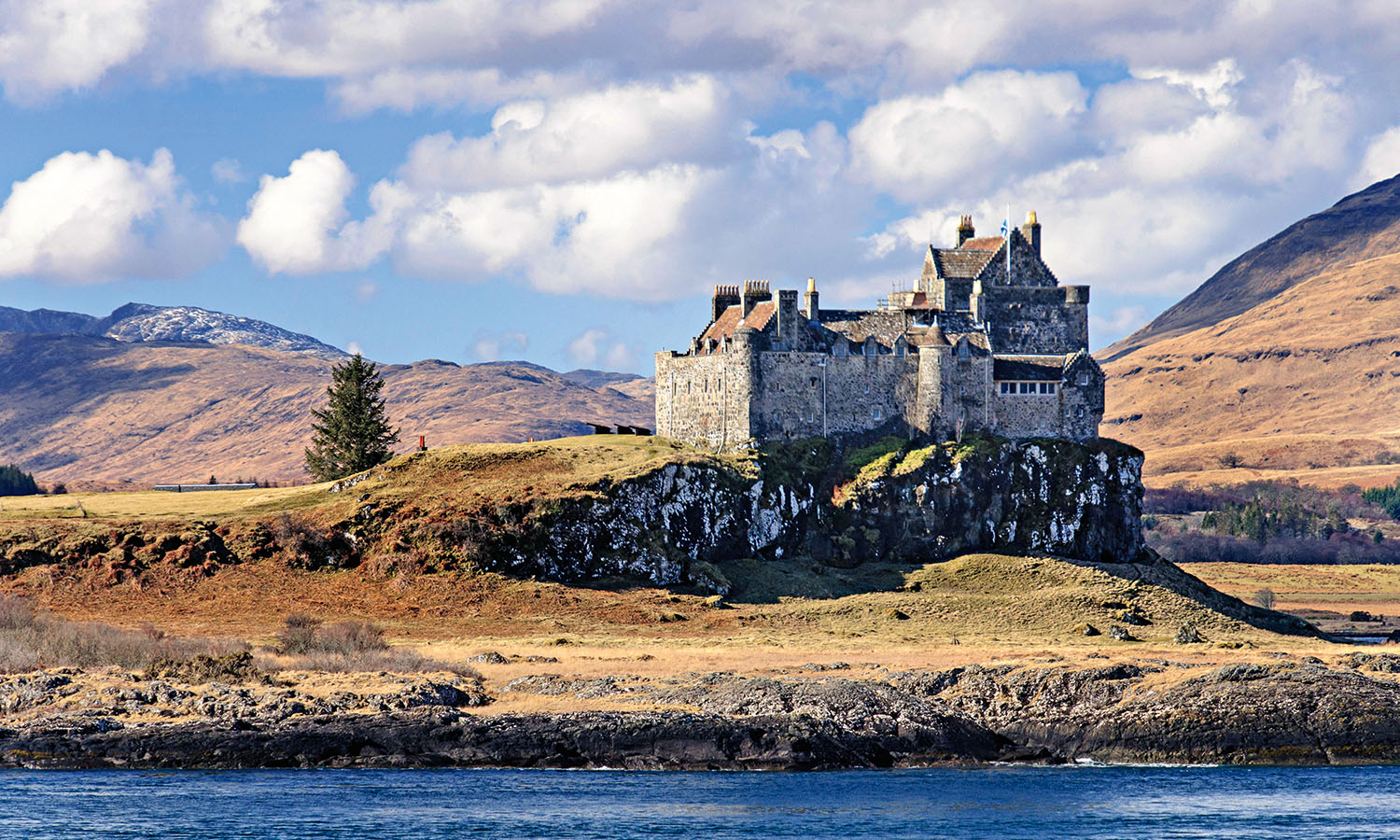
Taking off, we cruise through Sound of Mull, passing Rubha nan Gall lighthouse, built by Robert Louis Stevenson’s father, Thomas, and a Clan Maclean castle perched on the cliff. It’s a typical Scottish coastal scene: high mountains on either side of the sound, porpoises cresting around the boat, seals basking on rocky skerries and gulls soaring overhead. After an hour or so, a shout goes up from the viewing platform – a white-tailed sea eagle has been spotted up ahead. Eyeing us from an elevated cliff-top ledge, it soon returns its attention to the surrounds, scanning the area searching for its next meal. Suddenly, it spreads its wings and we see the giant bird in all its glory as it glides off into the forest. Shortly after we make a stop in the village of Tobermory, made famous locally by the kids TV series Balamory. Its waterfront is dominated by pastel- coloured buildings hosting a variety of highland craft shops, B&Bs, pubs, restaurants and a large distillery – in fact, everything you could want in a main street. But we’re here only briefly since there are bigger fish to fry, so to speak.
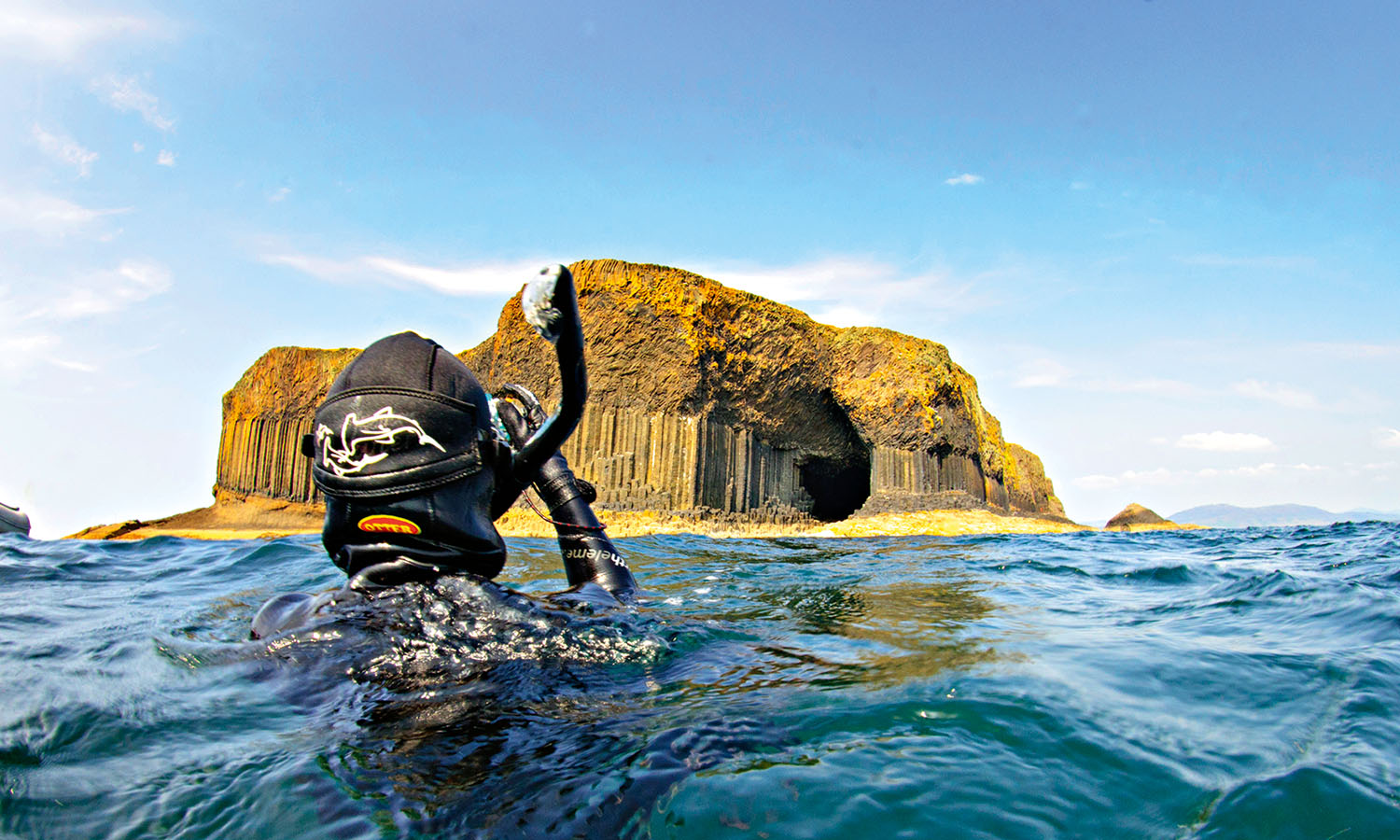
We leave the sheltered waters of the Sound of Mull and skipper Cameron points the bow towards a distant island on the horizon. Shane gives us a briefing on what we should be looking for – telltale triangular dorsal fins on the surface and sometimes the tip of the tail or nose. As the sharks feed at the surface, we only have to snorkel to see them. It’s really no different to exploring a coral reef, except it’s a bit cooler in the water and the wetsuit is a little thicker – seven millimetres to be precise, with matching boots, gloves and hoods.
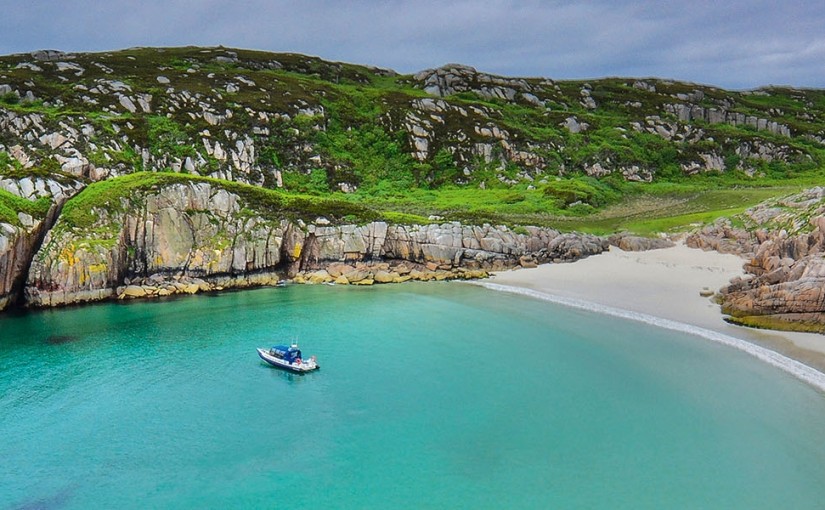
The boat pulls in among a group of idyllic uninhabited islands. The sea’s sandy bottom allows the sun to turn the water a brilliant emerald green. With little human influence, it’s amazingly clear and unpolluted.
As we get our gear on, it takes everyone on the boat a moment to notice the rather large welcoming party. Our anchoring spot is a seal colony and more than 20 of them have surrounded the boat. I flop over the side and into the water, the frigid shock making me take a deep breath, but I soon warm up and any thoughts of the cold disappear. As we fin towards a white sand beach, the seals flit back and forward. Their large puppy-dog eyes watch our every move and their barrel rolls and somersaults easily outmanoeuvre our clumsy swimming. We spend a good hour – it seems like five minutes – with the seals before it’s time to move on. Back on board, home-baked treats and hot chocolate are handed around as we prepare for shark watch.
Binoculars in hand, Shane keeps watch at the stern as we all peer out the windows. Cruising down the coast again, the boat pulls in to little bays and inlets hoping for signs of our monster targets. As we’re getting comfortable in our seats, the shout goes up. “Shark!” Sure enough, a hundred metres off the bow is the unmistakable shape of a dorsal fin. “You’re gonna need a bigger boat,” someone jokes. Smiling, Shane notes the shark is probably between seven- and eight-metres long, and since the boat is just 11 metres in length, they may be right.
The sharks in these waters are heavily protected and there’s a strict code of conduct for those interacting with them. The crew watches this one to determine its behaviour and the boat is positioned away from its path. We are split into groups and four of us, with our guide, slip into the water with minimal splashing. As we venture onto a collision course with the shark, Shane’s words reverberate in my mind: “Stay close, nice and quiet at the surface, no splashing. Let the shark come to you.”
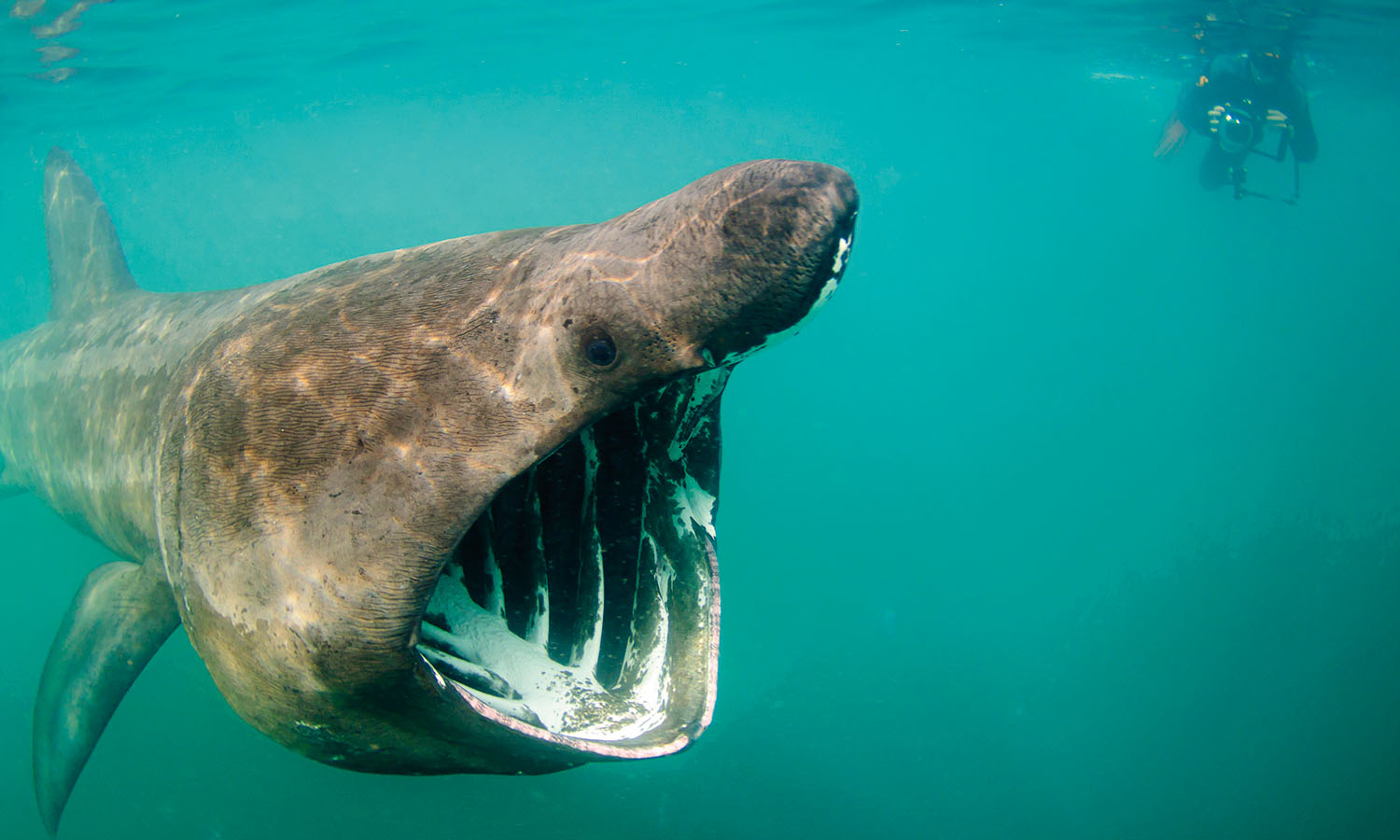
As the dorsal fin gets closer and closer, the butterflies in my stomach begin performing acrobatics. This is a very big fish and, due to the plankton bloom, underwater visibility is limited. Suddenly, its gigantic mouth appears, and it looks as though at least two of us would fit in there. The shark moves slowly but purposefully in a rhythmic motion as it glides through the water. Closer and closer it comes, and I feel as though I’m going to be scooped up like Jonah until, at the last moment, it sweeps past, literally within touching distance. I freeze as the grey-brown mass of mouth, body and fins passes. Its full eight-metre length seems to go on forever; then, as quickly as it appeared, the shark is gone. But it’s an experience I’ll remember forever.
Molten light bleeds across the ocean’s surface beneath a swollen sun. The world’s first sunset burns with the same fiery hues as the lava that only a century ago poured across this land and congealed in pools. Come nightfall, I float in a lagoon only metres from my bed and search the sky for shooting stars.
I’ve been lured here by the promise of unearthing a Polynesian paradise and of fa’a Samoa, the laid-back way of island life that survives, somehow, despite the threats of magma from within, cyclones from above and tsunamis from below. Setting sail from Upolu, Samoa’s main island, I wind up on the less explored (but no less gleaming) jewel, the island of Savai’i. Despite being just 20 kilometres north-west of Upolu, only a fraction of tourists who visit the nation make the journey across the Apolima Strait. Fewer still stay overnight.
A quarter of the nation’s population is shacked up on the condensed ash and cinders this active volcano has disgorged over the past five million years, but beyond the port there is no main town. Manicured villages dot the coastline between a hot mess of lava fields, cliffs and verdant jungle. “Three years ago, there would be one car on the road – that would be peak hour,” says Chichi, our guide. Now, we’re stuck in a traffic jam with two cars in front and a Land Rover behind on the one paved road around the island.
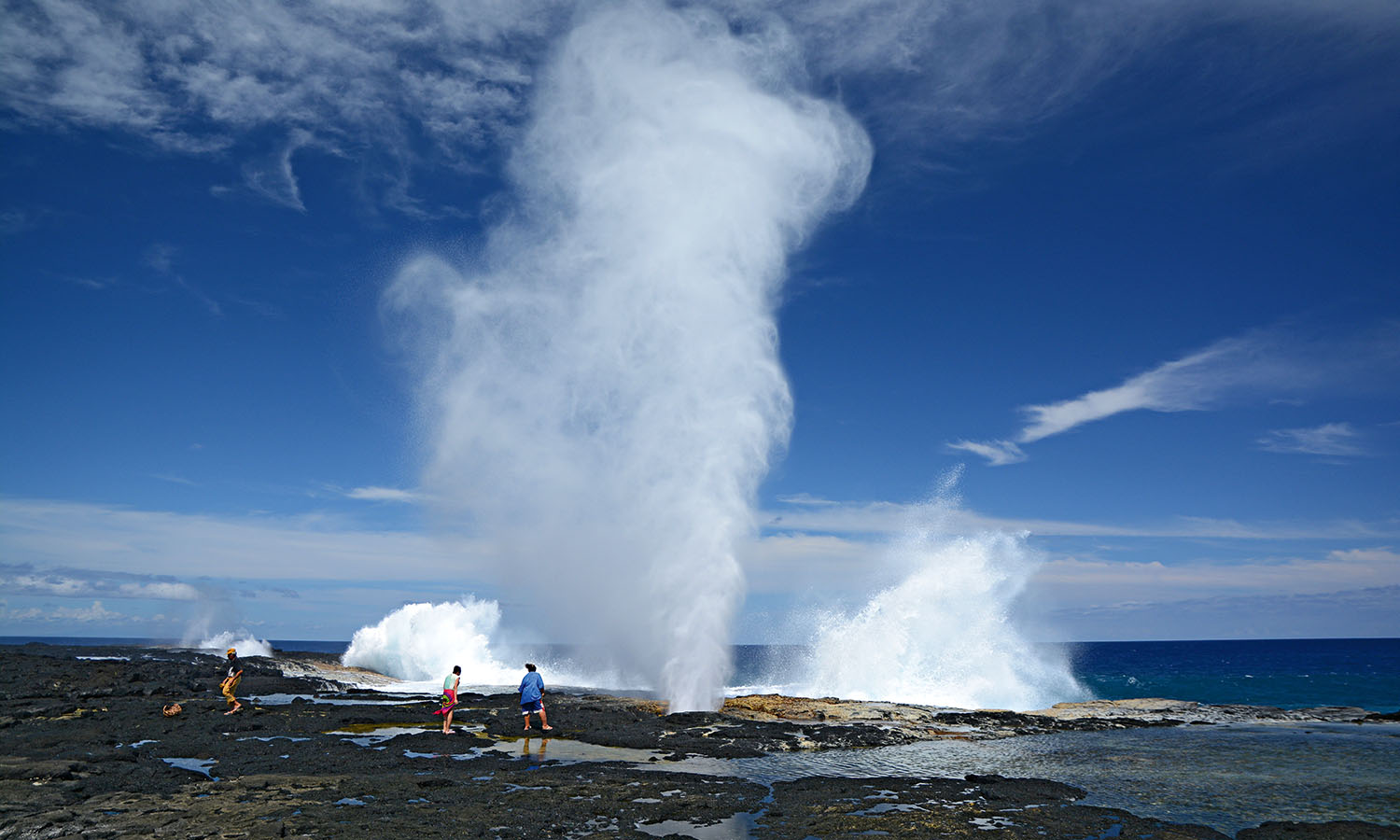
Departing bitumen, we pause to gather a man before lurching down a trail toward the sea. Our hitchhiker disembarks, basket in arm, and strides to where the waves slam against rock. He slips a coconut from his bag and with an expert arm tosses it into a crevice. Nothing happens. Then, with a roar, the blowhole spits it out as if it’s a cherry pip, soaking us with salty spittle.
Back on the road we pass a group of girls wading in the shallows, their rainbow umbrellas transforming the lagoon into a shocking blue cocktail. An equivalent coast in Europe would be littered with basting bodies and water bottles sucked dry, but here beaches are either bare or home to a handful of fales, houses without walls but topped by tin or grass roofs and blessed with unbeatable views.
The island’s residents seem to share one vibrant palette of paint that slathers schools and meeting spaces with bougainvillea pinks, pineapple yellows and every colour in between. These open structures reflect the personality of the locals. “Your walls are to keep people out,” says a woman I meet, named Samoa. “Back in Australia you have to ask people for permission to go into their place. Here you don’t have to.” Arrive at a family’s fale and request refuge and you’ll be welcomed into their home. But don’t let the lack of walls fool you – propping up each roof is an ironclad social structure honouring the village chief, tradition and the Church.
Chichi cuts the engine beside the shell of a chapel, sucked clean by surging seas. Waves from a cyclone in 1990 swallowed the village, but not the villagers, who swam to a local school. Across the road two muscled men smear a fresh lick of paint on a concrete shrine for Mary. Travelling sinners needn’t fear – redemption is just around the corner. The nearest church is never more than a few hundred metres away. Missionaries imported their religion to these islands in the 1830s and although 99 per cent of citizens declare themselves Christian, traditional customs remain embedded in the culture.
Further around the island I gaze over Cape Mulinu’u, the western-most point of Samoa. The ocean here once swallowed the sun along with the souls of Samoan ancestors as they passed into Pulotu (the spirit world). But these lava fields are no longer the last place on earth to see the sun set, since the nation danced the siva across the International Date Line at the end of 2011 in the hopes of bolstering trade with their Kiwi bros. Look at a map and the line zigzags around this patch of the Pacific.
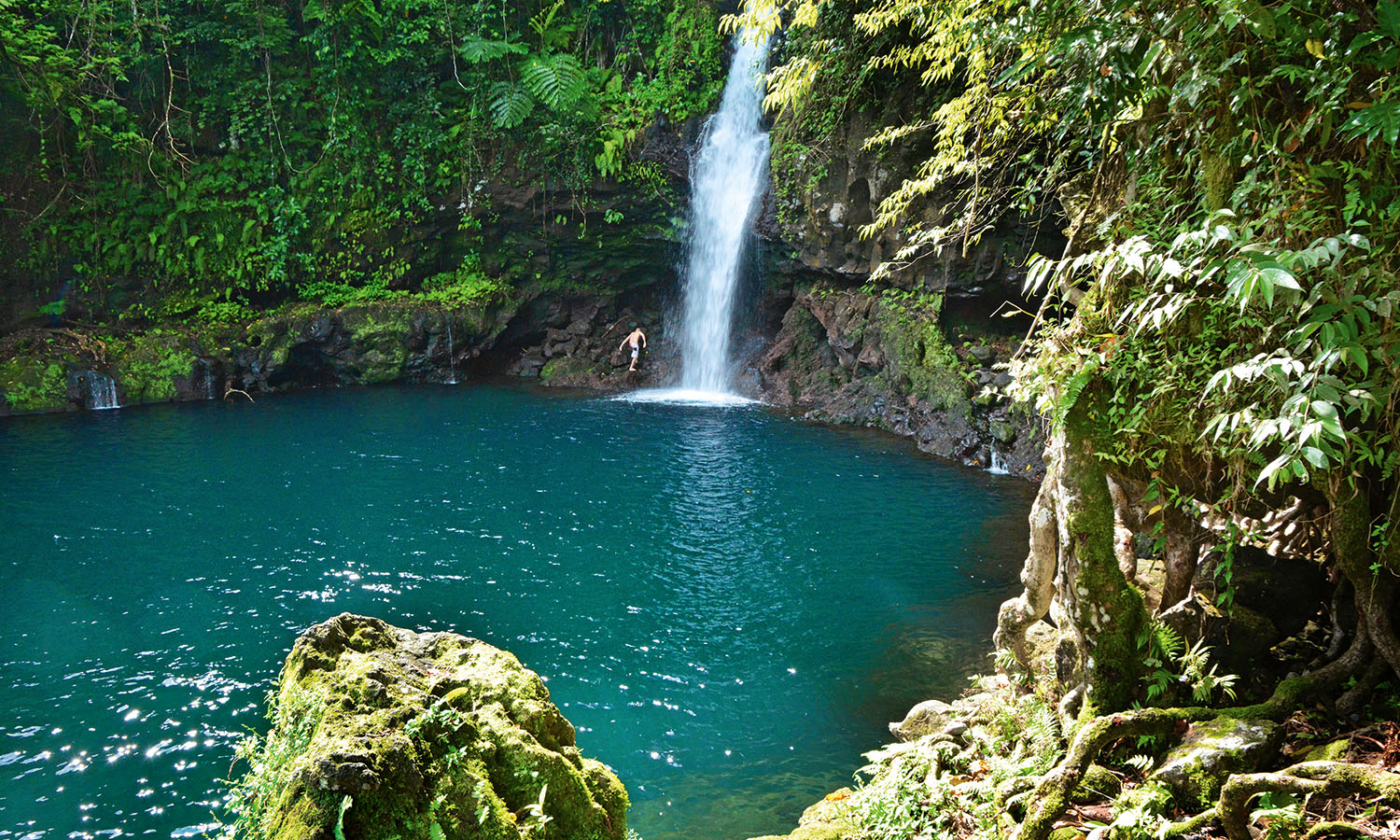
Late at night rain pounds the roof of my fale and sneaks inside. There are no walls, after all. I wake damp and rocking a halo of frizz around my head. Rising before the sun, I hike to a nearby village, passing children in pinafores wandering to school. Life is busiest in the morning before the air becomes syrupy, carrying the aroma of bananas and breadfruit. At all other hours it runs on island time, which is to say there’s very little running and lots of men snoozing in wooden fales while women sell fruit and snapper dangling from sticks. Honouring the easygoing lifestyle, I spend my days on Savai’i exploring waterfalls, indulging in nature’s tireless masseuse in the form of cascades, and swimming with turtles with a passion for papaya.
Despite the languid pace I relish my return each night to the private lagoon at Stevensons at Manase, my home base on the island. The water and air feel so similar in temperature that it’s hard to tell where one becomes the other, until I drift over cool fresh water bubbling into the ocean. Some villages construct walls around these springs to create bathing pools, but fortunately they’re not obliged to share their clean water with this sunscreen-slicked traveller. Although my beach hut looks like a traditional fale from the front, latched to the back is a bathroom complete with a toilet, shower and fridge.
Swilling a cocktail at Stevensons’ bar I notice a carving of an eel suckling a woman’s toe. Given the religious conservatism that obliges women to dress modestly and frowns upon tourists swimming on Sunday, her breasts seem exceptionally nude.
“Coconuts were invented in Samoa, like everything else in the world,” declares Chichi by way of explanation, before sharing the pre-missionary tale of a beautiful girl named Sina and the eel that loved and stalked her. Once slaughtered by the village chief the eel transformed into a coconut tree. His eyes and mouth form the three marks seen on a de-husked nut, but only the gob is soft enough to open. “I don’t like kissing the eel,” says Chichi, “so I just put a straw in it.” I’m not sure if it’s the eel’s love or the dash of vodka in the mix, but my fresh coconut is among the best I’ve ever consumed.
Back on the road we pass a group of girls wading in the shallows, their rainbow umbrellas transforming the lagoon into a shocking blue cocktail.
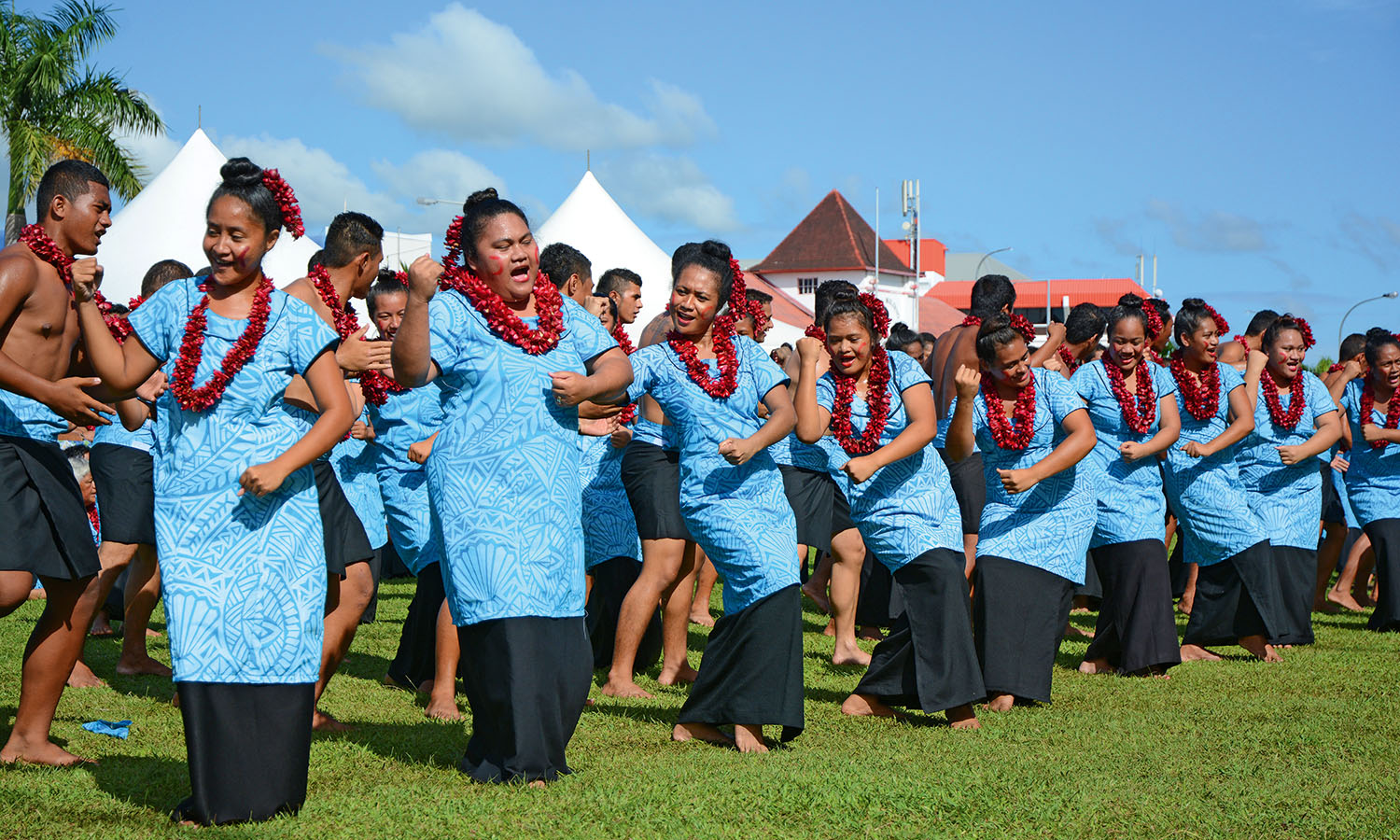
In Apia, the capital of Samoa, life strolls at a slightly faster pace. When we arrive the annual Teuila Festival – the largest event on the calendar – is in full swing. During the day women sway on a stage erected in the middle of town and, at night, men slick with oil dance to pulsing drums.
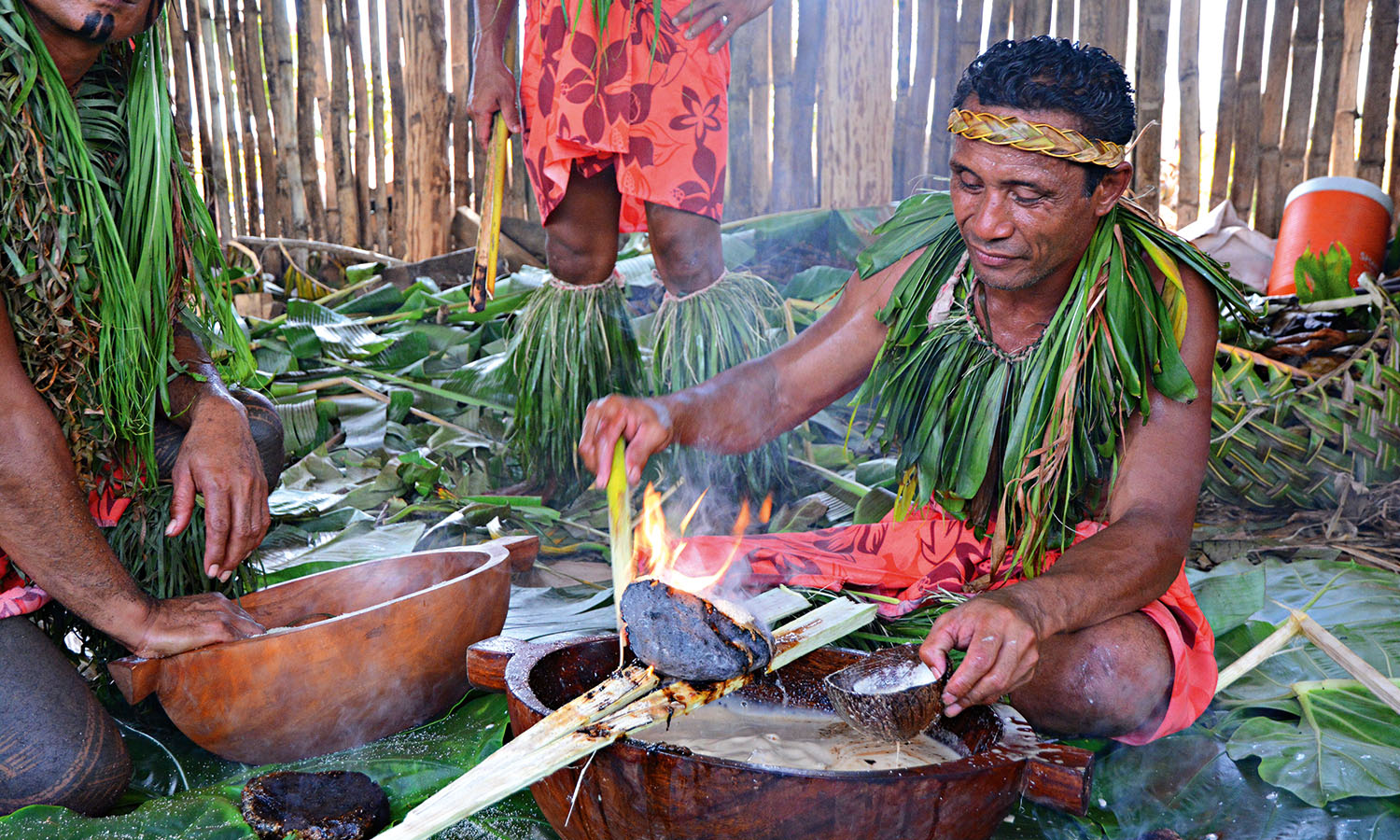
Across from the stage two pigs lie on their backs with bellies full of mango leaves. A man hammers hot rocks into the neck of the nearest in a billow of porky smoke. Sweat drips from the tips of his ula (pandanas-leaf necklace) as he shovels a mound of stones into the belly of the swine. Climb to high ground on a Sunday and you’ll gaze upon a cloud of smoke blanketing Upolu. Beneath the haze men are at work gutting pigs, skinning taro and folding origami bundles of palusami (coconut cream cooked in young taro leaves) to pile onto the umu (hot rock oven), which bakes while they sing at church.
Arranging banana leaves over a pile of lobsters, a cook tells me that skill on the umu not only feeds a family, but is also key to acquiring one. If a woman doesn’t fancy the taste of your pork, she’ll trek to the next town in a search of the perfect crackling. It’s a dating technique I’d happily introduce back home.
Pulsing music lures me to a fale where locals go to get inked. A young woman flicks through shots on her camera as a tattoo artist chisels a malu (traditional women’s tattoo) across her thigh with a tool crafted from the tooth of a hog. “Our faces are too beautiful to tattoo so we tattoo our butts instead,” says Chichi as he describes the painful process endured for the men’s pe’a, which leaves little of the haunch and lower torso un-inked. The lava-lava (cloth skirts) worn by many men reveal a generous portion but the most intricate part, as Chichi refers to it, is left to the imagination.
Outside the festival there’s little to do in the city besides visiting fish stalls and the market, where sellers peddle Polynesian trinkets and a food court trades almost exclusively in delicious fried chicken. The remainder of Upolu harbours a wild playground for surfing, snorkelling and whale watching. Electric-blue fish the size of my index finger glide with me through the turquoise To Sua Ocean Trench. A team from Sa’Moana Resort shares a secret rock pool glimmering in a Jurassic landscape. Once in the pool the tide sucks me into a cave, claiming a few layers of my skin and ego, before spewing me out through a lava tube. Those with more grace emerge unscathed.
Nearing the end of my stay an apocalyptic scene greets me beyond my bungalow at Sa’Moana Resort. Rain tramples the normally tranquil beach and the wind screams like a child throwing a fit. After seemingly endless days of blue sky I finally meet the other side of Samoa. The deluge has banished the smoke from the Sunday umu and, sometime during the night, families have wrapped their fales into tarpaulin parcels. Just nine months ago Cyclone Evan, the worst tropical storm in more than 20 years, tossed cars in to trees and thrashed the island and its residents. The beach itself became a weapon. “It looked like we’d massacred something,” says Daniel, who owns the resort.
For the first time I notice concrete skeletons among the creepers as we explore the coast. These houses sit abandoned following the 2009 tsunami. A boy I meet says he survived by climbing the near-vertical mountain that looms behind us, clinging on tight while a wall of sea smashed into the hill below. Since then villagers have made escape trails into the hills and are re-learning survival techniques that died with their great-grandparents. The streets are deserted, but as we stop for petrol, a hymn glides through my window. On a television screen churchgoers line pews in their Sunday finest, voices raised to their Lord.
As we depart for the airport, water sloshes into the van. The road has become a river of unknown depth and I can’t help but feel Samoa is trying to hold me (a willing) hostage. The storm dissipates as we round the coast and we arrive just in time for check-in. Come take-off, the sky is sapphire blue and I learn that, despite being only 25 kilometres away, not a drop of rain has fallen on this side of the island.
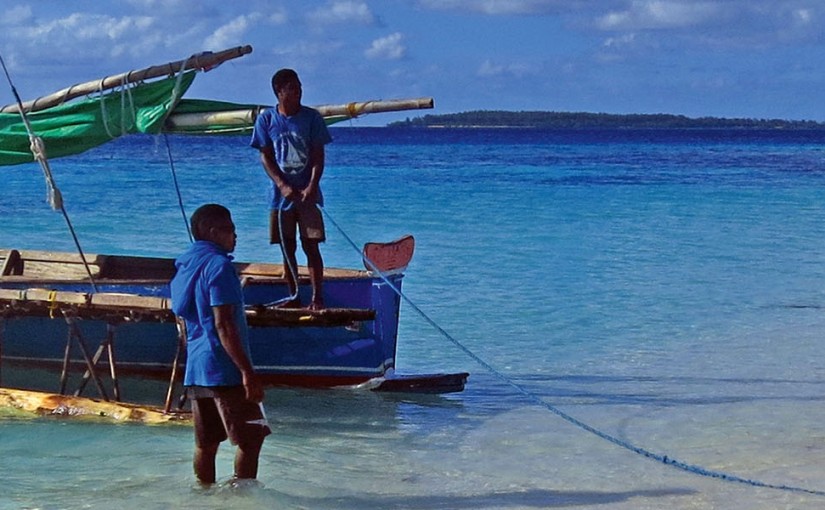
The design has barely changed in a millennium, but when it works as well as this one, why would you bother? We’re perched in a sailau, a type of wind-powered wooden canoe, about 12 metres long, constructed from timber gathered from nearby Panaeati Island. The crew stands to one side on the bamboo outrigger – at least they do when they’re not swinging out over the water on the boom to change direction or bailing water from the bilge.
Sailaus are not tourist crafts; rather, they’re the main form of transport for locals to get around in this part of the world. They are the truck, car, school bus and telegraph for these island communities, racing along at speeds of 12 to 15 knots, delivering people, goods and news to wherever it is they need to be. They’re unique because they’re shallow enough to skim over reefs and land on islands inaccessible to Western-style yachts.
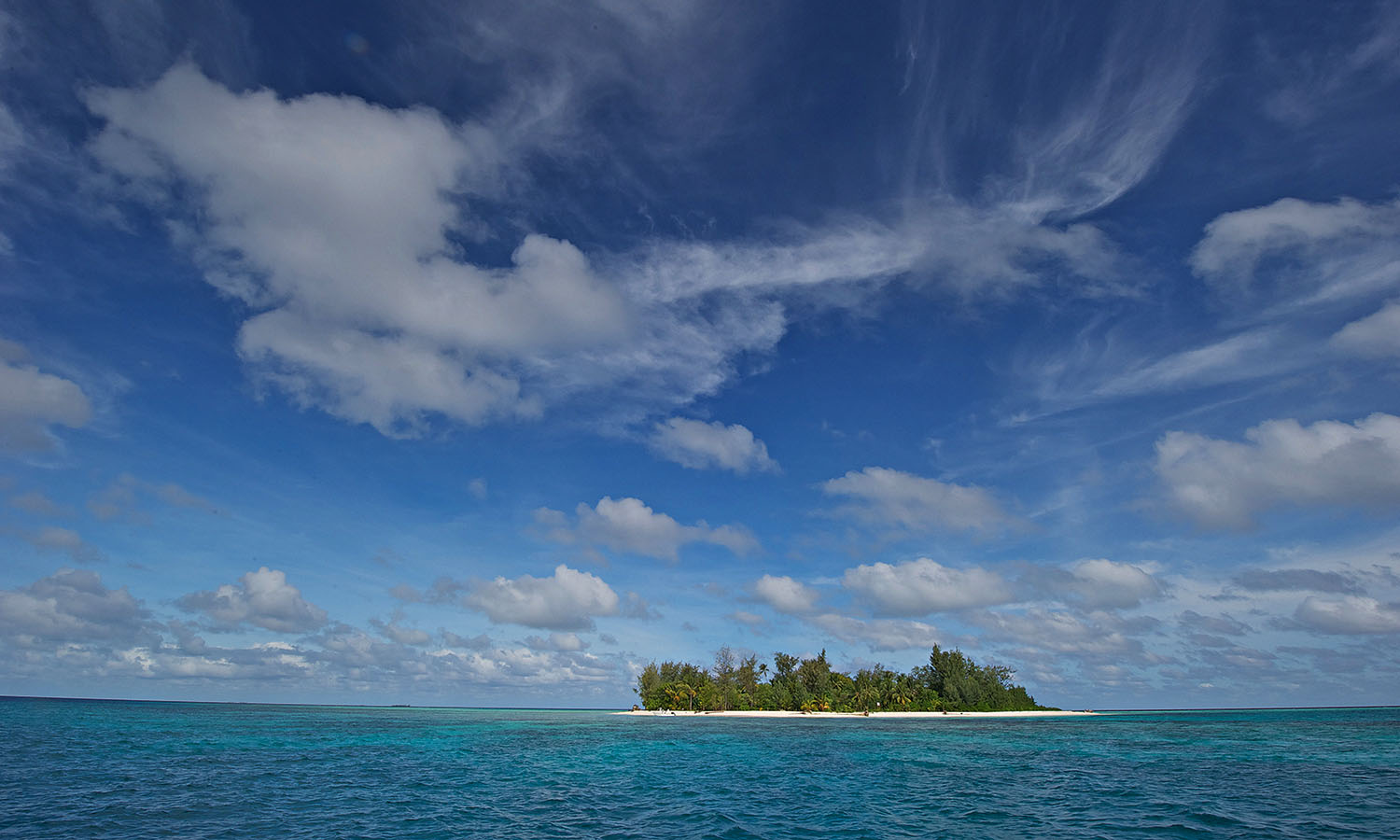
We’re sailing in the Conflict Islands, the most far-flung atoll in Papua New Guinea’s southeast Milne Bay Province. They’re part of the Louisiades group of about 600 islands. With only about 160 of them inhabited, this is one of the world’s final frontiers.
Twenty-one pristine islands, encircling a central lagoon formed from the rim of a sunken extinct volcano, make up the Conflicts. In the past there was 24 of them, but the others have since disappeared underwater. These days, the whole lot is owned by Australian-born entrepreneur turned eco-warrior Ian Gowrie-Smith.
The islands are deserted, except for a tiny resort on the 64-hectare Panasesa Island. Here, you’ll find six beach bungalows, created by craftsmen from nearby islands with rosewood for the floors and carved timber columns, in an idyllic setting that includes little else other than a dive shack, clubhouse with dining area and bar, and a couple of vegetable gardens. Previously this tiny patch of paradise was off limits to the public – a private hideaway for Gowrie-Smith and his close friends and family when they could make the long journey. Even now, when the resort is at capacity, the island’s population peaks at 12.
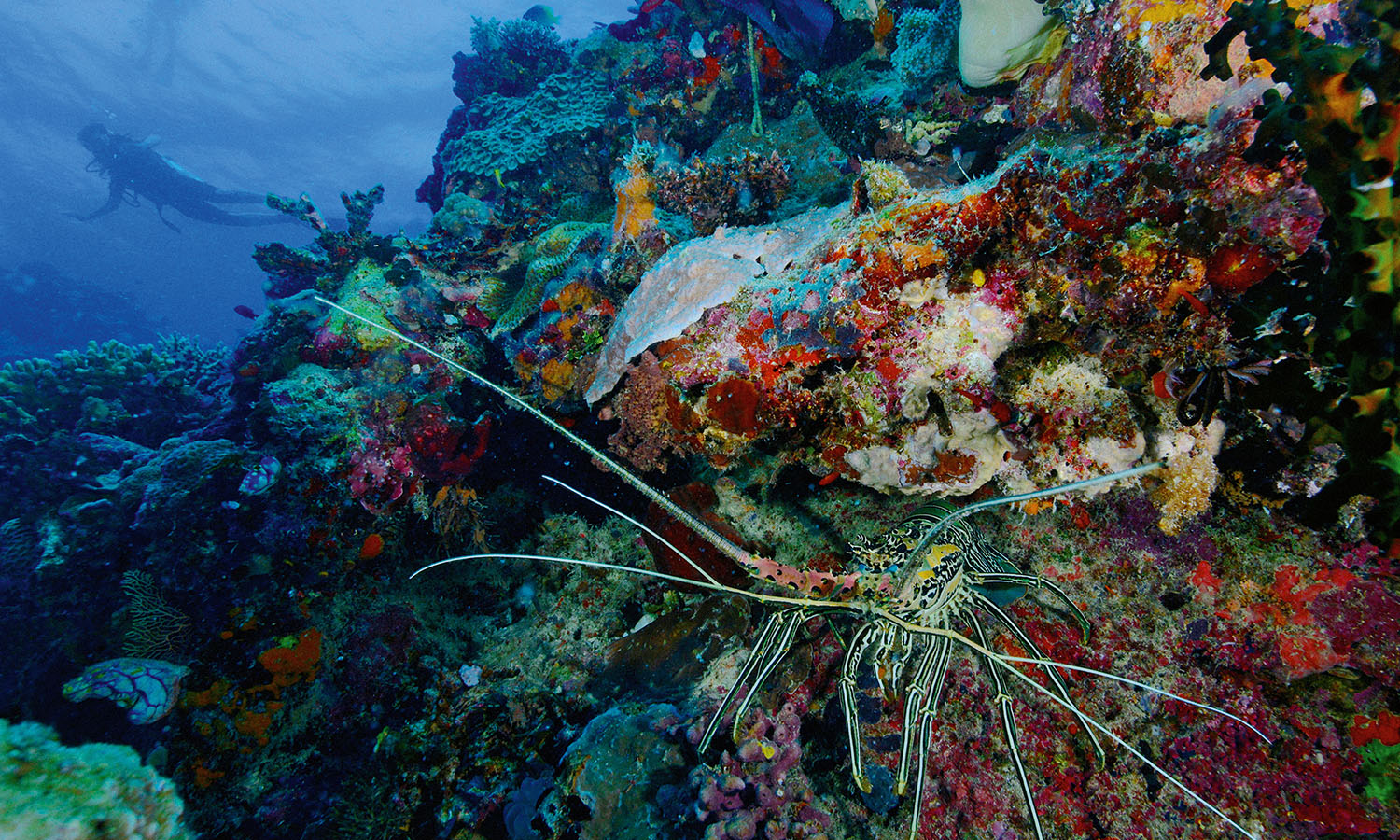
A reef 300 metres off shore fringes Panasesa Island, creating a spectacular iridescent blue lagoon. There’s just one way in for arriving boats – a small break in the coral wall that must be navigated with care. The colours are spectacular and, even from the boat, the life beneath the water is clearly visible. Parrot fish are busy, scraping the algae from coral that, eventually, becomes the finer-than-caster-sugar sand forming the white island beaches.
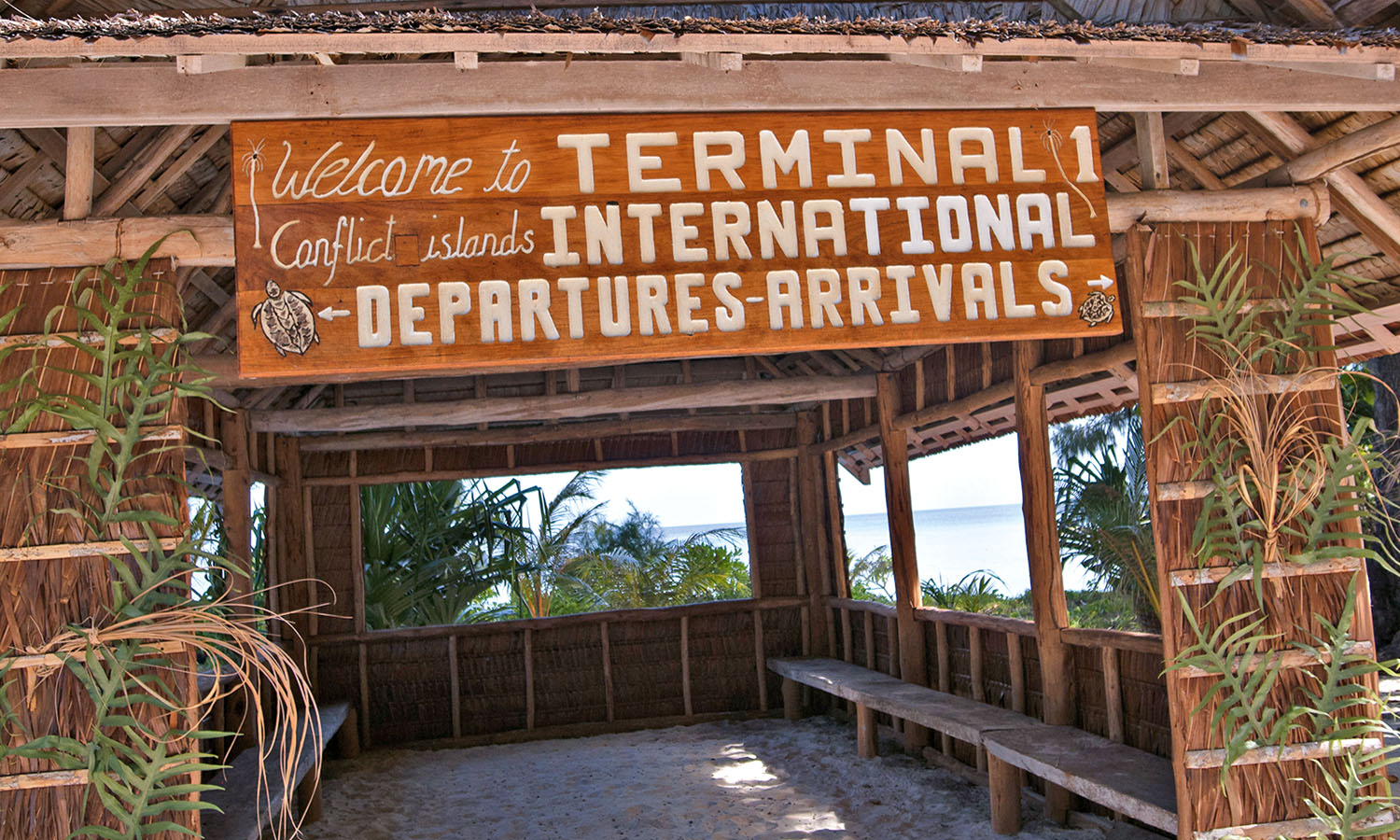
Back during World War II, US troops cut a swathe through Panasesa’s coconut palms to create a grass strip capable of landing small planes. These days, coconut shells line each side of the runway, which ends at the ‘international’ terminal: a small thatched hut with a sign.
A sand path leads from the accommodation to the far side of the island. It’s possible, on reaching the beach, to wade into the water and snorkel to the fringing reef. Here, the coral wall drops 40 metres into the deep, its vertical mass alive with fish and coral.
And while the marine life is spectacular, it’s not confined to the ocean’s depths. One night I watch as, just metres from the bungalows, a hawksbill turtle makes the slow journey up the sand to lay her eggs. In about two months, with a little luck on their side, the hatchlings will make the treacherous trip back to the ocean.
In the morning, we head across to Itamarina, an even smaller island almost five kilometres from Panasesa, for more snorkelling and a beach picnic. The boatmen who ferry us there on their sailau are not from the Conflicts. Instead they have sailed from nearby Brooker Island to pick us up. Juda, it turns out, paid for his sailau with pigs. They’re also a common currency when it is time for a man to pay for a wife.
Located in the centre of the atoll, Itamarina is the crown jewel sparkling in the lagoon. Sitting on the sand, it would be easy to pretend you’d been marooned on a desert isle, but the rations – brought across from the resort in a metal dinghy – are more substantial than those that could be scavenged by the average castaway. We sit beneath a thatched shelter and eat fresh seafood, salads and pork barbecued on a spit before returning to the warm azure water to swim.
The following day the dive boat manoeuvre between coral bommies rising from a sea of blue and green. On board is a floating think tank of marine biologists, island historians and underwater photographers, who’ve come to explore the area and document their findings. We are heading to the waters surrounding the largest island in the group, Irai. It is long and flat, with an amazing seven kilometres of spectacular, blinding-white beachfront. Once again, it is completely uninhabited and utterly unspoiled. The diving, we’ve been promised, is outstanding, particularly off the northwest and southwest tips.
Milne Bay Province has 1126 dive sites in total and is the most bio-diverse marine region in the world – twice as many species are found here as on the Great Barrier Reef. But even among such stellar company, these reefs are considered standouts. So varied is the marine life in this corner of the archipelago, the Conflicts and its surrounds are being considered for inclusion on the UNESCO World Heritage List.
One night I watch as, just metres from the bungalows, a hawksbill turtle makes the slow journey up the sand to lay her eggs.
Our destination on this fine morning is a dive site known as Beluga. More than a thousand species of fish have been recorded here – including a rare clownfish only seen in a couple of other spots in the world – but the site also boasts swim-throughs in the shallows at five to 10 metres and a vertiginous 50-metre wall.
Alex, the resort’s dive instructor who hails from Germany via Bondi, leads us through this remarkable environment. As we descend into a silent world, I’m surprised at the incredible visibility.
Going down the wall is like passing a vertical garden with blooms of every colour. Ribbon corals unfurl and sea grasses and ferns wave in the current. Soft sponges appear in the shades of the rainbow – purple, red, green, yellow and orange. Peer into the massive farms of coral, formed over hundreds of years, and you’ll spy scores of tiny fish. Brilliant sapphire-blue pygmy angelfish with orange highlights and banded clownfish weave past, as if teasing us. I extend a hand and they speed away.
Minute school fish swim past in a silver trail like confetti at a wedding. Eels poke their noses out from the coral then swiftly pull back in again. Even the smallest of sea creatures – waving nudibranchs (shell-free mollusks) and tiny snails – are blessed with dazzling colours and intricate patterns.
On the seabed, there are sea cucumbers – like fat slugs, they squirt if threatened – cuttlefish and all kinds of soft corals and sponges. Giant clams hide between the rocks and Christmas tree worms, with their blue, yellow and green spirals, magically retreat as we come close. Monumental vase corals tower over the landscape.
Alex points out one curious-looking species then waves a finger in front of her mask indicating not to touch it. It is the infamous puffer fish (in some Japanese restaurants it’s sold as fugu, considered one of the most dangerous foods in the world) that inflates like a balloon when touched or startled.
At a depth of 25 metres, the seabed suddenly drops away and there is no sight of the sandy bottom. We have reached the hypnotic ‘blue zone’. Out there, where there is ever-darkening cobalt and seemingly very little else, swim the big fish. Tuna, giant mackerel, grouper and massive Napoleon wrasse, with their hump heads and fleshy lips, glide past us and out into the mysterious depths.
Too soon, Alex signals it’s time to surface. “What makes the diving so exciting here in the Conflicts,” she says when we gather back on the boat, “is the diversity of dives and the fact there are still so many undiscovered sites.”
Central to Gowrie-Smith’s future plans is the preservation of both the islands and the surrounding reefs and ocean. In the past, local fishermen harvested all the sea cucumbers and turtle eggs they could lay their hands on to sell as delicacies to Asian traders. There’s also the threat created by commercial long-line fishing, where the incidental catch of seabirds, turtles, sharks, unwanted species and juvenile animals can have a devastating effect on the ecosystem. Instead, Gowrie-Smith is determined to create a tourism industry involving small, responsible operators dedicated to preserving this tiny patch of paradise and providing the islanders with a much-needed livelihood. After all, it’s a rare opportunity to save one of the finest underwater worlds left on the planet.
Karaoke bars are so cliché. As are the stories of nights in distant Asian cities you could never tell to anyone at home.
Manila is huge and can be a little confusing. It’s easy to be swayed by the instant gratification of a hotel bar or a club in one of the seedier parts of town. Instead it’s a much better idea to jump in a taxi (they’re so cheap don’t bother trying to figure out the late-night public transport options) and head to places some of the locals enjoy. Rest assured, you won’t hear a bunch of drunk dudes belting out ‘Livin’ On A Prayer’.
5pm
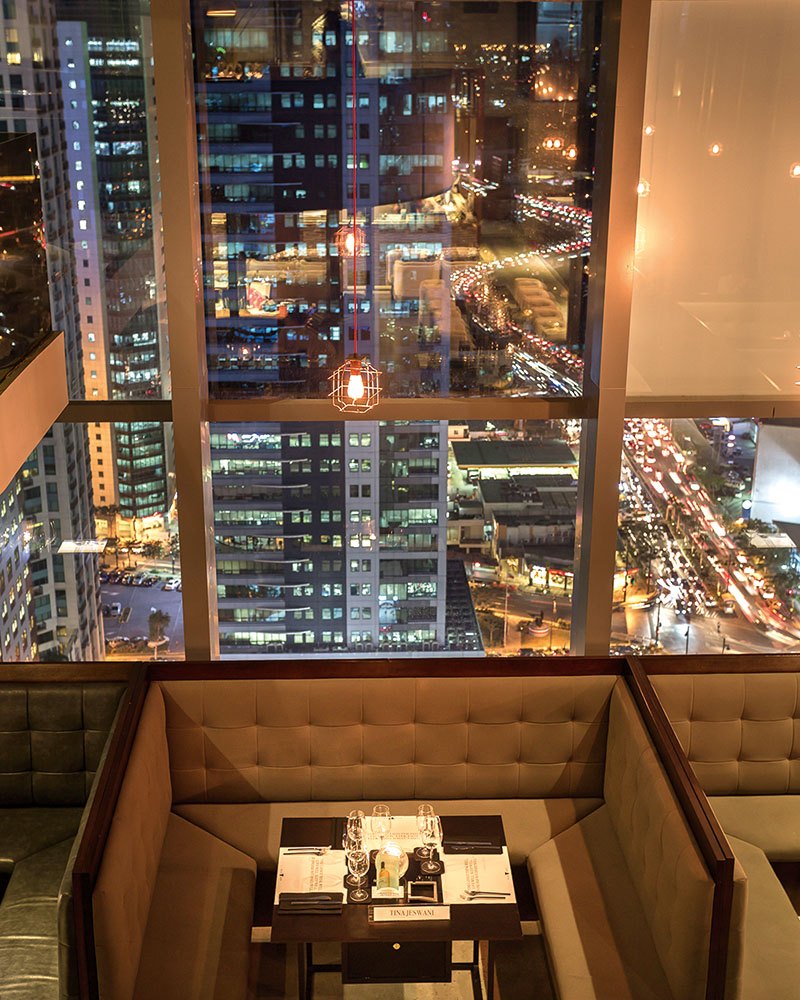
There are many places you can enjoy the sunset over Manila Bay, although strangely, given its proximity to the view and the modernity of the development, there aren’t a whole lot of rooftop bars in Bonifacio Global City. Instead, book ahead so you can nab a gorgeous corner table 27 floors above ground level at Black Sheep and partake in modern interpretations of classic Filipino drinks. It’s quite different to what you’ll find in other bars – even the fancy-schmancy ones. (FYI, the locals aren’t overly fond of the taste of alcohol, so you won’t get toasted during sundowners.) The Kwarto Kantos is a gin-based cocktail containing preserved calamansi, while another, made in collaboration with a local distiller, combines cucumber, basil and a sugarcane wine called basi. Black Sheep The Penthouse, W Fifth Avenue Cnr 5th Avenue and 32nd Street, Taguig facebook.com/blacksheepmnl
6.30pm
The Filipinos are renowned for their love of song and ability to sing. Everywhere you go in Manila you’ll hear tunes pumping out of jeepneys as people move about the city. They also love food, and the unique Singing Cooks and Waiters restaurant is where you’ll find the two combined. Huge family groups celebrating birthdays line long tables alongside work parties starting out the night as everyone working in the restaurant belts out tunes – all the hits, from ‘My Heart Will Go On’ to ‘Gangnam Style’ – to the accompaniment of a three-piece band dressed in Hawaiian shirts. Somehow the chefs manage to bang pans and juggle fruit as they serve up plates of lechon (roast suckling pig), kare-kare (beef in a peanut stew) and kalderata (braised goat in a tomato stew). Not recommended for romantic tete-a-tetes. Singing Cooks and Waiters Ongpauco Building Cnr Roxas Boulevard and Senator Gil Puyat Avenue, Manila singingcooksandwaiters.com
8pm
During the day it’s one of the better places in the Makati district to grab an espresso, but from about 6.30 each evening The Curator transforms into a crazy-cool, dimly lit cocktail lounge. Being hidden behind a wine bar also makes it feel as if you’ve discovered one of Manila’s after-hours secrets. You can either pull up a wishbone chair at one of the communal tables or prop yourself on a banquette. The list is short on what you might consider classics, instead featuring creations by local bartenders. Owner Jericson Co is the man behind the Rye ’n Gosling, a fruity fusion of blueberry, rye whiskey, Gosling’s rum, ginger shrub and Fernet-Branca. The Curator 134 Legazpi Street, Makati thecurator.com.ph
9.30pm
Like many bars in Manila, it’s all about the music at saGuijo. The difference is that in this tiny dive bar in a suburban street you’ll find indie and unsigned bands playing rock. Squeeze through the door past the band and over the legs of girls sitting on the floor and head out to the back for an icy cold can of San Miguel. Then try to find a spot where there’s a line of sight back to the musos (there’s no actual stage). You’re almost guaranteed to be the only traveller here, but a fun, loud night out is guaranteed. saGuijo 7612 Guijo Street, Makati saguijo.com
12am
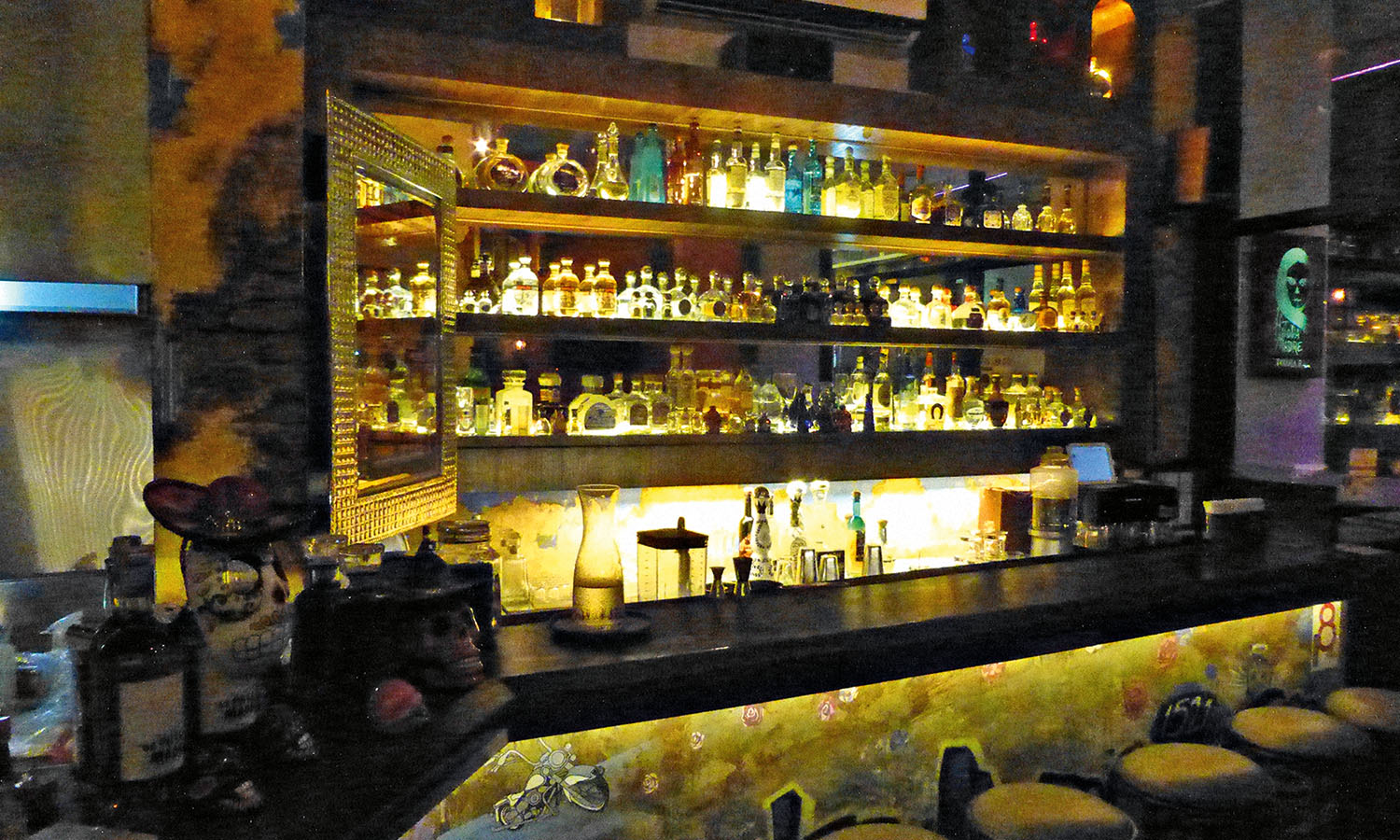
Unless you have a penchant for establishments with monikers like Dimples, Rascals and Mixed Nuts (ladyboys rather than ladies), you may think there’s no point going to P Burgos Street, Manila’s best-known red-light district. That was until brothers Sante and Aljor Perreras decided to bring a touch of Mexico to the ’hood. At A’Toda Madre they’ve imported some of the finest tequilas – blanco, reposado and añejo – to the country. There are more than 100 available at any one time, as well as Mexican beers and, of course, margaritas made with premium booze, agave nectar and fresh lime. The brothers have also imported spices and herbs from California and Mexico for use in the kitchen. After all, at this time of night you might need a pollo de chipotle taco or two to keep up the energy levels. A’Toda Madre GF Sunset Tower Cnr Durban Street and Makati Avenue, Makati atodamadre.com.ph
2am
There’s nothing that goes better with a late-night foray in a foreign city than laying your cards on the table. Or putting everything on black. Or chucking a coin in a slot. Solaire Resort & Casino, built on reclaimed land in Manila Bay (Imelda Marcos initiated the program in 1977), is like a touch of Macau come to Manila. The gaming area is a huge 18,500 square metres spread over two floors where you can take your pick of 380 tables or 1700 slot machines. If you’ve got no idea when to fold ’em, the Dragon Bar, with its namesake crystal centrepiece, is a good spot to peruse the comings and goings in the lobby. Order a martini (it is that time of night, after all) and contemplate your next move. Solaire Resort & Casino 1 Asean Avenue Paranaque City solaireresort.com
4am
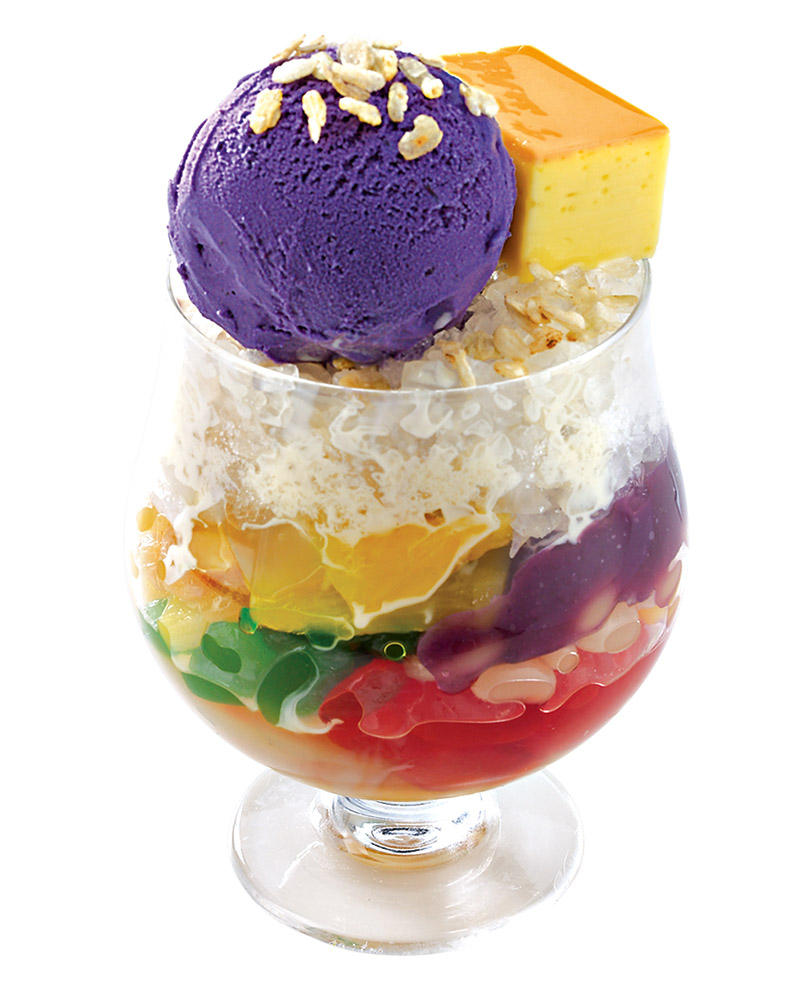
Now is about the time you’d generally head straight for the nearest kebab stand. However, when in Manila do as the locals do and instead indulge in halo-halo, a local dessert that is a huge, colourful concoction of purple yam ice-cream, crushed ice, jackfruit, coconut shavings, chickpeas and jelly. The name means mix-mix and that’s exactly what you do. Normally, you can get halo-halo all over the city but at this time of night there’s only one place to go: the magnificently soaring lobby at The Peninsula Manila. It’s the perfectly extravagant way to end a long night. The Peninsula Cnr Ayala and Makati Avenues, Makati manila.peninsula.com
 (
(