Marysville is known as base camp for the winter wonderland that is Lake Mountain, but under the snow another layer of adventures.
We’re only an hour out of Melbourne when it starts. My shoulders drop, my breaths get longer, and the phone signal gets patchy. We’re on our way to Marysville for a cheeky mid-week adventure and I can feel my stress levels evaporating.
We pass through Healesville, which may now be on the urban fringe but is still pretty enough to hint at what’s to come. The scenery changes to paddocks and wineries and then, the biggest signal of all that we are nearing our destination, we hit the Black Spur. A crazy twisting ribbon of a road flanked by lush tree ferns and Mountain Ash trees that are old enough and tall enough to have you question your own mortality.
Then we turn into the picture-book cute township of Marysville, nestled in the Yarra Valley and surrounded by the stunning mountains of The Great Dividing Range.
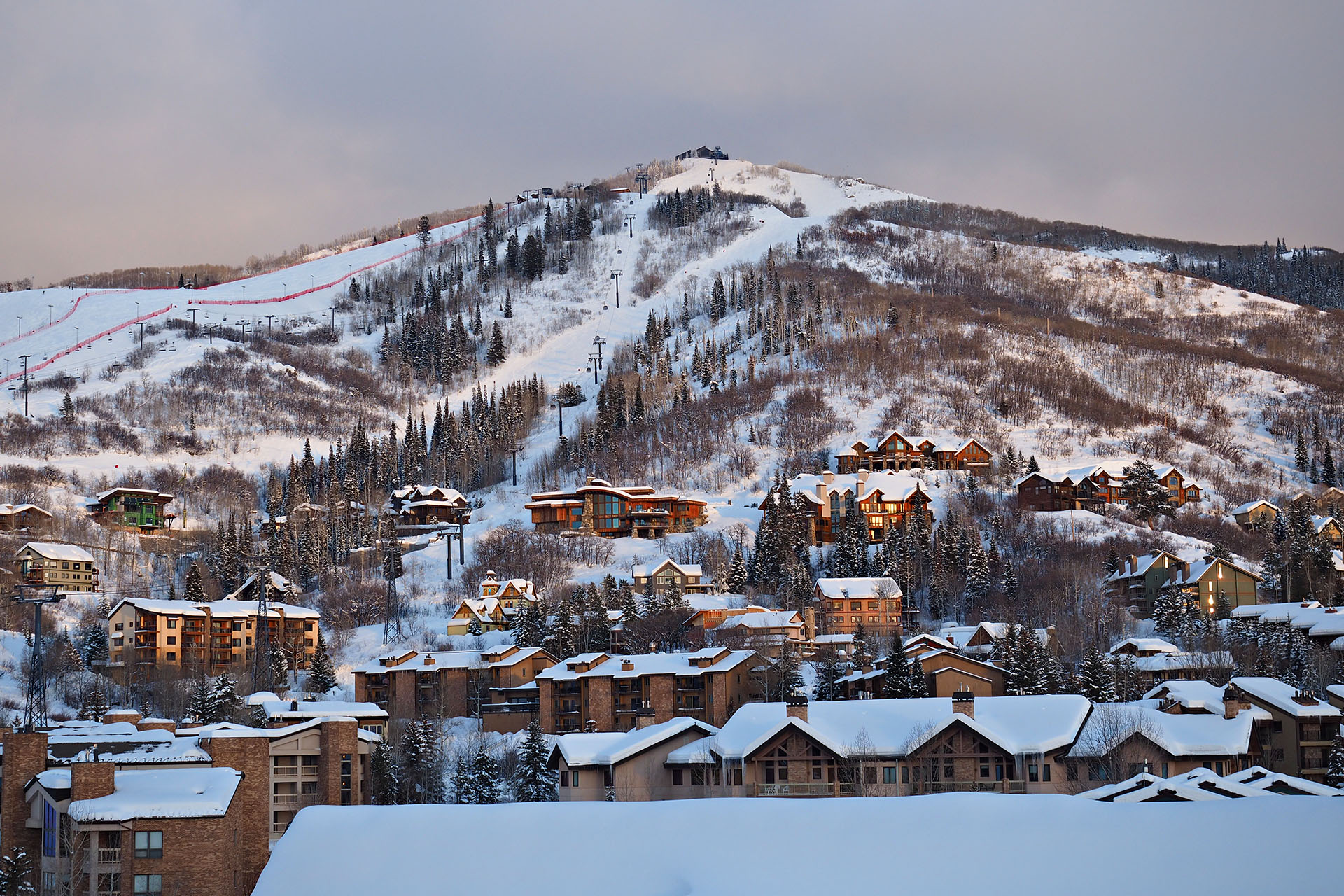
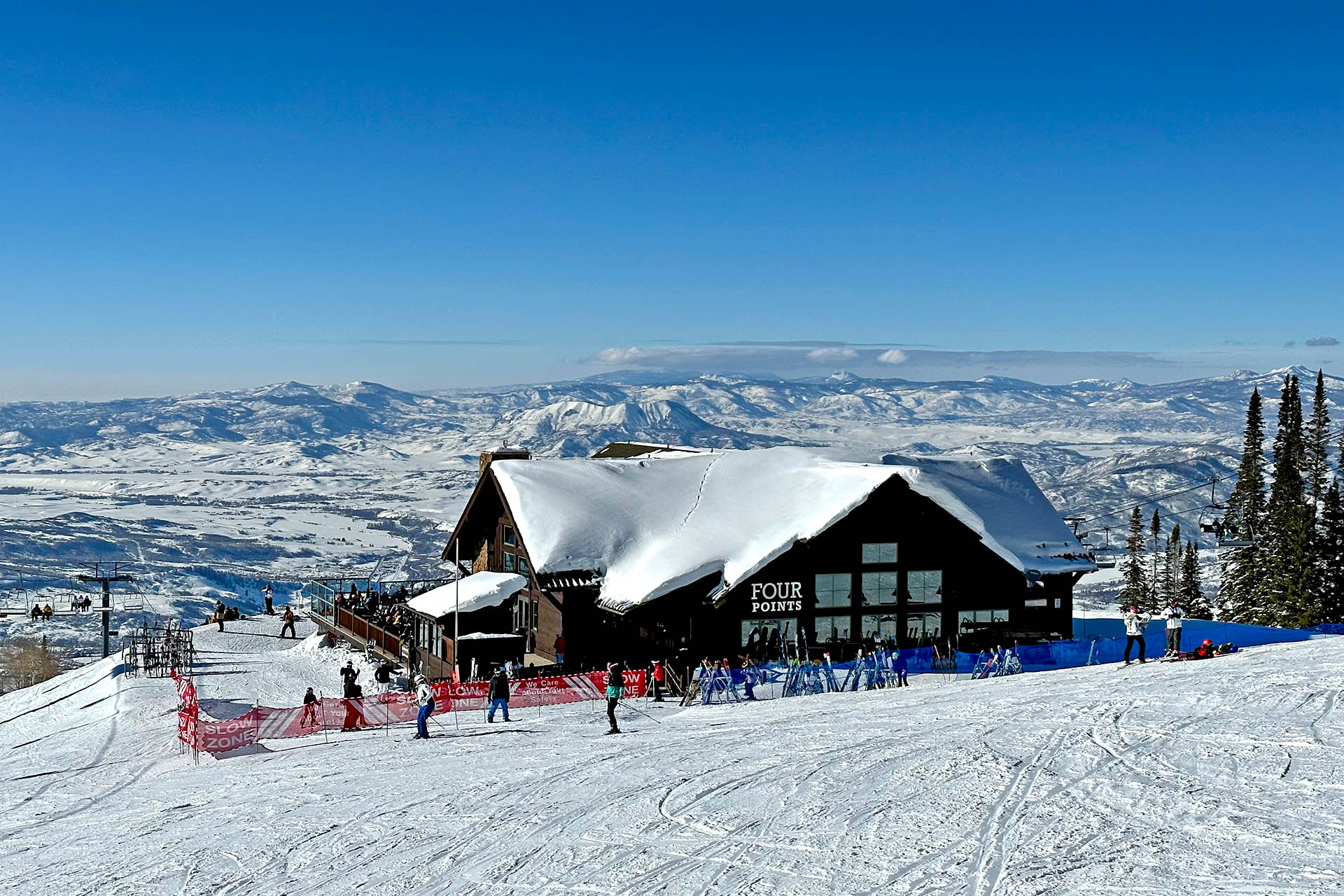
For countless Victorians, Marysville is where they had their first taste of snow. It’s the closest town to Lake Mountain Alpine Resort, which offers snow play and toboggan runs as well as more than 30 kilometres of cross-country skiing and snowshoe trails.
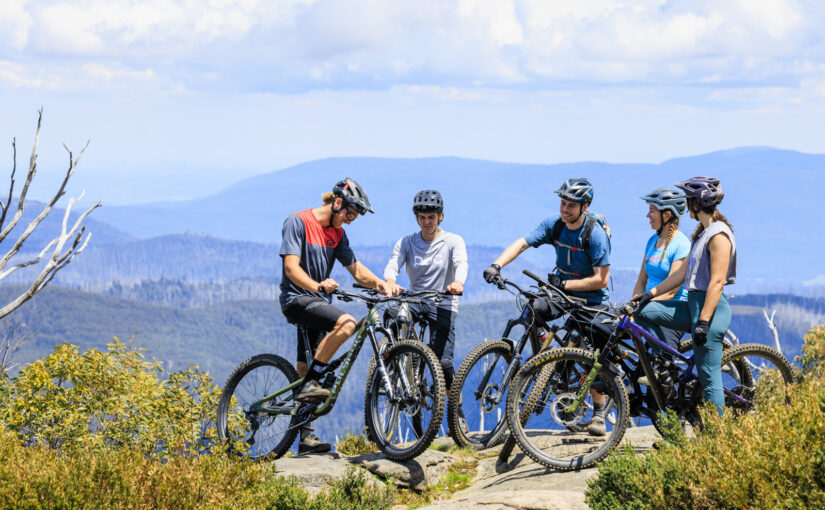
But while hordes descend on the town during the winter months, it’s the shoulder season that I’m here for, because there’s more to this place than snow. From winding hikes through silver wattle and snow gum forested hills to challenging mountain bike trails — Marysville is an adventure playground.
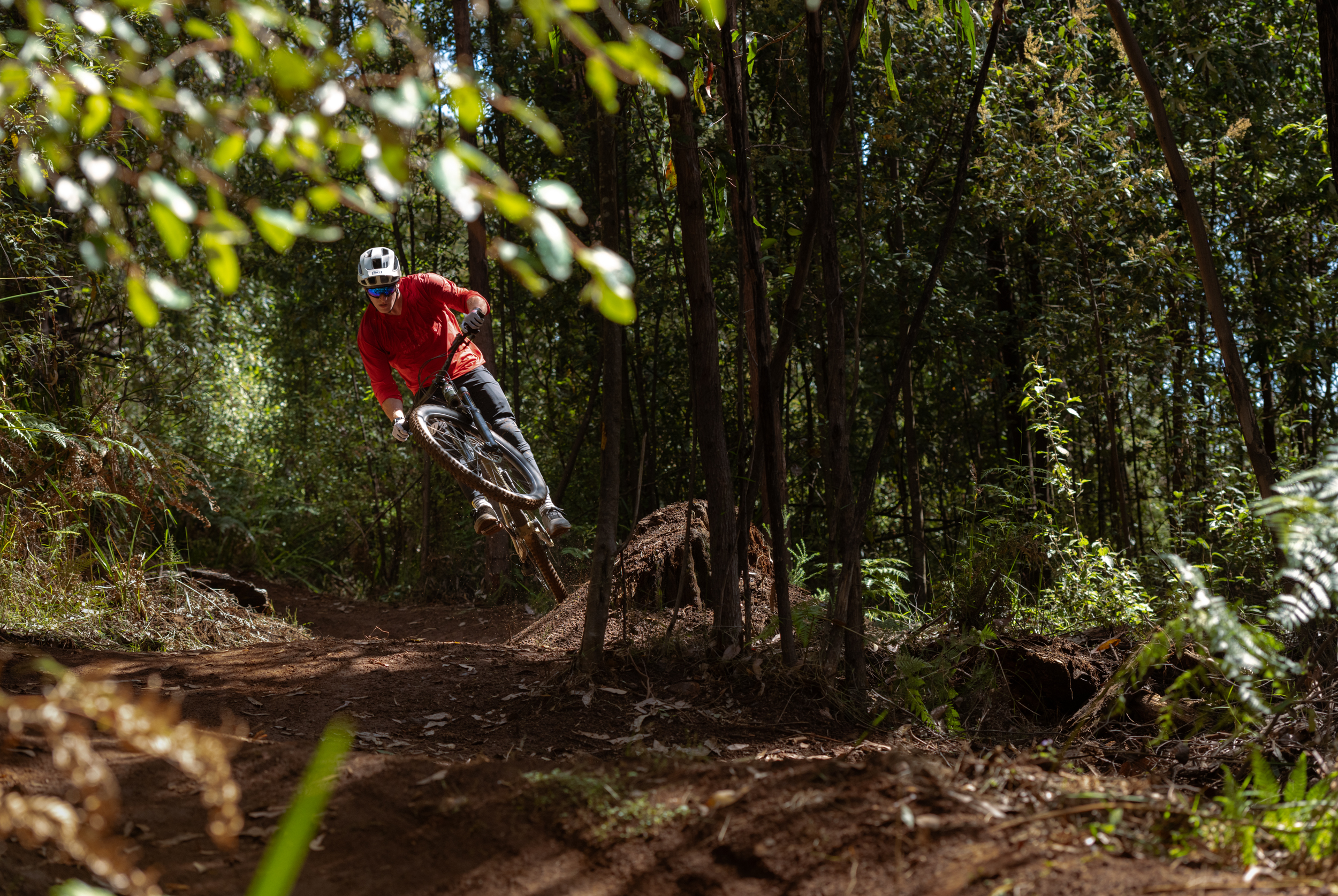
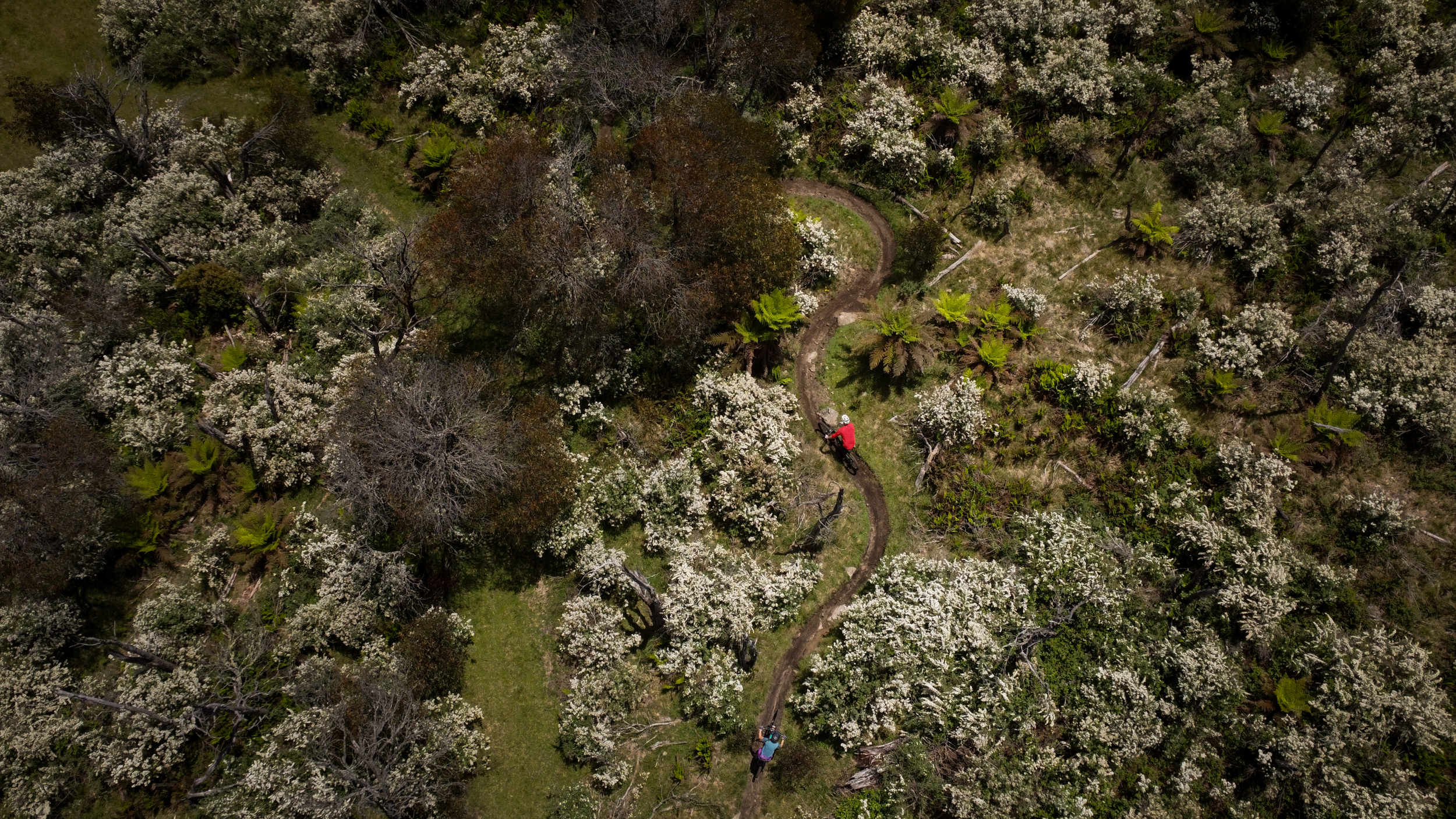
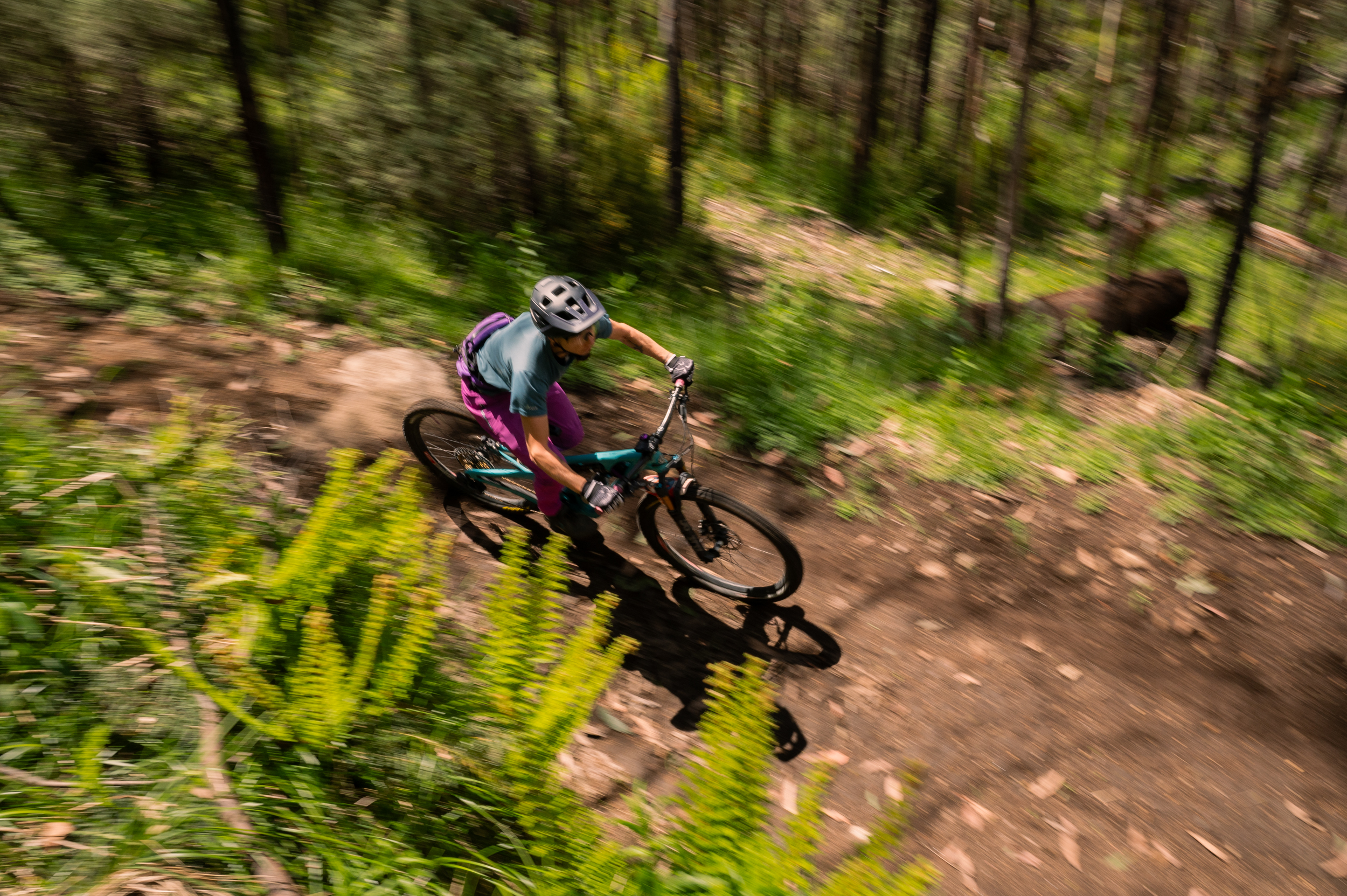
The drive to the top of Lake Mountain is, ironically, much more chill without the winter hordes. Not so the route down, if you take on the challenge of the darling of the mountain bike runs, Cascades Trail. The 25km trail from the summit to the township involves a 1,442m descent that is dotted with rocks, wooden walkways, jumps and sharp turns.
Less experienced riders do have other, less gnarly options, including Kestrel Loop, an easy 2km ride and the bike adventures aren’t restricted to Lake Mountain. There are picturesque routes for road cyclists leaving from town, and an offshoot of the 134km Great Victorian Rail Trail begins in nearby Alexandra.
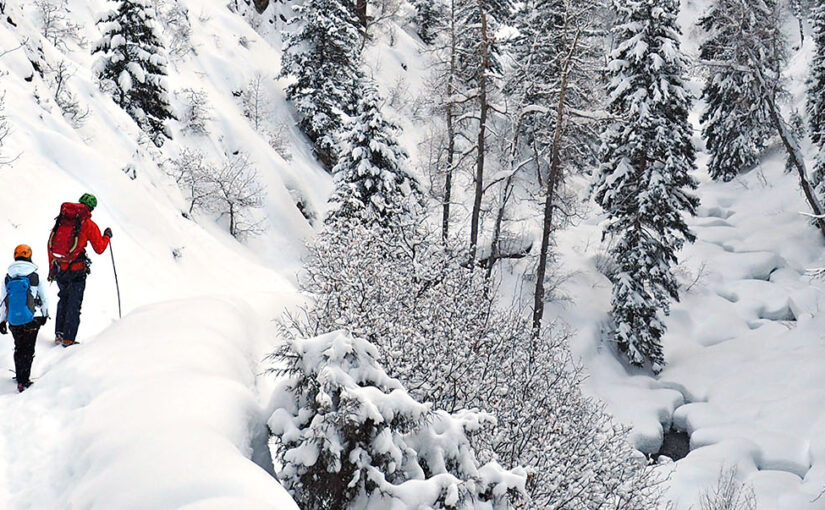
Then there are the hikes. From Lake Mountain, you can snatch incredible vistas of the township and the Cathedral Ranges. You’ll walk past snow gums, dainty alpine mint bushes in full bloom, and perky blue green native grasses.
Or hike the picturesque trail from town through the forests to Steavenson’s Falls to earn a stunning view of the 84-metre-high waterfall. The stream is so strong that it is able, via its own small hydroelectric plant, to power the lights that illuminate it from dusk each evening – it’s worth the nighttime return visit.
Where the forest’s native vegetation eschew autumnal colours, the township’s maples and pin oakes embrace them, and the sight of the trees’ autumn shades makes for such a stunning picture, it can be dangerous – on the outskirts of town, Gould Memorial Drive is famed for its poplar trees, with the leaves an insta-worthy sight in autumn. Tourists regularly ignore the 100kmph signs as they stand in the middle on the road to take the perfect shot.
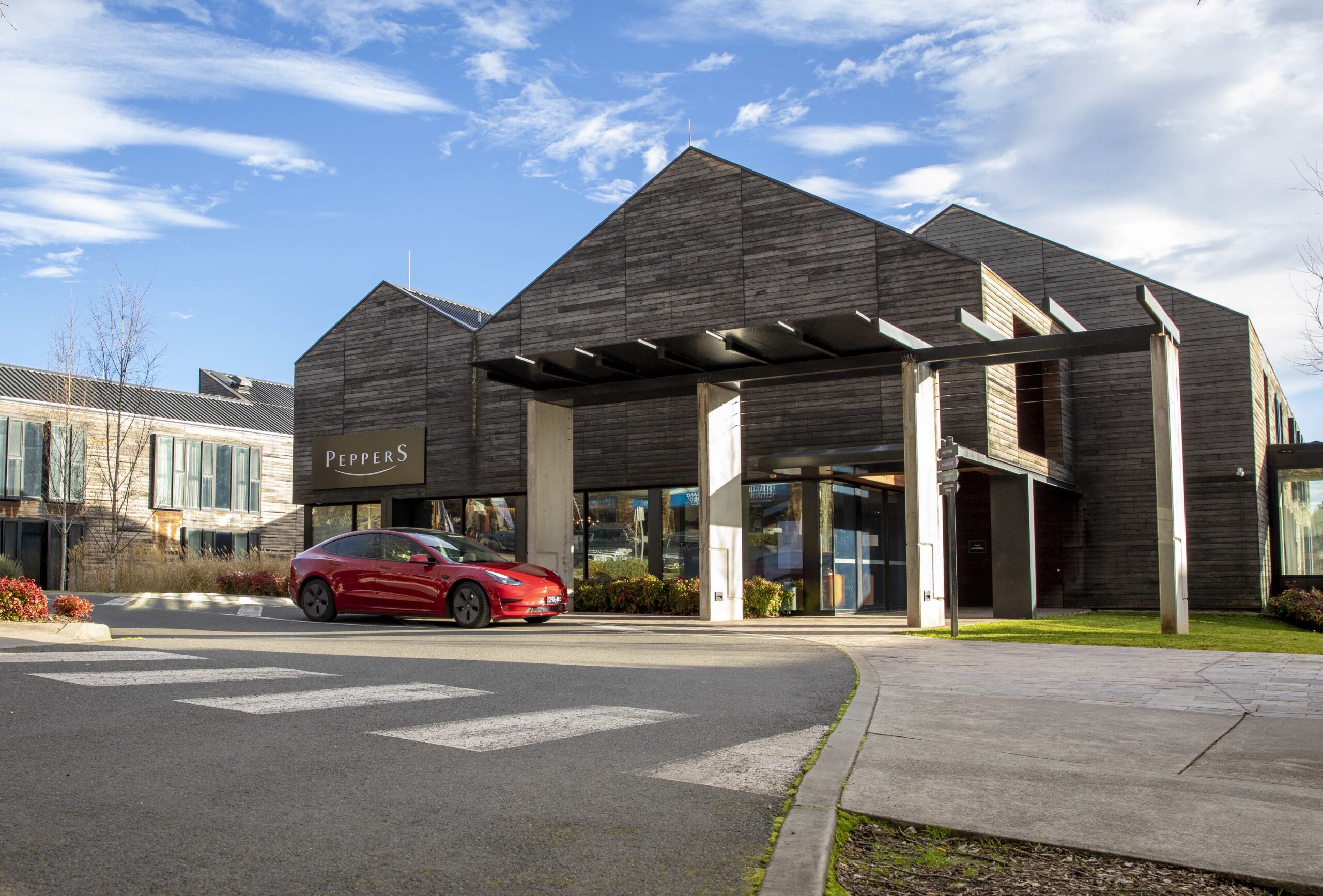
We get our pics, safely, then retreat to the luxury of the 100-room Peppers Marysville hotel—because adventure and luxury make very comfy bedfellows.
Now owned by the Accor Group, the hotel was one of the first big projects to be funded in the aftermath of the 2009 bushfires that devastated the town, and it makes a statement that Marysville, population 500, punches well above its weight. Taking up a large chunk of the main street, the newly renovated hotel offers the region’s largest conference centre, restaurant and bar, day spa, tennis court, heated lap pool, gym and sauna.
Our corner suite is divine. It has a large living area with sliding glass doors to the balcony with views of the mountains. A bottle of red wine is waiting, along with a platter with cheese and grapes, which is a pretty perfect way to end the day’s activities.
Peppers has catering to adventurers nailed. It has a hot water bike wash station and secure bike workshops for repairs or servicing for cyclists. In winter, families can snag a carrot to take up the mountain to make an authentic snowman and take advantage of an early dinner sitting to cater for exhausted children.
But for adults, the real sweeteners are the heavenly facials and massages available at the dreamy day spa (thanks Phil) and delicious seasonal meals at Andiamo Restaurant and Bar, where the menu’s offerings, including a two-hour braised lamb ragu with rigatoni, tomato and parmesan cheese, firmly hint at Chef Francesco La Mazza’s Italian training. The stone baked pizzas melt in your mouth, and I would recommend sitting around the outdoor firepit, savouring the smell of woodsmoke whilst indulging in a perfectly mixed cocktail or two (espresso martini anyone?).
So, when the leaves are turning and the air is just crisp enough to be invigorating, rather than icy, consider a trip to Marysville. I’ll be at the bar.
There’s a lot that can go wrong on a winter trip to Steamboat Springs.
For instance, you might decide that Bloody Marys make an acceptable breakfast, or that horseback riding in sub-zero temperatures is a smart idea. Or, and I’m just throwing this out there, you might find yourself clinging to a sheet of ice at Fish Creek Falls, wondering if you’ve finally lost the plot entirely. Welcome to my list of the most epic things to do in Steamboat Springs this winter.
The weekend trip all starts innocently enough. We roll into Steamboat Springs, and I’m immediately struck by how postcard-perfect everything looks. Snow-dusted trees, cozy cabins, and that crisp, mountain air that makes you feel like you’re in a Hallmark movie, only with more opportunities to injure yourself.
Our first stop? Breakfast. And by breakfast, I mean a Bloody Mary that could double as a garden salad. We stroll into a little joint off Lincoln Avenue where the Bloody Marys are legendary. And by legendary, I mean they come with a side of sausage, pickles, and whatever else they can skewer onto a toothpick.
The first sip hits like a cold shower after a night out, which is to say it’s both terrifying and exactly what I need. The spice kicks in, my eyes water, and before I know it, I’m on my second one, convinced that this is how all great ski days begin. With our bellies (and blood alcohol levels) sufficiently primed, we head for the slopes.
Steamboat’s known for its “Champagne Powder,” which is essentially snow so perfect it makes you wonder why you don’t ski more often. The answer, as I quickly discover, is because skiing is hard, and I’m not as coordinated as I like to pretend.
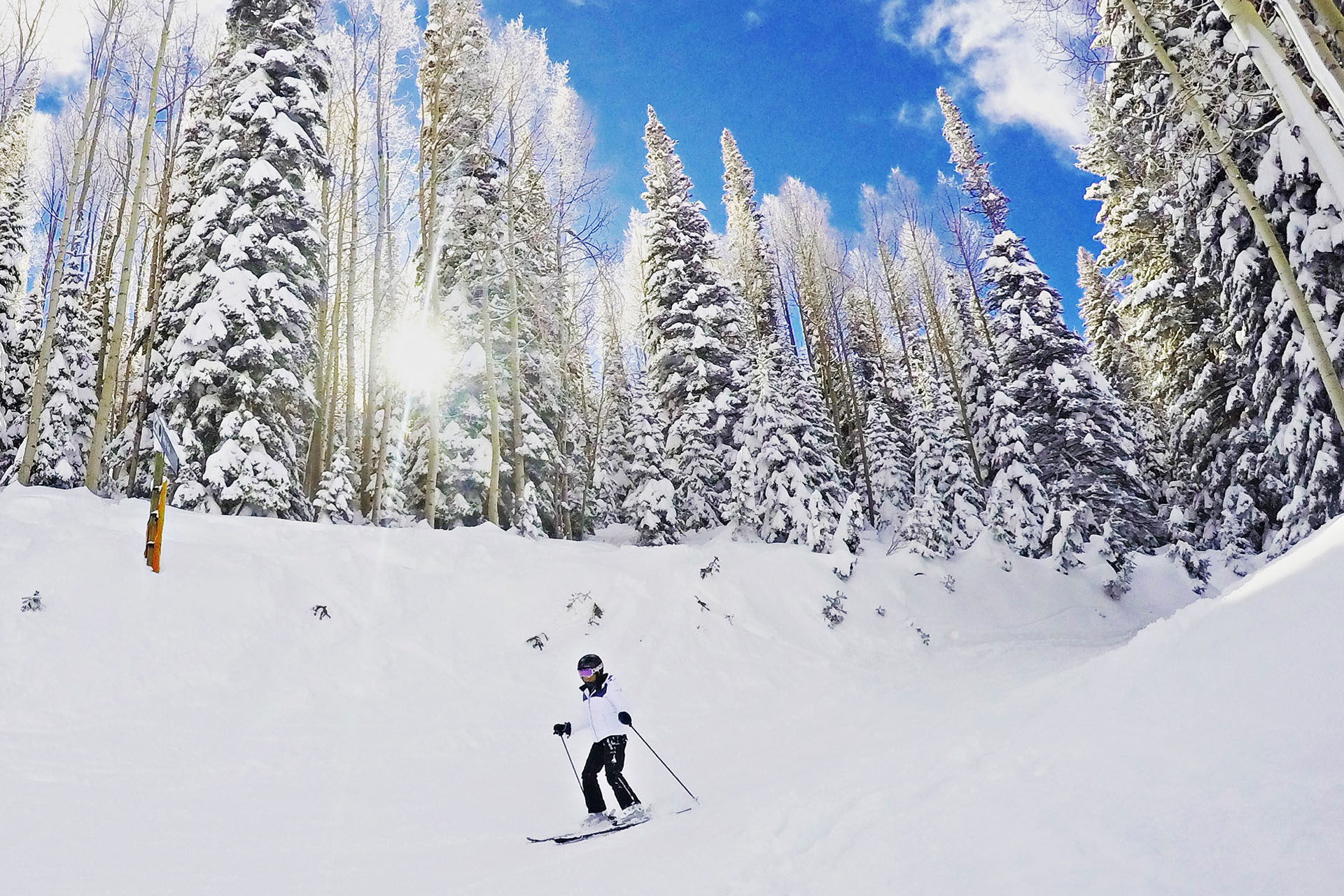
We start with a few runs on the easy slopes to warm up. By “we,” I mean everyone else, while I spend most of my time getting reacquainted with the ground. It’s like the snow has a personal vendetta against me, and I’m losing the fight. But the thing about Steamboat is that even when you’re eating snow, you’re having the time of your life. There’s something about the place, the blue skies, the endless runs, the fact that everyone around you seems to be having a blast, that makes you want to keep going, even when your legs are screaming for mercy.
After a few hours, I’m actually starting to get the hang of it. Or at least, I’m falling less frequently, which feels like progress. But just as I’m starting to feel like maybe, just maybe, I could actually be good at this, I take a spill that sends me tumbling like a poorly constructed snowman. Time to try something less likely to result in injury and perhaps next time lay off the second Bloody Mary!
3. Horseback ride through Yampa Valley
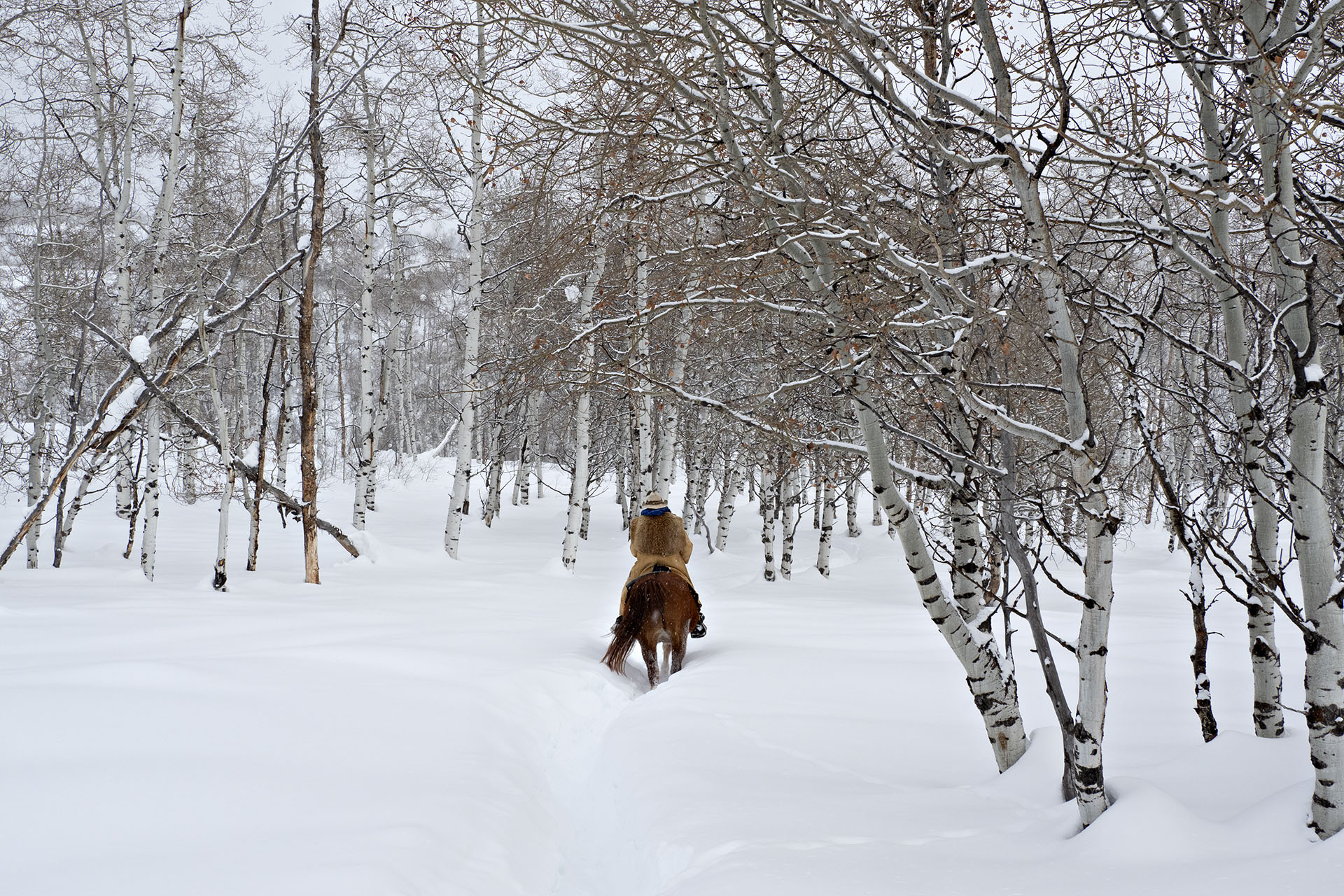
Enter Ray Heid, a cowboy who looks like he was carved out of the same rock that built the surrounding mountains. He runs Del’s Triangle 3 Ranch, and today, he’s taking us on a horseback ride through the snow-covered Yampa Valley.
Ray is the real deal, with a mustache that could star in its own western. He greets us with a grin that suggests he’s seen more winters than he cares to count and survived them all. We saddle up, and Ray starts telling stories about the old days, about the cattle drives, about the time he took on a grizzly with nothing but a lasso and some frontier bravado. The man is a walking legend.
Riding through the valley is like stepping into a painting. The snow blankets everything, muffling the world until all you hear is the crunch of hooves and Ray’s voice, steady as a drumbeat. The horses navigate the icy trails with ease, and I start to relax, thinking that maybe, for once, I’ve chosen an activity that won’t end with me face-planting into snow.
But the Yampa Valley has other ideas. The trail gets steeper, the snow deeper, and suddenly I’m holding on for dear life, trying to look cool while secretly praying I don’t slide off into a snowbank. Ray, of course, just chuckles. This is nothing to him, a walk in the park. For me, it’s a reminder that I’m a city slicker playing at cowboy, and the mountains have no mercy.
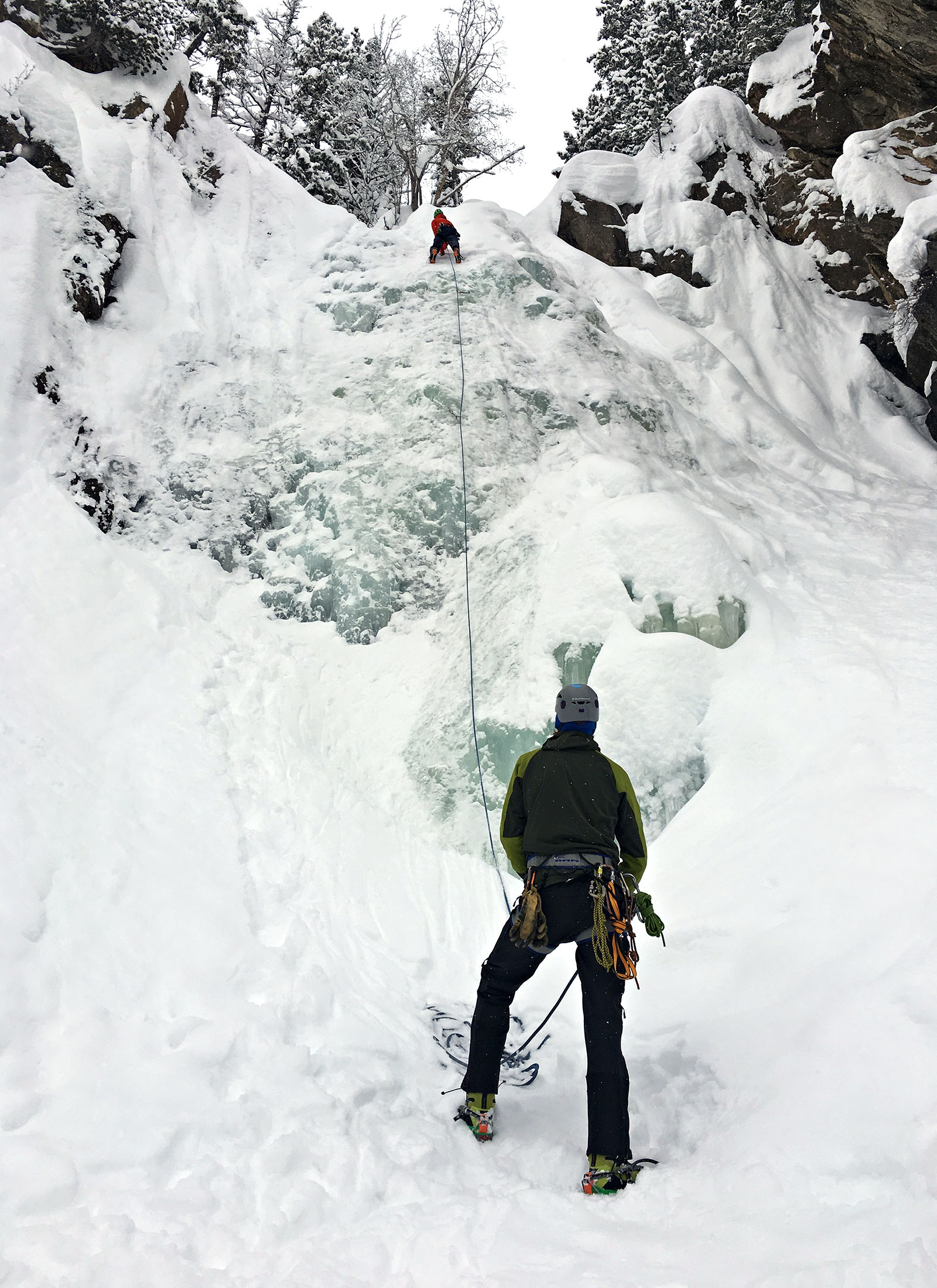
The next morning, still riding high on a cocktail of adrenaline and cowboy tales, I make the questionable decision to try ice climbing at Fish Creek Falls. “How hard can it be?” I tell myself, conveniently forgetting that I’ve never climbed anything more challenging than a ladder.
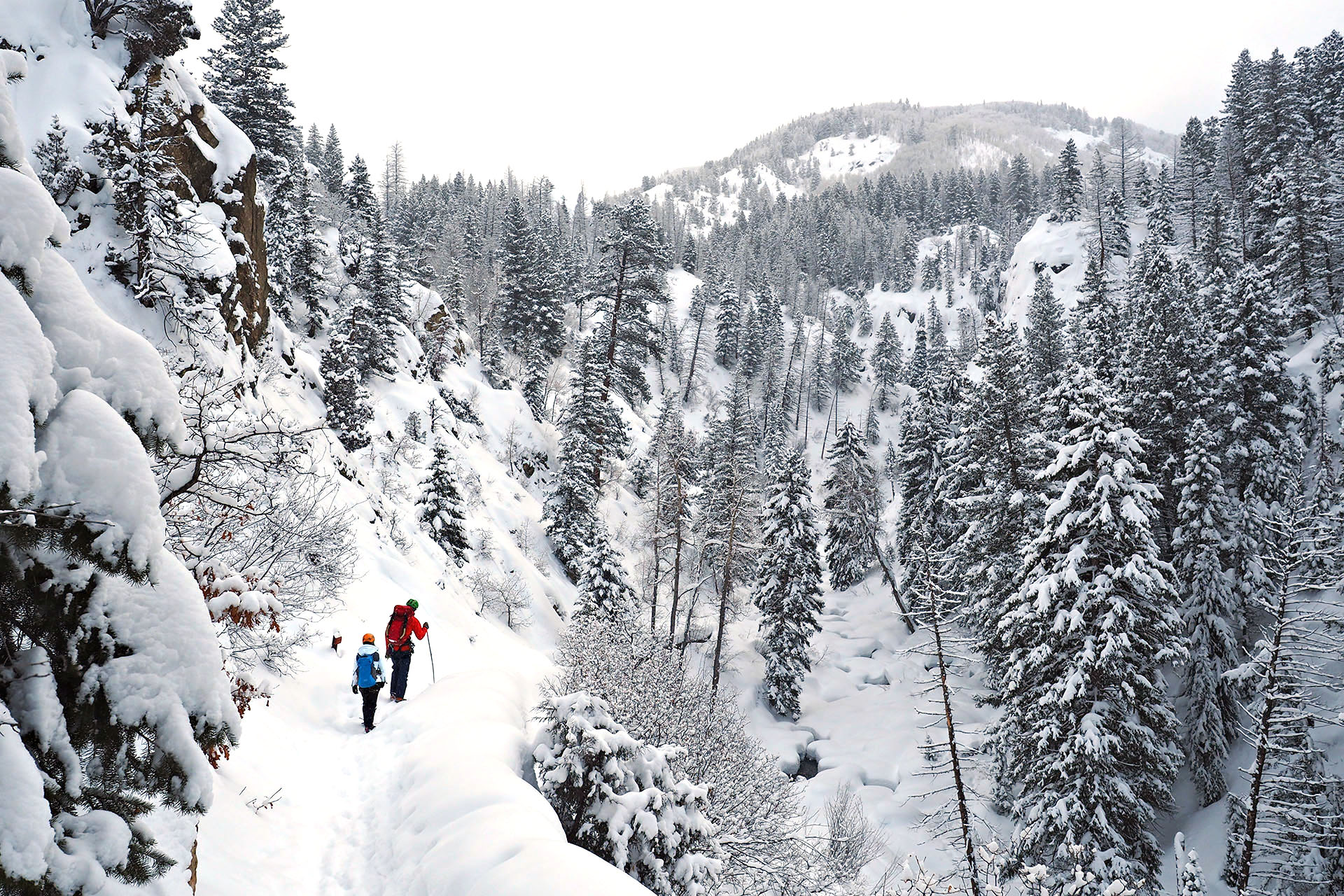
Fish Creek Falls is stunning. A frozen waterfall that looks like something out of Narnia. But as I stare up at the wall of ice, it hits me: this might be the dumbest thing I’ve ever done. But it’s too late to back out, so I strap on the crampons, grab my ice axes, and start climbing.
The first few feet are fine, exciting even. But then I look down. Big mistake. My legs turn to jelly, and I’m suddenly aware that I’m clinging to a frozen waterfall with nothing but a few sharp objects keeping me from certain doom. My guide, who’s apparently part mountain goat, shouts encouragement, “Sit back on your feet!” he yells. Trust the crampons!” But all I can think is, “If I survive this, I’m getting another Bloody Mary.”
By some miracle (and a lot of panicked kicking), I make it to the top. My heart is pounding, my hands are numb, and I’m fairly certain I’ll never do this again. But the view from up there is worth it. The snow-covered peaks stretch out in every direction. The valley below is like a postcard come to life. For a moment, I forget the terror and just soak it all in, wondering how stunning it must be in summer when Fish Creek isn’t frozen. Then I remember I have to get down.
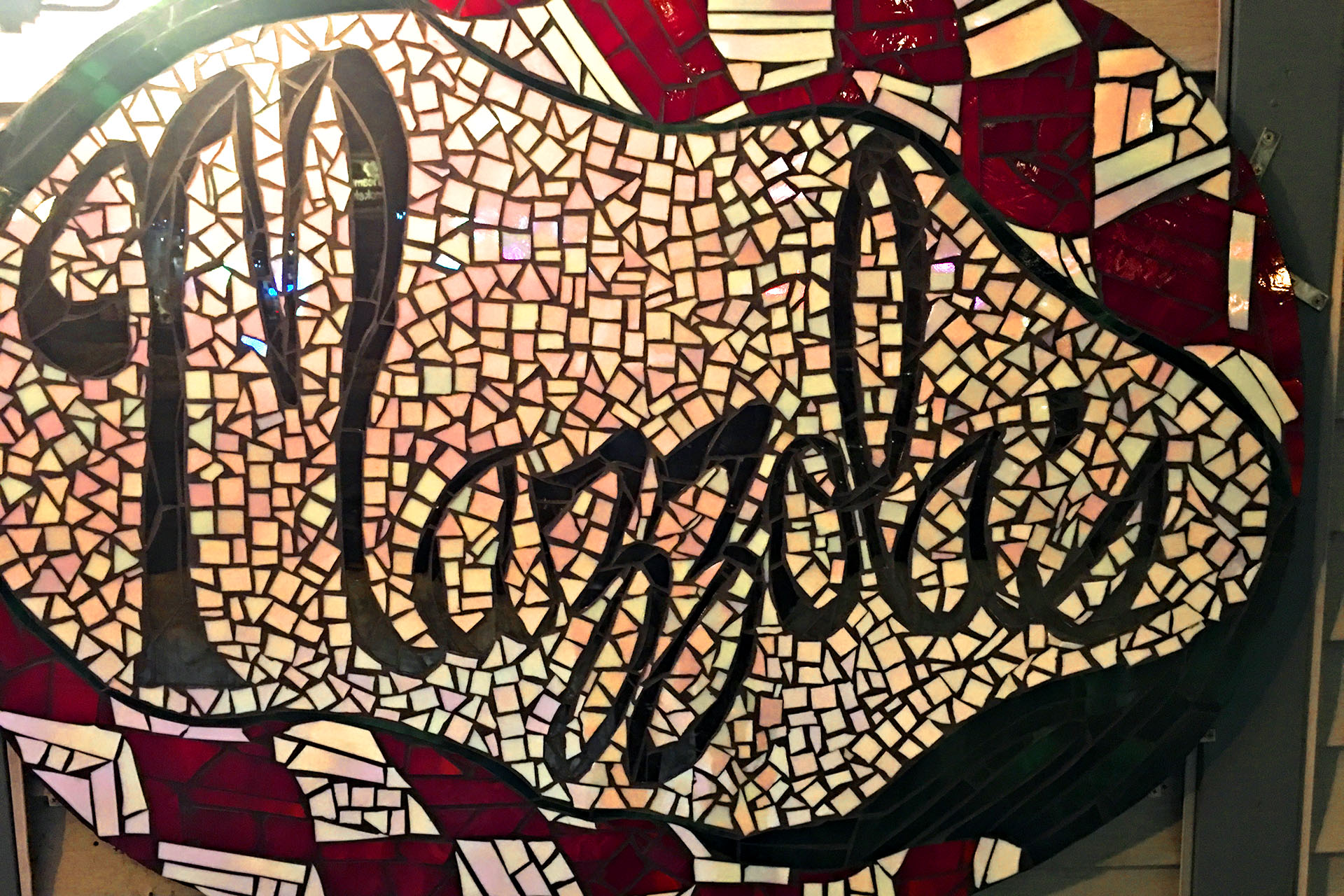
Back in town, I’m more than ready for dinner. We head to Mazzola’s, a local Italian spot known for its bison lasagne. I’ve had a lot of lasagne in my time, but this? This is something else. Rich, hearty, and with just the right amount of bison to remind you you’re in the wilds of Colorado, it’s the perfect end to a day of near-death adventures.
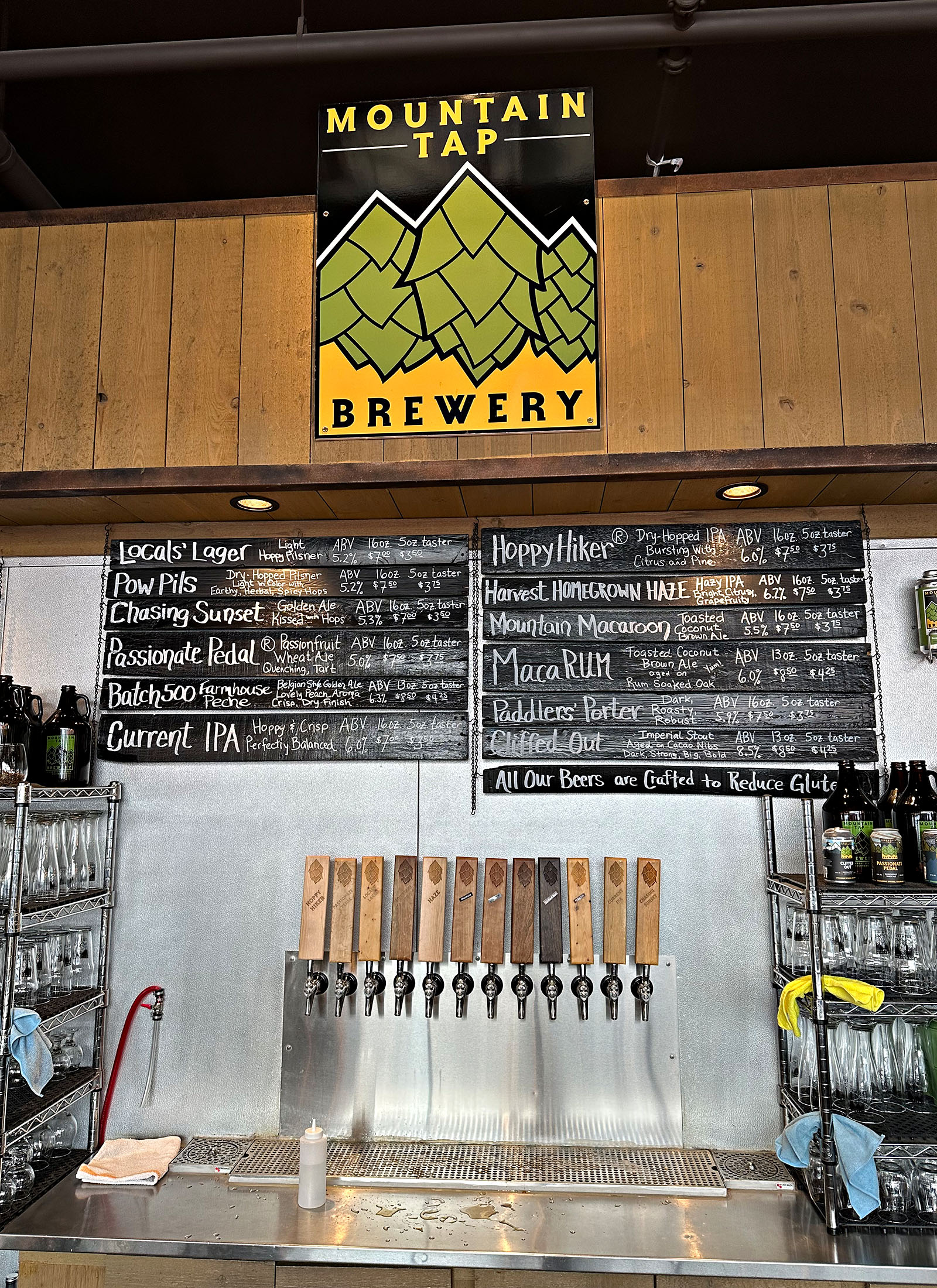
But the night’s not over yet. Steamboat has a surprisingly vibrant craft beer scene, and we’re not leaving without sampling the goods. We hit up Mountain Tap Brewery first, where the beers are cold, the atmosphere is warm, and I’m quickly falling in love with a pint of their Cliffed Out Imperial Stout. At 8.5% it more than warms my heart. Next is Storm Peak Brewing, where the IPAs are hoppy, the conversation is lively, and I’m starting to wonder how I’ll ever go back to regular life after this.
The next morning, sore but satisfied, I find myself back at that same breakfast spot, ordering another Bloody Mary. Because if there’s one thing I’ve learned on this trip, it’s that Steamboat Springs is a place where you can push yourself to the limit, whether it’s on the slopes, on a horse, or on a sheet of ice, and still find the time to kick back with a drink in hand, laughing at the insanity of it all.
So here’s to Steamboat Springs: where the adventures are wild, the food is hearty, and the Bloody Marys are the perfect way to start (and end) your day.
“Hey Daddy, we love Vegas more than Disneyland!” Charlie shouts, her voice echoing off the glittering lights of the Strip. My heart skips a beat, but not from the usual panic of hearing my child shout in public. No, this time it’s from the realization that my 11-year-old daughter just ranked Las Vegas, a city known for its booze, blackjack, and bad decisions above the happiest place on Earth (damn, I’m proud). In honour of this baffling occasion, here’s a list of the best things to do in Las Vegas with kids.
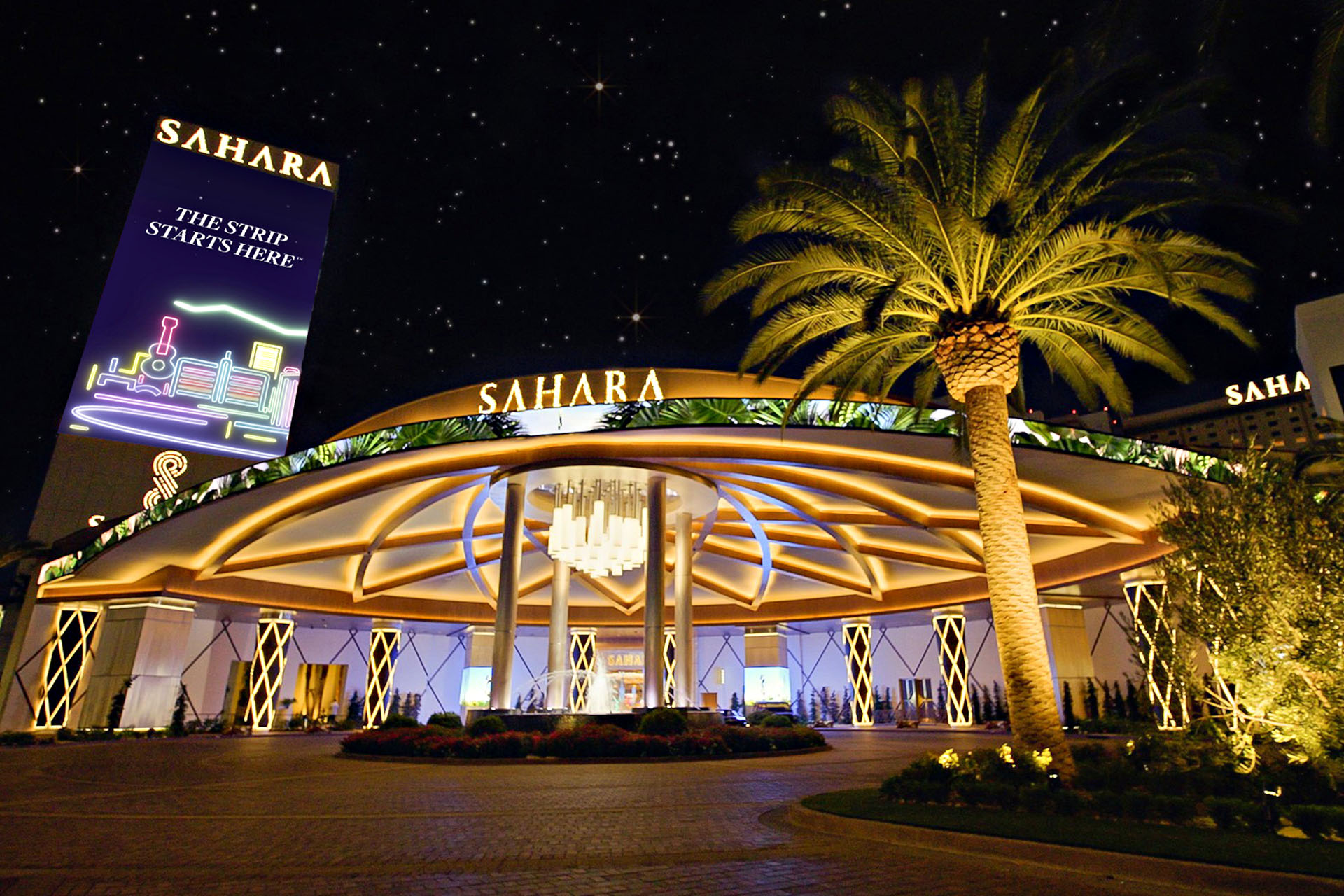
We’re standing in front of the newly refurbished Sahara Hotel, our home for the next few days, and Charlie’s practically vibrating with excitement. And why wouldn’t she be? We’re about to spend a weekend in the same place where Elvis himself once crooned and karate-chopped his way into history. The Sahara has been given a fresh face, but you can still feel the ghosts of the Rat Pack lounging by the pool, probably judging us for bringing kids to Vegas.
1. Area 15: Where Reality Takes a Left Turn
Click play to watch
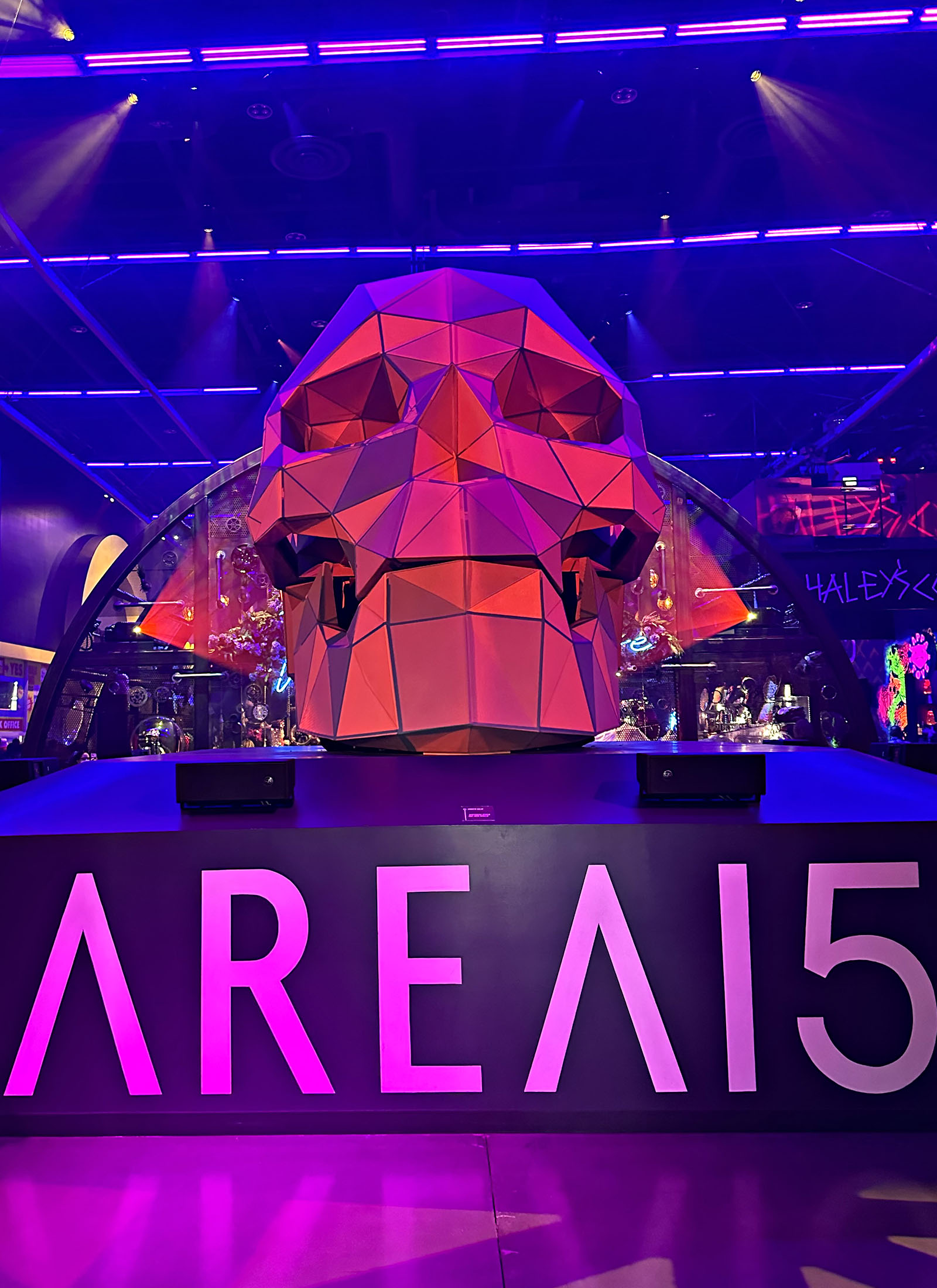
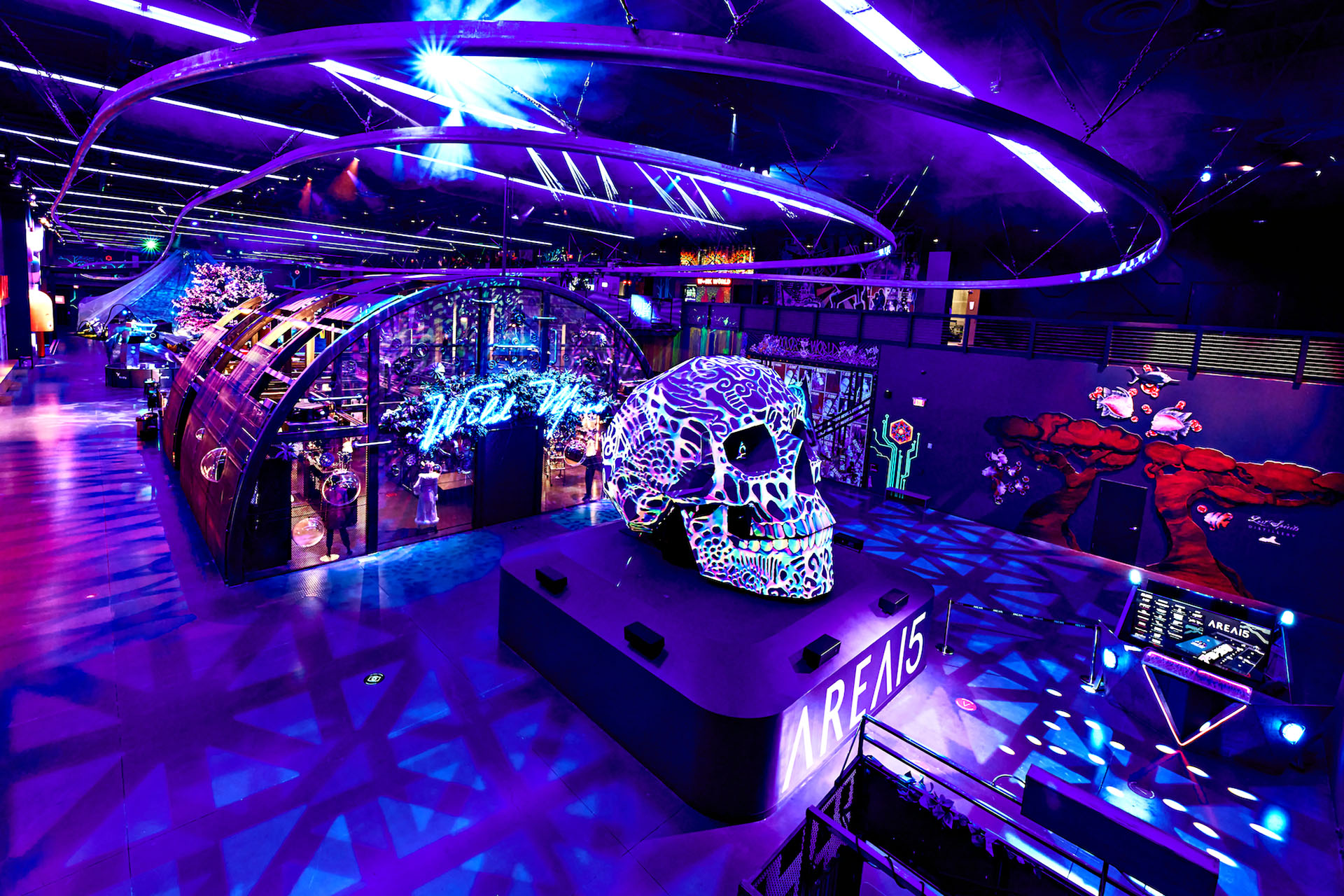
Our first stop on the Jamieson Vegas Adventure is Area 15, a place that defies explanation, logic, and probably a few building codes.
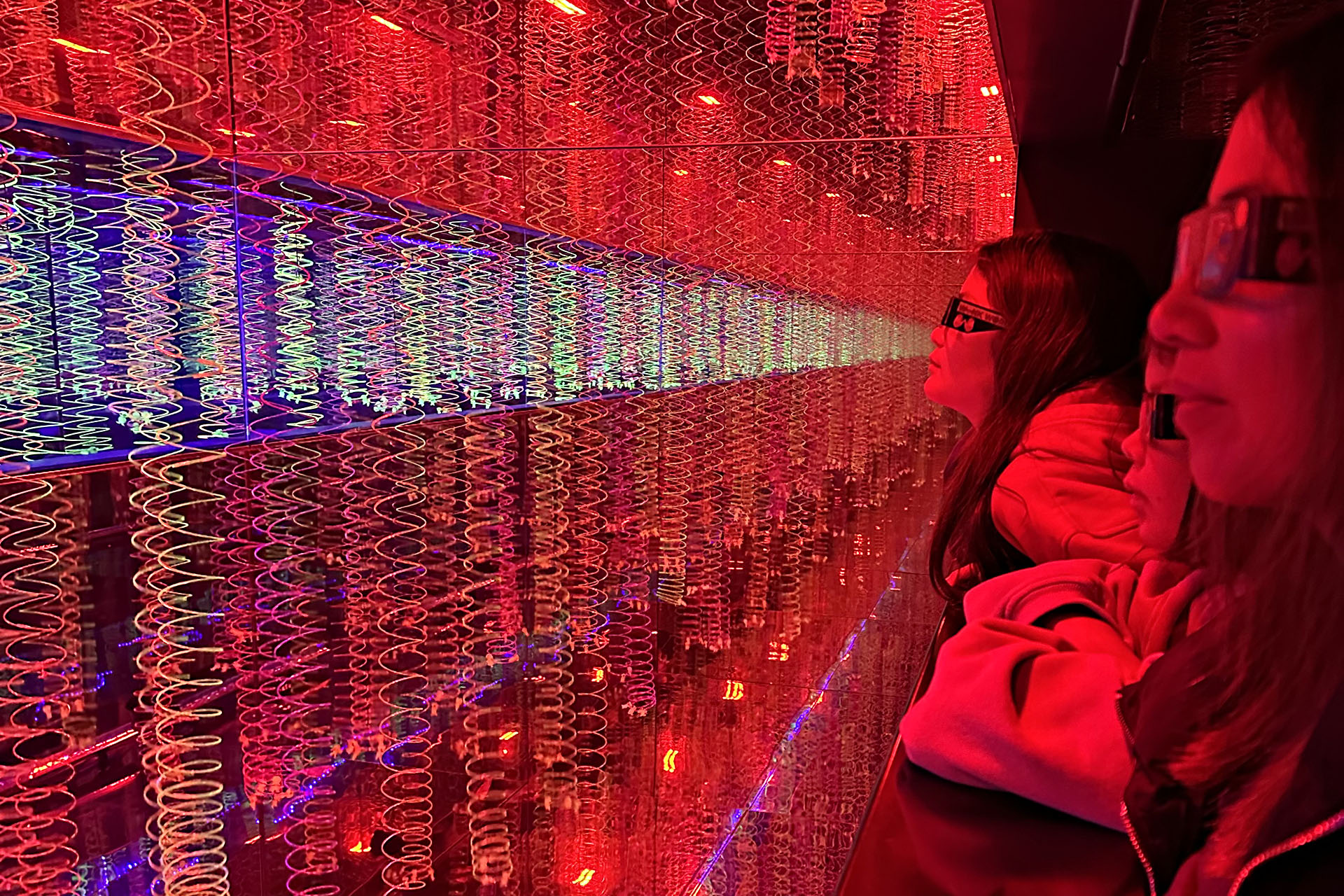
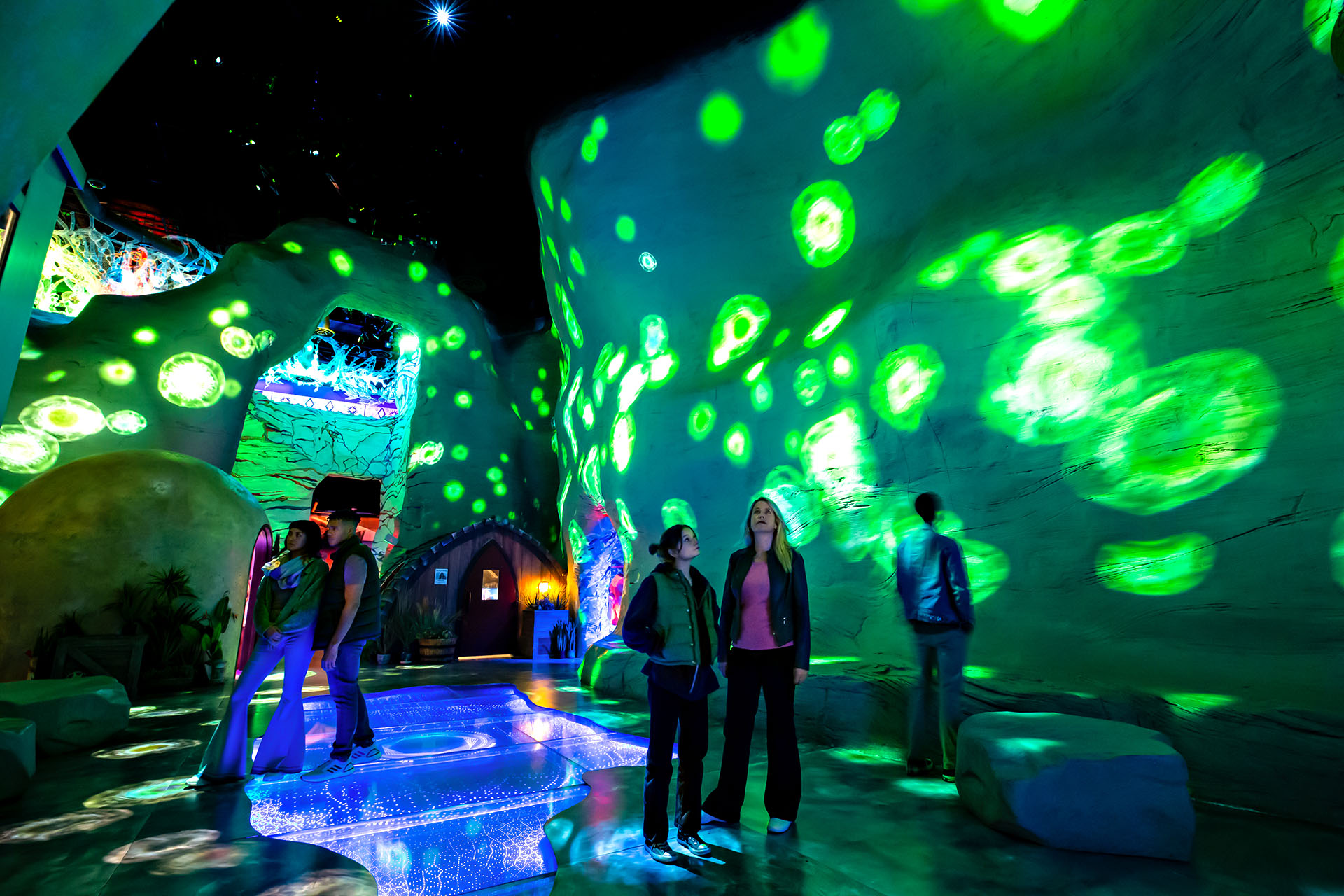
Imagine a warehouse-sized acid trip, and you’re getting close. As we step inside, Molly (14) immediately tries to pretend she’s too cool for all this, but I catch her sneaking glances at the towering neon structures and psychedelic art installations. Parker (12) is wide-eyed, her brain no doubt plotting the best way to climb something she’s not supposed to, and Charlie is just…well, Charlie. She’s loving every second.
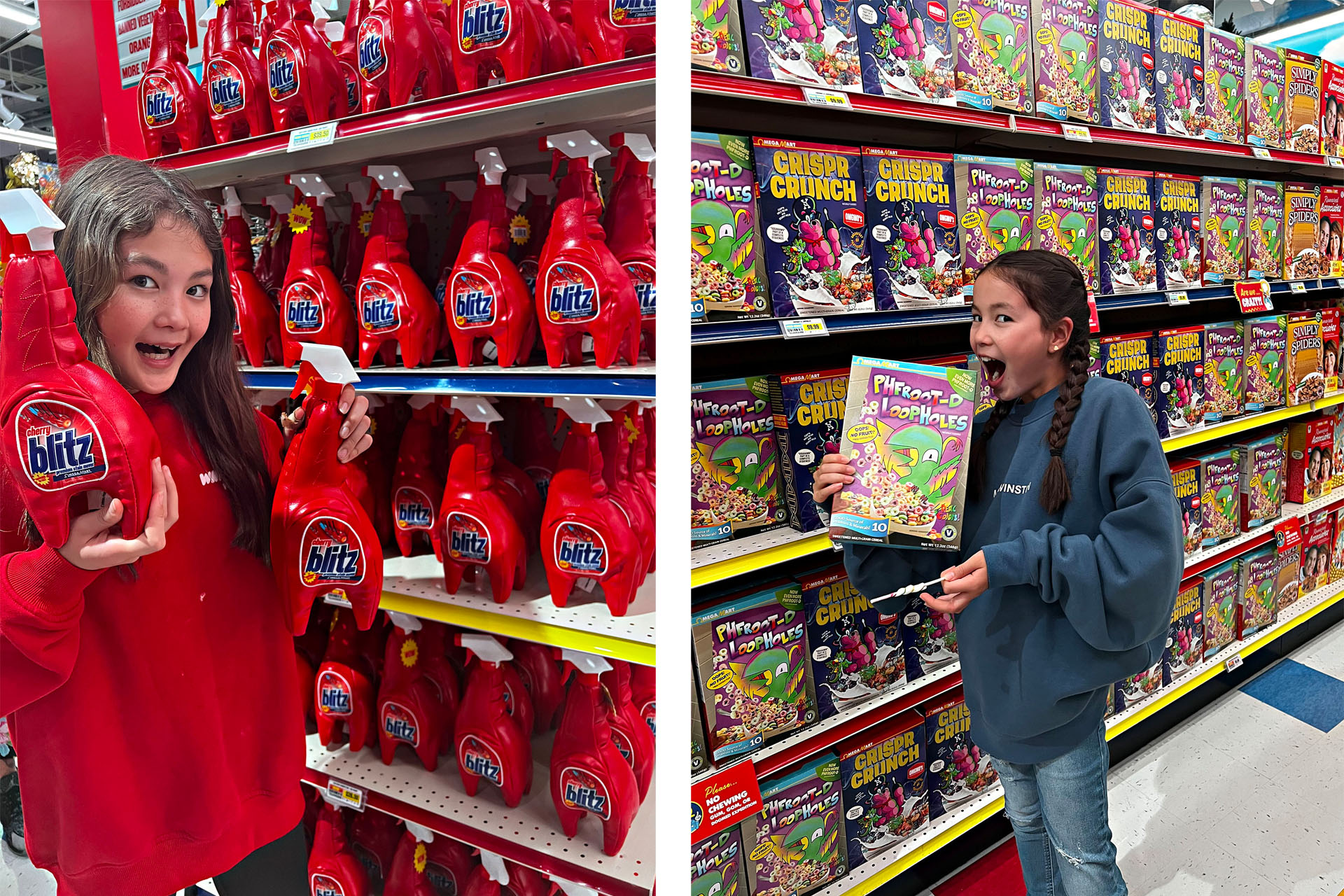
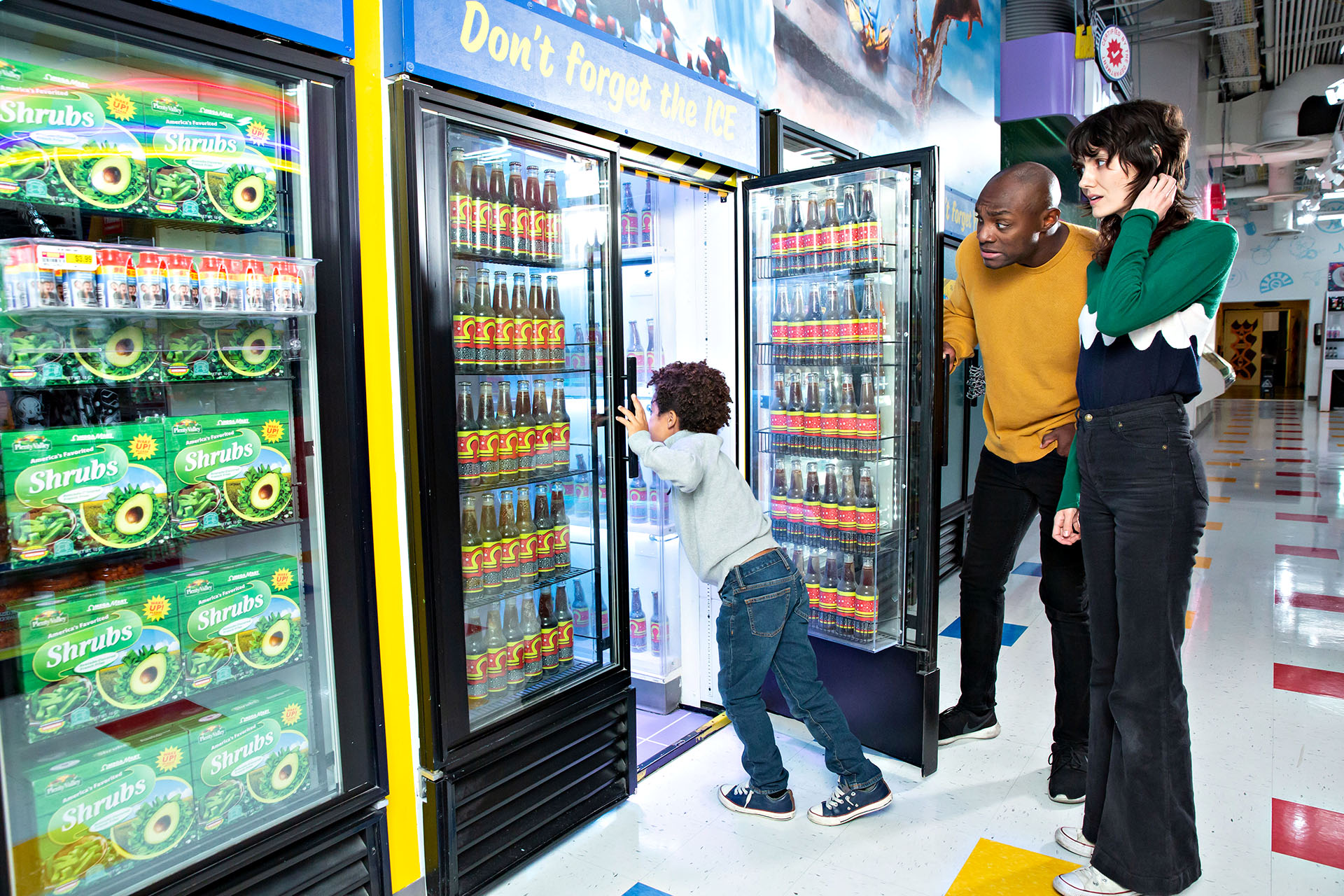
We head straight for Omega Mart, the flagship attraction that looks like a regular supermarket if you’ve had one too many margaritas. The girls scatter as soon as we enter, each of them drawn to a different brand of weirdness. I lose track of Parker almost immediately, and I’m fairly certain she’s found a secret tunnel that leads to Narnia or possibly a rave. Molly is too busy snapping photos of bizarre products, think “Plaque Buildup” in a can and something called “Whale Song Antiperspirant” to notice me trying to get her attention. And Charlie, bless her Elvis-loving heart, is convinced she’s discovered a portal to another dimension behind the dairy aisle.
Hours later, we emerge from Omega Mart, slightly dazed and wholly entertained. My wife gives me a look that says, “This better not have awakened anything in them,” while I silently pray that no one brings up living in a parallel universe for their next science project.
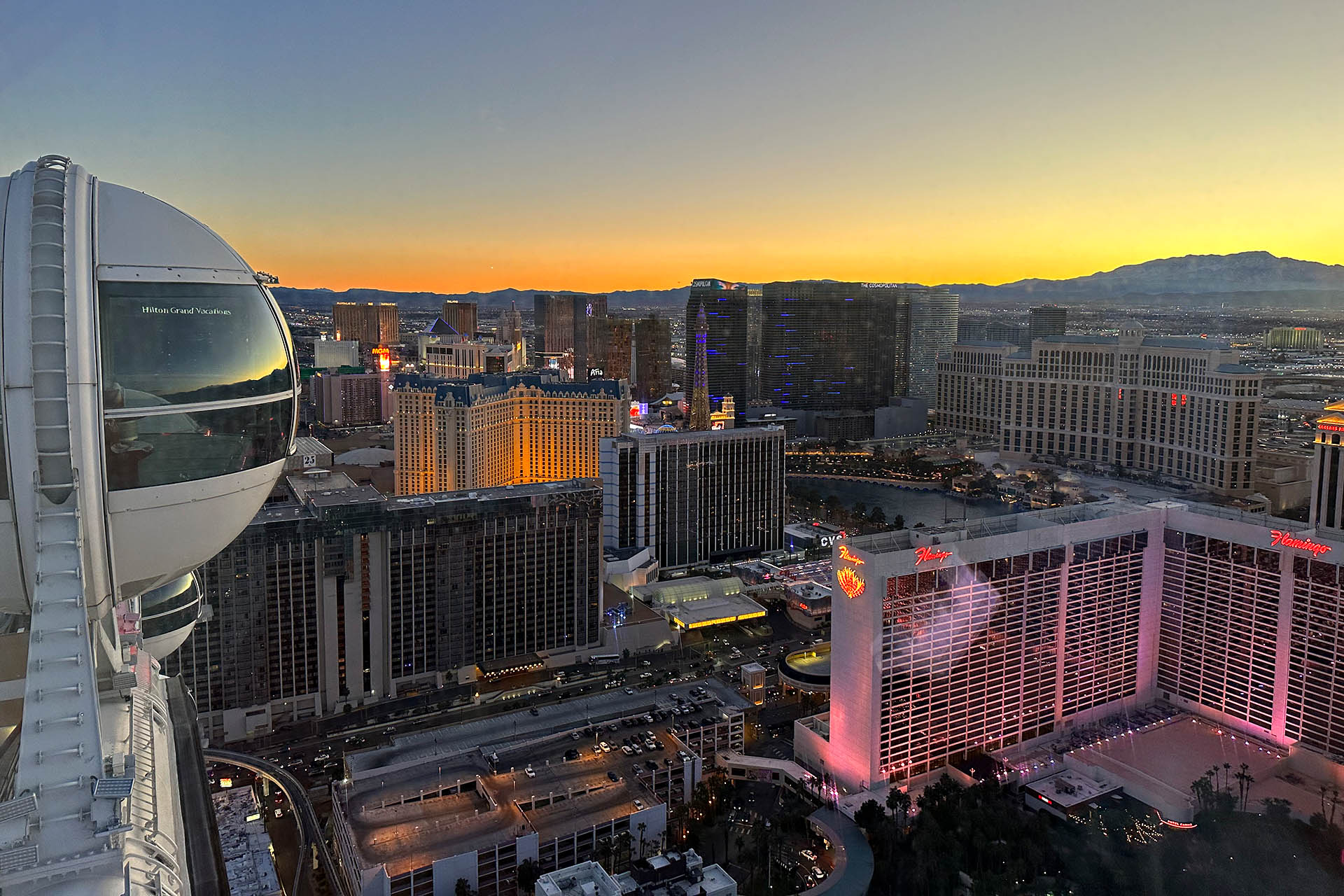
Next on our agenda is the High Roller, the world’s largest observation wheel. That’s right, we’re about to climb into a giant glass hamster ball and spin 550 feet above the city. I’m not exactly thrilled at the prospect, but the girls are all for it. Parker leads the charge, practically dragging us into the pod before the doors can close on her enthusiasm.
As we ascend, the view of the Strip sprawls out beneath us like a giant game board. Molly has her phone out, snapping away like she’s on assignment for National Geographic, while Parker and Charlie press their faces against the glass, arguing over who can spot the weirdest thing down below. I, meanwhile, am clutching the safety rail with one hand and pretending to be cool with the other.
It’s hard to stay grumpy when the city lights up around us. Even I have to admit, it’s pretty spectacular. By the time we reach the top, the girls are already planning their next spin, and I’m trying to think of a plausible excuse to stay grounded.
3. Knights in Shining Armor
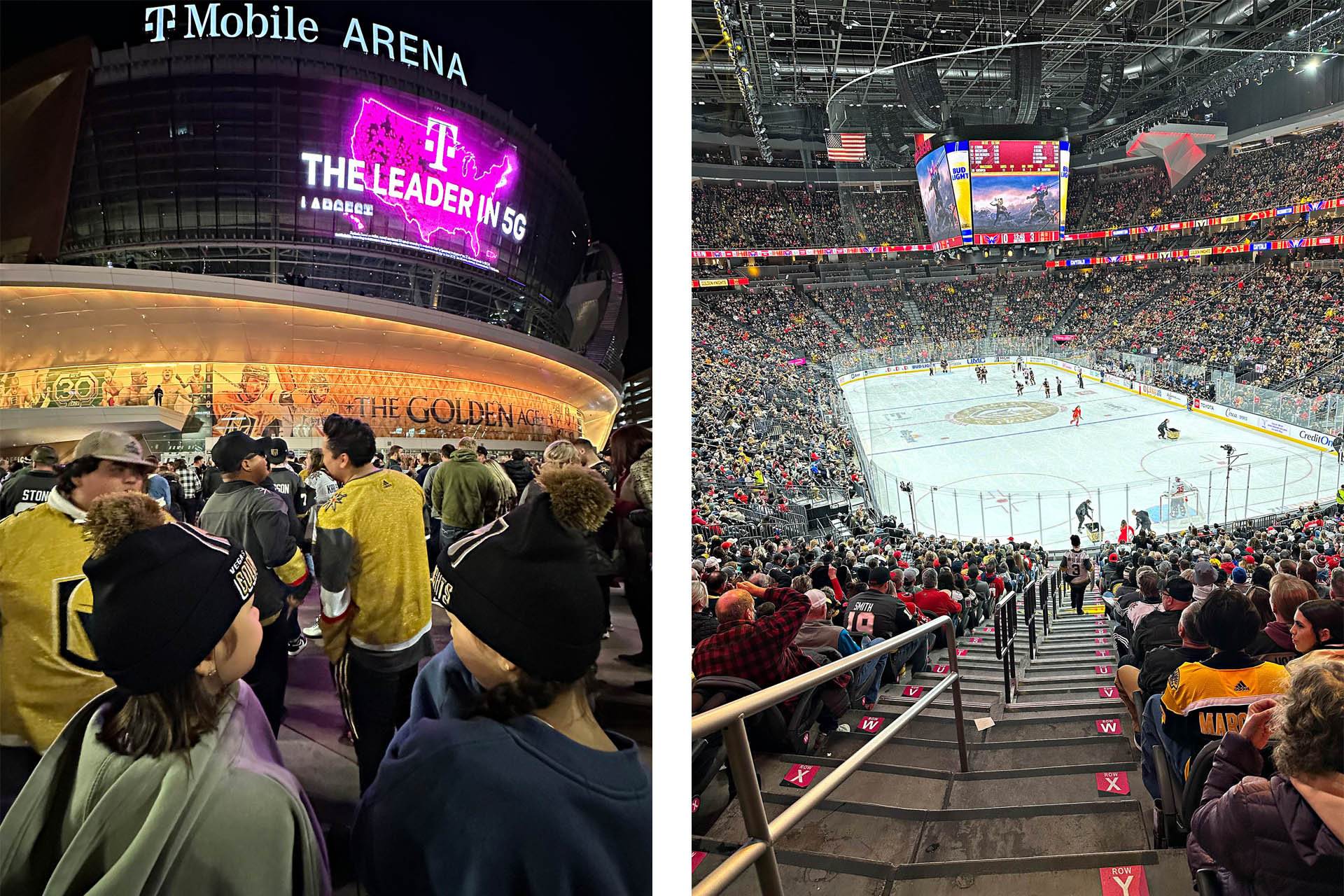
What’s a trip to Vegas without some hockey? That’s right, we’re off to see the Las Vegas Golden Knights in action. Now, I’m no hockey expert, but I can appreciate a good brawl on ice as much as the next guy. The girls are pumped, and I’m just hoping no one loses a tooth.
We enter the arena, and it’s like walking into a rock concert. The energy is electric, and the pre-game show is pure Vegas; pyrotechnics, thumping music, and a knight on horseback slaying a dragon. Molly and Parker are on their feet, cheering along with the crowd, and even Charlie is getting into it, though she keeps asking if the knight knows any Elvis songs.
The game itself is fast, furious, and everything I didn’t know I needed. The girls are screaming for the Knights, my wife is clapping along, and I’m wondering how I’m going to explain the merchandise bill when we leave. But honestly? It’s worth it. We leave the arena with hoarse voices, empty wallets, and new Golden Knights jerseys.
But the real highlight of the trip, especially for Charlie, is Big Elvis at Harrah’s. We’ve been hearing about this performance for weeks, ever since Charlie stumbled across a youtube video a few weeks before our trip. I warn Charlie not to expect Austin Butler. Harrah’s is a bit of a time capsule itself, and as we walk through the casino, I can almost feel the ghost of Elvis winking at us from the slot machines.
We grab seats at the lounge, and Charlie is practically bouncing in her chair.
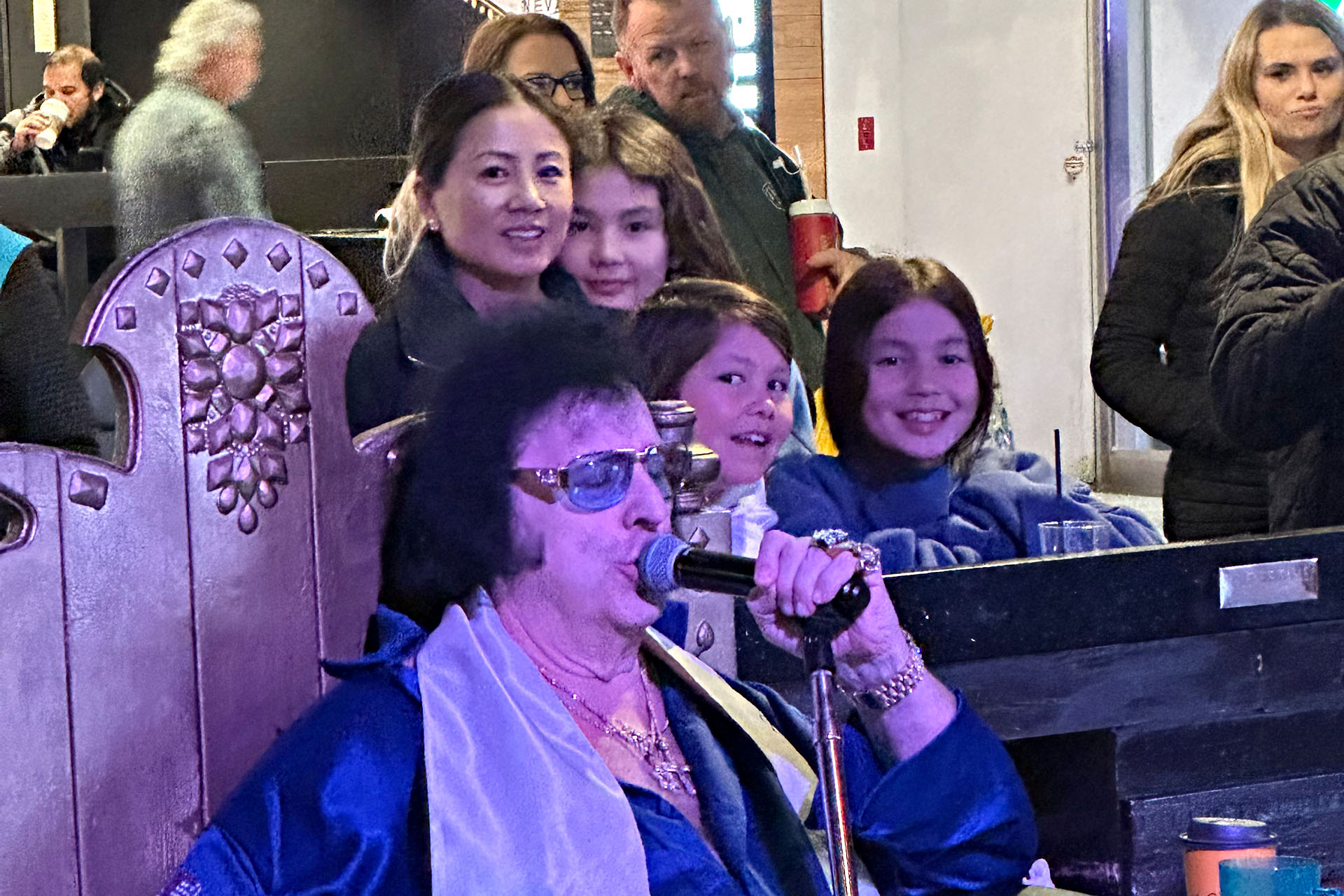
When Big Elvis finally takes the microphone, dressed in a jumpsuit that could double as a disco ball, Charlie’s jaw drops. He launches into “Hound Dog,” and she’s gone, totally, utterly in awe of the King regardless of his size (Big Elvis is so big he sits on a thrown to perform). By the time he gets to “Suspicious Minds,” she’s singing along, and I’m trying to ignore the look on my wife’s face that says, “How much Elvis is too much?”
Big Elvis dedicates “Can’t Help Falling in Love” to Charlie, who looks like she might actually faint. I’ve never seen her this happy, and as we leave Harrah’s, she’s clutching an autographed photo like it’s a golden ticket.
Vegas Wins
As we head back to the Sahara, Charlie is still humming Elvis tunes, Parker is debating which Area 15 exhibit was the weirdest, and Molly is “snapping” her friends for the thousandth time. My wife and I exchange a look, one that says, “Maybe Vegas is a good place for some family fun after all.” Back at the hotel, the girls collapse onto their beds, exhausted but buzzing with excitement. I can’t help but smile. Somehow, in the city of sin, we’ve found the best things to do in Las Vegas with kids.
And as I tuck them in, Charlie whispers, “Daddy, Vegas is way better than Disneyland.” I laugh, knowing full well that this won’t be the last time we trade Mickey Mouse for the King.
There’s something about Scotland that has always made me smile.
Maybe it’s to do with my heritage, or the memories of my father’s Billy Connolly cassettes and the ribald language I struggled to understand (and hear) over the roars of my dad’s laughter. Whatever it is, as we drive the scenic A68 route through the rolling Scottish countryside into Edinburgh, I’m already smiling from ear to ear at the thought of reviewing the Fringe Festival.
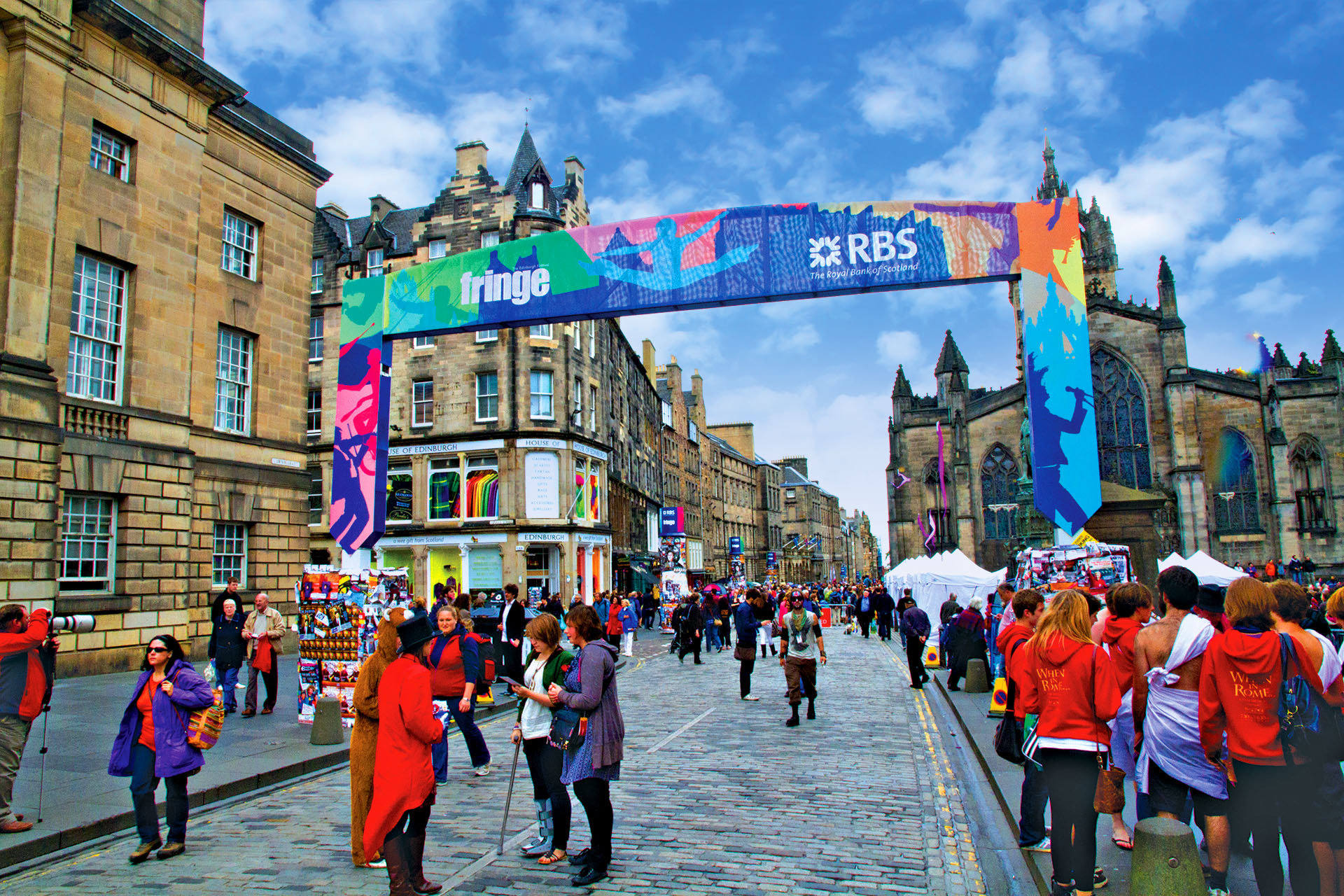
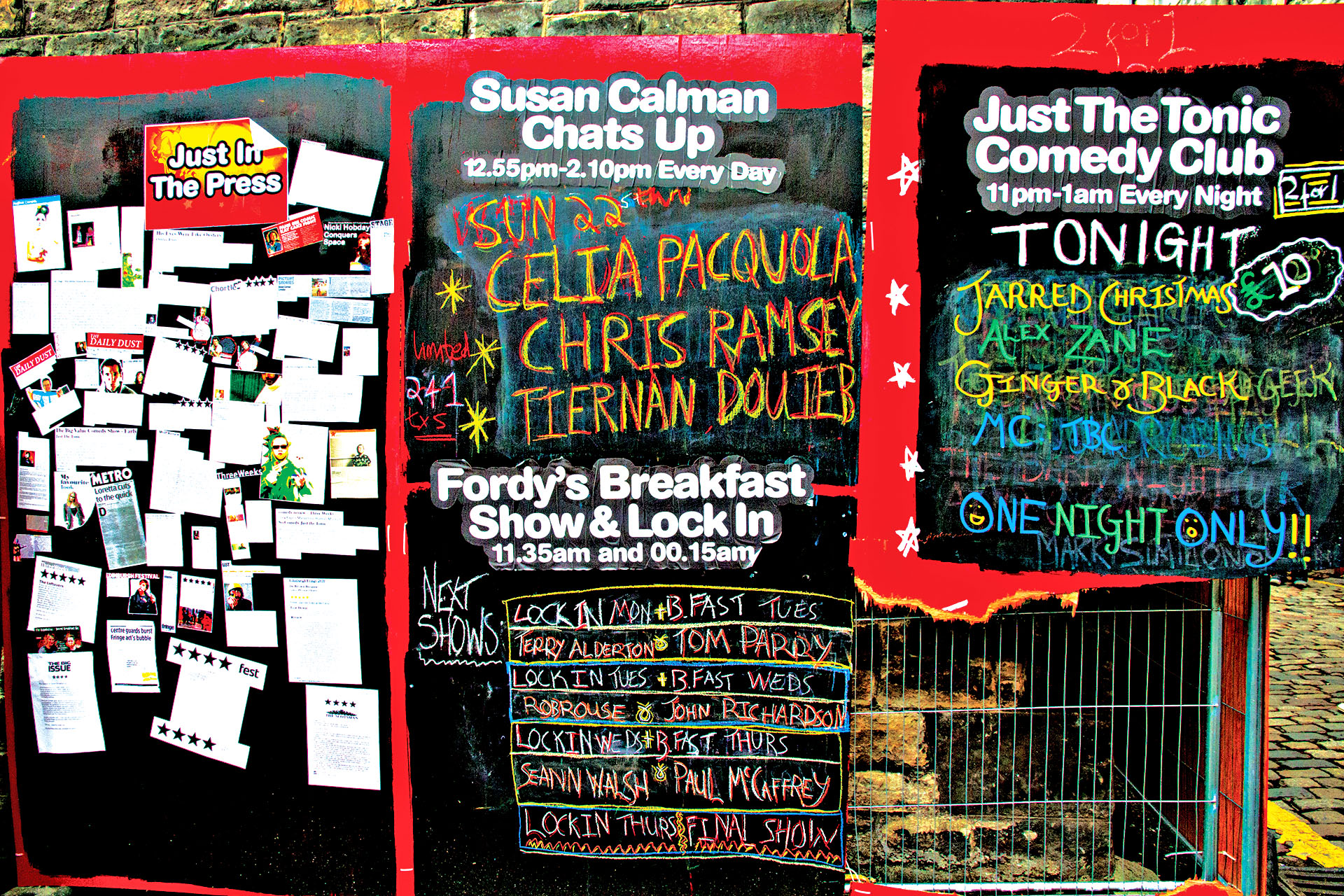
For a comedy junkie like myself, the Edinburgh Festival Fringe (or the Fringe) is somewhat of a holy pilgrimage. From Peter Cook, Dudley Moore and Rowan Atkinson to Hugh Laurie, Arj Barker and Jim Jeffries, the Fringe is a breeding ground for comedians from all over the world. It initially began as an alternative to the first Edinburgh International Festival back in 1947, when a few uninvited theatre groups put on more risqué shows for the existing crowds. This rebellious streak is still prevalent among the many performances today. The Fringe is where a comedian can really let loose. In fact, there are still no rules for who can perform. There is no jury to appease and performers need no invitation, allowing for more cutting-edge shows.
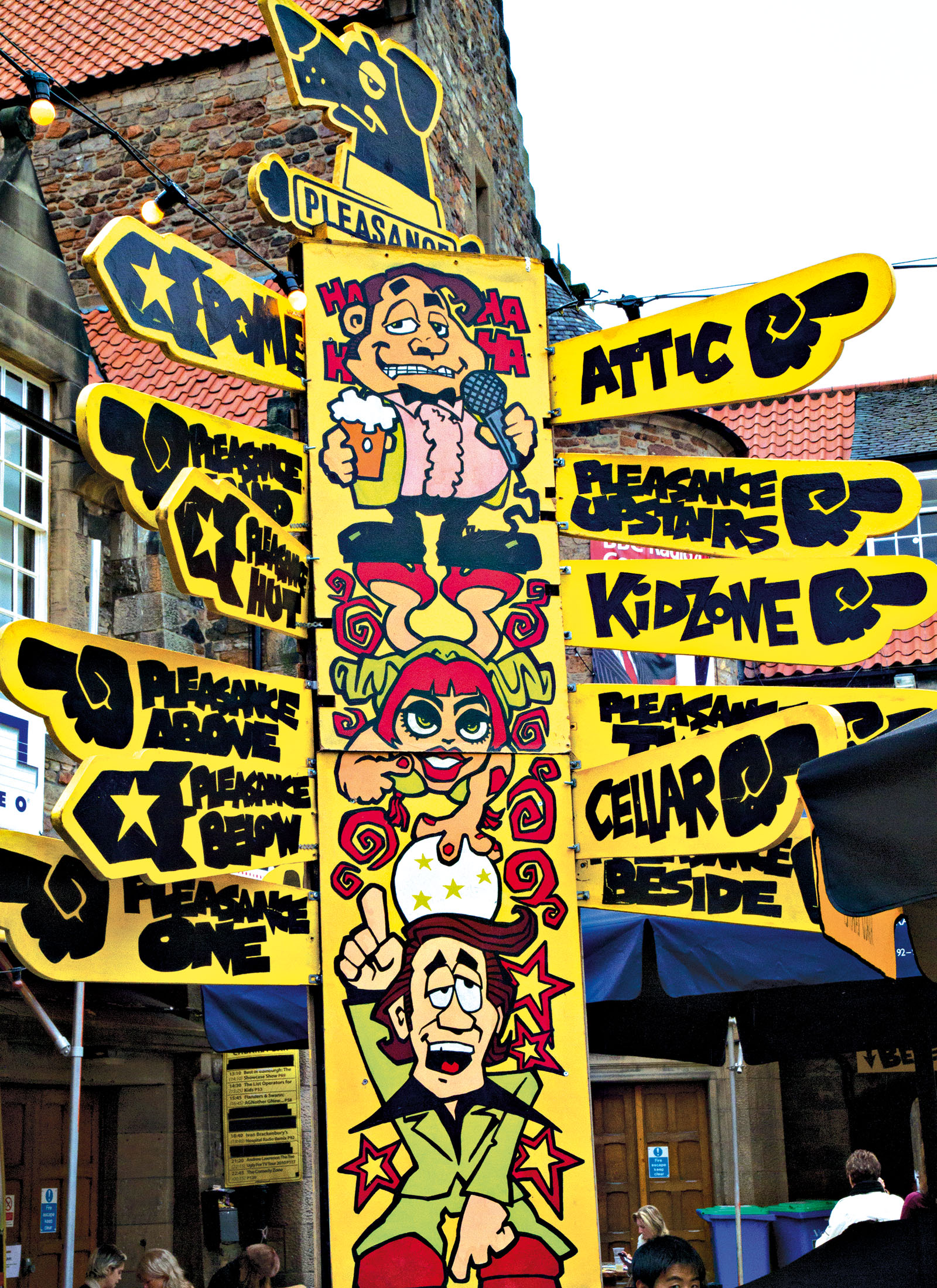
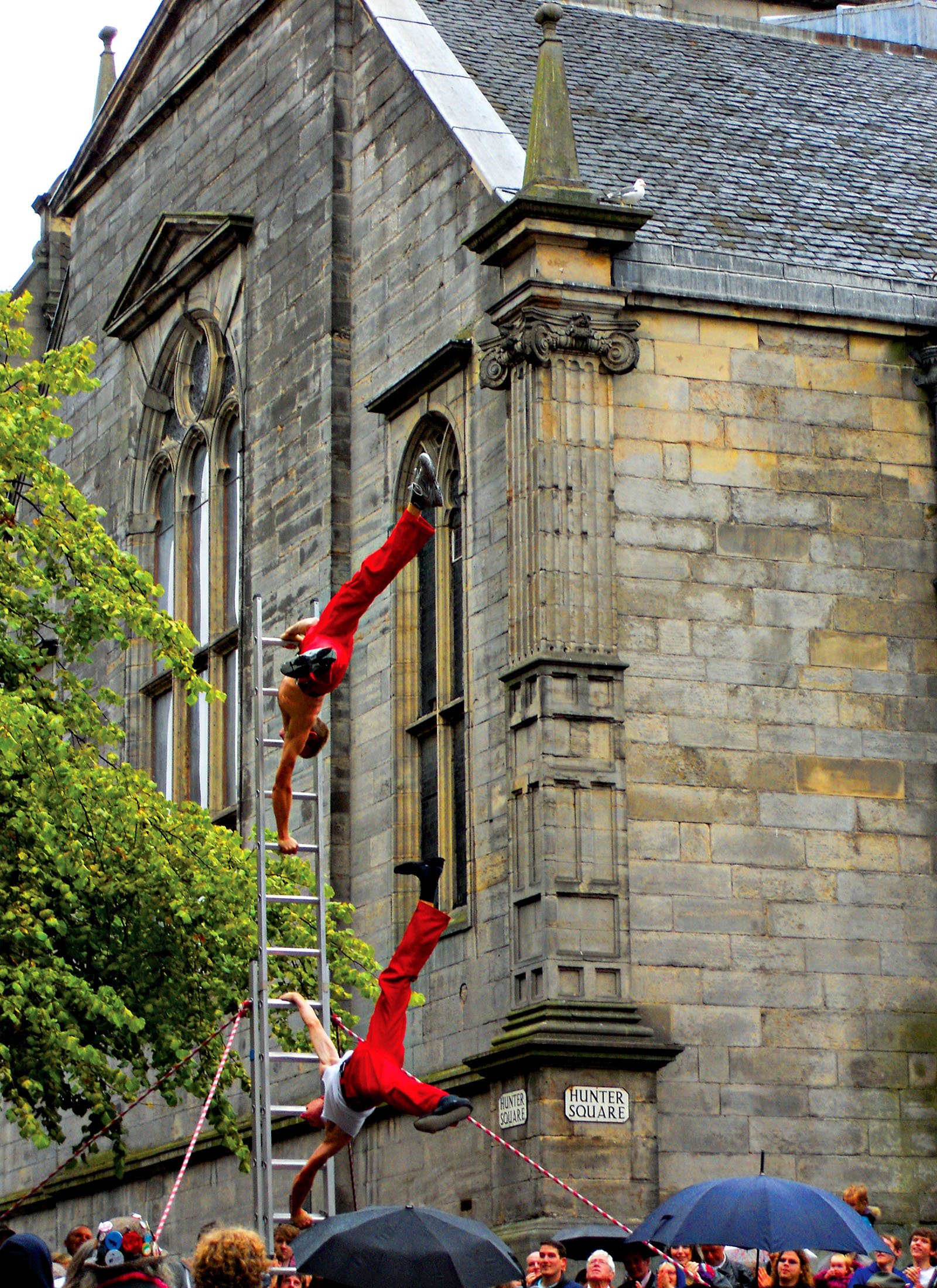
The epicentre of the Fringe is Edinburgh’s Royal Mile: a cobblestone street winding down from the imposing Edinburgh Castle. With only limited space on the street, buildings were constructed storey upon storey, which produced some of the first high-rises in Europe. It is said that the sewage issues this created gave rise to the term ‘shit-faced’, as those who didn’t get home by the 10pm curfew often found themselves covered in excrement as the occupants emptied their sewage out the windows and onto the street and wandering drunks below. For four weeks every August the Fringe buzzes night and day. You’ll find street performances, performers spruiking their shows and loads of wide-eyed travellers. Old Scottish pubs and tourist shops fight for space lining the Mile. It’s easy to get lost as you wander off amongst the many small closes (alleyways) that crisscross it. When the Fringe is on each one will inevitably lead to a show of some sort.
The beauty of such a massive festival is the abundance of free performances throughout the day. You could comfortably spend a week just attending free shows. In 2010, Imran Yusaf’s An Audience with Imran Yusaf was nominated for the Foster’s (previously IF and Perrier) Award – the first time a free performance has been put forward for this prestigious honour. It’s a great example of the quality on offer, and proof that even though there is no entrance fee the laughs are still plentiful.
We catch an Australian comic’s show in the famous Gilded Balloon: a sprawling gothic building surrounded by makeshift bars, food stalls and ticket stands. The Gilded Balloon is an institution at the Fringe and is renowned for its late-night/early morning shows where Fringe comedians drop in to ‘joust’ with the rambunctious crowds. Legend has it, Australian comic Anthony Morgan once glassed himself on stage to grab the attention of the heckling mob.
There’s such a party surrounding the venue it is not surprising that by midnight those still up for some comedy are not exactly focused. Luckily for the comic we saw he doesn’t need to glass himself tonight, as the laughs flow regularly. On a roll, we head into one of the late-night clubs to catch some free comedy from a motley bunch of comedians trying their luck at a night called ‘Shaggers’. A tall Australian struggles with the crowd and disappears quickly after his set. An American girl goes the same way. The night is saved by a local comic whose bawdy description of lovemaking gets us laughing once again.
It has been a big day of comedy and as we walk back to our hotel my cheeks are literally stiff from laughing. It has only been 24 hours and we’ve already indulged in copious amounts of comedy. I calculate, drunkenly, that with another 12,000 performances before the Fringe closes, I might not be sleeping for the remaining three days. It is nearly 3am and Edinburgh’s medieval streets are still teeming with revellers under the dim streetlights. Our hotel is beckoning, but so is a local pub. I duck in for a ‘nightcap’. A pint of Scotland’s finest hits the spot and I order another.
At this rate the free comedy I’m planning to see for breakfast may have to be delayed. Staggering up the Royal Mile I look up at the 16th-century high rises towering over me and I’m thankful for the advances in plumbing technology.
THE BEST EDINBURGH FRINGE FESTIVAL JOKES
1. I tried to steal spaghetti from the shop, but the female guard saw me and I couldn’t get pasta. 2. I keep randomly shouting out ‘broccoli’ and ‘cauliflower’ – I think I might have florets. 3. Working at the Jobcentre has to be a tense job – knowing that if you get fired, you still have to come in the next day. 4. I’m not a fan of the new pound coin, but then again, I hate all change. 5. My dad suggested I register for a donor card, he is a man after my own heart.
A FESTIVAL REGULAR’S TOP TIPS FOR ENJOYING THE FRINGE.
A. Go to a late-night comedy show. There is nothing like seeing drunk punters battle against (possibly drunker) stand-up comedians at 1am. You’ll see brilliant comedy, wonderful hecklers and frontal nudity for the price of a single ticket.
B. If you’re afraid of paper cuts the Fringe isn’t the place for you. Spend an hour taking flyers and reward whoever does the best job of selling their show with your attendance. The show may be shit, but think of how impressive the comedian’s salesmanship was when he looked you in the eye and sold you this steaming lump of turd.
C. Go to a silent disco. Especially if you hate typical nightclub conversations like: ‘What do you do for a living?’ ‘I’ve never celebrated Thanksgiving!’ At a silent disco to hear the DJs you wear headphones and to talk to someone you just take them off. Best of all, ignoring people is very easy.
D. Learn the colloquialisms. At home knowing Scottish slang will be as useful as speaking Elfish, but it will make the locals think you’re “pure fookin’ barry” (whatever that means).
Delta One at LAX: A Taste of Luxury (With a Side of Porsche Envy)
Ah, LAX, a magical land where dreams are made, hearts are broken, and every other person looks like they might be an Instagram influencer.
Stepping into the Delta One experience at LAX airport is like entering a parallel universe where everyone acts like they’re more important than they are (and honestly, some of them might be). I have to say though it’s infectious, similar to the “business class” strut that all those who turn left when boarding seem to develop down the air bridge.
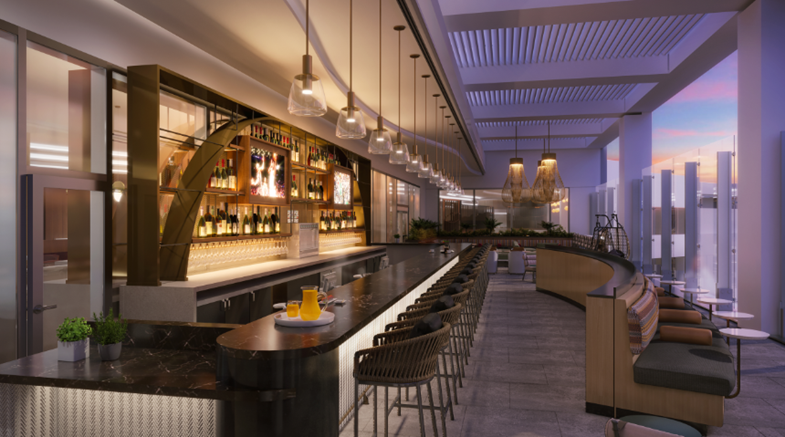
I’m whisked through a special security line that feels more like a VIP entrance to a club. Instead of a bouncer, there’s a TSA agent who, for once, doesn’t make me feel like I’m auditioning for a prison drama. Even better, I’m offered a choice of wine, beer and some nibbles while my passport is sorted. There ain’t no shoe-removal shame here; I strut through with my dignity intact and straight up to the the Delta Sky Club, a slice of airport nirvana.
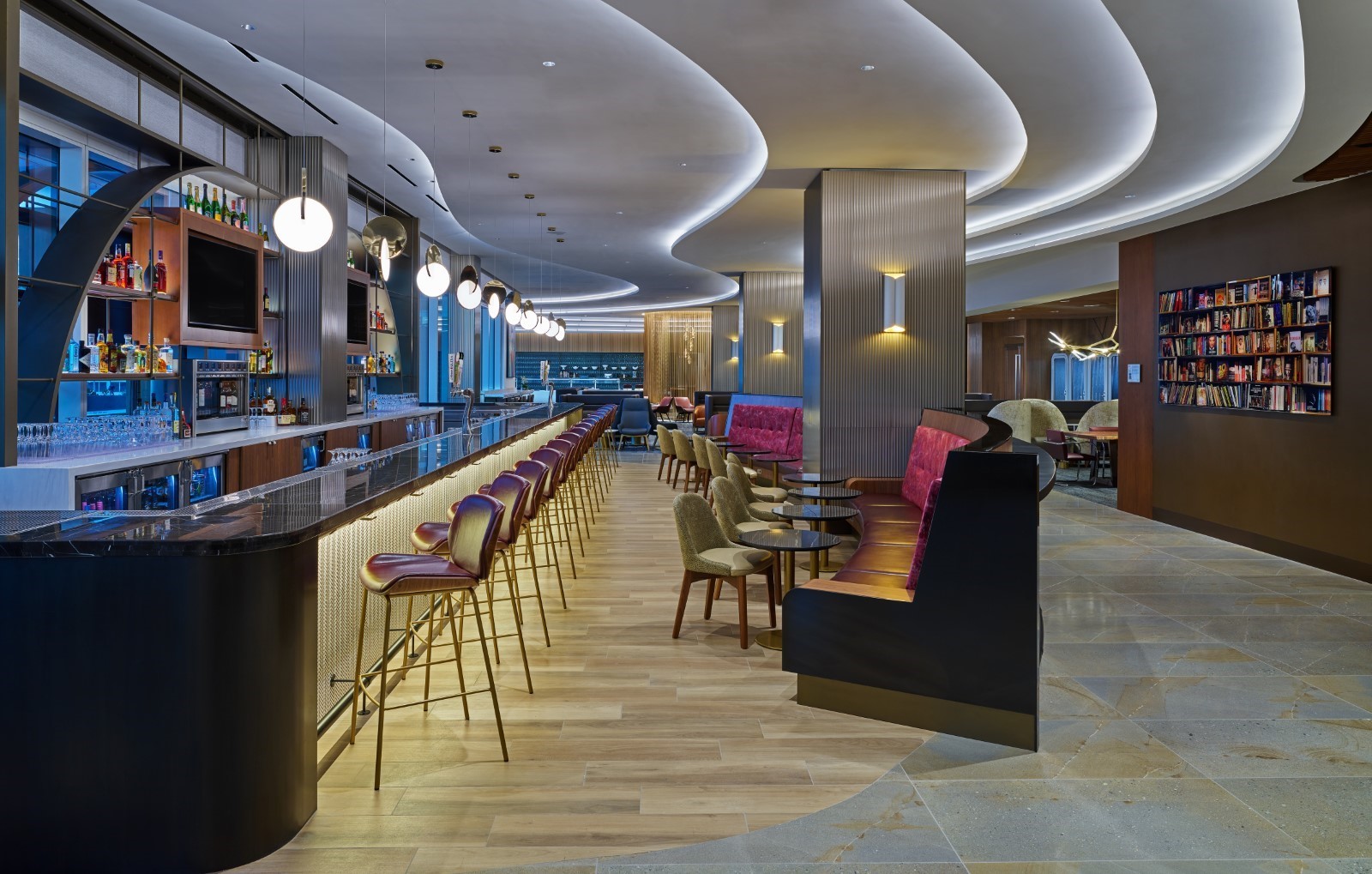
Walking in, I feel like a low-budget James Bond, if James Bond traveled with mismatched luggage and an LA hangover. The lounge itself is swanky, with sleek decor, comfy seating, and the kind of ambient lighting that makes you question if you’re about to board a flight or attend an underground art exhibit. I choose a plush low couch in the outside bar with a glass of Argentinian Malbec and a freshly made taco.
I keep an eye out for celebs. I once drank with Usain Bolt in an Etihad business class lounge in Melbourne. But this is LA baby, and surely I’ll find myself at the bar chatting to Ryan Reynolds and Hugh Jackman as they fly to a film festival somewhere. Sadly, the closest I get is a scruffy looking dude who looks like Corey Feldman. It might actually have been him, you know.
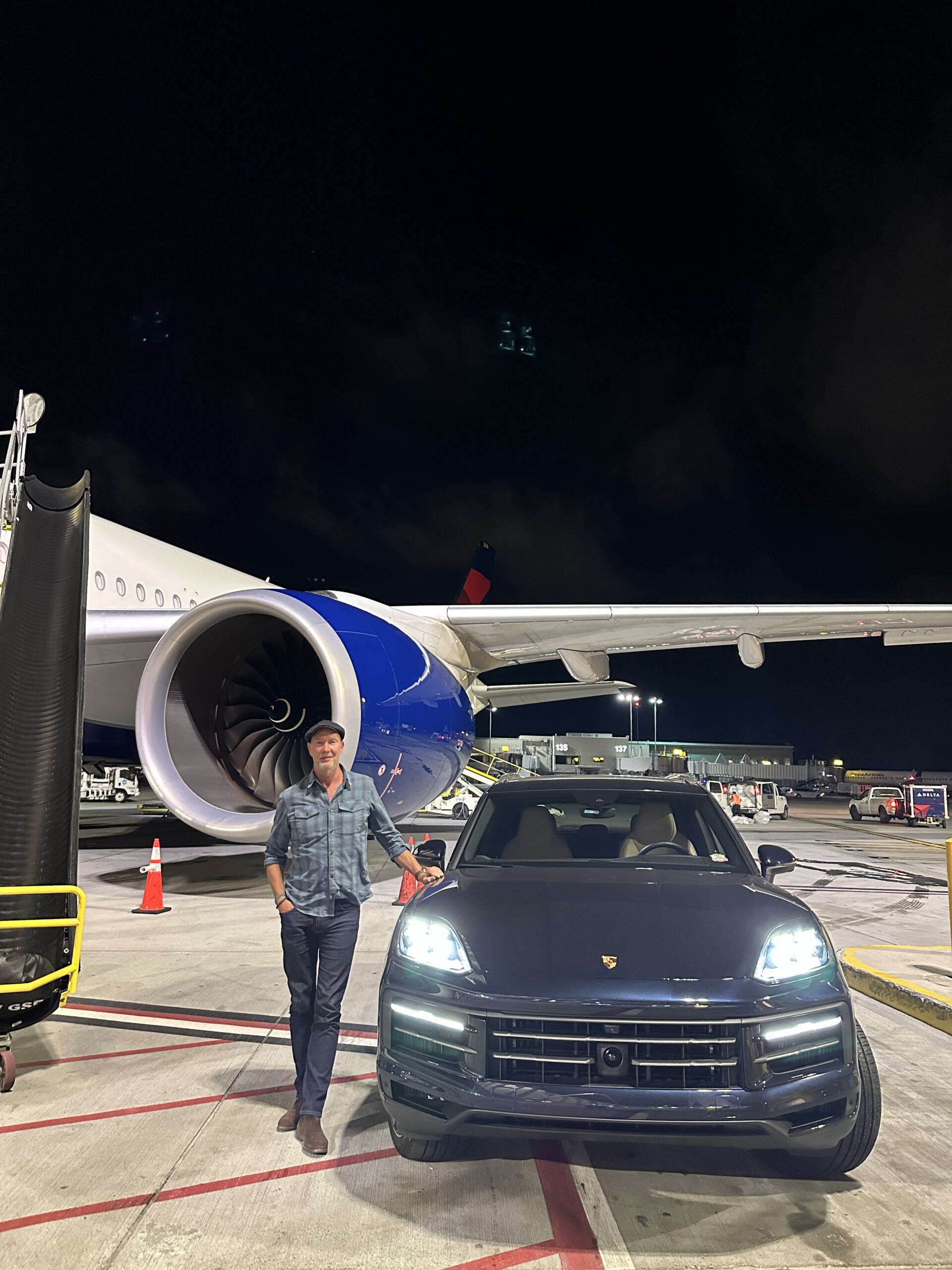
I’ll admit to loving a bit of VIP (who doesn’t) but the last thing I expect when one of the attendants tells me my flight is boarding, is to be whisked out a back door and onto the tarmac to a waiting Porsche. Seriously, my strut by this point is offensive.
The Porsche ride is short but sweet, just long enough to make me contemplate a career change to “mysterious rich person.” As we approached the plane, I see the economy passengers boarding through a different door and feel a twinge of guilt.
Just a twinge. The flight itself is everything you’d expect from Delta One: plush seats, gourmet meals, and legroom able to accommodate my 200 cm frame.
The bed was so comfortable that I briefly considered asking if I could live there. And the service? Impeccable. I’m tempted to ask the flight attendants if they are really like this every day, but I didn’t want to blow my cover as a seasoned first-class traveler.
As we land and I disembark, reality hits like a turbulence warning. The Porsche is gone, the fancy lounge just a memory, and it’s back to normal life in a taxi that smells like the inside of a Burger Ring packet. But for those few magical hours, I lived the high life at LAX, complete with a Porsche joyride.
If you ever get the chance to experience Delta One at LAX, take it. Just don’t expect them to let you keep the Porsche.
With more than 400 boutique breweries dotted throughout Colorado, it has been labelled the ‘Napa Valley of beer’, and you might need a drop or two of the stronger stuff to sample more of the state’s hearty cuisine—deep-fried testicles.
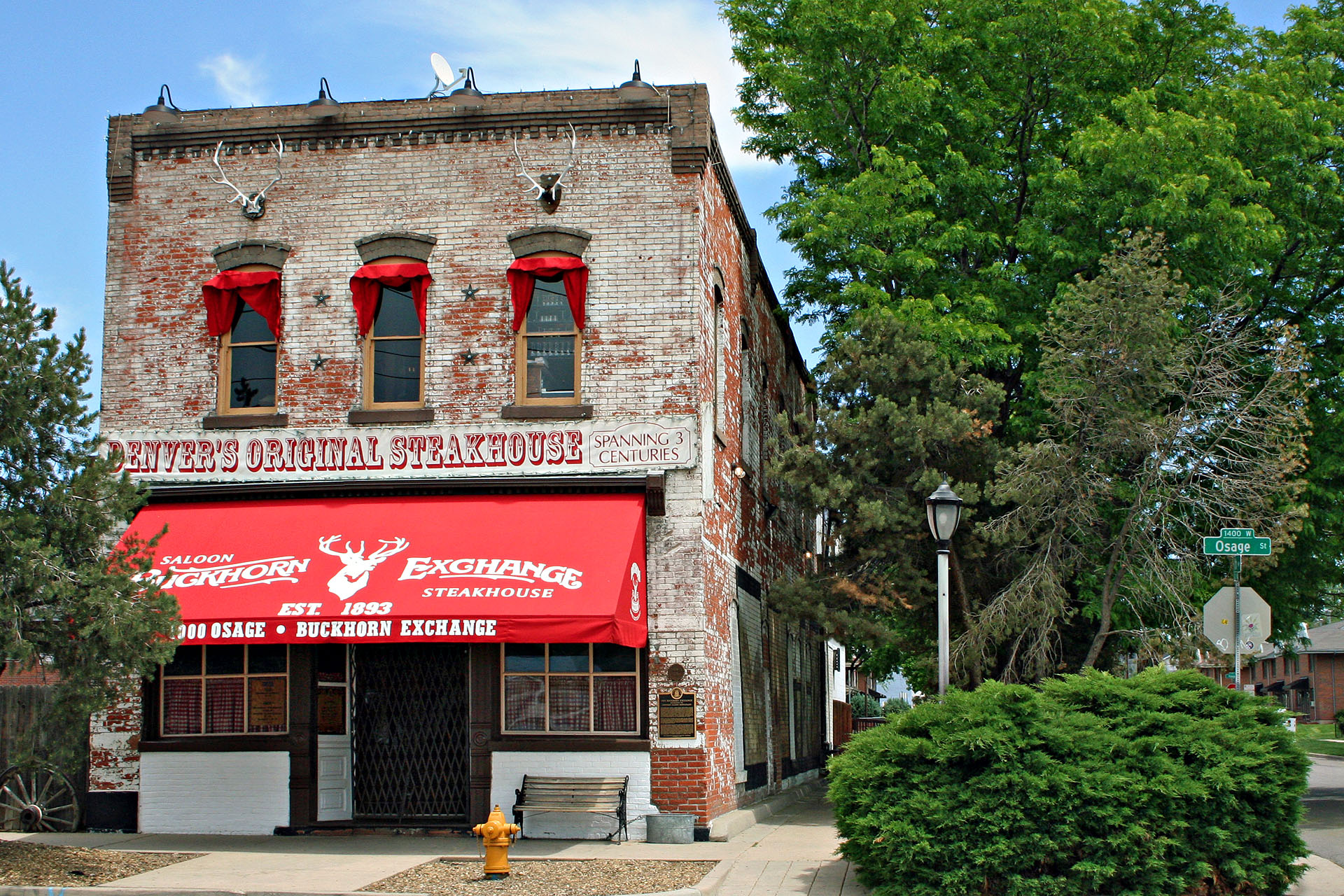
Known as ‘Rocky Mountain Oysters’ this Colorado delicacy consists of deep-fried bull balls, and the Buckhorn Exchange (Denver’s oldest steakhouse, established in 1893) is the best place to get it. Bison is also on the menu, a leaner meat than beef. Fish lovers have a less challenging choice of cuisine, with Colorado’s pristine rivers and lakes providing a rich source of freshwater trout.
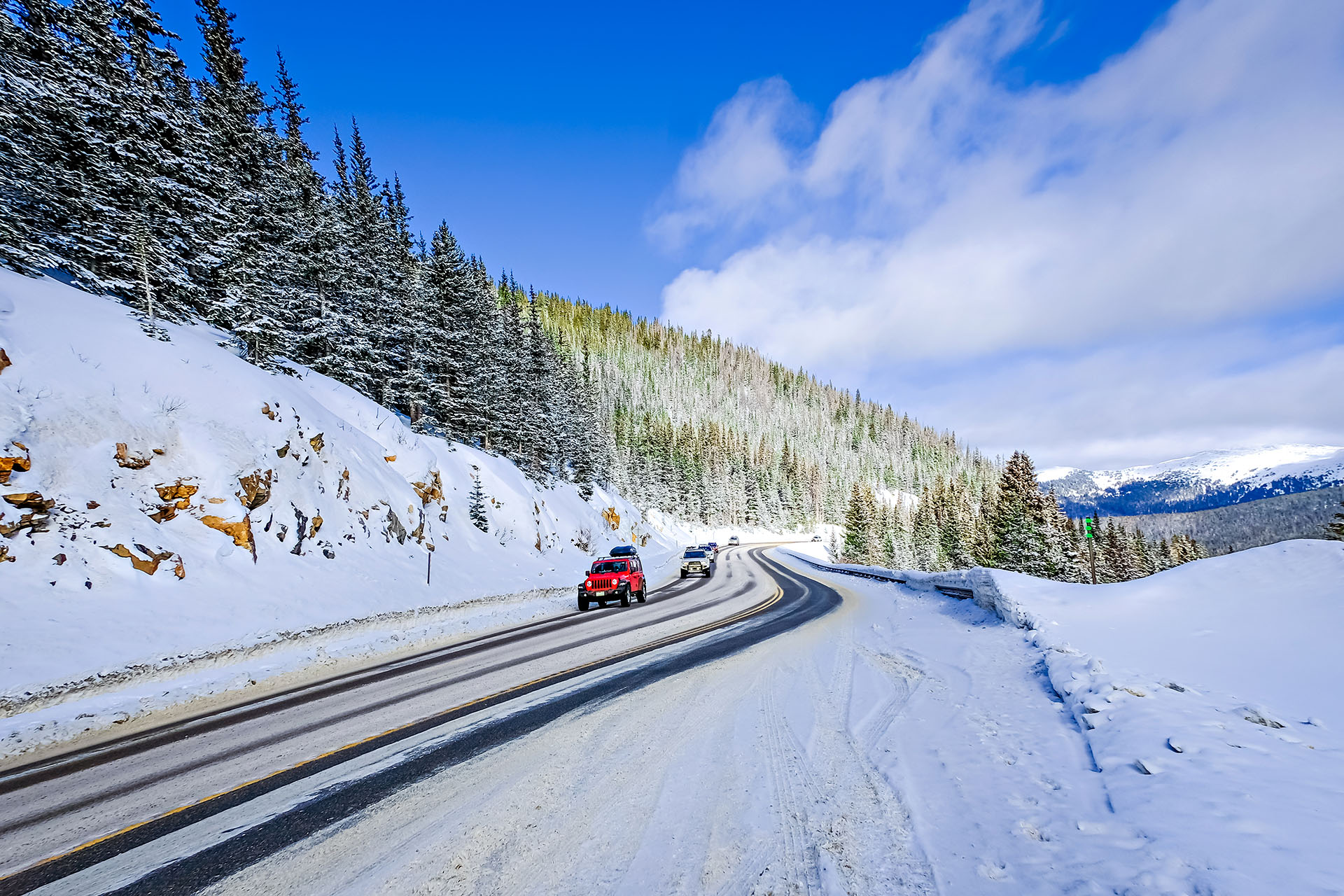
As the college town of Fort Collins fades into the rear view mirror, head back in time and nature on the 162 kilometre Cache la Poudre Scenic Byway route that takes road trippers from Denver, through Fort Collins and into Steamboat, encountering roaming coyotes and moose along the way. The road winds through the spectacular Poudre Canyon, and in winter the landscape is spectacular; rugged peaks that line the route are dusted magically white, and surrounding mountains that take your breath away. Keep an eye out for Colorado’s state animal, the bighorn sheep.
With more than 400 boutique breweries dotted throughout Colorado, it has been labelled the ‘Napa Valley of beer’, and you might need a drop or two of the stronger stuff to sample more of the state’s hearty cuisine—deep-fried testicles.
Known as ‘Rocky Mountain Oysters’ this Colorado delicacy consists of deep-fried bull balls, and the Buckhorn Exchange (Denver’s oldest steakhouse, established in 1893) is the best place to get it. Bison is also on the menu, a leaner meat than beef. Fish lovers have a less challenging choice of cuisine, with Colorado’s pristine rivers and lakes providing a rich source of freshwater trout.
Denver Art Museum is a beacon of creativity slap bang in the centre of the city, housed in a building that is a work of art in itself.
The museum is large, housing 70,000 works from across the centuries and world but, if you’re more of a participant than a spectator, it also runs a dynamic event calendar that includes creating your own works of art under the guidance of its resident artists.
As the college town of Fort Collins fades into the rear view mirror, head back in time and nature on the 162 kilometre Cache la Poudre Scenic Byway route that takes road trippers from Denver, through Fort Collins and into Steamboat, encountering roaming coyotes and moose along the way. The road winds through the spectacular Poudre Canyon, and in winter the landscape is spectacular; rugged peaks that line the route are dusted magically white, and surrounding mountains that take your breath away. Keep an eye out for Colorado’s state animal, the bighorn sheep.
With more than 400 boutique breweries dotted throughout Colorado, it has been labelled the ‘Napa Valley of beer’, and you might need a drop or two of the stronger stuff to sample more of the state’s hearty cuisine—deep-fried testicles.
Known as ‘Rocky Mountain Oysters’ this Colorado delicacy consists of deep-fried bull balls, and the Buckhorn Exchange (Denver’s oldest steakhouse, established in 1893) is the best place to get it. Bison is also on the menu, a leaner meat than beef. Fish lovers have a less challenging choice of cuisine, with Colorado’s pristine rivers and lakes providing a rich source of freshwater trout.
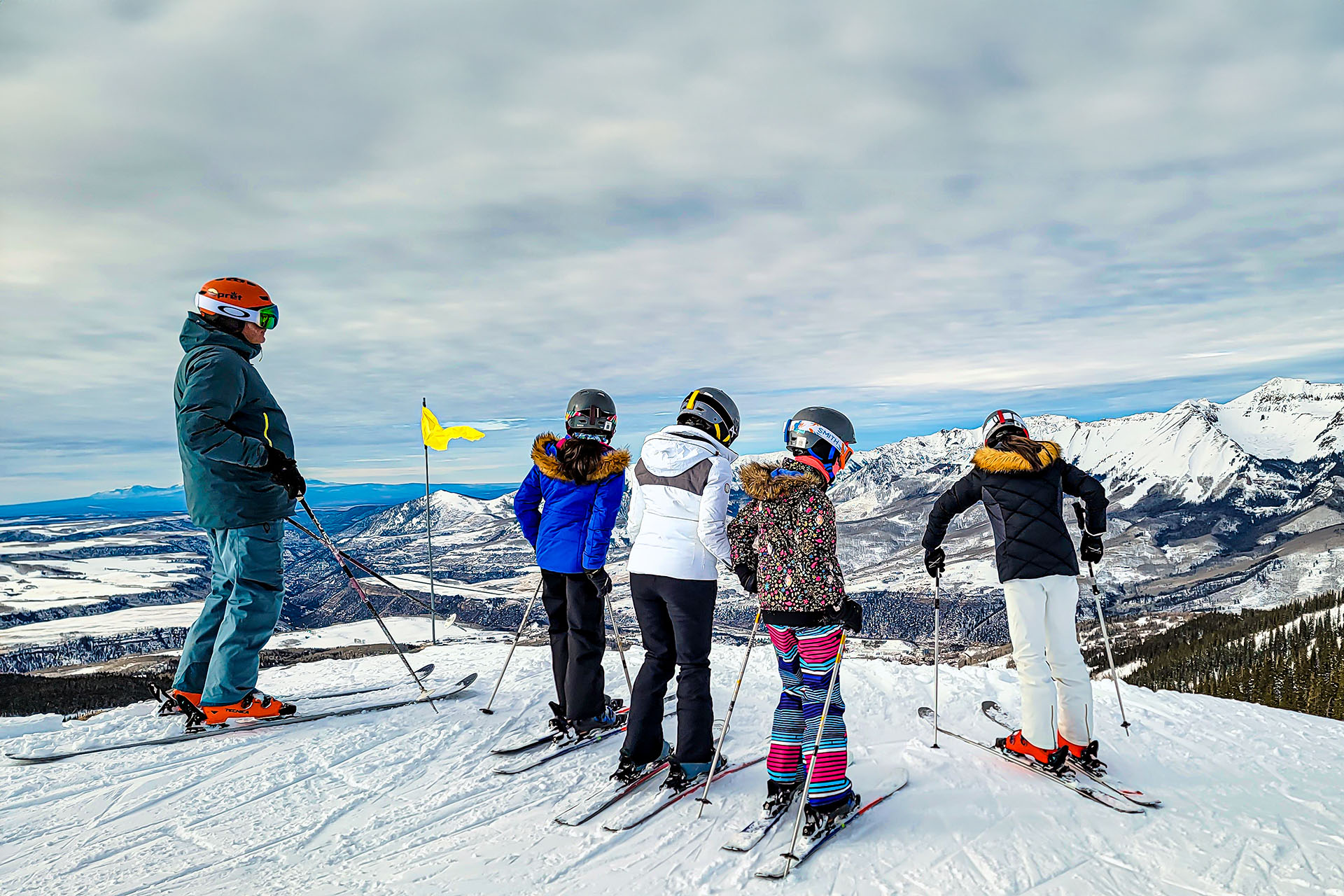
There are views, and then there’s the view from Telluride’s See Forever run.
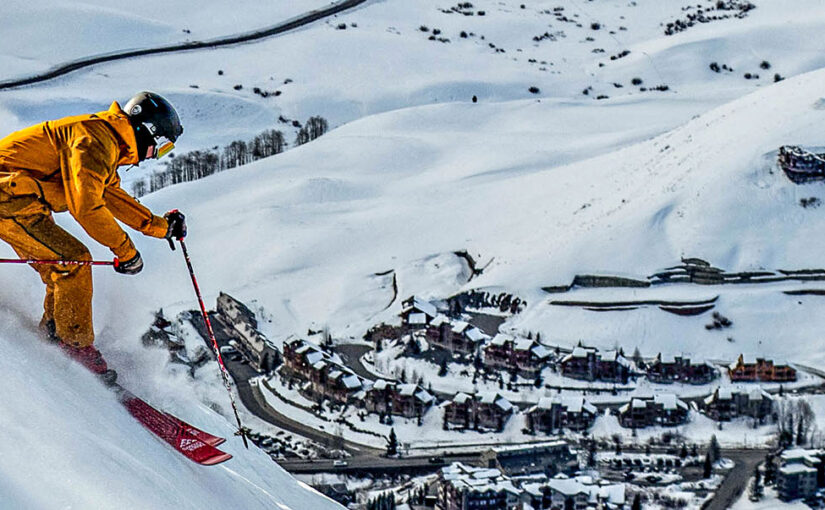
It’s where the panorama is so vast and so breathtaking that it feels like you are skiing or boarding above the clouds, with a line of sight through to the neighbouring state of Utah on a clear day. The straight run, which hides a service road, combines groomed sections with challenging moguls, so you’ll need to choose your moments to safely enjoy the view.
Denver Art Museum is a beacon of creativity slap bang in the centre of the city, housed in a building that is a work of art in itself.
The museum is large, housing 70,000 works from across the centuries and world but, if you’re more of a participant than a spectator, it also runs a dynamic event calendar that includes creating your own works of art under the guidance of its resident artists.
As the college town of Fort Collins fades into the rear view mirror, head back in time and nature on the 162 kilometre Cache la Poudre Scenic Byway route that takes road trippers from Denver, through Fort Collins and into Steamboat, encountering roaming coyotes and moose along the way. The road winds through the spectacular Poudre Canyon, and in winter the landscape is spectacular; rugged peaks that line the route are dusted magically white, and surrounding mountains that take your breath away. Keep an eye out for Colorado’s state animal, the bighorn sheep.
With more than 400 boutique breweries dotted throughout Colorado, it has been labelled the ‘Napa Valley of beer’, and you might need a drop or two of the stronger stuff to sample more of the state’s hearty cuisine—deep-fried testicles.
Known as ‘Rocky Mountain Oysters’ this Colorado delicacy consists of deep-fried bull balls, and the Buckhorn Exchange (Denver’s oldest steakhouse, established in 1893) is the best place to get it. Bison is also on the menu, a leaner meat than beef. Fish lovers have a less challenging choice of cuisine, with Colorado’s pristine rivers and lakes providing a rich source of freshwater trout.
The French may have coined the phrase après-ski to describe the fun that happens once you’ve left the slopes, but Crested Butte has made après its own.
A mecca for extreme skiers, the town also caters for those more interested in post-ski activities, with an eclectic mix of live music, wine bars and a range of restaurants and theatres. Enjoy live entertainment at Kochevars Saloon & Gaming Hall, formerly a brothel and bowling alley (presumably not at the same time) or meet some locals when you dine at Bonez Tequilla Bar & Grill’s community dining table. Happy Hour is from 3–5pm, but you have to ask the bartender for the secret Happy Hour menu.
There are views, and then there’s the view from Telluride’s See Forever run.
It’s where the panorama is so vast and so breathtaking that it feels like you are skiing or boarding above the clouds, with a line of sight through to the neighbouring state of Utah on a clear day. The straight run, which hides a service road, combines groomed sections with challenging moguls, so you’ll need to choose your moments to safely enjoy the view.
Denver Art Museum is a beacon of creativity slap bang in the centre of the city, housed in a building that is a work of art in itself.
The museum is large, housing 70,000 works from across the centuries and world but, if you’re more of a participant than a spectator, it also runs a dynamic event calendar that includes creating your own works of art under the guidance of its resident artists.
As the college town of Fort Collins fades into the rear view mirror, head back in time and nature on the 162 kilometre Cache la Poudre Scenic Byway route that takes road trippers from Denver, through Fort Collins and into Steamboat, encountering roaming coyotes and moose along the way. The road winds through the spectacular Poudre Canyon, and in winter the landscape is spectacular; rugged peaks that line the route are dusted magically white, and surrounding mountains that take your breath away. Keep an eye out for Colorado’s state animal, the bighorn sheep.
With more than 400 boutique breweries dotted throughout Colorado, it has been labelled the ‘Napa Valley of beer’, and you might need a drop or two of the stronger stuff to sample more of the state’s hearty cuisine—deep-fried testicles.
Known as ‘Rocky Mountain Oysters’ this Colorado delicacy consists of deep-fried bull balls, and the Buckhorn Exchange (Denver’s oldest steakhouse, established in 1893) is the best place to get it. Bison is also on the menu, a leaner meat than beef. Fish lovers have a less challenging choice of cuisine, with Colorado’s pristine rivers and lakes providing a rich source of freshwater trout.
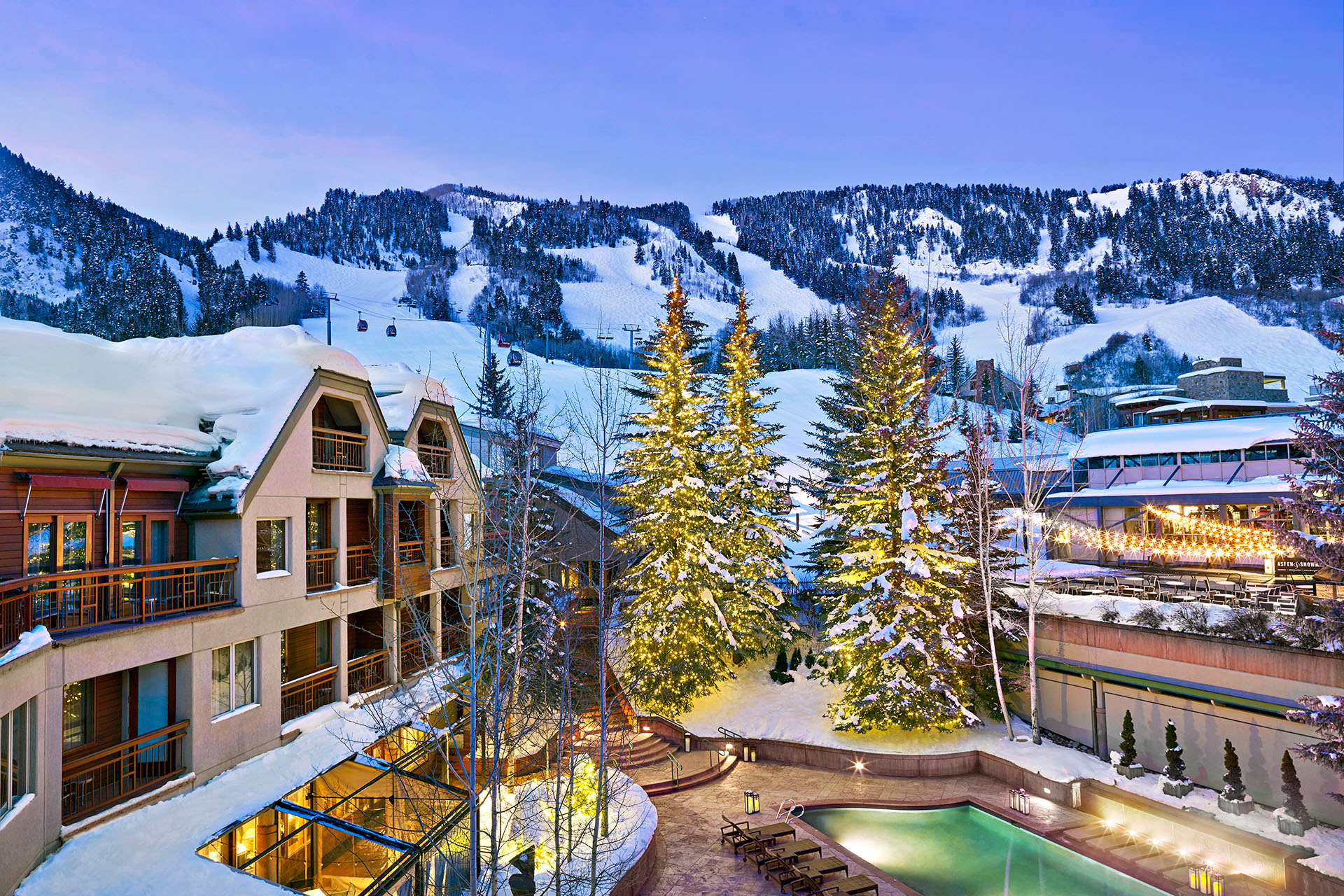
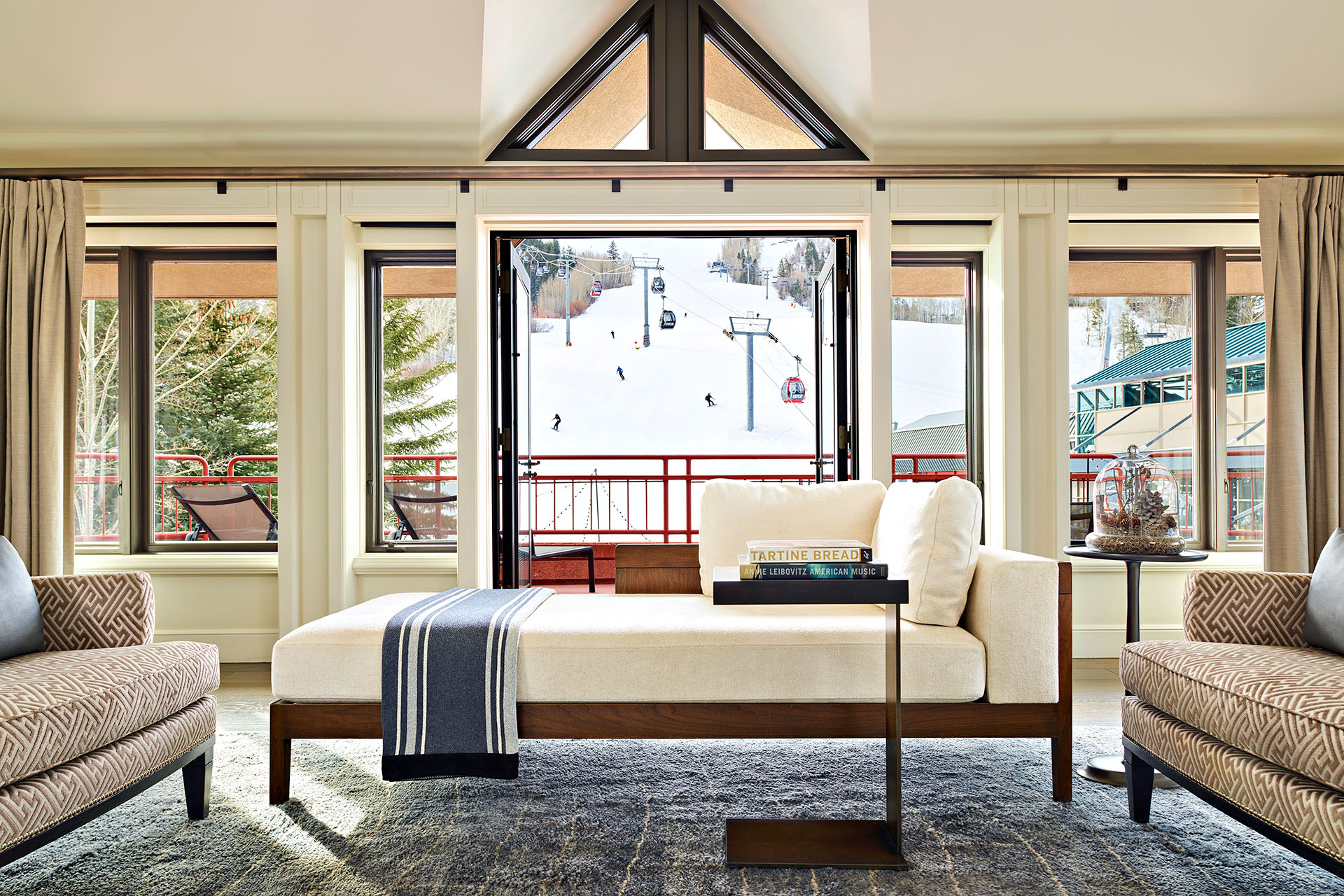
Rather ski or board than walk? The Little Nell is the only accommodation with ski-in/ski-out access on Aspen Mountain.
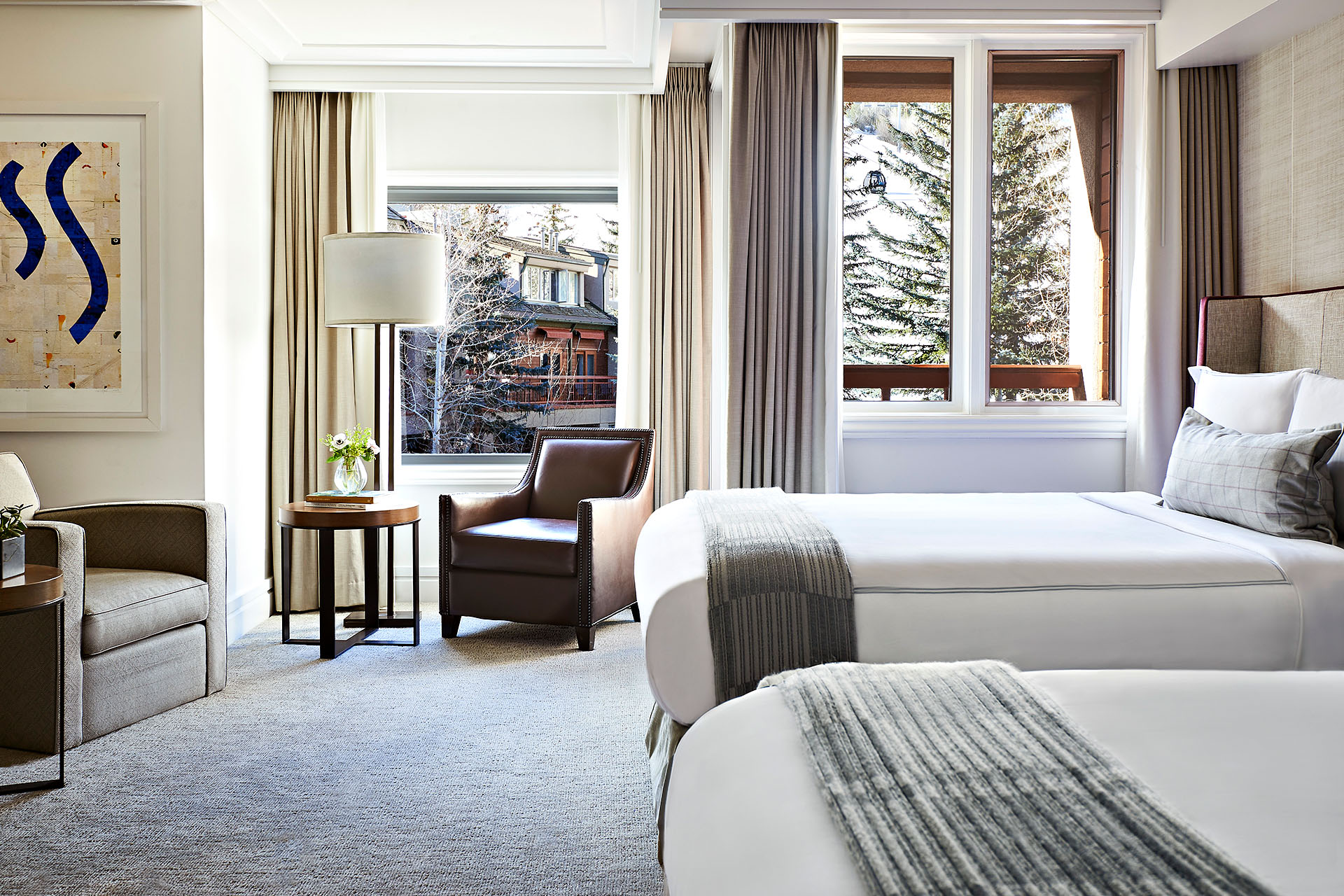
Draw back the blinds of your room at the Five-star, Five-diamond hotel, and you’ll find yourself right in the heart of the action. No regular shoes required. But you could pull on some snowshoes for a moonlit mountain tour or take to the skies for a heli-skiing adventure. The Little Nell also offers ‘First Tracks’, which gives its guests early access to the mountain, so you can be the first to experience the pleasure of carving some lines through the virgin powder.
The French may have coined the phrase après-ski to describe the fun that happens once you’ve left the slopes, but Crested Butte has made après its own.
A mecca for extreme skiers, the town also caters for those more interested in post-ski activities, with an eclectic mix of live music, wine bars and a range of restaurants and theatres. Enjoy live entertainment at Kochevars Saloon & Gaming Hall, formerly a brothel and bowling alley (presumably not at the same time) or meet some locals when you dine at Bonez Tequilla Bar & Grill’s community dining table. Happy Hour is from 3–5pm, but you have to ask the bartender for the secret Happy Hour menu.
There are views, and then there’s the view from Telluride’s See Forever run.
It’s where the panorama is so vast and so breathtaking that it feels like you are skiing or boarding above the clouds, with a line of sight through to the neighbouring state of Utah on a clear day. The straight run, which hides a service road, combines groomed sections with challenging moguls, so you’ll need to choose your moments to safely enjoy the view.
Denver Art Museum is a beacon of creativity slap bang in the centre of the city, housed in a building that is a work of art in itself.
The museum is large, housing 70,000 works from across the centuries and world but, if you’re more of a participant than a spectator, it also runs a dynamic event calendar that includes creating your own works of art under the guidance of its resident artists.
As the college town of Fort Collins fades into the rear view mirror, head back in time and nature on the 162 kilometre Cache la Poudre Scenic Byway route that takes road trippers from Denver, through Fort Collins and into Steamboat, encountering roaming coyotes and moose along the way. The road winds through the spectacular Poudre Canyon, and in winter the landscape is spectacular; rugged peaks that line the route are dusted magically white, and surrounding mountains that take your breath away. Keep an eye out for Colorado’s state animal, the bighorn sheep.
With more than 400 boutique breweries dotted throughout Colorado, it has been labelled the ‘Napa Valley of beer’, and you might need a drop or two of the stronger stuff to sample more of the state’s hearty cuisine—deep-fried testicles.
Known as ‘Rocky Mountain Oysters’ this Colorado delicacy consists of deep-fried bull balls, and the Buckhorn Exchange (Denver’s oldest steakhouse, established in 1893) is the best place to get it. Bison is also on the menu, a leaner meat than beef. Fish lovers have a less challenging choice of cuisine, with Colorado’s pristine rivers and lakes providing a rich source of freshwater trout.
7. Chilling with Frozen Dead Guy Days (Festival), ESTES PARK
In 1989 a Norwegian man Trygve Bauge brought his deceased Grandpa, Bredo, to the USA, where he was cryogenically frozen and stored in the quaint town of Nederland. More than 30 years, some pesky VISA issues, and a national news story later, Bredo is still freezing away in Nederland—the ultimate chill seeker.
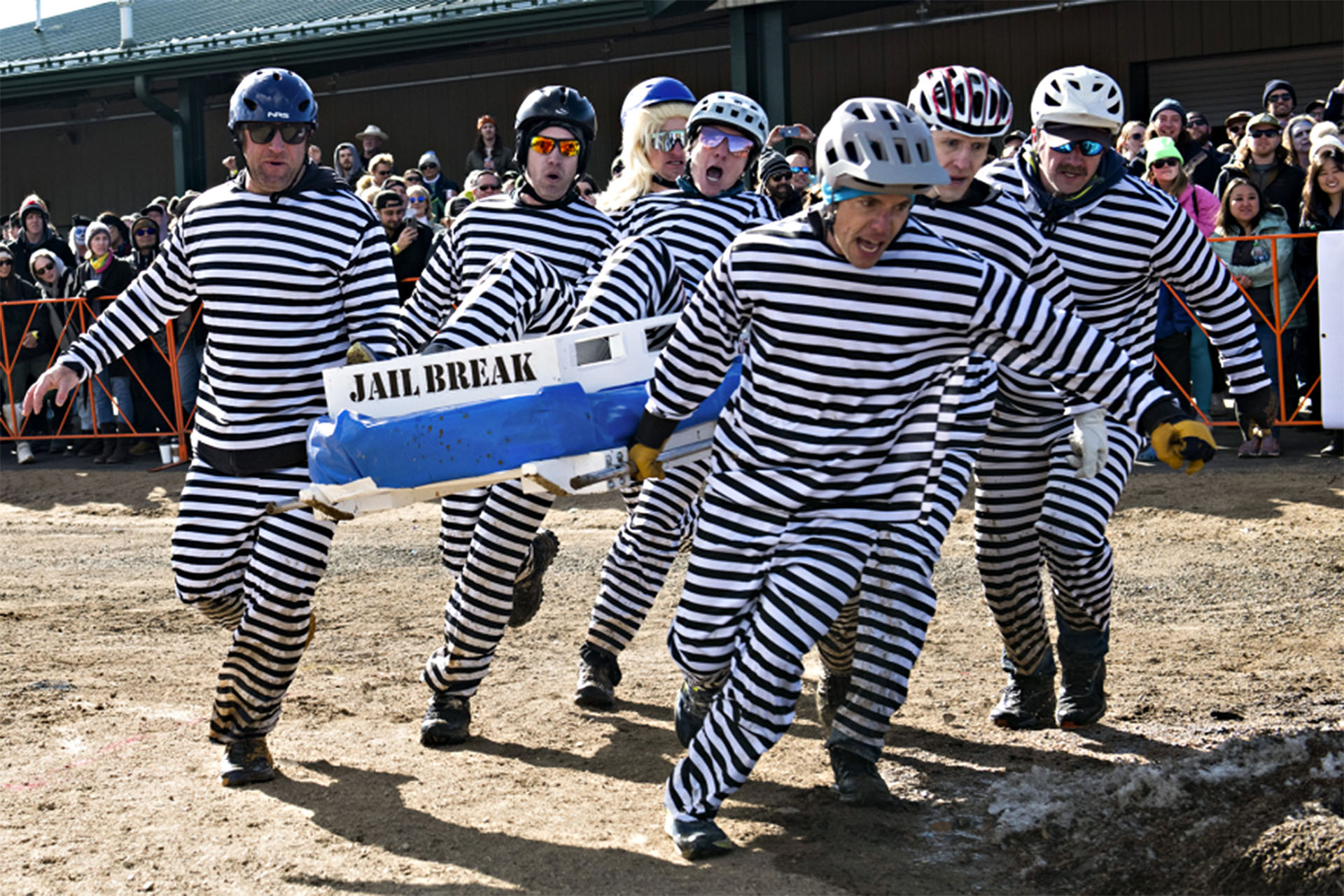
Every year in March, Frozen Dead Guy Days festival is held in honour of Bredo, an inexplicably strange event the like of which we at get lost, a travel magazine of 20 years, have never encountered before. There’s coffin races, a Grandpa Bredo lookalike contest, frostbite fashion shows, and the polar plunge, where admirably and idiotically brave participants break ice in the local lake and try their hand at freezing themselves, Bredo-style.
Rather ski or board than walk? The Little Nell is the only accommodation with ski-in/ski-out access on Aspen Mountain.
Draw back the blinds of your room at the Five-star, Five-diamond hotel, and you’ll find yourself right in the heart of the action. No regular shoes required. But you could pull on some snowshoes for a moonlit mountain tour or take to the skies for a heli-skiing adventure. The Little Nell also offers ‘First Tracks’, which gives its guests early access to the mountain, so you can be the first to experience the pleasure of carving some lines through the virgin powder.
The French may have coined the phrase après-ski to describe the fun that happens once you’ve left the slopes, but Crested Butte has made après its own.
A mecca for extreme skiers, the town also caters for those more interested in post-ski activities, with an eclectic mix of live music, wine bars and a range of restaurants and theatres. Enjoy live entertainment at Kochevars Saloon & Gaming Hall, formerly a brothel and bowling alley (presumably not at the same time) or meet some locals when you dine at Bonez Tequilla Bar & Grill’s community dining table. Happy Hour is from 3–5pm, but you have to ask the bartender for the secret Happy Hour menu.
There are views, and then there’s the view from Telluride’s See Forever run.
It’s where the panorama is so vast and so breathtaking that it feels like you are skiing or boarding above the clouds, with a line of sight through to the neighbouring state of Utah on a clear day. The straight run, which hides a service road, combines groomed sections with challenging moguls, so you’ll need to choose your moments to safely enjoy the view.
Denver Art Museum is a beacon of creativity slap bang in the centre of the city, housed in a building that is a work of art in itself.
The museum is large, housing 70,000 works from across the centuries and world but, if you’re more of a participant than a spectator, it also runs a dynamic event calendar that includes creating your own works of art under the guidance of its resident artists.
As the college town of Fort Collins fades into the rear view mirror, head back in time and nature on the 162 kilometre Cache la Poudre Scenic Byway route that takes road trippers from Denver, through Fort Collins and into Steamboat, encountering roaming coyotes and moose along the way. The road winds through the spectacular Poudre Canyon, and in winter the landscape is spectacular; rugged peaks that line the route are dusted magically white, and surrounding mountains that take your breath away. Keep an eye out for Colorado’s state animal, the bighorn sheep.
With more than 400 boutique breweries dotted throughout Colorado, it has been labelled the ‘Napa Valley of beer’, and you might need a drop or two of the stronger stuff to sample more of the state’s hearty cuisine—deep-fried testicles.
Known as ‘Rocky Mountain Oysters’ this Colorado delicacy consists of deep-fried bull balls, and the Buckhorn Exchange (Denver’s oldest steakhouse, established in 1893) is the best place to get it. Bison is also on the menu, a leaner meat than beef. Fish lovers have a less challenging choice of cuisine, with Colorado’s pristine rivers and lakes providing a rich source of freshwater trout.
Silverton Mountain is the highest and steepest ski area in North America, but if you want to save your muscles for the sharp descent, you can take a chopper to the top and be dropped at the start of the spectacular run through virgin snow.
You know you’re in for an adventure when Silverton Mountain Heliskiing website’s list of general questions includes whether you need avalanche training (you don’t, the guides will give you a briefing).
7. Chilling with Frozen Dead Guy Days (Festival), ESTES PARK
In 1989 a Norwegian man Trygve Bauge brought his deceased Grandpa, Bredo, to the USA, where he was cryogenically frozen and stored in the quaint town of Nederland. More than 30 years, some pesky VISA issues, and a national news story later, Bredo is still freezing away in Nederland—the ultimate chill seeker.
Every year in March, Frozen Dead Guy Days festival is held in honour of Bredo, an inexplicably strange event the like of which we at get lost, a travel magazine of 20 years, have never encountered before. There’s coffin races, a Grandpa Bredo lookalike contest, frostbite fashion shows, and the polar plunge, where admirably and idiotically brave participants break ice in the local lake and try their hand at freezing themselves, Bredo-style.
Rather ski or board than walk? The Little Nell is the only accommodation with ski-in/ski-out access on Aspen Mountain.
Draw back the blinds of your room at the Five-star, Five-diamond hotel, and you’ll find yourself right in the heart of the action. No regular shoes required. But you could pull on some snowshoes for a moonlit mountain tour or take to the skies for a heli-skiing adventure. The Little Nell also offers ‘First Tracks’, which gives its guests early access to the mountain, so you can be the first to experience the pleasure of carving some lines through the virgin powder.
The French may have coined the phrase après-ski to describe the fun that happens once you’ve left the slopes, but Crested Butte has made après its own.
A mecca for extreme skiers, the town also caters for those more interested in post-ski activities, with an eclectic mix of live music, wine bars and a range of restaurants and theatres. Enjoy live entertainment at Kochevars Saloon & Gaming Hall, formerly a brothel and bowling alley (presumably not at the same time) or meet some locals when you dine at Bonez Tequilla Bar & Grill’s community dining table. Happy Hour is from 3–5pm, but you have to ask the bartender for the secret Happy Hour menu.
There are views, and then there’s the view from Telluride’s See Forever run.
It’s where the panorama is so vast and so breathtaking that it feels like you are skiing or boarding above the clouds, with a line of sight through to the neighbouring state of Utah on a clear day. The straight run, which hides a service road, combines groomed sections with challenging moguls, so you’ll need to choose your moments to safely enjoy the view.
Denver Art Museum is a beacon of creativity slap bang in the centre of the city, housed in a building that is a work of art in itself.
The museum is large, housing 70,000 works from across the centuries and world but, if you’re more of a participant than a spectator, it also runs a dynamic event calendar that includes creating your own works of art under the guidance of its resident artists.
As the college town of Fort Collins fades into the rear view mirror, head back in time and nature on the 162 kilometre Cache la Poudre Scenic Byway route that takes road trippers from Denver, through Fort Collins and into Steamboat, encountering roaming coyotes and moose along the way. The road winds through the spectacular Poudre Canyon, and in winter the landscape is spectacular; rugged peaks that line the route are dusted magically white, and surrounding mountains that take your breath away. Keep an eye out for Colorado’s state animal, the bighorn sheep.
With more than 400 boutique breweries dotted throughout Colorado, it has been labelled the ‘Napa Valley of beer’, and you might need a drop or two of the stronger stuff to sample more of the state’s hearty cuisine—deep-fried testicles.
Known as ‘Rocky Mountain Oysters’ this Colorado delicacy consists of deep-fried bull balls, and the Buckhorn Exchange (Denver’s oldest steakhouse, established in 1893) is the best place to get it. Bison is also on the menu, a leaner meat than beef. Fish lovers have a less challenging choice of cuisine, with Colorado’s pristine rivers and lakes providing a rich source of freshwater trout.
Imagine skiing on snow so light and fluffy it has its own trademark—Champagne Power®, then easing your tired muscles in 40°C hot springs, perhaps even indulging in the water therapy, Watsu® in your own, private pool.
Strawberry Park Hot Springs has maintained the natural look of its mineral-rich geothermal springs edged with crafted stone masonry. It’s an adults-only venue after dark, and as the steam rises from the natural springs towards a stunning blanket of stars, clothing becomes optional.
Silverton Mountain is the highest and steepest ski area in North America, but if you want to save your muscles for the sharp descent, you can take a chopper to the top and be dropped at the start of the spectacular run through virgin snow.
You know you’re in for an adventure when Silverton Mountain Heliskiing website’s list of general questions includes whether you need avalanche training (you don’t, the guides will give you a briefing).
7. Chilling with Frozen Dead Guy Days (Festival), ESTES PARK
In 1989 a Norwegian man Trygve Bauge brought his deceased Grandpa, Bredo, to the USA, where he was cryogenically frozen and stored in the quaint town of Nederland. More than 30 years, some pesky VISA issues, and a national news story later, Bredo is still freezing away in Nederland—the ultimate chill seeker.
Every year in March, Frozen Dead Guy Days festival is held in honour of Bredo, an inexplicably strange event the like of which we at get lost, a travel magazine of 20 years, have never encountered before. There’s coffin races, a Grandpa Bredo lookalike contest, frostbite fashion shows, and the polar plunge, where admirably and idiotically brave participants break ice in the local lake and try their hand at freezing themselves, Bredo-style.
Rather ski or board than walk? The Little Nell is the only accommodation with ski-in/ski-out access on Aspen Mountain.
Draw back the blinds of your room at the Five-star, Five-diamond hotel, and you’ll find yourself right in the heart of the action. No regular shoes required. But you could pull on some snowshoes for a moonlit mountain tour or take to the skies for a heli-skiing adventure. The Little Nell also offers ‘First Tracks’, which gives its guests early access to the mountain, so you can be the first to experience the pleasure of carving some lines through the virgin powder.
The French may have coined the phrase après-ski to describe the fun that happens once you’ve left the slopes, but Crested Butte has made après its own.
A mecca for extreme skiers, the town also caters for those more interested in post-ski activities, with an eclectic mix of live music, wine bars and a range of restaurants and theatres. Enjoy live entertainment at Kochevars Saloon & Gaming Hall, formerly a brothel and bowling alley (presumably not at the same time) or meet some locals when you dine at Bonez Tequilla Bar & Grill’s community dining table. Happy Hour is from 3–5pm, but you have to ask the bartender for the secret Happy Hour menu.
There are views, and then there’s the view from Telluride’s See Forever run.
It’s where the panorama is so vast and so breathtaking that it feels like you are skiing or boarding above the clouds, with a line of sight through to the neighbouring state of Utah on a clear day. The straight run, which hides a service road, combines groomed sections with challenging moguls, so you’ll need to choose your moments to safely enjoy the view.
Denver Art Museum is a beacon of creativity slap bang in the centre of the city, housed in a building that is a work of art in itself.
The museum is large, housing 70,000 works from across the centuries and world but, if you’re more of a participant than a spectator, it also runs a dynamic event calendar that includes creating your own works of art under the guidance of its resident artists.
As the college town of Fort Collins fades into the rear view mirror, head back in time and nature on the 162 kilometre Cache la Poudre Scenic Byway route that takes road trippers from Denver, through Fort Collins and into Steamboat, encountering roaming coyotes and moose along the way. The road winds through the spectacular Poudre Canyon, and in winter the landscape is spectacular; rugged peaks that line the route are dusted magically white, and surrounding mountains that take your breath away. Keep an eye out for Colorado’s state animal, the bighorn sheep.
With more than 400 boutique breweries dotted throughout Colorado, it has been labelled the ‘Napa Valley of beer’, and you might need a drop or two of the stronger stuff to sample more of the state’s hearty cuisine—deep-fried testicles.
Known as ‘Rocky Mountain Oysters’ this Colorado delicacy consists of deep-fried bull balls, and the Buckhorn Exchange (Denver’s oldest steakhouse, established in 1893) is the best place to get it. Bison is also on the menu, a leaner meat than beef. Fish lovers have a less challenging choice of cuisine, with Colorado’s pristine rivers and lakes providing a rich source of freshwater trout.
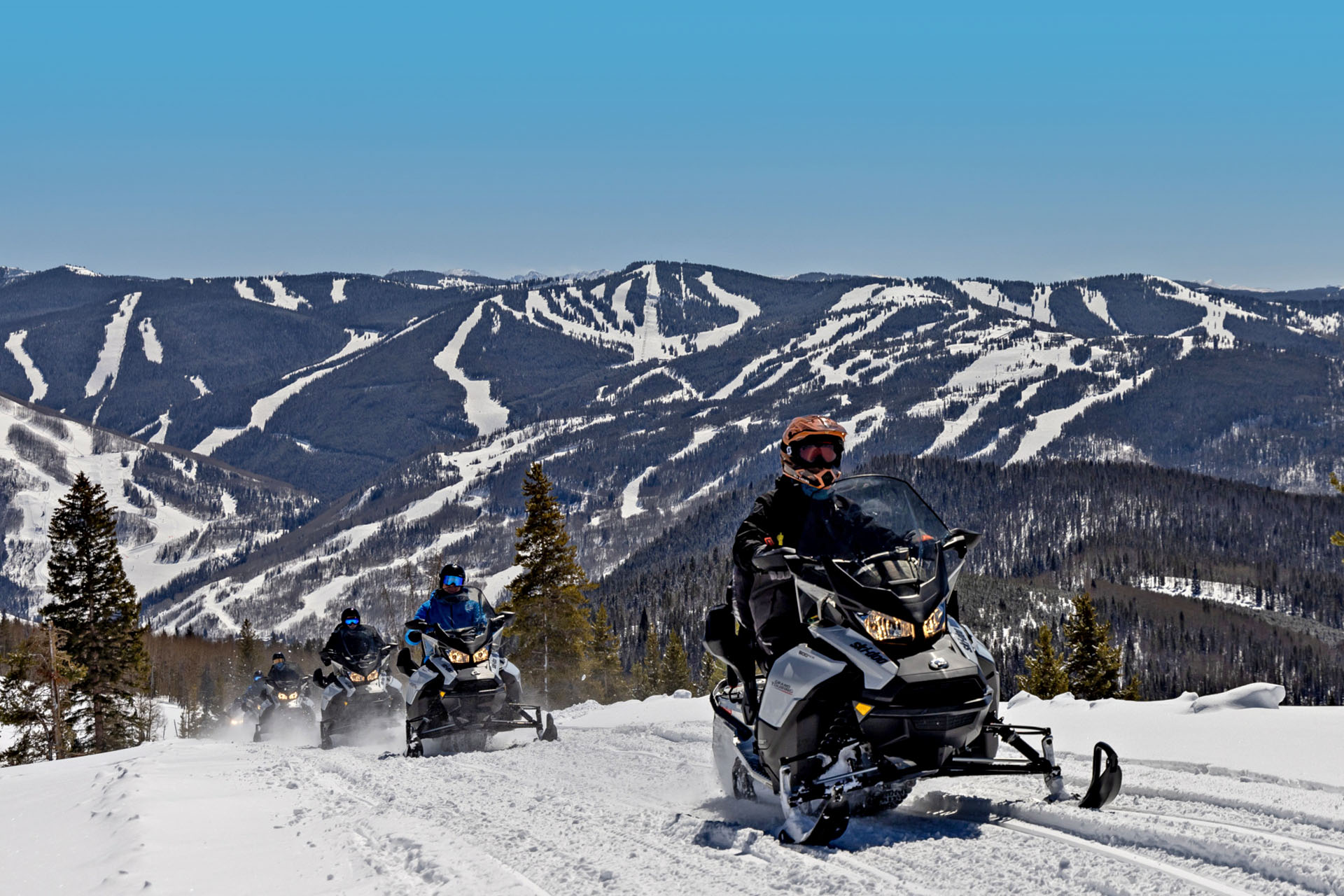
Ever experienced the rush of riding a snowmobile up and over the second largest single mountain ski resort in North America, then indulged in a snack whilst relaxing in a private, luxury yurt?
Thought not. This is your chance. Experience Vail Mountain on a snowmobile tour within the beautiful White River National Forest.
Imagine skiing on snow so light and fluffy it has its own trademark—Champagne Power®, then easing your tired muscles in 40°C hot springs, perhaps even indulging in the water therapy, Watsu® in your own, private pool.
Strawberry Park Hot Springs has maintained the natural look of its mineral-rich geothermal springs edged with crafted stone masonry. It’s an adults-only venue after dark, and as the steam rises from the natural springs towards a stunning blanket of stars, clothing becomes optional.
Silverton Mountain is the highest and steepest ski area in North America, but if you want to save your muscles for the sharp descent, you can take a chopper to the top and be dropped at the start of the spectacular run through virgin snow.
You know you’re in for an adventure when Silverton Mountain Heliskiing website’s list of general questions includes whether you need avalanche training (you don’t, the guides will give you a briefing).
7. Chilling with Frozen Dead Guy Days (Festival), ESTES PARK
In 1989 a Norwegian man Trygve Bauge brought his deceased Grandpa, Bredo, to the USA, where he was cryogenically frozen and stored in the quaint town of Nederland. More than 30 years, some pesky VISA issues, and a national news story later, Bredo is still freezing away in Nederland—the ultimate chill seeker.
Every year in March, Frozen Dead Guy Days festival is held in honour of Bredo, an inexplicably strange event the like of which we at get lost, a travel magazine of 20 years, have never encountered before. There’s coffin races, a Grandpa Bredo lookalike contest, frostbite fashion shows, and the polar plunge, where admirably and idiotically brave participants break ice in the local lake and try their hand at freezing themselves, Bredo-style.
Rather ski or board than walk? The Little Nell is the only accommodation with ski-in/ski-out access on Aspen Mountain.
Draw back the blinds of your room at the Five-star, Five-diamond hotel, and you’ll find yourself right in the heart of the action. No regular shoes required. But you could pull on some snowshoes for a moonlit mountain tour or take to the skies for a heli-skiing adventure. The Little Nell also offers ‘First Tracks’, which gives its guests early access to the mountain, so you can be the first to experience the pleasure of carving some lines through the virgin powder.
The French may have coined the phrase après-ski to describe the fun that happens once you’ve left the slopes, but Crested Butte has made après its own.
A mecca for extreme skiers, the town also caters for those more interested in post-ski activities, with an eclectic mix of live music, wine bars and a range of restaurants and theatres. Enjoy live entertainment at Kochevars Saloon & Gaming Hall, formerly a brothel and bowling alley (presumably not at the same time) or meet some locals when you dine at Bonez Tequilla Bar & Grill’s community dining table. Happy Hour is from 3–5pm, but you have to ask the bartender for the secret Happy Hour menu.
There are views, and then there’s the view from Telluride’s See Forever run.
It’s where the panorama is so vast and so breathtaking that it feels like you are skiing or boarding above the clouds, with a line of sight through to the neighbouring state of Utah on a clear day. The straight run, which hides a service road, combines groomed sections with challenging moguls, so you’ll need to choose your moments to safely enjoy the view.
Denver Art Museum is a beacon of creativity slap bang in the centre of the city, housed in a building that is a work of art in itself.
The museum is large, housing 70,000 works from across the centuries and world but, if you’re more of a participant than a spectator, it also runs a dynamic event calendar that includes creating your own works of art under the guidance of its resident artists.
As the college town of Fort Collins fades into the rear view mirror, head back in time and nature on the 162 kilometre Cache la Poudre Scenic Byway route that takes road trippers from Denver, through Fort Collins and into Steamboat, encountering roaming coyotes and moose along the way. The road winds through the spectacular Poudre Canyon, and in winter the landscape is spectacular; rugged peaks that line the route are dusted magically white, and surrounding mountains that take your breath away. Keep an eye out for Colorado’s state animal, the bighorn sheep.
With more than 400 boutique breweries dotted throughout Colorado, it has been labelled the ‘Napa Valley of beer’, and you might need a drop or two of the stronger stuff to sample more of the state’s hearty cuisine—deep-fried testicles.
Known as ‘Rocky Mountain Oysters’ this Colorado delicacy consists of deep-fried bull balls, and the Buckhorn Exchange (Denver’s oldest steakhouse, established in 1893) is the best place to get it. Bison is also on the menu, a leaner meat than beef. Fish lovers have a less challenging choice of cuisine, with Colorado’s pristine rivers and lakes providing a rich source of freshwater trout.
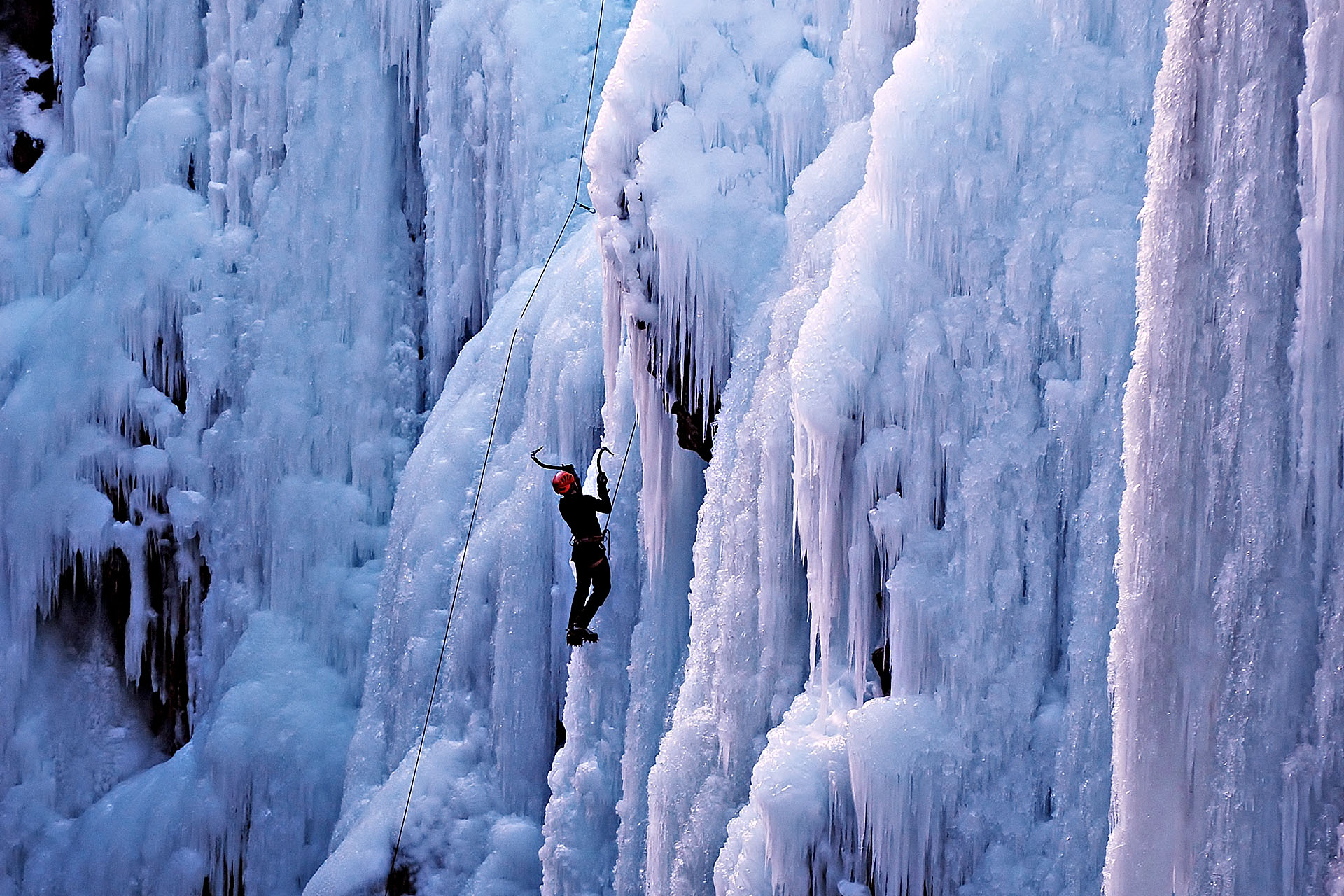
Ice climbing appears to have been invented for people with adrenaline deficiencies.
Climbers strap on a helmet and harness, grab ice axes and fit crampons to their shoes before tackling absurd, virtually vertical cliff faces covered in sheets of ice. Ouray’s free public park is the world capital of ice climbing, offering more than 200 routes to suit both novice and experienced climbers throughout the Uncompahgre Gorge.
Ever experienced the rush of riding a snowmobile up and over the second largest single mountain ski resort in North America, then indulged in a snack whilst relaxing in a private, luxury yurt?
Thought not. This is your chance. Experience Vail Mountain on a snowmobile tour within the beautiful White River National Forest.
Imagine skiing on snow so light and fluffy it has its own trademark—Champagne Power®, then easing your tired muscles in 40°C hot springs, perhaps even indulging in the water therapy, Watsu® in your own, private pool.
Strawberry Park Hot Springs has maintained the natural look of its mineral-rich geothermal springs edged with crafted stone masonry. It’s an adults-only venue after dark, and as the steam rises from the natural springs towards a stunning blanket of stars, clothing becomes optional.
Silverton Mountain is the highest and steepest ski area in North America, but if you want to save your muscles for the sharp descent, you can take a chopper to the top and be dropped at the start of the spectacular run through virgin snow.
You know you’re in for an adventure when Silverton Mountain Heliskiing website’s list of general questions includes whether you need avalanche training (you don’t, the guides will give you a briefing).
7. Chilling with Frozen Dead Guy Days (Festival), ESTES PARK
In 1989 a Norwegian man Trygve Bauge brought his deceased Grandpa, Bredo, to the USA, where he was cryogenically frozen and stored in the quaint town of Nederland. More than 30 years, some pesky VISA issues, and a national news story later, Bredo is still freezing away in Nederland—the ultimate chill seeker.
Every year in March, Frozen Dead Guy Days festival is held in honour of Bredo, an inexplicably strange event the like of which we at get lost, a travel magazine of 20 years, have never encountered before. There’s coffin races, a Grandpa Bredo lookalike contest, frostbite fashion shows, and the polar plunge, where admirably and idiotically brave participants break ice in the local lake and try their hand at freezing themselves, Bredo-style.
Rather ski or board than walk? The Little Nell is the only accommodation with ski-in/ski-out access on Aspen Mountain.
Draw back the blinds of your room at the Five-star, Five-diamond hotel, and you’ll find yourself right in the heart of the action. No regular shoes required. But you could pull on some snowshoes for a moonlit mountain tour or take to the skies for a heli-skiing adventure. The Little Nell also offers ‘First Tracks’, which gives its guests early access to the mountain, so you can be the first to experience the pleasure of carving some lines through the virgin powder.
The French may have coined the phrase après-ski to describe the fun that happens once you’ve left the slopes, but Crested Butte has made après its own.
A mecca for extreme skiers, the town also caters for those more interested in post-ski activities, with an eclectic mix of live music, wine bars and a range of restaurants and theatres. Enjoy live entertainment at Kochevars Saloon & Gaming Hall, formerly a brothel and bowling alley (presumably not at the same time) or meet some locals when you dine at Bonez Tequilla Bar & Grill’s community dining table. Happy Hour is from 3–5pm, but you have to ask the bartender for the secret Happy Hour menu.
There are views, and then there’s the view from Telluride’s See Forever run.
It’s where the panorama is so vast and so breathtaking that it feels like you are skiing or boarding above the clouds, with a line of sight through to the neighbouring state of Utah on a clear day. The straight run, which hides a service road, combines groomed sections with challenging moguls, so you’ll need to choose your moments to safely enjoy the view.
Denver Art Museum is a beacon of creativity slap bang in the centre of the city, housed in a building that is a work of art in itself.
The museum is large, housing 70,000 works from across the centuries and world but, if you’re more of a participant than a spectator, it also runs a dynamic event calendar that includes creating your own works of art under the guidance of its resident artists.
As the college town of Fort Collins fades into the rear view mirror, head back in time and nature on the 162 kilometre Cache la Poudre Scenic Byway route that takes road trippers from Denver, through Fort Collins and into Steamboat, encountering roaming coyotes and moose along the way. The road winds through the spectacular Poudre Canyon, and in winter the landscape is spectacular; rugged peaks that line the route are dusted magically white, and surrounding mountains that take your breath away. Keep an eye out for Colorado’s state animal, the bighorn sheep.
With more than 400 boutique breweries dotted throughout Colorado, it has been labelled the ‘Napa Valley of beer’, and you might need a drop or two of the stronger stuff to sample more of the state’s hearty cuisine—deep-fried testicles.
Known as ‘Rocky Mountain Oysters’ this Colorado delicacy consists of deep-fried bull balls, and the Buckhorn Exchange (Denver’s oldest steakhouse, established in 1893) is the best place to get it. Bison is also on the menu, a leaner meat than beef. Fish lovers have a less challenging choice of cuisine, with Colorado’s pristine rivers and lakes providing a rich source of freshwater trout.
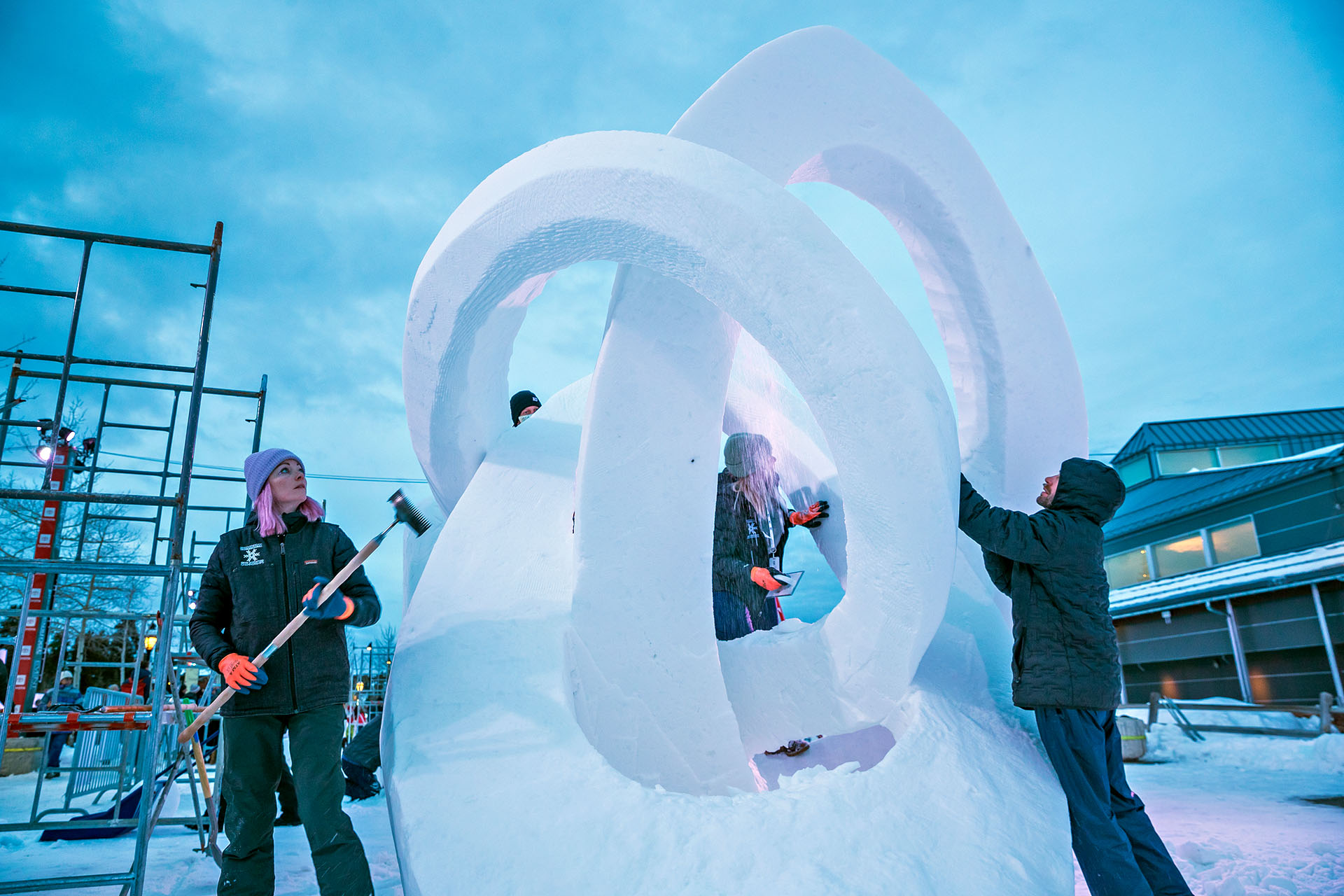
Think you’ve got mad sandcastle skills with a bucket and spade? Prepare to feel inadequate at the Breckenridge International Snow Sculpture Championships.
Teams from around the world descend on the ski area, in the aptly named Summit County, and turn 20-tonne blocks of snow into works of art. When darkness falls, the sculptures are lit up to create a glowing open-air art gallery. You can’t have a crack at creating your own masterpiece, but you can take part in the people’s choice vote.
Ice climbing appears to have been invented for people with adrenaline deficiencies.
Climbers strap on a helmet and harness, grab ice axes and fit crampons to their shoes before tackling absurd, virtually vertical cliff faces covered in sheets of ice. Ouray’s free public park is the world capital of ice climbing, offering more than 200 routes to suit both novice and experienced climbers throughout the Uncompahgre Gorge.
Ever experienced the rush of riding a snowmobile up and over the second largest single mountain ski resort in North America, then indulged in a snack whilst relaxing in a private, luxury yurt?
Thought not. This is your chance. Experience Vail Mountain on a snowmobile tour within the beautiful White River National Forest.
Imagine skiing on snow so light and fluffy it has its own trademark—Champagne Power®, then easing your tired muscles in 40°C hot springs, perhaps even indulging in the water therapy, Watsu® in your own, private pool.
Strawberry Park Hot Springs has maintained the natural look of its mineral-rich geothermal springs edged with crafted stone masonry. It’s an adults-only venue after dark, and as the steam rises from the natural springs towards a stunning blanket of stars, clothing becomes optional.
Silverton Mountain is the highest and steepest ski area in North America, but if you want to save your muscles for the sharp descent, you can take a chopper to the top and be dropped at the start of the spectacular run through virgin snow.
You know you’re in for an adventure when Silverton Mountain Heliskiing website’s list of general questions includes whether you need avalanche training (you don’t, the guides will give you a briefing).
7. Chilling with Frozen Dead Guy Days (Festival), ESTES PARK
In 1989 a Norwegian man Trygve Bauge brought his deceased Grandpa, Bredo, to the USA, where he was cryogenically frozen and stored in the quaint town of Nederland. More than 30 years, some pesky VISA issues, and a national news story later, Bredo is still freezing away in Nederland—the ultimate chill seeker.
Every year in March, Frozen Dead Guy Days festival is held in honour of Bredo, an inexplicably strange event the like of which we at get lost, a travel magazine of 20 years, have never encountered before. There’s coffin races, a Grandpa Bredo lookalike contest, frostbite fashion shows, and the polar plunge, where admirably and idiotically brave participants break ice in the local lake and try their hand at freezing themselves, Bredo-style.
Rather ski or board than walk? The Little Nell is the only accommodation with ski-in/ski-out access on Aspen Mountain.
Draw back the blinds of your room at the Five-star, Five-diamond hotel, and you’ll find yourself right in the heart of the action. No regular shoes required. But you could pull on some snowshoes for a moonlit mountain tour or take to the skies for a heli-skiing adventure. The Little Nell also offers ‘First Tracks’, which gives its guests early access to the mountain, so you can be the first to experience the pleasure of carving some lines through the virgin powder.
The French may have coined the phrase après-ski to describe the fun that happens once you’ve left the slopes, but Crested Butte has made après its own.
A mecca for extreme skiers, the town also caters for those more interested in post-ski activities, with an eclectic mix of live music, wine bars and a range of restaurants and theatres. Enjoy live entertainment at Kochevars Saloon & Gaming Hall, formerly a brothel and bowling alley (presumably not at the same time) or meet some locals when you dine at Bonez Tequilla Bar & Grill’s community dining table. Happy Hour is from 3–5pm, but you have to ask the bartender for the secret Happy Hour menu.
There are views, and then there’s the view from Telluride’s See Forever run.
It’s where the panorama is so vast and so breathtaking that it feels like you are skiing or boarding above the clouds, with a line of sight through to the neighbouring state of Utah on a clear day. The straight run, which hides a service road, combines groomed sections with challenging moguls, so you’ll need to choose your moments to safely enjoy the view.
Denver Art Museum is a beacon of creativity slap bang in the centre of the city, housed in a building that is a work of art in itself.
The museum is large, housing 70,000 works from across the centuries and world but, if you’re more of a participant than a spectator, it also runs a dynamic event calendar that includes creating your own works of art under the guidance of its resident artists.
As the college town of Fort Collins fades into the rear view mirror, head back in time and nature on the 162 kilometre Cache la Poudre Scenic Byway route that takes road trippers from Denver, through Fort Collins and into Steamboat, encountering roaming coyotes and moose along the way. The road winds through the spectacular Poudre Canyon, and in winter the landscape is spectacular; rugged peaks that line the route are dusted magically white, and surrounding mountains that take your breath away. Keep an eye out for Colorado’s state animal, the bighorn sheep.
With more than 400 boutique breweries dotted throughout Colorado, it has been labelled the ‘Napa Valley of beer’, and you might need a drop or two of the stronger stuff to sample more of the state’s hearty cuisine—deep-fried testicles.
Known as ‘Rocky Mountain Oysters’ this Colorado delicacy consists of deep-fried bull balls, and the Buckhorn Exchange (Denver’s oldest steakhouse, established in 1893) is the best place to get it. Bison is also on the menu, a leaner meat than beef. Fish lovers have a less challenging choice of cuisine, with Colorado’s pristine rivers and lakes providing a rich source of freshwater trout.
Need a Rocky Mountain high? Colorado hosts 78 of the iconic range’s 100 highest peaks, and powder snow so pure it’s earned its own trademark.
Fill your lungs with crisp, invigorating mountain air as you hit the slopes, climb walls of ice, hitch a helicopter ride to the top of untouched powder runs, and indulge in a legitimately buzzing après scene. Away from the ski fields, Colorado’s thriving arts culture, craft beer industry, international-level snow sculptors and festivals mean you don’t have to be a serious shredder to have an epic time.
Here are 13 experiences that will make you fall in love with Colorado:
What do you get when you take the Rockies and add snow? Some of the USA’s most elite skiing and snowboarding areas.
With 30+ ski areas, Colorado has something for every type of snow lover. Breckenridge has long groomed trails, monster mogul runs, steep chutes, and beginner areas, Crested Butte is loved by backcountry enthusiasts for its untouched powder, Howelsen Hill has the country’s largest natural ski-jumping complex. Then there’s Ski Cooper—where it’s not just slopes, but history too; the extraordinary story of the United States Army’s 10th Mountain Division is celebrated in the country’s most recent national monument, built in 2022, to honour the division’s history in the area.
Think you’ve got mad sandcastle skills with a bucket and spade? Prepare to feel inadequate at the Breckenridge International Snow Sculpture Championships.
Teams from around the world descend on the ski area, in the aptly named Summit County, and turn 20-tonne blocks of snow into works of art. When darkness falls, the sculptures are lit up to create a glowing open-air art gallery. You can’t have a crack at creating your own masterpiece, but you can take part in the people’s choice vote.
Ice climbing appears to have been invented for people with adrenaline deficiencies.
Climbers strap on a helmet and harness, grab ice axes and fit crampons to their shoes before tackling absurd, virtually vertical cliff faces covered in sheets of ice. Ouray’s free public park is the world capital of ice climbing, offering more than 200 routes to suit both novice and experienced climbers throughout the Uncompahgre Gorge.
Ever experienced the rush of riding a snowmobile up and over the second largest single mountain ski resort in North America, then indulged in a snack whilst relaxing in a private, luxury yurt?
Thought not. This is your chance. Experience Vail Mountain on a snowmobile tour within the beautiful White River National Forest.
Imagine skiing on snow so light and fluffy it has its own trademark—Champagne Power®, then easing your tired muscles in 40°C hot springs, perhaps even indulging in the water therapy, Watsu® in your own, private pool.
Strawberry Park Hot Springs has maintained the natural look of its mineral-rich geothermal springs edged with crafted stone masonry. It’s an adults-only venue after dark, and as the steam rises from the natural springs towards a stunning blanket of stars, clothing becomes optional.
Silverton Mountain is the highest and steepest ski area in North America, but if you want to save your muscles for the sharp descent, you can take a chopper to the top and be dropped at the start of the spectacular run through virgin snow.
You know you’re in for an adventure when Silverton Mountain Heliskiing website’s list of general questions includes whether you need avalanche training (you don’t, the guides will give you a briefing).
7. Chilling with Frozen Dead Guy Days (Festival), ESTES PARK
In 1989 a Norwegian man Trygve Bauge brought his deceased Grandpa, Bredo, to the USA, where he was cryogenically frozen and stored in the quaint town of Nederland. More than 30 years, some pesky VISA issues, and a national news story later, Bredo is still freezing away in Nederland—the ultimate chill seeker.
Every year in March, Frozen Dead Guy Days festival is held in honour of Bredo, an inexplicably strange event the like of which we at get lost, a travel magazine of 20 years, have never encountered before. There’s coffin races, a Grandpa Bredo lookalike contest, frostbite fashion shows, and the polar plunge, where admirably and idiotically brave participants break ice in the local lake and try their hand at freezing themselves, Bredo-style.
Rather ski or board than walk? The Little Nell is the only accommodation with ski-in/ski-out access on Aspen Mountain.
Draw back the blinds of your room at the Five-star, Five-diamond hotel, and you’ll find yourself right in the heart of the action. No regular shoes required. But you could pull on some snowshoes for a moonlit mountain tour or take to the skies for a heli-skiing adventure. The Little Nell also offers ‘First Tracks’, which gives its guests early access to the mountain, so you can be the first to experience the pleasure of carving some lines through the virgin powder.
The French may have coined the phrase après-ski to describe the fun that happens once you’ve left the slopes, but Crested Butte has made après its own.
A mecca for extreme skiers, the town also caters for those more interested in post-ski activities, with an eclectic mix of live music, wine bars and a range of restaurants and theatres. Enjoy live entertainment at Kochevars Saloon & Gaming Hall, formerly a brothel and bowling alley (presumably not at the same time) or meet some locals when you dine at Bonez Tequilla Bar & Grill’s community dining table. Happy Hour is from 3–5pm, but you have to ask the bartender for the secret Happy Hour menu.
There are views, and then there’s the view from Telluride’s See Forever run.
It’s where the panorama is so vast and so breathtaking that it feels like you are skiing or boarding above the clouds, with a line of sight through to the neighbouring state of Utah on a clear day. The straight run, which hides a service road, combines groomed sections with challenging moguls, so you’ll need to choose your moments to safely enjoy the view.
Denver Art Museum is a beacon of creativity slap bang in the centre of the city, housed in a building that is a work of art in itself.
The museum is large, housing 70,000 works from across the centuries and world but, if you’re more of a participant than a spectator, it also runs a dynamic event calendar that includes creating your own works of art under the guidance of its resident artists.
As the college town of Fort Collins fades into the rear view mirror, head back in time and nature on the 162 kilometre Cache la Poudre Scenic Byway route that takes road trippers from Denver, through Fort Collins and into Steamboat, encountering roaming coyotes and moose along the way. The road winds through the spectacular Poudre Canyon, and in winter the landscape is spectacular; rugged peaks that line the route are dusted magically white, and surrounding mountains that take your breath away. Keep an eye out for Colorado’s state animal, the bighorn sheep.
With more than 400 boutique breweries dotted throughout Colorado, it has been labelled the ‘Napa Valley of beer’, and you might need a drop or two of the stronger stuff to sample more of the state’s hearty cuisine—deep-fried testicles.
Known as ‘Rocky Mountain Oysters’ this Colorado delicacy consists of deep-fried bull balls, and the Buckhorn Exchange (Denver’s oldest steakhouse, established in 1893) is the best place to get it. Bison is also on the menu, a leaner meat than beef. Fish lovers have a less challenging choice of cuisine, with Colorado’s pristine rivers and lakes providing a rich source of freshwater trout.
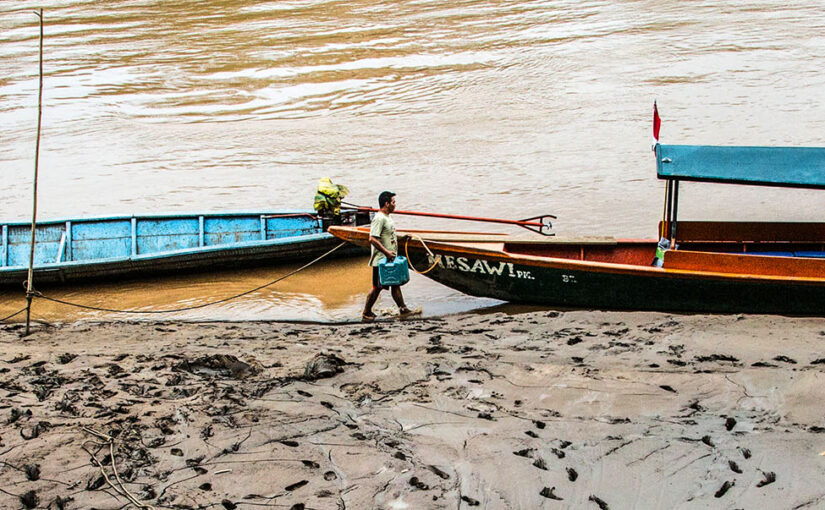
As a native New Yorker, I’m no stranger to long commutes. But after an eight-hour journey into the heart of the Peruvian rainforest in a diesel-chugging, flat-bottom boat, even this experienced subway rider has met his match.
Hours pass and the jungle thickens, and by the time we disembark it’s clear we’ve ventured into a world virtually untouched by humans. It might just be the engine ringing in my ears, but I’m pretty sure I’m about to have my mind blown.
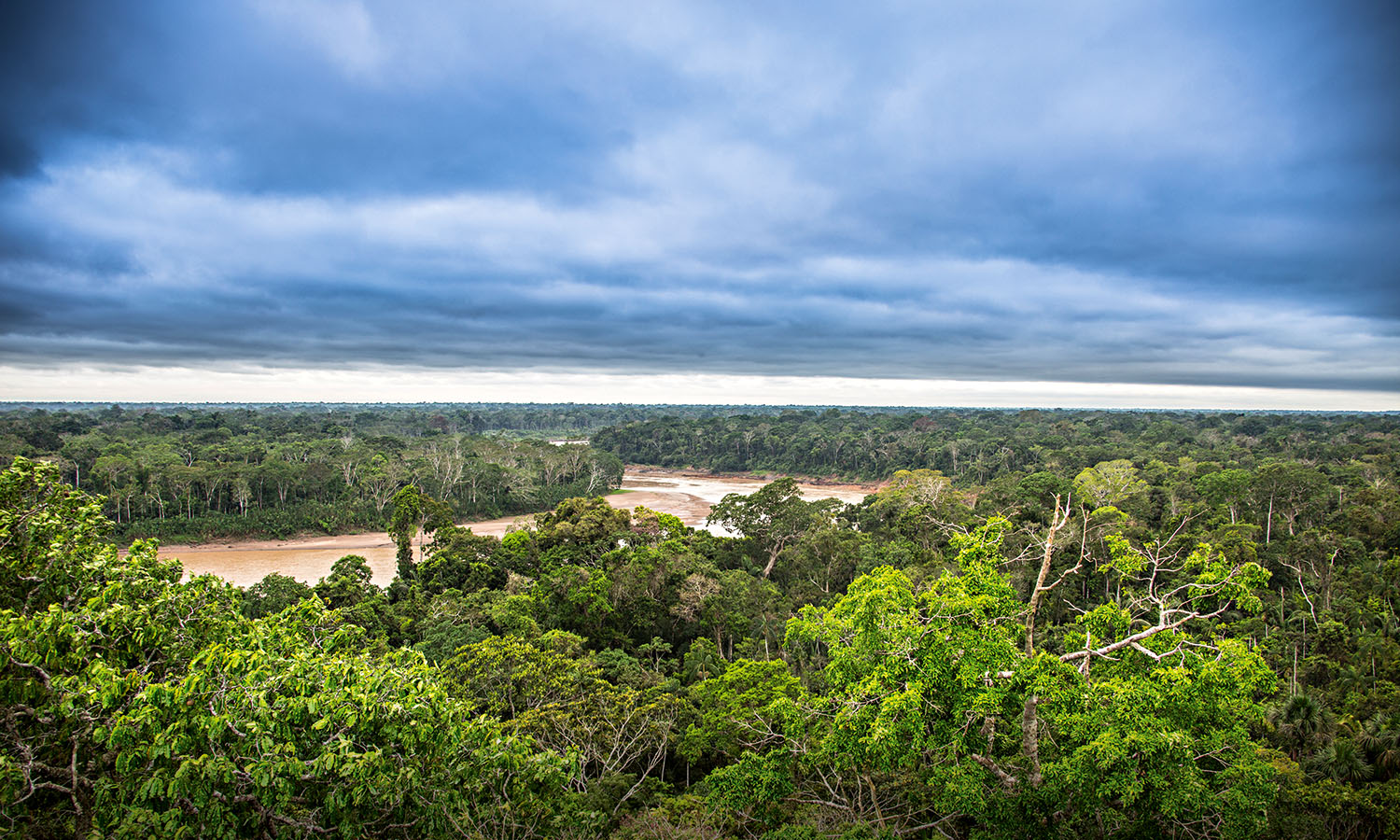
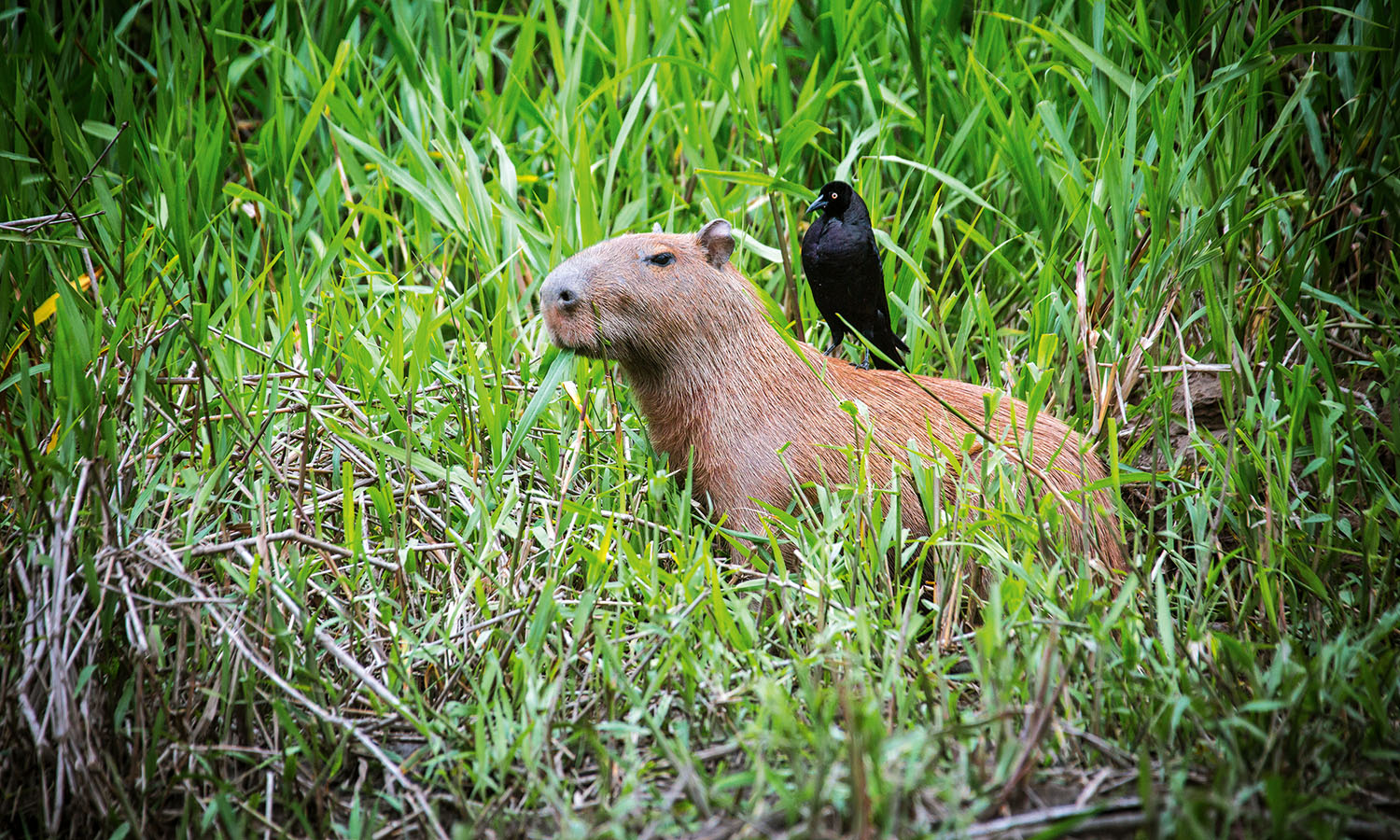
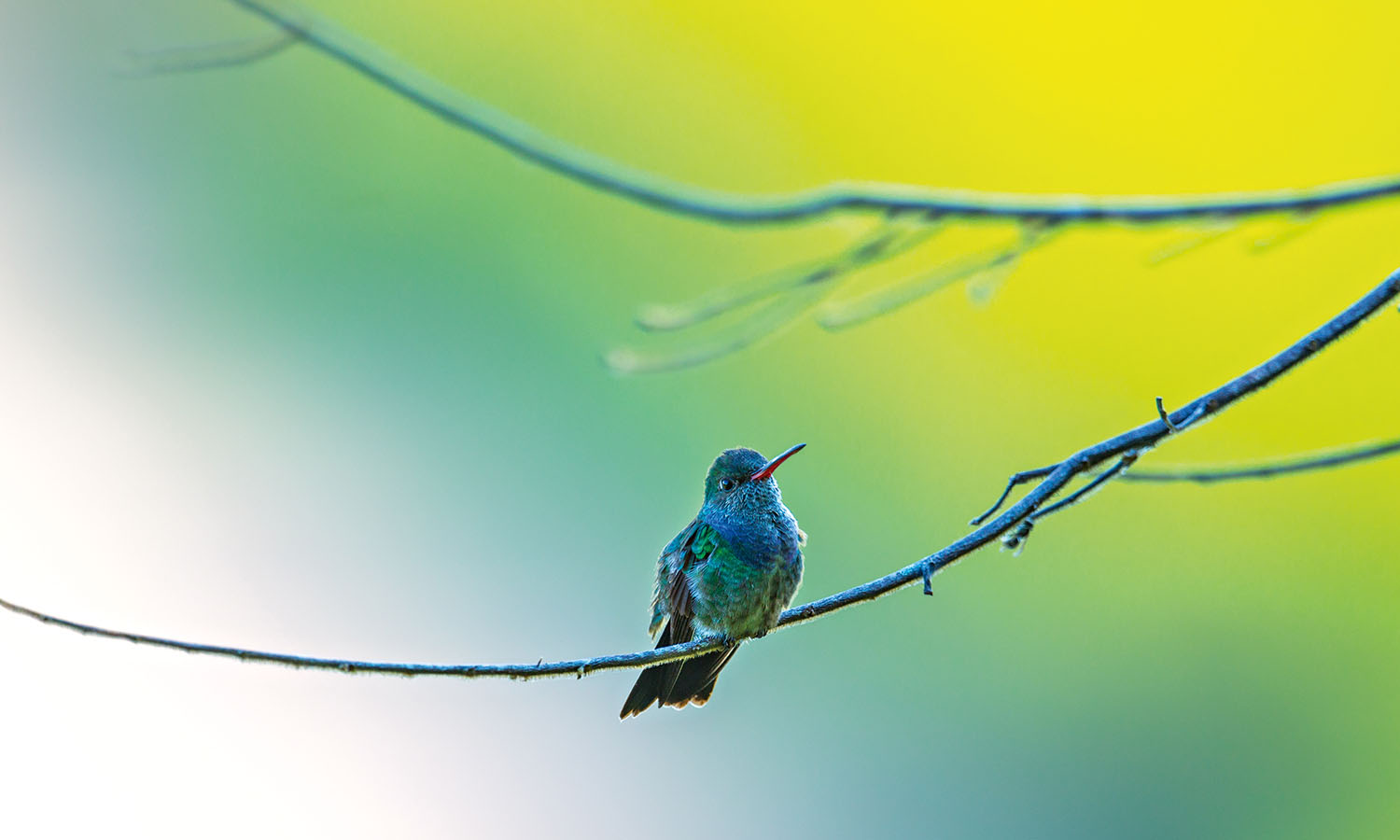
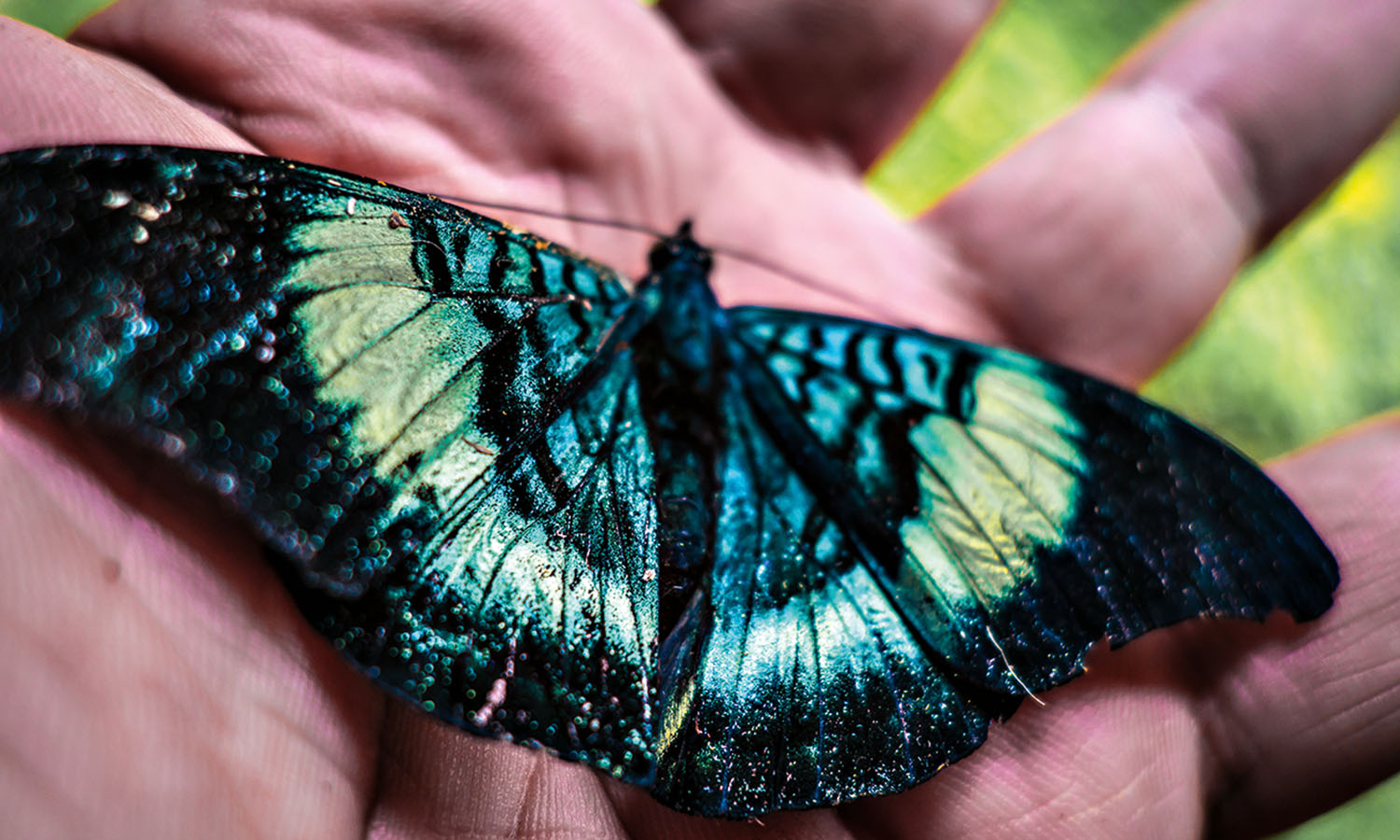
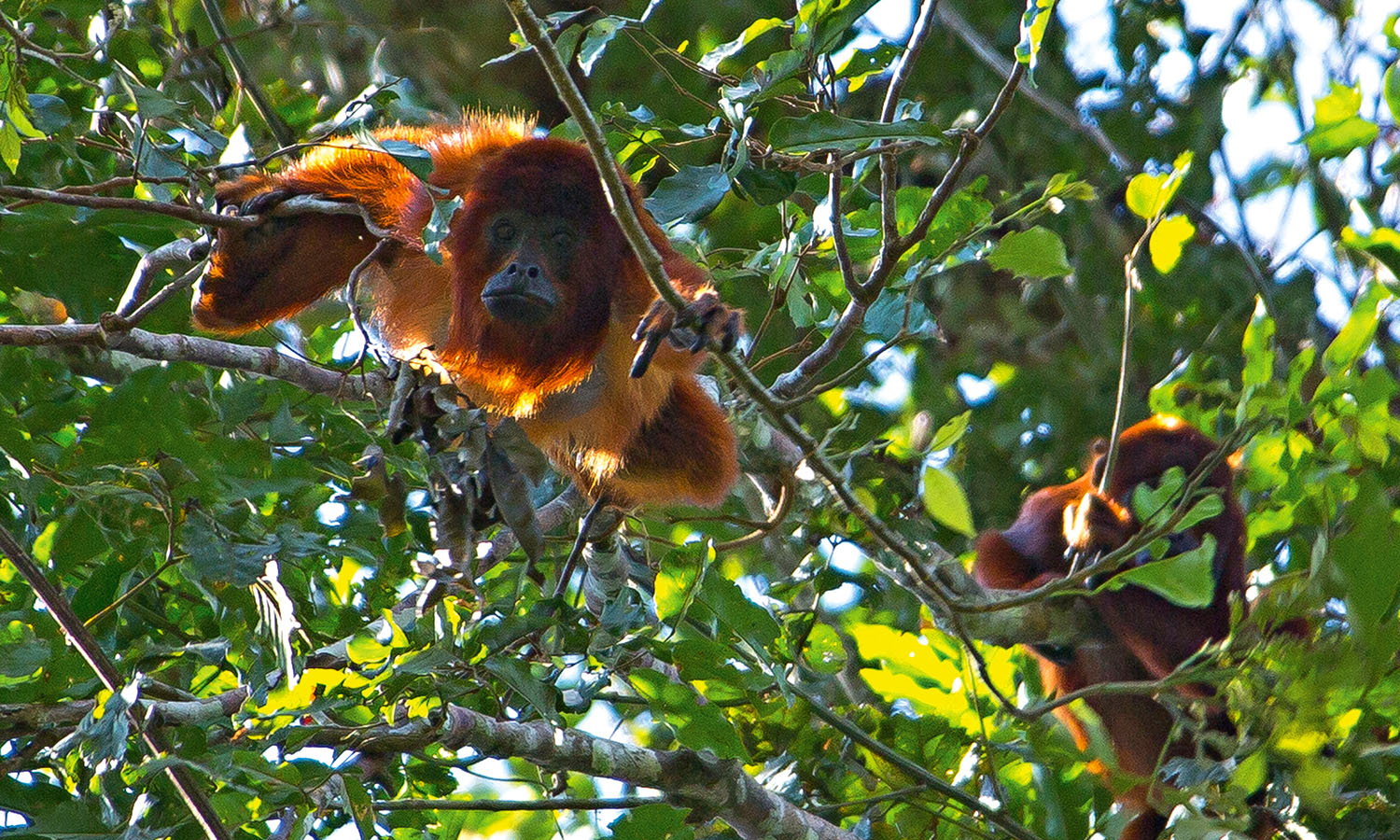
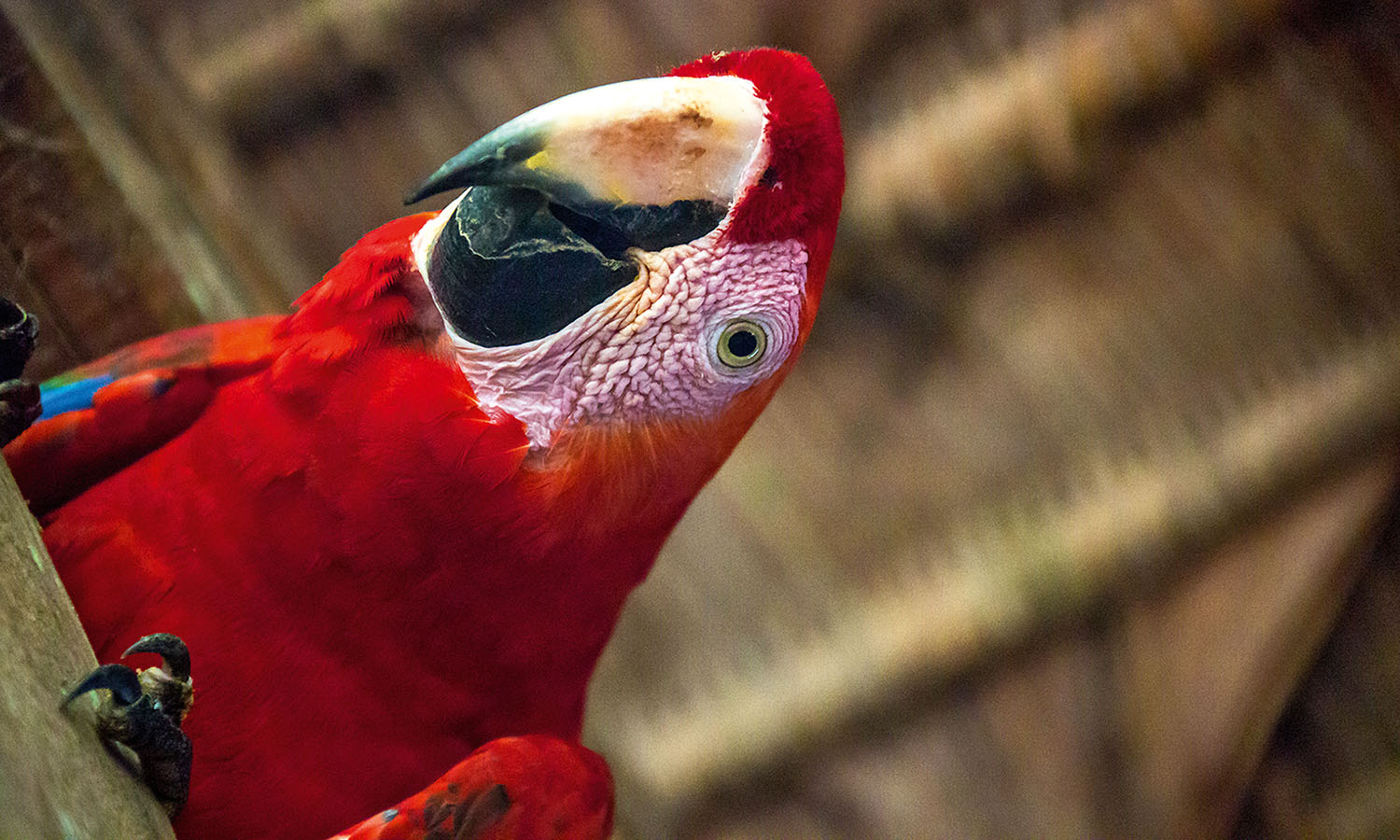
It’s fitting that the Tambopata Research Center is located in a region of south-eastern Peru known as Madre de Dios, or Mother of God. Tens of thousands of plant and animal species, from macaws and monkeys to jaguars and giant turtles, thrive in this protected tangle of forest. The wildlife is so prolific that while I’m here my guides discover two new species of spiders – and that’s just on the walk from the boat to the lodge. Visiting this jungle is like stepping into God’s messy kitchen.
Getting to Madre de Dios isn’t easy, but that’s part of the appeal. Upon flying into Puerto Maldonado, I’m met by a personal guide from Rainforest Expeditions and brought by bus to Infierno, a town that seems to consist of a bodega (bottle shop), bathroom and small dock on the Tambopata River. With my personal Virgil (whose name is actually Ramón and who’s far more placid than the character from Dante’s Inferno) I jump into a little vessel along with a dozen other intrepid travellers. Our first destination, the Refugio Amazonas lodge, is a three-hour cruise away.
With its shellac-coated wood walls and thatched roofs, this remote outpost oozes with all the romance and adventure of a Hemingway tome, or an early Cary Grant film. Following a warm reception featuring tall, refreshing drinks, we’re handed room keys. It’s a curious touch considering each suite has just three walls and a gap opening out to the foliage. Hammocks invite us to kick back and doze in the syrupy air, and meals are prepared fresh, despite the distance from civilisation and the fact that power zips through wires for just a few hours each day. I’ve found eco-friendly bliss.
The next day, we trek through backcountry to an observation tower. For those of us with the guts to climb up, it rewards with a sublime view of the 30-metre-high rainforest canopy. A small, man-powered boat carries us across a lake that’s home to dozens of species of birds. Chicken-size, mohawk-sporting hoatzins perch on sticks and horned screamers show off long slender spikes sprouting from their skulls.
“Shall we fish for piranhas?” Ramón asks, to which the answer is, of course, “Hell yes!” He carefully fixes a morsel of meat to a hook and line that looks like a tool Huckleberry Finn just put down.
“Here, just drop it in. Gently,” he instructs, handing it over to me. I dip it in the water cautiously (I’ve watched Shark Week one too many times) and before I know it, a small piranha dangles from the end of my line. Ramón slides it off the hook, giving us a close look at the type of sashimi that’s perfectly capable of taking a bite out of you, before returning it to the lake. I make a mental note to switch to California rolls.
I already feel eons away from the NYC grind, but we’re yet to embark on the final leg of our expedition that will take us to the Tambopata Research Center. Nature takes complete control as our repurposed truck engine blasts us deeper up the river, in the direction of one of the most remote lodges in the world. Caimans brandish their snouts above the murky water and we even spot a jaguar lounging on the riverbank. Trees march down to the river, their roots holding the earth in place.
Small barges cruise past, each adorned with pumps that shoot water through a giant slanted sieve. “Those are illegal gold miners,” explains Ramón. “This river is rich with gold.” It’s dangerous work, but apparently very lucrative – if you are lucky and you don’t get caught.
Three hours into the ride we come to a fork in the river and dock at a weathered landing. We’re at the Malinowski River control station, a mandatory stop implemented to reduce illegal river traffic. A hut stands as the office, accessible via boards with bottle caps nailed on to add a bit of extra traction. A makeshift basketball hoop clings to the side of a wonky tree. The whole place appears as though it’s been pulled from the set of Apocalypse Now. Weathered maps and young men with firearms line the walls inside, and an official obligingly stamps my passport so I can memorialise making it this far into the jungle.
We pull up to the research centre two hours later. Porters dash to the bank to grab our sacks and we trundle through the wild forest that bristles with noise. Boar-like peccaries bark at each other and shuffle hooves through the low-lying bush, while howler monkeys scream across the treetops.
Graced with a grand entrance, the Tambopata Research Center is even more earthy and majestic than the Refugio Amazonas. What really sets it and this Rainforest Expeditions tour apart from other Amazon trips is the fact that the lodge is also a fully functioning research facility. With field scientists and researchers on site, visitors experience far more than eco-tourism. A stay here borders on college credit.
Ramón promises we’ll spot a few macaws letting loose at a nearby clay lick. It turns out ‘a few’ actually means a few hundred. Plumes in scarlet, cobalt, chartreuse and egg-yolk yellow blur before me like a psychedelic Gaspar Noé title sequence (Enter the Void, look it up). The biodiversity found here is beyond any zoo or safari on Earth. No SD card in the world has enough capacity to capture it all.
Researchers join us at dinner, allowing us the chance to whack them with all the questions that have bubbled up during the day. They feed us stories about the rare animals they’ve observed and discoveries made. Sometimes they dish up tips on the best locations to capture perfect photographs. Over one meal, a young researcher invites a couple of us on a “rainforest rave”.
“We go out at night with UV lights and search for bioluminescent insects. It’s a riot!” For the photographers in our midst, the offer is akin to telling a frat boy there’s a well-organised pub crawl planned. Armed with blacklights, we head into the dark-as-pitch night and watch as the forest puts on a show that would astound even the most sauced-up Burning Man participant. Spiders that look like the 80s puked all over them crawl on logs. Frogs radiate pink and green like a brash neon sign. Did you know scorpions glow bright blue under UV light? They’re just like a toy from one of those grocery store vending machines.
During the next few days we tramp through riverbeds and hike inland to waterholes, spotting bats and turtles, armies of barking caterpillars and flocks of butterflies. Living in these trees are 600 bird species, 200 types of mammals, a thousand butterflies and innumerable insects. My neck almost unscrews from constantly turning to observe new creatures.
A shaman waits for us at a spiritual retreat that’s being constructed downriver. Wandering through the jungle garden, he points out the hallucinogenic vine he uses in traditional ayahuasca ceremonies. Unfortunately, it’s not yet ready to be stewed into the tea that sends your mind to out of space. I can’t begin to imagine what a rainforest rave would do to your brain after drinking up a serve.
Manual labour isn’t on the official ticket, but there are plenty of opportunities to get your hands dirty if you wish. I team up with three young post-grads to scale a 30-metre-high tree. Up in its limbs we hang a macaw nest fitted with a camera. It’s part of a plan to research the curious habits of these birds that not only share food and grooming duties, but also form life-long relationships.
After five days immersed in the rainforest, it’s time to emerge from the wilderness. We venture back downstream and reunite with civilisation in Infierno. I’ve been to remote places before, but this adventure has stirred me in a way that was entirely unexpected. Perhaps the contrast between the sublimely comfortable accommodation and the jungle’s untamed, unrivalled biodiversity is too much for my city-forged mind to handle. Or maybe being surrounded by clever people, who have dedicated their entire existence to cultivating more knowledge, is what did me in.
I return to my small apartment, 24-hour electricity and high-speed internet a bit shaken, a little more sceptical of pre-packaged food and burning with a growing sense of enlightenment. It seems as though the journey not only took me to one of the most remote places on this planet, but also deep into my own soul and left me with truths I never knew before. Well, that and a yearning for another rainforest rave.
I feel like I’ve washed up on Gilligan’s Island. I keep waiting for the Professor and Mary Ann to emerge from one of the beach huts.
Although I don’t remember there being a restaurant called Rasta Pasta on Gilligan’s Island. Nor a fleet of little wooden fishing boats. Nor a large cast of tanned extras in bikinis and board shorts.
But the main difference between Gilligan’s and the tiny Belizean island of Caye Caulker is that on the TV show, the castaways all wanted to get off the island. Here, no one ever wants to leave.
Covered in white sand, coconut palms and beach shacks painted reds, pinks and greens, Caye Caulker is 100 per cent absolute, distilled tropical paradise.
Basking in tropical sun and impossibly blue shallow Caribbean waters, the island lies just a few kilometres from Belize’s 290 km-long barrier reef.
Here, the sea shines a different shade for every minute of the day and somehow always seems to be lit from beneath. A gentle Caribbean breeze, the scent of tanning lotion, and soft Kriol accents infuse the hot air.
All anxiety has been baked out of this pintsized isle, which is just 6.5 kms long and 600 metres wide. The air is a tranquilliser.
Within a few hours of stepping off the water taxi from Belize City, people all over the island are greeting us by country if not name. “Hey, Australia,” they call.
Everyone is impressed by our origin. And it’s not just because of the distance we’ve travelled to get here.
“You have the longest barrier reef in the world,” they say with a mixture of admiration and mild envy. Belize’s barrier reef is second longest.
Gilligan may be absent, but there are plenty of would-be skippers: Rastafarians sauntering down the street offer to take us on trips out to the reef, or whip us up a fresh seafood feast. And regardless of whether we accept their offers, they want us to “enjai” (enjoy) their island.
They greet us with “Weh di go aan.” (hello / what’s going on?), and farewell us with the local equivalent of a handshake: pressing the knuckles of their right hand against ours. “Aarait mon,” they say.
One legend has it that Caye Caulker owes its name to the pirates who stopped by to caulk their ships. Another says that British sailors favoured the island as a handy spot to find fresh water to replenish their cork water bottles.
Tourism is now the primary industry of this one-time lobster fishing and ship-building caye. But the islanders have managed to preserve the village feel. There are no resorts, and most of the accommodation is small beach huts or boutique hotels.
Caye Caulker’s residents are a mixture of Creole (descendents of African slaves and British pirates, I was told), Garifuna, and Mestizo, plus a few westerners who came as visitors and never left.
They drive golf carts instead of cars, with Labradors riding shotgun. They sit, straddling pushbikes in the shade of coconut palms, deep in conversation with friends. They live in paradise and they know it.
We ride bicycles around the isle, on the sandy, unpaved streets lined with little shops and guesthouses called Blue Wave, Sea Breezzz, Rainbow and Lazy Iguana. Our big white handlebarbaskets are filled alternately with snorkels and fins,or chilled bottles of Lighthouse or Belikin Beer.
The ‘Go Slow’ signs, tacked to palm trees along the streets, are redundant. The only traffic is barefoot tourists, pushbikes and a few slowmoving golf carts. Everyone on the island assiduously follows the ‘GoSlow’ rule, adopting it for every aspect of their lives.
This is an island that worships ‘Go Slow’. Even the iguanas. They lounge on the beach, in the street, over tombstones in the cemetery, alternating between sun and shade, much like the tourists who are sprawled in beach chairs, on jetties, in hammocks. In bathing suits and in various shades of tan, they walk, with salty hair and a rambling gait.
Dogs rest in the shade. Local children play in the water, on jetties, in canoes, and ride their bikes through the village.
Diving and snorkelling are big business on Caye Caulker. It’s just a short boat trip to the reef, and one of the best places to dive is the nearby Hol Chan Marine Reserve. This was Central America’s first marine reserve, and after more than 10 years of protection, Hol Chan is brimming with fantastic coral and a symphony of technicoloured reef fish.
Most dive and snorkel trips include a stop at Shark Ray Alley, a shallow playground for nurse sharks and stingrays. I’m told that the sound of an approaching boat is like a love song for these marine creatures. They are drawn to the hum of the engine. As we approach, I see the dark shadow of a 2-metre long shark gliding through the gin-clear water towards our boat. Someone on the boat starts humming the jaws music. One of my fellow snorkellers begins to tremble.
“Hurry,” the skipper says. “They won’t stay for long.”
I pull on my mask and fins, slide into the bathwarm water, and dive down towards the shark. It’s big, with dark sandpaper skin, tiny eyes, and round snub nose. This is no Great White. Nurse sharks are docile and harmless.
A spotted eagle ray glides past. It moves like a bird in slow motion flight, across the white sand, through the sapphire water. But slow motion for an eagle ray or a nurse shark is still far beyond my sprint swimming abilities, even with fins, and soon both are gone.
Huge schools of yellowtail snapper hang in the shade under boats. Lone barracuda cruise and rainbow wrasse dart and sway. It’s like swimming in a giant, packed aquarium.
Back on land, a sunset of sailor’s-delight drenches swimmers in a ruby glow. The evening brings the smell of seafood on the grill, soft music from the beach restaurants and clink of Belikin beer bottles. The temperature dips a couple of degrees to the mid 30s.
Cheerful, sunburnt travellers fill the sandy floored, candle-lit restaurants. The waiters are barefoot, tables sit on peculiar angles, and menus aren’t brought for some time. Like most things in Belize, restaurants often run on Kriol time, where “rait now” (right now) doesn’t necessarily mean this minute or anytime soon.
Ninety per cent of the food served on Caye Caulker is seafood. Huge helpings of lobster, shrimp and fish are the standard fare, including grilled nine-ounce snapper with a garnish of king prawns, lobster or shrimp burritos, fish with spicy banana chutney, lobster kabobs (sic), and BBQ shrimp. You can even have a lobster omelette for breakfast.
The picturesque town of Shangri-La is nestled in the mountainous plains of northern Yunnan Province. Towards the end of spring, local spirits are high.The winter snows have finally melted and the yaks and other livestock have been moved from their barns to feed on the rich grassy plains. For the predominantly Tibetan population, there is no better way to celebrate the onset of summer than a horse racing festival.
The locals call the old town ‘Dukezong’, meaning “castle on stone mountains”. Situated at the base of nearby Wufeng Mountain, Shangri-La’s racecourse lies in a natural amphitheatre just outside the town. At festival time – two days of eating, drinking, singing, dancing and horseracing action – Tibetans rub shoulders with the local Chinese and with Buddhist monks from the nearby Songzanlin Monastery. Farmers and yak herders pit their horses against one another and large crowds gather. Some travel great distances, camping around the track on Wufeng Mountain’s lower slopes.
As at the world’s other great racing carnivals, many racegoers add to the sense of occasion by dressing in their finest outfits. But don’t expect top hats, tails, designer labels or intricate millinery artworks at Shangri-La. Spectators opt for traditional Tibetan costumes of silk tunics trimmed in silver and gold, fox-fur hats and colourful headdresses for women. Large groups of friends and families congregate around tents – eating, drinking and playing mah-jong. Wander about and it won’t be long before you’re invited into somebody’s tent to share the food and drink that has been specially prepared.
Locally made barley wine and yak butter tea abound. This perennial Tibetan favourite, with its slight fatty flavour, is definitely an acquired taste. As the day turns to afternoon and barley wines are supped, the crowd gets increasingly excited and spectators scurry for the best vantage point to watch the racing action. A colourful opening ceremony, featuring traditional Tibetan singing and dancing, kickstarts the carnival. There’s even a fireworks display in broad daylight! The skills of local horsemen are put to the test with entertaining displays of horseback archery and ‘hada’, which requires riders to pick up a piece of cloth from the ground while at full gallop.
Shangri-La’s oval-shaped track has a runningrail and a single grandstand, jammed with excited spectators, that aligns with the home straight. You’re unlikely to see any expensive thoroughbreds or Melbourne Cup aspirants thundering along the rock-hard dirt track. The horses are more akin to stunted ponies, but are brightly decorated for the occasion in jingling bells and colourful ribbons. Horses are generally ridden by their owners, who come in all shapes and sizes. With a long whip in one hand, most sport traditional Tibetan silk tunics, usually in bright red, pink or white. A simple number pinned to each rider’s tunic is often all that distinguishes the riders from each other.
Officially there is no gambling, but animated spectators eagerly anticipate each race as if a fortune is riding on the outcome. When the starter drops a flag to dispatch the runners, the crowd roars enthusiastically. Race distances range from a short single lap to over six laps of the track. The running of the ‘Speedy Gallop’ marks the climax of the carnival’s second and final day. While the 1,000 Chinese RMB prize (approx A$180) of this feature event pales into insignificance against the prize purses on offer in the world’s famous thoroughbred races, pride and honour is at stake in equal measures.
The horses are carefully prepared by their owners and set for the big race weeks or months in advance. Fancied runners are given the best feed and cold baths just prior to the race to conserve energy. Rumour abounds that some owners even give their horses tea to drink, said to act as a performance-enhancing stimulant. The six laps, or approximately three thousand metres, is almost the same distance as the Melbourne Cup and it’s an exacting test of stamina for both these tiny horses and their riders. Eventually a totally exhausted, but thoroughly jubilant, winner passes the finish line. The celebrations for some of those trackside will continue long after the winner has the trophy safely in his or her keep. For others, the effects of the local barley wine have taken their toll. For all, the end of spring next year and the racing festival that marks the changing of the seasons cannot come soon enough.
The waves build in size and turn a deep blue as we enter the Chacao Channel. The ship’s first mate, introduced to me as el Pirata (the Pirate), suggests we put on our raincoats and motions excitedly towards an ominous squall approaching portside. The captain wedges himself behind the helm and smiles, oblivious to the impending weather. Like the wind, the idea that I might have boarded a ship with madmen is gathering strength. The wall of spray hits suddenly, filling our sail and pushing us on a steep lean. I grab a rail to keep balance and feel a giddy rush as the yacht accelerates.
Notorious for foul weather and fouler seas, Patagonia might not be a place you’d think to visit by boat. But it holds certain advantages in a landscape dominated by ice-capped volcanoes, sheer granite cliffs, impenetrable 4,000-year-old rainforests and an acute lack of roads. In fact, a cursory glance over a map of southern Chile reveals there are few other options. Here, the might of the Andes mountain range dramatically meets the Pacific Ocean in a labyrinth of more than 5000 islands and 40,000 kilometres of coastline.
Carlos Lonza, a Chilean tourism business entrepreneur, is the captain of Agartha, the 11-metre ketch I’m clinging to for safety. I’m on board to experience 10 days of sailing on Chile’s fabled Patagonian coast. Carlos had sold me on the trip by hinting at summer adventures under sun and sail and the chance to visit what he promised was the most spectacular coast in South America.
Looking back at the grimy port city of Puerto Montt, and ahead through the rain at a brooding skyline, it’s hard for me to share the captain’s enthusiasm. A dark chop begins to slap the bow and I wonder for a moment if these men live in an alternate reality.
“The beauty of this place is that when the weather turns foul, there is always a fjord or sheltered cove somewhere to lay anchor,” Carlos calls out to me. I glance at his girlfriend, Marlene, who reassures me with a smile and appears altogether calm, sane and adorable in a rubber-duck-yellow raincoat. I decide to give them the benefit of the doubt, resisting the impulse to abandon ship and swim frantically for shore.
Carlos soon proves to be a master navigator, safely guiding us out of the weather to a cove surrounded by nothing but fjord and forest. There, we anchor for the night and feast on fresh machas (mussels) grilled with parmesan and coriander. Carlos lights the oil heater, opens a bottle of local tinto and entertains us with pirate tales and fascinating historical anecdotes.
“Sir Francis Drake ‘The Terrible’ passed by here,” Carlos says, winking at me, knowing that Drake was knighted and is a hero in the Anglo world. “As did many other British and Dutch pirates who raided and sacked the Spanish possessions on this coast. Though my favourite is the story of Ñancupel,” he says, pausing to refill our glasses.
According to Carlos, Ñancupel was an indigenous pirate who piloted his own sailboat and single-handedly robbed fortunes from the Spanish settlers. The legend says he hid his loot throughout the labyrinthine Guaitecas Archipelago further south. Carlos grins mischievously. “Perhaps next time we can go in search of his treasure!”
We enter Reloncaví Sound, the first fjord south of Puerto Montt, in search of a different kind of treasure. Here, Carlos wants to introduce me to a community with a unique way of life. A thick fog hangs over the water and not a breath of wind spoils its glass-like surface. Herman (The Pirate) explains that in Spanish they call such conditions taza de leche, meaning cup of milk. Steep mountainsides plunge vertically into the fjord a few hundred metres either side of us, and the all-pervading whiteness of the fog is reflected in the water. I could be forgiven for thinking we were sailing in a giant teacup.
We pass a waterfall close to one shore, it pours out of the dense rainforest straight into the seawater. Somewhere in the formless mist above is Mount Yate, a 2200-metre active volcano. We wave back to some enthusiastic fishermen as they chug past. A pair of sea lions bob up their heads in the wake.
Entering a cove we spy all manner of old-fashioned boats parked in a line next to a pebble beach. This is the driveway of a remote community whose only roadway is the sea. Carlos is hoping that Pablo, a local boat builder, fisherman and subsistence farmer, is home. We lay anchor by his beach and paddle ashore in the dinghy.
After admiring Pablo’s latest work in progress, a six-metre fishing boat made from Patagonian cypress, we are invited up a steep, muddy track and into his self-built wooden home. It sits high on a hill with a commanding view over the fjord on a clear day – or so Pablo says. A cast iron stove radiates heat into every corner of the low-ceilinged two-room house and keeps a seafood stew on the boil. Looking at Pablo’s stature (not one member of his family stands taller than five feet) and back down the hillside, I can’t help but wonder how the hell they carted everything up here. The presence of the large iron stove and the house itself seem miraculous.
But Pablo soon demonstrates his resourcefulness, proudly explaining how he has just installed a small water-powered turbine to generate electricity from a stream nearby.
“How are your animals?” Carlos asks him. Pablo’s expression shifts.
“The pumas took my chickens again,” he replies.
“Pumas?” I interject, assuming I’ve misunderstood their peculiar Chilean Spanish.
“Pumas as in pumas,” Pablo replies. Carlos nods. “But at least they didn’t take any of my calves this time,” he laughs.
Pablo explains that the national parks above are home to native big cats that often descend onto the tiny slivers of land occupied by the fisherman on the coast. Perhaps these people do live in an alternate reality?
As if reading my mind, the two then start talking ghosts and witches. Legend has it a ghost ship named El Caleuche roams these waters, manned by drowned sailors, captained by a sorcerer and capable of navigating underwater.
“The local people are very superstitious, they really believe in these myths,” Carlos says, before directing the discussion towards sirens and mermaids. I think Carlos just likes stories.
Later in the afternoon the sun burns off the fog for the first time, finally revealing the spectacular scenery I was promised. I can see the granite hulks of Cochamó Valley across the water. Its immense walls of exposed rock are legendary in rock-climbing circles worldwide. The fjord sparkles emerald as Herman and Carlos dive for fish, spear guns in hand, and collect crustaceans. Some fishermen notice us back on the water and visit with gifts of oysters. The next day we take advantage of the continuing good weather and paddle up a river in the dinghy to fish for trout.
Over the week, the many moods of the world’s most southern inhabited coast are slowly revealed. We explore the fjordlands to their twisting depths and I occasionally get to admire the ice-capped sources of waterfalls that otherwise explode mysteriously out of the cloud and fog. Carlos’s local knowledge comes into its own. It’s clear that his business takes full advantage of a childhood spent adventuring in the region. We check out a unique tidal rapid squeezed between two islands and later visit a colony of sea lions on a misty islet. They cry out with eerie human-like tones that echo across the water. But the real prize is yet to come.
Venturing onshore Carlos guides us into the forest in search of a natural secret. Among the dripping ferns and twisting nothofagus lies a series of descending sapphire-blue pools. Steam rises from the surface and curious small birds flit and cheep in the branches overhead. The intense colour is due to mineral deposits suspended in the superheated water as it bubbles from a geothermal spring. “There are some happy advantages to living among volcanoes,” Carlos says.
After days without a wash I can’t strip off my grimy necked T-shirt fast enough. I wade in up to my chest and dip my head under with relief. After 10 minutes I psyche myself up for a dash into an ice-cold river that’s rushing past only metres away. Carlos and Marlene resist my shivering overtures to do the same, so after reviving myself in the warmth of the hot spring I leave to explore the other pools. Each one sits in perfect seclusion thanks to screens of vegetation. As I approach the spring mouth they increase in temperature. The sun pierces the canopy and reflects the shimmering blue surface into the vegetation and rock walls. This is the most perfect natural phenomenon I’ve ever seen.
Exiting the fjords we catch a strong northerly wind and re-enter the Chacao Channel at full speed. Behind us the Tolkein-esque volcanoes and mountains recede into the distance. Carlos wastes no time finding his inner pirate. The unbridled enthusiasm I’d previously mistaken for sea madness is back with a vengeance.
“Hey man,” he calls out, this time practising his heavily accented English. “I love this place, it is so beautiful.”
This time I agree. Leaning on a backstay cable I squint in the full sunshine. I can just make out the island of Chiloé on the horizon ahead. My mind begins to imagine the possibilities of exploring its many inlets, islets, coves, national parks, fishing villages and legendary seafood dishes.
“And you know what the best thing is?” Carlos says, as a spray of foam flies over the cockpit.
There are so many possible answers running through my mind, but instead he answers for me. “We have this place all to ourselves! Look around you. Do you see any other sailboats?” I don’t.
 (
(