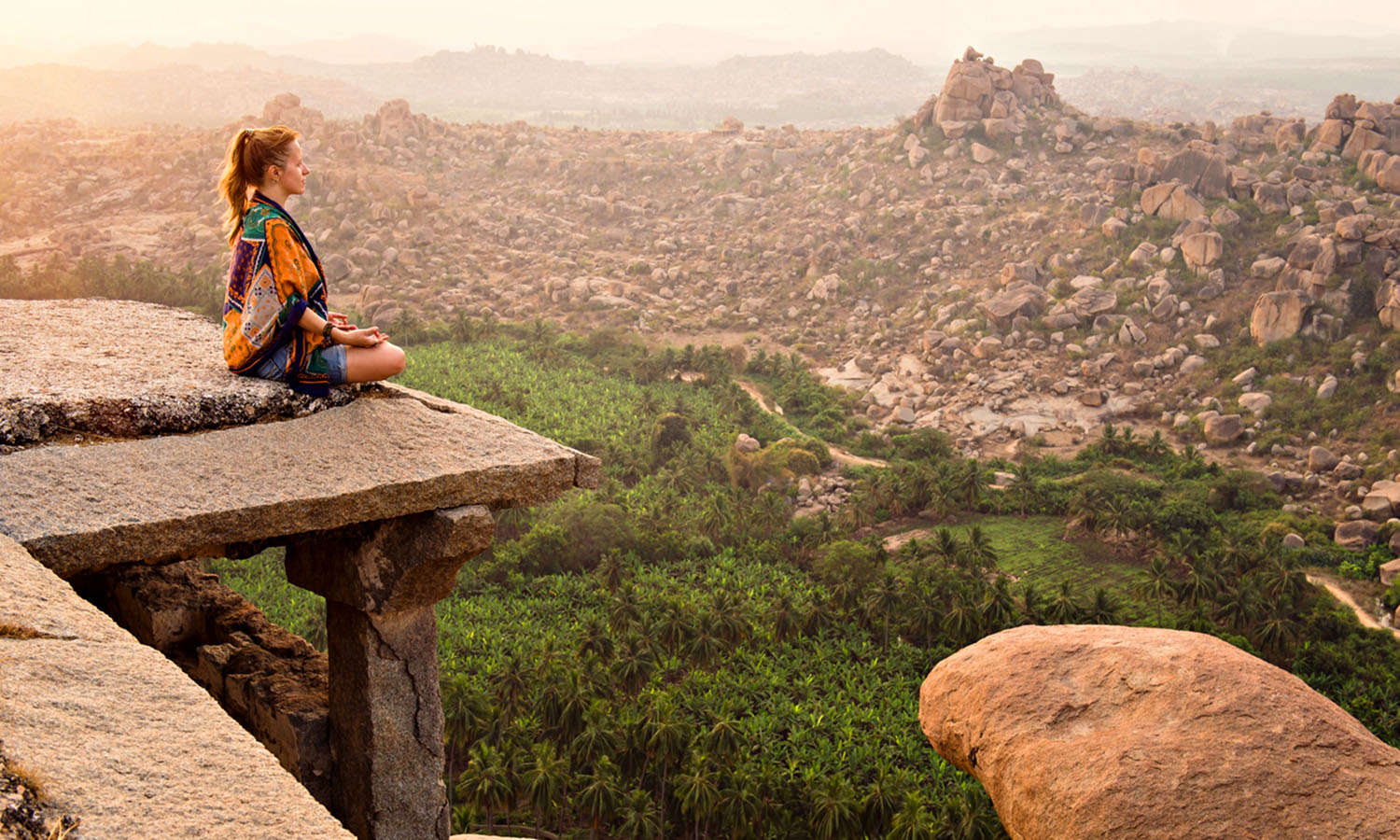
Giant boulders perch over kilometres of undulating terrain and ruins and temples scatter the landscape in a stunning open museum of history, architecture and religion juxtaposed with palm groves, banana plantations and paddy fields. The World Heritage Site of Hampi, situated on the banks of the Tungabhadra River in the eastern part of central Karnataka leaves travellers spellbound.
Otherworldly Hampi is located on the Deccan plateau, one of the oldest and most stable geographical formations in the world, dating back 2.5 billion years ago. Once the capital of the Vijayanagara Empire, Hampi is considered to be the largest open monument and the “lost city of Asia’.
Among the artefacts you’d want to peruse include a queen’s bath, the Lotus Palace, a royal stable and a temple said to have been where the wedding of Lord Shiva and Goddess Parvati took place.
The ruins are located in two sections: the Sacred Centre and the Royal Centre. Explore places like the Vittala Temple, Royal Enclosure, Kadalekalu Ganesha, Lotus Mahal and the Elephant Stables. The Riverside Ruins are also worth a gander, with several shrines, some partially submerged, dedicated to Lord Vishnu and other Hindu deities.
For your fill of chai, budget accommodation, artefacts, shops and restaurants, head to Hampi Bazaar, a bustling village crammed with backpackers, touts and travellers.
Listed second in The New York Times’ 52 Places to Go in 2019 list, Hampi truly rocks. Visit during the famous Hampi Festival of dance, music and cultural extravaganza scheduled for three days in the first week of November.
Take advantage of a seriously under-appreciated Southeast Asian stopover, with Philippine Airlines flying from Sydney to Manila then on to London. Packed with personality, the Philippines capital is also a little easier to get your head around on a first-time visit than, say, Bangkok. No stop here is complete without a stroll around Intramuros, the old walled city housing most of the Spanish colonial-era landmarks, like San Agustin Church, Plaza de Roma and Casa Manila. The best way to do that is on a walking tour with Carlos Celdran, who is reason alone to visit Manila.
There are also plenty of historical World War II sites – many of them, including the spot where General MacArthur bunked until the Yanks scarpered, are located on the island of Corregidor in Manila Bay. The dining and nightlife scene here is really sophisticated too, with spots like Blackbird, Scottish chef Colin Mackay’s contemporary fine-diner set in the old air-traffic control tower, and hidden cocktail bar Proof setting the scene.
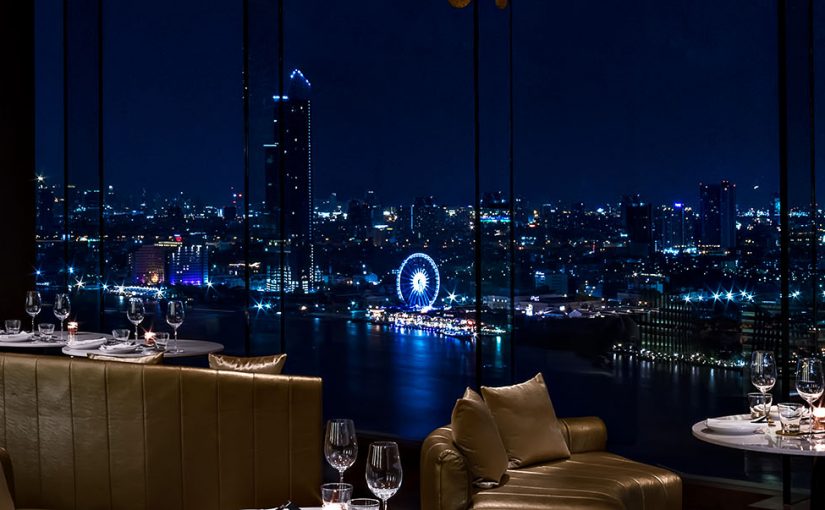
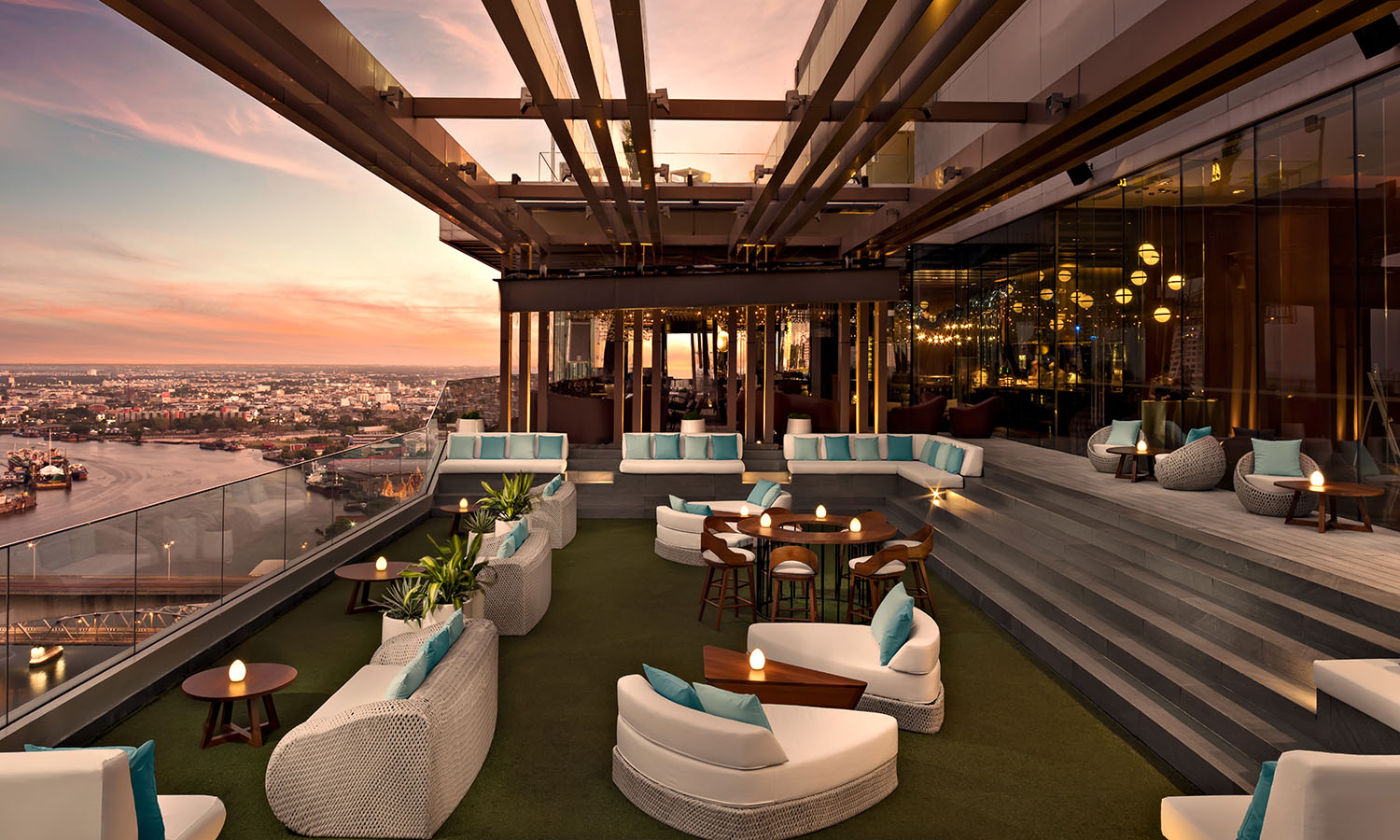
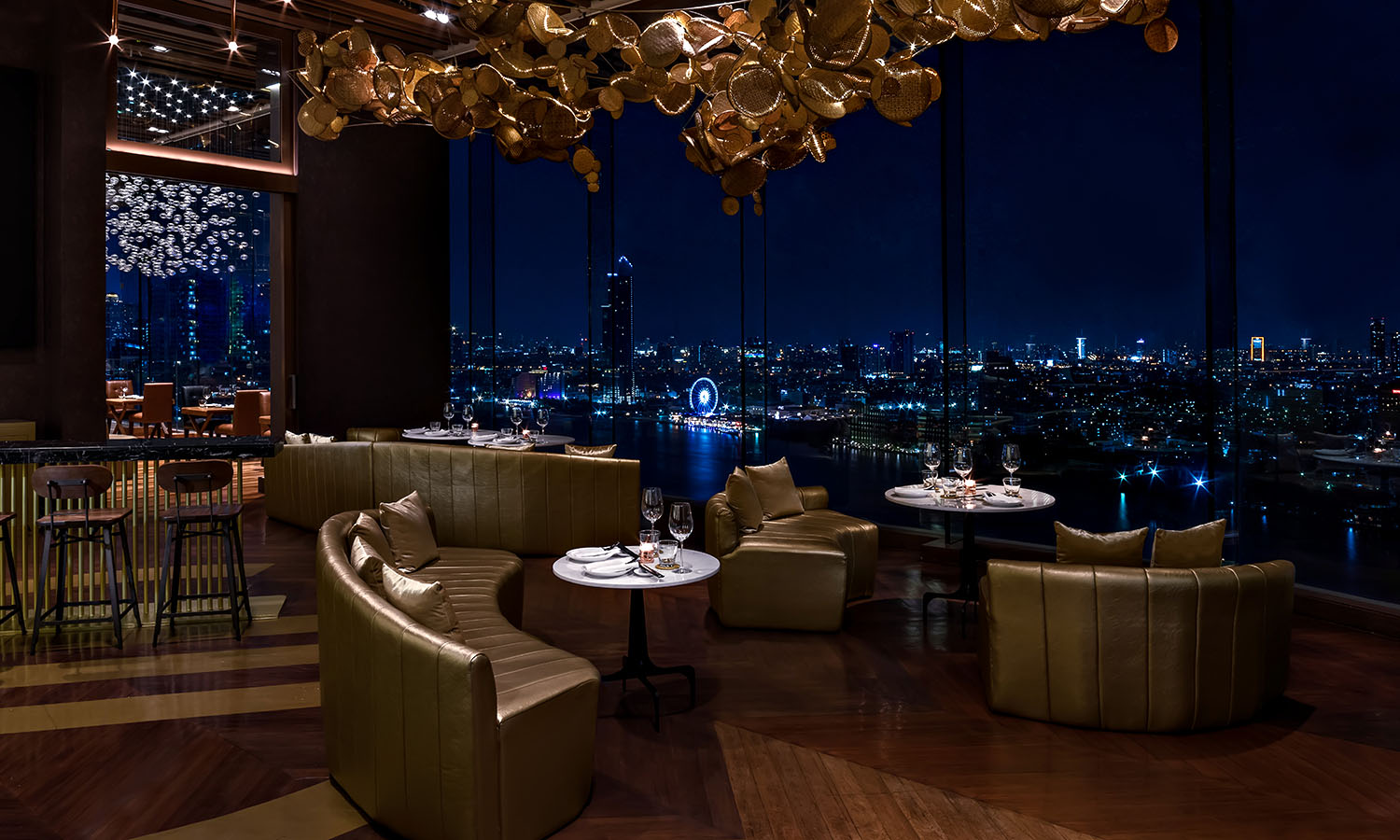
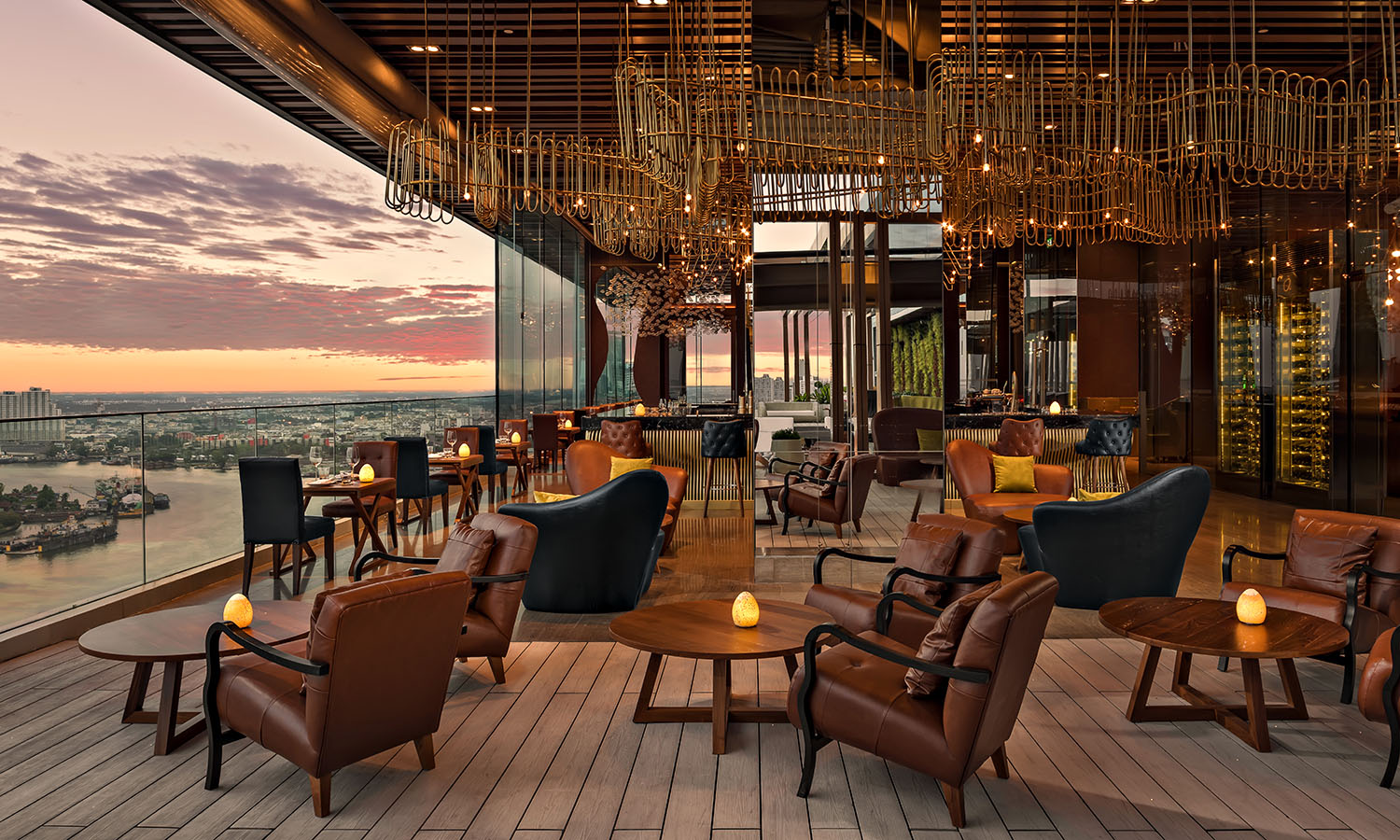
‘Sin and be seen’ is the motto at this ritzy rooftop bar, a not-so-subtle hint at the sultry vibe you can expect upon arrival. Mirroring the glittering Bangkok skyline, this indoor-outdoor space, located on the top floor of the Avani+ Riverside Hotel, is dripping in luxury, with gold accents, art deco-inspired details and plush furnishings.
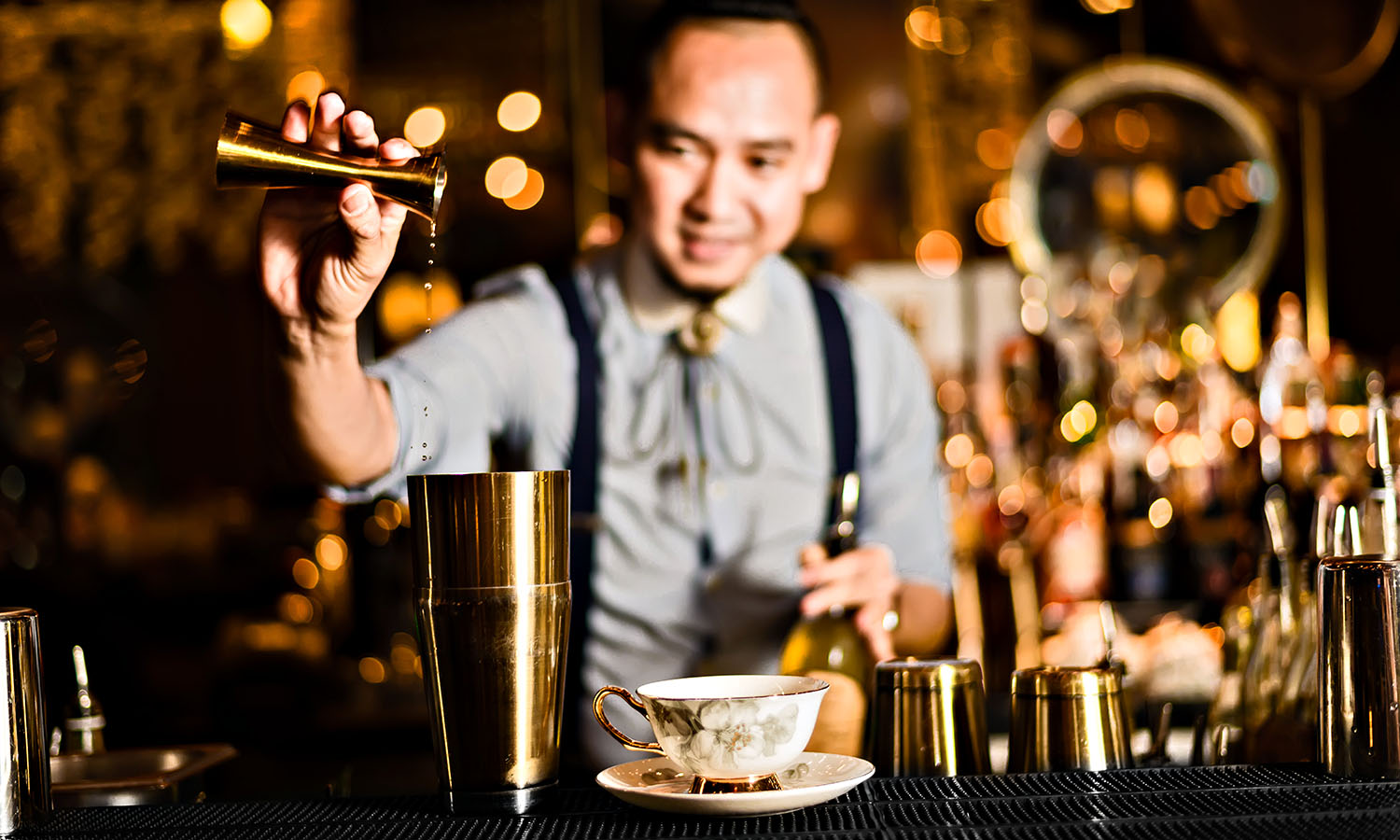
Seen’s signature cocktail list is as dazzling as the decor, with award-winning mixologist Mochammad Fadli blending contemporary Asian flavours to create heavenly drinks like the Forbidden River (coriander shochu with hints of citrus and celery) and Fusion Julep (kaffir lime bourbon with ginger and pickle). Food-wise, Seen offers everything from sushi to wagyu beef burgers. Tunes spin till late, so settle in for a night of glamour.
Located in the heart of the Kashmir Valley is India’s top hill station, Srinagar, and its number-one drawcard, the spectacular Dal Lake.
Cradled high in the Himalayas and often referred to as the Switzerland of India – without the chocolate, of course – Srinigar is the summer capital of Jammu and Kashmir and is surrounded by mountain peaks, lush green valleys, Mughal-era gardens, glistening lakes and temples galore.
While Srinigar is crisscrossed by tree-lined roads and is is home to bustling bazaars, Sufi shrines and historic forts, it’s best known for Dal Lake. Spread over an impressive 26 square kilometres, it’s the second largest lake in the territory and is aptly named the Lake of Flowers.
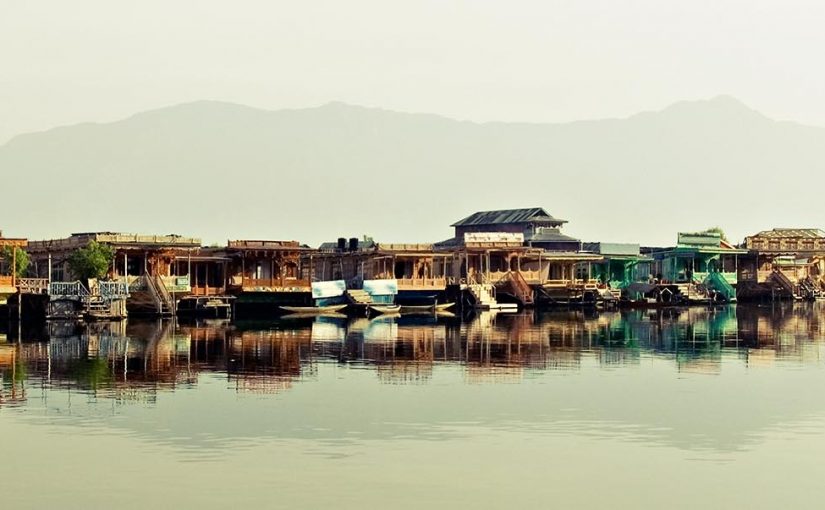
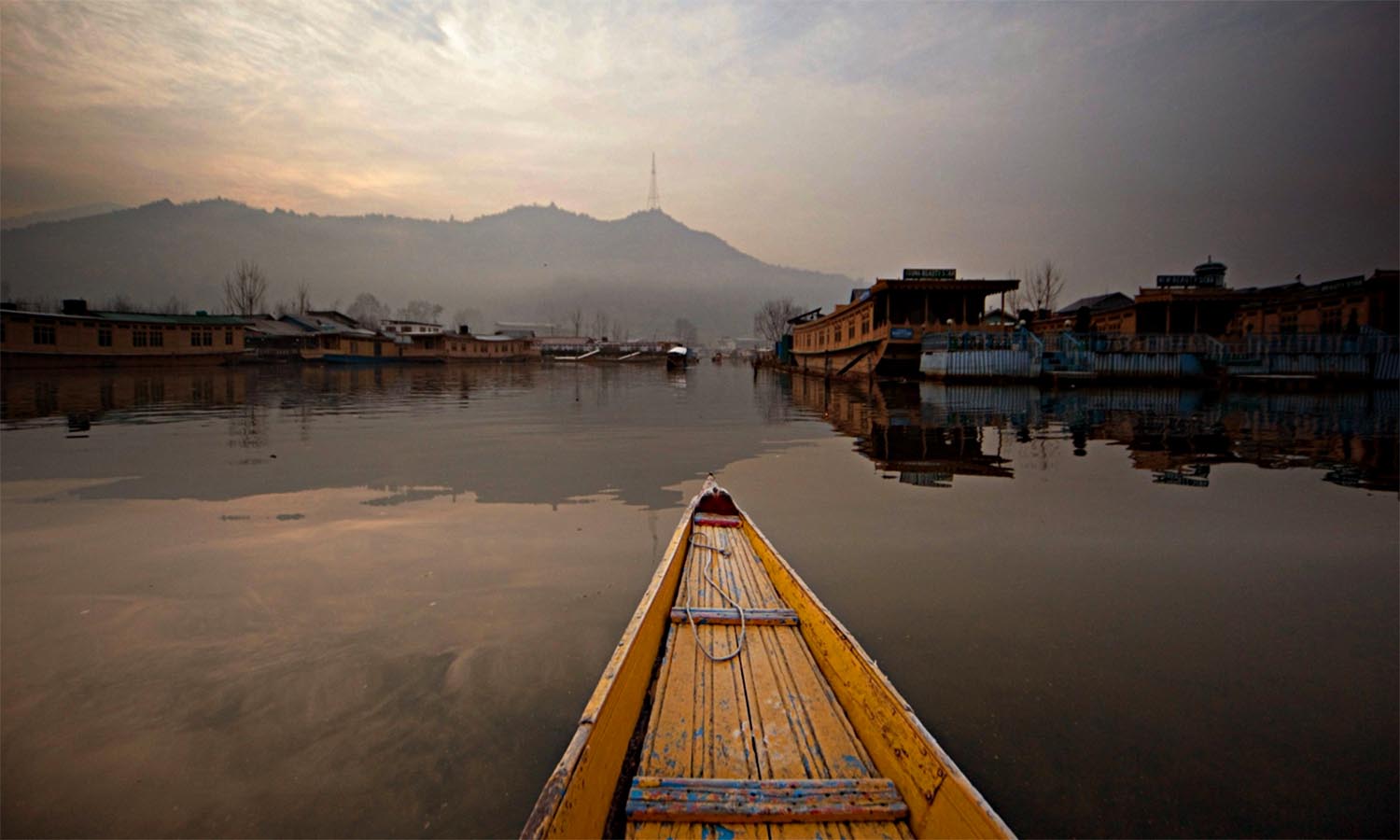
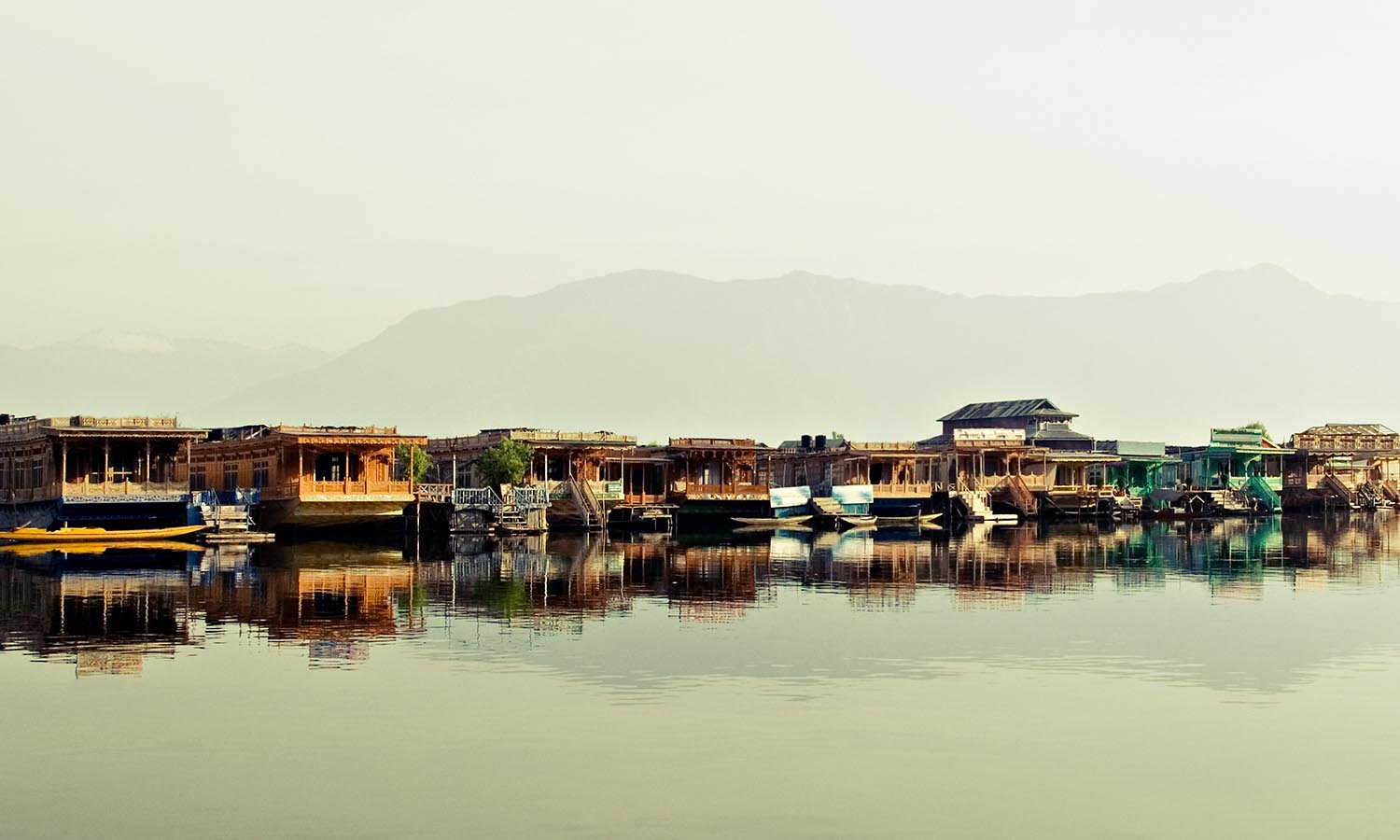
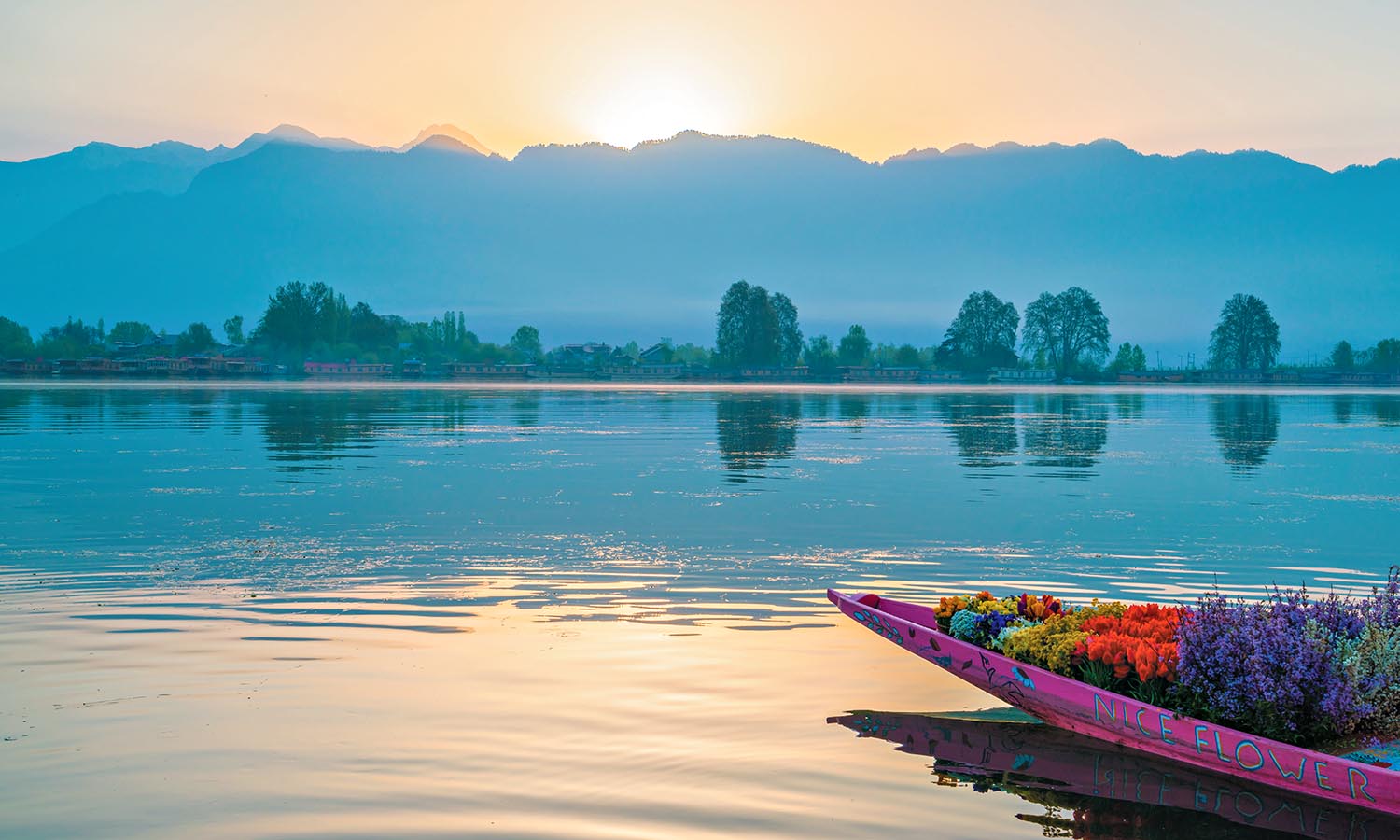
Travellers know Dal Lake best for two things: the stationary houseboats moored at its edges and the colourful shikararas (gondola-type rowboats) that ferry people across the water. You can rent a room on one of the ornately carved houseboats or, if you just want to experience the beauty of the lake without committing to a staying on the water, take a shikarara to the floating vegetable market or the ancient temple of Shankaracharya.
Sea legs not all that flash? Visit some of the stunning UNESCO World Heritagelisted gardens. Choose from Nishat Bagh, Shalimar Bagh and Chashme Shahi, all of which are filled with fountains, chinar and pine trees and flowering exotic plants. Shalimar Bash even has a sound and light show every evening between May to October.
The Goto Islands, around 100 kilometres off the west coast of Nagasaki on the southern island of Kyushu, consists of five main land masses in the East China Sea. Famed for their natural beauty, they also acted as a secret safe haven for Hidden Christians from the early seventeenth century to the mid-nineteenth century.
The northern Goto Islands, also known as Shin-Kamigoto, have traditionally been the most sparsely populated of the archipelago, and the most closely linked to the history of this type of religious persecution. For more than 260 years, Christians hid on these islands to escape oppression on mainland Japan and to practise their faith in secret.
Travelling northeast from Fukue Island, the largest of the quintet, to Naru, Wakamatsu and Nakadori, I had my sights set on the uninhabited island of Nozaki, home to the former Nokubi church. My goal was to find one of the most inaccessible Christian churches, and experience the other qualities that set the Goto Islands apart from everywhere else in Japan. There are many different ways to chart this course – by local ferry, guided tour or chartered boat – and how you decide to travel around the Gotos will ultimately depend on your time and budget.
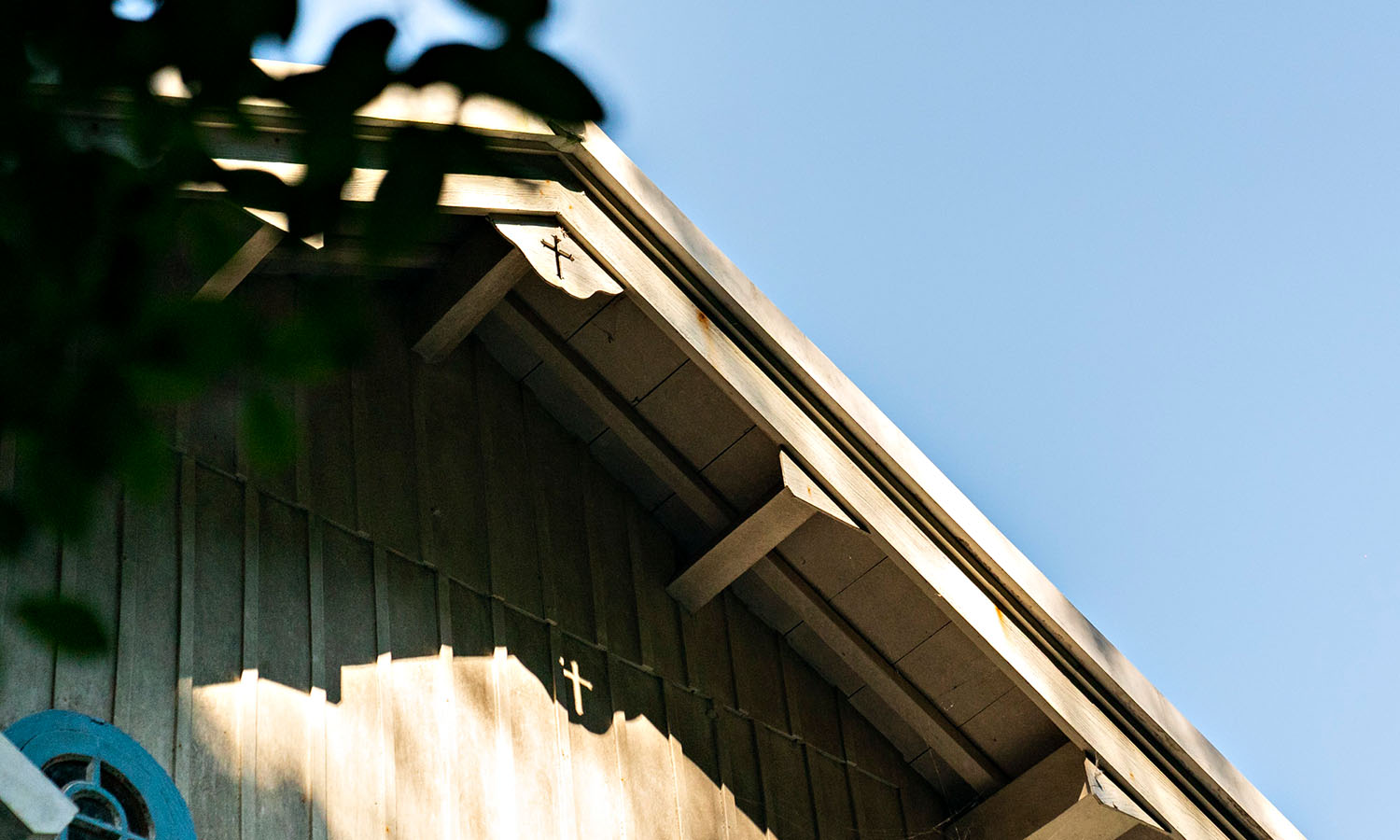
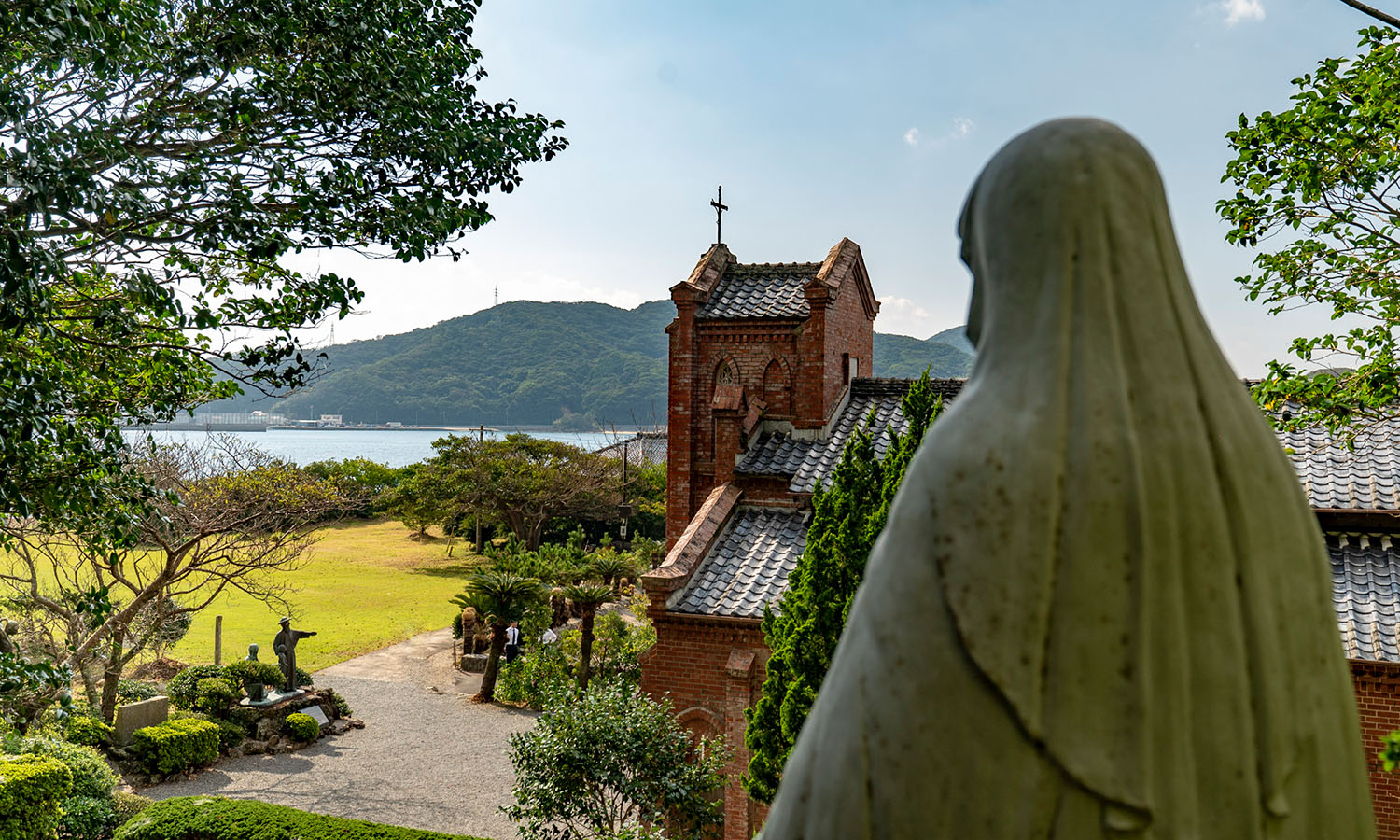
Setting off from Fukue, my first destination was Egami Catholic Church on Naru Island, located in the centre of the Goto atoll. Concealed among thick trees, it’s almost impossible to discern from a distance, and has no obvious symbols revealing its true identity. To leave the church unadorned of any symbols or imagery would have been a conscious decision made during its construction.
When you walk to the back of the church, however, you can see a cross is projected onto the wooden gable. Egami Catholic Church was built by Yosuke Tetsukawa, who went on to construct a total of 38 churches in the region. Once inside it becomes obvious the budget was tight. Stained pine has been used, and the windows have been hand-painted to give the appearance of stained glass. The austerity somehow adds to its charm.
The next stop is the Christians’ Cave on Wakamatsu Island, a site accessible only by boat. This 50-metre crack in the rocks was used by eight people to evade persecution during a time of heightened risk to Christians. One early winter morning, after hiding for four months, smoke from their fire was spotted by a passing boat. Authorities were notified and the exiles were arrested and tortured. In 1967 a simple white cross and three-metre-tall statue of Jesus were erected at the entrance of the cave to honour them.
Even if you know what you’re looking for, locating the exact position of the cave from the water can be tough. Just around the corner is a fracture in the rock face said to look like Mary Magdalene, and those who hid there took it as a sign she was protecting them.
As the westernmost point of Kyushu, the Goto Islands were the first port of call for Japanese envoys on their way back from Tang Dynasty China in the seventh, eighth and ninth centuries. More than 36 missions were undertaken, with the hope of learning more about the culture, lifestyle and civilisation of the country. Goto udon is one of the dishes brought back, and how it is made has remained unchanged for the past thousand years.
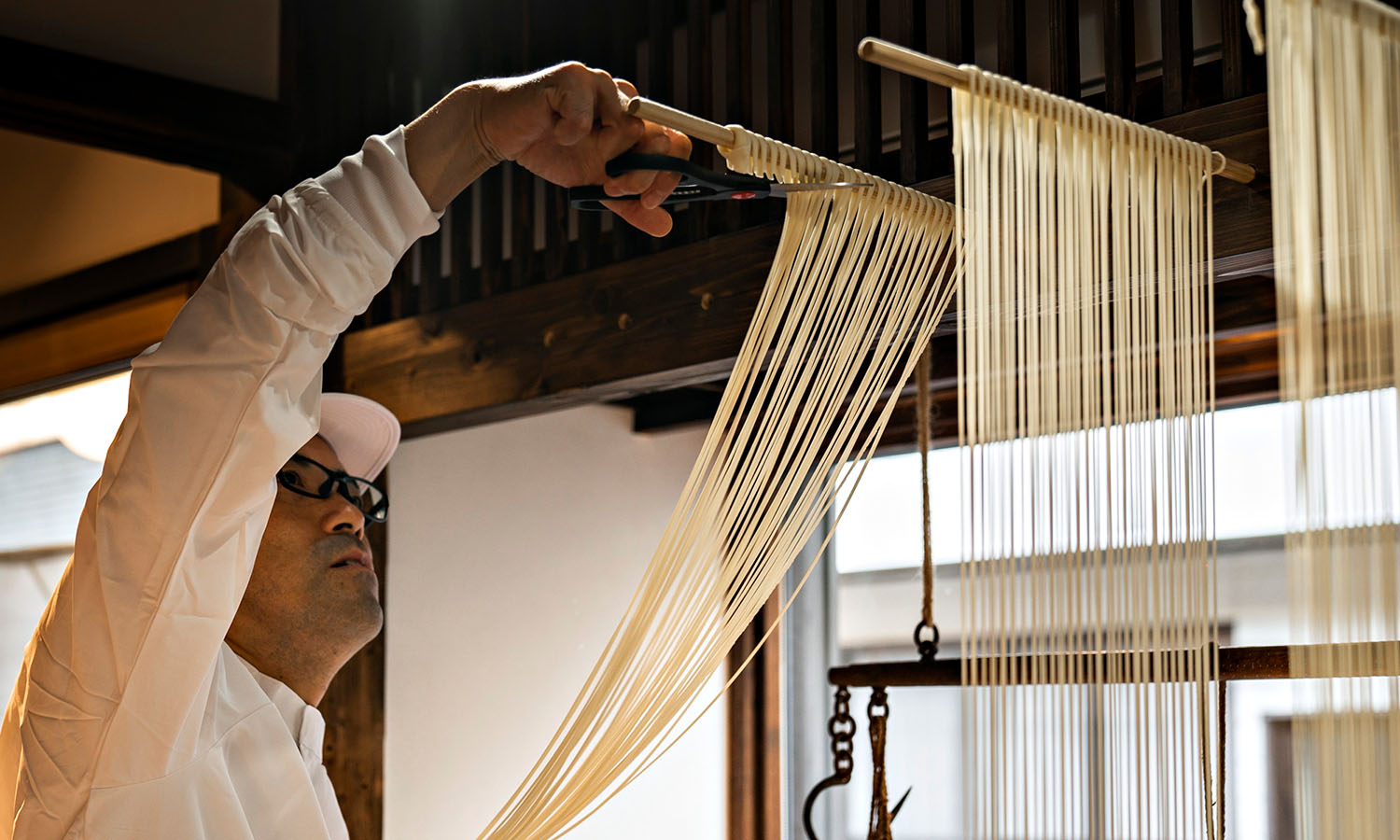
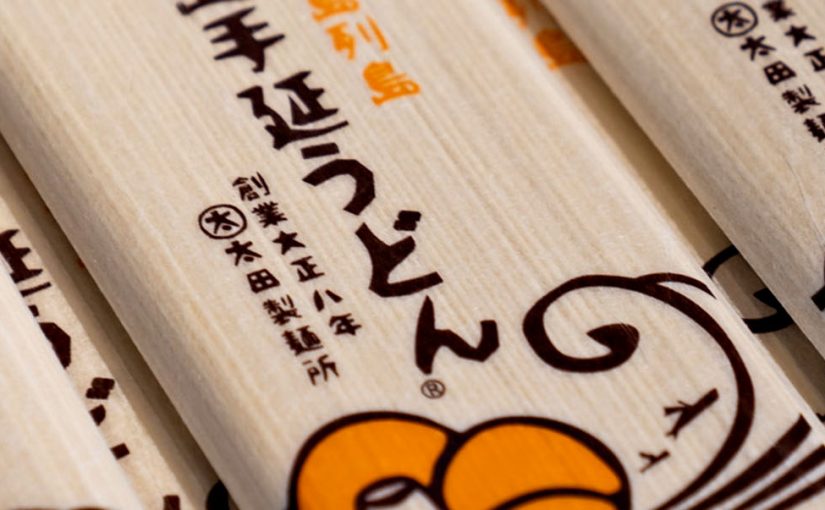
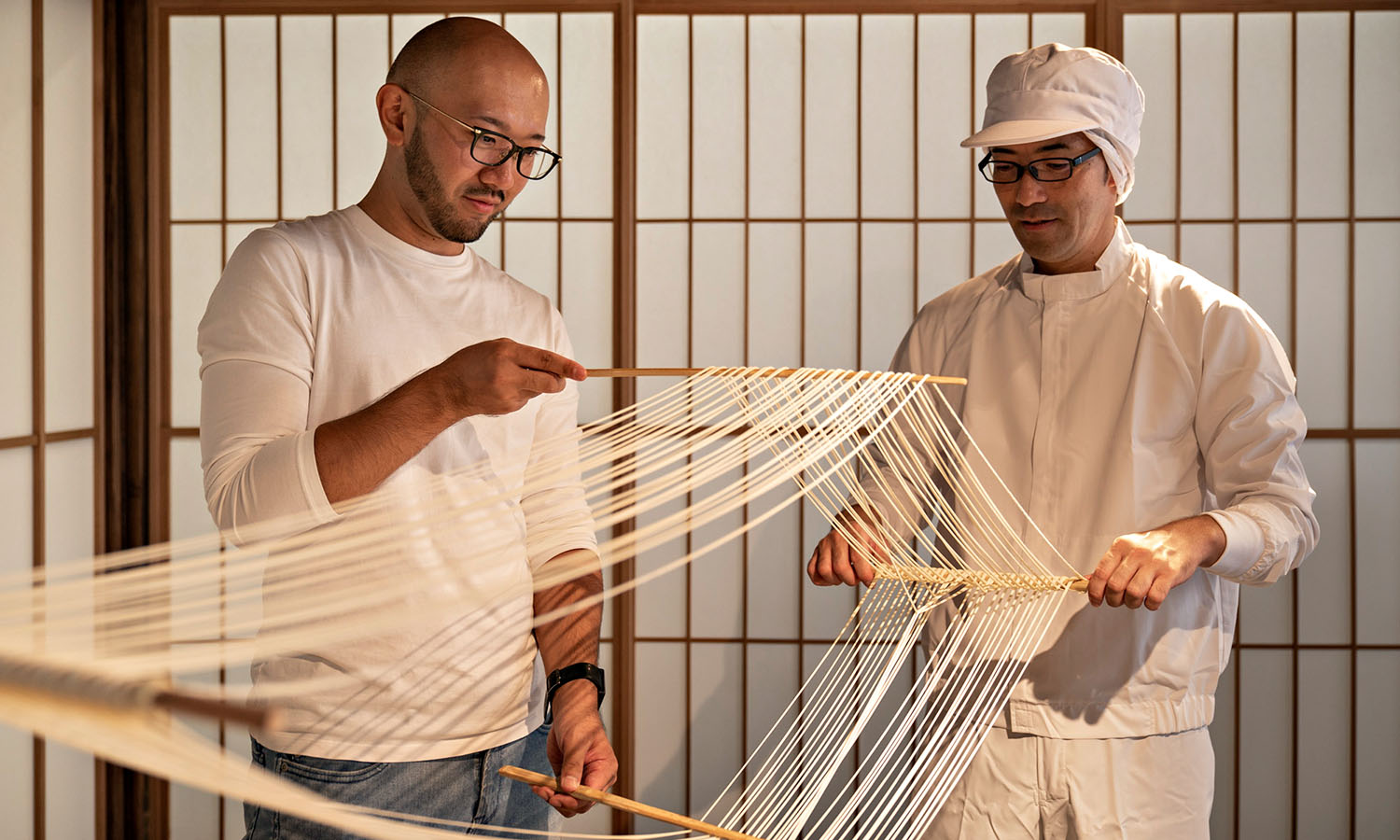
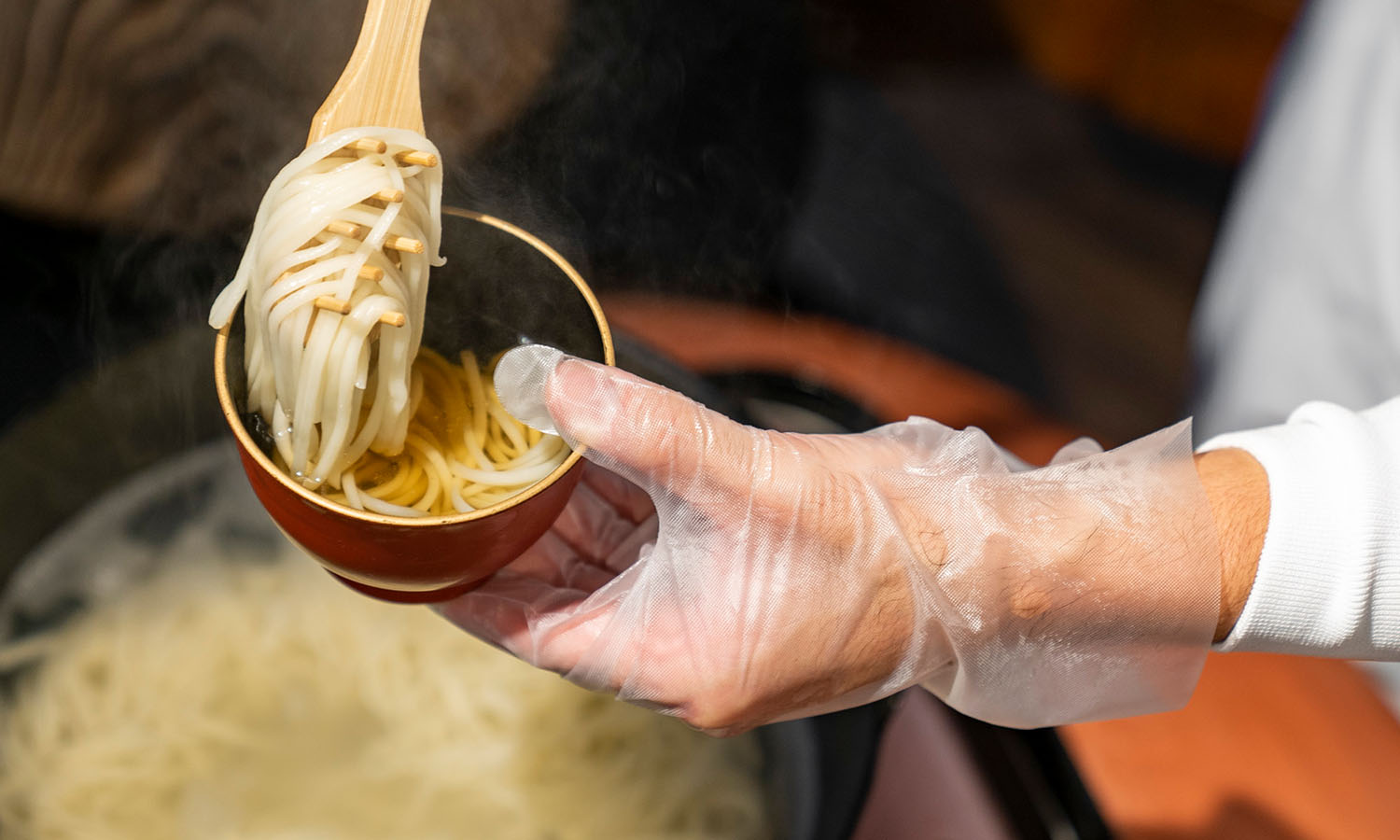
On Nakadori Island, the northernmost of the islands, I meet Mitsuaki Ota, the fourth generation owner of the Ota Udon Shop, who uses the same ingredients, techniques and even tools as his forefathers during the noodle-making process. The key ingredients that define Goto udon are spring water, oil from the camellias that grow wild across Goto, and locally produced salt. The unique aspect of the production method – different to other types of udon – requires the noodles to be stretched rather than cut. The process is lots of fun to try, and it is surprising how long the noodles can become.
The year-round mild-to-warm temperatures of the Goto Islands create especially good conditions for growing camellias, and once you come to recognise the plant you will see it everywhere you go. Up to half of the camellia oil produced in Japan comes from the Nagasaki Prefecture, and 70 per cent of that is from the Goto Islands.
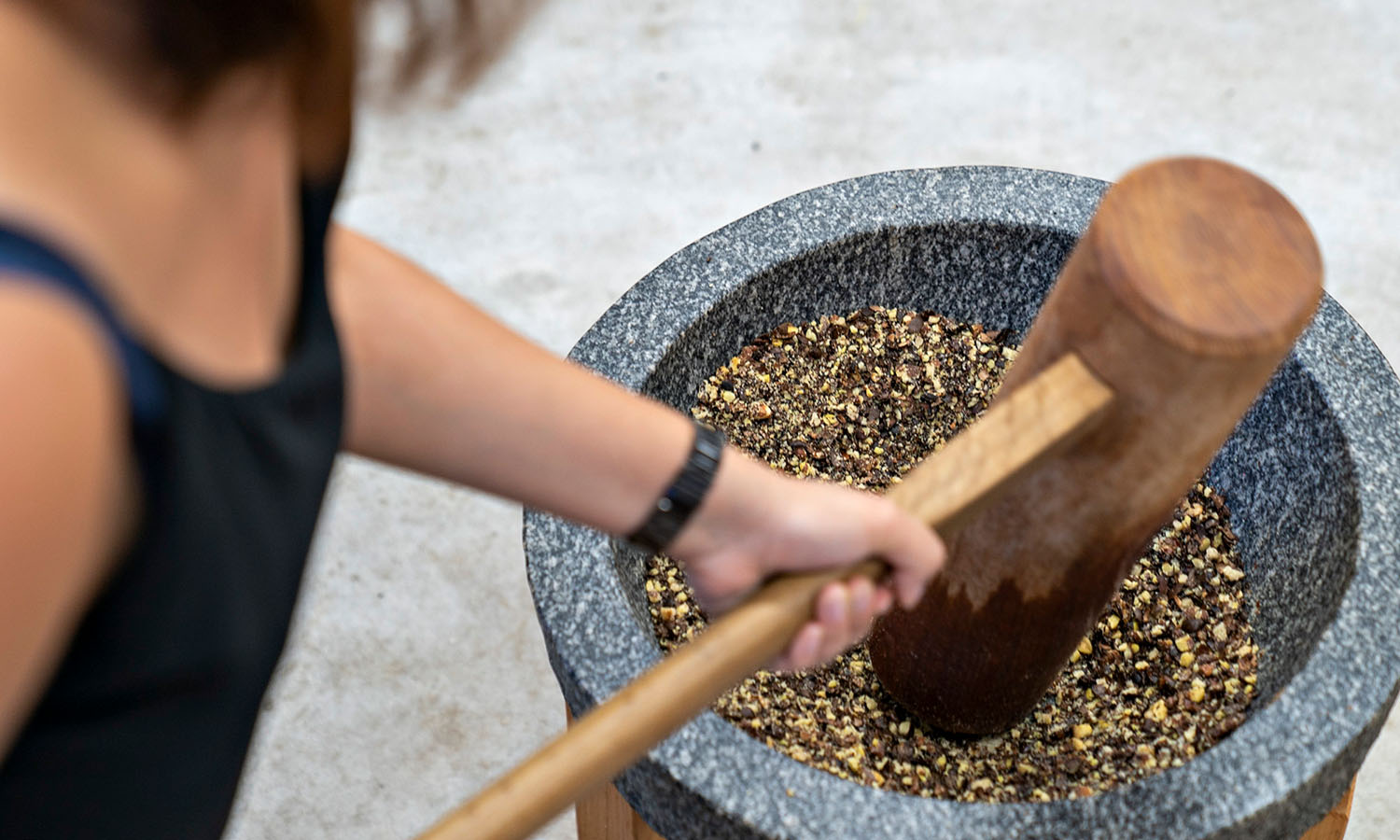
In the Sone area of Nakadori Island, you have the opportunity to make camellia oil to take home. The production process is quite simple. First, the camellia nut is broken up and crushed in a large mortar and pestle – an easy feat as the nut contains roughly 30 per cent oil. The grounds are then placed in a hydraulic press, manually pumped to increase the pressure. Before you know it there’s oil that can be used as a moisturiser for hair, skin and nails pouring out of the press.
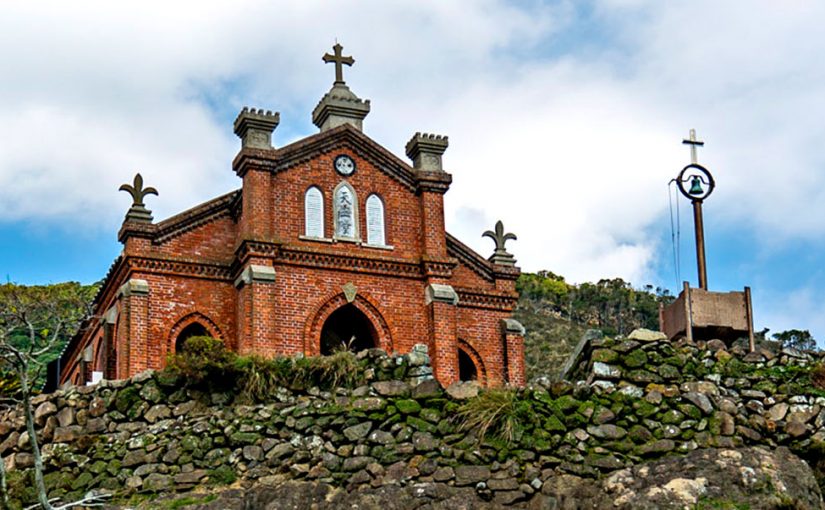
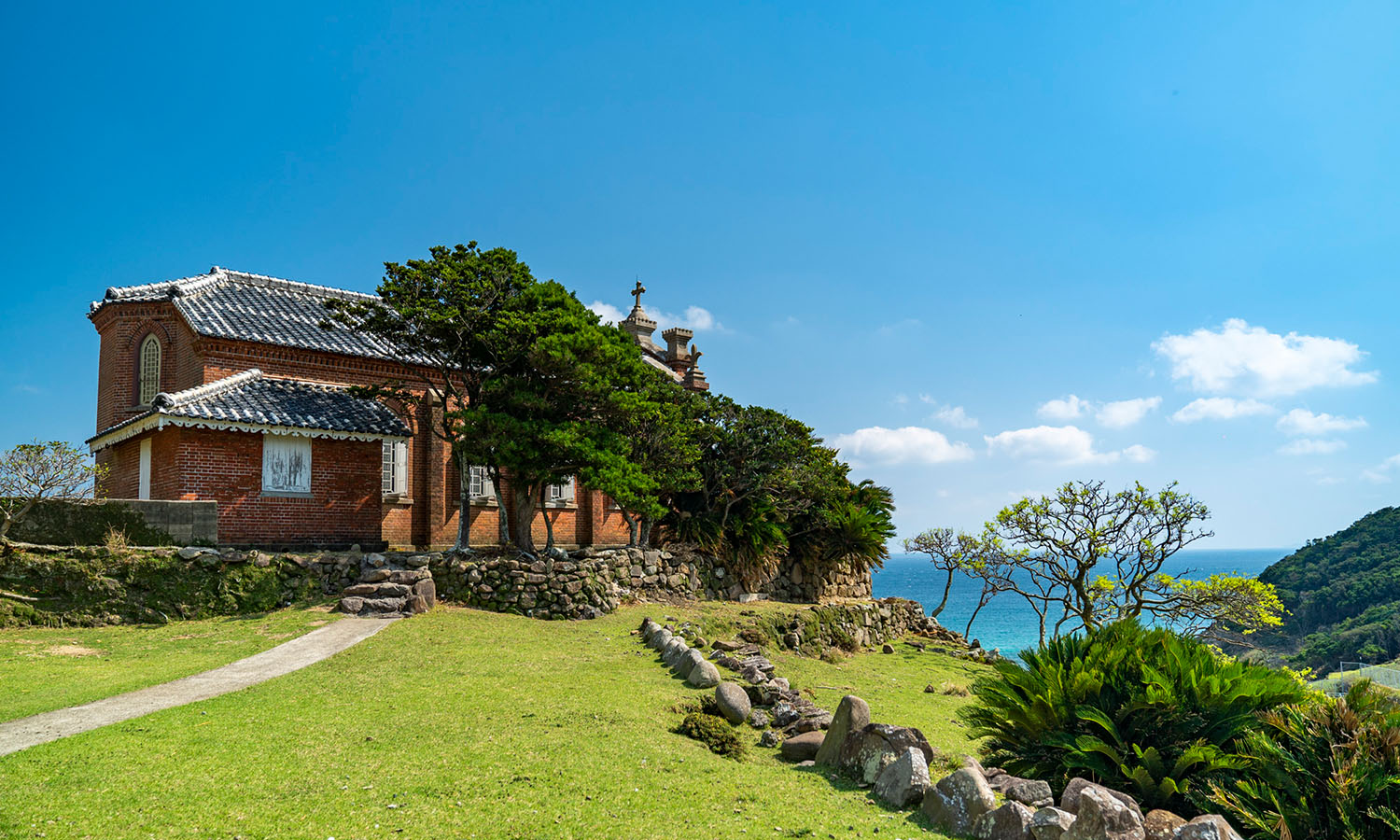
My final destination is the Former Nokubi Church, on the now deserted island of Nozaki. The windswept landscape, infertile soil and dry stone walls are reminiscent of Ireland’s west coast, just with better weather.
Nozaki was originally home to a Shinto community, but was settled by Christian families in the early 1800s. They would visit the island’s shrine and pretend to be followers of the Shinto faith, while actually continuing their Christian traditions in private. After the ban on Christianity was lifted in 1868, the families decided to pool their money so they could build a church. They contacted Yosuke Tetsukawa, the architect of the Egami Church, who set to work on the design and construction. It was finally completed in 1908 and cost ¥2,885, equivalent to ¥57 million today.
Although closed to the public, it is possible to organise a visit to the Former Nokubi Church in advance through the Ojika Island Tourist Office. The Shinto shrine is also still standing, as are the remains of Shinto houses, and keep your eyes peeled for deer and other wild animals that roam free across the island.
This feature was sponsored by JNTO (Japan National Tourism Organization).
A unique archipelago of five isles off the coast of Nagasaki, the Goto Islands have a complex history and boast incredible natural wonders
Usually off the radar for visitors to Japan, the Gotos have been slowly building in popularity thanks to the 2017 release of Martin Scorsese’s film Silence, and the addition of Japan’s hidden Christian sites to the UNESCO World Heritage List. The islands also feature stunning coastlines and landscapes not usually associated with Japan, making it a location well worth visiting on your next trip to the Land of the Rising Sun.
Upon my arrival at Fukue Port, I make my way to Dozaki Church in the island’s northeast. Fukue Island is the largest and southernmost of Nagasaki’s Goto Islands, and it’s where most travellers head first. It can be a bit difficult to get around if you’re not a local, so renting a car is your best option.
Constructed in 1907, Dozaki Church is not only the very first church built on the Gotos, but it’s also the oldest Western-style building. It was erected as a symbol of the suffering of Christians, who for 260 years had to hide their faith after the religion was outlawed by the Japanese government. Inside the church are information displays and historical documents – very useful for gaining an insight into the plight of the hidden Christians of the Goto Islands.
If you feel like a coffee after your visit to Dozaki Church, stop in at Baby Qoo just down the road. The lovely mother–daughter owners of the shop have become Instagram legends and serve a delicious selection of drinks and snacks.
My next stop is the top of Mount Onidake, for the best views of Fukue and the surrounding islands. A 315-metre-tall dormant volcano, Onidake is a popular spot for hiking, picnics and the island’s annual kite-flying event. If you’ve got kids in tow, bring a sheet of cardboard or large plastic bag so they can slide down the steeper sections of the hill.
Pop in for lunch at Tsubaki Chaya, where each table has a built-in irori (Japanese barbecue). The menu is loaded with fresh seafood and locally sourced ingredients, and the friendly staff grill the food over charcoal for you to enjoy simply with either salt or soy sauce, as you enjoy the views across the water.
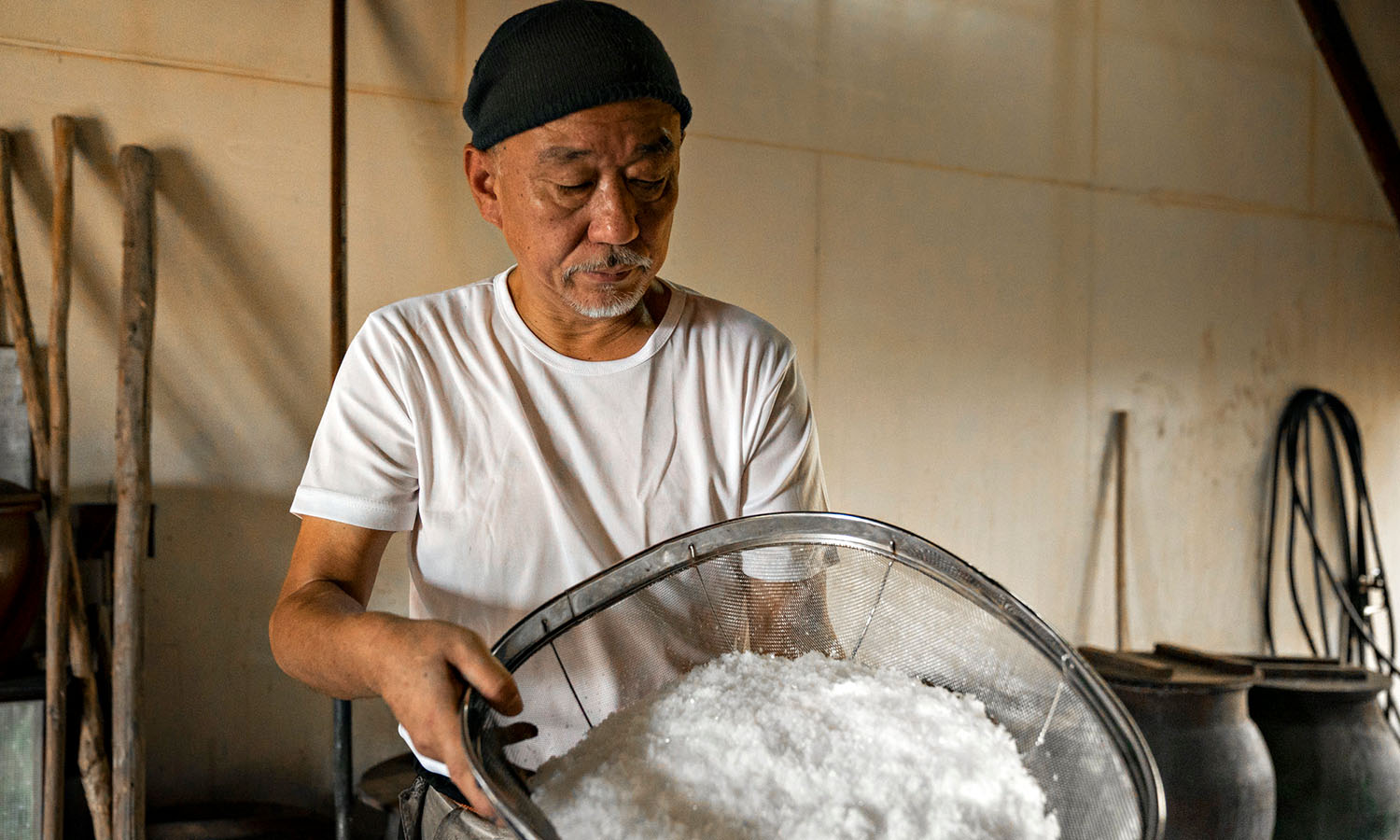
A short walk from Tsubaki Chaya is the Pearl Goto Produce Centre. Alongside seasonal soft-serve ice-cream and handmade goodies like camellia oil, it also sells sea salt that is made next door. The salt, which is highly prized by exclusive restaurants, is expertly processed using traditional methods that allow the water from the Goto-Nada Sea to retain most of its minerals. The result is a sweeter-tasting salt that is shipped to exclusive restaurants as far away as Fukuoka.
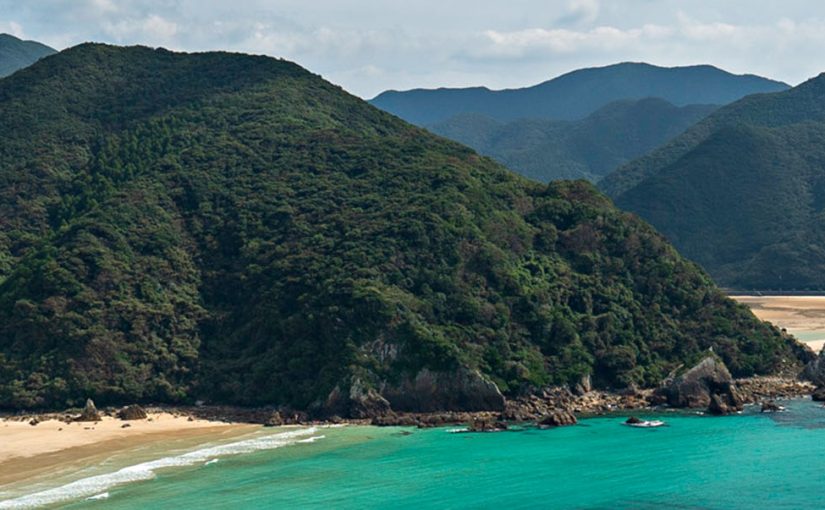
Just a 30-minute drive across the island is the Gyoran Kannon statue, overlooking Takahama Beach. The statue was built to bring good luck for a plentiful fishing bounty, and to ensure the safety of the local fishermen in the East China Sea. Takahama Beach has been officially rated as one of the 100 best beaches in Japan – even during the quiet season, it is still warm enough to jump in and have a splash around.
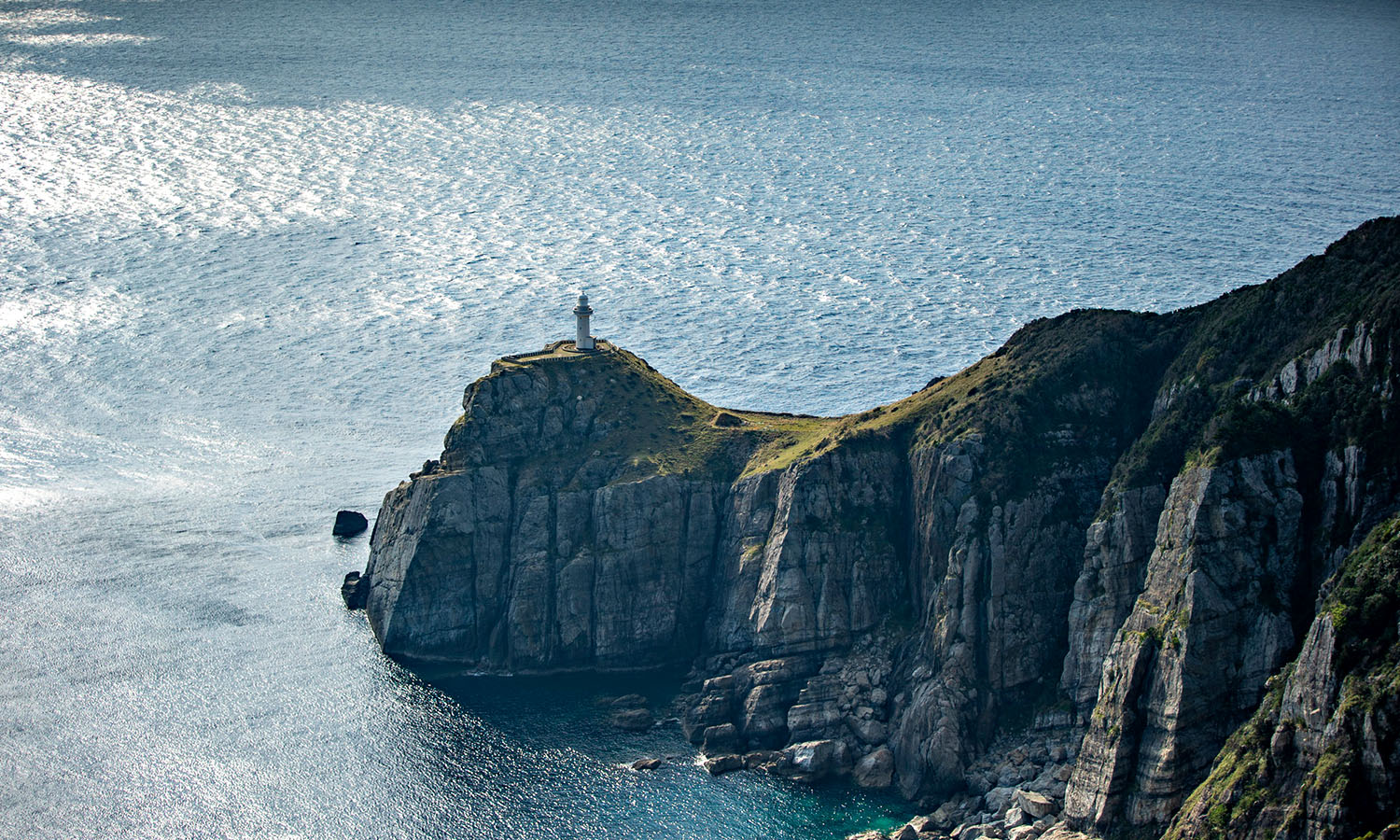
If you thought the view from Takahama Beach was good, just wait until you check out Osezaki Lighthouse. Perched on the tip of windswept Osezaki Cliff, which stretches for 20 kilometres and has sheer drops of up to 150 metres, the white lighthouse is currently unmanned, having been decommissioned in 1989 after more than 50 years in service.
The hike to the lighthouse, roughly a one-hour round-trip, begins by winding through thick forest. The trail descends ever so slightly, making the route down much easier than on the way back up. You don’t actually realise how steep the incline is until the trees clear and you’re facing the last leg of the trail along the sea cliffs. The views out across the East China Sea are spectacular, and it’s no surprise to learn the Osezaki Lighthouse was heavily used during the Meiji Era to alert Japanese authorities of any passing international ships.
My final stop on Fukue Island is the Goto Clan Garden. There is something incredibly calming about simply wandering around the tranquil parklands that pay homage to the gardens and lake surrounding Kinkaku-ji Temple (also known as the Golden Temple) in Kyoto. Highlights include an enormous camphor tree that is believed to be more than 800 years old, and the Lord Goto Residence, an opulent and wonderfully restored mansion that is now open to the public.
This feature was sponsored by JNTO (Japan National Tourism Organization).
As Japan’s main domestic source of the most precious of metals, Sado Island, located 330 kilometres north of Tokyo in the Niigata Prefecture, has long been known as the Island of Gold. Located 45 kilometres west off the coast of Niigata, its isolated location and fascinating history make it an incredibly interesting place to visit – if you know where to go.
Culture on Sado was formed in three waves. The first was the aristocratic culture, which began due to an influx of political and noble exiles who were banished to the island. The second wave – samurai culture – arrived on Sado via commissioners and officials during the growth and development of the gold mines. Third, the merchant culture was introduced by sailors travelling to and from Sado along their trade routes.
In the Middle Ages, Sado was just far enough from the cultural capital of Kyoto to be a home for exiles. During this period three prominent, highly educated people considered too important to execute were banished to Sado. They were Juntoku, a former emperor exiled in 1221, Nichiren, a Buddhist priest exiled in 1271, and Zeami, a Noh artist exiled in 1434. Upon their arrival they began to spread their beliefs on religion, share an appreciation of the arts, and educate the islanders on their aristocratic way of life.
Noh theatre is an integral part of Sado culture, not just for the rich and sophisticated members of society, which was the case in the rest of Japan. In fact, here in Sado, farmers too used to sing Noh songs as they worked in the fields. There are currently 30 temples and shrines containing Noh stages in Sado – they make up around one-third of all Noh stages in Japan – although it’s believed at one point there were more than 200 on the island.
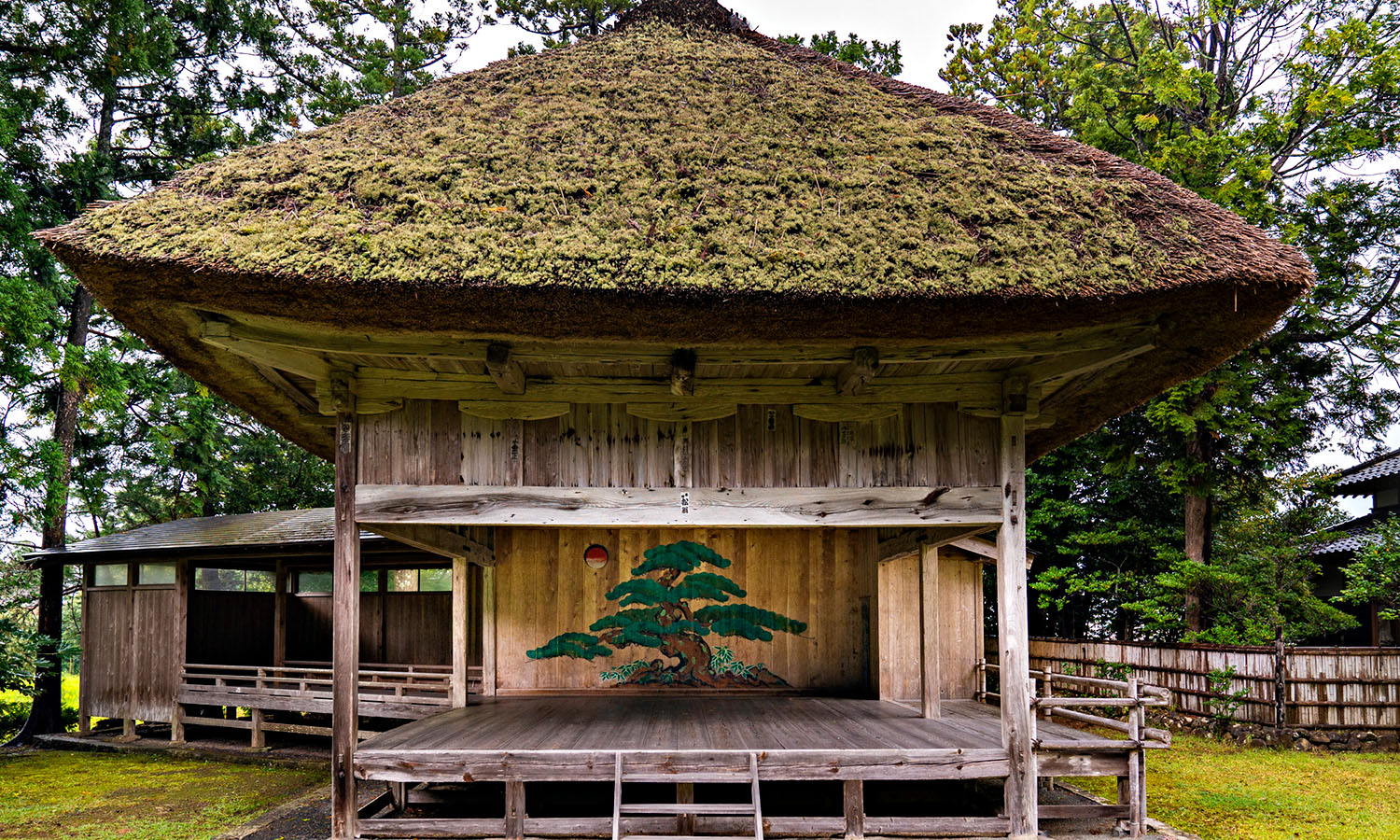
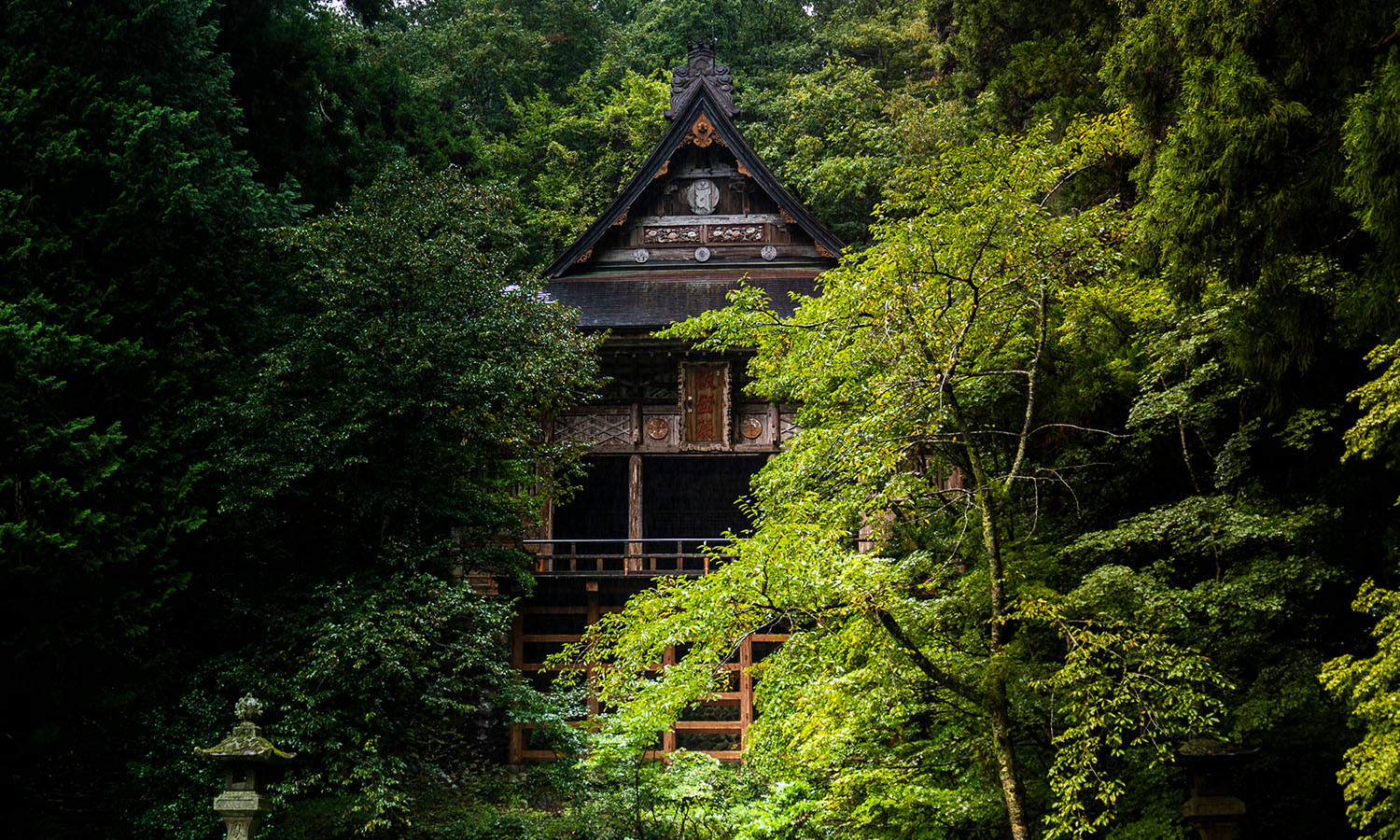
Ozen Shrine is one of those remaining 30 and, as you walk along the overgrown path leading up to it, passing through the torii gate with its peeling, dulled paintwork, you get the sense you are entering a place forgotten by time. Being able to see a shrine complex ageing gracefully is a rare and beautiful sight, and the centrepiece is the stunning Noh stage. Crafted from unvarnished wood and protected from the rain by a thick thatched roof coated in a layer of moss, it possesses an almost ascetic nature. Noh performances are still held here in June, with a wood fire lighting the stage. It must be an incredible sight to behold.
Seisuiji Temple is another must-visit location in Sado that evokes similar feelings, only on a much grander scale. In the year 805, Emperor Kanmu lamented those living in distant Sado couldn’t easily make the pilgrimage to the temples of Kyoto, so under his ordinance an equivalent temple – Seisuiji – was finally built in 808.
An uneven rock staircase rises up the hill, flanked on both sides by Japanese pine trees boasting thick canopies protecting those who walk the path from the elements. At the top you find a large temple complex of 15 buildings, with the elevated main structure obscured by trees. Time has stripped away at the surfaces, removing the varnish and decorations that adorn the more well-maintained temples and amplifying the craftsmanship and care that went into the construction of these now weathered buildings. Being able to wander around this serene space, and focus on the individual components that make Japanese temples the flawless edifices they are, is an experience I never thought possible.
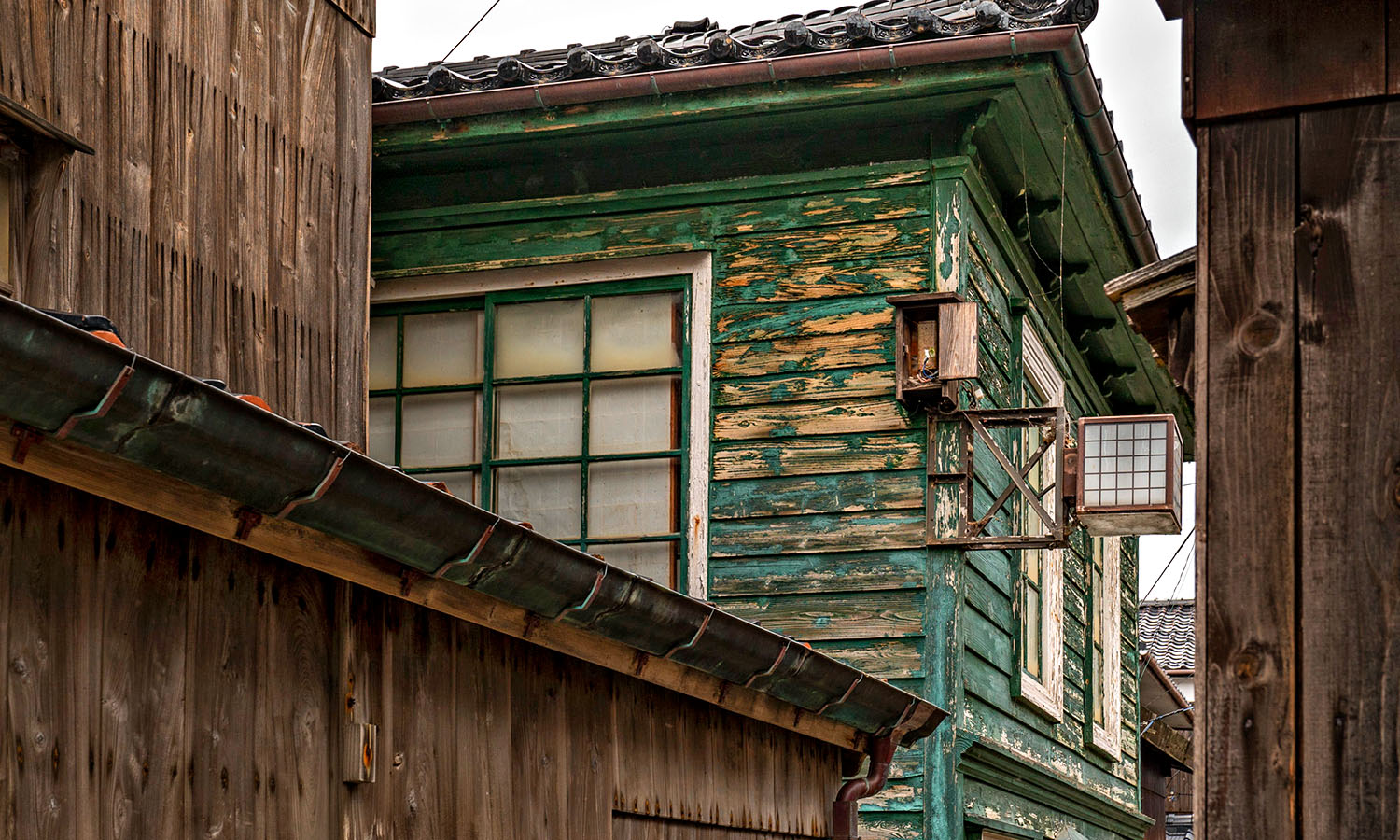
The old town of Shukunegi, on the far southwest of the island, was the base for merchant culture on Sado. As the gold mining industry was flourishing, this village thrived as a port of call for ships travelling from Osaka to Hokkaido. Those living in Shukunegi at the time reaped the benefits, at one stage taking in one-third of all money made on the island. Once the port moved to Ogi, five kilometres away, the shipbuilders moved permanently into Shukunegi and the area has since been preserved in its exact form.
The village is dense and quite claustrophobic, with more than a hundred houses packed together. As soon as you arrive you get a real sense of what it must have been like to live in Shukunegi at its most congested. But the village isn’t just a living museum; the vast majority of the houses are still occupied, with a few even open to the public. Inside they are exquisite and it’s obvious no expense has been spared preserving them – you can see how they were expanded from one to two floors, with lacquered walls and large hand-painted fusuma sliding doors. The merchant carpenters’ skills were not wasted.
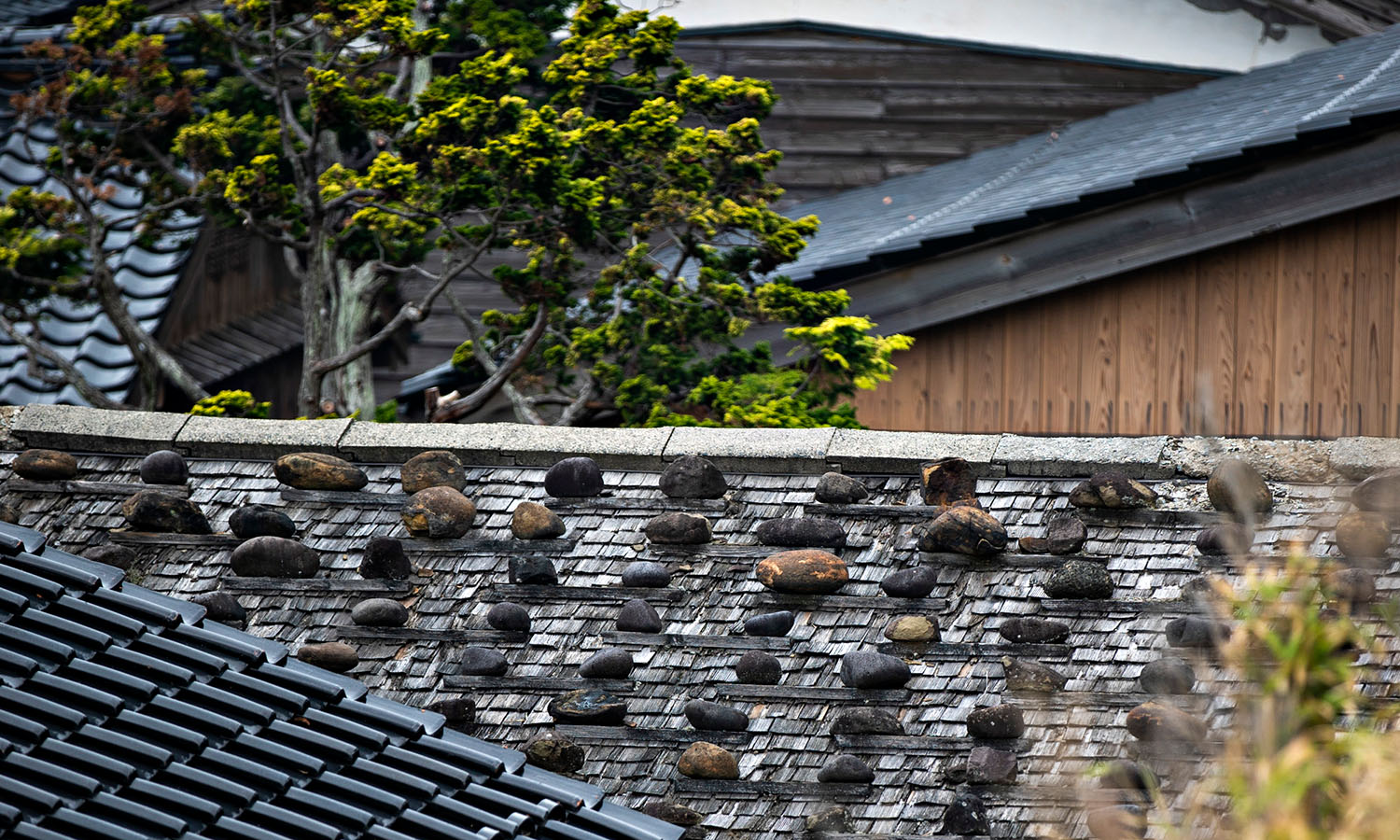
If you head to the rear of the village, there’s a flight of stairs you can climb that offers sweeping views across the entire settlement. Cedar has not only been used for the walls of buildings here but for the roofs as well, with the shingles held in place with stones. As the men of Shukunegi were busy working on the boats, it was the job of the women to climb up and replace the shingles every two to three years.
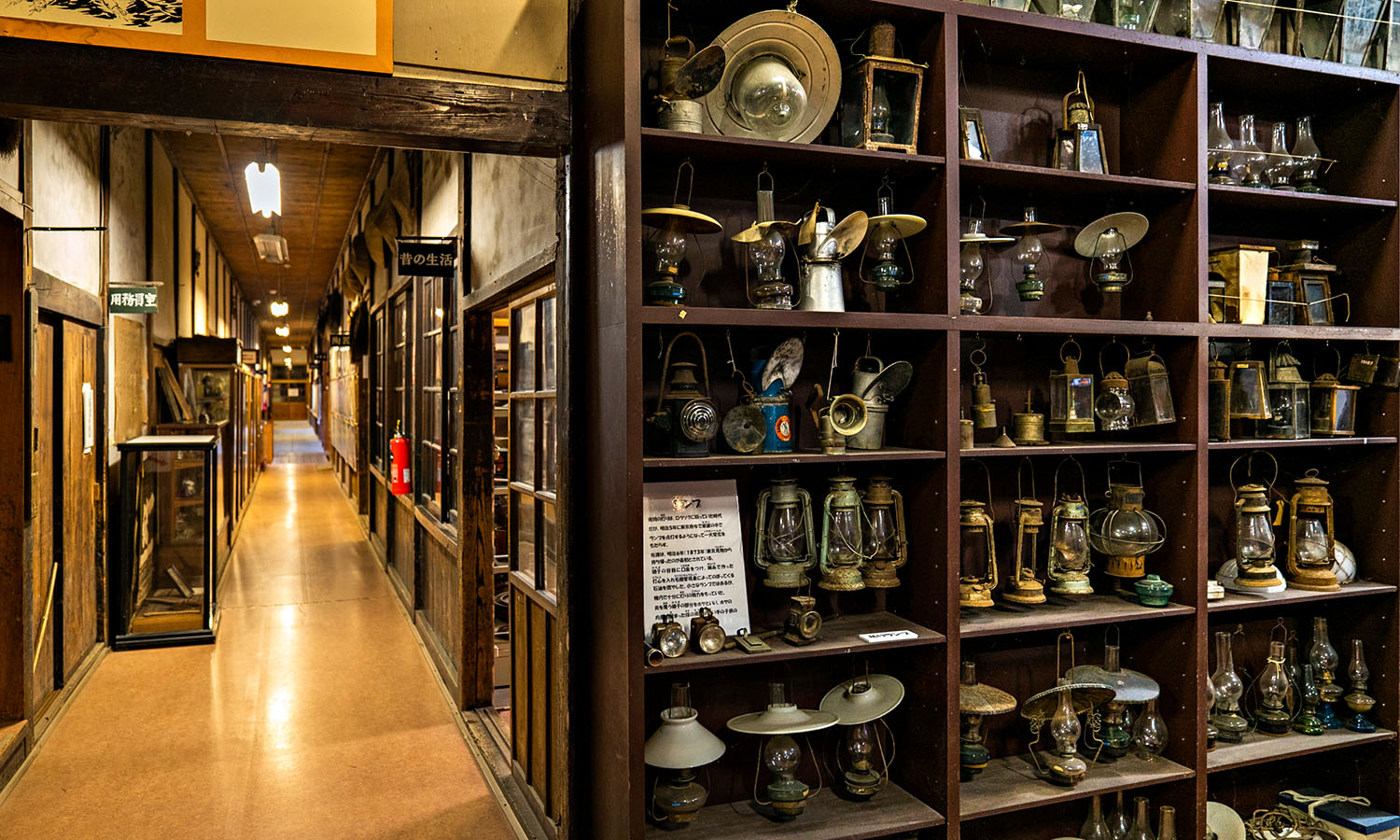
The Ogi Folk Museum was originally established in 1920 as an elementary school, and is well worth a visit. In the main building sits an almost 30-metre-long wooden boat, a true-to-size replica of a Sengokubane cargo ship called Hakusanmaru. Originally built in 1858, it would regularly sail the trade route from Osaka to Hokkaido. Traders would buy and sell goods as they made their way along the coastline, and also disperse wares that were unique to certain areas. For example, traders would take seaweed and dried anchovies from the north of Japan to Osaka, where it was used in fertiliser for the cotton fields to increase the yield and quality of the cotton.
Opened as a museum in 1972 with an aim to share the culture of Shukunegi, the museum now displays more than 30,000 objects and artefacts. These include everything from clothes and fishing equipment, clocks and cameras, as well as antique items from Kyoto that arrived during the busy trading period.
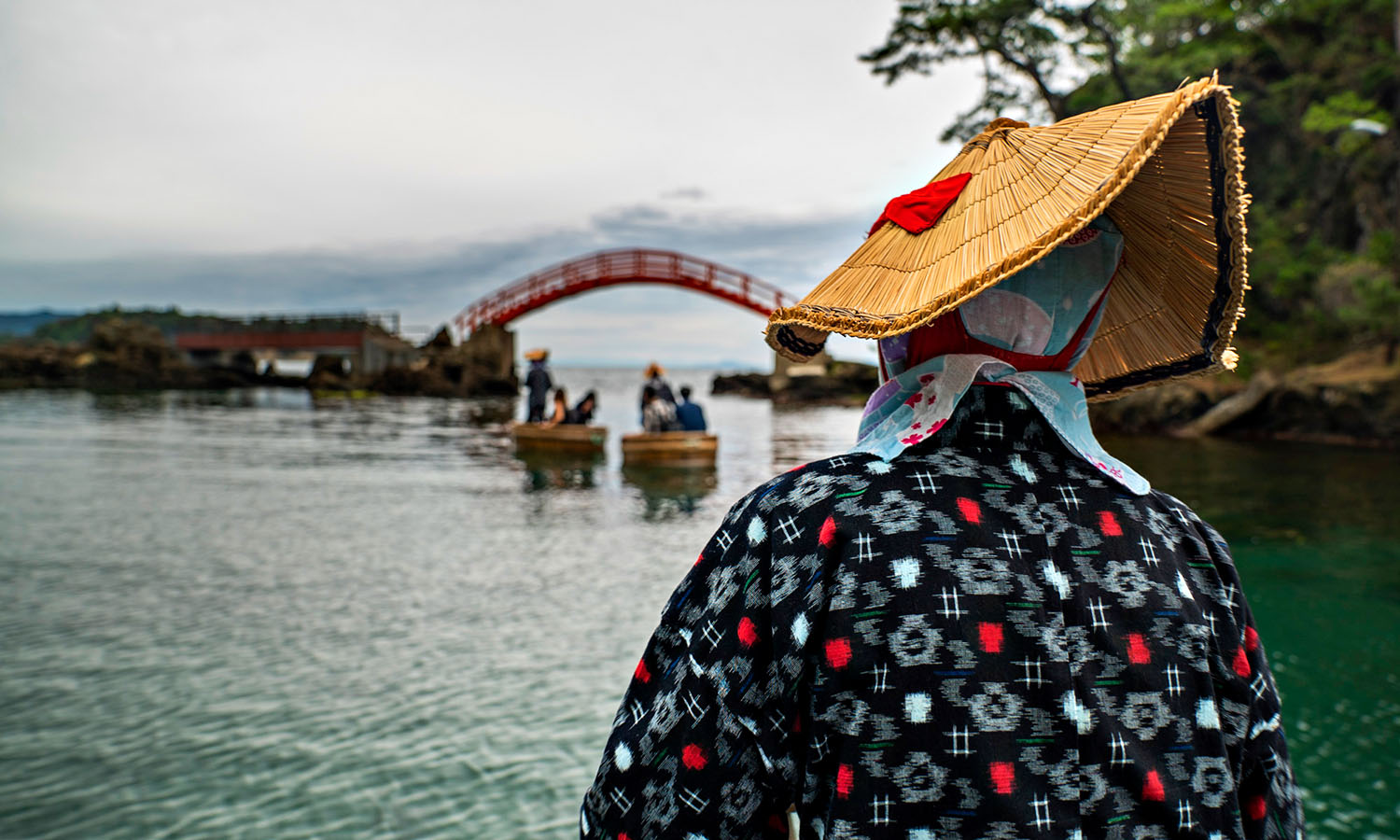
One of the unique aspects of life on Sado Island has to to be to the tarai bune (tub-shaped boats). It is said an earthquake during the Edo era changed the shape of Sado’s coastline, making it difficult at low tide for fishermen to get their boats close to the shellfish. They came up with the idea to use washing tubs as boats since they are easy to navigate through narrow, winding coves and along rocky coastlines. Tarai bune with glass windows are available to rent on Sado, giving you the opportunity to see through to the bottom of the ocean as you traverse the small inlet between Yajima and Kyojima, two small islands off the coast of Ogi.
This feature was sponsored by JNTO (Japan National Tourism Organization).
Did you know there is more than one type of udon noodle made in Japan? On the Goto Islands, in Nagasaki Prefecture, udon masters have been carefully crafting the light, silken, chewy texture of Goto udon for more than a millennia. As the westernmost point of Kyushu, the Goto Islands also played a part in the Japanese missions to Tang China, where explorers learned of the continent’s civilisation and culture. Over 200 years, 36 missions were sent, with the Goto Islands being the first stop on their way home. Goto udon is one of the things they brought back, and how it is made here has remained unchanged for a thousand years.
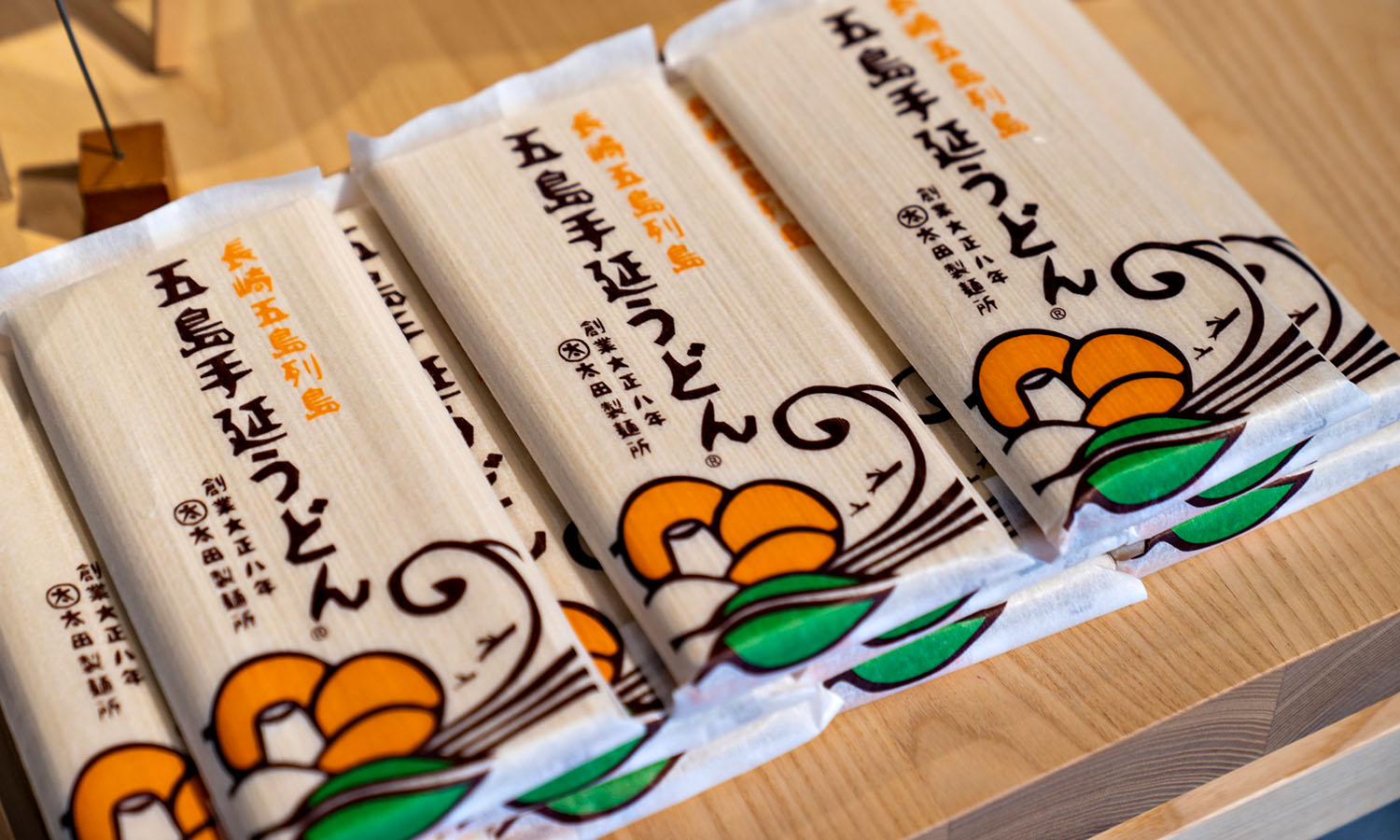
Mitsuaki Ota is the fourth-generation owner of the Ota Udon Shop, located on Nakadori Island, and he uses the same ingredients, processes and even tools as his predecessors. The key ingredients defining Goto udon are spring water, oil from the camellia that grows wild across the Goto Islands, and locally produced salt. When it comes to production, Goto udon is stretched rather than cut into their noodle form. The stretching process is lots of fun to try, and it’s surprising how long the noodles can become. The best thing, however, is how they taste.
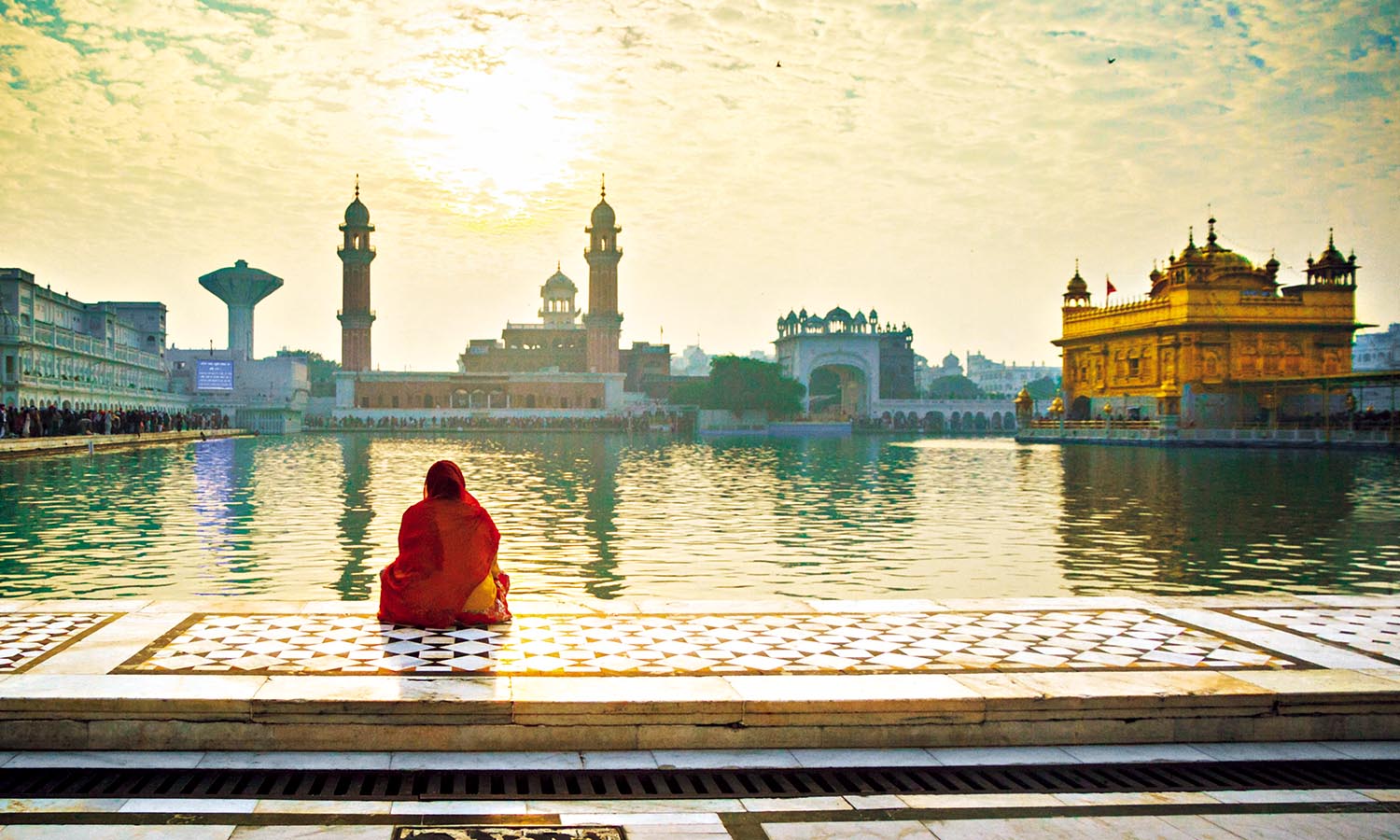
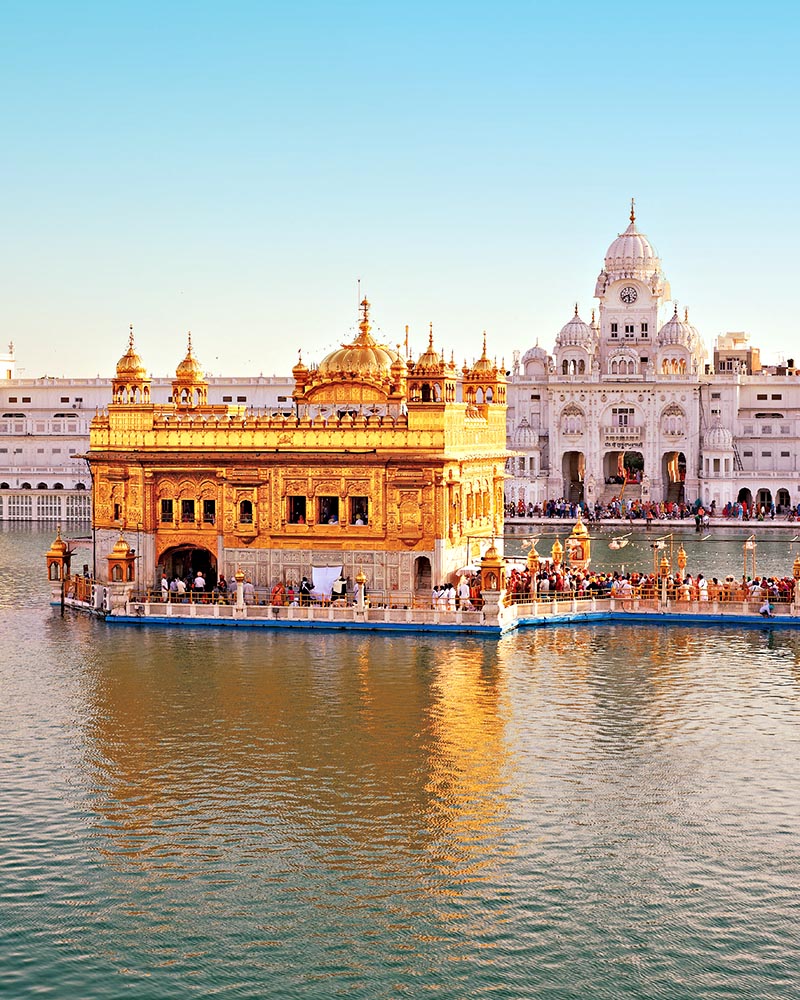
Just 28 kilometers from the Pakistan border in the state of Punjab, Amritsar in all its splendour and golden glory can be found. This bustling city full of bazaars, sights, sounds and smells is the spiritual capital of the Sikhs.
Amritsar gained its name meaning “Holy Tank of Nectar of Immortality“ from the body of water surrounding the magnificent Golden Temple, the most sacred site for Sikhs. While Armirtsar may not be a household name to many travellers, it should be and is well worth adding to your India itinerary.
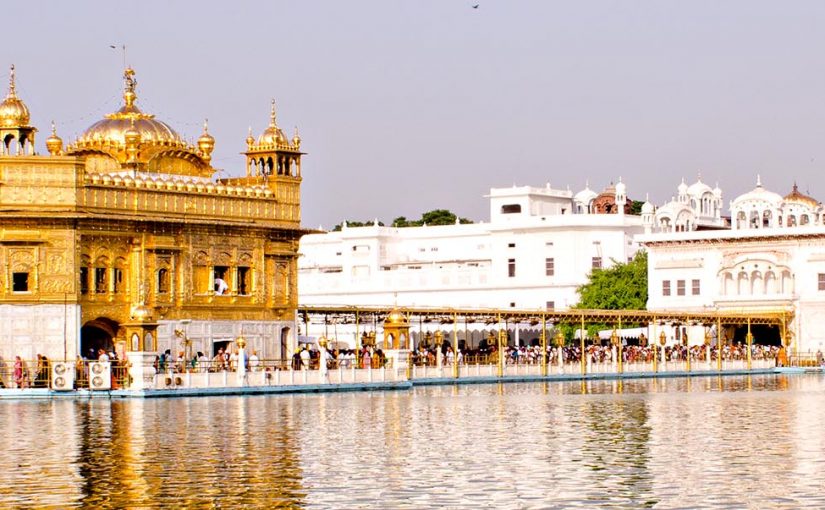
The Golden Temple is covered in 400 kilograms of glistening gold, surrounded by a serene sarovar (pond), and home to one of the biggest community kitchens (langar) in the country that serves up to 50,000 people a day. This giant kitchen is staffed by volunteers who churn out roti, rice, daal and vegetables to all who wait. The institution of the Sikh langar was started by the first Sikh Guru, Guru Nanak, whose intention was to uphold the principle of equality between all people regardless of religion, caste, colour, creed, age, gender or social status.
Though visitors make a beeline for the temple, the old-world character and charm of the city is also alluring, not to mention the quality of Punjabi food on offer – butter-drenched paranthas (Indian flatbread), dahi-balla and aloo-tikki (deep-fried savouries), Makki di roti and sarson da saag, and butter chicken are home grown favourites that must be sampled.
For a truly authentic and immersive experience you can actually stay in the dorm inside the temple. Bedding is basic and is by donation. For a dose of good karma why not pay it forward and volunteer in the largest communal kitchen in the world.
If there’s a better place in the world to practice yoga than India’s Rishikesh, we’d like to see it.
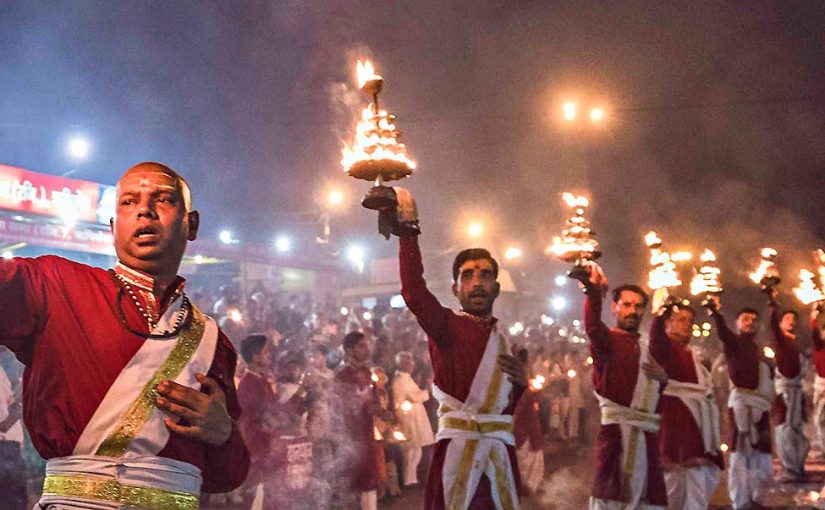
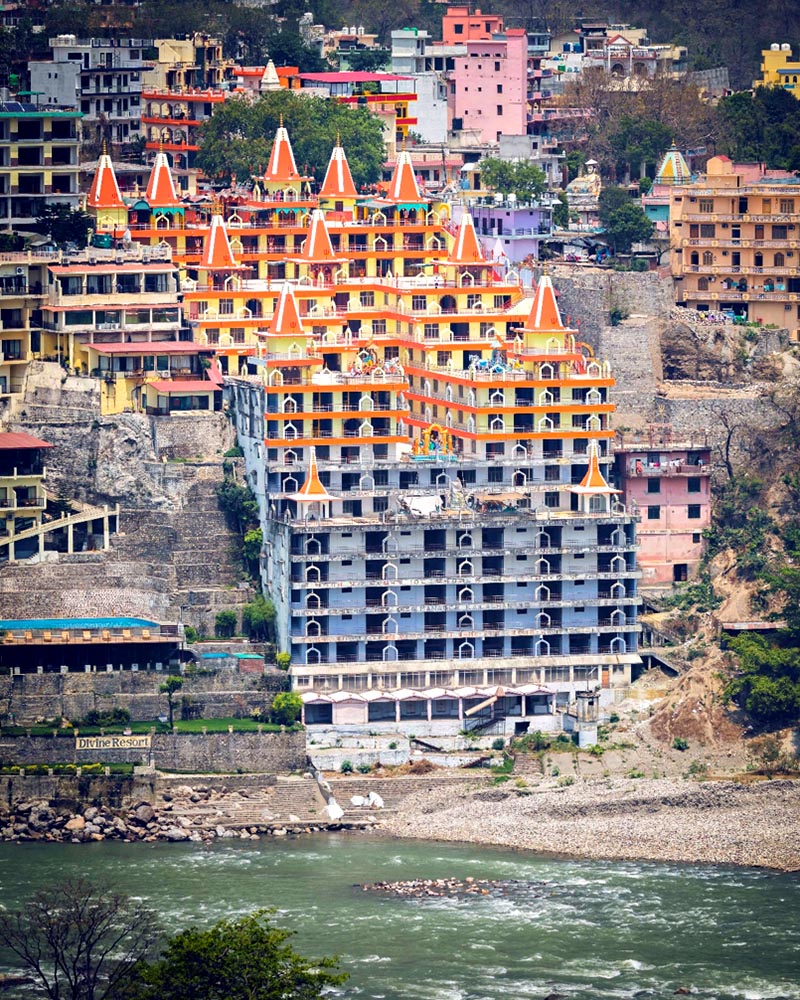
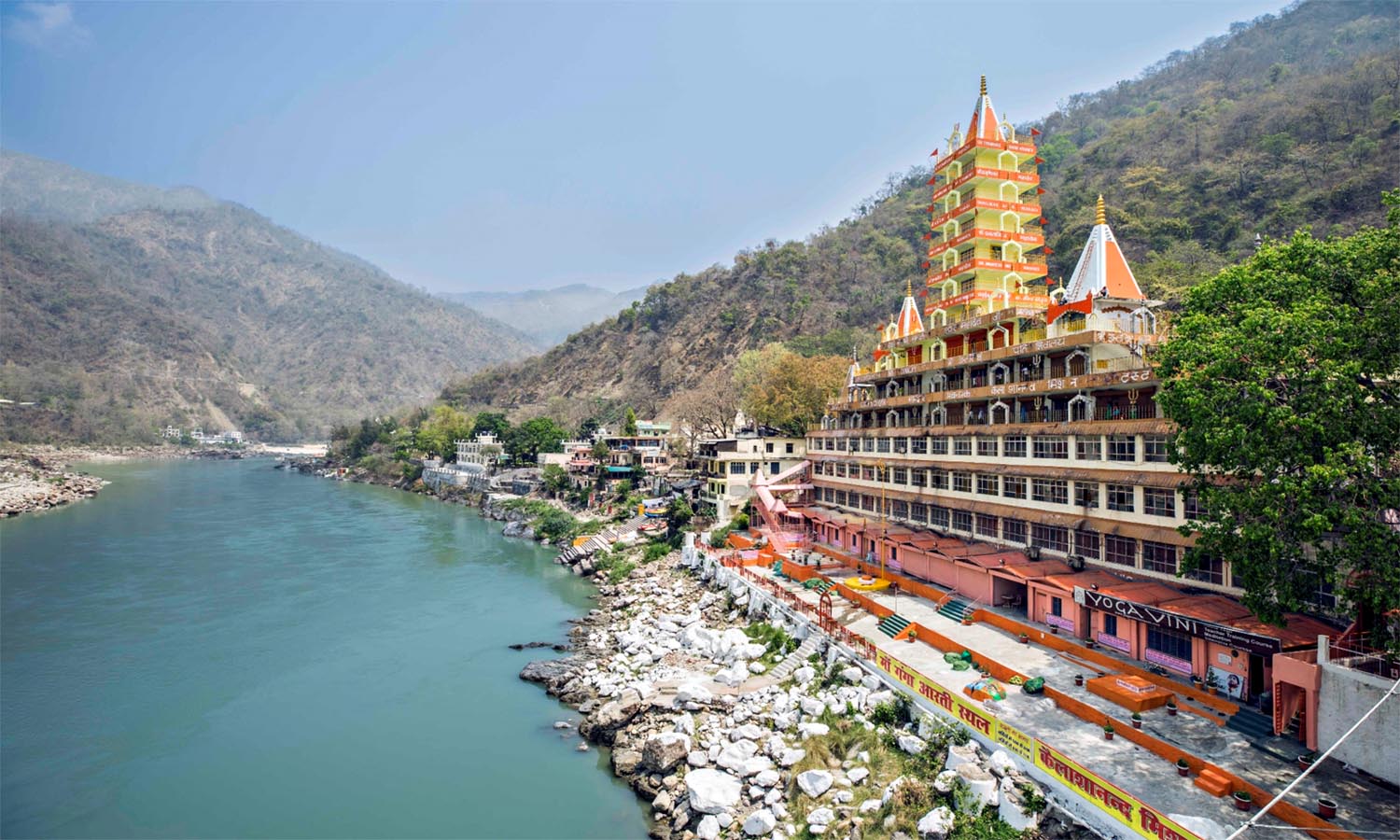
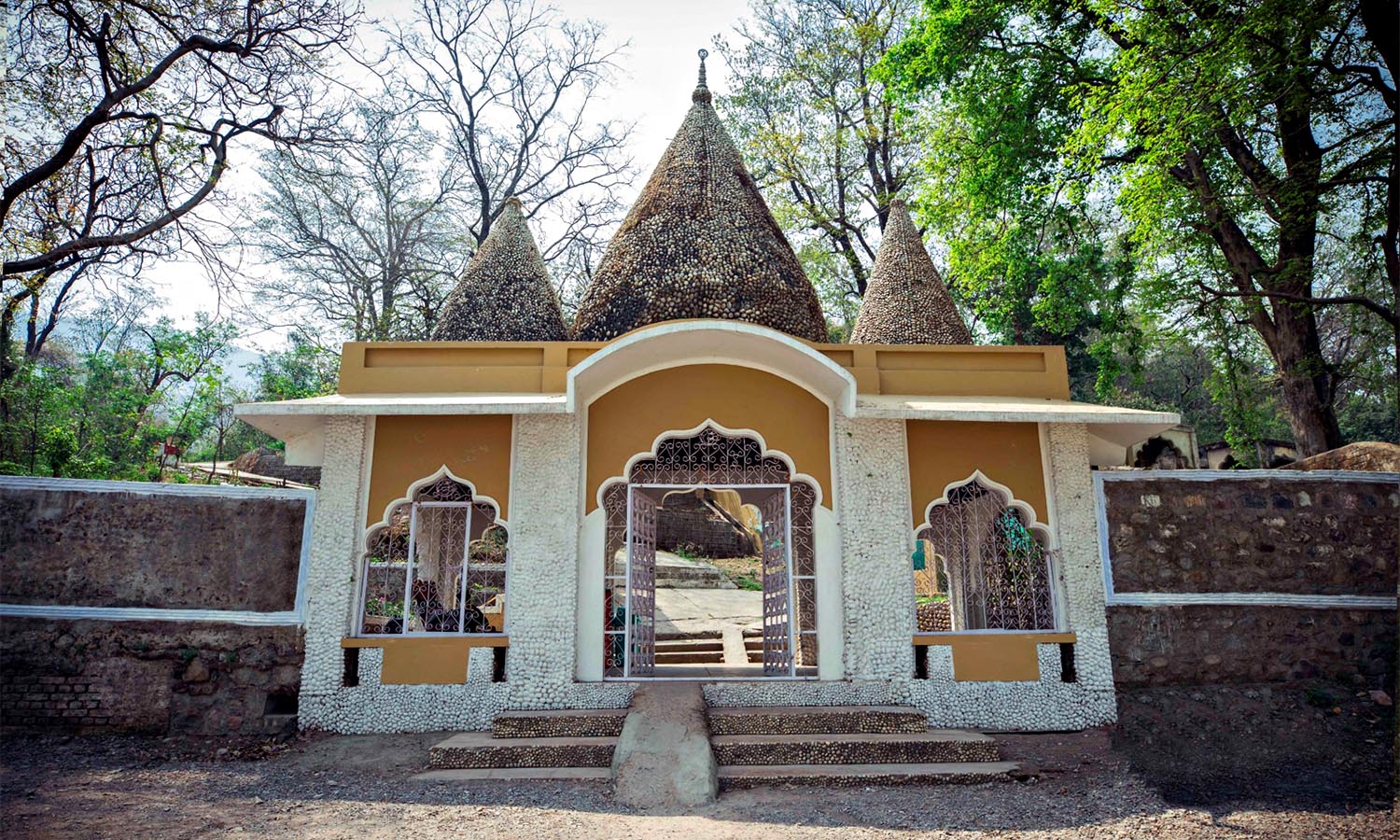
Set at the foothills of the Himalayas in the state of Uttarakhand, Rishikesh is not only one of the most sacred cities in northern India, it’s also the birthplace of yoga. Rishikesh has seen a steady stream of devotees since the Beatles’ John and Paul put down their guitars and spread out their mats here in the late 1960s.
Often referred to as the yoga capital of the world, the tranquil forested slopes in Rishikesh are dotted with ashrams, temples and luxurious spa resorts. Whether you’re a novice or looking to improve your techniques under expert tutelage, this is the place to get bent into shape.
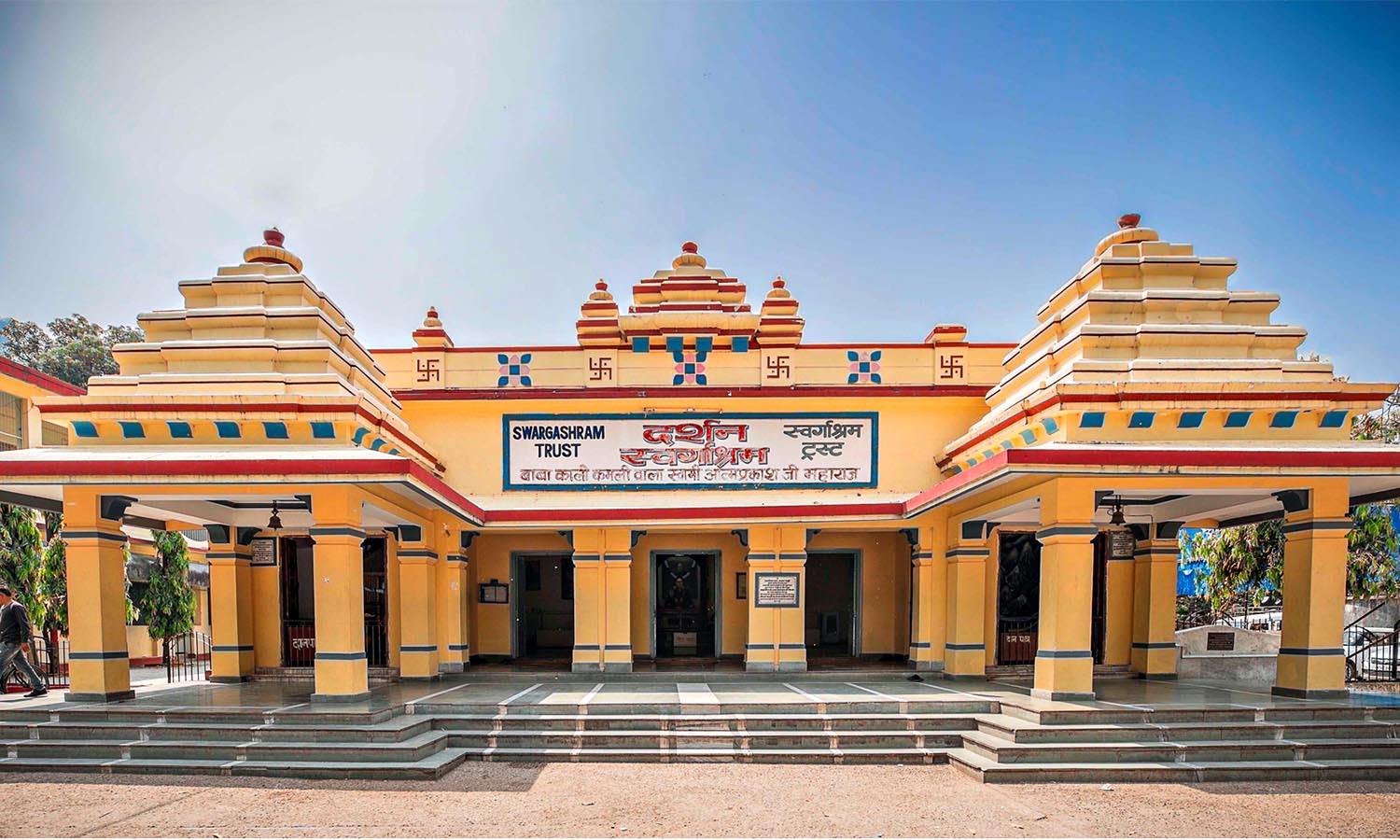
Where to go to perfect your downward dog and sun salutation? There’s plenty of ashrams to choose from. Parmarth Niketan is the largest in Rishikesh, Sivananda Ashram has free yoga and meditation classes daily, Omkarananda Ganga Sadan specialise in Iyengar yoga, and Phool Chatti was founded in the 1800s so has stood the test of time.
For those who have overstretched, tweaked a muscle or are just looking for a traditional medicine to heal their ailment, Rishikesh is also home to several Ayurvedic treatment centres. Ask at your ashram for recommendations.
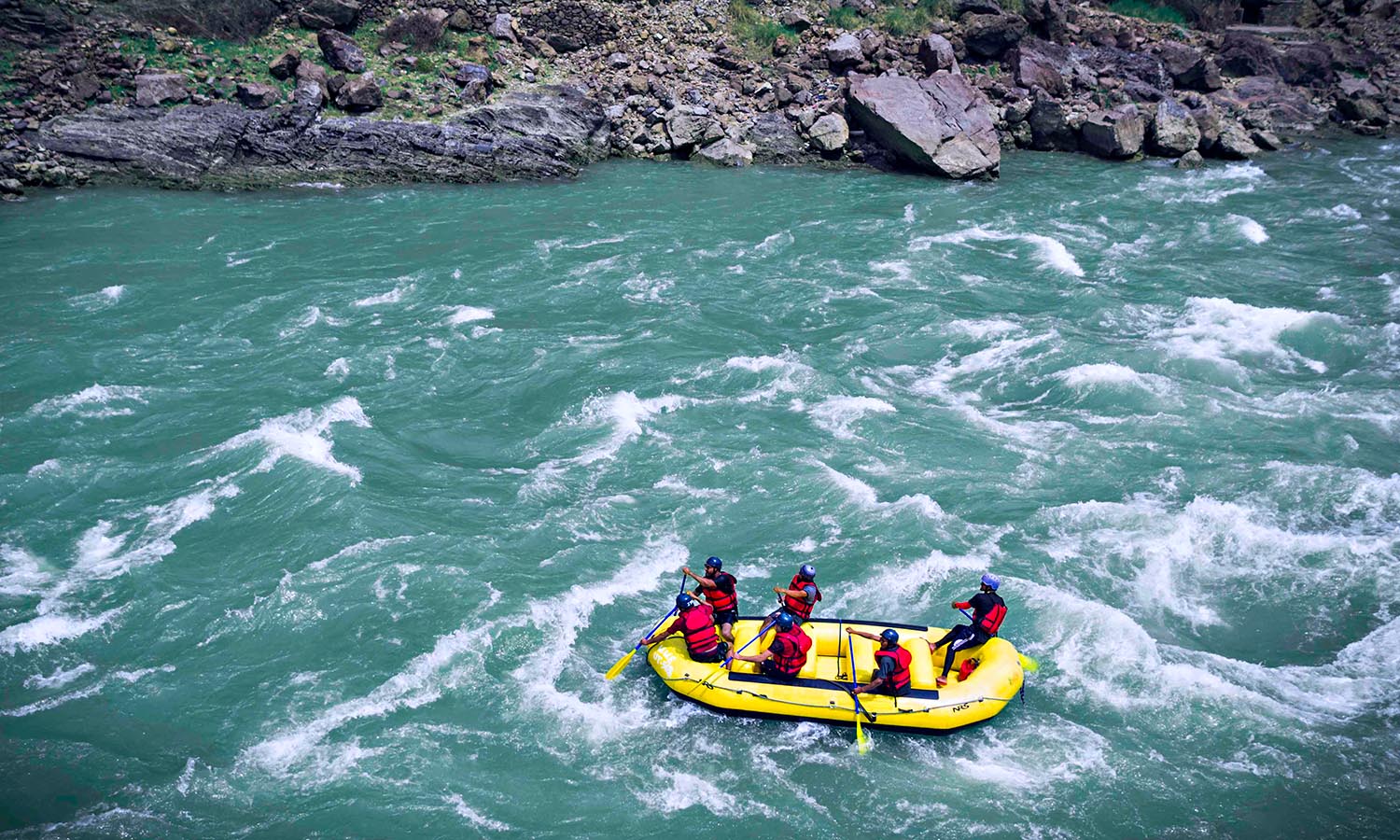
If yoga doesn’t balance your chakras, Rishikesh is also great for adventure sports enthusiasts, with activities like white water rafting, bungee jumping, canoeing, mountain biking and rock climbing all on offer. Plus, it’s the starting point for treks several pilgrimage centres.
 (
(