(
(
Archives: Feature Articles
Allows the user to create Feature Articles
Click play to watch
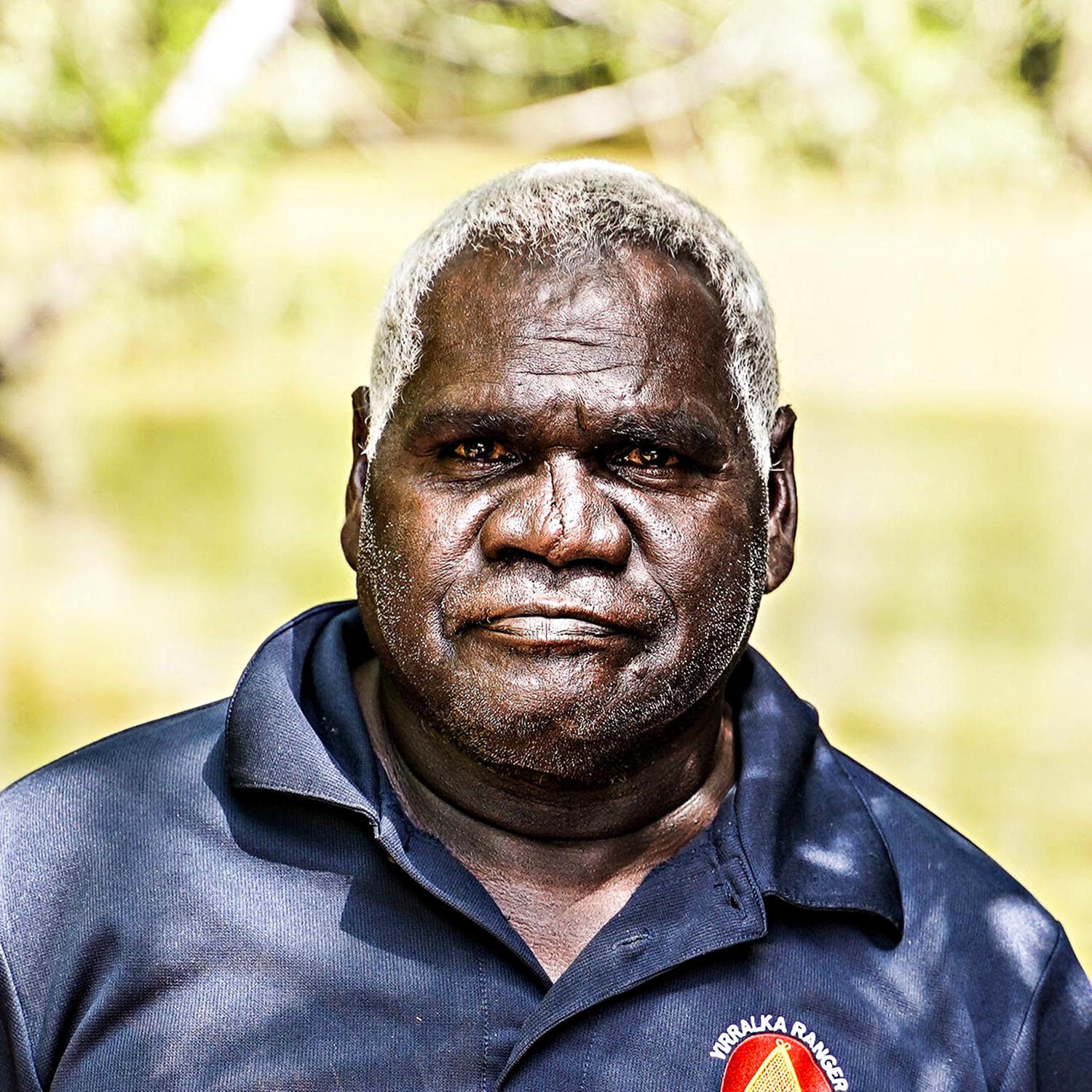
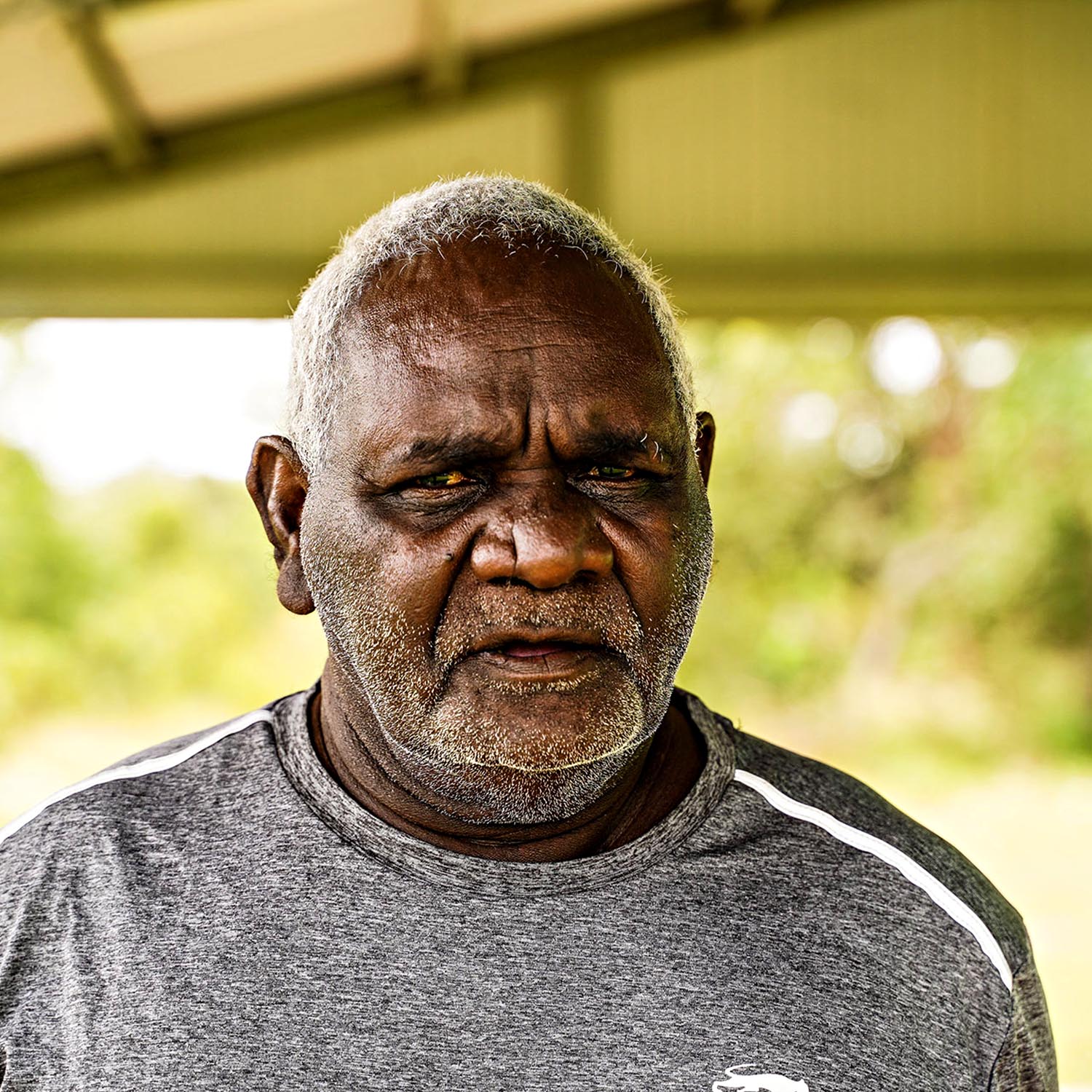
Banul Munyarryun, a softly spoken ranger from the Dhalinybuy homeland, beckons me to sit beside him beneath a makeshift tin shelter. His hand movements are the ubiquitous signal in these parts for ‘storytime’.
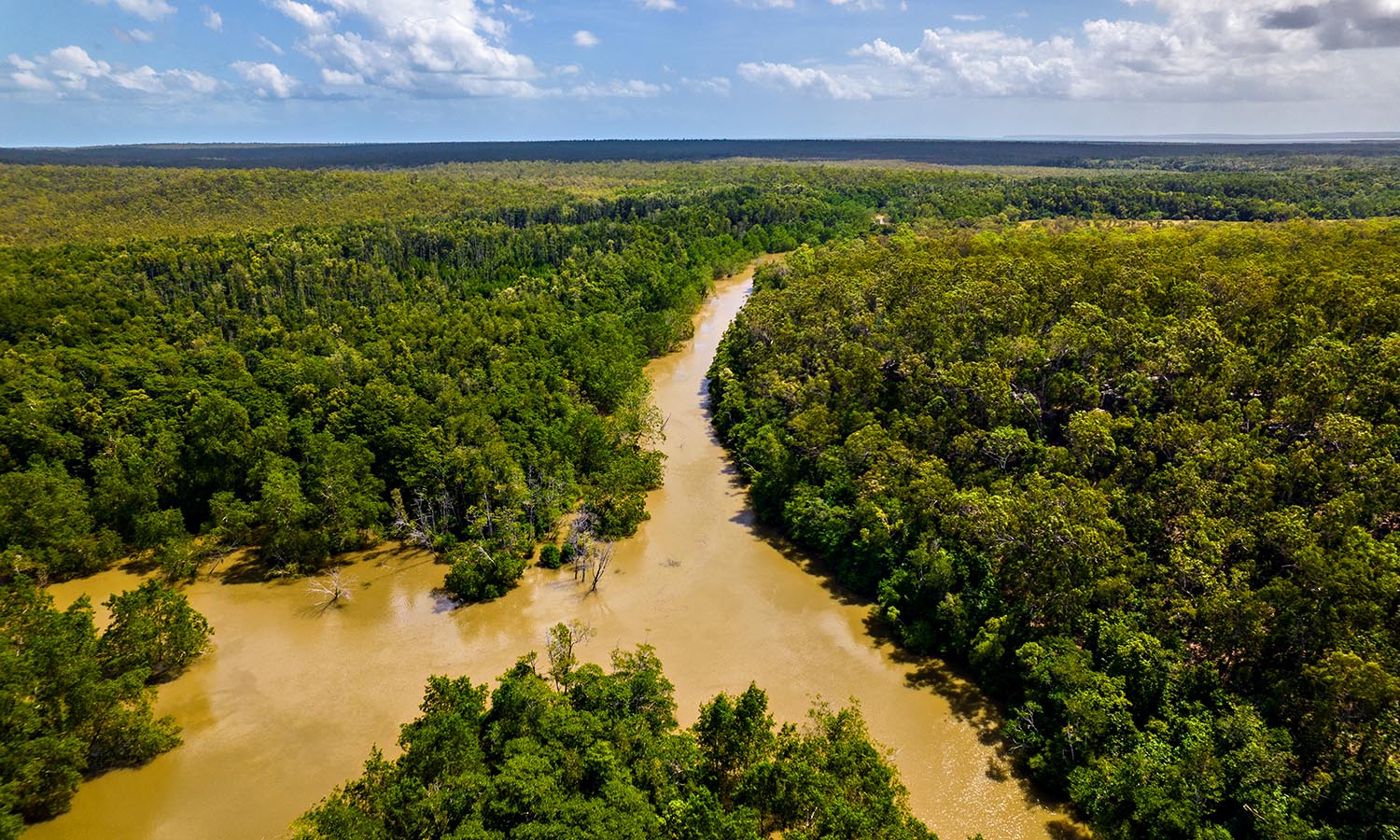
We’re deep down one of the Mars-like red dirt roads of East Arnhem Land in Australia’s Northern Territory – right on the banks of the fertile Cato River that flows into Arnhem Bay.
Because we’re off the coast, it’s oppressively hot. Sweat pours from my brow and my shirt sticks to my back, but beneath the heaving canopy of Stringybark trees a light breeze still envelopes the land, somehow cutting through the thick humidity and tickling my skin.
As he begins his story, Banul’s voice seems to magically quell the environment around us. Almost like he’s an orchestral conductor, syncing up with the tone of the bush and swaying branches. I’m instantly more relaxed in his presence while listening to his story, despite also being fixated on a face weathered, scarred and wrinkled with years of obvious struggle and time.
“When more tourists come here, they will be welcome,” Banul says to me with the sort of wide-eyed reverence and enthusiasm you might come to expect from a hotel marketing manager and not a local Indigenous elder. Just 50-metres to his right sits proud Yolŋu-man, Buwathay ‘Kevin’ Munyarryun. If ranger Banul is the marketing manager around here, Kevin is the regional visionary and owner of Liya Wanhurr Camping and Tours. He’s also the ‘T.O’ or ‘Traditional Owner’ who has agreed to host us in his homeland.
Click play to watch
This existing campsite is the spot where Kevin has dreams to build an eco-lodge. With Banul, he talks to me about his plans for a plunge pool, a BP service station for passers-by on the Central Arnhem Highway and a barramundi fishing charter business.
Aspiration doesn’t come easy in a place like this. Located more than 650 kilometres east of Darwin, there’s currently just one road into the town of Nhulunbuy from Katherine and on a good day the drive along the Highway can take as long as 14-hours.
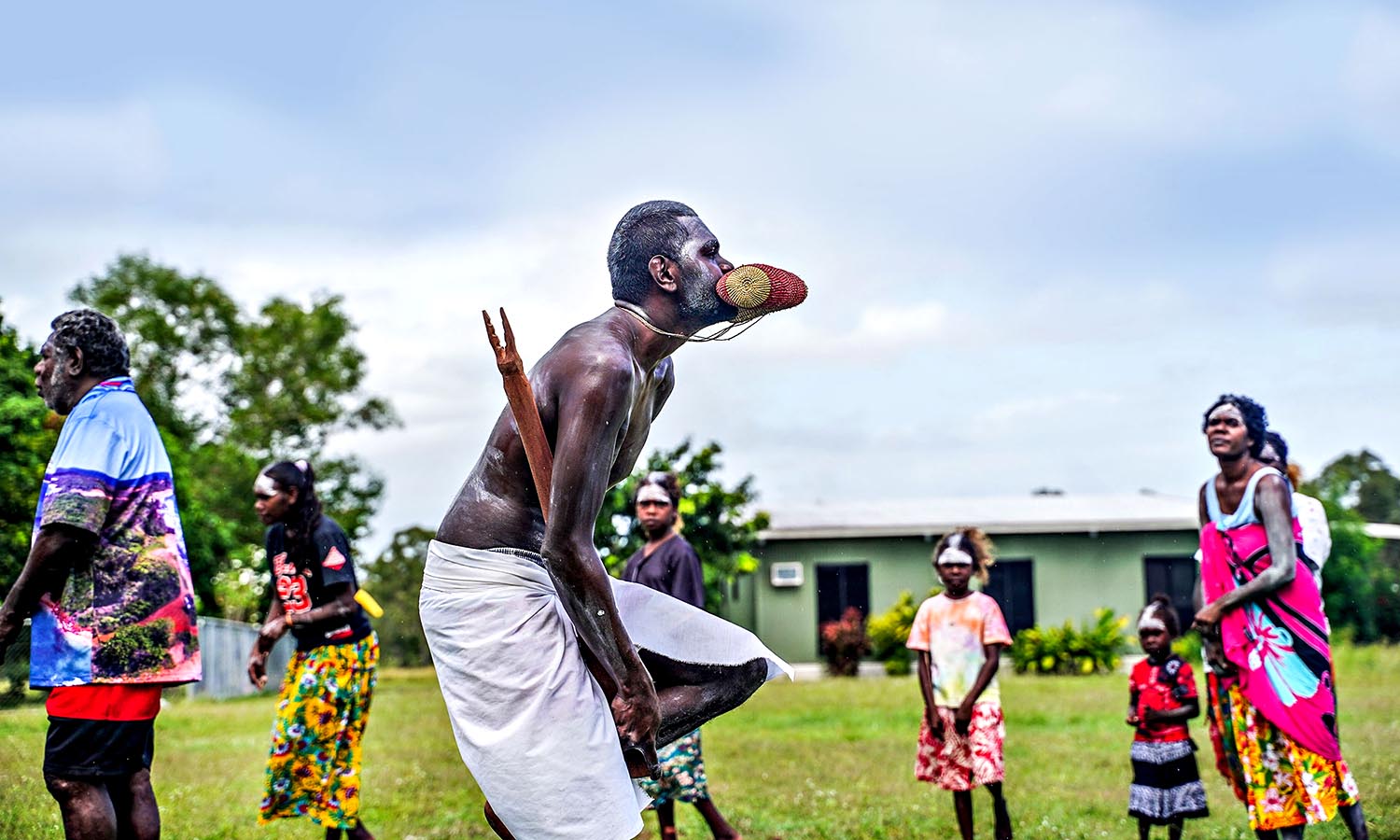
But if anything, Kevin and Banul’s willingness to even have us in their Homeland – to watch them perform a bunggul (traditional dance) and walk us around their community – is just the start of a huge social and economic upheaval we’re privileged to witness as visiting media on behalf of local government authorities and the Northern Land Council.
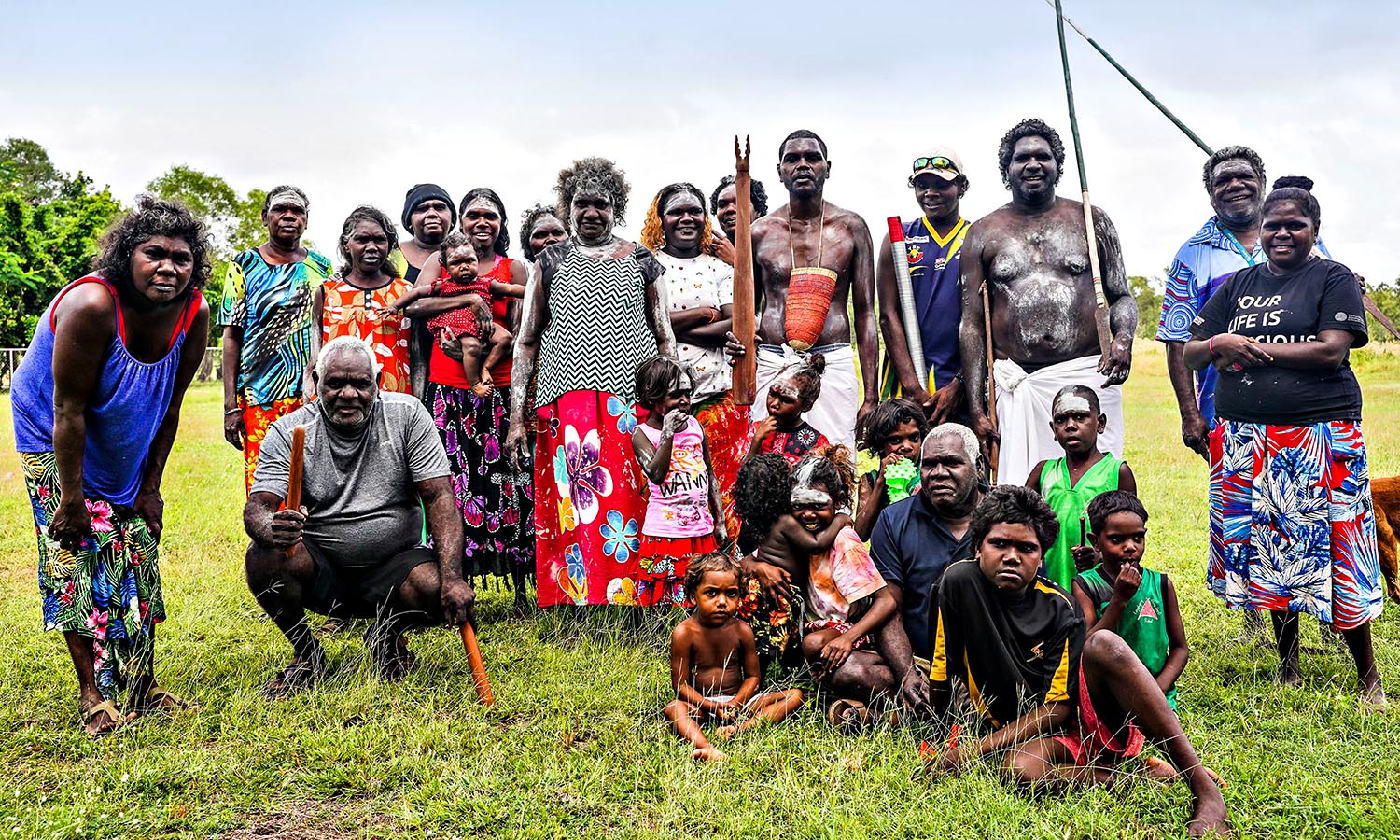
Despite a history dating back 60,000 years (making East Arnhem Land one of the most culturally significant regions in Australia) its tourism infrastructure and population has been shaped by a more modern and at times, controversial mining history dating back to the 1960s.
“These future plans are for my family, this is for our future,” Kevin remarks on his tourism vision for the campsite. He speaks with such promise, but he’s actually referring to what is a very uncertain future in the region without mining giant Rio Tinto, who, despite making record windfalls for decades from their bauxite mine and refinery (bauxite being the raw ingredient used in the production of aluminium), are leaving East Arnhem Land for good.
Rio Tinto stopped refining bauxite at their Gove plant in 2014, and according to Developing East Arnhem Limited (DEAL) there’s still an indiscriminate timeline on exactly when they will fully withdraw. But it will be soon. And Kevin knows the end is fast approaching.
As I’m sitting watching yet another impossibly beautiful sunset over the old, decaying refinery from the lawn of the Gove Boat Club, it’s hard to envisage exactly what the town of Nhulunbuy will look like when Rio eventually pulls both their people and their cash.
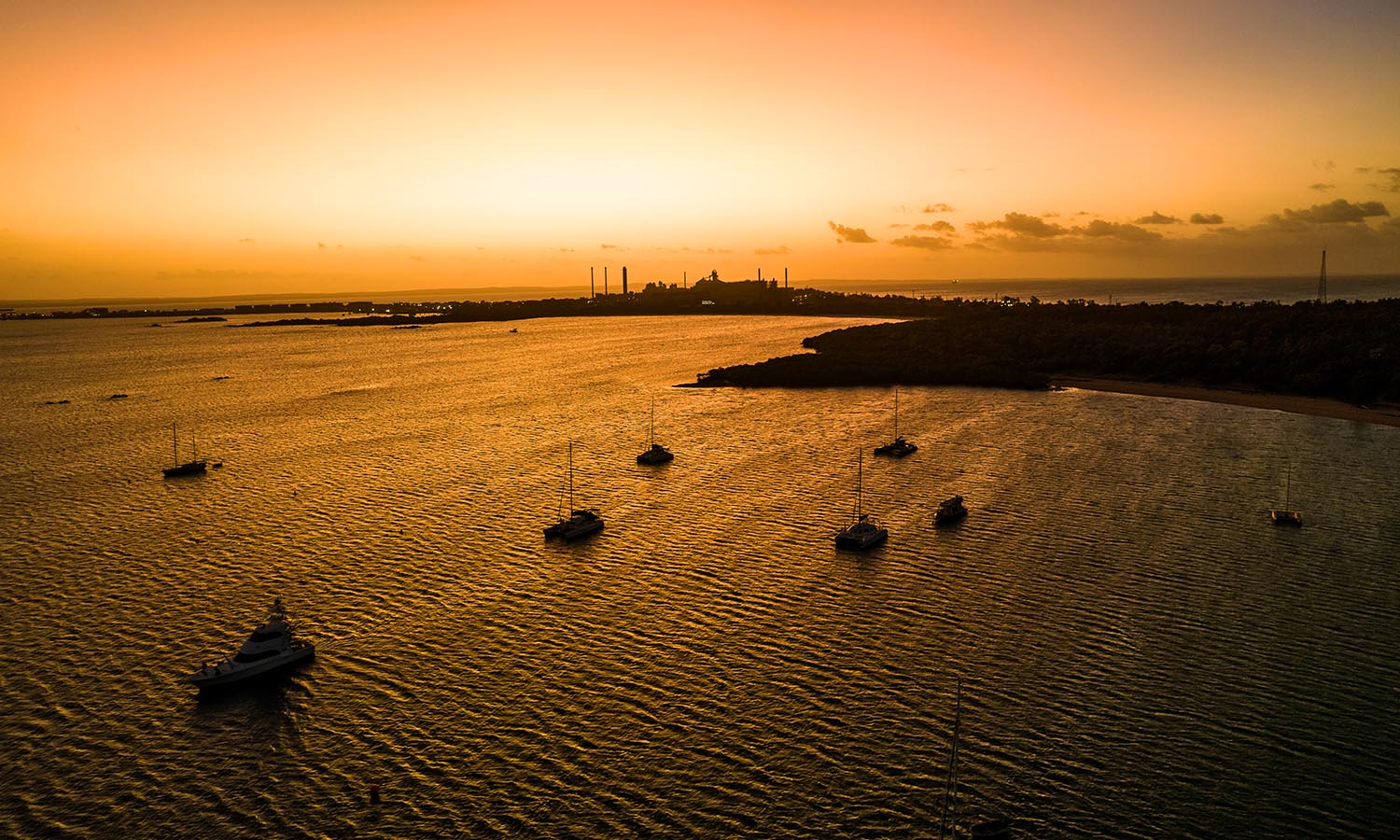
There’s not much here anyway except for a handful of motels, a pub, a golf course and the Boat Club where we’re sitting. But as the kids of locals dart around the Club’s perfectly manicured lawn, while yachts bob in the distance and families laugh together over cold beers and hearty pub fare, there’s a familiar aura of tropical Australiana-paradise without the stench of over tourism.
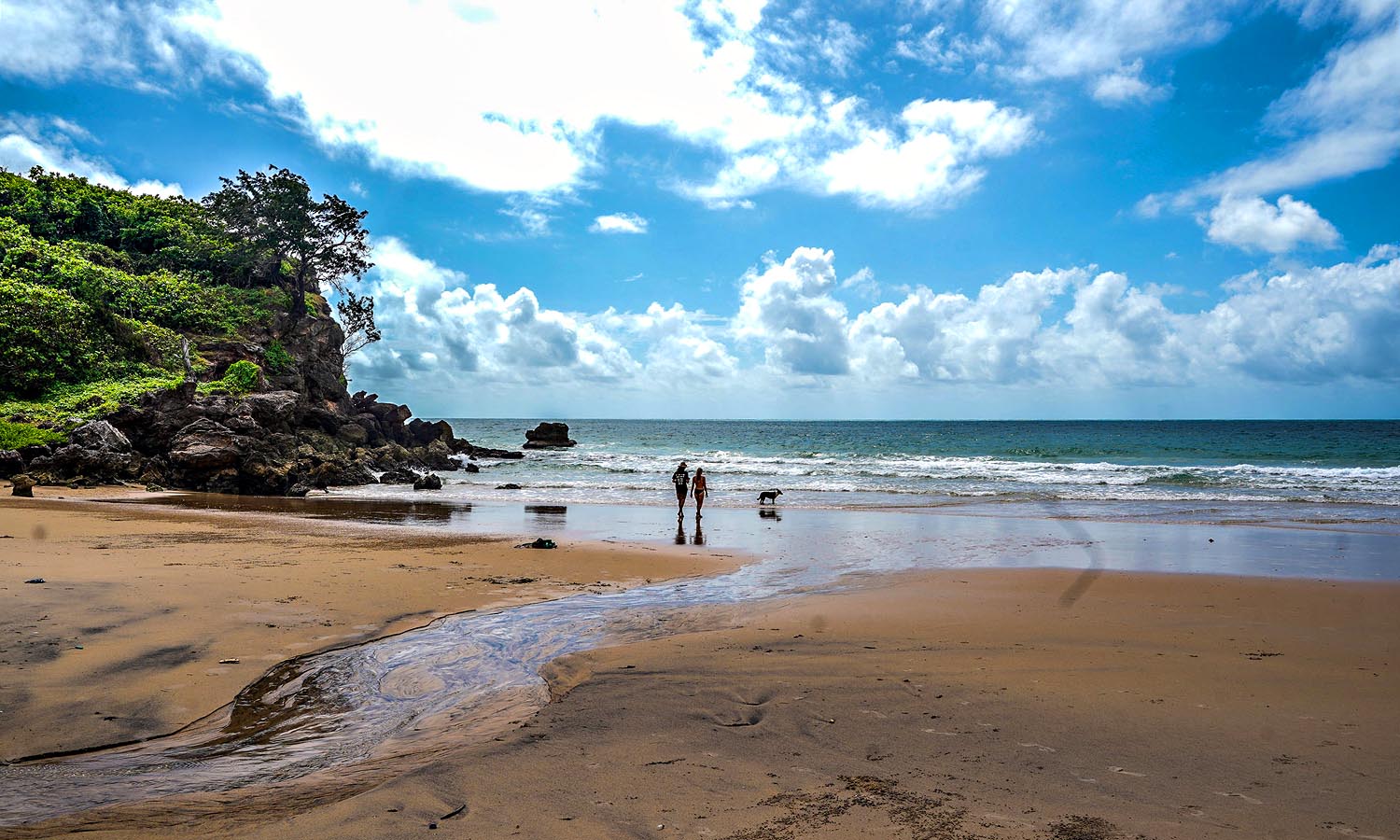
The Jedi of fishing
The potential for East Arnhem Land to become another booming regional tourism centre in northern Australia, just like Cairns in Queensland, is not lost on representatives from DEAL or local tourism operators like Shane ‘Obi’ Kenobi from OBJ Fishing Adventures.
In many ways, Shane embodies the seismic change here and is embracing the socio-economic shift to tourism with gusto.
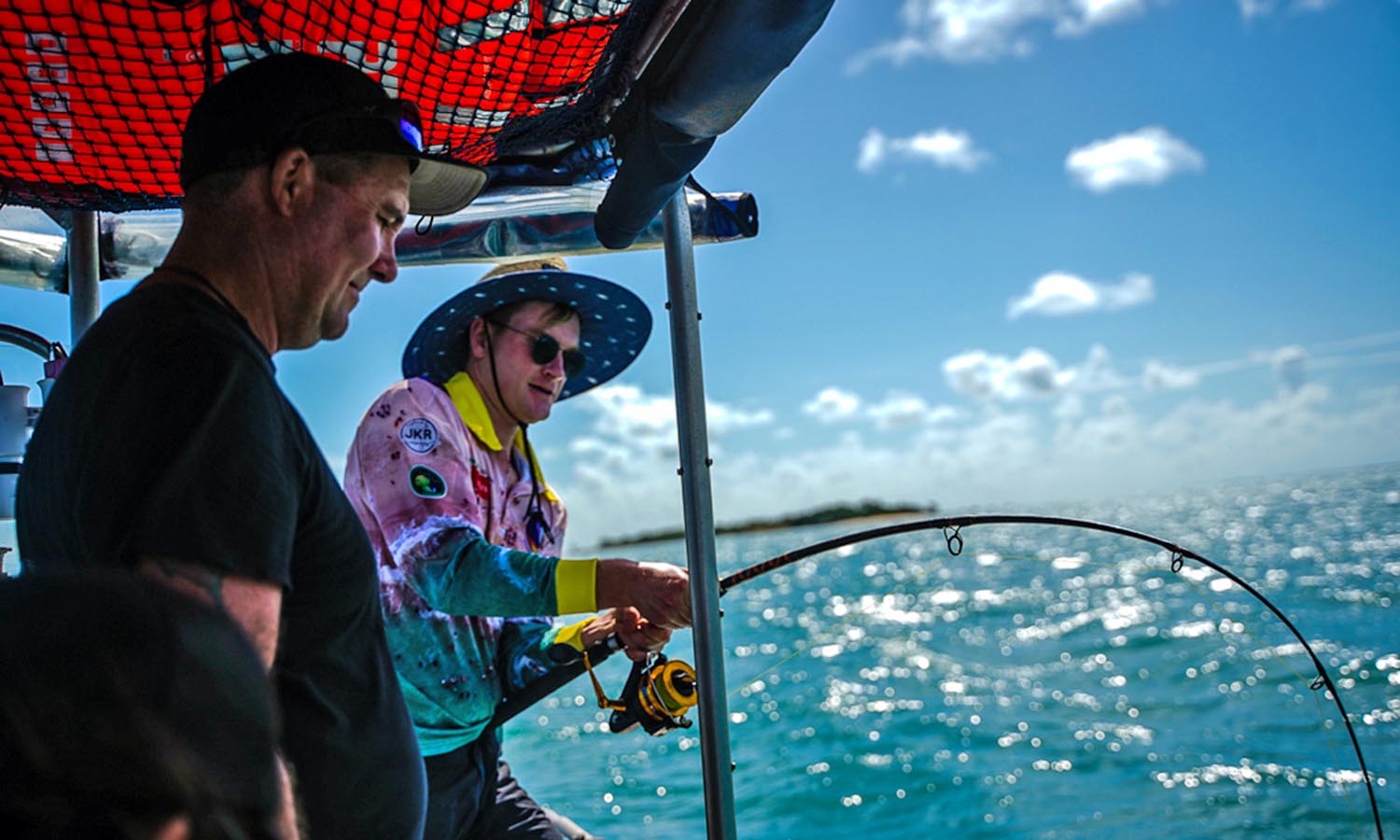
He’s a local legend, and while his nickname was born from convenience, he really is the Jedi of fishing on the Gove peninsula. Working as a fitter and turner at the refinery for 25-years before ‘retiring’ and starting a local fishing charter business was not because Rio Tinto were leaving, but because of the obvious surging tourism industry and constant stream of 4WDs he’d witnessed pouring into the region. The pandemic didn’t slow it down either; if anything it shone a light on the booming popularity of Australia’s final frontier.
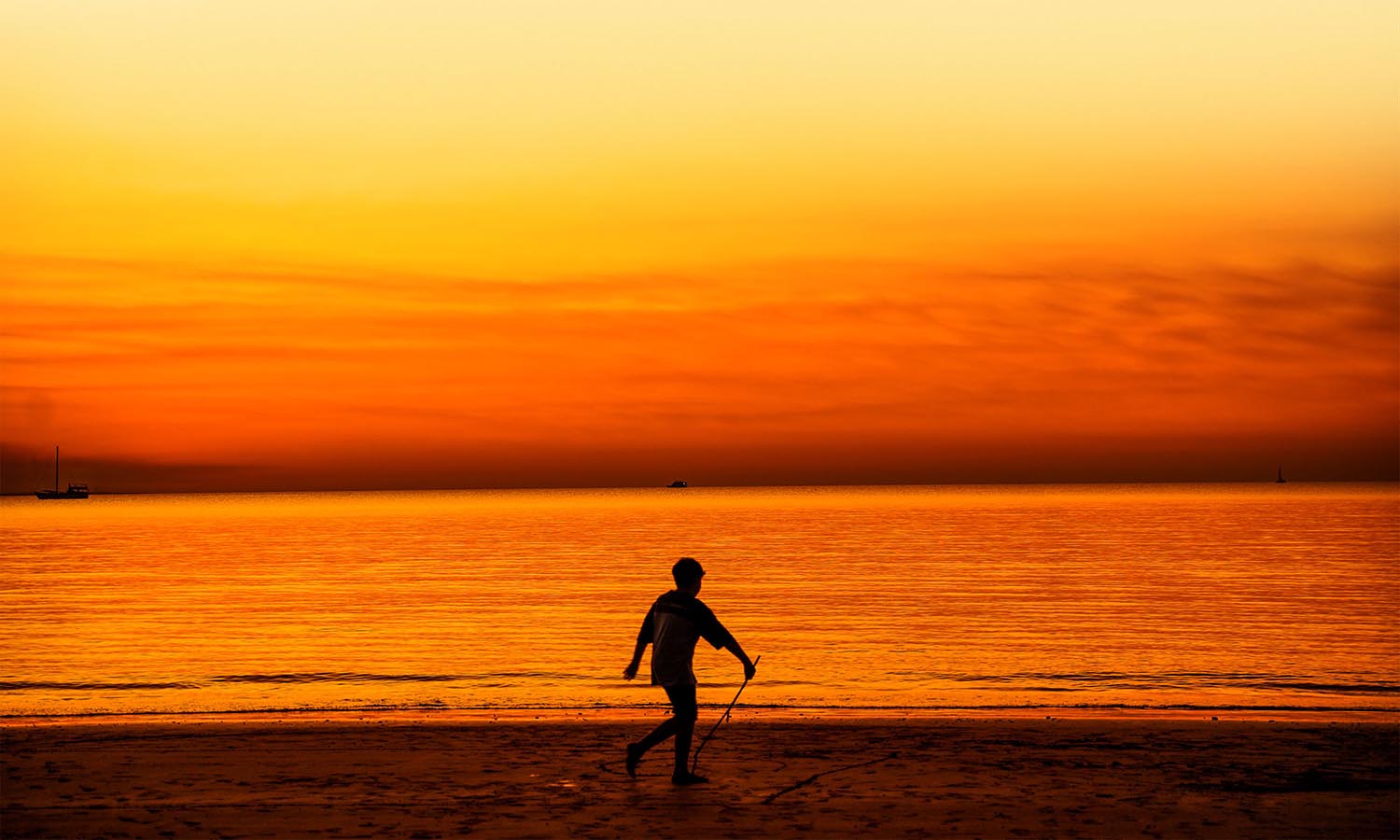
Early one morning, as we cruise out together over a glassy turquoise bay towards one of Shane’s secret spots in the Granite Islands, the hot Arnhem sun rising on our backs, there’s something poetic about the rusting hulk of metal on the horizon behind us where he no longer needs to work to earn a living. We bait our hooks together and watch as a school of tropical fish hug the hull of our boat and pods of snub-nosed dolphins break the perfectly still water with their strangely shaped faces in poetic unison. We catch nothing worth mentioning in this article, but that’s not the point.
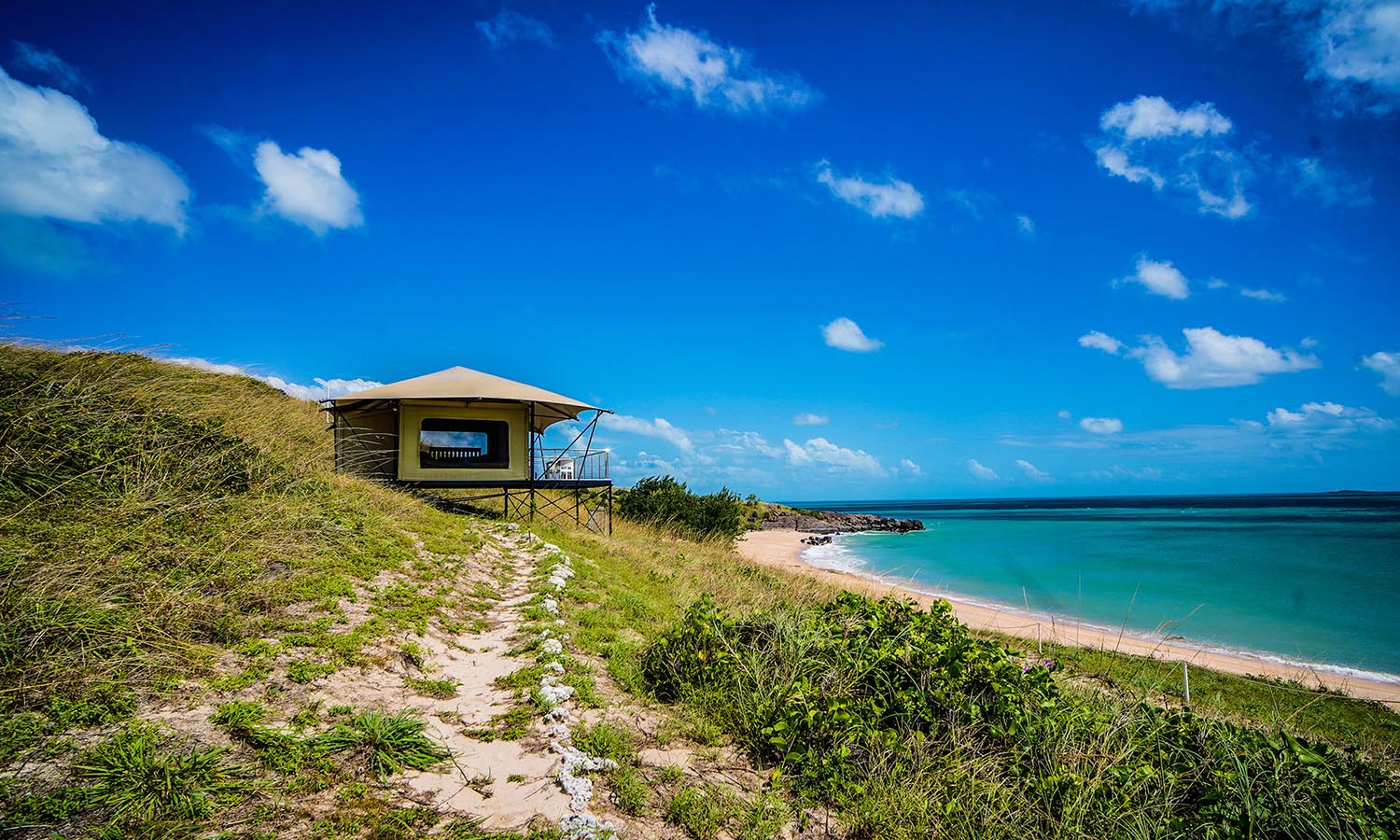
You can actually swim here
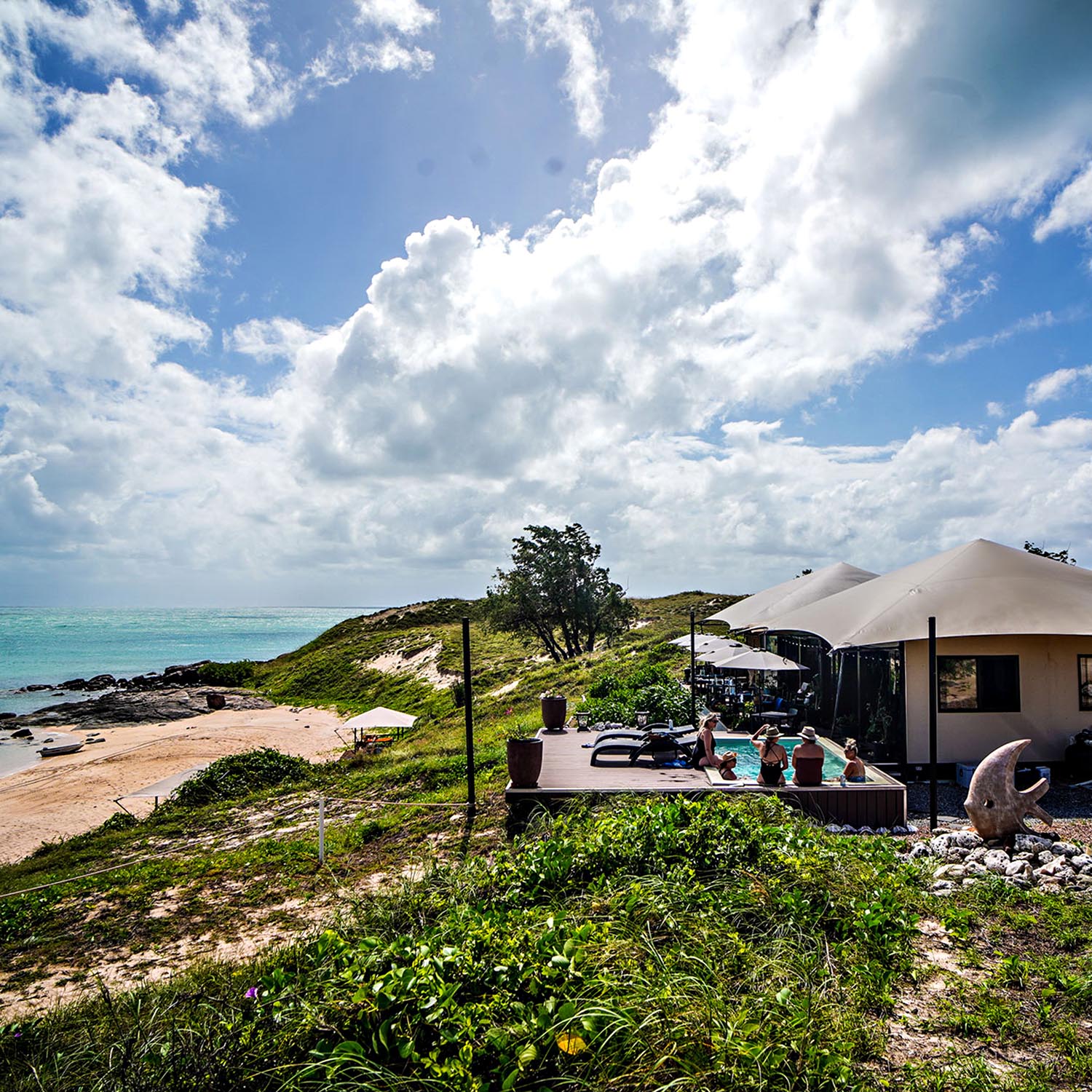
The same hope for an Arnhem Land buoyed by tourism is held by Territorian husband and wife duo, Helen Martin and Trevor Hosier who recently redeveloped Banubanu Eco-Resort, a tropical beachfront glamping experience on Bremner Island – about a 40 minute boat ride from the mainland. Idyllic, low impact and luxurious in every sense of the word, the retreat with its own protected bay offers the simple pleasures of space, time and an escape from the modern world.
Most locals up here are scared of the water (rightly so given the size of the saltwater crocodiles and near invisible box jellyfish and irukandji), but Helen assures me in all her years standing on the beach of Bremner she’s only ever seen three crocs. The water is so tempting, that’ll do me for assurances: then I dive into the Bahamas-like water for a swim.

Art, music and outer space
AU$180m was committed by the previous Federal Government and AU$50m by the Northern Territory Government to improve sections of the Central Arnhem Road and DEAL (which now has 8 dedicated staff) was established to help guide the economic goals of the region into the future.
More excitingly, just three weeks after my visit, 70 scientists and engineers from NASA descended on Nhulunbuy to put the final touches on a rocket launchpad on the outskirts of the town. The region’s weather and proximity to the equator makes it perfect for small rocket missions carrying satellites.
Couple this exciting investment alongside the Buku Larrŋgay Mulka Centre, which features both the Yirrkala Art Centre (considered to be the number one Yolŋu contemporary art space in northern Australia) and the Mulka Project next door – a digital art production studio – which has exhibited their work at the Sydney Biennale and even hosted Apple’s global marketing team in 2021.
Click play to watch
Even Kevin from the Dhalinybuy community sells his work at Yirrkala. His self-titled album can also be found on Spotify, instantly transporting you back to his homeland and the banks of the Cato:
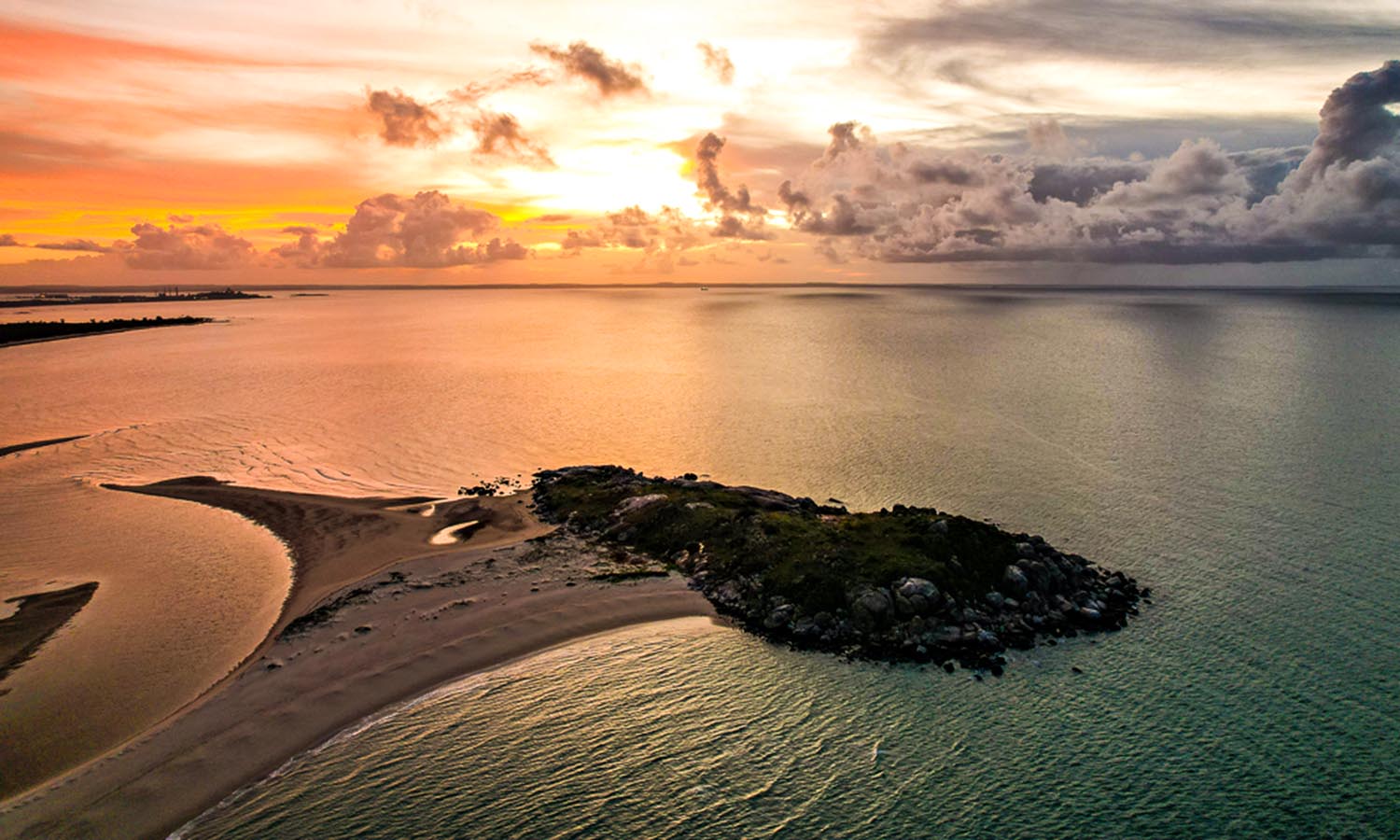
In Yolŋu, the word Buku-Larrnggay translates to “the feeling on your face as the first rays of the sun touch it”, something that you can only experience in this part of the Top End which is also known as Miwatj, meaning ‘Sunrise Country’.
After learning about both Buku-Larrnggay and Miwatj while browsing carvings and screen printings at Yirrkala, it’s something I decided I wanted to experience myself while I’m in East Arnhem Land.
Early one morning I hop out of bed and hike along the sand towards the top of East Woody Beach, watching out for crocs who might also be there to catch the same early morning warmth. Scaling damp granite boulders, some as big as small cars, I realise only once I’m at the top that I’m not alone.
But it’s not crocodiles for company though, but instead a nice mix of locals and tourists all standing in anticipation with their faces edging towards the morning glow. Within minutes, the sun breaks the horizon and at once the dozen spectators all fall silent.
With our eyes now all closed, the sun hits our faces and a new dawn breaks, hurtling Australia’s final tourism frontier one more day towards a new and exciting future.
get in the know At just under 100,000 square kilometres, Arnhem Land is roughly the size of Iceland.
The Age of the Digital Nomad is one of the exciting developments post COVID19 lockdowns and restrictions, allowing you to have a source of income in your favourite holiday location.
Many countries have created their own versions of a ‘Digital Nomad Visa’ following the huge hit the tourism industry faced during the pandemic. These Visas are designed to encourage visitors to stay longer than a few weeks, with most a year long and extendable.
Here’s five of the best places around the world to work from home:
The silent city Mdina is the ideal place to work from home, your work won’t be interrupted by the sounds of traffic or tourists. Cars are very limited and visitors are expected to respect the quiet of the city.
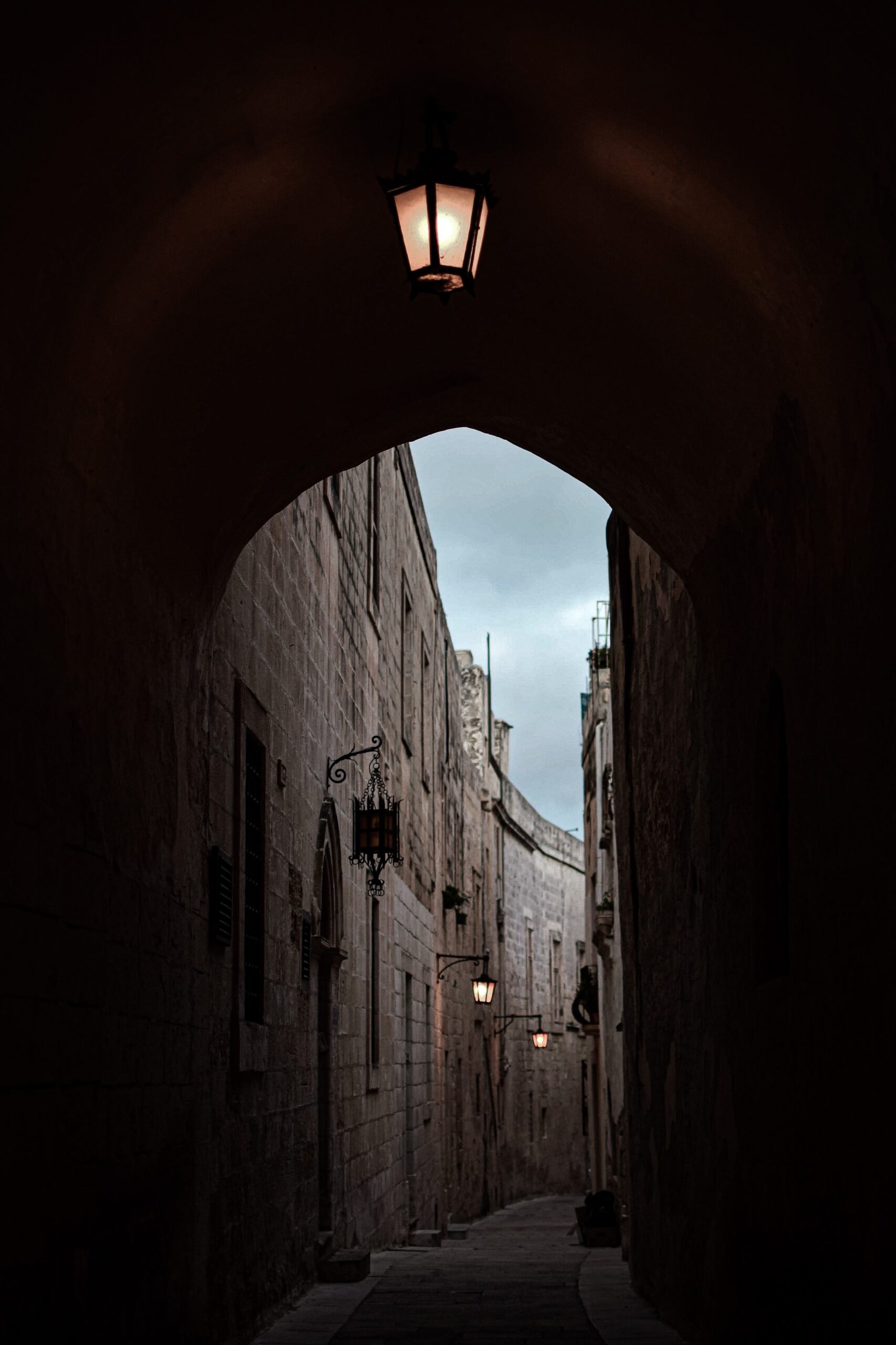
The ancient city of Mdina was once the capital of Malta and earned its name of the silent city when the capital was moved into what is modern day Vittoriosa.
You could enjoy your lunch break on foot walking amongst ancient walls and admiring the panoramic views of the island.
Malta has 5G connection and a Nomad Residence Permit that would allow you to live there for a year.
Budapest is a lively and beautiful city, perfect for working overseas.
Affordable rentals are available for around $600 a month.
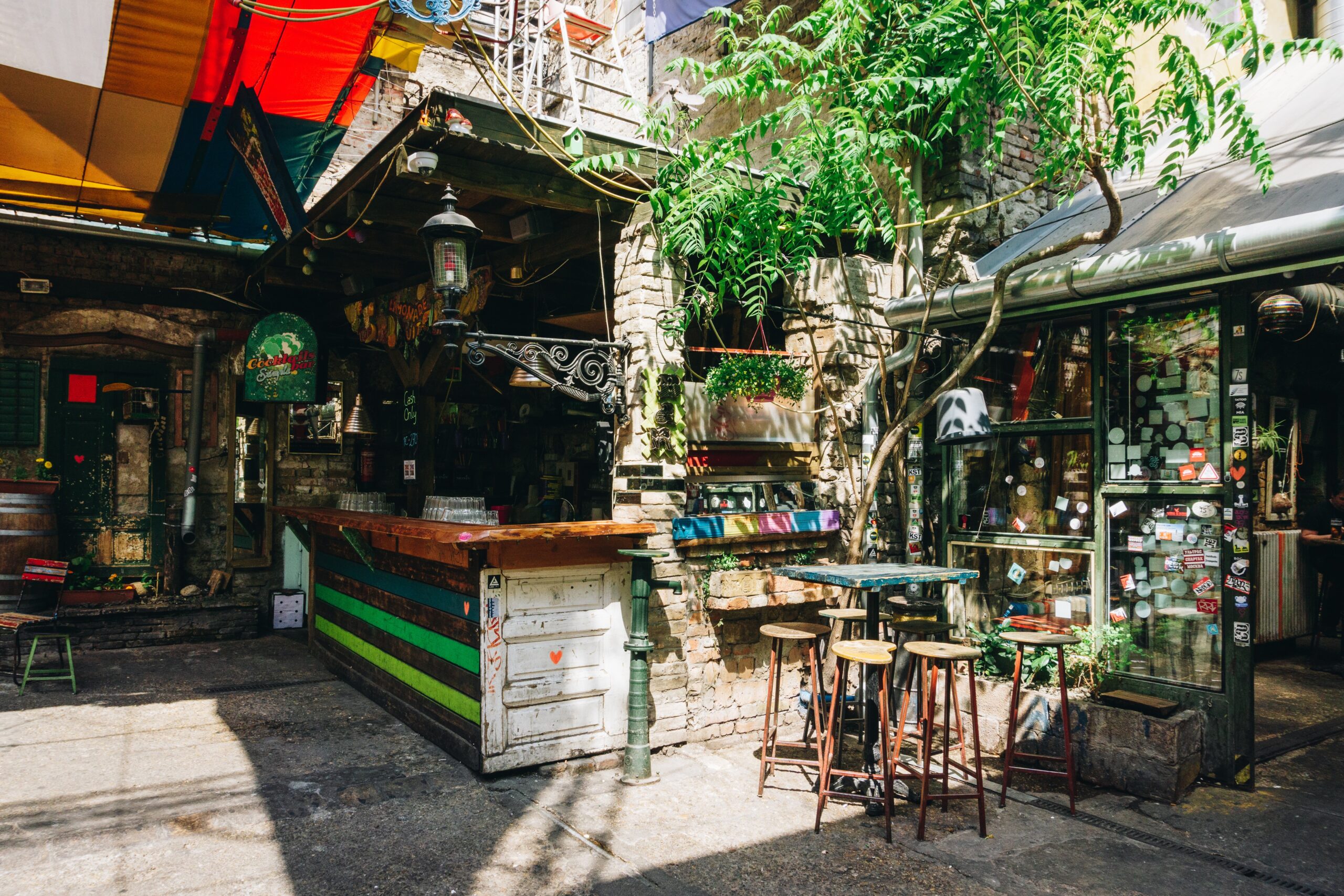
Party at night at the famous Ruin bars and recover in the Széchenyi Thermal baths, or explore outside the city and get a train to Lake Balaton which is the largest lake in central Europe.
The Digital Nomad Visa for Hungary is known as the White Card – The White Card does not allow families or couples, it is targeted to singles under 40s.
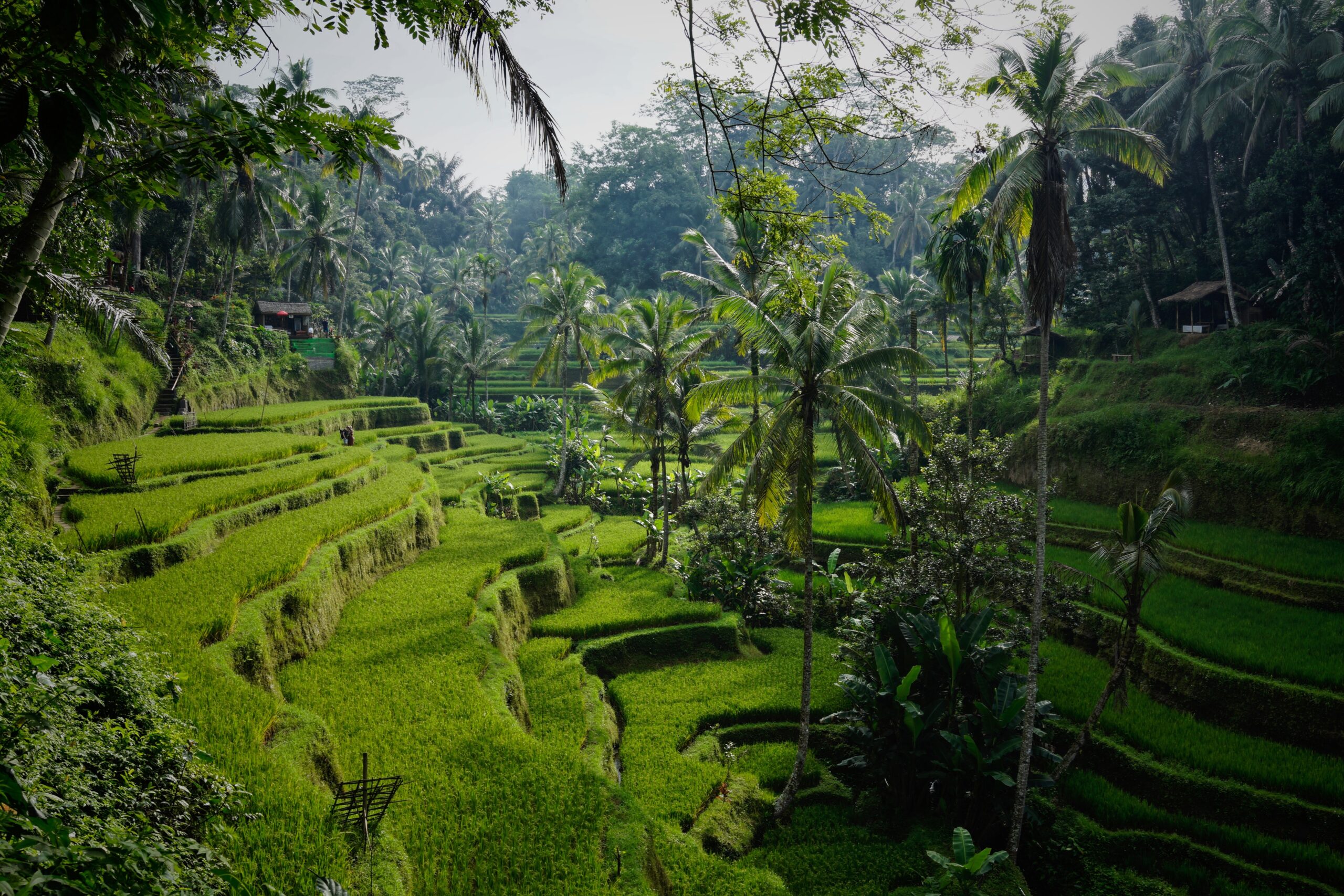
It is the dream of many to leave the office and work poolside in a Villa in Bali; the possible rentals and accommodation are beautiful and affordable.
The Digital Nomad Visa currently allows people to work tax free for 6 months in Bali, there are discussions of making this Visa more long term, potentially up to 5 years.
After your work is finished for the day you could explore sea life while snorkelling in Bali’s Blue Lagoon or go hiking and swimming in the Sekumpul Waterfall.
Greece, known for its beautiful weather and all-day, every-day gyros policy, has its own Digital Nomad Visa that will allow you to work and live on the mainland or islands for up to three years.
The Island of Kefalonia is one of the peaceful Ionian islands that isn’t overcooked with travellers, even during the Summer months.
After work you could go swimming in the warm ocean and then head up from the beach as the sun sets and eat gemista (stuffed red peppers) in one of the local taverns.
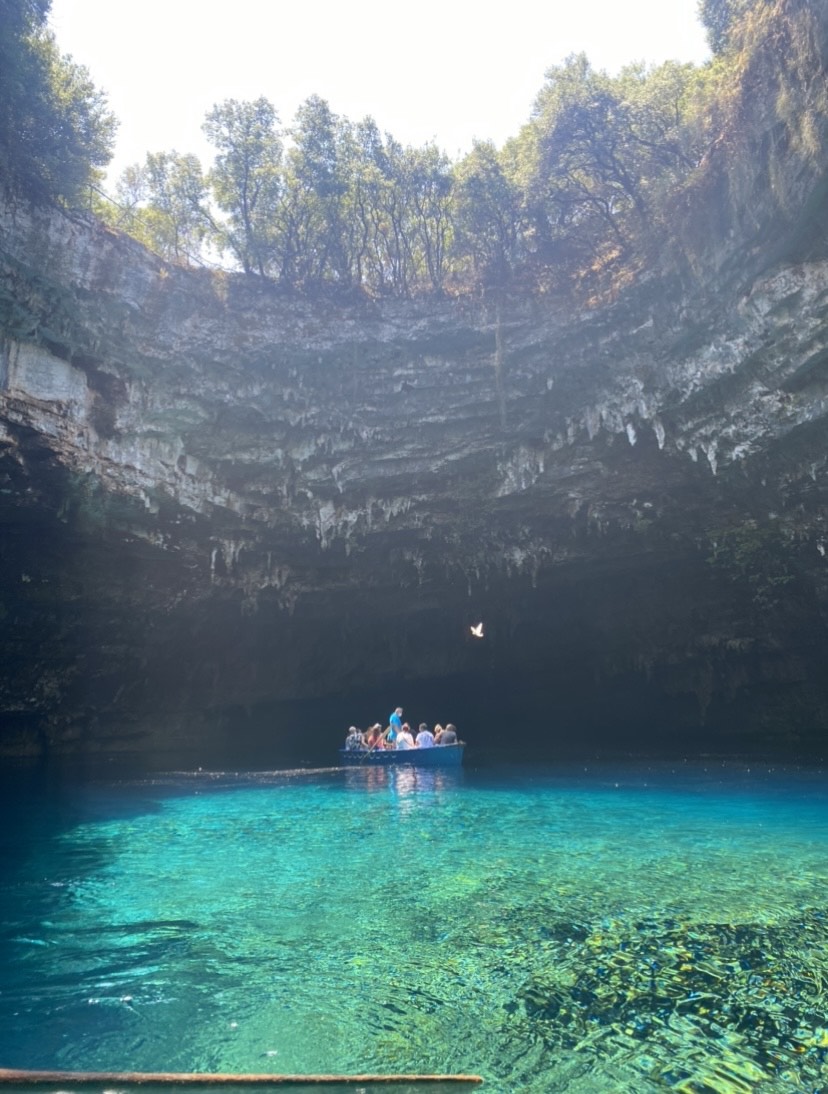
Get to the crazy beautiful Melissani cave on your off days, one of the special attractions to Kefalonia.
Click play to watch
… of old culture and new culture, Edo-era architecture and futuristic new buildings, traditional food and delicious new styles of cuisine, hidden bars, laneways and 37 million people. And while this patchwork of lanterns and busy intersections, high-rise buildings and people (so many people) is intoxicating and exciting, it’s not absurd to crave some fresh air sometimes. Fortunately, there’s all that in Greater Tokyo too.
Who knew that travelling an hour in the right direction would bring you to a volcano? To world class surf breaks? To mountains, forests, rivers and remote beauty?
Within an hour of Tokyo to the west is the Tama region: Where mountains melt into glacial waters, flowing as rivers through gorges and making fresh water to go with the fresh countryside air.
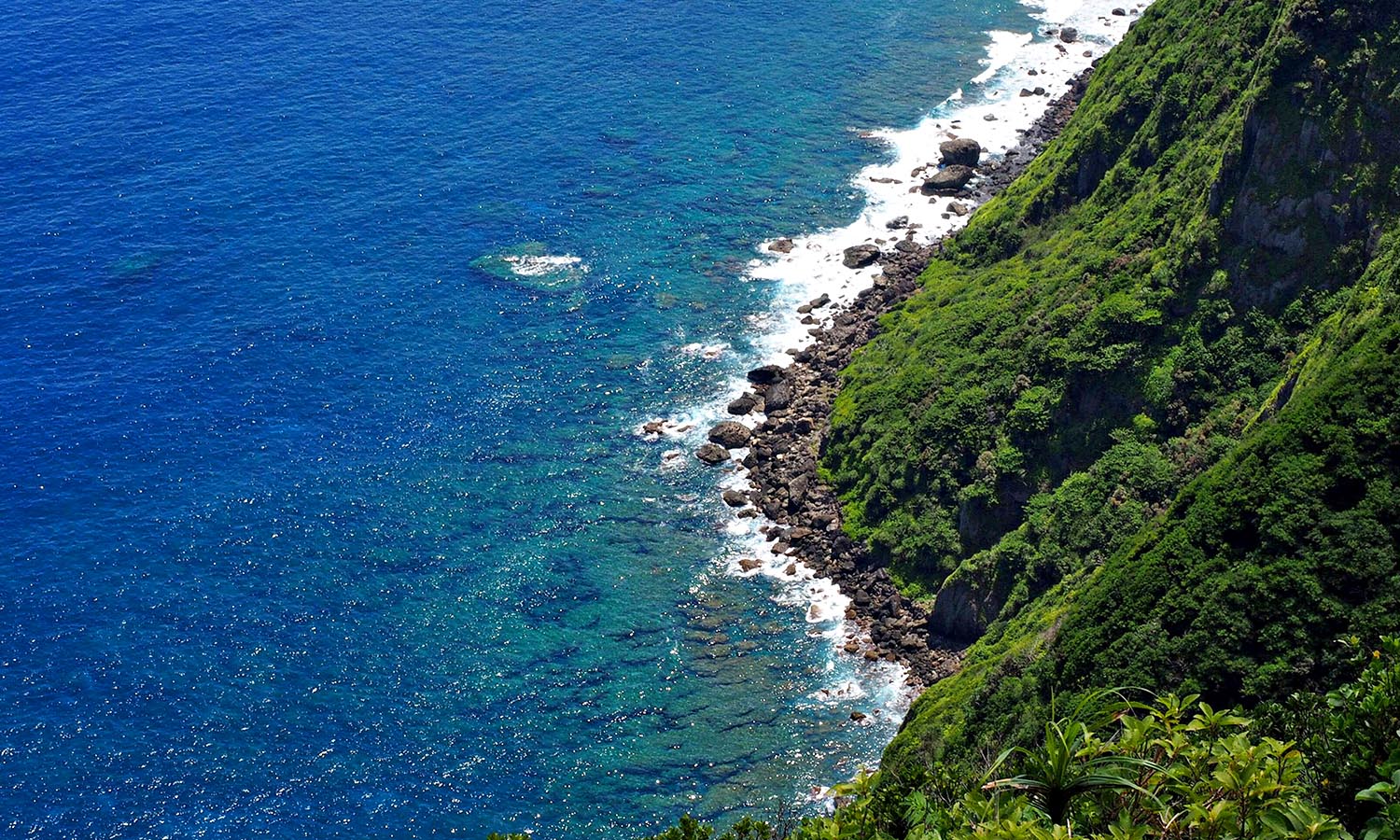
An hour’s flight to the south-east will bring you to the extraordinary (and mostly unknown) Izu Islands: a series of tiny, stunning islands where any adventure feels possible. It’s easy to find thrills in this part of the world, but it seems just as easy to chill, as well.
We’ve found seven genuinely awesome adventurous outdoor experiences that are all within cooee of the capital. And because this is Japan, we’ve paired those with seven nearby experiences where you can wind down, and take it easy afterward.
For more than just the epic chaos of the famous bright lights of Shibuya or Shinjuku, be sure to add the peace and tranquillity of the outdoors to your Tokyo adventure.
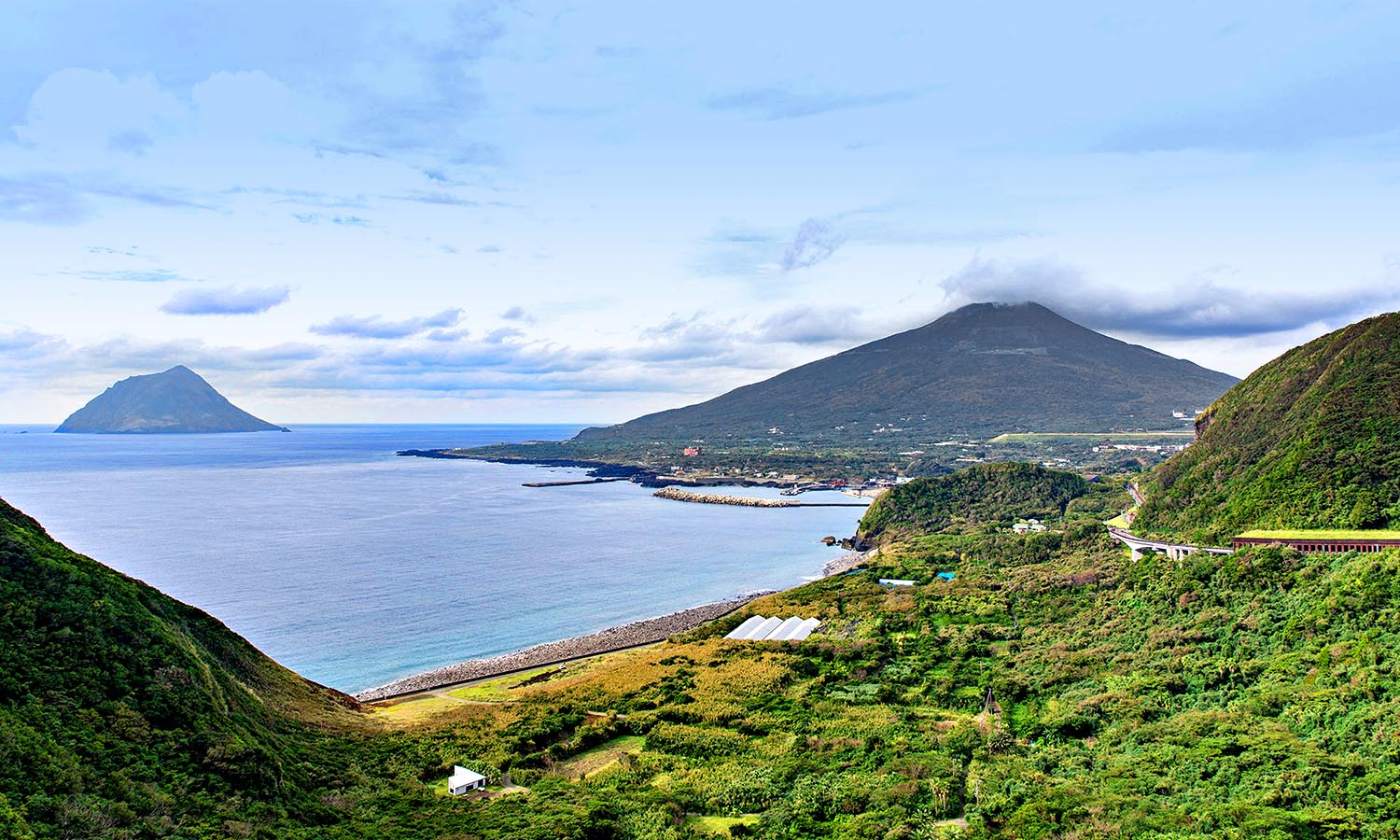
MAX | EXPLORE A VOLCANO CRATER
Mt Hachijo-Fuji gets its name from the very famous mountain in central Japan, which it bears an uncanny resemblance to. Climb to the 854 metre, cone-shaped summit through (slightly random for a mountain) cattle-grazing pastures and a small dairy farm. Explore the epic volcano crater at the top, and take in the views from the highest spot in the Tokyo Islands.
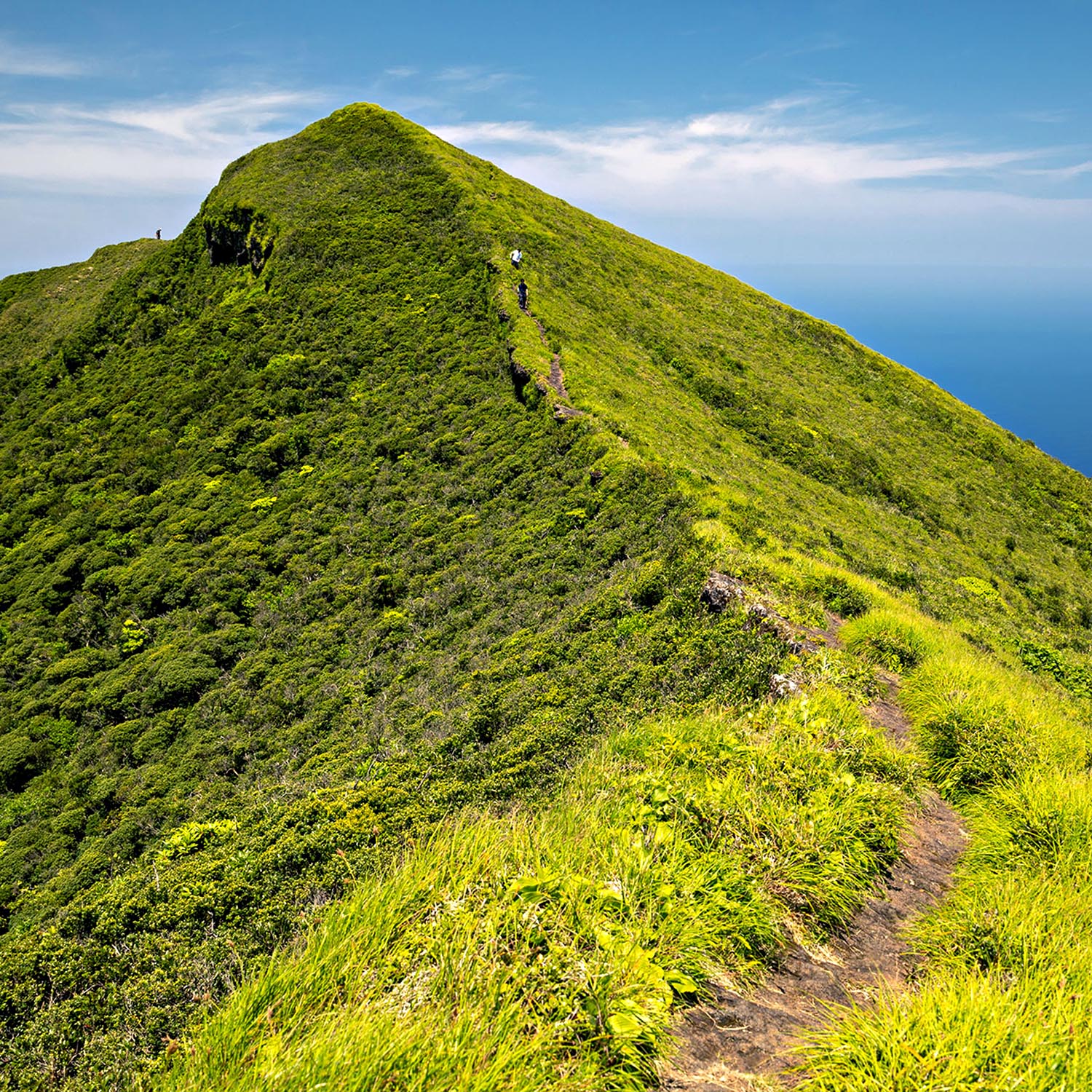
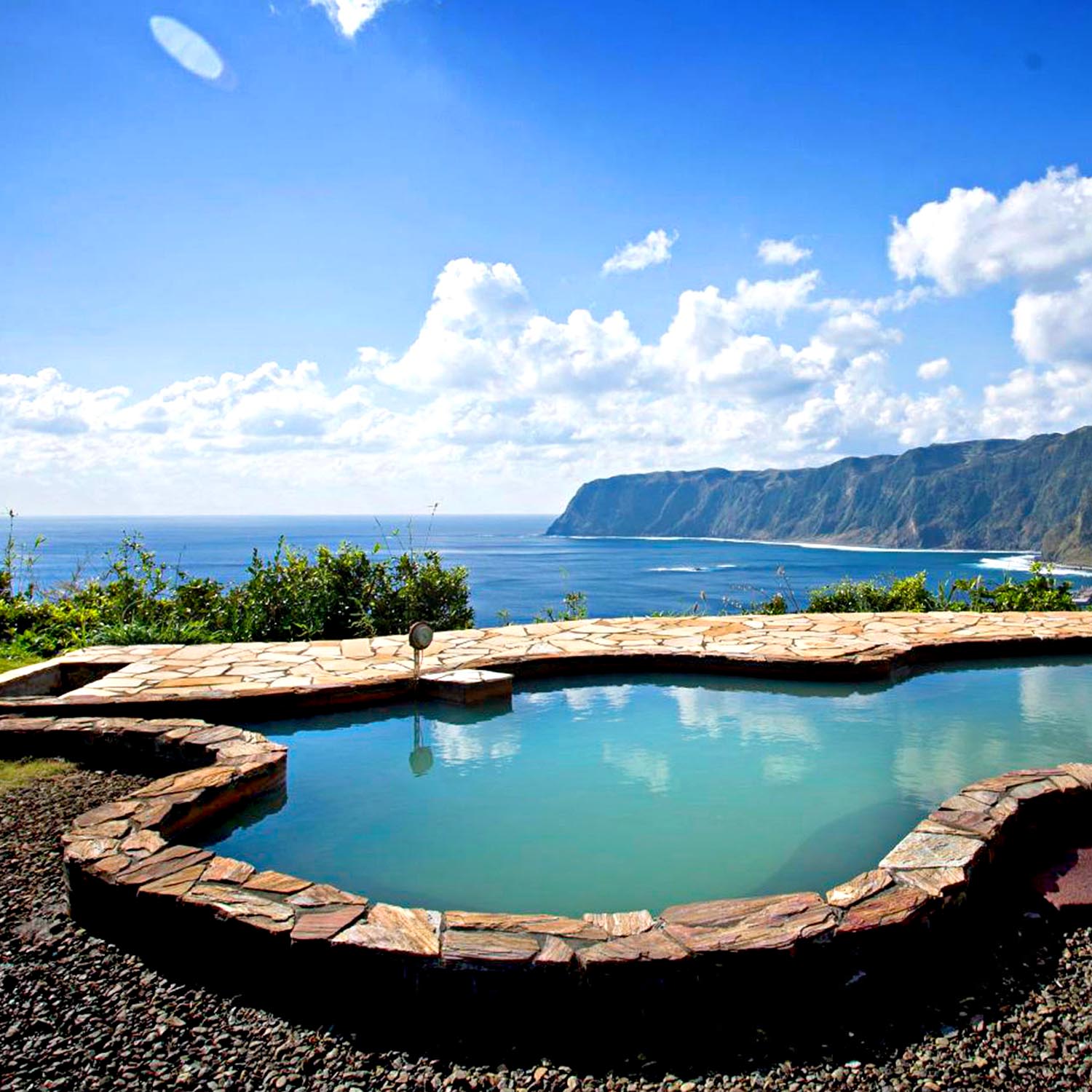
RELAX | BATHE IN THE NATURAL SPRINGS AT THE VOLCANO BASE
Being a volcano, the area is naturally pretty volcanic (who would have thought) which means there are natural springs bubbling away beneath ground. There’s a bunch of onsens (a Japanese hot spring) warmed by natural thermal springs to choose from on the island and while they’re all great spots to unwind and relax after a hard day of volcano hiking, Miharashi-no-Yu is the pick.
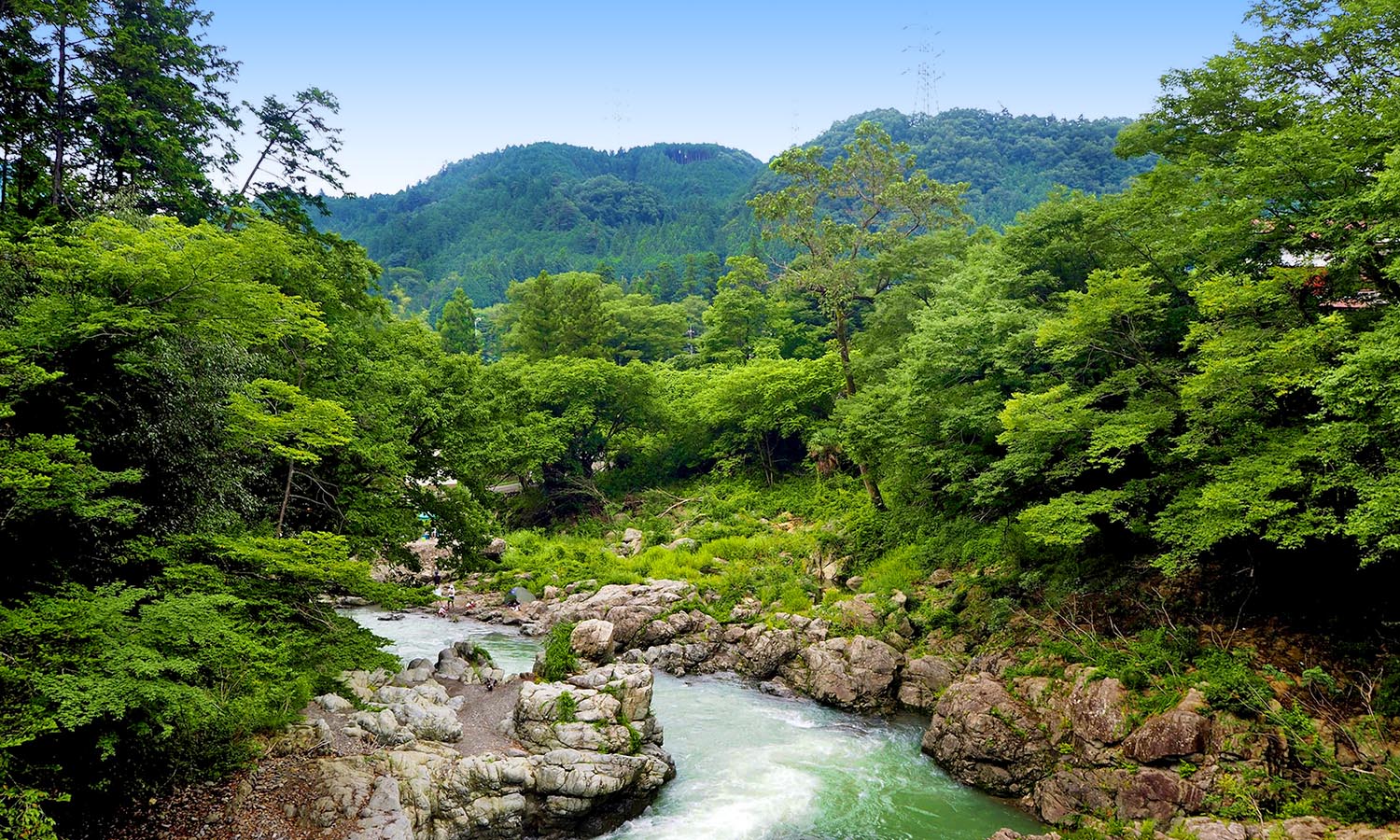
From Tokyo: The Akigawa Valley is a one-hour train ride from the centre of Tokyo, or about one episode of Tokyo Vice.
MAX | CYCLING AKIGAWA VALLEY
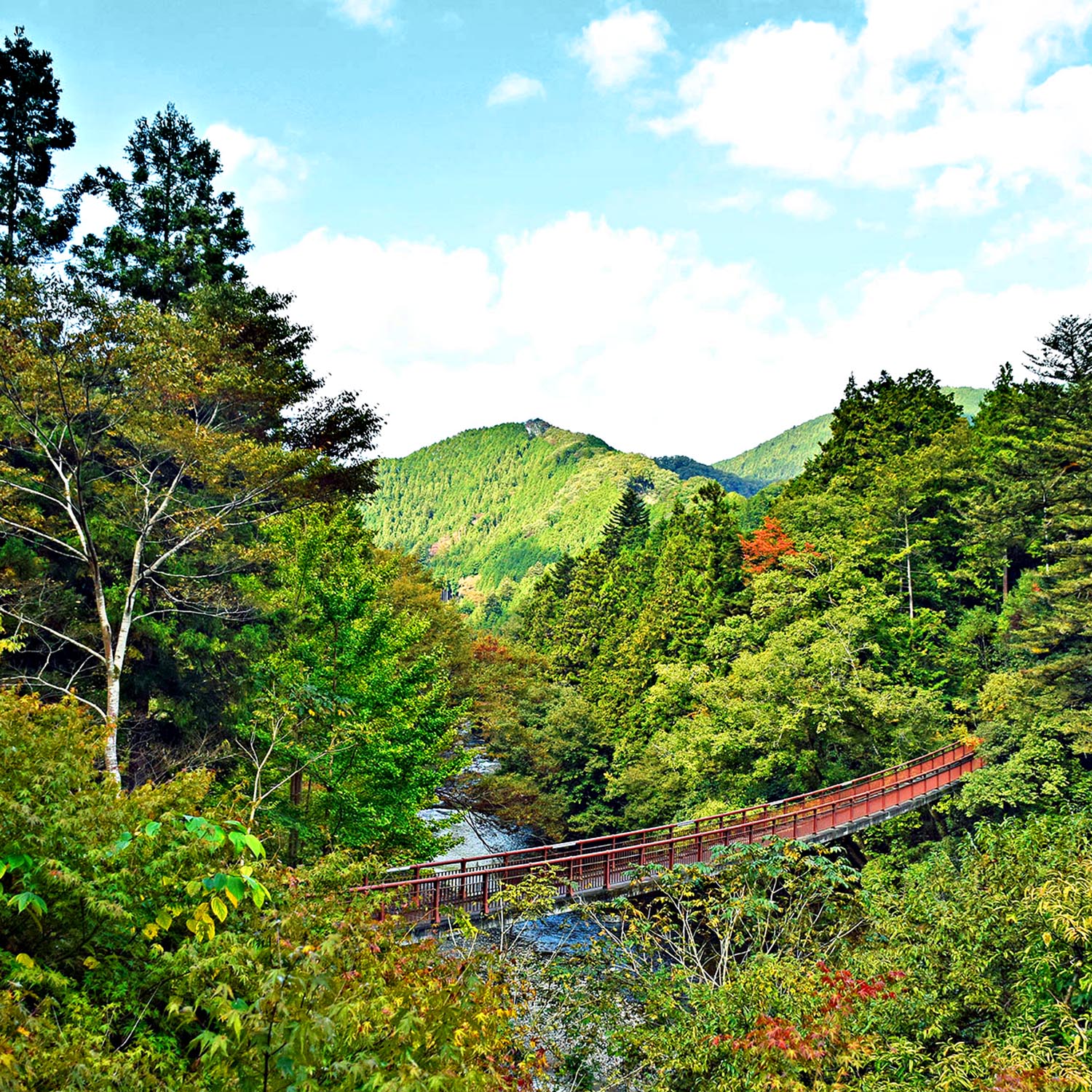
It is difficult to believe that within an hour of hopping on a train in the unmitigated frenzy that is Tokyo Station, you could end up in the lush greenery of the Akigawa Valley. Let clean air fill your lungs as you pedal through a new, purpose-built cycling route, a relatively short (20 kilometre) but steep route amongst mountains, rivers, forests and gorges.
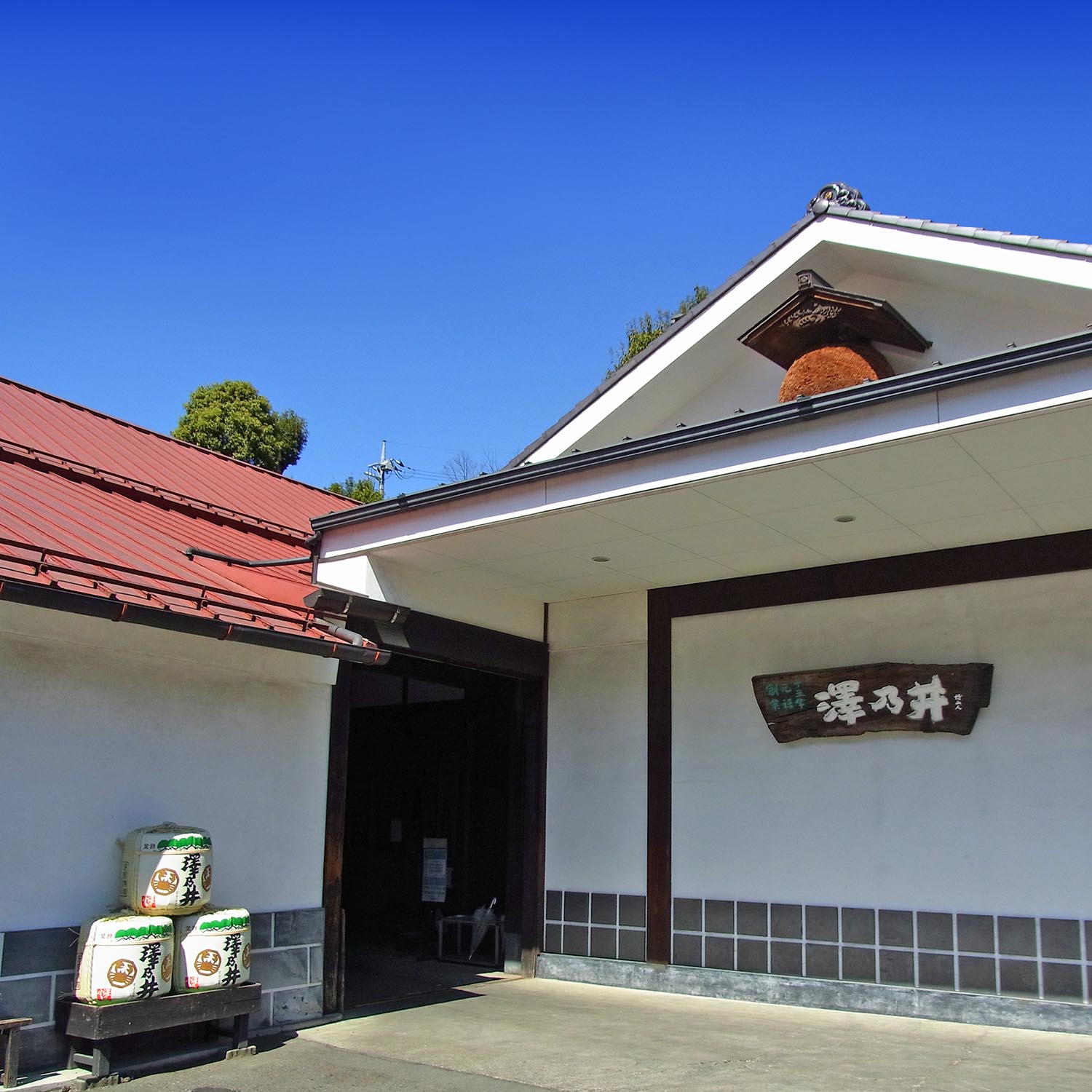
RELAX | A 32O-YEAR-OLD SAKE BREWERY
Calves burning and bum hurting? You’ve earnt a sake, my friend. Nearby Ozawa Brewery’s sake is brewed with clear, clean water straight from the Okutama river and mountainside. Creaking wooden floorboards and old-school wooden shelves piled high with bottles of sake will make you feel as if you’re in Ollivander’s Wand Shop from Harry Potter, but it’s not purely for looks: this brewery has been around since 1702.
Click play to watch
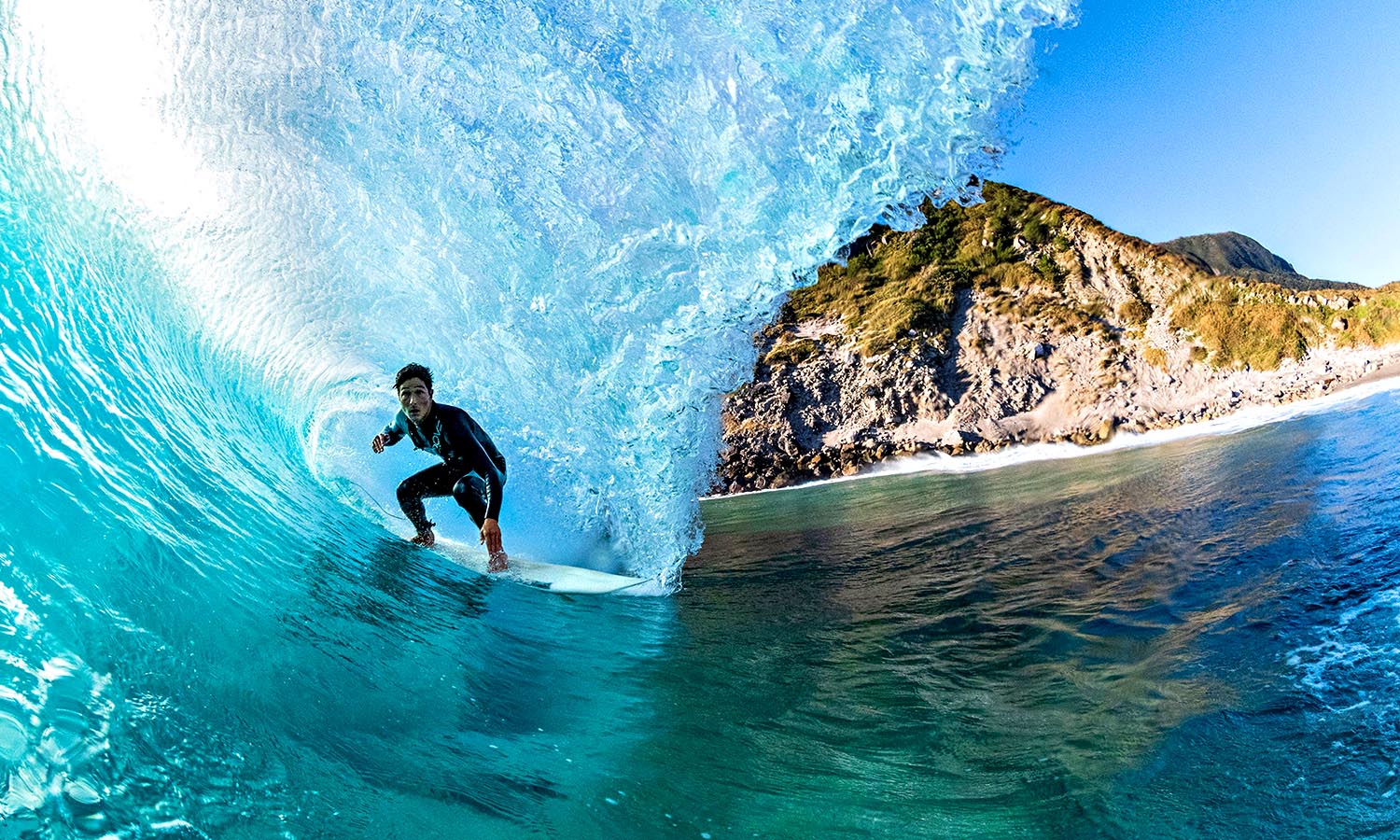
From Tokyo: Niijima Island is a 40-minute flight from Tokyo, or a little longer than one episode of Iron Chef.
MAX | TOKYO’S SECRET SURFING ISLAND
Japan mightn’t be the first place you think of when it comes to getting barrelled and stoked, but that’s only because you haven’t heard of Niijima Island. With a population of less than 3,000, there’s around 10 uncrowded breaks on the island for surfers of all experience and ability. White sand and emerald green water make these picture perfect, postcard-like waves that also happen to spurt out barrels on a consistent basis. Start practising those shakas.
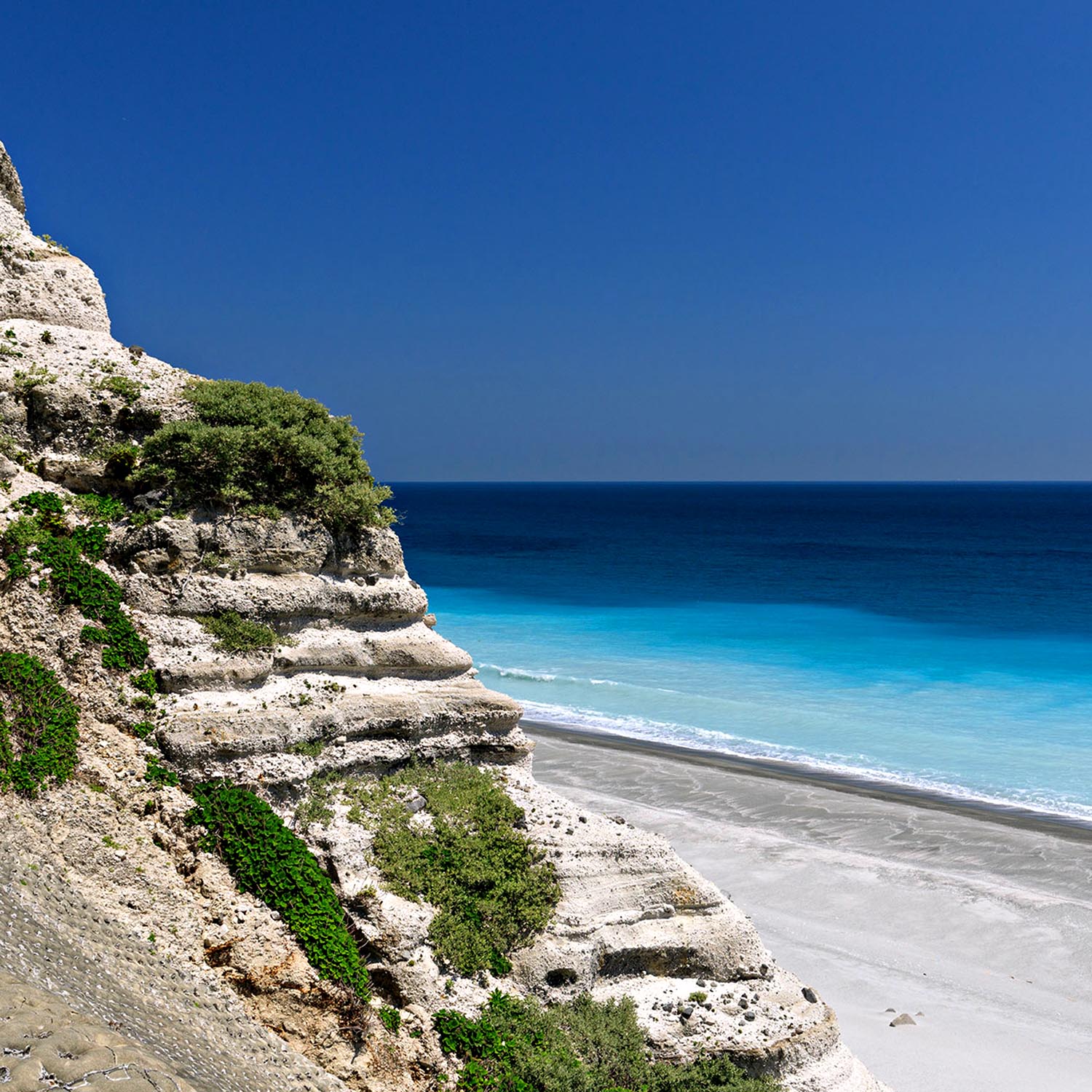
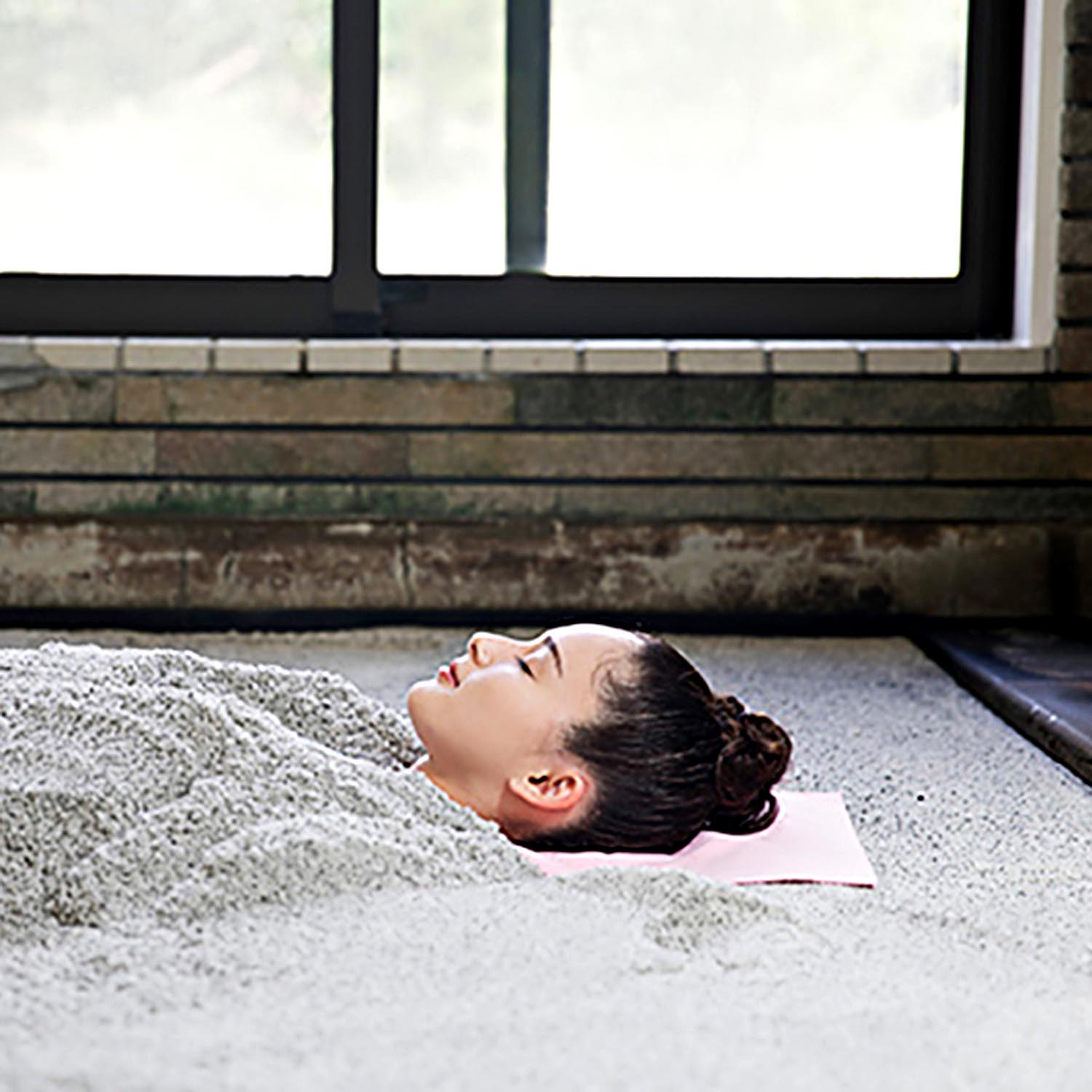
RELAX | BURY YOURSELF IN SAND
Sunamushi translates to ‘sand steam’. Whereas surfing is a relatively new activity in these parts, this is a practice that has been taking place for at least 300 years. Due to the volcanic activity, the sand is naturally hot (around 50-55 degrees Celsius). After you lay down in a special robe at Sunamushi Mamashita, staff will promptly bury you in sand the way you did to your younger sibling on the beach as a kid. Relax, and let the sand do the work. It’s said to be four times more effective than a normal hot spring.
Click play to watch
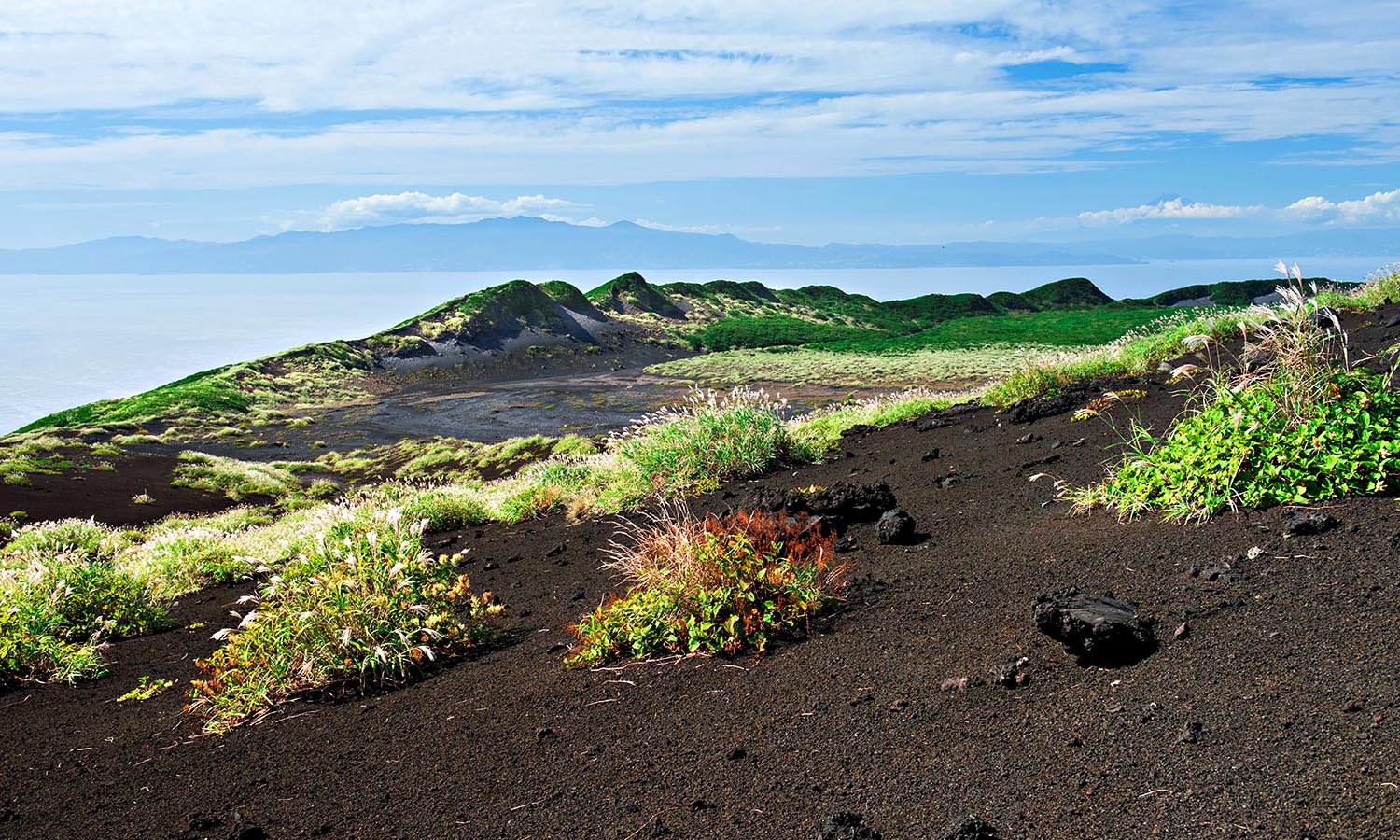
From Tokyo: Oshima Island is just a 25 minutes flight from Tokyo … not even enough time for an episode of Pokémon.
MAX | EXPLORE TOKYO’S DESERT
Who the hell knew there was a desert in Japan, let alone in Greater Tokyo? Certainly not us, but we’re into it. Ura-Sabaku Desert on Izu Ōshima is an otherworldly spot covered in small black volcanic rocks that give you the feeling you’re on Mars, rather than half an hour away from Tokyo. Explore a spot that is not only unlike anywhere in Japan, but unlike anywhere else on the planet.
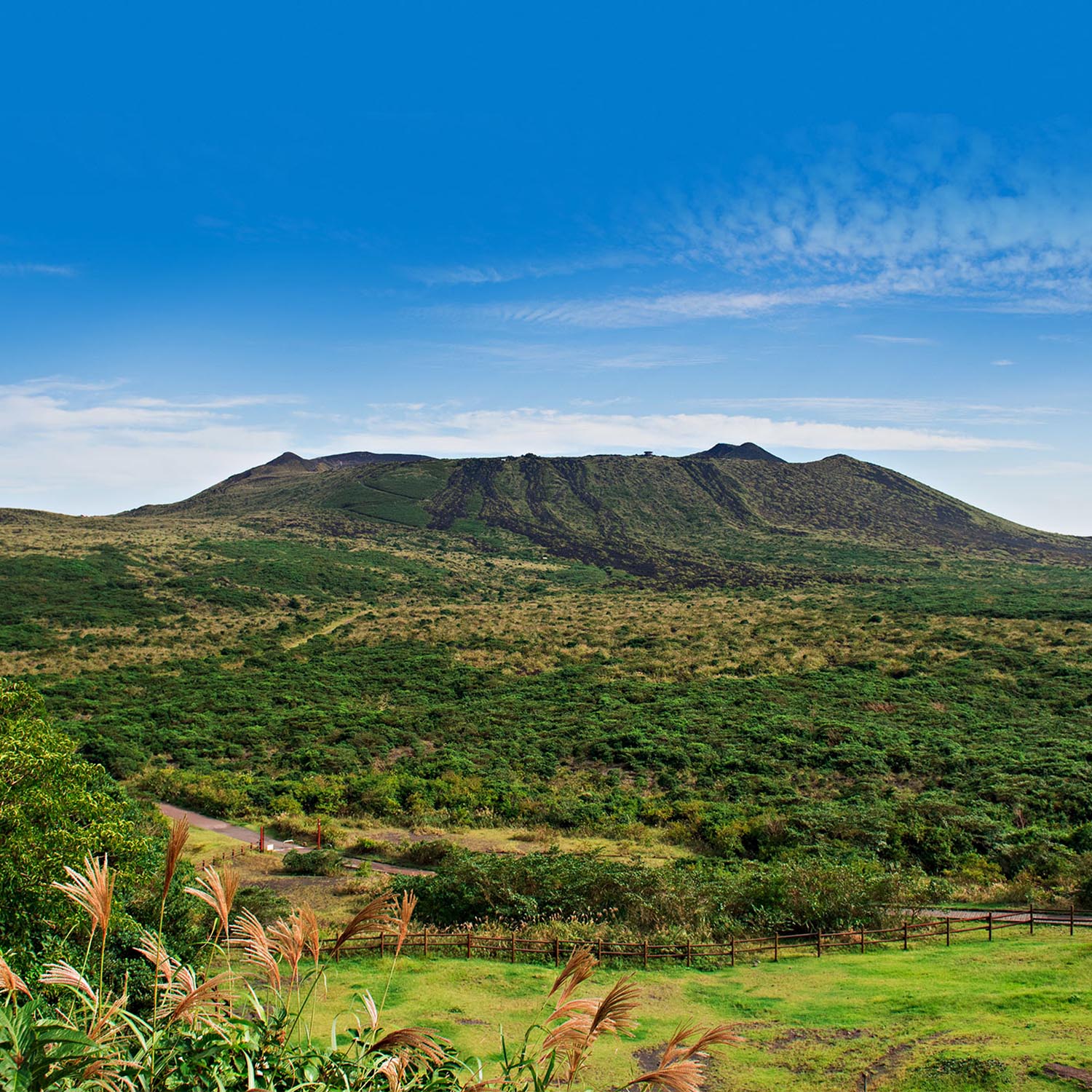
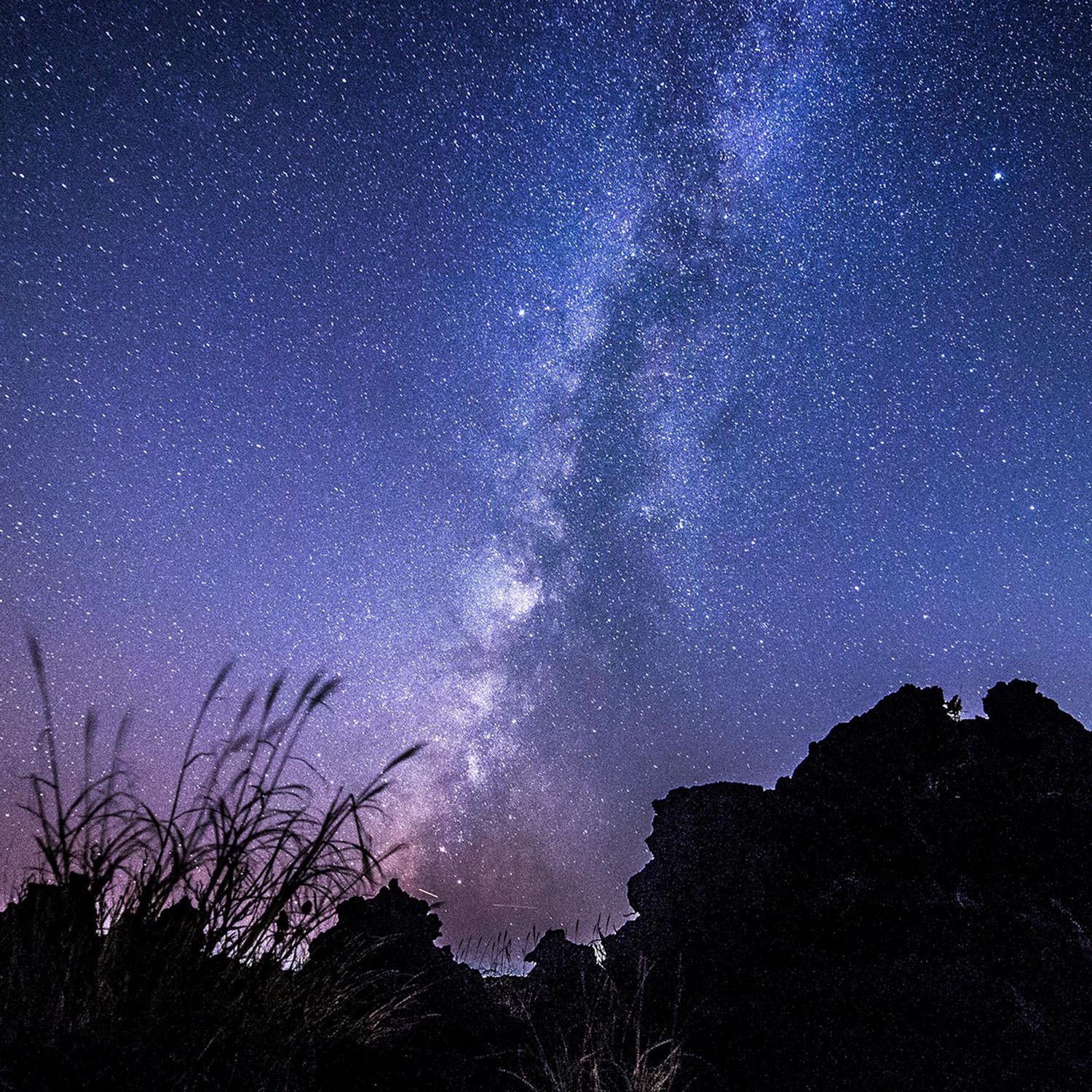
RELAX | ISLAND NIGHTLIFE
The term ‘nightlife’ means something different on Ōshima. Explore Earth’s own Mars during the day, and then look up at the real thing at night, admiring the crystal clear skies that have yet to feel the effects of pollution. Curl up under a blanket and listen to a local astronomer talk you through the magic of the night sky.
Click play to watch
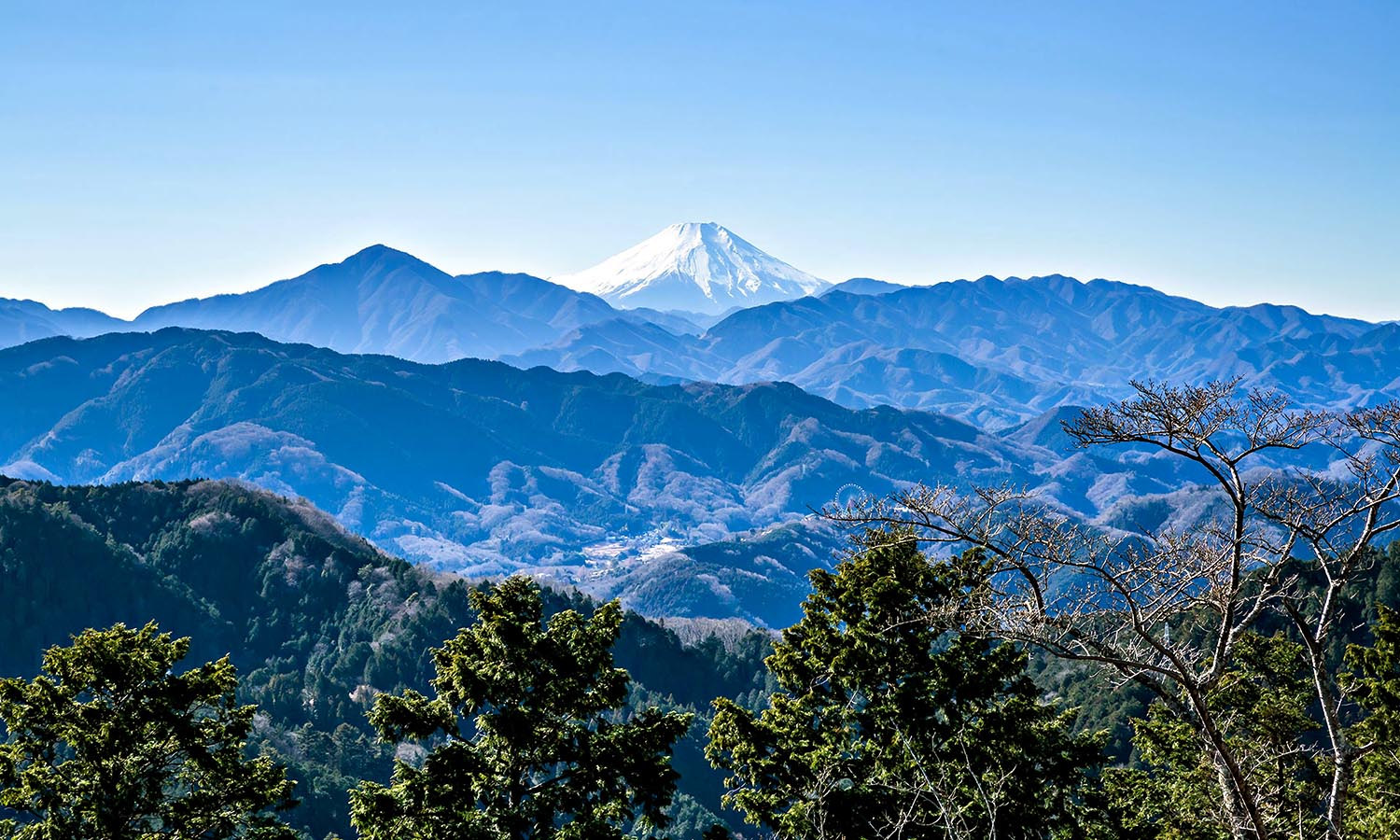
From Tokyo: The Tama region is a one-hour train ride from the centre of Tokyo, or about half of the latest remake of Godzilla.
MAX | TAKE ON MT TAKAO
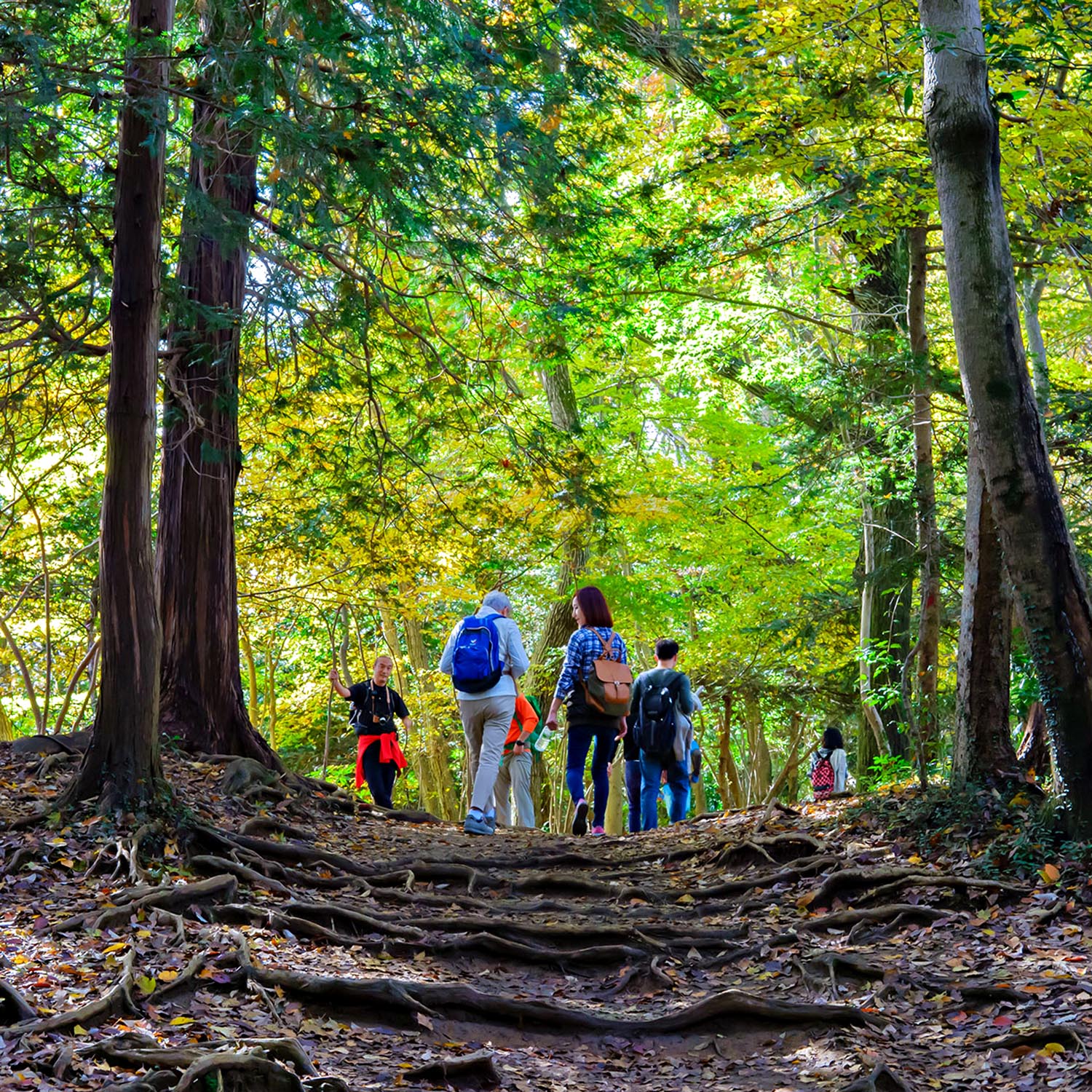
Some of the best hiking and outdoor activities in Japan are in the Tama region, an hour’s train trip west of Tokyo. Mt Takao is one of these. Hike the stunning trail to the top, where you can grab a beer at the all-you-can-eat and all-you-can-drink Beer Mount which hangs over the edge. Depending on how many you end up having, the trip back down may go a lot faster or a lot slower.
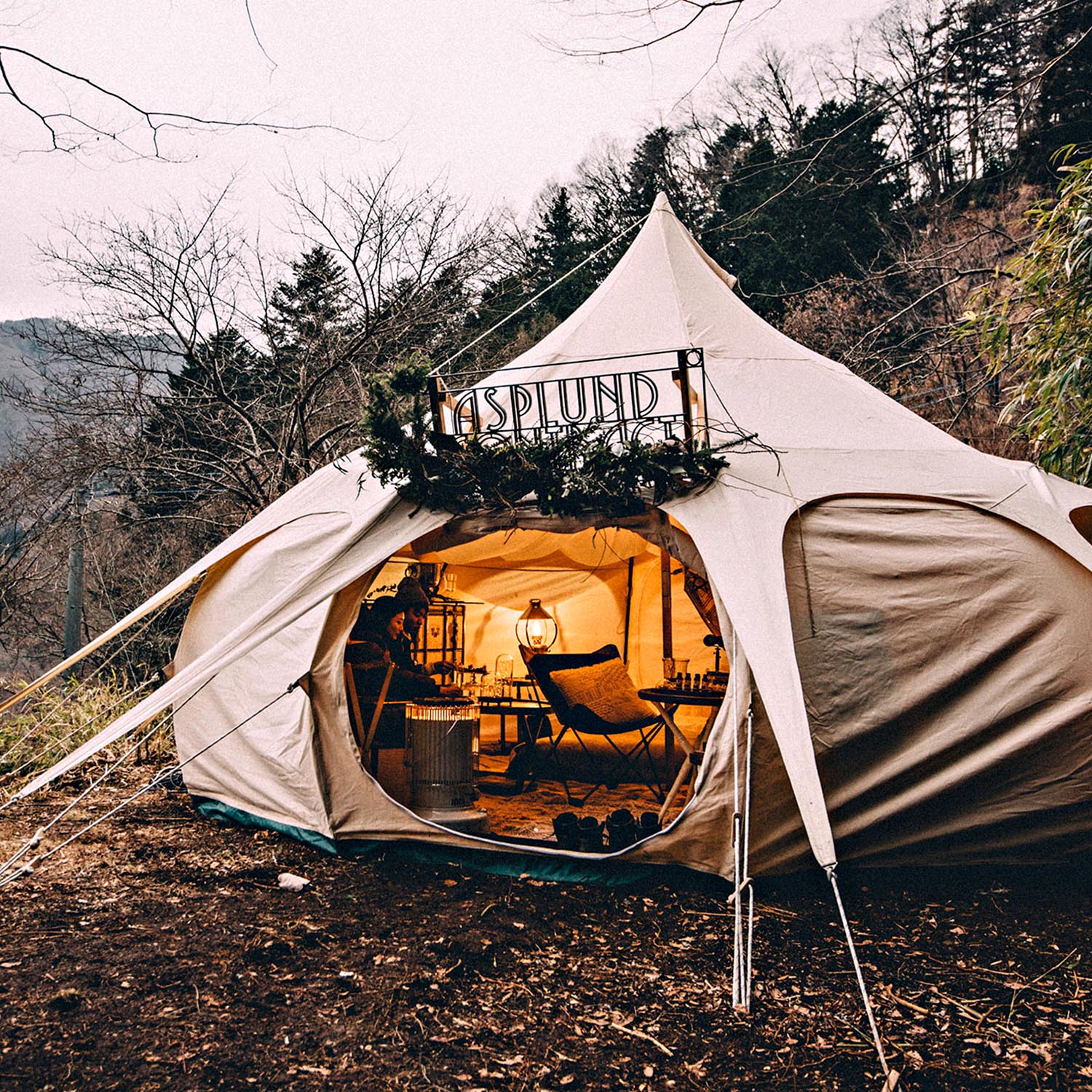
RELAX | RUN AWAY TO THE CIRCUS
Circus Outdoor wants to “create the world’s most beautiful outdoor field in Tokyo’s secret forest”. They’re on their way too because this place looks legit. Circus Outdoor was named as it feels, as you wander between circus tents overlooking the beautiful hills of the Tama region. Vintage furniture fills every tent, and you can lash out and hire a butler too, which is pretty wild.
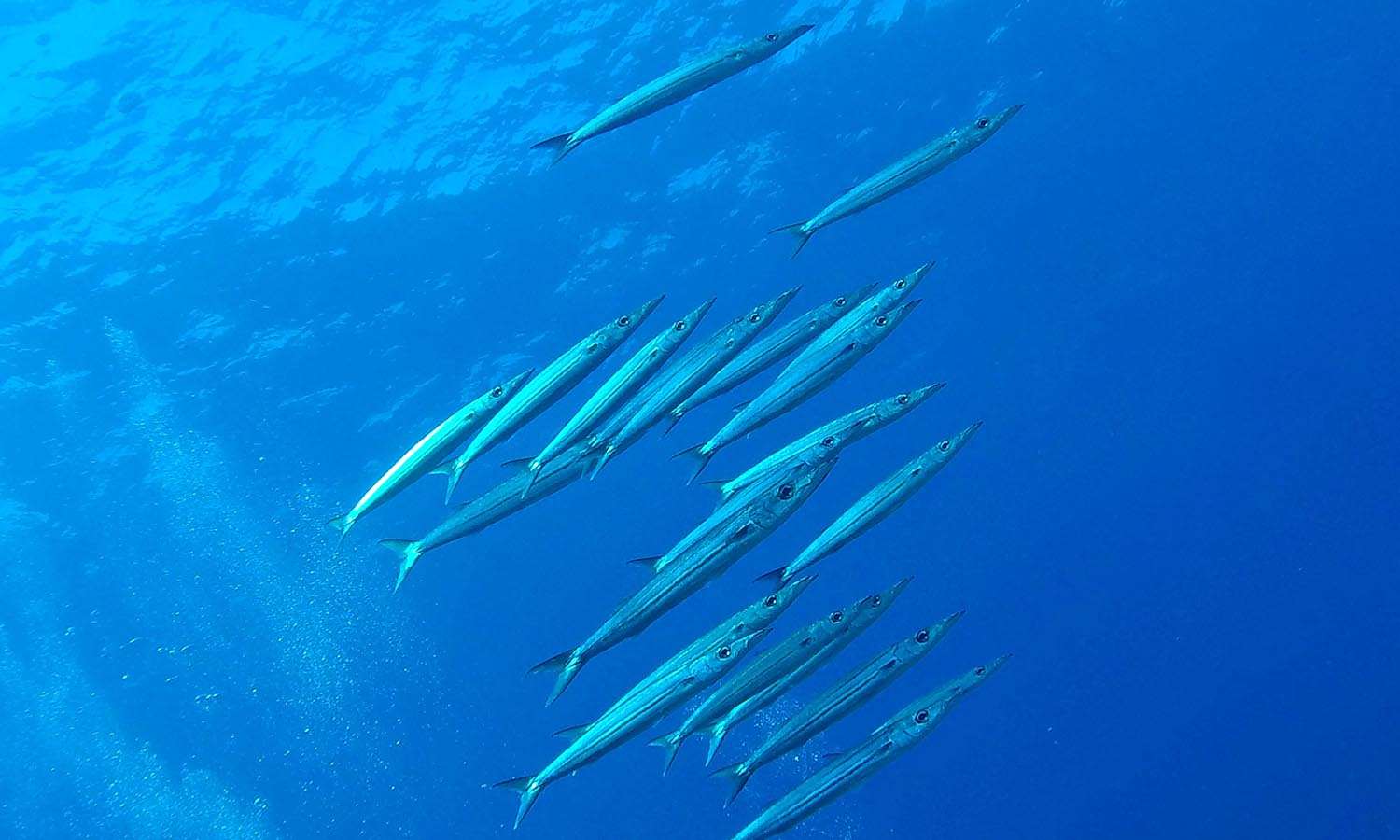
From Tokyo: Hopping on a plane will get you there in 55 minutes, or about two episodes of Naruto.
MAX | REEL ONE IN …
If you’re an adventurous angler, then this is for you. The reward for fishing in such a remote and unique location is access to fish that you may never get on the end of your line again again. It’s easy to find someone to tailor a charter boat to meet your needs, and the Hachiojima Fishing Club also loans out gear to help you catch that monster tuna.
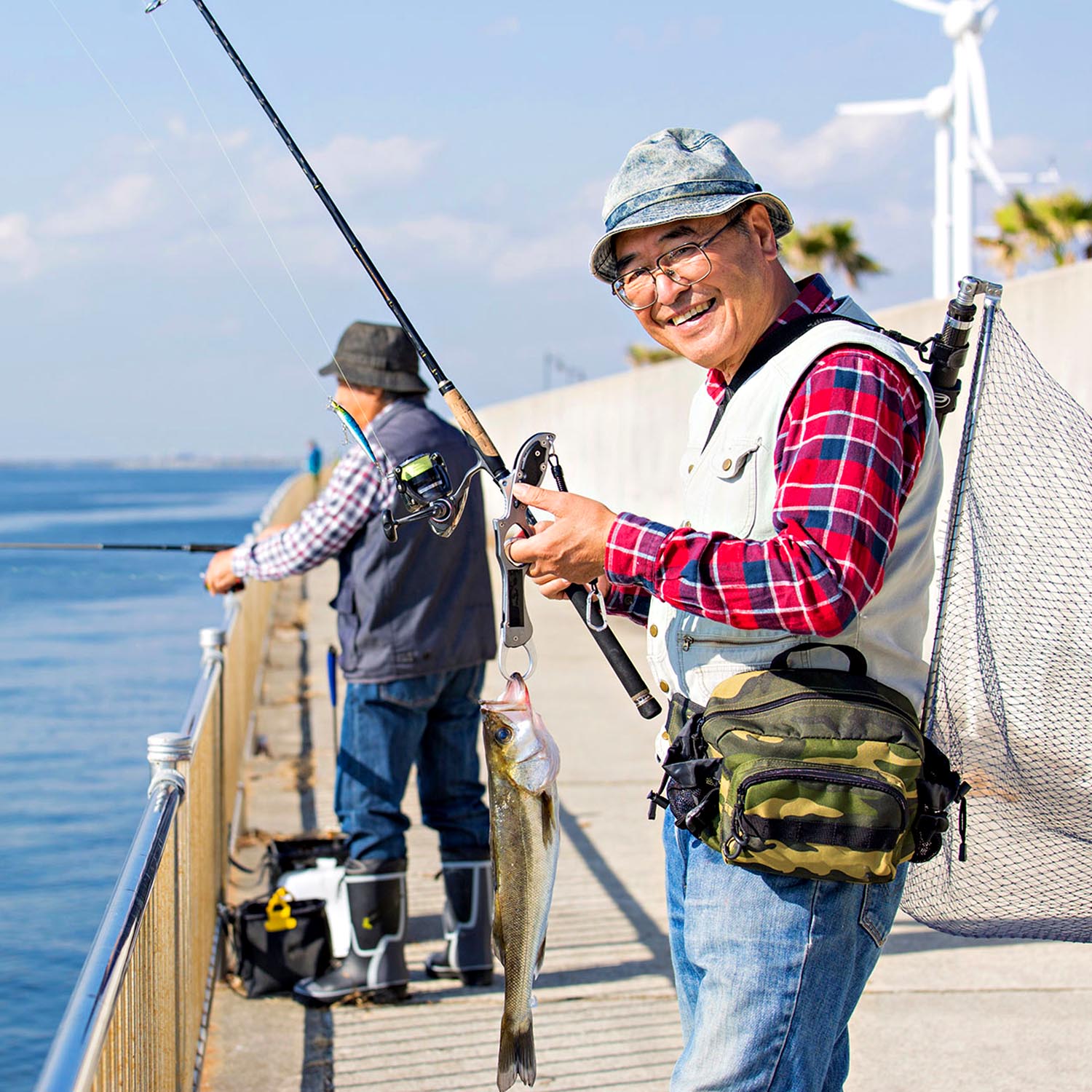

RELAX | … AND THEN COOK IT UP LATER
Fish doesn’t get much fresher than when you catch it and eat it the same day. If you manage to reel one in, head to the village to learn ‘himono’: the Japanese style of gutting, drying and then grilling fish. It always tastes better when you catch it yourself.
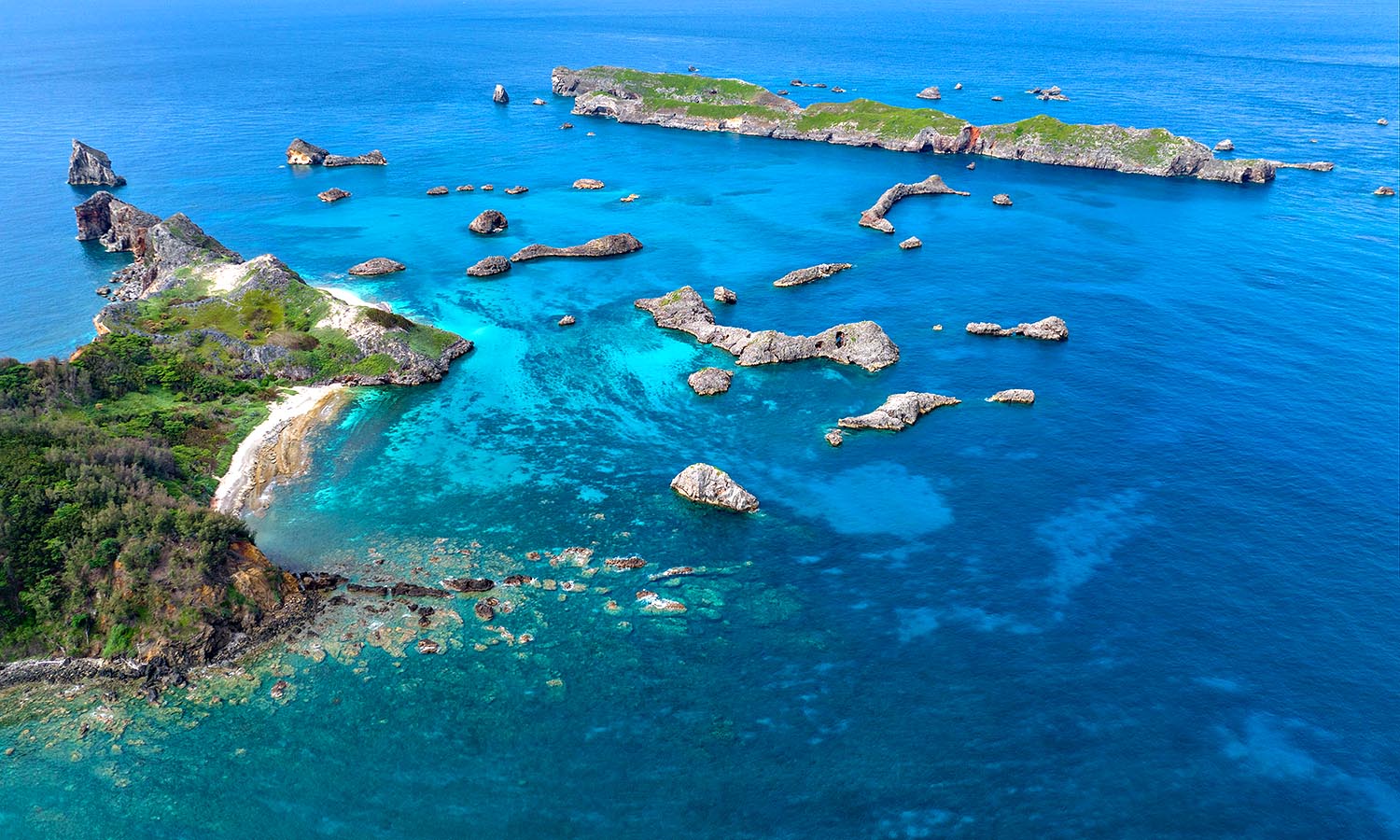
From Tokyo: O.K, this one isn’t quite within an hour. It’s actually closer than some of the other Tokyo Islands, but can only be reached by a ferry, which takes about 24 hours. The ferry is more than comfortable, though, and the 24 hours are so worth it once you’re there drinking rum. Buy a second bottle for the return trip.
MAX | DIVE THE ASIAN GALAPAGOS
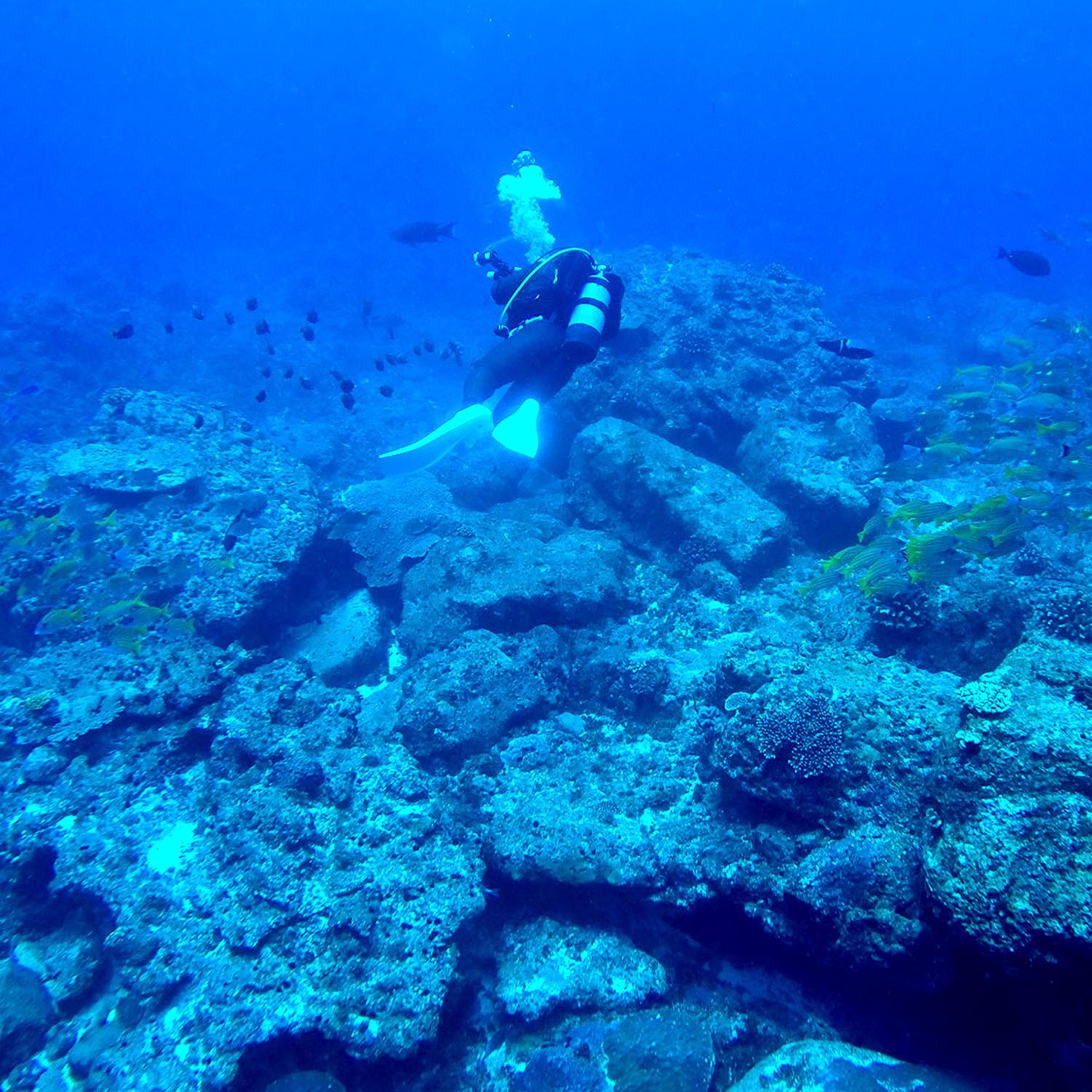
Due to how uninhibited the ‘Asian Galapagos’ has been, divers who make it to the islands of the Ogasawara archipelago (also known as the Bonin Islands) will be stunned with the vibrancy of the hard, healthy coral reef that exists. Dive alongside tropic fish, whales and dolphins…but be sure to stay away from the endemic Tiger Sharks.
RELAX | DRINK RUM … FRESH FROM THE SEA
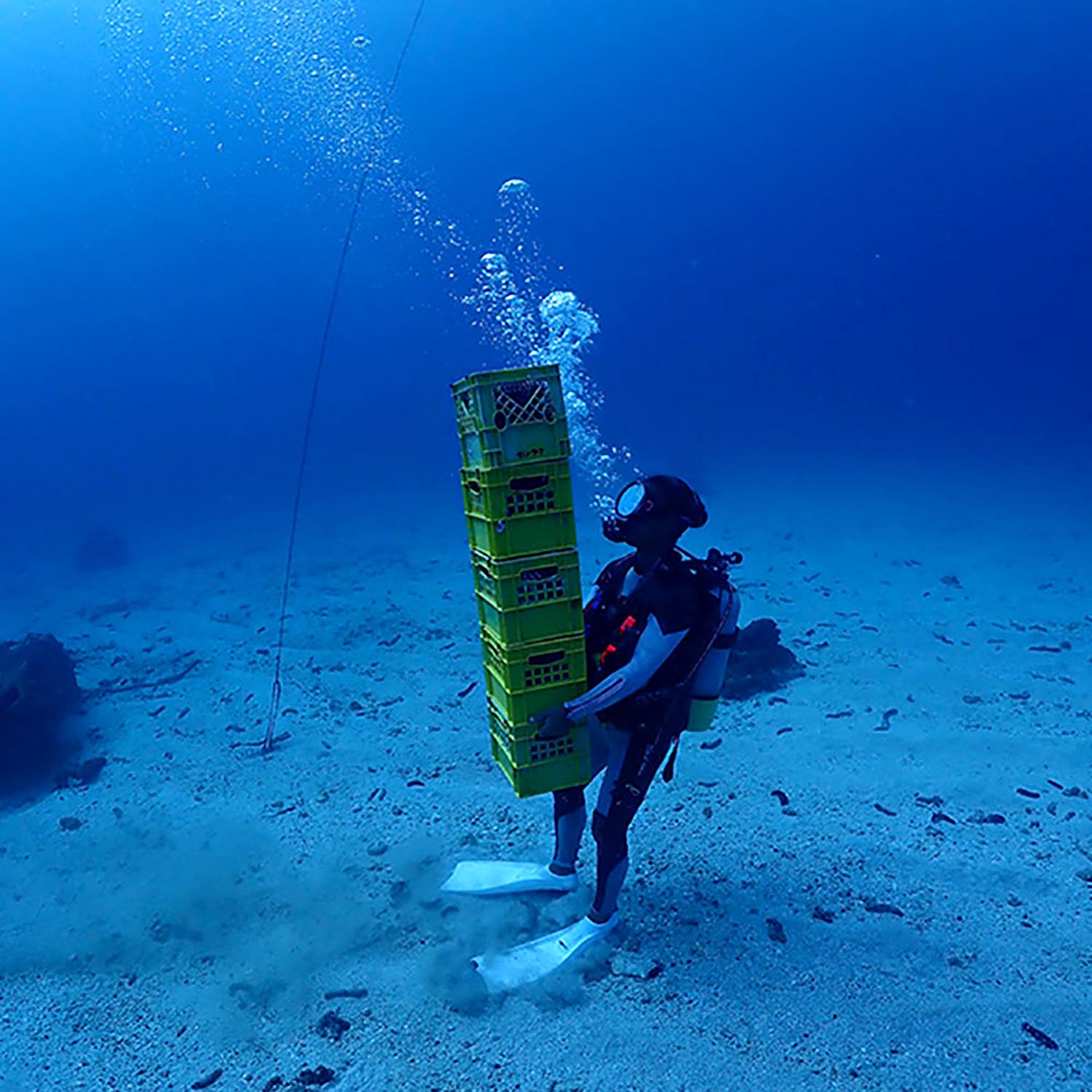
They do things differently here, something that’s also not restricted to fermentation techniques. Since 2014, Rum has been aged underwater here, a process inspired by delicious tasting wine found in sunken shipwrecks around the world. Enjoy an Ogasawara Rum at the Le Ciel drinking hut on Hahajima Island…’fresh’ (kind-of) from the sea bed.
Please visit the Official Tokyo Guide for COVID-19 Health & Safety Information: Gotokyo.org/en/
Welcome to Patagonia. We’re headed for Isla Navarino, an hours-flight south that will take us below 50 degrees of latitude (cue the Furious 50s) and drop us off a mere three-days by cruise ship away from Antarctica, the windiest place on the planet. Once there we will hike the Dientes de Navarino. For five days. Sleeping in a tent.

The Dientes de Navarino could fairly be claimed as the world’s southern-most trek. While the famous Torres del Paine national park, 600km north, attracts around 250,000 visitors every year, Navarino welcomes a tiny fraction of that figure and only around 600 of them will hike the trail. There are no refugios here with cosy beds and hot showers at day’s end. The 53km Dientes route offers the landscape raw, as nature intended.
The plane whips with a tailwind across the snow-dusted peaks of the Darwin Range and the Beagle Channel to land at Puerto Williams behind which a jagged row of rocky snow-capped ‘teeth’ (‘dientes’ in Español) stand proud of forested green mountains. They’re not especially high – Picacho Diente is the tallest at 1118 metres – but the treeline at this latitude falls at around 600 metres which means hikers here face all the challenges of exposure and the weather that comes with it.
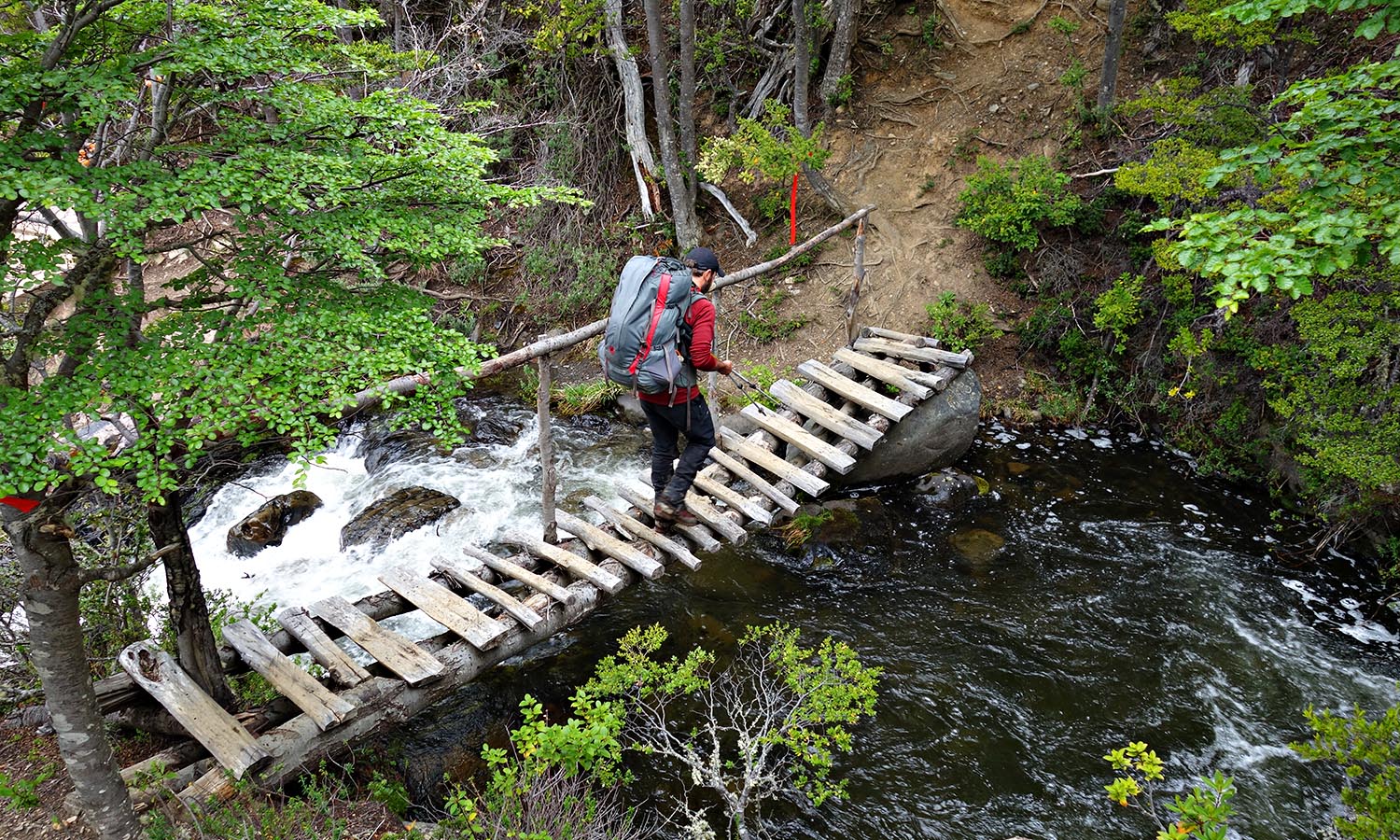
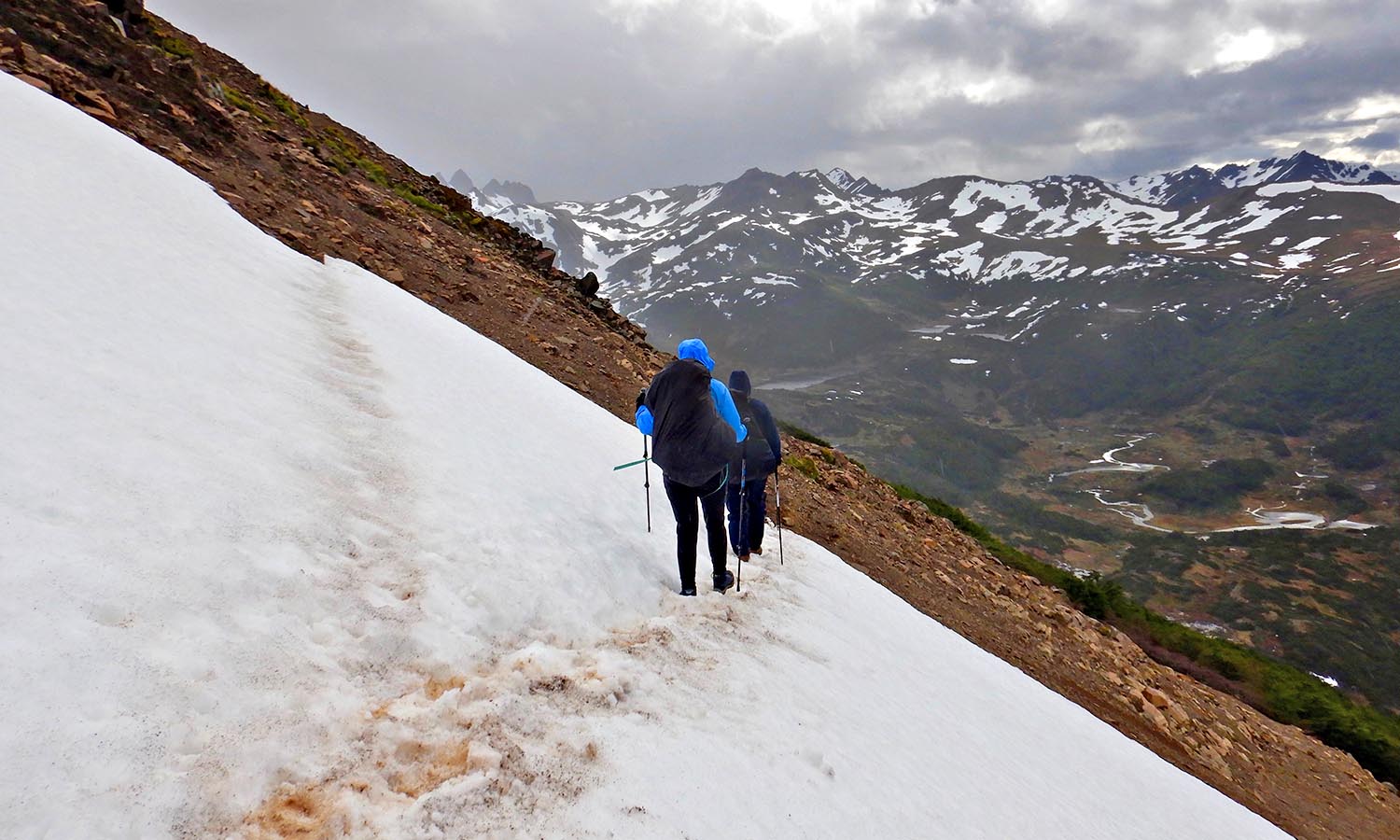
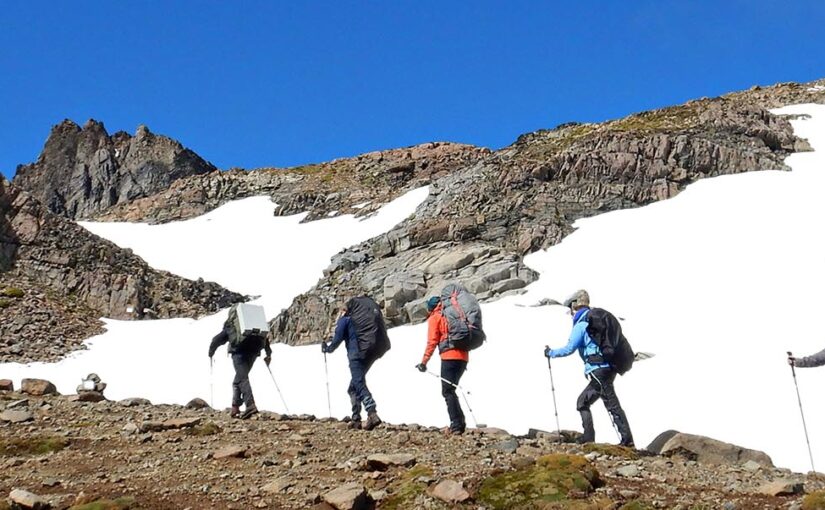
Our team comprises five hikers plus two guides, a cook and two porters from Chile Nativo. Within hours we’re on the trail and there is no gentle introduction. A 900-metre climb begins in muddy beech forest strung with moss and leafy lichens. Above the tree line, we hike open scree to traverse around the edge of a mountain, the terrain angled at 45 degrees with only a boots-width cutting through dumps of snow.
The stunning views are a powerful distraction from the business of walking but when I pause to rummage in my pack for some gloves to protect against the icy wind, porter Christobal advises, with a measure of seriousness, against lingering. We need to descend to camp.
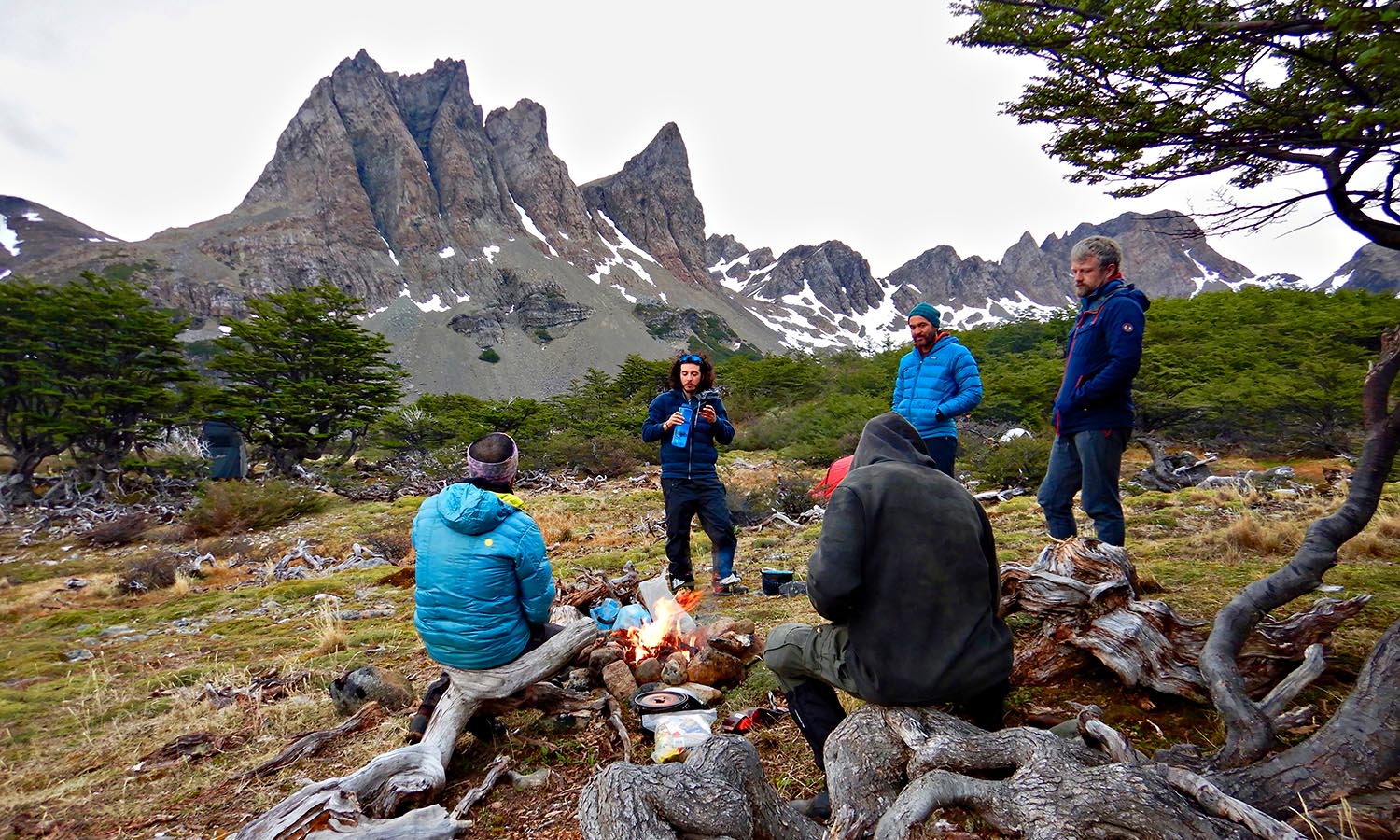
Aside from the rugged terrain and 2.7 vertical kilometres to be climbed, it’s the elements that make this hike so challenging – the cold, snow and omnipresent wind. “You have to zip up your pockets otherwise everything flies away,” Gonzalo explains. “Anything you put on the ground you must pin down with a rock. Sometimes you talk and nobody hears you so you have to yell. It’s challenging but you get used to it.”
The relative shelter of Laguna Salto, cupped by the towering Dientes, is camp for the first night. The ground is boggy from snowmelt. Sporadic beech trees stand twisted and stunted like bonsai and waterfalls cascade into a lake fringed in ice floes. It’s stunning.
Related: Breathe deeply in Chile
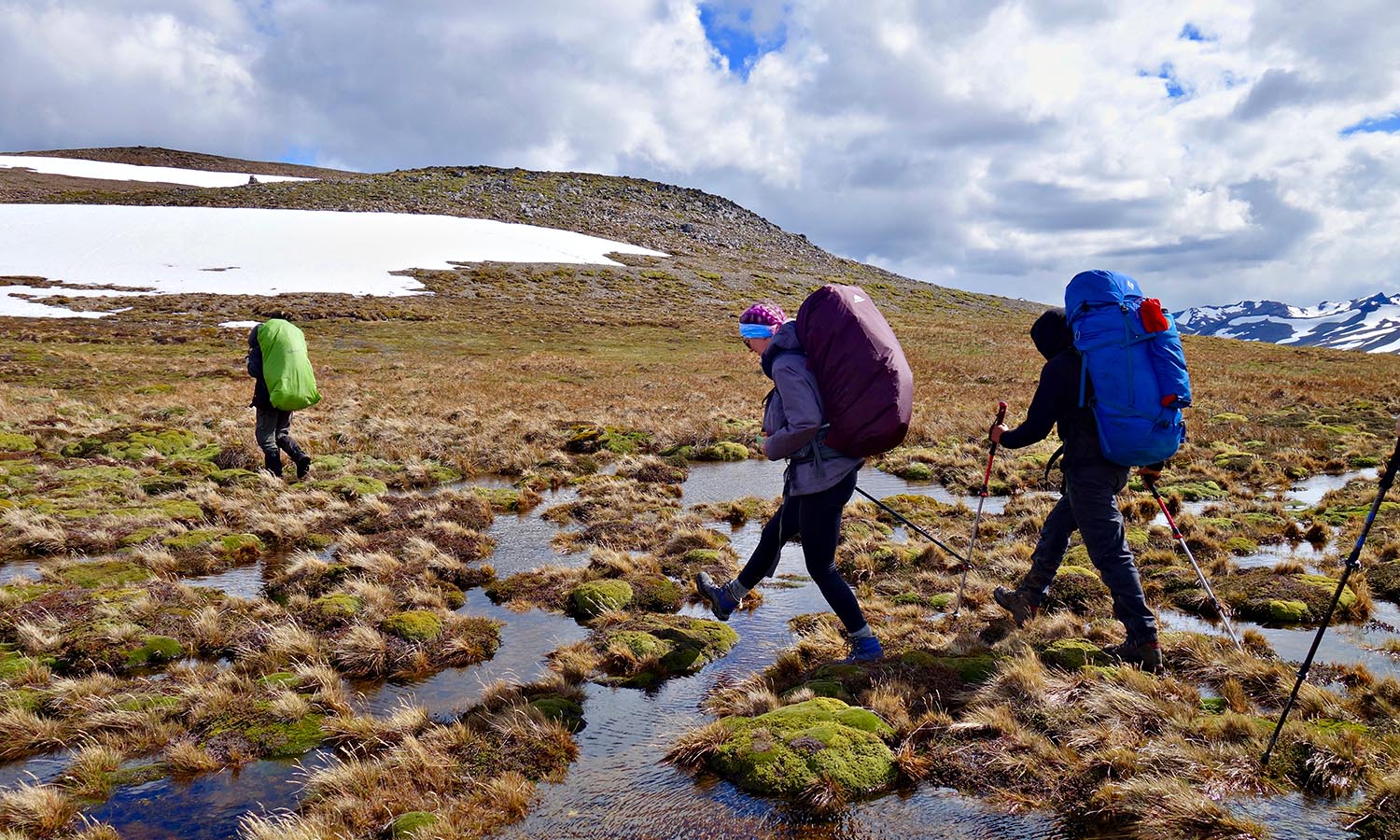
Our guides get busy preparing dinner – vegetable soup with king crab, a specialty of the region. Though we are each carrying most of our gear (food excluded) porter Pascal has been tasked with heroically carrying our quality but weighty tents. With all waste needing to be carried out of the wilderness area, Christobal has drawn the short straw, packing a toilet tent and its soon-to-accumulate contents. Our crap will be sealed in plastic bags before storage in a barrel labeled “Pirotecnicos” – presumably so no poor sucker will attempt to open it.
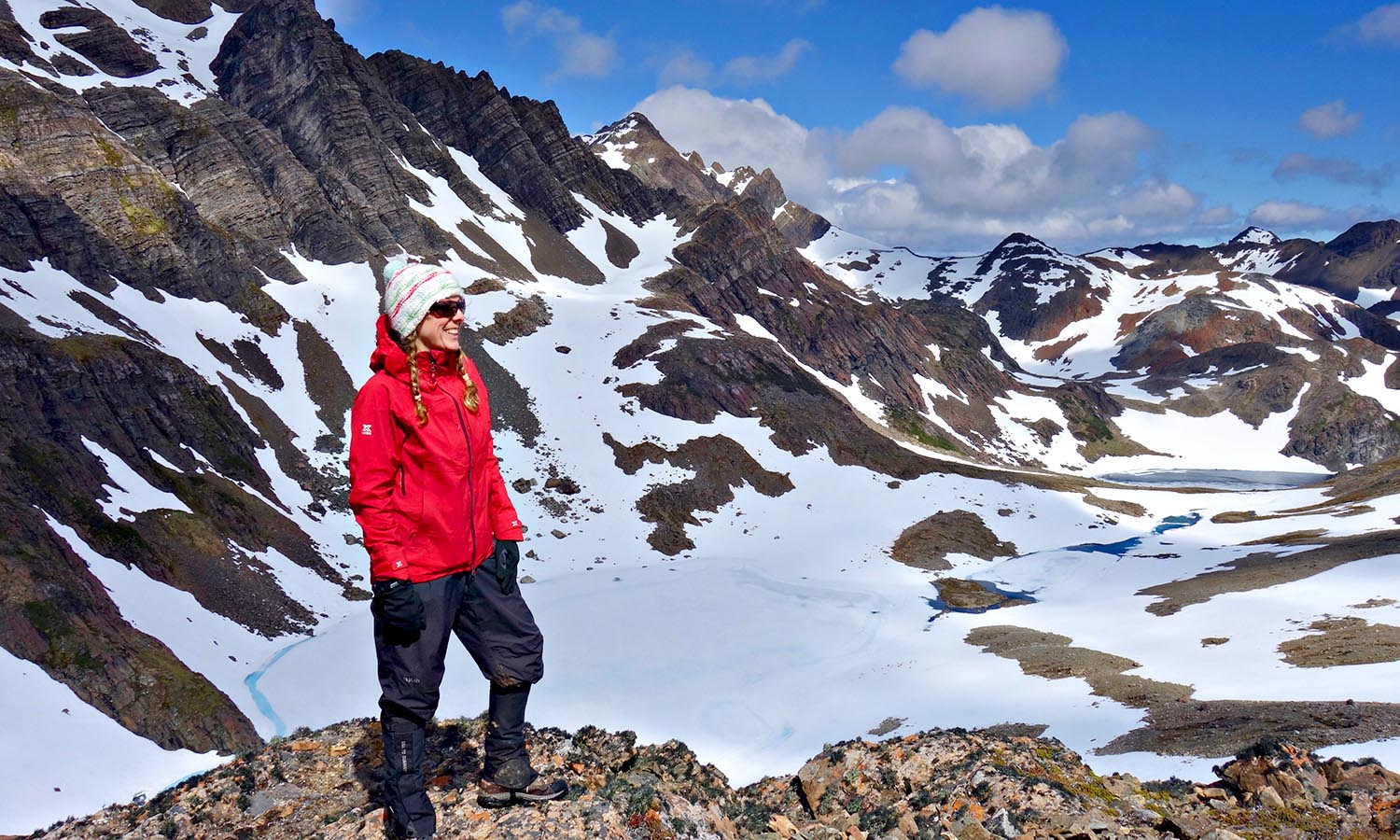
If the Dientes are teeth, on day two we floss them, our route cutting a high path between the towers. Traversing a high snow-covered valley, the striations in the rock faces looming over us appearing like the crimped folds of a merino’s fleece. A short side trip overlooks two frozen lakes, cracked and fringed in pale blue.

Gonzalo has issued us with spikes for our boots but, with the sun out, the snow is soft enough not to need them. Still, the trail runs perilous at times as it crests three passes and sidles across snow-covered slopes that fall away to jumbled rock and wind-whipped lakes.
Clouds move quickly, casting shadows that speed across the land. The wind is a bully that shoves suddenly and randomly, and on Paso Australia it’s so strong that I’m blown onto my butt. But guide Matias embraces the wind, seeing it as a challenge from God. “Try me! That’s all you’ve got?” he laughs, shaking a clenched fist at the sky.
It means that nothing lasts long here. Weather shifts from bright sunshine to frigid hail and back again within minutes. But even with the sun out, it’s rarely warm. Daytime temperatures in the summer hiking season waver between three and eleven degrees but the wind chill makes it feel much colder.
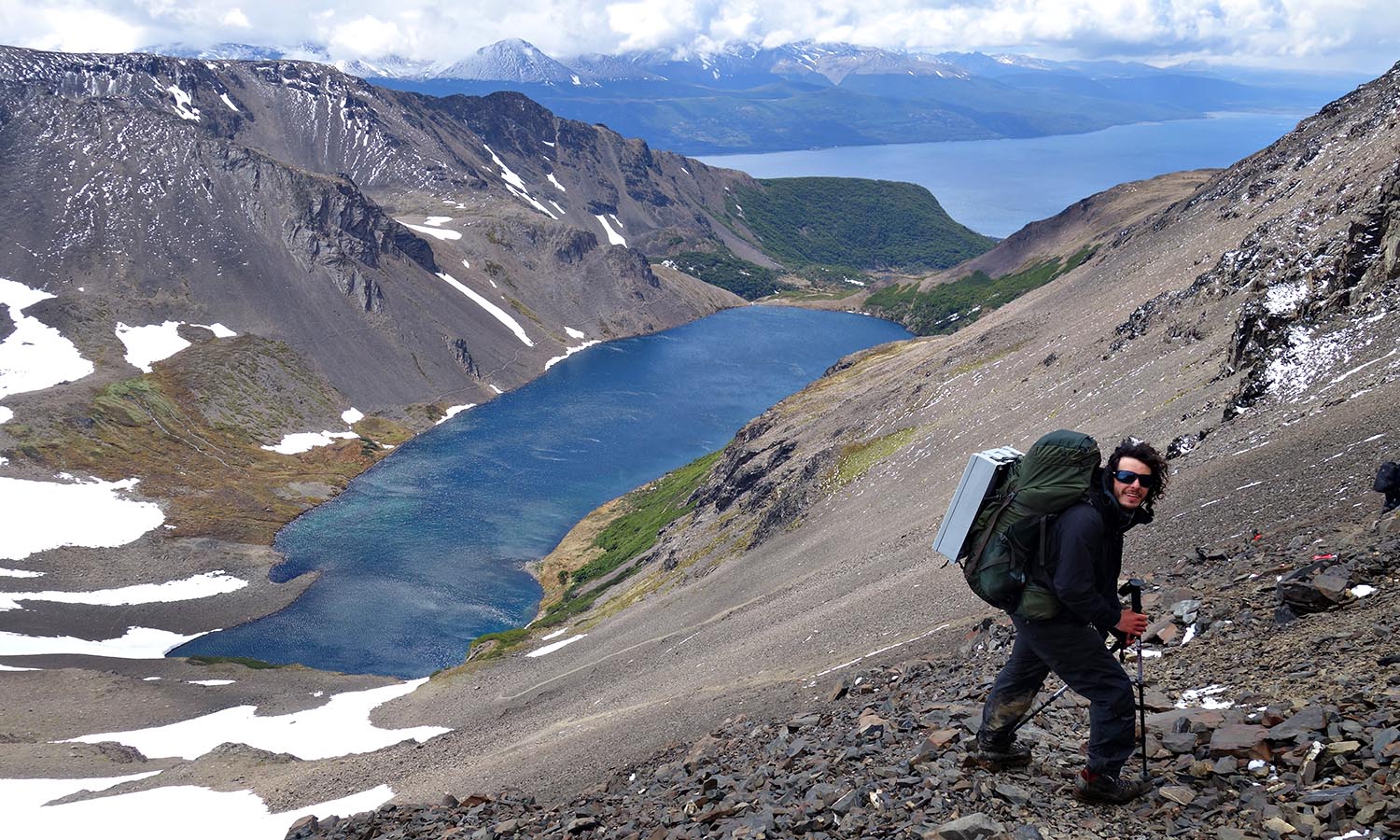

Though conditions are challenging, the rewards are high. An afternoon walk up Mt Bettinelli, a shale covered plateau, offers immense views of the Dientes and beyond to Cape Horn, the famed headland where the Atlantic and Pacific Oceans collide in an often angry flexing of power.
It’s a remarkable landscape and every day gives our cameras a serious workout. We crest passes and descend into valleys, travelling from lake to lake, our jaws dropping in open-mouthed wonder. Green cushion plants provide splashes of green, and crystal clear lakes are tinged in blue. The land feels vitally alive, its story inextricably linked with the elements and how they shaped the land. This part of Tierra del Fuego is an extension of the Andes, layers of sedimentary rock that have been uplifted and then carved by glaciers. Only the hardy can survive in these conditions and the lichens that cling to rocks are as tough as pot scourers.
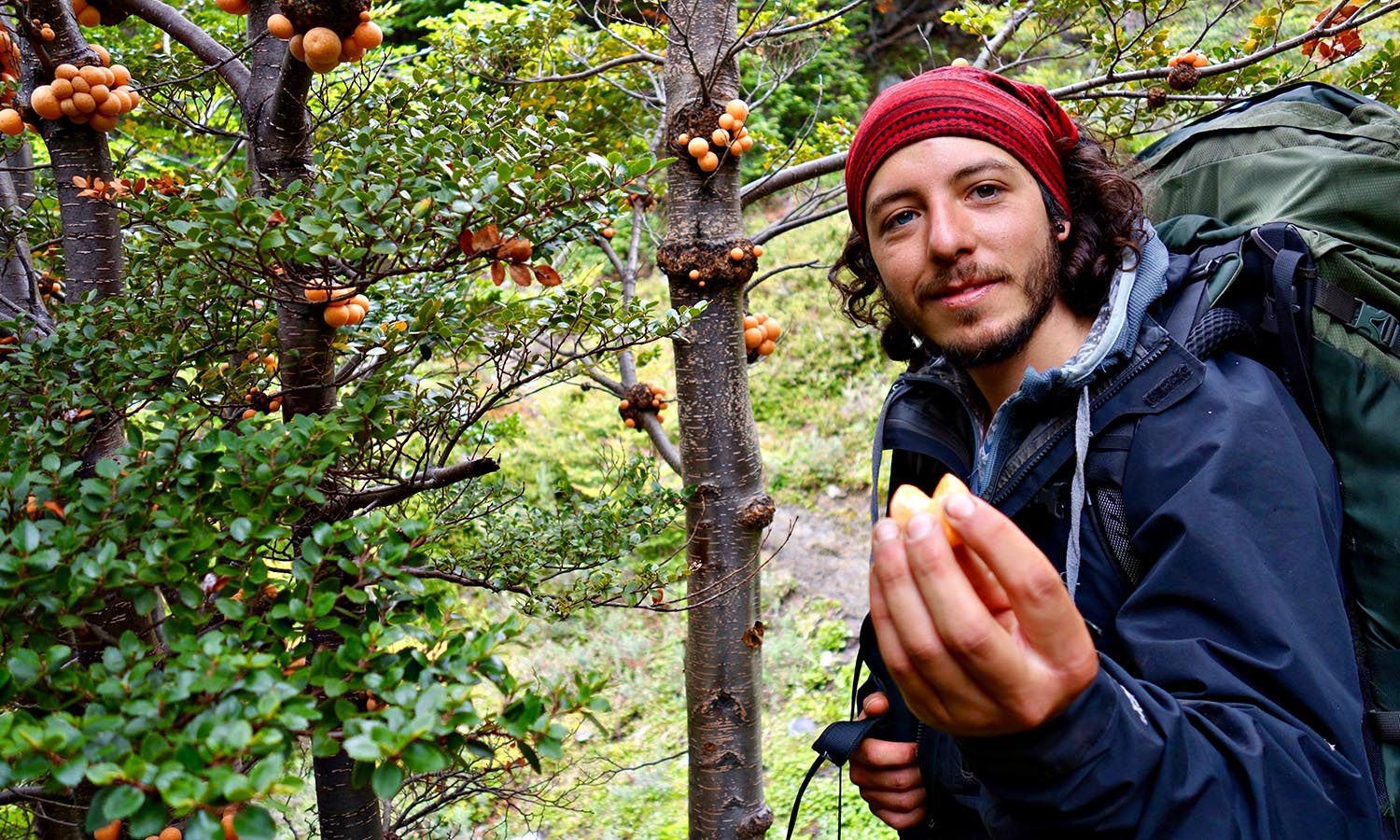
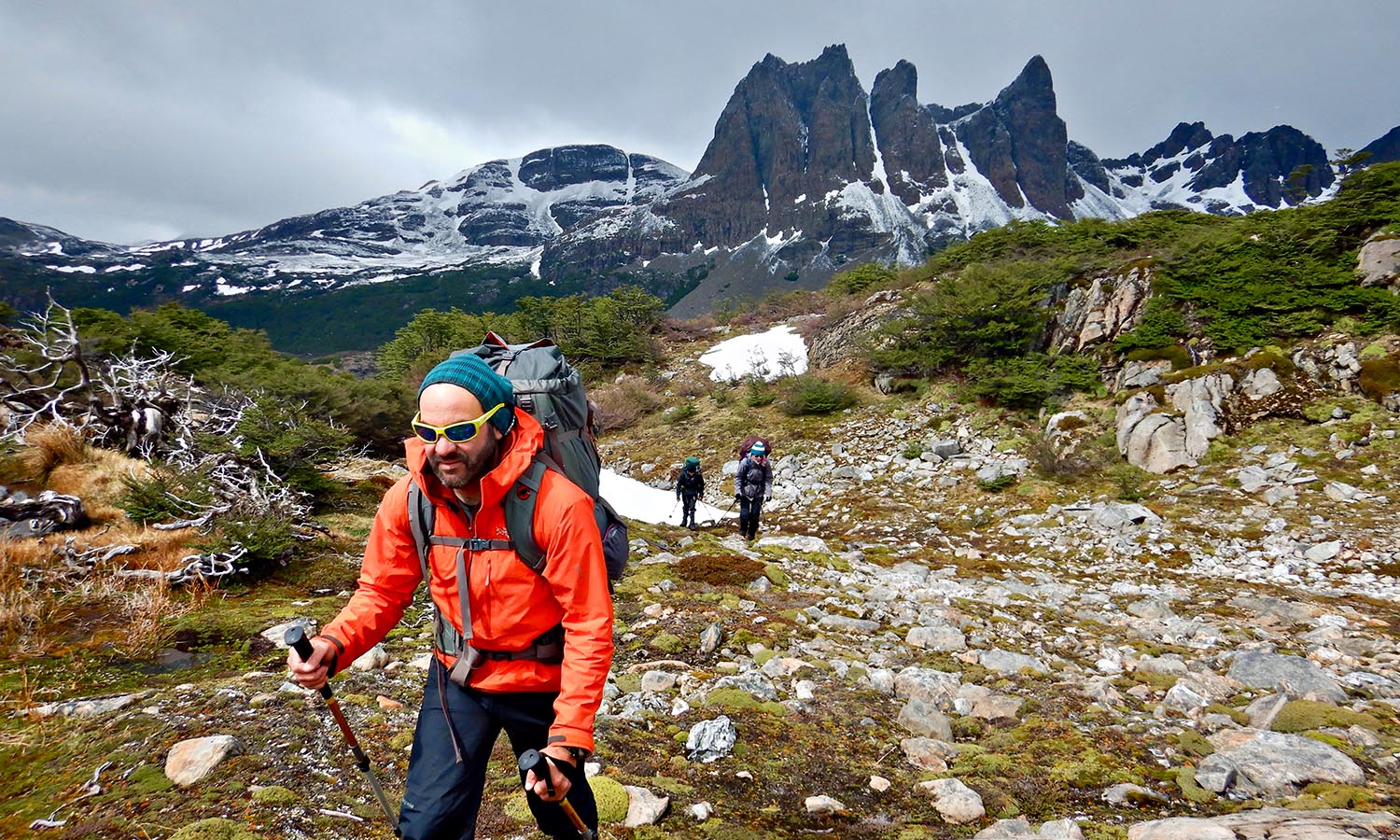
Despite being an experienced hiker I am glad to have guidance. Random trail markers painted onto boulders give occasional reassurance but mostly the route is a jumble of boulders, rock, scree and snow. “Some people come with no guide, no map, no GPS,” says Matias. “They say, ‘Oh I know about mountains so I will go with nothing,’ then they have problems.” Only a week earlier he was involved in a rescue when a couple’s tent blew away. “It’s dangerous but if you take care it’s okay.”
“This trail is much more wild than Torres del Paine. It’s harder for the guides too. Everything has to be carried in and out.” Guiltily, I consider my daily contribution to Christobal’s load.
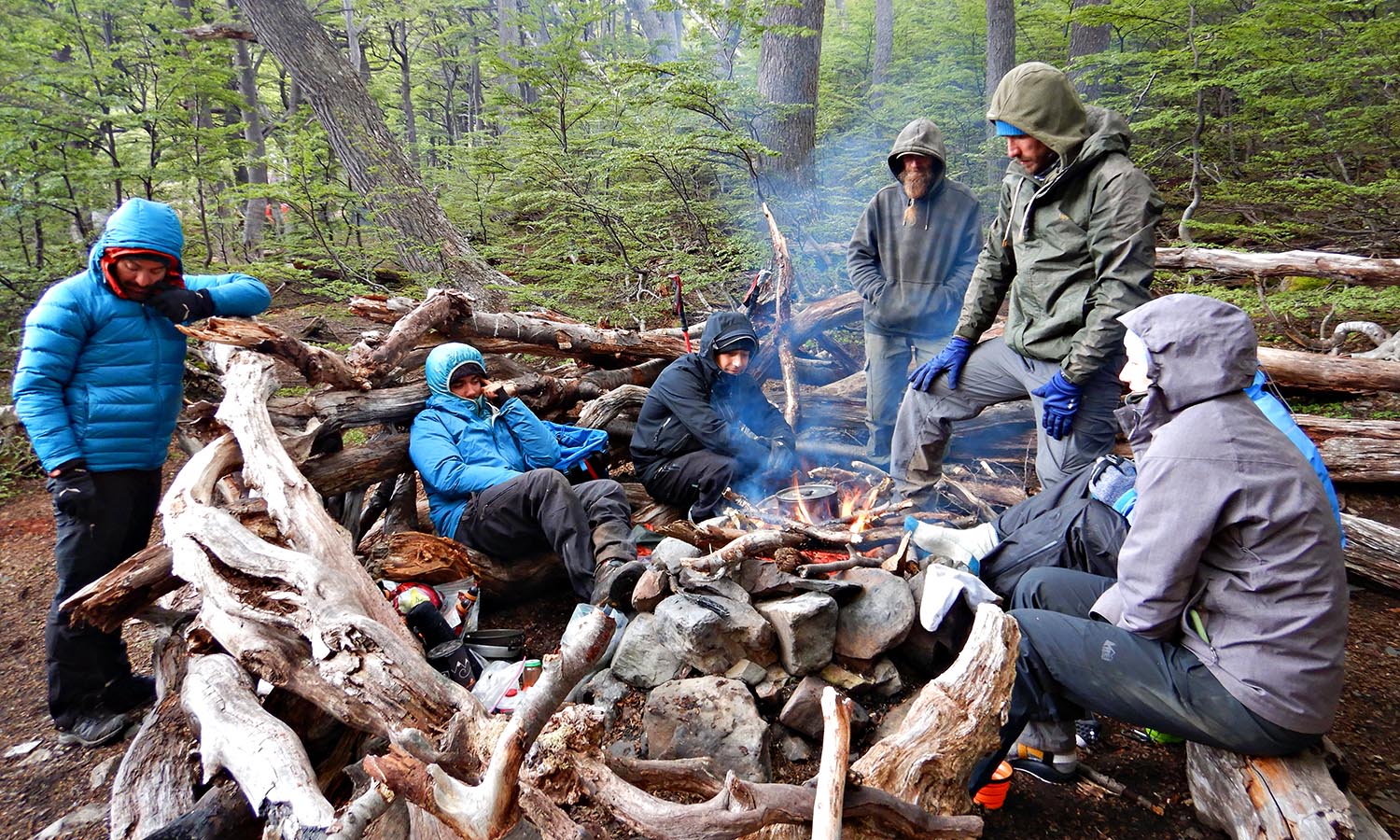
Thick snow falls the night before a 1000-metre climb to the plateau of Paso Virginia, the highest point of our route at 859 metres and considered the most dangerous. “In very bad weather you can see nothing,” Matias says. “If you’ve got hail in your face, 100kph winds and a backpack, you can’t walk for sure.”
As it is, we cluster on a precarious lip, legs spread in a rock-god power-stance against the gale force gusts, to peer down at the most beautiful lake I’ve ever laid eyes on. Laguna Los Guanacos fills a long bowl cupped by snow-capped mountains. I’m mesmerised by its sapphire colour and emerald fringes, the way it drops off like an infinity pool at its far end, and how the wind whips across the water.
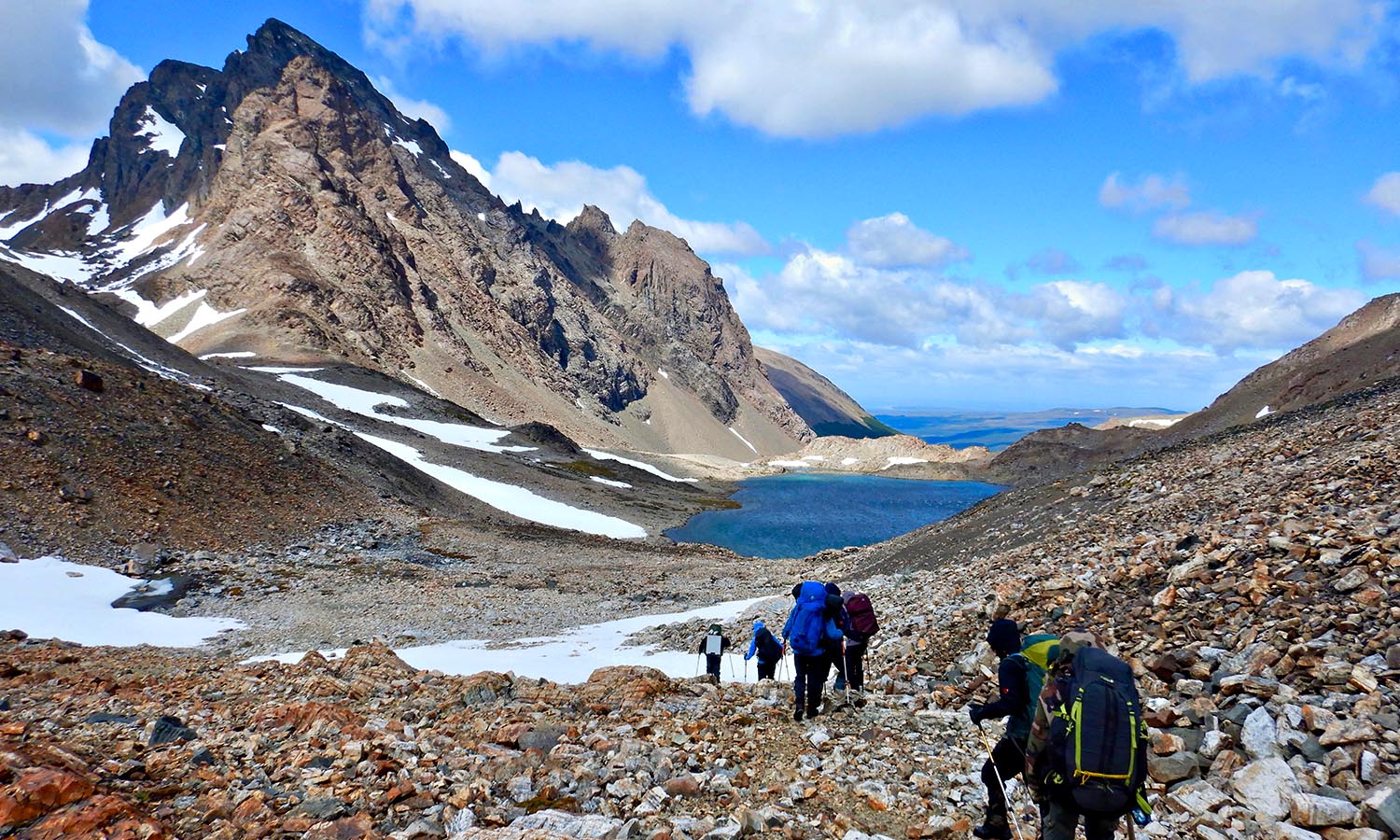
The descent to its shore is treacherous, a steep chute of rock and pebbles as slippery as ball bearings before softening into black ‘sand’. It takes ages, a marathon of steady foot placements braced by walking poles. “I had to hold a girl’s hand all the way down here once,” Matias says. There were tears.
By evening I’m feeling a bit snivelly myself. Days of walking in snow and mud has soaked my boots right through, and, with the temperature barely above freezing, my feet feel as though they’re soaking in an ice bucket.
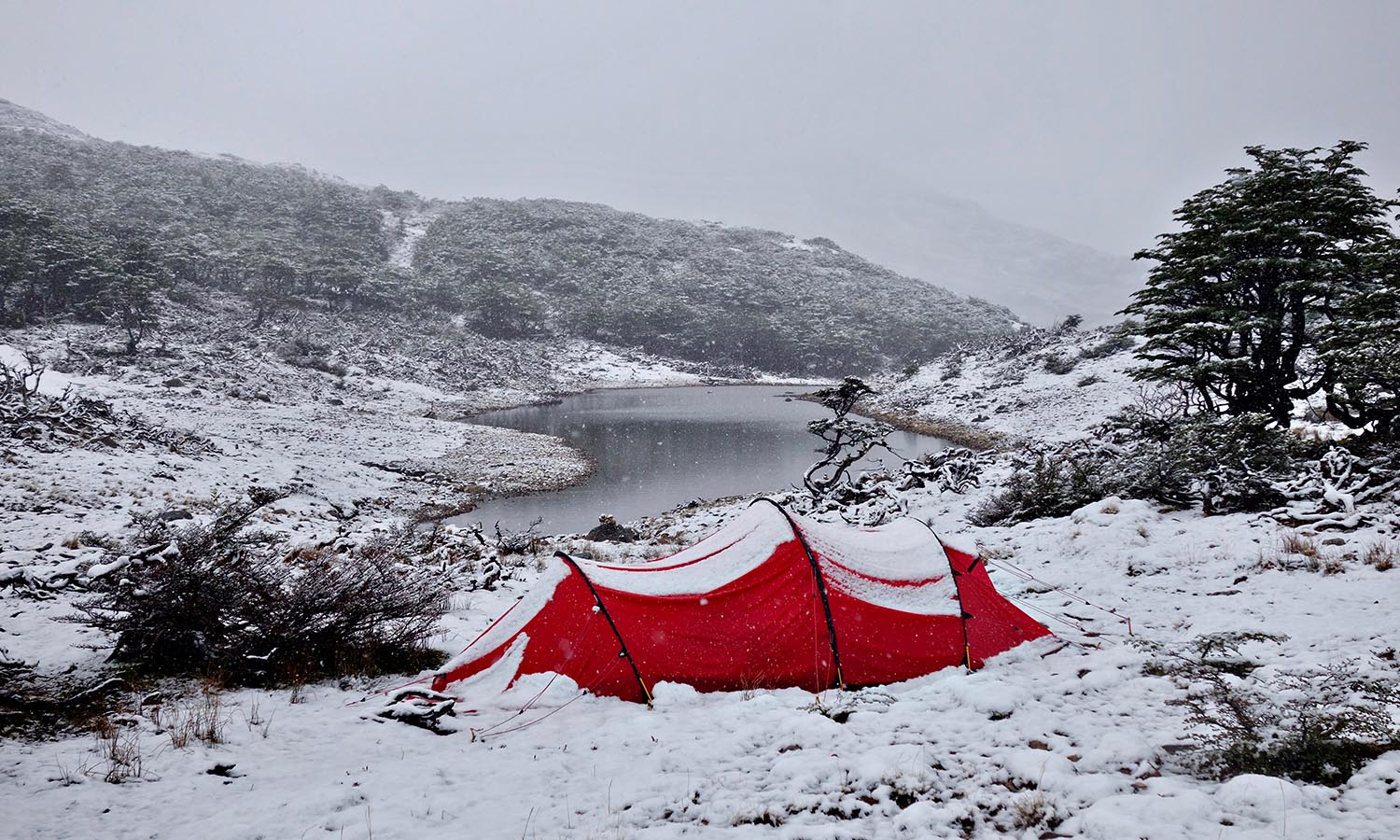
But eighteen hours later we descend through the forest to the luxury of Lakutaia Lodge and all struggles of the wild and woolly mountains we’ve traipsed through are forgotten, leaving only memories of its otherworldly beauty. On Isla Navarino the wind blew away all traces of the modern world, leaving only raw natural attraction and a reminder of what wilderness really is.
Train travel is all the rage as a travel mode in the post-pandemic world, and rightly so; Not only is it sustainable, but get lost has always been of the opinion that the rails are an excellent way to peel back the layers of a country and find what’s underneath.
We’ve compiled five of the craziest train journeys from around the world – fast, slow, wild and remote – you don’t want to be late to the station for these.
NOTE: Not for the feint hearted.
The Sahara Freight crosses 700kms of desert and coast, sending iron ore from the middle of the World’s largest desert and dropping it (via Mauritiana’s capital Nouakchott) in the coastal town of Nouadhibou.
Climbing aboard the carriages filled with iron and taking it to your stop is considered an acceptable method of transport by the locals here. This definitely isn’t going to be the most comfortable of journeys, but it is as raw and unique, and otherworldly as you’re ever going to get. It’s the kind of journey that would appeal to extreme intrepid types, and if you find yourself in Mauritania in the first place, that’s probably you.
Check out Vlogger Fearless and Far’s journey below:
Germans love trains, responsible for many of the modern train technologies that are currently being implemented right around the world, and with several of the best subway systems anywhere in Europe.
They love techno music as well – you only need to pop into Berlin for a night or two for evidence of this.
It was only a matter of time then, that they married the two; in 2019 the ‘Techno Train’ was born.
After gaining popularity rapidly, COVID halted the train’s course, but a return to the tracks is set for October this year.
The train is essentially a hectic German nightclub within the confines of a seven-hour journey through Bavaria. There’s 11 carriages; two dedicated to smoking one for chilling out, and eight for DJs and dancing. What a great ratio.

The word ‘Express’ in the title of this line is maybe a little misleading here.
This train isn’t winning any land speed awards any time soon. The 476-kilometre journey takes over ten hours.
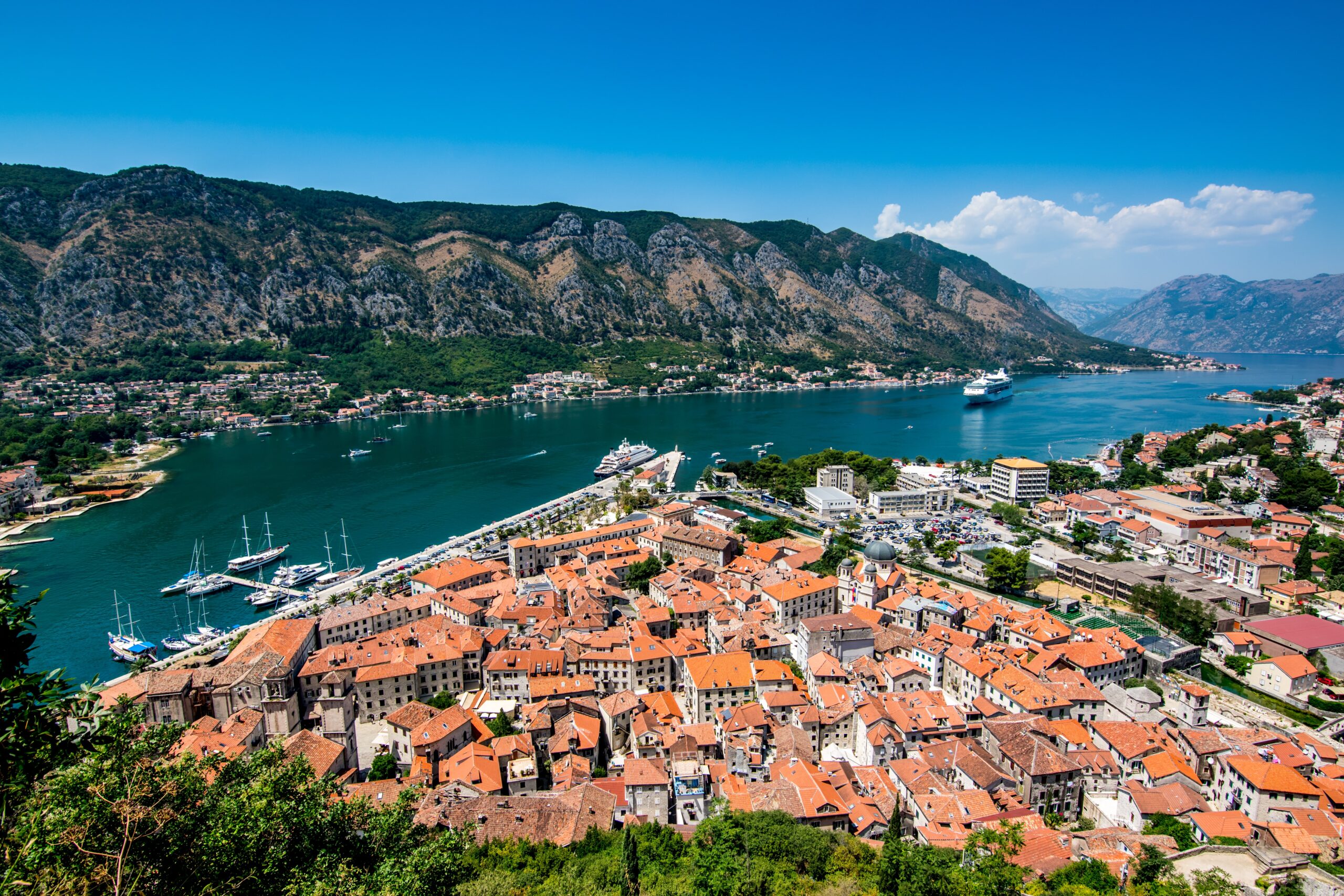
But while it might lack in pace, and grandeur, it makes up for entirely when you look out the window. The train passes over no less than 254 bridges, and when you’re not passing through several 7-kilometre-long tunnels, you’ll get the relatively unexplored Balkan landscape: stunning mountainous terrain, crystal clear lakes and the Adriatic coastline.
Starting in the heaving Serbian capital, Belgrade, you’ve got the choice of finishing in either Bar or Budva, spectacular coastal towns in Montenegro that offer partying and relaxation in equal measures, depending on what you’re after.
From one of the world’s slowest trains, to the world’s fastest: the Shanghai Maglev.
At a mind boggling 460 kilometres per hour, the Maglev is a good 110kph faster than it’s nearest rival for fastest public train on the planet. It crushes the 30 kilometre journey from the Shanghai’s Pudong airport to the city centre in just seven minutes.
If that doesn’t wig you out, then get this: the train uses magnetic levitation technology, meaning you’re not actually ever touching the steel railway, more floating above it.
Are you then on a train at all? Or should this be considered flying? One things for sure: this doesn’t count as ‘slow travel’.

Toot Toot! All aboard the G-Train!
O.K, you can’t actually board this train yet. But you can buy it.
Thierry Gaugain’s extraordinary concept, which is being called the ‘Palace on Wheels’ – a kind of modern take on the world famous Orient Express.
Gaugain is a super-yacht designer, and he is now bringing that level of luxury to tracks. The train will feature sleeping space for 18 guests, a party carriage, and several carriages with all-glass exteriors (we hope they don’t go through any rough neighbourhoods).
The thing that is amazing about the G-Train is that it is being sold as a private train – imagine owning your own train!
Gaugain is looking for buyers – so if you’re in the market for a train, and you’ve got a cool AU $486 million to spare, get in touch.

We’ve compiled 15 of the very best indigenous owned and operated experiences from around the world, from sledding with reindeer, to bow and arrows in the African desert. This is how to do it.
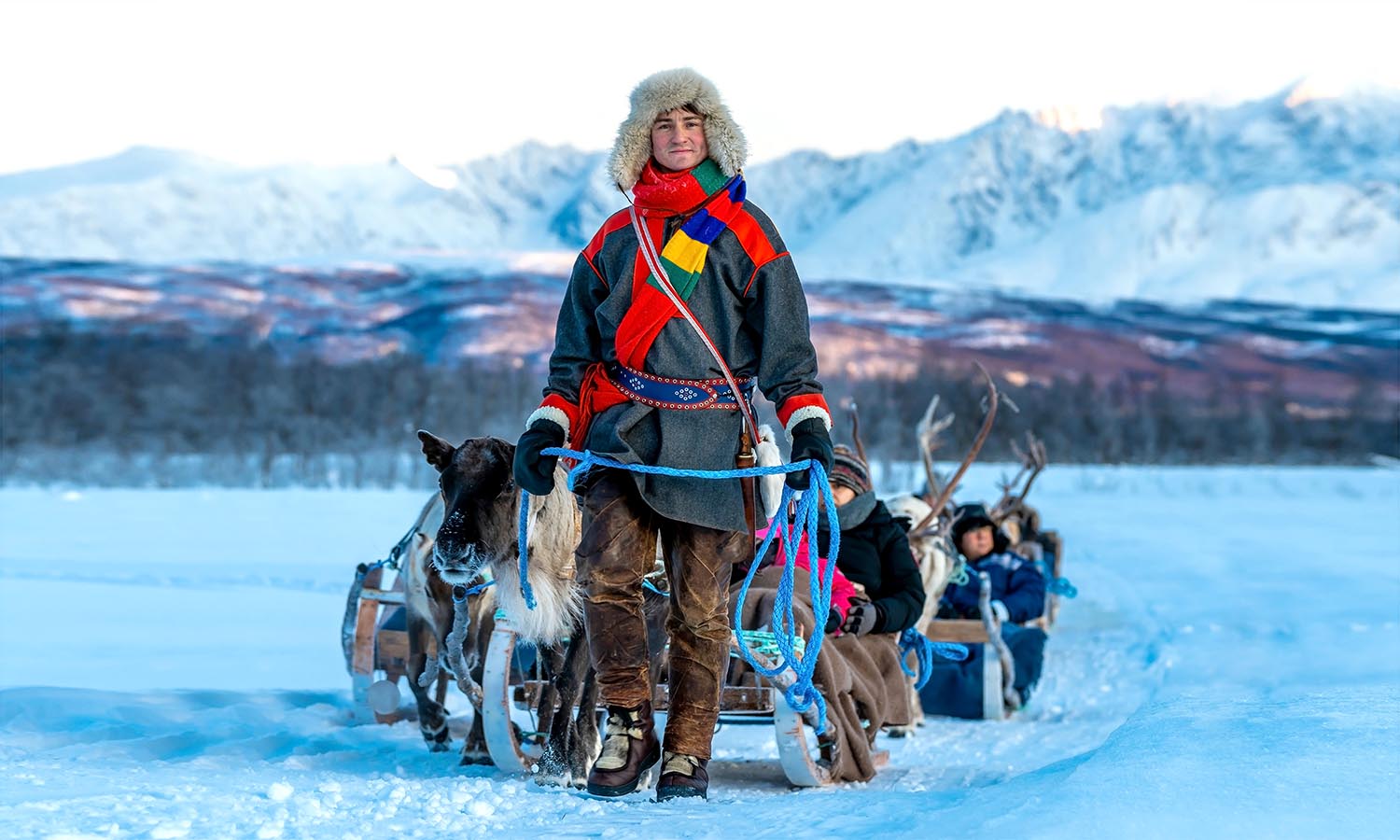
The indigenous people of Norway have lived in harmony with reindeer and nature for thousands of years.
You can do the same for a day yourself, flying across the snow on a wooden sled as the Sami people herd reindeer, before learning about the meaning of those dancing lights in the Northern sky.
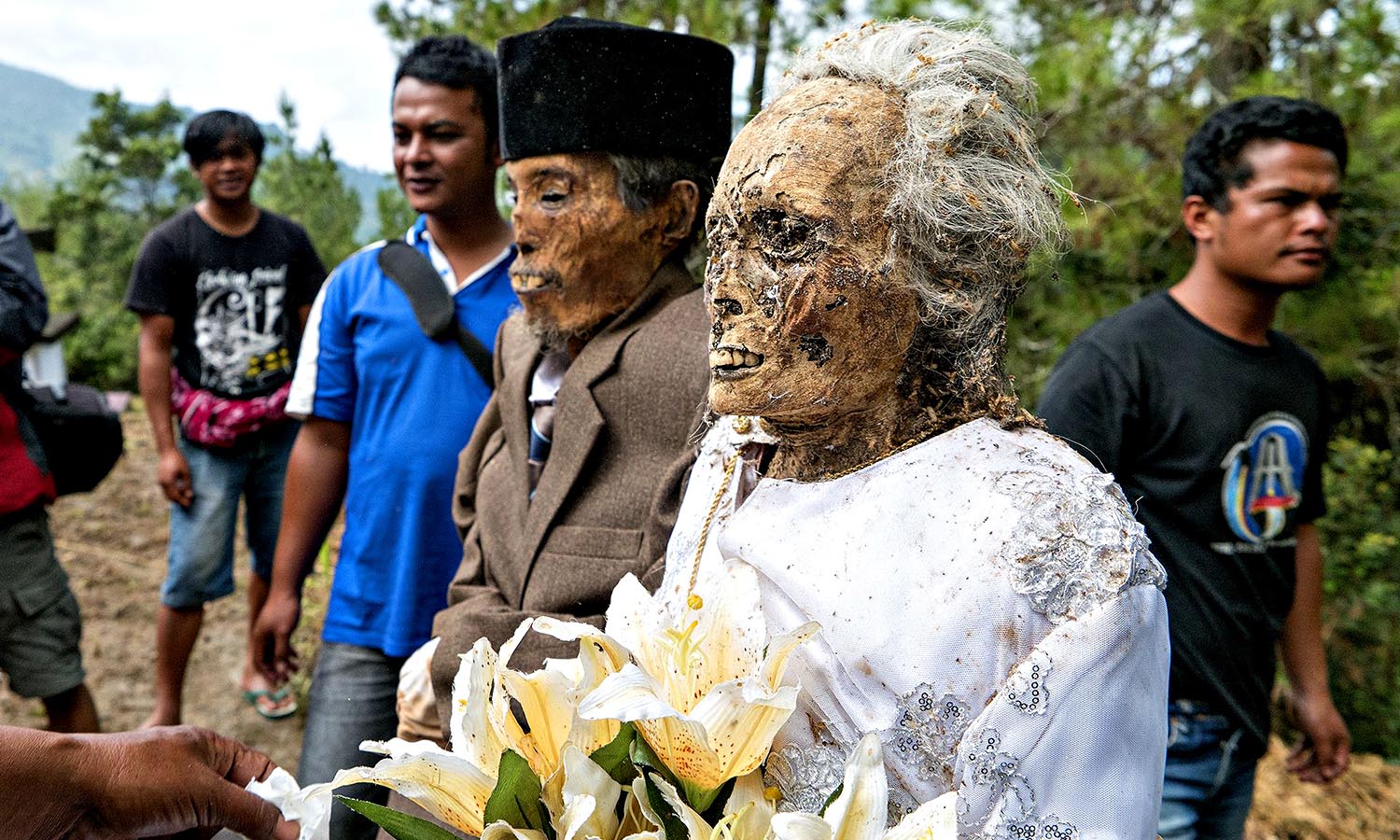
In a remote slice of land among rice fields and mountains in Central Indonesia, foreigners are invited to the extravagant funerals of the Tana Toraja people, often lasting several days.
You can also visit the extraordinary cliff-side burial site, which is guarded by tiny ‘Tau-Tau’ statues, and then there is the once a year Ma’ Nene ceremony: where the Torajans dig up their relatives (yes, we’re serious) in order to stay connected.
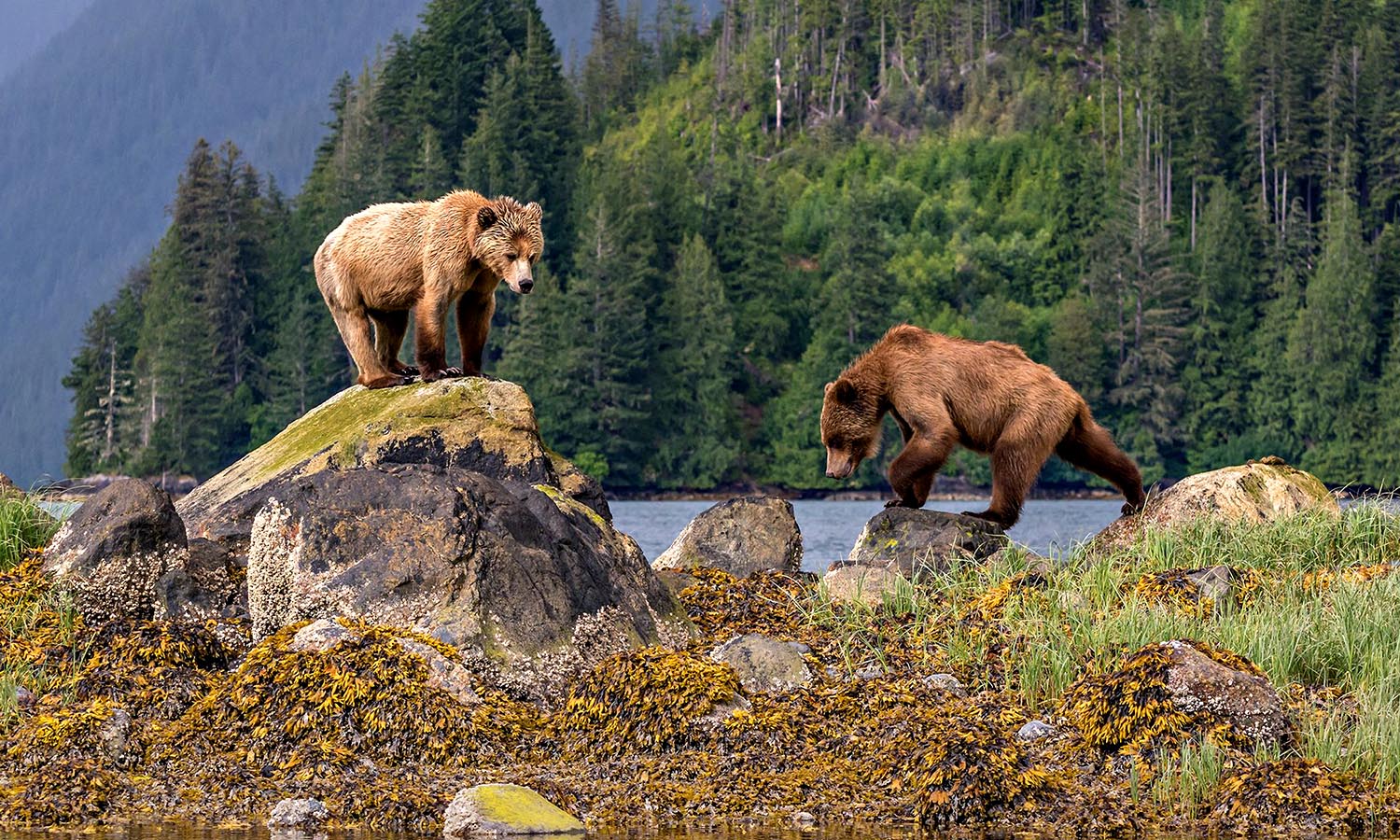
There’s nothing quite like being up close and personal with a big ol’ Grizzly bear.
Run by the local Kwakwaka’wakw people, Seawolf Adventures supports local Indigenous communities as well as a more sustainable approach to wildlife viewing, and takes you as close as you’ll want to get with one of the big, brown beasts.
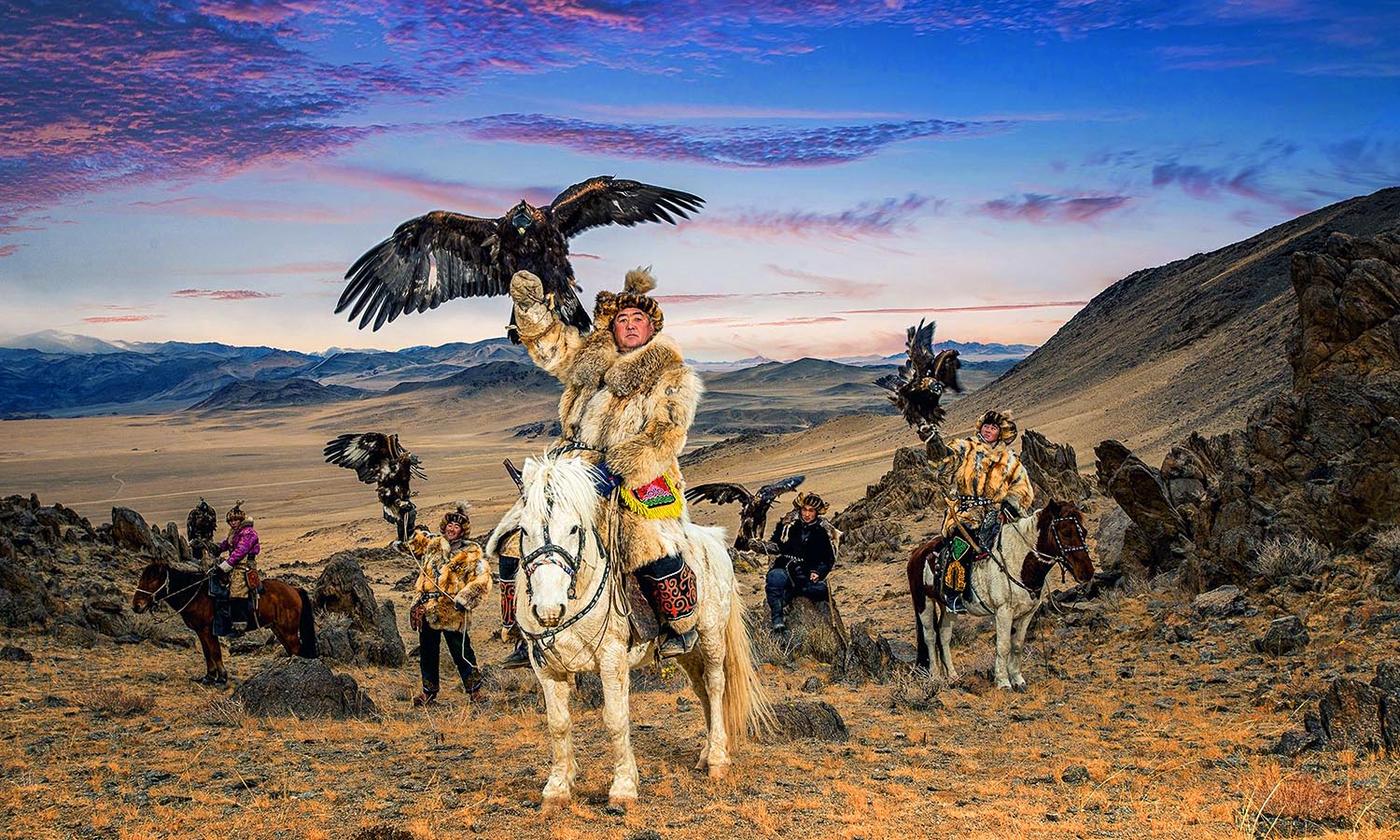
Saddle up and load all your gear onto a caravan of carts, because this is a horse riding adventure like no other.
The Steppe Nomads in Mongolia are the largest remaining pastoralist people on the planet. Sleep under a clear sky and watch the stars as you completely disconnect from the world in Central Asia.
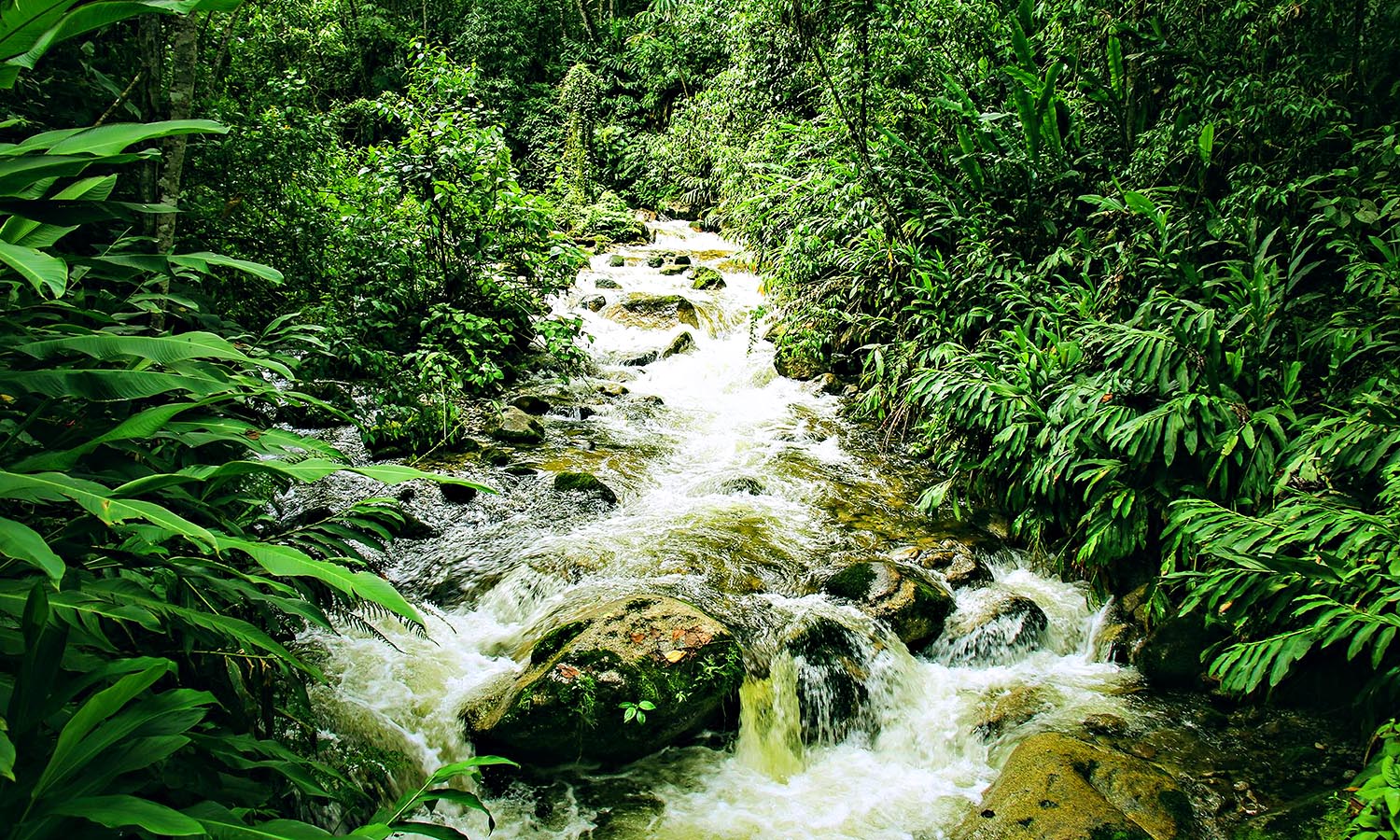
On a Bonanza Tour you’ll trek, climb, paddle, wade and crawl through the Peruvian section of the Amazon rainforest, where anything from monkeys and spiders, to giant otters and even jaguars roam one of the densest slices of wildlife in the world.
Bonanza was kickstarted Ryse Huamani Choquepuma and is now co-owned by him and his four brothers and sisters, all of whom grew up in the jungle they lead groups through. A large portion of the proceeds from their tours go toward buying essential provisions for people in communities like the one the family grew up in.
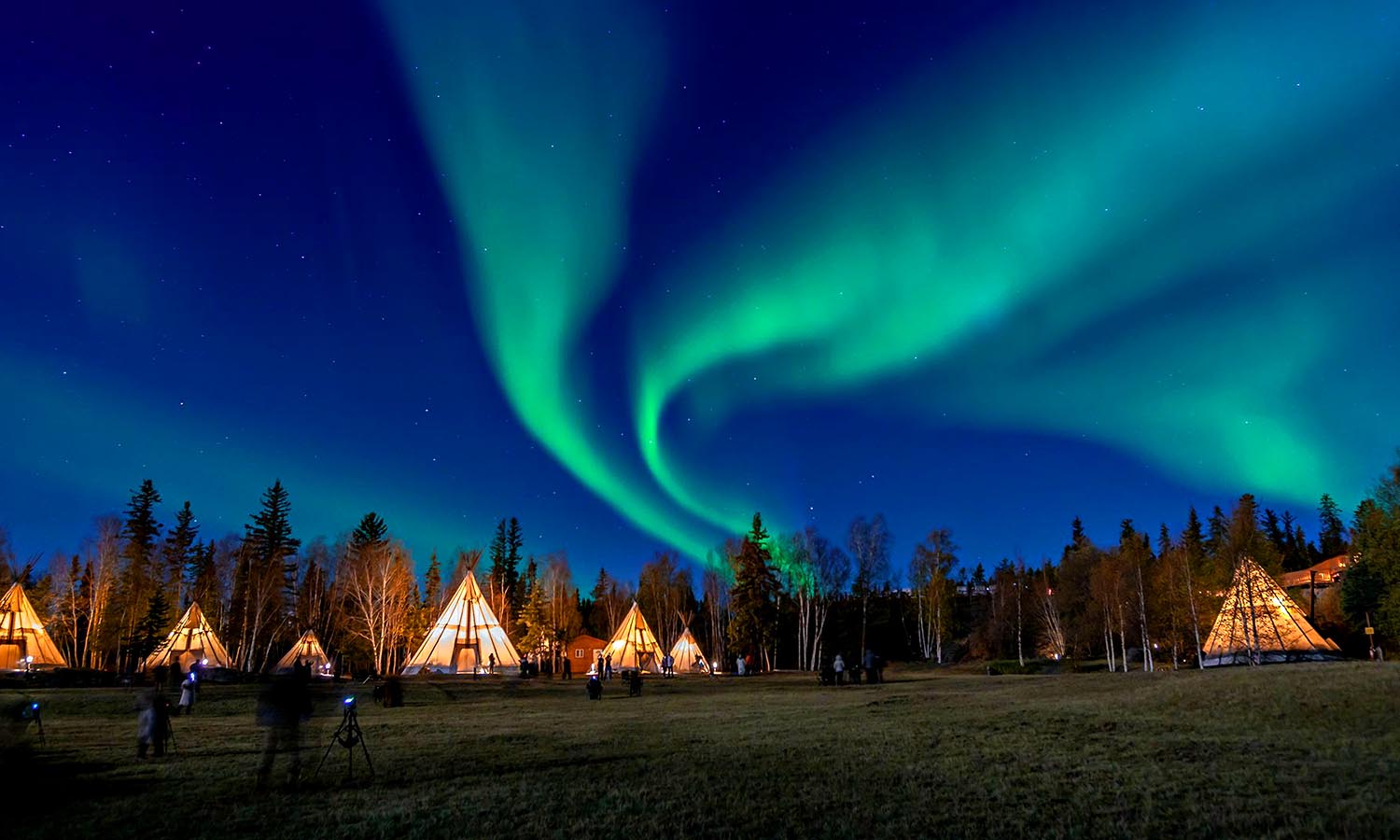
Kylik Kisoun Taylor has been proudly sharing authentic Canadian Arctic experiences for more than a decade.
His business Tundra North Tours is an Inuit company based in Inuvik, Northwest Territories and runs boat tours, flights to Tuktoyaktuk, Reindeer Experiences and adrenaline packed Ice Road adventures.
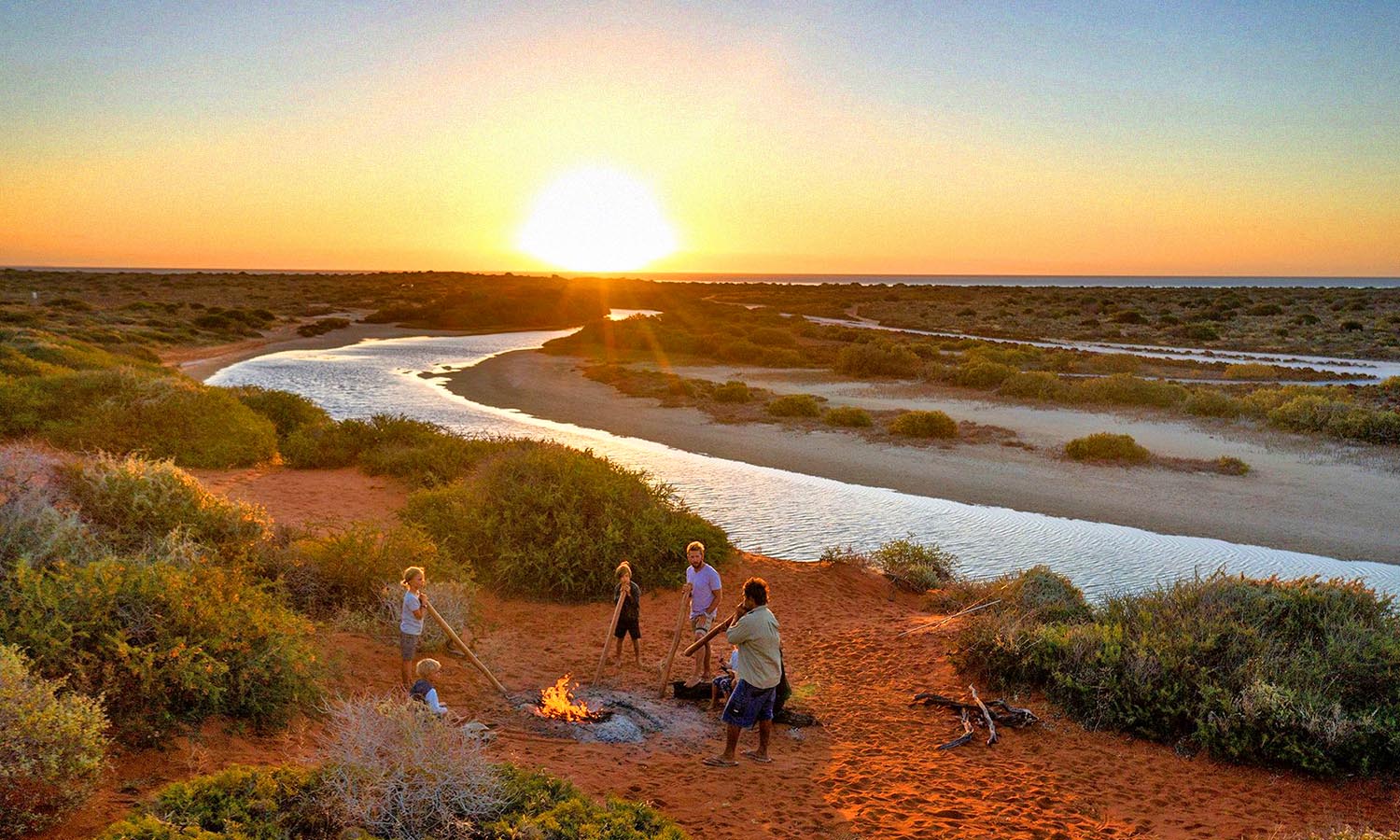
The desert, the ocean and the brightest stars you’ve ever seen all converge at Gutharraguda (Shark Bay), near Monkey Mia on the north-western corner of Australia.
It’s here you can learn to play the Didgeridoo from Darren ‘Capes’ Capewell, a descendant of the Nhanda and Malgana people and owner/operator of the business, while a small fire crackling nearby cooks seafood and bush tucker for dinner. You’ll never want to leave the outback after this magical experience.
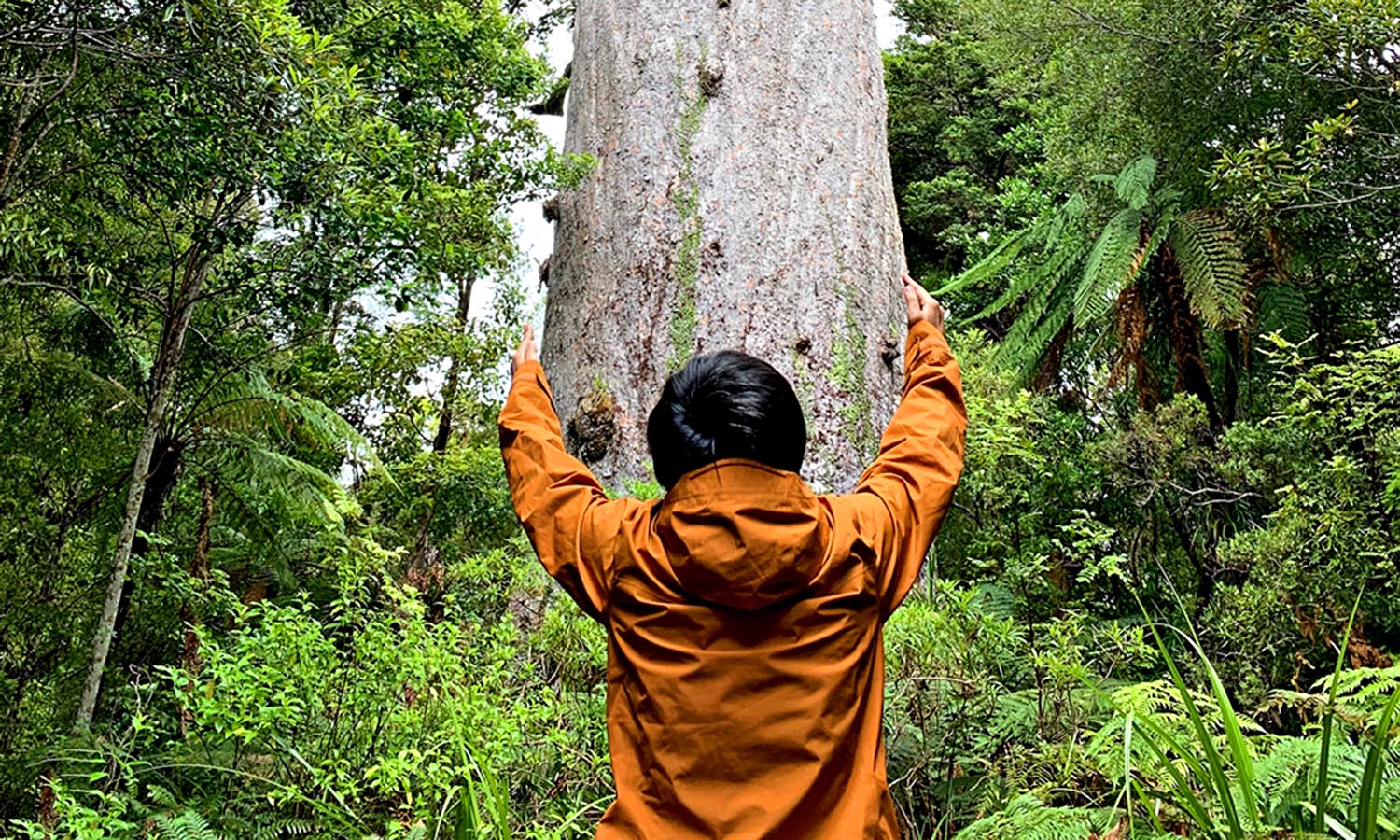
Tāne Mahuta, otherwise known as ‘Lord of the Forest’ is the biggest kauri tree alive, in the Waipoua Forest of Northland Region, New Zealand.
Travel to this mesmerising corner of the Land of the Long White Cloud with a Maori guide to ensure you follow all the correct protocols for your visit. Every step through this ancient landscape will be a lesson of the affinity that early Maori had with the forest and these giant trees.
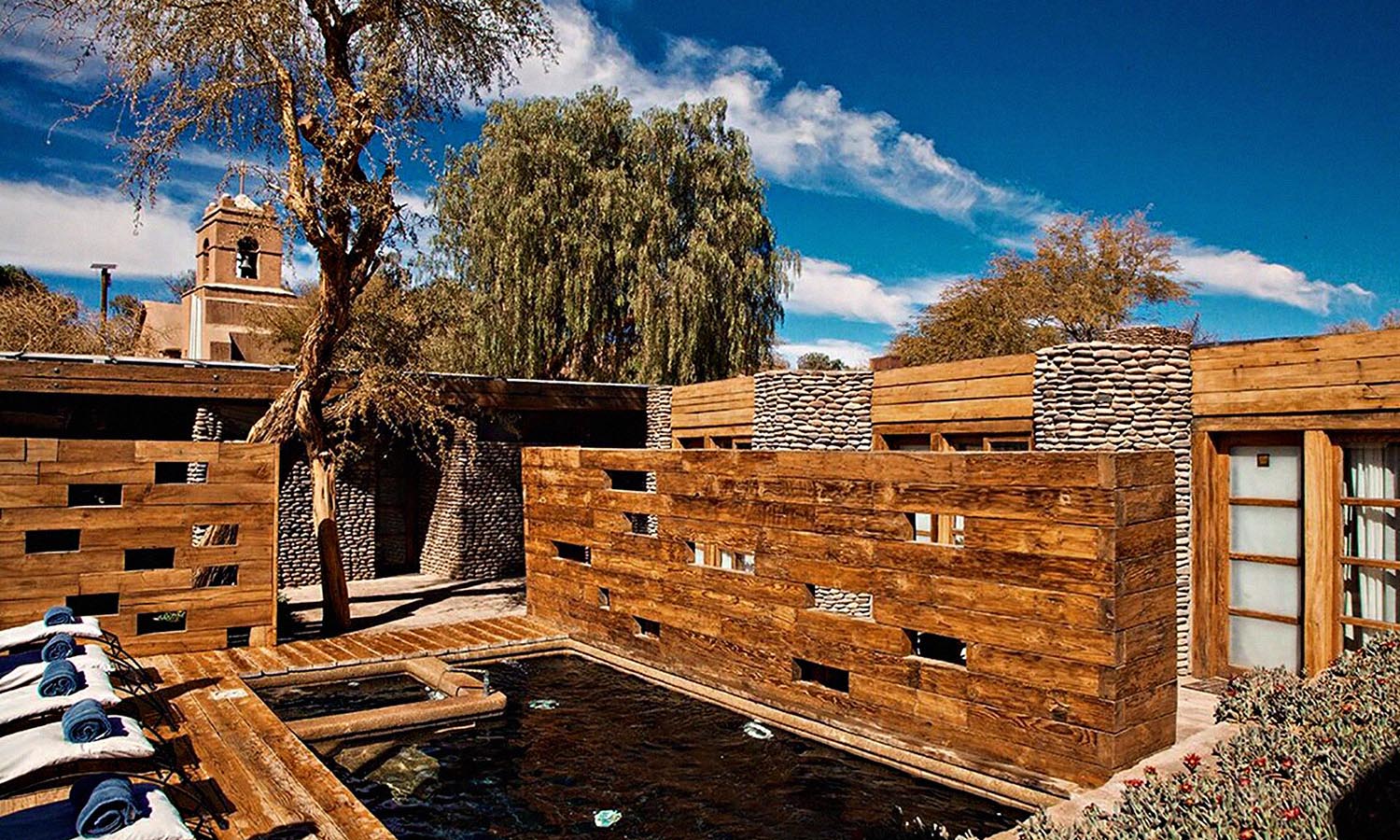
Terrantai Lodge is a native owned, bespoke and architecturally designed hotel which honours the traditional customers of the Atacama desert, while at the same time offering guests a luxurious stay in one of the harshest landscapes in the world.
Terranti (which means ‘people of the earth’) is in the heart of San Pedro de Atacama and is crafted with stone walls, a modest wading pool to symbolise the importance of water conservation and interconnected stone passageways.
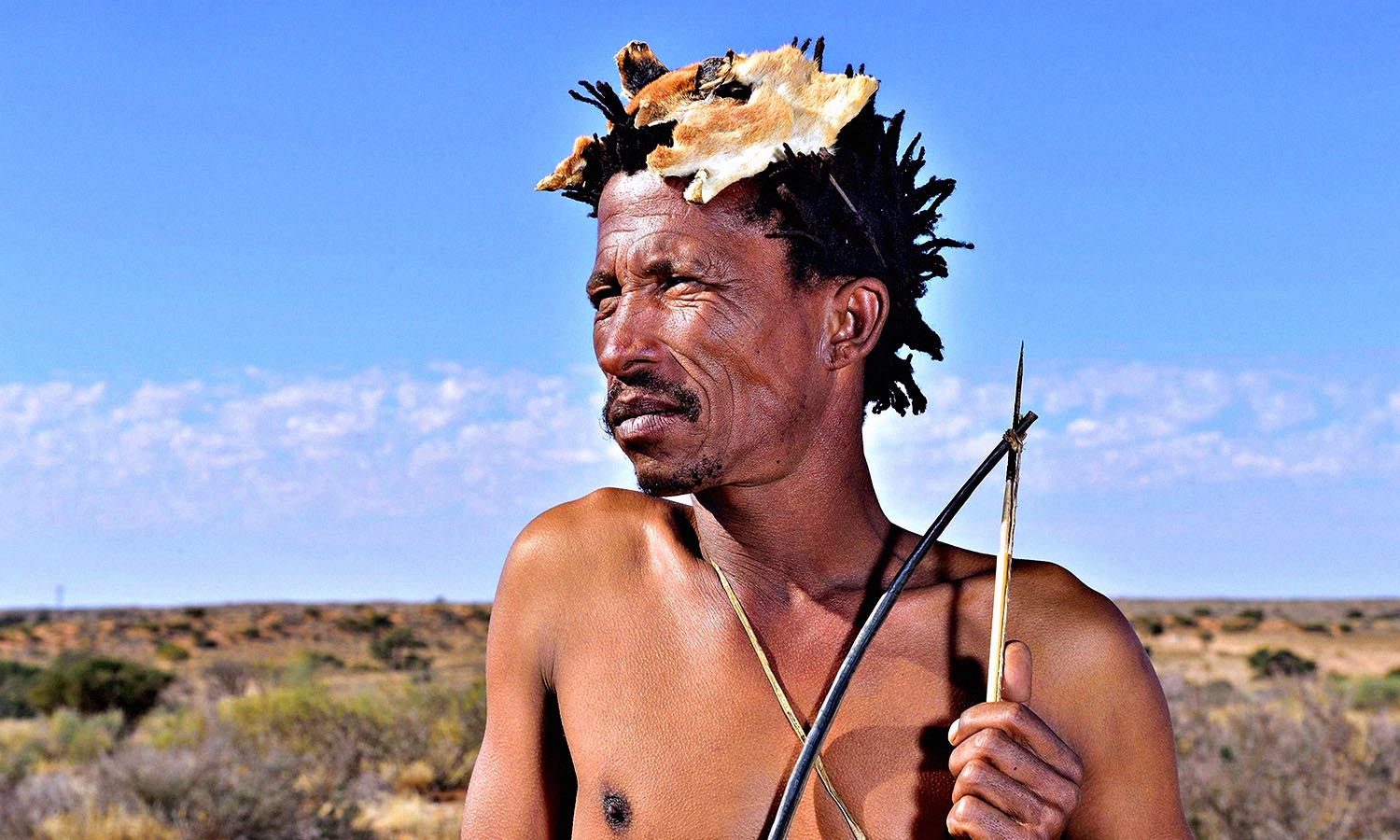
Kalahari Desert bush-woman, Vinkie Van der Westhuzien’s takes the more intrepid travellers among us to the remote, sandy outpost that is the Northern Cape, giving them an unforgettable experience with the ‡Kohmani San, who have been based in the desert for 20,000 years.
Learn how to hunt with a bow and arrow, before an exhilarating four-wheel drive trip over the desert’s red dunes.
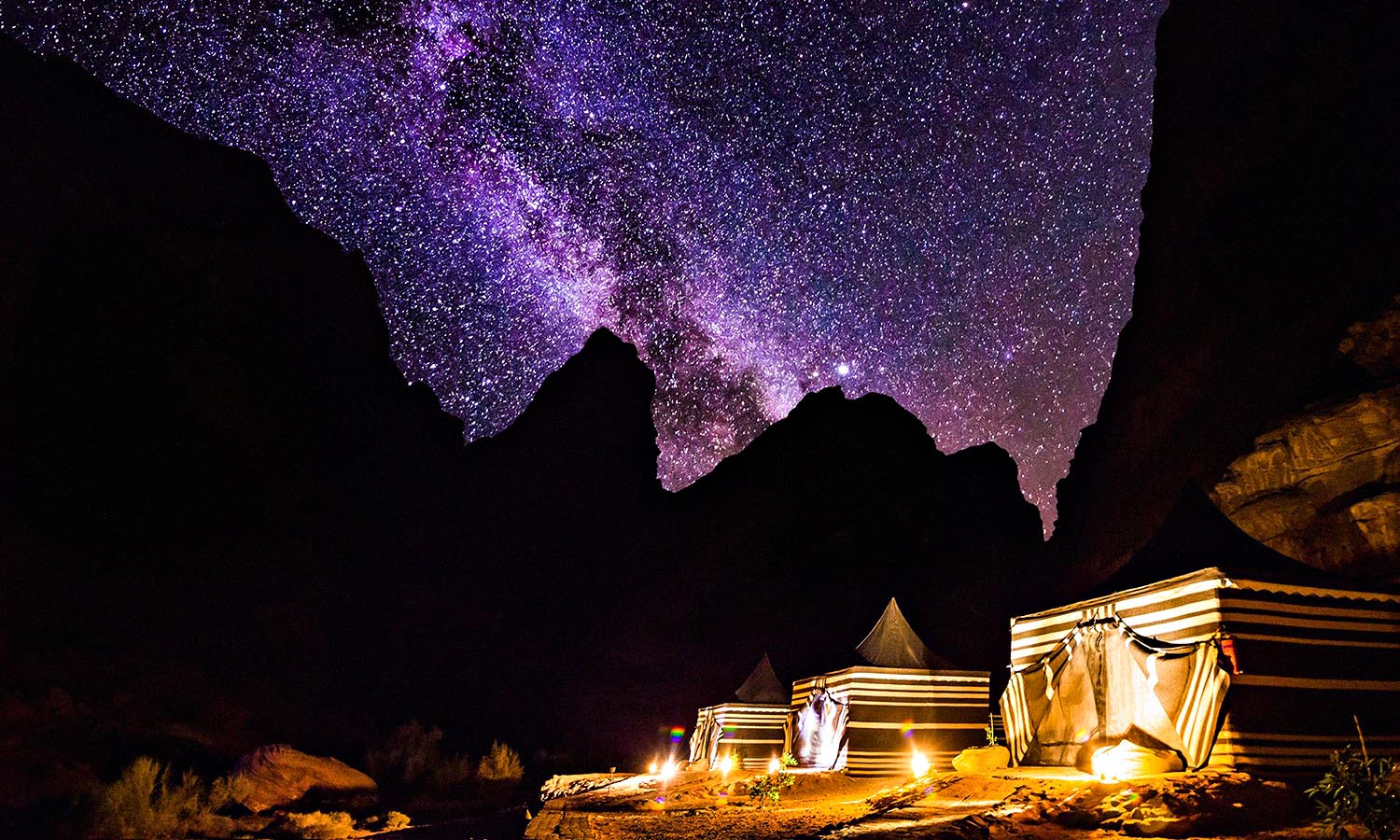
There aren’t many prettier night sky views than in the Wadi Rum Desert.
On this unforgettable indigenous experience, you can camp with the nomadic Bedouin people, who have had front row seats to the Wadi Rum sky for thousands of years, and learn about their culture over tea and khobz.
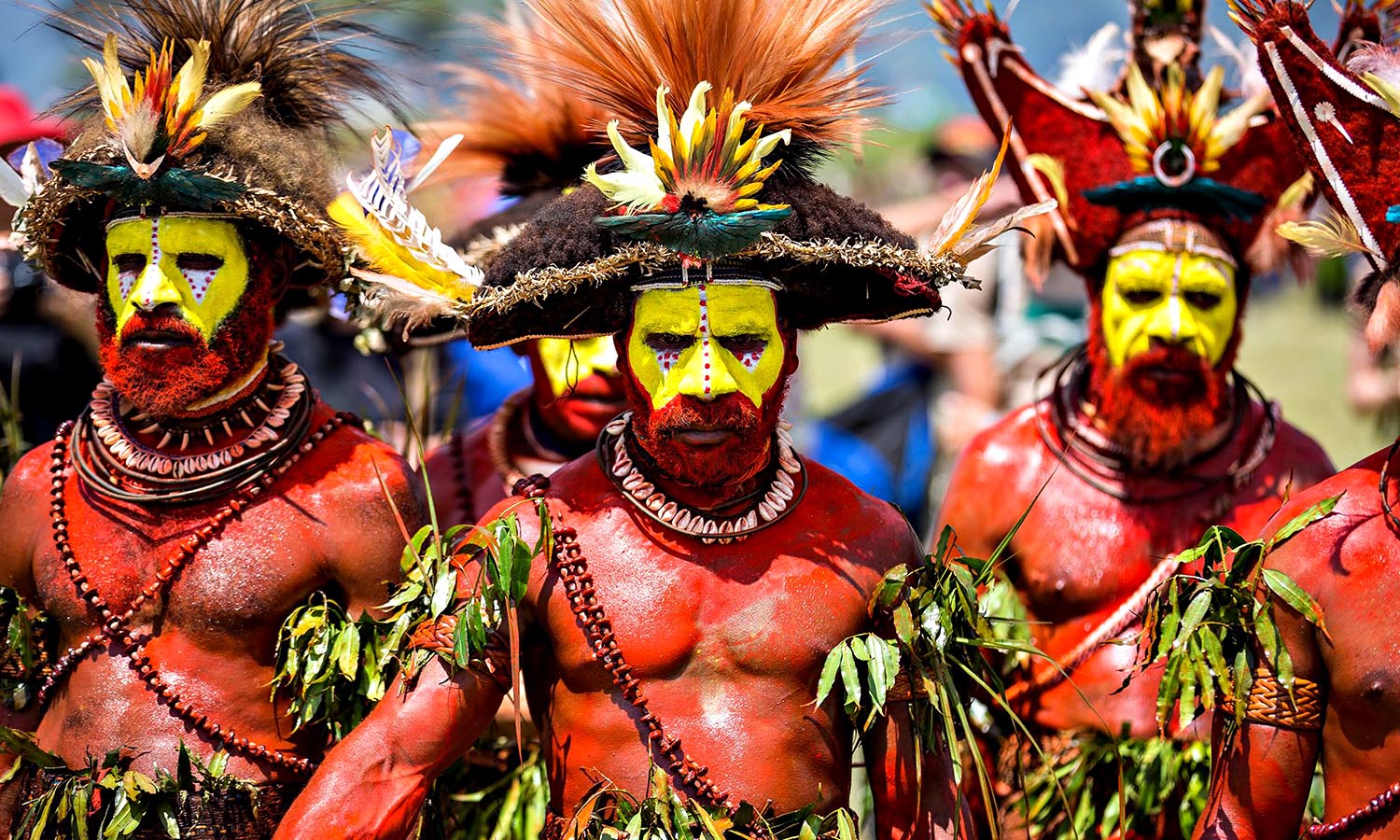
The world’s largest collection of indigenous cultures sits just in Australia’s periphery. Papua New Guinea and its distinctive tribes from the highlands to the coastal regions are a literal time capsule of people and their connection to their environment.
The annual Hagen show is a homogeneous kaleidoscope of colour, dance and sound with tribes from right around this small nation all converging in the same place for a dance festival like no other.
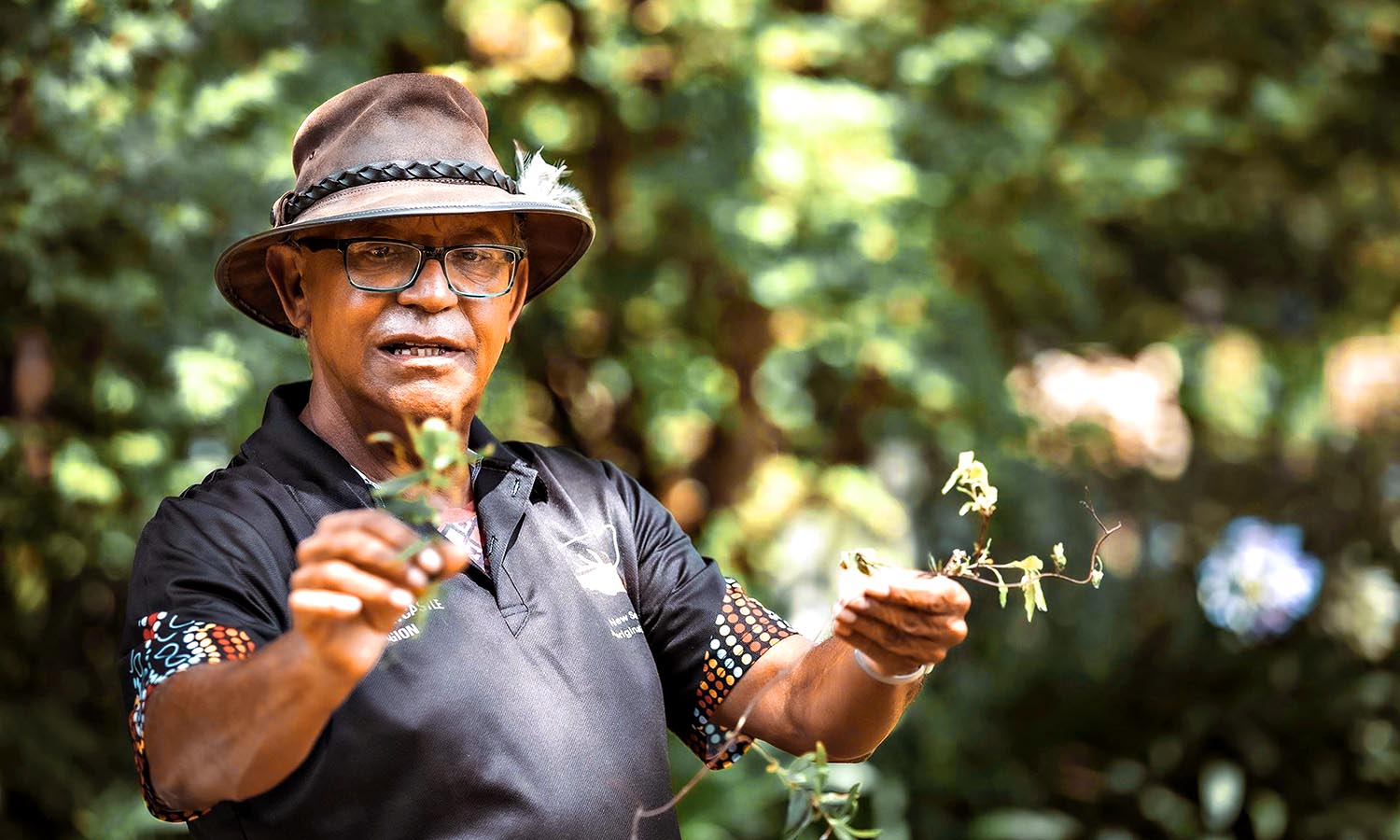
Fruits, flowers and herbs sprout throughout the botanical haven of Firescreek Winery on the Central Coast of New South Wales in Australia.
Shining the spotlight on native ingredients, Firescreek does wine tasting with a difference. Hints of feijoa, elderberry, mountain pepper and Davidson plum rippled through the 25 wines produced on the property. But what’s truly special about the Firescreek experience is the chance to wander through the lush grounds with Aboriginal Darkinjung Elder Gaving ‘Gavi’ Duncan on the Firescreek Aboriginal Storytelling and Wine Tasting Experience.
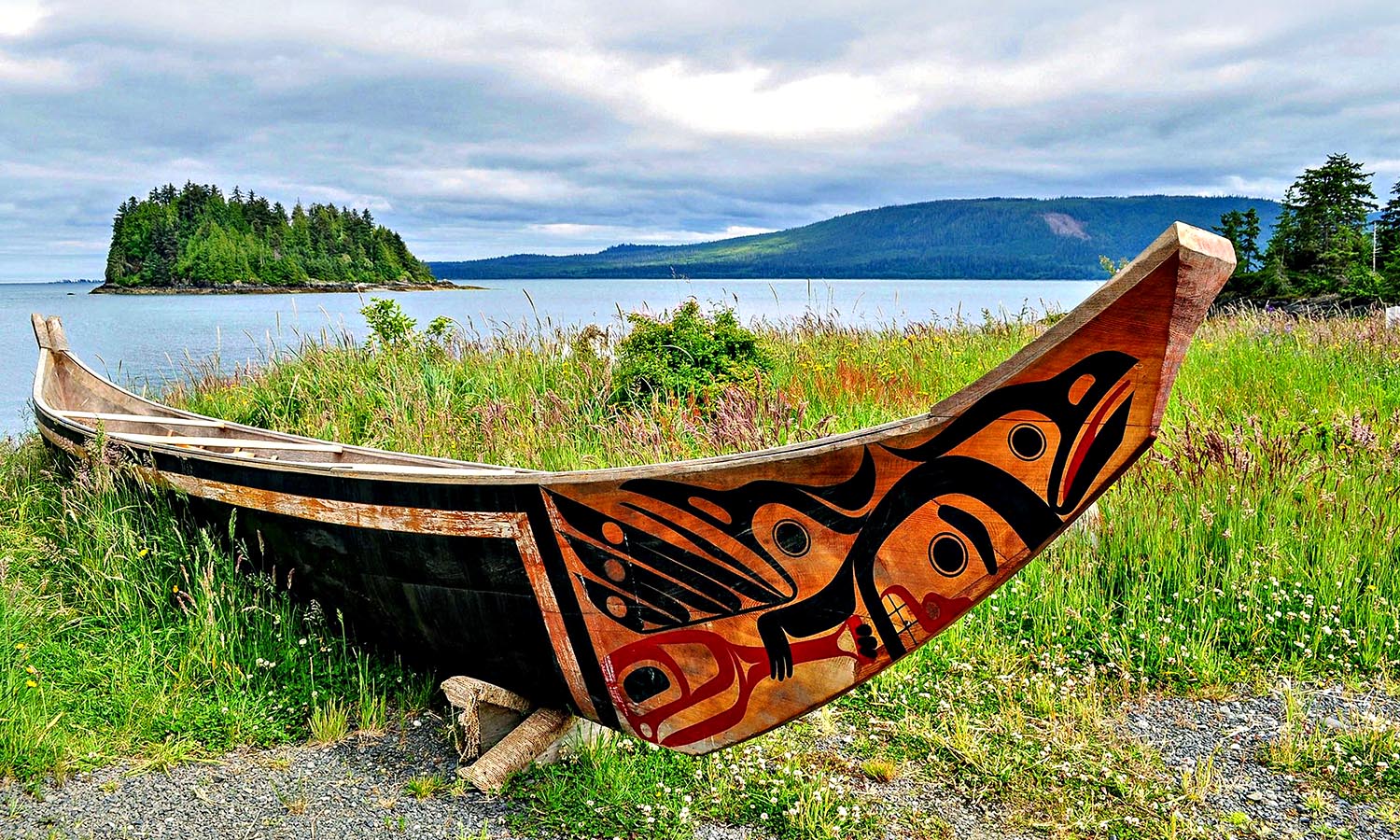
Haida Gwaii (an island just off the northern coast of British Columbia, Canada) is an ideal destination to experience the rugged and remote wilderness of Canada, but also a place where you can develop an even greater understanding of the Haida people and their connection to this sacred place (and the waters around it).
Haida Tourism is 100 per cent indigenous owned and offers immersive eco-adventures, food tours, wildlife experiences and recommendations for indigenous owned accommodation offerings.
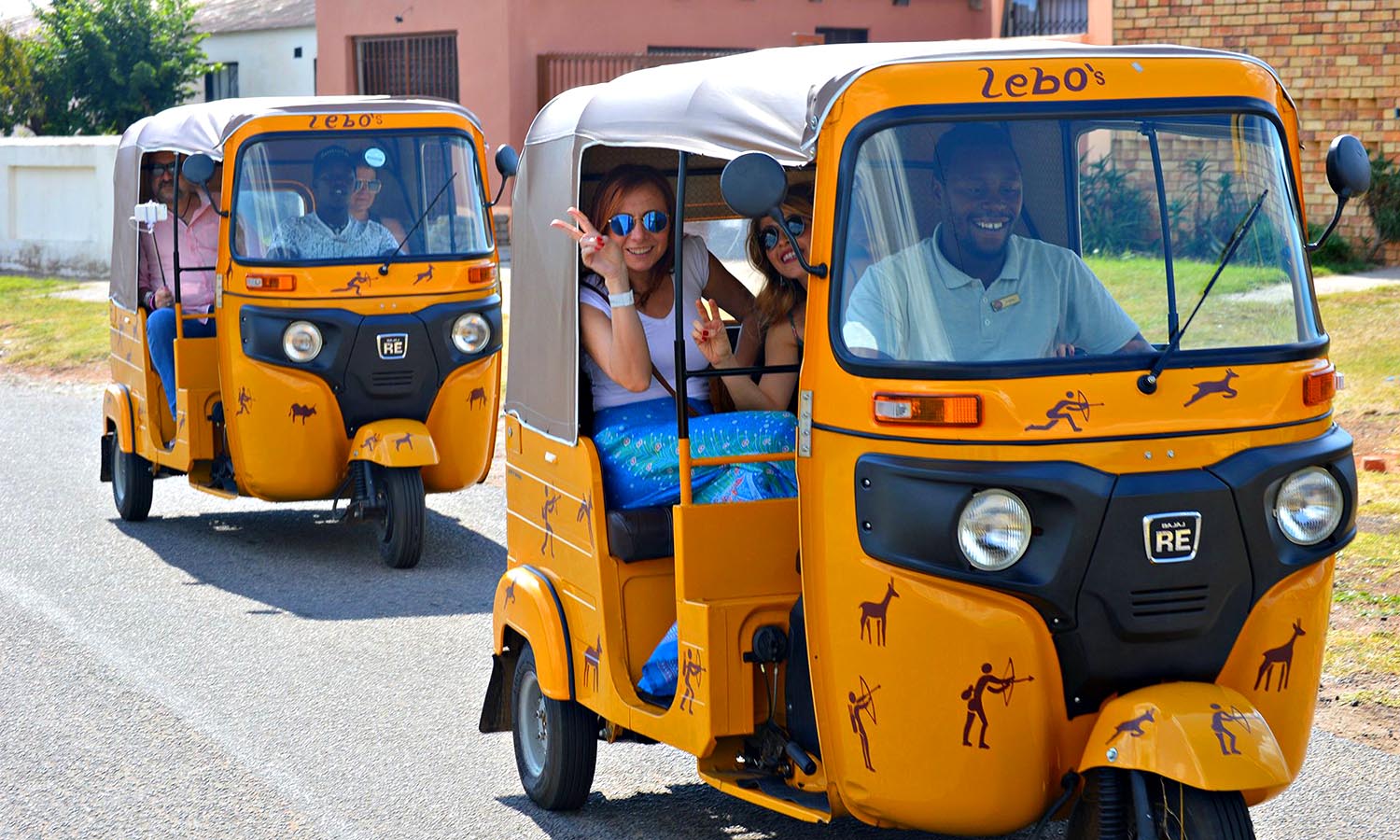
Soweto is the largest and most famous of South Africa’s townships with 1.5 million people crammed into just 200 square kilometres worth of tiny laneways and ramshackle homes.
Lebo’s Backpackers is a hostel in name only. It is a four-star accommodation and bar that also organises tours by bicycle and tuk-tuk that allows you to explore the beating heart of Soweto. You’ll even drink a beer in a Shebeen – the township’s version of the pub.
Lebo’s was founded and operated by Soweto trailblazer Lebo Malepa, who provided opportunities for underprivileged in his local neighbourhood to work through the tourism generated by his business.
Click play to watch
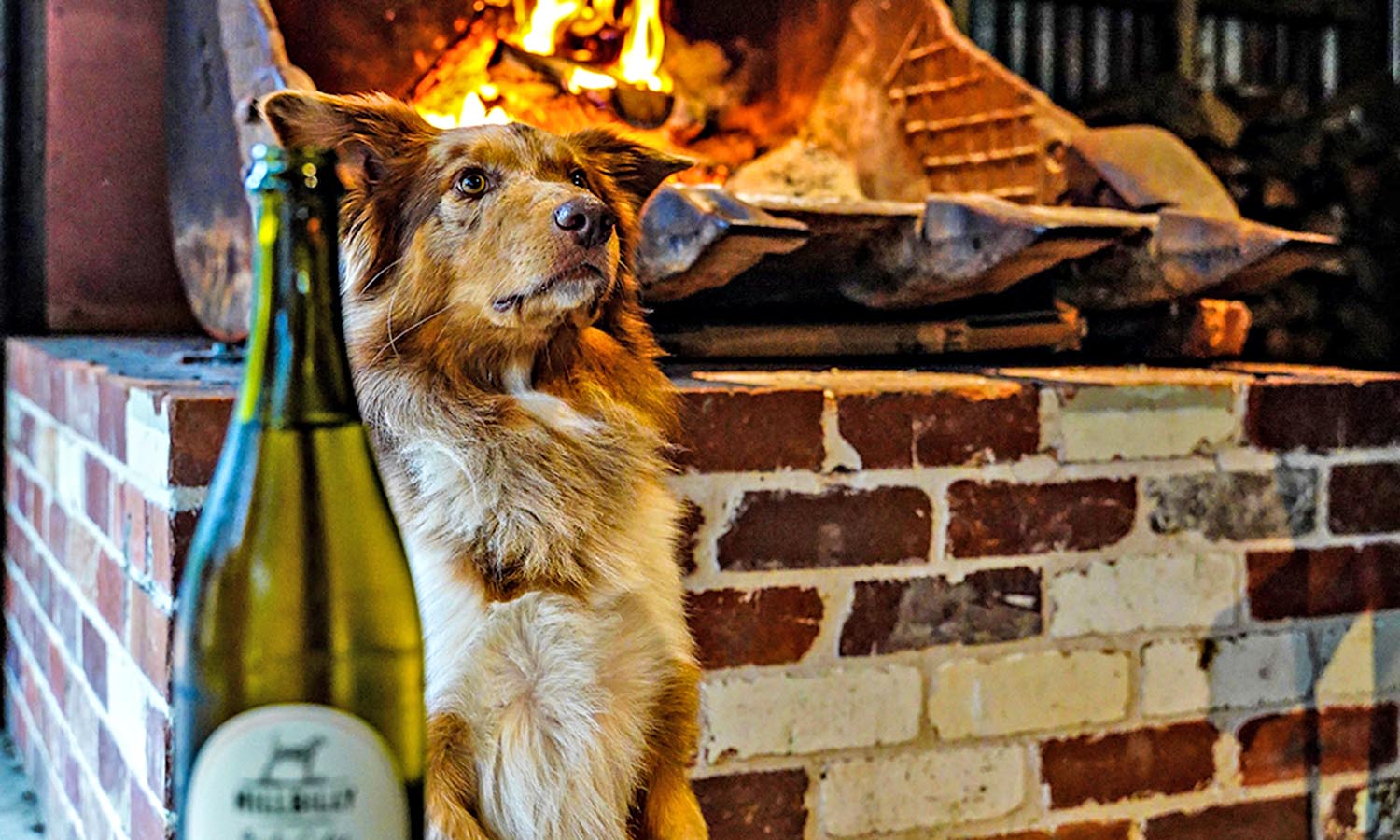
A warm fire billows just behind us in the elbow of a discarded earth-mover shovel. Sarah goes on with the local pride I’ve grown familiar with over the last few days, “the best views have always been from this side,” she says.
She’s not wrong. There’s a low mist hanging over Bilpin in the Blue Mountains today. It’s damp and dewy, but that only adds to the atmosphere as I reach down to pat Smudge, the local dog who’s now saddled up between me and the fire.
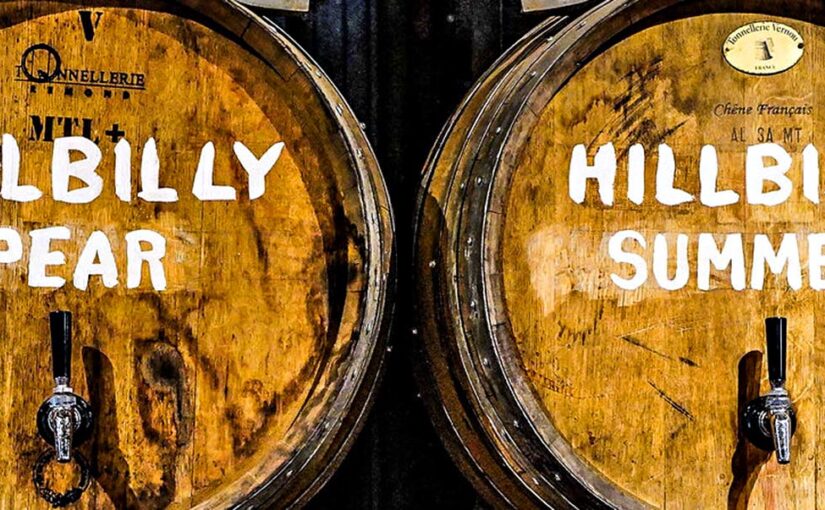
Smudge is a bit of a mascot here at the Hillbilly Cider Shed and he nuzzles his wet nose into my palm as if to signal that I’m welcome here.
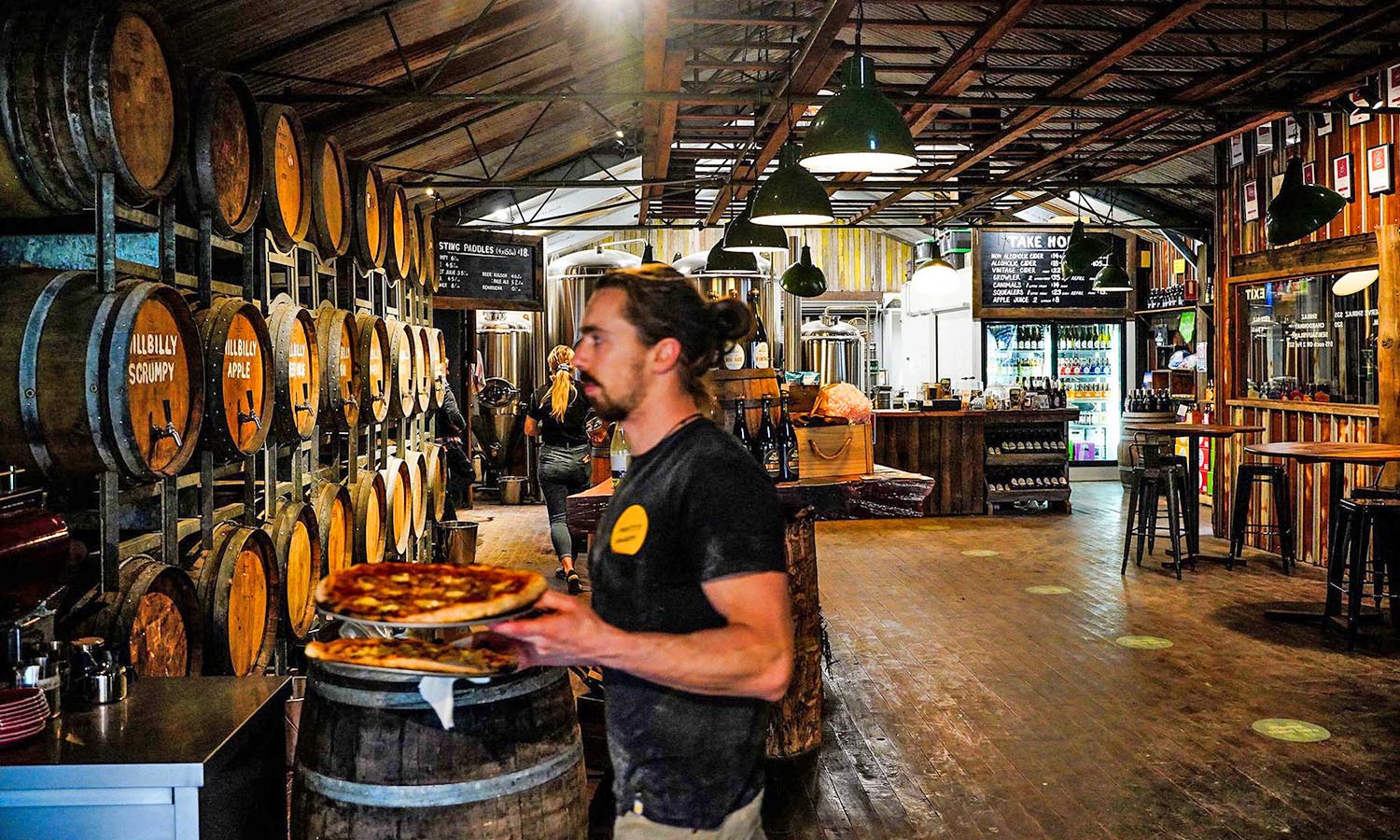
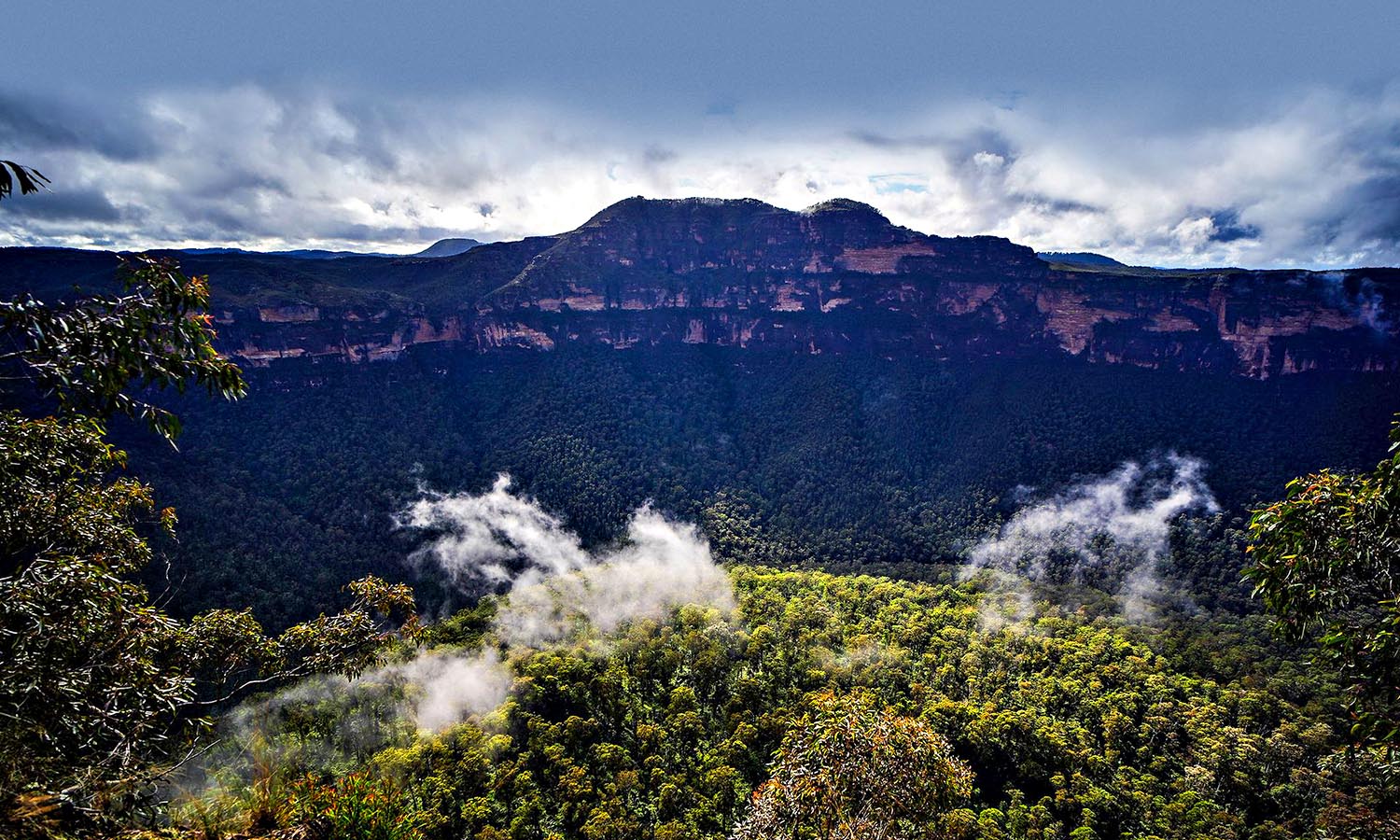
It hasn’t always been like this. Often overlooked for the more traditional driving route into the lower mountains via the Great Western Highway, this wedge of idyllic and pristine mountain range – only 1.5 hours north west of Australia’s largest city – has emerged as a preferred tourist route of the curtain of sandstone and eucalypts that flank Sydney’s outskirts.
And sadly in 2019, it was also a catastrophic flashpoint for some of the worst fires in Australia’s recorded history.
The Gospers Mountain fire, nicknamed ‘the monster’, eventually made its way south to where we’re sitting and drinking. Those that witnessed it tell me that walls of flames ripped past Hillbilly Cider, almost upending the then under-construction dream of Shane and Tessa McLaughlin.
Fast forward more than two years and chuck in a global pandemic for good measure, I’m now winding through the Bells Line of Road on a tastemaker experience with Paul McLaughlin from Western Wine Tours. He’s guiding me to some of the best new breweries, wineries and distilleries that the Blue Mountains have on offer. And I’ve packed my drinking boots because there’s quite a few of them.
Like the green shoots that now sprout from the blackened trunks along the roadside of the famous Darling Causeway, Paul reflects with a near reverence on the phoenix-like revival of tourism in the region. He’s lived in Katoomba his entire life and never before has he seen such growth.
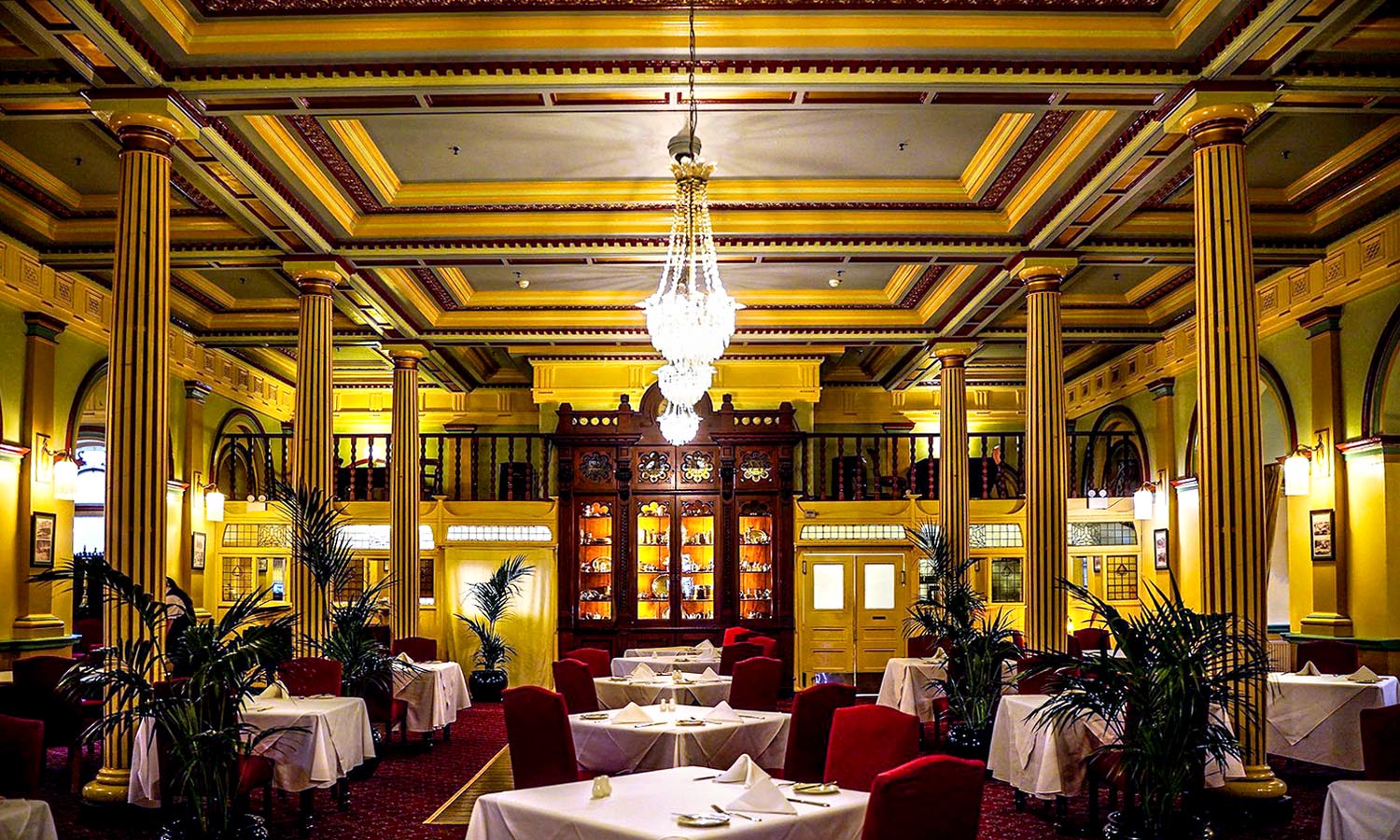
At the very regal-looking Carrington Hotel in Katoomba, there’s a familiar sense of history repeating itself in the place where it all started. As owner and General Manager Mark Jarvis explains, “the Carrington Hotel was built in 1886 and the rest of the mountains, and tourism, was built around it.”
Jarvis says this exciting era we’re witnessing post-pandemic is “a foodie renaissance,” which is reminiscent of the early settler days, when young entrepreneurs from the city sought out opportunity in these lush and fervent green hills. My great-grandfather was actually one of those, taking on the publican licence of the Family Hotel in Katoomba back in the early 1920s.
In 2022, Sydneysiders are again not only rediscovering the Blue Mountains as a potential tourist destination, but as a business opportunity.
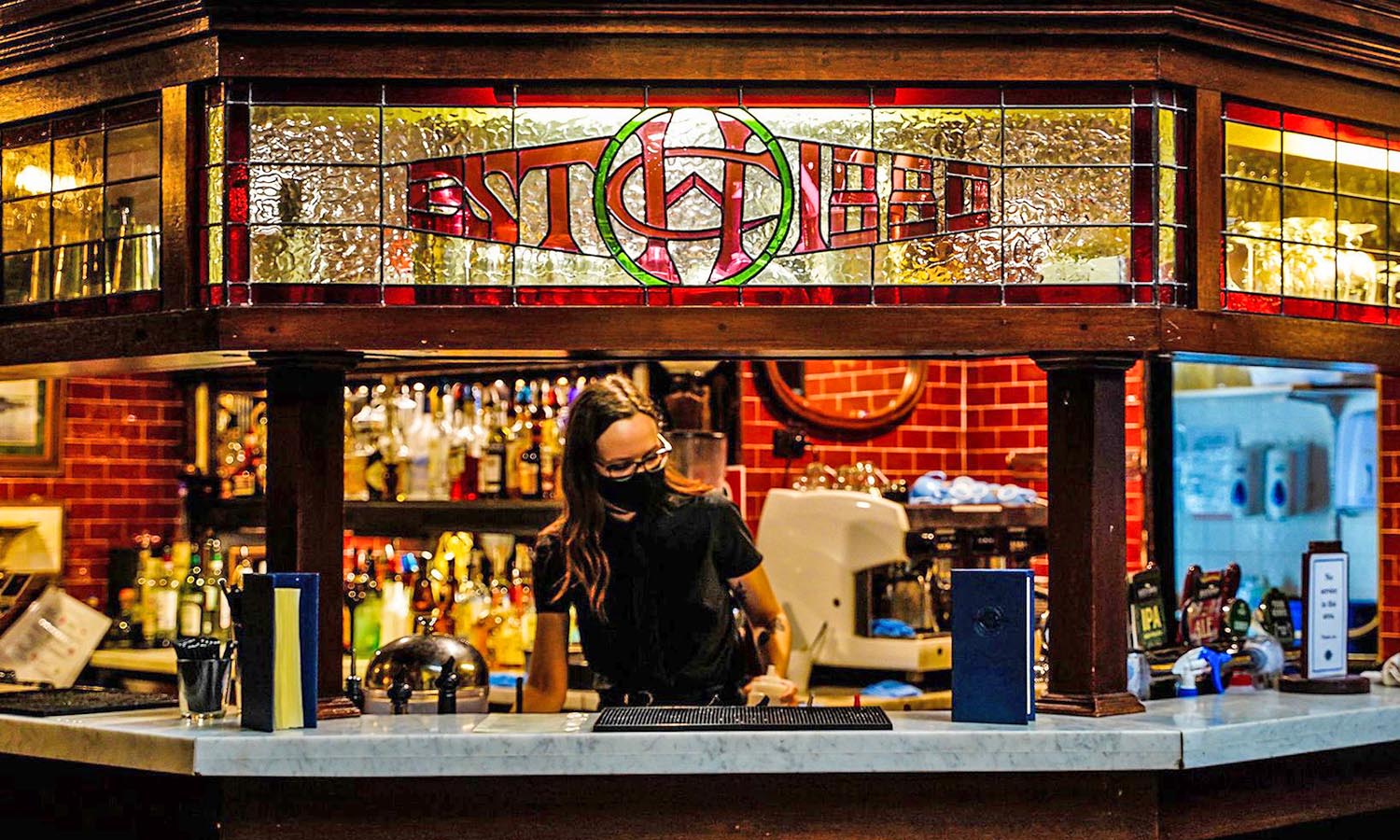
Nowhere is this more evident than in the depths of the old electricity substation that sits beneath the Carrignton. This is not just where the pub has its famous cellars, but also where it brews Katoomba Lager under a cobweb of fairy lights. But Jarvis tells me he and his team have grand designs on soon transforming this historic space into a public brewhouse that returns it to its Victorian-era grandeur, bringing in a new metaphorical bolt of electricity to the city and attracting new customers from around the world.
There’s a precedent to give Jarvis confidence this will be a good business move. Just over the road at Mountain Culture Brewing, DJ and Harriet McCready also embarked in 2017 on transforming what was a dilapidated, historic building (formally a Civic Video) into the first brewpub in the Blue Mountains. They’ve since been recognised as the best brew pub in all of Australia.
Travel a short distance into the Megalong Valley and Sydneysiders Emma and Simon MacMahon also bought Dryridge Estate seven years ago on a whim. They’ve since transformed it into a premiere events space, accommodation and a tasting room with a to-die-for shiraz, plus a view of a sandstone escarpment so magnificent it could be a watercolour painting.
This sort of investment in tourism infrastructure in the region is evident just about everywhere I go. It also permeates every conversation with locals eager to show off their home.
“Have you tried the new …” they say to me. “You’ve got to taste the …” another person brags.
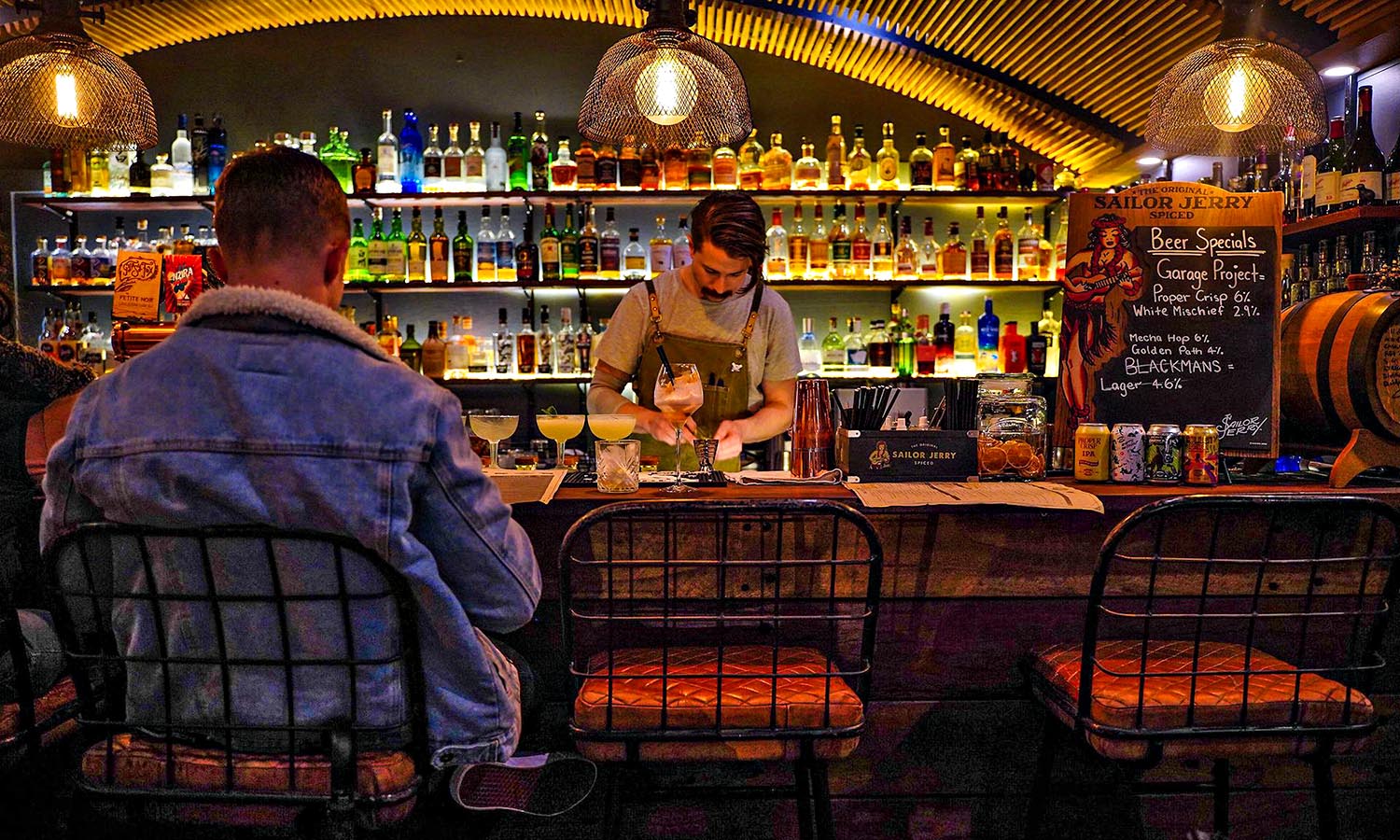
Beneath the flickering Edison globes and Bric A Brac of Bootlegger Bar in Katoomba, the timber panelled ceiling here hangs in a low arch and feels like a warm hug on this cold, wet night. I’m snug and content after several cocktails but also struggling to breathe after eating my body weight in brisket.
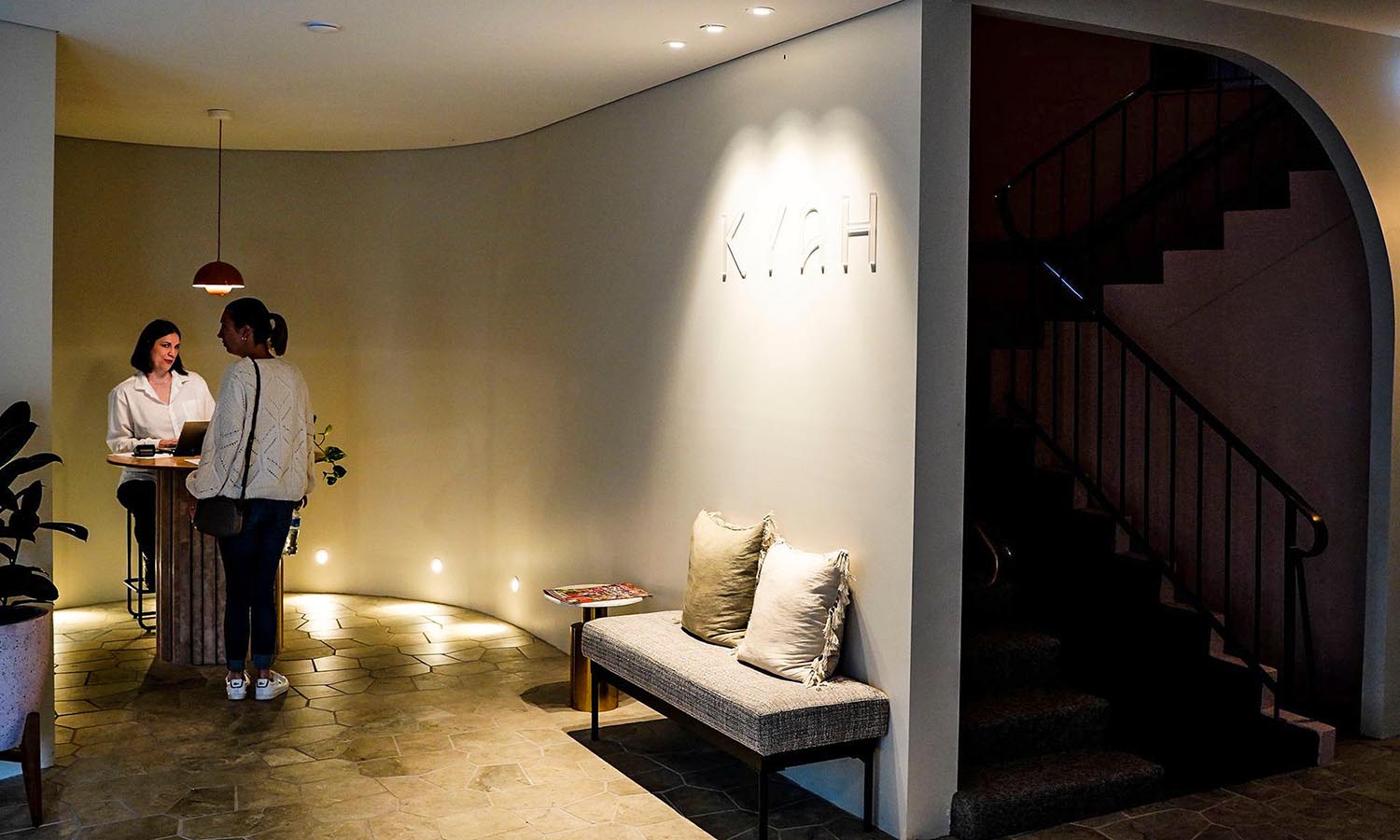
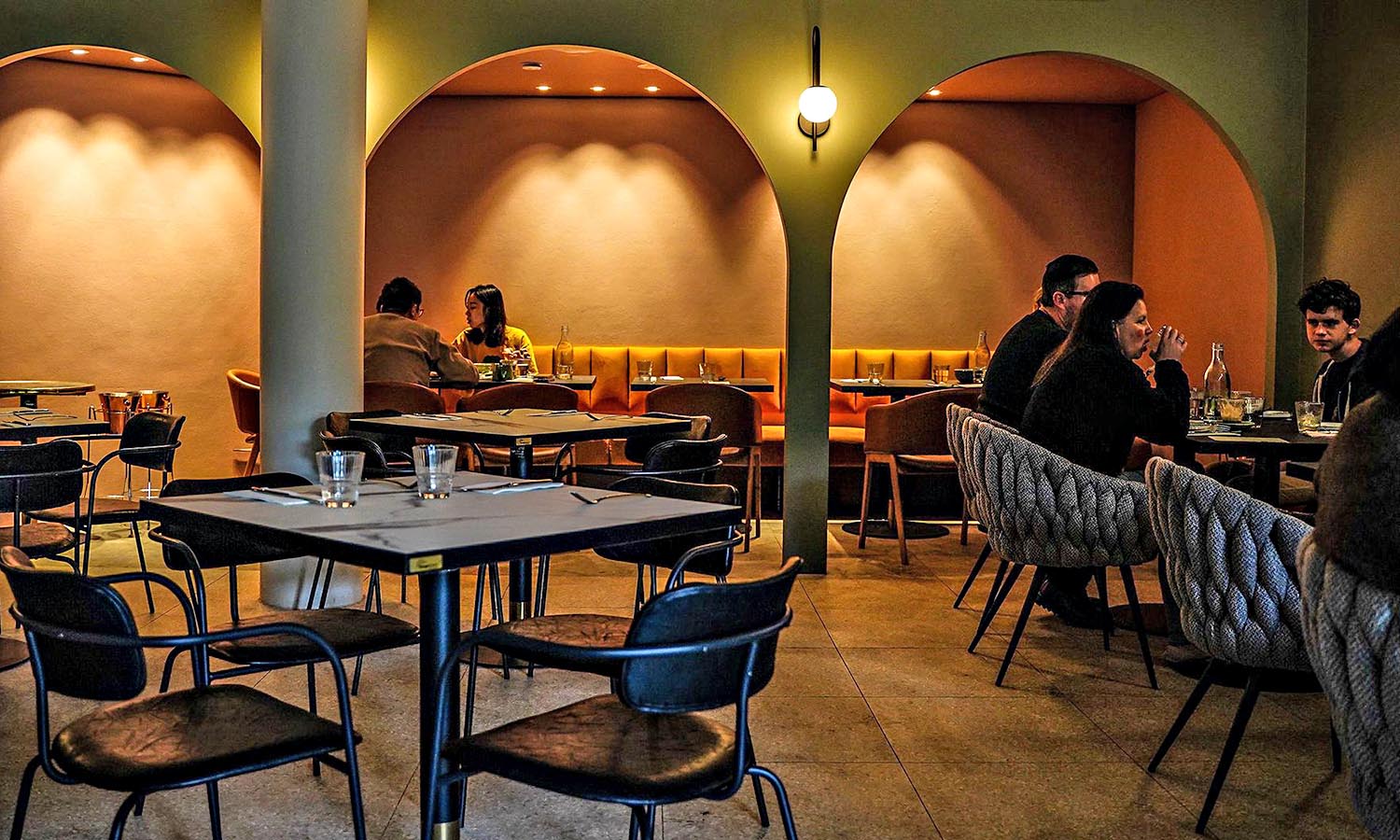
Thankfully, after a full day of gorging myself it’s time to retire to the new Kyah Hotel in Blackheath. This boutique and recently renovated 1970s motel would not look out of place in Palm Springs. The delicately arranged cacti and gold plated signage at the front door shouldn’t work at this altitude, but they do.
And as I ascend the staircase to my room, out of the corner of my eye I catch a young, smartly attired bartender muddling a pink cocktail beneath two pastel painted arches in the hotel’s restaurant bar and restaurant, BLAQ. If you put a frame around what I see, you could probably sell it as a Slim Aarons photograph. Ok, just one more drink.
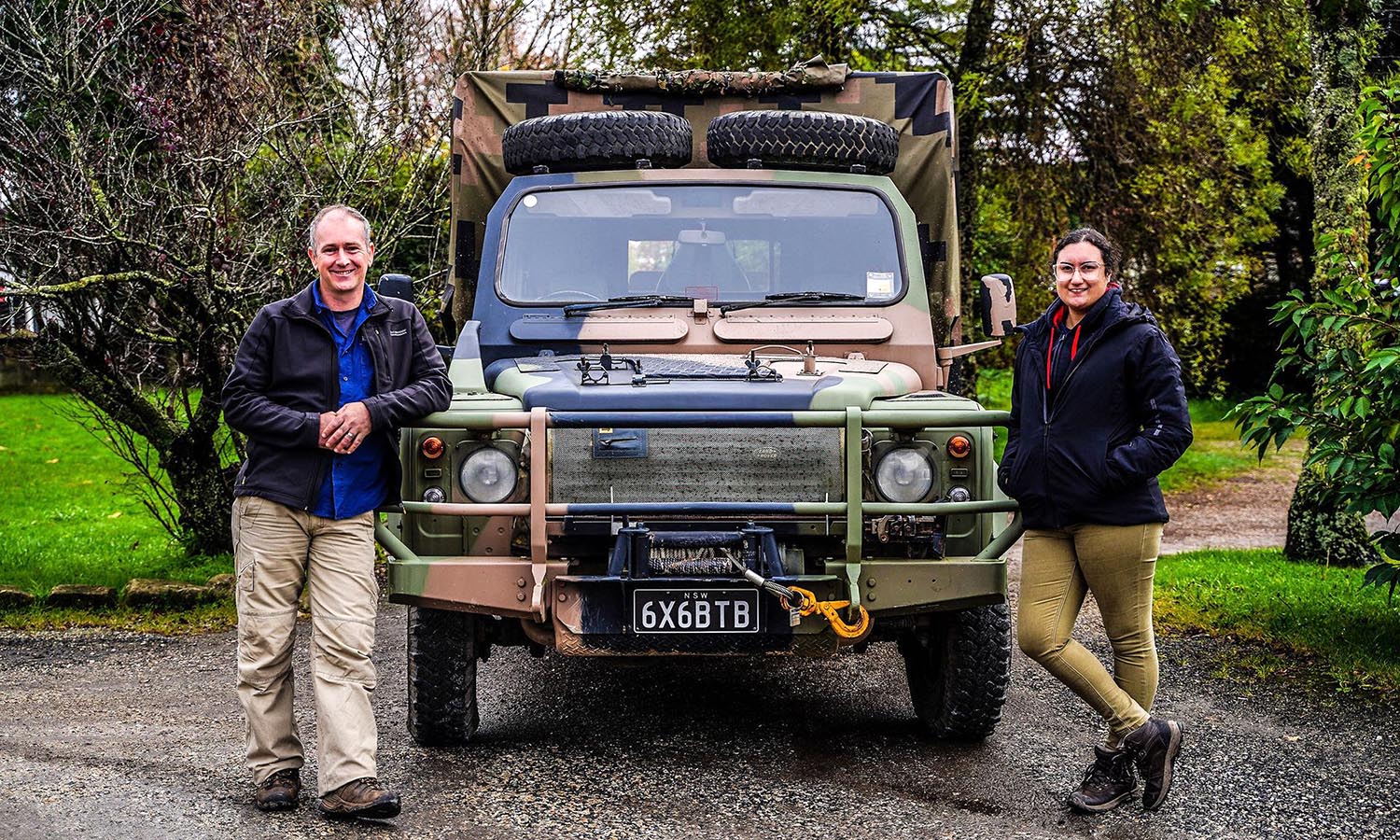
Morning arrives and Paul Davies from Beyond The Blacktop 4WD tours pick me up for a morning of exploring in ‘Wombat’ which is their converted Australian Army passenger Landcruiser. If ever there was a car built for this terrain, this is it. Davis’ cuts through the morning fog that’s rolling off the Grose Valley like a hot knife through butter. Making a beeline for Anvil Rock, we leave his truck and scurry up hidden bush trails, past wind eroded rock formations and watch kangaroos fetch their breakfast in the dawn light. Once at Anvil Rock Lookout, this side of the mountains reveals itself as a place without tourists or handrails.
Click play to watch
While it might now taste a bit different up here with the slew of new restaurants and bars, there’s a lot of things that have also stayed much the same for millenia. Despite the wet weather scuttling later plans for astrophotography, I still manage to squeeze in a private stargazing session with Cultural Astronomer Dimitri Douchin but this time we’re inside an inflatable ‘planetarium’ which is basically like an upside down jumping castle for adults, with a projector. It’s super nerdy, but I’m into it.
Up in the mountains, where the light pollution is low and the air is clear, Dimitti says the stars reveal themselves in a way that just isn’t possible when you’re in the city. And when you see the stars more clearly, you start to understand why they’ve been revered by civilisations dating back to the byzantines.
If booze or stars are not your regular jam, there’s always nature. And there’s one such tree endemic to this region that predates even the byzantines. The Wollemi Pine has seen its fair share of shooting stars and celestial events, so much so that it lays claim to being the world’s oldest and rarest tree, dating back to prehistoric times.

Along my way home, still following the Bells Line of Road, I stop in at Blue Mountains Botanic Gardens in Mount Tomah to catch a glimpse of several of these pines in their Gondwana Garden and to meet Acting Curating Manager Ian Allen who takes me on a journey through one of the most ecologically diverse botanical gardens in the world.
“I want people to feel like when they’re walking through our [Gondwana] garden that at any point a dinosaur might jump out at them,” he says excitedly.
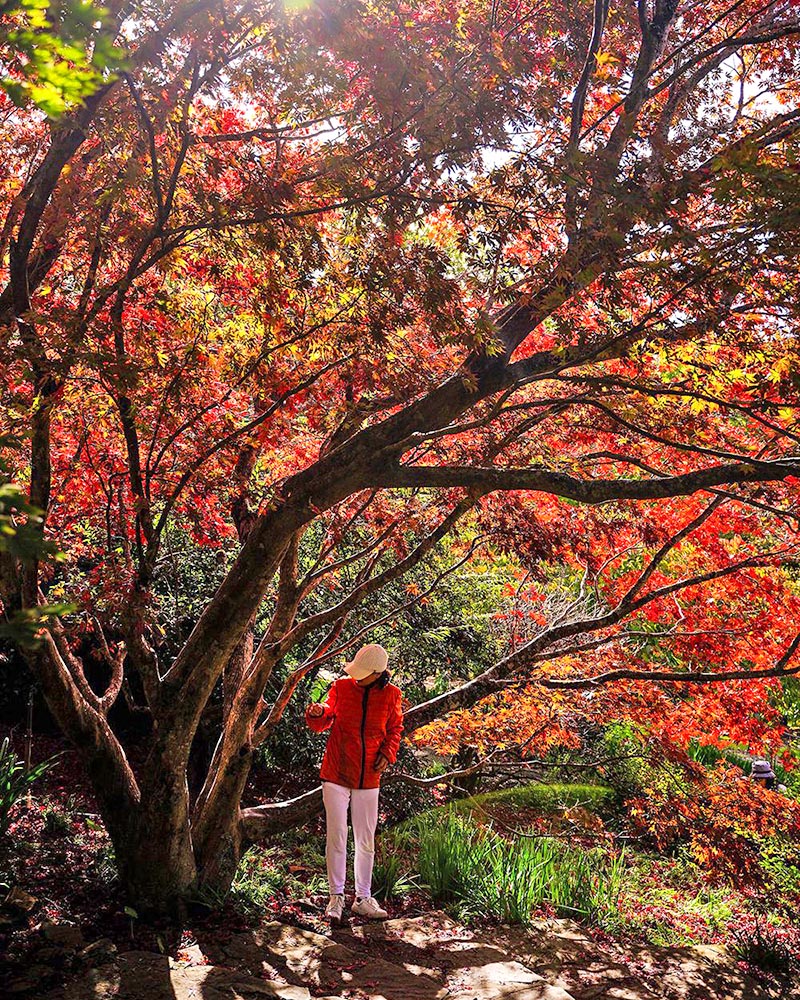
I lose track of time wandering the gardens in the setting autumn sun. The red and yellow hues of the Japanese maples dance in the wind, while the sound of bellbirds symbolically mark the end of my journey of discovery.
My ears pop as I rapidly descend into the Blue Mountains’ foothills, but I’m reminded by my host of one last stop I must make before returning home. I’ve been told there’s a hidden distillery called Karu tucked like a bedsheet where bush meets farmland in what’s better known as the Devil’s Wilderness.
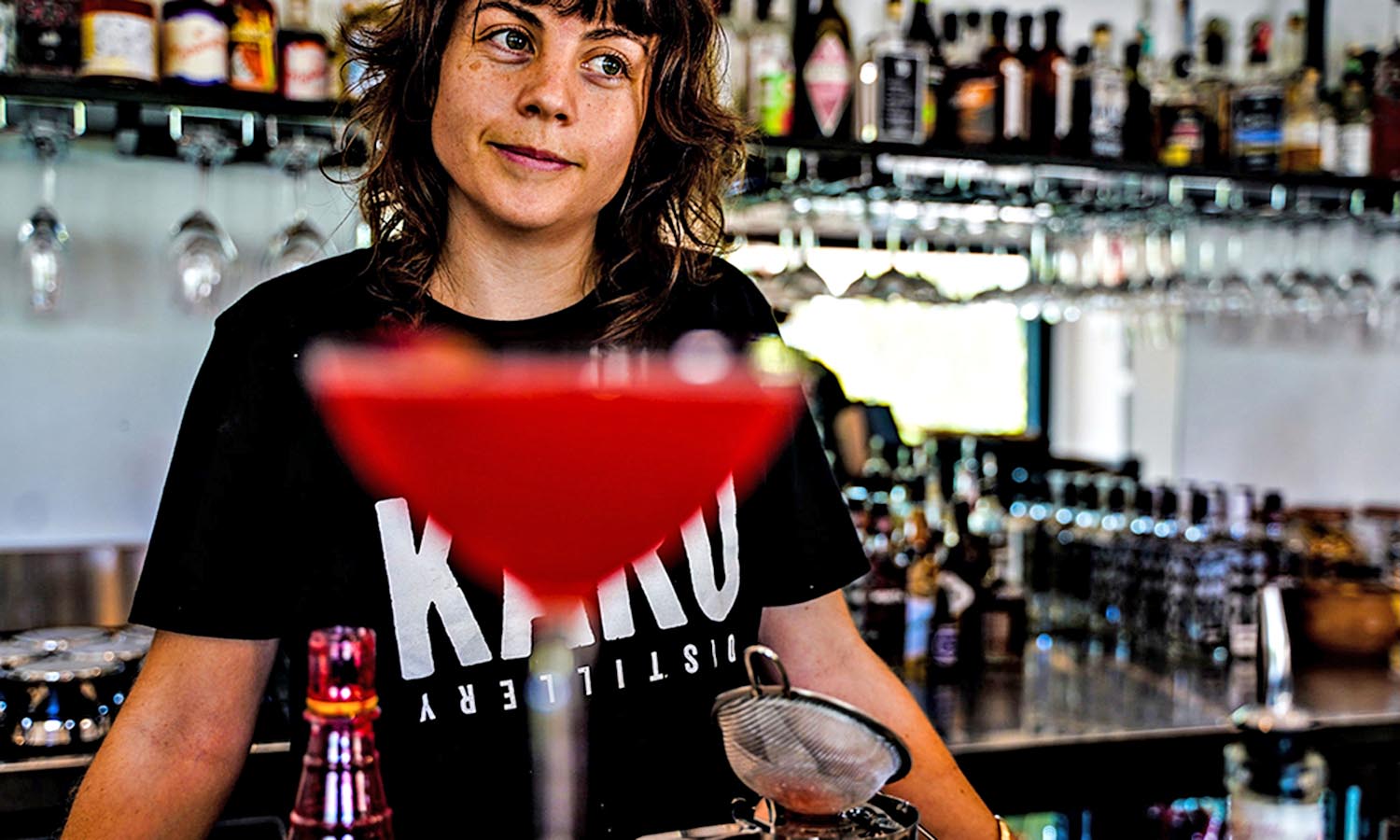
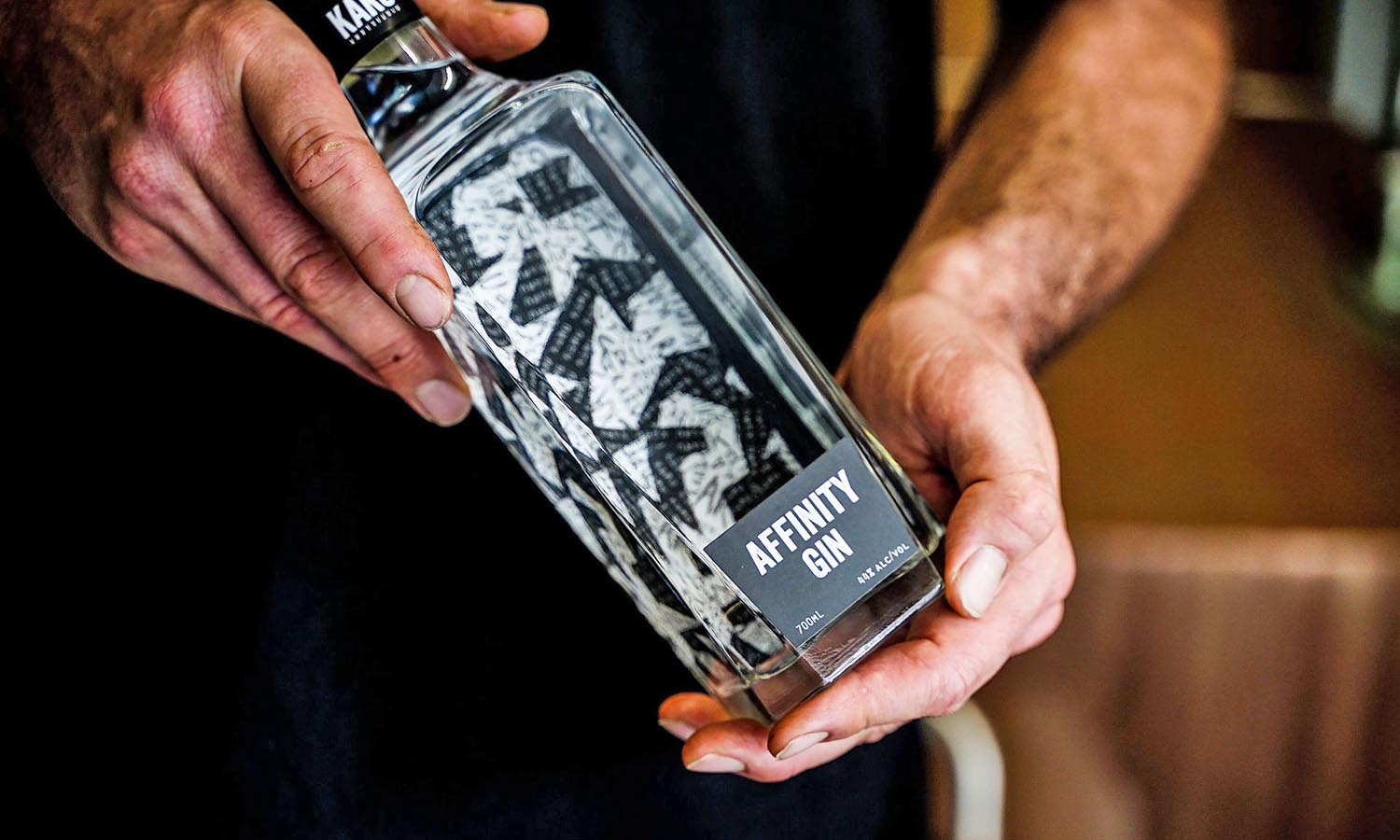
Husband and wife Ally and Nick Ayres have clearly created something special at Karu Distillery and their House of Spirits which is nestled amongst gum trees and Kookaburra calls. And with over 40 awards to their name, and a unique gin distilling method steeped in science, sustainability and experimentation, others around the world seem to think so as well.
So, if I must, I’ll just have one more taste for the road.
get in the know There have been over 500 sightings in 20 years of the elusive Blue Mountains panther.
Click play to watch
As a Kiwi, road trips are almost part of our DNA. They’re ubiquitous with summer holidays in a small country like ours.
But with the rising cost of fuel and our ever expanding awareness of the effect that carbon emissions have on the environment, it’s become even more important to incorporate sustainable travel into itineraries. Travel is changing, and so should we.
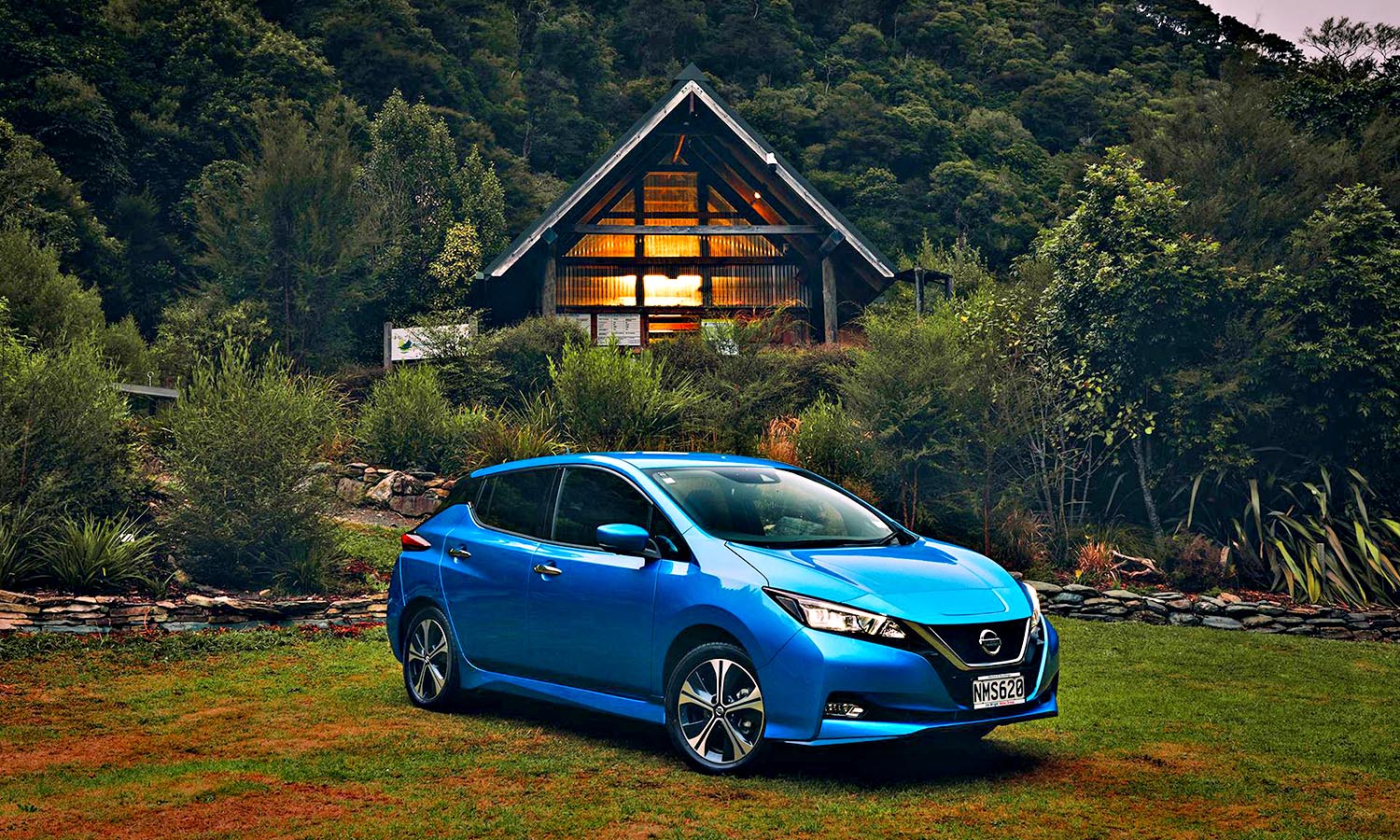
The Nelson Tasman Region is still an enigma to both local and international visitors. It doesn’t get nearly the sort of airtime that the rest of New Zealand is afforded through mega marketing campaigns. So there was something serendipitous about the opportunity to take on a fully carbon neutral road trip – something that’s not been attempted before – in a region so untouched by the masses.
Our hosts had made sure that every supplier, each hotel, our meals, beers and even our modes of transport (thanks Nissan!) would be fully offset or completely carbon zero. A real road trip, without the guilt.
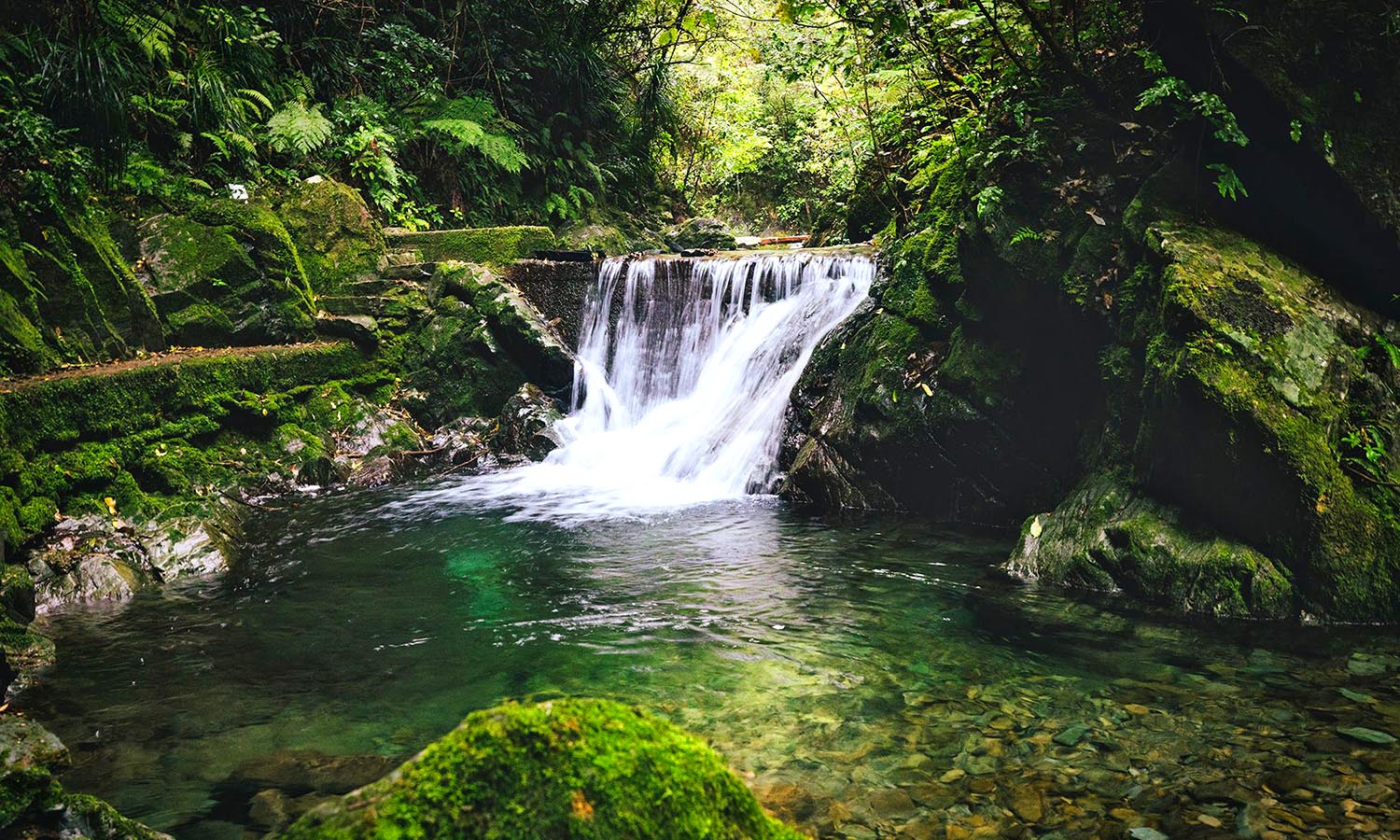
At the Brook Waimārama Sanctuary in the sleepy seaside city of Nelson we’re in a vast, tree-filled sanctuary dedicated to protecting local flora and fauna. Meandering through the delicate mossy streams of the predator-free forest, our guide points out a few of the forest’s secrets, like where to find fresh honeydew and hidden weta ‘motels’ (homes for a native insect endemic to this region). With such rich birdlife and dense greenery, it’s easy to feel as though we’ve stepped back in time to somewhere prehistoric.
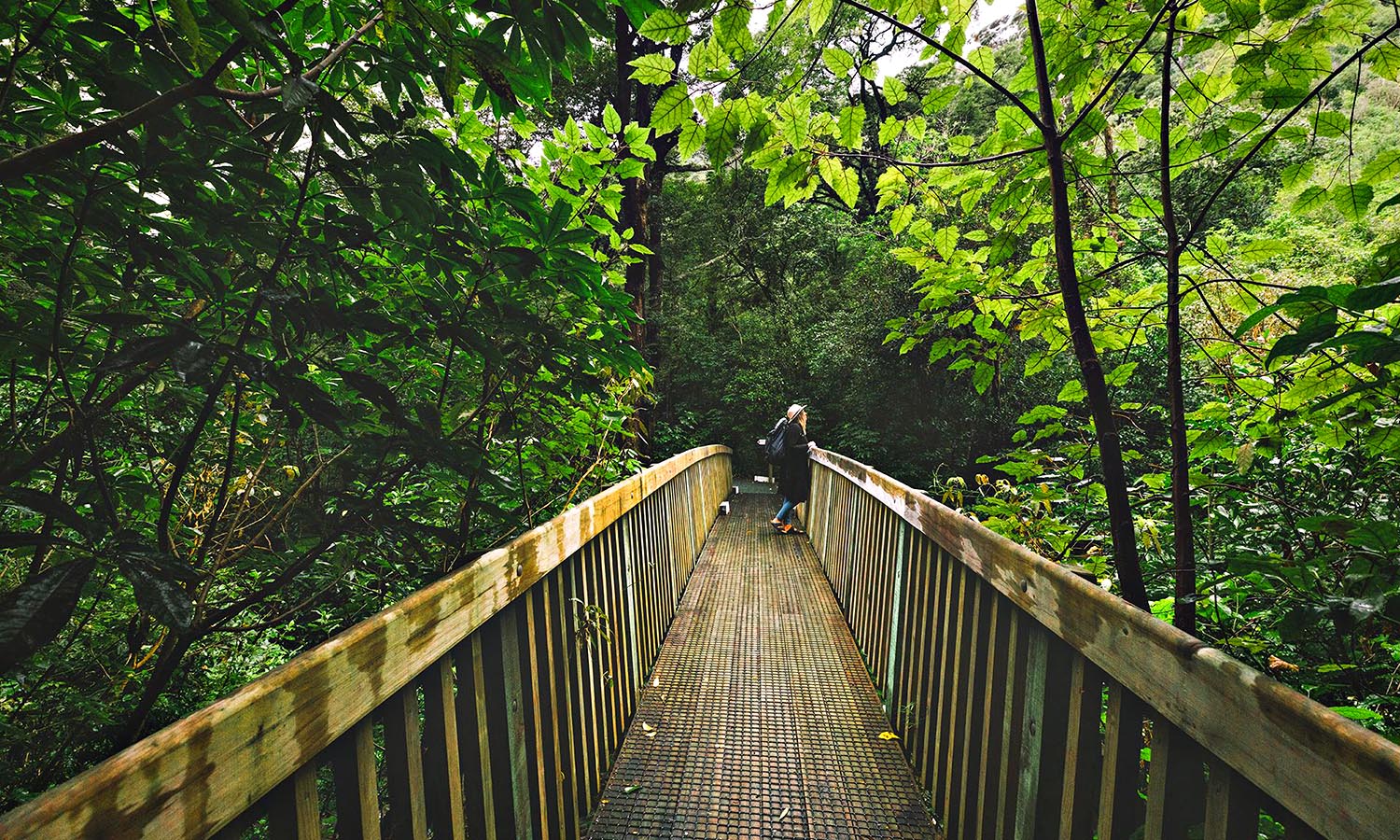
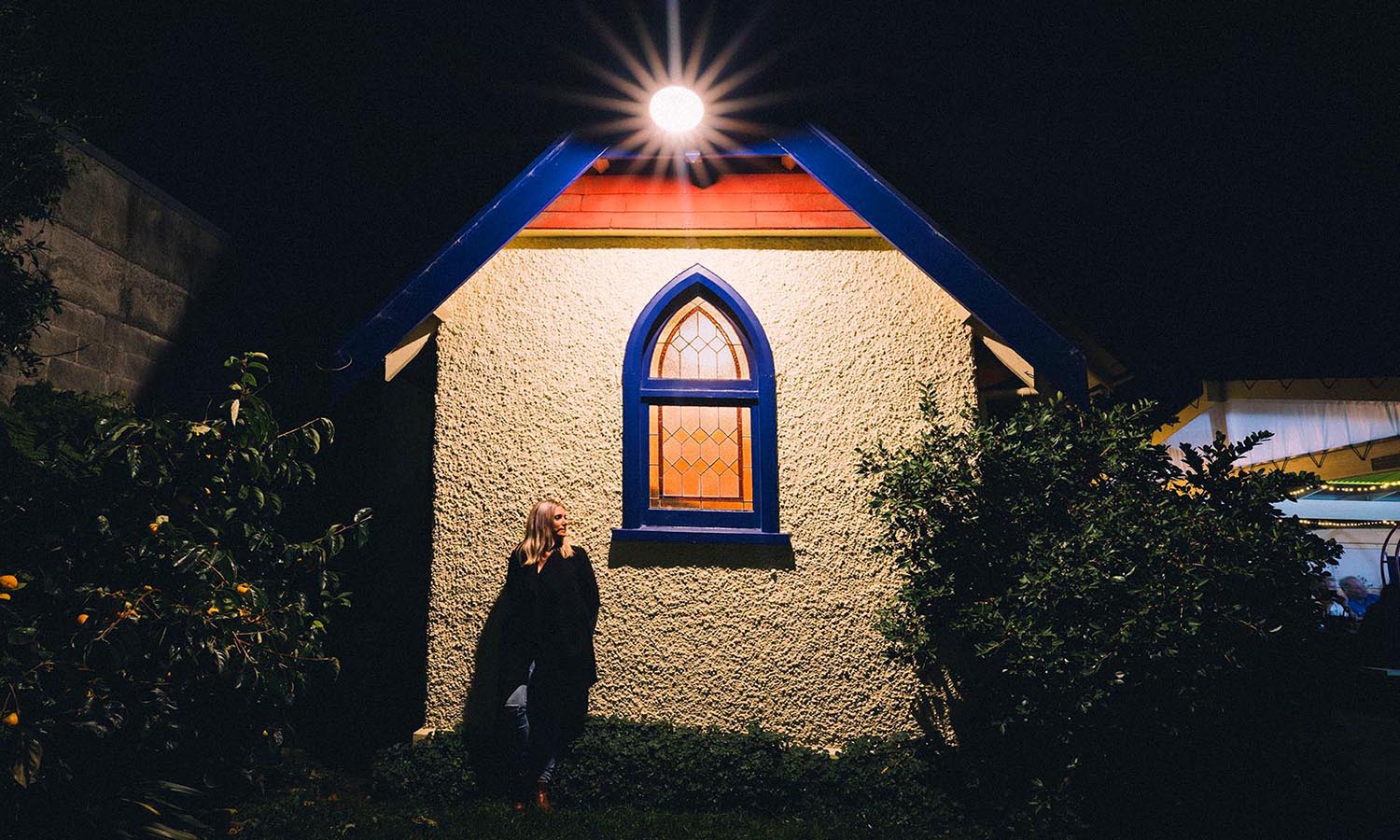
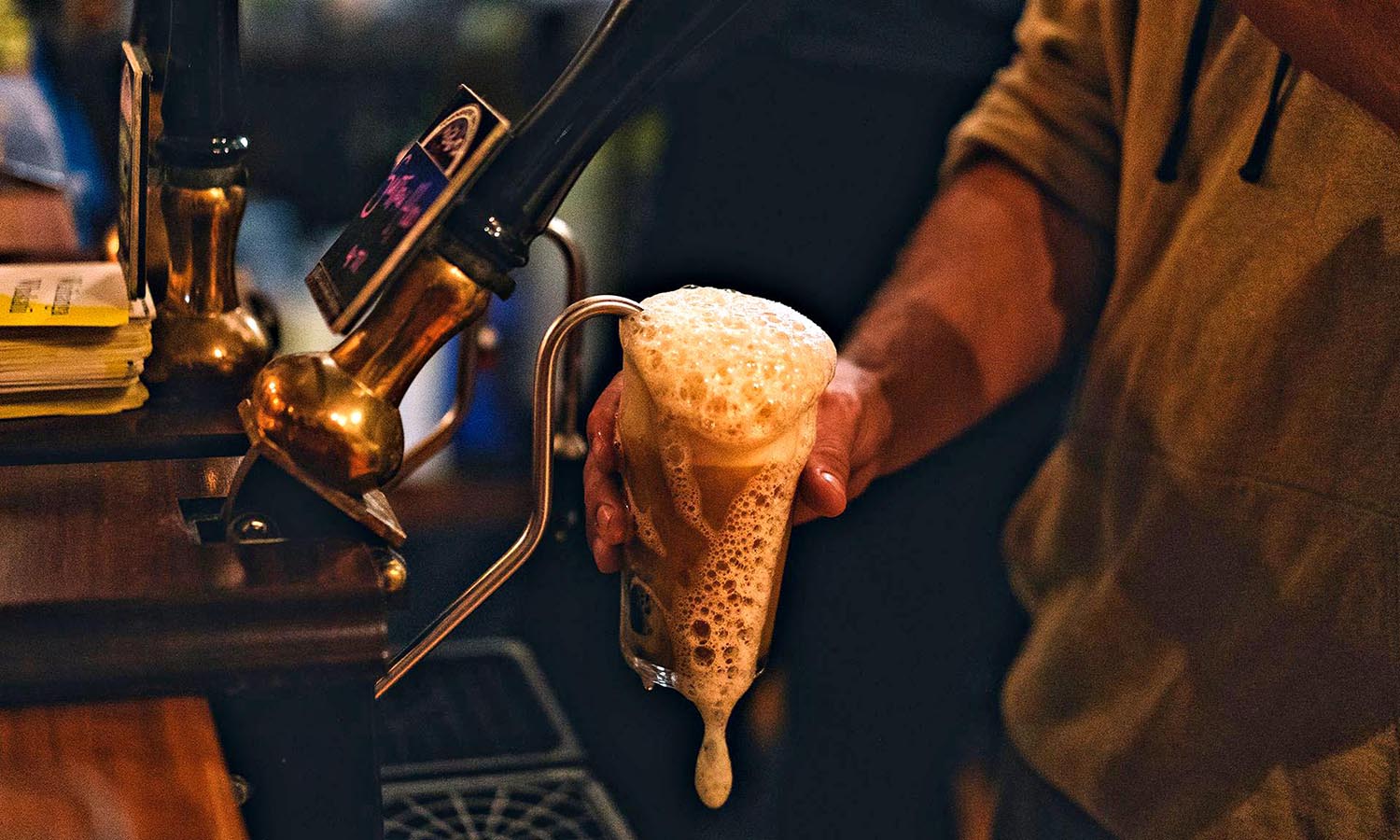
From there, it’s time for a beer, and what better place to refuel than New Zealand’s first climate positive pub, The Free House. I think to myself, “Could this really also be my first ever guilt free hangover?”
We’re greeted by an elegant cocker spaniel at the door of the renovated church, before the owner and his son proudly pour us tasters of their favourite locally brewed craft beers. Humming with locals who are cozying up outside under recycled heaters next to the small onsite brewery, it seems that this is certainly the place to be.

Waking up next in my brightly coloured room in the clean, comfortable and carbon neutral Nelson YHA, my tummy rumbles in anticipation of the morning’s activity. We park up and charge our car at Nelson’s solar-powered Pic’s Peanut Butter factory. I’m mesmerised, not just because this is my ideal breakfast, but as I also watch the process of the humble nut transform into creamy deliciousness, while also learning about the factory’s waste reduction method that uses all parts of the peanuts, leftovers magically being made into tote bags and paper.
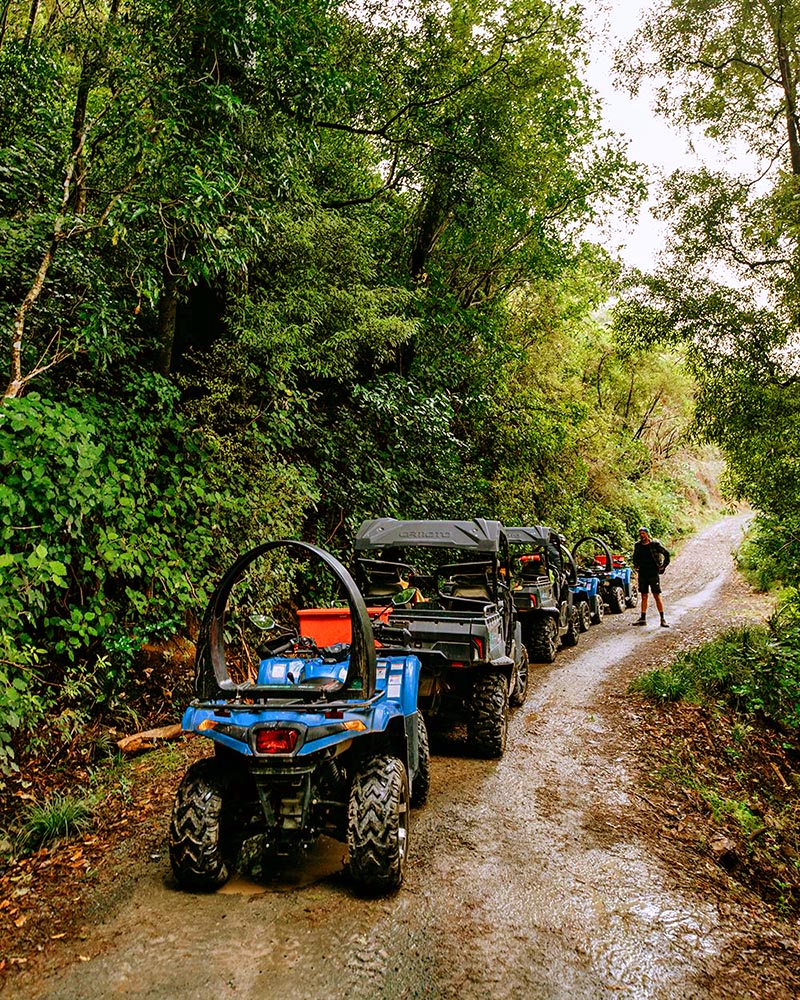
As a rare deluge of rain sets in for the afternoon, we opt to embrace the mud and try a speedy hybrid quad bike ride through the thriving native forest at Cable Bay Adventure Park. The carbon zero adventure park offers a range of activities for anyone brave enough to try them, including a 1.6 kilometre zip line over the property for sunnier days.
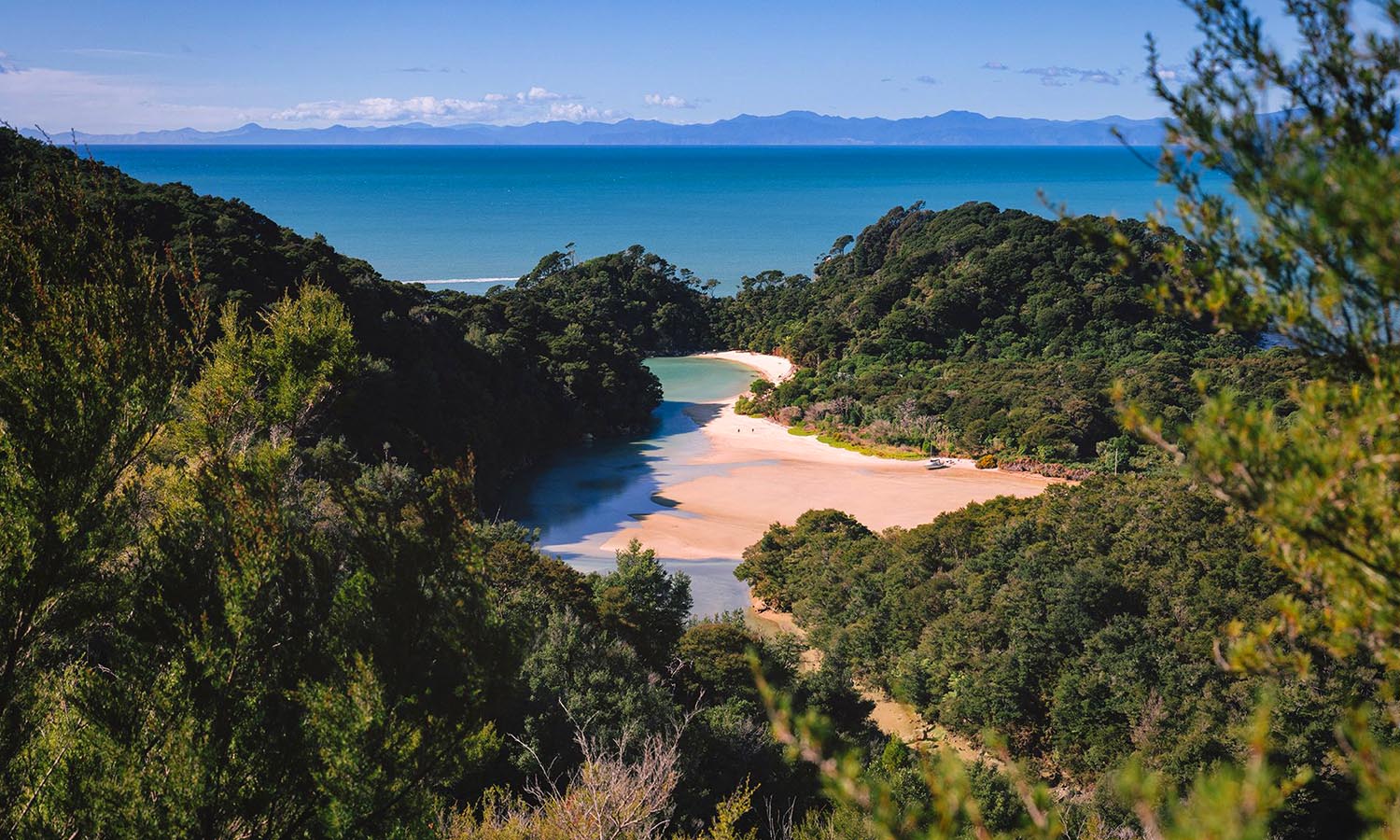
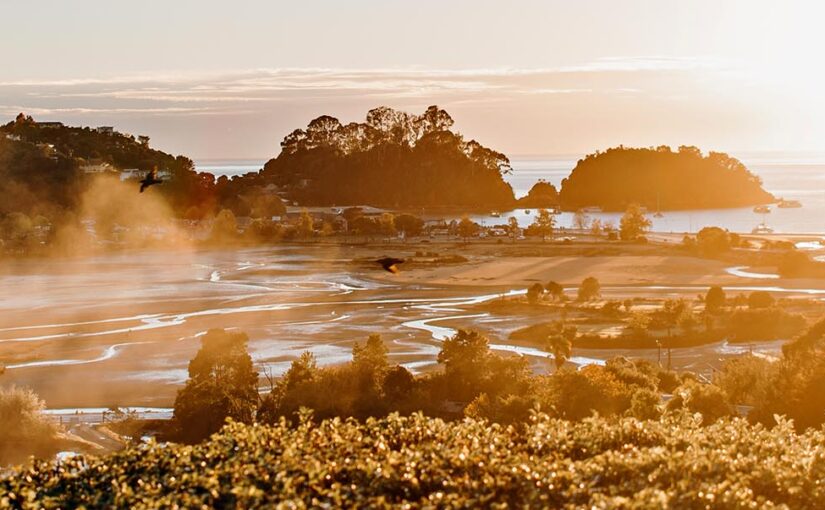
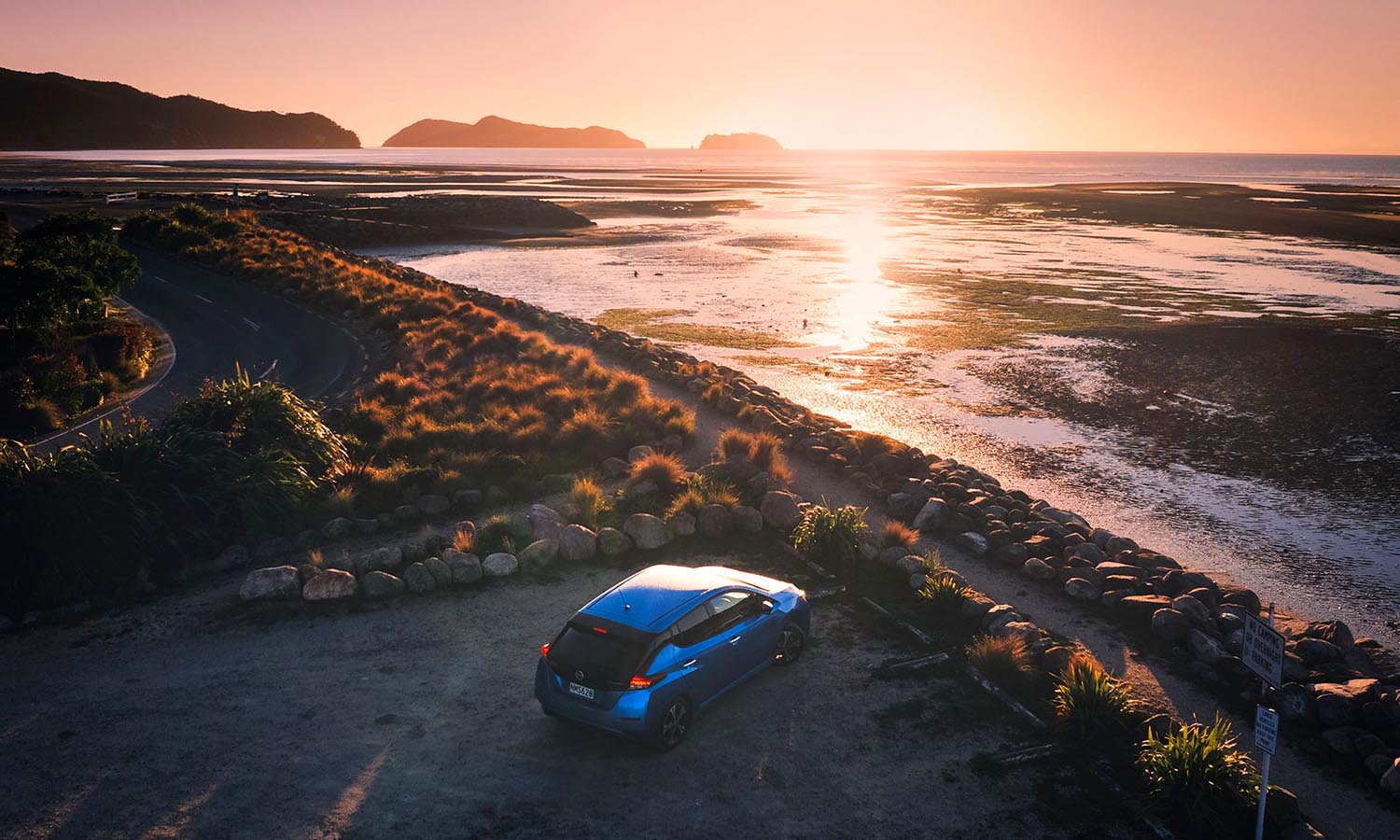
Once we’ve explored the local op-shops it’s time to get back in our Nissan LEAF and drive along the coast towards one of New Zealand’s most loved jewels, the Abel Tasman National Park. Despite this being one of our longest stretches of the drive, we’ve only needed to charge up the car once so far. Thankfully there’s a very handy online map to help travellers like us find the nearest charging point.
Originally populated by early Māori, the native bush was almost lost when Europeans arrived and tried to farm the land. Fortunately, however, their efforts were thwarted by the soil climate, and the Abel Tasman was returned to its rightful state as a thriving bush in 1942. Now it attracts visitors from all over the world, keen to experience its beauty in a uniquely New Zealand way.
Eager for an early start in the park, we stop at Kaiterteri beach to check in to the picturesque Kimi Ora Eco Resort. With an electric vehicle charging station, jacuzzis, pools, vineyards and even private spa baths in their suites, it’s the perfect place to relax and recharge after a day of on and off-road driving. At night, we saunter from the jacuzzi straight to dinner at their onsite vegetarian restaurant named ‘The Views’, enjoying a delicious gourmet meal with local wines and as the name suggests, stunning views of the harbour below.
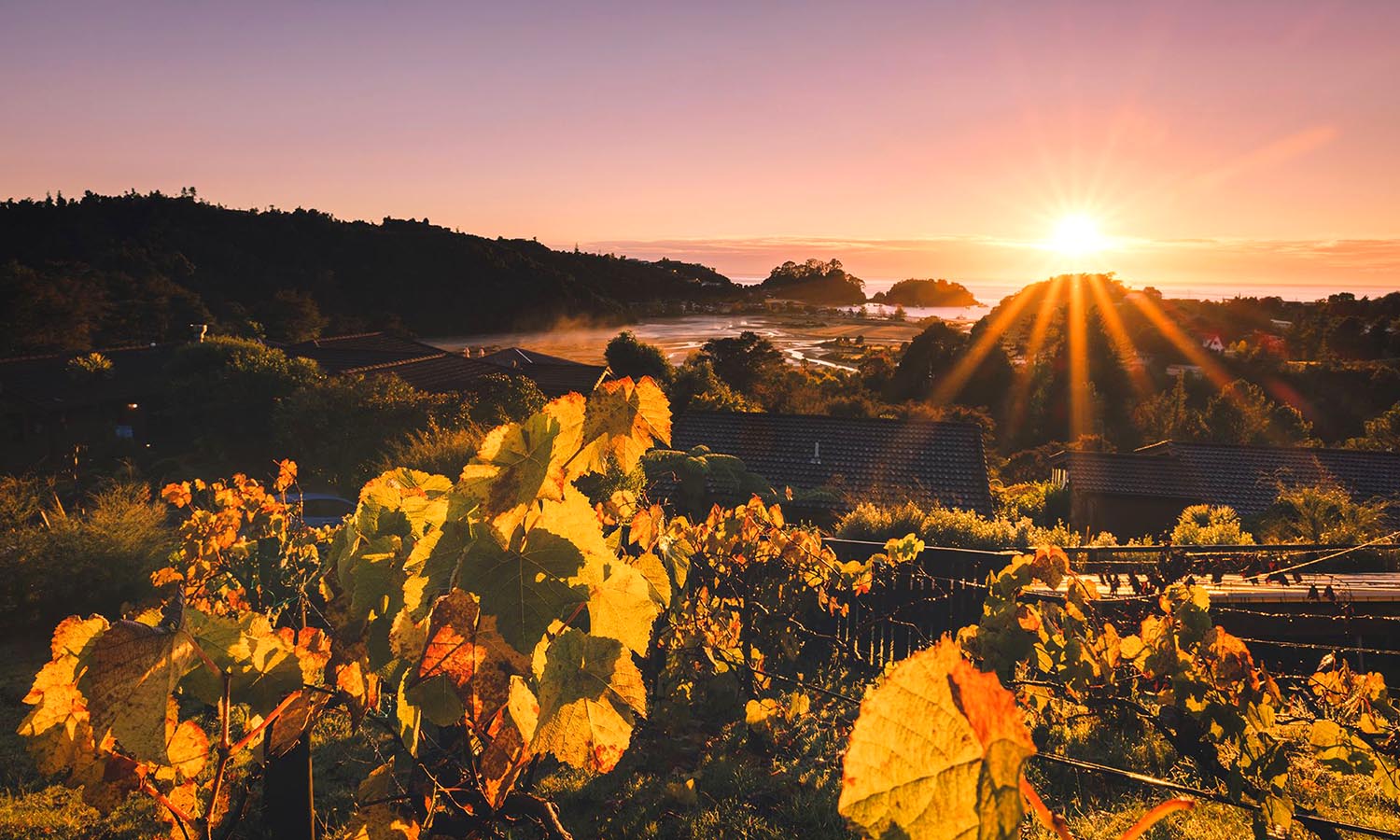
As the sun rises over the water, we head to the beach for a morning cruise with Abel Tasman Sailing Adventures on their new catamaran. Gliding peacefully past private sandy beaches and protected islands filled with adorable seal pups playing in the shallows it’s easy to see why locals work so hard to protect the area. The experienced sailors and owners of the catamaran happily fill us in on the history of the area and the initiatives they’re a part of to keep the Abel Tasman pristine.
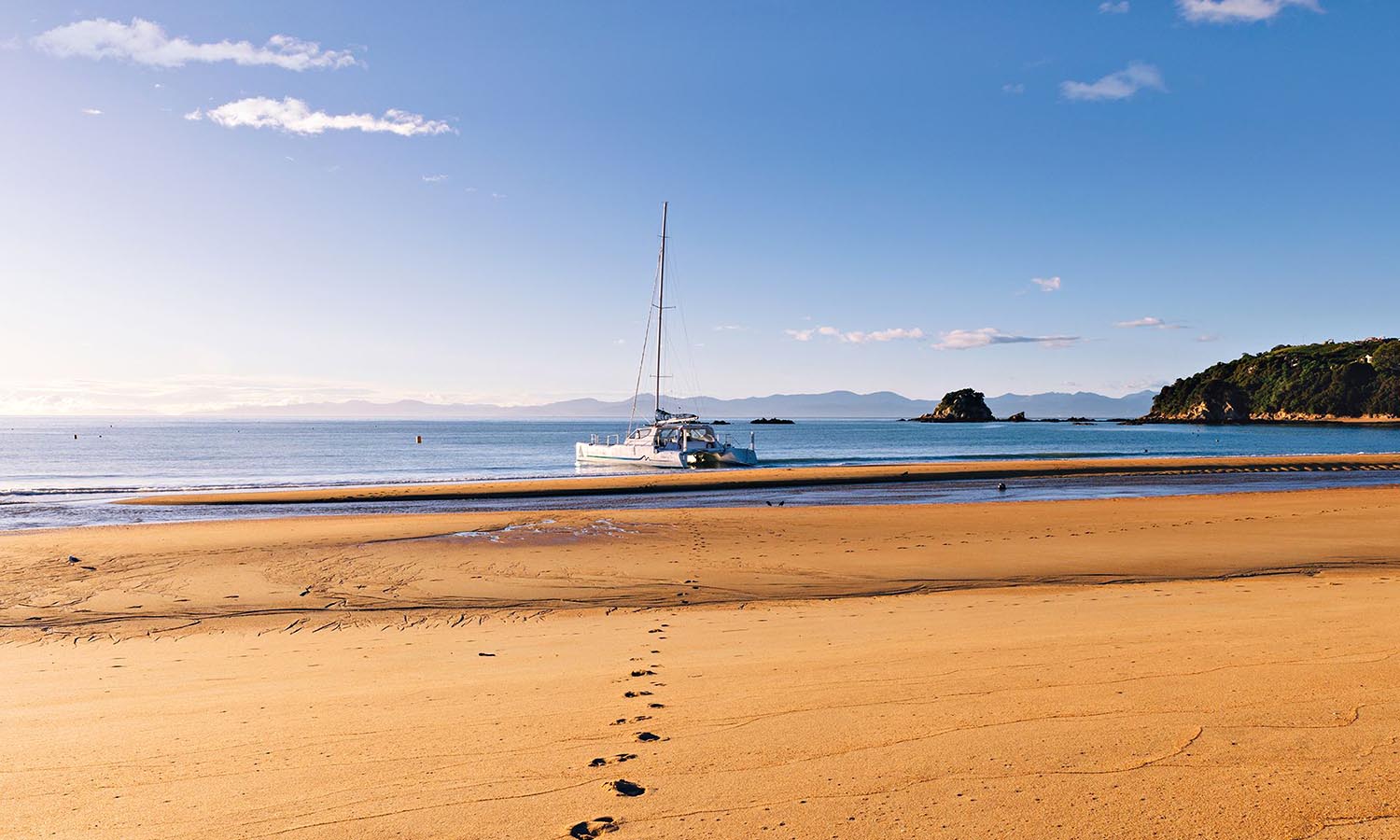
At lunchtime, we are dropped off at a small, untouched bay for the next part of our adventure. It’s a sea kayak tour of the Abel Tasman with Mārahau Sea Kayaks and Abel Tasman Aqua Taxi. Floating through valleys filled with birdsong, stopping at secluded golden bays to hike and explore at our leisure. Every inlet we visit appears to offer a different landscape, some with crystal clear blue water, others with cool cola coloured bottom and wild overgrowth. Each is as tranquil and striking as the next.
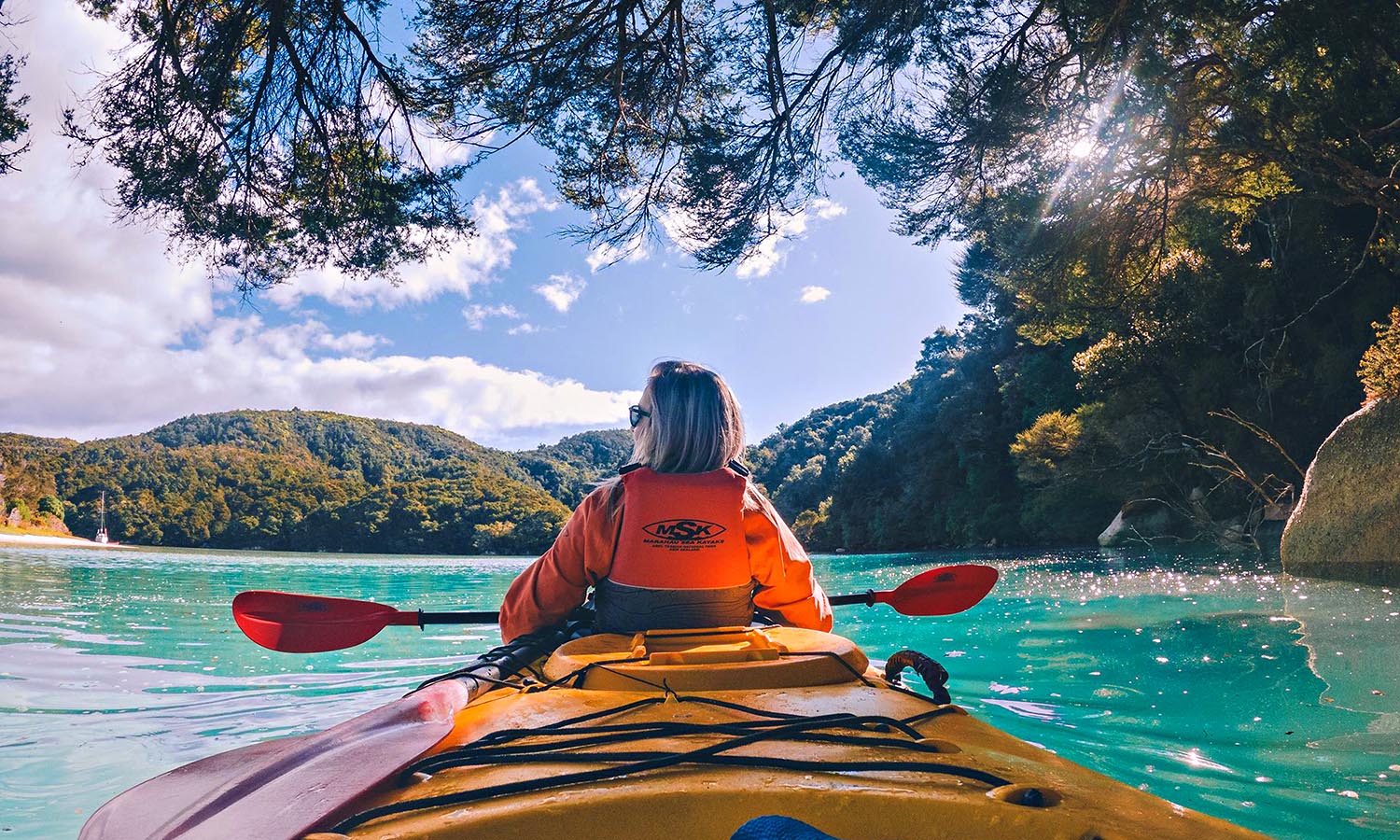
It’s finally time to unwind as the locals do after a day of exploring Abel Tasman. We grab a table at Hooked On Mārahau, a relaxed seafront restaurant with a garden bar soaking in the day’s activities.
For a change of scenery we check into the quaint, eco-friendly Abel Tasman Ocean View Chalets. Built into the hillside and surrounded by trees teeming with birdlife, the chalets provide all the benefits of nature without giving up any creature comforts. Morning comes and the sun pours into the quaint hillside cabins like honey over the edge of a spoon, making for some beautiful sunrise photos from my private balcony overlooking the water.

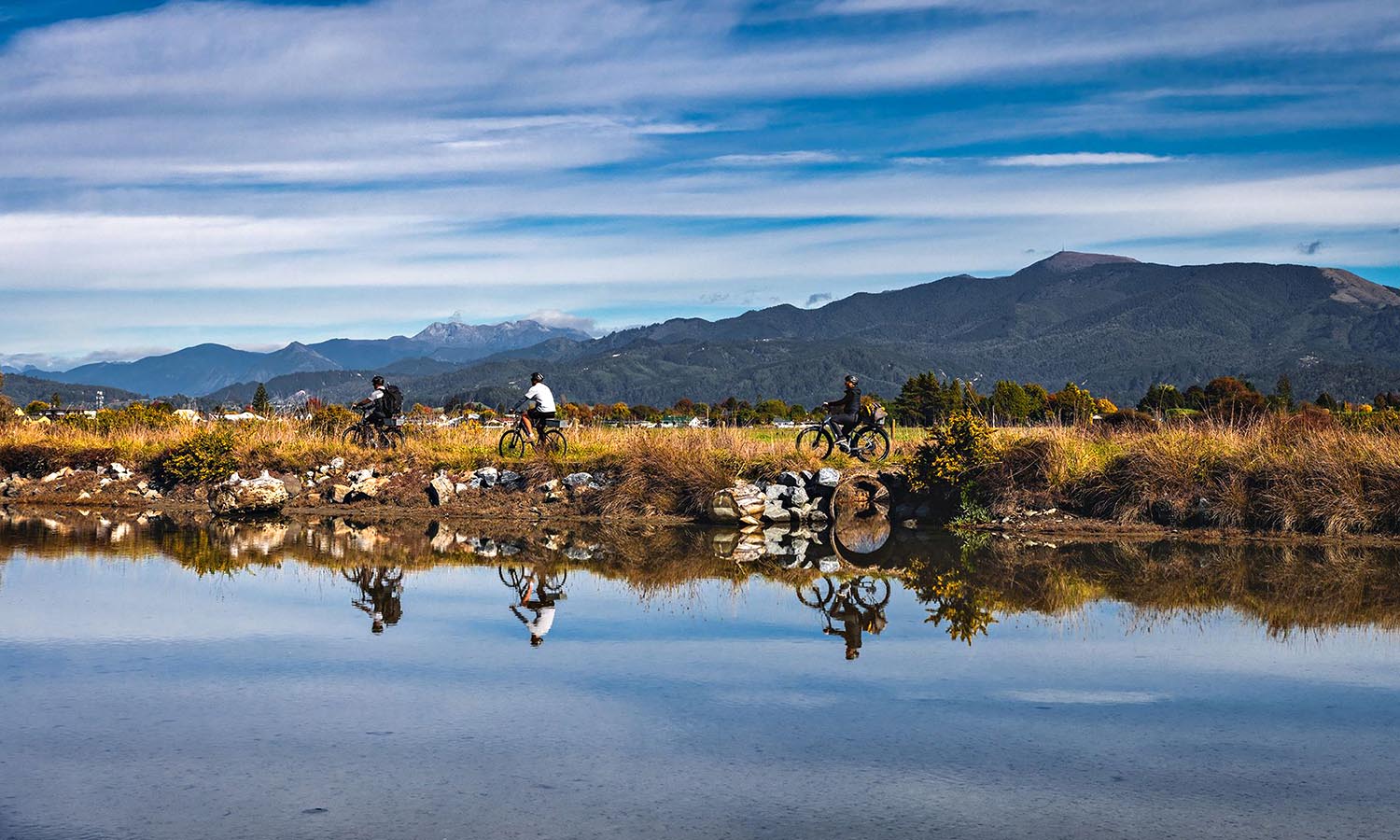
The airport beckons, but not before making one last stop on the way to Nelson. In the small town of Riwaka we meet with The Gentle Cycling Company for an effortless two wheeled tour of the area. Gliding through bountiful berry farms, wineries and orchards, if I wasn’t so enamoured by the smell, the experience is almost dream-like for even an inexperienced rider like myself.
Sitting in the airport waiting for my flight back home (which has been carbon offset) I look back in wonder at the effort and passion that local tourism providers on this trip have shown towards a more sustainable future.
There’s an eagerness not just to change the way people travel, but also to change the world.
get in the know Nelson Airport is built with locally sourced sustainable timber, designed to blend into the beauty of its mountainous landscape.
If you’re an Australian and you’ve ever dreamed of visiting a Nevada beyond the bright, neon lights of Vegas, after a week of road tripping through the seventh largest state in the US, I can tell you that a hedonistic weekend visit to what’s better known as ‘The Strip’ doesn’t come close to what is on offer.
Nevada is unassumingly massive. It straddles the elbow of a big-armed California like a bicep that’s continuously in flex. And with one of the highest percentages of public land per state in the country, its eclectic mixture of state parks, ghost towns, endless opportunities for legal gambling, open-air museums, haunted hotels, extraterrestrial beings, public art and stunning scenery, Nevada ticks just about every box for the idyllic road trip destination.

And just like most other west coast states, it’s also a perfect year-round place to visit. During our Spring road trip, the snow-capped Sierra Nevada mountain range pairs perfectly with moderate desert temperatures ranging from 26 to 32 degrees celsius. Comfortable for both early morning strolls through the 27 state parks as well as evening beers at one of the best roadside Mexican diners outside of Mexico.
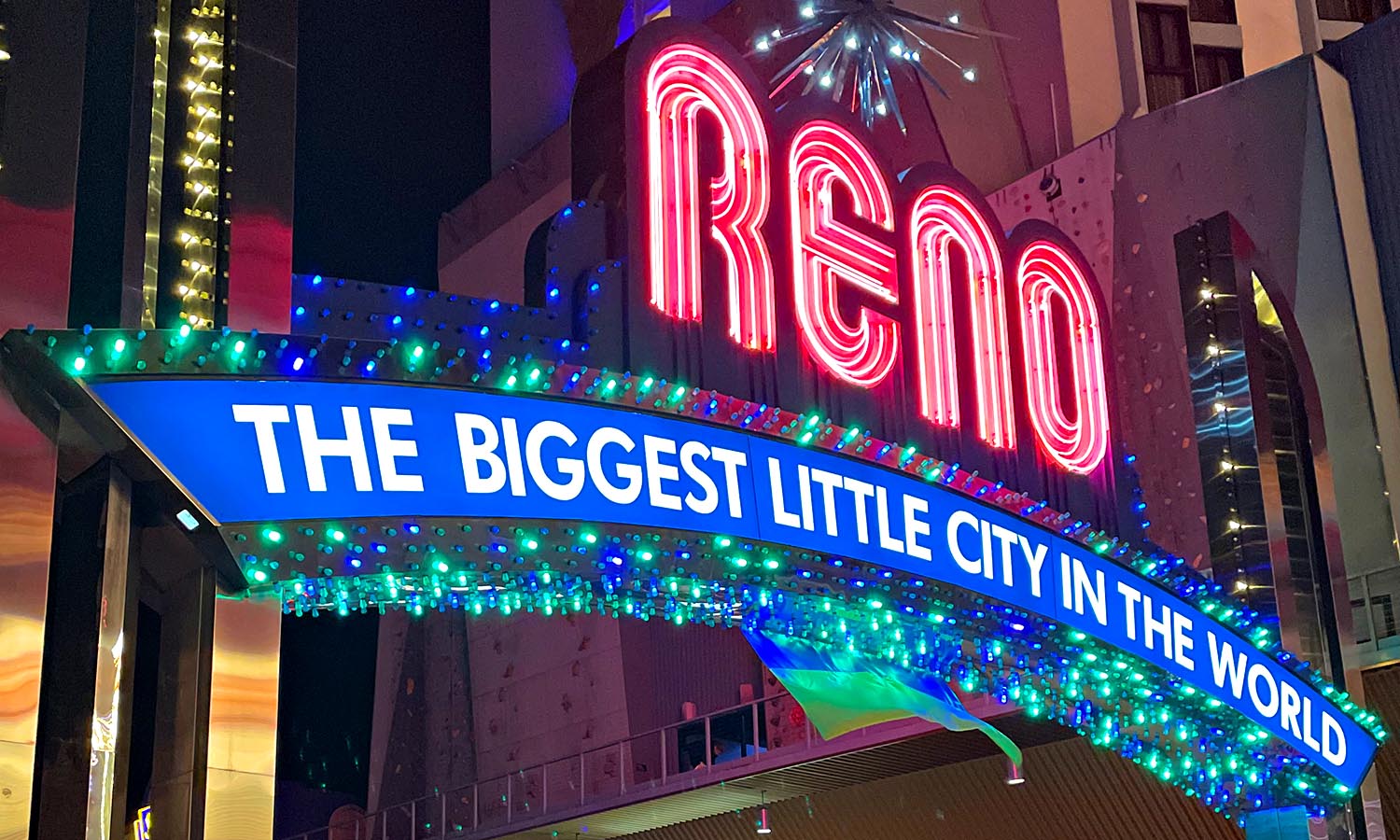
Our road trip starts in Reno, better known as ‘The Biggest Little City in the World.’ With a public art scene that would rival Sao Paulo or Singapore, theres an avalanche of casino-lined streets, bars and riverfront restaurants ripe for exploring.
Or keep reading. There’s more to this story…

Slowly working our way along dusty desert highways towards Las Vegas, every stop during our visit helped unfold a new layer of Nevada I didn’t expect. We met generous, hat-tipping locals propped up against saloon bars, celebrities, modest chefs at world-class diners, motorsport athletes and more.
But more than this, a road trip through Nevada also reveals an unexpected kaleidoscope of both people and experiences which can be tailored depending on what you want from your visit. There’s luxury hotels or haunted motels, adventure, history, roadside art, boutique shopping, craft breweries and epicurean delights. Get your motor running, because its now or Nevada.

Here’s nine epic recommendations, a detailed road trip itinerary from our creator and the best way to discover (and book) the real Nevada with us:

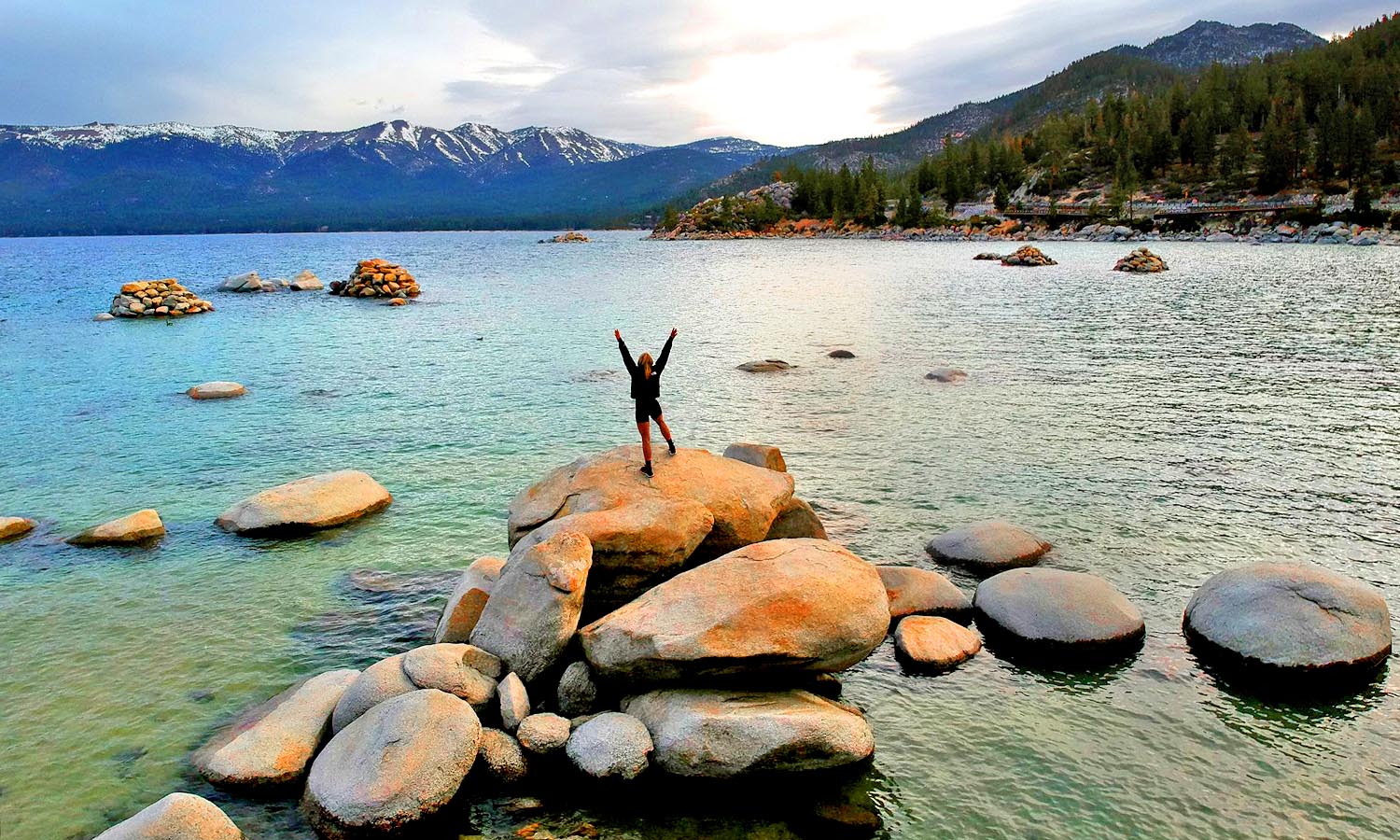
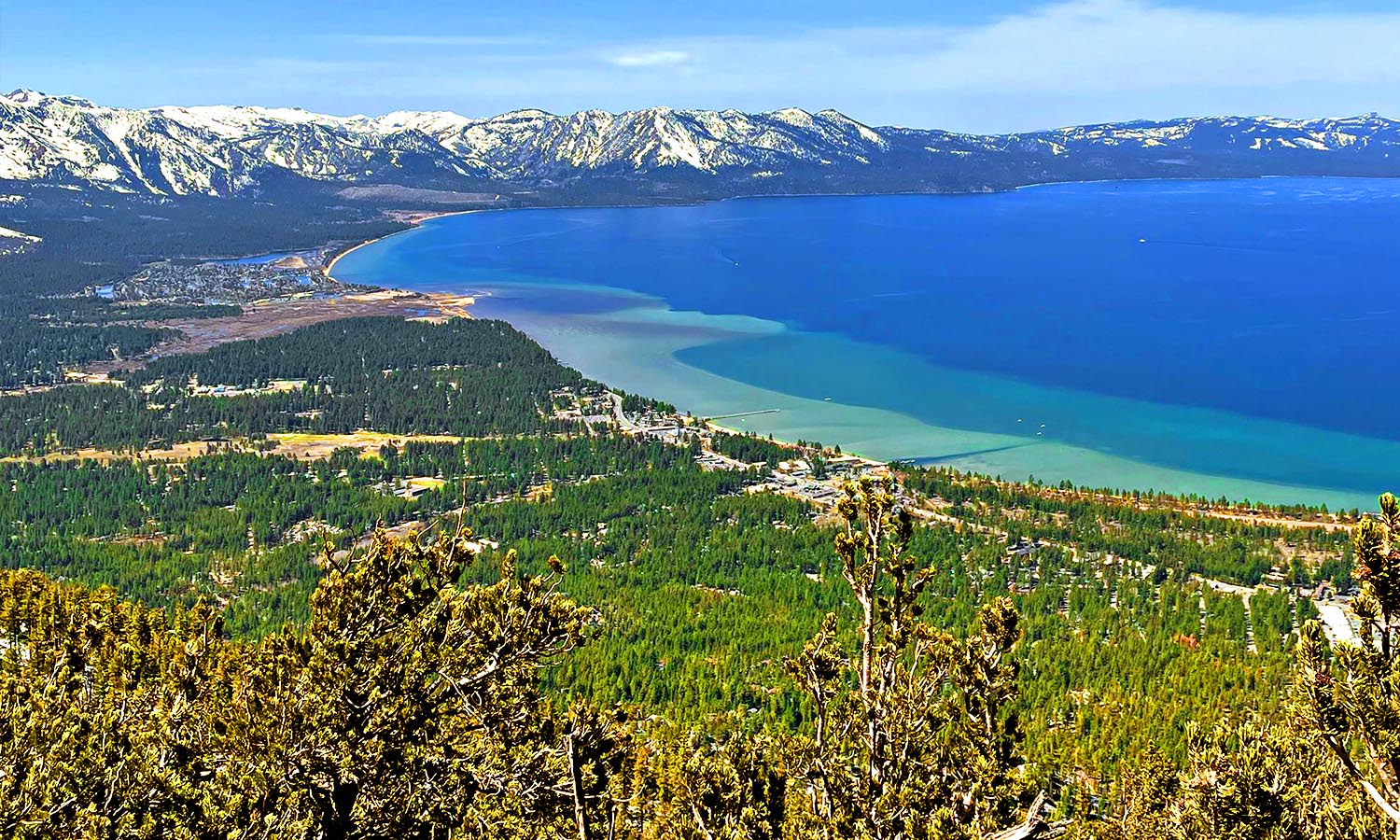
Going out on a limb, I’m going to say that Lake Tahoe is the most stunning body of water I have ever visited on the planet. The crystal clear, turquoise waters are surrounded by bahama-like beaches, hidden inlets, snow-capped peaks, ski resorts and lakeside towns which come alive in the summer, making Tahoe the perfect first stop on your road trip. From luxurious dinners at The Hyatt’s Lone Eagle Grille to the five degrees celsius sunrise swims at Sand Harbour, Lake Tahoe is a grammable destination fit for all types.
IT’S NOW OR NEVADA
AU$20 National Park Entry per car per day
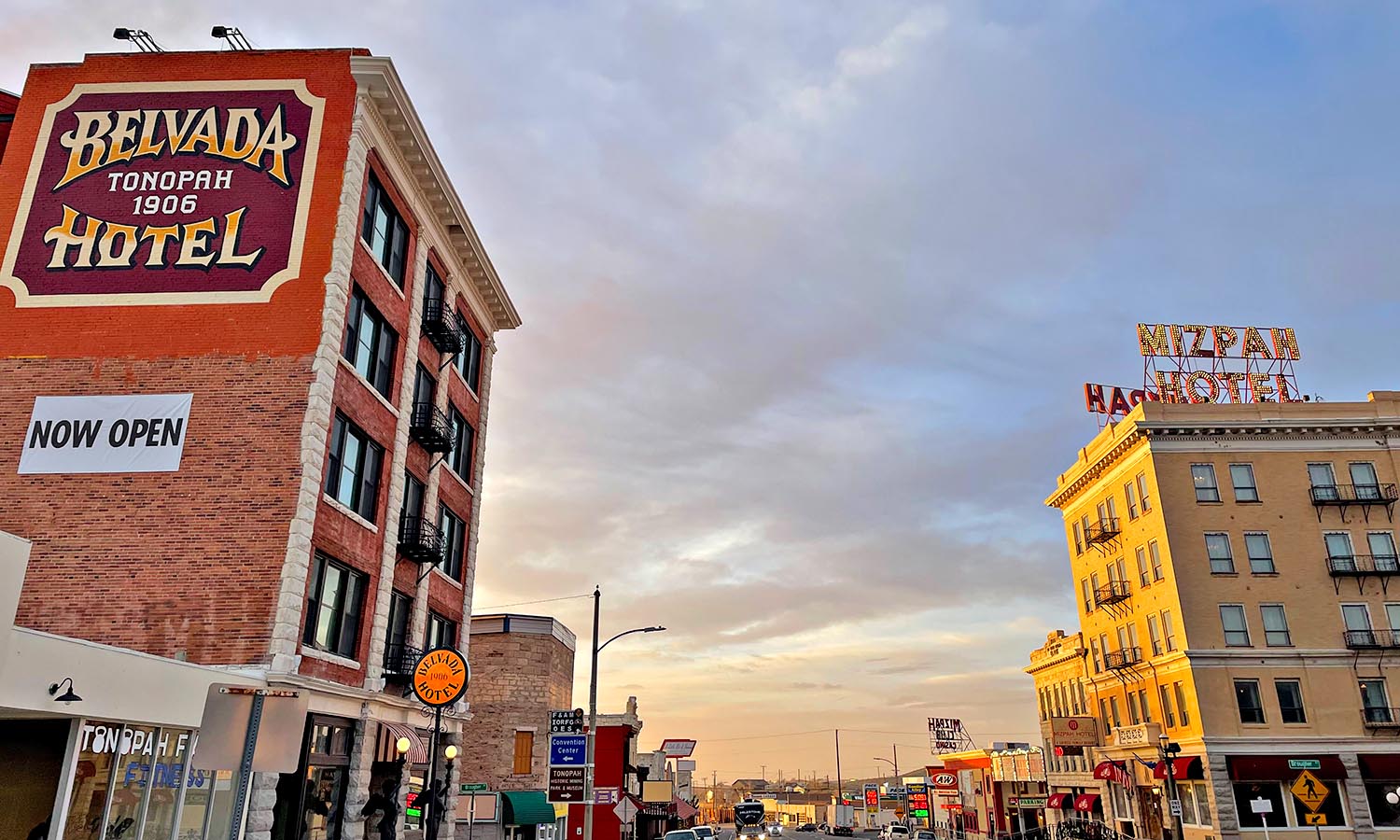
This hotel exudes old world charm and does not shy away from its chequered history. The incredible hospitality does wonders to help sway your mind away from realising you’re actually sleeping in one of America’s most haunted hotels. The Mizpah Hotel is an absolute hidden gem and a step back in time that we were more than happy to take.
IT’S NOW OR NEVADA
AU$200 per night twin share
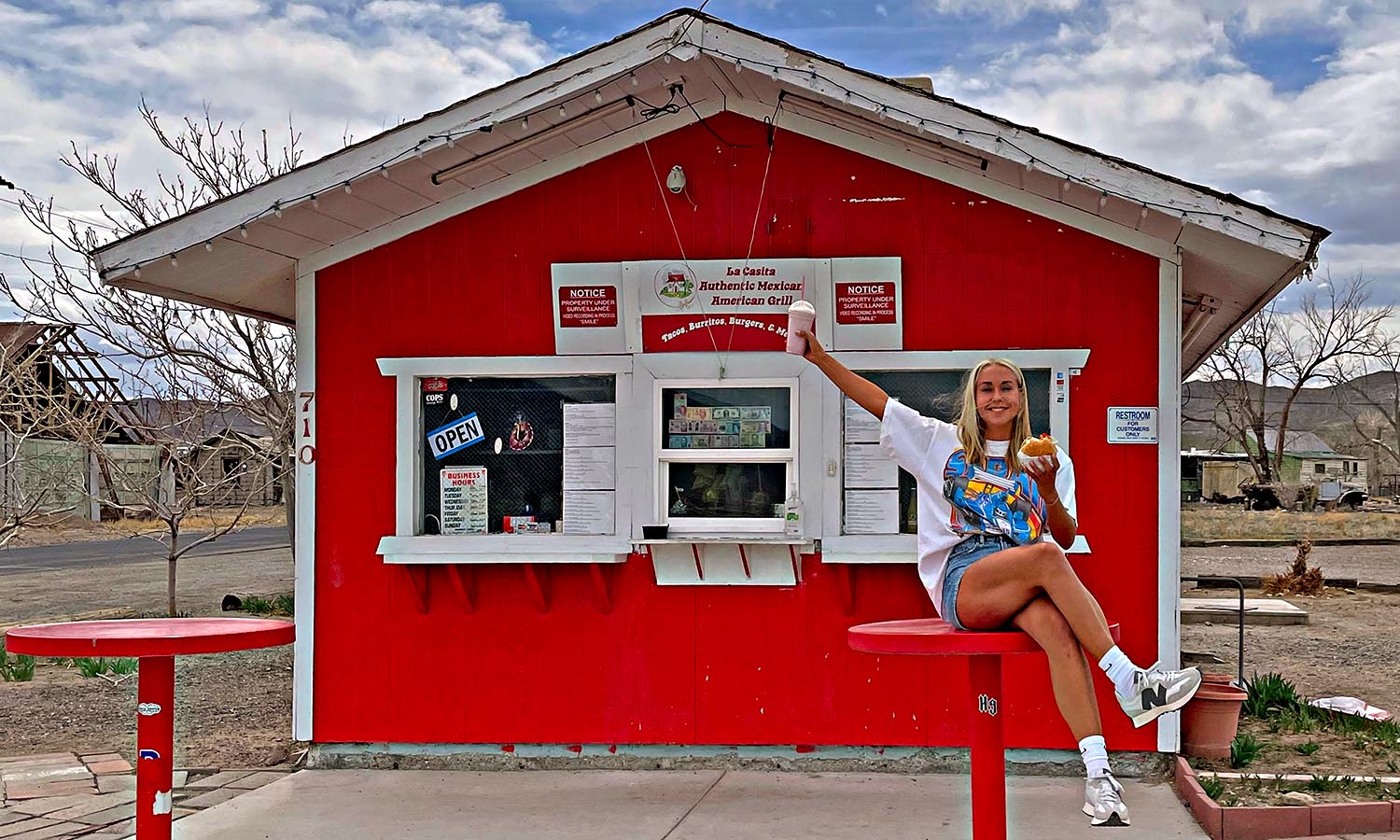
Apparently the perfect roadside pit stop does exist and you’ll find it two-hours south of Reno, or four-hours north of Vegas depending on which way you flip the map. This Nevada icon serves up authentic Mexican cuisine along with American fast food essentials. If you chat to other diners, you’ll find someone who stops and eats here daily.
IT’S NOW OR NEVADA
Tacos AU$4, Cheeseburger AU$10, Philly Cheese steak AU$13

If the ghosts of the Mizpah Hotel didn’t visit you during your overnight stay, you can try your luck again in Goldfield. Once a booming city with over 20,000 residents, Goldfield is now a mostly abandoned ghost town that has shades of zombie apocalypse about it. Most of the buildings here were destroyed by a fire in 1923, but the eerie empty streets and ghostly history make for a great spot to stretch your legs and pull out the camera in search of poltergeists.
IT’S NOW OR NEVADA
Free
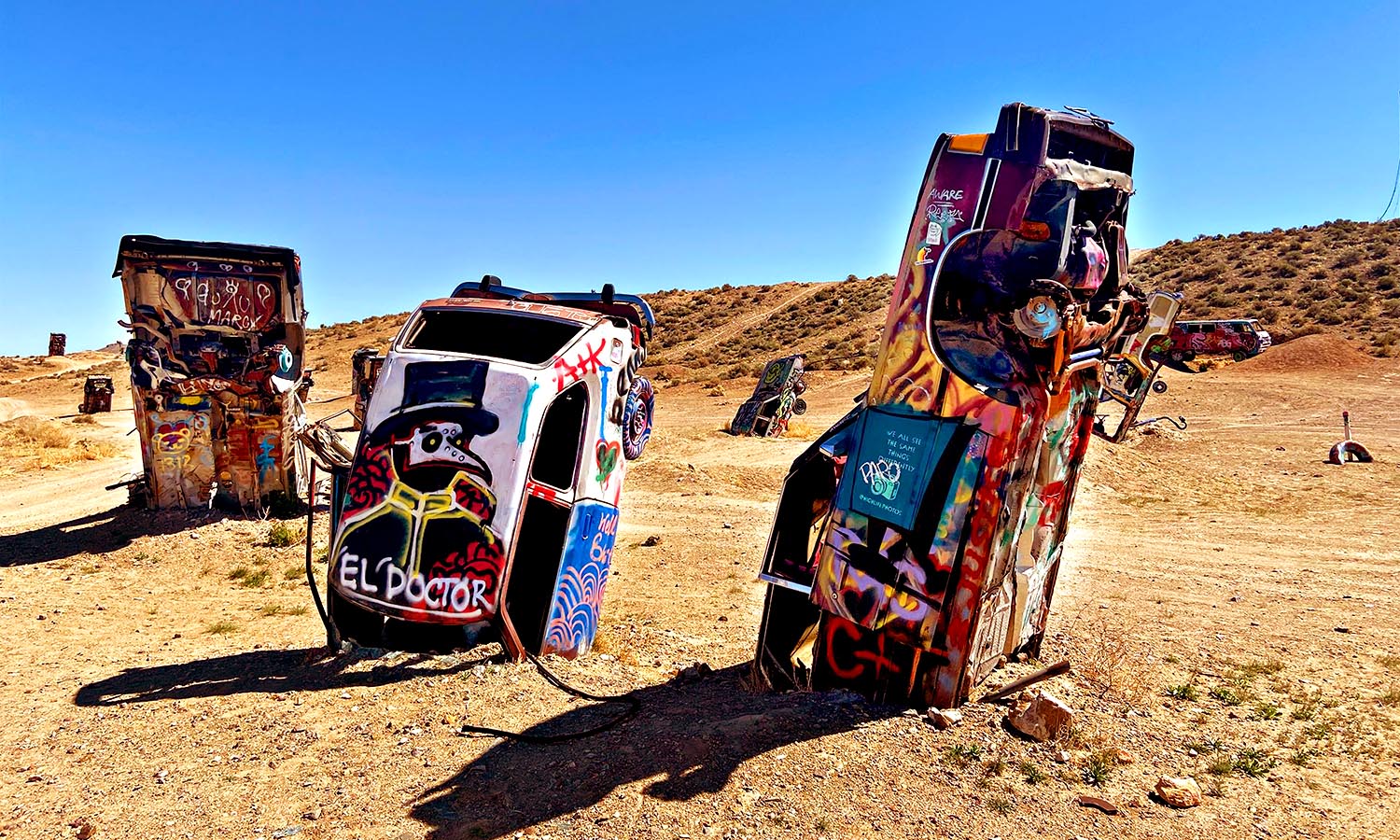
Leaving the ghosts behind, the International Car Forest begins an entire day on your itinerary of outdoor museums and quirky installments. Think of this place as an outdoor sculpture garden, made from cars, buses, trucks and vans. Once an attempt to break a Guinness world record, this outdoor museum is bright, bold, loud and quirky. Jump on the bonnet of an old, rusted out Chevrolet and you’ll be transported to an America of the past.
IT’S NOW OR NEVADA
Free
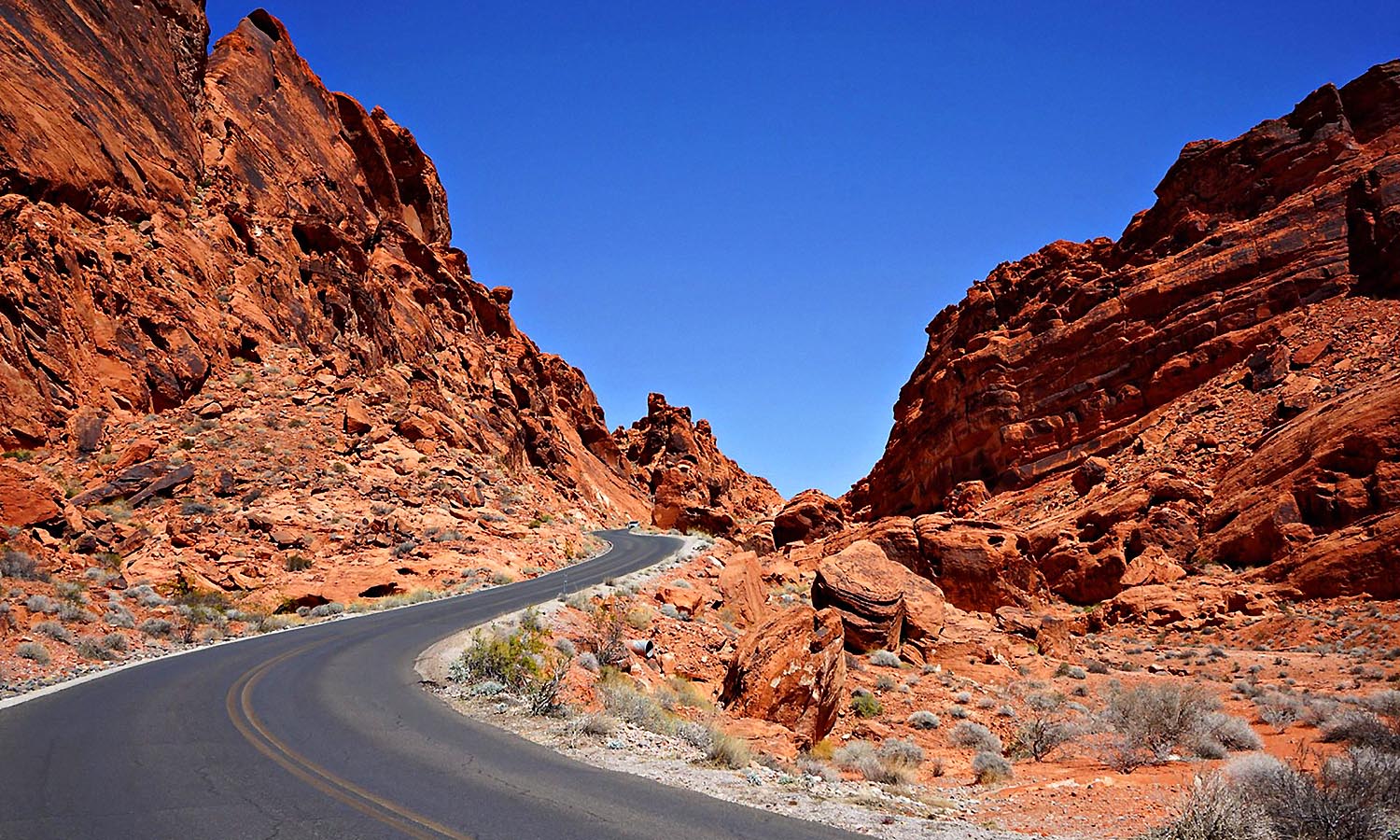
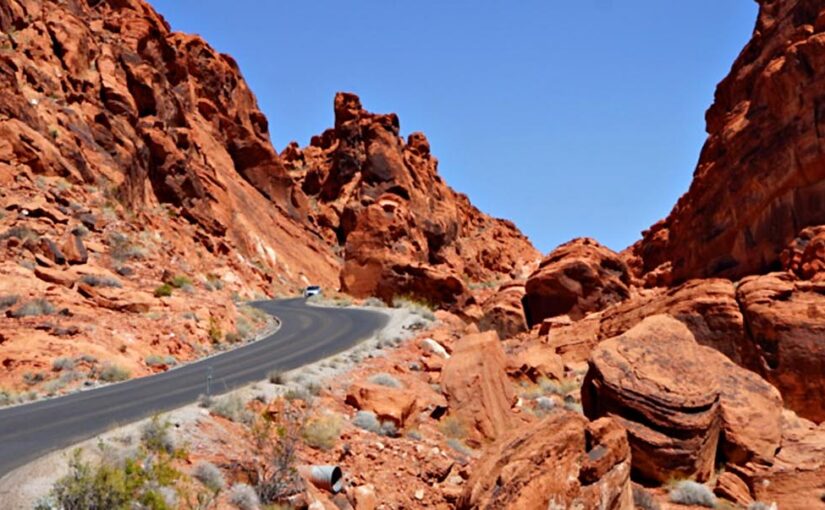
If you have ever been to Las Vegas and you haven’t road tripped to Valley of Fire State park you’re missing out. This place is so perfectly imperfect it is like a scene from the movie Cars. Tens of thousands of acres of bright red Aztec sandstone set among winding roads and viewing points makes for a picture perfect day of exploring.
IT’S NOW OR NEVADA
AU$20 National Park Entry per car per day
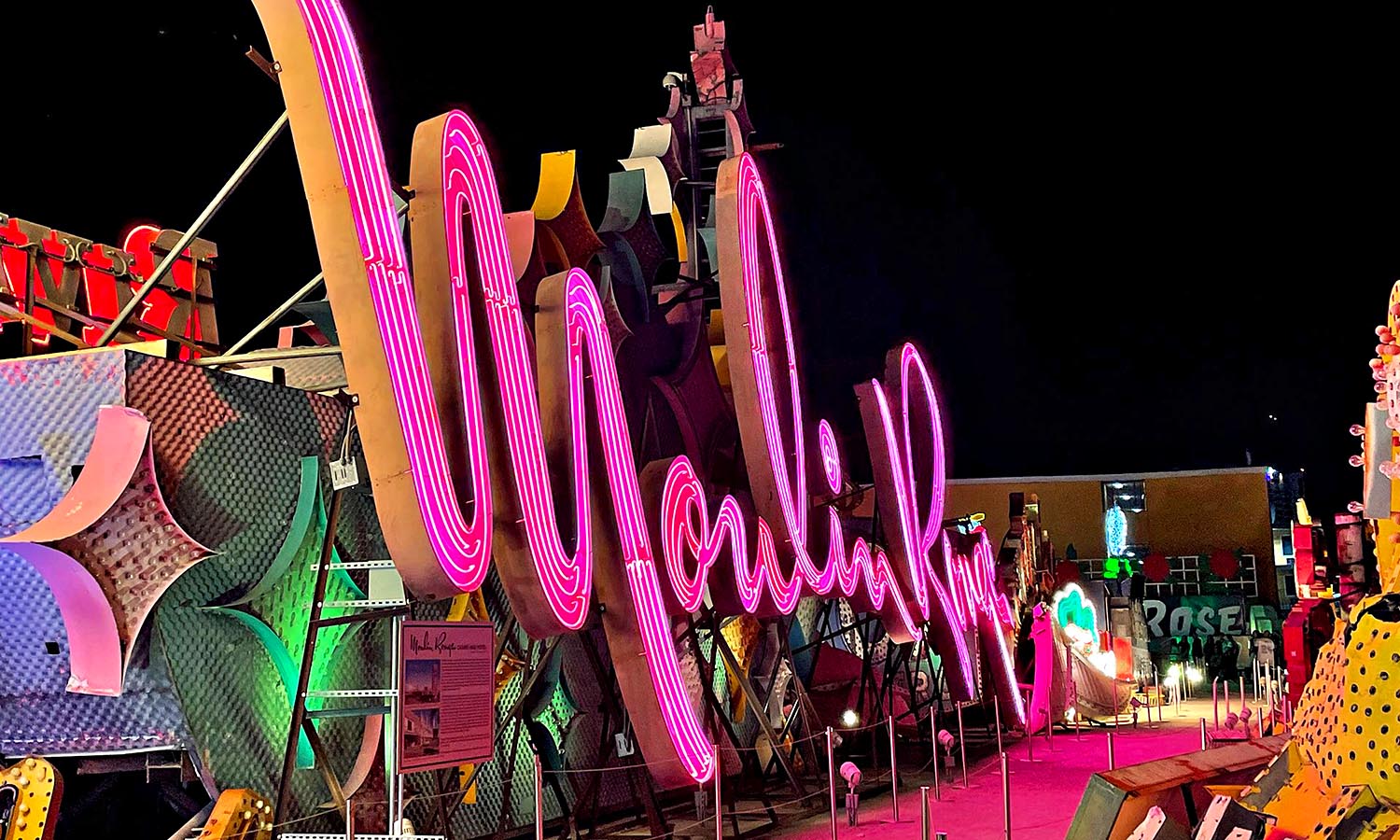
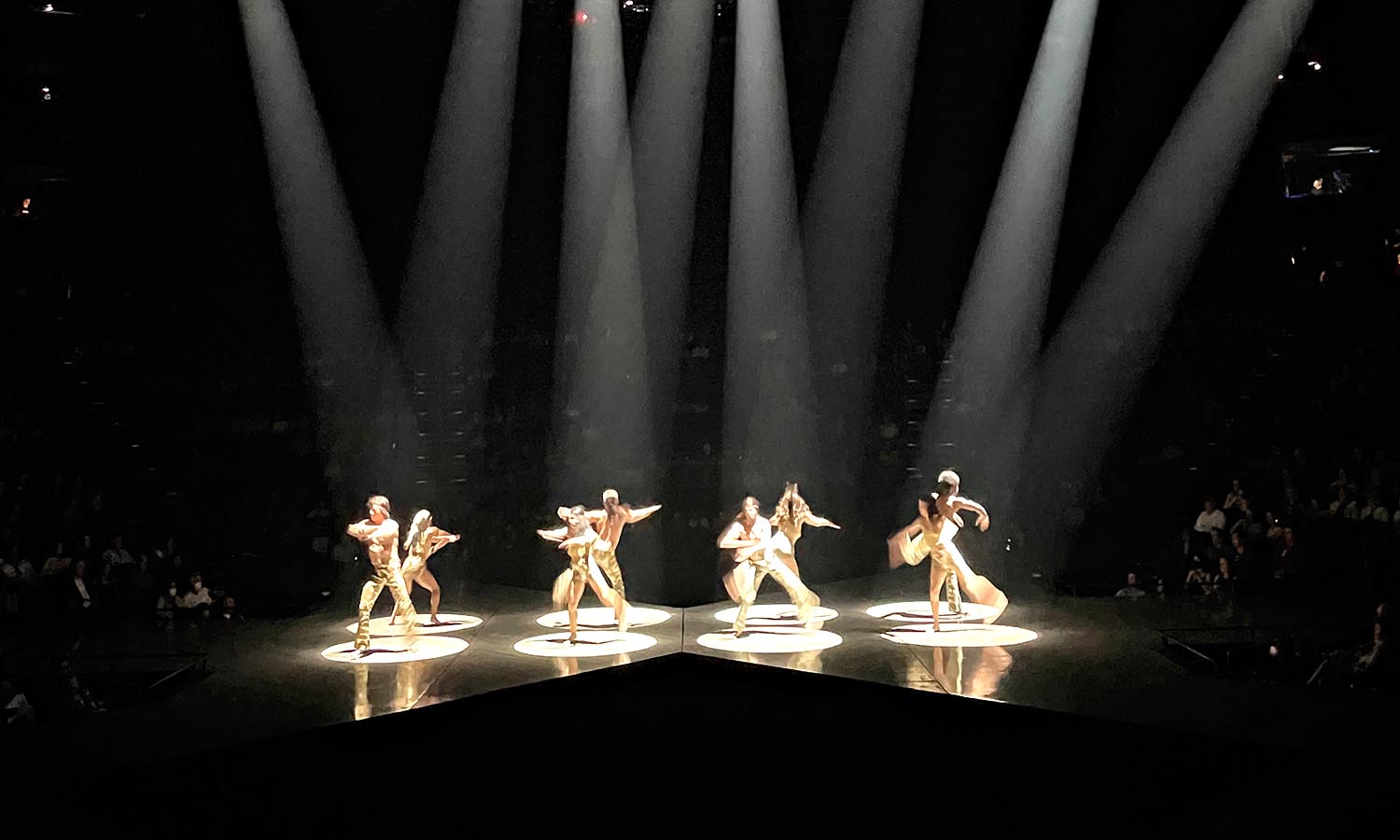
Is it even a visit to Las Vegas if you don’t see a live show? I’m pretty sure you could stay in Vegas for six months and see a different show each night. From the upcoming live concerts by Adele, Billie Eilish and John Legend, to the over-the-top magician and illusionist performances of Chris Angel, and the world famous Cirque du Soleil residencies. And yes, of course, there’s Human Nature. I am a sucker for Cirque du Soleil and this trip The Beatles came calling (or should I say singing?) with their re-produced and re-imagined music intertwined with the athletic and artistic stage performance of the Cirque performers.
IT’S NOW OR NEVADA
Tickets from AU$95
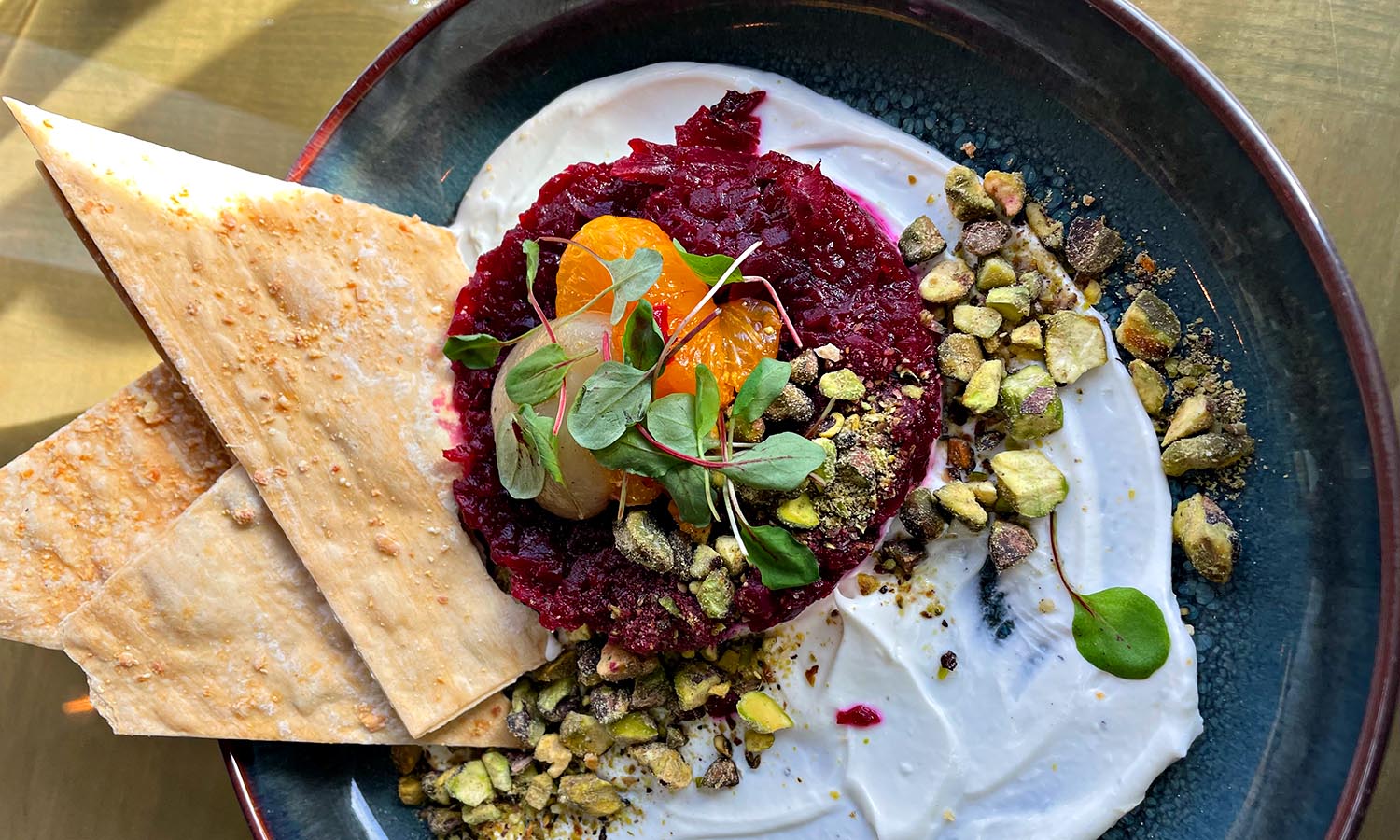
Leaving the Strip behind, the Downtown Lip Smacking food tour winds you in and out of the downtown and Fremont Street area. Downtown Vegas has a booming food scene with top restaurants and secret underground bars hidden among art covered buildings and back streets filled with grimy, criminal history.
IT’S NOW OR NEVADA
AU$170 per person or AU$235 including cocktails at each stop
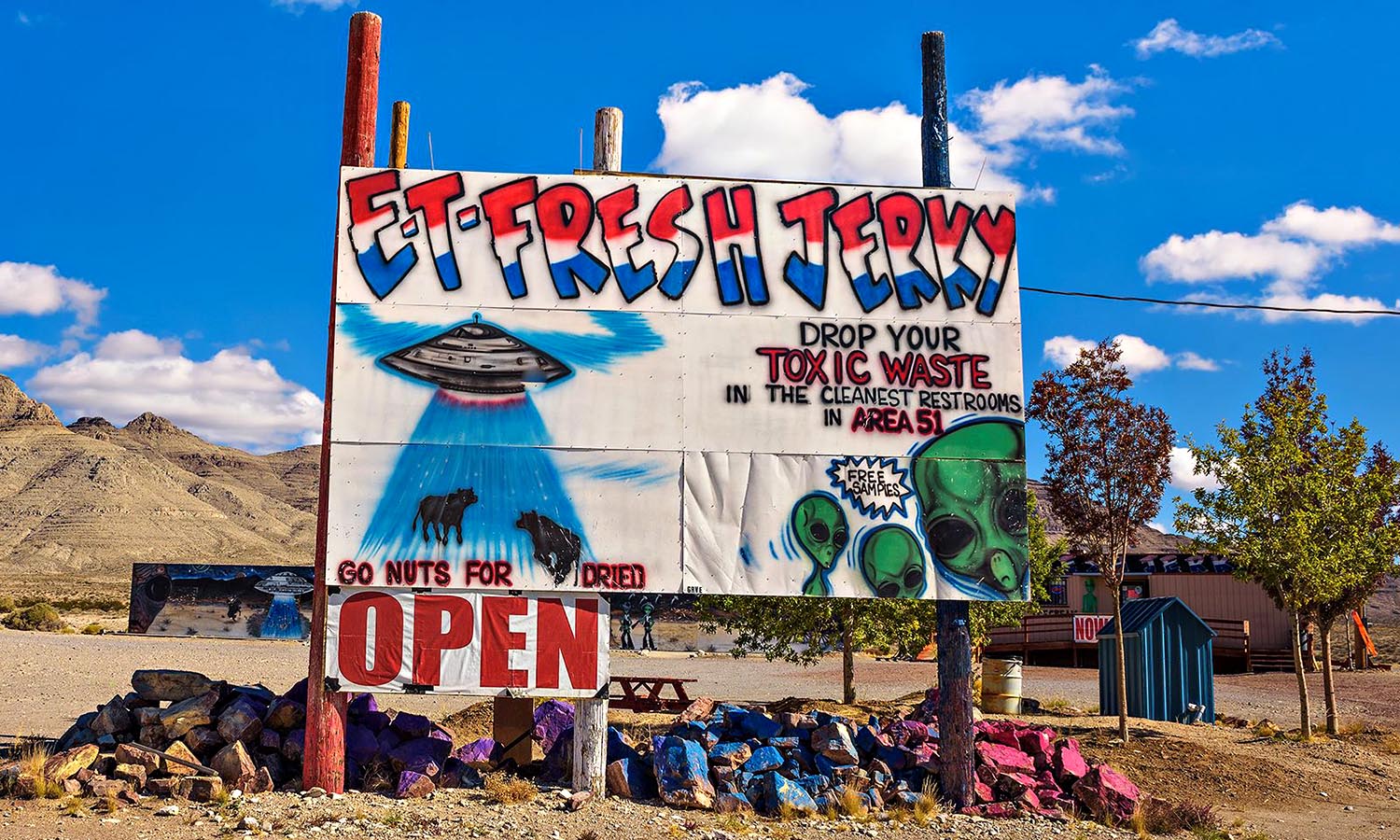
Strap yourself in, because the weirdest and wackiest adventure in Nevada is out of this world! However, the famous Extraterrestrial Highway (otherwise known as State Route 375) is so much more than just little green men. On the road to Tonopah you can explore everything from quirky signage, alien murals, alien jerky and even alien burgers at the very aptly named ‘Little A’Le’Inn.’ Nevada is also home to the famous Area 51, so keep your eyes peeled at night and you might be lucky (or unlucky) to have your very own UFO or space probe encounter.
IT’S NOW OR NEVADA
Free

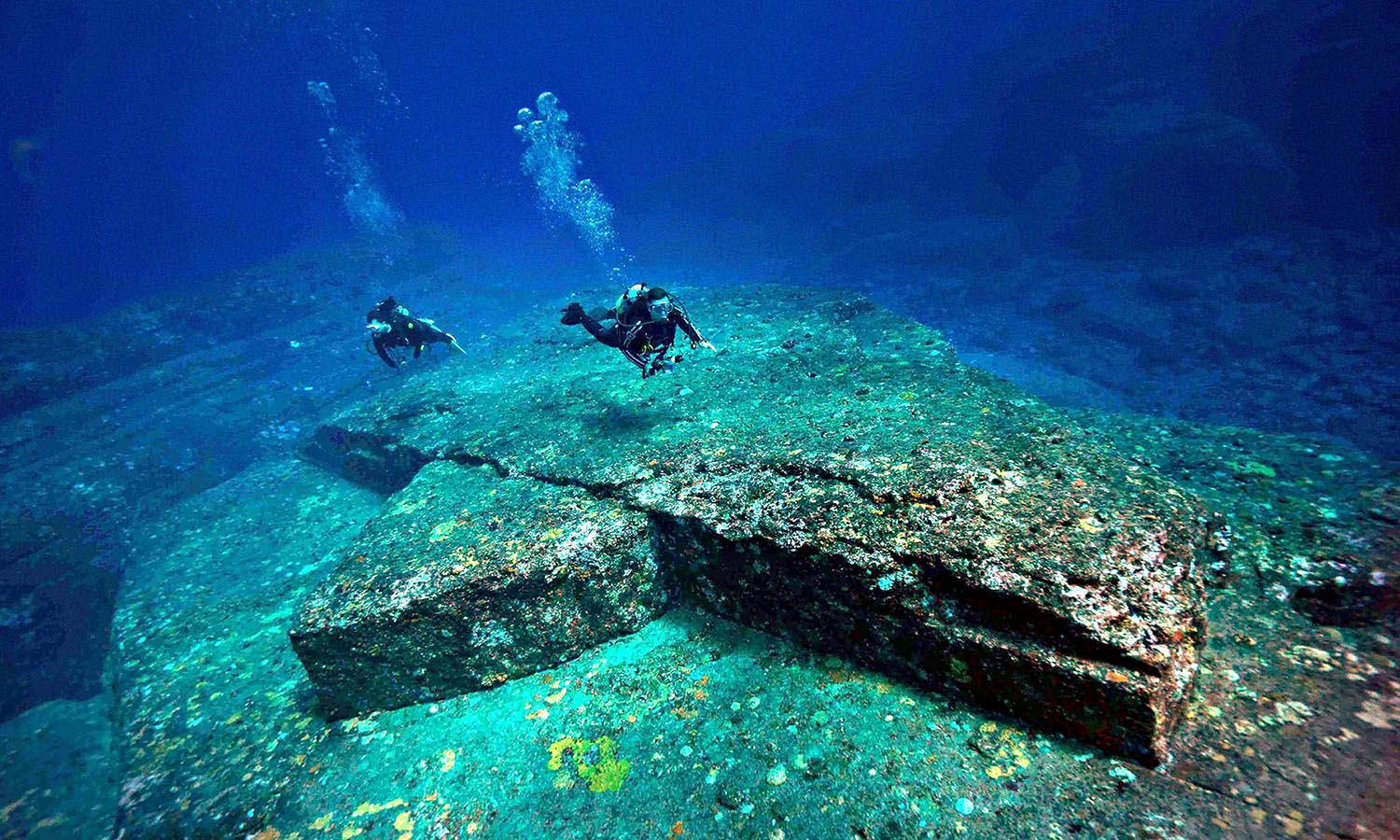
I’m diving Yonaguni’s famous underwater ‘Monument’, which some speculate is the remains of an ancient civilisation, lost to the depths by a catastrophic event. It has been the subject of several books and TV documentaries, and a topic of debate between archaeologists and geologists, since its discovery in the early 1980s. There’s also debate that this is the best diving in all of Japan.
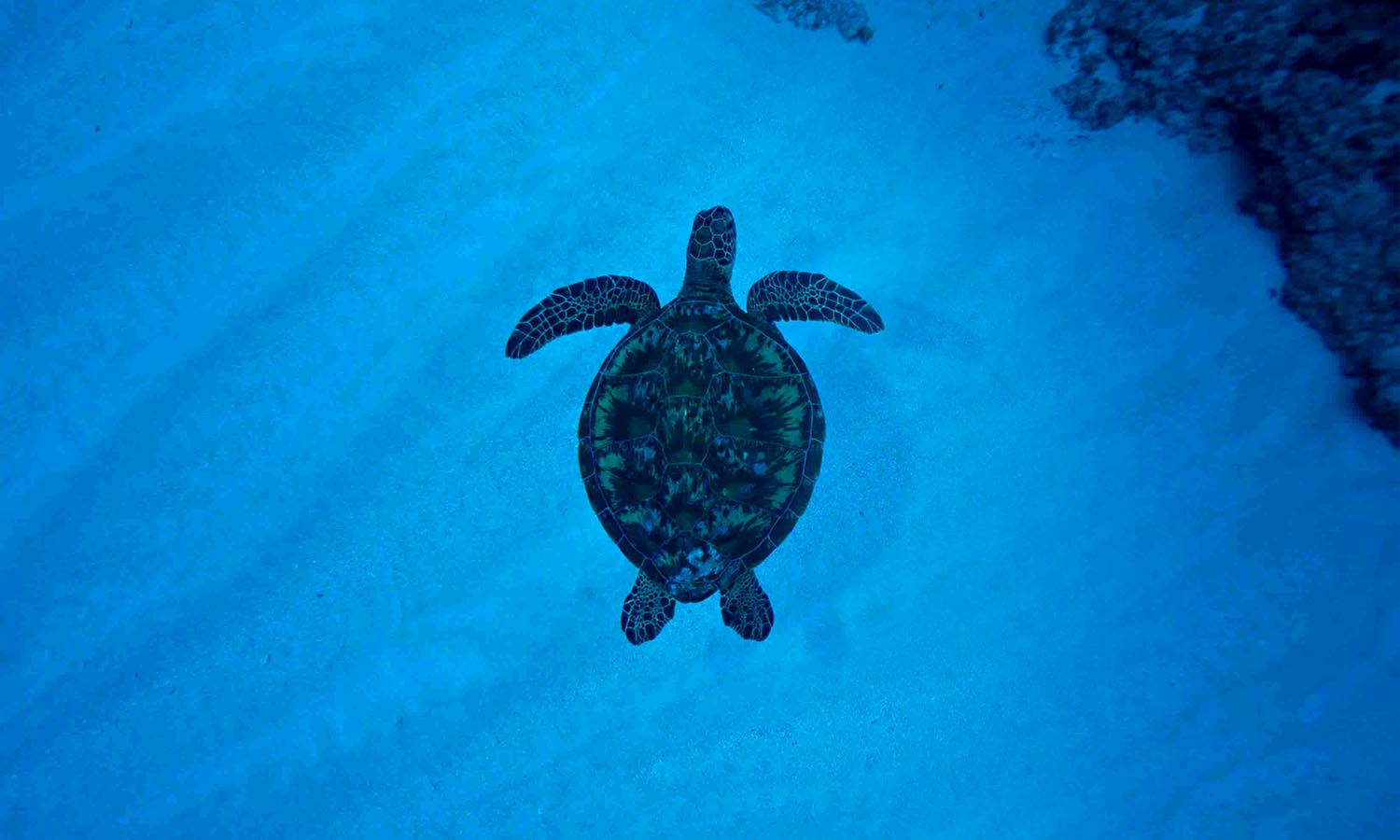
My levels of anticipation and excitement are high, kept in measure by a healthy level of scepticism. I’m envisioning myself as a modern-day Thor Heyerdahl, where after this adventure I’ll come up with my own amazing theory and dazzle the world. Or maybe it’ll just be a fun dive and I’ll see some turtles, who knows?
Emerging from the narrow passage onto a flat rock platform we see two tall identical pillars directly ahead. From a depth of around 15 metres, they almost break the surface of the water, an impressive structure worthy of fascination.
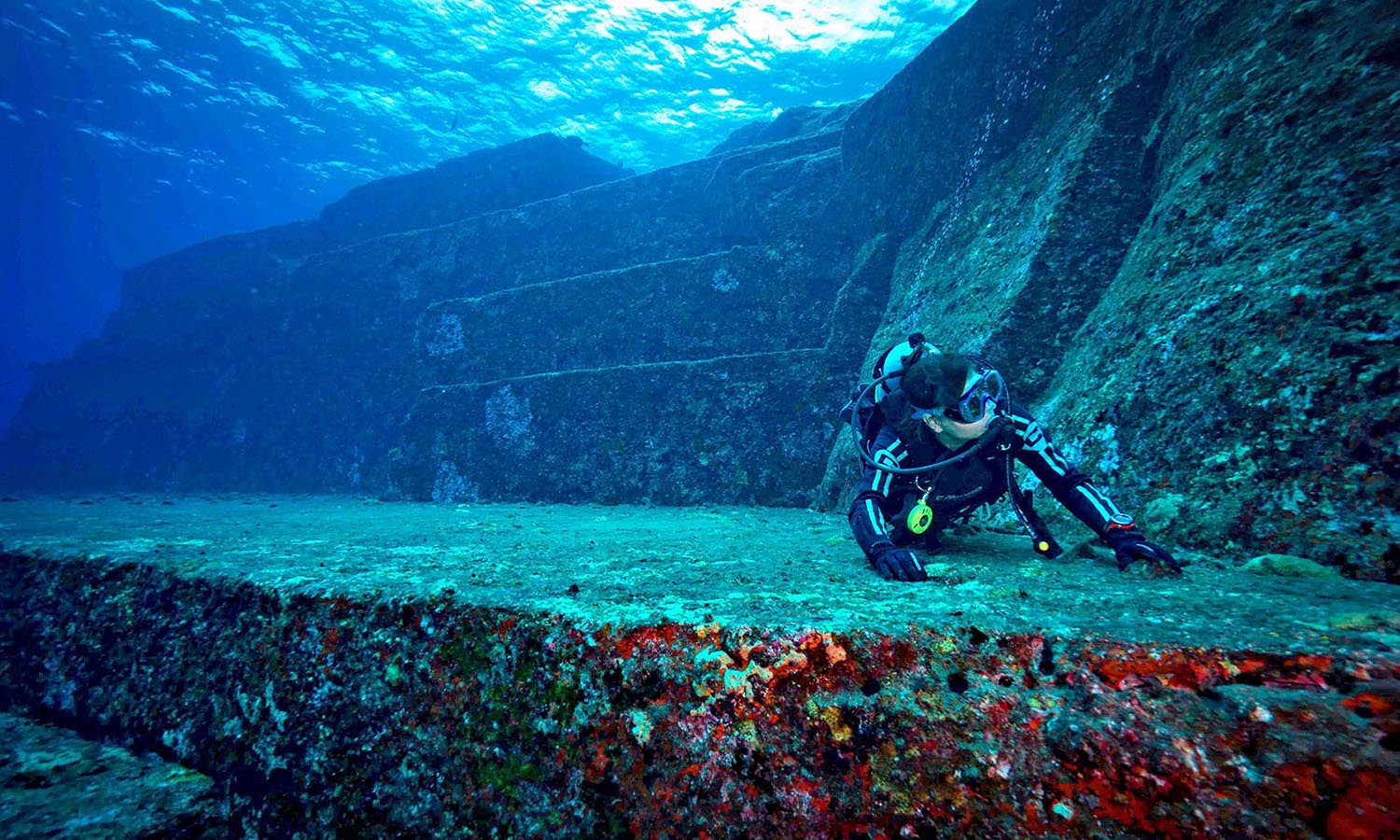
We then swim along a wide ledge, much like an underwater road, and as we round a bend, the Monument looms before us. A high platform that drops 30 metres almost perpendicularly into a wide trench. The water is so clear, that from my shallow depth I can see a couple of turtles at the bottom munching on algae and a giant moray eel peering out from under a cluster of coral, swaying in the current.
As we approach, I see three wide steps leading to the platform from our ‘road’, each one the same width, height, and depth and this is where my scepticism starts to falter. How can nature produce something so geometrically perfect? At the back of the platform, more steps lead to a higher level, and on the far side, steps lead back down to our road.
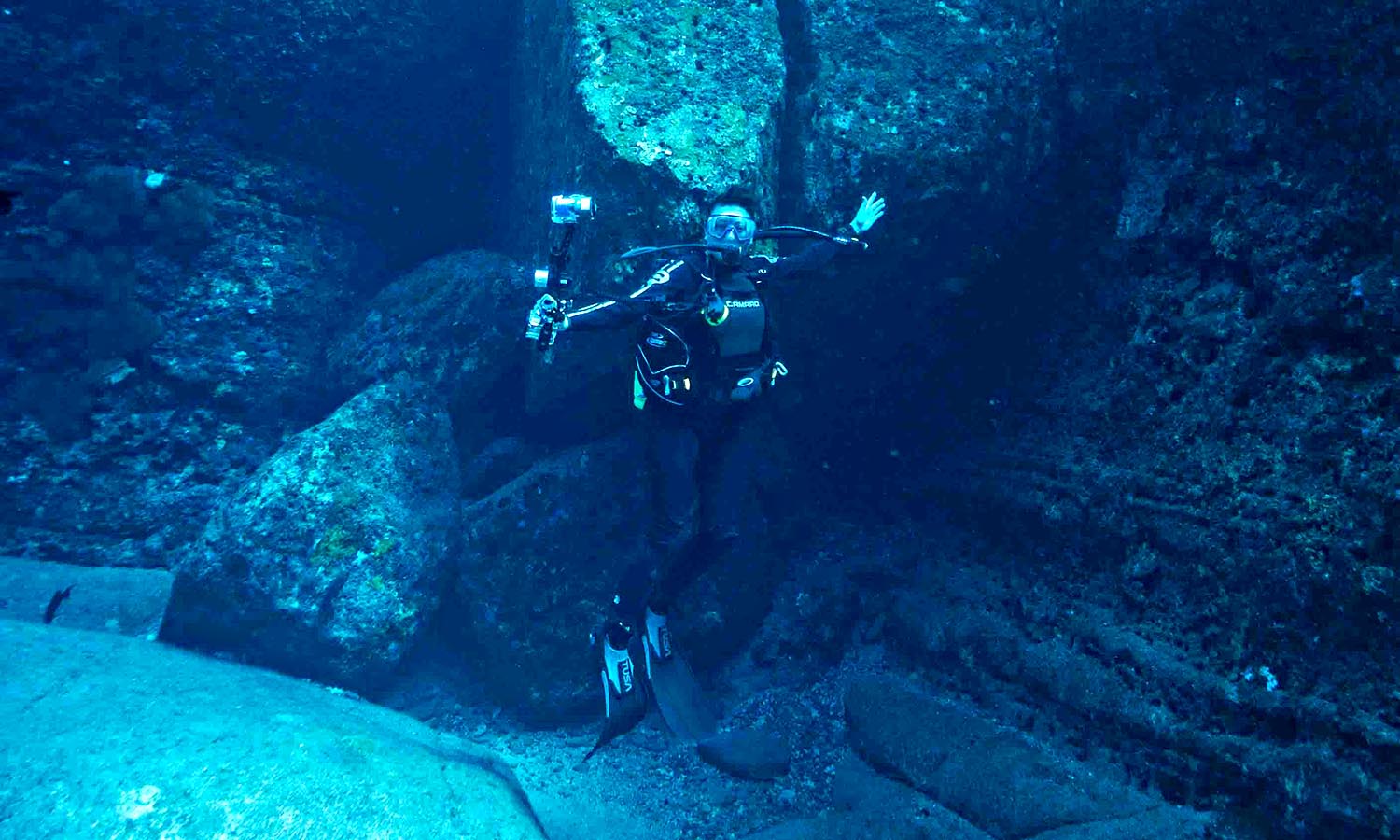
Further down the road, our guide shows us a ‘chapel’, a narrow triangular cut in the rock platform, and in the open space beyond, a large formation that looks exactly like … a turtle. It’s an ancient turtle god, according to our guide.
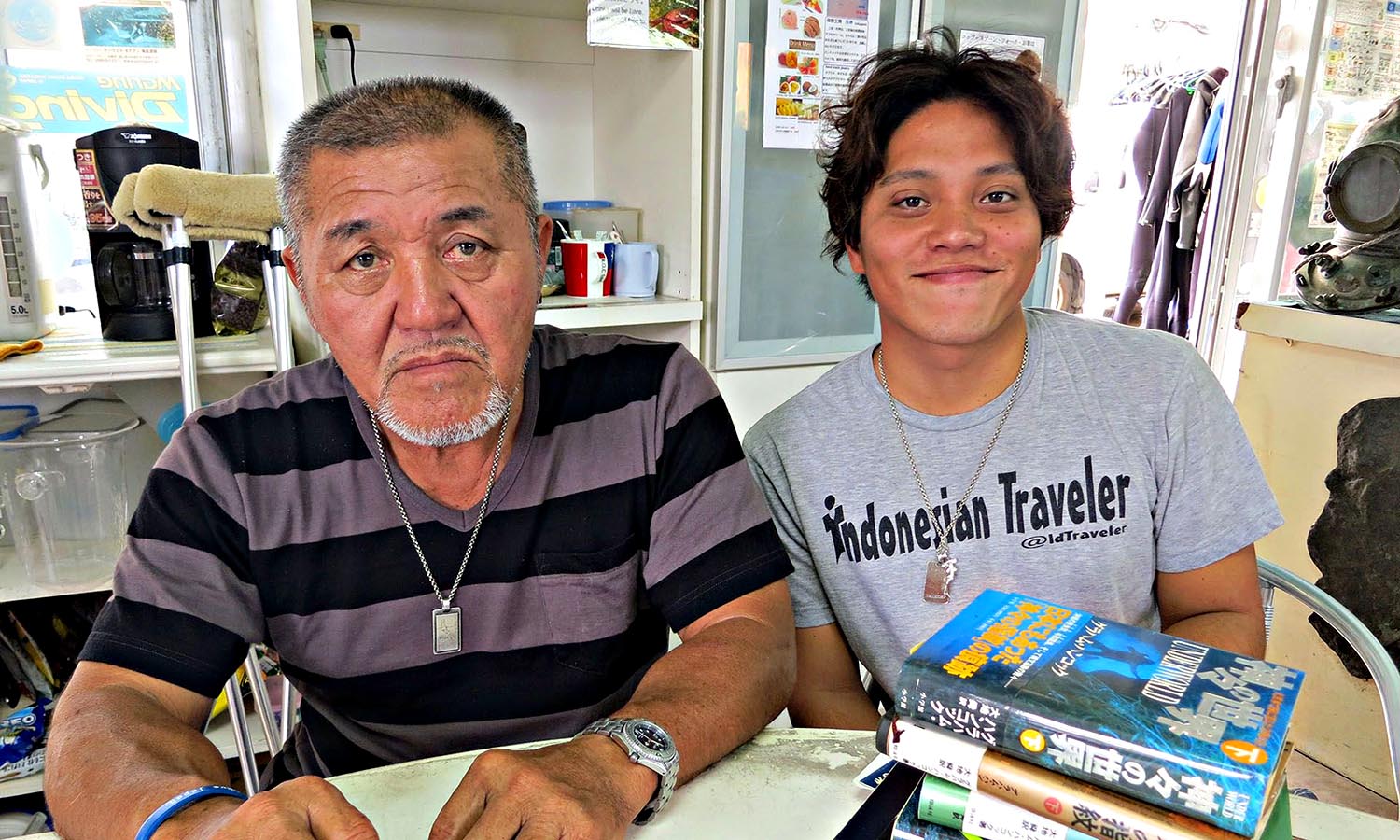
It’s my first day on this remote Japanese island, and I’m already in love with its wild landscape, above and below the water, and the wonderful, animated storytelling of our hosts, father and son, Kihachirou and ‘Shorty’ Aratake.
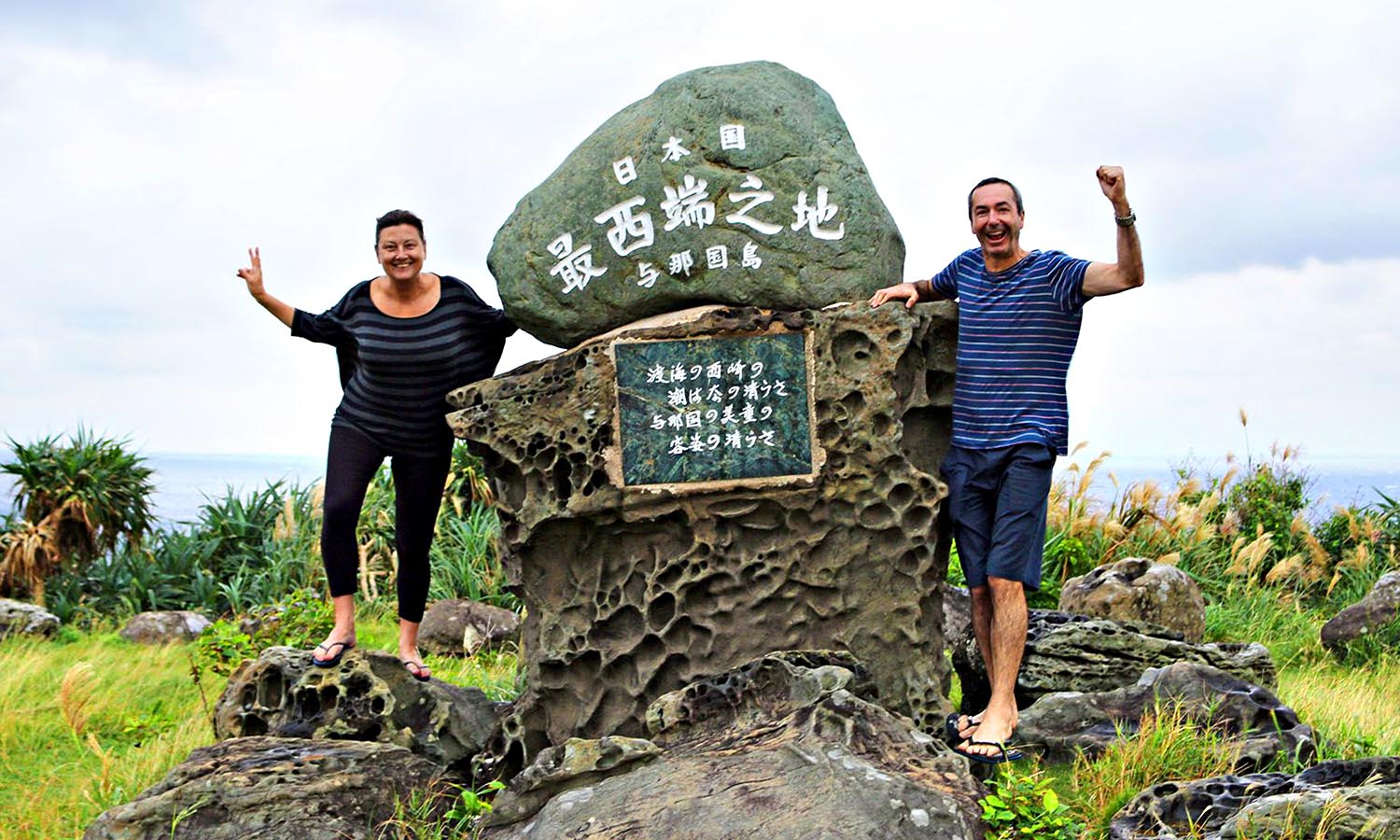
This is the most remote island in Japan’s Okinawa archipelago, roughly 60 minutes flight from the capital city Naha on Okinawa’s main island. It’s the western-most point of Japan, where on a clear day, you can see Taiwan just over 100 kilometres away.
On our flight from Naha, in a little Dash-8 plane, we’re served tea and white-bread sandwiches (with the crusts cut off), and the flight attendant hands me a hand-written postcard; “Welcome aboard Ryukyu Air Commuter!” informing me of the captain, first officer and flight attendant’s names, the estimated time of arrival, altitude, speed and weather, signed off with a smiley face. It’s all very Japanese.

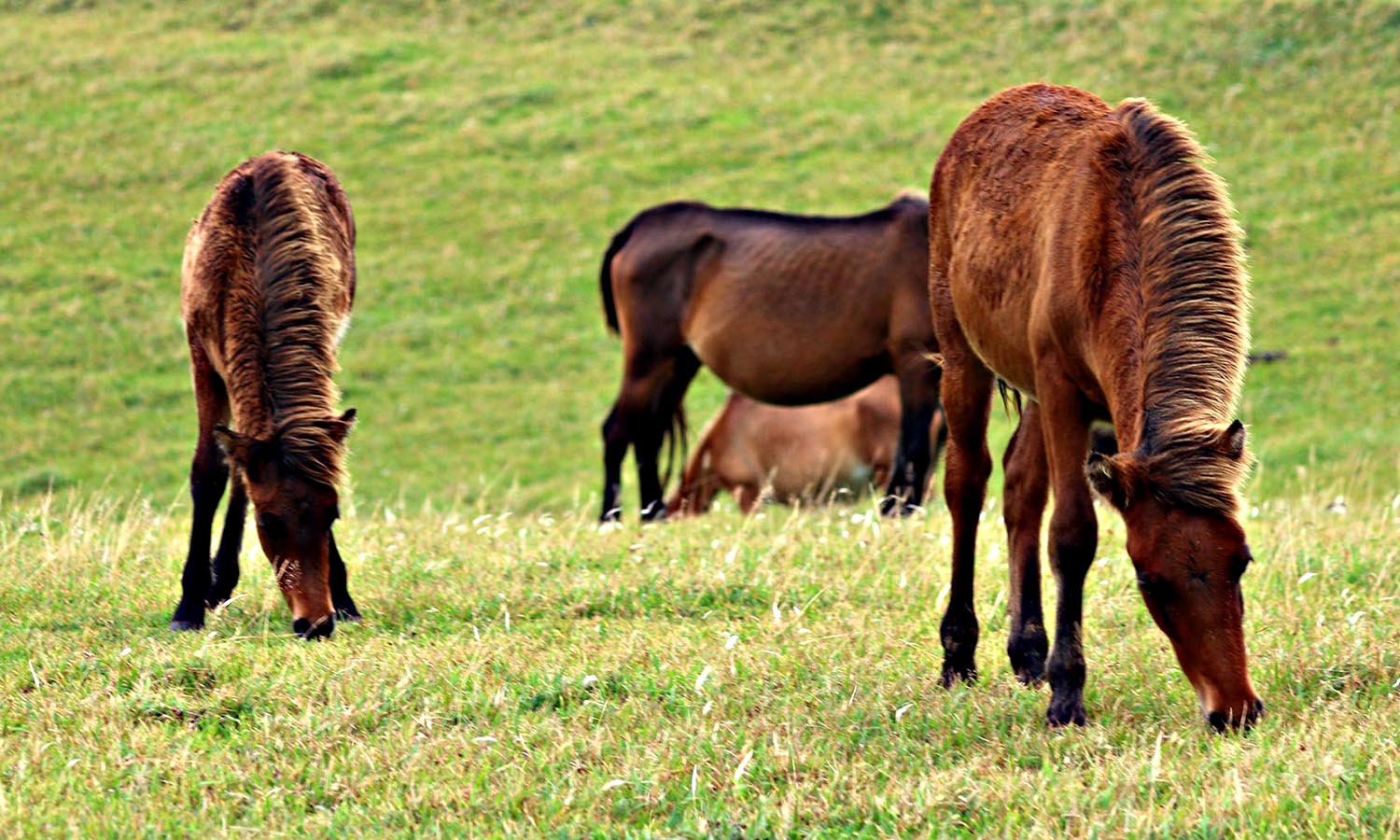
The island’s other natural attraction is the Yonaguni horse. These critically endangered small horses are endemic to Yonaguni, and historically used to carry sugarcane and rice around the island. They now roam as they please, with some of these good-natured ponies available for good-natured guests to ride.
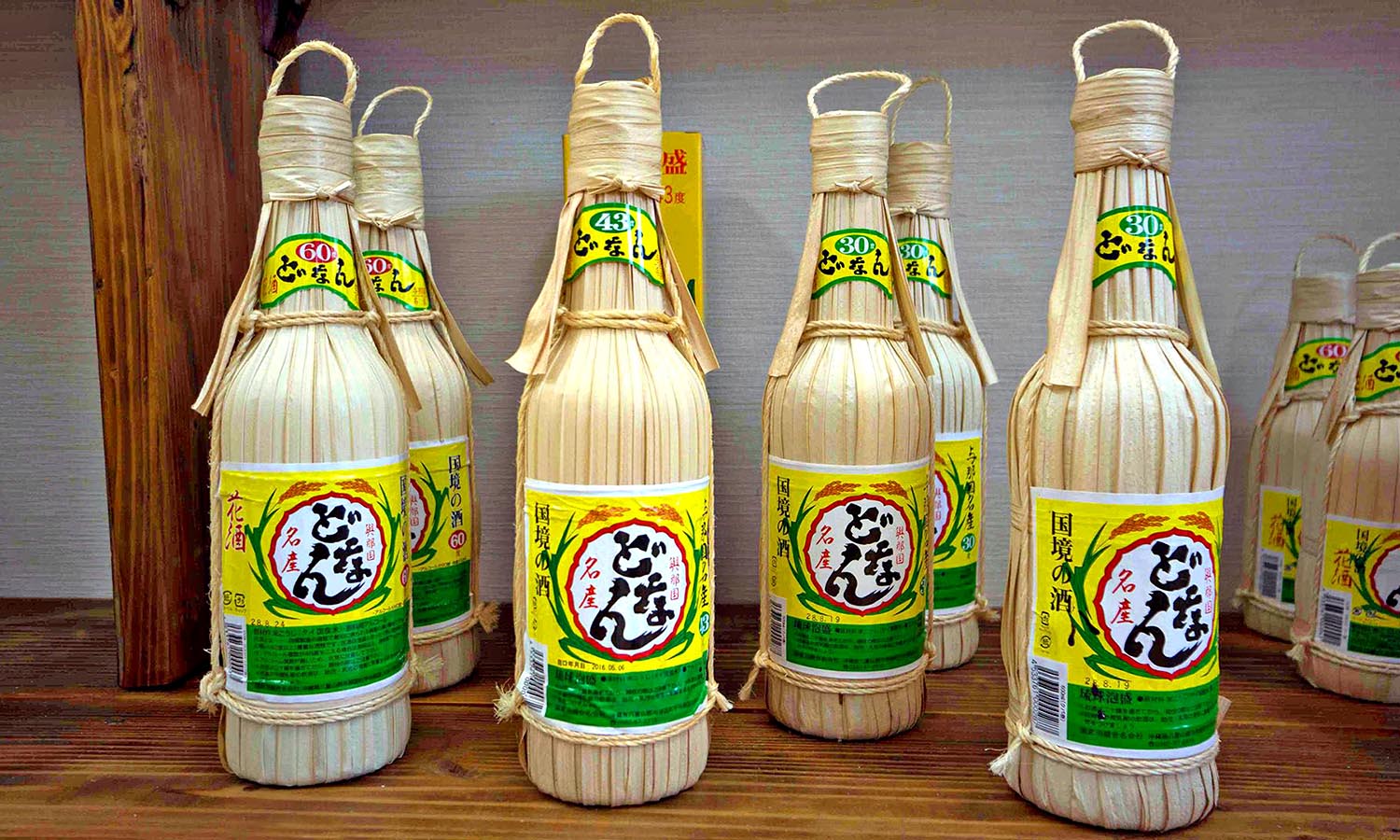
Okinawa’s Awamori sake is distinct from that found in other parts of Japan. First, it is made from Thai long-grain rice, a legacy of the archipelago’s long history as an important trading route, and importantly it is not just brewed, it is distilled, a technique also introduced to Okinawa by Thai traders, and is typically 60 to 86 per cent proof. Meaning it’s by no means hangover proof.
Yonaguni’s Hanasake sake is 120 proof and highly flammable. Despite its combustibility, the distillery is well worth visiting – if just for a taste of this surprisingly smooth-tasting liqueur, and a photo of the accompanying fire safety message.
The tiny wild island of Yonaguni has much to recommend it: a rugged windswept landscape, stunning underwater world, and fascinating legends, shared with lucky visitors by some of the world’s best storytellers.

get in the know Yonaguni Island was occupied by the US from 1945 to 1972 before being returned to Japan and integrated back into the Okinawa Prefecture.