(
(
Archives: Feature Articles
Allows the user to create Feature Articles
Click play to watch
Dubai, United Arab Emirates
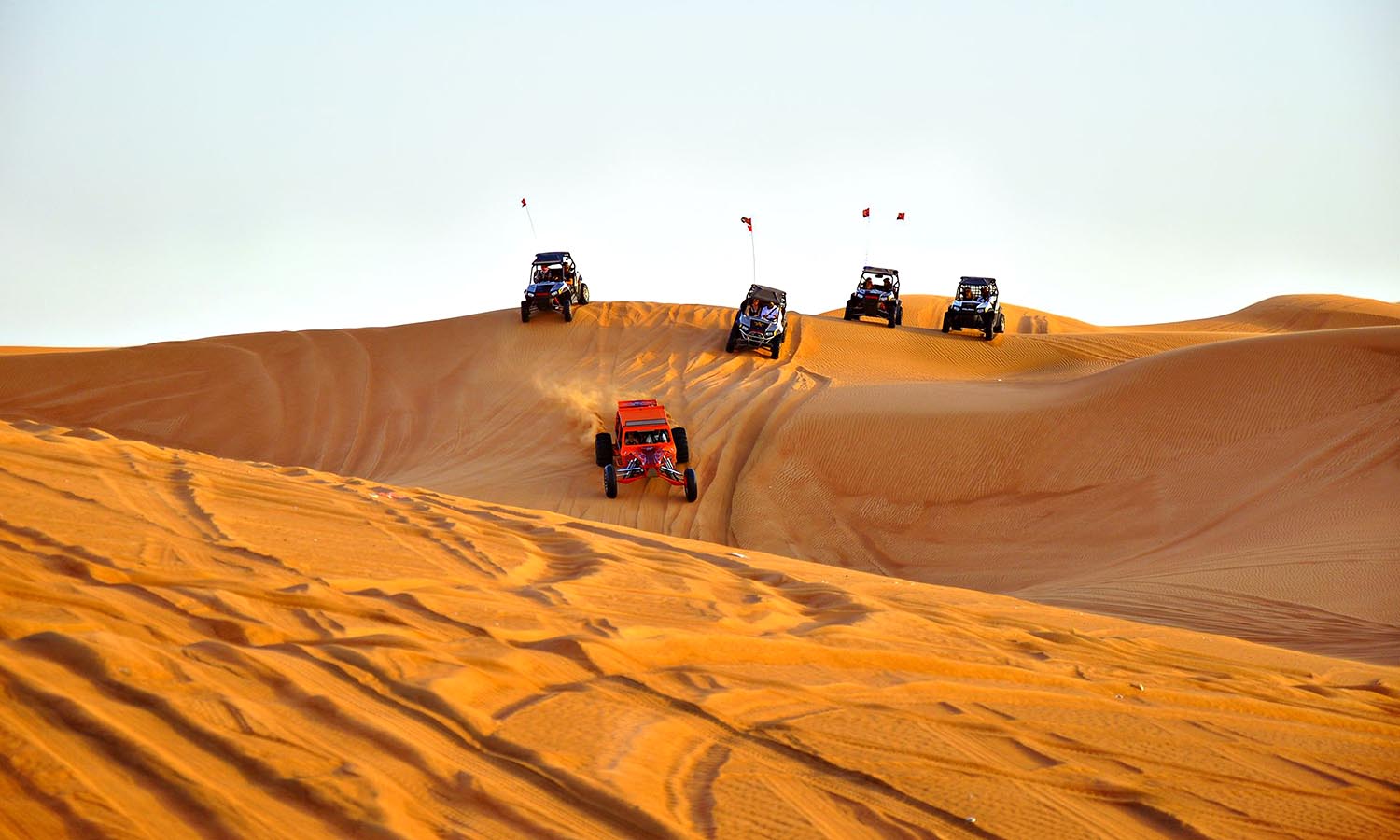
When it comes to adventuring and touring at extreme speeds through wide desert expanses, Big Red Adventure Tours in Dubai do it best and will have you comfortably cruising under the Arabian sun in your own one-seater, 4-wheel drive buggy. With no licence or training required for this white-knuckle experience, you’ll also be given the option of a sunset tour as well as a traditional Bedouin campsite dining experience under the stars.
Click here to get DUNE AND DUSTED

Click play to watch
Lanzarote, Canary Islands
There really is only one way to cruise the mountainous and craggy outcrop of Lanzarote, one of the remote Canary Islands off the coast of West Africa. Grab yourself a three-wheeled, roofless Polaris Slingshot from the team at Aventura LanzaBuggy and explore hidden beaches, inland desert roads and some of the most picturesque landscapes in the entire Atlantic. The Slingshot vehicle is lightweight, and designed for hugging the road of this island’s endless tight turns.
Click here for ARCHIPELA-LET-GO
Click play to watch
Lagazpi, Philippines
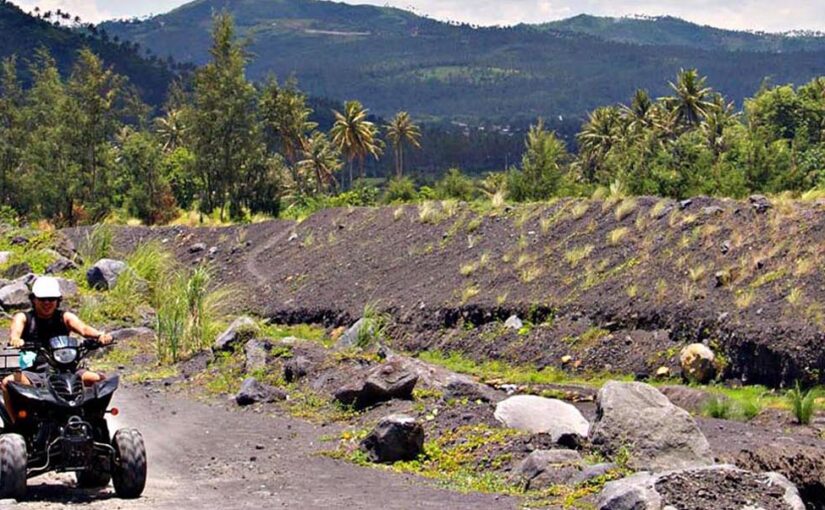
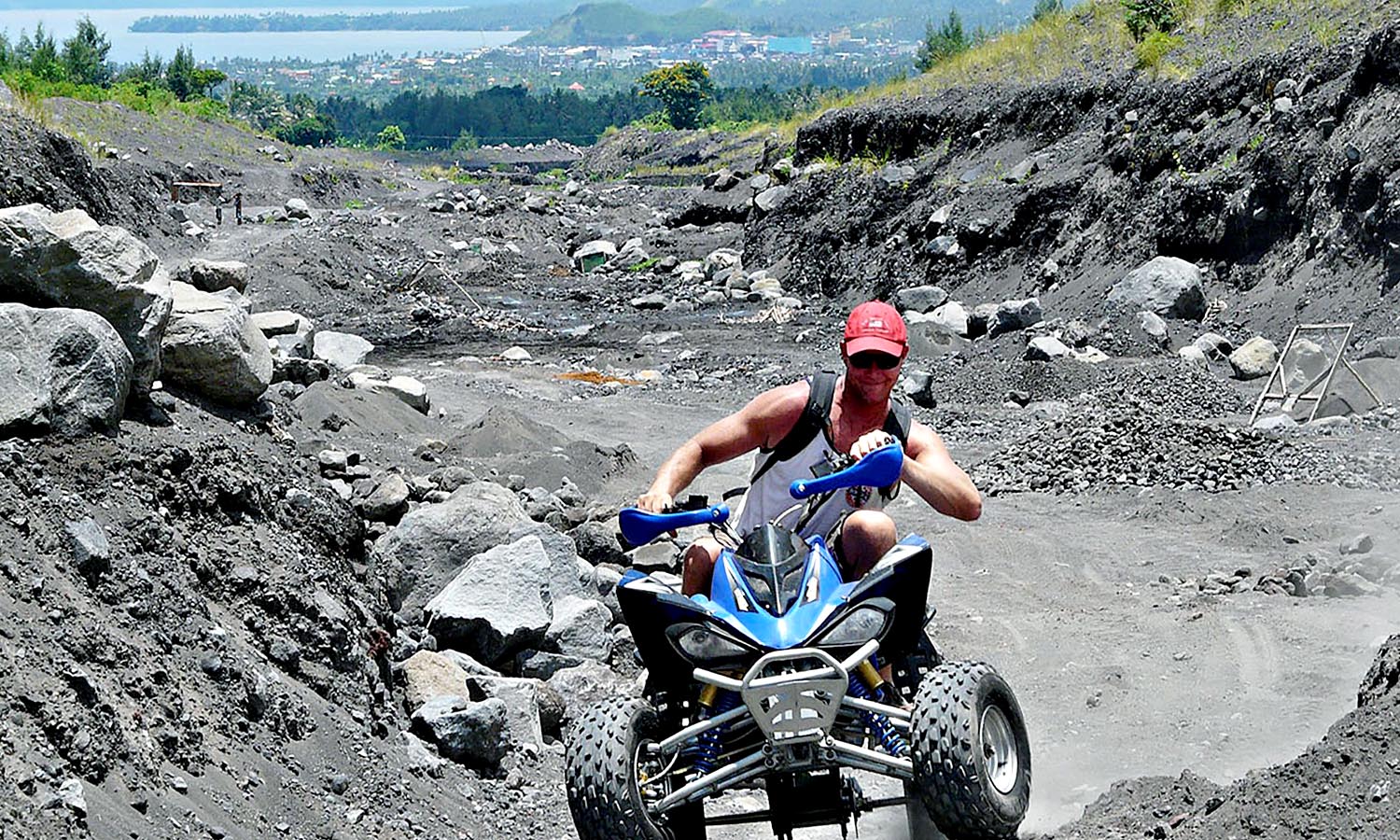
Take one of multiple routes in an ATV (All Terrain Vehicle) up the Lava Trail of Bicol’s Mount Mayon Volcano in Legazpi, Philippines. Depending on both your budget and your experience, you’ll cross rivers, fields and accelerate up some pretty steep terrain while always looking ahead at the ominous, conical mountain in the distance. Once you meet the lava front, you’ll have the chance to turn the bike around and meander back through friendly local villages and rainforest with the promise of a hearty meal (and a cold beer) at the end.
Click here LAVA’S ALL YOU NEED
Click play to watch
Svalbard, Norway
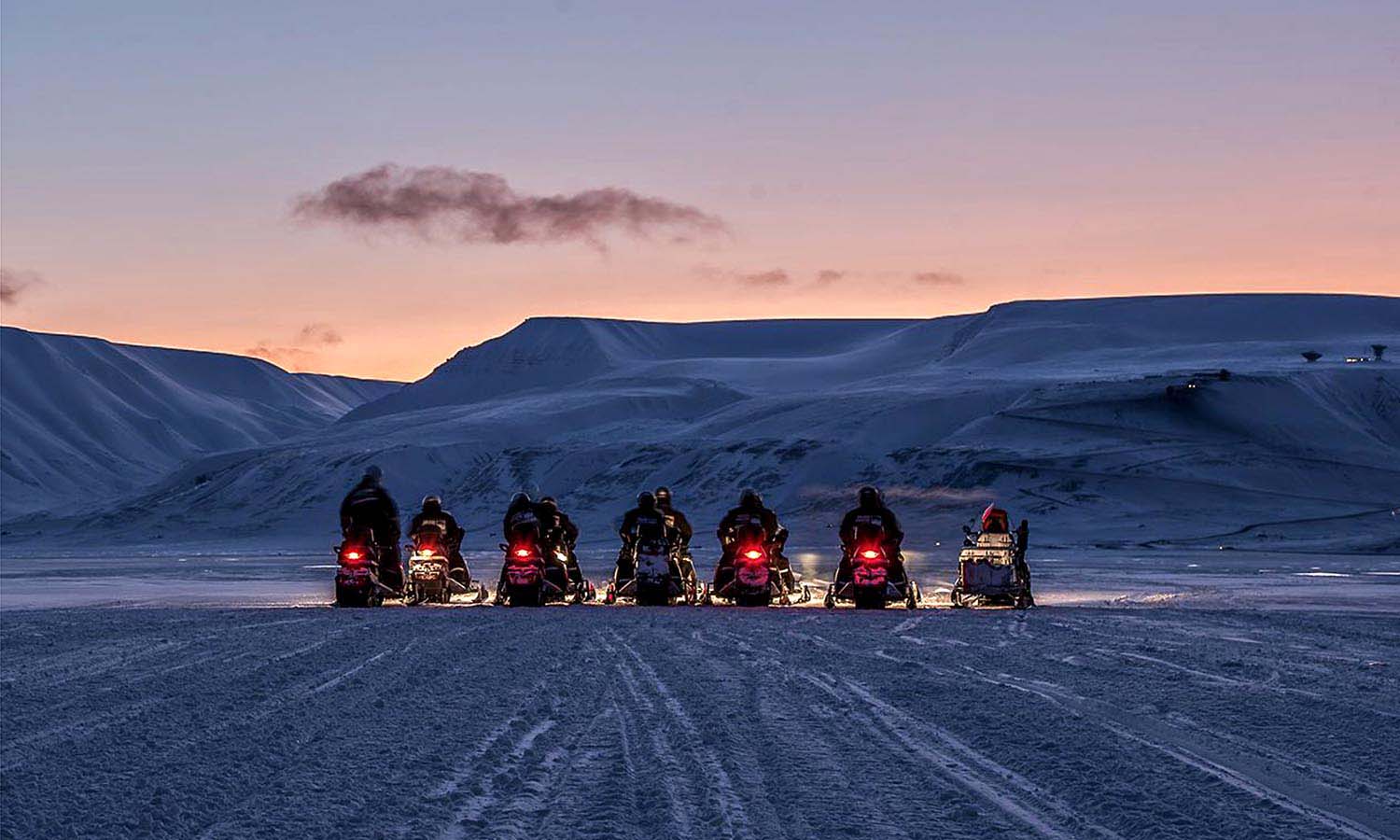
Everyone in Svalbard drives a snowmobile, just like everyone in Amsterdam rides a bike. Svalbard Adventures can take you on single-day or multi-day trips to remote abandoned Russian settlements, overnight northern lights tours as well as ice cave hikes to the famous Tellbreen glacier. After a long motorised journey through the snow covered landscape, you’ll turn off your engine and disappear into the hidden, glittering ice passageways, in some places the layers of ice here are as clear as glass.
Click here to SNOW FORTH AND CONQUER
Click play to watch
Las Vegas, USA
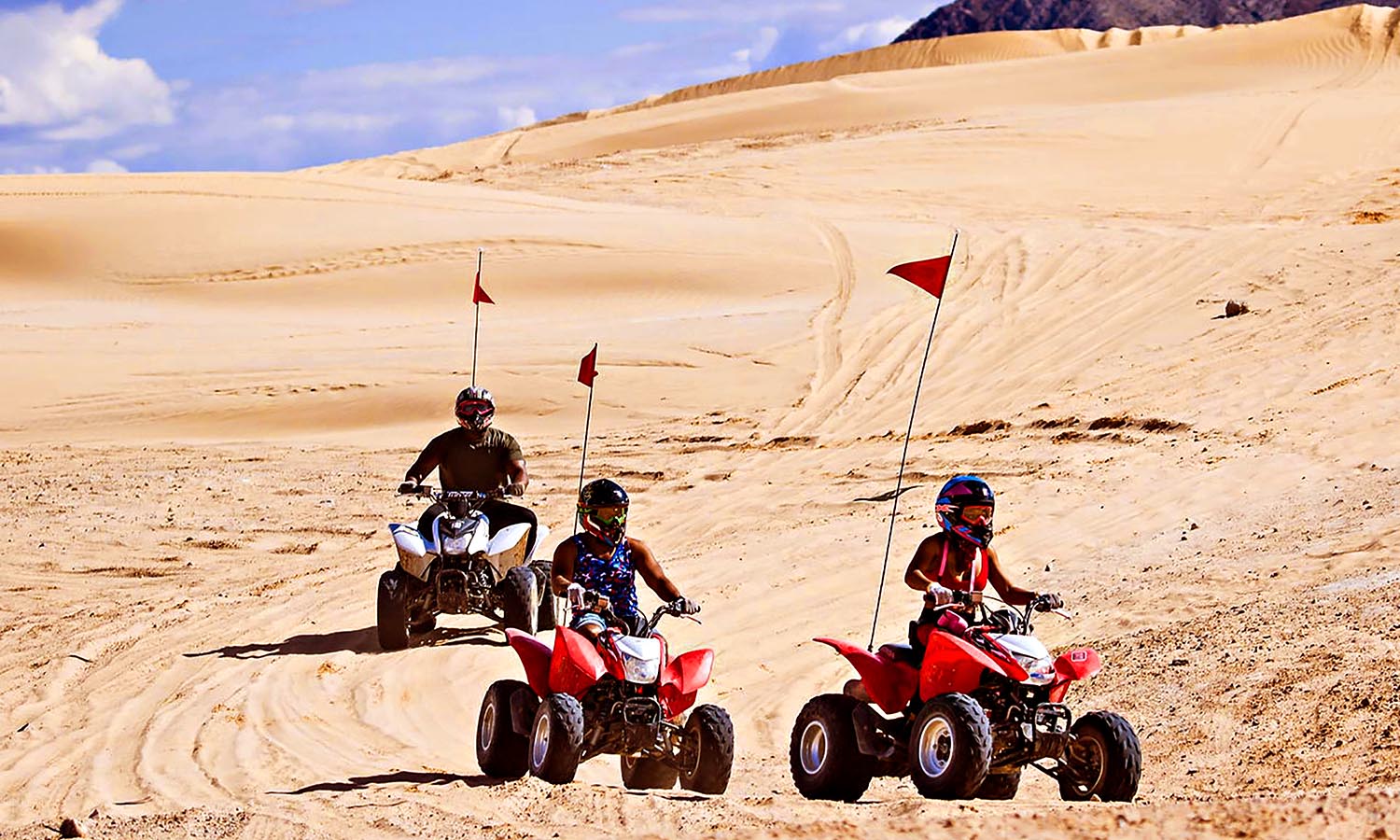
Only in America (and more specifically the state of Nevada) would a government designate a natural area of sand dunes as an Off-Highway Vehicle Recreation area. Just outside Las Vegas, Nellis Dunes is an adrenaline junkie’s playground and the site of Las Vegas’ ATV (All-Terrain Vehicles) Tours. With over 4,000 rideable hectares consisting of sand dunes and canyon trails, lose yourself in the desert. At sunset you can also ride to the highest point and watch the twinkling casino lights of ‘The Strip’ in the distance. On most days fighter jets will also zip overhead from Nellis Air Force Base, definitely adding an edge of adrenaline to this experience.
Click here to GO OFF

Click here to SUBSCRIBE NOW
get in the know The Luxor’s light in Las Vegas is not just one giant bulb, but rather, 39 individual 7,000 watt bulbs.
We get it. The pizza in Naples is great, the pintxos in San Sebastian are to die for and the boulangerie pastries in Paris are worth the extra 10 kilos you take home.
But what about the eats that not everyone knows about? Everyone has a secret, especially when it comes to food. These are ours
Here’s five of the best ‘secret eats’ from around the world that are just as delicious, but probably aren’t on your radar.
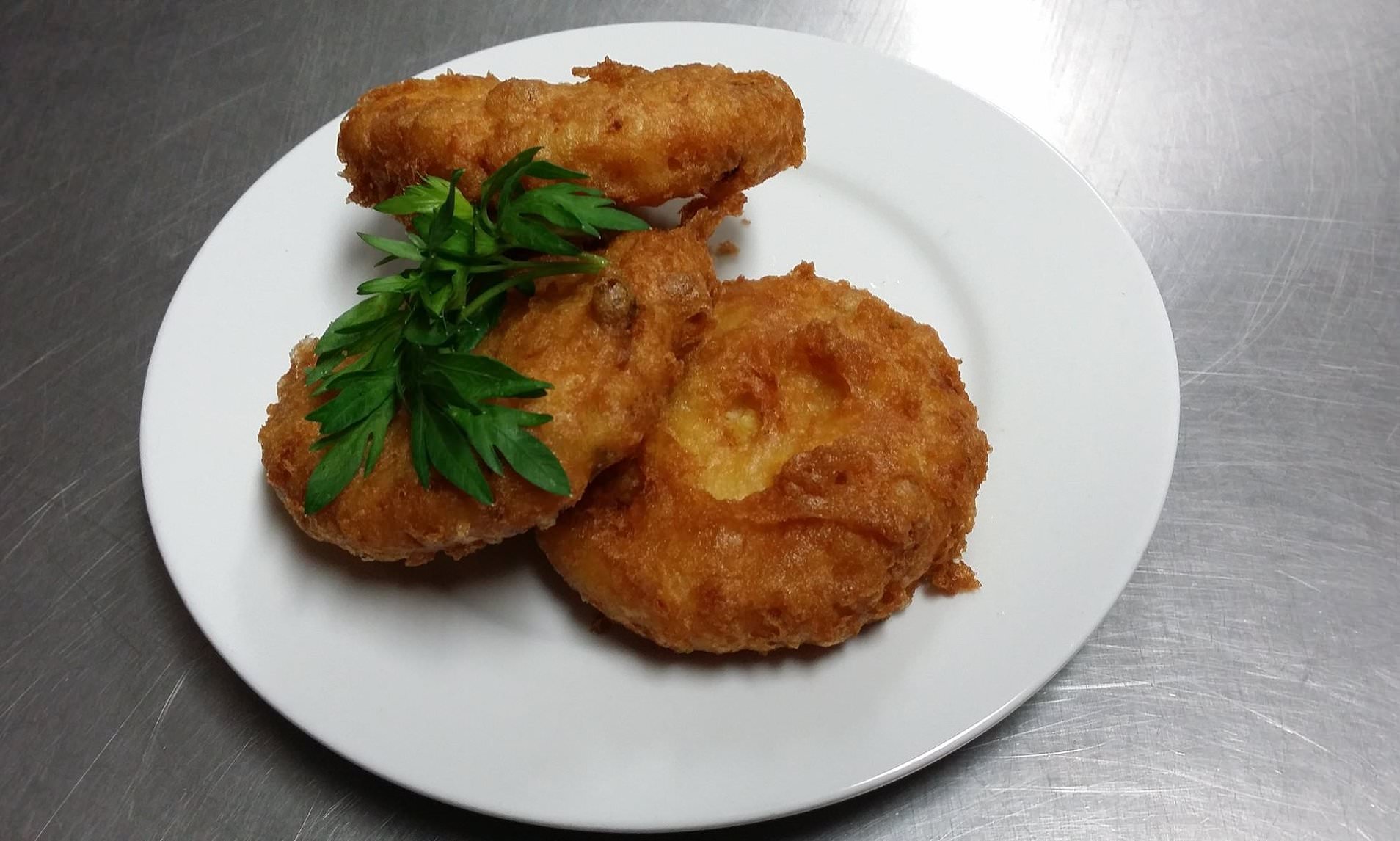
“Four bucks for a potato cake? Are you joking?”
Incredulous, I went ahead with my order of three of them, plus some chips and a piece of gold snapper in the renowned fishing haven of Exmouth, on Western Australia’s north-western tip.
In a direct, real life replica of The Simpsons episode where Moe starts overcharging for beer – this was the best bloody potato cake I ever had.
They’re like a deep-fried mash potato that melted in your mouth.
Some research would suggest it won Australia’s best potato cake in 2020 (with no shortage of competition). Whether you call them scallops or cakes, this is the absolute cream of the (potato) crop.
The west coast of Ireland is wild.
Hurricane-like winds belt the shoreline, whipping up gigantic swells and rippling through towns to create Baltic conditions through the little towns that dot the shoreline. Doesn’t seem like the place to put an ice cream shop.
This then, proves just how good Mammy Johnston’s homemade ice cream is in Strandhill. The award winning gelato shop has been there for almost 100 years, and in the hands of the Bryne family for the last few decades. This is as good as ice cream gets….which is really saying something. get lost recommends the Oreo gelato.
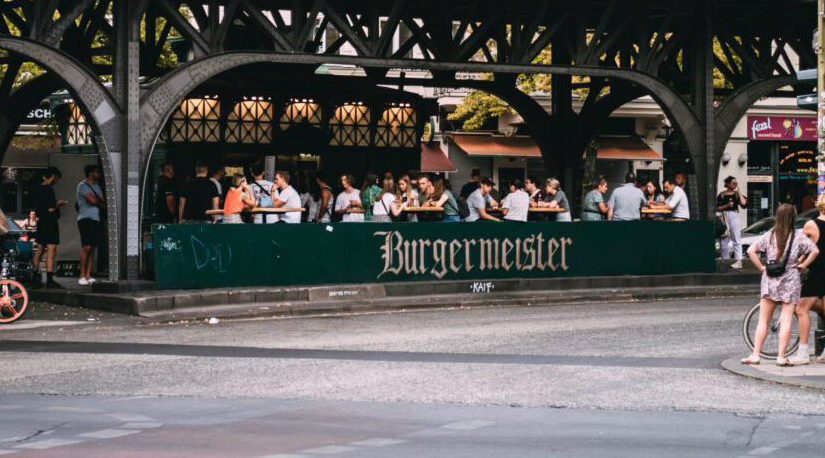
When you exit the U-Bahn at Schlesisches Tor station, in Berlin’s uber-cool Kreuzberg area (they’re all uber-cool, right?) and walk across the road, you will find a large queue at a fairly elementary looking public toilet most hours of the day and night.
No this is not some sort of secret Berlin nightclub. This is Burgermeister, an institution for travellers and Berliners alike since 2006. And I shit you not: The best burger I have ever (and I mean ever) eaten came from this public-toilet turned burger shop.
The toilet people make their own buns, make their own meat patties, and produce their own fries – all fresh. This is unusual in itself for a fast-food restaurant, a trait they clearly aren’t scared of.
After a particularly big couple of nights that may well have been a week, a friend and I queued at Burgermeister for what seemed like another week, looking for sustenance and keen to see if this famous burger was worth the hype.
Long story short: it was.
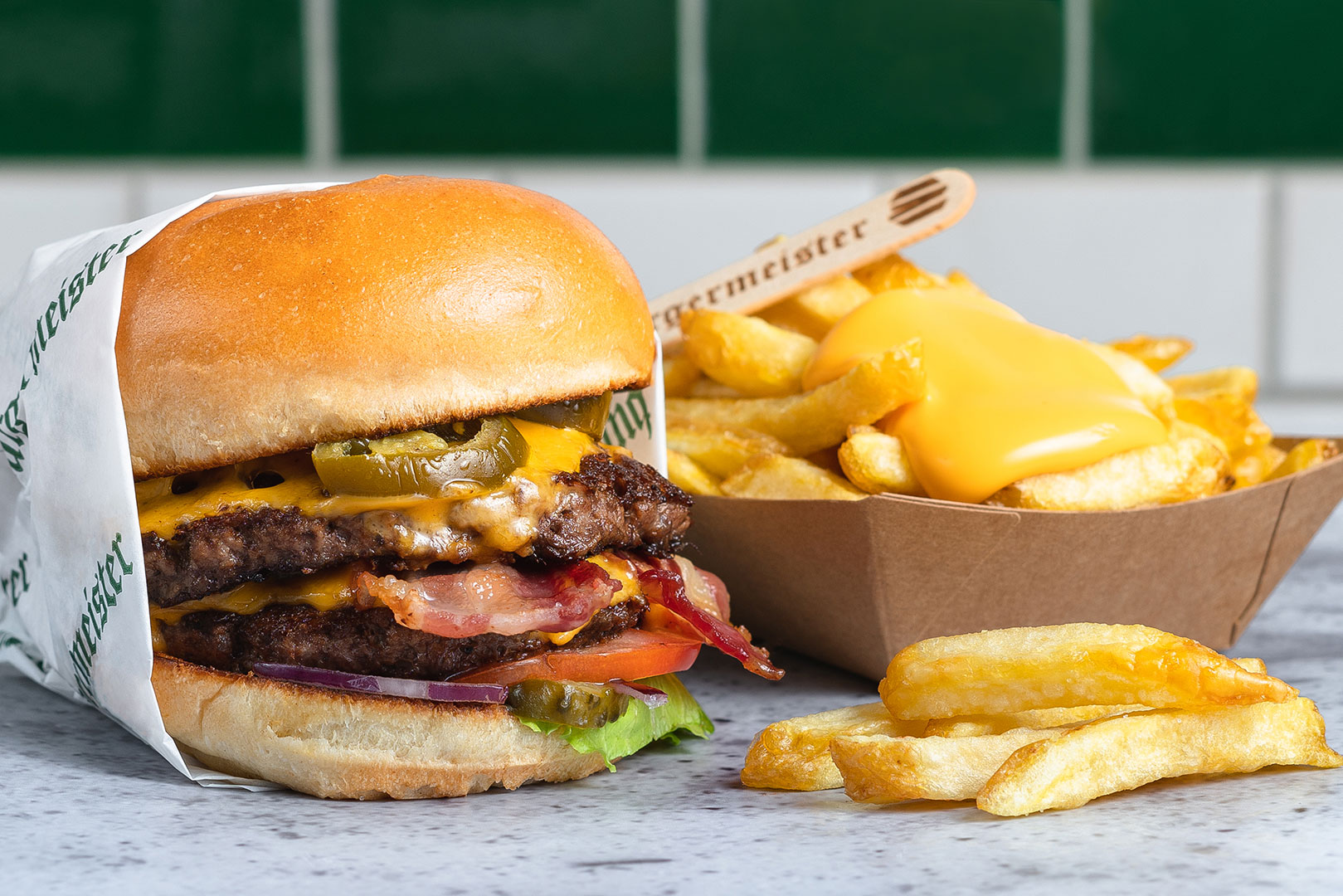
You know something’s going to be good when, after ordering, you are given a set of plastic gloves to deal with the greasiness of what you’re eating.
This place is so secret that this writer has no idea of its name, despite returning 3-4 times over the space of a weekend.
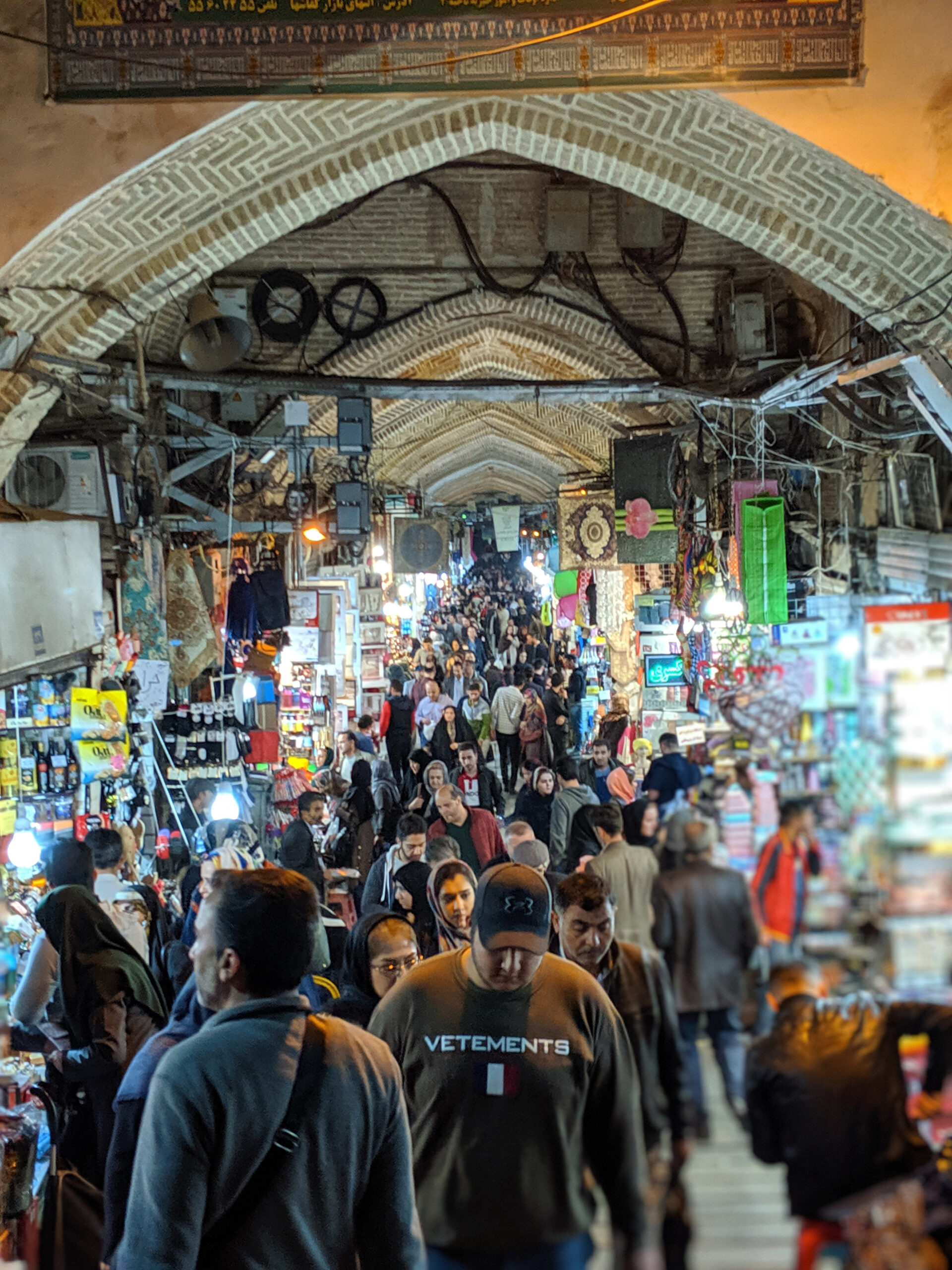
It is not a secret in Tehran, though. Lines snake around each corner of the Tajrish Bazaar in the north of the city. The queue is an experience in itself: an unorderly jostle, a matter of holding cash out and shouting, hoping the store person takes it and admits you.
The lamb, chicken or beef insides are delicious but unusually for a kebab, that’s not where the best bit is. Instead of using bread, the maker here (in front of your eyes while you wait) makes greasy, buttery, delicious omelettes to hold the insides, hence the gloves. Greasy goodness.
In the north of the city is the Four Ways Farmer’s Market, a farmer’s market offering exceptional local fare, as well as foreign dishes from all over Africa and the world. There’s also several bars with craft beers on tap, local gins, champagne and more, and all your usual market mainstays.
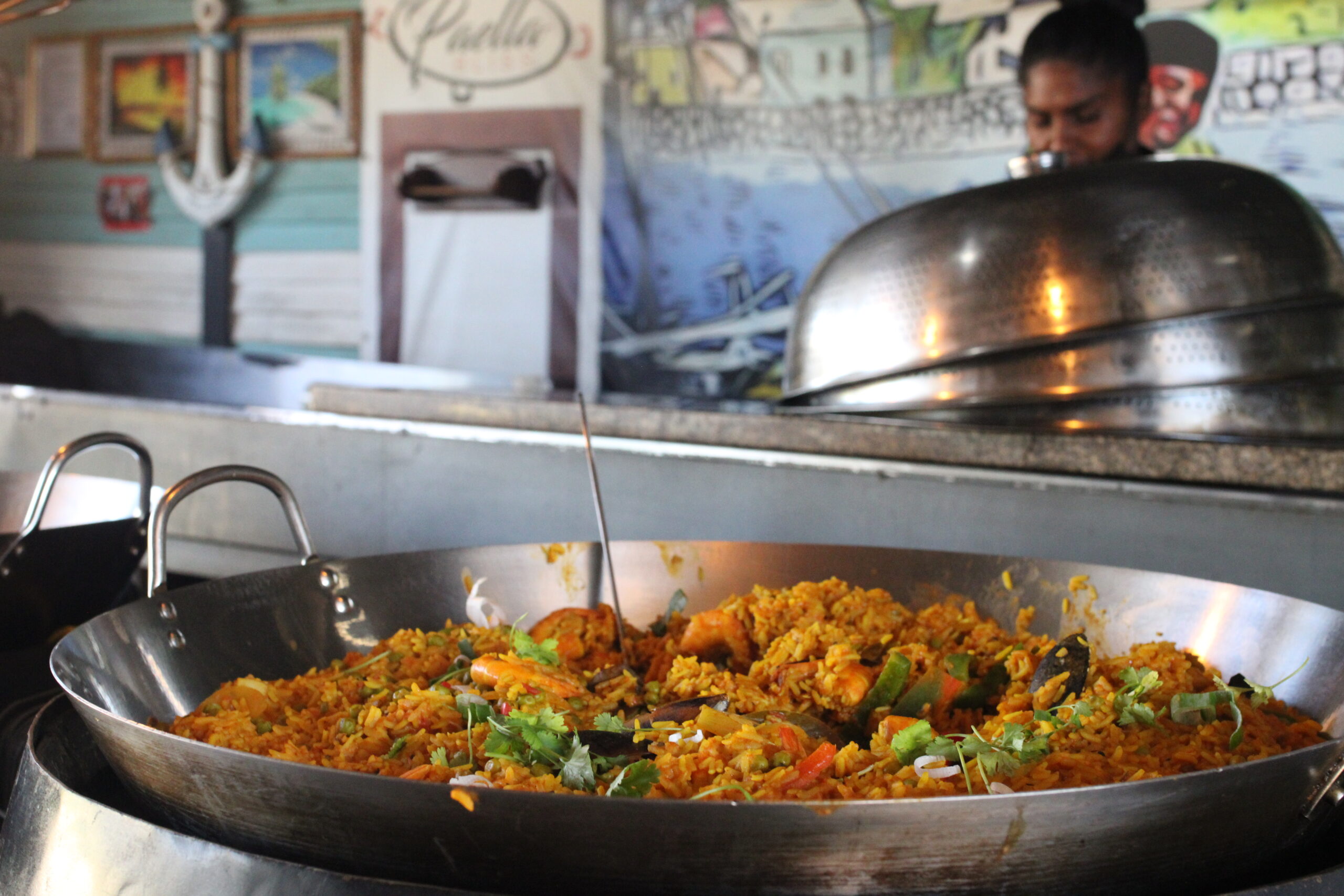
This is not the part of the world you’d expect to find a world class paella. But in a dark corner of the market is Tutto Food Co who, in truly gigantic pans/woks, cook what would surely be the best paella outside of Iberia.
We all know those places that look a million bucks on Instagram or a Google image search, but have been amplified by talented photo editors, and are less impressive when you actually arrive.
Maybe these places really ARE this beautiful, but have fallen victim to over-tourism by the time you get there, and are instead intense jostles for a photo (Venice, cough).
But not everywhere is like this and in some cases, it actually goes the OTHER way – places that are far better when you are there in-person, which can be tough to convey the beauty of to people when you arrive home.
Here’s five places that look far better IRL than on the Gram:
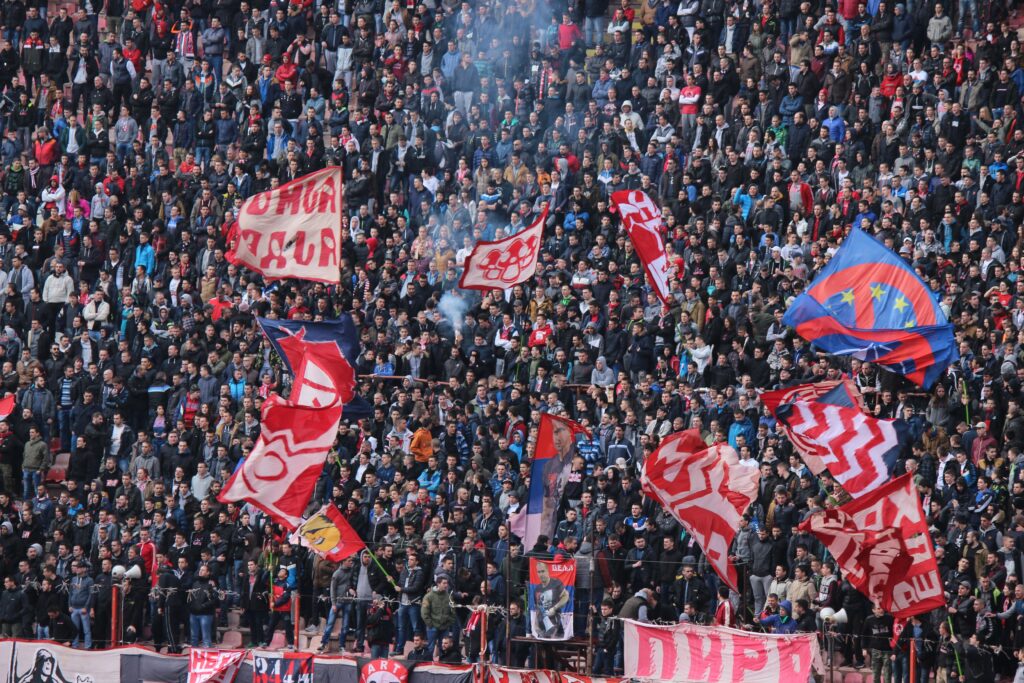
This writer once misunderstood an online bus ticket system, affording 24 hours to kill in Belgrade. Best mistake ever.
Initial impressions were not encouraging. It was cold, and blocks of bleakly designed Yugoslav buildings gave the city a depressing mood.
But things picked up; joining forces with some Germans and an Australian, I devoured Pljeskavica (a spicy combination of meats served with relish) and beers at a café, found some cheap books at a cool bookstore before winding up amongst the frenzy of Rajko Mitić Stadium, where former European Champions Red Star Belgrade were playing.
After the football (2-1 to Red Star) we visited another (actual) fortress in the form of the Kalemagedon: a crumbling castle where American indie-rock giants Interpol were playing a gig. There are few places in the world where you can watch a quality international act play at a 2000-year-old fortress.
With time winding down until my 6am bus, we made sure to investigate every inch of the very, very lively DJ scene on the Danube’s riverfront.
Yes, I missed the bus.
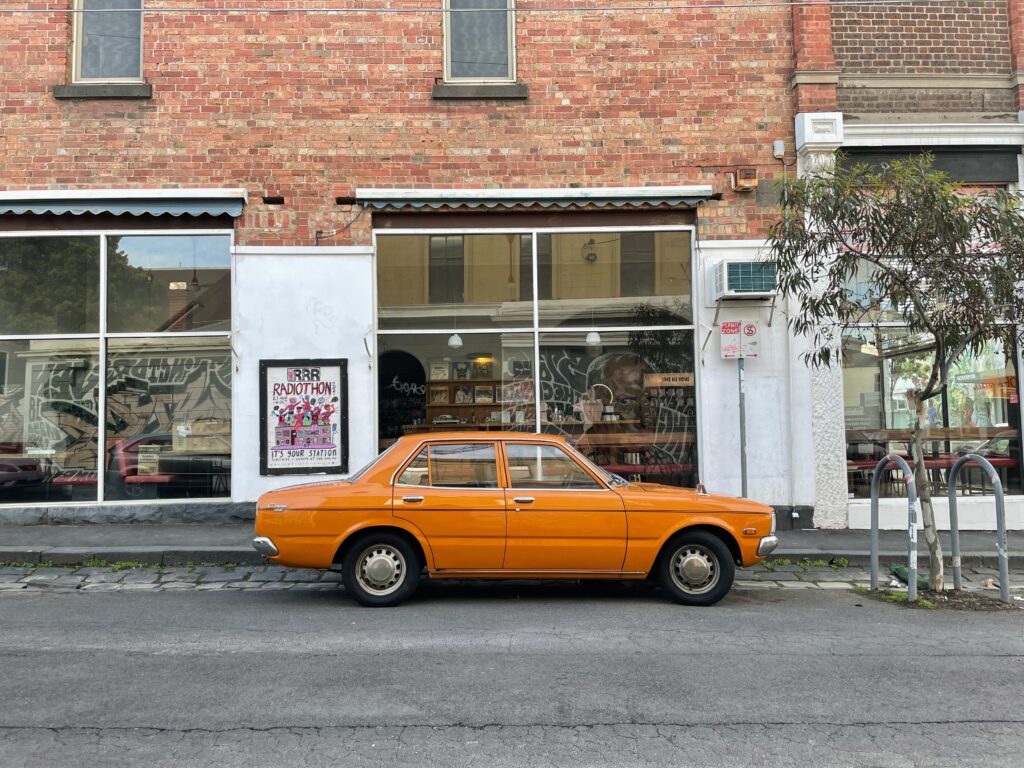
It might seem sacrilegious to throw shade on your hometown, but let’s face it: Melbourne doesn’t have Sydney’s beauty or the balmy beach tan of Perth. Even tree and church-lined Adelaide has a sort of quaint charm if you go by a Google image search.
Sure, the Yarra River is disgusting with probably a few dead bodies, but the city it flows through has its own sort of charm.
Grungy and fancy suburbs that sit next to each other teem with café-laden streets that hum with people catching up for a coffee, complaining about the weather. The cultural hotpot of people that have somehow landed here has brought an eclectically diverse and delicious mix of food to the city.
Despite being at the bottom of the world, the city attracts world class events transcending art, music and sport. No-one has ever been short of things to do in Melbourne.
This is a city that didn’t invent laneways, but acts like it did, taking more pride in narrow dirty alleys than anywhere else, highlighting them rather than trying to cover them up. This might be the best thing about Melbourne: it acts like it’s a cool place, therefore it is a cool place.
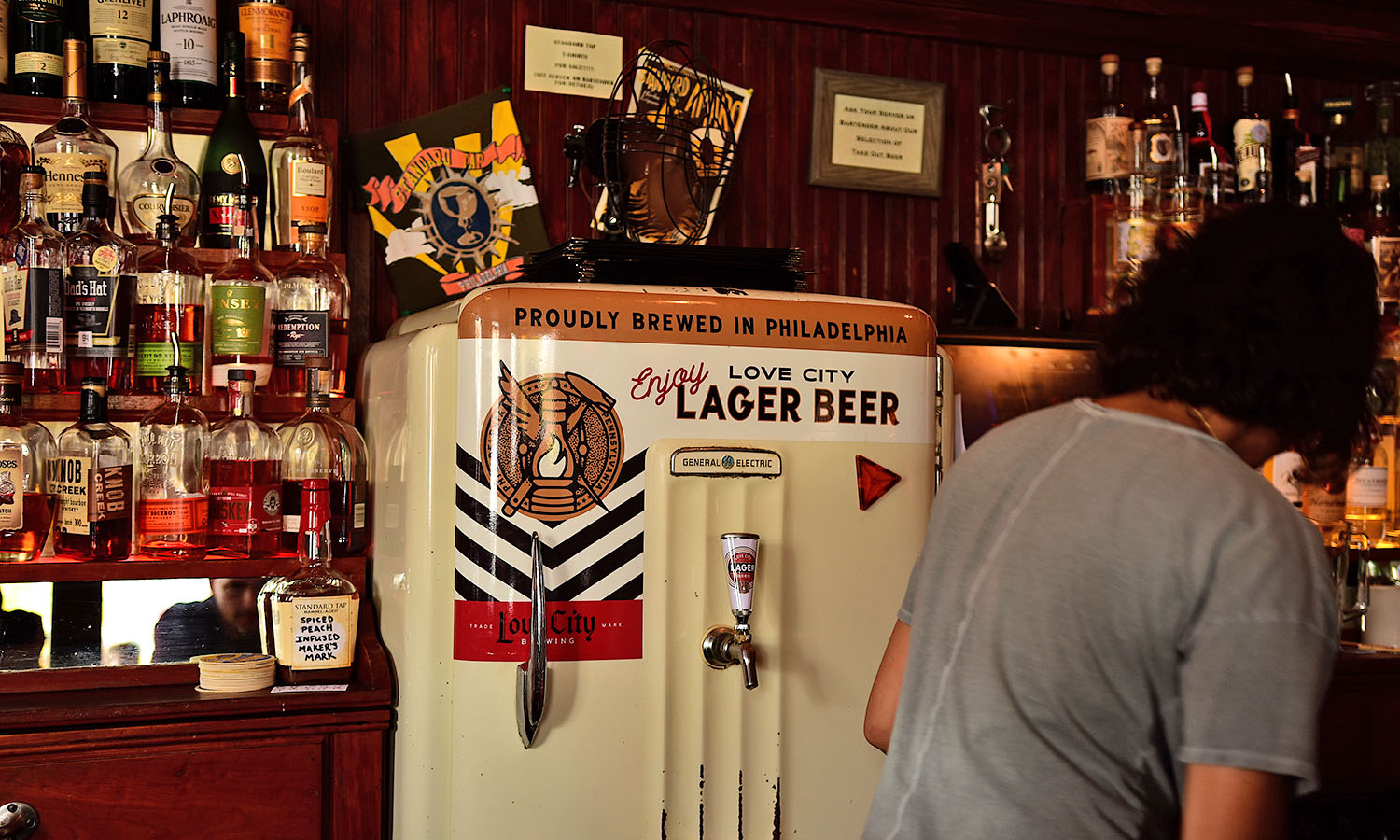
This one is on a bit of a different tangent to the rest but here’s the thing: the town of Esperance on the south-west coast of Australia is actually so beautiful that images other people have taken really don’t do it justice.
Like sure, it does look stunning. Bt it probably won’t look as nice in real life, you tell yourself, and prepare to settle for a little less.
The pristine white sand and crystal clear, turquoise waters are real, genuinely taking the breath away when you arrive for the first time.
Perhaps two full days of driving across the Nullarbor that it takes to reach it probably enhances things, but there’s no doubting Esperance gives weight to the theory that West is Best.
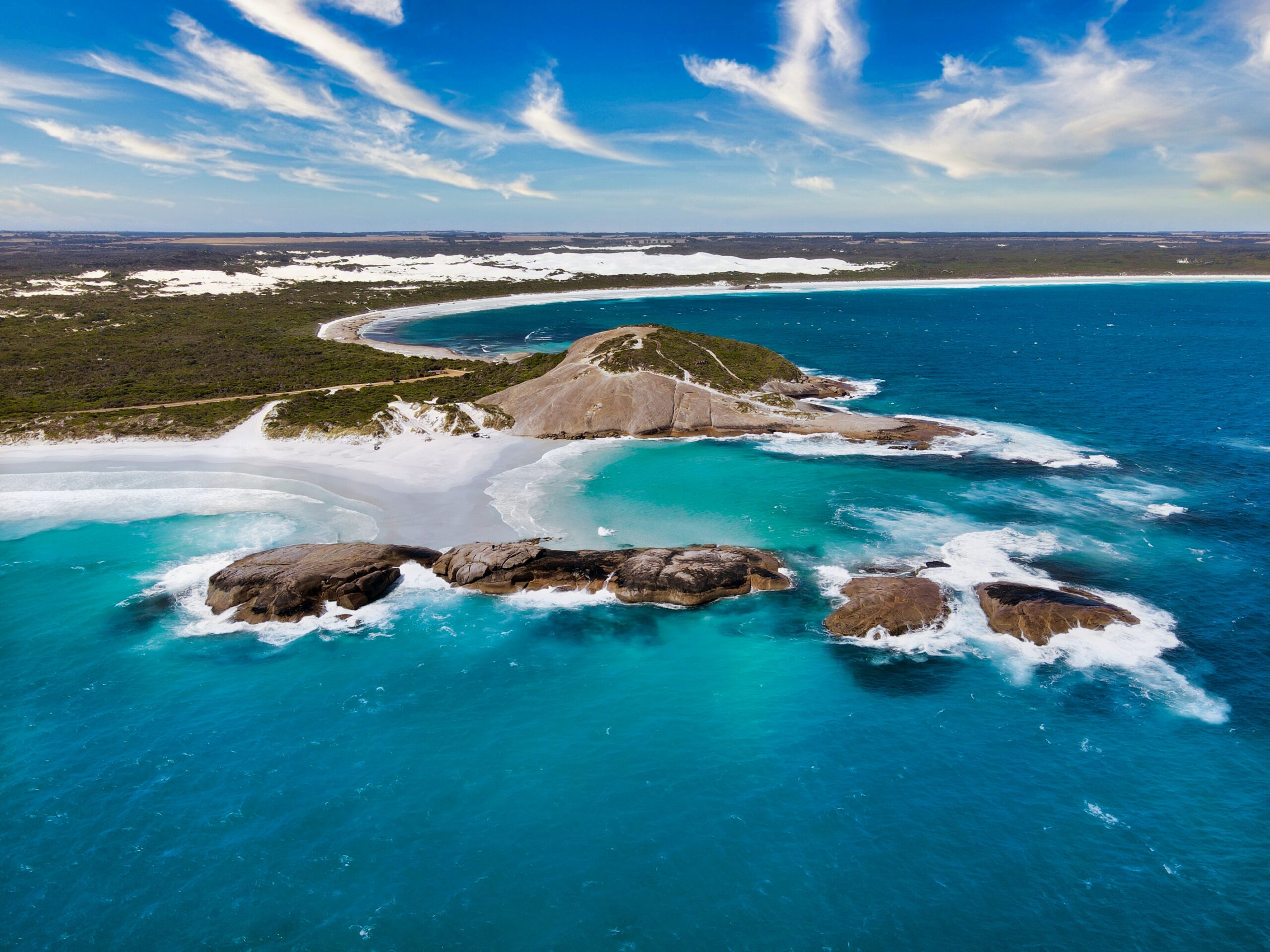
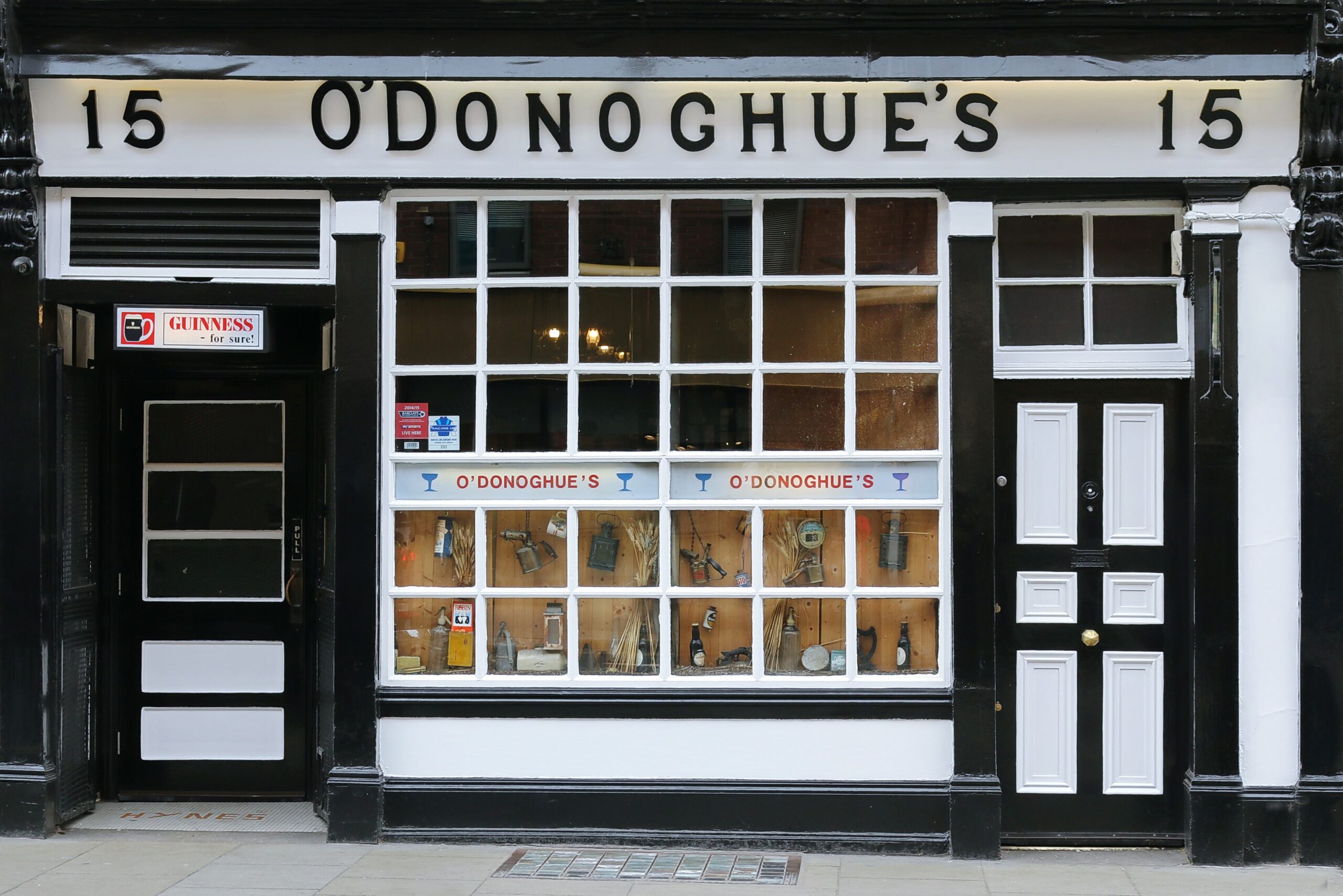
When you think about it, drinking in an old, dark, dingy space with stained-glass windows could be a pretty difficult sell before you mention it’s an Irish pub.
A proper Irish pub session will start with a pint next to a warm fire, and a few tall stories. Soon there’ll be Guinness being passed over heads, and before long you’ll be dancing a proper jig with someone with a ridiculously spelt name like Aoife or Oisin, to a catchy old tune you’ve never heard but feel you’ve heard 100 times before.
All this craic doesn’t really translate to social media, and a good thing at that; get lost likes to think the magic of a lock-in is something you have to experience for yourself.
“Oh, it’s our friend, the mudskipper,” one of my dinner companions half-laughs, half groans. “We spent hours watching them yesterday; they’re so cute.”
“Mutsugoro [mudskipper] is a real Ojisan [old man] delicacy,” says our guide, with a knowing smile; she’s obviously seen our lame display of shock before, “they’re a real Yanagawa speciality.”
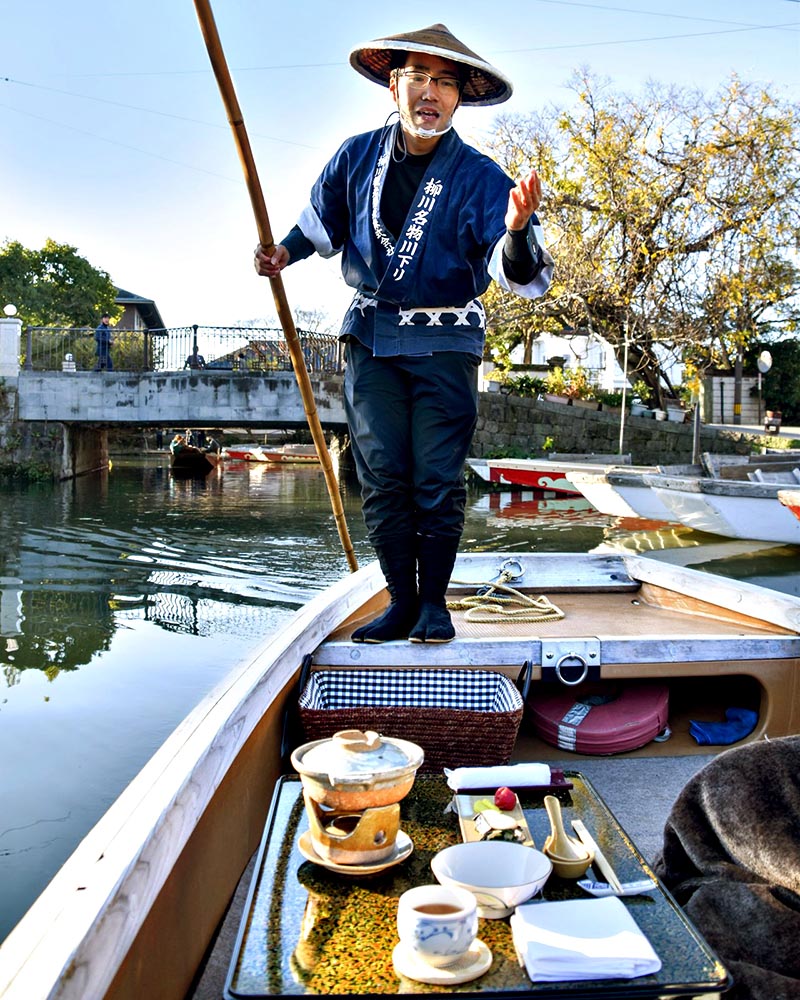
After a full day of exploring the canal-lined streets of Yanagawa, a city on the southern coast of Fukuoka Prefecture, I can think of far more specialities that more adequately represent the charms of this picturesque town than the sticky, mud-dwelling, sweet-soy drenched, googly-eyed fish I’m trying for dinner.
Ah well, I think to myself, let’s give it a go. After all, I’m a guest; I’ll show my appreciation to these modern-day samurai through gluttony and a display of culinary bravery!
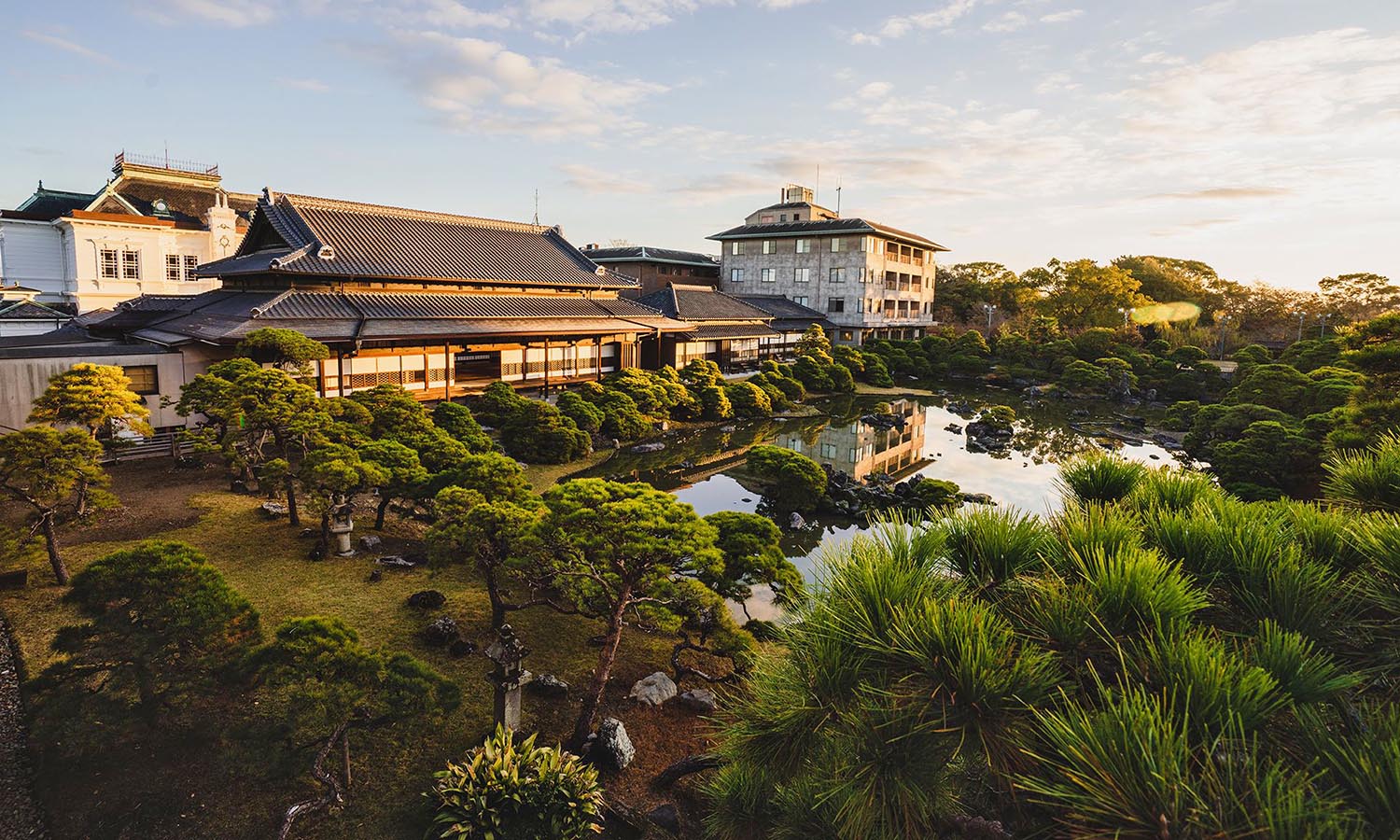
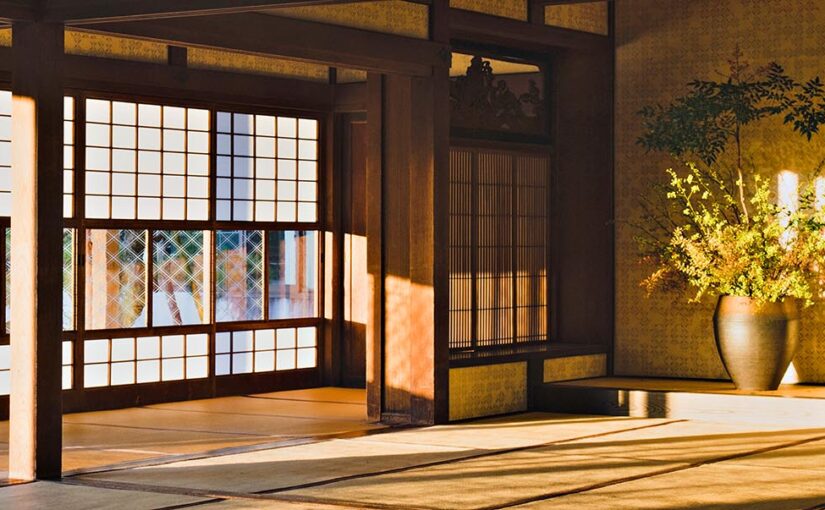
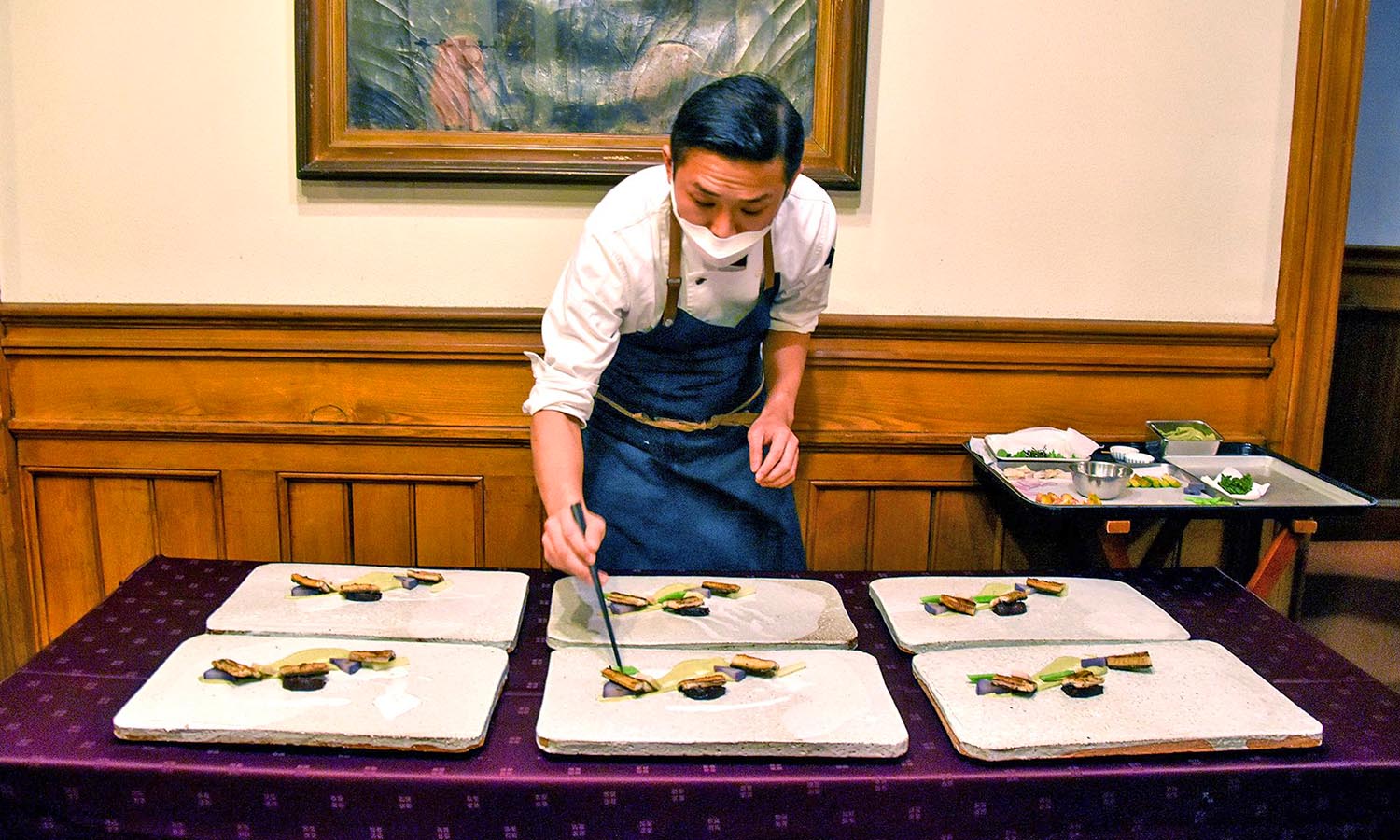
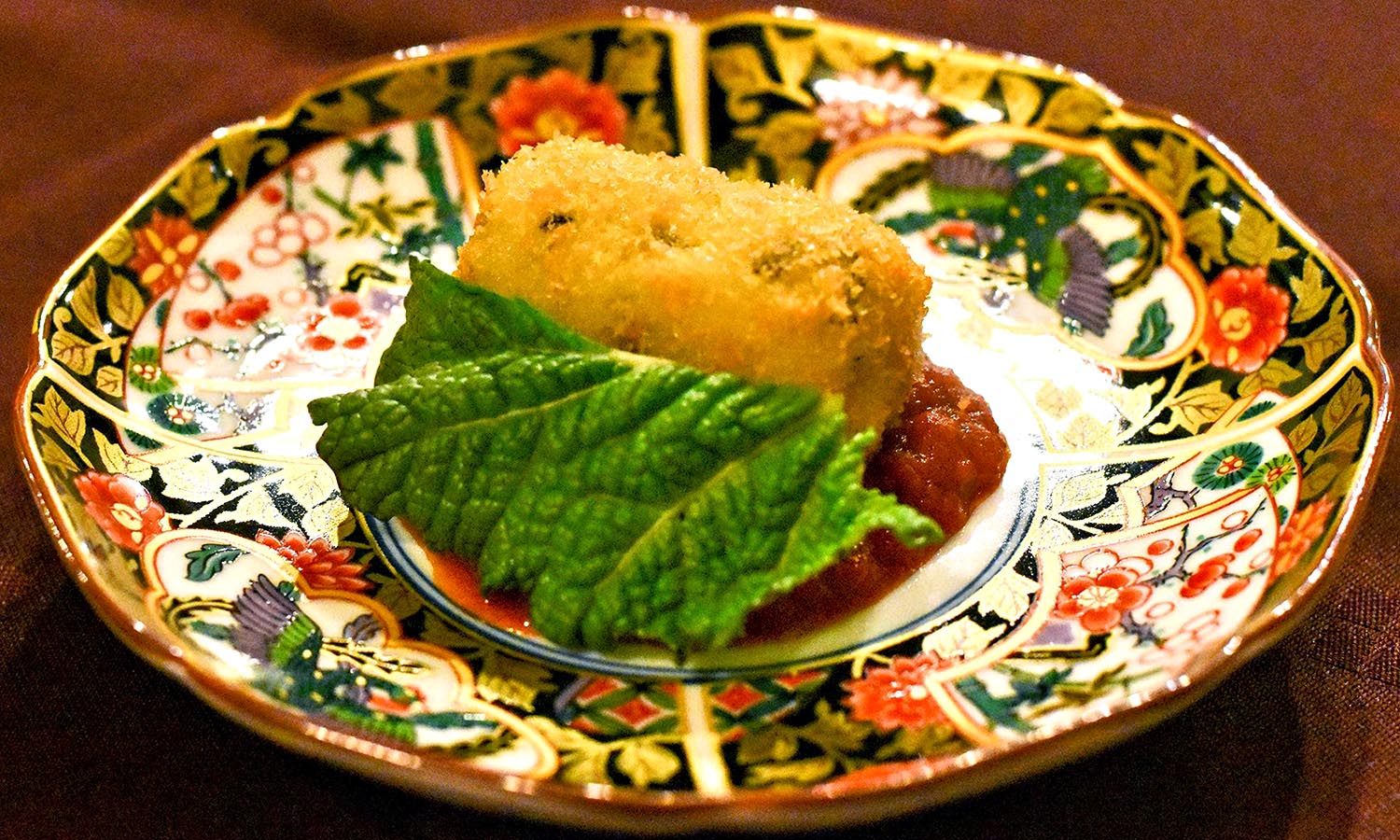
Before I know it, I’m happily five or so plates deep into a kaiseki (multi-course) meal in the Japanese dining room of Ohana, the home to one of Fukuoka’s most legendary and centuries-old samurai families, the Tachibana Clan.
Given my very Australian habit of tall poppy syndrome and near constant suspicion of social hierarchies, I’ve never been the type to be impressed by family titles, royal connections, old money and the like. But these mudskippers for dinner and my Tachibana hosts, they’re very different.
“I want to play with the cultural assets we have,” explains Chizuka, Ohana’s CEO and an 18th generation Tachibana clan member.
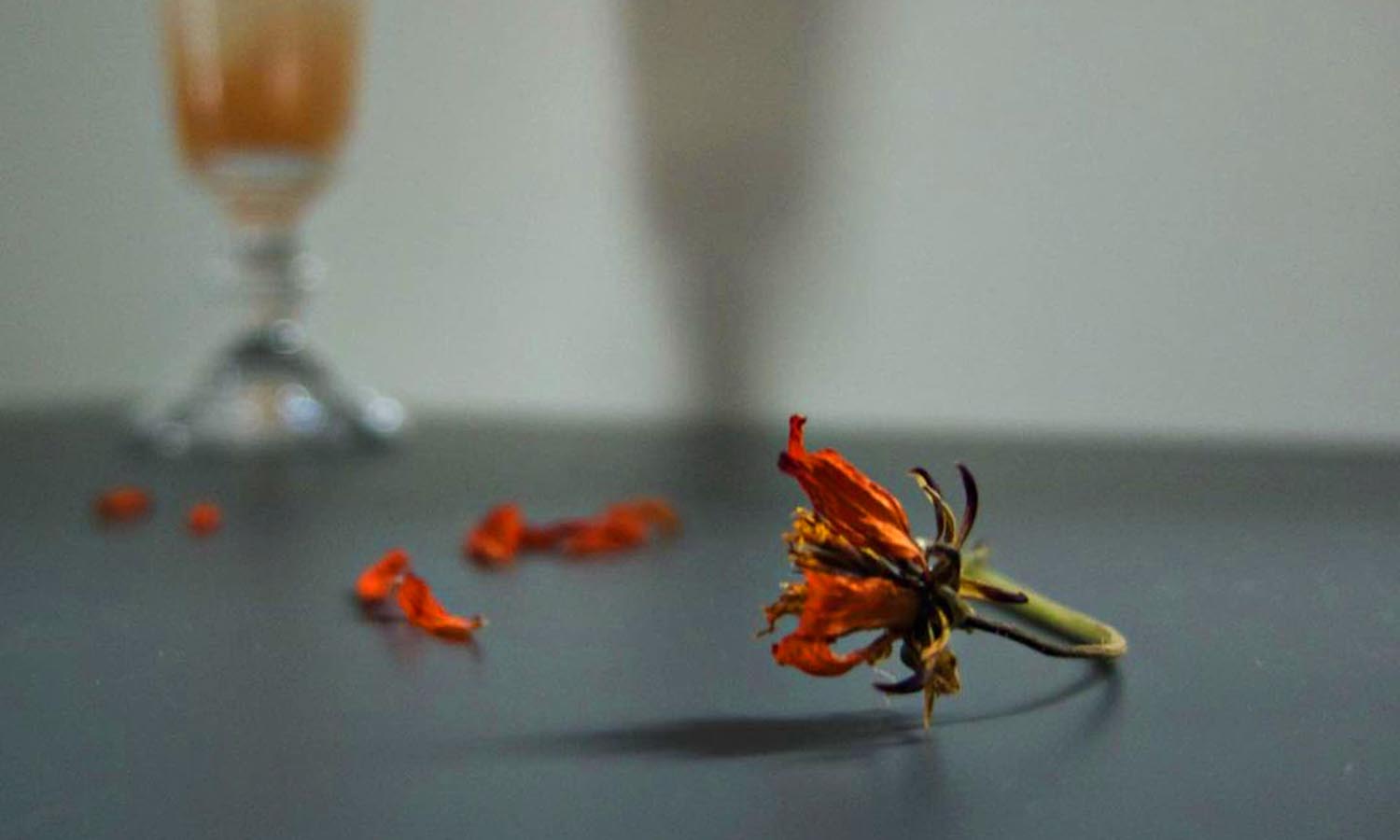
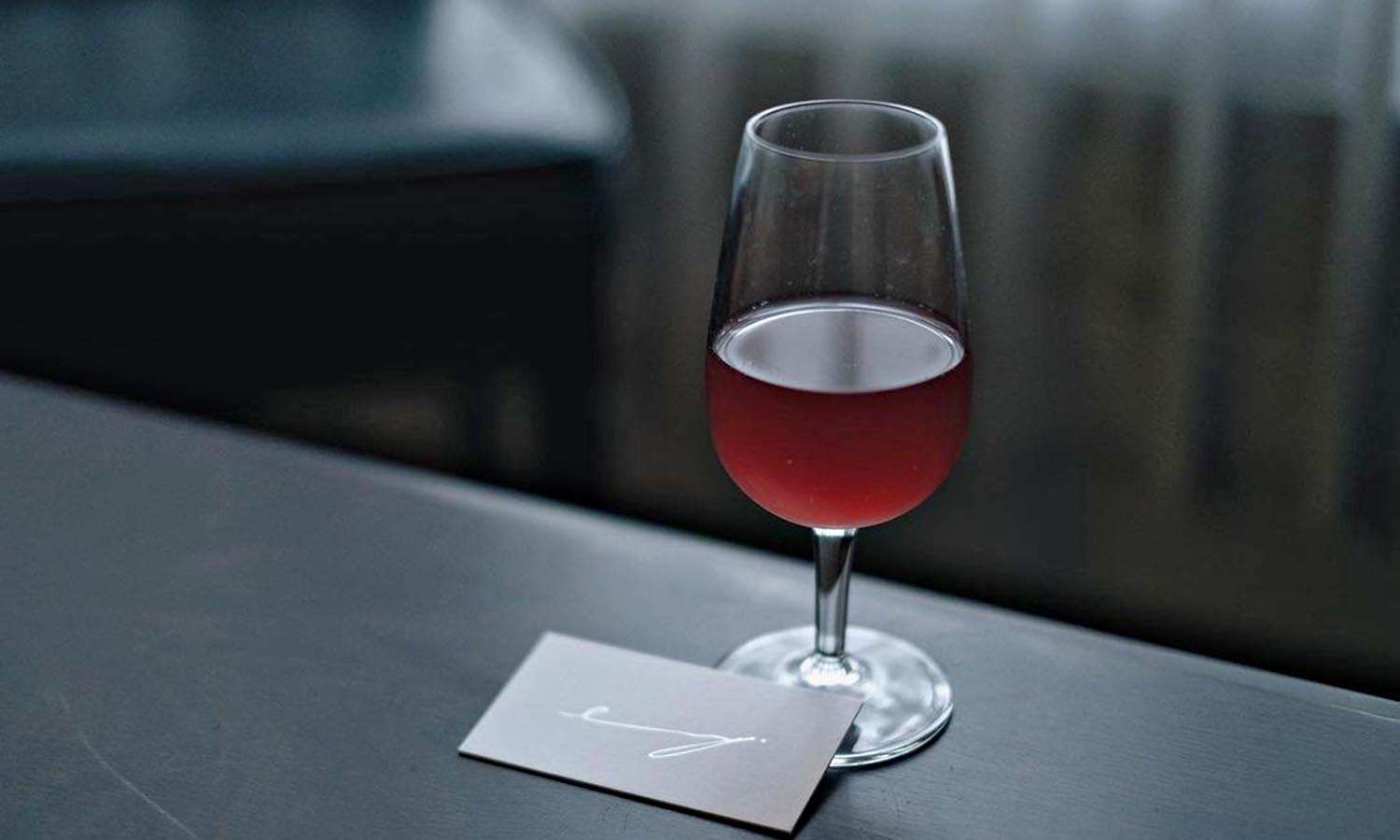
That night we’re swooned by Chizuka over a series of alcoholic and non-alcoholic aperitif style post-dinner drinks.
Ohana commissioned an artisanal freelance drink artist – maybe the only person with said title in Japan – Emmy, to create the tasting flight after the pair connected on Instagram.

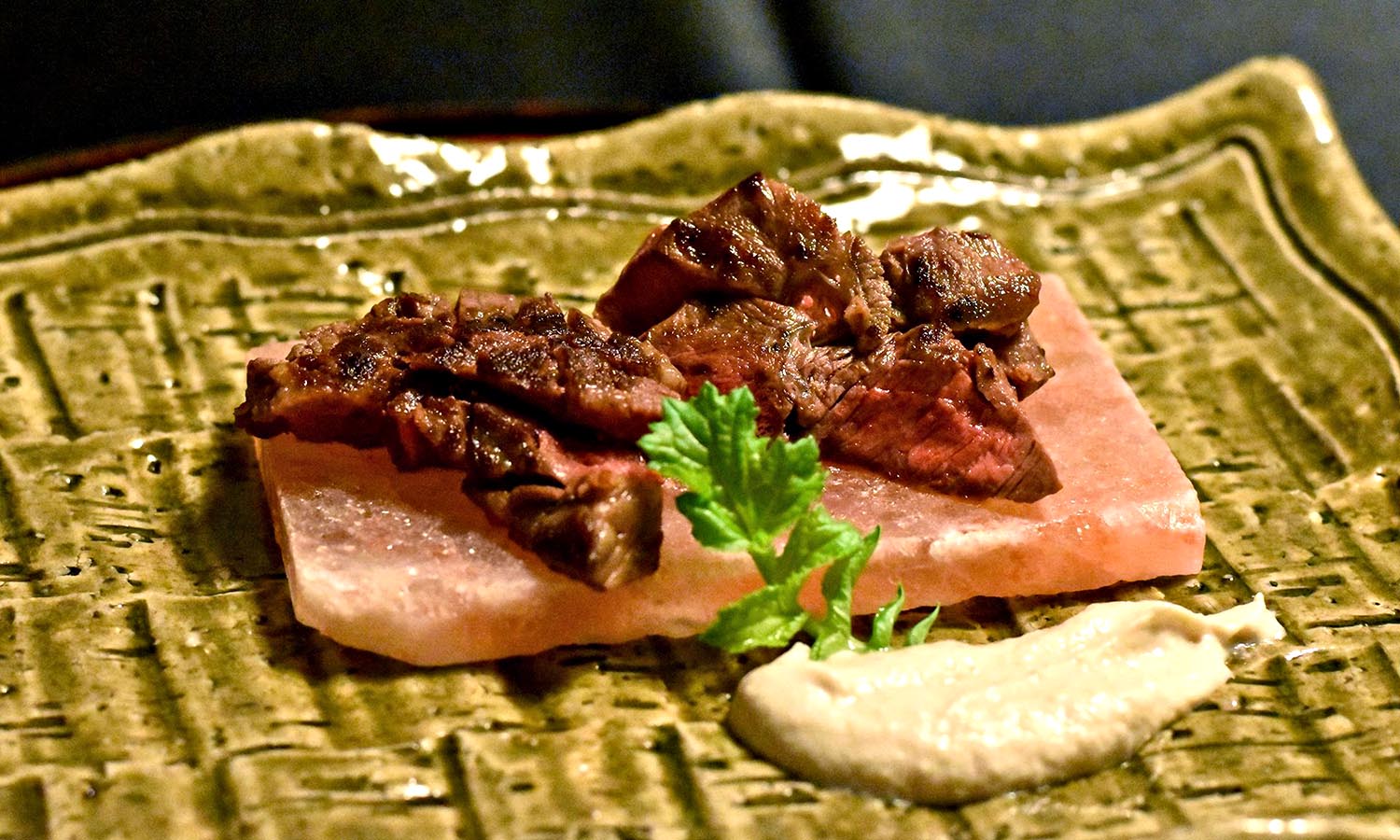
“The new theme for Ohana is ‘the future’,” Chizuka continues, “mixing elements from old and new cultures, trying new things.”
The family isn’t resting on the laurels of what their great-great-great-someone did two centuries ago. They’re spearheading new tourism initiatives, including envisioning an online platform that allows individual travellers to curate their own Yanagawa experience, scaffolded by the rich Tachibana familial network.
Part of why I’m visiting is to give Ohana’s experiences a trial run— a pretty sweet gig even with all the mudskipper munching we’re doing.
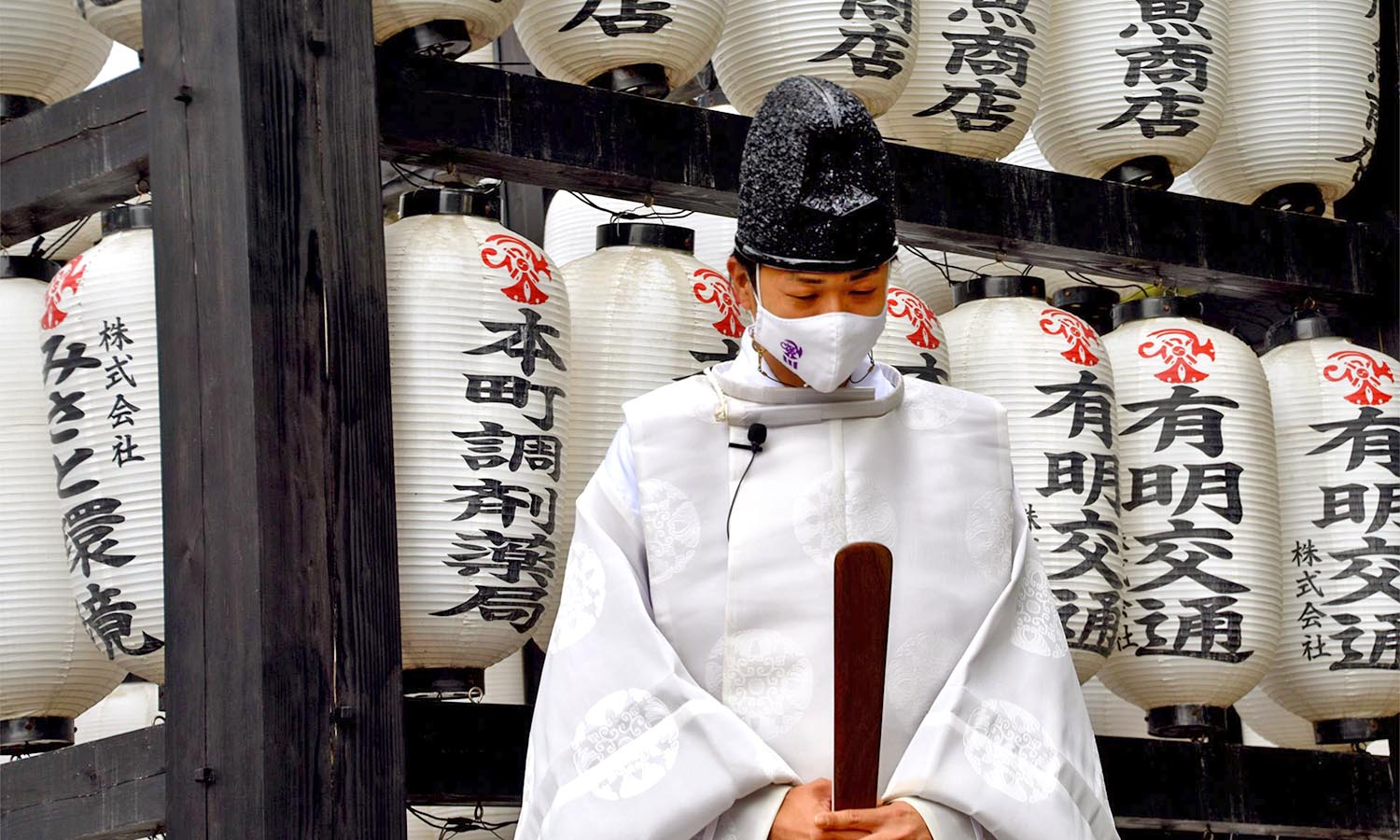
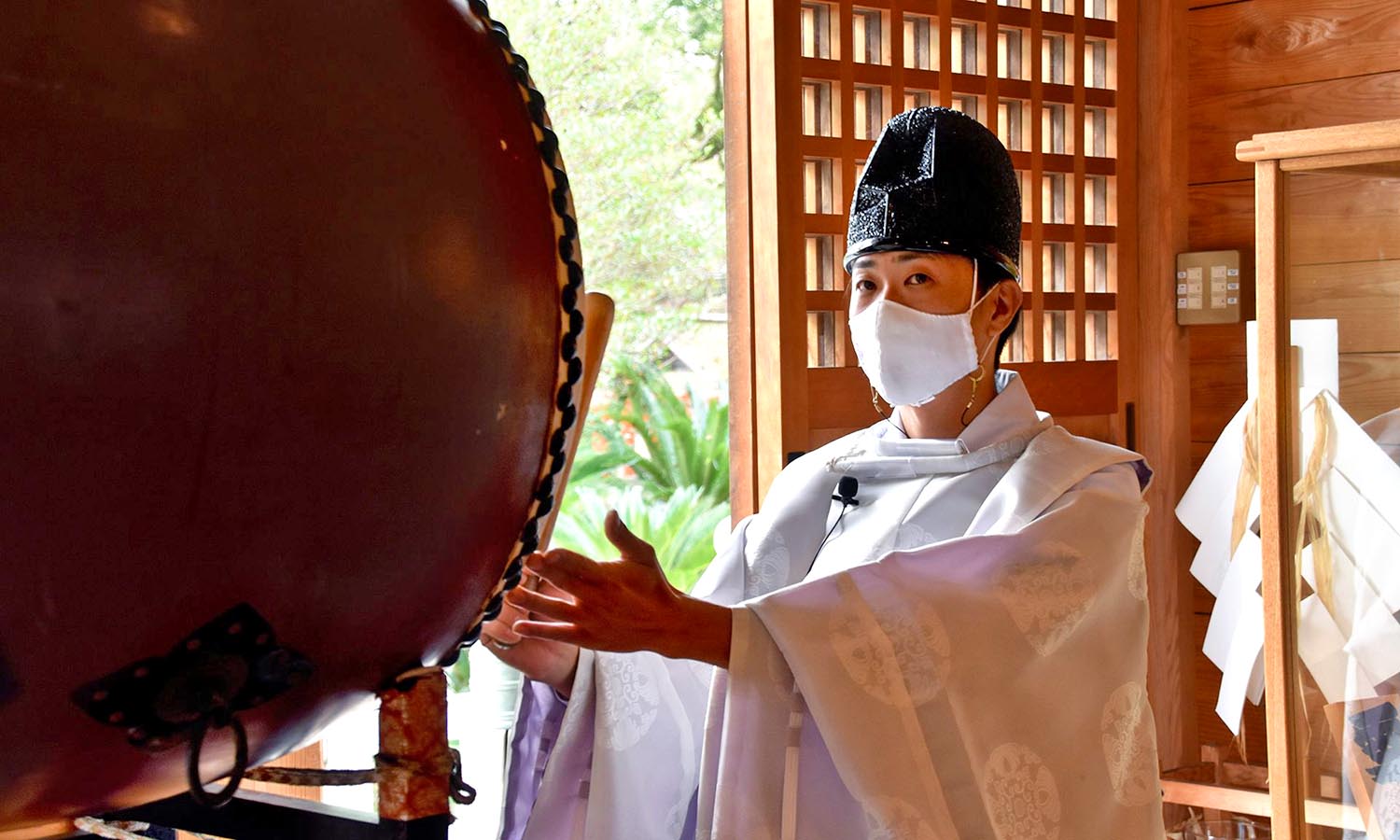
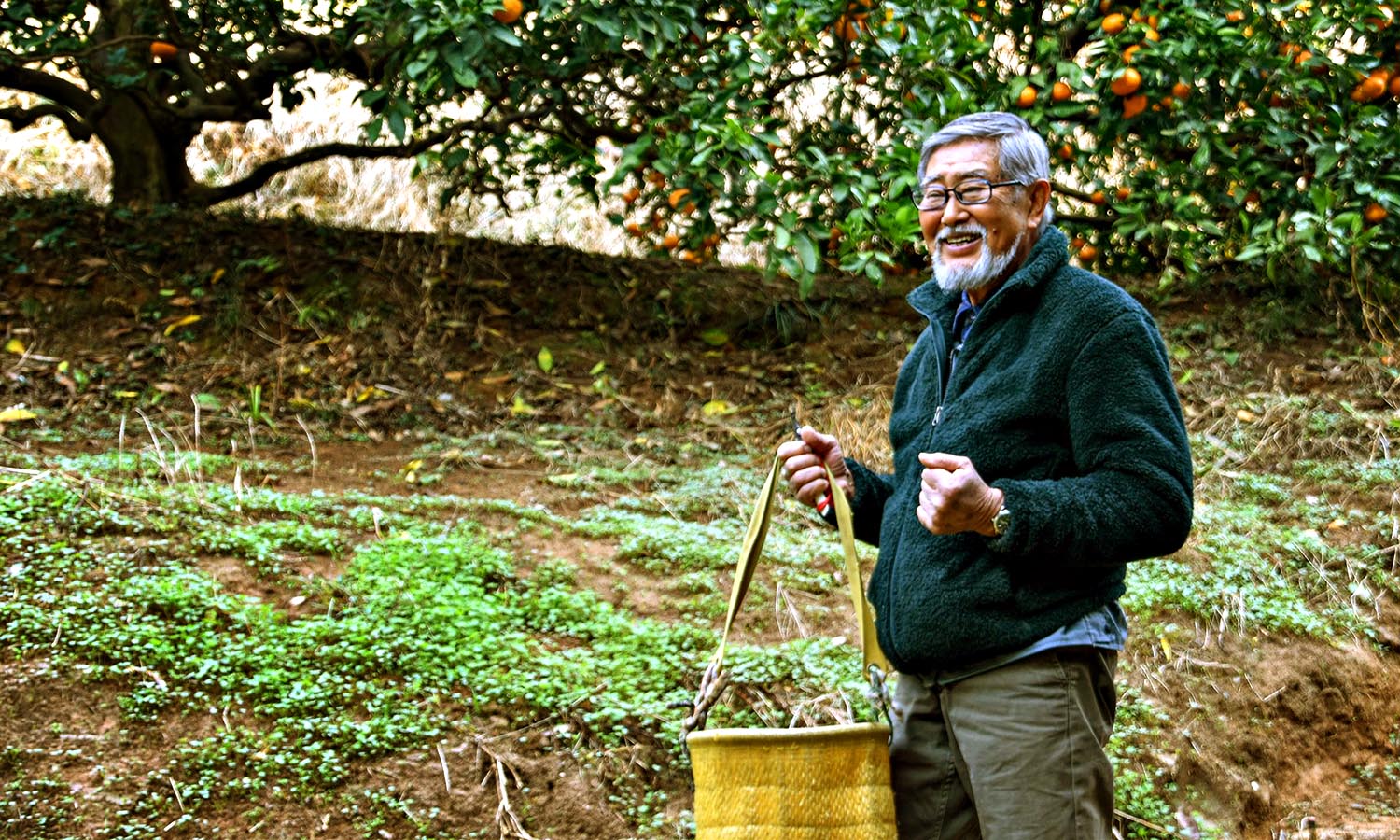
On arrival I receive a blessing from the town’s chief priest – Chizuka’s cousin, Seitaro – and the next day I learn the cultural history of the mikan (a Japanese citrus fruit) at Kikko’s Orchard. The Orchard is the clan’s campsite, farm, and occasional music festival location that’s run by Chizuka’s uncle, a 17th generation Tachibana.
Welcoming tourists into your home is a rare move for any royal family, but it’s a natural evolution for this family when you look at the history and context of why they did it in the first place.
Chizuka’s grandmother, Ayako, first decided to open Ohana in the 1950s as a restaurant and hotel. It was a way for her to contribute to the future of Yanagawa, while also saving her family from financial post-war ruin.
In many ways, Ohana today is the embodiment of the entrepreneurial energy that surges right through Fukuoka. Fukuoka City was actually Japan’s first to launch a specific start-up-visa, which is an immigration program dedicated to helping international businesses looking to shake things up in a fresh environment. A bold move for a nation where following rules and tradition – particularly in the corporate world – is considered of the highest virtues.
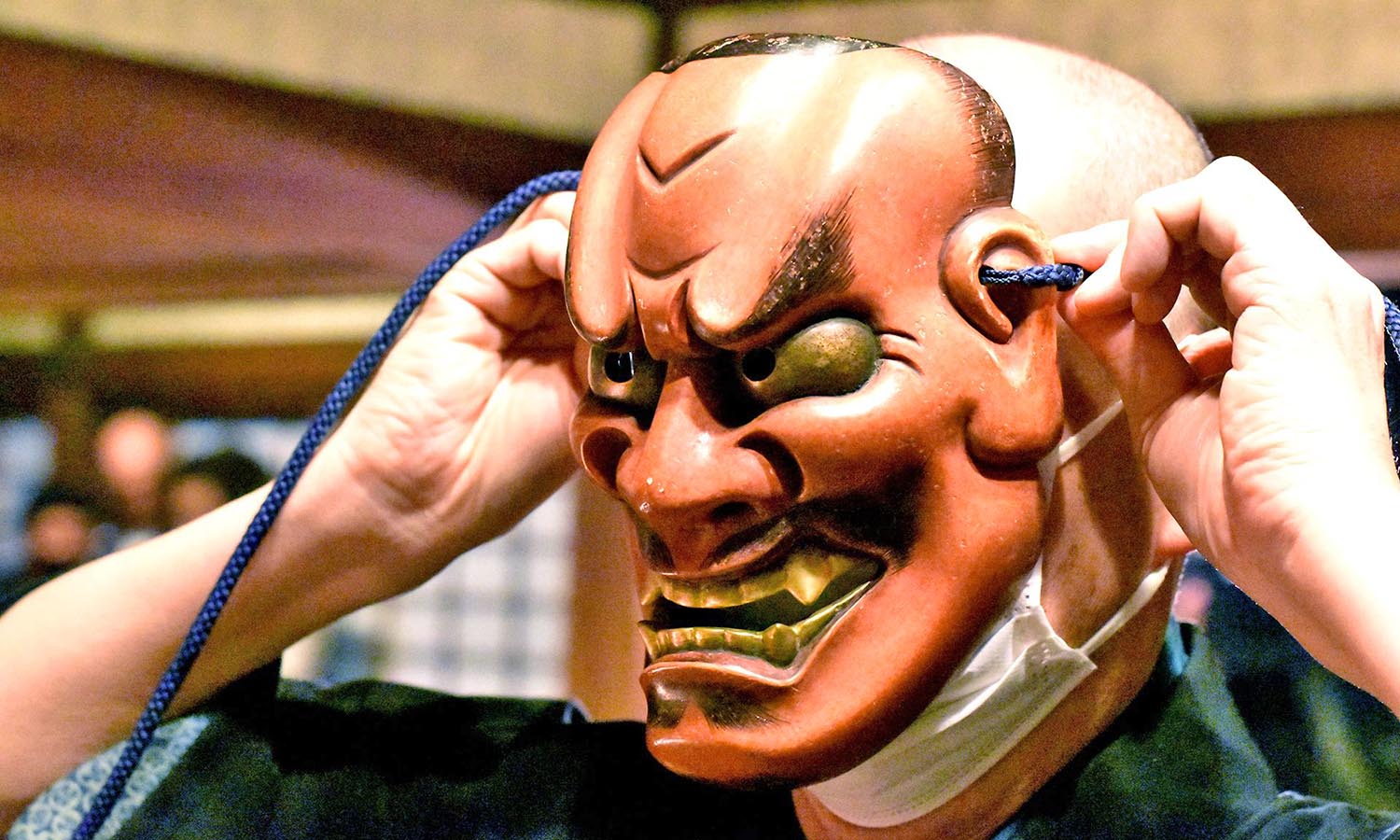
Like many other prefectures across Japan, Fukuoka Prefecture is misunderstood as just being a singular city, when in fact the name of the prefecture just coincidentally matches its capital. Many think Fukuoka Prefecture is just about Yatai and Fukuoka City’s famed Canal City Hakata shopping mall. But go beyond the bright lights and escape this busy metropolis and you’ll discover a region filled with outdoor adventures and quaint mountain villages.
Hiring a car from the city will give you great flexibility to adventure through this lush and idyllic landscape, stopping in places such as Hoshino-mura. Like a jewel, this town is cradled in the mountains of southern Fukuoka. Better known for its rice-field structures, if you’re visiting Hoshino-mura from late May you may also bear witness to one of the greatest firefly displays on the planet.
After a busy few days dining with ancient samurai families, I reluctantly leave Yanagawa and head north to cycle the circumference of the beachy Shikanoshima Island. Later gorging myself on cheap but deliciously fresh oysters along the waterfront of the charming, up and coming port town of Itoshima. With its new water view cafes, restaurants and a burgeoning creative art scene that would rival most European cities, Itoshima’s main beach is also fast becoming a surfer’s paradise. For arguably the best view in all of Kyushu, you might also attempt to hike to the top of Mount Tateishi which will certainly test your fitness.
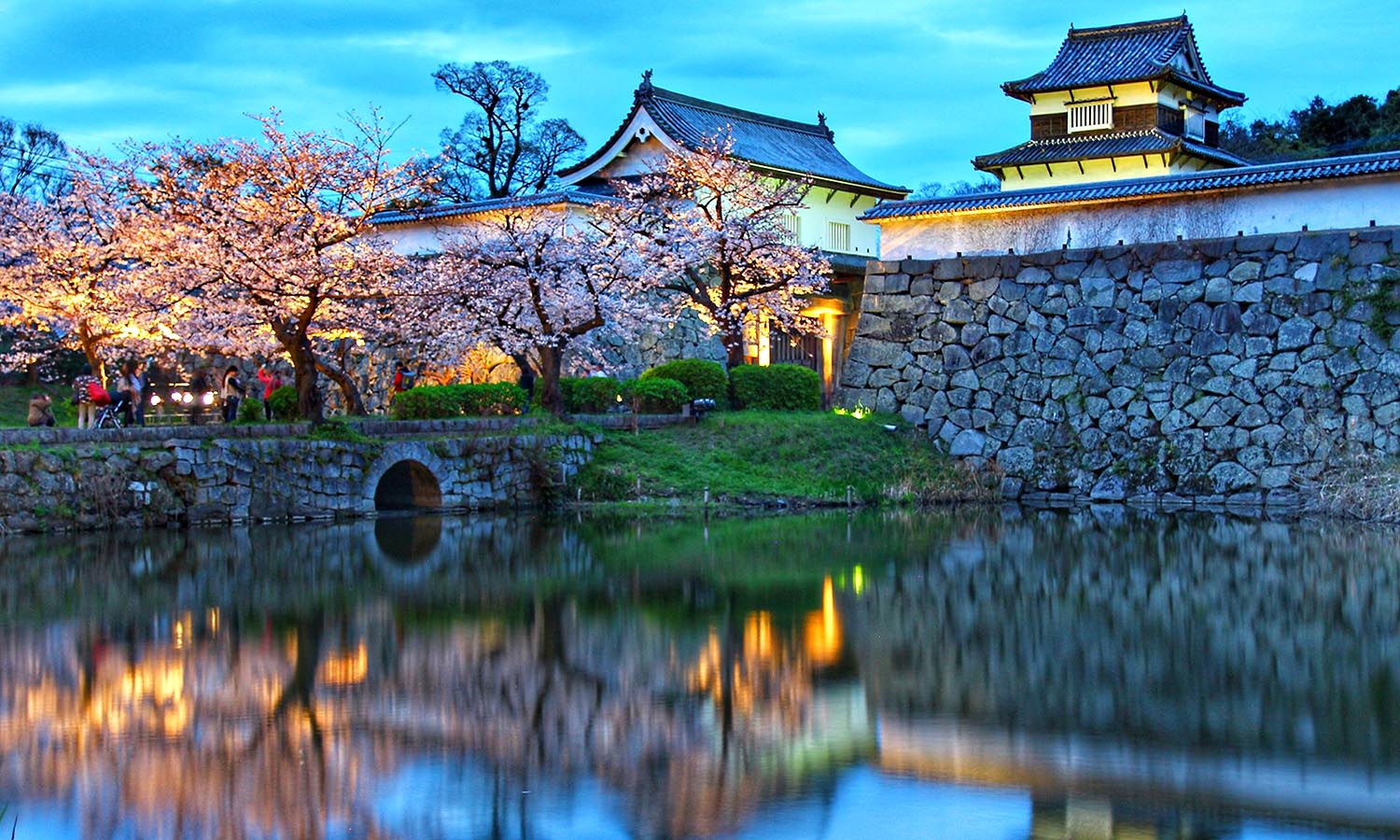
This is a hidden coastal corner of Japan not many tourists have seen. A true representation of the experience-rich prefecture that exists far beyond Google searches and Trip Advisor reviews. For example, did you also know Fukuoka Prefecture is one of the first places in Japan where the Cherry Blossoms bloom? So to get your dose of hanami (flower viewing) skip the busy March crowds of Tokyo or Kyoto and be sure to head here instead.
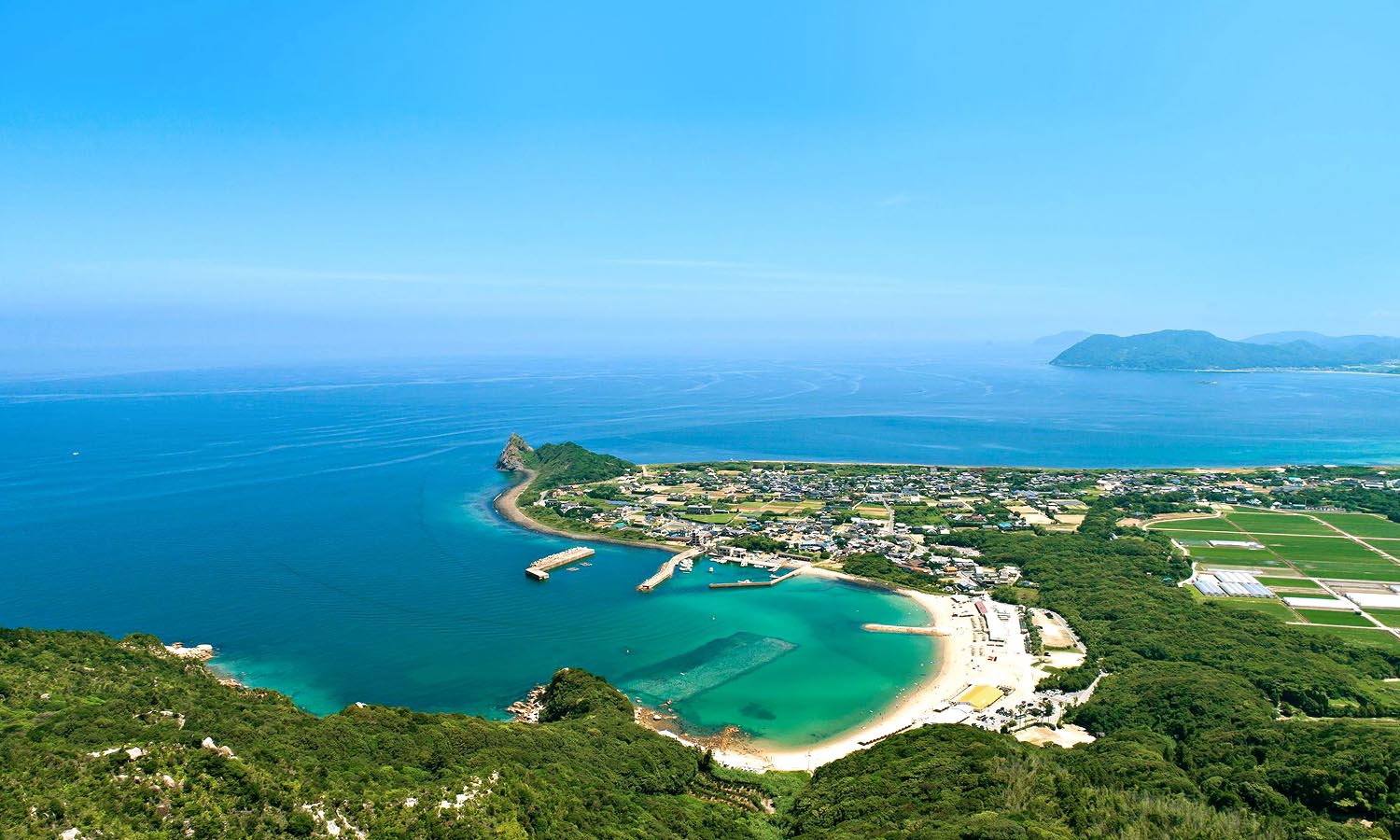
The best part? You’re just a 35-minute drive from Fukuoka City’s international airport.
So after my coastal road trip and dizzying stay at Ohana, I meander back to the centre of Fukuoka City with a few hours to kill before a flight back to Tokyo. I ask a local for some advice and she points me in the direction of Manu Coffee. Turns out it’s the perfect antidote for my rabid Australian caffeine addiction.
Manu is cool and very trendy, but in a cosy, worn-in way. You can tell that the walls and furniture here have stories to tell; from first dates to new business ideas and creative projects. This is a cafe built for social interaction, not Instagram flexing. In fact, this is a true microcosm of Fukuoka City.
After a brief moment flirting with the almost disorientingly-long list of flavoured coffee options — including something called the intriguing ‘Geisha Guatemalan’ — I’m so flustered that out of panic I simply order what I always do, “cafe latte, hot.”
Taking up residence in the back corner, I open up my laptop and already start researching my return to this intriguing region, which is when one of the great travel paradoxes hits me.
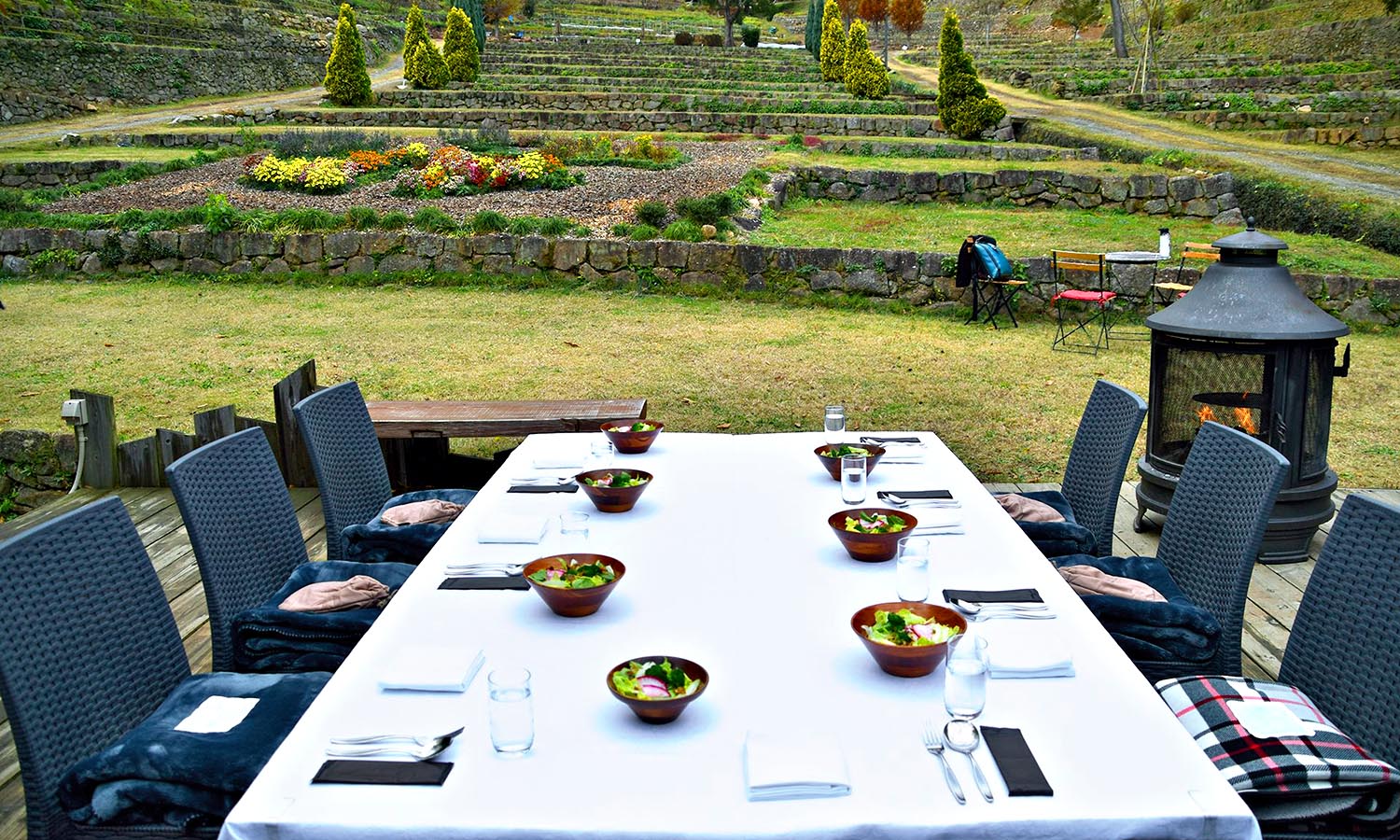
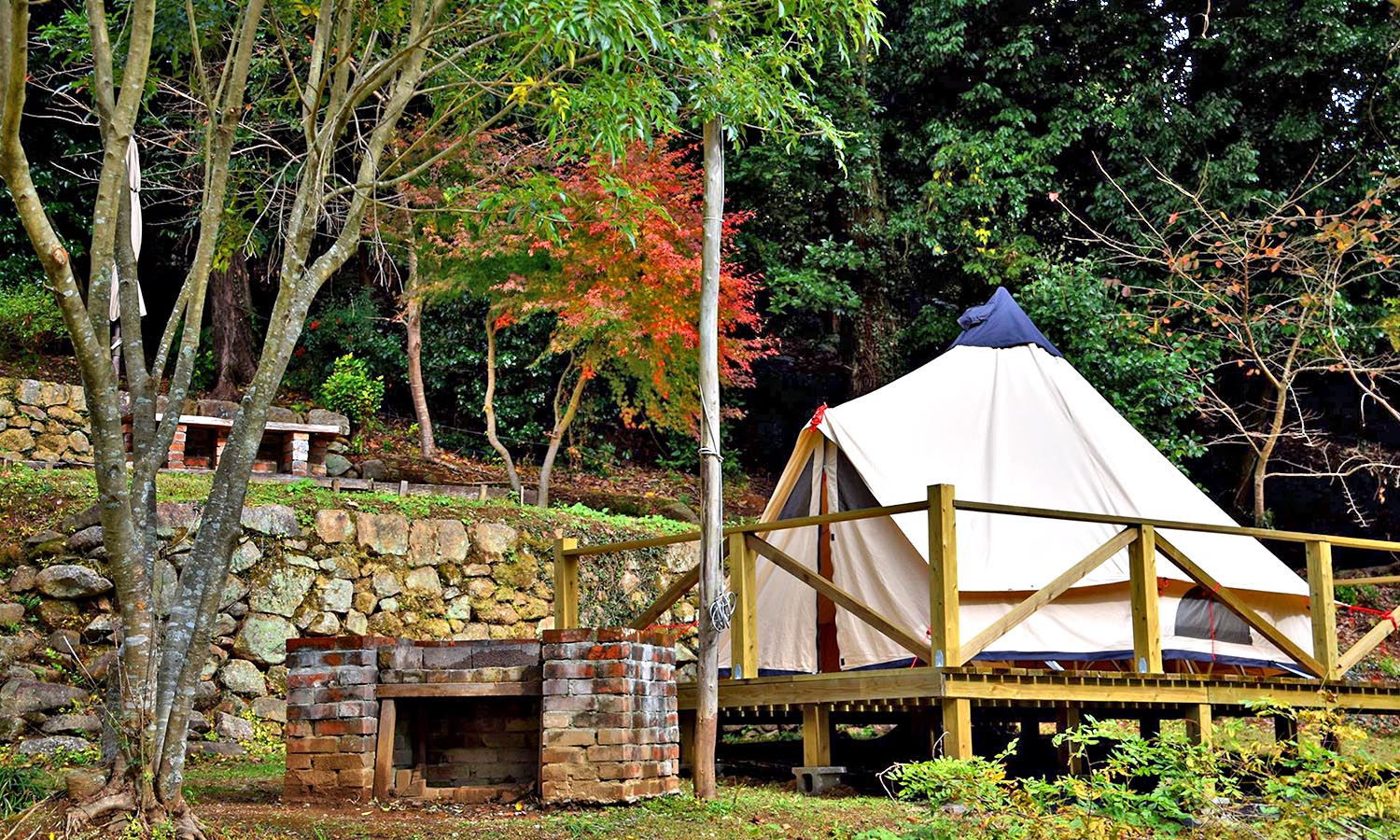
For all that I have done, I become aware of all that I missed: Fukuoka is a leader in olle trekking, a Korean-inspired type of hiking based around blending cultural landmarks with sensory experiences. There’s the prefecture’s new love of both forest and coastal style glamping, with new accommodation options popping up almost monthly.
Fully caffeinated, I head to the airport with my next Fukuoka adventure already planned.
It seems Ohana’s mantra of looking to the future is already rubbing off on me.
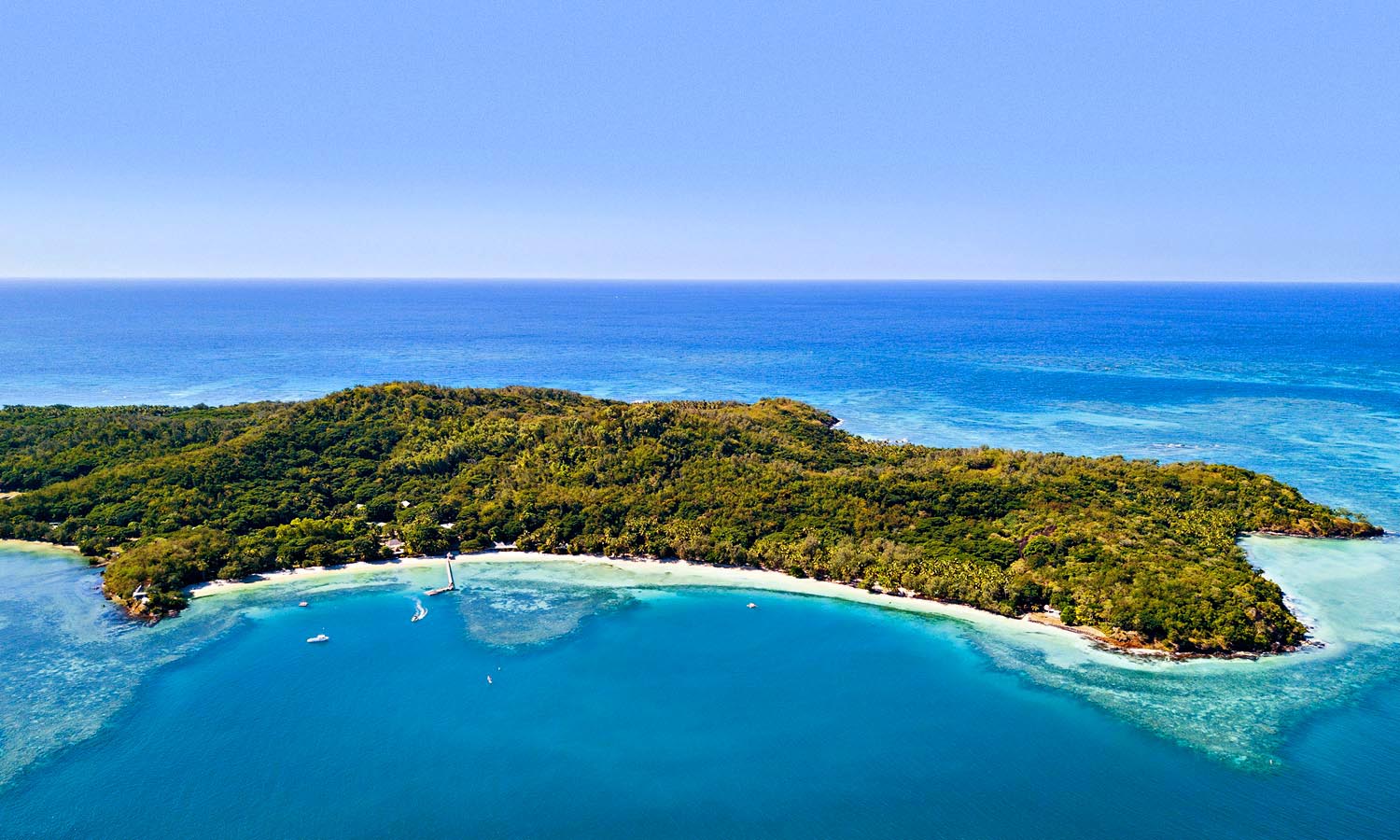
Welcome home! is the joyful cry we hear from a bunch of broad smiles beckoning us from the beach.
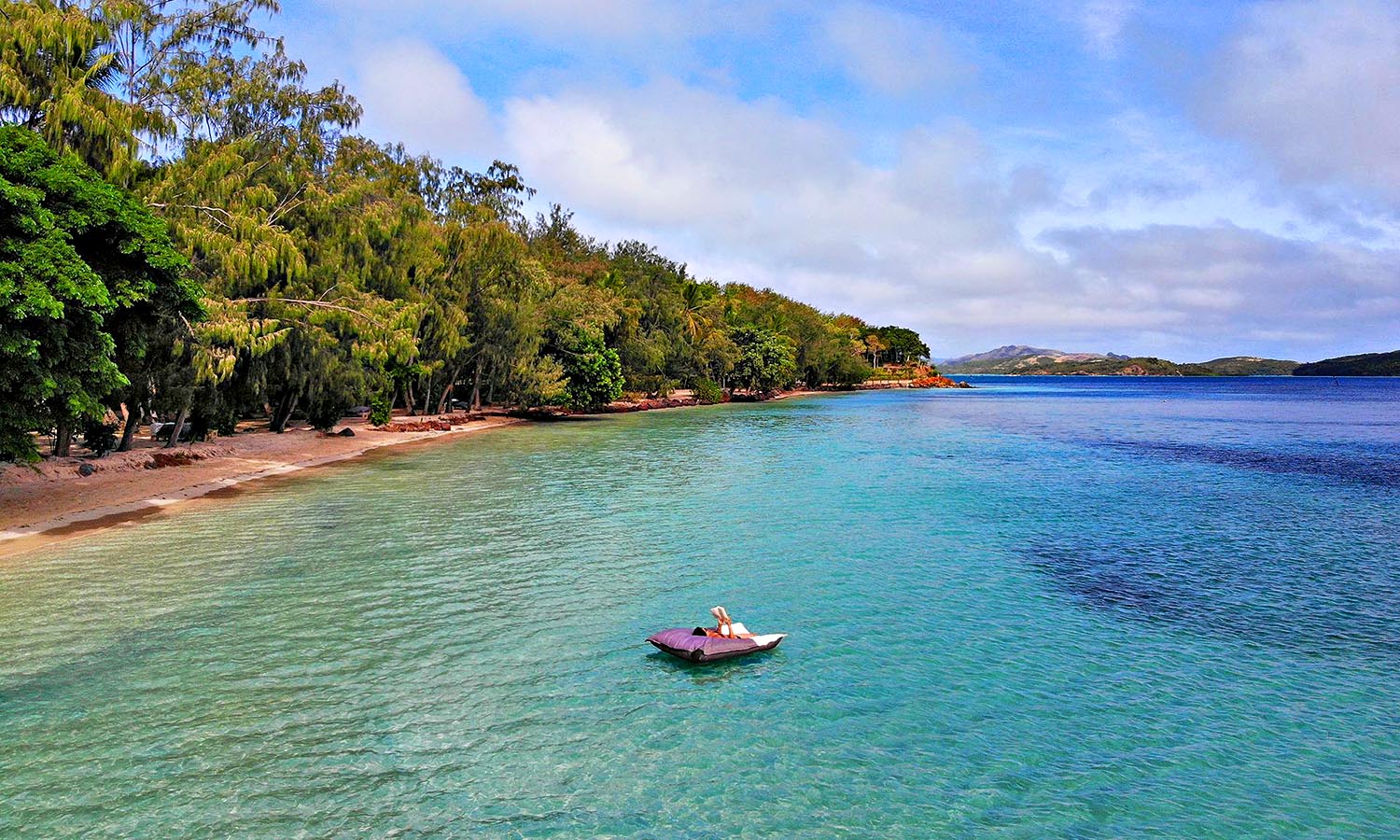
At first I’m confused and before I can ask my wife if she’s ever been here before (and neglected to tell me) she’s whisked elegantly onto the shoulders of two buff shirtless Fijians, waist-deep in the aqua blue water surrounding our private seaplane. She’s carried like a queen onto the white powder sand of Turtle Island, a little slice of perfection in the Yasawa Group of Islands north west of Fiji’s main island Viti Levu.
By the time the same two men have carried me ashore – nowhere near as elegantly – she has a glass of champagne and a smile as broad as the locals surrounding us.
“There’s no place like home, hey sweetheart?” I ask, just as her glass is topped up for the second time.
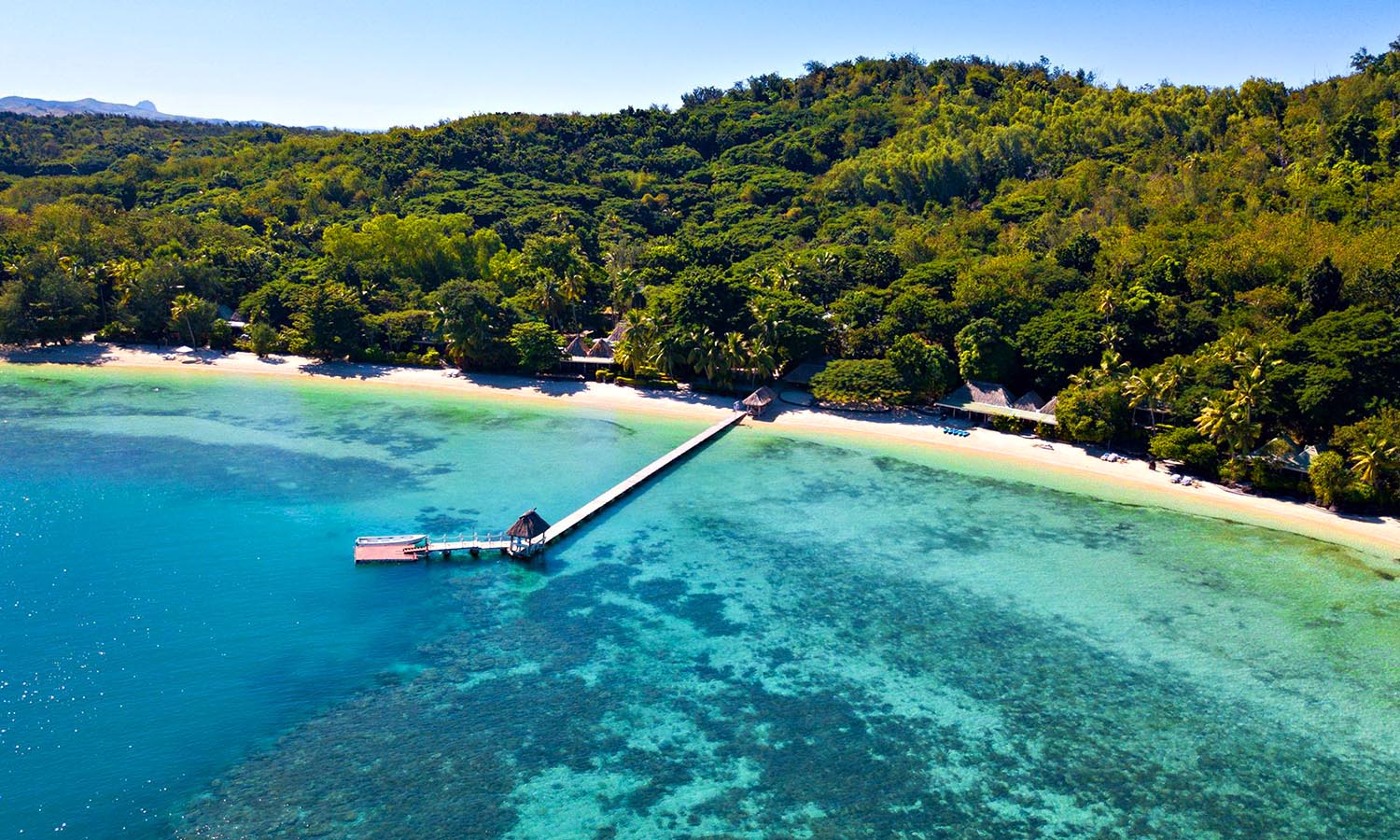
Years ago I’d read enviously about Turtle Island’s founder Richard Evanson and his adventurous backstory.
Done with the stresses of corporate success in the US, Evanson had cashed out in 1972 and headed for Australia to see what else life had to offer. Along the way he found himself waylaid in Fiji, and stumbled upon the then barren Nanuya Levu island in the Yasawa Islands.
It was this chance encounter with a 202 hectare patch of dirt in the middle of the pacific, thousands of kilometres from his previous life, that he decided then and there that island life was to be the life for him.
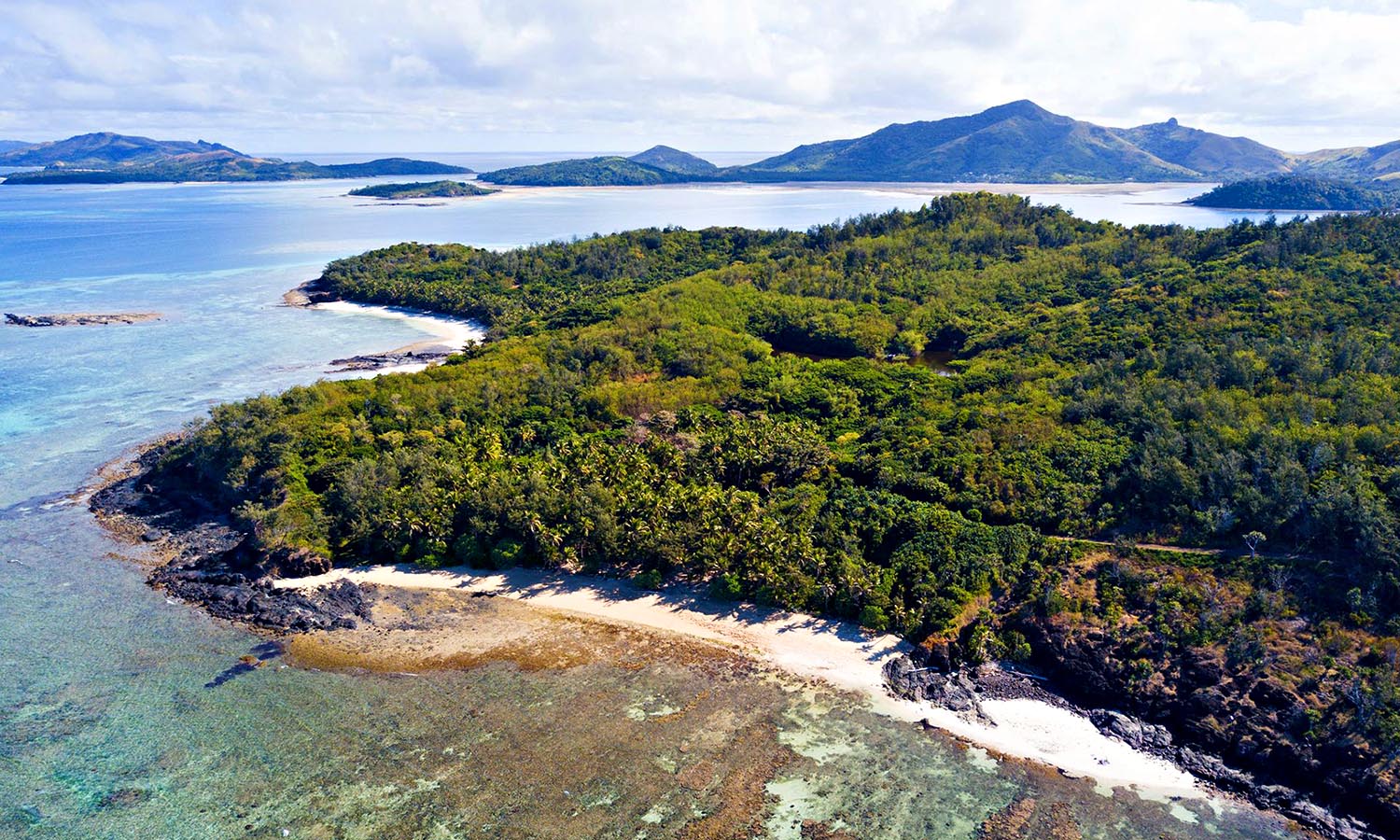
After buying the island, Evanson set out to create his dream. He planted thousands of seedlings, befriended the locals from the surrounding villages and settled into a life where time was more elastic. This was my dream I thought at the time, I just needed the corporate success.
The arrival of a film crew in the late 1970s gave Evanson a taste for entertaining guests on his patch of paradise. The idyllic blue lagoon of Nanuya Levu was the perfect location for the film of the same name and Evanson looked after the cast including Brooke Shields, while the film was shot.
Having enjoyed the experience so much, he opened Turtle Island to the public in 1980 and therein lies the secret to the resort’s magic: the island bliss that existed had already been authenticated by the man himself first, before it was opened to the rest of the world.
Evanson was living a barefoot luxury life before the term was even coined and obscenely overused in modern travel brochures. It’s now an entrenched legacy and a way of existence for the team that hosts guests at Turtle Island. There’s no pool. There’s no kid’s club. In fact, for the vast majority of the year the island is exclusively open to adults (except for a few weeks of the year where families are welcome). There’s no buffet, limited internet or signal and certainly no screens, other than an outdoor cinema that shows The Blue Lagoon on repeat. But what it lacks in modern resort excess, it more than makes it up in pure adult indulgence. Imagine being shipwrecked on a South Pacific island that also happens to be fully stocked with everything you could ever dream of, not least some of the friendliest locals imaginable.
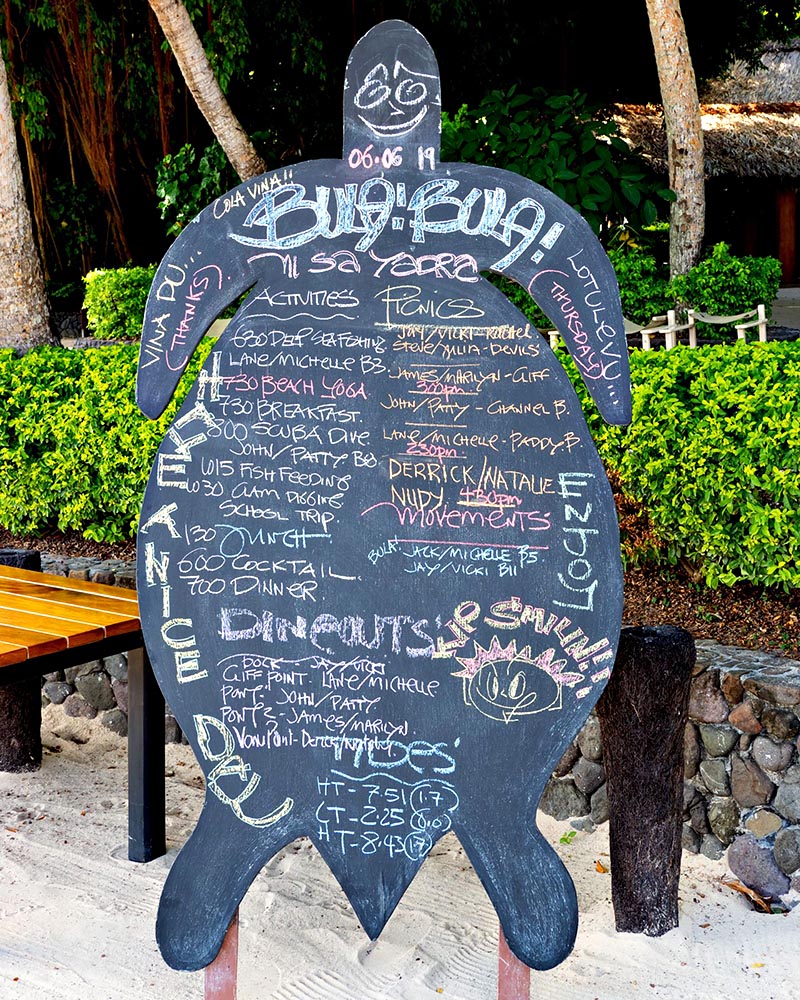
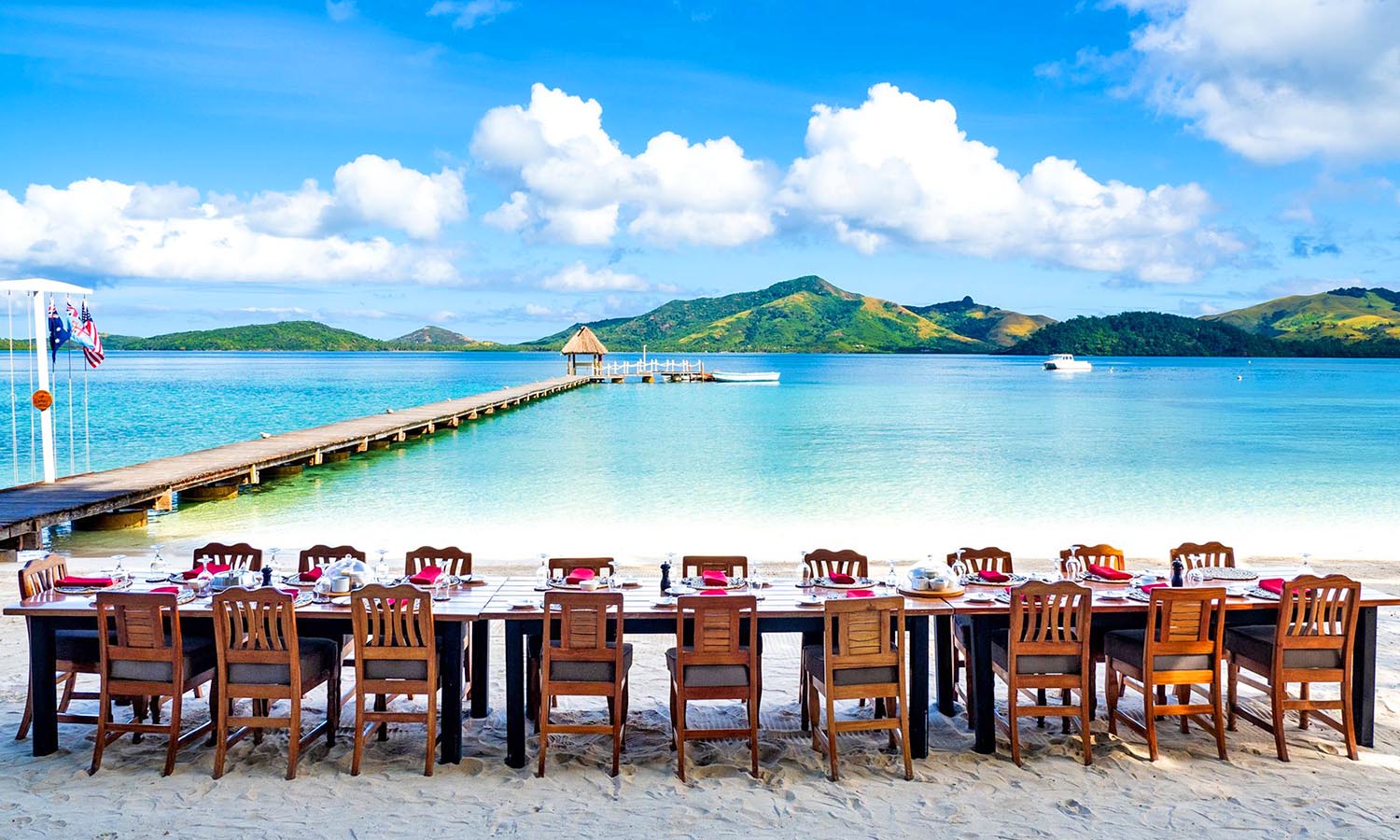
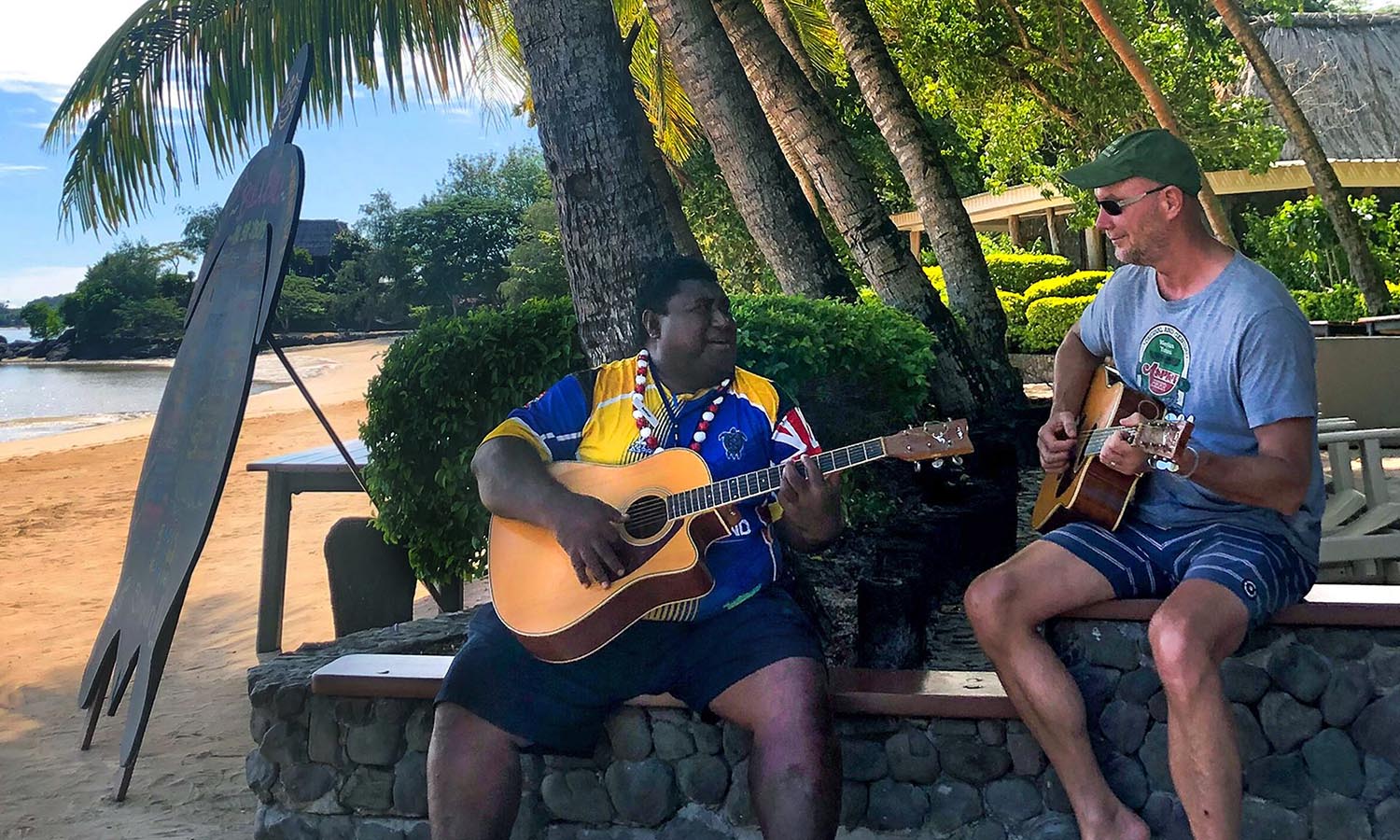
Our first breakfast is on the beach at a long shared table. Most of the other ten guests join at their leisure. Local legend Arthur, who was just a child when Evanson arrived in 1972 and has worked at Turtle Island ever since, strums a guitar and sings a local tune. There is the sense he’s not performing for us – he just enjoys singing. There is a turtle shaped blackboard in the sand with a list of the day’s activities. Horse riding, scuba diving, game fishing, village visits and a list of the island’s 12 private beaches to choose from for a lazy day in the sun.
Having decided Long Beach would be our destination for the day, we’re on a golf cart with a smiling Fijian named Bill driving us through palm trees to our own private beach. Smiley Bill stops to turn a coconut sign to ‘occupied’ just to ensure our privacy from the other smattering of guests who probably have their own beach as well. He sets us up with a cooler filled with French champagne, beer, wine and a gourmet lunch. With a smile and a wink he disappears, crying out from the distance “Have fun Jay and Vicki!” There’s a hammock strung between two palms and an undercover picnic area with an outdoor setting and table. We crack the champagne and set up camp on the soft white sand. It is perfect.
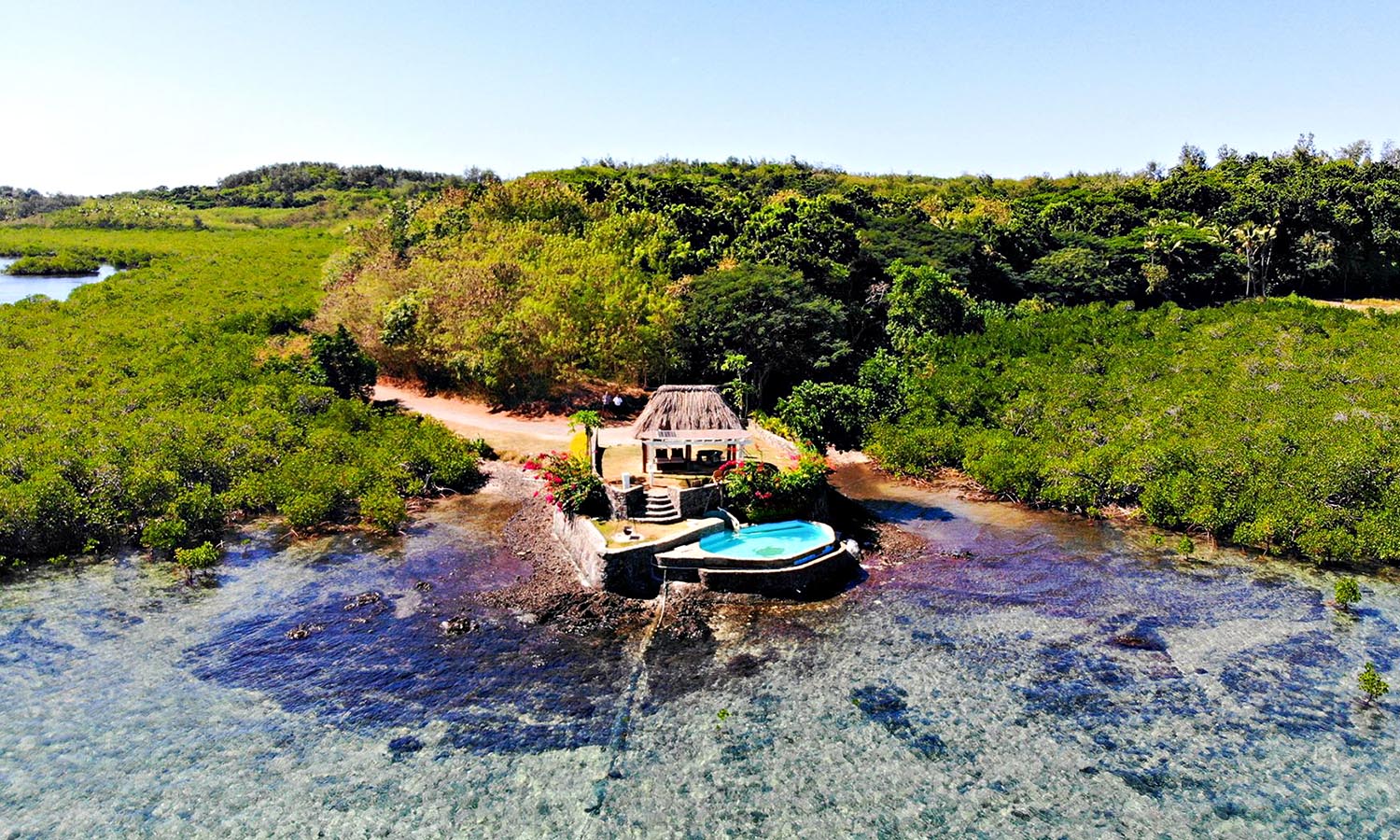
In addition to the 12 private beaches, you can choose to dine on a floating pontoon, at the end of the main pier or in the comfort of your luxury oceanfront Bure. Ours happens to be equipped with an indoor spa.
Our favourite is the Cliff Point with its own plunge pool on the edge of the lagoon. There are few better places in the world for an after dinner dip.
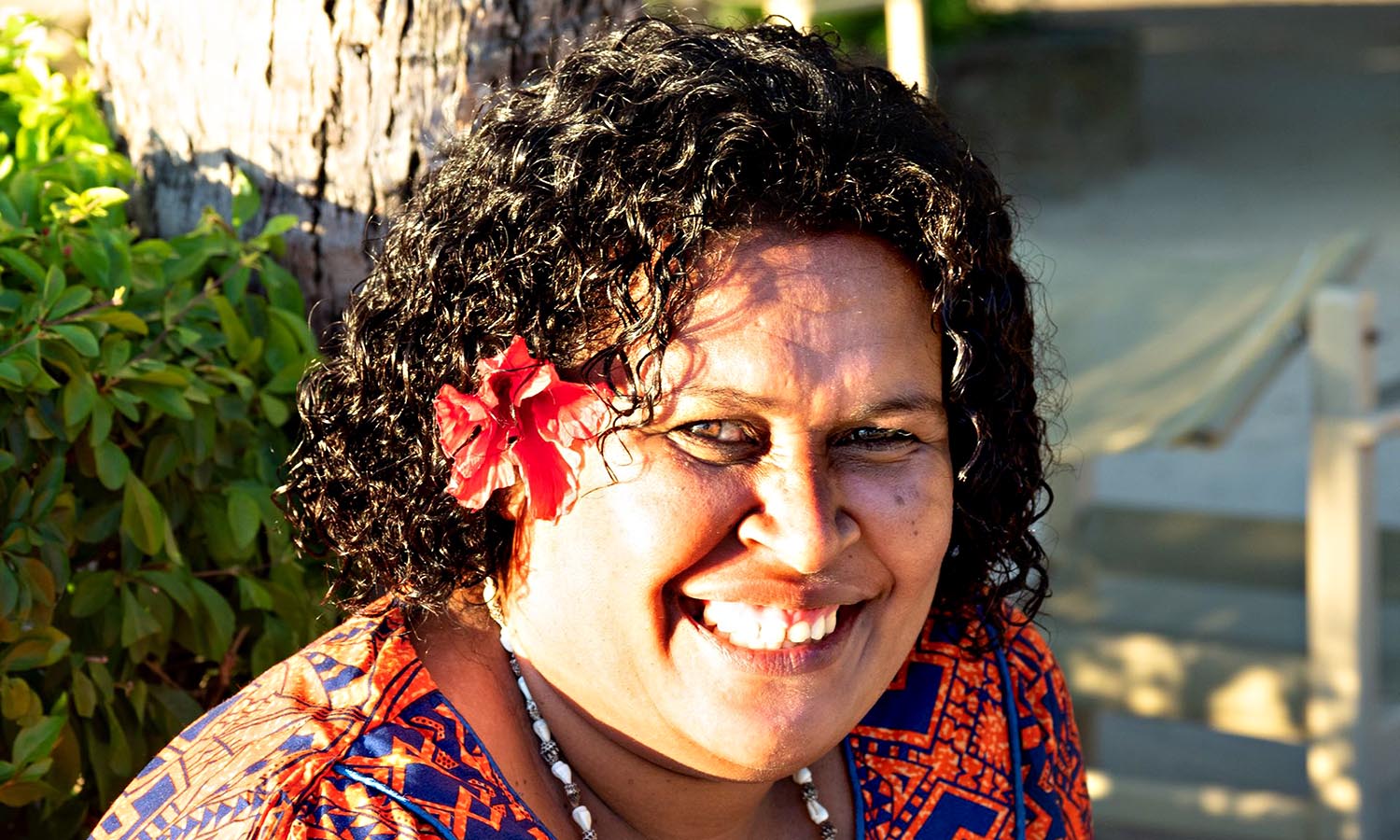
With a dedicated ‘Bure Mama’ (the island equivalent of a luxury hotel butler but more more adept) you could quite conceivably see no one else but her, if you so choose. But to do so would be to miss out on the real charm of Turtle Island: its people.
Like most places in Fiji, evenings on Turtle Island invariably end up around a kava bowl, with resort staff and guests alike joining Arthur’s guitar sessions. The guitar is passed around and shared as ceremoniously as said kava bowl. I’m passed the guitar and much to the delight of the crowd I bang out a terrible version of Johnny Cash’s Folsom Prison Blues. Kava, I discovered, is not great for finger picking.
“Bula Jay!” my evening singing buddies cry out with laughter, their teeth glinting in the night as bright as the stars in the sky above them.
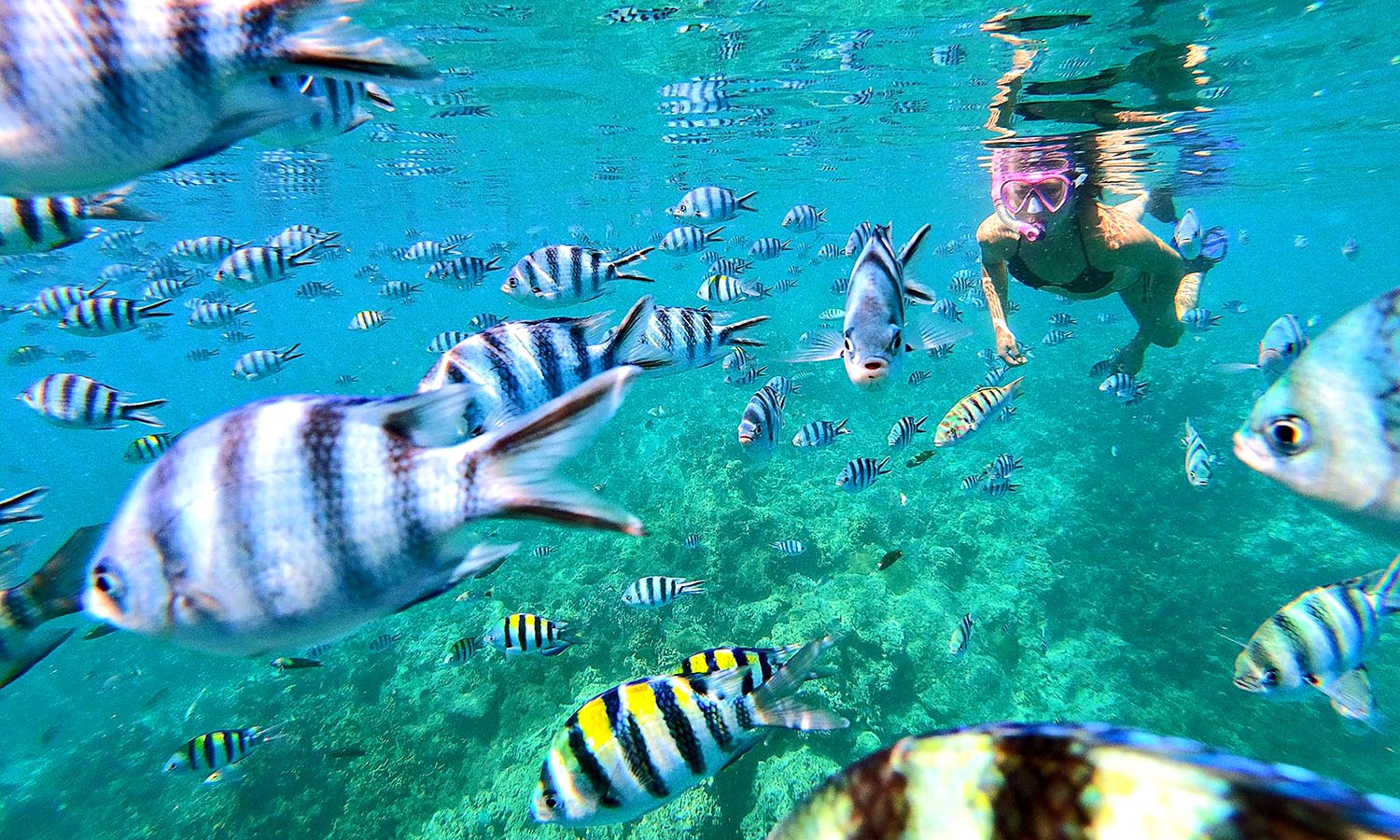
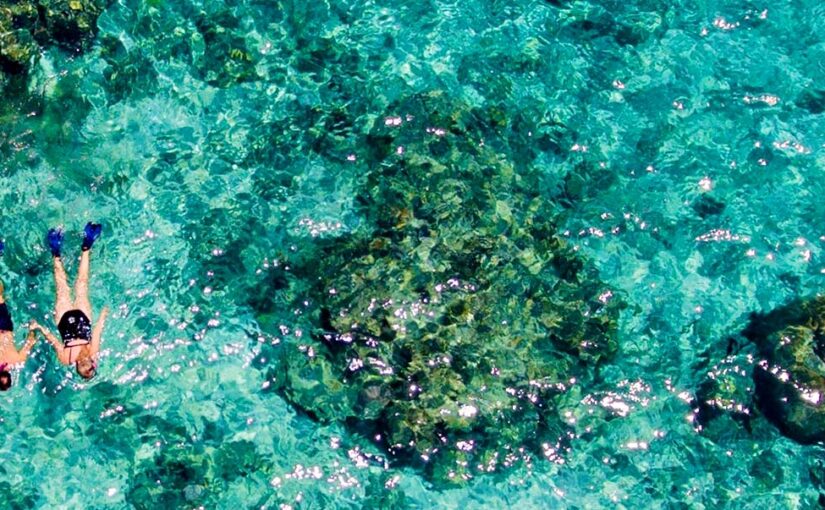
One majestic afternoon snorkelling the clear waters of the lagoon, Arthur joins us for a swim just because he can.
He laughs hysterically as he throws bread crumbs to attract a school of multicoloured fish around my terrified wife. Arthur walks us back to shore and right on cue, his torso still glistening with water in the afternoon sun, he says his goodbye, reaches for his sandy guitar and makes his way to another group of unexpecting guests on the beach.
Such is the love from Arthur and the rest of the staff on the island that when it is finally time to pack our bags, it doesn’t feel like we’re heading home – it feels like we’re already there.
get lost would like to extend our deepest sympathies to our Turtle Island friends on the passing of both Arthur Sladden and Richard Evanson in 2021.
What Richard has created will leave an incredible legacy for sustainability in the Yasawas and should be a benchmark for barefoot luxury around the World.
There’s a lot of decisions to make before you travel. How do I get there, and what should I pack? How much cash do I bring? Will I take a risk on sweet-smelling street food on the first night or play it safe at that recommended restaurant?
But for 2022, there is probably only one decision that really matters: where are we going first?
With so many awesome spots to choose from, we’ve dedicated our latest issue to helping you make that first, very important choice.
We’ve pitted some of our favourite experiences and places against each other and officially crowned our top 10 destinations to visit in 2022.
Futaleufú River, Chile VS Zambezi River, Zambia
Ever since Meryl Streep dominated our screens in The River Wild, the world has been captivated by grade five rapids and the sport of whitewater rafting.

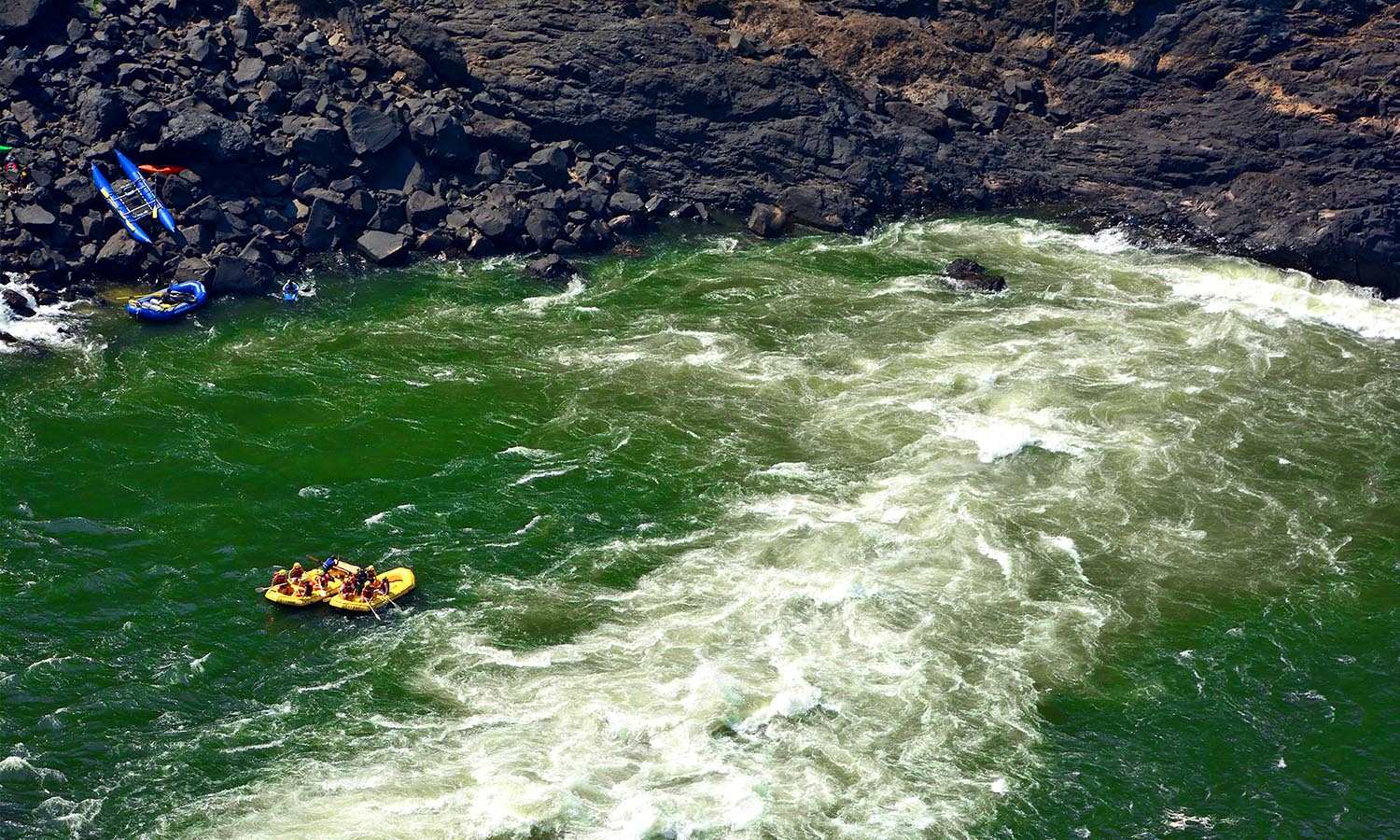
The Futaleufú River in northern Patagonia is a monster which angrily crosses the Chile-Argentina border. Its iconic ‘Terminator’ section is literal nightmare fuel, as the river gorge here drops as low as 1,700 metres beneath stunning glacial peaks. When we stack that up against the more acclaimed Zambezi River in Zambia and the torrent of water you’ll follow downstream from Victoria Falls, we’re equally petrified. The Zambezi is known to spit out rafts (and bodies) like they’re pieces of food caught between its metaphorical teeth (rocks!).
Futaleufú River
Unbeatable thrills, and a test for any river/adrenaline junkie.

San Francisco, USA VS Singapore
There’s plenty to tell about a city from the paint on its walls…
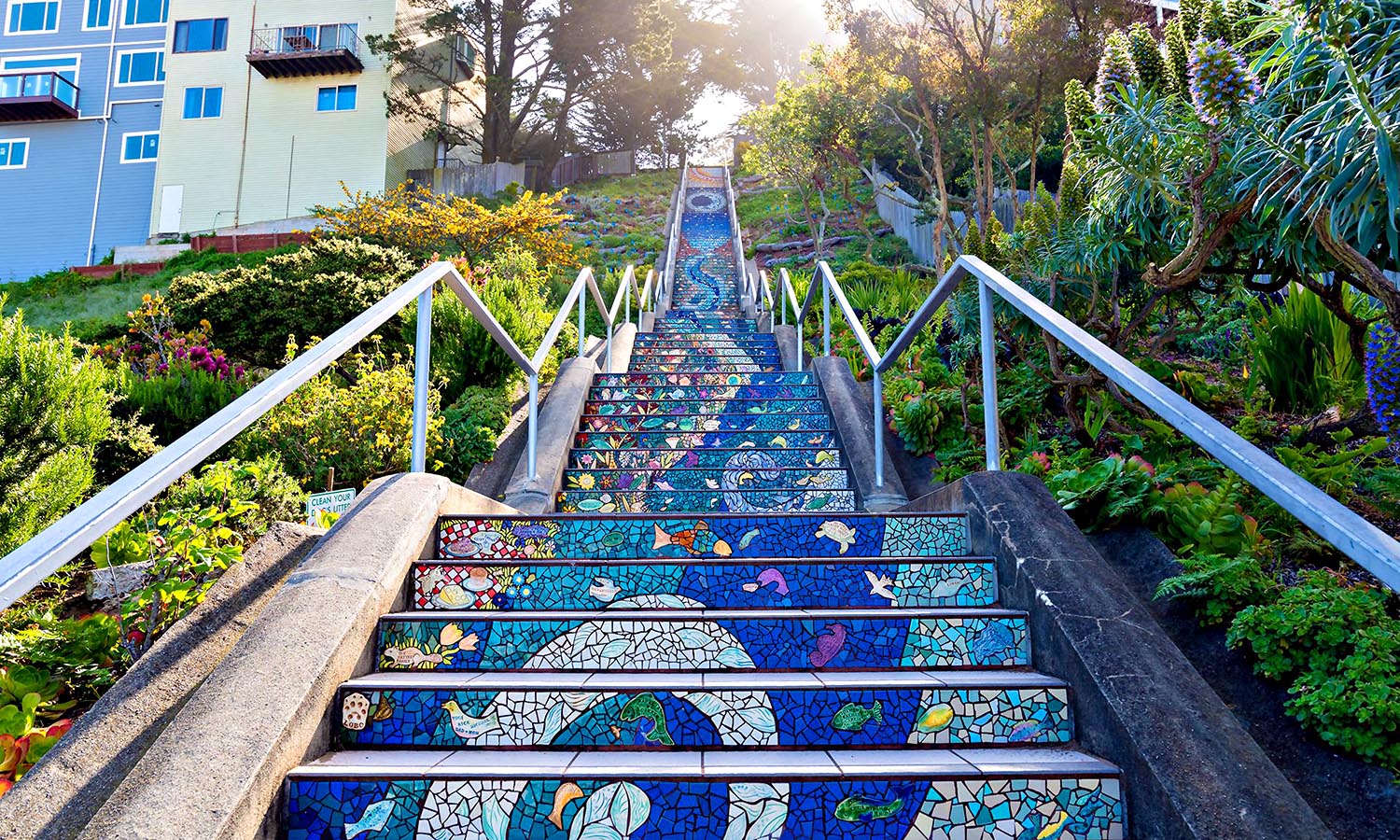
San Francisco has been a hotbed for artists-in-residence and musicians for over 40-years. Galleries are littered around the city and one can get dizzy just trying to work out where to go first. From cartoon art, Asian art to the spectacular (free) photography exhibitions regularly on show at Pier 24.
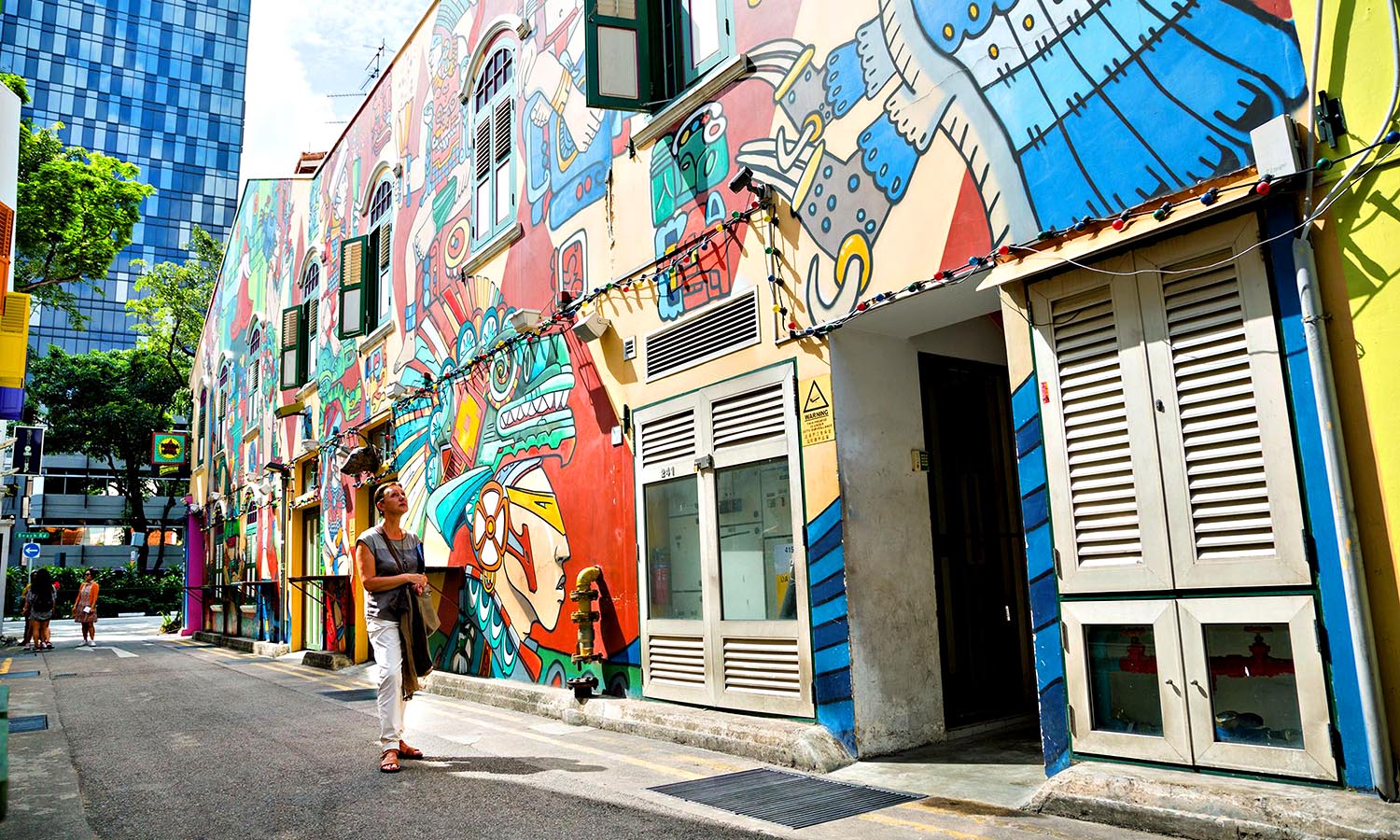
Contrast this against a modern and thriving street art scene of Singapore. A simple stroll through Haji Lane or Little India will show you there’s much more to this city which is known for its law, order and cleanliness. You’ll be left breathless by the murals and level of artistic talent on display
Singapore
Perhaps it is the surprise factor that gets it the nod here, in a city more known for other things.

Million Dollar Point, Vanuatu VS Great Blue Hole, Belize
Breathtakingly beautiful, you also have to be brave to take on the Big Blue.
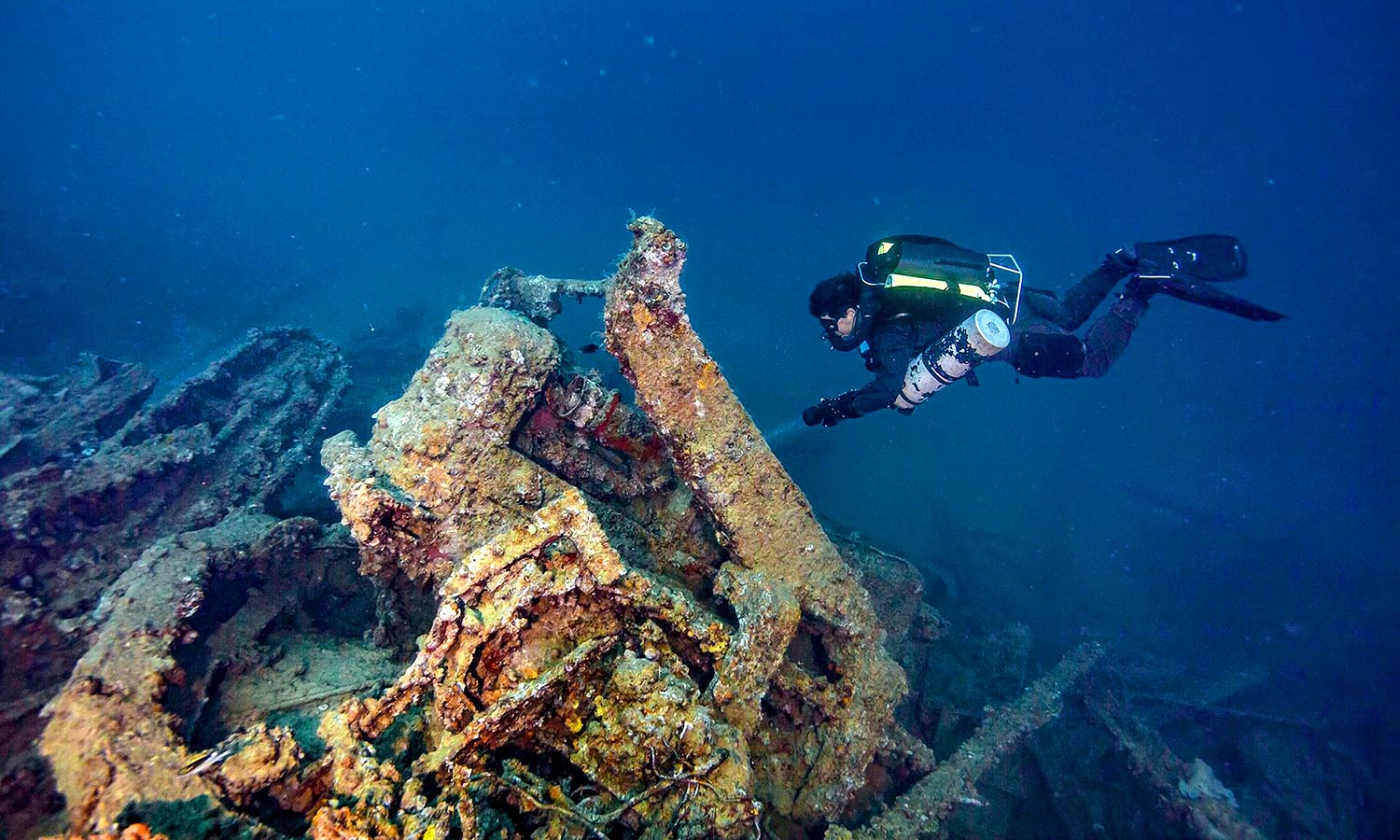
We’re not usually one’s to advocate visiting literal junkyards at get lost, but Million Dollar Point in Luganville, Vanuatu is much more of an underwater treasure trove. After the end of WWII, the US military dumped millions dollars worth of army equipment off a beach purely to spite the French and the British.
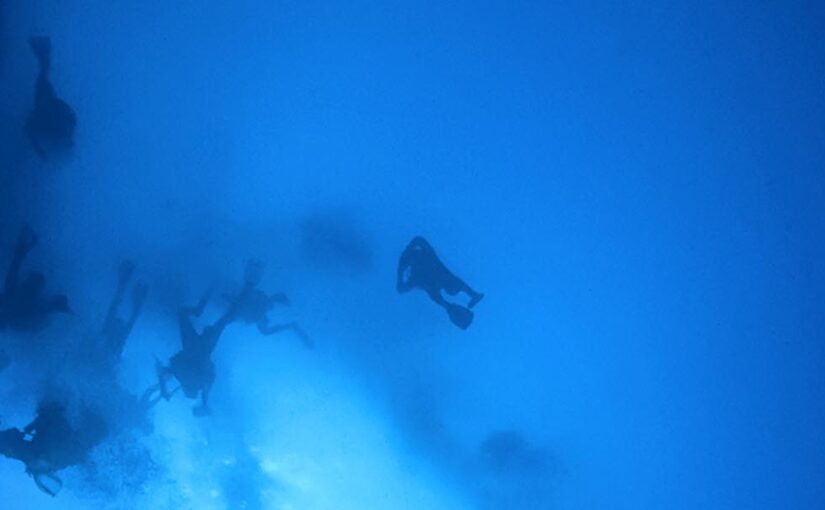
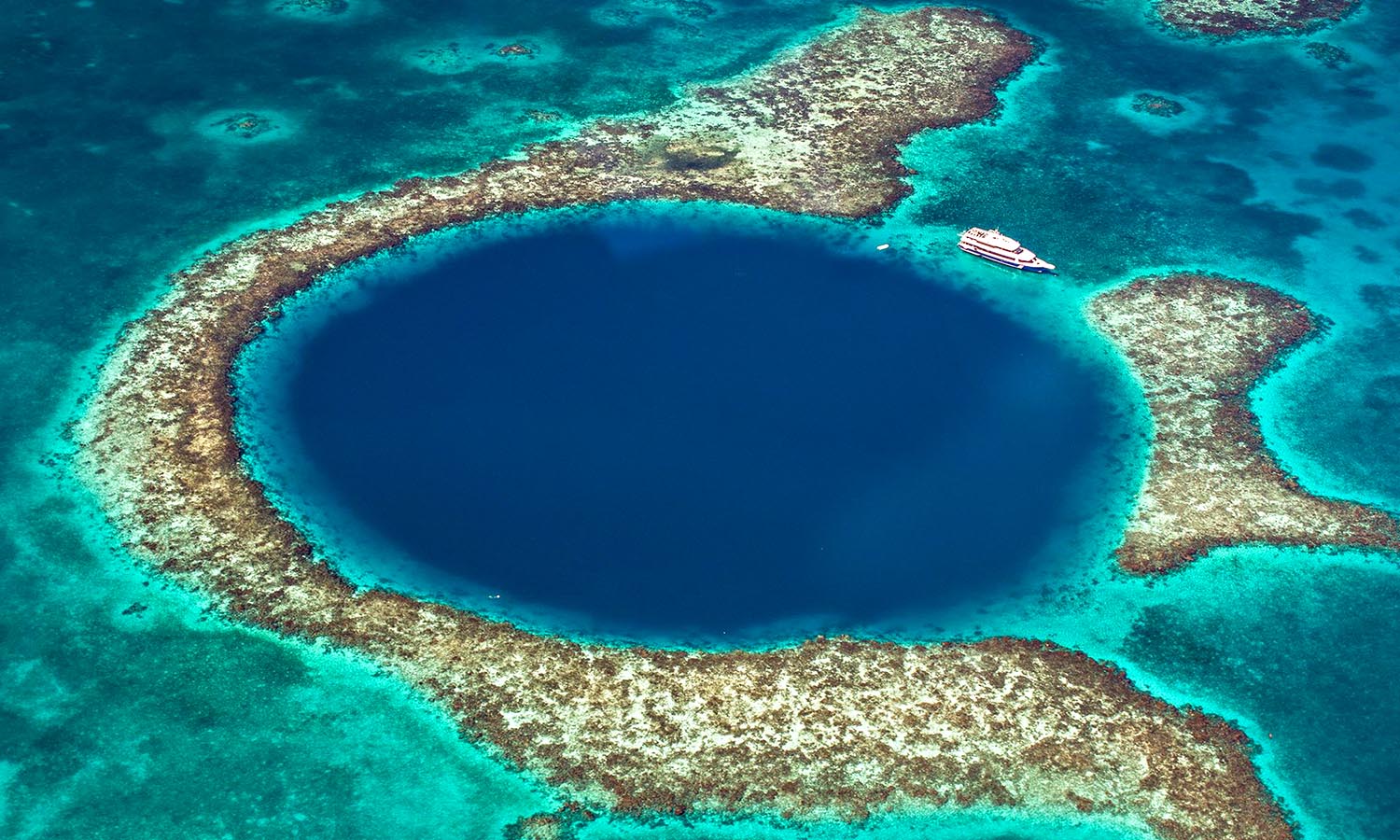
Diving the Great Blue Hole in Belize is also not for the inexperienced. The sheer depth and size of this magical dive site requires a calmness over both your buoyancy and nerves.
Great Blue Hole
One of the world’s greatest natural wonders, and surely the one that requires the most nerve.
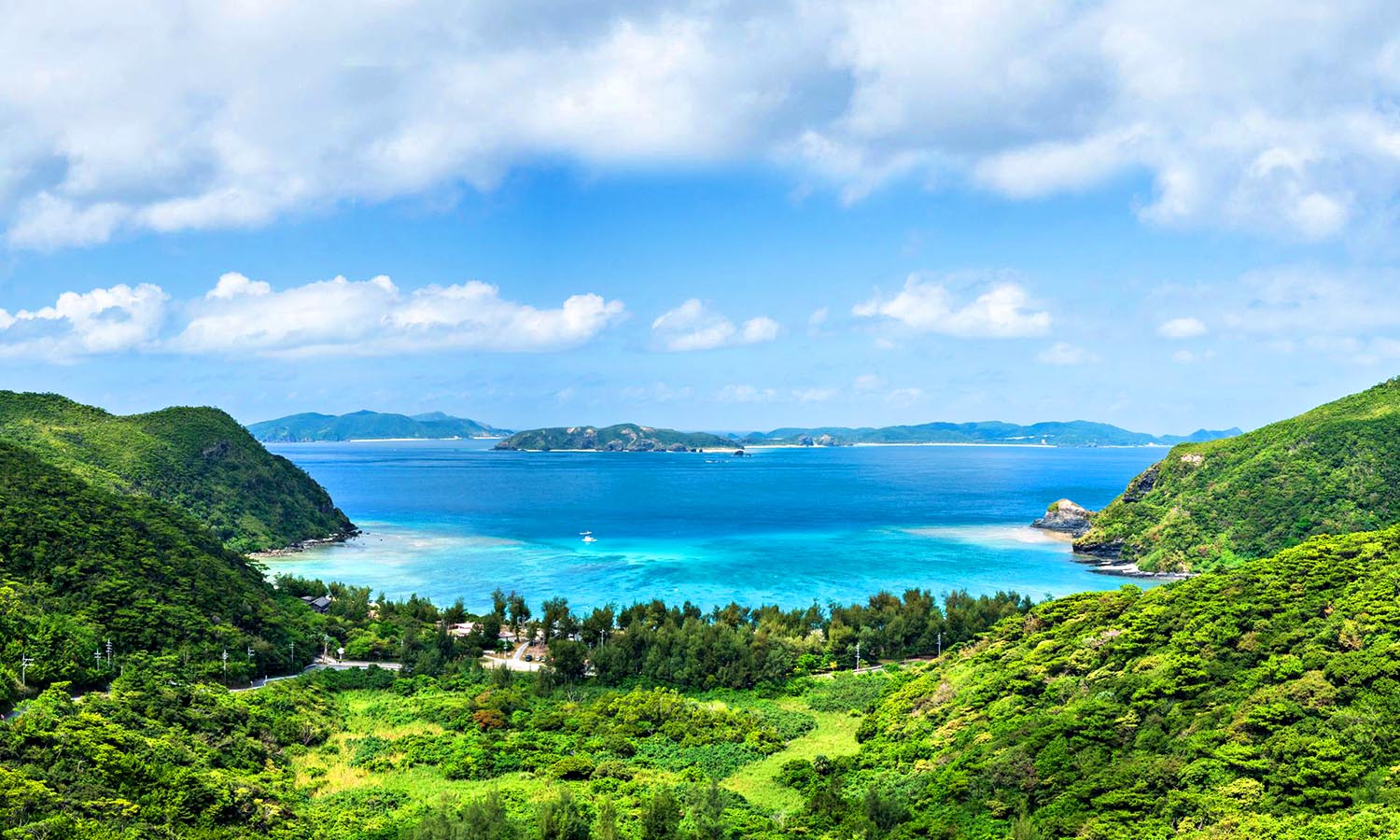
Tokashiku Beach, Japan VS Wainuiototo Bay, New Zealand
We get it, Bondi is cool. These are the best beaches still not discovered by the masses.
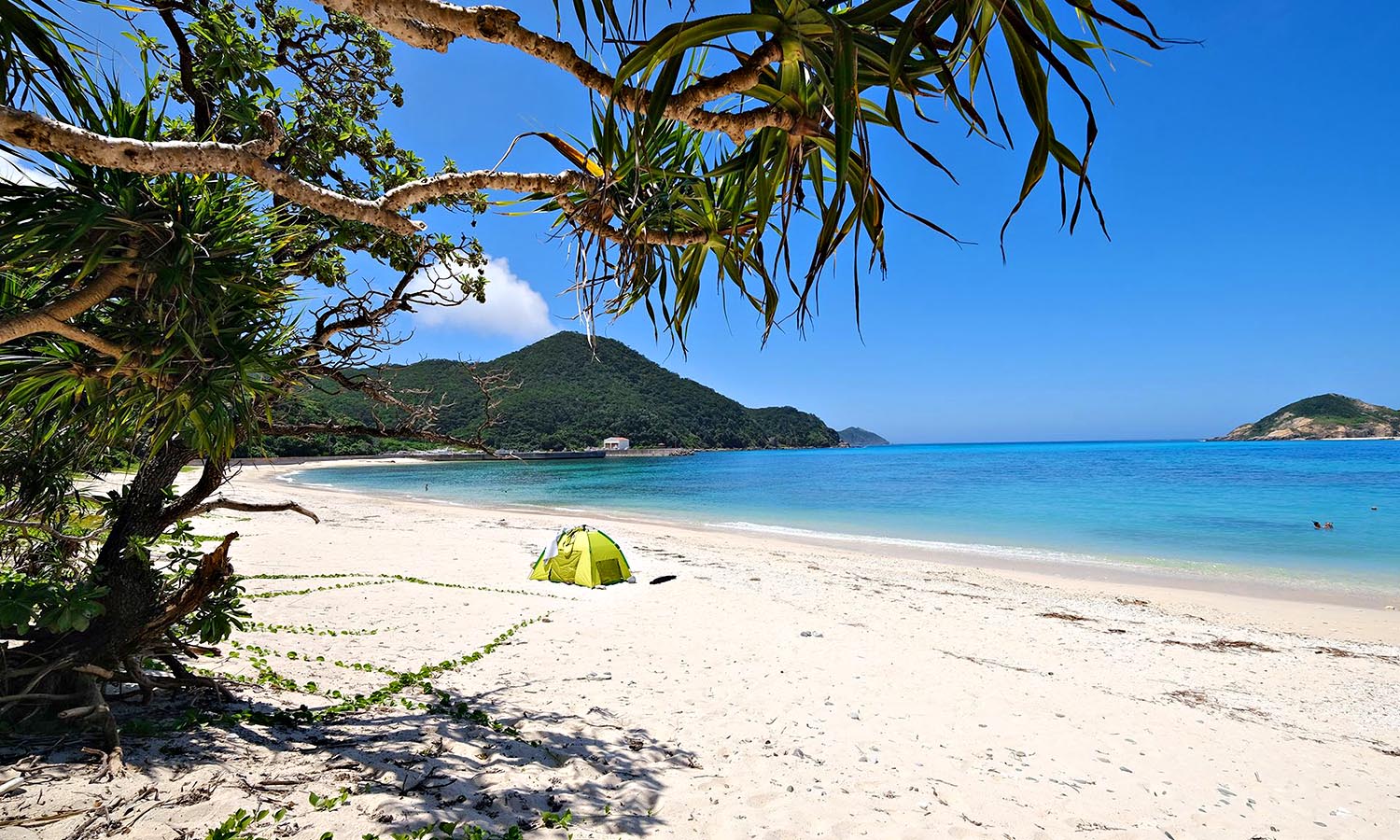
When you think of idyllic beaches, Japan is probably the last place that comes to mind. But the secret is starting to get out about Tokashiku’s picturesque sandy shores in the southern Okinawa Archipelago. The smaller of the two main beaches on Tokashiki Island, this hidden spot is ideal for an afternoon of doing absolutely nothing with no one else around.
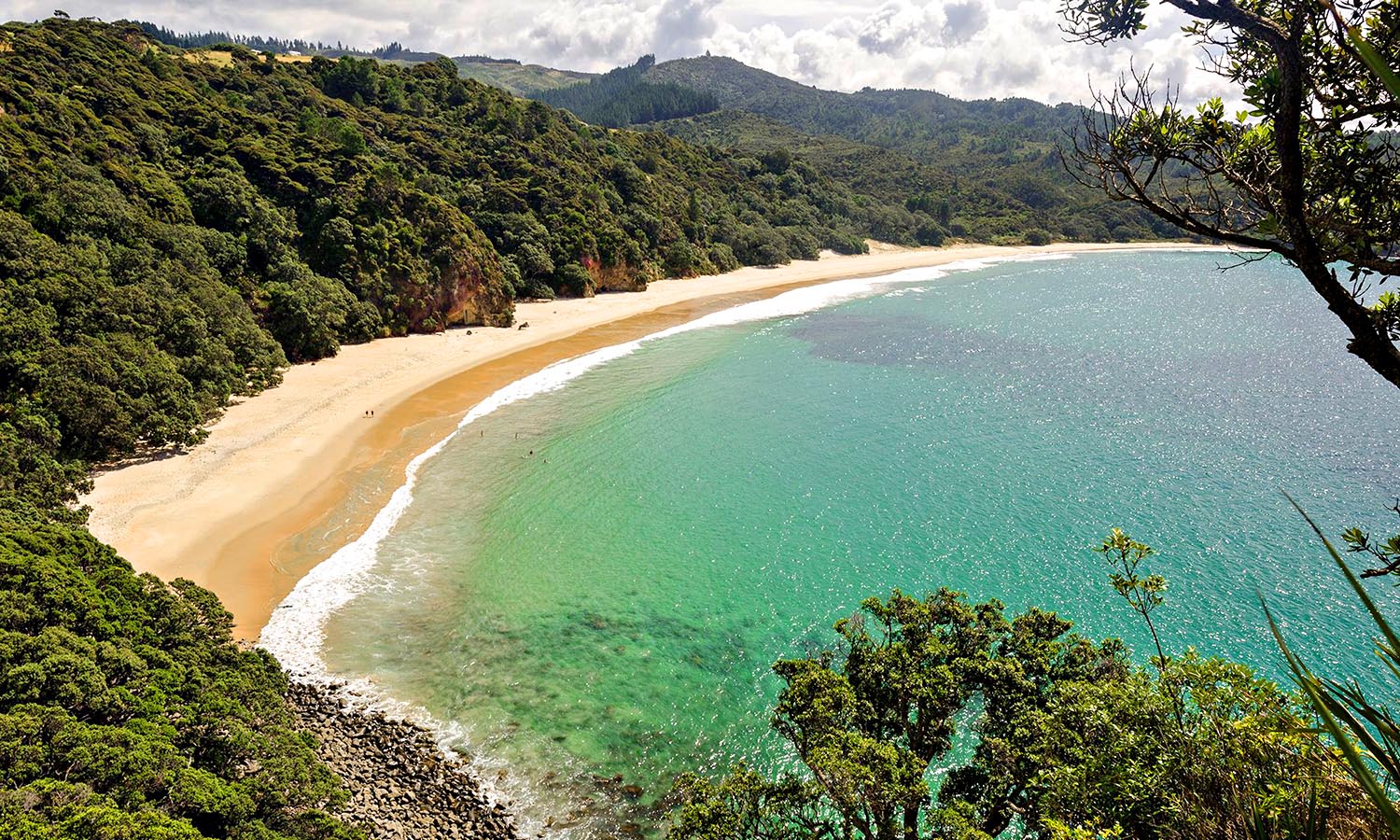
Then there’s New Chums Beach in Wainuiototo Bay on the Coromandel peninsula, New Zealand. One of the last undeveloped beaches in the country, its hard to choose a winner between two beaches so undiscovered and so untouched that you half expect a naked Tom Hanks from Castaway to pop over a ridge holding a Wilson volleyball.
Tokashiku
Kayak, snorkel, dive or just do nothing… hard to go past Okinawa.
Perth to Esperance, Australia VS Icefields Parkway, Canada
Make like Jack Kerouac, and get on the road.
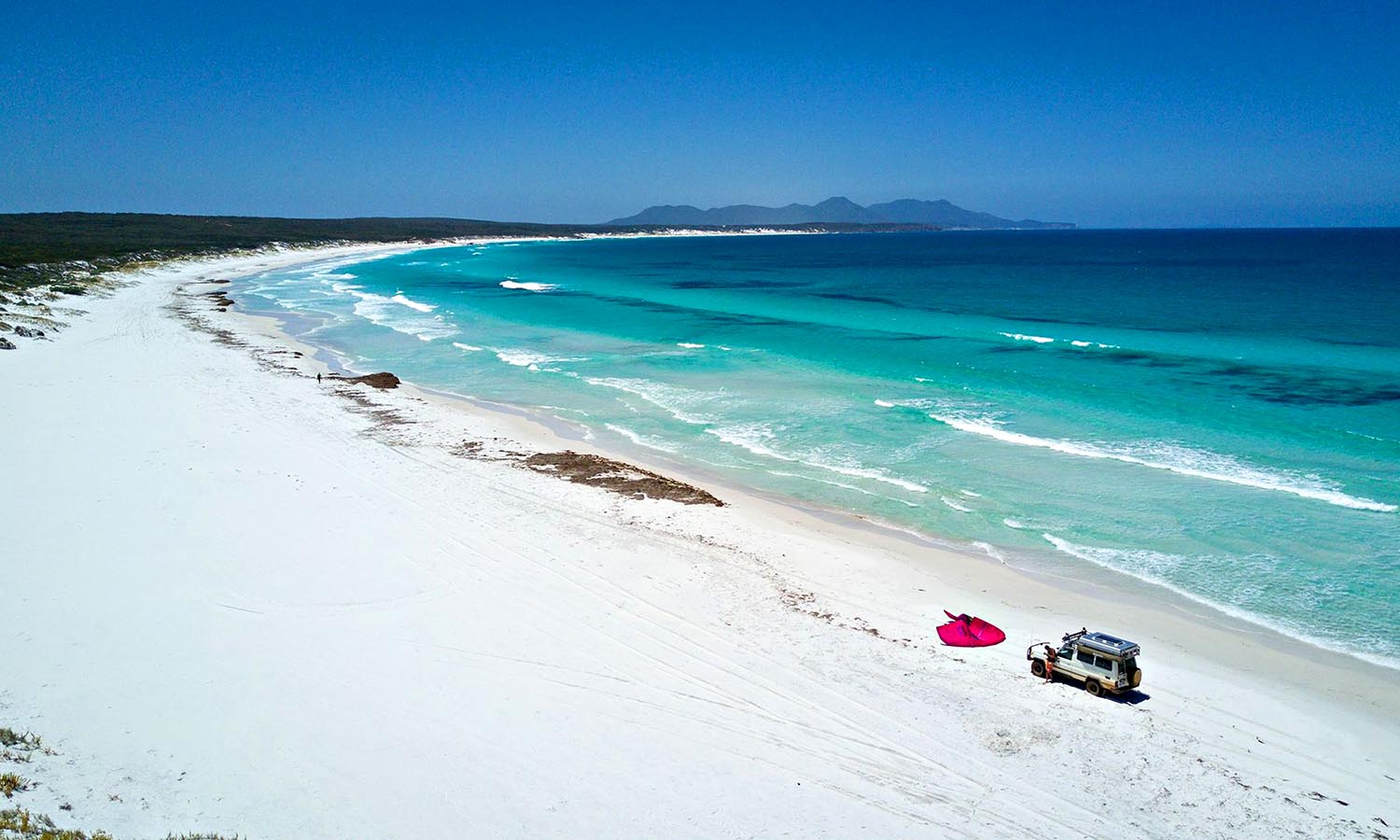
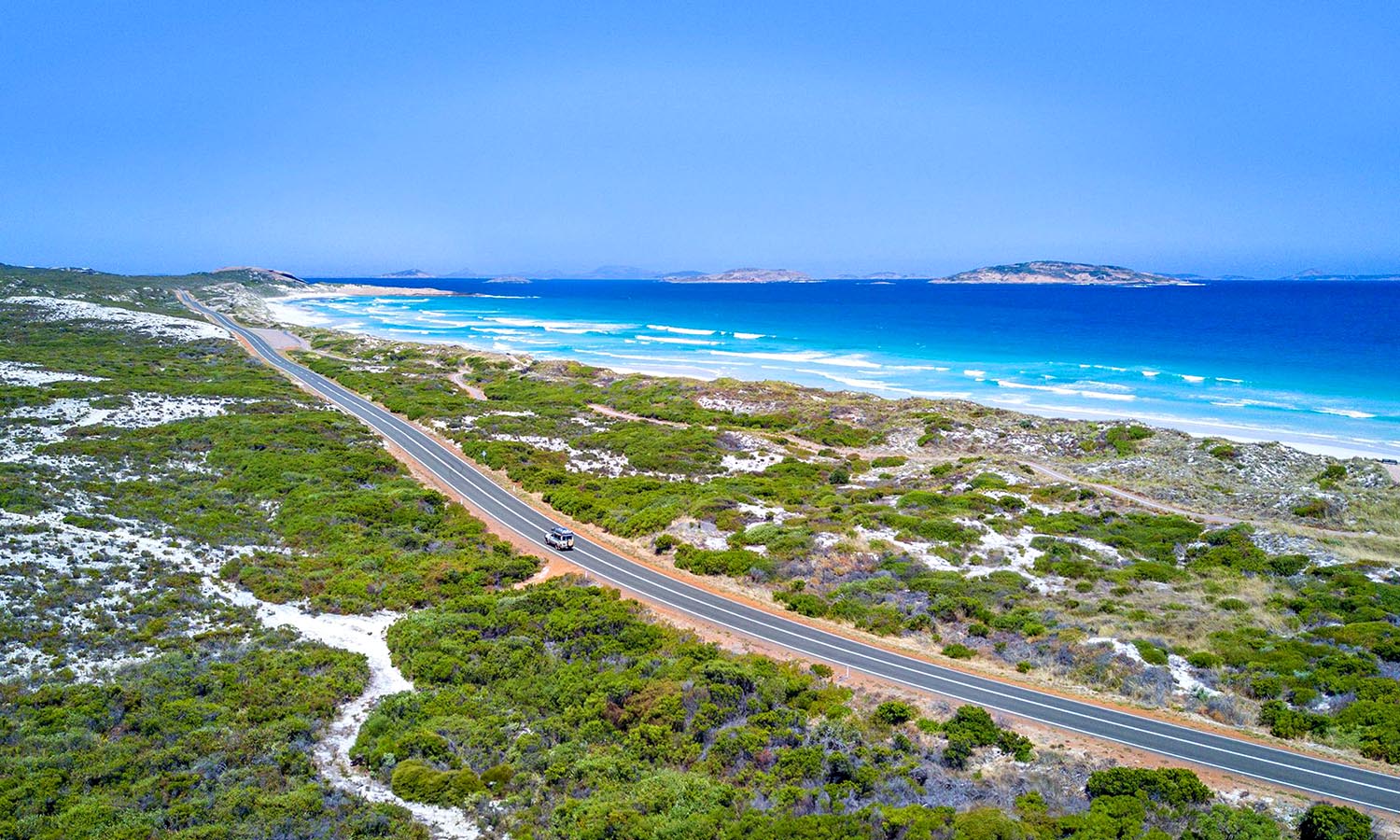
A new wave of roadtrippers took on this iconic stretch of Australian coastline during the pandemic and with good reason; the beaches, free-camping opportunities and potential wildlife encounters on this roadtrip are untamed and Insta-perfect.
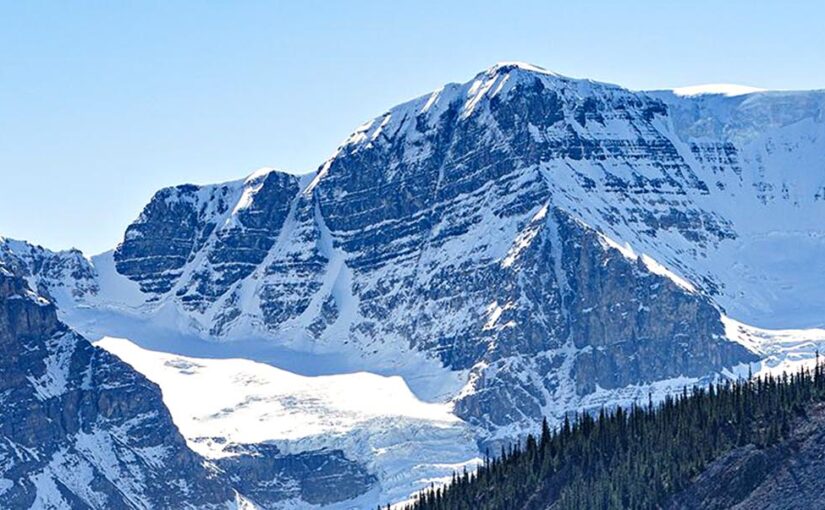
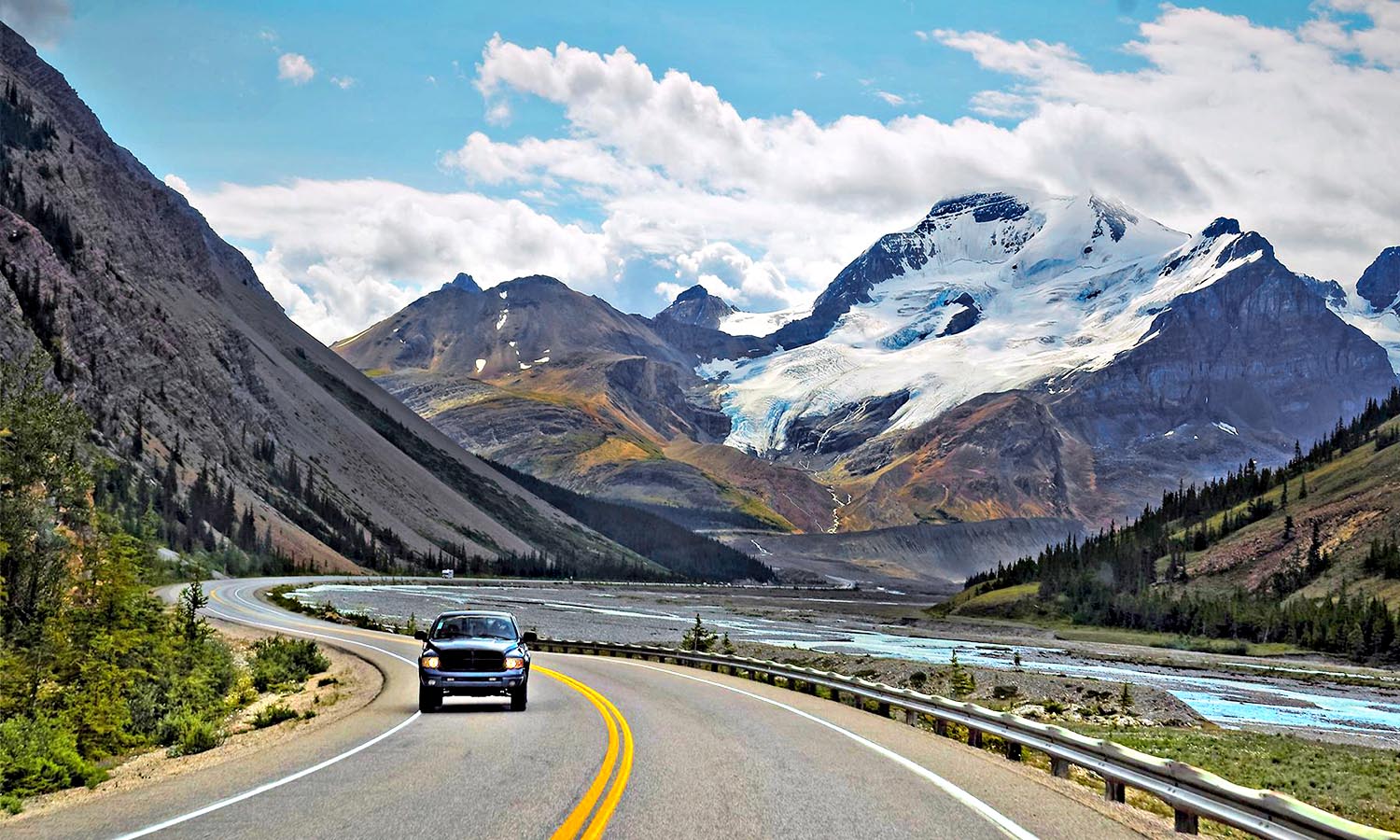
But what Australia has in its beaches, Canada matches (and beats) with mountains. The famous Icefields Parkway is over 200 kilometres long and has regularly been dubbed by National Geographic as the ‘Drive of a Lifetime.’
Icefields Parkway
Nowhere beats a Rocky Mountains road trip.
Kreuzberg, Germany VS Washington DC, USA
These are the places where a couple of drinks can turn into a week-long bender.
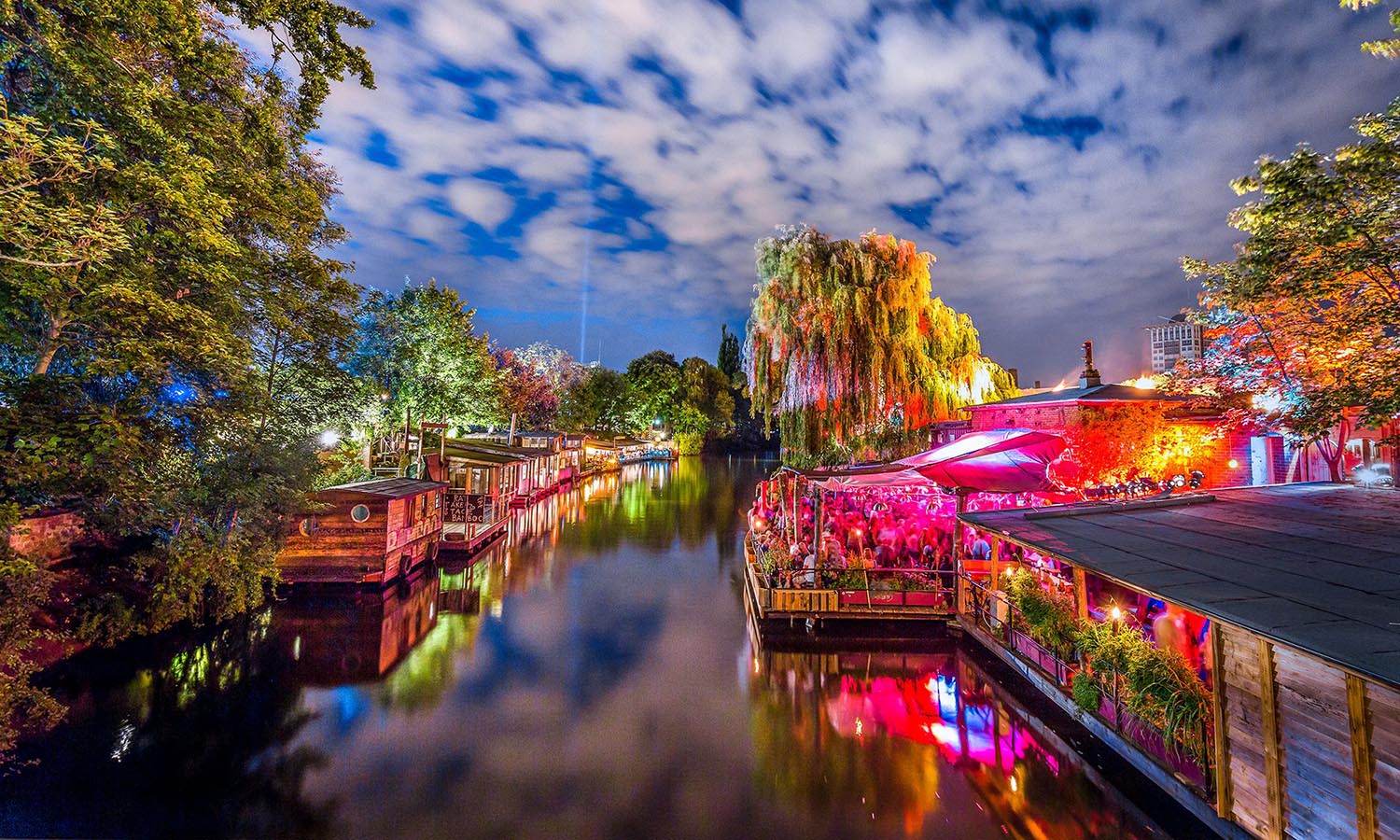
Cocktails, techno, few clothes and even fewer inhibitions is what you’ll find in Kreuzberg in Berlin. Wander (stumble) between countless secret bars to heaving discos filled with over-stimulated millennials and Gen Yers, or if you’re looking for late night munchies, you’ll find one of the best hamburgers you’ve ever eaten in the bowels of a public toilet (no pun intended).
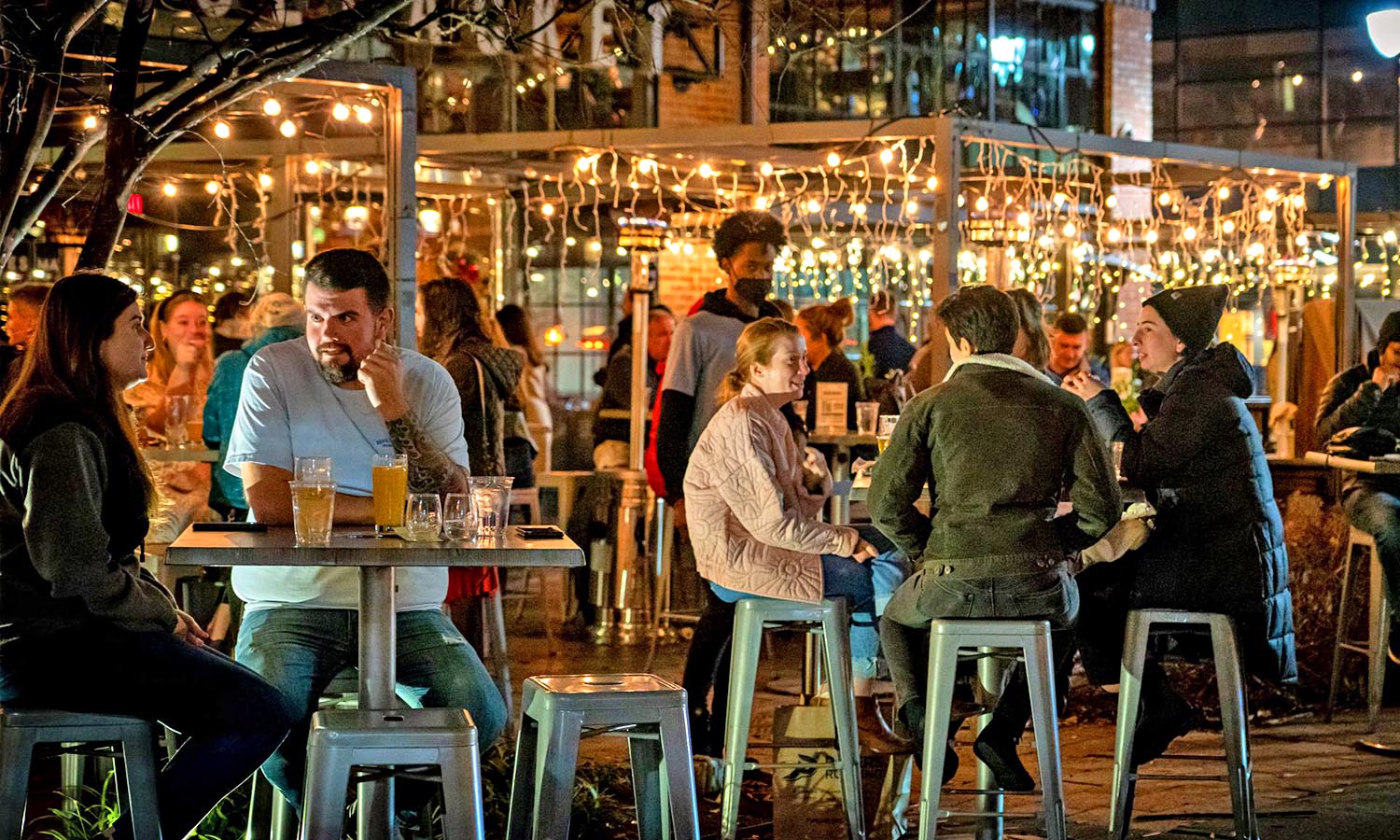
Compare this with Washington DC, which isn’t just the capital of the US, its also the most underrated party town in all of North America. There’s something for everyone in the trendy neighbourhood of Dupoint Circle. From dive bars, to craft breweries and late night speakeasies frequented by shady congressmen and cashed up public servants.
Washington DC
Sliding under the radar no more — sliding into DC’s many speakeasy bars is an epic night out.
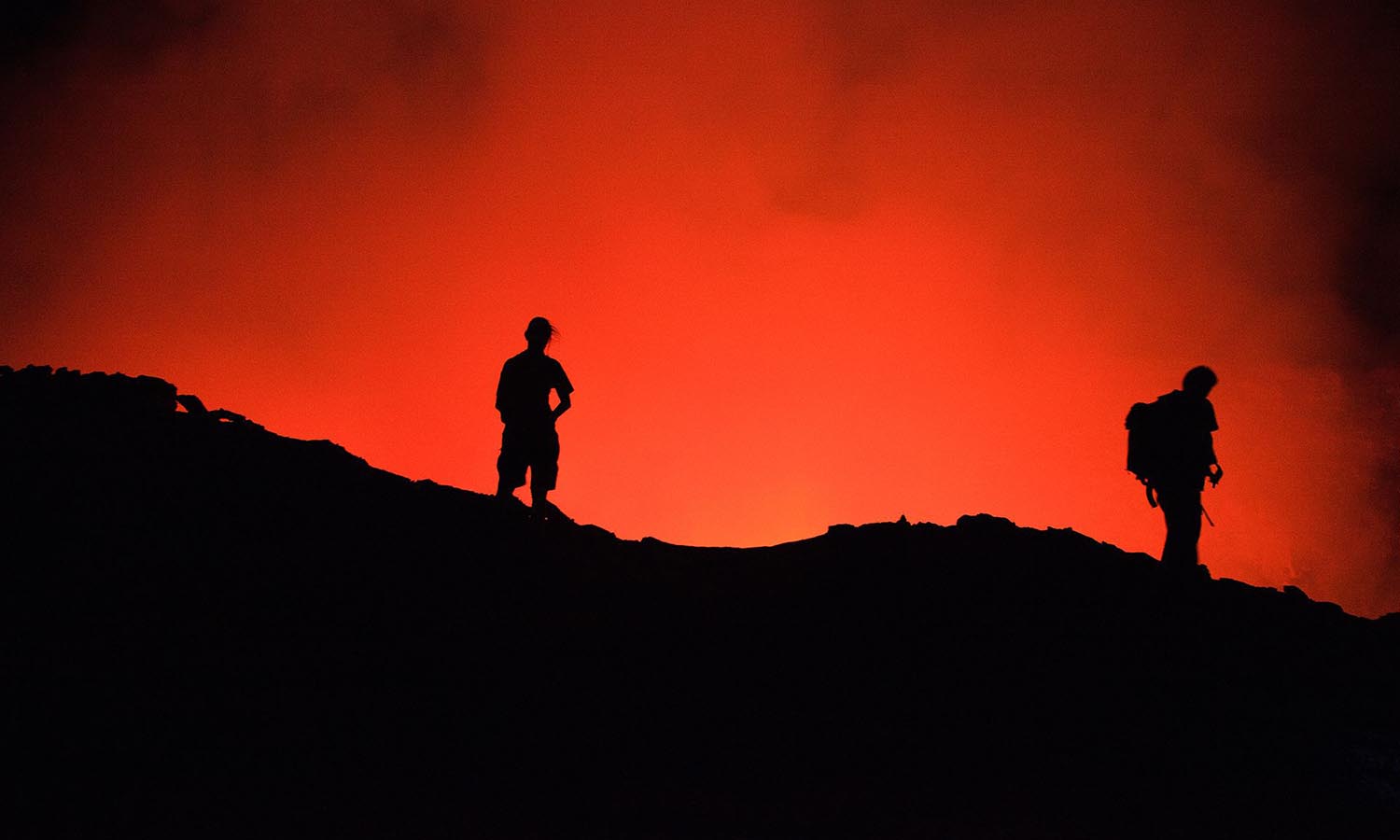
Erta Ale, Ethiopia VS Fuego Volcano, Guatemala
Ferocious, fiery, frightening… phenomenal.
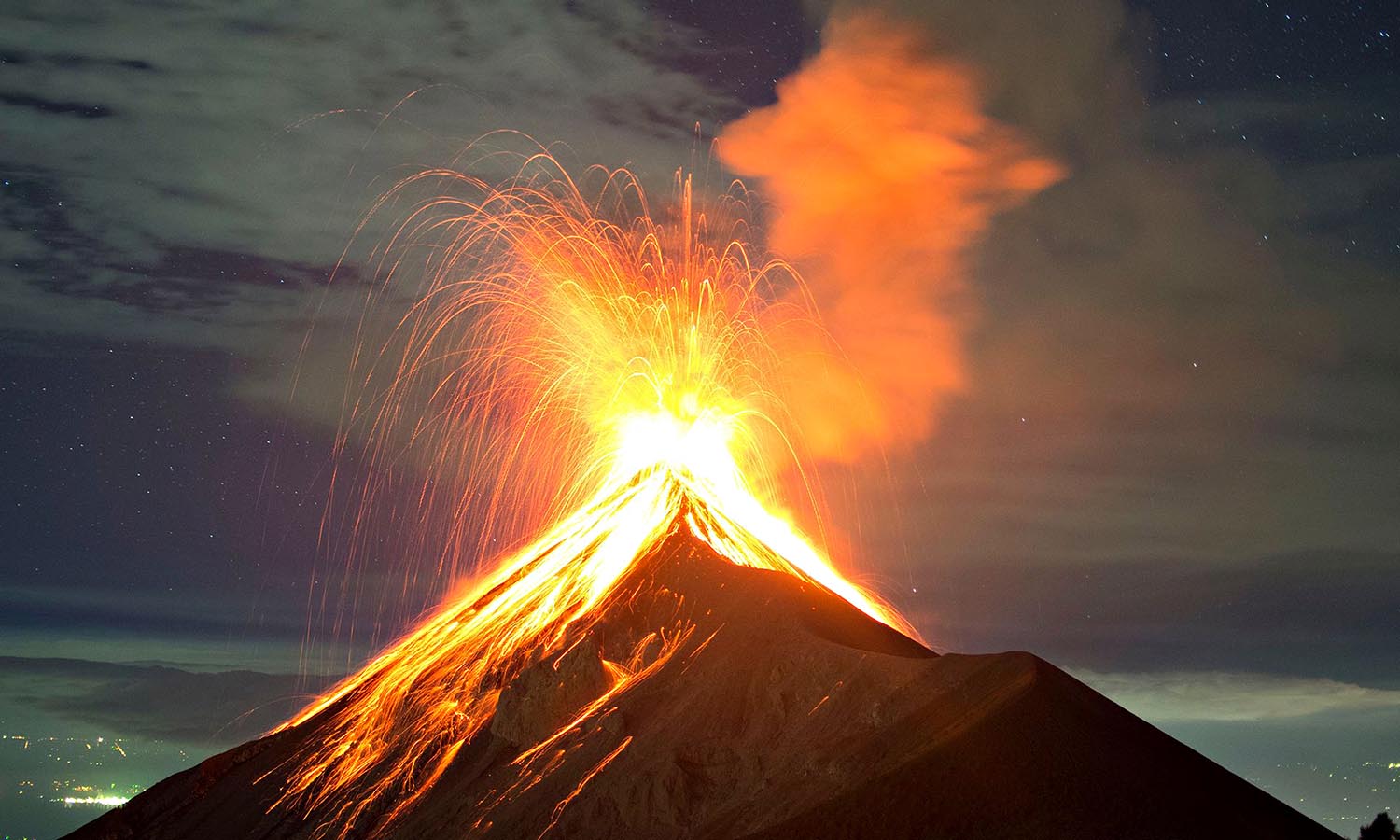
Visit the fire-breathing Volcán de Fuego outside Antigua, Guatemala by setting up at a nearby camp at sunset. Ready yourself for an evening of beers, local food and lava bursts on the horizon.
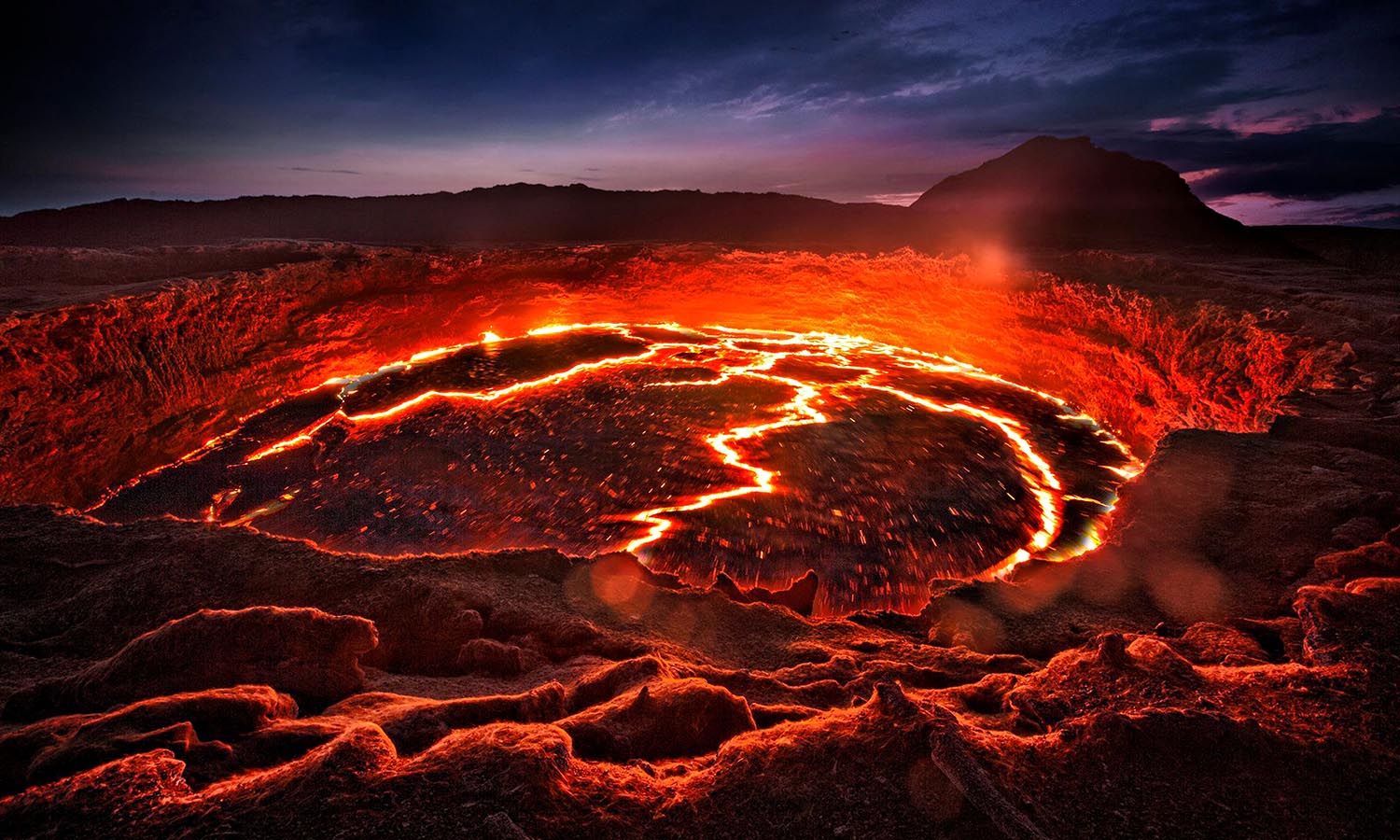
Alternatively, there is Erta Ale in Ethiopia, the world’s longest-existing lava lake. If you can handle a long 4WD through one of the most inhospitable areas on Earth, there’s another three hour hike before you can peer over the crater’s edge to witness this extraordinary spectacle. But you don’t want to stay at ground zero for very long, as the smell and heat of this volcano is oppressive.
Volcán de Fuego
Easier to get to AND you can enjoy it over a beer.
Silfra, Þingvellir National Park, Iceland VS Seward, Alaska, USA
Pretty cool. In fact, very cool.
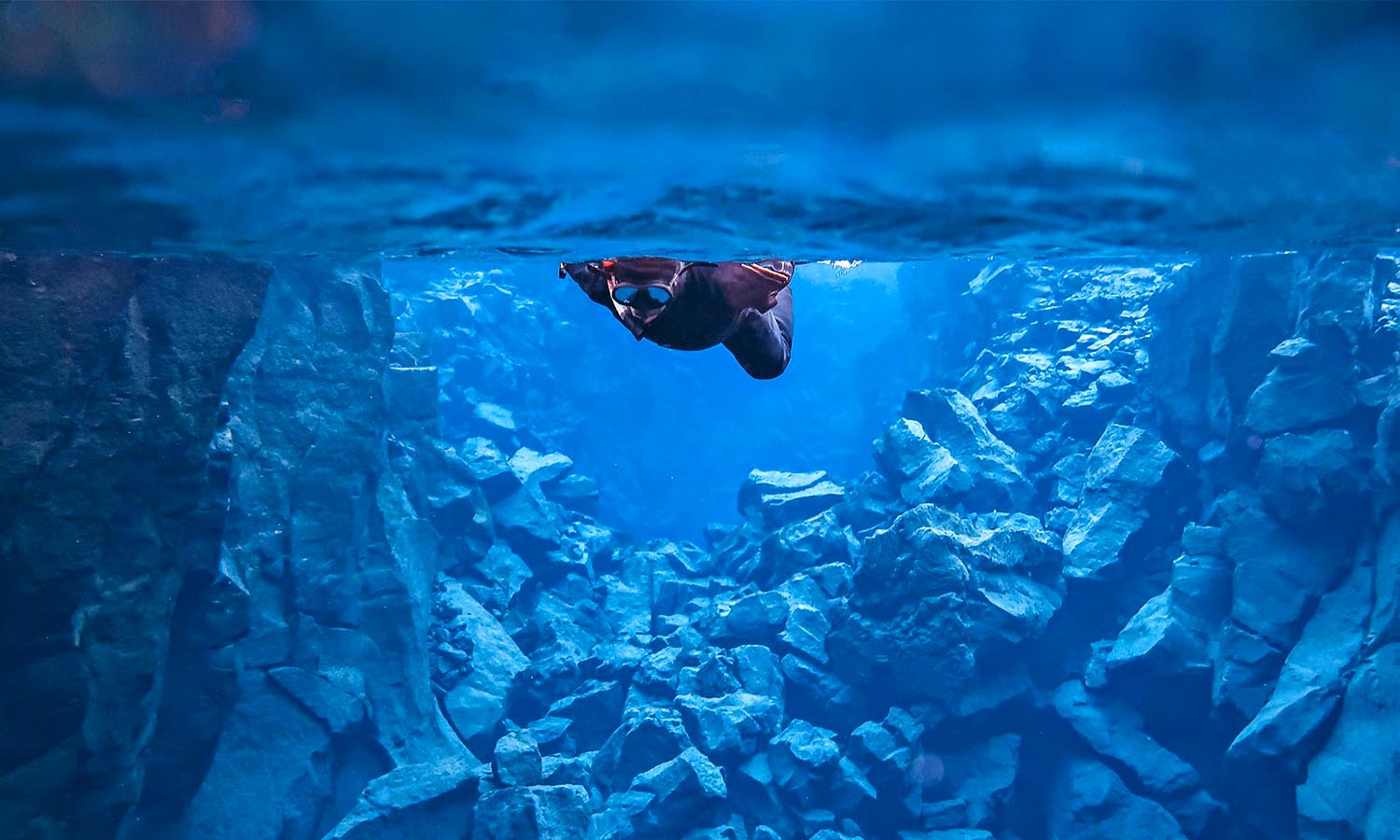
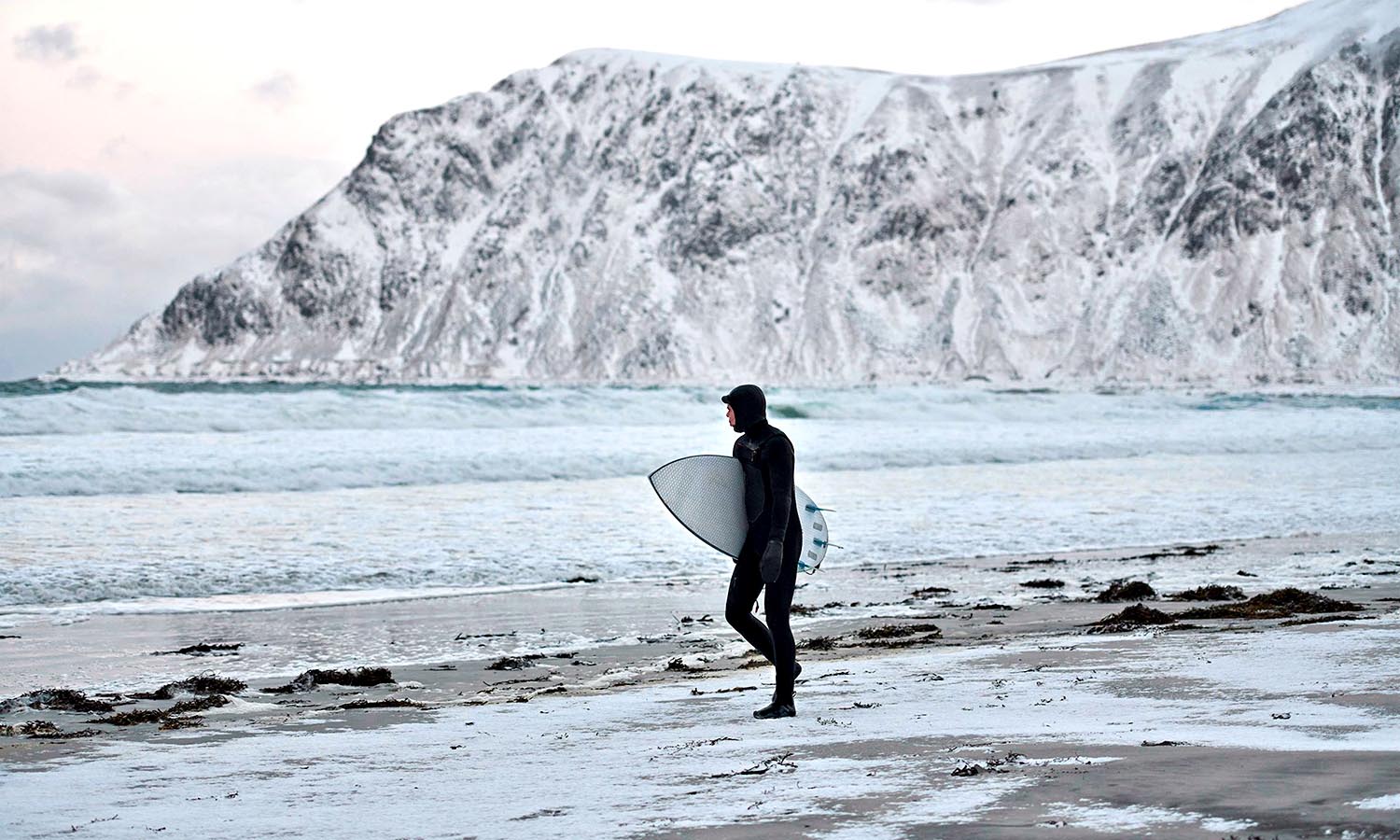
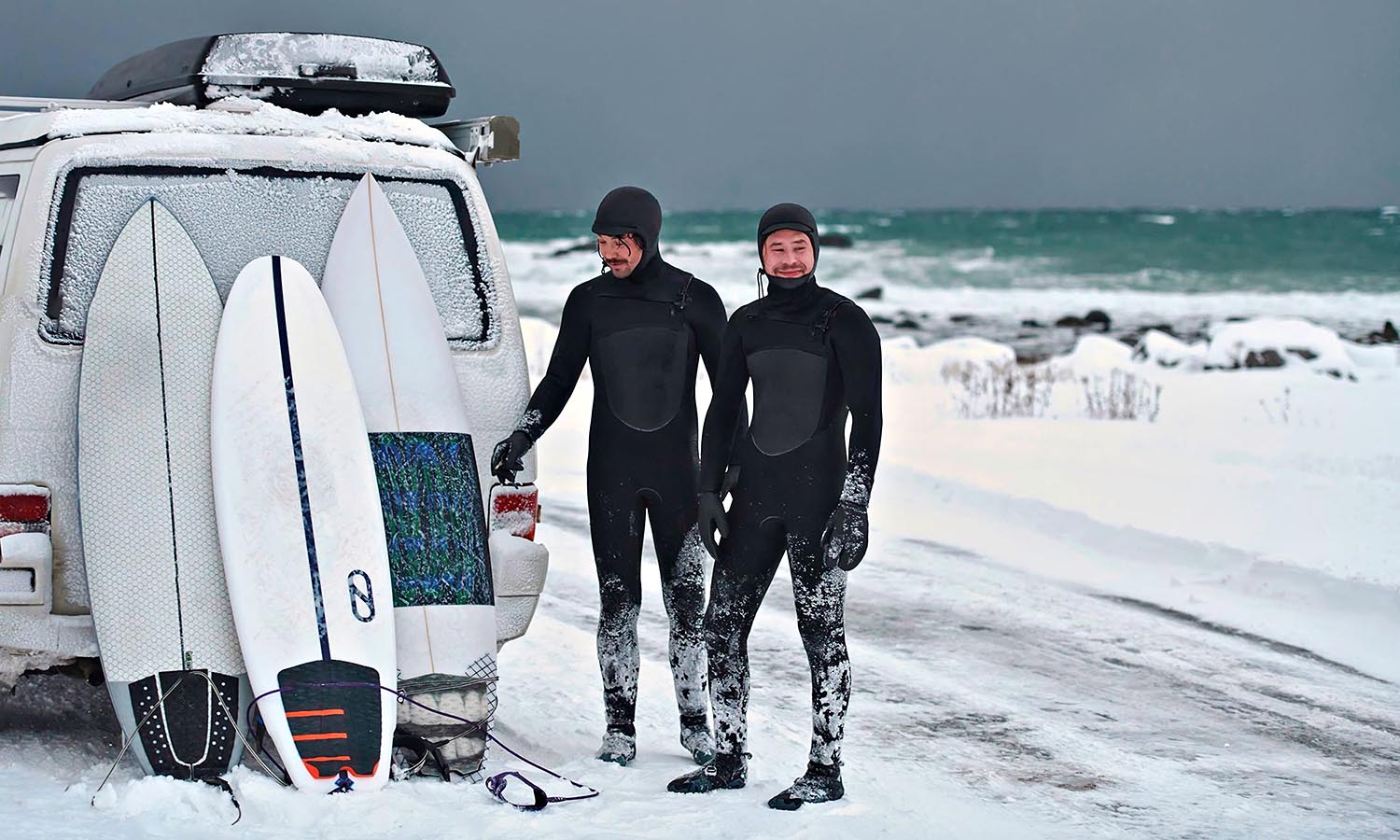
Strapping yourself into a ‘dry suit’, an extraordinarily thick full-body suit with an extremely tight, slightly kinky neck strap and diving into water that sits constantly at around 2° Celsius mightn’t sound like everyone’s idea of a good time. But Silfra, the tiny gap between the Eurasian and North American tectonic plates, is the only place in the world where you can dive between two continents.
Swimming in crystal clear water, between two mighty underwater cliffs either side of you is a magical experience, and worth the cold, as is surfing in Alaska (if you manage to catch a few). Often described as the last frontier of surfing, there are more than solid waves and uncrowded lineups to be found near Seward, two hours south of Anchorage — just be confident in your wetsuit.
Silfra
You can surf a lot of places, but there’s only one Silfra.
Osaka, Japan VS Bangkok, Thailand
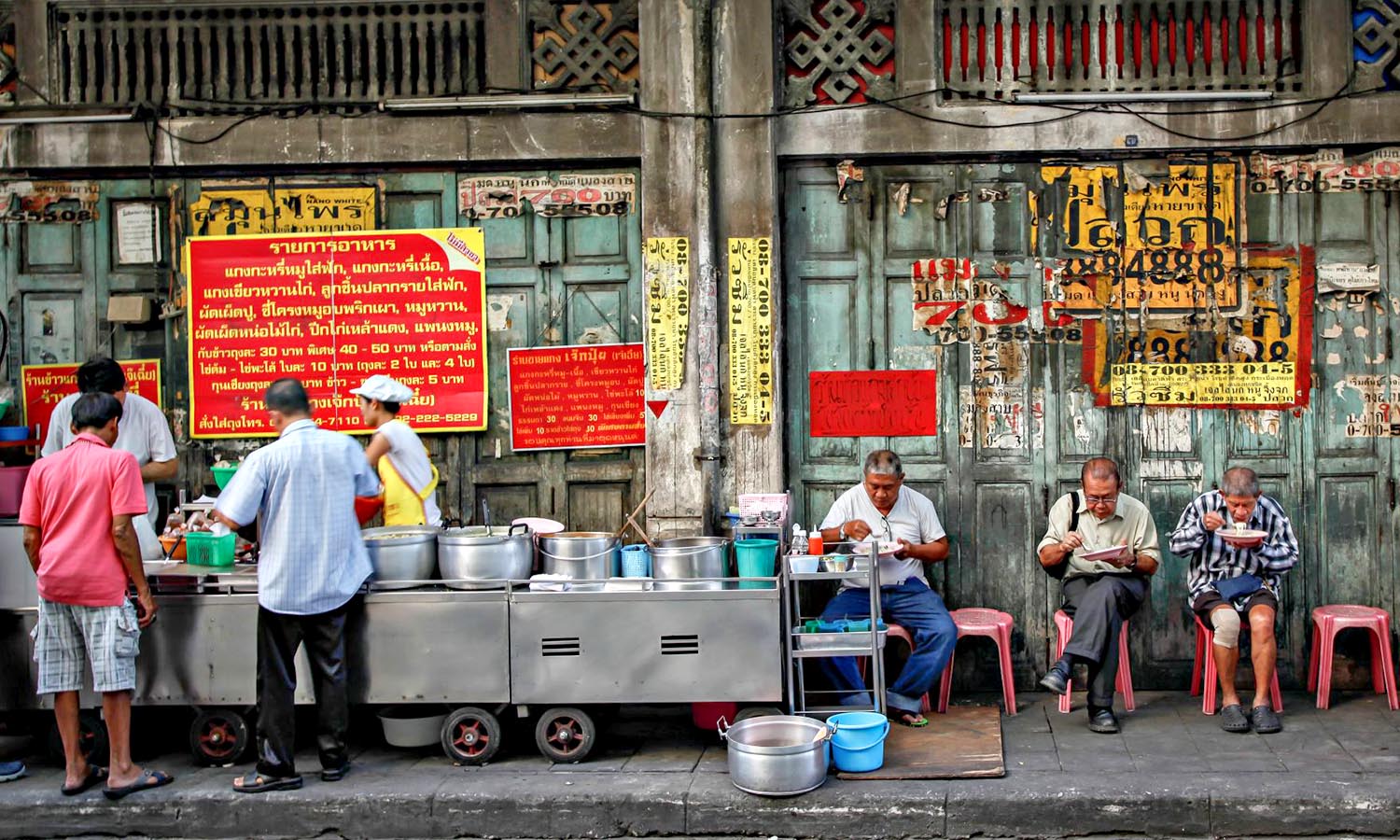
These are the worldwide kings of street food.
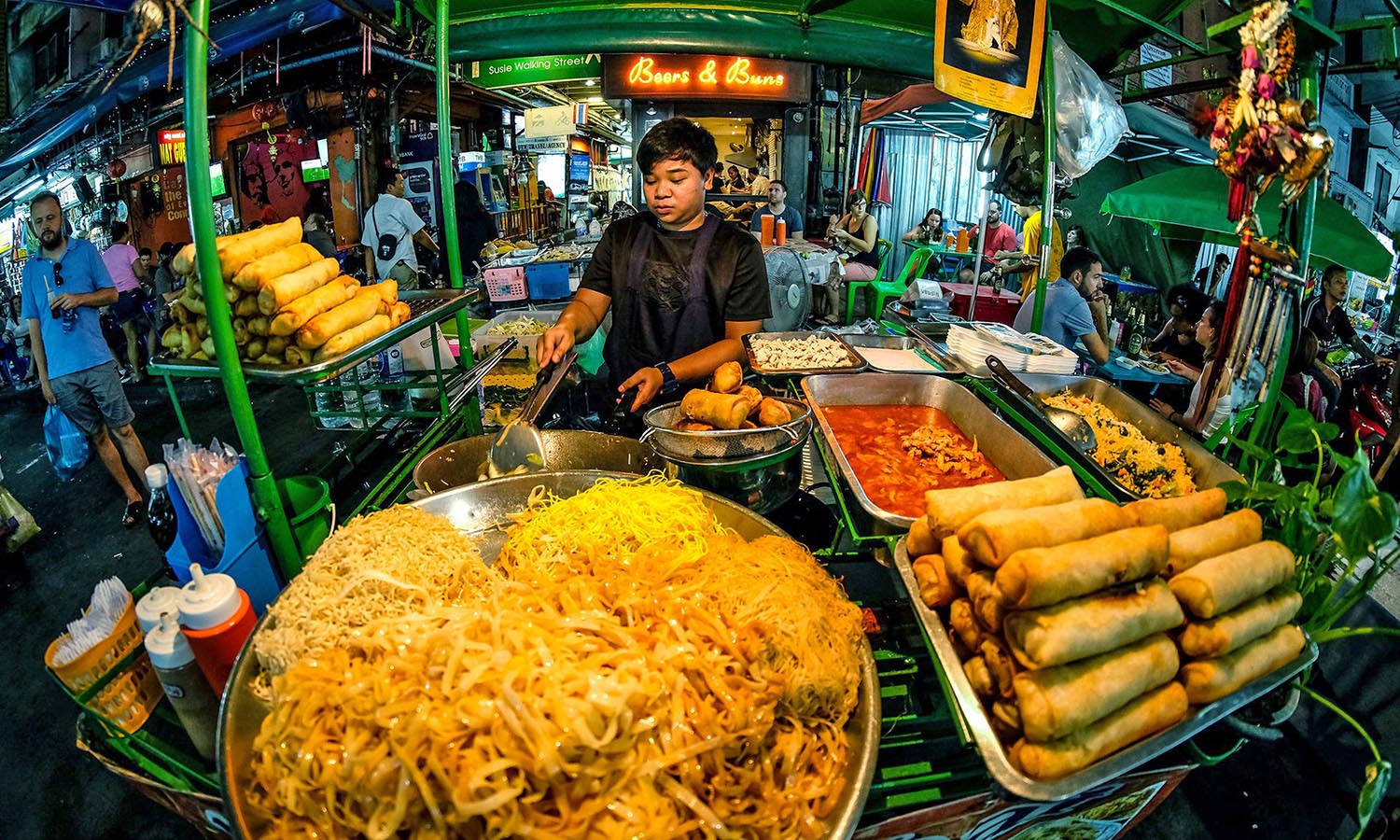
This matchup really is a clash of the titans when it comes to the best street food in the world. In fact, there’s some stalls in the streets of Bangkok that have earned themselves a Michelin Star — just let that sink in For a soi (street) that really comes alive at night with street delicacies, head to the Phaya Thai neighbourhood.

In Osaka, they love their street food here so much they use the word Kuidaore. Simply put, it means to eat oneself on the street into total ruin. Whether it’s Takoyaki or Okonomiyaki, wear some bigger pants in Osaka. Grab yourself a Sapporo from the nearest Family Mart and strap yourself in.
Osaka
Likely to divide opinion as much as any, but Osaka gets the nod… just.
Gulmarg Ski Resort, India VS Soho Basin, New Zealand
It’s easy to be a powder snob when you’re a seasoned skier or snowboarder. You want three things: deep snow, daily fresh tracks and the option to tackle terrain others won’t dare to ride.
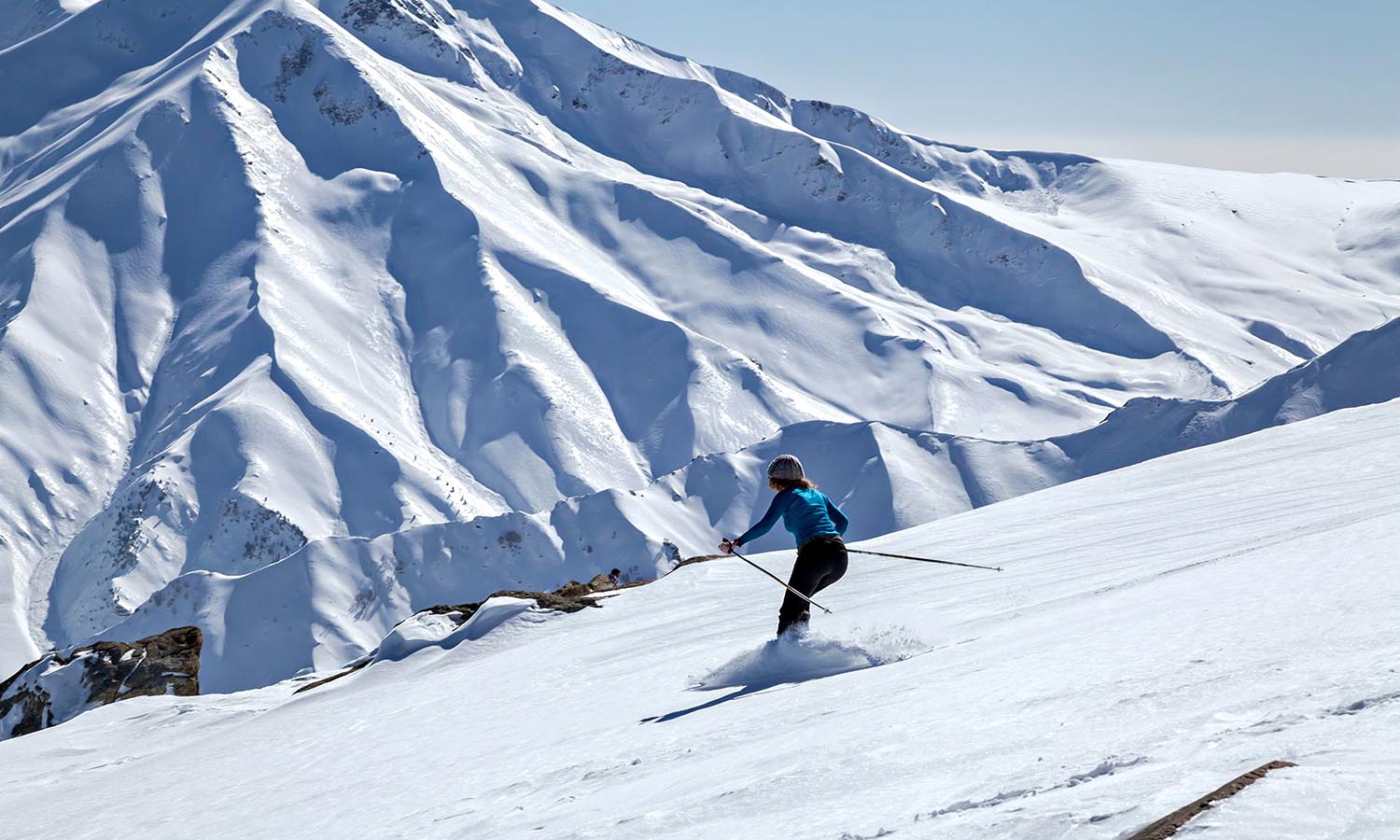
Gulmarg sits on a high alpine table in the Pir Panjal mountain range of the Himalayas. With a range of accommodation and backcountry or heliskiing tours, India (and the wider Himalaya region) is the new frontier for winter ski and snowboard adventures.
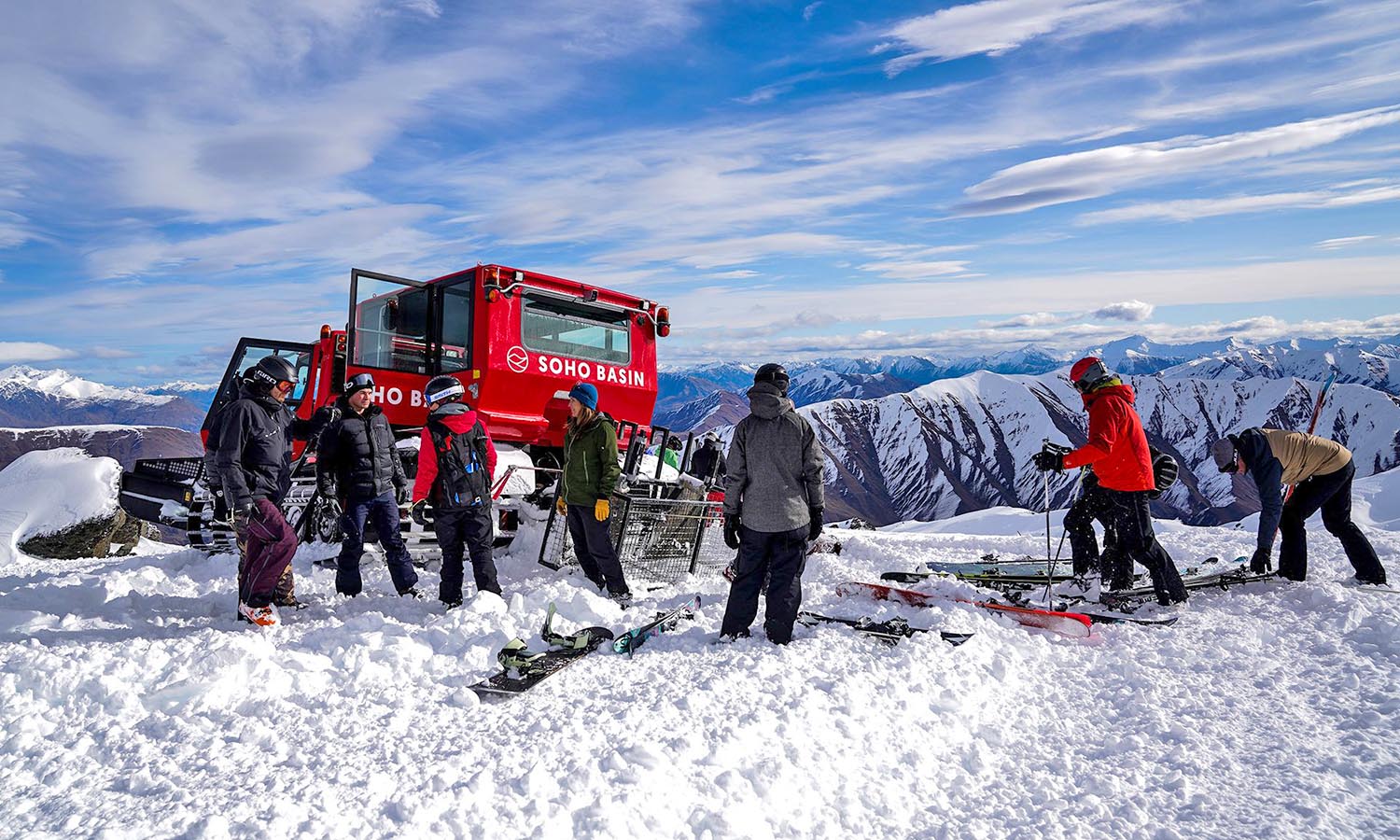
Contrast this against the incredible Soho Basin in New Zealand. This private ski resort, hidden behind Cardrona, is a cat skiing adventure for experienced snow bunnies. And you don’t just come to Soho for the snow, because there’s also a private restaurant, bottomless bar and four-course lunch during the middle of your ski day.
Soho Basin
As much for the crazy amount of fun to be had away from the mountain as for the epic shredding opportunities.
We’ve compiled five of the greatest, highest and scariest experiences from around the world when it comes to being a long way from the ground.
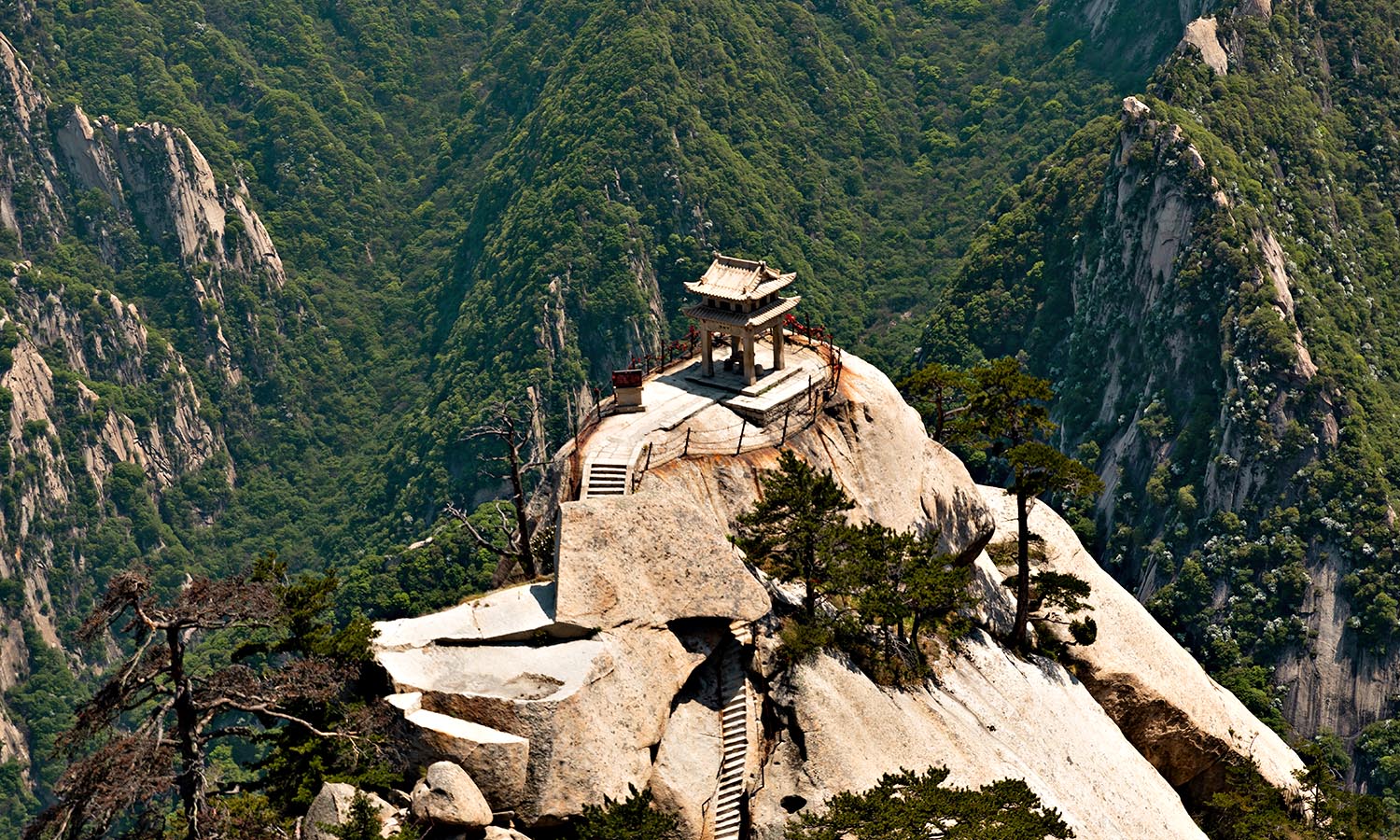
MOUNT HUA, CHINA
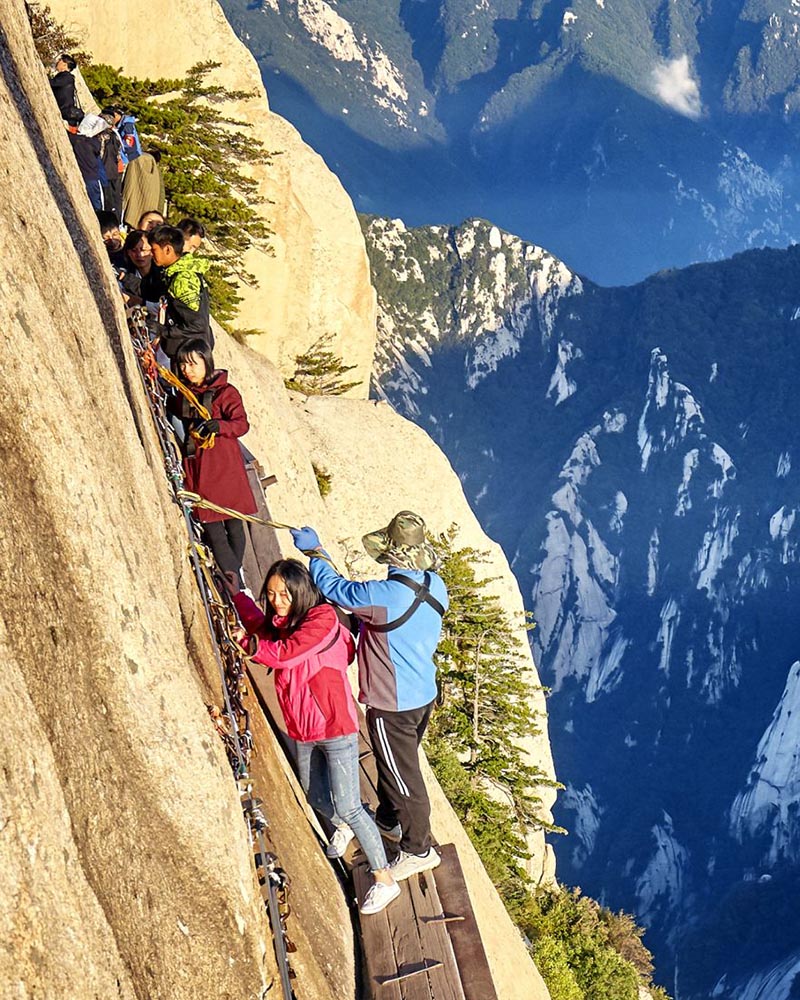
China has taken vertical tourism to new heights in recent years, from fake glass cracking bridges to lunches on the side of a cliff. The scariest of these is without a doubt the Plank Walk in the Sky experience at Mount Hua, dubbed ‘the scariest hike in the world’. We’re not arguing.
It is exactly what it sounds like: a series of wooden planks attached perilously to the side of a cliff, over 2,000 metres in the air. To reach the planks in the first place, you need to scale a steep vertical staircase dug into the rocks. There are some sections where the planks themselves disappear, with only foot supports carved into the rock.
Originally a walkway to reach a spectacular, if very inconveniently, located temple, it is now a magnet for absolute maniacs the world over. If you identify as one of those, we’re sure you’ll have a great time.
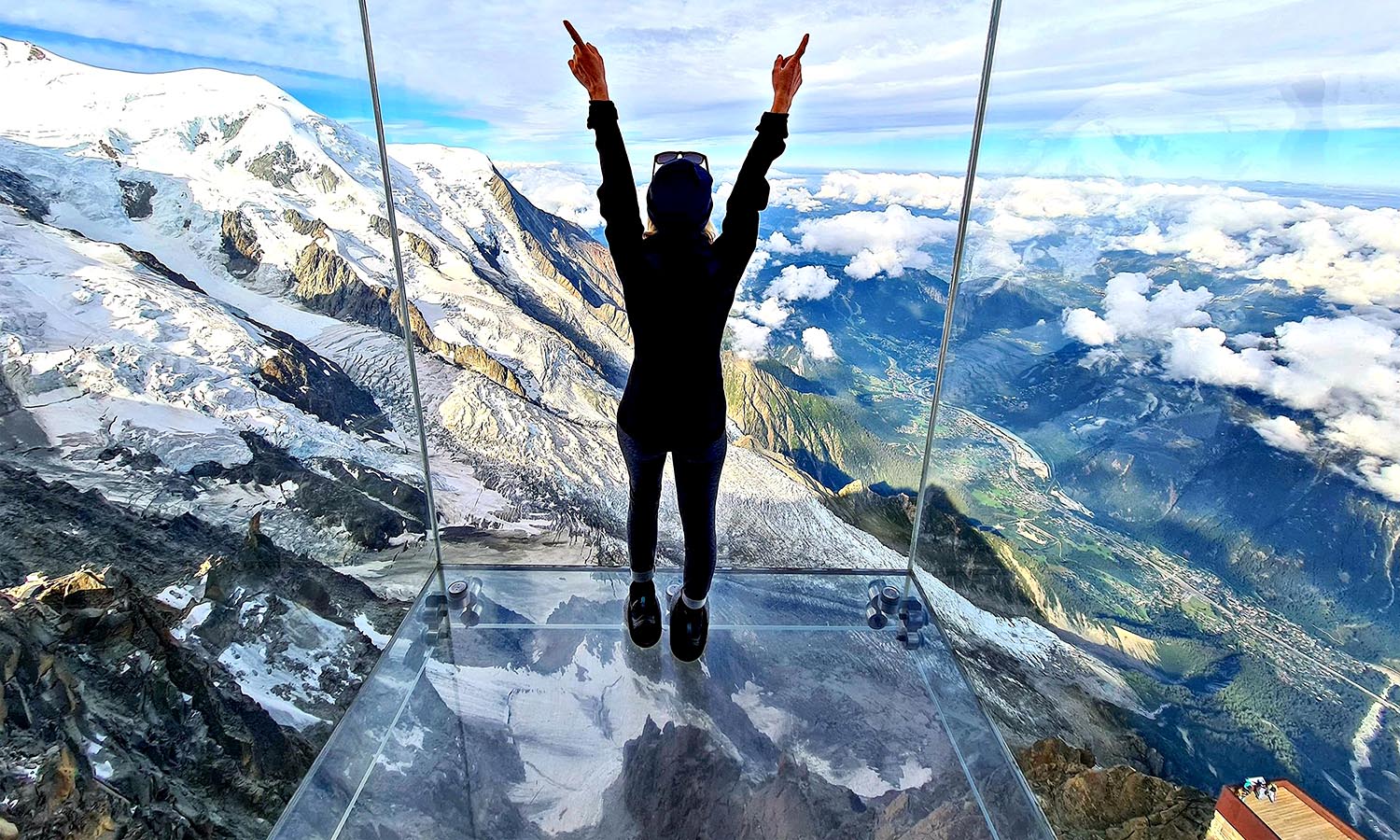
FRANCE
Some crazy person thought it would be a really good idea to put a glass box 3,842 metres up a mountain in France, and they were absolutely right.
The Chamonix Skywalk includes the descriptive ‘Step into the Void’ experience at Aiguille du Midi, where there is not only apparently nothing beneath you, but nothing in front or to your side either. It is as if you are floating in a void above mountains.
Just don’t look down.
SPAIN
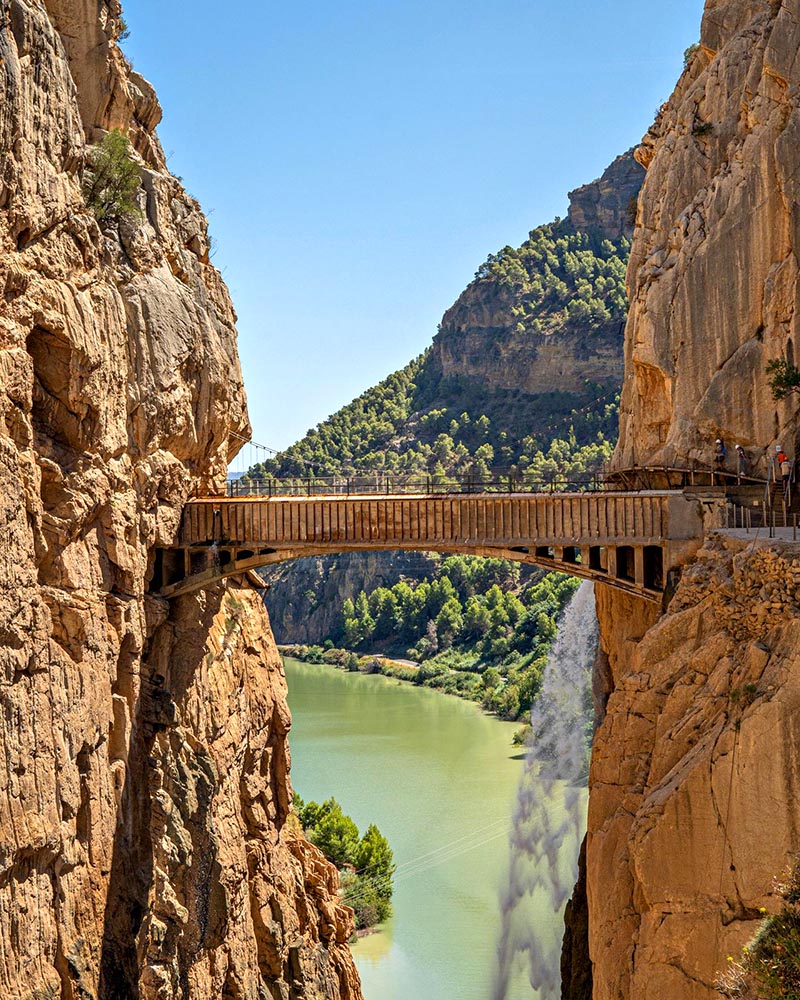
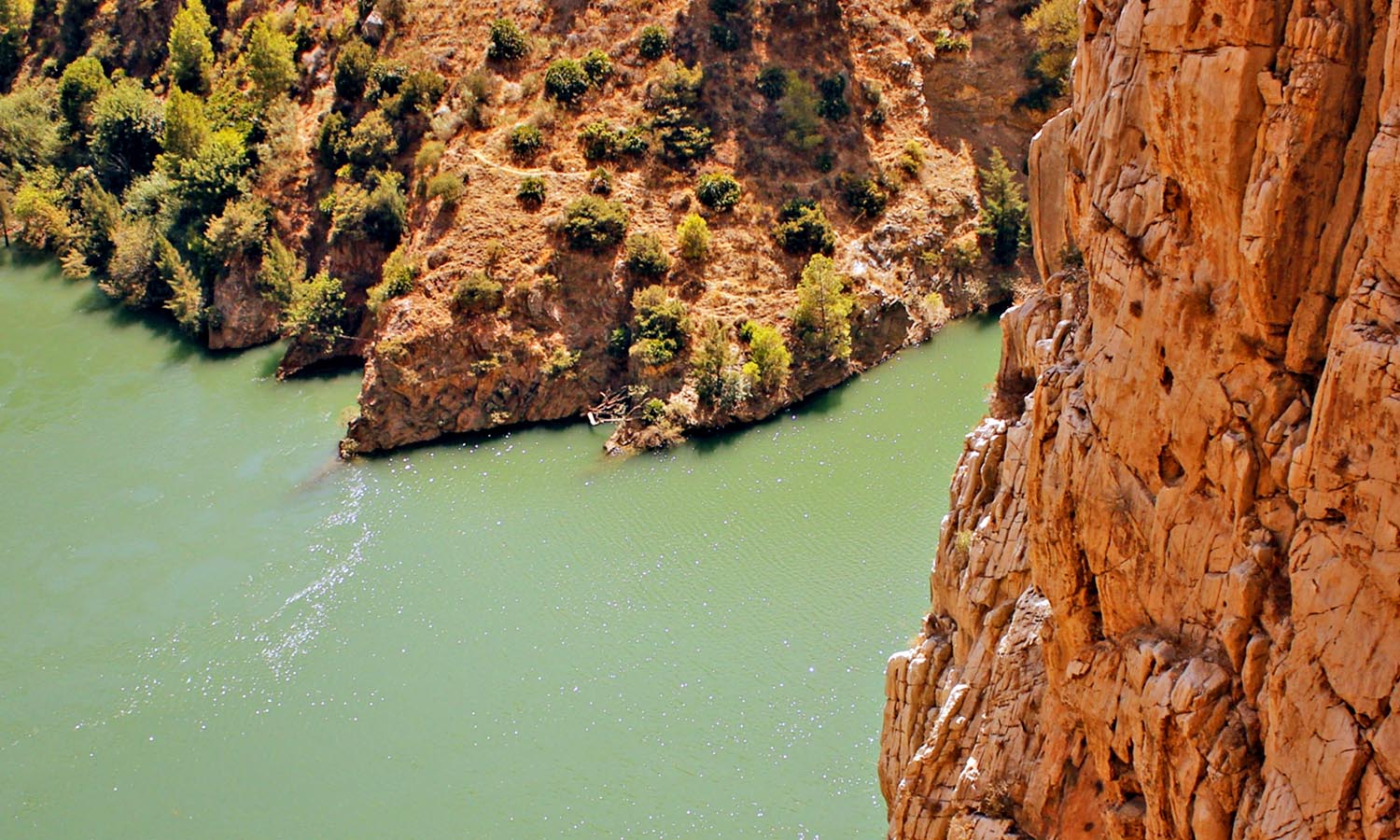
The Caminito del Rey (King’s Little Path) was built in 1905 to give hydroelectric power plant workers access between two waterfalls. As far as walks to work go, this one takes the cake.
Traversing the gigantic vertical cliff of a narrow gorge in the Andalusia mountains of southern-Spain, this one metre wide, 100 metres high trail was surely one of history’s most difficult trails to build. And while there was a spate of hiker tourist deaths here at the turn of the millennium, the Spanish Government spent four years and AU$771 million making this into the safe cliff walk that it is today.
If you manage to lift your head up, you’ll be rewarded with sensational views of the turquoise coloured Guadalhorce River, which snakes its way dramatically down a narrow mountain ravine. Awesome.
CANADA
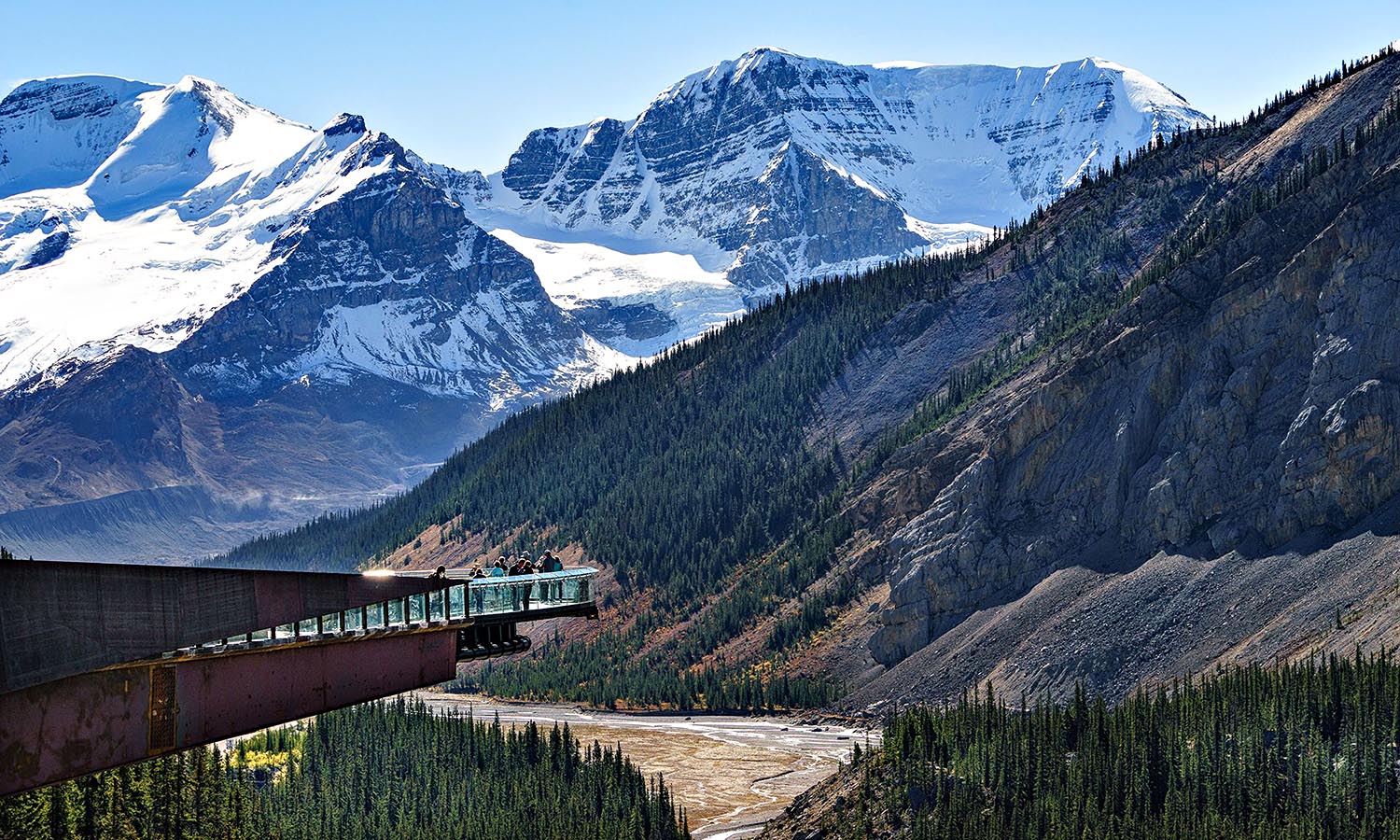
The Glacier Skywalk in Alberta’s Icefields isn’t quite as precarious as some of the other, slightly sketchier experiences on this Hot Five list, but it’s probably the most beautiful.
In the shape of a horseshoe, and right in the middle of the Rocky Mountains, you get 360-degrees of nature’s glory in the form of ice-capped mountain peaks and epic, glacier-formed valleys.
The Rocky Mountains are nothing short of majestic, and this is the best place to see them, bar none.
NEW YORK CITY, USA
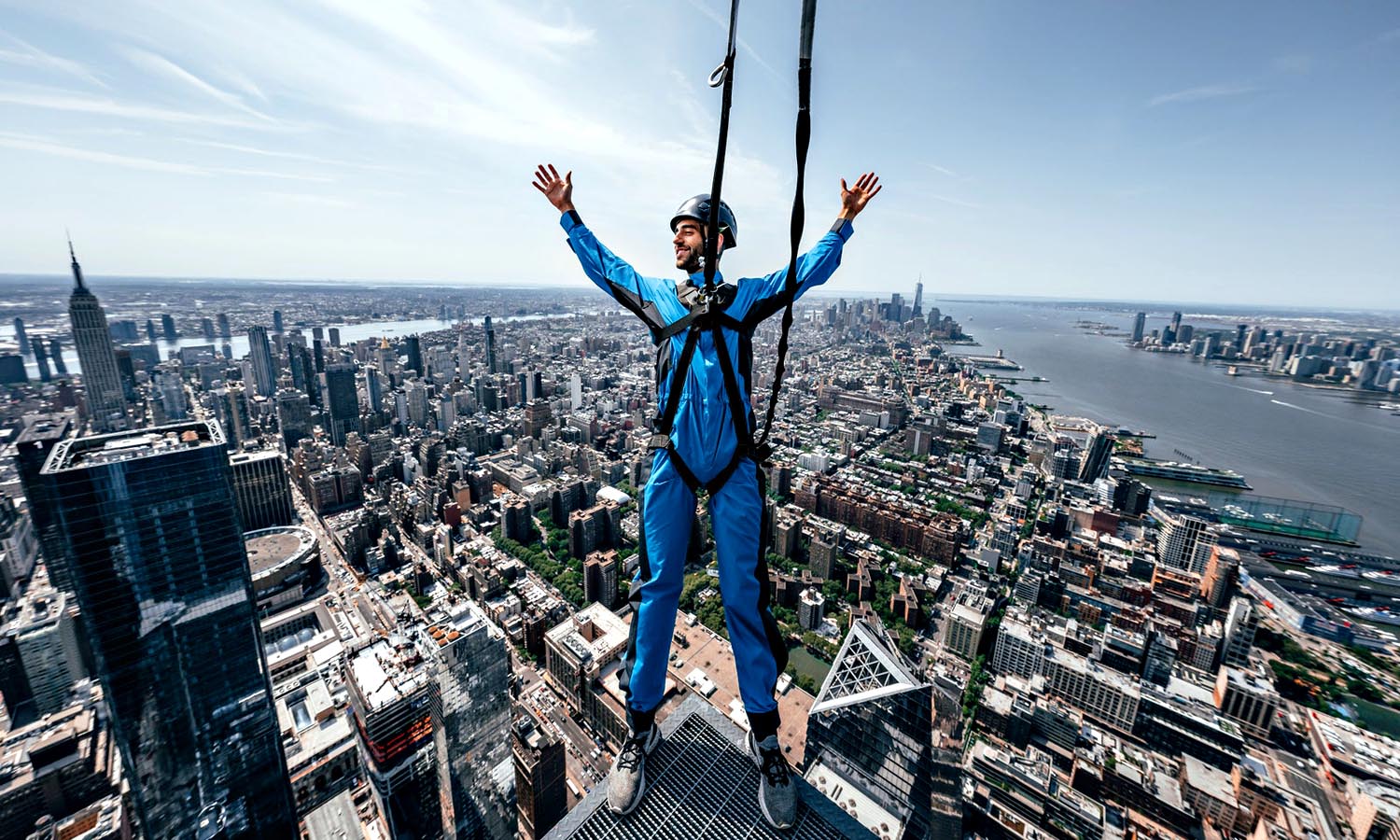
Like the rest on this list, your reaction to the City Climb at The Edge is either “that is epic” “NOPE”… or more than likely, a little bit of both.
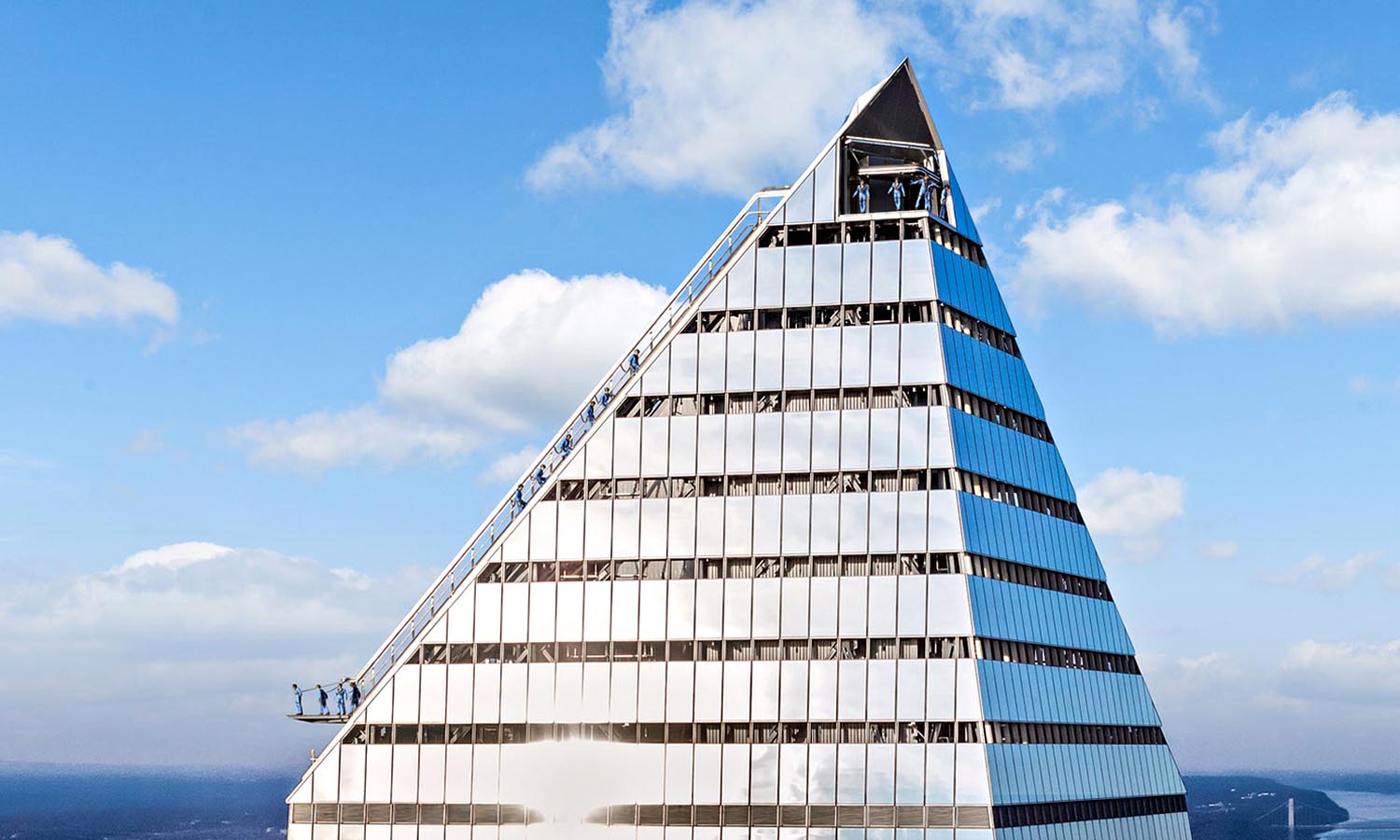
The Edge is based at Hudson Yards, a 365 metre high building in Manhattan, New York. After scaling the outside (you read that correctly) of the building, climbers lean out and lean off the highest outdoor deck in the Western Hemisphere, with nothing but New York air beneath them.
The Big Apple has never looked so good.
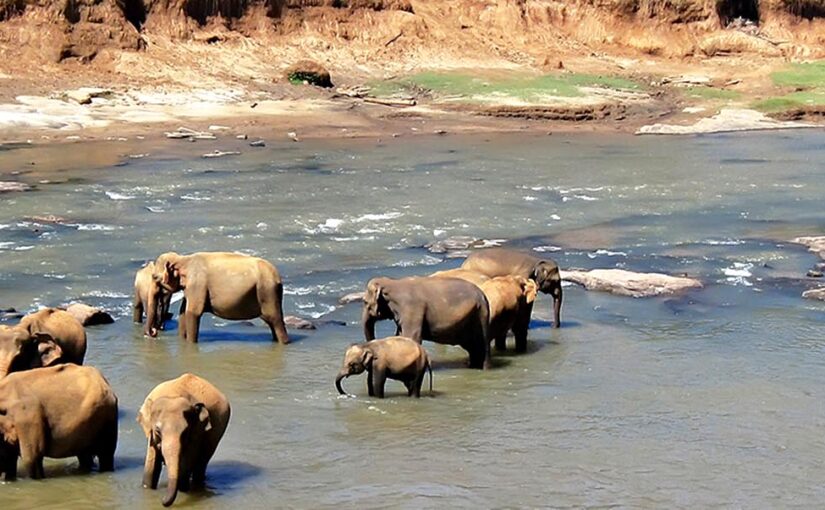
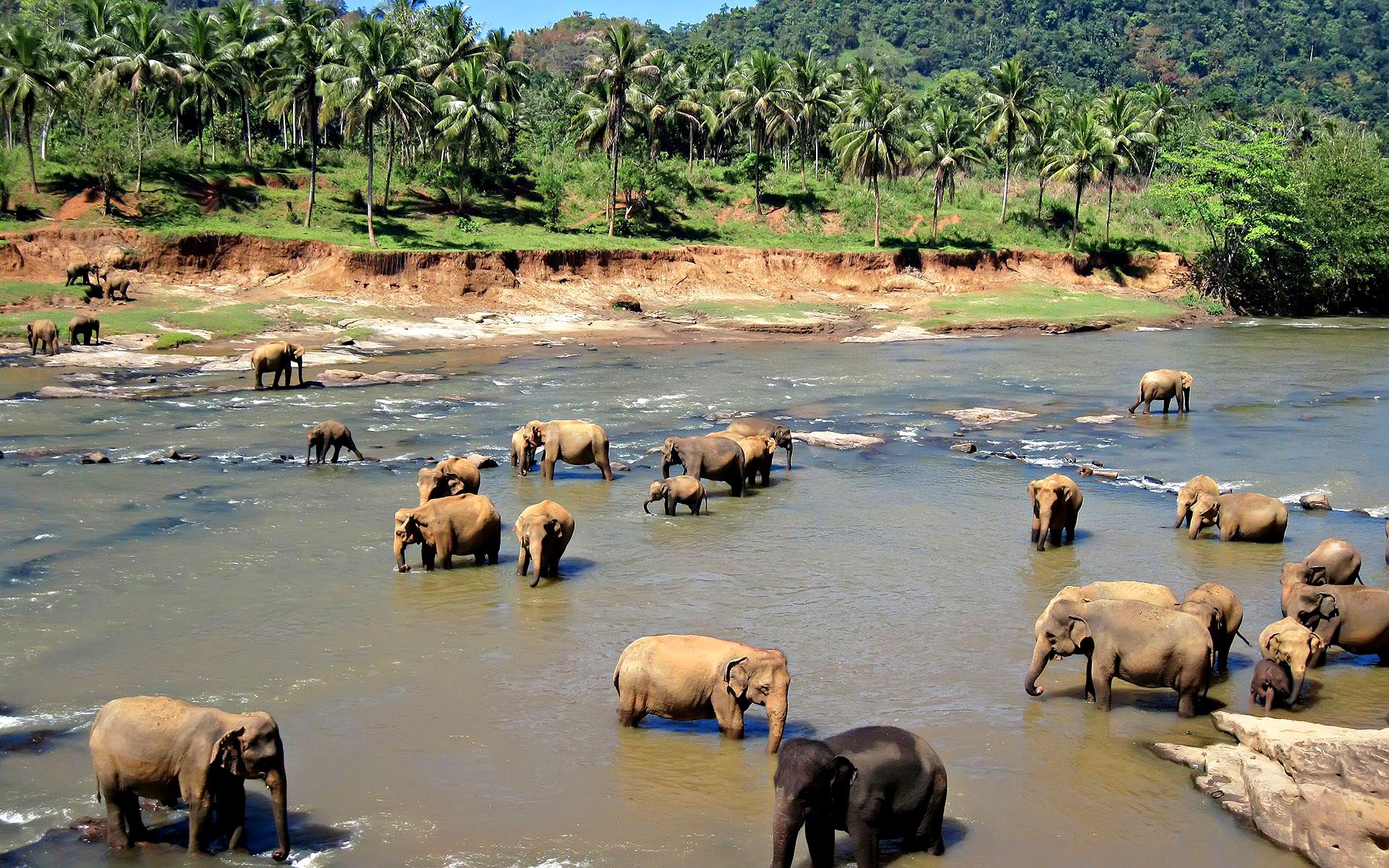
My Sri Lankan safari guide, Avinka, appears by torchlight to escort me safely to our Jeep. It’s a short drive from the Mahoora Eco Campsite to the entrance of Yala National Park. This remarkable and wild southern corner of Sri Lanka claims to be home to the densest leopard population in all of Asia.
A notoriously timid creature, the elusive native cat sleeps 18 hours a day and the cool dawn temperatures offer the best odds to catch a rare glimpse.
At first, Avinka points out every creature he sees that scurries in the darkness – a bird, a rabbit, squirrel, buffalo, deer – expertly spouting his knowledge at every chance.
“Are these all potential leopard snacks?” I ask him sheepishly. Sensing my fixation on the main attraction, he shifts into full leopard-spotting mode.
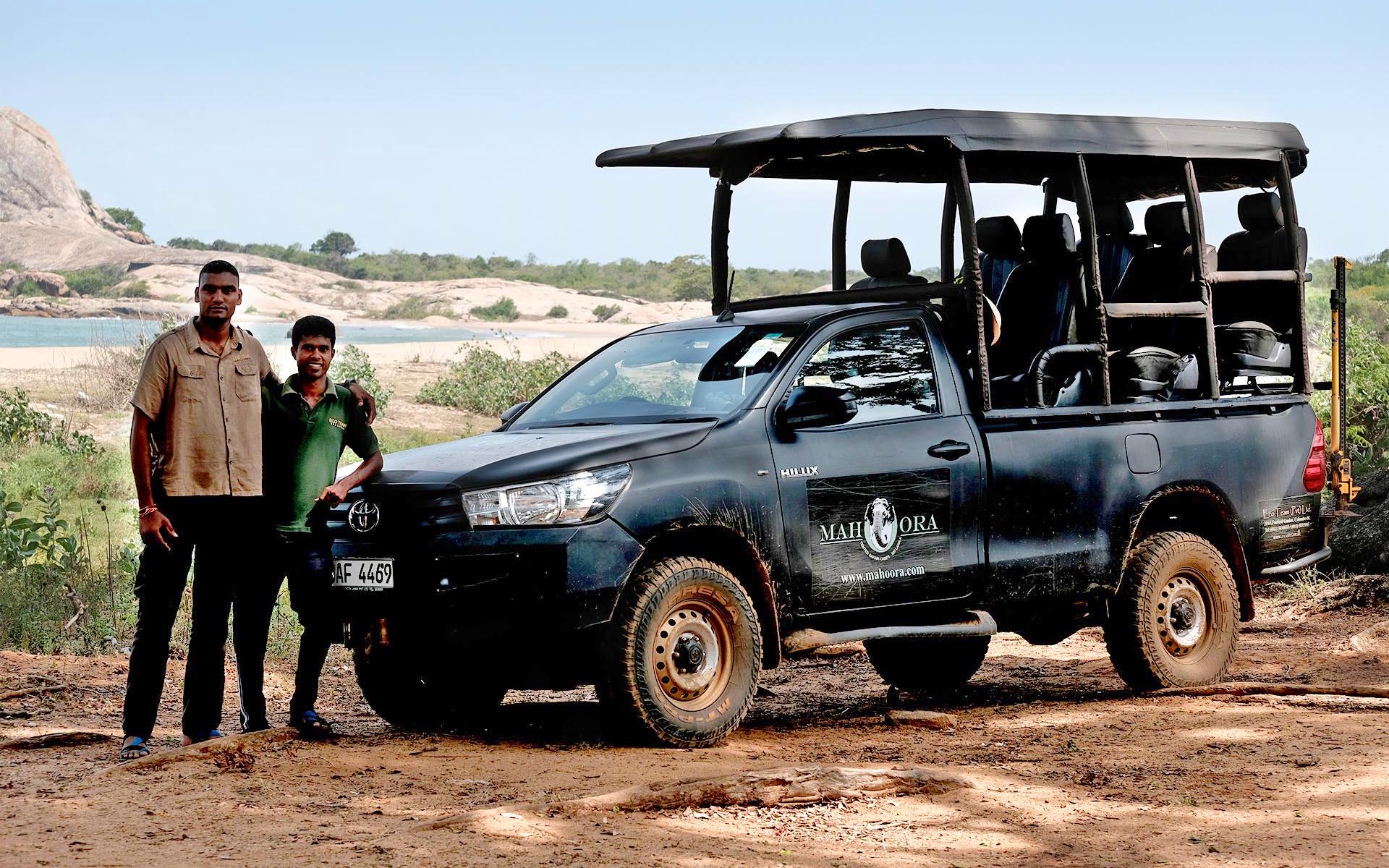
It’s barely daylight as we suddenly come to a stop and Avinka urgently directs our driver in rapid-fire Sinhalese (native language). While I can’t understand a word, the excitement in his tone is unmistakable.
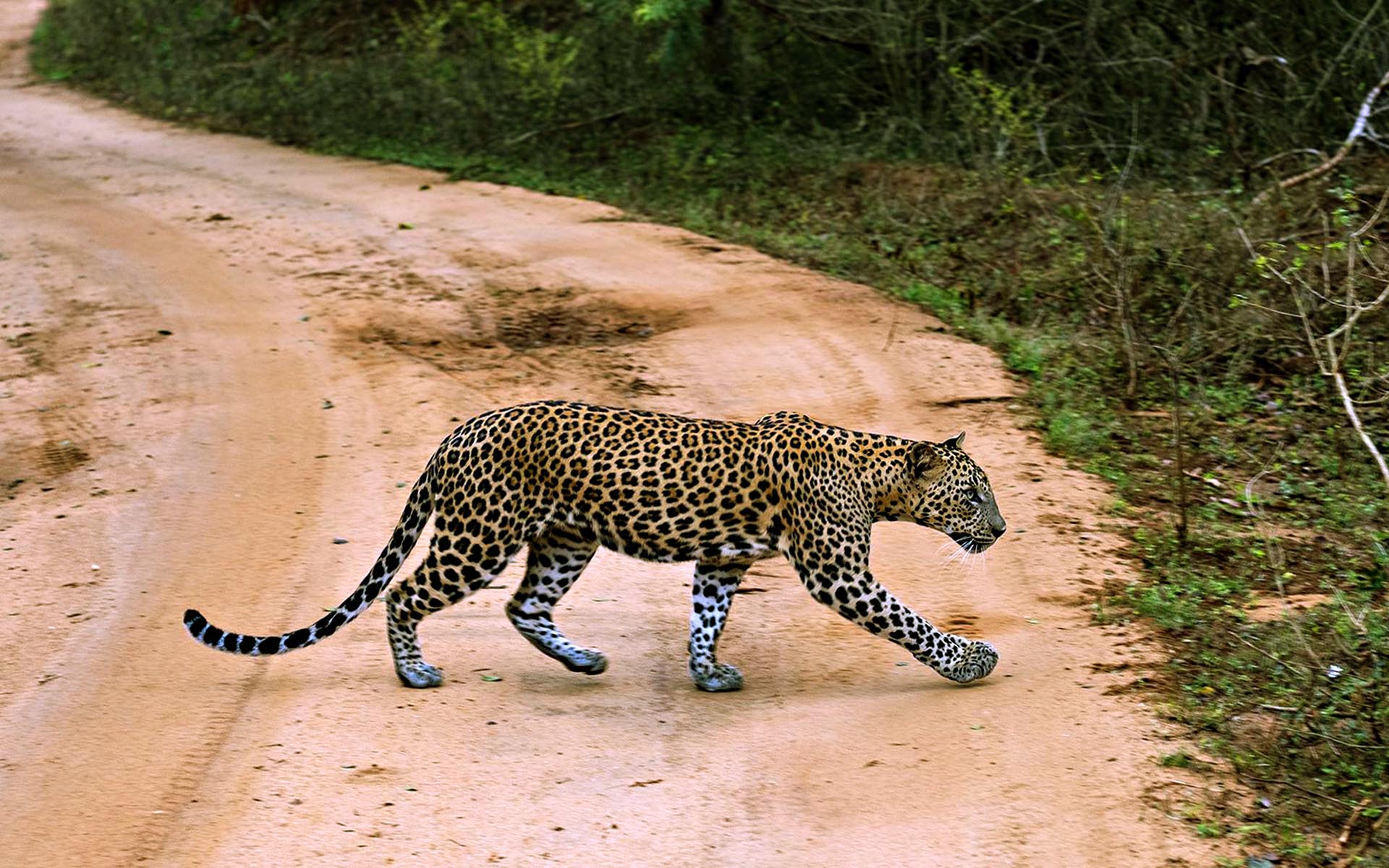
Even with our driver’s binoculars I can’t see the spotted coat until it’s moving. Its head is hunched and it cuts through the foliage like a hot knife through butter. The distinct orange and black print camouflages the animal so perfectly that it’s only a few seconds before I lose sight.
Avinka predicts that our paths with the animal will cross again, and sure enough just a few metres up the road the leopard strolls directly by our Jeep again, giving us only a cursory glance.
This regal predator is magnificent in posture, strength and resounding beauty. Every centimetre of its coat is patterned like a child gone wild with an ink stamp. The encounter is over in seconds and we all hurriedly flick through our cameras for evidence that what we saw wasn’t paranormal.
Without warning, our driver instinctively follows yet another animal’s honking sound, which we’re told are the distressed calls of deer warning of imminent danger. Avinka is nearly falling out of the vehicle to spot what he thinks is an offending leopard.
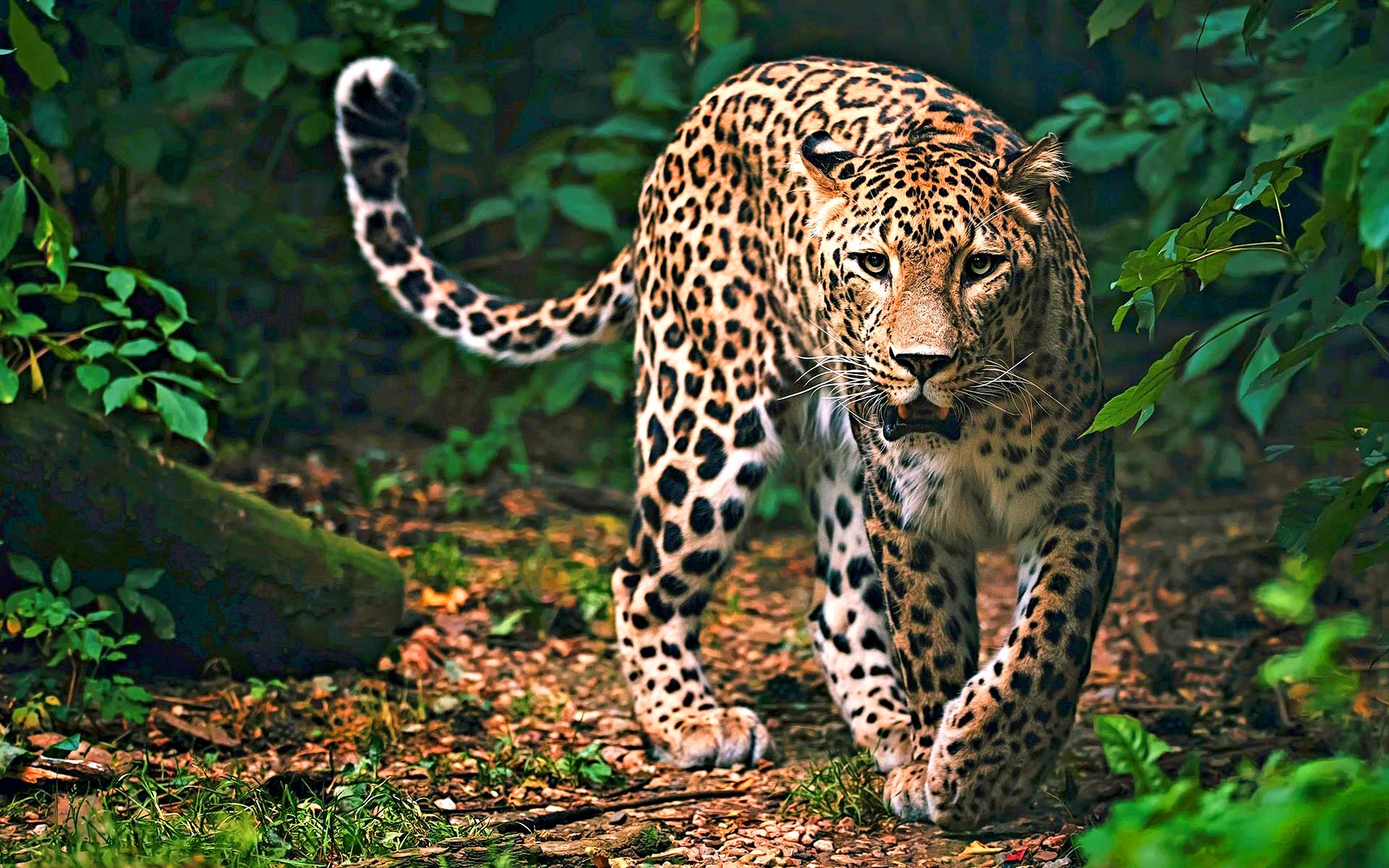
His infectious passion this second time around is as fresh as his very first. Sure enough, we find a large male draped over a horizontal branch like a floppy child’s toy. His legs hang down, counter-balancing the swollen belly of a recent feast. Yawning and panting heavily, he appears to have a bad case of leopard-style meat sweats.
Mahoora Yala camp is a six hour drive from the capital, Colombo. I arrived safely thanks to my driver, Kuma, who calmly dodged vehicles, bikes, people and dogs like he was playing a video game. More than once I shut my eyes, flinching from all the close calls.
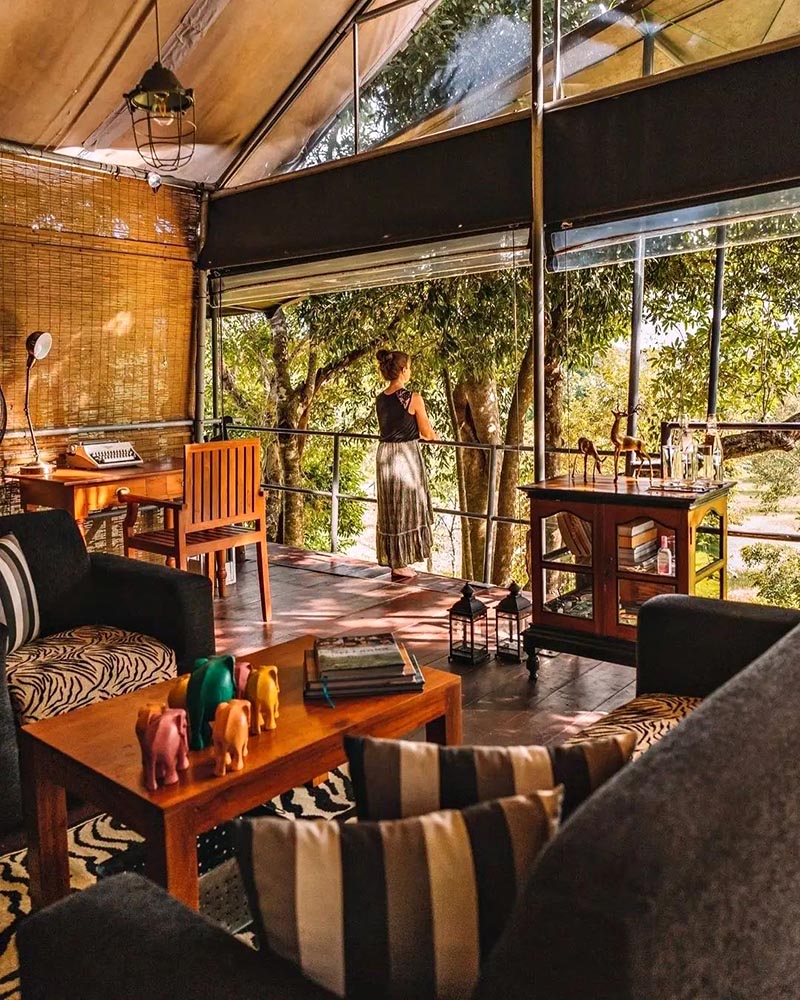
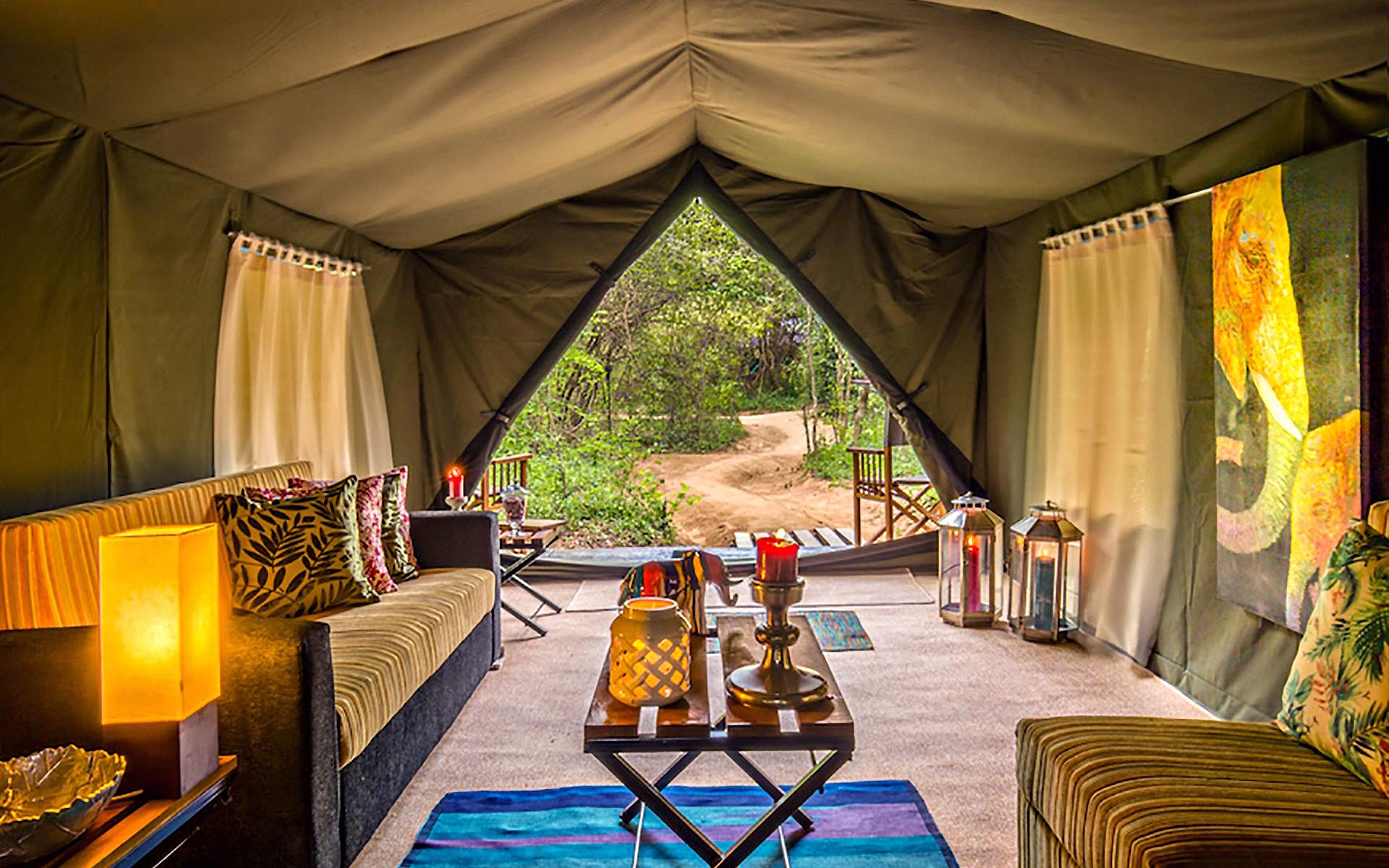
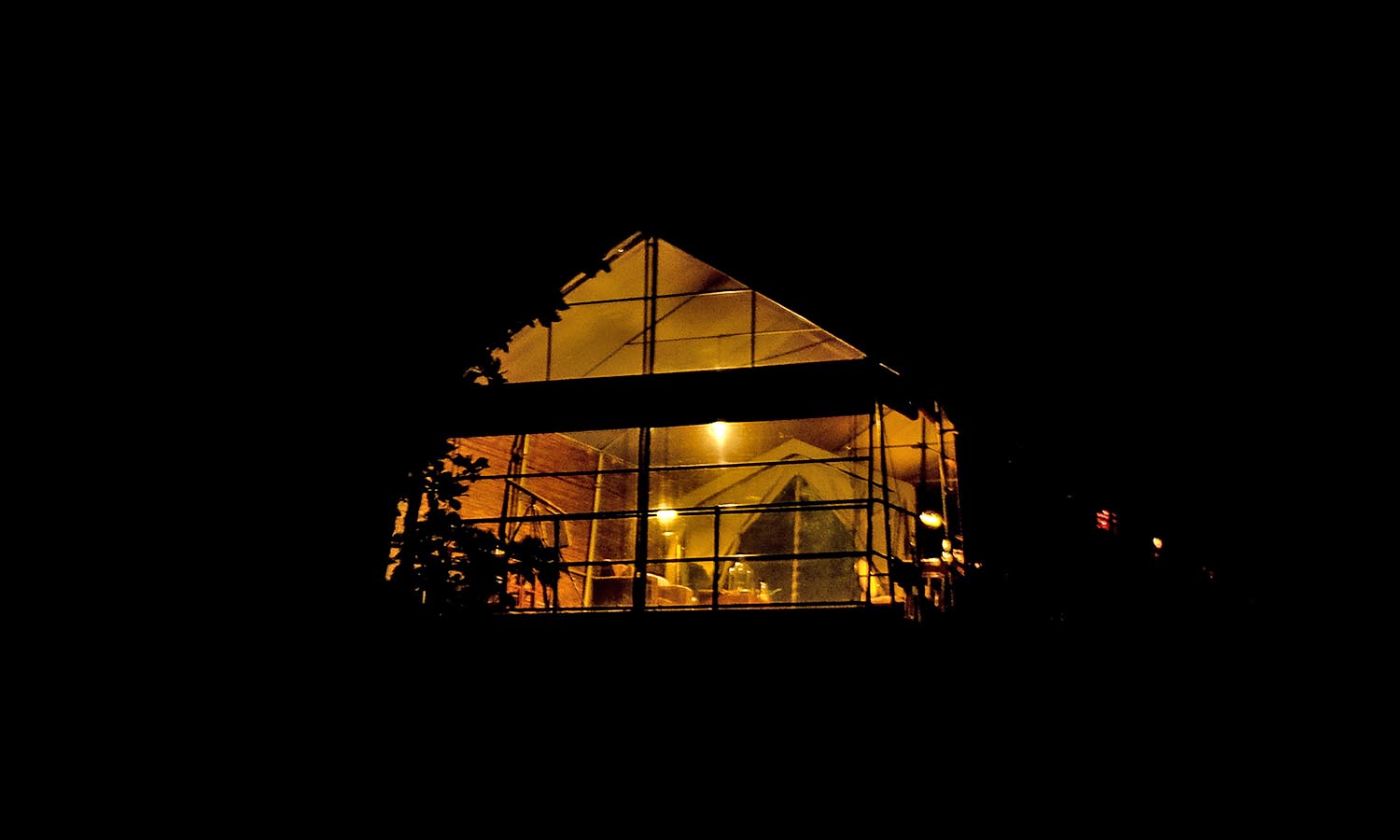
We return to our camp in darkness having spotted three more leopards for the morning, which the staff assures me is a very, very good day. Waiting outside my tent is a ‘Mahoora happy feet’ treat, which is a customary steaming footbath of lime and fragrant neem leaf. My feet have done little work today, but I’m not going to protest. Mahoora’s Eco Camps are a series of completely mobile luxury safari camps dotted around Sri Lanka which strive to achieve carbon neutrality in their operations. There’s no air conditioning or pool, but everything else in my canvas two-room castle — complete with ensuite and living room — is pure opulence all the way.
Every meal is a multi-course, culinary education, in Sri Lankan cuisine; Pakora, lavariya, wadai, string hoppers, sambol, pittu are all magically prepared in a primitive kitchen tent.
Ignoring all protests, the camp’s private chef, Wasanthalal seems determined to overfeed me. Each plate returns to the kitchen unfinished, as another overly generous course replaces it.
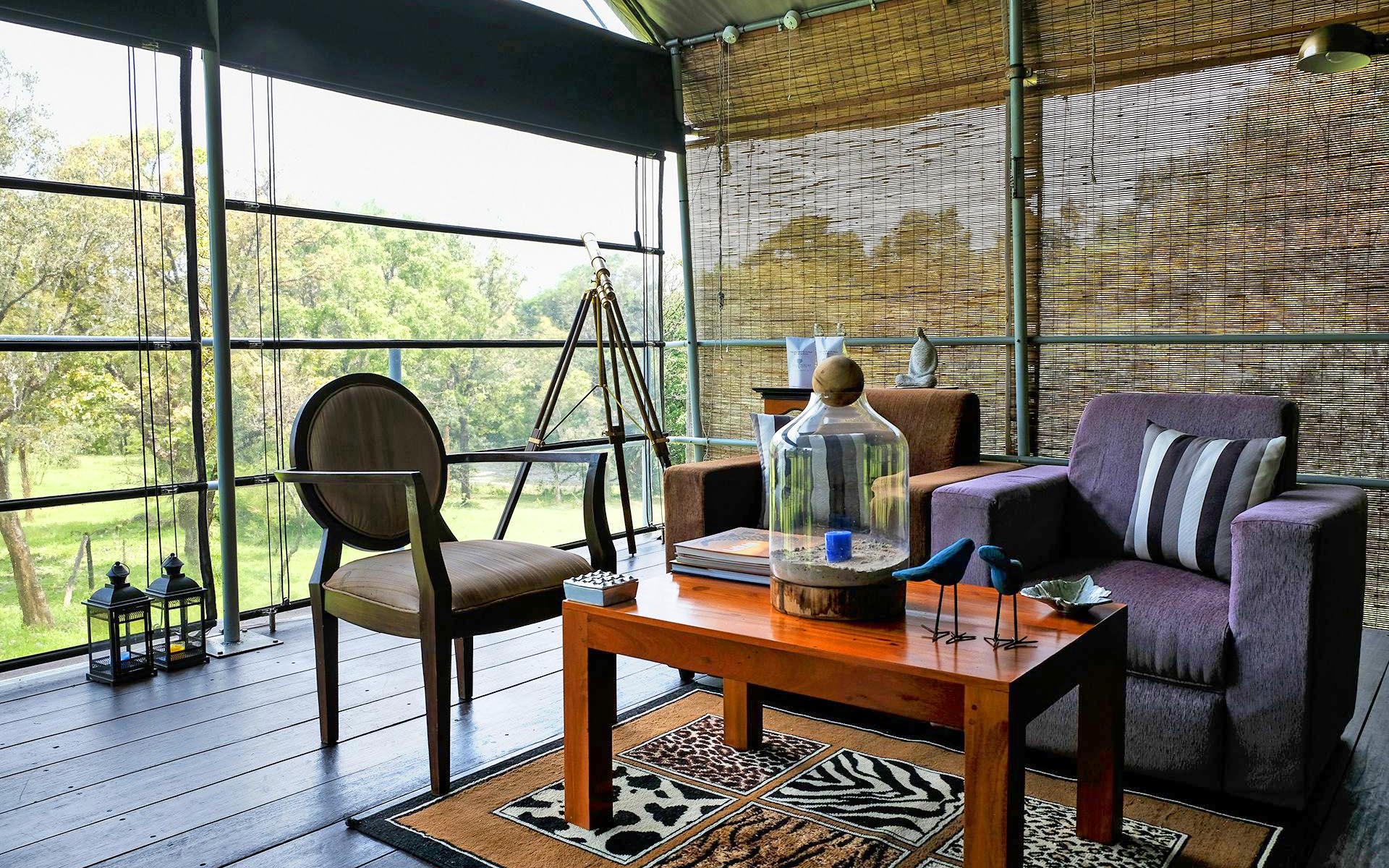
Ahaspokuna Camp, meaning ‘pond in the sky’, is on the plateau of Mulgama Peak on a property of 10 hectares. It took six years to develop, which is unsurprising given every material was hauled in along the same path. Being so remote and, with only three guest tents, it is instantly peaceful.
Each tent in the camp is a stilted hut with open sides, separated into zones by two canvas cubes that provide privacy to your bedroom and bathroom. In my lounge I can read a book on the couch or use the grand telescope to peer up at the stars.
Overlooking the hazy layers of the deep Ha Gala Mountains, Arun outlines our bush walk for the next day while we scan the horizon and I’m nervous.
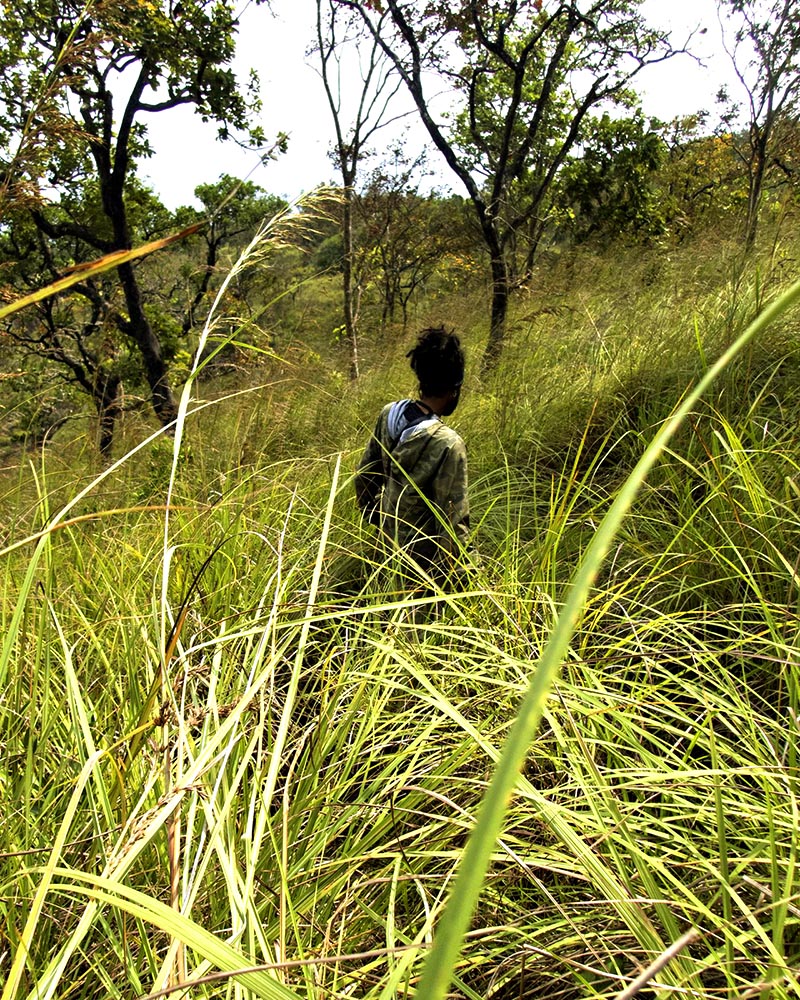
The next morning is oppressively hot and humid but I’m instructed to wear long sleeves and trousers. It’s 9am and I’m already a sticky mess of sweat, sunscreen and bug spray. It’s apparent very early on that we won’t be following any cleared walking tracks or trails.
Dwarfed amongst tall manna grass, I duck my head, and charge on, slashing a path with my walking pole like a crazed Sri Lankan ninja, my exposed hands taking a battering from spiky branches.
It’s a patchwork of contrasting habitat. Traversing one side of a mountain is hot, dry and sparse savannah, and then the flip side is a dense, wet and cool Riverine forest. But the spectacular view from the ridge makes it all worth it. I’m a speck in 360-degree views of mountain peaks.
It’s not long before we hear the roar of Gan Ella waterfall. A refreshing mist wafts over us from the thundering shaft of water above. By now my clothing is soaked in sweat and the water is absolute bliss. I fill my hat with the freshwater, recharge with a piece of fruit and begin the near vertical climb out.
Arun moves like a grasshopper, effortlessly scaling all obstacles, while I’m much less graceful. As we climb he points out a bronze back tree snake hanging above our heads. The long, thin worm shape is well disguised in the branches. That is, until it starts jumping from tree to tree like a reptilian monkey going on the attack. It’s an impressive but terrifying show.
After five-hours of hiking, camp is a welcome sight. The term ‘bushwalk’ seems an inadequate description of my day, but I feel a proud sense of accomplishment.
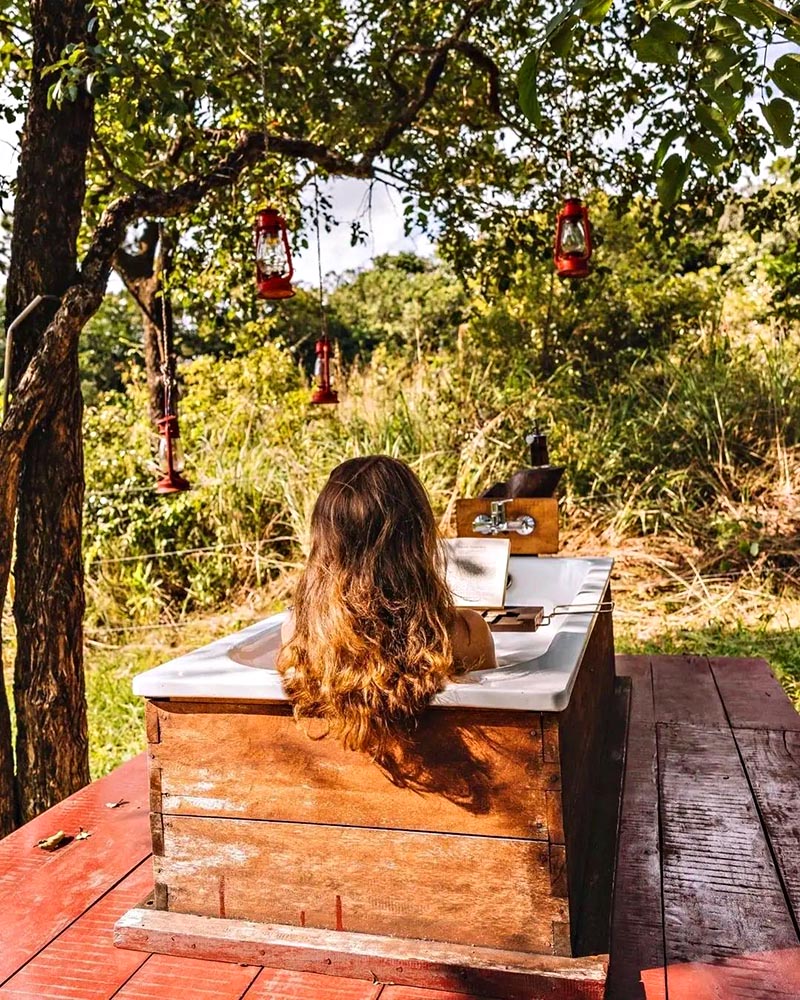
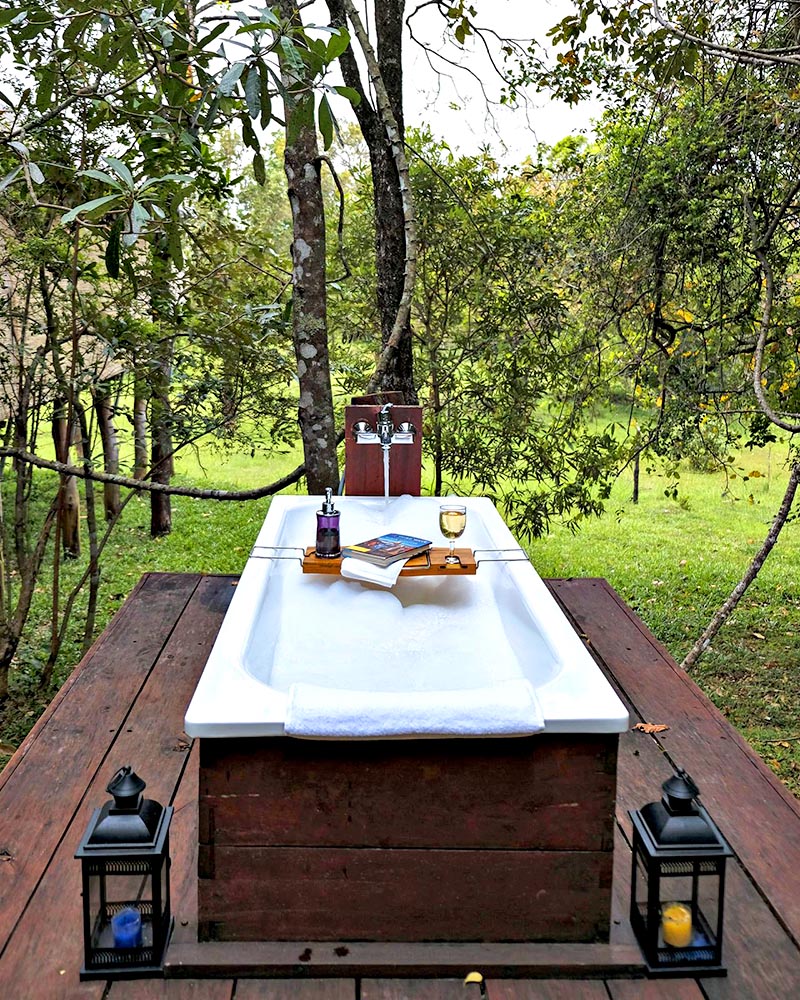
This time I skipped the neem leaf foot bath in favour of the alfresco bathtub. Lying back with a book and a glass of wine, the warm water soaks away the tension from my weary body.
My stay at this camp includes two walks a day, but I’m happy staying right here for the afternoon.
get lost recently took on Johannesburg’s nightlife, and although we found it difficult to compete with the Afro-hip chic or smooth moving that permeates throughout the city’s nightlife, we’re pretty confident we’ve found a few of the best when it comes to grabbing a drink in Sun City.
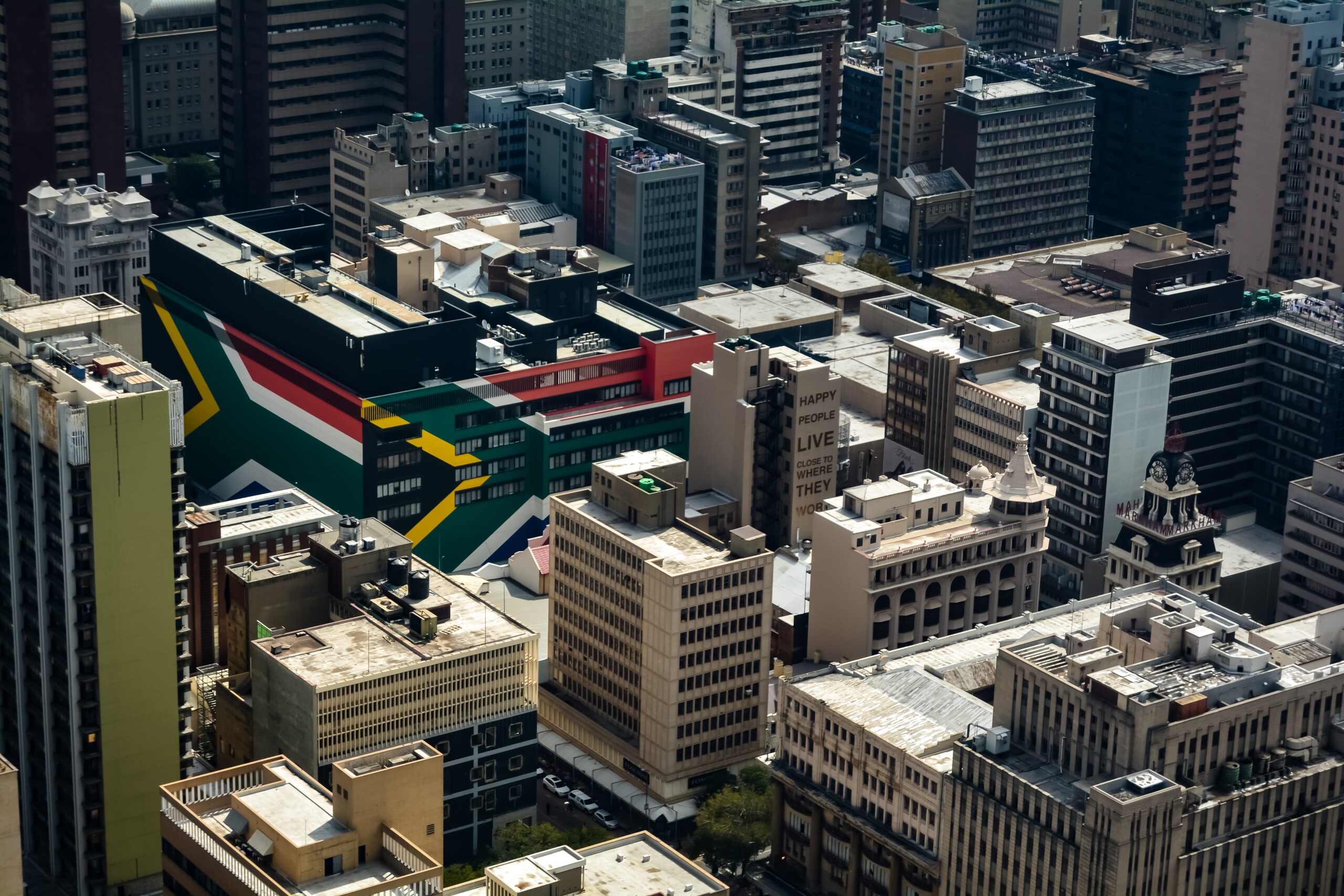
Situated in the clouds above the city is Alto234, the highest urban bar in Africa.
Alto is so high that it takes three different elevators to get there, but once you reach the summit it’s clear that the transit is well and truly worth it, with 360-degree views over one of Africa’s most bustling cities. Six million or so people will be going about their nightly business below you as you sip champagne or a wide range of cocktails…thinking: “yep I’ve made it”. There’s some very Instagrammable fires here in case it gets cold, and there’s also the most epic vending machine you’ve ever seen: filled with Möet Chandon and nothing else. Dreams do come true.
57th Floor, The Leonardo 75 Maude Street, Sandton
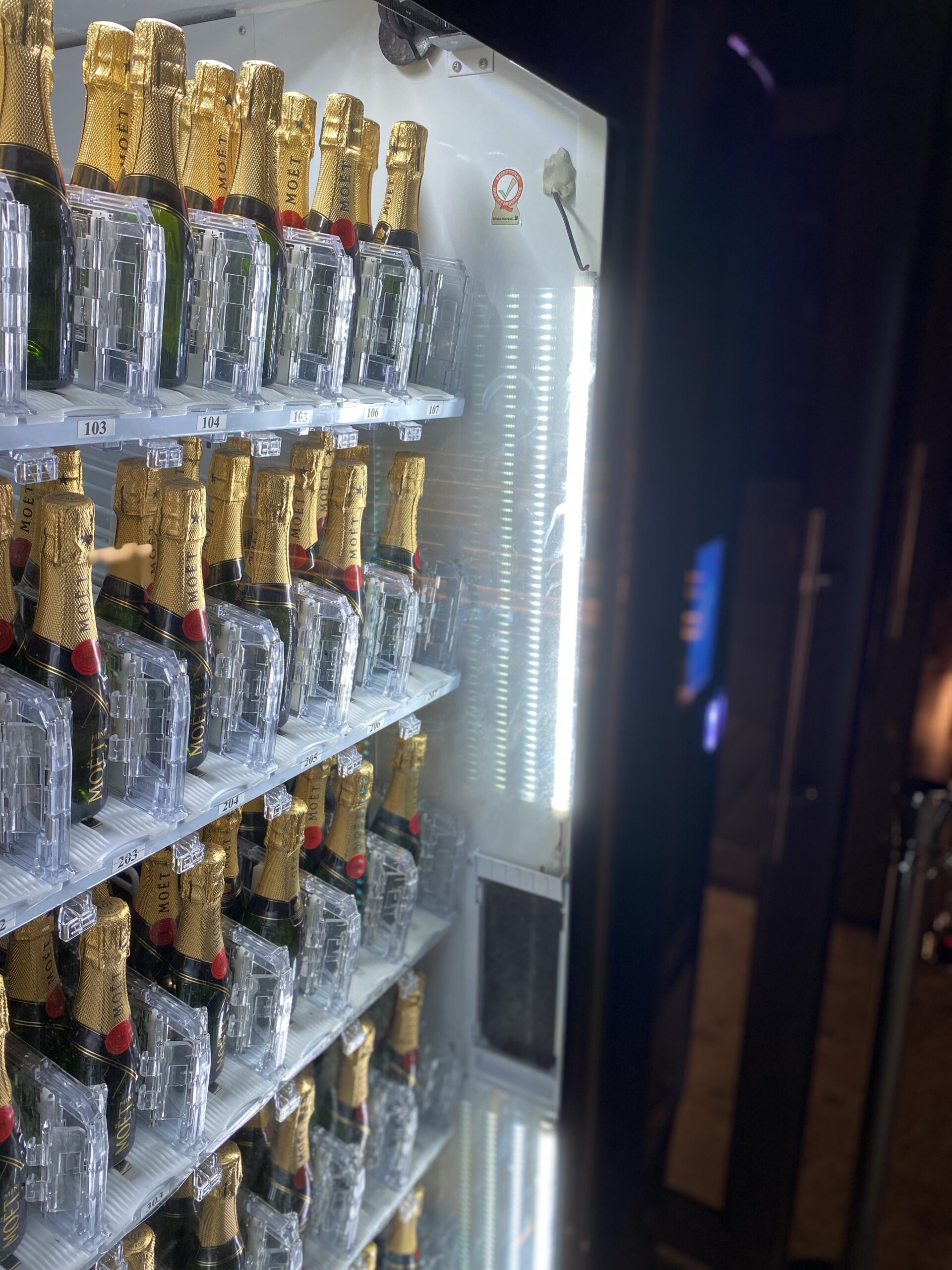 A vending machine from heaven.
Zioux is weird, but good weird. Gigantic, cloud-shaped lampshades cascade from the ceiling and there’s huge portraits of animal/human hybrids on the walls, but none of this is low-brow – there are statements of wealth all-throughout this quirky cocktail bar (none more so than the glitzy mirrored walls of the toilets, which are about as impressive as toilets come). Keeping with the eclectic theme, get lost tried The Aclarada: Parmesan infused Absolut vodka and spicy tomato consommé served with olive paper, preserved lemon, purple corn flowers and olive oil. It doesn’t sound like something that should be in a cocktail, but don’t knock it until you’ve tried it.
The Marc, Corner Rivonia & Maude St, Sandton
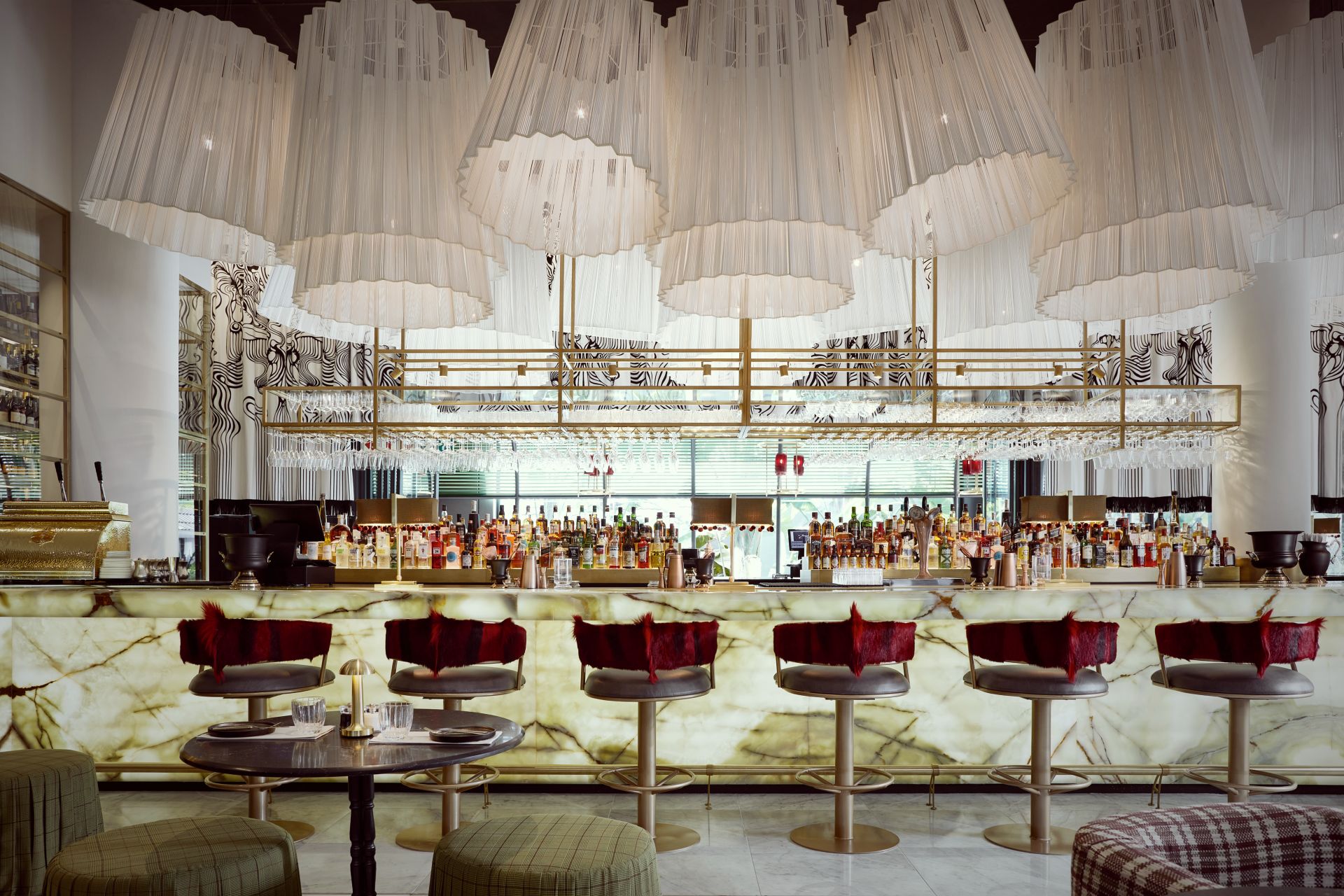 Zioux is in the upmarket Sandton area.
Saint is the absolutely heaving establishment situated directly across from Zioux. It carries all the same flashy grandeur of its smaller sister bar (including unbelievable restrooms), but without the weirdness. Saint is a massive space is divided into two sections: an upmarket restaurant with an exceptional wine list and delicious pasta and meat dishes, and a heaving nightclub that sprawls out into the open air. Come here for dinner, pop over the road for cocktails and then back to the nightclub area when you’re really ready to throw down.
The Marc, Corner Rivonia & Maude St, Sandton
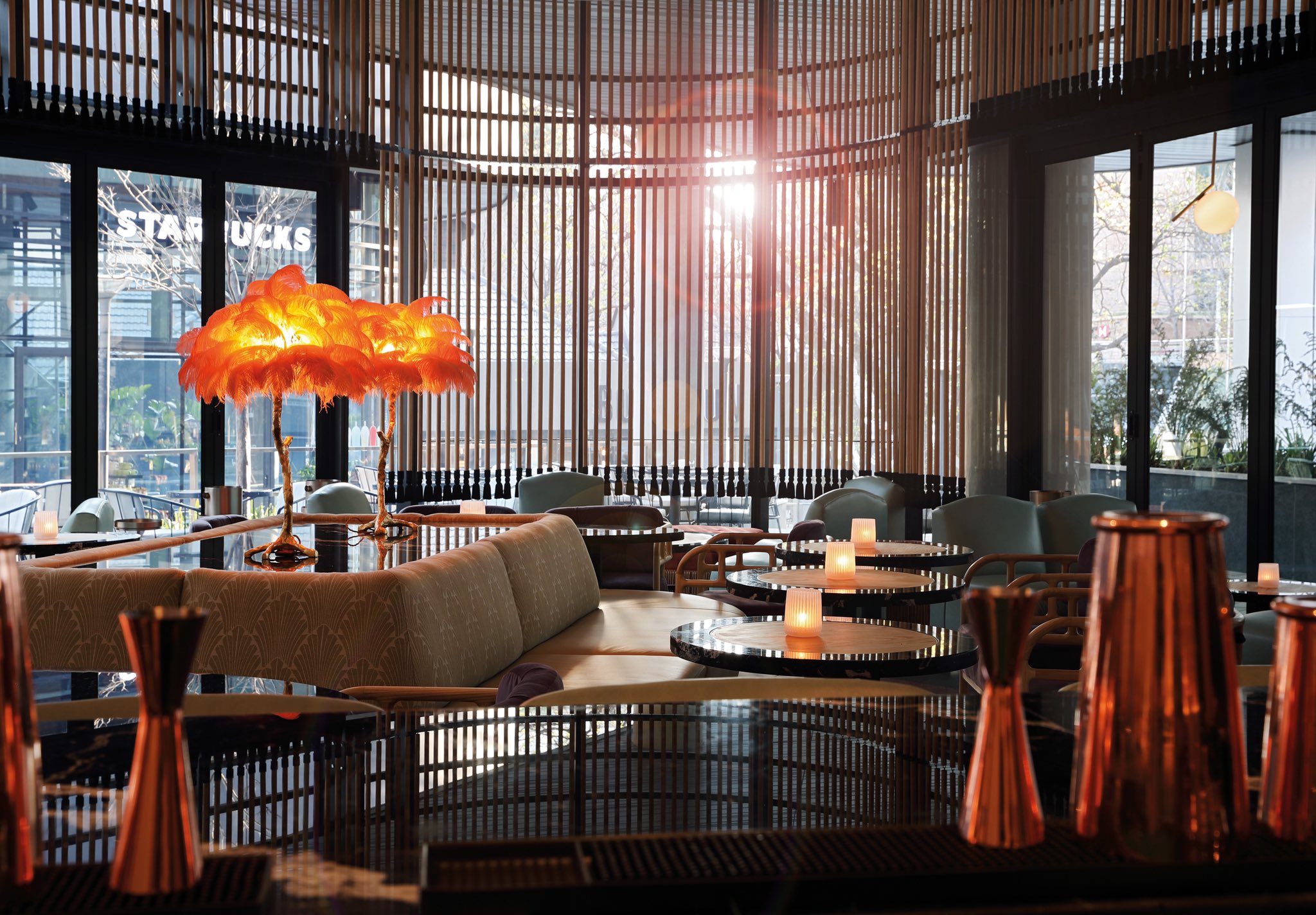 Saint is directly across the road from Zioux. Dress to impress here.
In the north of the city is the Four Ways Farmer’s Market, a farmer’s market offering exceptional local fare, as well as foreign dishes from all over Africa and the world. There’s also several bars with craft beers on tap, local gins, champagne and more, and all your usual market mainstays (vintage clothes,
The setting is serene – several grassy embankments to sit on which lead down to a little river, where live music can be heard in the afternoons. There’s no doubt it’s a farmer’s market: chooks and sheep meander close by as you enjoy a beer in the sun. This is the perfect place for a relaxed Sunday sesh with some mates.
Hot tip: In a dark corner of the market is Mankrii’s Mini-Kitchen, serving traditional South African fare. Try the Nhloko – we’re not going to tell you what it is, we’re just going to tell you that it’s delicious.
Taroko Farm (Modderfontein Reserve) Norfolk Lane, Klipfontein 12-Ir,Lethabong, 1609
A paella at Four-ways Farmer’s Market.
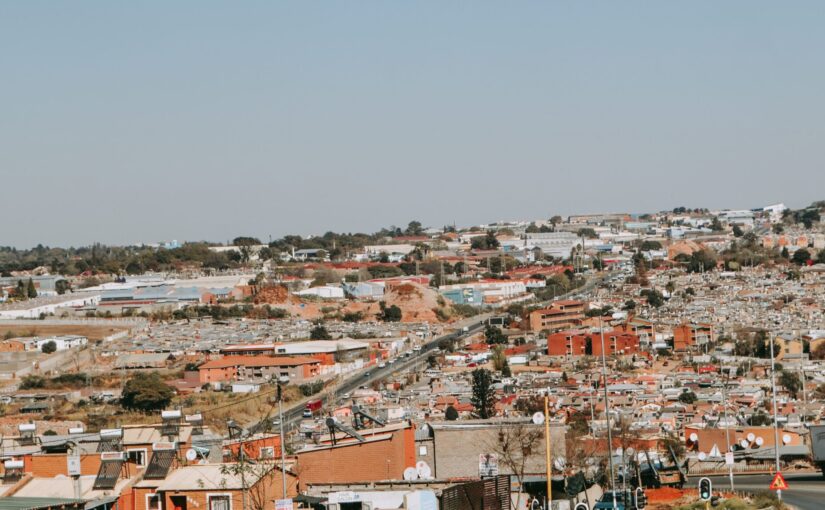
No visit to Johannesburg is complete without a visit to a Shebeen: modest looking drinking houses initially set up as an alternative to pubs and taverns which played an integral role as meeting places in the resistance against apartheid. There are tons of Shebeens of all shapes and sizes in the famous Soweto township on the outskirts of Johannesburg, where 1.5 million people cram into just 200,000kms of ramshackle sheds, tiny laneways and Government-built housing. Here literally everyone seems to say hello to everyone else – you will likely never have felt more welcome.
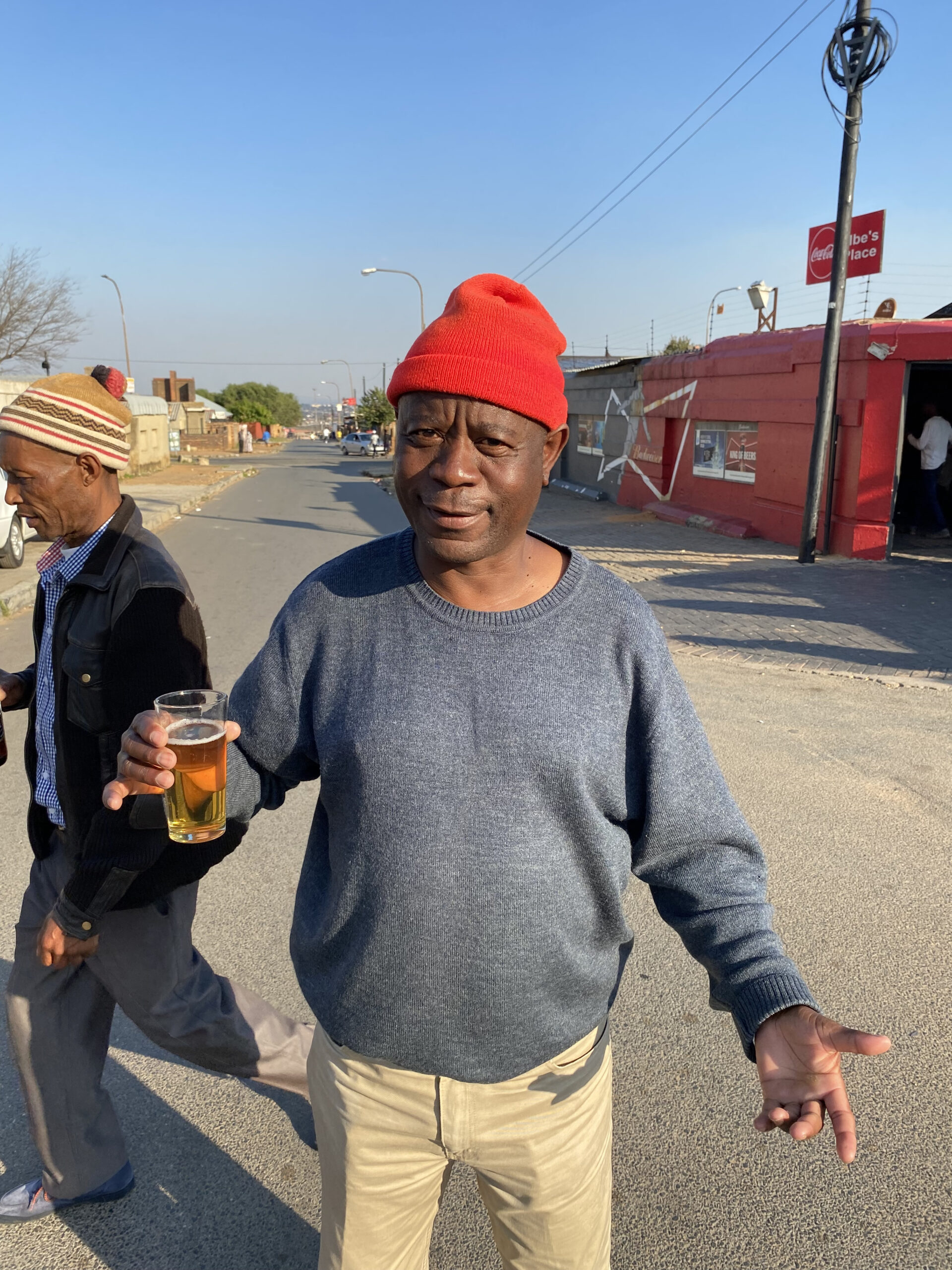 Yebo! Locals aren’t short of a word in Shebeens.
“Our mothers and fathers told us not to be bitter, but to be better. That is what we are trying to do here in Soweto.”
So says Xhosa man Lungile, born and bred in Soweto, South Africa, a place quite like nowhere else. He’s referring to years of prejudice suffered by the coloured people of his country during the apartheid era, and the road ahead for his famed township.
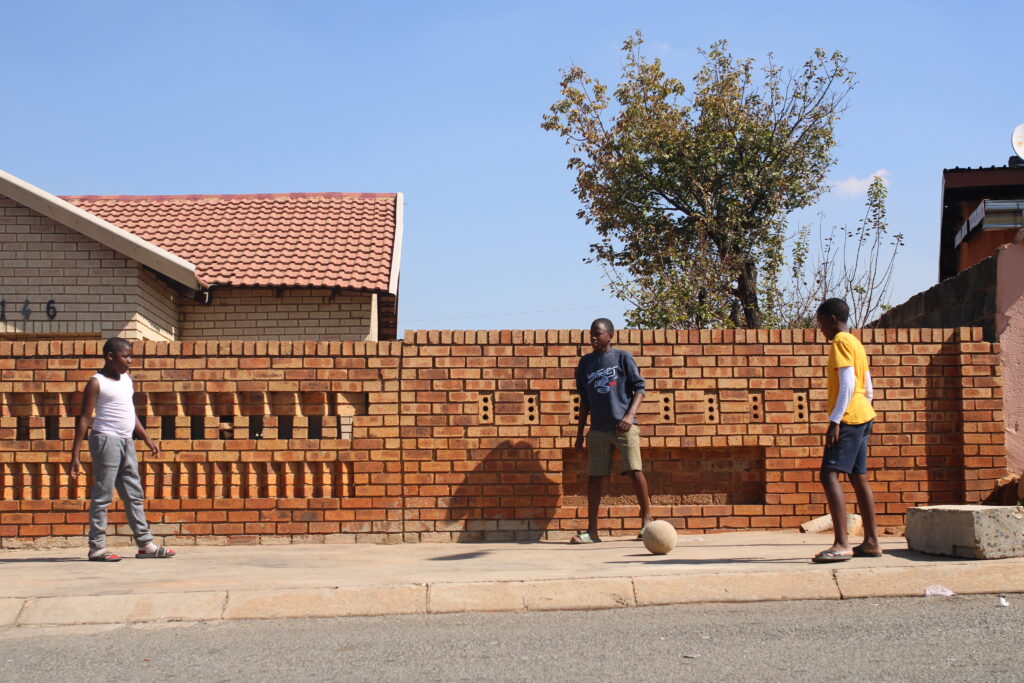
A township in South Africa is regarded as an urban residential area of, historically, coloured people. Soweto is the largest of these. Situated on the Western outskirts of Johannesburg, no less than 1.5 million people cram into just 200 square kilometres of ramshackle homes characterized by tin sheds, tiny laneways and low-budgets. From the moment you enter the area you are hit with an onslaught of waves, shakas and happy ‘yebos’ – a Zulu word that roughly translates to ‘all good’. Occasionally you’ll be hit with a double yebo – ‘yebo yebo’ – which I assume to mean really good. I returned these with a triple yebo and single shaka combo, which was frowned at.
As we approach the region’s outskirts I see a group of Shamba churchgoers, dressed immaculately in all-white, singing and dancing at an outdoor roadside church. Driving through the township’s beginnings we find what were previously all-female dormitories on our left, and the former men’s mining houses on our right. The dorms are tiny; if they were an apartment in Melbourne it would be described as a cramped one bedroom apartment. We’re told nine men filled each during the mining boom in the early 20th century.
Soweto’s origins trace back to 1904, when South Africa’s coloured people were forcibly removed from the city’s centre. A white landowner begun allowing Johannesburg’s people of colour to stay on their land, where they would sleep before making the 20km or so journey each day to mine for gold.
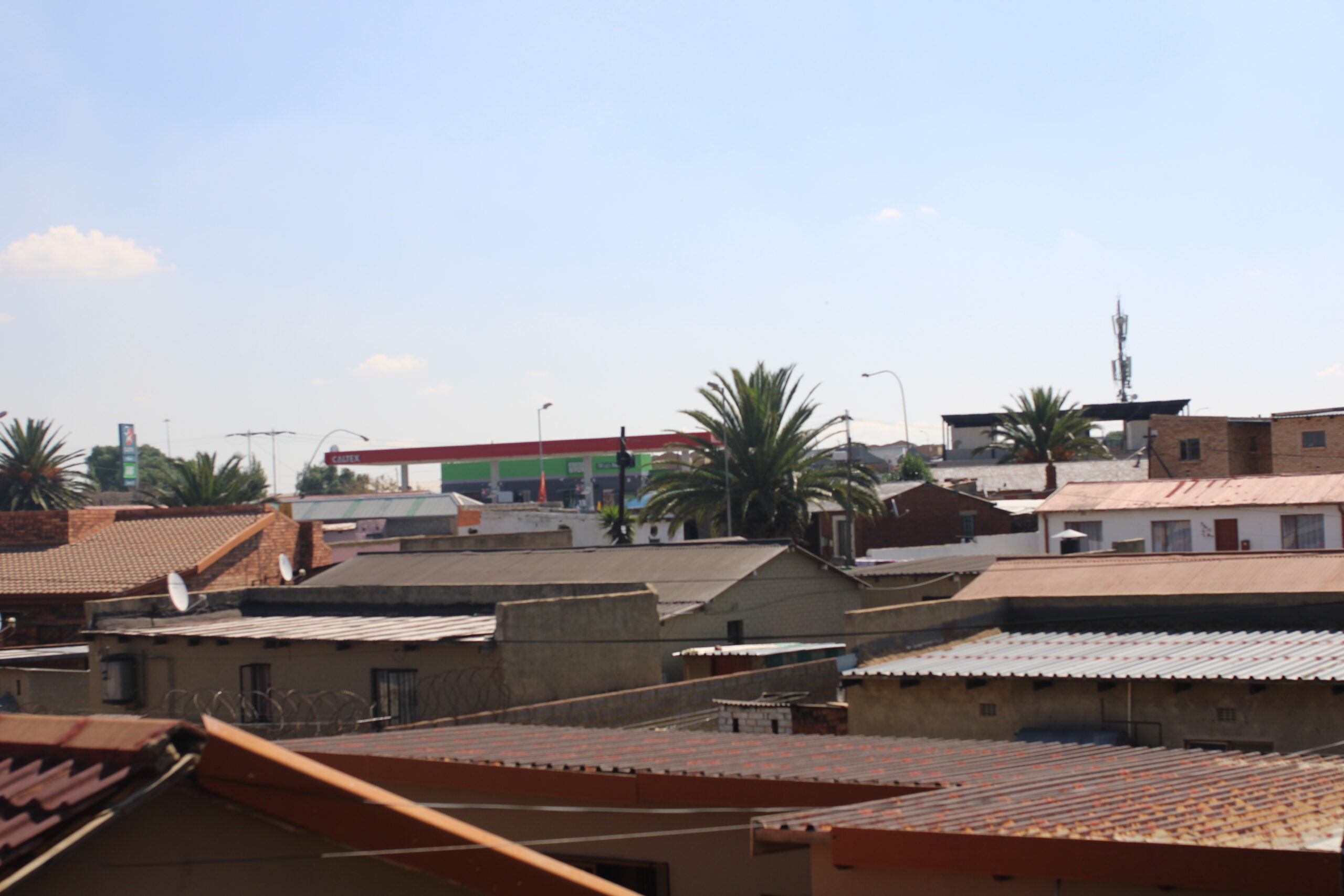
Lungile breaks into song more than once, singing the song Shosholoza – a song with a mixture languages which has become South Africa’s unofficial anthem.
“Every our grandparents and great grand-parents, they would make the journey into the mines,” says Lungile.
“And every day they would dig for gold, and it was gold that they knew they would never be able to see or spend for themselves. It would never be seen at their dinner table.
“The song is about sticking together through these tough times, a show of solidarity, for one another. They would sing it to each other on their way into the mines.”
He and another guide say are adamant they aren’t good singers, but their sudden melodies are soulful and effortless, and enough to make the hairs on the back of my neck stand up.
One street, two legends
The suburb of Orlando features the giant Orlando Stadium – the 40,000-seater football stadium that was packed out for the funerals of legendary female activists Winnie Mandela and Lilian Ngoye. It was to this stadium that students marched in 1976, protesting Govenrment implemented changes that barred non-Zulu languages at schools.
Not far away is the Kaizer Chief’s FNB Stadium, where 95,000 people packed in for her husband Nelson’s funeral. Mandela grew up down the road in Orlando West, on the famed Vilakazi Street. It is famed as the only place in the world where two Nobel Peace Prize winners (Mandela and Desmond Tutu) grew up on the same street.
The townships are separated into higher, middle and lower-class areas.
Reverand Frederick Modise Road separates the separate townships of lower and middle-class. The middle-class is hardly that; the homes are packed tightly together, like the eight or nine men I see crammed into the back of a Ute cruising along the road. These are rickety cubes with a door, some with or without running water and a toilet. The only discernible difference between upper and lower is the presence of paved roads, and streetlights. In both areas are hundreds of miniature barber shops, vegetable stalls, tiny ‘casinos’,corner shops and Shebeens – a type of drinking house of considerable modesty initially set up as an alternative to pubs and taverns. In the latter-half of the 20th century Shebeens played a critical role as a meeting place in opposing the racist apartheid regime.
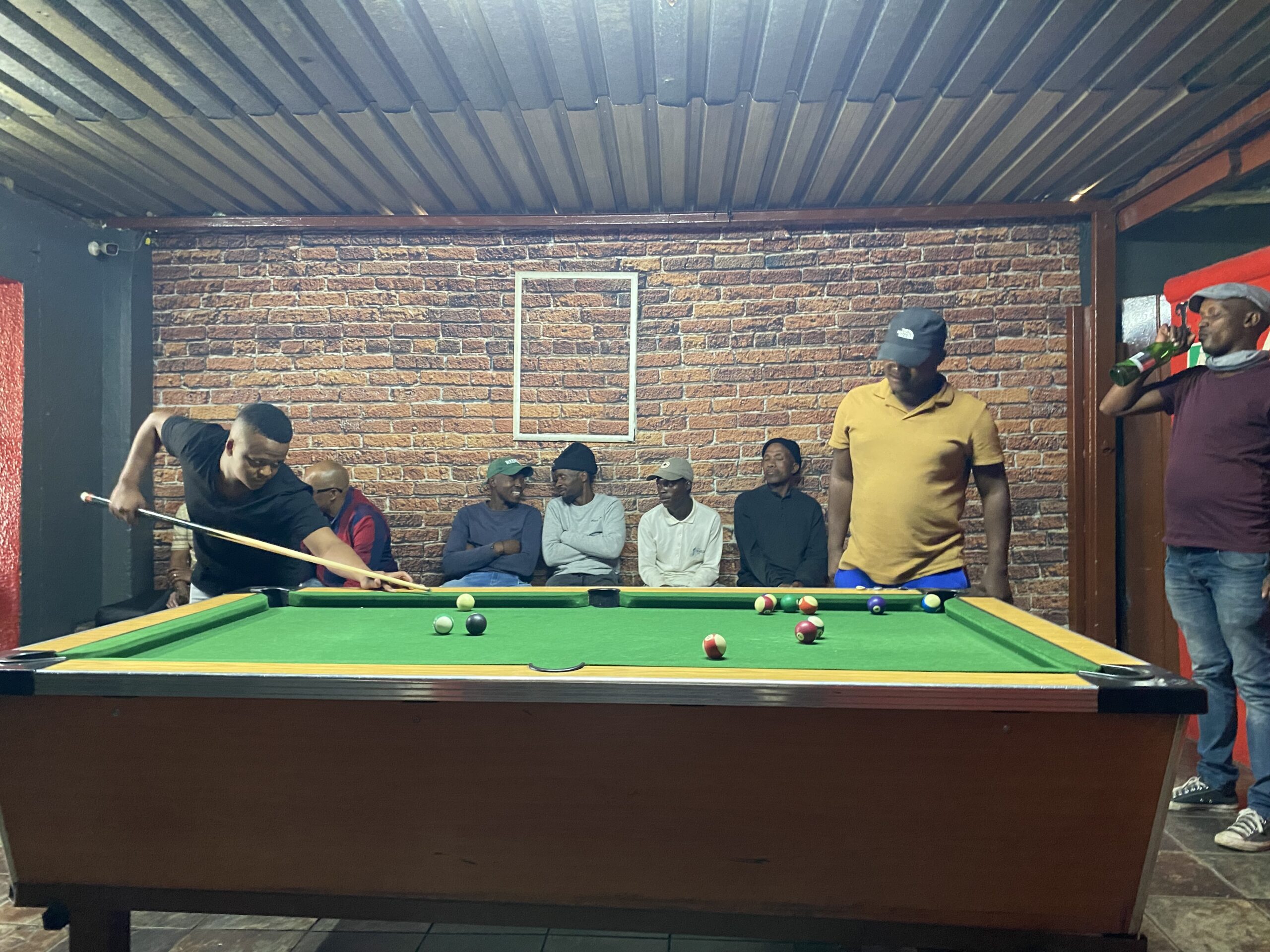
Nowadays they are much more laid back…and on this day, they are like the rest of Soweto: absolutely lit. A game of pool takes place in the back corner as loud Afro-beat blares from the speakers. We drink beer and they come from all corners to welcome us. Discussion too, is at all corners: a man named Mzamo informs me he’s a teacher and reels off several impressive off-the-cuff facts about koalas and Australia’s land size. Another wants to talk about the war in Ukraine, another about Liverpool Football Club. One more wanders off in search of a bottle opener (and my beer) and returns shortly after with an open bottle, albeit minus some of the beer.

The place is a hive of activity, but behind the buzz, smiles and avalanche of yebos, there is difficulty. There is significant poverty.
Lungile speaks of a lack of Government support. A new and decent sized block of apartments have been built near where the lower and middle-class areas meet. They are easily the best in the area, but in an area where people are living on top of each other and often without access to clean water in their own homes, they have been empty since they were built 12 years ago due to a disagreement between the Government and the people.
Still, there is hope, and tourism is playing a major part in this. The neighbourhood understands that tourism is a good thing. Travellers seem to understand their role too – for instance, no-one takes photos in the lower-class section, avoiding the temptation to capture poverty as a digital souvenir.
The best place to peel back the layers of this place is Lebo’s Backpackers, which is hostel in name only. It is a four-star accommodation that organises tours by bicycle and tuk-tuk that take in tourist highlights like the house Nelson Mandela group up in, but also workers’ hostels, churches and community centers that give a feel for the rhythm of the streets. The tuk-tuks aren’t traditional vehicles but they’re the best for navigating the general mayhem.
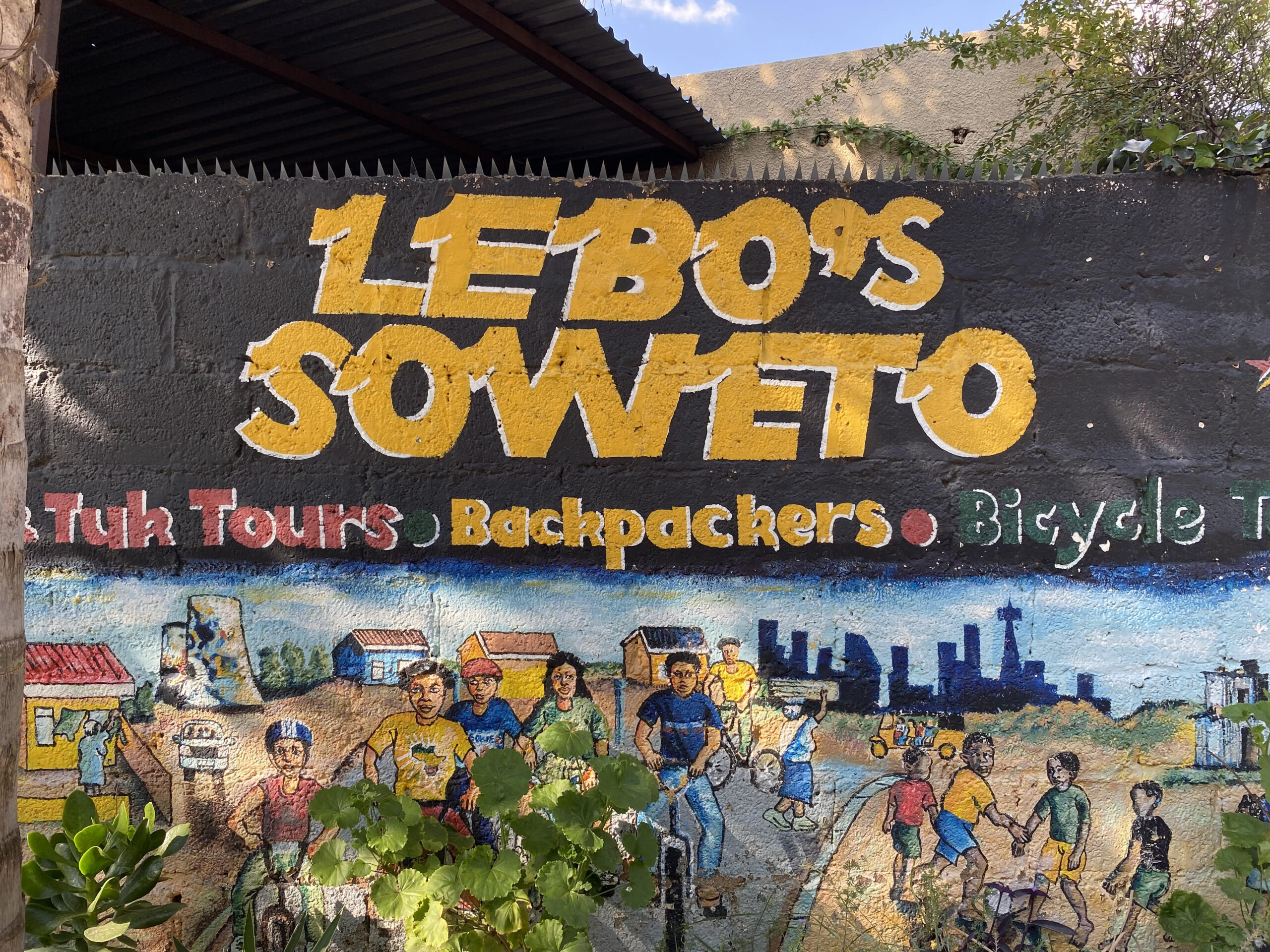
Founder Lebo Malepa was considered a trailblazer for the community, bringing visitors to the area and jobs to the people. Such was his commitment to his own neighbourhood, he had ‘SOWETO’ tattooed across his arm. Ask anyone, big or small around the area if they have heard of Lebo, and you’ll be met with a “Ahhh I know Lebo, yebo, yebo.” A mural is painted of the man is on the wall outside the backpackers he started.
Sadly, this beacon passed away of COVID late last year, aged just 46. And while his death was a major blow for the community, his energy and direction has cleared a path for future generations of this extraordinary neighbourhood.