Trekking the Kokoda Track

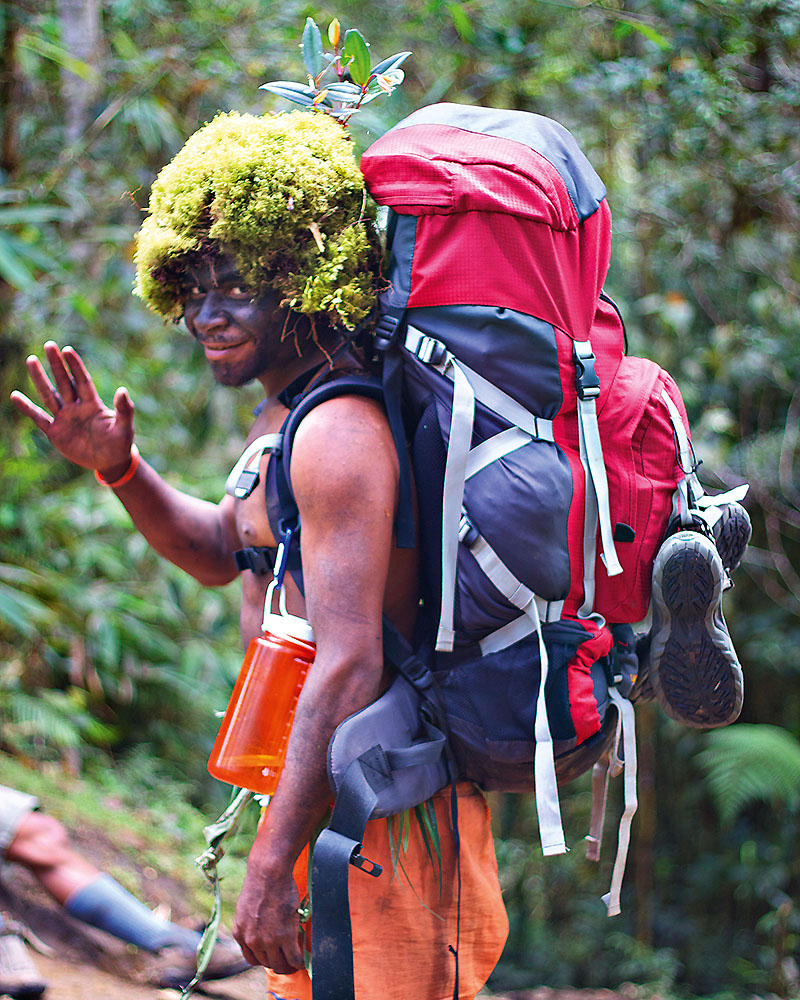
It’s only five minutes after meeting Henry that you and he first hold hands. After 10 minutes he’s gently grabbing you – from behind. For the next nine days he rarely leaves your side for a second. He sings for you, cooks for you, helps you when you’re down. He even brings you flowers. Then, when it’s all over, after you give him a raincoat and some cream for his blisters as a parting gift, you hug him awkwardly and the steamy affair is finished. Such is the nature of a relationship in the Papua New Guinean jungle. It’s a strictly business relationship, of course. Henry is your porter.

Without knowing much about it, you always thought hiking the Kokoda Track wasn’t for you. In fact, you were convinced it was for people very unlike you. As a Greens-voting, peppermint-teasipping, inner-city leftie, the thought of spending 10 days in the bush with a bunch of flag-flying blokes chanting Aussie, Aussie, Aussie never seemed appealing. You’ve seen enough intolerance and ignorance dressed up as mateship and true-blue-ness to know that it can spoil a good time. You’ve long felt that patriotism in Australia has been highjacked by the wrong team. And you were sure it would be that very team that turned up to play on the Kokoda Track.

But then a couple of things changed your thoughts on wanting to do the hike. Most notably, a friend said you’d struggle to complete the track without “serious” training.

“You’ve got to be a tough bastard to do the Kokoda,” he told you.

As a seasoned trekker, and a competitive bugger to boot, this was akin to flapping a big red flag in front of an angry bull. It also led you to do more research about The Track.

You don’t like wars, or the glorification of war. You’ve been to Gallipoli. Honouring the diggers there can be an ugly, drunken affair. But you learn that the World War II campaign in PNG, with the Aussies fighting off what they thought was an imminent Japanese invasion, is an inconvenient truth. The battle for the Kokoda Track was a war they had to have. And you reckon the young fellas who suffered and died there in the belief they were protecting their country – their mums and dads, brothers and sisters – are deserving of everyone’s thanks.

So you decide to take on the Kokoda Track. Firstly, for a physical challenge. But also to honour the soldiers somehow and to see if those on your team (The Peppermint Tea Brigade) are welcome in the game.

With little training, you arrive in Port Moresby. You’re booked on a tour with Back Track Adventures, a Brisbane-based outfit whose website has the least number of photos of camouflage-clad men whooping it up in the jungle. In fact, it has none. A reasonable selling point, you conclude.

At the airport you meet with 12 other trekkers on the same tour. There are uni students, Aussie Rules players, health workers, farmers, bar girls and corporate chiefs in the mix.

Heading out to Owers Corner, the starting point of the trek, you ask one of your fellow trekkers if he’s nervous.

“I’m absolutely shitting myself, mate,” he replies.

At Owers, the group is greeted by the porters, a bunch of 30-odd local men from a village along The Track. They form a guard of honour and begin to sing together. As you walk through and become surrounded by their multi-layered harmonies, you feel a flow of emotion. “Selo, selo,” they chant, “Welcome, welcome.” You have never heard singing like this. Their voices, so naturally and effortlessly beautiful, don’t seem to come from the men themselves. Somehow the music emanates from the earth and the trees instead. It belongs to something ancient and unexplained. In that moment, you forget the hard slog ahead and that you too are absolutely shitting yourself.

You then line up and meet the ‘boys’, as they’re called. Robbie, Richard, Charlie, Binsy and, of course, Henry.

When you meet Henry you know you’re in good hands. At 40, he’s one of the elders of the group. He’s shy and polite and says very little. But you see caring and kindness in his eyes. You decide in that second that you’ll be kind to him too, keeping most of your gear in your bag and giving him just a few kilos to lug. The affair begins.

“Porters are you ready?” yells Charlie, the lead porter.

“YES!”

“Trekkers are you ready?”

“YES!”

And then the countdown commences to the first steps on the Kokoda Track: almost 100 kilometres of treacherous, sheer jungle trail from Owers to the village of Kokoda.

“10, 9, 8, 7, 6, 5, 4, 3, 2, 1… Yippee, yippee, trekky, trekky, rock and roll!” shouts Charlie, while doing a little jig.

You are off.

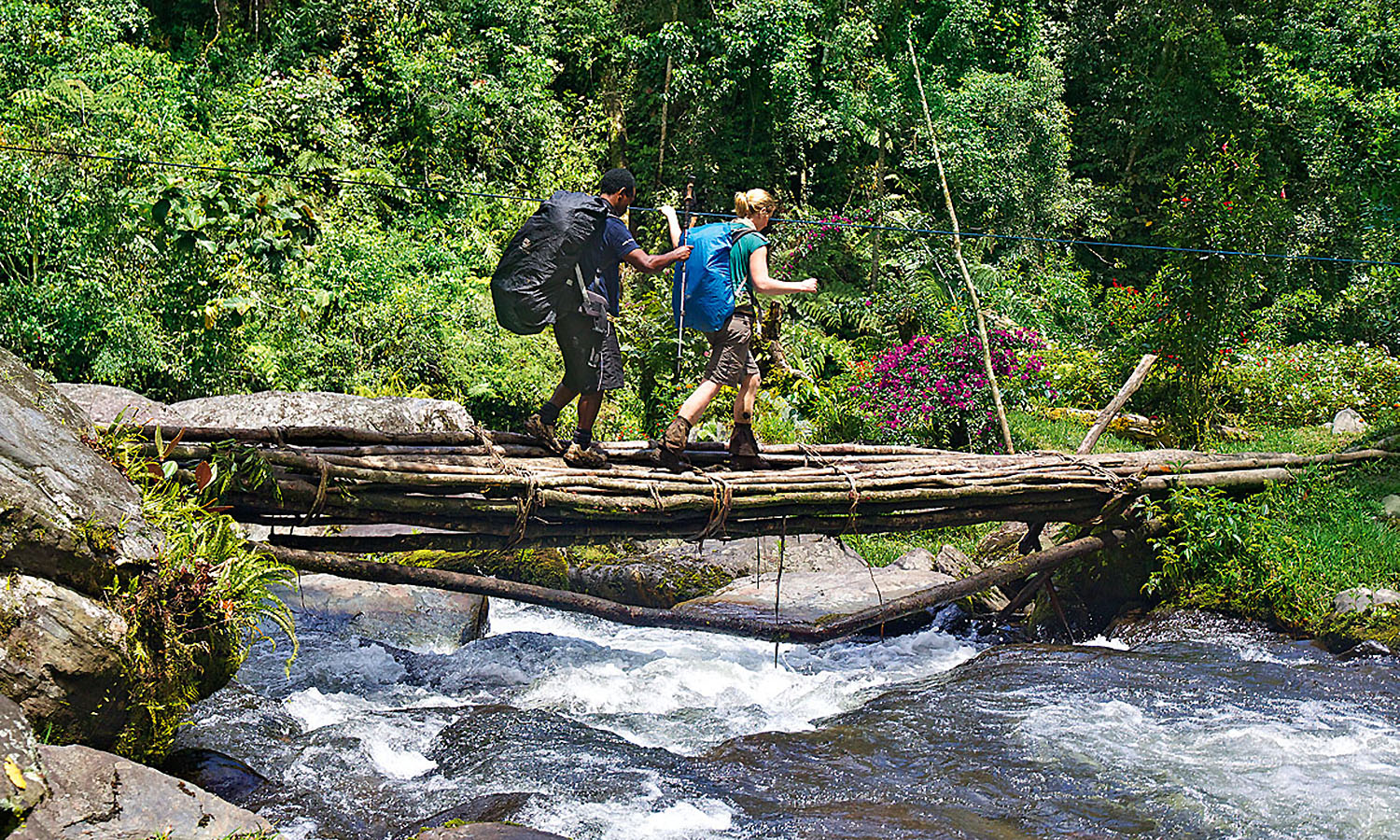
The first minute is murder: a steep downhill pinch that has you almost collapsing at the knees. Henry, always beside or behind you, reaches out to take your hand for the slippery sections. You politely decline. Four minutes later, all pretence of masculinity and self-sufficiency falls in a muddy pile. You take his hand for the first of hundreds of times.

“Like the care of a nurse and the love of a mother,” said Lieutenant Colonel Ralph Honner about the kindness of the Papua. New Guineans on The Track during the war.

The story of the ‘Fuzzy Wuzzy Angels’ is an enduring Australian legend. Given the name because of their ‘fuzzy’ hair, these men and women were dragged from their villages and into a brutal war. Employed by the Aussies to carry sick and wounded soldiers, along with ammo and supplies, they went so far above and beyond to save the diggers that you feel they deserve every piece of praise they get.

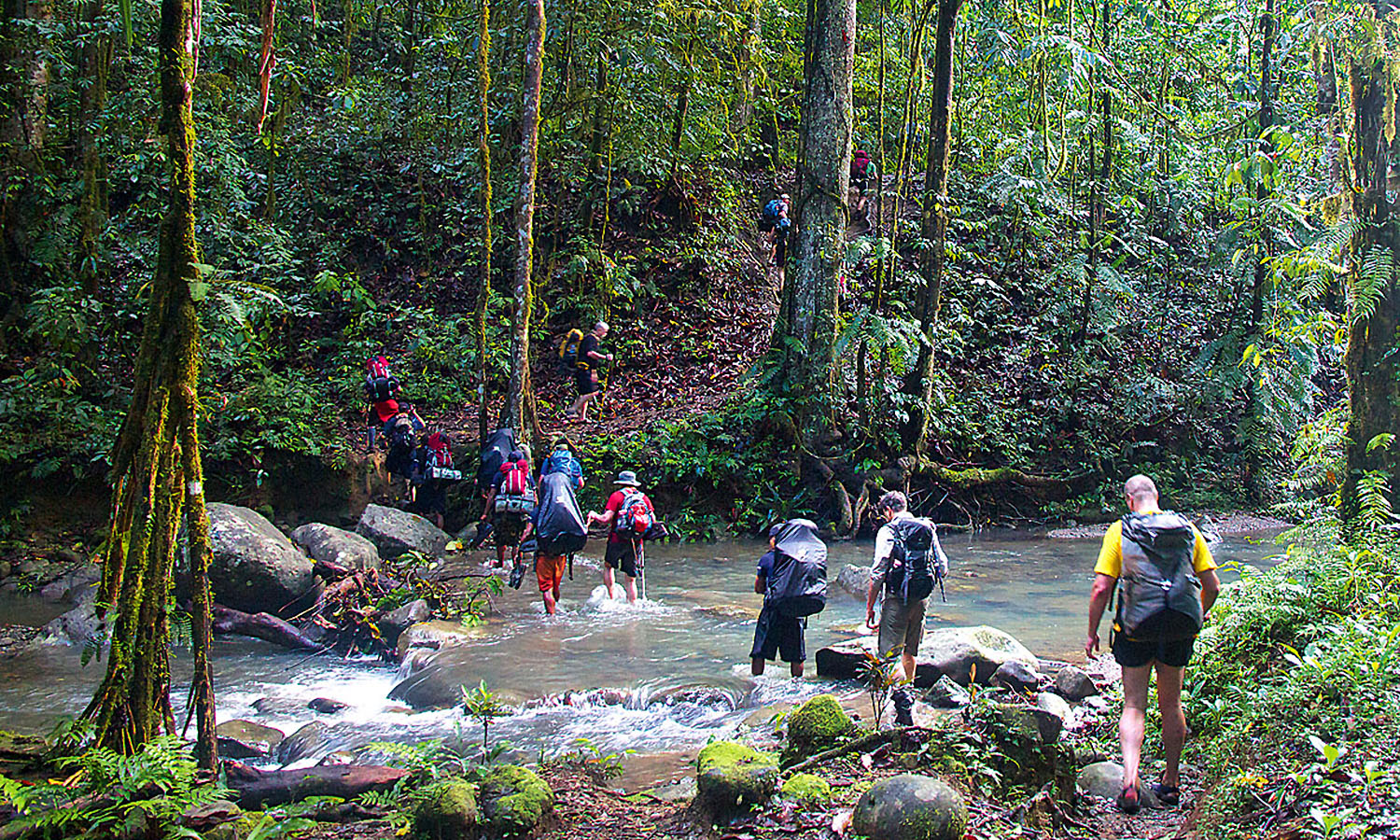
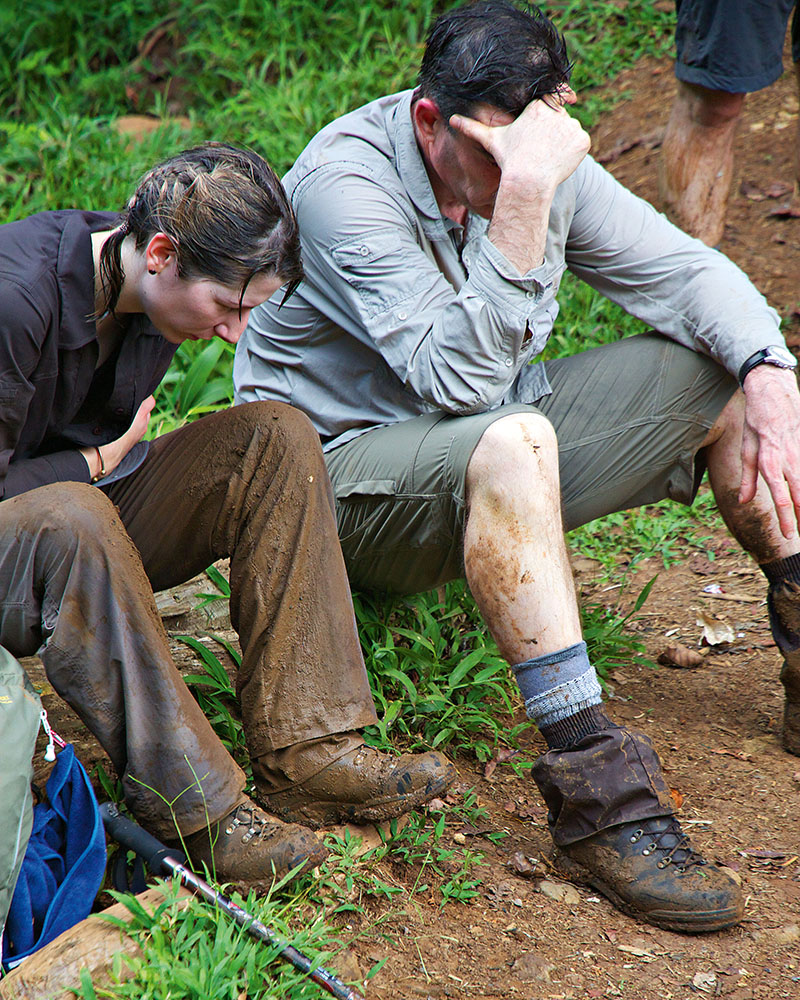
That evening, after the walking is over, dinner is done and Henry has filled your water bottles from the creek, you clamber into your tent and recall the day just gone. If asked, you’d describe the trekking conditions as similar to putting a step machine in a sauna, cranking it up to the highest setting and going at it for nine hours. For total authenticity, add mud, rain, bugs and a fair chance of gastro and malaria.

Despite this, after one of the hardest days of your life, you decide you are very glad to be here.

As you begin to fall asleep, the porters start to sing again. Their music drifts across the tops of the tents and into the warm night.

As day two unfolds, you get to know your fellow trekkers better. Everyone is here for his or her own reasons – from following in the footsteps of relatives who fought on The Track, to completing one of the big ones on the ‘bucket’ list, to simply getting in shape and having a different kind of holiday.

You’re glad the Aussie, Aussie, Aussie chant is yet to ring out across the Papua New Guinean countryside. But you’re also glad there are a variety of opinions and attitudes and world views being expressed along the way – openly and with good humour. These are salt-of-the earth Australians and you’re happy to be among them.

At the end of the day you feel exhausted, but proud that you are managing OK.

Pride is a thing you think about a lot on The Track. Has Australian pride been impaled on the sharp end of extreme nationalism? You remember Cronulla well. You wonder if it’s possible to be patriotic without being blinkered and boorish.

You’re still not sure, but the story and symbolism of the 39th Australian Infantry Battalion, remembered as one of the bravest and most important units in Australia’s military history, gives you hope that it somehow is.

Thrown together in a rush, the 39th was a motley bunch of mostly teenagers armed with weapons from World War I. Derisively dubbed the ‘chocos’ (chocolate soldiers, because they’d supposedly melt in battle), they were originally lined up for a passive role in PNG. But a series of events occurred that led those in charge to order the 39th to carry their weapons and the hopes of their homeland into the rampant jungle – to take on the infinitely superior Japanese forces advancing on Port Moresby and to save their nation. On the face of it, it was a big ask.

But the boys didn’t melt. They hardened. The part they played in keeping back the Japanese was phenomenal. Those who returned – many didn’t – have been dubbed ‘ragged bloody heroes’. For you, the courage and strength of the 39th is beyond belief.

On The Track, each day has its ups and downs in a literal and emotional sense. The walking is very hard going. It’s steep and slippery and you sweat like a glass blower’s arse in the cruel humidity. There are moments – sometimes hours or whole days – where you slip into a negative headspace and wonder why it is you’re here.

But the camaraderie amongst the group is a big help in getting you through these down times. There’s a sense that everyone is in it together.

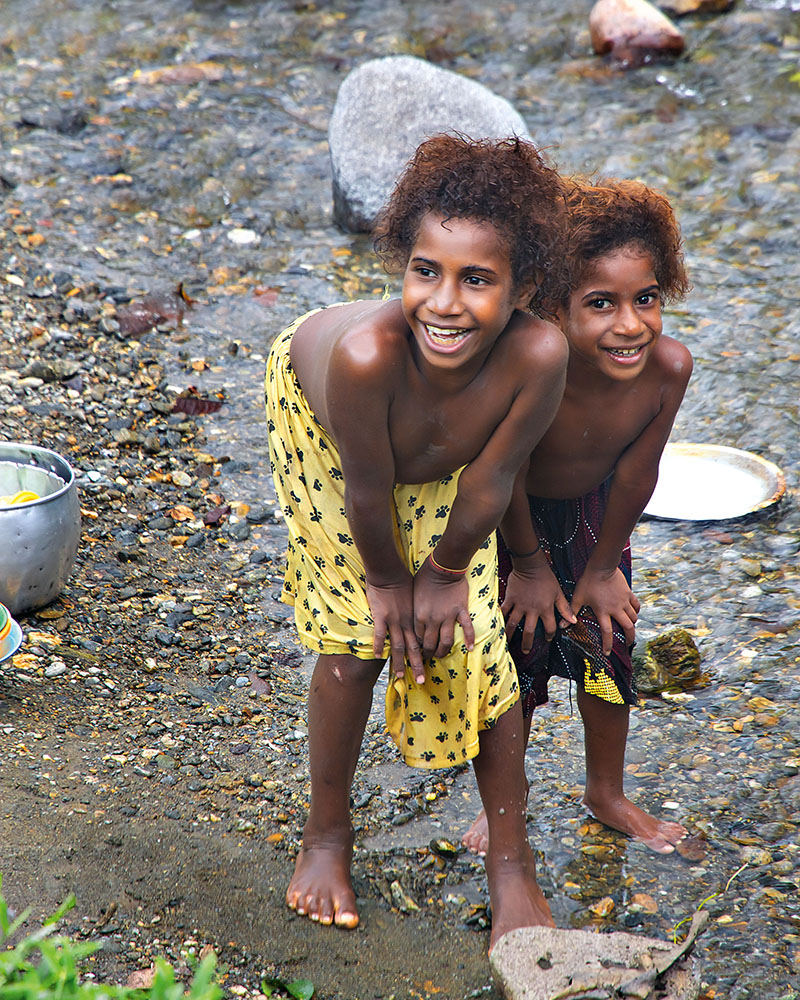
The natural and cultural side of the experience is also a big motivator. Whenever you take time to look around, you realise you’re in one of the great forests of the world. The endless jungle is like a giant set of green lungs. And you relish the interactions with the locals along the way, the men with their bush knives and betel-nut smiles, the curious kids in the villages.

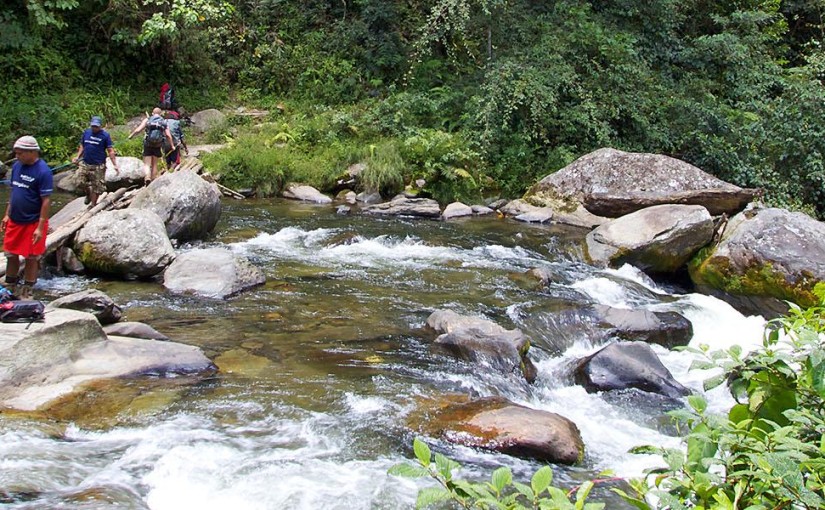
On day four you stop to rest and drink and swim at the most idyllic waterhole. Two rivers meet here, forming a perfect hollow like a giant bath to swim in. Bare-bottomed youngsters come to watch you flop about in the cool stream: a shabby bunch of whities with fancy cameras and high-tech outdoor gear and energy bars. You find it difficult to drag wet socks back on and leave a spot like this. Even harder to imagine there was once a horrible war right where you stand.

You reckon many people come to hike the Kokoda Track to honour fallen Australians, but leave bowing down to PNG – its people and its spectacular places.

As each day passes, and the tragedy of the war comes to life with greater clarity, you become more aware of this contrast between nature at its brilliant best and humans at their violent worst.

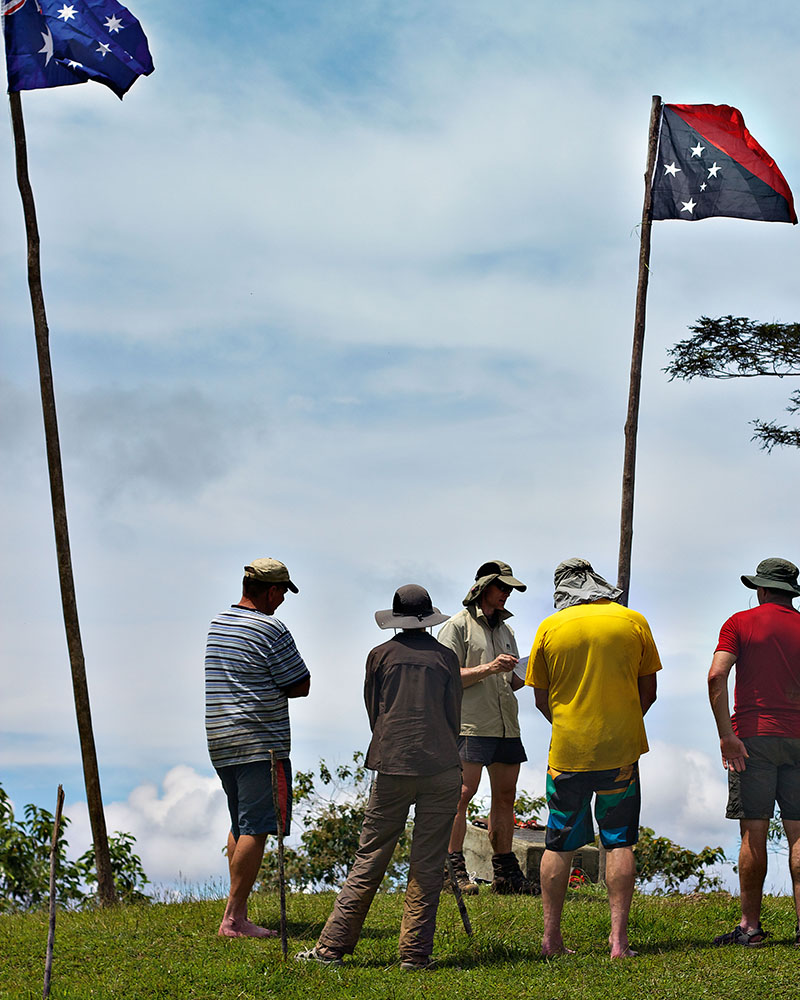
This distinction is most obvious on Brigade Hill when Gareth, the guide, holds a service for the fallen diggers. Under the Australian and PNG flags, on top of a beautiful clearing in the wilderness, with the warm midday sun filtering through the thriving jungle, he plays a recording of the ‘Last Post’ on a little speaker. For you, the lone bugle sound has never had so much emotion in it. The porters then sing their national anthem. You note that many trekkers have tears in their eyes.

Each day melds into the next once the routine is set in. You rise early, eat, walk, eat, walk, swim, eat, sleep. Then you get up and do it all again. Despite it being the most challenging thing most of you have ever done – and will ever do – it is still a lot of fun. The moments of joy make it worth it: a smile and a wave from a cute kid, a bird call in the jungle, a game of touch footy with the boys, a colourful sunset, Henry leaving a bunch of flowers tied to your pack. These will be your lasting memories.

At the end of it all, you feel relieved more than elated or excited. You also feel like you could sleep for a week.

As you leave The Track and make your way out of the jungle and back home, you think again about patriotism being highjacked by the wrong team.

Hiking the Kokoda Track has made you think it might be worth trying to win back a few points and even the score. It won’t be easy. But nothing worth achieving ever is. In New Guinea pidgin there’s an expression that means to go on a journey. The phrase is ‘throwim way leg’. It refers to the important action of lifting a leg to take the first step of what can be a very long walk.

SUN, SEA AND SAND

Torre Trasita
Positano, Italy

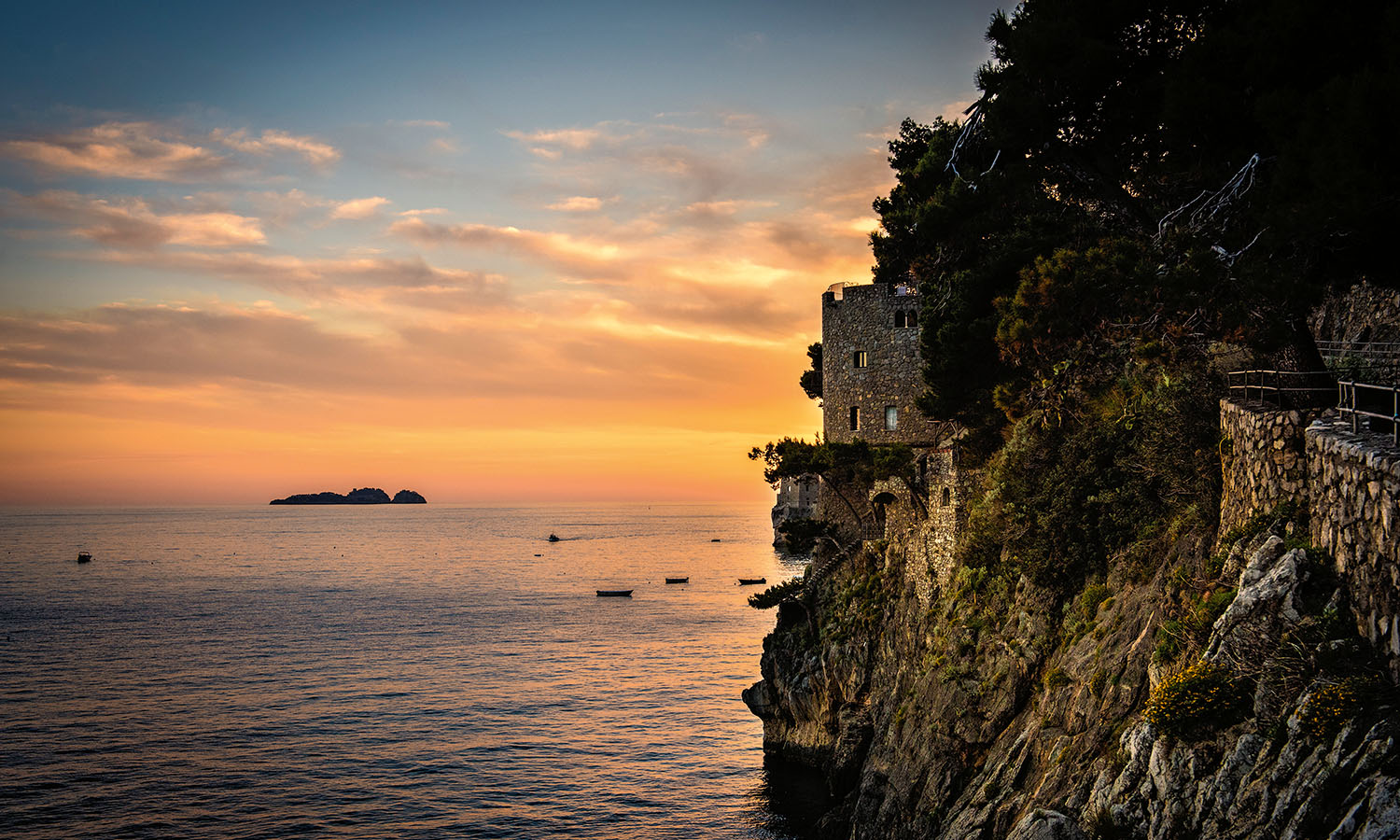
Lord it up above the turquoise waters of the Amalfi Coast and play king of your very own castle with a stay at Torre Trasita. Jutting from a rocky cliff near the Italian town of Positano – once a small fishing village favoured by Romans on vacay – this former watchtower has been part of the landscape since the sixteenth century. Restored this year with all the trimmings of a seaside hotel, the torre sleeps six in style. Order insalata di frutti di mare (seafood salad) to be delivered to the blue-tiled terrace up top, and wash down 360-degree views of the town that inspired Picasso with a chilled glass of bubbles. If your creativity stirs there’s even a piano for you to play – after all, all nobles fancy a tinkle on the ivories from time to time. From about US$1212 a night.

torretrasita.it

Playa Viva
Juluchuca, Mexico

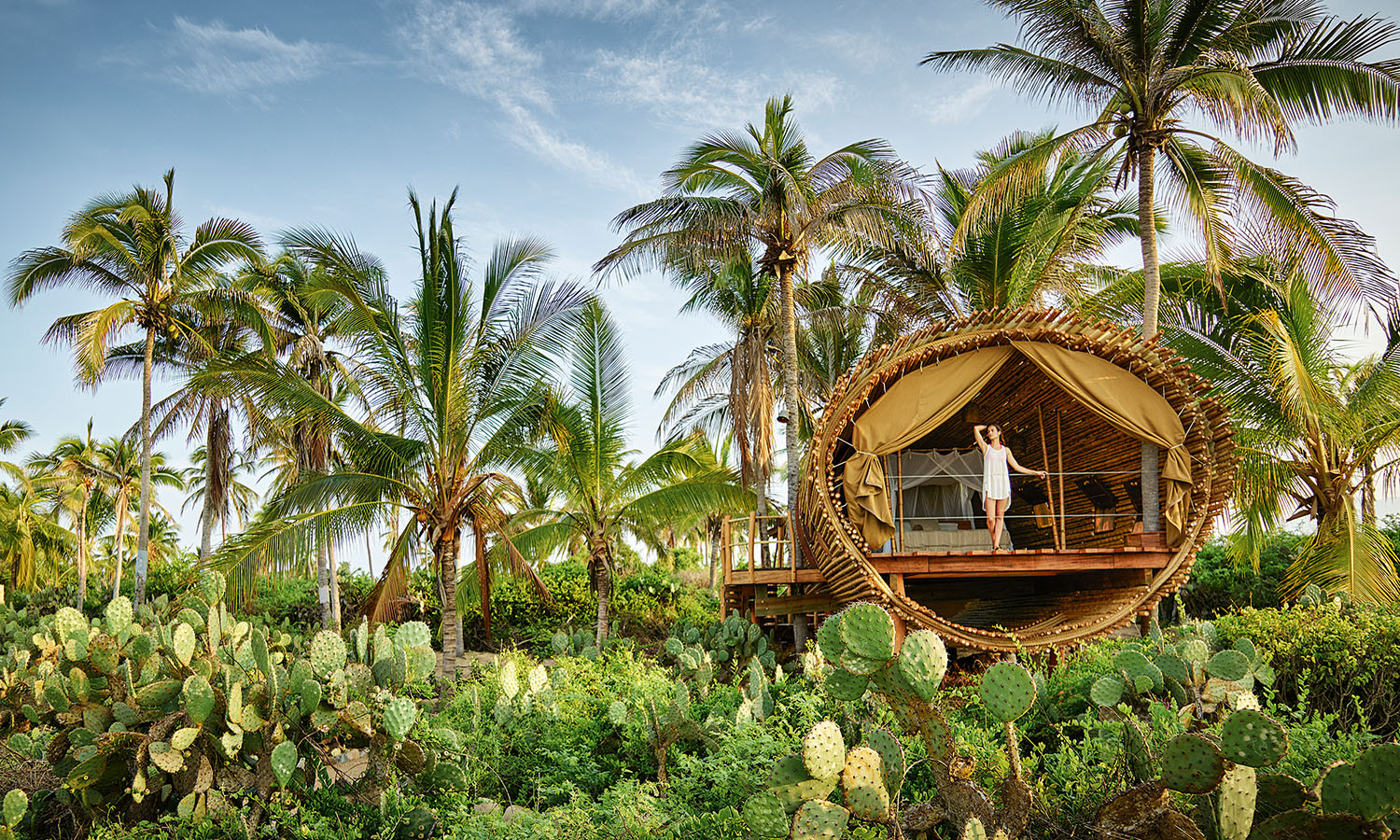
Wellness and nature come together at Playa Viva. Set on 80 hectares of beachfront land, the resort has 12 beachfront eco-luxury rooms, from casitas to suites, but the Treehouse is our kind of adventure. This tubular bamboo structure, surrounded by palm trees, features a king bed, private bathroom and lounge area, and stares directly at the Pacific Ocean. Salute the sun at a morning yoga class, devour organic meals, go horse riding along the beach, take a snorkelling or surfing excursion or get up close to nesting turtles at La Tortuga Viva, a protective sanctuary. There’s so much to explore, you might never want to leave. Treehouse from US$390 a night, inclusive of everything except alcohol.

playaviva.com

Alkina Lodge
Wattle Hill, Australia

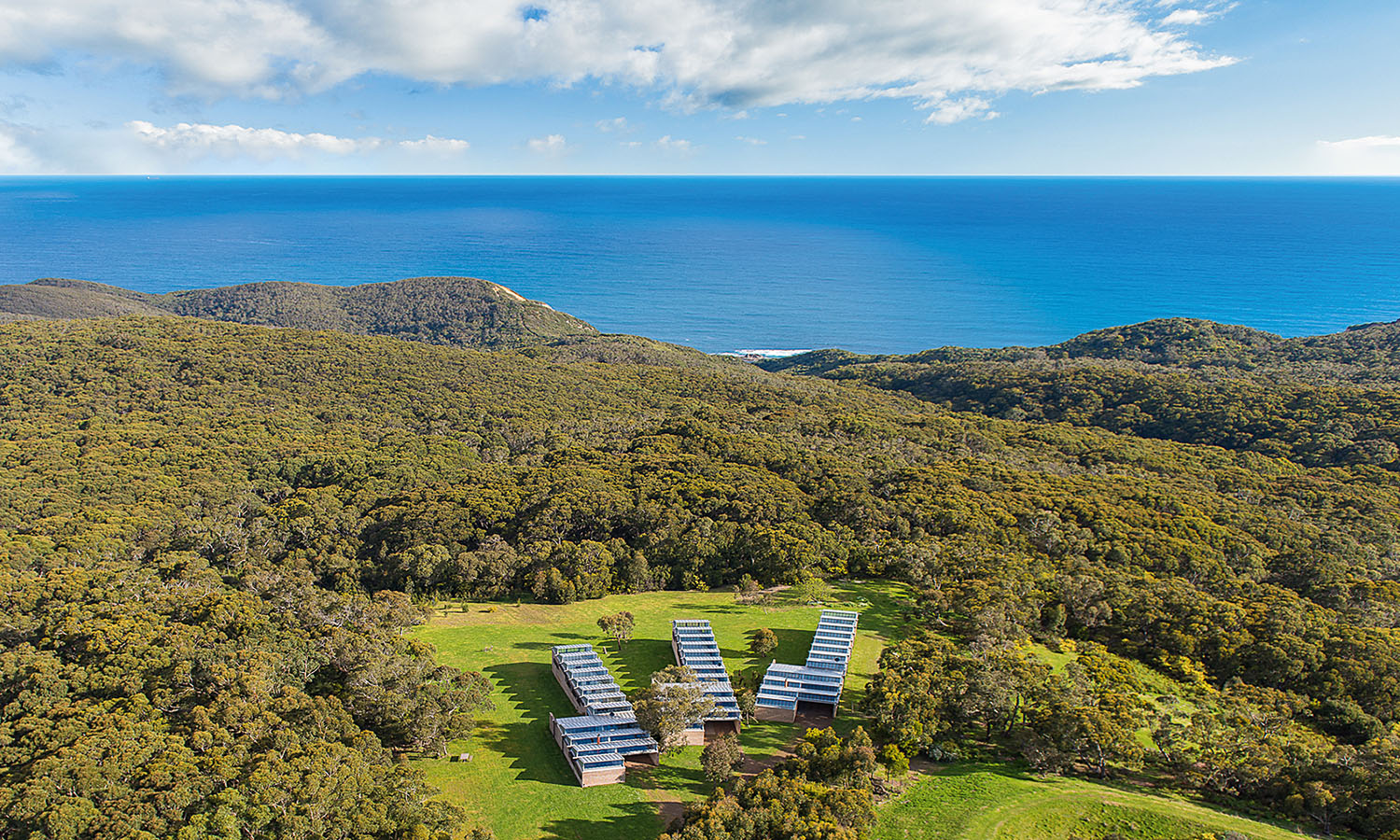
It’s one of the greatest drives in the world, but luxury accommodation along the Great Ocean Road is rare. Thankfully, we’ve discovered Alkina Lodge, a trio of four-bedroom villas designed by Glenn Murcutt and Wendy Lewin. Positioned in a clearing above the Southern Ocean, they offer every facility you could need plus luxuries like a fireplace, Bose sound system and a huge, freestanding bathtub. The lodges are positioned to offer the utmost privacy while allowing guests to wake to the sight of kangaroos grazing on the lawn. Sky windows in the bathrooms and living spaces encourage lying back and enjoying a view of wafting clouds or twinkling stars. Best of all, this is a prime jumping-off point for the region’s attractions, from the 12 Apostles to the koala-rich area around Cape Otway. From US$266 a night.

alkinalodge.com.au

Punta Caracol Acqua Lodge


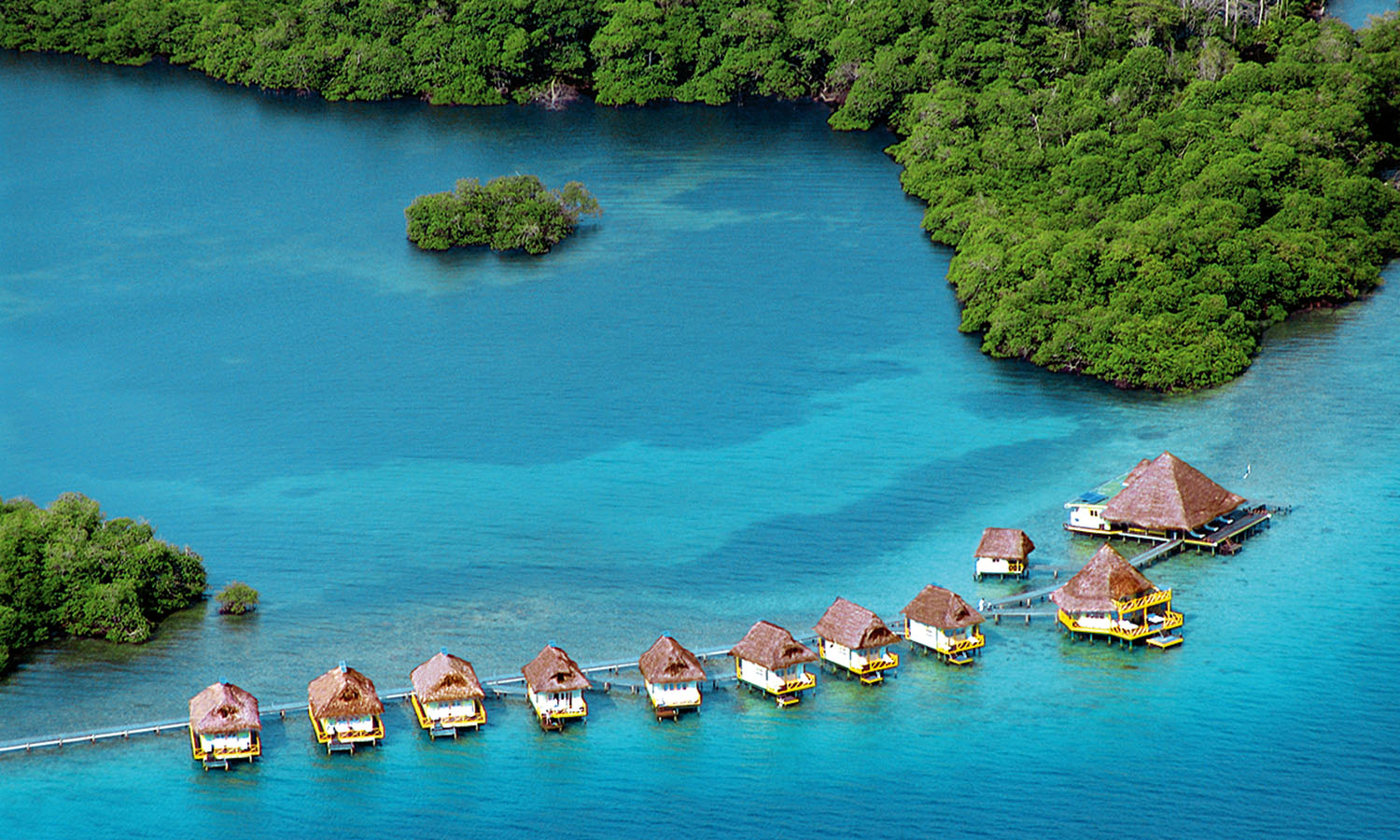
It speaks volumes that on its FAQ website page the number one suggestion for what to bring to this resort is a good book. With private terraces perched over the water at each of Punta Caracol’s bungalows – there are just nine in all, each spread across two levels – there’s plenty of temptation to just sit and stare at the Caribbean Sea’s frolicking dolphins. You’re in one of the most environmentally pristine parts of Central America though, so grab a mask and flop off the balcony onto the reef. There is superb snorkelling all around here, as well as the chance to go on boat expeditions to local Indian communities, hikes in the rainforest and tours by motorised canoe to spot sloths and white-face monkeys. Bungalows from about US$309 (for up to four people).

puntacaracol.com.pa

Al Iikai
Serangan, Indonesia

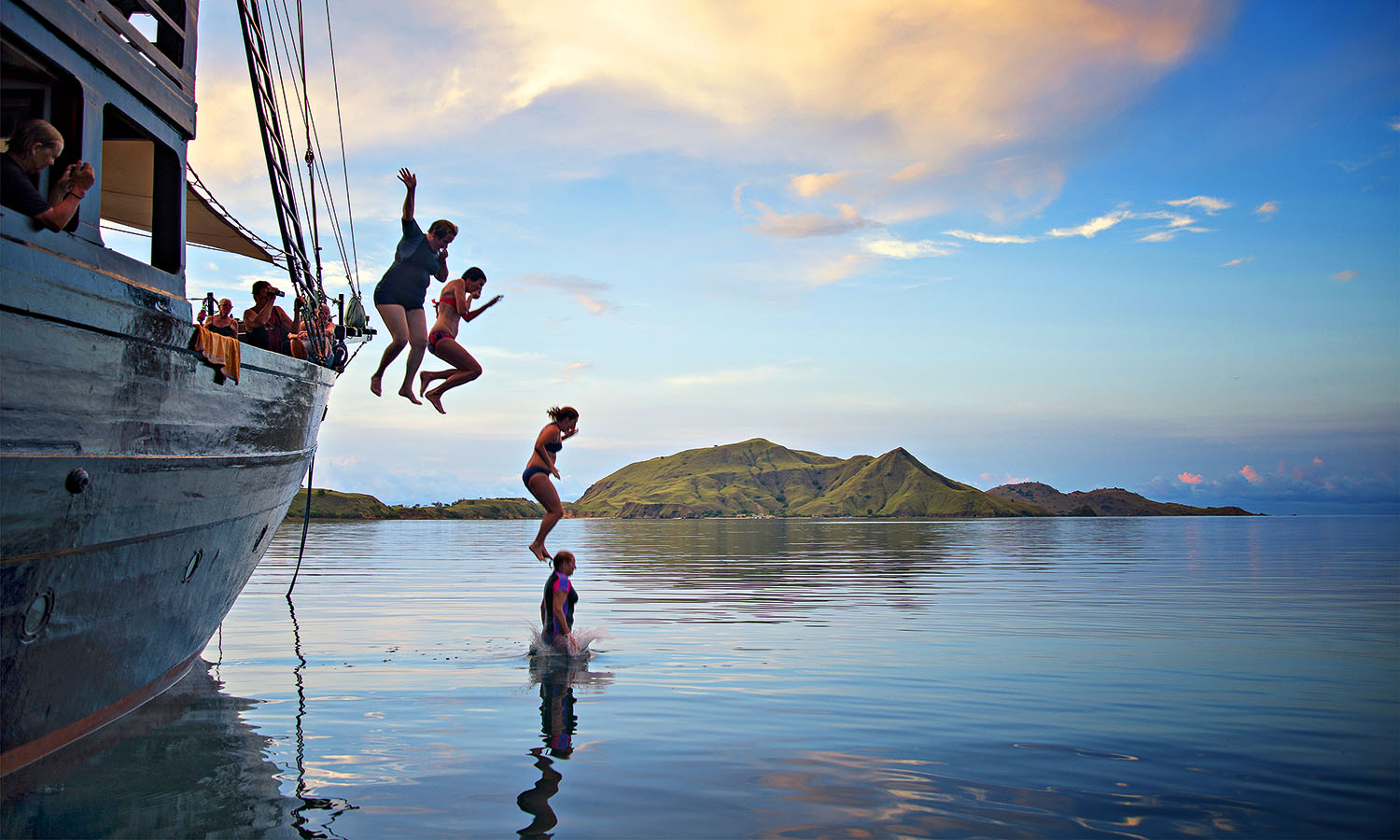
The idea of a cruise is enough to make us want to jump overboard, but we’d make an exception for this beauty. Once this pinisi (a traditional Indonesian sailing boat) carted backpackers around the Indonesian islands, but with a change of owner – Amanda Zsebik used to run private villas and a restaurant in Bali – came a complete refit. Now there are just five king-size bedrooms, all with an en suite, plus one family bunk room, to accommodate a maximum of 16 people. But it’s the places you’ll see – itineraries include a cruise to West Nusa Tengarra, Komodo or around the uninhabited islands near Lombok and Gili – that will take your breath away. There’s plenty of time for snorkelling, lying on deserted beaches or visiting far-flung attractions like pearl farms. Prices start at US$1279 a person for the seven-day Island Explorer cruise. During 2017, anyone booking a sailing itinerary will also receive three nights’ complimentary accommodation in a private two-bedroom Bali villa.

indonesianislandsail.com

Soneva Jani
Noonu Atoll, Maldives

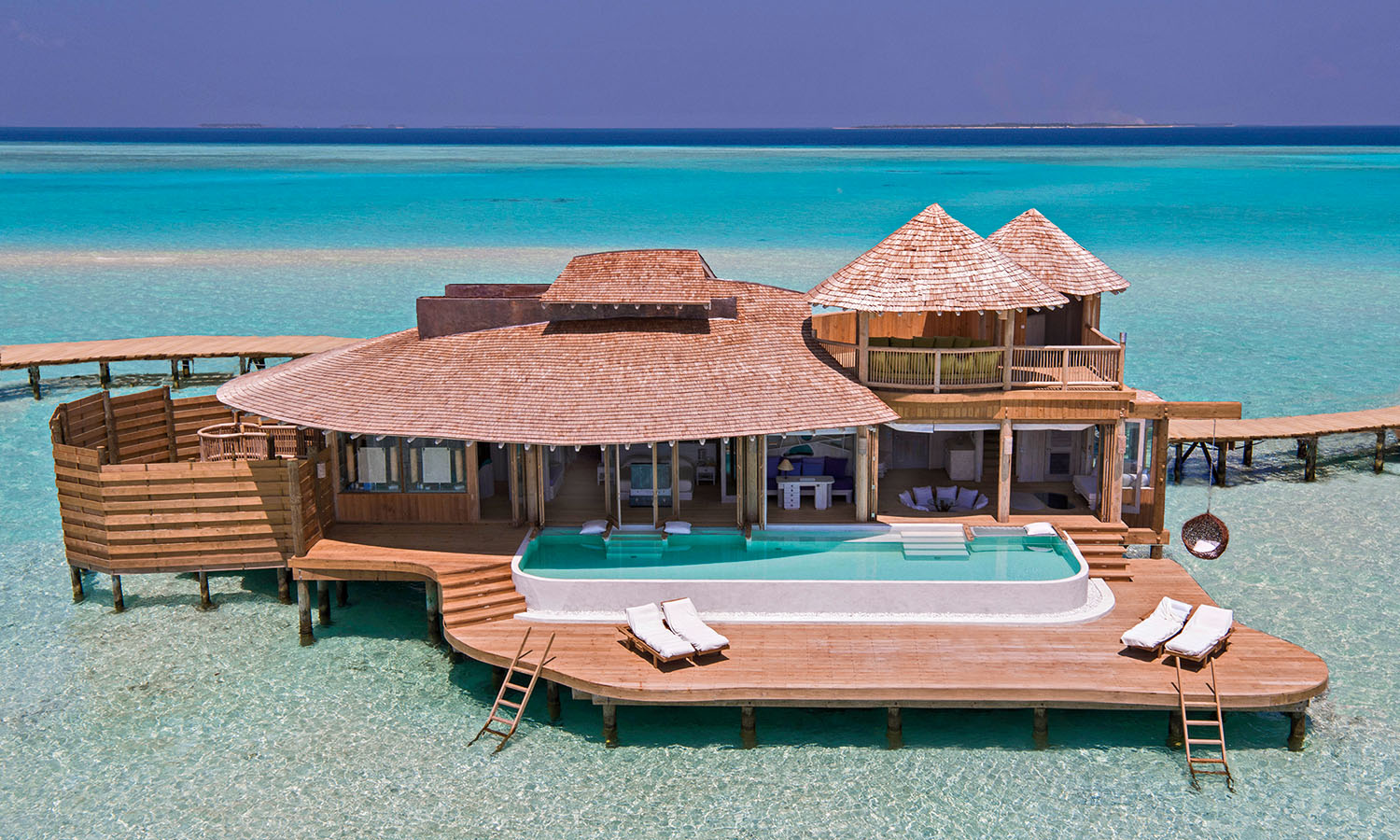
Remember being a kid and wishing the stairs in your house could be swapped with a slide? Live the dream at the new Soneva Jani, where you can select a deluxe overwater bungalow with a chute that takes you from bed to lagoon in an instant. From Malé airport in the Maldives, a private seaplane will whisk you over some of the nation’s 1190 coral islands to your own wooden castle perched out over crystal-clear water. Here the hardest decision you’ll have is deciding between an afternoon in your private pool or joining the fish in the ocean. One-bedroom Water Retreat from US$2693 a night.

soneva.com

The Sands at Chale Island
Diani Beach, Kenya

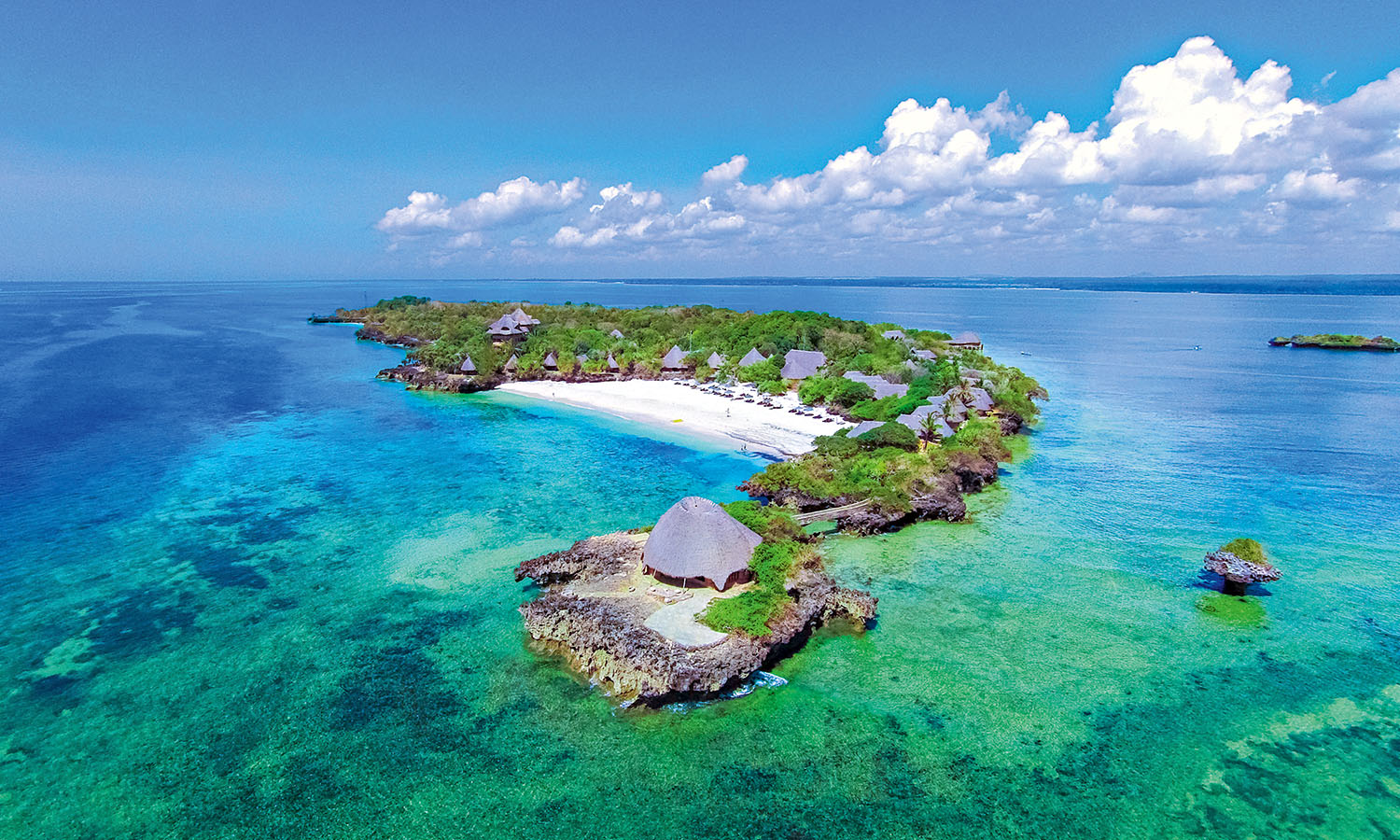
There is an islet in Kenya so private and romantic that even Cupid couldn’t have dreamed of it. The Suite on the Rocks, a thatch-roof natural beauty exuding tranquility, is connected to Chale Island resort by a stone bridge. The centre of the room will have you lost for words. There’s a walled garden beneath an open roof that lets rain trickle in to create an atmosphere resembling that of an indoor rainforest. Spend the days watching fishermen in dhows sailing by as you sprawl on the sun terrace. Then, as the evening arrives, pop the champagne and immerse into your hot tub on the cliff face. From about US$848, including meals.

chaleislandresort.com

Treetop House
Malpais, Costa Rica

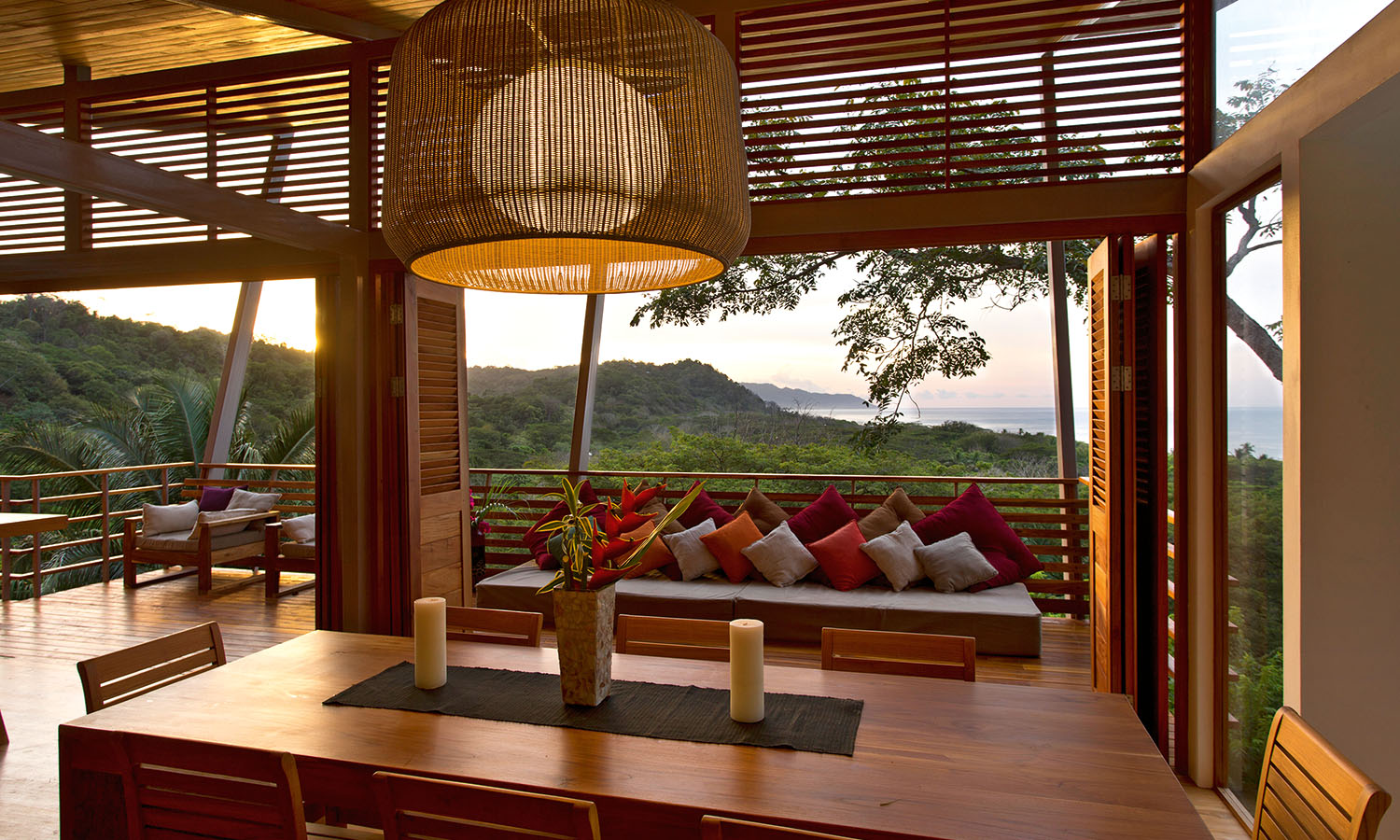
You’ll feel like you’re part of the family of chattering monkeys that live in the surrounding trees in this beautiful home perched over the jungle and facing the Pacific Ocean. Shortlisted for House of the Year by World Architecture News, the residence designed by local architect Benjamin Garcia Saxe is constructed in three individual sections, each linked by walkways. It’s made from teak and bamboo and utilises solar panelling and UV water systems to minimise the environmental impact. Three bedrooms sleep up to seven people, plus there’s a pool positioned below the house for soaking while the sun sets. There are some spectacular surf beaches just down the road too, and the town of Santa Teresa is a 10-minute drive away for when you need to restock your supplies. From about US$589 a night.

boutique-homes.com

INTO THE WILD

Hideout
Bali, Indonesia

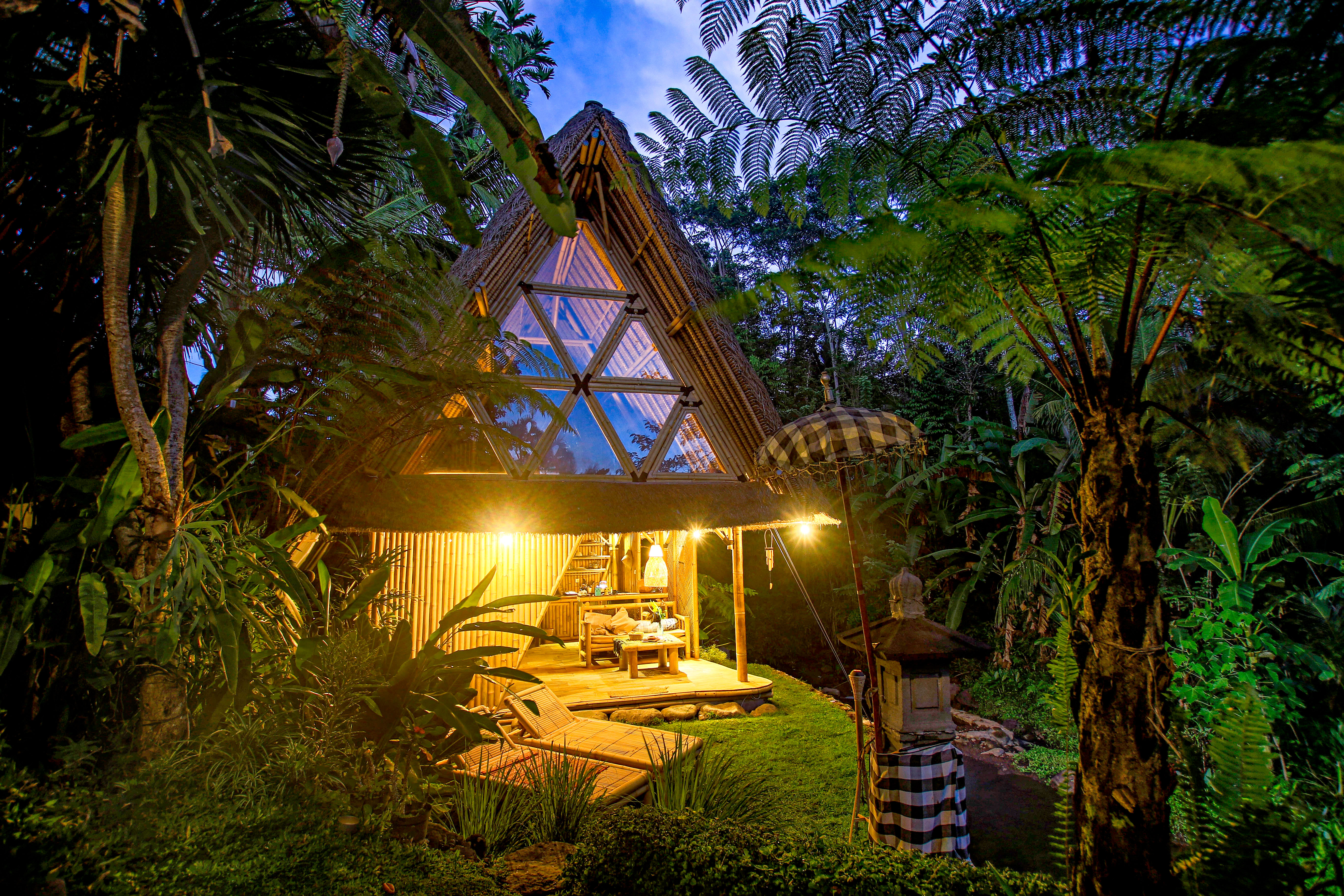
Most presume the Bali of old was sucked into Kuta’s juice bars, but pockets exist that still offer the same magic travellers fell for many years ago. One such place is the Hideout, a double-storey bamboo abode for up to four guests perched between a rice field and a river in the mountains near the Gunung Agung volcano, a 90-minute drive from Denpasar. Decked out with musical instruments, art supplies and a resident kitty, it is the ideal place to relax and let creativity flow. Cool off in the river with huge butterflies kissing your skin and watch the waterwheel churn to give the Hideout extra electricity. Visit the nearby Campuhan, the sacred confluence of two rivers, where the Balinese go to cleanse body and soul and perform spiritual ceremonies. At night, ride the house’s scooter to a warung (casual restaurant) in a nearby village and return to laze in the hammock, listen to frogs and spot fireflies blazing in the jungle. From US$98 a night.

hideoutbali.wordpress.com

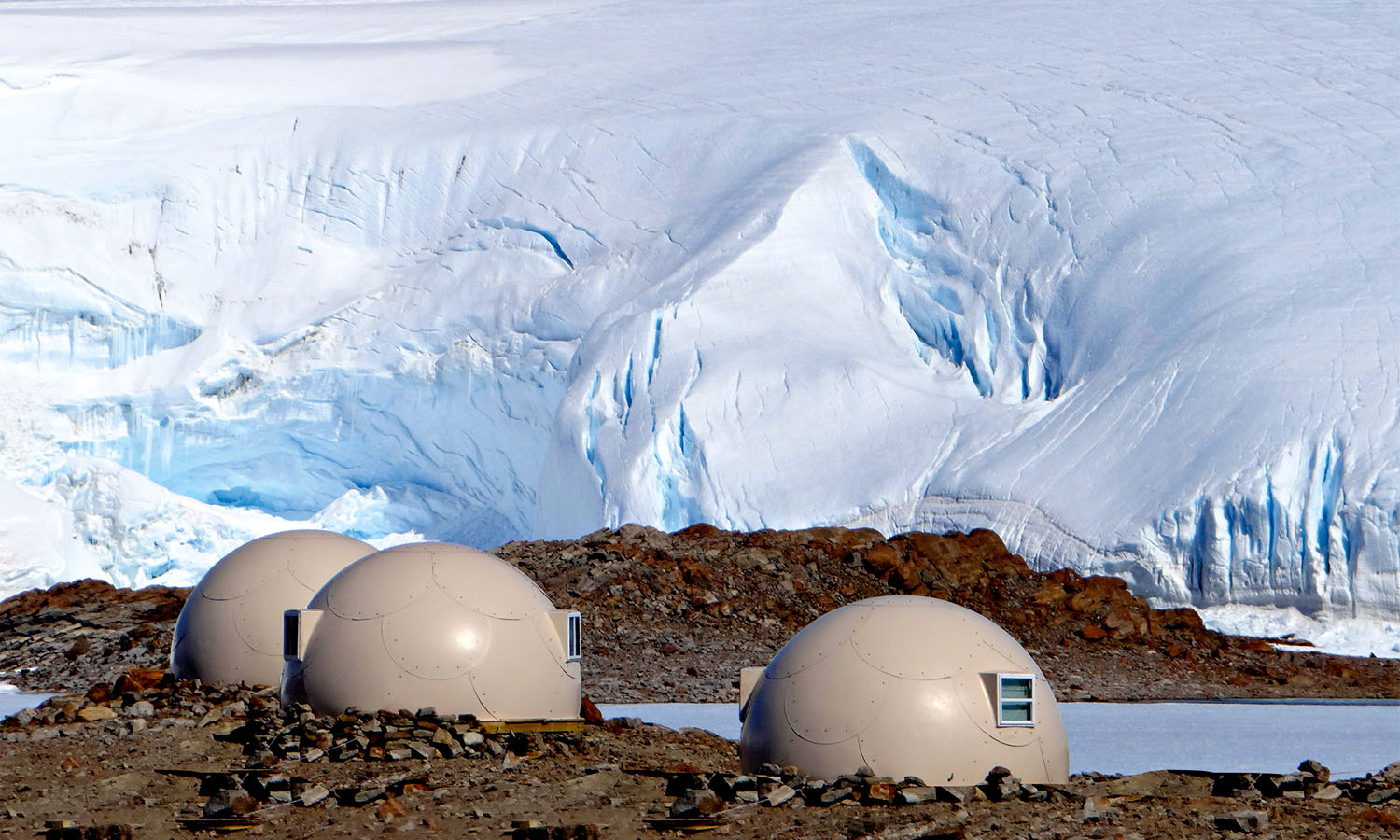
Camp Witchaway
Antarctica

After getting stuck in a storm on a 1850-kilometre scramble across Antarctica, a team of explorers decided to set up a camp with everything they lacked during those four gruelling days. Situated next to an ice cliff, deep in the interior where few travellers ever venture, Camp Witchaway offers six luxurious domes, where guests lounge on leather and nosh on gourmet food rather than voyage rations.

Its zero-impact policy means waste is flown out, emissions offset and the 24-hour sunlight harnessed for power. Away from base you’ll visit ice caves and 6000 penguins in Atka Bay, and even jet to the South Pole if you choose. Nine-night trips start at US$43,450

white-desert.com

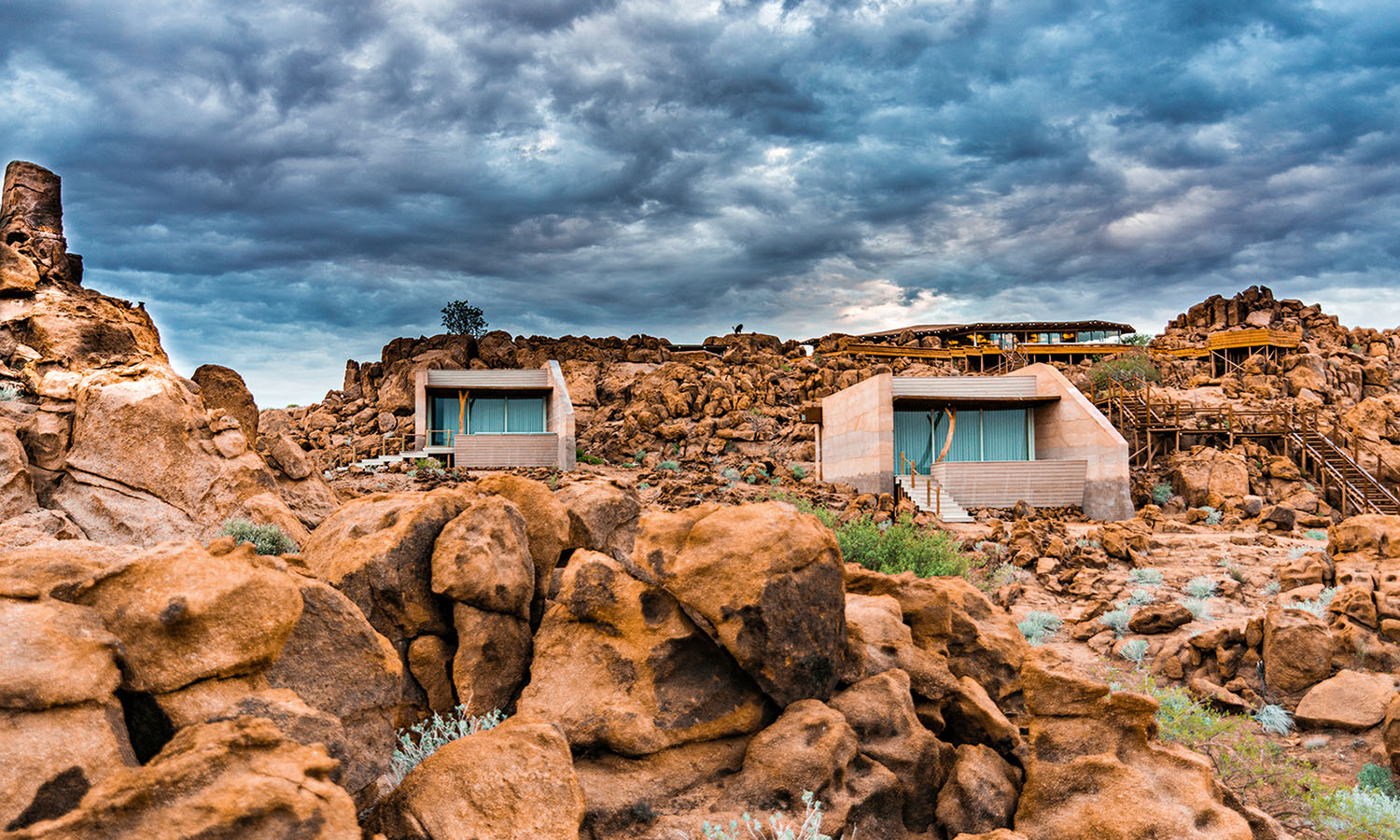
Sorris Sorris
Damaraland, Namibia

Stop, sit and breathe. Notice how quiet it is? That’s because the nearest lodge is a hundred kilometres away and the desert, pocked with prehistoric rock formations, flows past the Brandberg Massif – Namibia’s highest mountain – and out to meet the horizon. There’s no wi-fi, phone reception or worries. Perfect. Nine bright and luxurious suites – think walls of stone and rammed earth, pale wood interiors and creative lighting – sit among a dramatic pile of balanced granite boulders. A lounge rises above the rocks and the pool offers respite from the heat. Desert-adapted elephants romp in the dusty bed of the Ugab River system nearby, and you’ll have the chance to watch them search for underground water – if you’ve managed to tear yourself away from the resort, that is. From about US$804 per person, all inclusive.

africaskysafari.com/sorris-sorris-namibianafrica


PurePods
Kaikoura, New Zealand

Hide away in your own slice of heaven. There are two PurePods about 20 minutes from Kaikoura (a third is located an hour from Christchurch), but each is located in a different spot to ensure complete privacy. And you need it, since the walls here are all made of glass. On a warm day, throw them open to completely surround yourself in fresh air and birdsong. In winter, you can lie in bed and stare out over snow-capped peaks. The pods are off-grid, but have everything you could need, as well as excellent extras like binoculars, reference books and board games. Bring food with you or have breakfast and dinner hampers delivered. About US$316 a night.

purepods.com

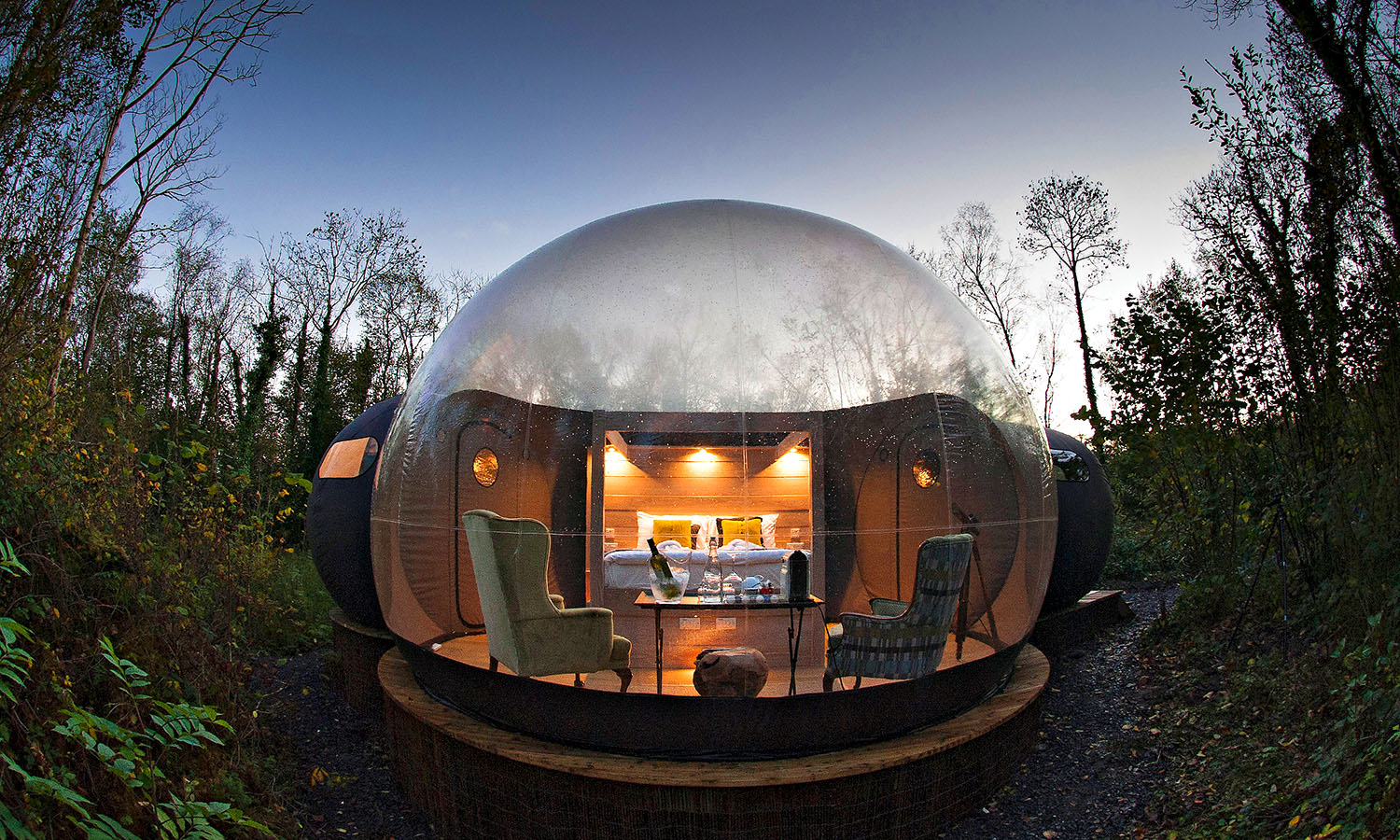
Finn Lough
Enniskillen, Northern Ireland

If spending a night under the stars excites you, but pitching canvas does not, experience Northern Ireland’s lush landscape from a Bubble Dome. The sphere’s transparent walls and ceiling offer 180-degree views of the surrounding forest, making you feel like you’re in your own world. As darkness falls, sink into your four-poster bed or kick back in a lounge chair by the fireplace and, if the weather gods are on your side, turn your eyes skyward to marvel at the Milky Way. For the ultimate stargazing experience, enjoy a glass of bubbly while soaking in a luxe stone bathtub in the Premium Bubble Dome. From about US$228 a night, including breakfast.

finnlough.com

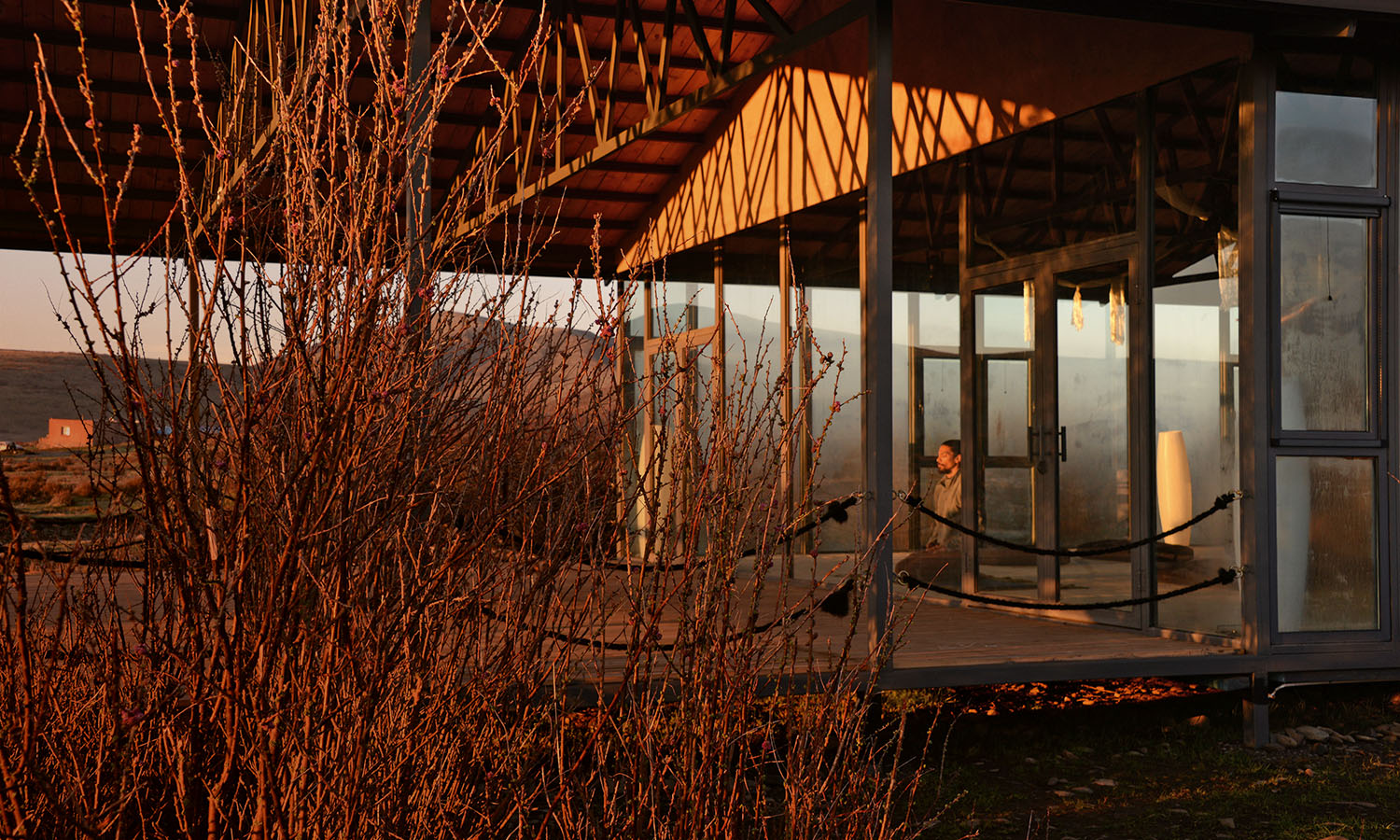
Norden Camp
Gannan, China

Travel often takes us back in time and Norden Camp is no exception. Built by Tibetan nomads, the retreat has been designed to share the heritage of the land and people with its guests, fusing comfort and eco-sustainability with culture. Eight log cabins constructed from pine found in the woodlands and four hand-spun yak-hair tents dot the countryside, each featuring timber floors, luxe bedding and local antiquities. The land is untouched by mainstream development so the seasonal produce – herbs, yak milk and black pig – is completely organic and used to create unique delicacies. Immerse yourself in the quiet surrounds with yoga, go horseback riding across the valley, or visit the famous monastic village of Labrang. Out here, it’s all about disconnecting from modern society – after all, you’ve got nothing but time. Tents from US$259 a night, log cabins from US$424 a night; both including meals.

nordentravel.com

Starlight Room
Dolomites, Italy

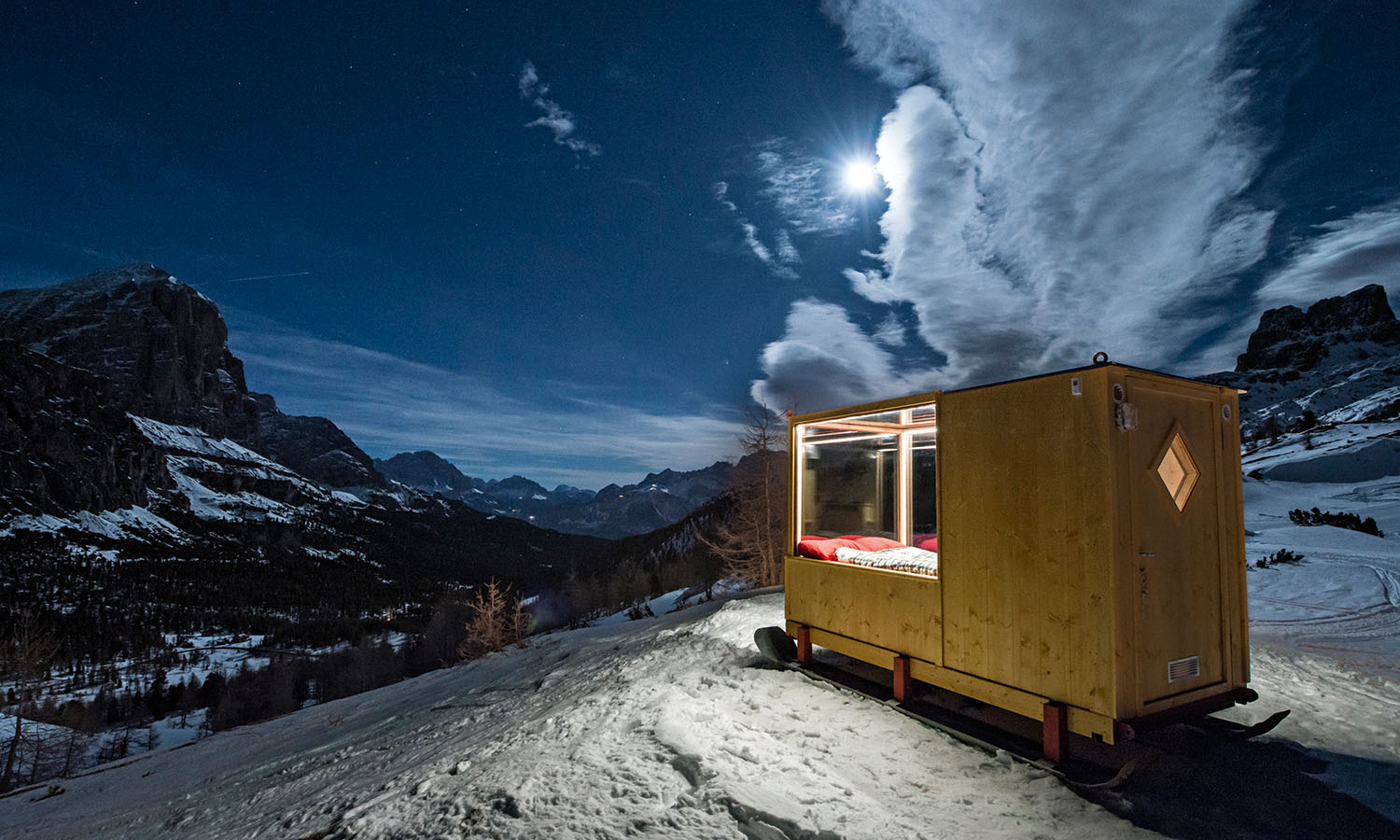
Snag a front-row seat to watch the sun set and stars sparkle over the UNESCO World Heritage-listed Dolomite Mountains without ever leaving your bed. Dropped into the snow at an altitude of 2055 metres above sea level, this sled-turned-glass cube bedroom (don’t worry, the skis are just for show) immerses guests in the snowy peaks of northern Italy. Col Gallina ski resort is a few kilometres away and the room is accessible via snowmobile or by strapping on a pair of snowshoes and traipsing there. The angle of the double bed is adjustable, so you can get the best view of the constellations while you’re toasty under the covers. From US$298 per night, including breakfast and dinner.

Email rifugio.colgallina@dolomiti.org to book.

Naries Namakwa
Springbok, South Africa

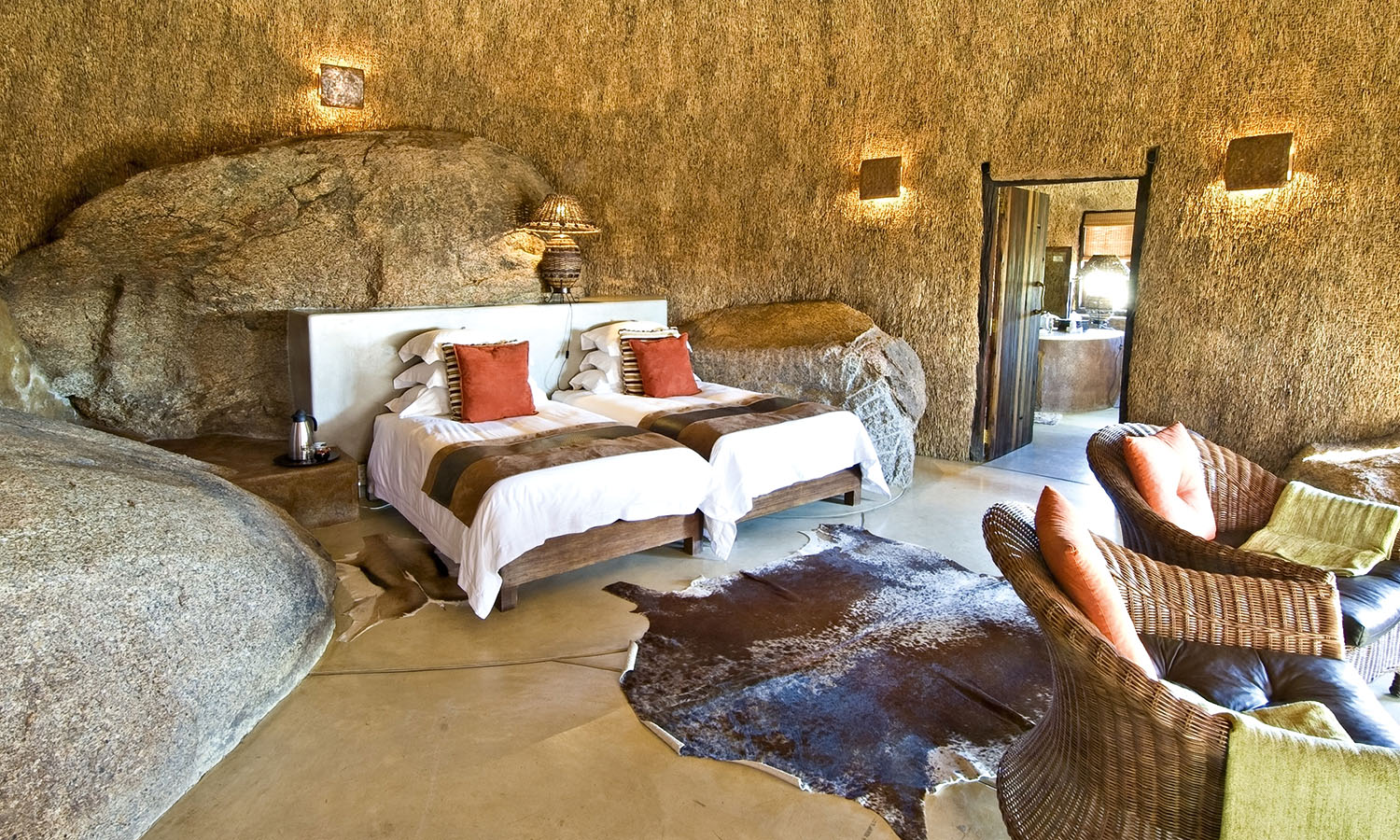
Listen carefully when you’ve settled on the deck outside your domed suite. What you hear is the sound of nature. That’s the attraction of this property located on 600 hectares almost 30 kilometres outside the town of Springbok. When you’ve toured Cape Town and safari’d to your heart’s content, it’s the perfect spot to reconnect with yourself and the wilderness. There’s a restored farmhouse and cottages, as well as these three mountain suites, created from rock and thatch and wedged between boulders. You can go hiking, loll about the pool or head out to explore the area. Namaqualand is a barren landscape on South Africa’s west coast, best known for copper mining and the spectacular profusion of wildflowers that blankets the red earth after the winter rains between August and October. It’s a sight you’ll never forget. Mountain suites from US$203 a night.

naries.co.za

Santani
Kandy, Sri Lanka

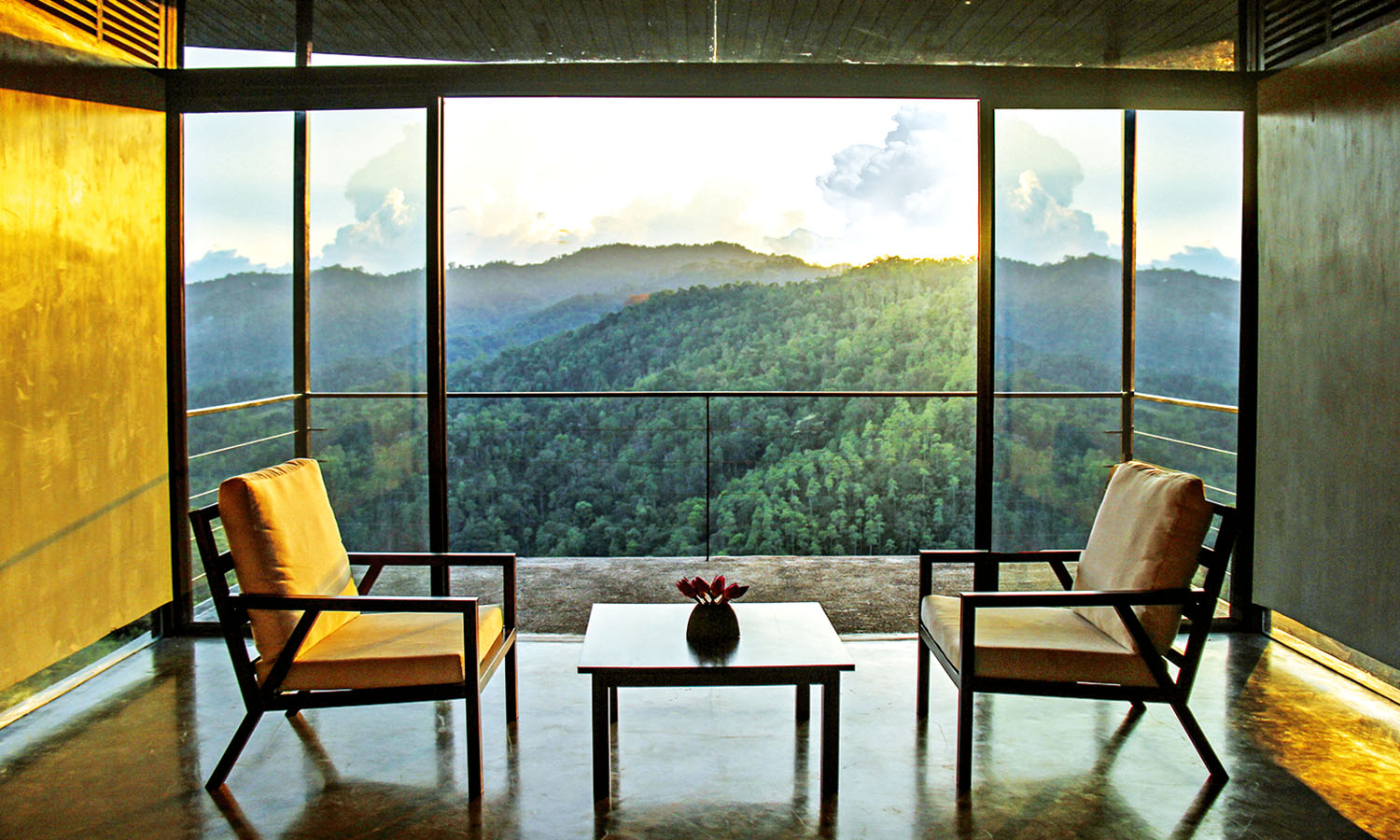
Strip everything away and the mind begins to clear. That’s the thinking behind Sri Lanka’s first wellness retreat, where the doors opened in August. Located in the countryside about an hour from Kandy, it overlooks lush hills and terraced tea plantations. The design is minimalist in the extreme, although the concrete bunker styling of the saltwater soaking room and sleek lines of the infinity pool will dazzle lovers of architectural form. There’s no wi-fi or televisions, encouraging guests to reconnect with their sense of self and the world around them. Days are filled with hikes, yoga, swimming in the river, mountain biking and indulging in massages, reiki and ayurvedic treatments. Programs run for between three and 14 days, although Santani can accommodate shorter visits. Double rooms from about US$440 a night, including meals and activities (treatments extra).

santani.lk

Dunton River Camp
Dolores, USA

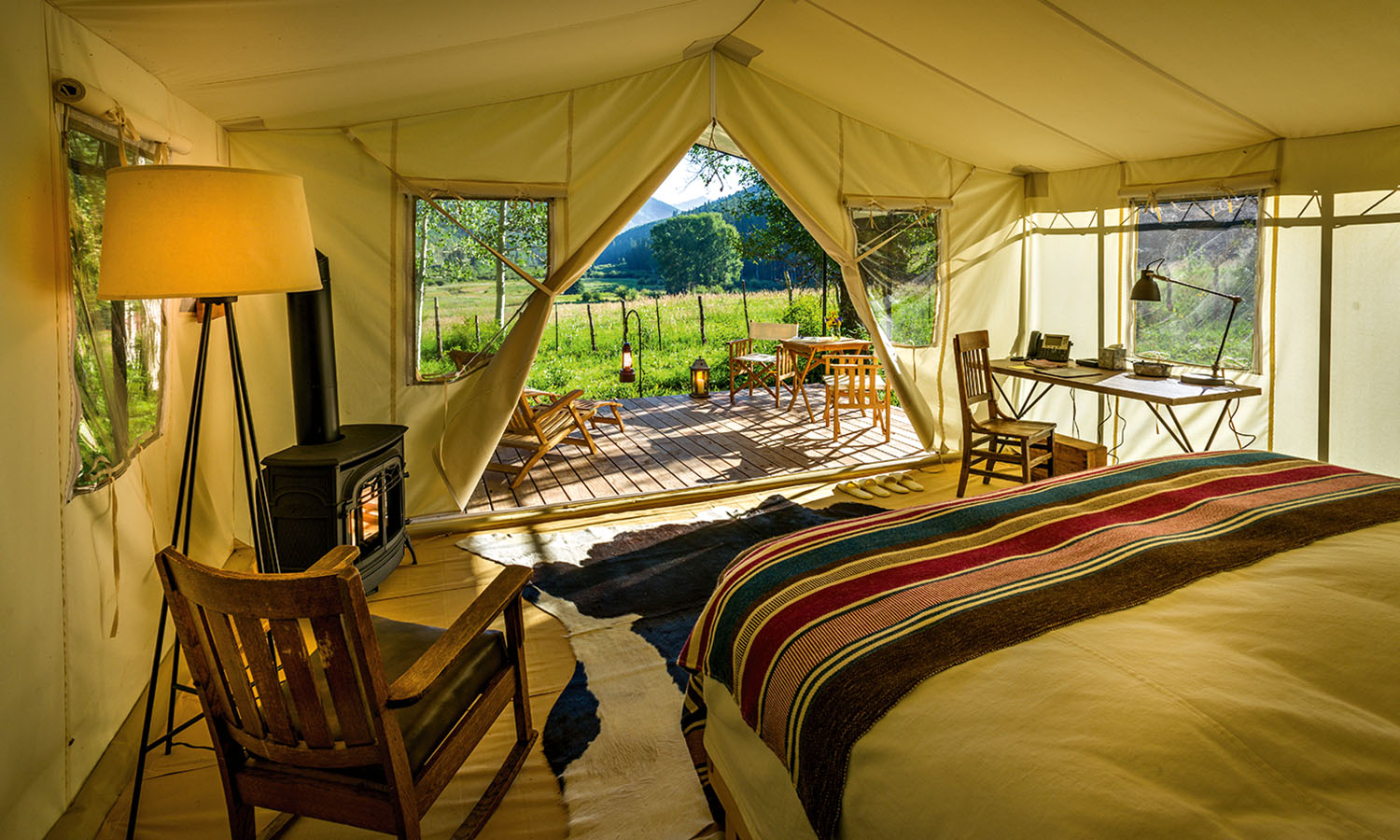
For those who like the idea of being at one with the great outdoors, but can’t imagine life without a hot bath, there’s glamping on this Colorado property about 50 kilometres from Telluride. Eight tents – each with handcrafted beds, gas fireplaces and full-sized tubs – are located either on the banks of the Dolores River or in a forest tall with blue spruce and ponderosa pines. Meals are served at the renovated farmhouse, where there’s also a bar on the veranda overlooking the Wilson Range. Guests can also get a shuttle to the nearby Dunton Hot Springs resort, built in a former ghost town, to soak in the healing waters. Go horse riding in the High Rockies, mountain biking, hiking, rock climbing, fly fishing (there are guides for beginners) or relax with a massage or body treatment in the spa tent. About US$1286 a night.

duntonrivercamp.com

Nang Prai Raft House
Khao Sok National Park, Thailand

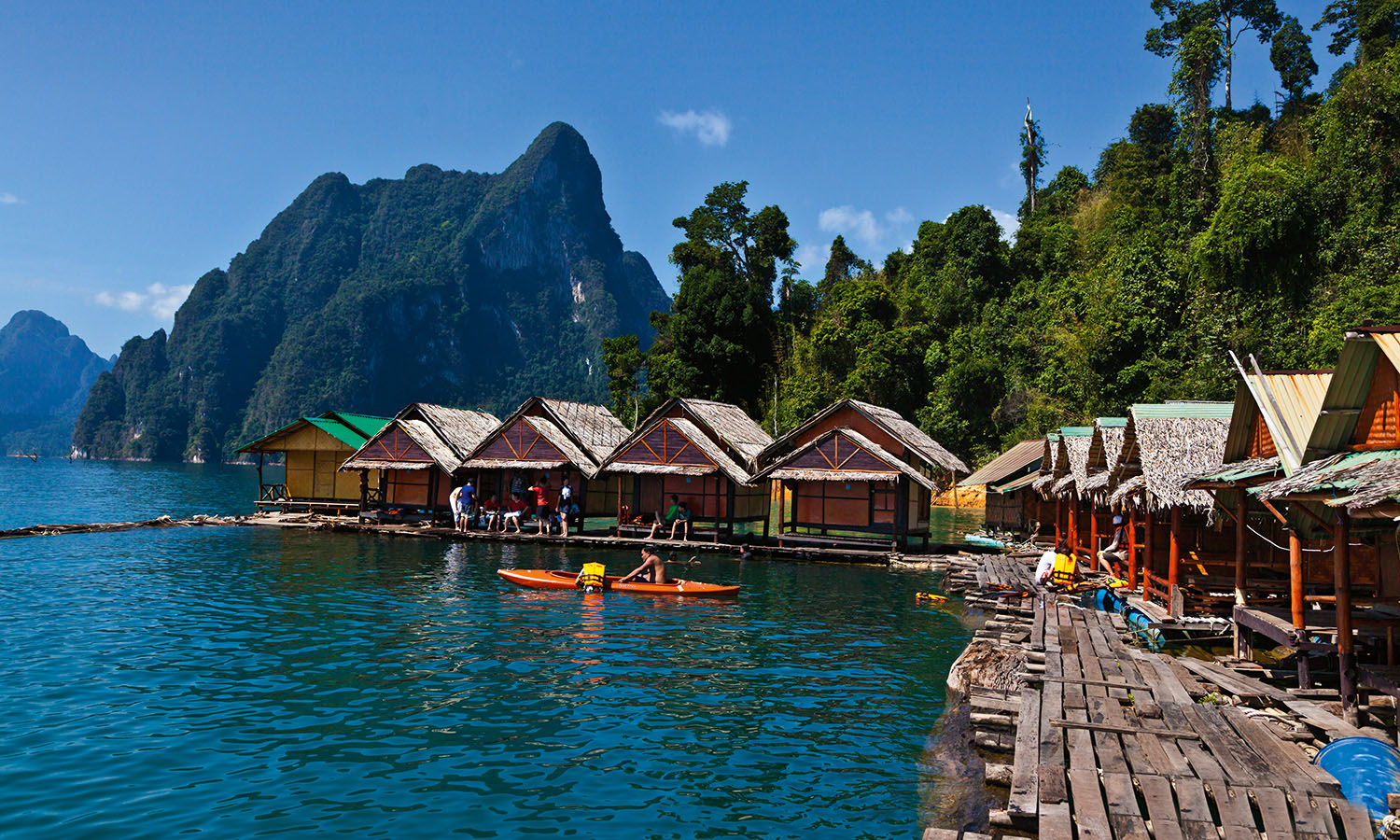
Epic doesn’t always have to equal expensive. These simple bamboo raft houses in southern Thailand, about halfway between the Andaman and Gulf of Thailand coasts, are about as basic as you can get (no hot showers, shared bathrooms, electricity for only a few hours each evening), but the vast expanse of Cheow Lan Lake outside the door and the jungle beyond are like another world. There are kayaks aplenty for exploring the shoreline, where karsts erupt from the lake, waterfalls cascade in the jungle and the rainforests, home to elephants, deer, gibbons and bears, are some of the oldest in the world. It is one of the wettest parts of Thailand, so best to plan your adventure between December and April. Overnight private tours from US$291 a couple.

khaosoklake.com

Blachford Lake Lodge
Yellowknife, Canada

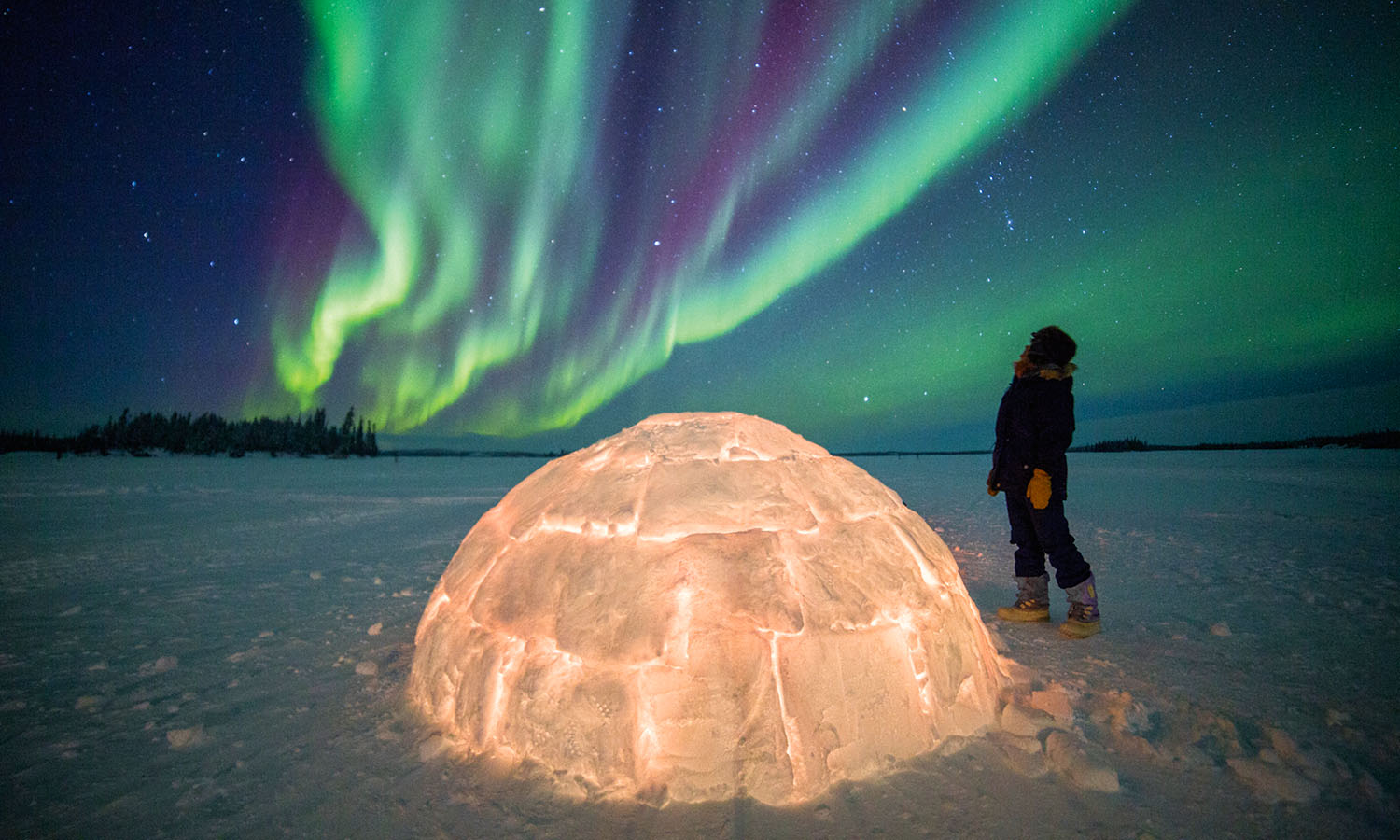
Regular readers of get lost may have noticed our slight obsession with auroras. Imagine our delight (read: insane frenzy) when we discovered you could spend a night in an igloo with just the icy wilderness and dancing colours of the northern lights as company. Guests who stay at Blachford Lake Lodge, located in Canada’s northern wilderness and primo aurora-viewing territory, have just this option. During the day you can go snowmobiling, cross-country skiing, ice fishing or skating, then bed down beneath the night-long entertainment. Just let the booking people know you want to have the igloo experience – it doesn’t cost any extra – when you make a reservation. Cabins from US$812 for two nights, all inclusive.

blachfordlakelodge.com

Otro Mundo
Elche de la Sierra, Spain

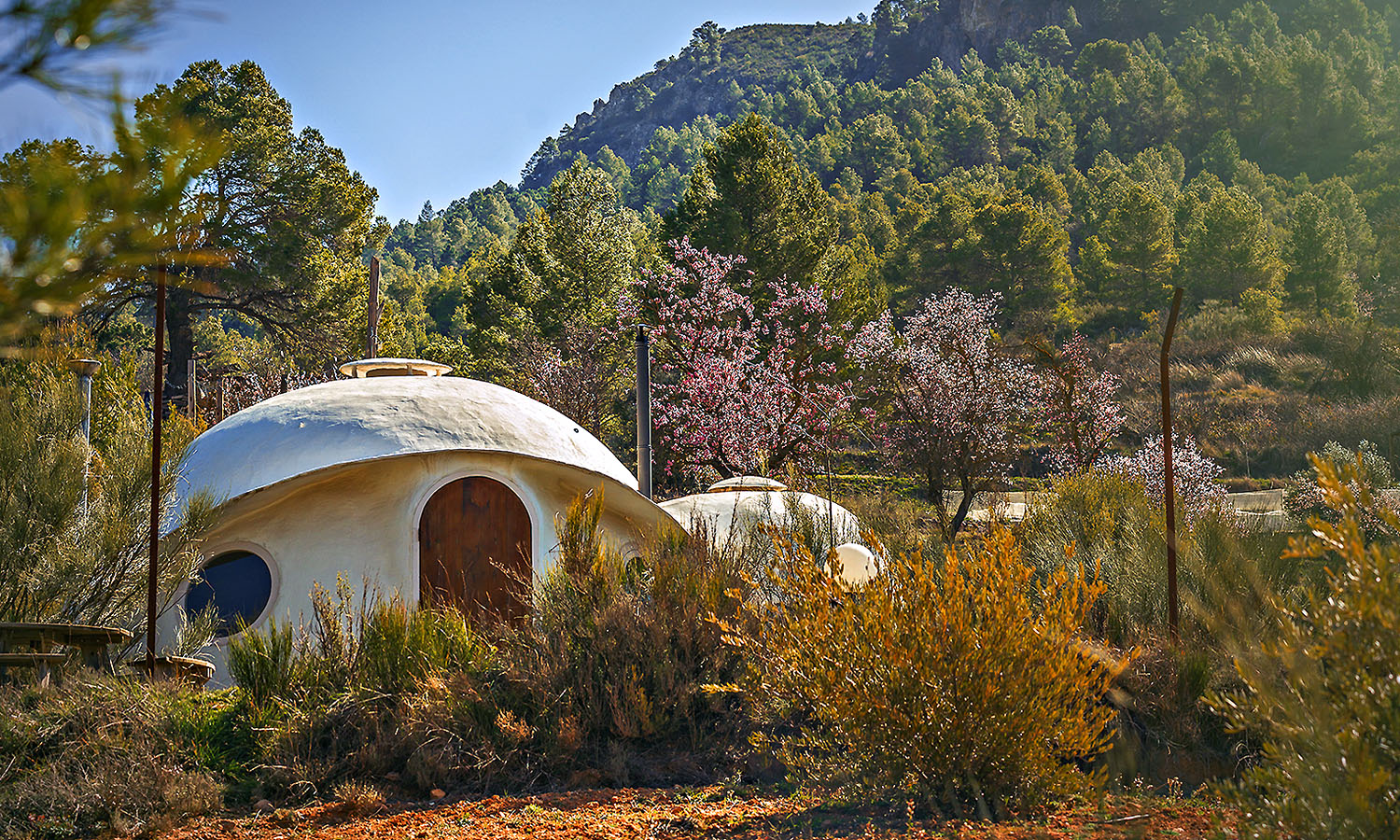
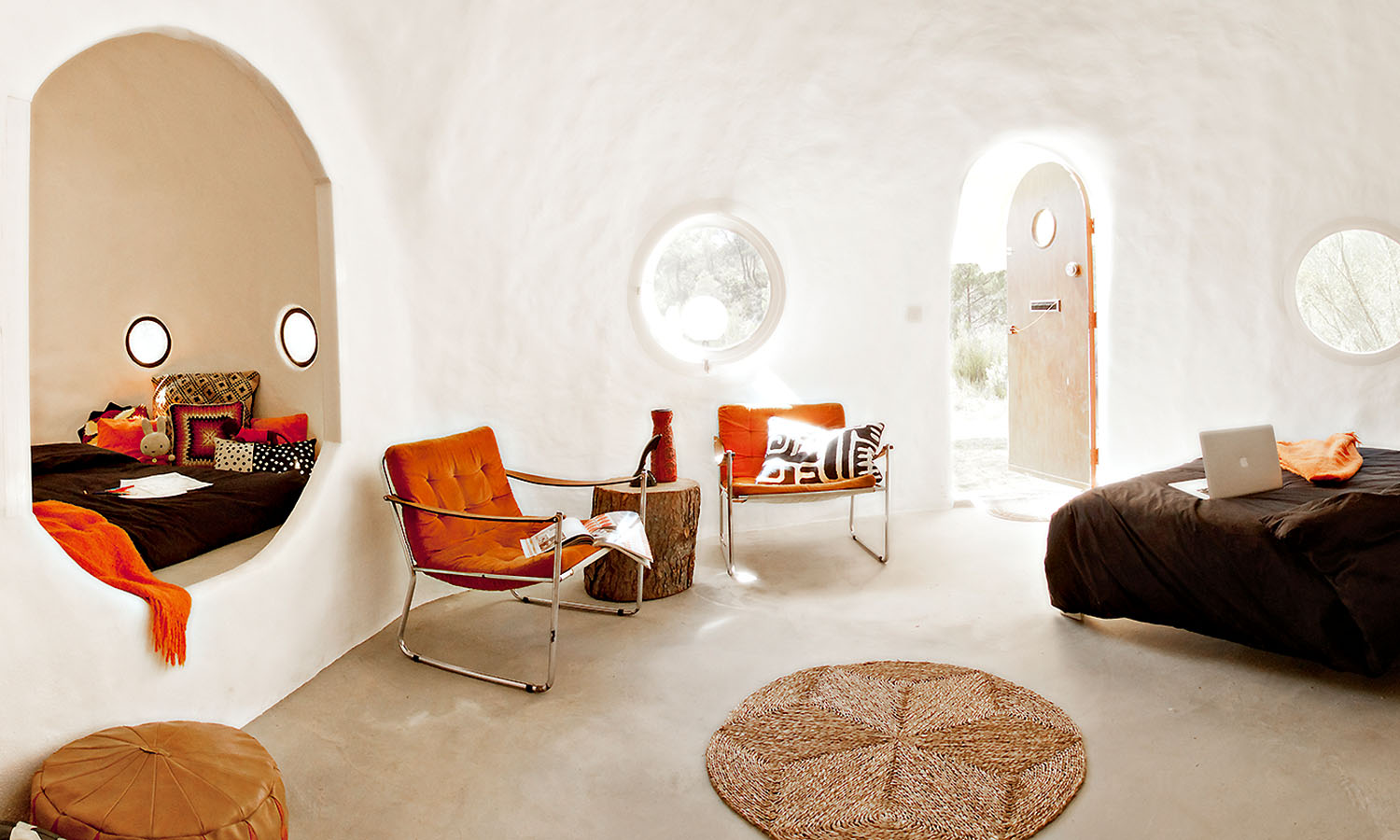
Want to escape the city’s hustle and bustle and commune with nature, but can’t be bothered with tent pegs and sleeping bags? Otro Mundo is your answer. Located in the hills of the Sierra del Segura in Spain’s south, these two eco-friendly pods – one for a couple, the other for a family of up to five – look a little like igloos with hip retro-inspired interiors. Around the camp, there’s a natural swimming pool overlooked by hammocks, fruit trees where you can pick a snack and loads of hiking trails. Take to two wheels to make the most of the 2000 kilometres of mountain bike trails or wander to isolated waterfalls. Experience this wild part of Spain for yourself because, after all, there’s no place like dome. From US$71 a night.

otro-mundo.com

Kolarbyn Eco-Lodge
Skinnskatteberg, Sweden

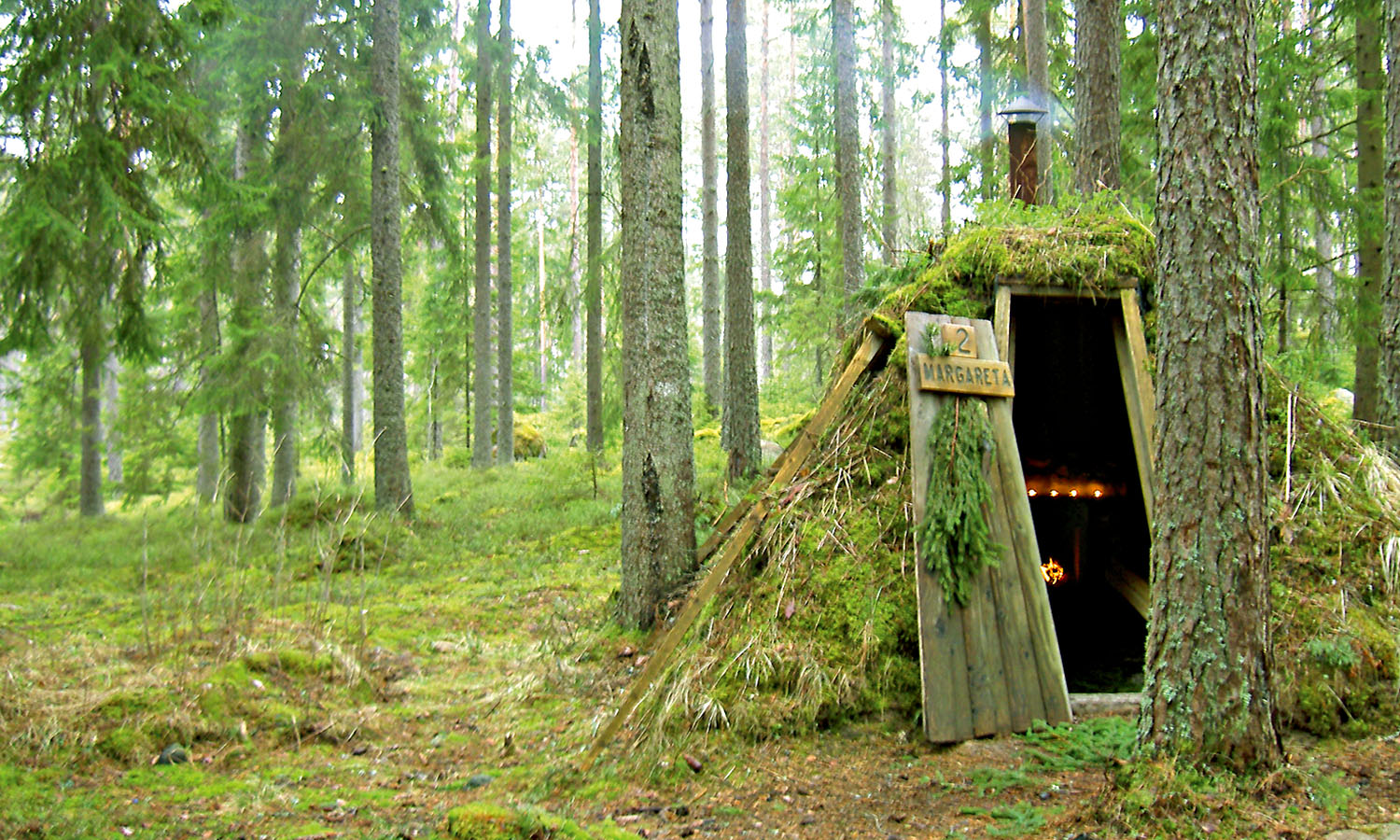
Bring out your inner Viking with an adventure deep in a Swedish spruce forest. Twelve tiny charcoal huts, covered with earth to protect them from the elements, each house two single beds covered with animal skins, an open fireplace and candles for light (there’s no electricity or running water). Spartan? Yes. But that’s part of the joy. The rest is found in the activities: wilderness hikes, a moose safari, swims in the lake followed by time in the floating sauna, trout fishing and snowshoeing in the winter. You chop your own wood and cook your own meals, so it’s pretty much the perfect destination for anyone wanting to get back to basics. You still can, of course, bring chocolate and wine. About US$55 per person a night.

kolarbyn.se

Mandina Stilted Lodge
Makasutu, The Gambia

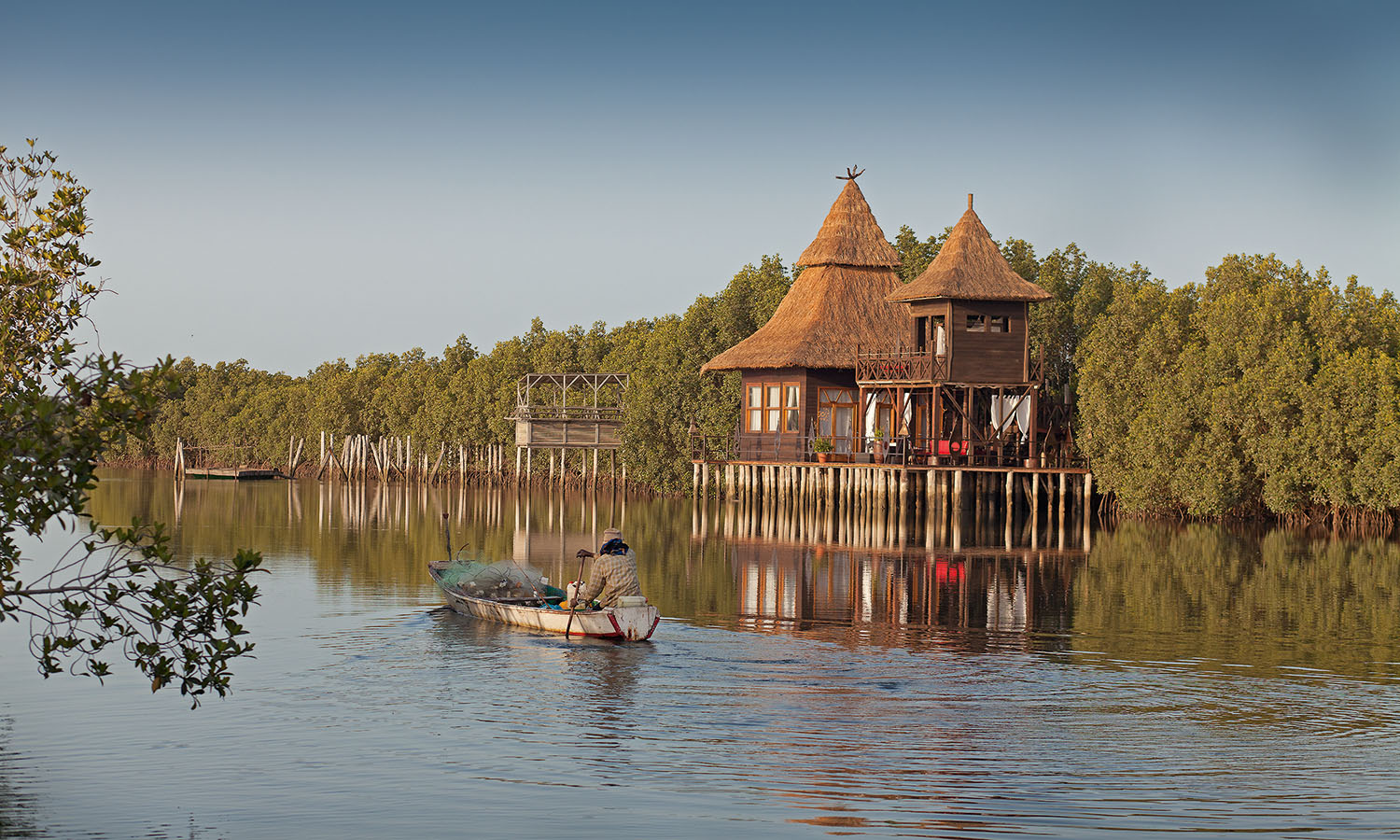
What began as a reafforestation project has culminated in a luxuriously rustic eco-lodge deep in the African wilderness. There are river and forest lodges at Mandina, but the most elegant by far is the Stilted Lodge, perched over the Gambia River. Spread over two levels, there’s a four-poster bed in the main room, a hammock on the deck and a day room from where you can watch life on the river. Live the life of a modern-day Tarzan and Jane and explore with your own guide. A favourite trip is the Bush Trackers Breakfast, where you rise at dawn to follow baboons into the forest then have a breakfast cooked the traditional way – on a shovel over the campfire. Stilted Lodge from about US$1490 a person for a seven-night stay.

mandinalodges.com

LUXE

Mar Adentro Cabos
San Jose del Cabo, Mexico

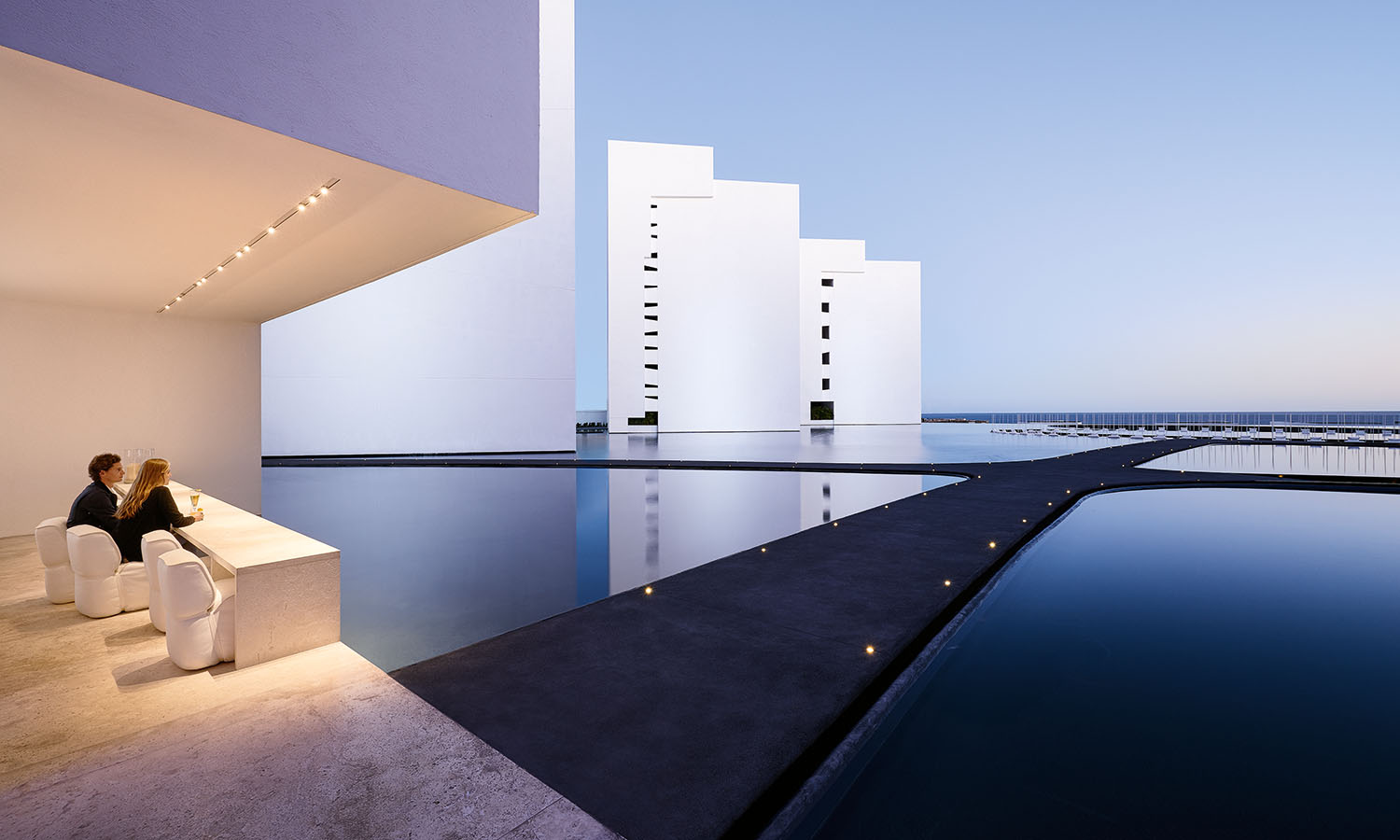
Step into the future – a world of clean lines and of white, black and blue – at Mar Adentro Cabos. With a whopping 198 rooms, the hotel is way bigger than the type of stay that usually catches our attention, but, somehow, this architectural wonder manages to make it feel as though you’ve got the place to yourself. Its white, cubic buildings rise from a lagoon, with a black-tiled infinity pool and the nest – a lounge partially sunk beneath the liquid – accessible via an inky walkway that cuts across the water. When the light is right the buildings cast reflections, giving the illusion that you’re floating somewhere in the middle. It’s all rather fitting for a place with a name that means ‘sea inside’. In the rooms wood softens the monochrome palette and your lighting, music and curtains are all controlled with the swipe of a tablet. When you’re not lazing on your terrace or on the white sands that stretch between the hotel and the Sea of Cortez, there’s a lounge and art gallery to keep you entertained. Doubles from US$365 per night.

viceroyhotelsandresorts.com/los-cabos

adentrocabos.com

Stora Hotellet
Umea, Sweden

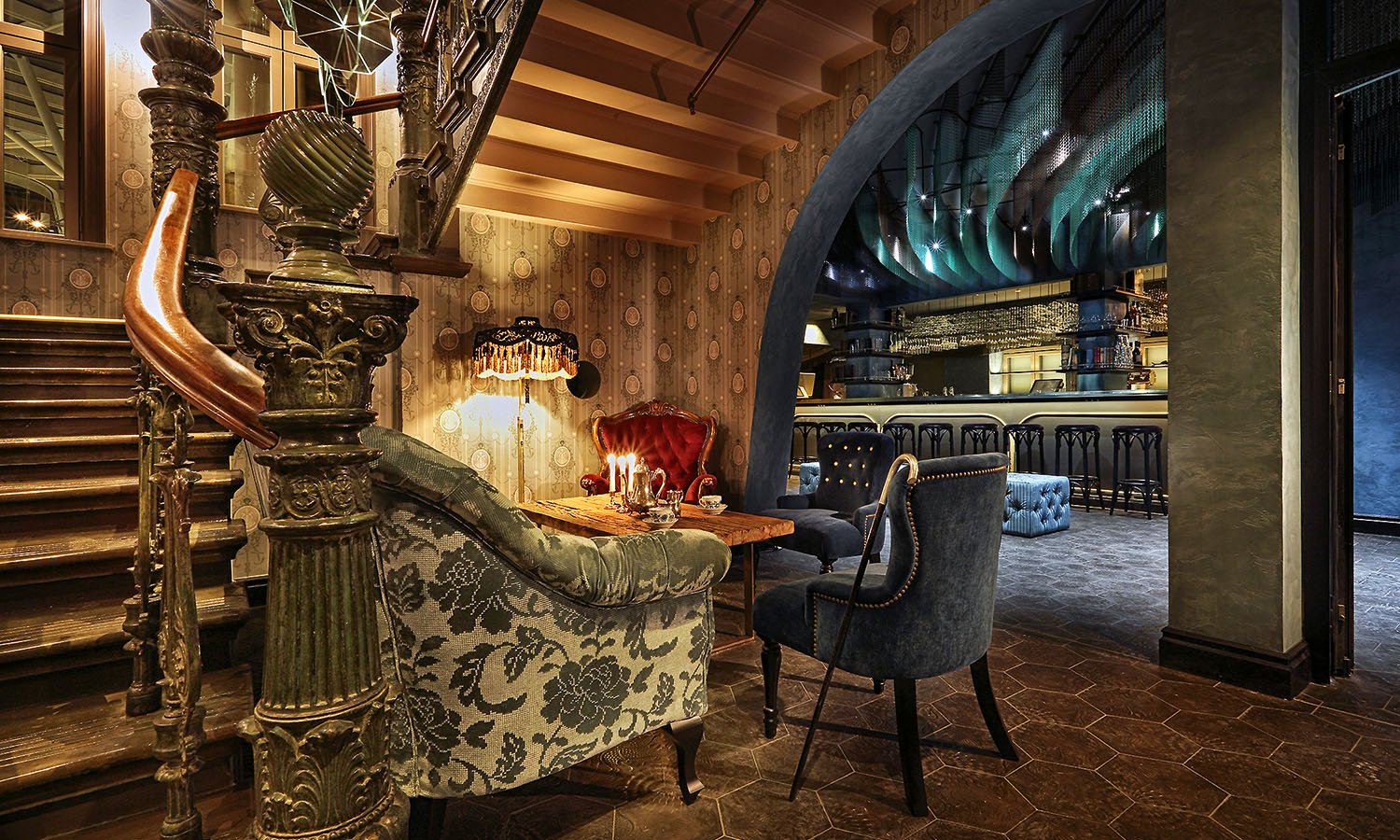
Ahoy, me hearties! What have we got here? In the maritime town of Umea, Stora Hotellet has been a refuge for salty ol’ sea dogs since 1895. Then, the Seaman’s Mission built what was the grandest hotel in the city, and soon members of high society were mixing with sailors on leave. To celebrate Umea’s anointment as the European Capital of Culture in 2015, these historic digs were given a full nip and tuck. The six room categories are named for sailors’ preoccupations and elements of the decor – a chandelier made from rope and plexiglass that resembles a ship’s rigging and antique scientific equipment on display in the drawing room – represent the hotel’s former life. The Superstition rooms, although compact, have deluxe bunk beds inspired by a boat’s cabin tucked into the hotel’s eaves, while the larger suites are more like you’d expect on the upper deck of a luxury liner (although one from a grander age). The super-cool restaurant, named after the hotel’s first manager, Gotthard Zetterberg, serves dishes given the names of other seaports around the world. Double rooms from US$104.

storahotelletumea.se

Rooms Hotel Kazbegi
Stepantsminda, Georgia

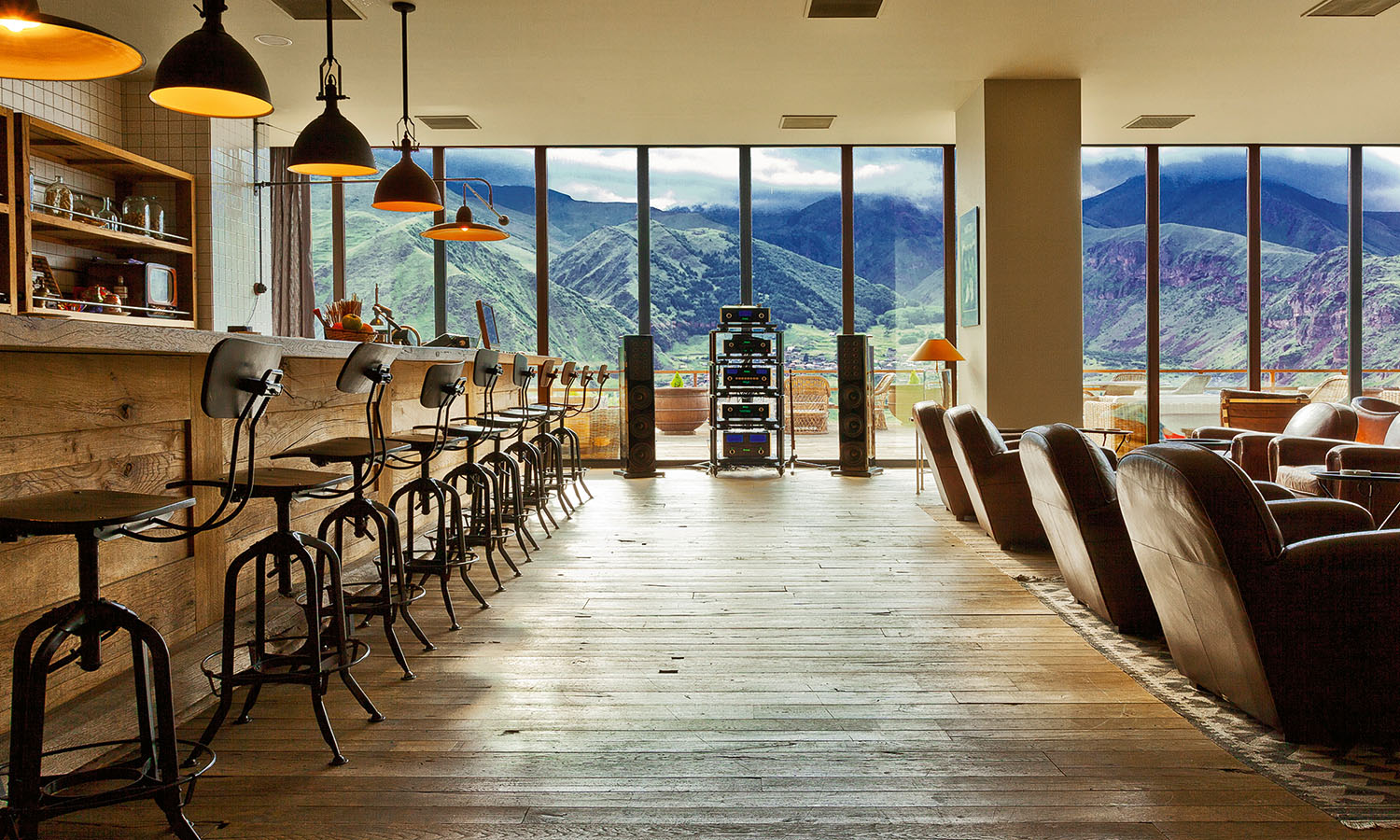
The brutal architecture of this hotel leaves no doubt as to its provenance. With a spectacular backdrop of the Caucasus Mountains, this former Soviet resort has left all other traces of its past behind. An extensive renovation saw the whole exterior clad in timber, while the 156 rooms are simple but comfortable. It’s the public spaces – an epic indoor pool, extensive library, casino and lounge bar and patio – teamed with a landscape like nothing you may have ever seen before that give this spot the edge. After dinner, take a seat by the open fire, vodka in hand, and be mesmerised by the scene of snow-capped mountains that rise to the stars. All you’ll be missing is a cigar. Luckily, they’re rolled right in the hotel lobby. From US$108 a night.

roomshotels.com

Efendi Hotel
Acre, Israel

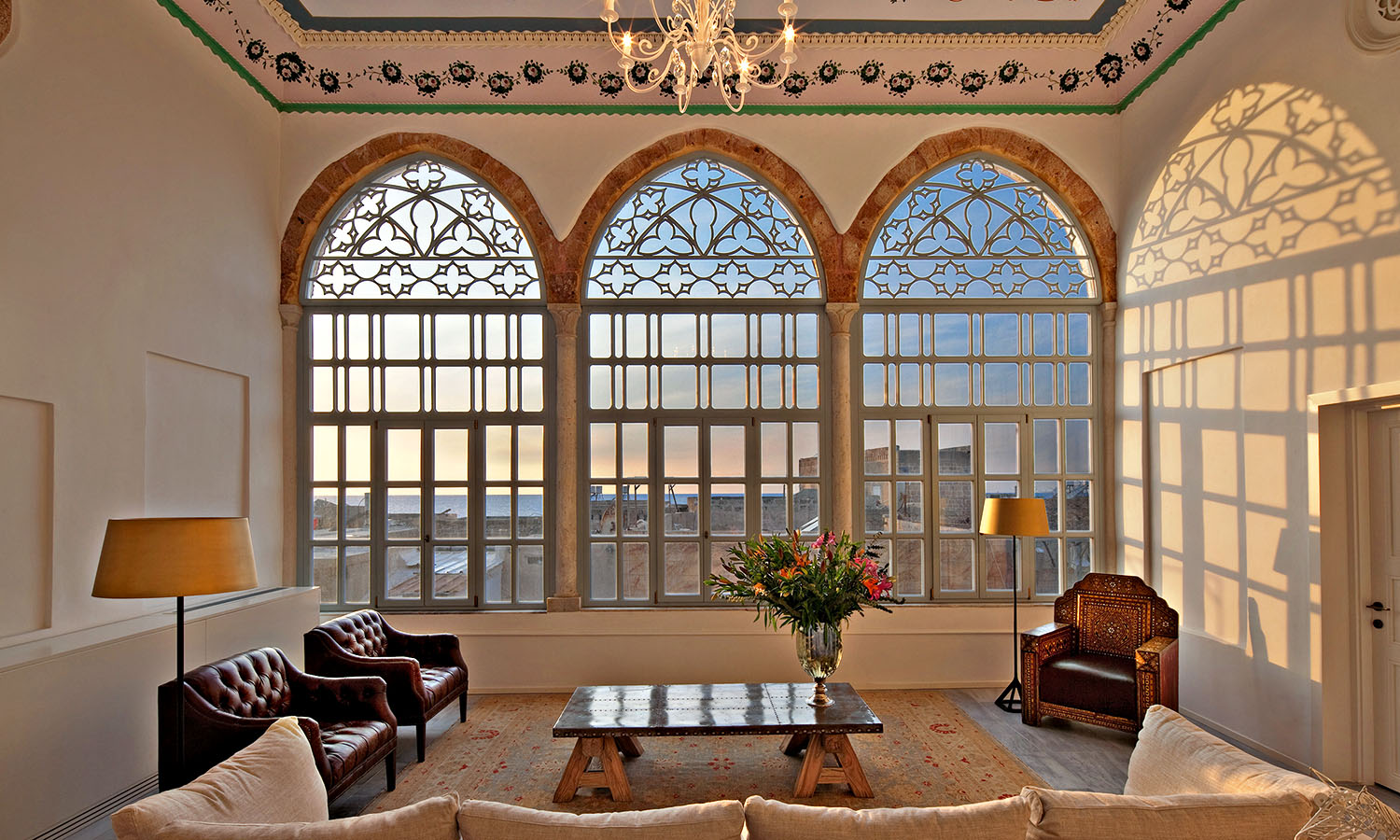
Look out at the Mediterranean Sea and over the ancient city walls from the rooms of this historic hotel in Israel’s far north. Well-known local chef Uri Jeremias spent eight years meticulously merging and bringing two ancient houses – the homes of Ottoman rulers in the nineteenth century, built on ruins dating back as far as the sixth century – back to life to open Efendi. Over three levels, each with its own communal salon, are 12 rooms exhibiting many of the original features, from arched windows to restored wooden ceilings. The grandest even have sun terraces and claw-foot baths beneath the windows. In the hotel’s spa you’ll find a 400-year-old Turkish bath, and a wine bar, featuring Israeli drops, is located in a Crusader-era cellar. Jeremias’s popular restaurant, Uri Buri, is just a five-minute walk away. Double rooms from about US$281 a night.

efendi-hotel.co.il

Jing’s Residence
Pingyao, China

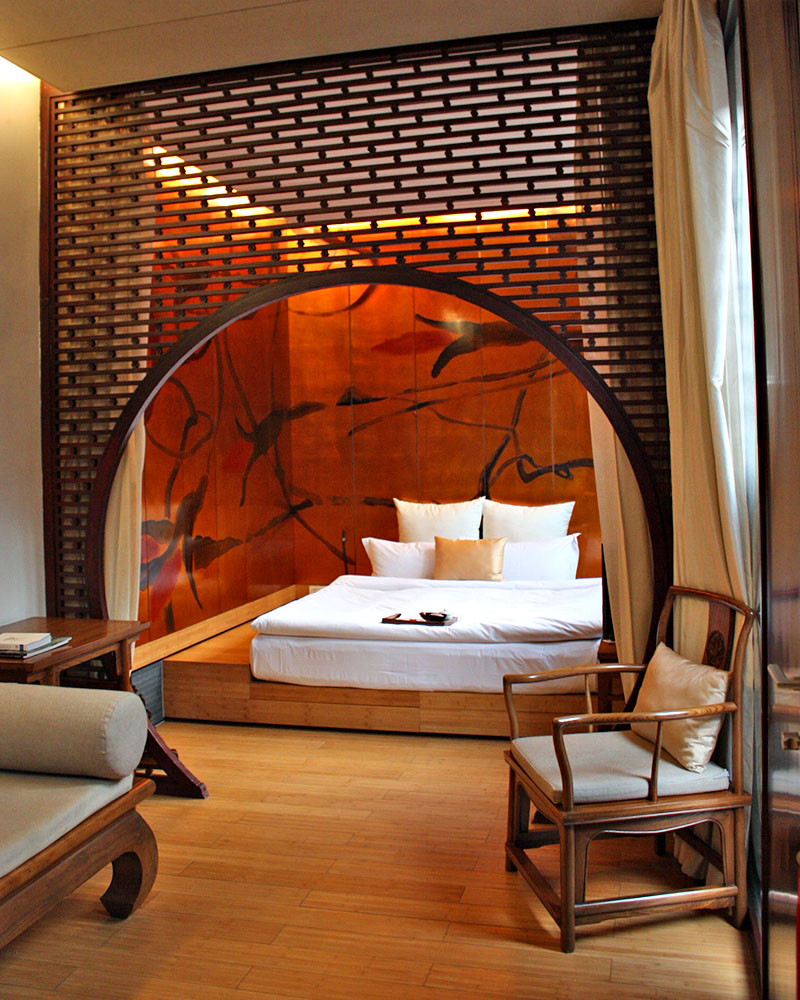
You may not have heard of this Chinese city, but we’re going to give you an excellent reason to add it to your itinerary. Sure, its Old Town is listed by UNESCO – it has some of the best preserved Ming and Qing architecture in the country – but you can pretend you’ve entered another era in this renovated mansion once owned by a silk merchant. Its 19 rooms, all arranged around a courtyard, have a local air: bed heads are crafted from lacquer or silk, floors are made of bamboo and ceilings of rice paper, and beds are fashioned like traditional kangs, the heated, raised sleeping platforms of northern China. Take part in a hotpot meal in the courtyard, relax in the spa or spend some time wandering the streets of Pingyao and browsing in the curio shops. From US$200 a night.

jingsresidence.com

Areias do Seixo
Torres Vedras, Portugal

It’s easy to feel drained in our overstimulated society, but here the motto is sem hora marcada – take your time – and Areias do Seixo delivers in spades. The design and architecture ooze intimacy and ambience in the hotel’s 14 rooms and three villas, creatively transforming each space using elements of concrete, steel, wood and glass. Here it’s all about savouring the moment, so you won’t find TVs and gadgets in your abode – they’ve been swapped for a private jacuzzi, plush bedding, stylish fireplace and waterfront terrace, all carefully curated for a sensory experience. Wander through the dunes to the beach, enjoy wine and nibbles at the nightly bonfire, or catch some rays by the infinity pool. Expect to embrace what it means simply to feel; don’t expect a desire to leave. Rooms start from about US$475 a night.

areiasdoseixo.com


Tivoli Palacio de Seteais
Sintra, Portugal

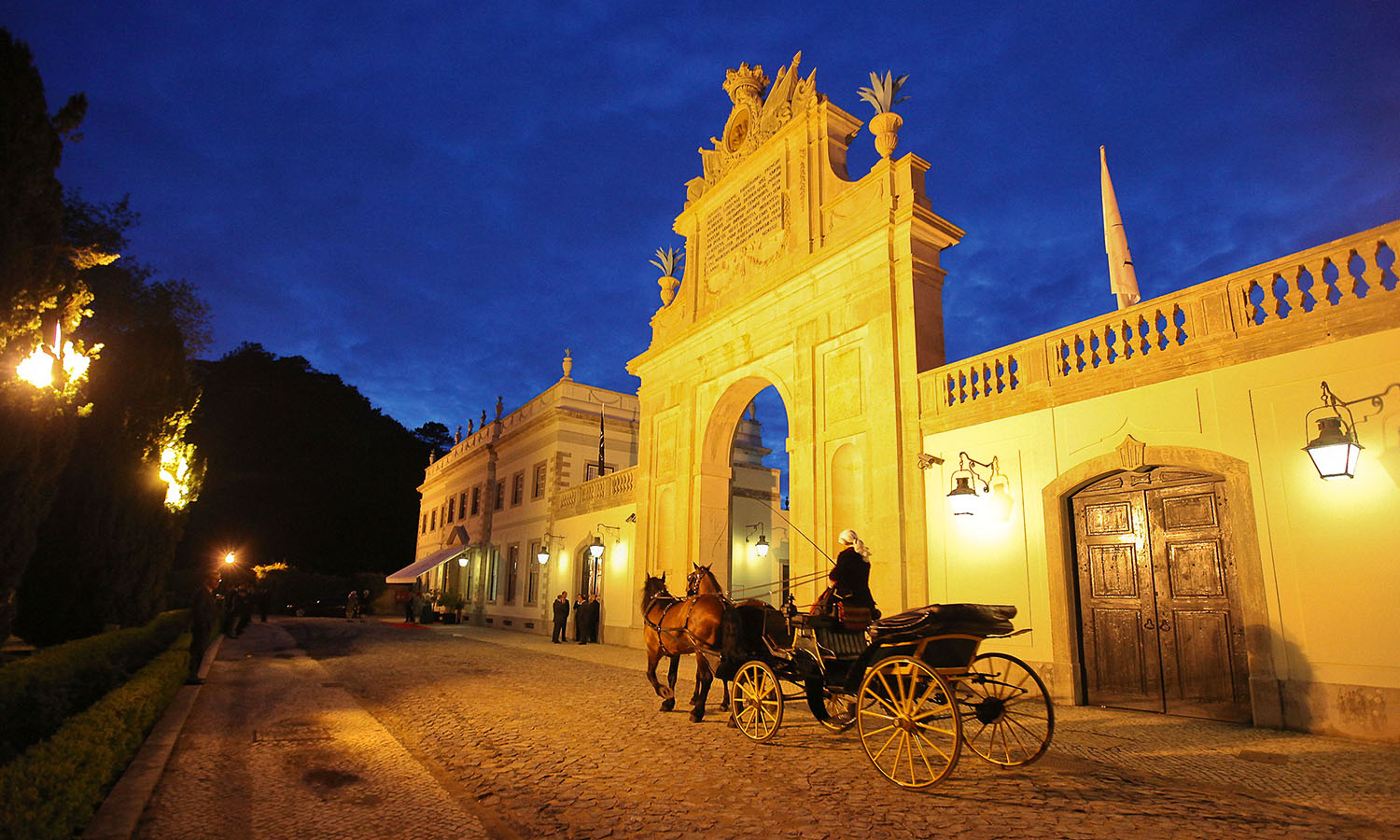
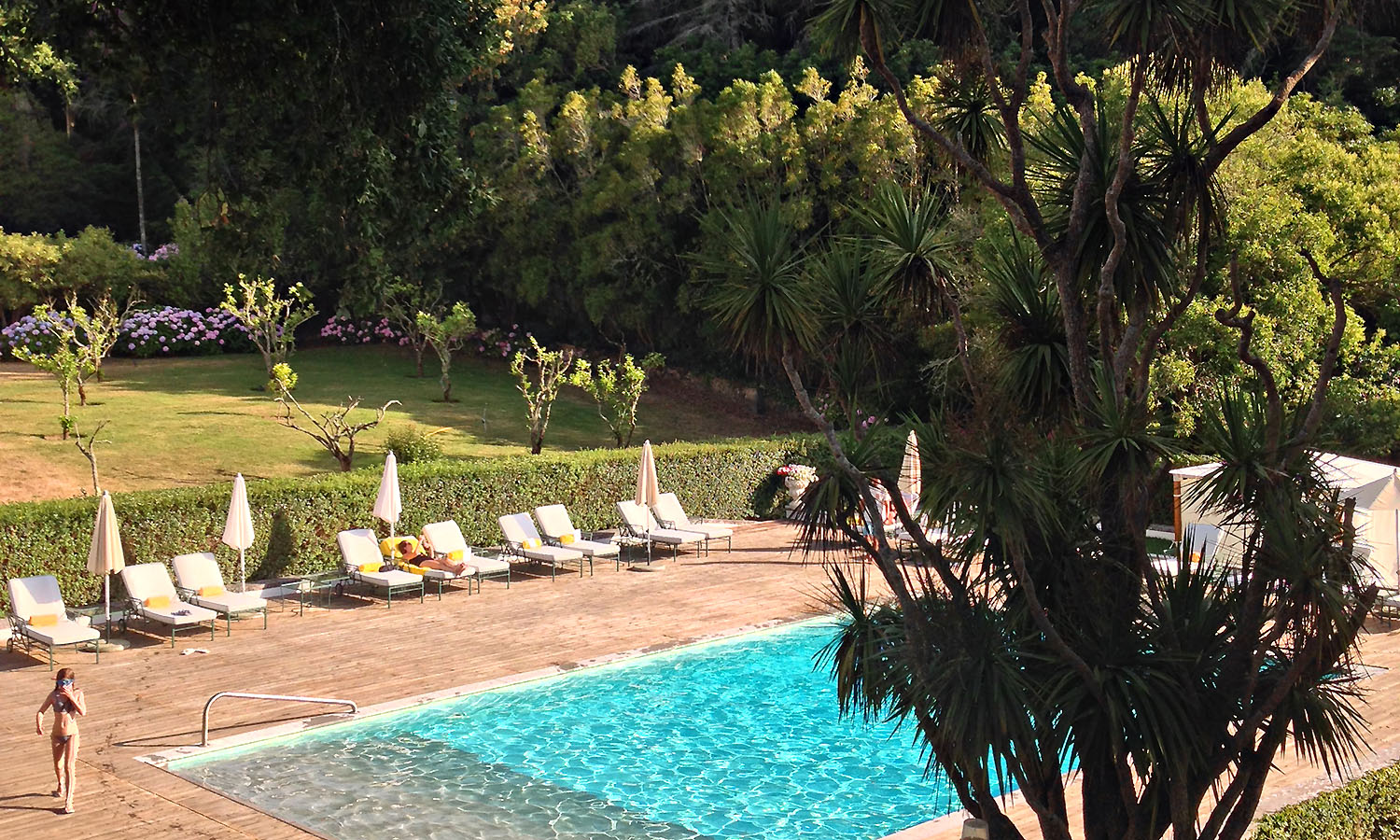
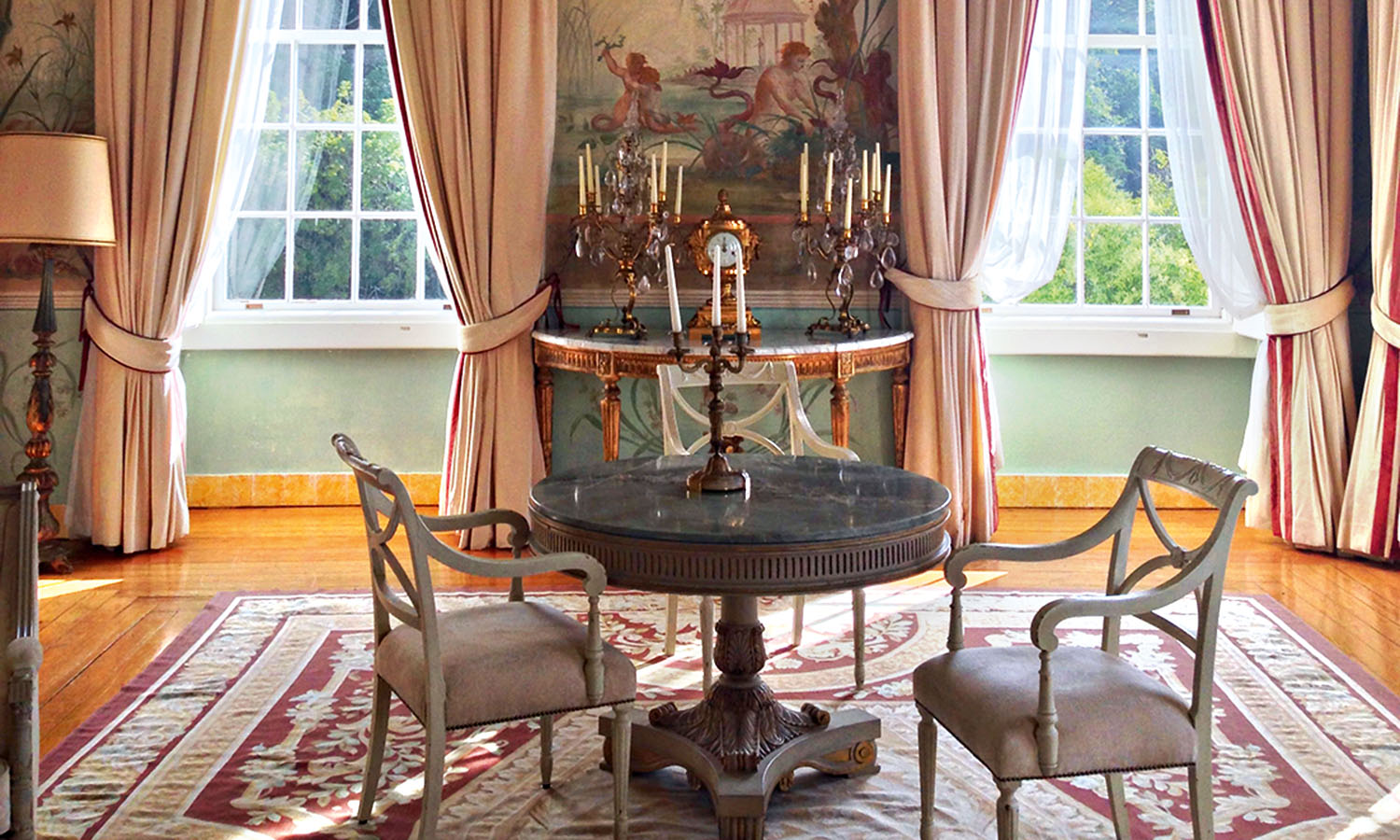
Famed for its castles, palaces and wild gardens, the tiny town of Sintra is one of Portugal’s shining stars. Experience it just like a royal, with a stay at the luxurious Tivoli Palácio de Seteais. Built on a hillside in the 1780s, this five-star, 30-room estate has been lovingly restored to resemble a palace of worlds past. Days can be spent soaking up the Portuguese sun by the infinity pool, with fresh lemonade, crushed from the fruit in the gardens, delivered to your day bed. This is a prime spot to see the sun set over the ocean too or, better yet, opt for a suite with your very own terrace, and watch as the Atlantic sends mist swirling over Pena Palace on the mountain above you. Wander the halls lined with priceless antiques and carpets worth as much as your university degree and kick back with a book – perhaps by Lord Byron, who wrote of Sintra as a “glorious Eden” – in one of the sitting rooms. At night, chandeliers illuminate the frescoes on the walls and music from a harpist dances in the air. You’ve probably guessed it by now – Seteais is so beautiful you won’t want to leave, but exploring the UNESCO World Heritage town before the crowds arrive is one of the best parts of a stay. Then there are the hotel’s activities… Helicopter flights and horse riding adventures are all on the cards, but if you prefer to keep your feet on the ground head to the striking cliffs that form the westernmost point of Europe. Your guide, selected from Walk Hike Portugal, will share secrets of the area with you, including lunch at a local haunt where you’ll devour a feast of clams, prawns and fish chosen from the day’s catch, before rolling you back to the pool. Yep, a day trip to Sintra is far from enough. Doubles from US$281 a night, including breakfast.

tivolihotels.com

Domaine des AndEols
Saint-Saturnin-lEs-Apt, France

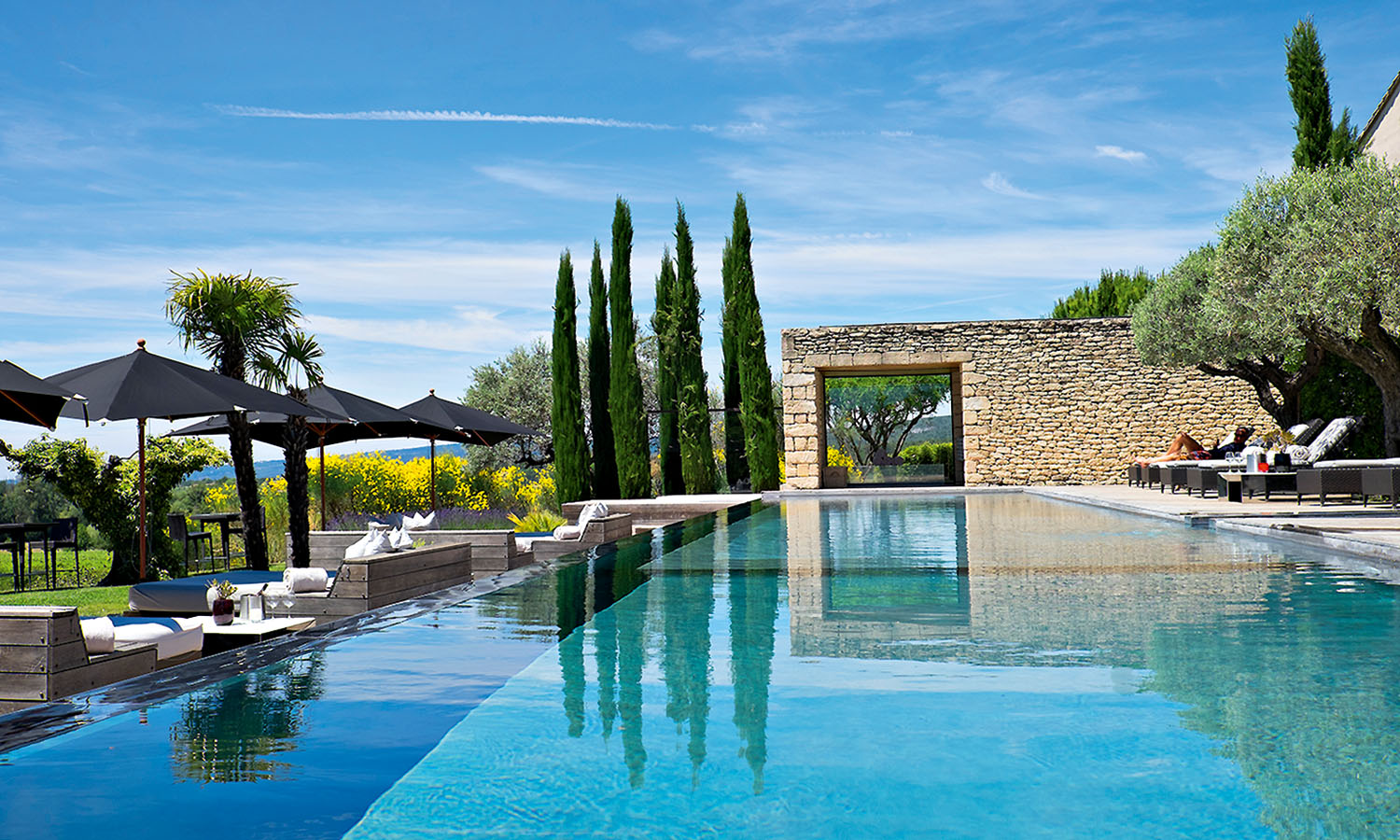
What was originally a family home is now an extraordinary estate in the heart of Provence. Surrounded by lavender fields, cypress trees and olive groves are 10 separate guesthouses. Although each boasts contemporary design and art and antiquities chosen by the owners, they are completely different. There’s one decked out like a safari lodge, and another with a high-gloss floor the colour of the Mediterranean sky and provocative photography on display. On a sunny day, the meals created at the restaurant, using locally grown fruit, vegetables and olive oil, are served on a deck beneath a centuries-old plane tree. Find a lounger by the pool or book a relaxing massage at the spa. From US$190 a night.

andeols.com

Lough Erne Resort
Enniskillen, Northern Ireland

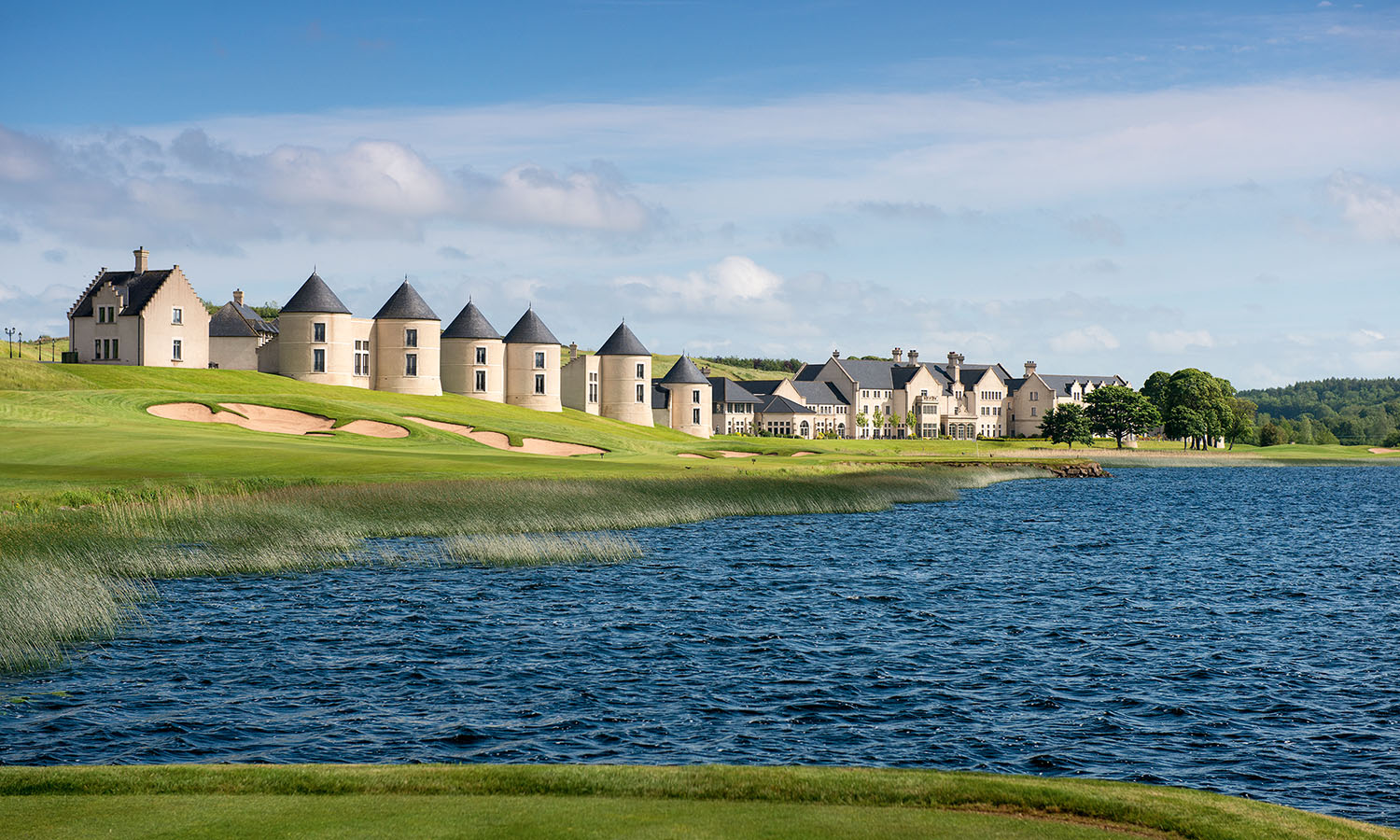
Swish resorts don’t usually tug at our heartstrings, but sometimes a property comes along that breaks all our rules. Located in the Fermanagh Lakelands on a private 250-hectare peninsula, this resort blends heritage and modern extravagance. Lodges and turrets, featuring decadent trimmings and spectacular views, line the glassy waters of Castle Hume Lough. For golfers there are two championship courses. If swinging isn’t your thing, there’s still plenty to do. Sail across Lough Erne to little isles for a picnic among historic ruins then treat yourself to a massage at the resort’s Thai-inspired spa before an evening of farm-to-table fine dining at Catalina Restaurant. Doubles from about US$170 a night.

lougherneresort.com

Alila Fort Bishangarh
Bishangarh, India

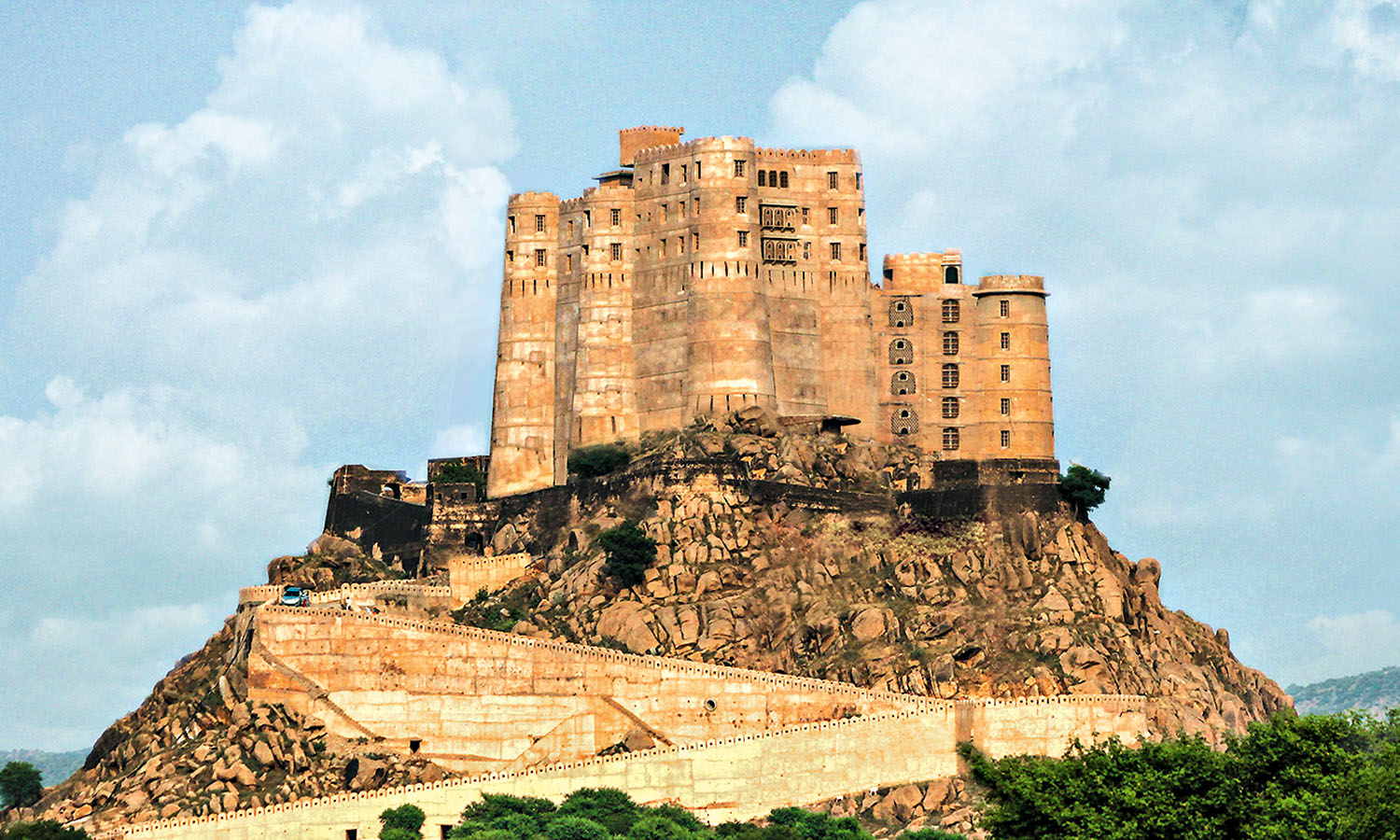
Those who’ve travelled around Rajasthan will tell you that around every bend in the road you’ll see an ancient fort. This, after all, was the land where local tribes fought off invaders and each other for centuries. Alila Hotels and Resorts has recently converting a 230-year-old fort into a luxury hotel, with 59 suites, a wellness centre, pool, four restaurants and juice bar. Like all Alila properties, there will also be an on-site concierge team organising guest activities, from culinary expeditions to cultural journeys. Plus, the hotel is just an hour from the pink city of Jaipur. Double rooms from about US$152 a night.

alila.com

Sextantio Le Grotte Della Civita
Matera, Italy

Imagine, if you can, people living in caves dug into the side of a ravine 7000 years ago. That was how this hotel began its existence. The sassi are ancient cave dwellings that, until the late 1980s, were inhabited by the poor of Matera, a village in Italy’s south. With the rise in tourism, some have been transformed, including Le Grotte Della Civita, which is now a unique 18-room boutique hotel. The whole town is UNESCO World Heritage listed, so each of the caves housing a suite has been carefully conserved and retains its original shape and materials. The interior design is minimal and true to the formation’s origins, the candlelit restaurant is set in a former church and even the spa is housed within rough-hewn walls. Double rooms from US$250 a night.

designhotels.com

URBAN

Nomad House
Essaouira, Morocco

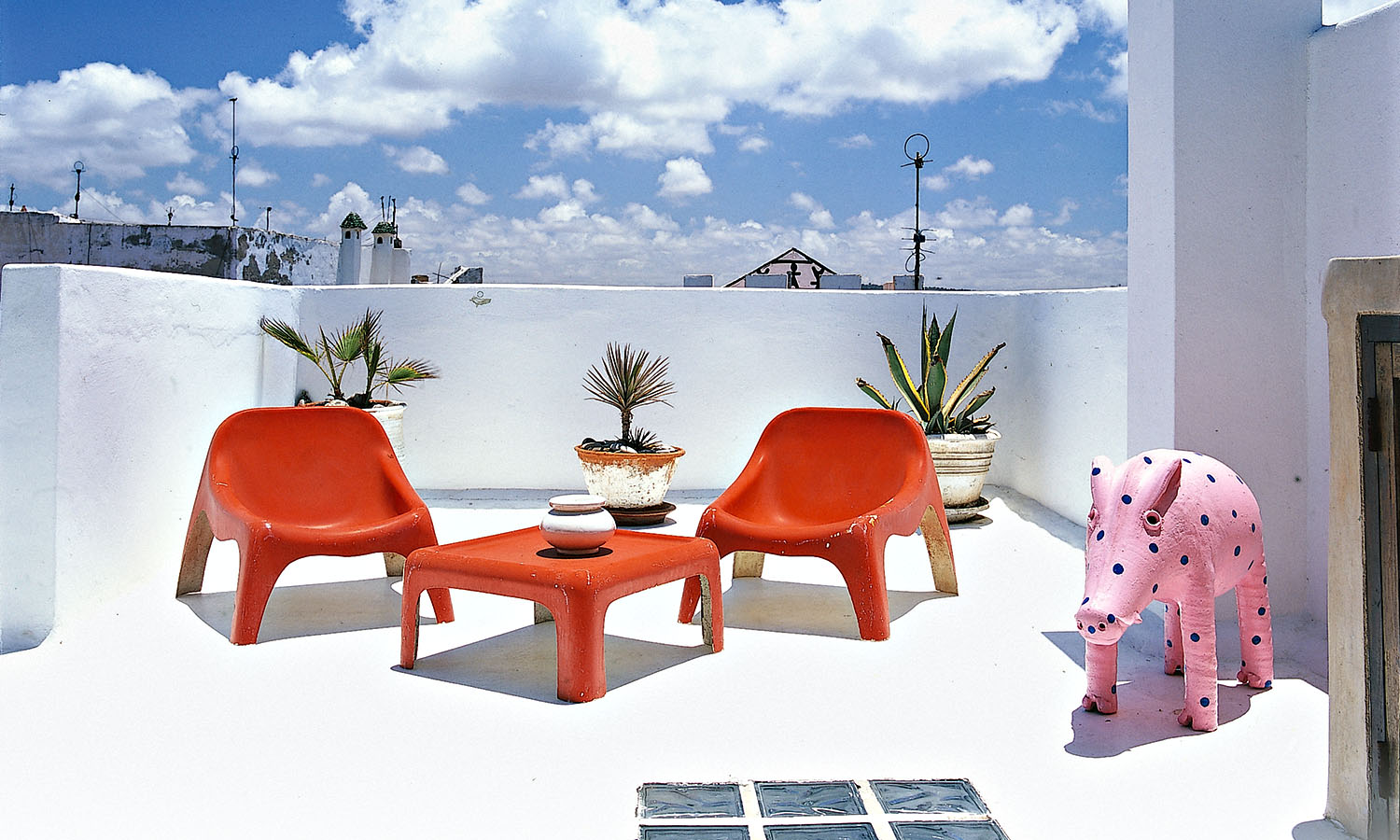
It’s easy to be distracted by the amazing decor – a clever blend of tribal and modernist – of this amazing four-bedroom villa near the old medina in the coastal town of Essaouira, but it’s the little things that make it exceptional. When you and up to seven of your closest friends arrive, the owner will be there to offer a guided tour of the surrounds and tell you exactly where all the best local restaurants, hammams and activities can be found (they’re also listed in a handy booklet). And while the rooms are definitely a sight for sore, travel-weary eyes, there are plenty of opportunities to catch a few rays even without strolling to the nearby beach. Nomad House is built around a central courtyard, there’s a large terrace complete with hammock on the second floor, and the top floor bedroom also has a private patio. From about US$1015 a week.

boutique-homes.com

The Silo
Cape Town, South Africa

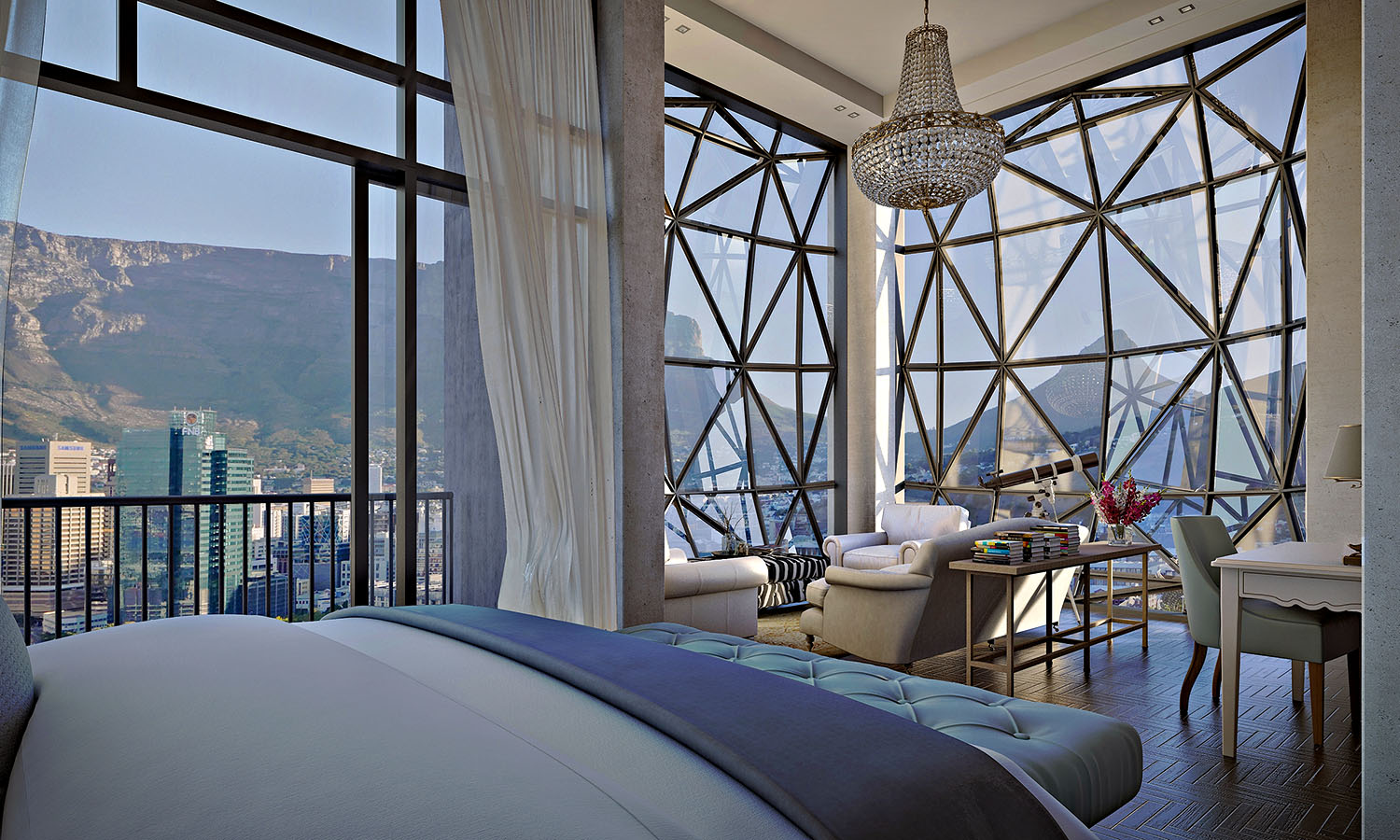
Like everywhere else in the world, the working waterfront in Cape Town isn’t working as hard as it once did, so for the past three decades – give or take a few years – there’s been a move to convert sections of it into mixed-use residential, tourism and retail developments. The latest addition is the Silo luxury hotel. It has just 28 rooms located in the elevator tower of a grain silo that was decommissioned in 2001. It sits above the six-storey Zeitz Museum of Contemporary Art Africa, with views of the harbour, city and Robben Island. The glass rooftop swimming pool and bar is sure to become the must-chill destination for the city’s most stylish denizens. Double rooms from about US$795 a night.

theroyalportfolio.com

Hotel Provocateur
Berlin, Germany

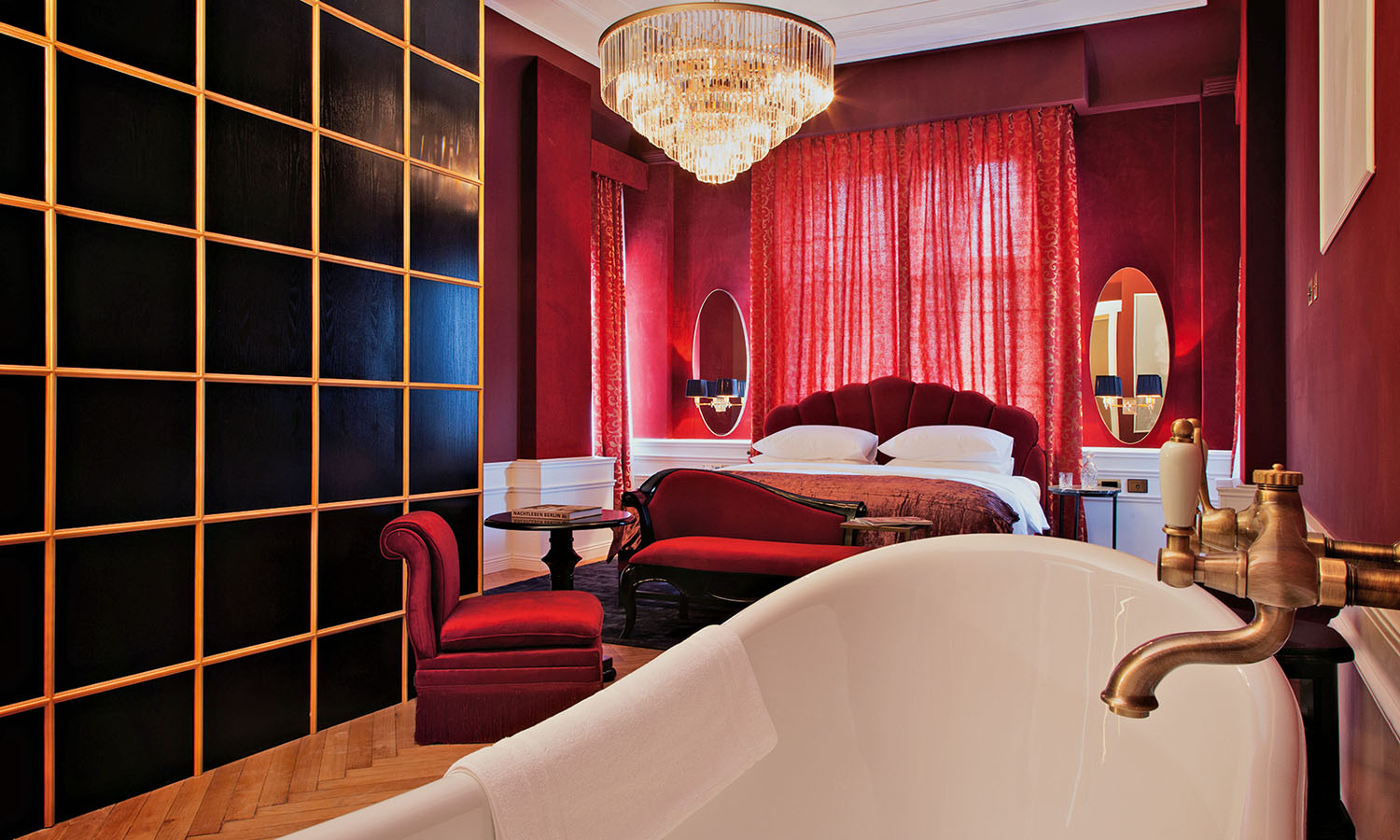
You already know Berlin is one of the coolest cities in Europe – if not the world. With its creative culture, gritty bars and high-octane nightlife, the place has urban style sorted. Enter Hotel Provocateur, a new 58-room Design Hotels member shaking things up since its opening in 2017. Forget the industrial look that’s swept through the design scene lately and enter a world of burlesque that channels the glamour of 1920s Paris. Once your eyes adjust to the light you’ll spot glimmering chandeliers, shadowy corners perfect for whispering sweet nothings, blood red, onyx and gold furnishings, and fabrics begging for your touch. A restaurant run by star chef Duc Ngo will open on site, because playing temptress is ravenous work. Doubles from US$120.

designhotels.com

G-Rough
Rome, Italy

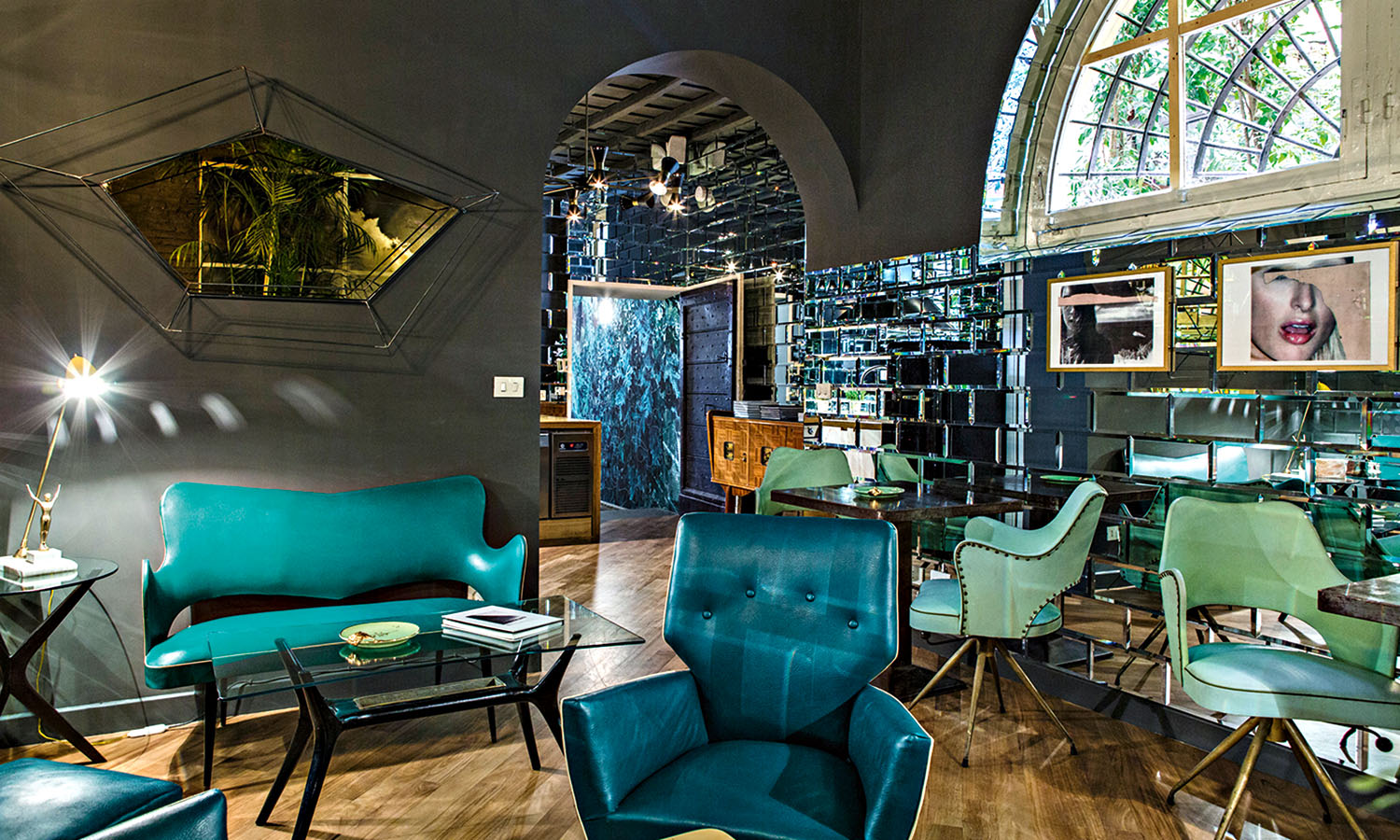
When we first went to Italy’s capital as teenaged backpackers, we stayed in spare rooms in a nun’s quarters. Not exactly party central. You can understand, then, our excitement arriving at this treasure. Around the corner from Piazza Navona and with five-star features, G-Rough is anything but. Within the raw concrete walls of each of its 10 suites, set in a building from the 1600s, are pieces of furniture by famed Italian designers including Gio Ponti. The wine bar is a much more luxe space, but its best-kept secret is the tiny roof terrace. Wait until the sun is dropping from the sky and head up here with an Aperol spritz to watch the sky, with its horizon of tiled roofs and cathedral domes, turn golden. From about US$305 a night.

designhotels.com

Sir Adam
Amsterdam, The Netherlands

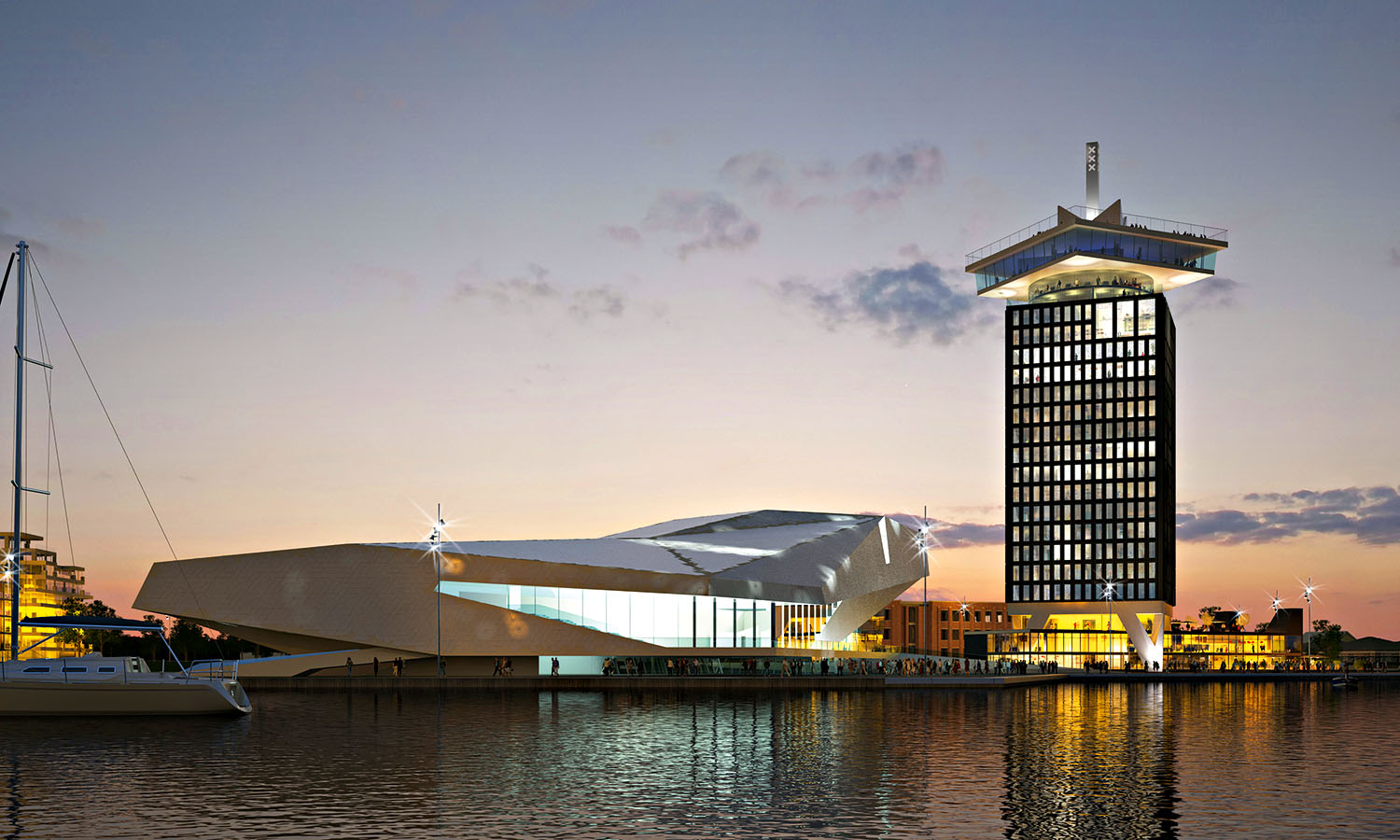
We’re all up for a bit of urban redevelopment and this is one of the best examples happening anywhere in the world at the moment. The 22 storeys of the Toren Overhoeks are undergoing a complete overhaul with a musical edge to become A’DAM Tower. Here, you’ll find music schools, nightclubs and a number of restaurants, including Moon, which revolves to offer 360-degree views of the city. Be close to all this action at Sir Adam, which opens in 2017. Not surprisingly, there’s a music theme to its low-key luxe rooms, with Crosley turntables, vinyl records, original artwork and mirrors etched with lyrics. The huge windows are also decked out with benches so you can look out over the city while listening to some fresh beats. From about US$142 a night.

designhotels.com

Urban Cowboy
Nashville, USA

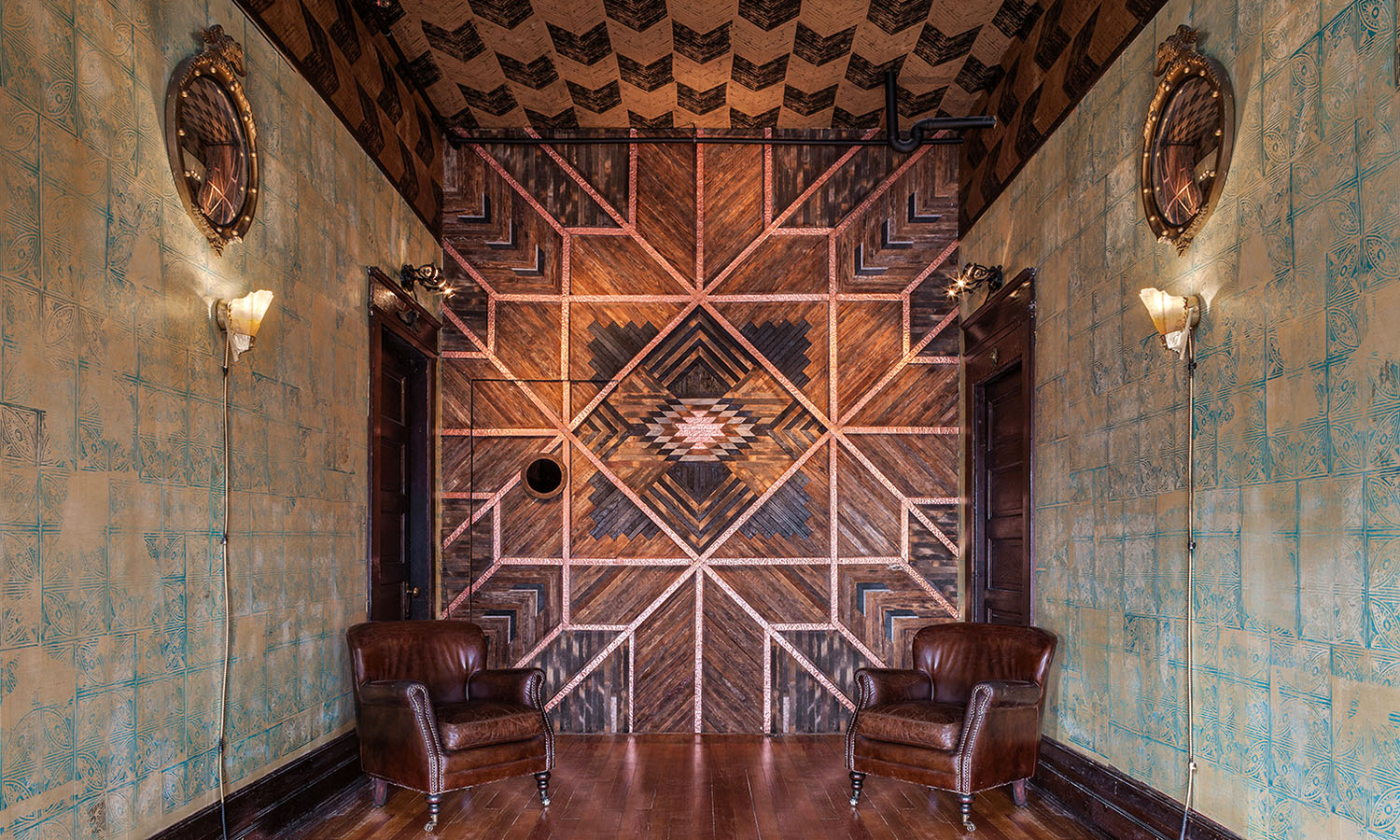
For all the artists, designers, adventurers and wanderers, this is a home away from home. Urban Cowboy was originally a historic Victorian mansion until it was transformed into the alternative B&B it is today. There are eight studio rooms all featuring claw-footed bathtubs and dream-like king beds. The design, something the owners like to call Southwestern Deco, is bold, and communal lounge areas are created to forge connections. Whether you’re a musician, artist or whiskey connoisseur, you’ll be right at home. The mansion, in hip East Nashville, is surrounded by farm-to-table restaurants, craft coffee and live music. It’s also only a five-minute drive to Downtown, where honky-tonks pump out songs and shots till the early hours. From about US$175 a night.

urbancowboybnb.com

Tuve
Tin Hau, Hong Kong

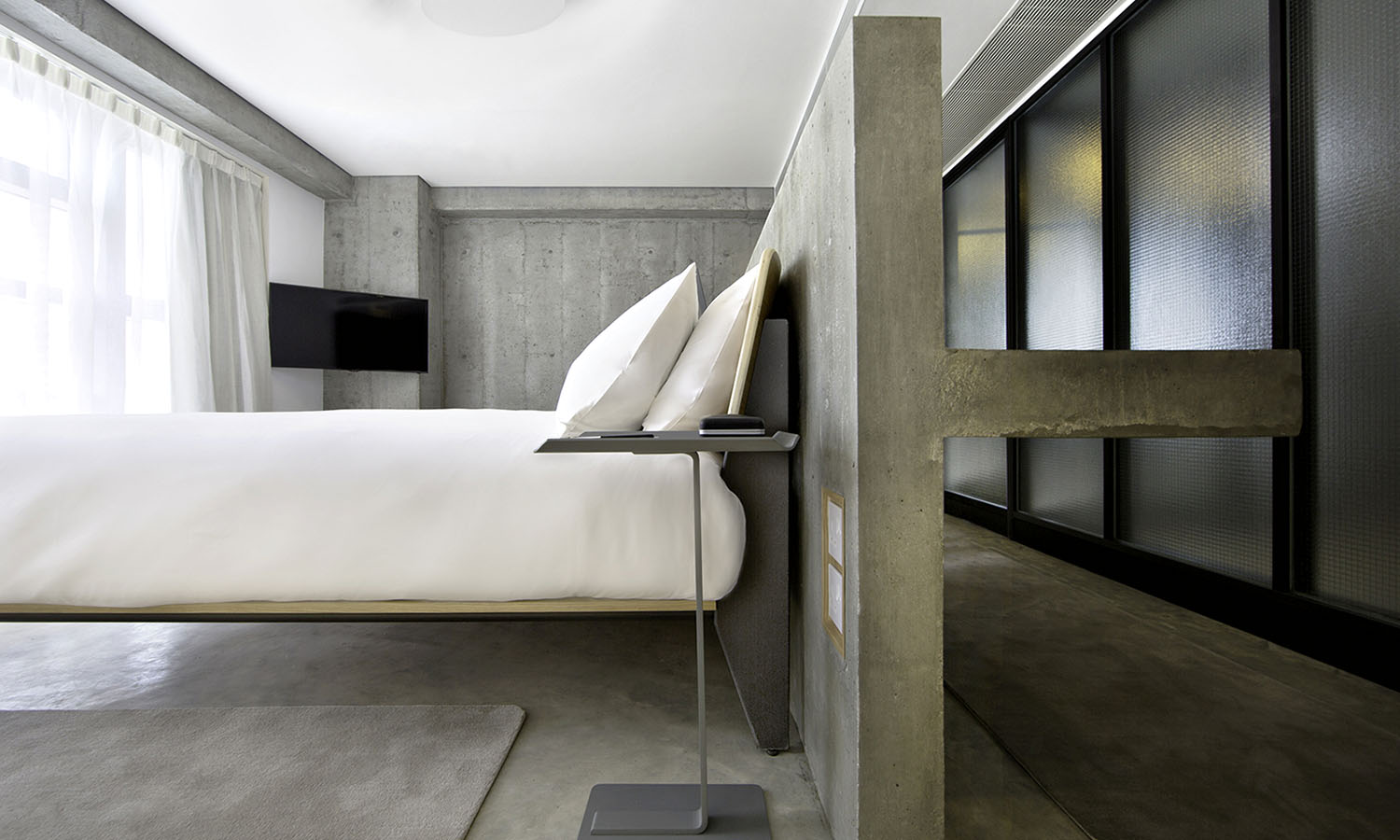
Patterned marble, galvanised steel, textured concrete and raw timber are the over-riding materials used in the 66 rooms of this boutique hotel. It seems like minimalism in the extreme, with local architects Design Systems using a series of photos of a Swedish lake – rocks partly submerged and mists swirling – as the unlikely inspiration. Natural light is also utilised, with translucent wired glass, a material more often seen in offices, separating bed and bathroom. In the ground floor restaurant, Silver Room, where folds of metal create privacy between tables, the menu has a decidedly Japan-meets-Italy vibe. It won’t be everyone’s stripped-back glass of fizzy water, but it’s certainly a game changer in bigger-is-better Hong Kong. From about AU$110 a night.

tuve.hk

HIT LIST

Hoshinoya Fuji
Yamanashi, Japan

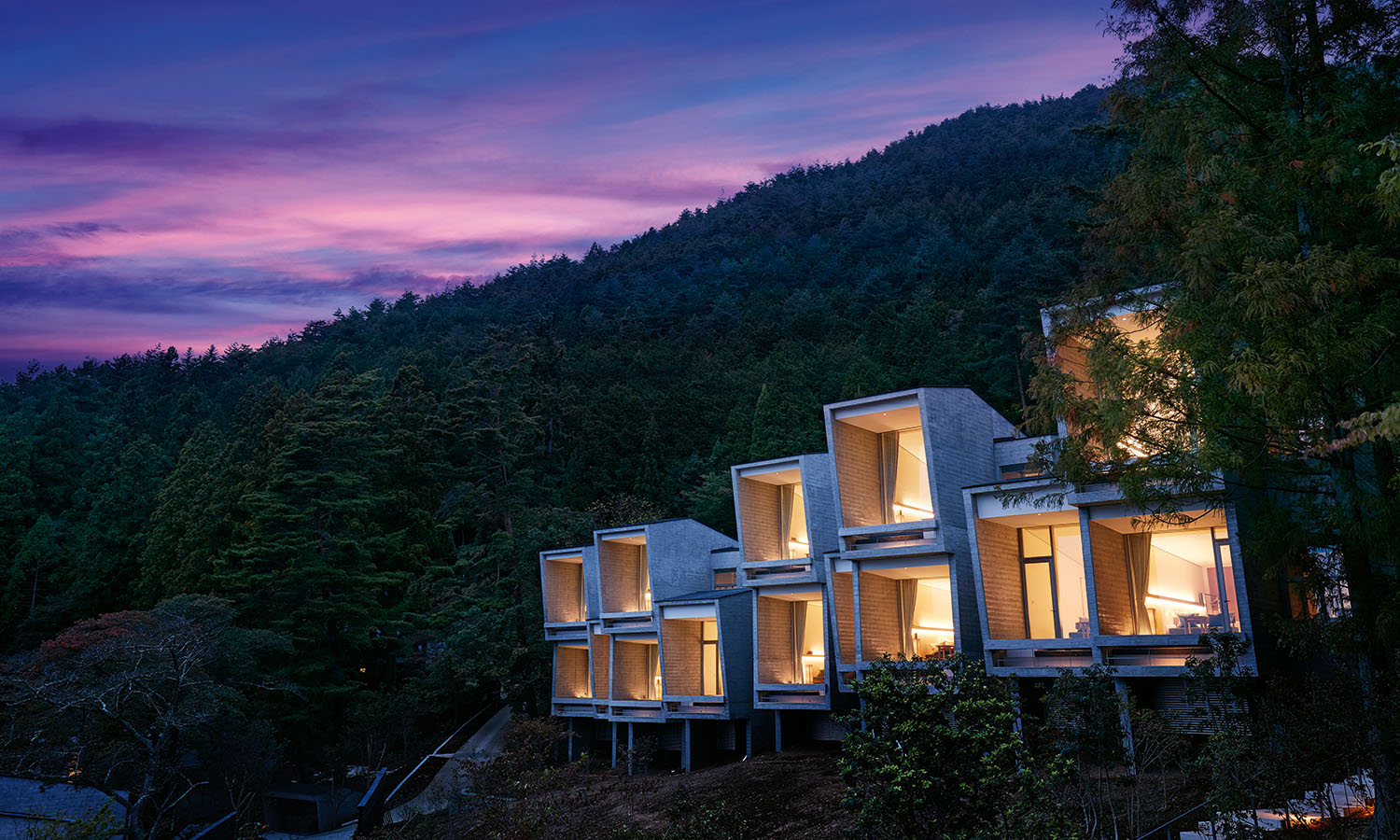
Imagine soaking in a tub and watching clouds unravel from Japan’s most iconic site, the snowy cone of Mount Fuji. Set in a red pine forest marked with craters and ice caves, the concrete cabins of Hoshinoya Fuji blend the worlds of camping and luxury with a minimalist Japanese aesthetic. Echoing an American summer camp, the glampsite offers horseback riding, tours through the infamous Aokigahara Forest, star watching and whiskey sipping near the campfire at night. Rise with the sun and set out in a canoe to paddle Kawaguchi, one of Mount Fuji’s five lakes. If you’re lucky you’ll witness the famous volcano mirrored in the glassy water. Doubles from US$555 a night.

hoshinoyafuji.com

V8 Hotel
Stuttgart, Germany

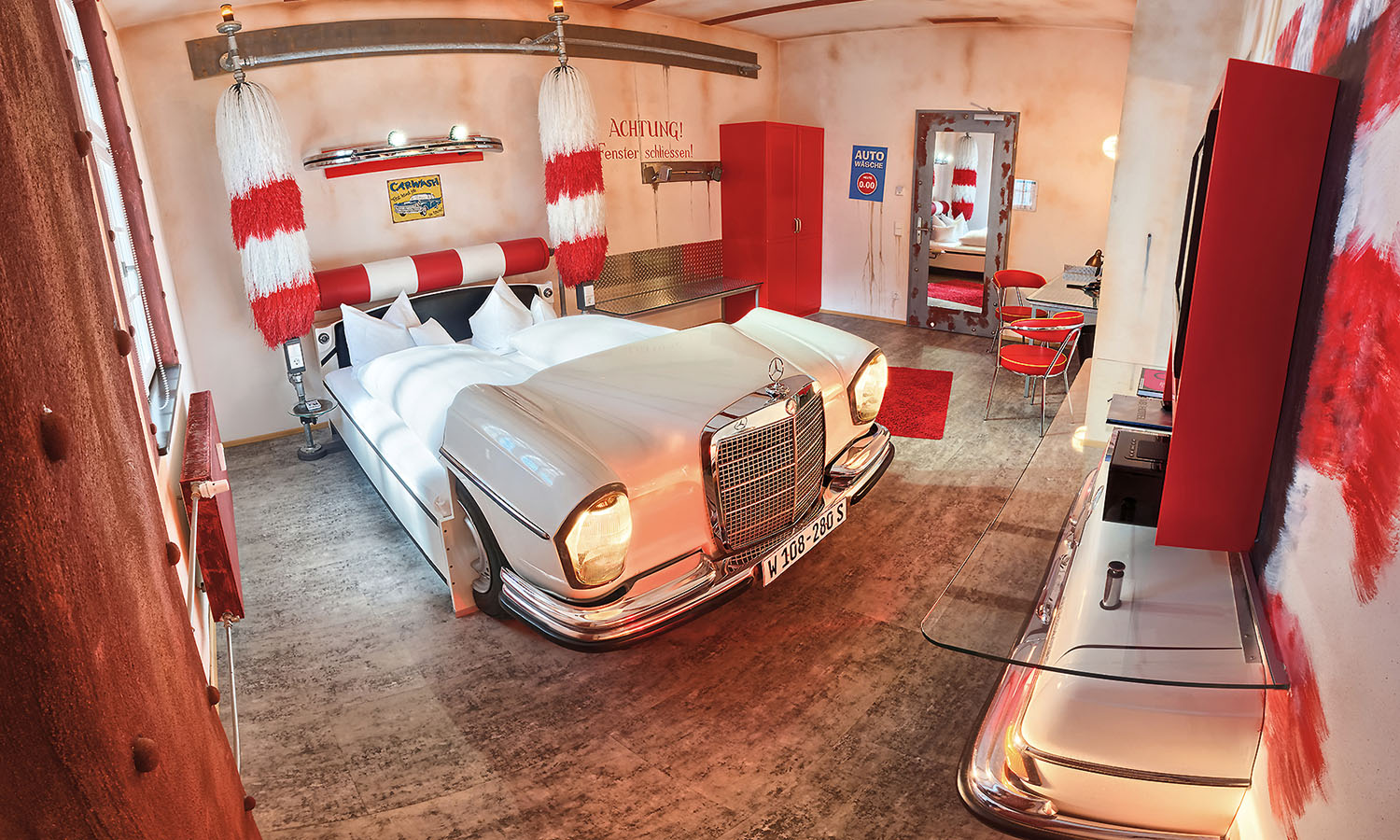
Get your motor running in one of the themed rooms at this ode to the engine. Located in the heart of Motorworld, where there’s a museum, flight simulator, indoor theme park, restaurants, a brewery and outlet shopping mall, this former airport hotel has smart suites with artwork bearing an automotive scene. It’s the beds set up between car wash brushes or kitted out like a roadside camp on Route 66, however, that really rev the beating of our hearts. Top of the line is the Mercedes Suite with a car bonnet at the end of the bed and a sundeck overlooking the countryside. Themed rooms from about US$180 a night.

v8hotel.de

Kumbuk River Elephant Villa
Buttala, Sri Lanka

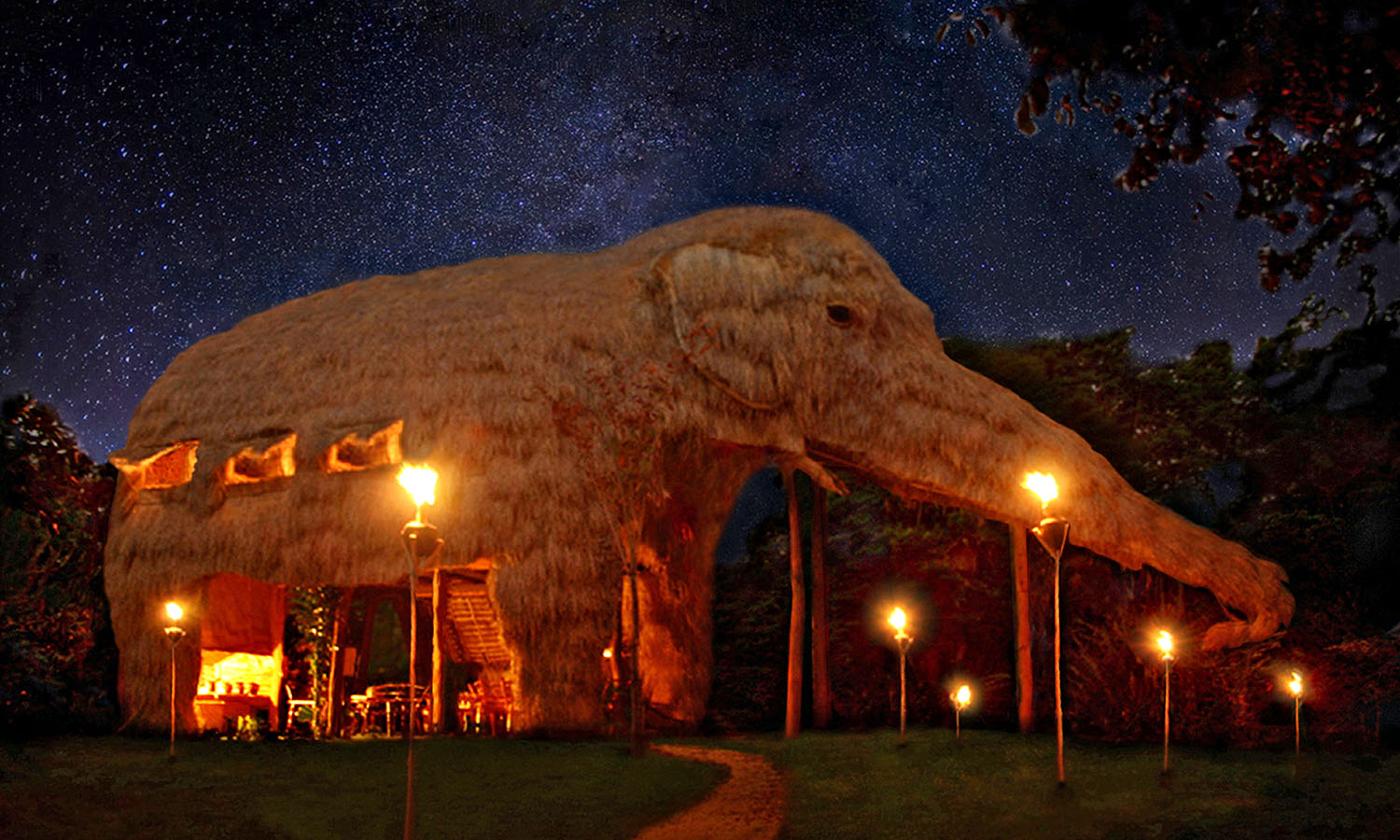
Dumbo would be proud to know that one of the world’s most unusual eco-hotels takes his shape. This two-storey villa has an open lounge on the upper deck and two extra-large bedrooms downstairs, all crafted from wood and straw. With its lush river location, about 260 kilometres from Colombo, guests can take advantage of all the resort’s activities, including nature walks, bird watching and rafting. If living inside an elephant doesn’t soothe your pangs for pachyderms, take a day trip to Yala National Park where you can spot leopards, water buffalo, sloth bears and, of course, Sri Lankan elephants. From US$125 a night for two people.

kumbukriver.com

Harlingen Harbour Crane
Frise, Netherlands

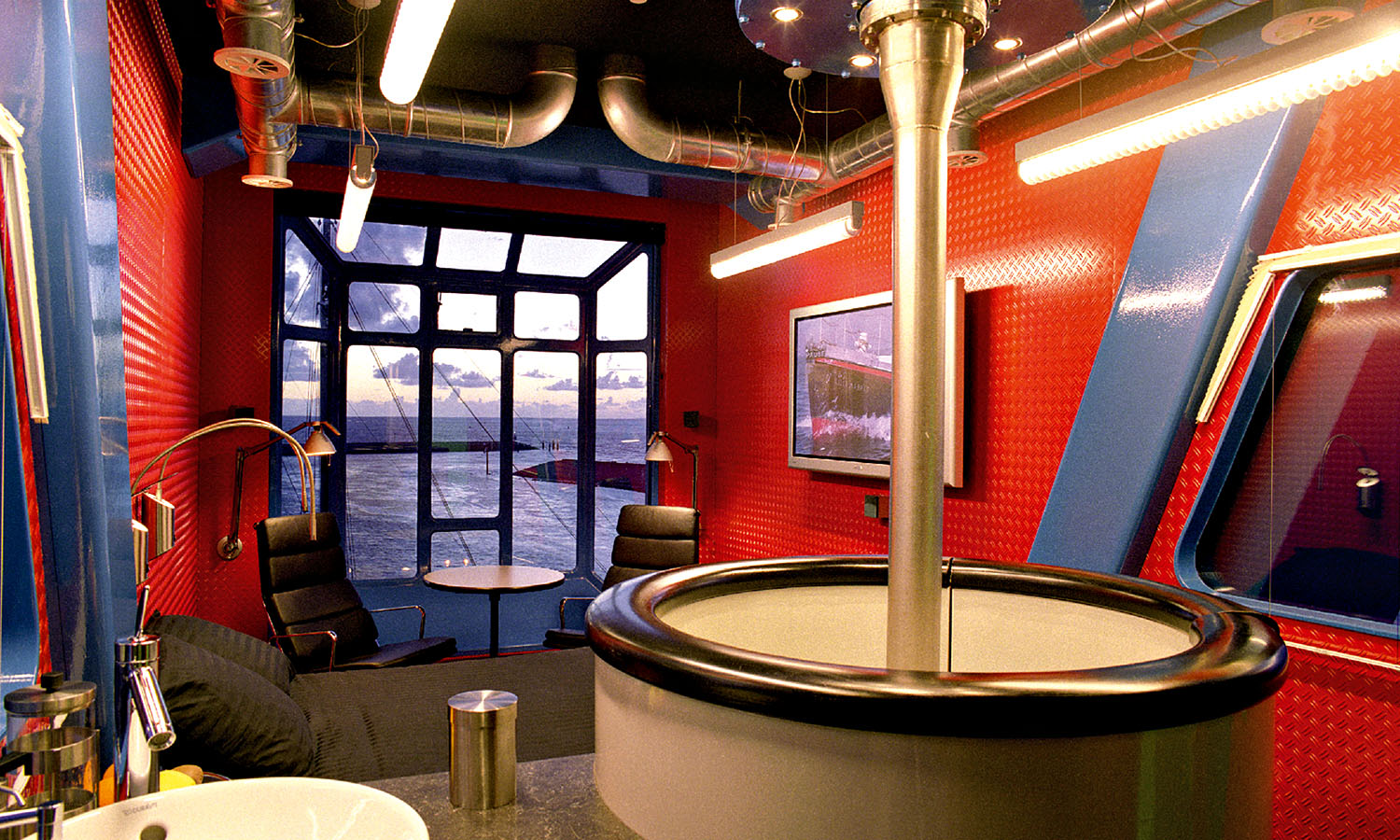
It’s time to add ‘stay the night on a crane’ to your bucket list, just so you can tick it off here. Perched beside the Wadden Sea, the crane, which was built in 1967 and unloaded timber until 1996, offers 360-degree views of historic Harlingen from its retreat for two in the machine room. Head up a set of stairs and you’re in the cabin. Here, you can tentatively swing from left to right like you’ve always seen but never done. If you can pull yourself away from your real-life Tonka truck, head down the lift to the ground and explore the beautiful ports and Harlingen lighthouse. From AU$470 per night.

havenkraan.nl

CotopaxiPungo
Valle de los Chillos, Ecuador

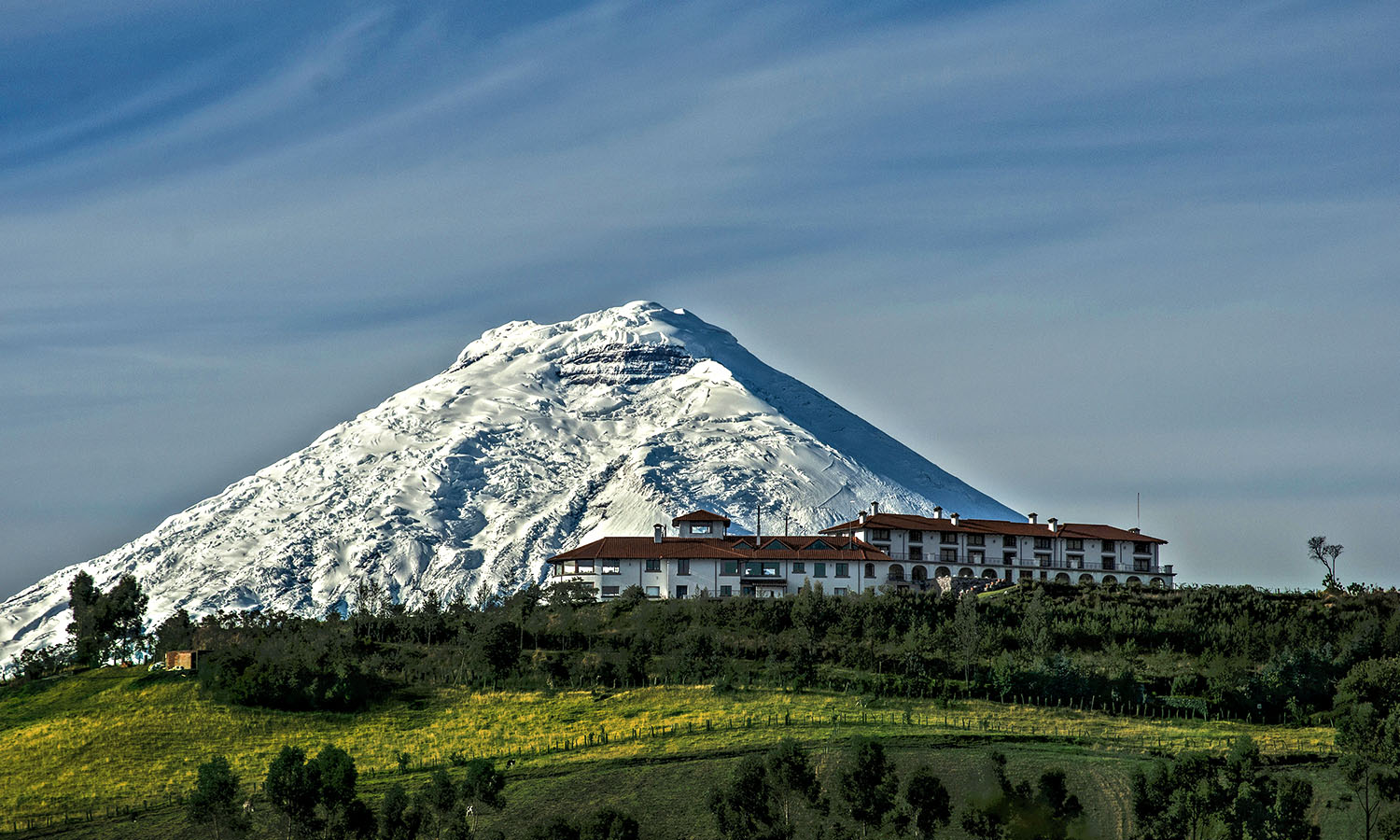
Ecuador may be famous for the Galapagos, but there’s another attraction just as great as blue-footed boobies – volcanoes. In fact, the country does them so well there’s an entire Avenue of Volcanoes, a 320-kilometre stretch that runs south from the capital, Quito, with seven huge peaks sprouting from the earth. The luxurious, 20-room CotopaxiPungo is set among them, carefully positioned to escape any hot magma that might ooze a path of destruction should one monster mountain blow its lid. It is, however, within view of some of the finest, including the snow-capped cone of Cotopaxi, which rumbled back to life last year sending whorls of smoke into the air. The hotel itself resembles a traditional hacienda (colonial estate), complete with wooden floors, antiques and cosy fires to warm those chilly nights. And, sitting at 3350 metres, it does get cold up here. Spend your days exploring the Andes on horseback, visiting waterfalls, spying hummingbirds and testing your photography skills with tips from manager Juan Carlos, who’s an expert at snapping the giants. Return for honest, local cuisine in the dining room with 180-degree views of the landscape and the lights of Quito glimmering in the distance. Doubles from AU$224 a night.

cotopaxipungo.com

A House for Essex
Wrabness, UK

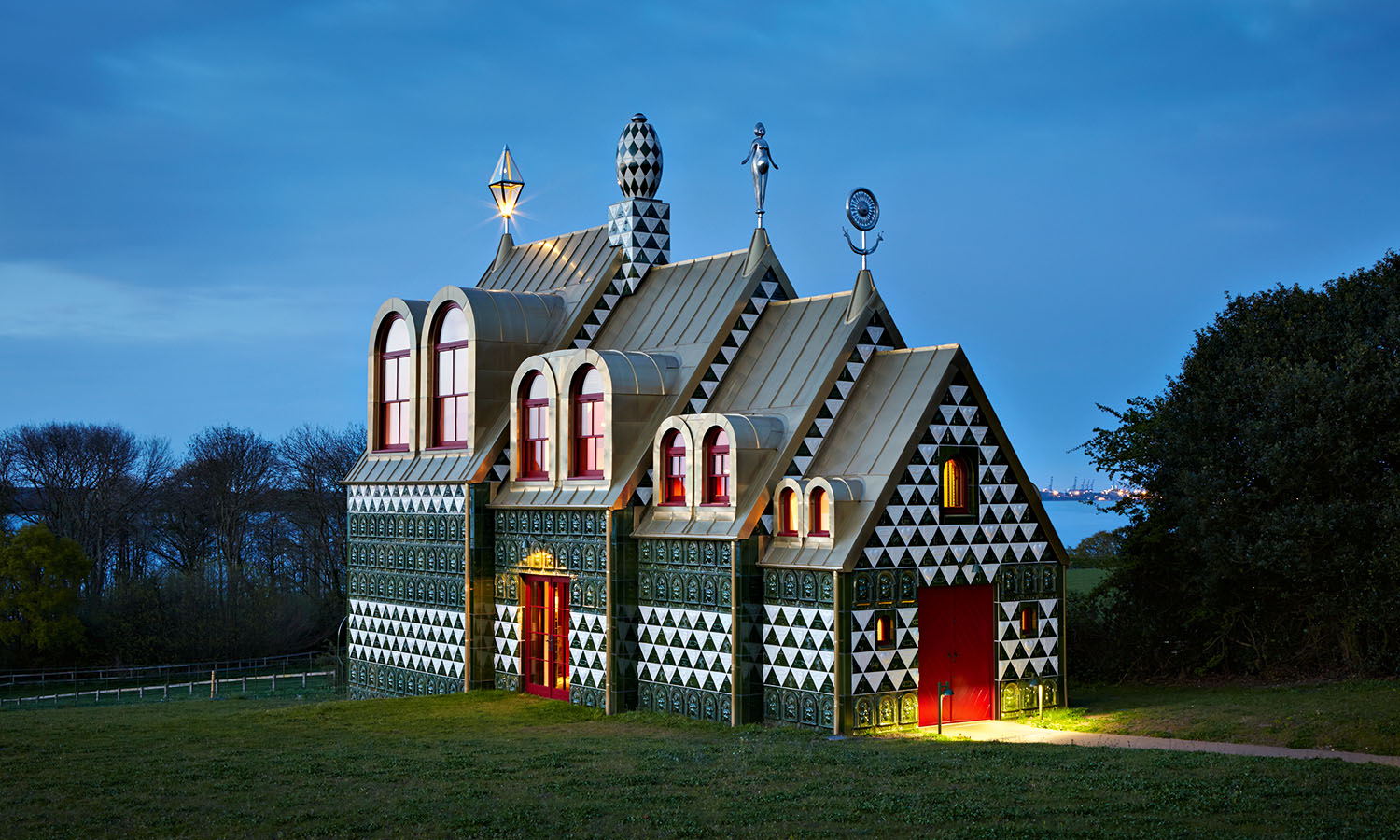
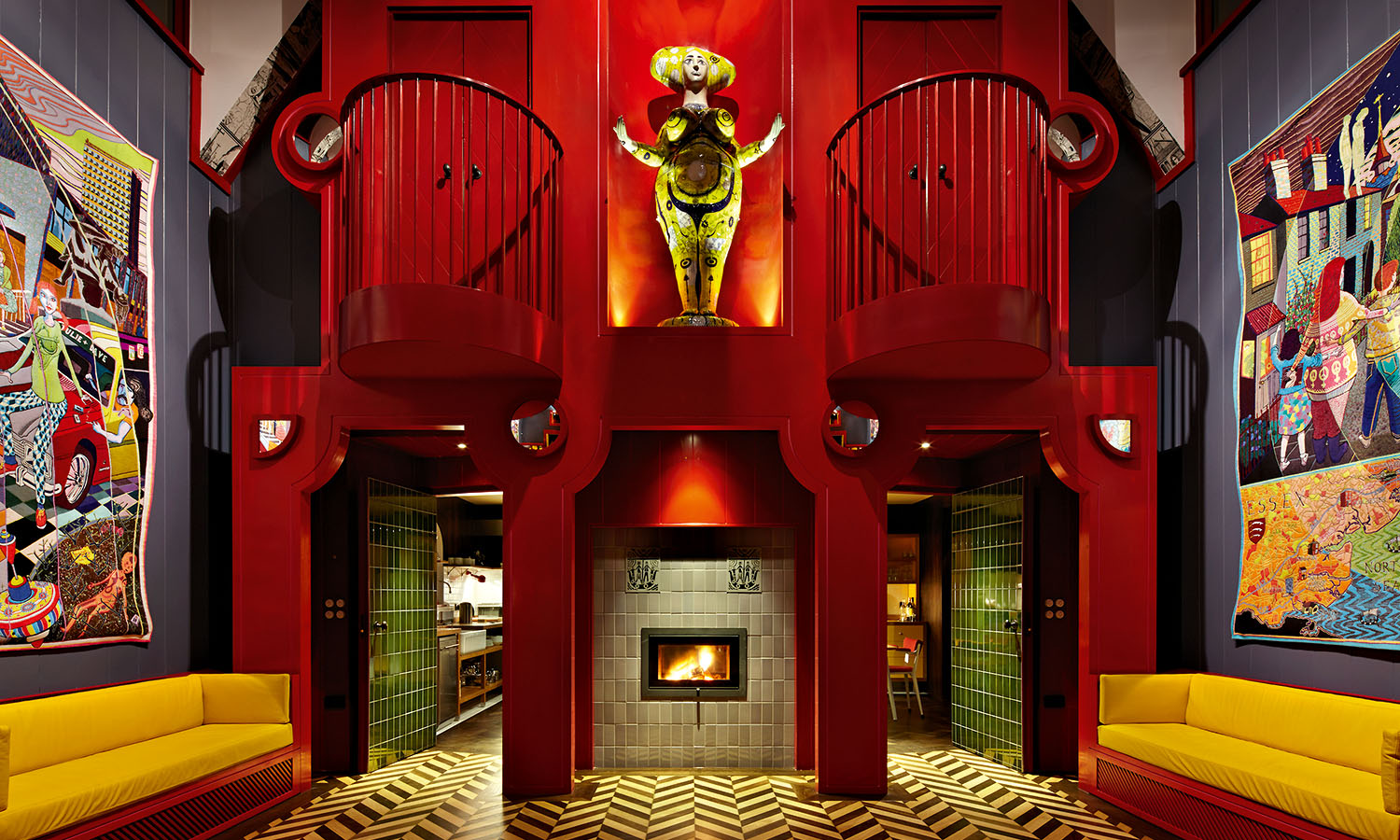
Anything designed by Grayson Perry is sure to have more than a touch of the kooky about it, and this holiday house, inspired by fairy tales, shrines and baroque architecture, is no exception. Perry, in conjunction with architectural firm FAT, created the two-bedroom home based on a character called Julie, for whom he produced an entire backstory. It’s just one of a number of homes in a series by Living Architecture, an organisation that aims to increase appreciation of architecture by offering immaculately designed properties at reasonable rates. We love everything about it, from the ceramic green and while tiles (depicting safety pins, cassettes and hearts) covering the exterior to the Lego-like kitchen. From $1285 for two nights (for up to four guests).

living-architecture.co.uk

Kasbah Du Toubkal
Toubkal National Park, Morocco

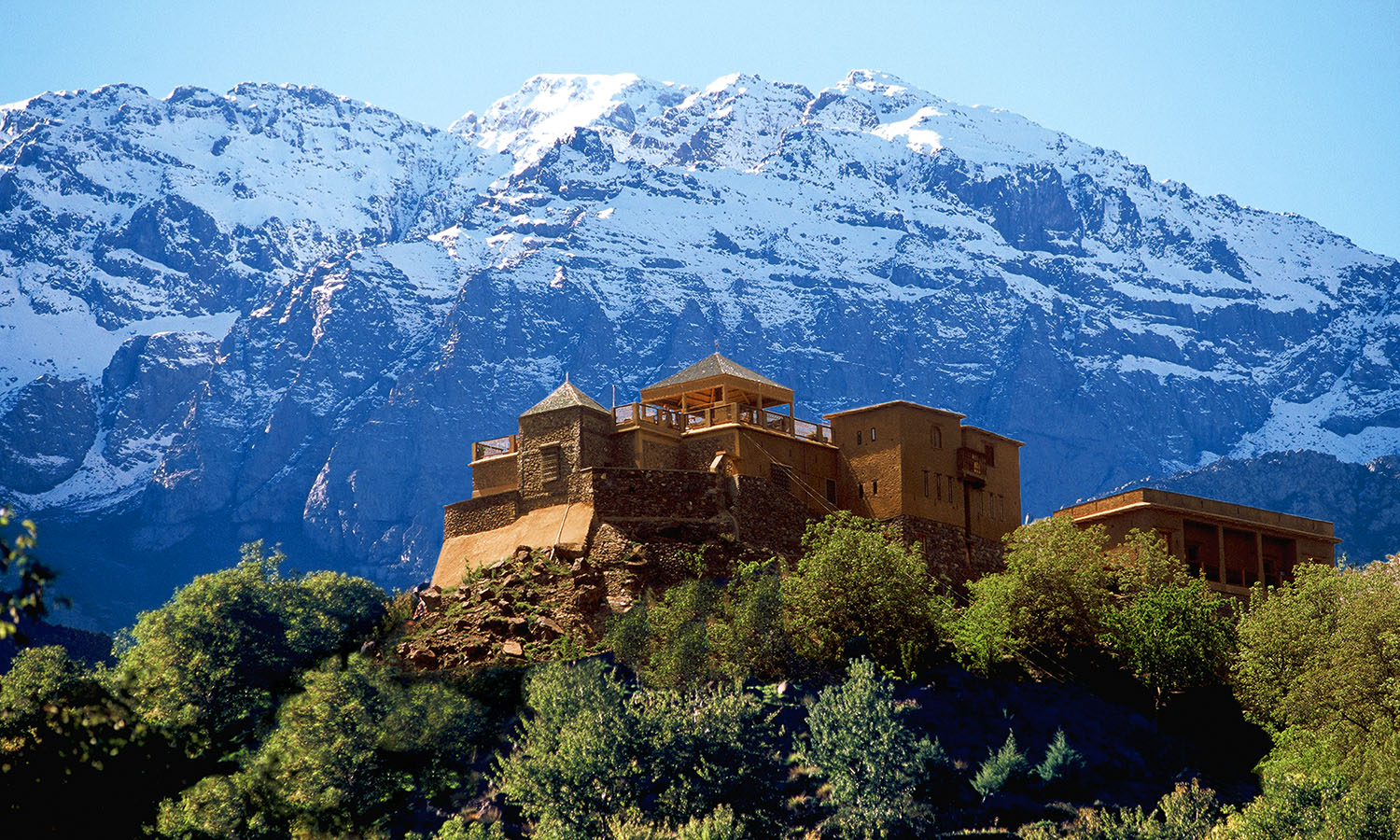
It may not be easy to get to, but its location makes Kasbah du Toubkal exceptional. Meet your hosts in the little town of Imlil, a 90-minute drive from Marrakesh, and travel on foot to the hotel perched on the top of a hill facing the snowy peak of Jbel Toubkal, the highest mountain in North Africa. Your luggage will follow on the back of a mule – the same method used by the community to cart the stones and building materials up to the ruins of an old kasbah on which the hotel is founded. For those wishing to become more acquainted with nature, Berber guides take treks into the surrounding Atlas Mountains, with overnight stays at the hotel’s trekking lodge. Return back to base to steam your sore muscles in the hammam and sip mint tea on the terrace. Salons for two and four start at AU$235 per night.

kasbahdutoubkal.com

Isleta El Espino
Granada, Nicaragua

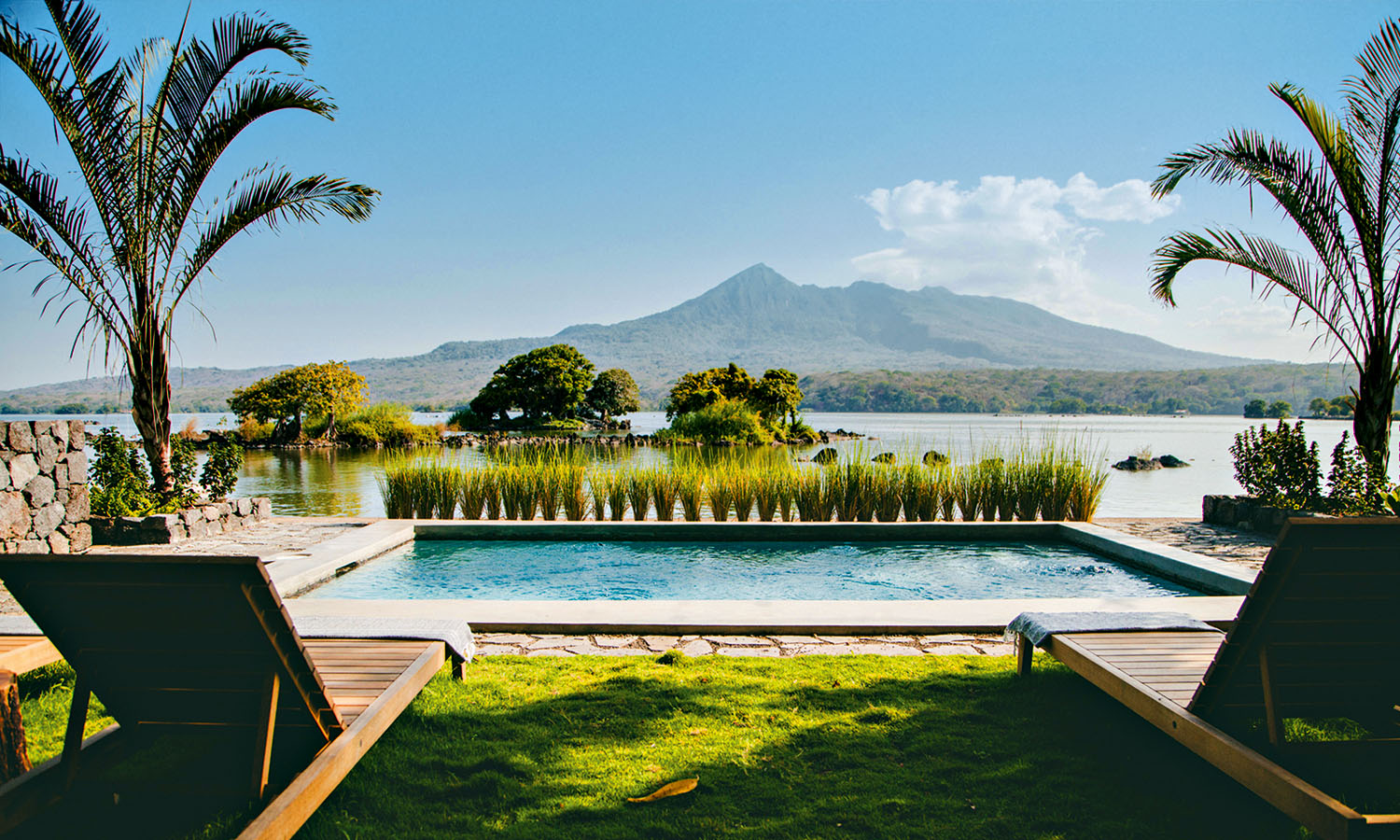
Get the best of both worlds at Isleta El Espino. This off-grid island eco-lodge feels far from civilisation but is, in fact, just a 10-minute boat ride from the historic city of Granada. With only three boho-luxe rooms – two in thatched tree houses, the other in a bungalow – dotting the island, staying here is all about blissful exclusivity. Wake to birdsong, welcome the day on the yoga deck with monkeys watching from the trees above, and keep your eyes peeled for the chef in the garden gathering mangoes for your breakfast. Once you’ve fuelled up, take your pick of adventures: head out with a local fisherman, go to the artisan markets in Masaya, or take a cocoa plantation tour on horseback. Or you could while away the day prostrate on a deck chair overlooking Lake Nicaragua and the dormant Mombacho volcano. From about US$115 a night.

isletaelespino.com

Sharma Springs
Ubud, Indonesia

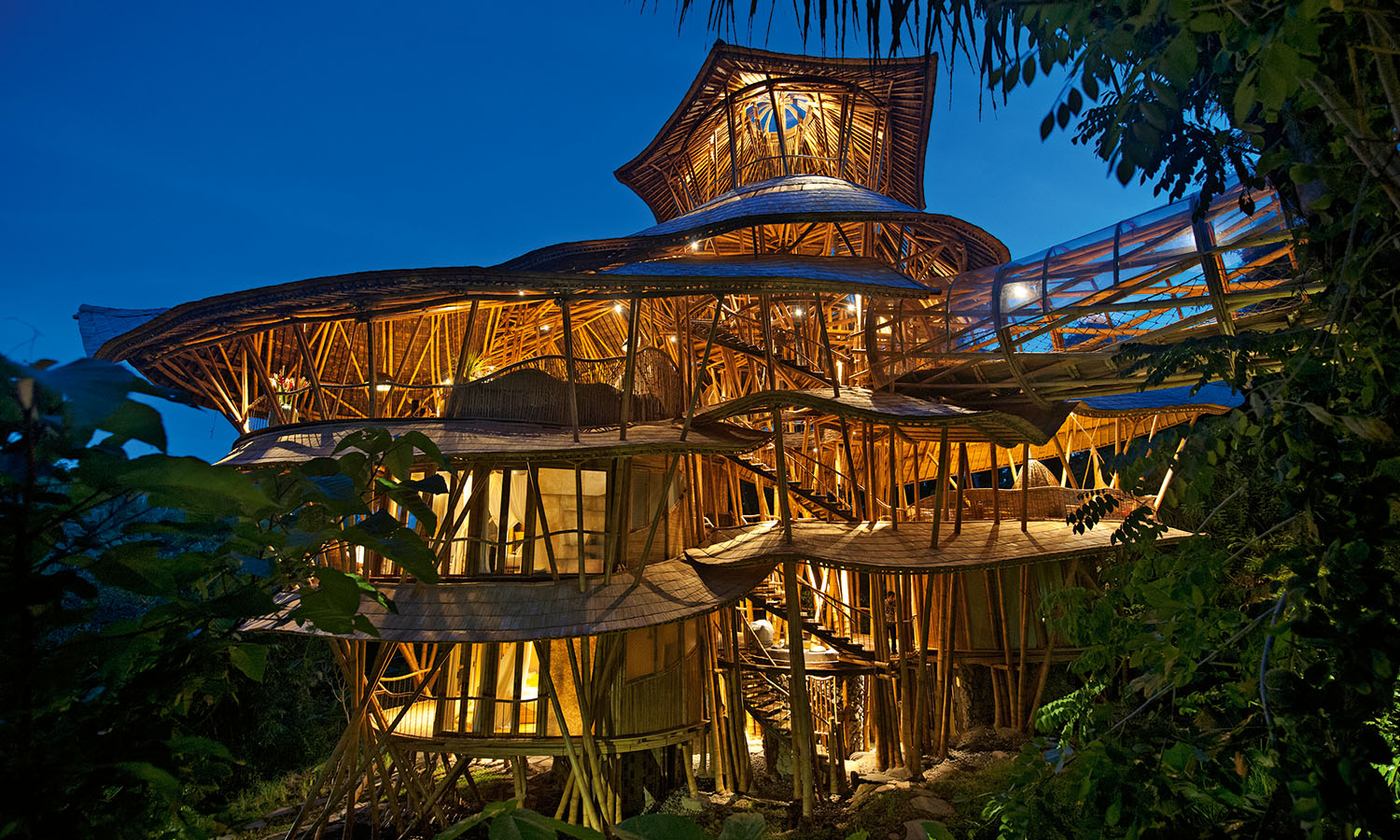
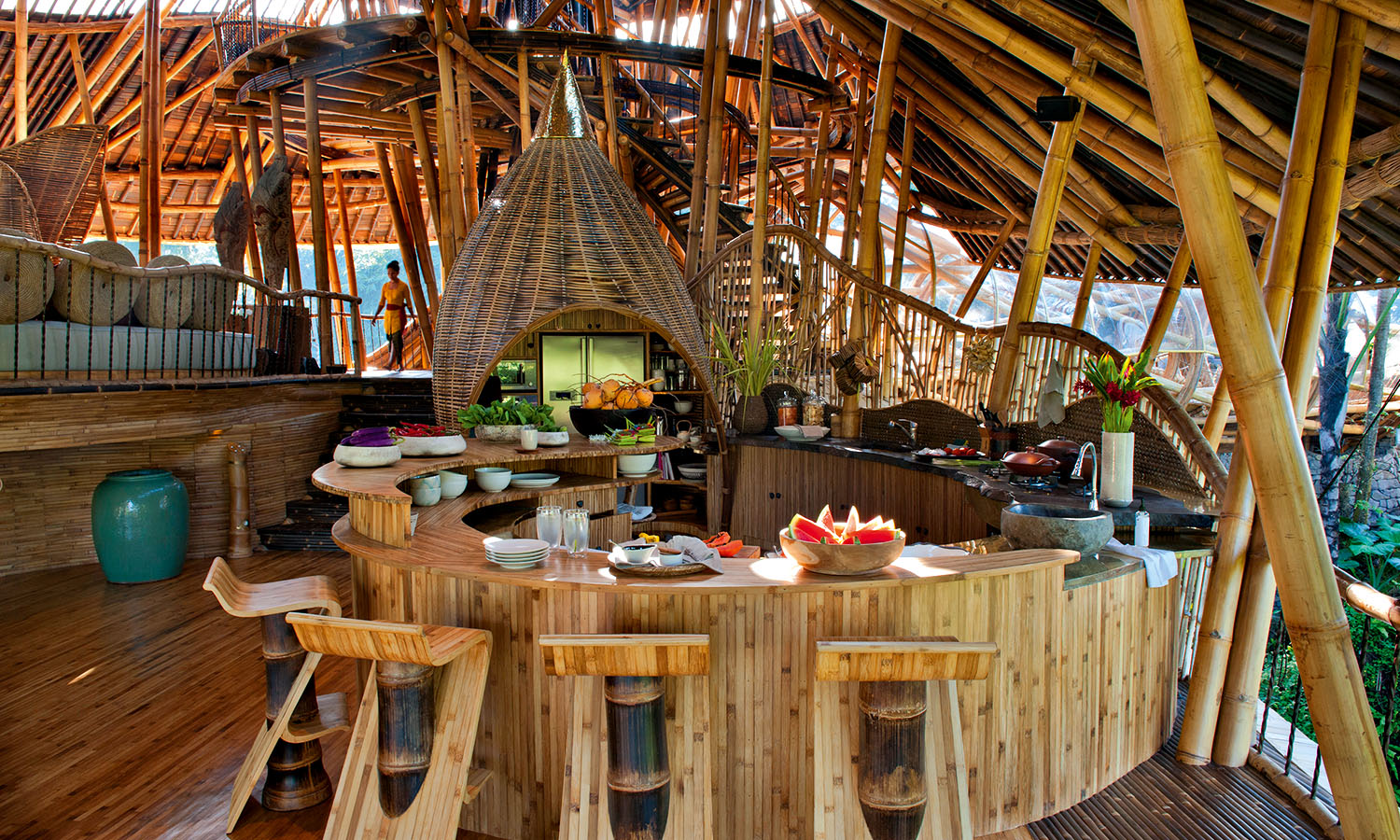
Imagine a house that resembles something out of The Jetsons. Now think about how difficult that would be to build. Not only has it happened on the banks of Bali’s Ayung River, but this spectacular six-storey abode has also been created entirely from bamboo. Up to 11 people can be accommodated in its four bedrooms. Many of the living areas are open at the sides, allowing guests to feel at home in the forest, and there’s an office space (just in case you feel like you have to stay forever), media room, kids’ play room and a private garden with a pool. It’s part of a planned sustainable community only 25 minutes from Ubud, so you can head into town if you feel the need to escape all this peace and quiet. From US$630 a night.

greenvillagebali.com

After Dark Taipei

For a capital city that’s serviced by direct flights from Australia’s east coast, Taipei is underrated as a tourist destination. It’s easy to navigate thanks to a tidy, efficient railway network and after dark it becomes a lively city with modern bars and restaurants that weave between old- and modern-world charms. From art hubs to dim sum restaurants, nightclubs to night markets, Taipei’s scene once the sun goes down is a stew pot of offerings.

4pm
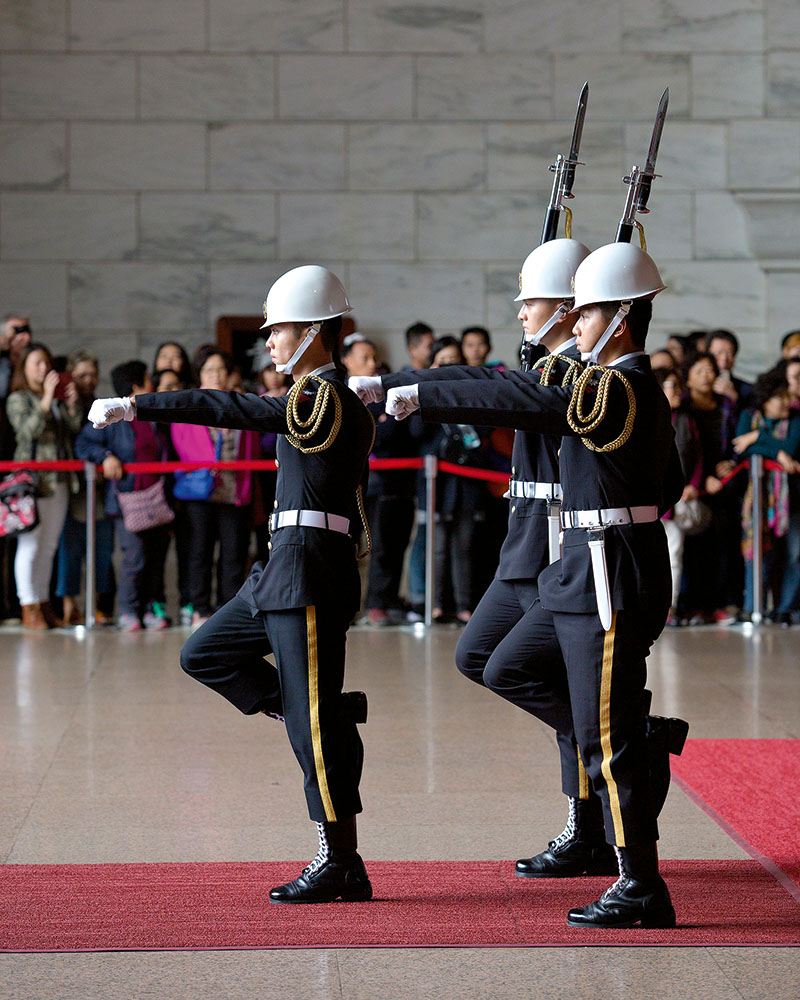
Start the evening by witnessing the day’s last Changing of the Guards ceremony at Chiang Kai-shek Memorial. The former Chinese government leader, whom the memorial was named after, fled to Taiwan in 1949 after losing the Chinese Civil War against the Communists. He remained in exile here until his death in 1975, aged 89, and the monument was opened five years later. Revered by some and abhorred by others, a 6.3-metre-high bronze statue of the dictatorial strongman lords over an otherwise vacant auditorium guarded by members of the various Taiwanese defence forces.

Chiang Kai-shek Memorial Hall
21 Zhongshan South Road, Zhongzheng

5pm
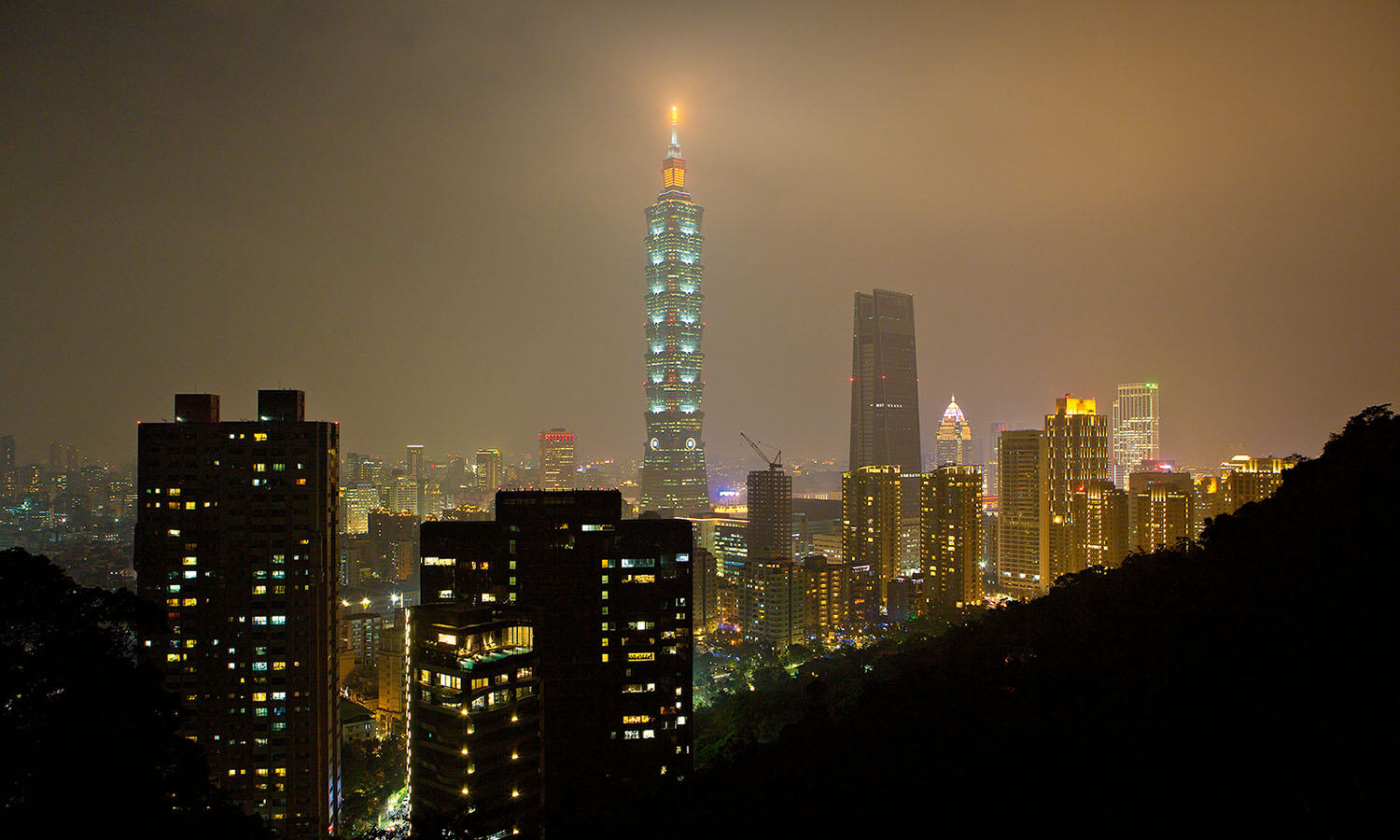
There’s still enough sun to scale Elephant Mountain for twilight views over Taipei. Catch an MRT (Taipei Metro) train to the Red Line terminus station, Xiangshan, before the thigh-burning hike up a coiling stairway to the Six Giant Rocks Lookout, one of several on the mountain. Dominating the Taipei skyline is Taipei 101, once the world’s tallest building.

Xiangshan Hiking Trail
Alley 342, Lane 150, Section 5,
Xinyi Road, Xinyi

6pm
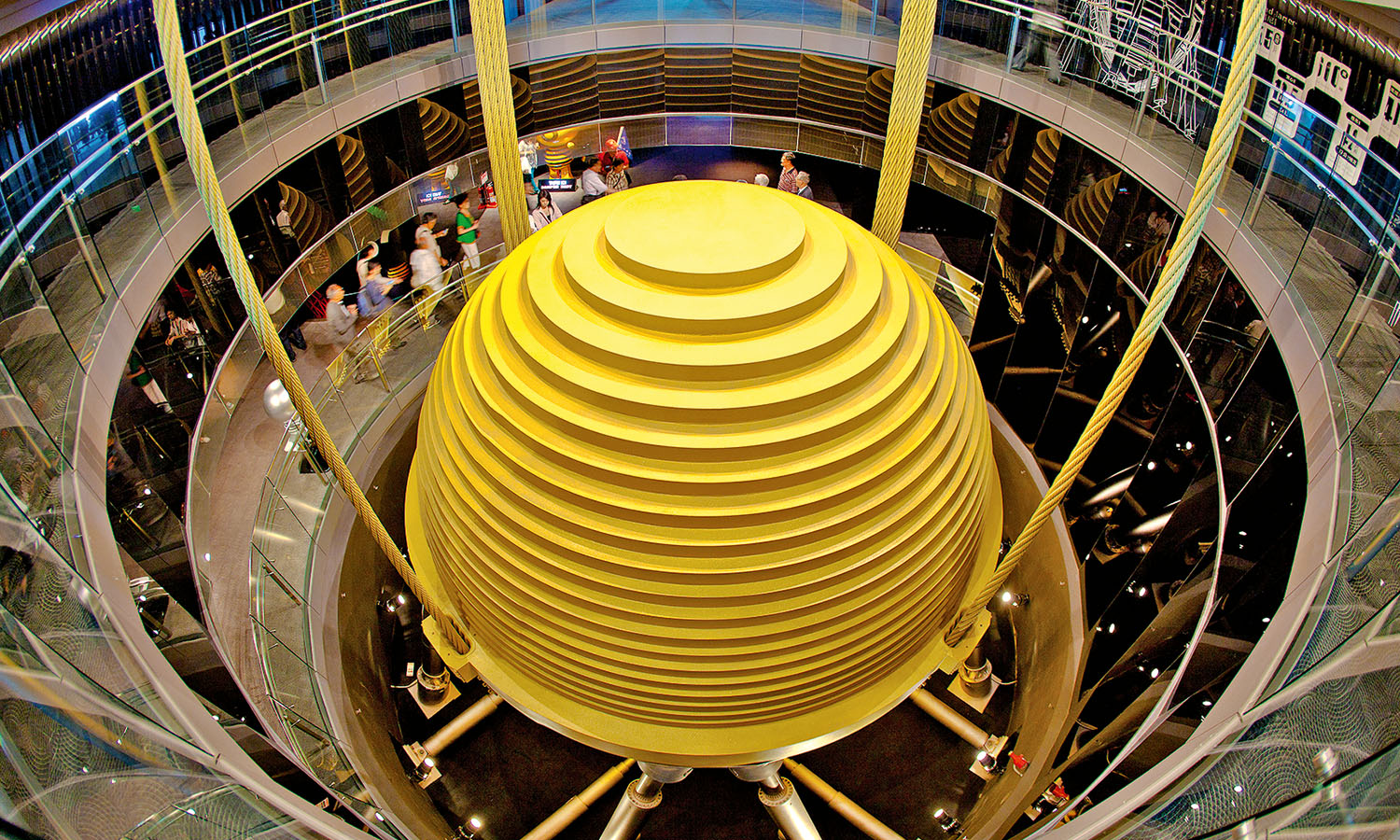
If that’s not enough walking for you, Taipei 101 is just a few minutes on foot from the base of Elephant Mountain. Its traditional design elements represent a bamboo stalk and Asian pagoda, but due to the threat of typhoons and earthquakes, these were given modern makeovers with a spherical steel pendulum suspended between the 92nd and 87th floors to counterbalance movements caused by wind and tremors and to ensure the skyscraper withstands its exposure to the elements. The 101-storey glass tower stretches 525 metres above the city streets. Boutique fashion houses, a food court and several restaurants fill its lower levels, and indoor and outdoor observation decks occupy the 89th and 91st floors. Access is via what was, until recently, the world’s fastest elevator, which climbs 382 metres in 37 seconds.

Taipei 101
No. 7, Section 5, Xinyi Road, Xinyi

7pm
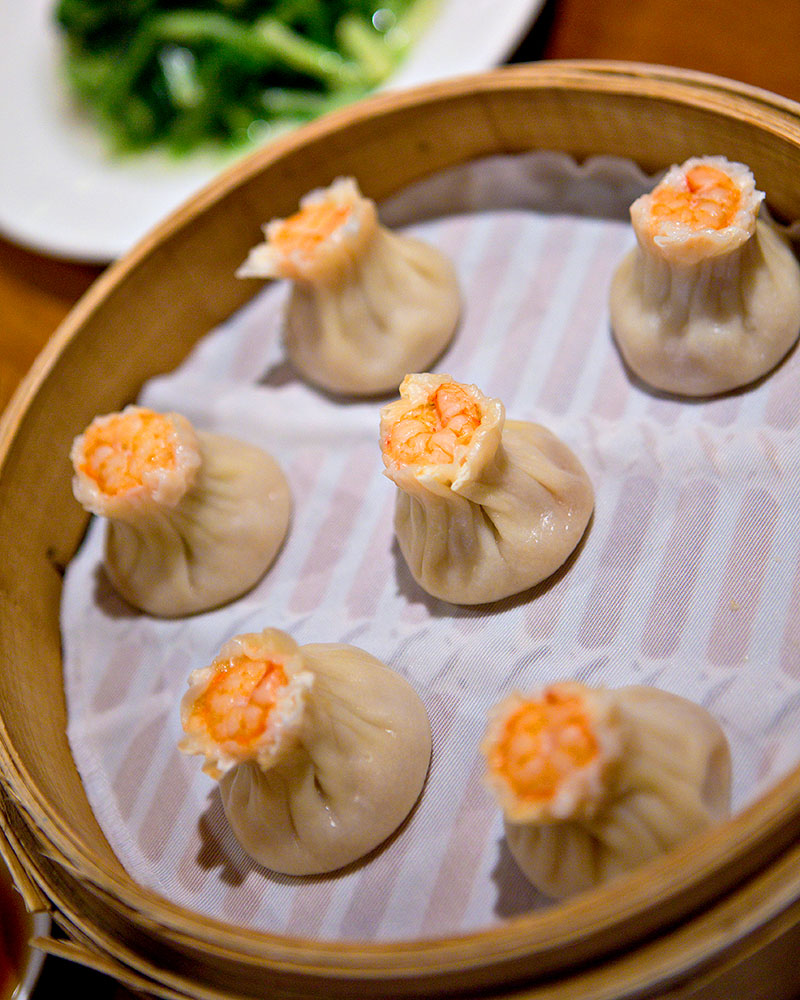
Down in the Taipei 101 dungeons is Din Tai Fung, a restaurant specialising in dumplings and single foods, or what the Chinese call ‘small eats’. As many as 14,000 pork, shrimp, vegetable and truffle dumplings are rolled each day and an army of dumpling chefs – I counted 18 – prepare these tasty parcels behind the glass windows that connect to the front kitchen.

Din Tai Fung
B1, 45 Shifu Road, Taipei 101 Mall
dintaifung.com.tw

8.30pm
The next port of call – Songshan Cultural and Creative Park – is a two-kilometre walk away. Five former tobacco factories have been converted into exhibition and performance spaces, and the site includes gardens, museums, galleries, bookstores and craft beer bars. Lording over them is the Eslite Spectrum shopping mall, where samples of pearl milk tea are served at Chun Shui Tang on the third floor. The teahouse claims to have invented the beverage popularly known as bubble tea, using tapioca balls as its secret ingredient.

Songshan Cultural & Creative Park
133 Guangfu South Road, Xinyi
songshanculturalpark.org

9.30pm
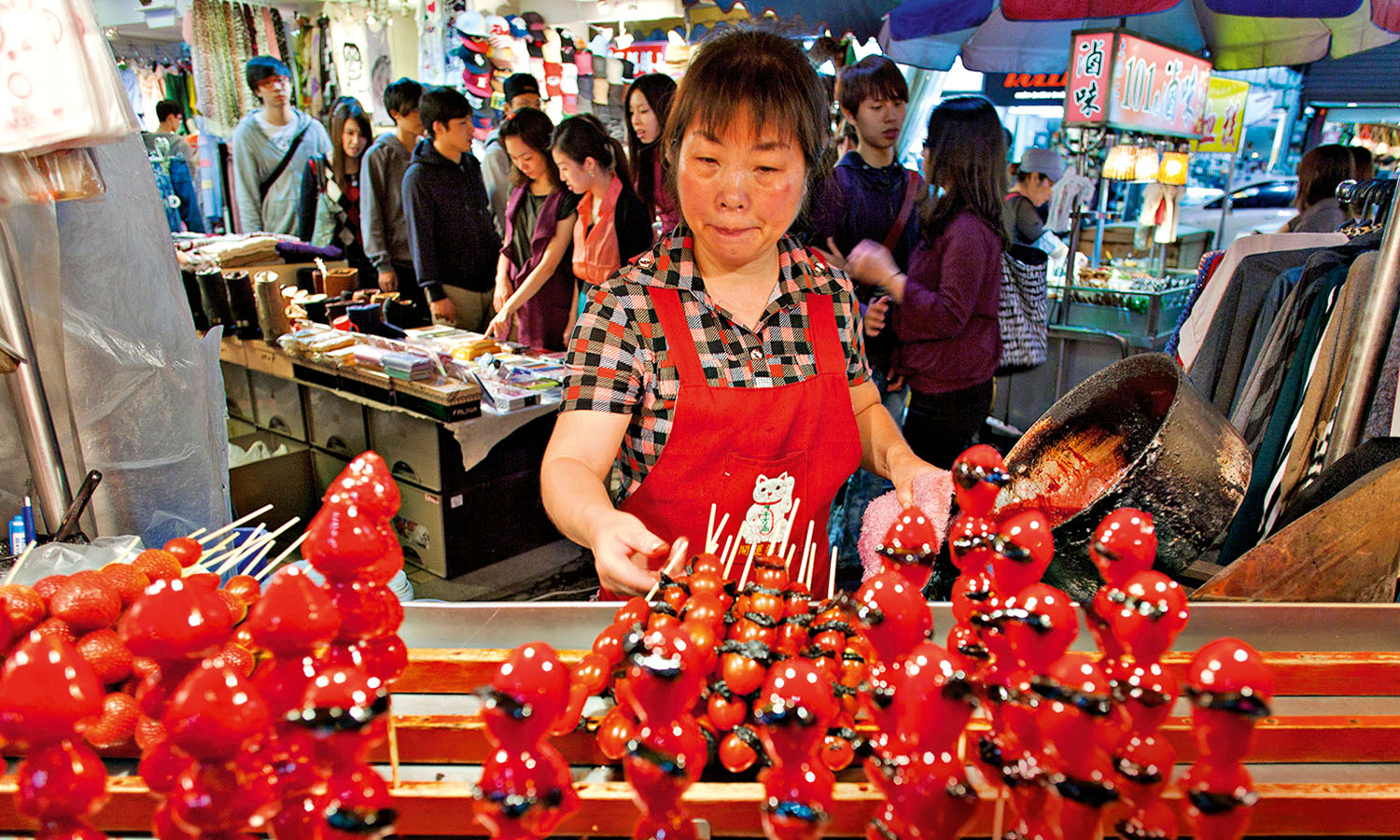
Taipei’s famed night markets are all over town. The closest to my hotel, the funky Amba Taipei Songshan, is the Raohe Night Market, which sits down a narrow pedestrian street that leads towards the Keelung River. It’s one of the oldest night markets in the city, and packed to the brim with food stalls and trinkets. From here, it’s a train ride through the MRT to Jiantan Station to get to Shilin, north of the river. A maze of alleyways is filled with stalls selling dishes whose names I can’t pronounce, though there are also noodle dishes and tempura I do recognise. Resorting to pointing and sampling bits and pieces here will ensure full bellies.

Shilin Night Market
101 Jihe Road, Shilin
shilin-night-market.com

11:30pm
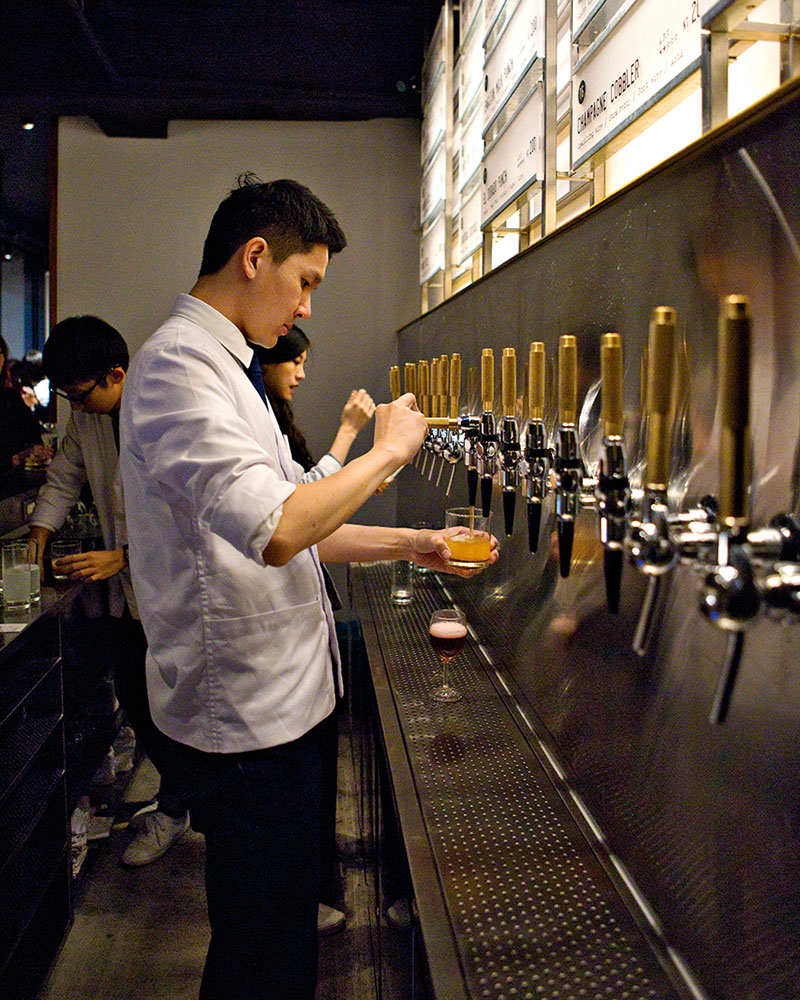
Better-dressed clientele are around the corner at Draft Land. Opened in January 2018, it draws a crowd of young professionals ordering from a selection of 18 pre-mixed cocktails on tap. The bar’s owned by an award-winning mixologist, so it’s probably not a surprise that the mixes are altered every second night. There are no frilly umbrellas or fruit garnishings, just classic ingredients fused with Taiwanese influences. An example? Pandan with dark rum, cinnamon and apple.

Draft Land
2-1 Lane 248, Section 4,
Zhongxiao East Road, Da’an

1am
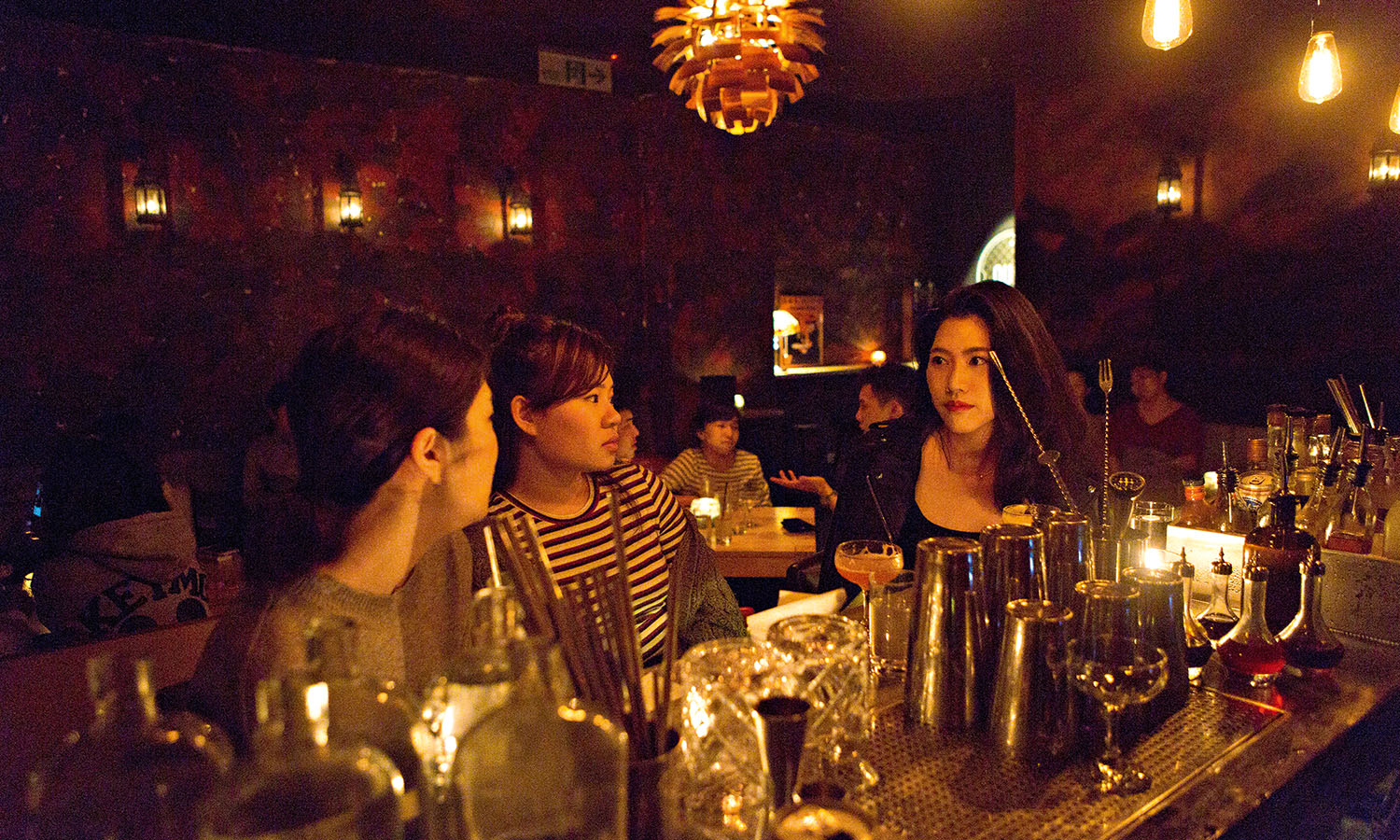
A recent innovation in Taipei is the rise of speakeasies – bars modelled on the illicit establishments that sold alcohol during the prohibition era in the US. Ounce is hidden behind a cafe and accessible through a door with multiple handles and buttons. Only one works. I make my intentions known to the Eastern European girl behind the coffee machine and she okays it with the barman, allowing me to enter. Inside is an intimate, barely lit room where female patrons outnumber men two to one. Take a seat at the bar, where the drinks are heavy on the liquor and the price tags match (around AU$20 each compared to AU$9 at Draft Land).

Ounce
309 Section 4, Xinyi Road, Da’an

2am
For late night drinks, the American barman from Ounce recommends Dick’s Place in Da’an or Tenderland in Zhongshan. Both stay open all night. With jet lag catching up, however, my hotel bed sounds more appealing.

Dancing in Hidden Valleys

My introduction to the Kalash is an odd one. In front of me is a pick-up truck packed with special forces commandos, and my own personal armed officer is slouched beside me clutching an AK-47 on his lap. His eyes are hidden behind gold-rimmed sunglasses and his young face is barely covered with a shabby beard.

We screech to a halt in the middle of the village. It is completely deserted, but the sound of frantic drumming echoes down from a nearby hillside. I set off towards the beat, my policeman following behind as I start to climb a trail of stone-lined stairs that lead around the hill.

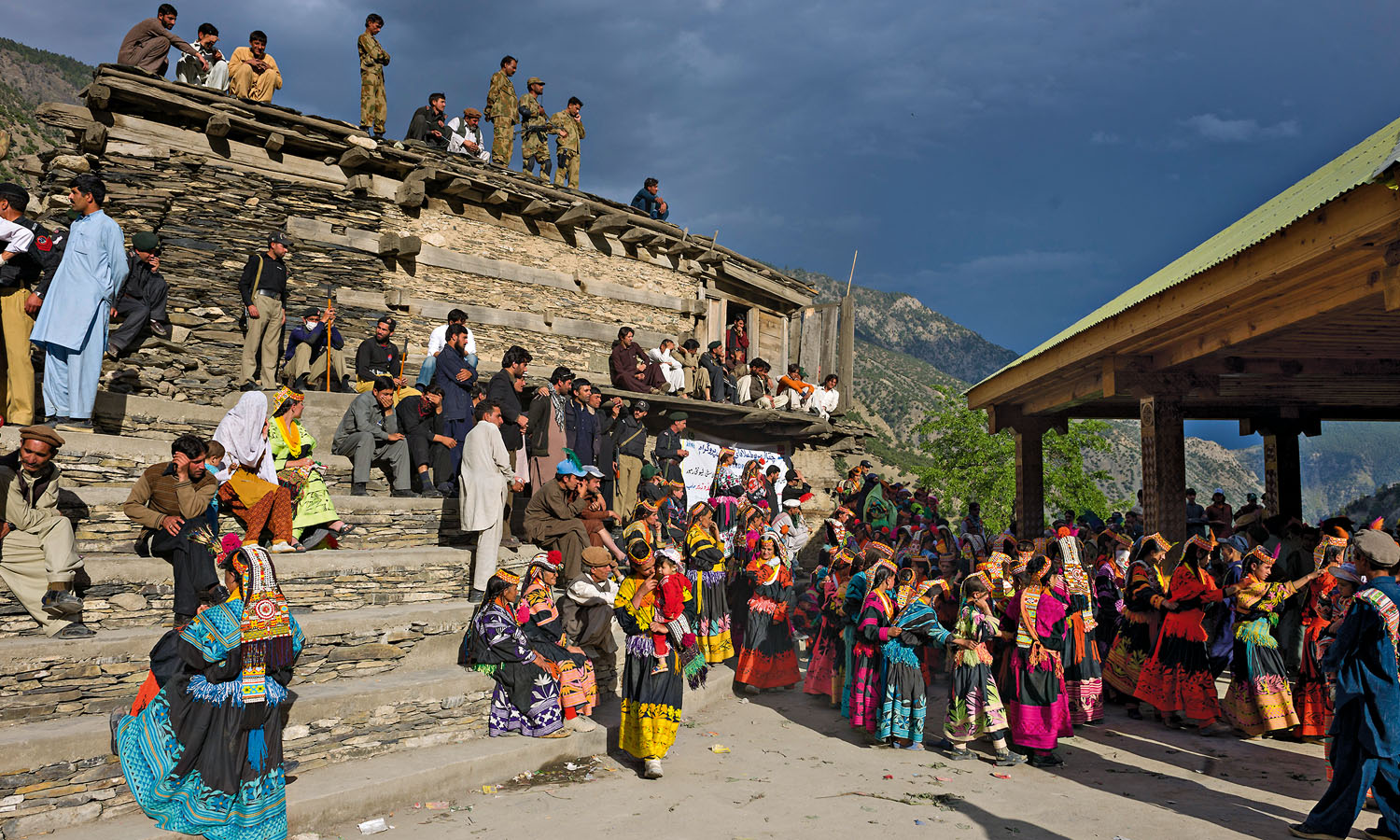
With each step up the winding path, the drumming gets louder. The abandoned surrounds quickly turn when I reach the top as a mass of people dance around the flat top of the hillside under an open shelter topped with a corrugated roof. This is the charso, a ceremonial dancing ground for the valley, and the scene is one of colourful chaos. I pause, a little unsure of my welcome. But the worry quickly dissipates as a large man bounds towards me with open arms. “Welcome,” he calls out, embracing me before hanging a woven 
red and white strip around my neck.

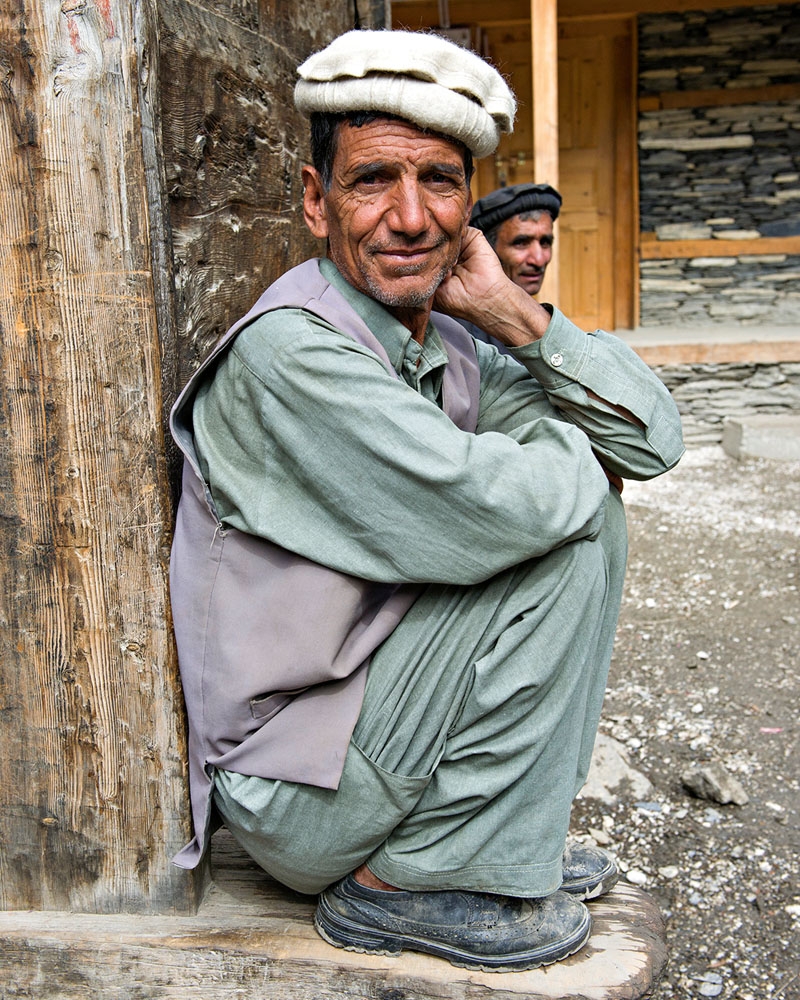
Wearing the ubiquitous Pakistani salwar kameez (baggy trousers and matching long shirt), he is dressed like most of the men in this part of Pakistan, but his features set him apart. He has relatively pale skin, almost blond hair and piercing light green eyes.

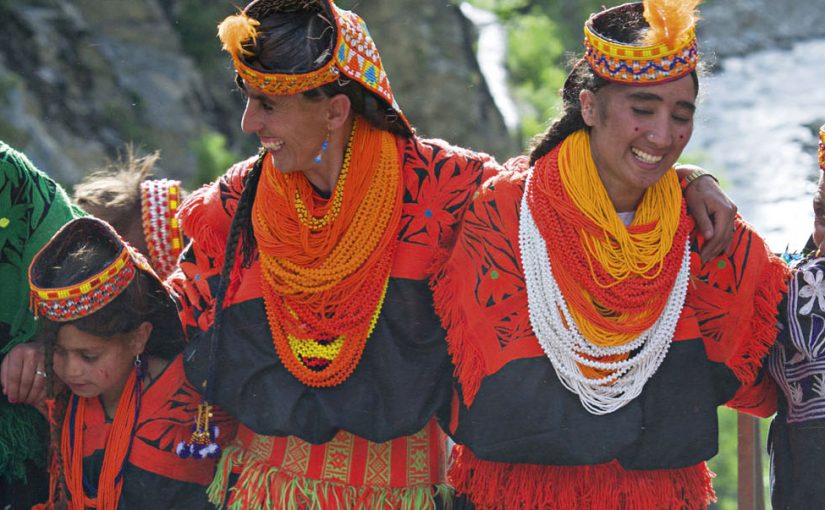
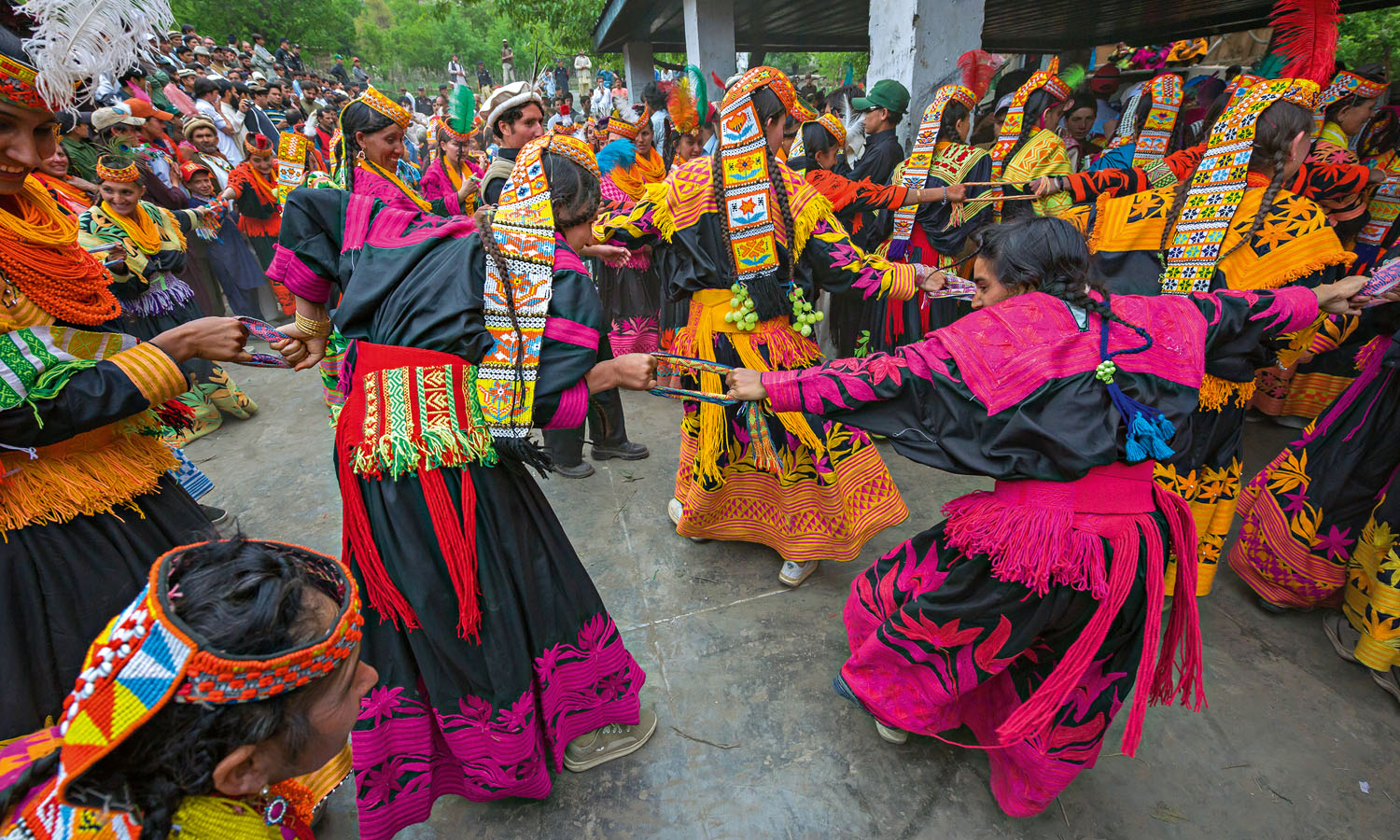
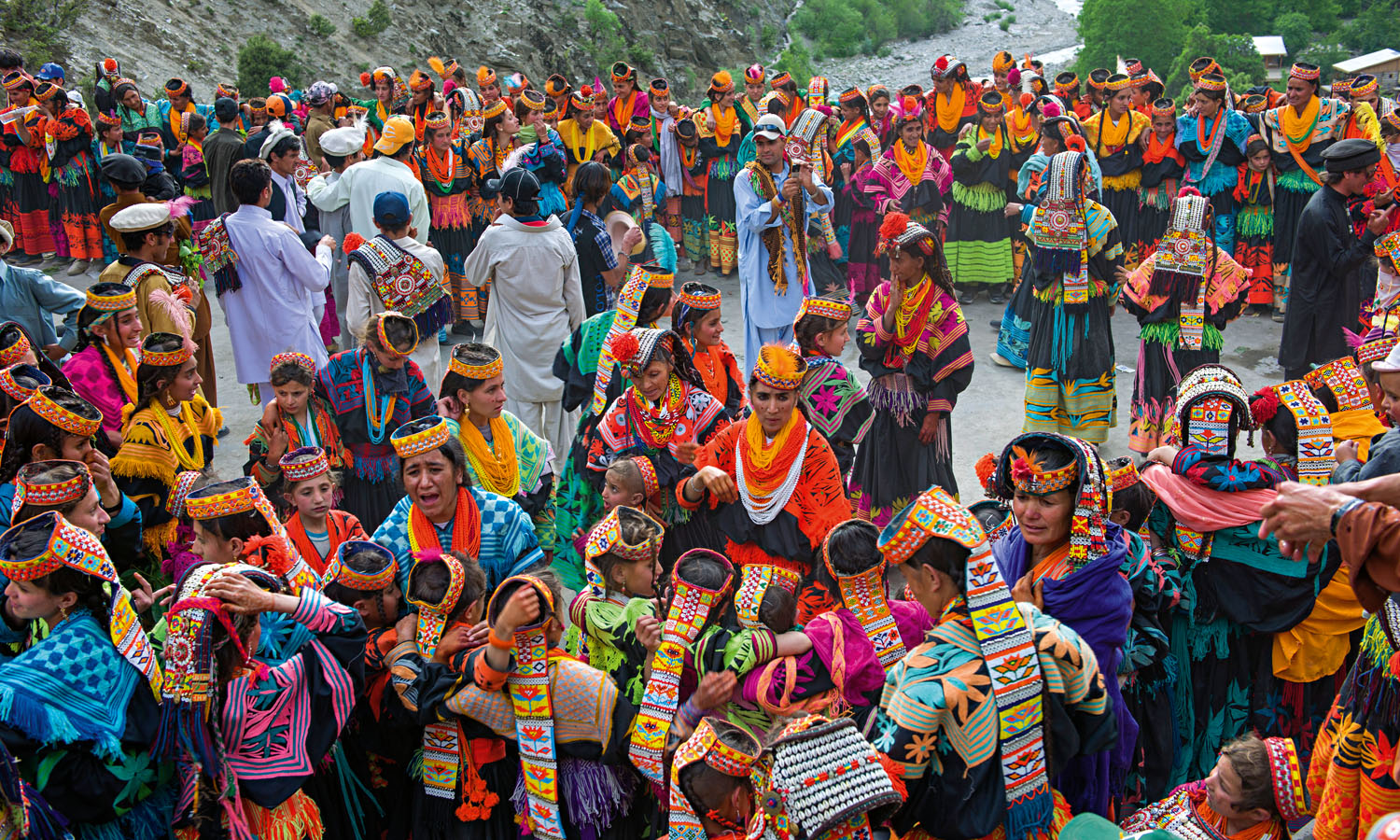
Dancing around him in short animated lines, the women are dressed in a way that is incongruous for Pakistan. Faces uncovered, they are wearing black robes decorated with coloured embroidery and floral patterns in blue, green, orange and pink. Around their necks are vast rings of brightly coloured beads, and each wears an ornately beaded headdress, consisting of a long, intricately embroidered flap and a beaded headband decorated with hundreds of tiny cowry shells.

The women circle the charso in lines, laughing raucously, as longer rows of men surge backwards and forwards with wild abandon. Most of the older men and women stand around the village shaman as he sings about stories from his people’s past, present and future. They adopt an entranced pose, with one finger touching their chins to signify their attention. Other elders partake in a solo dance, their eyes closed and their hands raised to the air, moving as if in rapture.

These are the remote Kalash people of northwest Pakistan and, after a somewhat fraught journey, I have made it here in time to witness their exuberant Chilam Joshi spring festival.

I have dreamed of visiting the Kalash Valleys ever since I saw a grainy reportage shot by Steve McCurry in a 1981 issue of National Geographic. In the story the writer, Debra Denker, spoke of meeting village leader Saifullah Jan and his then rosy-cheeked two-year-old son, Yasir. On this journey, I am introduced to Yasir, now a grown man.

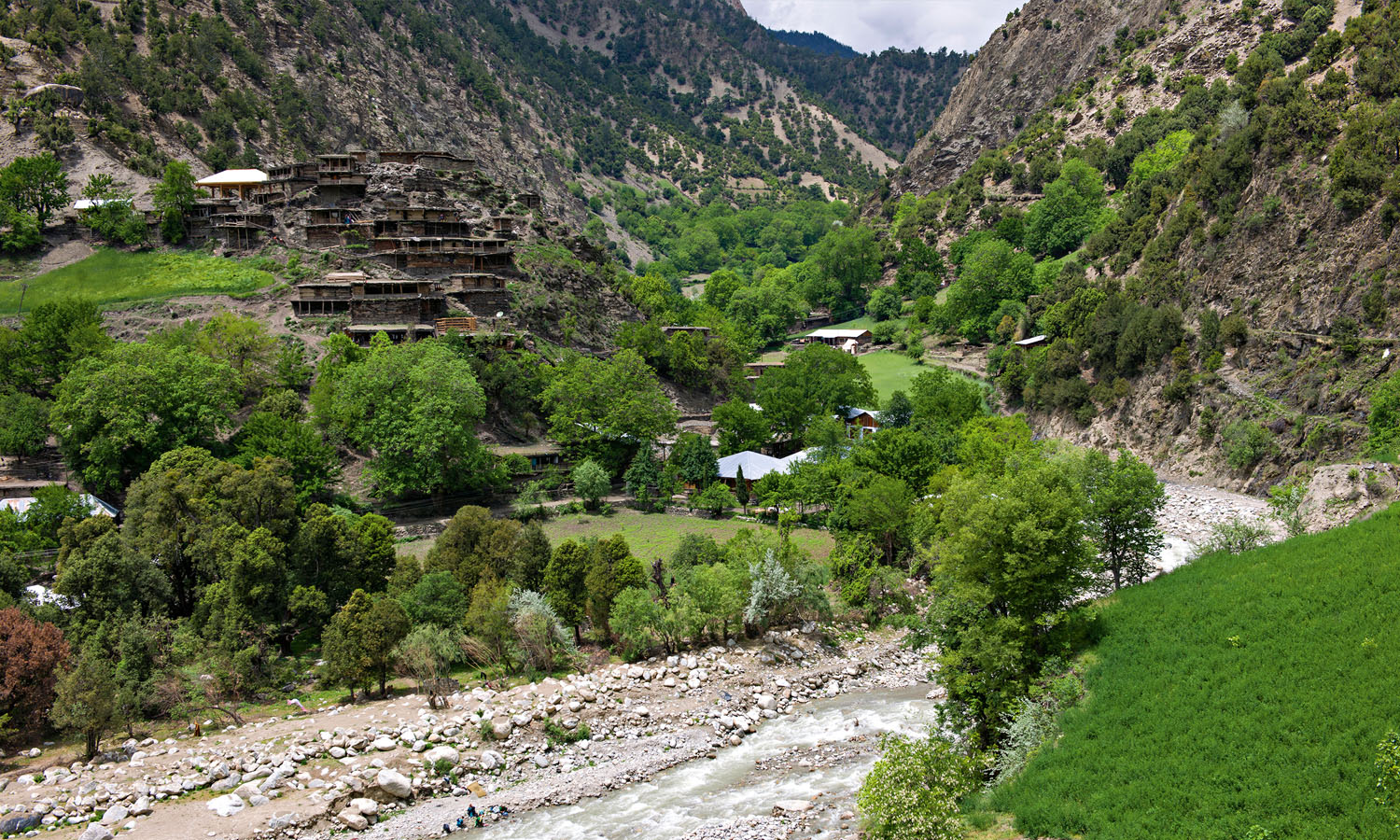
Meeting Yasir is no coincidence. The Kalash people are a small indigenous group of about 3000 people, living in three remote valleys near Chitral. The valleys – Rumbur, Bumburet and Birir – are collectively known as Kalasha Desh. The Joshi festival is being held at the charso for the entire Rumbur Valley in Grum, the village where Yasir lives. I was always likely to bump into him at some point – not least because I will be staying at the small guesthouse run by his father.

Almost every aspect of Kalash life is at odds with the religion of the surrounding people. In a strictly Muslim region of a resolutely Muslim country, the Kalash people are polytheistic animists, with a series of deities such as the pastoral Sorizan and the ancestor Balumain. Widely considered heretics by the surrounding population, they celebrate three main festivals a year: the Joshi spring festival, the Uchau autumn festival and the Caumus winter solstice festival.

It is not just their religious beliefs that cause problems for the Kalash. In the tribal interpretation of Sharia law, women can be sentenced to death for dancing with men, yet the Kalash women are not only wearing bright clothing and unveiled faces, they are dancing wildly with unrelated males from all of the valleys. Although there are still some inequalities for women in Kalash society, they are considerably more emancipated and sexually liberated than the Muslim women in the surrounding areas.

The Kalash people also drink and are renowned for their mulberry wine, which, in reality, is more like a strong spirit. No doubt mindful of the number of Pakistani soldiers nearby, festival-goers do a fine job of keeping the elixir concealed – I don’t see any public drinking at the charso, but there are a number of flushed faces and I can smell drink on many people’s breath. Away from the charso, I am offered many shots of the potent wine.

At one point, there are loud shrieks of excitement and many of the adolescent Kalash men and women run out of the charso and down the hillside, seemingly in hot pursuit of someone or something. No one will explain the disturbance, and I can only assume that someone has been caught in the act of ‘eloping’, much to the great entertainment and intrigue of their neighbours.

The festival ends with all of the women dancing around in a massive circle, while the menfolk burn offerings of branches and even food in 
a small flat area next to a giant boulder, part way up an adjacent hill. This seems to be the culmination of the ceremony, and people start 
to drift away as the flames burn.

The Kalash are mindful about their position in Pakistan society and are always worried about accusations of encouraging apostasy – or the conversion of Muslims from their religion. Along with blasphemy, this is considered one of the greatest crimes under Islam.

At one point in the festival all of the non-Kalash are banished to the stepped area overlooking the charso. I follow them, but I am beckoned back in an animated fashion. It seems as a non-Kalash, but also a non-Muslim, I am welcome to join in this part of the ceremony. Qazi Pali Azam, the Keeper of the Secret Song, leads a ritual where sprigs of walnut branches are waved then ceremonially cast over the edge of the charso.

The next morning, I meet Yasir for breakfast in a neighbouring house. Kalash houses are single storey, without windows, and made from slabs of stone. They tend to be built into hillsides with the roof of one house forming the veranda of the next. Some are steeply stacked four or five levels high. Inside this windowless existence is, naturally, dark, although some houses have electricity from small water turbines.

There is a large square earth area with a fire in the middle of the houses, and sleeping platforms around the outside. It is a characteristic of Kalash homes that all of the pots and crockery are displayed on shelves behind the fireplace as an indication of wealth and status.

Over hot unleavened flat bread and sweet chai, Yasir tells me the legends of their ancestors. Traditionally, the Kalash believe they are descended from the soldiers of Alexander the Great who passed this way in the fourth century BCE. A number of wounded soldiers were left behind, and they moved into the Kalash Valleys and settled down with local women. This is how they explain their physical difference from the surrounding people, although these origins don’t stand up to current DNA testing.

After breakfast, I make my way to the second Joshi festival. As the richest and most easy to reach of the Kalash Valleys, the Joshi in Bumburet attracts a number of VIPs who are seated on a dais overlooking the event. The security detail is much larger here. We are only a short way from the Afghan border; the risk from the Taliban is high and the tension of the soldiers is palpable. I later learn there has been a specific threat and more than a thousand special forces soldiers have been moved into the valleys and further towards the border in order to protect the festival – or, at least, protect the VIPs.

The Bumburet Joshi is more crowded and frenetic than Rumbur’s. A lot of male domestic tourists are standing around the edge watching – apparently drawn by the mystique of Kalash women’s sexual liberation – and there is also a media presence.

The dancing is more frantic, too. Longer lines of women are running through the charso, linked together by gripping knotted versions of the same woven strips that I was given in welcome the previous day. They crash through the crowds, laughing hysterically and facing away from the watching males. It is as if they feel the need to exaggerate their Kalashness under the gaze of so many outsiders.

It might be the timing of my arrival at the festival, or the fact that there were so many local dignitaries and Muslim men watching, but I do not see any rituals other than dancing taking place at the Bumburet charso – whether it be the casting of the walnut leaves, the burning of offerings by the men, or even the storytelling in the middle of the charso.

Back at the guesthouse in Rumbur Valley that evening, I am given bad news. Now that the festival is over, our security detail is shipping out. My chance of staying an extra night with the Kalash and a leisurely day exploring the area is no longer possible. The guards are anxious to be off before dark and I have to go with them. I say a hurried goodbye to Yasir, and reluctantly get into one of the jeeps. My time in this unique part of the world is over, and I am conscious that the Kalash people will once again be without any security from nearby Afghanistan until the next load of tourists and VIPs stray into their valleys.

The Great Canyon Escape

A yellow and green snake slithers below my foot. It’s pretty and colourful, but it’s a snake nonetheless. I rewind my steps in slow motion then rapidly retreat.

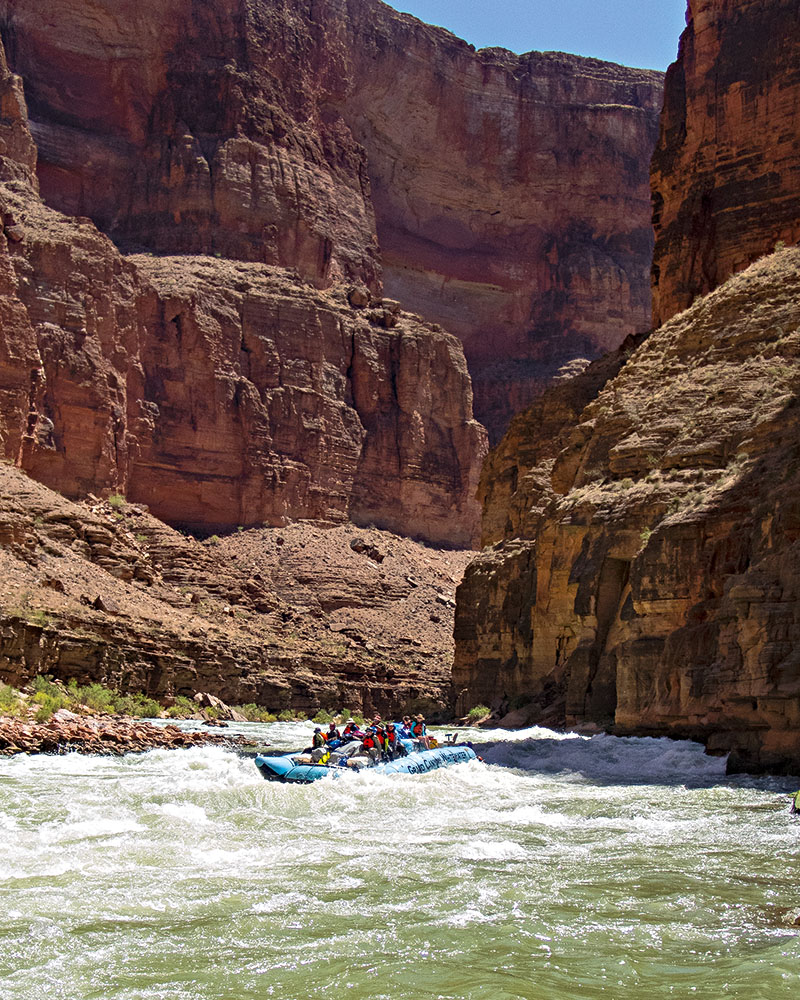
This is the first hike of many during a week rafting and camping down 300 kilometres of the Colorado River from Marble Canyon to Whitmore Wash, and while we were warned about the snakes and the scorpions of the Grand Canyon, the thrill of coming foot to face with one still has my heart racing.

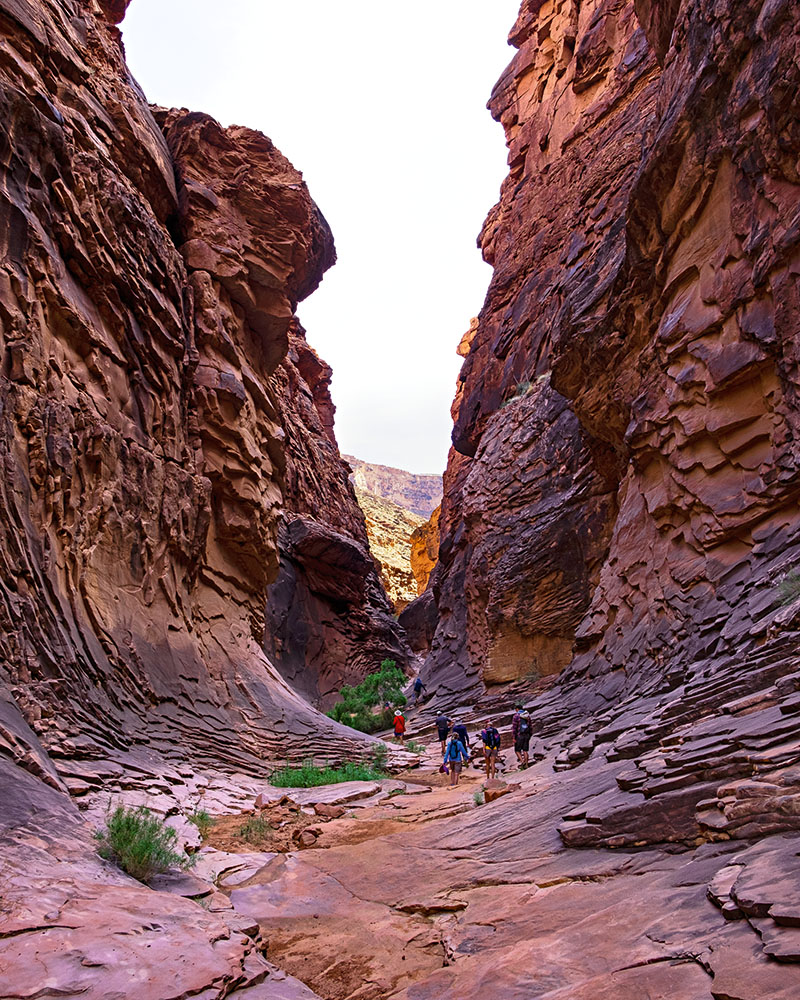
Calling this a hike is somewhat misleading. Climbing is a more fitting description. We are in the North Canyon clambering over rock debris. It’s a bent-over, hands-on scramble, and natural footholds and nooks are the only help we have to bolster up our bodies. Each exaggerated step strains my groin muscles and tests my flexibility. We are tiny flecks of colour dwarfed by the terracotta-red canyon walls and surrounded by tessellated rock that looks like a stonemason has been busy slicing out blocks to create a giant game of Jenga. Pockets of empty space and teetering rocks are left behind.

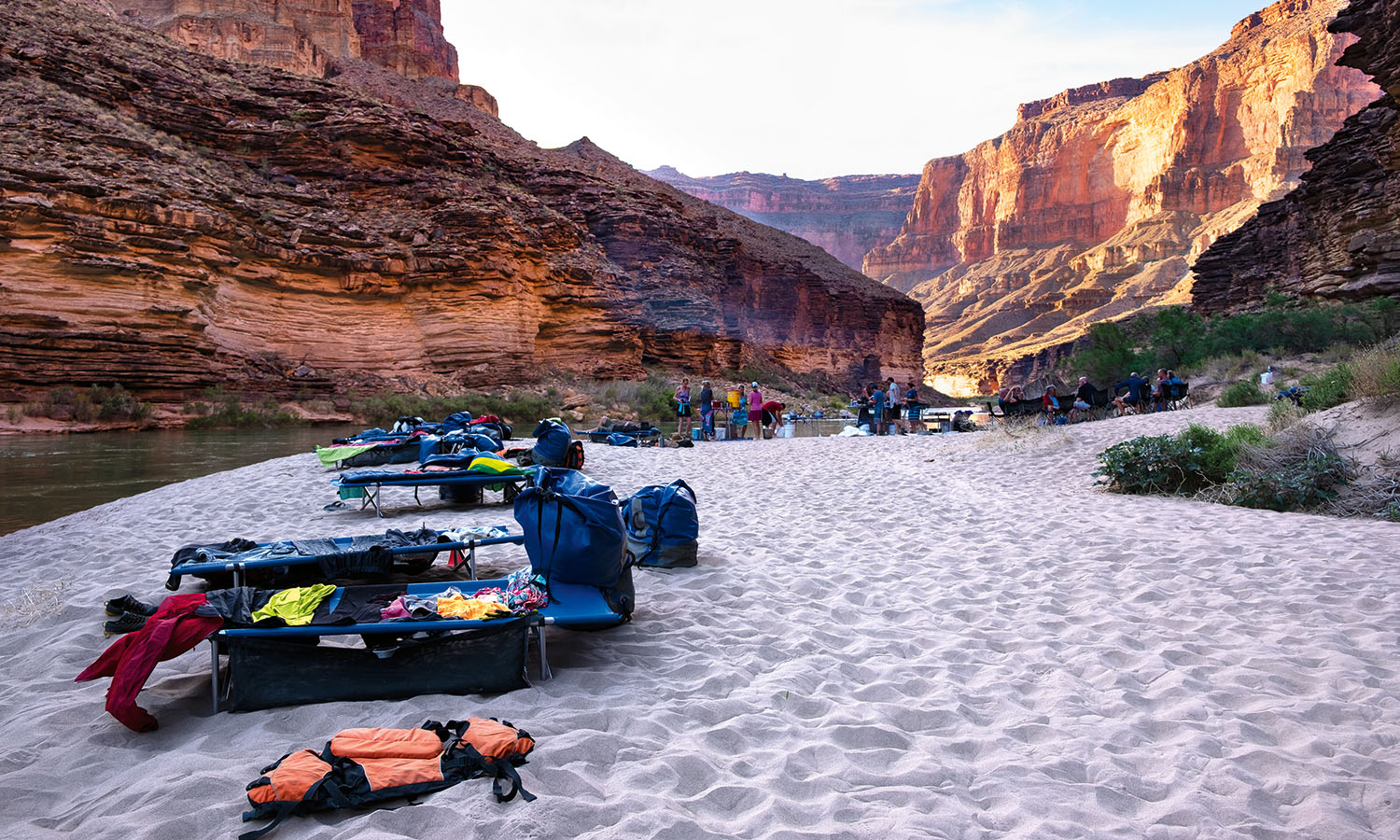
At the river, we make camp on a small strip of beach. It’s the first night and somewhat of a culture shock. This trip requires all hands on deck – a raft full of bags, cots, tables, chairs, kitchen, food and water awaits us, and a human production line forms to unload our precious gear. Jeff is our trip leader and swiftly runs through camp set-up, hygiene and etiquette. Washing is limited to wet wipes or a brave wash in the achingly cold river. All peeing must be straight into the river while a fashioned ‘regular’ toilet is set up each night for number-twos only. A tight wiggle in a sleeping bag is our only hope of getting dressed discreetly. We are going to get to know each other intimately, and fast.

A comical scene quickly unfolds as everyone deciphers the knack of erecting a stretcher bed for the first time. Sleeping exposed under the stars is an incredibly peaceful experience – the crammed celestial sky seems almost fictitious and the roar of the rapids drowns out any snoring neighbours.

Jeff gets the camp moving at sunrise with the waft of fresh coffee. We’ve been told to kit up in full wet-weather gear, morphing the group into Michelin men in oversized parachute-like outfits. The week will see us ride through a system of 80 complex rapids and fluctuating water levels. This is one of the few rivers in the world that uses a rating system ranging from one to the highest rating, a Grade 10.

I take lead position on the raft, prepared to cop the full force. I see the slick sinkhole of 23 Mile Rapid and brace myself as the nose of the raft slams down and an icy wall of water smashes overhead. The water outsmarts my gear and snakes a chilly path down my body. Even in the milder rapids, water rebounds off the sides and splashes unexpectedly like a slap across the face with a wet fish.

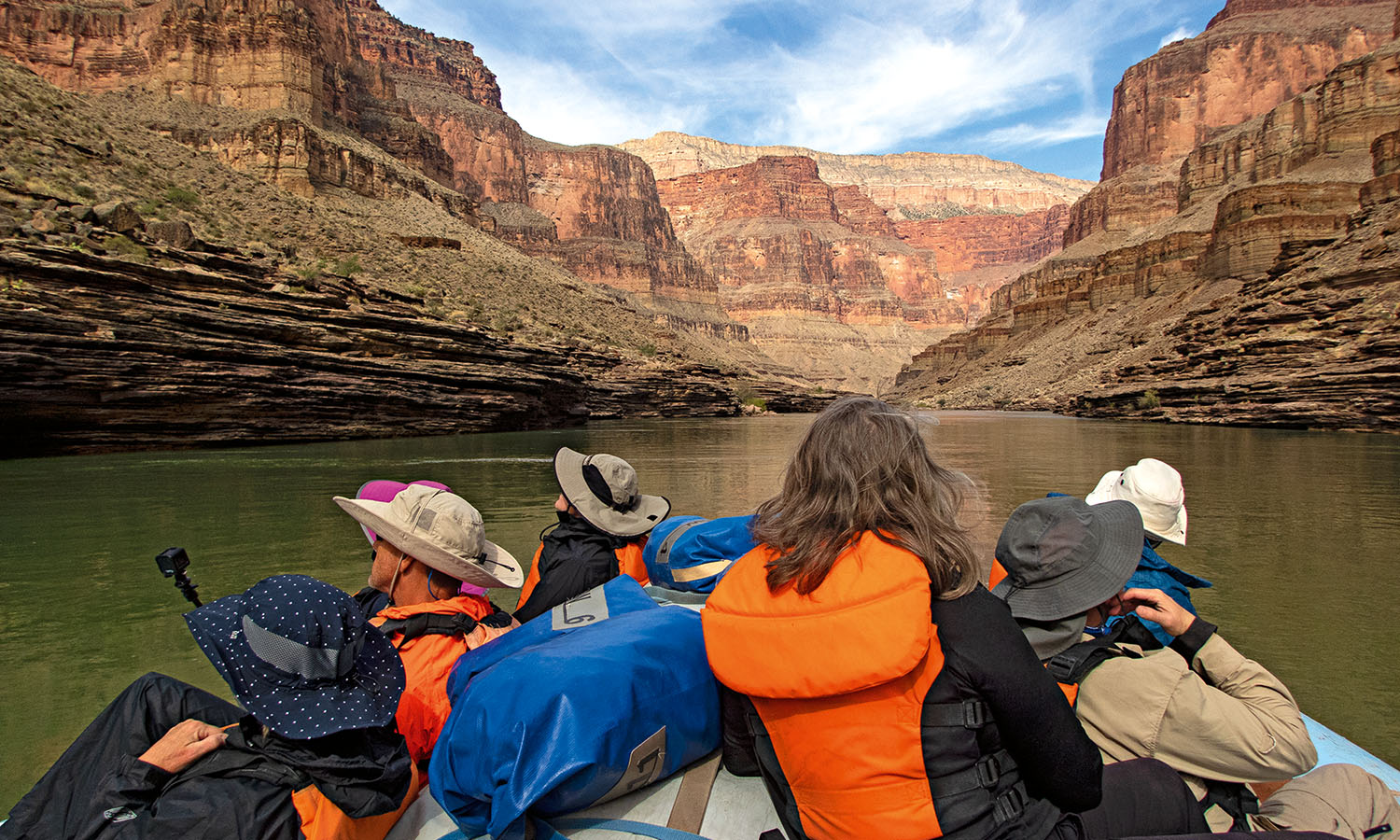
Travelling just 16 kilometres each hour, we have plenty of time between rapids to lie back and absorb the skyscraper walls as the river winds through a tiny fracture in a vast plateau. It’s a geologist’s heaven. The history behind the formation is baffling and the horizontal layers – each distinct in colour and texture – are unique timestamps. The further we travel, the higher the cliffs rise as the older bedrock base pushes the young layers to the top. The eroded Redwall Limestone creates a fun game of I Spy – we spot the pillared entry of Petra, a game piece from Battleship, the pipes of a church organ and a statue from Angkor Wat ruins. In downtime, we’re entertained with the wonderful concept called the beer bag – a netted bag that drags along in the icy water behind us as a natural esky.

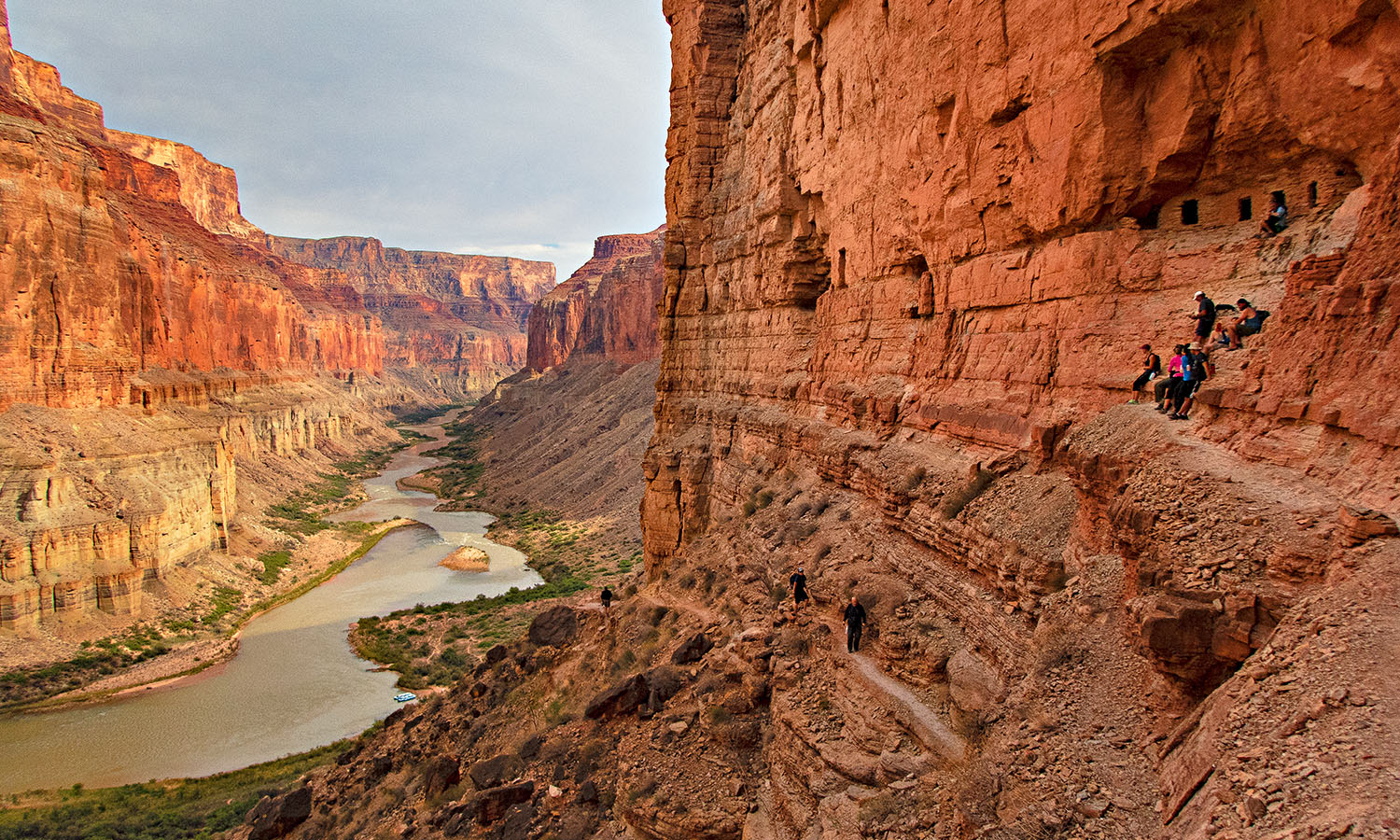
Approaching camp at Main Nankoweap, we see a row of windows cut into the cliff high above us. These granaries of the Ancestral Puebloans date back to 1100 CE and represent quite the impressive feat to protect their stores. A tiny path wiggles up and we naively comment what an arduous hike that would have once been. We don’t have to imagine for long though, as it’s our afternoon activity.

It’s a slow climb up 200 metres with little flat respite to ease the burn. Each taxing step varies in height from a tiny prance to a giant lunge. Several admit defeat along the way, but I pace myself with regular breaks to safely absorb the view. The goat track narrows until we must navigate single file for the last steep pitch along a rubbled switchback ledge. The pain is forgotten immediately upon reaching the granaries as the elevation unveils the immense surroundings juxtaposed against the tiny blue dots of our rafts far below. The cloudy olive river zig-zags through the distinct rift in the deep rock bed. I feel humbly irrelevant.

By day three I’ve lost track of time and regular life has faded away. A new seamless rhythm is in play and a team camaraderie has formed. Being stripped of luxuries and vanity is now liberating. Today’s highlight is Little Colorado River. At the mouth of the joining rivers, contrasting water colours swirl together as if a milk tanker has spilled its load. Calcium carbonate creates creamy glacial blue water and a snow-like frosting along the bank. Compared to the numbing Colorado River temperatures, this offshoot offers a balmy rinse off. Fashioning our life jackets into unflattering jumbo nappies, we slip into the cascading water. Bouncing off the rocks in the fast flow, I’m grateful for my padded ride. Throw in inflatable water toys and adults regress to playful kids who refuse to get out.

From this point we leave Marble Canyon and officially enter the Grand Canyon. The rock surrounding us dates back over a mind-boggling 1.6 billion years. We can now observe the Great Unconformity, a missing supergroup of rock layers representing a 1.2 million year gap in history. You can clearly see the top layer of young Tapeats sandstone sandwiched with the ancient Vishnu Schist, yet no middle layers of time. Where they have gone remains a great natural mystery.

My favourite part of the day has become lying in bed as camp is stirring, watching the rising sun play across the rock walls. The spotlight moves from just the peaks, then slowly lights each canyon layer with a warm glow.

Water has been released overnight from Glen Canyon Dam. This surge is significant because today is a conveyor belt of big rapids and this extra water just made them a whole lot crazier. Hance Rapid is just past camp and our first grade 10. The roar is heard well before we see the hint of white chop ahead. It’s a tricky weave through the menacing rocks just below the surface. No one is staying dry this morning.

Each rapid has a unique story and naming convention. Some get their label from the adventurer who conquered them (or didn’t), while others from their characteristics. We pass through Sockdolager, a boxing term for a knockout punch; Grapevine, described as more rocks than grapes on a vine; and Horn Creek, known for the steepest drop in the shortest distance. Hermit Rapid is the monster of the day. A nine-metre vertical drop bends our raft like a banana, and the impact lifts my body and deposits me into the lap of my neighbour behind. The roller-coaster continues through a succession of massive dips, a torrent slamming us each time.

I swallow my fair share of water as I’m laughing too hard to shut my mouth. Cheering as the raft is finally spat out, I wish we could do it all again.

Even after 370 river trips under his belt, Jeff still looks tense as we approach certain rapids. No run is ever the same. The rapids are forever changing and unforgiving of a minor mistake. It’s unfathomable to think of the first explorers in vulnerable wooden crafts navigating this river blindly. With these currents there is no reversing. They were 100 per cent committed with no idea of what they faced around each corner. Many explorers abandoned their boats and hiked out instead, but this in itself is dangerous. The river is not to be underestimated, even today.

Big Dune campsite is a long strip of beach bordering a plunging cliff line. We’re now at the 119 Mile point. Jeff creates a makeshift fire out of paper towels and olive oil to congregate around each night. With the wine flowing, a hearty rendition of ‘Bohemian Rhapsody’ incites a dance party. The sheer rock face becomes the stage backdrop for an impromptu shadow play. Interpretative dance by torchlight, magnified and warped onto the rock, creates surreal entertainment for those watching from bed.

By day five the tree-topped North and South Rims are in clear view, towering nearly 1500 metres above us. The oldest canyon rock, layers of dusky pink Zoroaster granite and polished black Vishnu Schist, weaves down vertically like burrowing tree roots. Millennia of rockfalls have scattered immense boulders, now resting on impossible angles and tipping points. The slightest tremor would completely transform the make-up of the Grand Canyon in a split second.

Today’s hike is to Upper Deer Creek ‘patio’ and not for those with a fear of heights. The escarpment looms straight up from the water and it’s a challenging climb from the get-go. The 44ºC heat radiates off the rocks, singeing hands on contact. The final leg to the waterfall traverses a sketchy ledge. Facing the wall, I gingerly shuffle my hands and feet along like a mime artist’s impression of being trapped in a box. The ledge is boot-width in some places and the drop has no detectable bottom. The pay-off, however, is a refreshing soak as I sit, clothes and all, in the waterfall spa bath.

The extreme temperatures and dry air are taking a toll on our bodies. No amount of water or moisturiser seems to placate my dehydrated system. The fingers of a fellow camper have split like burst sausages.

The plan for our last full day is a long visit to Havasu Falls, but we are side-tracked by an impromptu pit stop at Matkatamiba Canyon. This narrow slot canyon cuts a tight v-shape channel through ribboned rock. The walls resemble the compacted layers of a Flake chocolate and a small stream flows through but is slick with algae slime. The only way up is to pressure climb: a technique of maintaining constant pressure with your body to climb without touching the bottom. Jeff wedges himself between the walls and pulls each of us out of the waist-deep water to start. Digging my backbone into one side, I push hard against the other with my feet. Each move is carefully considered as I inch my way up. It’s the point of no return. A slip is guaranteed to significantly injure not only me, but everyone else below me. Somebody on a previous trip had to be helicoptered off the river after a fall here. At one point I freeze. I’m horizontal across the canyon, painfully pushing my elbows hard into the rock to hold me, but I’m not secure. My adrenaline is racing as I am completely out of my comfort zone. Jeff clambers up and over like my Spiderman hero to provide a higher anchor point. It’s an intense physical and mental test, but the sense of achievement is exhilarating.

After our final camp pack-down, we are taking a seven-minute helicopter shortcut out of the canyon. Downriver at 187 Mile is the Whitmore helipad, in reality is little more than a knoll midway up the cliff. The precision of the helicopter cutting past the canyon walls to land is extraordinary. With the rotors spinning, the pilot hovers on the ground just long enough for us to swiftly buckle in. The scope of this Natural Wonder of the World can only be realised from the aerial view. Our group flies out dishevelled and weary, but bonded by a proud sense of having conquered something quite special. A mere 0.4 per cent of annual visitors experience the Grand Canyon as the adventure we’ve just had. The focus is now firmly on removing the permeating film of grit covering our bodies. I can’t wait for a long hot soak in a bath.

Europe’s Best By Train

Whether you’re simply travelling from the end of one country to its other, crossing the English Channel or searching for a longer adventure – one that will have you feeling as though you’ve stepped back to another era – the best way to get around Europe is by train.

Watch the countryside change outside your window, meet people from around the world and enjoy relaxed hospitality on the way to somewhere new and exciting. Plus, you surely have to be in favour of any method of long-distance transportation that allows you to avoid the clamour and stress of an airport. Here, we’ve found some classic European rail journeys that will take you to the continent’s finest destinations.

Top of the Hot Lists

There’s no doubt about it: Portugal is experiencing a moment. Everyone you talk to wants to go there, and that’s why you should book early if you’re keen to get on board The Presidential. They don’t call it that for nothing – kings, presidents, heads of state and popes have all travelled on this train, the jewel in the crown of the country’s railway, during the past century.

These days it offers a mouth-watering journey where guests can experience sumptuous meals prepared by incredible chefs from Portugal and further afield. The culinary talents in 2019’s departures between 20 September and 26 October include Henrique Sá Pessoa (two Michelin stars), Oscar Goncalves (one Michelin star), Leandro Carreira, Alexandre Silva (2012 winner of Top Chef), Óscar Gonçalves, Nuno Mendes and Bruno Rocha, as well as rising stars André Lança Cordeiro and Pedro Pana Bastos.

Of course, you’ll need to make a decision on which option you’re going to take. The first is a nine-hour trip. Entitled the Presidential Experience, it includes a return journey between Sao Bento and Vesuvio, a four-course gourmet lunch with matched wines and an excursion to taste port at Quinto do Vesuvio.

There’s also a two-day Escapade Pack from Sao Bento to Duoro – think the Presidential Experience with added grape stomping in one of the world’s last stone pits and an overnight stay at Six Senses Duoro Valley, a nineteenth-century manor house overlooking vineyards that’s been transformed into a luxury resort.

For maximum extravagance, book the three-day Premium Pack. You’ll begin in Porto, where you’ll indulge in meals at some of the city’s best restaurants, take private tours of the country’s premier modern art museum, Fundacio Serralves, and grand concert hall Casa de Musica. Then it’s on to the train where you’ll embark on a wonderful two-day exploration of Vesuvio and the Duoro Valley.

Don’t Miss Swiss

If you look up the word efficiency in the dictionary, there’s a photograph of a Swiss train right next to it. They run on time, they go everywhere and with the ultra-convenient Swiss Travel Pass you can jump on any public train, bus or ferry and explore to your heart’s content.

Of course, the million-euro question is which train to choose. Check out the suggested routes for the Ultimate Grand Train Tour of Switzerland to help make your decision a little easier. The experts do recommend allocating between four and eight days to your train tour to take in a huge variety of the landscapes and experiences on offer throughout this fascinating country. There are eight different routes in all, covering 1,200 kilometres and crossing all four of Switzerland’s language regions. Each one offers a journey of discovery, rolling through jaw-dropping scenery and also delivering travellers to lesser known towns and villages. Get a better understanding of the country by matching your timetabling to local festivities or events.

Still stuck? Here are some of our favourites. At the top of the hit list is the Bernina Express, which travels between St Moritz and Lugano on an elevated journey across the Swiss Alps. It negotiates 55 tunnels and 196 bridges along the way, follows the edge of Lake Como and stops at Alp Grüm, a restaurant accessible only by train.

Lovers of the high life might also like to board the Glacier Express, which passes through charming towns, across steep glaciers, past waterfalls and along Switzerland’s very own Grand Canyon, the Rhine Gorge. We know the word spectacular gets bandied about an awful lot, but it really is the only way to describe this scenic route from St Moritz to Zermatt.

Then there’s the GoldenPass MOB Panoramic linking Lucerne and Interlaken, gateway to the country’s adventure capital.

There are certainly far more places to see and trains to catch, and you can get one of the local experts at Great Train Journeys to organise an entire itinerary, including accommodation, for you.

Rolling Fjords

It’s one of the largest of its kind in the world and Hardangerfjord, which stretches from the Atlantic Ocean to Norway’s mountainous interior, is a sight a visitor will never forget. In parts, it is 900 metres deep and is blessed with natural wonders like thundering waterfalls and spectacular peaks.

If you want to set your full attention to its many wonders, book the Hardangerfjord in a Nutshell tour. Operating from May to September, this round trip can be done in one day, but why rush? It’s much better to slow right down, stretch the journey out to three days, and enjoy it all.

Along the way you’ll join a boat cruise on the fjord and a coach tour through countryside that explores delightful villages, like Ulvik, typical of Western Norway. You’ll also go on a sightseeing side trip that takes in the Vøringsfossen waterfall and the Norwegian Nature Center.

But there are plenty of other adventures that will reveal the region’s unique offerings. Take a guided snowshoe hike to Trolltunga, which juts out high over Ringedalsvatnet lake. Fjord safaris take visitors out on the water in rigid inflatable boats, where they can see seals and seabirds, as well as marvel at the sheer walls of rock that erupt from the waterline. Or perhaps you’d prefer to power a similar journey yourself. At Ulvik, join a guided kayak tour where, once you’ve paddled to an isolated island in the fjord, you’ll be taught basic survival skills, like how to start a fire and identify edible plants.

There are many other options for this train trip, too, including starting your return journey in Oslo and doing a one-way trip between Bergen and Voss.

For many other European journeys, head to Great Train Journeys.

This story is sponsored by Great Train Journeys, a Rail Europe portfolio.

On the Trail of the Divine Madman of Bhutan

Lama Drukpa Kunley is a spiritual figure in Tibetan and Bhutanese Buddhism – an awakened Buddha who achieved enlightenment but chose to manifest on earth as a mischievous drifter. He aimed to teach the way of Buddhism through thoroughly quirky methods, ridiculing the conservative religious establishment and promoting high living, mischief and a wild sex life as a means of achieving the much-coveted status of enlightenment. To Drukpa Kunley, also known as the Divine Madman, nothing was sacred. He roamed the Himalayas telling jokes, reciting naughty poetry, performing miracles, drinking chung (a Tibetan beer) and seducing women, including, bizarrely enough, his own mother.

On my own journey across Tibet and into Bhutan, I regularly encounter the legend of Drukpa Kunley. I didn’t, however, encounter him in person. He is said to have returned to his birthplace of Tibet in the sixteenth century and either lived until to the ripe old age of 150 or jumped into the Maitreya Buddha’s mouth where he remains today, waiting to be reborn.

Not encountering him in person may not be such a bad thing. Legend suggests encounters with Drukpa Kunley were anything but conventional. One such story has some monks walking towards a village and passing a madman on a hill above them. As they looked up, the madman got himself out, took aim and let loose a urine stream on the shaven head of one monk. The monk complained to the local villagers –“A madman has just peed on my head!” – angrily demanding an explanation. When they took a closer look at the offended head, the villagers were dumbfounded. The words Om Mani Padme Hum (the most widely used Buddhist mantra) were written in gold script across its crown. The monks had encountered no run-of-the-mill madman, but the Divine Madman, the elusive and unconventional Buddhist saint once known to roam the Himalayas. Rather than being insulted, the monk had in fact been blessed!

Drukpa Kunley believed religious institutions were self-serving theocratic havens for those who were too weak to face their own desires and chose to abstain from them. Despite being labelled a lunatic as a result, his popularity remains unchallenged today. This unlikely saint is revered throughout the Himalayas largely because of his ability to relate to the common people. While his playful antics and erratic behaviour continually surprised, he communicated in a way the people understood, leading them along a path to spiritual growth that did not involve harsh abstinence from the delights of life. After all, what would a life without wine be like?

In most illustrations and stories about Drukpa Kunley, he is dressed as a beggar, carries a bow and arrow, and has a dog by his side. While he is venerated in Tibet, it is in Bhutan that I discover his greatest influence. The Bhutanese believe he originally came across the mountains from Tibet, subduing demons along the way with the awesome power of his penis, which he referred to as his Flaming Thunderbolt of Wisdom! (Now that is a new one for you boys.)

Stories suggest Drukpa Kunley could have any woman he desired. He is said to have once followed a stray arrow from his bow into a house. Upon seeing the owner’s wife, Drukpa Kunley sang to her husband: “The arrow has certainly not gone astray, since it has led me to this voluptuous goddess, Tsewong, mine host, please leave us I must lay this lady this instant!”

The husband was initially enraged then realised who Drukpa Kunley was and acquiesced. Because of his penchant for virgins and a philandering reputation, Drukpa Kunley has become a symbol of fertility in Bhutan. Phallic depictions of his Flaming Thunderbolt of Wisdom adorn the walls of many traditional houses in Bhutan. Travellers to Bhutan usually giggle at the paintings. However, the local families who’ve created them do so in the hope their presence will encourage them to sow their own oats, so to speak. Despite the popularity of the Divine Madman’s liberated teachings, the Bhutanese themselves remain very inhibited and shy when it comes to sex. While Drukpa Kunley may be revered for his promiscuity and disdain for convention, few of his faithful would ever act as liberally themselves.

Not all Divine Madman legends are sexual – some are simple messages for daily life. A man in the village of Tobsang tells me one of my favourite tales. Drukpa Kunley was wandering through local fields and came across a woman harvesting wheat. “If you cook me a meal, I will do all your work,” he told her. She happily agreed and went off to kill a rooster. She prepared the entire bird for Drukpa Kunley’s meal, but put aside a leg for her husband. After he finished his meal Drukpa Kunley collected the bones and, with a wave of his hand and a puff of smoke, the rooster was revived. Unfortunately, it only had one leg and in Bhutanese lore, if you see a rooster with one leg it is a bad omen. When Drukpa Kunley left, he pointed to an insignificant rock and told the woman not to look under it for at least three days. But she was too curious and, as soon as he left, she looked and discovered a small pile of wheat, which had been a blessing. Because of her impatience however, the wheat blew away, her field was full once more and she had to do all the harvesting again. Unknowingly, she had failed the Divine Madman’s test.

The Bhutanese do not encounter their Divine Madman much today and, as I said, I am pretty sure I didn’t see him on my travels. However, there are those that believe he is waiting to be reborn and has the ability to shapeshift. Perhaps you can never be completely certain that he is not standing by your side. While no one peed on my head, many a Bhutanese has a mischievous sparkle in their eye and future travellers to their lush Himalayan kingdom may wish to keep watch for the return of the Divine Madman to stir the pot once again. If you are wandering in the mountains and someone pees on you from above, don’t fly into a rage – it may just be your lucky day.

Change of Scene

Until recently, if you’d asked me for a word association with Singapore, adjectives like squeaky clean and law-abiding would’ve rolled off my tongue. Street art and Singapore in the same sentence? “Not on your life,” I would’ve snorted. The idea of illegal art existing in one of the most highly regulated countries in the world, where you can still get your hide caned for overstepping the mark, sounds unlikely at best.

But venture into the Lion City’s historic, multicultural neighbourhoods and – surprise, surprise – pop go the colours. Psychedelic scenes of bicycle-riding cows lurk behind a metro stop. A plus-sized slinky snakes along an alley. Giant faces weathered with laugh lines cackle above a laneway bar. Wall murals lead to graffiti strips and on to public sculptures, each addition adding layers to a place usually characterised by its spray-and-wiped surfaces. Who knew?

“There are a lot more spaces now,” says Zul Othman – aka Zero – who’s regarded as one of the founders of Singapore’s street art scene, which kicked off in the early 2000s. “You walk around Kampong Glam and you see it. You walk around Chinatown and you see it. Little India, too.”

Sitting barefoot in his shared studio in Aliwal Arts Centre, surrounded by spray cans and stickers, Zero shows me thick chunks of layered paint he recently hacked from illegal graffiti walls. Their heft represents years of the undercover art form in Singapore. “Me and my collective knew of the existing scene of graffiti writers and tagging [back when we started out],” he explains. “But we did things differently. We focused more on characters, stencils, stickers and a bit of spray painting.”

Over time, the law has become harsher and artists have turned to agreements with the state and building owners so they can continue to create. It’s a double-edged sword: there are now more pieces, but strings are often attached.

Still, the world is waking up to Asian street art, and Zero’s pleased most works here are produced by locals or Singapore-based internationals who’ve twigged to the nuances of the Little Red Dot. “On the surface, street art adds depth and things to look at apart from just shopping and advertisements. It gives a different view,” he says. “I like to see artworks that are a bit more aware, works that understand culture.”

Zero leads me around the back of the centre to a wall designated for art. His wife, Laurie Maravilla – street-art name SPAZ – who leads a collective of female street artists, has sprayed the neon-lit faces of two Asian youths over the top of an exotic woman with wild hair. Her long eyelashes and swirling tresses poke out from behind. The wall is constantly changing, he tells me, with artists from his current gang, RSCLS, happy to paint over one another’s pieces as part of the constant evolution.

We head around the building to where he and another guy have just finished a new piece. It’s a sea of skulls and spray cans in blood red and lurid purple, with a giant aqua skull peering through. A hand with a discreetly raised middle finger hovers over its nasal cavity and Zero’s trademark, an upside-down gold crown, hovers above. It’s an impressive piece, even if a sign about motorbike parking cuts through the middle.

In Singapore’s thick heat, we wander across the road to a spray paint shop called the Black Book. Beneath the relief of leafy trees, it doubles as a graffiti hangout zone. Artists splash the brick building and enveloping car park walls with loud colours, cartoon faces and huge lightening-bolt lettering. Some pieces are unfinished, something Zero finds frustrating, but it shows the life in the scene. He points out a mural inspired by Malay batik – it’s like a rainbow in a dream.

Zero gives me directions to one of his works nearby, a melancholy head partially submerged in purple waves, tucked down an otherwise whitewashed service laneway in the shadow of the domed Sultan Mosque. From there, he tips exploring the independent boutique strip of Haji Lane. It’s nothing like what I’ve come to expect from Singapore. Micro bars, cafes and shops shoulder one another. A fresh juice joint leads to an eclectic gift shop selling glass jewellery filled with dried flowers, and the urban fashion sees me linger longer than I should. There are quirky shop names, like the Drunken Balloon, Going Om and Juice Clinic, and bunting overhead. Between it all, I stumble across a massive scene of Aztec-meets-anime warriors smothering every surface of a bar called Piedra Negra.

Nearby, the Singapura Club reflects its purpose as a people-watching spot with giant portraits of characterful elders gazing outwards. I follow an alley and find a strip of sunset-hued, fabric-inspired patterns by Singapore-born Sheryo and her Australian partner, Yok. Away from the action, beside Sultan Gate, I spot a storytelling mural revealing how coffee brewing is changing from traditional Malaysian kopi and teh tarik (pulled tea) to modern espresso. Perhaps ironically, the neighbouring roastery has closed down.

The heavy weather is building to an imminent storm, so before it buckets down I take Zero’s advice and leg it to Singapore’s street art hotbed, Little India. Ho-hum streets between the neighbourhoods give way to masses of gritty street-side cafes, fabric shops gilded with gold thread and an astonishing number of shops selling suitcases. I duck in to a produce market on Hindoo Road and spot one of Zero’s recent works, a giant mural of a Tamil movie star, in the distance. It’s the biggest he’s ever done, created after nutting out an agreement with a building owner. It didn’t go entirely well, with the proprietor turned off by the blokey-cool image of a moustachioed, dark shades-sporting celeb. Zero stated his case, and the work stayed. “I painted it for the South Indian migrant workers who live in the area, who built Singapore,” he tells me. “They’re the cleaners, and this is my homage to them.” Across the road is more of his work – a park filled with giant painted elephants. As I walk through the herd, rain starts to pelt. Everything stops as people corral under awnings and covered walkways. But it’s still warm and, although I get some puzzled looks, I soldier on, pausing to gaze at huge traditional Indian dancers with painted nails near the flower stalls of Upper Dickson Road. As it gets torrential, I find refuge under the roof edge of the Little India MRT station on Kerbau Road. It’s a lucky score: I spot a zany bovine mural playfully interpreting the district’s heritage as a cattle trading post and the Hindu reverence for cows. Many of the walls I see have been painted in the past 12 months, a result of the ArtWalk Little India festival. Each January since 2015, local and international artists have been invited to spray new walls, and tracking down their works might just be the best way to tour the area’s vibrant streets.

As the clouds clear and the sun fades, I scoot to what feels like Singapore’s coolest neighbourhood, Chinatown. Red lanterns are strung across eat streets and hawker centres lure with the smells of wok-fried noodles and sizzling pork, but I’m on a mission to get to Keong Saik Road. Again, Singapore surprises – there’s personality and verve here. Once a red-light district, the gentrified precinct retains plenty of sass and a high concentration of slick eateries worth queuing for (and people do). The Australian-helmed Burnt Ends is reason alone to visit, as is number 27 on Asia’s 50 Best Restaurants 2018 list, Tippling Club. But I’ve got street art to find. Deposited down alleys and lanes, it reveals itself slowly. A pyramid of poppy bulbs edges a black slinky winding along a white wall on Neil Road. Abstract shapes in pastel hues curtain both sides of a nameless shophouse lane. The insides of hawker hub Amoy Street Food Centre – where I refuel with smoky char kway teow – harbour a Chinese dragon, traditional food cart and laughing Chinese woman. Next time I’ll combine the hunt with a cocktail crawl, starting at Butcher Boy, where they serve boozy Thai milk tea in a plastic takeaway pouch with a straw, and finishing with a late-night pork taco and margarita at window bar, Kilo Merienda, which only opens at 11pm on Fridays and Saturdays.

To thoroughly get in to the street art groove, I’ve booked myself in to a new art hotel called Hotel Indigo Katong, which takes its design cues from the surrounding neighbourhoods’ heritage. Inside, it’s a sensory joyride of ornately patterned bathroom tiles, Perspex lions, designer furniture, statement lighting and street-scene murals on bedroom walls. Rae Tang, who works there, says the style is pure Peranakan. This eclectic culture was birthed by Chinese traders who first arrived in the fifteenth century and married Malay women, resulting in a mish-mash of Malay colour and elite Chinese refinement, further enhanced with Portuguese, Dutch and Indonesian influences. The people decorated the outside world as artistically as they did the insides of their houses. “They would put patterned tiles outside, on floors and buildings, to show their wealth,” says Tang. Strolling along sun-baked Koon Seng Road in Joo Chiat, rows of terraced Chinese shophouses are so colourful they’re arguably living urban art. A hot pink and baby blue frontage feeds into its neighbour’s pastel green and arctic white facade. There’s lace-like wooden edging, wreath plasterwork and floral ceramic tiles. It’s like being in an architectural lolly shop.

Contemporary street art is thin on the ground here, although a fun piece called Jousting Painters by lauded Lithuanian street artist Ernest Zacharevic looms large on the corner of Joo Chiat Terrace and Everitt Road. It shows two lifelike boys riding horses drawn in doodle form. In a sign there’s more to come, local mural artists the Ink&Clog have recently opened their first urban art store, Utama Co, selling spray paint nearby. Wiping my sweaty brow, I head inside to steam up some more with a $5 nonya laksa at the cafeteria-feel 328 Katong Laksa. It’s famous locally for delivering the goods in this foodie heartland. It’s also known for being a Gordon Ramsay favourite, although seeing his mug on the wall isn’t nearly as surprising as discovering the urban galleries of street art Singapore keeps on the quiet.

Rice Wine and Bonito Broth

It’s a dazzling bluebird day when I break my snowboard into two pieces and carefully assemble them so they become a set of cross-country skis. It’s my first time splitboarding and I’m both amped and a little apprehensive.

I extend a set of collapsible poles, hoist a backpack full of lunch, layers and avalanche equipment on to my back, and follow our eager group into the Japanese Alps. We are led and tailed by Evergreen Outdoor Center guides who are committed to two things: finding us untracked powder slopes and ensuring our safe return.

It’s a three-hour slog to the top of the ridgeline, but the views steal my breath away. The Japanese Alps, a series of ranges that bisect central Honshu and are dotted with 3000-metre peaks, are the most dramatic in all of Japan. Named after their European equivalent they backdrop the area’s major ski resorts and beckon serious skiers and snowboarders into their majestic topography.

We lunch quickly at the top and reassemble our skis so they are again boards. Hearts hammering, adrenaline surging, we drop over the ridge and take turns snaking through soft powdery snow down the steep mountain face. Our hoots ring out across the icy valley as we follow the fall line through well-spaced trees, past a frozen waterfall and down a deep valley. From the bottom looking back we see our tracks etched like signatures into the mountain. It’s all over in 40 minutes then we’re back on the busy piste of the underlying ski resort fist-bumping our good fortune.

The experience marks the end of a week of snowboarding at Hakuba Valley and the start of a whole new adventure. Hakuba is an enormous ski area made up of the 10 individual resorts that hosted the 1998 Winter Olympics. Famous for its deep powder snow and steep, varied terrain, it’s become a popular winter destination for Australians. And yet while it has onsens, ryokans and great Japanese food there is still an inescapable sense you are in a westernised ski town.

On this, my third visit to Japan, I want to see and experience more than après bars and slopes packed with Aussies. Japan is a fascinating blend of modernity and ancient tradition and this time I’m looking for a deeper understanding of its people and culture. More than anything else I want to eat my way around the country. Japanese food is regionally distinct and infinitely varied – I’ve been told that to appreciate its subtleties and depth of flavours you need to explore the areas where the freshest produce is sourced.

And so, with the help of Japan I Can, I plot a moveable feast around the centre of the country. Starting in Nagano and using the extensive and ultra-efficient rail system, I will loop out to the Sea of Japan, duck back into the mountains to an onsen retreat, explore the historic merchant city of Takayama and skip across Japan’s biggest lake, Biwa, before ending my journey on the Pacific coast at its third biggest city, Nagoya. In total I’ll visit six prefectures, each of them known for a signature dish or cooking method.

Food, I discover, acts as a portal into Japanese culture and history. In Nagano I follow custom and slurp a hot bowl of soba noodles in a small speciality restaurant. Soba – thin noodles made from buckwheat flour – was first consumed in the Edo period (1603–1868) when small soba-and-sake eateries dotted the cities and towns like the cafes of today. Rice was the main staple of the time, but because it was deficient in thiamine it could cause serious health issues. Soba, rich in thiamine and amino acids, solved the problem and remains hugely popular today.

Tsukemono (pickled vegetables) are a constant wherever I roam. They turn up at breakfast, lunch and dinner in small colourful piles: radish, cucumber, eggplant, carrot, cabbage, water lily root and ginger. The pickling tradition tells the story of a land that was once largely Buddhist – so no one ate meat – and which spends a significant portion of the year buried under snow. While modern-day skiers and snowboarders rejoice at the arrival of a bucketing snowstorm it must have made life incredibly challenging in the day of peasant farmers in the mountains.

It’s snowing when I arrive in Takayama, a bustling merchant town in Gifu Prefecture known as Little Kyoto, and I don a puffer jacket and take to its historic streets. The township narrowly avoided destruction during World War II only to be razed by fire shortly afterwards. Local tradesmen rebuilt much of the town in the old style and its main trading street is stuffed with beautiful artisan stores, small restaurants and sake distilleries. Takayama is famous for its Hida beef, a richly marbled type of wagyu, sourced locally from specialised cattle. I try it grilled rare and it’s so tender and juicy – and almost sweet – it makes my mouth water. Afterwards I tour a sake brewery and get a glow on. There’s something to be said for sipping rice wine while snowflakes swirl and jive to a Coltrane solo outside a frosted window.

In the nearby World Heritage village of Shirakawa I’m transported back to the Edo period when the winters were long and jazz-free. The four-storey wooden houses have thickly thatched roofs pitched steeply to shed snow (known as gassho or prayer-hands construction). Even so, they are layered marzipan-thick with white frosting giving the village an enchanting appearance. Inside tells the real story: it’s dark and cold and smoky and speaks of austere times when subsistence farming was supplemented with the funds from gunpowder manufacture.

Modern Japanese winters are much easier to deal with, but it remains a quiet time for non-skiing tourism. While most of the gaijin (foreigners) are fanging down the slopes I get to see many of central Japan’s cultural highlights – Matsumoto’s samurai castle, Nagano’s Zenko-ji Temple, Kenrokuen Garden in Kanazawa and the Shinto shrines at Chikubu Island on Lake Biwa – often with only a handful of fellow travellers. Shirakawa, with its busloads of tourists, is the exception.

In the hot-springs town of Unazuki I score a room in the luxurious Ryokan Enraku, which once hosted Emperor Akihito. Yuki, a middle-aged woman in a beautiful kimono, shows me to a series of rooms overlooking the mountains and divided by washi screens. I kick off my shoes, change into a cotton yukata robe and descend seven floors to a steaming outdoor onsen by a burbling river. I’m the only westerner in the onsen, the hotel and, as far as I can tell, the entire village. Practising my rudimentary Japanese and bowing frequently I feel like an eighteenth-century Dutch trader breaching the closed country edict, a period during which Japan banned foreigners for more than 200 years.

Dinner is often the highlight of a ryokan stay and mine arrives that evening in 10 tantalising courses. As the Sea of Japan is close by the seafood is especially delectable. There’s tuna sashimi with reduced sake, bonito flakes and pickled plum, charcoal-grilled zuwai crab, grilled himi beef, and crab porridge with seasonal pickled vegetables. All of it is presented so artfully I feel guilty pinching it between chopsticks.

Not that Japanese food needs to be exotic for it to be wonderful. At the end of my trip I’m in Nagoya sipping on a simple bowl of miso soup. Unlike the white miso I’ve regularly been enjoying, this one is deep red in colour and has a strong umami flavour. It’s a completely new taste sensation. Miso, I learn, comes in many regional variants and dates back to the dawn of Japanese cuisine when it was paired with rice and seasonal side dishes. Downed for breakfast, lunch and dinner it remains Japan’s signature dish.

Food, as it does everywhere in the world, brings people together here. In Japan I learn to slow down and enjoy a two-hour degustation. I love cooking thinly sliced wagyu on the tiny table barbecues or boiling it alongside vegetables and fresh herbs in a bubbling shabu-shabu broth. The restaurants here tend to be small and at some you sit on a communal bench that allows you to meet people. The Japanese, although shy by nature, are wonderfully polite and hospitable.

Perhaps my favourite meal of the journey is in a small restaurant in Kanazawa called Sentori Sushi. I sit at a wooden bar and watch the head chef expertly roll parcels of soft white rice in his hands and layer them with delicate slices of raw tuna, eel, shrimp roe and abalone. Paired with a little sweet local sake and eaten, at the insistence of the chef, with my bare hands, the food is simple, fresh and delicious.

But what really makes it special is the conversation. Chef Kazuhisa Yoshida speaks English slowly and thoughtfully. He reveals that he is the third-generation owner of the restaurant, which welcomed its first customer in 1952, seven years after the war. We speak about Australia (he’s been twice) and he tells me about the local fish market, his grandfather and his fondness for the Australian artist, Ken Done. An elderly gentleman and his wife overhear our conversation and join with their own anecdotes about Down Under.

They can’t seem to believe I’m here in a back street of Kanazawa in midwinter. Why are you here my new friend asks? “For the food. For the sushi,” I respond, and we all laugh. Them because they think I’m joking. Me because I know I’m not.

From Little Things

It’s late afternoon and I’m barrelling along the Buntine Highway in the Northern Territory. Cattle country. Here, even the names of dried-up creeks sound like they belong in a Slim Dusty song.

With the sun low in the west, there’s a golden-hour glow illuminating everything: the hardy gums, the tall grasses, the red-earth ant nests. It all feels like the Australiana dream of a landscape painter. I can’t help but smile. As I drive along I’ve got ‘From Little Things Big Things Grow’ playing on the hire-car stereo – it’s a quintessential Australian song that makes me smile all the more.

Gather round people, I’ll tell you a story
An eight-year-long story of power and pride
’Bout British Lord Vestey and Vincent Lingiari
They were opposite men on opposite sides

Apart from the occasional road train, I don’t pass any other vehicles out this way. There’s no phone reception, no billboard advertising, nothing but the long and bumpy highway unravelling before me and flat, dry country all around. Everything is still. The only things I see moving are flocks of screaming cockies above and nervous-looking joeys chancing it by the roadside.

Vestey was fat with money and muscle
Beef was his business, broad was his door
Vincent was lean and spoke very little
He had no bank balance, hard dirt was his floor

My path to begin this trip was itself long and bumpy. Like many Australians, a visit to the outback to spend time in an Indigenous community had always been on my to-do list, but was relegated thanks to the lure of overseas travel. Years ago, when I first heard of the Freedom Day Festival, the idea to make the journey to Kalkarindji, 400 kilometres southwest of Katherine, was born. Still, other things always seemed to get in the way. To be on the road and on the way at last, with that familiar Paul Kelly harmonica refrain calling through the speakers, feels like a bucket-list item is finally being ticked off.

Gurindji were working for nothing but rations
Where once they had gathered the wealth of the land
Daily the oppression got tighter and tighter
Gurindji decided they must make a stand

While many Australians can sing along to the words Paul Kelly and Kev Carmody wrote about Vincent Lingiari and his mob, few know much about their meaning. The place I’m headed, Gurindji country, is where this true story – a story about Aboriginal resistance and the birth of land rights – all begins.

They picked up their swags and started off walking
At Wattie Creek they sat themselves down
Now it don’t sound like much but it sure got tongues talking
Back at the homestead and then in the town

And it’s on Gurindji land, more than half a century on, that Indigenous communities and other Territorians converge each year for the Freedom Day Festival, which commemorates and celebrates the courage of Vincent Lingiari and his people. It’s here in the twin townships of Kalkarindji and Dagaragu that Vincent Lingiari’s family still live, along with the families (and some remaining survivors) of those who joined him in the legendary eight-year struggle – first for wages then for their land.

Vestey man said I’ll double your wages
Seven quid a week you’ll have in your hand
Vincent said uh-huh we’re not talking about wages
We’re sitting right here till we get our land

Despite the political origins of Freedom Day, this festival makes sure it also gives plenty of attention to music, sports and good times. There are indeed some important political and cultural moments throughout, and the history of why this festival exists is never forgotten. Ultimately, though, this is an opportunity for the Gurindji to celebrate and let their hair down.

“Welcome to our country,” says Rob Roy, a Gurindji leader and Traditional Owner, when I arrive in town. “We love having you mob from down south come here to visit. Settle in, relax and enjoy yourself.”

As far as bush festivals go, Freedom Day is about as down to earth and back to basics as it gets. Out-of-towners generally set up a campsite somewhere around the edges of Kalkarindji. The weekend schedule is loose and likely to change. All the events – from the music to the footy – are within walking distance of each other. It’s hot, dusty, slow-paced and unpretentious. Even headline acts like Dan Sultan and visiting politicians like Richard Di Natale sleep in tents and line up for the showers just like everyone else.

On Friday, the first day of the three-day event, people gather for the Freedom Day March. With an assorted mix of locals, politicians, union leaders, anti-fracking campaigners and visiting festivalgoers, we first listen to the Welcome to Country and some speeches, then we begin to march as one, honouring those who walked off the job back in the day, with hundreds of bright flags colouring the way.

I walk with Charlie Ward, Gurindji historian and author of the book, A Handful of Sand. The title references the iconic image of Gough Whitlam symbolically giving back the earth to Vincent Lingiari by pouring it into his hand.

“Kicking off the festival with the march means a lot to the Gurindji mob,” says Ward. “It began with the strike leaders wanting to remind the next generation of the sacrifices they’d made in their long struggle for freedom, and the journey from Vestey’s Wave Hill Station that began it all.” And so the festival begins.

Over the next three days, I attend talks at the art centre and buy a piece of local art. I watch barefoot basketball matches take place on the town’s new courts. I enjoy plenty of games of footy, with teams from all over the Territory battling it out to take out the top prize.

And I meet and chat with local Gurindji people, who seem proud to be showcasing their country to visitors who’ve come in from out of town. It’s the music, however, that really grabs my attention. The eclectic selection of performers – from folk singers to Johnny Cash impersonators, hip-hop stars to bush bands like Sunrise Band, Rayella, Mambali, Robbie Janama Mills and Lajumanu Teenage Band, who are the crowd favourites – is a real treat. It’s the bush bands that really get the Gurindji crowd kicking up dust on the dance floor. Each band offers an honest brand of music that fuses big, crunchy guitar rock with reggae then adds in an Indigenous twist, often with lyrics sung in their local languages and the introduction of digeridoos and clapsticks. While it’s a delight to see some big-name acts out here in this place, I have to agree with the locals – watching these homegrown bands, with the full moon overhead, is a highlight.

“We reckon this is possibly the best bush-band line-up on offer anywhere in the Territory,” says Phil Smith, a Gurindji Aboriginal Corporation employee and festival director. “And when we throw the likes of Dan Sultan, Remi and Baker Boy into the mix, this becomes a festival well worth travelling to from anywhere across the country.”

I couldn’t agree more. The Freedom Day Festival is everything I’d hoped for. There’s a sense of camaraderie among those who’ve travelled so far to attend, and a sense of gratefulness from the Gurindji for us making the journey to help honour their story and visit their land. As the epic fireworks show cascades across the sky, and the young ones who’ve never seen such a thing look up with mouths wide open, I feel privileged to be a part of all of this.

Talking with some of the Gurindji people on my final day, I learn the Vincent Lingiari story, as told in the song, is much more than eight years long. It’s a story that continues to this day. Lingiari’s vision for self-determination and self-sufficiency is one that endures. The success of this festival, I’m told, as it gets bigger and better each year, is undoubtedly another step towards moving things in this direction.

As I pack up and prepare to leave this place I can’t help but think that if more visitors make the time to come to Gurindji country each year, they’ll be helping make this vision a reality in their own small way.

From little things big things grow.