30 Places you’ll want to be seen

Exotic Accommodation
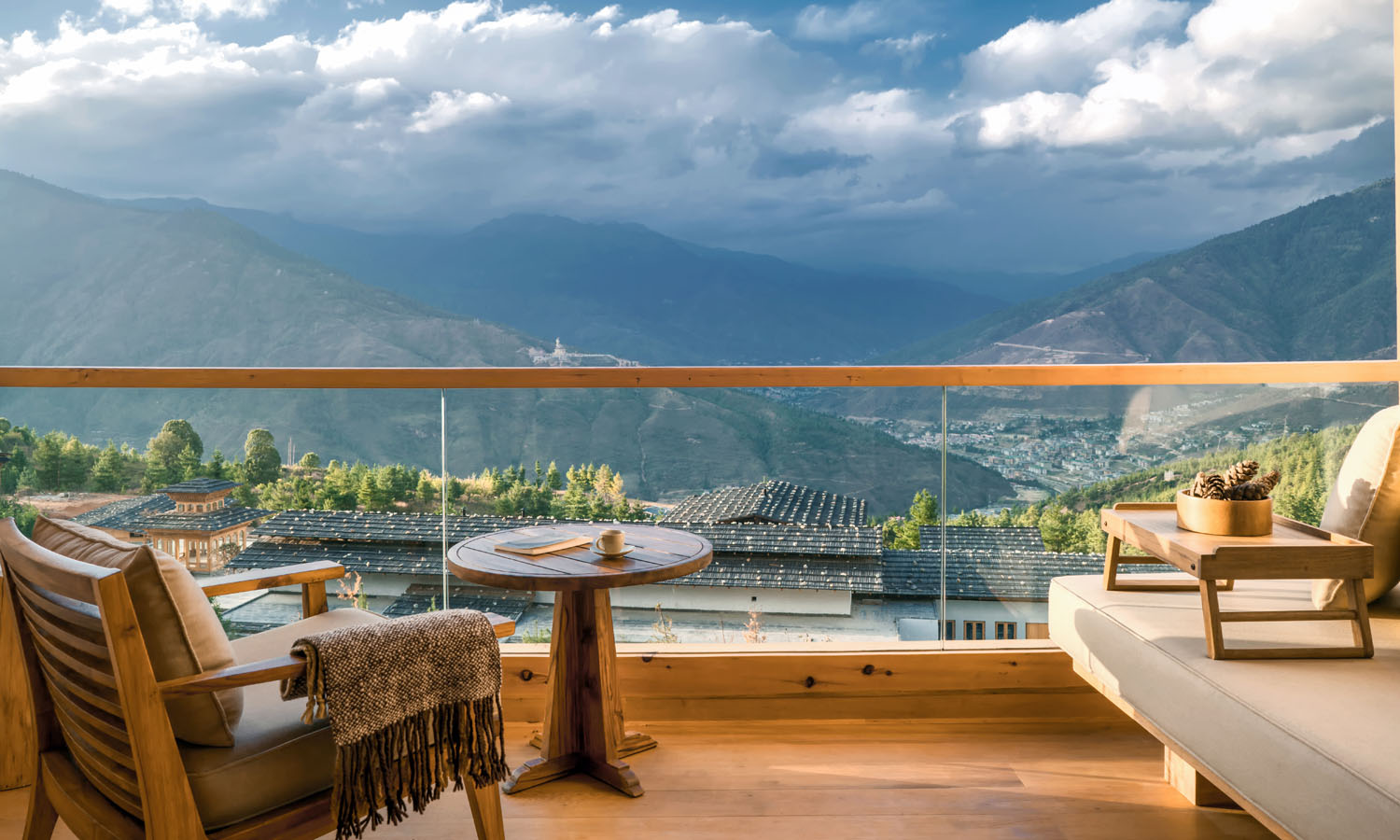
Six Senses Bhutan

With the sky-high monasteries and dramatic valleys of Bhutan already on our must-see list, it was convenient for Six Senses to come along and give us another reason to visit this mystical Himalayan kingdom voted the happiest country in the world.

Actually, make that another five reasons. Six Senses has launched five brand new boutique lodges, spread out in different locations across the western and central valleys of Bhutan.

Each retreat is unique in style, environment, character and experiences, but all abide by the signature Six Senses guiding principles: a luxury spa and wellness centre, self-discovery, sleep and mindful eating.

The carefully chosen sites are the capital of Thimphu, Punakha, Paro Valley, Gangtey and Bumthang, and guests will be encouraged to visit more than one lodge during their trip to create their own Six Senses Journey.

All spectacular in their own right, and lacking nothing in the way of five-star grandeur and world-class amenities, there is one standout: Punakha. This ‘flying farmhouse amid rice fields’, as Six Senses has so artfully coined it, appears to be almost levitating over the low-lying valley and, complete with swoon-worthy infinity pool, gets us wildly excited for a visit.
sixsenses.com

SLOW TRAVEL
Appalachian Trail, USA

Very much in the same lane as wellness tours and purposeful travel, comes a trend we can all get around: slow travel. It’s a concept that has grown from the ‘travel less, see more’ theory, and revolves around taking the time to explore a destination thoroughly, rather than just passing through in a fly-by visit.

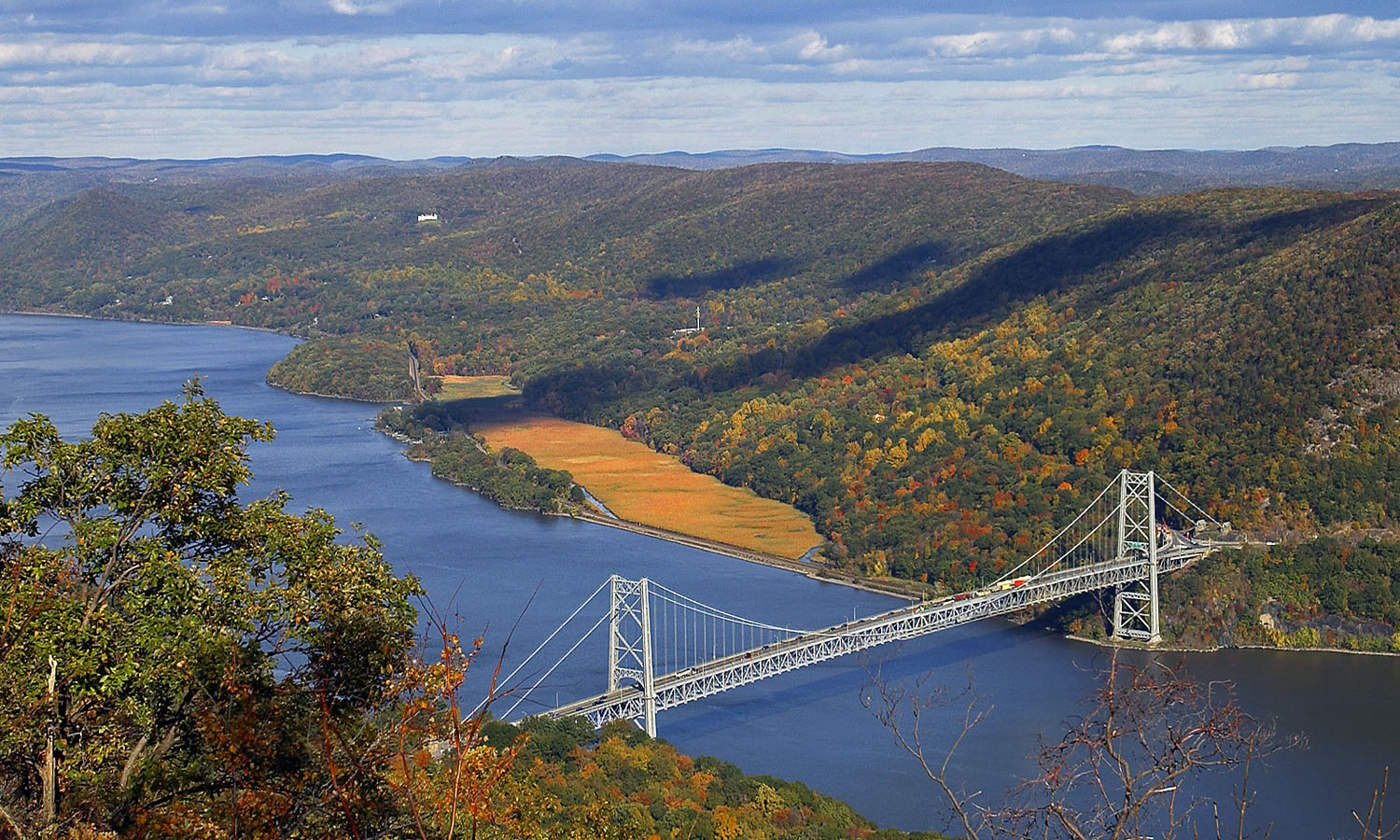
The Appalachian Trail is one of the longest hiking-only footpaths in the world, spanning from Maine to Georgia. Lucky for you, the upstate New York section of the trail is one of the best places to indulge in a spot of slow travel.

Often misunderstood as an area that demands weeks on end to explore, you may be surprised to hear that the trail can be easily conquered if you keep things simple. We recommend choosing hikes you can accomplish in a half-day or so, leaving the afternoon open to wander through a nearby town.

In particular, the impressive Bear Mountain and Lemon Squeezer trails reward hikers with phenomenal views, while the quaint towns of Peekskill and Beacon are gorgeous places to unwind.

With slow travel, gone is that pressure to see everything at once, leaving you to do nothing more than take a breath, embrace your surroundings and wander at your own leisure.
iloveny.com

WOMEN-ONLY TOURS
Cath Adventure, Africa

Ladies, step forward. This one’s for you! More women than ever before are choosing to travel alone, which has in turn seen an increase in the demand for female-focused tours.

These (mostly) women-owned, women-run businesses offer female adventurers the opportunity to not only travel safely with other like-minded women, but to also engage with women from other cultures and backgrounds, an interaction that would likely not be possible with men around.

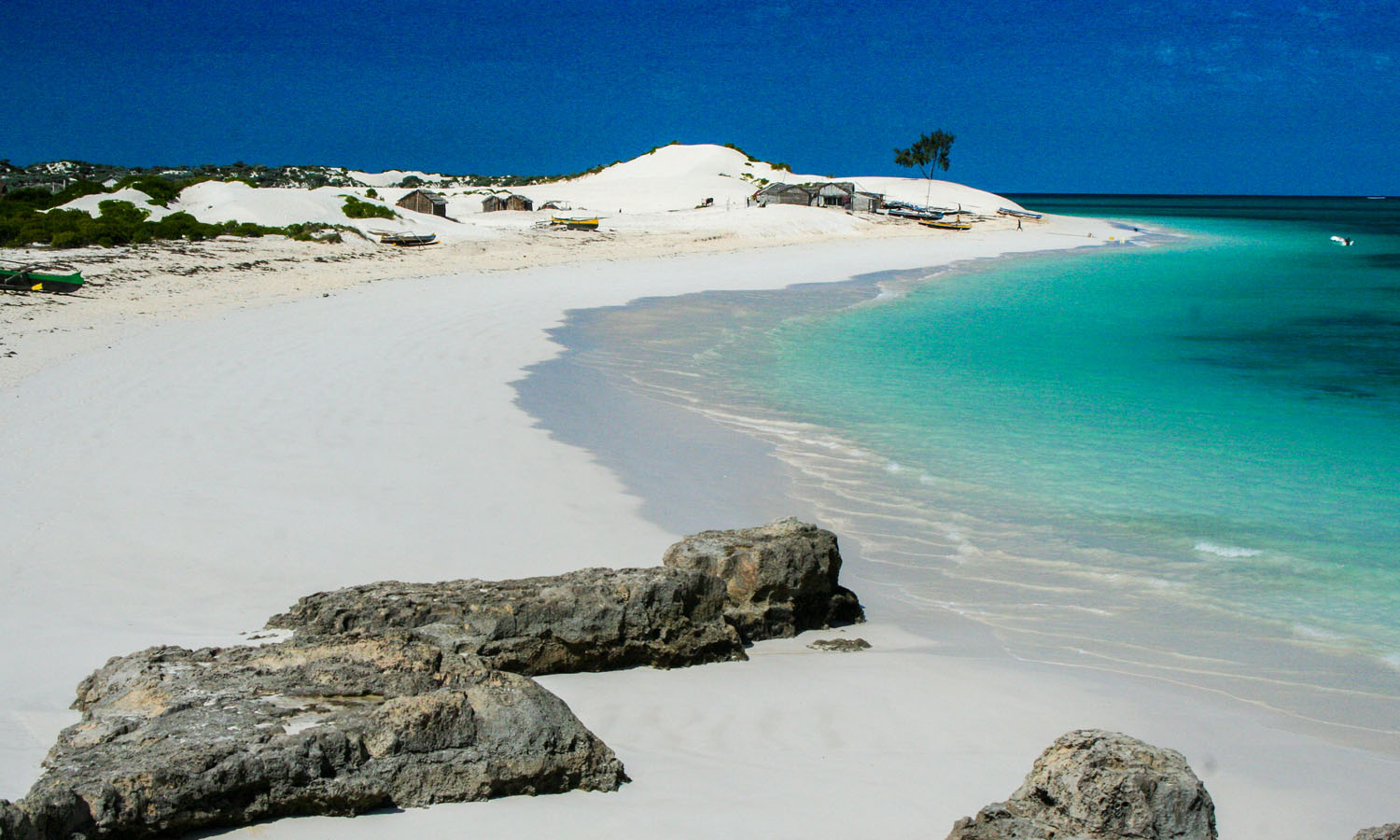
Catherine Edsell is one individual championing the cause, and this year has all-women tours lined up in Madagascar (a diving trip with fellow expedition leader Ida Vincent) and Namibia (tracking desert elephants in the Namibian wilderness).

Challenging, thought-provoking and fulfilling, these women-only tours sure beat the annual girls’ winery trip.

cathadventure.com
EXTREME DINING
Blue Room, Canada

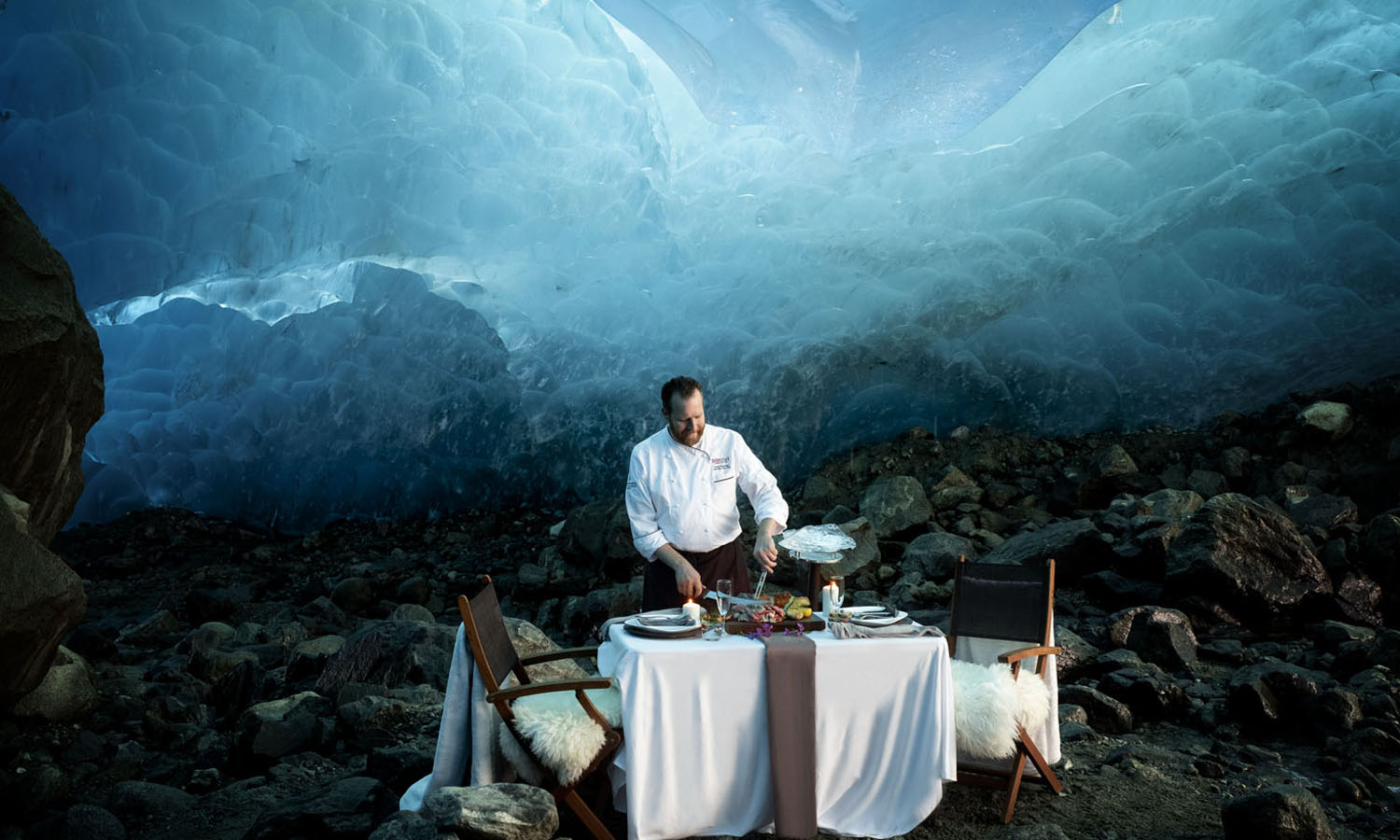
Got a cheeky US$12,000 to spare and looking to really treat yourself and that someone special? We’ve got just the experience for you. Introducing the Blue Room, a private six-hour dining extravaganza held in a secret ice cave somewhere near Whistler, Canada, and accessible only by helicopter.

A little OTT, right? Sure, but that doesn’t mean we don’t want in! Especially considering what’s involved – we’re talking a guided ice-cave tour, five-course dinner by Four Seasons executive sous chef David Baarschers and plenty of free-flowing Krug. The setting? An aqua-blue cave under a floor of frozen water.

Head-Line Mountain Holidays guides the voyage and provides all the adventure gear (no need to dress fancy for this one) – all you need to bring is your sense of adventure.
fourseasons.com

A FLYING FIRST
Zip-line, USA

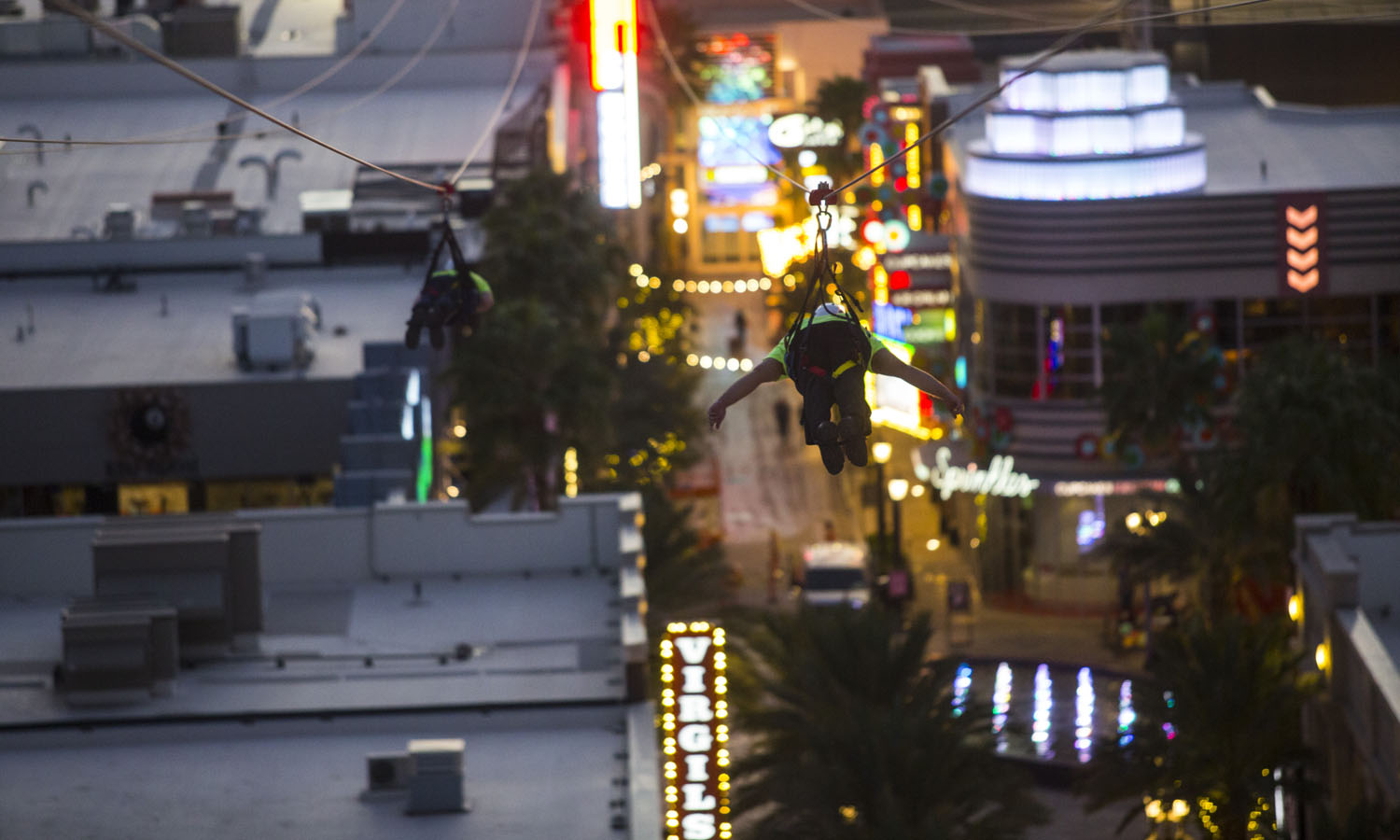
We all known Las Vegas has the world’s tallest observation wheel, a waterslide that passes through a shark-infested aquarium, an indoor skydiving centre and a theme park atop a skyscraper, but did you know about the zip-line over the Strip?

A first for Vegas, FLY LINQ features 10 side-by-side zip-lines that stretch for more than 300 metres, at a launching height of 35 metres off the ground. If that makes you feel queasy, it might be important to note that during your 45-second joy flight you’ll reach speeds of up to 56 kilometres an hour. Which is actually pretty fast when you consider you’re being catapulted headfirst through the air above the busy LINQ Promenade.

So if a win on the blackjack tables or the giant novelty cocktails aren’t giving you the Vegas buzz you’re after, perhaps hurtling through the air might do the trick.

caesars.com


INSTAGRAMMABLE EXPERIENCE
Spyscape, USA

If you’re obsessed with all things espionage, own the entire James Bond DVD box set and have a secret surveillance system wired up to watch your house – just in case – then New York’s latest museum is going to have your spy senses tingling.

Created by real-life spies (former head honchos from both the US and UK intelligence agencies, to be exact), Spyscape is a completely mind-blowing experience designed to test your capabilities as a potential infiltrator/assassin/detective.

The seven galleries are divided into spy-related categories – hacking, encryption, deception, surveillance, cyber warfare, special ops and intelligence – and each area features its own interactive activities.

Our favourites would have to be the Mission Impossible-style laser tunnel, which will have you dodging motion sensor lights (found in the special ops section), and a genuine Enigma machine, which all good spies will know was used in World War II to crack the Nazi Enigma code (part of the encryption section).

To finish, you’re assigned a spy-related role according to how you well you performed during the various tasks. So come prepared, because you never know who could be watching.

spyscape.com

LUXURY SECLUSION
The Lindis, New Zealand

Tucked away somewhere on Ben Avon Station’s 2,500 hectares in the pristine Ahuriri Valley is New Zealand’s worst-kept secret. The Lindis is a boutique hotel offering total exclusivity and seclusion in the form of just five stunning suites.

Completely encircled by three conservation parks and a spectacular row of snow-capped mountains, the Lindis has been built into the landscape in a way that not only minimises its impact on the surrounding environment, but allows for a completely immersive luxury experience, too.

To look at the building itself is to feast your eyes upon a true work of architectural beauty – the sweeping, wave-like timber roof blends seamlessly into the tussock-filled grasslands, while the floor-to-ceiling windows that border the entire length of the building invite the outside world in.

Hiking, horseriding, gliding and fly-fishing are just some of the activities you may want to indulge in during your stay. If you can tear yourself away from the charcuterie station, daily afternoon tea or incredibly well-stocked cellar, that is.
thelindis.com

THE NEW MALDIVES
Bacalar, Mexico

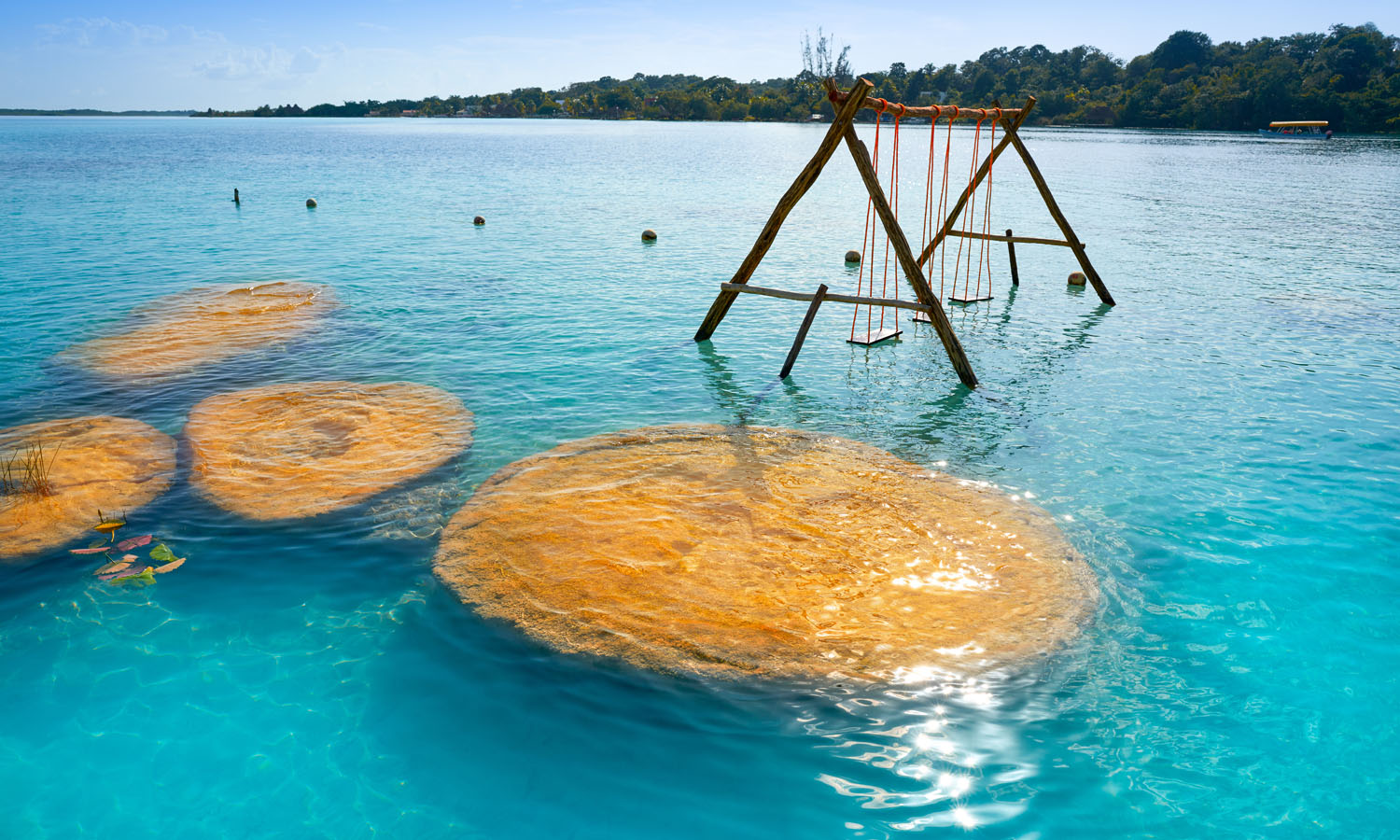
The pristine shores and above-water bungalows of the Maldives are looking a little crowded these days. Luckily, we think we’ve found a slice of tropical paradise that could just offer a quieter alternative – and there’s not even an ocean to be found.

Bacalar is located 340 kilometres south of Mexico’s Cancun, just near the Belize border, and 20 kilometres inland from the coast. Instead of the seaside wonderland you may have been expecting, the town is situated upon the impossibly blue and ever-shimmering waters of Laguna Bacalar, the largest lagoon on the Yucatan Peninsula.

Also known as the Lagoon of Seven Colours, Bacalar is yet to be overrun by tourists, and there’s just a handful of restaurants, bars and accommodation options from which to choose. But that’s the beauty of Bacalar – it’s an insanely beautiful region, made all the more so because it feels so separated from huge resorts and tour companies.

Let’s keep it our little secret, shall we?
UNDER CANVAS
Sonop, Namibia

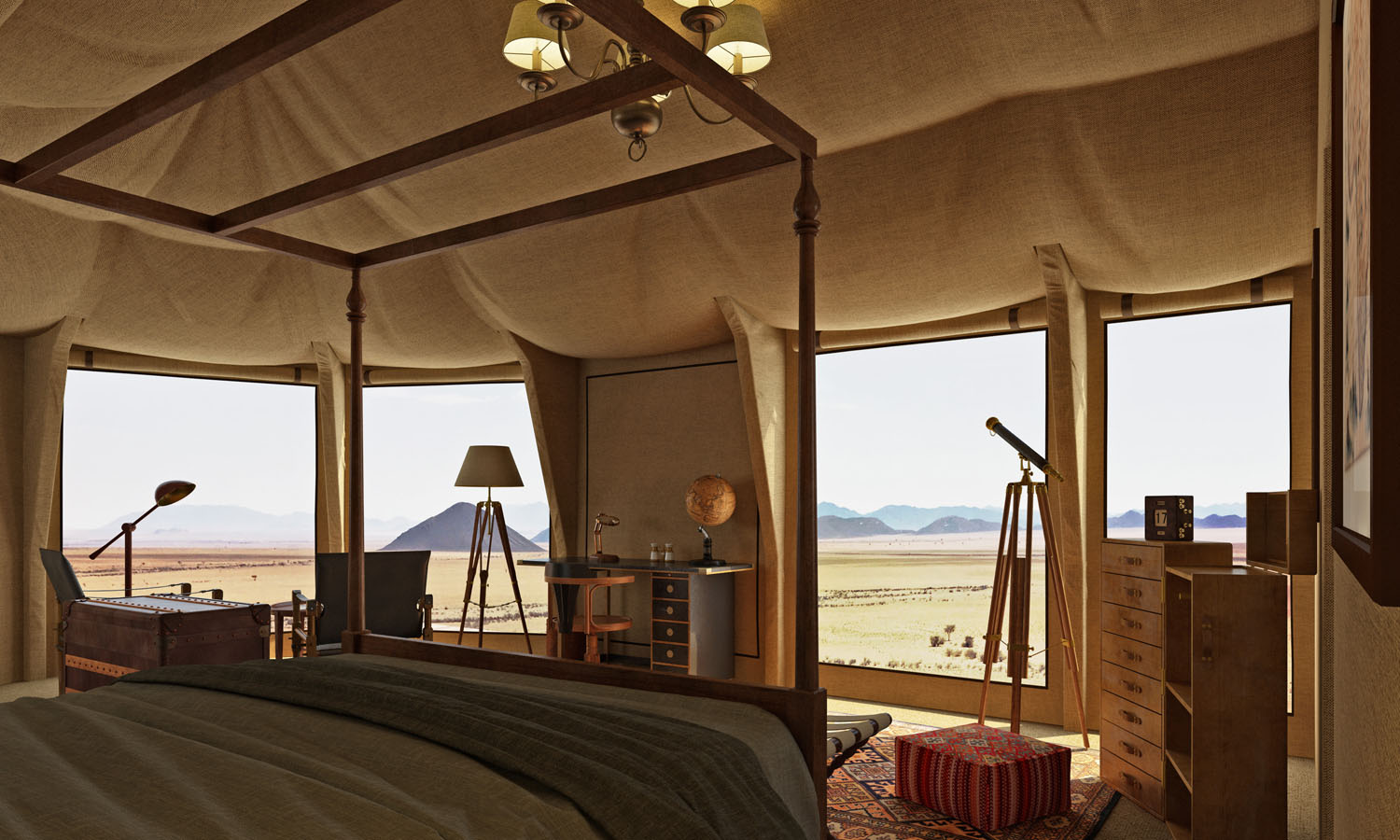
A tented camp in the middle of the boulder-filled Namib Desert may not be enough to get you to jump on a plane to Africa, but what if we told you this canvas outpost boasts a cocktail and cigar lounge, spa treatment rooms, a desert-facing infinity pool and 10 colonial-style tents? Yep, we thought that might change things. Inspired by the wealthy explorers of yesteryear, the tents are furnished with rich fabrics, wooden accents, a range of handpicked antiques and even a copper bath.

Sonop is the latest accommodation offering from Zannier Hotels, the masterminds behind 1898 The Post in Belgium, Le Chalet in France and sister camp Omaanda, so you know it’s got a good pedigree.

Each evening guests retire to the on-site restaurant and are treated to a black-tie-white-gloves dining service that becomes a lovely opportunity to reflect upon another day of adventure, beauty and unparalleled desert vistas in the Karas region of Namibia.
zannierhotels.com


SUSTAINABLE SPAS
Arctic Bath, Sweden

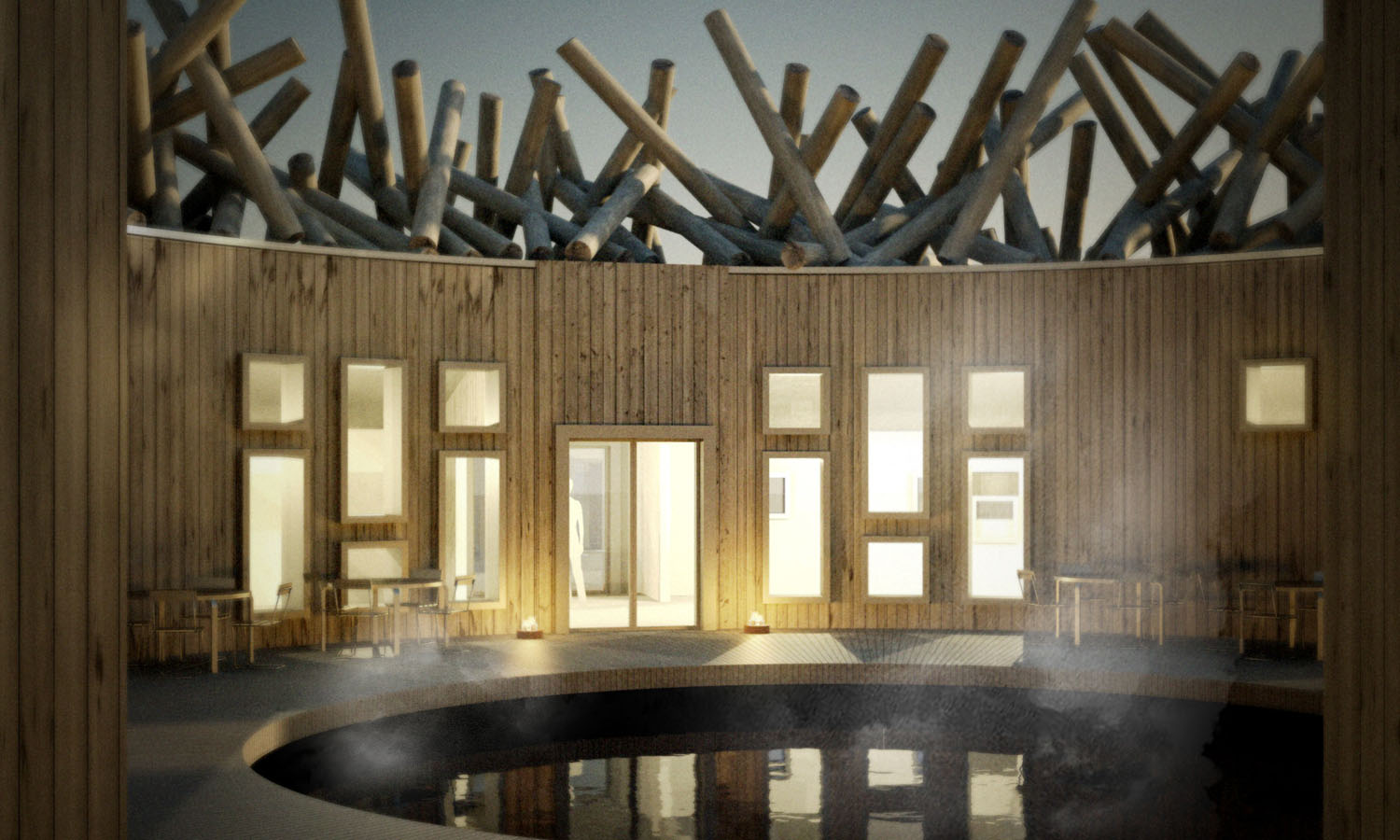
An imposing almost scary mass of timber logs from the outside; a tranquil haven of health and wellness on the inside. That’s the only way to describe Arctic Bath, Sweden’s coolest hotel, which wouldn’t look out of place in a Game of Thrones episode.

Thankfully, there’s no risk of attack from White Walkers here. Instead, visitors to this stunning feat of design can enjoy a free-floating experience during summer (Arctic Bath has been built atop the Lule River) and a frozen one during winter.

The circular shape of the structure creates an open but protected space in the middle, which is where the ice-cold plunge pool resides. Just six rooms surround the chilly bath, each with its own Scandi-style space, enormous skylight and private access across a footbridge from the shore.

While the spa treatments, restaurant and bar are added bonuses to an already epic hotel, private decks attached to each room provide unobstructed, front-row seats to the northern lights (or midnight sun, depending what time of year it is), which, we gotta say, is pretty special.
arcticbath.se

TINY LIVING
Unyoked, Australia

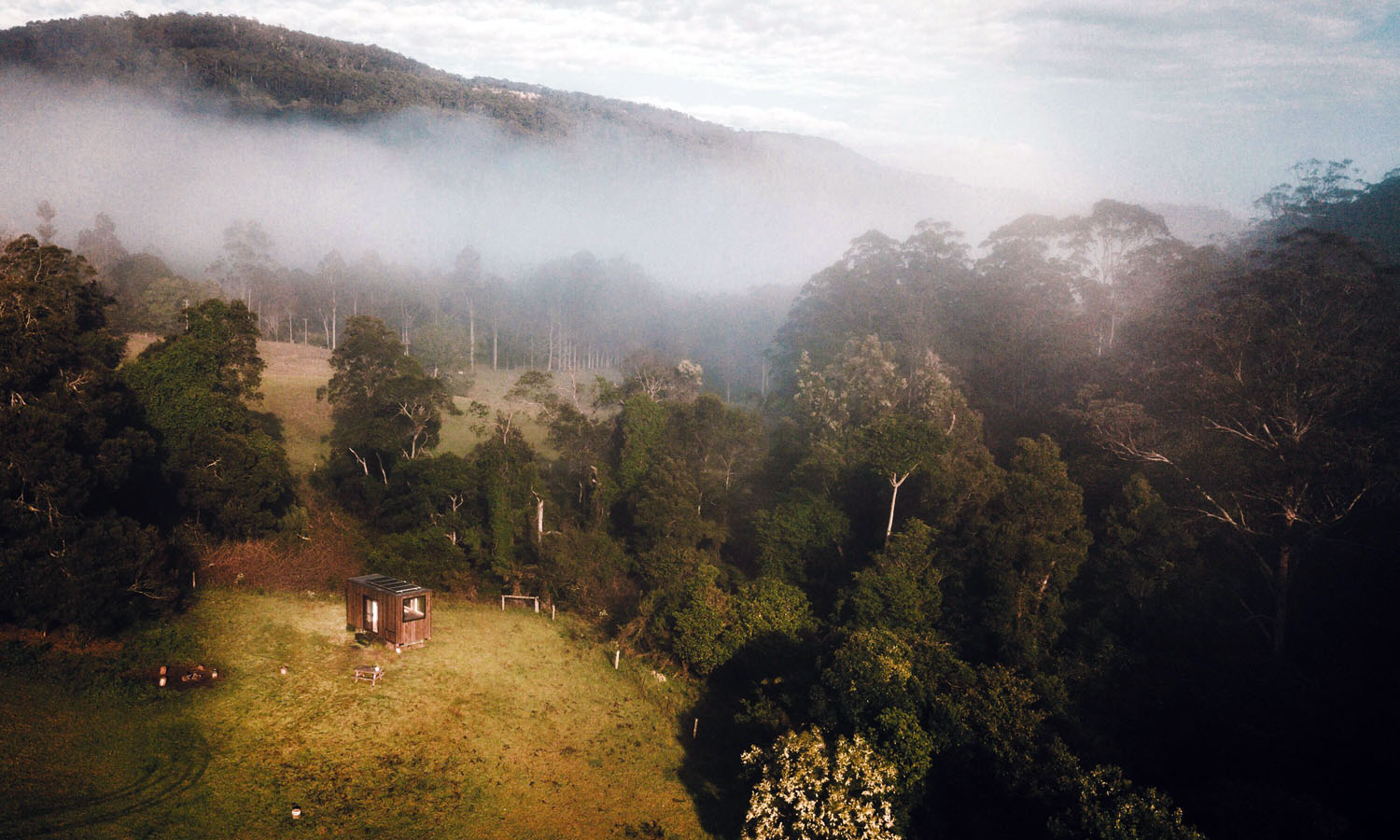
We’re all about disconnecting, enforcing a digital detox and trying to minimise our screen time. Which is nice in theory, but actually trying to go through with it is another story. This makes something like Unyoked – essentially a tiny house in the middle of nowhere – all the more important.

The theory behind Unyoked is a simple one: we should all make it a priority to get off the grid every now and then to reconnect with nature, a loved one or ourselves.

If you can commit to that, Unyoked does all the rest. It’s got secluded cabins scattered a few hours’ drive from both Sydney and Melbourne, and you receive the exact address just two days out from arrival.

Once at your little cabin in the woods (or in a valley or by the coast – there’s no way of knowing where you’ll end up) it’s just you, a bed, fridge, stove and bathroom.

If the thought of not having access to Uber Eats scares the hell out of you, the Unyoked crew can organise a tasty provisions box. Then, all that’s left to do is, well, nothing! Sounds like bliss to us.

unyoked.co

TRAVEL TO THE FUTURE
Axiom Space

Space. It’s the final frontier of travel, right? And while the idea of sending regular people into orbit for fun isn’t quite a new one (we’re looking at you, Richard Branson), the team at Axiom Space, in partnership with luxury travel firm Roman & Erica, have a pretty solid and actually realistic plan in place to make it happen.

Reservations for this once-in-a-lifetime experience are now open. Upon confirmation all Space Axiom guests will be required to undertake 15 weeks of intense space training, alongside career astronauts, in order to guarantee their suitability for the trip.

It’s certainly no fly-by of the moon after all – once your training is complete you’ll be blasting off in one of Elon Musk’s SpaceX rockets to spend seven to 10 days aboard the International Space Station.

Your time in orbit will be spent contributing to a mission of your very own; it might be helping out with microgravity or biological research, or exploring photography and fitness in zero gravity. Then, it’s a simple capsule back down to Earth. And all for just AU$55 million. Bargain, don’t you think?
axiomspace.com

URBAN GLAMPING
Collective Retreats, USA

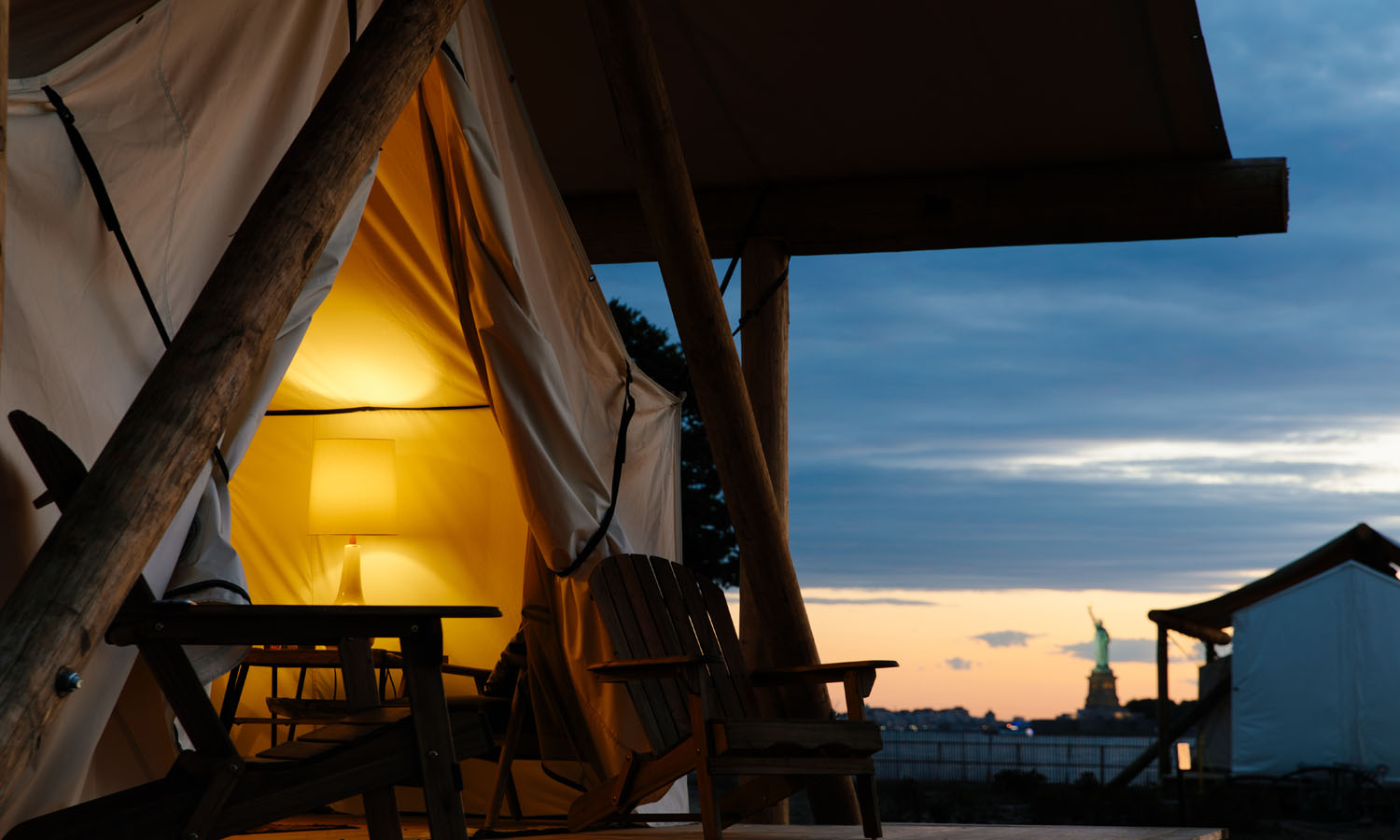
While glamping alone isn’t enough to make our hit list, when something as cool as the chance to glamp in New York City pops up, well, we simply couldn’t resist.

Collective Retreats has been doing the whole rural glamping thing for a while now, with ridiculously luxe bell tents found in wilderness regions in Yellowstone, Texas and Colorado. But in 2018 the team decided to shake things up and head for the bright lights of New York, setting up camp at Governors Island. Just a quick ferry ride from downtown Manhattan, the island location offers guests million dollar views of the skyline and Statue of Liberty, minus the honking taxis and screaming New Yorkers. Now that’s hard to get in this city!

Your digs are equipped with everything you could need for a comfortable night under the stars – plush robes, a heavenly bed, the promise of a chef-cooked brekky in the morning – but there’s no better way to spend your night on Governors Island than getting stuck into the complimentary s’mores kit and watching night fall over the city that never sleeps.
collectiveretreats.com

AUTHENTIC ISLANDS
Awei Pila, Mergui Archipelago

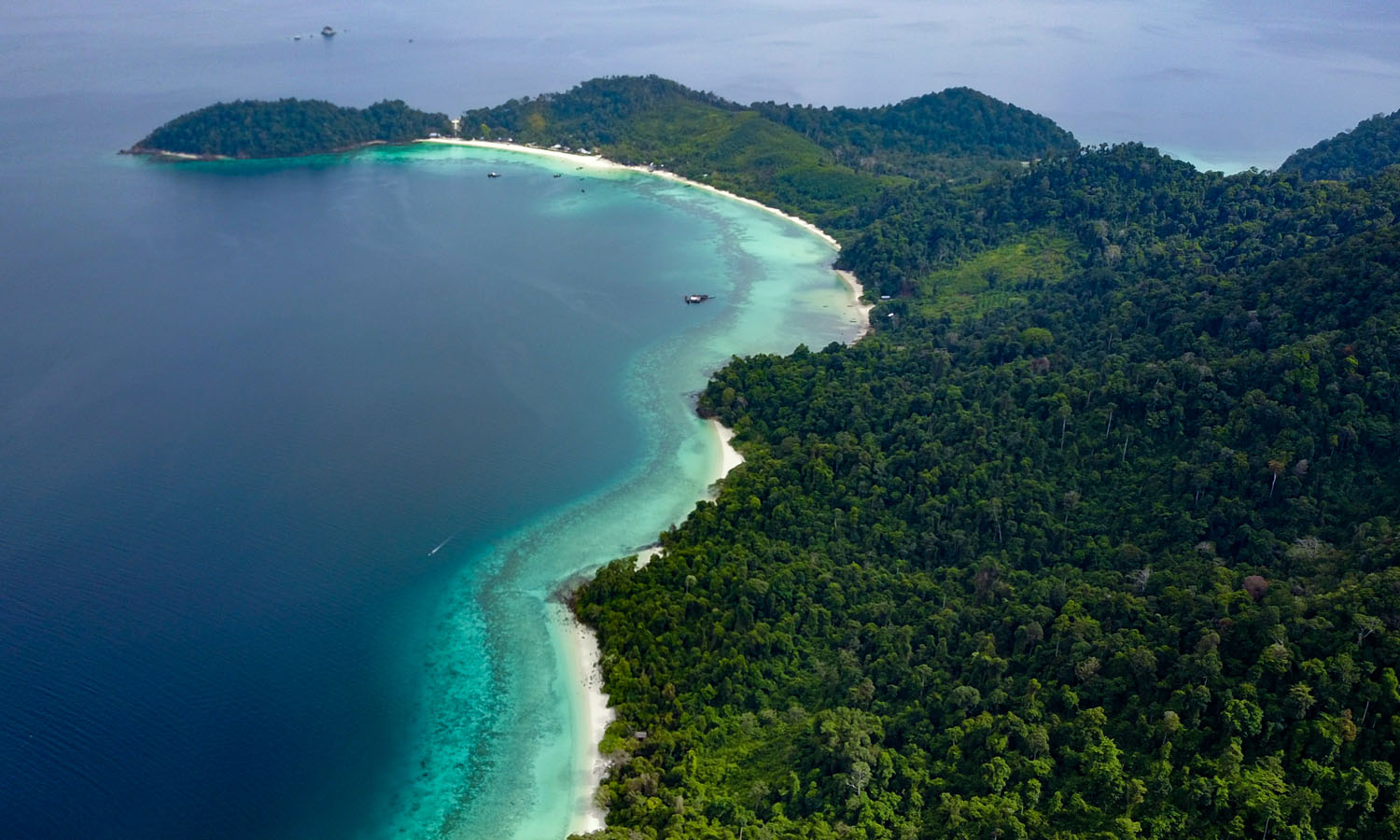
Unspoiled islands are hard to come by these days, but if you head to the aquamarine waters of the Mergui Archipelago, off the south coast of Myanmar, you might just get lucky. Find yourself on Pila Island though, and you’ve hit the tropical island jackpot.

This remote nirvana is where you’ll find Mergui’s newest luxury resort, Awei Pila, hidden away on the northernmost beach of the island, surrounded by nothing but virgin forests and blindingly white coastline.

Awei Pila is accessible via a two-hour speedboat trip from the mainland. Upon arrival 24 tented villas, all air-conditioned, neatly appointed and boasting either beachfront or forest views, await guests. Add an open, relaxed restaurant, spa and swimming pool complete the list of facilities, and it’s easy to see Awei Pila is taking a ‘barefoot luxury’ approach to the whole resort thing rather than opting for in-your-face opulence.

Determined to leave as little impact on the island’s fragile ecosystem as possible, solar panels and a water treatment system have also been installed at Awei Pila, and all fabrics used are sustainable and made of natural fibres. Environmentally conscious and a stunningly beautiful place to escape for a getaway? Awei Pila certainly ticks all the right boxes for us.
aweipila.com

SANATORIUM RESORTS
Druskininkai, Lithuania

If there was a region to emerge as leader in the wellness sector, we’d have to say we never would’ve predicted Eastern Europe. But that’s exactly what has happened, with spa and medical wellness resorts – also known as sanatorium resorts – opening up across countries like Lithuania and Latvia.

Stemming from the desire to detox from our increasingly hectic and pressure-filled lives, Eastern Europe has begun overhauling many Soviet-era wellness retreats in order to start combining centuries-old healing traditions with modern medical advances. All at a fraction of the price of many of Western Europe’s exclusive health centres.

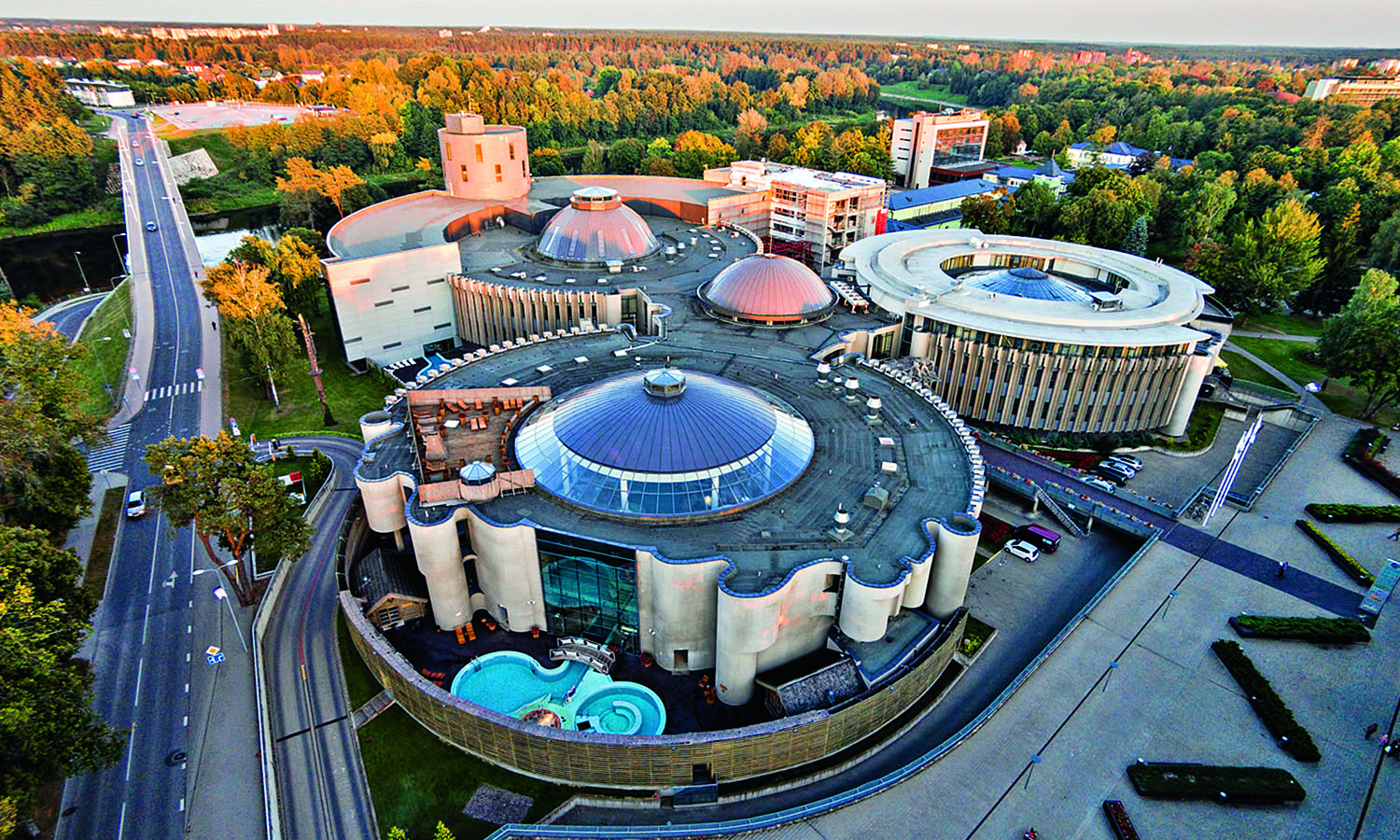
One such place is the spa town of Druskininkai in Lithuania, which has repositioned itself as a go-to destination for those looking to rejuvenate their mind, body and soul. A spa town since the early eighteenth century, the town is renowned for its variety of beauty treatments, therapeutic mud applications and wellness massages. Add pure mineral water and clean forest air and, if you’re looking to feel happier and healthier, this could be the place to do so.
CLASSIC MAKEOVER
Downtown Sporting Club, USA

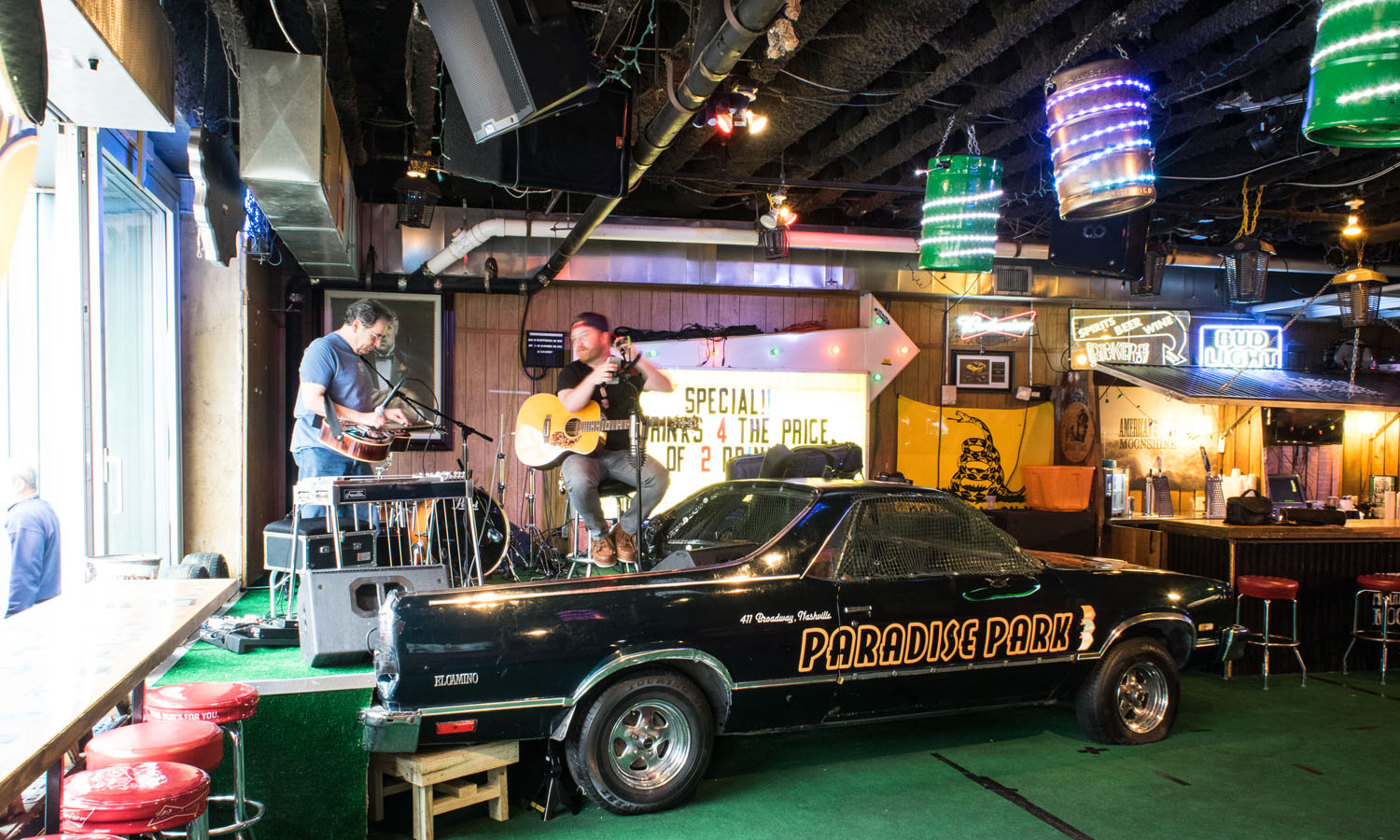
As the old saying goes,“One door closes, and another axe-throwing lane appears.” Or something like that. Either way, the doors of Nashville’s much-loved, trailer park-style eatery Paradise Park, closed back in July 2018 to make way for owners Ben and Max Goldberg’s latest venture, the Downtown Sporting Club.

This four-storey extravaganza opened in April 2019 and is shaking up Music City. Occupying the ground floor is a restaurant, helmed by Levon Wallace of Grey & Dudley fame, a communal area and small retail precinct; the second level, dubbed the Rec Room, is dedicated to axe throwing and other old-fashioned games.

The third floor, aimed at offering more affordable accommodation options for visitors to Nashville, is the sleeping quarters, and will be filled with king, queen and bunk bed rooms.

Finally, dotted with fire pits, neon signs, lush greenery and portable seating, is the rooftop bar. Phew, talk about an establishment that’s thought of everything!
downtownsportingclub.com

THE NEW GALAPAGOS
St Helena

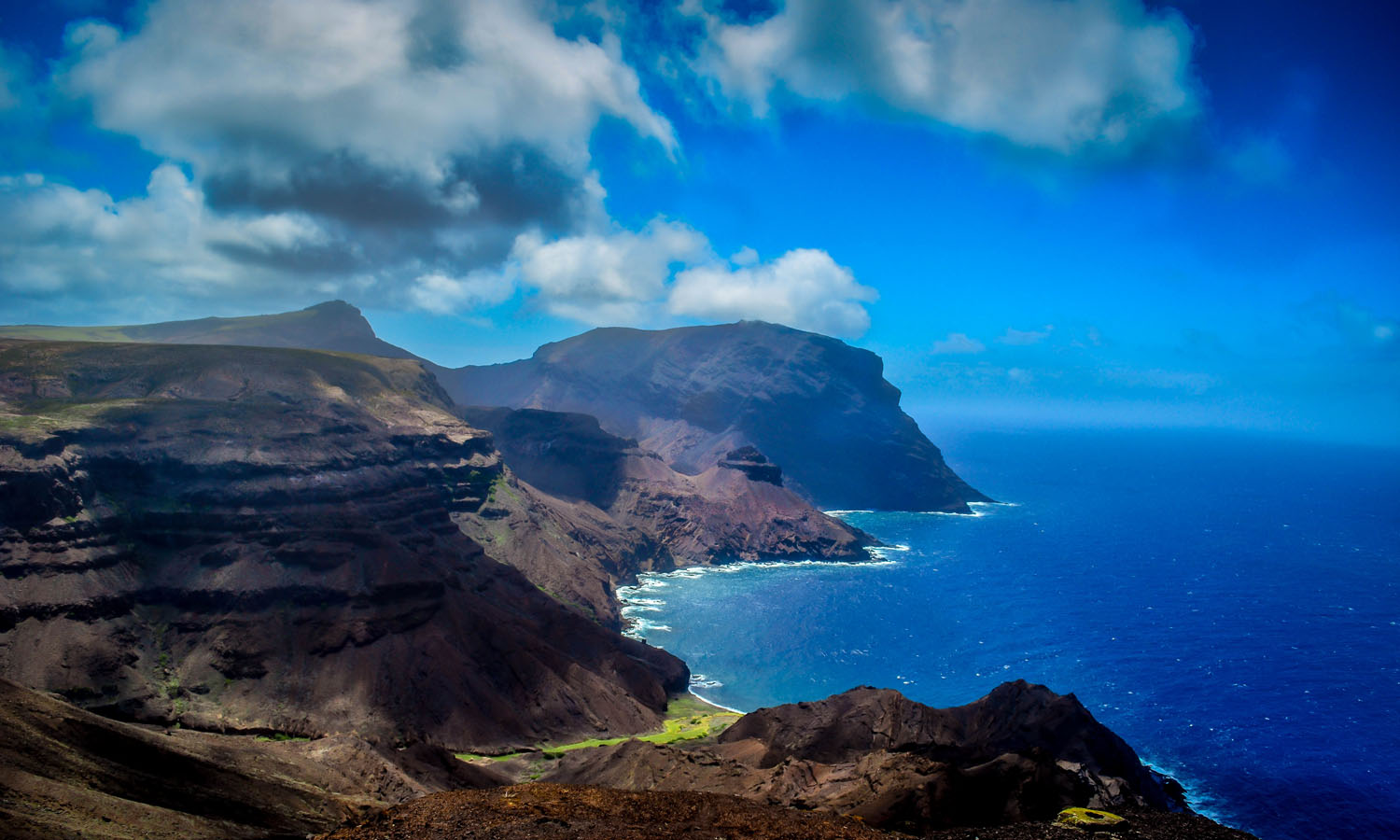
Before SA Airlink began offering weekly commercial flights to St Helena in 2018, the only way to reach this remote island in the middle of the South Atlantic Ocean was aboard the RMS St Helena on a journey that took roughly one week. Not exactly conducive circumstances for a thriving tourism industry. Now, St Helena is an accessible destination that rivals the Galapagos and Easter Island in terms of exquisite natural landscapes, diverse flora and fauna and a captivating history.

Most importantly, hardly anyone’s cottoned on to the charm of St Helena yet, and the rugged cliffs, ring of mountains and deep valleys remain virtually untouched. Adrenaline junkies will find it hard to resist the slew of hiking trails and shipwrecks that double as dive sites, while history buffs will enjoy the Georgian architecture – considered some of the best in the world – and discovering where Napoleon saw out his final years.
sthelenatourism.com

ADVENTURE AND WELLNESS
MT Sobek

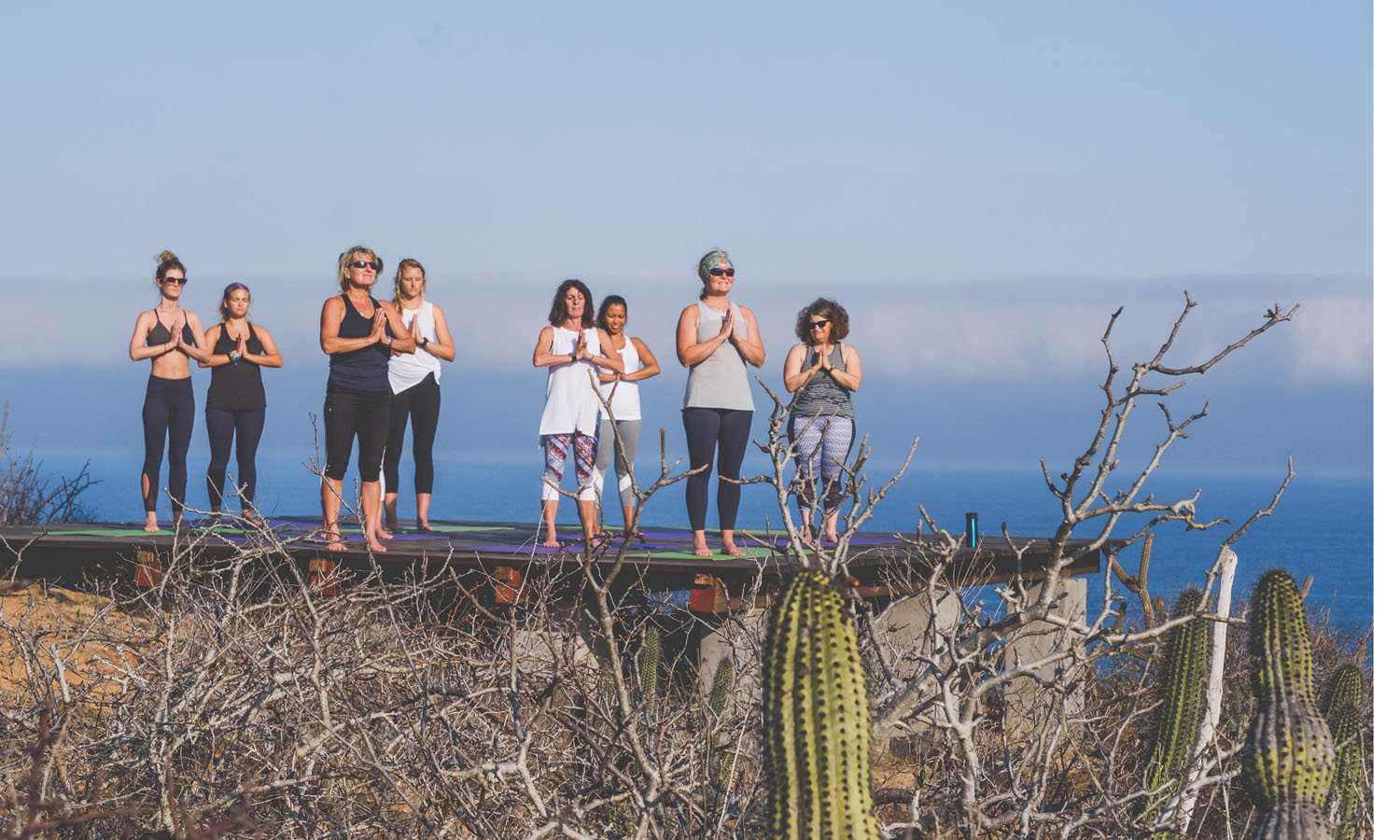
Keen to capitalise on the wellness trend is tour company MT Sobek, who heard the plight of travellers saying they need a ‘holiday from their holiday’ and came up with six carefully curated health trips.

From Morocco’s sand dunes to the beach cliffs of Mexico’s Baja Peninsula, on a MT Sobek retreat there’s no need to worry about being trapped in some stuffy conference room holding hands in a circle with a bunch of strangers humming ‘ommm’.

Instead, you’ll find there’s a tour to suit every type of wellness seeker. For the spiritually inclined, we’d recommend the meditation getaway in Arizona’s Sonoran Desert or yoga and mindfulness in Laos and Cambodia.

If your idea of wellness involves pushing your body to its physical limits to achieve a sense of calm, then a hiking and cycling trip through Bali’s rice fields or trekking the peaks of Italy’s Dolomites should have you finding zen. Whatever your preferred method of reinvigoration, prepare to feel nourished after an MT Sobek wellness adventure.
mtsobek.com

ALL YOU CAN EAT
Mercato Mayfair, England

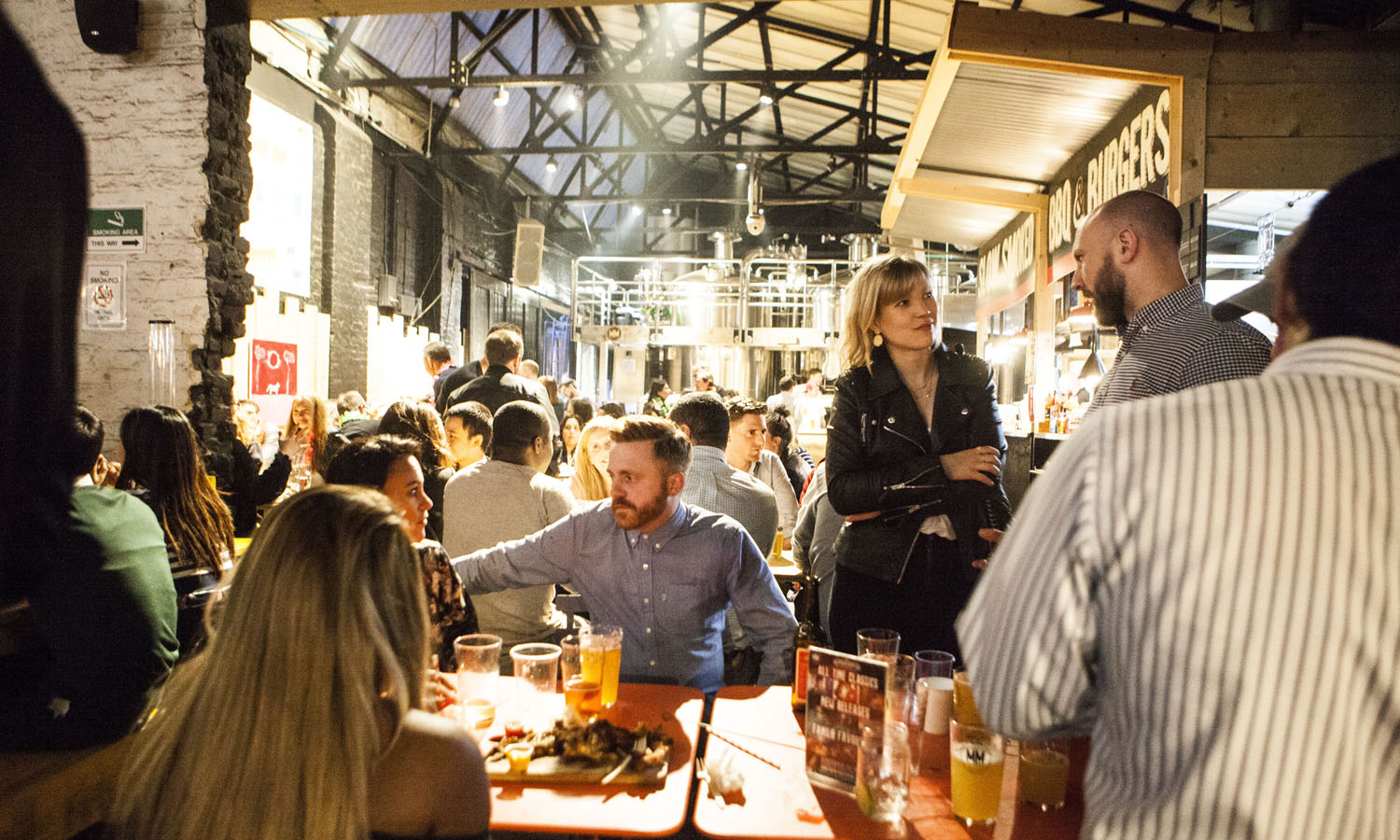
Off the back of the success of its first foray into the UK foodie scene – Elephant & Castle’s Italian-themed sustainable food, dining and retail market – the team at Mercato Metropolitano has gone decidedly bigger and bolder for its next project.

The company snagged St Mark’s, a former church in Mayfair that underwent a two-year, almost AU$9 million renovation, and hasn’t been open to the public for decades. Inside this sprawling establishment, which includes a vaulted basement and rooftop terrace, the Mercato Mayfair sticks closely to the Elephant & Castle blueprint and features dedicated spaces for community-run, educational and social activities to take place, as well as cuisine counters chock-full of artisan produce from around the world. There are also be workshops and cooking classes held in the basement, as well as an urban farm, brewery, florist, gelato bar, patisserie and deli.
mercatometropolitano.com

EMPTY ISLANDS
Rosario Islands, Colombia

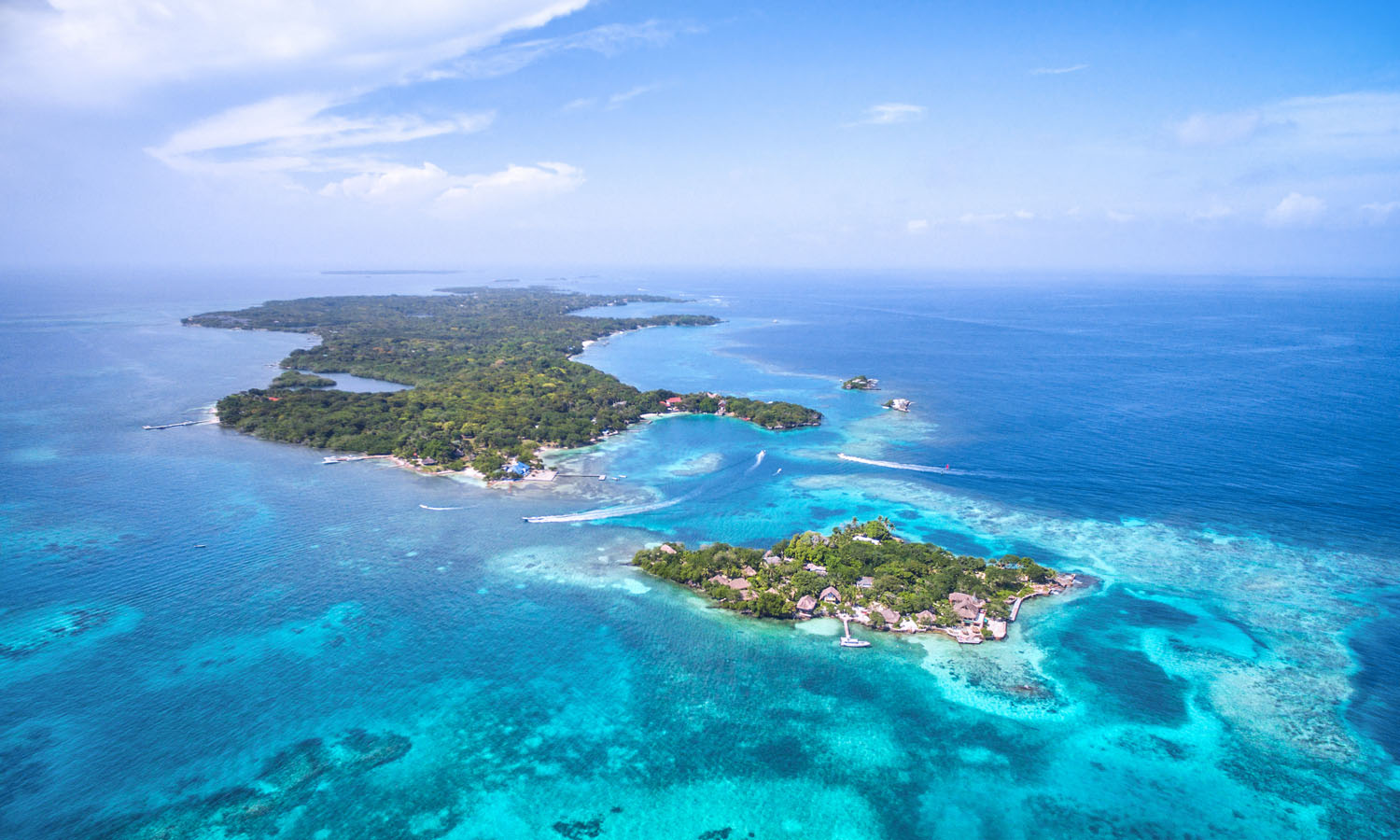
There’s no other way to put it: Colombia’s Rosario Islands are an Instagrammer’s dream. Pastel-coloured buildings line the quiet streets, crystalline waves crash into the pure white shoreline and big, blooming bougainvillea flowers burst forth from every corner. All these vibrant, stimulating colours are an assault on the eyes, but in the best possible way.

Situated just a hundred kilometres off the coast of Cartagena, the Rosario Islands are a small archipelago comprised of 20 outcrops that make up one of the 46 Natural National Parks of Colombia.

Just a short boat trip takes you to the islands – a tropical oasis in the middle of the Caribbean – which remain a mystery to many on the mainland of Colombia never mind those from further afield.

Rosario’s protected coral reefs are ideal for snorkelling and diving, while the mangrove tunnels of Isla Grande are best explored in a kayak. And don’t even get us started on the seafood. Fresh, plentiful, cheap and, most importantly, delicious, if you don’t come back with a stomach full of prawns or lobster then you didn’t do Rosario properly.
colombia.travel

HIKE IT THROUGH
Julian Alps, Slovenia and Italy

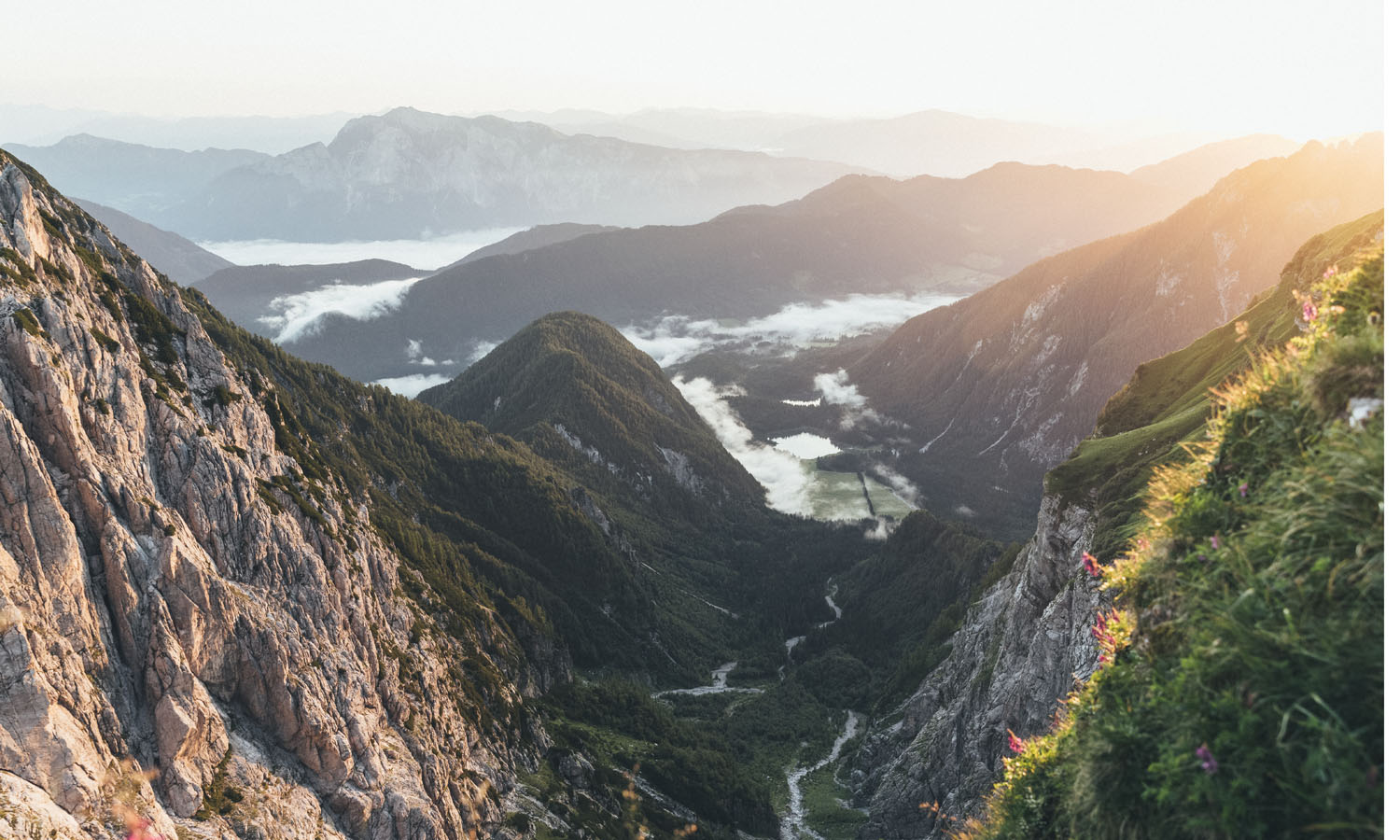
If attempting a new hiking challenge is on your must-do list you’re in luck. A 300-kilometre trail through the Julian Alps, which forms part of northeastern Italy and Slovenia’s Southern Limestone Alps, opened to hikers in April 2019.

The route is divided into 20-kilometre stages, and each section starts and finishes at a bus stop or railway station, in case weary travellers want to give their legs a brief spot of respite.

The creation of this trail was a joint project between 10 municipalities within the Julian Alps region, and it’s hoping the track, which runs through many small villages, will not only boost tourism to these rarely visited alpine communities, but also showcase the area’s natural attractions and distinct culture.

Starting and finishing in Rateče, the highlight of the trek will be reaching the summit of Mt Triglav, the highest peak in Slovenia.

With cycling routes also in the pipeline, it’s shaping up to be a popular trail, so best to tick this one off the list sooner rather than later.
bohinj.si

JAPAN WITH A DIFFERENCE
Islands, Japan

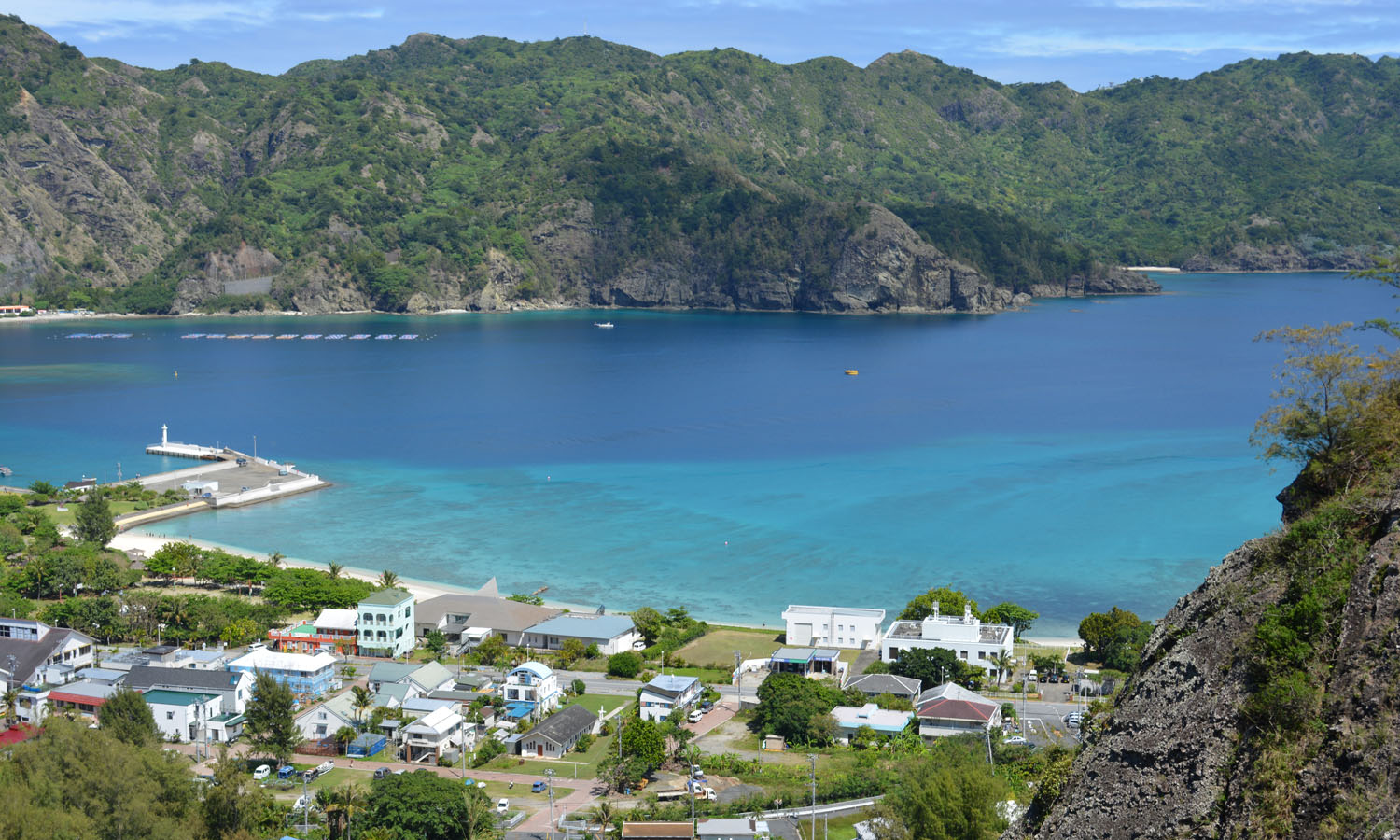
Japan has been on the travel hot list for a while now and with good reason. But if you’re a frequent visitor it’s time to venture beyond its four major islands.

With the country comprised of 6,852 islands, we’ve rounded up a few worth getting to know. Aogashima is 358 kilometres from Tokyo and the go-to destination for those into hiking, scuba diving and tasting the local shochu, which is distilled from sweet potato. It’s the most remote island in the Izu archipelago, and also happens to be an active volcano – not that the 168 residents seem to mind.

About a thousand kilometres directly south of Tokyo are the Ogasawara Islands, dubbed the Galapagos of Japan because of their thriving ecosystems, dense rainforest and diverse wildlife. Many of the islands’ birds, insects and crabs are unique to the region, which has never been connected to the mainland.

Visit the Yaeyama Islands, part of the Okinawa Prefecture, and you’ll begin to wonder if you’ve accidentally landed in the South Pacific. Azure waters, palm-tree lined beaches and some serious tropical paradise vibes make Yaeyama one of Japan’s most alluring island destinations.
japan.travel

ECO CRUISING
Hurtigruten Cruises, Scandinavia

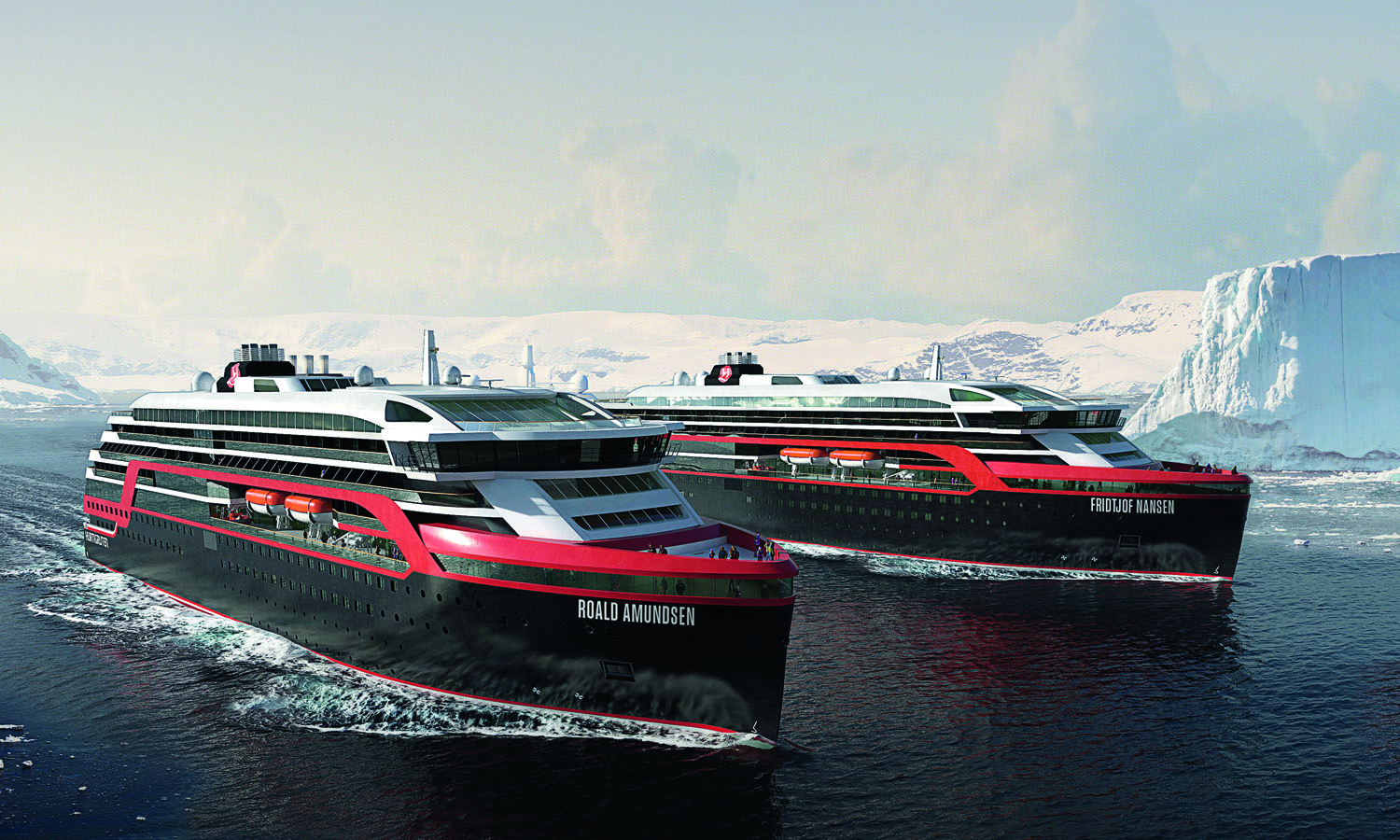
With so much chatter about the dire state of the environment, it’s only natural that eco-friendly travel is growing in popularity. It’s a good thing then that Norwegian exploration cruise company, Hurtigruten, has added two hybrid expedition ships to its fleet.

Named after Norwegian polar pioneers, the Ronald Amundsen and Fridtjof Nansen will showcase innovative, environmentally friendly technology, sailing using electric propulsion and reducing fuel consumption and CO2 emissions by 20 per cent. If satisfying your inner eco-warrior isn’t enough, you’ll also be treated to a silent sail thanks to the ships’ technology.

Onboard the ships, you’ll be treated to technology-filled science centres, restaurants, wellness centres, pools and more, while a variety of suite options ensure sophisticated comfort. Set sail on a variety of expeditions, including the hidden harbours of Portugal, Spain and France or the icy scenery of Chilean fjords, Antarctica and the Falklands. They’ll appeal to your inner explorer while you’re doing your part for the environment.
hurtigruten.com

BEFORE THEY’RE GONE
Glacier National Park, USA

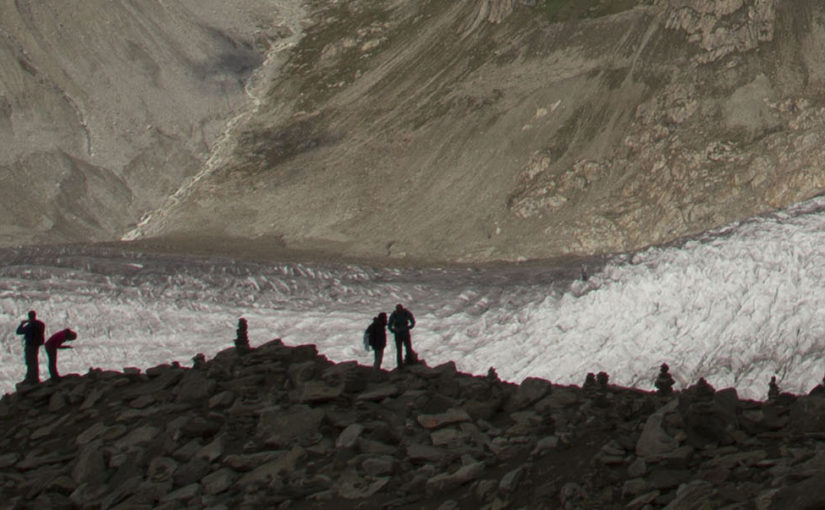
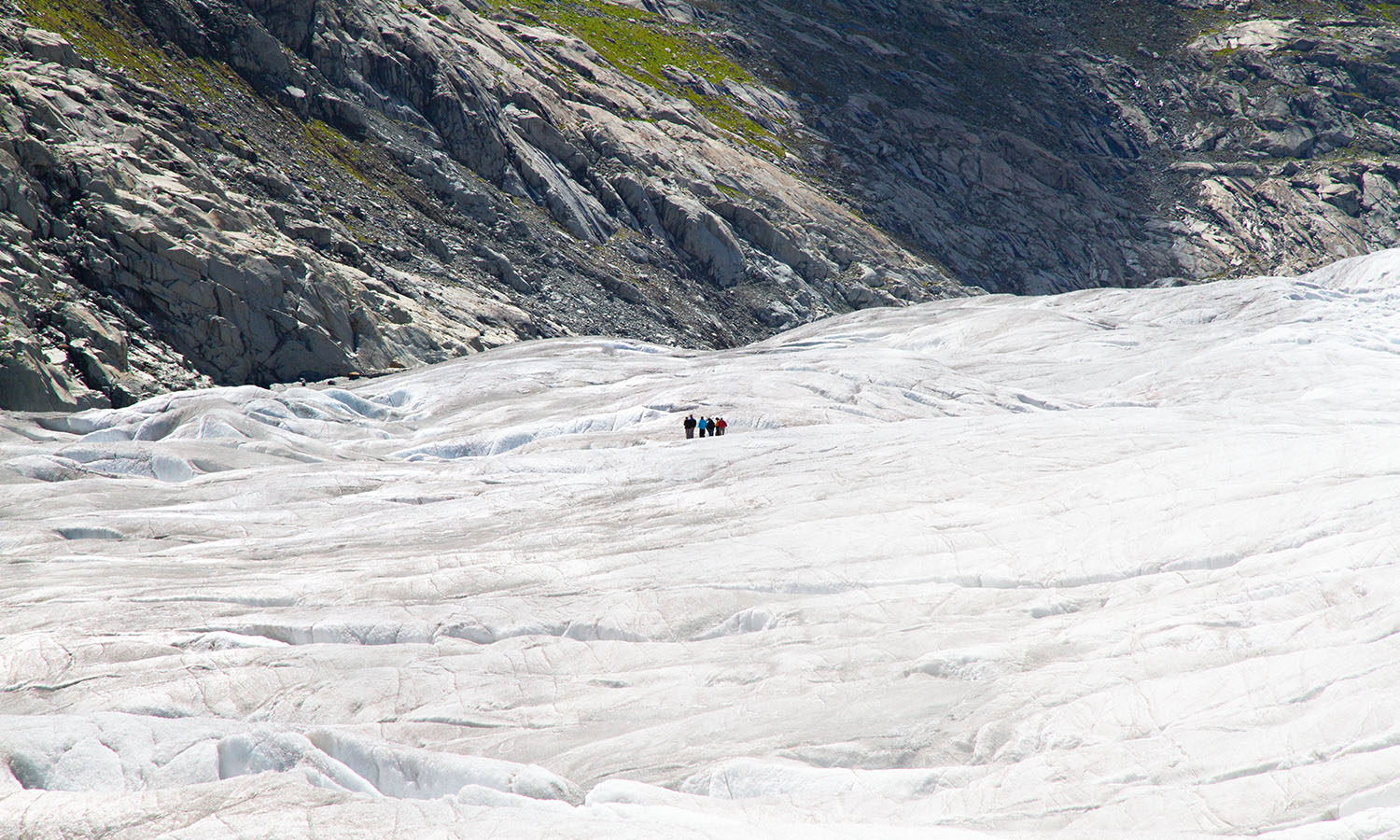
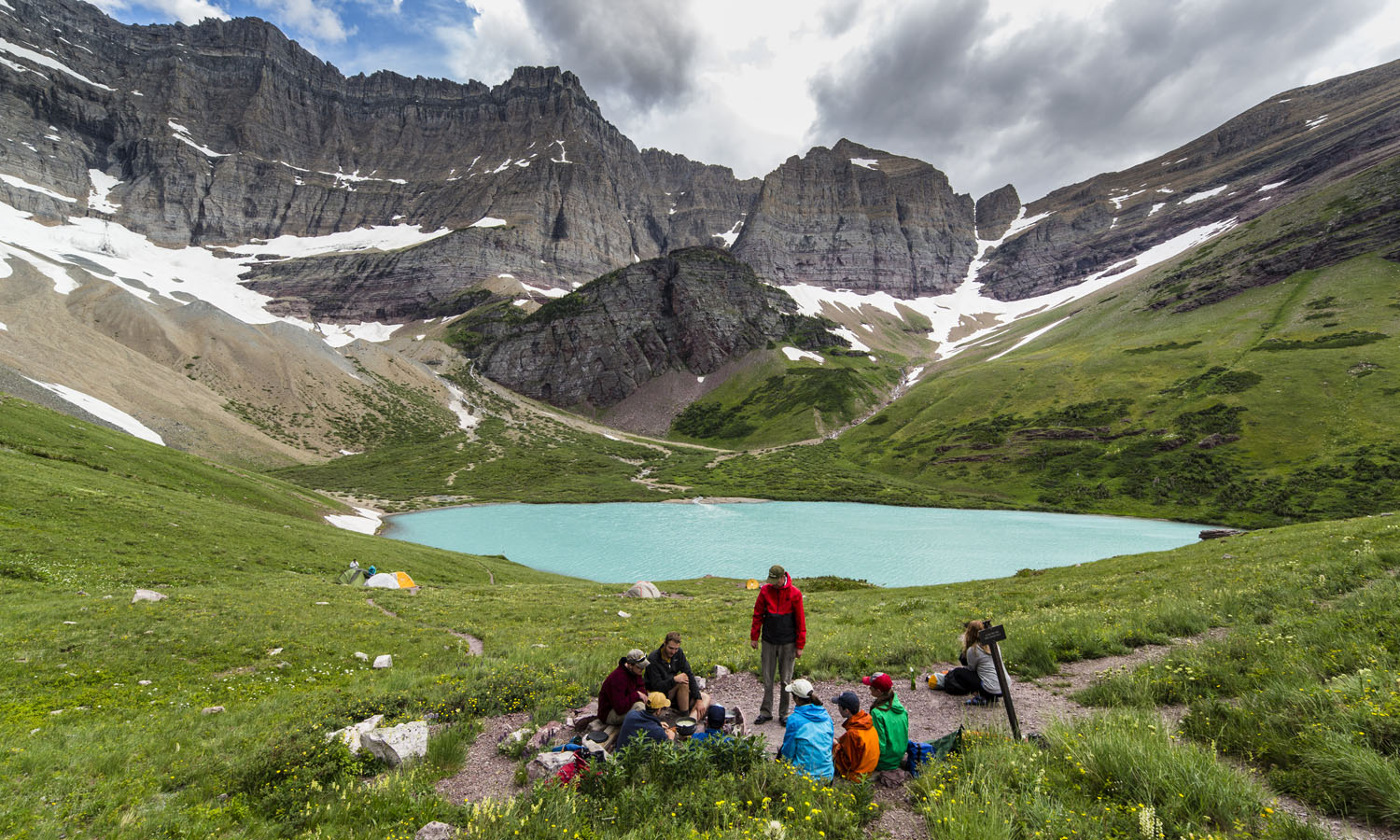
OK, brace yourselves for a bleak one. We’re all familiar with the threat of global warming – rising temperatures, rising sea levels, you get the picture. But while some find it easy to dismiss it as something that won’t affect our current generation, they’re wrong. If you want proof, look no further than Glacier National Park in Montana.

Of the 150 glaciers identified when the park was established in 1910, just 25 active ones remain. And according to current climate predictions, those 25 will likely disappear by the year 2030. That’s not some far-flung future date not worth taking notice of either – it’s less than a decade away.

Glaciers have long formed part of the northern Rocky Mountains landscape, and despite their rapid rate of shrinkage, remain astonishing feats of nature. While many in Glacier National Park are becoming harder to reach, Grinnell, Sperry and Sexton glaciers remain accessible – for the time being, anyway. What are you waiting for?
nps.gov

EXPEDITION CRUISING
Hapag-Lloyd Expeditions, Chile

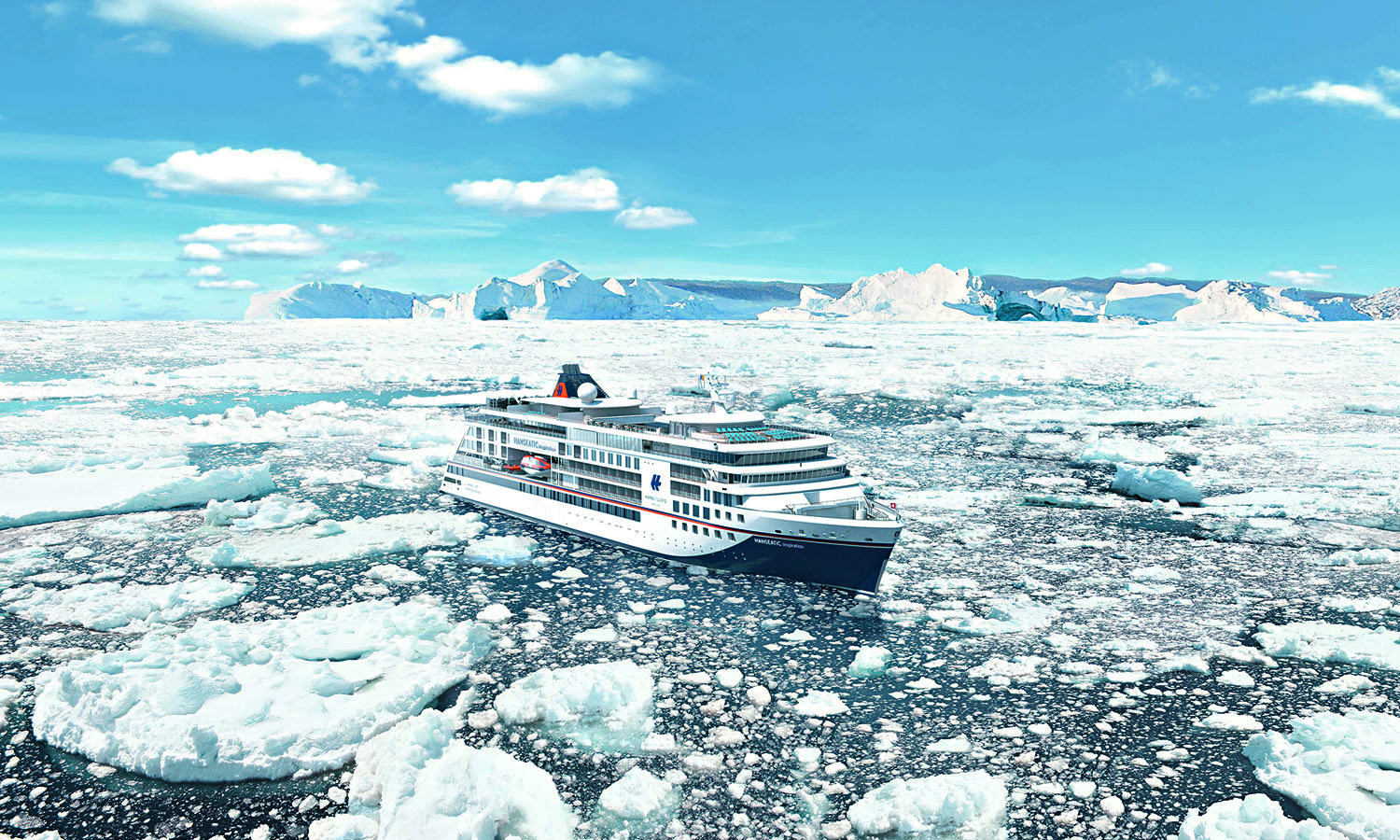
From epic volcanoes to glitzy glaciers and a thousand contrasting landscapes in between, this Chilean fjords expedition with Hapag-Lloyd is bound to leave your jaw dropped and wanting more.

Starting in Peru’s seaside city of Callao, you’ll board the HANSEATIC inspiration, a new expedition ship with plenty of open deck space, glass-floored balconies and more viewpoints than ever before. From here, drift south for 18 days. Marvel at emerald mountains and South America’s largest marine reserve, Paracas Peninsula, visit penguins on Isla Pan de Azucar and Punihuil Island, witness the volcanic landscape of Puerto Montt and the turquoise lakes and waterfalls of the Chilean lake district. You’ll then pass the country’s southern fjords and glaciers – Pio XI, Puerto Natales and the Garibaldi Glacier among them – before arriving in the Argentinian city of Ushuaia.

Don’t be fooled, this isn’t your ordinary South American jaunt. There is a whole host of optional activities, including a flight over the mysterious Nazca Lines and white-water rafting on the Petrohué River, that turns this from cruise to expedition.
hl-cruises.com

BEFORE THEY’RE GONE
Chioggia, Italy

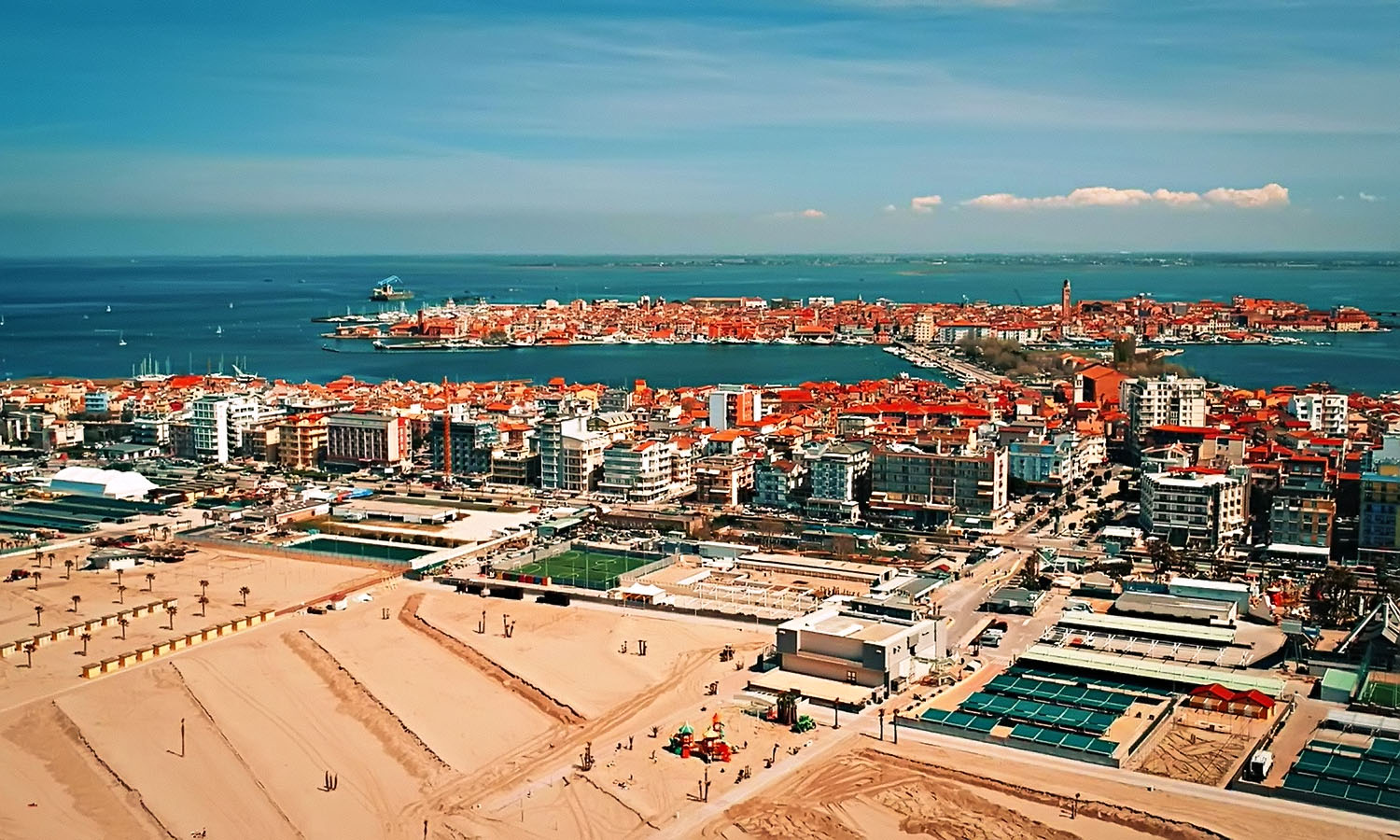
Often referred to as Little Venice, Chioggia is the less crowded, much quieter version of its famous neighbour. This secluded island, with a reputation for charming locals and laid-back vibes, is positioned on the southern entrance to the Venetian Lagoon.

It features many of the same – now instantly recognisable – characteristics as Venice, including a criss-crossing maze of canals, tiny narrow streets, bridges galore and several historic buildings. Unfortunately that means Chioggia also suffers from the same concerns that plague its neighbour, including flooding and the impending doom of being swallowed by the ever-rising Adriatic Sea.

While revolutionary new flood barriers have been installed to protect the coastal towns of the Venetian Lagoon, the long-term success of this technology is currently under scrutiny. And it’s the smaller communities, like Chioggia, that may not have the same support as bigger cities like Venice. All we’re saying is just one freak flood event could mean that places like Chioggia – and the charming locals who make it so special – may cease to exist.
ALL IN ONE
Torres del Paine National Park, Chile

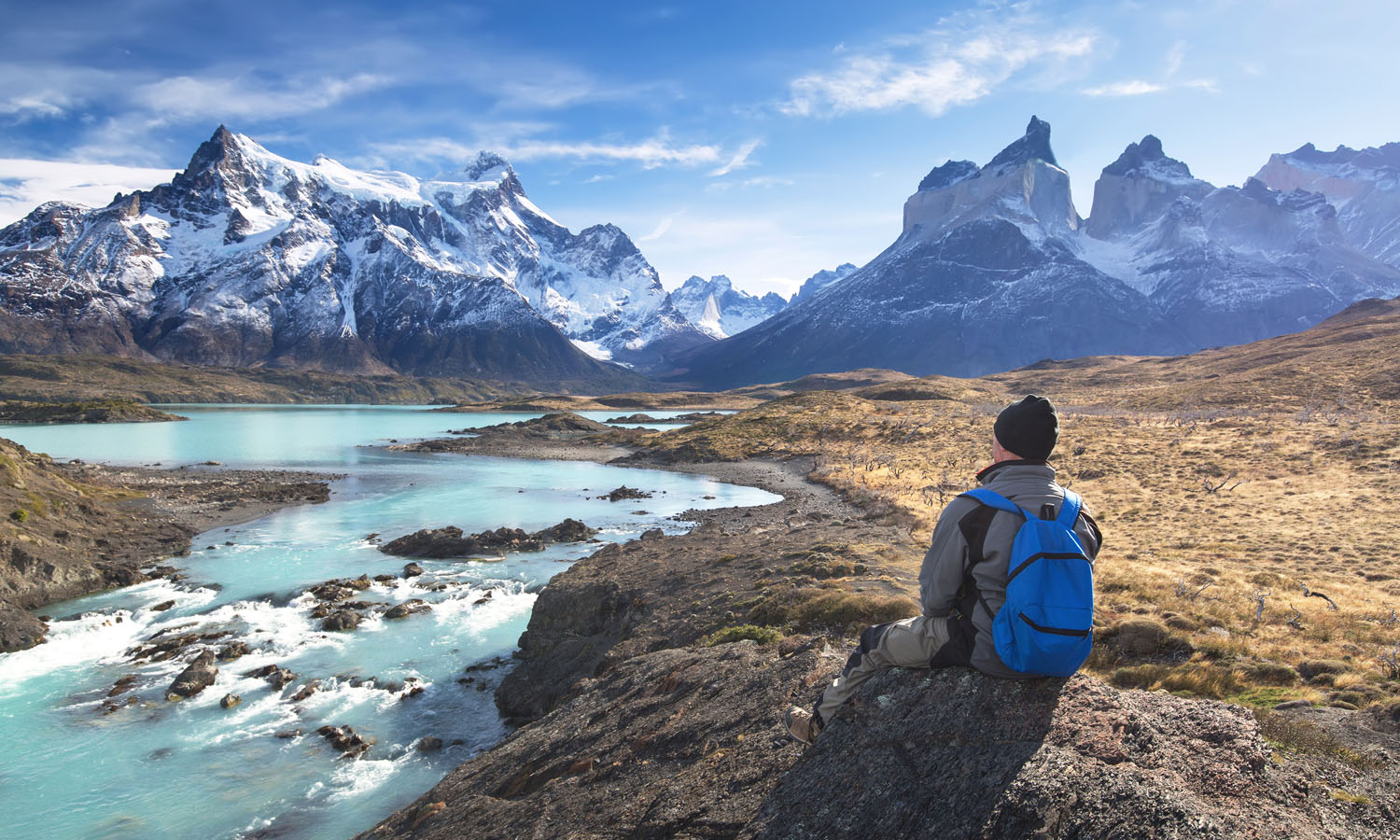
Chile is known for its rich heritage and geographical diversity, with Torres del
Paine National Park the pedestal example. Situated above the Patagonian Desert, the UNESCO Biosphere Reserve offers an incredible display of natural beauty and is a great destination for adventurers, hikers or nature lovers. It’s mostly known for fantastic soaring mountain peaks, the golden pampas grasslands (home to rare wildlife like guanacos, foxes, and South Andean deer) and bright blue glaciers and ice fields.

The colossal Torres del Paine will make you feel insignificant. Trek in the summer when there’s 17 hours of daylight, beginning with sunrises that colour the skies in purples and reds. Once you’ve picked your jaw from the floor, spend the rest of the taking in the vistas of snow-capped mountains, cascading rivers and waterfalls, and mirror-flat lakes.
torresdelpaine.com

IMMERSIVE STAYS
Kachi Lodge, Bolivia

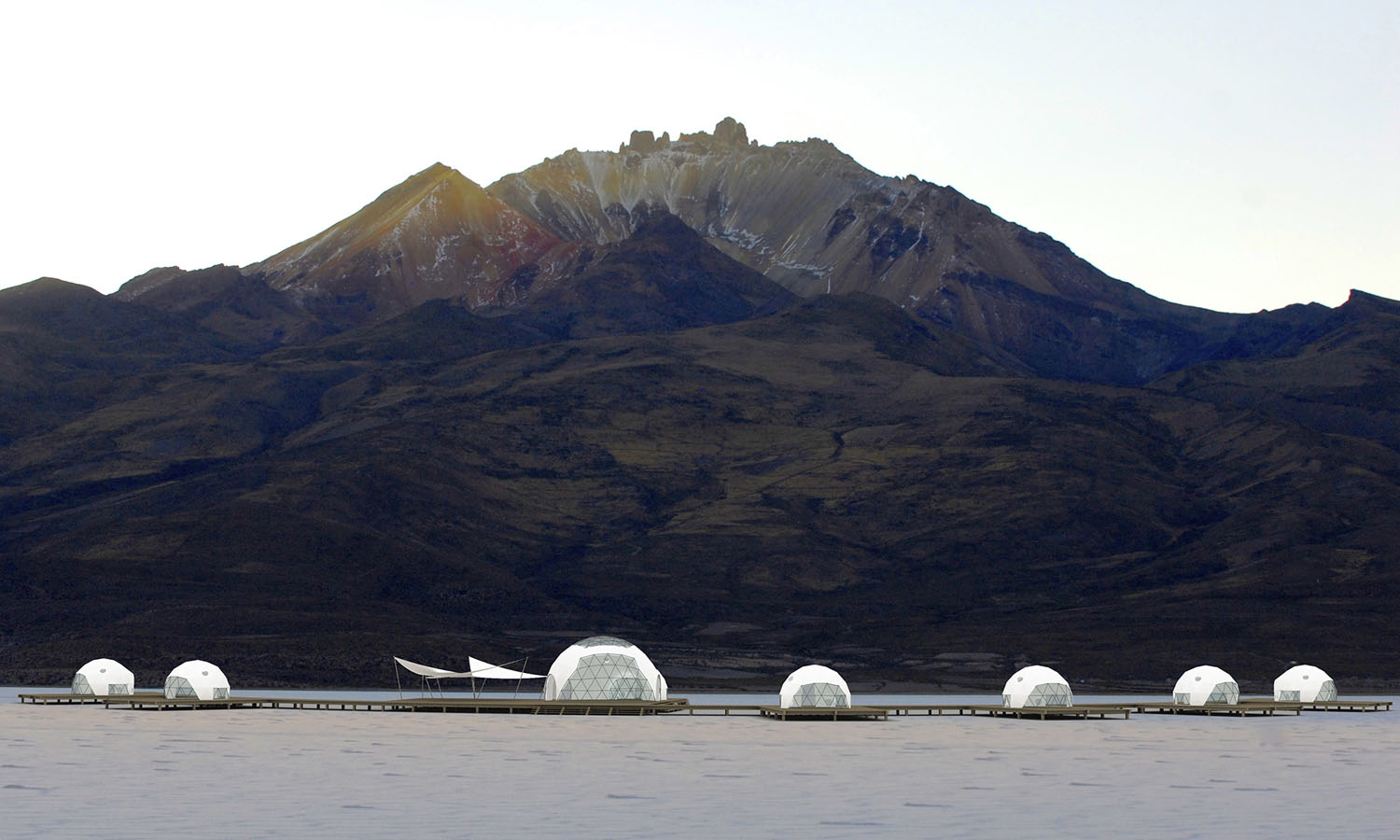
At first glance, it looks like the film set of a post-apocalyptic Hollywood blockbuster. Upon closer inspection though, you’ll find Bolivia’s amazing high-altitude campsite, Kachi Lodge.

Located on the Uyuni Salt Flats, which sit 3,600 metres above sea level, Kachi Lodge features six luxury dome tents and a central, larger dome housing a Moroccan-inspired plush lounge and dining area. Joined by a raised boardwalk, these igloo-like structures come complete with private bathrooms, built-in heating systems (temperatures can drop to -15°C out on the salt flats), cosy furnishings and transparent panels perfect for stargazing with your complimentary telescope.

Trips to Kachi Lodge are all inclusive, so you can also expect a range of activities and day trips to take part in, and a set menu from the team at Gusto Restaurant, renowned for serving up authentic, delicious South American fare. Open since February 2019, you bet this otherworldly experience is on our must-stay list.
kachilodge.com

GET SPORTY
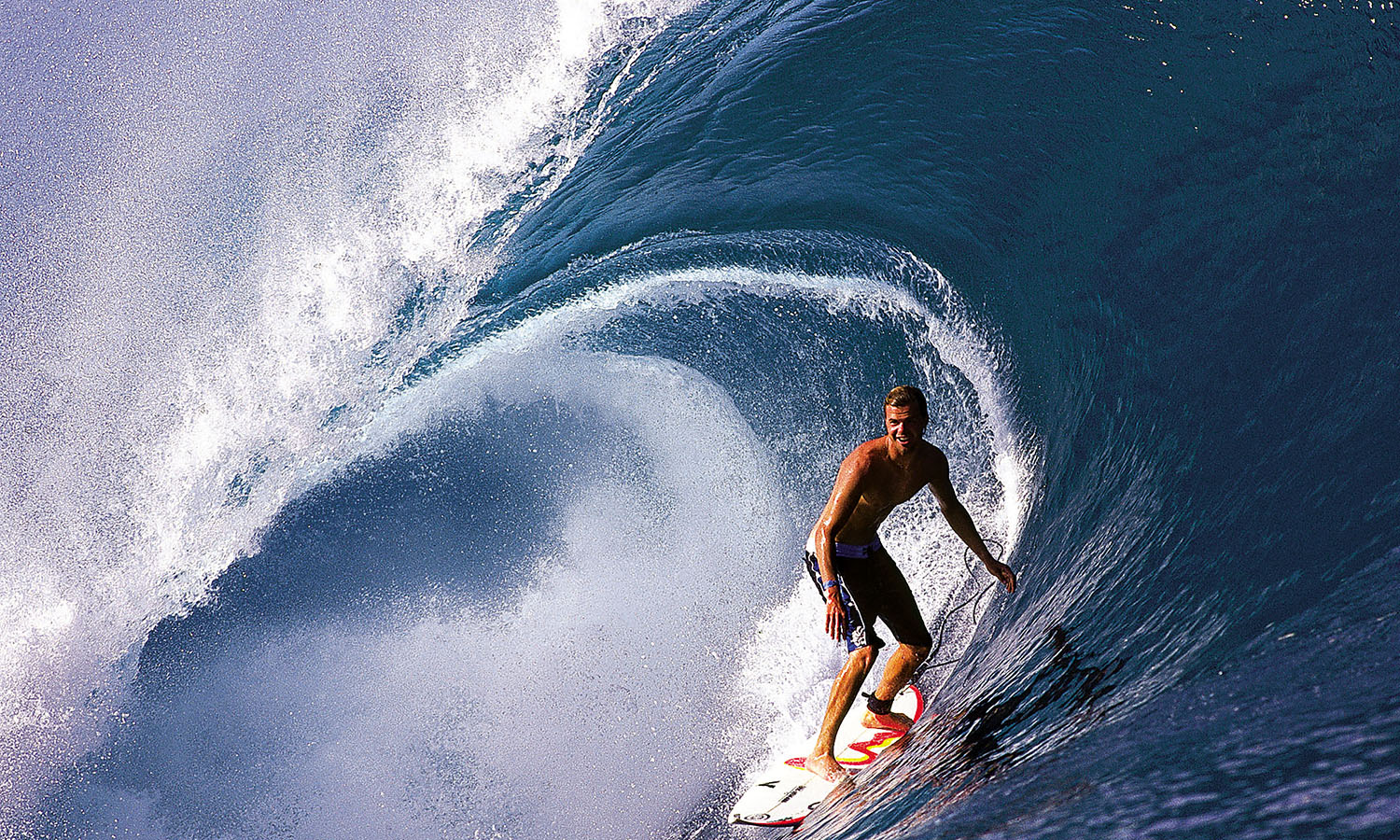
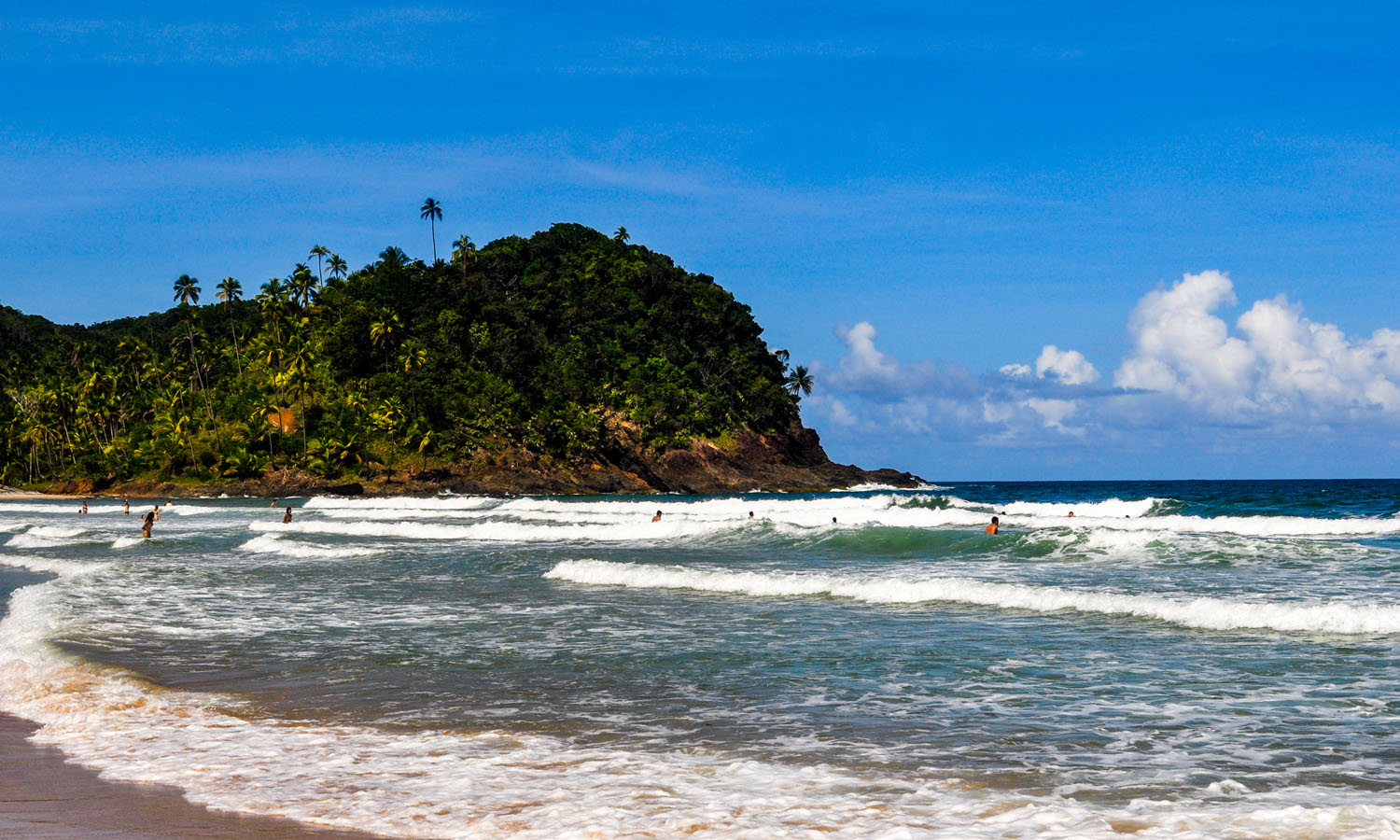
Prainha Beach, Brazil

With the fitness craze taking over the world, it’s no surprise people are seeking out breaks where they can sweat, puff and burn more calories than they consume. Sure, running and walking holidays will probably make an appearance and put the rest of us beachside laze-abouts to post-holiday-bloat shame, but we think searching for active activities that include a big dose of fun should be high on the list. Let’s use surfing in Prainha Beach as an example.

The unspoiled Rio de Janeiro beach is more than just a city escape. With big waves crashing against pristine white sands and the green Atlantic rainforest mountains as your backdrop, this is a prime spot for avid surfers to get amped. When you’re ready to retire the board for the day, there are also plenty of hiking options nearby – in case you want another way to work off last night’s dinner. And when that’s done, you’re not far from Rio de Janeiro.
CATCH AND RELEASE
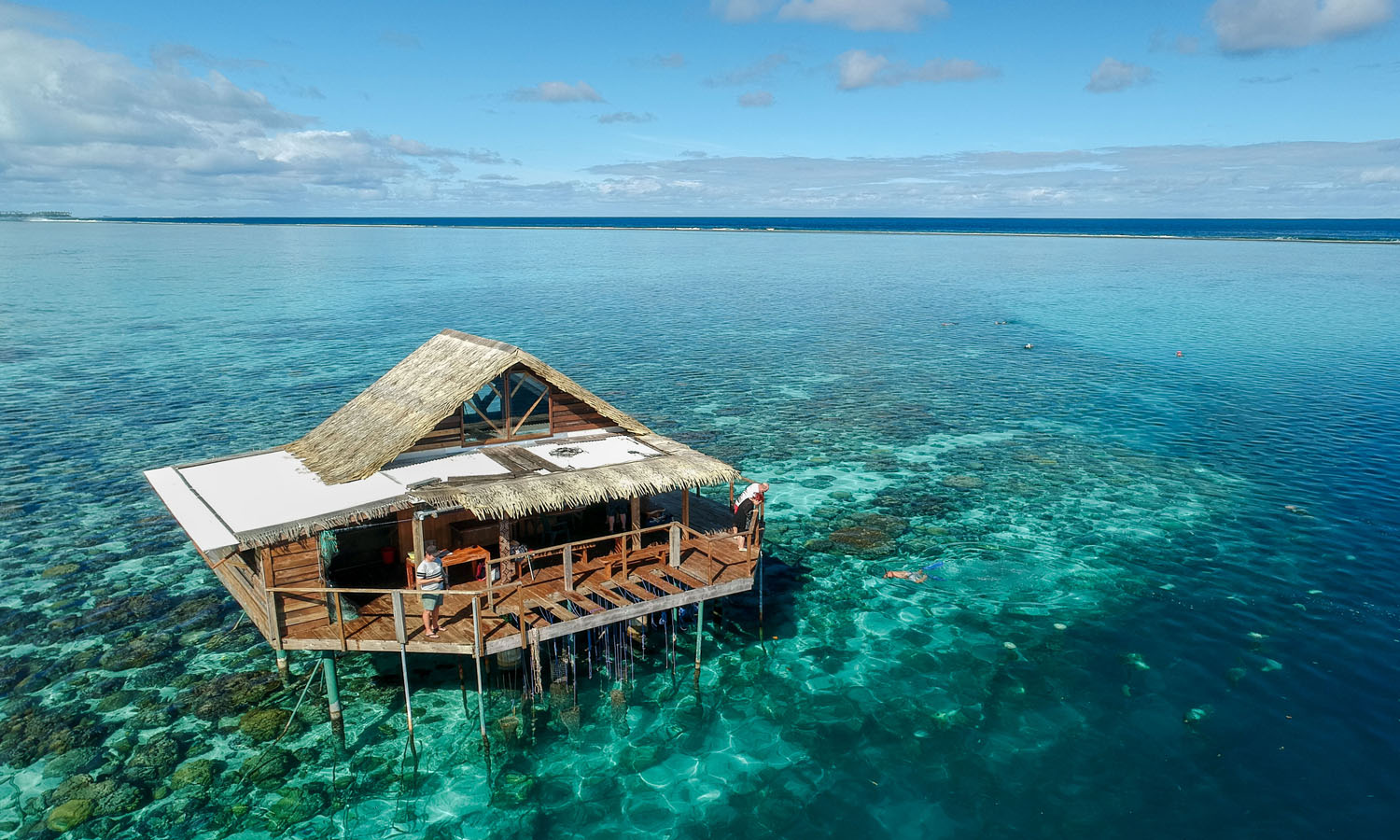
Anapa Pearl Farm, Tahiti

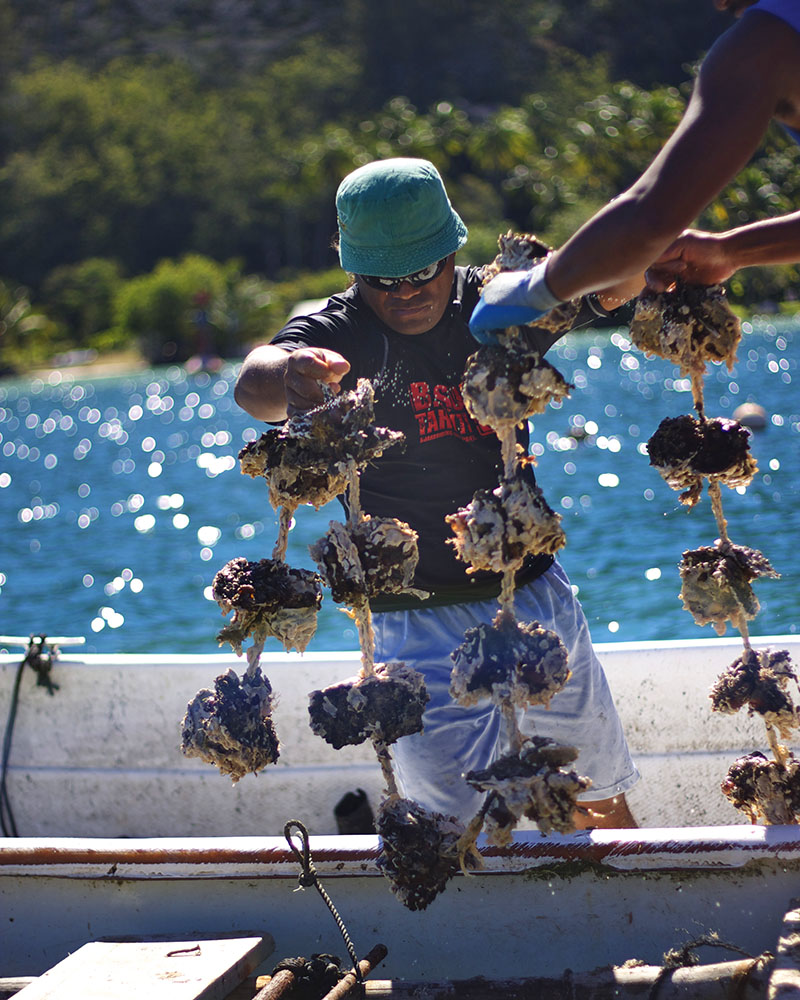
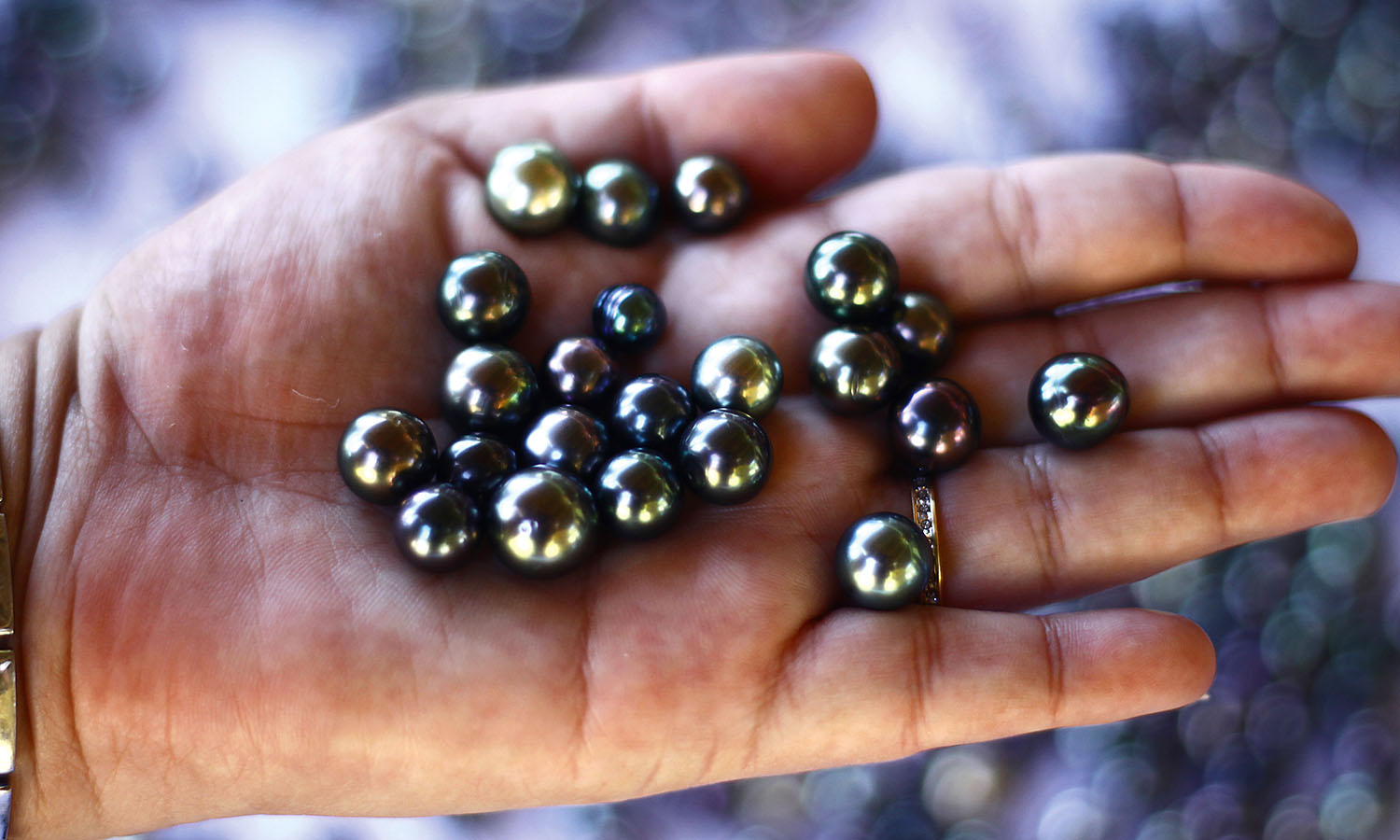
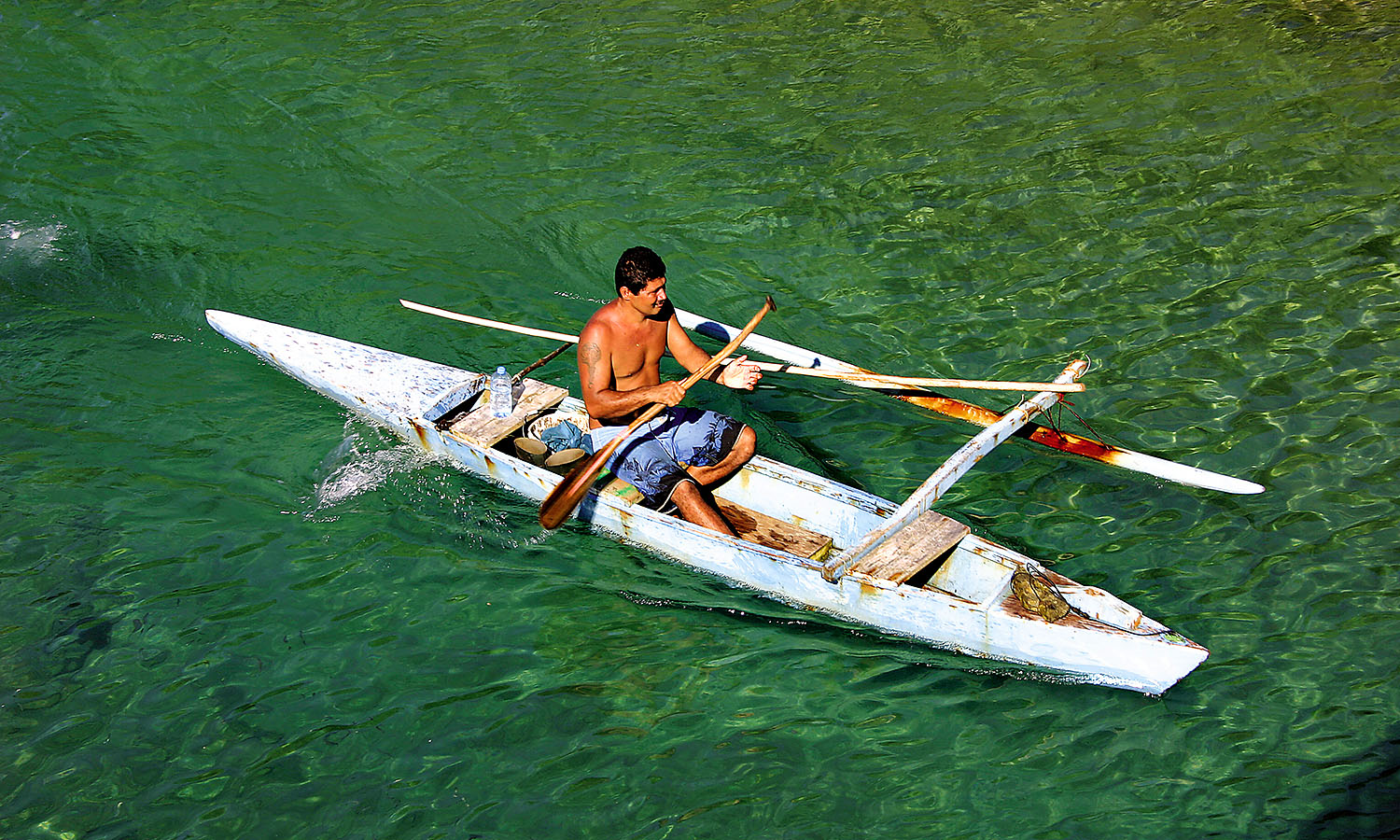
Like discovering the finest Tahitian pearl in an oyster, reaching Anapa Pearl Farm is like stumbling upon a rare gem off the west coast of the island of Raiatea. While this humble ocean shack may not look like much upon approach, it offers the extraordinary opportunity to go pearl harvesting with experienced divers, see how these precious treasures are extracted and cultured, and learn all the secrets about Tahiti’s most famous natural bounty, the prized black pearl.

The farm is accessible only by boat, and when you’re not diving for treasure, there’s plenty of time to go snorkelling in the surrounding reef, where an underwater world of coral gardens and sea life awaits. The best part though? You can choose your own pearl directly from the oyster and have it made into something spectacular and personalised right before your very eyes by the on-site jewellers.

A special ring? One-of-a-kind necklace? At this remote pearl station the choice is up to you!
dreamyachtcharter.com

Where Tigers Leap and Development Creeps

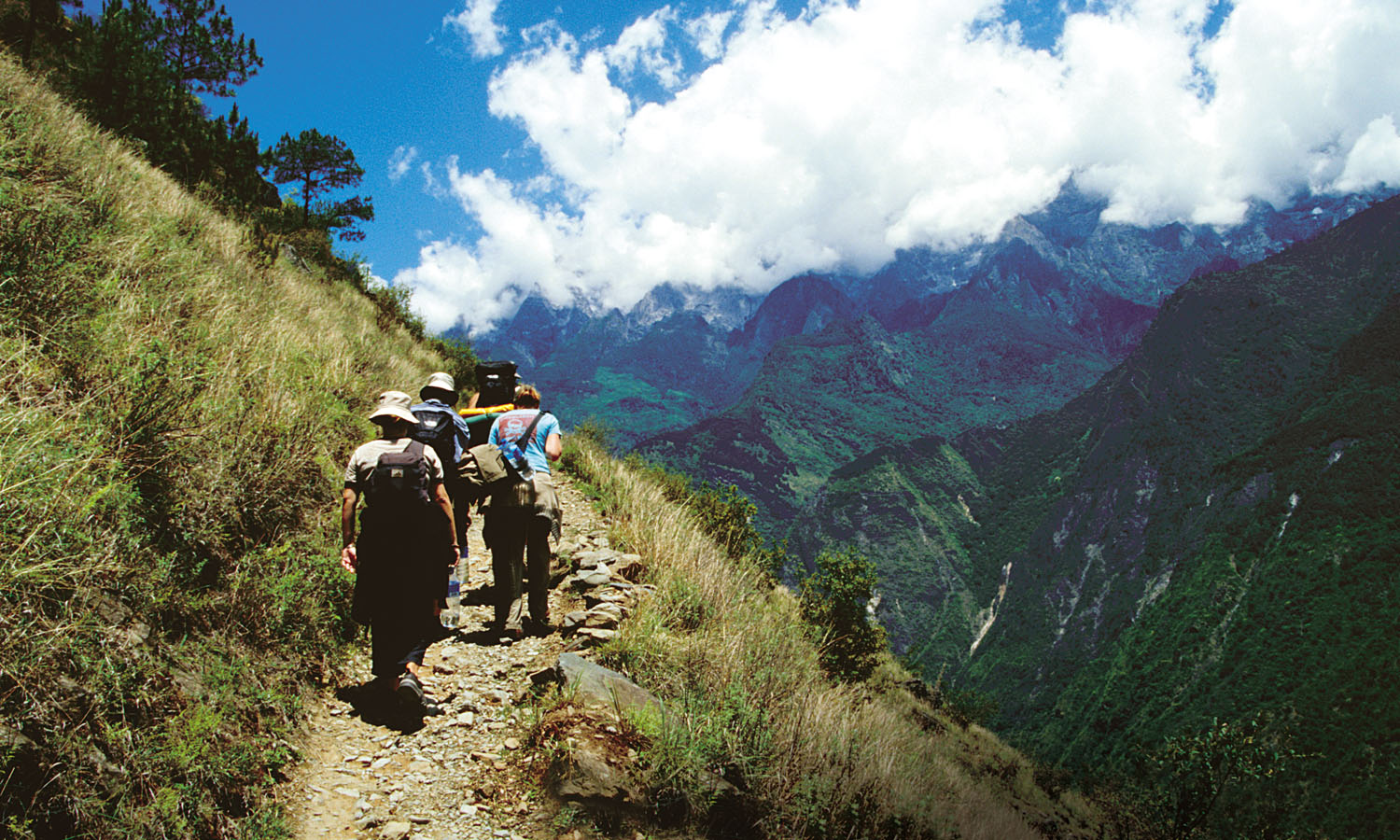
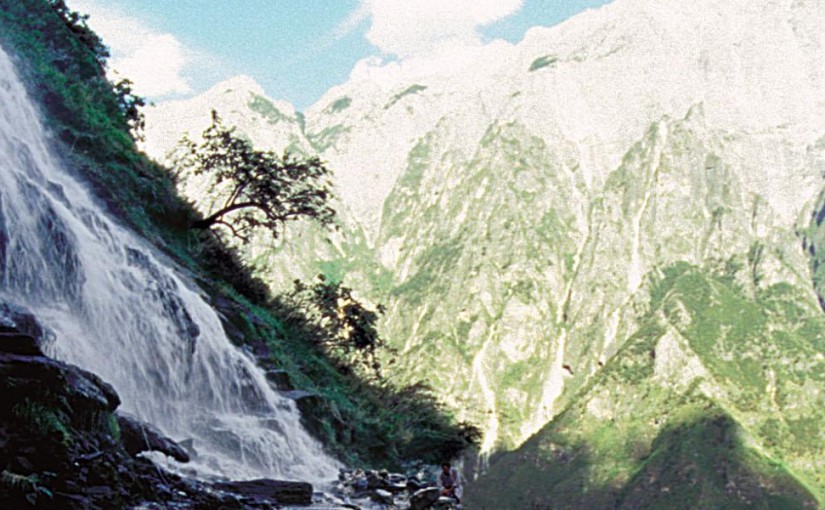
The Tiger Leaping Gorge, where the Yangtze River carves through the mountains of China’s Yunnan Province, is a breathtaking attraction for travellers to the region. The Low Road

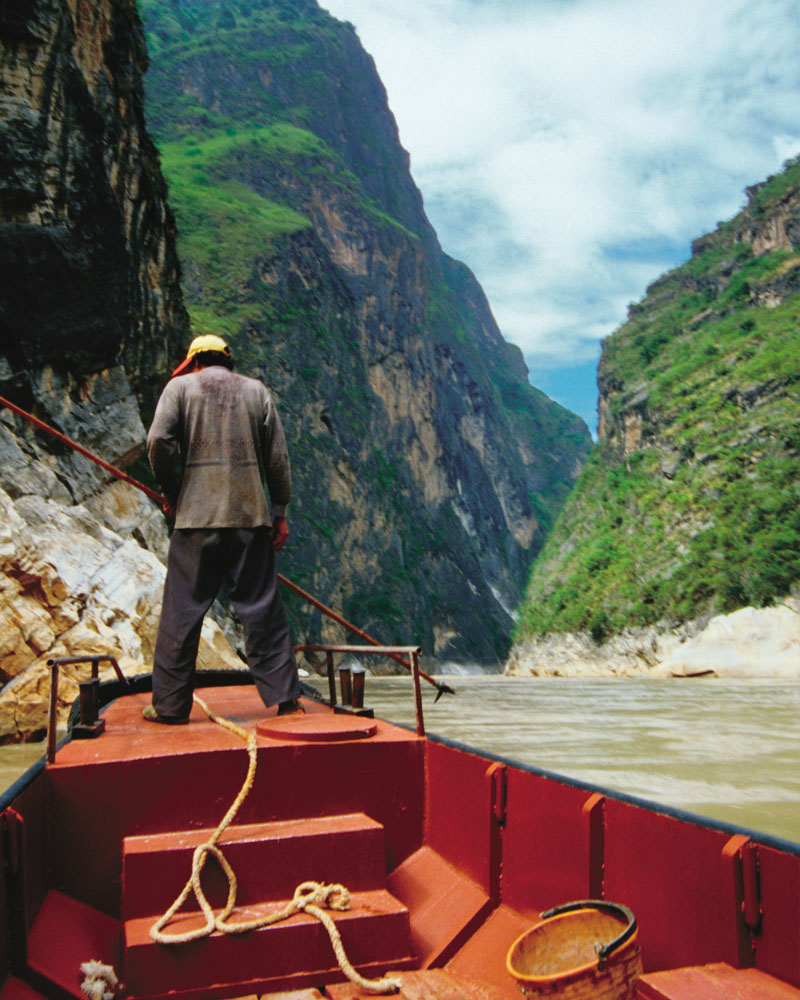
Qiaotou is an unlikely place for an Australian woman to call home. Yet this damp, drab one-street town in the northern mountains of southwest China’s Yunnan Province is where Margo Carter, a former Sydneysider in her late forties, resides. Qiaotou is perched on the banks of the Yangtze River, just before it forces its way through two monstrous mountain ranges in what is the world’s deepest gorge.

From the gushing muddy waters below to the peaks that rise above, the Tiger Leaping Gorge, or Hutiao Xia, rises a staggering 3000-plus metres. Margo arrived a few years ago to trek through the gorge and fell in love with it. She married a Tibetan man, Sean, who runs a guesthouse along the trek route, and is still here.

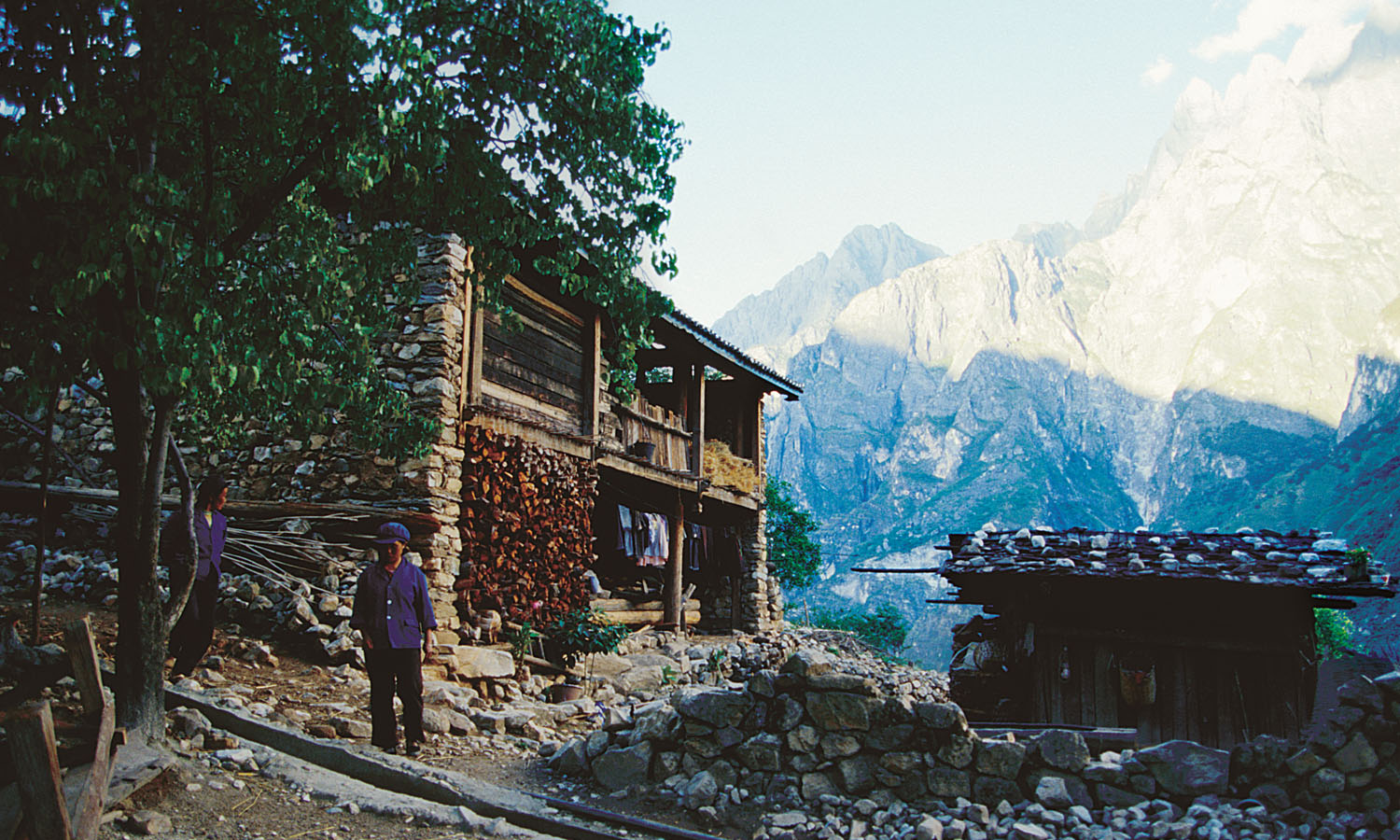
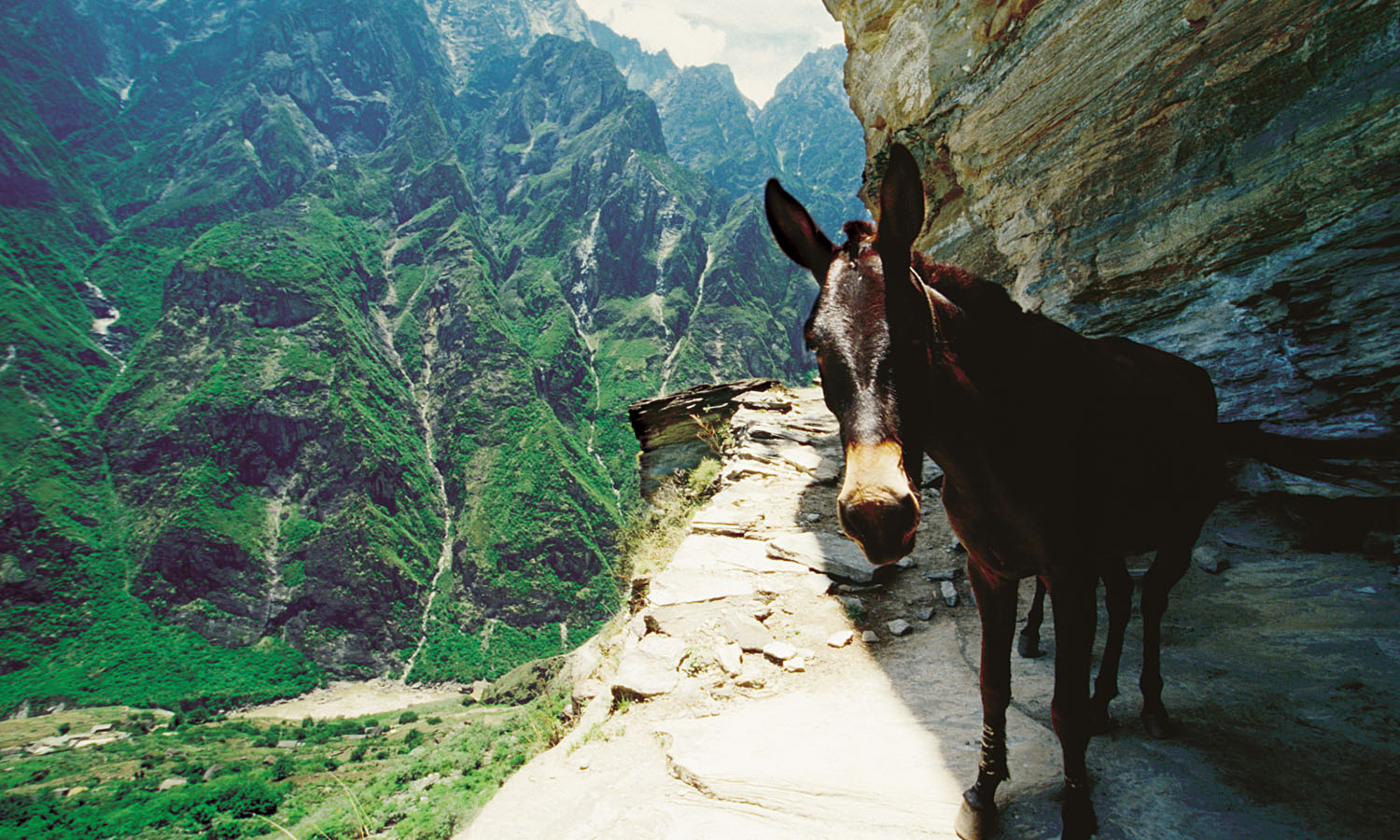
Experiencing the gorge previously required a walk along the old miners’ path that hugs the contours of the northern Haba Mountain range. Overlooking the Yangtze and with breathtaking views of the Jade Dragon Snow Mountain on the southern side, the path passes through some delightful traditional Naxi villages (one of China’s 55 ethnic minorities). A two to three day hike, it is certainly not for everybody. Frequent steep climbs require a moderate degree of fitness.

The so-called ‘28 bends’ is a seemingly neverending steep ascent destined to turn anybody’s calves and thighs to jelly. After heavy rainfall, the path can be particularly dangerous and a number of trekkers have died. Despite the hazards, almost everybody who comes to visit the nearby popular holiday destination of Lijiang wants to see this spectacular gorge.

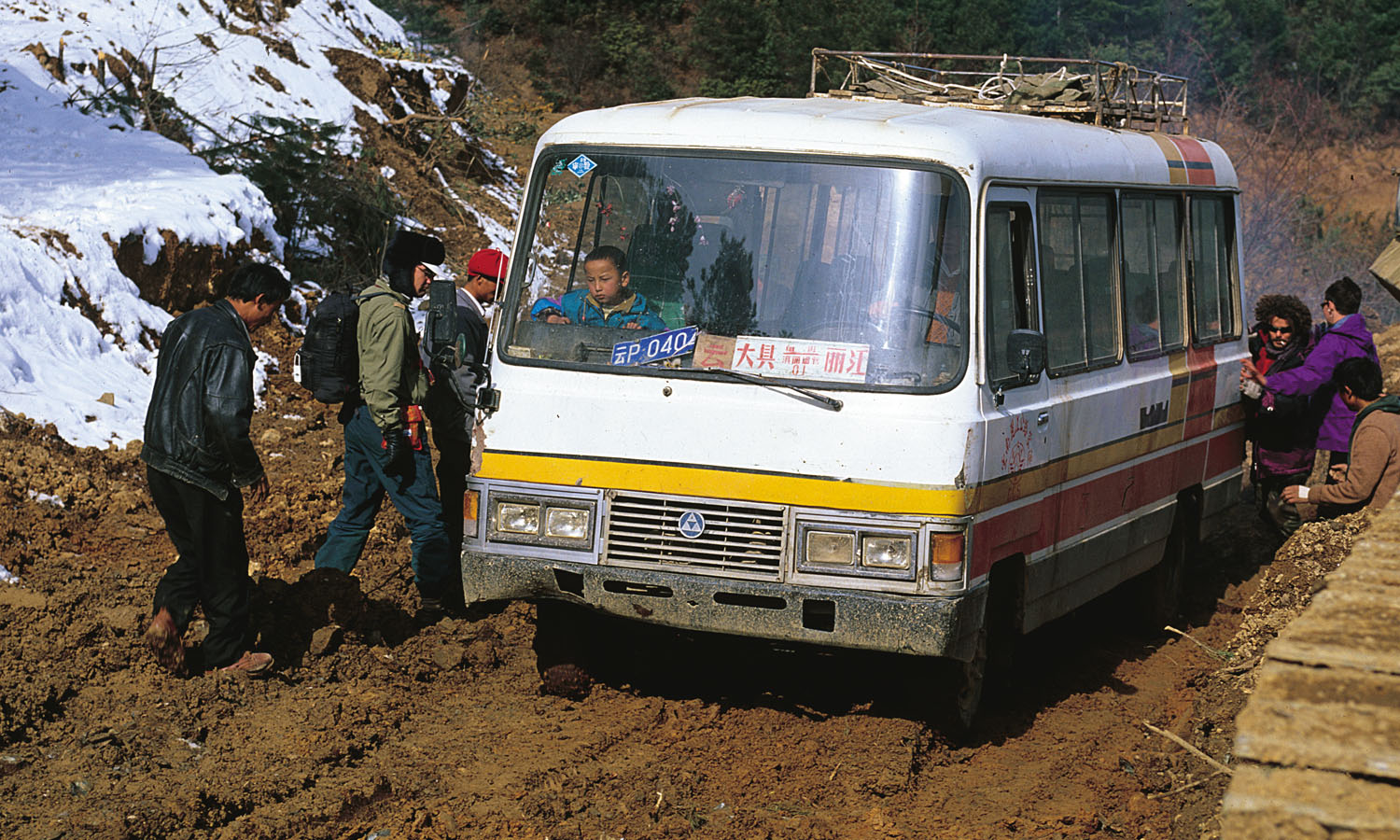
As the Chinese economy continues its unprecedented growth, generating an emerging affluent class, the numbers of domestic Chinese tourists visiting places like Lijiang increases astronomically each year. To meet this demand, the Yunnan government blasted a road along the bottom of the gorge that will eventually run from Qiaotou to Daju, some 30 kilometres away. The road offers close-up views of the river and dramatic rapids where the gorge narrows so considerably that a fable has it that a tiger once leapt across it to avoid a hunter. Buses now use the road to whisk tour groups quickly in and out of the gorge enabling those unfit for or uninterested in the trek to take their ‘I’ve been there’ snapshots.

For many Chinese the idea of independent adventure travel remains alien. Most prefer in-and-out organised tours, typically following a guide who holds a group-identifying flag aloft. The accessible Low Road to the gorge offers a very different experience to the demanding High Road path and draws a different crowd. Trekkers on the ‘High Road’ are likely to be foreign, preferring the freedom of this route. Occasionally greeted by magnificent cascading waterfalls and steep drops, the path hugs tight as it twists and turns along the mountain face. Many trekkers opt for the best of both worlds. They take the High Road from Qiaotou and enjoy the stunning views and meet the locals en-route and then return along the Low Road for a closer glimpse of the Yangtze.

Back in Qiaotou, Margo is operating the Gorged Tiger Cafe, popular with travellers returning or about to embark on the gorge trek. Margo and her husband Sean, who has also been guiding Intrepid Travel groups through the gorge for years, are quite vocal in their opposition to developments in the gorge. At present, High Road and Low Road gorge visitors can be unaware of each other’s existence. According to Sean, this peaceful co-existence has been under threat for some time. When works on the Low Road were in progress, occasional explosions echoed through the gorge and punctuated the serenity of the valley.

In China, tourism often equates with development and Sean says the company managing the gorge has plans to increase accessibility. These include a resort, complete with golf course, and a cable car running through the gorge. Rumours that the gorge is to be dammed are also rife. Margo says officials from Yunnan State Power have made a number of visits to the gorge and the gorge could be dammed as early as 2008. Sean argues there should be only one future – the gorge’s unique beauty should be preserved. “Keep the gorge traditional,” he says. “More ecology tourism, bring tourist economy to countryside. The world has few places as good as the gorge.”

The High Road

Looking up, I spy the imposing 18,000-foot Dragon Snow and Jade Snow Mountains. Looking down, it’s a long drop to a notorious 17-kilometre stretch of China’s Mother River, its raging waters at this section noted as “too dangerous for rafting”. Here, what is locally known as the Jinsha-Jiang, the River of Golden Sand, has sliced like an ancient sword through the towering mountains of Yunnan Province to form what is known in the west as Tiger Leaping Gorge.

I strap on my boots and set off to tackle the route that takes walkers through what is said to be the deepest river-gorge on the surface of the planet. I watch on as goats clamber down barely-there tracks, their hooves causing an avalanche of stones to cascade into the valley, and I wonder if they should rename the area Clumsy Goat-Leaping Gorge.

Being a city girl, I hate walking at the best of times and in the rain I can’t think of anything worse. I repeat travellers’ clichés like mantras as I start clambering over rocks: ‘Suffering is character building’; ‘Today’s discomfort is tomorrow’s dinner table anecdote’. Neither alleviate any discomfort as I slip and slide over rocks and jump across sheer drops.

Tiger Leaping Gorge is a challenge for experienced walkers. Most maps are vague and paths often fork off into five or so options. Trekking its length requires a lot of scouting and it’s easy to become lost. Even the bright yellow arrows delineating the path to the middle-mark village of Walnut Grove are hit and miss, as in some places they vanish altogether.

At one such intersection I decide to follow the path into Ben-di One Village as marked on my hand-drawn map. When the locals fail to understand my (very) broken Chinese, I’m at a loss. Showing them my phrase book simply makes them laugh and after they rotate it in every direction I realise that most of them cannot read. Smiling and laughing they point to a path, and so on I walk. After half an hour of passing women returning from the fields with baskets full of bamboo, I begin to worry. Not a yellow arrow in sight and I seem to be returning in the general direction of Qiaotou, the town where I began.

Struck with panic, I decide to backtrack and explore other paths that passed by the village. Within minutes of leaving the settlement I find a marker under an overgrown bush, a splodge of vibrant yellow paint splashed across the craggy old boulder pointing to the right-hand path. Further along there are more distinctive arrows, which are easier to follow. After another half hour, the views of the aquamarine gorge surpass superlatives in equal but opposite measure to the path that disintegrates altogether in places. I stop to catch my breath and take some rain-swept photographs before beginning the two-hour ascent to the high point.

From here, the trek feels more like the beginning of a Bond movie with knife-edge bends and sheer drops into the abyss. It’s 3,500 feet down into the rocky gorge – no-one would survive the fall. The wind blows and a waterfall cascades across the main path. After seven hours of walking, every bone in my body aches but there is no going back. The sun comes out just as my spirits fade to nothing, the light rallying my weary body. I am facing the hardest section yet with another descent that has my knees bending at the strangest angles. When the yellow arrows suddenly turn into adverts for guesthouses, I’m grateful for the respite.


The Forgotten Islands of French Polynesia

The first time I heard the words ‘The Forgotten Islands’ was from the lips of Dowager Queen Marau of Tahiti. Her dark eyes slowly lighted up with some inner fire as she said ‘Les Iles Oubliees!’ Yes, there you find what you seek, the soul of Polynesia. Go there!
So begins the first chapter of the book I’ve started reading aboard a flight to these very islands. I read on, stopping sometimes to stare out the window at the big blue South Pacific below. Tahiti has gone from view now. Almost 2,000 kilometres of eternal ocean stretches out from here to my little-known destination.

“But what, and where, are these islands?” I asked, my curiosity mounting by quick degrees. “They are the Gambier Archipelago,” she answered. “There are eight of them, and they lie more than a thousand miles to the southeast of Tahiti. Mangareva is the most interesting, the island for you. They tell me it is very beautiful.”

The book – Manga Reva, The Forgotten Islands – was written in the 1920s by an artist called Robert Lee Eskridge. It’s a firsthand account of the American’s eight-month stay on French Polynesia’s outlying Gambier Islands, the place I’m now headed. Although written almost 100 years ago, it’s all I have to give me a sense of the islands I’m about to arrive at. Modern-day guidebooks don’t offer much, if any information on this part of the world.

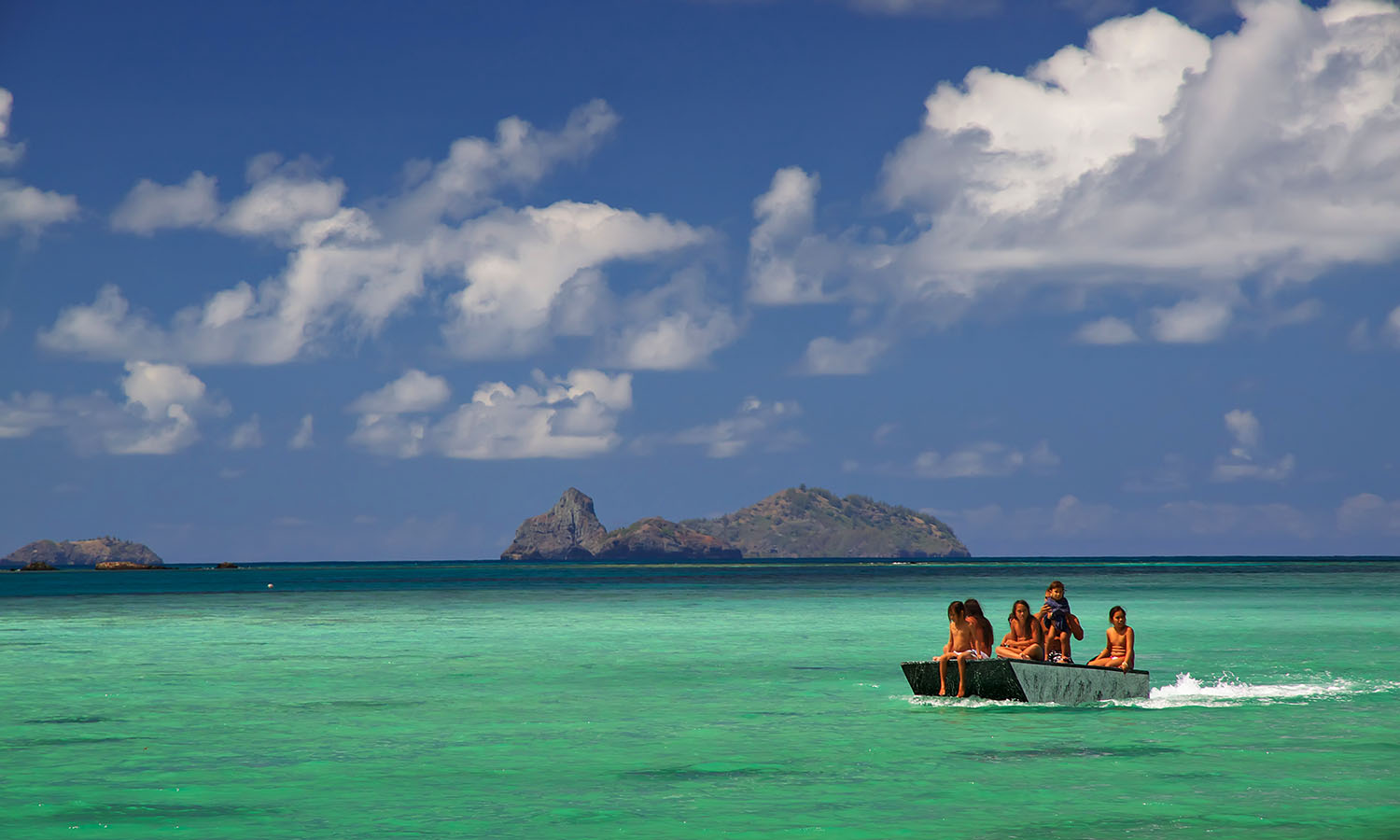
The small plane begins its descent, circling the coral circumference of the biggest lagoon I’ve ever seen. As it banks left, I catch sight of Mangareva stretched out in the pristine blueness like a prostrate man enjoying a bath. It’s a superb sight, full of promise for adventure.

It’s a more temperate landscape than I was expecting – like the tropics meets Tasmania. While Tahiti and her sister islands in the north have been mythologised for centuries for their hot and uninhibited sexiness, I get the sense that the Gambier Islands are like Tahiti’s distant cousins twice removed: more prudish and pious, but still perfectly pretty.

“Welcome to our paradise!” says a local lady in a heavy French accent as I get off the shuttle boat from the airport. She lobs a massive necklace of sweet-smelling flowers around my neck and introduces herself as Bianca, my host and one half of Bianca & Benoît, the family-run pension I’m staying at on Mangareva. We pile into her pick-up and head for the pension.

The drive, if done in one hit, should take about three to four minutes from the jetty. But with Bianca slowing down and waving at every man, woman, child and chicken we pass, it takes closer to 20.

“All Mangarevan people wave for saying ‘ello,” she says. “If no wave, they are tourist or no ‘ave education.”

As we pass through the main village, Rikitea, Bianca tells me there are about 1,000 people living on the island. There’s no crime and most of the people are “always ‘appy”. In town, in the shadow of the throne-like Mount Duff, everything is much more tropical and colourful than it looked from the plane. Lively green gardens with bright hibiscus and healthy fruit trees embellish the plain brick houses. Kids play in the sun. Adults gossip in the shade of breadfruit palms. There are only a couple of cars on the road and a few scooters run about the main street.

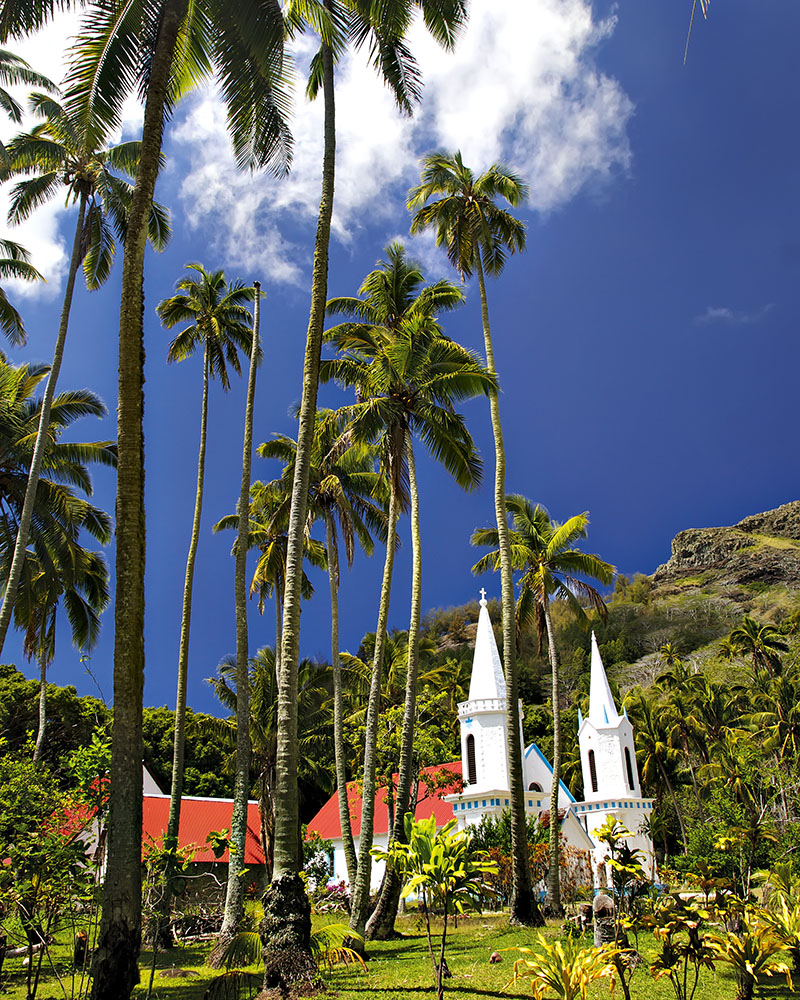
Along the way we pass European style stone buildings and a monstrous cathedral – big enough to fit every Mangarevan and more inside. They look as out of place in this small village as coconut palms in the Pyrenees.

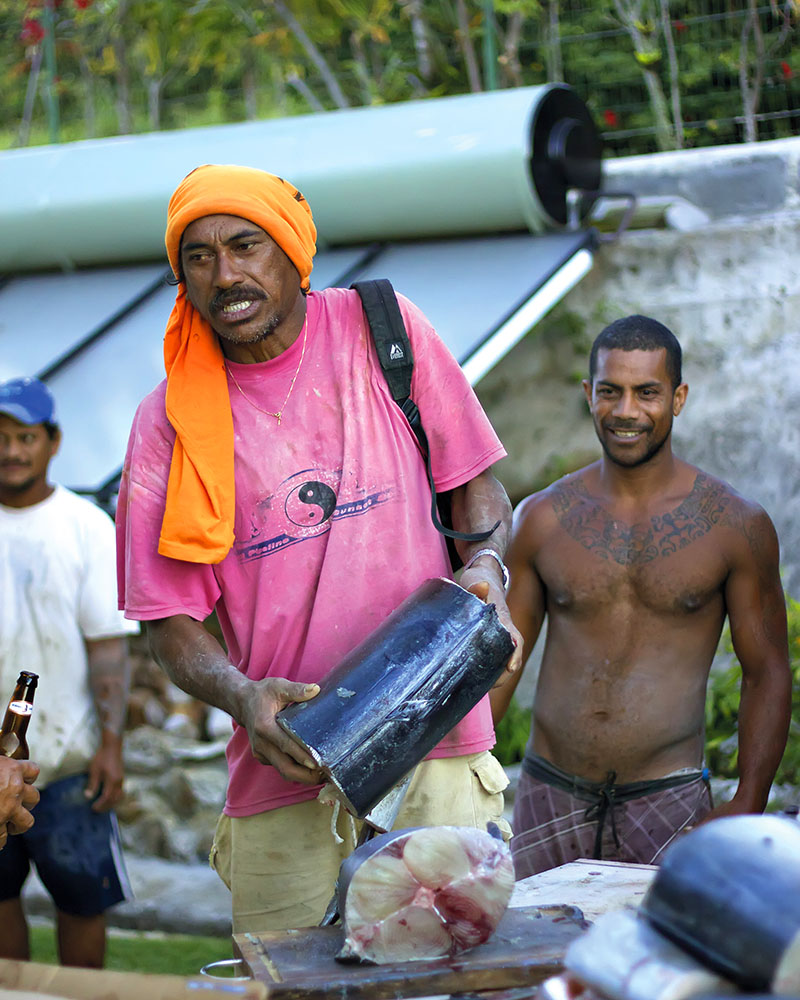
At the pension I find Bianca’s husband, Benoît, and a few of his fishing pals hacking into the day’s catch of 13 massive wahoo fish. The tattooed workmen doing renovations at the pension join in by slicing off hefty chunks, a kilo or more each, to take as a weekly wage bonus.

Bianca, a first-rate eater by the looks of her, also gets involved, pulling raw flesh from the bone and munching it down with an unidentified brown sauce. Soon there’s very little left of the ute-load of 50-kilogram fish. When I ask Benoît if he makes a tidy profit selling the fish to others in town he looks at me like I’ve just farted in his face.

“Not for selling,” he says. “Only for giving, for my friends and for the people.”

I note my sinful, capitalist ways and get back to eating raw wahoo and drinking beer while the sun goes down.

Sin is a topical subject on Mangareva, I learn as I read in my cute little bungalow that night. This place was once the cradle of Catholicism in Polynesia and the idyllic Truman Show vibe of today hasn’t always existed here.

The reason these far-off islands hold more than 100 stone buildings – churches, presbyteries, convents, schools, weaving workshops, bakers’ ovens and watch towers, is that they were once ruled by a nutty French missionary, Père Laval, who was hell-bent on constructing things in order to please God.

In his book, Eskridge explains that Laval made the pilgrimage to the “unheeding cannibals” of the Forgotten Islands to save souls for the church. But it soon became apparent that he was, as Eskridge put it, “trying to slip a Catholic soul into a Polynesian body with the shoehorn of fanaticism”. It was disastrous from the moment he sailed into the lagoon.

In a short time, through trickery and cunning, Laval convinced the joyful pagan population that the word of Jesus Christ was the law. Through the hard labour forced upon them to build his egomaniac empire, their spirits were wrecked and they began to die. The population, once 5,000 strong and peaceful (if we overlook that a human was occasionally on the menu, of course), fast disappeared, never to return.

The next morning, I’m keen to explore. Because there are no hotels or tour companies on the island, Benoît and Bianca operate their own outings and activities for guests. With Benoît as a guide, and a few of his family members and some French tourists in tow, we head out for a full-day boat tour of the lagoon and the other Gambier Islands.

Although the expression ‘middle-of-nowhere’ might be insulting to those who call ‘nowhere’ home, it’s a phrase that keeps coming to mind when we first get out on the water among the Gambier Islands. This archipelago doesn’t even earn a dot on many world maps. Isolation is an understatement.

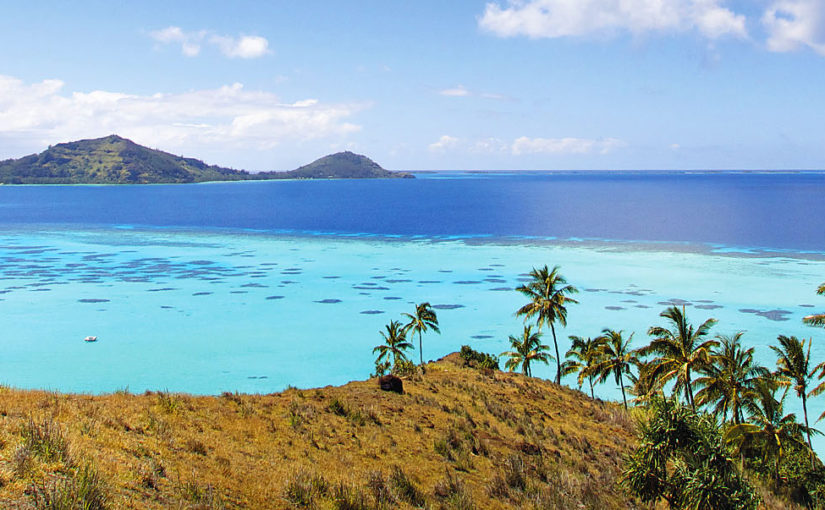
On board the boat, Benoît takes us to discover a good sample of all that the lagoon holds. Enveloped in the 90-kilometre reef are 10 volcanic islands and 25 sandy islets. Most of the islands are now uninhabited or only have a few families on them.

Laval’s reach extended beyond just Mangareva. But for all of his despotic ways, the man’s taste and location scouting skills are beyond reproach. Granted, saying that an archipelago in French Polynesia is beautiful is to state the proverbial obvious, but this place is a notch above all else. Eskridge, a man prone to understatement, is forever gushing about the colours and the magnificence of the lagoon.

“Blue, emerald, mauve and violet interplayed beneath the arched blue of the austral skies…

Such blue and cerulean, emerald and emeraud, never existed anywhere outside the South Seas.”

Throughout the day, Benoît ensures that we’re treated to a good mix of culture, nature, history, action, food and relaxation. We find grand churches on islands whose population probably isn’t more than 20. Being a Sunday, we come across one with a service underway. Thirty or so pairs of thongs are plonked at the arched door. Rich vocal harmonies drift out the stained-glass windows and float down a broad avenue of coconut palms and across the still lagoon. Inside, I take a pew and watch the thickset men and women sing and clap for the lord above. For longer than a moment, I forget my own aversion to Catholicism and lose myself in the warm sounds of the singers.

Further into the lagoon, Benoît takes us to Akamaru Island. The colour of the water here is worthy of every superlative in the book.

“Blue like Bora Bora, no?” says Benoît.

For him, this is just another day at the office. For me, I’ve just arrived at a place that, in an instant, makes me question why I live in a city and wonder what I can sell to live here forever. Yes, it’s blue like Bora Bora, but there’s nobody about. Not one bug-eyed French couple flicking their Gauloises ciggie butts into the water from their five-grand-a-night overwater bungalows.

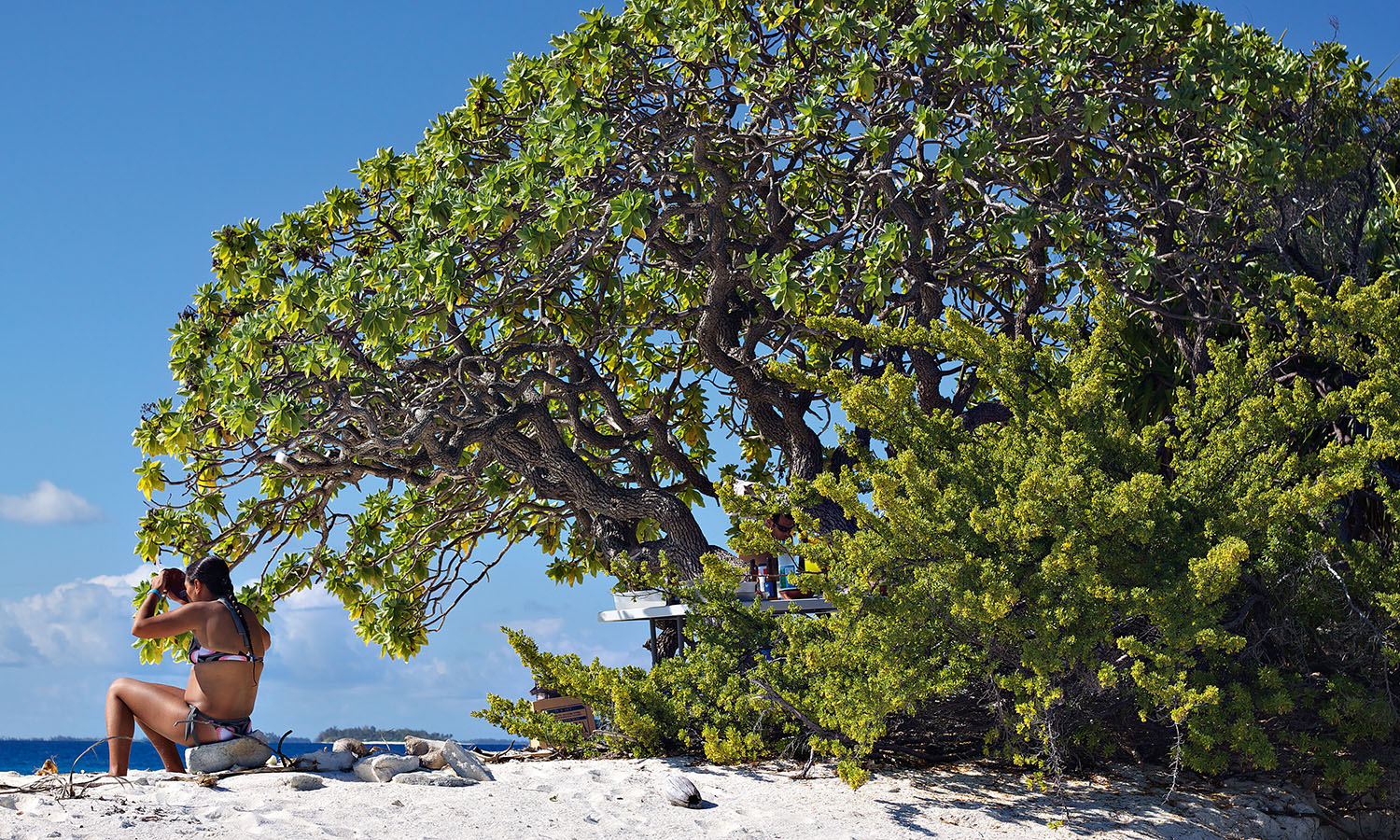
Lunch, a seafood barbeque and banquet, is eaten on a long islet at the edge of the lagoon. We eat, swim, snorkel and sleep in the sand.

We spend the afternoon island hopping, walking and learning (in very broken English) the history of these places. At the end of the day, I let Benoît know it’s one of the best day trips I’ve ever done.

Nights back at the pension quickly slip into their own little routine. There’s reading on the deck of my bungalow, watching for shooting stars in the boundless Austral sky, eating with Benoît and Bianca and the rest of the family and sleeping at an early hour.

In the early mornings, I amble around the island exploring the haunted ruins of Laval’s mad ambition. The whispering ghosts, who Eskridge frequently met with in the 1920s, are always on my mind. Every noise makes me jump. A chicken scratching in the scrub near an abandoned church I’m in has me running out the door.

Each day brings something new. I hike with the French tourists to the top of Mangareva’s highest point, Mount Duff, to find a most impressive vista. We also visit an overwater pearl farm, producing world-class Mangarevan black pearls. We eat baguettes in the village and swim and snorkel in the lagoon.

The idyllic simplicity and lack of rush here is contagious. It seems unbelievable that I have this place mostly to myself. I am shocked when Bianca tells me I am the first Australian she has ever hosted in all her years at one of only a few pensions on Mangareva.

Every journey has its most memorable moment. On Mangareva, it comes in the late afternoon as the sun prepares to slump behind Mount Duff and it turns all it touches to a radiant gold. I’m out in the lagoon on a surf ski, drifting and watching the world around me while in a happy daze. Kids snorkel and spear for fish. Pearl farmers relax and laugh on the verandahs of their overwater offices after the day’s work. White birds, like long-tailed doves, glide across the reddening sky in pairs.

Back on shore, people walk to their houses after whatever it is they’ve been doing to fill their days – no doubt they wave and chat and laugh as they go. There is magic threaded through every molecule in this place. As I float there in a lagoon on the edge of the earth, I can’t help but grin like a moron. This is the soul of Polynesia. Everything is exactly as it ought to be.

Breathe Deeply

It’s dawn and I’m surrounded by the sheer walls of a granite cirque at the top of a remote valley. The crowns of the peaks, lightly dusted with snow and stark against the blue sky, have just caught the first rays of the rising sun and are glowing orange, the whole magnificent light show reflected in the still pools of the surrounding marsh land. The rocks exude warmth I can’t share, for here, at the foot of the cliffs, the sun is still half an hour away. Amazingly, in a country receiving up to four million tourists a year, there are no stalls selling forgettable souvenirs, no children running and shouting, and absolutely no grinning youths taking selfies. I’m completely alone.

Faced with the array of wonders Chile boasts, it’s surprising most tourists stick to the same three points of a scalene triangle: the soaring towers of the southern Patagonian Andes, the arid desert around San Pedro de Atacama and the eerie isolation of Rapa Nui (Easter Island). They’re all magnificent locations, to be sure, yet barely scratch the surface of a country more than 4000 kilometres long.

Probably the fourth most popular area in Chile is the Lake District, a land of volcanoes, water, mountains and national parks that clusters at the northern end of Patagonia and flows across the border into Argentina. While some parts can be busy, others are just ripe for exploration – one of these is Parque Tagua Tagua.

Located at a wide spot in the Puelo River, southeast of the main bulk of the Lake District, this 3000-hectare private reserve has managed to remain unspoiled due in part to its protective geography. Comprising the entirety of a hanging valley carved by the passage of an ancient glacier, Tagua Tagua is shielded by high ridges either side and culminates in a 30-metre waterfall that crashes ferociously into the Puelo, creating a fearsome natural barrier that keeps away all but the most curious of explorers.

Of course, the valley wouldn’t have remained unknown if it weren’t also remote. From the regional hub of Puerto Varas we’d driven for hours through farmland towards the Reloncaví Estuary, the first finger of a fjord system that runs all the way to Ushuaia, the southernmost city in the world. Leaving bitumen behind, we wound around forested mountains that disappeared into the clouds and through small rainswept settlements. The gravel terminated at a great body of water, Lago Tagua Tagua, where a few forlorn vehicles waited for the car ferry to take them to the continuation of the road south.

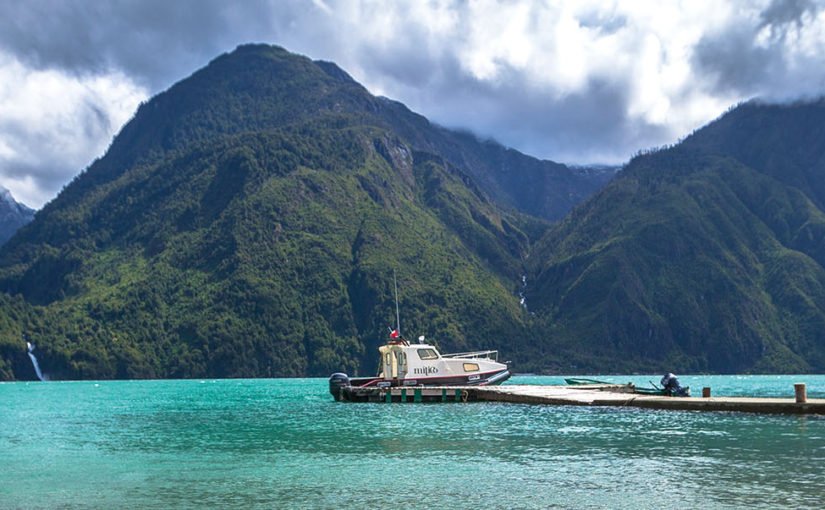
A 10-minute boat ride from the dock brought me to my accommodation on the shore of the lake directly opposite the entrance to Parque Tagua Tagua. Mítico Puelo Lodge is a fabulous wooden building in the style of an Alaskan fishing lodge, constructed in 1989 by a rich American fly-fishing enthusiast. Back then there were neither roads nor ferries and all guests were flown in by helicopter. Yet despite hosting high-profile Republican Party politicians and prestigious clients such as Bob Dylan and Robert Redford, the lodge only operated for three years.

“The owner’s son-in-law was in charge of operating the lodge, but imagine a young man from North America who likes to party, has a few million dollars in his pocket and his family very far away,” says Rodrigo Condeza, the current manager. “That combination was kind of bad. Two helicopters crashed, one of the boats capsized and one of the aeroplanes went into the lake. Here in Patagonia, unlike Alaska, it is really windy and you have to know how to fly among these mountains. I think they didn’t have this kind of experience.”

The lodge is now Chilean owned and in its third full season as Mítico Puelo. “This is a refuge,” explains Rodrigo. “It is not fancy, but simple and practical. Our focus is outside. For us the luxury is in the forest, the trees, the mountains and the water. Clients must not think this is a hotel or resort and stay inside the whole time. That is not the idea.”

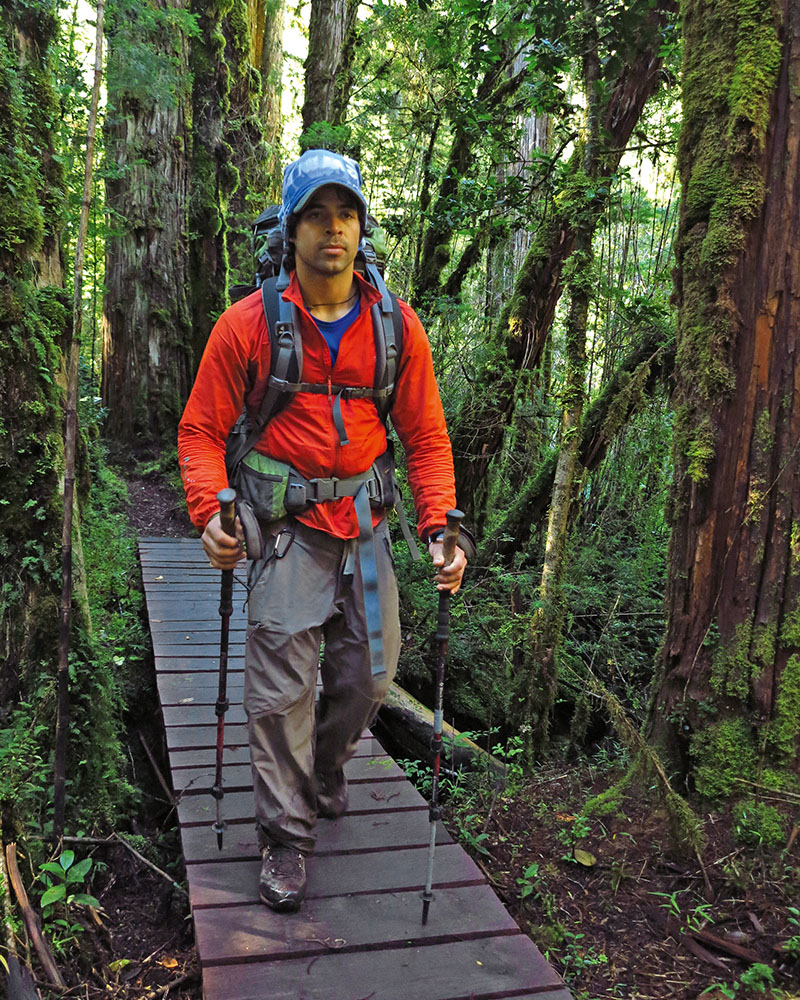
While there are plenty of outdoor activities offered around the lake, including fly fishing, mountain biking and kayaking, I’m here strictly for the hiking. My guide is Mauricio, a softly spoken local guy who has been working here for three years and obviously loves taking clients into Parque Tagua Tagua. A short boat ride across the lake takes us to the pounding waterfall, beyond which the valley zigzags steeply up through the forest and into the mountains, stern and craggy behind a veil of cloud.

When the boat has dropped us on bare rock, just out of the spray of the falls, Mauricio leads me up a steep but short path to the ranger station where everyone must register their trip. According to the records, the park had just 843 visitors in 2015.

The single walking track runs 10 kilometres up to the head of the valley, not counting a few side-trips to see waterfalls, where we’ll be staying overnight in a purpose-built hut furnished with bunks and a wood-burning stove. While Mauricio carries a sizeable rucksack with all our food, I require only a light daypack.

Behind the ranger station is an area of fruit trees planted by a Mapuche family who lived here 90 years ago. Grapes, apples and citrus fruit lie on the ground around a tumbledown wooden shack, still standing but choked with weeds and brambles. Leaving this last trace of habitation behind, we work our way slowly and steadily, along tracks and over basic, well-made bridges, through the evergreen Valdivian rainforest that dominates the lower half of the valley. Two days of much-needed rain have left the park as lush as a cloud forest – an explosion of ferns, mosses and lichens – and the gushing Rio Tagua Tagua is startlingly clear. “Breathe deeply,” reads a sign in Spanish at the side 
of the track. “You are entering a pristine area.”

There is plenty of wildlife living in the valley, from numerous species of bird and frog to big-ticket mammals like the puma and the southern pudú, the world’s smallest deer. Sadly, we aren’t lucky enough to spot either of these, although the only other hikers we encounter, a couple on their way back to the lodge, claim to have seen a puma footprint in the mud. The most exciting fauna we spy are chucao, small orange-breasted birds that scratch around in the dirt like chickens looking for insects to eat. Mauricio knows his stuff though, frequently pointing out small leaves and berries with scarcely believable enthusiasm. “This is one of my favourite plants,” he whispers. “Look at the way the leaves spread. And this one, this is super interesting. It is a member of the tomato family!”

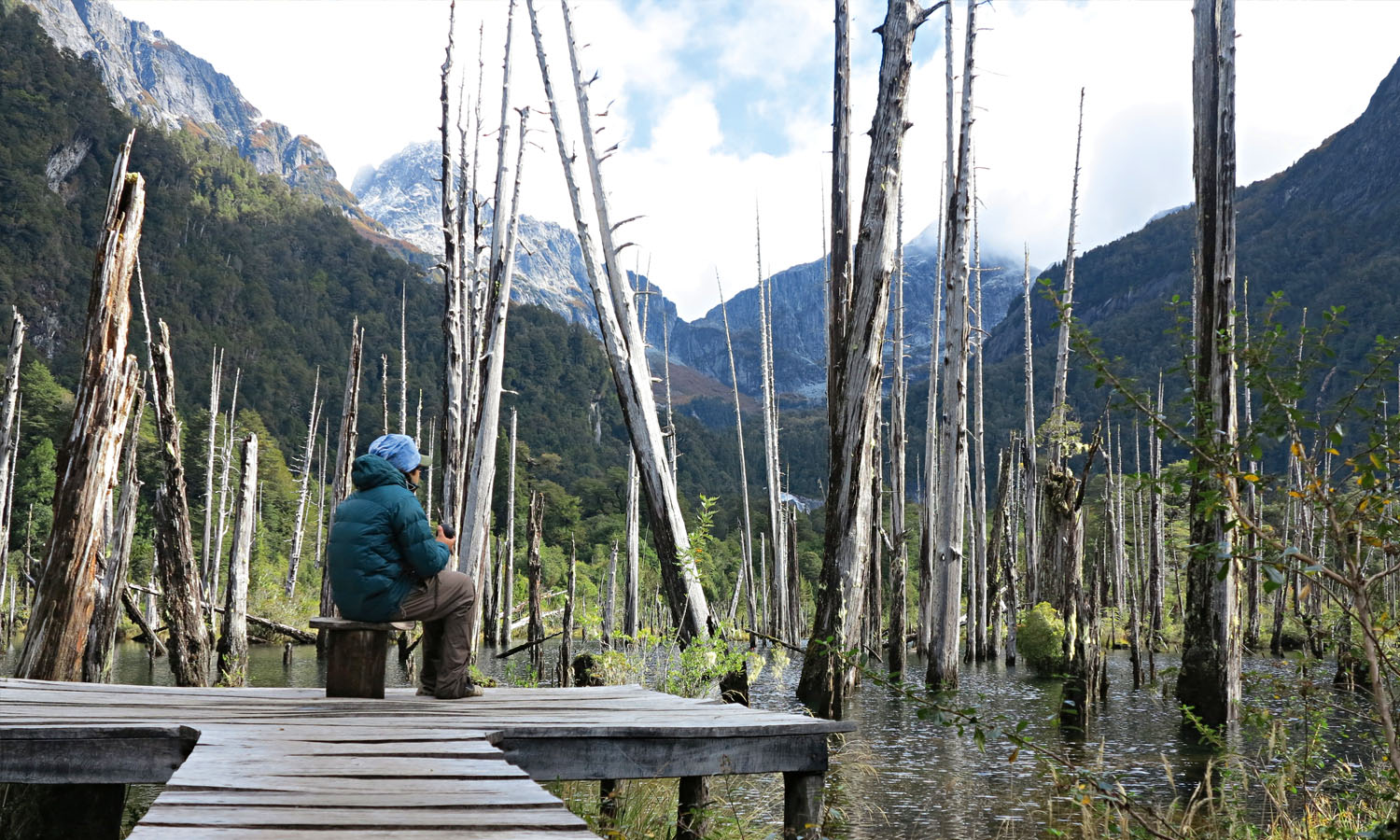
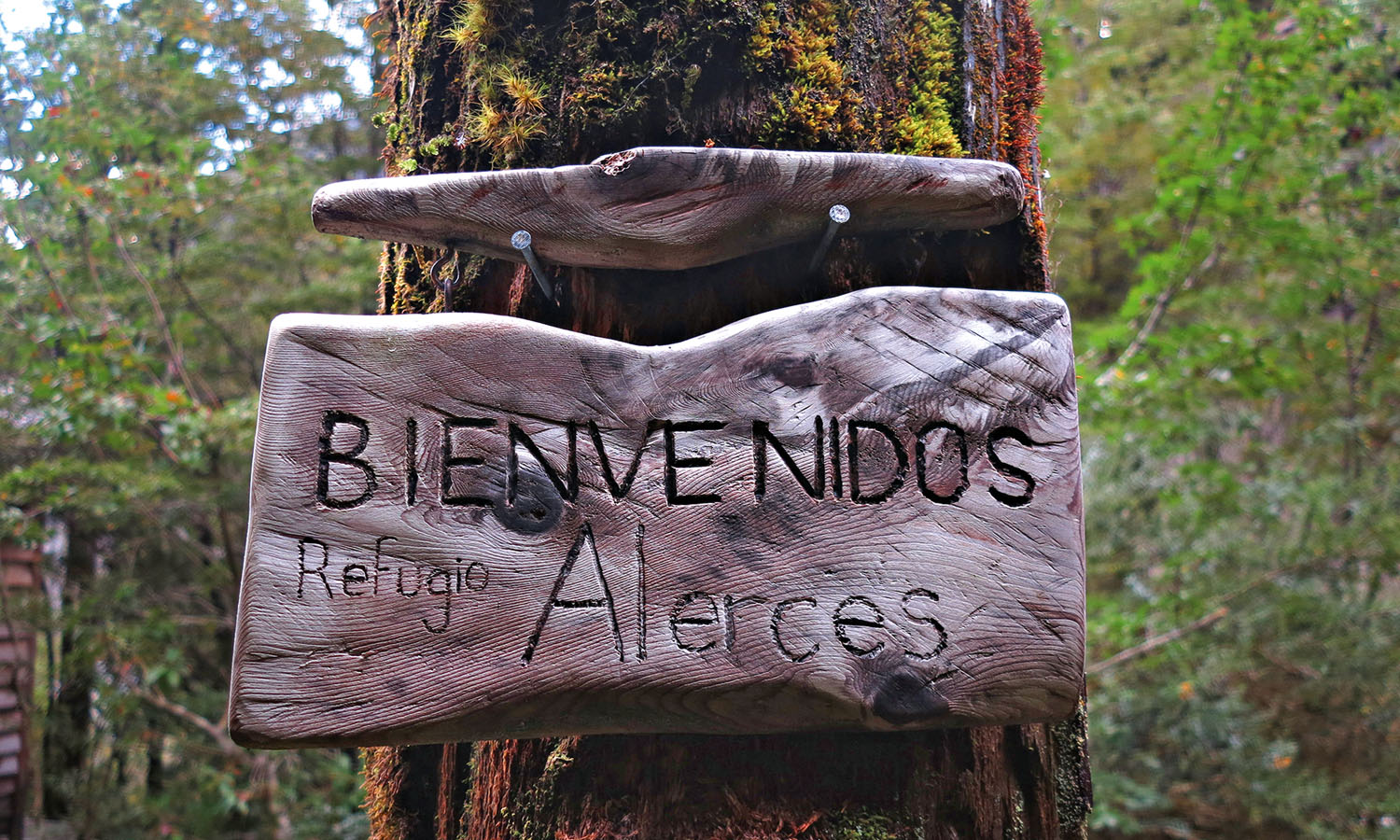
After about three-and-a-half hours we reach the first of the two cabins in the park, Refugio Alerces, which overlooks a small lake complete with spectacular drowned forest. It’s a perfect place for lunch, although it soon gets chilly and we pull on our insulated jackets, Mauricio taking in added warmth from his ever-present gourd of yerba mate, the traditional hot drink of half of South America. “Most hikers come only to Refugio Alerces,” he tells me as he tidies up the hut, clearly pleased that we will be going further today. It is obvious he cares for this place, which isn’t entirely surprising since he spent three months here last year as the summer caretaker.

It’s a beautiful spot, but sees little sun and I’m happy to get going again. Just above the hut the foliage changes abruptly to Andean Patagonian forest, indicated by the presence of larch and beech trees, known in Spanish as alerce and coihue respectively. Refugio Quetrus is another couple of hours’ walk uphill. Named for a pair of steamer ducks, or quetrus, that nest on the lake there, it may lack the eerie, semi-submerged trees of Refugio Alerces but its panoramic backdrop of the cirque at the head of the valley is no less spectacular. The granite cliffs have hidden the afternoon sun, but there is still plenty of time to admire the view and explore the network of paths around the lake, spotting birdlife as we walk.

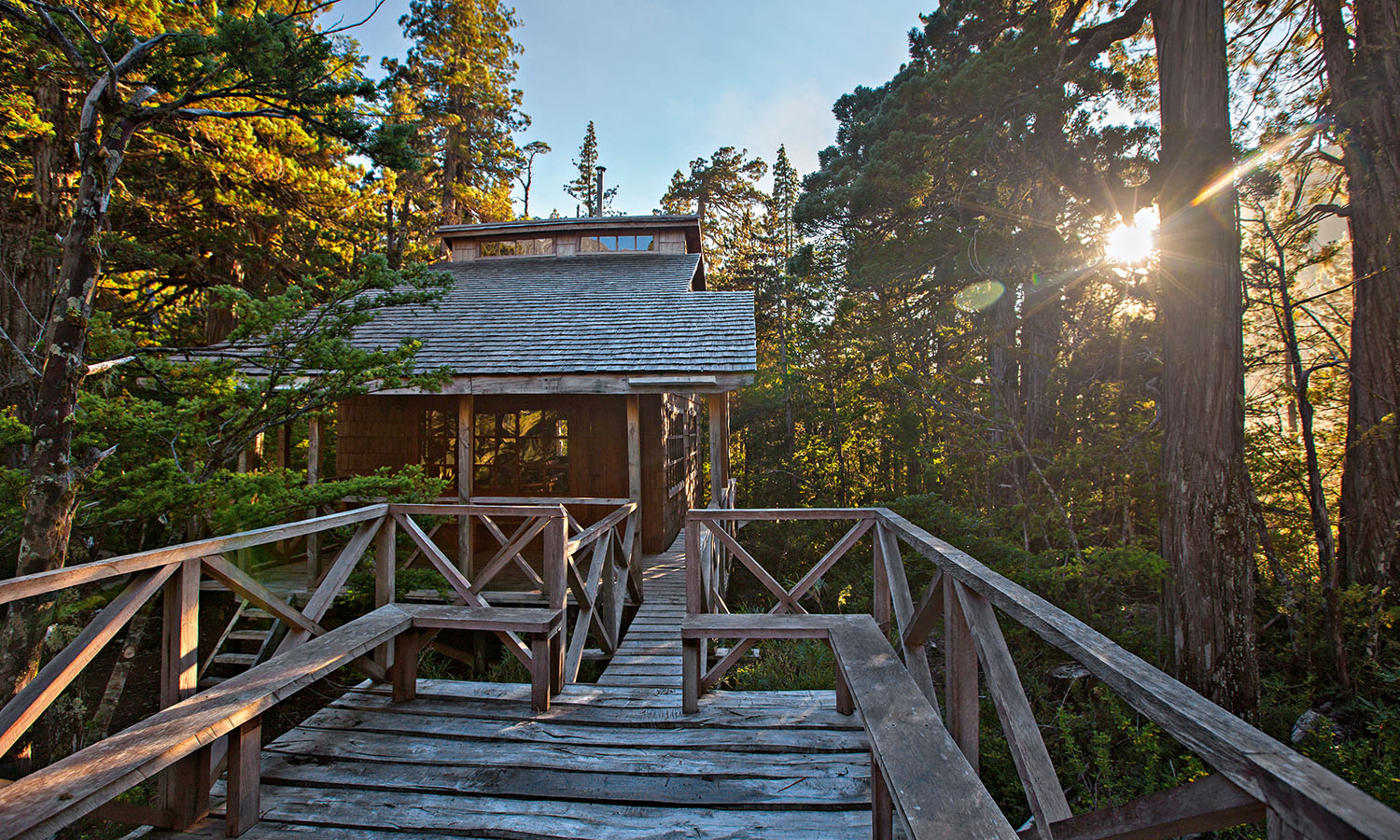
Refugio Quetrus is, shall we say, rustic. Alerce trees provide strong, waterproof timber that makes excellent building material, and the two-storey shelter is solid yet bleak in its austerity. Books and games provide homely touches and no doubt a larger group would bring the hut to life. As the sun drops so does the temperature. Mauricio expertly coaxes the stove to life and we huddle around it watching our breath dissipate. Dinner is delicious roast pork and fried potatoes pre-prepared by the chef at the lodge. The fact there is just the two of us is most appreciated at bedtime when we pile up all the foam mattresses to make comfy nests.

Rodrigo has grand plans for Parque Tagua Tagua, currently in the fifth of a 25-year concession from the government. “We manage the conservation and tourism for now, but we are working to protect the land in the future,” he tells me. “We are trying to emulate Douglas Tompkins [multi-millionaire philanthropist and owner of the North Face, who died late last year while sea kayaking in Patagonia] by buying land and inviting the government to put more into conservation and national parks. If everything goes well, in 20 or 30 more years we will have protected a quarter of the Puelo Valley as a biosphere reserve that co-exists with tourism, local communities and agriculture.” It’s a bold plan, and one that should be applauded and supported.

The following morning I am up early. With Mauricio still snoozing in the hut, I have the entire cirque to myself. Dawn mist threads through the tall stands of coihue trees and reflects the sun. With 1300 visitors to the park this season, Tagua Tagua is still a little-known secret, but time and the efforts of Rodrigo Condeza will ensure that it doesn’t stay this way for long.

An Unknown Thai Island Paradise

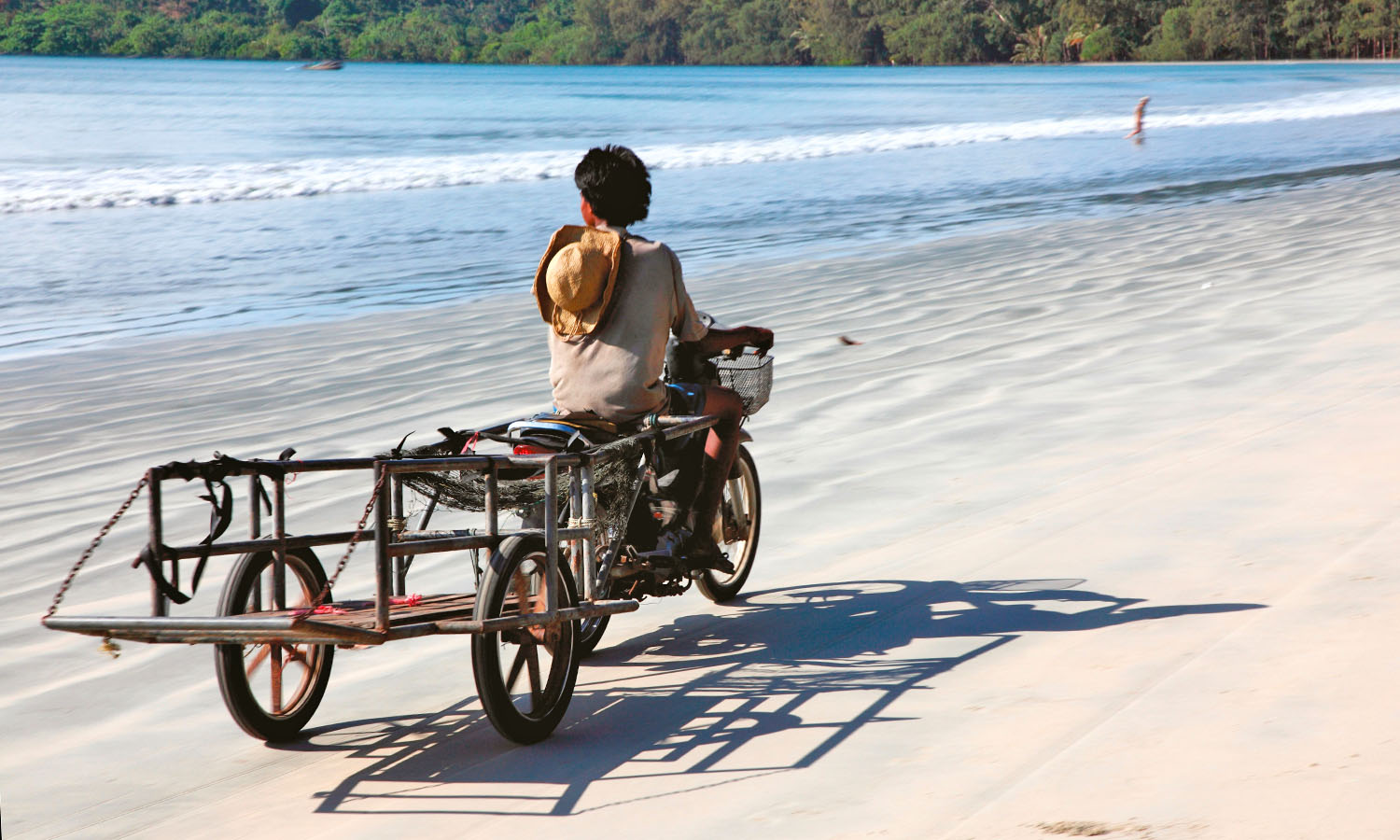
The little Thai island of Koh Phayam floats just south of Burma’s last blue-grey outrider islands, seemingly in the waters of amnesia. Our speedboat skitters towards it across a windless, swell-less sea.

If most Thais have forgotten this 35-square-kilometre dot in the Andaman Sea it is because they’ve never even heard of it. Koh Phayam (pronounced ‘pie-am’) has no cars or roads, few bars, no spas and no karaoke yowls… well, not yet. But, please, never call it paradise because, as Marcel Proust gloomily put it, “The only paradise is paradise lost.”

The speedboat zips us to Phayam, some 40 minutes and 30 kilometres from the Thai port of Ranong. This morning’s passengers include half a dozen European backpackers, the last Rajneeshi (still sporting his faded red threads), a young German family and seven Thais – island residents – loaded with groceries. A fair sampling of the Koh Phayam populace.

The jungle-covered island comes into view. As our speedboat carves an arc into Aow Mae Mai bay on its east coast, I see no condo towers or shrieking paragliders snagging the skyline. A good start. “We have nothing like that yet,” one of the Thais tells me. “And I hope we don’t get.”

As a traveller, you may know the feeling: returning to an island you loved not too long ago for its tranquility, you find it now paved with ravers and internet cafes – the victim of its own beauty.

Koh Phayam is nothing like that. We land at its only town, a T-junction near the pier from which radiates a collection of stalls, eateries, small bars and dive shops. My hotel transfer turns out to be a Thai girl named Lemon, who balances me and my bag on the back of her motorbike. We’re soon wobbling west across the sandy island on a narrow concrete path that’s shaded by cashew trees. I love the place already.

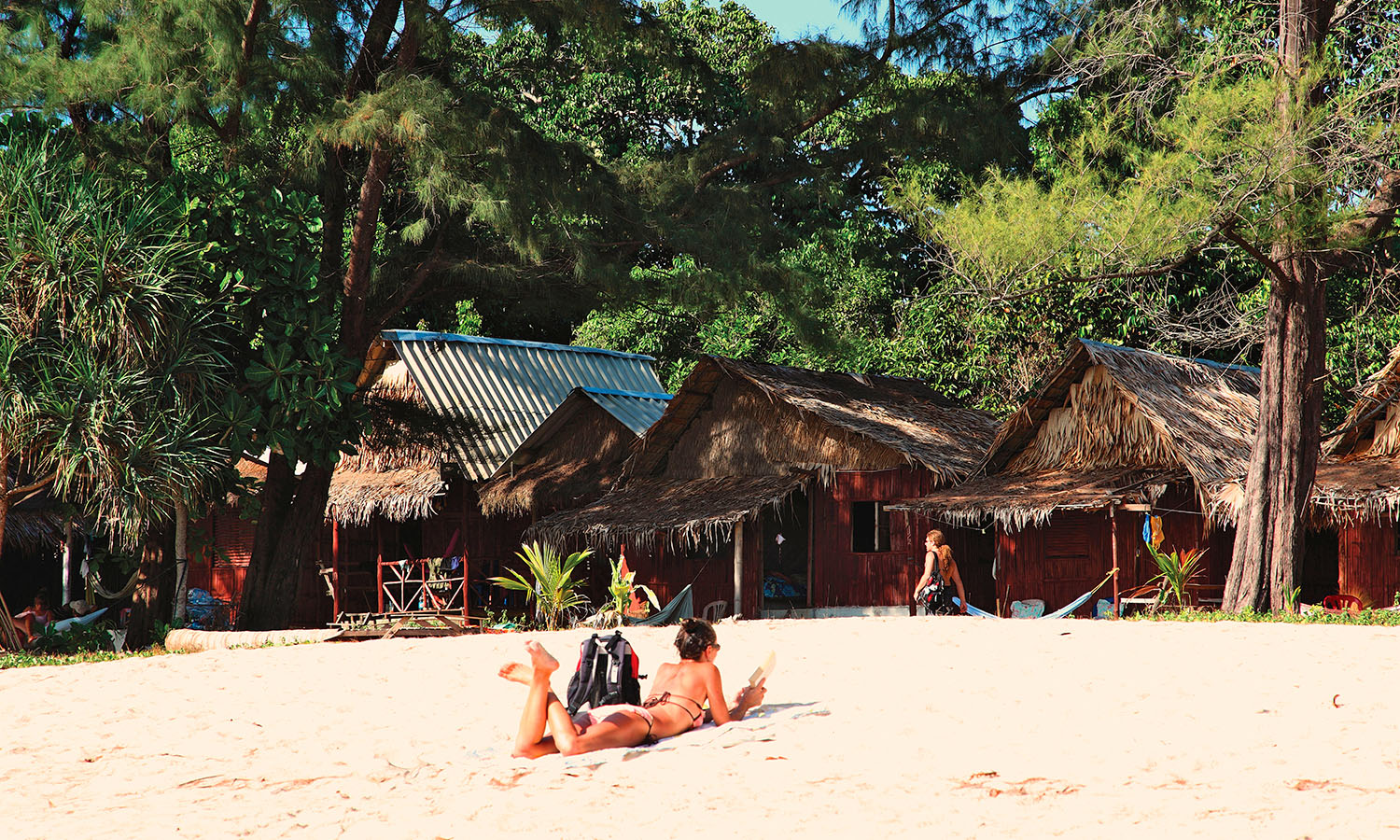
And of course there is no ‘hotel’, Phayam’s accommodation consisting of only bungalow resorts. The one I’ve booked is perhaps the best known, Bamboo Bungalows, run by a mellow, 40-ish Israeli, Yuli, and his Thai wife, Nute.

“It was a Robinson Crusoe place back then,” says Yuli over a coffee in the Bamboo’s open-air, beachfront restaurant. He paints a picture of the island when he arrived in 1997. “Foreigners were as rare as hornbills. There were only five resorts, now there are 35. We had the place almost to ourselves until about six years ago.”

Their garden resort – a scattering of some twenty bungalows and cottages of four types – looks out from beneath a fringe of palms, cashew trees, pandanus and casuarinas. The Andaman Sea stares spectacularly back. Three kilometres of wide, clean sand arcs to the north and south. I spot fifteen or twenty people along it, a high season crowd on Aow Yai Beach.

My mid-range bungalow has a double bed, outdoor shower and loo, light, two chairs, table and a roof. All I need. I grab a surf kayak and paddle out into the lazy blue swell. A small closeout wave breaks there all day long – hardly classic surf, but still it’s a wave, a wake-up and fun. Bamboo’s guests periodically wander down the beach with the resort’s boogie boards or kayaks and plunge in, even if only to snap themselves awake from a siesta.

Phayam’s like that: big on naps, long walks, longer reads, a bit of exploration, a trip to town for cinnamon buns at the Multi Kulti Bakery or a few beers at Oscars Bar. A major event might be an offshore fishing or snorkeling excursion, or a daytrip down to the magical Surin Islands. Extreme mobility here is a visit to neighbouring Koh Chang or a visa run to nearby Victoria Point in Burma.

If Phayam has a history, no one recalls it much. Its name supposedly came from the Thai word phayayam (‘try again’) perhaps from the days of sail when small vessels had to attempt the crossing more than once if the wind was against them. At the lower end of Kao Kwai Bay on the west coast is a small settlement of sea gypsies, also known as Moken or chao lay (people of the sea), but the majority of the island’s 600 permanent inhabitants are recently arrived mainland Thais employed in tourism.

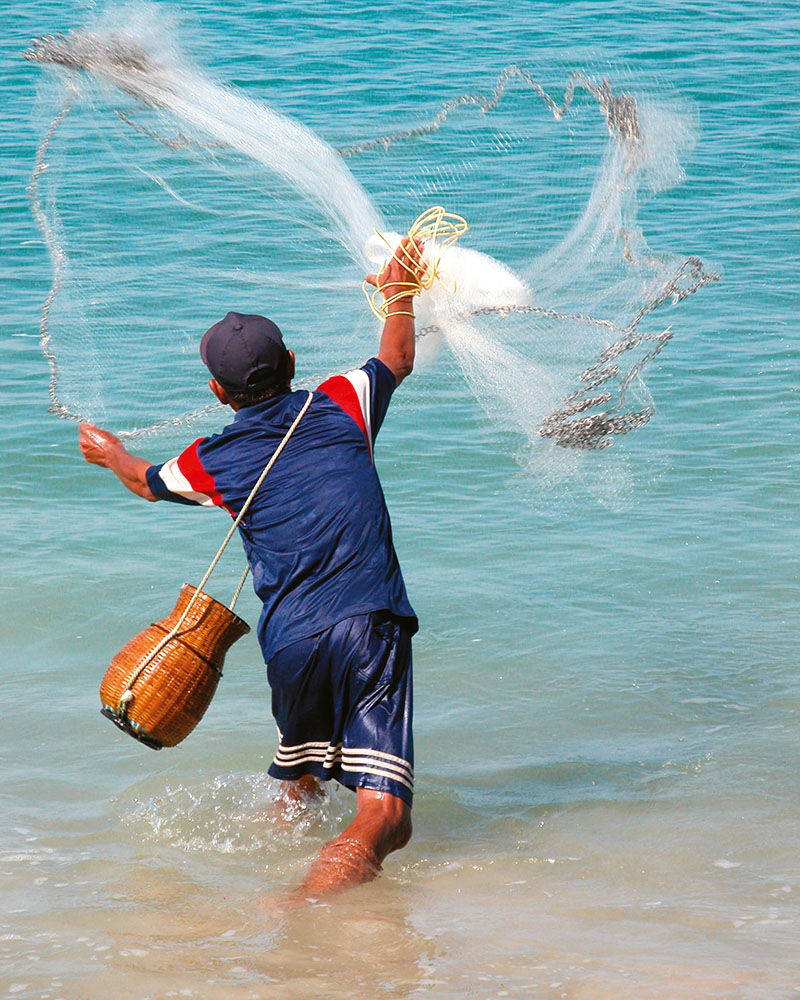
Before farang visitors came in any numbers, the islanders worked (and still do) at cashew nut farming, rubber cultivation and fishing. Long before that it was home mostly to monkeys, wild boar, squirrels, hawks, sea otters and the elusive Oriental Pied Hornbill. The only ones I spot are squirrels and hawks.

I hire a motorbike for 200 baht (A$7) and explore the island, all ten-by-six kilometres of it. Phayam’s ‘roads’ amount to just 2.5 kilometres of two-metre wide concrete ribbon that runs over hill and scrubby dale, one path going across the island, and the other, even shorter, running north. Branching from these, unsealed sidetracks cut through the bush to the beaches at Aow Yai (Big Bay) and its northern counterpart Aow Kao Kwai (Buffalo Bay). I overtake some Dutch travellers sweating along these sandy paths on 80-baht pushbikes. Virtuous as they may be (not to mention fitter and 120-baht-a-day richer than me), I pat my trusty little Suzuki gratefully.

I head for the isolated northern beach of Aow Kwang Peeb, navigating a precipitous track recently carved into the jungle hillside. It drops me down to a perfect emerald bay with a fingernail of sandy shoreline, where I dive straight in for a swim. (At less than ten degrees north of the equator, the water here is never cold.) This being ever-enterprising Thailand, I am not surprised that there is already a small resort and drinks bar here, and thus the newly carved road in the wilderness.

Both of Phayam’s two main west coast bays, Aow Yai and Aow Khao Kwai, have long beaches backed by low, forested hills, while the east coast is mostly tidal mangrove shore. I check some of the other accommodation, the most upmarket being the new Payam Cottage Resort (boasting 24-hour electricity) and nearby Buffalo Bay Vacation Club. The other end of the scale seems occupied by the Smile Hut, a less-than-tidy, long-stay, low-rent place where the pathway borders are formed by thousands of empty beer bottles.

I cruise home on a path fragrant with the fermenting musk of windfall cashew fruit, seeing an island whose appeal is defined by what it lacks: discos, ATMs, watch-floggers, beer bars and taxi mafia. Please, Buddha, may no one hex Phayam with the P-word. As the Eagles once cautioned, “You call some place paradise, kiss it goodbye.”

Back at Bamboo Bungalows I lap up the creature comforts including cold beer and Nute’s delicious tiger prawns and squid. (Like most places on Phayam, the power is from generator and solar sources, and runs from 10am to 2pm, and 6pm to 11pm). There is even a good internet connection. Yuli jokes, “guests complained when there was no internet, so I got it. Soon they complained it was too slow, so I installed free wireless. What’s next?”

My fellow guests are what you might call mature backpackers, mainly Europeans either with or without kids, plus travelling couples and singles. Predominantly they are German, Swedish, Australian and Dutch (in that order). Three polite young Israeli guys seem determined to be the opposite of their national backpacker stereotype. The only person I avoid is a German who sits himself at my table and lights up a rank cigar.

“The younger backpackers go to the ‘bar islands’,” says Yuli, referring to places like Phi Phi, Tao, Phangan, Phuket and Samui, islands now awash with mandatory full moon parties, tattoo shops and pizza parlours. Phayam is frequently described as “Like Koh Samui or Phuket 30 years ago” – a cliché freighted with troubling prophecy. Hopefully, ‘success’ will be as blind to Phayam as the 2004 tsunami and flow right past it.

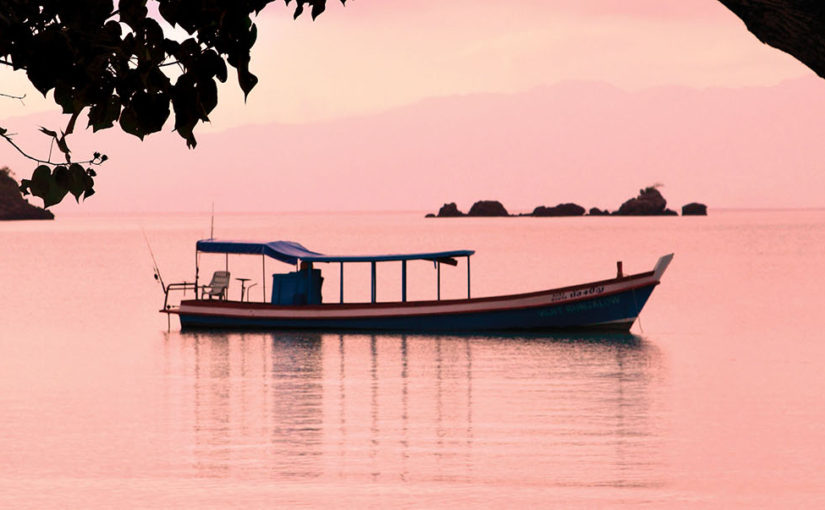
Come late afternoon, Koh Phayam gets truly gorgeous. At around 4.30pm, the cicadas crank up the volume (as they also do at dawn), the beach is cool enough for a few games of volleyball and then the lightshow begins. Off to the north above the ghost islands of Burma, thunder clouds stack themselves thousand of metres high, grey on grey phantoms of vapour twitching with lightning. The sky behind them washes slowly from purple haze down to darkness while along the beach the first bonfire flames lick up and a conga drummer kicks in. Not paradise, but not far off.

Beyond Koh Phayam

Koh Surin Islands
Try a daytrip from Koh Phayam to this Andaman Sea archipelago, a Thai Marine National Park that offers some of the best diving and snorkelling anywhere. The waters around the two islands offer dramatic swim-throughs, superb corals, a huge variety of fish and stunning visibility. The forested islands are also home to several Moken ‘sea gypsy’ communities.

Koh Chang (Elephant Island)
About four kilometres north of Koh Phayam, this is even quieter than Phayam and far less developed. (Note that this is not the large island of the same name in the eastern Gulf of Thailand.) There are small lodges and restaurants, some 45 homes and a Buddhist monastery. No motor vehicles, just walking paths. There is no direct service from Koh Phayam to Koh Chang, but boats can be chartered from Ranong pier or via your booked lodge.

Ranong
Capital of the wettest province in Thailand, snoozy Ranong is a quite Thai-Chinese town best known among visitors for its hot springs. Jansom Ranong Hotel pipes water from the springs into its public spa. The hotel is in a state of gothic decrepitude (although being refurbished) but the spa is fine and the water so hot (around 60ºC) that it might boil the nuts off a brass monkey. Eat at Saphon’s Hideaway (Ruangrat Rd) or the Kiwi Guesthouse adjacent to Ranong bus station.

Victoria Point (Koh Song)
This Burma/Myanmar island is a fifteen-minute boat trip from Ranong pier. Before embarking on a daytrip, visitors must obtain a boarding card from the Thai Immigration Office in Pak Nam Ranong. You’ll find duty-free shopping, Burmese handicrafts and gems (caveat emptor), and the Andaman Club Island Resort casino.

Wine Country Wandering

A sharp crack sends a feathered missile, who is screeching obscenities about trespassers from above the treetops, hurtling from its guard. The cockatoo isn’t the only one spooked. Nothing in this bushland makes that type of noise without a helping hand. Rationalisations fire around my skull as I scramble over the last of the boulders separating me from the edge of the ridge. Was it a bursting balloon? Firecracker? Gun? This is bushranger land, after all.

In 1870 under the cover of a wild storm, troopers crept between these peppermint trees and candle bark gums on the hunt for the infamous Harry Power. Sixteen months prior, the Irish convict had escaped his road gang and taken to highway robbery to occupy his time. Power tallied more than 30 crimes while on the run, and even took an apprentice named Edward under his wing, before his trainee’s uncle dobbed him in for a £500 reward.

Warnings from Power’s trusted security squad – a noisy peacock and hounds from the homestead below – were muffled by the gale. The coppers uncovered him snoozing in his hideout, now known as Power’s Lookout, in the wee hours of the morning. They celebrated their catch with a feast from the thief’s well-stocked supplies before tossing him under lock and key. Despite being one of Australia’s most flagrant bushrangers his legacy faded, while his student rose to such fame he remains a household name almost 150 years later. Good luck finding an Aussie who hasn’t heard of Ned Kelly.

Metal clings to the side of the ridge, extending a platform over the lichen-covered rocks that once formed a riverbed 350 million years ago. It’s easy to see why Power chose this spot as a hideaway – it’s tough to reach on foot or horseback, and has sweeping views of Victoria’s upper King Valley. My guide for this Girls Trekking Adventures trip, Frith Graham, stands on the podium next to a cluster of walkers, a chilled bottle of Mumm in hand. Its exploding cork is the source of the bird-banishing bang. We may not have found an outlaw with a juicy bounty up here, but as we sip from champagne flutes the moonlight illuminates the valley and I’m feeling as smug as those coppers the night they nabbed Power.

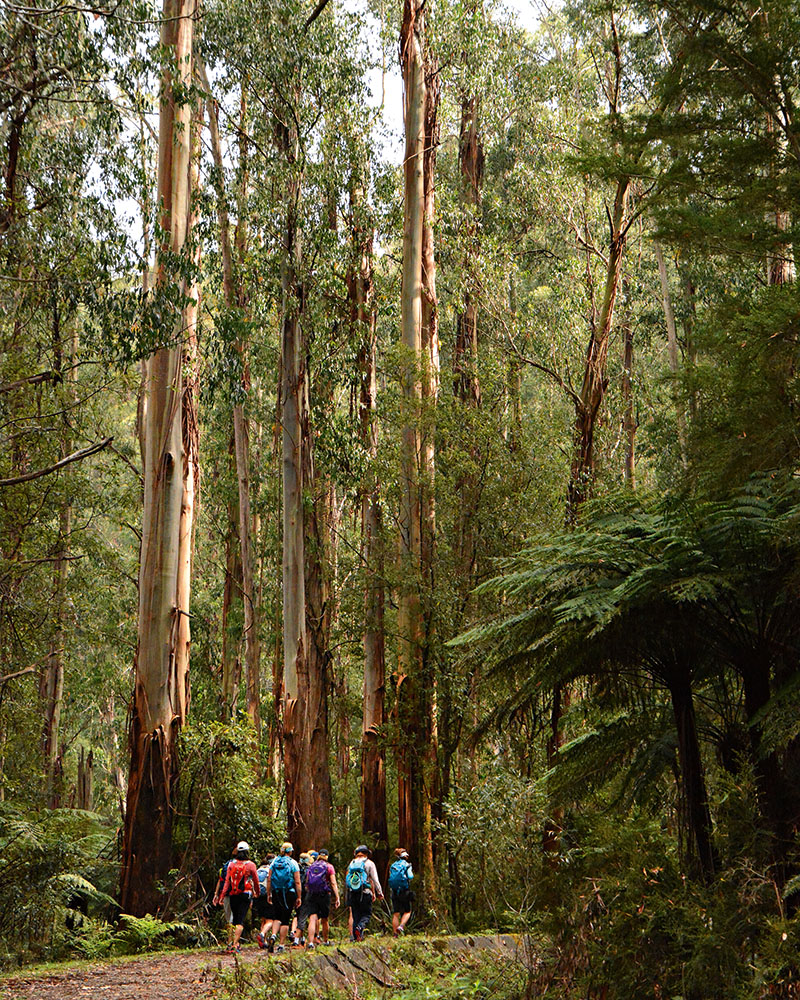
Our three-day expedition started that morning among the giant umbrella-like tree ferns and eucalyptus on the O’Shannassy Aqueduct Trail near the Yarra Valley. We set off in a mini-van, passing farmland and the transmission towers of Bonnie Doon, immortalised as the holiday destination of the Kerrigan family in the classic Australian flick The Castle.

It doesn’t take long to figure out this isn’t a carry-your-own-tent-and-dehydrated-curry kind of hike. “I get off the plane, meet up, and don’t have to make a decision for the next few days,” says Fiona, one of my fellow hikers. I have to admit, handing over the reins of organisation is incredibly liberating. Our days are to be spent decision free, wandering through some of the most picturesque parts of King Valley and working up a thirst for the region’s most famous product, wine.

Without a single traffic light, Whitfield, our home base in the valley, is a blink-and-you’ll-miss-it kind of town. “Officially, the population is 421, but I don’t know where they all live!” says Anna-Kate Pizzini, cheesemaker, member of the Pizzini Wines family and one of our guides on this trip.

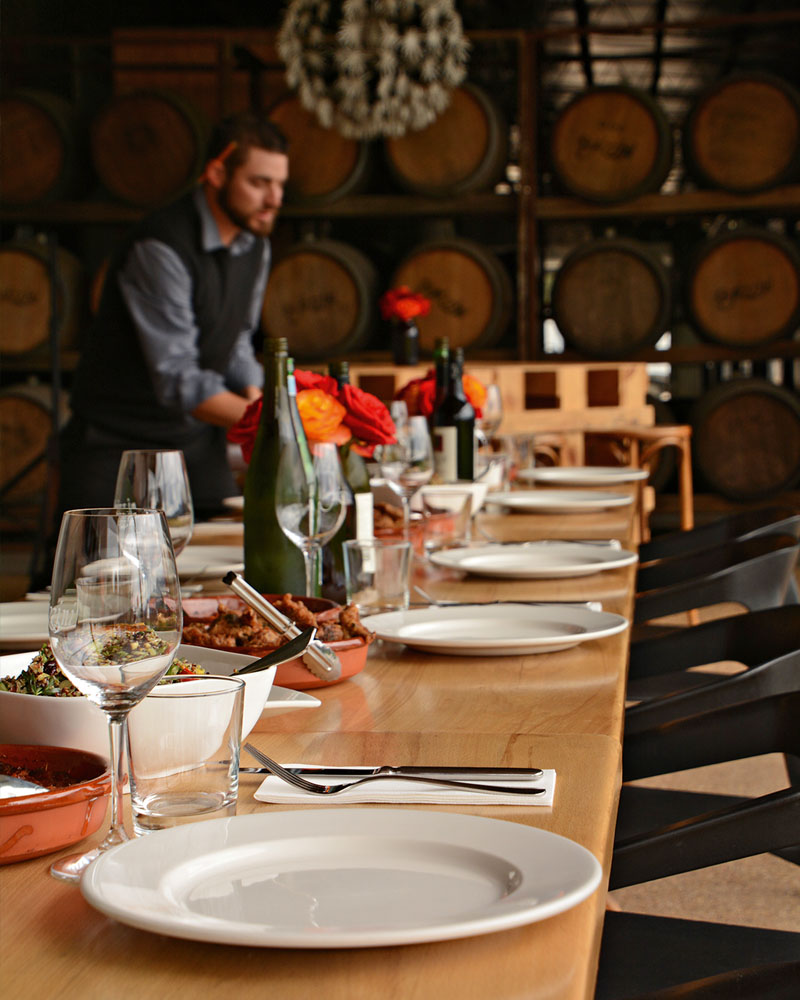
Despite its tiny population, the town boasts a cafe, an epicurean larder and our accommodation: the award-winning gastropub, Mountain View Hotel. It’s far from the type of establishment Kelly would have boozed in, I muse, as German chef Ben Bergmann greets us before our five-course degustation. Bergmann worked in Michelin-starred restaurants around the world before being drawn to the kitchen of the Pizzini-owned hotel two-and-a-half years ago.

Between courses of duck breast with rhubarb chips, twice-cooked red snapper, and black quinoa-crusted wagyu beef sourced from the next town over, I find myself plundering the contents of the little hessian sack on the table, which resembles a bushranger’s moneybag. The biodynamic sourdough within is best slathered with smoked and salted French butter and washed down with a glass of King Valley sangiovese.

Almost as soon as a dish stars on the menu Bergmann sets out to create something new, so the fleeting existence of the masterpieces we devour makes them all the more impressive.

Next morning, we stamp up a sweat and work off last night’s sweet finale – a deconstructed black forest strudel served under a veil of dry ice smoke. Anna-Kate reels off names of vineyards – Murtagh Brothers, Boggy Creek, Gracebrook and La Cantina – all visible as we stride higher into the hills, dodging burrows and block-shaped droppings.

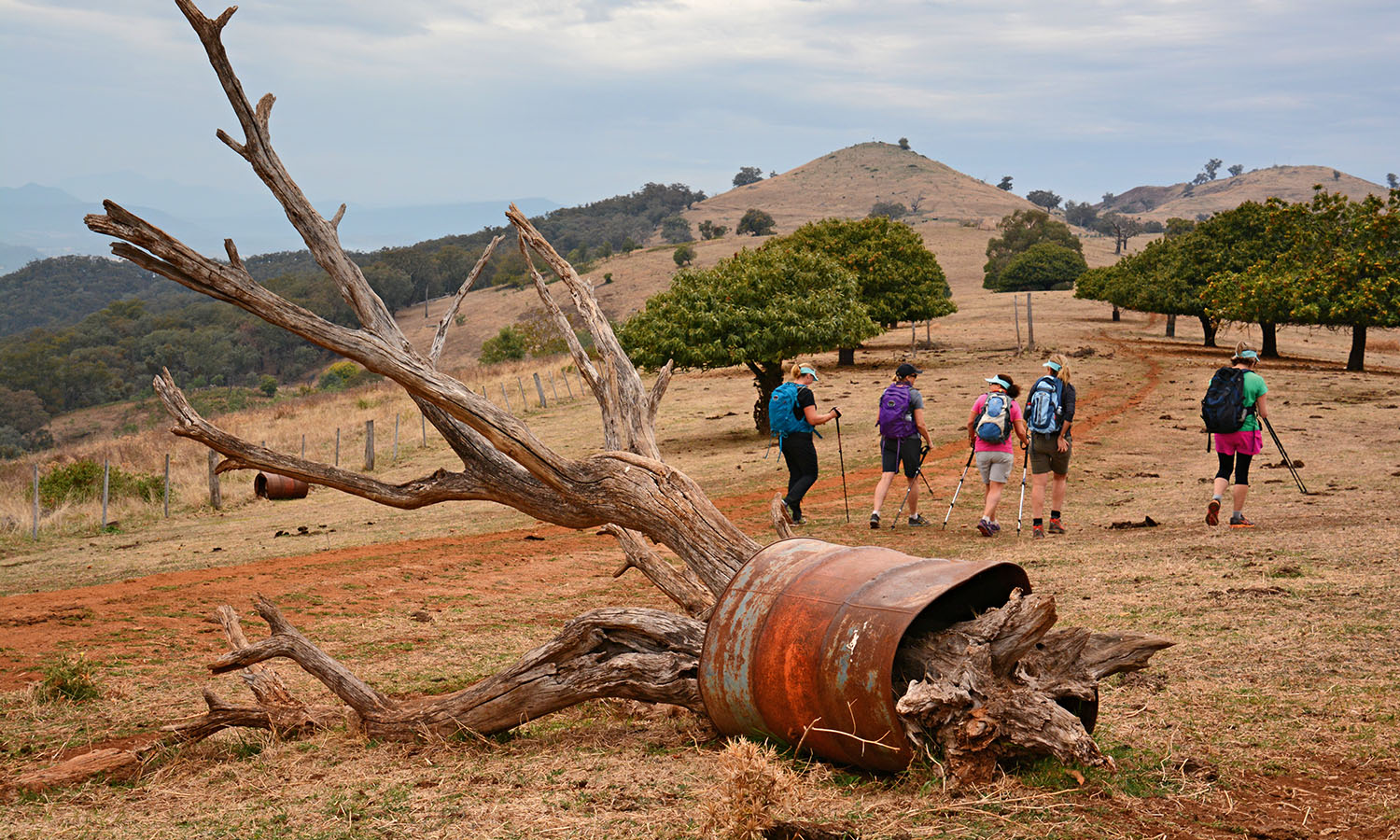
“That’s wombat poo, because it’s got a square sphincter,” explains Frith, when I ask what type of critter could leave behind so much muck. Our days may be studded with gourmet food and bookended by hot showers and comfortable beds, but none of these women – a group of long-time friends from Toowoomba – are afraid of getting their trail shoes dirty or slogging up a mountain.

We stop to gulp down views of the hazy valley. Later, we stroll through an avenue of 80-year-old chestnut trees where we roll pods beneath our feet, freeing the glossy nuts from within. I drink up that feeling of smugness once more as Anna-Kate tells us we’re trekking through private properties normally closed to the public. These vistas are exclusive.

Back when rangers looted gold and horses, this area was bush and just a few rolling farms. “Even when Nonna and the Italians came it was called the sleepy valley,” says Anna-Kate.

Nonna Rosetta and Roberto Pizzini arrived from Italy in 1955, establishing tobacco farms before their sons switched to growing grapes. Since then King Valley has become one of Australia’s premier wine-producing regions. With its high altitude, microclimates and healthy rainfall, it’s an ideal place to cultivate a wide variety of grapes, particularly those of Mediterranean heritage.

The Pizzinis first planted riesling back in 1978 to sell to Brown Brothers, and chardonnay, sauvignon blanc and shiraz soon followed. It wasn’t long before they started experimenting with lesser-known grapes from Italy, and sangiovese and nebbiolo snuck into the soil.

“The region is really good for those varieties. They love the warmth of the day and the coolness of the night,” says Alfredo ‘Fred’ Pizzini, founder of the winery and father-in-law to Anna-Kate, while we cool off from our morning’s stint with a glass of refreshing prosecco. Tallying 6.5 grams of sugar per litre, compared to the usual 10, it’s far less sweet than any prosecco I’ve ever tasted, and might just be my new favourite drop. It sure beats the usual post-hike electrolyte drink.

Not content with their collection, Fred and his son Joel, now head winemaker, kept planting, and the vineyard boasts 16 types of grapes, as well as a little patch with three more they’re experimenting with. “It’s a bit like a pantry. You don’t just have salt and pepper, do you?” he says, explaining that each new variety gives them the chance to make a new blend or improve an existing style. It’s clear why chef Bergmann, with his ever-changing degustation menu, is such a good fit for their hotel in town.

With some reluctance we haul our bellies, loaded with fine Italian cuisine, away from the dining table sprawling outside the Pizzinis’ former tobacco-drying kilns, now converted into the cellar door. This is technically a hike, after all, and we’ve got another winery to march towards. Plus, Frith promises we’ll return tomorrow to taste plenty more vino and test our culinary skills during a cooking class with winery co-owner and Fred’s wife, Katrina Pizzini.

We trundle past rows of vines, their autumnal leaves flushed like splashes of aged riesling and pinot noir. Cappuccino-coloured horses and a family of sheep graze by the street, aptly dubbed Prosecco Road, which we follow to Dal Zotto Wines, the first vineyard in the King Valley to create the bubbly drop.

For the second time in a day we wrap our mouths around more Italian varietals. The 2015 pinot grigio offers notes of pear and I enjoy the nutty flavour of the 2014 garganega, but it’s the reds that make me wish I had the strength of a highwayman to carry home a few cases.

Erik Nap, the trattoria manager, sploshes nebbiolo into our glasses, describing how the drop is lighter than you’ll find in the motherland. “If you order it in Italy, they serve it with a knife and fork,” he chuckles.

Apparently the 2012 we’re sipping requires a few more years sealed in a cellar to smooth out the tannins, but it seems a bit cruel to keep such a tasty drop under lock and key. This is bushranger land, after all, and I’m ready to ransack the bounty.

Adventure Calls in French Polynesia

My safety helmet has been knocked sideways over one eye. Below me – a long way below me – is a foaming pool of frigid water and tumbled boulders. To my left, a waterfall shudders, sending spray into my eyes. I scramble over the rock ledge to lie moaning in the mud. I’d never realized Tahiti could be such a challenging place. My knees are grazed and my thigh muscles ache. But I also have a big grin on my face. Who needs a mud spa? I want to crawl through lava tubes and swim with sharks. In French Polynesia, adventure awaits – provided you ignore every resort brochure ever produced.

My visit started on the island of Tahiti, which most visitors only pass through on the way to more alluring islands. Can’t imagine why. Turn away from the ocean and you see dramatic peaks and valleys. I wanted to explore, taking the unsealed roads where red flowers brush the sides of the car and bamboo creaks. Tibo of Mato Nui Excursions accompanied me. He is one of a new breed of small tour operators in Tahiti willing to give visitors more than a tiare flower behind the ear and a cocktail.

For two days, Tibo took me trekking across Tahiti Iti. We camped on an empty beach and ate raw snails. He took me abseiling down waterfalls at Vaipurau and Poutoa. I drew the line at the biggest rappel, which is only for the experienced. There was ample opportunity to recover my manhood by leaping off rocks into pools far below, pummelling my chest as I went. In the hinterland behind Hitia, I clung to another rock ledge and crawled through lava tubes. Lava tubes are tunnel-like caves formed by ancient volcanic action. At Hitia there are three, linked by a series of little valleys landscaped by waterfalls. Basic fitness and sure-footed agility will get you scrambling and wading through the first two lava tubes, tested mainly by a couple of small abseils.

The third lava tube is more challenging. It is black and labyrinthine with Gollum-deep pools, smooth rock surfaces and lit only by the drunken dancing of a potholer’s lamp. I passed the narrow opening on my belly in puddles of muddy water. Upon reaching the valley however, the scenery was glorious and the waterfalls like something from a shampoo ad. I mark lava tubing down as a great new challenge that has been successfully completed.

The following day I travelled to Huahine, a small, overlooked island between Tahiti and Bora Bora. The plane skimmed a turquoise lagoon and out over the ocean, where puffy white clouds wandered like lost sheep on a vast blue plain. Huahine revealed itself like a spectacular magic trick: a wonderland of voluptuous emerald peaks with necklaces of turquoise lagoons and palm trees.

The little plane waggled its wings in pure joy and we set down at the airport. It was little more than a hut with two doors – arrives and departs – and the heat enveloped me like a hug from a maiden aunt.

If you happen to be a postcard manufacturer, these islands are the stuff of palm-fringed fantasy. The more intrepid will discover that Huahine has great jagged rocks and is haunted by wild pigs. A cyclone a few years back wiped out most of its houses and a $70 million resort in a matter of minutes. You can see how rains crash down like Armageddon. As acts of God go, it suited me just fine. Few tourists come here, only adventurers, insane backpackers and lots of mosquitoes. Whether you stay in a tiny pension or a beach hut at Huahine’s lastremaining resort, you get absolute beachfront, wave-lulling tranquillity.

But enough tranquillity. I was soon hanging on to the wheel of my battered rental Jeep as the engine roared and protested and a precipice lurched around every corner. The wheels of my car rattled on bridges made of planking that spanned sluggish brown rivers. Even on the roads, driving has its challenges: dusty dogs refused to get out of the way and a falling coconut dented the bonnet and nearly caused me to end up in the ditch with a heart attack.

Four-wheel driving – survived! Lava tubes – done! Kayaking was next. In Huahine you can paddle out into the lagoon and not see another soul. Follow the boom of the surf to a gap in the reef however and you’ll spot the surfers. The consistently large swells of Huahine make the island second only to Tahiti for attracting those in search of waves. Locals are reportedly not taking too kindly to foreigners muscling in on their territory. At least not until you’ve met them, knocked back copious amounts of alcohol together, beaten your chest and talked the surfing talk.

A confession: I did spend a couple of days on a beach looking at the sunset and sipping cocktails. After my days of camping, kayaking and mud crawling, I figured that I had earned a stint at the Te Tiare Beach Resort, the only international standard resort on the island. To reach it, a local wearing flip-flops and a flowered shirt picked me up in a boat from a tiny pontoon, where a dog snored and fish glittered in the water. There’s no road access to Te Tiare and by the time I reached my bungalow even the TV and phone seemed like strange artefacts from another civilization.

Once my abused muscles were sufficiently recovered, I was ready for more adventure. This came courtesy of an outrigger boat piloted by a local guy named Moana, who grinned like a cat in a fish shop and played the ukulele. There was a tattoo of a turtle on his left shoulder and he had the brown belly of a happy Buddha. We travelled around the island, skipping over the pale blue waters of the lagoon. When I felt too hot I simply dropped off the boat with a mask and a hunk of baguette. A shoal of hungry butterfly fish promptly surrounded me, flaunting black and white stripes and vivid yellow tails. I could hear them chomping on the bread while Moana’s ukulele twanged above somewhere.

By afternoon I was swimming with black-fin reef sharks. Moana introduced me to Claude, a local who has developed a unique relationship with the big fish over the years.

Most afternoons at 3pm, Claude can be found aboard a floating platform in the lagoon preparing hacked-up fish heads for the sharks, who turn up like clockwork for the feast. Claude invites anyone willing to get into the water with a frenzy of up to 20 sharks. I was soon overboard and stepping, chest-deep along the seabed, anxious about getting a cut on the sharp coral lest a shark mistake me for a hunk of bleeding fish. The sleek and sinister sharks are a thrill up close, especially when you’re in the water with them.

Mesmerised by their power and grace, my heart flipped as they cruised within arm’s reach. They turned slowly in the water, perfectly balanced and propelling themselves with indolent flicks of their tails.

Back on dry land in time for another postcard sunset, I was weary from my day spent swimming with the sharks but in no doubt that French Polynesia has more to offer than beaches and breakfast buffets.

Off The Wall

A warning glance is shot our way. Three spray can heroes are marking their territory on a wall and they don’t want us to come any nearer. They don’t look quite as I expected. The blue skivvies and nerd glasses make them appear less cutting-edge artist and more like a couple of the Wiggles cameoing on Saved By The Bell.

According to Robin, our guide, this is a semi-legal painting wall. “Well, no-one knows if it’s legal or not,” he admits. There are some walls in Berlin that are deliberately set aside for street art, but far more get appropriated without permission. If you can walk a block in the German capital without seeing tags, throw-ups, stencils or murals, then you’ve probably got your eyes closed.

Robin is something of a street art and graffiti historian. He’s keen to point out that, although both have their roots in New York, they are two distinct movements. Street art has the viewing public in mind, but graffiti is insular – it’s about impressing other graffiti crews and getting your name seen by as many people as possible.

That doesn’t mean to say that techniques don’t evolve, however. Robin encourages us to look up – the graffiti crews often pride themselves on getting their tags in the ‘heaven spot’ just below a building’s roof. It gets the name because if the person dangling you down by the legs while you spray lets go, heaven is where you’ll end up.

He seems as impressed by some of the tags made with Super Soakers or fire extinguishers as he does with the more obviously appealing street art murals. Of the latter, there are many. Berlin is arguably the world capital of street art at the moment, partly due to lack of law enforcement.

“It’s a city of six million people, but it’s 60 million dollars in debt,” says Robin. “So they employ just 35 people to tackle graffiti, when there are an estimated 3,000 people out spraying every night.”

There’s also a legacy from the Stasi, the former East German secret police. Life under the microscope made East Berliners intensely distrustful of being spied upon. Therefore CCTV cameras on buildings are incredibly rare and it’s harder to catch the artists in the act.

Also important, is the city’s lack of power to prosecute for spraying onto a private building. The owner has to take things to court and that’s generally too much hassle. It’s simply easier to paint over the offending image or – increasingly popular – commission an artist to paint something really good on the walls instead.

Evidently, there’s an accepted hierarchy in the street art world. The general unwritten rule is that you only go over something if you can do better. This, of course, is subjective, but the more impressive set pieces tend to last much longer.

Outside the Zebrano cafe in Friedrichshain, Robin points to a remnant of the Linda’s Ex campaign. One artist left pictures all over the city bearing messages of love for a mysterious ‘Linda’. They popped up in prominent positions, leading to a citywide debate about whether the spurned lover was a romantic or a psycho. It was later discovered that there never was a Linda – it was just one man’s social experiment.

Our mural-spotting continues by train. The U8 line crosses Kreuzberg, where many of the Berlin’s most impressive spraypaint masterpieces stand proud. Of these, an astronaut is the most famous. At night, the shadow from the flagpole of a nearby garage passes through the astronaut’s hand, making it look like he’s staking territorial rights on the moon.

The key thing about Berlin is that street art and alternative culture isn’t limited to hip fringes of the metropolis, and the city’s unique history plays a major part in this. When the East German authorities constructed the Berlin Wall in 1981, it was set back from the border. A ‘death strip’, guarded by soldiers with shoot-to-kill orders, created a buffer zone of rubble and abandoned or torn-down buildings.

This death strip went through the centre of the city, and when the wall came down in 1989, a lot of prime real estate was left unclaimed. Squatters and artists moved into the abandoned buildings, many of which were turned into studios and rather grimy  galleries. Most have been moved on, unable to resist the tide of development for long, but there are still surprising pockets close to where the wall ran.

A fine example is C-Base, a bar hidden behind the trees on the riverbank opposite Jannowitzbrücke station. Inside, it is made up to look like a spaceship. The number of plug sockets and extension leads give away what it really is, however – a club for computer hackers. Non-members are welcome for a drink upstairs, but not into the mysterious underground lair.

At thoroughly spruced-up Hackesche Höfe, an alleyway behind the plush shopping centre contains an arthouse cinema, an independent gallery, the scruffiest of cocktail bars and virtually every form of street art available. An extraordinary picture of a man’s face by Australian artist James Cochran, AKA Jimmy C, has French impressionist leanings and seems  to be created out of bubbles. Elsewhere, a frequently occurring paste-up character called Little Lucy looks mischievous. The paste-up cats she tortures can always be found nearby, hanging from a noose or otherwise abused.

Even weirder are the scrap metal monsters that bob around opposite the bar. These belong to the Monsterkabinett, one of alternative Berlin’s oddest experiences. Essentially it is a cellar full of mechanical beasts – some with bulging eyes, others with klaxons for noses – which dance to pounding techno music in increasingly claustrophobic rooms. It makes no sense at all, yet feels inherently brilliant.

It’s the starting point for a jaunt through the parts of Berlin that gentrification hasn’t had its wicked way with just yet. French filmmaker Isa leads us to a former train depot in Friedrichshain. It has become something of a focal hub for Berlin’s alternative cultures, with nightclubs, bars and galleries taking ovderelict buildings, and oddities such as circus tents popping up sporadically.

Some of the best street art is here too. Isa tells the tale of the mural on the side of the Cassiopeia club. “I kept coming back as it was being painted,” she says. “At first, I thought it was just going to be mountain scenery. Then the cowboy got added. Then, finally, the banana skins that the cowboy is slipping over. My idea of what it was kept transforming.”

She leads us through the locked-off yards to Urban Spree, a bar-gallery hybrid. The exhibitions are officially closed, but we  get the nod from the barman to head up. It’s not often you get to mooch around a gallery with a beer in hand, taking everything in via lights from mobile phones, but it’s something the Uffizi and Louvre may want to think about.

Compared to the next stop, however, it feels like standard museum practice. We head out east, to the end of the S-Bahn line, and then to the end of a tramline. This is the Berlin that most Berliners don’t consider venturing into.

By muted torchlight we traipse through bushes and over damaged wire fences. Manholes are left uncovered on the path and the block of flats is totally abandoned. It’s a chilling, Blair Witch-like experience as we crunch up the stairs through broken glass. Isa calls this ‘urban exploration’ and tells us not to shine any light on the street in case we’re seen.

It wouldn’t be a surprise to see syringes at the bottom of the lift shaft or a corpse slumped in the corner next to a broken window. But what we do see are traces of a new generation. The tags and rudimentary paintings aren’t as impressive as those seen in the train depot, but that’s why they’re here. “Kids use the building for practice,” says Isa. “They can make mistakes here, and no-one will see them.”

In the bleakest of settings, experiments are creating life. It’s the sort of energetic mutation that the city feeds off. This has long been the Berlin way; when favourite haunts are developed for mass consumption, those on the fringes will always find somewhere new to express themselves.

The Hitchhiker’s Guide to Insanity

There she stood on the side of the highway, a shivering mass of tattered clothes alongside her huge, bright pink suitcase. In her shaking hands she clutched a small but neatly written cardboard sign, her ticket out of the winter chill and, if luck were smiling upon her, all the way to DIMITROVGRAD.

I was hurtling past Nis, Serbia, at 130 kilometres per hour in my Bulgarian Citroen, when the fluoro flash of pink caught my eye. I slammed on the brakes and pulled off the road about a hundred metres past her. A honk of the horn and she had turned to make that brilliant, mad dash, the sprint all hitchers dream about during those lonely roadside hours.

“It’s my policy to pick up hitchhikers,” I’d said to my road-trip companion, Iks, about half an hour earlier, in a tone that must have reeked of faux-hippie smugness. “It builds up karma.” I was also looking forward to the element of surprise a hitchhiker invariably adds to the journey.

After hitcher, suitcase and guitar had all been bundled into the car, we began pleasantries. She was a 40-something woman from Germany, of Turkish descent, called Gamze. At least that was her birth name. Her ‘God name’ was something completely different. Warning bells rang.

The next few exchanges yielded this information: she thought she’d left Germany on Saturday 17 December (today was Friday the 18th), she couldn’t remember where she’d been since then, and she had no money. Gamze could also, she told us, predict the future. She was selling possessions from her pink bag to make some cash on the road.

Then came the doozy: God had recently come to Gamze in a vision and told her to “go to Israel to save the children”. So, true to the divine command, she’d packed up all her stuff and hit the road.

This had very quickly turned into a scene from a comedy movie. Trying to keep a straight face and avoiding Gamze’s eyes in the rear-view mirror, I politely pointed out that an overland trip to Israel would require crossing Syria, which didn’t seem like a great idea. Gamze’s bulletproof response, delivered with a beguiling half-smile that suggested she might be taking the piss, was that God had given her this mission, therefore he would protect her. You can’t argue with that.

Iks and I found ourselves in an awkward position. Gamze was clearly delusional, possibly unstable. But we had already agreed to drive her past her destination to Sofia, and we could hardly leave a vulnerable woman in the middle of nowhere. So we continued.

Despite the elephant in the back seat, conversation with Gamze proved delightfully quirky. To paraphrase one of Terry Pratchett’s most excellent analogies, she had passed through insanity and into the calm waters on the other side. During the journey we discussed life, family, travel and music, 
with only the occasional mad interjection, at which even Gamze began to chuckle.

We were only half an hour from Sofia when things got dark. Gamze seemed to smell something in the air, which she took as an attempt by us to poison her. She became agitated and, despite our apologies, told us that we would have to “live with the consequences” of what we’d done. That sounded ominous.

I told Gamze that if it would make her more comfortable, we could leave her at the next town, but she curtly told us she’d still like to go to Sofia. We drove on in awkward silence. When we reached the city centre, she told us to pull over and, with barely a word of farewell, disappeared into the night.

The next day I met up with two Bulgarian friends at a cafe. As I regaled them with the tale of Gamze, one of them, Liya, became increasingly concerned, pointing out that the poor woman was probably schizophrenic and in need of help. She was right. She offered to call the police to file a missing persons report and, overwhelmed with waves of guilt for not having acted sooner, I agreed.

The phone call was going OK until she mentioned Syria. Then all hell broke loose. Within 10 minutes, four security police had barged into the cafe asking for ‘the Australian’. Clearly they’d misunderstood most of the story, assuming we were reporting a potential terrorist. They barked intense questions at me in broken English, before ‘escorting’ us to the police station.

As the cop car whisked us away with Hollywood urgency, I had a sinking feeling I was about to be accused of smuggling a terrorist into Bulgaria, when in fact my only crime had been to give a lift to a shivering woman on the side of the road, then trying to ensure she was OK. Two rights make a wrong, it seems.

Now, I’m not one to complain about being apprehended by foreign police when I can sense a good story in the making, but in a few hours I was due to catch a bus to Istanbul, where my Christmas flight to Melbourne awaited me. Spending the festive season in a Bulgarian prison did not seem like an attractive alternative.

I was in full panic mode by the time we got to the station, but thankfully my calm translator, Liya, set the record straight. She explained the situation clearly enough that even a policeman could understand it – no mean feat. After several hours of slow discussion, and a few pieces of cold pizza, the report was filed and I was free to go!

The lesson here? I’ll continue to pick up hitchhikers, and hitchhike myself, because of the amazing experiences it can provide. Never again, though, will I mention Syria to police who don’t speak my language.


Glacier in Motion

Switzerland is renowned for stunning vistas. Let's be honest; when you are blessed with a mountain range featuring the who’s who of alpine A-listers, including the Matterhorn, the Eiger, Jungfrau and Monte Rosa, which it shares with Italy (to name just a handful), it is safe to say hikers' jaws will drop when trekking here.

Nothing, however, quite prepares you for the scale of the UNESCO World Heritage-listed Aletsch Glacier. Resembling a huge frozen snake stretching almost 23 kilometres, the Aletsch is the largest glacier in the European Alps. If that is not imposing enough, its peak depth plunges to almost one kilometre.

We’re hiking a four-hour route from Eggishorn Peak, where we first spot the glacier in all its glory. It is summer and the slate-white ice has been thrust into sharp relief with the dark rock of the surrounding snow-free mountains. Jungfrau’s pearly peak stares down at us from the distance and the glacier forms a winding driveway leading to its pure white fortress. Mark Twain once wrote, “It’s a good name, Jungfrau – Virgin. Nothing could be whiter; nothing could be purer; nothing could be saintlier of aspect.” He’s not wrong.

We pass mountain lakes and cascading waterfalls en route. Around each gorge the scenery becomes increasingly captivating. It is only once you are up in the Alps that you can truly comprehend the magnitude of the mountains. I’d never call myself a hiker but I now understand the appeal. Time is lost taking in the views and, as we round a glass-still lake and pass the lonesome Restaurant Gletscherstube, a little wooden hut nestled between hills, we can see the glacier in the distance. We make a deal to celebrate our icy hike with a beer here on our return journey and head down to the monolith’s edge.

Staring up at a 20-metre-high slab of ice offers a daunting perspective. We tie ourselves together and our guide Henri takes the lead at the top of the rope. With a couple of slips and a combined group effort the eight of us manage to scramble to standing position. The virgin Jungfrau sits proudly to our right and to our left looms the unmistakable Matterhorn, its peak teasing us with the perfect snapshot between moving clouds.

Crystalline floe crunches below our feet as we make our way over the glacier. It is lunar in colour, and while walking on it is unsteady it is not as slippery as you might expect. There are mini waterfalls and rivers rushing through deep blue ice channels below us. Sometimes thrill seekers ride hydroboards down the channels of running water created by the summer sun. An activity for the next trip, I dare myself. Henri explains the alarming rate at which the glacier is disappearing, shrinking almost three kilometres since 1870, due to ever-increasing thaw. “I’d like to see the climate-change deniers explain that,” he says with disdain.

We find a flat, almost gravel-like plain in the middle of the glacier and sit down for lunch. The Alps tower over us on either side and 
an endless freeway of jagged ice leads to the Matterhorn.

“Can you feel us moving?” Henri asks. I am glad to say I can’t. The glacier flows almost 200 metres a year, he explains, and with climate change it’s moving faster. A child born today might even see the end of the Aletsch Glacier’s days.

It takes almost 10 years for a metre of snowfall to create a single centimetre of glacial ice. The fact that at one stage we were standing on ice almost a kilometre deep makes the celebratory beers at Gletscherstube somewhat bittersweet.