Gorging Greenland

'Save the whales. For dinner'. The saying is a favourite in Greenland, where the locals are fed up with pesky foreigners telling them they shouldn’t munch on minke or nibble on narwhal simply because these are 'majestic creatures'.

To say Greenlandic cuisine can be controversial would be an understatement the size of the icecap that dominates this vast island. Tell a Greenlander that you feel uncomfortable dining on whale and they will be as dumbfounded as if you’ve just announced that you don’t like ice-cream. As well as whale (raw, fried, dried or stewed), local favourites include seal soup and walrus flippers. If this is not enough to offend your sensibilities, there is the most sought-after meat of all: polar bear.

Whatever your view on these foods, there’s a reason why Greenlanders keep eating them: apparently they are delicious. While embracing such unusual treats will win you local respect, there are other options. Greenland is home to many other unique foods that are less confronting for visitors. Either way, maybe leave that Greenpeace T-shirt at home.
Hungry hunters
Before Danish colonisers forced the Inuit into permanent settlements in the 1950s, their diet was based on seasonal hunting and gathering. And while Greenland’s supermarkets are now as well stocked as in mainland Denmark, locals still take great pride in catching their own dinner.

During the long days of summer, whole families take to the hills to hunt reindeer and musk oxen (shaggy bovines that look like the Snuffleupagus from Sesame Street and taste superb when barbecued). By comparison, reindeer meat reminds me of the nasty sausage rolls sold at my uni refectory. Polar bear is hunted in autumn, but no matter how tasty the locals tell you it is, remember the species is now vulnerable.

When I visit in early spring, the locals are skipping school and work to hunt little auks returning to Greenland after wintering in warmer climes. Related to puffins, these pot-bellied birds bob on the waves until alarmed, when they awkwardly take to the sky with comically small wings.

Along with three Inuit friends, I spend a chilly day on a boat looking for them in the fjords off the west-coast town of Maniitsoq. Jagged black mountains speckled with snow rise around us, their shadows making the water as black as sump oil. When the avangnaq, or north wind, whips off Davis Strait and turns my face blue, I am ordered to put on a fluoro fisherman’s costume that makes me look like a council worker. Just as I think I’m getting frostbite, we shoot three auks and head to a cosy cabin to pluck and roast them. Yes, they taste like chicken.

Seal, or puisit, are counted by the millions in Greenland, and are mainly hunted for their pelts. The cooked meat is chocolate brown, oily and delectable. People say it tastes like lamb but I reckon it’s closer to pooch – perhaps the real reason seals are sometimes called “dogs of the sea.”

Whale is a favourite Greenlandic goodie. Before you stop reading this article in disgust, remember that commercial Japanese and European whalers were responsible for the drop in whale numbers in the twentieth century, not the Inuit, who have been hunting them for hundreds of years.

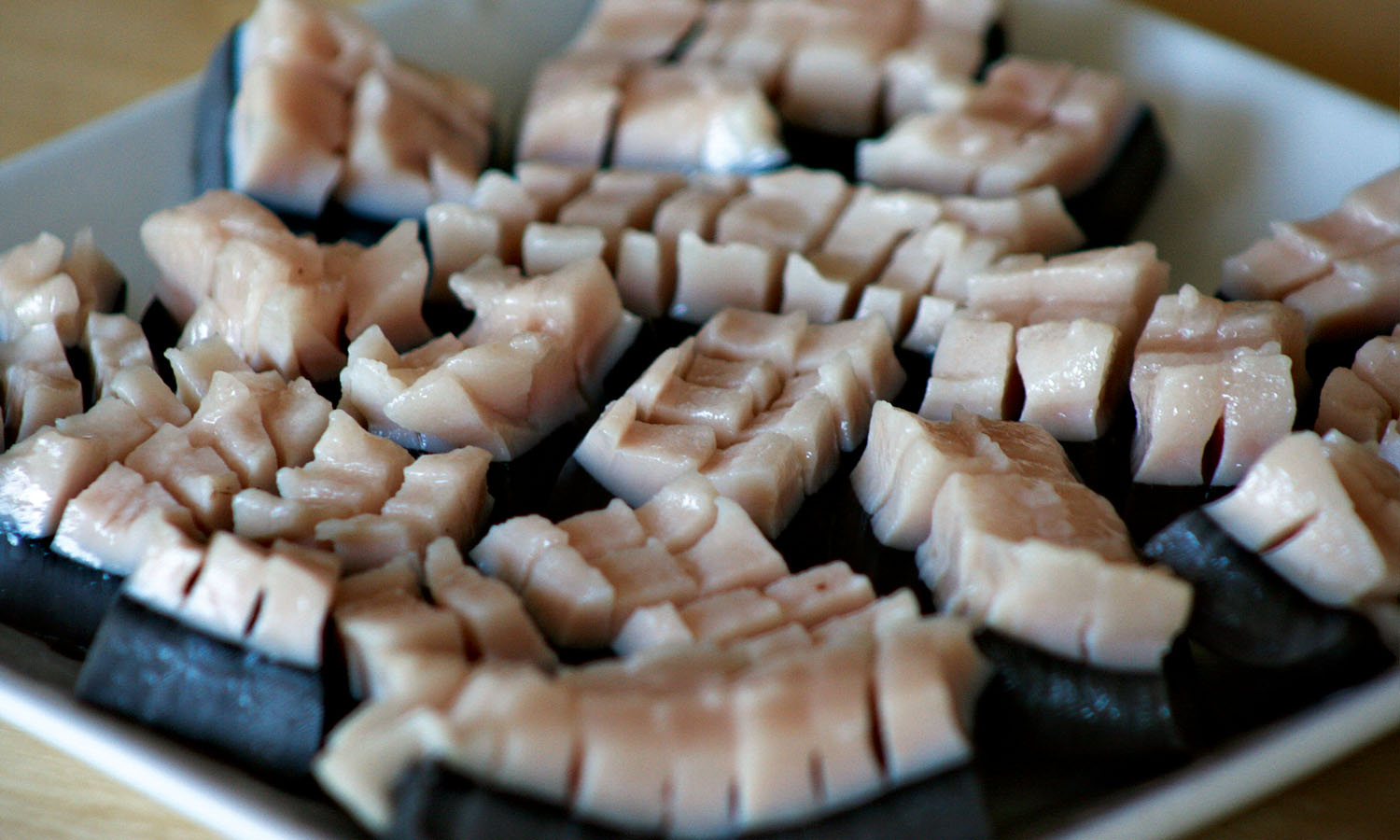
With a mere 57,000 locals to feed, Greenlandic whaling is considered sustainable. Beluga, narwhal and minke are the most common varieties of whale meat sold, caught by professional hunters who must respect a strict quota. When cooked, the nutritious meat tastes like a well-done steak (they are mammals, after all). Also popular is the raw skin of the narwhal, called mattak. It has a subtle, nutty flavour, and takes an eternity to chew.

Seagull nests are raided for their speckled eggs, which are used to make hearty omelettes. One ferry I catch takes an unplanned detour to an egg-rich isle on the whim of the vessel’s hungry first mate.

With such an emphasis on hunting, restaurants aren’t common in Greenland. Easily the best is Nipisa in Nuuk (the capital), which serves modern dishes with fresh local ingredients. Try the lamb, considered among the world’s best because of its diet of Arctic herbs and berries.
Something fishy
If you prefer your fish more politically correct, there’s plenty of delicious seafood on offer aside from whale. Greenland’s economy was built on fishing, particularly for halibut, prawns and snow crabs. As most are exported, you’re better off catching them yourself. You’re far more likely to come across salmon, capelin, trout and char, which are sold at markets fresh, dried, or cured with local herbs. Cod is available fresh, but is mainly hung out to dry to create a jaw-breaking snack exported to Portugal.

Eat your greens
Despite the island’s verdant name, Greenland’s chilly climate has traditionally prevented much produce being grown. Before the Danes brought fruit and vegetables (and beer and bibles, among other things), the Inuit mainly got their vitamin C through blubber, raw fish, and reindeer liver. Other options are the small, kayak-shaped leaves of the qajaasat plant, used to make tea, and kuanni, a local relative of rhubarb that makes a yummy cordial.

For a few weeks in autumn, the tundra becomes blanketed with paarnaqutit, tart, dark berries that work a treat with ice cream. Mushroom lovers should keep their eyes peeled for slippery jacks, which often grow among Viking ruins in the island’s south. Ironically, as global warming starts to turn Greenland green, farmers in the far south are now growing broccoli, cabbage and cauliflower for the first time ever.

Tip of the iceberg
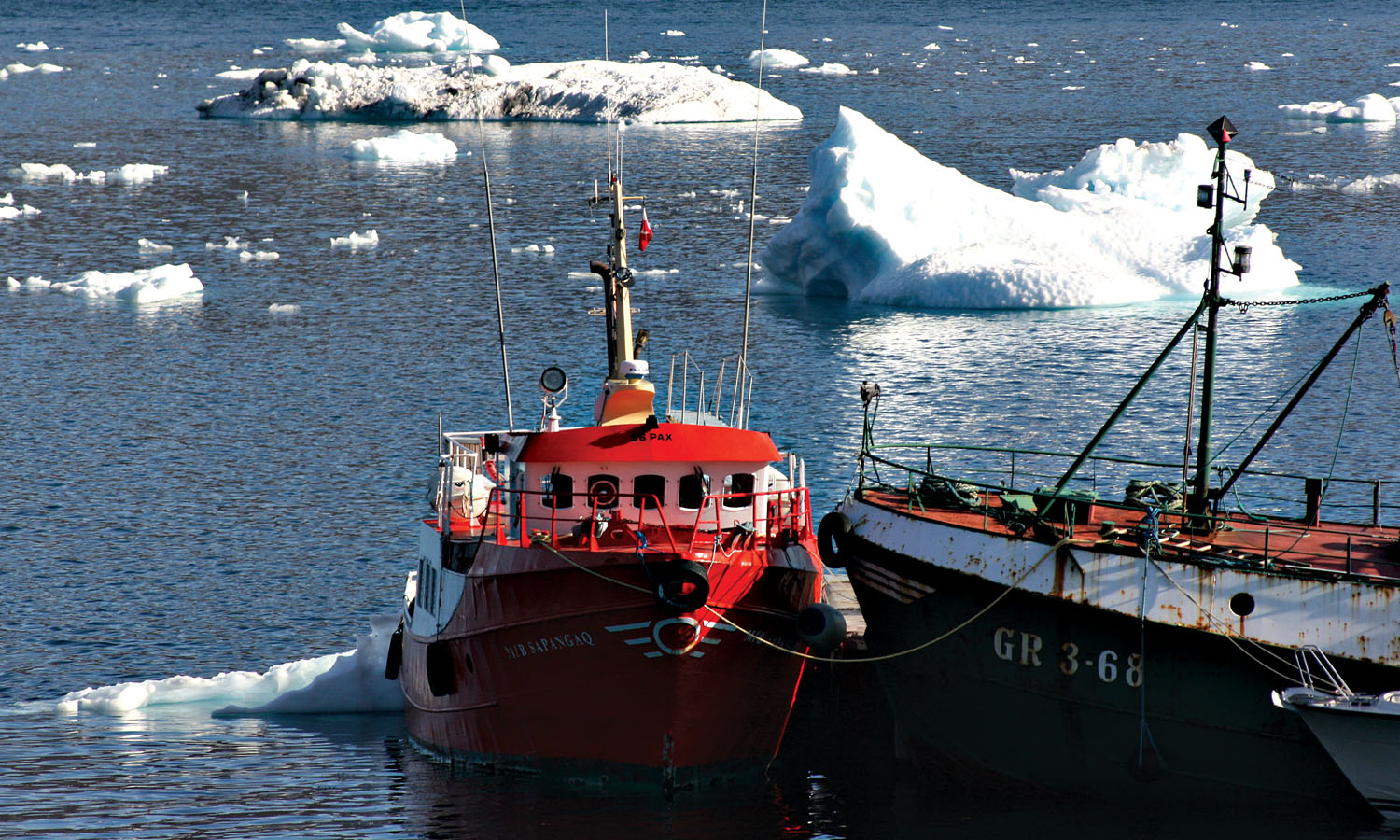
Perhaps the strangest Greenlandic delicacy is a beer that’s literally ice-cold. Greenland Brewhouse is the island’s first brewery, started in the town of Narsaq in 2006 by local fireman Salik Hard. Reversing the adage that you can’t sell ice to Greenlanders, he’s selling it to the world, melting 20,000-year-old icebergs to make what is probably the world’s purest pilsener.

Hard maintains he uses the ice because it is readily available, but there’s no doubt the cult status his beer enjoys in Denmark is mainly thanks to this unique ingredient. The malt is imported from Germany and the hops come from Canada. In addition to pilsener, Hard and his brewmaster make pale ale, brown ale and a particularly delicious dark Christmas beer.

By far the most popular non-alcoholic drink is coffee, which is consumed thin, black and in dangerous quantities. Spend more than a few days in Greenland and you are bound to be invited to a kaffemik, or “coffee party”, where you’ll be pampered by weathered Inuit grannies shuffling around the house in their favourite pair of reindeer fur ug boots. A feature of these gatherings is long periods of silence where everyone clasps their cups and simply smiles. Don’t feel awkward; the Inuit regard communal silence as perfectly sociable and a sign that everyone is at ease.
Of Horses & Hombres

Before heading to Argentina, I had heard all about the sensuality of tango: the beautiful women, the revealing dresses, the sultry looks and the sexy music. But now, as a hot-blooded heterosexual in the midst of my first Buenos Aires tango experience, I’m slightly disconcerted to find I can’t keep my eyes off a dancer named Carlos.

He’s tall and dark with the Italian features of many of his compatriots, and has deep black eyes like the subject of a European master – the kind that seem to follow you around the room. And, although he’s stuck to the side of a stunning brunette almost bursting from her red dress, those big black eyes have me in a trance.

When I arrived in the boulevard-lined South American capital yesterday, my head was full of a very different idea of Latino machismo – one based on the gauchos of Bruce Chatwin’s classic, In Patagonia. Ever since reading it as a teenager, these South America hombres have remained in my imagination, where freedom and adventure sit side-by-side. Tough men on piebald ponies drinking mate, swathed in ponchos, with long-bladed knives jutting from the folds of their waistbands.

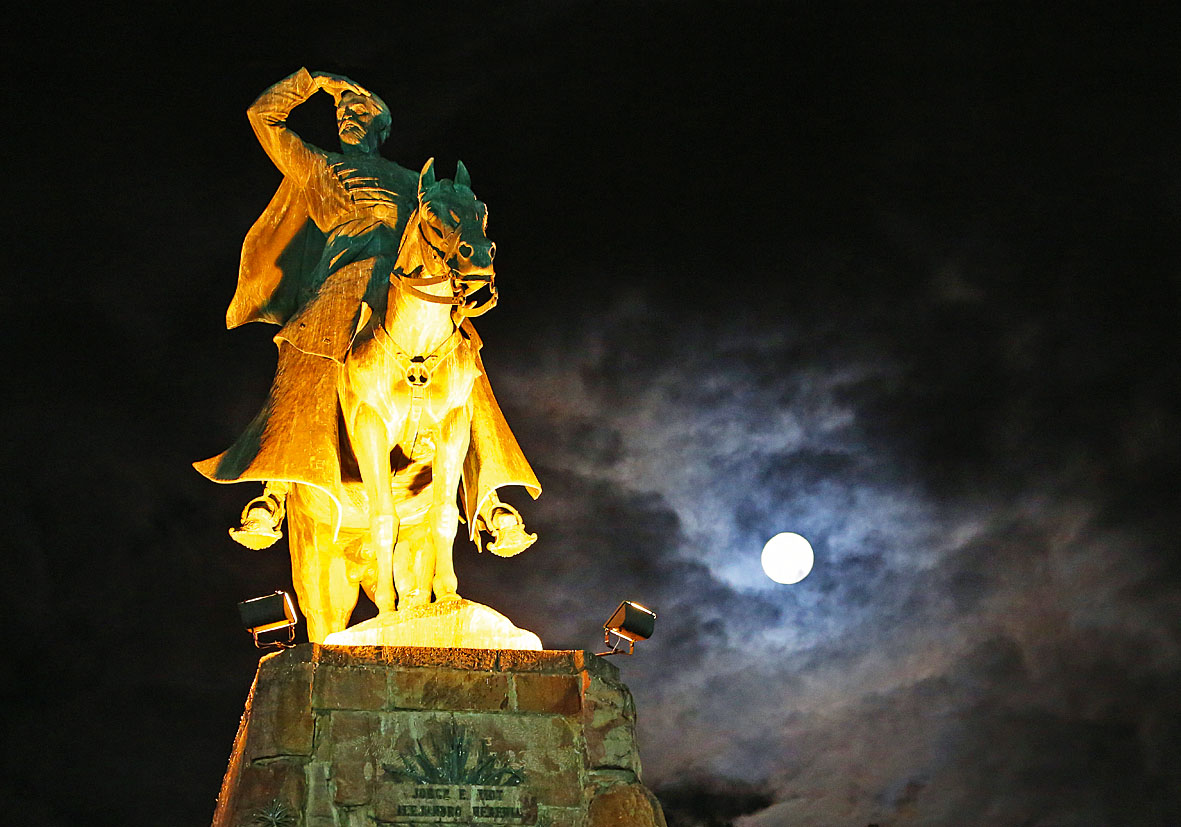
It all started well. Our taxi driver from the airport, Martin, introduced himself with a humble reference to the great South American liberator General San Martin and listed his three greatest loves: “I like football very much,” he said, declaring loyalty to the famous Boca Juniors. “And tango is my passion,” he added, moving his shoulders in a dance. “But women,” he continued, locking eyes with me in an intense stare: “Women I love!”

Twenty-four hours later, bathed in the soft red light of the Rojo Tango show, a five-piece band filling the room with songs of lost love, there are no ponchos and not a long-blade in sight, but it would be a brave gaucho to doubt Carlos’s machismo. The women in the room swoon with his rhythm. When the show ends, white light dissipates the fog of desire and I stumble from the tango restaurant and into a bar next door, my companions teasing me about my first, albeit short-lived, Latino man-crush.

The next day, wandering the gritty, pastel-coloured streets of La Boca, I’m told tango originated as a dance among men in the late 1800s. With thousands of male immigrants pouring into the capital, the city’s bordellos were busy places, where brawls were common. Out of the fights and pent up anger, tango was born, with men dancing together while they waited their turn. The bordello staff joined them and tango evolved into what it is today.

Three days later, despite a night at an estancia in the wild northeast region of Esteros del Ibera, and a brush with a khaki-clad safari ranger who looked like a young Harrison Ford in the jungles around Iguazu Falls, I’m yet to experience the Argentinean machismo I’d expected. But although I only have a few days left in the country, and Patagonia is 2,000 kilometres to the south, there is still hope. Sitting on a plane circling the north-west colonial city of Salta, I notice a map on which the silhouette of a horse-mounted gaucho trots across the Salta and Tucumán plains. Although the region is now famous for its wines, this is also cowboy country.

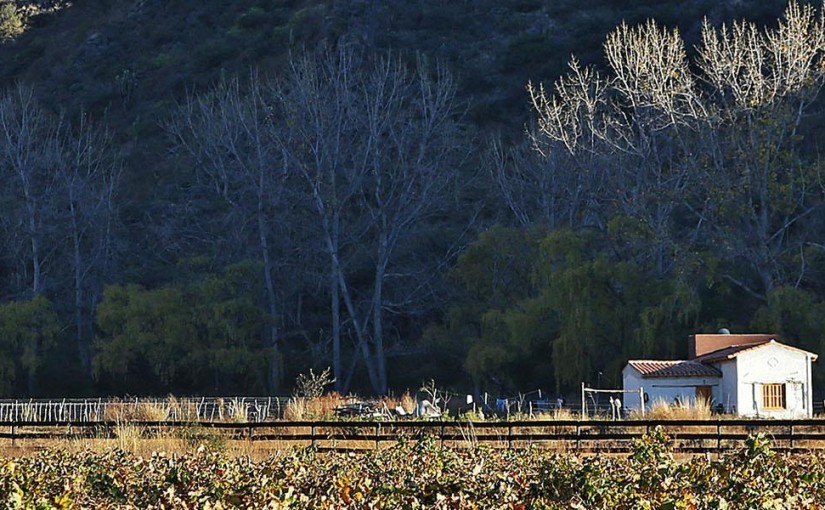
Nestled hard up against the Andean foothills, Salta has the appearance of a quaint European provincial capital, despite its population of just half-a-million. From the plane window, the landscape is a patchwork of orange-leafed vineyards. To the northwest, one of the world’s highest railways – Tren a las Nubes (Train to the Clouds) – climbs 4,220 metres into the grey mountains.

At 1,200 metres above sea level, Salta and the surrounding region is home to some of the highest vineyards on the globe, famous for producing the dry white wine torrontes that we’re chasing on a three-day trip that will take us south from Salta to Tucumán, the home of Argentinean independence.

On the way into town, our guide Noah tells us that Salteños love wine, music and a good time. “The secret is not to get the guitar player drunk or else the music is over very early,” Noah declares with a burst of laughter, as we pass llamas grazing in green paddocks and roadside empanada stalls.

Salta is famous for its empanadas, which Noah assures us are the best in the country. Nearing our hotel, he offers one last note on local culture: “If the waiter takes his time to take your order, it takes even longer for your order to arrive, and even longer to get the bill, then you know you’re in Salta.”

It’s Sunday and the sidewalks are almost empty as I stroll along narrow streets lined with terraced colonial buildings. Old men gather on street corners talking in soft Spanish. In a dusty park, hawkers cluster below tall palm trees and pigeon-soiled statues, flogging the red-and-white tops of the River Plate football team, which is in town for the weekend.

I make my way along a side street and stumble onto Plaza 9 de Julio, the city’s colonial heart. Classical French and Italian architecture lines the square. Passing the pink basilica I cross the sunny plaza to a cafe. Chairs and tables are laid out on the wide footpath, where I order a coffee and sit back to take in the afternoon. A busker plays a violin, teenagers stroll arm in arm and children slurp ice creams under mandarin trees laden with ripe fruit. My coffee never arrives. I mention it to the waiter as I leave. He shrugs as if to say: “What did you expect? You’re in Salta now gringo.”

Having experienced Salta time, I’m keen to taste the Salteños’s other great passions: music and wine. But first we decide to take in some of the town’s bricks-and-mortar attractions. Founded in 1582, the city is known colloquially as ‘Salta La Linda’ – Salta the Beautiful – and is home to some of the country’s finest colonial architecture, which hints at the former wealth of the regional capital.

Next door, the Museum of High Altitude Archeology houses three child mummies, found in 1999 on the cold slopes of a 6,700 metre volcano. It’s believed the mummies were child sacrifices made to Incan gods.

A couple of doors down is a small bakery, shelves glistening with Salteño treats: melon marmalade wrapped in dry pastry and sprinkled with icing sugar, fig paste wrapped in pastry with sliced walnuts and dulce de leche – caramelised sweetened milk, incased in a hard icing sugar shell.

Already light-headed from our sugar hit, we hit a peña. Local bars where Salteños gather to drink, eat and sing, peñas are the best place to get a real taste of the region’s culture. Noah has assured us this peña, La Casona del Molino, is as local as they come.

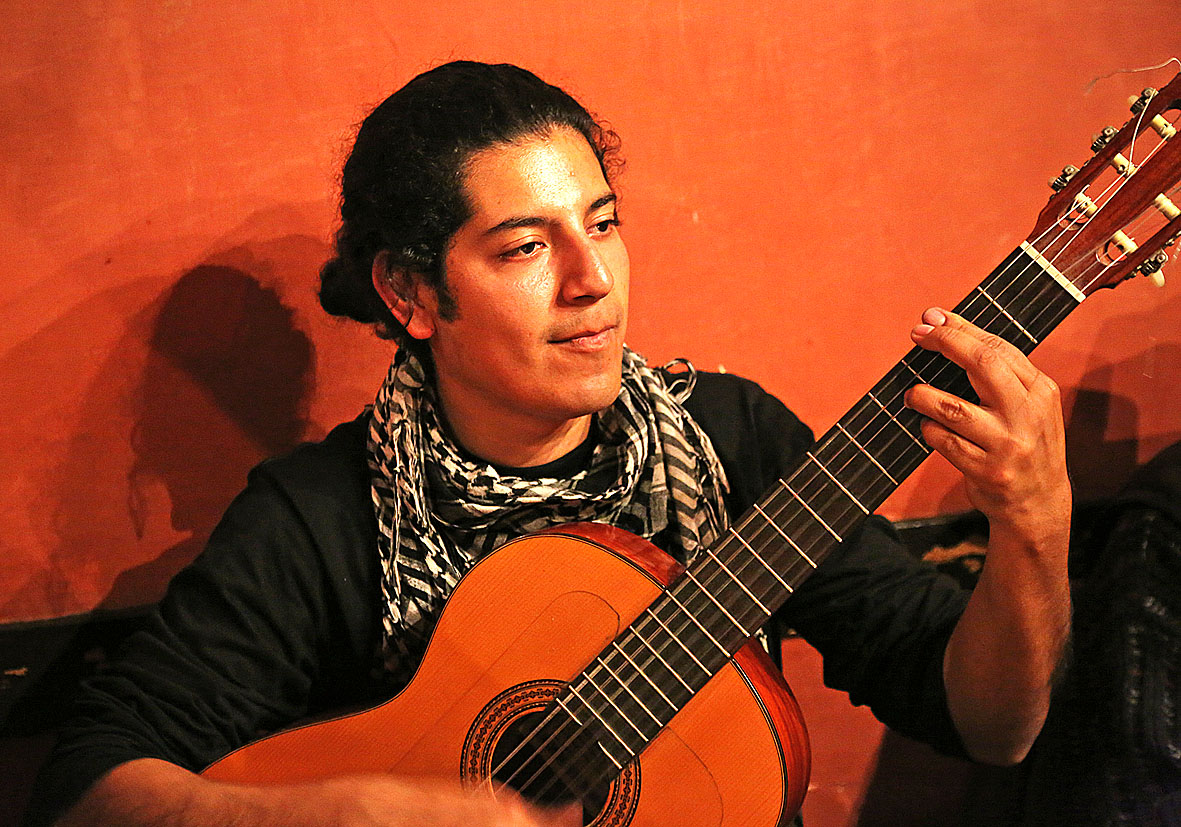
It’s 9pm when we arrive and the place is deserted – Salteños are famous for the late hours they keep – so we order wine and empanadas, and wait. A former mansion, La Casona is a jumble of high-ceilinged rooms cluttered with wooden tables. By the time the first musicians shuffle into the place, three empty bottles of Malbec clutter our table. By 11pm the place is full, each room with its own musicians and audience, all drinking, eating and dancing to the acoustic folkloric sounds. It’s 4am when we spill like guitar music onto the street.

The next morning the temperature has dropped and the sky is pewter. I emerge from the hotel wearing a coat and nursing a robust hangover. We’re about to drive through the heart of Argentina’s north-west wine region and the thought of another glass of the stuff gives me shivers. But, with a little machismo of my own, I decide the best defense is to tackle the dilemma head on.

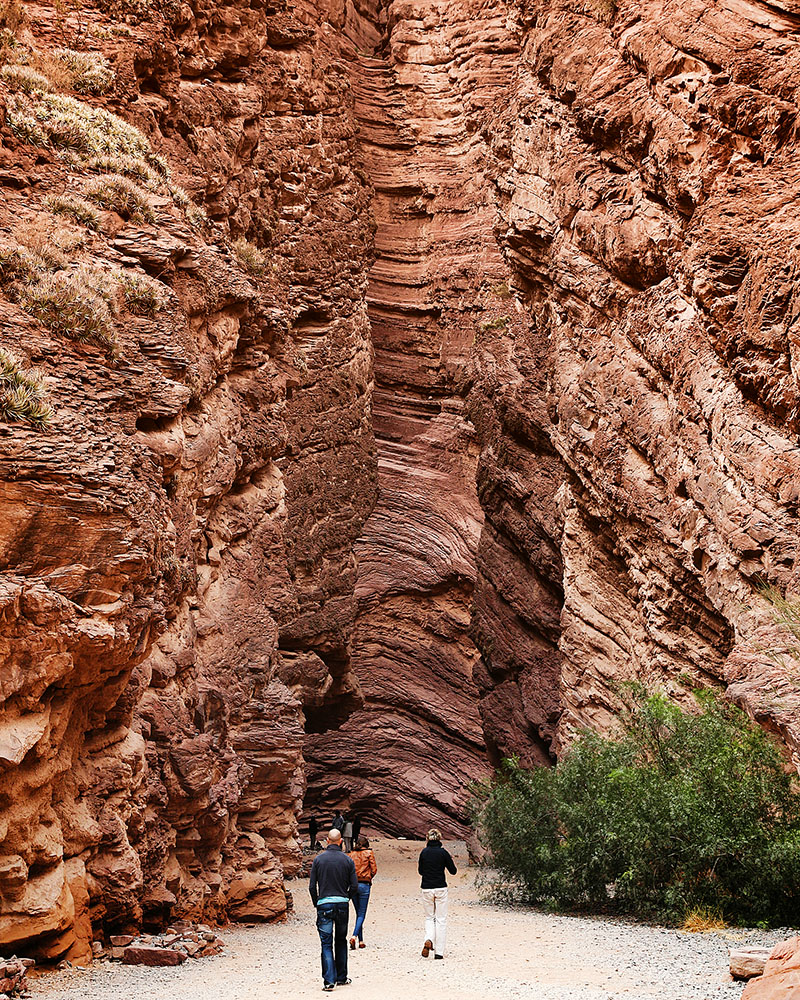
We take the Route 68 south from Salta toward Valles Calchaqui and the northwest wine growing capital of Cafayate. The landscape is a windswept canvas of rugged ochre-coloured mountains and wide flats of low scrub, towering cacti and dry, rockstrewn riverbeds. We taste ruby red Malbec and delightfully dry torrontes wines before visiting the Devil’s Throat, a cylindrical incision in the red valley walls where a pan piper fills the air with haunting notes that seem to hover inside the rock formation. But still, despite the Wild West landscape, there’s not a gaucho in sight.

The following day we continue south toward the town of Tafi del Valle in Tucumán Province. Our new guide, Hugo, assures me this is real gaucho country and that our destination, the 230-year-old Estancia Las Carreras, is a working ranch and brimming with cowboys.

We leave Cafayate and traverse the traditional lands of the indigenous Diaguita people. It’s a harsh country of barren rolling hills. At the pre-Columbian Ruinas de Quilmes we explore the remains of what was once a town of 5,000. Our indigenous guide, Nicolas, explains how the people fought the Spanish with bows and arrows and slingshots, the women fighting beside their men, resisting colonisation for 130 years. When the conquistadors finally won, many Quilmes people killed themselves rather than surrender.

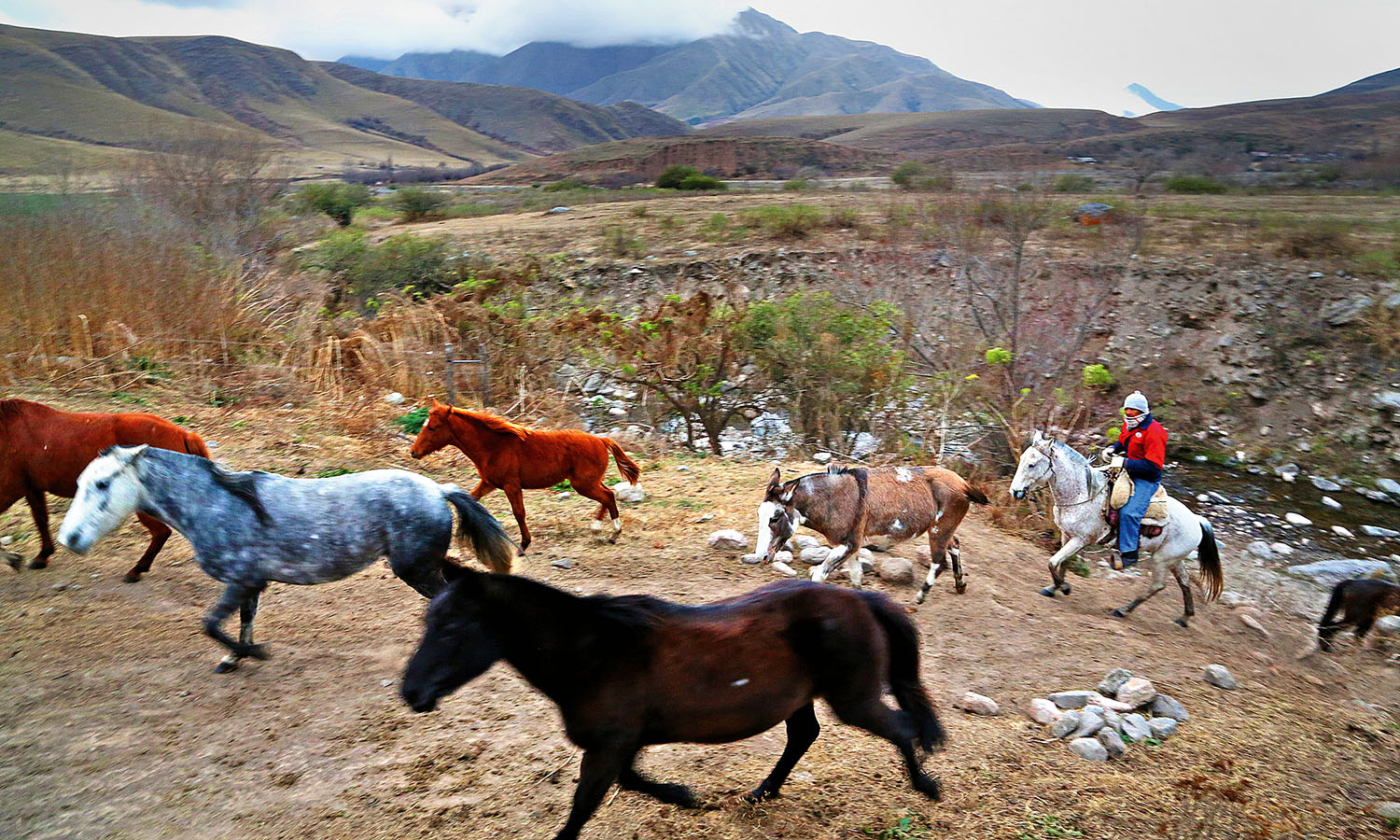
Route 307 takes us out of Valles Calchaqui to the 3,000 metre pass, El Infiernillo. The air is crisp and a flock of llama blocks the road as we crest the pass, a shepherd slowly walking behind. I step from the car to take a photograph. As the shutter clicks, a mob of horses thunders over a nearby ridge, in pursuit are two gauchos riding high and proud in their saddles. I stand and stare. One of the gauchos waves. I nod. Then they’re gone.

That night, huddled around an open fire sipping Malbec, our hosts at Las Carreras inform us they have something special planned: a night ride through the valley with one of their cowboys. An hour later, swathed in a red poncho, I’m riding beside Moreno listening to tales of a life spent in the saddle. We climb to the top of a ridge overlooking the estancia. The homestead lights of Las Carreras twinkle below and I ask Moreno if he knows any gaucho songs.

Moreno leans back in his saddle and begins to sing. It’s a soft, heart-broken ballad of freedom and loss, passed on by his grandfather years ago riding these same hills in search of scattered cattle. The melody rises from Moreno’s throat in puffs of fog, floating on the frigid night air. The horses’ hooves strike a beat on the rocky trail and the ballad echoes across the valley. A full moon throws our shadows forward; two gauchos riding side by side.

It’s taken a week to shake my Carlos man-crush, but finally I’ve found my macho gaucho. And wouldn’t you know it, he’s singing.

Gone With The Dogs

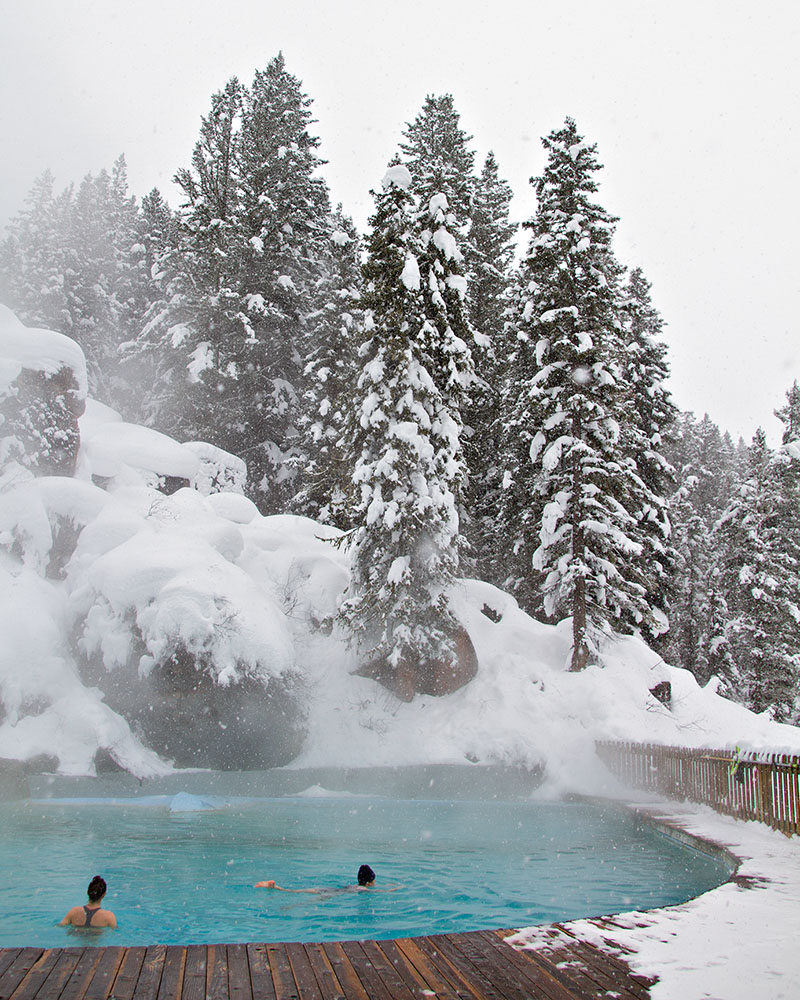
I’m cold. Really cold. And I’m standing in my underwear in a wooden shack deep in Wyoming’s Bridger-Teton National Forest. This is not the scene of some erotic horror movie though. I’m about to plunge into the piping-hot waters of the swimming pool at Granite Hot Springs. It is fed by a 40ºC natural spring streaming down the snow-covered hillside. The heat has melted the surrounding snow and the 10-second shuffle across icy stairs and a slippery, humility-stealing boardwalk seems to take an eternity. By the time I reach the pool’s edge I cannot feel my extremities. Thankfully, it doesn’t take long for the hot springs to toast me and, as I float like a cooked lobster, I think about the best part of this scenario – the adventure to get here.

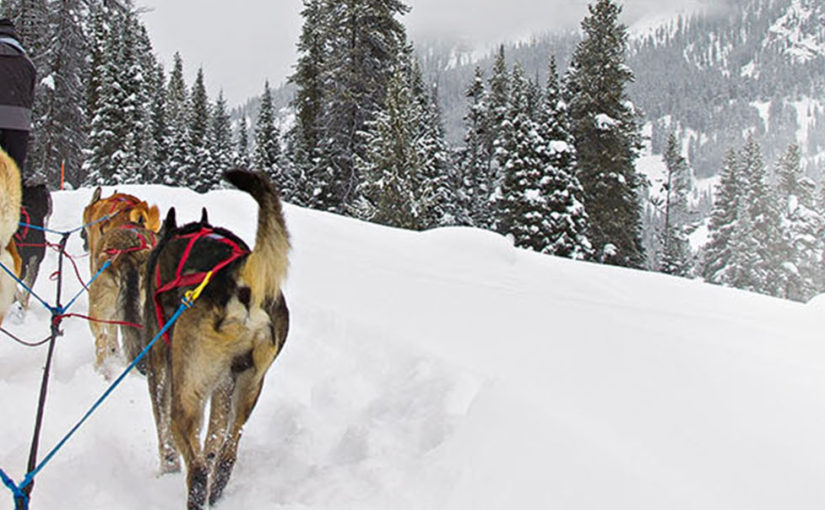
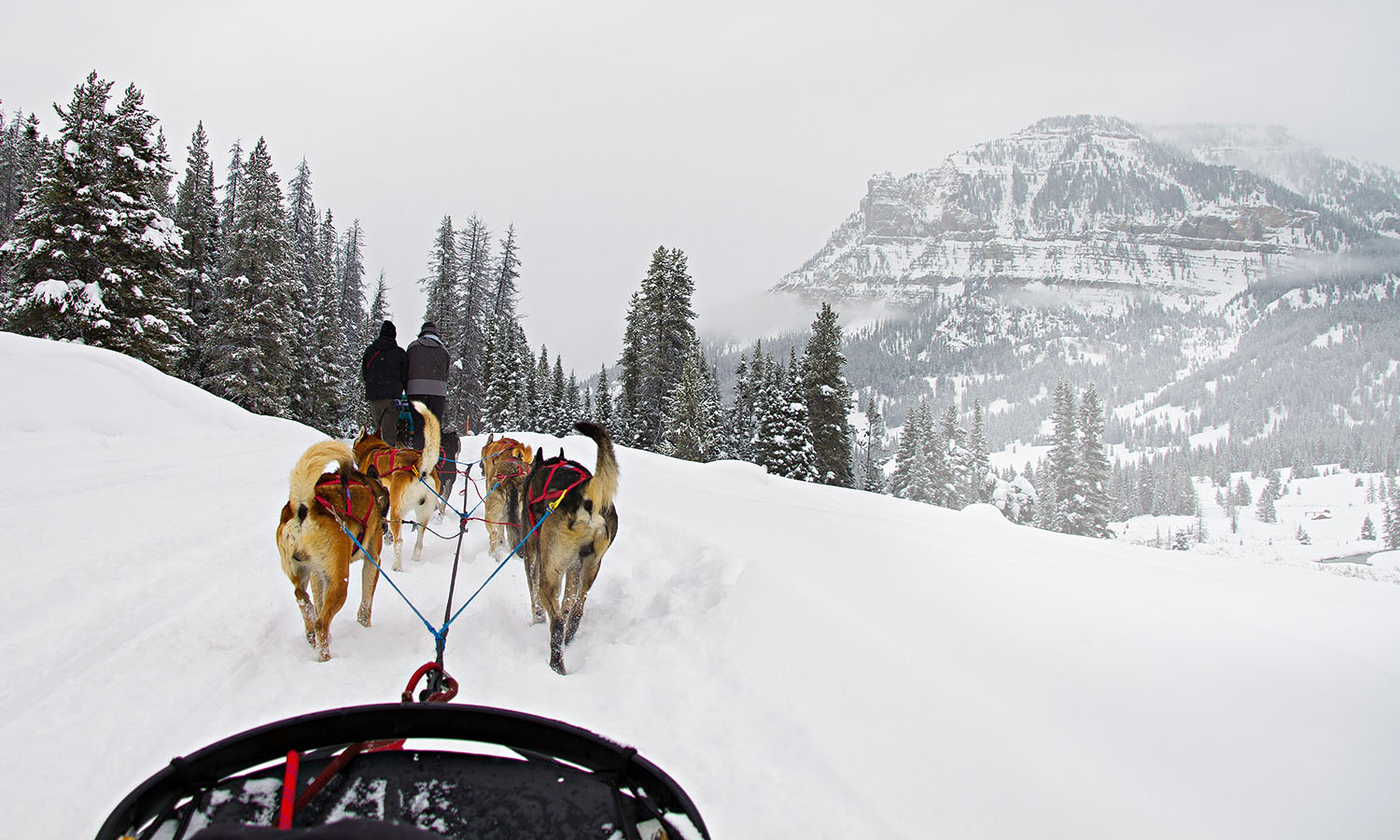
Earlier that morning I’d left the famous slopes of Jackson Hole for a snow experience of a different kind. What I knew about dog sledding I’d learned from the big screen, where huskies mushed their way to rescue a freezing damsel in distress. Soon after arriving at Jackson Hole Iditarod Sled Dog Tours though, I realised I actually knew nothing at all. The movies, would you believe, are fictitious. First, Alaskan racing sled dogs are nothing like the huskies in the movies. They are lean, surprisingly small and look a bit like red kelpies. They are also very excitable and their barking becomes frenzied as we arrive.

A brief orientation sets us up with basic commands and notes about where to stand on the sled. The handlers are at pains to explain the dogs are our partners and the most important members of the team. Plus, they are all related to dogs that have done the Iditarod, a 1600-kilometre race across Alaska that’s often referred to as the Last Great Race on Earth.

With the foot brake (a deep hook in the snow) kicked up we are off. This is no Disney ride. The dogs are fast and I need to control them or we’ll slide off the track. It is a balance of riding the brake to keep control, yelling mush and pedalling to help with uphill speed.

The only sounds are the patter of paws on the snow, the panting of our team, me included, and the wind, some of which smells dog generated. A distant moose stares at us, nonplussed. The dogs take gulps of fresh powder to hydrate without breaking step as we wind through pine trees and into open fields. The views of mountains framed by forest are as breathtaking as the sledding. I can only imagine the stamina of the Iditarod champions and wonder if they ever get the chance to relax in a hot spring post race.

Girl Power

They say you should beware the woman scorned, but not if you’re a female musician. When Canadian singer Sarah McLachlan planned to tour with Paula Cole, she was told by a promoter no one would pay to see a show featuring two women. That was 1994, and she thought the notion was ridiculous. At the same time, Lollapalooza, which had launched in 1992, was attracting huge crowds, all while featuring few female acts on its bills.

It took McLachlan three years, but in 1997 the Vancouver songwriter proved her point. Her concept was simple: invite a diverse range of musicians, book venues, sell tickets and entertain the crowd. It was the same approach used by every other music festival going around at the time, but with one major difference: every artist on the bill would be a female singer or a band fronted by a woman. Lilith Fair, named after Adam’s first wife in Jewish mythology (the one who left him when he refused to treat her as an equal), was born.

At the time, McLachlan and her management team put together a wish list. The singer contacted friends and those she already knew, and her team reached out to the rest. In the end, 90 per cent of the artists they approached said yes. “The few we didn’t get were either in the studio or had been touring for a very long time and needed a break,” McLachlan said in an interview at the time. “We gave each artist the time and freedom to join the tour for however long they wanted, so the artists themselves determined how the bill ended up.”


On 5 July 1997, Lilith Fair kicked off in George, Washington. There were three stages – the smallest of which featured acts who’d only played a few gigs to that point (among the artists who appeared on it were Beth Orton and Dido) – and about 20,000 punters at each show. Headlining all 35 dates were McLachlan and Suzanne Vega; along the way they were joined by Sheryl Crow, Tracy Chapman, Jewel, Fiona Apple, Emmylou Harris and just about every other female singer who was playing music in North America at the time. The tour racked up US$16 million in ticket sales and became the top-grossing festival of the year. As well as top tunes, each show featured a village area, where retailers and non-profits, like Planned Parenthood, could set up stalls, and a dollar from each ticket sold was donated to local charities.

Buoyed by the response from the first tour, Lilith came back in 1998 bigger than ever, adding the likes of Liz Phair, Bonnie Raitt, Queen Latifah and Missy Elliott to the bill. “This is the best tour, man, and it’s all women,” said Queen Latifah during the festival. “I wanted to do this because I was excited about playing to a different audience than I might normally play to at a hip-hop show. The vibes are right.”

McLachlan had only ever signed on for three years of the festival and, after its 1999 iteration, she decided to give it a break despite success that not only manifested itself in ticket sales – about one and a half million people went to the festival during the three years – but also by putting competition winners in front of huge crowds, giving emerging artists exposure that secured record deals and by donating $10 million to various charities.

“We’re all well into our 30s now, and we’ve decided we want to have babies,” said McLachlan at a press conference in 1999. “This will be the last year for a good, long while. It could be three years, it could be 10 years, it could be forever.”

It would be 2010 before Lilith made a comeback, but it could never replicate the same success. Dates were cancelled when ticket sales were slow, and there was some harsh criticism from bloggers then the music press who labelled it feminist flag-waving in an era when women like Kelly Clarkson, Rihanna and Ke$ha were already topping the charts. “Unfortunately, most of the media seems to just glom onto anything negative,” McLachlan told NPR when it hit the fan. “And that’s all they talk about. And they go searching for it.”

It may, however, not be the last we hear of the female-friendly festival. Just last year the sisters from Haim said they wanted to launch their own Lilith Fair-style gig. At the New Yorker Festival, Este Haim listed her dream line-up of Lorde, Florence and the Machine, Savages, Chvrches, Taylor Swift and her band’s own mentor Jenny Lewis. “I did see Melissa Etheridge in concert, I saw Sarah McLachlan in concert, I saw Paula Cole in concert, and Sheryl Crow. All these amazing ladies had such an amazing outlet and place to play music, and it was really beautiful and I feel like that’s not available any more… We talk semi-jokingly but semi-seriously about making it happen. So stay tuned. I think it would be really magical.”

Kingdom of Character

What is your blood type?” asks Lady Gaga. It’s an odd question, especially one coming from a pop star I’ve only just met. “Um, I don’t know,” I say. She looks like I’ve just said her outfit sucks. “What? But everybody know blood type in Japan – like me. I am ‘A’, like real Gaga I think: patient, intelligent and, how you say? Conservative.” Conservative? She strikes me a pose á la Marilyn Monroe, gives me a wink and lights up her boobs like she’s a Christmas tree. Spiderman runs after her. Followed by two vampires, a pumpkin, a panda, some little green men and another Gaga dressed in lace.

I’m not sure what to expect upon my arrival for a few days in Tokyo, eight months after Japan’s devastating earthquake. But I’ve just discovered two things. 1) When someone asks what your blood group is, it’s like saying ‘what star sign are you?’ 2) I’ve unintentionally landed during Halloween, and everyone in Roppongi, the nightlife nerve centre, has gone a little Gaga.

In fact, since the pop diva urged fans to come back to the city during her visit in June 2011, she has become somewhat of a national hero – and an apt one at that. Out there yet enigmatic, gregarious yet shy, the ‘Poker Face’ singer with the big personality sums up this town to a tee.

After a heavy first night out on the sake, I spend the next couple of days finding out what makes Tokyo tick. It’s a sprawling city with quirks on every street corner. From Akihabara’s cutesy-poo maid cafes and AKB48 shops (a local J-pop group with 48 members) to Harajuku’s cosplay rockabillies and Shibuya’s statue of Hachiko: a dead dog that was so admired for his loyalty, they even made a movie about him. And while all of this is great and good, and blows my boxed-in Western mind, I decide that tomorrow it’s time to do something that’ll give me a different perspective of the city’s character – like get out of it.

About a 90-minute train ride north-west of Tokyo lies Okutama-machi: a vast wilderness of cool rivers, misty mountains, ancient shrines and blossoming pink ginkgo trees. Not that you’d ever think it was there. The fact that 35 million people cram into the greater Tokyo area alone makes it the world’s most populous metropolitan region. So how could there possibly be any room for anything else but chopsticks?

“A guy got mauled by a bear out here,” says Brad, an American who’s been an outdoor guide in Okutama for over 10 years. “It was really bad. But it did put us on the map,” he says, pointing to a little bear motif on a sign post as we exit Kori station. “I mean, the Japanese didn’t actually think there would be any wild animals around.”

I look over at the mint-green hills we’re about to climb. No neon-lit skyscrapers, air-conditioned malls or pimped-up plazas; just spectacular spots for picnicking, camping, bathing, fishing and walking.

Thankfully, Brad’s an expert in the area, so we start our hike a couple of hours down from Okutama town. This way, we can stroll up and finish the day at an onsen (hot spring).

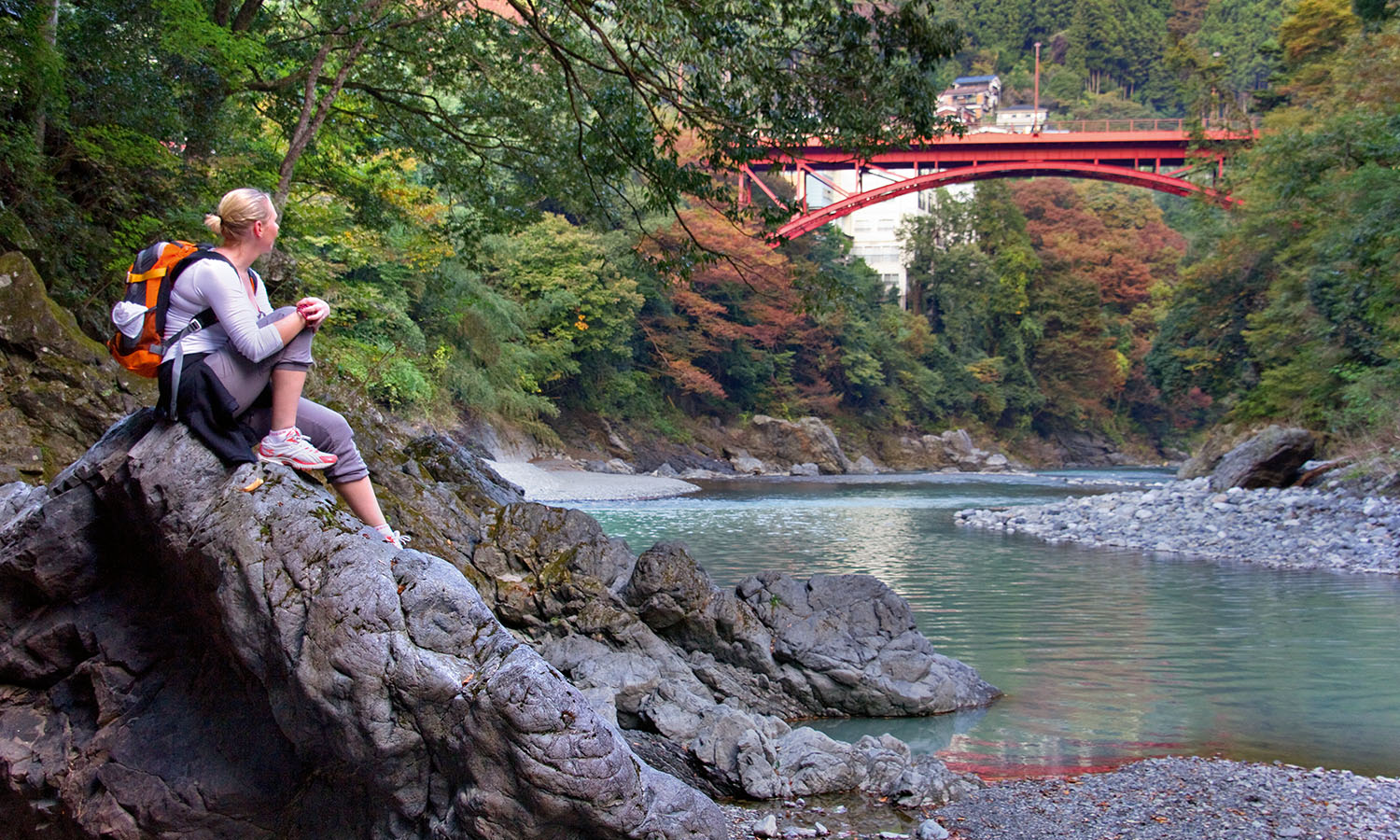
There’s not a cloud around as we wind our way around the pebbly shoreline of the Tama River, up grassy paths and across little wooden bridges. Unfortunately, we’re a bit too early in the season for the brilliant autumn colours that epitomise the area, but the maple leaves are starting to turn from chameleon green into dusty yellow, with slight tinges of orange and cherry red.

Not far from our destination we stop beneath a small shrine that’s on a rock overlooking the almost alpine-clear water. There’s hardly another soul about, just a couple of out-of-towners snacking on sushi rolls and limbering up for what looks like calisthenics.

Hiking, it seems, like any other hobby in Japan, is serious business. Kitted out with Gore-Tex boots and gaiters for a walk that has barely broken a sweat, they bend, flex and squat, hiking poles in hand, as if they’ve been summitting Mt Fuji.

I happily watch the performance while Brad calls the people at the onsen to fix up lunch. I hear hurried whispers, some laughing and a lot of ‘sumimasen’ – a popular Japanese word that means ‘sorry’, but is used to relax tension in a conversation about anything from the weather to washing powder.

Twenty minutes go by and Brad is still on the phone. He smiles, rolls his eyes at me and I wonder if he is also an ‘A’ blood-type character. This guy’s got more patience than a pachinko player. My belly is gurgling and I’m keen to get on.

“Sometimes I think I’m way too Japanese,” he chuckles, hanging up the phone. “Last time I went to the onsen they didn’t have fish, so I called to say that I’ve got my friend from Australia here and I’d really like her to experience our amazing local fish. We discussed why the fish was so great, but I didn’t actually ask for the fish. I just suggested it would be nice.”

I’m confused. Wouldn’t it have been easier just to ask for the fish? This, I am told, is classic Japanese ‘honne’ – a way of expressing your true feelings without actually saying what it is that you want. It is the Western equivalent of ‘beating around the bush’. And it works.

At the onsen I’m treated to grilled river trout that makes my tongue sing. I follow it up outside, bathing in a big Japanese tub that’s positioned high on a cliff looking onto a patch of river. Campers dot one side of the bank, struggling to put up tents. My warm skin soaks up the chilly air, as I close my eyes and relax into the gentle sound of the water rushing below.

It is a very different noise to the one I’m listening to later that evening after a train ride back to the city.

“Ussah, ussah…hi gora, hi gora!” The chanting is set to the beat of mini plastic bats being banged together. It is loud. It is melodic. It is being conducted like an orchestra by a man standing on an upturned milk crate, blowing a whistle through a megaphone. This is the sound of Japan’s national sport, baseball.

I’m at Jingu Stadium, home of the Yakult Swallows, and I’ve been lucky to score tickets to a game that’s on par with a preliminary final. Better yet, it’s a local derby. It’s between age-old rivals the Yomiuri Giants, known as the New York Yankees of Japan, and the local underdogs, the Swallows.

The guy squeezed in next to me at the very back of the bleachers is Wayne, an expat who’s somewhat an authority on Japanese baseball – he’s barely missed a game in 42 years. “This is the best part,” he says, as he opens up a pastel-coloured umbrella. I check the air, but I don’t feel a drop. Then the sea of bodies below us becomes a tide of translucent brollies, swaying in the breeze. “A fan got so worked up once, he started waving his brolly,” says Wayne. “Now, we all do it – even when it’s not raining.”

As Suishu Tobita, Japan’s ‘god of baseball’, once said “Baseball is more than just a game. It has eternal value. Through it one learns the beautiful and noble spirit of Japan.”

Players get sussed out by their blood type, of course. It is, after all, a sport about mental grit as much as physical strength. Yet it’s played in a much more polite and fastidious fashion than its counterpart in America. You’ll never see a mid-game spat – on or off the field – despite the fact ‘beer girls’ come to your seat and serve you full-strength from vacuum-cleaner-like kegs strapped to their backs. Even the cheer squads, known as oendans, are a perfectly executed, orderly procession. The Giants’ fans stand, sing and then sit. Then the Swallows’ fans stand, sing and then sit. Never, ever do they go at the same time.

You Gotta Have Wa, a book by Japan-based American Robert Whiting, is an insightful look into all the nuances of ‘besuboro’ (baseball). According to Whiting, “60 per cent of the country is a Giants fan…their performance has been held responsible for everything from the economic recession to the national suicide rate.” In another bizarre twist, even the owner of the Swallows, Hisami Matsuzono, is a shameless Giants fanatic. Though, not without good reason. If the Swallows defeat the Giants, sales of his Yakult plummet.

I give up my seat in the safety of the bleachers to come and join the action in the Swallows’ onedan. I have no idea what’s happening on the field, I’m too caught up in what now resembles a U2 concert. The air crackles with tension, then the chanting begins. “Ussah, ussah…hi gora, hi gora!” The usually reserved Japanese spill forth their lungs, like volcanoes erupting. It is a resounding, deafening cry that goes on and on until the game finishes four hours later.

Soon after, I’m sinking a beer with ‘OJ de Villager’ – Nigeria’s answer to Bob Marley. He came to Tokyo to be with his Japanese wife, a lady who looks as much fun as a plank of wood in a party hat. We’re downstairs in his bar: a seedy joint inappropriately named ‘Paradise Island’ that’s in the heart of Kabukicho, Tokyo’s red-light district. The room is bathed in a dingy blue glow, the air reeks of stale Asahi and the only other person in here is his mate propped up on a stool, slurping some ramen.

“I am a big star!” OJ announces, pointing to his chest like I may have mistaken him for someone else who isn’t in here. “Let me play something for you.”

He gets behind the DJ booth, starts the turntables rolling and some sort of J-pop/reggae tune, set to the rhythm of a doorbell, kicks in.

OJ picks up the mic: “I went to the airport, yo-o-o-oowah…and it was huge…I ran out of Africa thinking that Tokyo was the best…everybody, everybody, ohhh…”

After he’s finished serenading me, he points to the poster of a bare-chested African man with a glistening 10-pack. “This is me,” he says. I look at him and back at the poster. I look at him again, and once more at the poster. OJ might as well be wearing a gorilla suit. No amount of airbrushing could make that a picture of him.

I don’t want to be the one to put a lid on OJ’s bottle, so I ask him to sign his CD for me, before I make a quick exit.

Tokyo, I’ve discovered, is full of personality and personalities. Here, it doesn’t matter what pop star you’re trying to be, or what your blood type may be. As Lady Gaga once said: “You have to be unique, and different, and shine in your own way.”

Bacchus’s March

Do you know who he is? He’s very famous!” I take another sip of the wine handed to me by this famed mustachioed man and glance at the autographed photo that’s been thrust into my possession. I haven’t the faintest. “Well, we know him now!” I blurt back at the sous-chef, who’s popped out from behind a grapevine.

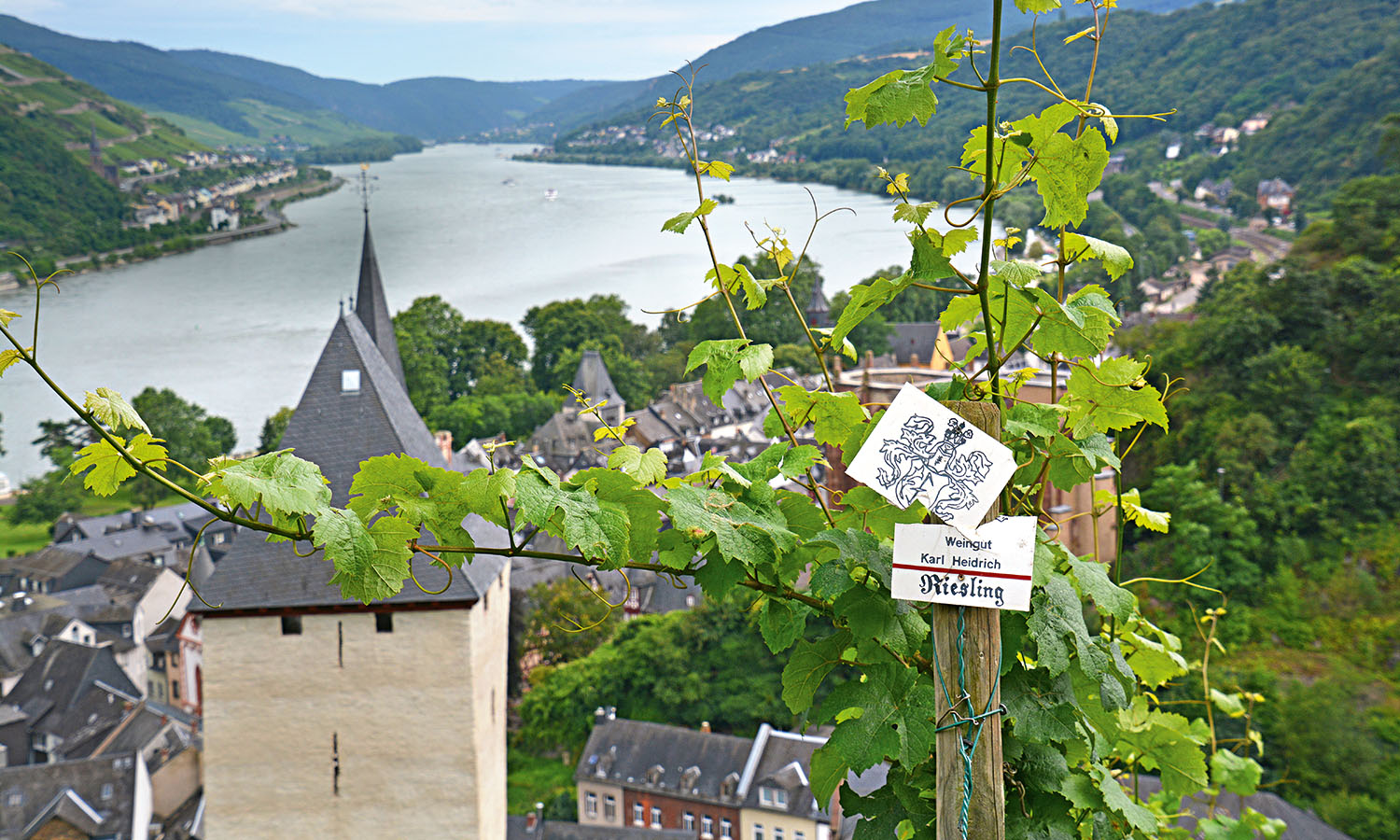
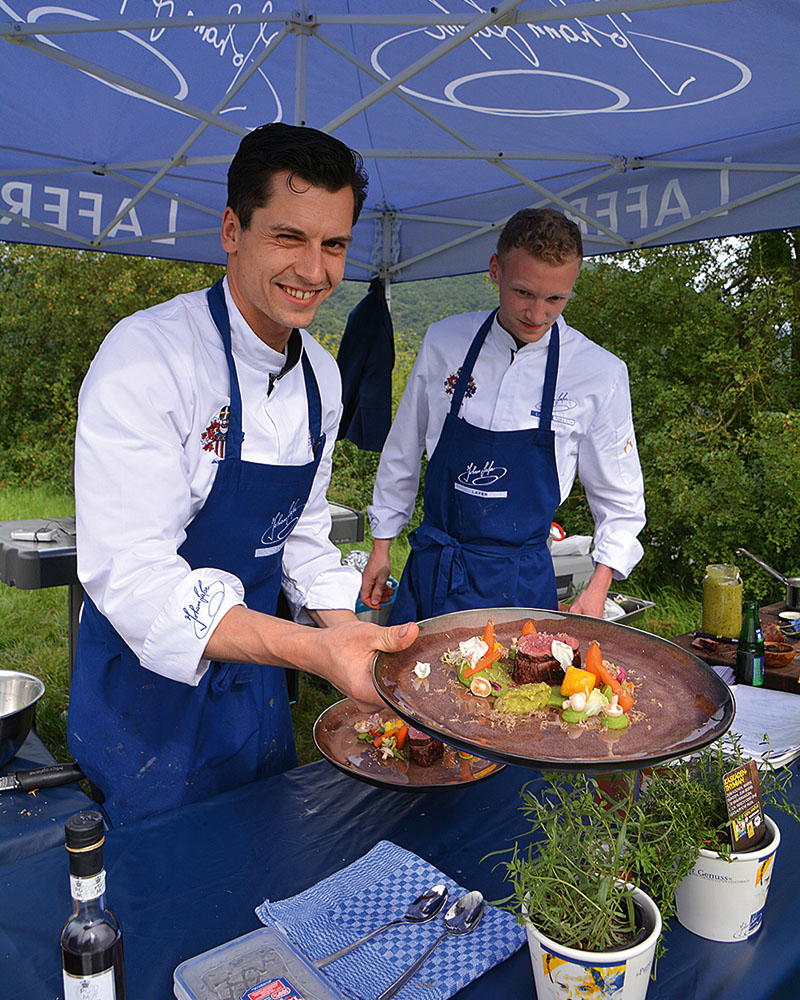
It just so happens I’ve stumbled upon one of Germany’s most famous TV chefs, the Michelin-starred Johann Lafer, who is entertaining guests on a cliff in the UNESCO World Heritage-listed Rhine Valley. A helicopter has whisked the party up here, soaring above church steeples, treetops and Lafer’s own castle, to a vantage point overlooking the medieval town of Bacharach, where they’ll quaff wine and dine into the early evening.
Oh, and Lafer pilots the chopper himself.

“How else would you get to the top of a cliff than by helicopter?” you might ask. For those of us without €1200 to spare for lunch, we hike. At some point, after slugging up a mountainside and wandering between rows of riesling, we’ve gone off course. It might be the lunchtime wheat beer taking control of my senses, or it could be I simply suck at reading maps – either way, we’re definitely lost.

Decked out in hiking gear, we look a far cry from the beautiful people imbibing vino under a sun umbrella, but the team of chefs preparing the spread seems unperturbed by our arrival.

We’ve caught them somewhere between entrée and main, and as one carves a thigh-sized slab of beef, another creates art with pea-green puree. “I use local produce, everything is grown nearby. And it’s always fresh. That’s very important,” says Lafer, reciting every modern chef’s mantra as he points out the squash assembled on each dish. “But the truffles come from Italy, of course! Would you like to try?” As quick as you can say “danke schön” a cook unfurls a tablecloth over an esky and we’ve joined the party under the chef’s marquee. So much truffle is shaved onto a tasting plate for two I feel I might have to declare my body part fungus when I next go through customs. As far as wrong turns go, this has to be the best.

It’s easy to see why Lafer chose this spot for his high-flying experience. Although the slate-grey Rhine River cuts through 1230 kilometres of Western Europe, bringing glacial waters from Switzerland all the way through to the Netherlands, Germany’s Rhine Gorge is considered its finest stretch.

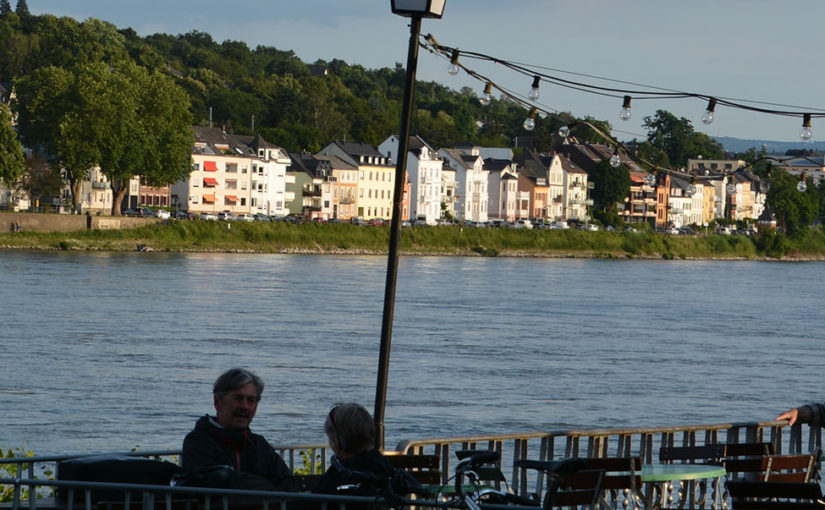
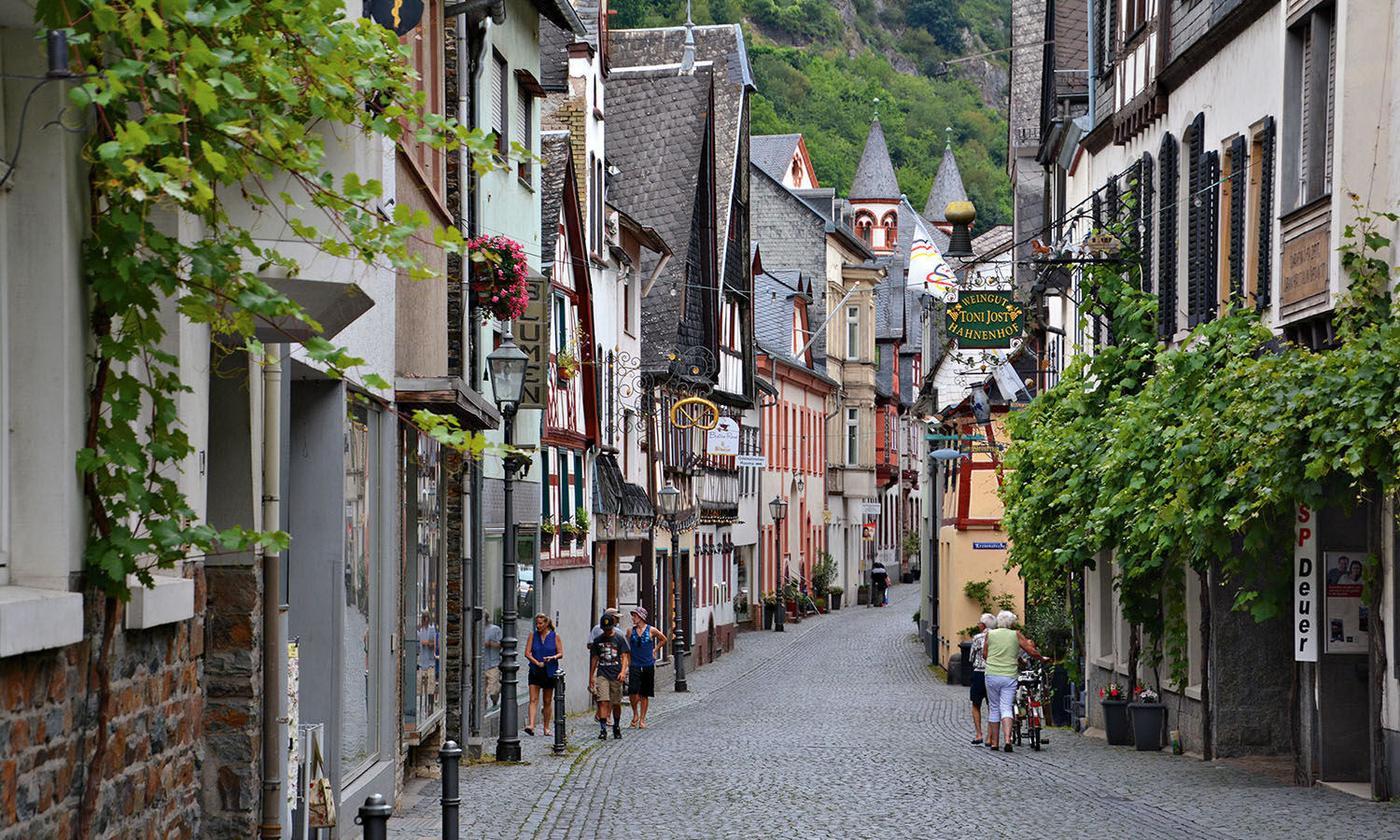
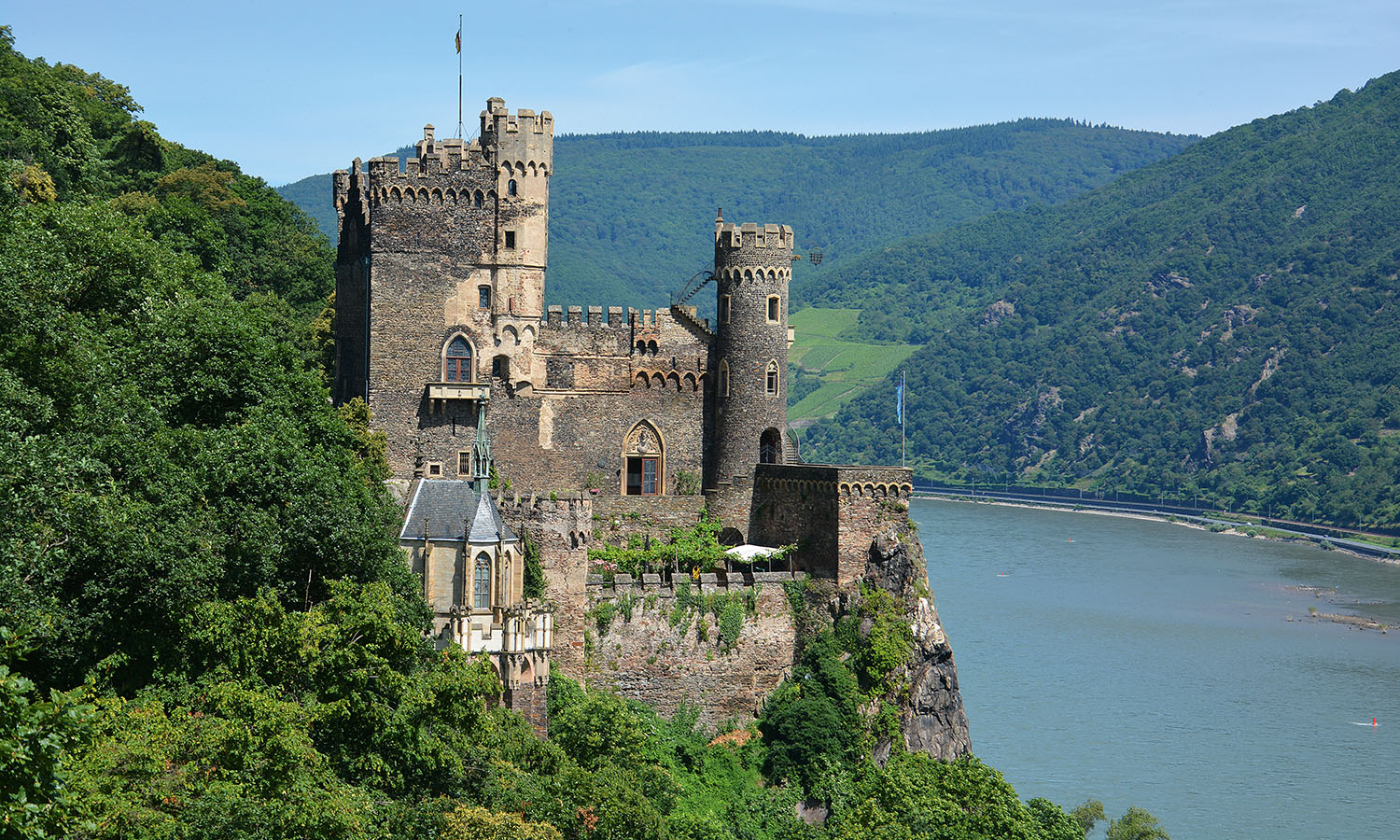
Picturesque towns dot the riverbanks. One of them is Bacharach, with its cobbled streets, half-timbered houses and rows of vineyards marching up the surrounding slopes to the cherry on top – a twelfth-century castle-turned-youth hostel. It’s just one of the highlights my partner Lachie and I will encounter as we tramp more than 100 kilometres through the valley, from Bingen to Koblenz, on a self-guided hike devised by On Foot Holidays.

Germanic tribes settled on these banks back before Jesus gave carpentry the flick and decided to stick it to the Romans, who, of course, later took over the area. Feuding lords in frilly shirts did their best to destroy most of the castles, along with much of Europe, in the Thirty Years’ War, before the Romantic Era waltzed into the late eighteenth century. Poets, composers and painters flocked to the region, enamoured with the Rhine’s wild forests and crumbling forts, telling tales of Lorelei, a golden-haired maiden who lured shipping captains to their deaths upon the rocks.

These days the valley is known less as a destination for enlightenment and more for ferries stuffed with tourists hurtling towards their twilight years. But hiking and cycling trails snake through the same woodlands that charmed the romantics, and most available real estate is crammed with grapevines. I’m not much of a hiker, but vineyards tend to lead to wine, so it’s a path I’m keen to take.

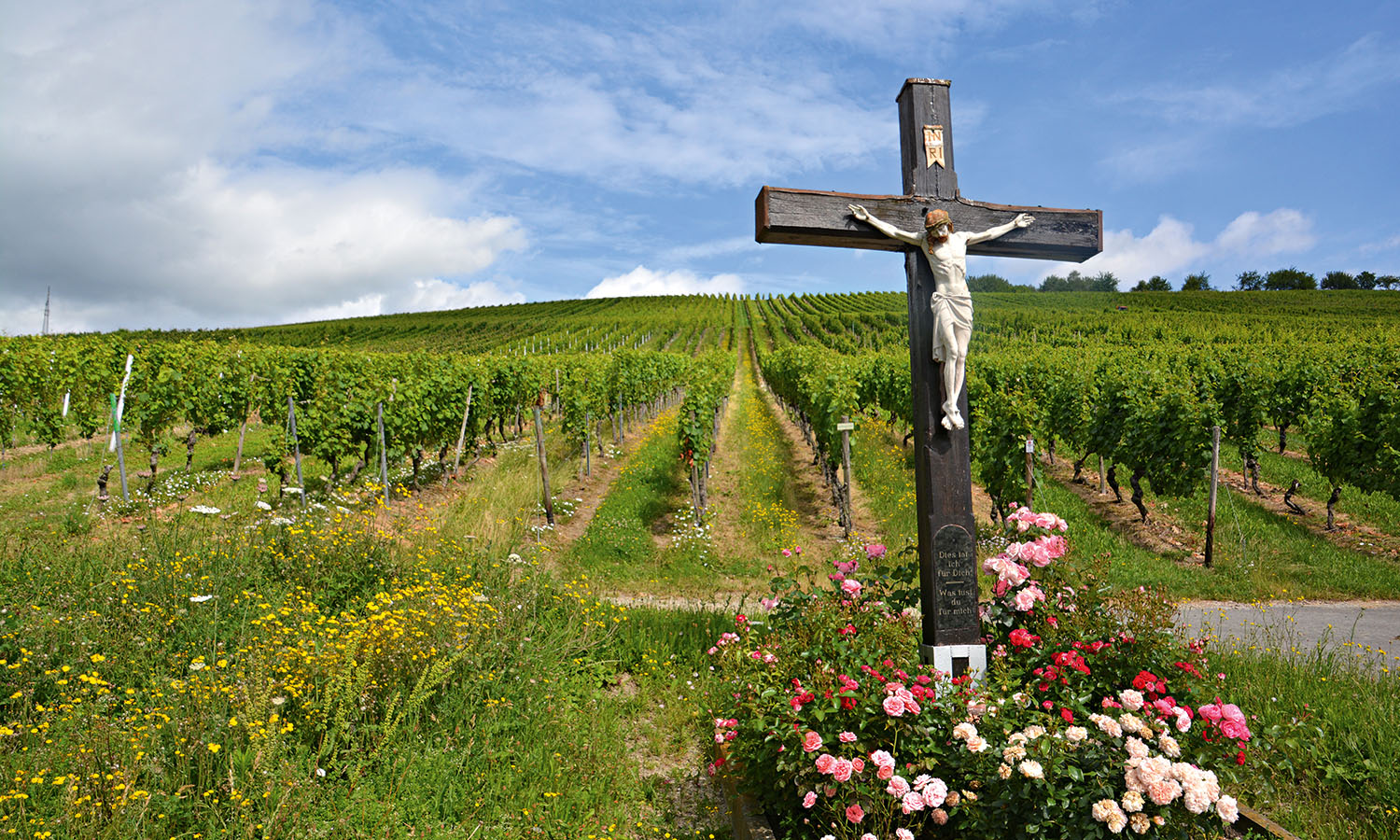
A pack of maps lands in our letterbox before we jet off, with each day’s route planned out by one of On Foot Holidays’s hiking gurus. Directions like…“at a crucifix, turn R and another 200m brings you to Sieben-Burgen-Blick,” make plenty of sense. On the other hand, “buy excellent quality local wine in airline size bottles from local producer (wooden display cabinet with honesty box)” leaves me a tad confused.

As our luggage is to be shipped to our next bed and breakfast, we’ll have plenty of space in our daypacks. Surely a full bottle is far more appropriate in a region awash with plonk? Bacchus, the Roman god of agriculture and wine, sends us a sign at our first hotel – an honesty fridge stocked with the owner’s own label. We snag a proper bottle of riesling for €10. Prost to you, Bacchus!

“Most Germans are not interested in wine, they’re more used to beer,” says Justus Bringer, a young wine-shop keep, with a shrug of disappointment, when we ask which local drop sets the national population aflutter. If that’s even Germanically possible. Slurping down about 25 litres of wine per capita sounds like a solid effort, but the figure pales when compared to the 110 litres of beer consumed by the average German every year.

For those who do dabble in wine, white trumps ruby, and in the Rheingau – the celebrated wine-growing region encompassing the valley – riesling accounts for about 80 per cent of the harvest. Despite each family-run vineyard producing just a few thousand bottles each year (making the Rhine wine-snob heaven), it’s not the valley’s major drawcard. “Most Germans come here for burgs – castles. We have lots of castles around the country, but even more in the Rhine Valley,” explains Justus. “They were very lucrative.”

He’s not wrong. Old dames hold their ground around every twist, their stony walls often just out of reach of a well-aimed arrow from the next stately structure. Most sprang to life between the twelfth and fourteenth centuries after an emperor in Koblenz devised the bonny idea to slug an iron chain across the river and extort coin from ship captains wishing to pass – with the blessing of the Holy Roman Emperor, of course. So lucrative were these ‘tariffs’ that 40 castles – just half of the former stations built by nobility and robber barons – remain in the Middle Rhine today. Many were destroyed at the hands of the French and lay neglected over the centuries.

“Das ist so schön!” heaves a young couple, pausing to eat up views of Burg Rheinstein sprouting from a jagged rock up ahead. They’re right: it is so beautiful. Heavenly rays illuminate a turret tacked on by Prince Frederick of Prussia in the 1800s and a burgundy vine creeps out of the courtyard, its roots sucking nutrients from the soil for the past 500 years.

I can almost hear Sleeping Beauty’s snores rumbling from the crypts containing the moulding bones of the prince. This burg is just one of many that locals have spruced into guest houses and restaurants, often complete with suits of armour standing guard.

Within the hour we’re lounging on Rheinstein’s patio, feeling a bit unfaithful to the god of wine as we slurp ale and watch a farmer tend to the grapes. But sometimes needs must be met, and when you’re in Germany sometimes that need is beer.

Free from the pitfalls of group tours, we ignore the time suggestions on our maps and stop for castles, designer benches and to sluice off the afternoon’s warmth in the clear, cool waters of a brook. The smell of decomposing leaves infuses the air and streams trickle across the way, vanishing into chasms that have collapsed from heavy rain.

We pass fields of wheat that crackle in the heat and are laced with royal-blue cornflowers, and stamp through soaring pines with mossy undergrowth and a plethora of mushrooms.

There’s everything you’d expect to find in a place dubbed the Romantic Rhine – except for the crowds. Aside from a couple of locals walking dogs and a old chap reading a newspaper in the middle of the woods, just a handful of German explorers pass us on the trails, dropping “hallos” as they stride on. It’s not exactly a summer crush.

“That’s the ugly side,” announces Edgar Kirdorf, cocking his head at the west bank, which we’ve just left behind. His bed and breakfast, Hotel Deutsches Haus, in Kaub, is planted on the pretty side, danke very much. It’s a proven fact, Edgar explains, tongue firmly in cheek, because back before engines could haul ships upstream, horses did the heavy lifting while sporting blinkers that blocked the unsightly bank from view. The eye shades might have also had something to do with the glaring sun, he concedes.

With light beating down on the eastern side, the grapevines extend almost to the water, and the locals are said to possess a sunnier disposition, although I’m not quite sure I can tell. Travellers tend to stick to the sunny side, too, missing out on the charm of the other ‘ugly’ bank. With no bridges for 65 kilometres, little ferries chug passengers across the drink for €1.80 a piece, allowing our adventure to take in the best of both sides.

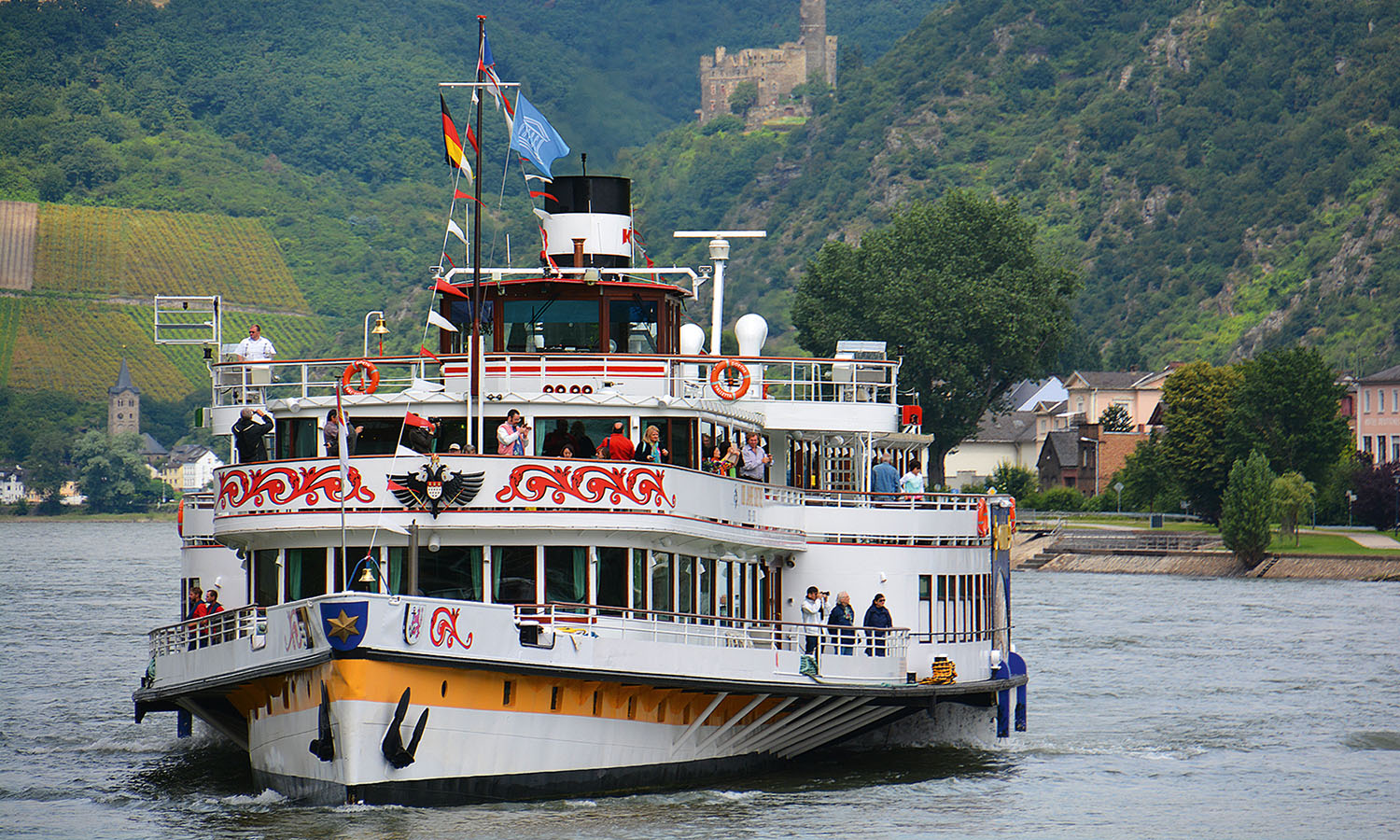
Curiosity reaches peak force on day four and we can’t resist flagging down one of the passenger ferries we’ve seen from afar. The Köln-Düsseldorfer vessel doesn’t boast the mini-golf courses and day beds present on the luxury cruise liners, but it does contain passengers squished onto benches, chewing servings of Subway. “Call off the search parties,” Lachie mutters. “The missing crowds have been found!” They remain glued to their seats when we walk the gangplank alone at Oberwesel, grasping their iPhones to record the disappearing view while a loudspeaker narrates sound bites about the town in English, then French, then Japanese.

Scroggin on a hike usually vanishes as fast as popcorn at the flicks, but our stash sits forgotten at the bottom of our bags. Instead we gorge on plump cherries plucked from trees dangling over the path and eye off unripe walnuts that promise the supply of fresh trail mix extends into autumn. Blackberry and raspberry bushes grow in abundance, establishing their own toll stations by draping thick barbed chains across lesser used tracks and collecting payment in flesh and fabric. We start a war of our own, thwacking through with walking sticks and plundering fistfuls of sweet harvest as our reward.

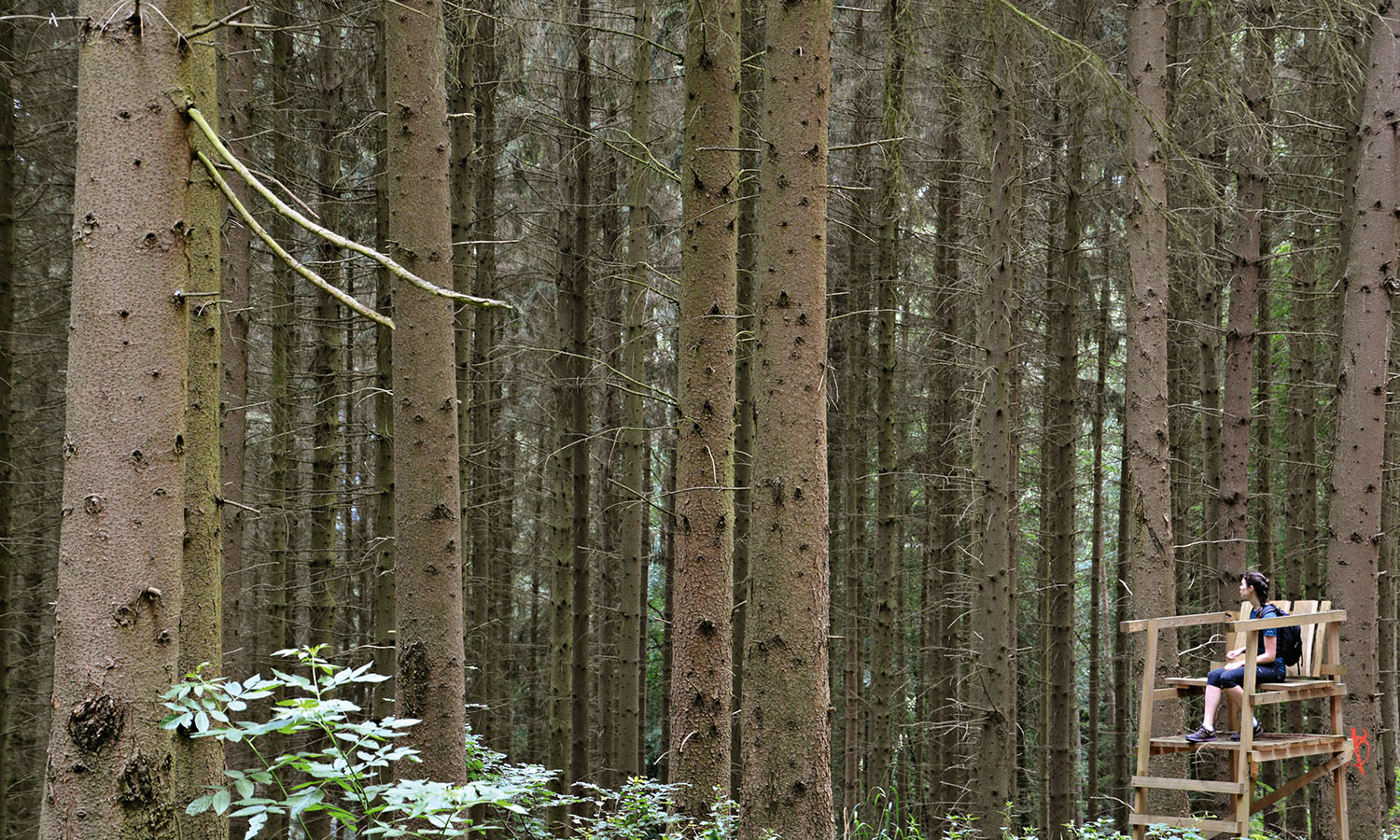
“Boar!” yells Lachie, pointing at a stocky behind hightailing away from our intrusion. Hunting is serious business here, done quietly and from wooden hides – essentially tree houses with guns. Not a single hunter seems to be out on the prowl, but their prey has made it onto the menu at Hotel Roter Ochse, in the walled town of Rhens. “I’ve caught 40 pigs, 30 small deer and two roe deer in the past three months,” says the father of the owner and chef as he sets down a hulking portion of boar. Spearing a hunk on my fork I can’t help but picture the creature we spied frolicking in the hills, but the moment’s forgotten with the second bite of dark and delicious meat.

Rhens is the type of place where a cloaked guy brandishing a wand wouldn’t look out of place, with higgledy half-timbered buildings sitting at odd angles and Latin inscriptions scrawled above the occasional door. We’re not the only ones to notice the vibe – back in the seventeenth century ten witches were captured, tortured and beheaded in the town’s toll tower. When those in power weren’t flaying randomly selected women, Rhens was considered neutral ground, and kings and emperors were elected upon a giant throne built nearby. The sorcerers got the last laugh, though, and as this throne fell into disuse, they held Sabbaths on the decaying erection.

On our final day we sit in the woods on the ruins of a Roman-Gallic temple, sharing a bottle of Boppard wine and our stolen berries. Constructed more than two millennia ago, the stone structure honoured the Roman god Mercury and Rosmerta, the Gallic goddess of fire, warmth and abundance.

We’ve followed in the footsteps of Romantics searching for higher truths, hunters foraging for a feed, and even gods of wine. People have been drawn to the powerful Rhine River and celebrated its bountiful forests for thousands of years and we’re no exception. We raise a glass to Rosmerta and decide to polish off the bottle.

Scorching Nights and Cheetah Bites

She latched onto me before I knew what was happening,” wildlife photographer and cinematographer Shannon Wild says of the moment a cheetah went in for the kill.

Shannon had been working with the habituated cheetah on a video shoot all morning and had, in her own words, become “complacent”, missing the signs that the animal was getting flustered. She crouched down to set up her next shot and, like a flash, the cheetah had her pinned down, its jaws clamping hard on her left arm, which it mistook for her neck.

Had Shannon’s head not been tilted to the side, that bite could well have been fatal. As it turned out, she suffered serious nerve and tendon damage, the effects of which she still feels two years later.

“I wasn’t able to shoot for two months after that as it healed, and I still have daily nerve pain and not complete flexibility in my left arm, but it could have been so much worse,” she says of the eye-opening incident. “Instinct told me to relax and not fight it, which was the best thing to do in the situation, as fighting her would have led to worse injuries.”

It served as an important lesson for the South African-based freelancer from Australia. She gained a newfound respect for the cheetah and has learned to pay closer attention to the body language of the animals she films.

“The very reason we, and certainly I, love wildlife is because they run on instinct,” Shannon says. “She was simply doing what she was designed to do.”

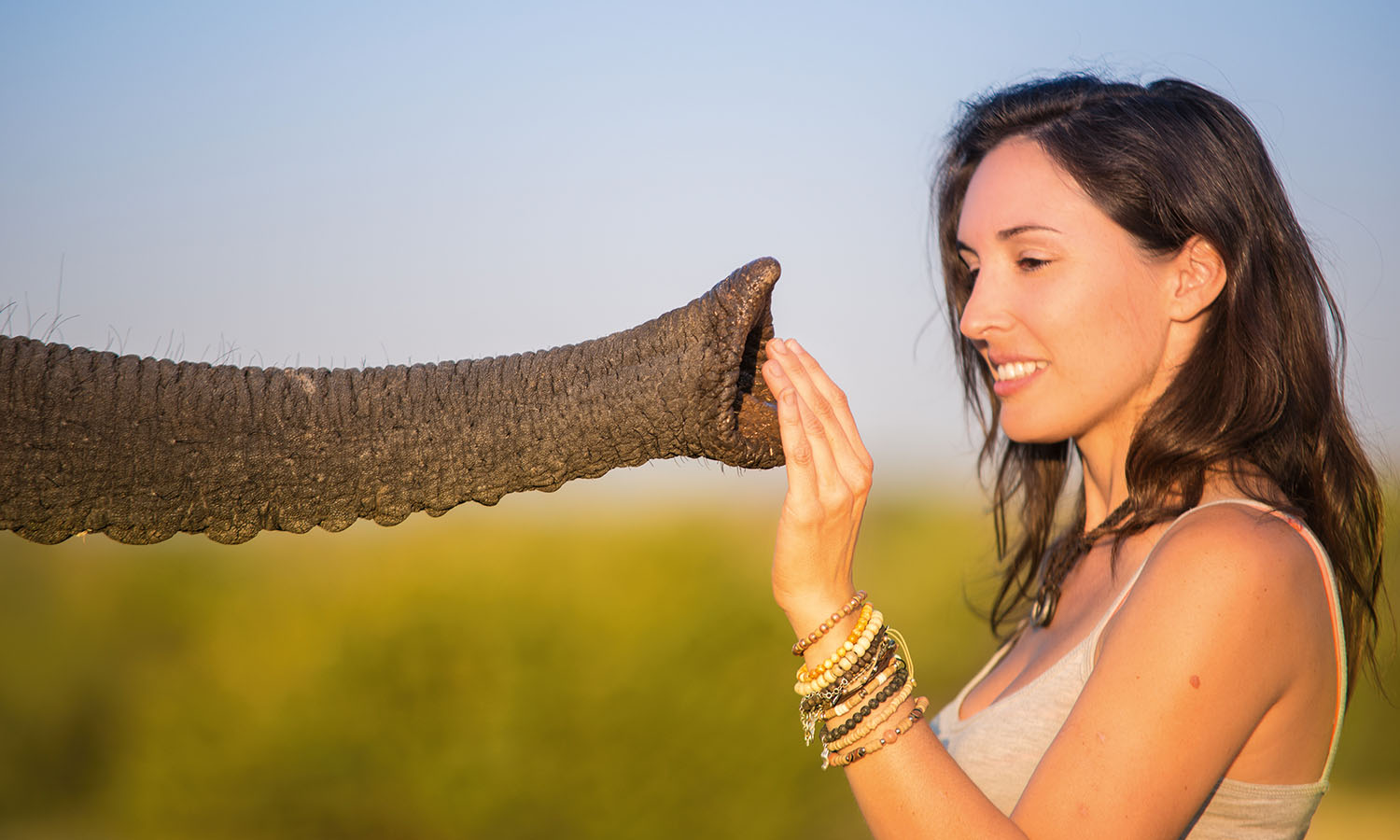
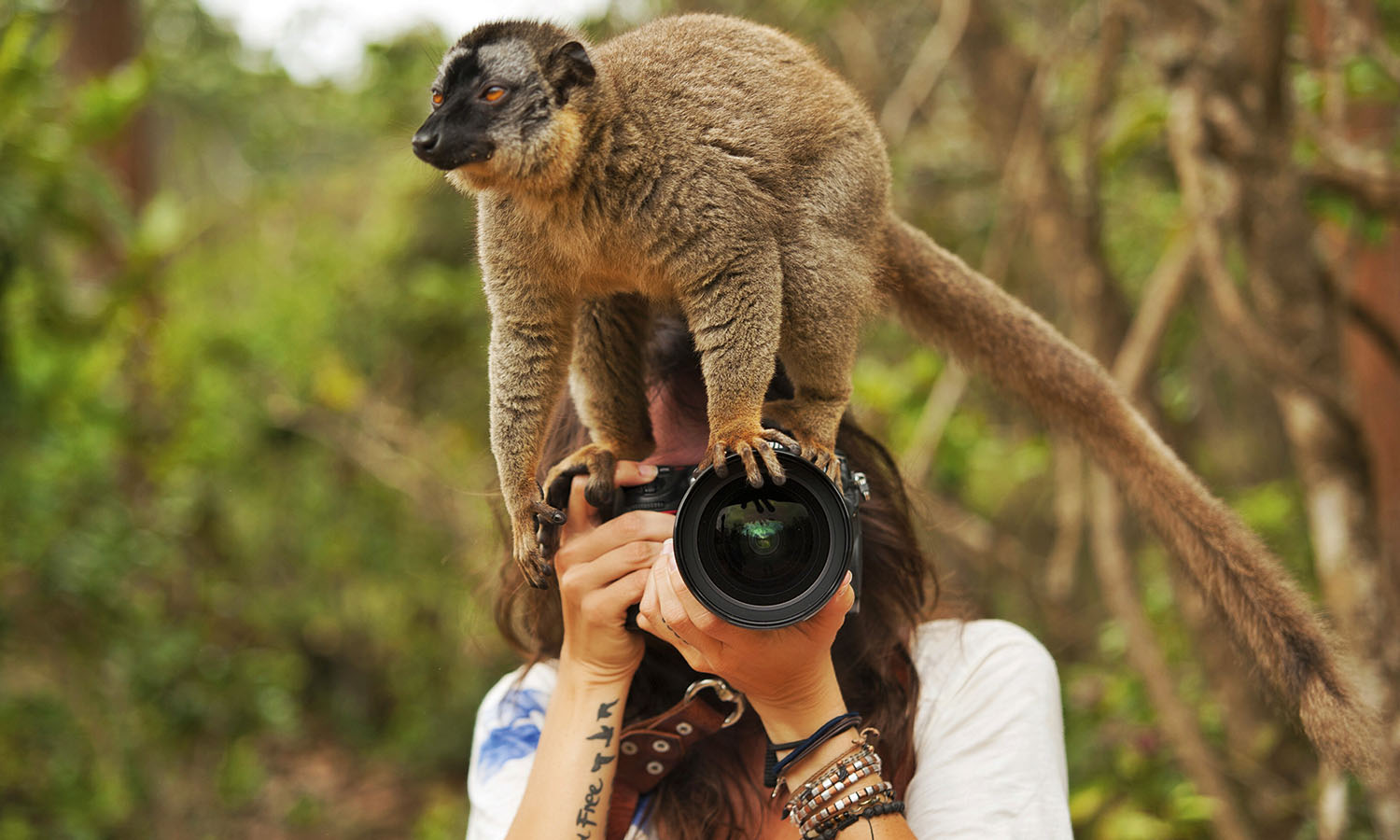
Despite her increased vigilance, getting up close and personal with some of the world’s most exotic wild animals is bound to result in the odd painful moment. The knuckle on her shutter finger will never be the same after a particularly nasty nip from a monitor lizard, a nice accompaniment to her collection of snakebites. She has found herself in the crosshairs of charging lions and elephants, has fought off burrowing worms and stomach-eating bacteria, and has even been chomped on the face by, of all things, a pet dog.

Shannon’s best advice for interacting with the potentially dangerous creatures (and dogs) she films is to remain composed and exude positivity.

“Energy has a huge role to play, and I am naturally calm and positive when in the presence of animals,” she explains. “Negative energy such as frustration, impatience and fear are readily sensed by most animals, which in turn can have a negative effect on their behaviour.”

For someone with Shannon’s passion for wildlife, these battle wounds serve as wake-up calls rather than deterrents.

Having worked as a graphic designer and art consultant before slowly shifting her focus toward photography, Shannon made the fairly rapid decision to move to South Africa and start afresh as a freelancer specialising in wildlife. Building a profile and learning to live without a regular salary was difficult at first, and still presents its challenges. However, more than a decade later, the gutsy move has paid massive dividends, with Shannon having established herself as a leading wildlife photographer before transitioning into cinematography. She has now worked with producers including National Geographic and Disney Nature, with plenty more projects on the boil.

“Freelancing allows me the variety I crave,” she says. “I love travelling to new places and photographing new species. I couldn’t imagine having to only work in the one place any more.”

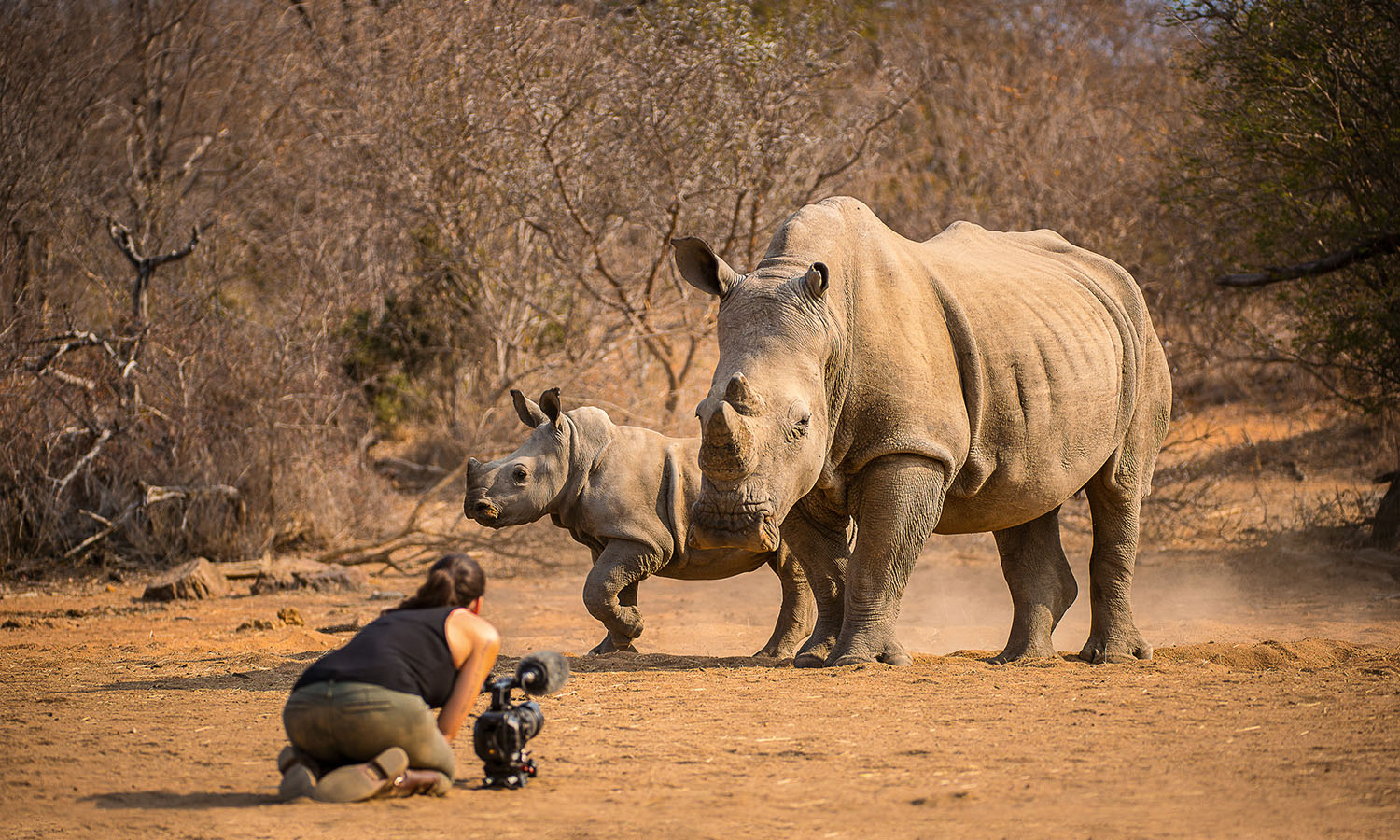
Shannon estimates that, to this point, her freelance work has taken her to around 25 different countries. One of her most recent trips, an expedition to the Arctic, saw her filming polar bears, whales and walruses in such extreme cold that she lost feeling in her hands mid-shoot. Just a few months earlier she’d been baking under the Botswanan sun, unable to find respite from the heat, which ranged from 45ºC during the day to a comparatively chilly 38ºC at night.

“It feels like your brain is cooking in your head and it can be hard to concentrate for long periods,” she recalls. “Constantly wetting my clothes and hair helps, but it’s one of those situations I have to suck up and remember how lucky I am to get to do this.”

The reward for all this hardship? For an animal lover and conservation crusader like Shannon, the payoff is intangible.

She fondly recalls “seeing a baby elephant learn to drink through its trunk for the first time instead of kneeling down and drinking with its mouth. It was amazing to see and so precious when I saw that ‘ah ha’ moment for him. He was incredibly proud.” Equally rewarding was the time a family of baboons in Zimbabwe accepted her into their circle, allowing their young to climb over her.

But, fittingly, Shannon’s all-time career highlight came courtesy of the king of the jungle.

“Hearing a male lion roar for the first time with him standing only a metre or two from me is something I’ll never forget. I teared up, and it’s still my absolute favourite sound to this day. It literally vibrates through your chest.”

In a moment like that, all the dehydration, flesh-eating bacteria and cheetah maulings in the world pale into insignificance.

Finding Myself Lost

It is said there are three simple steps to happiness: find something to do, someone to love and something to look forward to. I might add to this list, find yourself a bike. One day, on my way to the office, an unlicensed driver ignored a stop sign, drove through an intersection and crashed into me and my bicycle. I hobbled away with a broken kneecap, a $20,000 insurance settlement and the powerful reminder that life is precious, time is limited and I’ll really miss my knees when they’re gone. I quit my job and went travelling around the world on a quixotic quest to tick 
off the items on my bucket list.

All of which brings me to the dusty Chilean town of San Pedro de Atacama. For an outpost on the edge of the world’s driest non-polar desert, the town offers fine hotels, gourmet restaurants and excursions into a truly remarkable slice of South America. One such activity is to rent a bike and pedal 13 kilometres west into the Valley of the Moon, a protected nature sanctuary famous for its stark lunar landscape. I arrive at the park gates with my front tyre wobbling with all the stability of a Central African government. Parched for oil, my chain clatters in desperation. I make a note that from now on I will check the condition of any bike before I rent it. Sound advice, and I could have used some more. For example: under no circumstances should you leave your bike on the side of the road to hike around looking for better views of volcanoes. Soon enough, I am lost in the desert with no form of communication, directions, food or warmth. It is late afternoon in March, and the baking day will soon transform into a chilly night. My last update to my family was the previous week when I was in Bolivia. Not a single person on the planet knows where I am.

Before I set out on my journey, a friend asked what I hoped to achieve. My mates were settling down, building careers and starting families, so why would I choose to be that one older guy you typically meet in backpacker hostels? You know, the one who looks a little out of joint, has great stories, and often smells like Marmite. My reply? At some point during my adventure I will stumble into a transcendent moment of pure isolation, a challenge that can only be surmounted with deep soul-searching and personal inner strength. My friend looked at me askew, so I also explained there would be copious amounts of beer and beautiful women.

Just a few months after that conversation, there is neither beer nor babe for miles as I desperately scan the sprawling Atacama Desert for my rickety rentabike. Panic begins to tickle my throat. It appears my Moment of Zen has arrived. I sit down on a slab of rock, and breathe in. The dusky sun casts a pink glow over perfect pyramid-shaped volcanoes. Early evening stars begin to glitter. A cool breeze rouses goosebumps on the back of my neck, along with my long-awaited epiphany. I am here for a reason. Everything happens for a reason. The bike accident, the decision to travel, the dodgy rental 
bike, the walk into the desert…wherever I am is where I am supposed to be. Slowly, I relax into the fear and excitement, slipping into the moment the way one cautiously eases into a too-hot bubble bath. Then I hear a voice. A Japanese backpacker had seen my bike on the side of the road and figured there must be something to see. Soon enough, he got lost too, but somehow he found me just as I was busy finding myself.

As the night sky vanquished the peach-fuzz sunset, we see headlights in the distance. Relieved, we find our way to the road, recover our bikes, and pedal in darkness back to San Pedro. That night we get blindingly drunk to celebrate our good fortune, and I have my second epiphany: it is the people we meet who create the paradise we find.

Ten years and a hundred countries later, there have been several other moments of life-affirming clarity. As for those three simple steps, they sorted themselves out beyond my wildest dreams. Whenever I find myself lost, at home or on the road, I simply remind myself: wherever you are is where you’re supposed to be.

The Temptation of Tentacles

For the life of me I can’t imagine why she wants me to put my face in the water. We’ve just struggled into the mother lode of neoprene gear – a double layer of wetsuits, plus a hood, gloves and boots – on the shoreline and have waded into the bay. My mask and fins are still looped over my arm, and since Swantje has already done this hundreds of times, I’m not going to argue.

“Oh, shit,” I splutter-yelp seconds later. All those layers of rubber have shielded me from the reality of the water temperature, which is only about 10ºC, but my bare visage feels as though it has been flash frozen.

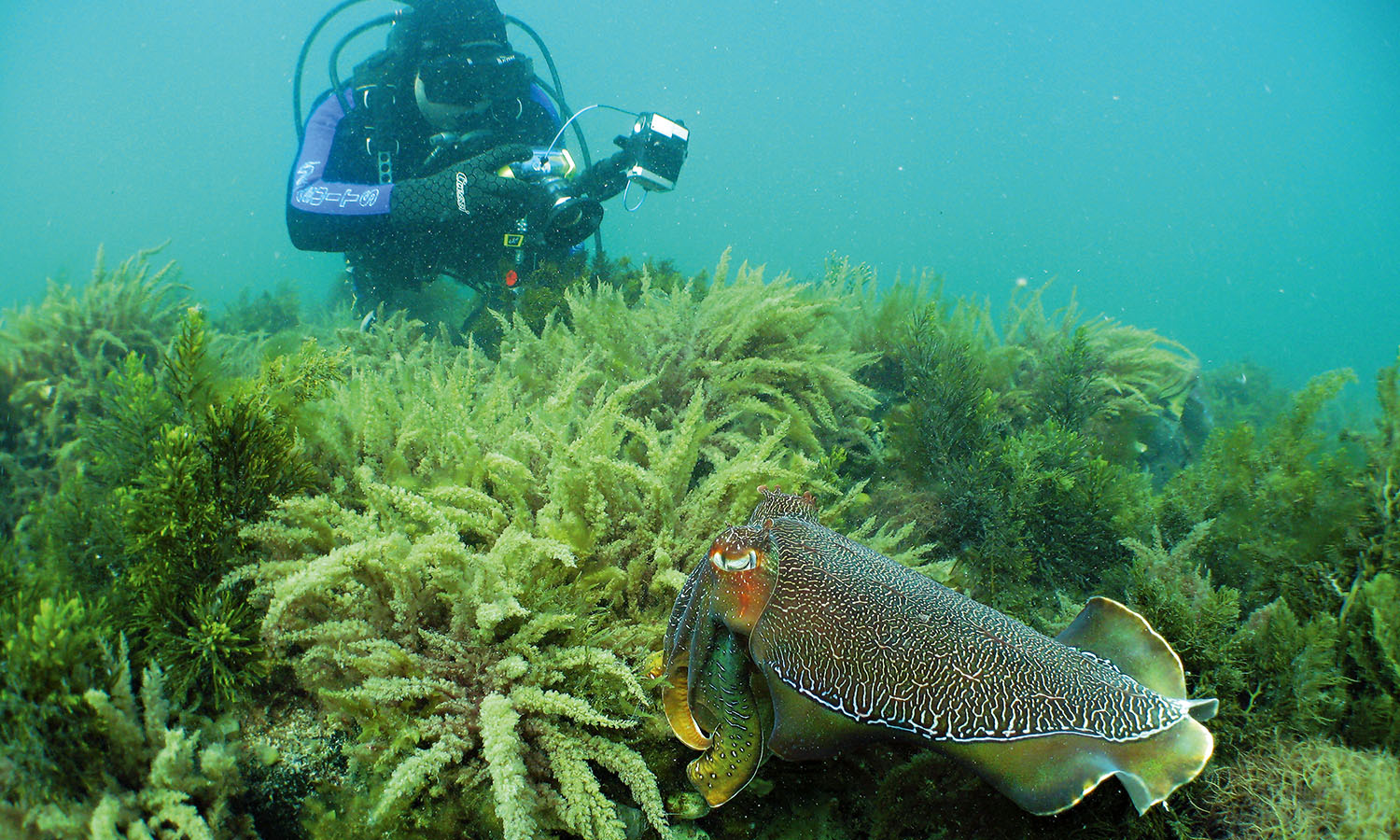
“You need to get used to it before we go in,” Swantje – pronounced Swanny – tells me, and makes me go face first again. Then I do it with my mask on and at my feet I can see them. We’re only in about 150 centimetres of water, but on the rocky bottom they are dancing and displaying. Thank goodness, because I’ve just spent three days in Whyalla waiting for the wind to change so I can make the acquaintance of the giant Australian cuttlefish (Sepia apama).

On the edge of town, there’s a huge sign that reads: “Where the outback meets the sea.” The coastline where the Southern Ocean ducks into the Spencer Gulf between Port Lincoln and Marion Bay is unlike anywhere else in the country. The shore at Fitzgerald Bay, just out of town, is covered in ridges of ochre-red shingles – it’s a one-off in South Australia. North of the bay, the Freycinet Peninsula Circuit starts at Douglas Point and hugs the waterline. Join it at Fitzgerald Bay and you can 4WD, hike or cycle to Point Lowly, where there’s a lighthouse. But as we stare out over the sea, buffeted by wild winds, there’s not another soul to be seen.

Generally, Whyalla is known for two things: its steel industry and the problems it’s having at the moment, with employment decimated over the past two decades. When you’ve got some time to kill, a tour of the steelworks is an interesting diversion and gives you a taste of life in an industrial town. Our minibus pulls up beside a huge construction and Marge, who’s hosting the tour, tells us to look for plumes of steam that give away things are happening in this part of the complex. We see an automated carriage moving, high up on its rails. When it stops, glowing molten rock is poured into the car. This is the coke oven push and it’s one of the most spectacular processes in the transformation of ore to steel.

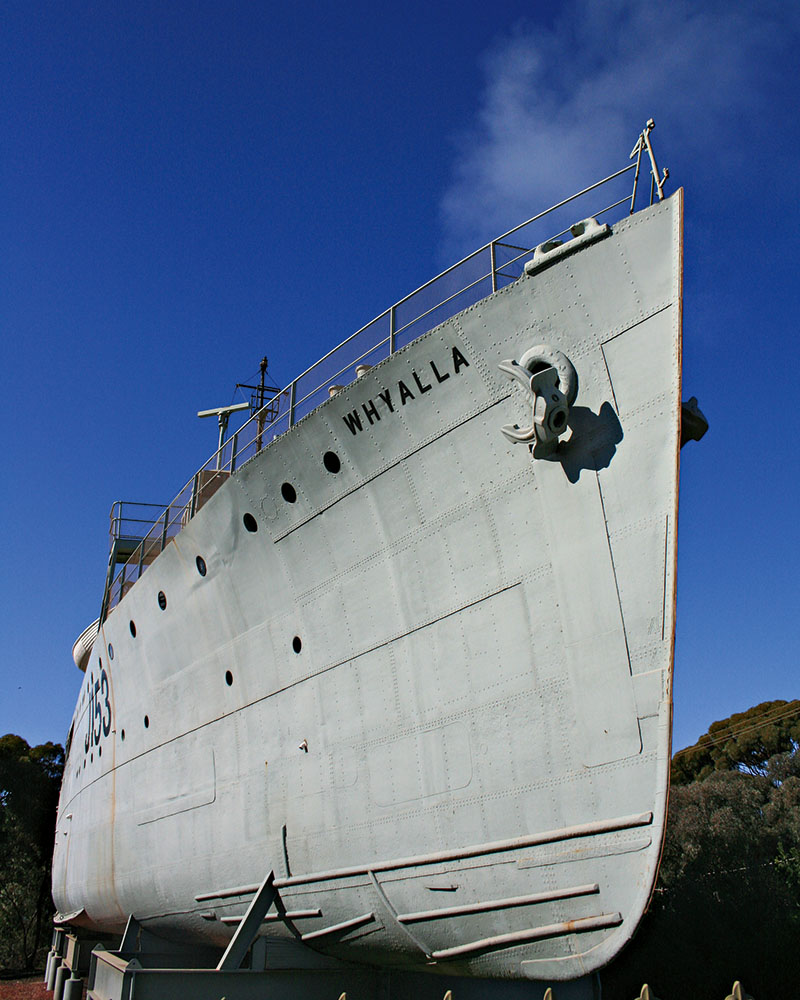
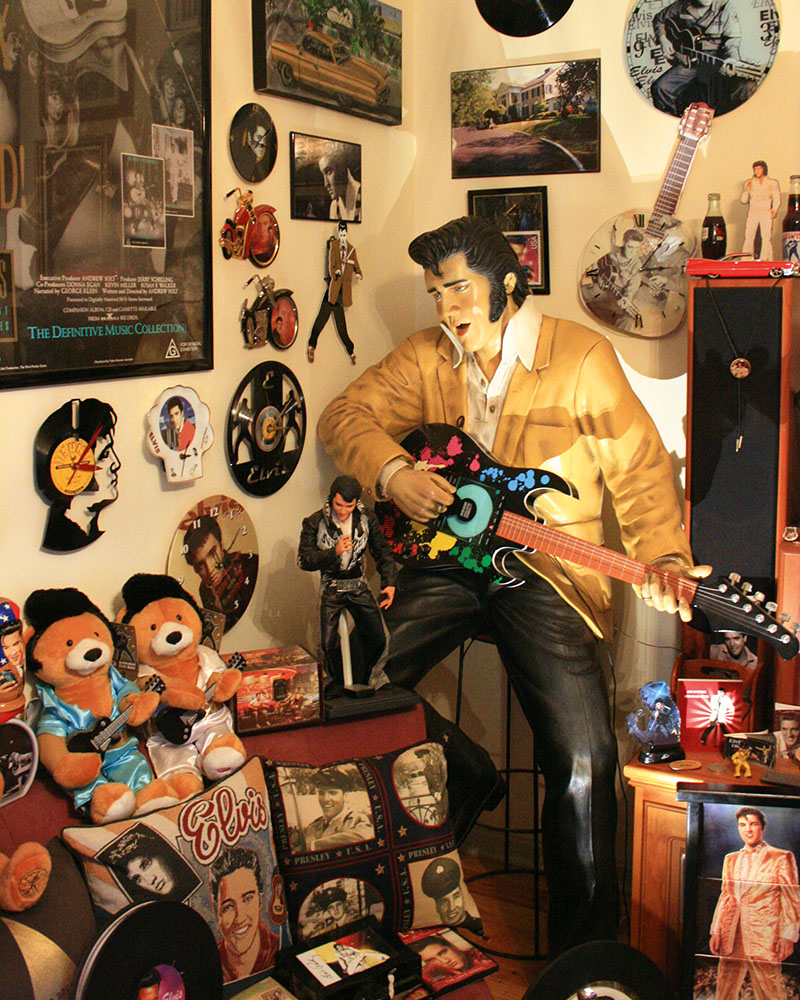
After a quick trip to the adjacent HMAS Whyalla, the first ship to come off the line when the town became a major player for the Broken Hill Pty Co Ltd, I find a pamphlet advertising the local Elvis Museum.

Peter Bleeze lives on the outskirts of Whyalla and he’s not just a fan of the King, he’s a super fan. His entire house is emblazoned with memorabilia, from rare posters to life-size statues. “A young police cadet lived down the street and used to babysit me,” Peter tells me in his front room, where Aloha from Hawaii plays on the television. “He had a little record player and used to play me Elvis records. I thought he was god’s gift to singing.

“I got my first t-shirt when I was about 10, then started collecting seriously when I began working.”

He wanders around his house wearing a Graceland hoodie, telling stories of people who’ve visited, before opening the back door so I can check out his piece de resistance. Out in the backyard, beneath the Hills Hoist, is a gold Cadillac, a replica of Elvis’s own. Peter’s quite happy for visitors to don the Elvis sunglasses in the glove compartment and pose in the front seat for photographs.

By this stage, having seen pretty much everything Whyalla has to offer, I decide to check in with Tony Bramley, owner of the local dive shop. Perhaps there’s a chance he’ll green light a quick dive.

“When it’s rough and windy, the cuttles go deeper and hide in the algae,” he tells me in a room lined with racks of wetsuits and diving gear. “They just won’t be doing anything.” That’ll be a no then.

Just a few days before, Tony tells me, they’d had about 600 people visit the congregation over the course of four days for an Experiencing Marine Sanctuaries event. Exact numbers of swimmers are hard to pin down, since the site is easily accessible by anyone with a wetsuit and snorkel. Now there’s a BBC documentary crew in town also waiting for the wind to subside.

It’s not just me, Tony and the BBC dudes excited about Whyalla’s giant cuttlefish. Divers from around the world come here between May and August to witness the only known congregation – not just in Australia, but anywhere – of the underwater creatures.

So far, this has been a good year. “We haven’t seen an aggregation like this since 1998,” Tony tells me. The South Australian Research and Development Institute (SARDI) has estimated the biomass this year to be up to 200,000 kilograms. In 2013 it had been as low as 16,500 kilograms and there were grave fears for the future of the species.

Apart from that, the Spencer Gulf cuttlefish remain something of a mystery. Bronwyn Gillanders of Flinders University has been studying them since the early 2000s and has established the Point Lowly cuttlefish are a subspecies – it’s probably their genetic material that brings them back each year. Female cuttles need a rock ledge to lay their eggs – each is like a large white teardrop hanging beneath a protective shelf – and this is one of the few places offering multiple natural shelters. “The rest of the gulf is mud and mangroves,” says Tony.

He then gets a call. There’s a dolphin in the fenced-off swimming area in the marina, and whoever’s on the other end wants Tony to coax it back out to sea. “There are 30 or so in the Whyalla-Edithburgh pod,” Tony explains. “About five of them are habituated and interact with people.” This is one of them, and he often makes a nuisance of himself. I head down to the shore and, sure enough, there’s a dolphin bobbing about, but the wind is so strong I almost get blown off the pontoon trying to get a better look.

Finally, at the beginning of day three, we’ve come up trumps. The wind has dropped off completely and the sun is shining. Swantje and I load up the ute and head out of town. About 20 kilometres outside of Whyalla is the Santos LPG plant, and this is where anyone who wants to commune with cuttlefish needs to be. A dirt track leads down to a park bench and rocky shoreline. It’s an easy spot for anyone to find, but this hasn’t affected the cuttlefish population.

Depending on how people adjust to the temperature, Swantje tells me, dives here can last anywhere from 15 minutes to an hour. The maximum depth is about six metres.

They are everywhere, hundreds of them. The males outnumber the females, and because they pair off to mate, there’s fierce competition between the boys in the bay. This is where you’ll see them displaying their colours – versions of purple, brown and cream – patterns rippling through their bodies as they do an underwater mating dance. Some of the smaller males will change their patterns to mimic a female then, when they have the big boys’ attention, move in for a bit of action with the actual females. Cheeky buggers!

As we fin around the shallow bay, we see nothing but cuttlefish. Oh, and one lone squid who pulses through the water, possibly wondering where its friends have gone. Occasionally a curious creature swims close, observing us with its big eyes. They seem to be completely unawed by our presence.

It doesn’t seem like long, despite the fact I’ve lost all feeling in my hands and feet, before Swantje’s pointing us back towards shore. “Fifty-eight minutes,” she tells me when I enquire as to how long we’ve been below the surface. “Don’t worry, you should be able to feel your fingers again some time after lunch.”

After we’ve stripped off our gear and are sitting in the cab of the ute blowing on our hands and watching a couple of blokes getting ready to jump in, it hits me: all those amazing creatures are going to be gone in a month. And not just gone back out to sea, but gone completely. Once they breed, the giant Australian cuttlefish dies. Dolphins, Port Jackson sharks and other sea creatures come in and feed on the bodies until there’s nothing left. Not until next year, when the next generation of cuttlefish returns to breed again.

Wong’s World

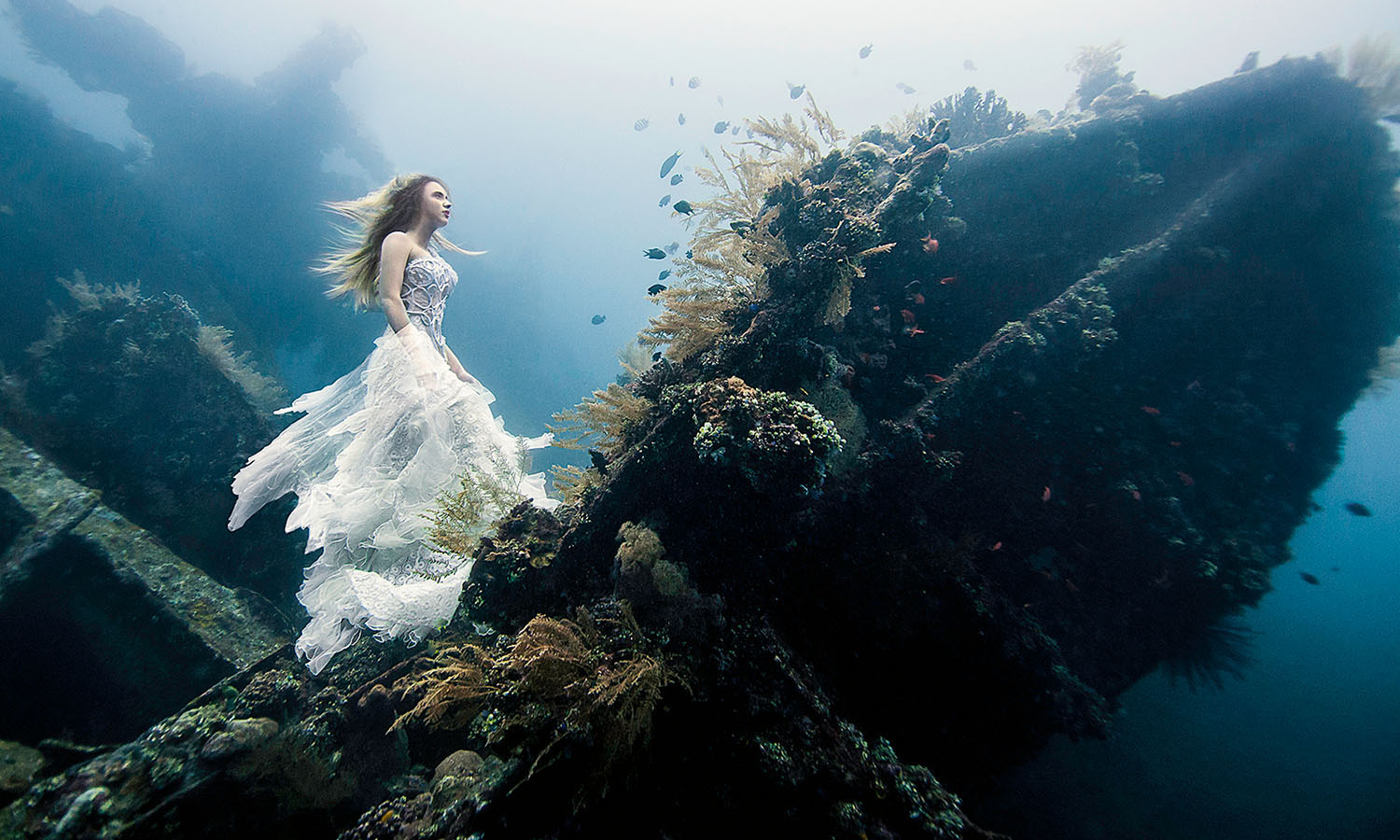
Benjamin Von Wong travels the world for six months of the year but he doesn’t really do holidays. His last “family vacation” (spent in Bali at his parents’ behest) morphed into an epic underwater photo shoot. The result was a surreal series of images featuring free-diver models, ethereal white gowns and the haunting backdrop of the USAT Liberty shipwreck.

The shots became an internet sensation (the behind-the-scenes video attracted more than one million views on YouTube) and set 
a new benchmark for the photographer, who has carved a niche dabbling in all things whimsical, fantastical and reality bending.

When he’s not chasing fish out of the frame 25 metres under the sea in Bali, or shooting zombies in a Game of Thrones fan-fiction in the snow in Quebec, Benjamin, 27, can be found leading photographic workshops around the world and teaming up with like-minded kooky creatives on mind-boggling projects.

The Montreal-based photographer, who prefers the title ‘visual engineer’, has shot extreme stunts on the walls of Jerusalem in Israel, captured capoeira martial artists fighting in the ruins of Villers-la-Ville abbey in Belgium and brought a city square to a standstill with a mammoth 450-person Where is Waldo (Wally) panoramic in Traunstein, Germany.

He’s also hijacked the world’s largest monastic library – the Admont Abbey in Austria – for a magical, Disney-inspired after-hours shoot.

There have been decapitated zombies, elaborate feathered costumes, mediaeval gowns, Slovakian ballerinas, armoured warriors, the odd stinky octopus and fire. Lots of fire. Pyrotechnics are a big part of the Chinese Canadian’s creative repertoire. In one shoot, at an English mansion in Manchester, UK, Benjamin had models posing with AU$5.8 million worth of sports cars while flames licked at their heels. The project is symbolic of his craft: bold, exciting and always pushing the boundaries.

Much of Benjamin’s work is for the love of his art and is more about feeding his creative thirst rather than making money. His is a career built on social media; the exposure brings in client commissions and speaking gigs to supplement his creative escapades.

“The idea behind these shoots is no one’s ever going to pay you to do it, so you may as well go ahead and do what you love and hopefully down the line people notice the shoot and hire you to do what you love,” Benjamin says.

“The purpose is to create amazing work. At the end of the day what I want to do is get paid to create more things. I don’t want to become a desk jockey and manage print sales and manage a storefront and all that bullshit – it’s not really exciting. I’d much rather be out there shooting and getting new challenges and new experiences.”

Behind-the-scenes videos are a signature of the Von Wong brand and a valuable social media tool. Without his online community of supporters (70,000 Facebook followers and counting), Benjamin says he wouldn’t be seeing the world behind the lens. It has enabled him to tap into sponsors and gear, build contacts and showcase his talent. A 2012 month-long photographic tour of Europe was made possible through a crowdfunding campaign, and every shoot relies on an army of ‘Vonwonglings’ rallied on Facebook – from models, hair and make-up artists and costume designers, to production crew and pyrotechnicians. In exchange, Benjamin shares his tricks of the trade with his followers, and some get the chance to work with the wizard himself.

When we speak, Benjamin is at home in Montreal (although he’s loath to call it home because he’s so infrequently there). In a few days he’ll jet off to Cambodia, followed by China and Brisbane. Life is frenetic. He never knows where the next inspiration will come from or who will hit him up with a proposal that is too awesome to refuse (an admirer once succeeded in getting him to Florida on a whim to collaborate on a fantastical fallen angel shoot).

Then there are the projects that touch the heart. Last year Benjamin produced a video that helped raise AU$2.8 million to save a four-year-old girl battling a degenerative brain disease. Earlier in the year, he paid a surprise visit to a young Australian fan in Albury, Victoria, wrapping himself in a box as a 21st birthday surprise for the emerging photographer, who suffers from a medley of chronic illnesses.
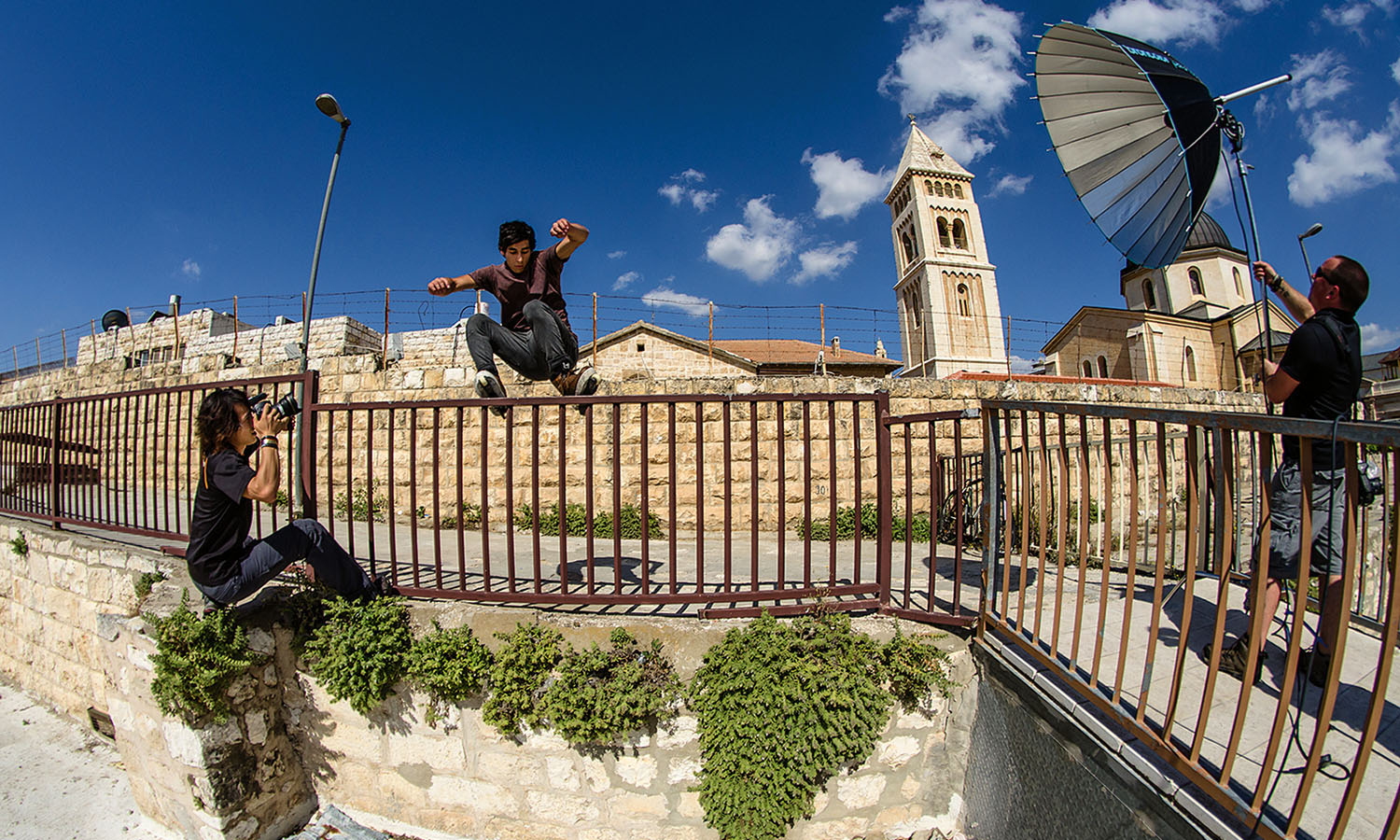
Benjamin seeks inspiration in the people he meets and the places he visits. His motto is you should wake up in the morning and “grasp life by the balls” because you never know where an opportunity might lead. And he walks the talk.

It’s a far cry from a few years ago when, as a qualified engineer, Benjamin was working in the goldmines in the Nevada Desert, USA. In the doldrums after a relationship bust-up, he picked up a cheap point-and-shoot camera at Walmart and started experimenting. A few years later he was shooting events, then something snapped… He quit his day job in January 2012 with no plan and no regrets, and has been travelling the world, inspiring followers with his unique brand of photography, ever since.

Benjamin puts his success down to hard work and dedication, not talent. Although his on-camera charisma and daredevil persona sure help.

“Being a photographer is easy, right? You just press a button,” he laughs.

“The camera is a tool, you understand the basic mechanics of it and you’re set to go. If you know what you want to achieve then you just need to figure out which of the buttons to push. It’s like driving a car.”

View more of Benjamin’s work at vonwong.com