Our little inflatable bounces across the choppy waters of Eyjafjörður, just 80 kilometres south of the Arctic Circle. At the helm is modern-day Viking Erlendur Bogason, who not only discovered the subaquatic volcanic cones we are going to dive on, but, like a figure from Norse mythology, is their designated protector. Nobody dives on the vents known as Arnarnesstrytan, or the nearby Strytan formations, without Bogason’s say-so.
Save for yesterday’s foray into the Nesgjá chasm, a four-metre deep, three-metre wide coastal fissure, I’m a cold-water diving virgin. And I’d be lying if I said I wasn’t scared.
Trepidation courses through my veins as I contemplate plunging into the inky fjord. The Icelandic weather, mostly chilly and drizzly over the past 10 days, has brightened, and the dark swell and surrounding snow-topped ridges sparkle in the afternoon sun. Still, the water looks frigid.
Bogason pulls the inflatable to a halt. I fumble with my equipment and squeeze a rubber balaclava over my head, readying myself to dive on these hydrothermal vents.
We roll backwards into the arctic water, leaving my old mate Phil, who is along for the ride, to captain the boat.
I locate the descending line and begin removing the air from my buoyancy control device and from inside my dry suit. Within a minute I’m 15 metres down, beside Bogason, on a sand patch. I sink to my knees to steady myself and switch on my torch. A dozen cod swirl into view. Then my beam picks out a monster, about a metre long, swimming straight at me.
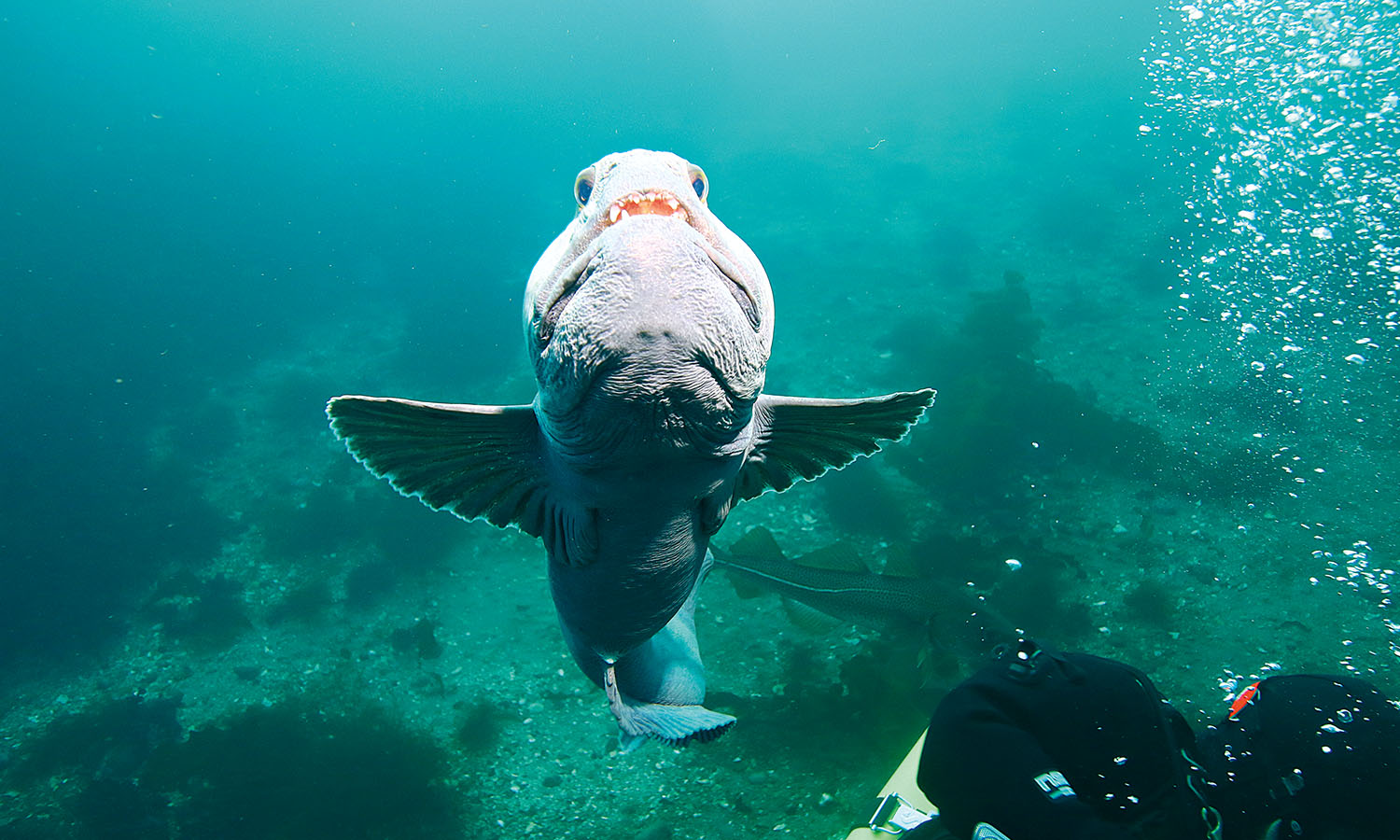
I gulp air. As it gets closer to me I feel as though I’ve come face to face with a creature from the imagination of Hieronymus Bosch – or hell. Its eyes bulge, pronounced lips and rubbery jowls merge, and razor-sharp fangs gleam from its mouth. It’s Stephanie, a wolffish, come to welcome us to her patch. She’s the weirdest living thing I’ve ever seen.
Bogason uses the beam from his torch to indicate where we’re going next. I try to follow but can barely move for my own weight. I add some air and start finning after him, toward several conical outcrops emerging from the murk.
But as I swim I begin to ascend. I’ve made a rookie error and pumped in too much air. I push hard on the void button on my dry suit but rise uncontrollably. Bogason lunges for my leg to try to anchor me but can’t hold on, so off I go, up and away like Mary Poppins.
I hit the surface and gulp seawater from waves buffeting my face. Bogason bubbles up beside me, asking if I want to give it another shot. I’m trembling and disorientated, but I may never have this chance again.
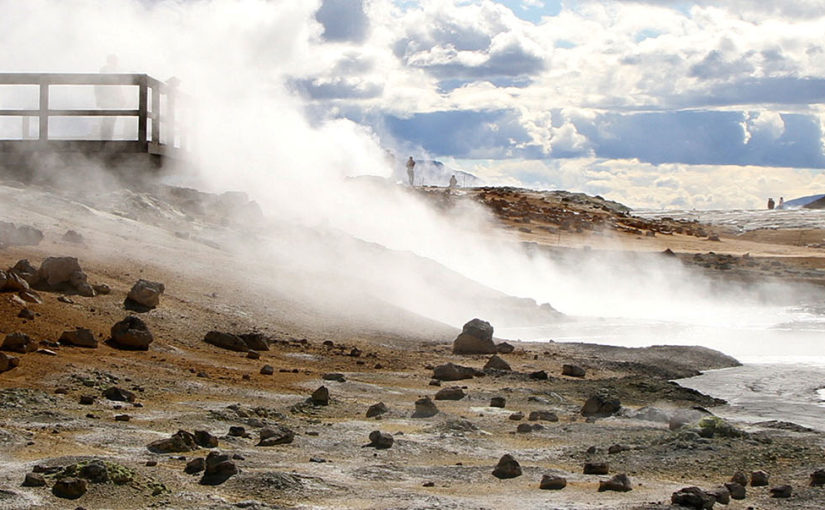
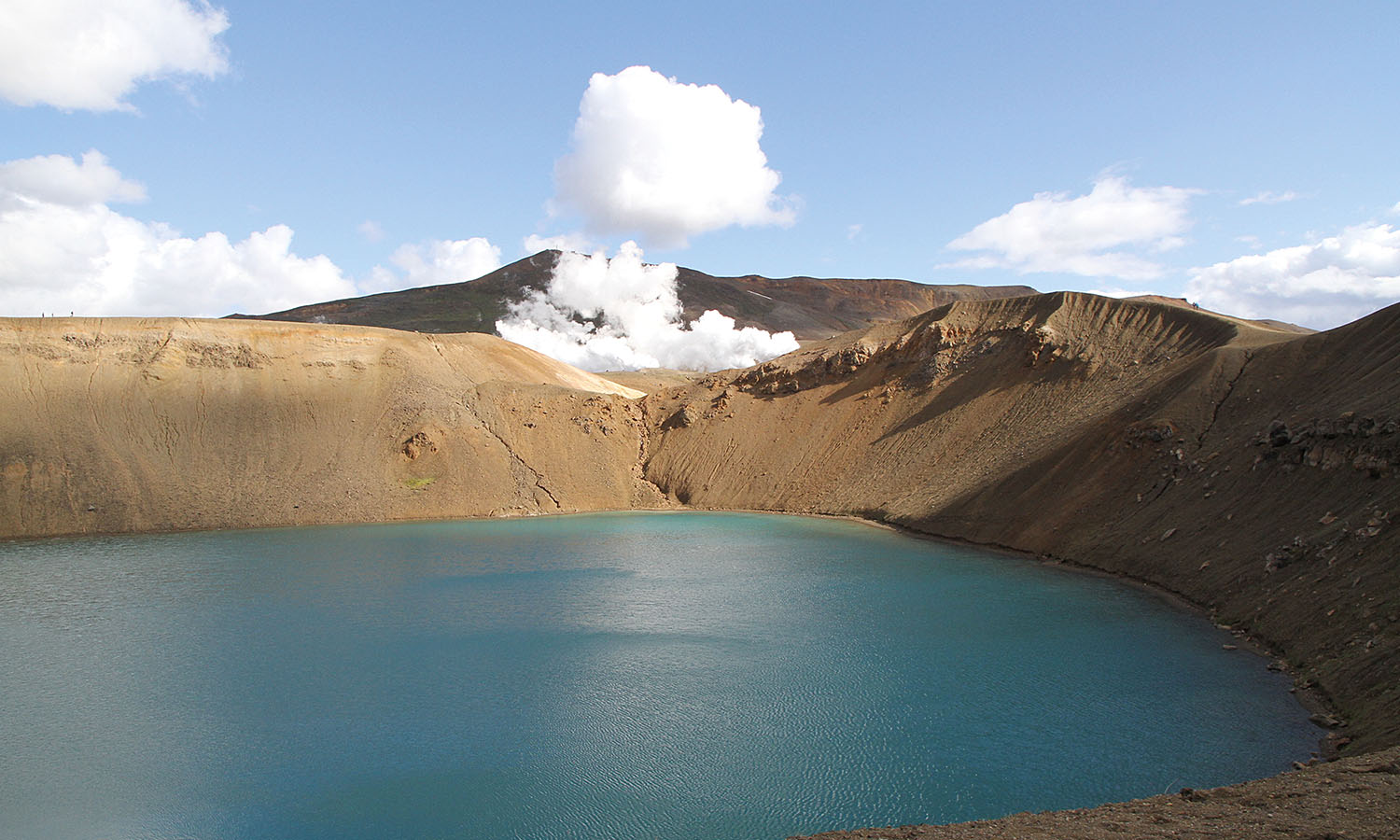
Finally, I’m kneeling at the edge of a volcanic cone. As Bogason illuminates the vent, I watch hot, saltless water, estimated to be 11,000 years old, belching out. It’s a sight divers travel thousands of kilometres to see; scientists believe, through study of the bacteria and microbes living in its hot springs, that this unique cavity provides clues to life’s origins on earth.
I run my hand through the 78°C water, rendered touchable by the cold fjord. Bogason fills a flask – he’ll use it to make hot chocolate back on land.
As one of the planet’s youngest landmasses, rising up a mere 20 million years ago from submarine explosions in the mid-Atlantic ridge, the island feels like a work in geological progress. Over 12 days I’m road-tripping around this explosive and ever-changing land in the company of Phil.
Some destinations, like Egypt and Italy, lead you into the past; others, like Dubai and Shanghai, make you ponder the future. None, in my experience, plunges you into the present so forcefully or gives you such a sense of the Earth’s elemental power as Iceland.
On a drizzly August morning we roll out of Reykjavík and head west along the country’s ring road, intent on venturing beyond the tourist radar and camping in the wild, which is permitted throughout Iceland. Given this is one of Europe’s least populated nations, with just 330,000 inhabitants, it is rarely hard to find space.
Day one delivers several firsts, beginning with a 35-metre descent into a cave inside a lava flow. Formed 8000 years ago on the Snæfellsnes Peninsula, it’s close to where Jules Verne’s Journey to the Centre of the Earth was set.
That night, after driving through the contorted black rocks of the Berserkjahraun (Berserkers’ lava field), we pull into a farm to sample hákarl, the Icelandic ‘delicacy’ of rotten shark meat. Each year the farm processes up to 80 Greenland sharks – they grow larger than great whites and live at depths of up to 2190 metres – putrefying their toxic flesh over six months to make it edible. It’s a tradition that stretches back more than 400 years. To us, the small cubes of meat taste like old cheese infused with petrol.
During another sunny spell, we pitch our tent in the Westfjords, Iceland’s least visited and populated region. Our campground is an empty field behind a fine sandy beach, with a backdrop of three waterfalls rumbling down a hillside. Once we’ve set up, we huddle by the fire until midnight, the summer light barely dwindling.
The next morning we hike the 300-metre-high cliffs at Látrabjarg, Iceland’s westernmost point, pausing occasionally to watch tiny puffins return to their nests from the snarling Atlantic. Following a mountain pass, we disappear into the clouds before descending to a road curling through glacial valleys and around several fjords.
To reach Ísafjörður, our base for the next few days, we drive into a tunnel that burrows down, almost vertically, more than six kilometres and delivers us onto a spit protruding into a fjord, surrounded by snow-dusted mountains.
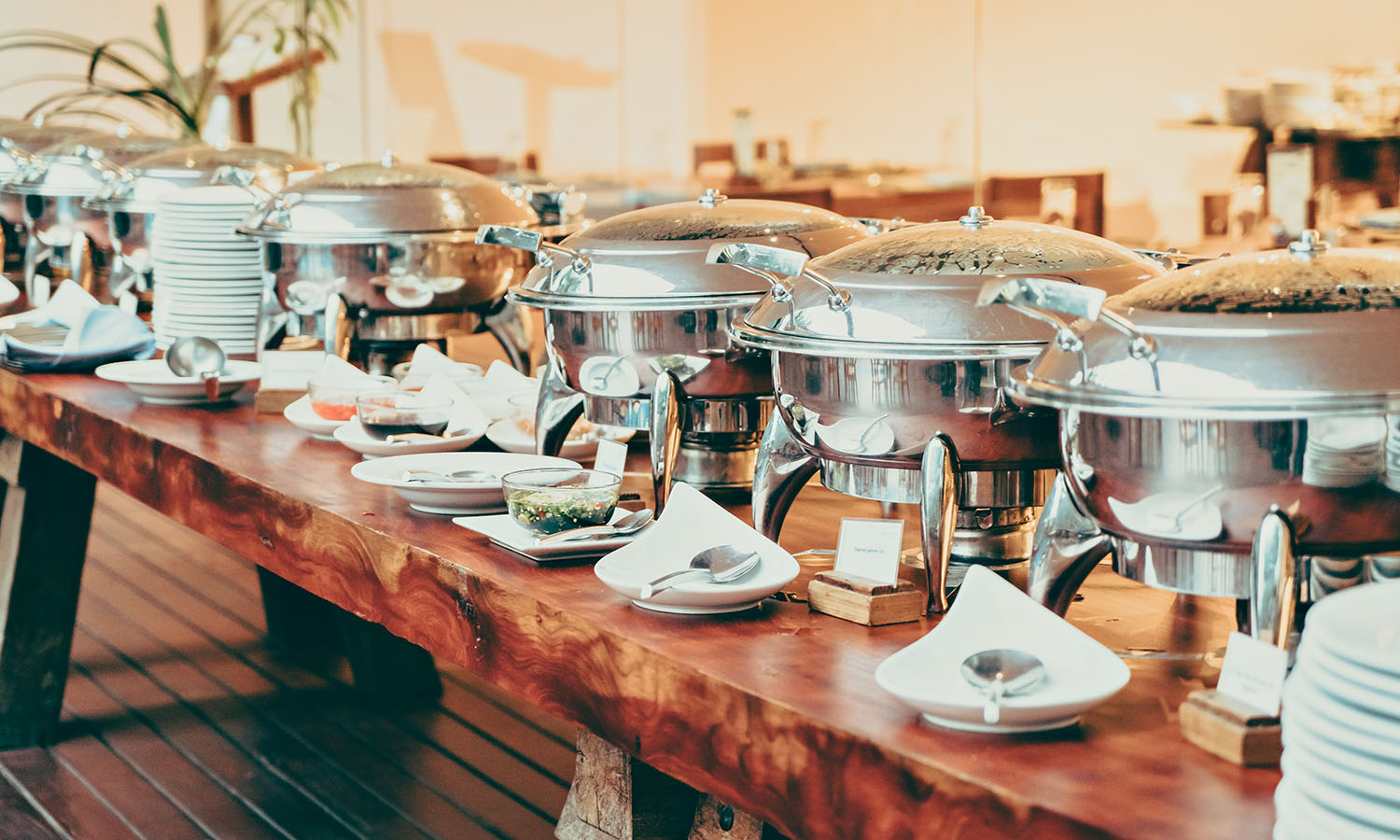
It doesn’t take long to walk the length of Ísafjörður. We end up at Tjöruhúsið (the Tar House), where we dip into the seafood buffet to sample cod cheeks and, rather reluctantly, meaty minke whale. It isn’t an endangered species, but eating it still doesn’t sit well.
“This is all stuff Dad used to cook us when we were small,” says the owner’s son Magnus Hauksson, “and when he offered it to visitors it got so popular we had to open a restaurant.”
A boat carries us to the Hornstrandir Nature Reserve for a 14-kilometre trek guided by Vesteinn Runarsson, a young local man with snow-white eyebrows. He takes us up a mountainside covered in streams and wildflowers to a snowy ridge, and down again to a long beach backed by ice-packed dunes.
“We’re nearer here to Greenland,” says Runarsson, as we scramble around a headland, “than we are to Reykjavík.”
Perhaps not surprisingly for such a remote part of an island isolated by weather, winter darkness and geography, witchcraft flourished in the north. We discover this en route to Akureyri, the country’s second largest city, at Hólmavík’s Museum of Icelandic Sorcery & Witchcraft. We also learn that in the nineteenth century most convicted witches were men and wince at a replica pair of necromancy pants. Reputedly made from human skin, they assured the wearer instant wealth.
In Akureyri, we join guide Marino Svensson for a super Jeep tour. The vehicle’s an elevated 4WD with giant tyres that can forge through deep snow. Svensson takes us further east to the Myvatn region, seething with explosive geysers and pseudo-volcanoes, and pock-marked with spirals of solidified black magma.
From the Goðafoss waterfall, rushing down a lava field like a set of billowing curtains, to Hverir, where we walk in a lunar landscape that broils and bubbles with mud pots, to Krafla, an active volcano, where we drive through clouds of steam…it’s an unforgettable journey.
For the next three nights home is a wooden cabin at Ytri-Vik farm, 23 kilometres north of Akureyri, at the edge of Eyjafjörður. Like most Icelandic homes, it has geothermal heating (including the floor) and an outdoor hot tub, fed by a bore. The view across the fjord at sunset, when bloodied clouds cling to the glowering snowy peaks, is entrancing.
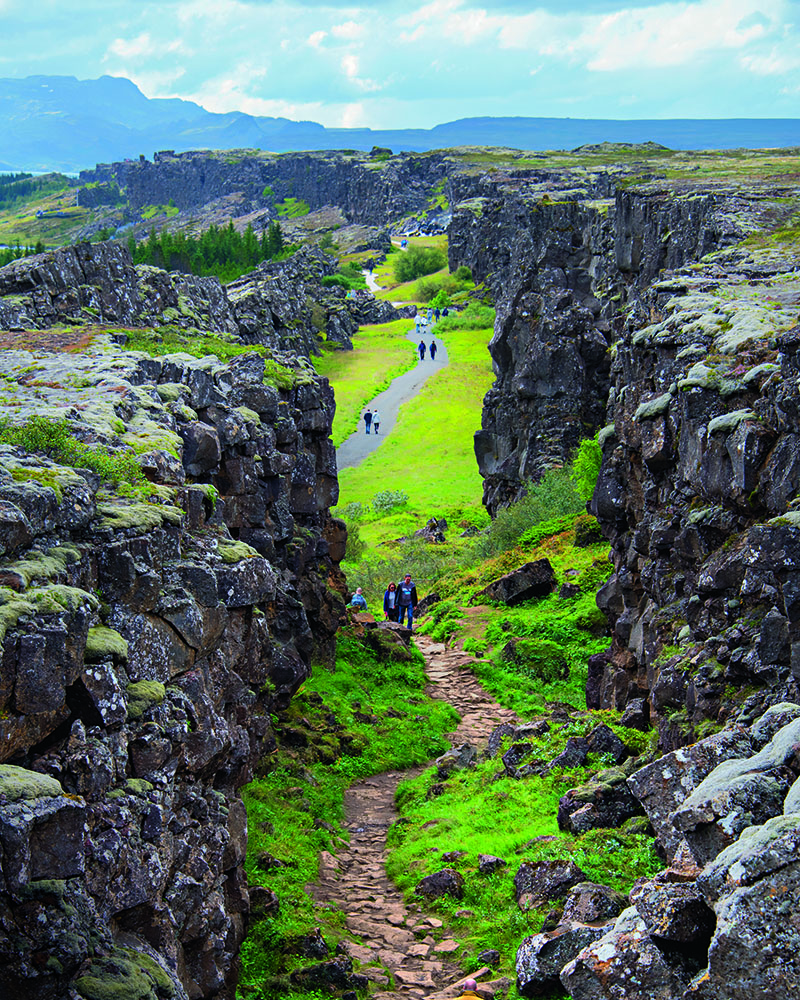
On our final night we attempt to camp again beside Iceland’s largest lake, but the tent is buffeted by overnight wind and rain and, at 3am, collapses. We retreat to the car and, at nearby Thingvellir National Park, the site of Iceland’s Viking parliament, dry everything out under the rising sun.
Established in 930AD, this was the world’s first democratic parliament. It saw the adoption of Christianity in 1000AD and the foundation of the Republic of Iceland, after centuries of Danish rule, in 1944. Sitting at the junction of the American and European tectonic plates that run across Iceland, which are cleaving apart at a rate of two centimetres a year, this World Heritage site is a moving setting for the final morning of our trip.
Once a gathering place for peddlers, sword-sharpeners, tanners, brewers and clowns, who performed at extravagant banquets, all is quiet now save for the grumble of shallow falls rushing between high basalt walls in the Oxara River. But, like so much we’ve seen, the site is imbued with a palpable, planet-building energy.
A wise cab driver by the name of Quantel once told me, “Memphis is made up of three words: Graceland, blues and barbecue.” For the most part, he was absolutely right. Now, someone please hand me a coconut water and a Panadol because Quantel definitely forgot the fourth and most important word: hangover.
Flooding has started in Memphis as a massive rainstorm hits the lively southern city right on schedule for the weekend’s festivities. The consensus, on my United Airlines flight from New York, is that this is by no means an unusual occurrence. For the past four years, a conveniently timed and almost predictable deluge has graced Graceland directly preceding the festival. This has happened so often, the locals now lovingly refer to the Beale Street Music Festival as Memphis’s Music Mud Fest.
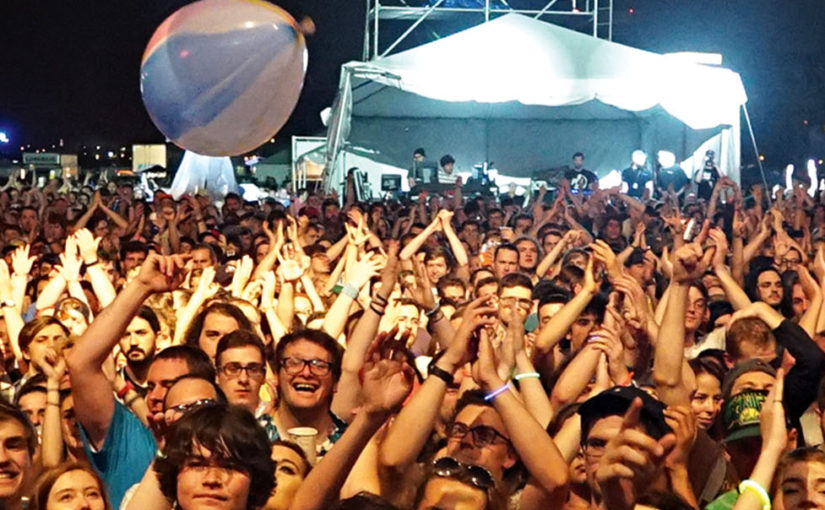
The 40-year-old Beale Street Music Festival (BSMF) is the three-day, kick-off event of the annual Memphis in May celebration, a month-long line-up of special events, competitions and shows to honour the city and its rich history. Every year the festival attracts more than 100,000 people from all over the country for a musical smorgasbord of big-name stars and local legends who play side by side at the humble waterfront venue, Tom Lee Park.
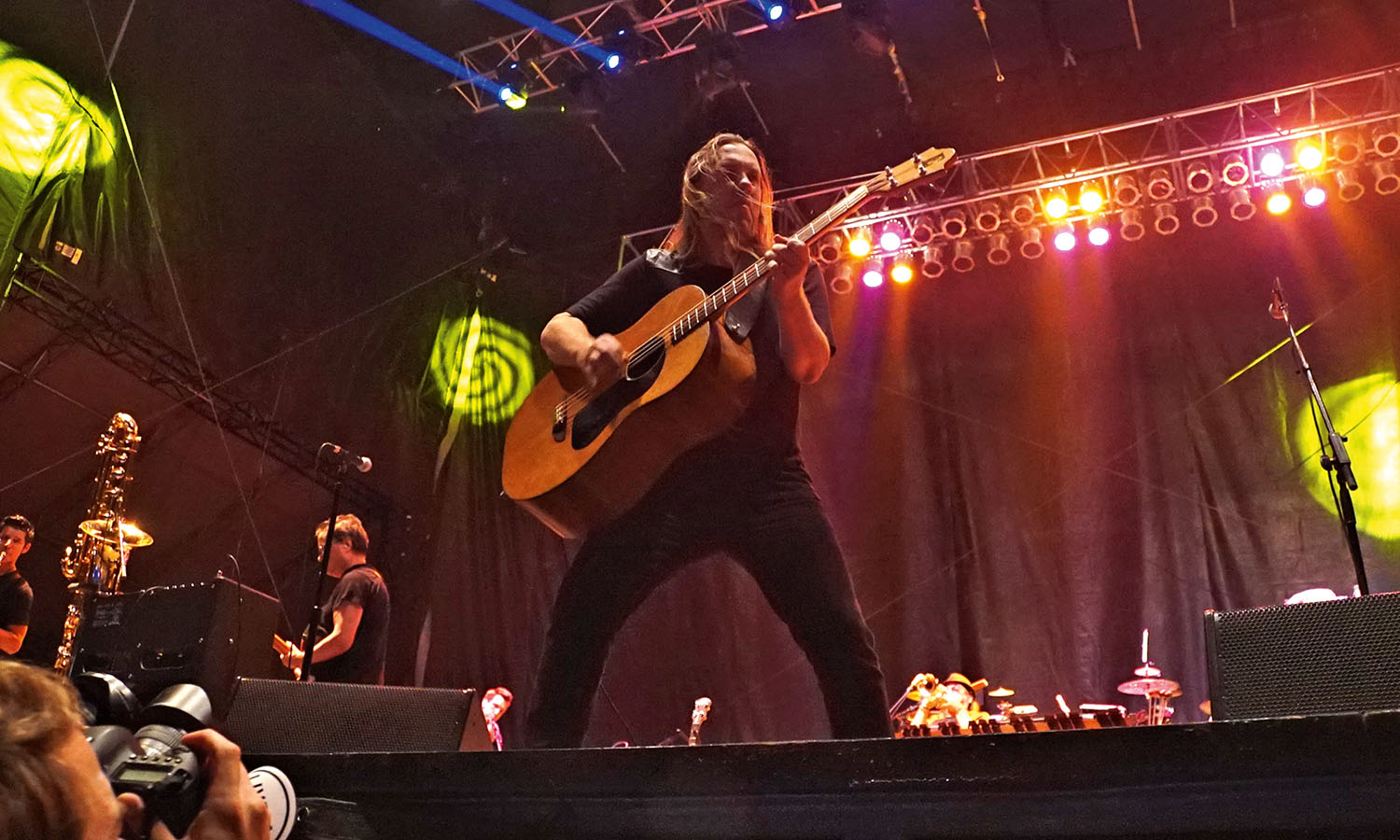
Originally a festival exclusively celebrating the blues, BSMF has, over the years, opened its offerings to rock, hip-hop and pop to accommodate the ever-expanding interests of music fans. This time around, a total of 69 performers, of both national and local acclaim, are here to be a part of the fun. Headliners include household names – Beck, Paul Simon, Neil Young, Cypress Hill – alongside a swathe of up-and-comers like Grace Potter, Courtney Barnett and Nathaniel Rateliff and the Night Sweats. Regardless of whether your musical druthers span country or rap, there’s guaranteed a little something for you here.
Music rumbles in the distance as I approach the gates to find a long motley queue of loyal festival-goers patiently awaiting entry. Hippie and hillbilly, black and white, young and old – this diverse crowd stands united with their ponchos and gumboots, having travelled from far and wide to fulfill their love of music.
Inside, three gigantic stages run parallel to the majestic Mississippi River, as an envious Arkansas watches all the fun from across the water. As I walk further into the grounds, the footpath transforms from cement to dirt and finally to mud. The heavy, wet air of the Mississippi mixes with the lingering scent of Black & Milds, light weed smokeage and the distinct aroma of fried food. That smell wafts from tents near the stages, where vendors are serving up local delicacies like gator on a stick, bourbon chicken and medieval-sized drumsticks.
The energy is playful and fun. Children chase one another past elderly couples wandering hand in hand. Mothers and daughters bond on blankets at the back, listening to Paul Simon as they clink with cold Bud Lights. Mud is flung through the sky as teenagers jump around the pit while Meghan Trainor belts out their favourite tunes. Everyone seems to be there for their own reasons, and yet somehow they all seem connected. While at one stage you see three generations swaying back and forth to Neil Young, you can walk one stage over to catch Yo Gotti, a hometown hero back for a big performance on his old stomping ground, performing to an eclectic crowd of booty-shakers throwing up their hands to the beat.
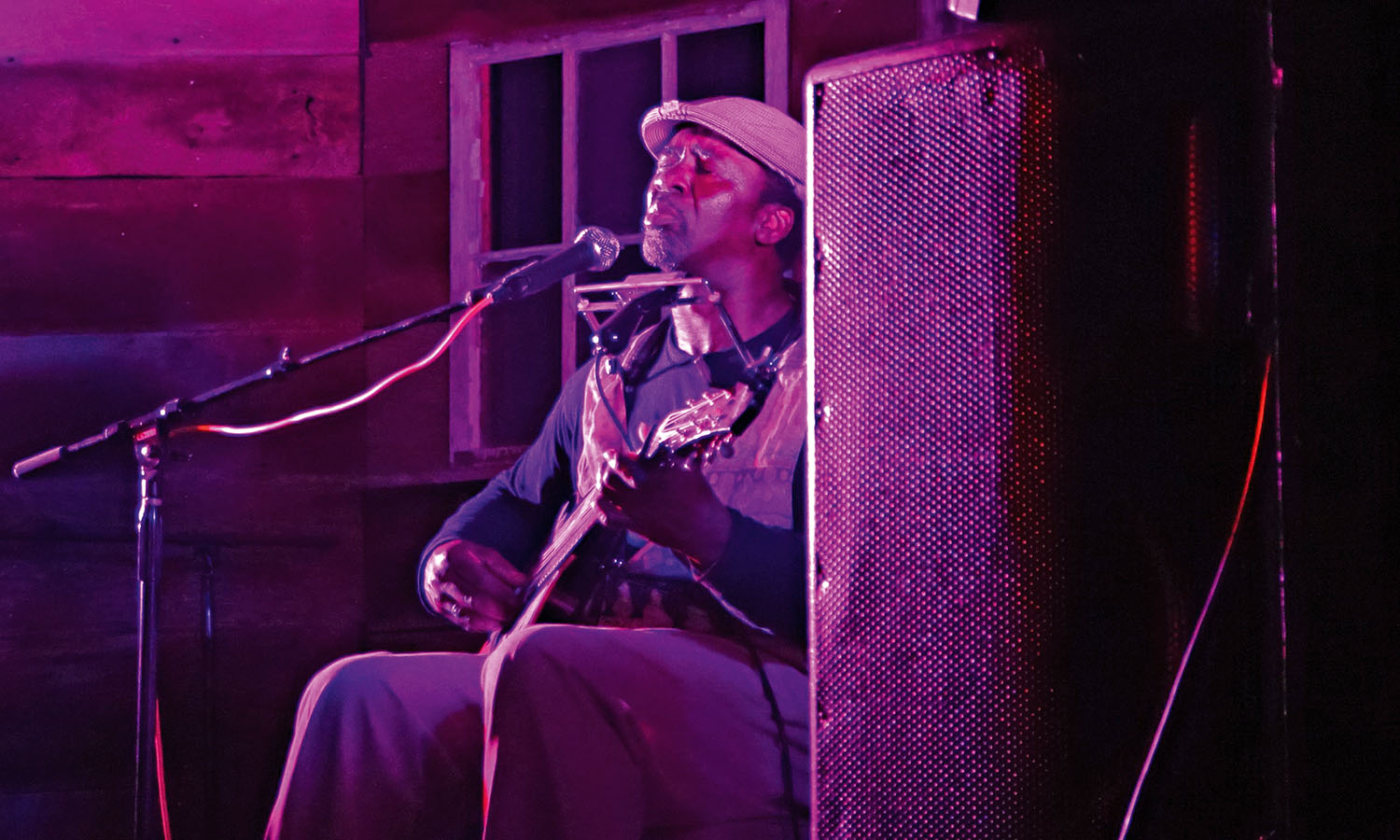
Not in the mood for a big crowd? You’re covered. Stop by the Blues Shack, hidden between towering stages, for a more intimate experience. Here you might see local blues veteran Leo Bud Welch sitting alone on a stool with a guitar and harmonica. He’ll destroy you with his painfully brilliant music.
Variety of performances aside, another home run for the organisers of this unique spring festival is its affordability. For seasoned festival-goers, a weekend of music can be upwards of a thousand dollars (sorry, did someone say Coachella?). Yet at BSMF, even music aficionados working hard just to rub two coins together can gather the funds to join friends and family for a truly enjoyable three days of memory making. Food is affordable, beer is comparatively cheap, and sponsors like Rockstar, Fireball and Marlboro hand out free products all weekend. Vices? Check.
Another huge bonus is the fact you can come and go as you wish, a privilege seldom found at other festivals of this size. The boisterous, dangerous (in a good way) bedlam of Beale Street is no more than a short jaunt away.
Speaking of which, it’s time to jump into the fray.
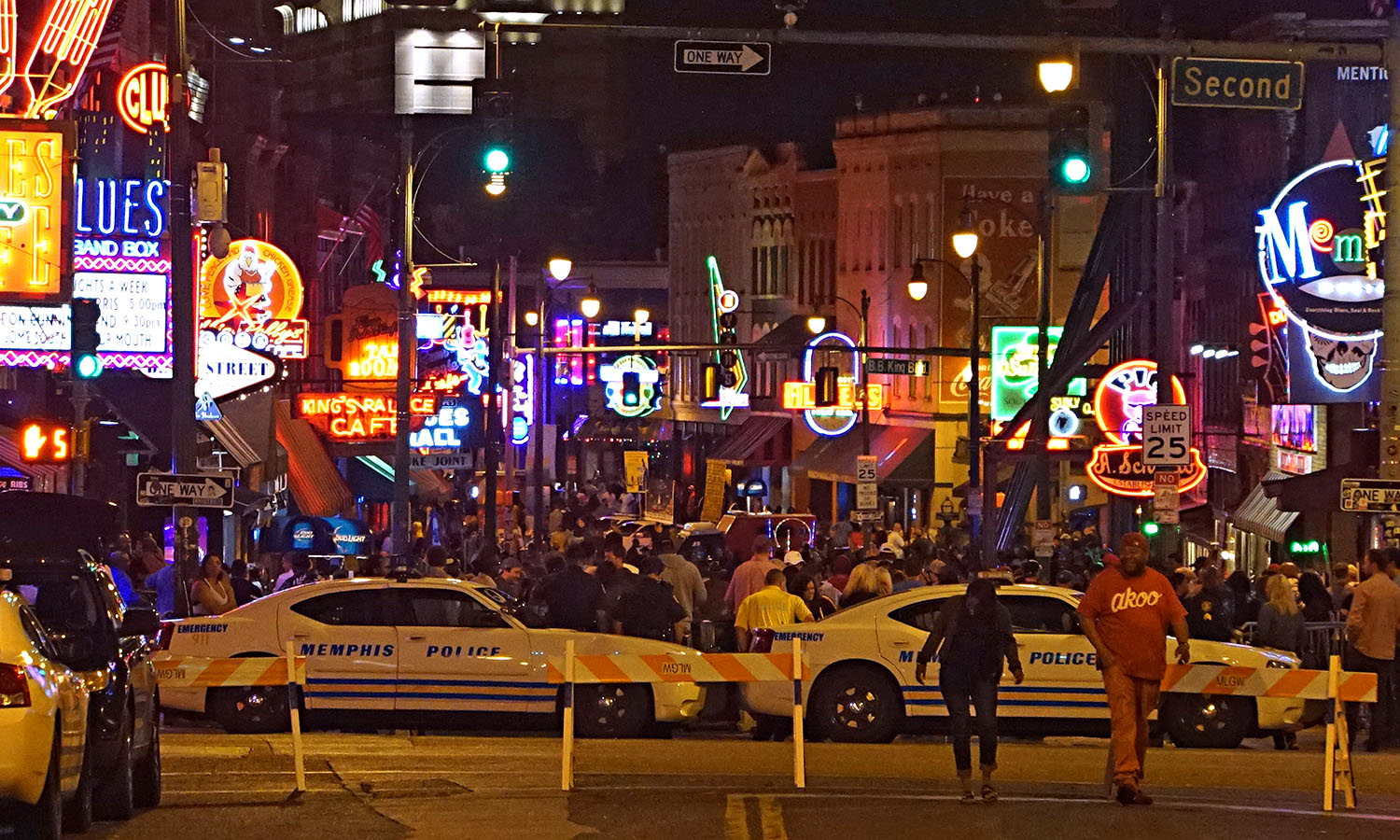
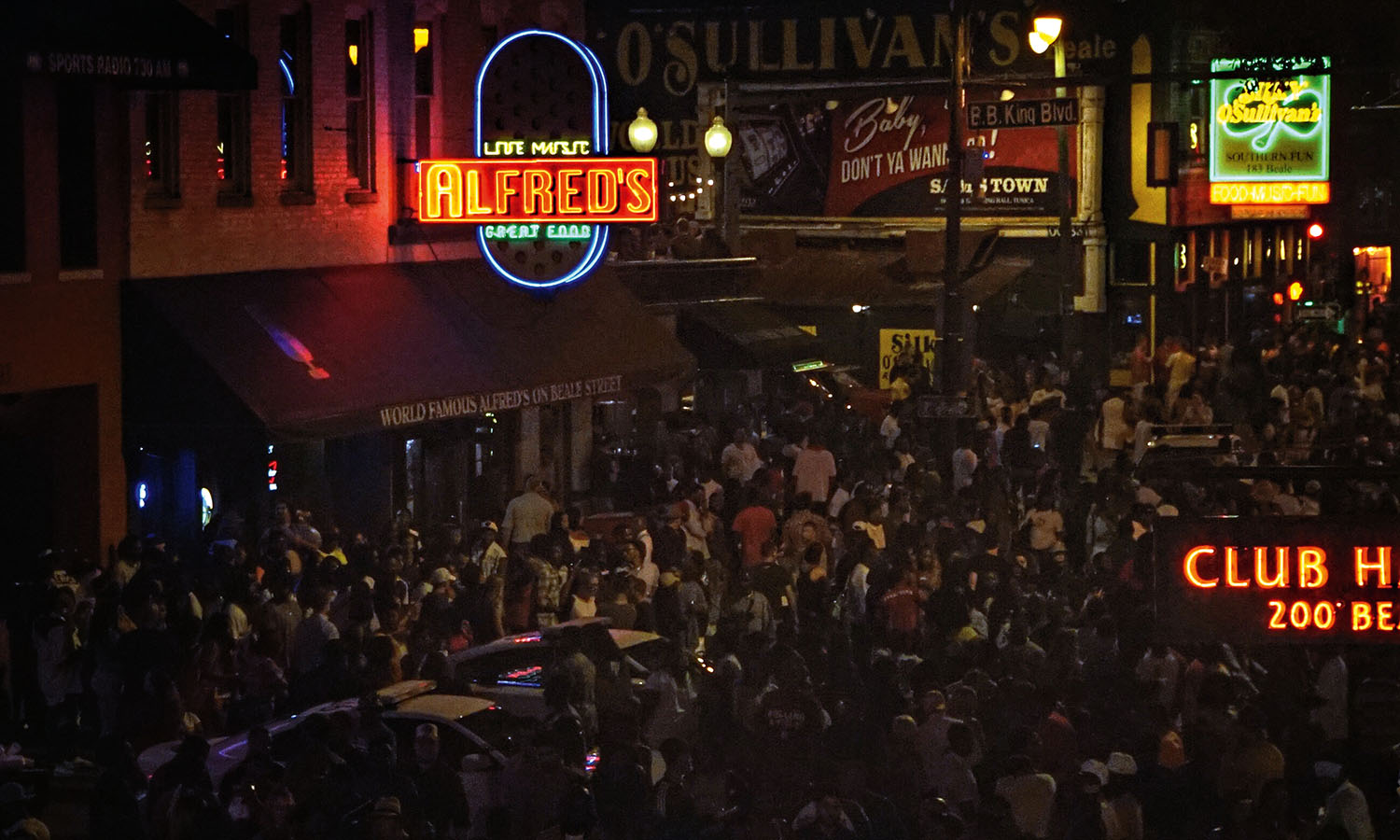
The final act of the night has played its encore, and an ocean of smiling strangers begins its exodus to chapter two of the night’s festivities: the after party. As I trudge up a small hill with my fellow carousers, the dreamlike neon playground of debauchery that is Memphis’s Beale Street shows its seductive face on the not-so-distant horizon.
Armed with my press pass, I embark on the noble mission of exploring all 42 music-filled drinking establishments they’ve managed to cram into these three bacchanalian blocks. I do this for you, and your benefit alone. Yes, I know, you’re welcome.
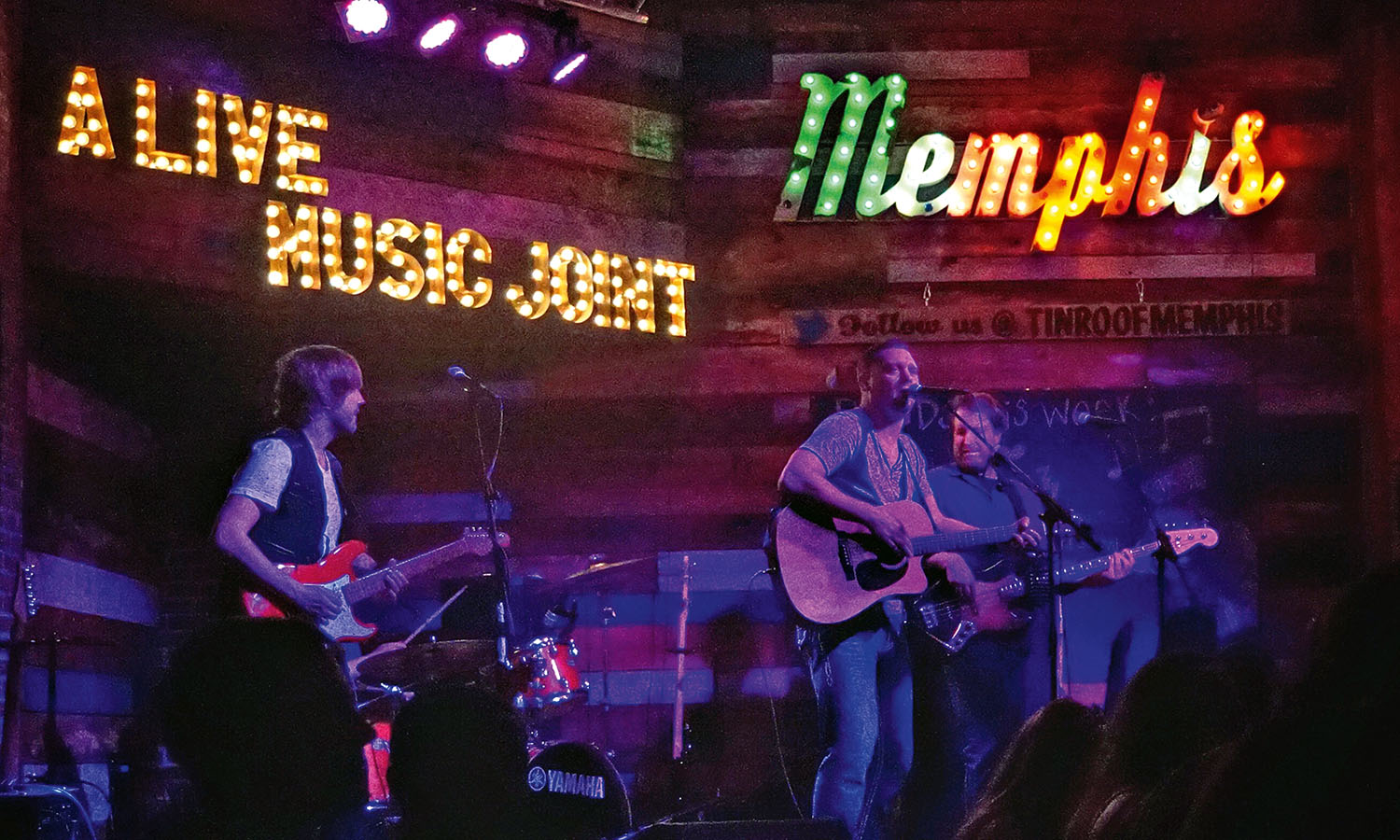
To give a full rundown of this street would take a lifetime, and three extra kidneys. But here’s the skinny: relatively new but notably fun, the Tin Roof boasts two levels that open up to a main stage. With two separate bars on each level and twerk music videos playing on all screens, it attracts a young crowd there for one thing and one thing only: the inevitable hangover.
The historic, two-storey Jerry Lee Lewis has something for everyone. Veer right at the entrance and visit Keith downstairs for a drink and some history. This bartender has witnessed 20 years of music and drunkenness behind his bar, which serves the stage where stars are born. This is a real local spot where, until 5am, the drinks flow constantly and live music from aspiring artists plays. What is special about this place is its dynamic. Where there’s an unexpected amount of culture in this particular room, I walk across the hall to the other ground-floor bar where I proceed to meet a young man named Neebs, who wastes no time sharing his newly tattooed shoulder bearing a monkey fingering its own arsehole. I take my beer upstairs to where the music thumps faster than my heart rate and from where I can watch the chaos below.
If you’re feeling bluesy, Daisyland is the place to go. Converted from Beale Street’s old movie theatre, it’s here you can see one of the world’s top 100 DJs every month – it’s your one-stop shop for the Dirty South club scene. VIP areas with bottle service and plenty of wiggle room rest in the middle of a gigantic dance floor with a good view of the stage no matter where you stand. The mezzanine is still intact upstairs, and it happens to be the place to go if you want some privacy from prying eyes. Remember though, what has been witnessed cannot be unseen.
You also have to go to Coyote Ugly Saloon, if only to relive your favourite movie of the twenty-first century. This delightfully trashy late-night jam brings a backyard-party feel and blends it with strip-club fanfare. Beer is served by scantily clad waitresses from fully iced eskies resting atop empty whiskey barrels. From here there’s a perfect view of the variety of alcohol-fuelled amateur dance performances on top of the long wooden bar. The signed lingerie of past patrons hangs overhead like trophies of a battle won.
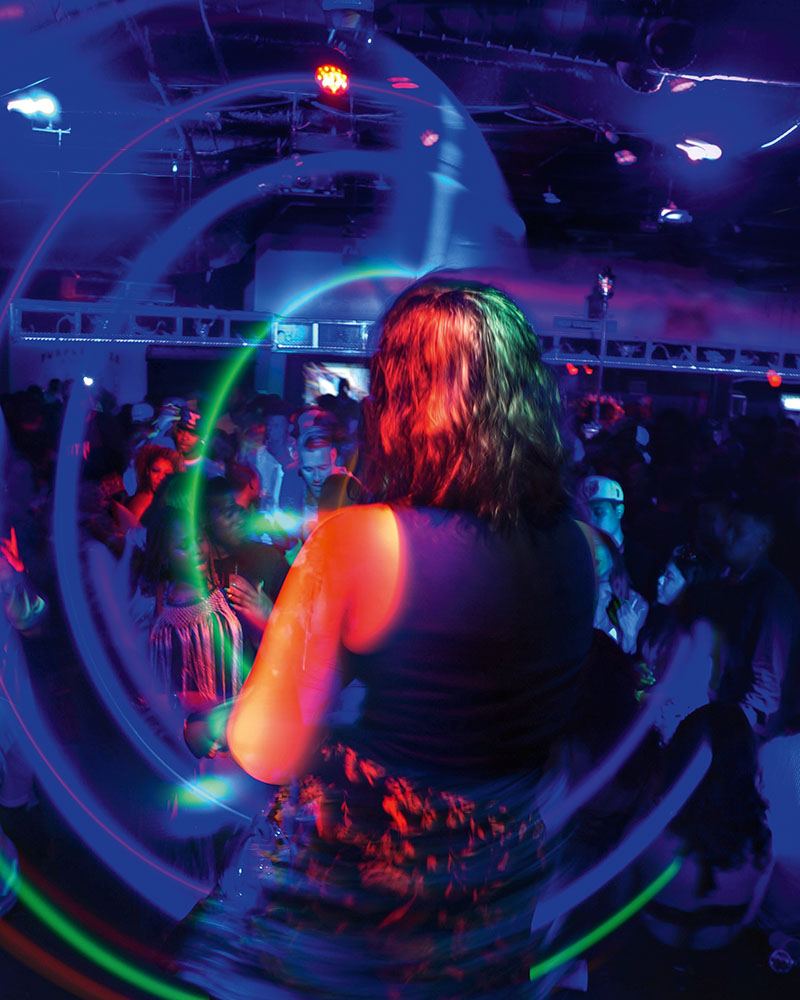
The highlight of the night is Purple Haze. I help light a local’s cigarette on the street, and the next thing I know I’m being guided past wait lines, behind velvet ropes and into the VIP section of Memphis nightlife’s not-so-hidden gem. It’s a block from Beale Street, which tends to deter a majority of wide-eyed tourists, who are drawn toward the energy of the main drag like flies to a bug zapper. Stacked with two huge bars, a pool table, an enormous dance floor and hula-hoopers extraordinaire on stage for your visual distraction, this place has it all. Open till 5am with a great variety of music, it’s the perfect location to find your sixth wind of the night and party till the sun comes up.
Memphis in May knocked it out of the park – Tom Lee Park to be precise – with a unique celebration of American music and culture. If you come prepared with your rain gear, an appetite and a bottle of aspirin, you’ll have an amazing time no matter who you are. Speaking of which, can I borrow one of those aspirin? Remember, I did it all for you.
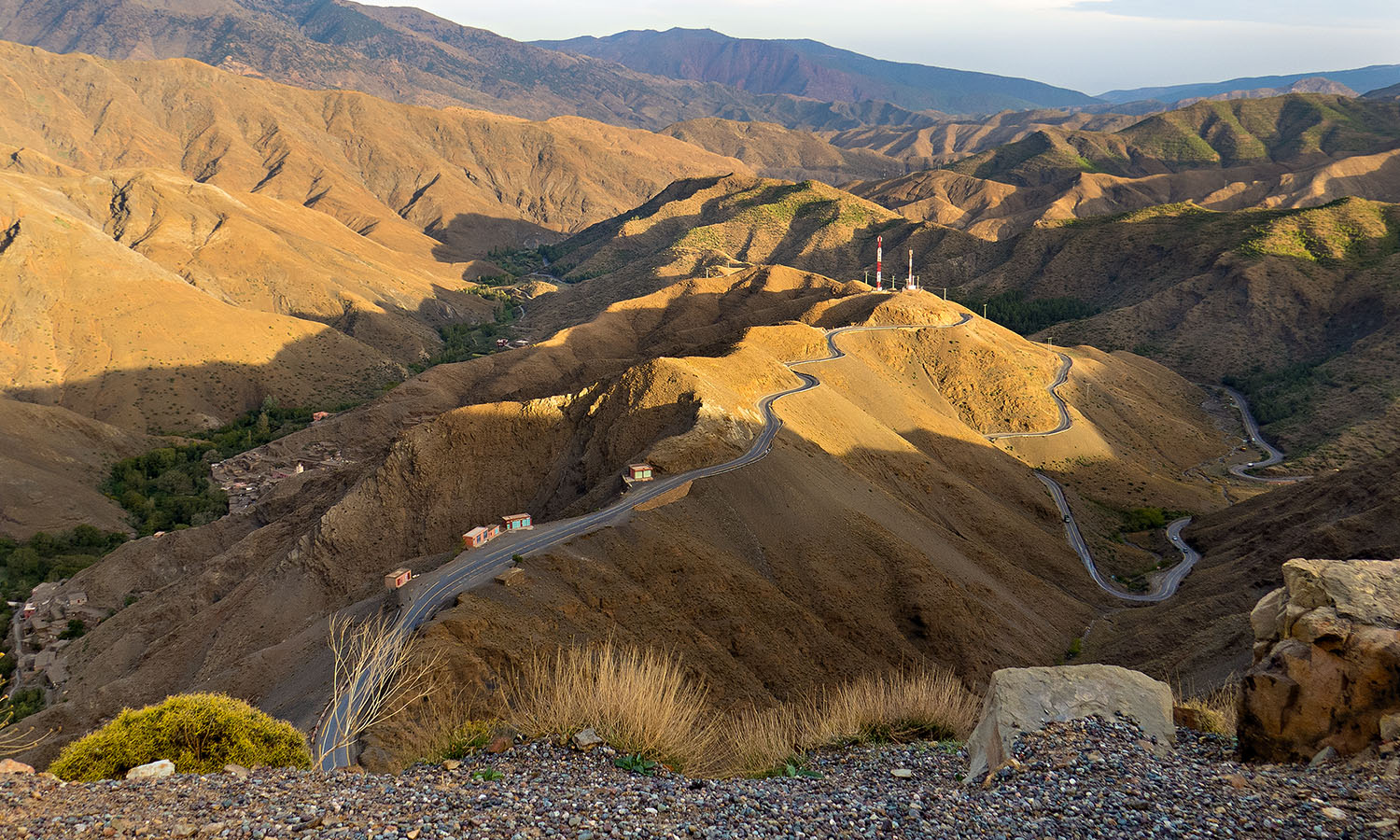
In the High Atlas Mountains, Cheikh is handling the switchbacks like a Formula One racer, negotiating trucks, cars, bikes and donkeys along winding one-way roads. We give way at each unguarded hairpin bend, swerving into the gravel perilously close to the cliff edge.
In just two hours since leaving Marrakesh, we’ve climbed nearly 2000 metres. Daylight reveals the iron hues of the High Atlas and the enormous scope of the mountain range. For the next three nights I will be camping on Morocco’s biggest and wildest dune, Erg Chigaga, about 500 kilometres southeast of Marrakesh. Getting there is a rugged 10-hour journey across inhospitable terrain.
We pass clusters of Berber villages camouflaged by the mountains. At times the buildings are hard to distinguish from abandoned ruins. Hunched elderly women piggyback bulging loads, seemingly en route to nowhere, and children lead donkeys laden with cargo along dangerous passes.
Mid-morning we turn off at Telouet, a decrepit kasbah built in the late 1800s for the ruling Glaoui family. It’s positioned along the ancient trade route between the Sahara and Marrakesh, and its crumbling facade conceals protected spoils inside. In room after room, every centimetre is covered in ornate mosaics and carvings. It seems an eager designer was given carte blanche and adopted every material and technique in the artists’ handbook. It’s incredible this deserted time capsule is so well preserved and open for visitors to freely explore. I wish our visit lasted longer than a leg stretch.
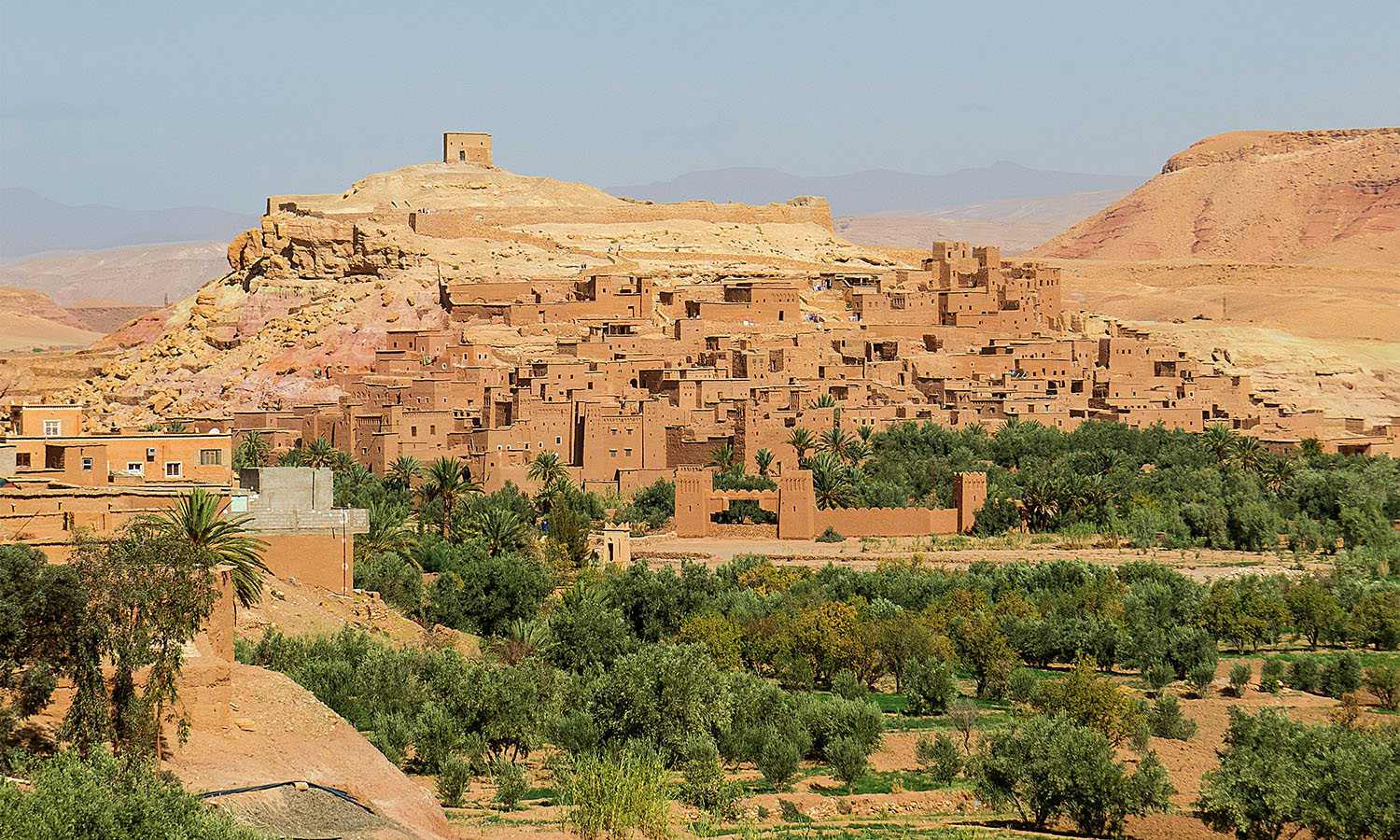
We next stop at the fortified city of Aït Benhaddou, now a UNESCO World Heritage site. Located beside the dry Ounila River, its imposing defensive walls conceal a labyrinth of packed-earth buildings. Decaying alleys are filled with shops catering to the hordes of tourists drawn here by its Hollywood fame. You have to use your imagination, but Lawrence of Arabia, The Mummy and Gladiator were all filmed here. More recently, the city also formed the backdrop for Yunkai and Pentos in TV juggernaut Game of Thrones. After I channel my best Russell Crowe impression in the gladiatorial arena, we are swiftly back on the road.
We travel through the Anti-Atlas range then on to Agdz at the start of the Draa Valley. A lush oasis of three million date palms accompanies us on the two-hour journey to Zagora. There’s an occasional roadside dune, and Cheikh explains just how far the sand has blown beyond the Sahara – it has a crippling impact, burying roads and clogging village water systems. Braided palm-leaf mats are scattered across the dunes, evidence of an international aid project to try and smother the encroaching sand.
By late afternoon we leave civilisation behind, heading off road at M’Hamid. For two hours we drive, blindly it would seem, with no signposts or markers to guide our way. As we are thrown around undulating dunes and Cheikh wrestles with the steering wheel, it becomes clear why the camp is only accessible by four-wheel drive. Few drivers know the desert well enough to locate the camp, which lies 20 kilometres from the Algerian border and remains hidden until we clear the last rise.
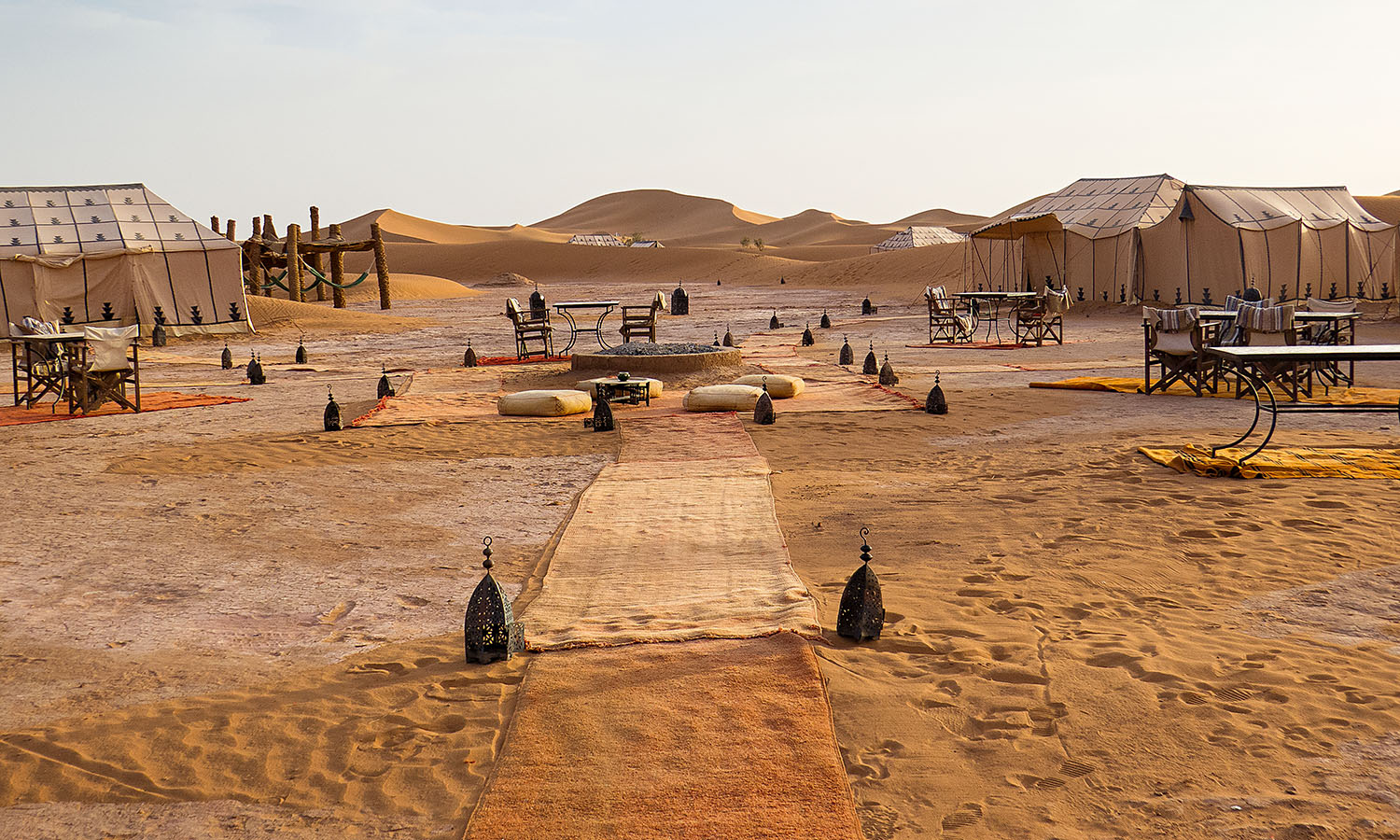
The Erg Chigaga Luxury Desert Camp is as remote as you’ll find. I’m greeted by Bobo, a beaming Moroccan partner of the camp who was born and raised in the desert with his nomad family. I’m in safe hands. Carpet pathways intersecting a central fire pit lead to 10 guest tents, a dining tent and lounge shelters all blending into the dunes.
My Berber tent is authentically decorated yet pimped out with western comforts. Within the circus-like striped walls, filigree lamps flank a bejewelled queen-size bed and carpet softens my step. Robes and slippers await. Most impressive is the adjoining bathroom annex. Decked out in Moroccan pewter, it features a portable toilet tucked behind a modesty screen, an elegant wash stand, dressing table and a charming bathing station. At any time I can request a hot pail of water for hand-bathing, Queen of Sheba style.
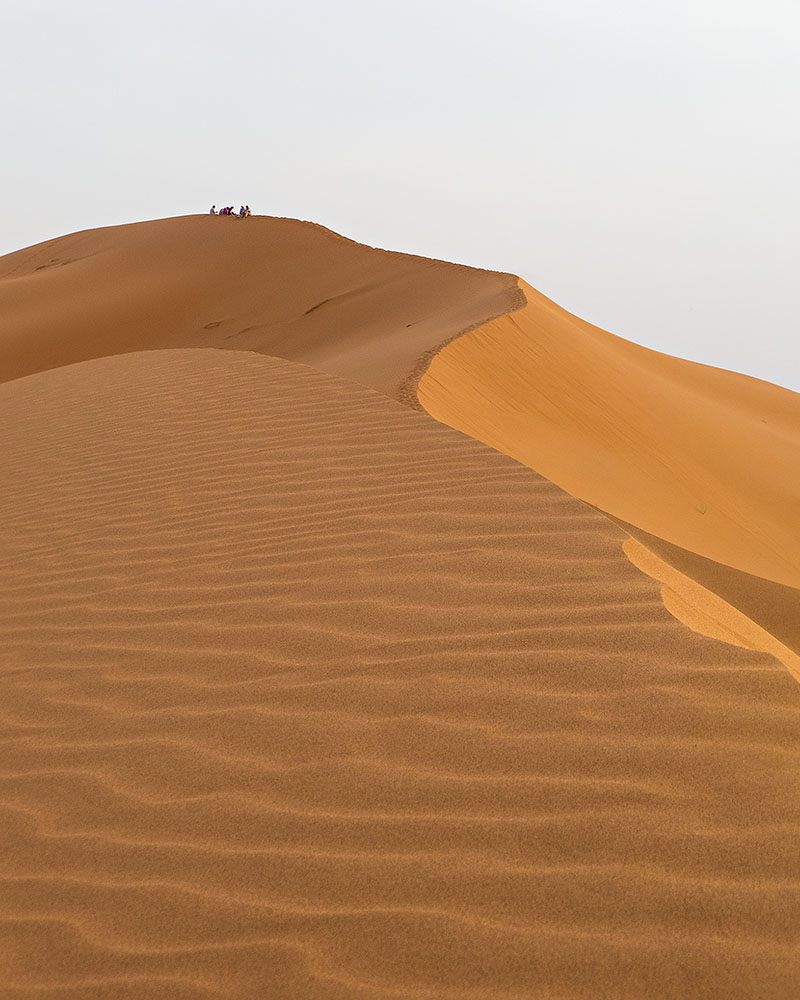
With sunset looming, Bobo suggests I ditch my shoes and join the other guests high in the dunes. It’s an exhausting climb as the scalding sand collapses beneath every step. My efforts are duly rewarded with a glass of chilled wine at the top, just as the sun slinks behind the horizon.
Hours later, back in my tent, I wake to winds violently shaking the canvas walls. I scramble to fashion a barricade to block the desert from blasting its way in, with little success. By morning the tent walls are still rippling like a wobble board and inside is blanketed with sand. My bed is gritty, my throat parched and my teeth crunch. A peek outside reveals a blur of sand – there’s no one to be seen. It is a taste of how inhospitable the desert can be. In the late afternoon the winds finally recede and everyone emerges.
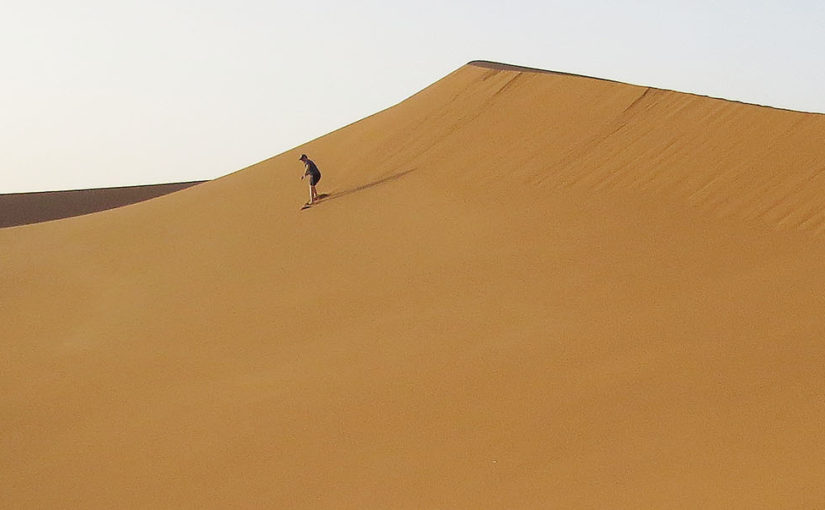
Sandboarding and sundowners at the big dunes are the perfect release from a bout of cabin fever. As the name suggests, these formations are epic. We scale the largest one, displacing perfectly formed corrugated waves of sand to reach the top, which gives way to a huge skate bowl – the perfect launch site. I tuck my feet under straps and shuffle to the edge. Going straight down is terrifying, but moving in any other direction is like sliding through sludge. When the board continues to bog and toss, I plant my behind and careen down the dune toboggan-style.
Aside from the occasional nomad camp, we are totally isolated in a sea of golden dunes. The setting sun accentuates each contour. The camp staff has arranged pouffes and tables at the top of the dunes, creating a delightful open-air bar. As the sun retreats we are reduced to tiny specks silhouetted against a vast landscape.
Evenings in the camp among the many flickering lanterns are quite magical. After a communal feast of tagine, couscous and vegetables, we gather around the fire with wine in hand as the staff serenades us, their chanting melodies hypnotic against the drumming and clanging castanets. The star-riddled sky is an astronomer’s dream, with shooting stars regularly streaking overhead.
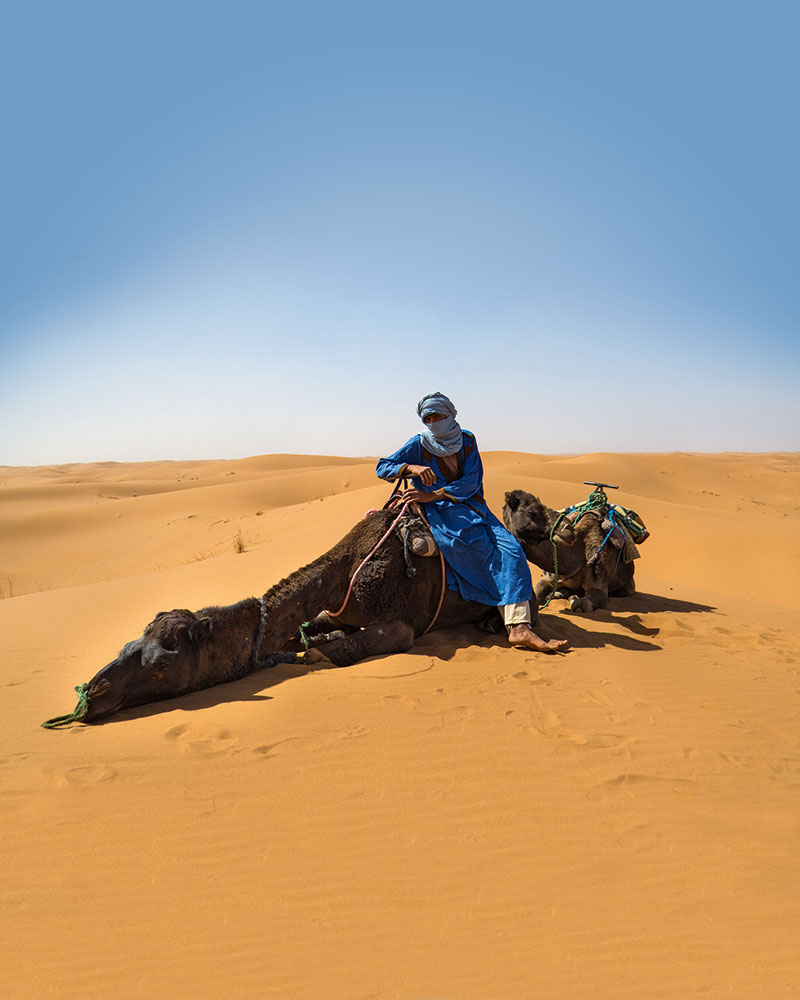
The camels have been saddled for a morning ride and mine lets out an impressive gurgling yodel before dropping to its haunches so I can climb on board. At first the pace resembles that of a rhythmic rocking horse, but as we hit the dunes it builds into a hold-on-tight bucking bronco ride. These Berber beasts are built for the sand with their splayed hoofs, but their lanky legs are clumsy on descent.
With the advantage of height, I witness the rapidly changing character of the desert. Carved ridges resemble the spine of a basking stegosaurus one moment, then morph into a valley of smooth feminine curves the next. Later they transform into a sculpted wave, appearing motionless and posed as though for our photographic pleasure. Just as the cramps in my groin become unbearable, we break for lunch.
A set table and lounge area await under a shaded canopy, the provisions having made the journey by 4WD. Lazing in this cool sanctuary with a fully stocked esky, I can’t believe my luck: the setting is close to perfect. Suddenly an approaching quad bike disturbs the peace and I glimpse Bobo behind the handlebars. He is en route to a smaller private camp and offers me the chance to hitch a ride.
Bobo understands the dunes, and it’s a thrilling, slightly terrifying, rollercoaster ride. Many times we are halfway up one of the steepest dunes when he aborts, only to return, heavy on the throttle, packing more speed. I squeeze Bobo tightly as we rocket up, then quickly lean far back as we pitch down. He chuckles each time I shriek as we come close to toppling.
On my final morning I set out in the dark and head into the dunes with a thermos of coffee. The sand is freezing and I’m shivering despite wearing a scarf and beanie. It feels really good to be cold. This simple desert life offers true escapism, and I savour these final views in the early-morning light. I love that there is no posh back-up hotel nearby, yet I cannot wait for the shower and dust-free towels that await in Marrakesh. A piece of the Sahara is leaving with me – engrained in my memories and my suitcase.
Mai mee pun hah!” The chirpy phrase, meaning ‘no problem’, is the most commonly heard sound on Ko Chang.
I wake early for a run before the tropical heat kicks in. The sun is throwing its first saffron-coloured rays over the humpbacked forest slopes of Ko Chang and I’ve heard the phrase twice already. The first time was from my landlady when I stumbled out of my beach shack bleary-eyed and knocked my barbecue over. Now I hear it again from my new friend, Adi.
Thailand’s laid-back island attitude has almost become a travellers’ cliché, but for good reason. Life in fast-lane Bangkok has a way of taking its toll and I have come to Ko Chang for a month or two to let the warm waters of the Gulf of Thailand wash away the inevitable stress of big-city life.
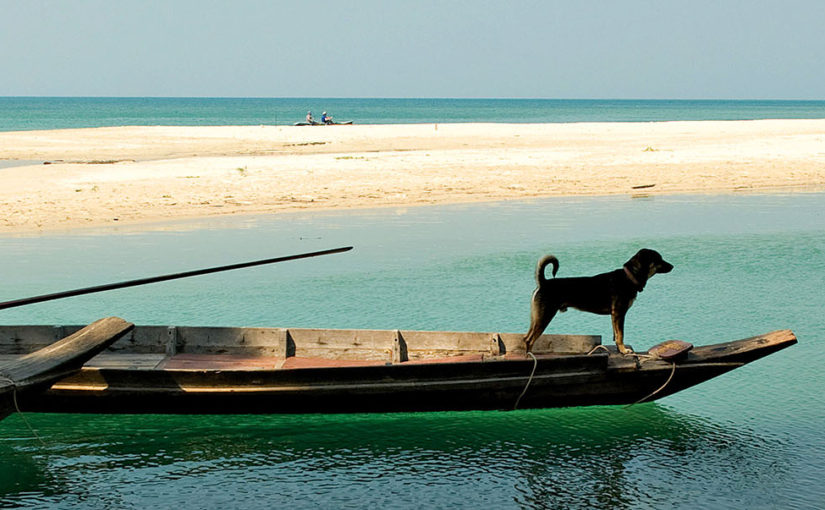
Adi clearly knows little of those problems. He, with his dog Mah at his side, operates a little pontoon boat across the narrow tidal inlet to the beach at Klong Prao. His workplace is prime beachfront real estate – the type that postcard publishers drool over. It is almost too perfect, with its turquoise waters and a white arc of sand that is dotted here and there with just the right amount of shade from towering palms.
Klong Prao offers more than enough temptation for me to rip off my trainers and wade across the shallow lagoon. Stupidly, I have come out without any baht and with a sheepish shrug to Adi I pull out my empty pockets.
“Mai mee pun hah!” my new friend laughs as he punts over to me. Mah stands on the bow, tail wagging, waiting to greet the first ‘customer’ of the day. During the day, Adi makes his money shuttling tourists to and from the little beach-bar here. At night, he ferries honeymooners on romantic ‘firefly safaris’ deep into the mangroves, where cicadas chirp, frogs croak and there are fairy-light flashes from a million fireflies.
I promise to return that night to take a gentle cruise with a frosted bottle of Chang beer in hand. The thought is enough to put a renewed spring in my step as I start the long run back up the sand towards my bungalow.
Ko Chang (Elephant Island) is so-called because it is said to resemble a sleeping elephant. For much of the last month I have been living happily tucked away in the elephant’s armpit.
Facilities in my simple shack are limited. Ten dollars a night buys me a bamboo bed, a bare light bulb, a barbecue, an electric fan and a cold-water shower. I share the shower with a giant spotted gecko that is known throughout South-East Asia as ‘tokay’ for its loud territorial call. Even in the jungle the call would carry for half a mile, but amplified by the acoustics in my bathroom and the still of the night it is nothing short of terrifying. Someone once told me that it is good luck if the tokay repeats its call exactly seven times, and since then I have been obsessively counting.
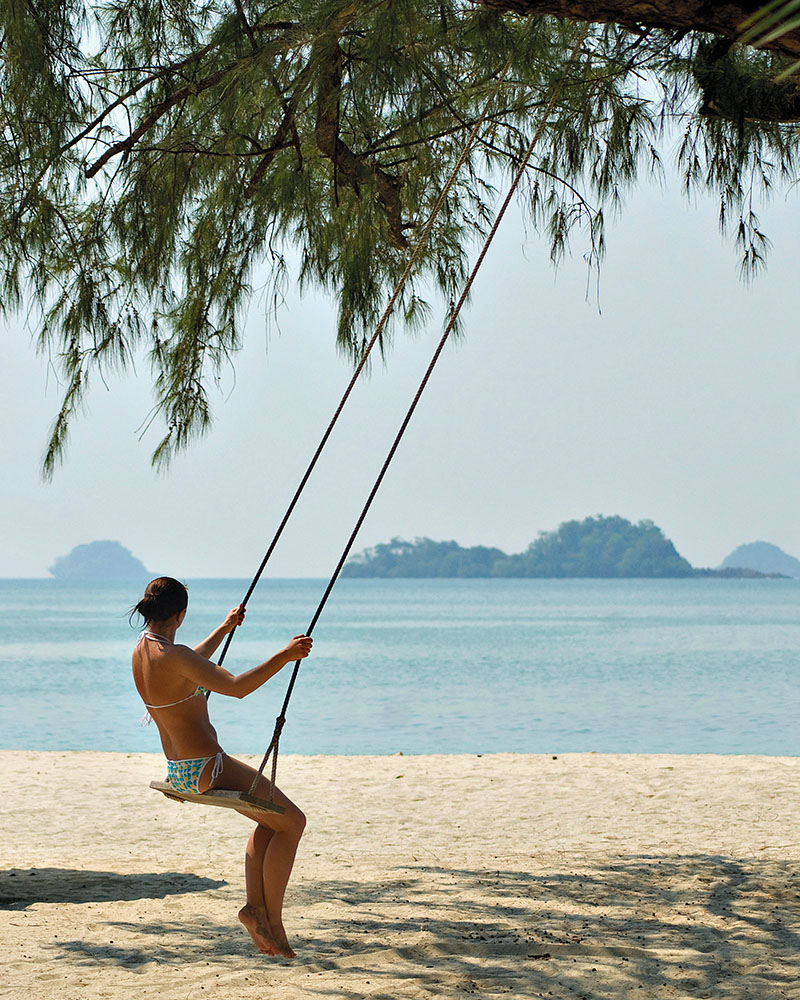
However, the saving grace of my humble abode is the small verandah on which I am able to put some distance between my roommate and I, and doze in my hammock just a few feet from the small waves.
Ko Chang, an easy five-hour drive east of Bangkok, has remained a sleepy backwater place, while more isolated islands like Ko Samui and Ko Pha-Ngan have been frantically over-developed. Pioneering backpackers in search of ‘secret spots’ rushed to the outlying islands in the Gulf of Thailand and the Andaman Sea. Yet, thankfully, Ko Chang, one of Thailand’s biggest islands, was almost completely overlooked – saved by its size and its proximity to the country’s capital.
Just a decade ago, when Phuket (the country’s largest island) was exploding as a world-famous tourist destination, the Chang islanders were yet to receive electricity or telephones.
Things have changed in recent years and there is now a string of tourist resorts down the west coast of the island, and bars are spreading like a neon rash down busier sections of the coast road. Ko Chang even has its own little backpacker-ghetto party scene at the inappropriately named Lonely Beach.
Ko Chang (along with over 40 other islands) is part of the Mu Koh Chang Marine National Park, which means that development is more controlled here than anywhere else.
Take a little time to explore and you’ll easily find old-time Thailand in Ko Chang. Few tourists visit the remote hill villages, where farmers and rubber-tappers answer almost every question with a chirpy “mai mee pun hah!”
In the past month, I had travelled much of Ko Chang’s west coast by motorbike, and had explored the east by pickup truck. I found a wilderness of tangled mangrove swamps and deeply rutted sand-tracks. At almost every turn in the roller-coaster road I found beautiful bays with curvy strips of deserted talcum-powder sand.
I had even taken time to explore the outlying islands by boat. Some say that there are roughly 365 islands in the Gulf of Thailand, but nobody knows for sure. Some islands, like Ko Mak, have become tourist havens and dive resorts, but even here most islanders still make their living from fishing, rubber-tapping and harvesting copra oil. In larger fishing villages, jetties and rickety boardwalks jut out over sparkling reefs and rows of fishing boats. The boats are decked with fishbowl-sized light bulbs, used to lure fish. On good fishing nights, when the moon’s glow is dim, the ocean horizon can sparkle as strongly as the stars in the tropical sky.
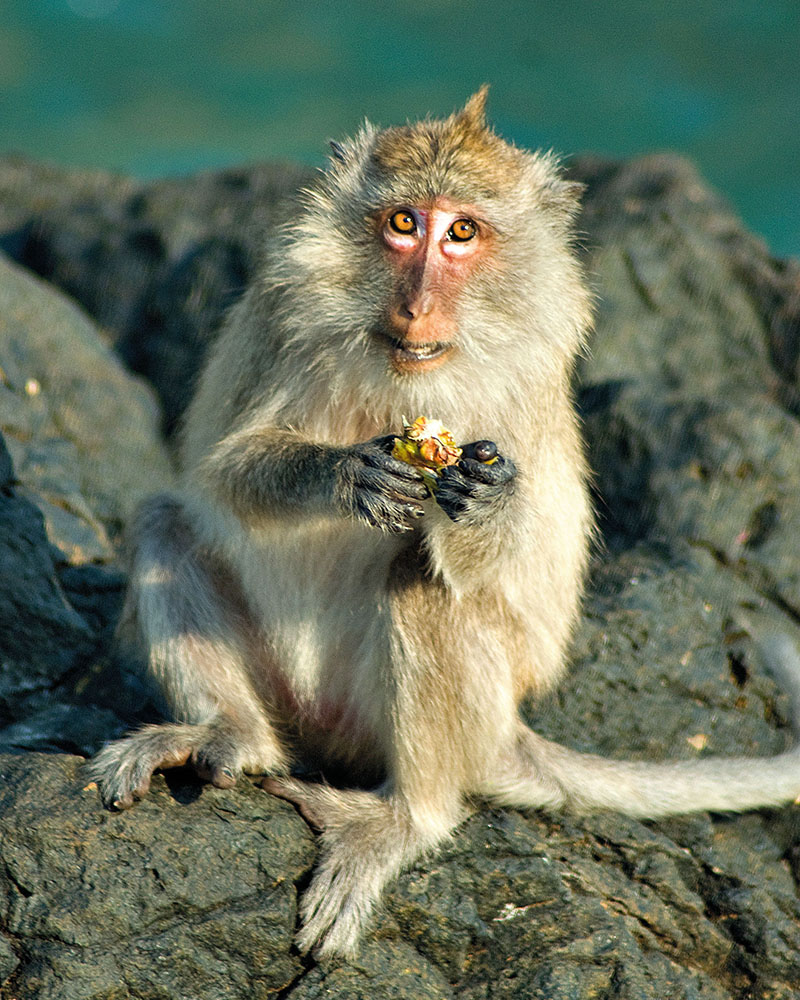
The centre of the island – the elephant’s back – is still hard to access independently without mounting a full-scale jungle expedition. This area is almost completely covered with jungle that is home to stump-tailed macaques, civets, giant monitor lizards, hornbills and occasional herds of ‘free range’ elephants, enjoying R&R from their tourist-ferrying duties.
I had been on an elephant trek in Thailand before, and once I even joined an elephant-back tiger safari in India.
I hadn’t enjoyed either experience much. I had trouble coming to terms with the concept of chaining and domesticating an animal that most experts admit have a level of intelligence that we are never likely to fully comprehend. But I was on Elephant Island and, although I was still reticent, I finally convinced myself to give elephant trekking its last opportunity to convert me.
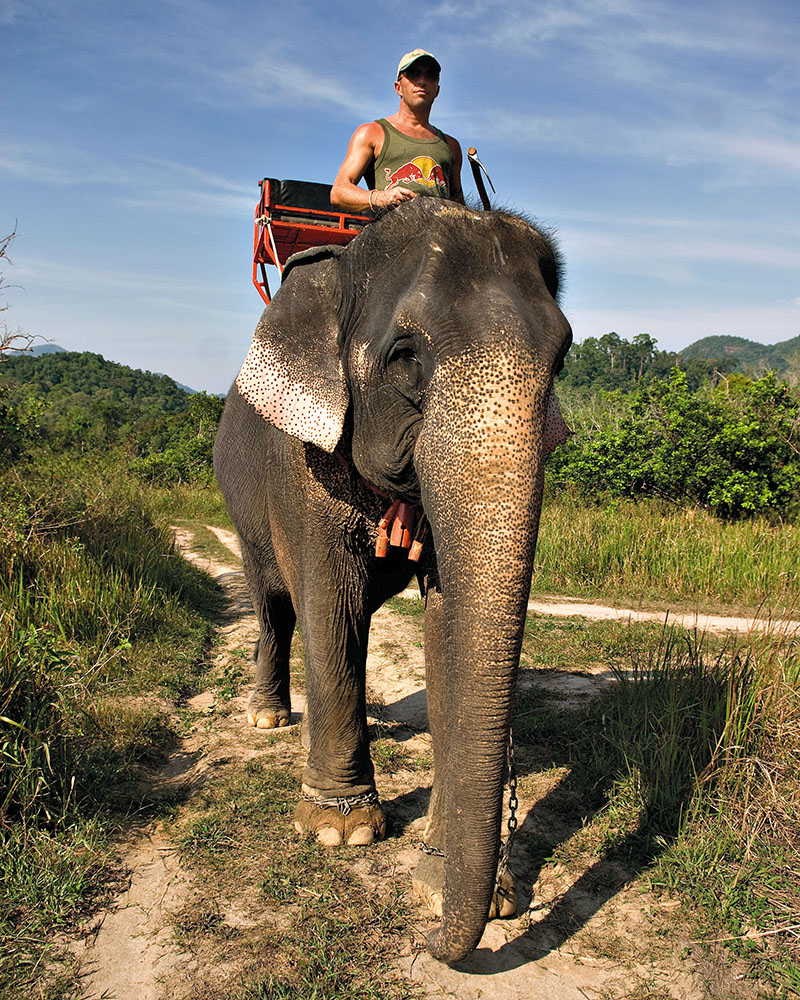
My new travelling companion is called Nam Pet. She weighs four tonnes, has rough, dry skin and a head of extremely harsh bristles that’s soon causing quite serious chaffing on my inner thighs. Nam Pet’s huge bulk sways as we shuffle through the rubber plantation and up into the jungle-clad lower slopes. The pace is slow and relaxed, like the rest of Ko Chang. To me it seems that Nam Pet and her colleagues are even enjoying their patrol, as they happily browse along the edge of the trail and nudge each other affectionately.
We trek for a couple of hours and enjoy sightings of macaques and hornbills that are unconcerned of our presence. On the way back down to Chutiman elephant camp a little bird flits happily between the elephants’ feet. It appears to be hunting for insects stirred up by the monstrous pads and it chirps a pretty little staccato call that seems to be repeating one phrase over and over.
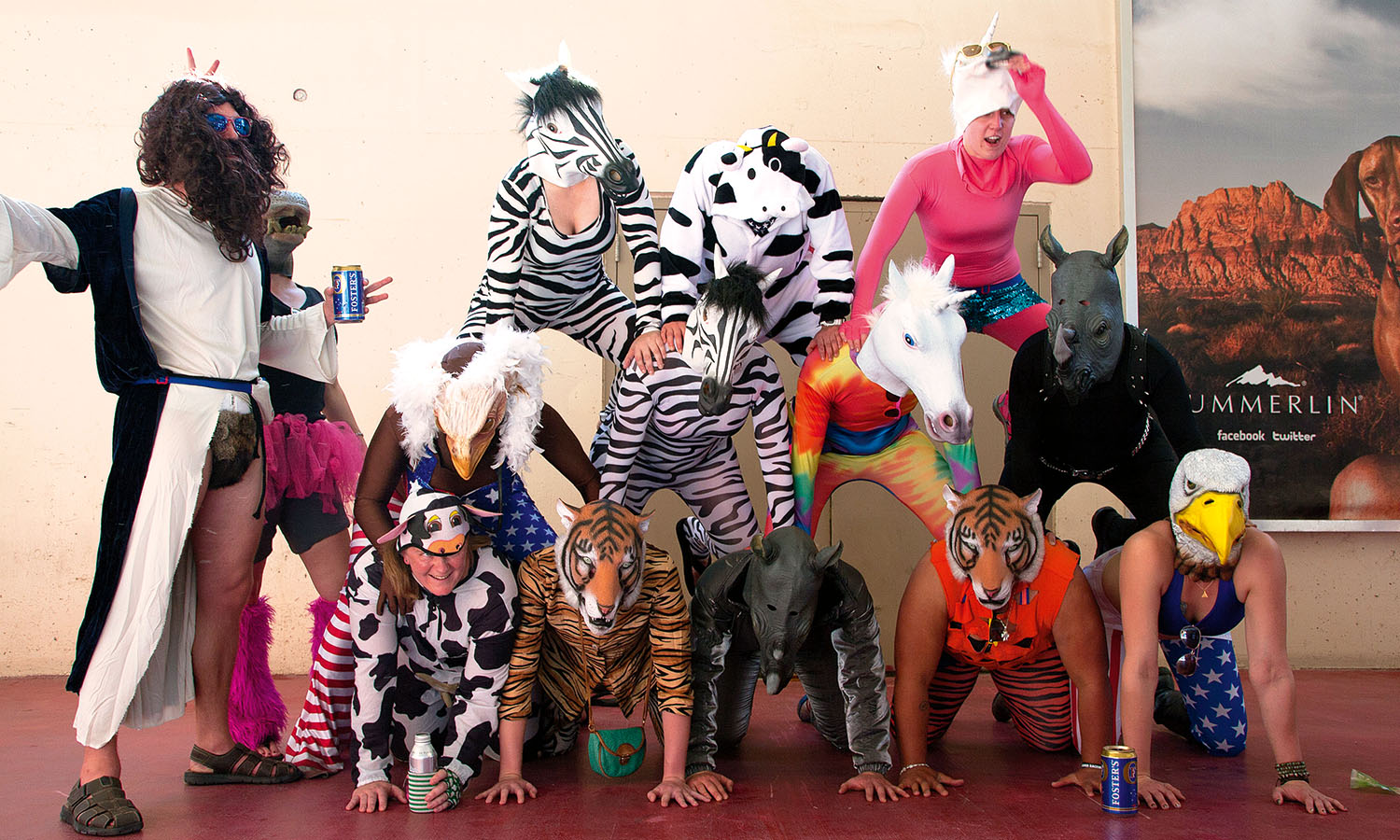
Noah looks a bit like a fish out of water. He’s wearing dark shades, clutching a beer can, and an unruly merkin is the only scrap of attire covering his, ahem, manhood. If it wasn’t for his staff and robe, which is sporadically lifted to reveal a pair of pale buttocks, I wouldn’t recognise this so-called pillar of Christianity. Around him a menagerie of wildlife is emulating an orgy of biblical proportions. Zebras, tigers, cows, hippos and a dominatrix rhino are writhing about on the floor, shrieking with pleasure and creating a beastly spectacle.
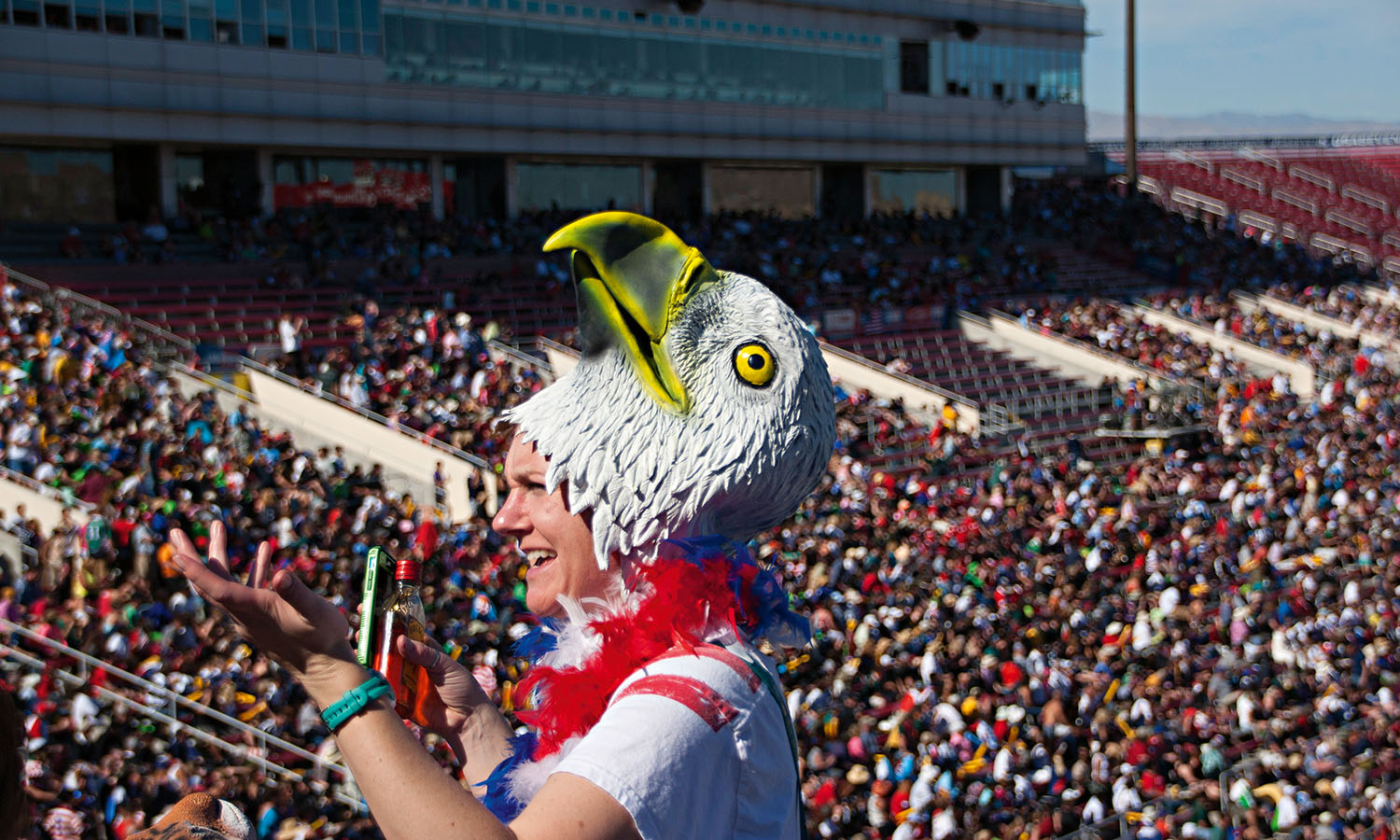
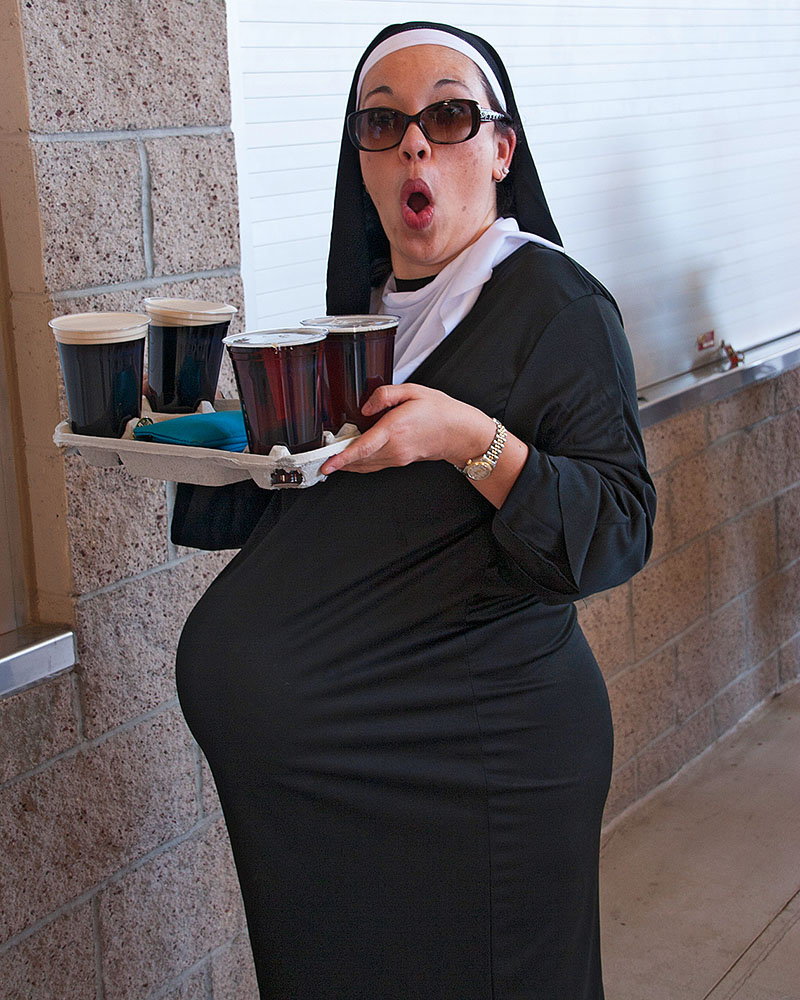
And here I was thinking the Rugby Sevens was all about sport. Maybe elsewhere on the planet, but this is Vegas, baby, and the party trumps play. Men in fluoro tutus and women in eeny-weeny stars-and-stripes bikinis shuffle through the turnstiles. Superheroes rub shoulders with jelly-bean men in full-body Lycra, a Statue of Liberty queues behind an Egyptian sphinx, and a pregnant nun waddles past carrying a tray full of beer.
“It’s like fantasy land, an escape from reality,” says South African Peter Busse, as he stands with a mate outside the entrance to Sam Boyd Stadium in Las Vegas, wearing a bright green mohawk wig and knocking back a can of beer. It doesn’t matter that it’s not quite midday.
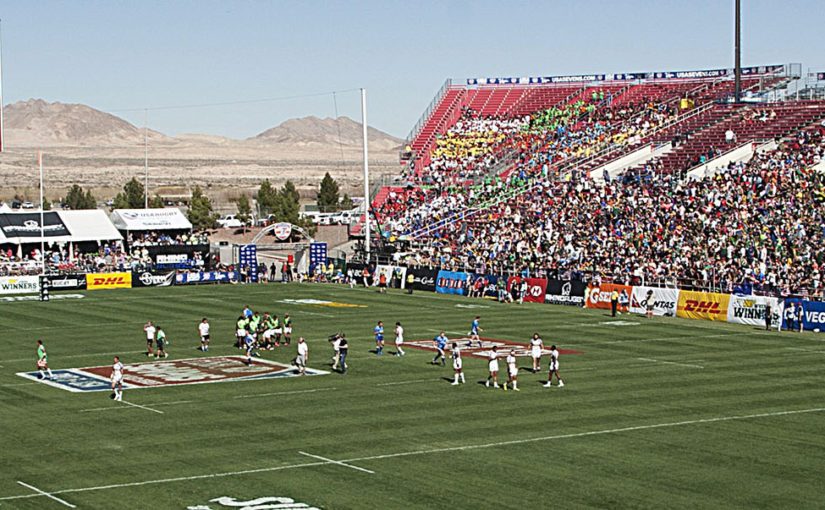
Inside, the American national anthem plays to a hushed crowd, an Air Force flyover blasts over the stadium and the field erupts in fireworks. Sixteen nations from around the world have descended on Vegas for three days of brute contest. At stake is a berth at the Olympics in Rio, when rugby will return to the Games for the first time since 1924 (the top four teams at the end of the World Series season automatically qualify).
The Sevens is kind of like the Twenty20 of rugby. Based on rugby union, but with half the number of players (seven instead of 15), the game consists of two seven-minute halves and is lightning fast. In Vegas competition is hot and so is the weather. It’s winter but it is unseasonably steamy and feels like the sun is radiating off the Nevada mountains, which can be glimpsed through the open end of the stadium. No wonder the beer is flowing so freely.
On the concourse, a group of burly Samoan Americans has set up a three-litre keg of beer on a rubbish bin and has clearly had a few refills. One is dressed as a sheikh, another stands out in a high-vis vest adorned with a necklace of Christmas baubles and boobs. “The balls are Samoan, the titties are white,” he says, cracking up, clearly enjoying the gag. “We’re trying to film The Hangover Part 4.”
In the stands, there are many others who, if not nursing hangovers now, soon will be. “It’s unreal, sucking the life out of me,” confides one Aussie, who’s been playing the Vegas scene hard. Surprisingly, the Aussie contingent is quite small and relatively subdued. I find a young bunch of blokes wearing green and gold sitting on the back bleachers behind a man in khaki sporting a Bindi Irwin wig. They’re eating obligatory fried chicken and fries and have used the rugby as an excuse to come to Vegas. “It’s what you’d expect, just loose,” one of the blokes tells me as his “mad rugby mate” jumps to his feet yelling: “Smack him!” It’s the first match of day two – the USA versus South Africa – and the crowd, heavily weighted towards the home-side, is pumped.
Soon the Aussies take to the field, executing a blistering 26-nil lead over Scotland by half time. Brawn and bravado are replaced by bronzer and ballet kicks as the Sweethearts cheerleaders run onto the field, all hot pants, flicking hair and cute-as-pie waves. Play resumes and a lone bagpiper blurts a mournful tune from under a distant light tower, a woman wrapped in an Australian flag watches intently, while nearby a Scot in a kilt gesticulates wildly as a Loch Ness Monster bounces at his groin. There’s also a cow. A cow with a sign that reads “eat more chicken”. Before I have time to contemplate what that’s all about, it’s all over. Australia has annihilated Scotland 40-14 and ‘Down Under’ is blaring from the speakers.
That performance deserves a drink. Back on the concourse I bump into a Canadian–American wearing tight, red maple-leaf jocks paired with a sequined stars-and-stripes jacket with tasselled sleeves. Ardy Farhangdoost is part of an official rugby touring group and hasn’t missed a Vegas tournament since the Rugby Sevens first started playing here five years ago. He’s become something of a mascot for the sport, recognised by fans as ‘Canadian Speedo Man’.
“I have no shame and I just love the game, the atmosphere, the costumes,” he says. “I know with the fans the more obnoxious or ridiculous [my costume], the more it stands out.” Today Noah and his ark of animals are giving him a run for his money. They’ve commandeered an area opposite one of the stadium doors and have formed a human, or rather an animal, pyramid. Nearby, an eagle clutches a golden trophy – symbolising the host nation’s hopes for the tournament.
“One of the greatest parts about rugby fans is that they’re uninhibited, no judgement, it’s a very accepting culture,” says Noah, aka Johnny Warner. Quite profound coming from a man who looks like he’s wearing road kill for underpants.
These fans make the Ashes Barmy Army look coy. This is truly an event that transcends sport. And it’s so quintessentially Vegas – loud, proud and completely gratuitous. In the car park, scores of stretch limousines line up to take the punters home – most of them no doubt staying on the famous Strip. Few will get much sleep, and they’ll be back to do it all over again tomorrow.
On the final day, a crowd of more than 25,000 crams the stadium to watch the final between the Kiwis and Fiji. (For the record Australia came a respectable fifth, taking home the consolation Plate.) Pale blue flags billow over spectators, and the stands throb to a soundtrack of chanting and drumming.
Turns out I’m sitting among the Fijian supporters (who knew there was such a large population of Fijians in the USA?). By halftime Fiji has scored 21 and New Zealand has yet to hit the scoreboard. The crowd has been whipped into a fervour and a commotion of cheers and applause breaks out a few rows in front of me. A woman is sculling beer from her shoe, sufficiently sloshed that she doesn’t mind the foot-funk on her brew.
Two spectators – including a woman in a pink tutu – leap onto the field and a game of cat and mouse ensues as security guards chase them around in a scene reminiscent of a Benny Hill sketch that only serves to further enliven the crowd. A portly guard seizes his moment, throwing himself on the male invader, who is at once flattened and rendered immobile. The tutu woman continues to flounce around the field until two guards take her down. The man is cuffed and the woman is escorted off in a fireman’s lift, all the while the crowd chants: “Let them go! Let them go!”
When the final whistle blows, New Zealand has salvaged some dignity but goes down to the Fijian victors 35-19. A trickle of spectators breaches security, taking to the field. There’s a polite order to keep off the ground, but it’s too late. The floodgates have opened and a tide of fans pours onto the turf. This is Sin City and rules are made for breaking. I spot Ardy among the sea of people, running about in his jocks with a cape rippling behind him, and am reminded of something Noah said the previous day.
“Saturday shall be-eth a rugby day. And we’ll be here for evil Sunday.”
It starts quietly enough. Men playing an assortment of instruments – guitars, a violin, mandolin and bongos – are picking out a tune. Then a group of teenage girls starts singing, their voices transforming the music into something magical. “That’s a song about asking people to come back to your land,” says one of the men through a translator when the song is done. “A song that became popular after the independence vote.”
These are some of the local musicians in a small Timor-Leste village called Uai Gae, and the microphones they’ve been playing to on the patio of a small building have been placed their by Melbourne musician, songwriter and educator Jesse Hooper. In August 2013, Hooper, with the help of sponsors and money raised from a Pozible campaign, went to the island nation to explore its music and witness the country’s first-ever music and culture festival in Baucau.
“When I was there I spent most of my time looking at traditional music with the villagers, which was great, but at the festival they had much more modern rock music,” says the former Killing Heidi guitarist. “It was great – people wanted to rock out, they wanted to dance, they’d never seen a PA or big light rigs. From an audience perspective it was fantastic.”
While he was there, Hooper discovered a musical thread that seemed to connect the villagers, who often sing of independence, nation building and community, and a younger generation who are influenced by contemporary genres. One of the groups he met is called Galaxy.
“Galaxy fuse reggae and rock and are much more political about Timorese issues,” he explains. “That’s what excites me because it’s unique to that area and these are their stories. That’s what I’m curious about. In Dili, there are lots of youths, there are gangs, there’s massive unemployment and there’s tension building because what are they going to do? The guys in these bands are trying to provide some leadership through music to say it’s a new country, things are going to get better, let’s not forget our roots. That’s what I’d like to go back and explore.”
It’s not entirely surprising that Hooper was interested in their work, since Galaxy’s music has a definite synergy with his ‘day job’: one day a week he teaches at Melbourne music school Collarts, but he’s also a community cultural development artist at Artful Dodgers Studio, part of Jesuit Social Services in the suburb of Collingwood. There, he’s part of a team of professional musicians and artists that provides a creative outlet for refugees, asylum seekers and young people with mental health, alcohol or drug issues and other employment barriers.
Hooper’s connections with Timor-Leste go back some way. In 2001, he and sister Ella played there for the peacekeeping forces. On his return 12 years later, he noticed some big changes. “I remember going through Dili and most buildings were damaged or destroyed, but this time everything was rebuilt,” he says. “But when you go out to Baucau, the roads just drop away to nothing, there’s very little infrastructure and you can’t get phone or internet coverage most of the time.”
After returning from this latest trip, Hooper set about mixing the music he’d recorded. It’s now been delivered back to the people who originally made it. “I left some recording equipment there, but a lot of the people we met in the villages live in their own community and don’t really want to go to someone’s house to use the gear,” he says. “To get them the recordings was one of the main parts of the project and now they’ve got them and MP3 players and ways of listening to them.”
Now, Hooper’s working on the second phase of his grand scheme: to build a permanent recording studio for the musicians. Someone in Baucau has donated a plot of land, other groups have offered to design the facilities and people are helping with all-important fundraising to make it happen.
There’s another Timor connection at Artful Dodgers, through Hooper’s co-worker Paulie Stewart. Paulie’s brother Tony was one of the five journalists executed by Indonesian forces at Balibo in 1975. A member of seminal Melbourne rockers Painters and Dockers, Paulie now plays with the Dili Allstars (a Melbourne-based Australian and East Timorese reggae/ska band) and is a fierce supporter of Timor-Leste, as well as many other great causes.
“He’s got a lot of great connections in Timor,” says Hooper. “He and I have been thinking we’d love to take some young musicians from here to there to do a series of recordings and concerts, but also to bring Galaxy out here and share our audiences.”
I have travelled all around the world, from Chile to Cambodia, Fiji to Nepal, and the cheapest hotel I ever stayed in was the five-star Hilton Melbourne South Wharf, which cost me $1.
When I began my journey as a backpacker, I was interested in the lives of poor people in developing countries. Now I know how they live: they keep chickens, cut out pictures from magazines and stick them on their walls, carry stuff around on their heads, and wake up very early in the morning. They often don’t have toilets in their homes. Apart from that, they’re just like us..
These days, I’m more concerned with the culture of rich people, and I’ve devoted the last couple of years to trying to discover what we can learn from these simple folk, who are only concerned with luxury and money.
Business travellers inhabit a hidden world of airport and executive lounges. They belong to frequent flyer and hotel loyalty programs, which provide them with free stuff like beer, wine and food.
Let me explain how this worked for me. A couple of years ago, I flew twice to Europe with Qantas, and also took a number of Qantas domestic flights. I became a Gold Qantas Frequent Flyer, which entitled me to use Qantas Club. These are bland and uninspiring facilities, but offer great opportunities for rich-people watching.
At about 5pm each day, the cold buffet (with one choice of soup) is augmented by a hot food selection (usually a fairly crappy pasta). As soon as this occurs, dozens of business travellers hurry to their feet and rush the servery because, even though you wouldn’t pay five dollars for the meal at the restaurant, the chance to get something for nothing is valued very highly in the uncomplicated philosophy of people who wear suits to work.
In late 2010, in an attempt to win a bigger share of the business-travel market, Virgin Australia offered to ‘status match’ Qantas Frequent Flyers. In other words, if you were Gold with Qantas, they would make you Gold with Virgin, even if, like me, you never flew Virgin because you mistakenly believed their flights were always cancelled.
And here’s the good bit: the Hilton Honors program status-matched Virgin Frequent Flyers, so I was automatically a Gold Hilton guest, although I never stayed at Hiltons either. This meant that, at Hilton hotels throughout the world, I became entitled to an automatic upgrade to an Executive Room, free wi-fi and a buffet breakfast.
I paid $165 for a room at the Hilton Melbourne South Wharf. The extras – wi-fi and breakfast – were worth about $50, which theoretically brought the price of the room itself down to $115. Realistically, however, I’d have spent only $10 on breakfast and $5 at an internet cafe, so let’s call it $150.
But Gold Hilton Honors members also have use of the Executive Lounge, which serves free beer, wine and canapés from 6pm to 8.30pm. I arrived with a friend and her daughter at 6pm on the dot. We immediately began drinking Boag’s Premium and eating plates of antipasti – bread, cheese, olives, cold meats, nuts and salads, until the hot food arrived.
The samosas were delicious, although my friend preferred the gyoza, and we could go back for more as often as we liked. I ate five small plates of hot food, which amounted to one big plate. My friend and her daughter probably had another six between them, and there was a cheeseboard for dessert. In a mid-range restaurant, we would have paid about $30 a head – and at the Hilton we had a view of the Yarra.
So, by now, the room itself had cost me only $60. To my shame, I drank six Boag’s and a glass of white wine. My friend had four drinks, her daughter drank a single Coke. At $5 for each alcoholic drink – which would be cheap – and $4 for the Coke, our drinks bill in a bar would’ve totalled $59.
That’s how my room at the Hilton cost me $1. And that’s why rich people are rich.
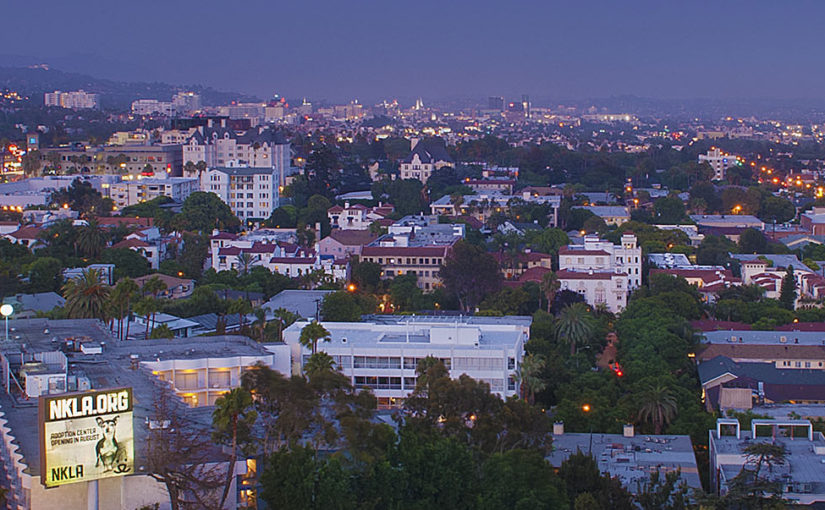
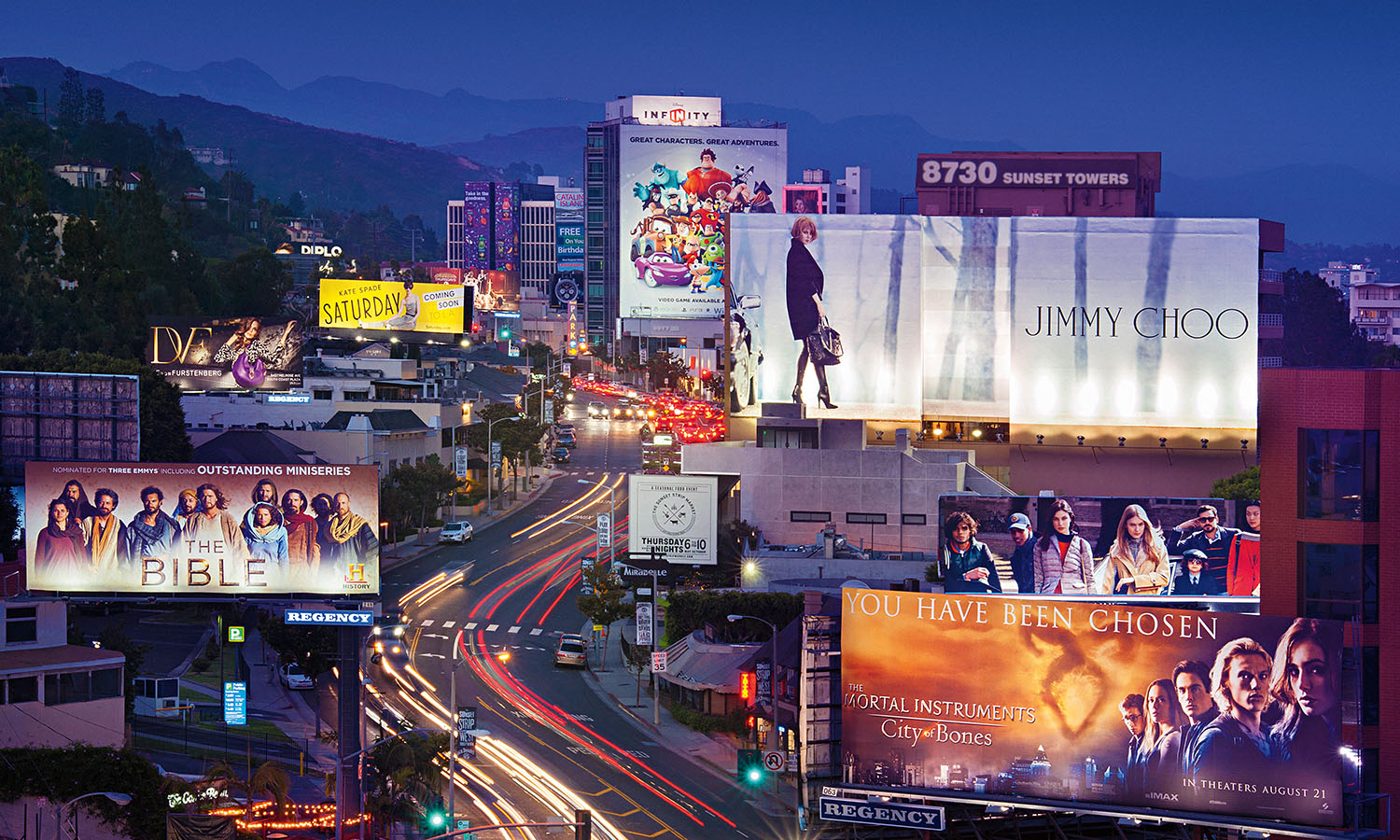
Movie stars, rock stars, celebrities and a gaggle of the truly deluded… That’s West Hollywood. No one was born here or anywhere near here to be honest. People flock here – from Ohio, Minnesota, Australia, Russia – to ‘make it’. They pack their dreams into a suitcase and, with their best smiles on and pretty little faces, are lured towards the glamour. This is Hollywood, after all. But this town will very quickly steal your suitcase and punch you in your pretty little face. If you can handle the initial violent outburst from this fickle city though, you will discover a melting pot of cultures, an obscene amount of talent, and entertainment that will wow the organic green smoothie out of you.
West Hollywood is celebrity central, and you could spend the entire time hanging out in the same places as the TMZ paparazzi – Dan Tana’s, the Viper Room, Soho House and Urth Caffé – but there’s another side as well.
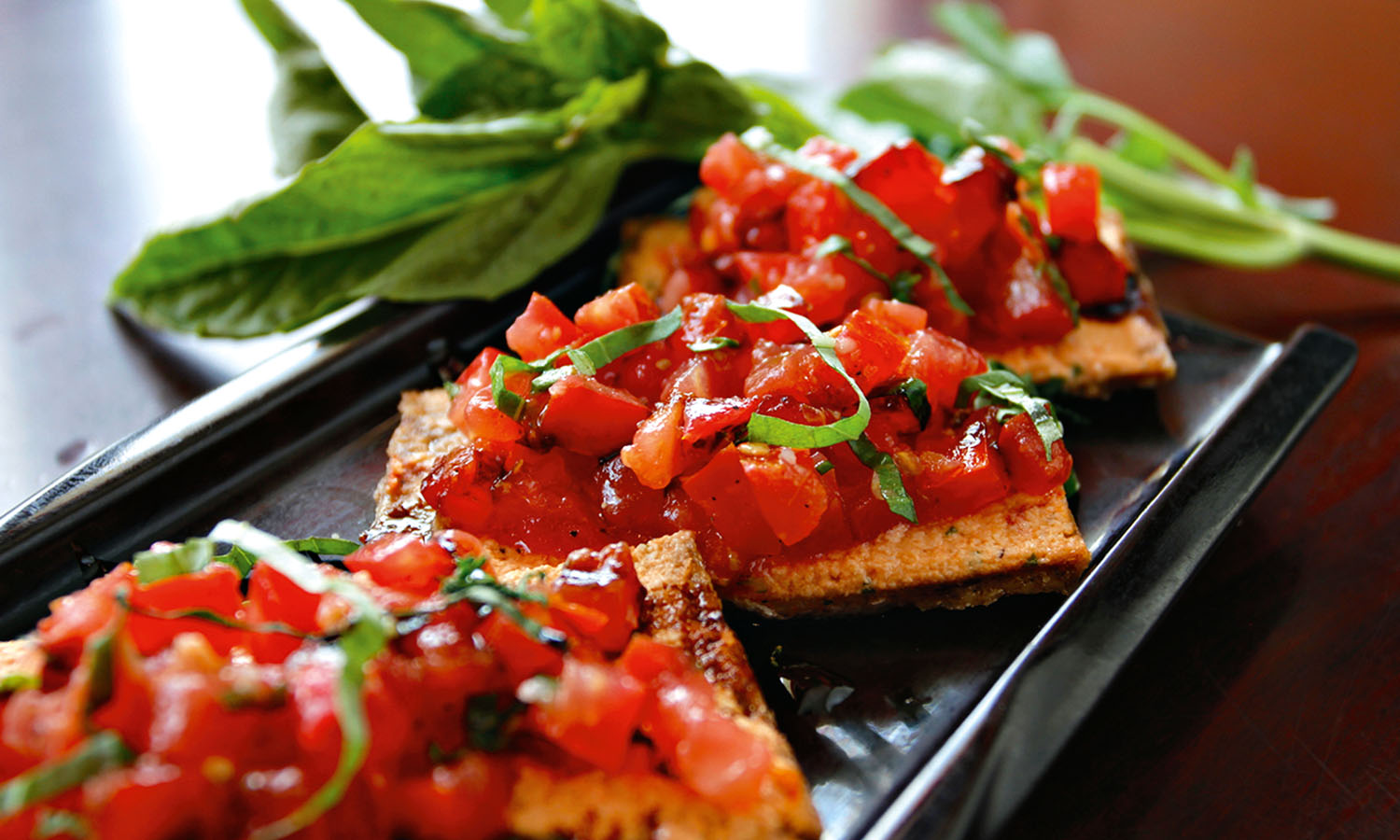
Are you kidding me?! This is Hollywood. There’s no eating. To survive here you must consume a mere kale juice in the morning, maybe some goji berries later in the day and that is it. However, if you’re not a psycho, LA has some of the best food in the world.
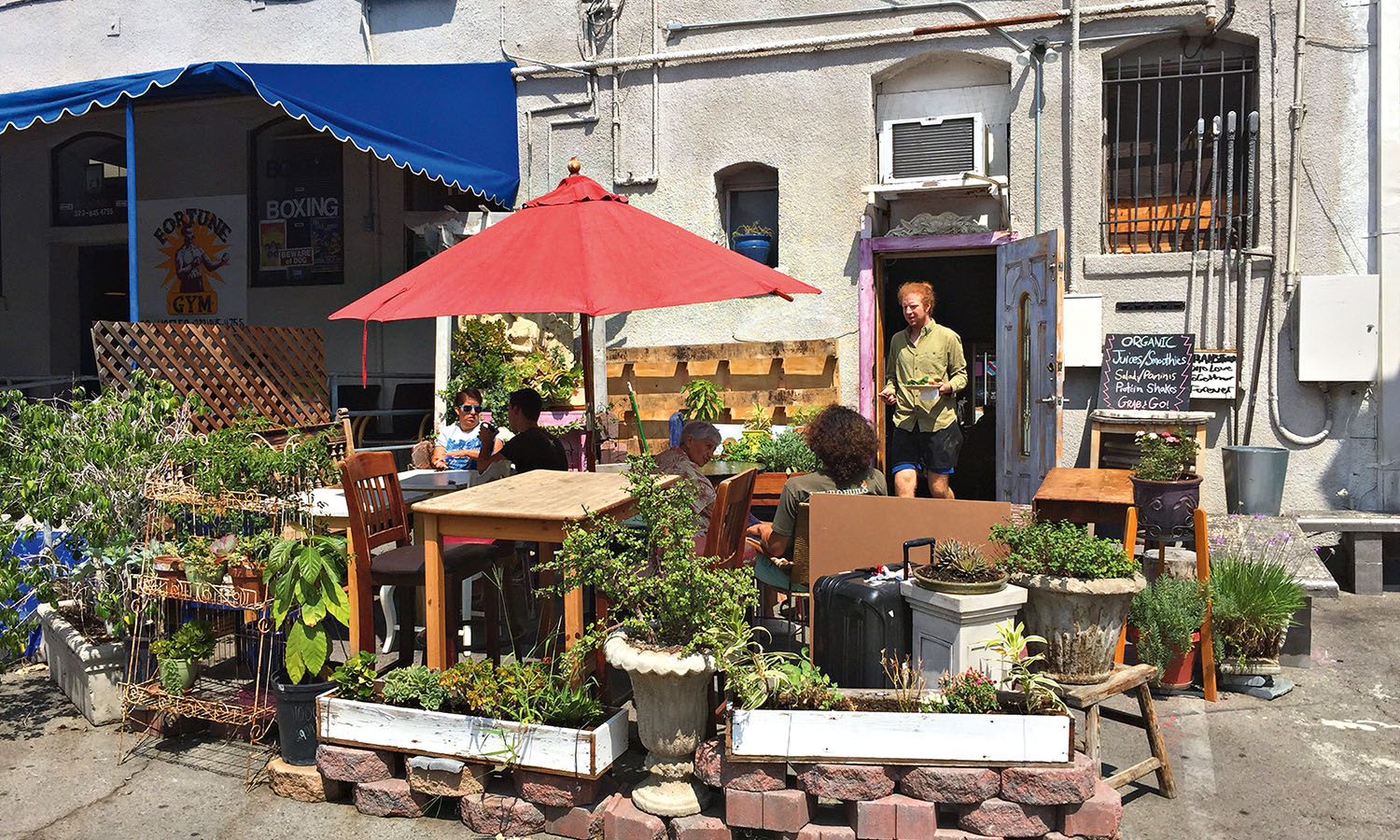
For a little known gem of a place go to Elderberries on Sunset. You could be mistaken for thinking you’d walked into someone’s house. The guys here make everything from scratch right in front of you in the open kitchen, and the food is so fresh they don’t even have a refrigerator. There’s an elderberry juice that isn’t always on the menu, but when it is you need to beat a path to the door – the locals come pouring in to get it and it never lasts long. A small glass of this thick, tart berry elixir will cure you of everything, they say, and I have to admit it got rid of my cold in one hit. Magic.
For a real Mexican experience, go to the Gardens of Taxco, just off Santa Monica Boulevard. Now this is a treat. You don’t order, they just bring you what they’re making that night, and there’s always plenty of it. Sit back with a margarita and let the staff make all the decisions for you. While you’re hoeing in, a three-man mariachi band will serenade you. When your mouth isn’t full, sing along – this is a place bursting with atmosphere and you’d be mad not to get involved.
If you want to eat like a true local though, you might have to travel a little bit further (go on, book an Uber) and head to Studio City. That’s where you’ll find SunCafe. This is what LA food is all about: organic, raw, vegan, namaste. If the idea of raw kelp noodles and a macrobiotic bowl seems scary, SunCafe will surprise you. I’ve taken the hardest of carnivores there and they have left the hippiest of tree huggers. The food really is that good.
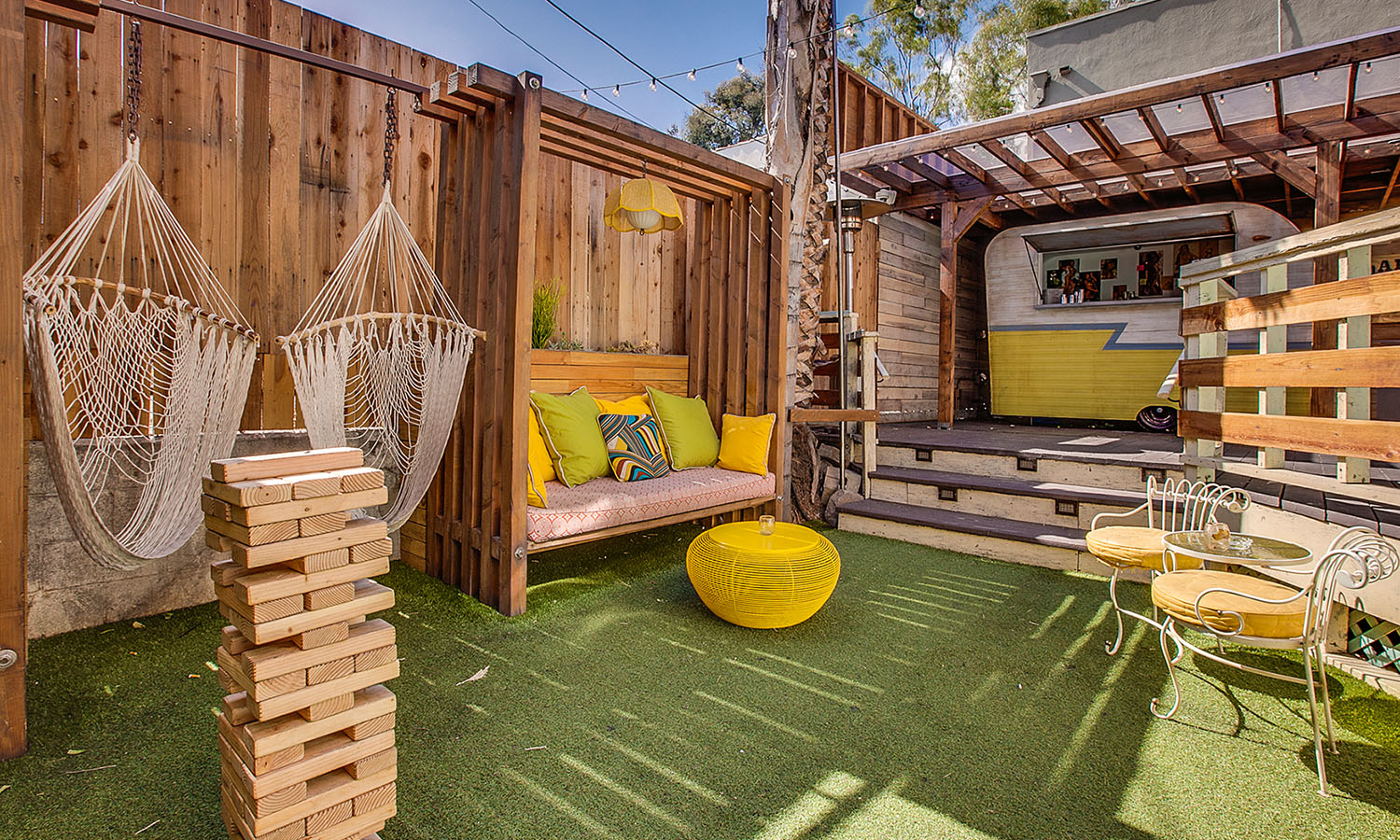
The thing about Hollywood is that everything and everyone is on show, so to find the behind-the-scenes action you have to be very specific about where you go. To get inside Good Times at Davey Wayne’s, admittedly slightly over the WeHo border in Hollywood proper, you have to walk through a fridge door – and it gets more hilarious from there. Inside it looks as though the entire place has been furnished from a garage sale. For years it’s been a bit of a secret, but people are starting to talk and this quirky, second-hand bar will soon be exploited. Gasp! In Hollywood?! Never.
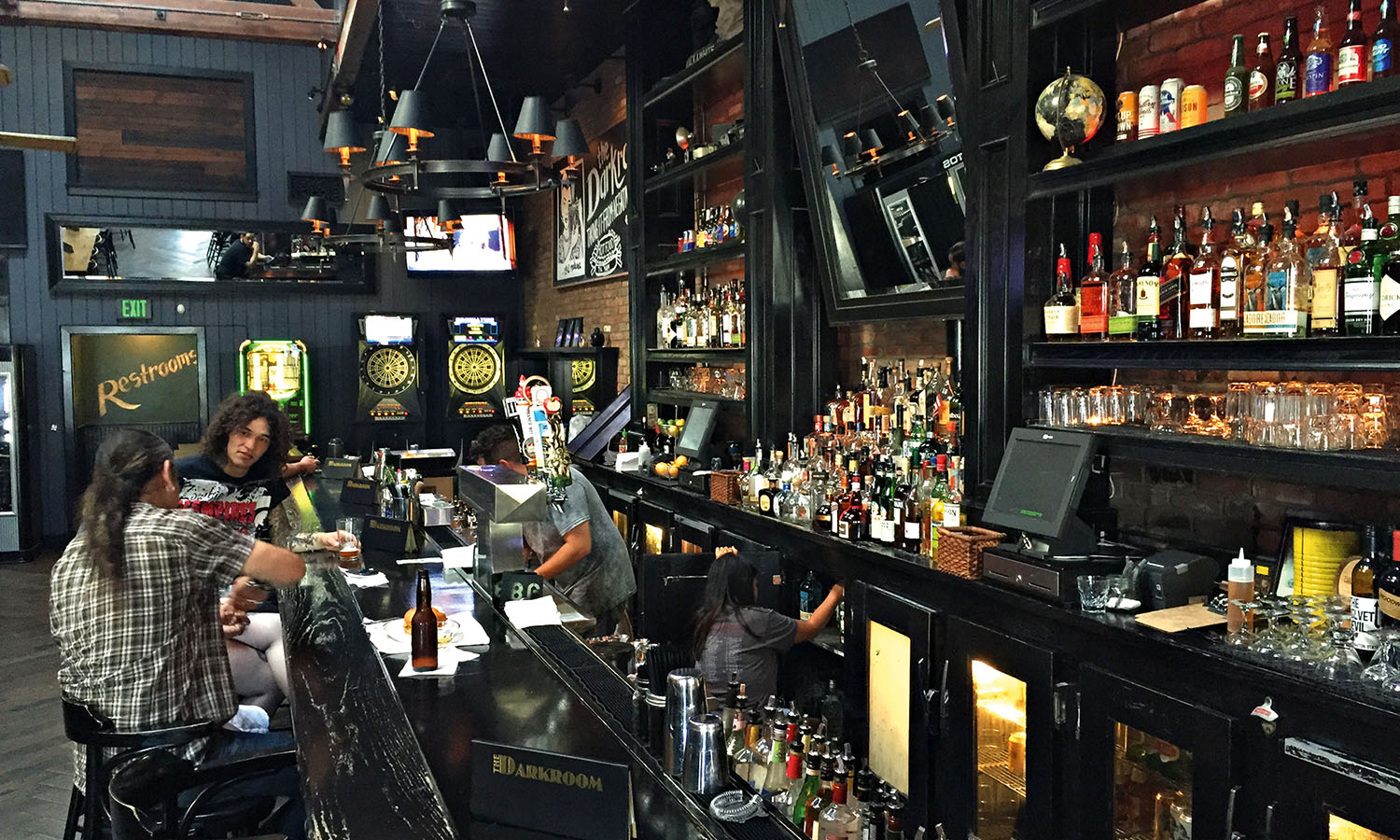
There are no TVs showing every sport known to (American) mankind here. At The Darkroom, on Melrose, it’s all dim lights and leather jackets. It’s one of those bars that you visit because it makes you feel a lot cooler than you actually are. Order yourself a can of PBR – don’t judge, it’s US$3, huge and a hipster’s delight. I don’t care if you don’t smoke – shut up, get a cigar, sit out the front and pretend you are a gangster. This bar is great.
Because this is Hollywood, a trip to the movies seems somehow essential. They’re the reason this place exists. The Sundance Sunset Cinema plays the sort of indie films you’re not likely to see at a suburban megaplex, but are the types of flicks folks in Hollywood make because they’re still passionate about movies. Bonus: on a Tuesday tickets are only US$5.
Hollywood is home to 90 per cent of the world’s best comedians, so heading out to see some stand-up is something you have to do. An obscene number of underground shows are waiting to be found and, more often than not, someone outrageous (and by that I mean famous) will pop in to perform a surprise set. The NerdMelt is a room behind Meltdown Comics on Sunset. It looks like it could be a barn, but they pack in more than a hundred folding chairs and have secret comedy shows. I’ve seen Aziz Ansari and Louis C.K. pop in here, and all without anyone knowing what’s going on. There’s another hidden show called The Goddamn Comedy Jam, held intermittently at the Lyric Theatre on La Brea (keep an eye on the Facebook page for upcoming dates). Basically it works on the premise that every comedian harbours a yearning to be a rock star. This is their outlet. After a short stand-up set, they perform their favourite song with a live band. This is not karaoke – it’s an actual rock performance. Bill Burr, Jim Jefferies and Rob Schneider have all taken to the stage and lived out their fantasies at this amazing show.
If you’ve trawled the internet and street press and somehow not managed to find anything that takes your fancy, do not panic. This is Hollywood and often the best stuff isn’t advertised. You will just be stumbling past some place and see a line outside a door. Join that line – whatever is at the other end of it is probably going to be great. I’ve seen Prince do a random performance at a tiny club, Snoop Dogg at a karaoke bar and talented people doing all sorts of weird crap at small theatres and venues all over the hood. Trust me: join that line.
Like a lot of places, you could spend a year in West Hollywood and keep on finding new and cool things to do. My suggestion is to just go exploring – walk around and you’ll find awesome stuff, from the old vintage stores on Melrose to the tourist explosion that is Hollywood Boulevard. There’s something new around every corner, but be careful after dark – those corners sometimes get a little shady.
There’s a billboard outside our hotel that reads ‘Be Who You Wouldn’t Be At Home’, with a supporting image of a wide-eyed thirty-something male grinning madly and clutching a two-metre long tube of margarita. I’ve been that guy. This is not my first time to Lost Wages. I’ve sat at one of the 200,000 slot machines, gorging on chicken wings as time disappeared with my money. I’ve had burgers and beer for breakfast and barely seen the sun, and what happened that time in Vegas will certainly stay there. This time, with my wife in tow, things will be different.
10.00am
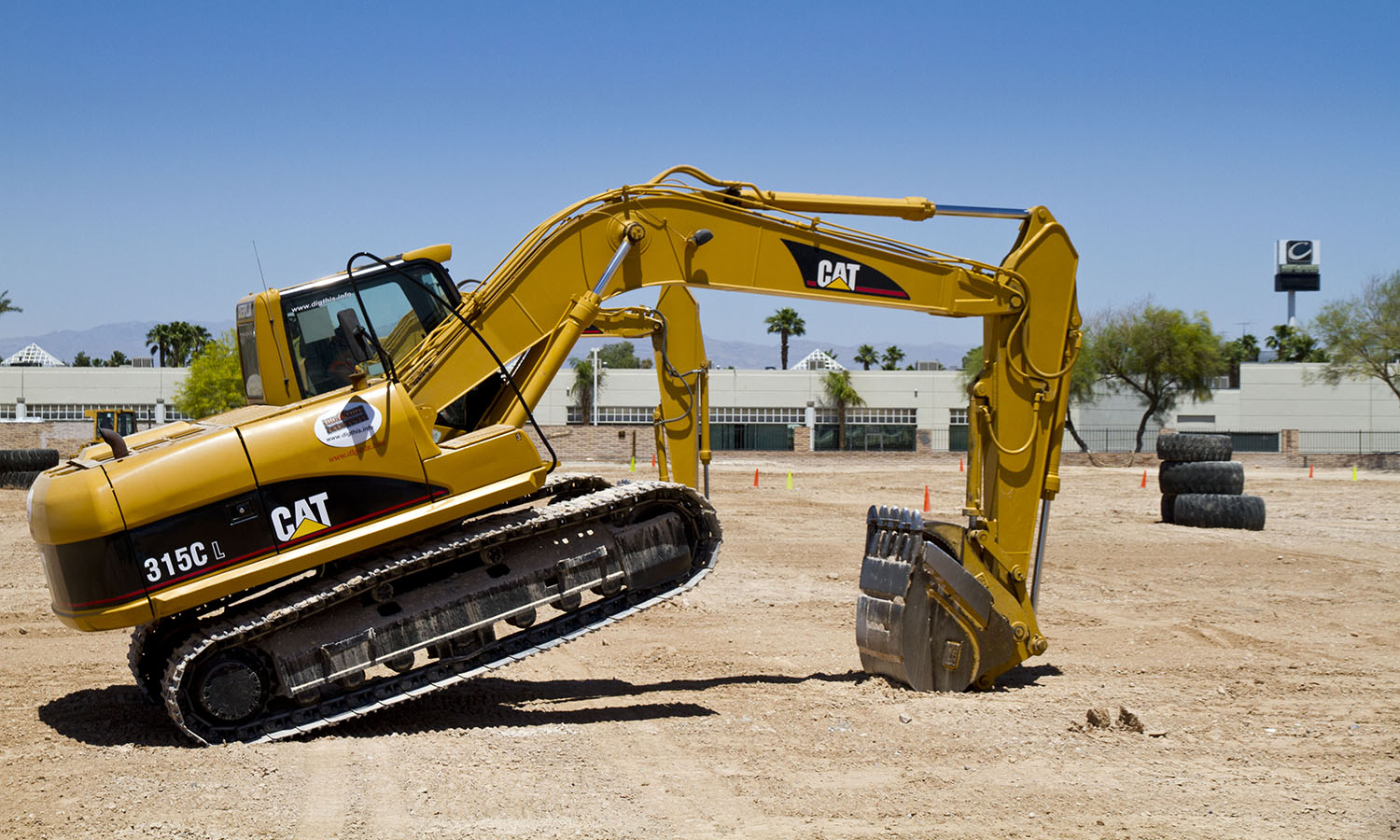
It isn’t dark yet, but Vegas is a 24-hour party town – the average stay here is three days – and there’s too much fun to be had to limit it to the evening. After a 20-hour flight, an adrenaline injection is required, so we head to Dig This to drive some excavators. Yes, drive some excavators. One 30-minute briefing session later, we climb into two 50-ton hydraulic excavators and glare competitively at each other across the football-field sized sandpit we’re about to play in. Having seen my wife reverse park I am quietly confident. For the next hour we dig huge holes, build a pyramid with tyres the size of a small car, race each other across the lot and play excavator basketball. I struggle to change a light bulb at home but after an hour at Dig This I feel like building a casino. And then I notice my wife’s pyramid is twice the size of mine.
11.30am
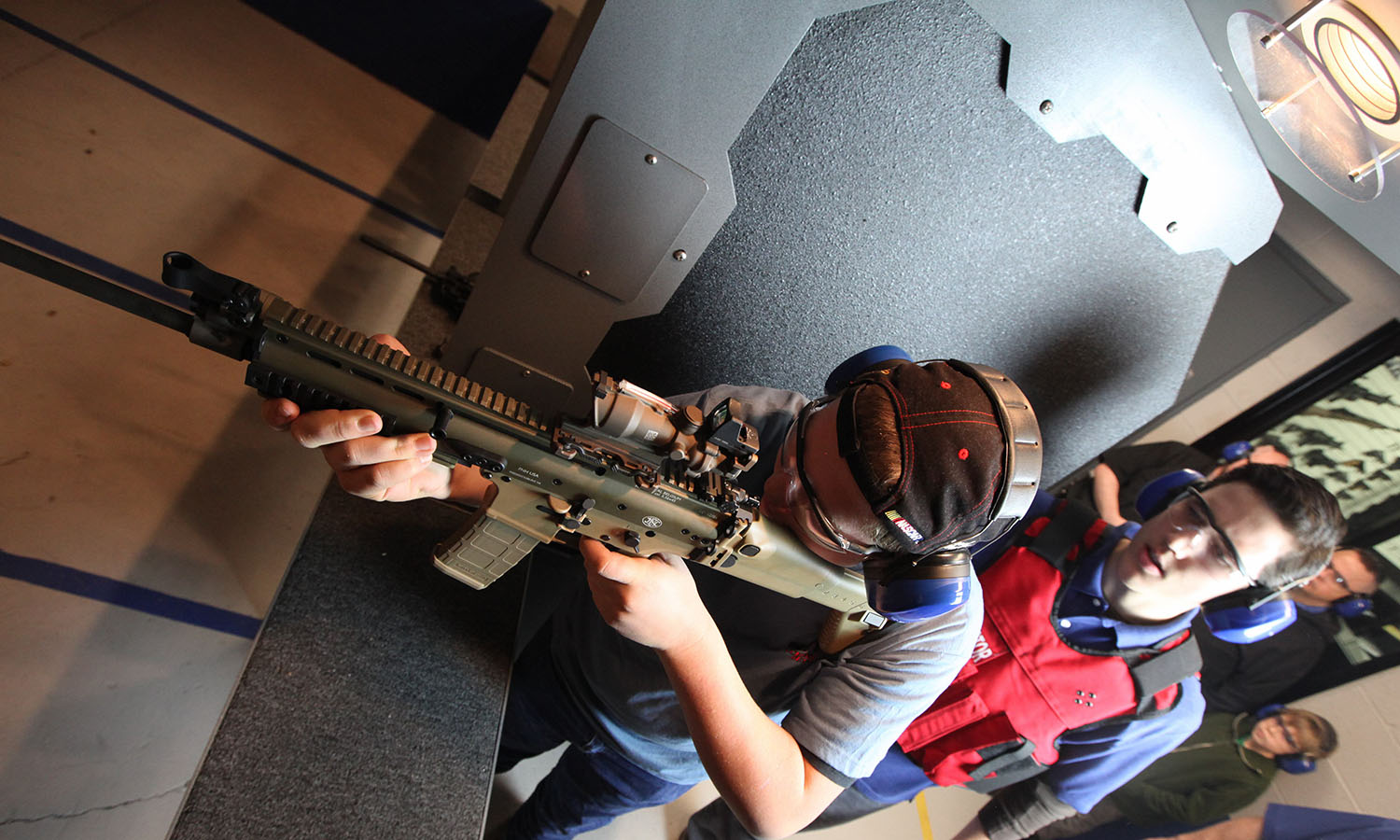
I’ve never fired a gun. I’ve never really even wanted to. I’ve heard friends brag of firing rocket-launchers at cows in Cambodia and I’ve never seen any joy in that. After an hour shooting an actual Uzi at a 3-D Zombie, however, I’m feeling the buzz (though cows are still safe). Guns and Ammo is doing a roaring trade in Vegas, with a 12-lane range and weapons including shotguns, AK-47s and a Glock 9mm. Suddenly I’m Clint Eastwood lining up another dirtbag. I can feel the recoil in my kidneys as the adrenaline pumps through me.
12.30pm
‘Every City Has a Soul’ is the new slogan for Downtown Las Vegas. Only 10 minutes north of The Strip, Downtown Vegas is where it all began. Fremont Street is the epicentre, with an outdoor museum featuring the original Las Vegas neon signs. The bars and restaurants of Downtown have eschewed their garish Strip neighbours and the revitalised area now focuses on more intimate experiences. Mob Bar, a 1920s-style speakeasy with potent cocktails, is a great lunch spot, and if you end up staying until evening they set up deckchairs on the road and project movies onto the adjacent wall. Tonight The Hangover is playing. It’s a sign.
Mob Bar
201 North 3rd Street
(on 3rd between Ogden & Stewart)
1.30pm
The seal is broken and the drinking has begun. Downtown’s bar scene is very cool in a retro kitsch way. The Parlour Bar in the El Cortez Hotel Casino is worth a visit just to walk through the old-style casino. Like the decor, the clientele seem as though they’re out of a 1960s Elvis movie. A cowboy in a 10-gallon hat and tasseled boots plays the pokies and sips a Bud. We walk past him and into the leather-couched Parlour Bar, where I half expect to see Sinatra sipping a vodka martini.
2.15pm
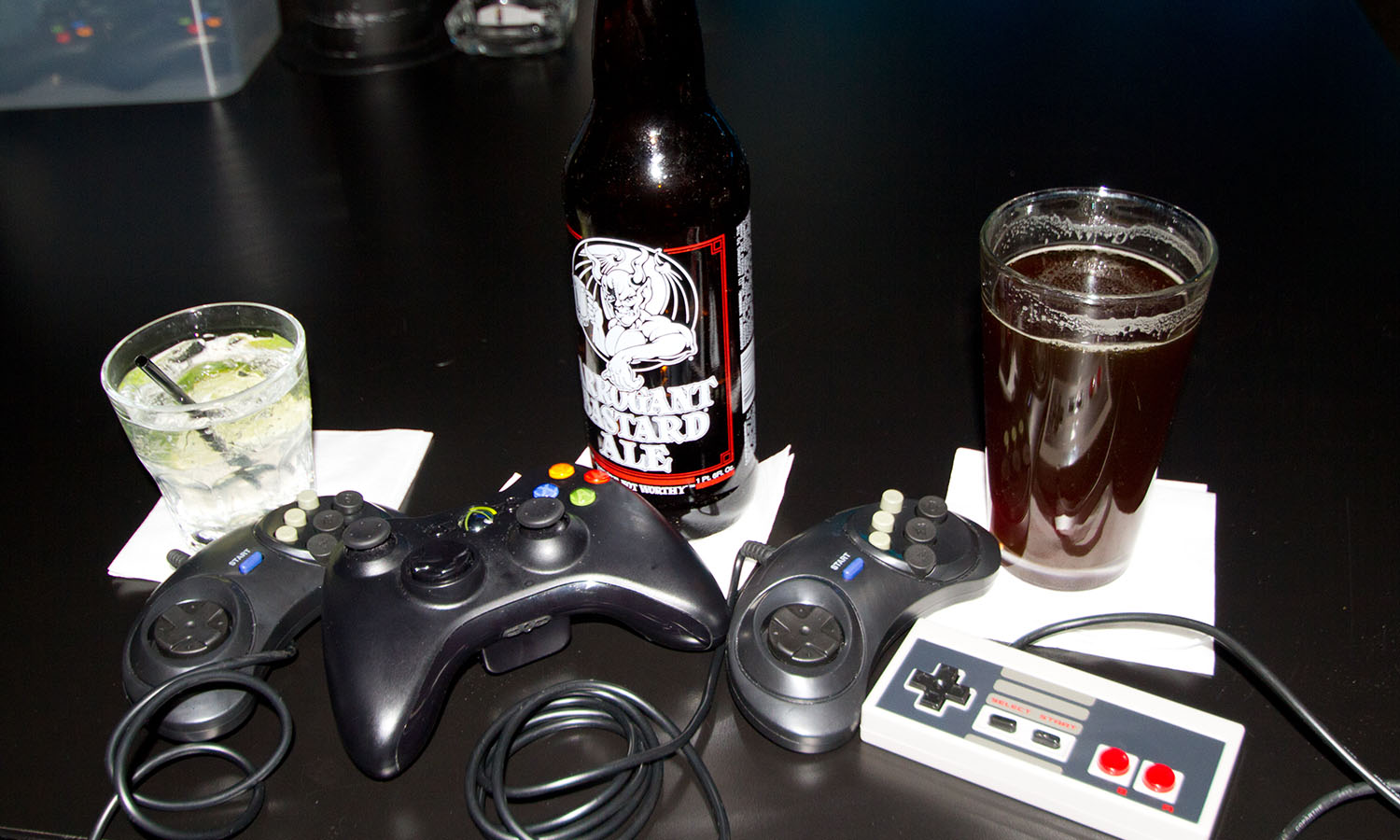
Back on Fremont Street the neon lights burn bright even in daylight. Above, screaming thrill-seekers ride a flying fox running the length of the street. In a dark bar called Insert Coins, a wall of 1970s, 80s and 90s arcade games has me checking my pocket for coins. Grabbing a booth, we’re given a choice of almost every video game console ever invented, with a selection of games. I go with a Super Nintendo and a Sega Megadrive and a pint of Brooklyn Bitter. Suddenly I’m 14 again, until I’m dragged away sulking after my wife beats me at NBA Jam.
4.00pm
Show time. Elton John is playing this weekend, Celine Dion is raking in millions from a residency at Caesar’s Palace, Guns N’ Roses are soon to play at the Hard Rock and there are at least six different Cirque du Soleil shows being promoted, but Downtown has put us in a retro mood so we hit the Flamingo, one of the original Strip hotels, and catch the Nathan Burton Comedy Magic show. This is the essence of America. The land of opportunity, where a street magician can get a break on a show like America’s Got Talent and the next year have his own residency in Vegas. I suggest to my wife that she should disappear so I can gamble. She suggests I let Nathan do the comedy.
6.00pm
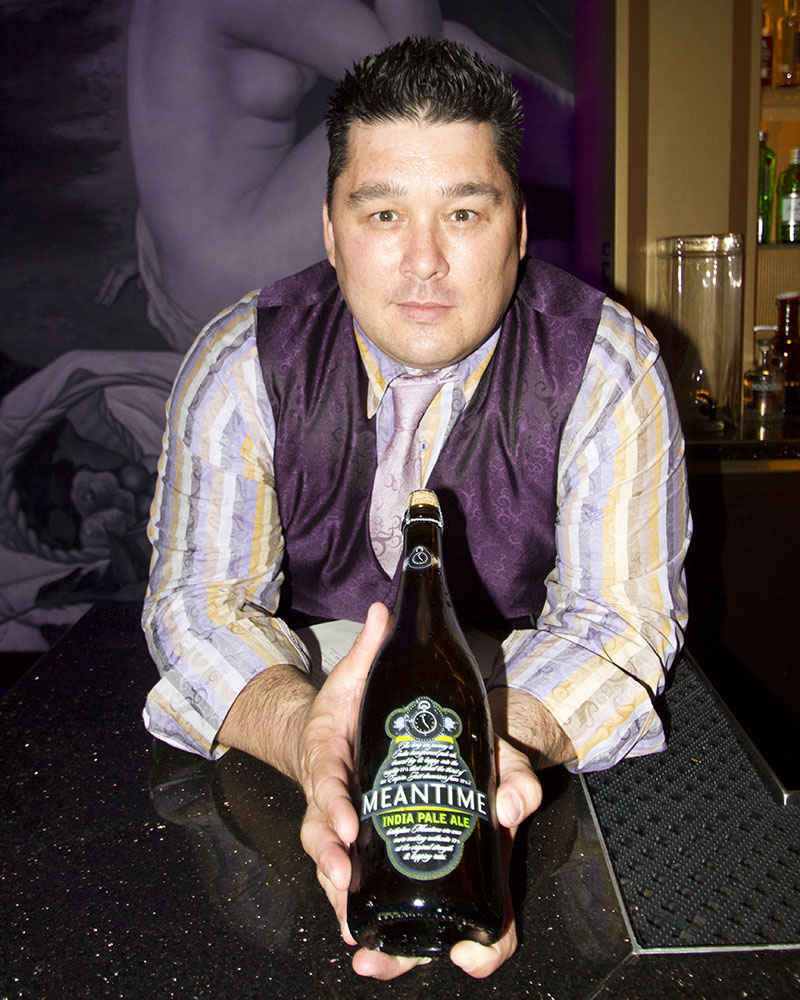
It is Happy Hour on the Strip (it has been since 11am) but we decline the cheap beer and three-litre margaritas and instead head upscale to Sage Restaurant in Aria Resort and Casino, one of the newer slicker casinos in Las Vegas. The bartender recommends I take the global beer tour, which involves a Dopplebock from Germany and a Trappist Ale from Belgium with a few chocolatey stouts in between. The long, dark bar and restaurant decor somehow make drinking eight beers in an hour a cool experience.
7.30pm
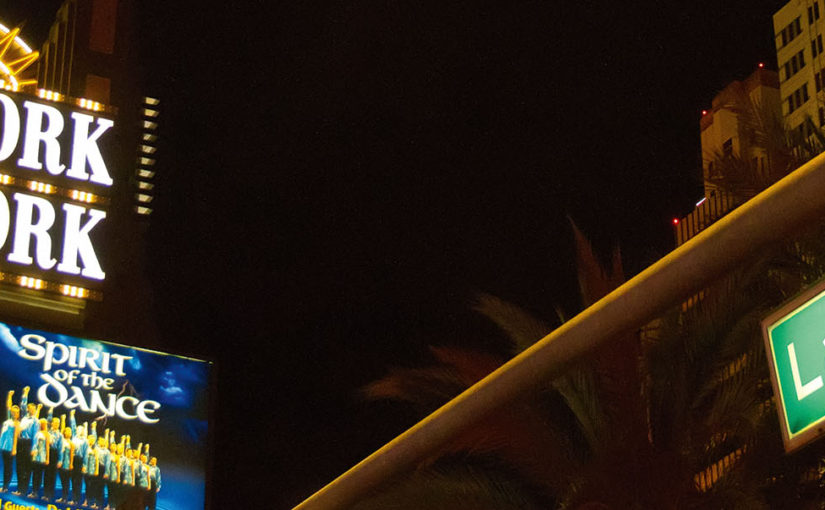
The show goes on, this time in the shape of KA, one of the more recent Cirque du Soleil productions and an extraordinary display of death-defying talent, performed on a stage that rotates vertically and horizontally to the beat of a thumping soundtrack. There are other themed Cirque shows, with The Beatles, Elvis and even illusionist Criss Angel carrying the Cirque moniker. For something very different, check out Zumanity, a sort of pornographic Cirque led by a Frank N Furter type transvestite. Just don’t sit in the front row. Trust me.
Zumanity by Cirque du Soleil
New York-New York Hotel and Casino
3790 South Las Vegas Boulevard cirquedusoleil.com/zumanity
10.00pm
Vegas has an eating option for everyone. We find ourselves at the Michelin-starred Michael Mina’s in the Bellagio, which instantly transports us far from this neon desert. After chilled shots of Grey Goose vodka to cleanse the palate, followed by a lobster pot pie, all of a sudden I am Bugsy Seigel, the founder of Vegas, ordering another bottle of red for my dame.
12.00am
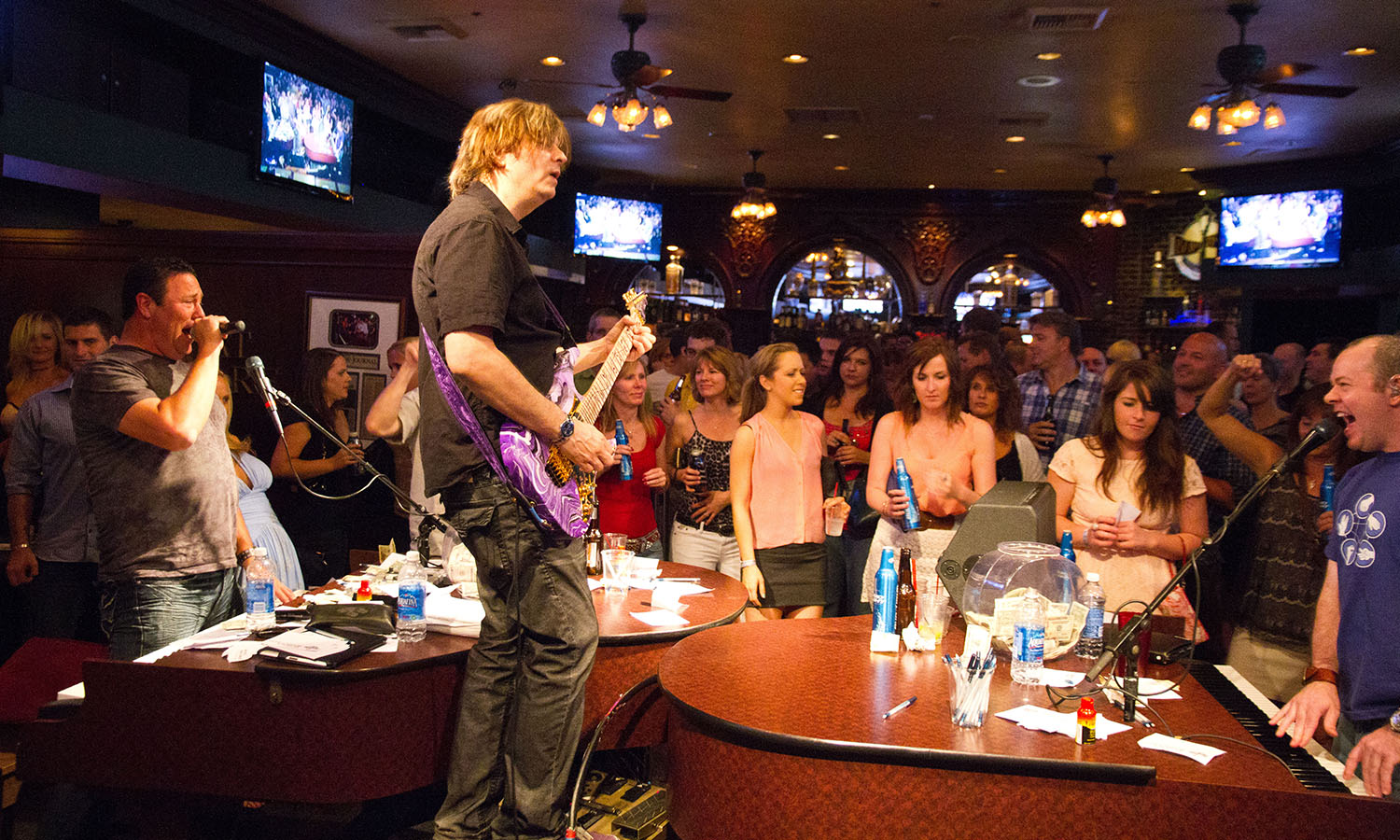
Midnight means live music and one of the more unusual experiences in Vegas is the dueling pianos in the Bar at Times Square, tucked within the New York-New York Hotel and Casino (yes, it’s a hotel designed to look like the Manhattan skyline). Two amazing musicians face off on separate pianos and bang keys against each other, goading the crowd to pay a few dollars to hear their favorite songs. The pianists duel to the most popular (read highest paid) tunes and the crowd goes wild. It is unpretentious, fastpaced and very entertaining. A bucket of Bud helps keep the fun flowing. Get a table on your right as you enter – for a few dollars more it’s well worth getting table service.
2.00am
Nightclub time. Mandalay Bay’s LAX is the place to be seen these days, with private booths circling the heaving dance floor. It’s loud and sweaty, and at 3am there’s no sign of it slowing. We luck out and are invited into Saville Row, a slick smaller bar annexed to the main club. The music is still loud but after a big day in Vegas it is the perfect spot to sip a nightcap and people watch. Vegas has clubs galore. Call early in the day to secure a spot.
…10.00am
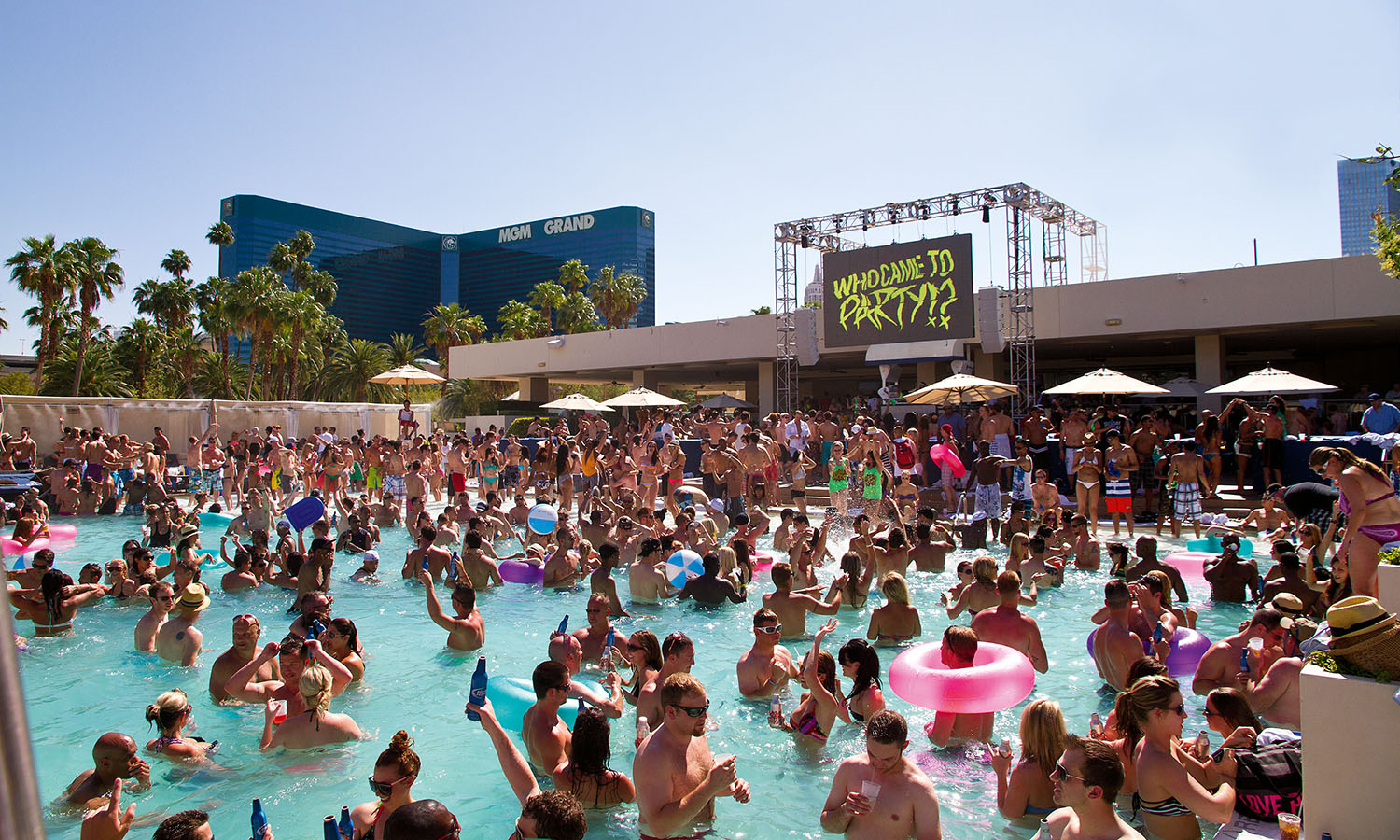
Pool parties are almost as famous as the nightclubs here with most hotels proclaiming theirs is the biggest and best. The Hard Rock Casino’s Sunday ‘Recovery Party’ is rock ‘n’ roll, with swim-up blackjack tables and margaritas on tap, all to the thumping rock of Aerosmith and the like. We go Royal though and head to MGM’s private Sunday pool extravaganza ‘Wet Republic’. My wife, hoping to sun away her hangover, packs a book. She has no idea what we are in for. There are two huge pools teeming with a bobbing mass of party people. There’s so much silicone on show I doubt any of the waitresses could drown. This is Vegas as the sun is rising, and it’s almost as raucous as when the sun sets. This was where Prince Harry’s day of debauchery began, but for us it was the end. By midday we are back in our room, sound asleep and too tired to dream.
Wet Republic Ultra Pool at MGM Grand
3799 South Las Vegas Boulevard wetrepublic.com
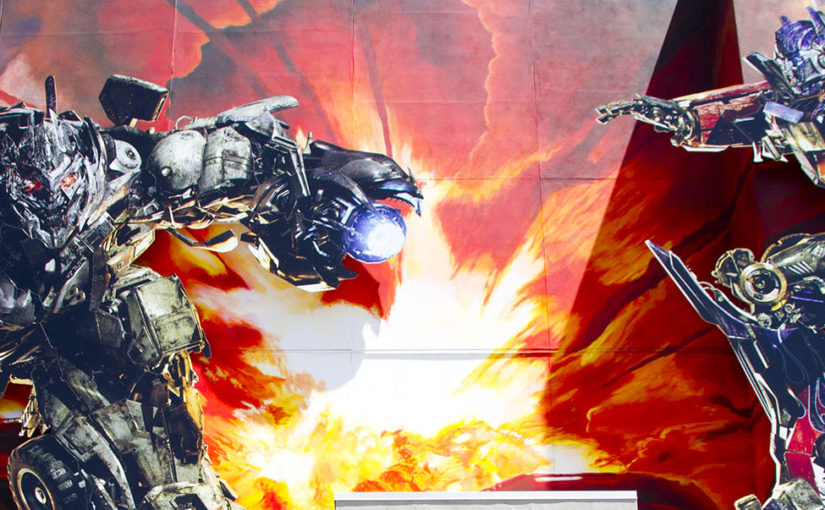
We smash through the glass wall of a skyscraper, clinging to the towline behind a speeding Autobot, who has just pulled us from the clutches of a very angry Decepticon Megatron. We must be travelling at over 100 kilometres an hour as we splinter through the interior and out the other side. For a split second we hang in the air, slowly turning to stare at the street that is thirty-odd floors below. Then, we plummet.
My heart races as fast as my stomach churns; the wind chills my face as we gather speed. Our Autobot saviour hits the afterburners at the very last second and we shoot forward as missiles come at us from the side. We’re so close that I can feel the heat from one explosion. Megatron fires a fusion cannon. It heads straight towards my forehead and if it were not for some extraordinary evasive action from Evac (the Autobot we’re clinging onto for dear life), I’d be scrap metal. This is like some incredible dream, but it isn’t. It is the latest simulator/roller-coaster amusement park thrill – Transformers: The Ride-3D at Universal Studios Hollywood.
My addiction to thrill rides can be traced back to a holiday in California in 1983. I was 13 and we were visiting Six Flags Magic Mountain, an amusement park that was built not on cartoon characters, but simply on thrills. The Colossus was the source of constant screams. At the time, it was the largest wooden roller-coaster in the world with two drops over 30 metres long and old carts that threatened to derail at any second. It had recently gained notoriety as the roller-coaster that featured in Walley World in Chevy Chase’s comedy National Lampoon’s Vacation. Like the Griswold family, the Jamieson family were enjoying a vacation. We continuously dared each other to ride the Colossus, and when it came time, I was the only Jamieson that did. Perhaps it was this coming-of-age moment, where for once I was braver than dad, which has since attracted me to such rides.
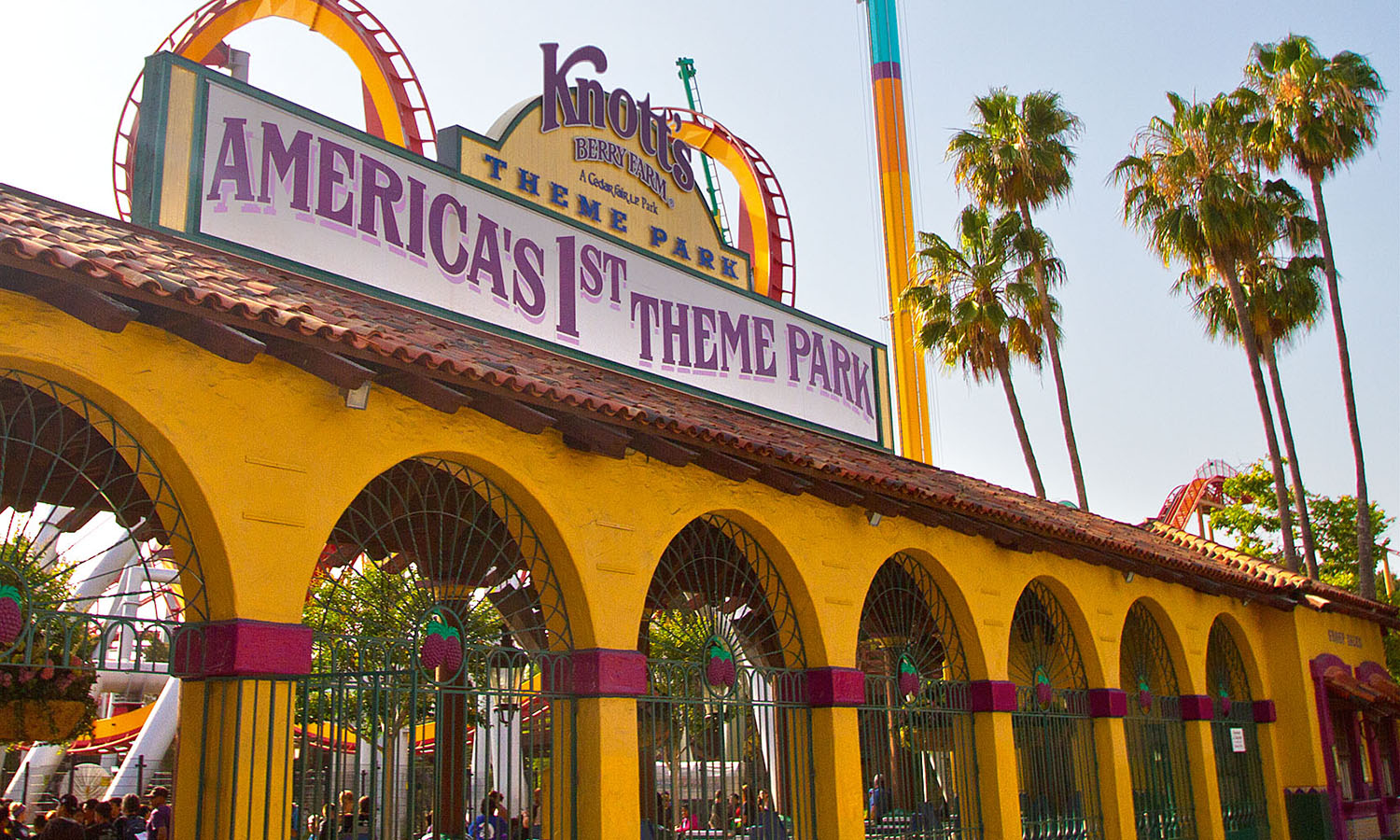
When it comes to amusement parks, California is somewhat of a Mecca. Wide-eyed pilgrims flock to Disneyland, Six Flags Magic Mountain, Universal Studios, SeaWorld and Knott’s Berry Farm, which is the oldest park of them all. Knott’s began life as a berry farm back in 1920. This is where founder Walter Knott created the boysenberry, by crossing a red raspberry with a blackberry and loganberry. But it was Walter’s wife Cordelia who cooked up the Californian thrill-ride storm. Customers at the farm loved Cordelia’s chicken dinners so much that demand grew until thousands of customers were lining up waiting, often for hours, to dine. To entertain the crowds, Walter introduced some rides that were based around a Wild West show.
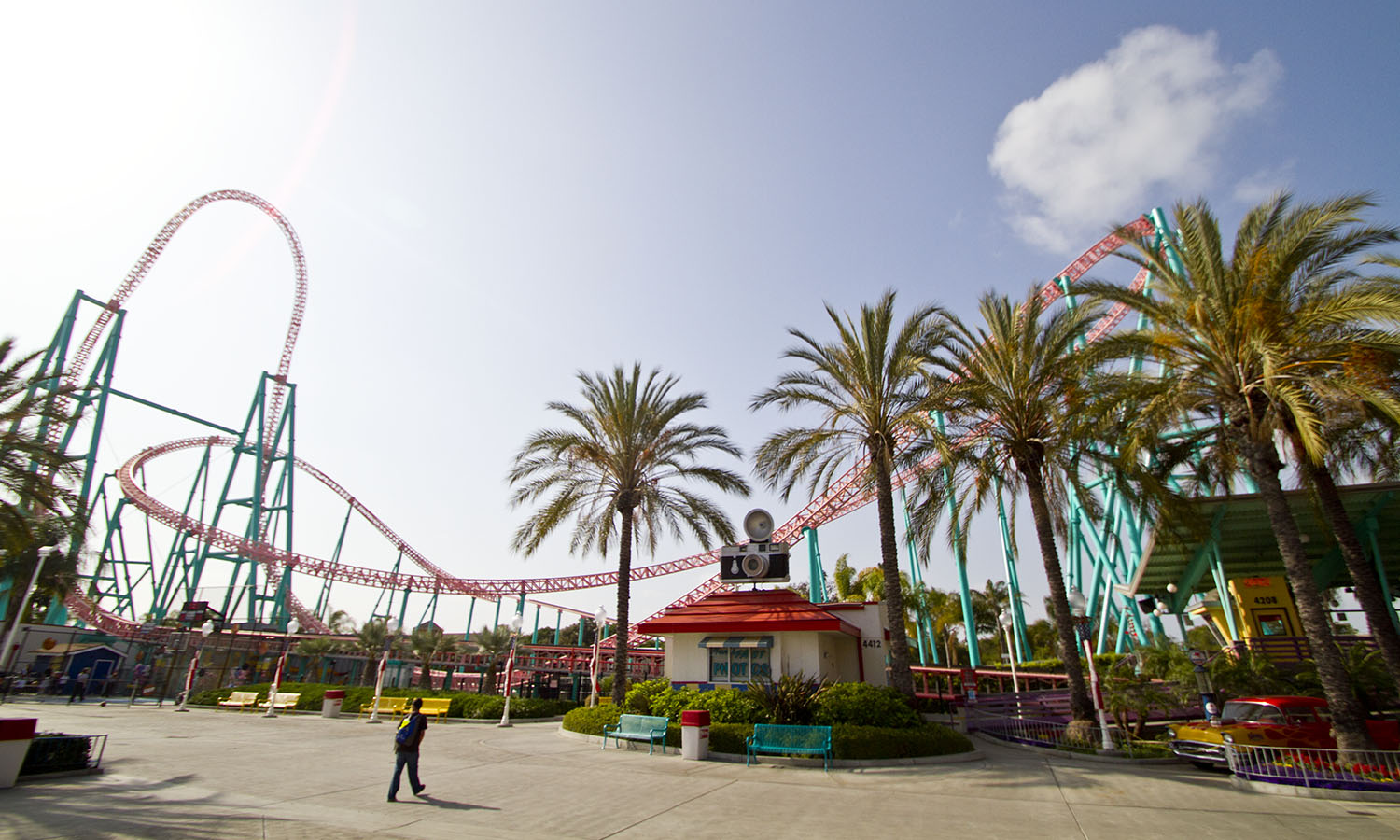
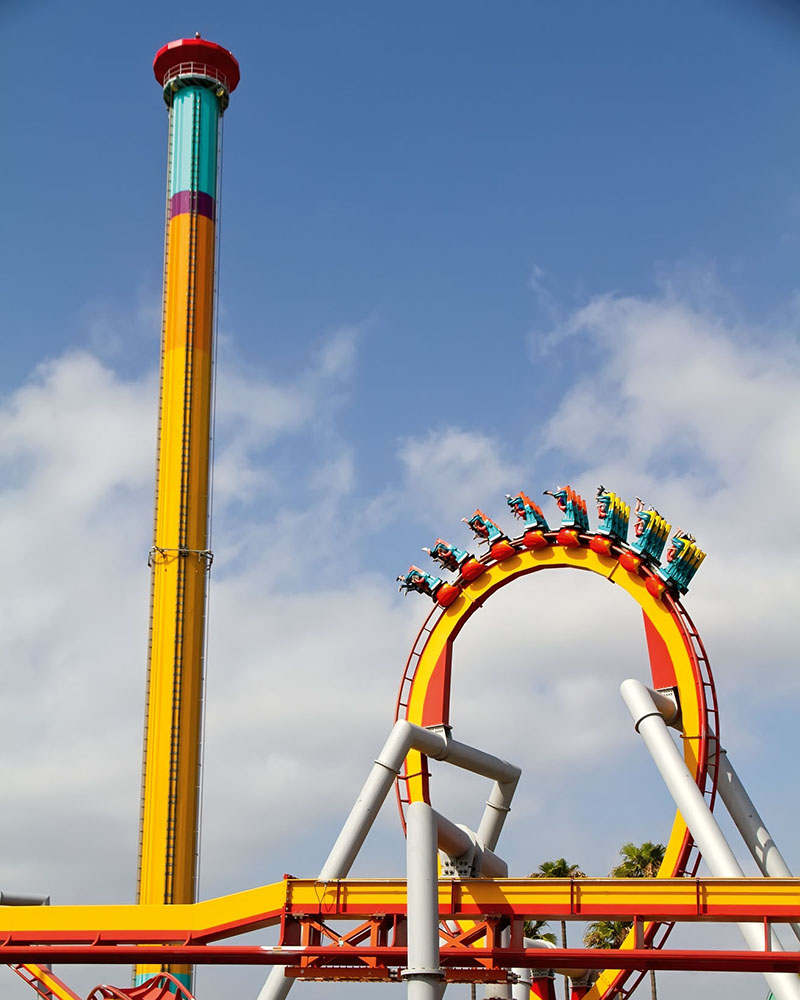
From these auspicious beginnings, things gathered momentum faster than a Colossus carriage. Knott’s launched the Corkscrew – the world’s first 360-degree roller-coaster – in 1975. This was followed by the Sky Jump in 1976, which was the highest ride in the park until it was overtaken 25 years later by its successor – the 30-storey-high Supreme Scream. In 1978, Montezuma’s Revenge was introduced, a coaster that shoots you to speeds of 90 kilometres per hour within five seconds (and is still there today). Knott’s continued to stay at the forefront of hair-raising roller-coaster rides, while it’s world-renowned neighbour continued to focus on entertaining the kids with Mickey and Minnie.
These days, the advancement of technology means that old roller-coasters like the Corkscrew have been replaced by the Boomerang, a ride with six loops – three facing forward then three facing backwards. It is this ride that, today, almost reintroduces me to the chicken dinner I ate the night before.
I continue to feed my addiction at Knott’s on the Silver Bullet, a rollercoaster that has us hanging in the air, feet dangling as we loop, twist and corkscrew. It suddenly stops and I’m not quite sure if I’m upside down or not. Next up is the GhostRider – currently the longest wooden roller-coaster on the USA’s West Coast. I have flashbacks to the Colossus as we rattle up the first climb and then plummet down a 33-metre drop. It is old and rickety and by the end of it I realise so am I. My neck has a crick and I can barely see the top of the next ride, the Xcelerator, which takes willing passengers from zero to 130 kilometres per hour in just three seconds. People say I am very much like my father and today I agree – I decide to sit the Xcelerator out.
On that family trip back in 1983, we spent one day at Universal Studios. It was enough time to get a Polaroid snapped of ET and I jumping a BMX over the moon. We also took the studio tour and screamed as Jaws creaked out of the lake just as we passed by. ET is long gone these days, though my fear of sharks in fresh water is not.
Transformers: The Ride-3D has replaced the old ET Adventure ride. It cost a reported US$100 million and is at the forefront of fairground attractions. It is designed to suspend all sense of reality (unlike the very real screams coming from the people on the nearby roller-coaster rides).
How does it compare to freefalling 30 stories down in an open outdoor carriage though? Both are thrilling, both are chilling and both are definitely fulfilling, but roller-coasters win for the sheer fear factor. With Six Flags Magic Mountain now boasting 18 roller-coasters, more than any other park in the world, I decide to leave it to my next visit, when I think I’ll bring dad.
 (
(