Shoes Off and Hands On

Like so many other visitors to Japan’s former imperial capital, I am captivated by Kyoto. Getting lost in this city is one of the world’s great travel experiences.

The centuries of history and culture emanate from the lantern-strung streets of the old districts, where the discovery of a wooden geisha house in a cobbled back alley evokes a sense of wonder about the fabled goings-on within. A visit to one of Kyoto’s many temples during early morning prayers is both an awe-inspiring and serenely contemplative experience.

I’ve done all these things, conscious that I observe them as an outsider. As a casual visitor, I know will never grasp the depth of tradition that has made Kyoto Japan’s ancient spiritual and cultural centre. But beyond the typical temple tours, Kyoto offers opportunities to dig a little deeper, and get hands on with some of Japan’s most celebrated customs and traditions.

Glimpsing the Zen Mindset Through Miniature Gardening

Kyoto is home to dozens of Japan’s most beautiful gardens, some dating back 550 years or more. By contrast, Murin-an in Kyoto’s Nanzen-ji neighbourhood is a young garden, which was built between 1894 and 1896 as the private residence of a prominent political statesman. Today, the garden is open to the public, maintained and operated by the Ueyakato Landscape Company.
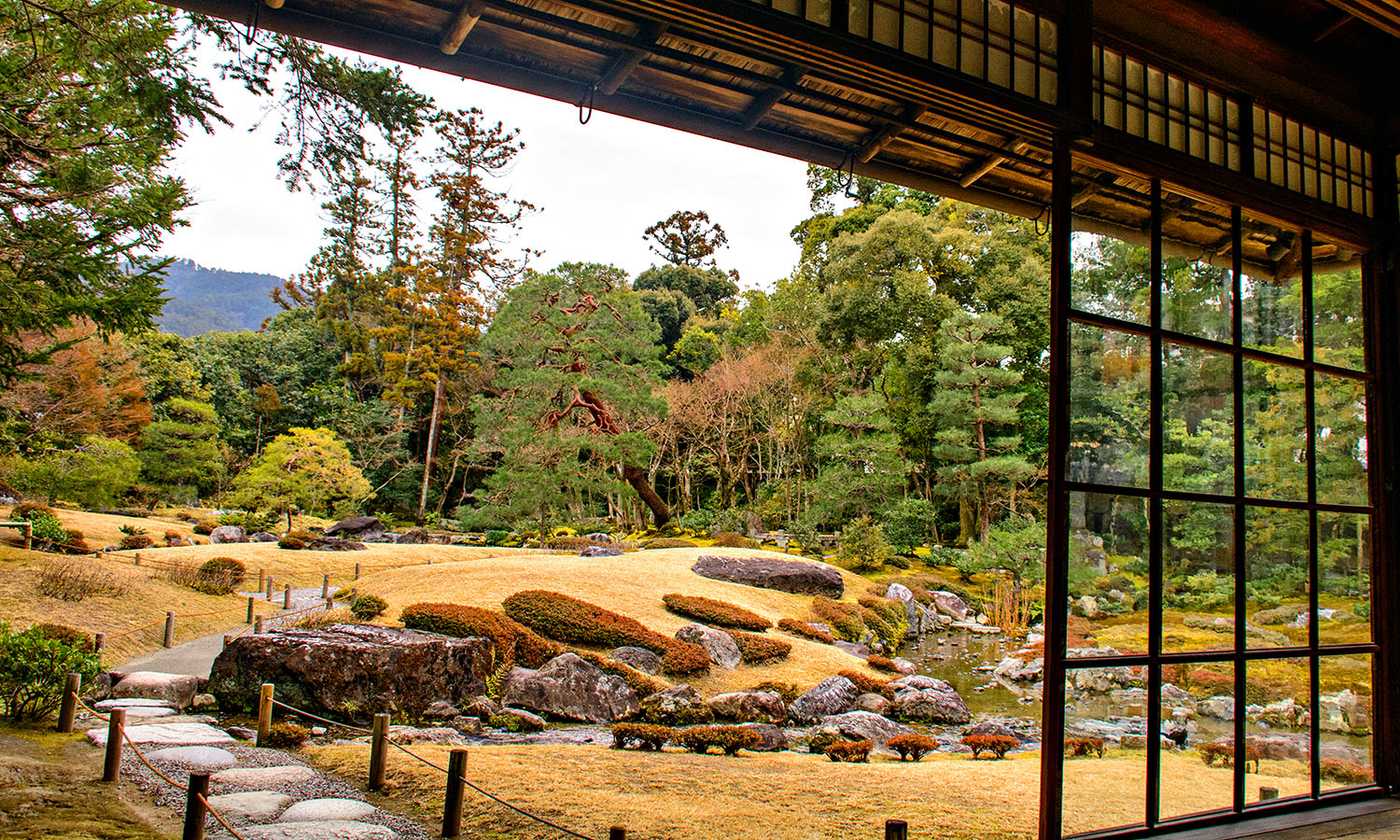
On a quiet winter’s morning, I’ve arranged a guided tour of Murin-an to learn a little about the overarching aesthetic philosophies of designing a moss garden as a place of meditative reflection. On this intimate journey through Murin-an’s feather-soft moss beds, its stone-crossed streams, bridges and waterfalls, our guide shows us how to interact with the space for maximum enjoyment, stopping at its most inspiring viewpoints to admire the skilful vision of its creator. The most spiritual practice of all is said to be the tending of the garden itself, devoting oneself to its care, and lovingly attending to even the tiniest details.

Armed with these insights, our group is lead to the workshop where we’ll attempt to build our own miniature Japanese garden within the confines of a Perspex box. Using real moss, gravel, rocks and model trees, our creations have the potential to be small in size but spectacular.

Japanese gardening is all about applying thoughtfulness to every decision and employing careful consideration to the shape of an individual rock before finding its meaningful place in the landscape as a whole.

I find myself completely absorbed in contemplating the placement of a stone stack, and in raking gravel paths into perfect geometric formations. Despite coming into the workshop feeling inspired and ambitious, my garden doesn’t turn out quite like the exquisite work of art I’d envisioned. But I’m at peace with my attempt. It’s getting into the meditative creative mindset that makes the experience such a satisfying one.
Learning the Art of Incense Listening

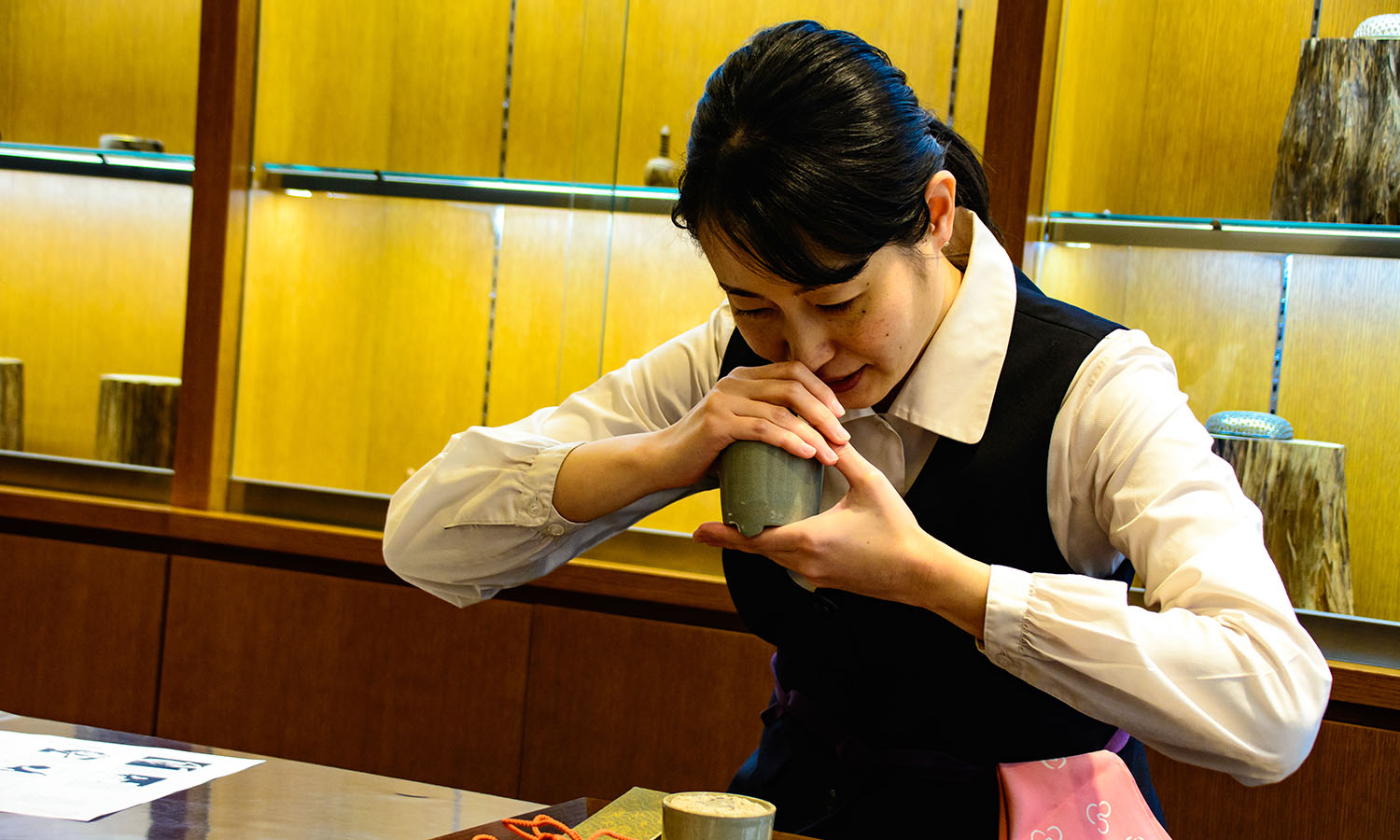
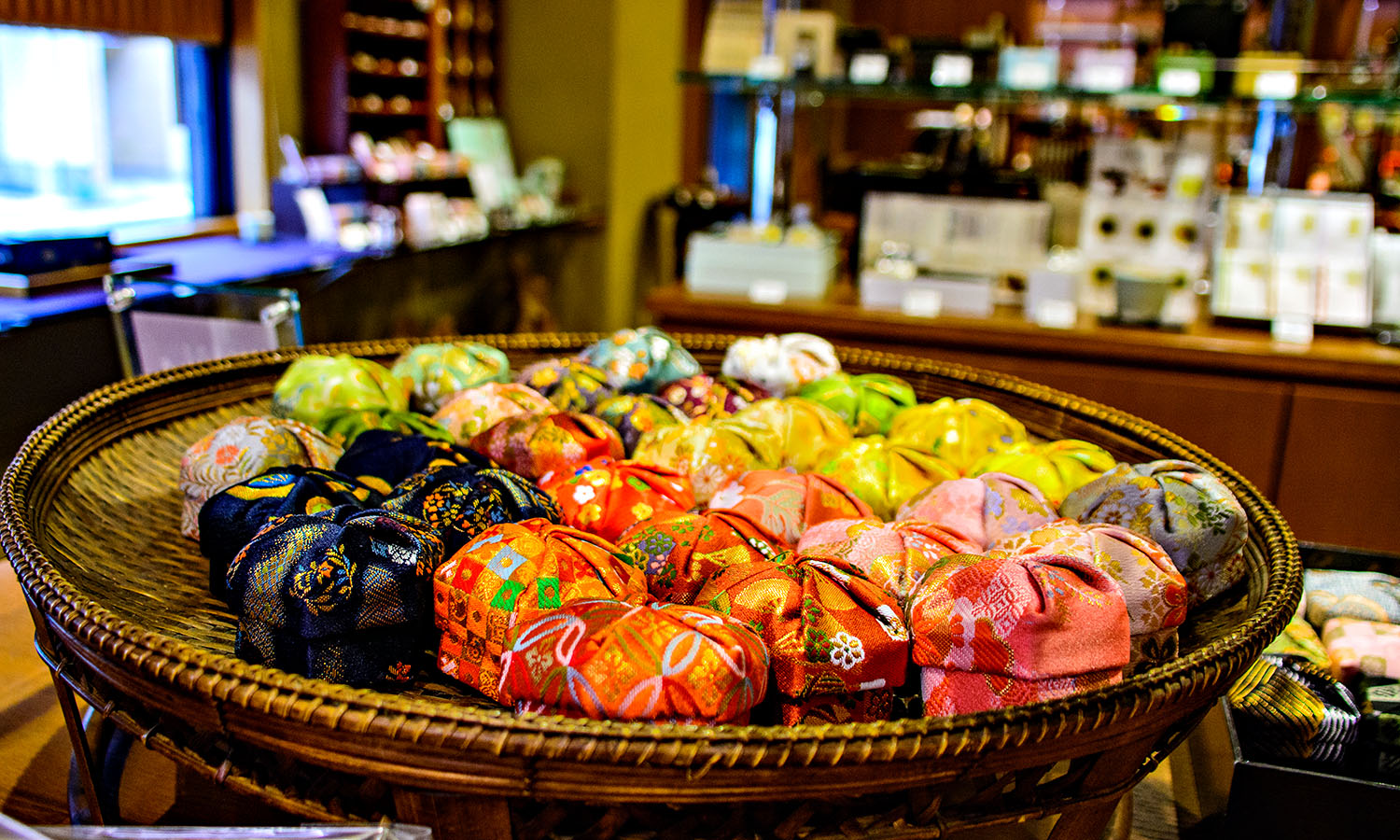
The next activity on my itinerary is intriguingly titled “incense listening workshop”. We head to a private room in the Yamada Matsu Incense Company’s store, where we novices will be trained in the ancient art of monko. Literally “listening to incense”, monko is the practice of focusing on the properties of a particular fragrance. By deeply concentrating the senses on a singular task, the listener enters a heightened state of mindfulness.

The listening experience takes the form of a traditional game. Our host passes around three separate, ceramic holders, each with a fleck of incense burning atop a mound of ash. We each take turns cradling the holders, breathing in each one intently and trying to burn its fragrance into our memories. To win, you must identify which of the three scents were different and which were the same. But, our host explains, monko is not about winning, it’s an exercise in deepening one’s appreciation and awareness.

Despite being a beginner’s class, our host conducts the exercise as a genuine act of ceremony. Monko is a revered art, steeped in ritual and codes. The ceremonial tools of monko are handled with exquisite care. Before the burners can be passed around, our host etches sacred geometric patterns into the mounds of ash on top of which the incense will be lit.

As well as being a genuinely fun spot of friendly competition, monko proves to be an intriguing demonstration of the sacred rites and rituals that run deep into the heart of the most unexpected places.

A Tea Ceremony Crash Course

The role of ritual in a traditional Japanese tea ceremony is far more well-known than the obscure art of incense listening, but as I discover at the Jinmatsuan tea store and workshop, the two traditions bear many similarities. Just like in the incense ceremony, the instruments used for a tea ceremony are treated with utmost care, and social interactions between participants are punctuated by symbolic gestures of respect.

The most formal Japanese tea ceremony (known as Chanoyu, Sado or Ocha) is an elaborately choreographed and solemn undertaking. Thankfully, the experience at Jinmatsuan is a much more casual introduction to traditional Japanese tea culture.

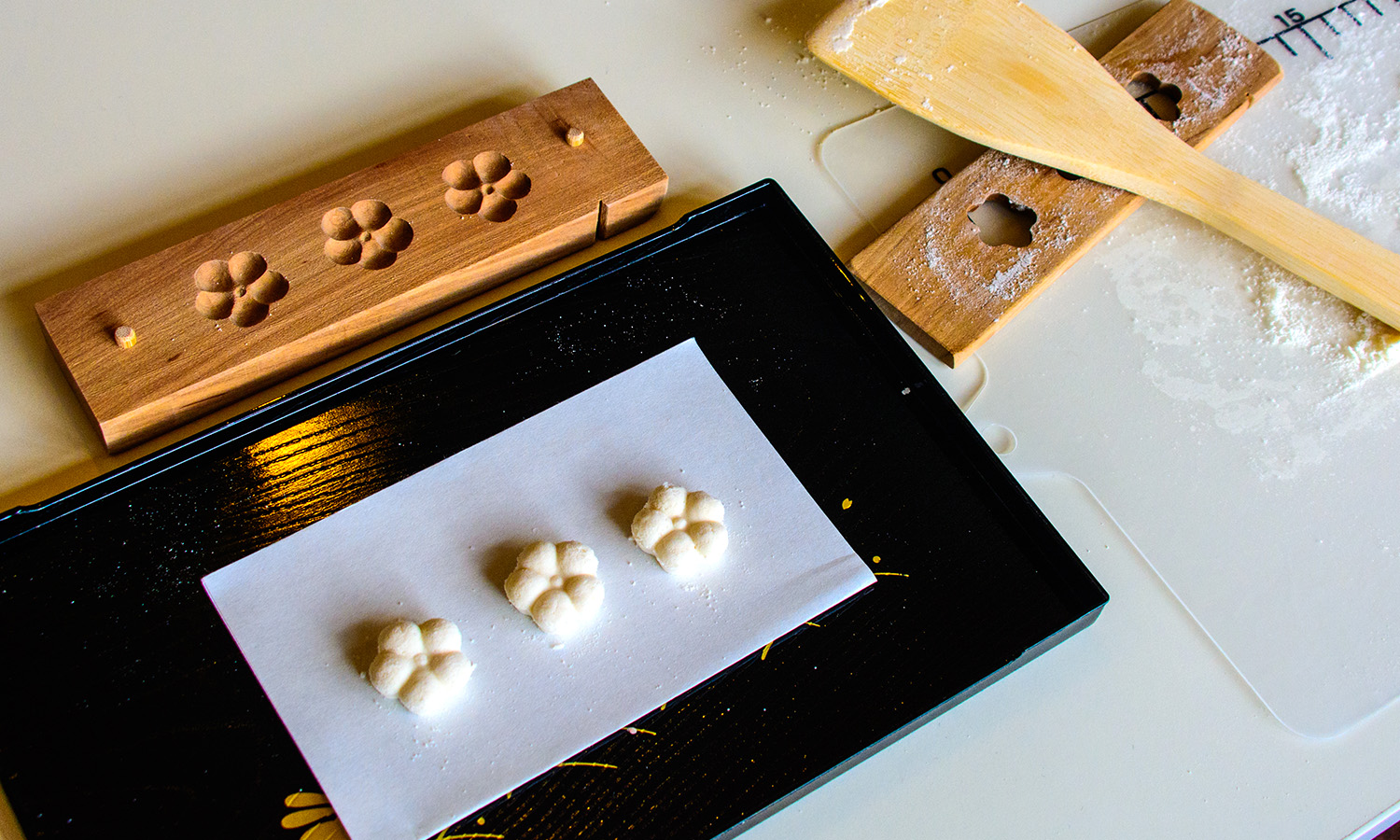
As a matcha enthusiast, the chance to partake in the ancient method of using a heavy grinding stone to crush the tea leaves into fine powder is a treat. Everything is done using the most traditional techniques possible, including moulding the accompanying sweets from now scarcely used wooden moulds.

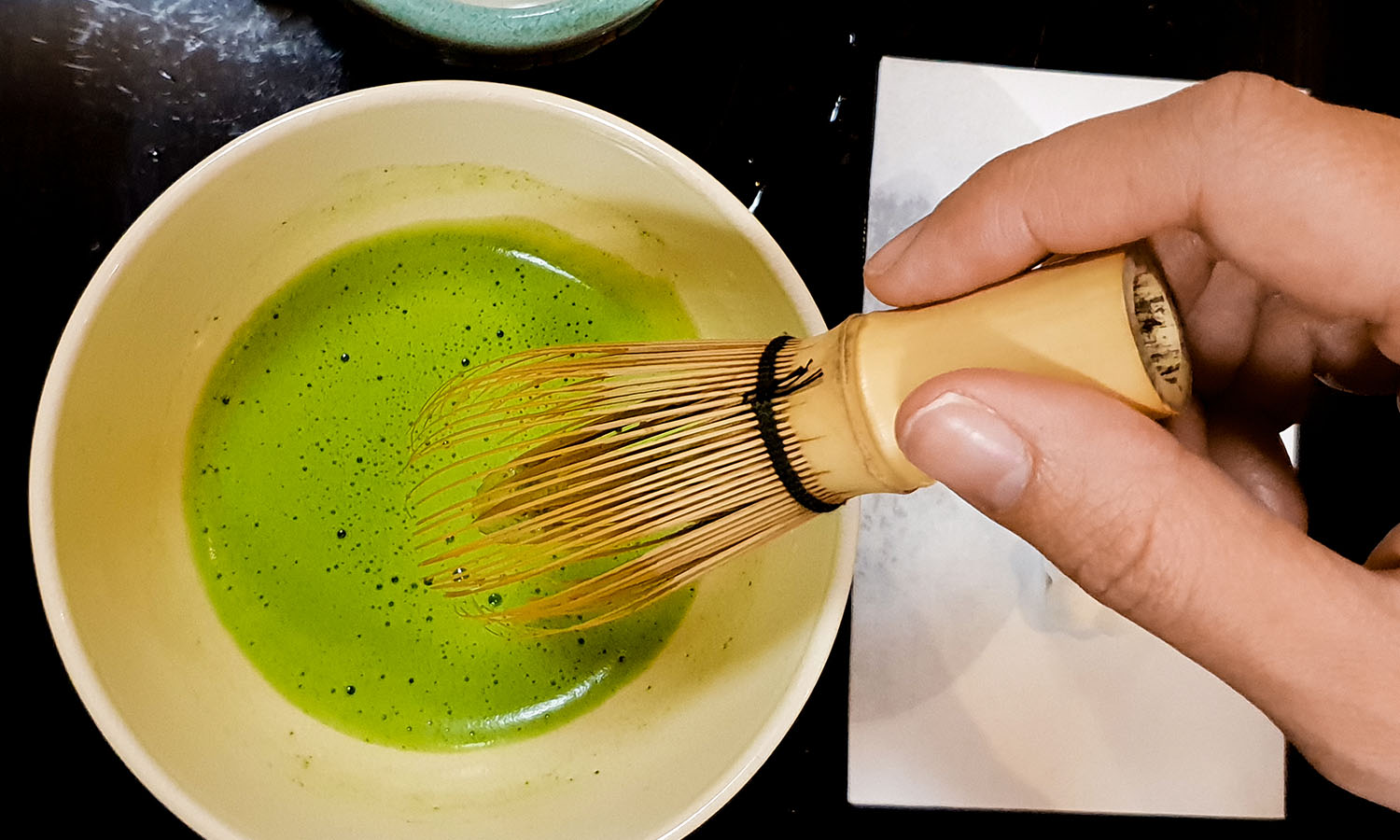
Once the matcha powder is ready, we move to the ceremonial room where we remove our shoes and are seated on woven tatami floor mats. Each of us prepares our own tea in bowls, using bamboo whisks to whip the matcha into a delicately frothy, vivid green liquid. Before we raise our bowls to our lips, some basic etiquette is explained. The simple gestures are the most important to follow, designed to heighten the sensory enjoyment of the ritual, and extend expressions of friendship and goodwill to your fellow guests.

As a novice, I appreciate Jinmatsuan’s easy, non-intimidating introduction into tea culture, and as an added bonus, the matcha is the best I’ve ever tasted.

Experimenting with Tradition at Kyoto’s First Plum Liqueur Workshop

Brewers of umeshu have been making liqueur out of steeping whole ume fruits in alcohol (usually sake or shochu) for well over three centuries. Yet it’s only in the last few years that umeshu has started to attract global attention, increasingly featured on the wine lists of prestigious Japanese restaurants overseas. Now one of the most recognised brands of umeshu, Choya is leading the way at turning foreign tastebuds on to the fragrantly fruity and refreshingly sour flavour sensation that is umeshu.

As we discover at Choya’s Hands On Ume Experience Shop, ume is not in fact a true plum, sharing closer ties with the apricot family. The flavour ume imparts on the final product depends on the stage it’s harvested. To demonstrate this, we’re given a guided tasting session of sugar syrups made from early, mid-season and late harvested ume. Fully ripe, yellow ume has a delicate peach flavour. An unripe, green ume’s sourness is just short of mouth-puckeringly tart, and not bitter in the slightest.

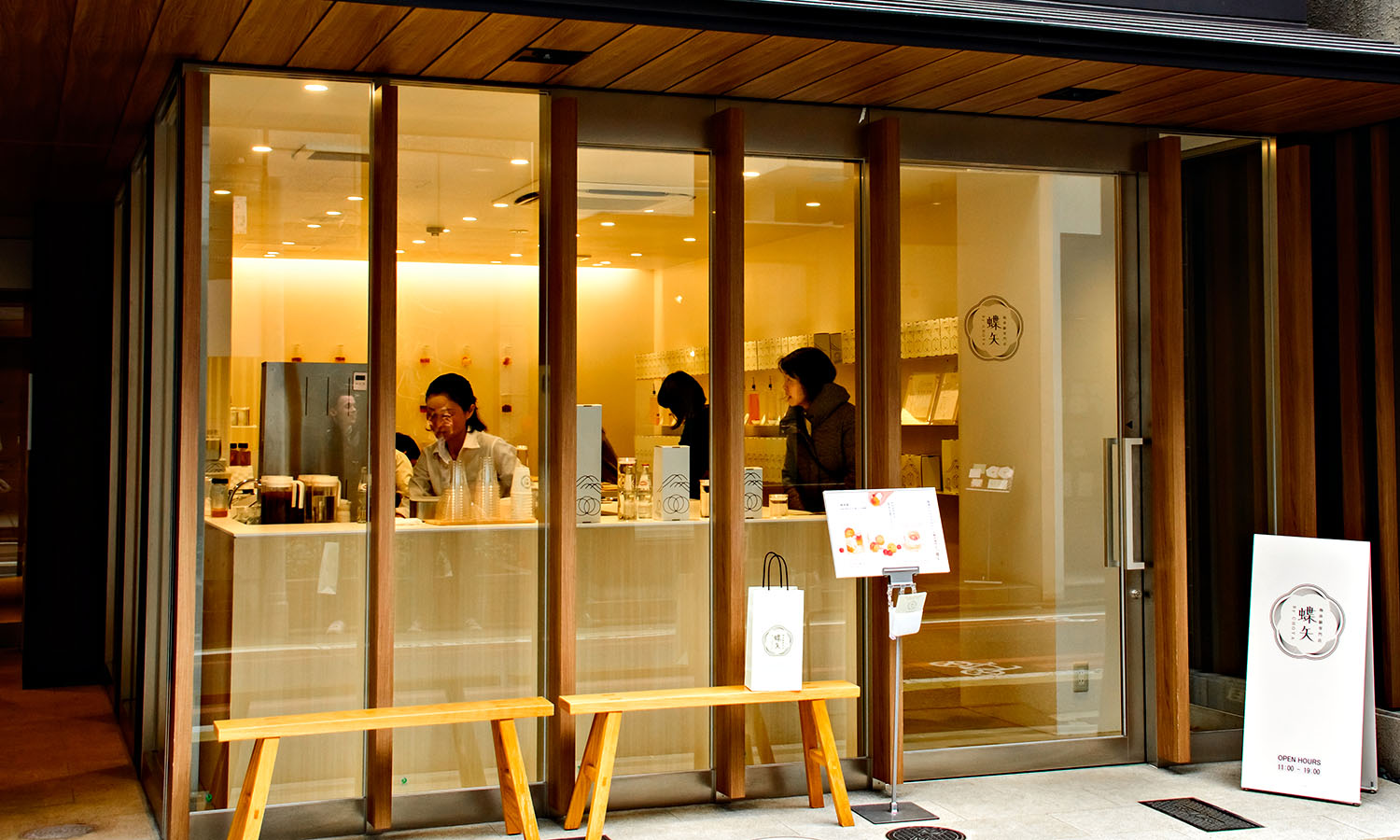
A modern, white minimalist space, with different varieties of ume displayed in test tube-like jars, and a workbench laid out with tools and ingredients, Choya’s Hands On shop feels almost like a tiny science lab. Everyone in our group performs their own experiment, first selecting the fruit of their choice, then combining them with one of several different sugar varieties (from classic cane sugar to more exotic agave syrup) and a choice of gin, vodka, rum or brandy as the additive spirit.

Your custom umeshu can be made from a possible 100 different combinations. If you go out on an experimental limb you might create a sensational new variety, never tasted before. I opt for a little more guidance, and Choya’s umeshu concierges swiftly appear to offer advice. My completed concoction is then securely packed and gift-boxed for the trip home, where it’ll need to ferment for another four weeks.

These are the kinds of souvenirs, I’ve found, to have real value. Why buy something generic and off-the-shelf when you can take home something with a tangible connection to the real and honest experience of the culture you originally set out to discover?

Kyoto will always be a full of mysteries. In my quest to discover hands-on cultural experiences in this city, I’ve discovered that I’ve barely scratched the surface of the rituals embedded in almost every facet of Japan’s most celebrated customs and traditions. What this experience has given me is the opportunity to witness these rituals first hand, and in the process, gain a deeper appreciation of their beauty.

Where the Buffalo Roam

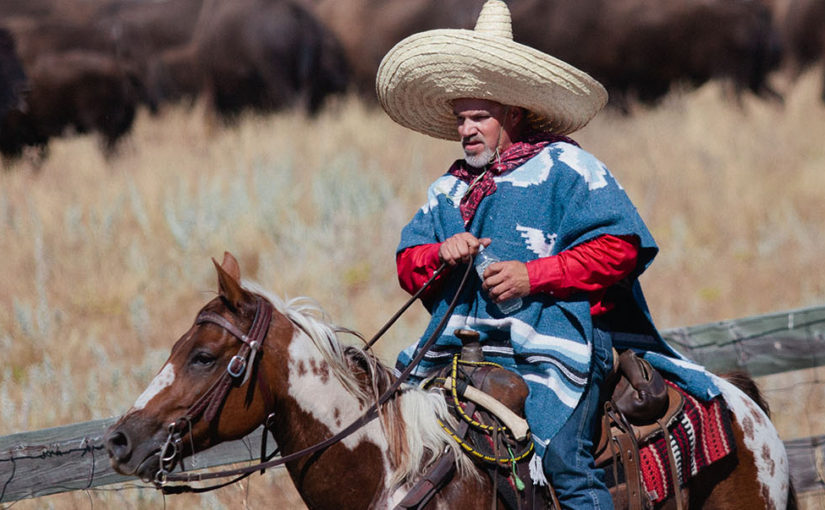
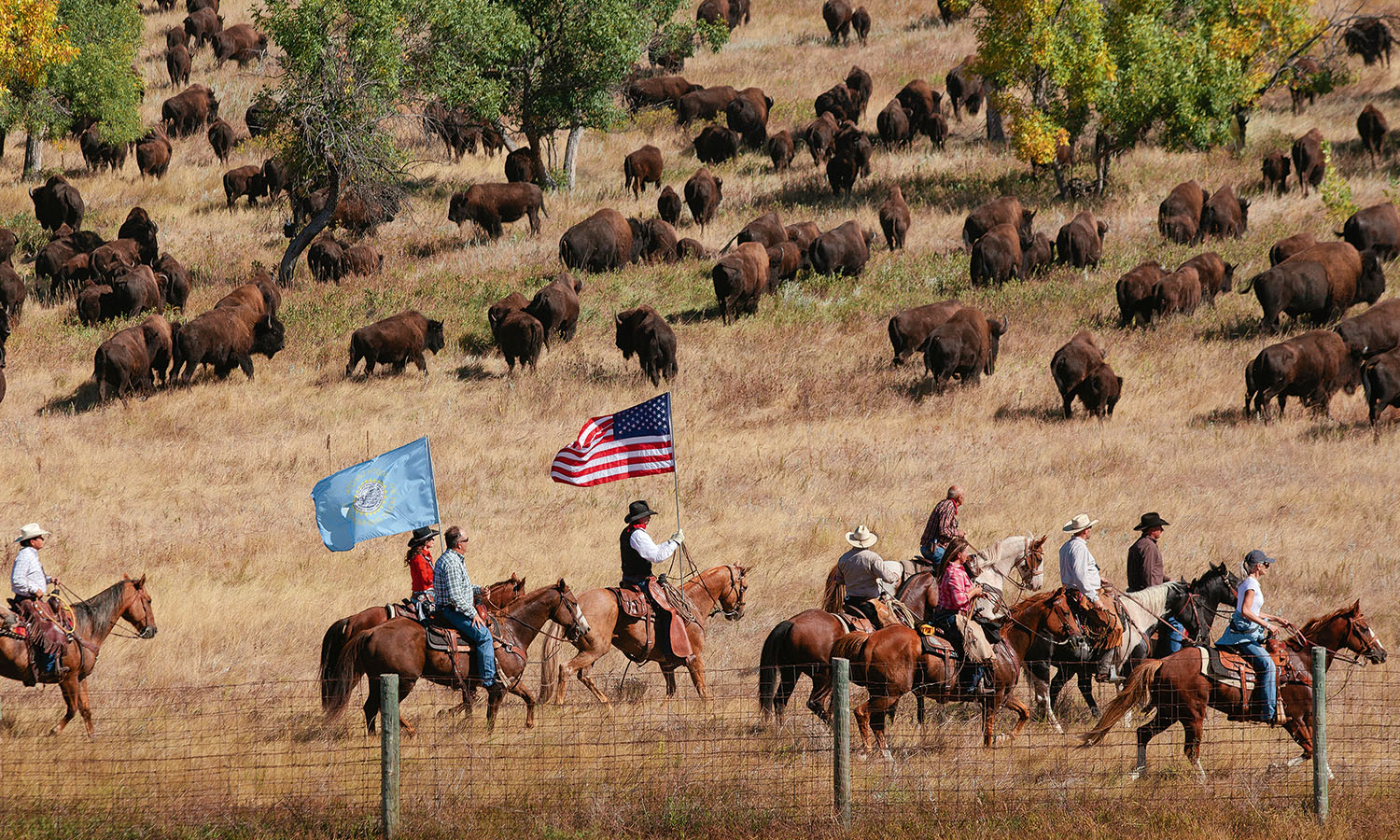
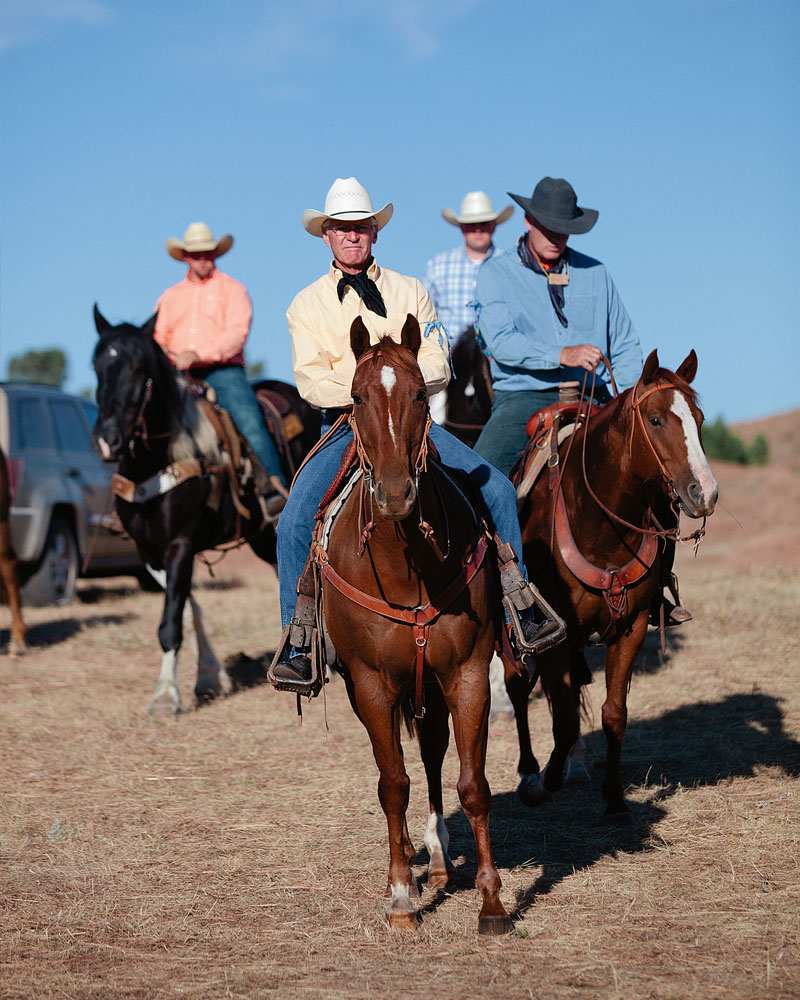
To round up a herd of wild buffalo you need three things: a horse, a whip and an ability to use both. Hats, spurs, chaps, neck scarves, a familiarity with Johnny Cash? These are all fine and dandy, but when 900 head of buffalo are coming at you, stomping, snorting and quaking the very earth, fashion is not a priority. Buffalo, or American bison as they are properly known, weigh up to 1000 kilograms and can out bolt Usain Bolt. They have necks like quarterbacks, the horns of alpha bulls and injure more careless campers each year than grizzly bears. “The trick,” explains a barrel-chested cowhand in a luminous pink shirt, “is to get the herd to do what they want to do.”

I’m in Custer State Park for the fiftieth anniversary of the Buffalo Roundup. The air is thick with dust and excitement, and rent by “hoo-hars!” and whip cracks. Cowhands work in teams to guide the excited bison down a valley, across a road and onto an enormous grassy prairie. Some 15,000 spectators have assembled on the hillside to watch the final surge into the awaiting corrals. All is going well until suddenly it isn’t. I watch the herd disappear into a thicket of trees. When they reappear they are thundering in the opposite direction. The buffalo have turned! The buffalo are doing what they want to do! The buffalo are outta here!

Twice more a rebel bison force breaks away from the main herd and hightails it over a nearby hill causing much consternation. It’s an unexpected and most welcome development. My big fear about the round-up was that it would be a stagey Disney Does Dakota tourist production, but this is very much the real thing. When the last of the wild beasts is steered into the corral there is much applause and more than a few hallelujahs.

The mighty buffalo are impressive in their own right and are woven into the fabric of the American west. They once roamed the vast interior in the tens of millions and were a crucial part of life for the Plains Indian tribes, providing them with food, clothing and shelter. Then came the European colonisers, with their guns and unshakable ambitions. In 45 years of efficient slaughter they came close to wiping out the buffalo altogether. Conservation efforts saved the species and today one of the biggest wild herds roams free in South Dakota’s Custer State Park. The annual round-up is primarily to maintain the herd size so that they have enough food to last the winter. Tourism is merely an added bonus.

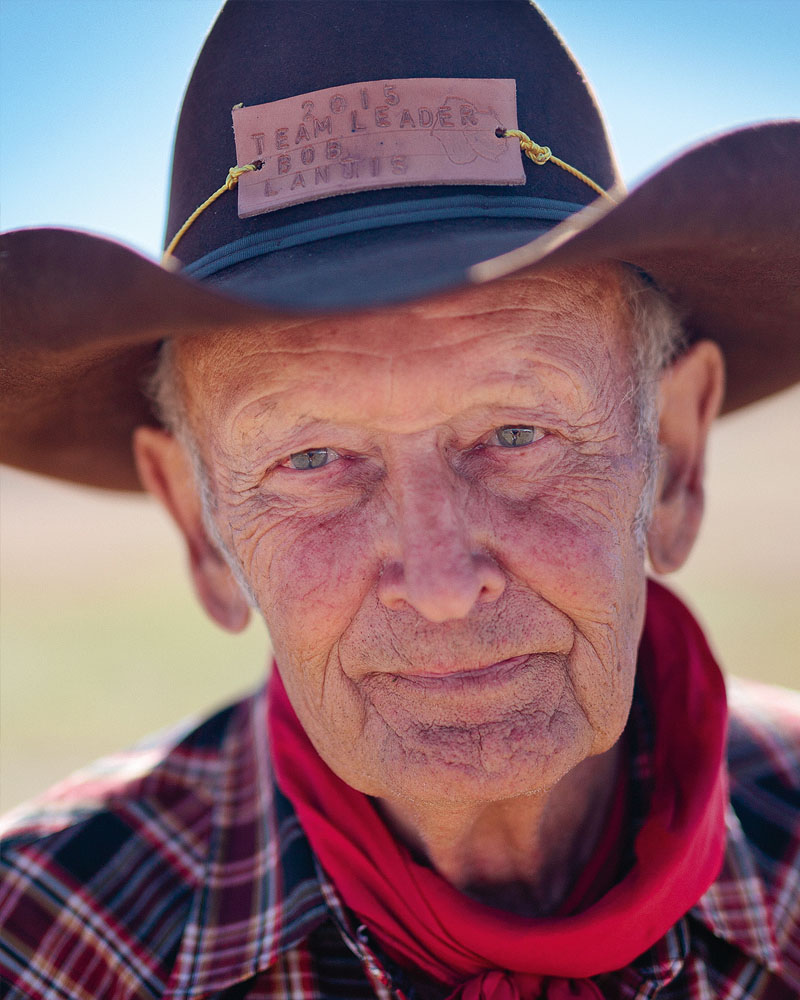
It’s an honour for cowhands to participate. Miss Rodeo South Dakota is here all glammed up in make-up and spurs, holding the state flag atop her gelding Little Man. Horse whisperer and campfire poet Bob Lantis is in the thick of it with all four of his kids. This is the forty-fourth round-up for the 80-year-old. He gets thrown off his horse early and an ambulance is called, but he shrugs off medical assistance and gets back in the saddle. “I’ve been coming here for over 50 years and I’m just so proud that they’ve been able to look after it,” he says. “I keep coming back every year just to make sure they don’t screw it up.” Bob chuckles wryly.

Lantis’s enthusiasm for the Black Hills is widely shared and well founded. Prior to the round-up I spend a week driving around them, climbing up them, spotting wildlife in them and talking to people who revere them as their ancestral land. Pretty in parts, angular and austere in others, the Black Hills are creaky with human drama. They rise modestly from the great plains of central North America but offer disproportionately large insights into America’s pioneering history. While the Wild West has been reduced to myths and bumper-sticker clichés, the real story is nuanced and fascinating. It’s an epic of titanic ambition, monumental achievement, tremendous courage and harrowing tragedy. In its essence it is the story of America.

In the gold-mining town of Deadwood I visit the grave of Wild Bill Hickok. Lawman, coach driver, actor, gambler, outlaw and war scout, Hickok wore many out-sized hats. He helped slaves escape north along the underground railway, fought in the country’s bloody civil war, then again in the Indian wars. Along the way he killed at least 10 men and earned a reputation as the fastest gunslinger in the west. Although Wild Bill stories are told six different ways, it’s established he was shot dead while playing cards in a Deadwood saloon, his six shooters tucked into his belt. He’s buried next to Calamity Jane, another Wild West celeb, on her insistence.

Today you can witness Wild Bill’s murder by the coward Jack McCall three times daily during tourist season. Modern-day Deadwood has been burnt down, rebuilt twice and saved by gambling and tourism. I miss the re-enactment of Wild Bill’s slaying in favour of an excursion into a nearby gold mine. It was gold fever that lured devil-may-care opportunists into the Black Hills to form lawless outposts like Deadwood. The cult TV series of the same name has brought to life a handful of the town’s more lively characters, but there were plenty more of that ilk. I’m raising a glass to you, Madam Bulldog, and your establishment, the Bucket of Blood.

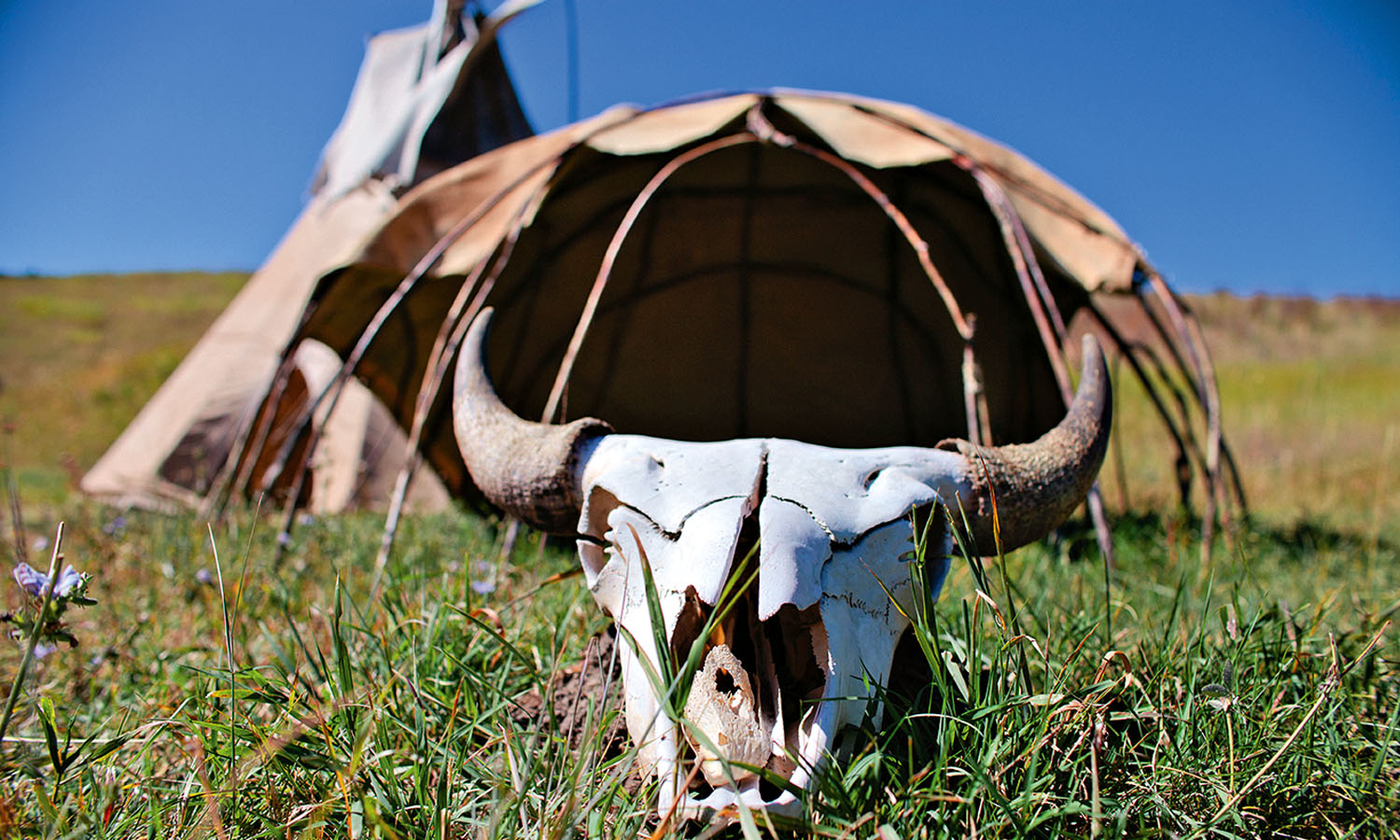
Gold fever and the pioneering push came with a cost paid in full by the American Indians. Tatanka: Story of the Bison on Deadwood’s outskirts is a museum sharing the unflinching account of the great buffalo slaughter of the late nineteenth century and its subsequent effects. Plains Indian tribes based their nomadic existence around hunting the shaggy beasts, which they called tatanka and considered a relative. Europeans slaughtered the buffalo en masse for their hides, but also to drive the remaining Indians on to reservations where the exchange rate was one glass of whiskey per buffalo hide. You can imagine how that ended.

That noted, there remains a great deal of pride in Native American culture. Its art and philosophy, respect for the natural world, eloquent orators and history of resistance are 
all widely celebrated. During the Black Hills War of 1876, Lakota and Cheyenne Indians defeated a bigger and more heavily armed US army in open combat including, most famously, at the Battle of Little Big Horn. One of the most revered warrior leaders of that campaign was a quietly spoken Lakota thunder-dreamer whose presence today can still be witnessed in the mountains. His name? Crazy Horse.

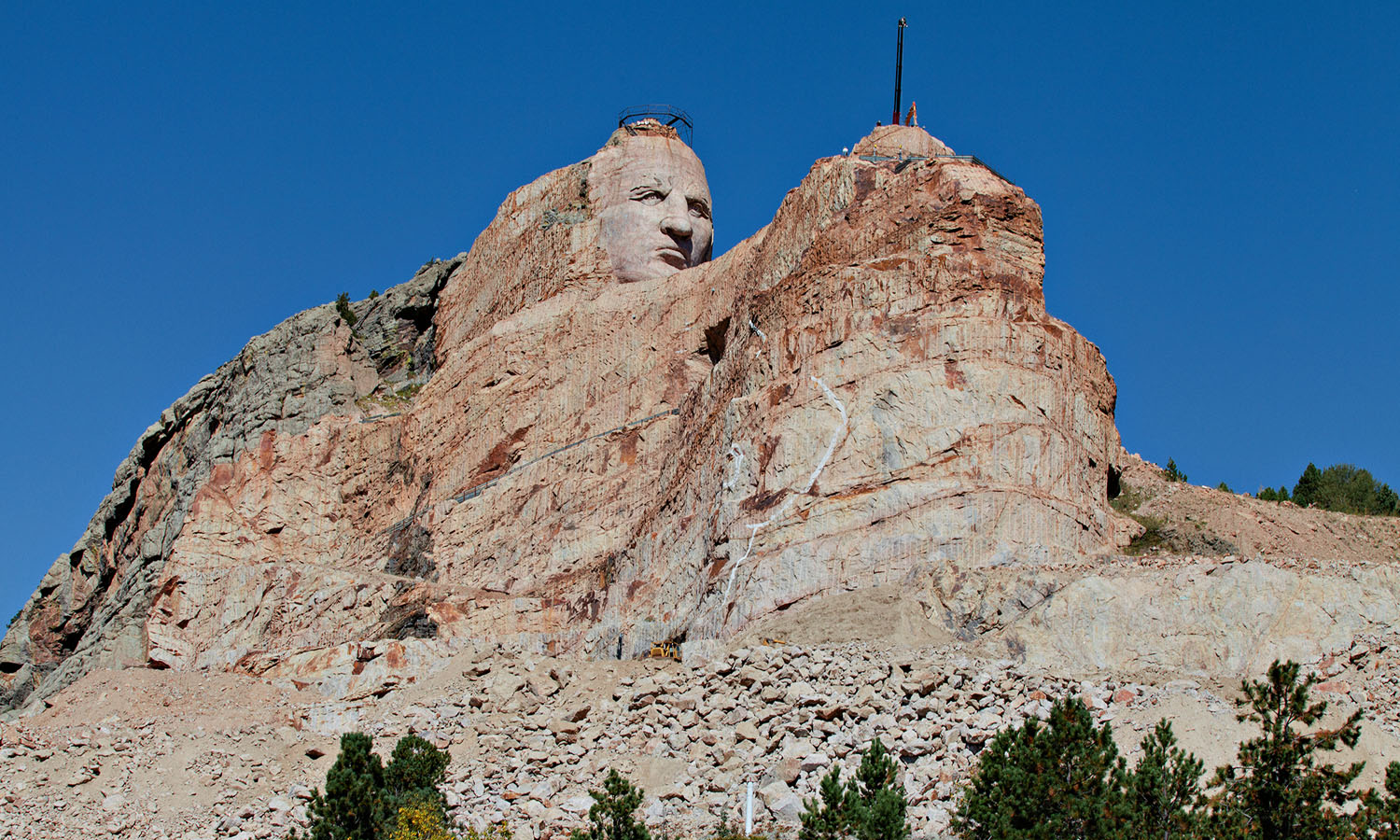
Crazy Horse literally looms out of the Black Hills, west of Mount Rushmore, in the form of a memorial sculpture taking up an entire mountain face. It has been under construction for 67 years and, on completion, will be the biggest on earth, standing 172 metres tall and 195 metres wide. The completed head of Crazy Horse alone is already bigger than any of the Rushmore presidents. The story of its construction is equally gargantuan. It was started by Polish sculptor Korczak Ziolkowski, who chipped away at it by himself with a chisel and a shed-load of dynamite. When he passed, his 10 children inherited the project. A third generation of Ziolkowskis is now onsite and it’s debatable whether any of them will live to see the sculpture’s completion.

While some Indians support the Crazy Horse Memorial, others consider it a desecration. The Black Hills are sacred for Lakota, nowhere more so than at its tallest point, Harney Peak, which I set out to hike on a clear autumn day. The pine forest is gilded in patches of gold and I spot a whitetail deer and a scurry of chipmunks gathering nuts like acquisitive, more authentically follicled Donald Trumps. A heavy mist cloaking the valley burns off when we reach the summit and the view opens into a stunning panorama stretching to the distant Rocky Mountains. “It’s an easy day to be grateful,” comments a beaming local hiker, capturing the summit mood.

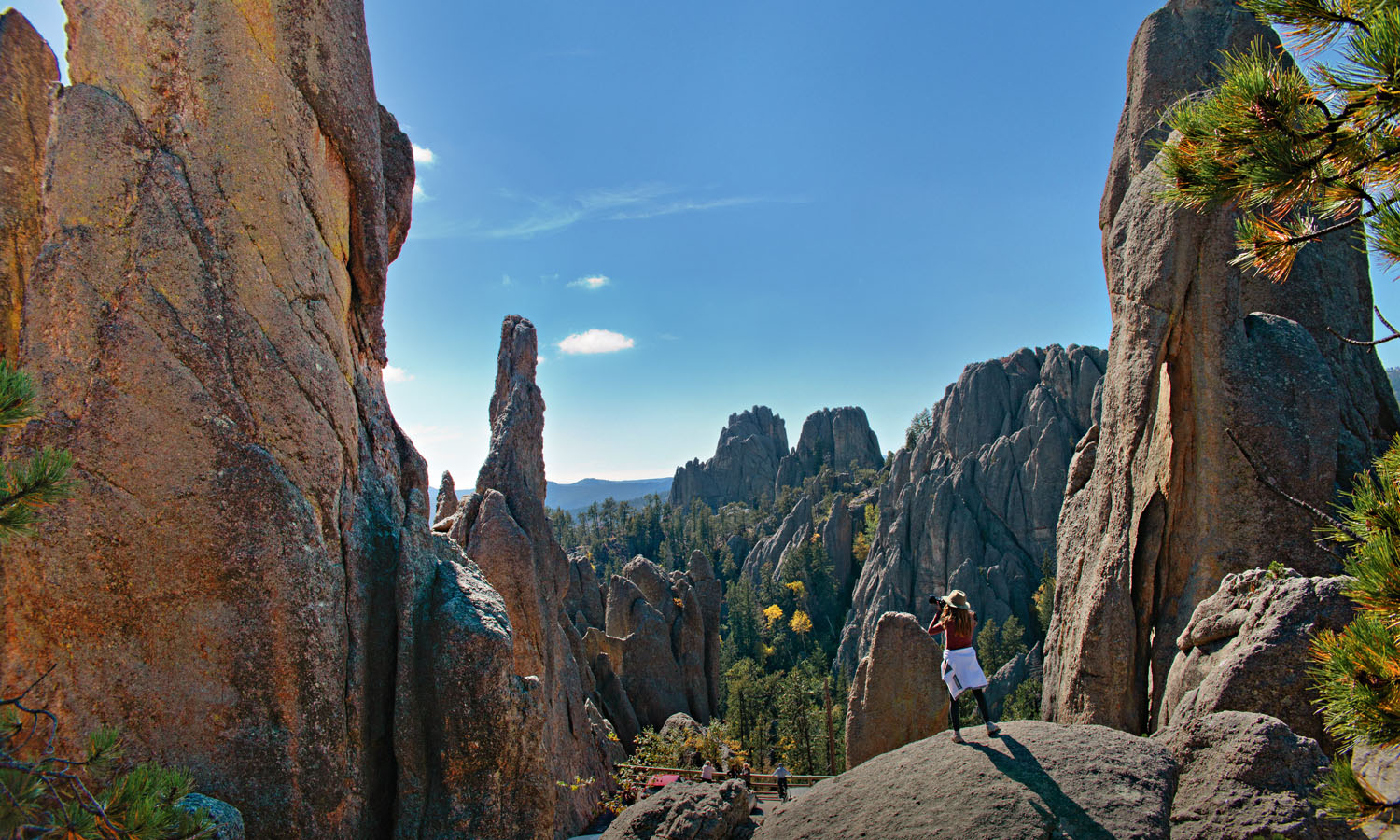
South Dakota is not short of surprises. Best known for the presidential heads carved into the mountain at Mount Rushmore, its other attractions are unfamiliar even to most Americans. It has an ancient inland sea – now a maze of layered, fossil-rich chasms – known as the Badlands. It has the biggest motorcycle rally in the world that incorporates two weeks, each August, of leather, burn-outs and hair metal and doubles the state’s population. There’s fly-fishing in Spearfish Canyon, rock-climbing in the aptly named Needles, Indian history to discover, horse riding at Ghost Canyon Dude Ranch and, of course, the Buffalo Roundup, which rates high among the many highlights of my trip.

I leave invigorated and laden with treasure: Lakota arrow heads, Deadwood playing cards, lucky charms and a hunting hat that proudly proclaims South Dakota as Big Cock Country. My camera’s memory cards are full of big prairie landscapes and wide, open American faces. My notepads overflow and my nose is buried in a Crazy Horse biography. It’s a good sign when an unfamiliar place follows you home. And it’s a nice bonus to have a swaggering sentence to hand when you’re asked what you got up to in the States. Rounding up wild buffalo in South Dakota sounds better than a lost weekend in Vegas, and it’s definitely more memorable.

Adrift on the Ganges

We are standing on the bridge of the Ganges Voyager looking out over a sunlit morning on the sacred river. “When we talk about Mother Ganges we always get sentimental,” Captain Biplob Majumber warns. “It’s because the Ganges River brought us life and she nourishes us. I’ve made this voyage many times but it’s so beautiful and I never get tired of seeing dolphins jumping in the morning.”

Leaping dolphins are not something I had expected on a river infamous as the fifth most polluted on our planet. But this is India’s River of Life after all, and Mother Ganges has a habit of coming up with the unexpected, just as India itself rarely fits into the clichéd pigeonholes that people instinctively try to slot it into: noisy, crowded, impoverished, dusty…


With the great glowing Ganges floodplains spreading endlessly out from the riverbank it seems I can see halfway across India and yet few of those clichés fit the view. It is a perfectly peaceful country morning, with little to break the silence beyond the thrum of the engines. Smoke from a distant hamlet curls into the air like a swaying cobra. While life in these rural villages would be far from luxurious, the rich alluvial land guarantees sufficient food and an agricultural lifestyle that is infinitely less desperate than city life down the river in Kolkata.

Only one of those clichéd adjectives seems to fit the scene: there is dust in abundance. It rises in soft billowing clouds around the legs of oxen as they haul carts along the riverbank and it puffs around the ankles of women as they carry water home. During the monsoons the Ganges carries more water than all the great rivers of western Europe combined, yet it seems impossible there could ever be enough to dampen all this dust. It thickens the air as the gleaming Ganges ripples along its 2525-kilometre journey from the source at what the Hindus call the gomukh (cow’s mouth) to the world’s biggest delta in the Bay of Bengal.

Bikash ‘Vick’ Mehra, one of the guides on the Ganges Voyager, helps to untangle my mental map: “The Hooghly River, which runs through Kolkata, is actually a distributary of the mighty Ganges, but is considered by us Hindus to be part of Mother Ganges herself. We call this state Golden Bengal because these great swaying fields of rice feed most of our country.”

In fact a BBC programme on the river estimated the Ganges supports almost a tenth of the world’s total population. Sunburned crops, shimmering dust, glowing terracotta temples, the orange tint of flame from the cremation ghats (riverside steps) – there could be many reasons why this area is referred to as Golden Bengal.

It is said 30,000 bodies are cremated on the banks of the river each year and that an estimated 200 tonnes of half-burned flesh slips into its waters. It has also been said the man-eating tigers of the Sundarban islands, lying downriver from Kolkata, developed their taste for human flesh courtesy of the rather gruesome barbecues that are prepared on a daily basis in the city of 15 million.

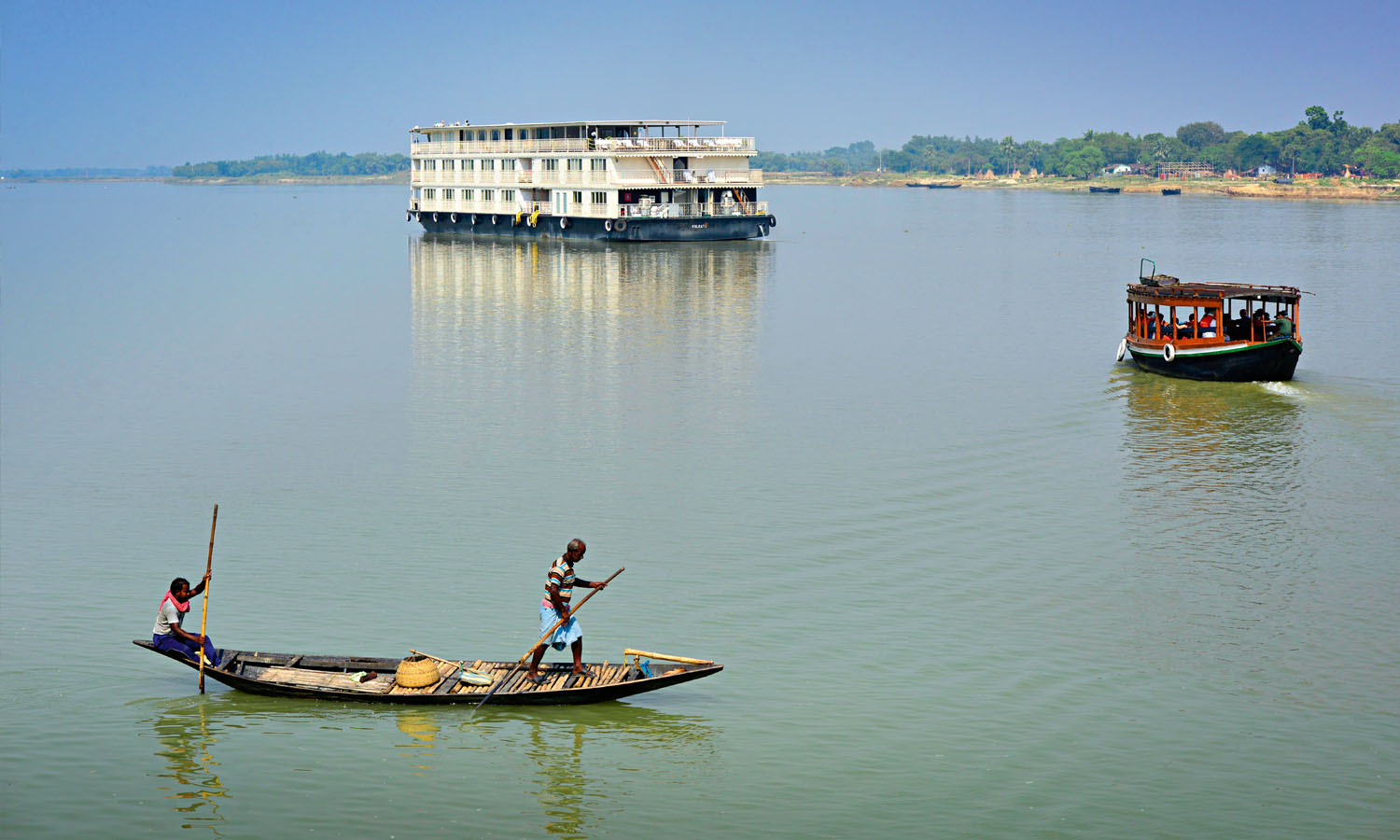
The 56.5-metre Ganges Voyager made her maiden voyage upriver from Kolkata in 2015 and has become a big hit, particularly with discerning Australian travellers looking for a unique insight into India.

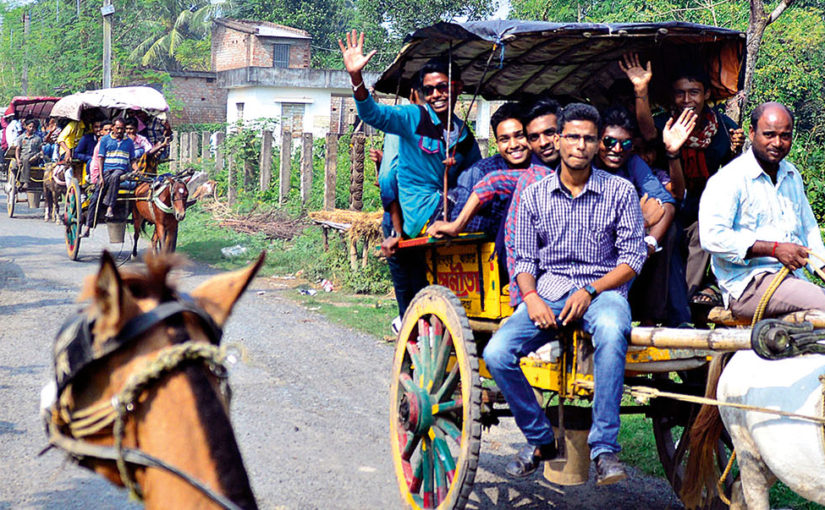
Our guides unravel India’s complex colonial history as we visit the Portuguese stronghold at Bandel (founded some time in the late 1500s) and the French trading post at Chandannagar (1673), and sail past the battleground that saw the rise of the all-powerful British East India Company in 1757. We ride in a convoy of cycle trishaws to the spectacular terracotta temples of Kalna, and in a wagon train of horse-drawn carts to the old mosque at Murshidabad where our guides tell us bloodcurdling legends about the cannibal princess addicted to the livers of small children. We hear other, more recent melancholy tales about the downfall of the great family that owned the Hazarduari Palace with its thousand doors. “The latest descendent of this once-mighty family can now be seen riding his bicycle around town,” says Vick.

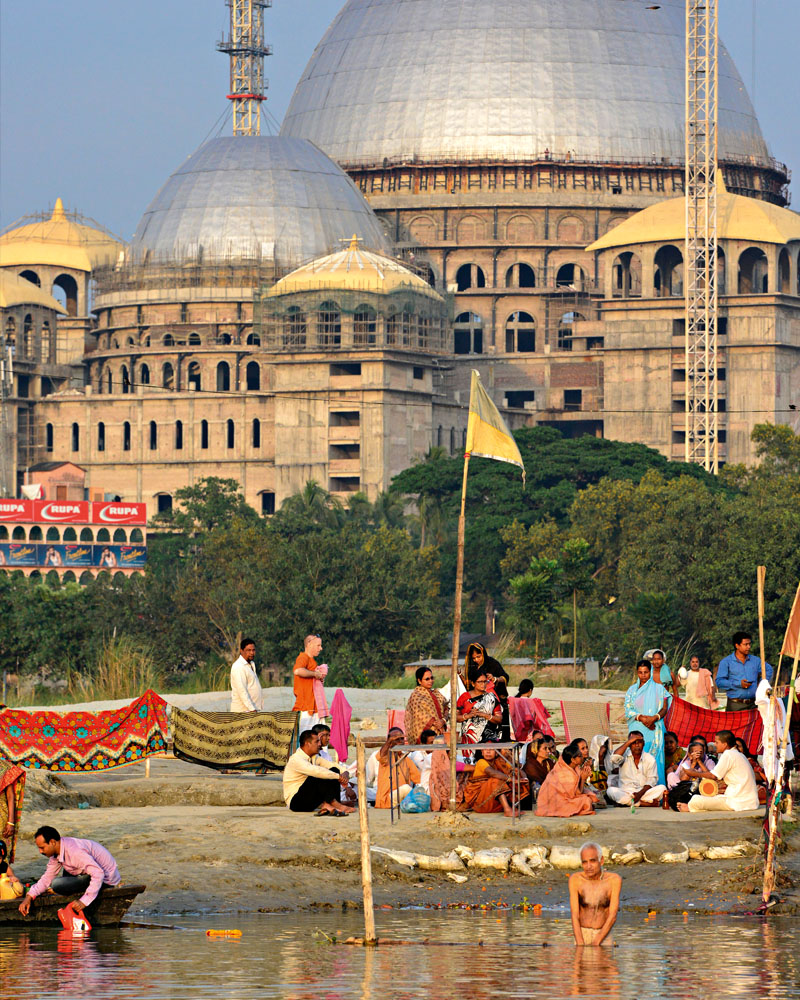
Meanwhile, more recent family fortunes are coming into karmic circulation in West Bengal. At the spot where the Jalangi River flows into the Hooghly, Alfred Ford, great-grandson of Henry Ford, has donated a fair share of his inheritance to what is being heralded as the biggest temple of worship of any denomination in the world. Already a place of pilgrimage for the International Society for Krishna Consciousness – commonly known as the Hare Krishnas – when complete the Sri Mayapur Chandrodaya Mandir complex will rival the Vatican in size. When we arrive at sunset, Indian workers are still hard at it, high above our heads on a dome that already soars to almost one and a half times the height of the Taj Mahal. With jackhammer operators wearing flip-flops, hardhats a rarity and insufficient floodlighting on the 106-metre-high dome, it seems labourers are working around the clock in conditions that might have been considered shocking in the USA even at the time when the great Henry Ford – himself an enlightened industrialist – opened his first production line.

“To us Indians it’s bizarre to visit Mayapur,” one visitor tells me. “Sometimes we come here for a day trip because it’s interesting to see so many white aliens dressed like Indians. As a place of pilgrimage it’s too much like a sort of spiritual Disneyland for our tastes though.”

After the historic sights of the river it seems most of the Ganges Voyager’s passengers feel the same. After each tour the little motor launch delivers us back to a world of chilled face towels, welcome drinks and an opulence that contrasts powerfully with living conditions on the nearby riverbanks. Our suites are as big as the most expansive of hotel rooms and the Governor’s Lounge and observation deck offer ample room for guests to mingle without crowding. The ship’s decor is clearly a nostalgically doffed hat to the colonial era and the meals served in the East India Dining Room are a fusion of Indian cuisine and Western dishes.

The majority of the guests join both of the daily excursions – unless they’re battling Delhi belly. (Even on the most luxurious of Indian trips, this isn’t an uncommon occurrence.) Since we are divided into two groups, however, it rarely seems as though we move in too much of a crowd. There are occasions when it’s possible to slip away and simply drift through the backstreets of riverside hamlets and marketplaces. We stop to sip chai with old men or to try the irresistible street food that, despite fervent warnings from the crew, is a calculated risk worth taking if you want to get the best out of any Indian trip.

As always, by the time we come to the end of the voyage it is the villages and Indian people, rather than ostentatious monuments, that have most captured our imaginations. At Matiari we walk around a community foundry where villagers work in noisy, dusty, dangerous conditions that bring to mind images of Dickensian London. Near Khushbagh we stroll through agricultural lands rich with rice, corn, eggplant, papaya, banana and more than a hundred varieties of mangoes. Everywhere we are greeted by smiles, words of welcome and countless invitations to drink chai.

After the rural allure of Golden Bengal it’s a rude awakening to sail back into the maelstrom of old Kolkata once again. Standing on the viewing deck, sipping gin and tonic and watching colourful groups of bathing pilgrims, it is certainly easy to understand the sentimentality that Mother Ganges provokes in the hearts of her children.

How to Cook the Perfect Biryani

When people think of Indian food, they often picture rich curries lying in a bain-marie. But what they don’t see, beyond the soft orange tones of their butter chicken, is the gentle yellow street lamps, the warm welcomes of the people and the varied histories of the different regions that create such timeless and unique dishes.

Hyderabad, grounded in history as the notorious pearl and diamond-trading centre of the East, was once one of the richest cities in India. And Osman Ali Khan, the last of seven Nizams to rule the city, was among the richest men in the world during his reign that spanned from 1911 to 1948. As a result, this southern Indian city is known for its lavish palaces, mosques and monuments, along with its rich and fragrant dishes generously seasoned with spices found in the country’s north and south. Add Persian, Arab and Turkish influences to the fresh, local ingredients and you have authentic and often decadent Hyderabadi cuisine.

With the city boasting more than 6.8 million locals, the walkways are frenetic, but there’s nothing to stop me from sampling some of the region’s finest street dishes. I snack on almost everything I lay eyes on, including lukhmi (small, square-shaped meat pastries) and mini onion samosa. I polish off the southern version of dahi vada (lentil dumplings in yoghurt flavoured with curry leaves and mustard seeds), and wash it down with a light buttermilk lassi (dairy-based drink) infused with rose syrup and blackened by cooling chia-like seeds.

I also devour the favourite local street snack mirchi ke bhajiye, a stuffed, deep-fried green chilli slathered in chickpea batter. It is delicious and only mildly spicy. Another local specialty is marinated mutton cooked on a hot granite slab. The meltingly tender meat bursts with flavour, despite only being served with lime wedges and red onion.

Although Hyderabad’s street food scene is an inspiring and delicious experience, the famous biryani (fragrant rice) is what I have really come to try. Regions around South Asia cook biryani quite differently, although it usually features chicken or mutton, and Hyderabad’s version is akin to the grandfather of this loved dish. Alchemy must occur within the pot, as the rice and meat are cooked together, but neither is overdone or undercooked. Delicate and fragrant, both ingredients retain their own flavours, while sharing a little of their taste to enhance the other.

As the most popular dish in Hyderabad, you’ll find biryani served almost everywhere, from local vendors to high-end restaurants, but the basic recipe remains the same, with the age-old traditional formula brought in by Muslim travellers centuries ago. I’m lucky enough to be invited to dinner at Nawab Mehboob Alam Khan’s the residence of – Hyderabad’s culinary king – for an authentic home-cooked feast and his take on biryani.

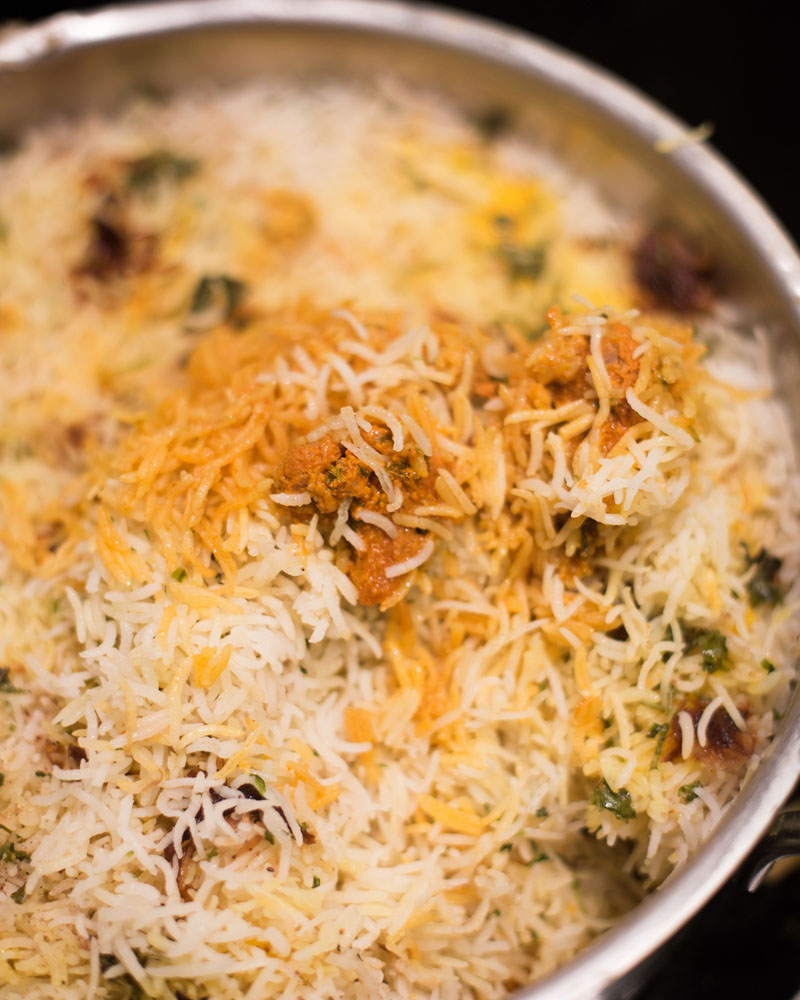
The deghra (traditional copper pot) his dish is cooked in is so big two people are needed to haul it into the room. A large knife is used to break the ‘seal’ on the lid and reveal the freshly cooked mutton and rice inside. This process, known as ‘dum’ cooking, sees dough clamped over the top to ensure no steam can escape. I’m told that once the pastry becomes browned and puffed the meal is ready to eat.

The Hyderabad biryani is normally served with a green chilli curry full of complexity and more akin to local southern cooking than to the Mughal-influenced food of the north. But for me the biryani is best served plain, as it needs little else. Especially Nawab Mehboob Alam Khan’s variety, which is delicious, moist and has lovely texture.

Hyderabad manifests the diversity of India’s cuisine, combining careful, classic cooking with quality ingredients to make meals that satisfy everyone, whether an individual eating a single samosa on the streets, a family dining on warmed biryani or a nation brought together by a rich, culinary landscape.

Anjum Anand’s supermarket range of sauces and daals called The Spice Tailor is available at Coles and Woolworths.
thespicetailor.com

ANJUM ANAND’S HYDERABAD BIRYANI 

Serves 4

INGREDIENTS

12 medium onions, finely sliced
500g lamb, lean cuts of leg with bone are ideal
1 small lemon, juiced
12 green cardamom pods
6 cloves
2 x 5cm cinnamon sticks
Handful chopped coriander (leaves and stalks)
Handful chopped mint leaves
200g chapati flour or strong bread flour
500g quality basmati rice
Large pinch saffron strands
4 tbs full-cream milk
Oil to fry

Marinade
½ tbs green papaya paste 
(grate the flesh only)
½ tsp red chilli powder (or to taste)
1 tsp garam masala
¾ tsp shahi jeera (black cumin seeds),
lightly pounded
10g ginger, made into a paste
4 large garlic cloves, made into a paste
110g plain yoghurt
Salt and freshly ground pepper

METHOD
1. Heat 5cm oil in a medium-sized saucepan and deep-fry the onions until just brown and crisp. Remove with your slotted spoon and place on paper towel. Reserve the oil.
2. Wash the lamb well. Prick all over with a knife and place in a bowl. Add all the marinade ingredients, as well as 2½ tbs lemon juice, 3 tbs of the onion oil and two-thirds of the cooked onion, crushed using your hands. Also add half the cardamom pods, cloves, cinnamon, coriander and mint. Mix with your hands to combine the flavours. Cover and leave to marinate in the fridge for a few hours or overnight.
3. When you are ready to cook, place the meat in a heavy-bottomed pan and allow it to reach room temperature. Make a firm dough with the flour and around 150ml water. Roll into a sausage; it should be as long as the circumference of the pan.
4. Wash the rice really well and soak for 20 minutes. Meanwhile, bring a large pot of water to boil with the remaining whole spices, herbs and 2 tsp lemon juice. Season well (it should taste salty).
5. Toast the saffron in a dry pan until crisp then add the milk. Bring to a simmer and cook for 90 seconds. Take off the heat.
6. Add the soaked rice to the water, return to a boil then start timing. The rice needs to come off in three minutes. When done, drain the rice, catching some of the water in a bowl. Spoon the rice over the meat.
7. Add 100ml of hot rice water to the saffron along with another 4 tbs of the onion oil and pour evenly over the rice. Scatter over the remaining onions. Place the lid on top and seal with the dough. Place over moderate to high heat and, after seven minutes (you might be able to hear the steam building up), turn the heat right down. Cook for 50 minutes. Turn off the heat and allow to sit for 10 minutes.
8. Pull off the dough and serve the contents slightly mixed through.

Buon Appetito!

During my time as a motorsport journalist, I knew exactly where to go for a good lunch. With any of the Italian teams, although supposedly racing, they always had time for bread, olive oil, espresso and pasta. They troubled to cart these things halfway across Europe, and I remember being impressed. Clearly these people knew something about food.

I’m less convinced now. Not after Sicily.

Hold your stones, foodies! I speak from bitter experience.

The trouble started at the airport, where the car rental guy suggested I wouldn’t find a feed along the autostrada at night. Fearful of starving in the wilds, I grabbed a pizza at a Palermo servo. It was thick and square and filled with enough boiling mozzarella to anaesthetise one’s mouth for dental surgery. Chewy isn’t the word – it was like eating a hot shoe with salami on top.

That was as good as it got. Next day in Noto, my beautiful hillside base of 20,000 souls, I thought I’d find a charming trattoria for a cheap, relaxed lunch. Naïf that I am! Sure, I did come across a cosy restaurant down a cobbled alleyway that offered cucina tipica Siciliana. Just one problem: Ristorante Meliora was closed until the evening.

Noto was deserted. A beggar woman came to me, making an eating gesture. At last, a Sicilian who was thinking about food! She’d probably been looking for a restaurant for years. About 150 of them by the looks of her. I wanted to cry. If she was still struggling after all this time, what hope did I have of getting a meal?

I’m used to swathes of southern Europe being closed on random weekdays, but this was too much. I couldn’t even find a place claiming to serve food on days when the owners did get out of bed.

Was a bowl of pasta, or, God forbid, a risotto so much to ask? This was Italy, wasn’t it?

At last a good samaritan led me to a sort of pie shop, which was dark and echoed. Its owner just stood there. It was rather like the shopkeeper sketch in Little Britain, but I managed to emerge with a few take-away arancini and something resembling a Cornish pasty, but filled with spinach and ricotta. It was viciously dry. Yes, another truth Italy’s culinary apologists don’t want me sharing: Italians are not good at pies.

Exhausted from my lunch quest and refusing to face another restaurant hunt, I went home and made do with a packet of chips and cold arancini for dinner.

The next day, I drove into the hills. I saw amazing things: hermitages in caves, spooky convents, towering viaducts. I explored a deserted for-sale house and found – not kidding – a skeleton on the driveway. And yet, I couldn’t find a ristorante for lunch. Not even a place that would sell me a small take-away sandwich. No wonder southern Europe was in recession; I had a wallet full of cash and couldn’t find anyone enterprising enough to take it.

Grumpily I went back into Noto, where I stumbled on a cafeteria-style place that looked pretty dubious. Behind the glass counter, however, I spotted something resembling tortellini; pre-cooked, slathered in red sauce and dumped in a bowl. Still, it was something I could point my finger at, and I was hungry. It reached my table at an indifferent temperature and had the texture of stale orange peel. Maccas could do pasta better.

That night’s gourmet Italian dinner at the B&B was French bread, Dutch cheese and Greek yoghurt. I know, right?

Then it was the weekend, and I hoped the local eating scene might burst into life. I thought Ristorante Meliora might be worth another try. But no. Closed. A suspicious local leaned out a window and yelled words to that effect, while looking at me like I was bonkers.

I pushed past a portly teenager in a bid to secure a pizza at a place labelled “pizzeria”, but all I found was a woman doing paperwork. She didn’t look up and I didn’t speak Italian. So I pushed back past the large lad (at least someone in Noto was well-fed), and it was another doomed night.

Italy had one more day to leave a good taste in the mouth. I gave nearby Siracusa a chance for Sunday lunch. And lo, I found an open trattoria with ease! Then they cooked me a tasteless, watery ragu and brought me a sizeable carafe of wine I didn’t want, for which they then tried to charge me. Foodie fail.

Look, Italian food is fine when it’s in a Jamie Oliver cookbook. But if you’re planning on going to the country itself, you might want to do a little more research than I did. Unless you’re planning on a weight-loss retreat, that is.

Under The Radar

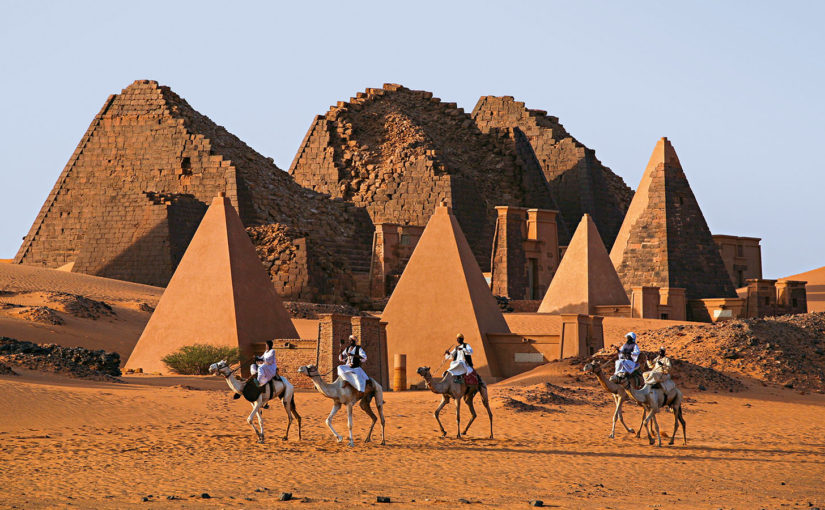
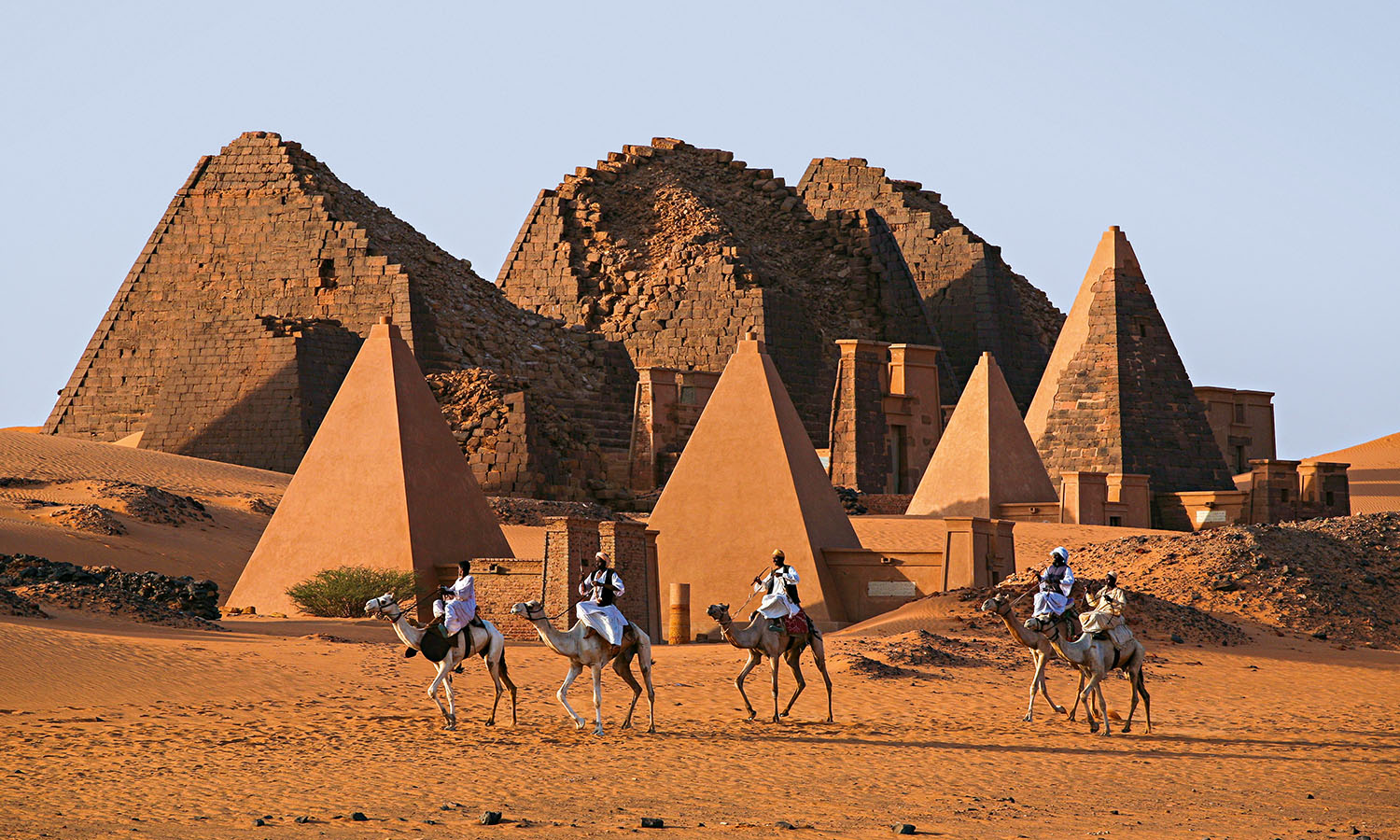
But did you know that on the banks of the River Nile, in the heart of the Sudanese desert sits a collection of some 200 pyramids.

The forgotten pyramids of Meroë were once the centre of the ancient Kingdom of Kush, now modern-day Sudan. Though it was founded around 750BC, Meroë was not named the Kushite capital until 590BC after the fall of Napata. Ruled by the Nubian kings, Meroë thrived along a well-formed trade route that provided resources for the region. This UNESCO World Heritage Site now stands as a reminder this ancient civilisation’s history and is a place of burial for the former kings and queens of the lost nation.

Steam Cleaning

The matronly woman sitting behind the glass-fronted reception booth in Kotiharjun Sauna looks me up and down. Already, I can tell she’s pinned me as a first-timer – just another tourist coming to try out Helsinki’s oldest public sauna – so there’s no point in acting otherwise.

“How does it work?” I ask her.

“Towels cost three euros to rent, and the change room is through that door,” she says, pointing to her left. “Come in and out as much as you like.”

Since I’ve also booked a massage, she offers me a choice. “Male or female?” she asks.

“Female,” I blurt out. “Definitely female.”

She picks up the telephone and makes a call. Upon hanging up, she addresses me once again. “Okay, her name is Frida,” she says, fuelling steamy thoughts of an attractive 
popstar sensuously kneading my back like there was no place else she’d rather be. “She will come and collect you when she gets here.”

I ask her what I should wear. “Nothing,” the woman answers. “Wrap a towel around you when you walk from room to room or if you go outside. Otherwise, you should be naked.” I swear she winks at me.

Inside the change room, the timber lockers look like they might have been the original installations from when the sauna first opened in 1928. I peel off multiple layers of winter clothing then stuff them inside, replacing them with a towel that I wrap around my waist for the walk to the adjacent sauna room. Others forego even that.

The sauna room is dark and clammy and the occupants are mostly older men. I can’t help but notice that all of them are completely nude, some more discreetly than others. When one of them asks me where I’m from – I haven’t said a word, yet he intuitively knows I’m not one of them – I tell him I’m from Australia.

“Oh, Down Under,” he replies. I reflexively cover my crotch.

The man, whose name I don’t ask, suggests I sit on the wooden upper level; the remaining three terraces are bare concrete. “We call it the pipe rack,” he says, referring to the hottest area inside the room.

It isn’t long before sweat begins to drip from my brow and pool at my feet. My nasal hairs also feel like they’re burning whenever I inhale and I start to wonder how long I can last when a tall, slender man pokes his head around the door.

“Anyone order a massage for three o’clock?” he shouts through the mist.

When no one answers, I gather he must be referring to me. “I did,” I reply, hesitantly, “but with Frida,” realising all of a sudden that Frida might be a man’s name in Finland, where they call their sons Kimi and Keke and Lasse.

“Your hotel rang and booked me directly yesterday,” he explains.

“Bugger!” I murmur, perhaps a little too audibly. “I guess it’s me then.”

I’m directed upstairs, where my masseur busies himself layering paper towels over a massage table that’s placed in the centre of an otherwise spartanly furnished room.

“Come. Lie here, face down,” he instructs.

“What do I do with my towel?” I ask.

“We can use it like a blanket,” he says to my relief; it means I won’t be completely vulnerable.

From that point forward, I’m able to relax while the 25-year trade veteran works on my back, neck and shoulders. Thirty minutes later and I’m wishing I’d booked an hour-long session.

When I leave the sauna and step outside, I feel great. My core temperature remains stable, my skin feels clean and my muscles are relaxed. Best of all, any fears I had about romping around naked in a roomful of strangers has been put firmly behind me. So to speak.


An instant itinerary for Amsterdam and beyond

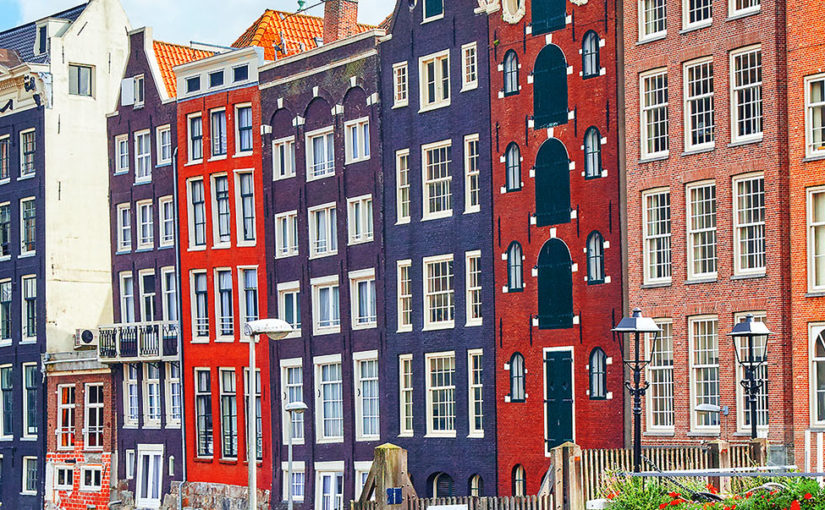
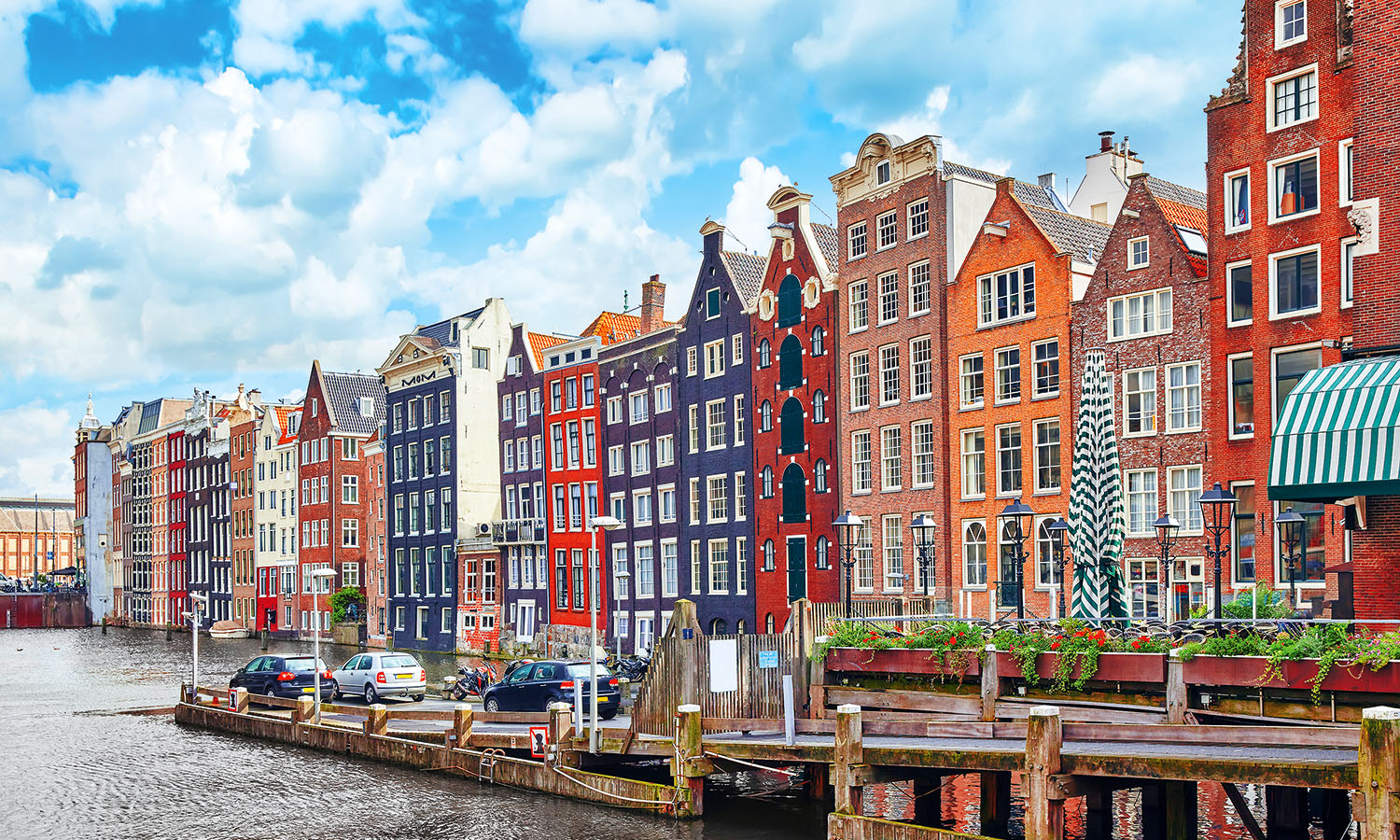
As timeless as it is quirky, Amsterdam is the kind of place romantics put on their bucket list, and the type of destination travellers want to come back to. Ignore the rise of river cruise ships. Forget about the coffee shops. Instead, enjoy the curiosities in a city where you can ride a bike through a museum filled with billions of dollars of art – on your way to dinner at a restaurant whose previous tenant operated red light windows, of course. While Amsterdam’s tick-the-box attractions can easily fill your days, take advantage of the country’s excellent rail services to venture a little further to less visited destinations like Utrecht, Rotterdam and The Hague to truly understand why the Dutch way of life is so desirable.

AMSTERDAM – DAY ONE
Amsterdam is a city conquered by water. Get better acquainted with the waterways by hopping on a 75-minute canal boat tour departing Amsterdam Centraal Station. Next, book in advance to visit Amsterdam’s most important and sombre attraction, Anne Frank House, where the young girl hid during the Nazi occupation of Holland. Afterwards, head to the nearby Begijnhof for some quiet reflection away from the din of bicycle bells. Considered the city’s worst-kept secret, the garden and private chapel is accessible by an unmarked heavy wooden door just off the plaza known as the Spui. When darkness falls, check out the Paradiso, Amsterdam’s cathedral turned live music venue, favoured by performers for its acoustics and atmosphere.

AMSTERDAM – DAY TWO
After an obligatory tiptoe through the tourists at the Bloemenmarkt, the city’s floating flower market, head to Museumplein to get your culture on. Seeing Holland’s best art galleries in a day requires strategy: pre-book and hit the Van Gogh Museum when it opens, follow with a lap of the underrated Stedelijk modern art museum next door, before rounding out the day at the Rijksmuseum when crowds have dropped off. At dusk, visit De Wallen, the city’s old Red Light District. Worthy of a visit but vastly overhyped, bypass the overpriced bars here and head down the cobbled Zeedijk, settling into one of the city’s old brown bars (so named for their wooden interiors) for a tipple of jenever (Dutch gin).

AMSTERDAM – DAY THREE
Keep the party going with a visit to the Heineken Experience, showcasing Holland’s best-known beer export. Along with organised tours and sample beers, you can pick up what is for many the ultimate souvenir: a bottle of beer with your name on it. Not quite your cup of brew? Those looking to fill their suitcases should seek out Amsterdam’s 9 Straatjes or Nine Streets, a stylish concentration of the city’s best local designer stores, art galleries, upmarket cafes and vintage shops. From there, put your pedal power to good use to explore the leafy green surrounds of the picture-perfect Jordaan residential and arts neighbourhood, or if you’re not museum-ed out, head to Hermitage Amsterdam, which hosts satellite exhibitions on loan from the larger Russian collection in Saint Petersburg.

UTRECHT – DAY FOUR
Jump on a train to Utrecht, a university town described by locals as Amsterdam without the tourists. Rent a bike from the tourist office, and head out along the River Vecht past the eighteenth-century windmills, historic country castles and tiny villages for a taste of local life in the Dutch countryside. In the afternoon, return your bike and climb up the 600-year-old, 112-metre Dom Tower, the city’s most famous landmark. After smashing the 400-odd steps to the top, reward yourself with a beer at Oudean, a medieval castle turned brewery on the canal in the historical centre. Finish the day at Olivier, a decommissioned church turned Belgian beer cafe.

ROTTERDAM – DAY FIVE
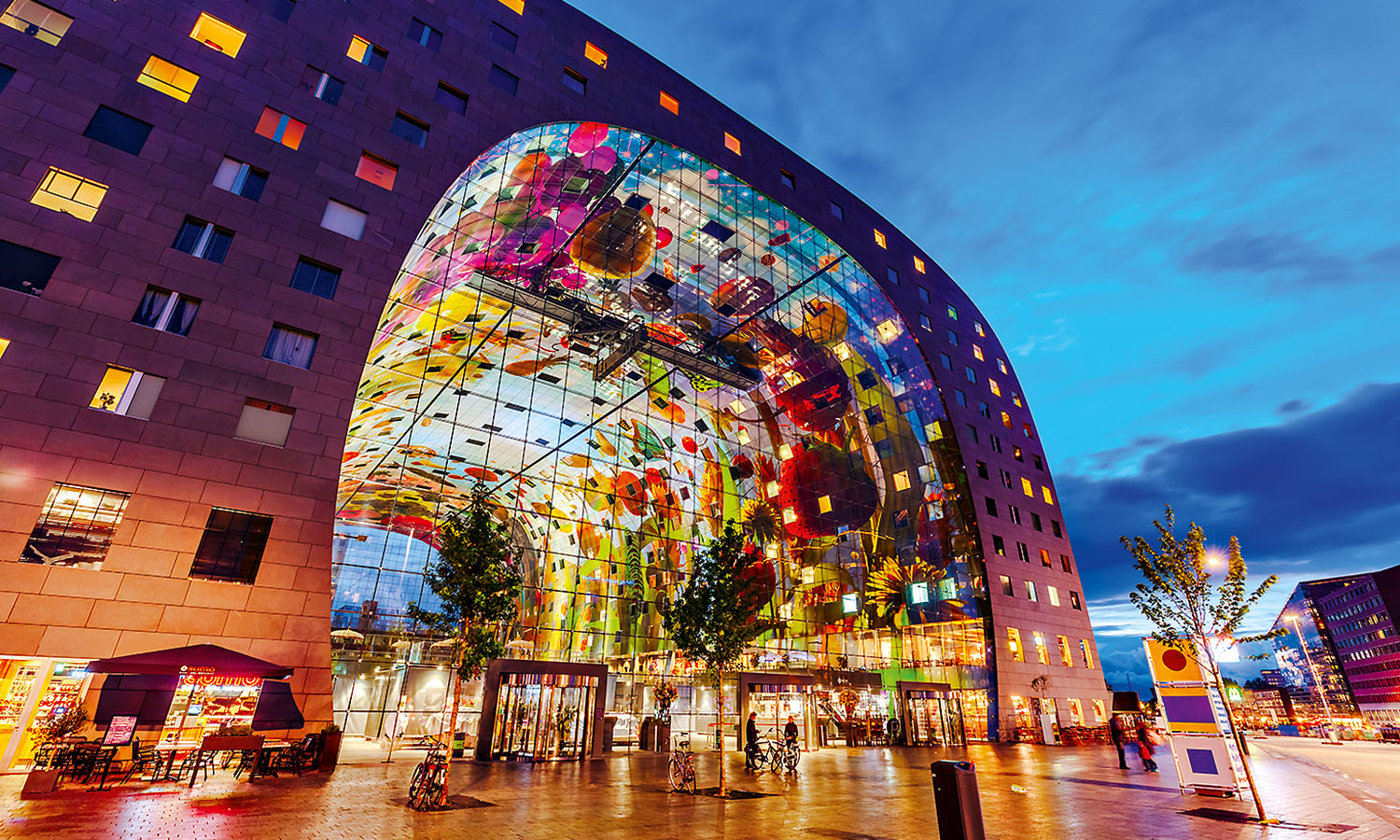
The Netherlands’ most futuristic city is an hour away from Amsterdam, but a world away in modern design. Take in its jarringly post-modern architectural highlights including Erasmus Bridge, the famous yellow cube houses and the enormous tunnel-esque Market Hall. While adventurers can abseil down the landmark Euromast observation tower, those after a slower pace should seek out the Museum Boijmans Van Beuningen. In the late afternoon, stretch out on a terrace for some premium people watching opportunities along the Witte de Withstraat, one of the city’s most vibrant bar and arts hubs. Once you’ve sunk your pint of Amstel, browse the collection of museums and art galleries, keeping an eye out for de Aanschouw, the world’s smallest art gallery, with works changing weekly.

YOUR TRIP
Accommodation
Accommodation can get pricey in Amsterdam. Dorm beds at the Flying Pig start at US$15, while Hans Brinker, which once dubbed itself the ‘worst hotel in the world’ has twin share rooms for US$39. Our pick? Stay in a houseboat B&B on the canals. Prices vary depending on the season, with cheaper, more spacious options located out of the main canal belt with bike rental from US$108 for two.
flyingpig.nl
hansbrinker.com
houseboatrental.amsterdam
TOTAL = US$540 (or US$270 per person)

FOOD AND DRINK
Holland’s best culinary treats are cheap and cheerful. During summer, pickled herring (affectingly known as Dutch sushi) can be sampled for a few euros, while bitterballen (deep-fried gravy meatballs) are a popular bar snack. At 3am nothing beats a fried treat from a FEBO hole-in-the-wall coin machine, but for a filling, sit-down meal, try Caribbean-style Suriname food. Plan on budgeting around US$72 per day.
TOTAL = US$360

TRANSPORT
Return flights from Sydney to Amsterdam with KLM – US$1181
Return train to the airport – US$13
Train ticket Amsterdam to Utrecht return – US$21
Train ticket Amsterdam to Rotterdam return – US$37
Bike hire for five days – US$45
TOTAL = US$1297

TOURS AND ACTIVITIES
Anne Frank House – US$12
Canal Boat Tour – US$37
Van Gogh Museum – US$22
Rijksmuseum – US$23
Stedelijk – US$21
Dom Tower – US$10
Heineken Experience – US$21
The Hermitage – US$21
Euromast abseiling or ziplining – US$65
Museum Boijmans Van Beuningen – US$20
TOTAL = US$252

GRAND TOTAL = US$2179

DESTINATION HIGHLIGHTS
From the city to the coast and countryside, the Netherlands is one of the most liberal and forward-thinking European countries – it’s also an engineering marvel. While most visitors are aware Amsterdam is below sea level, few know that over a third of the country is too.

VITAL STATS
They say there are more bicycles than people in Amsterdam, with 800,000 bikes in the city – but what happens to them all is a mystery to most. Many are dumped, some stolen, but thousands are estimated to end up in the canals each year, so it’s worth not just locking but also securing your rental bike each time you hop off.

WHEN TO GO
Spring (coinciding with tulip time) and summer is peak season for the city, however with most attractions located indoors, Amsterdam is the perfect year-round destination.

TOP TIP
Visiting during summer? Rock your socks at Friday Night Skate. Rollerblading might have fallen out of fashion elsewhere, but lives on in Amsterdam. Each Friday evening during summer the streets are shut down and thousands show up to skate behind DJs in trucks blasting tunes along a kilometre-long route. It’s so popular, there’s also a Wednesday Night Skate in Rotterdam.

FURTHER INFORMATION
iamsterdam.com

The Real Paradise Islands of French Polynesia

Getting lost on an island with just one sealed road and only 45 square kilometres of tropical land is no small feat, but it happens almost immediately upon my arrival at Tubuai. To lose my way, I pole across the lagoon to the surf-foamed outer reef, feeling stately and over-confident on an 11-foot paddleboard.

Polynesians famously explored the far-flung corners of the Pacific using only the stars as their guide. It is one of the most remarkable achievements in human navigation as Polynesia’s perimeters are as broad as Russia and its islands merely dots in a vast blue expanse. But as I glide about Tubuai, idly appreciating the skills of the ancient way-finders, I eventually arrive at an unfamiliar landmark with one pressing question: where the hell am I?

I paddle to land to find a pig, a horse and then a road, which can only be the road. With my back stained in saltwater streaks, I pass giggling school kids who point me further down the way toward the wipa, my family-run pension. In Tahitian, Wipa can mean wind or island, but locally it’s used as an emphatic greeting accompanied by a karate-chop hand gesture, all because of a man by the name of Willson Doom.

Willson is a silver-haired patriarch with a big belly laugh and infectious teenage enthusiasm, and my host at Wipa Lodge. A former big wave surfer, he took up skateboarding in his 40s when he returned to his home island where he would counter the lack of suitable surfaces by piloting his modified skateboard deck down mountain passes at breakneck speeds. “Yeah man,” he assures my disbelieving expression, “seventy kilometres an hour straight down.” In my mind, I could picture it, as a middle-aged man flies past startled livestock, his life hanging in the balance, and the tropical air filled with a bellowing “WIPE-AH!”

Tubuai is part of French Polynesia’s southernmost archipelago, the Austral Islands. If you’ve never heard of them, you’re in good company. Most of Tahiti’s visitors rarely stray from the popular tourist islands (Bora Bora, Moorea and Huahine) where paradise tends to be refined, enhanced and expensive. Loved up honeymooners and cashed up billionaires are catered for with extravagant dining, over-the-lagoon bungalows and attentive staff. Johnny Depp, Barack Obama and Tom Hanks are among the A-listers rumoured to have visited in the previous month alone.
Tahiti is so associated with luxury and glamour it is often dismissed as being exclusively about these things. The reality, however, is quite different. If you’re keen on unscheduled adventure, fresh fish, world-class diving and a blueprint for paradise, then French Polynesia’s abundant beauty offers a variety of rarely visited islands that can be enjoyed on a modest budget.

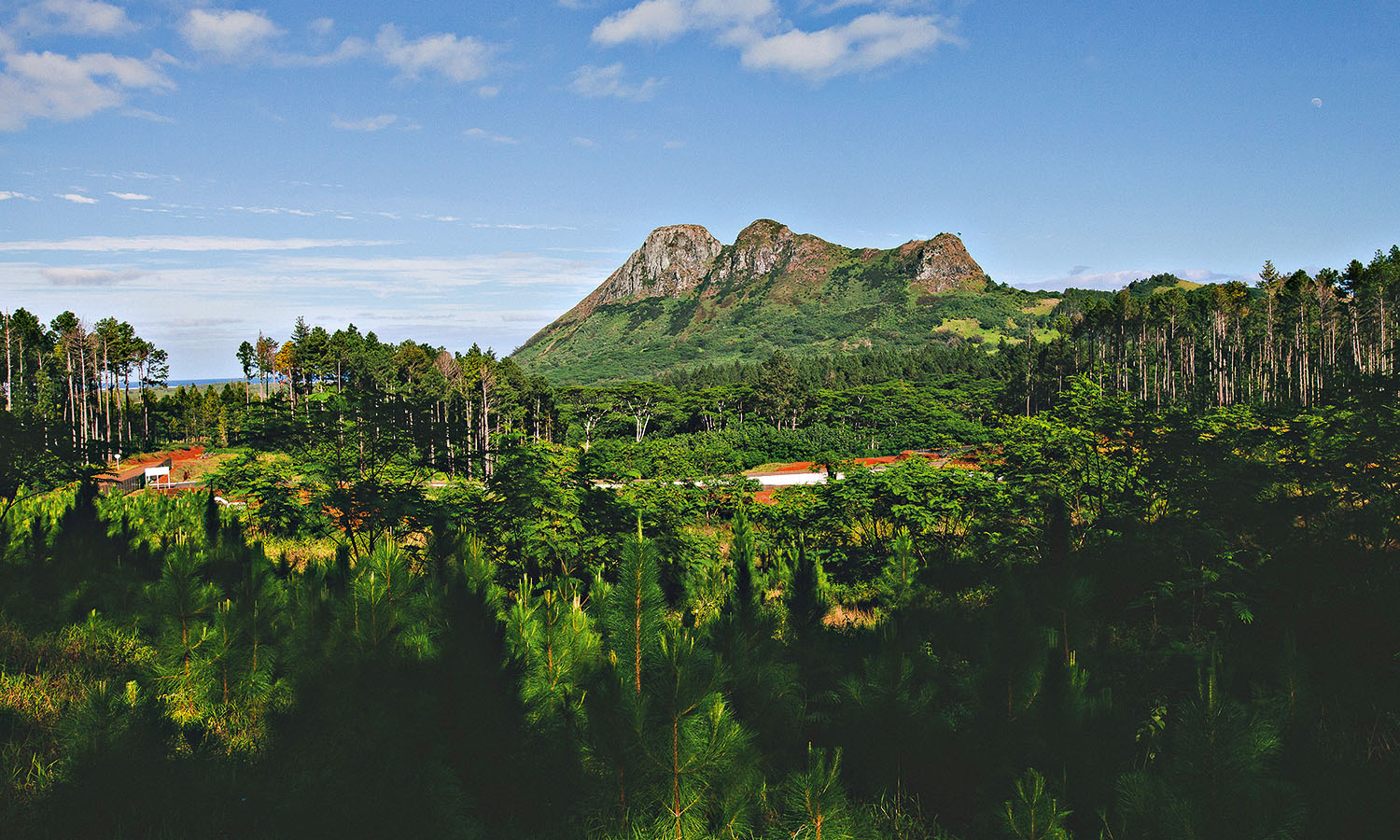
Tubuai, the largest of the distant Australs, has two mountains, a placid lagoon that’s almost twice the size of the island and a handful of small atolls, which hug its perimeter like pilot fish. The people of the island live simply, farming in the rich volcanic soil and fishing for protein and sport. There are just two pensions available to travellers, but I appear to be the only current visitor, which means boat rides out to the atolls for snorkelling and fishing are off. Instead, I’m forced to nose about, talk to strangers and get to know Willson. Turns out, I get to experience a lot more of the island this way.

At Wipa Lodge, I find a rusty paperweight that I’m told is a cannonball from the HMS Bounty, and I feel the heavy weight of history in my hand. It was found nearby at Bloody Bay where a mutineer, Christian Fletcher, and his followers clashed with locals on their ill-fated attempt to establish a rebel Eden. The Tubuians became hostile and managed to send the mutineers packing after five months, but not before many of them had been killed and far deadlier diseases introduced.

The cannonball is not a lone historic artefact here. Fish hooks and other ornaments Willson has found in his yard adorn the lodge, and as my host explains their likely origins, he becomes animated. Suddenly, he leaves the room, reappearing with an antique spear, which he throws expertly in my direction. Before I know it, we’re in his wife’s car gunning down the road. There’s something Willson would like me to see.
We come to a stop in a grassy field, surrounded by mango trees. Willson’s face becomes serious as he instructs me to choose three wildflowers in silence, and then invites me to lay down my offering in a cleared area beneath jungle foliage. We are alone in an ancient marae, a public sacred space used on the island as a place to consult gods and make offerings. Willson adopts an earnest tone and a stage whisper as the shadows deepen. He tells me about the gods, demons and visions, and tells me that all around me, babies were born, elders buried, spirits awoken and gods placated. This is where origin stories and hard-won knowledge have been passed down through the generations.

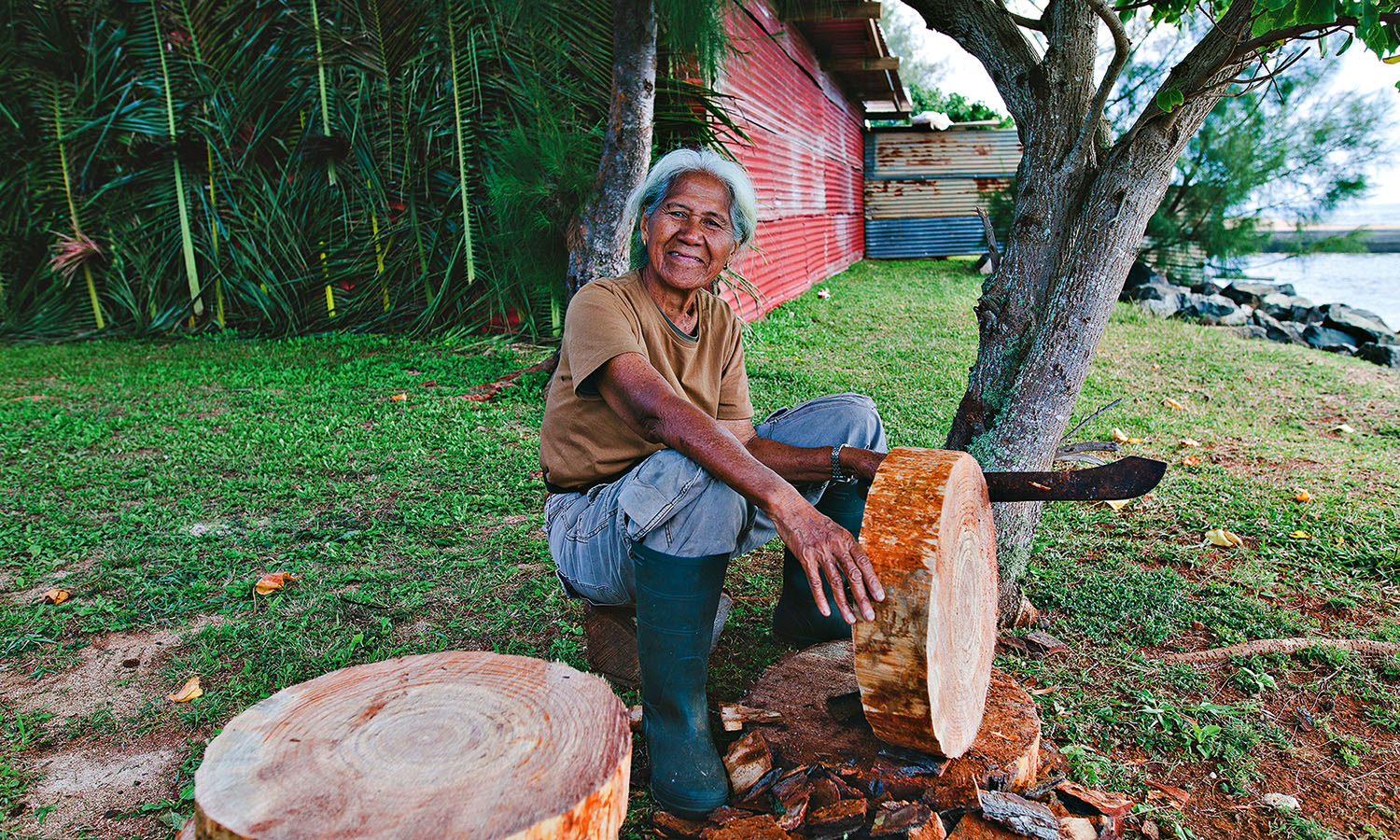
Before I say my goodbyes to Tubuai, I go for one last blurt around the island with Willson, who I discover was chosen to be the custodian of Tubuai’s cultural heritage, an honour that he says has transformed his life. In a final moment of solidarity, he farewells me with a bear hug and a small rock, “A piece of my island for you,” he says. I give him a final wipa salute and the special moment leaves my arms prickled with goose bumps. I leave the island with a newfound understanding of Tahitian culture, spirituality and history, but it’s the personal connection with the charismatic Willson and his passion for his cultural heritage that stays with me.

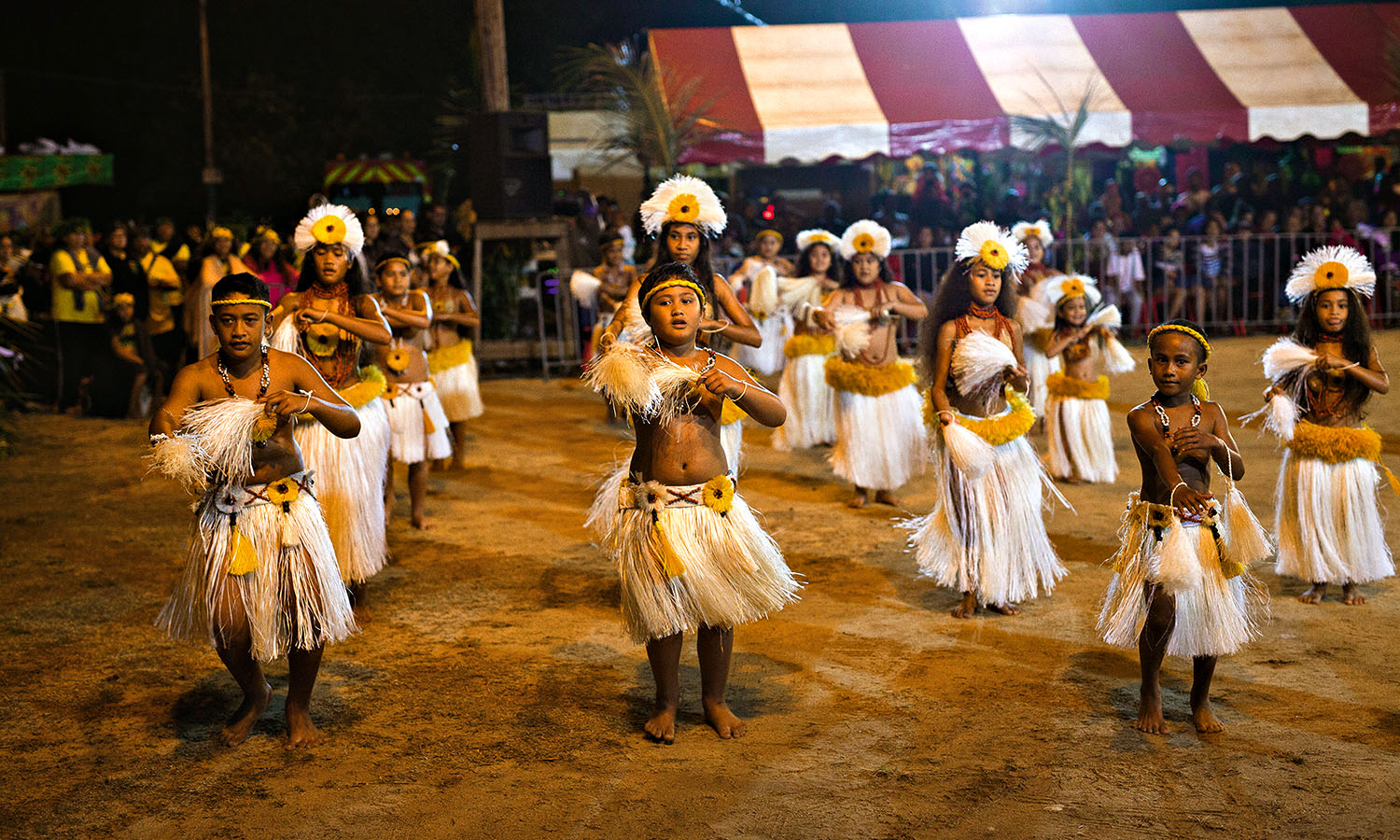
On Tahiti, the Heiva festival is in full swing. It’s one of the longest-running festivals in the world and the two-week celebration of Polynesian culture is celebrated with dancing, music, and sporting contests. I make the most of the festivities, and as I watch Tahitians dance, soar and sashay feathers and plumes across Papeete’s harbor-side auditorium, I quickly understand why European sailors risked rebellion and refused to leave this bountiful island chain.

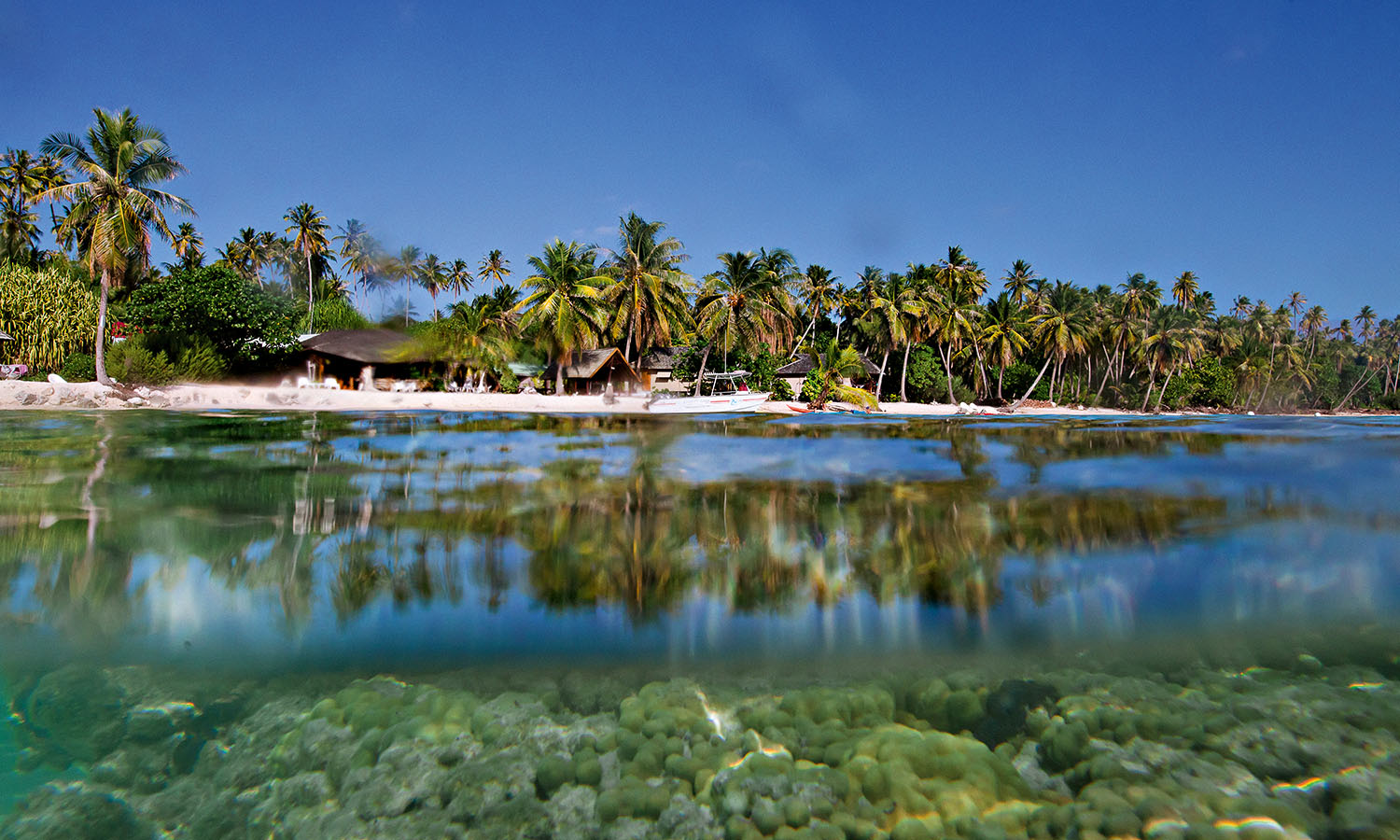
From feathers to scales, I wing over the Pacific to Ahe, an island in the Tuamotu Archipelago. These low-lying, lightly inhabited atolls are known for their world-class diving and fishing. Ahe, a former pearl farm, is shaped like a necklace and encircles a large lagoon. White sands, aquamarine water and arched palms indulge my wildest escapist fantasies. The water is gin-clear, blood-warm and teeming with life and within hours of my arrival I’ve managed to hook a fish, sight a shark and feed a ray.

“The best fishing in Polynésie Française,” a smiling Tahitian tells me, loading our boat with supplies for our diving adventure. Unlike my soloist trip on Tubuai, there are ten of us staying at Cocoperle Lodge, one of only two pensions on Ahe. Everyone is either French or Tahitian, but they adopt me, the only English speaker, like an endearingly dim pet. I’m grateful for the translations but just as happy to let the conversation wash over me.

The boat takes us across the lagoon and through its narrow opening, the gateway to the outside reef. As my French companions and I splash into the iridescent blue and kick towards the inner reef, we see schools of bright fish and a black-tipped reef shark above a rainbow of hard and soft corals. Many dive experts rate the Tuamotus as the best place to snorkel in French Polynesia, as their lagoons and healthy reefs harbour a symphony of colours and creatures.

The fishers on our boat haul in a seafood feast as we attempt to outrun the storm dramatically building behind us. There’s a chance to return after lunch but I’m happy to laze away the afternoon, wading into the lagoon whenever my skin dries and daydreaming about absconding to Tahiti. That’s exactly what my French host, Frank, did in the 80s when he married a local girl and built Cocoperle up from the jungle.

It’s not hard to see why so many have fallen for Ahe over the years. From my hammock in the Tuamotus, the real world seems harried and hard-edged. I wonder if I could live out the rest of my days here, practising French, learning to dance and raising my children as spear fishers. Instead, I settle for bringing a little of Tahiti home with me. Along with my rock from Tubuai and local recipe for salade de poisson cru (raw tuna salad), I leave this pristine part of the world with an enhanced appreciation for the beauty of the natural world and a newfound relaxed attitude to schedules.

As my plane banks, I steal one last look at this beautiful family of islands. They become mere specks in the distance, and I reminisce, in awe of all I’ve experienced on my visit to French Polynesia’s hidden gems. My window’s view is filled with blue ripples of the Pacific Ocean, and I think to myself how wonderful it is that we may be cultures apart, but it’s the very same ocean that laps at my local beach and connects me to my new Tahitian friends.