When I moved to Morocco my mission was to gorge on couscous, befriend a camel and maybe learn something interesting. Armed with that impressively vague itinerary, I spent my days wandering around Rabat’s winding, walled medina, zigzagging past donkey-led carts, rows of fake Adidas tracksuits and pyramids of fiery orange, scarlet and golden spices.
In my chaotic new home, I did learn a few useful things. I became adept at ignoring street harassers slinging nonsensical catcalls, like “you smile like ice cream!” and “I love you, Britney Spears! Sex! Ha ha ha!” I mastered the precarious art of the Turkish toilet while crippled with food poisoning and I even learned how to navigate – however grudgingly – a culture where women are not encouraged to stay out past sunset.
Oh, and I also learned how to shoot a gun. Although I’m American, I’ve always been baffled by my compatriots’ gun toting, NRA-loving tendencies. I never thought I’d hold a weapon more powerful than a Swiss army knife, and in all truthfulness, I’d only ever used the scissor function on one of those things. But in Morocco, I briefly transformed into a good ol’ rifle shootin’ lady.
It happened on a trip to Oulmes, a sleepy mountain village where two classmates and I befriended Hamza, the son of the town’s most prominent family. He spoke French and even a little English, and after months of essentially miming my way through Morocco, it was thrilling.
As my friends and I inhaled the crisp scent of dirt, grass and animal faeces, Hamza sidled up with a rifle. “Shoot it,” he instructed, motioning towards the open field. And instead of asking useful questions like, “why do you have a rifle?” or “are you going to murder me?” I took the heavy, antique weapon in my untrained grasp and unthinkingly pressed the trigger. “AHHHHHHH!” I screamed in tandem with the burst of noise and pressure, the force of the kickback causing me to topple backwards onto the ground.
Lying on the grass, half gasping, half giggling and perhaps now half deaf, I realised that we hadn’t cleared the field, and there could have easily been cows – or even people – meandering through the distant trees. Hamza handed me the empty cartridge, which I clutched in my sweaty fingers, worrying that I had inadvertently murdered an innocent bovine.
I thought my relationship with guns would end with that single deafening bang, but it was not to be. The next afternoon, Hamza piled us ladies into his 80s car, encouraged a singalong to his favourite song (Madonna’s “Like a Prayer”, naturally), and sped deeper into the countryside.
We arrived at a lab el baroud (fantasia) event, a traditional ceremony dedicated to celebrating the relationship between men and their horses. We crowded around a field, where men decked out in flowing white hats, tunics and pants galloped in unison on horses dressed in elaborately embroidered saddles and headgear. As the participants raced side by side, they simultaneously lifted their rifles and shot upwards in a collective bang that probably damaged what remained of my hearing.
Outside of the event, my friends and I shared a holy-shit-why-are-we-here moment, as hundreds of onlooking men gaped in our direction, as if we were the main attraction. Hamza led us past hordes of gawking men – who had likely never seen a gaggle of American women in their countryside before – and towards a gun shooting competition, where participants shot muskets at flying objects. As the objects catapulted into the air, contestant after contestant hit the mark, pulverising their targets.
“Let’s get you in the competition,” Hamza decided, corralling us to the front and ignoring my previously botched attempt at marksmanship.
The organisers seemed baffled that a) we were there in the first place and b) that foreign women wanted to participate, but ultimately decided that c) Hamza’s dad owned the town, so d) we were handed rifles.
It was approximately one million degrees outside (at a conservative estimate), and my matronly skirt stuck to my ankles, my long-sleeved shirt was drenched in sweat, and my hair frizzed out in a humidity halo. I glanced back at the crowd of bemused men, and at Hamza, who wore an “I Heart London” t-shirt. His elbows were certainly not covered.
Fuck the patriarchy, I thought, swiping at my damp forehead and lifting the rifle for “Lauren Mishandles Guns, Act 2”. Someone tossed a clay object in the air, and as it arched up to its zenith, I pulled the trigger.
This time I staggered backwards instead of falling (progress?), but the bullet zoomed at an awkward angle towards the ground, about as far from the target as I could have hoped. There was a collective murmur, and it went without saying that I was not invited to advance to the next round.
I did not, unfortunately, destroy the patriarchy with my wildly inaccurate bullet. But I did gorge on couscous, befriend a ceremonial horse (sadly, no camels that day) and learn a thing or two, which is all I ever wanted in the first place.
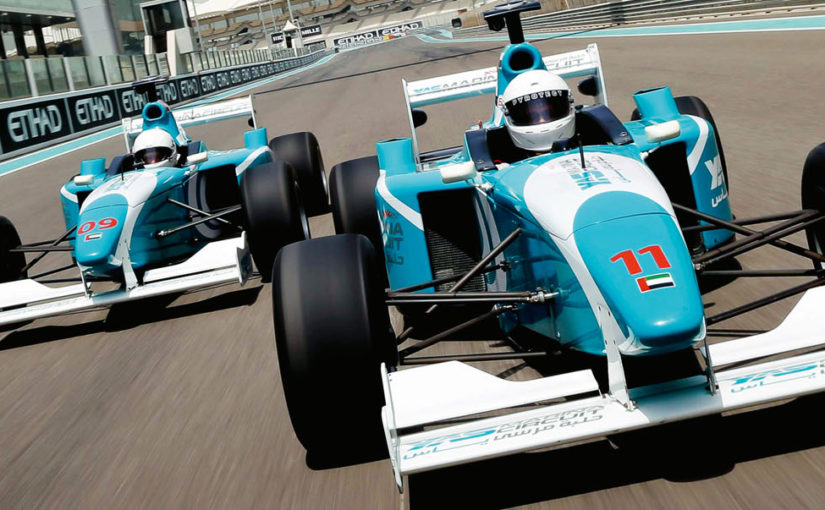
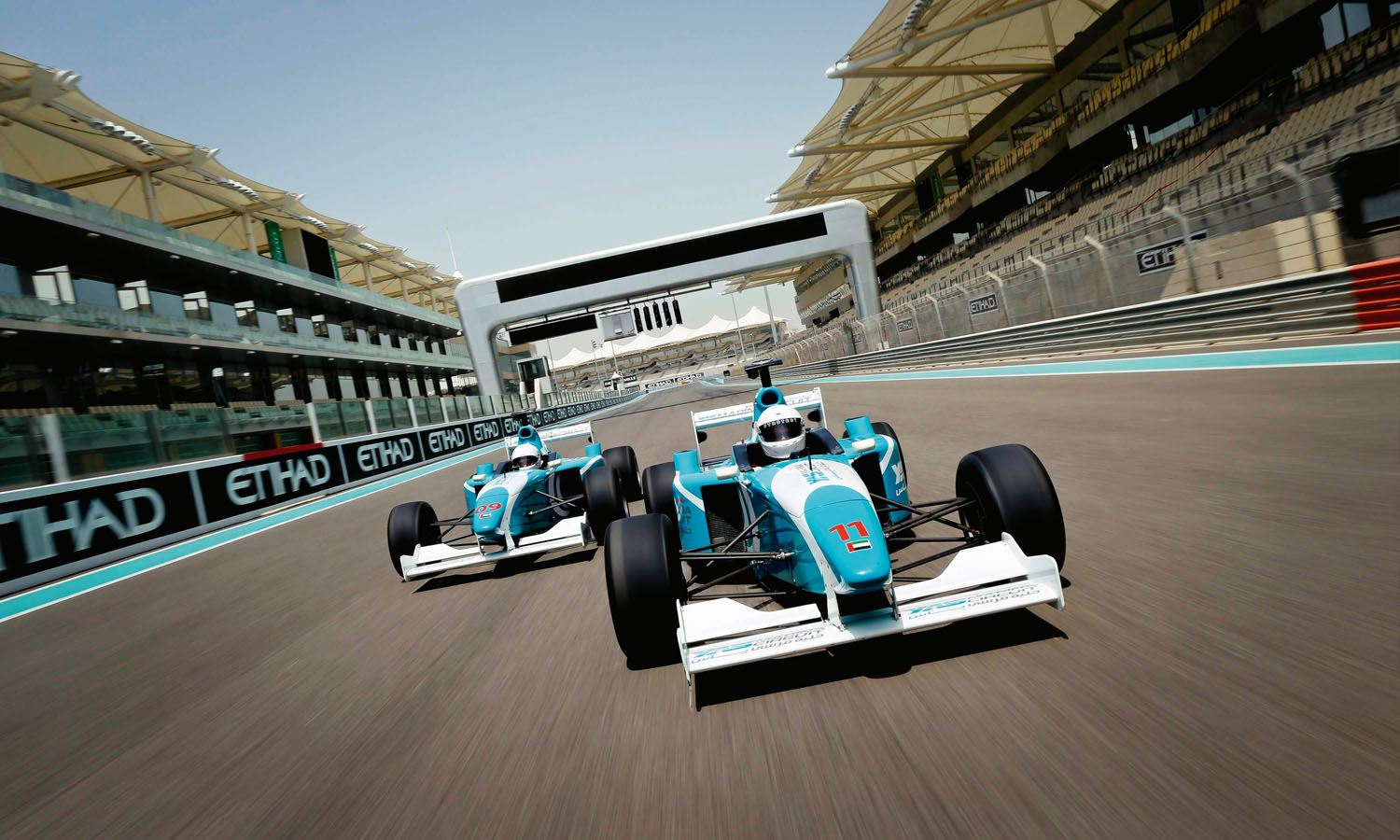
The sudden scream of an engine startles us all as our group files into the pits of Abu Dhabi’s Yas Marina Circuit. We haven’t been here long and I’ve already shot my mouth off about being somewhat of a “Hamilton” on the racetrack. The fact I could even compare winning a backyard go-kart race and a celebratory victory “shoey” of flat VB from a Dunlop Volley to racing a Formula 3000 vehicle on an actual grand prix circuit probably says something about my over inflated confidence. But, as the great Formula One driver Stirling Moss once said, “There are two things no man will admit he cannot do well: Drive and make love.”
It has been a relatively seamless process to this point. We present our licenses, sign some insurance forms I don’t read, and sit through a 30 minute briefing and instructional session. The cars are tiptronic with gears on the steering wheel and just a pedal each for the brake and accelerator.
“It is all about maximising your speed,” our instructor explains. “Brake at the last minute into the corner then accelerate hard out.” His excitement is somewhat infectious.
We pull on our racing suits and walk onto the track. It’s sparkling clean and the luxurious and futuristic looking Yas Viceroy Hotel overlooks it like an alien spaceship lording over its speeding minions. We’re split into two groups, and each of us is partnered with a lead driver whose job is to ensure we stay a safe distance from the others.
I’ve never been much of a car guy and the mention of 3000cc V6 engines means very little to me. Formula One champs use these to learn their craft and as I slide my six foot six frame into the seat, it begins to make sense why professional drivers are so small. It’s claustrophobic and there’s just enough room to grip the steering wheel. My helmet is almost wedged in.
Our instructor signals to start the engines and a slight touch of the accelerator roars my engine to life. Suddenly, we’re off and speeding down the first straight.
The power of the car is extreme and my confidence is harnessed immediately as I over accelerate, causing my sunglasses to blow off my face. As the wind blows up my helmet, I quickly realise that being too tall for these cars causes more issues than just a tight fit.
If it looks like we are moving too fast, the slower drivers are called into the pits to allow the speed demons some real fun and within two turns my compatriot has been pitted to allow me to overtake him. I laugh.
My lead driver is in sight and I spend the next twenty minutes desperately trying to catch him. It’s never going to happen. It’s hard work and despite the car’s incredible responsiveness, it takes concentration to run the gears and strength to turn the wheels. The thrill is intense.
I push the car faster and harder on the straights, each time gaining more respect for the courage of the F1 drivers who reach speeds that are almost double what we’re pushing here today.
My final lap is signalled and I channel my inner Alan Jones, the great Australian F1 champion who’s briefcase I carried across Bahrain Airport when I was six years old (my dad made me do it). I go for top speed down the last straight, but I brake too early into the upcoming dogleg corner causing a spinout. For a split second, I fear for my life.
I’m sweating, laughing and charged with adrenaline. My lead driver pulls up beside me to check if I’m okay. I give him a thumbs up just as my compatriot passes with a raised digit of his own. I deserve it.
Wide-eyed and full of exhilaration, we celebrate our achievements with a drink on the beach. Of course, I declare myself the victor (what was it Sterling Moss said?) and raise a toast to all the others I lapped. The beer on Abu Dhabi’s beach is cold and tasty, and despite my day as an Aussie racing driver, this one isn’t going anywhere near my shoe! Sorry, Daniel Ricciardo.
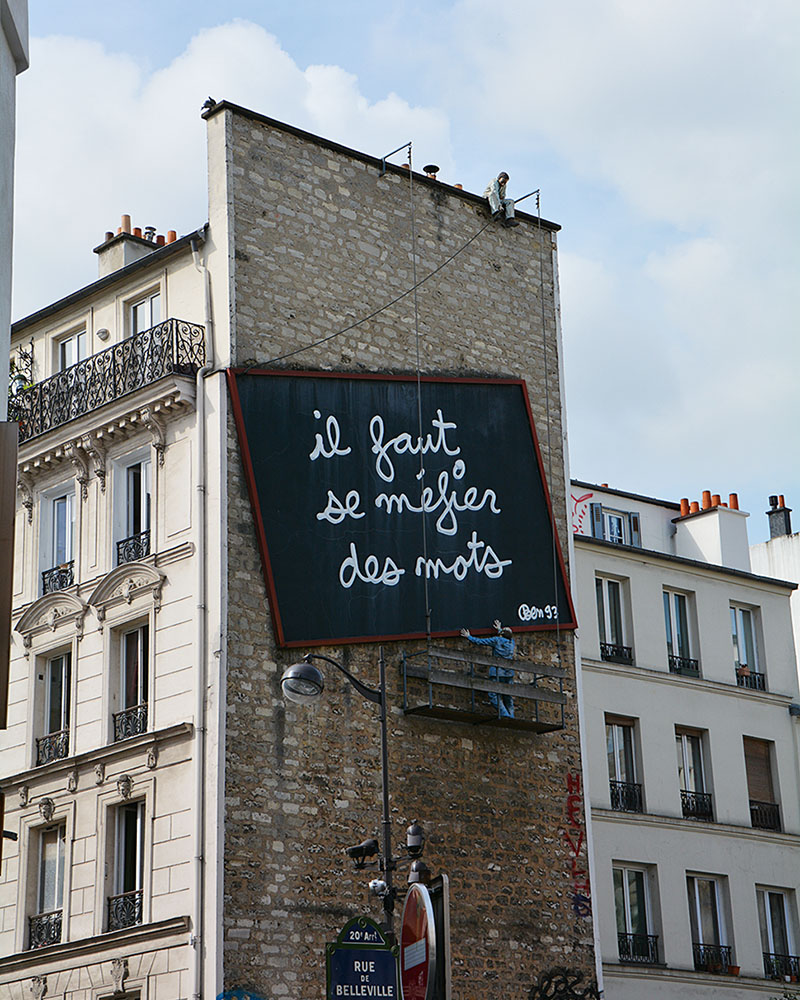
The athletes aren't the only ones having fun at night (we're looking at you, Olympic Village). While the Olympics take over the city during the day, Belleville, located in the 20th arrondissement, comes alive once the sun goes down. There’s little to hint that this northeastern neighbourhood was once a wine-growing village that lured Parisians beyond the city’s walls. Today, maneki neko lucky cats beckon from windows in Chinatown, shishas sweeten the air, art studios abound and cool twenty-somethings cram into cafe patios, drinking Stella and chain smoking. But trace Belleville’s roots beyond the shuffle of gentrification, past its days as a seedy ’burb and you’ll discover it has long been a place to party in Paris at night.
Before Paris swelled and, in 1860, swallowed the popular weekend retreat, the town was praised for its produce and loved most of all for the hundreds of taverns, goguettes (singing clubs) and cabarets that sold cheap wine and good times – two ingredients you’ll still uncover today. Make this your home base and explore the surrounding neighbourhoods that have usurped the Rive Gauche’s (Left Bank’s) claim over the city’s creative types. With inexpensive Vélib’ bike stations every 300 metres, it’s best to set off on two wheels, then switch to foot and métro when booze dances through your blood.
4 pm
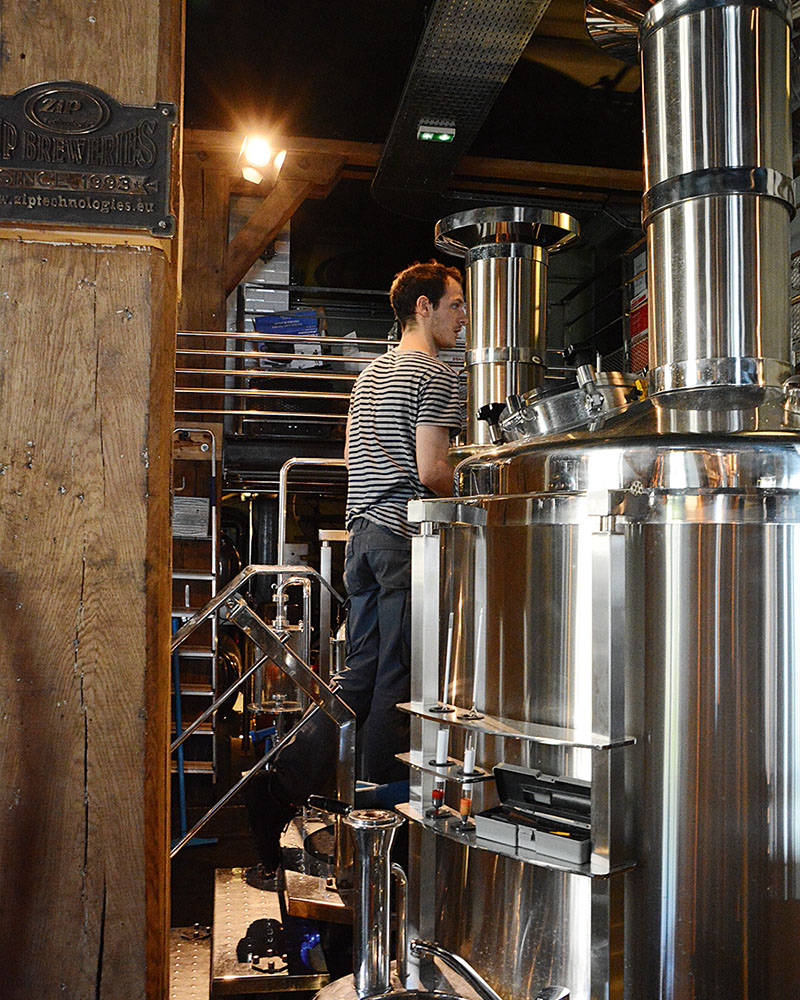
The French start drinking early, so you should too. But that doesn’t have to mean popping a cork. Despite the nation’s love affair with wine, the landscape is shifting, and Paname Brewing Company (PBC) is one of the new kids crafting beer. Hovering over the Bassin de la Villette, a 10-minute bike ride from Belleville, PBC opened its doors in an old granary in June 2015. “It’s like Brooklyn 10 to 15 years ago,” says manager Fred DeBelge of the area, once a bustling port. As one of just 10 or so breweries in Paris, PBC is hoping to break down what DeBelge regards as an impenetrable “beer geek” culture. It seems to be working – there’s usually six brews on the go, the brewery produces 2000 litres of beer a week and seats start filling in the early afternoon. Slurp a pint of Barge du Canal, an American-style IPA, and run your eyes over the shiny vats or the blackboard detailing the preparation of malt. If you’d prefer to sit in the sunshine, choose a spot on the pontoon next to the 150-year-old cherry tree and watch little boats go by.
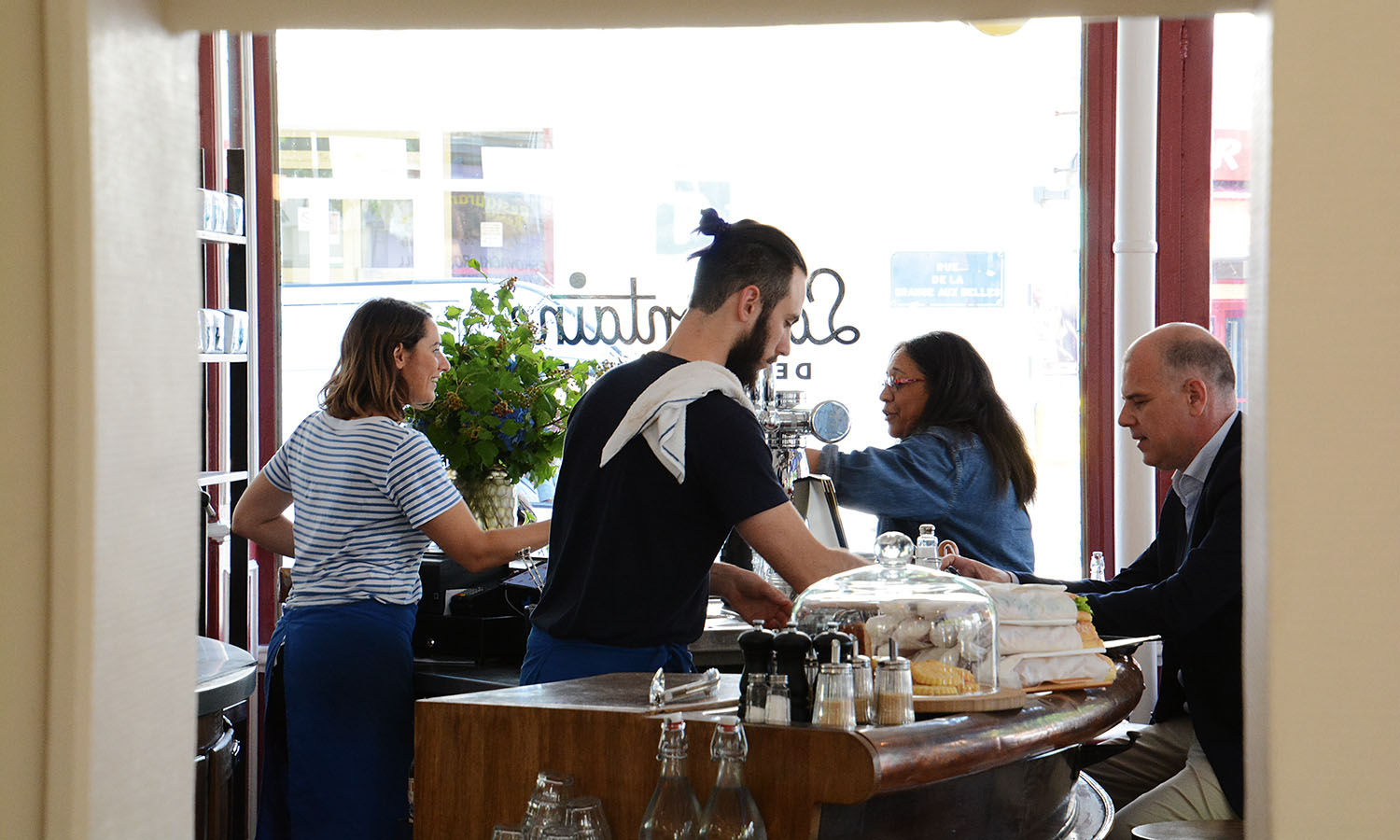
That the term jus de chausette (sock juice) is part of the French vernacular for coffee is rather telling of the quality of the stuff. Uncovering an espresso that wasn’t burnt to bitterness was, up until five years ago, like finding a gluten-free baguette. Now, dozens of cafes serve single origin brews. At the helm is Belleville Brûlerie, a roastery whose shopfront is only open for six hours on Saturdays. The good news is it supplies many of the city’s best cafes, including La Fontaine de Belleville. Just a short walk away from PBC, it’s open later than most, so you can perk up from your pale ale-induced haze. Here you’ll find the best parts of Paris’s famous cafe culture with the added bonus of excellent coffee. Sit among patterned tiles and round tables and watch Belleville dwellers pass by. Don’t be surprised if a hundred-strong troupe of rollerbladers scoots around the corner, only to disappear before you’ve had time to whip out your phone.
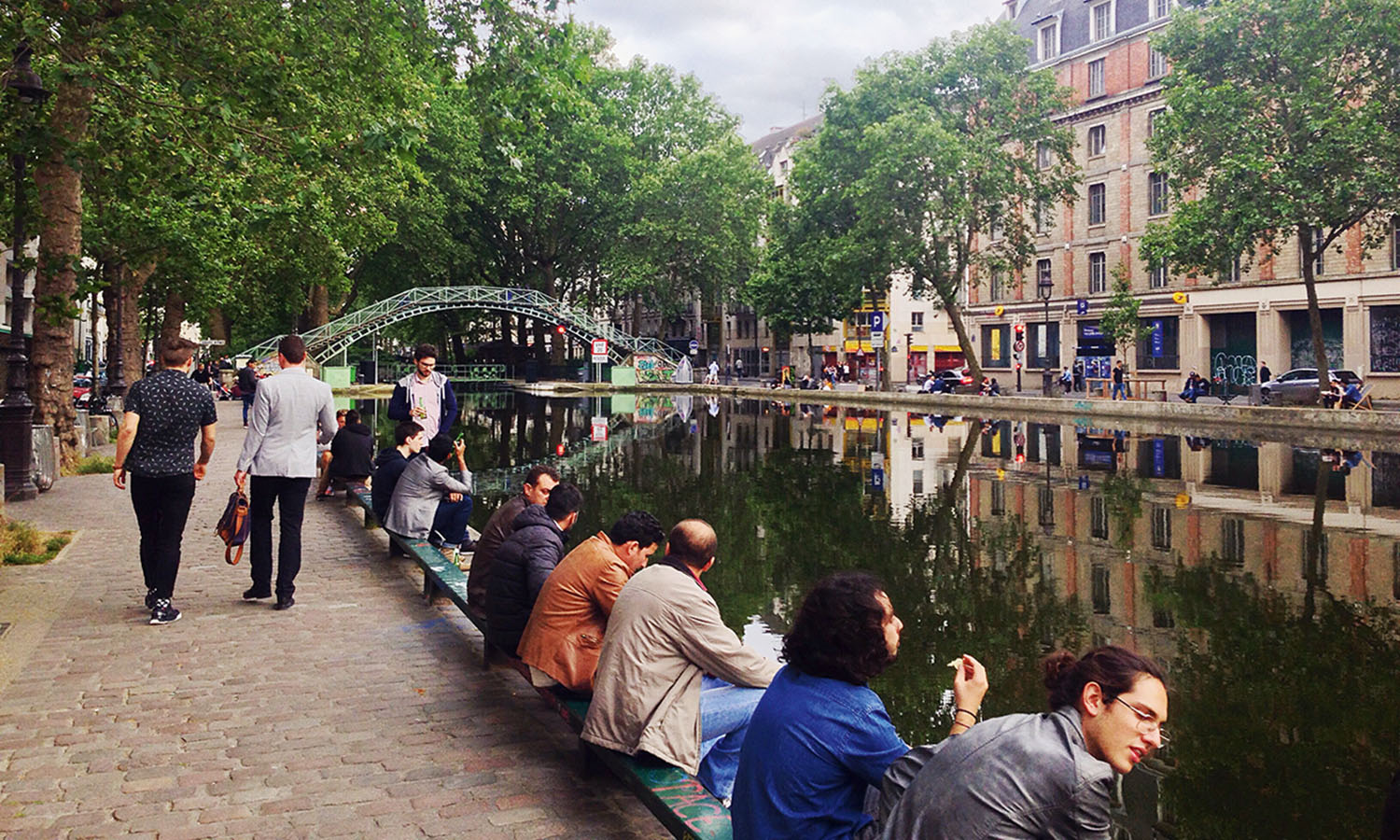
Trade vessels and houseboats trundle along the man-made waterway of Canal St Martin. Just before it dips underground to emerge again at Bastille, its banks are flanked with massive plane trees offering shade from the sun in summer. Wander along, crossing over the iron footbridges and ducking into the boutiques that line the streets on either side. On a warm evening, join the droves dangling their legs over the concrete edge and imbibing bottles of 1664 and inexpensive supermarket vino.
In a country so famous for food, restaurants need to pack a punch to stand out. Stroll from Canal St Martin back towards Belleville and you’ll hit a favourite, Le Chateaubriand. Ten years ago the restaurant lit a fire under the stuffy food scene by making fine dining accessible. Basque-born chef Iñaki Aizpitarte creates a new eight-course tasting menu each day, often marrying typical French dishes such as foie gras with ingredients like miso soup. The experience will set you back €70 but it’s worth every euro. Reservations for the 7pm seating open three weeks in advance, and if you miss out on one of these you can take your chances lining for the second slot.
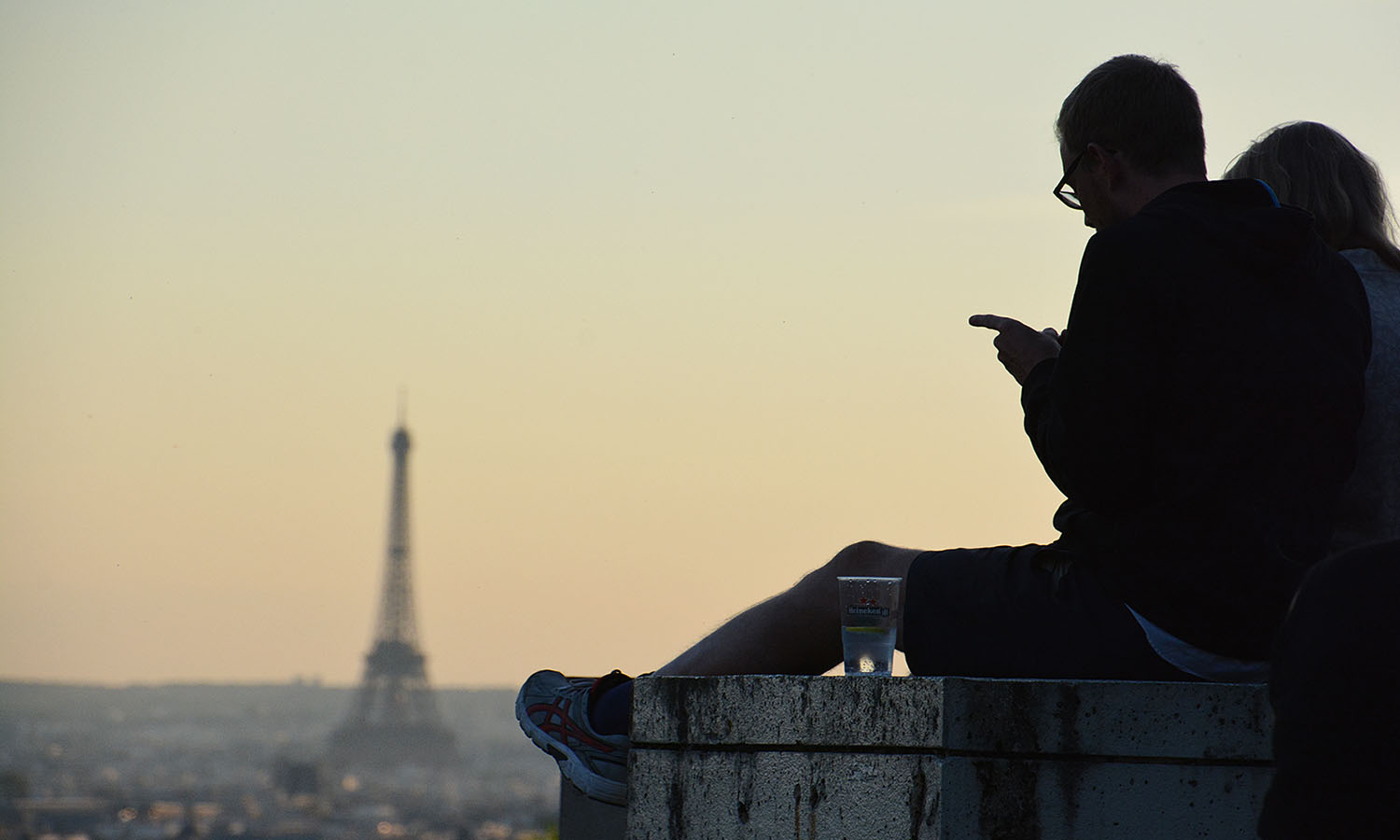
French gardens are usually orderly, with manicured shrubs, gravel paths and metal chairs, but Parc de Belleville has a haphazard mix of plants, a vegetable patch and, as a nod to the region’s wine-growing past, 140 grapevines. Come here around twilight, before a park officer drives picnickers out of the grounds with the help of a whistle, in a ritual that takes place every night in parks across Paris. Up the hill, just above the greenery, the Belvédère de Belleville terrace looks out over the City of Light. An excellent place to watch the sunset, it’s where locals go, often with guitar in hand, to spy the Eiffel Tower without the risk of losing their nonchalant facade in front of tourists. If you’ve been walking the avenues between tall, almost identical buildings, this helps to reset your sense of perspective. Scan the terracotta chimneys popping up like periscopes from every roof and spot Notre Dame and the stone skeleton of Saint-Sulpice in the distance. In the last of the golden light, wet your lips on the terrace of Moncoeur Belleville. Sunset calls for a coupe de champagne, don’t you think?
What do you get when a pharmacist, gallery owner and sound engineer walk into a bar? La Cave de Belleville. Keeping up with the creep of gentrification through the area, they transformed a former leather supply store into a wine bar that sits among kebab shops, boulangeries and cheap Asian takeaway joints. An impressive library of French and international wines covers one wall, complete with a ladder to help you reach drops perched up high. Fromage in various stages of mould fills the cabinet near the front, and saucisson and olives make an appearance too, ready to be dished up onto slate platters. Ask the staff to help you tackle the wine list – they’re always excited to share their knowledge of each bottle and will point you in the way of a natural, sulphate-free drop.
11pm
Flushed rouge from several glasses of red, you’ll need some fresh air. Stumble out of the cave and pace 200 metres up the hill to 72 Rue de Belleville. If you believe the engraving above the door, as the curtains closed on 1915 a baby Edith Piaf bellowed her first notes from her birthplace on the street by the entrance. While this part is contested (it’s generally accepted that she was born in a nearby hospital) none could argue with the part that says “Dont la voix, plus tard, devait bouleverser le monde” (whose voice would later turn the world upside down). Walk in the Little Sparrow’s footsteps back down the hill to Aux Folies, a 100-year-old cabaret venue best described as charmingly retro. The pint-sized songstress crooned here in her early days on the stage, and it’s now a bar where bobos (bohemian bourgeois), students and office workers go to discuss politics, read or watch le football – France thumping Germany is a prime event. A flickering neon sign illuminates punters spilling onto the street and into Rue Denoyez, the only alley in Paris where graffiti is legal (not that they take heed elsewhere).
It’s midnight, and you need to get moving before exhaustion catches you in its grasp. Get a head start by crawling beneath the glowing red lights of the Art Deco Belleville métro sign, buying a €1.90 ticket and boarding a train. It’s just three stops to Oberkampf, with a line swap at République, but you’ll save your legs a two-kilometre walk. This neighbourhood has an air of Berlin about it, with shabby chic bars running down Rue Oberkampf and in the web of surrounding streets. Follow your whims to a few, then join the line snaking into Nouveau Casino, a nightclub adjoining Café Charbon, a Parisian institution. Decked out with an impressive sound system, it showcases underground acts as well as big names. Chandeliers dangle from the geometric, reflective roof and barkeeps pour drinks behind a glowing, candy-coloured counter.
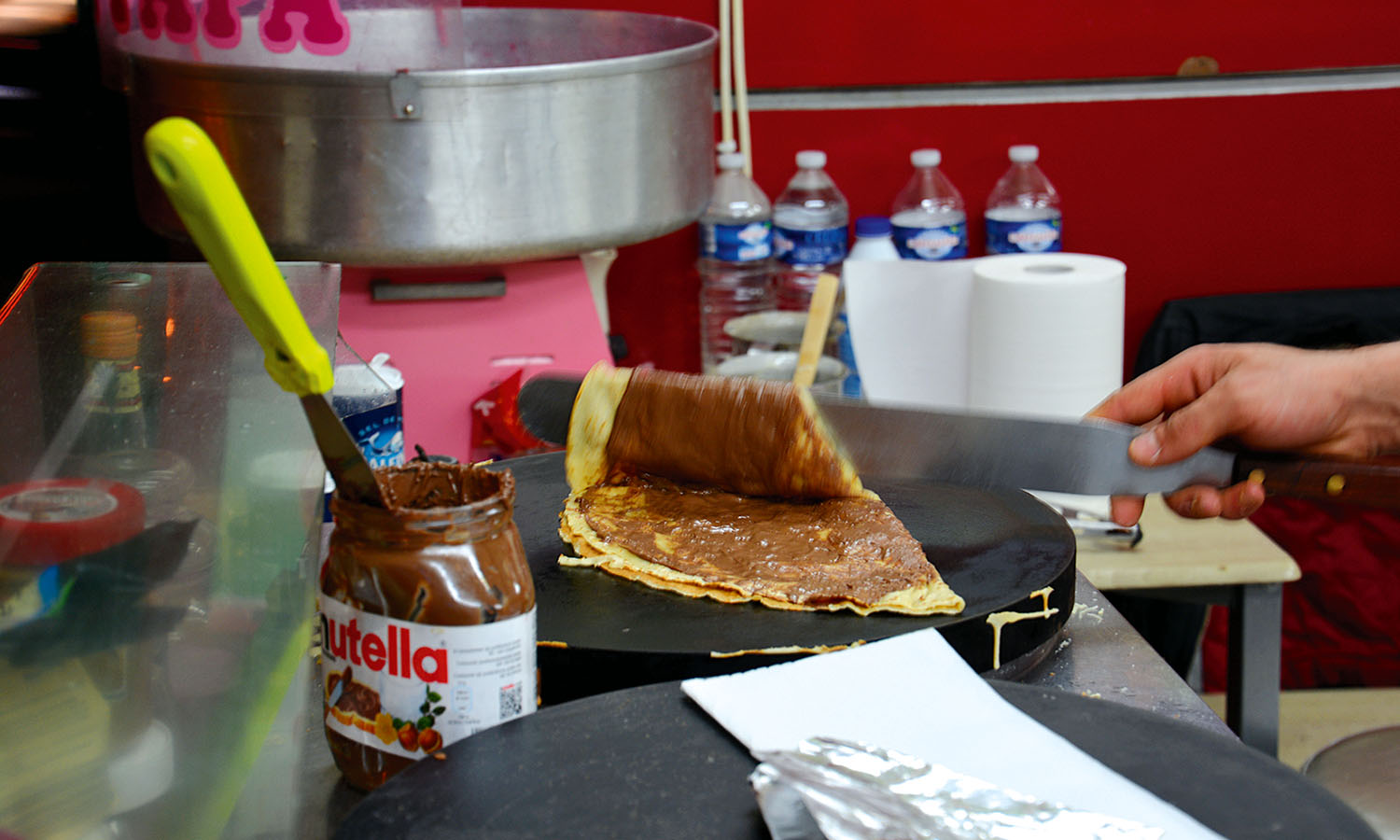
Twice a week the strip running down the middle of Boulevard de Belleville transforms into a marketplace, where cheesemongers sell ripened camembert and North African vendors holler “un euro! un euro!” and hand out segments of sweet clementines. In this spot, just outside one of Belleville métro station’s exits, a stall selling pizza and crêpes stays open on weekends until the sun comes up. You’ll know you’ve made the right snack choice when you smell butter sizzling on the hotplate and the vendor spins crêpe mix around like a record. It will look huge, and now’s the time you might consider offering to share with your fellow merry-makers. Don’t. Once it’s folded into a triangle the warm Nutella floods to the bottom and pools in gooey chambers. There’s no way you’ll want to hand it over halfway. Wander back to your abode, and when you wake sometime the next afternoon just remember Edith’s mantra, “Non, je ne regrette rien.”
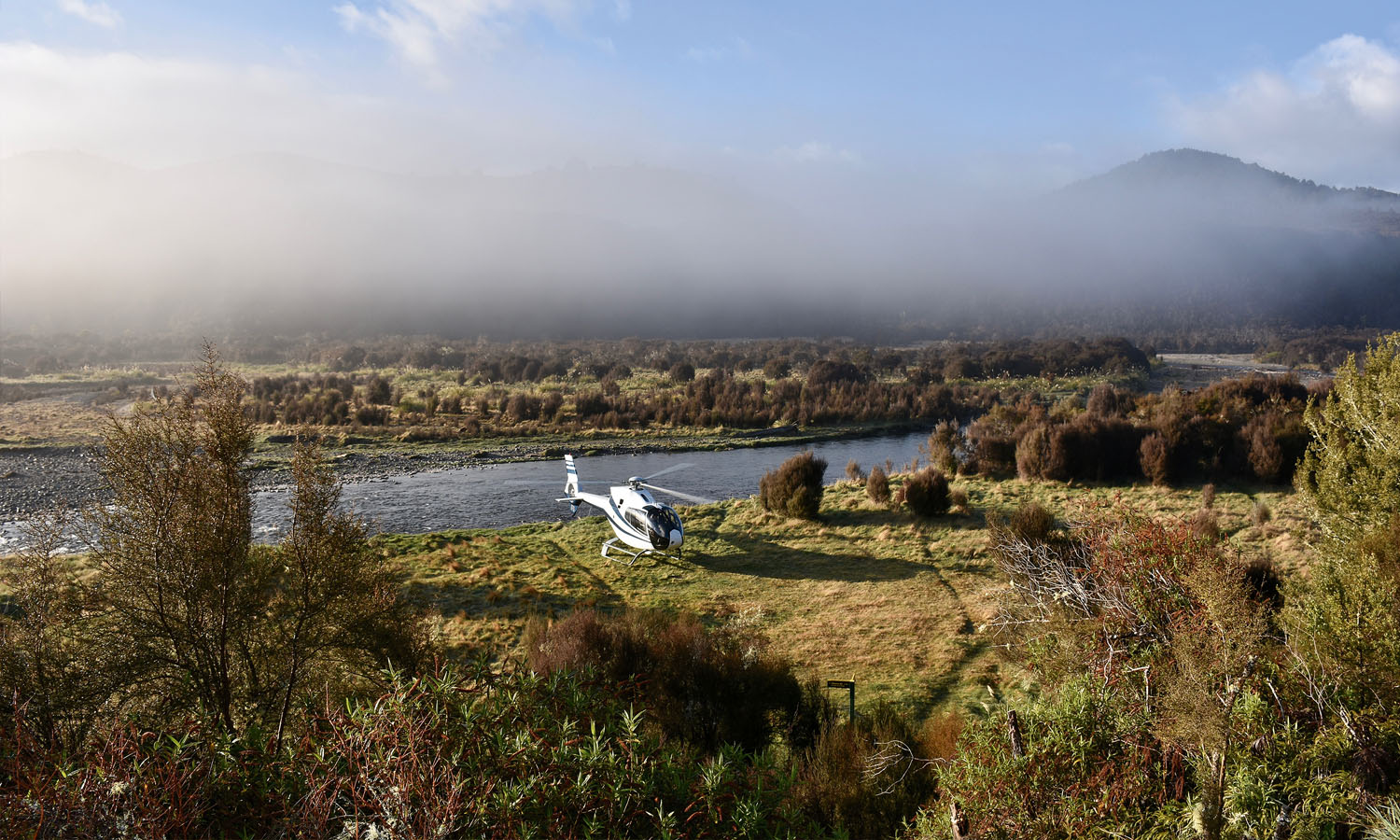
It takes ten minutes to reach wilderness – a spectacular canyon in the Kaimanawa Forest Park near Taupo bounded by huge rocky ramparts and ancient forests. Like much of New Zealand, it is vast and sublime and leaves me feeling as small as our helicopter, now a speck in the big blue sky.
In these parts, helicopters are like taxis: a quick way to get from A to B. In this case, the B stands for backcountry, the kind that, in this instance, is only accessible on foot. The spot where I land with Robin, my guide from Chris Jolly Outdoors, overlooks a ravine the colour of army fatigues. Traversing it would be a two-day hike as opposed to a quick trip by helicopter.
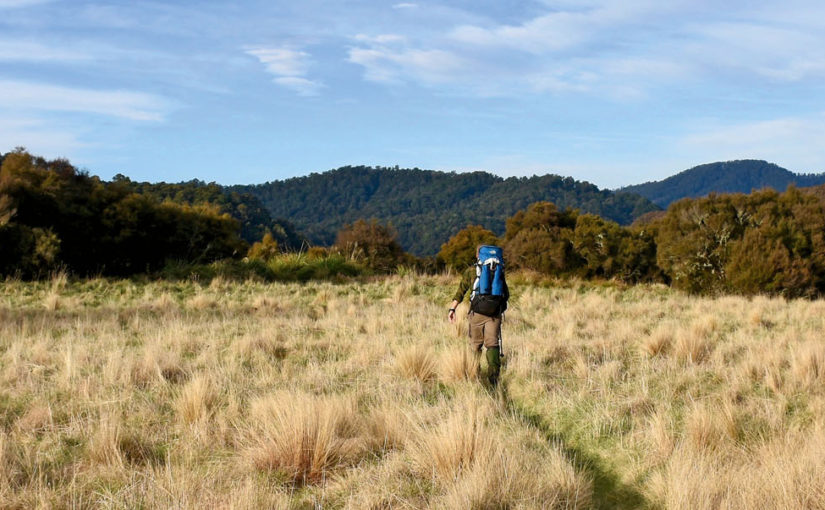
We’ve arrived at the start of the Oamaru Trail, a challenging one-day trek for experienced hikers that winds through majestic forests and plains, and ends almost six hours later near the perimeter of luxury lodge Poronui, where I’ll be spending the next few nights.
Oamaru is one of four trails in the park that loop between public huts (basic fit-out with bunk beds, drop toilets and no artificial lighting) and private huts (with power and hot showers), which are available for rent and popular with hunters and fly-fishing enthusiasts.
While most visitors to Taupo trek the Tongariro Alpine Crossing, a dual World Heritage area with dramatic scenery and active volcanoes (it’s considered one of the best one-day hikes in the country), there is something to be said for the North Island’s unsung backcountry trails.
The 77,348-hectare Kaimanawa Forest Park is home to deer, wild Kaimanawa horses and trout. The breeze tickles the leaves and moss clings to the trees like topiary. We see fallen trunks as big as houses and feathery ferns like burlesque fans. There are golden prairies so vast and empty it makes the heart ache with happiness.
We set off for the Ngaruroro River down a trail thick with flaxen tussocks. This squiggle of blue is one of two-dozen rivers we’ll cross today. It’s also the biggest. Measuring 164 kilometres in length, the tributary winds through three mountain ranges before turning east and emptying into Hawke’s Bay. It’s knee-deep where we cross and the undercurrent is surprisingly strong. Other crossings we traverse are shallow, bridged by fallen logs or dotted with natural stepping stone rocks, and easy by comparison.
We soon trade the immense surrounds of the Ngaruroro Valley for the dark forest canopy, a quiet and cool hinterland alive with birdsong and the burbling of rushing water. Lunch is by the river, a simple meal of sandwiches, cake and hot tea. We hear the high whistle of a deer as it darts off and see the rutted furrow left by a wild pig. It’s late afternoon before we see another soul – two anglers casting off, thigh-deep in a river – and even then they’re way off in the distance.
It’s magic hour by the time we reach Oamaru Hut, the end of the trail where our helicopter will take me to my cabin at Poronui. The sky is streaked with pinks and purples, and the river below, curved like a snake and surrounded by low-lying scrub, is iridescent blue. Far off, the gentle dromedary humps of mountain ranges bathe in the last rays of daylight. It’s beautiful, and I pause to take a picture in my mind’s eye.
There are three luxury lodges in Taupo but only Poronui wears its hunting and fly-fishing stripes with pride. Nestled in the heart of Taharua Valley, the seven-cabin lodge sits on the doorstep of the Kaimanawa Mountain Ranges and is the cast off point for fly-fishing and hunting trips. Ranked one of the world’s top 10 fishing lodges, the property is awash with fishing inspiration. The walls are hung with reels and rods, stuffed trout and animal trophies, and the main lodge overlooks the rush of Taharua River – one of two rivers on the property where wild trout lurk.
From October to May, anglers from around the world come to cast their lines in these solitary backwaters, lured in by incredible scenery, private rivers and, of course, the trout that are shaped like torpedoes and as easily spooked as they are to spot in the gin-clear waters. Guests can don waders and set off to stalk and cast in wilderness without ever stepping off the property.
On a four-wheel drive tour of Poronui that ends at Blake House – a private villa on a promontory with panoramic views of virgin beech forest from the back patio, and another of the property’s fine lodging options – we see the Taharua River again. It’s a brief appearance through dense foliage, and a spot where red deer have also been sighted by those stealthy enough.
To the south of the house, manager Eve Reilly tells me, are the wild manuka forests where Poronui produces their premium-grade manuka honey – a sweet side project packaged as Taku Honey, which fetches up to AU$165 a kilo at the market. It’s low-impact, too: the hives are flown in and out by chopper at the start and end of the flowering season, a brief six-week window where the mountains are blanketed in white blooms. “It’s our white Christmas,” says Eve.
The honey is extracted in Turangi, a small town on the banks of the Tongariro River. It’s also where I spend an adrenaline-charged day mountain biking and white water rafting what is one of New Zealand’s best Class 3 whitewater rapids – a two-hour journey along narrow gorges lumped with volcanic boulders that are relics of the volcano that exploded here 27,000 years ago.
Back at Poronui, I visit the shooting range at the foot of a green valley dotted with trees. It’s a fun two hours spent pinging metal birds, balloons and other targets, and also where I discover two things: I’m a crack shot at clay pigeons and rubbish at throwing an axe. Archery is no better, but I like to think it’s the cute 3D animal targets that put me off.
As entertaining as the range is, I’m really only killing time until my horse is saddled up and ready to go on a half-day horse ride. Set on 6500 hectares of forest and grazing land, Poronui is criss-crossed with 45 kilometres of rivers and streams. A ride here is a chance get up close to the local wildlife, including Arapawa sheep, feral goats, deer, wild turkeys and an array of native birdlife.
My guide Skye leads the way, past the equestrian centre where eventing and horse riding lessons are available, and on to Wounded Poacher, a road so-named after a poacher accidentally shot his brother here.
Texas, a handsome black and white pinto and my ride for the day, has an easy gait and sure-footedness on the uneven terrain. He pricks up his ears at the slightest command and changes his gait quickly. Trail horses these are not. Nor is this an ordinary trail ride. In fact, it’s been years since I was in the saddle, and having Skye along for the ride means I have the opportunity to finesse my skills during a private lesson.
Birds call out to one another from up high in the virgin beech trees. We see wild sheep grazing by the river and deer, graceful and skittish in equal measure, nonchalantly eating grass on a sunny rise, unaffected by our presence. “On horses, they can’t tell we’re people,” explains Skye.
We stop for lunch in a spot overlooking a valley and feed the horses apples and carrots. For one magical stretch we gallop, the wind in our faces as we barrel along a narrow ridge flanked by lush paddocks and dusky blue hills. Spring is in the air and there are farm babies everywhere; just-hatched ducklings trailing their mothers, newborn lambs unsteady on their feet and cute black-and-white calves.
For guests with more time, there are high country horse rides with an overnight stay at the Safari Camp, a secluded glamping spot of Poronui, and the chance to experience a traditional Maori kai waho (outdoor barbecue). After a full afternoon in the saddle, though, I swap hoofs for wheels and roll up to the Safari Camp in a four-wheel drive.
Tucked behind a screen of manuka and beech trees, the secluded glampsite is situated near the banks of the Mohaka River and is both cosy and private, with hot showers, solar lighting and a private chef. The sound of the river is so soothing it almost lulls me to sleep.
We dine at dusk on barbecued seafood and venison kebab paired with local wines (guests of the camp can help themselves to the cellar). There is a wintry chill in the air, even for November, so the pot-belly stove is lit and a hot water bottle placed in my double bed.
And then I’m alone. I find my way back to the riverbank in the moonlight. The Mohaka River bends here, tumbling and frothing like creamy soda over the glistening rocks – a wondrous cacophony of clashing, splashing and crashing that drowns out everything else. Above, the night sky glitters like a starry web. Miles from anywhere, this slice of wilderness is like nothing else.
SO you’ve seen the Acropolis, now what? The Greek capital can be a tough nut to crack for those not in the know. It’s dirty, it’s smelly, it’s chaotic, and the allure seems to wear off once you’ve ticked the wondrous temple to Athena off the list. But if you give it a chance, Athens will surprise you with its vibrant arts scene, quirky bars, amazing food experiences and its penchant for all-night revelry. Athens is the introvert at the EU party – you have to buy it a drink before it will talk to you, but once you do, you’ll be lifelong friends.
7pm
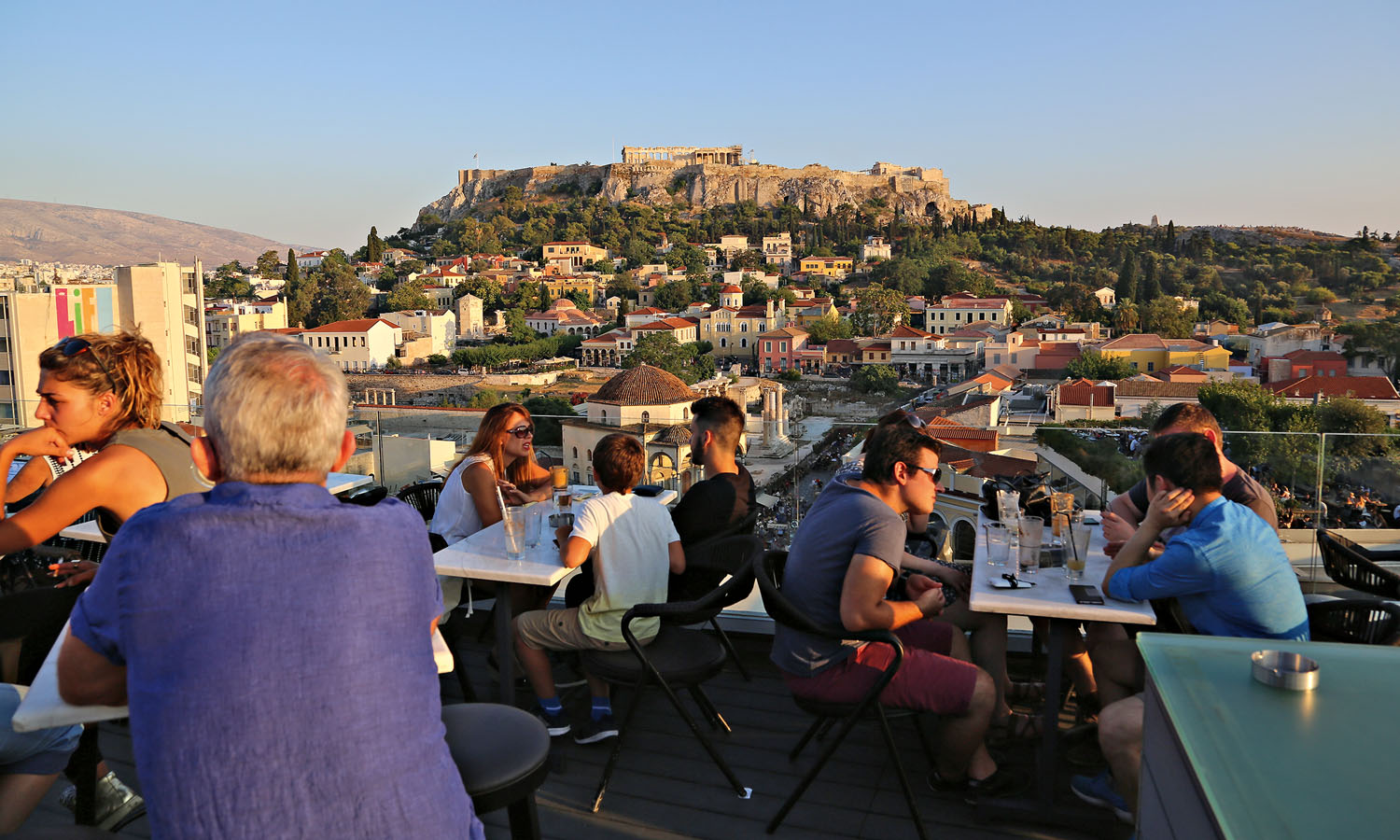
As the sun starts to wane over the ancient city, the young Athenians come out to play. First stop is one of the rapidly growing number of rooftop bars overlooking Monastiraki Square. A for Athens is a local favourite. Its cocktail bar spreads out over two levels on the rooftop of a hotel, accessible only via a hidden lift in the lobby. There’s a certain incomparable magic to sipping mastic cocktails while gazing out at the ancient Parthenon as the day’s baking heat gives way to the sun’s last dazzling orange rays.
9pm
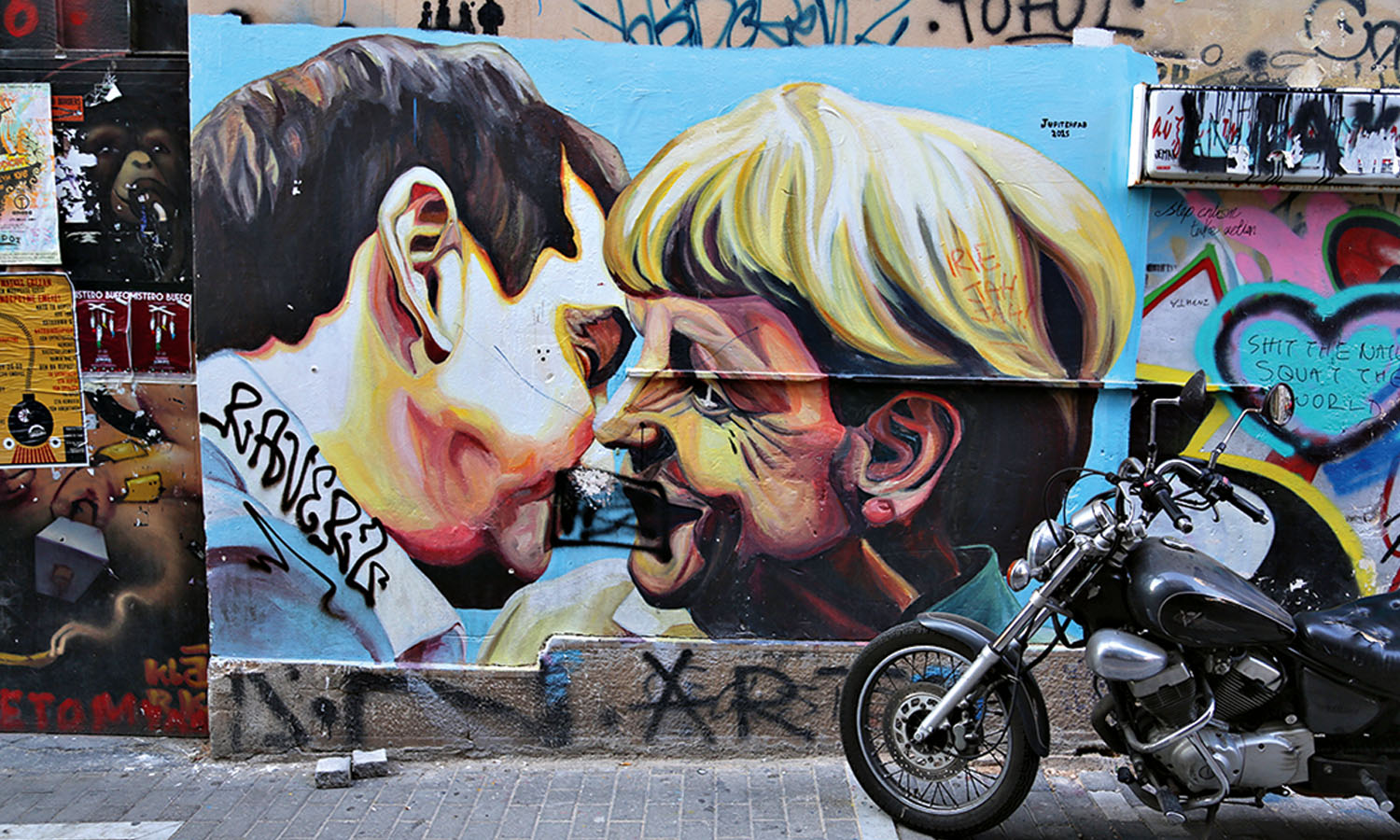
Athenians rarely do dinner before 10pm, so to fit in with the locals you’ll need to switch your body clock to ‘Greek time’. En route to your dining destination take a leisurely stroll through the Plaka or Monastiraki districts. Their cobbled streets are lined with stores selling everything from tourist kitsch to quality handmade Greek produce, including olive oil, cosmetics and products made with the Mediterranean mastic tree – don’t be afraid to haggle! The Athenians have also proudly declared parts of the inner city an open-air gallery, with politically charged street art encouraged and staunchly protected by locals.
9.30pm
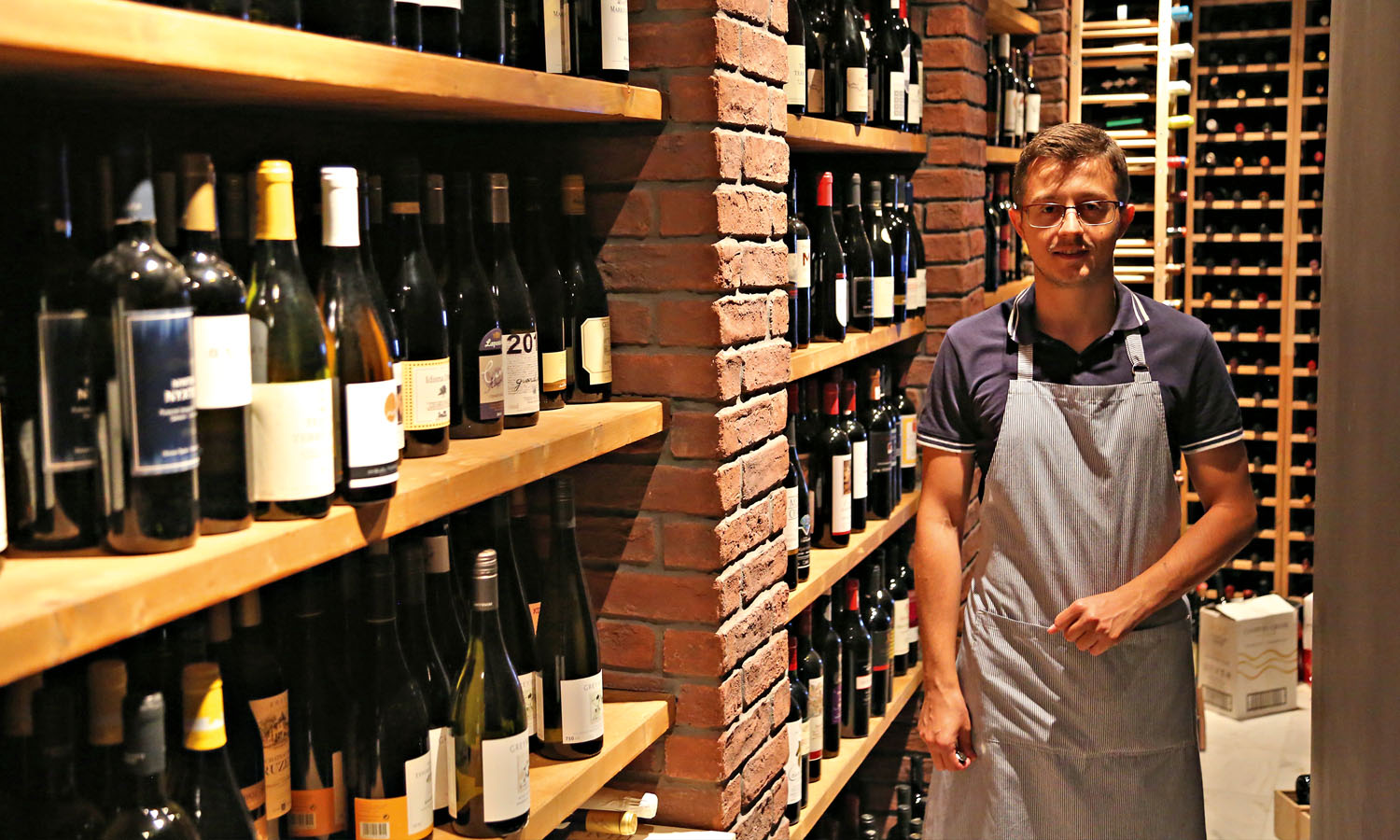
You’d do well to stumble across the Vintage Wine Bar and Bistro, where proprietor Panos Kyriazis and his team of oenologists will take you on a wine flight across the country, from the airy whites of Santorini to the earthy reds of northern Greece. Vintage claims to have the widest ‘by the glass’ selection in Europe, at very Greek prices.
10pm
In Athens, there are very few tourist traps, so eating like a local is relatively easy. Even in the restaurants lining Mitropoleos off Monastiraki Square, which teems with tourists year-round, you’ll find equal numbers of Athenians. A local favourite is Thanasis Kebab, which has been churning out portions of kebab (yes, kebab, not souvlaki) since 1964. Don’t even bother with the menu, it’s called Thanasis Kebab for a reason, so just go with it. If you’re lucky, you’ll be allowed to order chips and salad as an accompaniment.
There are more adventurous, up-market dining options too. There’s been a resurgence of Greek hospitality over the past few years and leading the charge is Kuzina. It serves up modern takes on Greek classics and its rooftop terrace, which overlooks the lit-up Temple of Hephaestus in the Ancient Agora, has one of the best dinner views in Athens. The wine list and the service are also exceptional, which is not so common in Greece.
12am
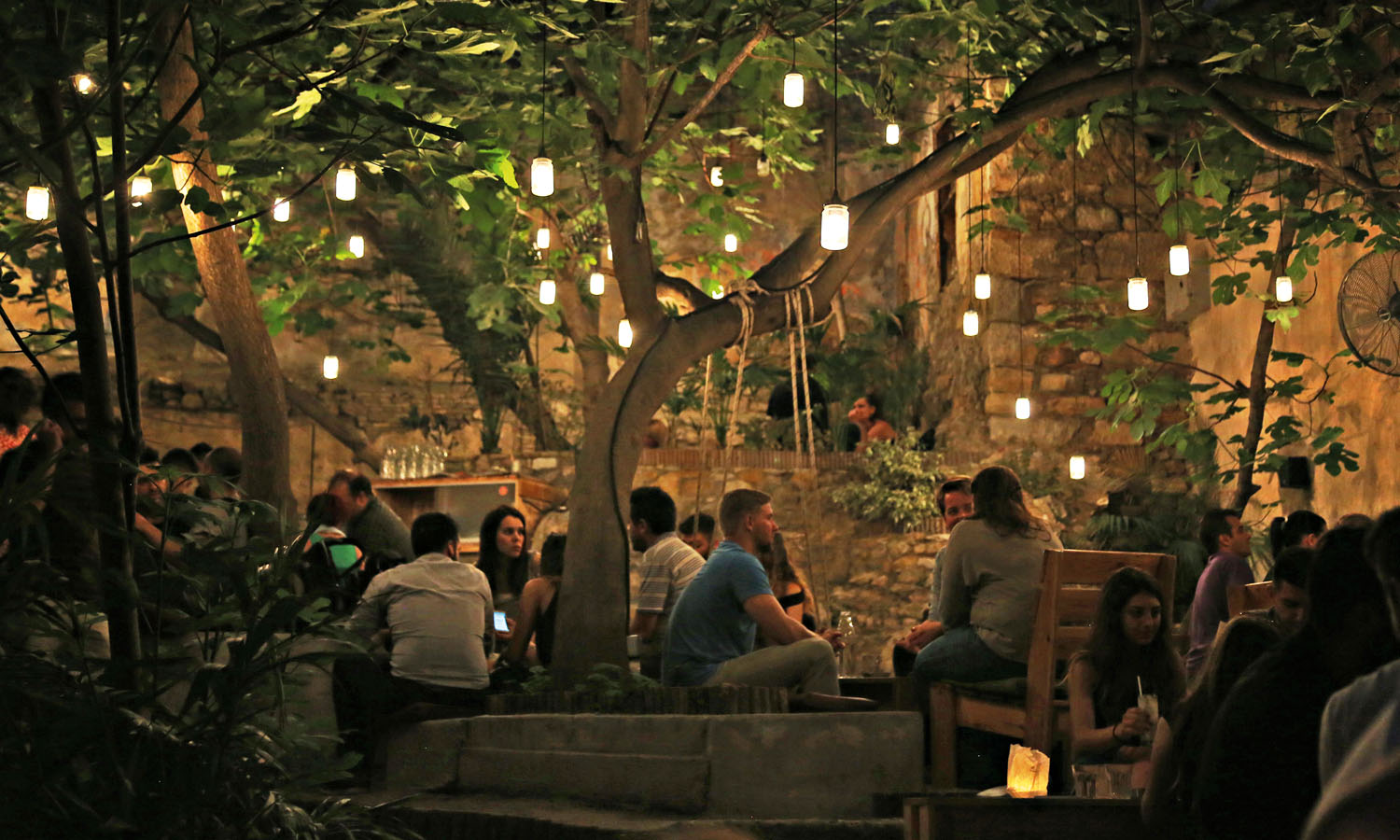
In Athens, midnight is still too early to hit the nightclubs. Start your night (yes, start) at one of the city’s quirky, edgy, hidden bars. Among them, TAF / The Art Foundation is a standout. Behind its hidden wooden door lies a series of traditional Athenian homes in a quadrangle. The houses have been repurposed as gallery spaces hosting works by upcoming Athenian artists, and the quadrangle has been converted to a funky cocktail bar.
A short stroll away, six d.o.g.s has similarly turned an old Athenian building into exhibition spaces, concert venues and a sprawling garden bar. It has a line-up of local and international acts and exhibitions and in the summer it heaves with young hipster types well into the night, who sip on cocktails and local craft beers.
There’s a burgeoning bar scene in Athens at the moment. The Clumsies was recently awarded sixth spot in the World’s 50 Best Bars. It sits a little further afield in the university district and caters to the area’s well-heeled clientele. The innovative cocktails are equally opulent with prices to match. Despite this, it’s open all day and well worth seeking out.
1am
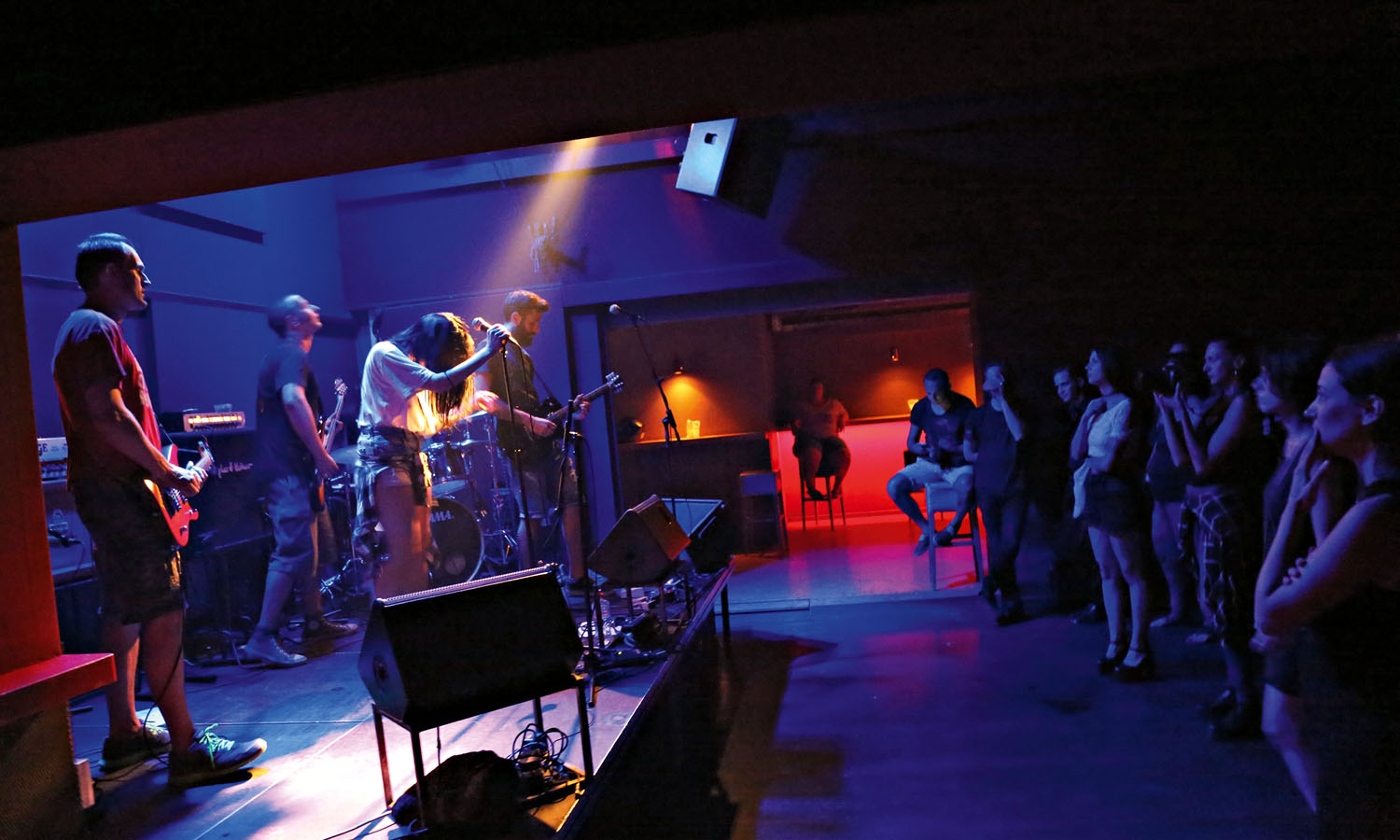
For a truly unique Athenian experience, seek out what the Greeks call ‘the bouzoukia’ – a performance of local music staged in a large hall, like Kentro Athinon, where the audience sits at tables, sips spirits and throws flowers at the performers. Depending on which venue you choose the musical styles can vary from rebetika (the Greek blues), traditional folk music and modern classics. A word of warning: it can be expensive, and you may need to book your table well in advance and be impeccably dressed to get past security.
Kentro Athinon
Pireos 142, Athens kentro-athinon.gr
3am
Time to hit the clubs! The Gazi district heaves with bars and clubs of every variety and the music pounds until daybreak every night of the week. It’s here that young Athenians really cut loose – anything goes, as long as you don’t get caught. Think of it as a little taste of Mykonos on the mainland.
7am
The concept of breakfast in Greece extends no further than a coffee and a cigarette, so as you stumble back to your bed, pick up a pita giros or a souvlaki from one of the street vendors. Regardless of its quality (or lack thereof) you’ll be happy for its greasy deliciousness.
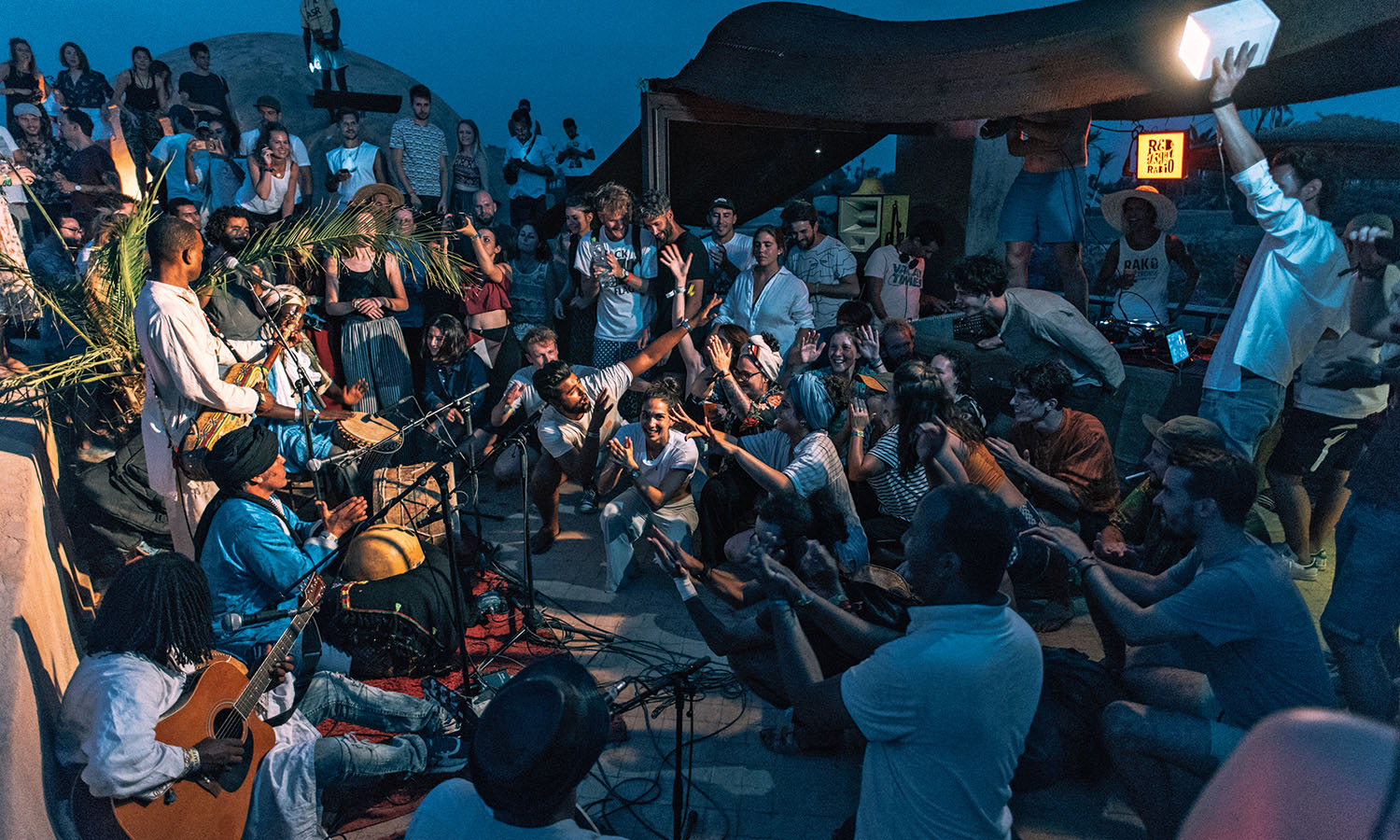
Art meets music at Morocco’s hottest festival. Held at Villa Janna Eco-Lodge, a beautiful palm-dotted oasis among the foothills of the Atlas Mountains near Marrakesh, this intimate four-day earth-friendly event – it’s held at the end of August each year – immerses festival-goers in a melting pot of Western and African beats, art and culture. Make a splash at the swimming pool, party as the ancients did in the amphitheatre or hang out beneath the shade of the olive fields. One thing’s for sure, this festival won’t stay secret for long. atlas-electronic.com
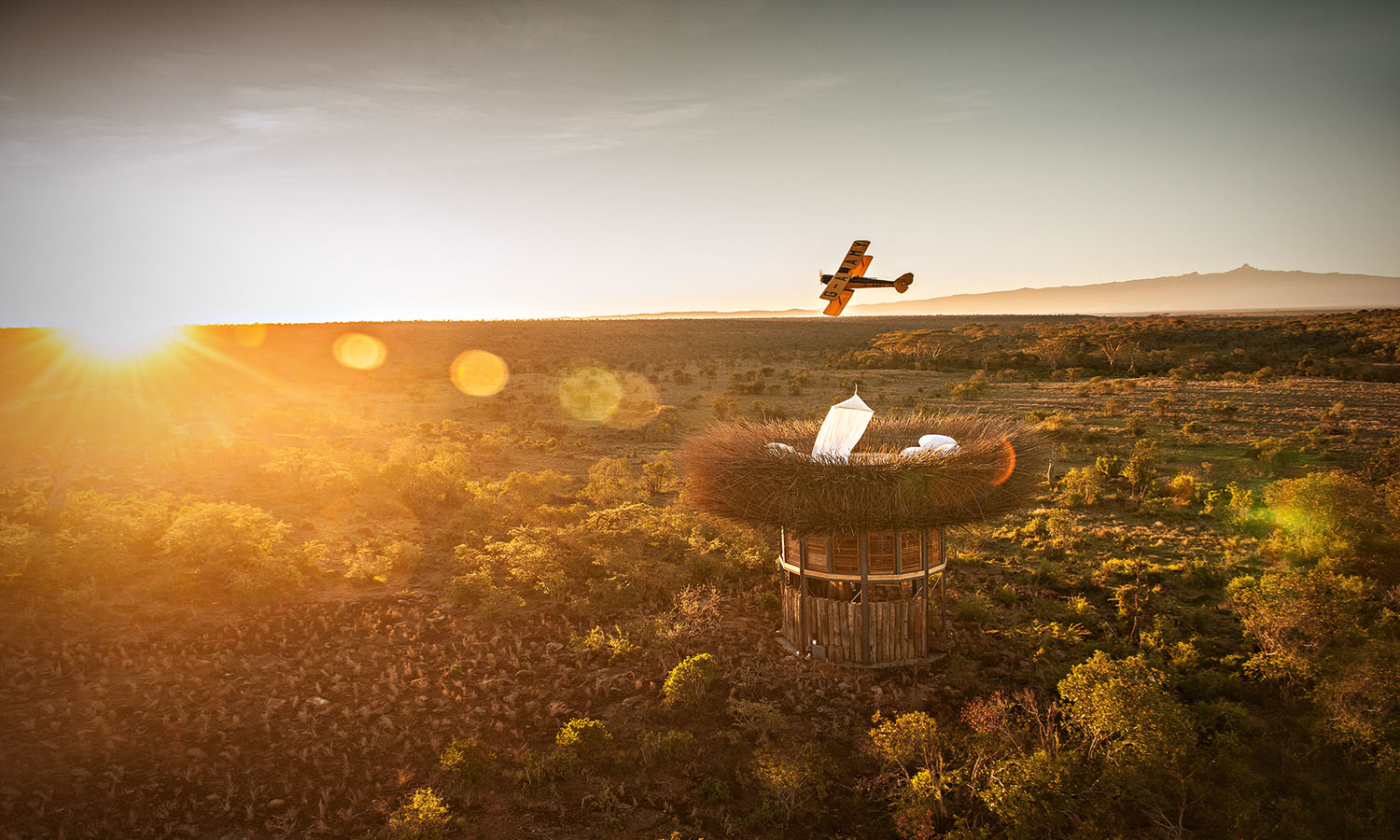
Become one with nature with a stay at the NAY PALAD Bird Nest. A stunning architectural feat designed to emulate the experience of sleeping like a bird, this magical abode is situated among the pristine savannah of Laikipia in Kenya, one of the most wildlife-rich destinations in Africa. It’s 360-degree views offer vistas stretching from Mount Kenya in the east to the Great Rift Valley in the west. After a day exploring the wilderness or spotting wildlife on a game drive you’ll arrive to find the lanterns lit, the linen prepared and a picnic-dinner laid out as the sun sets on the horizon. Cosy up inside on the first floor or slumber on the rooftop beneath a blanket of stars. The following morning you’ll wake with the sun, tucking into your breakfast while watching the local elephants and giraffes make for their morning drink in the river below. wilderness-safaris.com segera.com
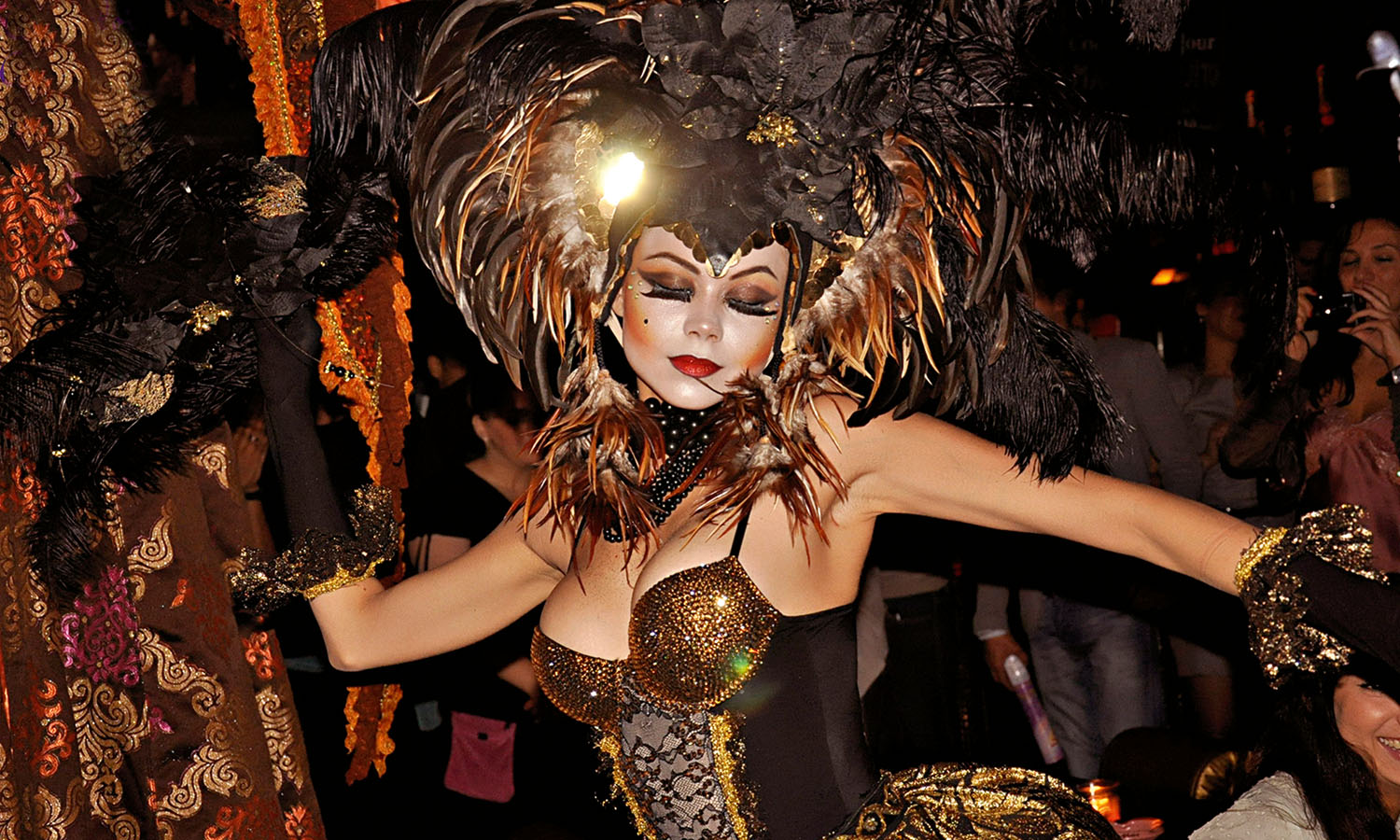
When it comes to the ultimate nightlife in Marrakech, Comptoir Darna ticks all the right boxes. The two-storey venue is a glamorous fusion of traditional and cosmopolitan vibes, awash in dark, bold reds, cushy seating and all aglow with hundreds of candles. Settle in with a tasty variety of Moroccan and international cuisine, before the show kicks off at 10pm and the party begins. Lute players strum feverishly, their oriental folk music melding with DJ-spun beats while waiters twirl through the venue with platters of candles atop their heads and sultry belly dancers shimmy between tables, their flowing costumes taking on an almost ethereal glow in the candlelight. But the show doesn’t end there. Once you’ve dined, head to club on the second floor and boogie the night away or, if you’re ready for a more relaxed vibe, make for the outdoor patio where you can enjoy the fresh air, a smoke of the shisha pipe, and admire the stars. uk.comptoirmarrakech.com
Food Food Tour of Cairo, Egypt
Mention Egypt and the first thing that springs to mind are the great monuments of ancient times. But Egyptian cuisine is just as worthy of your attention – you simply need to know where to look. That’s where Bellies En-Route can help. Over four hours, you’ll explore downtown Cairo, weaving through busy streets and skinny alleyways into both unmarked and family-run restaurants, and tucking into local flavours far from the exhausted tourist trail while learning about Egyptian culture and history from your guide. Flatbreads, pastries, ice cream and kushari (macaroni with green lentils and rice), Egypt’s national dish, all feature throughout the tour, plus a few more unusual options you may not expect like macarona bechamel (Egyptian lasagne). We have two pieces of advice for you before you set out: don’t eat beforehand and pace yourself – you’re going to want to leave room for all the deliciousness you’re about to encounter. belliesenroute.com
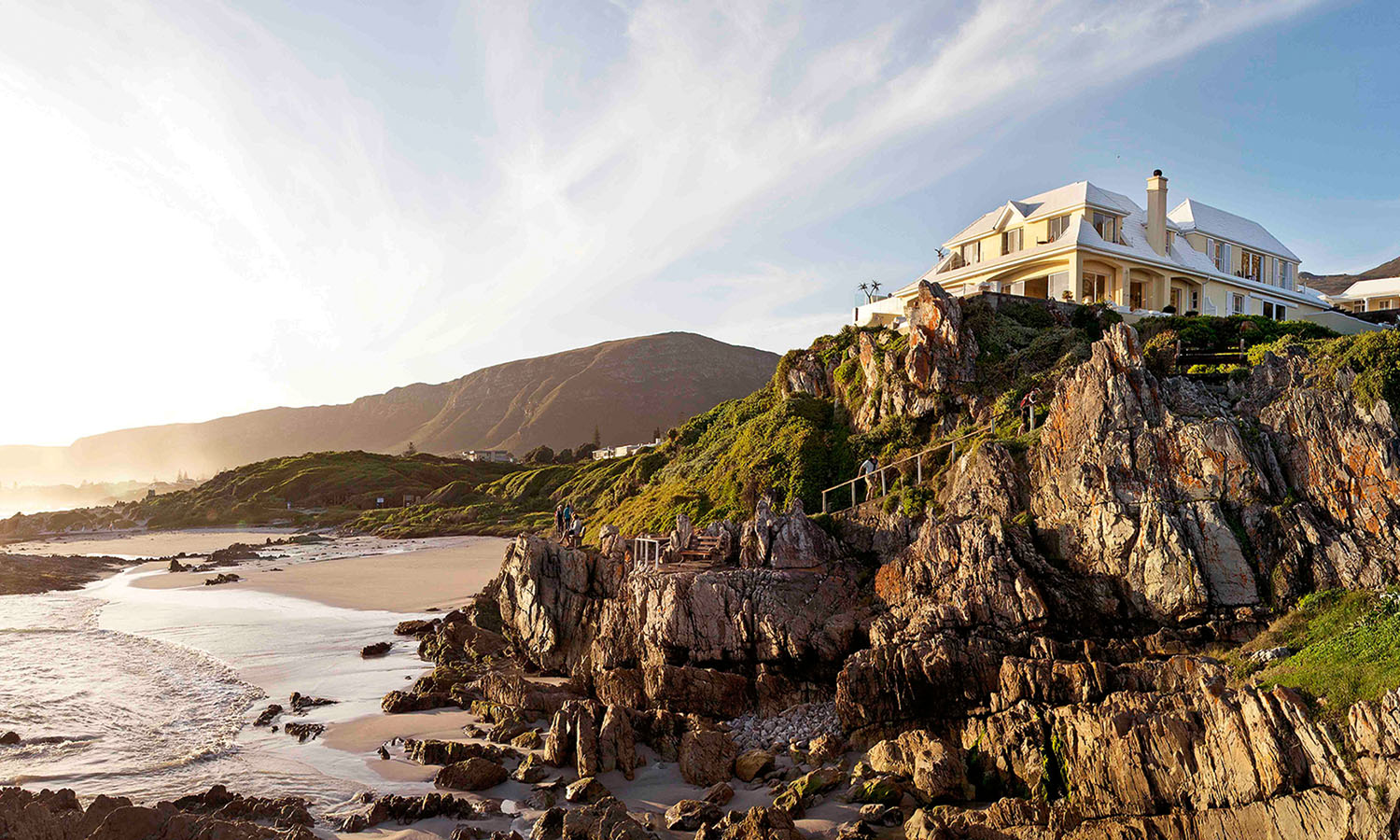
South Africa is known for its stunning coastline, and to experience it in luxury, look to Birkenhead House. Located in the seaside town of Hermanus between two white sandy beach coves, the small boutique hotel is perched rather majestically on the precipice of a rocky outcrop, with front-row views of the Indian Ocean that feel both private and wild. There are just 11 rooms, each spacious, elegant and with their own individual flair – think four-poster beds, French gold antique chairs, ruby-red silk couches, free-standing bathtubs and wrap-around balconies. Despite its opulence, the house still exudes a homey feel. There’s an on-site spa, two plunge pools and delectable dining paired with local wines – the perks of being just a 45-minute drive from the Cape Winelands – but the icing on the cake is experiencing some of the best whale watching in the country from the comfort of your terrace lounger. theroyalportfolio.com
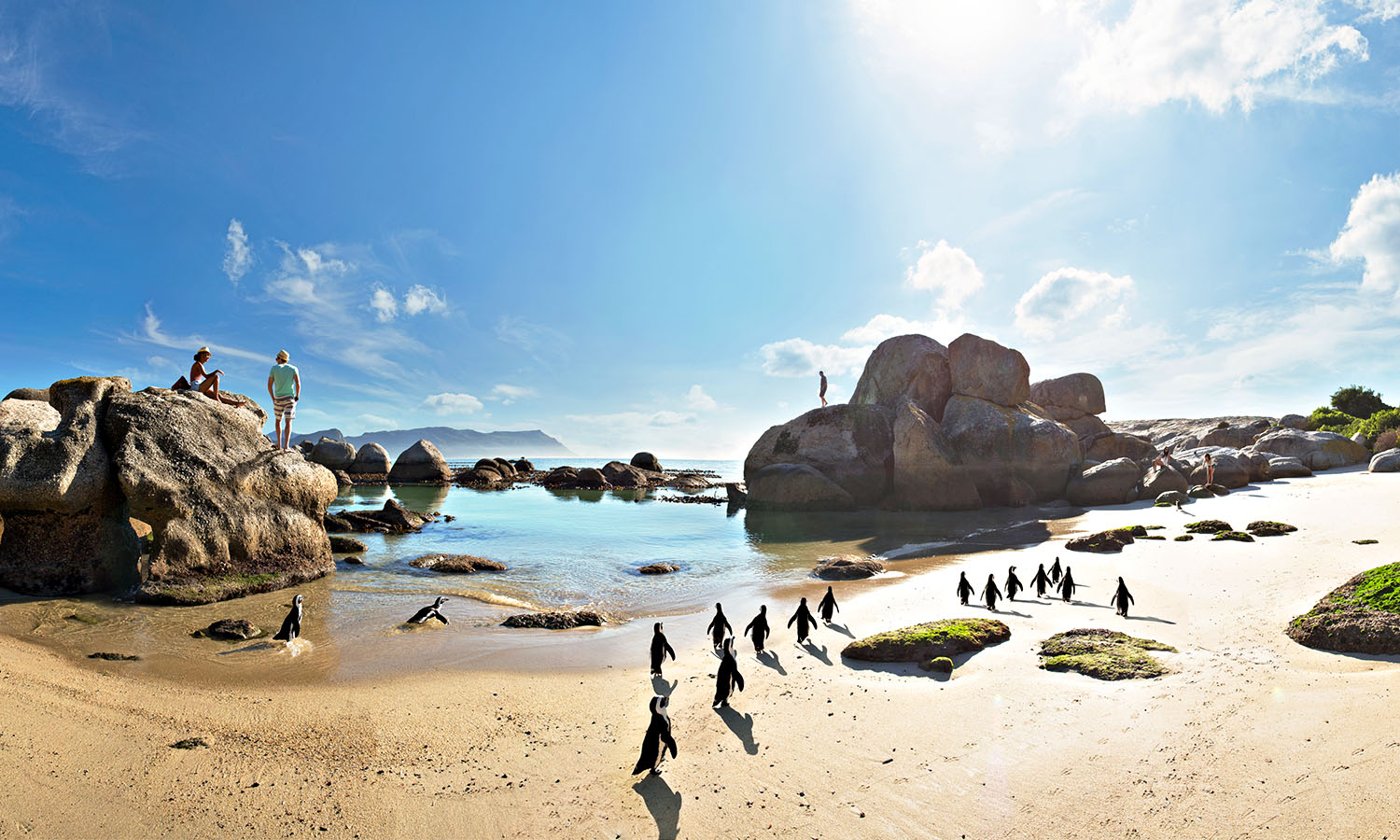
Boulders Beach looks like your average stretch of sea-meets-land, but this haven is worth more than just a fleeting look. Located in Simon’s Town on the Cape Peninsular, just a 45-minute drive south from Cape Town, and protected from large waves thanks to the ancient granite boulders surrounding it, this beach is a great spot for a refreshing dip. But what makes it exciting is the colony of African penguins who call it home, making a trip to this beach in the Table Mountain National Park Marine Protected Area a truly unforgettable experience. Relax on the shore or explore the rock pools as penguins dart around you. If you’re lucky, you might even get a little penguin perching itself onto your towel to bathe in the warm sun with you. Although the full colony lives down the road at Foxy’s Beach, Boulders is the best chance for you to get up close and personal with these sea-loving creatures. But be warned, the penguins may be friendly and used to humans, but feeding and touching them is not allowed.
From the Sky Linyanti Ebony Helicopter Flight, Botswana
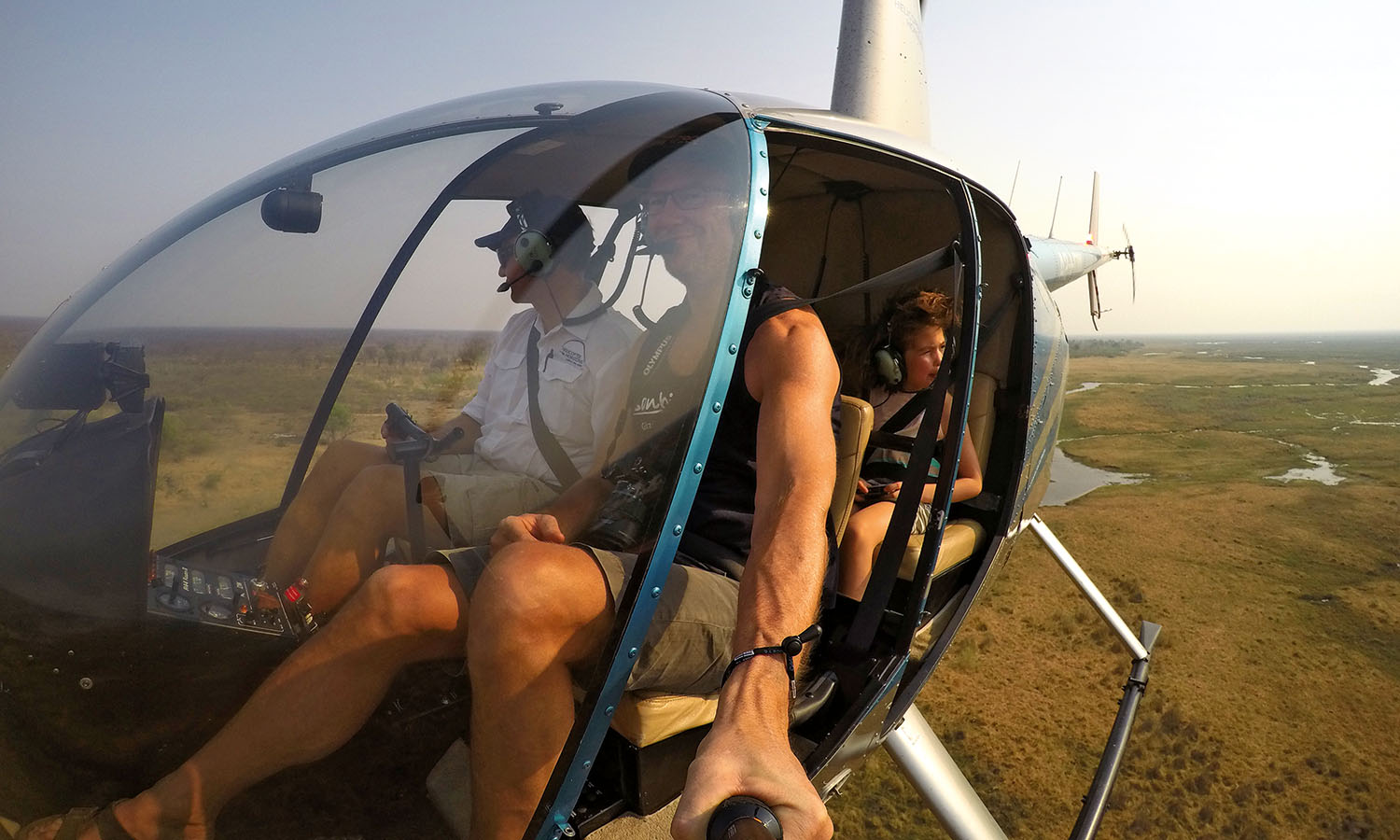
As if having up-close encounters with Africa’s Big Five wasn’t already cool enough, Linyanti Ebony goes one better, taking guests to the next level – literally. Buckle up for the game experience of your life and take to the skies like the local bird life by flying in a door-less helicopter across the flood plains of Linyanti. During the dry months, the reservoirs in the northern reaches of Botswana – situated on the western boundary of the Chobe Enclave – are the only water sources to be found for miles, and animals swarm from the surrounding areas to enjoy a drink and a dip in the watering holes, transforming this area into a wildlife wonderland. Clamber aboard your flight and let the spinning blades propel you into the golden skies where you’ll feel the wind whip through your hair as you spot elephants and hippos splashing about while giraffes and impalas roam wild in the rugged marshes below. It’s a unique perspective of the land and one that will leave you on a high long after you’ve touched down. africanbushcamps.com
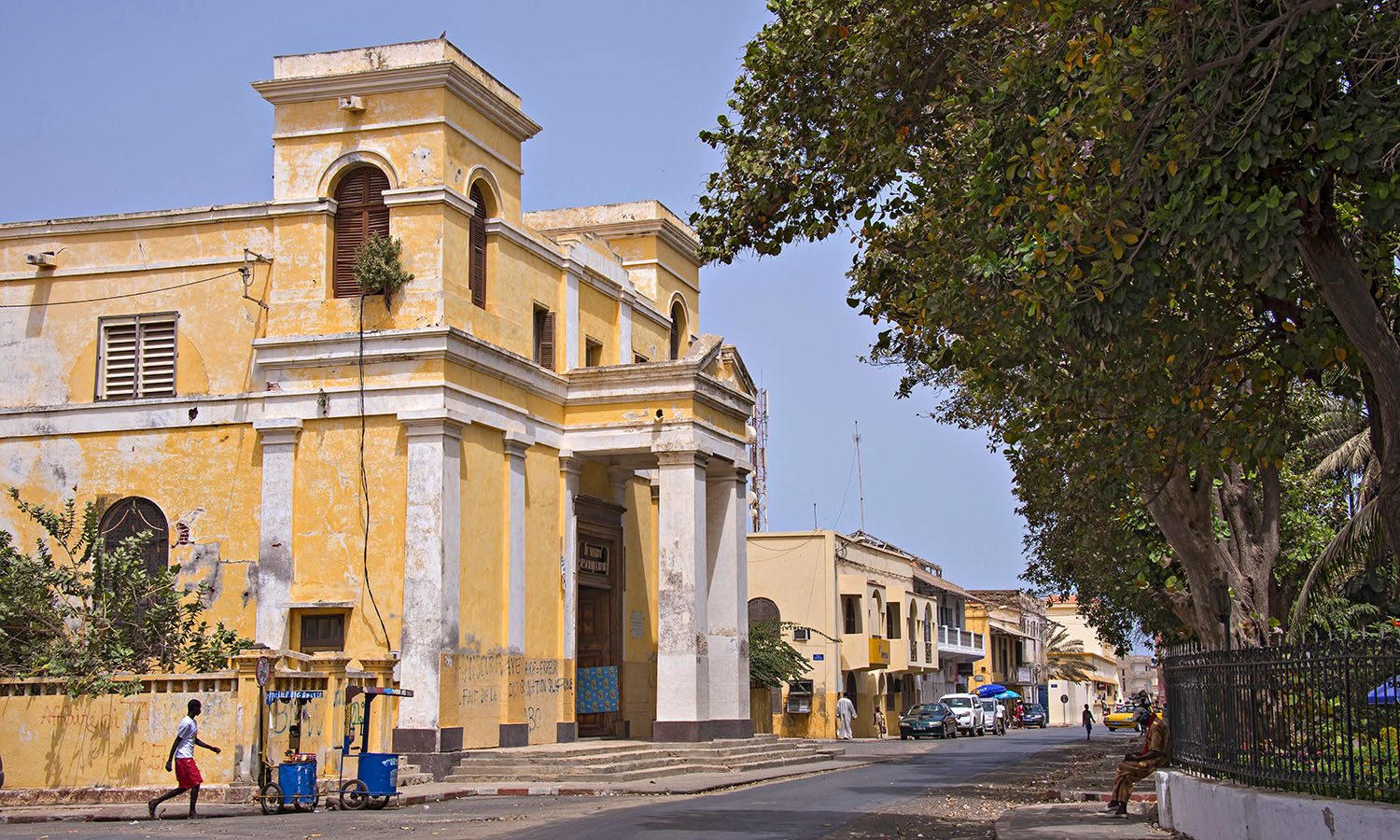
Established as West Africa’s first French settlement in 1659, Saint-Louis was once the capital of Senegal but lost that title to the city of Dakar in the early 1900s. That hasn’t stopped Saint-Louis from evolving, though. Over the last nearly four centuries, the city’s striking colonial architecture, thriving and colourful fishing ports, horse-drawn carts and, in recent years, world-renowned annual jazz festival have left many enamoured by its charm, and it was awarded UNESCO World Heritage status in 2000. Visitors will find the old town on a stretch of land situated on the Senegal River, accessible only by crossing the Pont Faidherbe, a 507-metre-long bridge that connects to the mainland where the rest of the city runs trails across the land. Spend your days sampling the local cuisine, dancing to local beats or catching some rays on the golden beaches.
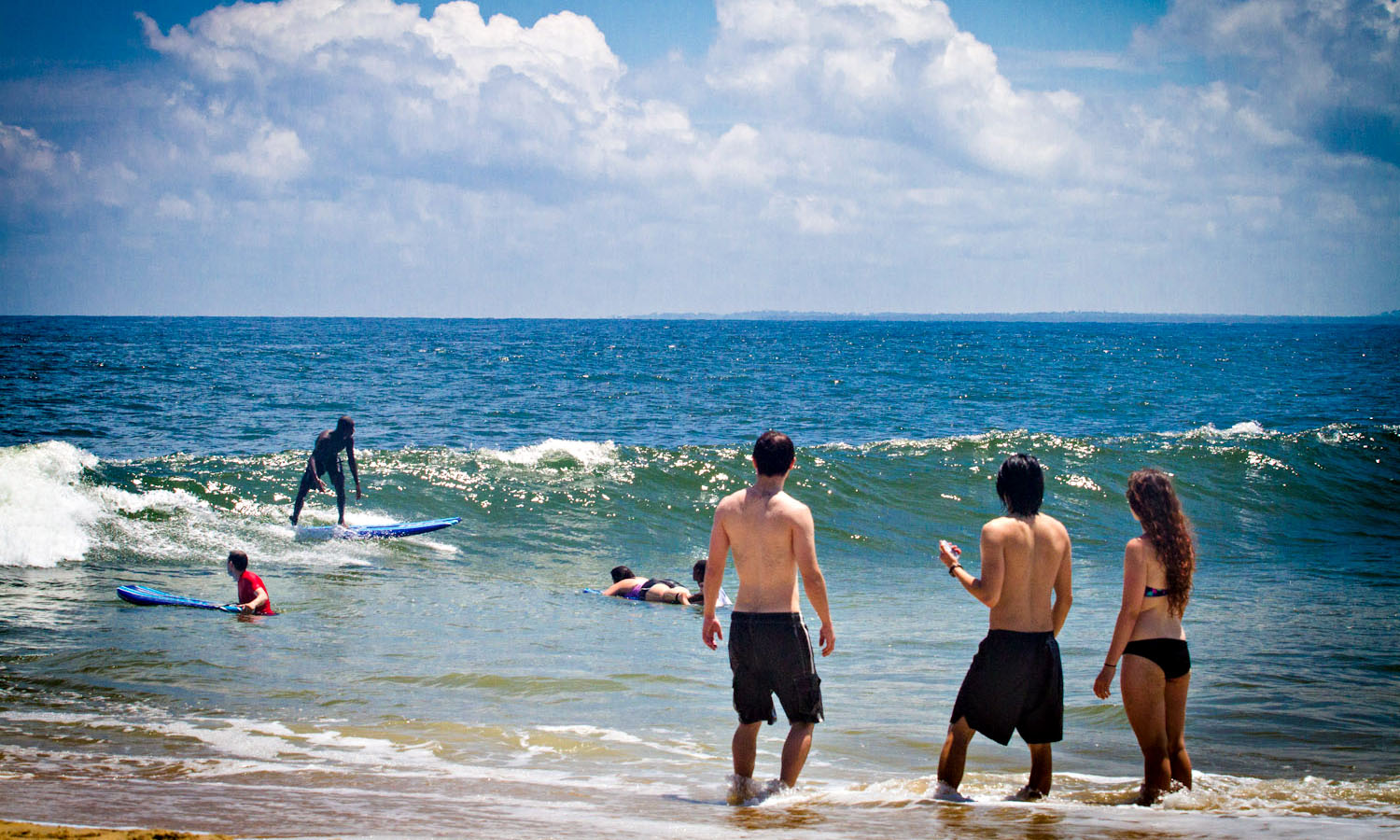
In the decades since their civil war, Liberia has built a name for itself in the surfing community. With pristine, untouched beaches and clear blue waters, surfers of all abilities can hit the waves with confidence. To experience the best that this coastline has to offer, surfers can stay at Kwepunha Surf Retreat, which aims to become the leading surf lodge in Liberia and create a solid foundation for surf tourism in West Africa. Step outside the hotel and you’ll be moments from Fisherman’s Point, a strip that’s ideal for beginners on an average day, but recommended for intermediate to experienced surfers on a good day. Other ideal locations not far away include Robertsport, Cotton Tree Point and Shipwrecks. Whether you’re looking for a new activity to learn or pushing the limits of your surfboard, Liberia’s surf has got you covered. kwepunha.com
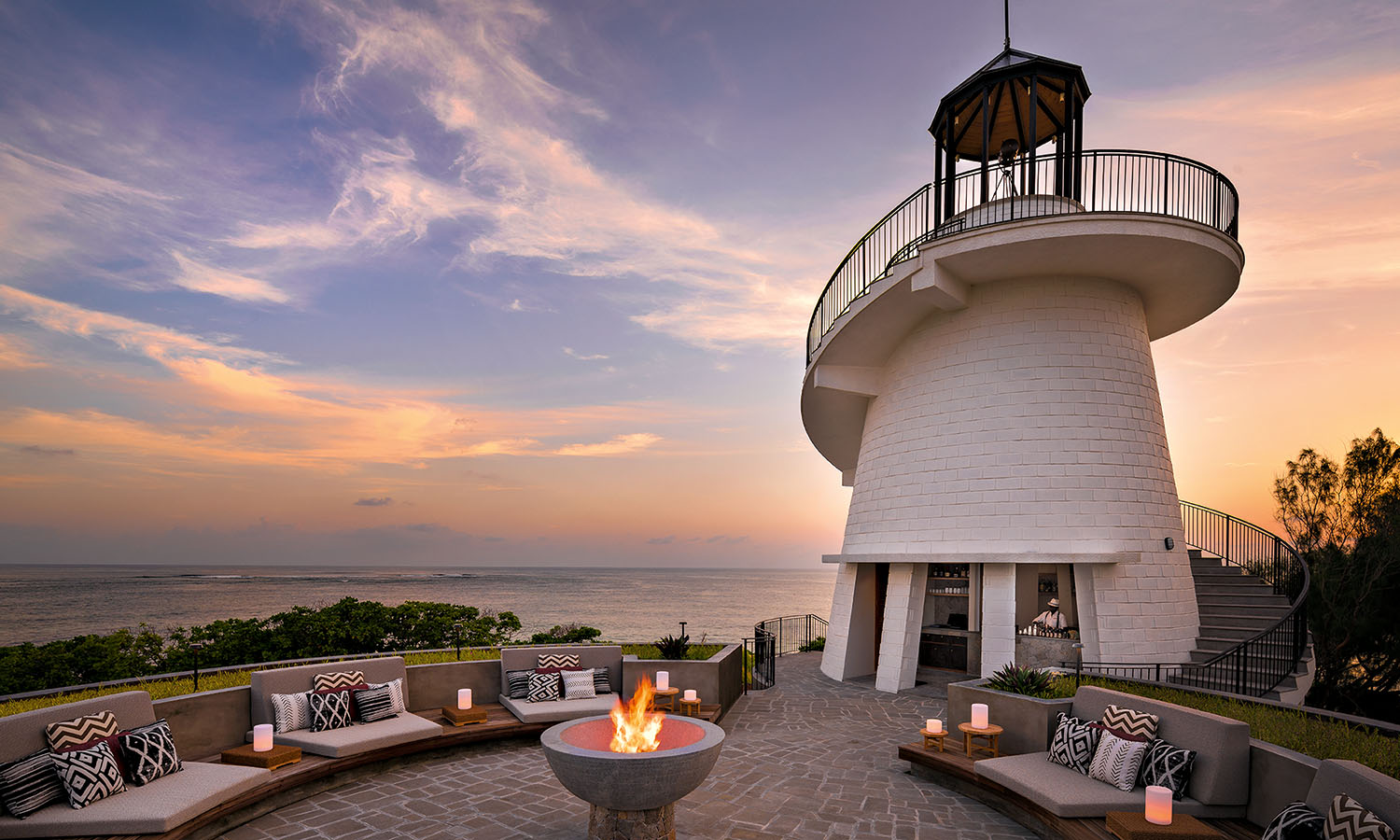
Lighthouse Lighthouse Restaurant and Lounge, Four Seasons, Seychelles
In the outer isles of the picturesque Seychelles, standing tall with panoramic views of the Indian Ocean, you’ll find the Lighthouse Lounge. Newly constructed as part of the Four Seasons Hotel on Desroches Island, the Lighthouse offers fine dining in a relaxed environment. Cobbled floors and walls bring timeless charm to modern dining elegance. With the option of 16 outdoor lounge chairs on the upper terrace or indoor dining on the lower level, you’ll be able to feast on a menu of organic meats and fresh seafood while the sun sets beyond the horizon and you bask in the glow of the 180-degree views. fourseasons.com
Adrenaline Rush Lava Tunnels of Saint Phillipe, Réunion Island
If you have ever wanted to journey beyond the earth’s surface to see what lies beneath, this might be your best chance. On the south-east coast of Réunion Island you can delve deep into the bowels of the earth below some of the most active volcanoes in the world. Uncover the metallic shapes moulded from hardened lava and see the roots of trees and plants that bring life to the surface above. Navigate the lava tunnels and caves with a local guide who will teach you all there is to know about the island’s volcanic activity. Be sure to bring a change of clothes and big water bottle though because temperatures below ground are hot and humid. While you won’t have to do any crawling or squeeze yourself into tight spaces, you may want to sit this one out if you have an unfriendly relationship with claustrophobia. adrenaline-hunter.com
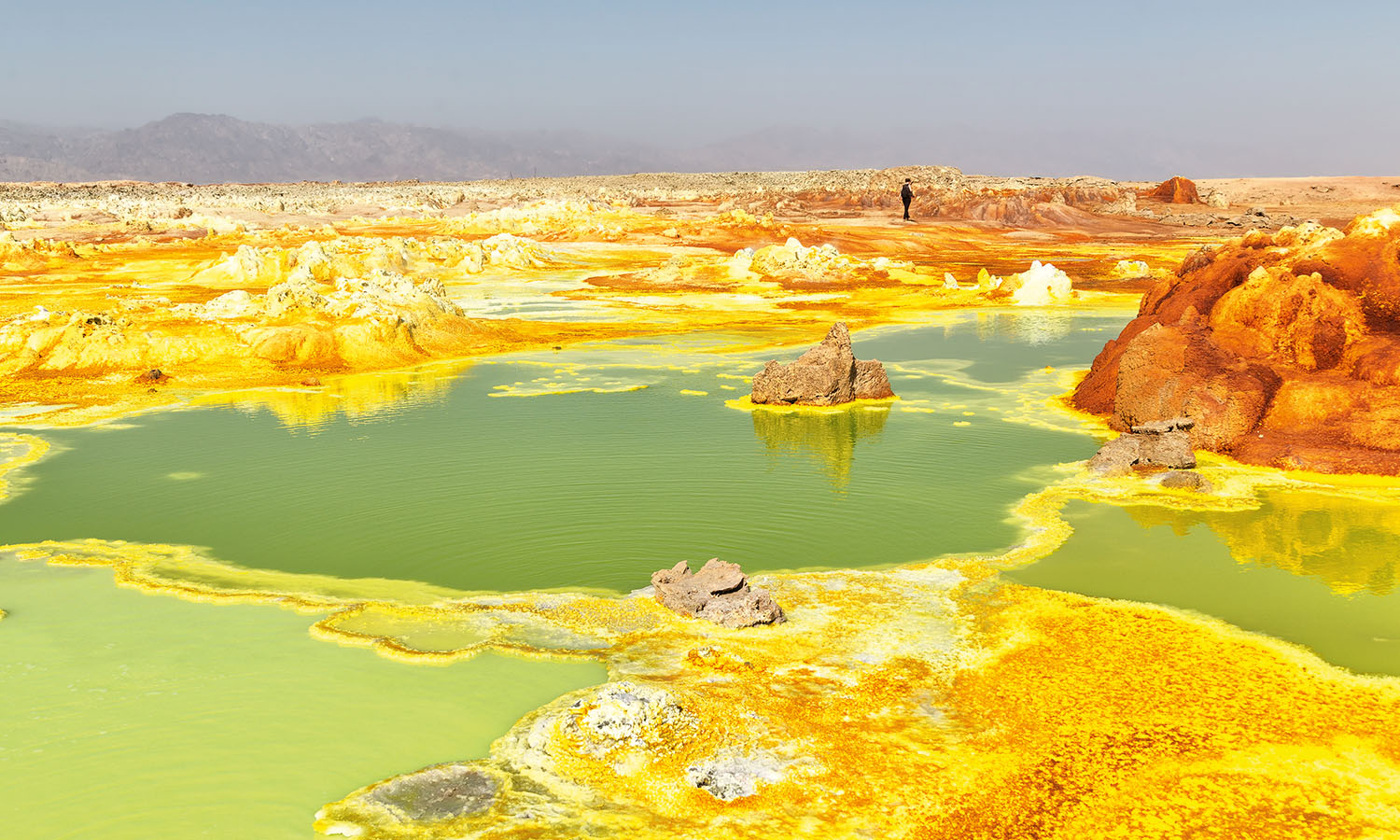
This natural wonder is a site to behold. At around 125 metres below sea level, the salt pools of Ethiopia’s Danakil Depression are one of the lowest points on earth. These hot springs glow iridescent yellows and greens, the neon colours created by the hot magma that simmers below the surface, dissolving thick layers of sulphur and other minerals that linger in the earth. This mostly inhospitable land is one of the harshest environments known and mostly sustains micro-organisms. If you’re brave enough to make the trip, be sure to wear light layers because temperatures here average 41°C daily and can reach heights of 55°C, making the Danakil Depression the hottest inhabited place on earth.
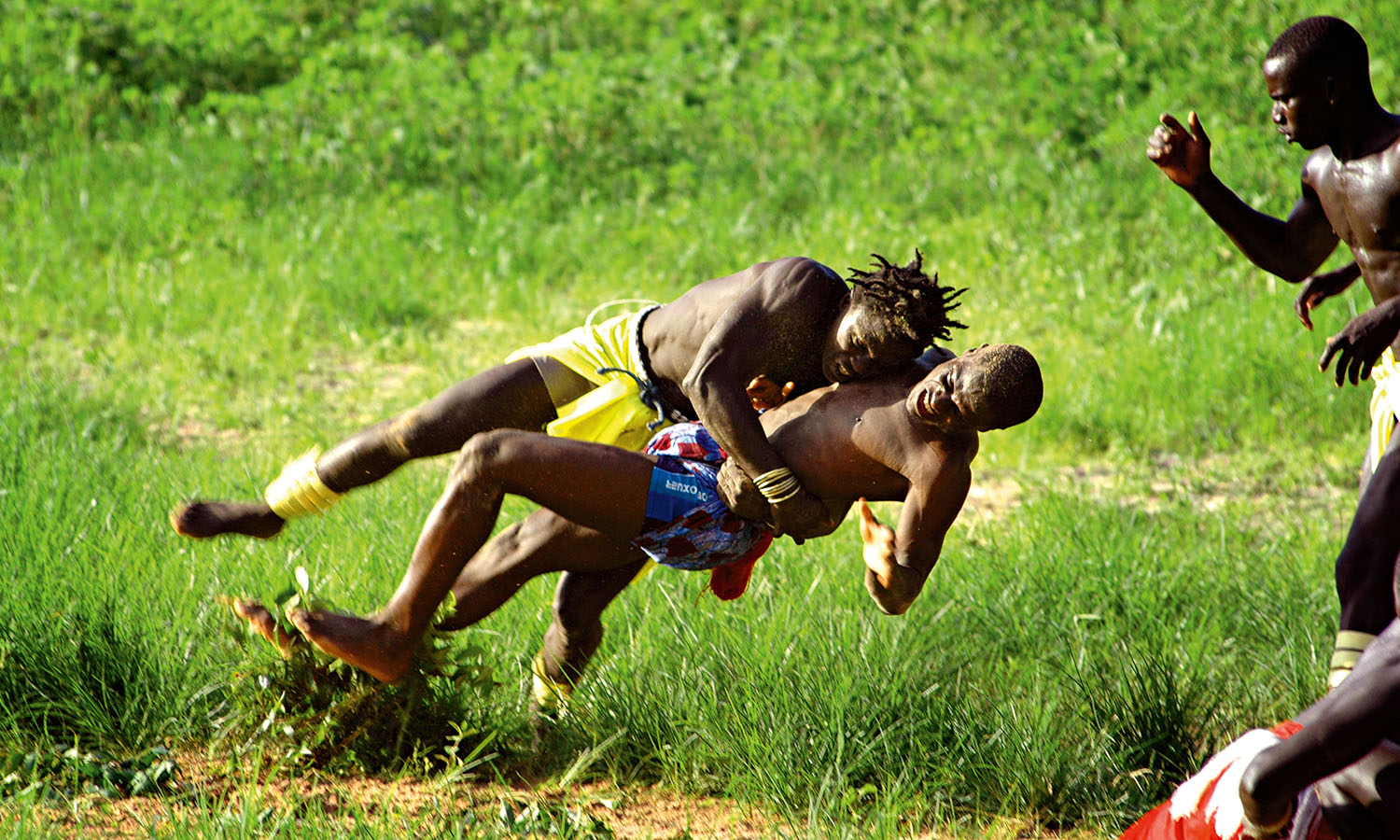
Sometimes it’s more fun to watch than participate. That is definitely the case when it comes to Senegalese wrestling. The origins of this national sport date back to the traditions of the Sérères tribe, whose men would fight to determine the village champion. Traditionally called lutte in French or laamb in Wolof, opponents face each other in a combination of boxing, wrestling and hand-to-hand combat. The objective is for one wrestler to throw his opponent to the ground outside of the designated wrestling ring. If he can achieve this, he will be dubbed the champion. This rough and tumble sport has become one of the most popular sports in Senegal and is not to be missed if you want to see some hardcore competition.
Beach Safari Beach Safari on horseback, Mozambique
When we think of African safaris, a beach safari on horseback isn’t exactly what crosses our mind. But along the glistening coasts of Mozambique, Pat and Mandy Retzlaff and their horses offer trail rides and safaris along the untouched white sands and over towering cliffs of the Vilancuios Coast and Benguerra Island. The history of Mozambique Horse Safari started with Zimbabwe’s redistribution program, which left the owners with just a few hours to flee the intensifying land invasion. With the collection of 104 horses, gathered from neighbours and farmers along the journey, the duo eventually settled in the coastal town of Vilankulo and offered horseriding trails along the beach. Now, with 30 horses in the stable, Mozambique Horse Safari offers a personalised experience for each of its guests with two- to five-hour itineraries. Canter along the glistening waters of Mozambique’s coast, cross sandy dunes and see expansive hilltop views from the back of a valiant steed. mozambiquehorsesafari.com
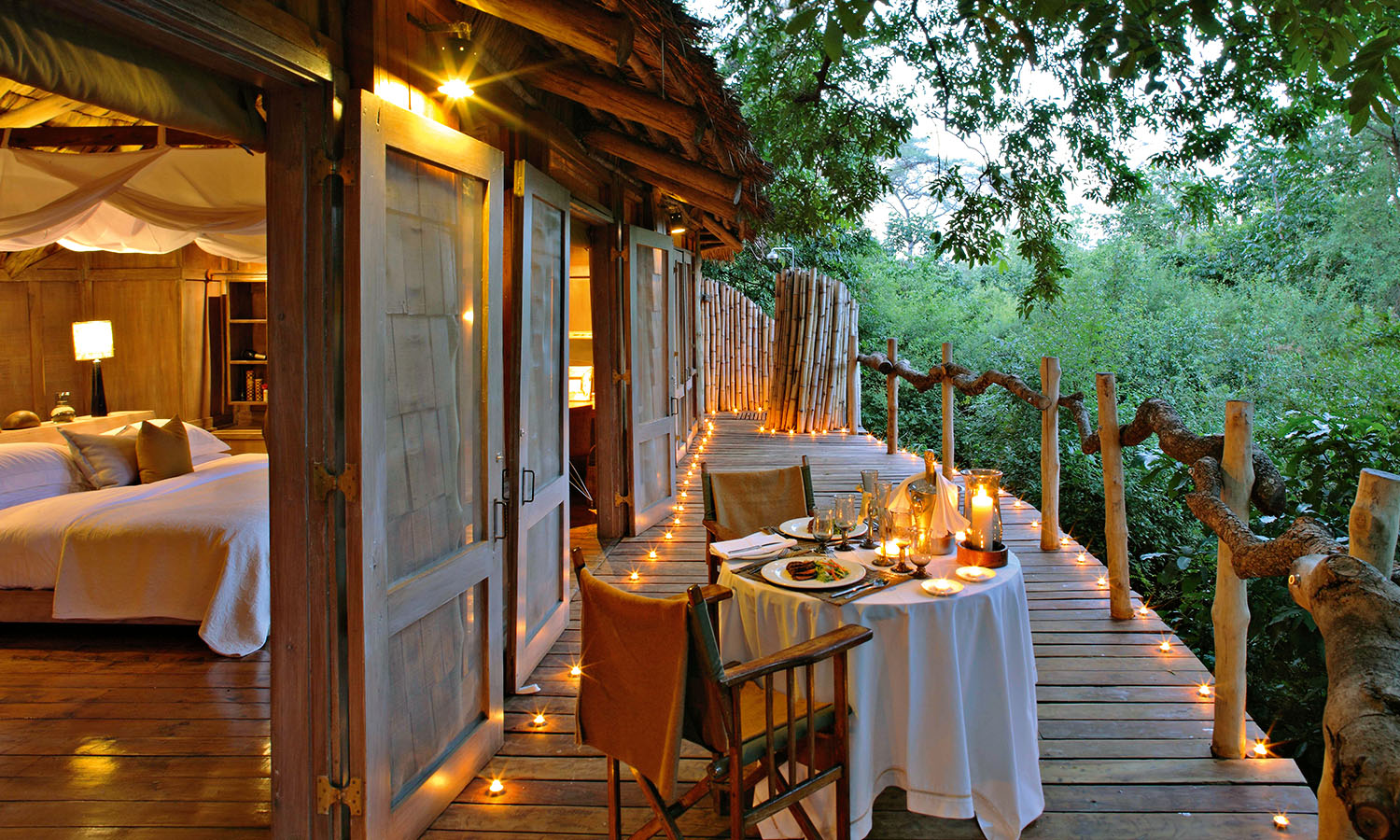
Treehouse andBeyond Lake Manyara Tree Lodge, Tanzania
Stay in the heart of the African jungle at andBeyond’s luxury Manyara Tree Lodge. Check in to one of the 10 boutique treehouse suites, each looking out onto a lush green canopy and the Lake Manyara National Park from your own private deck. In a remote section of the park, these private stilted treehouses have been constructed so you can have a more intimate encounter with the local wildlife. During daily safari rides, you’ll see the famed tree-climbing lions as well as some of Africa’s other most iconic animals. Communal dining and a swimming pool lets you kick back and watch the life of the mahogany forest unfold around you. This isn’t quite like the rustic treehouse from your childhood though, with accommodation sporting a more luxurious touch. andbeyond.com
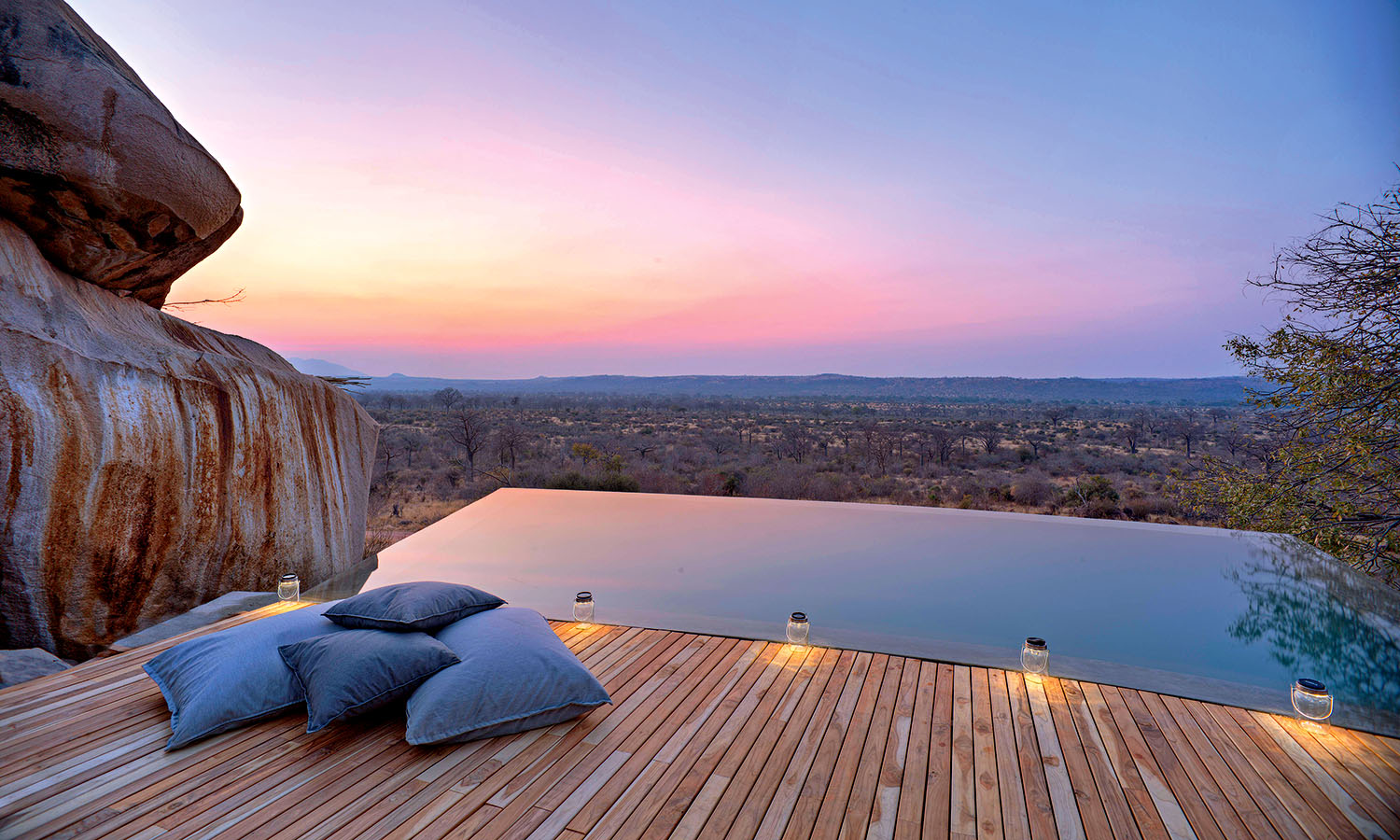
Picture this: you’re out on a game drive. It’s a hot day and, as beads of sweat blossom on your brow, you find yourself wishing you could splash about in the watering hole alongside the four-legged locals. Eventually you pull up to Jabali Ridge, a secluded retreat perched atop a rocky hilltop, and find your very own watering hole in the form of a gleaming infinity pool. Here you can laze away the rest of the afternoon, luxuriating in the cool waters while looking out across the arid plains sprinkled with baobab trees and palms of Ruaha National Park that stretch all the way out to Mwagusi River. The park is renowned for hosting lions, elephants, leopards and buffalo, and with views this good you might consider abandoning the 4×4 altogether and watch the wildlife from the pool. asiliaafrica.com
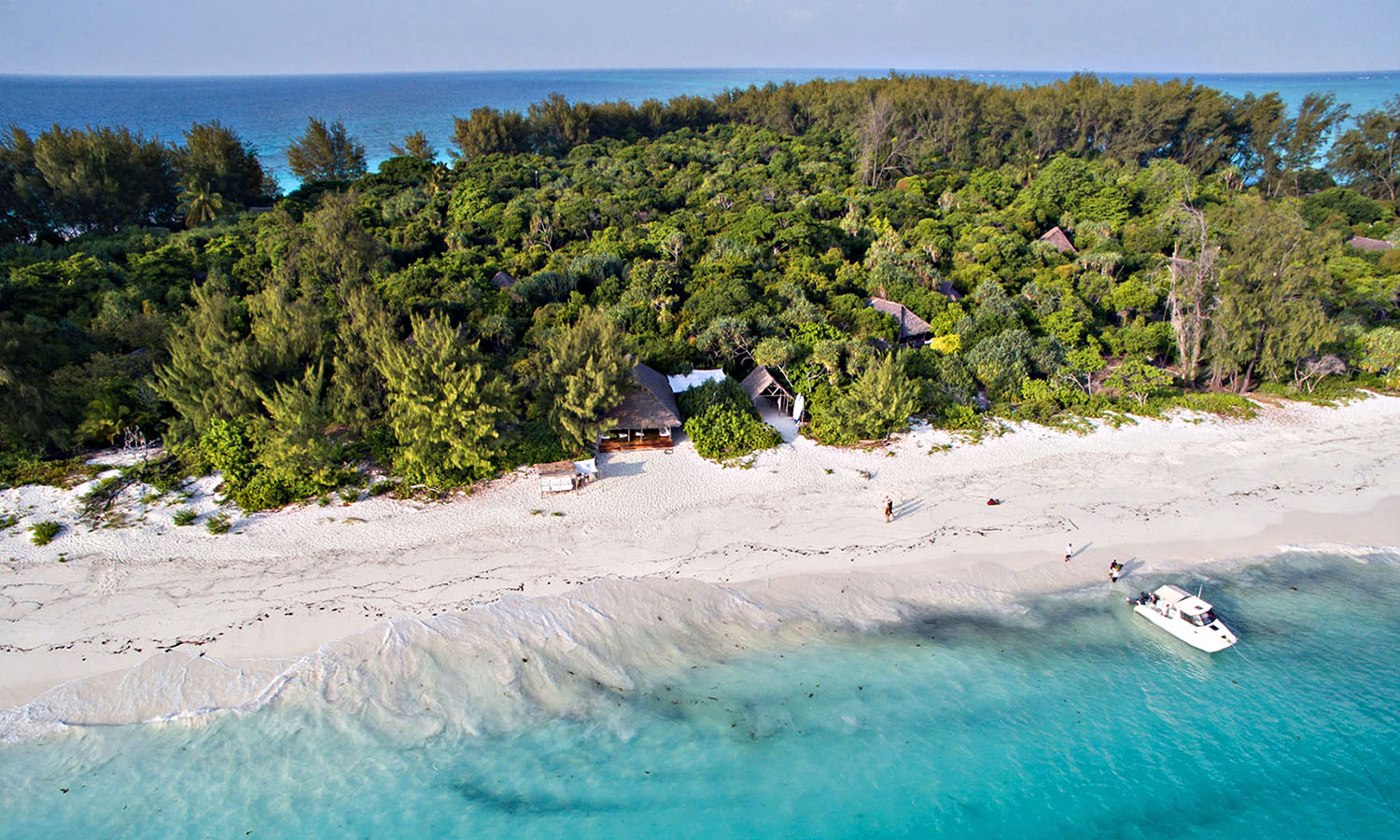
Mnemba Island is a 20-minute boat ride from Zanzibar and is the epitome of paradise. Atop its white sands and surrounded by the azure ocean is the island’s exclusive andBeyond Mnemba Island Resort. Just 24 guests can stay at any one time, making it a dream island getaway for those wanting to escape. From your beachside bungalow, watch the waves lap against the pristine shore before wandering around the island to mingle with the local wildlife or dive into the clear waters to discover what’s lurking beneath. Snorkelling, birdwatching, fishing and a variety of water sports are all on offer or, if you prefer, you can take advantage of the rare serenity and do absolutely nothing at all. andbeyond.com
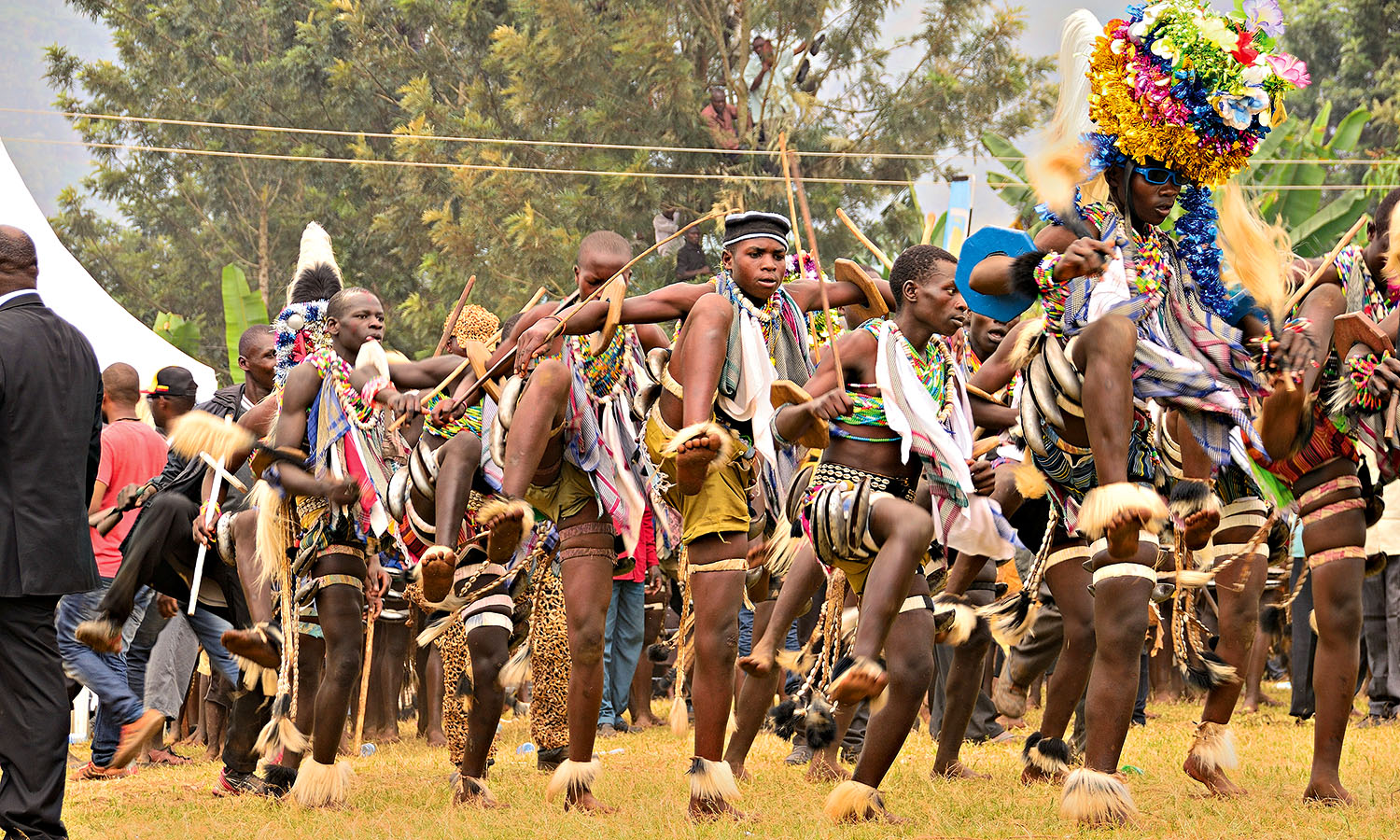
We had to put Africa’s coolest country to a vote. The diverse continent offers so much variety, it was hard to choose just one. But for a small country that totals 236,040 square kilometres in size (about the same size as Victoria, Australia), it sure covers a lot of ground in terms of things to do and see. Its landscape weaves between terrain like an art form, patterning between the Rwenzori Mountains (Africa’s tallest), the River Nile, national parks, waterfalls and wildlife sanctuaries. And with such diversity, Uganda is also known for its abundant wildlife, including the Big Five and its famed gorilla and chimpanzee populations. There’s a reason Winston Churchill called it “the Pearl of Africa” after all, writing in his book, “For magnificence, for variety of form and colour, for profusion of brilliant life – bird, insect, reptile, beast – for vast scale…” But away from the rawness of the Ugandan landscape also lies the engaging attractions of its capital, Kampala. Here, you’ll see the country’s rich and dark history meld with modern-day Africa, where shopping, hawkers, and nightlife rule the roost. And if that’s not enough to get you there, then throw in the shining Ugandan hospitality where you’ll be welcomed by the warm and friendly nature of the people, and you have yourself the coolest country in Africa. visituganda.com
As the sun sets over Zanzibar City, the spirit of Stone Town comes alive. This vibrant transformation sees this neighbourhood turn into the dream of every foodie. The open-air Night Market sees chefs in bright white toques stream in to prepare and showcase their masterful dishes. Stroll through the Forodhani Gardens and munch on the endless blend of cultures and cuisines. Arab and Persian flavours mixed with Indian spices and Swahili culture to form local delicacies like no other. The influence of the spice trade through Zanzibar has left its mark, still seen in the food you can buy at the market. Sweet or salty, spicy or mild, seafood or meat; anything you’re in the mood for you’ll be able to find in one of the makeshift kitchens set up at each store. And be prepared to barter – it’s all part of the fun here.
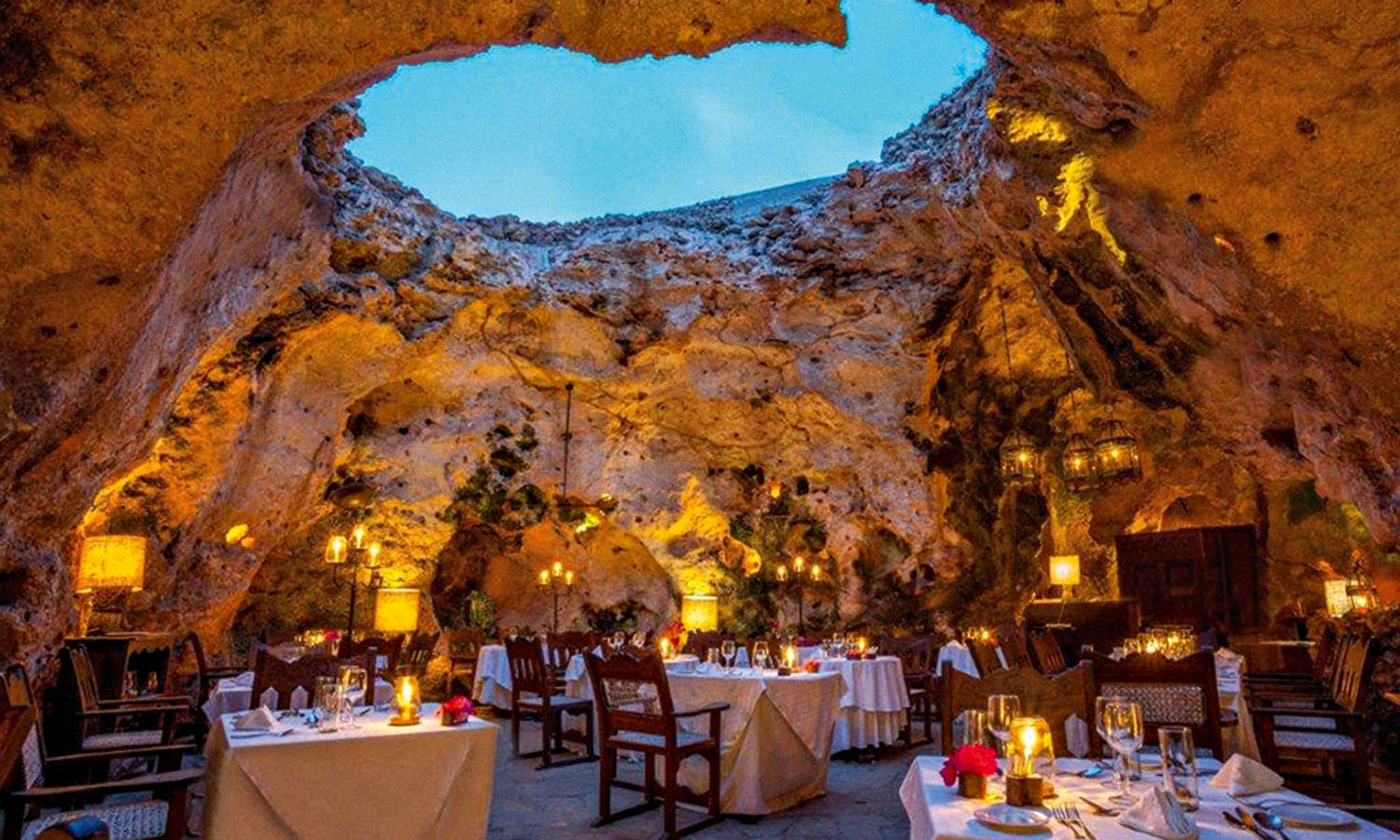
Thought to be 120,000 to 180,000 years old, this Kenyan cave-turned-restaurant on the country’s southern shores is a must for food-loving geologists. Aside from the addition of the kitchen and bathrooms, the interconnected chambers of the cave restaurant have been mostly untouched by the current occupants, left to exist in its organic beauty. Using the cave’s natural crevices, Ali Barbour’s has created an intimate atmosphere with soft lighting giving way to the view of the heavens above. With a diverse menu and options to suit the fussiest of eaters, their speciality lies in creating delectable seafood dishes. Choose from the prawns bathed in garlic, lobster in a creamy white sauce or a pan grilled barracuda – your tastebuds will not be disappointed. This is a delight for the senses – as your mouth waters at the toothsome food and your eyes dart around the dazzling surroundings. alibarbours.co
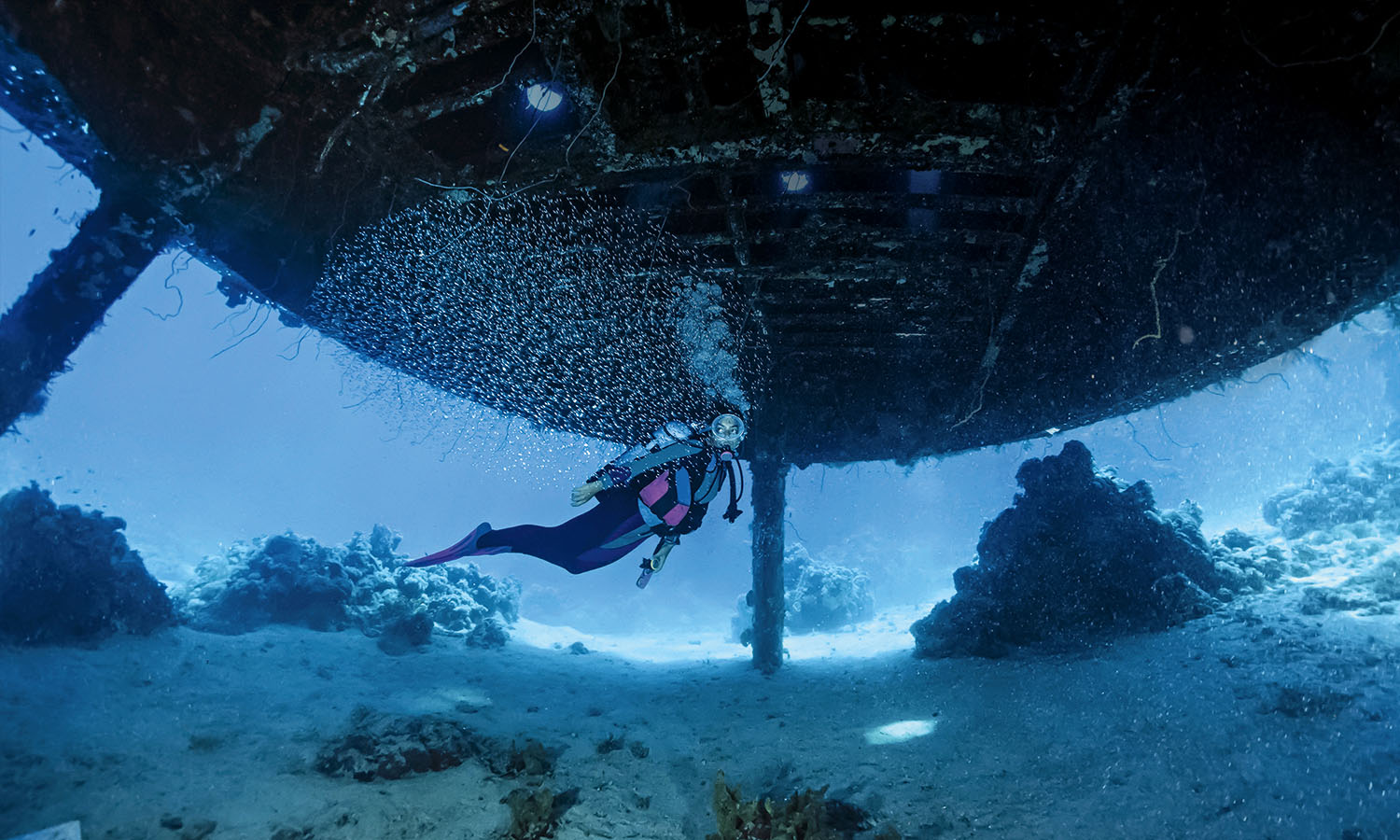
Many perceive Sudan as an unsafe travel destination – its reputation for civil war in the south is well known – but that doesn’t mean it’s unsafe to travel everywhere. Its northern reaches are safer. In fact, the Sudanese are some of the most hospitable people you’ll meet. And what few know is that about 48 kilometres off the coast of Port Sudan, below the surface, is some of the best diving in the Red Sea (and Africa). Here, the lagoon is teeming with hammerhead sharks, grey reef sharks, barracudas, pods of dolphins and corals. Before you reach this spot, though, you’ll encounter the famous Precontinent II, a underwater station of capsules built by famed oceanographer Jacques-Yves Cousteau in 1963, where he and five other researchers lived 10 metres below the ocean’s surface for 30 days to study the effects of living underwater. Captured on film with hand-held cameras, their movie World Without Sun won an Academy Award for Best Documentary.
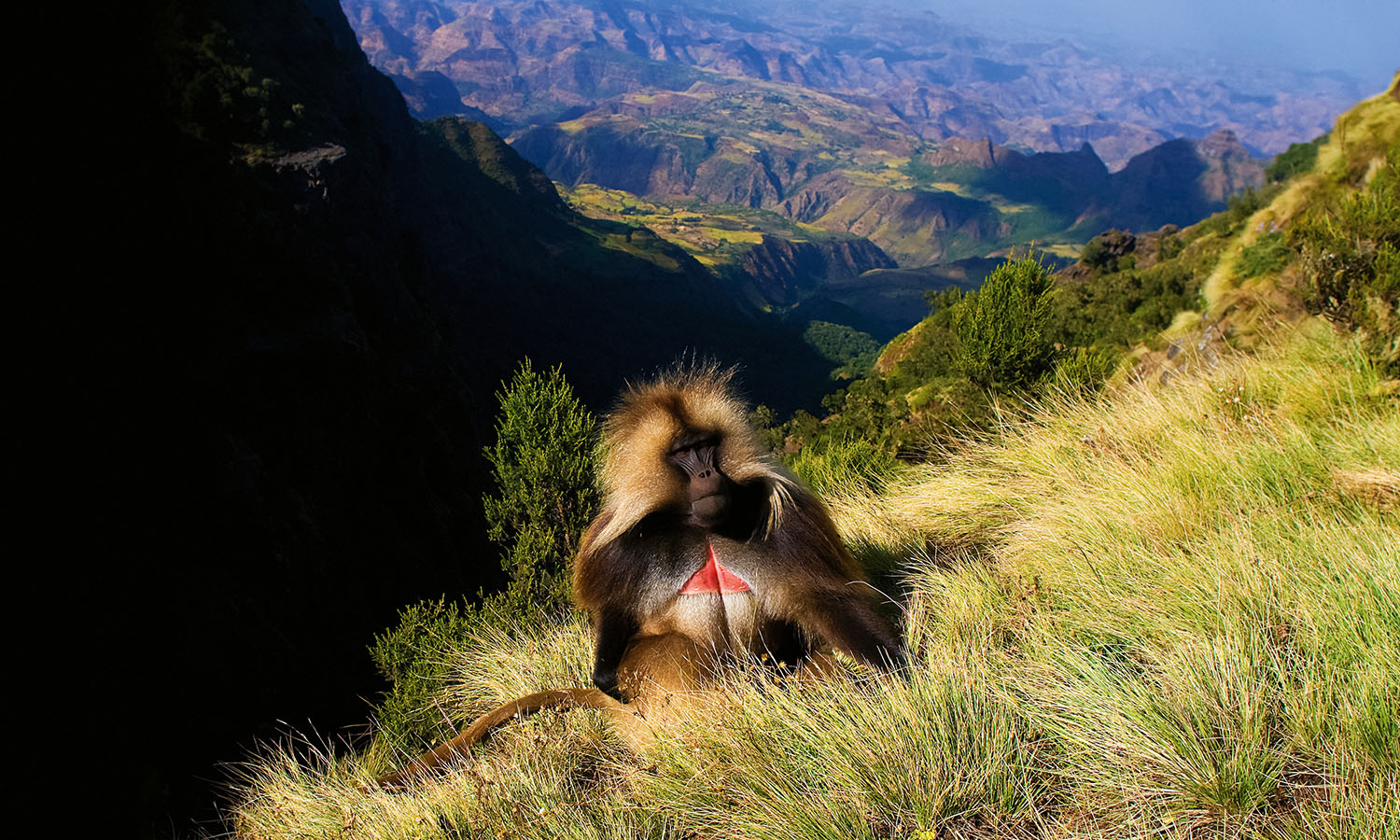
The rugged peaks of the Simien Mountains are often blanketed in misty forest and are home to endemic animals like Gelada baboons, Walia ibex, mountain goats and Ethiopian wolves. It’s one of the most epic landscapes on the African continent. Upon touring Addis Ababa and a spectacular flight to Gondar, you’ll begin your trek from Debarq, where you traverse lush valleys with grazing horses and past villages and thundering waterfalls, admiring the stunning views of gorges and mountains along the way, before climbing through lobelia forests and making the ascent over rocky outcrops to the summit of Ras Dashen, Ethiopia’s highest mountain. Once at the top, it becomes clear why this place was dubbed the ‘roof of Africa’. The trek down, while challenging, is no less beautiful, with more opportunities to spot wildlife and experience the stunning views. Exodus Travels offer 13-day treks through the Simien Mountains from AU$4911, including accommodation, transport, activities, tour guide, porters and most meals. exodustravels.com
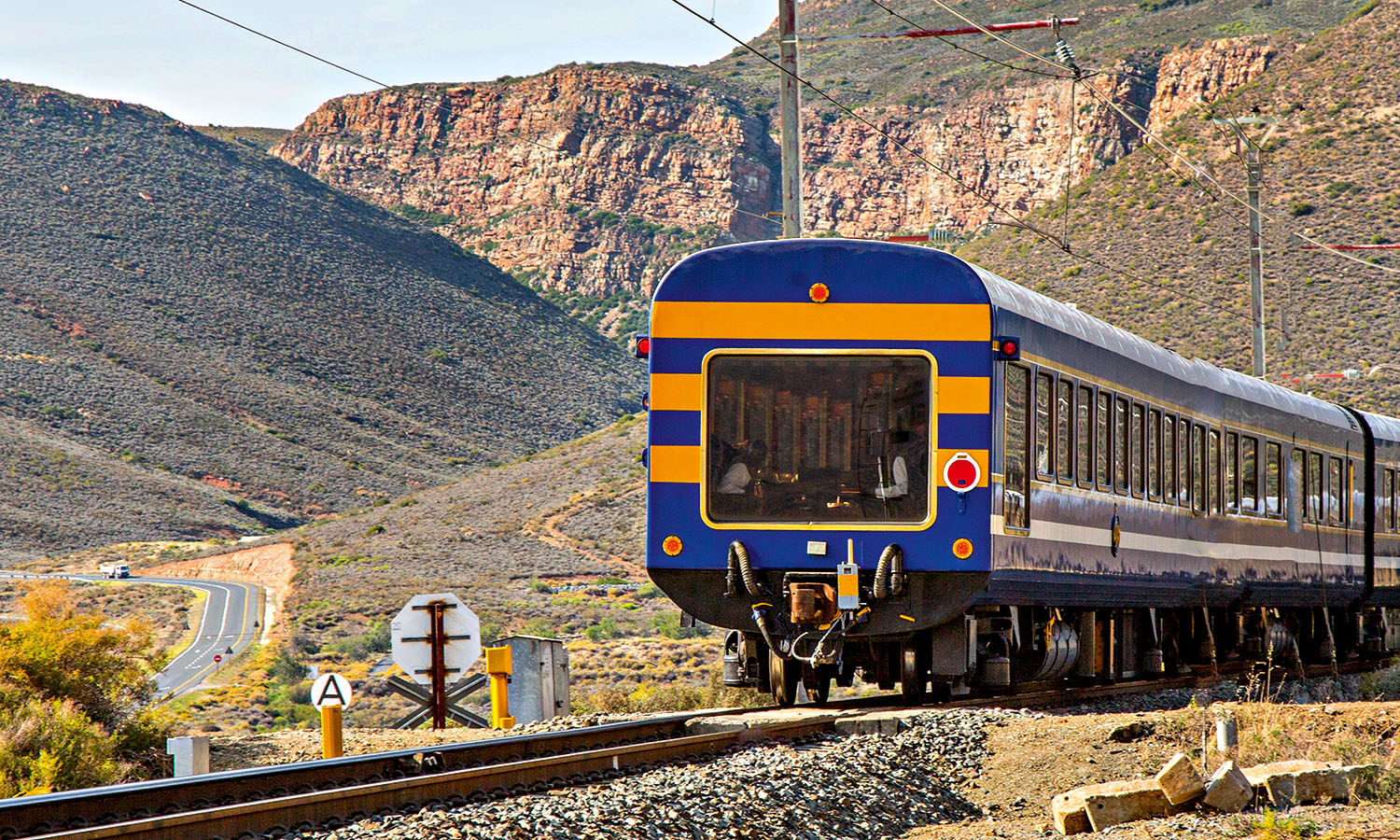
The Blue Train offers luxury modern travel at its finest. At the time of its creation, the dream was to engineer a train that could travel from Cape Town to Cairo. Though that dream was never realised, the Blue Train lives on to traverse the mountains and plains of the South African landscape. Travelling between Cape Town and Pretoria, this luxurious 27-hour journey will give you a taste of some of South Africa’s spectacular scenery, and features off train excursions in Kimberley and Matjiesfontein, award-winning wines and five-star food. If you’d prefer to stay aboard you won’t be left wanting for things to do, with a lavish boutique, observation car, lounge and bar. Make no mistake, this is one of the most luxurious train journeys you’ll ever experience – think butlers, smoking carts, and gold-tinted windows – and you’ll be quite literally dining like royalty (Blue Train notes it has served kings and presidents). bluetrain.co.za
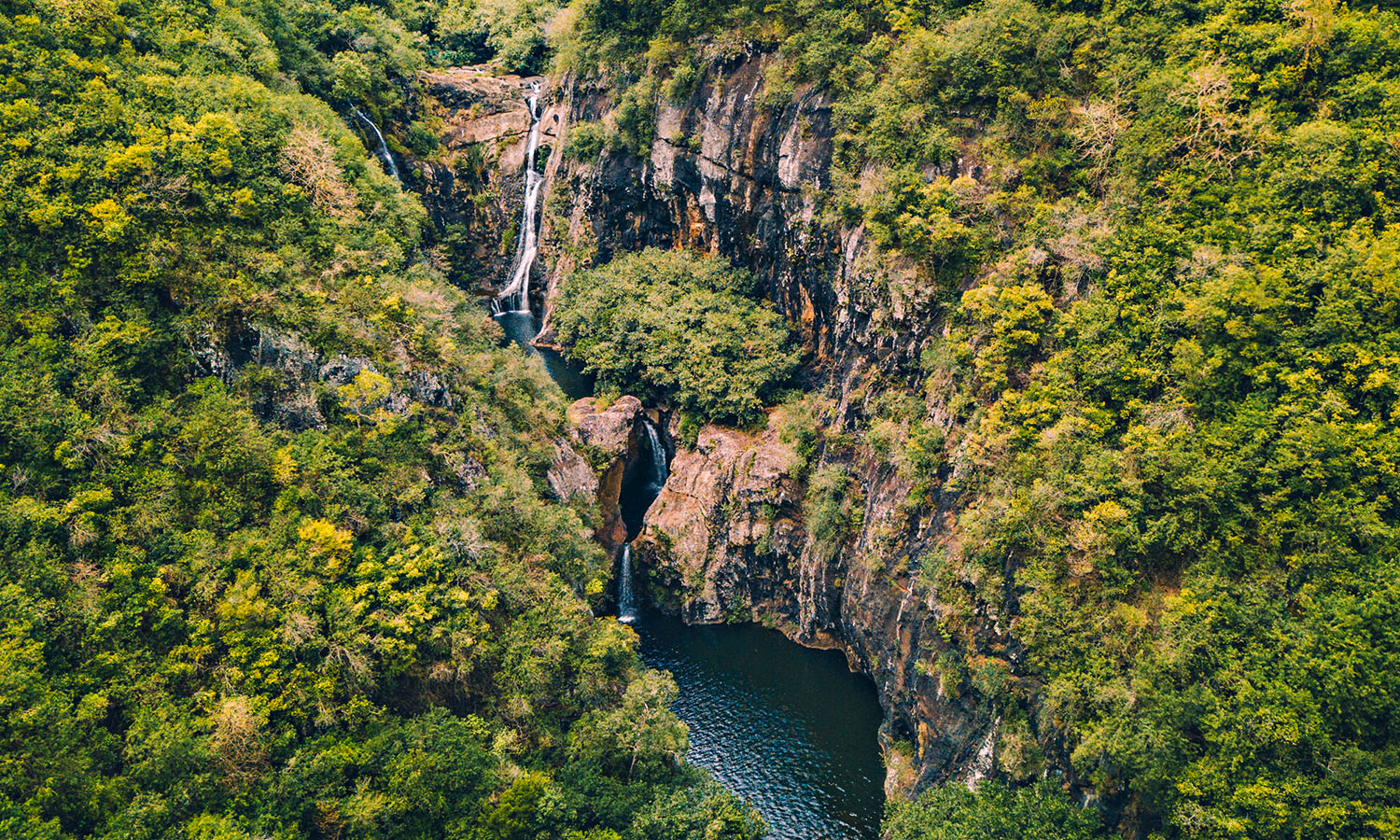
If it’s an island getaway with perfect golden beaches that you’re after, Mauritius might just be the stop for you. Remaining relatively untouched, Mauritius is bathed in natural beauty. This island nation, in the heart of the Indian Ocean, is strewn with waterfalls, lush mountain peaks, hidden lagoons and endless ocean depths to explore. The island’s historical French, Chinese and Indian influences have created a diversity that’ll entice your senses, from the food and drink, to the language and architecture. Several of the island’s sites, including the Le Morne Cultural Landscape, fall under the protection of UNESCO’s World Heritage List in an attempt to preserve the island’s beauty and history. For a sustainable way to travel, check out Mauritius Conscious. mauritiusconscious.com
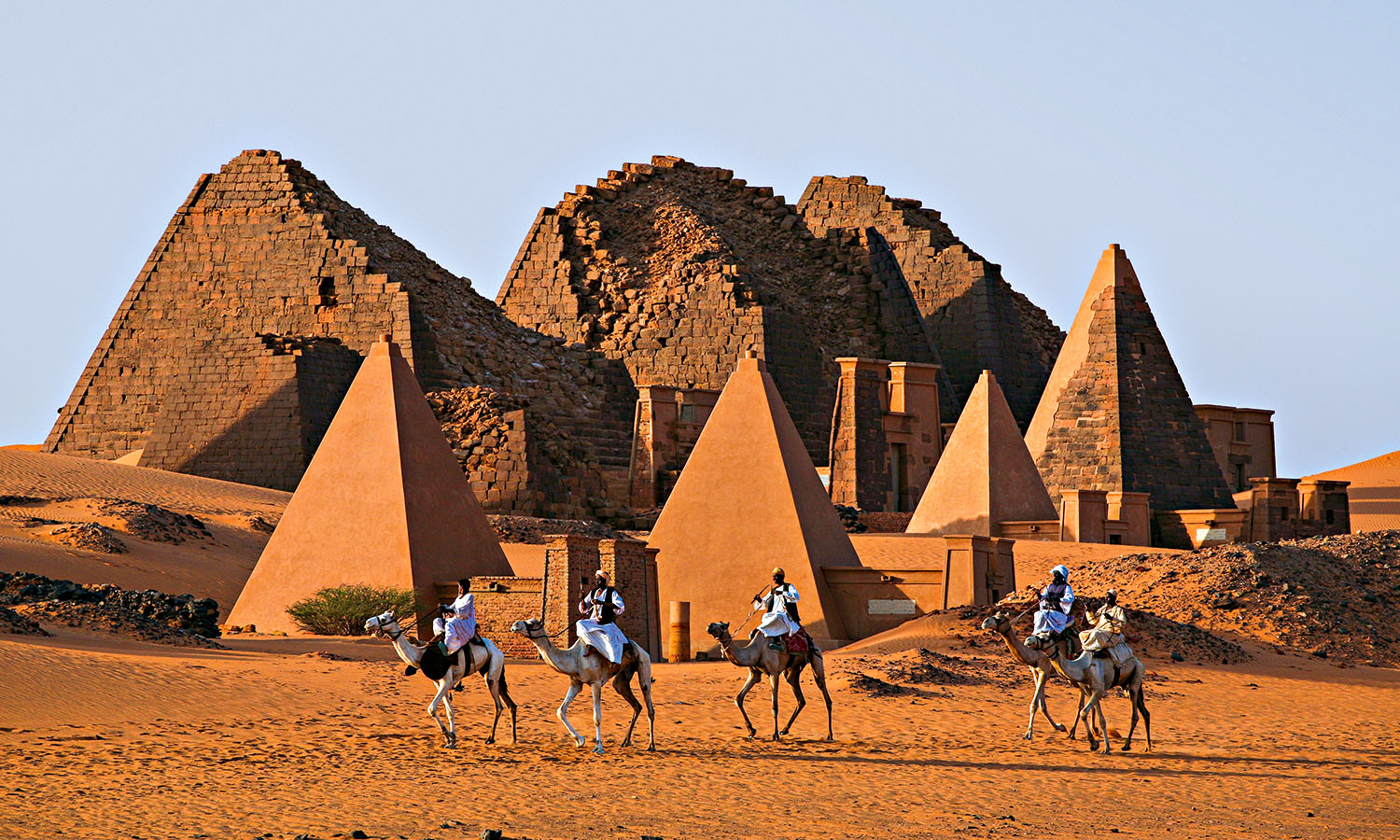
There can be no denying that the most famous pyramids in the world are Egypt’s Great Pyramids of Giza. But did you know that on the banks of the River Nile, in the heart of the Sudanese desert sits a collection of some 200 pyramids. The forgotten pyramids of Meroë were once the centre of the ancient Kingdom of Kush, now modern-day Sudan. Though it was founded around 750BC, Meroë was not named the Kushite capital until 590BC after the fall of Napata. Ruled by the Nubian kings, Meroë thrived along a well-formed trade route that provided resources for the region. This UNESCO World Heritage Site now stands as a reminder this ancient civilisation’s history and is a place of burial for the former kings and queens of the lost nation.
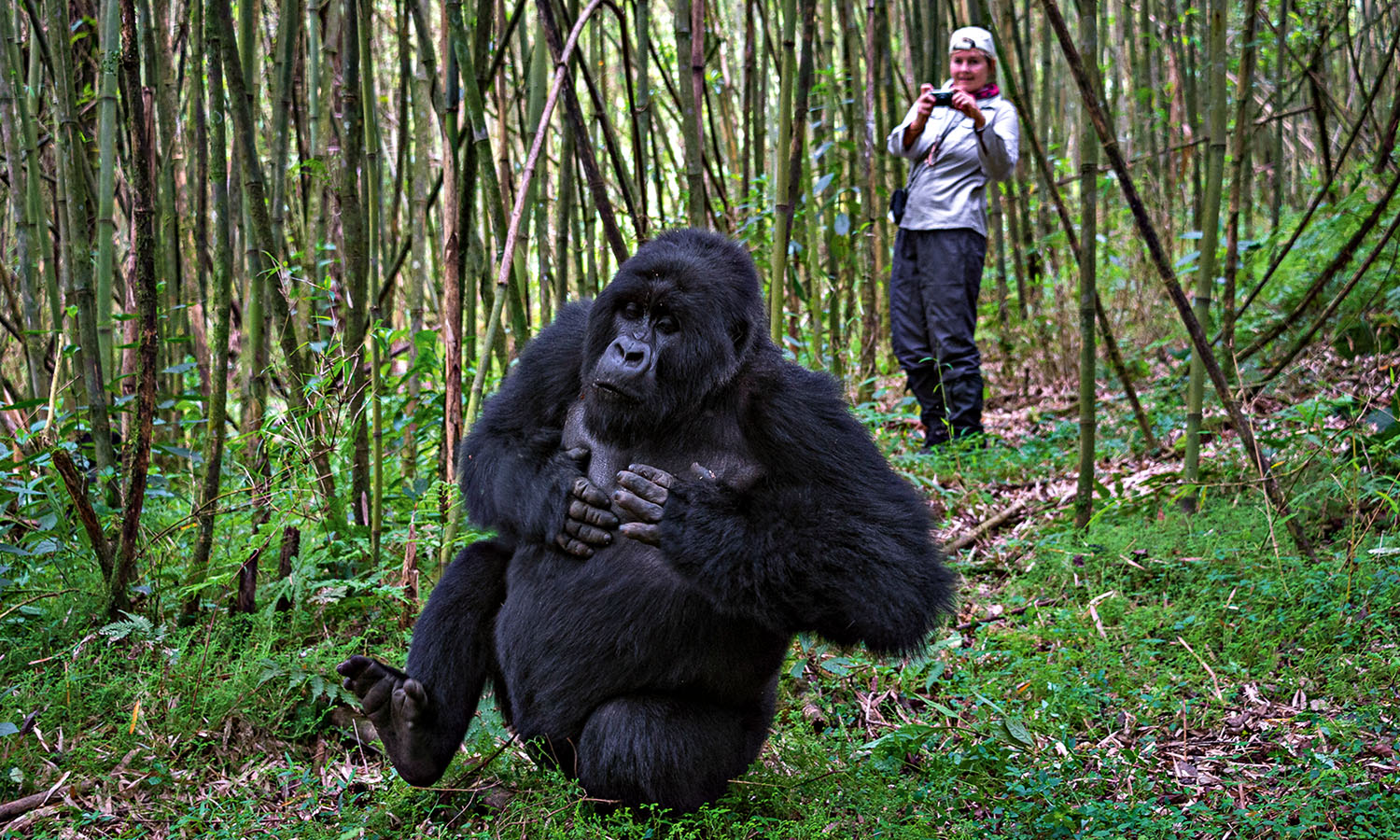
There are less than 300 mountains gorillas left on the planet, but on this four-day adventure with Bench Africa you’ll not only be able to see them up close, you’ll learn about the impressive conservation efforts being implemented to protect them. Bisate Lodge, a luxe sustainable conservation retreat, is not only insanely comfortable – situated within an eroded volcano, its six rooms, each with ensuite, feature domed ceilings, plush rugs and open fireplaces – it’s also the ideal launch point for your expedition into the wild thanks to its proximity to park headquarters.
Guided by an expert tracker, you’ll wade through the dense scrub of Volcanoes National Park, home to rare golden monkeys, spotted hyena, bushbuck and more than 170 bird species, in search of one of the 12 habituated groups of mountain gorilla and the ultimate meet-and-greet. Time in the company of the mountain gorillas is limited to just one hour each day to prevent impacting their behaviour or potentially passing on disease, but every moment in their presence, up close and in their natural habitat, is a humbling one that will make sixty minutes feel like the blink of an eye. benchafrica.com
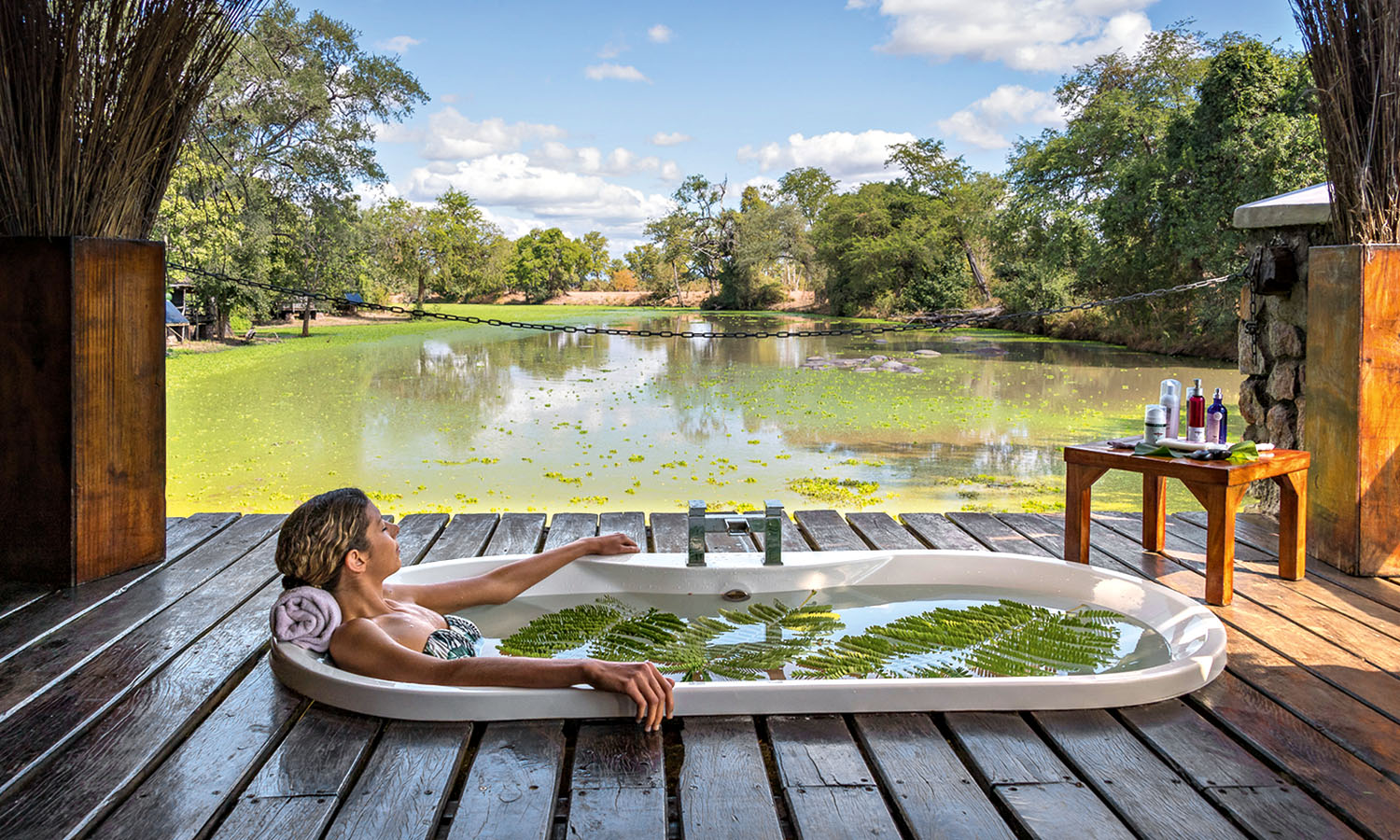
An unparalleled oasis in the middle of the African jungle is what you’ll find at Mfuwe Lodge’s Bush-Spa. Located inside the South Luangwa National Park, go from a safari in the morning to enjoying the Bush-Spa’s luxurious treatments in the afternoon. You can have the stress massaged away by a professional while hippos wade in the pond next to you. Highly trained staff perform therapeutic treatments with a focus on using naturally sourced local ingredients. Have a facial or a herbal foot bath and look out on the abundance of wildlife that wanders through the park. From elephants to lions, you’ll see it all and leave feeling revitalised and blissfully relaxed. bush-spa.com
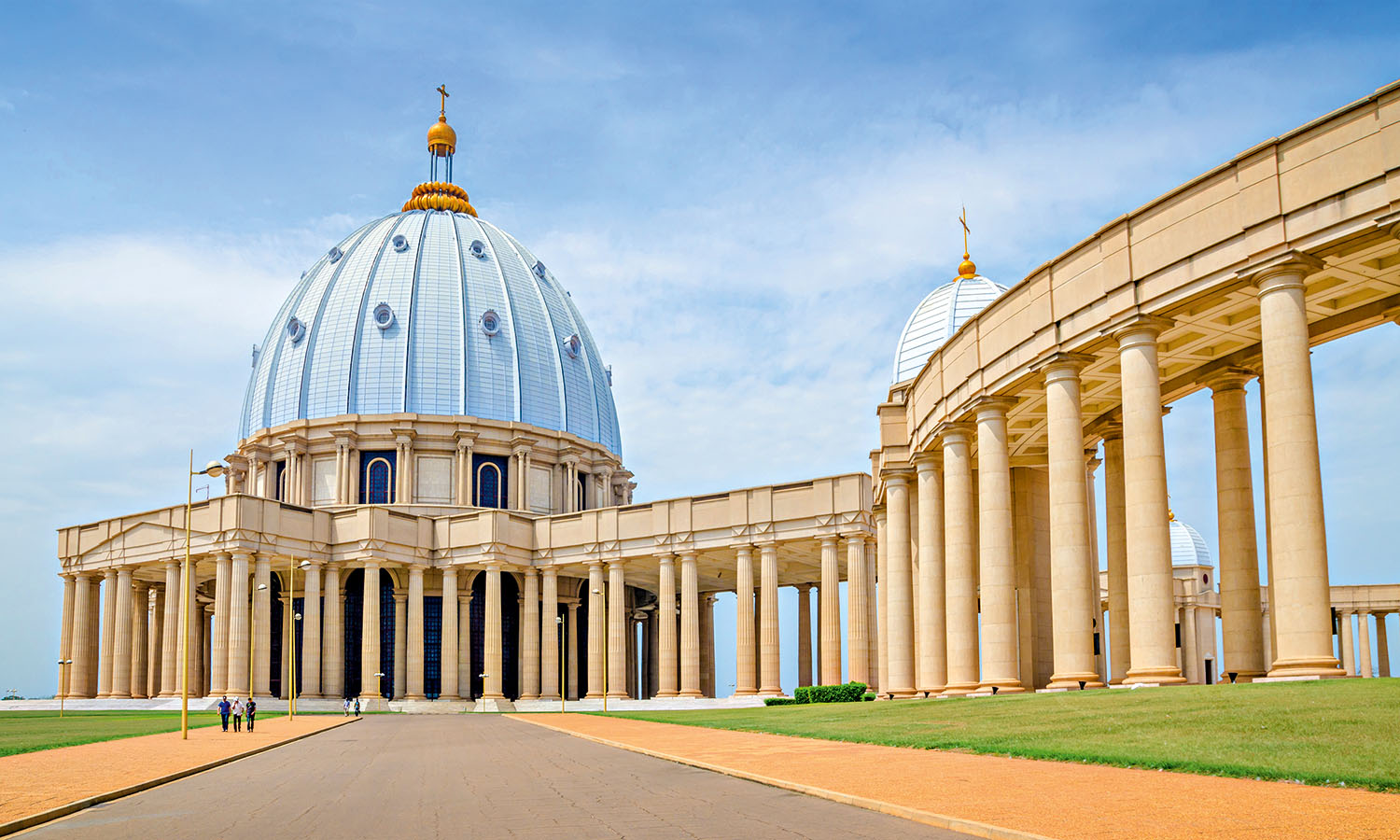
Church Basilica of Our Lady of Peace of Yamoussoukro, Ivory Coast
Many would say that the largest church in the world can be found in Rome, but there’s another blessed-structure that often gets overlooked. Modelled on St Peter’s Basilica in Rome, the monolithic structure of the Basilica of Our Lady of Peace of Yamoussoukro not only stretches across a whopping 30,000 square metres, features 24 stained glass windows and can accommodate up to 18,000 worshippers, but it also shoots past its Roman counterpart in height by 70 feet, making it the largest church in the world. Crafted from marble imported from Italy, the church was constructed in the capital of Côte d’Ivoire by president Félix Houphouët-Boigny, who wished to memorialise himself. The basilica garnered much international controversy during its construction between 1985 and 1989 as the country was going through an economic crisis at the time – the opulence juxtaposed with the impoverished town’s lack of running water did not play well. Today, tourists mostly enjoy its grandiosity, while only a couple of hundred parishioners attend its weekly mass. It’s a magnificent site to behold.
Gallery A Sentence is an Archipelago of Words, Namibia
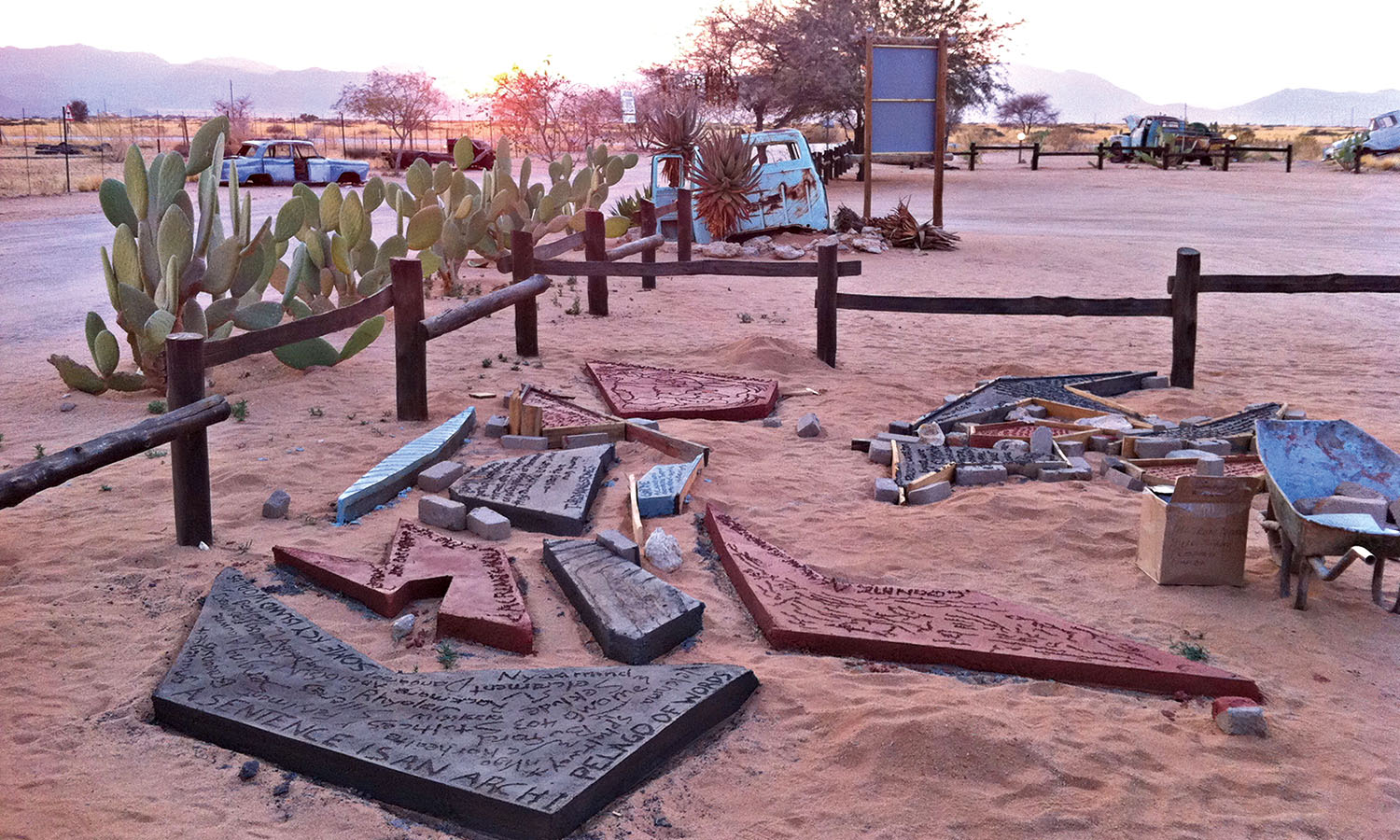
In the desert of Namibia, on the grounds of the Solitaire Lodge, is the A Sentence is an Archipelago of Words art installation. The art is just one piece of a larger project called Kcymaerxthaere, a globally intricate storytelling project about a parallel universe also called Kcymaerxthaere created by Eames Demetrios. There are 134 installations (with more on the way) in over 27 countries that help tie this story together. Each of the cement islands placed in the burnt red ground represents a continuing part of the story about this alternate world. Solitaire Lodge represents part of the Parallel Universe in which it’s a culture that believe every word, in every language, is the name of another dimension. Once you visit this Namibia art site, you’ll want to go searching for all the other pieces. kcymaerxthaere.com
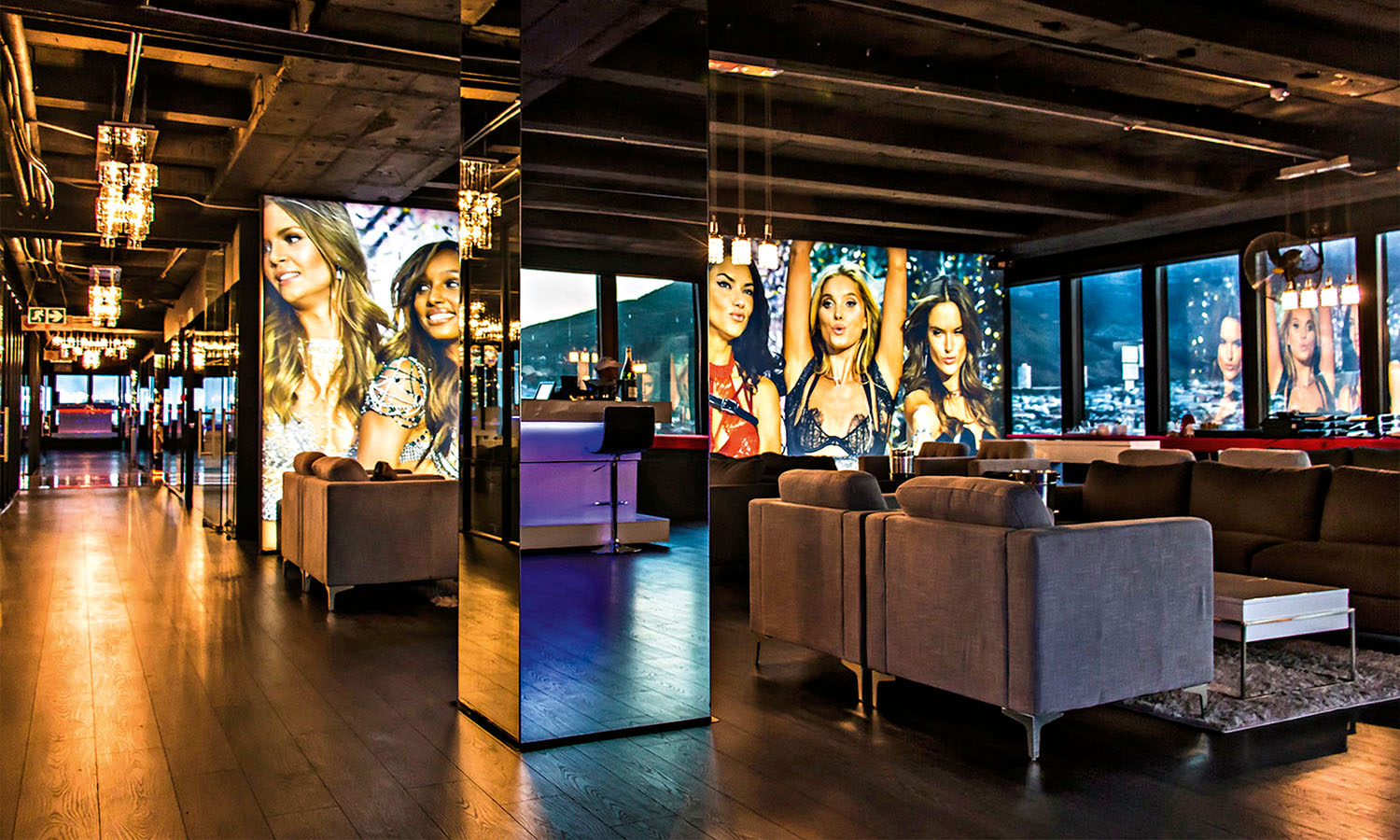
Dress to impress and get ready to party with elite at Cape Town’s hottest club. Injecting an adrenaline-pumping shot of classic cosmopolitan glamour into the heart of the city, Cocoon is set to heat things up. Spread out across 830 square metres, this super club is not only so big it has an east and a west wing, but it takes over the enviable position of the ABSA building’s 31st floor, overlooking the glittering lights of Cape Town and out to Table Mountain, the harbour and the ocean beyond. Inside, marble surfaces, glowing pillars and mirrored walls are illuminated by neon lights and glittering chandeliers while speakers pump house, hip-hop, RnB and the occasional retro mix. For the ultimate high-society night out, book an opulent private glass booth with VIP bottle service. cocooncapetown.com
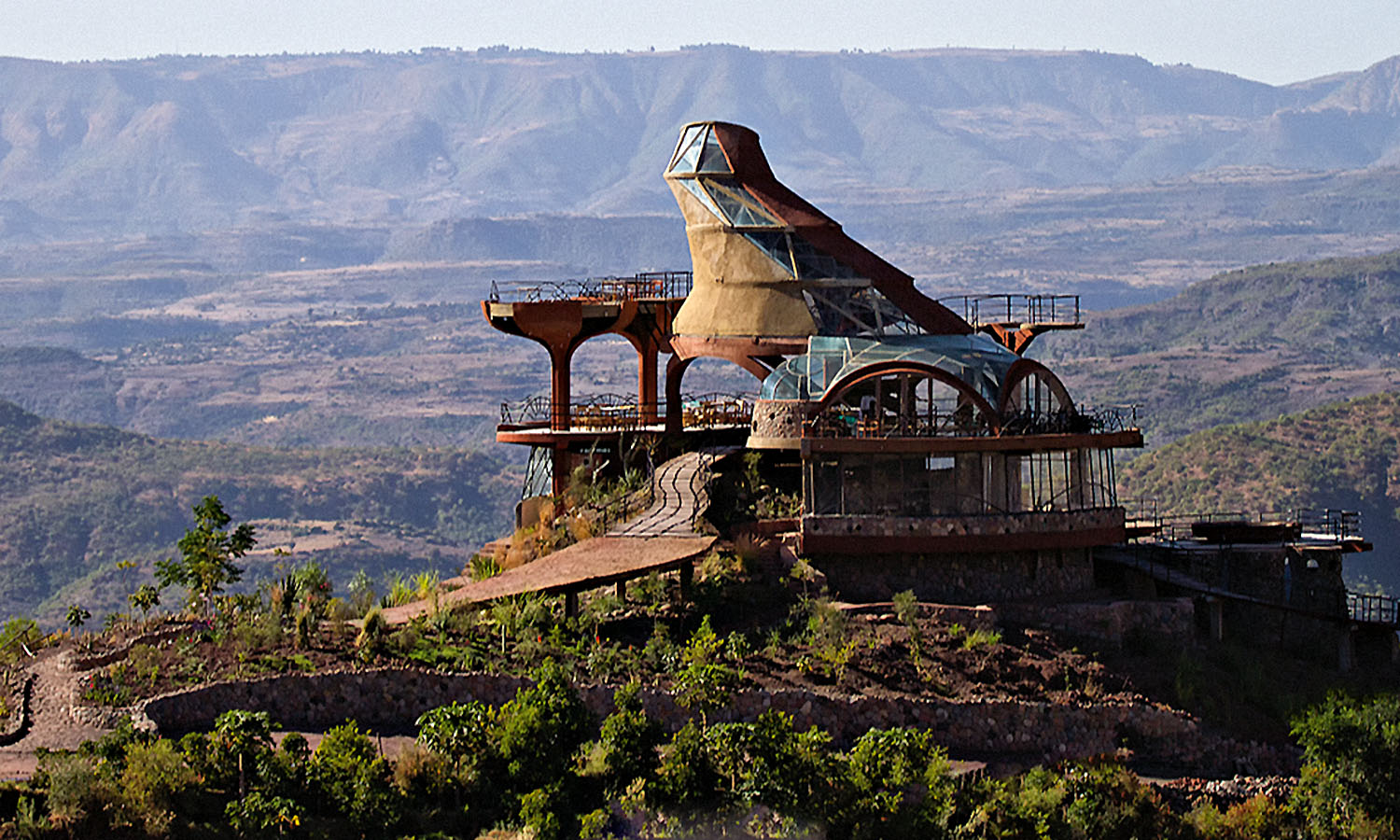
Soaring above the ground, atop a jagged hilltop you will find a unique structure overlooking the Ethiopian desert. You would be forgiven for thinking this strange sculpture looks as though it has been taken straight from the set of a fantasy movie. But this construction of steel, glass and concrete is a restaurant called Ben Abeba, owned by a former Scottish professor, Susan Aitchison, in partnership with Lalibelian local, Habtamu Baye. The restaurant is set against the breathtaking backdrop of Lalibela, but overlooks many ancient villages, hills and rivers that surround the restaurant situated at an altitude of 2800 metres above sea level. The menu offers a range of traditional Ethiopian cuisine along with western style dishes covering breakfast, lunch and dinner, with all food sourced from local farmers. Ben Abeba’s whacky structure compliments the ancient stone landscape, and its mix of walkways, fire pits and shapes makes this one architectural delight you’ll not forget in a hurry. benabeba.com
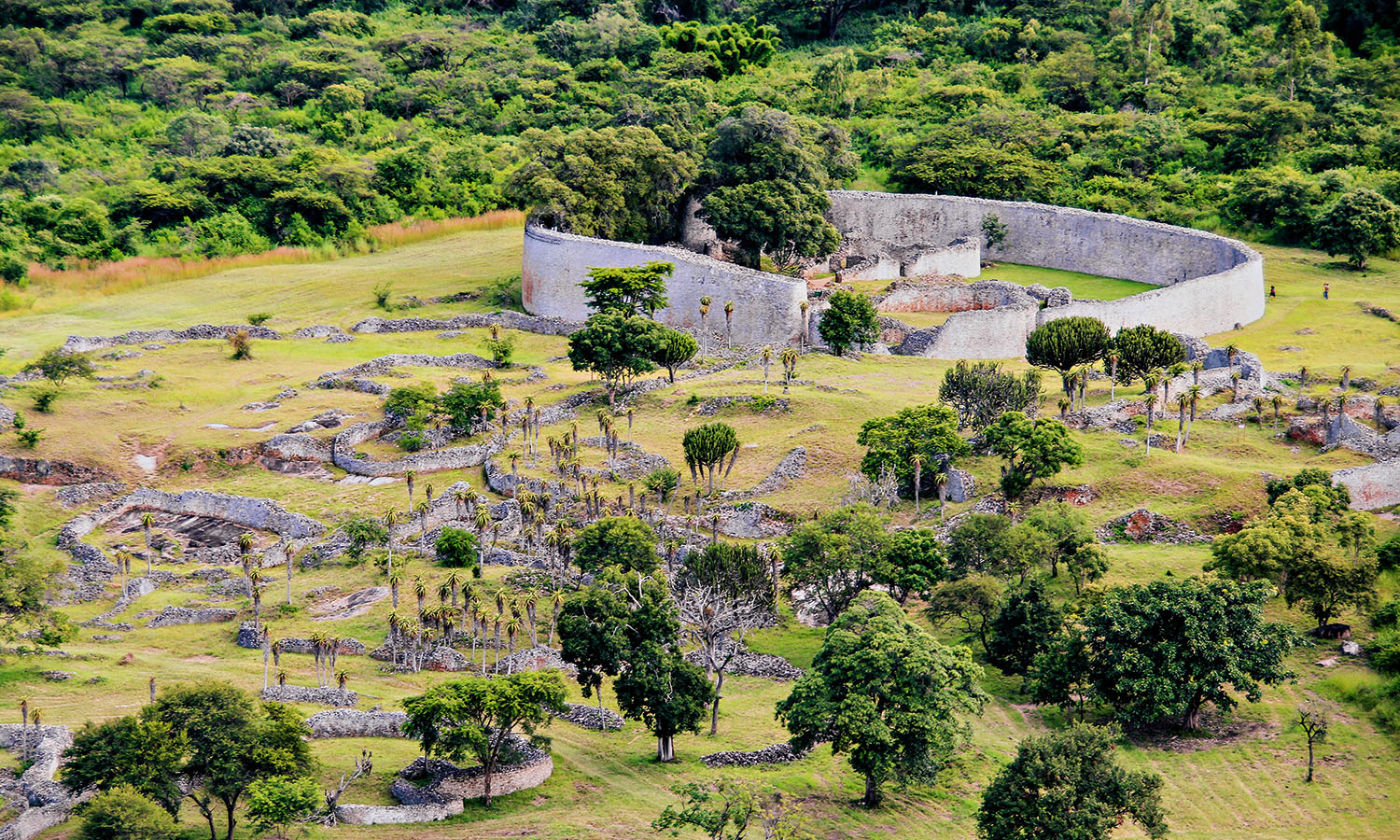
Between the Zambezi and Limpopo rivers sits a fortified medieval kingdom. Dating back to around the eleventh century, this UNESCO World Heritage-listed site is the largest of its kind on the Zimbabwe plateau. The turrets and towers of this stone kingdom were constructed from granite and create architecture that goes unmatched elsewhere. At the epitome of its time, this landmark is believed to have been a major trading centre, and today, as a testament to the history of this ancient site, artefacts that were left behind now sit on display. You can see Persian pottery, Chinese scrolls and Indian ornaments crafted from brass. Getting to the ruins can be time consuming with the closest town to the site being Masvingo, which is a five-hour bus ride from Harare, the country’s capital. From Masvingo, drive or catch a taxi to the ruins. greatzimbabweruins.com
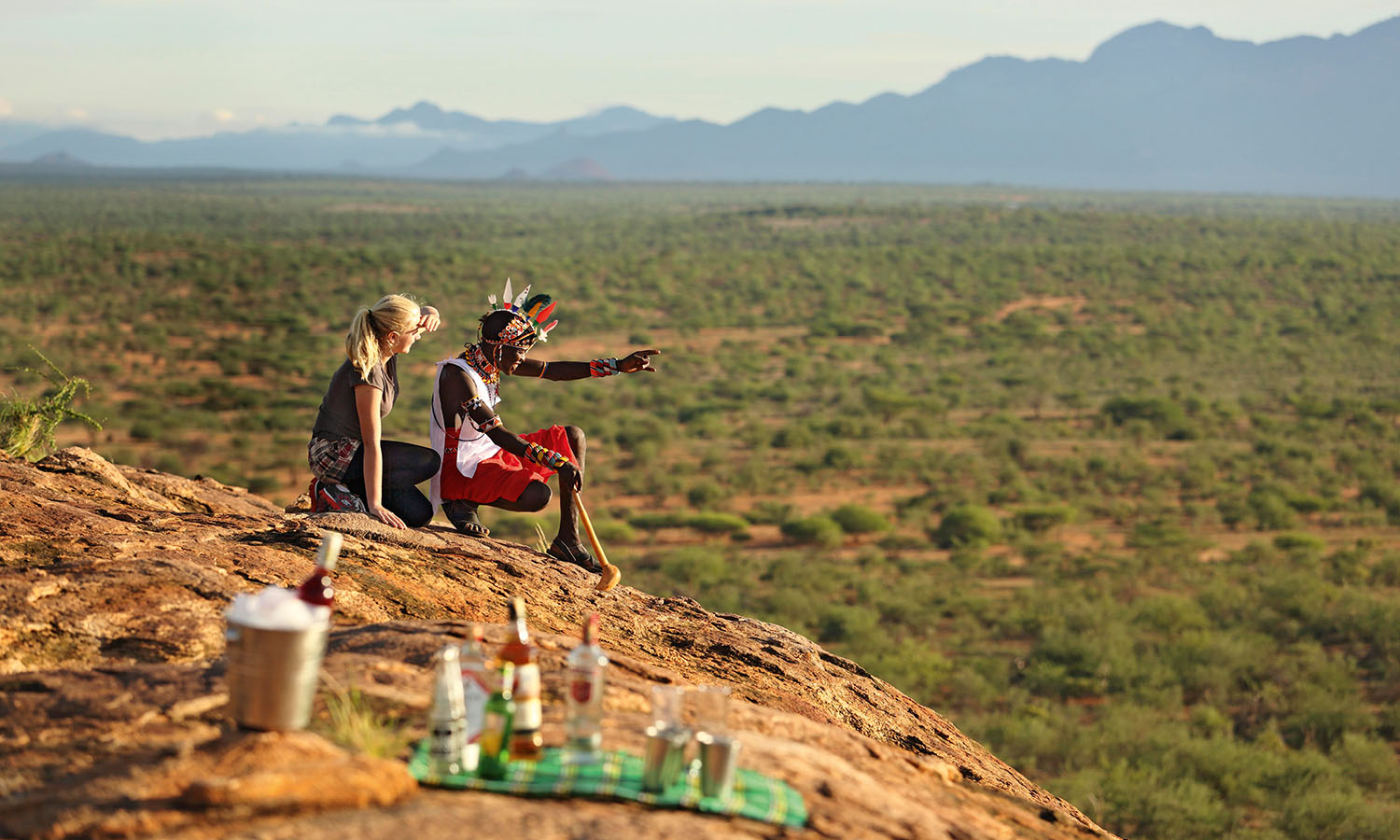
When we discovered a spot dubbed Sundowner Rock, perched on a hillside in Kenya’s Samburu National Reserve at Sasaab Lodge, we didn’t need telling twice. Looking out over the 9500-square-kilometre Laikipia Plateau, home to vibrant plains dotted with acacia trees, the Samburu Special Five – the Beisa oryx, reticulated giraffe, Gret’s zebra, Gerenuk antelope and Somali ostrich – and views of the jagged Mount Kenya, the country’s highest peak (second only to Kilimanjaro), this rock promises a sunset tipple you’ll be talking about for years to come. As the golden orb slowly sinks towards the horizon, sip your bevvy, bask in its rays and enjoy the show. The experience is hosted by Sasaab Lodge, which offers Moroccan-styled tents with four-poster beds, open-air bathrooms and private plunge pools overlooking the Ewaso Nyiro River where game thrive, as well as bush walks and cultural experiences with the Samburu people. thesafaricollection.com
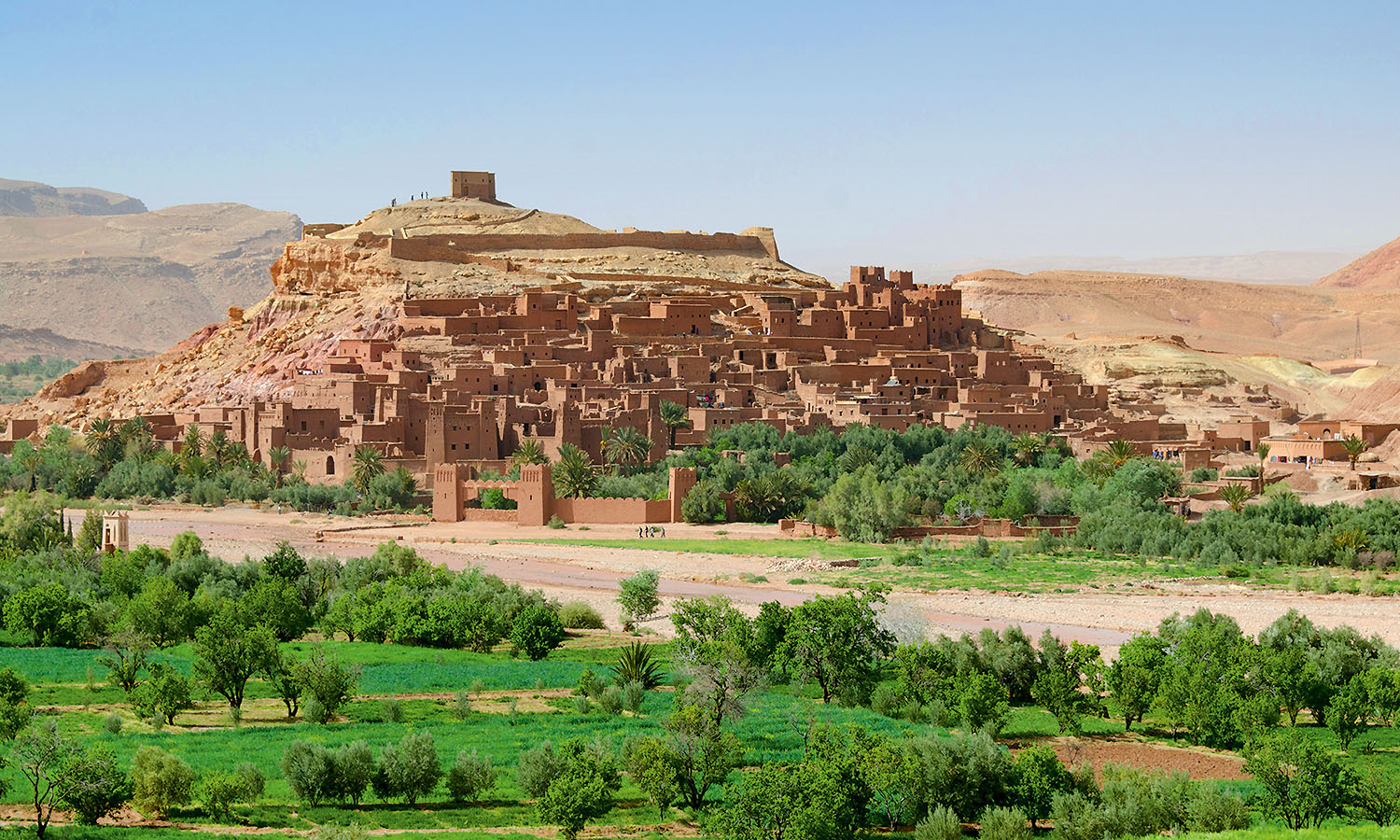
It’s featured in some of Hollywood’s biggest blockbusters from Gladiator and The Mummy to Jesus of Nazareth and Lawrence of Arabia (the latter which resulted in a large portion of it being rebuilt) but that’s not why you should visit Aït Benhaddou. Situated at the foothills of the Atlas Mountains, the UNESCO World Heritage-listed site was once a prominent trading post between Sudan and Marrakech via the Draa Valley and Tizi n’ Telouet pass and is made up of numerous Kasbahs dating back to the seventeenth century. You’ll find a mosque, high towers, a fortification, a public square and two cemeteries among various living quarters while wandering among its crumbling walls – all which represent a magnificent example of pre-Saharan earthen clay architecture. The city is a 32-kilometre journey from Ouarzazate, the nearest town, and can be reached by taxi or, if you’re feeling energetic (or bonkers) and have three hours on either side of your visit spare, by bicycle.
Game Safari Kalahari, the Delta & Beyond, Botswana
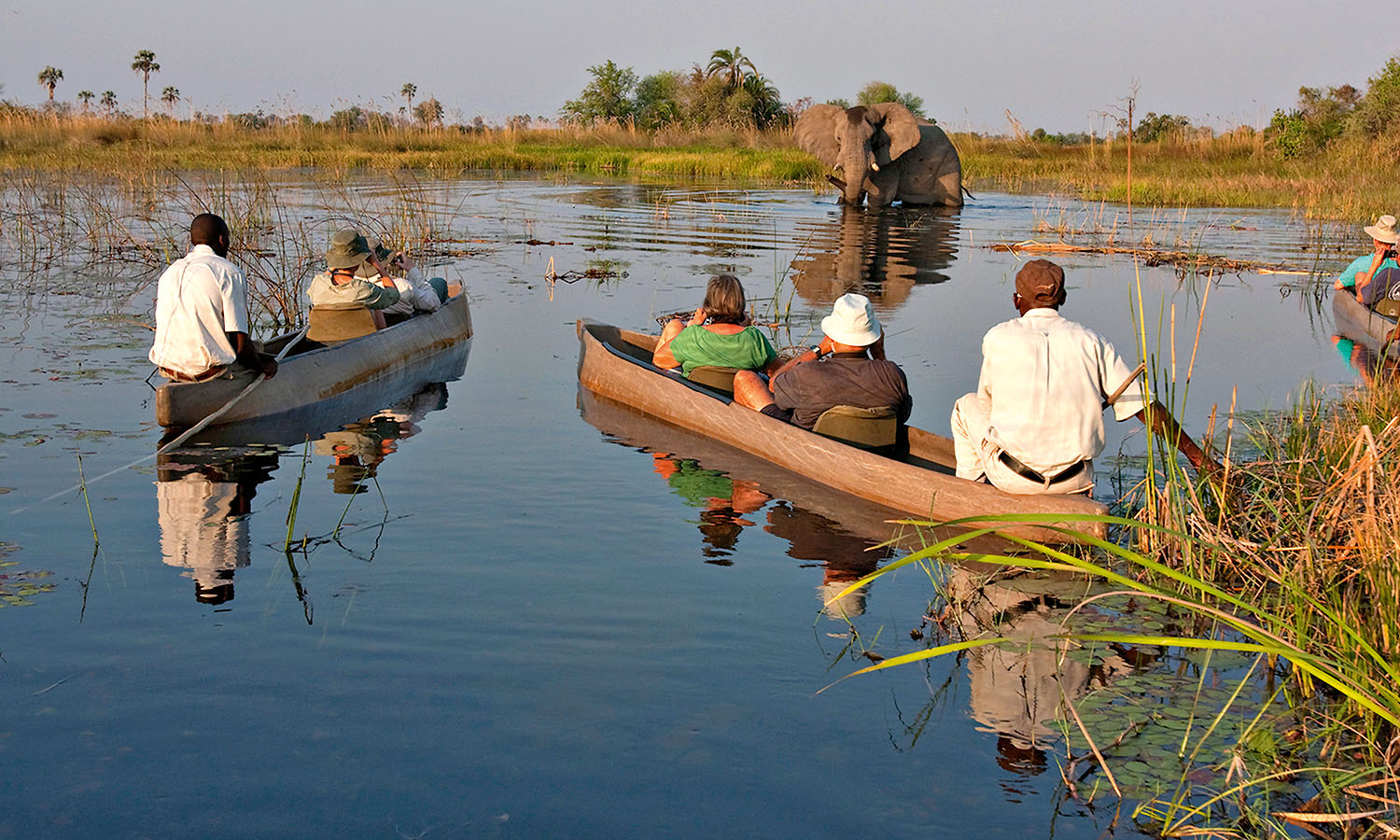
The novice sees Botswana’s rainy summer and avoids it. The safari aficionado, however, sees green season, when the wilderness comes to life with new baby animals, and signs up without hesitation. The gang at Natural Habitat Adventures know it too, and their new safari through the Kalahari, the Delta and beyond takes just seven intrepid travellers into its heart as Mother Nature breathes new life across the land. You’ll begin with a sunset cruise along the Zambezi River in Zambia and feel the spray from the thundering Victoria Falls at its most powerful, before making your way into the Okavango Delta. The vast network of floodwaters throughout the Central Okavango and Santawani Reserve are brimming in some parts and receding in others, creating opportunities for adventures by boat, mokoro (dugout canoe), 4×4 and on foot as buffalo, blue wildebeest, giraffe, zebra and hippos frolic in the flourishing vegetation and predators like lions, leopards and wild dogs come out to play. Among the dunes of the Central Kalahari Game Reserve, you’ll track red hartebeest, springbok, honey badger and mongoose drawn to the petrified riverbeds flourishing grasses and, if you’re lucky, see black-maned Kalahari lions and cheetahs. nathab.com
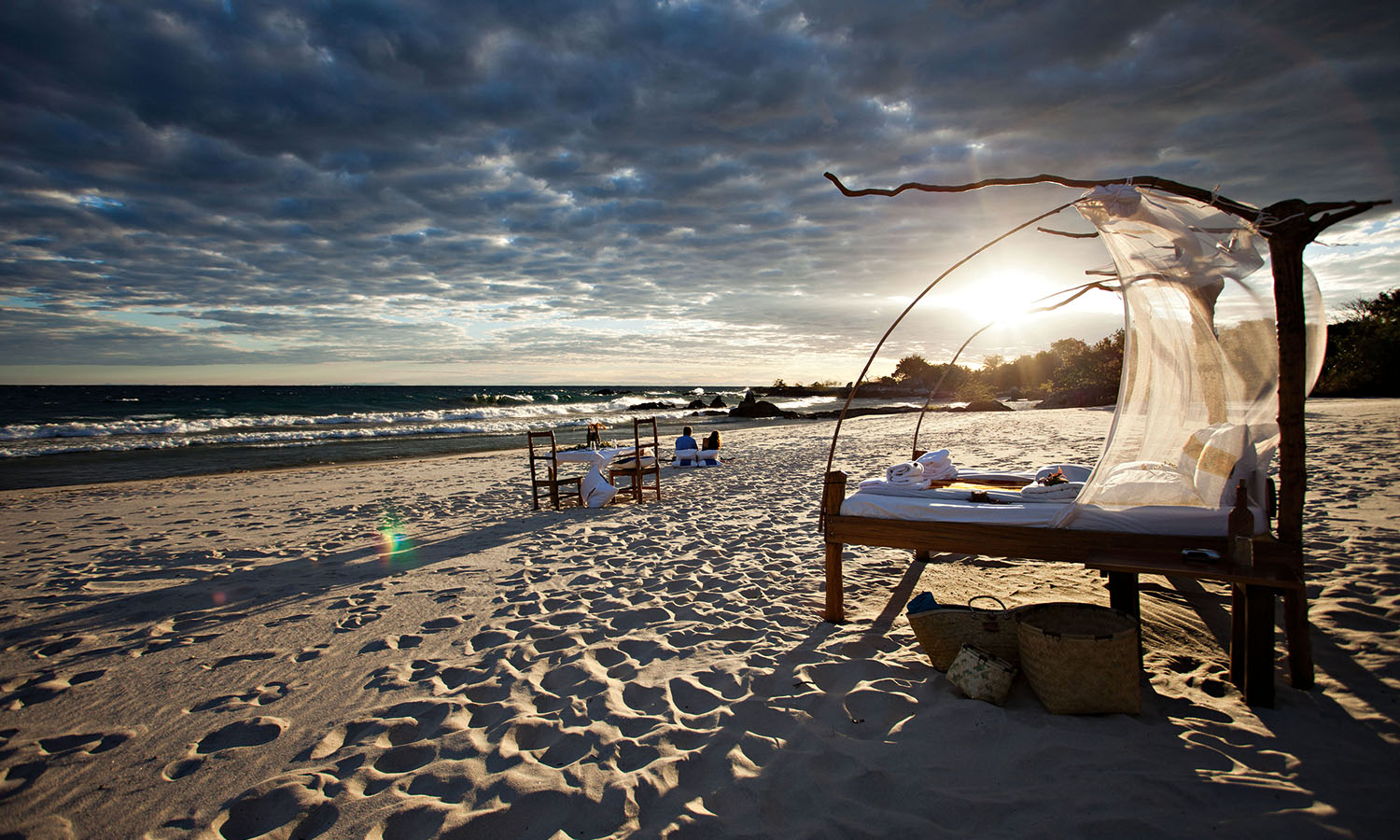
While some hotels focus on what’s inside four walls, Nkwichi has done away with them entirely, using nature as its canvas. Situated beneath sky awash with glittering stars, surrounded by waves washing up on the shore and the symphony of the local wildlife, the Lake of Stars Bed at Nkwichi is one of Africa’s best-kept secrets. Set up on the fringes of Lake Malawi, the bed – a rugged wooden frame draped with fine mosquito nets and lit only by the soft glow of lanterns – sits out among the elements. There’s no light pollution, mobile phone signal or internet here – guests are able to truly disconnect and immerse themselves in nature. You have the option of setting up on the sandy shores of the lake; a rock island, with lapping waters around you; or on a cliff top with spectacular views of the bay. Once you’ve settled in, a three-course dinner and a selection of sundowners are served at your star-bed location. Regardless of the spot you choose, this is the kind of stripped-back, bare-essentials experience that’s as uncommercial and off-grid as it gets. Slipping between the sheets has never been more grounding. nkwichi.com
You’ll feel like you’ve stepped straight into Star Wars in this desert escape. Located high in the NamibRand Nature Reserve, built on a dune plateau, Wolwedens Dunes Lodge offers wooden chalets from where you can gaze out onto the endless horizon of fiery red sands. With elegant dining and fine wines from the resort’s private cellar, you’ll find yourself disconnecting and getting back to nature in style. If you struggle to sit still, a range of activities are also available. Drift high into the sky in a hot-air balloon, take a walking tour and experience the grand magnitude of the dramatic landscape, or immerse yourself in the culture with a tour of the village. There’s even the opportunity to unwind further with a massage surrounded by the endless skies and vast plains of the reserve. wolwedans.com
The Lower East Side was once an immigrant enclave, teeming with European newcomers, overcrowded tenement houses and gangsters galore. In recent years, mobsters have been replaced with millennials, transforming NYC’s gritty underbelly into its most compelling quarter. But the neighbourhood’s new-found duality is what truly sets it apart: you’ll find vivacious, colourful street art next to an ultra-trendy minimalist bar, a 99-cent pizza joint beside a gourmet restaurant and a charming, red brick walk-up across from a sleek, modern apartment complex. The Lower East Side is the historic and the new, the calm and the frenzied, the grungy and the picturesque, all in one dynamic neighbourhood. And it gets even better after hours.
4pm
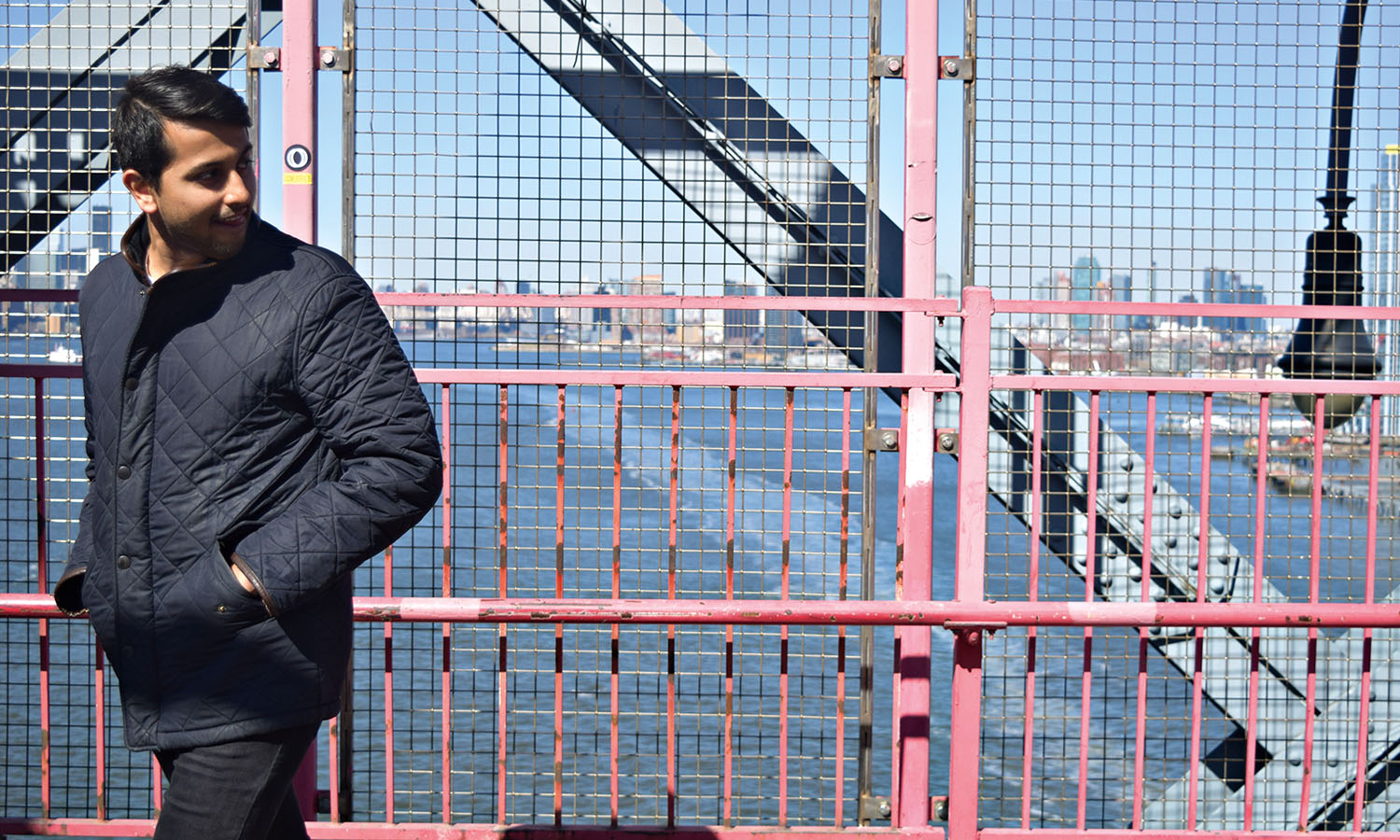
Take a stroll on the Williamsburg Bridge, the connection between Manhattan’s Lower East Side and Williamsburg, Brooklyn’s hipster paradise. Because of the uninterrupted path, which runs just over two kilometres, the bridge has become a favourite for all types: marathoners jog alongside walkers, and skateboarders zigzag through Instagram photoshoots. You don’t need to cross the entire bridge to get the point – stop midway for a stunning view of the East River and the iconic Manhattan skyline. On foot, stay in the pedestrian lane, as impatient bikers often come close to flattening unsuspecting Instagrammers caught on the wrong path.
5pm
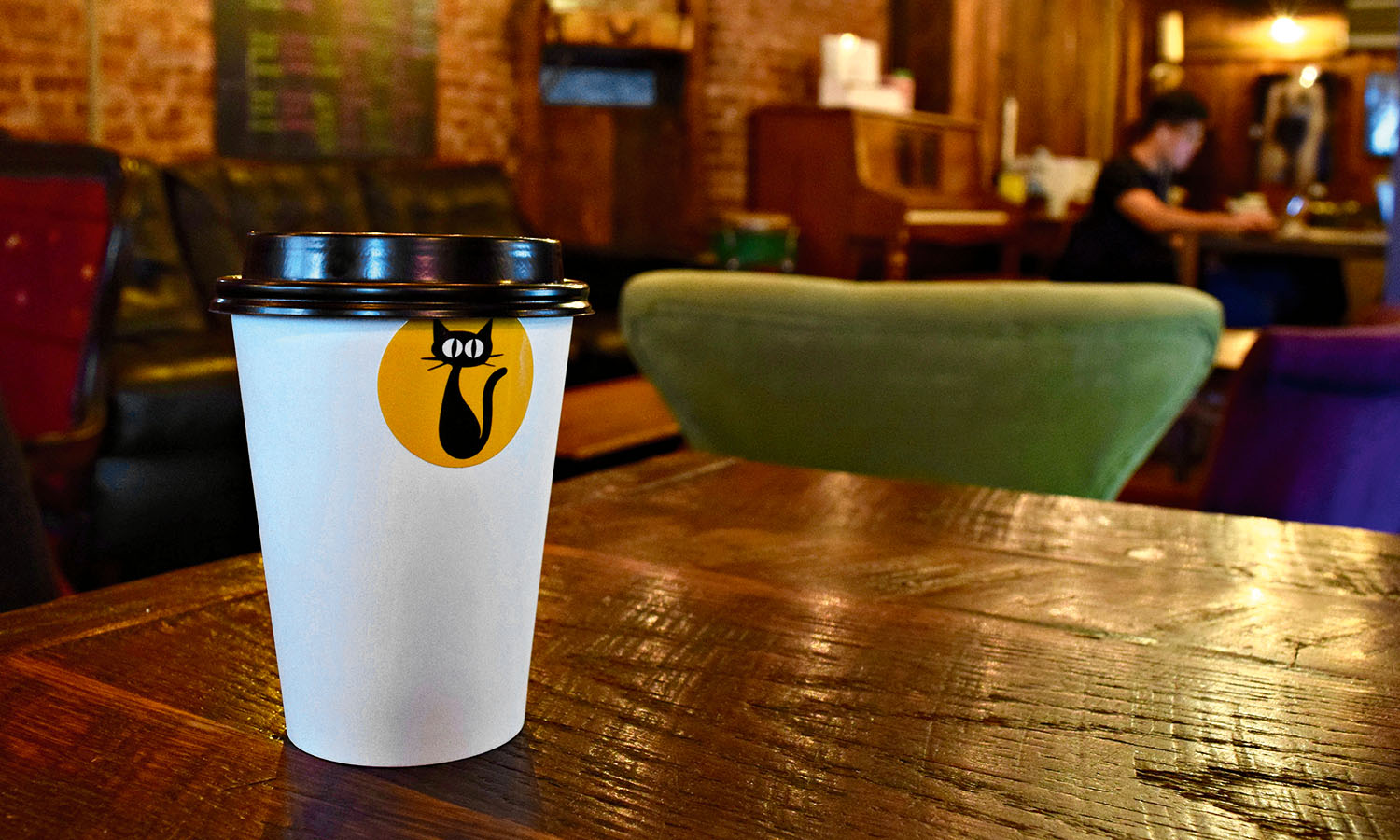
Congratulations on starting the night with some light exercise! Reward yourself with a trip to Black Cat LES, the neighbourhood’s cosiest cafe. Decorated with mismatched chairs and comfy couches, it offers a feels-like-your-own-living-room vibe. By day, Black Cat welcomes laptop worker bees, friendly meet-ups and low-key reading sessions. At night it hosts local events, including comedy, open mics and movie screenings. Feel free to enjoy a game of Scrabble or Monopoly from their game selection as you fuel yourself with a coffee (or two) for the night to come.
Black Cat LES
172 Rivington Street blackcatles.com
6pm
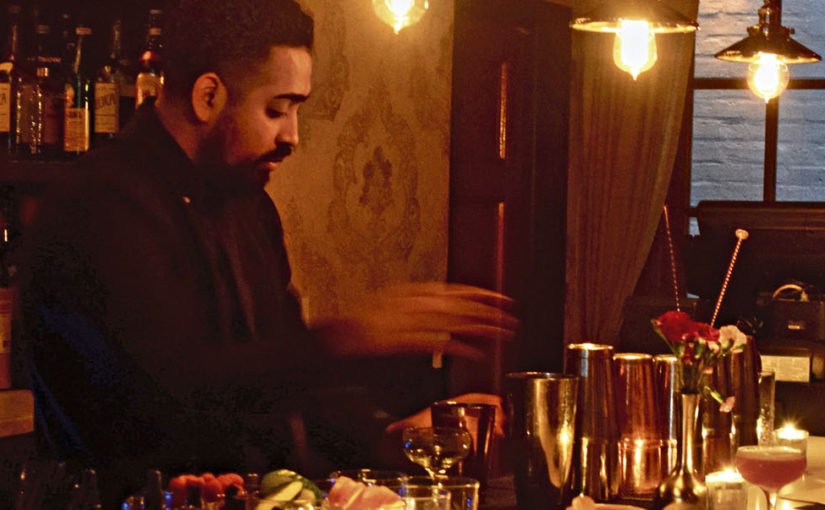
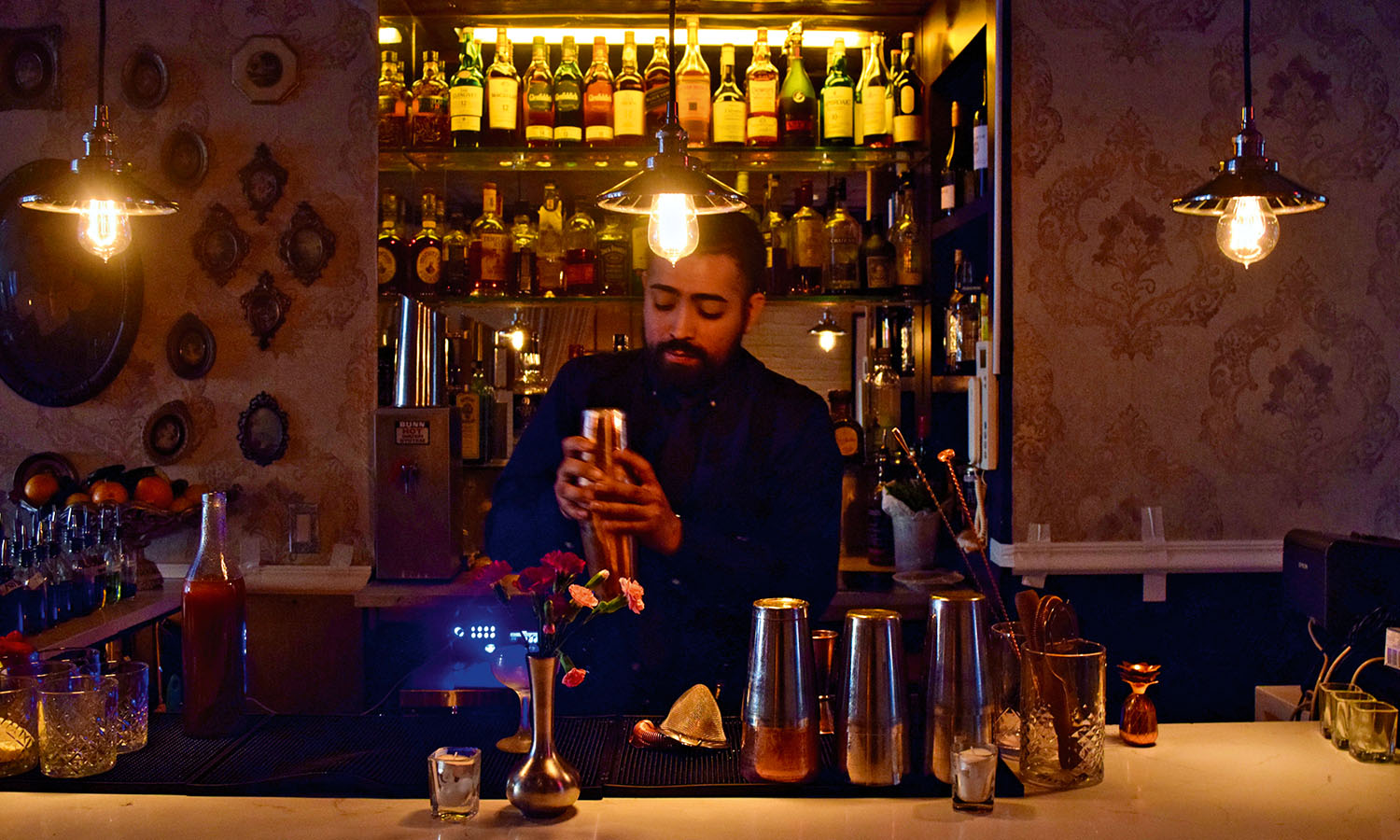
Once you’re sufficiently caffeinated, it’s time to trade coffee for libations at Garfunkel’s, a sultry speakeasy with the ambience of a glamorous prohibition-era bar. Accessible only by way of The Burgary, a casual American restaurant, second-floor Garfunkel’s feels like a romantic, 1920s-themed hideaway. Furnished with plush purple couches, a perfectly styled reading nook and an antique knick-knacks wall, this hidden bar serves up innovative cocktails alongside a Roaring Twenties playlist. Make reservations, and consider a Tuesday evening of live jazz.
Garfunkel’s
67 Clinton Street garfunkelsnyc.com
7pm
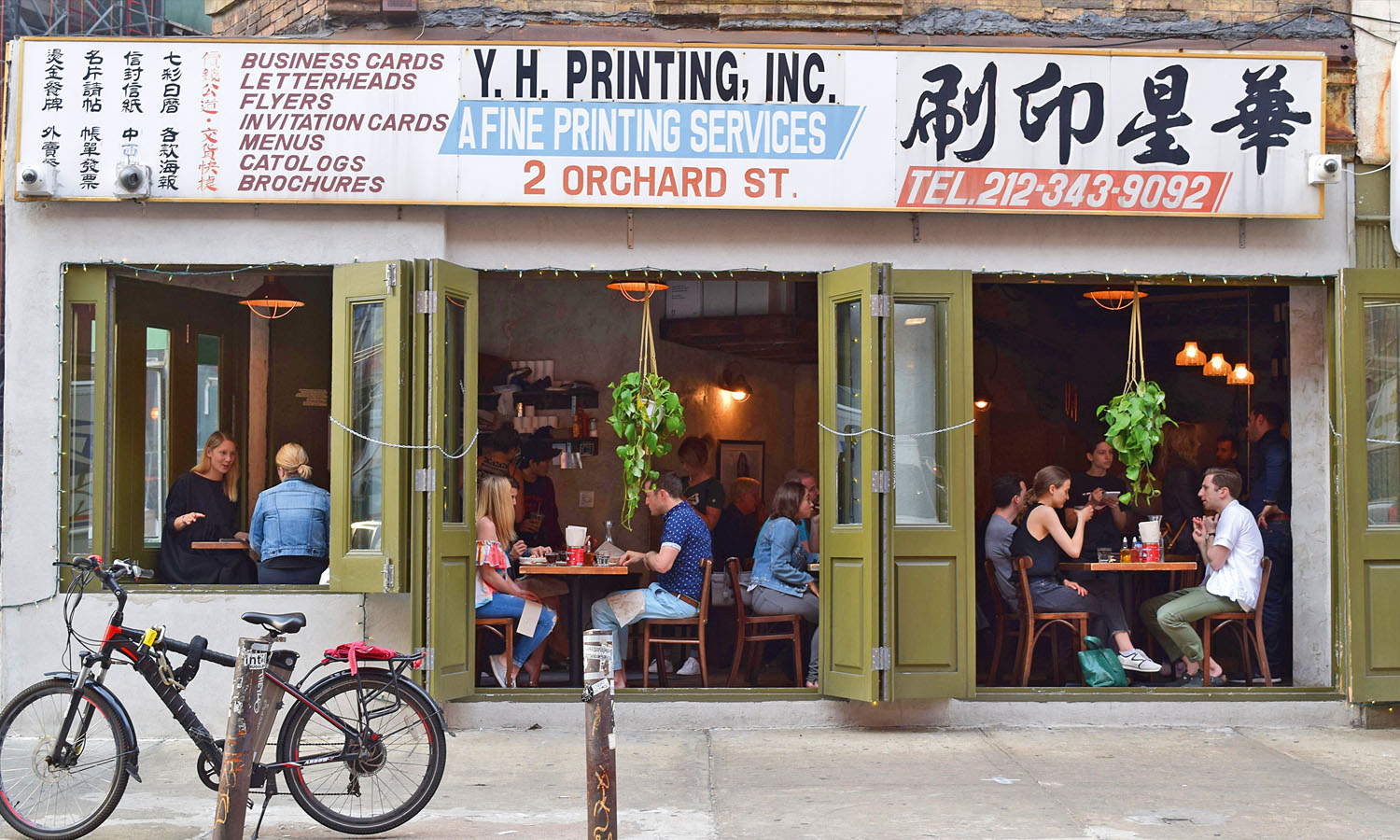
Kiki’s is a fantastically popular Greek restaurant on the border of the Lower East Side and Chinatown. Don’t be deterred by the restaurant’s grungy exterior, with printing services advertised alongside Chinese characters. Although Kiki’s name – or Greek food in general – goes unmentioned, you’ll enter to find exposed wooden beams and windows that open the entire restaurant up in the warmer months. The menu is ideal for sharing: order a slew of mezes and plates, including the octopus, which is described as “delectable and uncomplicated”. The fun, casual atmosphere and simple, satisfying Greek fare make Kiki’s one of the Lower East Side’s coolest restaurants. And in typical cool-kid fashion, they don’t accept reservations, so either come early or be prepared to wait.
Kiki’s
130 Division Street
9pm
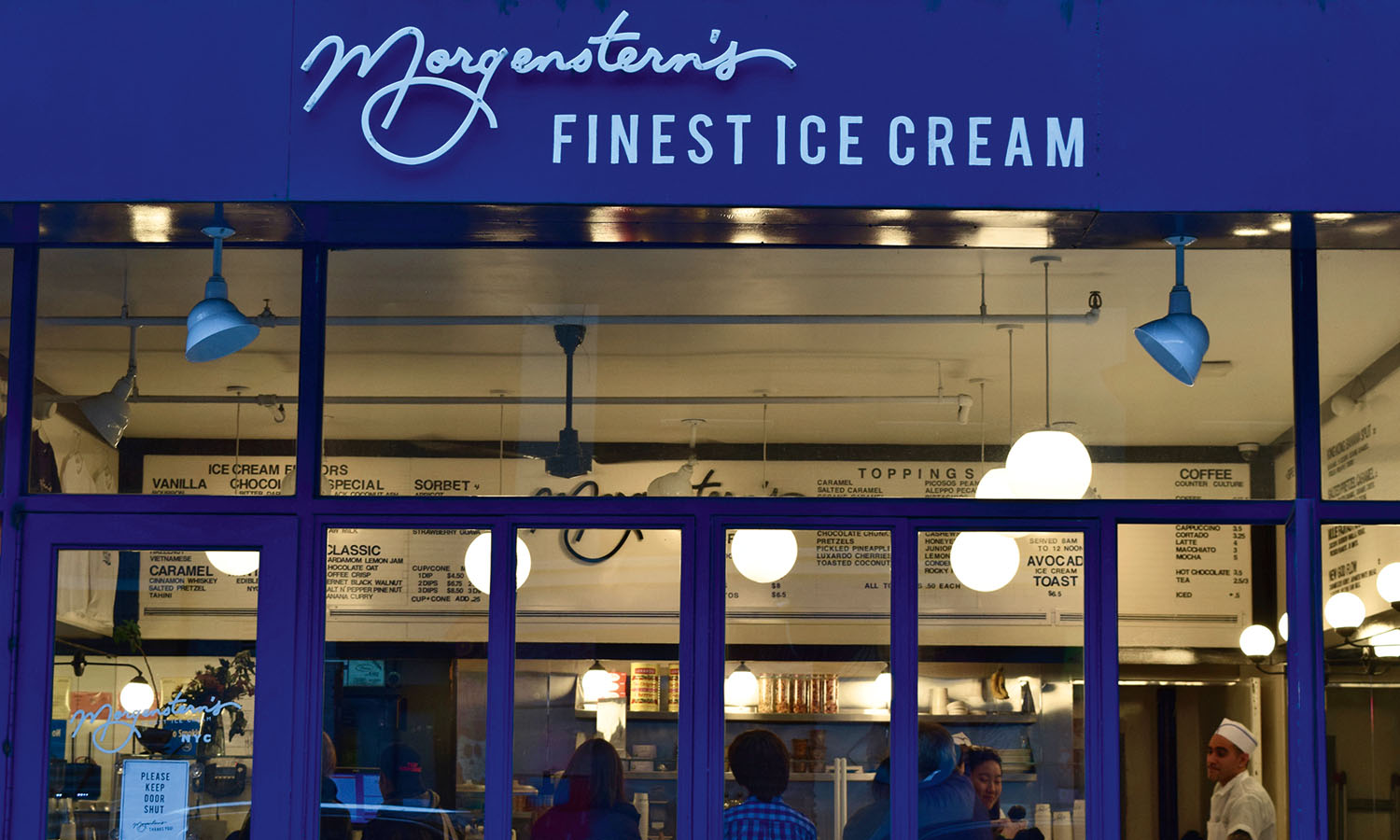
Meander your way towards Morgenstern’s, a retro ice cream parlour serving some of the city’s tastiest desserts. Give your taste buds a reason to party and sample innovative flavours such as Vietnamese coffee, raw milk and black coconut ash.
Morgenstern’s finest ice cream
2 Rivington Street morgensternsnyc.com
10pm
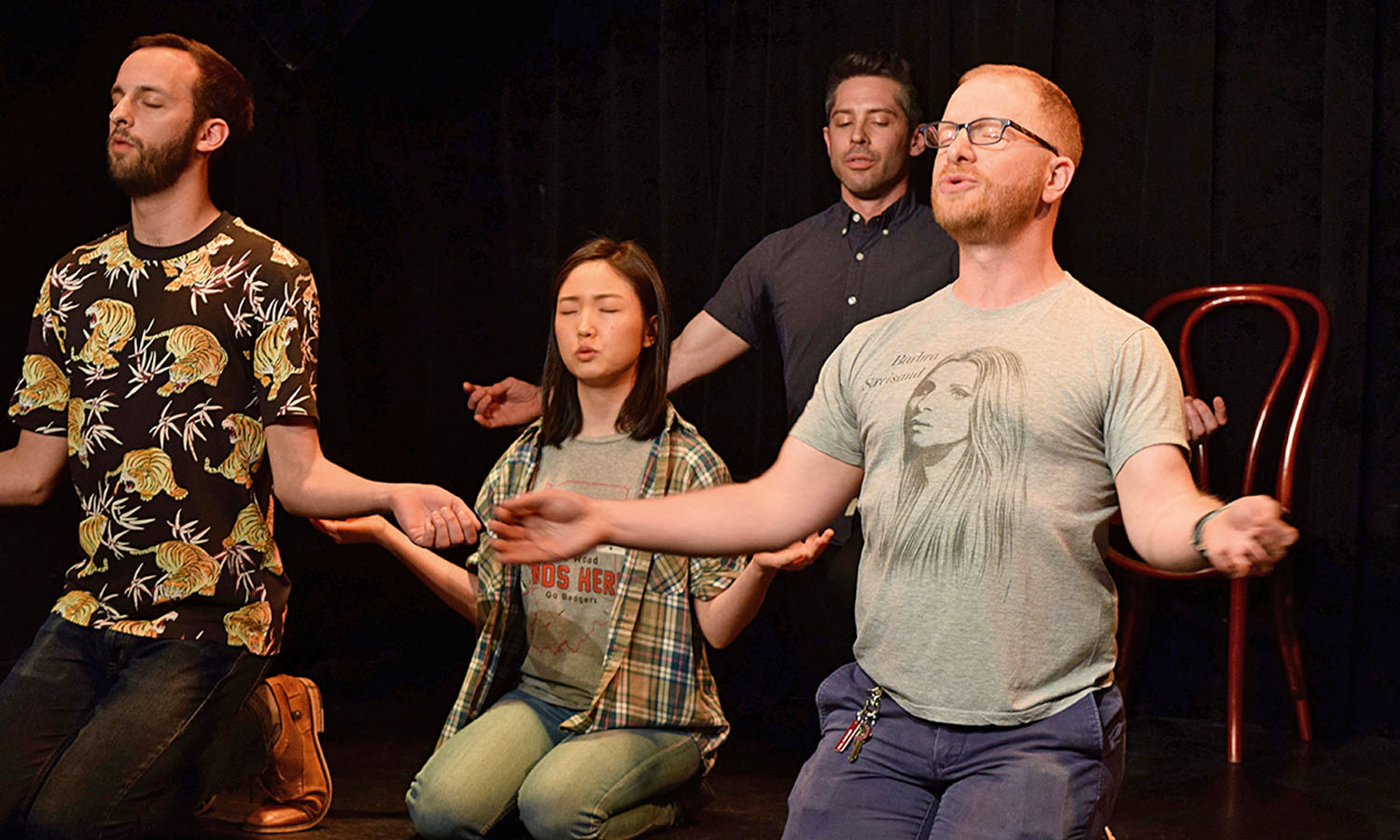
Once you’ve got your sugar fix, catch a show at Upright Citizens Brigade (UCB East). Known for their improv, comedy, cheap entrance fees and affordable drinks, UCB is one of the city’s premiere improv spaces and has managed to stay true to its unpretentious roots. Go in with an open mind as the acts can get really weird, but once you’ve downed a few drinks, the show about Batman’s sister’s gynaecologist’s visit will start to make more sense…maybe.
UCB Theatre East
153 East 3rd Street east.ucbtheatre.com
12am
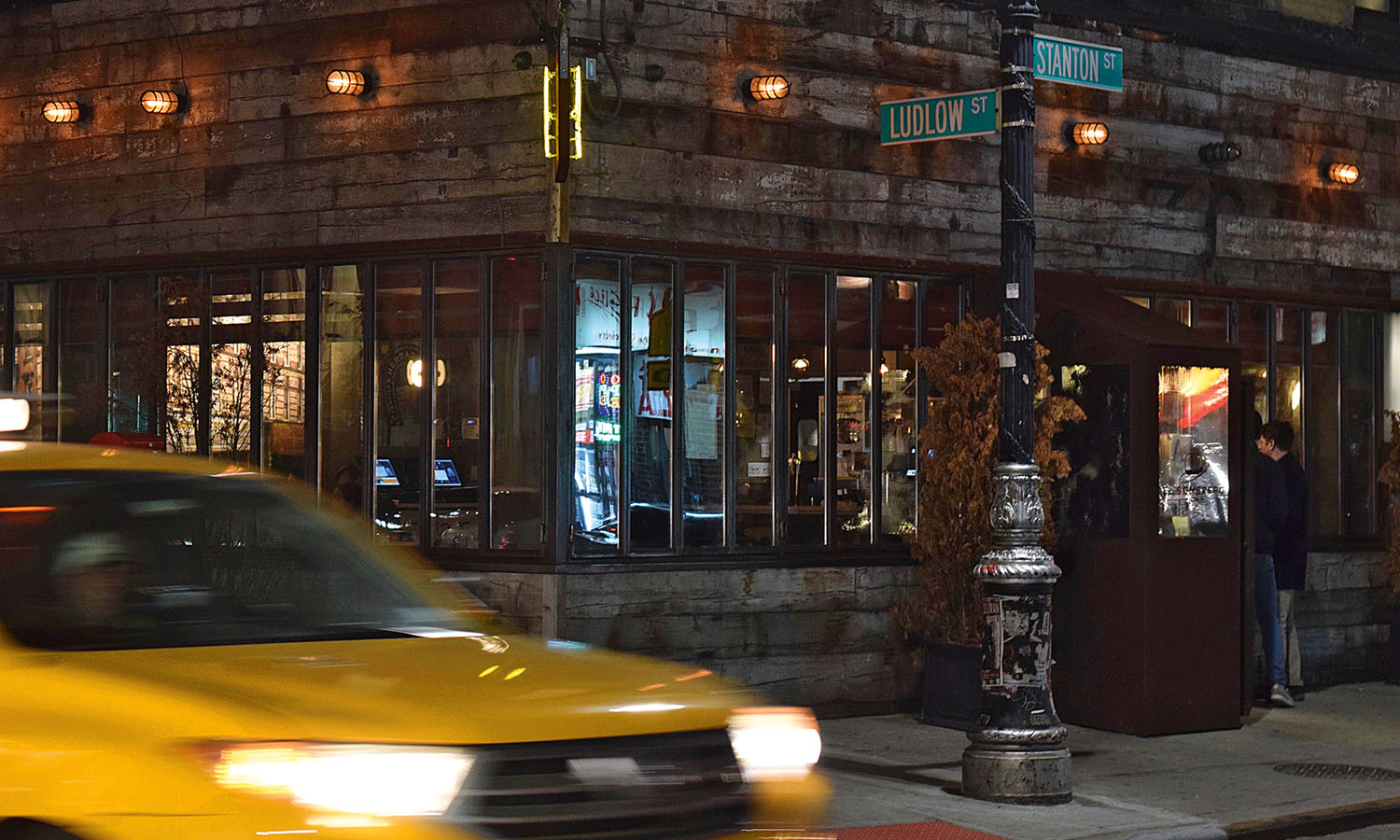
You’ve walked, you’ve gorged and you’ve laughed – now it’s time to dance. For a raucous night head to No Fun, a small bar with a backroom dance floor that is, ironically, quite fun. If you don’t want a crowded, pulsing, somewhat divey bar, you should still linger right outside on the corner of Ludlow and Stanton streets. It’s a great people-watching junction, where rowdy crowds congregate during the wee hours, transitioning (read: stumbling) in and out of the area’s countless venues.
No Fun
161 Ludlow Street nofun-nyc.com
2am
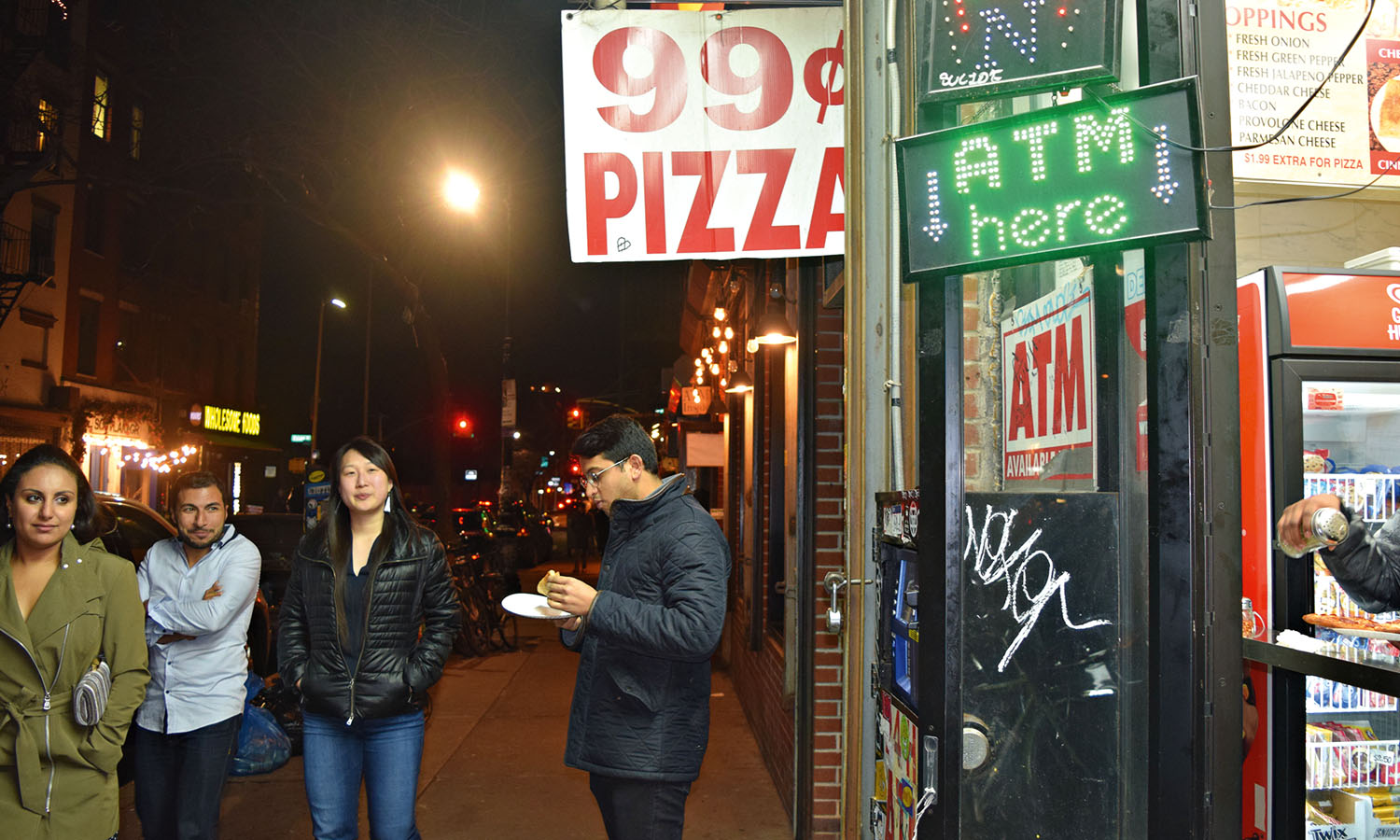
Every city has its quintessential late-night snack, and New Yorkers cherish their 99-cent pizza slices. You’ll find two at the aforementioned corner of Ludlow and Stanton, so take your pick. Will it be the best slice of your life? For your sake, hopefully not. Will it taste incredible after a night of intense dancing and revelry? Absolutely. And the price certainly can’t be beat.
3am
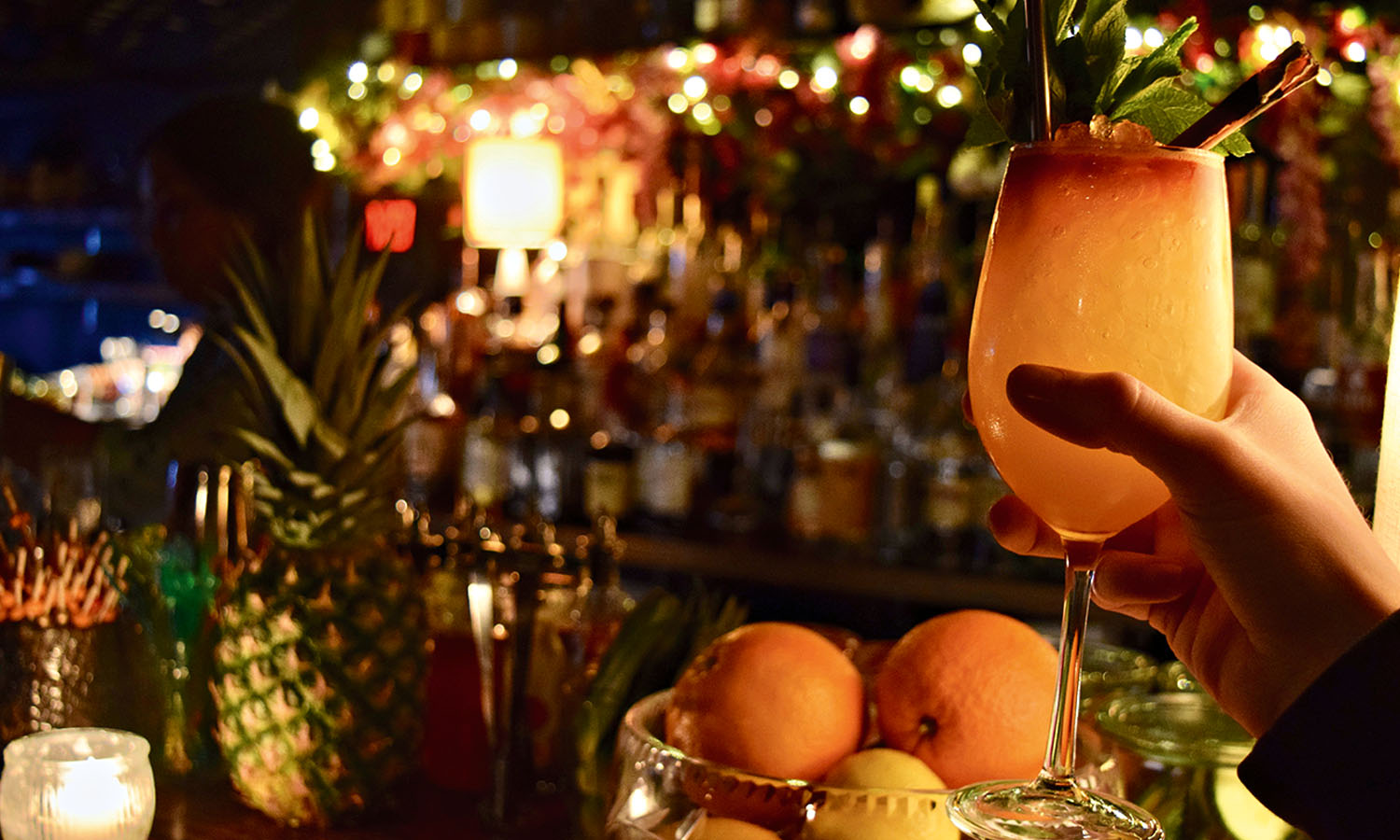
Finish the evening at Nitecap, a popular, subterranean lounge with a seasonal cocktail menu. The space stays lively until its 4am closing time, but relaxed in that satisfying, one-last-cocktail-till-we-pass-out way. Kick back, enjoy its fiery drink offerings (literally – they light some drinks on fire) and rest easy knowing your hotel is (hopefully) not too far away.
Nitecap
151 Rivington Street nitecapnyc.com
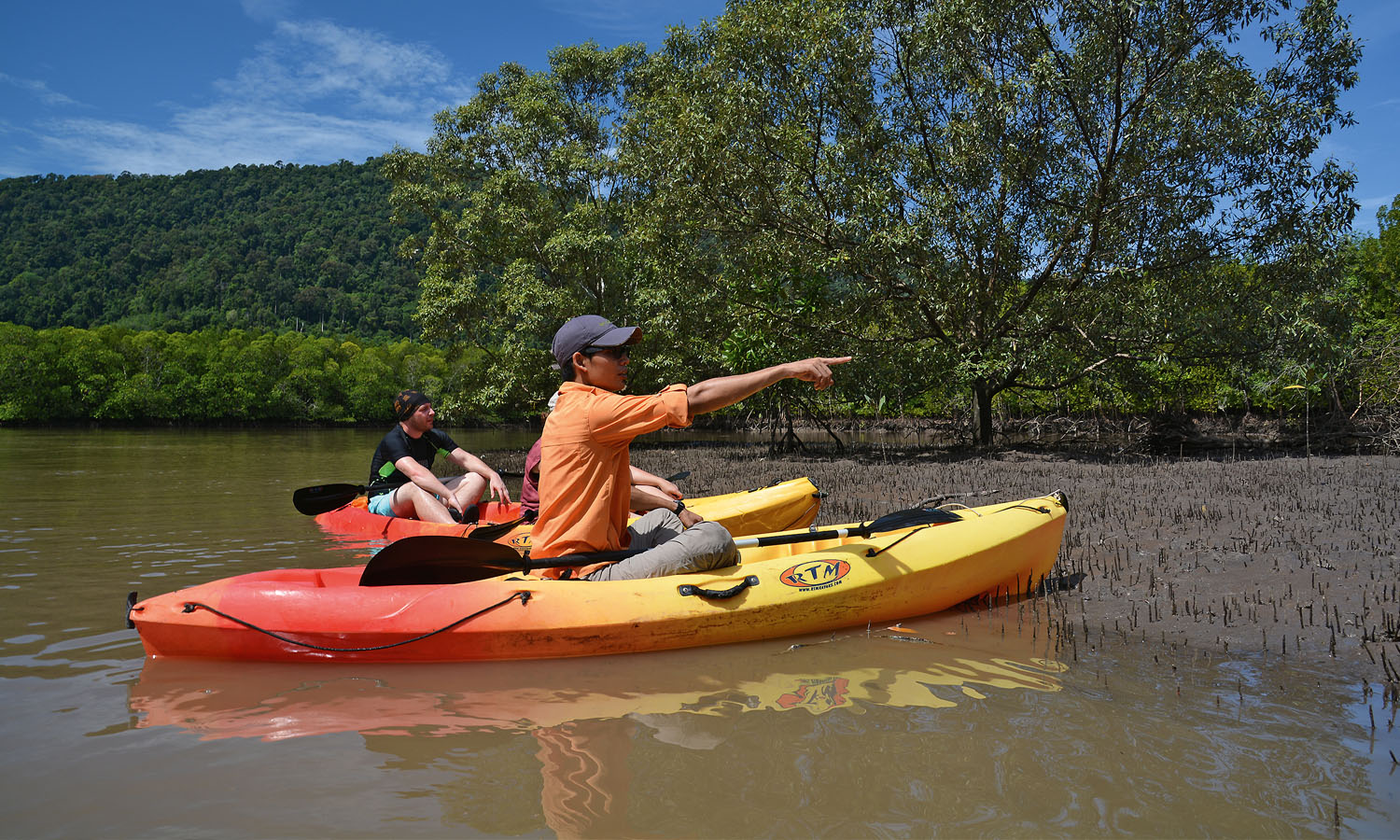
We’re paddling between mangroves, sunshine toasting our legs and white-bellied sea-eagles swooping overhead, when our guide Fuad drops a bomb and tells us saltwater crocodiles stalk these waters. “And then, at night, we have hundreds of snakes coming out here. Especially the king cobra and pit viper,” he continues, as if the threat of salties wasn’t enough to shatter paradise.
In an instant, the plastic shells separating us from the water seem terribly flimsy. Each silver flatfish resembles a snout, and every mangrove root the ridge of a strong, scaly tail.
“So how do you know there aren’t any crocodiles here now?” I ask Fuad.
“Now? They’re here somewhere,” he replies, unfazed. “But so far, while paddling, we haven’t had any encounters.”
Before the 2004 tsunami hit Langkawi, hundreds of crocodiles swarmed Kubang Badak River. Apparently, fishermen observed floats of them departing after the big wave struck the picturesque archipelago, but even the thought of just a few lone rangers is enough to make me edgy.
Fuad dips his hand into the river, fishing out a mangrove seed shaped like a torpedo, and within moments his attention has returned to explaining the mysteries of the mangroves. Between rescuing a prawn that’s catapulted inside one of our kayaks and learning about mangrove seeds being propelled through the sea for up to two years, we do our best to appear inedible in case any crocs are eyeing us off.
With some trepidation we paddle on, passing what looks to be thousands of leaves waltzing on a black sandbank. Closer inspection reveals an army of fiddler crabs, each maniacally waving a single, beefed-up claw in the hopes of attracting a mate. Across the river a brown-winged kingfisher mocks their macho display. A mudskipper, one of the ugliest amphibious fish to ever wade onto land, pervs on us from the edge of the water with its eyes bulging and maw agape.
At high tide the archipelago of Langkawi consists of 99 isles that form part of the Malaysian state of Kedah. Most are uninhabited and promise ancient rainforests teeming with animal life, vast limestone rock formations, coves dripping with stalactites and plenty of attractive beaches. At low tide, when the Andaman Sea slurps out its brine, several more islands appear, knocking the tally up to 104. We’re paddling through an estuary in Pulau Langkawi, the biggest island of the lot, which at 320 square kilometres could fit into Tassie 200 times and still have room to spare. In 2007, UNESCO named this island South-East Asia’s first ‘global geopark’. The following year Sultan Abdul Halim bestowed the name the Jewel of Kedah upon the whole archipelago. For shoppers, it’s a tax-free haven; for those who love nature, it’s heaven on earth.
Crocs aren’t the only creatures to have skulked through Langkawi’s waterways. In 1821 the King of Siam swept across the Strait of Malacca and laid claim over the isles, until Datuk Kerma Jaya, the headman of Langkawi’s capital at the time, squeezed the invading armies out by poisoning wells and destroying the island’s granary. By the twentieth century the British Empire had wrapped its tentacles around the region and the Brits played tug of war with Siam – now Thailand – until Malaysia declared its independence in 1957. These days, a ferry zips between Langkawi and the Thai island of Koh Lipe, and the pirates that once lurked in Langkawi’s jungle and coves are consigned to the pages of history.
Our little group relaxes as we wend further into the estuary, and a couple of hours later we’re rinsing off the remaining jitters at Temurun falls, the island’s tallest waterfall. Although almost four million tourists land in Langkawi each year, few seem to have made it this far north and we share our swim with just a handful of travellers and a couple of local families. Fresh water crashes down the 200-metre-high, triple-decker cake of sandstone and shale, rushing beneath boys scaling enormous logs and filling pools where girls rest with hijabs draping into the deliciously cool water.
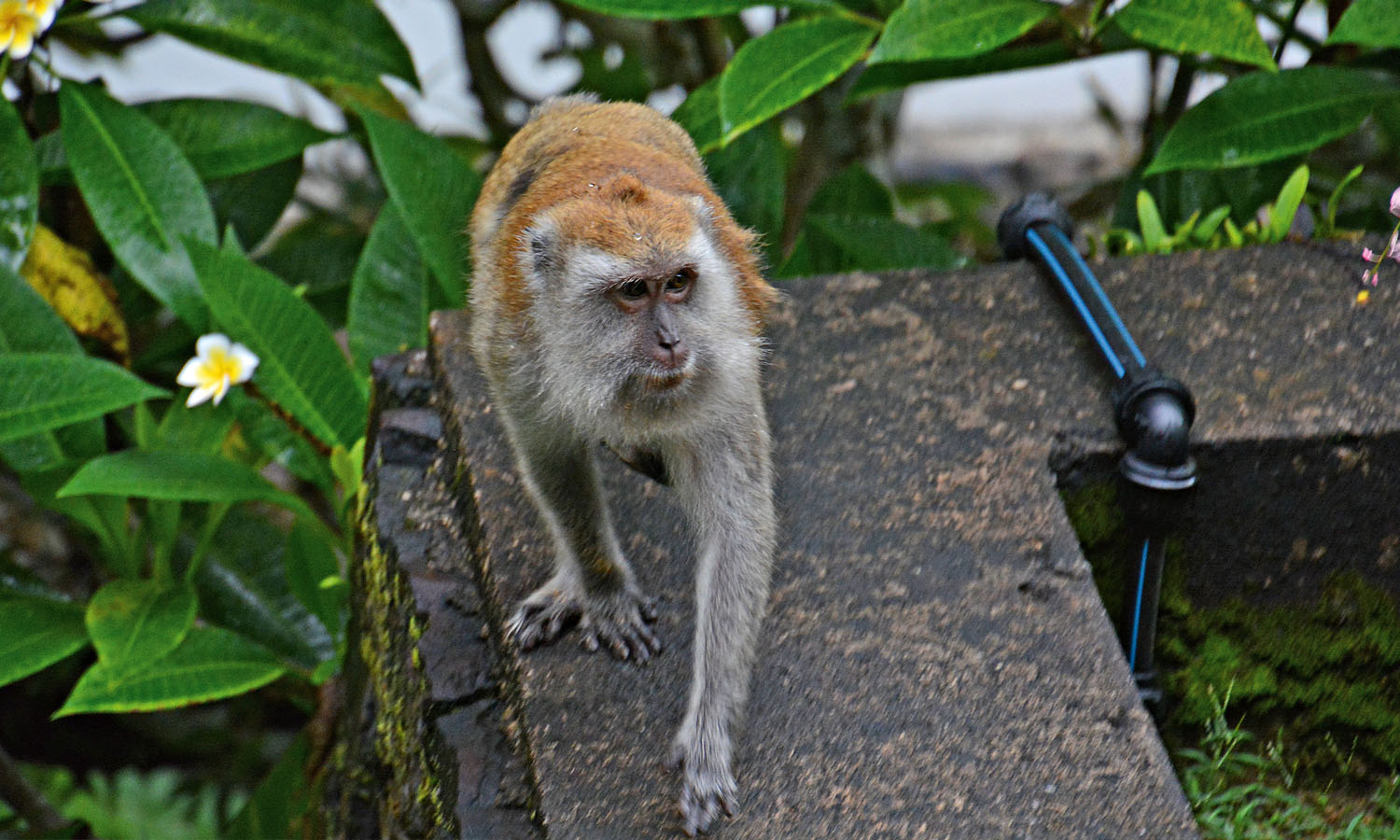
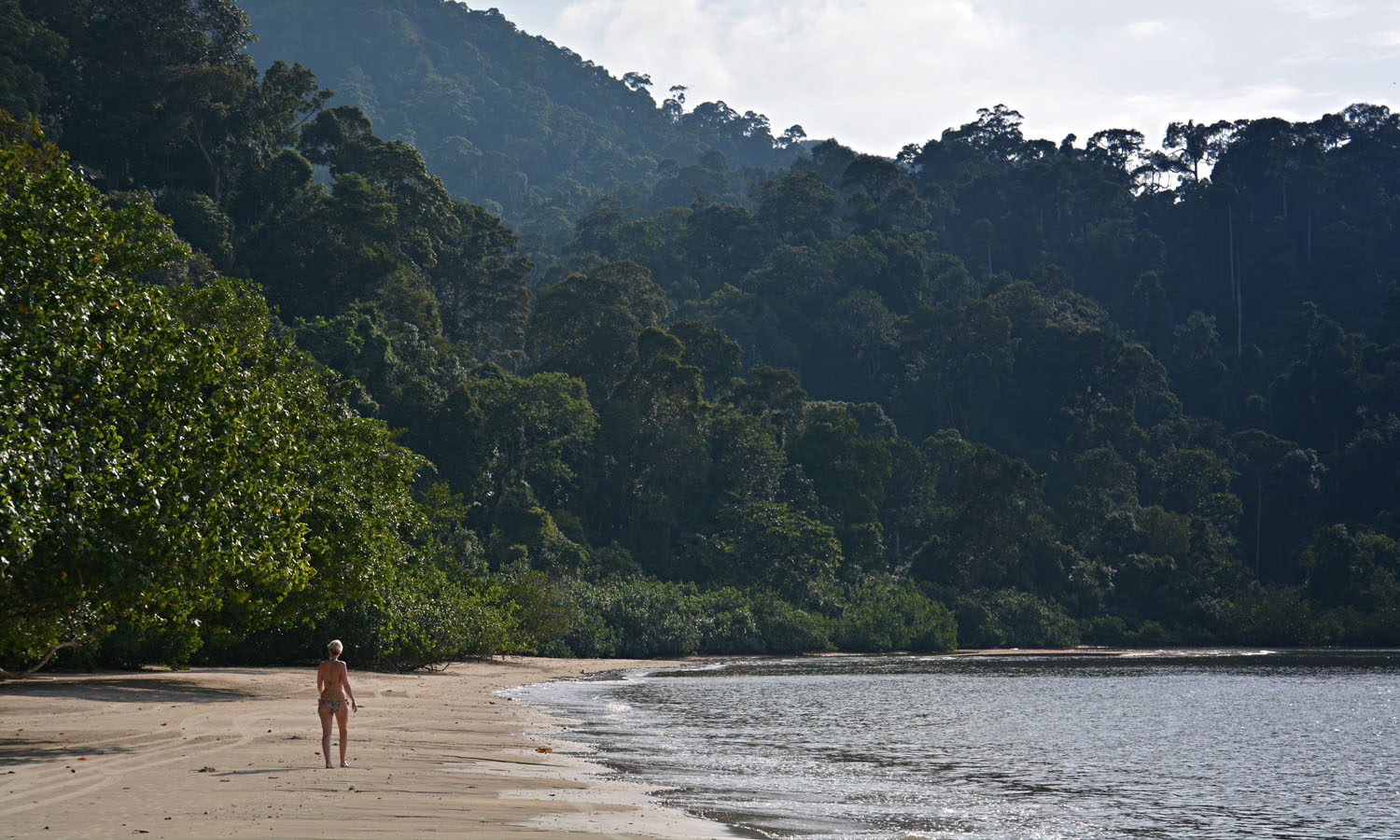
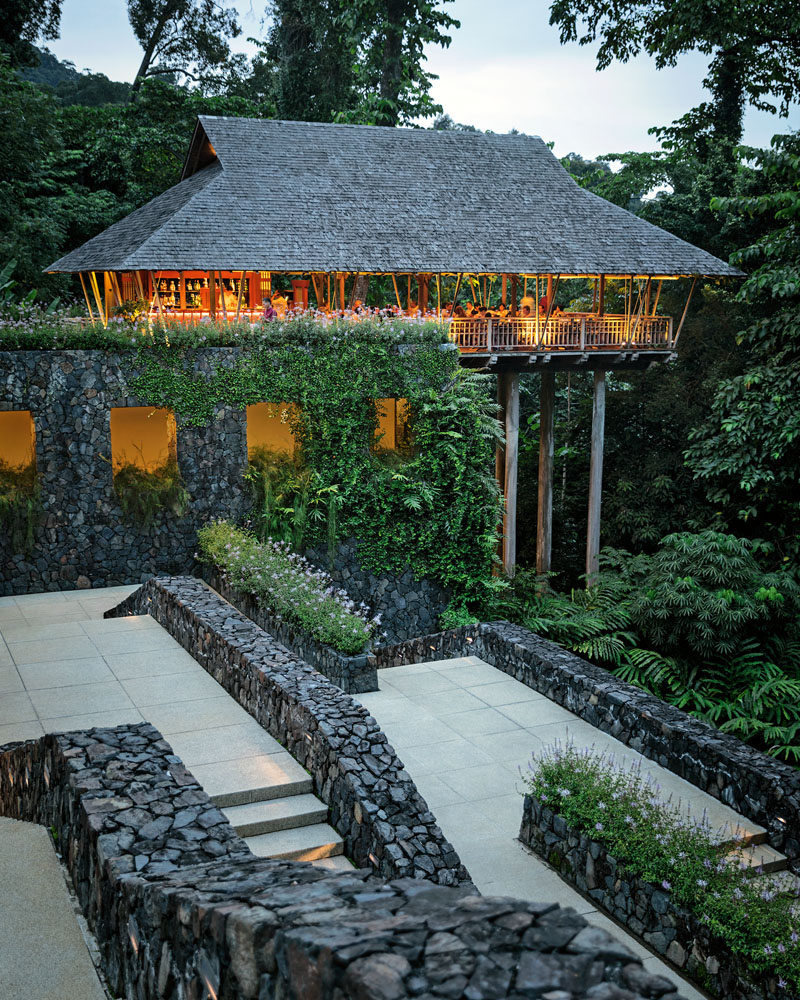
It seems impossible to remain wound up while surrounded by ferns and ficus, and we’ve forgiven Fuad for the crocs by the time we return to our villas at the Datai Langkawi. Wedged between the Andaman Sea and South-East Asia’s oldest mountain, Machincang, the five-star resort brings ten million-year-old rainforest right to its doorstep, and invites forest dwellers right inside. Day in and day out, macaques play out scenes from an action movie, scaling buildings and sliding down poles. When they’re not breaking into minibars in the canopy suites or pilfering fruit from the stilted rainforest villas, they’re scuttling across the private beach, chasing crabs out of burrows.
A French woman checking in at the open-air reception pivots a camera at a flying lemur clinging to a tree. “See the kicking? It’s got a baby inside! Like a kangaroo!” points out the concierge. Our “ohhhs” and “ahhhs” blend with the orgy of frogs panting in the pond by the lobby. Frogspawn foams at the edges until staff can spirit it away and tadpoles bellyflop from eggs hatching in the roof, their slippery bodies plopping onto lily pads in the pond. I’m told a monitor lizard sometimes perches on a rock in the middle, setting himself up for a feast. “Have you met Irshad Mobarak yet?” the concierge asks. “He’s our naturalist. He’ll tell you all about them.” I promise to seek him out and I set off into the forest.
It’s not just the concierge who’s eager to introduce guests to the local fauna. Staff tidying up after Mother Nature will draw you aside for a glimpse of a green- and red-checkered paradise tree snake or the stubby beak of a Malayan soft-shell turtle nosing for shellfish in the stream. Insect life is so thick on the ground you have to prance along the boardwalks to keep from squishing it. Fat caterpillars ooze along the footpath and teeny green snakes curl between rocks. In the Dining Room, fingernail-sized frogs have guests chatting across tables between courses of torched trout belly and barbecued sous-vide octopus. Cicadas rattle their tymbals like drums, creating a racket by the Gulai House, where award-winning local cuisine is served in a traditional Malay kampung-style house. Only the Pavilion, the Thai restaurant perched on stilts above the canopy like an enormous bird’s house, regularly plays music. The rainforest promises a symphony, and the Datai listens with open ears.
Within less than a day a giant black squirrel has been sighted by one of the pools, a couple of loved-up hornbills have soared past the lobby and a family of dusky leaf monkeys have passed an afternoon tossing fruit onto the bar near the beach. Nicole, the Datai’s marine biologist, tells me that only last week a pod of 40 dolphins swum by on the hunt for anchovies. I keep my eyes glued on the emerald water whenever I visit the beach, hoping to observe one of the whale sharks, finless porpoises or sea otters that frequent the bay.
In the afternoon, bruised clouds roll over the treetops. Raindrops smack the canopy, quashing the scent of ylang-ylang. The Strait of Malacca transforms into a bowl of fizzy drink and the nearby Thai isle of Koh Tarutao is no longer visible under the haze. Yet only a couple of hours later the water is glassy again, and I join my fellow estuary explorers to paddleboard out to Anak Datai, another little island in the bay. None of us spy any of the dugongs or long and slender Bryde’s whales that sometimes cruise these waters, but I do spot a pillowy jellyfish billowing past my board.
While we’re on Anak Datai, peering back at the beach and Mount Machinchang rising from the forest, I realise just how unusual the Datai actually is. When Australian architect Kerry Hill designed the hotel in the early 1990s, he decided to set it back from the coast’s perfect sand to deepen its connection with the rainforest. Traditional construction methods and elephants trained to move timber were used to minimise disruption to the precious flora. The unorthodox design turned out to be a winning combination, with guests returning time and again. In fact, families who visit the Datai five times or more find a plaque engraved with their surname shining above their villa door. There’s an entire store room full of them.
“Have you met Irshad yet?” seems to be the question on everybody’s lips. When I finally meet the banker-turned-naturalist, it’s easy to see why he’s so well regarded; the man’s a natural born storyteller. As we potter along on one of his guided walks through the Datai’s 750 hectares of forest, he introduces us to the black and white Helen, one of more than 500 butterfly species that lives in Langkawi, and weaves biology with tales of sex and sin from the animal kingdom. The usually kid-friendly metamorphose from caterpillar to butterfly becomes a gripping and gruesome transformation, where organs are digested into a DNA soup before becoming the flighty things we see tussling in the bushes.
Irshad’s knowledge isn’t limited to animals on the island. During an evening walk he shines his torch on a rengas tree and warns us not to stand too close during rain because damaged leaves release an acid that will blacken and burn our skin. He sidles up to a tongkat ali tree and tells us that Malaysians carefully dig for the precious roots and boil tiny shavings to extract its potent properties. You’ll find tongkat ali steeped and consumed with coffee all around the country. Perhaps it’s been soaking in my morning brew and that’s why I feel so revived here.
“Malay people say, if a man drinks this tea, it’s a powerful aphrodisiac,” Irshad chuckles. “Malay people say, if a woman drinks this tea… for her, it’s a contraceptive. Which explains why we only have 30 million Malaysians surrounded by 67 million Thais, 100 million Filipinos and more than 240 million Indonesians!
“One cup a day, daily, for only two weeks, records a 480 percent increase in testosterone in a man. A 480 percent testosterone increase in a man will drive him nuts. A 480 percent increase of testosterone in any woman will not only interrupt her egg production, but it will also give her a beard. And a beard on a woman is powerful contraception.”
I make a mental note to check my coffee consumption.
Beneath the chorus of cicadas a different sort of energy vibrates through the Datai, as the hotel prepares to undergo its own metamorphosis after 24 years in the forest. When it unfurls its wings in September this year, its villas will be refreshed and the hotel will be even more integrated with the rainforest. Irshad tells me of his plans for a dedicated Nature Centre and for 20 camera traps that he hopes will capture images of the island’s most elusive animal: the clouded leopard. But it’s the theory of mandi embun, which he plans to introduce into his nature walks, that really captures my attention. Translating to ‘bathing in the forest dew’, it is achieved by simply walking in the forest atmosphere. Malays have been abiding by it for centuries, Irshad explains, and it’s key to their longevity. “All the Malay people that live to 90- or 100-plus, many of them practise this.
“After a weekend in the forest you’ll see blood pressure drops, stress level drops, and NK cells increases – the natural killer cells in the body that fight cancers.”
On the plane back to mainland Malaysia I politely decline the coffee offered by the friendly stewardess. Not because I’m overly worried about sprouting a few fuzzies, but because I’m trying to eke out every last drop of mandi embun-induced calm. In my chilled-out haze I promise myself I’ll return to Langkawi soon. Even if it doesn’t add extra years to my life, I’ll be one stay closer to seeing my surname shining on a plaque above my villa door.
A hymn resounds beneath a blanket of darkness. Far away, a deep, monotonous chant accompanies the gentle rumble of footfalls. A sea of candles burns like stars, and the night air, thick with humidity, is charged with an intensity that touches your soul. I feel as though I’m walking through the fabric of a living, breathing cosmos.
On either side of the street, eyes peer through bamboo fences while thousands of people make their way from the towering cathedral on a pilgrimage through the town. In among the masses a palanquin, draped in black velvet with gold trimming, is supported by lakademu (sinners) cloaked in robes of flowing white, their faces masked by pointed scarlet hoods. At its centre is an onyx coffin with the mortal remains of Jesus Christ. Further behind, the statue of Reinha Rosari – Mother Mary – follows, her face solemn. The silver adorning her garments catches in the candlelight as she accompanies her Son to His final resting place.
The hymn and chanting swell, rising as one, and I close my eyes as I feel its power urging me forward. I’ve never seen, nor been a part of, anything like it in my life.
In fact, few have. I’m witnessing the Good Friday procession of Semana Santa, a Catholic festival held in the small beachside port of Larantuka, on the island of Flores. This Holy Week is a unique event in modern-day Indonesia. Every Easter, pilgrims flock from across the country, and as far away as Timor and Portugal, to share their intentions for the year and participate in the holy processions. It is a moving event, but relatively unknown outside of Larantuka.
The history of Semana Santa is somewhat murky. Written records are few, and intimate knowledge of the sacred event is passed down from generation to generation among the clans of Larantuka. My guides, Hans and Raphael, despite being locals and participating in the festival each year, have had to dig to uncover the facts. Even so, I find the story changes slightly depending on who I talk to. When we piece the common components together, it weaves a fascinating tale.
Hundreds of years ago, before the arrival of Western invaders, the people of Larantuka were animists, worshipping stones, caves, animals and even words, believing they possessed a spiritual essence that allowed them to become alive. But one fateful day in 1510, locals stumbled upon a statue that had washed up on the beach. Mother Mary, draped in bold blue robes, lay peacefully on the shore, the words ‘Reinha Rosari’ inscribed in the sand beside her. When Portuguese traders landed in Larantuka shortly afterwards, they introduced Catholicism to the local people. This was followed by the first celebration of Semana Santa, thought to have been in 1599, before being held each year from 1736.
Since then Holy Week begins on Trewa Wednesday, with various periods of lamentation and mourning held until Easter Sunday. The Good Friday procession is a 2.3-kilometre procession that begins at Cathedral Reinha Rosari Larantuka and makes its way through the town, pausing at eight armidas (stopping places) for observance, which represent each phase of Jesus’ life.
Today, the Catholic faith is observed by just two per cent of Indonesia’s 250 million-strong population – nearly 90 per cent are practising Muslims. It’s little wonder this event has remained somewhat of a secret from greater Indonesia and the world.
During the evening of White Thursday, worshippers dressed in black await their turn to visit Tuan Ana, the chapel where the coffin of Jesus Christ is kept, and Tuan Ma, the chapel of Mother Mary. For the first time in a year, the coffin and the statue of Mother Mary are washed and dressed by the elected clan and revealed in their respective houses of worship. The excitement is palpable and queues to enter each sanctum spill down the front steps and into the street.
“When people kiss the coffin or the robe of Madonna [Mother Mary], they mention their special intention,” explains Hans as we stand outside, observing the crowds. “They express their gratitude and ask for the blessing of God for the coming year.”
Inside, barefoot pilgrims kneel, each praying and offering their promises to the deities for the year to come. At Tuan Ma, I get a glimpse of Mother Mary through an open stained-glass window. Her cobalt robes cascade in waves around her as people pray at her feet, but from where I stand I can’t see her face. Maybe there’s a higher reason that this is my view; I am a voyeur here, after all.
Good Friday, the most anticipated day of Semana Santa, brings sweltering heat and a sky of periwinkle blue – perfect conditions for a ceremonial day of sailing from Kota village to Kuce Beach. Outside Tuan Meninu Chapel, just off the shores of Adonara Lake, the lilting tones of a choir ring out from within to the beat of the lapping waves. Throngs of people line the pathway from the holy entrance to the water. Here, layers of colourful boats await to accompany the body of Jesus, which will be brought down from the chapel to a traditional black sampan (flat-bottomed wooden boat) for the three-kilometre procession across the lake.
“Does anyone actually know what’s inside?” I ask Raphael, a little timidly. A wry smile sneaks across his face.
“We don’t know what’s in the coffin; we must trust it exists,” he replies quietly. He leans in a little closer and, softer still, says, “It’s taboo to talk about.”
I’m terrible. I can’t help myself: “But what if there’s nothing inside?”
“It’s faith,” he shrugs. “In the Bible it says, ‘Blessed are those who have never seen, but believe.’”
The ceremony is long and hot. A bead of sweat trickles down the side of my face and I feel a deep admiration for the people who stand out here in the name of worship as I look to the water longingly. More boats of all shapes and sizes continue to appear, each one a pop of colour in a sea of blue and carting as many people as can be squeezed onto their decks.
Finally, the ceremony moves from the chapel to the water. A cross-bearer leads the way, followed by priests who flank either side of the coffin. The choir swells and, in the excitement, the crowd converges, and I realise I am in the thick of the action too late. Bodies press in on me from all sides as people try to catch a glimpse of His coffin being placed into the holy sampan.
One moment the coffin is there, the next it is safely sailing out across the water, the flotilla following close behind. People run to the water’s edge, chattering and cheering as they keep pace with the celebration taking place on the lake. In a race to see them arrive on the other side, we hop into a van and speed to Kuce Beach.
A crowd already lines the fringes of the lake when we arrive. Determined to get a good view, I scramble to the top of a concrete pillar offering a clear picture of the lake. Lush green mountains erupt from the water out on the horizon and creampuff clouds float along as though Heaven itself has come to witness its Son’s arrival. I feel the light, blissful caress of a breeze on my skin. Moments pass.
My position does not disappoint. In the distance, the sampan appears as a glimmering black and gold speck. A jumble of vessels follows, until the lake is flooded with boats, the holy entourage to bring Jesus home. I lower my camera a moment to simply enjoy it, reveling in the sight and cheers of people around me.
Once the coffin is brought to the shore, pilgrims jump into the water, bottles in hand, and make for the vessel. It is believed the water inside, having touched the coffin, is now blessed, and by drinking it they will imbibe its healing properties.
As I squeeze through the crush and walk back towards the centre of town in desperate need of shade, water and maybe a nap, there’s a sense of anticipation and excitement in the air. The Good Friday procession is tonight.
And it is truly breathtaking. Here, the night aglow with candlelight, I walk among more than 7000 pilgrims. Women cradle babes to their chests. Fathers walk beside sons, and mothers beside daughters. Small children hold candles in their hands, soft smiles playing upon their lips. A woman cries, a single tear slipping down her cheek. I glimpse Mother Mary once more – this time, I see her face, illuminated by candles and surrounded by adoring and devoted worshipers. Her expression is solemn yet, somehow, full of courage as she mourns her Son on this journey.
Suddenly the crowd comes to a stop, as do the hymns and the chanting. A woman dressed as Mother Mary stands at the front of an armida clutching a painting of Jesus Christ. Pilgrims look to her, still as stone, the silence absolute. Then her song soars into the night. It’s full of sorrow yet hauntingly beautiful. She sings in Latin and I can’t understand a word, but of all the emotions running rampant through me, I feel a deep sense of hope.
Hong Kong is a city of such immense proportions it can be hard to know how to tackle a night on the town. The popular approach is to venture to Lan Kwai Fong, where nightclubs nest among the swanky malls and streamlined buildings of Hong Kong Island’s financial district. But sticking here offers a woefully shallow view of a metropolis rich in culture. Start, instead, in the Kowloon district and creep down to Hong Kong Island as the night goes on. Home to the largest mix of ethnicities in Hong Kong, Kowloon welcomes fewer tourists than other districts, yet it’s a melting pot of the best markets, street food, temples and museums, all among some of the busiest neighbourhoods in the world. Armed only with a handful of Hong Kong dollars, you can easily devour dim sum, wander through frond-filled parklands, explore ancient sites of worship and dance in speakeasies all within a few short hours.
4pm
Hong Kong has a proud history of film, and although state-of-the-art cinemas premiering the latest Hollywood blockbusters have infiltrated the country, indie and international films reign supreme at Broadway Cinematheque. Concealed within the towering white buildings of a housing estate, Hong Kong’s only art-house cinema has been a delight for culture seekers for more than 20 years. You won’t find the regular mod-cons here; there’s no plush carpet or central cinema seating, but you will revel in its retro charm while watching a film with English subtitles from the embrace of a cushy red seat. Afterwards, dissect the script over coffee in Kubrick, a cafe and multilingual bookshop full of knick-knacks, just next door. Broadway Cinematheque
3 Public Square Street, Yau Ma Tei bc.cinema.com.hk
6pm
Return to the present and enter the rush of Temple Street Night Market. Just a short stroll from the cinema, this bazaar offers everything from clothing and handbags to electronics and paintings, and the absence of marked prices invites bargaining. Fortune tellers sell glimpses of the future and the hauntingly beautiful croon of Cantonese opera singers occasionally cuts through heady air permeated with the smells of lobster and duck cooking in surrounding dai pai dongs (street-food restaurants). Dome Temple Street, Yau Mei Tai temple-street-night-market.hk
6.30pm
Shopping is hungry work. Though it’s typically served in the morning, you won’t be pressed to unearth restaurants offering dim sum all day long, making it the perfect pre-dinner snack. Joyful Point Dim Sum Specialist, just a street over, is a prime location for fist-sized buns hiding a bounty of sticky barbecued pork and steamed shrimp encased in delicate dumpling wrappers. The true prize, though, is the Egg Custard Durian Panda Bun. Behind its cute, pillowy panda face is a hot, sweet, gooey centre that flips the stinky fruit’s rep on its head. For something equally delicious, but a tad more pedestrian, make for Lee Keung Kee North Point Egg Waffles and sink your teeth into one of Hong Kong’s most celebrated desserts. Firm and crunchy on the outside, soft and doughy on the inside, these egg waffles satisfy any sweet tooth. Joyful Point Dim Sum Specialist
G/F, 121 Parkes Street, Jordan
Lee Keung Kee North Point Egg Waffles
178 Nathan Road, Tsim Sha Tsui
7pm
Now you’re ready to take to the skies at the highest rooftop bar in the world, Ozone. The crowning jewel of the swanky Ritz-Carlton, it’s not an off-the-beaten-path type of bar, but its views should not be missed. Feel your ears pop as you speed in the lift to the 118th floor at 490 metres above sea level, then wander across honeycomb-cracked floors awash in neon-blue lights to the terrace to snag a spot by the floor-to-ceiling windows. If the city’s tenacious smog has cleared, you’ll be rewarded with panoramic views of its twinkling skyline. Ozone Bar
1 Austin Road West, West Kowloon ritzcarlton.com
8pm
If you thought Victoria Harbour was special from up high, wait until Symphony of Lights, Hong Kong’s nightly light and sound show, transforms the city into an ever-changing canvas. Watch as, for 13 minutes, more than 40 buildings along the waterfront illuminate the evening in a mosaic of colour. Settle in among the throngs in Tsim Sha Tsui or, better yet, take to the bay by junk boat and get swept along with the lilting music. Tsim Sha Tsui, Kowloon
8.30pm
In a country so famous for food, restaurants need to pack a punch to stand out. Say goodbye to Kowloon, head to the MTR and jump on a train to Wan Chai on Hong Kong Island for dinner at an enduring favourite. Wing Wah Noodle Shop has been operating for more than 60 years, and although this Michelin-starred establishment may not be much to look at, it does cook up some of the best wonton noodles in the territory. Made from scratch using bamboo to knead the dough, the noodles’ rich aroma will hit you from the moment you enter the shop. Chow down on shrimp wonton noodles or a suckling pig variety. The serves are small, but service is fast and the flavours are enormous. Wing Wah Noodle Shop
89 Hennessey Road, Wan Chai
9.30pm
A 1930s Parisian saloon meets street art meets French cuisine at Bibo. Step off the street and into its kaleidoscopic, thought-provoking interior where creatives from all over the globe – even the elusive Banksy – have splashed their art across its walls. The French gastronomy is incredible, but the cocktails are a work of art and each drink is designed with layers revealing different flavours that evolve with every sip. Try Ma Cherie, a concoction of Don Q Anejo rum, Tia Maria, Figoun (coffee and fig liqueur) and Punt e Mes (Italian vermouth), with a dollop of blackcurrant sorbet infused with Sichuan peppercorns at its core and garnished with a golden squiggle of hard, crunchy caramel. Every sip enhances the art around you, making imbibing libations here an almost psychedelic affair. Bibo
G/F, 163 Hollywood Road, Sheung Wan bibo.hk
10pm
There’s more to this umbrella store than meets the eye. Wander its glowing corridor lined with silver-handled brollies, twitch the correct one by the reception desk and watch a panel slip aside to reveal Foxglove, a swish underground speakeasy. Taking inspiration from first-class air travel and vintage cars, the 1950s interior oozes bygone luxury with its sculpted cream ceiling, main lounge and bar fitted with navy-blue chintz booths and white tables illuminated by candlelight. Even the loos, modelled on ship cabin washrooms, are an adventure. On the drinks list, pass the cocktails and rare single malts so old they redefine ‘liquid gold’, and flick to the bar’s romantic ‘backstory’ – the fantasy world of a globe-trotting English gentleman and his ladylove. For those looking to take speakeasy to the next level there’s not one but two concealed VIP suites to be discovered – a red-velvet room reminiscent of a luxury train cabin and a library with wraparound shelves covering the walls and ceiling, all you have to do is find the key and sneak inside. Foxglove
2/F, 6 Duddell Street, Central foxglovehk.com
11pm
There’s no better way to immerse yourself in one of the world’s busiest financial hubs than at Hong Kong’s only stock market bar. Welcome to Wolf Market, where the price of your bevvy goes up or down according to what people are (or aren’t) drinking. Sink into a black leather chair on the Trading Floor, turn your eyes to the glowing LED screen flashing with prices above you and let the games begin. Feel the rush of anticipation as the competition intensifies. Watch your favoured libations like a hawk and, if you’re lucky, a market crash might just see you reaping the rewards with an inexpensive beverage. Once you’ve collected your bounty, climb the concealed staircase beside the bar to the top floor Trader’s Room and celebrate your savings with another signature cocktail. Making bank has never been so delicious. Wolf Market
21 D’Anguilar St, Central wolfmarket.com.hk
12am
The midnight hour promises magic and the Iron Fairies is an otherworld made manifest. Modelled on an ironsmith’s workshop, this establishment is a feast for the eyes. Round iron tables adorned with fairy figurines dot the snug interior, candelabras emit a soft glow, and furnace and casting rooms offer space for more intimate gatherings. But it’s the 10,000 preserved butterflies that hang from the ceiling, suspended in perpetual flight, that will set your heart aflutter. At the bar, metal-crafting tools and tiny vials of ‘fairy dust’ dangle above mixologists crafting potions. Sink into a chair beneath the fluttering kaleidoscope, get your lips around Smoke in a Bottle – a heady brew of blueberry vodka, elderflower liqueur, homemade sage cordial, fresh lemon juice and crème de cassis with smoked cacao nibs – and let the live jazz and blues wash over you. The Iron Fairies
LG/F, 1–13 Hollywood Road, Central diningconcepts.com
2am
By this time, the Lan Kwai Fong district is heaving as party-goers spill out into the streets, dancing under the fluorescent lights to a mishmash of music before squeezing into taxis. Soon the night will simmer down, but not at Volar. The party at this underground club is just kicking into gear and, as one of Hong Kong’s longest-living dance clubs – it’s been reinventing itself since 2004 – it’s the perfect place to finish off the night with a bang. Slink down the stairs and into one of its two rooms: get your grind on to hip-hop and RnB between mirror-clad walls, then swagger to house and EDM beats in a blacked-out room streaked with neon LEDs. This is the place to see and be seen – some of the world’s best DJs and artists, socialites and athletes have graced these rooms – so dress to impress. Volar
44 D’Aguilar Street, Central volar.com.hk
 (
(