After Dark in Abu Dhabi

Dusk makes a welcome arrival on the arid cusp of the Arabian Peninsula. In Abu Dhabi the desert sun dims and is replaced by twinkling neon and the promise of night.

Wealthy Emiratis leave their air-conditioned apartments to stroll the Corniche boardwalk overlooking the Persian Gulf. The men flow in white dishdashas (robes), while the women – all ankles and eyes – flaunt colourful stilettos beneath jet-black abayas. There is the sweet smell of apple-scented shisha wafting from alfresco cafes, while the mosques, malls, bars and restaurants draw disparate crowds from all over the world. Western travellers blend seamlessly into this cosmopolitan scene but can be identified by uncertain gaits and thirsty gills. Things are undoubtedly happening in this charged metropolis. But where is the Abu Dhabi action?
5pm
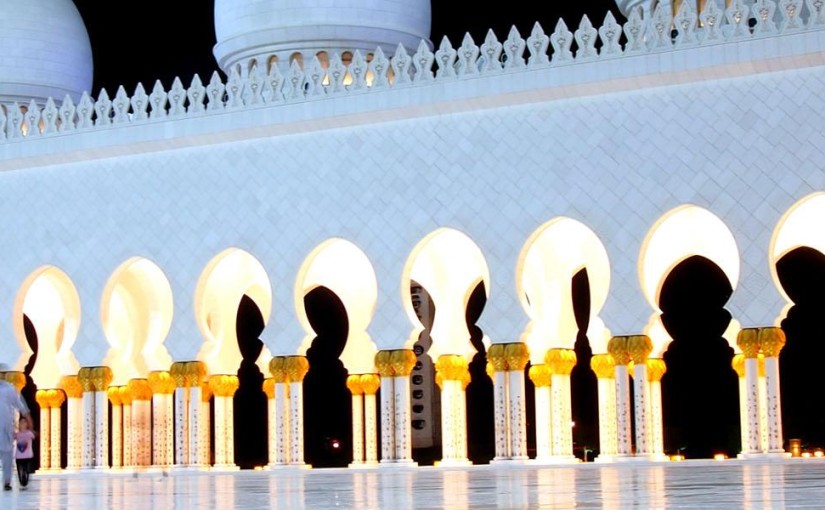
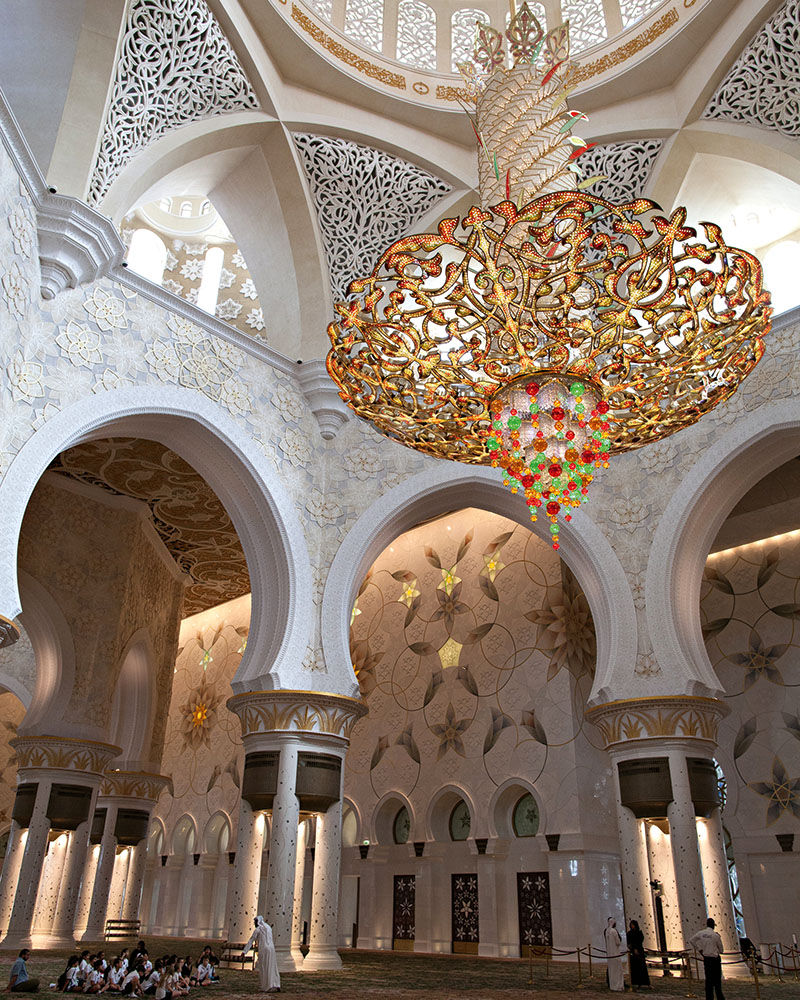
Cocktail hour is best delayed if you’re seeking the best from this devoutly Muslim city. Undoubtedly the city’s grandest and most iconic landmark is the Sheikh Zayed Grand Mosque. Named after the modern-day father of the UAE – who is buried beneath – the dazzling white, 82-domed mosque is comparable to India’s Taj Mahal for its breath-stealing grandeur and lavish detailing. Inspired by Persian and Moorish architecture, it utilises premium materials from across the world and can accommodate 40,000 worshippers. The mosque is especially beautiful at sundown and is worth the detour. Entry is free and it’s open to the public every day except Friday. Dress conservatively (no shorts or skirts).
Sheikh Zayed Grand Mosque Centre
5th Street
szgmc.ae
6pm
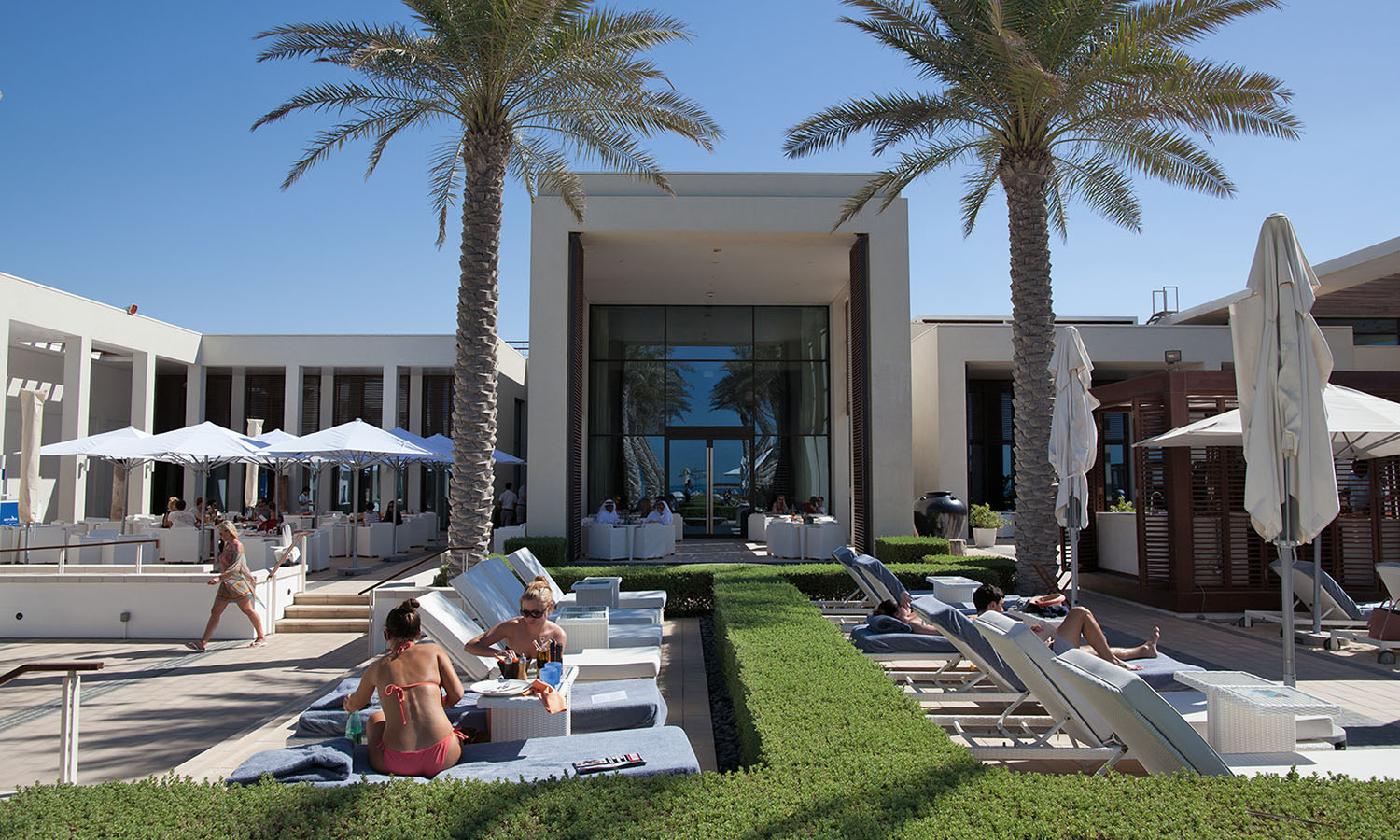
A short taxi ride away you can revel in the stark contrasts for which the UAE is known. The Saadiyat Beach Club sprawls languidly by the gin-clear Gulf, all poolside cabanas, fruity cocktails and sun-worshipping patrons. Bikinied Westerners with cosmetically enhanced outlines lounge by the water, while Emiratis in traditional attire sip minted tea nearby. Popular with expats, the club offers exclusive facilities for members, but day guests are welcome to visit the restaurants and bars. Turtles and dolphins are said to frequent the nearby waters – in fact, you could be in the Caribbean. Saadiyat can turn into a party scene on select nights, in which case you’ll be hard-pressed to leave, but the night is young.
Saadiyat Beach Club
Sheikh Khalifa Highway
saadiyatbeachclub.ae
7pm
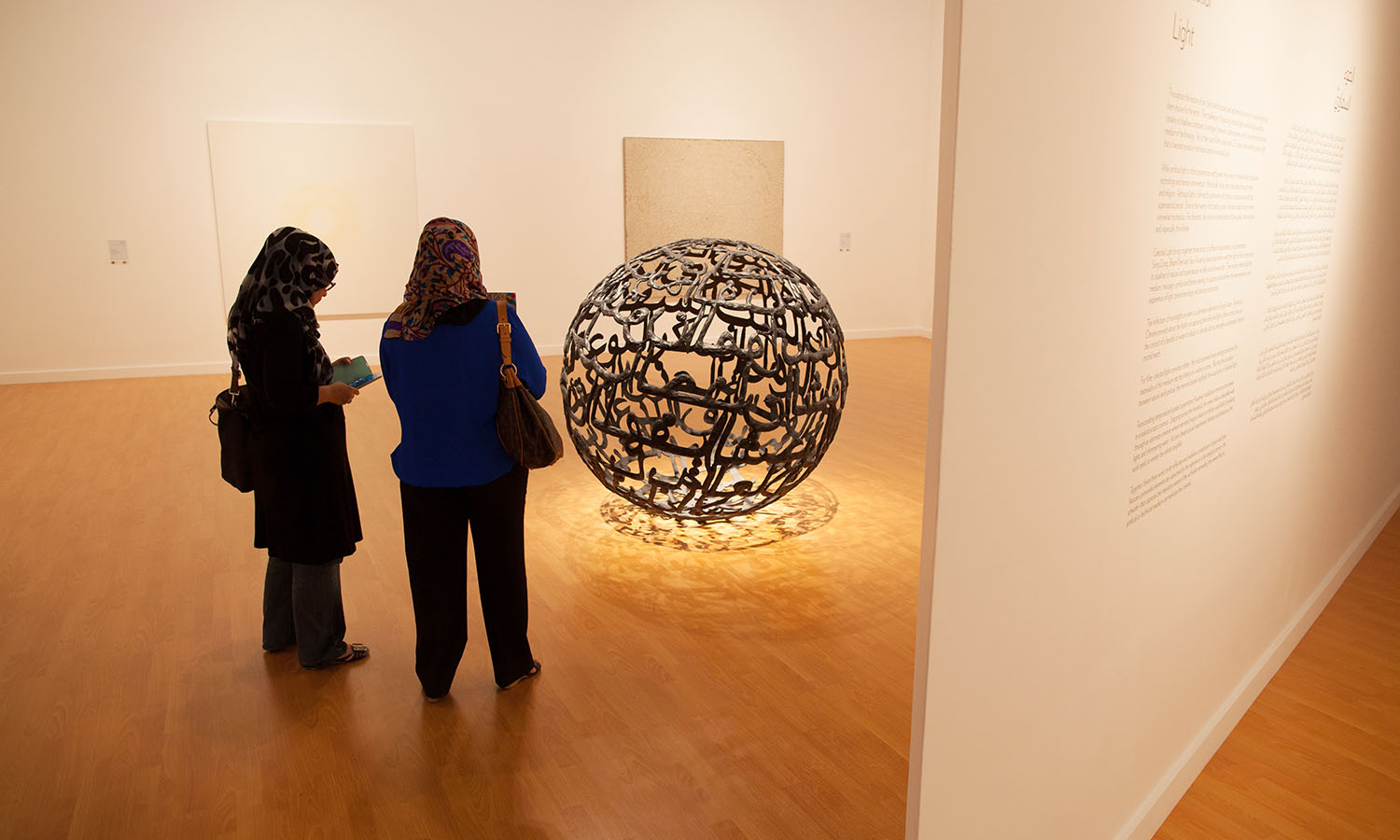
Saadiyat Island is in the midst of transforming into a globally significant cultural hub. By 2020 the formerly deserted sand patch is scheduled to be covered in luxury apartments and leisure facilities that will share a postcode with a number of iconic art museums, including a Louvre and a Guggenheim. Get a taste of what’s in store at the Manarat Al Saadiyat (Place of Enlightenment), which tells the history of Abu Dhabi and showcases its grand vision for a highbrow future that will distinguish it from nearby Dubai. Build it and they will come seems to be the philosophy underpinning the city’s post-oil future.
Manarat Al Saadiyat
Sheikh Khalifa Highway E12
saadiyatculturaldistrict.ae

8pm
Ready to be treated like actual royalty? Direct your ride to the Emirates Palace Hotel and be prepared to be dazzled. Abu Dhabi is not short of flash hotels, but this palatial seven-star wonderland is a tourist attraction in its own right. Gold and marble are used liberally throughout the sprawling, kilometre-long construction in a design motif that matches grandeur with opulence. Non-guests are welcome to wander slack-jawed beneath its 144 domes or loiter near the gold-dispensing ATM. Better still, the hotel has a royal abundance of cafes, bars and restaurants and most are open to the public. Reserve a table outside at Hakkasan for a dazzling view of the city and a gorgeous modern Chinese meal you won’t soon forget.
Hakkasan Abu Dhabi
Emirates Palace Hotel
hakkasan.com

9.30pm
For a more traditional experience and something sweet, try Le Boulanger, an alfresco cafe overlooking the water on the nearby Corniche. You can’t buy booze here but not buying booze is very much the local custom. Instead locals crowd around tables, drink coffee, talk into the night and take turns coaxing scented tobacco through water-cooled hookah pipes. Shisha is a mixture of tobacco leaves flavoured with molasses or honey and mixed with glycerine so that it heats evenly and doesn’t burn. A one-hour shisha session combined with sweet local coffee, two or three sticky baklavas and a pink cube of Turkish delight and you will be authentically abuzz 
and ready for some nightlife proper.
Le Boulanger
Marina Village
Cornich Road

10.30pm
If Abu Dhabi were a drink it would be a mocktail served in ornate crystal. The conspicuously wealthy city pulses with designer labels, soaring high-rises, blingy architecture and customised sports cars. It’s the sort of place a stubby of VB would be asked to leave on aesthetic grounds. Ray’s Bar on the 62nd floor of the Jumeirah Etihad Towers doesn’t stock blue-collar Aussie beer, but its expert barmen can mix up just about anything else. The spectacular views from Ray’s across the twinkling city explain why Abu Dhabi has been compared to Manhattan. The service is professional, the lighting atmospheric and the drinks tall, dark and expensive. It’s a good place to meet friendly expats, dig the view and the glamour and suss out where to hit next.
Ray’s Bar
Jumeirah Etihad Towers
West Corniche Road
jumeirah.com

11.30pm
Ladies’ nights are a big deal in Abu Dhabi. They usually happen on a Wednesday and hinge on a tried-and-tested nightclub formula. Entice the female of the species and the men will follow with hungry eyes and open wallets. It’s a sign of how new the drinking culture is in Abu Dhabi that free drinks for the women are A) allowed, and B) don’t end in Caligula-style debauchery. Deep inside Emirates Palace is Etoiles nightclub. Here, you’ll find DJs playing mid-tempo beats as the club slowly fills with women and their admirers. Drink, mingle and have a dance, but don’t linger too late as there’s more ladies’ night action to be had.
Etoiles
Emirates Palace Hotel
West Cornishe Road

facebook.com/etoilesclub

1am
Lift-off arrives at Pearls & Caviar, a chic open-air bar with water views across to the distant Grand Mosque. Pheromones mix with designer scents and acrid tobacco smoke on a crowded dance floor. At last you’ve found some genuine party people and a DJ tuned to the tribal mind. The city’s reputation for tolerance will be tested by a posse of bumping and grinding expats, barely attired ‘ladies’ and a Busta Rhymes decree for the dance floor to “make it clap”. Clearly so much has changed and so quickly in this newly minted city. Forty years ago it was a fishing village, today Abu Dhabi reaches for the sky and screams “look at me now”. Tonight they’re twerking for freedom within sight of the Grand Mosque. Who knows what tomorrow will bring?
Pearls & Caviar
Shangri-La Hotel
Khor Al Maqta

shangri-la.com
Trouble on the island

For five days, tensions had been rising. It was 1970 and the end of the peace-loving era was looming. Jimi Hendrix, the headline act for the Isle of Wight Festival, had performed one of his most disappointing sets ever. A raft of technical problems wasn’t helped by the fact that, well after midnight, everyone was cold and exhausted and the guitarist himself was self-medicating on an unknown combination of booze and drugs. He left the stage in the wee small hours, but not before fans threw bottles, lit fires and hurled flares on to the roof of the stage, causing it to catch fire.

“Thank you very much. And peace and happiness and all the other good shit,” said Hendrix as he departed. Little did anyone know it would be the last time he would perform in the UK. Three weeks later Hendrix was dead.

In the early hours of 31 August, however, one of the organisers went to wake Leonard Cohen. He was due to play after Hendrix, but decided to take a nap. There is no way anyone thought the unshaven, long-haired singer dressed in a safari jacket would be able to turn around the ill feeling seeping through the crowd. Kris Kristofferson, Joan Baez and Judy Collins, who’d all endured the wrath of the restless audience, gathered backstage to watch what was about to unfold.

This was the third Isle of Wight Festival organised by brothers Ray, Bill and Ron Foulk. In 1968, it went for just a day. Jefferson Airplane headlined and 10,000 people turned up. The following year, organisers lured Bob Dylan. Once he’d signed on, The Who, The Band and Joe Cocker followed suit. Over the course of two days, 150,000 revellers enjoyed the good vibes. But it wasn’t until its third year that the Isle of Wight Festival entered the stratosphere.

There was trouble from the start. For those first two years, the Foulk brothers had rented a field from a farmer. But the Isle of Wight was a haven for well-heeled retirees, and those people didn’t like the idea of it being taken over by hippies. The council, heavily lobbied by residents, introduced an act that meant organisers had to get permission to hold any large event. The Foulk brothers were forced to accept the only venue being offered to them, at East Afton Farm. 
It was overlooked by a large hill, making it hard for them to stop people watching from outside.

The times were changing too. Three years earlier, the Summer of Love saw people who rejected the establishment gathering in San Francisco’s Haight-Ashbury neighbourhood and the first rock festivals being organised. Some were free; others, like the Fantasy Fair and Magic Mountain Music Festival in California, donated gate proceeds to charities. On the other hand, promoters were starting to realise there was a lot of cash to be made and bands’ agents were demanding higher fees for their acts to appear.

The year before, Woodstock organisers decided to pull down the fence and let people in for free due to fears security wouldn’t be able to control the crowd. Four months later, the Altamont Free Concert turned into a debacle when 300,000 people turned up and the Hells Angels were hired – if you can call being paid with $500 worth of beer being hired – to do security. They got drunk, the crowd became increasingly agitated, Santana refused to play due to the deteriorating situation, 
and Meredith Hunter, a member of the crowd, was stabbed and killed by an Angel after pulling a revolver from his jacket while the Rolling Stones were on stage.

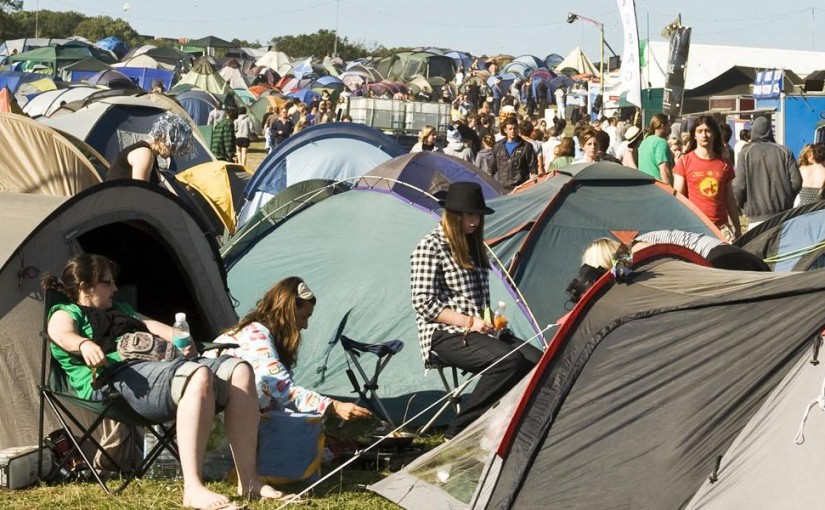
Early on at Isle of Wight things started to get out of hand. The organisers had expected a decent crowd, but an estimated 600,000 to 700,000 eager punters hit the island. Among them were a band of radicals and anarchists who, unwilling to pay the ticket price, set up a camp outside the festival fences. Paint was handed out by the organisers in the hope the protestors of Desolation Row would decorate the barricade and get into the spirit of the festival. Instead they covered the walls with Nazi symbols and anti-establishment slogans that then had to be painted over. Others tore down sections of the fence and entered without a ticket. In the midst of the growing problems, health officials turned up to inspect the inadequate toilet facilities.

Who knows how much of this, apart from the ill feeling in the audience, Leonard Cohen was aware of. At the time, the 35-year-old was a relative newcomer to performing. He’d spent his twenties as a poet and novelist in Montreal, had released two albums, Songs of Leonard Cohen and Songs from a Room, and had only ever played one festival, at Aix-en-Provence earlier in the month. On the night, he’d taken Mandrax. Who could blame him?

Jeff Dexter, a DJ who introduced the band, could see they’d all taken the sedative. “They were in such a state I could have fucked them all and they wouldn’t have known it,” he told Sylvie Simmons, Cohen’s biographer. He and others were worried for their safety, but Cohen was calm. He walked on to the stage and, in the darkness, began to tell a story about his father taking him to the circus. “I don’t want to impose upon you,” Cohen continued, “but there was one moment when a man would stand up and say, ‘Would someone light a match so we can locate one another?’ And could I ask you, each person, to light a match so I can see you all?”

At first, there was just a flicker and he softly, slowly began singing ‘Bird on a Wire’. The crowd was mesmerised. During the 16-song set, the number of matches grew and lit up the misty sky.

“They hated everybody at that festival,” Kris Kristofferson recalled in an interview in 2010. “The only guy they didn’t hate was Leonard Cohen. It was strange. I thought they were going to kill him because they had been so shitty to Jimi [Hendrix] and by the time they got Leonard it was like four in the morning and they were burning down the concession stands and tearing the walls down … And he charmed the beast. For whatever reason they listened to him. They loved him.”

After Dark in Istanbul

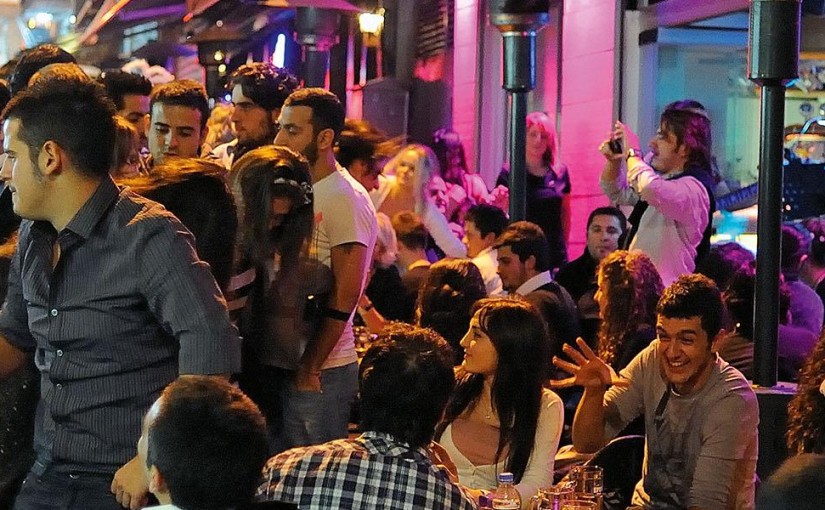
Many cities claim to be 24-hour cities, but Istanbul actually walks the talk. Dusk is when the city really starts to come alive and after dark is when the locals come out to play. Over the bridge in the backstreets of Beyoglu, not too far from the tourist enclave of Sultanahmet, is where Istanbul’s residents while away their nights sipping Efes beer, listening to smooth jazz, grazing on scrumptious mezze and literally dancing in the labyrinthine streets.

Come five o’clock, having finished work for the day, Istanbul’s locals alight from buses and trains at the transport hub of Taksim Square and stream down the crowded main drag of Beyog˘lu, Istiklal Caddesi, a long pedestrian boulevard that runs from Taksim down the hill to Tünel Square. Beyog˘lu is Istanbul’s shopping and entertainment heart, with hundreds of traffic-free streets and alleys crammed with shopping arcades, markets, cafes, bars, restaurants, pubs, clubs, performance spaces, galleries, cinemas and theatres. Everything is open late and the area always hums. Early evening is shopping time, so go with the flow, browse the boutiques as you amble down the busy artery.

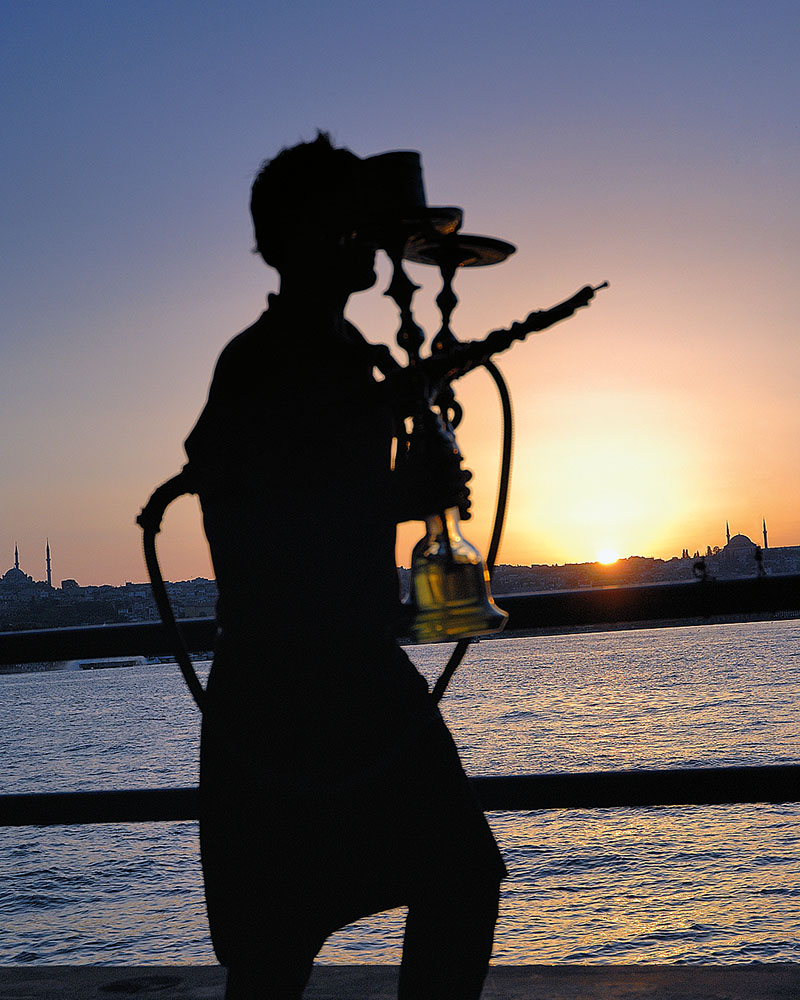
Slip into one of the countless alleys off Istiklal Caddesi to kickstart your night with some caffeine and glasses of fragrant tea or tiny cups of muddy Turkish coffee. Istanbul’s locals never stop at one…so knock back a couple. The lanes are lined with tiny cafes with wooden decks strewn with vibrant Turkish kilims and miniscule wooden stools, where old men play backgammon and puff on the ubiquitous aromatic narghile, or water pipe.

Continue your stroll down Istiklal Caddesi, detouring into side streets if a quirky cafe, funky boutique or hip little bar catches your eye. Nowhere is Istanbul’s bohemian vibe more evident than in Beyog˘lu’s backstreets and hilly quarters, such as the arty residential areas of Cihangir and Çukurcuma.

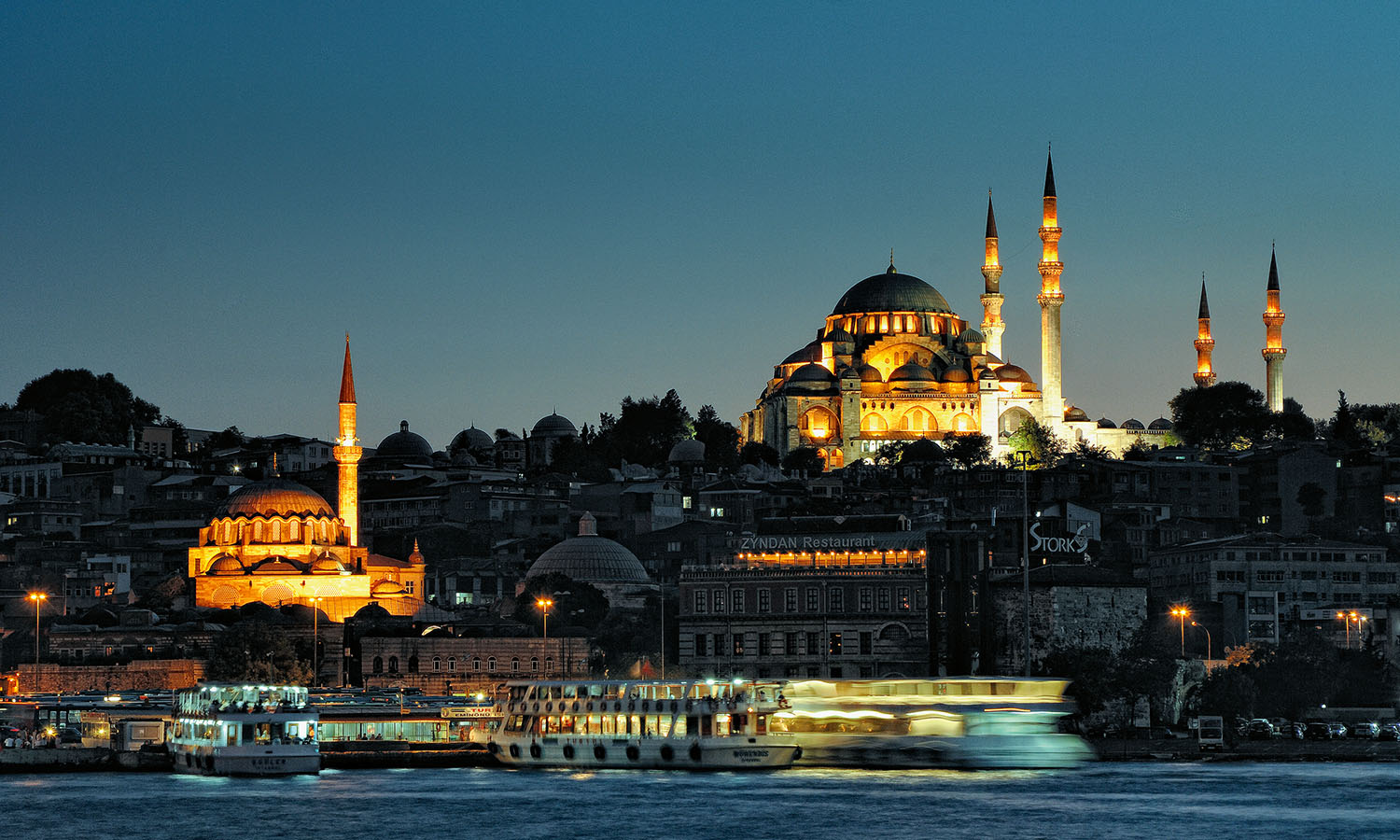
Don’t stray far, however, as your destination lies at the base at Galata Bridge, where Istanbul’s fishermen will be reeling in their lines for the day. Take the stairs down to the lower level beneath the road where you can sip your first icy Efes beer as you savour the sunset and the striking silhouettes of the colossal mosques across the water.

Skip the hard slog back up the hill and take the funicular to Tünel, then jump on the antique wooden tram and head toward Taksim. It’s fun as much for the sight of the local kids swinging off the tram doors to catch a free ride, as it is for the vantage point it gives of the heaving mass of people that have by now descended upon Istiklal Caddesi. Alight when you spot a line of locals at a stand selling pretzels or chestnuts, so you can also partake in a popular Turkish pastime – snacking.

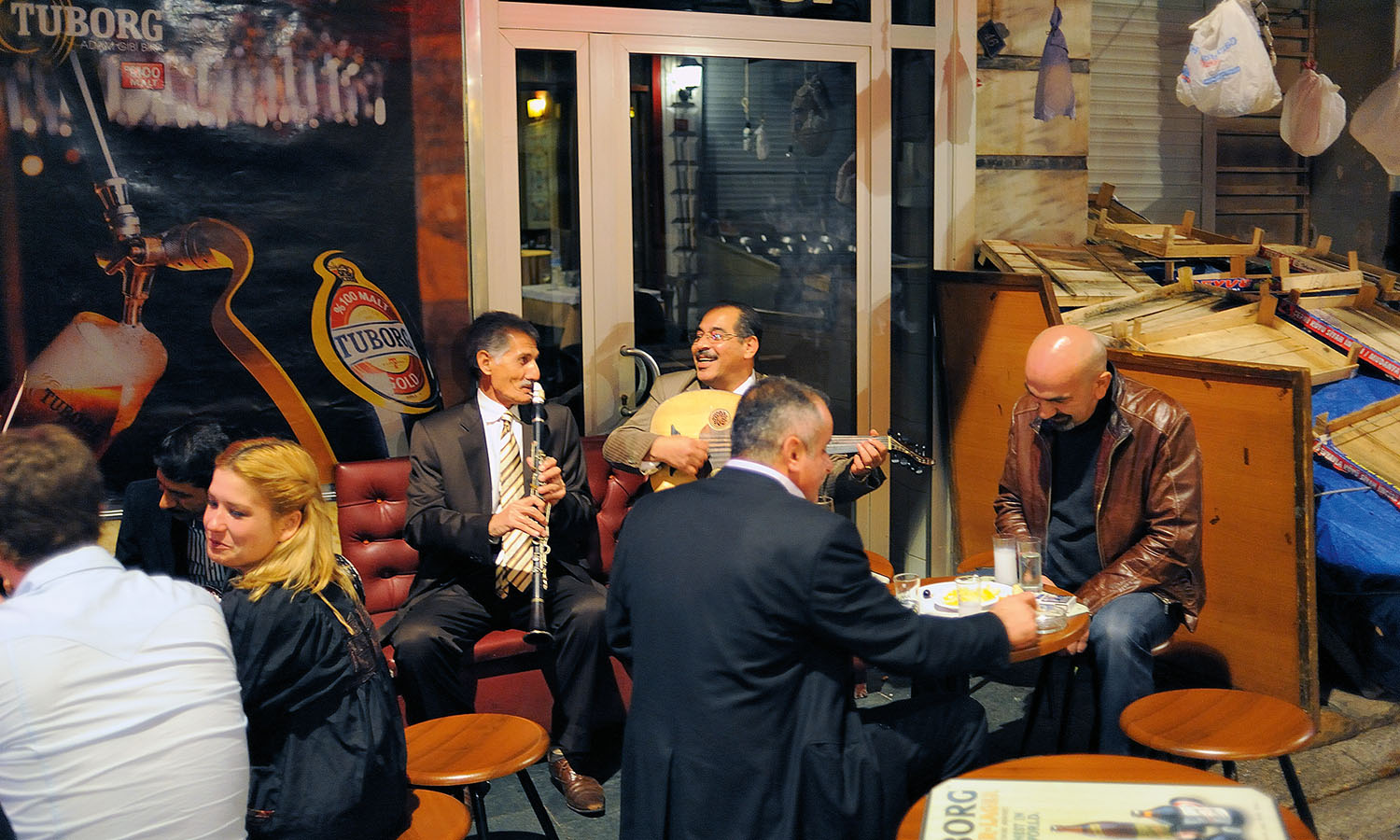
Zip down Solakzade Sokak, a narrow lane off Istiklal Cadessi that’s lined with small bars with tiny stools and tables on their terraces outside. Early in the night they’re all packed with locals sipping beers as they listen to roving musicians playing Turkish saz, but later the hard partying goes into the early hours of the morning. Blue-lit bar Mr Bliss is the pick of the bunch. Inside, there’s barely enough room for the band that plays several times a week, headed by Black Sea folk-rocker Aydoˇgan Topal, who performs an original blend of highly contagious pop, rock and folk music from the Laz region that gets locals energetically dancing and singing.
Mr Bliss
5A Solakzade Sokak

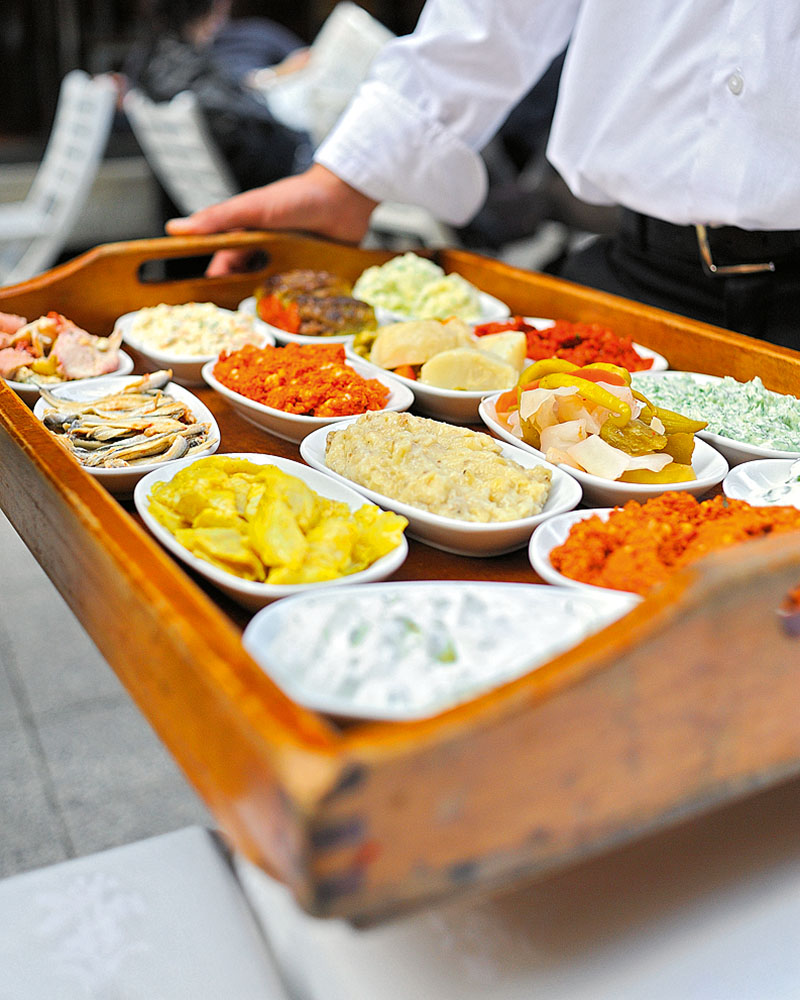
It’s dinner time! Bafflingly, the guidebooks often dismiss as ‘touristy’ the narrow lane of Nevizade Sokak, lined with dozens of busy meyhanes (taverns) and dimly lit pubs. This is a myth and a blessing in disguise, as most of the people lingering over long meals of never-ending courses of mezze – traditional Turkish tapas-size dishes such as hamsi tursu (marinated anchovy) and patlican soslu (aubergine salad) – are locals. Any spot is fine for a drink, but you’ll find the tastiest food at Imroz, where the tables are generally packed with big groups of Turkish friends and work colleagues. Select your mezze from a tray the waiter brings to the table and order a bottle of raki to wash it down.
Imroz
24 Nevizade Sokak

On the other side of Istiklal Cadessi you’ll find yet another skinny street, Acara Sokak – this one rather steep – and at its base, at number 5, an atmospheric basement music venue called Alt Club. Duck through the heavy velvet drapes, head downstairs and settle into a seat at round wooden tables or prop yourself up at the bar for some of the city’s best independent Turkish music and fine jazz. If renowned Turkish jazz trumpet-player Imer Demirer and his superb quartet (including talented pianist Serkan Özyılmaz) are playing, plan to stay a while.
Alt Club
5 Acara Sokak

Take a short stroll down Istiklal Cadessi, off Tünel Square, and you’ll find the nightlife quarter of Asmalimescit. This is home to cafes and bars that are laid-back by day but later start pulsing with boisterous locals spilling out onto the streets, and clubs blaring all sorts of music well into the wee hours. Simply take your pick depending on your taste. On Sehbender Sokak, Babylon caters to all styles of music with indie bands and experimental films projected on the walls some nights, while others see local DJs drawing the hipsters in.
Babylon
3 Sehbender Sokak
babylon.com.tr

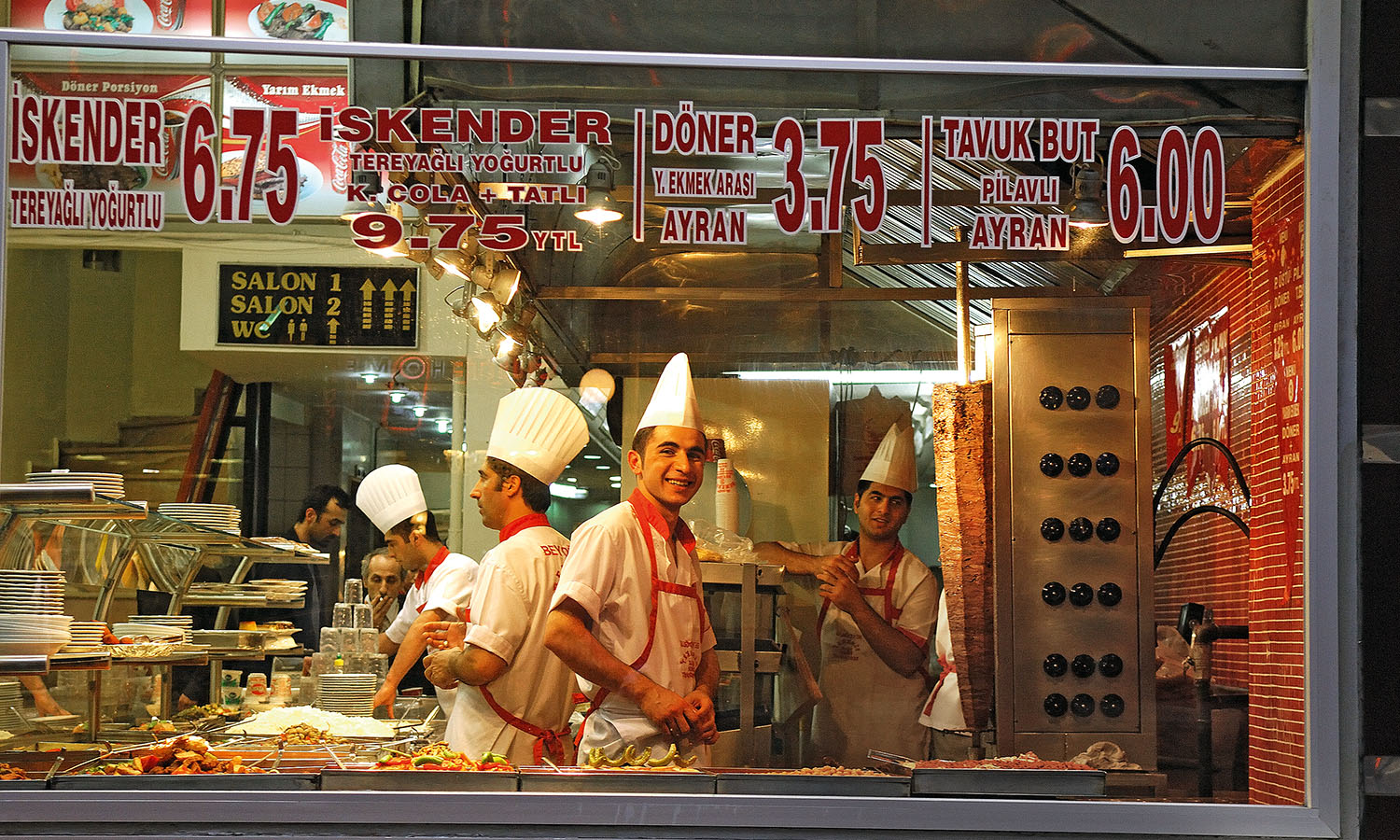
If you’ve worked up an appetite with all that dancing, head up the hill to Taksim for some top Turkish fast food to soak up all the alcohol. You will find late-night eateries dotted all along the drag, but up on the square you’ll stumble across a row of kebab joints doing a roaring trade until morning.

Tuck into a kebab or pide before heading back to the hotel for some well earned rest – because if you’re staying in the city longer, trust us, you will want to do the whole thing all over again the next night.

Steeling Trinidad’s Carnival

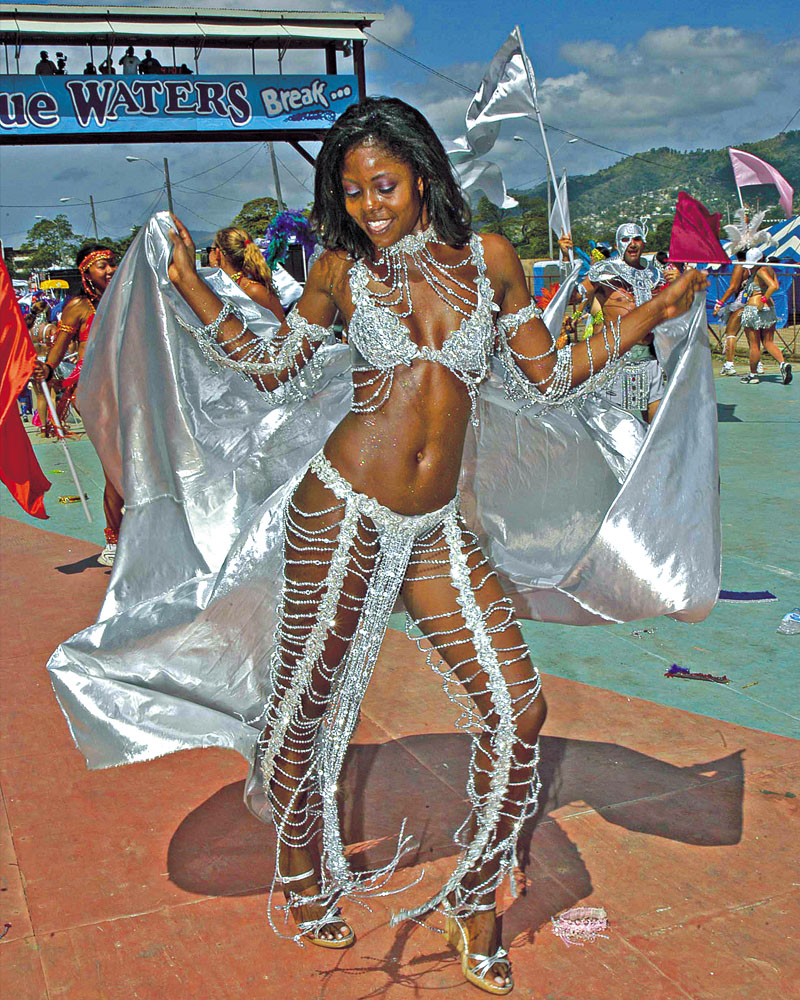
I’d never thought of street furniture as being particularly erotic but then I’d never seen a woman make love to a sign post either. Was I surprised? What do you think? Her flailing left leg booted me on the ankle. When I looked down she was seated on the footpath wearing the tiniest hot pants, legs akimbo, back arched, groin grinding against this now phallic object. Not something you see every day back home.

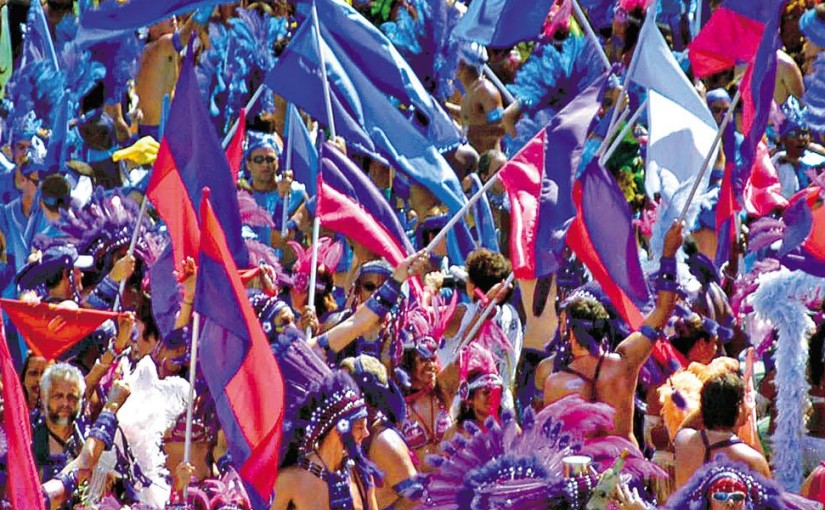
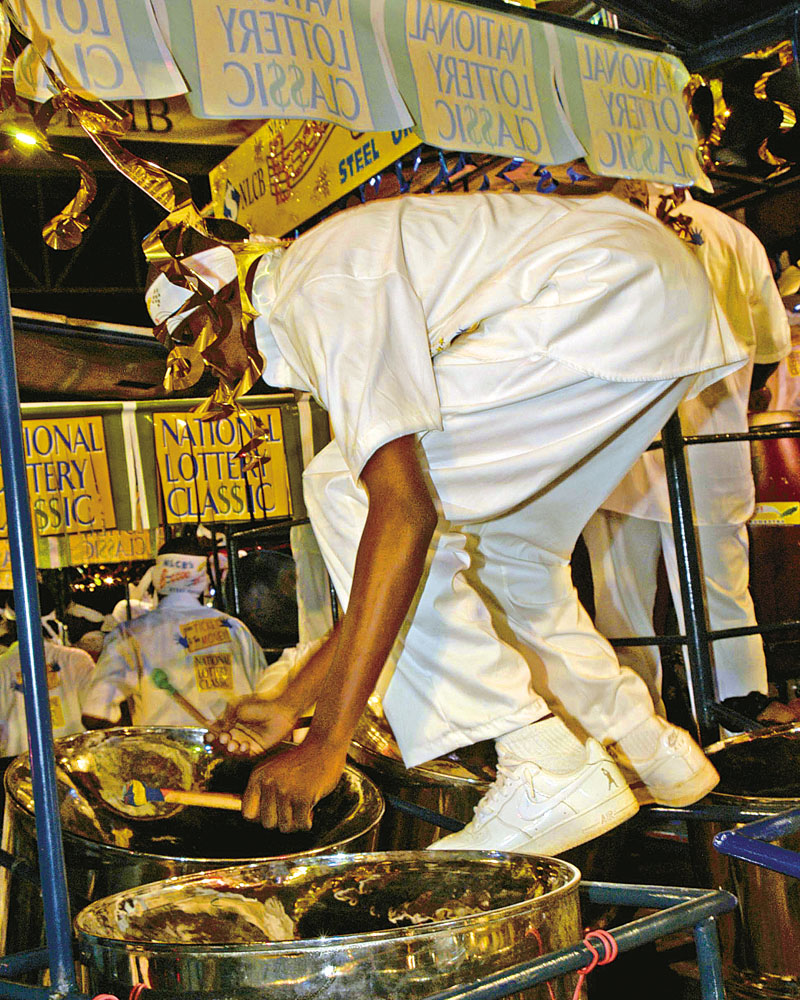
There’s no doubt that Carnival in Trinidad is sexy. It’s a time when people want to display themselves and be noticed in all their loud and sensual glory. But there are so many other facets playing on the senses that to focus on one would be to do an injustice to the overall brilliance of the occasion. Take ‘steel pan’ drumming, easily identifiable as the sound of the Caribbean and the focus of the renowned Panorama competition. This annual extravaganza between steel pan drummers is fought out under the floodlights on the massive stage in the Queens Park Savannah and is regarded as a festival highlight. Bands are heralded onto the massive Savannah Park stage by stilt walkers and skimpily clad flag-wavers dressed in band colours. Each performance lasts about 10 minutes, urged on by the crowd’s good-natured baying and dancing as wave after wave of shimmering metallic crescendos are sent out across the park.

If you can’t get a ticket into the main event, grab a few cool beers and head off to alternative pan yards like Phase II or Desperados in the week before the final. Ask any local or just follow your ears. Along with hundreds of spectators, you’ll feel like you’re at an impromptu open-air jamming session. Steel drums, be it a two pan tenor or six bass drums, belt out a full musical scale, complete with sharps and flats.

As with any event held during Trinidad’s carnival, the boundary between performer and audience is blurred. Trinidadians are not known for their shyness. It’s just not in their nature. So, while a hundred musicians send wave after shimmering wave of melodic beats deep into the night air, I’m swept along in a giant conga line, snaking through the dancing crowd. The rum flows, the music blurs and my ripped shirt says I’m having a great time.

Dexterity is a carnival trait, whether bodily, musically or verbally. The best demonstration of the latter is Extempo, or the art of singing extemporaneously around a given subject. Like most carnival events it’s held at Queens Park Savannah on the Friday before Carnival. Here you’ll eavesdrop on verbal jousting of the most deliciously barbed kind. The nature of Extempo is to demolish your opponent with wit. If you’ve seen Eminem’s film 8 Mile, then you get an idea of the style. Only here the music is calypso, soft and bouncy and understated. In the past, digs would be made at the expense of British rulers. Today it still has the power to annoy governmental figures.

The competition is brutal. These are people who could take Eminem apart word for word, leaving him just a pile of quivering consonants. Contestants are only told what the theme is once on stage. The mental alacrity, humour and ability to weave a narrative can make you blush with embarrassment for those on the receiving end. Each phrase, honed in just seconds, contains innuendo – sexual, political and otherwise.

But then Carnival is based on mockery. Initially introduced to Trinidad by the French, it was a way slaves could parody their owners, jibing at their extravagant balls and masks. Carnival does have its critics. Many eminent voices, including prominent Trinidadian journalist and writer Earl Lovelace, feel that knowledge of the origins of carnival are being eroded by a lack of education at schools and by the globalisation of the celebration; it’s now just another international event to sponsor and brand.

Take my lady of the lamp post. The night of her performance was J’ouvert, from the French, ‘day break’. Traditionally, this is a night when whip-carrying devils, oil-covered Jab Jabs, stilt-walking Moko Jumbies and many other figures from African folklore would come out. Sadly I came across none. Instead from the wee hours of Monday morning until sun-up, countless thousands bounced along in the vibrating wake of massive trucks packed with amps ambling their way all over Port of Spain. There seems little acknowledgement for the roots of carnival in Trinidad.

In my group, an old ambulance had been converted into a bar. Rum was the order of the morning. All anyone is expected to do is to follow the music. For the uninitiated, soca is a fusion of calypso with insistent Indian beats, dominated by a whacking bass and rapid-fire lyrics. When our truck encountered another posse the sound collision was astonishing. I feel sure those caught in the narrow space between the two passing trucks would have had their brain pulped and stomach eviscerated by the sheer monstrous volume.

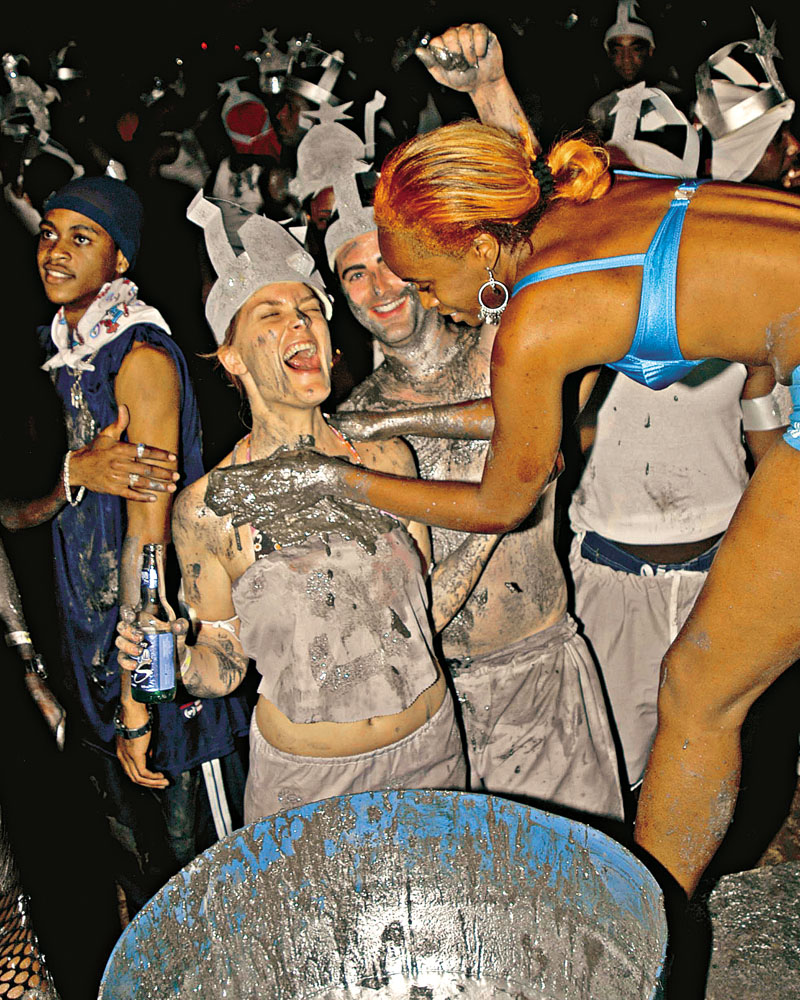
You can still experience old-style traditions at the Kiddies Carnival on the weekend before Carnival. Don’t be put off by the name. You will definitely meet plenty of whip-cracking devils, jab molassies, bats and imps. As it happens, on Carnival Tuesday I was ‘lucky’ to run into some blood (well, red paint) carrying demons who well and truly left their mark on me.

This is the day of carnival when a whole year’s worth of costume planning, preparation and pent-up anticipation is finally released. The highpoint is the crossing of the Savannah Stage with your ‘band’ to perform for judges. Thereafter you are let loose on the city to head for other marking points. But what are judges actually judging? Drunkenness? An inability to shake one’s booty like a local? Who knows. You get no badge apart from the one sewn into your memory. However, I did return home with something fleetingly tangible – a bath full of pink water as the last of the red paint seeped from my hair.

Sleepy Beauty

Travellers to the Pacific Islands will be familiar with the phenomenon of ‘island living’, the languid way in which people arrive late to every appointment, leave cars and houses unlocked and break into a sweat at only the most important of occasions. For the uninitiated, this laid-back approach can be as endearing as it is frustrating, and the Kingdom of Tonga is no different. Faka Tonga (the Tongan way) has ensured the country and its underwater paradises have remained unspoiled and raw, making it an adventure destination ripe for exploration.

Snorkel
Boarding a tiny eight-seater plane from the airport in the capital, Nuku’alofa, I fly across the archipelago to the Ha’apai chain, a group of pancake-flat tropical islands made famous by the visits of Captain James Cook during his explorations of the Pacific Ocean.

Ha’apai’s main settlement of Pangai is not just the place that gave birth to Christianity in Tonga. It is also renowned for having some of the best snorkelling sites in the country. Arriving on the island with not another tourist in sight, it seems that directions to the coral gardens off the coast of the northern beaches may be hard to come by. If this were Southeast Asia, boats would be vying for every tourist’s business. Internet cafes and tour companies would dominate the town in a jumble of techno music and banana pancakes. Here in Pangai, however, the streets are empty, save for the pigs and the large Tongan lady who is heading towards church in her giant straw tupeno (like a belt but often three feet wide) to escape the midday tropical heat.

I stop in at the local general store to ask for a map. The only items for sale seem to be Coca Cola, sweet potatoes and packets of dried kava. Surprised that I’m not a visiting Mormon, the shy Tongan girl behind the counter points me towards the road that bisects town. Follow that and I’ll find it. One advantage of Ha’apai’s size is that it’s virtually impossible to get lost along the island’s only main road.

I borrow a bicycle and head through the fields of cassava and sweating papaya across the causeway and towards Foa Island. The earth is hot and wet as I skid along the single lane to the headland. Ha’apai locals have recounted some of the islands’ naval history: the mutiny on the Bounty occurred just offshore and the sacking of the Port Au Prince occurred near Foa Island in 1806, leading to William Mariner spending four years with Ha’apai’s chief and writing his renowned account of the people of the Tongan islands.

With a blink-and-you’ll-miss-it turn across from the jungle-shrouded Sandy Beach Resort, I grab my snorkel and spy two big inky rifts in the otherwise turquoise ocean. With no one in sight along the coast I snorkel along the coral gardens off Foa Island. I duck-dive down to the tiny communities hiding in the clumps of soft coral, swimming through sponges that shelter clown fish the size of my thumb and past brown-spotted moray eels that screech at my approaches as I swim below their caves.

The unbroken line of the coral reef is fluorescent and I continue exploring the rose-shaped coral beds until a banded sea snake hiding underneath a mushroom-shaped outcrop on the edge of the reef is spooked by 
my exploration. I kick away from the coral in a panic as the blue and white snake coils towards me with its mouth open and I surface for the first time in hours.

With no crowd noise or traffic to guide me, I’ve drifted hundreds of metres towards the open ocean. Tonga isn’t the sort of place that has lifeguards and flags, so I resign myself to the long swim back to shore, skimming across the reefs that captivated me for hours.

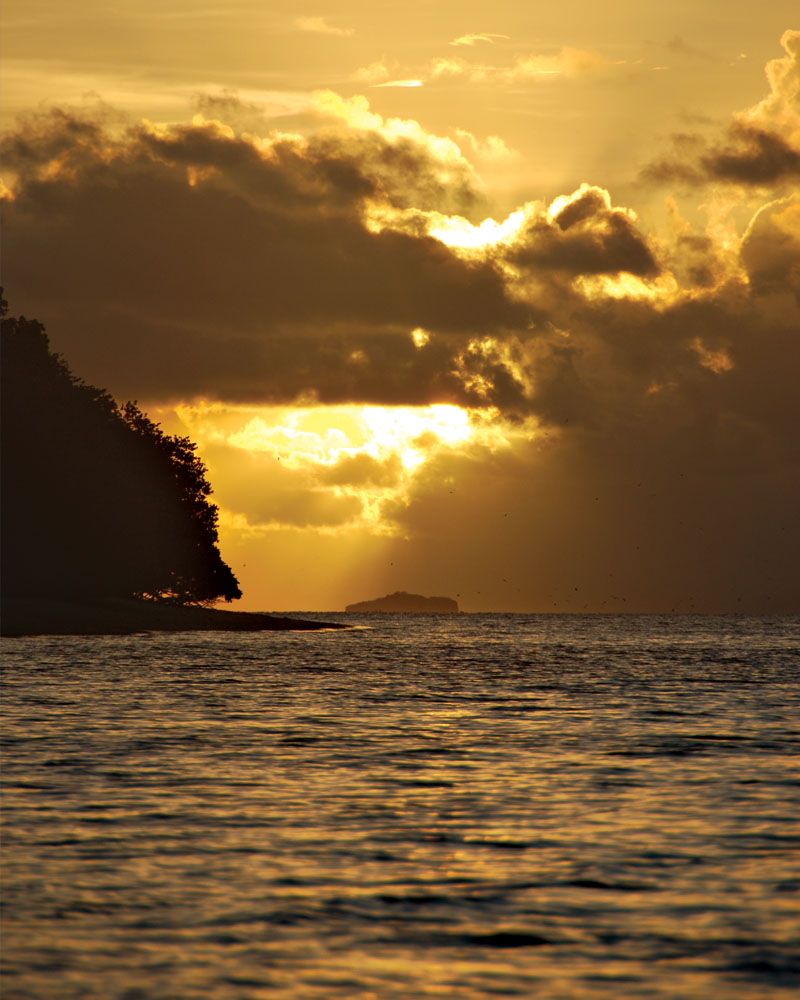
With hands like prunes and a head full of salt water, I trudge up to the Sandy Beach Resort. The cook is waiting with a chilled coconut and a plate of fresh swordfish. There are only two other guests at the resort so I am welcomed for dinner. With the Pacific Ocean swallowing the sun, I decide it is time to look for my next adventure. The north and the underwater wonders of Vava’u beckon.

Dive
The next morning I catch a ride on a tiny twin-propeller plane from the isolation of Pangai to Neiafu, the major town in Vava’u. With its sheltered jungle islands and migrating whales, this northern archipelago draws the majority of visitors to Tonga. I arrive on a Saturday evening and, after the lonely evenings of chirping geckos and fat mosquitos on Pangai, I am hopeful of encountering some kind of nightlife.

It is monsoon season and I stroll through Neiafu at dusk, greeting the few locals with a malo e lei lei. I find the library, a cafe and a few boarded-up restaurants. Stopping for a beer at the Aquarium Cafe I notice that the bay and the pastel colours that shift across its water are what captivate. Visitors are indifferent to the town itself. The ocean is what draws people to Vava’u. Whether they are snorkellers, yachties or divers, the real action is out towards the horizon.

I join them the following day, signing up for a Discover Scuba tour with the Dive Vava’u outfit in Neiafu. We are soon aboard the Tonga Tango boat and venturing beyond Lotuma and the Swallows Cave. I pull on my wetsuit and attach the tank, ready to explore this Pacific playground. With me is Paul Stone, a veteran of more than 16 years as a dive instructor and 12,000 dives. I’m a novice, so Paul is gentle with me – nothing like the brittle men in town who mull around the port with week-old beards and whisky breath prodding me for loose change.

The surface appears thick and choppy as we plunge in at aptly named dive site Benny’s Bounty. Even though I’ve dived once before, my first breath is one of panic. I draw in a mouthful of salt water and push the purge button frantically to get the artificial oxygen pumping. Paul gives me the symbol for OK and, after a moment, I respond. We kick our fins and descend. Once the membrane of the surface is peeled away, I see the life that is buzzing only 
metres below.

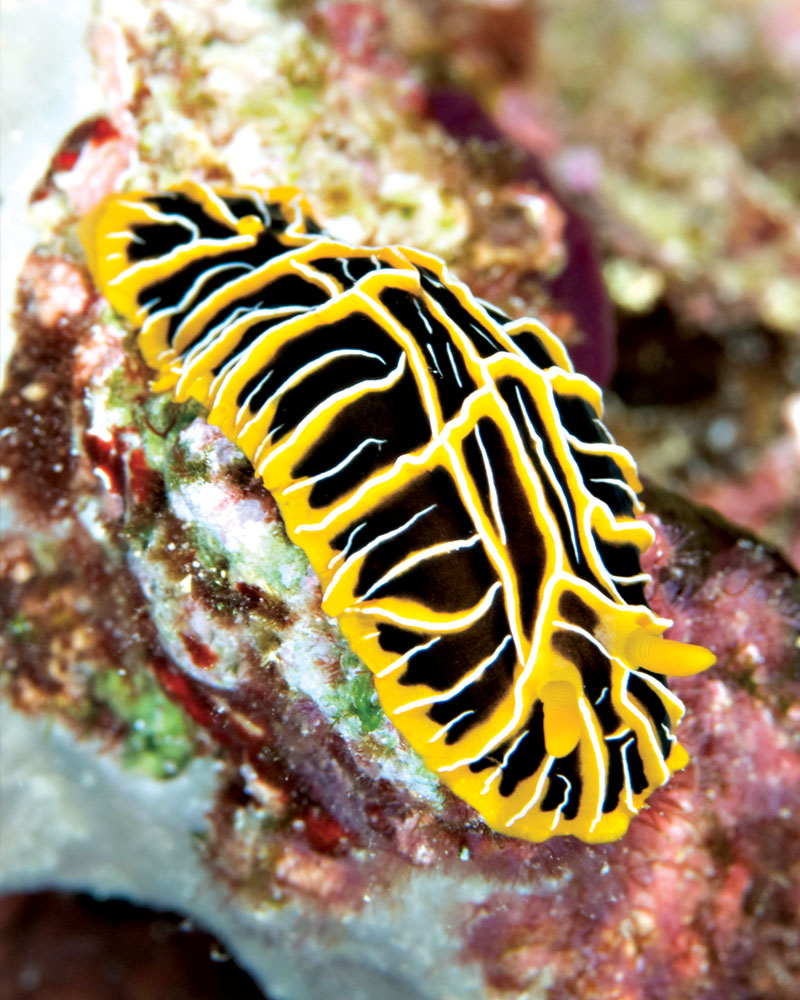
Our dive is not just about identifying the big names of the ocean, the shark, whale and stingray; the miniscule and vulnerable are just as captivating. Paul points out a black and orange fleck the size of a fingernail. It looks like a piece of seaweed but on closer inspection I see that it is a flatworm. Similar to a piece of lettuce, this tiny worm shimmies through the sea like a ribbon in the breeze looking for food and shelter.

We sway past pincushion starfish and angelfish gliding along the sand below us. I can tell Paul loves his office as he clasps his hands and drifts from treasure to treasure in the 50-metre visibility. As he explains later, “When you’re down deep with the reef below you and a wall of fish beside you, you just hang there, floating. I think it’s the closest thing in the world to actually flying.”

On the next dive at Sea Fans, Paul tells me to copy his posture. I hold my body as still as possible while we explore, gently kicking to conserve oxygen and prolong the experience.

Looking across the vast cavern at the bottom of the ocean, I see the other divers in our group exploring a great rift in the wall that shelters white-tipped reef sharks. As I swim through a band of gorgonian sea fans, thick with tiny fish circling in and out, I feel strangely at home.

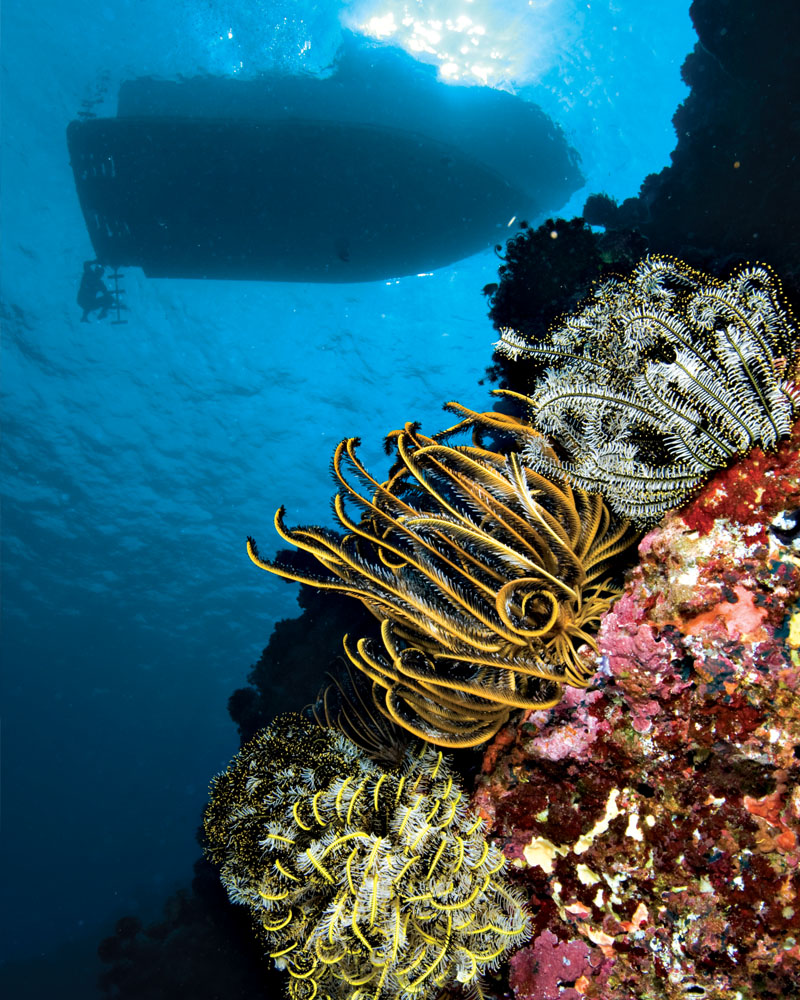
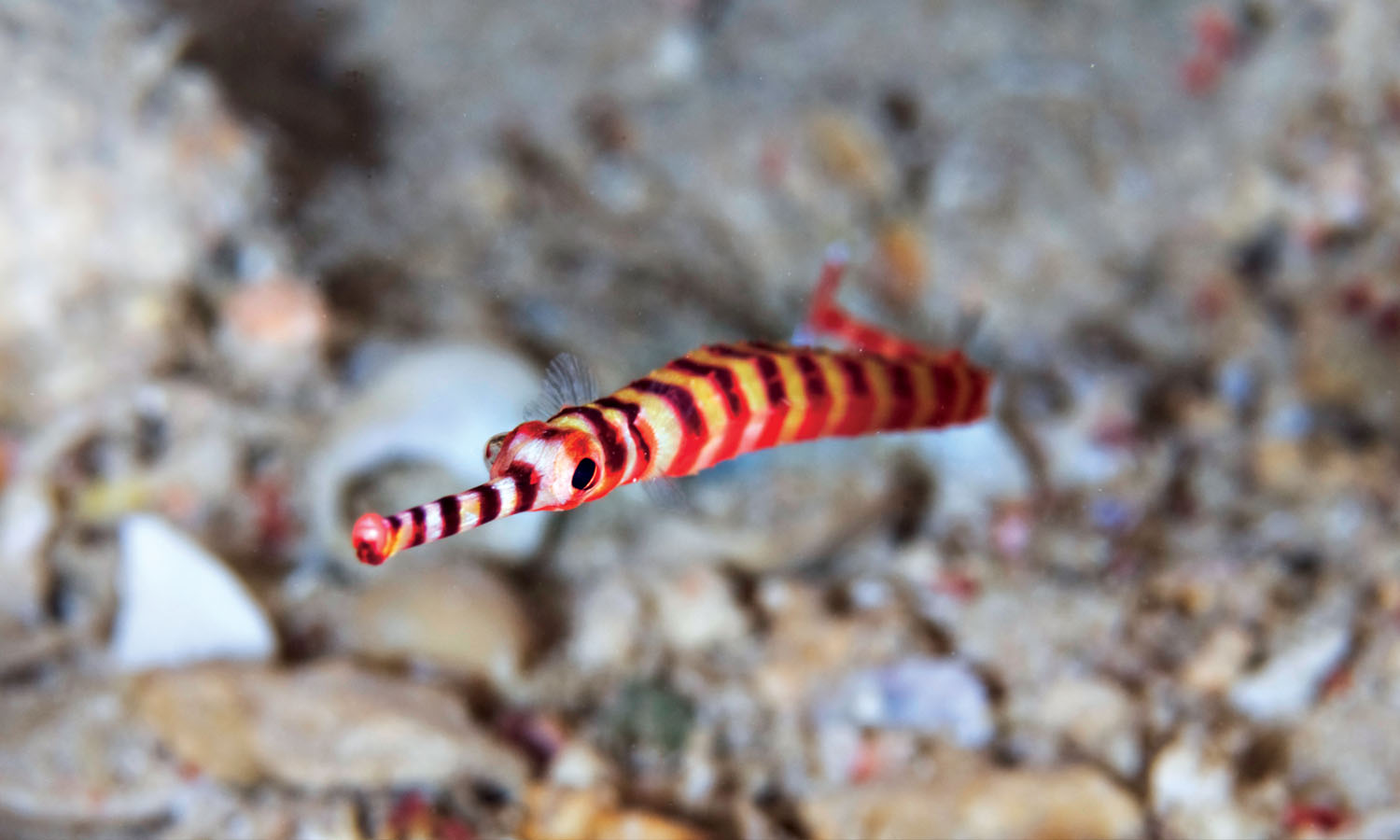
We pass through an aperture in the coral and everything is silent except the gasp of my regulator. Seahorses dart through anemones, an elongated trumpet fish swims below and a school of fluoro parrotfish nibble on the fronds and branches of purple and yellow coral. With my oxygen running low I know time is nearly up. I look to the undulating surface above and see the sun streaming down into the depths. Although I can’t take a photo, it is one of those moments I will not forget.

Kayak
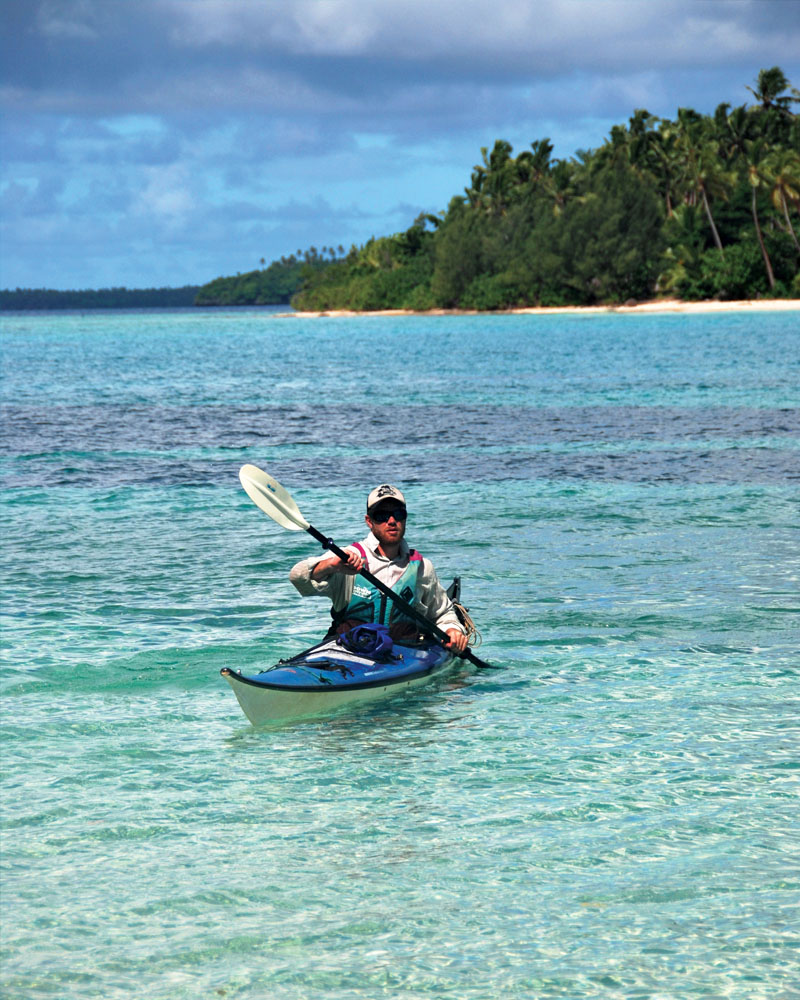
There is barely a murmur of activity in town the following day as I rent a sturdy sea kayak in Neiafu to clear the fog from my kava hangover. I head out with three other kayakers across the Port of Refuge on another day in which to immerse myself in island living without the comforts of running water, refrigeration or internet connections. We carry tents and fresh water in our hulls as we paddle towards the island of Kapa.

Tongans don’t see the point in swimming or snorkelling for pleasure, so Epeli, a local guide who has lived on these islands for more than 50 years, gives me an introduction to Tongan hunting and gathering in his spare time. He teaches me to fish with the line dangling from my teeth as we paddle. I also learn to spear fish with a Hawaiian sling that has a serious kink to the left. Our catch will supplement the jungle fruits we snatch along the way.

The islands of Vava’u were not discovered by Europeans until relatively late, with Spanish explorer Francisco Antonio Mourelle stumbling across the archipelago in 1781. As a result of its isolation, this part of Tonga has retained its cultural way and the languid pace of island time is even more pronounced than in the south. Whenever we inquire about meal times or our sleeping arrangements on the banks of Kapa, Epeli reflects the relaxed nature of his home: “Eat whenever you are hungry, sleep wherever you like. We are on a deserted island!”

Over the next few days we explore tiny islands ringed by tropical fish. Occasionally we happen across a fisherman or a tiny village, but for the most part we live a Robinson Crusoe fantasy. Snapper and yellowfin tuna caught during the day are eaten each evening, and we bathe in the ocean as storm clouds are stirred by lightning on the horizon.

Pushing our kayaks past the reef on the island of Ovaka, we stop for the night on Euakafa and hike up into the bowl of the island. Epeli shows us Queen Talafaiva’s crumbled tomb, a fifteenth-century coral enclosure that conceals the legend of a cheating wife and a king so vengeful he couldn’t allow himself to live with her betrayal. Peering into its depths, I don’t want to see if the bones are still lying there, but I have a feeling that they may be – covered in moss and waiting for the king’s forgiveness.

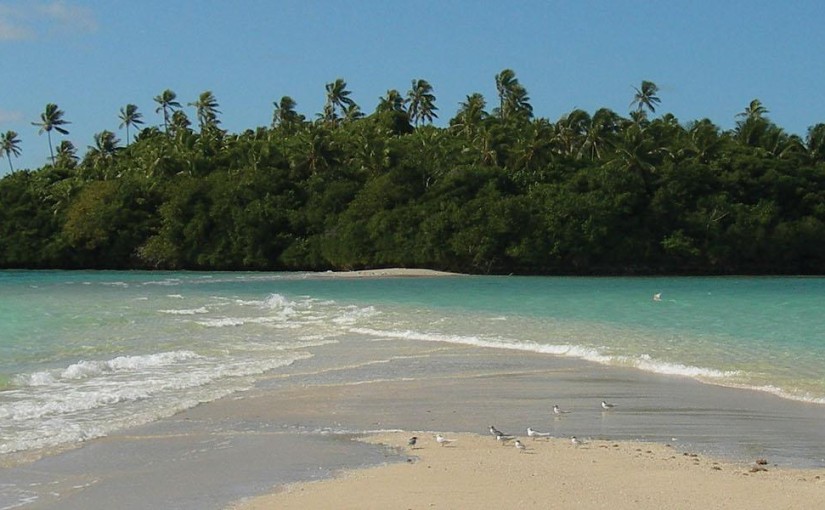
We paddle through the afternoon, travelling from Euakafa through breaking waves and onshore winds to the curved island of Taunga. Once our camp is set I wander across the sandbar to explore the island of Pau, made famous by travel writer Paul Theroux. As I walk along the shore with no footprints but my own for company, my shoulders ache from the paddling, mosquito bites from Eua itch my legs and I realise I haven’t washed properly in days. The faka Tonga has kept the islands pristine and unspoiled and, as I pitch my kayak back into the water, I’m glad that I have discovered some of the wild insides of Tonga.

After Dark in Bangkok

It’s a drag, it’s a bore, it’s really such a pity – to be looking at the board, not looking at the city,” laments Murray Head in the pop hit ‘One Night in Bangkok’ from the musical Chess.

Head’s hairstyle may have dated dramatically since the 1980s, but his words remain true – you’d be nuts to stay inside participating in longwinded board games for two when Bangkok is your evening’s playground. With the right strategy, you can negotiate your way by foot, ferry, taxi and skytrain back and forth across this great big busy city. Because, as the song goes, “One night in Bangkok and the world’s your oyster…”

6.00pm
Roll the dice and watch it land on WTF in Thong Lor. The moment you arrive at this retro-styled three-storey cafe, bar, restaurant and exhibition space you’ll know you’re off to a good start. There’s a relaxed vibe, delicious cocktails to try, poetry reading nights, upstairs gallery spaces, a dance floor and a screening room. The place was established only a few years ago as a creative social club aimed at exposing art to a broader public audience in an informal environment. The strategically chosen name stands for Wonderful Thai Friendships. You could easily spend a few hours in WTF or the whole evening exploring the bars and restaurants of Sukhumvit Road, but that’s not the aim of the game. On the way to the nearby skytrain, take a detour to Sukhumvit soi 38 for some sublime street food.
WTF Café and Gallery
7 Sukhumvit soi 51, Watthana
wtfbangkok.com

8.15pm
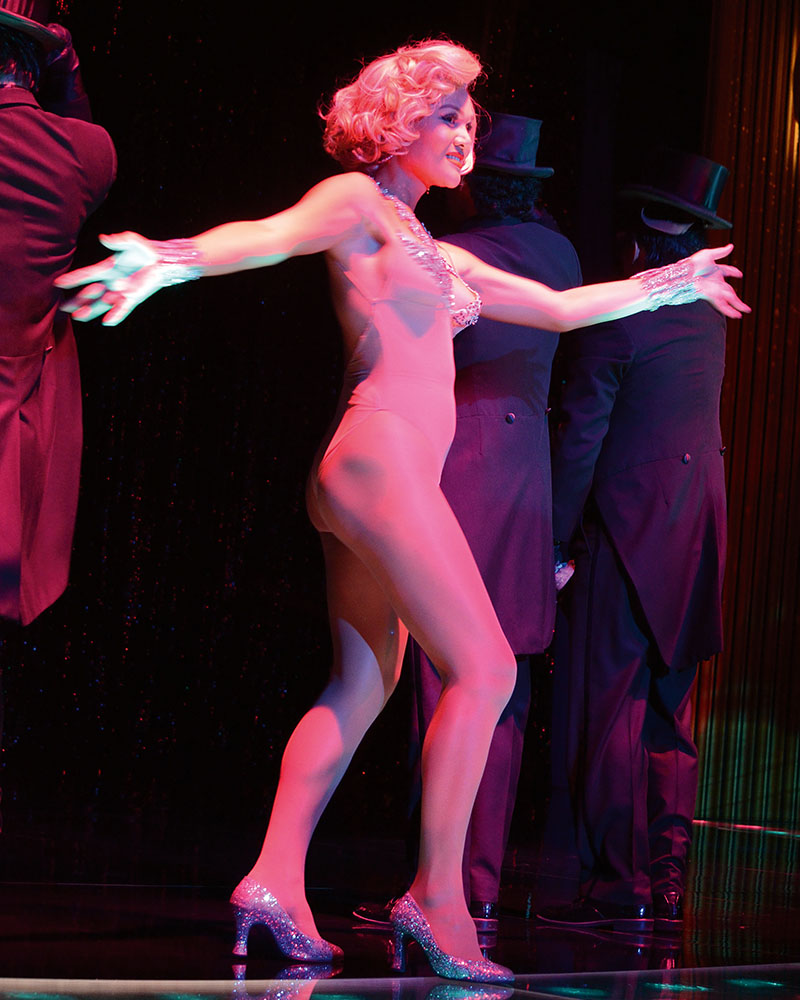
A visit to Bangkok without seeing ladyboys is like a game of Uno without wildcards, but it doesn’t have to involve supporting the country’s sex industry. Calypso’s good, cleanish fun cabaret can be found in the south of the city. Bangkok’s evening traffic is at its gridlocked peak between 5pm and 7pm and takes a while to subside, so avoid the roads and travel by skytrain and then free water shuttle down Chao Phraya River. Within a sea of Asian tourists you’ll be shown to your comfy red seat in the pseudo-swanky theatre and given a free drink. The show is cheesy, charming and fun, with everyone from a comic Carman Miranda to an absurdly luscious Marilyn Monroe. The stage is swimming with fishnets for ‘All That Jazz’, while ‘Blossom’s Blues’ is performed solo with nipples-popping-from-bustier gusto. Book ahead to save any unnecessary hanging around in the touristy wastelands of Riverside.
Calypso Bangkok
2194 Charoenkrung 72-76 Rd, 
Prayakrai, Bangor Laem
calypsocabaret.com


10.00pm
As soon as the show’s over, jump in a taxi and head back to the Thong Lor area for (fingers crossed) jazz at Iron Fairies. After Calypso, the scene could not be more different. This low-lit bar and burger joint is more a dream space than a drinking hole. Squeeze in past the band, a tableful of mythical metalwork figurines and a spiral metal staircase that winds up to nowhere past shelves full of jars labelled “fairy dust”. Order absinthe at the bar if you dare. Follow the staircase that leads to somewhere and find a secret entrance through a bookshelf into the smoking room. Inside it may be completely deserted, jam-packed and smoky, or you might interrupt a couple in the throes of negotiating the rules of their torrid weekend love affair. From wherever you make yourself comfortable, the Thai singer will sound like Frank Sinatra reincarnated. After the trumpet blows its final note at the stroke of 11, return to the street outside, blink a few times, pinch yourself and hail a cab.
Iron Fairies
395 Sukhumvit soi 55, Watthana
theironfairies.com

11.30pm
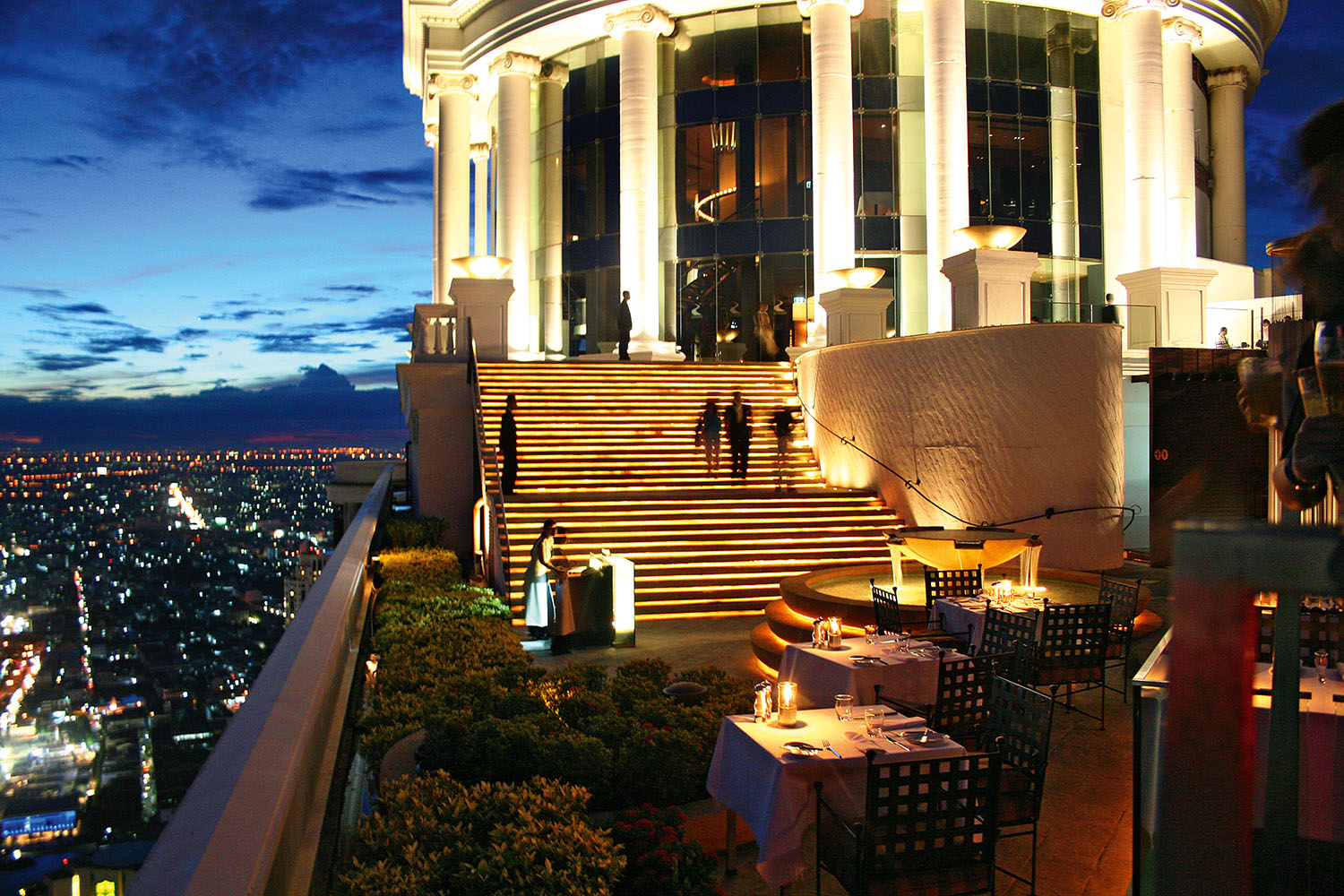
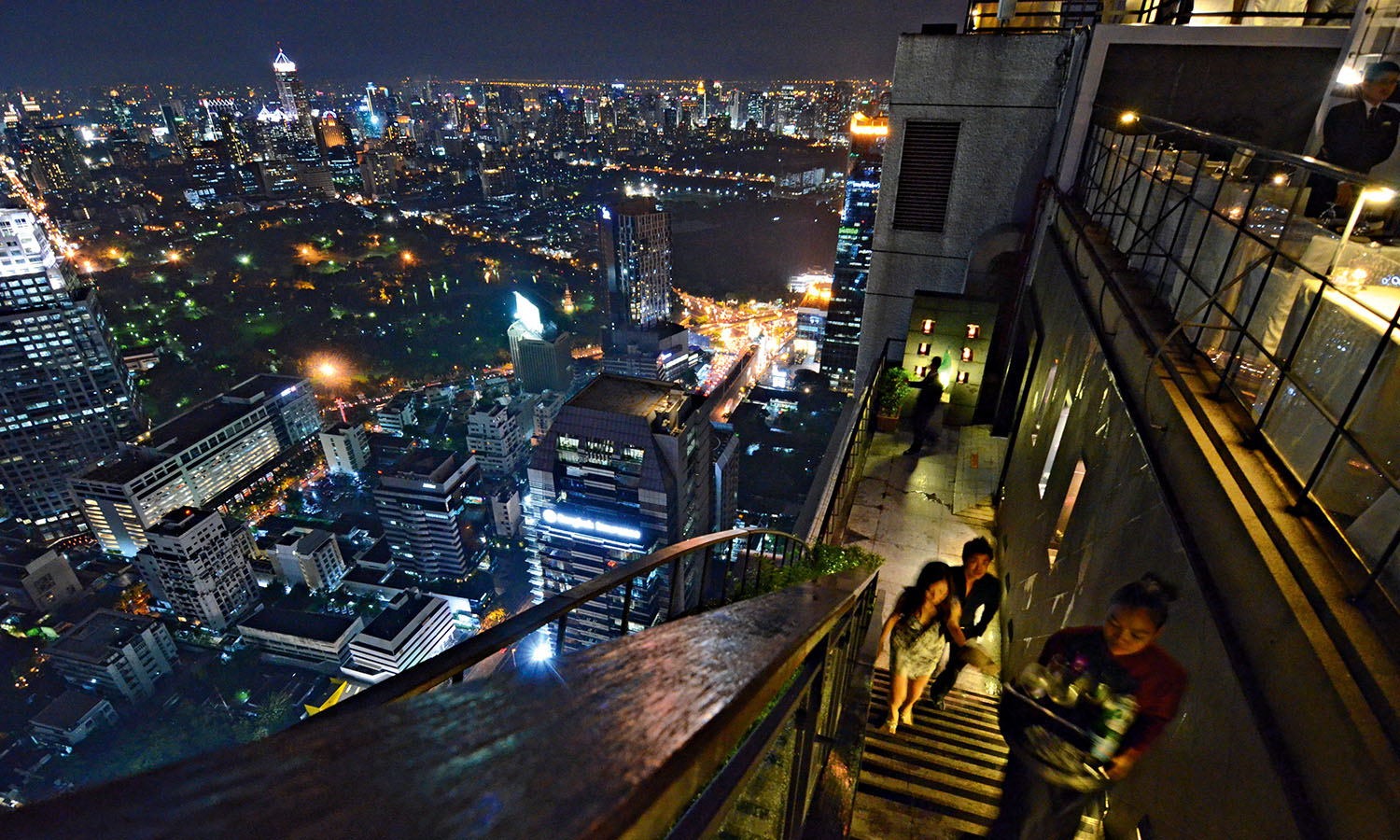
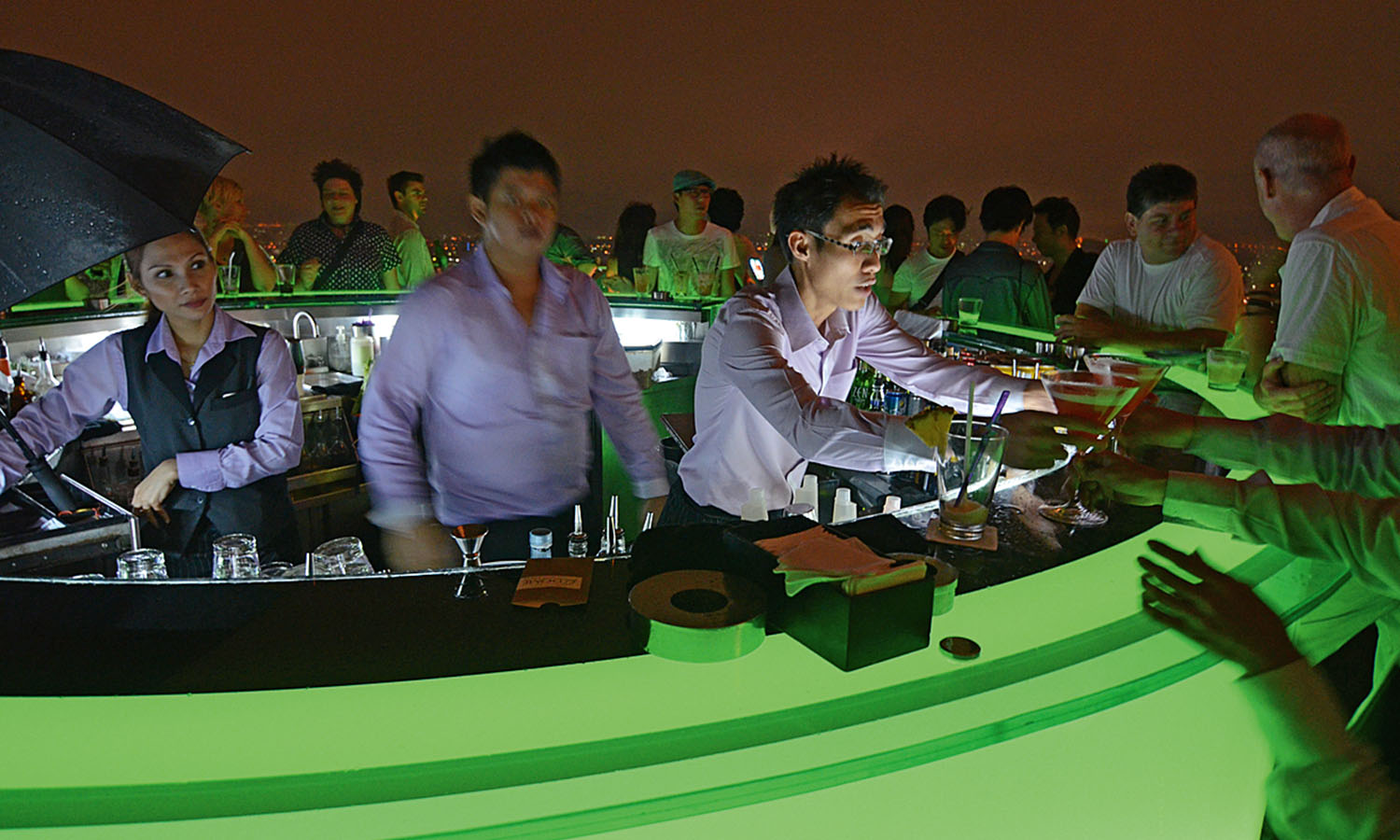
Skybars are so hot right now in Bangkok and sprouting everywhere like fresh foliage in the city’s towering canopy. On the way to the next destination you will pass the Banyan Tree, where Vertigo offers an open-air oodles-storey-high view of the city. At State Tower whiz 64 flights up and emerge from the lift to be greeted by four smiling faces discretely checking you’re suitably attired. The punishment for attempting to enter a Bangkok skybar in thongs is an evening of wearing the establishment’s heavy Amish-style black clogs and a guarantee of going home alone. Swan, preferably in your own footwear, down the broad staircase towards Sirocco’s neon-lit bar, perched on the side of the building like something from a movie.
Sirocco
The Dome at lebua, 
1055 Silom, Bang Rak
lebua.com
1am
Strict drinking laws in Bangkok mean most bars and clubs close around 2am, but we all know the knock-on effects of prohibition. Wong’s Place first opened in 1987 and the bar has changed hands only once. When the original owner, ‘Wongsie’, died in 2003 his brother, Sam, re-opened the joint due to popular demand. Wong’s is open most but not all weekends and can be tricky to find after curfew when it’s pretending to be closed. But it’s worth the search; watching 1980s music videos and talking to washed-up expats and chatty locals under tattered Chinese lanterns in this dingy, smoky, lively little dive until the sun comes up can be a great end to a great game.
Wong’s Place
27/3 Soi Sri Bamphen, Sathon

Rising Glamp

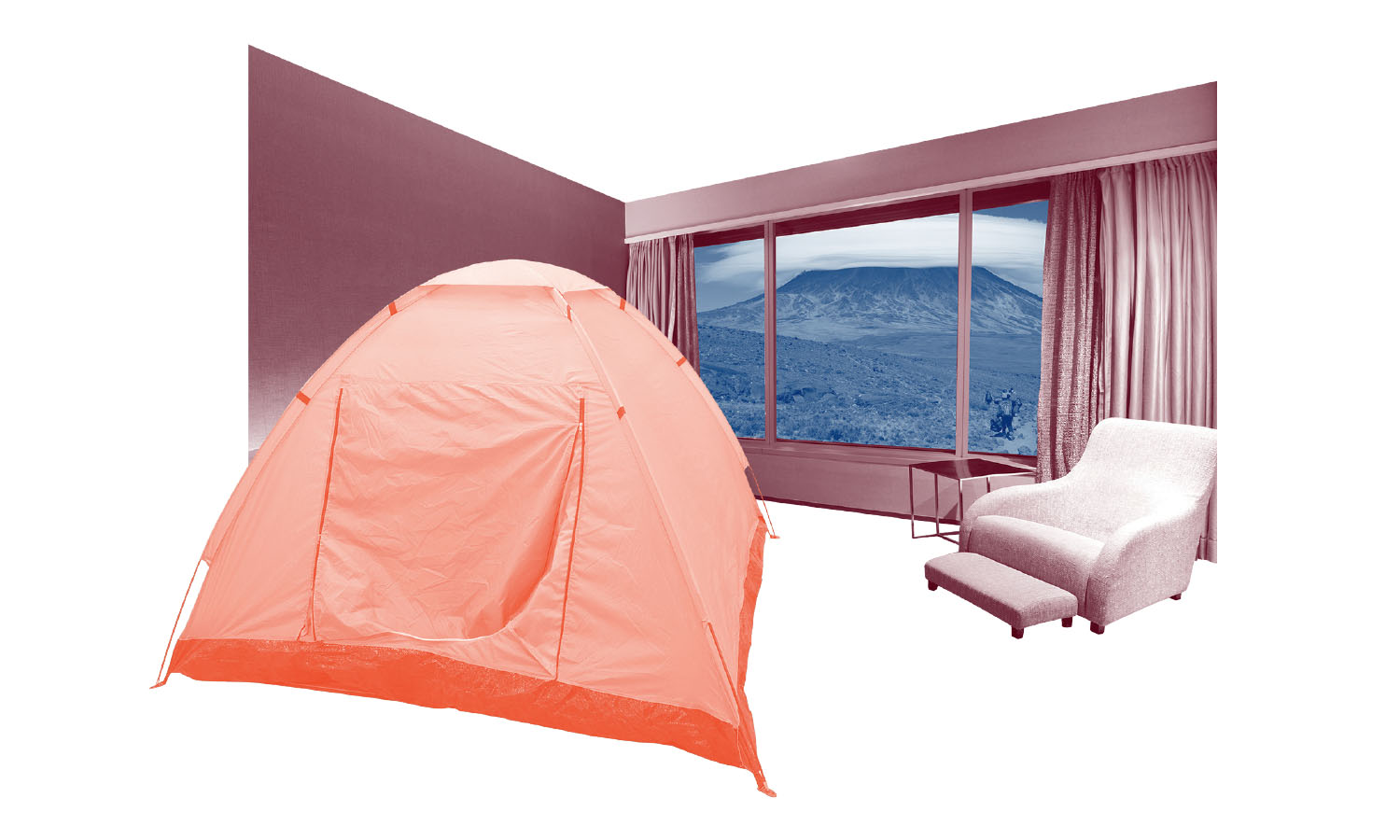
Some places are better than others to find out you’re not one for camping. For me, it was at a rudimentary outpost on the first night of a five-day trek to the summit of Kilimanjaro. Climbing Africa’s tallest peak was one of the myriad clichés on the bucket list this man drew up on reaching middle age – the others included acquiring a pushbike, using the phrase ‘craft beer’ in public and, um, writing a bucket list.

I had been seconded to provide media coverage of the trek being undertaken by Canteen, a charity that helps teens battling cancer and their families. As such, all our gear had been provided by various companies whose usual clientele consisted of ruddy-faced types who counted orienteering among their hobbies and could MacGyver rudimentary instruments out of twigs, gum and wallaby spit. It went without saying, at least to me, that everyone knew you didn’t roll your sleeping bag into its tiny sausage-shaped cover come daybreak. You punched it in like James Packer greeting a lifelong pal.

Having thus delayed my colleagues – many of whom did little to disguise the concerned glances they swapped – we embarked up the trail where further embarrassments awaited.

Bear in mind this trek was middle-class adventure lite. Our heavy backpacks were carried by relentlessly cheerful porters, while we were encumbered by mere daypacks. Tents were erected before we arrived at camp and hot food awaited.

At day’s end beneath a sky of velvet sapphire, surrounded by a bunch of teenagers who were dragging their chemo-ravaged bodies to inspiring heights, it became clear that I am a staggeringly shallow traveller. While others spoke of fate’s cruelty and the simple pleasures of a hot cup of tea on a chilly African night, all I was thinking was, “I could seriously go a day spa.” As glib, vapid and vacuous as I know it is, my thoughts were less about mortality than massage.

Call me crazy, but stumbling out of both the earshot of my cohorts and my tent in the pitch black of the pre-dawn to pee against a rock didn’t make me feel more alive. The howling winds that buffeted my tent did nothing to connect me with the elemental oneness of nature and, in fact, was more akin to being caught in the lungs of an asthmatic giant. Oh, and did I mention the airborne funk that emanates from a group of climbers who hadn’t seen a shower in a week? Eau de parfum it ain’t.

I even tried to play it off against the fact I am Jewish – “after 40 years in the desert, we’re done with roughing it” – but it sounded as hollow then as it does now.

Was I that much of a sybarite that I would rather have anodyne creature comforts over an experience that was literally grounded in primeval mysticism? Apparently, yes, I would.

Long story short: we reached the summit on a sun-burnished dawn where it felt like the world was laid out before us. I would have preferred an Egyptian cotton bathrobe.

Any suspicions I was not among my people were underlined when we returned to high camp. Which one would think was the perfect locale for Donna Summer, drag queens and glitter jokes. It was not. It was so not.

Don’t get me wrong, I wouldn’t swap the experience for all the ylang-ylang and seaweed wraps in the world, but there’s no way there’s going to be a repeat on the Matterhorn or Everest.

The clothing has been donated to types who view polar fleece as a fashionista does cashmere, the sleeping bag was dispatched to Vinnies and my wife uses the padded ground sheet as a yoga mat.

I’m not saying I will never worship at the alter of the Great Outdoors again. Far from it. I just want the experience to be followed by a turndown service and perhaps a pillow menu.

And don’t get me started on the whole ‘glamping’ business. Like anything where two separate entities are mashed together – Kimye, ‘mumtrepreneur’, fusion food – both suffer as a result.

By all means, bake your campfire damper, lie on lumps in the ground until sunrise and get your ‘Kumbaya’ on. But if you’re paying the same amount for a safari-style tent with a mosquito net as you are for a room with comped wi-fi and a spa bath, the hoteliers saw you and your quinoa-powered nouveau hippie mores coming a mile off.

All that jazz

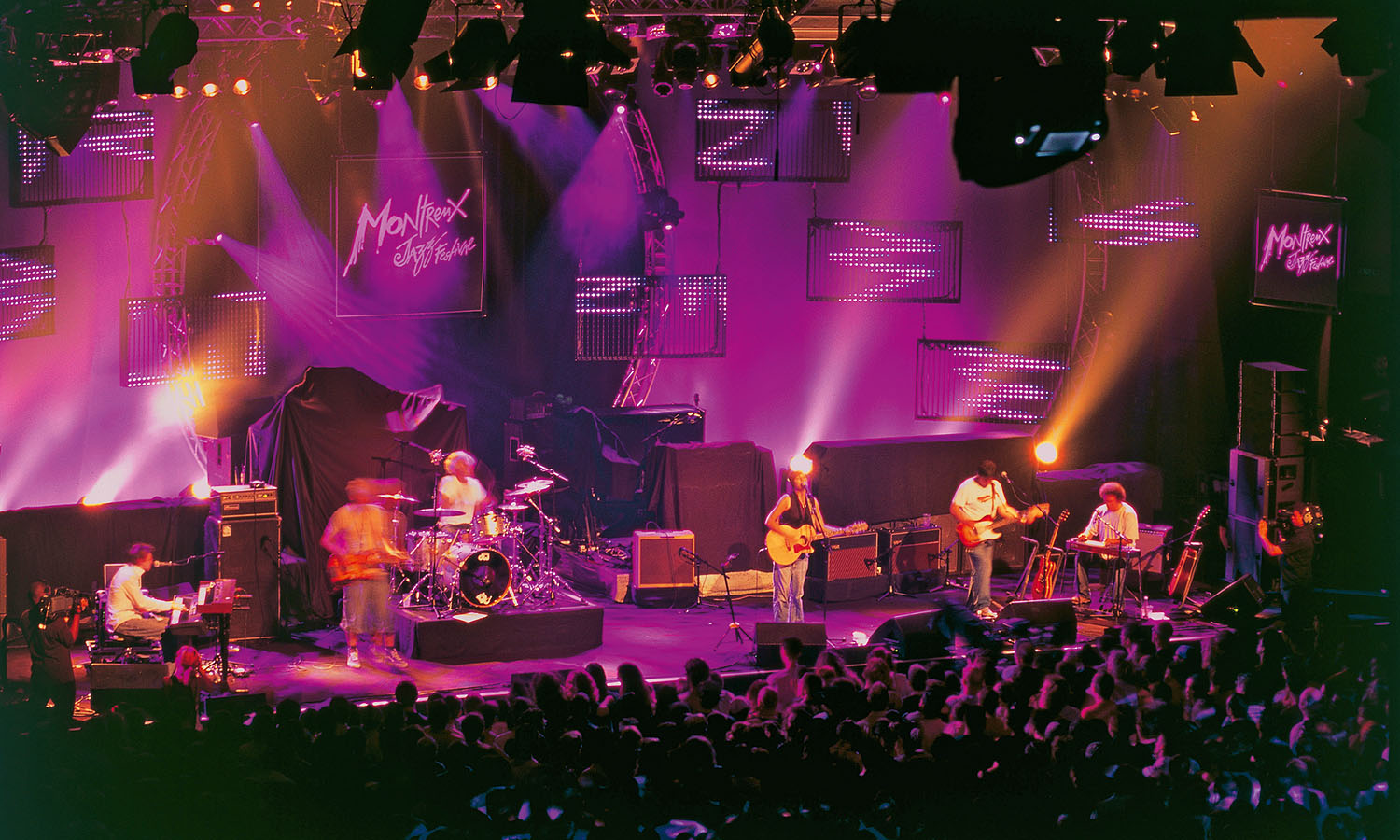
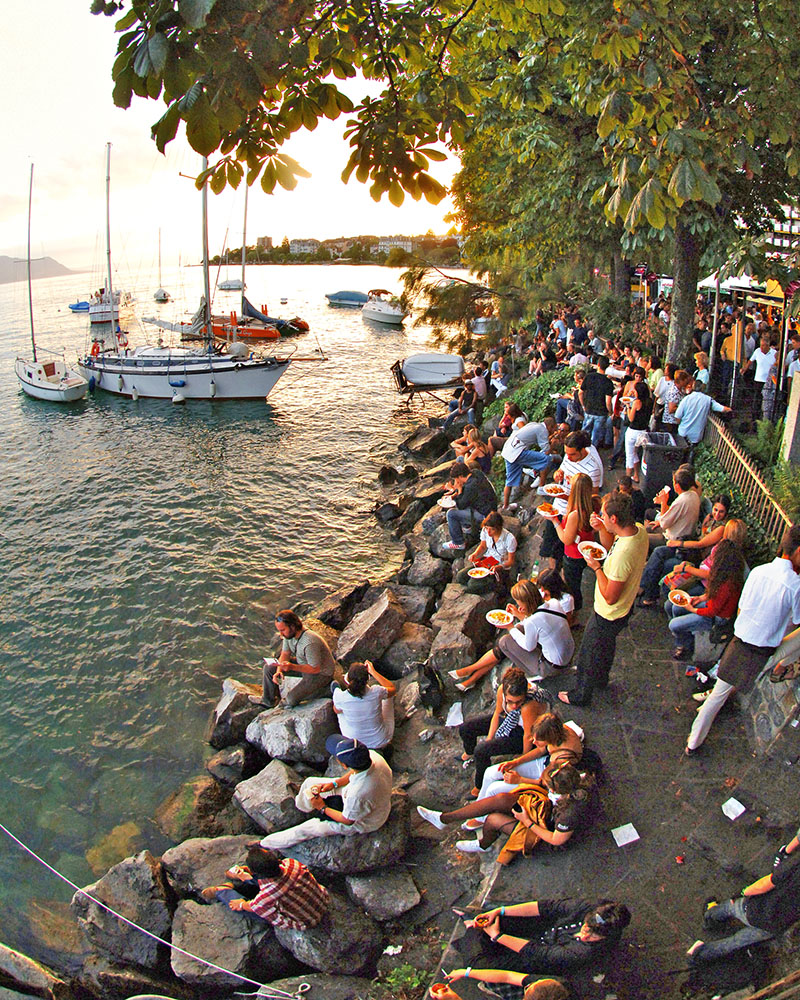
I’ve been told to avoid the weekend, but why? I like the crowds that stream downhill from the train station, and the partygoers perched like seagulls on rocks along the lakeshore, gabbing and jostling for space. In the Jazz Cafe, the evening audience sways, dense and sweaty. The elbow-to-elbow vibe is electric, but I still feel I’m the only one in the room as Anna Calvi moans into the microphone about the devil and desire. Her lips are a red slash, moody as her riffs.

The British singer and guitarist – so good she’s been compared to Jimi Hendrix – is a brooding presence on the stage, even across an undulation of heads. She sings with blues seduction and Goth edginess, plus a hint of flamenco passion in the way she strums her guitar and moans in the back of her throat. Maybe it’s just the humid summer night, but I’m hot under the collar.

Calvi has described her music as a mix of danger and exhilaration. Frankly, those aren’t adjectives that normally get an outing in the prim Swiss town of Montreux. Eleven months of the year, you could skip through it on a day trip with ‘pleasant’ your most intense description. The dukes of Savoy built a whopping castle just along Lake Geneva foreshore that’s now a prime tourist attraction, which brings most people here. Montreux got its start as a tourist spot in the nineteenth century, when it was favoured by the British and Russian nobility for their winter retreats. (A balmy climate allows palm trees and figs to flourish, bringing a touch of the Mediterranean to Switzerland.) Now wealthy tax-evaders skulk in big villas with alpine views as Chinese tour groups traipse past beneath their windows.

In short, Montreux is probably not a place you’d generally need to linger unless you have a blue rinse and an offshore account. The month of July is a different matter, however. July brings the three-week Montreux Jazz Festival to town, and you should stay as long as you can. Then, music oozes from this little lakeshore town’s every pore. It becomes sultry and unpredictable. You might catch an anti-establishment jazz singer croaking about poverty in South Africa. Or Herbie Hancock – improbably but rather splendidly – performing a duet with Chinese classical pianist Lang Lang. Swedish folk-rock drifting from a local late-night bar might make you stop in your slightly inebriated tracks and think: this place is wonderful.

When I was last at the Jazz Festival in 2011, Carlos Santana, Sting and Paul Simon were among the headline acts. A Sunday tribute jam featured BB King, and it was truly amazing to watch some of the world’s top guitarists on stage, strumming to each other in a two-hour jam session. BB King was 86 and didn’t make much music, but you could tell the other musicians were energised just by the legend’s presence.

That’s what I like about the Montreux Jazz Festival: the chance to see the world’s best, as well as obscure acts that just catch your ear. The event has been around since 1967 and, from the beginning, attracted big jazz names such as Ella Fitzgerald, Keith Jarrett and Nina Simone. But by the 1970s, it was already featuring soul, blues and rock artists, and causing a stir with the appearance of the likes of Prince, Deep Purple, Led Zeppelin and Pink Floyd. In 1970, Frank Zappa was performing at the Montreux Casino when a fan fired a flare gun and burned the place down, an event recorded in the Deep Purple song, ‘Smoke on the Water’. By the 1980s, the program had become very international – Brazilian music in particular has always been favoured – and mainstream pop and rock artists were increasingly invited. Despite its name, the Montreux Jazz Festival isn’t really a jazz festival anymore. You can expect anyone from Alicia Keys to the Black Eyed Peas or Phil Collins to play.

The big stars attract big-ticket prices and play in the two main venues, the Stravinsky Auditorium and Miles Davis Hall. But what’s great about the Montreux Jazz Festival is that the music just seems to trickle down everywhere, and lots of it is free. You can attend the best voice, guitar and piano competitions for nix and hope to catch the next star on the cusp of being discovered. Jam sessions are a late-night option at the Montreux Jazz Club, while DJs keep going until dawn at the Montreux Jazz Cafe and Studio 41. You can attend free music workshops too, and learn how to make those guitar strings twang from some of the masters of the trade.

I find music in the most unexpected places: in a train carriage, on one of the lake steamers that I catch for a scenic ride to Chillon Castle, in local restaurants and cafes where a sort of fringe festival has ivories tinkling. In the evenings at Vernex Park, I join picnickers on the grass under giant trees and drink wine to the sounds of Russian jazz one night, samba the next, as the moon shimmers over the lake.

What I like too is that the Montreux of the other 11 months never really goes away, underneath it all. It’s a grand old resort town with yellow-shuttered hotels and wrinkled people flopping in pocket-sized swimming pools. Jaunty marigolds are planted in neat rows along the waterfront, tablecloths in cafes are flawlessly ironed. The air smells of lake water, starch and Perrier with a twist of lemon. Out on the blue waters of Lake Geneva, yachts are tied up in parallel lines and festooned with brightly coloured squares of plastic to keep seagulls from crapping on the decks. The snow-dusted fangs of mountains loom on the horizon. It seems like the last place on Earth where you’d find one of the world’s best music festivals.

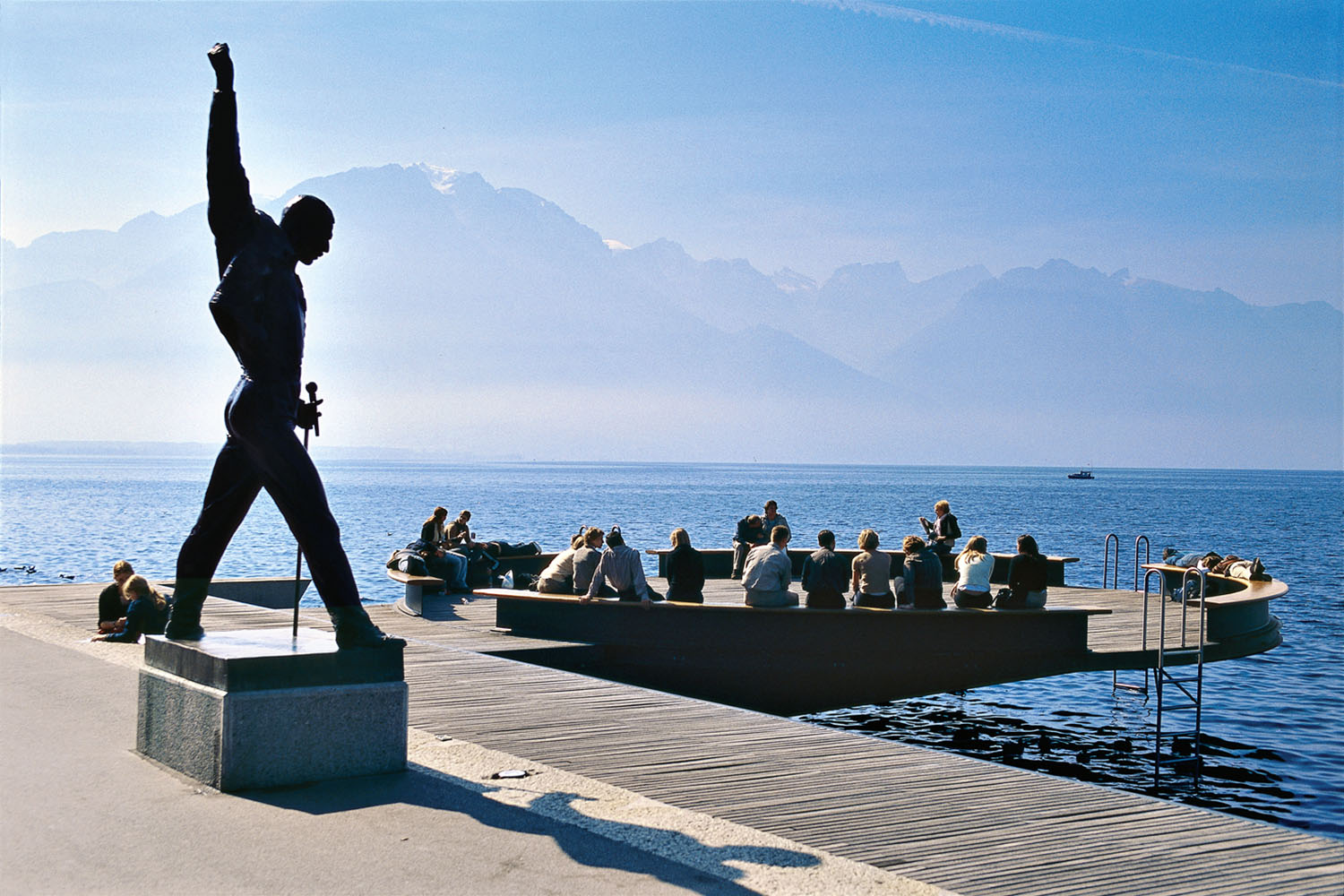
The Swiss staidness of Montreux is redeemed in unexpected ways, not least by a flamboyant statue of Freddie Mercury, slap-bang on the waterfront in his trademark strutting pose. Queen recorded several albums here at Mountain Studios prior to Freddie Mercury’s death in 1991. Montreux inspired one of the last songs Queen recorded, ‘A Winter’s Tale’ from the album Made in Heaven. “Seagulls are flying over / Swans are floating by” go the lyrics: Mercury too was apparently seduced by the chocolate-box kitsch of this absurdly pretty place.

The swans are a little jittery during the Jazz Festival. Visitors are out in rowing boats and sometimes they jump overboard from sheer giddiness, producing piercing screams from those who haven’t, until that moment, realised this water comes from alpine snow-melt, frigid even in summer. Among the promenade’s flowerbeds, Brazilians in pink feathers shimmy as the smell of satay sticks wafts from a food stand. Diana Krall passes by in a floppy sunhat. Plastic Heineken cups are scattered like confetti on the grass, though not for long. The Swiss soon have them swept away, and the lakeshore pristine for the start of another day. The music might be wantonly seductive, but there are civic standards to maintain.

Video Killed The Ruskiwood Star

I’m in a train station waiting room at 1am on a Saturday morning. The station is in Omsk, Siberia. Siberia is a long way from home. And I’m nervous because they just started kicking people out who don’t have a ticket. I’m not waiting for a train, I’m waiting for the safety of daylight to look for a hotel. Language barriers and the sheer lack of an Omsk tourist industry have left me homeless after a late-night arrival.

A gruff-looking inspector asks for my ticket and I hand him my used papers. He looks inquiringly and I blab something about waiting for the next train to Moscow. He’s unconvinced, mainly because the only word he understands is “Moscow”. Old Russians hate it when you don’t speak their language. No patience, no interest. He’s not sure if my claim is legit, so he’s about to order me out. The waiting room is for passengers only.

The fella next to me interjects. He’s been watching me and says something to the inspector that makes him hesitate. The inspector then shifts his attention to my seat-mate’s ticket. He walks away. I sigh. A reprieve.

“Hello man,” says the guy next to me. I size him up. He doesn’t look like a crook and he just helped me out. But I’m alone. In the middle of Siberia. In the middle of the night and my hackles are up. I smile back, nonetheless, and put on my broadest Aussie accent.

“G’day Mate! Gee, this isn’t exactly the Qantas Club, is it?!” Blank stare, toothy grin. Somewhere crickets are chirping. Clearly I’ve overplayed the accent a bit. “Sorry, you speak too queeekly,” the man says. “You are American?”

“Nah mate, I’m Australian.” We exchange names. Ivan’s smile becomes electric. “Osster-alian! I never met someone from here.”

“Well, I’m honoured to be the first,” I respond. Ivan then tells me that I’m only the second native English speaker he has ever met. The first was an American just four hours ago. I’m stunned.

It turns out old Ivan and his mates are movie buffs. They meet up weekly to watch Hollywood movies, practising their English with one-liners and clichéd phrases. They don’t have tutors. They just figure it out. They discover the world through cinema. Now Ivan is testing his linguistic skills – first with a Yank, then with an Aussie. And man, he passes with flying colours!

We have a brilliant discussion and I discover that Ivan knows more about the world, and Australia, than I’d ever expected. It’s remarkable considering Ivan hasn’t been outside Siberia. He hasn’t even made it to Moscow. When he learns that I’m running marathons around the world, he’s shocked, but gracious. I’d have been jealous.

Then, as Ivan picks up his kit to leave, giving me a warm handshake, I realise I’m jealous. Ivan speaks English and Russian. He knows plenty about my world, because he has made the effort to discover the nuances of my culture in my own language. I’ve had this growing feeling that everyone I meet is a whole lot smarter than me and it’s largely because they can understand me. But I’m not learning how to understand them. What’s that adage? You’re not learning anything if you’re doing all the talking.

I lie on my bench, gripping the handle of my pack, and consider my predicament. I’m spending more than $100,000 to see as many countries as possible in a year. I’m on an adventure of discovery. I’m here to get cultured, but I can’t read anything and most people can’t converse with me.

It begs a question. What if Hollywood wasn’t the centre of the film world and, arguably, modern pop culture? Imagine if the Russians spent as much as the Americans on cinematic rubbish with whizzbang effects. Instead of a Cold War with outrageously expensive nukes, they could have had a glitzy film blitz – winning the world’s hearts and minds through entertainment! I’d be fluent in Slavic, having grown up with Tsar Wars and Saving Comrade Rybakov.

I’m from the lucky country, but still I feel jibbed. Could it be a lack of decent movie choices that makes me ignorant? Or am I just a lazy bugger who should have done his homework by watching The Barber Of Siberia instead of Friday night football?

I wonder if I can make amends. If I watch a Russian movie every day I’m here, with subtitles of course, perhaps I’ll get the hang of it? I vow to get online and find Russia’s top 10 action movies; I’ll replay the coolest lines so that I can use them in conversation. Imagine, the locals would welcome me as a connoisseur of Russian cinema. I’d make friends and know how to book a hotel room.

And I wouldn’t be lying on a godforsaken bench, in the middle of Siberia, waiting for daylight.

High on Kenya’s Wildlife

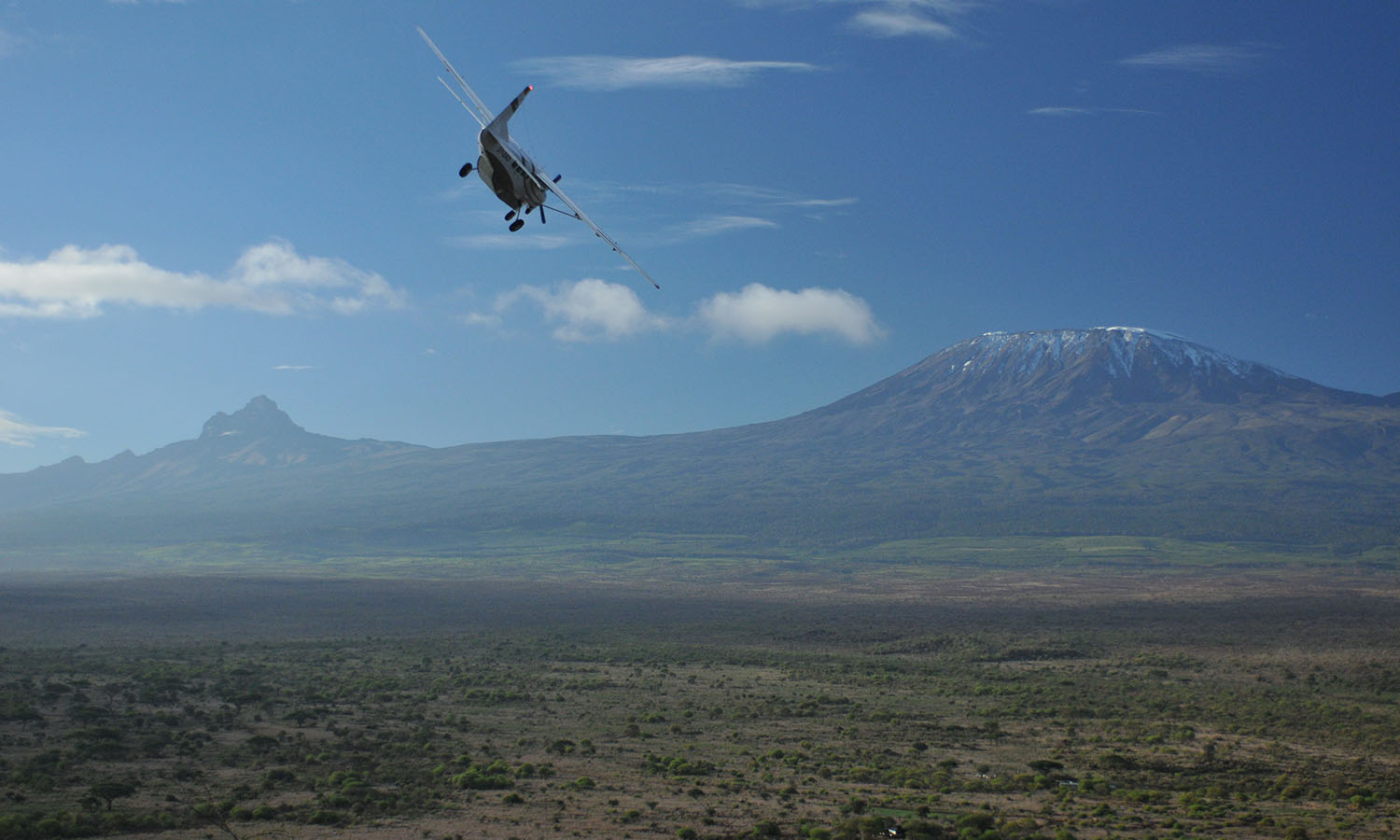
The small Cessna Grand Caravan lurches forward as we gather speed. To my left, snow-capped Mount Kilimanjaro looms large over Amboseli National Park. I recline in my wide, luxury leather chair just a touch, so I can still gaze out at a large group of 15 elephants bathing in one of two massive water springs funnelled from Kilimanjaro’s melting ice cap. Our pilot, Murtaza, has plugged an iPhone into the intercom system and as our wheels leave the ground the first chords of Toto’s ‘Africa’ flow into our headsets. Our heads bob in unison and, as the chorus breaks and lead singer David Paich sings of blessing “the rains down in Africa”, I cannot wipe the smile from my face.

We’ve spent the previous two days based at the luxurious Satao Elerai Lodge, marvelling at the elephants of Amboseli living alongside hippos and hyenas. We even caught a pride of lions stalking a wounded wildebeest. It has been indulgent to say the least, including sundowners that lasted well after the sun went down. It was our first stop on a two-day, two game park Scenic Air Safari, an ideal option for those short on time yet keen to experience the best of Kenya’s varied game reserves.

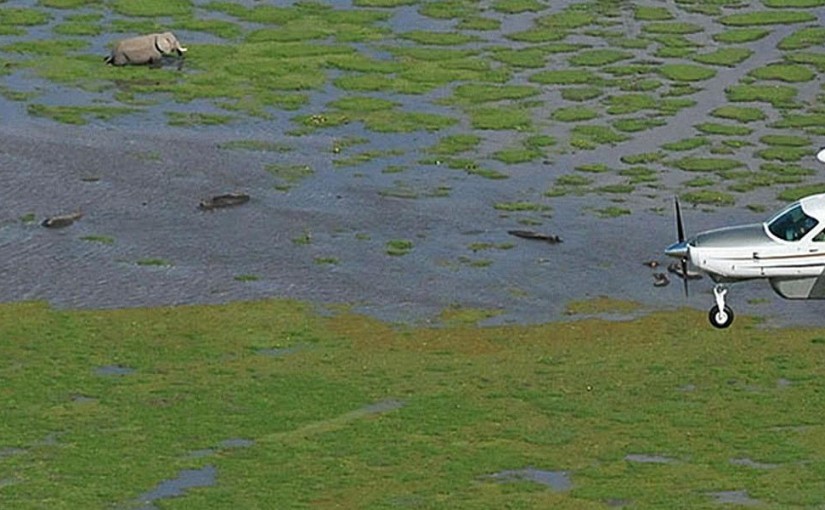
Our Caravan follows the Tanzanian border north towards the Masai Mara, one of the more popular wildlife reserves, famed for its big cats, including lions, cheetahs and the elusive leopard. Murtaza interrupts a Mick Jagger classic to tell us we’ll fly low over the Mara River and to keep an eye out for hippos. A lone elephant makes tracks in the long Masai grass as we fly overhead. The shiny black backs of a pod of hippos glisten as Murtaza follows the river deeper into the Masai. It is a surreal sight and a terrific perspective.

We land at Mara Serena airport and are greeted by our driver, who offers refreshing cold towels before whisking us away to Karen Blixen Camp, a perfect glamping set-up perched on the banks of the Mara. Here, we spend another two days on a driving safari, coming within a couple of metres of a pride of lions and stumbling across a cheetah catching the last rays of the setting African sun. It is almost too perfect. That evening I sip a cold Tusker, watching the hippos disappear and reappear in the running river. Like the guy in the song says: “It’s gonna take a lot to drag me away from you.”