“What about the soul?” inquires my young student. Pleased to finally be establishing some rapport with my new Lao pupil, I explain that the soul is our core consciousness, the immortal part that never dies, the essence of a person. He is as silent as a wooden Buddha, clearly stunned by my knowledge of such existential matters.
Encouraged, I press on, explaining the meaning of phrases like soul mates, soul food and good for the soul. I may have even quoted spiritualist Deepak Chopra. When I pause to catch my breath, he leans forward, points to his dusty foot and whispers, “Miss Kerry, I meant, how do you pronounce the word sole?”
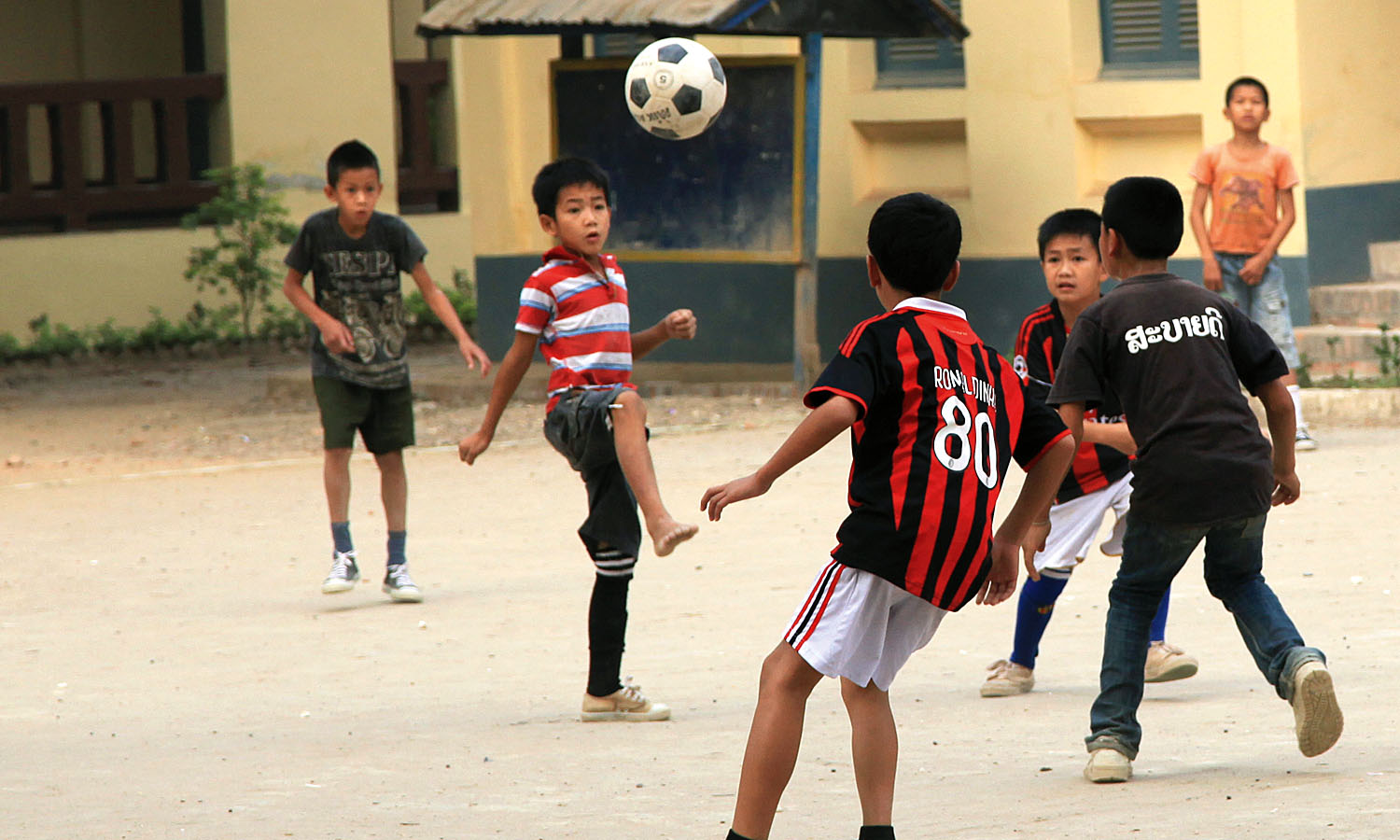
I’m at Big Brother Mouse in Luang Prabang, a grassroots literacy program operating on the outskirts of town. I’ve always been keen on volunteer tourism, but I’m hopeless at building things (my teaching skills aren’t much better, apparently) and I don’t have six months to dedicate to one cause. Big Brother Mouse offers an alternative: a daily drop-in centre where visitors can volunteer for two hours in the morning or evening to help young adults practise English.
This is my second visit to Laos in two months. Luang Prabang is the kind of dusty, dirt-track Asia I love best. On my previous trip, I started with just one English student, shy and earnest Noi. On the second day he brought his mate Kye, and by the end of the week I had a gang of four. Each morning these young men would sit and wait for me at the end of my street, hoping I would keep my promise of, “same same, tomorrow”. As I rounded the bend their faces would light up like four beaming sunflowers.
On my final day they gave me a bag of fresh mangoes as a gift and showed me around town – me on Noi’s bike, and two of the students doubling on another. We rode past golden temples framed by scarlet bougainvilleas, white-washed French colonial buildings with brightly painted shutters, and traditional two-storey Lao homes. Afterwards, we climbed the 355 steps to the top of Phousi Hill, where we slurped on mangoes and watched the sun surrender to the night.
Today, I have two pupils, students from the nearby high school, who now know more about a westerner’s musings on the human soul than the intricacies of the English language. I change tack and take our chairs out to the sidewalk, practising vowels and verbs as the daily rhythm of life unfolds around us. Our lesson is interrupted when two cyclists collide. One crashes into a tree and hits the ground. He gets up, dusts himself off and says to the cyclist responsible, “Bor pen nyang,” meaning, “I forgive and forget your actions.”
“You’ll see this patient, caring nature right across Laos, but especially in Luang Prabang,” Paul ‘Popeye’ Wager, an Australian photographer who has lived here since 2004, later tells me. Wager runs photography tours in the city, encouraging people to photograph locals with respect and dignity and to adjust their pace to Lao time. “Expats joke that Laos PDR (People’s Democratic Republic) stands for Please Don’t Rush,” he says.
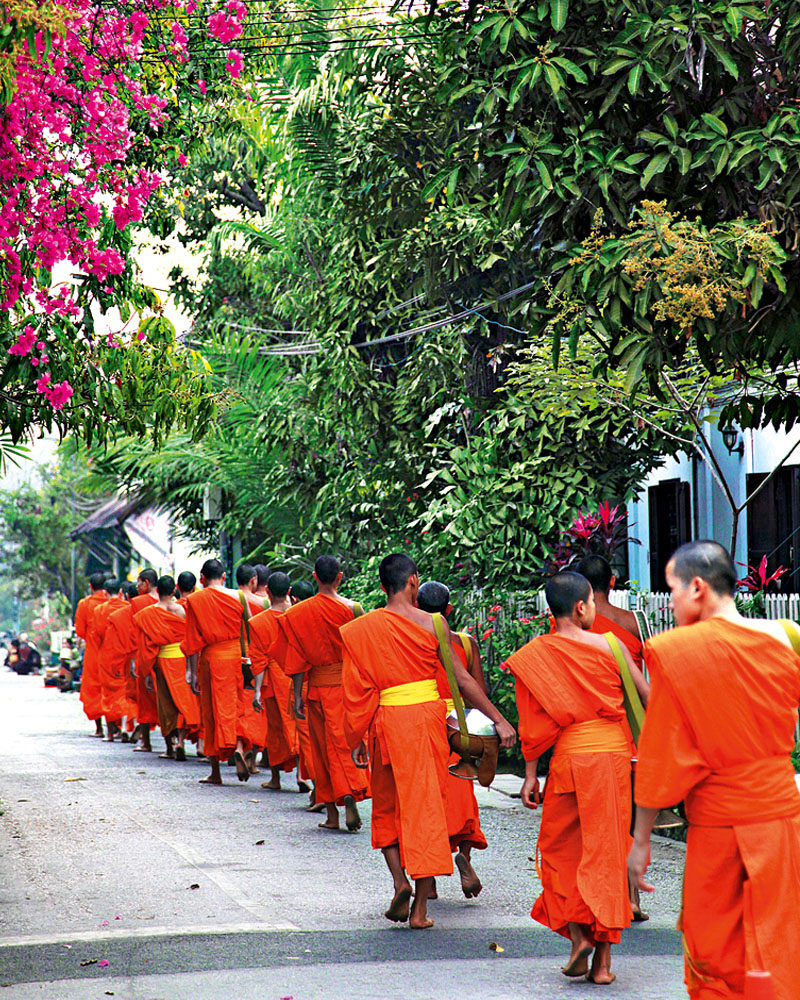
Indeed, no one rushes in Luang Prabang. The following morning I wake at 5am to watch one of its most sacred traditions – the morning ritual of tak bat, or alms-giving. Dawn breaks with the sound of drums. A rooster responds in protest, indignant at being beaten at his game. A dog yaps, a baby cries. Then silence. In the distance a line of monks materialises from the darkness, unfurling like an orange ribbon, draping the ancient streets in gold. In single file they glide past, as silent as an apparition, pausing at intervals to collect alms from the faithful.
The practice of offering food to monks is common in Theravada Buddhist countries like Laos and Thailand, but arguably only in Luang Prabang, with its cluster of 32 temples (one for each village) and network of ancient streets, is the ritual so spectacular.
I avoid the main drag, Sakkarine Road, where bus loads of camera-toting tourists swarm like moths to a saffron flame, opting instead for a quiet backstreet where the jungle still intrudes and the aroma of frangipani lingers. As the light changes from blonde to gold, it becomes apparent I’m the only visitor. I watch quietly as locals kneel in rows, handing out sticky rice from their cane baskets, as their ancestors have done for centuries. It takes a village to support a monastery.
It is this willingness to help others, perhaps a result of the country’s troubled past, which comes to define my visit. After the seat of power was transferred from Luang Prabang to Vientiane in 1545, Laos was invaded by Siam (Thailand), ruled by the French, occupied by the Japanese and bombed by the Americans. As part of the Vietnam War effort, US forces unleashed more explosives on Laos than were dropped during the whole of World War II.
Today, this UNESCO World Heritage-listed town, occupying a narrow peninsular at the confluence of the Mekong and Nam Khan Rivers, is a place of beauty, gentleness and devotion. I see it in the smiles of fisherman as I take a long-tail boat up the mighty Mekong to the Pak Ou Caves. The two-hour journey meanders past misty mountains and soaring limestone cliffs until we reach a set of steep steps, which leads to the Cave of One Thousand Buddhas. Here devotees have, for centuries, placed wooden sculptures of Buddha. It is estimated there are more than 4000 all together. Some are relatively new, but many are hand-carved from timber or crafted from tree resin. Their endurance, like the villagers who hid here during the Vietnam War, is an act of grace.
On another day I take a tuk tuk to Kuang Si falls, 30 kilometres south of Luang Prabang. The series of tumbling falls and blue swimming holes is reason enough to visit, but it’s the adjoining bear rescue centre that has me enchanted.
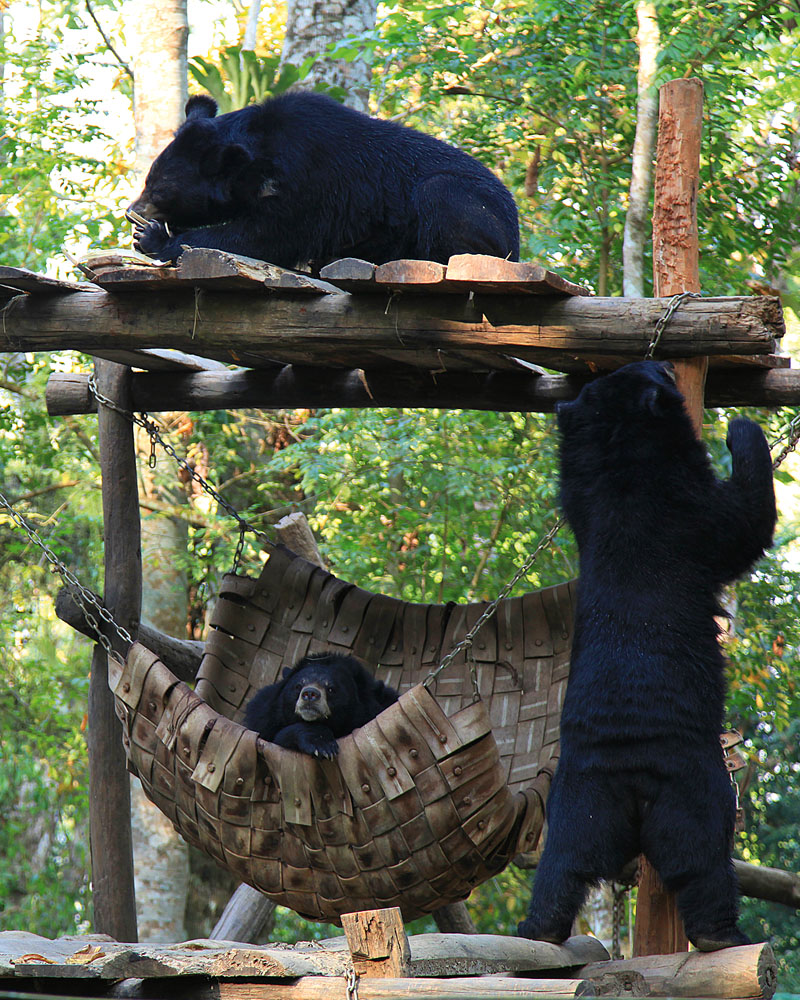
The Tat Kuang Si Rescue Centre is run by the Free the Bears Fund, a not-for-profit charity founded in 1995 by Perth woman Mary Hutton. The sanctuary is home to 24 animals, a mix of Asiatic black bears and Malayan sun bears, all of which were victims of the illegal wildlife trade. I spend hours watching the bears at play; their lumbering forms hanging in hammocks, rolling like rissoles and sleeping like babies.
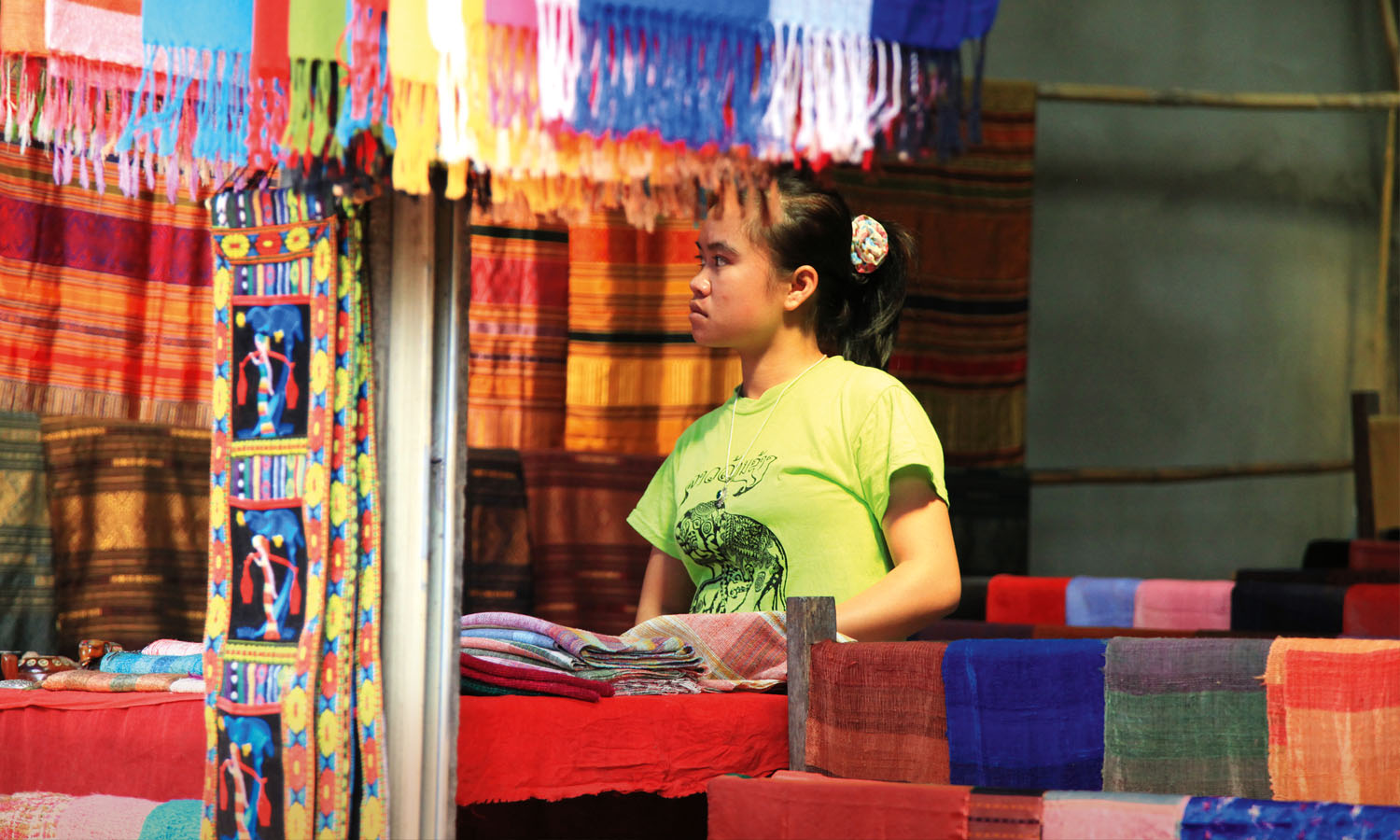
My last few days pass all too quickly. I take a cooking class at Tamarind, a weaving lesson at the Ock Pop Tok Living Craft Centre and a daily massage at the Red Cross centre. Then it’s time to bid farewell to Luang Prabang and my studious pupils to board a plane to the capital, Vientiane.
Vientiane is a pancake-flat city on the banks of the Mekong River, a stone-skip from Thailand. Where Luang Prabang is modest and understated, Vientiane is something of a cheeky and unorthodox big cousin.
There’s a victory arch commemorating Lao soldiers, built unwittingly by the US in the 1960s. The cement was intended for the development of a new airport, but the people of Vientiane had other ideas. The Patuxai arch, which looks like the Arc de Triomphe with Buddhist embellishments on top, is now referred to as ‘the vertical runway’. Then there are the peculiar shop fronts. On one block alone I spy a Cat College, Perfect Man Gym and Yummy Business Centre.
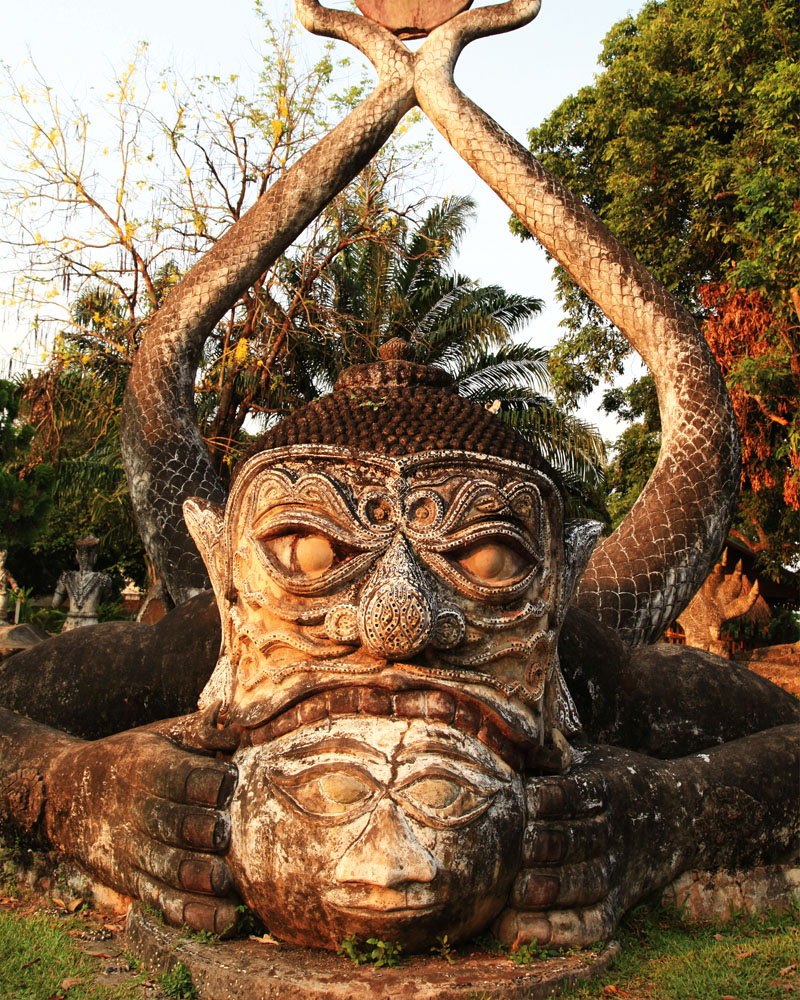
The quirks extend far from the city centre. About 25 kilometres south of Vientiane lies the Buddha sculpture park (Xieng Khuan). Occupying a ratty field on the banks of the Mekong River are more than 200 bizarre concrete Buddhist and Hindu sculptures.
Built in 1958 by an eccentric yogipriest-shaman, Luang Pu Bunleua Sulilat (Venerable Grandfather), the park resembles something Dr Seuss and Tim Burton might dream up over a bottle of Beerlao. While some sculptures are recognisable (like the reclining Buddha), others, like the giant pumpkin sprouting a tree, leave me mystified. I make a mental note to ask my pupils about it when I come back. In return for all that spiritual wisdom.
“Buda is like a garden, Pest is like a factory,” say the locals in Budapest, capital of Hungary.
The pretty central European city is loved for its crumbling post-Communist grandeur, folksy culture and pocket-friendly prices. Yet, partying here in the non-political sense is a relatively new concept – from 1949 to 1989 the country was part of the Eastern Bloc and uncontrolled gatherings were forbidden. Now, the new generation of Hungarians, or Magyars, live it up like lab rats on caffeine, with an art-infused nightlife that’s possible to see any day of the week.
6pm
Downtown Budapest is the perfect place to start the evening’s festivities. It’s relatively small with a vibe that swings from modern to kitsch, and cosy village to grand metropolis. If you’re here in summer, make the most of the late evening sunshine at venues like Gödör, a relaxed outdoor cafe, nightclub and art space set below street level. Gödör has an outdoor stage offering free concerts and an ancient amphitheatre feel. Whatever the weather, it’s the perfect place to ease yourself into a long night ahead. It also loans bikes for free, so if you’re planning on covering a bit of ground, you could consider hiring one. But be warned: Buda is no Amsterdam. The cobblestoned streets, left-hand driving and lack of bike lanes make cycling here a bit of an adventure. Thankfully, there are also public buses, trams, trolleys, taxis and an underground metro service – Europe’s first. The beer’s pretty good, too. Gödör Klub
Erzsébet Square District V, Pest godorklub.hu
8.30pm
A hop, skip and a bike- or taxi-ride away, and you’re in the hip and happening District IX. Try Cökxpôn, a bar-cum-teahouse-cum-tent where music, theatre, dance and visuals take centre stage. It’ll give you a taster of the Sziget Festival, one of Europe’s largest events, which is held every August on the island of Óbudai in the Danube. The Cökxpôn crew run a pop-up there every year. Performances at Cökxpôn start around 9 or 10pm. Don’t be surprised if someone asks you to take your shoes off and let loose during a gig – visitors are encouraged to immerse themselves in a ‘collective spiritual experience’. Cökxpôn cokxponambient.hu
10.30pm
Head across the river to A38: a decommissioned 1968 Ukrainian stone-hauling barge. It’s now a floating restaurant and terrace bar by day and kick-arse club by night. Think jazz, blues, electronic, hip-hop, reggae and even classical. There are more than 20 types of the native plonk – a potent fruit brandy called pálinka that’s got an alcohol content of between 37 and 86 per cent – on offer. Knock a couple back before moving on to better-known evils like beer. Or try the bar’s own flaming cocktail creation, Massive Attack. It’s enough to, er, sink a ship. A38 Just south of Petöfi Bridge District I, Buda a38.hu
Midnight
There’s just one catch about this next spot: it’s officially in Outer Pest. Leafy, quiet District XIV, to be precise. Although the neighbourhood is quiet the bars are anything but. Dürer Kert ticks two of the nightlife must-dos in Budapest: 1) It’s a kertek (garden) bar. 2) It’s a romkocsma, a ruined pub temporarily established in a dilapidated building earmarked for demolition. This one is in a former university arts faculty next to City Park, and has a large lamp-lit garden. Inside the vibe is student share house meets art studio. Cheap drinks, foosball, table tennis, darts, a lucky dip of live music and the likelihood of meeting switched-on young locals make the hike worth it. Dürer Kert
Ajtósi Dürer sor 19–21 District XIV, Pest durerkert.com
1am
Ready to get into the thick of things? Head to Szimpla: the first and most renowned of Budapest’s romkocsma. It’s located in District VII, which was home to a flourishing Jewish community before World War II. This area is notably neglected and run down, meaning that Szimpla is infused with a near-lethal dose of shabby chic. Listen to local gypsy bands, play backgammon or eat pizza by the slice. Szimpla
Kazinczy utca 14 District VII, Pest szimpla.hu
2am
If you’re still not ready to call it a night, get over to District VI, Budapest’s cultural centre. Think wide, sycamore-lined boulevards, cafes on sidewalks, the Opera House and a club called Instant. Another feather in Budapest’s burgeoning romkocsma cap, Instant is made of two houses decorated to the eyeballs with the trappings of an enchanted forest. The biggest of the ruined pubs, it boasts 23 rooms, six bars, two gardens, three dance floors, multiple art exhibitions and pumping music. Now’s a good time to try a ‘simple’ toast in Magyar, the local language – Kedves egeszsegere! Instant Nagymezö utca 38 District VI, Pest instant.co.hu
“You want to know how the statues got here, right?” asks Beno, my dreadlocked guide. Beno is a Rapa Nui, a direct descendant of the Polynesian people who built – and then almost lost – an empire on this skerrick of a dot in the Pacific.
“Everybody wants to know this answer,” he says. “I am going to tell you the truth then. I will tell you what my father told me and what his father told to him – what every Rapa Nui will tell you.”
If anyone could uncover the secret of the statues, known as moai, I figured it might be a Rapa Nui. How the moai were carved, carried and positioned across Easter Island is a mystery that looms over the human imagination in the same way as Stonehenge, the Bermuda Triangle and Donald Trump’s hair. Their size – up to 80 tonnes each, 12 tonnes on average – would lead most to believe it was impossible for a civilisation with only stone tools to carry out such a giant feat of engineering. So I was keen for somebody with a little inside info to give away the game once and for all.
“The answer is very simple,” says Beno. “They walked.”
A day earlier, on my way to Easter Island, I wondered if I was making a bad choice for a holiday destination. Having just gone through a relationship break-up, the parallels between my fragile state of mind and the most remote inhabited place on earth were easy to see. Surely such isolation would equate to loneliness. A landscape on which every last tree had been felled would have to bring feelings of emptiness. I imagined witnessing the failures of a culture, once rich and full of wonderful history, would only encourage sadness. And then there were the moai: carved carefully over time with great devotion and struggle, many of them now face down and shattered on the ground, never to stand again. The comparisons were all too obvious.
In the same way people listen to sad songs to match and reinforce their gloomy mood, I wondered if I’d chosen a holiday to do the very same thing. Maybe I should have gone to somewhere like Rio instead.
I arrive on Easter Island in the dark hours of early morning. Unlike the first Rapa Nui – according to historians, they paddled their way here from the outer reaches of French Polynesia in hollowed-out tree trunks – I travel on a comfy flight from the Peruvian capital of Lima. Been meets me at the airport and we make our way to the Posada de Mike Rapu, a superb lodge on a hill just out of town.
From my room I watch as the thousands of southern stars begin to fade from the sky and the giant sun creeps over the horizon, revealing Rapa Nui in the morning light. What I see is by no means tropical, like Tahiti or Hawaii. I look out over undulating bare hills at scraggy wild horses nibbling the short grass. Black volcanic rocks punctuate broad paddocks that fade into the sea. It reminds me of a sheep farm and I later learn that’s exactly what it once was.
On the topic of Easter Island, scientist and author Jared Diamond wrote: “All parameters were stacked against Easter: It is relatively cold, dry, low, small, and isolated, with negligible nutrient inputs from atmospheric dust and volcanic ash, relatively old leached soils, and no uplifted-reef terrain.” On the face of it, it seems a long way to travel to visit such a place.
“Do you know about mana?” asks Beno later that day as we walk together to the first of many archaeological sites, right after he has told me that the giant moai made their way across the island under their own steam.
Mana, I had read, is a Pacific Islander notion of a spiritual force that dwells in people, animals and inanimate objects. It’s a divine power they believe can move mountains – or monolithic statues, at least.
“The moai use mana,” Beno explains, with a serious expression on his bearded, fleshy face. “That’s how they can walk.”
At a site called Akahanga we come across the first of the moai, sprawled and broken along the seashore. It’s an odd introduction to such an iconic attraction. The toppled giants lie wrecked on the rocks, necks broken, heads smashed.
I learn that almost all of the 900-odd moai on Easter Island were carved between the years 1100 and 1700 at a single site on the side of a volcano. Many of the moai never left this inland quarry, with some unfinished ones still waiting to be cut free from the rock. Others dot the countryside, abandoned en route to their seaside destinations, looking like fallen soldiers on a battlefield. Only about 10 per cent made it to the ceremonial platforms, where they were erected in honour of their makers’ ancestors. Then, sometime later, almost all of them were ripped down again. Those that stand today (about 50) have only recently been restored to their positions.
Arriving at the first of the upright moai, my dark mood starts to shift a little and the island’s magic begins to kick in. There’s something calming about standing before these stone creations. Their faraway expressions seem gentle and thoughtful.
Over the next days exploring the countryside, what at first glance had appeared to be an abandoned sheep farm soon transforms into one of the world’s great archaeological sites: a living, open-air museum. We cruise the narrow coastal roads around the island in the lodge’s A-Team van, with huge waves bashing close by on the volcanic rock shore. We marvel at the giant moai watching over proceedings around the island and looking back at the quarry from where they came. We find old cave openings and crawl in to discover ancient Rapa Nui shelters. Artefacts litter the paddocks, left there for wild horses to kick up and uncover. Beno tells me that as a kid he would find stone tools where the moai were made. We see old canoe ramps and chicken houses and water catchers made of stone. We hike up volcanoes and look out onto patches of the Pacific that are holiday-brochure blue. After a few days here I am completely enthralled by this place. Thoughts of home begin to seem less significant.
“This island is the door to paradise,” I’m told by Mokomae, a tattoo shop owner in the island’s main town. “We Rapa Nui are like an endangered animal facing extinction. Because of that, this place is special and we are special.”
When I ask Mokomae to show me his traditional tattoos, he promptly strips down to his very brief briefs.
“I am not a Rapa Nui, I am Rapa Nui,” he tells me, wide-eyed while in his underwear. “Asking me if I am proud to be Rapa Nui is a question you should not ask – it’s silly. It is like me asking you if you are proud to be able to walk.”
To someone who has never been to Easter Island, its history may seem like an obvious metaphor for human recklessness. The commonly held belief that the Rapa Nui demolished the environmental foundations of their society is most likely true. But they did so, according to Jared Diamond, “not because they were especially evil or deprived of foresight”, but because they were ordinary people, living in a delicate setting, and subject to regular human struggles and feuds.
The thing is, if you go to Easter Island and meet its people, if you take time to walk the countryside and watch the sun rise a few days in a row, you learn that this place can also be a metaphor for hope. The people here have endured famine, epidemics, civil war, slave raids, colonialism and deforestation. Their population was reduced to just a few more than a hundred people at one point in time. Today, they are 4000 strong and their culture continues. The Rapa Nui attempt to walk the fine line between holding on to and letting go of the past. And they appear to stand tall as they do so.
On my last night on Easter Island I go to watch a Rapa Nui dance troupe perform for tourists at the back of a restaurant – tattooist Mokomae as the chief dancer and choreographer. He had told me that he’d salvaged his ancestors’ traditional dances and wanted to keep them alive for his children. On stage, the lithe-bodied performers radiate passion and pride.
“We are survivors,” Mokomae had told me earlier in the day. “If there’s a cataclysm, we will still be here.”
Contemplating the collapse of my own little world, I begin to see that this idea of celebrating the good and forgiving the bad is an admirable thing. Easter Island is proof that navigating unthinkable spaces and shifting immeasurable weights is always possible with endurance and determination. Accepting the failings, picking up the pieces and moving on is part of the art of survival. I figure with time – and maybe a little mana – I’ll stand tall, too.
The last time I visited Nashville I really wanted to meet a country star. I craved big 10-gallon hats, hillbillies with long beards, the Grand Ole Opry, rhinestones, sequins, mullets and a whole lot of southern accents.
Serendipitously enough, my wish was granted. I ran into country star John Rich of the hugely successful duo Big & Rich at a trendy downtown bar. Having no knowledge of country music, I didn’t know who John Rich was until someone pointed out the gentleman I was talking to was a country superstar. The only thing I knew was that he was wearing sparkly silver boots and a matching glittery cowboy hat. And that was all I needed to strike up a conversation.
After a little convincing, he agreed to sing us his big hit, ‘Save a Horse (Ride a Cowboy)’, a ditty he performed acoustically with the help of a guitar plucked down from the wall. Only in Nashville could a song like that get produced and earn commercial success, without being interpreted as being part of a Saturday Night Live skit or lumped in with the likes of ‘Mambo No. 5’ or ‘I’m Too Sexy’. Oh yeah, the guys from Rascal Flatts were there too.
I had come to Nashville to find country and it had found me, in a bar.
But things have changed in the home of country music. Though country and honky-tonk are still very much part of the city’s music scene, rock has also taken a firm hold. And with the genre has come organic coffee bars, designer boutiques and skinny jeans, all rockin’ the foundations of this once exclusively country town.
Locals congregate at Marche Artisan Foods for brunch, before getting their shop on at places like imogene + willie (designer denim), Local Honey (local designers), Posh (high-end designer) and the Hip Zipper (vintage). Farm-to-table restaurants like City House have elevated the city’s dining scene, while hipster fave Mas Tacos brings an ethnic element to an otherwise very American food offering. And while tourists may choose to flock to bars like Tootsies, the locals prefer dives like the Springwater Supper Club & Lounge, bluegrass joint the Station Inn, or, for indie music, the 5 Spot or Exit / In.
Nashville’s much-storied musical history does feature a few earlier rock’n’roll moments. Both Elvis and Paul McCartney spent time here recording. It was in Nashville Jimi Hendrix honed his guitar skills with friend Billy Cox after being discharged from nearby military camp Fort Campbell. And Bob Dylan found himself head over heels with the city while recording Blonde on Blonde, later returning to record Nashville Skyline.
Alas the star power of these few was not enough for anyone to look past Nashville’s rhinestone sparkle. It took several decades after the 60s for any sort of viable change to occur. The shift in scenery started to take place when the Pied Piper of all things hip, Jack White, moved in, bringing his then-wife, English model Karen Elson. Like a slow trickle, White’s clout helped draw like-minded folks to the city. While Elson opened the now defunct vintage shop Venus and Mars, White opened the first physical location of Third Man Records, fostering local talent and serving as a mecca of sorts for fans. The label spawned bands like Jeff the Brotherhood and Pujol.
Then there’s that little multi-platinum, Grammy-award-winning local band, Kings of Leon. When their breakthrough album Only by the Night was released, their dirty, grungy rock appeal not only helped cement Nashville’s dominance in the rock scene, but allowed people to see the city as more than just the home of the Grand Ole Opry and Garth Brooks. Kings of Leon even went on to form a record label called Serpents and Snakes, helping bands like the Features and Turbo Fruits gain wider exposure.
Before you could say “cowboy hat”, the glitter quickly gave way to grit, and transplants like the Black Keys, Paramore and the Ettes moved in. Along with homegrown talents like Pujol and the Honeymoon Thrillers, these bands have transformed Nashville from country capital to America’s hottest rock location.
Unlike Seattle in the early 90s or Los Angeles in the 80s, Nashville doesn’t seem so bombastic that it might prematurely explode. Music here is more about escaping the pretension of the bigger city and enjoying the community that comes with living in a smaller town.
“People are very warm and supportive,” says Lindsay ‘Coco’ Hames, lead singer of the Ettes. “They’re always willing to contribute what they can to other people’s projects. For instance, Poni (drums) and I are acting in two Wanda Jackson videos, just because it’s Wanda. Or Jem (bass) will fill in when a friend’s band’s bassist is out of town.”
Whether or not that means Nashville is the next Seattle is yet to be seen. So far the city has only produced one rock band that has had huge commercial success (Kings of Leon), while other well-known artists (the Black Keys, Paramore, Jack White) established their success before arriving in Nashville. Nashville is not known for a particular sound. But that’s what makes it unique.
“Everyone pitches in here and everyone supports everyone else,” Hames says. “It’s not competitive; it’s collaborative. And that feels special.”
“It’s Nashville’s time right now,” Turbo Fruits lead singer Jonas Stein says. “Come on down! We’ve got open arms.”
Brick Lane. Haarlemmerstraat. 7th Street. They might all sound wildly different, but at their root these streets all harbour the same eclectic soul.
My particular 7th Street is located in the East Village in Manhattan, and I’ve called it home for most of my life. It is by no happenstance that I put up with five flights of stairs, impossible parking and a light dusting of heroin addicts on my way home; I chose this address over any other in the city, if not the world, because nothing comes close to its character, anywhere.
Diversity is at its best on 7th Street, if not the entire East Village. For anyone who demands a healthy dose of stimulus to keep their ADD at bay, the East Village is a natural remedy. Located east of Broadway between 14th and Houston streets, my neighbourhood is a turbulent mix of art and garbage, complex culinary dining and simple street food, deep religious roots and hedonistic sinners. While it’s impossible to bombard a reader’s senses with the raw, visceral environment that is the East Village, allow me to take you down my favourite street to give you a taste of what my home has to offer.
Starting at the western end of 7th Street, experience living history inside McSorley’s Old Ale House, established in 1854. It is unfair to call McSorley’s a bar when really it is a museum that serves beer. The guts of this old beast are lined with ancient artefacts from a city long gone: an invitation to the Brooklyn Bridge opening, a letter from Teddy Roosevelt, even Houdini’s handcuffs. As a local, I can’t say I call McSorley’s a hangout – it’s frequently overrun by tourists, only serves two beers (light or dark), and the way they clean their glasses is reminiscent of a old cowboy film – but I wouldn’t change it a bit. Again, this is not an East Village bar, it’s an East Village museum, and while MoMA (Museum of Modern Art) is amazing, I doubt you’ll see many bar fights inside.
Wandering eastward you’ll pass a bevy of strange little shops, some that seem to be brand new and others perfectly ancient. There’s a little place where you can still fax things for five cents a page, Pilar’s Jewelry Repair – which I’m convinced is stuff from Pilar’s dresser drawer – and a Thai place whose delivered fare is the best you’ve ever tasted, until you see where it comes from. At the end of the block, you’d walk right past Jimmy’s No. 43, a subterranean cavern filled with the world’s best craft beer and amazing ‘hunter’s fare’ food, without even noticing it’s there. In a city constantly evolving due to the necessity of novelty, the East Village somehow remains constant – and yet continually surprises. It would seem that Houdini left more than his handcuffs here.
On the corner you will find Moishe’s. I have seen New York University students dare each other to eat something from this ancient Jewish bakery, and while it looks condemned, its chocolate cigars and raspberry rugelach (Jewish pastry) are the best in the city. I can hear old man Moishe, the owner, saying, “Who needs a fresh coat of paint when our confections are this delicious?” And he’s right. With sweet pastries in hand, continue down the block to Abraço Espresso, which serves the finest coffee you’ll find outside of Italy. Don’t judge the flavour of the coffee by the size of the shop; I have seen people lined up around the corner, waiting for a taste of the caffeinated delights coming out of this closet. Personally, I only drink its lattes, which can only be described as liquid cake. A warning to the Starbucks-goer: these are coffee purists. I have witnessed a young mother of two denied a ‘red-eye’ (drip-brew coffee with espresso) with a very disgusted look and a “we don’t do that sort of thing here” rebuke. She realised her mistake upon first sip and quickly departed, stroller in tow, whispering apologies to the espresso-laden air.
At this point it’s time to eat something serious, so I suggest the arepa de pabellón from Caracas Arepa Bar. Consider, if you will, a gently fried cornmeal dough stuffed full of delicious slow-cooked beef, salty white cheese and sweet tender plantains that greets your tastebuds with a Latin lover’s kiss. Don’t waste your time with dessert here my friends, for you have two fabulous choices just next door. Butter Lane offers myriad exceptional flavours on top of fluffy cupcakes. This is basically Magnolia Bakery without the tour bus outside. If creamy delights are more to your taste, venture into the closet with Big Gay Ice Cream. Greeted by a giant purple unicorn and more sparkles than a stripper’s bed sheet, Big Gay serves up chocolate-dipped, salty cones that will soon have you flying the rainbow flag. Walk a block to Tomkins Square Park and watch dogs play and junkies squabble while you slip into a blissful sugar coma. When you are done, head across the street to Niagara, a real local bar, where you can still get a shot of Powers and a bottle of cold beer for US$5. Let the night slip away as you watch the game, talk to an old-timer or eavesdrop as two drunken students passionately argue the plot points of their new short film.
This is just one street in the East Village. Just around the corner there’s plenty more to see, including Pommes Frites, the Russian & Turkish Baths and Brindle Room, home of the world’s best hamburger. Or the secret bar behind a wall in a hotdog stand, the hidden marble cemetery, or the two-tonne monument you can spin if you push the right way. While much of the rest of New York has replaced its old soul with a shiny new culture, the East Village stubbornly holds onto the character and grime that kept this city together through thick and thin. In a city that doesn’t sleep, the East Village is the afterparty New York goes to. It’s not glamorous, and it may not be pristine, but you can come as you are and find whatever fix you may need.
“Now I understand that there are one or two people in the world who don’t listen to country music, but even you’ll have heard of the people we’re gonna visit with.” At the Ryman Auditorium, Wanda, a tiny elderly lady with a beaming smile and wry sense of humour, is launching into her backstage tour. “The first people we’re gonna visit with are Johnny and June Cash.”
To visit Nashville is to be surrounded by both types of music (for those who haven’t heard the joke, that would be country and western) but it is also to be reminded constantly of the legacy of Johnny Cash. The Ryman, Wanda tells us, was the first place Johnny ever laid eyes on June. He was performing at the Grand Ole Opry; she was sitting in the balcony on a school trip.
It was in Nashville, too, that he shared a house with Waylon Jennings after divorcing Vivian in the mid-60s. Although he lived for many years in Hendersonville, northeast of the Tennessee capital, he played shows in Nashville throughout his life, and he inspired practically every musician who’s schlepped their guitar to the home of country music ever since.
Until the middle of 2013, however, there was no separate and permanent collection of Cash memorabilia. That was until Bill Miller, Cash’s niece Kelly Hancock and a small band of tireless friends and fans decided to take the DIY approach. “Bill Miller has been collecting memorabilia for 40-plus years,” says Sydney Robinson, the museum’s director of marketing. “He was in the fan club and established a lifelong friendship with Johnny.”
There could have been no other way to welcome fans to the museum than with the words, “Hello, I’m Johnny Cash.” The singer’s voice rings out as it does on the opening of his groundbreaking 1968 At Folsom Prison album. Then the visitor is launched into a multimedia room, where they can watch clips from each decade of his career on a series of iPads. You could – and some people do – spend hours pouring over the extensive footage. There are also the instruments he and the Tennessee Two – Luther Perkins and Marshall Grant – played during their very first recording session. “These were given to us by Marshall’s widow, Etta,” says Kelly, who, for the last 14 years of the singer’s life, was Cash’s personal assistant. “She’d kept them all these years, along with those handwritten cards.”
The extent of the items on display is extraordinary. There are instruments, stage costumes that show Cash was a big man in every respect (by comparison, June’s costumes look as though they could have been worn by a child), awards, programs, tickets and posters, but far more personal items too.
Both John’s mother, Carrie, and his first wife, Vivian, had boxes of papers and trinkets. There are bunches of cotton from Dyess, Arkansas, where Cash grew up, school report cards – “not very good at American history; straight As for typing,” Kelly points out – and the Bible he took with him when he served in Germany. “When Vivian passed away in 2005 her girls went over to her house and found a lot of these things in her attic,” Kelly explains. “She’d saved Johnny’s Air Force uniform as well as many other things. She kept everything.”
Fans, she explains, tend to congregate in the theatre where an 18-minute film offers a potted history of the singer’s time spent on the screen: hosting The Johnny Cash Show, appearing in movies such as Five Minutes to Live and The Last Days of Frank and Jesse James, taking parts in television series like Dr. Quinn, Medicine Woman and voicing Homer’s spirit guide in an episode of The Simpsons.
For Kelly, however, her favourite piece in the museum is far more personal. “It’s a letter Johnny wrote to June in 1973 when he flew from Jamaica to LA,” she explains. “My mum and my brother and I had flown to Jamaica to have Christmas there and he wrote this on the plane to LA – he had a very bad flight and didn’t think he was going to make it. It says, ‘Tell Reba, Timmy and Kelly that I love them all and I wish I could be there for Christmas’ and he writes about the Christmas spirit. It’s beautiful. The letter tells June what to do with the home they had in Cinnamon Hill, Jamaica, and some other things: sell this, don’t sell that, do this. It was kinda instructional, but it also said he loved us all, so it’s kinda precious.”
Near it is a diary opened to a page where he’s marked a trip to Australia. I mention that, since we use smartphones and computers to organise our lives these days, in future years there’ll be none of these kinds of documents to fill museum shelves. “Every single day, until the week before he passed away, Johnny wrote in his planner,” Kelly tells me. “And he believed in letters. Emails? Not so much. He was old school.”
For fans there are plenty of emotional tipping points: a recitation of ‘Ragged Old Flag’, photographs he took and sketches he drew, and the handwritten poem he read at June’s funeral. Then there’s the final exhibit: the console used during the recording of the American series, a sign rescued from the House of Cash and the video for ‘Hurt’, filmed three months before June’s death and seven months before Cash’s own. Some consider it one of his greatest recordings. There is, however, no mention of his passing. “That’s one thing Bill said about the very end of this tour: you will not find death,” says Sydney. “When you go to Graceland, at the very end of the tour, you get to the place where Elvis is buried and you leave on that note. But here you walk outside and there’s a huge mural just down the street done by some local guys as a tribute. Then you go on to Broadway and he is everywhere. All the bands know ‘Walk the Line’ and ‘Ring of Fire’. You leave here and turn on to Broadway and Johnny is everywhere. He’s still alive.”
Cioppino (chuh-pee-noh) is San Francisco’s answer to bouillabaisse or burrida, a tomato-based seafood stew that arrived here with Italian fishermen in the mid-nineteenth century.
These fishermen, most of them from Liguria, would combine their leftover catch with whatever ingredients they had at sea, mostly canned tomatoes and wine. Eventually, the stew moved off the boats and into the Italian restaurants of North Beach before returning to Fisherman’s Wharf. Today, between colourful souvenir shops and statuesque street performers, visitors can find restaurants named after some of the oldest Italian families: Castagnola’s, Tarantino’s and Alioto’s. Adjacent to the California Shellfish Co. sits a restaurant simply called Cioppino’s. It’s a fitting place to have my first taste of the namesake dish.
Despite living in the Bay Area for five years, I have somehow avoided the famous fish stew. I wondered if it had become a cliché – reserved only for the most touristy of waterfront eateries – or whether locals embraced the soup, too.
“The fishing culture is alive and well,” says Taryn Hoppe, as we sit down for lunch at a red-and-white chequered table. Taryn is a fourth-generation San Franciscan and the daughter of Nick Hoppe, who opened Cioppino’s in 1997.
Taryn summarises the history of cioppino, which is also printed on the restaurant’s menu. “Back when it was called Meiggs’ Wharf, the fishermen would pull their boats in for the day and pool together all the seafood they couldn’t sell. Someone would go around calling for leftovers to throw into a pot, saying ‘chip in, chip in’. That morphed into chip-ee-no [the ‘in’ is pronounced with an Italian accent].”
Others say the name is derived from ciuppin, which means ‘to chop’ and ‘little soup’ in Genoa, the capital of Liguria, home to a similar seafood concoction.
A shallow red bowl loaded with mussels, clams, shrimp and half a Dungeness crab appears in front of me. Before I know it, I’m cracking legs and wiping my mouth on a white bib emblazoned with the outline of a crustacean and the word ‘CRAB’. Spooning deeper into the bowl, I discover flaky snapper and springy calamari swimming in the broth laced with fennel, chilli and parsley. My Anchor Steam beer and sourdough from Boudin Bakery are the perfect accompaniments.
A few hours later, I meet Richie Alioto at the longstanding Fisherman’s Wharf establishment that his great-grandparents Nunzio and Rose Alioto opened in 1925.
Alioto’s started as a seafood stall, where the family would stoke a fire of coal or wood under the crab pot, mainly feeding local fishermen who would come in to trade or get their catch cooked by Nana Rose. Rose’s cioppino grew out of that tradition, and the recipe hasn’t changed since the early days, Richie says.
The dish is rich, with a spicy finish, and I ask Richie his secret. “I usually don’t share it,” he says, “but I will. We take a crab and crack it live, then sauté it right into the sauce. Some people get mad about that, but all the flavour comes from inside the shell. We call it butter. Tomato sauce is tomato sauce; it’s what you eat on pasta. This is something else.”
The next day, I find myself on the border of the financial district, not far from where Genoese immigrant Giuseppe Bazzuro first popularised cioppino at his eponymous restaurant in the 1850s. At this point, I still can’t tell whether cioppino is a tired tradition served mainly to out-of-towners or a staple as popular now as it was 165 years ago. I seek out Tadich Grill, which dates to Bazzuro’s day, for inspiration.
“Our cioppino is the most popular dish,” says general manager David Hanna. “On any given night, a third of the restaurant’s entrée sales are cioppino.”
Hanna says they butcher the fish on site, and little goes to waste. “The tail ends aren’t appetising to look at on a plate, but they’re still very edible and we can use those in cioppino. You can put anything in it,” he says. It occurs to me that the reason for cioppino’s invention – to save wasting the local catch – might also be reason for its survival.
For my final meal, I head to Pesce, a 14-year-old cichèti (Venetian tapas) bar located on upper Market Street. The modern interior features white walls, light timber floorboards and a subtle nautical vibe exaggerated by a Japanese-style fish mural in the back. It’s not the kind of place that would offer a bib with its cioppino.
I order a single version of the shared cioppino special. I’m told Pesce can’t keep it off the blackboard menu. I understand why as I sop up the final puddle of broth at the bottom of my terracotta dish. It’s simple yet modern, with meaty chunks of fresh rock cod and strong notes of saffron and green capsicum.
“We’re not reinventing the wheel,” chef-owner Ruggero Gadaldi tells me when I ask about his recipe. “It’s hard to erase so many years of history. When people think about San Francisco, they think about sourdough bread, they think about seafood on the wharf.”
Cioppino keeps those traditions alive. It’s little wonder it retains such a warm place in the hearts (and stomachs) of locals.
INGREDIENTS
1⁄4 cup olive oil
1 brown onion, diced
1 tablespoon chopped garlic
1 green capsicum, diced
1 red capsicum, diced
4 cups fish/shell fish stock
salt and white pepper, to taste
800g can chopped tomatoes
pinch saffron
pinch chilli flakes
18 clams
18 black mussels
12 large green prawns
450g cod
2 tablespoons chopped basil
11⁄2 tablespoons chopped Italian parsley
2 tablespoons grated parmesan
85g fresh crab meat
METHOD Heat olive oil in a large saucepan. Add onion, garlic and capsicum and cook for five minutes, stirring occasionally until the vegetables soften slightly. Stir in
the stock, salt, pepper, tomatoes, saffron and chilli flakes. Bring to boil and simmer for 30 minutes.
Meanwhile, place the clams and mussels in a bowl and rinse under running water for 10 minutes. Strain and set aside. Peel and devein prawns and set aside. Dice the cod into 2.5 centimetre squares.
When the base is ready, add the seafood, except the crab. Bring to the boil and cook for three minutes or until the clams and mussels open. Stir in basil and parsley. Sprinkle with parmesan and a pinch of fresh chopped parsley.
Divide cioppino into bowls, topping each dish with a spoonful of crab meat. Serve with a slice of sourdough.
I am an ichthyophobic. I have an acute fear of catfish. With a gaping maw, angry eyes and more whiskers than an Akira Kurosawa samurai film, the catfish is every bit as ugly as it is terrifying. I fear them and I don’t trust them.
With some trepidation, I am in Vinh Long, Vietnam – the heart of the Mekong Delta, deep in catfish country. I came here with my travel companion, Adam, to journey from one side of the south to the other, and experience the Vietnam that travellers usually only dream about. Most visit from Saigon on a two-day package tour, rarely leaving the comfort of their air-conditioned buses or venturing far from the delta’s collection of tourist stops: textile warehouses, fisheries and conical hatstands. But we rambled into Vietnam from the Cambodia side, through a border crossing used to seeing only cattle farmers and fish tenders, not a couple of western boys with a yearning for something unique.
It takes us a few hours to make it to the delta backwater of Chau Doc, where we find ourselves a floating restaurant. We pop the tops on a few watery Saigon beers and laugh about the nine hours we spent rumbling over broken country roads listening to Cambodian pop music and dodging overloaded ox-drawn carts. I’ve wanted to sink my teeth into Vietnam for years and I don’t plan on easing into things. I ask our host to bring me something exciting and altogether delta to eat. Adam orders a hot dog.
Empty bottles pile up on our table like a flotilla of fishing boats. Our host returns with a bubbling hotpot, filled with tofu, chillies and assorted vegetables I don’t recognise. “This is wild boar,” he says. I wink at Adam, a smug expression on my face. I mouth the word “authentic” at him because I know he hates it. Adam looks at his hot dog, looks at my hotpot and orders again. “Bring me the wildest thing you’ve got,” he says, knocking the neck of his bottle against mine and filling up on liquid courage.
Eating boiled boar takes a bit of getting used to. It’s not the texture that bothers me – somewhere between ostrich and python, with an insulating layer of rubbery fat – but it’s the inch-long hairs that are firmer than toothpicks and get stuck between my teeth. When Adam’s amuse bouche arrives I feel much better about my own choice. A large Mekong oyster of dubious freshness looks back at him and smiles. Adam sprinkles a little salt over it and slurps it from the shell.
We meet Nguyen Trong Hoang after lunch. Hoang has just helped his uncle load a small boat full of bananas at Chau Doc pier and now he’s ready to navigate the delta causeways back to An Binh Island. Tomorrow, Hoang will deliver his payload to the floating market in Cái Bè, a destination considered by many to be among the most beautiful in all of South- East Asia. We ask if we can hitch a ride. Hoang does us one better and invites us over for dinner, but he doesn’t tell us that we’re going to have to catch it ourselves.
We ride high on a pyramid of bananas onto the delta, fighting off the scorching sun with our conical hats. When the water level gets too low, we hitch a ride the rest of the way to Hoang’s place with some local ladies. It would have been easier to organise the entire thing at the tourist information booth in Chau Doc, but it wouldn’t have been half as much fun.
We arrive at An Binh Island and Hoang’s stilt house, a quaint three-room chateau bounded by mangrove swamps, deep canals and low-hanging coconut palms. It is my romanticised vision of Vietnam brought to life. A gracious host, Hoang shows us his floating speak-easy and offers us a drink. Many delta households continue a tradition of distilling their own alcohol, and Hoang has become adept at crafting ruou de, a Mekong moonshine made from rice. Over a few glasses of ruou de I admit my childhood fear of catfish.
Hoang immediately forms a plan to become my very own aversion therapist. I probably should have explained to him the severity of my symptoms – how I shudder when the water ripples and how the thought of slick, slimy, scaleless flesh makes my stomach churn.
We dine on fresh fish and tell tall tales as the daylight wanes. The sun sets and we sink into our hammocks, time slipping away from us like silt between our toes.
But it’s too late. Of all things, Hoang invites me to try fishing for catfish with my bare hands – a practice known as noodling. I accept the invitation, to be polite and because my judgment is impaired by the ruou de. “The Mekong giant catfish is a member of the shark catfish family,” Adam says from a hammock where he’s sipping moonshine. “You’re essentially fishing for sharks. With your bare hands.” I tell Adam that his drink could be more than 80 per cent alcohol by volume and that he may be blind in the morning, but this doesn’t slow him down. “Sharks can smell fear,” he says.
“Catfish eat algae and plants,” Hoang laughs, encouraging me to dig a little deeper into the mud with my toes in search of a catfish burrow. “But these fish can grow to more than 200 kilograms,” Adam responds.
So I begin noodling, searching for my nemesis lurking in the mud. I don’t know whether I’m over my fear or thrilled at the prospect of the hunt. The only thing I can think of is coming up out of the water with a trophy fish. I feel a prick at the end of my fingers and I dive. I thrash wildly in an effort to corner the gargantuan beast and I sink closer and closer to the bottom, deep into the catfish burrow, with my net spread wide. I can’t see through the silt we’ve stirred up, but I know that I’m on the verge of a discovery. Finally, with nothing between me and the bottom but triumph, I strike, thrusting my net against the earth. I kick hard off the bottom and return to the surface, holding my catch exultantly in the air. I haven’t caught a catfish, Hoang tells me, but a brightly colored bass. It’s still big, though. “Maybe even two pounds,” Adam says, laughing.
We dine on fresh fish and tell tall tales as the daylight wanes. The sun sets and we sink into our hammocks, time slipping away from us like silt between our toes.
After our adventures in the delta are through, Adam and I commandeer an old Chinese pick-up and a wild-eyed driver to take us out to the coast, some 400 kilometers from Chau Doc. East of Saigon, rising out of the earth like a dragon’s backbone, are the arid sand dunes of Mui Ne, Vietnam’s east-coast curiosity. It’s a natural wonder where monolithic mounds fall directly into the ocean, like someone has decided that the desert and the sea should no longer remain mutually exclusive. On our trek into the dunes we meet a young boy of about 12 years old. He wants to sell me a ride on a magic carpet. It involves putting me on a sheet of blue plastic and shoving me down the dunes. It sounds like a fun trip – safer than surfing, more thrilling than fishing.
Steeled by my noodling triumph in the delta, I know what I must to do. The storm whips sand into my eyes and the turbulent South China Sea creates the perfect cerulean backdrop. I hand the boy a dollar, take the plastic carpet from his hands and launch myself out over the sand. The journey is remarkable in its brevity, tremendous in its scope. I make a few runs, Adam a few more. We empty the contents of our wallets into the boy’s pockets for the chance to race up and down over the dunes, losing track of time and how many times we have to dig each other out of the sand. The final time I brush the desert from my teeth the sun is setting and the light is right. We are here alone, the three of us, kings of the Kingdom of Sand.
We follow the dust out of the dunes and into Mui Ne’s oddly named Fairy Stream. Mischievous local village kids join us on our slog through the muck. We trek the canyon and hike up along the muddy ridges where Adam plays the kids a song on his guitar. From our vantage point we can see the red and white dunes and the lights of a thousand fishing boats beyond Mui Ne harbour, each hoping to return to shore with a heavy load of squid. We know where we need to be in the morning.
At daybreak the sun climbs over the hilly peninsula and illuminates the fishermen on the beach, hauling their long nets off the ocean floor. Scruffy dogs fight for the scraps that shake free from the net, while a boatman in a coconut skiff makes sure the net comes out of the sea straight and true. By the time the light allows us to see the entire beach we realise we’re the only foreign folk out here.
I know that when you pound sand hard enough it becomes glass; I didn’t know that the longer you stand in the sand the more magnetic it feels, drawing you deeper into new experiences. Vietnam is imbued with a visceral energy that inspires travellers to step out of their comfort zone and try new things. Eating raw fish when you know you shouldn’t, getting into a boat when you don’t know the destination, noodling, sandboarding and handing yourself over to chance are part and parcel to the essential Vietnam experience.
I’ve never been one for public displays of nudity, but the ancient customs of Vanuatu have me entranced and I’m fighting a compulsion to tear my clothes off, surrender my inhibitions to the island breeze and dance like it’s raining yams.
All around me, villagers stomp, sway and chant to the beat of the tam-tam (slit drum) in a hypnotising riot of colour, movement and sound. Palm leaves secured into penis sheaths jiggle up and down in tempo with bouncing bare breasts, naked toddlers clutch at pandanus ribbons fraying from their mothers’ skirts, and ghoulish clay faces leer out underneath plumes of rooster feathers.
It’s a dizzying swirl of human flesh and foliage, steeped in centuries of tradition. These are the Small Nambas, a people unique to the remote island of Malekula, who are keeping alive the custom dances and ceremonies passed down by their ancestors.
I have come to Malekula searching for the real Vanuatu. I’ve seen countless brochures of airbrushed newlyweds on golden beaches, and luxurious hotels transplanted onto lagoon fringes, like barnacles on steroids, but I’m yearning for a more authentic experience.
Malekula is a 50-minute flight from Port Vila, but light-years away from the commercialism of Vanuatu’s bustling capital. I touch down at the Norsup airstrip and alight on the tarmac next to the burnt out shell of the airport. It looks like I have arrived in a war zone. A local tells me the airport was destroyed by feuding families embroiled in a land dispute. Ten years on, two dilapidated sheds suffice, with hopes the airport may eventually be rebuilt next year.
My backpack is bundled into the back of a ute as menacing clouds swell overhead like a deep-tissue bruise. Malekula is the second largest of the 83 islands that make up the independent republic of Vanuatu. The island is shaped like a sitting dog and I have arrived on the scruff of the beast’s neck, on the north-east coast.
Some 32 kilometres north is the village of Vao. It’s a bumpy 1.5-hour journey that cocktail-shakes my intestines as the gravel road carves a gulf through palm tree plantations and jungle, like the exposed flesh under a pair of unbuttoned army fatigues.
When I arrive it’s nightfall and my host, Anemone, takes me on a tour of the local kava bars. Electricity is a rarity here and the kava shacks materialise out of the darkness as I stumble across the dirt paths connecting the bamboo and palm frond huts that make up the village.
Our kava madam, Yacintha, pours two coconut shells of her murky potion, a drink traditionally imbibed only by men. It’s probably best that I can’t see what I’m drinking because it tastes like dirt and coats my mouth with viscous tannin.
After a few more kava shells and a dinner of freshly prepared octopus, I hit my bungalow. My tongue is thick and numb, like I have been sucking on an industrial-strength lozenge, and sleep comes swiftly in the embrace of a mosquito net, as the lapping water whispers a gentle lullaby.
Shortly before 6am a rooster shrieks and I’m awake. And cold. In Vanuatu? It’s unseasonably overcast and gloomy. In the past 20 days there have only been three days of sunshine, I’m told, and the tourist operators are ready to throw spears at the weather gods.
In the dawn light, silhouettes of outrigger canoes float across the water from Vao Island, threads of smoke unravel in the distance and crabs skitter across the rocky shoreline. A canoe pulls up and a man and women disembark. They greet me with broad, toothy smiles that almost glow and tell me they’re off to work – planting taro and other root vegetables. Time has stood still for centuries here.
There’s a French couple staying at the bungalows, but when I meet the Small Nambas I’m the only foreigner. “Do you see many tourists here?” I ask local guide, Pierrick. “Yes, we have many tourists, last week we have two,” he responds enthusiastically. I note in the accommodation guest book that I am only the 27th visitor this year. The book dates back 12 years and only six pages are filled.
In the afternoon I travel 20 minutes south to the village of Wala, where my host Etienne operates a basic guesthouse under a traditional palm-thatched roof, replete with a cold shower and a generator that roars to life at dusk for a few short hours. The bungalow is high on a rocky outcrop overlooking the sea, with superb views of Wala Island.
Within walking distance is another Small Nambas troupe, who entrance me with dances that hark back to cannibalistic rituals and tribal battles. The women demonstrate how they weave various palm leaves into mats, roofs and food baskets, before preparing laplap – a staple food made from yam mush and coconut milk. The gooey concoction is rolled in a natangora (palm) leaf, threaded through bamboo and cooked over hot coals. Fifteen minutes later it slithers out like an anaemic, gelatinous snake. It tastes a bit like porridge, with the texture of gluggy gnocchi.
It must be good sustenance because the male Nambas sport a fine, muscular physique, and I need to remind myself it is culturally improper to perve. But surely there’s invitation when the ethnic group is named after the bits between their legs and, well, their size. Their penis sheaths are called Nambas. The unfortunately titled Small Nambas wear just a flap of leaf, while the Big Nambas, populating Malekula’s north-west, pad their man-tools with a generous pouch of intricately braided threads of pandanus.
When I visit the Big Nambas I am again the sole spectator and am in no doubt that this Pacific island backwater is off the tourist track.
Etienne opened for business in 2005, relocating his parents to make way for tourists, but it was two years before the first guests came. “In 2005 nobody is arriving, and in 2006 nobody, and he (my father) is asking me ‘What are you doing, what is this plan?’” he says.
The trickle of foreigners who come to Malekula seem to be largely European, and mostly French, which is not surprising given Vanuatu’s history.
Mapped by Captain Cook in 1774 and named the New Hebrides, Vanuatu came under French and British rule until gaining independence in 1980. Missionaries are credited with ending cannibalism and tribal fighting and today much of the population is devout Christian. It’s a cultural evolution that rests uncomfortably with Etienne, who mourns the loss of his people’s customs and traditions.
On a guided tour of Wala Island, Etienne shows me the sacred Naserah – or centre of the tribe – a clearing in the forest under a giant banyan tree, where his people traditionally gathered for ceremonies, including for yam harvest, circumcision and marriage celebrations.
The most sacred ceremony is that of the Namagi – when powers are bestowed on the tribal chief. The ritual often involves years of preparation and is marked by the killing of pigs – sometimes hundreds – which are given to the chief to slay in order to bolster his authority.
The centerpiece of the Naserah is two hollow wooden tam-tams with painted carved faces. Beside them are rows of stone slabs representing every generation of each family.
Etienne points out his family’s stone. It’s been 200 years since his people held a Namagi and he laments the substitution of traditional practices for those of the church. Historically, the chief was the birthright ruler of the tribe, and the breakdown of authority has bred disputes among some tribes, Etienne says.
“We’re lost because every time we had a dispute we referred to the Namagi,” he says. “In the custom you’re not the chief because you didn’t pay the way (by killing pigs).”
We emerge from the forest, the clouds part and the sun’s fingers paint the water an iridescent turquoise. I have the entire beach to myself, and I snorkel in delightful solitude.
Leaving Malekula, I contemplate the impact of the white man on Vanuatu. Not only did white settlers impose their beliefs and values on the people, but also their wars. During WWII the neighbouring island of Espiritu Santo housed the second-largest American military base outside the US, and the island still bears the battle scars. Santo is peppered with the wrecks of fighter jets and bombers, but the most remarkable legacy of its wartime effort is under water.
After the war, US forces – put out by the condominium government’s refusal to buy its abundance of surplus equipment – unceremoniously dumped the lot in the sea. Cranes, trucks, tanks, forklifts, bulldozers and other military hardware were condemned to a watery grave in the Segond Channel in an area since dubbed Million Dollar Point. In today’s currency, billion dollar point would be a more accurate moniker.
The area has become a scuba diving mecca, but when I don fins and tank there is only a small handful of other divers. Below the surface it’s like an extraterrestrial behemoth has regurgitated Guantanamo Bay. It’s a mass of hulking, rusted machinery, tyres and tangled military entrails – indistinguishable behind a green veneer. I’m like a kid at a carnival. I sit in the driver’s seat of a bulldozer and shift gears, push brake pedals and turn steering wheels, as schools of silver baitfish dart past like shards of glass.
Nearby, the luxury liner-turned US troop carrier, the SS President Coolidge, lies on her side after being scuttled by a ‘friendly’ mine in 1942. Considered the largest and most accessible dive wreck in the world, the 20,000-tonne vessel lies 50 metres offshore in just 20 metres of water at her bow. She is an eerie sight. We descend at the anchor chain by the three-inch guns, hovering to pick up an ammunition cartridge the length of my arm. I peer into the inky belly of the cargo hold and then explore the starboard side, finding a drum containing a size 31 shoe, a comb and a sight from a sniper rifle. There’s a medical supply room, swimming pool and engine room to explore and all their watery treasures. So much to see, so little air.
Later I travel to Champagne Beach, where the Americans celebrated the end of the war, and squelch through powder-white sand. I’m all alone. The next day I paddle with a guide in an outrigger canoe to one of the freshwater blue holes. That behemoth has been here, too, upending a giant bottle of blue curacao – or so it would seem. The water is a luminous blue, hemmed by jungle, tree roots and vines. It’s a tropical Eden, and again, I’m the only visitor.
If Malekula is the cultural heart of Vanuatu, then Santo is the adventure capital, packed with its own compelling history. What unites the two is a distinct lack of tourist hordes and the warmth of the people, their generosity of spirit and welcoming embrace of strangers.
I leave Vanuatu with coconut leeching from my pores, salt on my lips and the rhythm of the tam-tam beating in my chest. I have found the true spirit of Vanuatu. And there wasn’t a honeymooner in sight.
The mental mix tape that pops into my mind whenever I think about the time I spent in New Zealand begins with ‘Why Does Love Do This To Me’ by the Exponents, a song repeatedly played at Danny Doolans along Auckland’s Viaduct Harbour, followed by Liam Finn’s ‘Second Chance’. It always ends with ‘Catch The Light’ by Fly My Pretties.
Those were the songs I came to love in 2007, when I lived in Auckland for six months. Back then I knew nothing about the connection between these artists and their homeland. Their songs seemed to be random tracks on an equally random soundtrack. But ultimately, that Kiwi mix tape launched me on a journey into New Zealand music – a journey that has unveiled a strong relationship between Aotearoa and its artists.
The journey starts in K Road in Auckland, where, sitting at a table at Alleluja Café, Mikee Tucker and LA Mitchell introduce me to the world of Fly My Pretties. The project, rather than a band, is more of an ever-changing collective of artists from all over the country who meet to play and record songs every couple of years. Always live. None of their four albums has been recorded in a studio, a peculiarity that makes each one an intense, bold experiment. Each album is also a unique tale: Fly My Pretties III (A Story) focuses on the need to preserve the environment; while the newest release, Fly My Pretties IV, mixes art, fashion and music to portray contemporary New Zealand. All together, the four albums create a macro-narrative, where history, the environment and the arts come together to give a humble, blooming and colorful portrait of the Land of the Long White Cloud.
From the cultural hub of K Road I walk along Great Northern Road and down Bond Street to end up in Auckland’s second cultural hub, the hip neighbourhood of Kingsland. Home to the Kingslander pub, this ’burb is also the headquarters of Amplifier.co.nz, the website you want to bookmark to keep up to date with the latest news in Kiwi music. Here, I meet Richard Setford, aka Bannerman. With two albums and an EP under his belt, Richie draws inspiration from movies and writes songs that sound like John Steinbeck landscapes.
“People talk about how we get some things last,” he answers when I ask him whether it’s the isolation that makes New Zealand’s music so special. “We have to think for ourselves. Or maybe we are like a filter. From where we are, we get bits from here, bits from there and then we’ve got the time and the location to work with that.
“There’s a certain type of New Zealand music that connects to a really big part of the culture and that’s the reggae/dub/roots music driven mostly from Wellington. I don’t know why, but I have a feeling that maybe, because of its geographical situation, it is central to both islands. And, if you’re travelling through the South Island – slow journeys through those farm landscapes and hills – it seems to get along very well with reggae/dub/roots music.”
The same happens with Bannerman’s music as I drive from Christchurch to Lake Tekapo and back. His two extremely diverse CDs (Dearly Departed and The Dusty Dream Hole) manage to express, in 24 folkish and stripped-bare songs, the variety of landscapes peculiar to New Zealand.
Even rock music seems to be influenced by the Kiwi landscape. After 18 months in England, Sven from the Checks came back to Auckland and discovered it was easier to write music in a familiar environment. It’s something he continues to do in his Kingsland apartment, even after the band split up in August 2012. Barefoot, with a cup of coffee in his hand, a Dr Dre album on his stereo and a photo of the Huntly power station hanging on his wall, he reflects upon the fact that, no matter what, in New Zealand artists can’t take themselves too seriously.
Nick from Cut Off Your Hands agrees, adding: “If you act like a star, people are going to laugh at you.” It’s a surprising revelation considering that Cut Off Your Hands are very popular in the UK and US.
LA Mitchell’s words, Sven’s bare feet and Nick’s way of nestling himself on one of the trees of Albert Park in Auckland reveal a discreet but ever-present awareness of the surrounding environment.
This Kiwi peculiarity becomes Dudley Benson’s distinctive feature. Based in Dunedin but a native of the Canterbury region, this singer-songwriter crafts songs connected to Papatuanuku (Mother Earth) and has released two albums: The Awakening (2008), “a song cycle that weaves together memories of New Zealand’s colonial past with a personal and emotional nostalgia for childhood”; and Forest (2010), “that, recorded almost entirely with only the human voice and sung largely in te reo Ma¯ori, tells the stories of New Zealand’s native birds.” In his music, hip-hop, folk and a cappella mix together to re-create the feeling I experienced several times when confronted by some of New Zealand’s stunningly beautiful landscapes, including Cape Reinga, Milford Sound and Franz Josef Glacier.
No matter where they live, New Zealand’s artists are fully aware that they occupy an environment that is isolated and fragile in one sense, yet domineering in another. Every one of them seems so serenely aware of their place in the world, as if they’re living out the Maori proverb ‘land is permanent, man disappears’.
Selected discography Fly My Pretties IV – Fly My Pretties Dearly Departed – Bannerman The Awakening / Forest – Dudley Benson Deadly Summer Sway – The Checks Hollow – Cut Off Your Hands I’ll Be Lighting / FOMO – Liam Finn