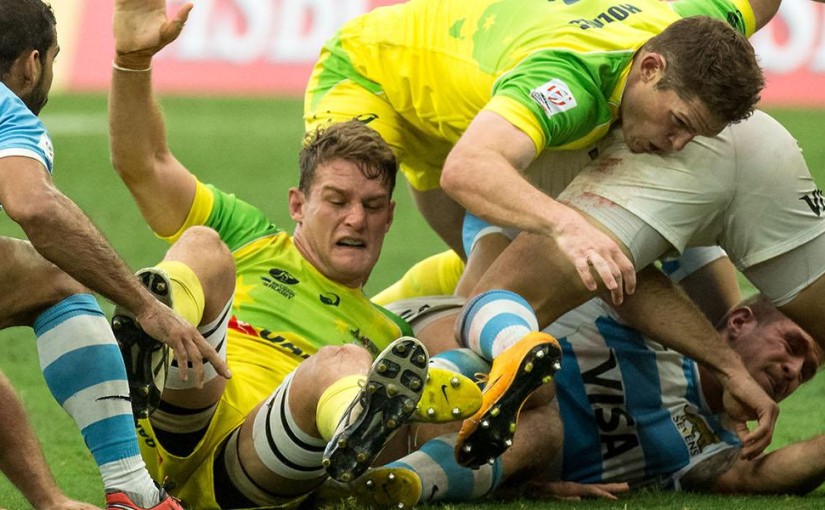
On Tour With Team Australia

It’s 3am on game day and Katie Ryan can forget about getting any more sleep. A player raps on her door with a problem that’s now her problem. He has been up vomiting and can’t keep water down. Minutes later there’s a second knock on the door. Another player has woken, this time with a throbbing pain in his hand after his fingernail was trodden on during the previous day’s match.

“The players got very little sleep that night before having to get up and prepare for another two games, and I decided it was just easier to stay up, make an early coffee and get some paperwork done,” Ryan says. “It was going to be a long, long day – it would be 22 hours before I got a chance to get to sleep again.”

Welcome to life on the road as team physio of the Australian Men’s Rugby Sevens. In some respects, Ryan is living every girl’s dream – travelling the world with a muscular bunch of uber-athletic blokes, always on stand-by should one of them need a rubdown. But Ryan isn’t a girl, she’s a professional sports physiotherapist and mother of three, who’s second family just happens to wear green and gold and takes her to places most nine-to-fivers could barely imagine. This year the circuit includes Las Vegas, Dubai, Wellington, the Gold Coast, Hong Kong, Tokyo, Glasgow, London and Port Elizabeth in South Africa – all with two gear bags, a treatment table and 30 kilograms of sports tape in tow.

“Apart from the travel I’m just really lucky that I get to look after these absolutely professional athletes; they train super hard and, yes, there are pinch me moments when I’m doing a treatment session looking out over Dubai, or having a treatment session watching the whales swim up the coast at the Gold Coast, or treating a player looking over Wellington. They’ve just been amazing times.”
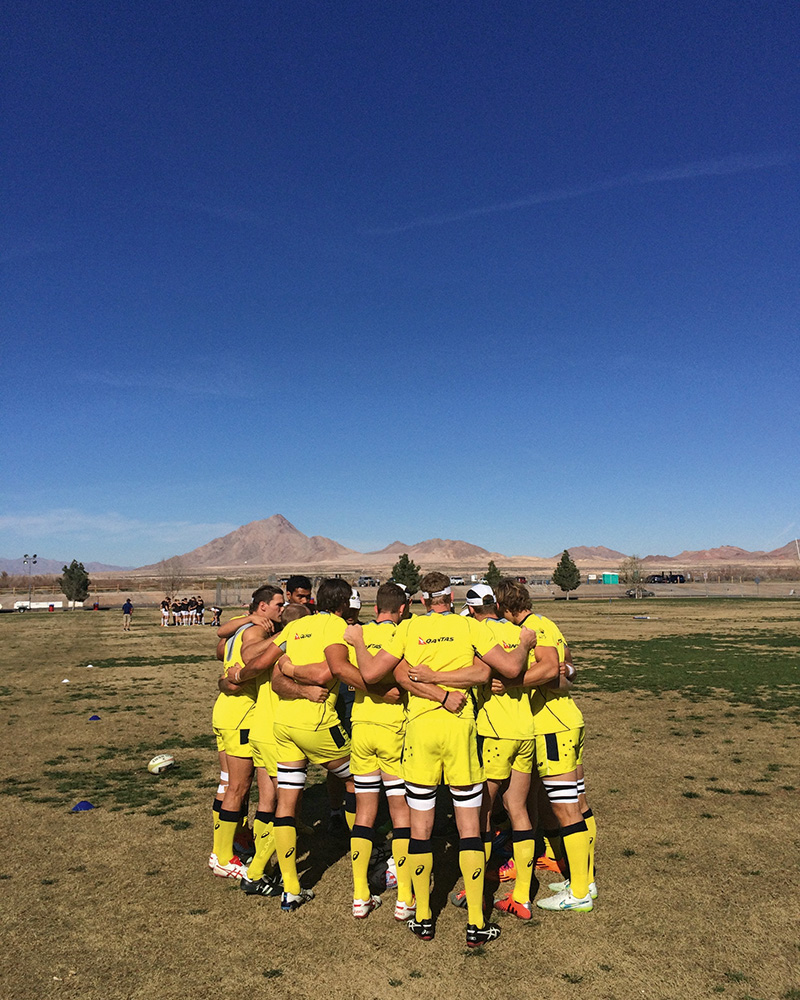
When we meet trackside at Sam Boyd Stadium in Las Vegas, Ryan, 44, has her hands full. The player who was up vomiting is being assessed for IV fluids – he’s come off the field severely dehydrated and has shed three kilograms. There are other wounds and injuries to tend to and once they’ve been dealt with, a quandary: where can two women meet in such a blokey environment? “How about I come to you?” I propose. The suggestion is met with the following text: “Where I am now in the change rooms faces the communal team shower – you would blush.”

Ryan is used to the nudity, blood, sweat and grit that comes with looking after a professional sports team – it’s part of her job description and, as the only woman on the squad, she carries out her role with dignity and respect. It’s a courtesy that is reciprocated among the players and team managers, who don’t mind giving Ryan a gentle ribbing when they see her talking to a journalist – it’s all part of the camaraderie. Humour is important when you live out of each other’s pockets on tour.

Ryan always snags the biggest hotel room during tournaments, but it’s not really her own. As the primary person responsible for player welfare (team doctors don’t come on tour), she’s on call 24/7. In Vegas her day starts early with the players filing into her room to ‘check-in’, a game-day ritual where they are weighed, have their physical stats recorded and any issues addressed. Next it’s off to the pool for ‘activation’ to start preparing for the day’s matches (often there are two games, each consisting of seven-minute halves with a two-minute half-time). Ryan will spend up to an hour strapping and prepping the players. Soon they are warming up against the dramatic backdrop of the arid Nevada mountains, then it’s show time.

“We go out on the field and the strength conditioner and myself have to run water during the match. Because it’s so intense you’ve just got a short time to get on and off. I almost got tackled by a Scottish player today, so it’s fast and furious and then it’s back off to manage any injuries.”

After the game there is more strapping, ice, hydration and perhaps some manual therapy as Ryan and the team assess whether some players can “back up” for another match. Fourteen minutes of competition might sound lightweight but the sport is punishing; these are colossal, super-fit athletes who charge the field with lightning speed and brute force. Peripheral injuries to ankles, knees, joints and backs are common, as are contact-
related wounds and soft-tissue damage, such as strained calves and hamstrings. Hydration and nutrition are perpetual challenges, particularly on long-haul flights when you are dealing with bear-like men crammed into chicken-class seats.

“We know anecdotally that long periods of travel on planes affects athletes – it’s a real concern for player welfare,” Ryan says. “This can be the effects of sitting in air-conditioning for anything from three to 22 hours, sitting next to people who are unwell and picking up an illness, losing weight from eating small, irregular meals that are not optimal for athletes, and the effect of jamming six-foot, five-inch, 100-kilogram players in economy seating for long periods – expecting them to be able to have any sort of quality sleep sitting upright.”

Ryan – who graduated as a physiotherapist in 1993, becoming a sports physio in 2000 – spent two decades working with rugby union clubs before joining the Rugby Sevens full-time in 2014 when the program centralised in Sydney. Between running two physio practices with her husband – former Australian Wallaby’s physiotherapist Andrew Ryan – and raising three children under the age of 11, Ryan has little chance to sit still. And her job comes with sacrifices: in Vegas she misses two of her children’s birthdays, and Mother’s Day is spent on tour in Scotland.

“Missing two birthdays was a little bit devastating,” she says. “I guess the biggest thing being a mother is that there’s just no way I’d have this opportunity normally with three kids at home if I didn’t have a great team at home as well – my husband, mother, aunts, uncles – everyone pitching in to enable me to be able do this.”
Highest Steaks

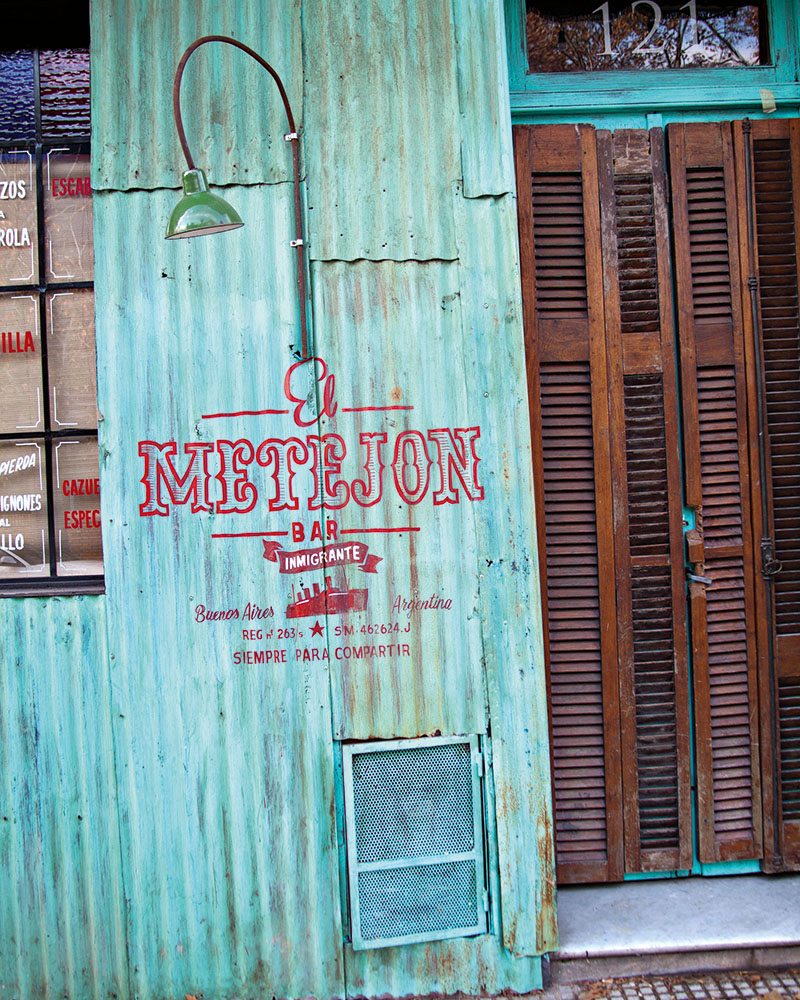
The windows are shuttered and a lopsided ‘Closed’ sign hangs in the front door. Almost hesitantly, our guide presses a buzzer. Moments later a burly bloke in a stained black apron appears in the doorway. Glancing furtively up and down the street, he ushers us in. Anyone watching might suspect a shady drug deal was about to go down.

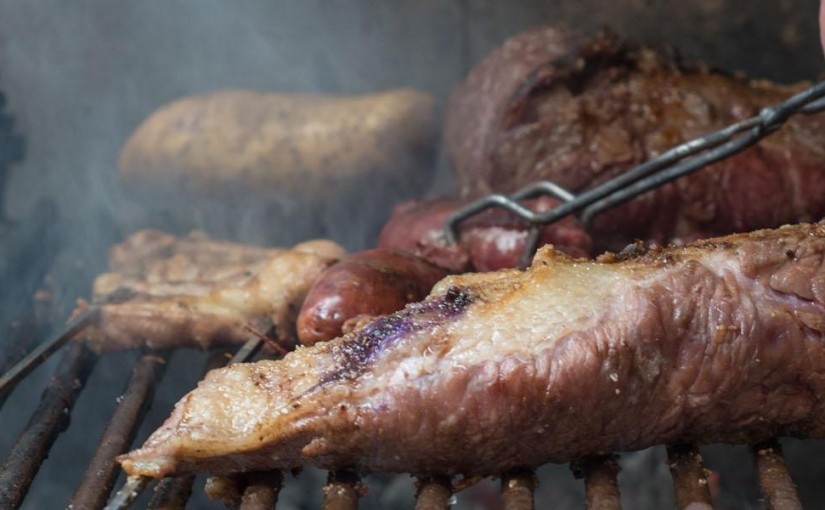
Inside, the restaurant is already filling up. The aroma of seared meat wafts over from a grill against the far wall with its bed of glowing charcoal.

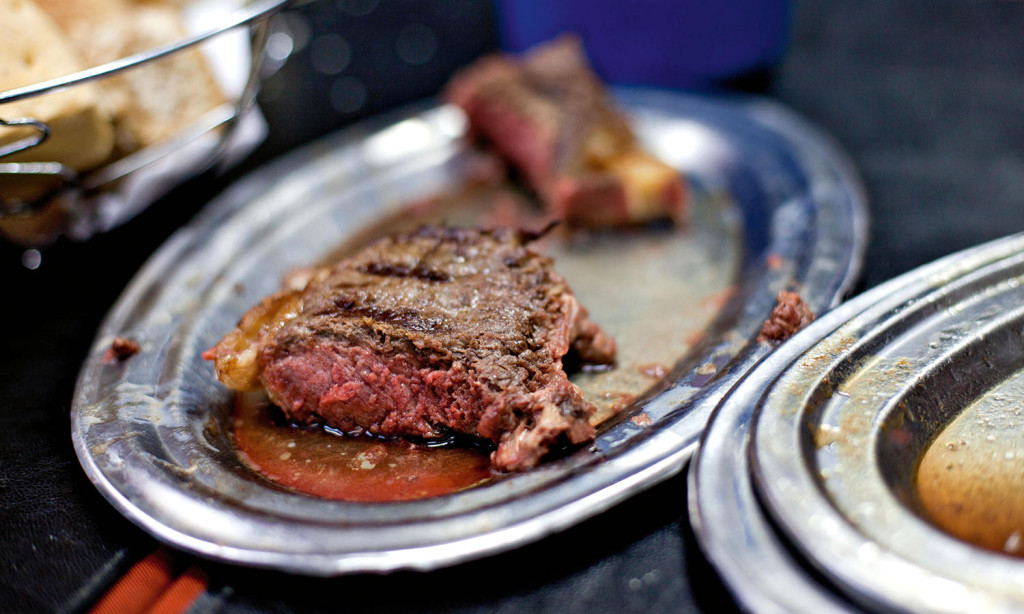
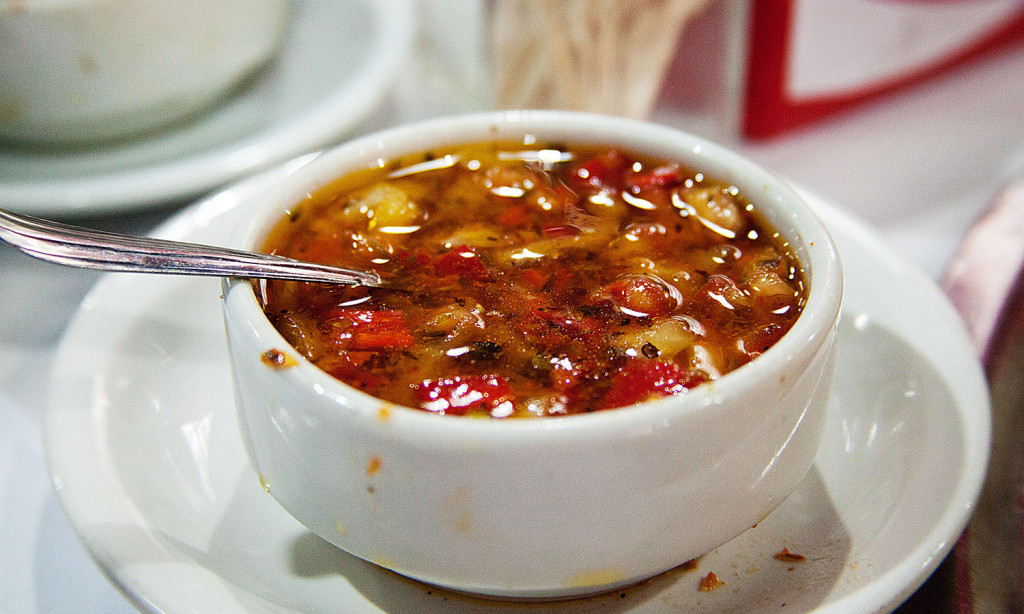
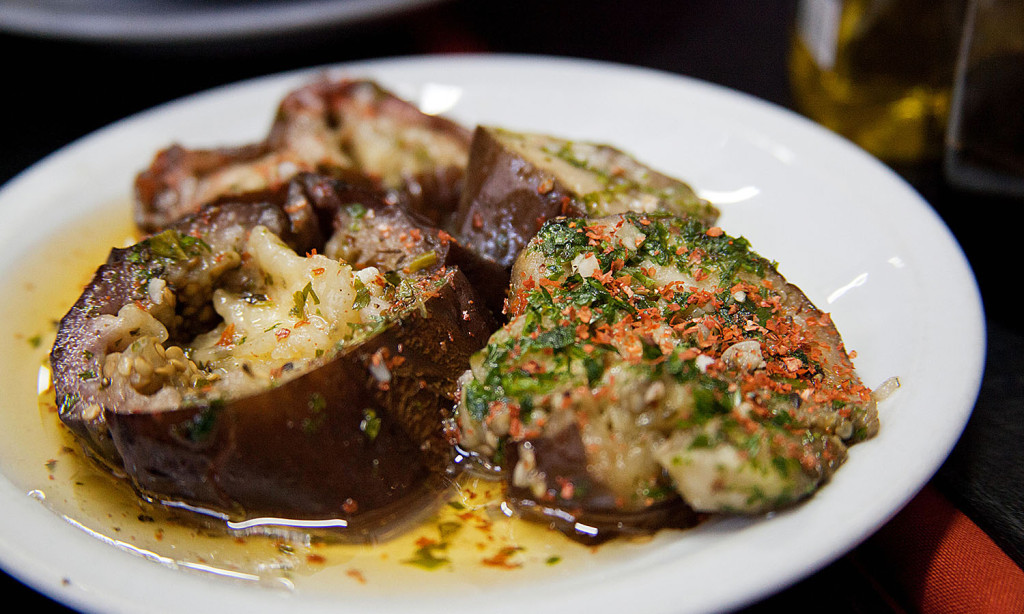
We’re directed towards a table where bottles of malbec are slammed down in front of us. Service is curt and efficient; social niceties are clearly unnecessary. When the food arrives it’s clear why. Succulent pink cuts of steak are served alongside provoleta, cheese topped with chilli and oregano and heated under the grill until crispy. Our other side dish is berenjena al escabeche, eggplant marinated in garlic, red pepper, vinegar and olive oil. It has a rich, tangy flavour and some serious attitude; proof that not all eggplant dishes are for people who knit their own sandals.

Food in Argentina doesn’t get any more traditional. We’re inside a parrilla, the name given to a no-frills Argentine steakhouse that’s as synonymous with local culture as tango or the Beautiful Game.

It’s estimated that more than 50 per cent of restaurants in this country are parrillas (named after the grill) and Argentines are currently the world’s second largest consumers of beef, wolfing down an average of 58 kilograms each a year.

The meat itself is seasoned only with salt and pepper – “otherwise you’re weird,” says our waitress – and cooked at a low temperature over hot coals to prevent it from becoming tough. Despite the use of charcoal, most parrillas tend to avoid smoky flavours. Essentially, it’s the opposite of Texas barbecue.

While parrilla restaurants are ubiquitous throughout Buenos Aires, it’s important you choose carefully. This particular place is so acclaimed the owners change the name every three weeks to keep it strictly for in-the-know locals. Ordinarily I would never have found it, but I’m here as part of a small group tour with David Carlisle, an American expat and former wine merchant who decided to set up Parilla Tour Buenos Aires after being repeatedly badgered for food recommendations. His business partner, local boy Santiago Palermo, is probably the only reason we’re allowed on such hallowed turf.

Having gorged ourselves on tender cuts of steak and malbec, we push on to La Cañita another traditional parrilla in the Las Cañitas section of the Palermo neighbourhood.

“We pick these places based on authenticity and quality of food,” says Carlisle, who also admits some of the restaurant owners laugh at the idea of his tour since locals will regularly spend three or four hours in one parrilla rather than experiencing several in such a short 
time frame.

Too stuffed for another juicy beef onslaught, we sample a handful of other bite-sized local classics, including choripán, a simple chorizo sandwich. It’s served with chimichurri sauce, an intoxicating blend of chopped oregano, parsley, diced capsicum and garlic soaked in olive oil and vinegar. It’s a favourite pairing with steak – the meat is so sparsely seasoned, particular attention is given to concocting sauces with genuine punch.

Down the street, we pause outside La Fidanzata, famed for its legendary empanadas. Deliveries are popular with porteños (residents of Argentina) and the shop is a firm favourite with local businesses. What sets La Fidanzata’s bad boys apart from all the others is the filling. The cooks here use real hunks of steak rather than ground beef and the difference is palpable. It’s a bit like comparing Shane Warne and Xavier Doherty. With Carlisle holding out a tray piled high with a batch straight from the oven, we rip into them like a pack of wild dogs.

Trying hard to banish Monty Python’s “wafer-thin mint” sketch from my mind, we round off the tour at La Cremerie, one of the city’s most revered heladerias (ice-cream parlours). Thanks to a history of Italian immigrants – many came here in the 1870s – porteños have developed a fetish for ice-cream and this shop contains enough outlandish flavours to facilitate some kind of nightmarish Sex and the City marathon.

Like a swollen, contented pig, I hoe into a double scoop of cookies ’n’ cream and tiramisu flavour. As with all the food today, it’s nothing short of sublime.

And while it’s true there’s no shortage of parrillas to choose from in Buenos Aires, the insider knowledge definitely makes all the difference.

Salsa Criolla

When grilling meat in Argentina, the only seasoning used at the time of cooking is coarse salt called sal parrillera. If you do want a little bit of extra flavour with your meat, one of the most traditional condiments you’ll find at parrillas throughout the country is salsa criolla, a fresh and flavourful sauce made of raw vegetables, oil and vinegar. Below is a great recipe for making your own salsa criolla at home.

INGREDIENTS
1 onion, finely chopped
2 red capsicums, finely chopped
1 tomato, seeded and finely chopped
1 clove garlic, finely minced
1 tbs parsley, finely chopped
½ cup olive oil
¼ cup white wine vinegar

METHOD
Combine all the ingredients and season to taste with salt and freshly ground black pepper. You can serve the sauce immediately, although resting it for an hour or two will allow the flavours to develop.

New Years in Antarctica

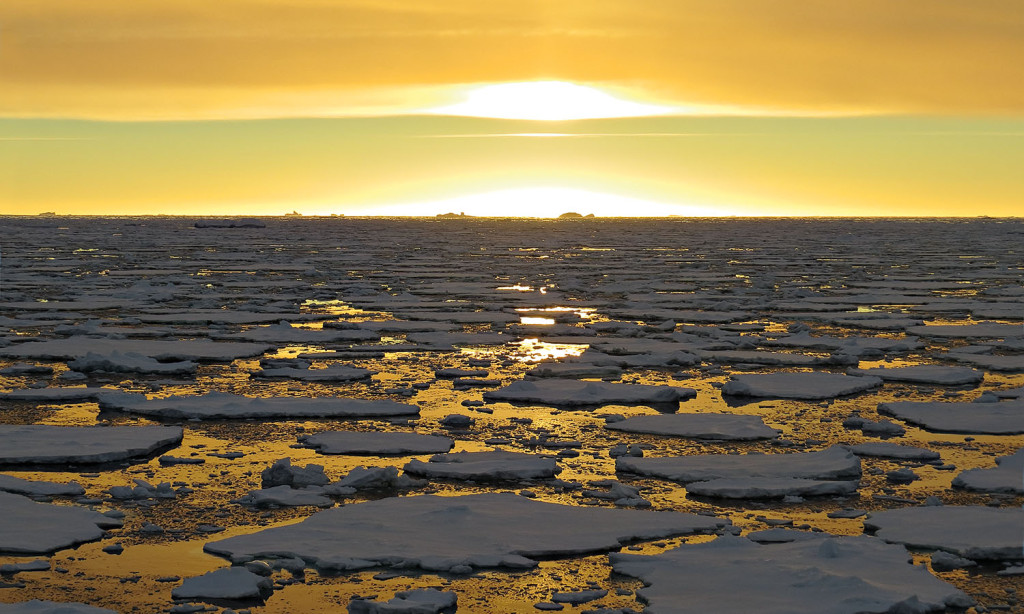
Three… Two… One… Happy New Year!” Immersed in a hot tub, I chink beer cans with 16 strangers. Our quest to reach the Antarctic Circle for midnight celebrations has been abandoned. Instead we’ve been soaking on the top deck, surrounded by the pack ice that has foiled our plans.

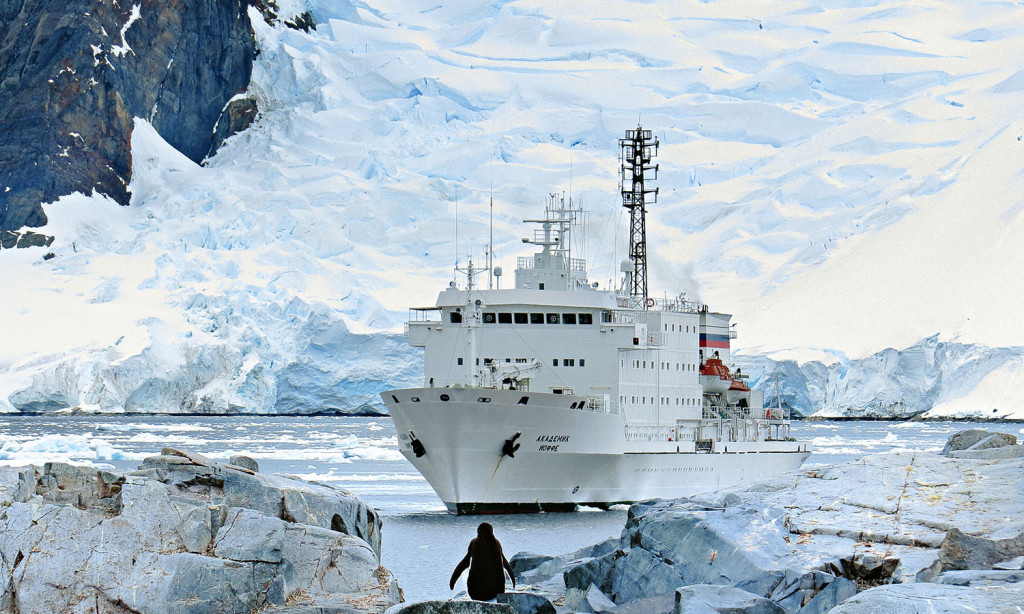
We have no concept of time as the setting sun clips the horizon before immediately rising again. The ocean is choked with puzzle pieces of ice sheets jostling with iceberg rubble. The silhouettes of colossal icebergs resemble a faraway city skyline. As the ship splinters the solid ice in its path, each hit sounds like an empty oil drum being dropped onto concrete.

Three days ago we left Ushuaia, starting a 13-day voyage. The beginning of our epic adventure involved two days crossing the notoriously rough Drake Passage. Our ship is the Rolls-Royce of these seas, boasting a fancy stabilisation system that thankfully reduces the roll by 40 per cent. The remaining 60 per cent, however, confines half of the guests to their cabins for the crossing. Crew members diligently check on the absent, while vomit bags and dry crackers magically appear throughout the ship. The pharmacy of every conceivable seasickness remedy I’ve stowed in my luggage proves my saviour.

During the days at sea everyone is briefed on the wildlife, expedition plans, conservation practices and landing procedures. Suiting up for each excursion is quite the procedure to master. Layering up as you would for the ski slopes, you then add an outer skin of wet-weather gear, boots and a life vest before waddling to the gangway like a weighted-down astronaut.

Our first step onto land is at Port Charcot, a horseshoe-shaped bay on Booth Island, rimmed with towering mountains laden with glaciers. Convoys of curious penguins in their matching tuxedo onesies waddle down to greet us. Not aware of the five-metre human–penguin boundary rule, they happily move about us. Here, three species mingle. The cartoon-like features of the Adélie penguin belong in a picture book. The chinstrap penguin seems to be wearing a little tied-on helmet. A white splash above the eye identifies the gentoo. They catapult out of the water gracefully, yet turn into hopeless goofs on land, performing a slapstick comedy routine of face plants every few steps before pushing up again off their pot bellies. Nesting mothers shelter fluff-ball chicks, while their partners steal pebbles from one another in a never-ending game of switch.

As I walk to the peak, I discover I’m as useless as the penguins. The deceptive crust holds my weight momentarily before collapsing, swallowing my boots with each step, sometimes to the ankle, other times exhaustingly to my thigh. It is a long, steady trudge, but the view from the top of the ant trail of people below is a good measure of the true scope of this landscape.

The penguins catapult out of the water gracefully, yet turn into hopeless goofs on land, performing a slapstick comedy routine of face plants every few steps.

On Corner Island, I opt to sleep out overnight. As we set up camp, the blue skies succumb to ominous grey clouds and the temperature plummets. With a shovel I customise my shallow grave to protect against the frigid winds. The once flawless hillside now resembles an emergency scene lined with dozens of body bags. Hurriedly, I shed my outer layers and scramble into my sleeping bag. Only a foam mat separates me from the ice. Through chattering teeth I laugh to myself as I realise this authentic adventure will come with little sleep. Burrowing into my cocoon to contrive darkness, I wait out morning. As we unfurl our frozen bodies to pack up, one token penguin completes a good morning lap around camp.

After thawing in a hot shower, the morning thankfully consists of nothing more strenuous than a cruise around Iceberg Alley near Pleneau Island. It is a bottleneck of enormous sculptures, some standing higher than the ship. The elements have shaped them into uncanny likenesses of dramatic cathedrals, tiered wedding cakes and frozen arched waves. The ice surfaces range from crumpled paper to golf-ball dimples, crystal splinters to a glossy finish.

Day seven marks our first landing on the actual continent. Orne Harbour is the ideal location for what we call ‘body-bogganing’. Once we hike up the lung-bursting slope, it takes just seconds to careen back down. Trial runs meet with some cringing successes as heads are whacked, bodies toppled and skin left behind. The technique deemed fast yet safest is headfirst on your back. The first few toppling seconds are terrifying before adrenaline from the speed takes over. After jarring across the finish line unscathed, I trudge back up with a huge smile on my face. The view from the top seems oddly scaled – the ship appears minuscule beside the towering glacier walls. In this epic 360-degree postcard setting, I am merely a speck.

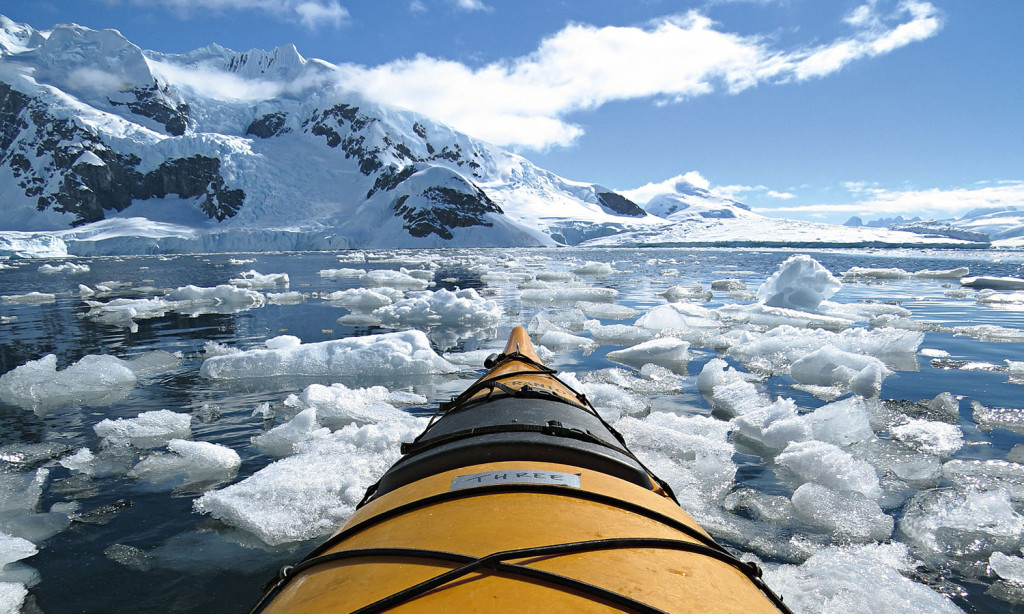
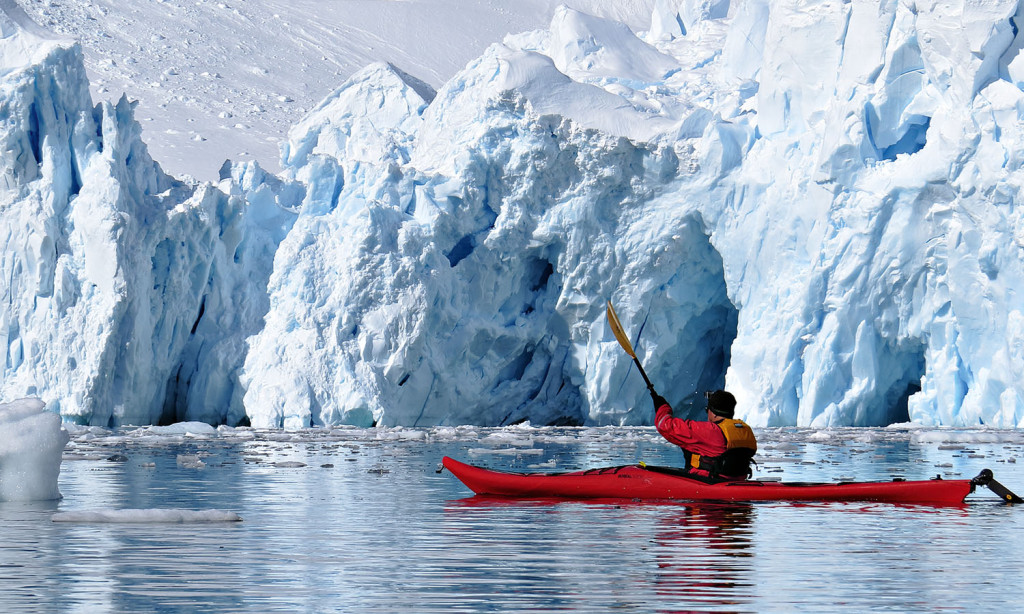
Concurrent to the onshore excursions, One Ocean runs a series of kayak tours. At water level on Paradise Bay, the floating ice crackles like rice bubbles and the submerged masses of the icebergs are clearly visible below the surface. Exposed to a rumbling glacier, we maintain a safe distance since even a minor calving would create an iceberg tsunami we’d never out-paddle. Stealing a piece of floating ice for a refreshing nibble, I try to fully absorb this pinch-me experience.

Zigzagging up the mountain on Cuverville Island, I hitchhike in the footholds our guide is diligently stomping. Pulling my legs out of each sunken step is like trying to conquer a StairMaster cranked to max incline. At the top the softened snow offers perfect playing conditions for rugby tackling, a push-up competition and human pyramid. Heading down we make a navigation error and face a treacherously steep route. With walking impossible, controlled slides – just a few metres at a time – are employed. Giggling despite our vulnerable state, we finally make it down, trousers and boots jammed with snow.

Blessed with glorious sunshine, Neko Harbour is ideal for sunbaking beside a very active glacier. Except for an occasional reshuffle that makes them look like fat slugs busting out the worm dance, lounging seals could be easily mistaken for rocks. The mountains are smothered in what was once a glossy meringue, now collapsed and crackled into glaciers. Fracture lines threaten to give way and the sheer edges are poised to crumble. Deep crevasses reveal the fairy-floss blue of ancient compressed ice. The slightest shift sends a noise not unlike distant fireworks reverberating around the bay. We hear an avalanche before we spot it and run to higher ground as a precaution. Only a small section collapses yet the massive plume takes minutes to settle.

I decide to take the polar plunge. with the de brillator unnervingly close by, I strip down and dash into the zero-degree water.

As we head back to the ship, the fin of a minke whale slices up through the sea’s surface. Patiently we scan the bay hoping for another glimpse. Our hearts miss a beat when the blowhole spurts directly beside our Zodiac. The whale eyeballs us before ducking beneath the inflatable and we crouch in fear of tipping.

Our last shore day begins at Deception Island. Sailing directly into the caldera of an active volcano, we make our way to Whalers Bay, its striking black beach strewn with remnants of an early 1900s whaling station. Embedded timber boats rest in front of ash-smudged hills. Despite this being the worst day of weather we’ve encountered this trip, I decide to take the polar plunge. With the defibrillator unnervingly close by, I strip down and dash into the zero-degree water. It takes a few moments to register the pain and hardly longer to race out screaming expletives and causing the puzzled penguins to scatter.

Our final hike at Yankee Harbour delivers my hardest challenge yet and, crawling along on my hands and knees, I wonder if I’ll actually make it. A deceptive icing sugar layer hides slick blue ice. It’s impossible to get a stable foothold, and unsuccessful climbers bowl others over in their wake. Nervously I kick at the ice to leverage each step. Once at the top, the inevitable slide down looks intense. After teetering like a rollercoaster carriage at its highest peak, I push off, my stomach lurching during the vertical fall. It is an awesome pay-off for the marathon hike up.

The days of non-stop activity leave me completely exhausted and the thought of the return sea crossing is almost a relief, despite the fact I’ll miss the continuous documentary that’s been played through my porthole. I book a massage and, as the sea builds, the masseuse tries to time deep strokes with each roll of the room. I concentrate on her heavenly hands rather than my unsettled stomach.

Soon the ship is again battling through waves that rise above the fourth deck. Apparently, although they look rather extreme, these conditions are classed 
merely as moderate. The Drake, I believe, is an essential rite of passage. Cross it and you’ll discover a glorious continent, more desolate than I envisioned, despite the gazillion penguins in residence. Out here there’s no phone reception or internet connection; you’re totally removed from the rest of the world. It is blissful isolation.

After Dark in Downtown LA

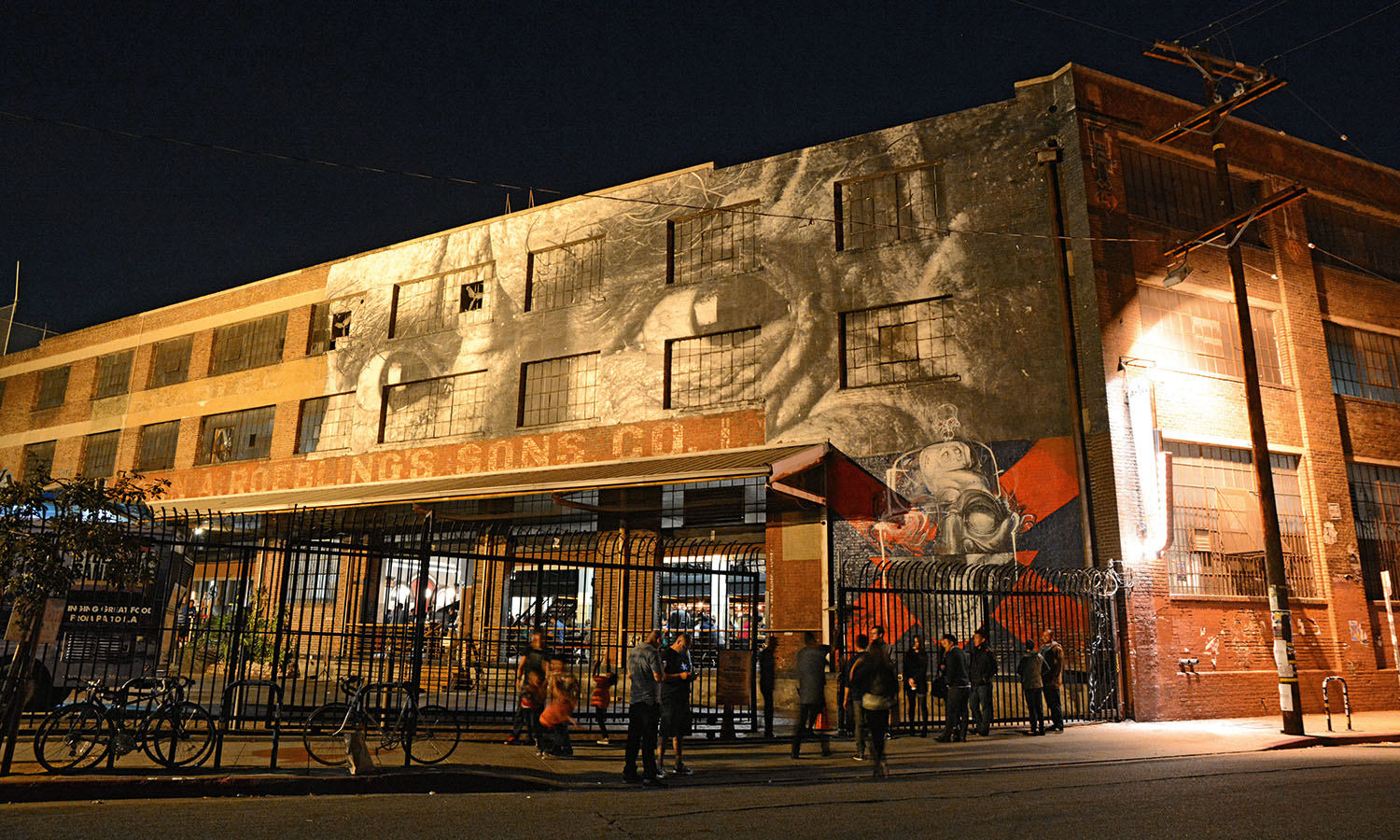
A decade ago, Downtown LA was a ghost town. The clock would hit five and its army of office workers would march back to the ’burbs. Oh, how things have changed. The seeds of renewal were sown in the 80s when a law passed allowing people to live in warehouses. Creative types began slinking back to the city centre, fostering communities fiercely protective of the area’s artistic and industrial history. Since the turn of the millennium Downtown’s population has doubled, transforming it from a place you’d never dare wander at night into a cultural hub of more than a dozen unique districts, where revellers stream between the newest bistros and bars.

4.30pm
Before frying your senses during a night soaked in booze, whip your brain into shape with the contents of the Last Bookstore, the world’s largest independent bookshop. Scour shelves of poetry and graphic novels or sink into an armchair and chew through a chapter on modern art. If you’re shooed away – it’s technically a shop, not a library – hide out on the second level among stalls selling art and curiosities and soak up the aroma of ageing paper wafting from 100,000 pre-loved books stored in the ‘Labyrinth Above the Last Bookstore’.
Last Bookstore
453 S Spring Street
lastbookstorela.com

5pm
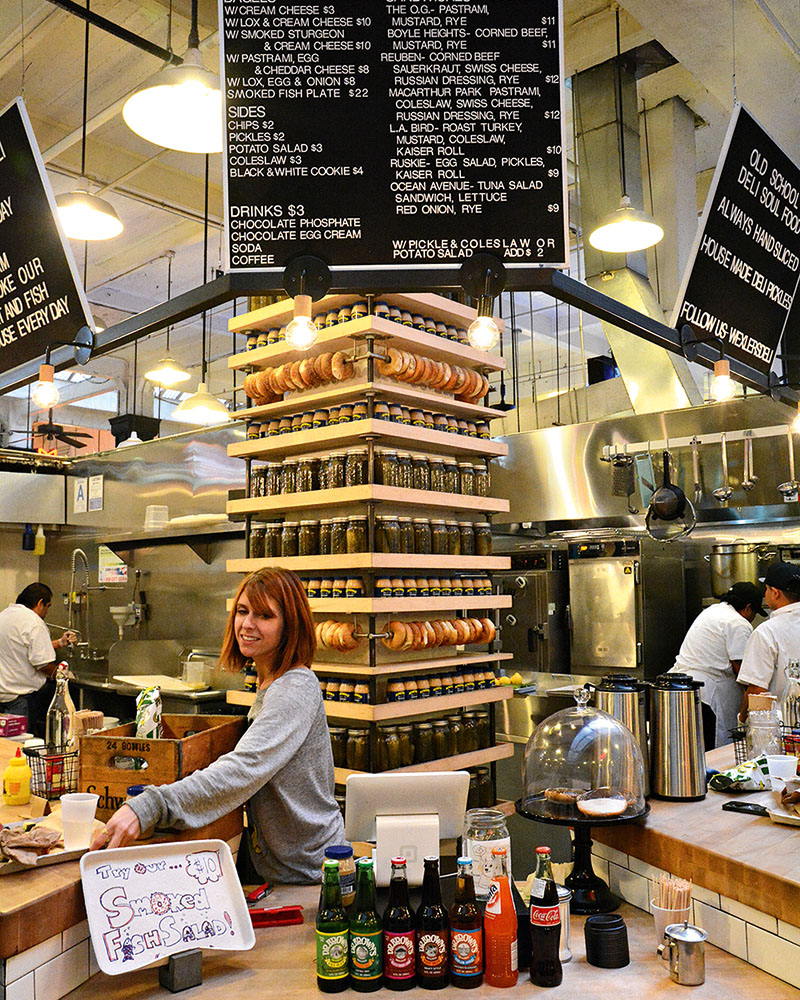
Wander the Broadway Theater District, a strip peppered with charming but shabby Art Deco architecture and capped with Grand Central Market, an entire bacon-scented block dedicated to multiculti cuisine. The first theatres opened on South Broadway in 1910 and the district flourished as studios cranked out flicks to feed America’s love for the screen. As the twentieth century trudged on, Downtown sunk into decline, the cinemas’ curtains closed and there they sat, decaying, until the recent stream of life saw many converted into churches, swap meets and shops. When you hit the market stop for a US$3 snack from Tacos Tumbras a Thomas, or find Wexler’s Deli for the tastiest smoked salmon and pastrami in LA.
Grand Central Market
317 S Broadway
grandcentralmarket.com


6pm

Put Downtown in perspective with a trip to the top floor of Perch. This multi-storey affair features a French restaurant, balcony and bar on one level and a patio crowning the upper deck. Elaborate floor tiles and fairy lights twinkling on trees give the rooftop a provincial European vibe, but look past the glass barriers and the scene could not be more inner-city urban. Settle on a couch with a glass of Californian pinot noir and watch planes soar over the high-rise offices swelling around the deck.
Perch
448 S Hill Street
perchla.com

7pm
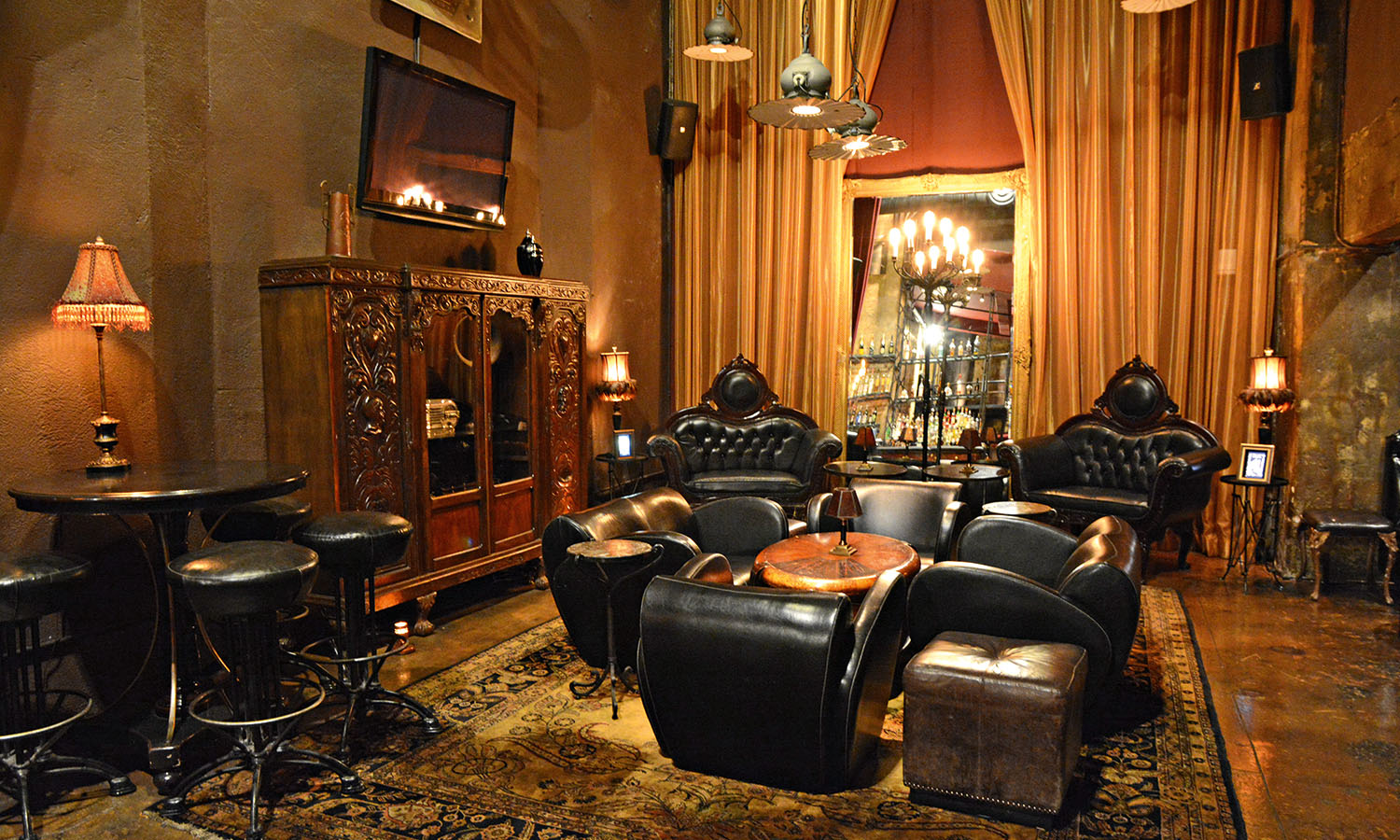
You’ve been up, now go down, beneath the concrete and into a 1920s boudoir where fairies dole out absinthe and black-and-white films dance on the wall. To access the Edison you first need to locate an unmarked door on a side street and clear inspection – that means no flip-flops, hoodies or torn jeans – before making the grand descent down metal stairs. A century ago the space housed a power plant, and ancient machinery still sits in place between leather armchairs, lush drapes and Art Deco fixtures.
The Edison
108 W 2nd Street #101
edisondowntown.com

8pm
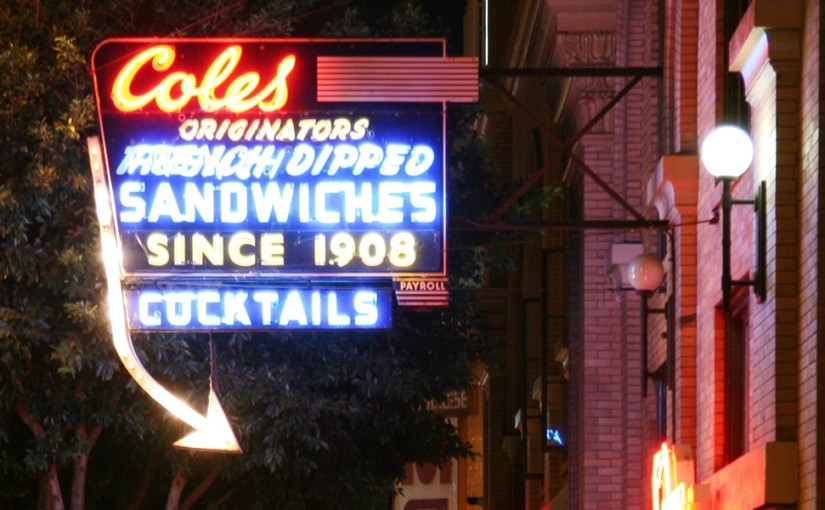
The streets of Downtown are a playground for bumbling TV cops and murder mysteries, so get with the theme and try your skills as detective. Two local establishments – Philippe The Original and Cole’s – opened in 1908 and each swears they gifted the city the famous French dip sandwich, consisting of tender strips of roast beef layered in a baguette and served with a dish of the juices. Both claims bear equal clout, but scour the garlic-scented dining room at Cole’s and uncover a secret worthy of attention. No, you won’t solve the who-made-it-first mystery but an unmarked door hides something even better: the Varnish. This speakeasy holds 60 at best, so put your name on the guest list, head back to the bar and slam down a pickleback (whiskey and pickle brine) while you wait. Cole’s might be bustling, but the Varnish is all sultry jazz, dark wood and apothecary bottles of elixirs. Settle into a booth and a waitress channelling Frida Kahlo will whisk cocktails and ginger beer topped with piquant cubes of crystallised ginger to your candlelit table.
The Varnish
Backroom of Cole’s
E 6th Street

9pm
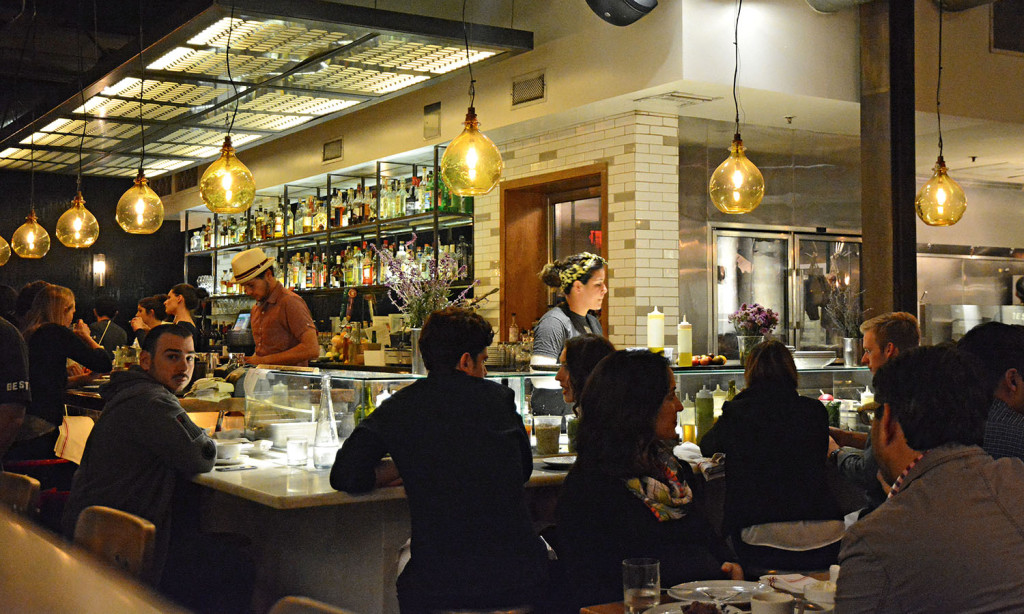
Ask a local where to eat and Bestia will spill from their lips before you’ve had time to exhale. Grab an Uber and cruise to an almost abandoned lane on the cusp of the Arts District. From the outside Bestia’s warehouse doesn’t look much chop but the interior has all the right trimmings – red brick walls, concrete floors, exposed piping and feature light globes. Hard furnishings make the joint roaring loud, but the Italian nosh is so good it’s worth a mild case of tinnitus. Order the roasted bone marrow and take pleasure in the somewhat macabre experience of scooping the rich mess from a femur cleaved in two onto a bed of handmade gnocchetti while ‘You Can Do It’ jostles the sound system.
Bestia
2121 7th Place
bestiala.com

10.30pm
Move over flashy cocktails, craft beer is on the rise, and where better to sample a flight of the stuff than at an Arts District brewery? Giving new purpose to a warehouse that once made wire for suspension bridges, Angel City Brewery produces a range of beers and even grows its own hops on the roof. Sure, the way they play with flavours is a purist’s nightmare, but for the rest of us a brandy-finished beer or sake-based ale tastes a treat. At one end of the establishment vats brew about 8000 barrels a year and the remainder welcomes guests to chill out as they please. Don’t be surprised to see people hanging with dogs, artists sketching, chess contests and punters lobbing beanbags at a platform in a battle of cornhole.
Angel City Brewery
216 S Alameda Street
angelcitybrewery.com

12am
Within stumbling distance of the brewery stands a modern take on the 1980s arcade, where reliving your youth costs only a quarter. A line marks the entrance to EightyTwo, a rotating trove of old favourites including Donkey Kong and Space Invaders. Make your gaming sesh a touch more adult with on-theme cocktails sporting names like n00b and Kill Screen, or pep up with a Wizard Mode, a mix of rye whisky, cold brew coffee and vanilla-infused black tea. When you need a break from tinny electronic tunes, head to the garden for a breather but don’t rest too long ’cause 25 cents will never again buy this much fun.
EightyTwo
707 E 4th Place
eightytwo.la


1am
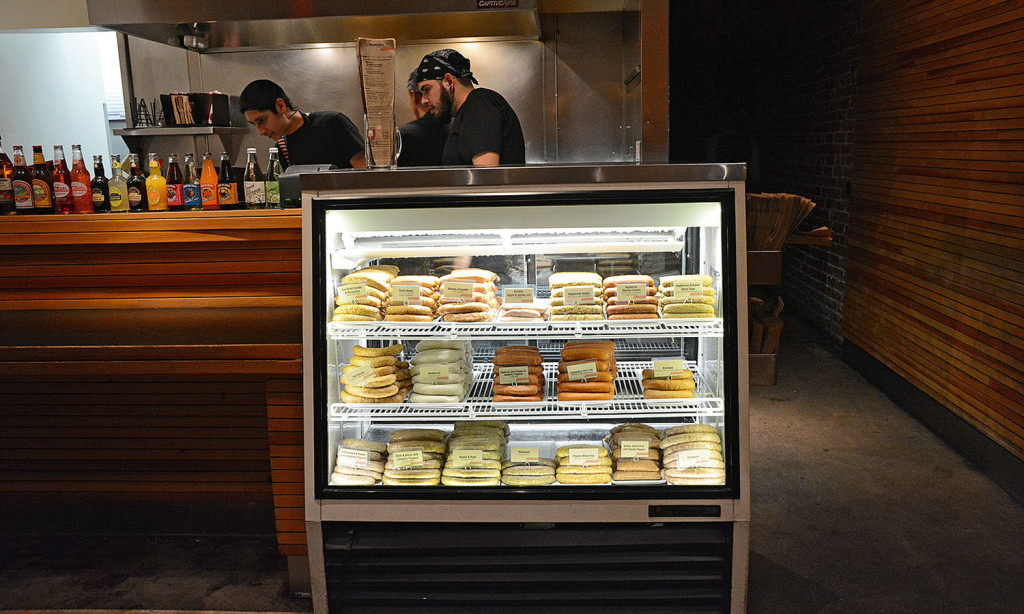
Switch back to beer, but the imported kind this time. Styled as a Bavarian beer hall, Wurstküche pours 23 European beers from the tap and serves an impressive selection of snags. A cabinet at the entrance displays raw sausages waiting to be cooked to order and piled high with your choice of fried onion, sauerkraut, sweet capsicum or hot peppers. If you’ve recovered from dinner order the favourite: the Rattlesnake & Rabbit with jalapeño peppers. Totter down the corridor to the hall and plonk your rump behind a long wooden table adorned with pillars of ketchup and mustard.
Wurstküche
Corner 800 E 3rd Street and Traction Avenue
wurstkuche.com

1.30am
LA starts powering down at 1.30am and bolting its doors soon after, but don’t throw in the towel just yet – you’re needed in Little Tokyo. On the second floor of a nondescript shopping centre, Max Karaoke keeps on going, every night of the year. Bring your own grog, stock up on salty snacks at the front counter and spend the next couple of hours serenading the city with your newfound love for DTLA.
Max Karaoke
333 S Alameda St, #216
maxkaraokestudio.com

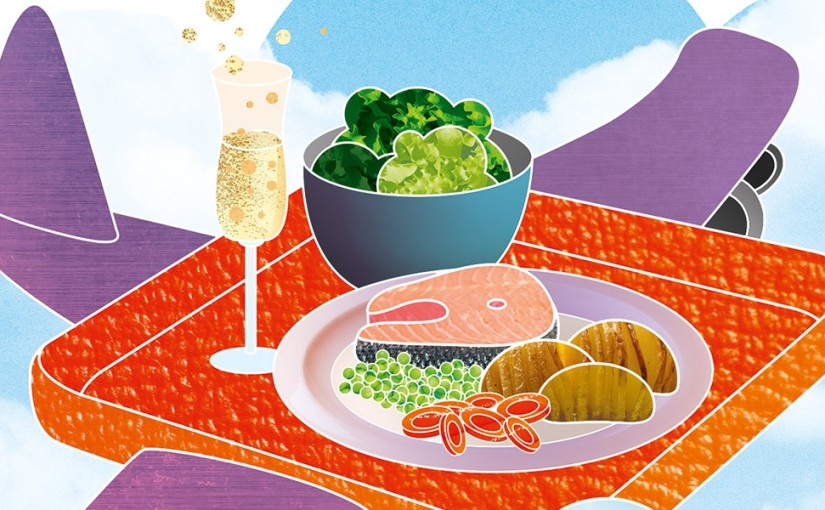
The science and logistics behind in-flight food

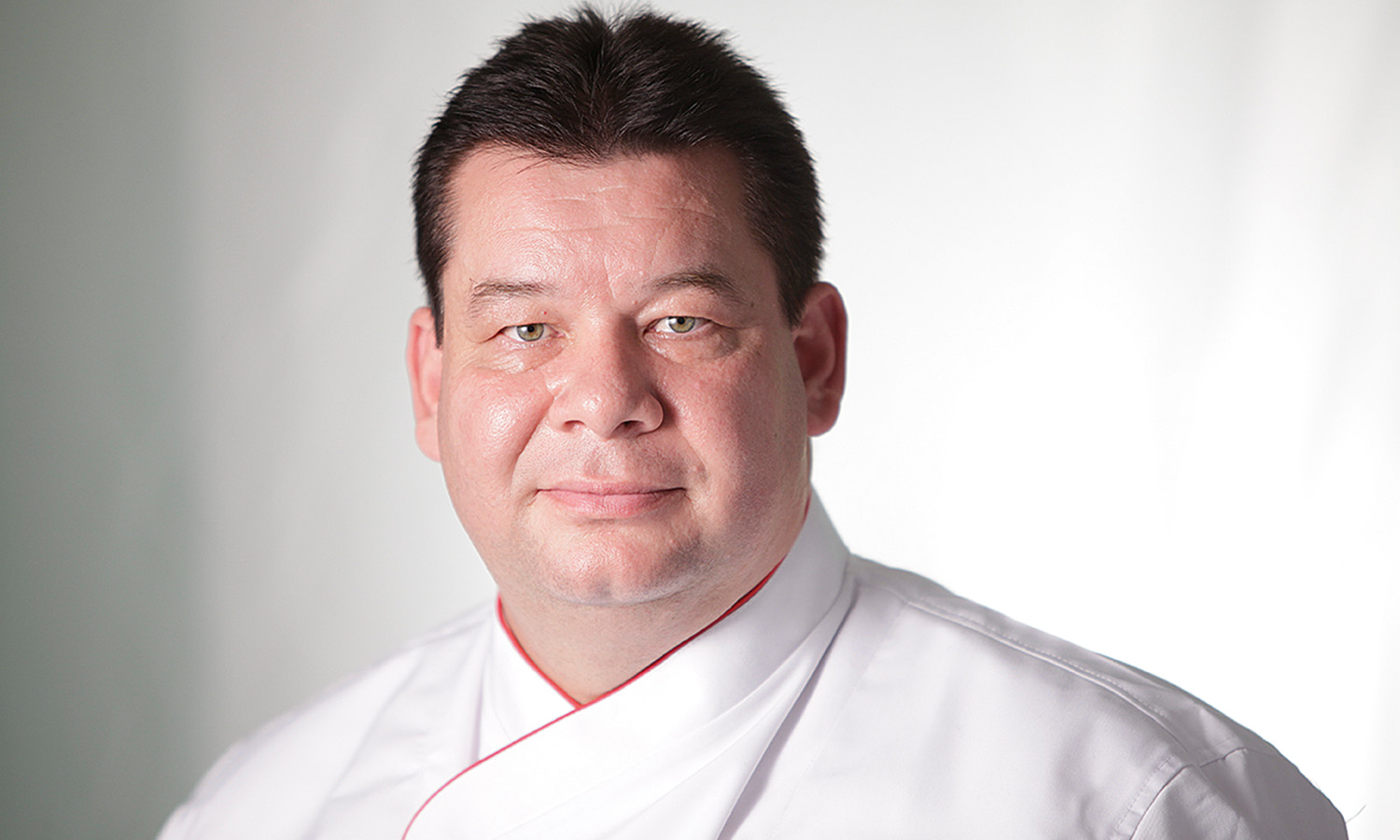
Thomas Ulherr will never forget his first airline meal. It was horrible. "I was just a boy, accompanying my parents to Greece for a holiday. Dinner arrived in a plastic divider tray and it was typical of airline food at the time: meat with sauce with some starch on the side and a jelly for dessert.”

Ulherr was already familiar with the pleasures of cooking fresh food sourced from his grandparents’ garden and didn’t immediately recognise the gloopy substance staring back at him. “It looked bad. It smelled bad. And it took me a long time to eat.”

How times have changed. Airline food no longer resembles prison rations and Ulherr has progressed through the world’s great kitchens and is now the corporate executive chef for Etihad Airways. Since joining the award-winning airline he has focused on taking its food to the next level. Improvements across the industry have been driven by three things: advances in in-flight galleys, competition among airlines and a global food renaissance.

We live in a world that worships food. Celebrity chefs are the new rock stars, cookbooks hog best-seller lists and reality cooking shows spawn like salmon and attract huge global audiences. Serving up lumpy meat and microwaved veggies is no longer an option. The top airlines hire world-class chefs who source only the best produce and wines from around the world and have expert staff prepare and cook much of the menu in the air. “At Etihad we don’t compare ourselves to other airlines,” says Ulherr of the United Arab Emirates’ national carrier. “We look at restaurants and hotels for inspiration.”

That means changing the entire menu every season. It means working with 700 chefs to produce consistent meals in a string of industrial kitchens. It means stocking in-flight pantries with premium produce – caviar, Moët, rib-eye, grain-fed chicken – so that first class guests can order whatever they want, whenever they want. It means vegetarian meals and hot and cold dessert options are now standard for economy guests. It means Ulherr may work on signature marmalade for three years before it’s ready to fly.

It also involves understanding the science of food. Part of the reason plane food used to taste so bland is that altitude blunts our taste receptors. It also changes the acidity and alters the flavour of different foods in different ways. This needs to be precisely calculated and compensated for in each and every dish. A pinch of spice can make a world of difference in the sky. “A recipe that works well in a restaurant may not work at all in the air, so we are always testing and asking, Will it fly?” explains Ulherr, standing and displaying his generous belly to demonstrate a personal commitment to research and development.

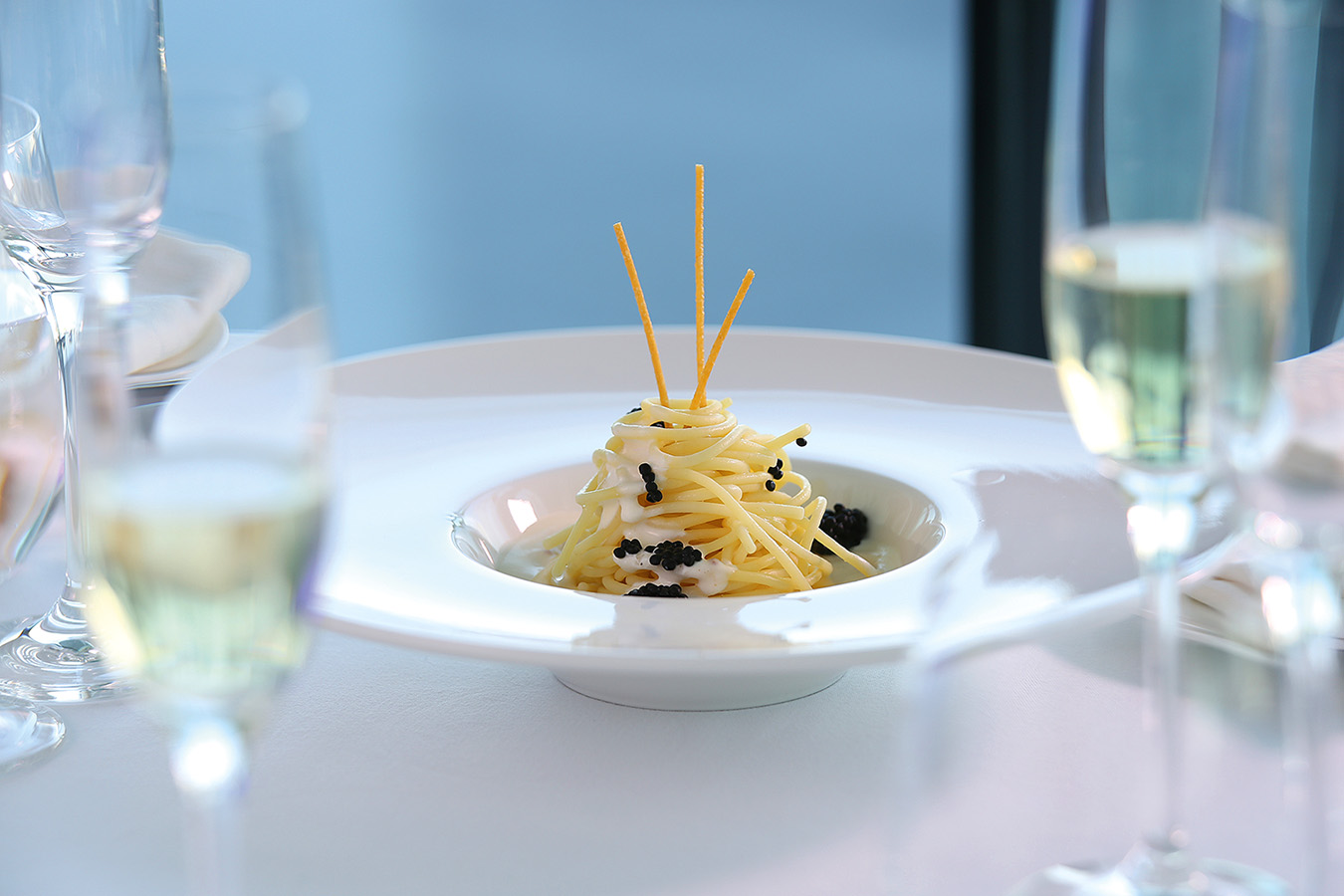
Asked to share a favourite recipe, he picks an exotic beauty: creamy tom yum spaghetti with farmed Abu Dhabi caviar. Like many good recipes it has a story behind it. Ulherr originally dreamt it up to impress a wealthy sheikh who routinely ordered caviar on his Etihad flights. It was a daring departure but the sheikh heartily approved.

On first glance it’s an unusual composite of international cuisine: tom yum is Laos’ famous spicy soup; spaghetti, of course, is all Italy; and caviar originates in the Black Sea. But in a way the dish represents the ultra-cosmopolitan and lavishly wealthy UAE. After all, this is a country where foreigners account for some 90 per cent of the population and whose capital, Abu Dhabi, is being shaped and styled by international architects and designers. It’s also a city where wealth and status are highly valued, so it’s no surprise to learn that caviar is a popular dish.

Caviar, you may recall, is the preferred snack of that dashing, international man of mystery, James Bond. During On Her Majesty’s Secret Service the British spy deftly dispatches a hefty henchman before snacking on some sturgeon eggs and coolly declaring: “Mmm… Royal Beluga, north of the Caspian.”

Scriptwriters for the next Bond adventure may want to update their cultural references. Abu Dhabi’s farmed Yasa Caviar is steadily gaining a reputation as one of the most coveted in the world. If you can get your hands on some it works wonderfully in a creamy tom yum sauce over spaghetti. Thanks, Thomas Ulherr.

Creamy tom yum spaghetti with farmed Abu Dhabi caviar

Serves 5

INGREDIENTS
30ml sesame oil
75g lemongrass, white part only, finely diced
150g shallots, cut into rings
1–2 cloves garlic, cubed
10g galangal, finely diced
15g ginger, cubed
75g shiitake mushrooms, cubed
50ml chicken stock
30g Thai chilli paste (or tom yum cube)
650ml cream
Arabic lemon salt, if available (use sparingly)
5 lime leaves
1 large lemon, rind finely grated, reserve juice
1 large lime, rind finely grated, reserve juice
pasta of your choice
30g caviar (or lobster cubes or prawns)

Red chilli oil
15g red chilli, seeded
75g red capsicum, quartered and roasted
50ml olive oil
10ml sesame oil

Green chilli oil
60g fresh coriander, washed, dried and chopped with stems
15g coriander seeds, roasted in olive oil
75ml olive oil
10ml sesame oil

METHOD
Start the sauce the day before you’re planning to serve it. Heat half the sesame oil in a pan and add, in this order, lemongrass, shallots, garlic, galangal, ginger and shiitake mushrooms. Add chicken stock and simmer for 10 to 15 minutes. Process mixture while it is still hot to form a smooth paste. Pass mixture through a sieve. Add the chilli paste then the cream. Season with lemon salt. Simmer for at least five minutes before adding the lime leaves. Let the sauce rest for at least 12 hours.

To make the oils, blend the ingredients for each, rest for four hours then strain through a cloth.

When it comes time to serve, remove the lime leaves from the sauce and simmer until it has slightly thickened.

For the pasta, combine the lime and lemon juice with the remaining sesame oil to make a marinade. Boil the pasta in salted boiling water until al dente. Drain and mix with the marinade. Plate the pasta, add the lemon and lime rind to the thickened sauce and pour over the pasta. Add the caviar, lobster cubes or prawns on top.

Garnish with the red chilli and green coriander oils. Serve.

All Barrels Blazing

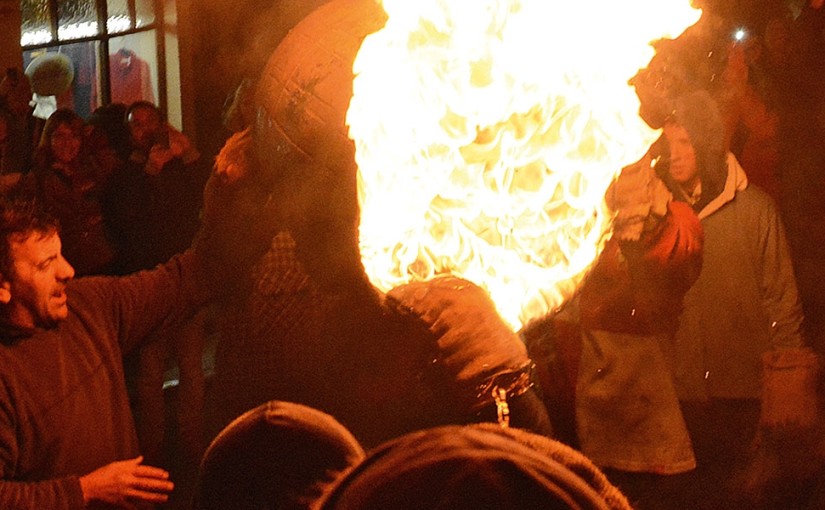
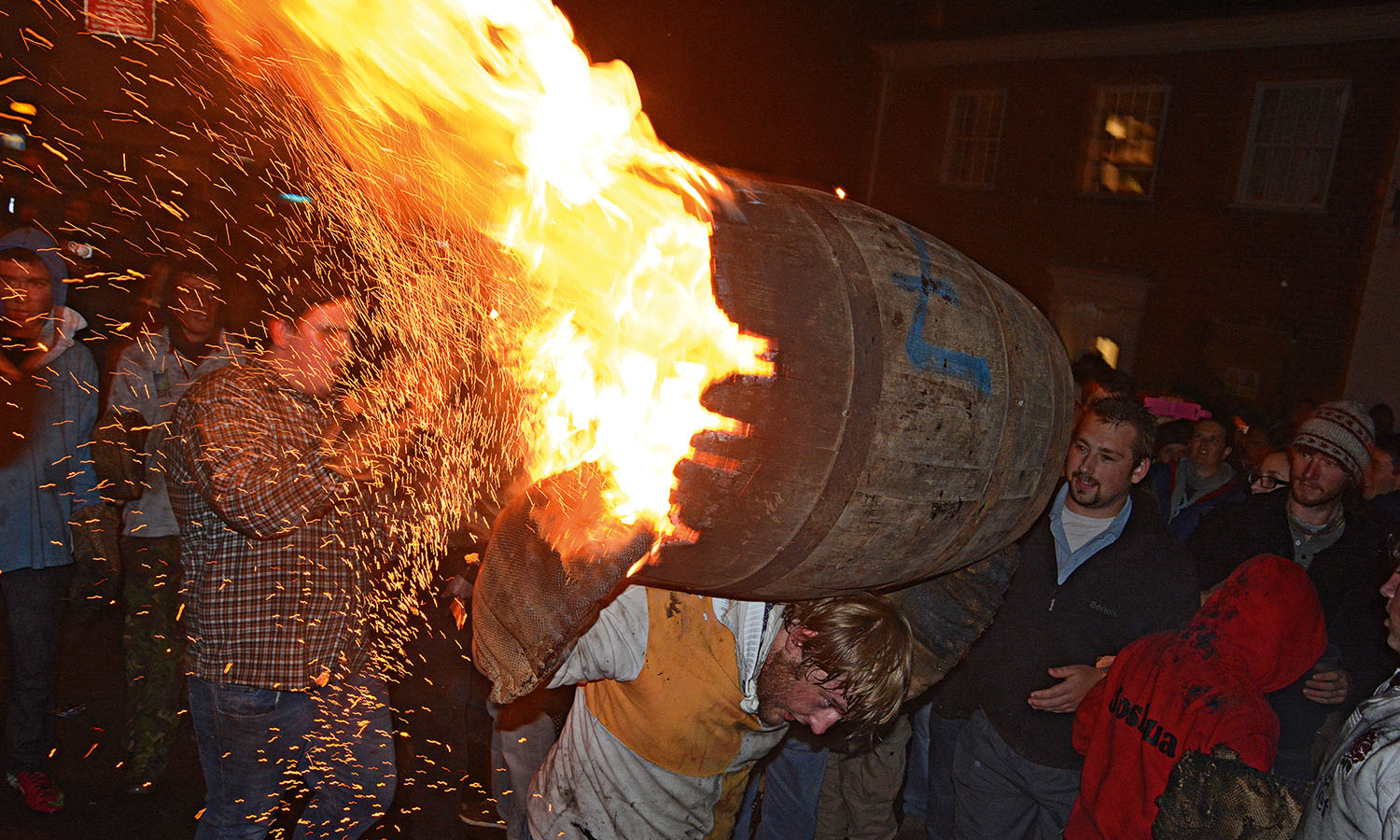
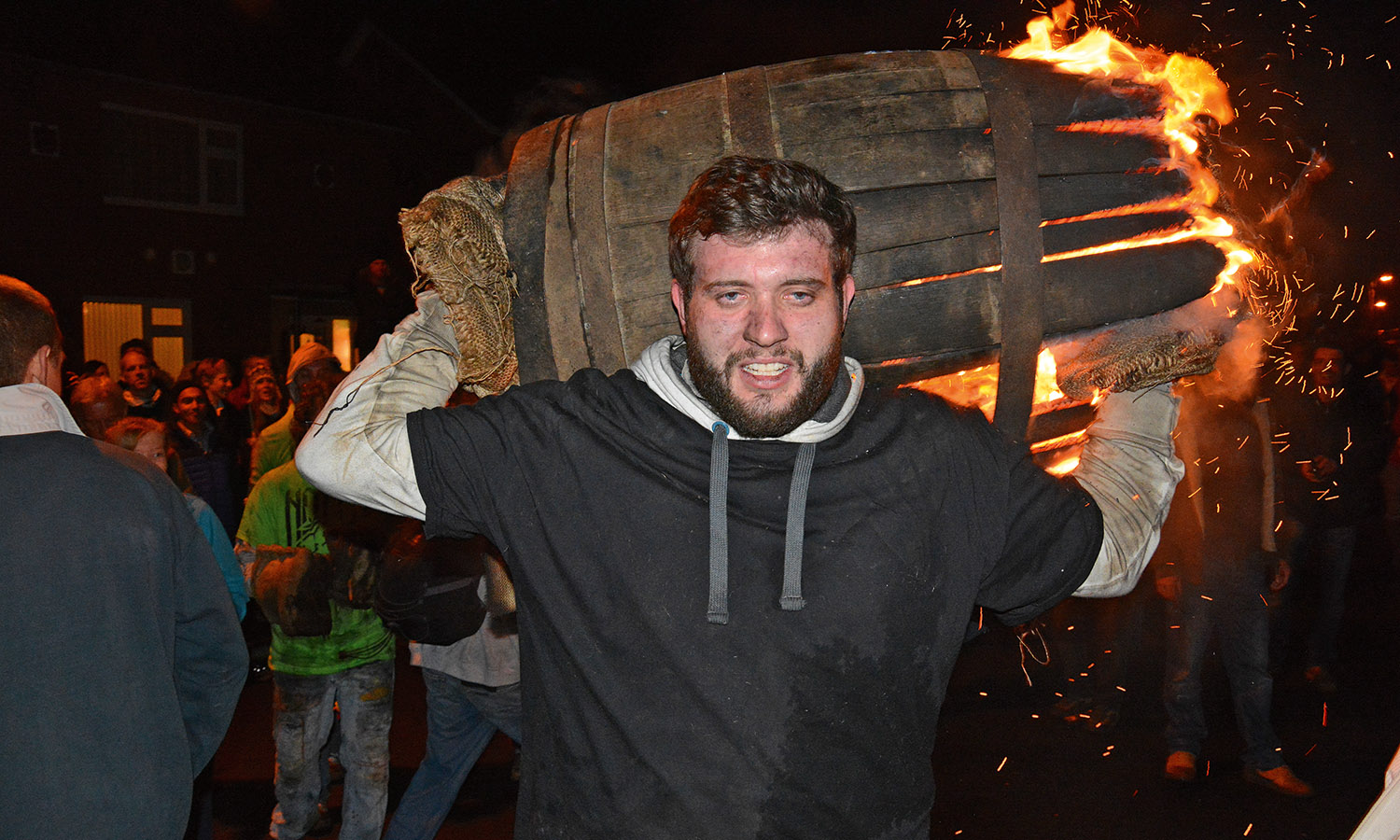
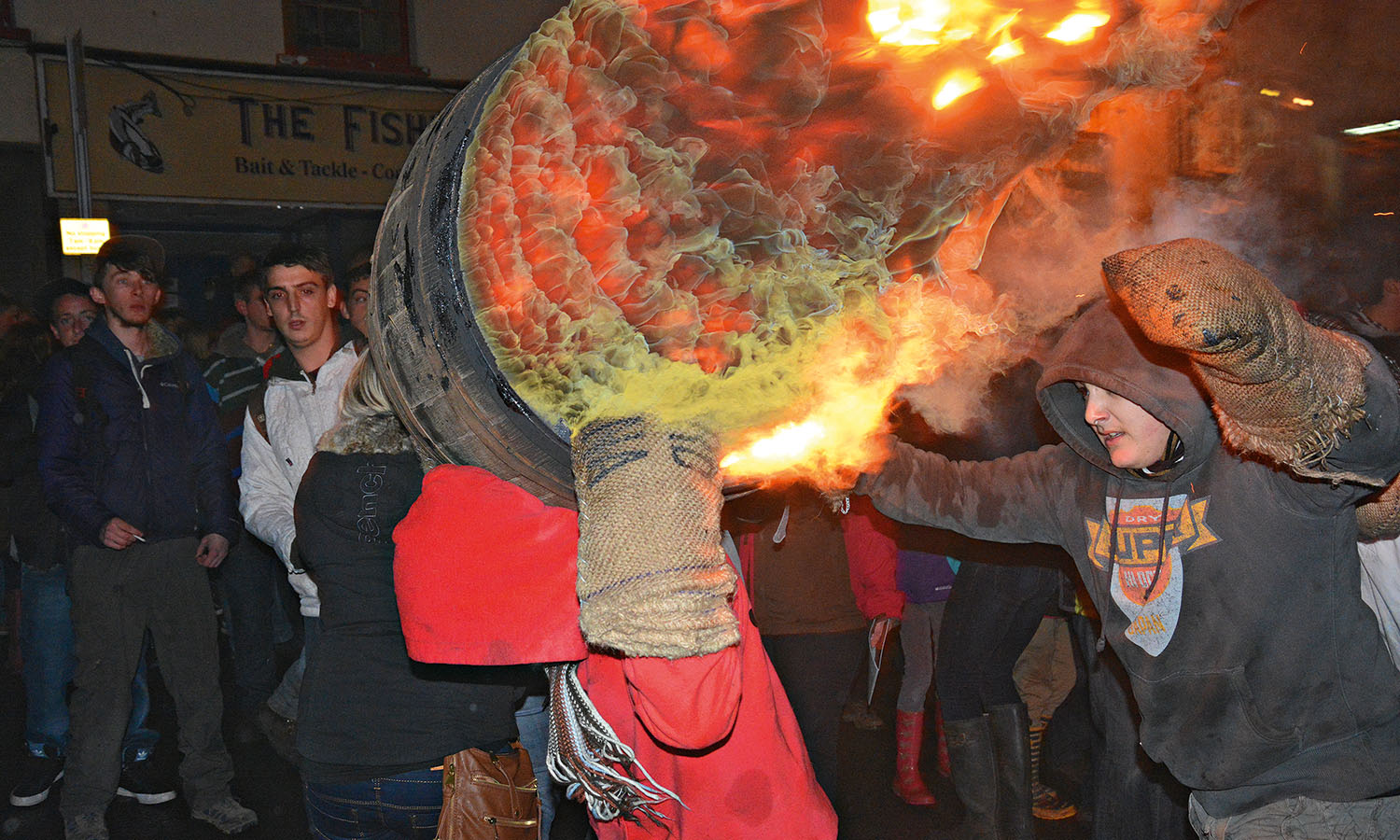
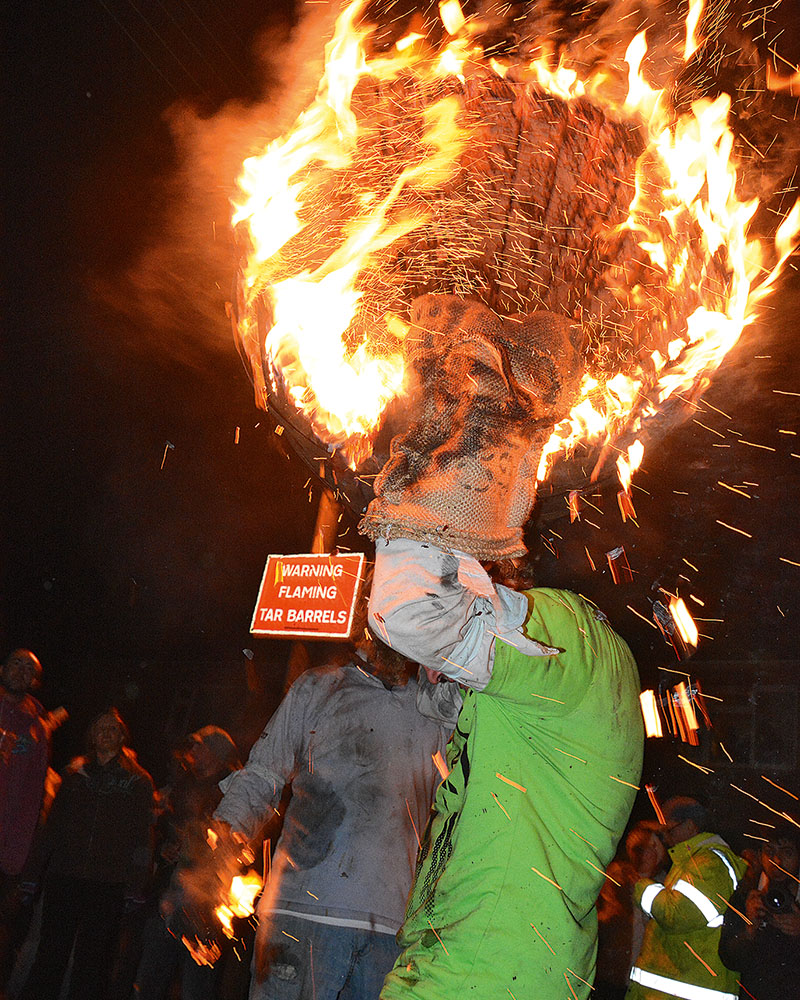
The rowdy crowd abruptly parts like the Red Sea and a big bearded bloke runs full pelt out of the darkness straight towards me, his whole head apparently ablaze. On his shoulders he’s carrying a burning beer barrel, and flames flicker ferociously in his wild eyes.

“Oh bollocks!” I yelp, suddenly aware that these eloquent words could be my last. Transfixed by the vision of this demented-looking figure bearing down on me, I’ve left it too late to get out of his path. A wall of over-excited onlookers surrounds me and there’s no gap to duck into. It feels like the running of the bulls, with angry bovines replaced by immolating men. And there’s nowhere left to run.

At the last minute, burning man performs a preposterous pirouette, as elegant as it is unexpected. The inferno intensifies with the oxygen rush that his flourish creates and the spectators let out an appreciative roar. Another man steps forward from the throng and the blazing baton is passed to a new runner, who immediately charges up the street, scattering people asunder and leaving a comet tail of sparks in his wake.

A quick self-check confirms I’m not on fire and – except for a few eyelashes that have disappeared in an acrid-smelling puff of smoke – most of my hair is still where I left it before arriving at Ottery St Mary’s Flaming Tar Barrels festival.

I should have known what to expect, I suppose. There’s a clue or two in the name, to be fair. And the town – normally a sleepy ever-so-English hamlet in the heart of bucolic Devon – has put up more than a few signs warning that tonight will be different. Tonight – like every 5th of November in Ottery – the townsfolk will party like it’s 1699.

Still, I wasn’t expecting the festival to throw off the health-and-safety straitjacket in quite such spectacular fashion. I’m awed. And impressed. And a little bit scared – in roughly equal measures.

Impressed because beardy burning-head dude is proof that you can get away with almost anything in supposedly polite and reserved Britain if history is on your side. The people of this idiosyncratic isle have never shied away from bizarre festivals and events that pose a pretty good threat to limb – life even – so long as there’s a tradition behind it.

This holds true, even if the actual origins of that tradition have long since been forgotten. No one really knows how many years people have been running around with burning barrels in Ottery – or, indeed, why – but it’s thought to date back several centuries (at least as far as the foiling of the Gunpowder Plot in 1605, and the subsequent execution of Guy Fawkes).

Andy Wade, who’s been involved in the event for 30 years, tells me that many places in England’s south-west used to hold festivals where burning barrels were rolled around. “But one year – a long, long time ago – some bright spark in Ottery obviously decided that things would be a lot more exciting if you picked the barrel up,” Andy says. “And our unique tradition was born.”

For centuries, it was just the good folk of Ottery who enjoyed this festival, but in more recent years it’s achieved international fame – along with other eccentric British events like the one that sees people breaking their legs chasing a wheel of cheese down a steep hill in Gloucestershire, or eating stinging nettles in Dorset. This is the kind of thing people watched before reality TV was invented, and I for one glow with nostalgic appreciation of such sensational spectator sports.

For a few mad minutes, caught up in the combustive energy of the event (and feeling the effect of several courage-laced pints of scrumpy), I feel like I want to do more than just watch – I want to have a go and really glow. Fortunately, however, I can’t. Charging around the streets of a small village lined with thatched cottages and wielding a blazing barrel is an honour reserved exclusively for locals (whose houses are, after all, most at risk).

I must be content with the rush produced by getting as close to the action as possible without actually going up in flames. At the beginning, during the children’s event (yep, there really is a kids’ version – the loads are smaller, but they burn just as hot as the big boys’ barrels), this is relatively easy. As the evening wears on, however, the streets get increasingly crowded and just being here becomes an adrenaline sport.

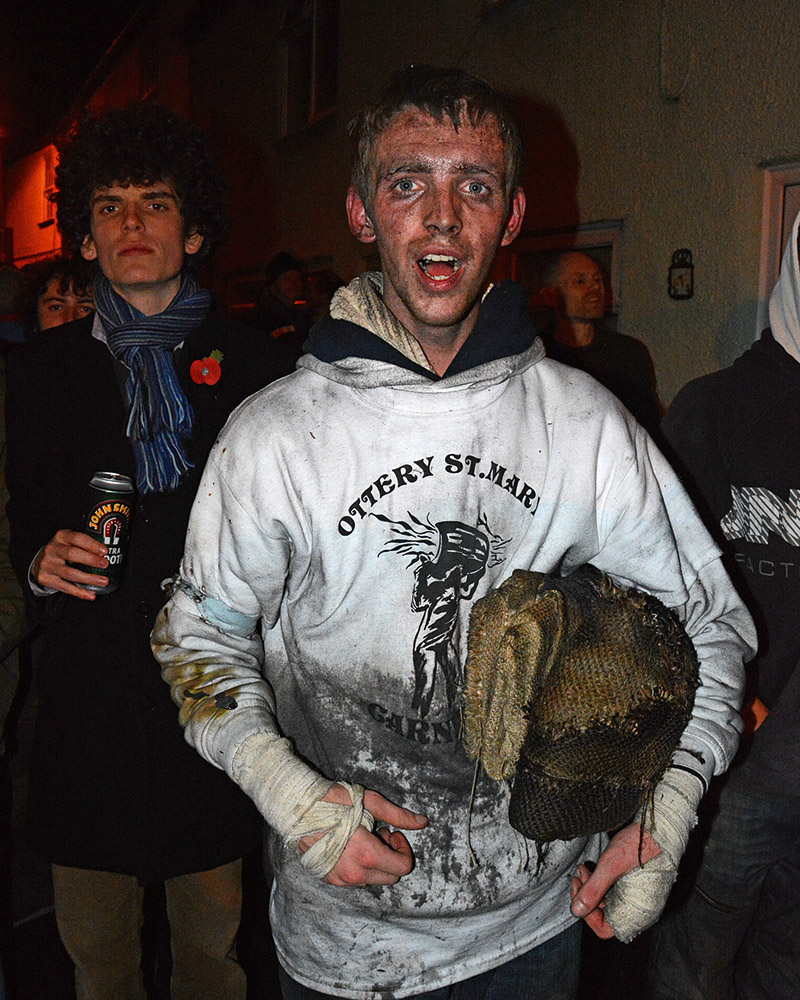
Actually, the shenanigans aren’t quite as explosively anarchic as they may seem from the outside. “The runners are extremely experienced,” Andy explains. “They come up through the ranks, starting with the kids’ barrels when they’re eight years old, then progressing to the intermediate barrels. Then, if they’re big enough and ugly enough, they move up to the men’s barrels.”
The whole thing clearly creates a real sense of local pride, and the community spends months preparing for one night of fire-starting festivities. Throughout the year, 17 barrels are regularly daubed with tar, part of the priming process for when they’ll be set ablaze during the evening of 5 November.

Traditionally, each barrel is sponsored by a public house, although only four of the town’s original pubs remain – The Lamb and Flag, The Volunteer, The London and the Kings Arms. The barrels are lit outside each of these alehouses to an itinerary published in a little booklet that is available on the night.

Officials then roll the barrel around until the flames really take hold, at which point a designated carrier steps forward and hoists it onto his (or her) shoulders and starts running. There’s no competitive element as such – the challenge is simply to keep hold of the barrel for as long as possible (even when it’s disintegrating around the holder’s ears) and to make sure it stays alight.

Inevitably, every year there are complaints from people who feel the event is unsafe. Andy’s message to them is simple: “The atmosphere is light-hearted, but barrels do get run through the streets. If you don’t like it, please stand back. And don’t touch or interfere with the barrels – the boys really don’t like that.

“Visitors have to remember that we don’t make any money out of this – the collections that take place on the night just about cover costs. Every year getting insurance is a problem. Of course there are injuries, but more of these are caused by factors other than the barrels – like people boozing too much and falling over.”
Although the barrel runners aren’t allowed to drink until they’ve finished, the crowd picks up the slack on the cider-swilling front. The older the night gets, the more boisterous the atmosphere becomes. And if detractors think the event is crazy now, it’s a good job they weren’t here a few years ago, before health and safety became such a big issue.

“It was proper mayhem when I was young,” Andy reminisces fondly. “People used to get cidered-up and there was plenty of fighting over the barrels. Things used to get sorted out on November 5.”
For the people of Ottery, it’s more about the perpetuation of a proud tradition than staging an internationally known spectacle. “Many of these guys come from families that have a connection with the event going back generations,” Andy says. “The fathers, grandfathers and great-grandfathers of these lads carried barrels. It’s an honour to be a barrel runner. There’s an Ottery-born bloke who comes back from Australia most years to take part.”

And for the rest of us non-Otterians, it’s one hell of a shindig. A free one too. So long as you don’t mind donating a few eyelashes to the cause.

Like a Local in Glasgow’s West End

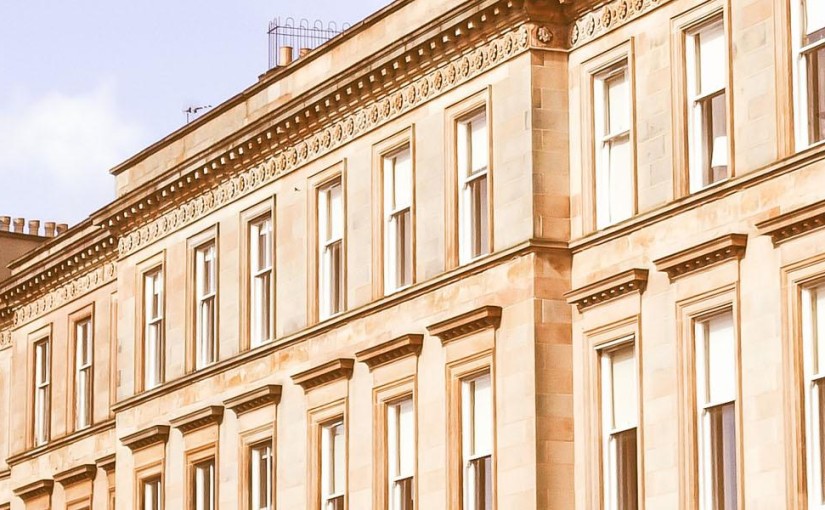
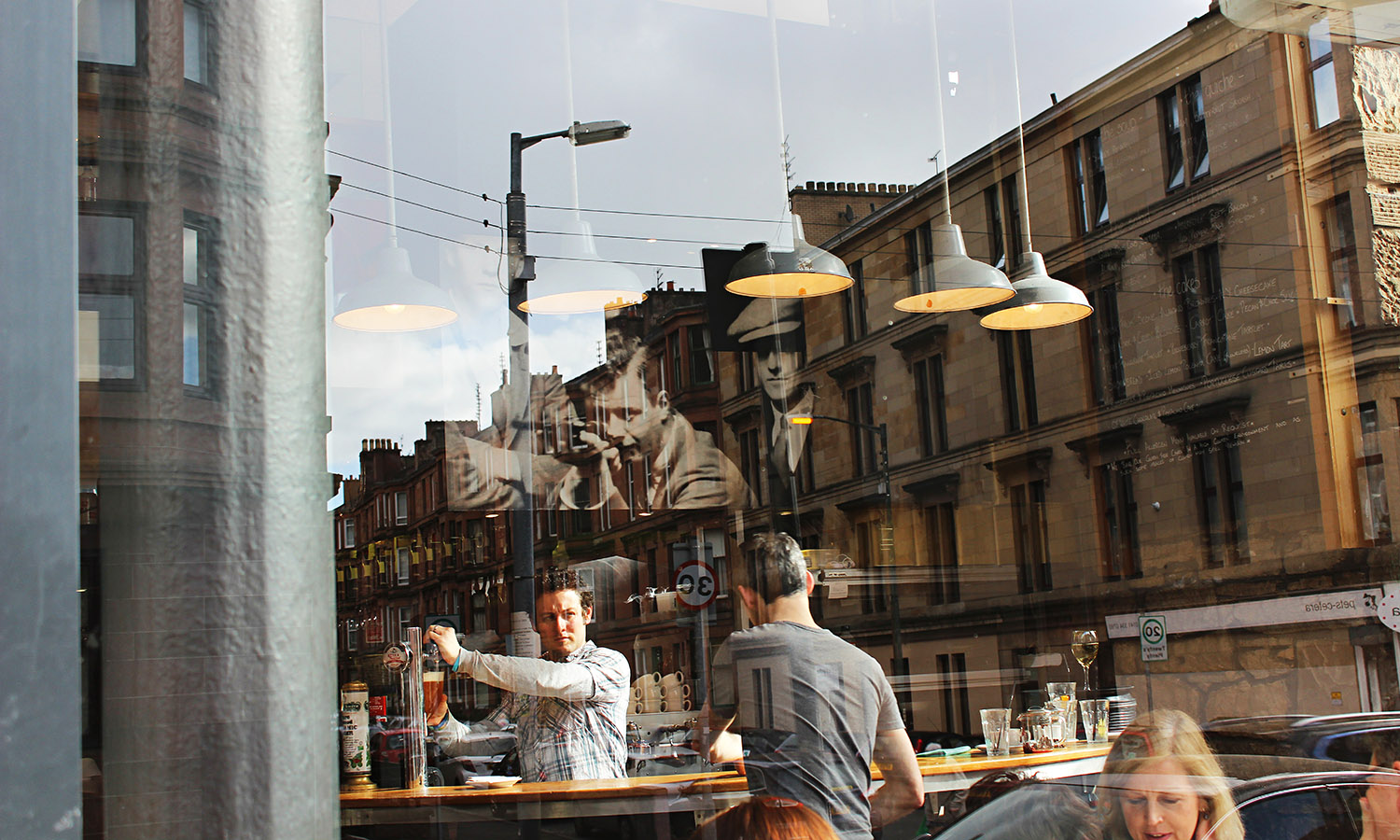
Glasgow’s multifaceted and charmingly rugged West End has moved through an intriguing transition over the past decade. Prior to the recent explosion of hip independents and a burgeoning gastronomic scene, pockets of well-heeled affluence posed amid student clusters, social-housing blocks and culturally diverse districts. Now, while a plethora of cultures, tastes and classes exist independently, the rich milieu has softened around the edges, blending harmoniously and contributing to the vibrant atmosphere that makes Glasgow the city it is.

My mother tells wild tales of her days as a student nurse in the 1970s tearing up the West End in her grandmother’s mink fur coat and burgundy suede platform boots. I love to imagine the chaos caused and exactly how the many hotspots that featured in her paisley-printed escapades looked back then. A surprising number of Mum’s old haunts are still standing, albeit many under their second, third or umpteenth guise. There are shadows of Campus, her favourite Gibson Street dress shop, still visible in the quirky coffee shop Offshore Cafe, where laptops line the bustling window-ledge bar. When Mum visits Glasgow our fondness for a shared glass of wine near an open fire, a dog lazing by the hearth and the authenticity of a coat hook beneath the bar is shared perfectly at the Ubiquitous Chip, a Glasgow institution on Ashton Lane, established in 1971.

Naturally, a great deal has changed cosmetically since that era, although as long as the people of the West End remain, the feel of the neighbourhood will never diminish. For the locals are the true lifeblood of the area. Stretching from the M8 Motorway, which separates the west from Glasgow’s cosmopolitan city centre, the West End spans a relatively vast scale, all the way from Finnieston, perched on the edge of the River Clyde to the north, to Great Western Road where an array of ethnic cultures has settled. Here, it’s possible to sample Eastern cuisine and alternative therapies in the vicinity of many temples of worship. Precisely how far West Glasgow’s West End reaches is debatable. I imagine the boundary to sit where Hyndland’s leafy periphery meanders into Clydebank, a region renowned internationally for its shipbuilding and the one and only Billy Connolly.

Like many districts in the world’s finest cities, Glasgow’s West End is best explored on foot and, for me, this presents the perfect opportunity to venture out of the atelier where I work with a visiting friend, client or simply with my camera, sketchbook and the weekend papers.

Traversing a few blocks to Great Western Road, I like to take a leisurely Saturday morning stroll westward as Indian grocers lay out their wares for the day and a steady stream of weekend brunchers begins trickling into the cafes – including the Cottonrake Bakery – that dot the street all the way to the Botanic Gardens. When you reach the Kibble Palace, be sure to peer in on tangles of colourful plant life under the exquisite glass ceiling.

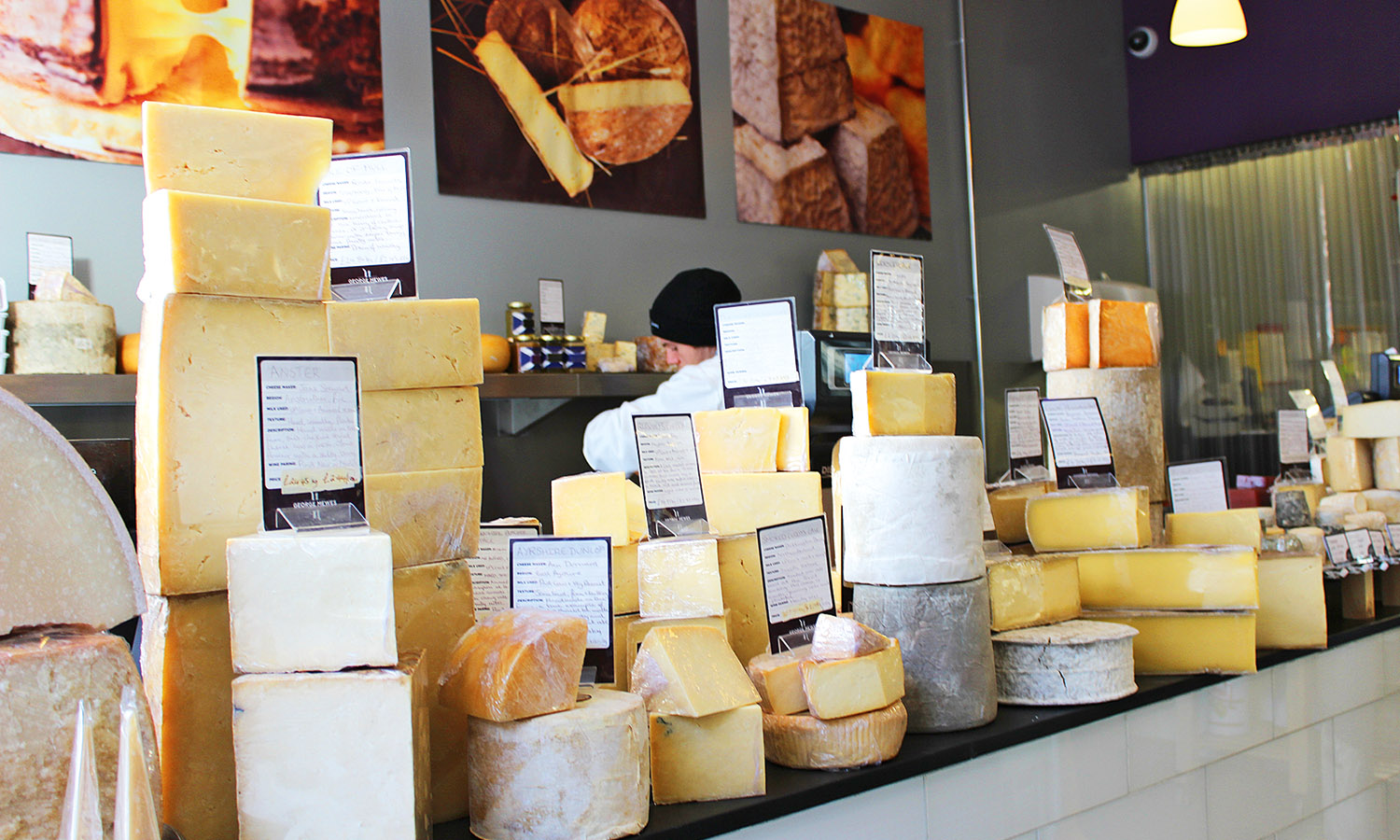
At George Mewes Cheese pause to breathe in the heady deliciousness and select a ripe little number, then head for an artisan brunch of coffee and eggs royale at Cafezique on Hyndland Street. Locally sourced seasonal produce and freshly baked breads, patisserie and cakes baked at sister eatery Delizique, just one door along, take centre stage here. If seats are few within the cafe, the deli boasts a selection of tables where guests can brunch, lunch or sip coffee among glistening stacks of focaccia, Portuguese tarts, raspberry brownies and monstrous meringues while gazing at the masterful chefs in their open-plan kitchen.

Suitably fuelled, trundle by the farmers’ market (held on the second and fourth Saturday of the month), where local producers present delicacies such as venison medallions, hot smoked salmon and delicious Scottish cheese truckles.

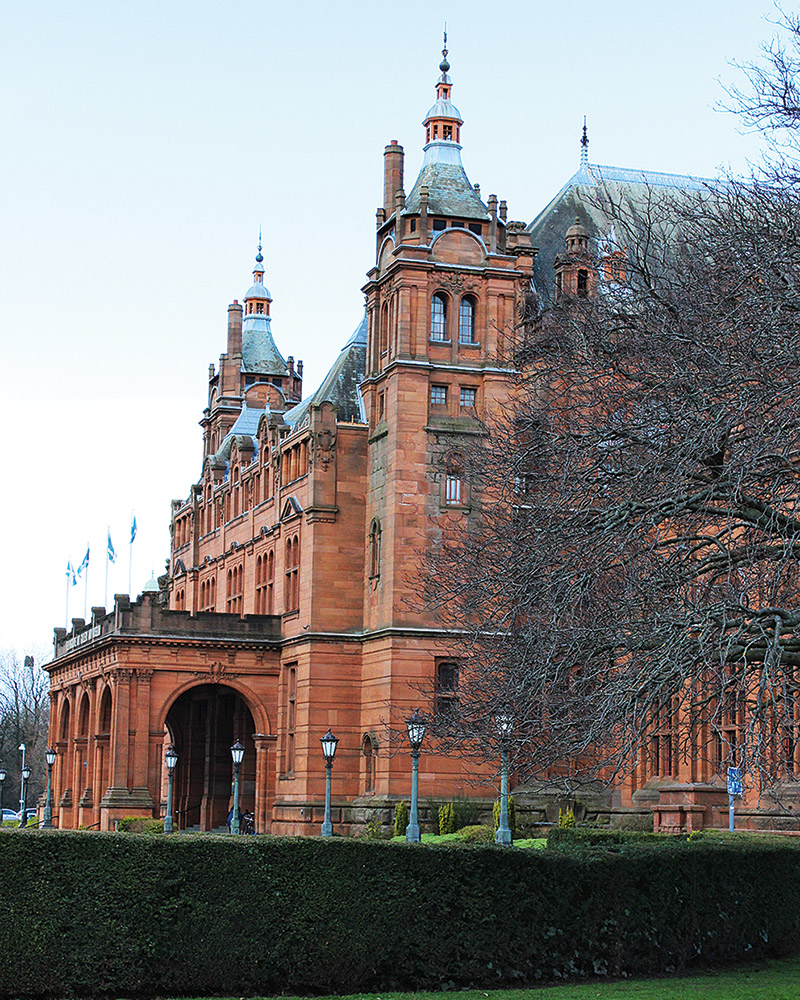
Only 10 minutes’ walk away is the majestic Kelvingrove Art Gallery and Museum, an otherworldly treasure trove of arts and fascinating exhibits (it also stocks signature scarves and interior pieces from our brand portfolio). Gazing at works by the Glasgow Boys – a group of artists, including George Henry and James Guthrie, who practised Impressionist and post-Impressionist painting in the 1880s and 90s – and Scottish Colourists is a joy I will never tire of. Posing for fun shots by the taxidermy exhibits and hopscotching over the impressive expanse of chequerboard floor evokes many cherished childhood memories – most poignantly, the moment I fell in love with painting on a high school art trip. Depart via the rear revolving doors – or perhaps they’re at the front, depending on how you interpret the famous story of the building’s planning history. Legend has it the Kelvingrove was built back to front, leading to the suicide of the architect at the helm.

Head along Kelvin Way, the tree-lined boulevard separating either side of Kelvingrove Park, then journey down Gibson Street under the gaze of the University of Glasgow cathedral, dazzling in the sunlight. Drop by Thistle Gallery on Park Road, which often hosts an exhibition launch on Saturday afternoon. It only opened in late 2014, but already the gallery has become a neighbourhood staple, and I’m honoured to have them represent me as an artist.

By this stage of the afternoon it’s time to wander back to the atelier (Iona Crawford Atelier) for what has become something of a Saturday afternoon ritual. After they’ve toured the garment and interiors showrooms, design studio and gallery space – pausing to try on garments in front of the floor-to-ceiling mirror or take measurements for a specially tailored piece – we serve our guests a champagne afternoon tea. Warm game pies, finger sandwiches, scones with jam and clotted cream, lemon drizzle cake and millionaire shortbread are all handmade and freshly baked, either within my father’s butcher shop and bakery or by my dear mother in the farmhouse kitchen where I grew up in the Stirlingshire countryside.

Worth exploring in the afternoon is Finnieston. Within the past five years or so, it has established itself as one of the hippest spots in the West End – indeed, in all of Glasgow. Contemporary bars, restaurants, cafes, chic blow-dry salons, vintage boutiques, independent design firms, art galleries and delicatessens continue to throw open their doors each month. The catalyst – in my eyes – was a restaurant named Crabshakk. Shunning the trend for overcomplicated, overpriced seafood served in stuffy, often dated surrounds, the ’Shakk took a pioneering approach. Whether a stool at their buzzing marble-top bar or around a cosy table on the bijou mezzanine level, every seat in the house is red hot. Guests can turn up, casual as you like, and order anything from moules marinière and mineral water to exquisite fruits de mer and a bottle of the restaurant’s elegant house champagne. Much to the delight of Glasgow’s ’Shakk loving aficionados and the ever expanding army of Finnieston foodie fanatics, Crabshakk launched a sibling in 2012 which, like the Cafezique/Delizique pairing, is situated only a skip and a jump along Argyle Street from the original. Serving small plates of seasonally sourced and exquisitely prepared seafood, Table 11 Oyster Bar is a great place to grab a quick plate and a glass of wine, or settle in for the evening, grazing the inviting menu until late-night pintxos (Spanish snacks) hit the bar. If an end-of-the-eve sing-along takes your fancy, the Ben Nevis is an amble across the road. Here, locals and visitors pile in, instruments in tow, jamming into the wee small hours and sipping malt from the impressive whisky gantry. Although when only cocktails can cut it, nothing beats the Kelvingrove Café’s speakeasy vibe or an exquisite Intermission martini at Porter & Rye.

Bringing Rock to the USSR

First, imagine you’re managing some of the biggest bands in the known universe and that, somehow, you’ve been busted – caught up in the midst of a drug deal that involved importing about 18,000 kilograms of marijuana from Colombia to the USA. Then imagine you somehow talked the judge into a pocket-change fine with the promise of using your influence in the world of rock to start an anti-drugs foundation.

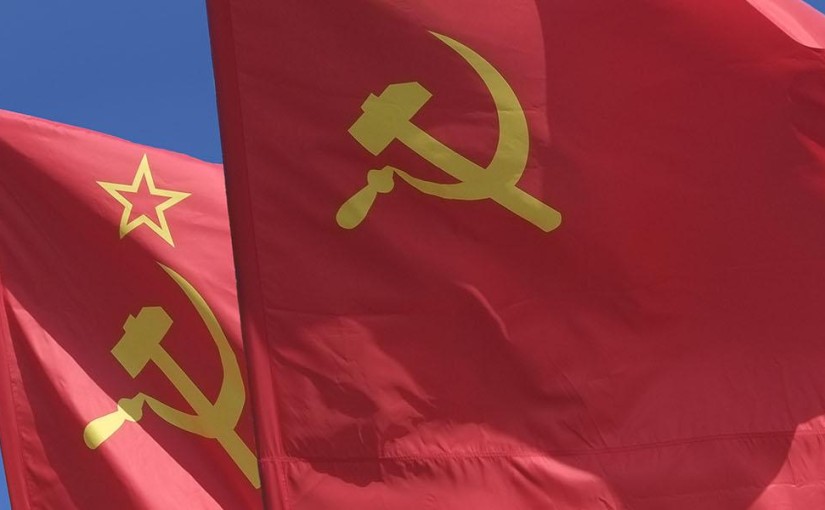
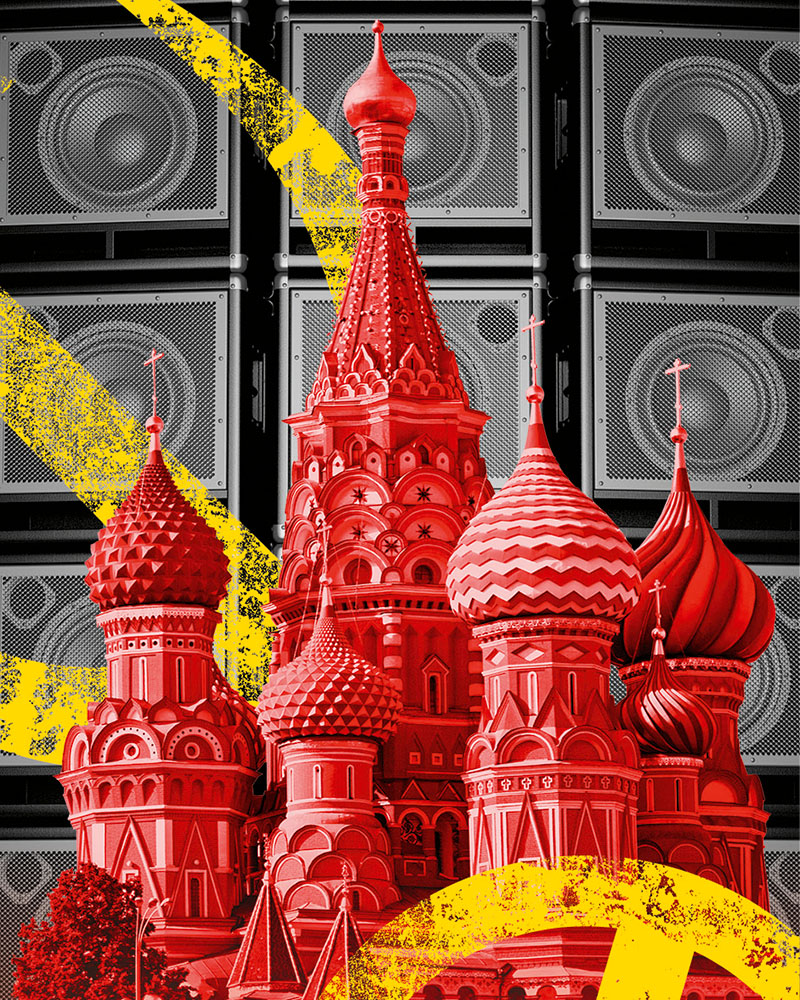
It sounds like the sort of storyline fuelling a fantastical comedy movie, but in truth that’s exactly what happened. In 1989 Doc McGhee pleaded guilty to aiding and abetting, copped the US$15,000 penalty and a five-year suspended sentence, and convinced the judge to let him hold his version of Woodstock 20 years later and half a world away. The Moscow Music Peace Festival would take metal to the kids of the USSR and teach them all that drugs are bad. Proceeds from the gig and the accompanying compilation album would pay for doctors from the States to fly to the Soviet Union to train its medical staff in rehabilitation, since electroshock therapy was still one of its preferred options for treating drug addiction.

At the time McGhee was minding the careers of some huge acts – Bon Jovi, Mötley Crüe, Skid Row, The Scorpions and a Russian group called Gorky Park – and had connections to Ozzy Osbourne and Cinderella. When local acts Nuance and Brigada S were added to the bill, it looked – on paper – to be one of the greatest gigs of all time. All that hair, all that metal, all those riffs, all taking place over two days in a stadium that seated 100,000 people. But this would also be the first rock concert in the USSR where punters would be allowed to stand and inhabit the field area, so an even larger crowd was expected.

But with big names come big egos. Add to what might already be a volatile scenario a load of blokes with well-documented issues with alcohol and drugs (the Crüe were straight out of rehab and, only weeks later, Ozzy would be charged with trying to strangle Sharon after he drank all the miniature bottles of Russian vodka one of the promoters gave him) and you’ve got the makings for a fairly interesting few days.

“It was all bad from the moment we stepped on the plane,” Tommy Lee said in the Mötley Crüe biography The Dirt. “There was a so-called doctor on board, who was plying the bands who weren’t sober with whatever medicine they needed. It was clear this was going to be a monumental festival of hypocrisy.”

Everyone involved in the tour was staying in the only ‘five-star’ hotel in Moscow, which was anything but. One journalist described cockroaches clinging to the walls, cigarette butts floating in the toilet, water that ran brown and prostitutes roaming the halls. Wandering around Red Square the day after arriving, Osbourne was disdainful, recalled Mick Wall in his book Appetite for Destruction: The Mick Wall Interviews. “If I was living here full-time, I’d probably be dead of alcoholism, or sniffing car tyres – anything to get out of it,” said the rocker. “I can understand why there’s an alcohol problem here. There’s nothing else to do.”

It didn’t help that McGhee had been promising every band on the bill the world. Concerned about where the money from proceeds would really end up, Aerosmith had pulled out of the event at the last minute and insisted their contribution on the accompanying album, Stairway to Heaven, Highway to Hell, be removed before the record went on sale. The night before the first show, cut about the fact he’d been moved from third on the bill to fourth – with the Crüe muscling into the space he’d left – Osbourne threatened to go home. So McGhee reshuffled again and Ozzy stayed. Word on the street was most of the bands weren’t particularly stoked Bon Jovi – a band most metal fans considered to be closer to pop than hard rock – was even on the bill, never mind headlining. It’s true to say the guys from Mötley Crüe hated their New Jersey counterparts. When Bon Jovi closed with a fireworks show, which the others had been told wasn’t going to happen to save money, Tommy Lee was so incensed he stormed up to McGhee, punched him in the face and fired him as the band’s manager. Weeks later Bon Jovi did the same thing (minus the sock in the mouth).

For all the agro, the music was an out-and-out success. Each band played six songs, with the Scorpions, who were the only band to have played behind the Iron Curtain (10 sold-out gigs in Leningrad about 18 months earlier), lapping up the fervour of the crowd. Each evening finished with a huge jam, with members of all the bands joining Jason Bonham, son of the late Led Zeppelin drummer John Bonham, on stage to finish up with the Zep classic ‘Rock and Roll’.

For Bonham, then 23 years old, it was an emotional time, despite what was going on around him. His father had died in 1980 of a heart attack apparently induced by excessive drinking. “Substance abuse is a very difficult issue because no one likes to admit they have a problem, but if you take it one step too far you can end up dead,” he said in a press conference during the show. “And the sad thing is it’s not just you who is hurt, but the people around you.

“When someone listens to all that great music, it may make them stop and realise what we’ve lost to drugs.”

Powder to the People

I had been leading tours in North Korea for a year when I was invited to visit the newly built Masikryong Ski Resort.

Making our way up the mountain in the dead of winter, the usual propaganda signage of party progress adorned the snow-covered hills as we passed old-world farming villages in sub-zero temperatures.

The inaugural North Korean ski season was met with scepticism in the West, partly because sanctions prohibited a Swiss manufacturer from exporting ski lifts to the rogue state. But within North Korea, the ski resort reflected the advances the country was making under its new leader, with Masikryong becoming synonymous with progress and national pride.

In the Democratic People’s Republic of Korea achievement is often measured by how ahead of schedule projects are completed. Throughout our tour of the resort, local guides proudly boasted that the entire place was constructed in just 10 months. Inside the hotel you could still smell the plaster setting – the army likely worked overtime to have the resort built at what has been dubbed ‘Masikryong speed’.

At the pool and sauna we were presented with baby-blue speedos to wear in the steam rooms alongside perplexed elderly Korean women. Symbolic of the centralised production of clothing, every swimmer wore one of two styles of swimsuit. The hotel also had a rare resource – internet, available in the business centre if you don’t mind someone beside you taking notes of your searches. North Korea has the lowest internet connectivity in the world, but the bandwidth on the isolated mountain was surprisingly reliable.

After squeezing my feet into snowboard bindings two sizes too small, I hit the slopes. Masikryong is an ambitious attempt to attract overseas tourists, but the only foreigner I encountered was an Austrian ski instructor. Granted, he spoke highly of the overall standard of the nine ski runs. The West has portrayed Masikryong as a plaything of the country’s elite, built at the expense of the broader, impoverished population. Yet, from what I saw on the mountain, the rookie Korean skiers falling over each other were all with work units, most likely granted the trip as a reward for achieving production targets.

Music looms large in North Korean society. In Pyongyang, revolutionary tunes blast from street speakers and mobile vans, waking workers through a centralised alarm clock. Across Masikryong, the same music can be heard, reminding an emerging generation of skiers to think of the Workers’ Party of Korea and its leader while having fun on the mountain.

The placement of music along each ski run is precise and strategic. Only as our chairlift started climbing the mountain did the triumphant patriotic hymns begin to fade, but the reprieve was short lived. Once over the hill, speakers stuck to every few towers ensured the glorious revolutionary anthems kept us company for the entire 45-minute journey to the summit.

During the ascent, I learnt that the lifts dangling precariously from the slopes were acquired second-hand from China, bypassing trade sanctions. As we neared the summit, the view faded to white and I began to wonder whether safety standards had been compromised for the sake of Masikryong speed. Fortunately, a local bottle of alcoholic ginseng tonic shared with our Korean friends eased my anxiety.

At night the hotel was deserted until we chanced upon a room full of young soldiers, belting out revolutionary hits on a karaoke machine. Their mood was festive and they warmly insisted we drink with them. One of the soldiers was fluent in English and spoke sincerely of his gratitude for Kim Jong-un who, in his eyes, had worked tirelessly to gift Masikryong to the Korean people.

As the beer and soju flowed, the soldiers urged us to sing, dance and form a conga line with them. They pushed us onto the stage and demanded we sing an English song for them. With no English songs available, I was forced to eke out an a cappella rendition of ‘Moon River’, which was met with the raised eyebrows it deserved.

Suddenly, the soldiers marched out as one and we were left in the bar with a female singing troupe who turned out to be members of the Moranbong Band (North Korea’s first all-girl super group hand-picked by Kim Jong-un). Also at the bar was a casually dressed fellow who must have been someone significant, given he was permitted to drink with us. My assumptions were confirmed by the presence of a figure sitting across the room, watching us and smoking in the shadows as we chatted about life in the DPRK and toasted its new ski resort.

The following day as we departed Masikryong, we encountered dozens of farmers on the road using hand tools to uncrack the frozen highway. In the other direction a Mercedes Benz beeped its horn for the road workers to disperse as it ascended the mountain at Masikryong speed.

Oh, My Lord

I’ve met a bird travelling and I’m smitten. She has exquisite brown eyes, a goth-black pecker, voluptuous bust and a body that feels like heaven’s velvet.

“Look how calm and content she is with you,” local guide Kenny says, sensing the chemistry between us. I almost don’t hear him. We’re sharing a moment, locked in a delicate embrace that elicits the kind of first-date goosebumps you get when two souls connect. It doesn’t matter that it’s raining buckets. Thick pellets whip my face, others detonate on my raincoat, finding chinks in my waterproof armour and seeping through to my skin. It’s a total whiteout but I’m completely oblivious.

I’m on Lord Howe Island and the bird that has won my affections is a providence petrel – a rare seabird that breeds nowhere else on Earth. I’m not a twitcher and you’d never catch me stalking out a hide in a camouflage vest and explorer hat – binos at the ready – but this experience has really moved me.

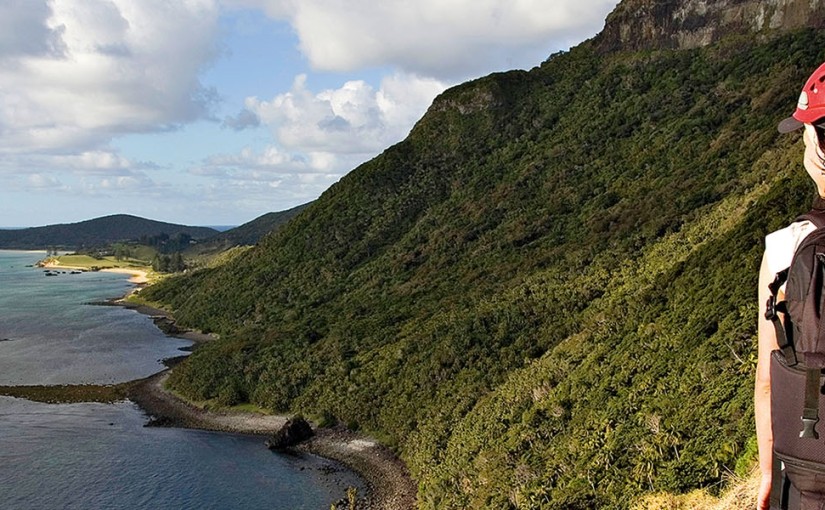
We’ve come to the base of Mount Lidgbird, one of the dramatic twin peaks symbolic of Lord Howe, to witness a rare and extraordinary weather event. A cyclonic-force low on the mainland has dumped 230 millimetres of rain in two days, transforming the volcanic rock faces that loom over the island into spectacular silvery cascades. Being here for this spectacle, on an island renowned for its mild climate, is akin to watching waterfalls tumbling off Uluru. But getting close to the action is going to involve getting wet. We stomp through mud, wade through shin-deep water and negotiate a knee-high crossing powerful enough to sweep the feeble-footed out to sea. The track burrows through tunnels of forest turned into gushing rivers, the overhead foliage blunting the force of the rain until we arrive at a grassy headland, hemmed in by the brooding Tasman Sea on one side and the basalt escarpment of Lidgbird on the other.

There’s an auditory deluge as the distant waterfalls compete with the thumping downpour on the hood of my raincoat. But there’s another sound too, the squawking of black-boomerang silhouettes circling overhead. It’s late afternoon and the curious petrels are coming home to roost. They respond to noise, and soon I’m cooing and howling like a banshee, calling the birds down. They literally drop out of the sky, one then another – gently carpet-bombing the ground until there are half a dozen clumsily flapping at our feet.

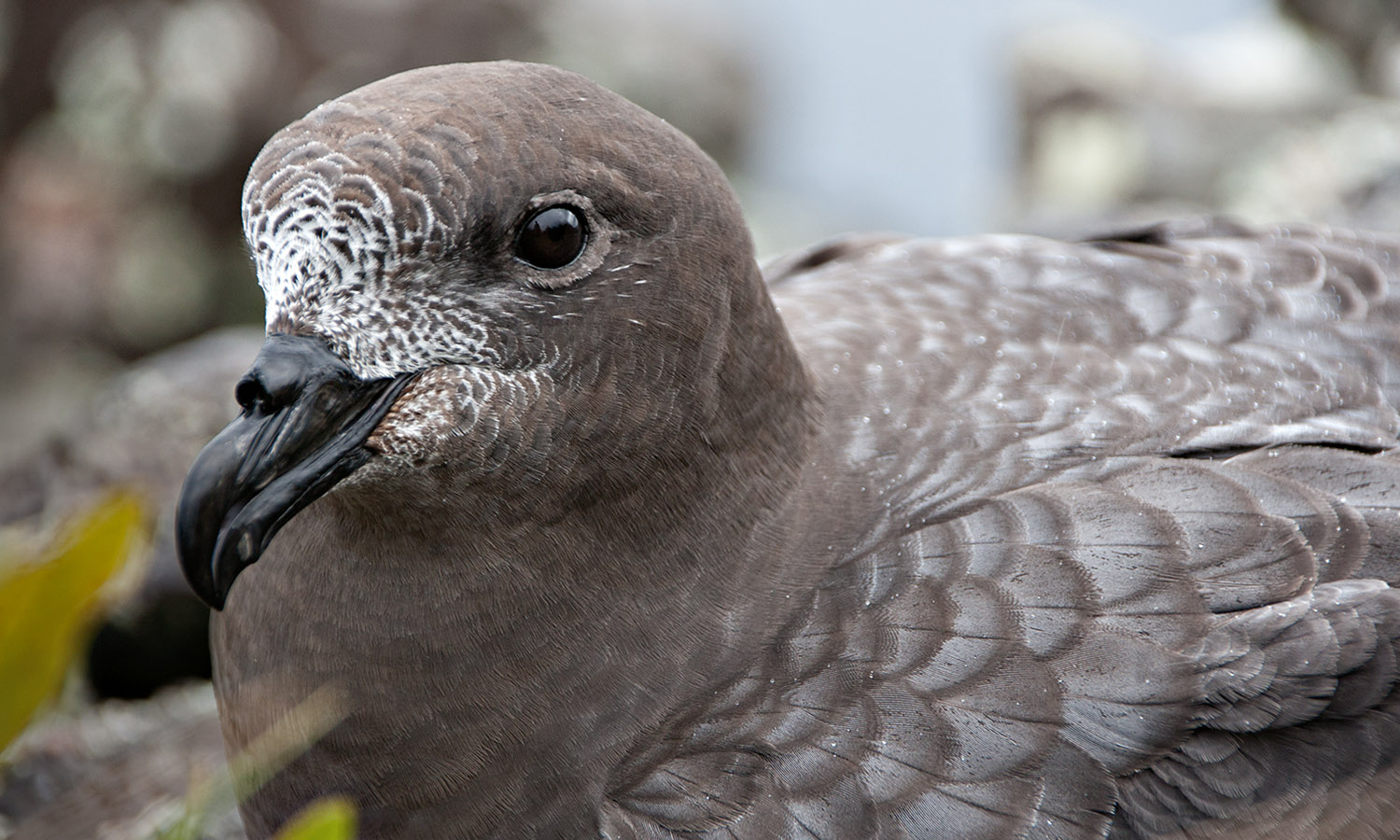
Our guides encourage me to pick one up. It’s not normally the done thing interacting with wildlife like this, but I really want to. I have to. I delicately slip my fingers under a bird’s ribcage and tuck it into the crook of my arm against my tummy. Its little webbed feet retreat under a plumage of fine brown-grey feathers in trustful submission. I stroke its chest, a little heartbeat pulsing against my fingers, and study the white-scaled pattern around its face and the rain droplets, forming like tiny diamantes, on the crown of its head. The bird is so relaxed it’s almost in a trance-like state. That’s what happens when you inhabit a remote island largely isolated from human contact. Birds have no fear.

Being here for this spectacle, on an island renowned for its mild climate, is akin to watching waterfalls tumbling off Uluru.

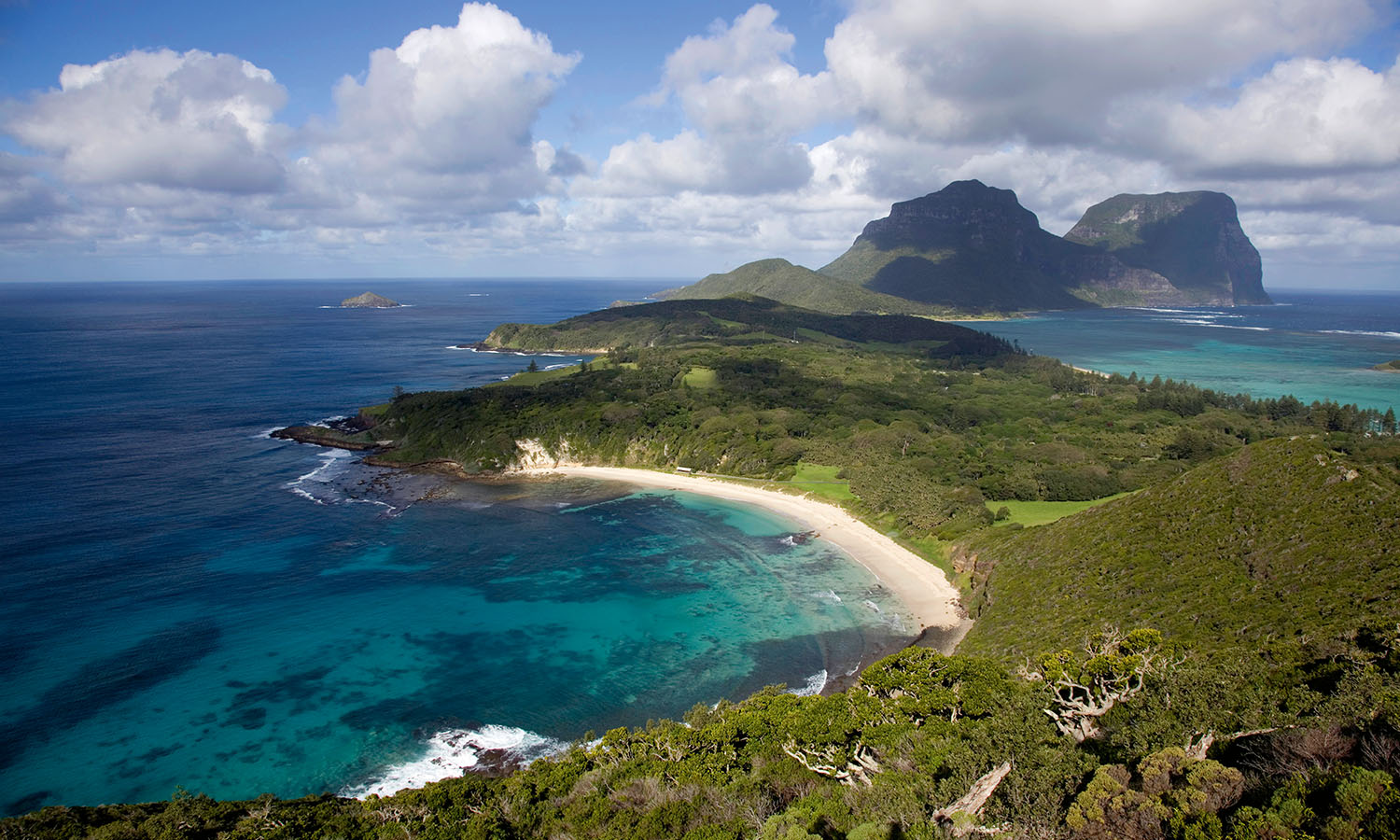
Lord Howe is the Galapagos of Australia, renowned for its proliferation of wildlife and plants, including many rare and endemic species. Thrust out of the Tasman Sea by volcanic eruptions almost seven million years ago and sculpted by molten rock and erosion, the island – a speck 600 kilometres off the NSW coast of Port Macquarie – nurtures a unique biodiversity that earned it world heritage status in 1982.

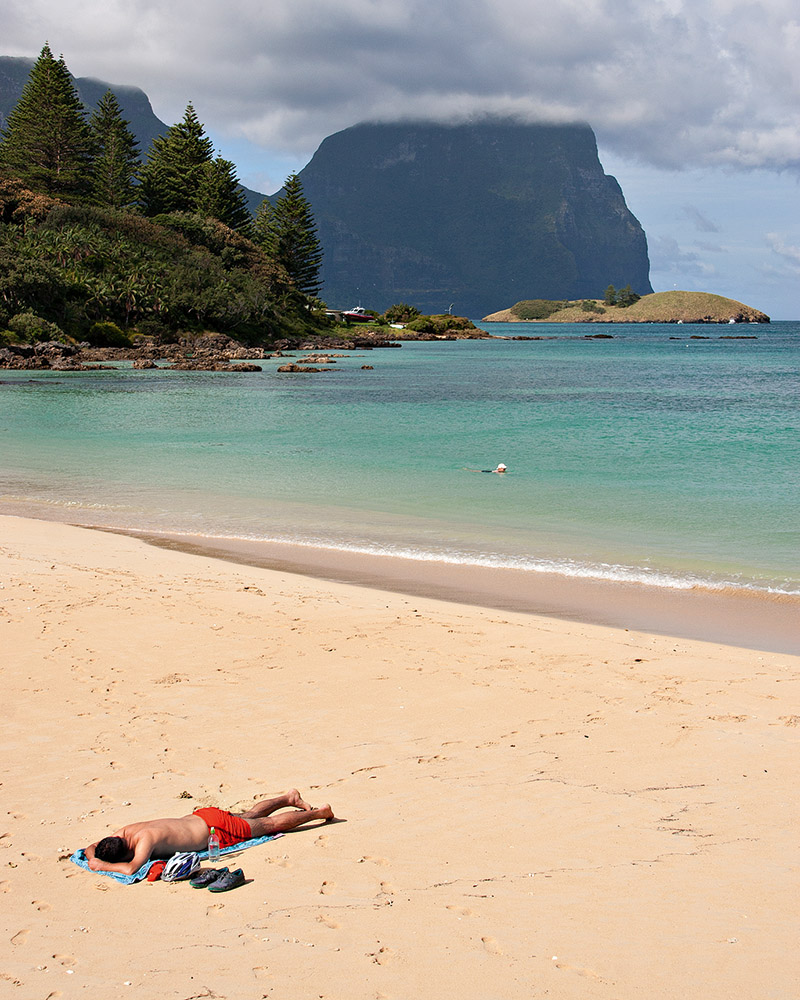
The island’s topography is staggering – 1455 hectares of subtropical rainforest and volcanic rock, fringed by white-sand beaches, grottoes, a sapphire lagoon, the world’s southernmost coral reef and sheer basalt cliffs. Not bad considering 97.5 per cent of the island is below water; in another 200,000 years it will all be submerged. On high ground, the interior is a veritable greenhouse of pandanus, banyan trees, ferns and kentia palms (once the lifeblood of the island). This is a remarkable habitat where the animal kingdom is, well, king. With a permanent population of just 350 people and visitors capped at 400, Lord Howe sees to it that humans are dramatically outnumbered. There are more than 300 plant species, a third of those endemic, and 166 types of birds (but only one mammal – a bat). This is all bookended in the north by the Admiralty Islands and in the south by Mount Lidgbird and Mount Gower – imposing humpback peaks visible from almost anywhere on the island. Except when the weather is foul.

When I visit, the small Dash-8 aircraft that service the island are grounded for two days, cutting Lord Howe off from the world, and Gower (a tantalising 875-metre hike) retreats behind a veil of mist, then disappears altogether. The lagoon turns from translucent to opaque and the entire island hums to the patter of rain – a regenerative force that keeps the landscape green – and the guests watered. A couple of weeks before my arrival, two months had passed without rain and the polite suggestion to limit showers to five minutes became a fervent request. Now Pinetrees Lodge – the oldest and biggest guesthouse on the island, situated on a lowland flat – is running pumps to keep rooms dry.

“This is almost miserable,” co-owner Luke Hanson says with a grin. He’s wearing his “wet-weather uniform”, a Gortex jacket and bare feet, and is armed with a cloth. “You don’t think this is miserable?” I respond. “No, no, this in mid-winter, day four with a howling southwesta, that’s miserable.”

Staring out over the island, the peaks of Gower and Lidgbird dominate the horizon, each topped with a beret of white cloud.

I could think of worse places to be stranded. Even in the wet Lord Howe is captivating – a true wilderness with a dramatic landscape reminiscent of Hawaii, and unbridled adventure opportunities. I’m ostensibly here for an organised walking and photography week, though I’m not sure my photos will do the island justice.

When the rain eases we take a boat over the glassy lagoon to North Bay, a postcard cove that in summer teems with 100,000 pairs of sooty terns nesting in the sand. We climb to the top of Mount Eliza, the north-westernmost point on the island, and watch as cobalt ribbons of water smash into the cliffs and volcanic dykes below. Staring out over the island, the peaks of Gower and Lidgbird dominate the horizon, each topped with a beret of white cloud. Another hike takes us to neighbouring Kim’s Lookout and along a ridgeline to Malabar Hill, where we spy in the rock crevices red-tailed tropicbird chicks.

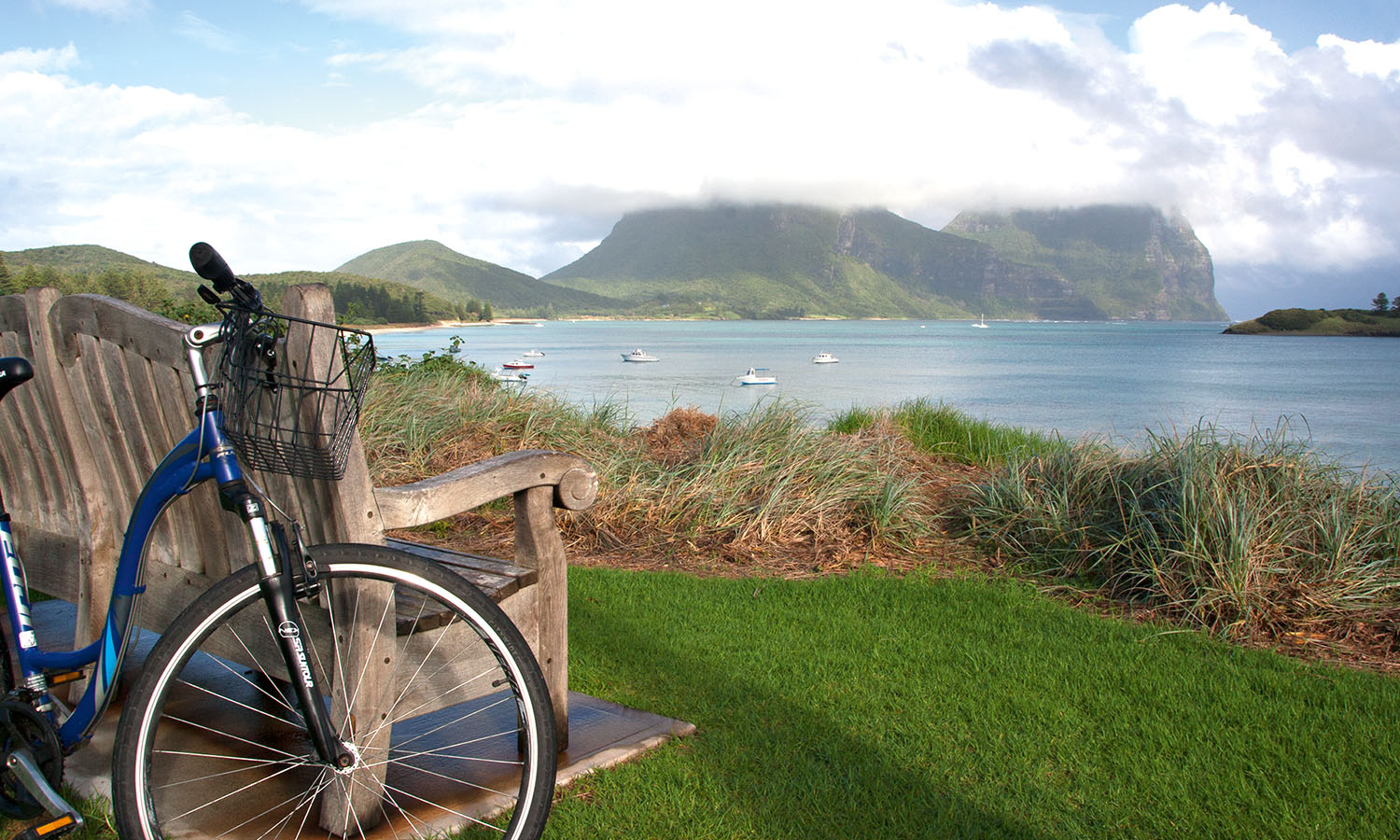
Lord Howe is a chameleon, and one morning I wake to blazing sunshine. I hire a bike (the primary mode of transport on the island) and ride through the sleepy blink-and-you’d-miss-it centre of town to Ned’s Beach, a horseshoe alcove on the northeast coast. There’s a rustic shelter with tubs of snorkelling gear and an honesty box, as well as an old-school gumball machine that dispenses fish food pellets. I put in $1 and crank out a handful to take to the beach. I’m instantly accosted by dozens of mullet that almost suck the ends off my fingertips. A big bluefish swims up for a nibble, grazing my finger with its teeth, and I spot a beautiful trumpet fish floating past like a colourful piece of driftwood.

Some 100 varieties of coral and 500 species of fish populate the sublime waters of Lord Howe thanks to a warm North Queensland current that flows easterly from the mainland. Snorkelling in North Bay, I glide over coral gardens festooned with marine life and heaving with colourful fish. On the boat journey back three green turtles float to the surface, momentarily poking their noses out of the water. This island is such a tease.

Gower has been beckoning all week but is off-limits given the recent weather conditions. Even local guide Dean Hiscox, who with his daughter and a mate went canyoning in the valley between Gower and Lidgbird at the height of the downpour, is cautious. “Gower will be an adventure… possibly life threatening,” he says, deadpan.

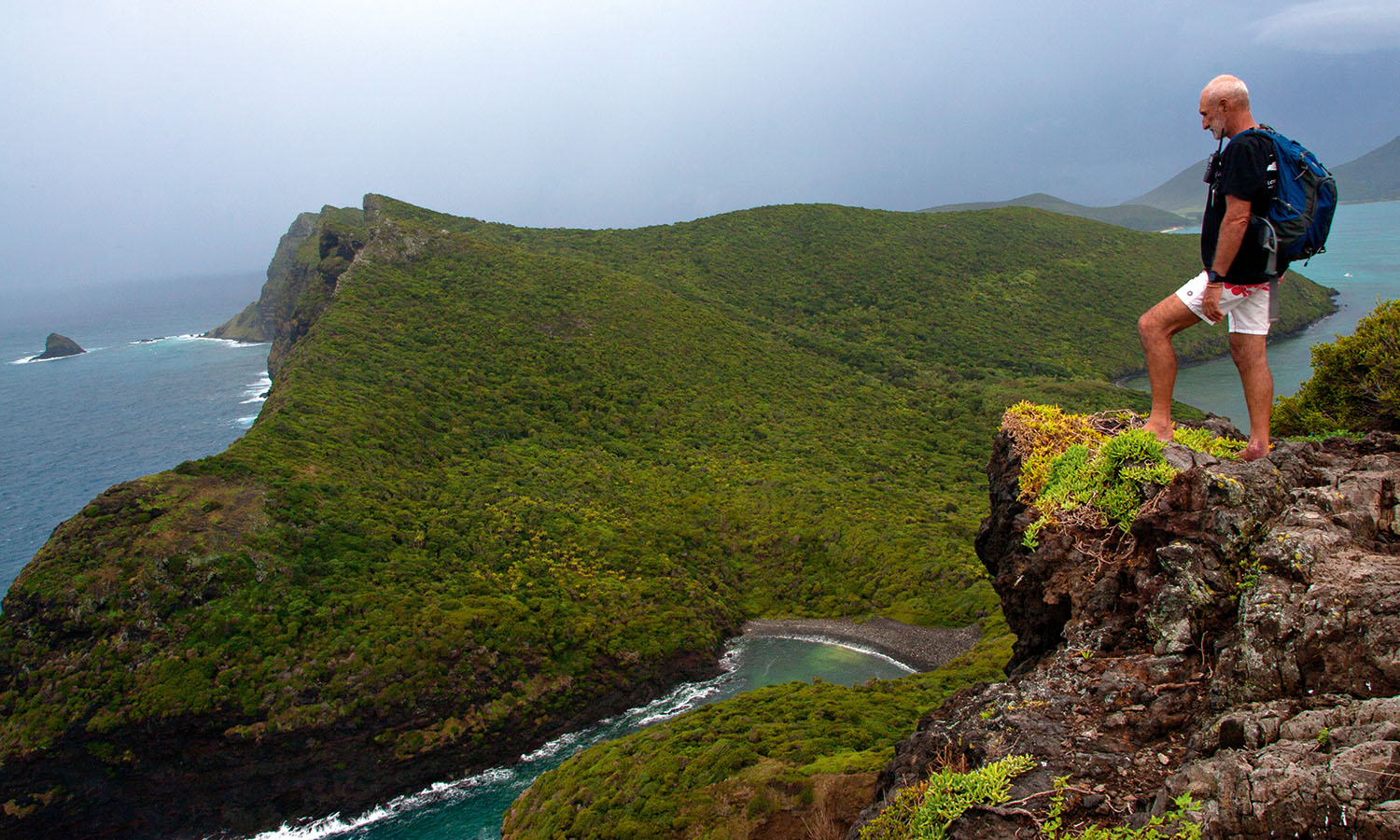
Instead I recruit Kenny Lees, a local photographer who has been leading our activity week, and the two of us set off for a plateau on the shoulder of Lidgbird. We retrace the path we took earlier in the week and my shoes, still damp, are soon sopping. When we get to the grassy headland where we encountered the petrels we keep going, bounding over boulders before disappearing into the forest. A 100-metre elevation climb using guide ropes takes us to a rock overhang lined with palm trees. From here we edge across a narrow pass, the cliff dropping away beside us into the ocean. (On the way back a rock will come crashing down near me and I’m petrified of a landslip. It doesn’t help when Kenny tells me he’s never experienced a close call like it before.)

Soon we are off the path and freestyling – scrambling up over mossy rocks, lichen-covered branches and noodles of browned pandanus leaves that act as booby-traps hiding ankle-twisting cavities. It’s raining and I think we’re lost. Kenny mumbles something about looking for a tree. He finds it and we step out onto a plateau, dodging webs of golden orb spiders to stand on the precipice – it’s breathtaking and we’re not even half the height of Gower. I experience a moment of vertigo as we take in the sweeping panorama. Then I spot the familiar silhouette of petrels in the sky. I funnel my fists to my mouth and summon them down. Within minutes one sits dutifully in my hands. Others watch on quizzically, perhaps waiting for their turn.

Before long I’m getting cosy with another big bird, only I’m not so enamoured with this one. It has twin propellers, fixed wings and roaring engines, and is shunting me back to the mainland. And I’m not quite ready to leave.