The Coconut Banger’s Ball

Imagine I’m a tiny painter and I live inside your brain. I’ve placed a pochade box on the bulge in your frontal lobe and set up my easel against your hypothalamus. With my tiny brush I paint puffy clouds of paradise, ultra-chromatic ocean waves and sandy beaches onto your olfactory cortex, so you can smell the sea while you stare blankly at your computer screen for eight hours a day. It’s my duty to transport you to cerebral Eden while you’re gripped by the maddening mundanity of the everyday. You rely on me to take you to faraway places, but now and then the fantasies I brush into existence are so inspiring they have you dusting off the pages of your old high school atlas in a desperate attempt to transform the ethereal into something less fleeting.

As you open the passage to geographic bliss, I splash coconut water onto your Wernicke’s area and you flip to the Caribbean islands. A dab of green for untrammelled jungle and splashes of sapphire for the ocean unexplored, and soon you’re folding over page after page, past the everyday islands and into the uncommon Caribbean, onto the paradises of the Mosquito Coast, where the atlas shows no roads, no cities and no limits to what you may experience. I’ve painted you a picture of Nicaragua’s Corn Islands, one of the Caribbean’s best-kept secrets, and a destination even more remarkable than imagination itself.

Adrenaline heightens each of your senses as your eight-seater twin prop buzzes like a mosquito over the sandy mound of Big Corn Island, some 70 kilometres removed from mainland Nicaragua. Not long ago, the Corn Islands hardly registered as a blip on the tourist radar. One flight per day landed on the grassy runway, while intrepid backpackers and the hippie set tied their luck to cargo ships on the gruelling 16-hour journey from Bluefields. Rustic beach huts housed most of the beds, while extended services were limited, if not non-existent. Yet word of mouth has transformed Big Corn into a checklist destination, the sort of place you want to brag about to your friends, no matter how badly you want to keep the secret to yourself. Today, the Corn Islands boast a few upmarket accommodation options, but the sense of the unexplored remains.

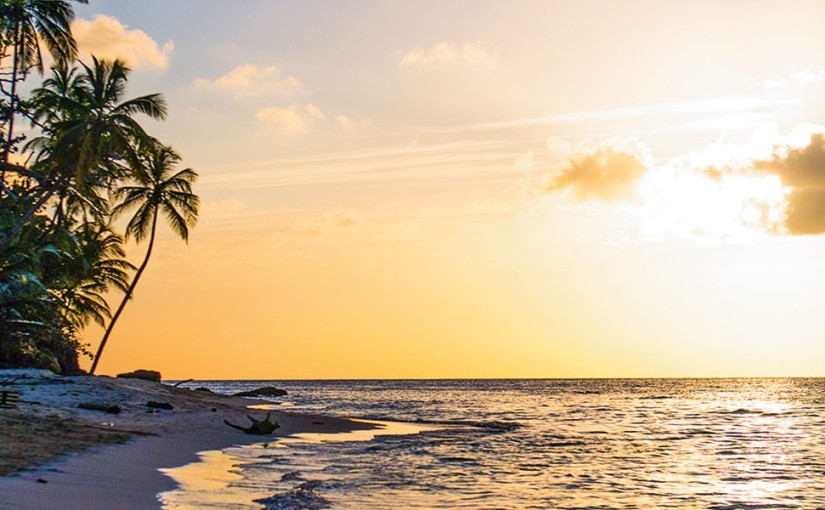
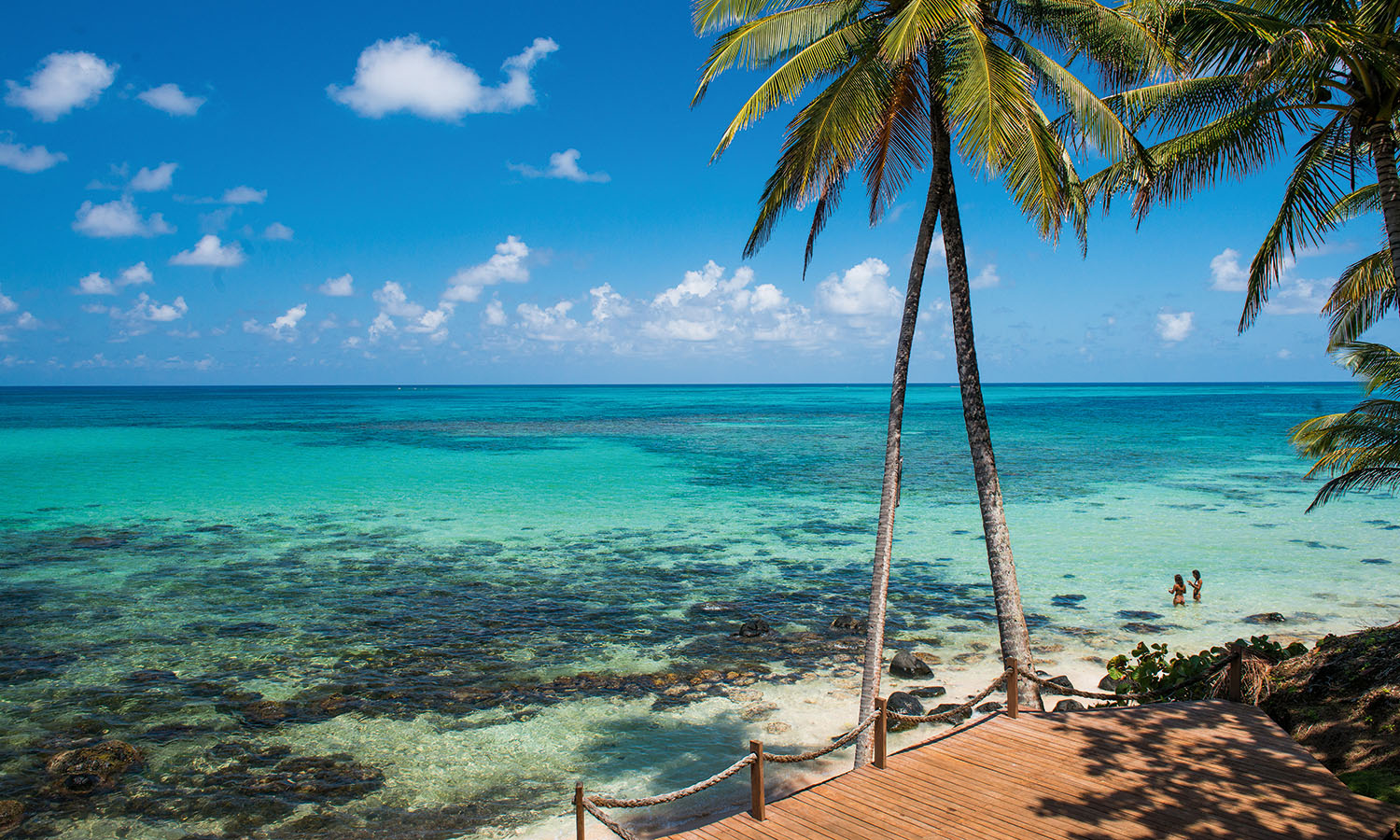
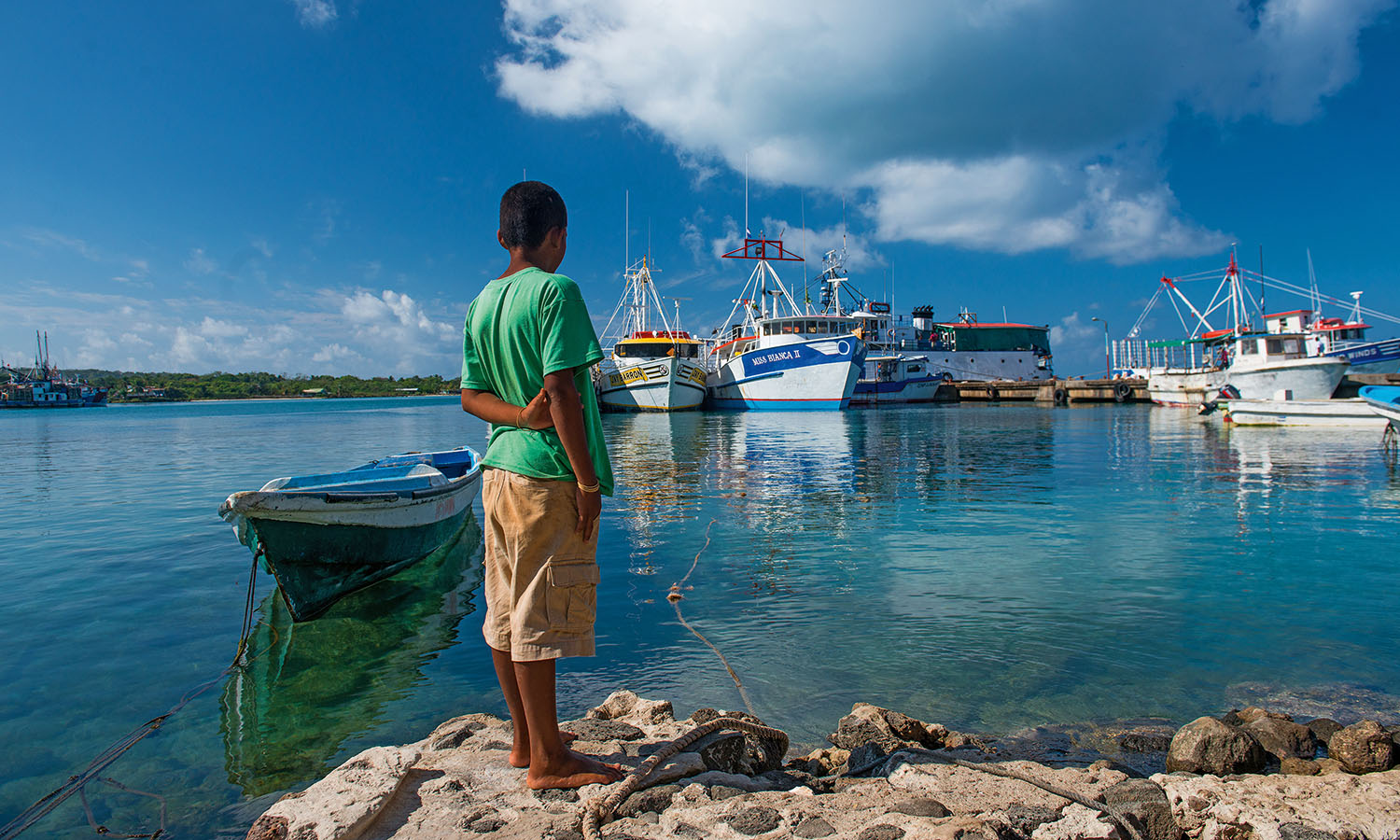
As your plane descends, a vision of stark white sand takes shape in your cerebellum, and knocks you off your feet. As you slip into a well-worn hammock on Picnic Beach, one of the longest, widest stretches of sand you’ll encounter in the Caribbean, you realise this is the island escape you’ve envisioned all your life. The pomp and circumstance associated with top-of-mind destinations is non-existent here, which contributes to an irresistible sense of charm and peace. Wide-smiling locals provide free haircuts to coconuts along the beach, happy to share their spoils with you. Young men patch and paint fishing boats near the harbour, keen to take the adventurous out onto the ocean, while groups of school children, most of whom have never left the island, quiz you on baseball stats and pop songs, interrupted by the occasional intrusion of a nervous lizard. It’s all so very Paul Theroux.

Picnic Beach is buttressed by the Arenas Beach Hotel, which has rows of white cabanas and a shipwreck-cum-beach bar on the sand. Rum libations begin at $2.50, while big bottles of beer cost about the same. The hotel itself, set back from the beach just across the road, features rustic bungalows with wide porches and deep hammocks, and simple rooms and suites flecked with Caribbean decor. No one will blame you if you decide to stick a flag in the sand and claim a stretch of beach for king and country, although there’s plenty more to stimulate the senses on Big Corn. Don’t be surprised if, as the sun goes down and the stars come up, you’re invited to the Coconut Banger’s Ball on Picnic Beach. Here, locals and visitors come together, crack coconuts, pour out a little water, add a lot of rum, and salute their good fortune.

If I painted pastoral grace in your mind’s eye, it would move you along one of the island’s antediluvian donkey trails, all the way down to the rocky, windswept southern shore, where you can picnic on giant driftwood or snorkel over coral reefs barely concealed by the sea, while wandering Caribbean cows furrow their brows at the sight of your sun-splashed skin. On your way back, conquer Big Corn’s highest point at Mount Pleasant (40 metres above sea level), where you can wax lyrical over the nature of man’s relationship with earth while climbing over the Soul of the World monument. The sweeping panorama encompasses the whole of the island, what feels like half of the sea, and even Little Corn Island off in the distance. Southern Big Corn is home to the island’s two largest abodes – grand chateaux belonging to former lobster barons, built with impossible angles and imposing colonnades, and with grand gardens rolling to the sea. Caretakers usually allow polite visitors to take a peek inside, while they serve lemonade on a silver tray and share their stories of their island paradise.

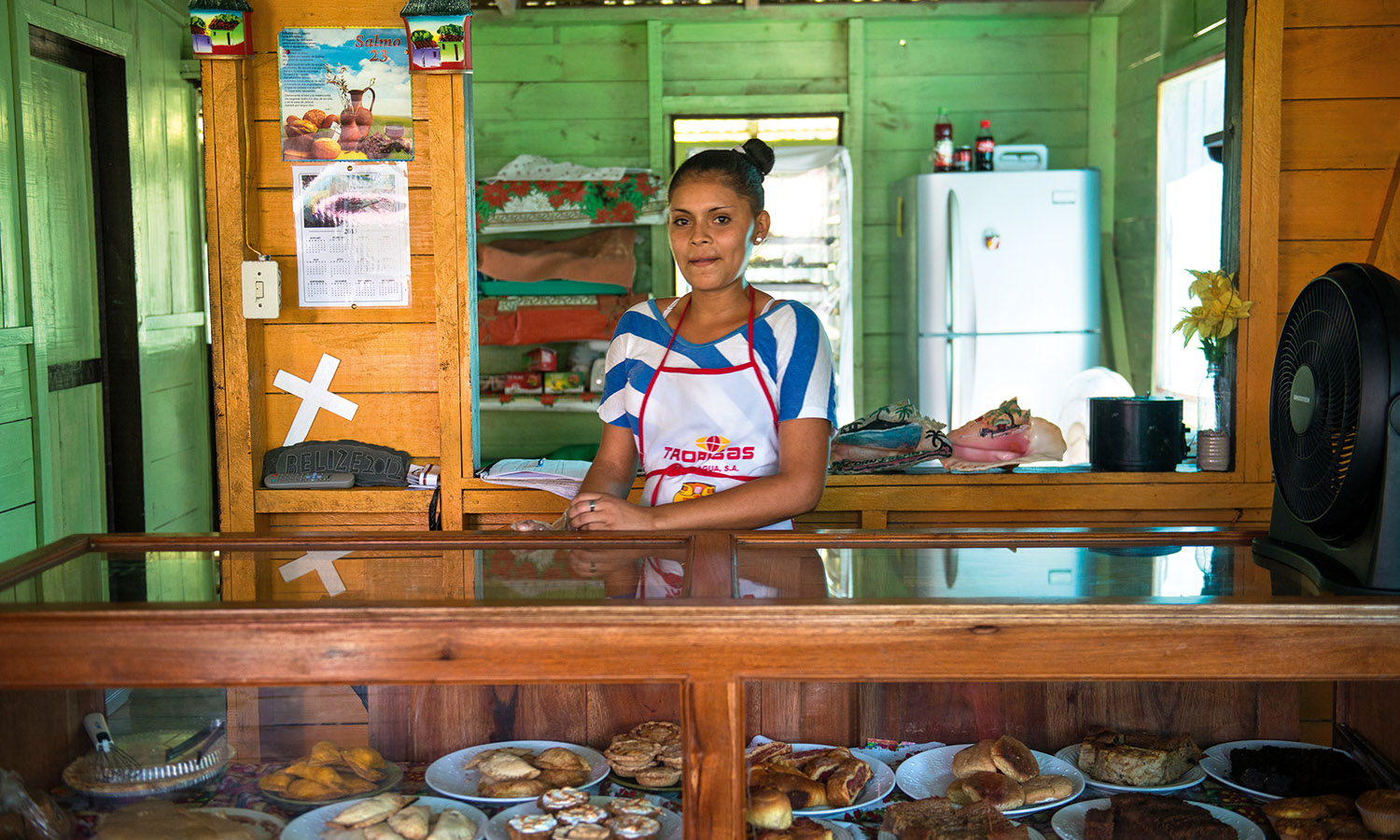
Pop into the offices of La Voz de Jesucristo’s 95.3FM, the island’s one-woman radio station, for a temporal lobe massage, then roll along toward the north shore, where you’ll find Island Bakery & Sweets, purveyor of Nicaragua’s finest coconut sweet bread (and other island treats). Pack a picnic basket for an afternoon on the sports field. Baseball is Nicaragua’s most popular sport and an institution on the Corn Islands. What seems like the entire population of Big Corn packs into the local stadium on Sundays, where a few dollars will get you a ticket to an entire day’s worth of games, some snacks and maybe even a few swings of the bat between innings.

Here, killing time is king, although more active pursuits also abound – paddle boarding and kayaking are popular, while the island’s diving experiences, especially at night, are a must.

When you think you’ve experienced about all the paradise you can handle, I draw long brushstrokes against your cerebrum, and point you towards Little Corn, paradise’s own vision of escape. There are no proper roads on Little Corn – your passage to the island is granted via ferry, which allows for ample time to soak up the spellbinding views. Backpacker joints and hippie hangouts are scattered across the northern shore between Goat Beach and the Peace & Love Farm, while the sole upmarket option, Yemaya Island Hideaway & Spa, features 16 eco-luxury cabanas offering crisp linen, rich mahogany furniture that would make Ron Swanson blush, elevated ceilings, rainforest showers, plenty of privacy and unbroken sea views. Yemaya’s luxe trappings spoil some of the castaway vibe, although wi-fi is warranted when it comes time to call in sick and extend the sojourn.

The hotel’s Exhale Studio features a secluded palm-shrouded yoga space and beachside exercise platform, while Yemaya Restaurant, with its open, airy vibe and panoramic views of the ocean and coral reefs, boasts a menu marked by local ingredients and Thai flair, thanks to the influence of Bangkok-born executive chef Dim Geefay, known for her work at Mezzanine Thai Restaurant & Martini Bar in Mexico’s Tulum. In fact, Yemaya’s green lobster curry will forever alter your image of Caribbean cuisine.

Here, killing time is king, although more active pursuits also abound – paddle boarding and kayaking are popular, while the island’s diving experiences, especially at night, are a must. There are some 20 dive sites located within close proximity of Little Corn, and all of them, with the exception of Blowing Rock, are single-tank dives. The White Holes, about five kilometres north of the island, features a trio of sandy patches marked by vibrant elkhorn coral that plays host to nurse sharks, eagle rays and turtles. Jake’s Place, near the southern lip of the island, has an array of finger-like coral and, occasionally, dolphins, while Blowing Rock, an islet 25 kilometres from shore, is home to a staggering array of fish, sharks, rays, eels, barracuda and more.

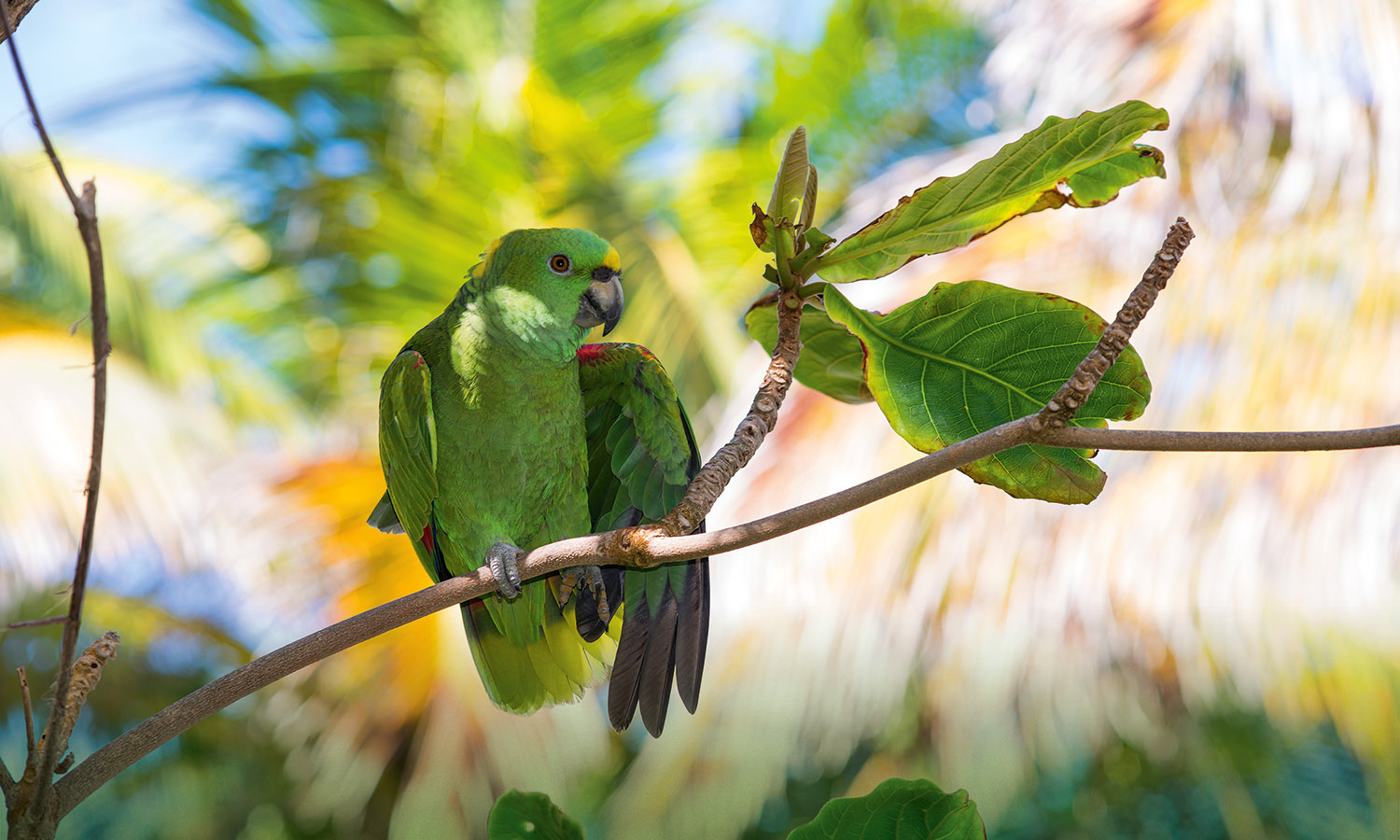
On land, walk the tightrope between the beach bar palms or trek west into the wild, where chatty green parrots are eager to enter into discourse about the landscape, point out their favorite perches and give directions to the Bottle House, the island’s one ‘cultural’ attraction. Operated by a man named Tall Boy (Little Corn’s head jewellery designer and the incumbent mayor), the Bottle House is a great place to check out locally made art and to cull little-known island history from the self-appointed social gatekeeper.

From here slip into Tranquilo Cafe – Little Corn’s only real nightlife option – to swap road stories over frosty Cerveza Cristal. Of course, coconuts are plentiful and liquid happiness is ubiquitous. By the time the stars light up the sky during your night on Little Corn, you’ll have all but forgotten about the tiny painter in your mind, and will know firsthand what paradise looks like.

Meeting the Mongols

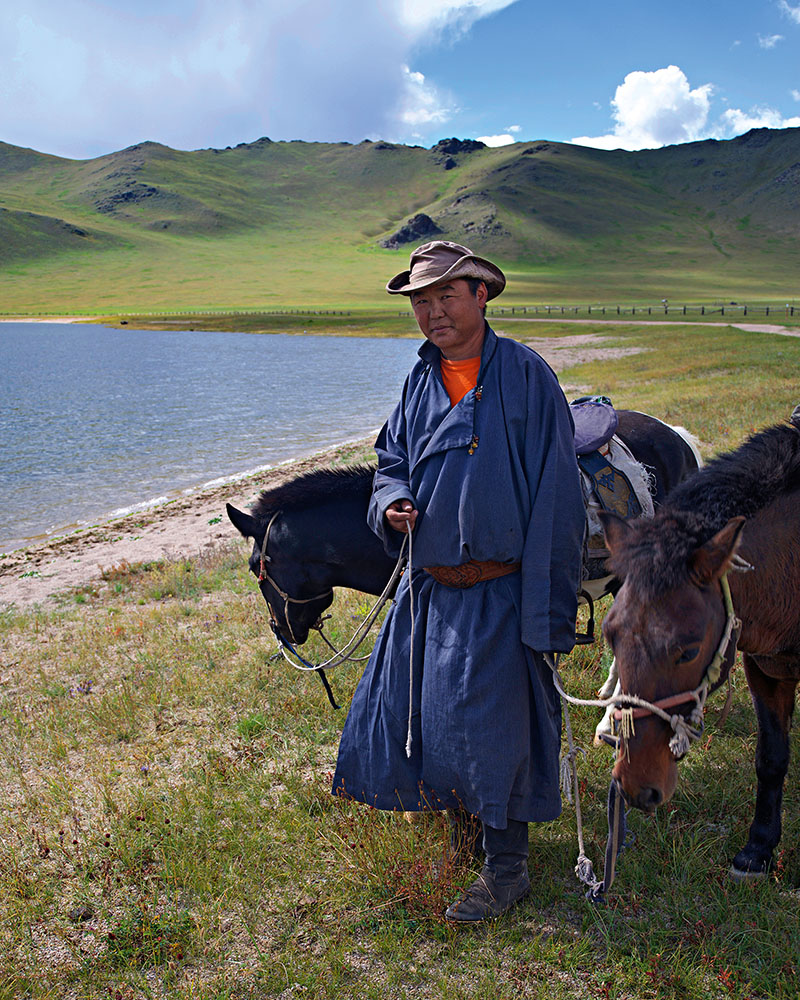
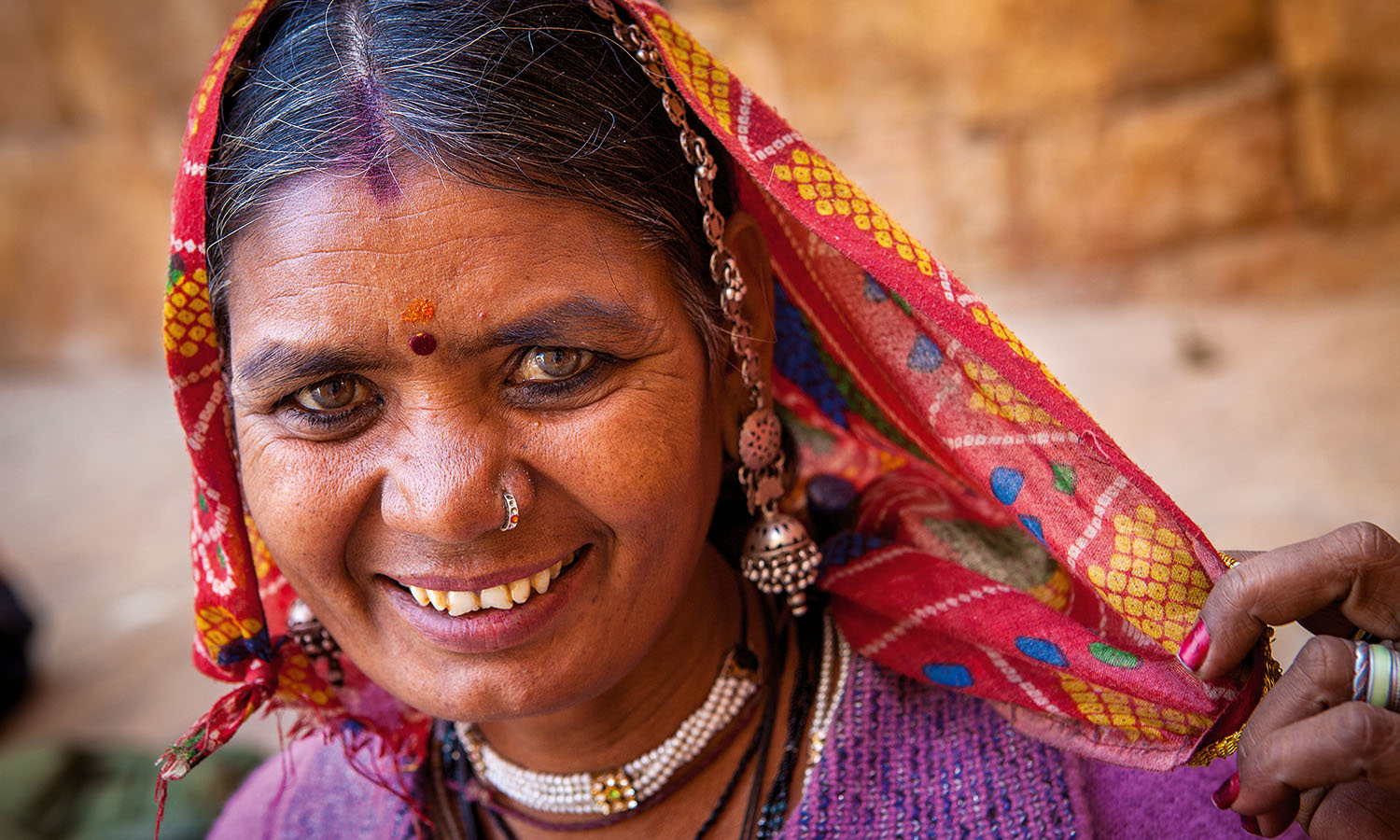
It’s been a whole two hours since we left Ulaanbaatar and I’m by no means comfortable anymore… nature is calling. I’ve been looking left and right in search of a tree but all I see are miniscule shrubs sporadically dotted across an ironed-flat land. Eventually I can’t hold on anymore and tell Shinee, our guide for the next 15 days, and Sansar, our driver, that it’s time for what we call a ‘nature stop’. A few of the other travellers in our group of six look on in relief. Evidently I’m not the only one who needs to stop.

Sansar pulls over and Shinee declares that men go left, women go right, clearly having done this many times before. “This is how nomadic Mongolians do it,” she chuckles, obviously enjoying this part of her job. “You’ll manage.” One of the women in the group attempts to chat while I’m mid-nature stop but I politely explain it’s no time for small talk. It’s day one, after all, and we’ve got two weeks together. Back at the van I declare nature stops talk-free. Everyone agrees.

We are journeying through one of the world’s most sparsely populated countries in Sansar’s trusty UAZ Russian van, taking unpaved roads that slash across a landscape millions of years in the making.

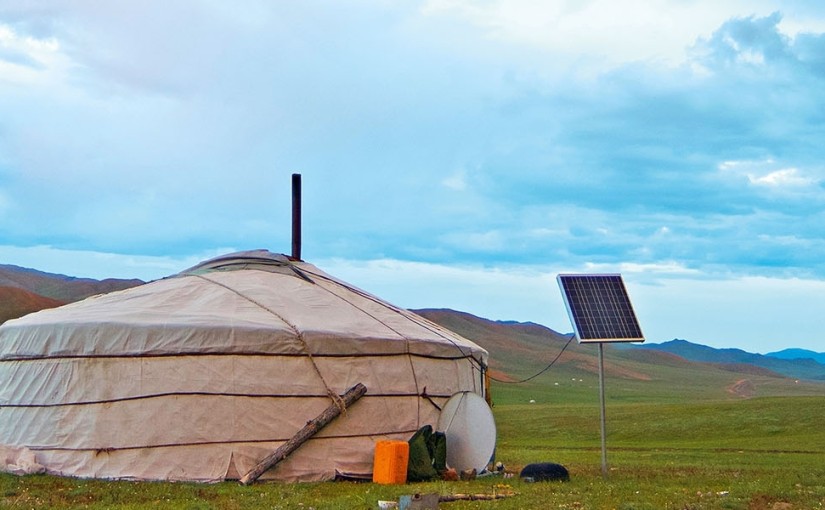
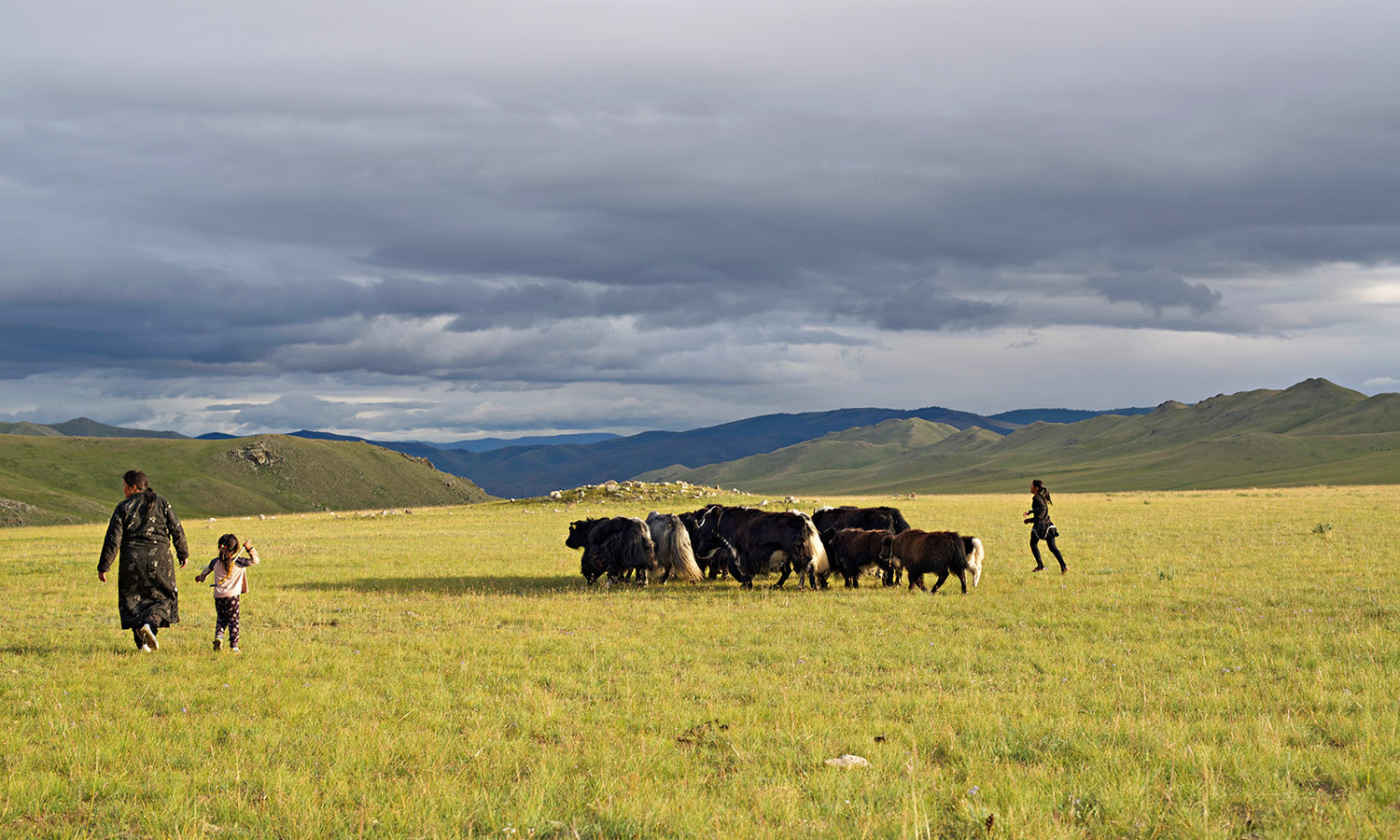
Around half of Mongolia’s three million-strong population live in the pulsating capital, Ulaanbaatar, or one of the other emergent cities. (The country is going through a mining boom and many former nomads are moving to towns.) The other half live life much like they have for centuries. Families reside in traditional gers and move three or four times a year with the change of seasons. Travelling with Intrepid Travel, we are here to see the real Mongolia – the seemingly endless plains, vast deserts, towering mountains and the people that call this wild and intoxicating landscape home.

Shinee warns us that some days we will spend up to eight hours on the road and perhaps only cover 100 kilometres, and although we have an itinerary, it is to be used as a guide only. “People are working on the roads so it’s very hard to estimate how long travel might take. It changes from month to month,” she explains. Sansar doesn’t say much and we assume he doesn’t speak English.

We pass sprawling fields of vibrant yellows, luscious greens and rusty browns. As the afternoon sun dances across an impossibly blue sky we sit and stare. This becomes my favourite activity.

One of our first stops is the ancient Amarbayasgalant Monastery, which was completed in 1736 and houses the remains of Zanabazar, one of Mongolia’s great Buddhist leaders. Named after two boys, Amur and Bayasqulangtu, who played where the monastery was later built, the complex is one of only a handful of monasteries still standing (having escaped destruction during the Stalinist purges of 1937). We roam around the deserted grounds taking in the chiefly Chinese-style architecture until we realise we’re not in fact alone as two young monks hurriedly walk past chatting animatedly to each other. Shinee explains that about 50 monks still call Amarbayasgalant home.

Our home for the night, like most nights, is a ger camp. These seasonal ‘hotels’ are set up by semi-nomadic businessmen during tourist season and welcome everyone from lone travellers to large groups. In the majority of cases, Westerners travel as part of a group tour as the roads can be hard to navigate. Out in the countryside there are no hotels, and gers and camping are the most popular accommodation options.

The aptly named Amarbayasgalant Ger Camp – comprising about 35 gers assembled in rows – is one of the bigger camps and has been operating for more than 15 years. Some gers have two beds, others four, and travellers generally share. A communal toilet and shower block is located towards the back and there’s a restaurant where groups dine together. There are no menus and the chef cooks whatever is fresh and available that day. We quickly discover that lunches at ger camps are extravagant three-course affairs, while dinners are more toned down, but still ample. Camps such as this one offer an insight into traditional nomadic life, albeit with many of the creature comforts of home.

It’s rude to say no to anything that is offered in a Mongolian home and we have no choice but to stay up drinking with the nomads.

Some days the grasslands stretch on forever with no trees, rocks or even shrubs in sight. Other days we drive through steep terrain with mountains so gargantuan you can’t imagine getting around them, but we do. We head north to Lake Khösvgöl and stop over at Blue Pearl Tourist Camp. The owner cooks fresh-caught lake fish one night and laughs heartily as he sips on a drink that he won’t share. We have a day to relax here and some of us go horse riding through a dense forest. Teamed up with a chain-smoking, mobile phone-talking guide, our horses trot through the bleak grey and murky-green woodland, then stop. Mongolian horses are petrified of yaks and we are forced to walk, leading the frightened animals back as dusk drapes over us.

Most of the time we spend a night or two at a camp and have one free day to explore the surroundings. We stop at the picture-perfect Terkhiin Tsagaan Lake with its absurdly crystal-clear water. Some sit and gaze, others partake in activities such as horse riding or trekking, and one of the bravest travellers in our group attempts a swim. He spends the following day rugged up still shivering. Although travellers have come from far and wide, everyone has one thing in common – the desire to immerse oneself in the vast and magnificent environment.

While we predominantly stay in ger camps, two homestays are incorporated into the itinerary and the group looks forward to this unique cultural experience. I assumed these were pre-organised and am very surprised one afternoon when we find ourselves scouring a barren landscape for two gers side by side that might accommodate us. Sansar (who after a few days begins to talk and we quickly learn his English is rather good) explains that two gers close together probably belong to one family, and a two-ger family will be more likely to squeeze in eight of us.

And so we get a taste of real nomadic etiquette. Sansar and Shinee stock up on meat in a village and give us a quick lesson in ger protocol: bring meat, ask to sleep on the floor. We find two promising-looking gers and sit in the van as Shinee and Sansar knock on the door. Half an hour later they emerge and our eyes light up inquisitively. They quietly get back in the van and Sansar starts the engine. “This has never happened before,” Shinee says quietly, then giggles. “Usually families always say yes but the man and woman of the house are away and the grandma who is looking after the children is unwell.”

With every passing kilometre nightfall descends. The road meanders like coiled veins and we quietly scan the panorama for two adjoining gers. As the flickering sun sets on another day Shinee points out a couple of gers in the distance. Sansar veers off the snaking road and goes cross-country.

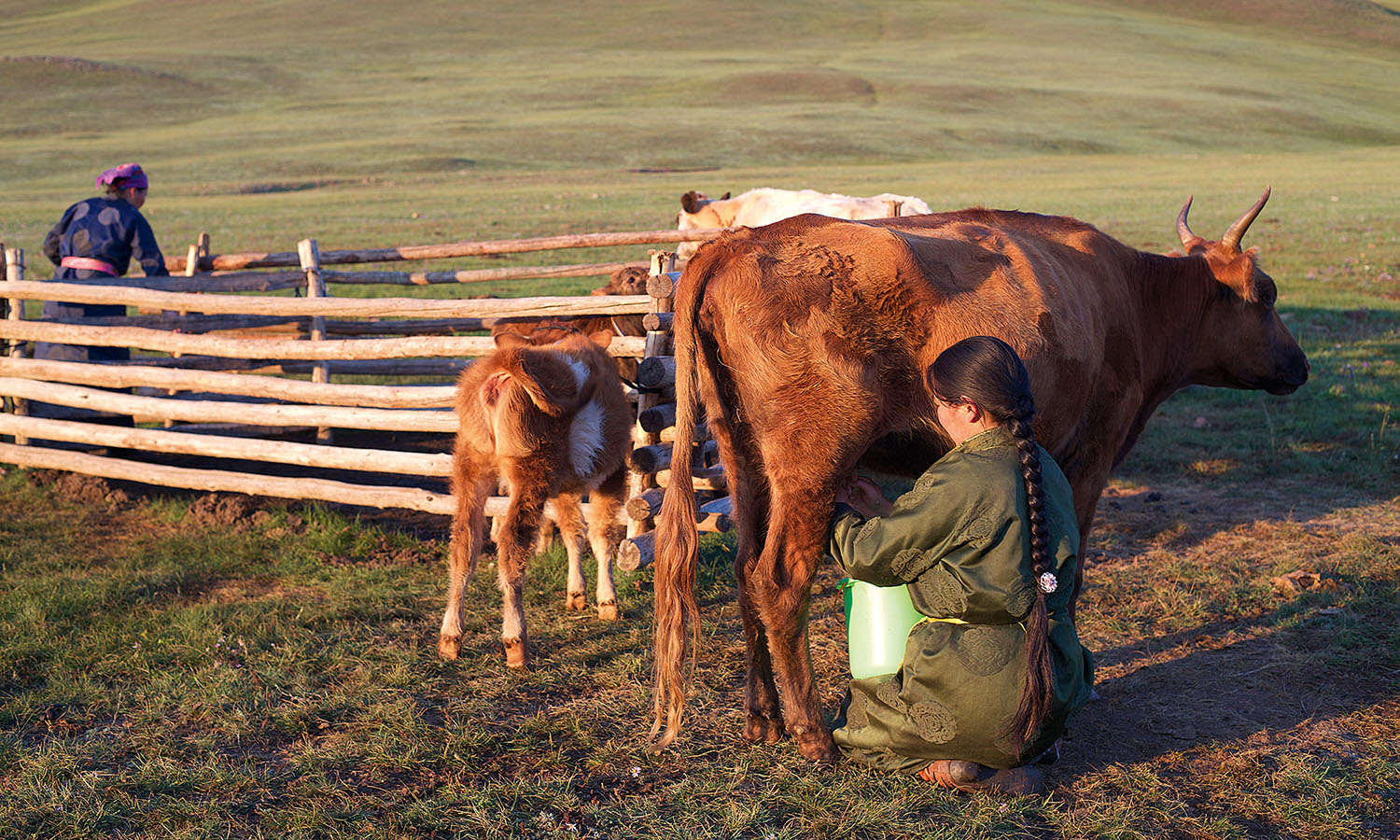
The large family living here happily takes us in. They’ve never had tourists stay with them and we have a lot of meat to share. Although they don’t own mobile phones somehow the message of our arrival spreads and soon the ger we are planning to sleep in fills up with other nomads. Some come by horse, others come by motorbike, and they all bring homemade arkhi (vodka) in preparation for a fun-filled night. We have no common language but laugh for hours, shooting first the homemade vodka and then a bottle Sansar produces later that night (“I always have one for just in case,” he titters). It’s rude to say no to anything that is offered in a Mongolian home and we have no choice but to stay up drinking with the nomads. Eventually most go home and we collapse on the floor to sleep. A few hours later it’s sunrise – and the beginning of the day for the nomads. There are no sleep-ins when it comes to the nomadic way of life and everyone is up early milking the cows and tending to various other chores. We gather our belongings and stumble outside where a compelling 88-year-old woman who was drinking arkhi with us the previous night is leaning on the ger with a grimace on her face. I guess she, too, has a headache.

And so we set off again. There’s more to come. We’ve got more camps and another homestay to look forward to, as well as a visit to Little Gobi where two-hump camels roam across the rocky, sandy landscape. And this time when we break for a nature stop with no trees in sight, no one dawdles. Men go left while the women go right.

Hump Days

The figure making his way towards us gradually comes into view, and our guides announce ‘the butcher’ has arrived. He’s wearing a blue kurta with white ali babas (light cotton pants). Then I notice something black attached to the back of his camel and it appears to be moving. Instantly the knot in my belly tightens.

“I can’t believe they’re actually going to do this,” I whisper to my friend Charlie as we watch the butcher sharpen his knife with the precision of a surgeon. His focus is intense; his technique almost hypnotic. There’s no doubt he’s done this before.

I had no intention of having goat on my plate on Christmas Eve, certainly not out here in the remote dunes on the outer edges of the Thar Desert in Rajasthan. Our guides, however, had promised us something special for this magical night under the stars, and it seems rude to plea for the poor creature’s life. After all, we’re guests and this is how our hosts show their hospitality.

“Come on,” urges Charlie, presumably noticing the look of apprehension on my face. “It’s Christmas Eve. Let’s celebrate in style!” Then he smirks: “Where’s your Christmas spirit?”

Back in the mind of my 10-year-old self who tried to stay awake to catch Santa in the act, I want to say. But I don’t. Truth be told, I admire his enthusiasm. We’ve already spent two days riding camels through the desert, and we could use a little excitement – and some meat. Turns out goat makes an excellent turkey substitute, especially when surrounded by good company and the glow of a campfire under a starry sky.

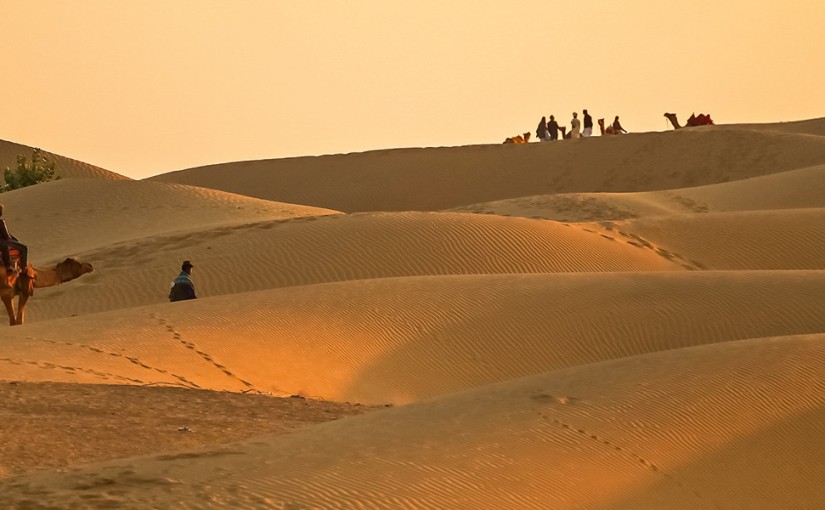
Notorious for crowded trains and chaotic roads, India may not be the first place you’d think to explore by camel. But the 200,000-square-kilometre Thar Desert provides ample opportunity to do just that.

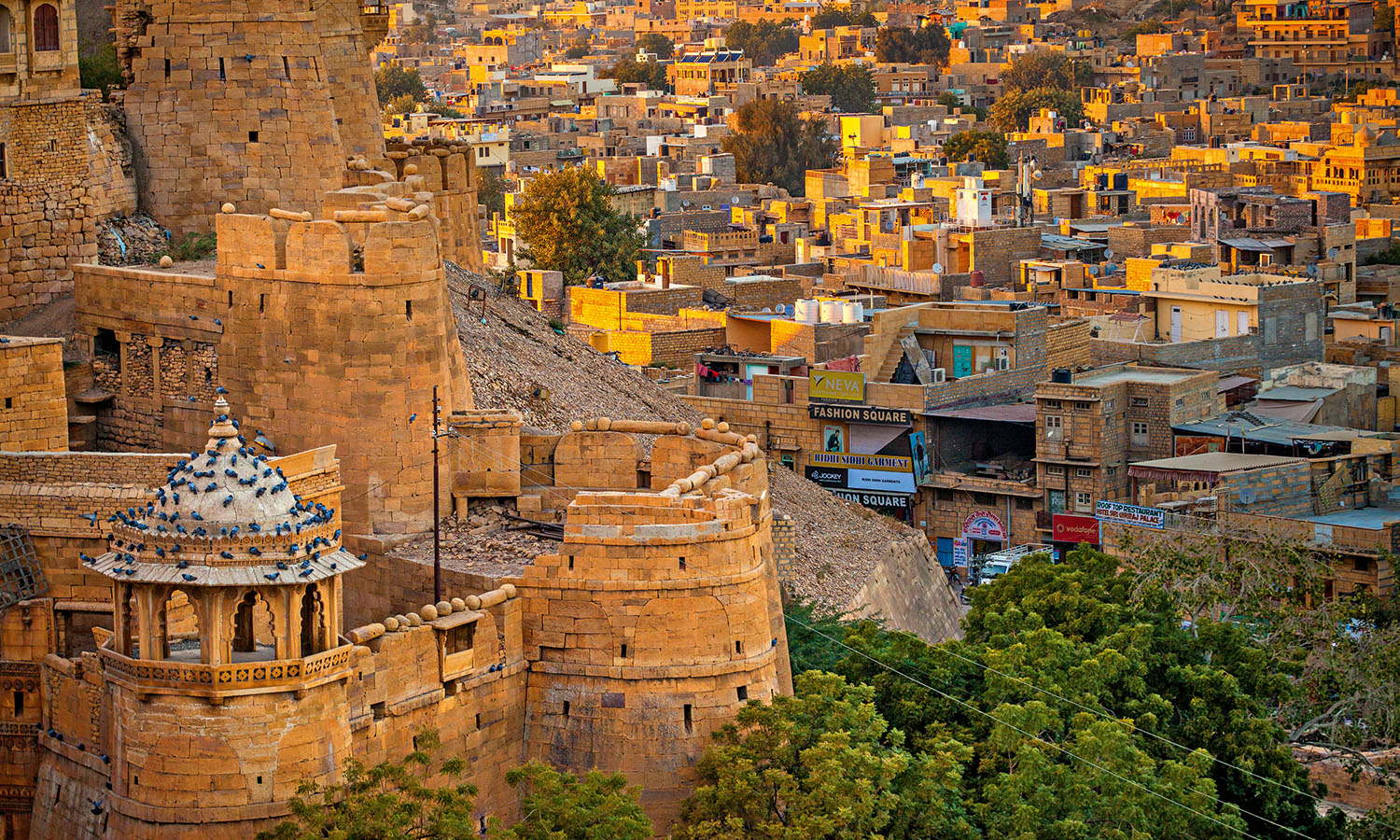
I’d arrived in Jaisalmer with three friends to embark on an epic five-day camel safari through the Great Indian Desert. Home to 80,000 inhabitants and located 575 kilometres west of Jaipur, the state capital of Rajasthan, Jaisalmer is a desert city protected by an impressive World Heritage-listed fort built on a sandstone ridge that dominates the surrounding desert. Looking very much like a sandcastle rising majestically above the flat sandy expanse, this desert citadel, guarding an impressive palace complex containing several ornate rooms, buildings and Jain temples, harks back to the days of the Rajput warrior clans.

Inside the fort’s sandstone walls, there’s a labyrinth of lively small streets populated by smiling merchants peddling spices, wooden idols, books and all sorts of exotic handicrafts. Flanking these lanes are magnificent havelis (private mansions) decorated with intricate latticework and floral designs, carved from wood and stone and dating back at least 500 years.

Walking through the narrow winding lanes up to the palace complex, I stumble upon handprints etched into the sandstone. They tell the story of the fort’s rather macabre past as the site of countless jauhar (mass suicides) throughout the Islamic invasion of India in the Middle Ages. The women and children self-immolated within these walls in accordance with this ancient Rajput tradition in a bid to avoid capture, enslavement and dishonour.

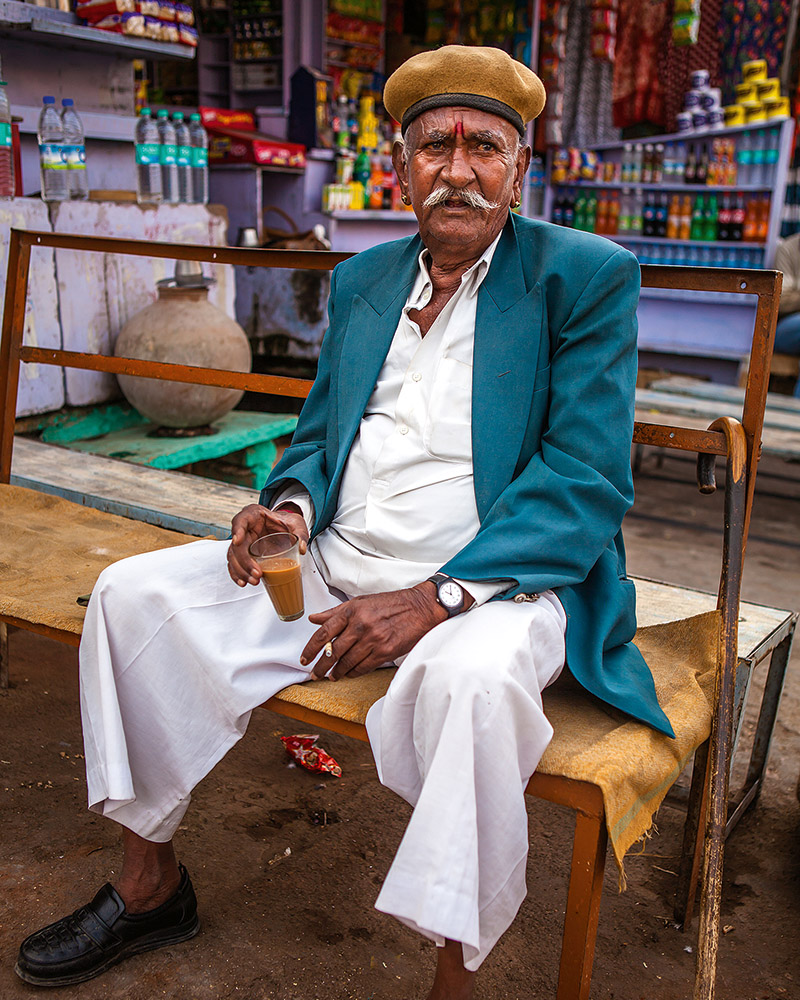
Entering a small chai shop, I’m greeted by a cheerful shopkeeper who gives me a brief lesson on the strategic importance of the city in centuries past. As a stopping point for camel caravans along a traditional overland trade route that linked India with Europe, the Middle East and Central Asia, Jaisalmer grew in wealth and was fiercely protected by clans of Rajput warriors who wielded gilt-edged swords and claimed descent from Hindu deities.

We poke fun at each other’s turbans before returning to our own little worlds as we watch the burning red sun slowly sink below the horizon. There really isn’t too much to say out in the desert.

Upon waking the next day, I have the faintest recollection of a dream. I remember walking through sand dunes and stumbling upon an old man charming his cobra. He was wearing a red turban and, with his wrinkled, sun-baked skin, looked about a hundred years old. As he played his flute, the charcoal-coloured snake gently swayed from side to side. I tried to speak to the man, but he was in a trance. I edged closer, trying to get him to notice me. Suddenly the cobra turned around and latched onto my arm – and that’s where the dream ended. Lying in bed in the early morning light, I see my friends already stuffing their backpacks. I can’t help but feel a little anxious.

We’ve been told temperatures will fall below zero come nightfall out in the land of shifting sand dunes, broken rocks and scrub. We were also warned that there would be no chance of a shower, no electricity and minimal food and water over the course of the five days.

This matters very little – at least to me. What a way to spend Christmas, I tell myself over and over again as we leave our guesthouse early in the back of an old Mahindra jeep, driven by a burly Brahmin who, with a big white beard, is reminiscent of Mr Claus. Just like those wise men 2000 years ago who were led by a luminous, twinkling star in the deserts of the Middle East, we are being led by the promise of adventure, hardship and a once in a lifetime experience. It’s been a long time since I was this excited about the festive season.

Cruising out of town, we pass crumbling buildings, groups of locals and the occasional cow. Some 40 kilometres shy of the India–Pakistan border the jeep begins to slow then veers off to the side of the road onto loose gravel. “There are your camels,” says the driver, pointing to a colourful caravan on the horizon.

We disembark, collect our bags and stare into the distance, waiting for our rides to arrive. The Indian sun blazes above us in the clear blue sky, yet it’s quite cold – about 10ºC or so.

Waiting for our adventure to begin, I take a moment to breathe and absorb my alien surrounds. The epic panorama of this arid, dusty landscape envelops us. There is yellow and rust-red sand, rocks large and small, and khaki-coloured foliage strewn across the land as far as the eye can see. At the horizon these colours merge with soft, light blues, gradually morphing into deeper hues the higher into the sky you stare.

In the distance windmills dot the expanse, and there’s a lonely settlement of cream-coloured, single-storey buildings. People carrying on a traditional desert life populate these local villages.

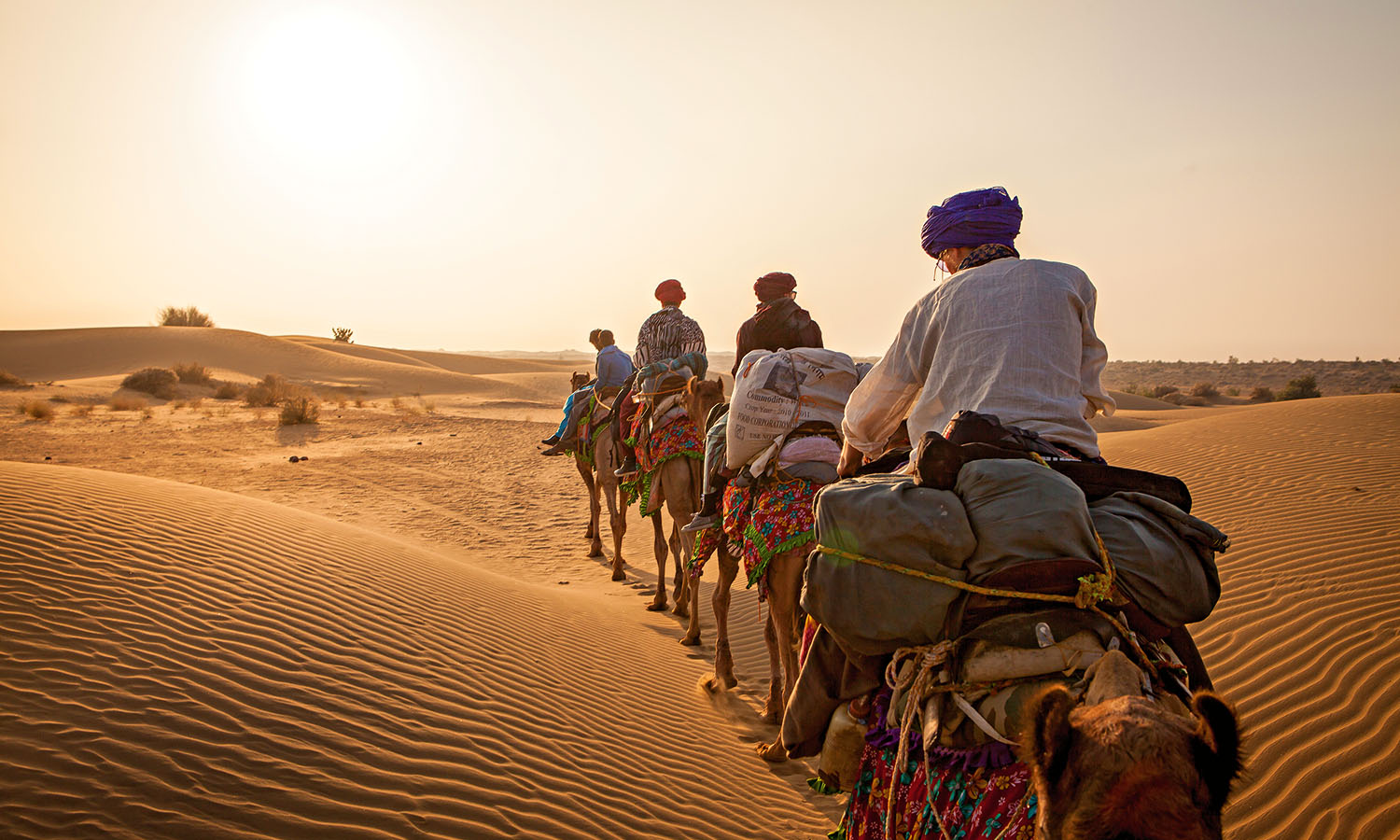
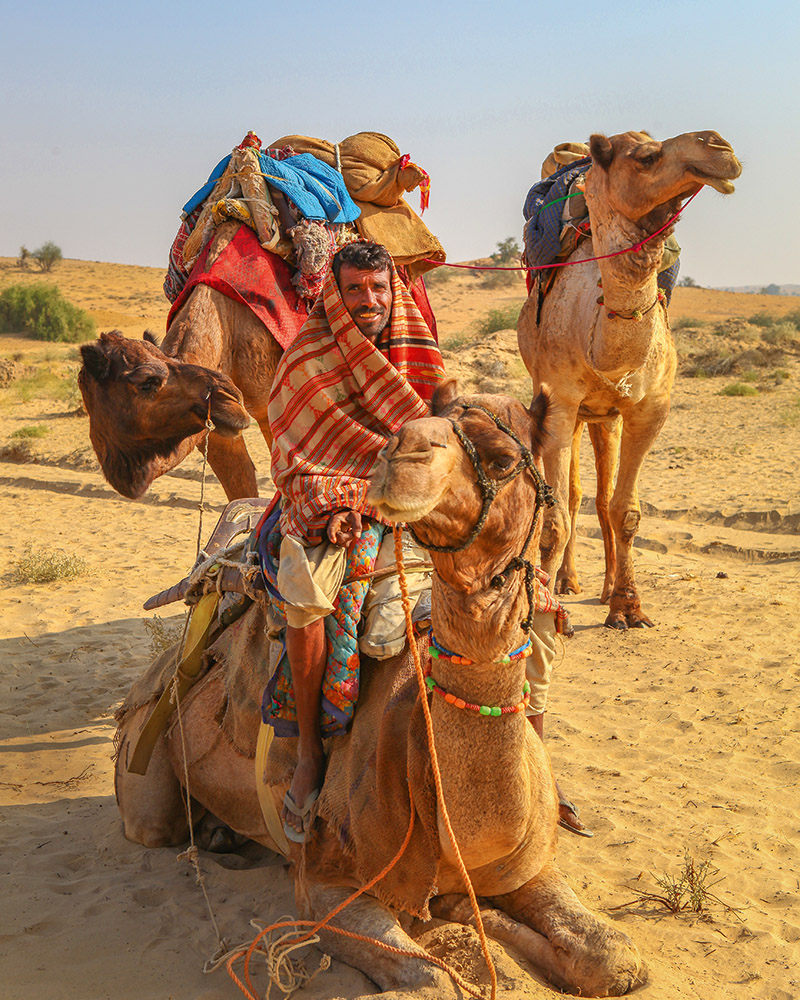
Our camels arrive and, after a quick introduction and a delicious lunch of roti and vegetable curry cooked on an open fire, we’re ready to begin. Slow off the mark, I’m relegated the group’s most senior camel – a droopy-eyed old-timer with a fat lip and foam dribbling from its mouth. “This one, he got in a fight,” Salim tells me, noticing my dubious expression. Salim is 28 and the older of our two guides. “But, he’s okay now,” he continues. “It’s a good camel, strong camel. Good for you.” I’m not so sure, but before I have a moment to hesitate, Salim instructs me to straddle the beast and I’m up. I glance over at my friends – each is wearing a smile as wide as the surrounding desert.

A mere 15 minutes into the safari, we yearn for independence and convince the guides to let us go it alone. They hand us the reins and teach us basic camel talk: je-je will get the camel to sit down; a tongue click makes it stand back up; hut-un means to speed up.

Three painful hours later – most of that time spent trying desperately to distract myself from the searing pain radiating from my upper thighs and groin – the mood lightens as we pull into our first camp. It’s a level area with a wooden hut and makeshift fire pit, flanked on all sides by golden dunes. With a je-je I disembark and the circulation begins to return to my battered and bruised thighs.

As we traverse the barren plains, we make occasional stops to water the camels and feast on delectable curry while our guides belt out soulful Rajasthani folk songs.

With almost the same spirit of delight found in children having finally arrived at the playground after an arduous journey, we run up the shifting dunes and spend the next half-hour sipping hot chai in the warm sand. We poke fun at each other’s turbans before returning to our own little worlds as we watch the burning red sun slowly sink below the horizon. There really isn’t too much to say out in the desert.

After a brief meditation, we return to camp and spend the next hour collecting firewood. Around the flames after dinner, discussion somehow turns to the subject of dreams and I recount my ominous vision of a cobra encounter. “You are a very lucky boy,” Salim tells me. In Indian mythology a bite from a snake foretells a gain in fortune. I don’t know what to think. With our stomachs full and bodies tired, we hit the hay under two thick blankets and a twinkling sky.

During the next four days the many moods of India’s Great Desert are revealed. We explore isolated local desert villages full of enterprising kids keen on making a handful of rupees in exchange for photo rights, and young women swathed in intricately patterned saris adorned with sequins and beads. Their eyes sparkle just like their jewellery in the midday sun.

Each day bleeds into the next. As we traverse the barren plains, we make occasional stops to water the camels and feast on delectable curry while our guides belt out soulful Rajasthani folk songs. Our legs enjoy each short respite, and we’re often left smiling by a gaggle of local villagers before slowly riding into the desert to face the elements once more.

I awake on the final day to the sound of fighter jets passing overhead, a reminder of the nearby Indian Air Force base and the fact that civilisation is close again. We pack our things, fix our turbans and straddle our camels for one final day.

The rising sun burns off the morning mist as we make our way back to the main road. I’m happy riding at the back of the group, enjoying the view of my friends and their camels in front of me and the passing scenery of rippling sand dunes.

Suddenly there is commotion up ahead. Perhaps growing impatient at his foreign subjugation, Charlie’s camel revolts and, in a frantic display, bucks him to the ground, launching dust and sand in the air. Almost like a superhero, Salim leaps from his camel several feet away and grabs the reins, subduing Charlie’s rebellious mount in a matter of seconds. It’s like a scene from a Bollywood action movie. As the dust clears, Charlie gets up, giddy and confused.

It’s scary yet exhilarating knowing your life and limb are at the mercy of an unpredictable animal that, no matter how much you try to convince yourself otherwise, you really can’t control. Charlie was lucky to have survived unscathed. I wonder whether he too dreamed of a biting cobra.

The South Pacific’s Best River Journey

It feels counterintuitive to be watching the turquoise blue of the South Pacific disappear in the distance as our rickety old minibus bounces and lurches deeper into the heart of Fiji’s largest island, Viti Levu. The red-clay road is potholed and winds steadily upwards into the verdant highlands. We’ve left behind a beach bar with buckets of beer and a perfect palm-fringed, fine-sand beach where I’d made myself all too comfortable the previous day. But it isn’t Fiji’s beaches that have lured me here, rather a chance meeting a few months earlier with an American whitewater rafting pioneer named George, who told me, wide-eyed with excitement, of a tropical ‘Grand Canyon’ slicing its way through the country’s lush interior.

“It will blow your mind!” George had exclaimed. “Ya just gotta do it! It’s the real Fiji!”

It is a phrase I will hear often as we raft down the Upper Navua River.

“Bula!” screams the genial Moses, our head guide, as the minibus grinds to a halt. We’re four hours deep into the jungle. It’s hot and ?the only sound is a low rumbling roar.

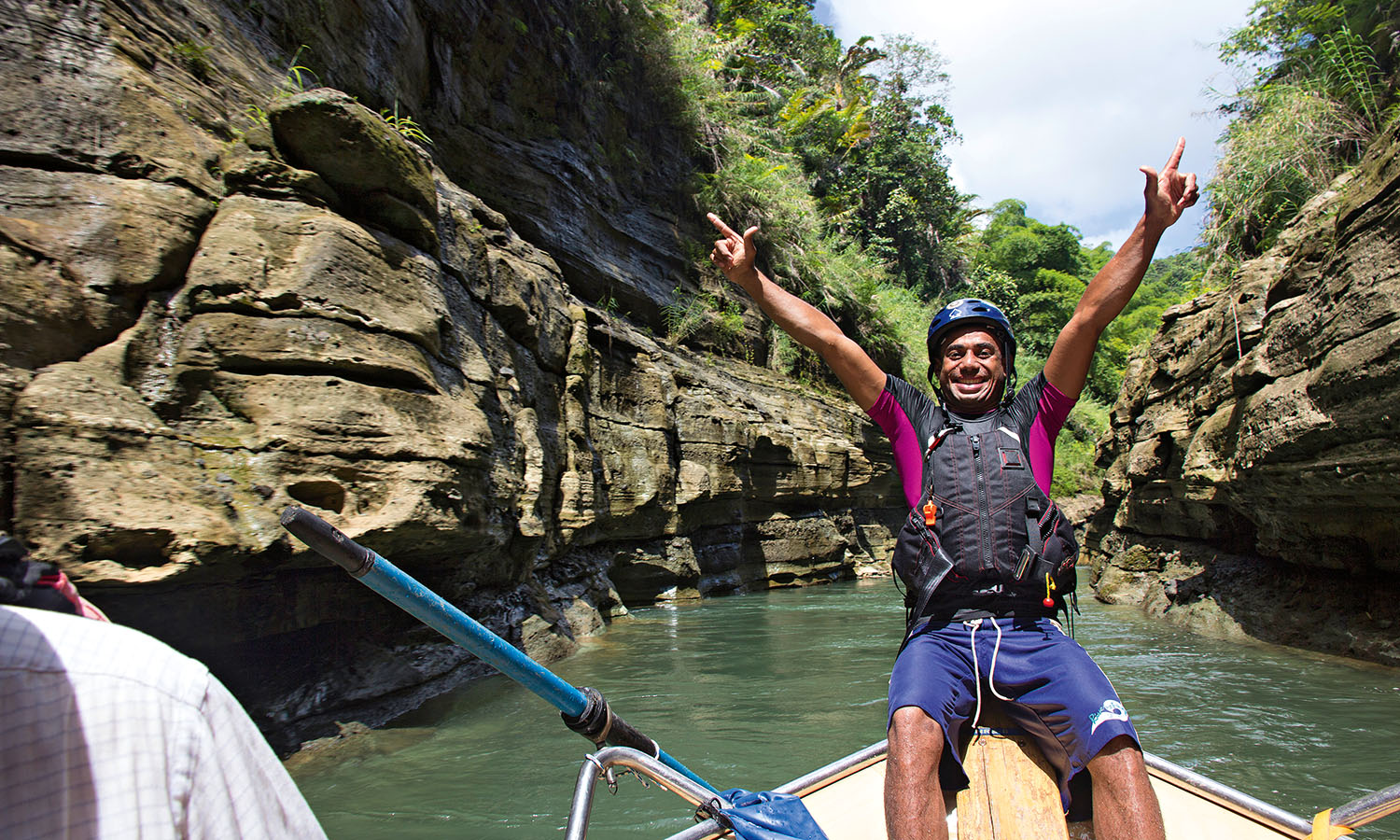
“The river!” declares Joe, another guide with a smile almost as wide as Moses’. His energy, like all the guides, is infectious. It was obvious when we first met at the Rivers Fiji head office in Pacific Harbour that they were just as excited as we were about the two-day journey ahead.

“This river is the highway of our ancestors,” Joe later explains as we cool our feet. “We are honoured to be allowed on it.” With a flick of his oar, he splashes me with refreshing cold water, laughs and tells me to pay attention as he takes us through a quick safety briefing.

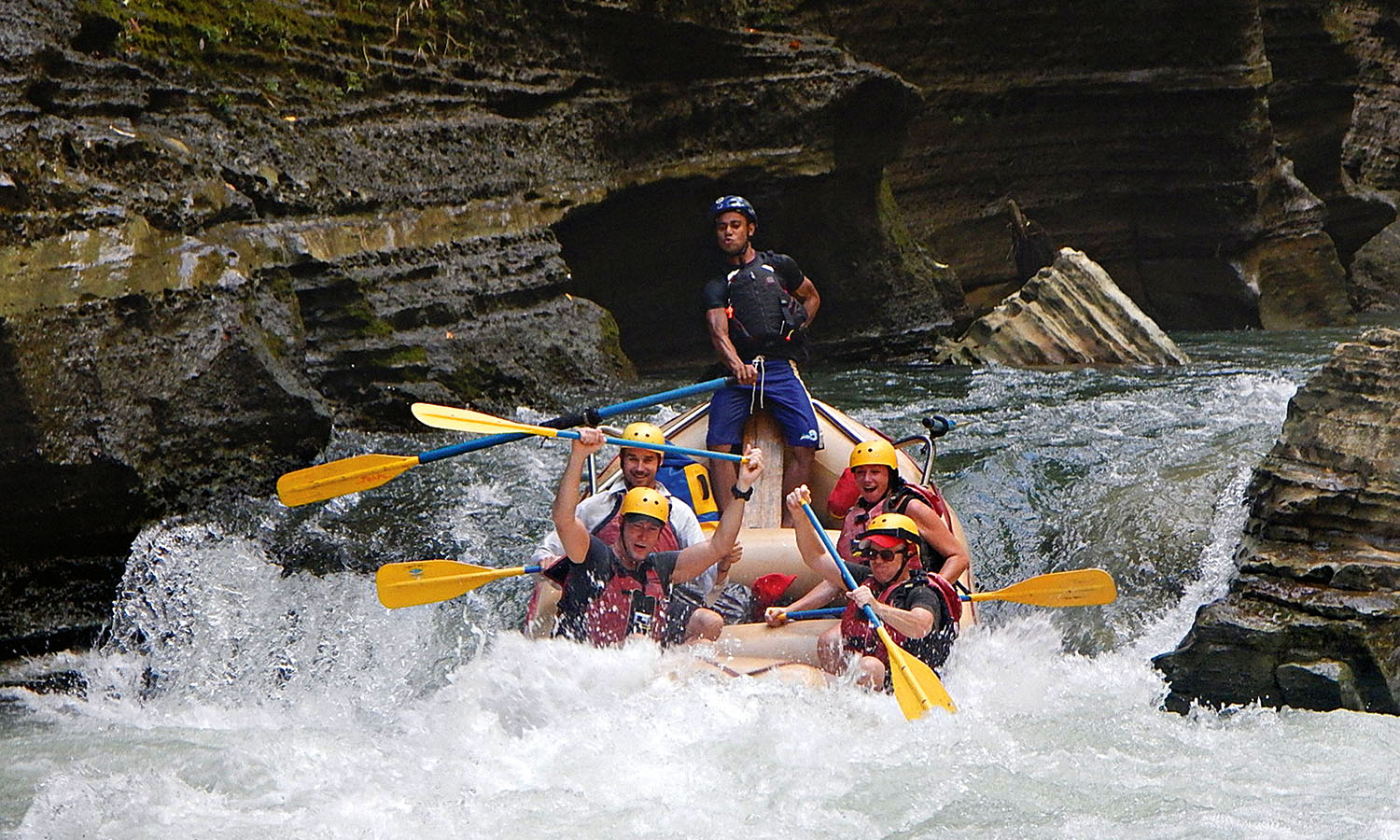
The rapids of the Upper Navua at this time of year are moderate at best (class II to III) and apparently never reach the magnitude of the much more famous runs on the Colorado or Nile rivers. It’s my first-ever whitewater rafting trip, however, and I’m content with a gentle initiation. But within a minute of pushing off, we drop nose-deep into the first rapid. Adrenaline kicks in as the cool water drenches us, increasing tenfold as we paddle around the first bend.

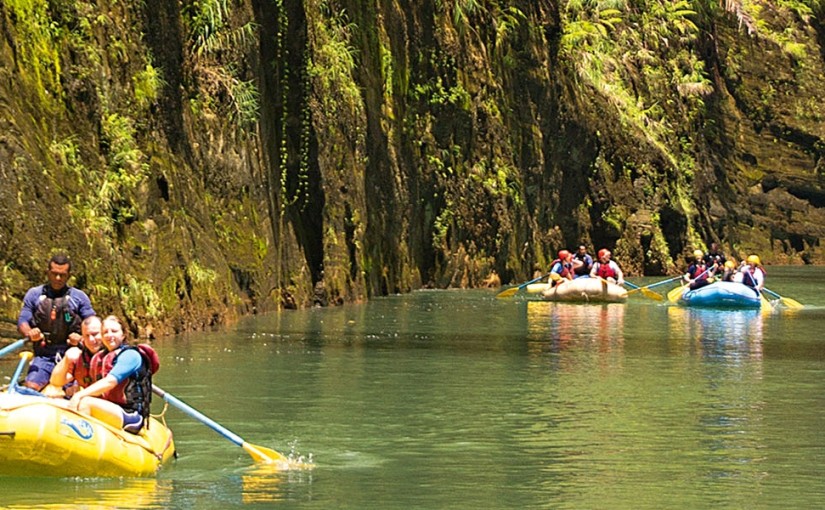
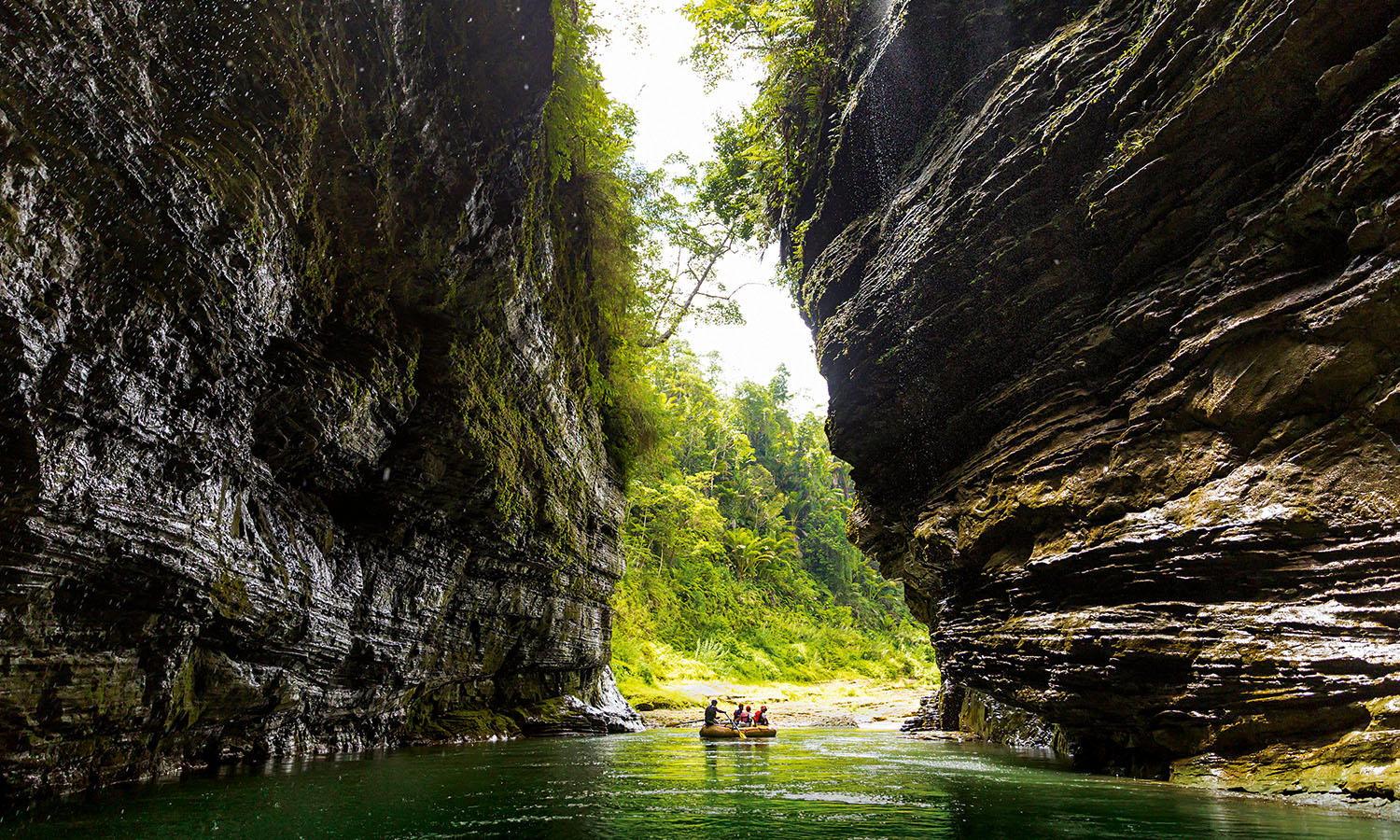
We are in a gorge about four metres wide with 50-metre-high black volcanic rock towering on either side. It could easily be the start of a Disneyland thrill ride themed on a cross between The Lord of the Rings and Deliverance. Waterfalls shower sporadically from the jungle above as the sun shines through the spray and mist. I stare up in awe. It is surreal and, much to Joe’s amusement, I almost fall in as we bounce off the rock face and into another rapid. “Paddle left!” Joe yells. “Harder, harder! Ok bula!” We all high-five with our oars.

The river snakes through towering cliffs, and Joe makes a point of directing our raft under the heavier of the waterfalls, laughing hysterically to himself. There are more than 50 waterfalls along the Upper Navua in the dry season (May to October), and double that in the wet (November to April). We’re catching the tail end of the wet season and I lose count after an hour. Joe points out a thin waterfall almost 50 metres high cascading out of the jungle fringe, and tells me it is the tears of a heartbroken lover. Local legends, I learn, are plentiful on this river. Almost on cue, guide Pita, paddling solo in a kayak, breaks into a mournful local love song that echoes through the canyon. He only stops when Moses splashes him with an oar.

After a well-earned riverside lunch we raft out of the gorge and the river widens, winding through dense green jungle as far as I can see. There is no sign of anyone else, save for the odd piece of clothing hanging from a branch, caught during a wet-season flood. We stop along the way to swim, drifting along with the rafts and jumping off ledges as high as we can climb along the river’s edge. Joe takes us for a river ‘massage’ and I lie on a rock ‘massage table’ under the full force of a small but powerful waterfall. I can just hear Joe crying “bula” from under the pounding water as I clench to avoid an enema.

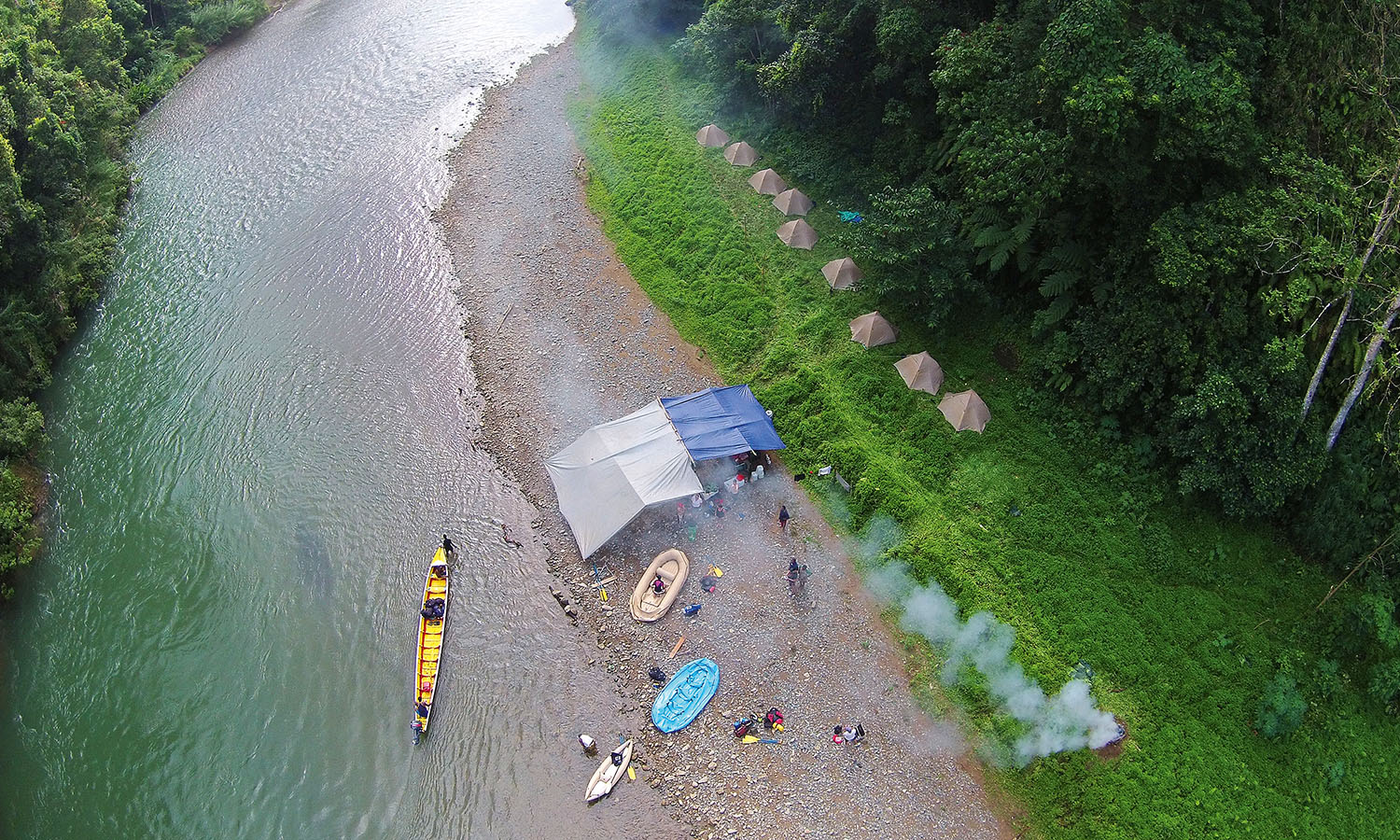
As the sun sets we pull up at a ready-made camp site just downriver from Wainadiro Village. The daytrippers (we are on a rare overnight adventure) are bussed out and we stretch out by the river, listening to the sound of the flowing water and laughing at the day’s adventures. The Wainadiro villagers invite us over for a traditional kava ceremony. This isn’t manufactured. It isn’t in the brochure. It is a genuine traditional welcome, and I feel honored to be sitting with the village elders. This is real. They are clearly proud and very welcoming, but perhaps a little overly generous with the kava. The trip back to camp is somewhat unsteady. The night is as bright as the moon, stars shine without artificial competition, and I’m asleep almost before my head hits the pillow.

I wake early to a thick morning mist. A white-collared kingfisher darts above the water as a canoe full of children motors past. The Navua is still a highway for the local villagers. The guides have cooked breakfast and pumped up kayaks for us to tackle the rapids of the lower Navua. It is still a leisurely paddle and for the first half of the day villages are few and far between. The odd rapid keeps us alert, as do the ever-playful guides.

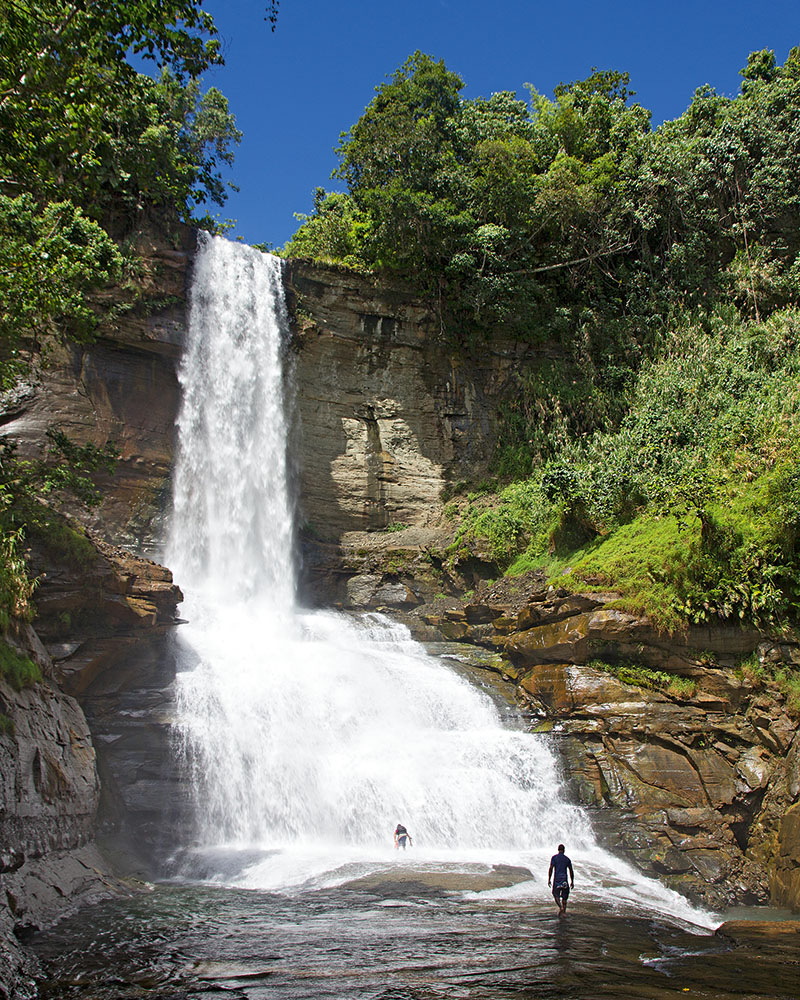
Saving the best for last, we pull our kayaks ashore and trek up a tributary to a waterfall almost 40 metres high and easily 10 metres wide. The noise is deafening. The guides set the pace and disappear into the thundering wall of water, but not before looking back and waving us in. The power of the water is intense and unrelenting and I’m flattened within seconds. I resort to crawling on my stomach commando-style through the pounding torrent. Winded and disoriented, I make it through. Sitting against the smooth, black volcanic wall, I watch the cascade power down in front of me. Whoever’s tears these are, they are seriously bawling.

Back on the Navua we laze in the water waiting for a longboat to arrive and take us on the remaining leg of our journey. A large tour group wanders out of a village down river and piles into a longboat of their own. They head south, not realising they’ve missed out on the incredible waterfall we’ve just experienced. We overtake them later that day as they head up man-made steps to a viewing platform to see what looks, by comparison, like a trickle of water dribbling down the rock face. As we chug along the river, the jungle slowly recedes and signs of industry start to blot the landscape.


Later, I am told there is no chance of any industry making its way into the pristine Upper Navua. Thankfully, in 2000 a conservation area was declared to preserve the region. In a unique first, a lease was signed between Rivers Fiji and the local landowners to prevent any logging or mining occurring within 200 metres of the river, thus establishing the Upper Navua Conservation Area. The landowners were convinced the long-term tourism benefits would far outweigh any short-term riches to be reaped from plundering the area for resources. Apparently an American whitewater rafting pioneer named George Wendt helped set the wheels in motion back in 1998.

And, by George, he was right. The real Fiji sure did blow my mind.

Putting the Art in Cartagena

Even from two blocks away I can tell it’s live salsa. I’m on Calle de Media Luna, the street where Africans in chains were once marched straight from the slave ships. Centuries later, it’s their conga-driven percussion that’s spilling onto the footpath and luring me inside Café Havana. I’ve officially entered the Cuban sphere of influence, even though I’m more than a thousand kilometres from the island Columbus once named Isla Juana. This is Cartagena de Indias, historic capital of Colombia’s Caribbean coast and a surreal tropical canvas for 500 years of conquistador invasion, slave rebellions, smuggling, piracy and several wars of independence.

At the bar I order my first mojito and take in the clave and contrabass. After my second I’m stepping on the one and pausing on the four. The origins of salsa – both the music and dance – are heavily disputed, but nobody denies it is a mix of transatlantic traditions that, once thrown together in the Americas, found an intoxicating new expression. Here, the percussion and full-body dances of West Africa met vibrantly with the brass, strings and implied movement of European ballroom. As I discover in the coming days, however, the broader narrative of music extends to all the arts in Cartagena.

Guiding me through the heart of the UNESCO World Heritage walled city is Rainbow Blue Nelson, a former journalist and local of more than 10 years. After signing up for a walking tour of Cartagena’s art scene, I’m thrown by the fact he’s British (his name, which he puts down to his parent’s hippie phase, doesn’t help), but sometimes it takes a bilingual expat to know what’s worth pointing out to foreign eyes. “When I first visited in 1996,” Nelson says, “I was blown away by how unlike Colombia is to other countries on the Latin American circuit.” He stayed for a girl and over the years has watched his adopted home emerge with new hope from the shadow of the drugs trade conflict.

I glimpse the shadows of young lovers stealing kisses between ancient cannons on the city wall and, at street level, mimes perform for crowds sipping cocktails.

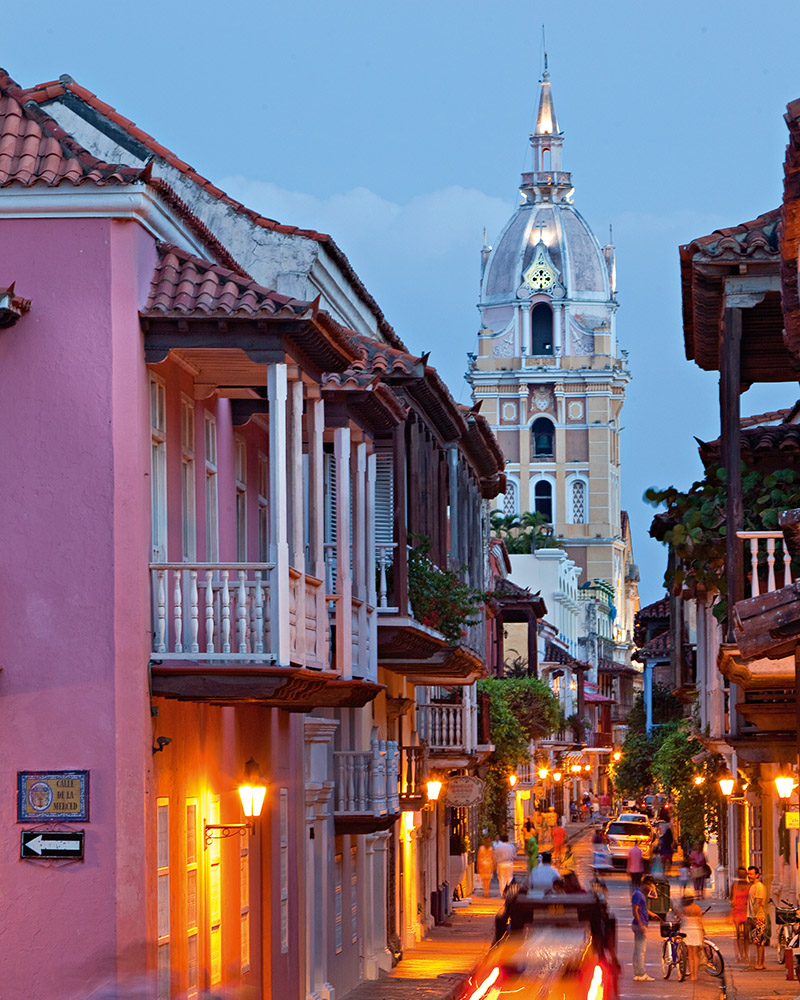
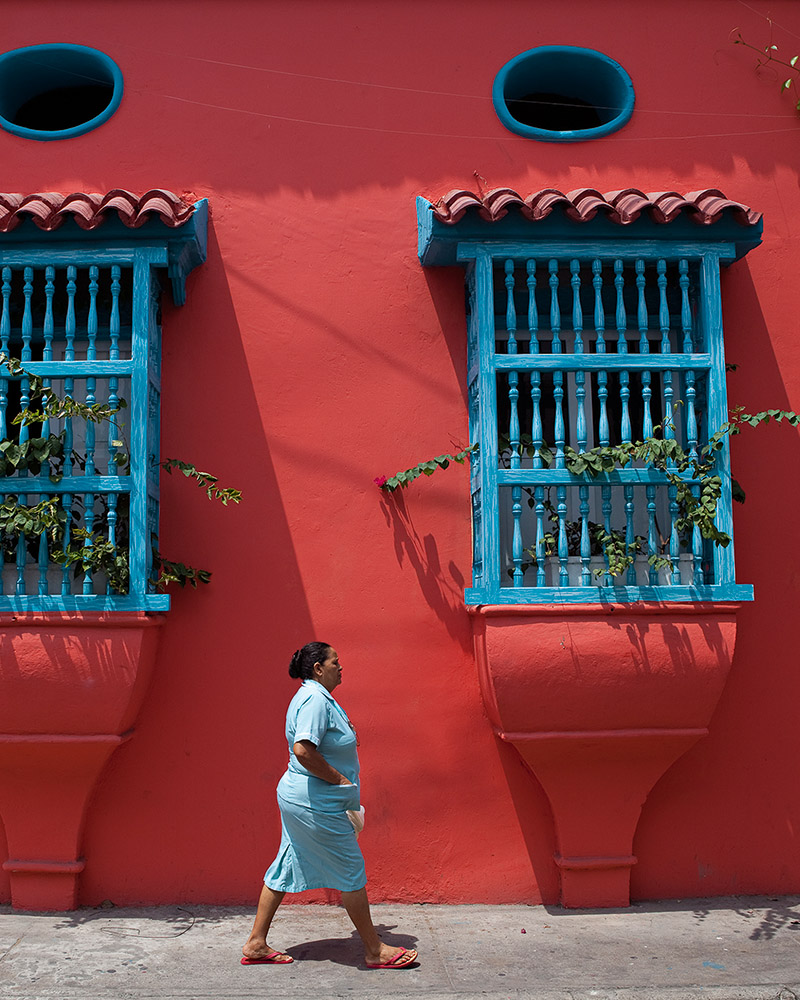
The first theme of the tour is performance, and the first stop is Teatro Heredia at the seaside end of town. Built with a modest exterior in 1911, it secretly guards a beautifully chandelier-lit, oval-shaped interior and frescoed ceiling inspired by the Great Theatre of Havana in Cuba. In January it hosts the Cartagena International Music Festival, but each March the world’s film stars land in its three tiers, drawn by the city’s annual International Film Festival. And the notables don’t just fly in, fly out. On the street Nelson points out the private residences of Jagger, Bieber, Sheen and Gibson – alongside Colombia’s elite, such as the late literary great Gabriel García Márquez – who’ve chosen to acquire and immaculately restore the pastel-coloured Spanish Colonial and Republican-era buildings that typify the old city.

From the 11-kilometre-long city wall, we descend a staircase into a dim underground chamber that opens as a pop-up performance space and art gallery. In the past, however, it was prized for servicing the Castillo de San Felipe (city fortress) with fresh water during the many pirate sieges. All the most notorious pirates (and privateers) of the Caribbean featured on the roster. French Huguenot Robert Baal was the first to plunder Cartagena; he was followed by Englishman John Hawkins and, more notoriously, his nephew Francis ‘El Draque’ Drake, who took the town and held it to ransom for 107,000 pesos in 1586. Timber-shivering names like Henry Morgan, Bernard Desjean and Martin Cote followed El Draque – with varying degrees of terror and pillage – until the final and greatest siege saw Cartagena face an unprecedented combined British–American force of 186 warships and 27,000 soldiers. The year was 1741, but the ensuing Battle of Cartagena would stand as the largest amphibious attack in history until the Invasion of Normandy in 1944. Defending the town was maimed Spanish admiral Blas de Lezo (who had only one arm, one leg and one eye), and a local garrison of a mere 4000 men and six ships. It must have seemed a miracle from the Virgin when they sent the Anglos home vanquished, but the truth is a powerful ally stepped in to save the day: yellow fever.

The focus of Nelson’s tour is visual art, and it’s here he reveals a world invisible from the street. At the former personal residence of the Spanish Viceroy (now a university that hosts a gallery on the ground floor) we walk into the middle of a boisterous student concert, while at the Sofitel Legend Santa Clara I meet Mateo, a resident toucan who lives in the restaurant garden. Nelson points out a huge piece by Olga de Amaral, an internationally acclaimed Colombian artist and one of the few Latin Americans with work in both the Met and MoMA in New York, as well as in a host of prestigious permanent collections worldwide. She paints real gold onto tapestry, and many of her works aim to communicate how mineral wealth has ripped apart the fabric of pre-Columbian society.

It’s a reminder that while the Spanish often played victim to pirates from other European powers, there was really no honour among thieves. After all, it was their vast, barbarically plundered riches from the Indigenous American civilisations that first put them in the crosshairs of corsairs.

Towards evening I glimpse the shadows of young lovers stealing kisses between ancient cannons on the city wall and, at street level, mimes perform for crowds sipping cocktails. We have just enough time to visit a contemporary gallery before close of business. At the newly opened NH Galería (sister institution to New York’s Nohra Haime Gallery), I’m captivated by local artist Ruby Rumie’s installation Hálito Divino. It’s a project she designed as catharsis for female victims of domestic violence, featuring 100 ornate ceramic vessels, each filled with a single experience recorded personally by interview. Downstairs, a pre-Columbian Bart Simpson by Nadín Ospina rests nervously on a plinth, stared at menacingly by Nicola Bolla’s crouching, anatomically perfect puma made from black Swarovski crystals. In different ways the work here reflects why international interest in contemporary Colombian art is surging. But my most unexpected find is one of Nelson’s favourites: Rafael Dussan, a former priest who now makes a living by painting ‘ecstatic’ nuns. “He gave up his vows and just went for it,” Nelson chuckles with a shake of the head.

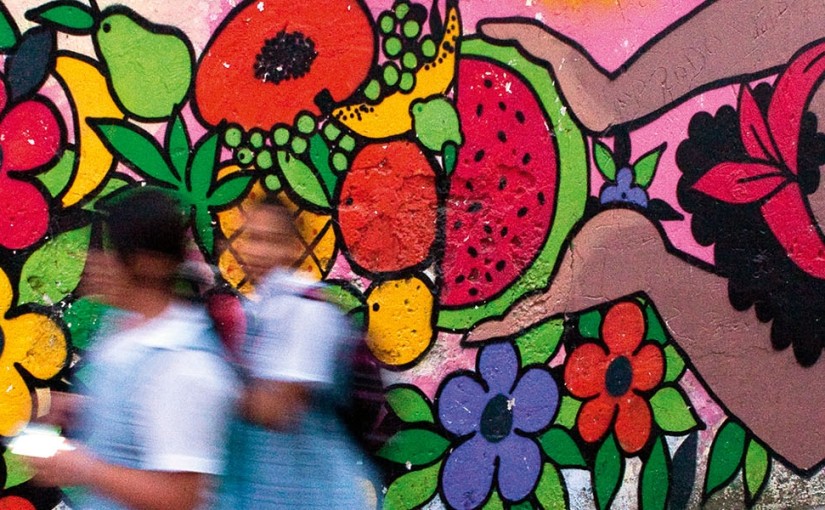
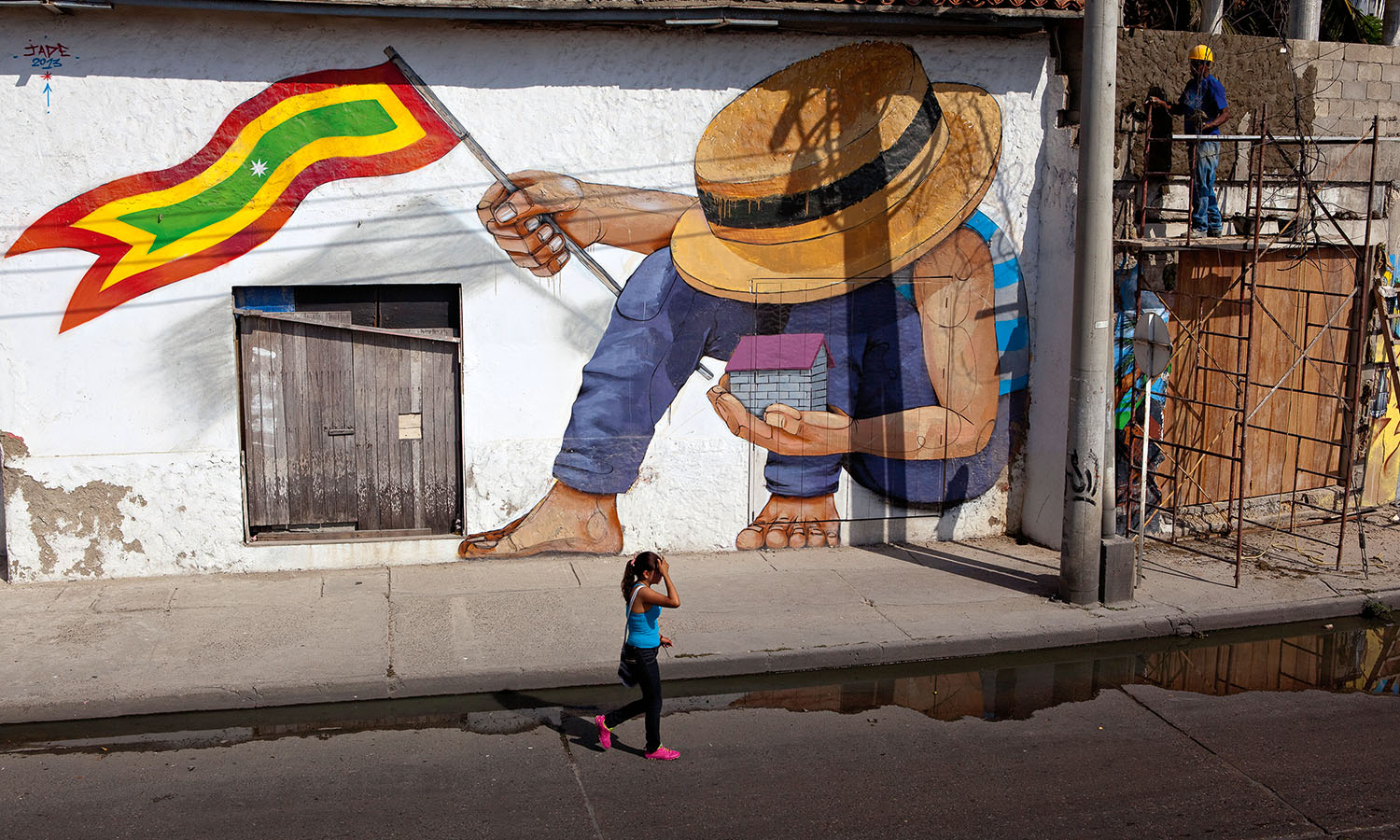
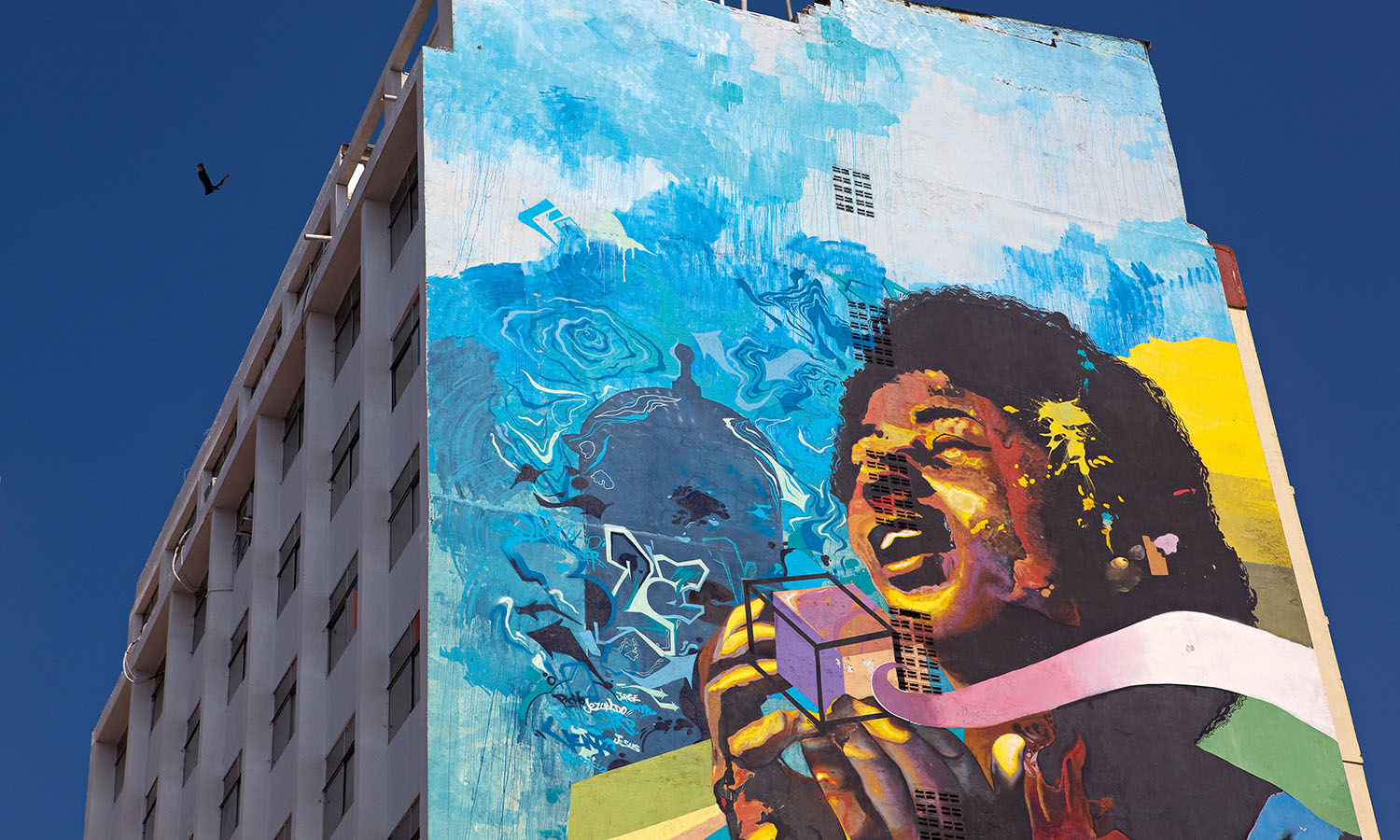
On the final leg of the tour we walk to the guide’s own barrio (neighbourhood) for a taste of the street-art scene. Getsemaní is as old as the walled part of Cartagena, and from the scaffolds surrounding the more prominent buildings I can see it’s gentrifying, too. But Nelson insists that, for the moment at least, locals can still afford to live here, and its walls aren’t so historic they can’t feature contemporary artistic expression. In December 2013 they were the principal canvases for Cartagena’s inaugural Ciudad Mural, the International Festival of Urban Art. For six days and nights, an international team led by Colombian street-art crew Vertigo gifted the city more than 30 epic murals. One of them, Prisma Afro, is a 35-metre high, colour-splashed tribute to Afro-Colombian women that now stands as the tallest in Colombia.

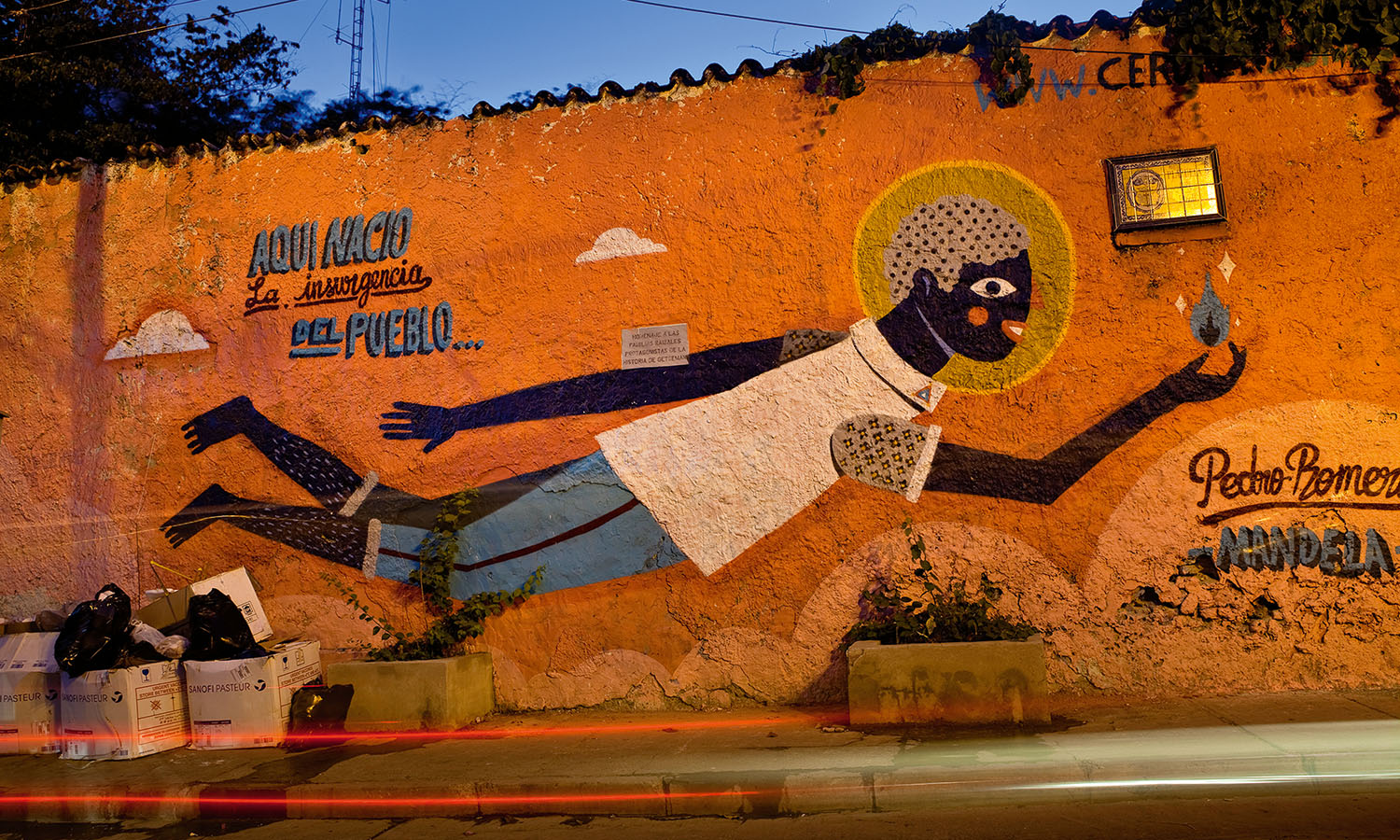
Like Prisma Afro, most of the murals here champion local identity, but they also provide insight into Getsemaní’s remarkable place in Colombian history. At Plaza del Pozo, opposite D’Arte (a small restaurant owned by local sculptor Edgar Carmona), a funky, black-skinned astronaut is painted bearing a flame in an outstretched hand. The words “Here the insurgency of the people was born!” are written near it. The figure is a contemporary visualisation of Pedro Romero, a local who, in 1810 – as a person of mixed European–African descent during the era of slavery – formed a militia to expel the Spanish governor and declare Cartagena independent from Colonial rule. It was a move that would cost Romero his life, but it was the beginning of the eventually successful independence struggle that would see him remembered as a national hero.

Another Afro-Colombian hero depicted in Getsemaní is Joe Arroyo. He was a composer, songwriter and singer who rose to national fame as the frontman for Fruko y sus Tesos, one of the great salsa bands of the 1970s. He then became even more successful during a prolific solo career, eventually becoming one of the greatest Latin American performing artists of all time. One of the reasons he remains so popular at home is because his unique style paid tribute to the many genres in the Caribbean’s African diaspora and because his lyrics played on themes of the injustices they’ve faced. One particular phrase written on Joe Arroyo’s mural is one I’ve spotted all over town: “No le pegue a la negra!” It’s a line from his biggest hit, ‘La Rebelión’, which recounts the story of a slave in the 1600s who rebels after his wife is savagely beaten by their master. As the band at Café Havana rouses the crowd, I recognise the lyrics and realise they’re playing a rendition of the famous song. I can’t think of honouring Cartagena, its history and its artists in any way more fitting than by finishing my mojito and, one last time, stepping on the one and pausing on the four.

Water into wine

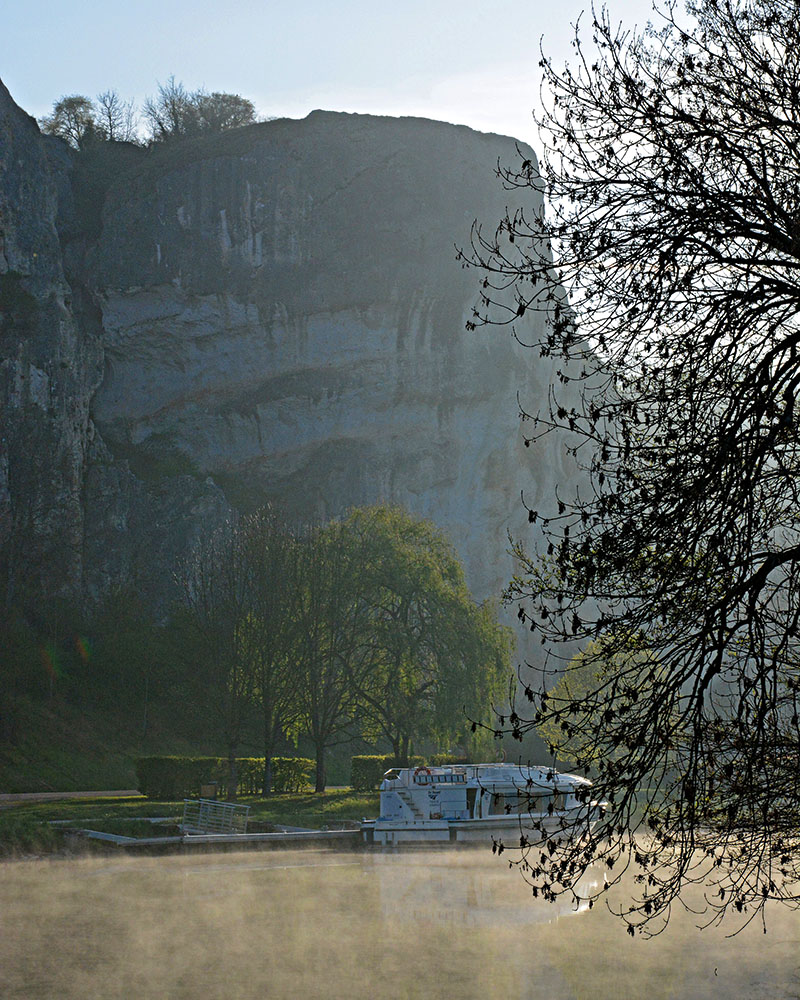
It was an accident, really. We didn’t mean to start knocking back sparkling wine in a hilltop cave at eight in the morning. Earlier, when George and I were cycling along the banks of a waterway heavy with morning mist, our declared mission was uncomplicated: ride around for a bit, find a village with a boulangerie, stock up on croissants and bread, return to le boat as le triumphant hunter-gatherers. Facile!

But when you wake up in a new place every morning and you don’t know the lay of the land, it’s an easy matter to get lost – especially here, in the Auxerrois, a province in the Burgundy region of central France, where apparently it’s simpler to stumble upon an immense subterranean cavern full of bubbly than it is to find a bakery.

We’re in the Caves Bailly Lapierre, which burrow into the hills above the riverside village of Saint-Bris-le-Vineux. Within its four-hectare labyrinth, the premium produce of 71 local vineyards is gathered together and sold in a front-of-cave tasting room.

To get here (after spying an intriguing looking riverbank sign, which curiosity refused to let us ignore) we climbed a vertiginous hill, cycled through a hole in the cliff face and pedalled several hundred metres through a gloomy tunnel, before emerging into a huge chamber lined with bottles. There, beneath a buxom vision of an effervescent wine angel sculpted into the stone ceiling, a bloke offered us a glass of Crémant, the speciality of the region.

You can’t argue with serendipity in such circumstances, and it would have been rude not to try a few sips of the local varietal; plus we needed to sate the thirst we’d earned by cycling up the hill. Even at this early hour we’re not alone. Some of our fellow early-bird tasters are spitting their wine out, but we wouldn’t dream of being so wasteful. By the third glass, our erstwhile quest has gone completely out of focus.

It’s not until we get back in the saddle and wobble off down the hill, four bottles of Crémant Réserve clinking away in the breadless baskets of our bikes, that we realise a story is going to be required. Our crew has grown used to feasting on fresh bread for breakfast – we’ve been gone for hours and the bounty we’re returning with is not what they ordered. This could end in mutiny.

We’re deep into a self-sail boat trip along the Yonne river and Canal du Nivernais, twin – sometimes conjoined – waterways wending their way through the Bourgogne and forming an umbilicus between the Loire and Seine valleys. Things have been going smoothly so far, almost too smoothly – a revolution will liven things up nicely. So long as no one gets keelhauled or guillotined.

Potential insurgencies aside, this is slow travel at its best. It’s barefoot boating for those who want to explore the countryside, villages and vineyards of inland Europe, rather than the coast; a travel experience for people who love boats, but can’t bear the thought of being a passive passenger on a clinically planned cruise.

As captain of your own craft, you can choose your crew, explore at your own pace, stop as often or as little as you like, and there’s no need to unpack and repack gear at every port of call. It’s like having a floating campervan, except a whole lot cooler.

You have to stick to the canal while on the boat, obviously, but having a couple of bikes on board gives you the freedom to explore well beyond the banks. The horses that once hauled barges along this waterway have long since been put out to pasture, and the canal towpath now forms a perfect cycleway. To break up the pace – and burn off a few of the chocolate croissants we’ve been shoving in our cakeholes all week – we take turns to hop off with a bike at each stop, racing the boat to the next lock.

Beyond the odd burst of pedalling, though, it’s a seriously somnambulant sojourn. As we cruise along the river, gliding lazily through the bucolic heart of rural France, the canal is fantastically fringed by the near-neon-yellow glare of almost endless fields of rapeseed plants, so bright you need sunglasses to behold them. The smell of ripening flowers hangs heavy in the air, as does the bouquet of the gloriously busy cheese plate we bust out every lunchtime. Periodically a château punctuates the scene, and at each town and village along the way we abandon ship to look around, replenish the ship’s wine cellar and stock the beer fridge with Kronenbourg.

Occasionally, a bit of concentration is required. We’re in one of the largest craft in the Le Boat fleet, a Vision3, which boasts three double rooms, a galley/living area and a huge top deck. One downside of having the biggest boat on the moat, however, is that while it’s lovely and spacious on the inside, things can get a bit squeezy when you’re trying to negotiate some of the tighter sections of the canal. Built back in 1784, the waterway is designed for proper canal boats powered by proud horses, not flashy cruisers driven by hapless donkeys.

Initially it was terrifying. When Dominic, the depot’s grand fromage, first suggested I take the wheel outside the boathouse in Migennes, I felt like I was manoeuvring a road train around a playground. The local fishermen seemed to share my nervousness. My schoolboy French isn’t the best, but I’m pretty sure the angler on the far bank wasn’t wishing us bon voyage when he started jumping up and down and yelling.

“If you need to warn someone that you’re approaching, sound the trumpet,” Dominic sagely suggested, pointing to a button picturing a horn. We’ll be the Louis Armstrongs of the canal by the end of this, I thought, as he hopped off and left us in charge.

The Canal du Nivernais has 110 locks, and by the time we’d gone through the first two without anyone dying and the boat still afloat, our nerves had settled somewhat. Other people helped too, especially the crew of flag-waving Kiwis who forced past us then promptly got themselves into an almighty tangle in the next lock – they made us feel like seasoned sailors.

Admittedly, the Vision is armed with side-thrusters, which make positioning the boat remarkably easy, but while getting into locks is one thing limboing under eighteenth-century bridges in the river version of the QE2 is another matter altogether.

“Your glass of wine, that will be OK,” Dominic explained, before letting us loose. “But the bottle, well, you might need to move that off the table when you pass under the lowest of the bridges.”

We assumed he was joking, but no, they really are that tight – as my wife discovered when she escaped a beheading by mere millimetres while unwittingly climbing the stairs to the top deck just as we passed under a particularly low bridge. I shouted a warning just in time, mercifully (she was bringing me a cold Kronenbourg after all).

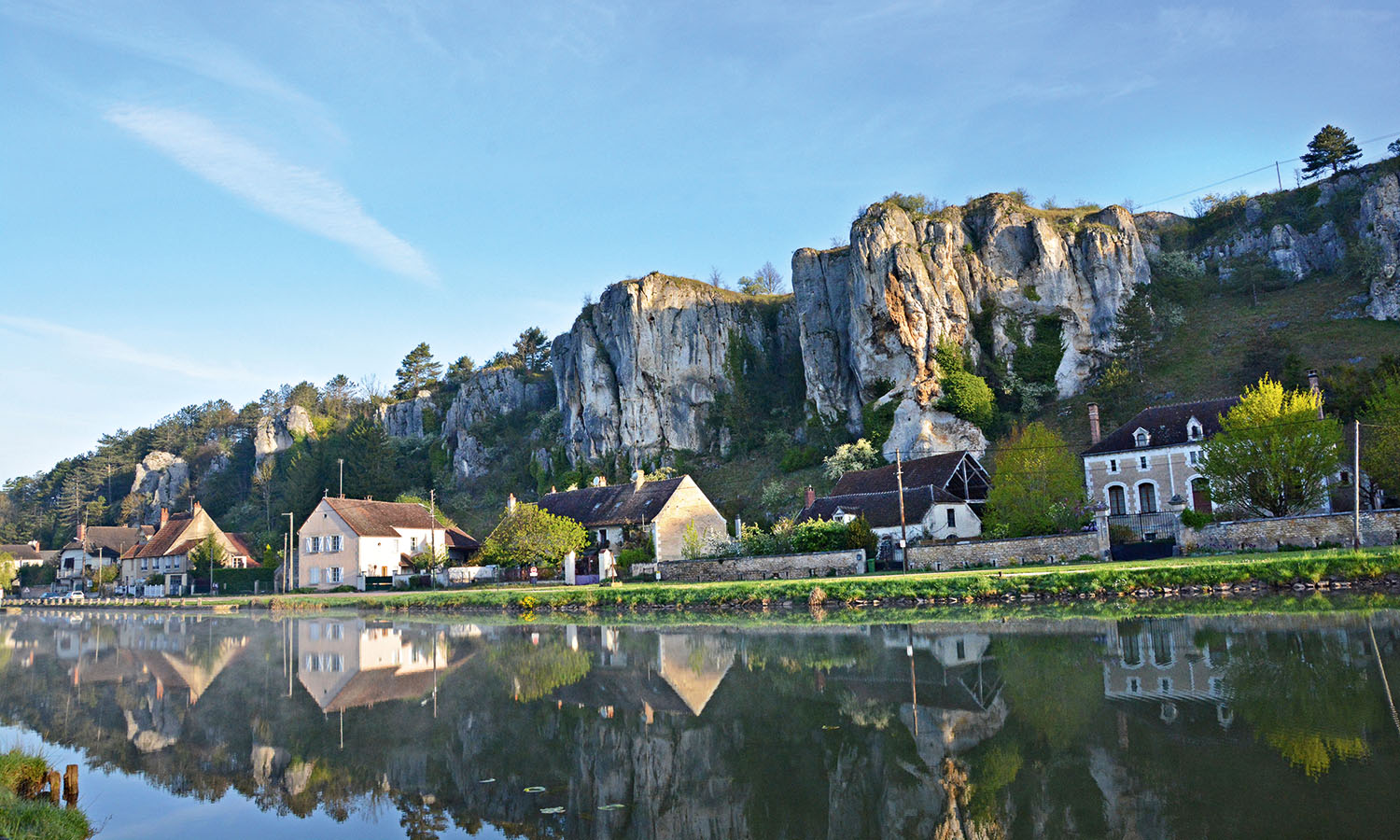
During our week-long expedition through the Yonne Valley, we pass the glorious green embrace of the Morvan, a beautiful expanse of wild woods, where tracks and trails spider off in various directions, most of them eventually leading to hilltop hamlets. Cycling along one of these trails one morning I almost crash headlong into a wild deer.

There’s a slight 28 Days Later feel to some of the medieval villages we discover while exploring. Mailly-le-Château, for instance, is a quiet and eerie eyrie, where the streets are almost surreally tidy, the gardens well tended and everything is in its right place, yet the streets are spookily empty. Zombie apocalypse or not, there’s almost always a cracking boulangerie in these places, but who they sell their magnificent bread and cakes to when we don’t happen to chance by, I’ve no idea.

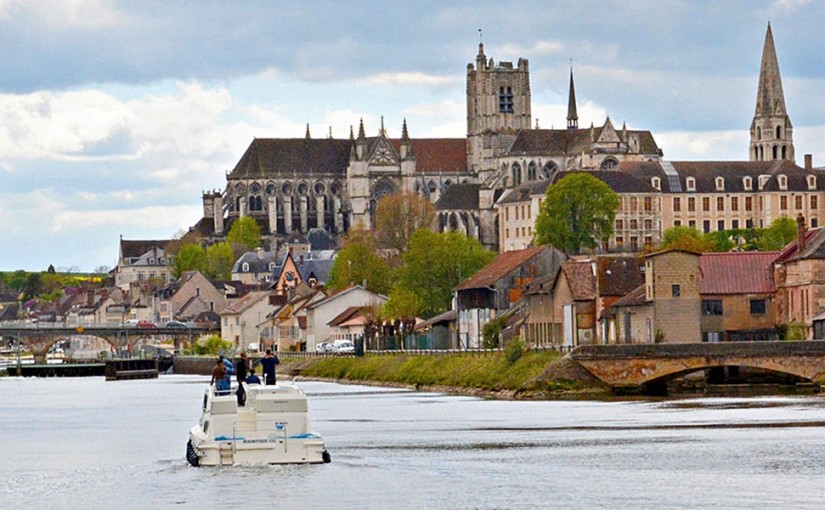
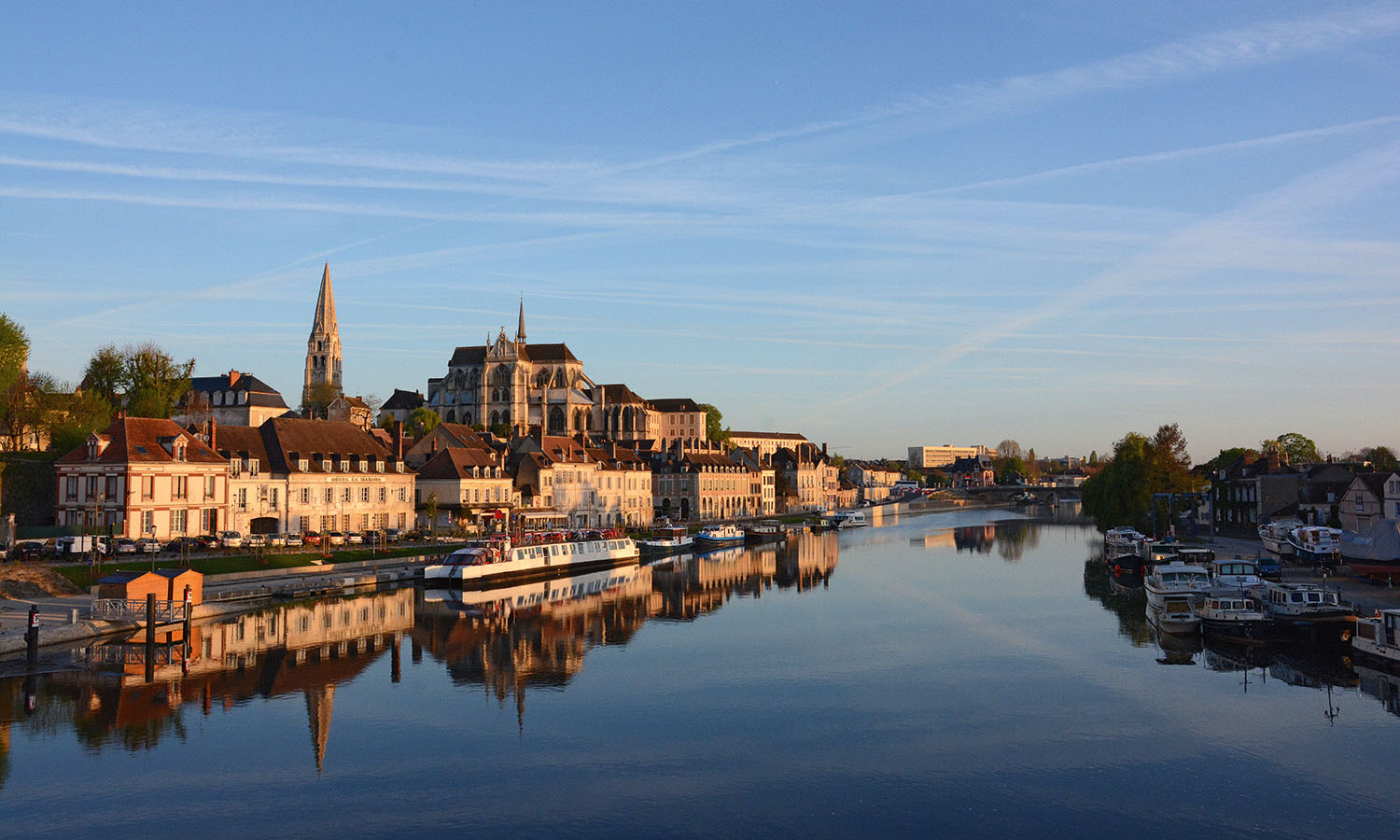
Far more vibrant are the two bigger towns we pass through, Auxerre and Clamecy. The spire of Saint-Étienne Cathedral, visible from several river bends back, announced our imminent arrival in Auxerre on the second day. The lively town revolves around this edifice, parts of which date back to the eleventh century. We moor right next to a little plaza that leads straight to its enormous doors – more central accommodation it would be impossible to find.

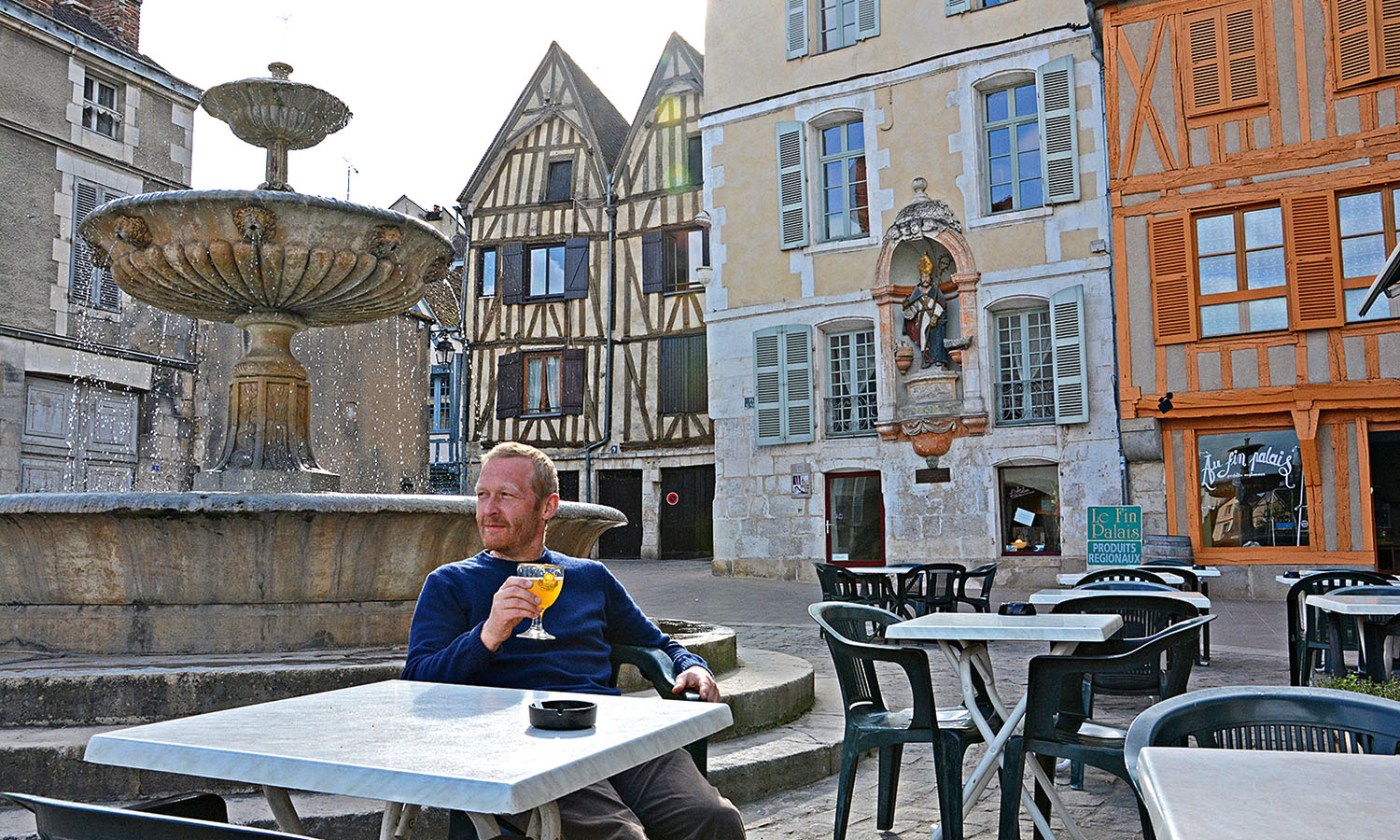
The town is busy with bustling restaurants, bars, cafes, shops and tabacs, but we don’t hear a single non-French voice while exploring the streets. Besides the Kiwis, we appear to be the only blow-ins. It’s hard to discern whether this is because it’s early in the season or if this part of France is just well off the tourist map.

While the villages of the Bourgogne are quiet, the locks along the canal are social hubs for boaters. Even now, during the quiet kick-off to the season, it’s common for lock keepers to squeeze two or three boats into each lock. As you stand on deck with a rope in your hand, ready to brace against the buffeting onrush of water, conversations flow between craft.

It transpires that many of our canal-cruising comrades own their boats and live the life aquatic almost full time. A few are French, but others have transported their barges and river cruisers from the UK or elsewhere. Some of these waterborne wanderers are on epic voyages, linking together canals and rivers to traverse large swathes of Europe.

Intrigued, I do a bit of research (our flashpacking boat has wi-fi) and discover you can take a canal boat a bloody long way if you put your mind to it. Some people have attempted trips from Paris to Moscow, even continuing up to Arkhangelsk on the shores of the White Sea in Russia’s north.

There’s a whole nomadic canal-boat counterculture here I never knew existed. It’s an idea to file in my to-do-when-I-retire-loaded list, but for now I’ll be happy to make it to Tannay in one piece. Tomorrow we’ve got a shindig planned in Clamecy, our last stop before relinquishing the Vision. But first we have to face the hungry hordes waiting back on the boat.

“I think there is some brioche left over from yesterday in one of the cupboards,” says George, grasping at straws as we swoop down the hill and away from the vino cave.

Perfect. The people have no bread? Well, let them eat cake. That line worked out a treat for the last person who tried it around here. Marie Antoinette got the chop for her bourgeois indifference to poverty when this canal was just nine years old.

Ah well, if we’re going to get it in the neck, at least we’ve been anesthetised with the world’s best Crémant.