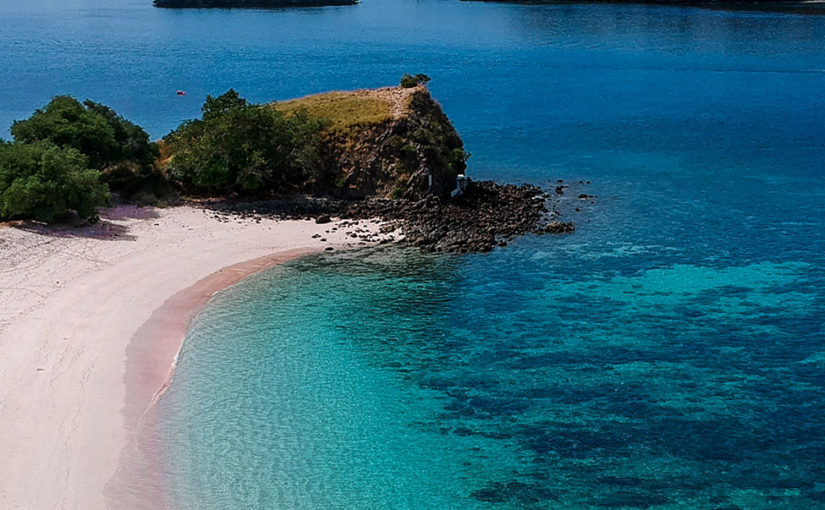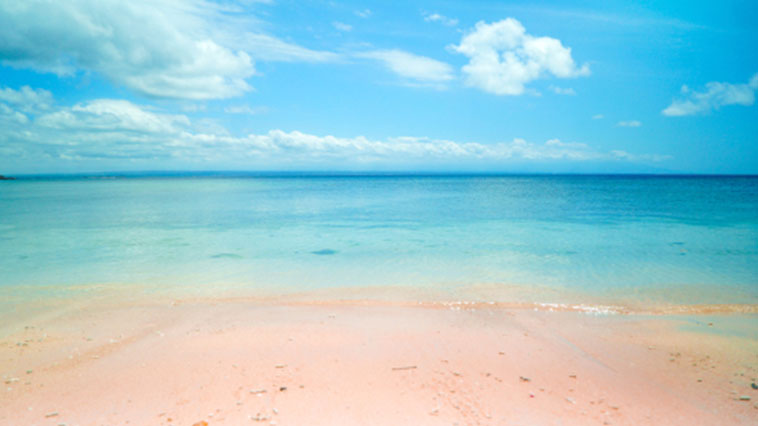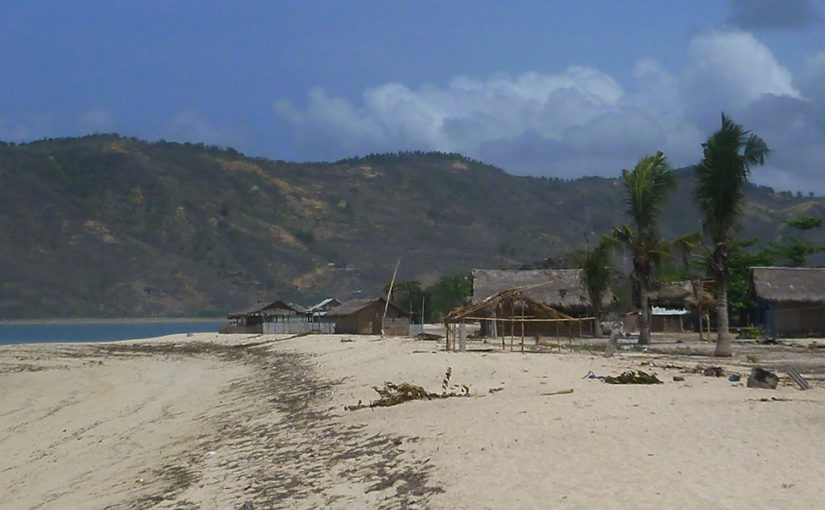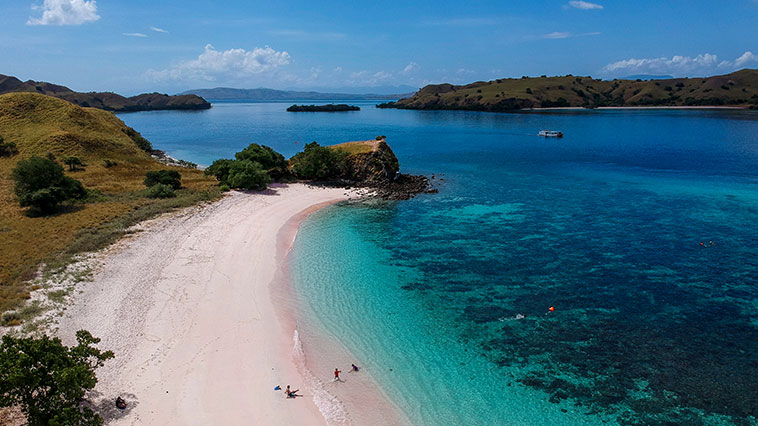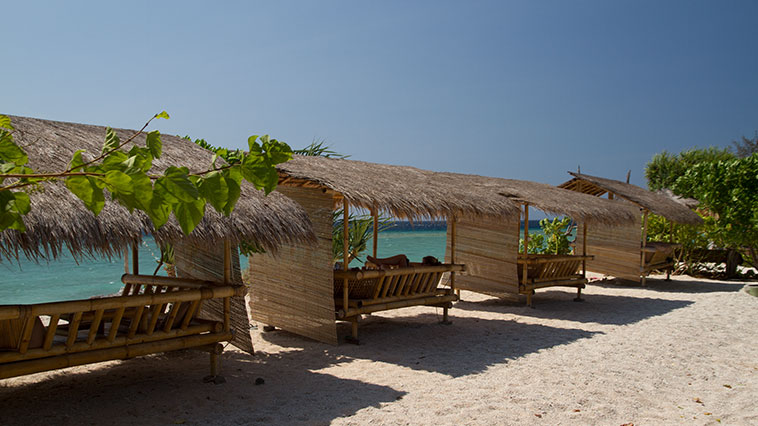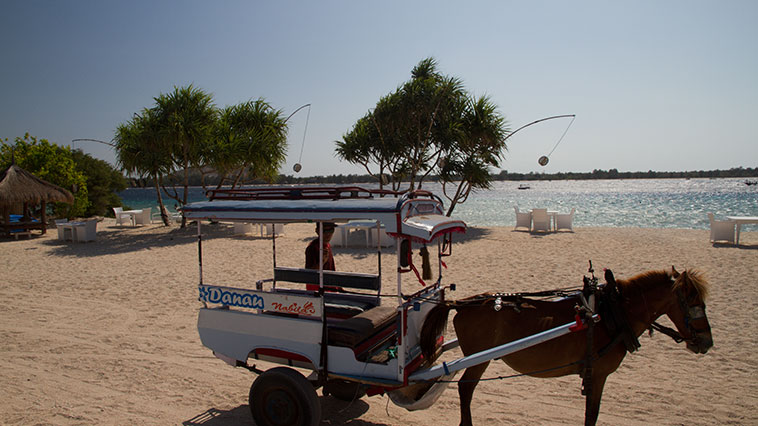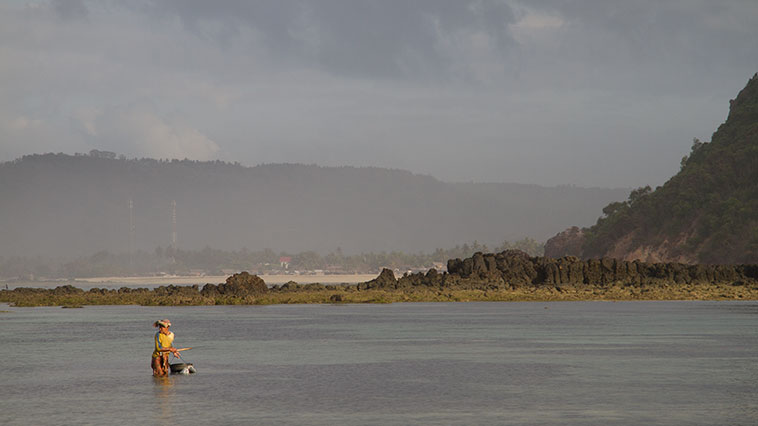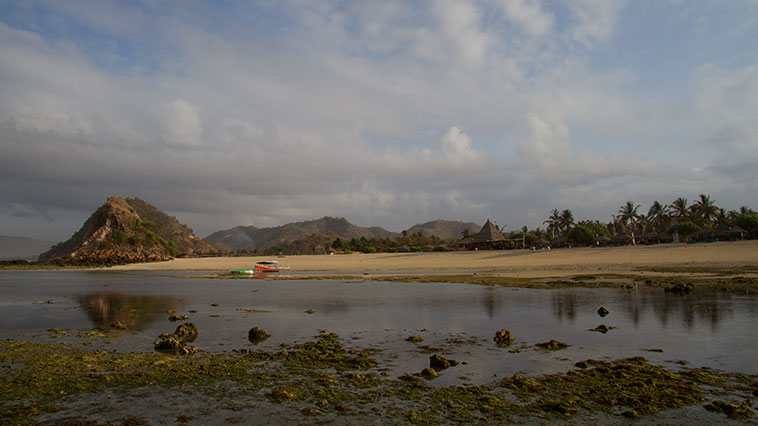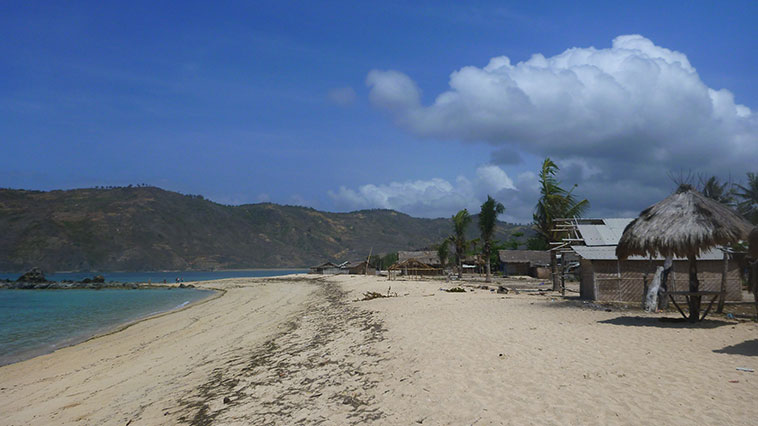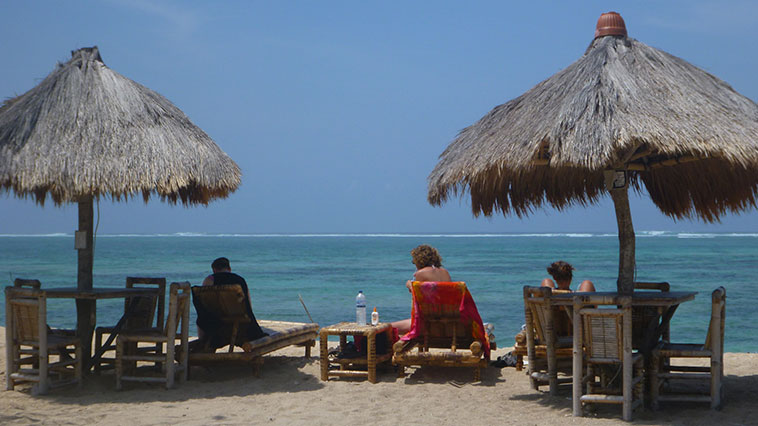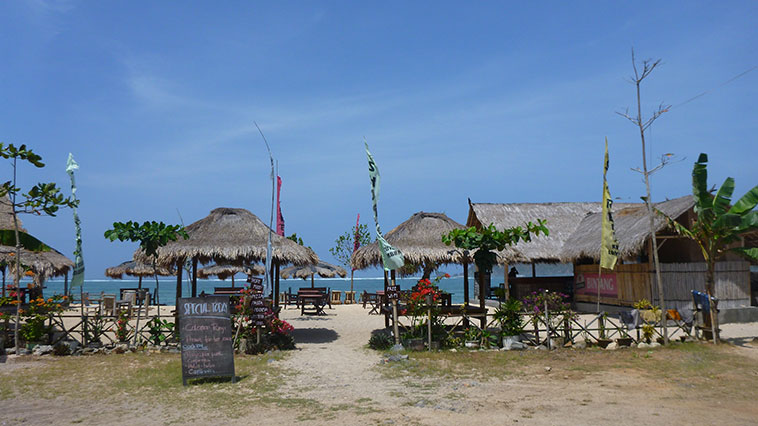
Nestled among the pristine shores of the Gili Islands lies the smallest islet of three – Gili Meno. Peaceful, under developed and just two kilometres long and one kilometre wide, Gili Meno draws in travellers looking for a quieter escape.
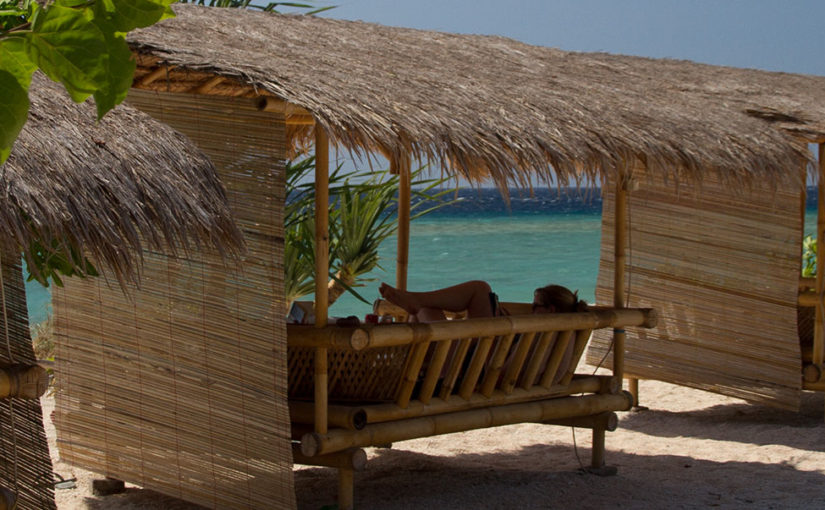
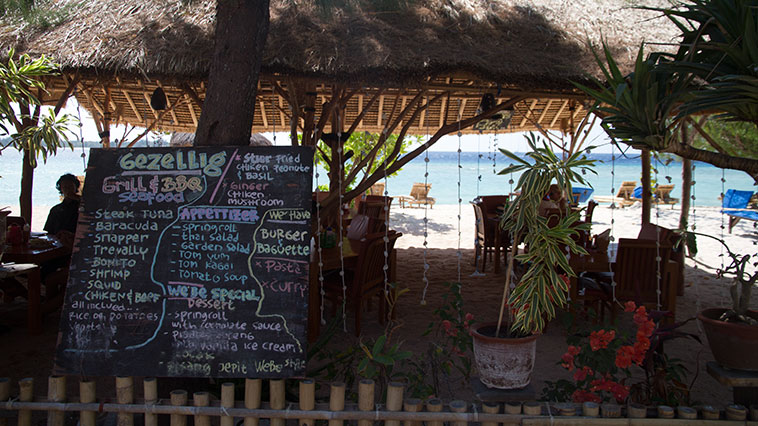
From small local cafes and fish grilled on the beach, to lazing the days away in a hammock or playing chess with the locals, days on Gili Meno are slower than other touristy hotspots in Indonesia.
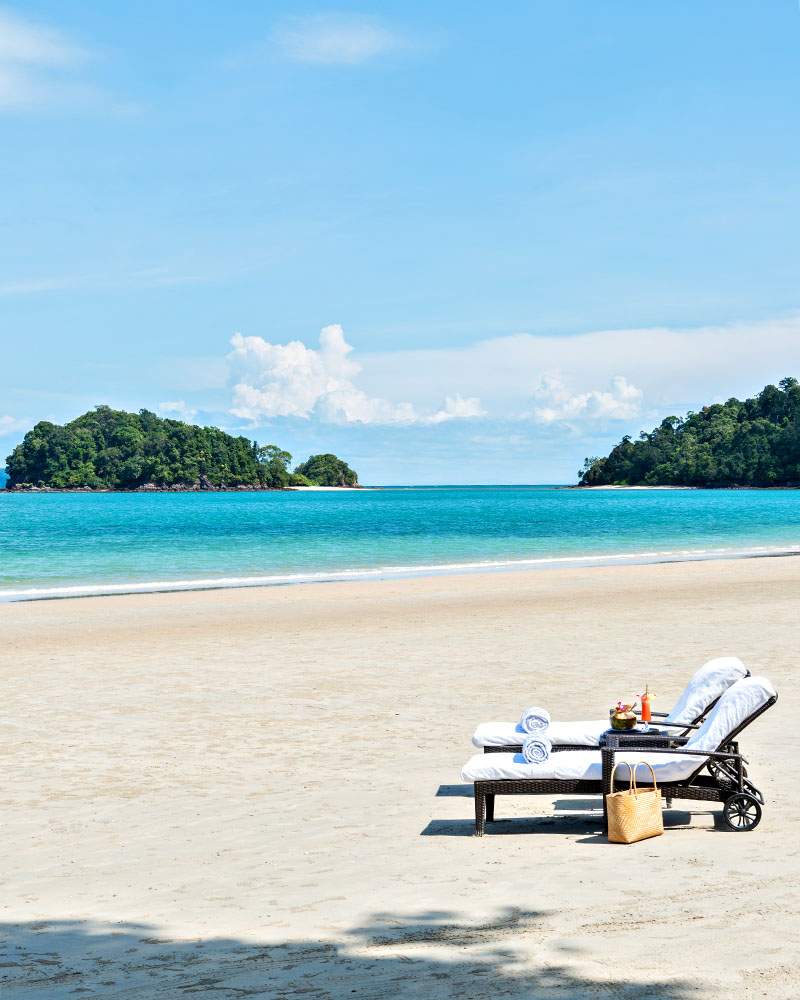
Enjoy the powdery white sands and turquoise waters to the sounds of reggae music setting the pace in the background.
But despite the calmer stride of the island, under water holds a difference scene. This is where the island really comes alive, with turtles and tropical fish darting around colourful coral reefs, graceful manta rays and reef sharks gliding through the glimmering ocean and Moray eels and cuttlefish coming out to party at night.
It’s enough to live out your wildest Blue Lagoon fantasy.
On the south coast of Lombok island, 30 minutes away from the airport, there lies a beach paradise fed by the Indian Ocean.
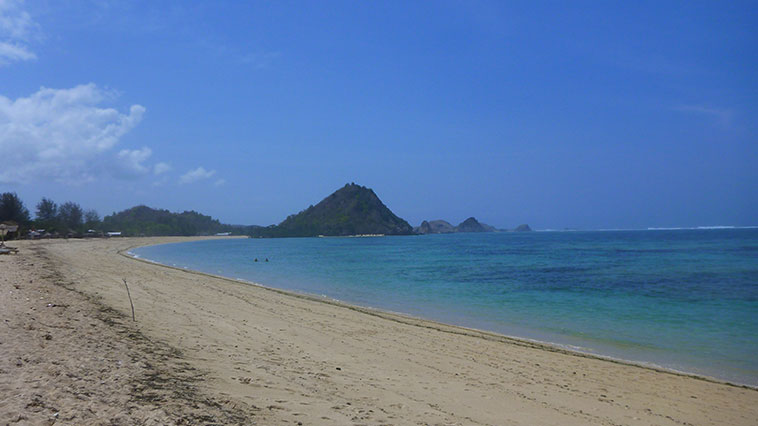
The 1250-hectare Mandalika may be teeming with luxurious resorts, hotels, nightclubs and tourists, but it’s the white sands of Mandalika’s Kuta Beach that has our attention.
This 7.2-kilometre beach is not the Kuta Beach of Bali that most know. Mandalika’s Kuta is a beachside village that draws people in with it’s laid back, sleepy vibes and watersport activities.
If there is one thing everyone must do in the Indonesian island of Lombok, it’s go chasing waterfalls, none more spectacular than the natural curtain of Benang Kelambu Waterfall in Mount Rinjani National Park.
Trecking around half a kilometre up the mountainous landscape, past Benang Setokel Waterfall (which translates to bundle of thread and is three waterfalls cascading into a pond) and Tiara Dewi Anjani waterfall, and up a steep 100-metre staircase, you’ll arrive at Kelambu.
The word itself means curtain, which makes total sense when you see the crystal waters flowing through a wall of greenery. Multiple waterfalls merge together to create a curtain-like view of around 40-metres, where you can walk beneath the cool water or bathe in a nearby pool.
We’re paddling between mangroves, sunshine toasting our legs and white-bellied sea-eagles swooping overhead, when our guide Fuad drops a bomb and tells us saltwater crocodiles stalk these waters. “And then, at night, we have hundreds of snakes coming out here. Especially the king cobra and pit viper,” he continues, as if the threat of salties wasn’t enough to shatter paradise.
In an instant, the plastic shells separating us from the water seem terribly flimsy. Each silver flatfish resembles a snout, and every mangrove root the ridge of a strong, scaly tail.
“So how do you know there aren’t any crocodiles here now?” I ask Fuad.
“Now? They’re here somewhere,” he replies, unfazed. “But so far, while paddling, we haven’t had any encounters.”
Before the 2004 tsunami hit Langkawi, hundreds of crocodiles swarmed Kubang Badak River. Apparently, fishermen observed floats of them departing after the big wave struck the picturesque archipelago, but even the thought of just a few lone rangers is enough to make me edgy.
Fuad dips his hand into the river, fishing out a mangrove seed shaped like a torpedo, and within moments his attention has returned to explaining the mysteries of the mangroves. Between rescuing a prawn that’s catapulted inside one of our kayaks and learning about mangrove seeds being propelled through the sea for up to two years, we do our best to appear inedible in case any crocs are eyeing us off.
With some trepidation we paddle on, passing what looks to be thousands of leaves waltzing on a black sandbank. Closer inspection reveals an army of fiddler crabs, each maniacally waving a single, beefed-up claw in the hopes of attracting a mate. Across the river a brown-winged kingfisher mocks their macho display. A mudskipper, one of the ugliest amphibious fish to ever wade onto land, pervs on us from the edge of the water with its eyes bulging and maw agape.
At high tide the archipelago of Langkawi consists of 99 isles that form part of the Malaysian state of Kedah. Most are uninhabited and promise ancient rainforests teeming with animal life, vast limestone rock formations, coves dripping with stalactites and plenty of attractive beaches. At low tide, when the Andaman Sea slurps out its brine, several more islands appear, knocking the tally up to 104. We’re paddling through an estuary in Pulau Langkawi, the biggest island of the lot, which at 320 square kilometres could fit into Tassie 200 times and still have room to spare. In 2007, UNESCO named this island South-East Asia’s first ‘global geopark’. The following year Sultan Abdul Halim bestowed the name the Jewel of Kedah upon the whole archipelago. For shoppers, it’s a tax-free haven; for those who love nature, it’s heaven on earth.
Crocs aren’t the only creatures to have skulked through Langkawi’s waterways. In 1821 the King of Siam swept across the Strait of Malacca and laid claim over the isles, until Datuk Kerma Jaya, the headman of Langkawi’s capital at the time, squeezed the invading armies out by poisoning wells and destroying the island’s granary. By the twentieth century the British Empire had wrapped its tentacles around the region and the Brits played tug of war with Siam – now Thailand – until Malaysia declared its independence in 1957. These days, a ferry zips between Langkawi and the Thai island of Koh Lipe, and the pirates that once lurked in Langkawi’s jungle and coves are consigned to the pages of history.
Our little group relaxes as we wend further into the estuary, and a couple of hours later we’re rinsing off the remaining jitters at Temurun falls, the island’s tallest waterfall. Although almost four million tourists land in Langkawi each year, few seem to have made it this far north and we share our swim with just a handful of travellers and a couple of local families. Fresh water crashes down the 200-metre-high, triple-decker cake of sandstone and shale, rushing beneath boys scaling enormous logs and filling pools where girls rest with hijabs draping into the deliciously cool water.
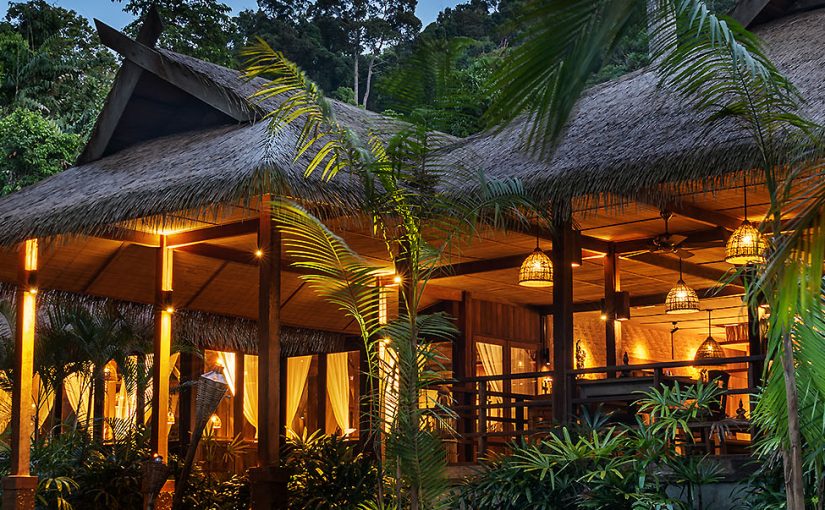
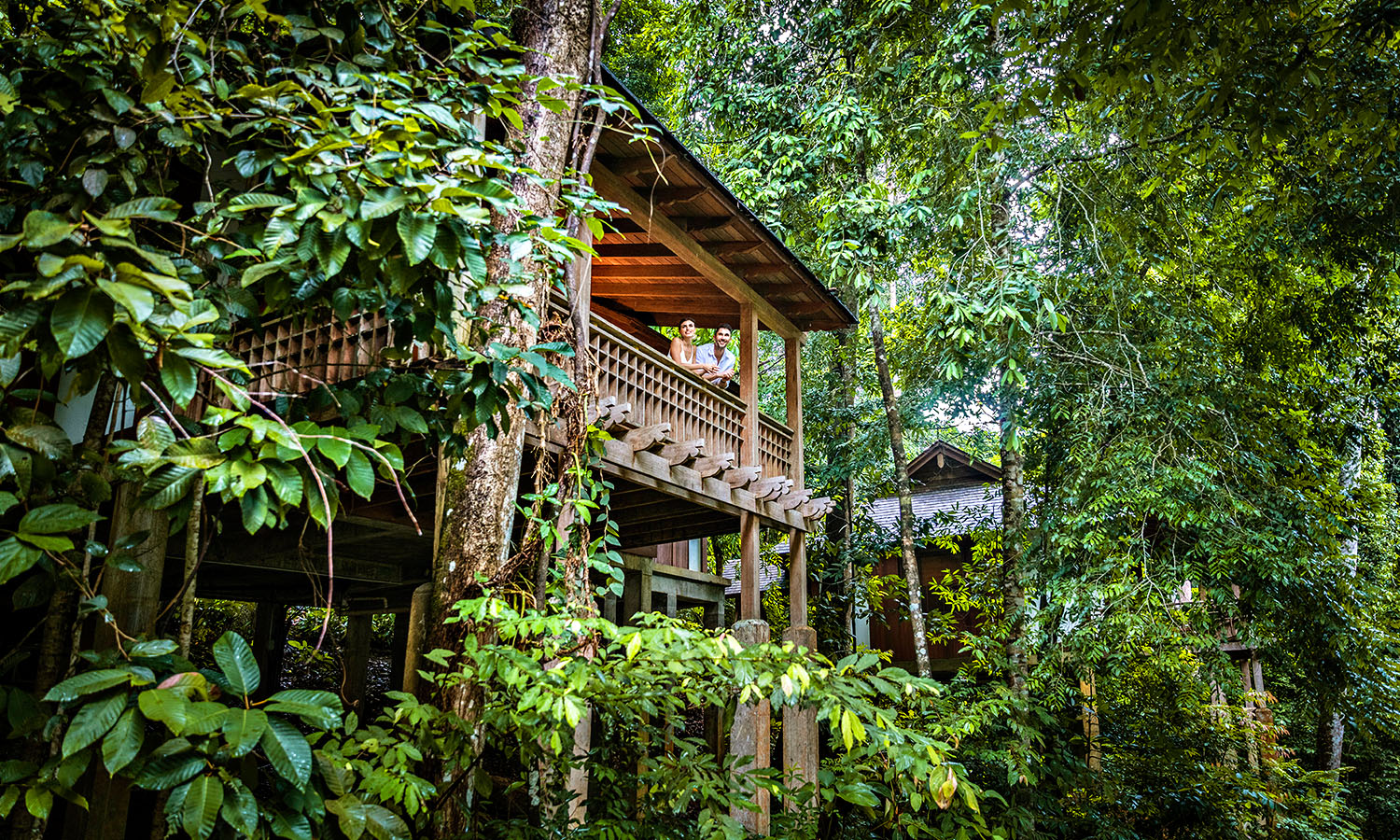
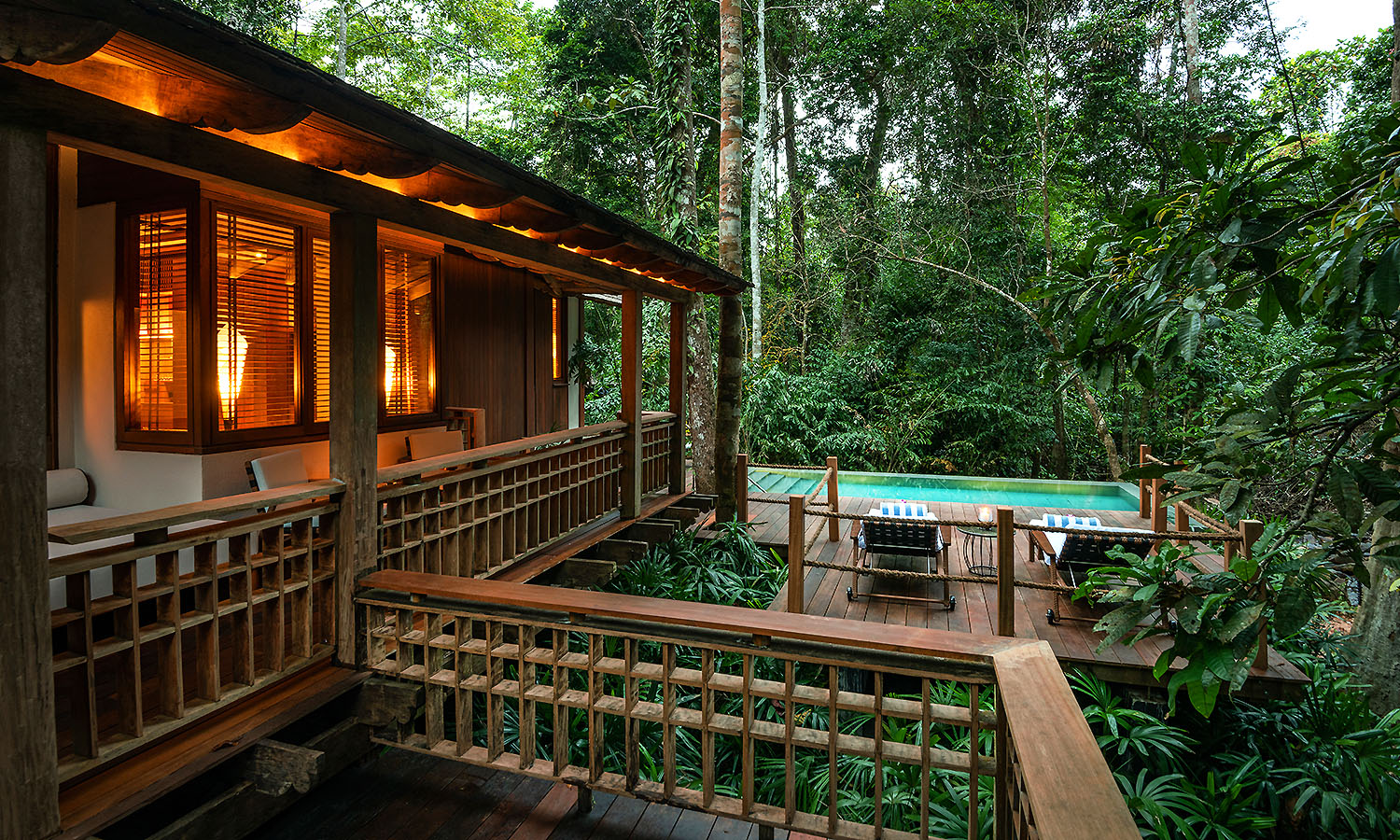
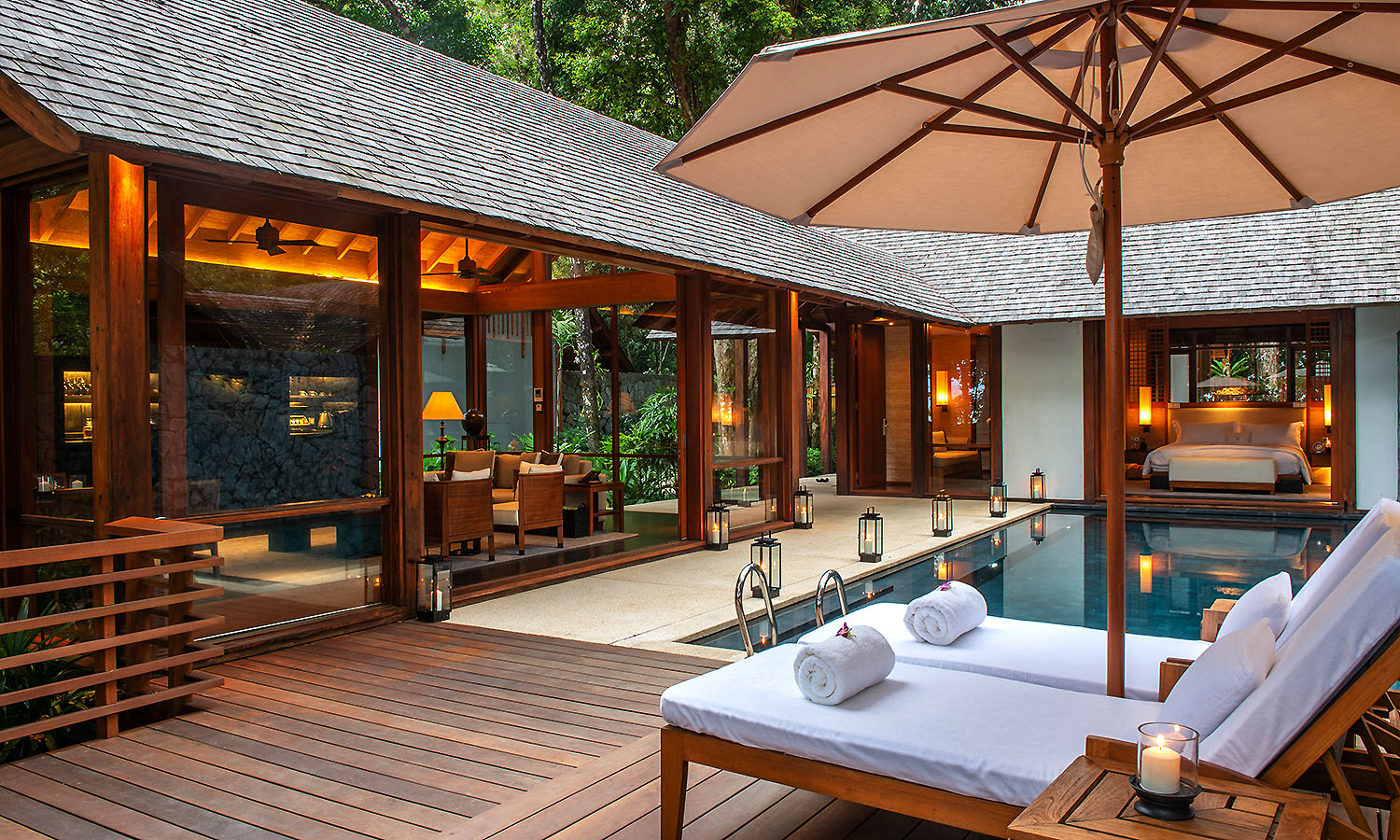
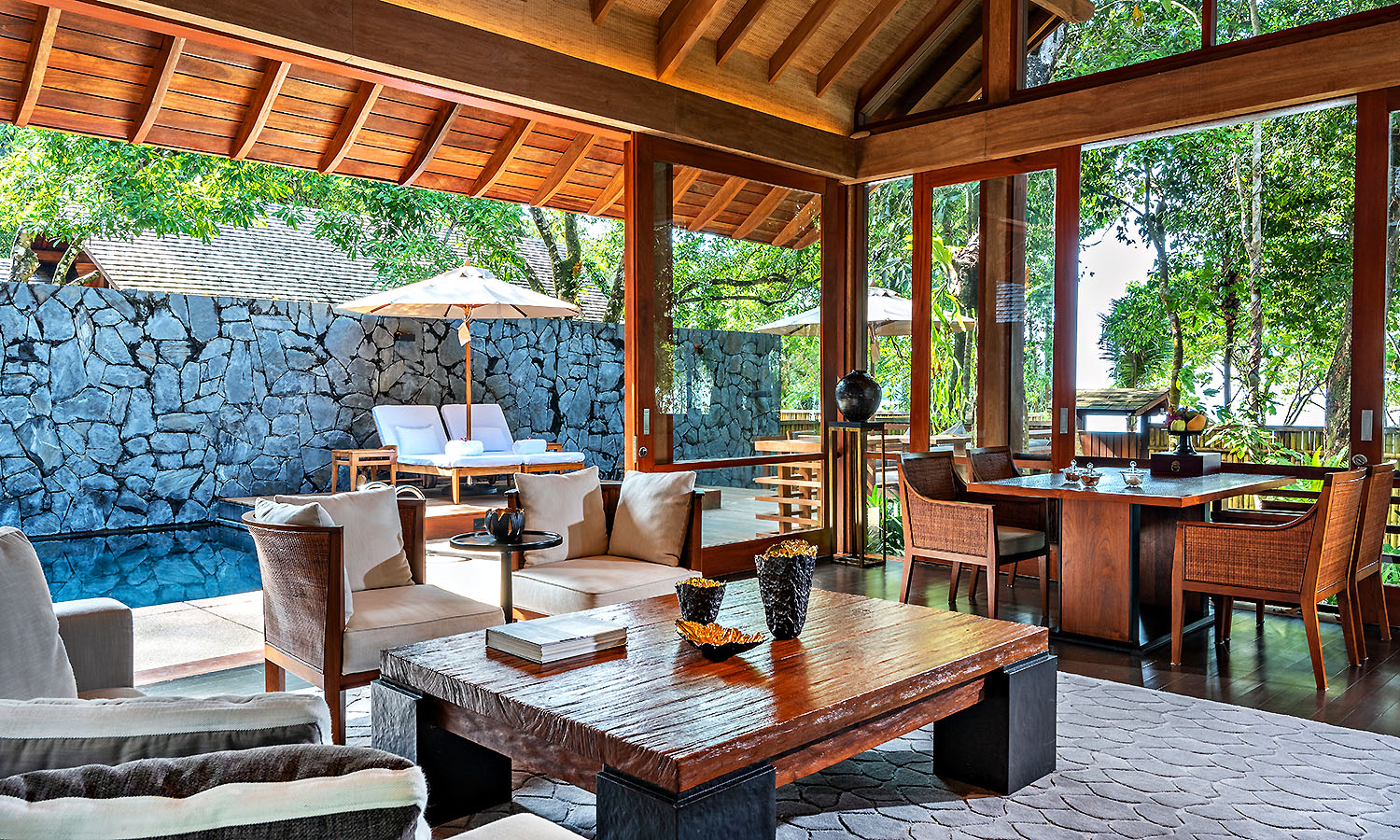
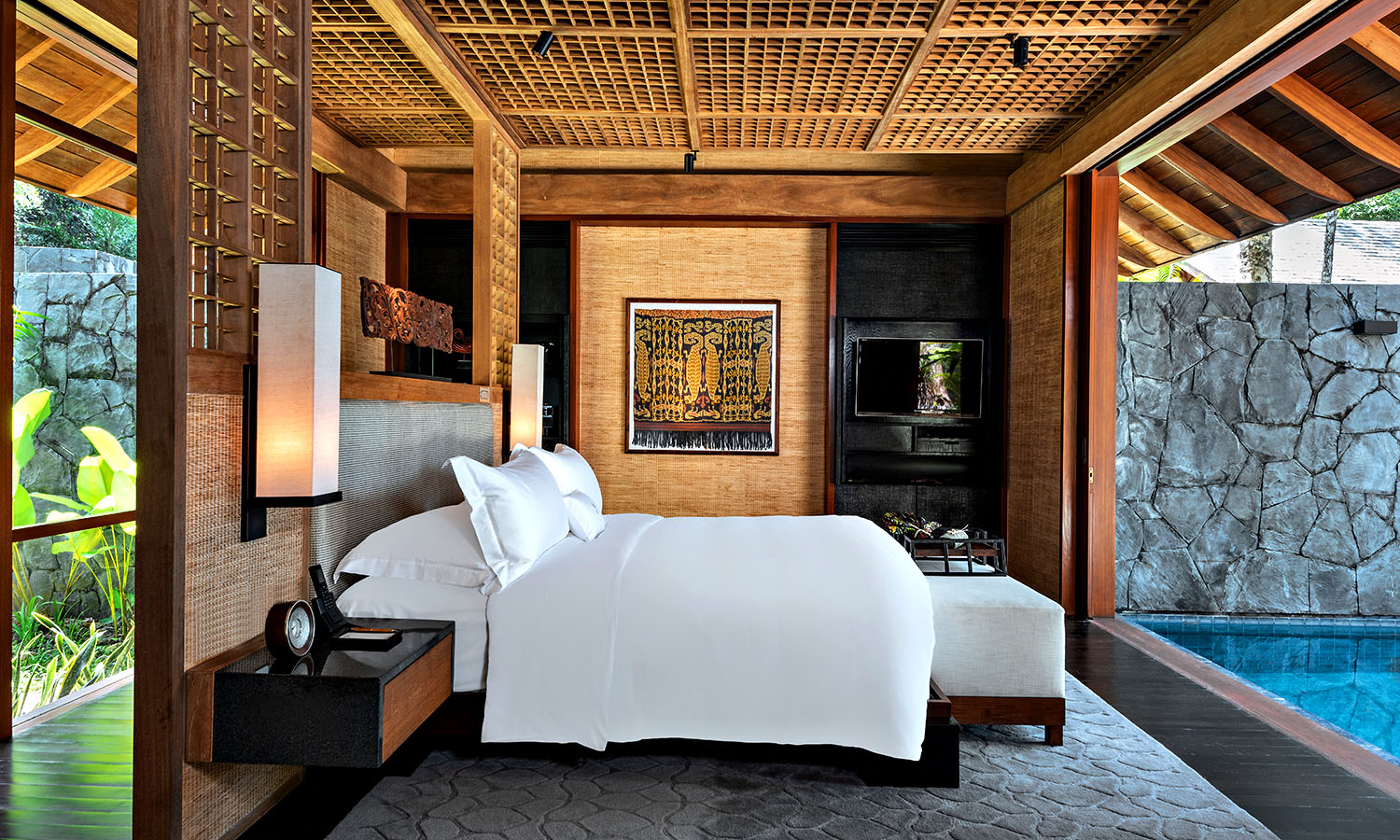
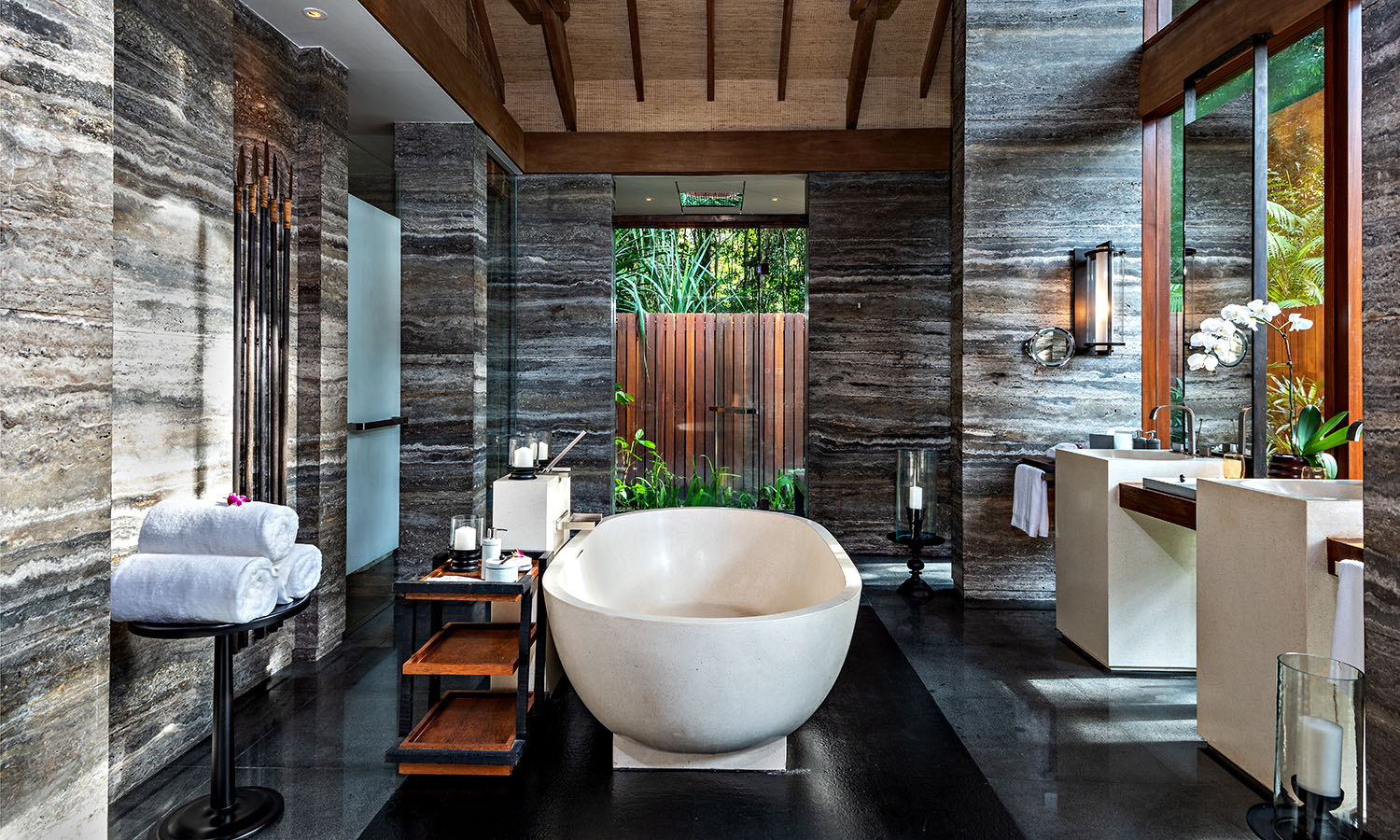
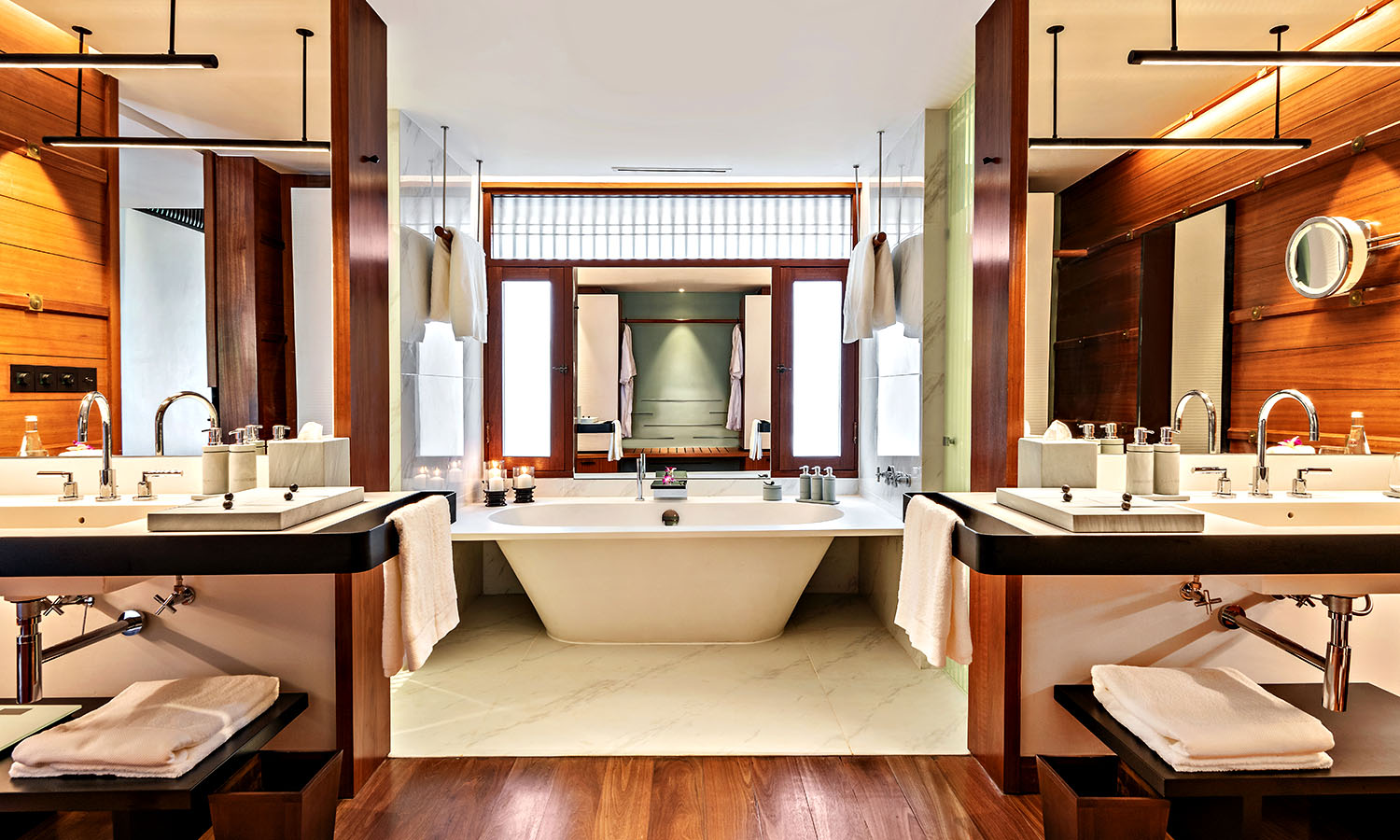
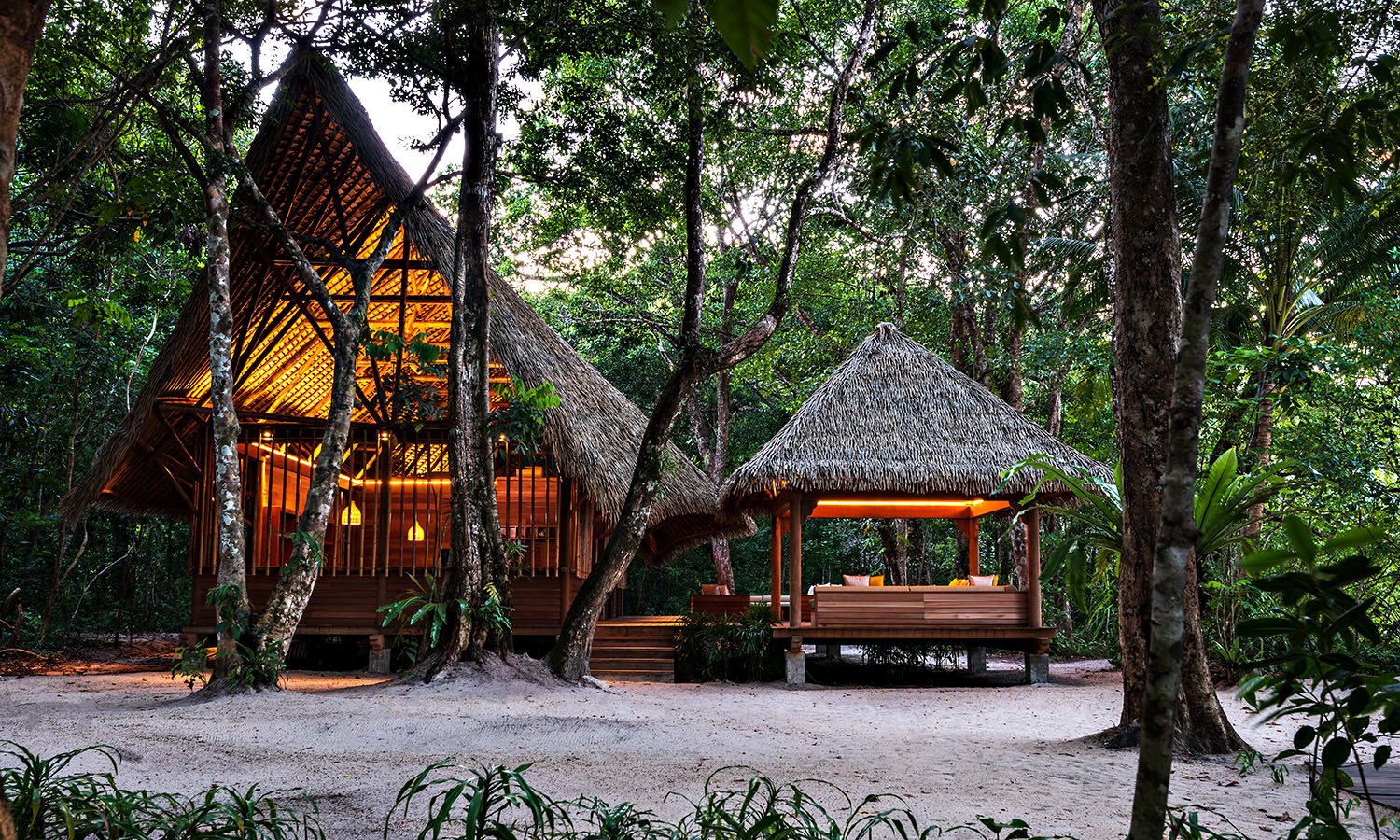
It seems impossible to remain wound up while surrounded by ferns and ficus, and we’ve forgiven Fuad for the crocs by the time we return to our villas at the Datai Langkawi. Wedged between the Andaman Sea and South-East Asia’s oldest mountain, Machincang, the five-star resort brings ten million-year-old rainforest right to its doorstep, and invites forest dwellers right inside. Day in and day out, macaques play out scenes from an action movie, scaling buildings and sliding down poles. When they’re not breaking into minibars in the canopy suites or pilfering fruit from the stilted rainforest villas, they’re scuttling across the private beach, chasing crabs out of burrows.
A French woman checking in at the open-air reception pivots a camera at a flying lemur clinging to a tree. “See the kicking? It’s got a baby inside! Like a kangaroo!” points out the concierge. Our “ohhhs” and “ahhhs” blend with the orgy of frogs panting in the pond by the lobby. Frogspawn foams at the edges until staff can spirit it away and tadpoles bellyflop from eggs hatching in the roof, their slippery bodies plopping onto lily pads in the pond. I’m told a monitor lizard sometimes perches on a rock in the middle, setting himself up for a feast. “Have you met Irshad Mobarak yet?” the concierge asks. “He’s our naturalist. He’ll tell you all about them.” I promise to seek him out and I set off into the forest.
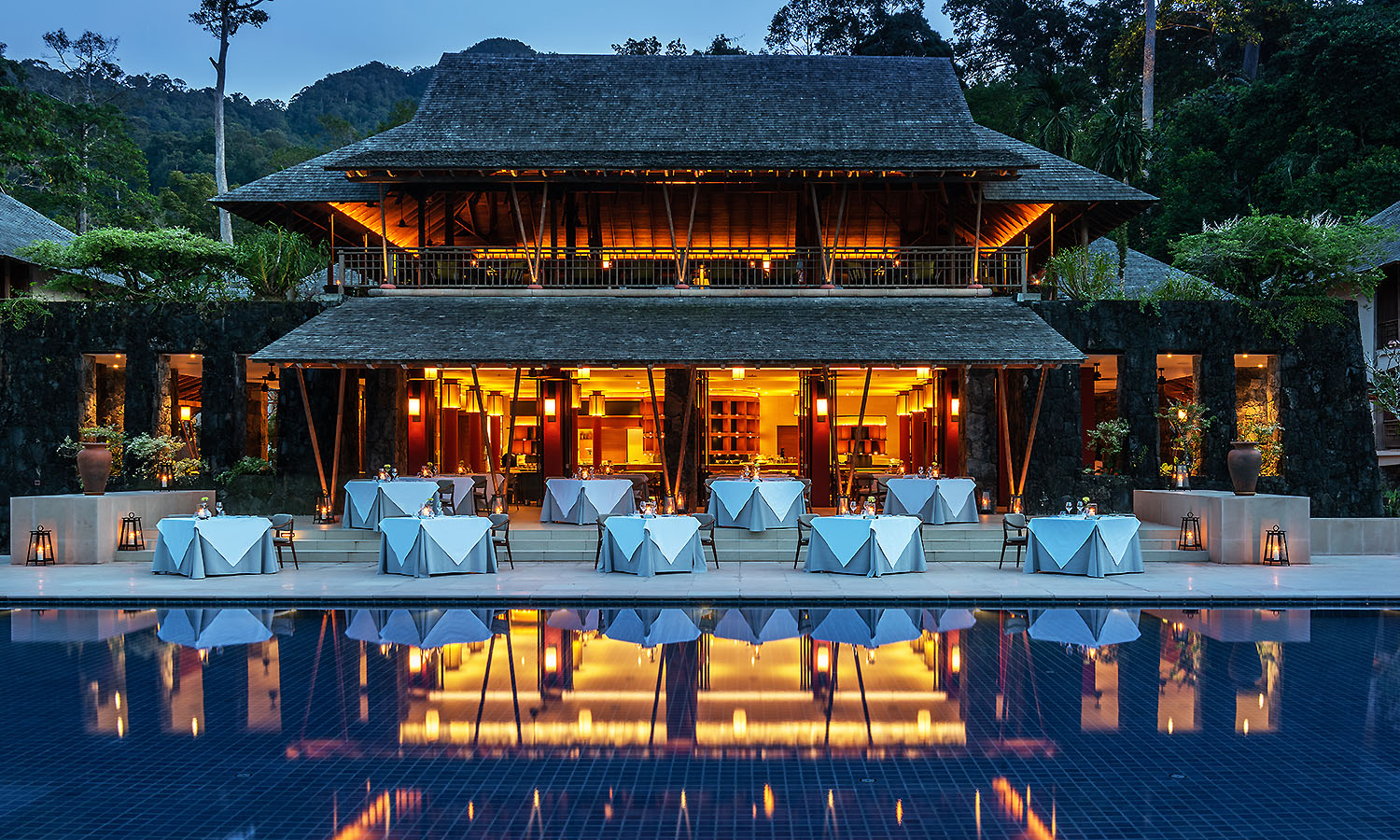
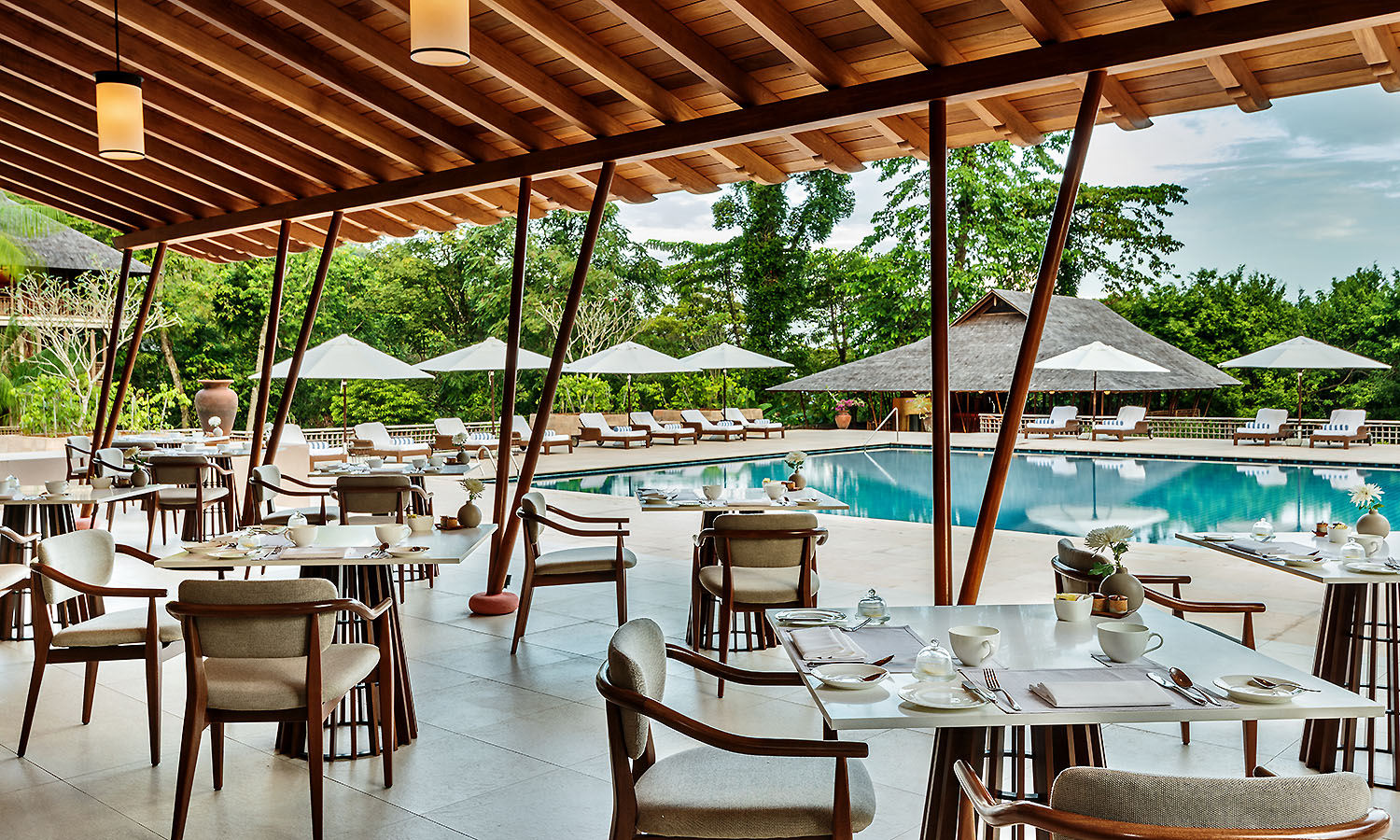
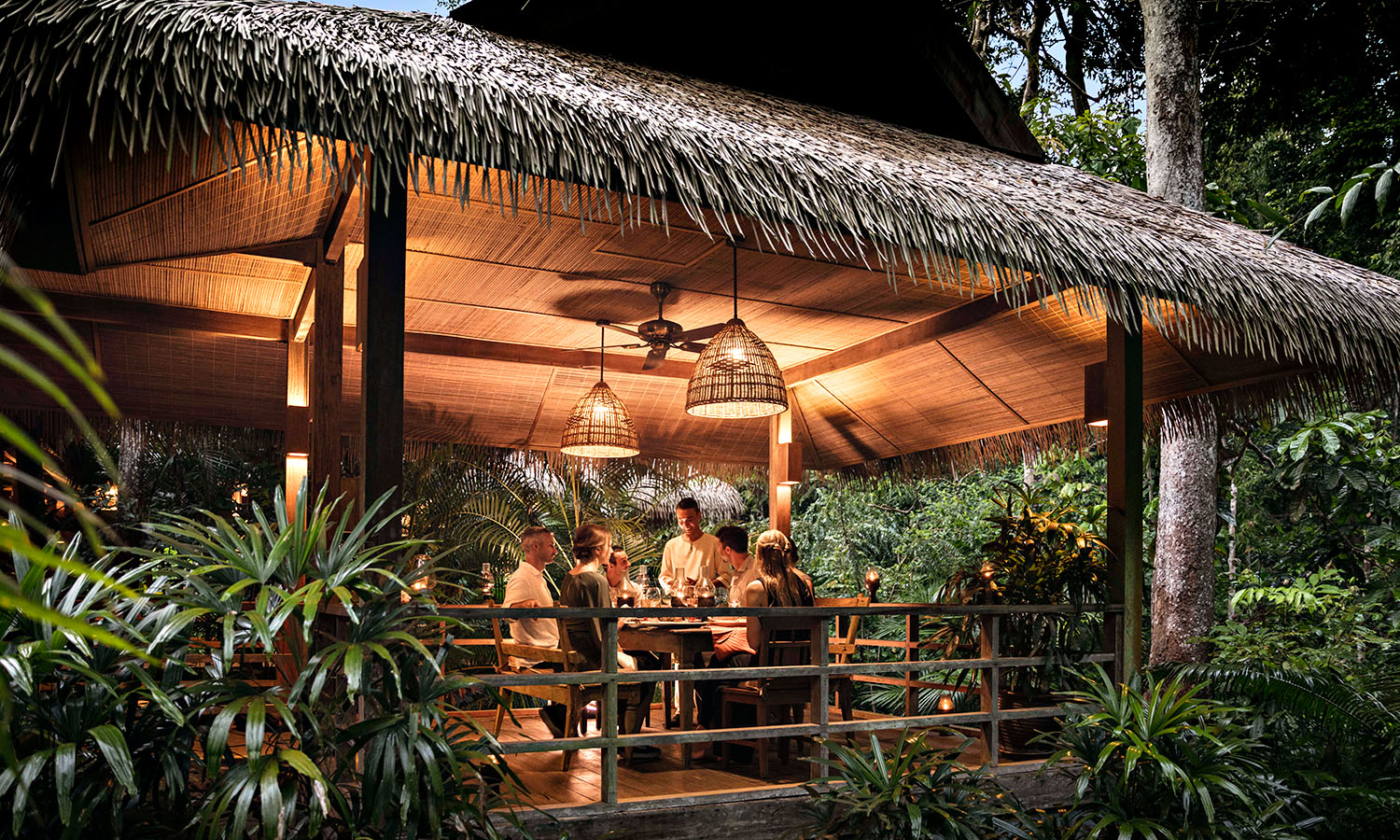
It’s not just the concierge who’s eager to introduce guests to the local fauna. Staff tidying up after Mother Nature will draw you aside for a glimpse of a green- and red-checkered paradise tree snake or the stubby beak of a Malayan soft-shell turtle nosing for shellfish in the stream. Insect life is so thick on the ground you have to prance along the boardwalks to keep from squishing it. Fat caterpillars ooze along the footpath and teeny green snakes curl between rocks. In the Dining Room, fingernail-sized frogs have guests chatting across tables between courses of torched trout belly and barbecued sous-vide octopus. Cicadas rattle their tymbals like drums, creating a racket by the Gulai House, where award-winning local cuisine is served in a traditional Malay kampung-style house. Only the Pavilion, the Thai restaurant perched on stilts above the canopy like an enormous bird’s house, regularly plays music. The rainforest promises a symphony, and the Datai listens with open ears.
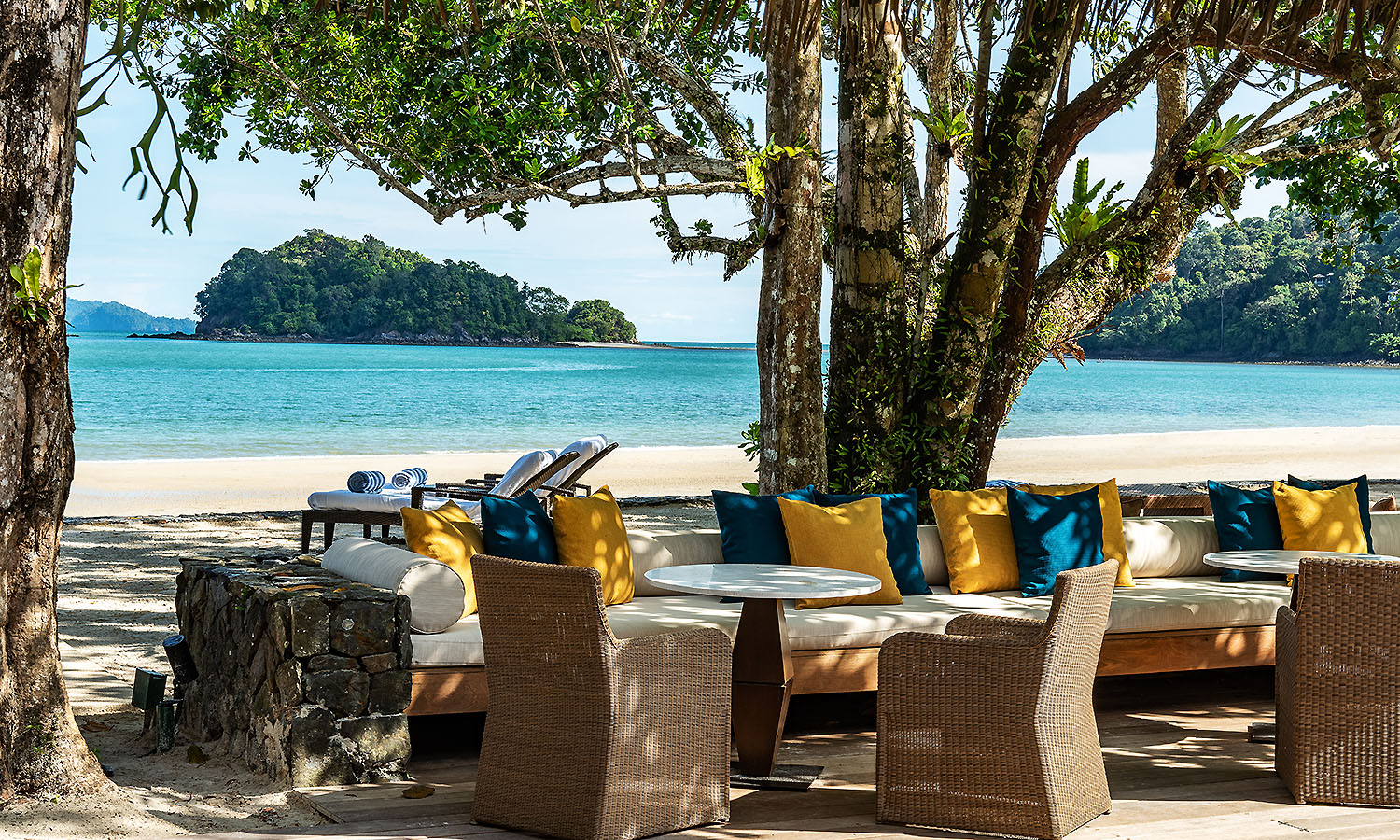
Within less than a day a giant black squirrel has been sighted by one of the pools, a couple of loved-up hornbills have soared past the lobby and a family of dusky leaf monkeys have passed an afternoon tossing fruit onto the bar near the beach. Nicole, the Datai’s marine biologist, tells me that only last week a pod of 40 dolphins swum by on the hunt for anchovies. I keep my eyes glued on the emerald water whenever I visit the beach, hoping to observe one of the whale sharks, finless porpoises or sea otters that frequent the bay.
In the afternoon, bruised clouds roll over the treetops. Raindrops smack the canopy, quashing the scent of ylang-ylang. The Strait of Malacca transforms into a bowl of fizzy drink and the nearby Thai isle of Koh Tarutao is no longer visible under the haze. Yet only a couple of hours later the water is glassy again, and I join my fellow estuary explorers to paddleboard out to Anak Datai, another little island in the bay. None of us spy any of the dugongs or long and slender Bryde’s whales that sometimes cruise these waters, but I do spot a pillowy jellyfish billowing past my board.
While we’re on Anak Datai, peering back at the beach and Mount Machinchang rising from the forest, I realise just how unusual the Datai actually is. When Australian architect Kerry Hill designed the hotel in the early 1990s, he decided to set it back from the coast’s perfect sand to deepen its connection with the rainforest. Traditional construction methods and elephants trained to move timber were used to minimise disruption to the precious flora. The unorthodox design turned out to be a winning combination, with guests returning time and again. In fact, families who visit the Datai five times or more find a plaque engraved with their surname shining above their villa door. There’s an entire store room full of them.
“Have you met Irshad yet?” seems to be the question on everybody’s lips. When I finally meet the banker-turned-naturalist, it’s easy to see why he’s so well regarded; the man’s a natural born storyteller. As we potter along on one of his guided walks through the Datai’s 750 hectares of forest, he introduces us to the black and white Helen, one of more than 500 butterfly species that lives in Langkawi, and weaves biology with tales of sex and sin from the animal kingdom. The usually kid-friendly metamorphose from caterpillar to butterfly becomes a gripping and gruesome transformation, where organs are digested into a DNA soup before becoming the flighty things we see tussling in the bushes.
Irshad’s knowledge isn’t limited to animals on the island. During an evening walk he shines his torch on a rengas tree and warns us not to stand too close during rain because damaged leaves release an acid that will blacken and burn our skin. He sidles up to a tongkat ali tree and tells us that Malaysians carefully dig for the precious roots and boil tiny shavings to extract its potent properties. You’ll find tongkat ali steeped and consumed with coffee all around the country. Perhaps it’s been soaking in my morning brew and that’s why I feel so revived here.
“Malay people say, if a man drinks this tea, it’s a powerful aphrodisiac,” Irshad chuckles. “Malay people say, if a woman drinks this tea… for her, it’s a contraceptive. Which explains why we only have 30 million Malaysians surrounded by 67 million Thais, 100 million Filipinos and more than 240 million Indonesians!
“One cup a day, daily, for only two weeks, records a 480 percent increase in testosterone in a man. A 480 percent testosterone increase in a man will drive him nuts. A 480 percent increase of testosterone in any woman will not only interrupt her egg production, but it will also give her a beard. And a beard on a woman is powerful contraception.”
I make a mental note to check my coffee consumption.
Beneath the chorus of cicadas a different sort of energy vibrates through the Datai, as the hotel prepares to undergo its own metamorphosis after 24 years in the forest. When it unfurls its wings in September this year, its villas will be refreshed and the hotel will be even more integrated with the rainforest. Irshad tells me of his plans for a dedicated Nature Centre and for 20 camera traps that he hopes will capture images of the island’s most elusive animal: the clouded leopard. But it’s the theory of mandi embun, which he plans to introduce into his nature walks, that really captures my attention. Translating to ‘bathing in the forest dew’, it is achieved by simply walking in the forest atmosphere. Malays have been abiding by it for centuries, Irshad explains, and it’s key to their longevity. “All the Malay people that live to 90- or 100-plus, many of them practise this.
“After a weekend in the forest you’ll see blood pressure drops, stress level drops, and NK cells increases – the natural killer cells in the body that fight cancers.”
On the plane back to mainland Malaysia I politely decline the coffee offered by the friendly stewardess. Not because I’m overly worried about sprouting a few fuzzies, but because I’m trying to eke out every last drop of mandi embun-induced calm. In my chilled-out haze I promise myself I’ll return to Langkawi soon. Even if it doesn’t add extra years to my life, I’ll be one stay closer to seeing my surname shining on a plaque above my villa door.
Travel into the depths of the Indonesian jungle in West Kalimantan, Borneo, and you will find the Dayak Iban. Considered the original wild men, today around 280,000 Dayak Ibans live in rumah panjai (longhouses), usually close to one of the hundreds of rivers located in the region. While the influence of modern culture is clearly visible, many villagers still follow a largely traditional lifestyle: weaving, hunting, fishing and speaking the native Iban dialect, as well as following spiritual and tribal practices including tattoos, performance, music and dance.
Step into a different era at Miss Wong. Hidden down a lane away from the neon lights and thumping beats of Siem Reap’s party hub, Pub Street, this 1920s Shanghai-style bar oozes intimacy. Cosy booths and cherry lanterns illuminating burgundy walls create a seductive vibe, but the Asian-inspired cocktails are the real heroes. Sink into a sofa and get your lips around a refreshing Lemongrass Collins, with lemongrass-infused vodka, vanilla syrup and lime juice. For a sweet fix, the Mocha Martini, with vanilla vodka, espresso, Kahlua, crème de cacao and a squirt of chocolate, will make you forget you’re consuming alcohol. A small menu of light dishes, featuring dim sum and hotpots, ensures a deliciously full stomach and are perfect for sharing with new friends – both locals and travellers.
A hymn resounds beneath a blanket of darkness. Far away, a deep, monotonous chant accompanies the gentle rumble of footfalls. A sea of candles burns like stars, and the night air, thick with humidity, is charged with an intensity that touches your soul. I feel as though I’m walking through the fabric of a living, breathing cosmos.
On either side of the street, eyes peer through bamboo fences while thousands of people make their way from the towering cathedral on a pilgrimage through the town. In among the masses a palanquin, draped in black velvet with gold trimming, is supported by lakademu (sinners) cloaked in robes of flowing white, their faces masked by pointed scarlet hoods. At its centre is an onyx coffin with the mortal remains of Jesus Christ. Further behind, the statue of Reinha Rosari – Mother Mary – follows, her face solemn. The silver adorning her garments catches in the candlelight as she accompanies her Son to His final resting place.
The hymn and chanting swell, rising as one, and I close my eyes as I feel its power urging me forward. I’ve never seen, nor been a part of, anything like it in my life.
In fact, few have. I’m witnessing the Good Friday procession of Semana Santa, a Catholic festival held in the small beachside port of Larantuka, on the island of Flores. This Holy Week is a unique event in modern-day Indonesia. Every Easter, pilgrims flock from across the country, and as far away as Timor and Portugal, to share their intentions for the year and participate in the holy processions. It is a moving event, but relatively unknown outside of Larantuka.
The history of Semana Santa is somewhat murky. Written records are few, and intimate knowledge of the sacred event is passed down from generation to generation among the clans of Larantuka. My guides, Hans and Raphael, despite being locals and participating in the festival each year, have had to dig to uncover the facts. Even so, I find the story changes slightly depending on who I talk to. When we piece the common components together, it weaves a fascinating tale.
Hundreds of years ago, before the arrival of Western invaders, the people of Larantuka were animists, worshipping stones, caves, animals and even words, believing they possessed a spiritual essence that allowed them to become alive. But one fateful day in 1510, locals stumbled upon a statue that had washed up on the beach. Mother Mary, draped in bold blue robes, lay peacefully on the shore, the words ‘Reinha Rosari’ inscribed in the sand beside her. When Portuguese traders landed in Larantuka shortly afterwards, they introduced Catholicism to the local people. This was followed by the first celebration of Semana Santa, thought to have been in 1599, before being held each year from 1736.
Since then Holy Week begins on Trewa Wednesday, with various periods of lamentation and mourning held until Easter Sunday. The Good Friday procession is a 2.3-kilometre procession that begins at Cathedral Reinha Rosari Larantuka and makes its way through the town, pausing at eight armidas (stopping places) for observance, which represent each phase of Jesus’ life.
Today, the Catholic faith is observed by just two per cent of Indonesia’s 250 million-strong population – nearly 90 per cent are practising Muslims. It’s little wonder this event has remained somewhat of a secret from greater Indonesia and the world.
During the evening of White Thursday, worshippers dressed in black await their turn to visit Tuan Ana, the chapel where the coffin of Jesus Christ is kept, and Tuan Ma, the chapel of Mother Mary. For the first time in a year, the coffin and the statue of Mother Mary are washed and dressed by the elected clan and revealed in their respective houses of worship. The excitement is palpable and queues to enter each sanctum spill down the front steps and into the street.
“When people kiss the coffin or the robe of Madonna [Mother Mary], they mention their special intention,” explains Hans as we stand outside, observing the crowds. “They express their gratitude and ask for the blessing of God for the coming year.”
Inside, barefoot pilgrims kneel, each praying and offering their promises to the deities for the year to come. At Tuan Ma, I get a glimpse of Mother Mary through an open stained-glass window. Her cobalt robes cascade in waves around her as people pray at her feet, but from where I stand I can’t see her face. Maybe there’s a higher reason that this is my view; I am a voyeur here, after all.
Good Friday, the most anticipated day of Semana Santa, brings sweltering heat and a sky of periwinkle blue – perfect conditions for a ceremonial day of sailing from Kota village to Kuce Beach. Outside Tuan Meninu Chapel, just off the shores of Adonara Lake, the lilting tones of a choir ring out from within to the beat of the lapping waves. Throngs of people line the pathway from the holy entrance to the water. Here, layers of colourful boats await to accompany the body of Jesus, which will be brought down from the chapel to a traditional black sampan (flat-bottomed wooden boat) for the three-kilometre procession across the lake.
“Does anyone actually know what’s inside?” I ask Raphael, a little timidly. A wry smile sneaks across his face.
“We don’t know what’s in the coffin; we must trust it exists,” he replies quietly. He leans in a little closer and, softer still, says, “It’s taboo to talk about.”
I’m terrible. I can’t help myself: “But what if there’s nothing inside?”
“It’s faith,” he shrugs. “In the Bible it says, ‘Blessed are those who have never seen, but believe.’”
The ceremony is long and hot. A bead of sweat trickles down the side of my face and I feel a deep admiration for the people who stand out here in the name of worship as I look to the water longingly. More boats of all shapes and sizes continue to appear, each one a pop of colour in a sea of blue and carting as many people as can be squeezed onto their decks.
Finally, the ceremony moves from the chapel to the water. A cross-bearer leads the way, followed by priests who flank either side of the coffin. The choir swells and, in the excitement, the crowd converges, and I realise I am in the thick of the action too late. Bodies press in on me from all sides as people try to catch a glimpse of His coffin being placed into the holy sampan.
One moment the coffin is there, the next it is safely sailing out across the water, the flotilla following close behind. People run to the water’s edge, chattering and cheering as they keep pace with the celebration taking place on the lake. In a race to see them arrive on the other side, we hop into a van and speed to Kuce Beach.
A crowd already lines the fringes of the lake when we arrive. Determined to get a good view, I scramble to the top of a concrete pillar offering a clear picture of the lake. Lush green mountains erupt from the water out on the horizon and creampuff clouds float along as though Heaven itself has come to witness its Son’s arrival. I feel the light, blissful caress of a breeze on my skin. Moments pass.
My position does not disappoint. In the distance, the sampan appears as a glimmering black and gold speck. A jumble of vessels follows, until the lake is flooded with boats, the holy entourage to bring Jesus home. I lower my camera a moment to simply enjoy it, reveling in the sight and cheers of people around me.
Once the coffin is brought to the shore, pilgrims jump into the water, bottles in hand, and make for the vessel. It is believed the water inside, having touched the coffin, is now blessed, and by drinking it they will imbibe its healing properties.
As I squeeze through the crush and walk back towards the centre of town in desperate need of shade, water and maybe a nap, there’s a sense of anticipation and excitement in the air. The Good Friday procession is tonight.
And it is truly breathtaking. Here, the night aglow with candlelight, I walk among more than 7000 pilgrims. Women cradle babes to their chests. Fathers walk beside sons, and mothers beside daughters. Small children hold candles in their hands, soft smiles playing upon their lips. A woman cries, a single tear slipping down her cheek. I glimpse Mother Mary once more – this time, I see her face, illuminated by candles and surrounded by adoring and devoted worshipers. Her expression is solemn yet, somehow, full of courage as she mourns her Son on this journey.
Suddenly the crowd comes to a stop, as do the hymns and the chanting. A woman dressed as Mother Mary stands at the front of an armida clutching a painting of Jesus Christ. Pilgrims look to her, still as stone, the silence absolute. Then her song soars into the night. It’s full of sorrow yet hauntingly beautiful. She sings in Latin and I can’t understand a word, but of all the emotions running rampant through me, I feel a deep sense of hope.
Its rich, 2000-year-old history, diverse and verdant landscapes and eight UNESCO World Heritage Sites are a natural endorsement of what this island has to offer. But Sri Lanka’s true charm lies in its laidback lifestyle, and the villages that allow you to wander freely without hassle. Here, you’re guaranteed to find adventure, relaxation and the perfect cup of tea.
OUR TIPS FOR A 14-DAY TRIP FOR LESS THAN US$4249 ex Australia
NEGOMBO – ONE NIGHT
Situated just 10 kilometres from Bandaranaike International Airport, the beach town of Negombo is a relaxed first stop in Sri Lanka in comparison to the chaotic and congested streets of the country’s capital, Colombo. But its appeal goes beyond its proximity to the airport; there’s a wide, golden beach, a generous selection of hotels and restaurants with a lively evening buzz, and a historically rich town centre chock full of colonial influences, like the Dutch Fort.
KANDY – TWO NIGHTS
A vivid city built into the hills with a lake at its centre is bound to be striking, and Kandy does not disappoint. Dragon’s breath clings to the sloping forests, giving the city an almost magical quality.
Kandy is the last capital from the era of ancient kings and awash in historic and cultural sights such as the famous Temple of the Sacred Tooth Relic. Each night, the crowds flock to the temple, home to one of Buddha’s teeth, to witness the precious tooth being taken from its golden case and put on display.
From here, the tea plantations of Nuwara Eliya are just a day trip away. Powering through the rolling hills of southern Sri Lanka, the train journey to the misty green terraces is every bit as satisfying as the first sip of delicately flavoured brew.
TRINCOMALEE – THREE NIGHTS
Break up the journey from Kandy to Trincomalee with a stop at Sigiriya, a dramatic and ancient 200-metre-high fortress. Its moniker translates to Lion’s Rock, a nod to the immense lion sculpture carved into its north wall (today, its paws are the only remaining vestiges). Climb to the top where you can explore the ruins of an ancient civilisation and take in panoramic views before continuing east to Trincomalee.
This crumbling harbour town is one of the oldest settlements in Sri Lanka but has only recently found its way onto the tourist trail. There’s plenty of history to discover here among its Buddhist ruins and colonial bricks.
Nearby Uppuveli and Nilaveli offer simple beach-side relaxation, while the coral-covered beaches of Pigeon Island are located just one kilometre off the coast of Nilaveli and are one of only two marine national parks in Sri Lanka. Snorkel along the ocean floor where you’ll see an underwater carnival of eels, colourful fish, turtles, rays and blacktip sharks.
ARUGAM BAY – TWO NIGHTS
Arugam is a small bay revered as one of Sri Lanka’s best surf spots, but even those that aren’t interested in taking on the waves are delighted by the bright fishing nets and battered shacks serving up fresh seafood.
The waves are most consistent here between May and September. Surfers visiting outside those months are better off heading for the country’s south.
YALA – ONE NIGHT
No trip to Sri Lanka would be complete without a safari through Yala National Park in search of the elusive leopards that slink through its undergrowth. The 130,000-hectare national park, the second largest in the country, is home to the world’s biggest concentration of the wild cats, plus hundreds of bird species and 44 varieties of mammal, including the mighty elephant.
Ditch the expensive hotels for one of the tree houses or tented camps in the park surroundings for a really wild experience under the stars.
DIKWELLA – TWO NIGHTS
Dikwella is known for its relaxing beach-side vibe, but there’s more to do than just lounging by the coast.
About six kilometres northeast of town is the Hummanaya blowhole, which is touted as the second largest blowhole in the world and is most spectacular during the monsoon season when it can shoot up to 18 metres high.
There’s also the 50-metre high Buddha, taking in the views from his seat at Wewurukannala Vihara, near Beliatta. You’ll find more Buddha statues inside the ancient complex of Buddhist cave temples hewn into the immense rock of Mulkirigala.
Meanwhile, along the coast at Matara (a short tuk tuk ride away), a shack rents
out boards to a handful of mostly foreign surfers. Thanks to the country’s two monsoon seasons, the best time to surf the southern beaches is between November and March.
GALLE – TWO NIGHTS
Soak up the laidback vibes of the historic old town of Galle. Built in 1663 by the Dutch, the Fort gives the colonial city its historical kudos, but the cute cafes, quirky art galleries and charming boutiques imbue it with character. It’s little wonder that writers, photographers and designers have long gravitated to this spot overlooking the sparkling Indian Ocean.
Just half an hour out of town at Habaraduwa, you can check out the Sea Turtle Hatchery where baby turtles are hatched in incubators and then released into the ocean, along with those that have recovered after being injured by fishing nets. So far the hatchery has released more than 500,000 turtles into the ocean.
COLOMBO – ONE NIGHT
It’s all too easy to overlook the capital and just nip straight to the airport with sand still between your toes, but Colombo still deserves a look in.
Once known as the ‘garden city of the East’, the sprawling city remains surprisingly green. Take in the tree-lined streets of area Colombo 7 by tuk tuk, or climb into an autorickshaw to check out the historic Fort and the dilapidated madness and multicultural wonder of Pettah Bazaar. It’s also a great option for foodies keen to visit the city’s tastiest street food stalls and indulge in those final few rotis and hoppers.
Despite the city evolving and modernising, its colonial architecture still retains its character, connecting its past with its present.
DESTINATION HIGHLIGHTS
Known as the “Tear of India”, Sri Lanka is often compared to its closest neighbour. People describe it as a similar destination to India, just a little less chaotic.
When it comes to cuisine, Sri Lanka’s fiery curries, served with sweet relishes and sour pickles, feature distinct flavours unique to this region. And in place of India’s Hindu temples and elaborate palaces and mosques, the island nation is dotted with rock fortresses and colossal golden Buddhas. While both countries have many things in common, Sri Lanka has a uniqueness of its own.
VITAL STATS
The unit of currency is the Sri Lankan Rupee.
WHEN TO GO
Although Sri Lanka is warm all year round, its climate has two different monsoon seasons, which affect parts of the island at different times of year. The good news is no matter the time of the year you visit, there will be somewhere on the island to spread your towel. Those affected the most by monsoon seasons are the surfers. Consistent waves along the east coast are produced during May to September, while southern beaches such as Weligama and Hikkaduwa are best visited between November and March.
TOP TIP
If you’re after an encounter with elephants, be sure to do your research when choosing your experience. A number of Sri Lankan tourist attractions have come under fire for the treatment of the animals. Instead of visiting zoos or elephant orphanages, opt to see the creatures in their natural habitats at one of the national parks instead.
Sunlight cascades across tier after tier of technicolour green rice fields. The caress of a cool breeze glances off the thick humid air, bringing the sweet scent of the surrounding hinterland with it. I sip on a spicy salak, a refreshing elixir of poached snake fruit with cinnamon, star anise, soda, lime and a stick of sugar cane. It takes me a moment to remember that I’m sitting in a restaurant.
A couple of tables over, a female patron catches my eye. “Make sure you visit the loo while you’re here,” she whispers across to me.
I’m sure I’ve misheard her. “I’m sorry, what?”
“Trust me, you’ll want to make a visit,” she insists.
I laugh nervously. This is not what I want to hear. After more than an hour travelling down winding roads to get here and the warnings from previous Bali-goers about the region’s unforgiving Bali belly still ringing in my ears, my enthusiasm for diving face first into local Balinese cuisine wanes somewhat. Trying not to let any assumptions cloud my judgement, I give the woman a nod, my teeth clamped together in a strained smile.
Thankfully, the views make it easy to push these unwelcome thoughts to the back of my mind. Prior to its havoc-inducing eruption in late 2017, Mount Agung stands tall and stoic in the distance, just visible beyond the low cloud cover that is slowly blanketing the sunny skies. It’s not difficult to see why owner and Executive Chef Penelope Williams chose this spot to build her restaurant, Bali Asli.
“I quickly discovered that Balinese cuisine and culture was very difficult for people with a limited amount of time to really discover properly,” she says. “It’s all a bit adulterated or out of context and people go home thinking that Balinese food is nasi goreng, mi goreng and chicken satay with peanut sauce. It’s not. So I decided to create a place that did culinary adventures and offered people the opportunity to feel how I did when I first came here.”
Penelope’s passion and enthusiasm for her craft is both evident and infectious. Originally from Sydney, her resume includes some of the top restaurants around the globe. She trained at the esteemed Savoy in London, worked as a sous chef at Bathers Pavilion in Sydney and was the Executive Chef at Alila Manghis in Ubud’s Candidasa region. Her restaurant, located in Karangasem, about a two-hour drive from the bedlam of Kuta, is the manifestation of her desire to go back to the roots of Balinese cuisine and craft something traditional, with a new twist.
This idea also inspired the name of her restaurant. Asli means original, or created in a traditional way using original ingredients.
“Balinese food is really regional,” she says as we sip our salaks. “No one travels – it’s just what’s there.” The menu changes almost daily according to what’s available from the village markets and everything is cooked and prepared on-site, from roasted coffee beans to honey. The venue itself is a work of art that only enhances the experience; its high thatched roof, recycled teak furniture and open-air deck overlooking the rice fields all capture the slow-moving serenity that many believe was sucked out of Bali long ago.
When it comes to choosing a meal that encapsulates the traditional cuisine of East Bali, Penelope recommends the megibung. The name means many people that sit and eat together from one large plate while discussing life. Similar to a tasting plate, it features six small dishes and is shared between three to four people. It’s also unique to the Karangasem area and can only be found in East Bali. The story goes that in 1692, the King of Karangasem, I Gusti Anglurah Ketut Karangasem, conquered what is now known as Lombok. He then withdrew his soldiers and invited Lombok’s dignitaries to sit and share a meal with him, together as equals, and announced the end of the war. It is a practice that is enjoyed to this day both in the home and at traditional events such as at weddings, festivals and cremations.
We start off with jukut kelor meliklik, a sweet corn broth infused with bayam (amaranth leaves) and garnished with fried shallot. Fragrant curlicues weave into the air as I look at the steaming bowl with trepidation, my thoughts back on the patron’s earlier comment. “It’s a broth,” I reason, “how bad could it be?” It’s wonderful.
Next is the megibung. The platter is a juxtaposition of casual refinery and miniature architecture – each vibrant dish has its own place, the rice cone forming a beacon-like centrepiece all presented on a banana leaf cut straight from the tree in the field below. I exemplify traits similar to that of a highchair-bound toddler that has spied something tasty and just out of reach as Penelope explains each morsel.
There’s besaip bumbu manis, chicken marinated in turmeric, garlic, chilli and braised in a sweet chili soy sauce, and pesan telingis, a rolled and grilled banana leaf filled with poached and shredded mackerel fish mixed with coconut curd. Plant-based dishes include urab nangke, a jackfruit salad tossed with finely grated coconut and pelecing kangkung, a shredded water spinach with fried peanuts and chunky tomato salsa. Rounding out the platter is jukut gadang kacang barak, a poached papaya with red beans and nasi jagung, a traditional fried rice with sweet corn.
This time, I don’t hesitate. Penelope encourages me to scoop up the food with my hands straight from the serving dish as is the traditional way. “It tastes nicer when it’s squished together; when it’s on a fork it just kind of all falls off,” she warns. My gluttonous inner-toddler rejoices.
Throughout the meal, Penelope shares tales of her culinary and cultural adventures, from fossicking for fresh sea urchins and snails in Uluwatu and picking herbs like moringa (said to be the next big superfood), to partaking in reincarnation ceremonies. Her self-ascribed ‘crazy adventures’ have inspired her to create foodie and cultural experiences, too, such as a cooking school plus hiking, cycling, vespa and street food tours.
As dessert is served – dragon fruit and Balinese coffee – I’m feeling good. Really good, in fact. Happily stuffed and no signs of an impending bowel breach.
“Loved the bathroom!” says a male patron as he walks past.
“Did you take a photo?” asks Penelope. Um. What?
“We’ve got an album on our Facebook page for toilet selfies,” she giggles.
Curiosity truly piqued, I decide to visit the bathroom, camera in hand, idly wondering if this is a photograph I’d rather not grace my SD card. I give the door a push. Bright, natural light bathes the room. Burgundy wallpaper dotted with round rustic mirrors covers either side, before opening out to a wall of towering banana leaf trees. I start laughing. The place where I feared I’d be spilling my guts is actually a magnificent outdoor bathroom. It’s just another of Penelope’s crazy adventures in a bid to immerse visitors in the local culture, with a fun twist, of course. It turns out I’ve got the best kind of Bali belly – a happy one.
INGREDIENTS
250g pumpkin, peeled and finely grated
50g rice flour
50g wheat flour
25g tapioca flour
80g white sugar
½ cup fresh, grated coconut
A pinch of salt
1 metre of banana leaf
Method
1. Combine the grated pumpkin with the salt, sugar, coconut and all the flours to make a soft paste. The taste shouldn’t be too sweet and the salt shouldn’t be overpowering, just enough to enhance the flavours.
2. Cut the banana leaf into 10cm x 12cm rectangles. You will need two rectangles for each parcel.
3. Place a tablespoon of the paste into the centre of the leaf, folding the long edges of the banana leaf together to keep its rectangular shape, before bending the open ends over to close the parcel.
4. Steam for 15 minutes until the mixture has thickened. Cool to room temperature, then serve.
Thailand is a wonderful destination with plenty to offer families, making it a great spot for a holiday with the kids. This trip will see you explore the vibrant city of Bangkok and ancient ruins at Ayuthaya, raft down the River Kwai, learn about rescued elephants at the Elephant Nature Park and relax with a beach stay at the end. The kids will be introduced to a whole new world when you experience a homestay with a local family in Northern Thailand, where they can learn a new language and try delicious homemade food.
The Elephant Nature Park is a highlight for most families and during your visit you’ll get to wander among these amazing animals, have the chance to feed them some bananas and watch them take a bath in the river.