Crossing the Andes on horseback

We spurred our horses onwards in an effort to get to shelter before nightfall. Palm-fringed beaches lay only 160 kilometres to the north, but the Caribbean trade winds had chilled dramatically as they reached the steep Andean slopes. It was easy to appreciate the feelings of fear and respect this mountain landscape, with its eerie swirling mists, evoked in the first Venezuelans. The high sierras were seen as the domains of evil demons and the phrase pasar el páramo – to cross the highlands – is still synonymous, in local slang, with death.

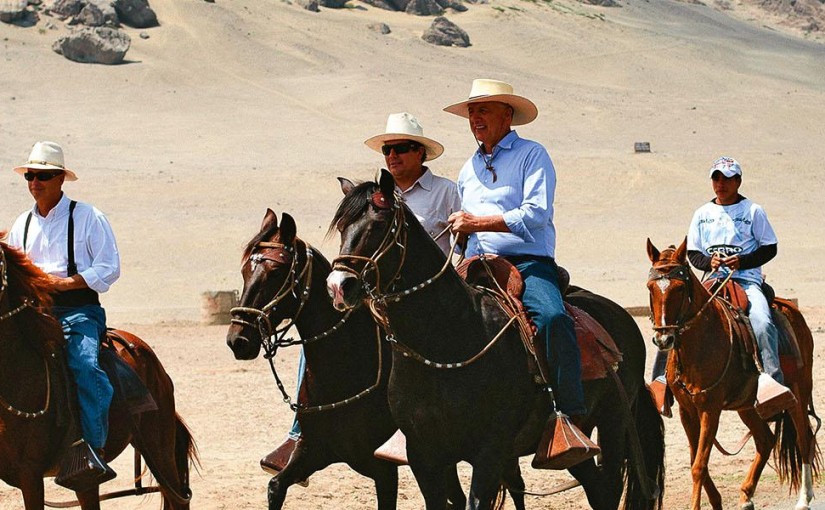
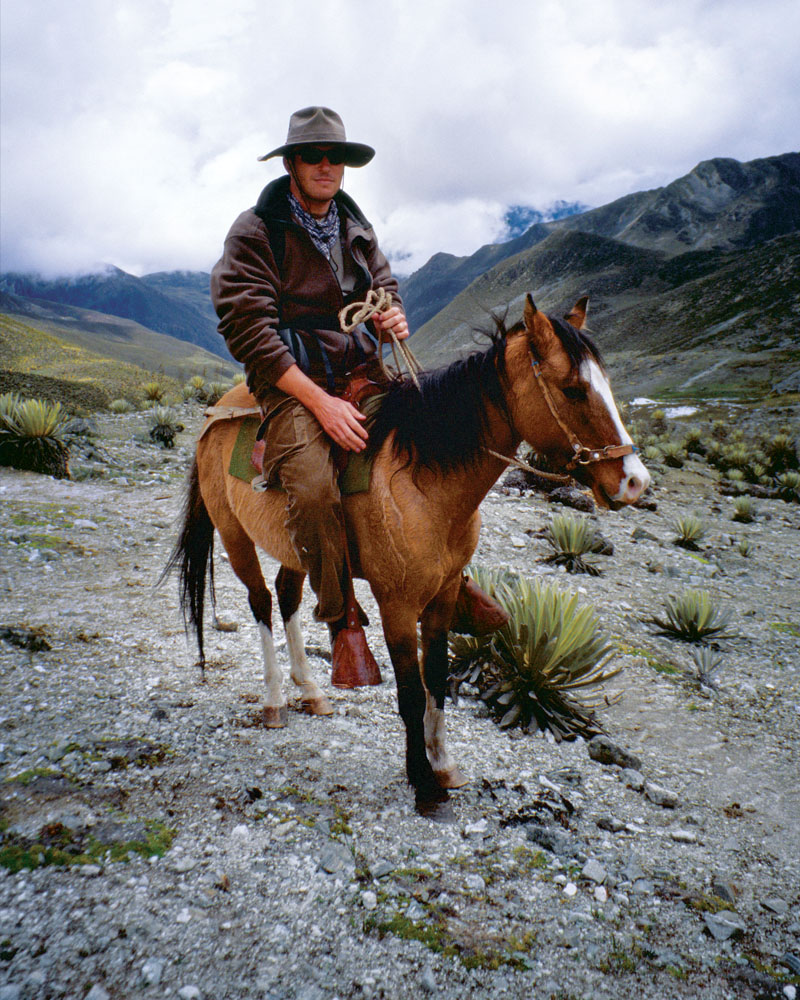
From up ahead, I could hear the shouts of the muleteers as they drove the cargo animals over the ridge. The remainder of our motley mule-train straggled down the winding trail. Far below, I could just make out the red jacket of Paul Coudenys, riding a ‘rearguard action’ against the rising afternoon mist. As the owner of the strangely, if memorably, named Hippo Trek, Paul has ridden in 50 countries. Yet this was to be his first Andean crossing. At around 4400 metres, we were probably the highest horsemen in the world at that moment and we were almost certainly the first foreign riders to follow this route since the Spanish conquistadors blazed this trail in their quest for the mythical El Dorado. We did, however, have the benefit of 500 years of hindsight and, to give ourselves time to acclimatise to the altitude, we were making the ride in reverse, uphill direct. Where the conquistadors had the only horses on the entire continent, our ‘pioneer column’ was able to hire teams of more than 20 fresh mounts and cargo animals for every new section of the trail, so there’d be no need to force lowland horses into activity at dangerously high altitudes. I quickly discovered it felt safer on these steep mountain trails, often lined with sheer drops, to be leaning forward over the horse’s neck rather than lying back over the swaying rump. We also had the guarantee of a warm bed – or at least a sleeping bag on the verandah of a ranchito – and a nightcap (of even warmer Venezuelan rum) at the end of each day’s ride.

Horseriding is a great leveller. There is much less class difference apparent between a rider and an arriero (muleteer) than there is between a trekker and his porters. The isolated villages we were passing through survive only because of the mule-trains that ferry produce and goods along the mountain trails. The animals are crucial to survival here and, despite the fact that we were ‘rich tourists’, the mountain people were able to relate to us because of our mutual reliance on the animals.

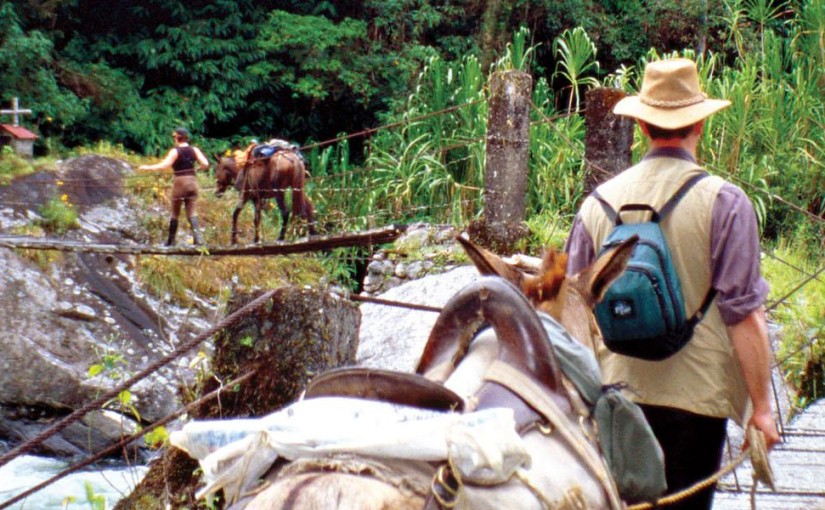
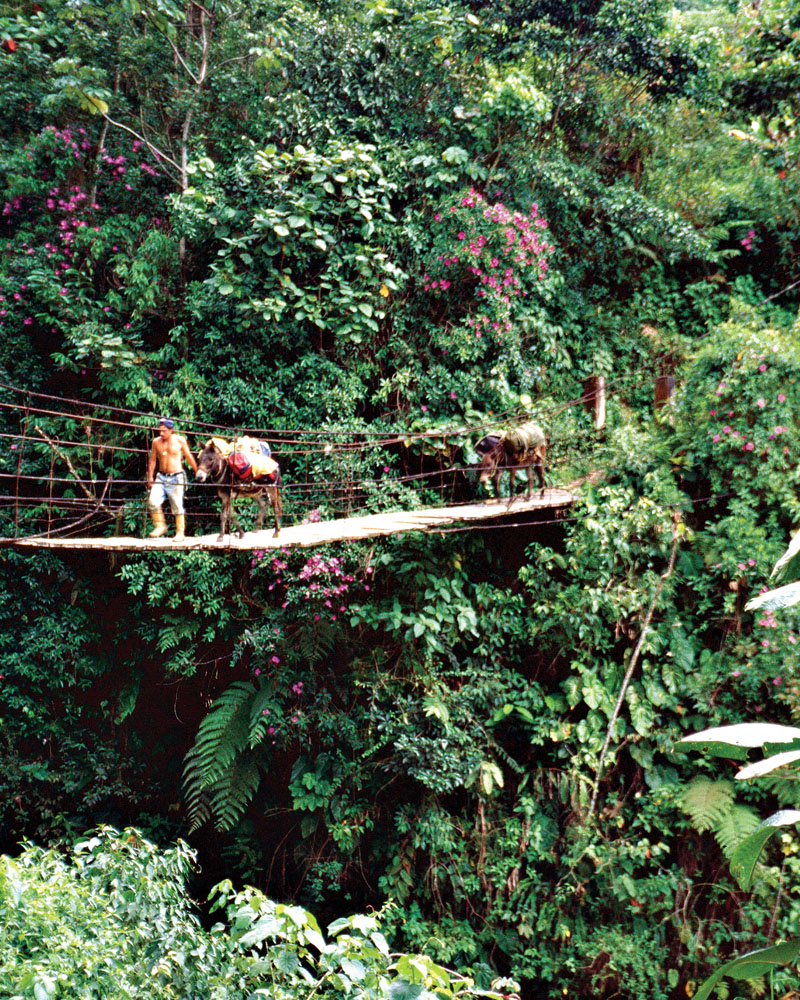
We already seemed an entire world away from the eden we’d ridden through earlier in the week. We had left the swampy cattle-country of Los Llanos and within three days had climbed into the virgin rainforest that shrouds the branch of the Andes known as Sierra Nevada. The Canagua River, rushing to join the mighty Orinoco, began to tumble with increasing ferocity and we often had to dismount to lead our horses across a chain of swaying suspension bridges.
I had ridden in much faster and tougher conditions in other countries, but soon realised, despite the lack of galloping space, horseback was the ideal way to experience these mountain trails. Compared with stumbling wearily over slimy trails under the weight of a loaded backpack with eyes fixed on the root-strewn track, horseback jungle trekking can seem like an almost sinful pleasure. Even along the cloud-forest trails of Venezuela, I was able to see more jungle life than I could ever remember seeing on foot. “There are no handles to a horse,” the author of an early riding handbook advised his readers, “but the 1910 model has a string to each side of its face for turning its head when there is anything you want it to see.” I let the horse take care of the walking and kept my eyes occupied with the quicksilver flight of hummingbirds and orchids I would never have noticed on foot. As an added bonus, I had a mobile stepladder from which to pick wild guava.

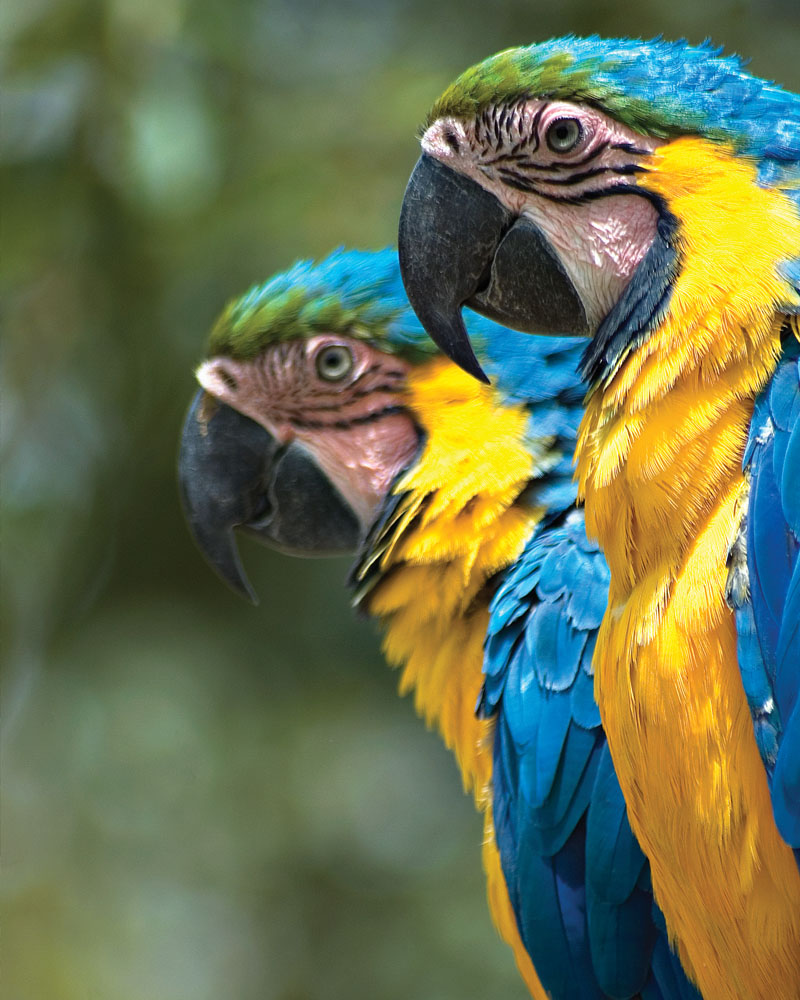
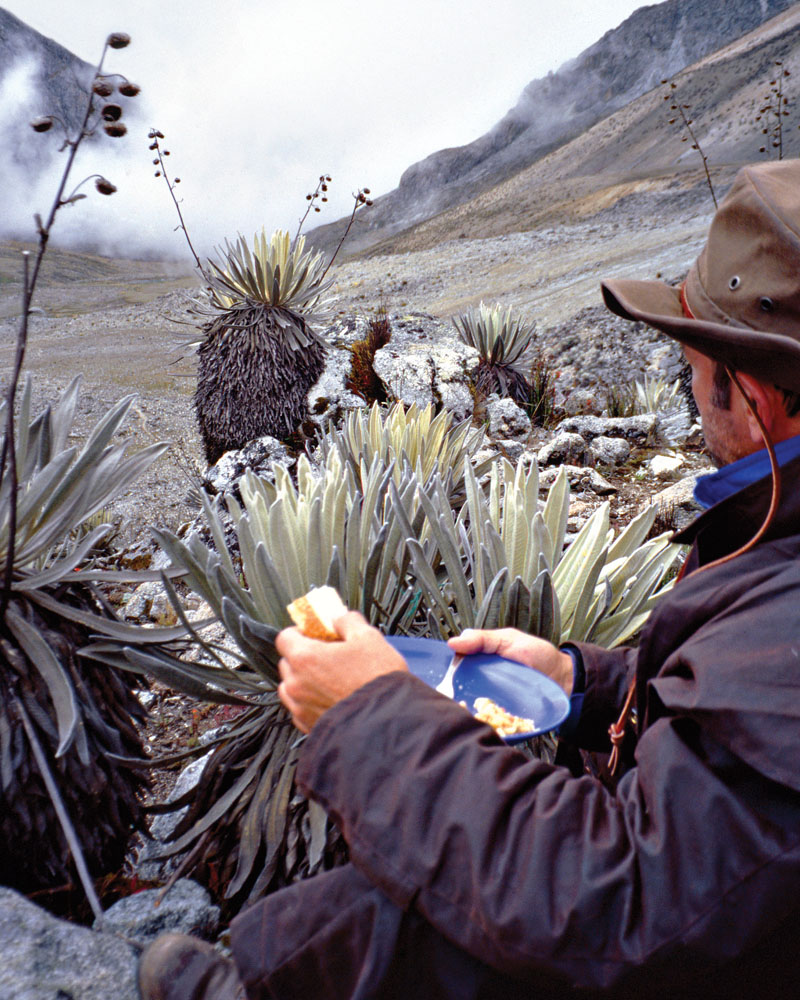
We spent a whole morning on a steep, slippery climb through the cloud forest but, at mid-afternoon on day five, rode out into a region of wide grassy meadows where the horses broke into a cheerful canter. We suddenly realised we’d left the treeline and were on the high páramo. Spiky-headed frailejón plants and lichen-covered rocks replaced the dripping lianas and moss-shrouded trees of the tropical forest. We were now more likely to see a wheeling condor than a flock of bickering parrots. The countless hummingbirds that had buzzed around us in the steamy valleys below were replaced by a single hardy and unique species that hibernates every night to survive the cold.

After several days cocooned in the forest, the wide-open spaces of the mountains were vaguely intimidating and we initially spoke in hushed tones. The muleteers knew the narrow trail that zigzagged endlessly upwards as la carretera (the highway). Our previous steady but slow progress provided as much opportunity for exploration as for contemplation, but we now enjoyed short, exciting canters across flat Andean meadows. During one such gallop my highland mare was accompanied by her stallion (a pack horse) and their yearling foal that dashed in front, kicking up his heels like a gangly bronco. I whooped and waved my hat as my private stampede charged across the meadow.
Many historical horseback explorers looked upon their mounts as no more than expendable pieces of equipment. One nineteenth-century adventurer won a $1000 bet by riding 1300 kilometres from New Mexico to Missouri in less than eight days. He killed three horses and two mules in the process. The famous Central Asian explorer, Sven Hedin, took it almost as a matter of course that a single expedition cost nearly 300 horses. Today’s horseback travellers and most horse-related tourism operators are doing their best to put the animals first. Even the careless outfits in the developing world are, to some extent, being forced to cater to the foibles of animal-loving tourists who complain about mistreated horses. Reputable operators like Hippo Trek are always careful to make the welfare of the animals paramount. We changed to fresh horses every day. An unexpected advantage of this equestrian promiscuity was that we had the opportunity to meet and travel with muleteers and guides from almost every village in this part of the Sierra Nevada. Each of these little bands had an intimate knowledge of the dangers and highlights of their own section of the ancient trail.

The conquistadors found nothing to keep them in this area and the local population has waned in recent years. One in three Venezuelans now lives in the capital and, in every village we rode through, boarded-up houses stood testament to a growing exodus of campesinos toward the slums of Caracas. The town of El Carrizal was an extreme example of what is happening all over Venezuela, once one of South America’s richest countries. Founded 150 years ago, El Carrizal quickly grew to become a successful farming village with rich harvests of bananas, avocado and coffee. While everything that the town required – chairs for the schoolroom, an organ for the church, a flushing toilet for the headman – had to be carried for three days on a mule, only a few decades ago this was a thriving community of a hundred families. Today it is home to just six people.

A Venezuelan foundation, Programa Andes Tropicales (PAT), promotes sustainable tourism in the area in the interests of tempting the campesinos to stay in the campo. The philosophy is that Don Rafael, patriarch of El Carrizal’s last family, should be able to make about half of his annual income through offering accommodation to travellers like us, while other people in the area work as guides or provide food or mules. The inability to live entirely from tourism should preserve the traditional lifestyle.
We bathed en masse in the icy river that runs past El Carrizal. As we wandered back through the deserted village, Don Rafael proudly showed us around the church he hopes will one day warrant a visit from the mule-riding priest who once attended every Sunday. Eating hot pisco andino (fish and egg soup), slices of wonderful smoked cheese and arepas (corn cakes) with homemade custard-apple jam in Don Rafael’s kitchen, it was easy to feel pity for the ‘refugees’ from remote El Carrizal now subjected to the desperation and violence of life in Caracas. That evening, Don Rafael’s courtyard saw its first nightlife in some time with the muleteers producing a guitar and singing a chain of joropo ballads. Many of the songs dealt with the exploits of their hero Simon Bolivar who, during the course of his campaigns against the Spanish, is said to have ridden the equivalent of three times around the world and fallen in love 50 times.

Our little expedition was never destined to become the subject of the next generation of joropo ballads. However, by the time we crested the highest point of the páramo and began our descent towards the bright lights of Mérida, I had ridden four horses and three mules, worn the seat right out of a brand new pair of corduroy trousers and done irreparable damage to my salsa technique. We felt that after eight days on the trail we had earned the right to celebrate with a night or two in this big city.
Downhill drama

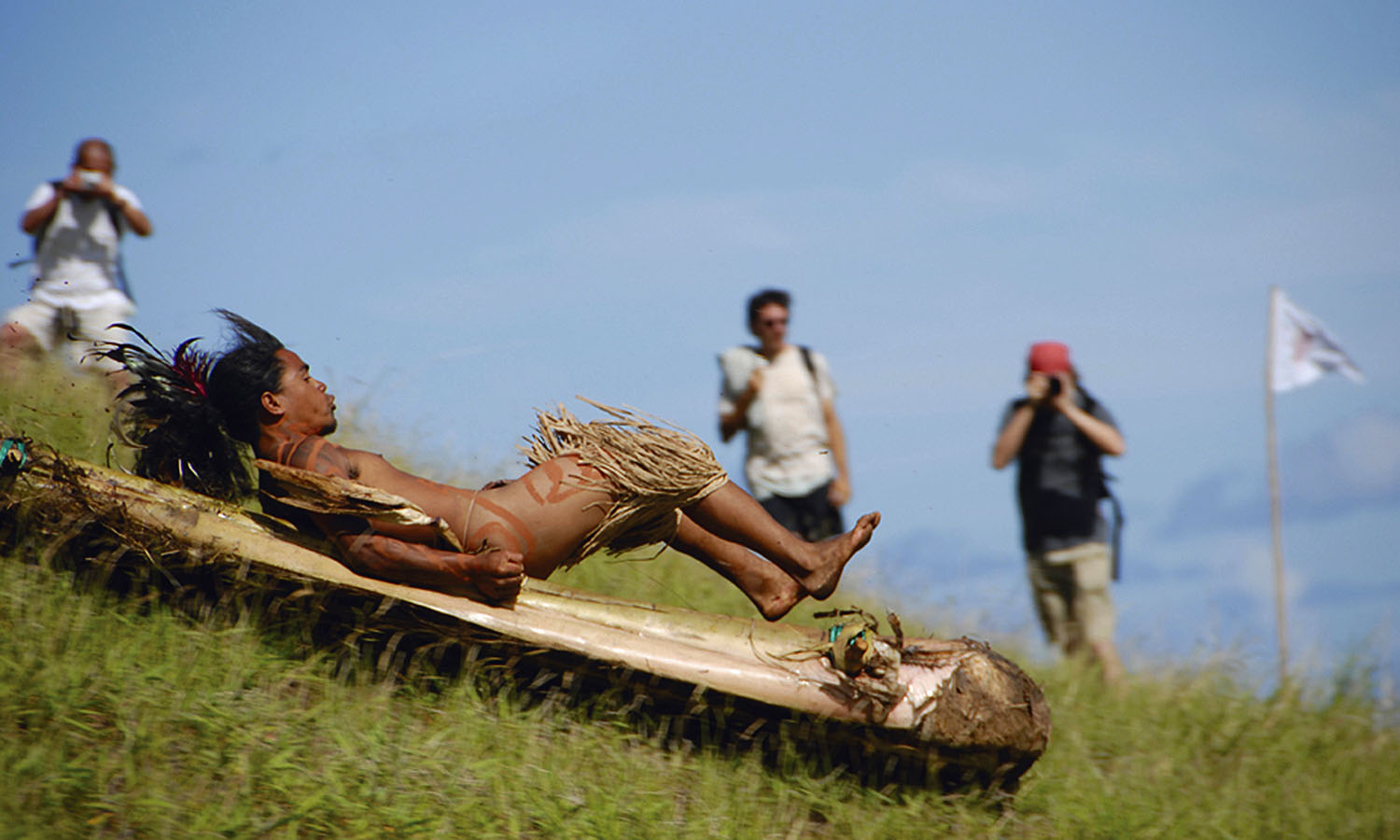
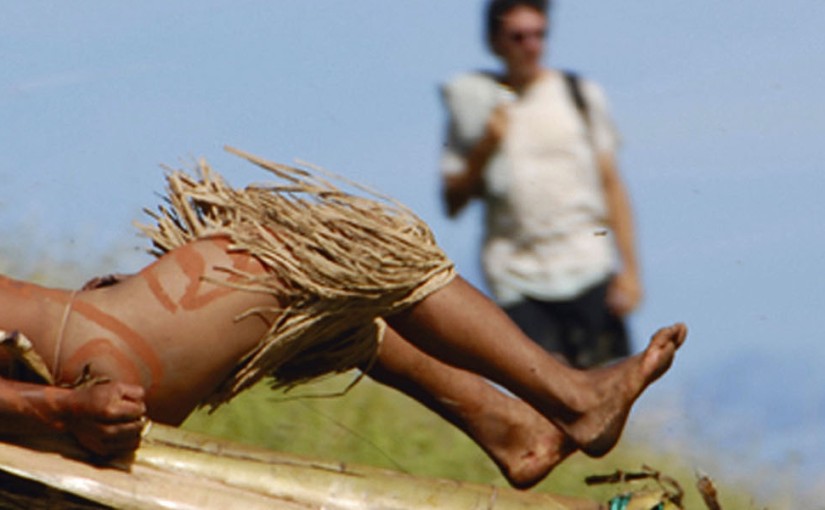
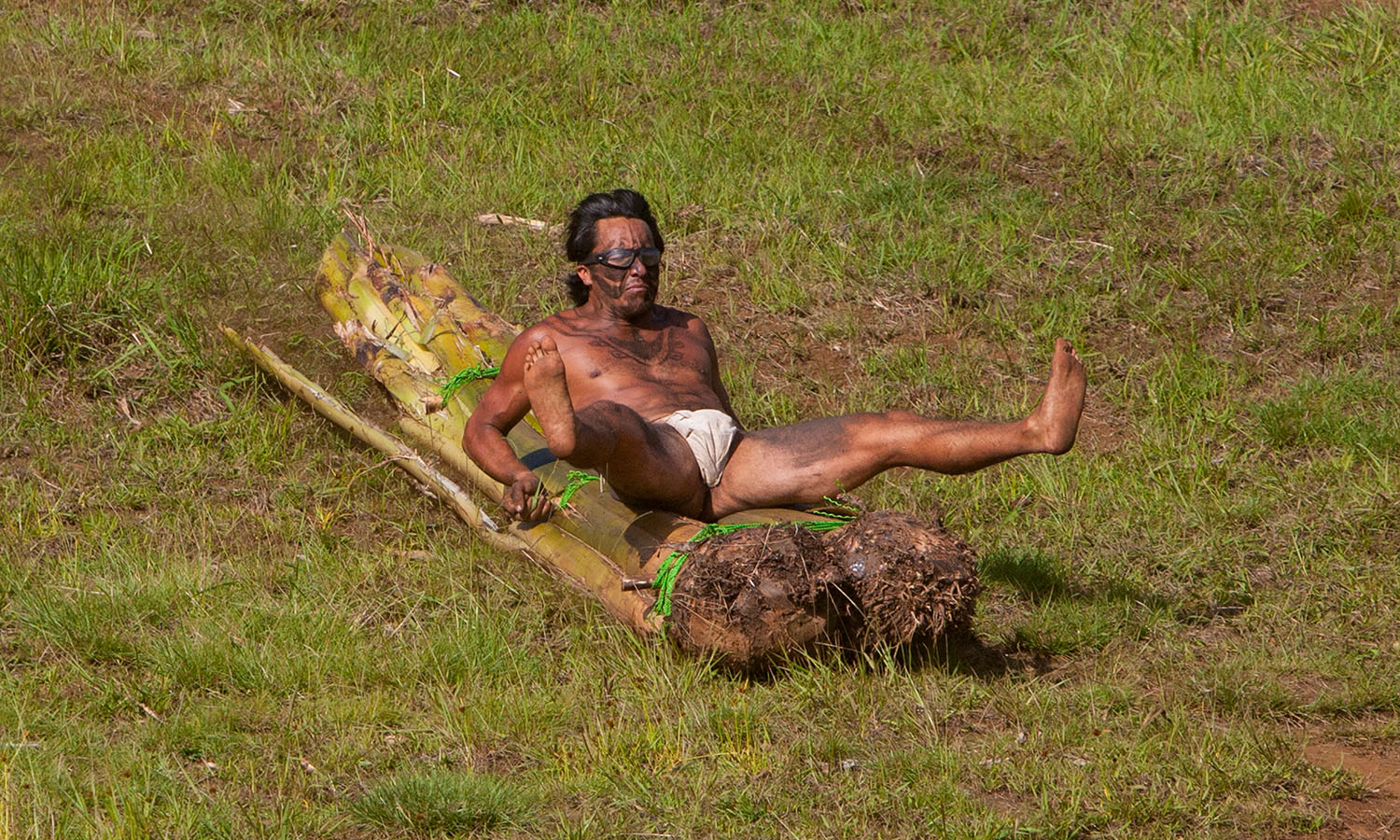
Some sports are best enjoyed from the sidelines, and Haka Pei is one of them. Unless of course you’re not averse to the odd broken bone, cuts, bruises and an excruciating case of gravel rash. Every year, during Easter Island’s Tapati Rapa Nui festival, young men (and some women) hurtle down the slopes of a 300-metre-high volcano called Maunga Pu on a sled made of two banana tree trunks, wearing little more than a loin cloth.

They reach speeds of up to 80 kilometres an hour, rocketing towards crowds of wincing spectators to rapturous applause. The festival, held during the first two weeks of February, is a cultural celebration of music, dance and sport.

Grill and grind at Andrés Carne de Res

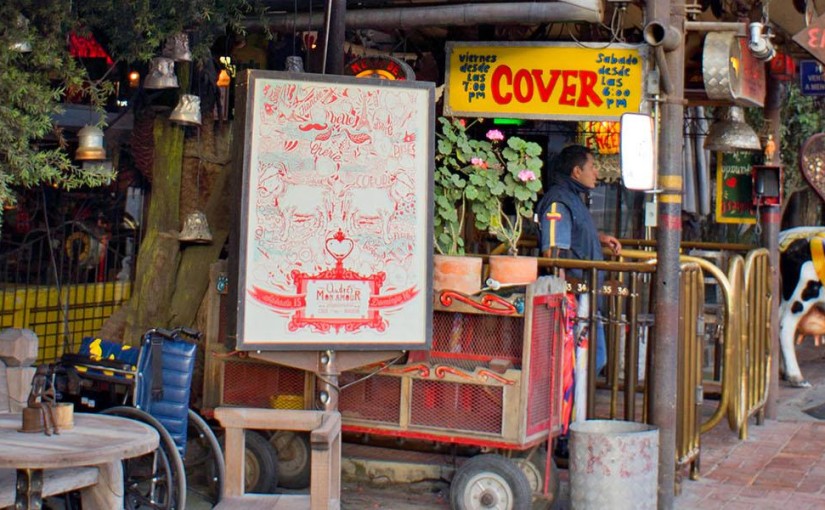
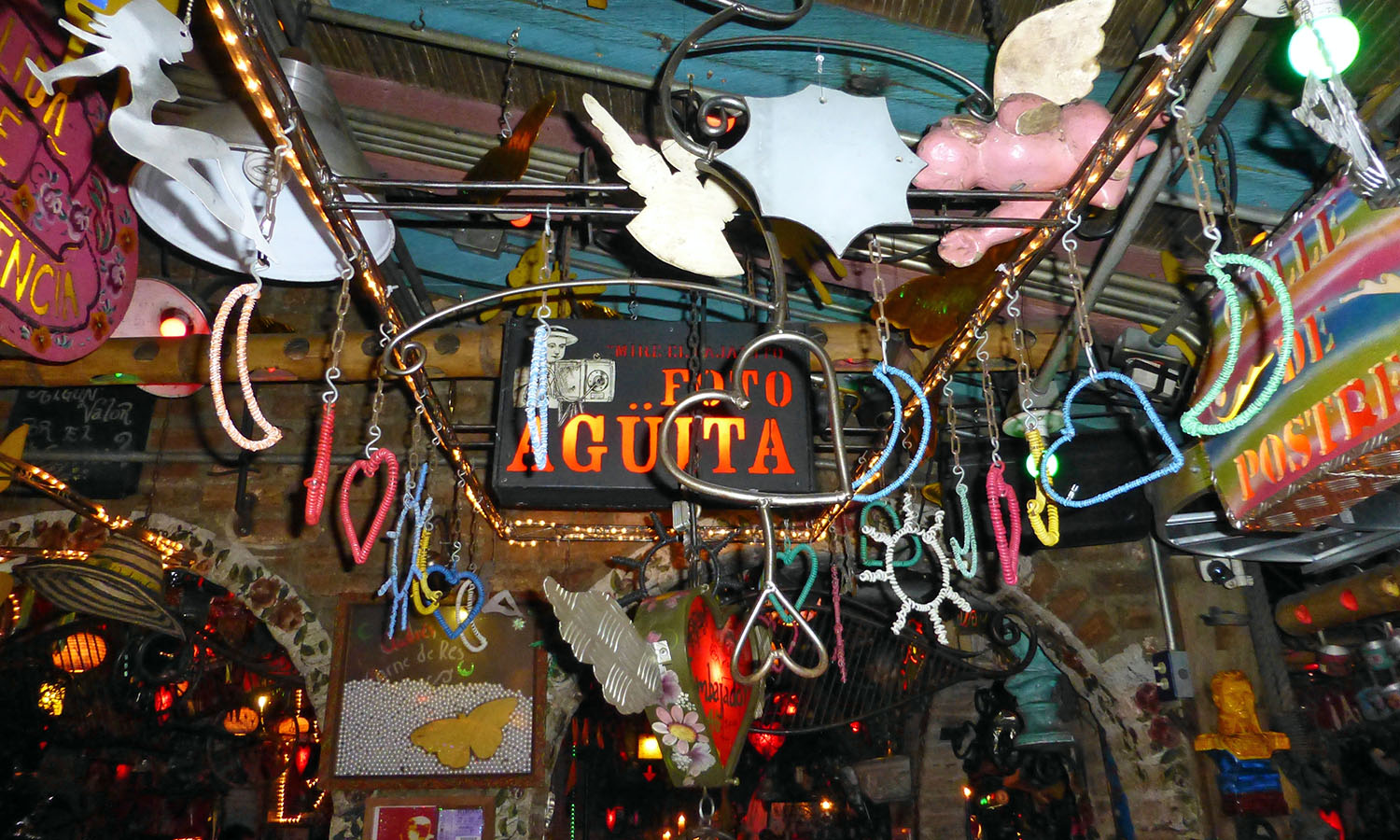
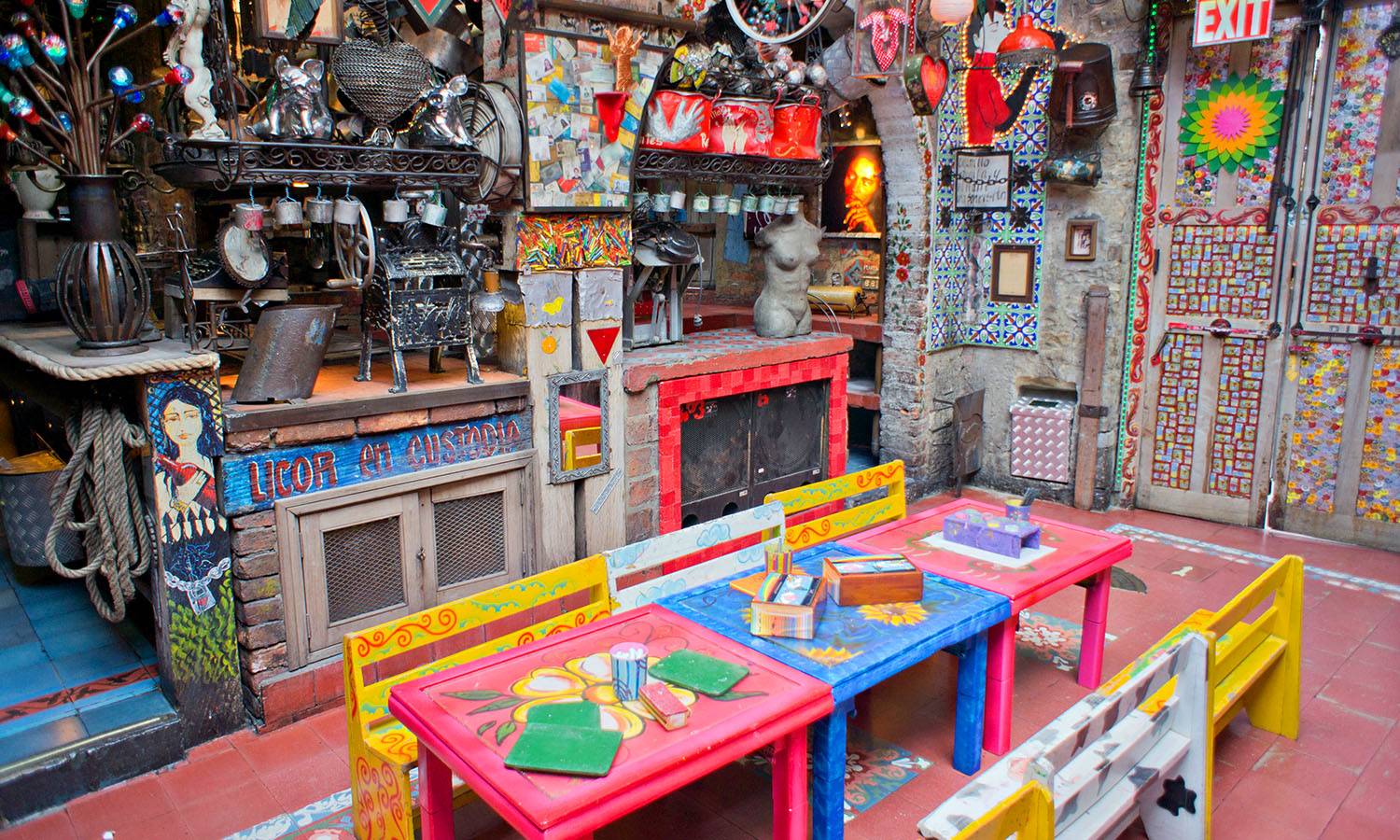
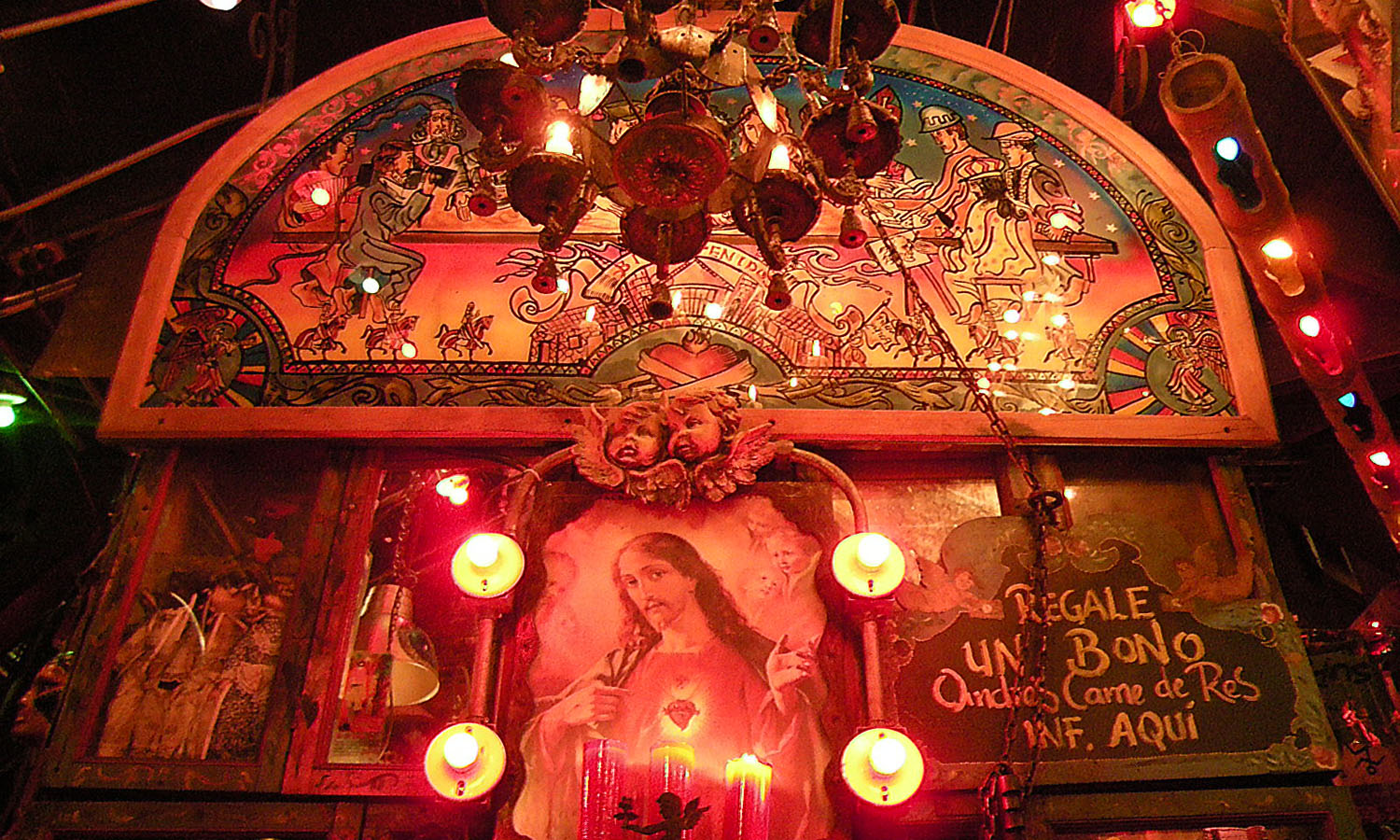
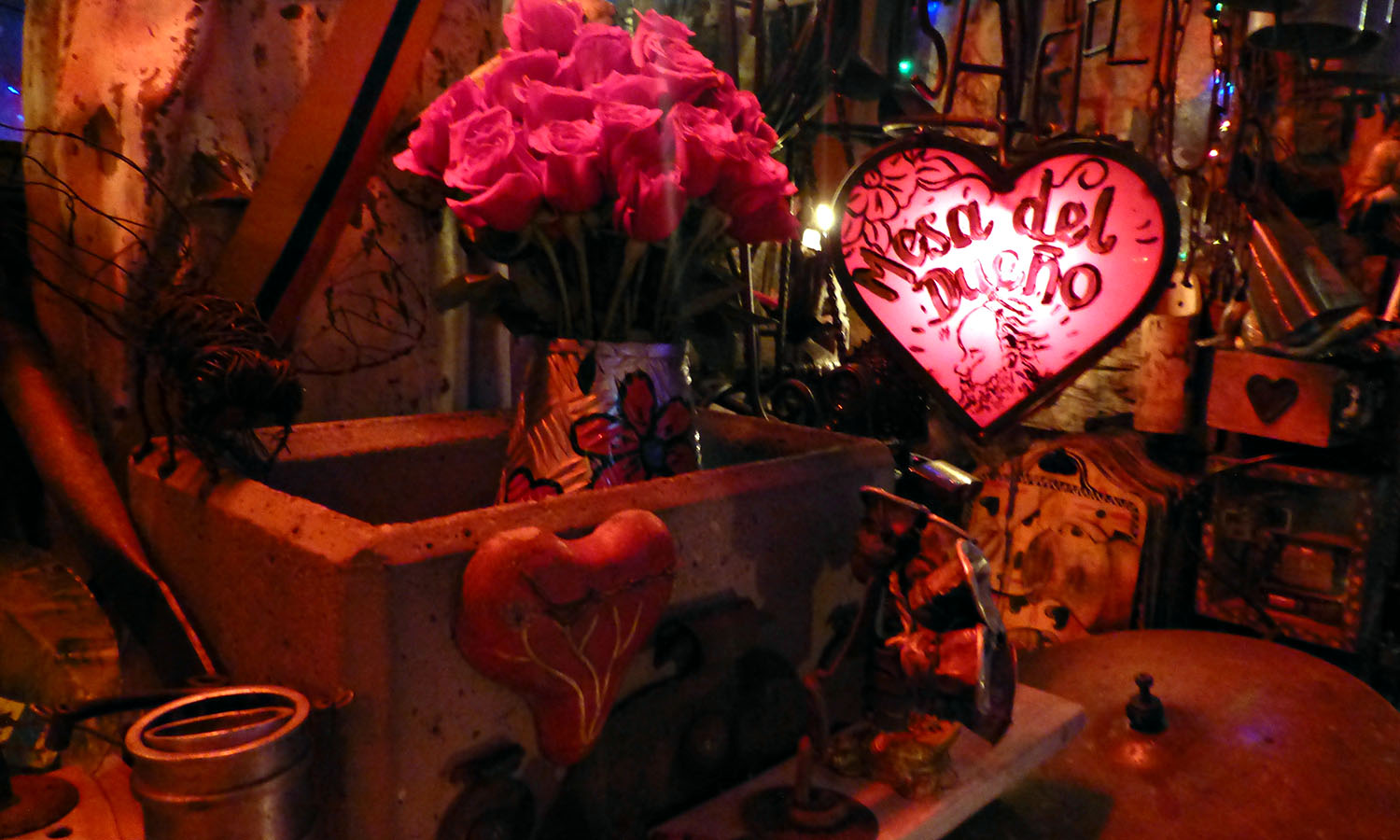
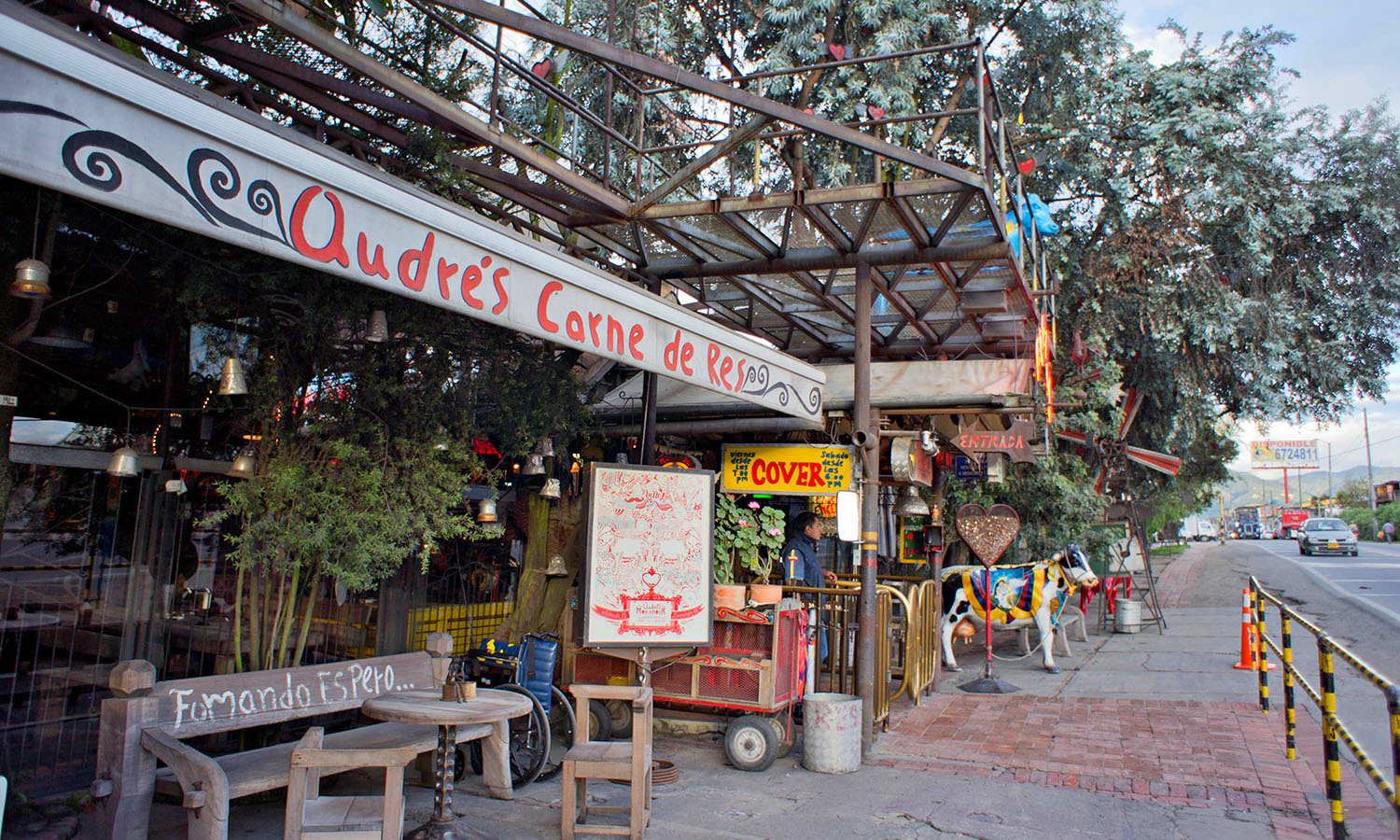
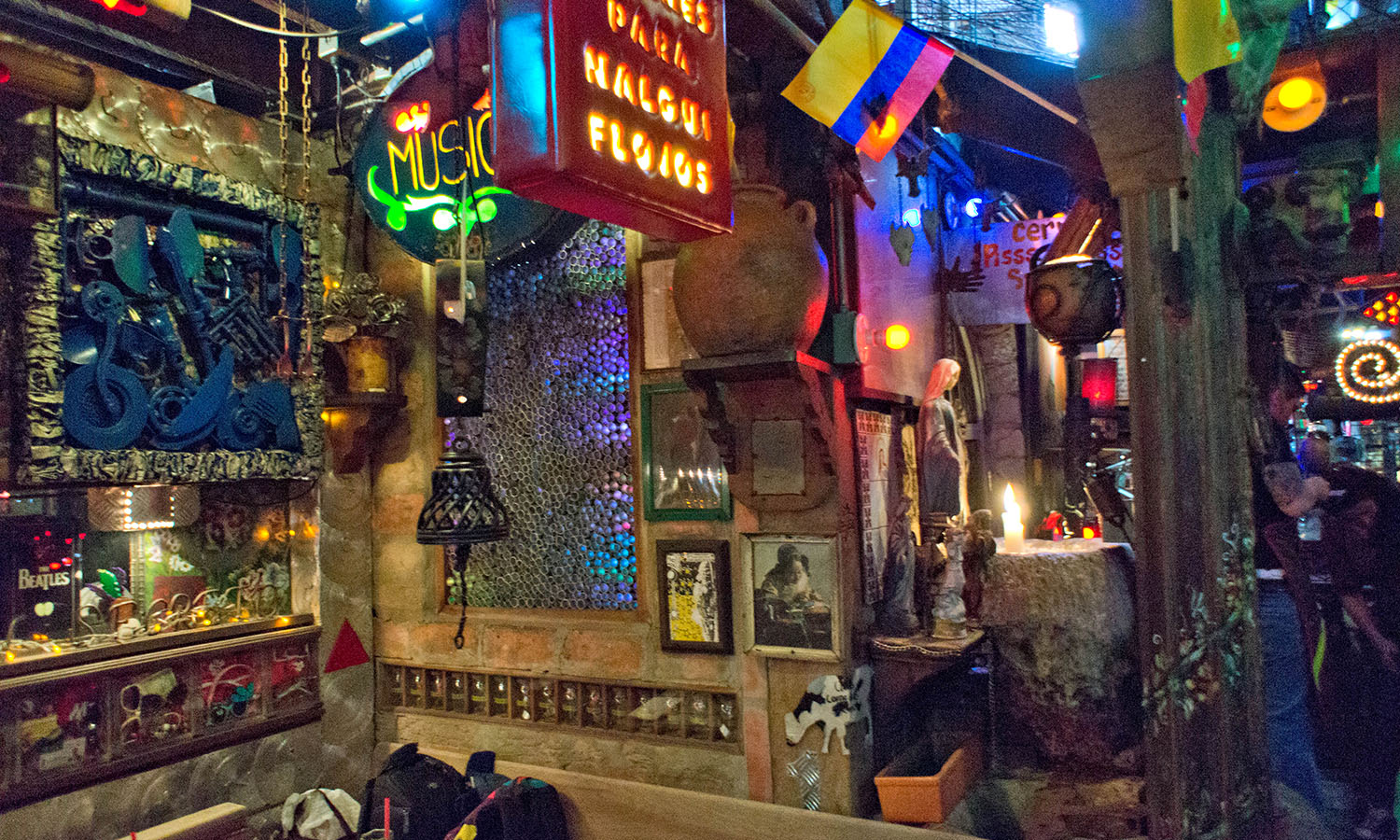
A quiet night out is just about the only thing not on the menu at this legendary steak and seafood grill. A Colombian institution, Andrés Carne de Res is a hedonistic powerhouse of eating, drinking, dancing and pure fun located in Chía, about 40 minutes’ drive from the centre of Bogotá (trust us, it’s worth the trip).

Come here if you’re after a festive, high-energy atmosphere to accompany your ceviche and Argentine steaks, and stick around to groove along with a live band or seasoned DJ until the wee hours. Just don’t forget to book – this popular eatery can pack out with more than 1000 people at any one time, almost every night.

Feast on curanto

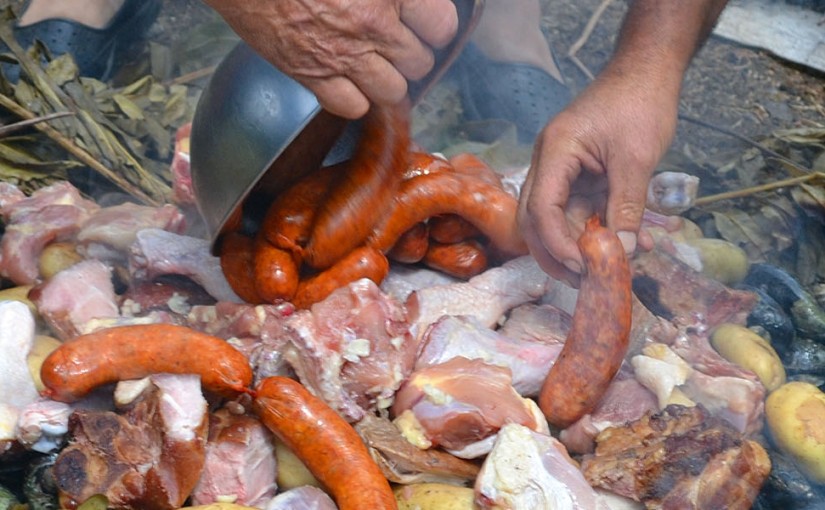
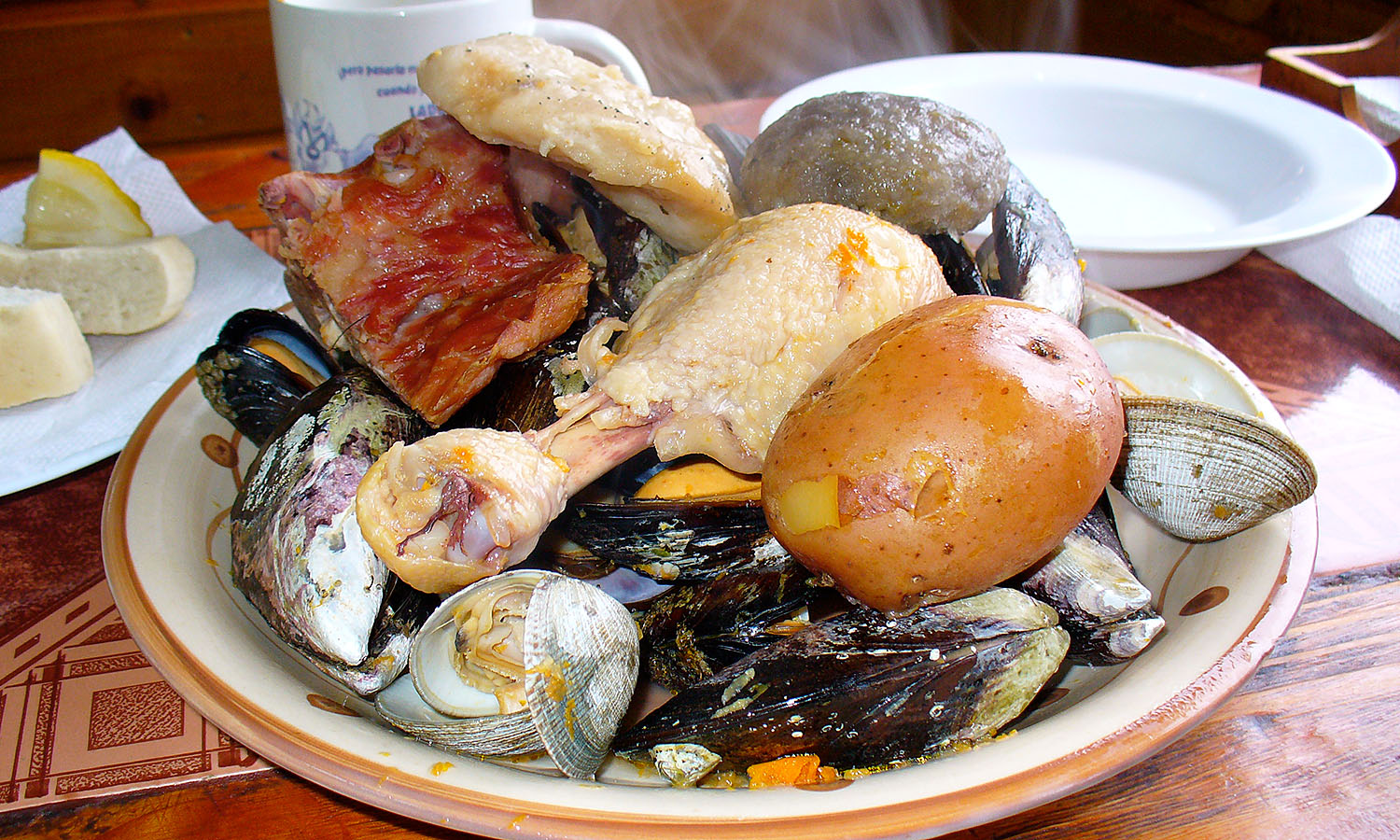
Tear a chunk of pork from the bone, crack open a clam, chow down on a dumpling and follow up with a mouthful of sausage. Next in line are mussels, chicken, barnacles and spuds.

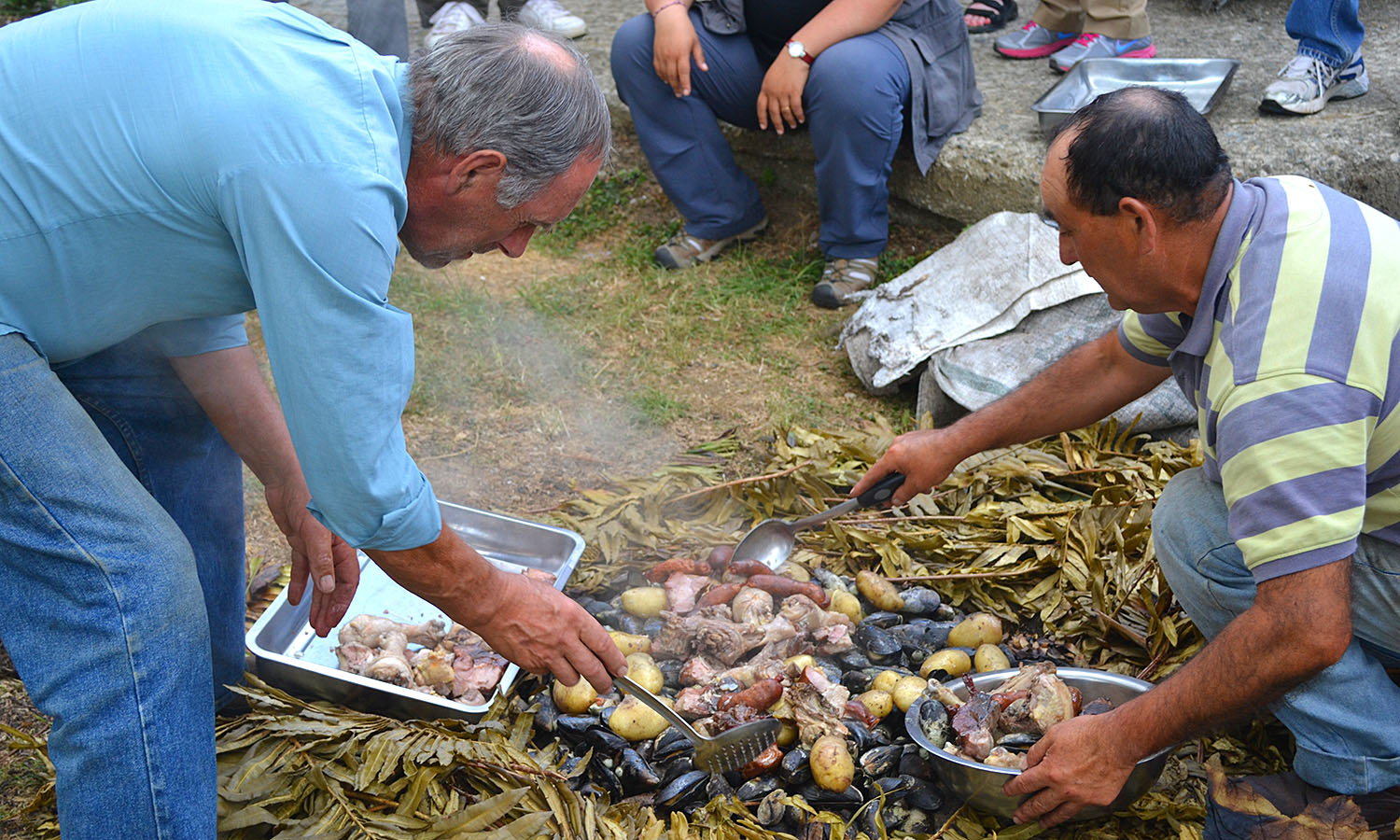
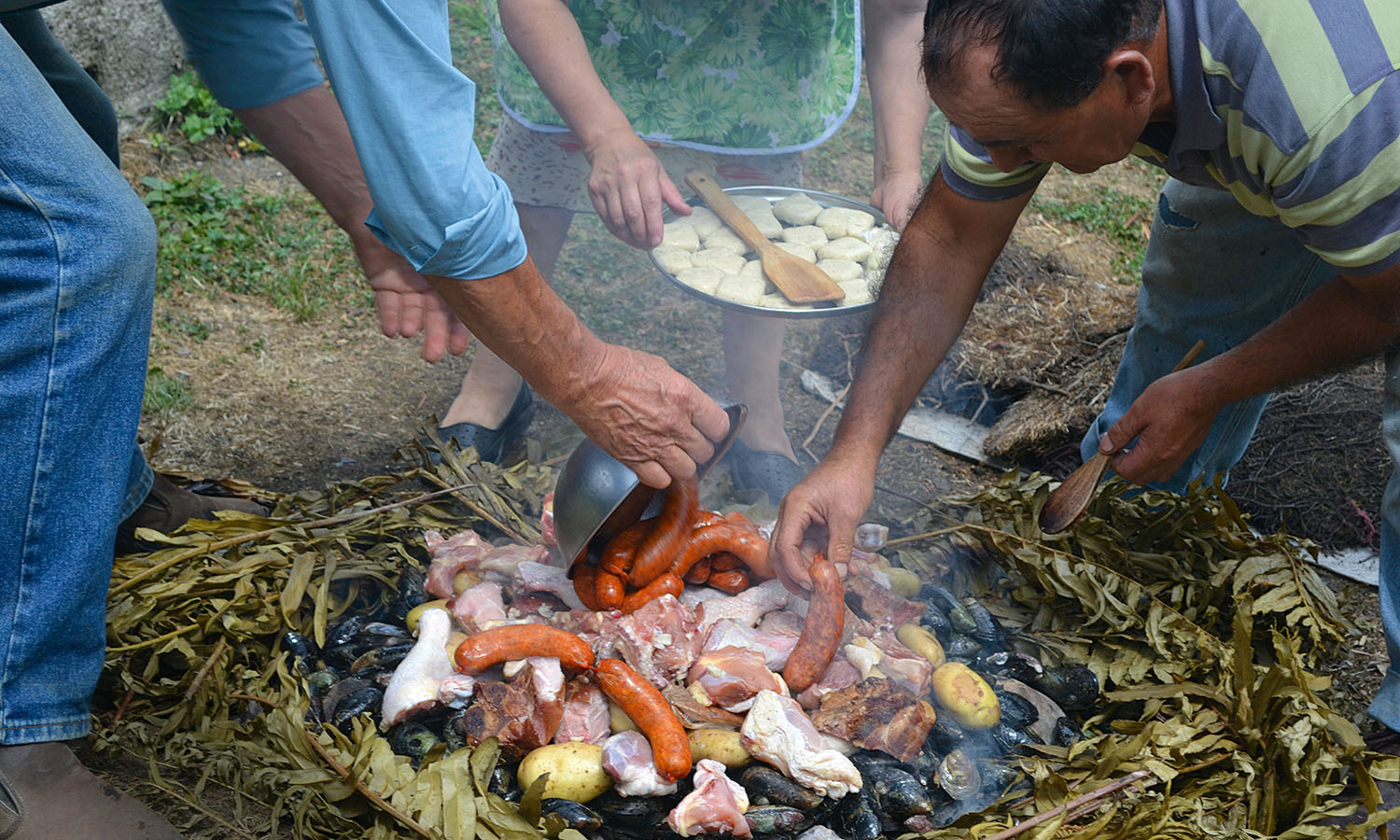
Hailing from the Chiloé Archipelago, Chile’s curanto is a meat-lover’s feast. Traditionally the bounty is bundled over hot rocks, wrapped in nalca (wild rhubarb) leaves and left for a couple of hours to bake.

The resulting repast, curanto en hoyo, is served on special occasions, when dozens of hungry mouths plunder the mountain of meats.

Head to Chiloé Island to sample the purist’s dish, or for a taste that’s widely available on the mainland, order curanto en olla. Cooked in a pot, the dish combines juicy seafood with a fragrant broth.

Dig in and wash it all down with a glass of local chardonnay.

Hot tub with a view

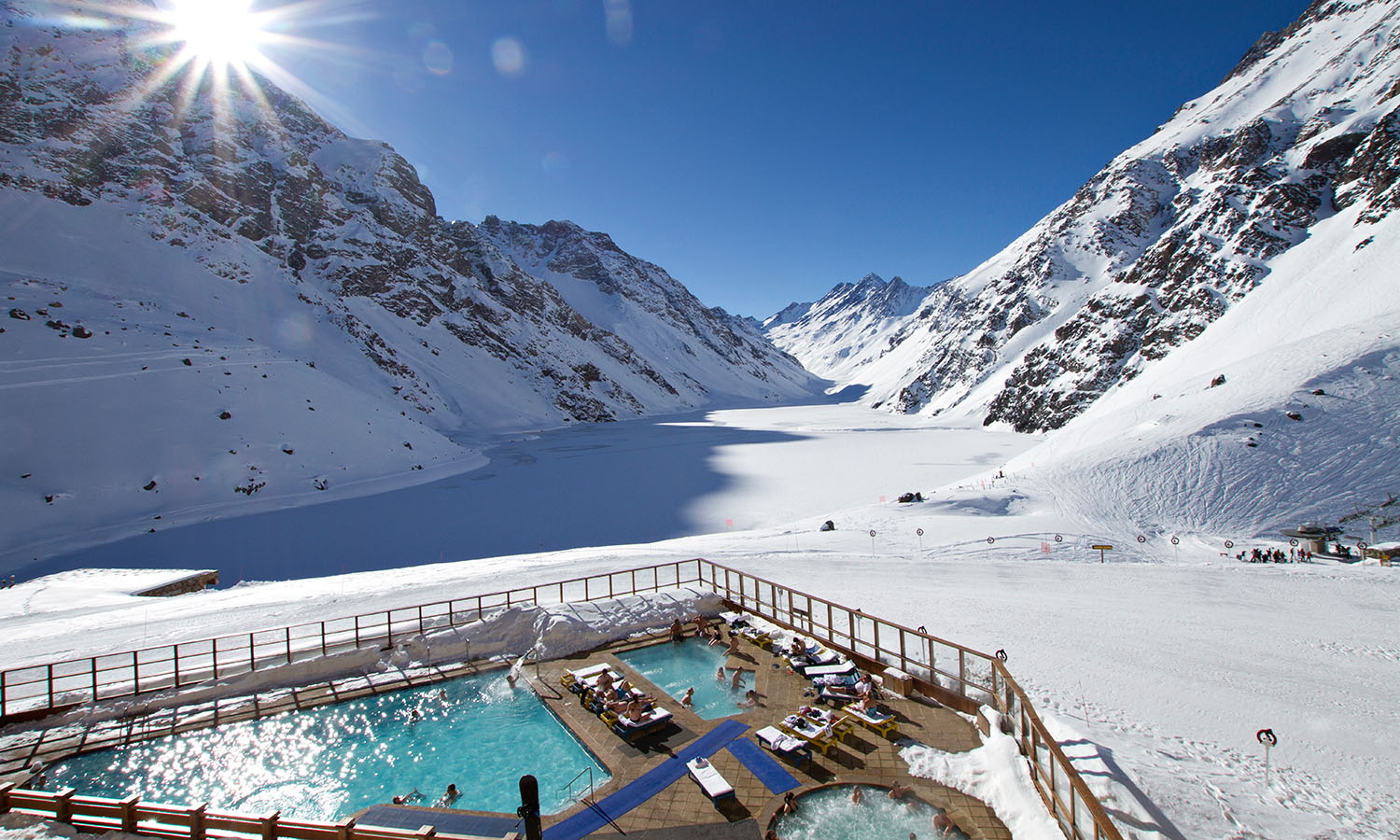
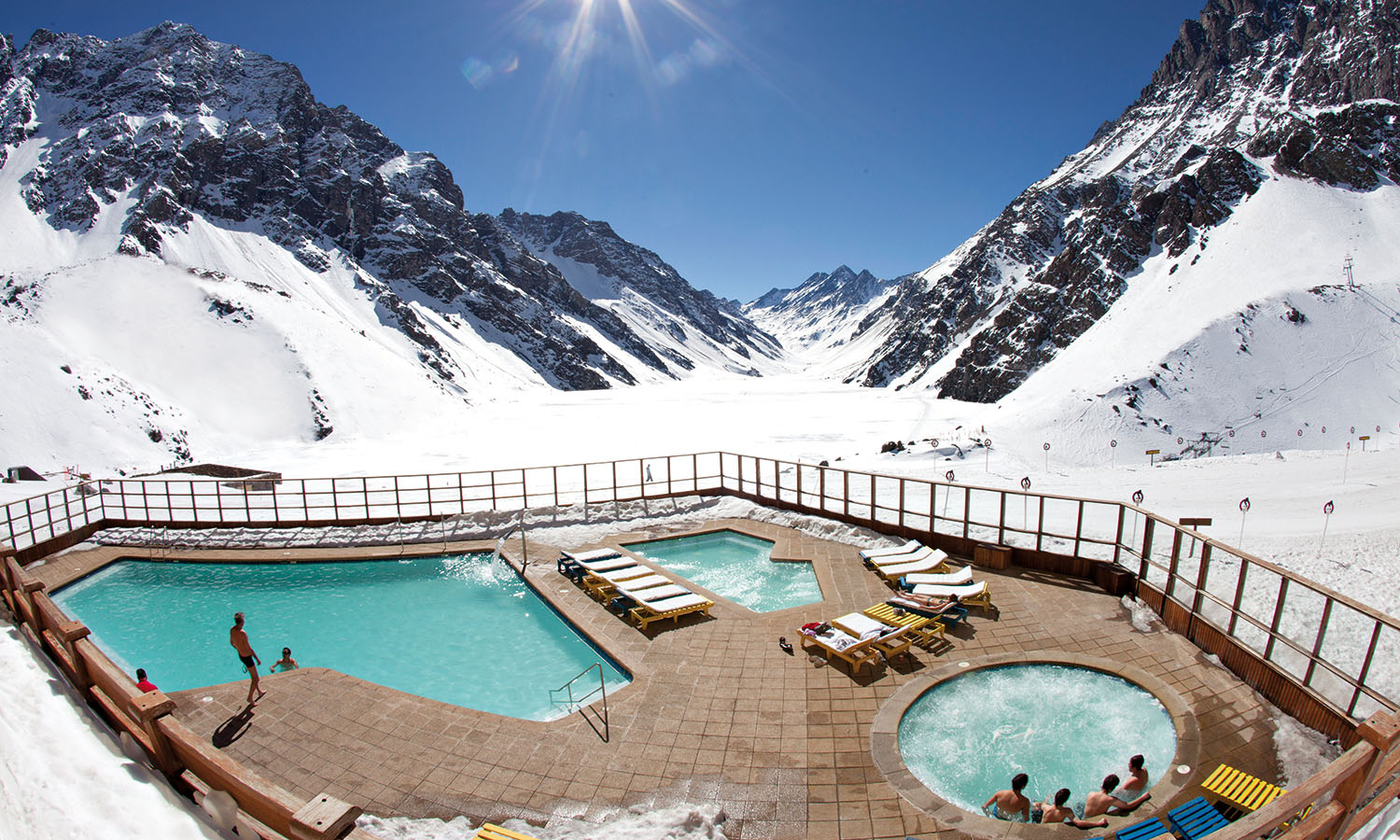
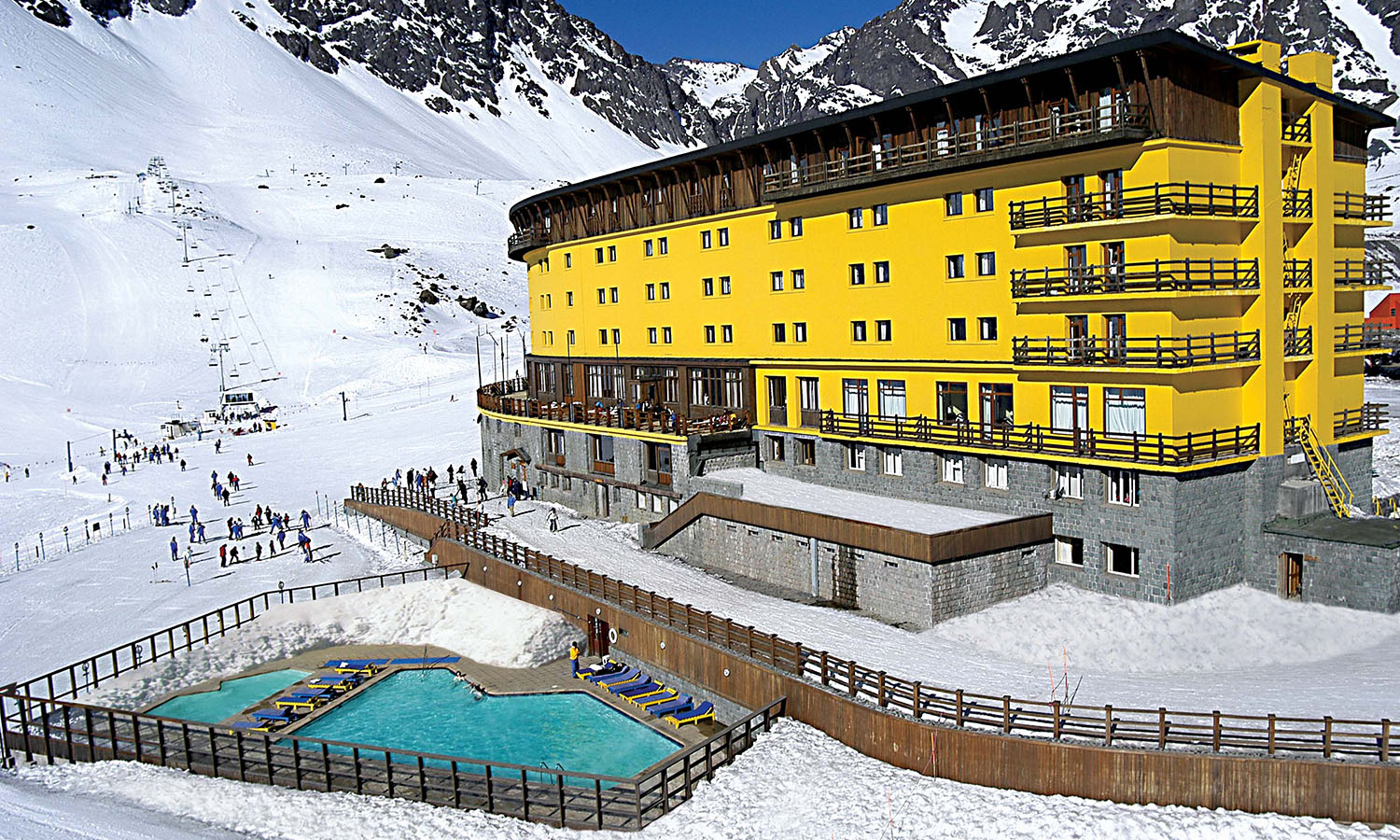
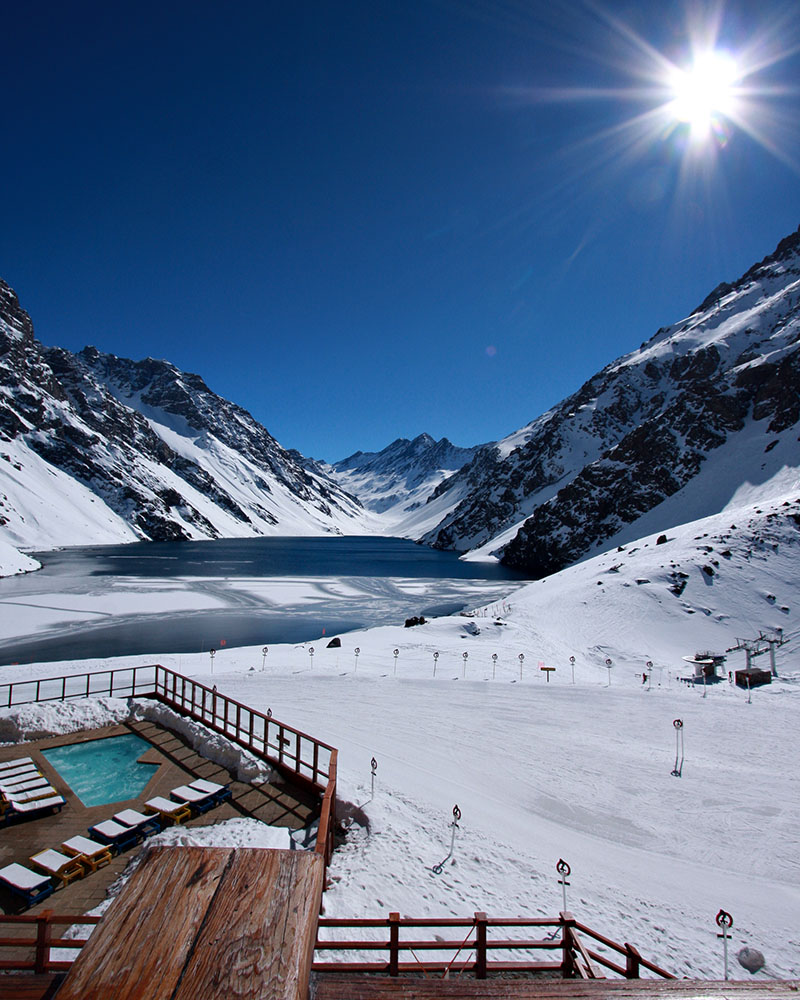
With a Lego-yellow hotel and the snow-covered Andes as a backdrop, the outdoor pool at the world-famous Portillo Ski Resort is one of the coolest (and coldest!) places to get your trunks on.

True, most people come here for the fresh powder and unbeatable runs (Portillo is ranked among the top 10 ski resorts in the world), but we say it’s worth a visit for the hotel pool alone.

It really doesn’t get any better than soaking in a hot tub while you bask in the rugged mountain views and fresh snowfall. Who knows, you might even be tempted to re-create a scene from the documentary film Warren Miller’s Journey and practise extreme ski jumps into the pool – but you didn’t hear that from us.

Mysteries of the Moche

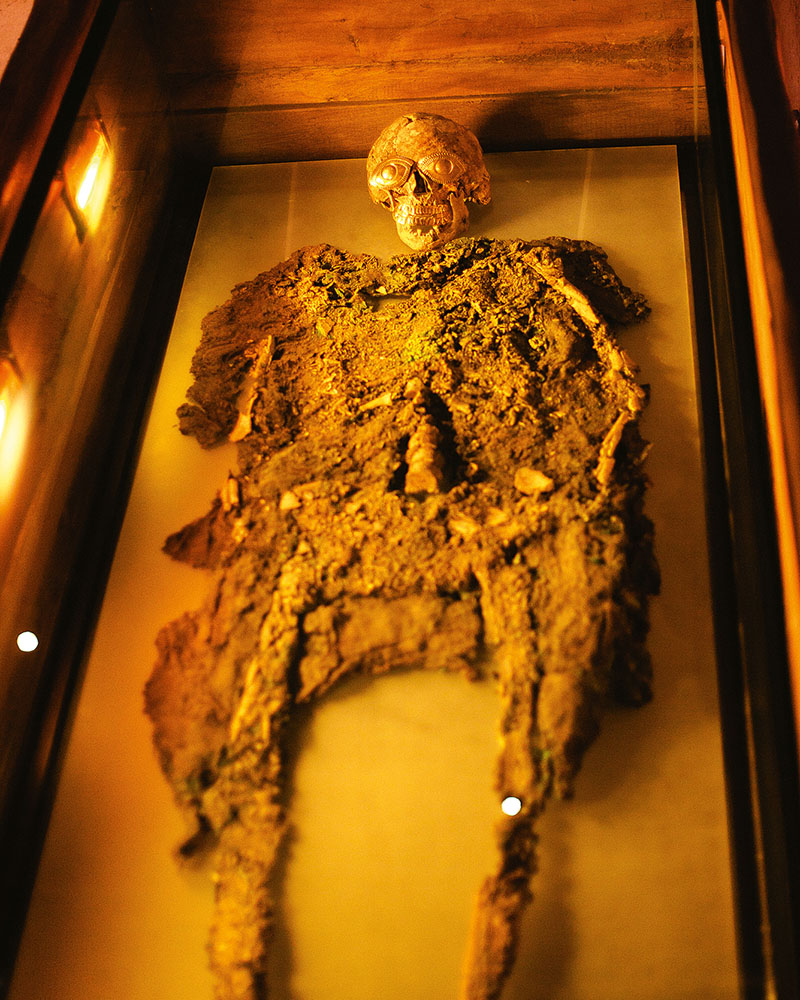
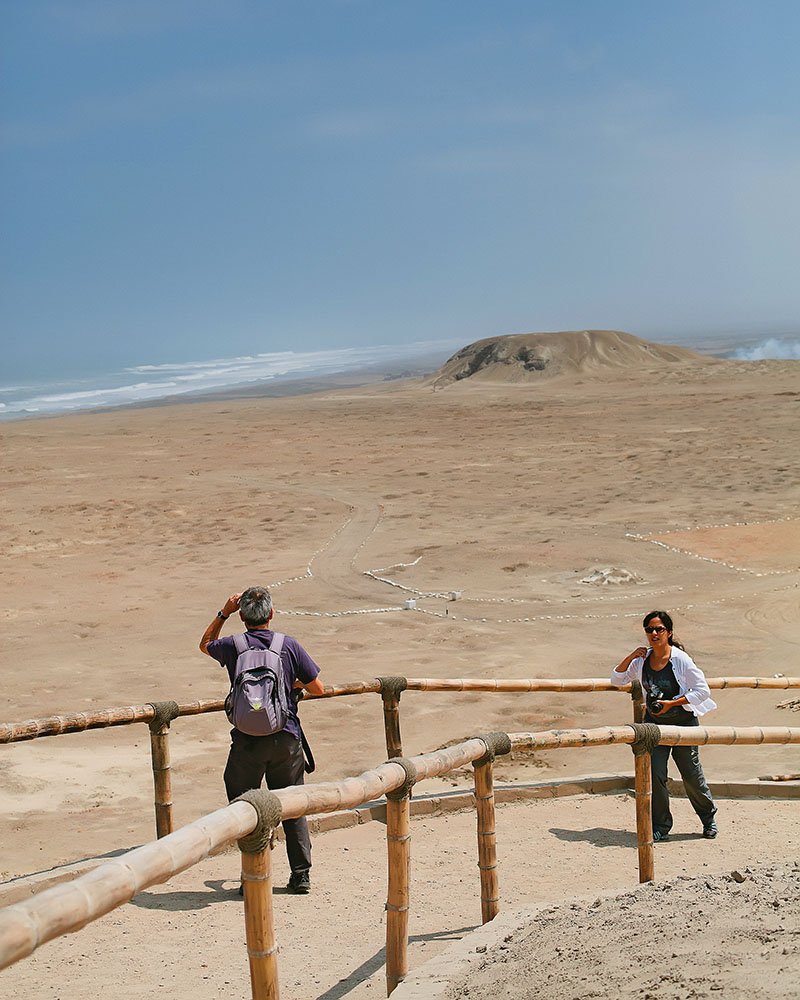
In 2005 the body of a wealthy Peruvian woman was found buried deep in the desert dust outside Trujillo in northern Peru. She was heavily tattooed (smiley faces, hearts, snakes), her nose pierced, her hair long and braided. Next to her body was a cache of weaponry and elaborate jewellery. The discovery sparked a great deal of interest, not only in Peru but around the world. Her body remains on display today, a short walk from its original resting place, where, for a modest fee, you may view its sombrely lit reflection and ponder its significance and your own place in the grand scheme of things. It’s 1700 years old.

If fortune is smiling your way, your visit to the Lady of Cao may coincide with some free time and a congenial mood from the man who discovered and excavated her tomb, Professor Regulo Franco Jordán. The stout Peruvian archaeologist greets our small Australian tour group outside the Museo De Cao and personally escorts us through its riches, answering questions via a translator. By now, three days into our tour of northern Peru, we are acclimatised enough to savour the opportunity. Already we’ve grasped the core interest of this under-sung region: the history here is vivid, blood-soaked and it is still, quite literally, being unearthed.
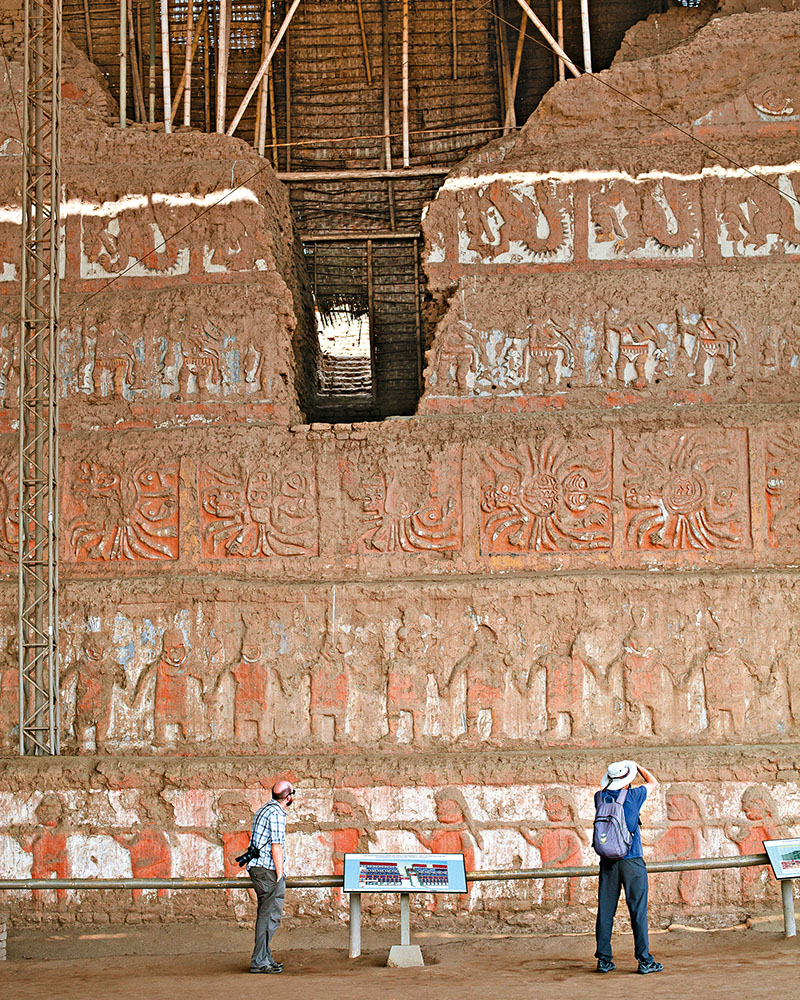
Days earlier we’d begun our tour further south, exploring the Temple of the Moon, which once overlooked the bustling capital of the ancient Moche civilisation. Buried by dust storms, scoured by erosion and its prodigious wealth diminished by centuries of tomb raiders, the temple somehow manages to remain an impressive monolith. Nearby stands what’s left of the larger, older and even more raided Temple of the Sun, said to be the largest manmade construction in the Pre-Columbian Americas. Both are still active archaeological digs. Although no longer much to look at, the sheer size of these structures is a fitting tribute to a civilisation that lasted twice as long as the Roman Empire and five centuries longer than the Inca reign that replaced it.

Who were the Moche people? Doers and optimists, evidently. Beginning around 100AD, a collective of mountain-god–fearing, temple-fixated people arrived in northern Peru – probably by sea from Ecuador – and began transforming an exceedingly unpromising expanse of moonscape into a productive, highly sophisticated civilisation. We know this and much more about Moche society from the stories brought to life by their artisans in thousands of pieces of exquisitely crafted pottery, jewellery, wall paintings and ceramics. We know, to pick just three examples,  they had a thing for blood sacrifice, fellatio and fishing. And yet, there is so much that remains a mystery, so much still to discover, which is why the region attracts archaeologists from across the globe.
Archaeology is not the break-neck business of car chases, snake-filled tunnels and whip-cracking American heroes of Spielberg films and boyish imaginations. It is the painstakingly meticulous business of survey maps, academic research, packed lunches, and years and years of digging with increasingly smaller shovels until you find yourself 20 feet down a precariously supported shaft – sun-blasted, dirt-embedded, a stranger to your family and friends – scraping away at the earth with a toothbrush, wearing the fixated grimace of an obsessive compulsive.

That noted, there is something about excavating dusty pottery and adobe foundations in the Peruvian desert – however slowly and laboriously – that is massively enticing. For one thing, there is no shortage of work. Moche-era temples (known as huacas, pronounced waccas) dot the landscape like ant hills. There are hundreds scattered between the ocean and the Andean foothills. Our guide informs us that only between three and five per cent of them have been properly excavated. That’s a lot of dirt to be toothbrushed away. The biggest and most significant huacas resemble eerily quiet construction zones, but with heavily armed security guards and an abiding paranoia about photography.

Grave robbing has been a popular pastime in Peru, probably for centuries. Some sites we visit are pockmarked with shallow ditches and filled-in shafts. Temptation has diminished, but there is still gold and jewellery to be found, as well as ancient mummies and precious artefacts to be disturbed. At the Museo de Cao, Professor Franco Jordán explains it was a grave robber who led him to the Huaca Cao Viejo, where he later made the discovery of his career, the astonishingly well-preserved Lady of Cao. It took his team months to carefully remove and unwrap her body. The discovery has been compared to the unearthing of King Tut’s tomb.

So here we are at one of the most significant ancient historical sites in all of the Americas and the strange thing is that, besides our local guide, the professor, a heavily armed security guard and a magnificently bored gift-shop attendant, we are alone. Who does the Moche Trail in northern Peru? Judging by the visitors’ books very few non-Peruvians – those who aren’t from here are mostly German. As our nine-day excursion ticks away, I start to notice the absence of European faces. The Gringo Trail in southern Peru is well marked (Cusco, Machu Picchu, Lake Titicaca and Lima), but in the north we are off-roading.

To clarify, I mean off-roading in a purely metaphorical way. I am part of an organised tour and we are accommodated in comfort and style. A lavish three-course meal and a plucky pisco sour are never far away. Our itinerary includes just as many modern gastronomic highlights as it does ancient sites. Peruvian cuisine, I’m thrilled to discover, has undergone a renaissance of late. Forget trussed guinea pig. Think of the flavours of ceviche, fresh, delicate raw sea bass ‘cooked’ in lemon and lime juice. Or the temptation of a dessert promisingly titled, the Sigh of a Woman from Lima.

Still we are certainly on a road less travelled, which has advantages. There are no queues for museums or historical sites. No busloads of students photobombing our precious snaps. Prices are set at local rates. Crude and repetitive butcherings of the Spanish language are patiently encouraged. The fact that we are Australians and that Australia does indeed have kangaroos is a talking point in the markets and bars. More than anything else, the absence of mainstream tourism encourages immersion in our surrounds.

Historical tours can be dry and repetitive – how many old buildings do you need to visit to establish that they are indeed old and still standing? There’s a temptation to see only the most visually impressive (and Machu Picchu stands tall and perhaps even unrivalled in this category). Be advised that the huacas of northern Peru are not visually impressive. They are not even impressively visible. You could drive right by three or four of them and not even know they were there. The upside is that the Moche route requires your attention. You need to go beyond the surface.

If you’ve a curious mind there is much to marvel at with the still-unfolding story of the Moche civilisation. If not, there’s enough sex, death, war, nudity and drug use to hold your attention. In Lima’s Museo Larco the pottery engravings are so sexually explicit and enliveningly graphic they are kept in an adults-only gallery. Depictions of highly ritualised human sacrifice involving gruesome torture and the imbibing of a hallucinogenic cactus to appease a god known as the Decapitator are a frequently occurring motif. Immensely impressed with these details, I find the Moche culture comes to life. I begin to think there might even be the bones of a HBO series buried out there in the desert somewhere.

When we aren’t exploring dusty temples and gleaming museums dotted between Trujillo and Chiclayo, we enjoy lazy lunches by the sea in a succession of colourful fishing villages. After one such meal in Huanchaco I recognise the familiar appearance of my own caste: that sun-bleached, work-shy, pleasure-loving creature, the travelling surfer. Northern Peru is famous for its long-wrapping point waves, none more so than nearby Chicama, which is regarded as the longest and most wrapping in the world. How I long to join them for six months or more.

Surfing is big in Peru. Some Peruvians even suggest surfing actually began here, not in Hawaii, as is commonly believed. They stake their claim on the use of the caballito de totora (little reed horses), handmade fishing vessels also used for catching waves and which date back some 4000 years. I wasn’t going to miss the opportunity to ride one, however ungainly they appeared.

I hired a wetsuit and borrowed a caballito from Lucio, a friendly local fisherman. Earlier he had put on a commanding wave-riding display for our tour group while I rode beside him on a malibu. My efforts on the reed craft were less successful, but I managed to catch one tiny wave. For a few seconds, as I glided to shore before abruptly capsizing, I enjoyed a rare physical insight into what life must have been like for the Moche people as they went about their daily lives alongside the baking desert, with the fearsome mountain god looming in the distance.

An exciting but precarious existence was the lasting impression.

Pumas on Patrol

The jungle around me is a perfect luminous green. The trees are covered in orchids and the undergrowth is overflowing with the vibrant colour of red and yellow heliconia flowers. There are monkeys in the trees, along with squirrels and macaws. Huge tarantulas patrol the ground and there is the constant danger of snakes. I walk on the paths singing to myself and to my puma, Yassi.

I had no idea I would be doing this. After spending a few months living at almost 4000 metres above sea level in La Paz, I really wanted to spend some time in the Amazonian jungle. After hearing incredible stories from a friend about an animal refuge that required volunteers, I took a wild and winding bus trip into Bolivia’s southeast. The animals at Parque Ambue Ari, along with the majority of workers and volunteers at the refuge, are accustomed to the Spanish language. My own grasp of Spanish is some way short of perfecto and prior to arriving at the refuge I was concerned I wouldn’t be able to communicate with the other volunteers. I feared that I would be bored and of no use to anyone. I never dreamed I would learn how to handle a wild puma with instructions in Spanish or that simple hand gestures and noises could count as understanding, such that I would be sent into a cage with a puma after a briefing that lasted 10 minutes.

Show no fear. Don’t let go. Cover your neck. When a puma jumps on you, yell “abajo”. This means ‘down’ in Spanish (and apparently in puma, too). This was the sum of the information I managed to decipher during my first day. My fears had hardly been allayed and I spent that night studying the English–Spanish dictionary for words like ‘blood’, ‘dead’, ‘help’, ‘bite’ and ‘decapitate’. Yet it seemed that my first day of induction was a success. On the second day at Parque Ambue Ari I learned I was to be in charge of three fully grown puma sisters. At six months old, they had been rescued from a poacher who had killed their mother. The volunteer who had been with them since then had left the refuge to rescue some injured monkeys and was now a good day’s travel away. With her went the only vet and permanent worker, as well as any sense of order that was to be found in this pocket of chaos.

It was an interesting social study to observe how quickly our little camp turned into scenes direct from the pages of Lord of The Flies. There were struggles for power, fights over food and the constant and obvious realisation that none of us had any idea what the hell we were doing. This became apparent when five cats escaped on our first day alone in the park together. There were seven pumas in total, five ocelots and three jaguars. The 15 volunteers at the refuge also had custody of two deer, four pigs, five racoons, four monkeys, 13 macaws, four toucans, a tortoise, two huge ostrich-like birds, more than 50 small parrots, three smaller jungle cats, three orphan children, a baby giant anteater and a lone eagle. I found an unlikely peace in this environment and treasured the time spent getting up close and personal with these wild and beautiful animals.

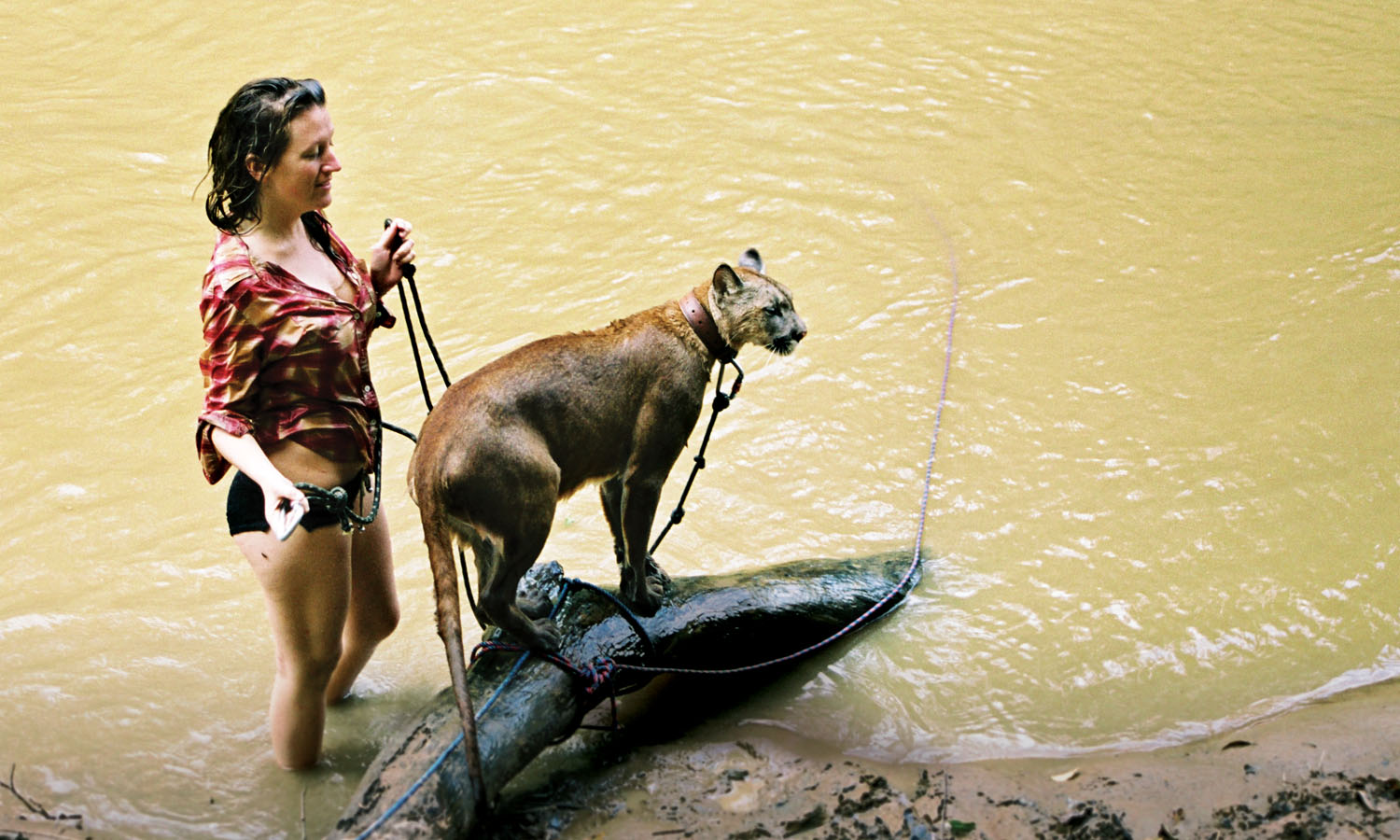
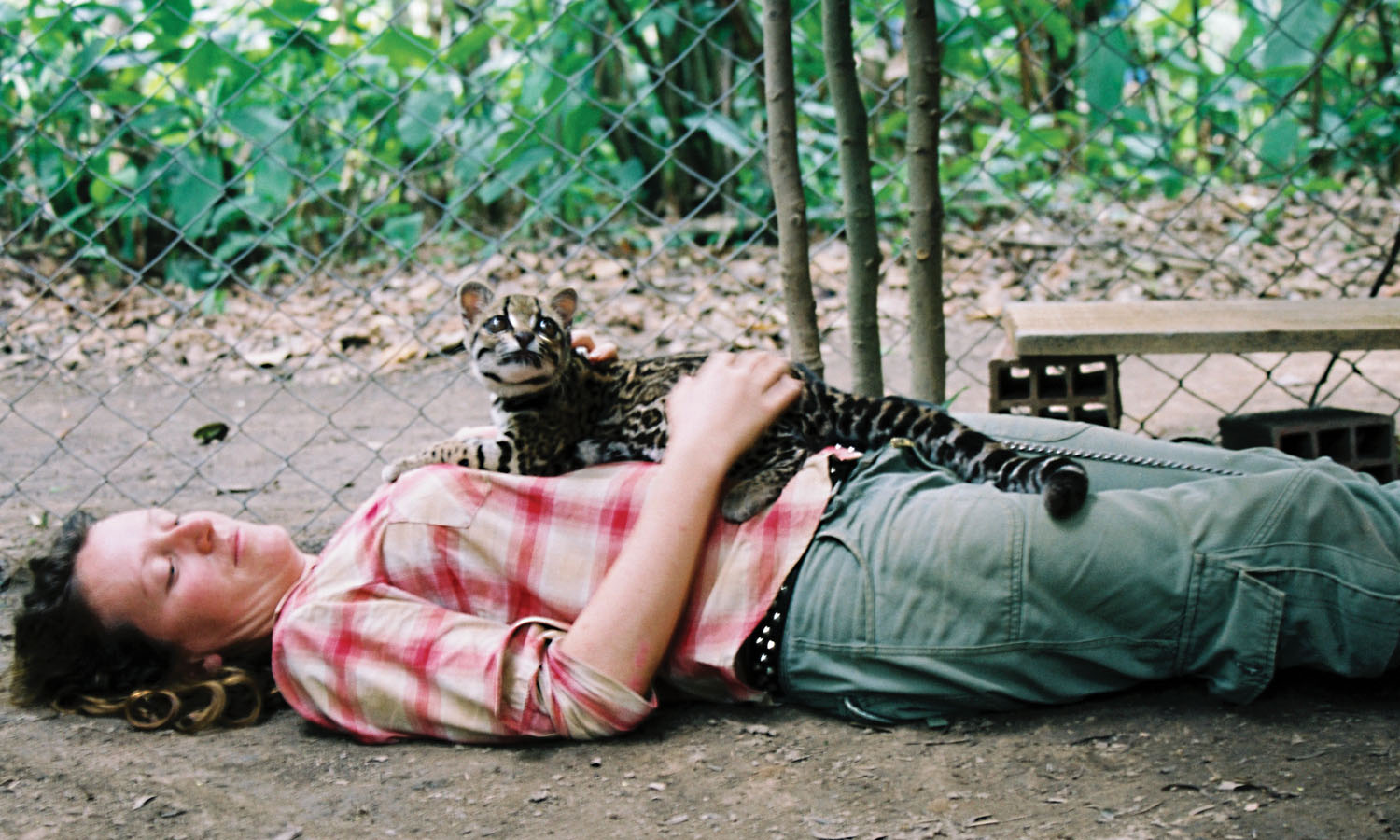
Yassi the puma really loved being sung to. ‘The Lion Sleeps Tonight’, in English, was a favourite. She’d purr as we walked, wrapping her tail around my legs and hips. She would stop to nuzzle me in the face or on the leg, not unlike a regular pet cat. She was no domestic moggy however. A three-year-old puma, she stood up to my thighs and weighed about 50 kilograms. I tried not to think too much about this. One of the secrets of walking with pumas is to never show fear and to keep the right amount of tension in your lead. If the lead becomes too slack, the puma is able to turn and jump on you. If the lead is too tight, the puma might want to run faster and take you with them.

Pumas also like to play and swim. Swimming in the river with the cats was an incredible experience. In this environment, the tables were turned. While the pumas love the water, they also fear it. They became quite timid, reliant upon my ability to reassure them that they would be alright. Once in the water, I was the boss.

Wandering along the trail on the way to give the cats a dip one morning, I stared at a flock of scarlet macaws. They were a brilliant red blaze up in the trees, chattering away, paying us no attention and enjoying a morning feast. I stopped and marvelled at these majestic birds only a couple of branches above my head. So overwhelmed was I that I completely forgot I was holding on to a puma who was eager to get in the water and who also liked brightly coloured birds. Before I knew it, she had bolted part way up the tree, sending the birds screeching and dragging me forward. In the split second before she leapt back to the ground, I was certain the cat would jump me.

Later the same day, my fear of being jumped was realised. I was passing on some of the basics to a new volunteer, who, like me on arrival at Parque Ambue Ari, was completely inexperienced with wild cats. Wara, the biggest of the three puma sisters, had her ears flattened in pounce mode when I approached her. She jumped from two metres away and landed on my body – one paw on my leg, one on my hip, one on my back. I had seen a similar move in a wildlife documentary when a puma was killing a deer.

I broke into a cold sweat and went completely white. My pants and shirt were ripped and there was blood on my clothes, but I was OK. Wara was only playing. Later when I was cleaning the pumas and could hug them and nuzzle them again, I was rather proud of my new scratches. I had learned two very important lessons: never approach a cat when it has its ears flattened and always face them front on with your neck covered when they jump you.

Parque Ambue Ari is the sister park to a much larger one in the centre of Bolivia called Parque Machia. They are both run by the Community of Inti Wara Yassi, a not-for-profit organisation that rescues animals from all over the country, all illegally poached and kept in private homes, hotels, restaurants and circuses, often in disgusting conditions. Together the parks house more than a thousand animals. Conditions are basic, it’s not world’s best practice for training, the food isn’t great and you have to work hard. But it is Bolivia, so you come to expect those things anyway and the experience is richer for the fact you are providing assistance in the poorest country in South America. It may also be your only chance to ever serenade a puma.

No Man Is An Island

“You want to know how the statues got here, right?” asks Beno, my dreadlocked guide. Beno is a Rapa Nui, a direct descendant of the Polynesian people who built – and then almost lost – an empire on this skerrick of a dot in the Pacific.

“Everybody wants to know this answer,” he says. “I am going to tell you the truth then. I will tell you what my father told me and what his father told to him – what every Rapa Nui will tell you.”

If anyone could uncover the secret of the statues, known as moai, I figured it might be a Rapa Nui. How the moai were carved, carried and positioned across Easter Island is a mystery that looms over the human imagination in the same way as Stonehenge, the Bermuda Triangle and Donald Trump’s hair. Their size – up to 80 tonnes each, 12 tonnes on average – would lead most to believe it was impossible for a civilisation with only stone tools to carry out such a giant feat of engineering. So I was keen for somebody with a little inside info to give away the game once and for all.

“The answer is very simple,” says Beno. “They walked.”

A day earlier, on my way to Easter Island, I wondered if I was making a bad choice for a holiday destination. Having just gone through a relationship break-up, the parallels between my fragile state of mind and the most remote inhabited place on earth were easy to see. Surely such isolation would equate to loneliness. A landscape on which every last tree had been felled would have to bring feelings of emptiness. I imagined witnessing the failures of a culture, once rich and full of wonderful history, would only encourage sadness. And then there were the moai: carved carefully over time with great devotion and struggle, many of them now face down and shattered on the ground, never to stand again. The comparisons were all too obvious.

In the same way people listen to sad songs to match and reinforce their gloomy mood, I wondered if I’d chosen a holiday to do the very same thing. Maybe I should have gone to somewhere like Rio instead.

I arrive on Easter Island in the dark hours of early morning. Unlike the first Rapa Nui – according to historians, they paddled their way here from the outer reaches of French Polynesia in hollowed-out tree trunks – I travel on a comfy flight from the Peruvian capital of Lima. Been meets me at the airport and we make our way to the Posada de Mike Rapu, a superb lodge on a hill just out of town.

From my room I watch as the thousands of southern stars begin to fade from the sky and the giant sun creeps over the horizon, revealing Rapa Nui in the morning light. What I see is by no means tropical, like Tahiti or Hawaii. I look out over undulating bare hills at scraggy wild horses nibbling the short grass. Black volcanic rocks punctuate broad paddocks that fade into the sea. It reminds me of a sheep farm and I later learn that’s exactly what it once was.

On the topic of Easter Island, scientist and author Jared Diamond wrote: “All parameters were stacked against Easter: It is relatively cold, dry, low, small, and isolated, with negligible nutrient inputs from atmospheric dust and volcanic ash, relatively old leached soils, and no uplifted-reef terrain.” On the face of it, it seems a long way to travel to visit such a place.

“Do you know about mana?” asks Beno later that day as we walk together to the first of many archaeological sites, right after he has told me that the giant moai made their way across the island under their own steam.

Mana, I had read, is a Pacific Islander notion of a spiritual force that dwells in people, animals and inanimate objects. It’s a divine power they believe can move mountains – or monolithic statues, at least.

“The moai use mana,” Beno explains, with a serious expression on his bearded, fleshy face. “That’s how they can walk.”

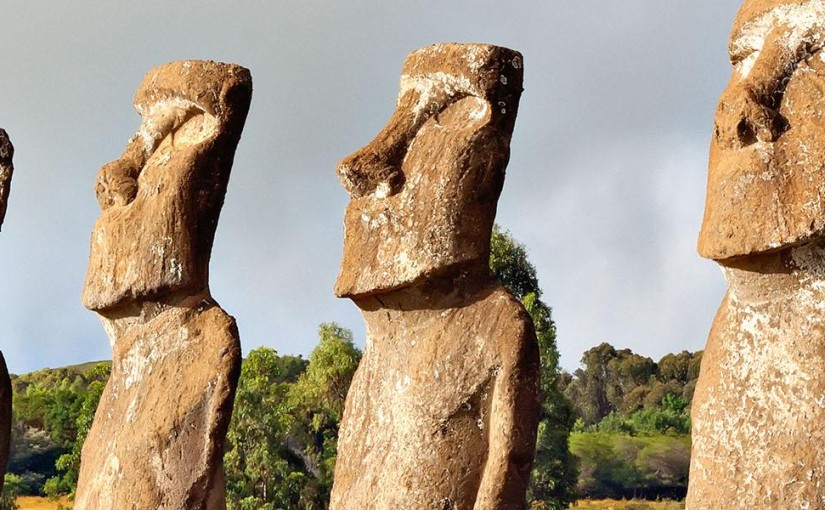
At a site called Akahanga we come across the first of the moai, sprawled and broken along the seashore. It’s an odd introduction to such an iconic attraction. The toppled giants lie wrecked on the rocks, necks broken, heads smashed.

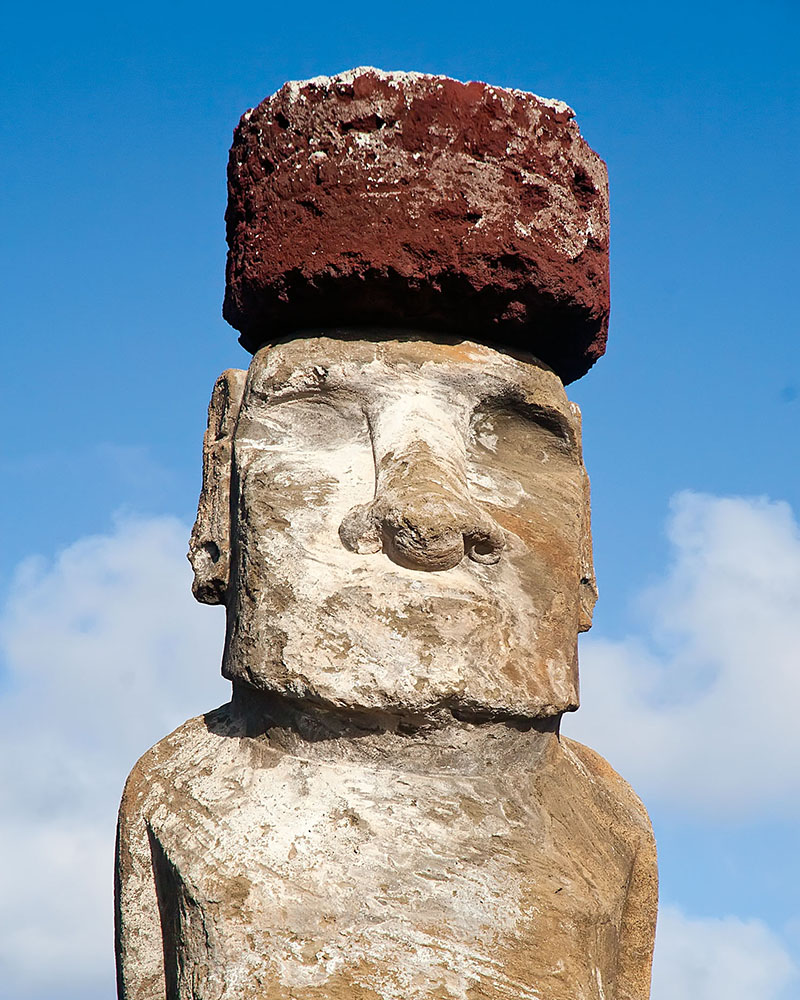
I learn that almost all of the 900-odd moai on Easter Island were carved between the years 1100 and 1700 at a single site on the side of a volcano. Many of the moai never left this inland quarry, with some unfinished ones still waiting to be cut free from the rock. Others dot the countryside, abandoned en route to their seaside destinations, looking like fallen soldiers on a battlefield. Only about 10 per cent made it to the ceremonial platforms, where they were erected in honour of their makers’ ancestors. Then, sometime later, almost all of them were ripped down again. Those that stand today (about 50) have only recently been restored to their positions.

Arriving at the first of the upright moai, my dark mood starts to shift a little and the island’s magic begins to kick in. There’s something calming about standing before these stone creations. Their faraway expressions seem gentle and thoughtful.

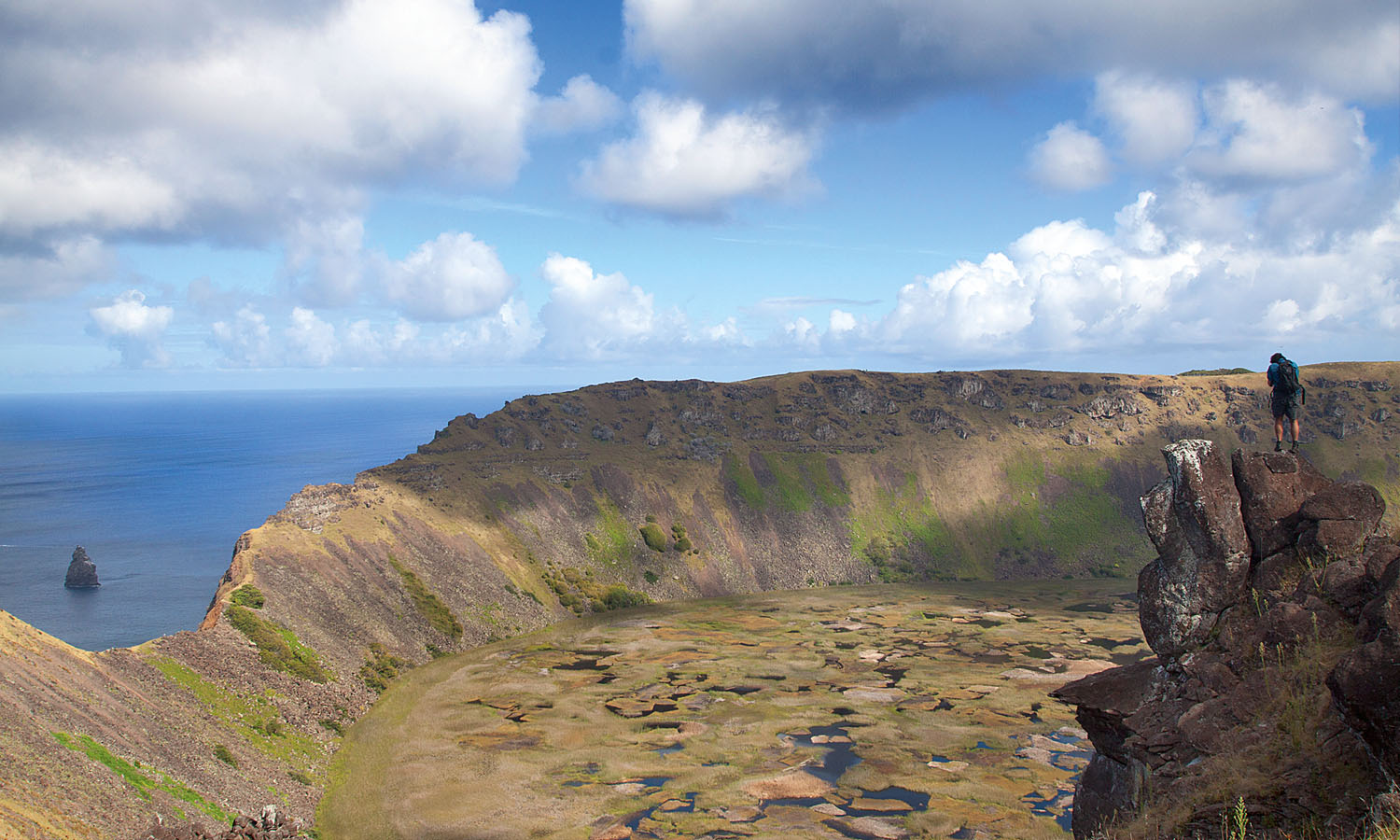
Over the next days exploring the countryside, what at first glance had appeared to be an abandoned sheep farm soon transforms into one of the world’s great archaeological sites: a living, open-air museum. We cruise the narrow coastal roads around the island in the lodge’s A-Team van, with huge waves bashing close by on the volcanic rock shore. We marvel at the giant moai watching over proceedings around the island and looking back at the quarry from where they came. We find old cave openings and crawl in to discover ancient Rapa Nui shelters. Artefacts litter the paddocks, left there for wild horses to kick up and uncover. Beno tells me that as a kid he would find stone tools where the moai were made. We see old canoe ramps and chicken houses and water catchers made of stone. We hike up volcanoes and look out onto patches of the Pacific that are holiday-brochure blue. After a few days here I am completely enthralled by this place. Thoughts of home begin to seem less significant.

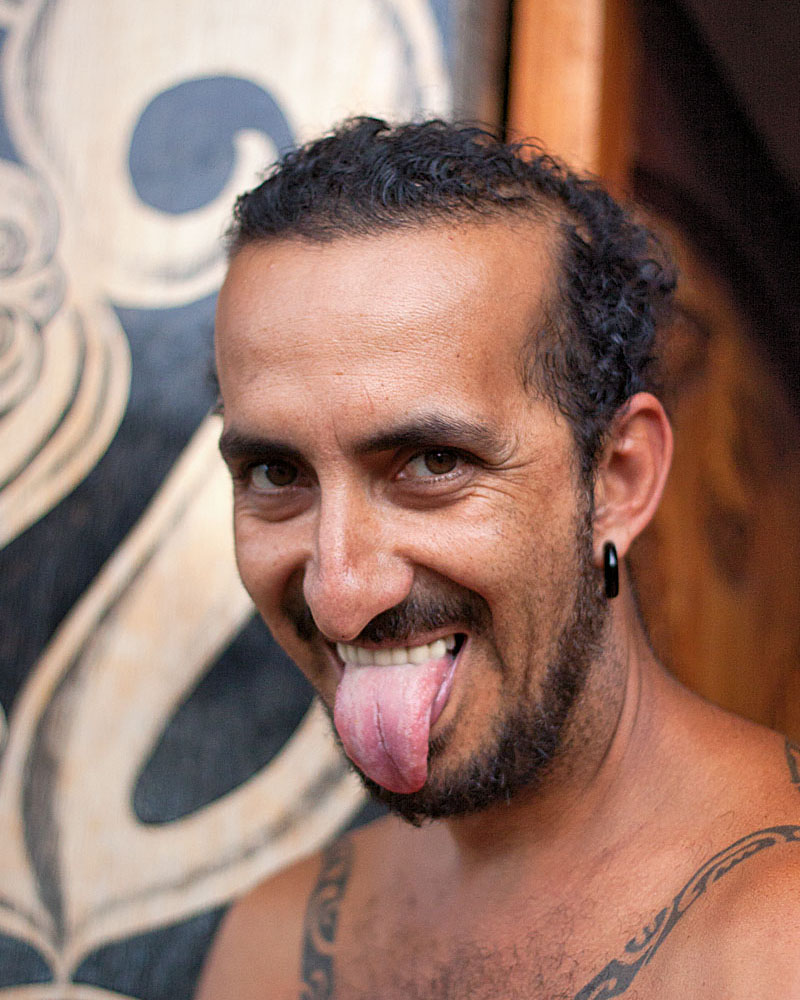
“This island is the door to paradise,” I’m told by Mokomae, a tattoo shop owner in the island’s main town. “We Rapa Nui are like an endangered animal facing extinction. Because of that, this place is special and we are special.”

When I ask Mokomae to show me his traditional tattoos, he promptly strips down to his very brief briefs.

“I am not a Rapa Nui, I am Rapa Nui,” he tells me, wide-eyed while in his underwear. “Asking me if I am proud to be Rapa Nui is a question you should not ask – it’s silly. It is like me asking you if you are proud to be able to walk.”

To someone who has never been to Easter Island, its history may seem like an obvious metaphor for human recklessness. The commonly held belief that the Rapa Nui demolished the environmental foundations of their society is most likely true. But they did so, according to Jared Diamond, “not because they were especially evil or deprived of foresight”, but because they were ordinary people, living in a delicate setting, and subject to regular human struggles and feuds.

The thing is, if you go to Easter Island and meet its people, if you take time to walk the countryside and watch the sun rise a few days in a row, you learn that this place can also be a metaphor for hope. The people here have endured famine, epidemics, civil war, slave raids, colonialism and deforestation. Their population was reduced to just a few more than a hundred people at one point in time. Today, they are 4000 strong and their culture continues. The Rapa Nui attempt to walk the fine line between holding on to and letting go of the past. And they appear to stand tall as they do so.

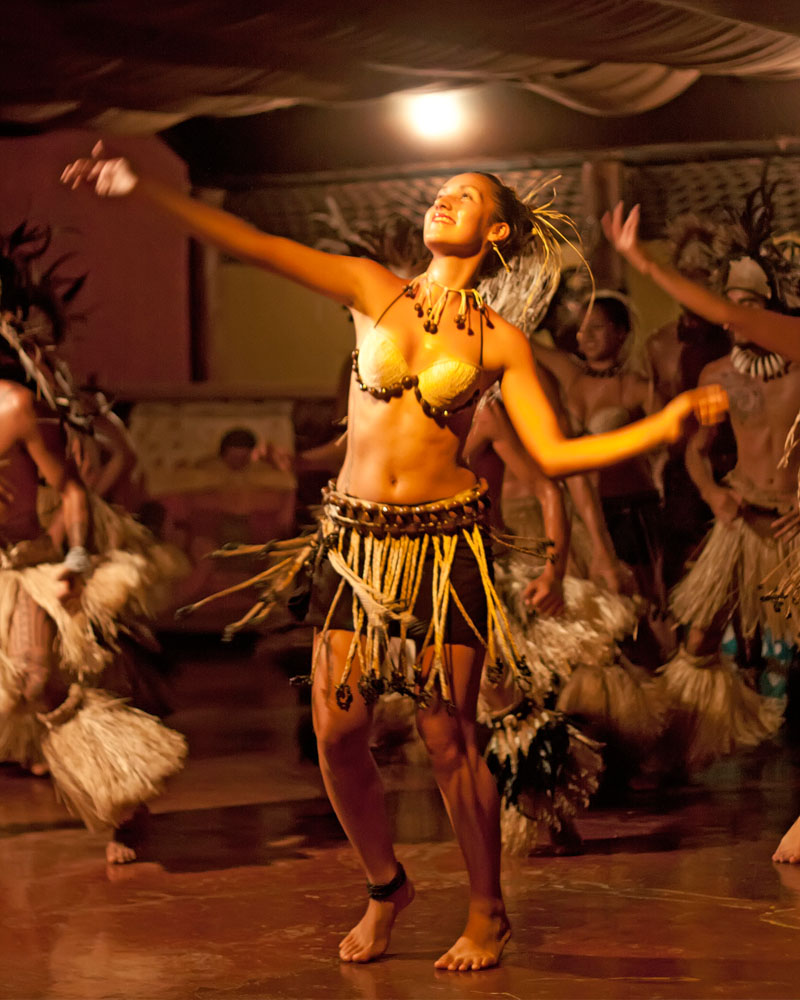
On my last night on Easter Island I go to watch a Rapa Nui dance troupe perform for tourists at the back of a restaurant – tattooist Mokomae as the chief dancer and choreographer. He had told me that he’d salvaged his ancestors’ traditional dances and wanted to keep them alive for his children. On stage, the lithe-bodied performers radiate passion and pride.

“We are survivors,” Mokomae had told me earlier in the day. “If there’s a cataclysm, we will still be here.”

Contemplating the collapse of my own little world, I begin to see that this idea of celebrating the good and forgiving the bad is an admirable thing. Easter Island is proof that navigating unthinkable spaces and shifting immeasurable weights is always possible with endurance and determination. Accepting the failings, picking up the pieces and moving on is part of the art of survival. I figure with time – and maybe a little mana – I’ll stand tall, too.

Insanity Slide

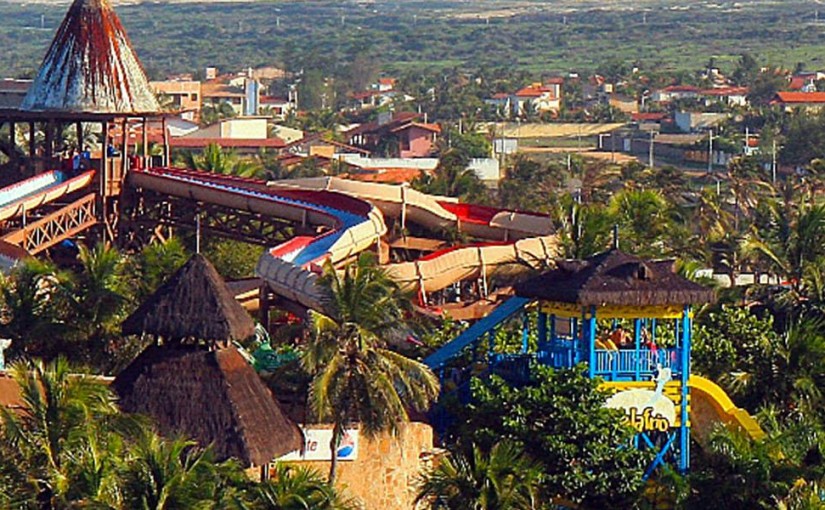
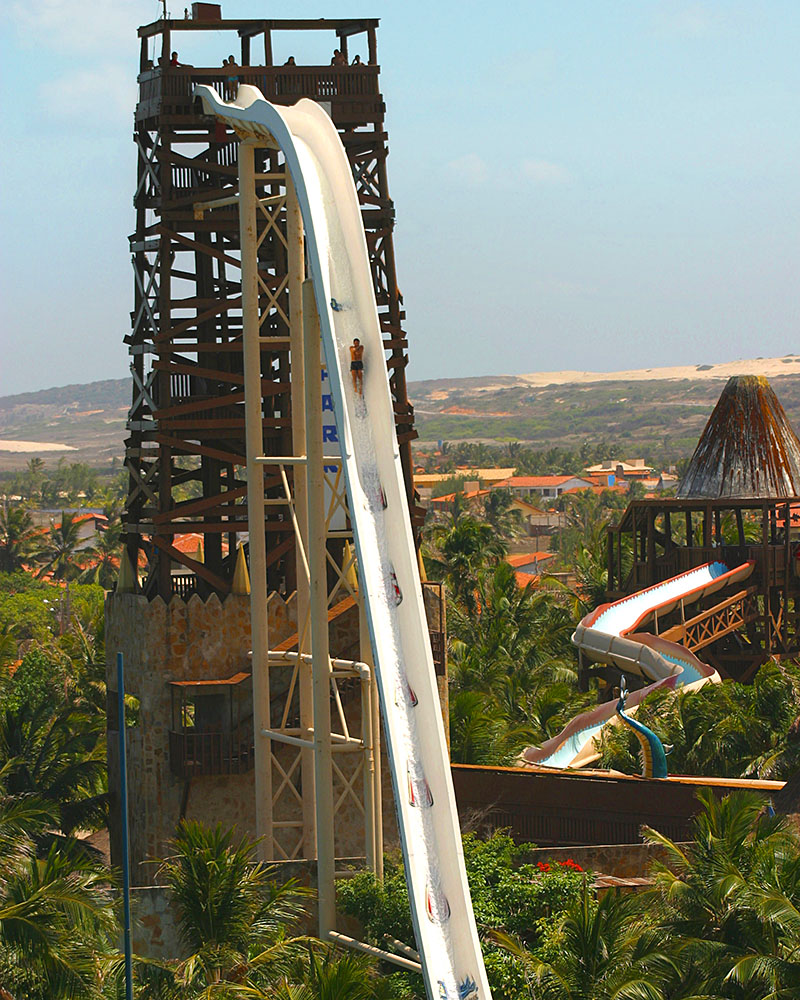
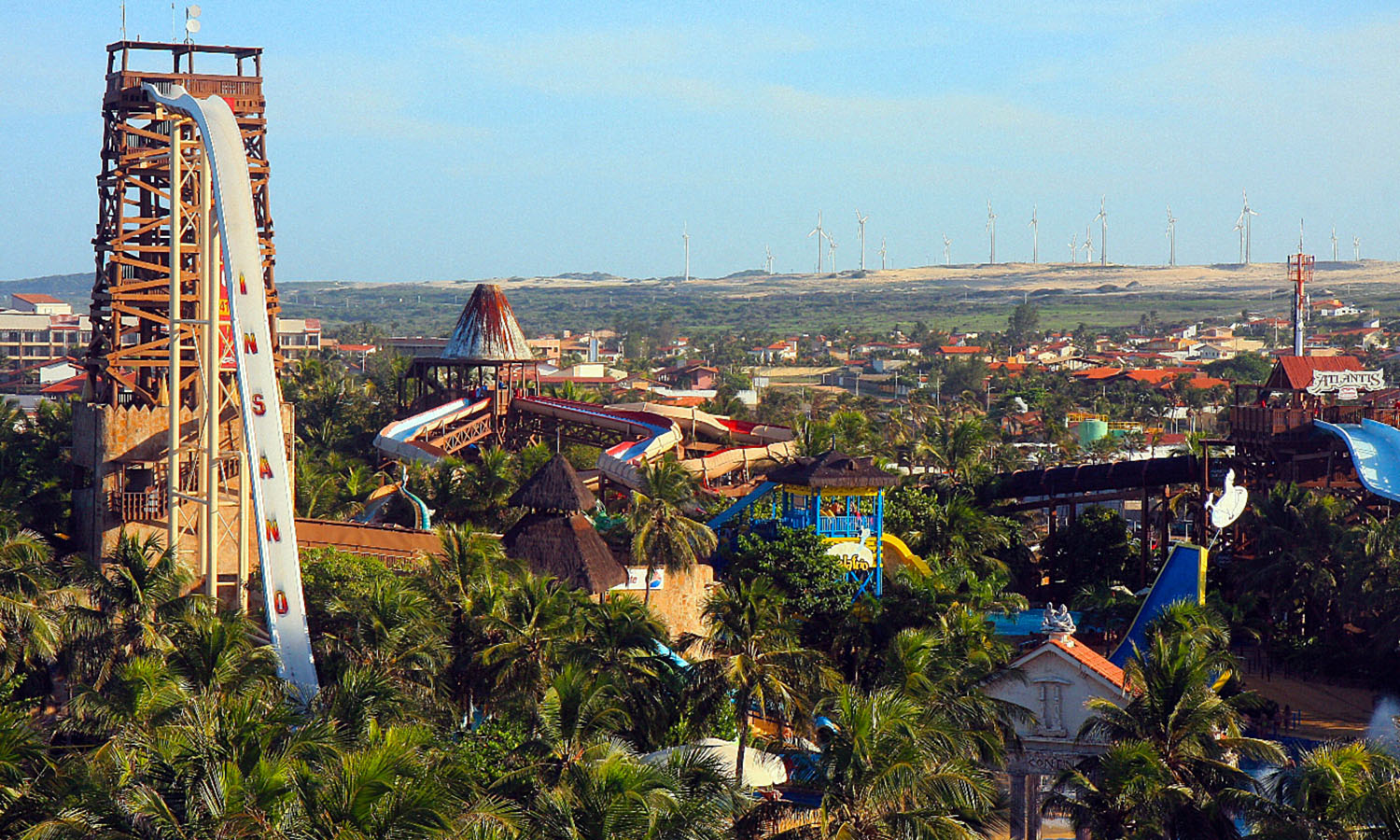
Brace yourself for the stomach-churning, adrenaline-pumping drop of a lifetime on the Insano waterslide at Brazil’s Beach Park in Fortaleza. With big red lettering running down the slide, Insano should have you running away. Topping out at 41 metres, it was, until recently, the world’s highest waterslide. Despite having lost that honour, it will have you falling for five seconds at speeds up to 105 kilometres an hour.

Let loose for Salvador’s carnival

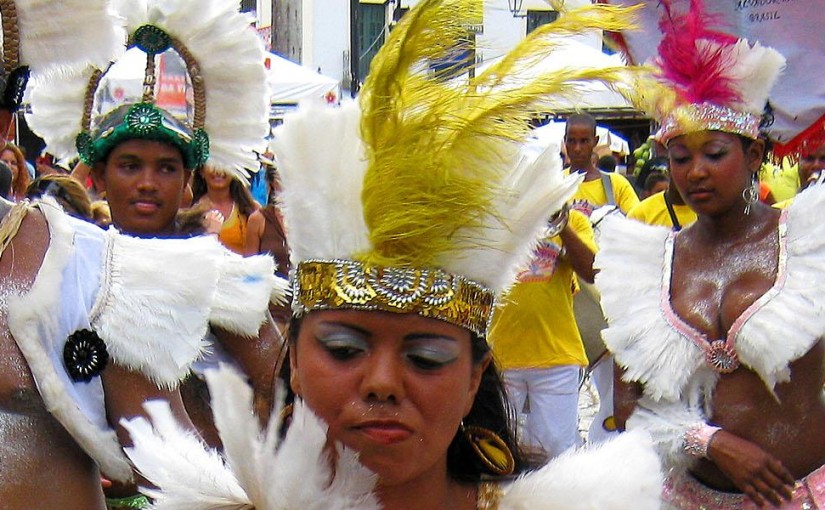
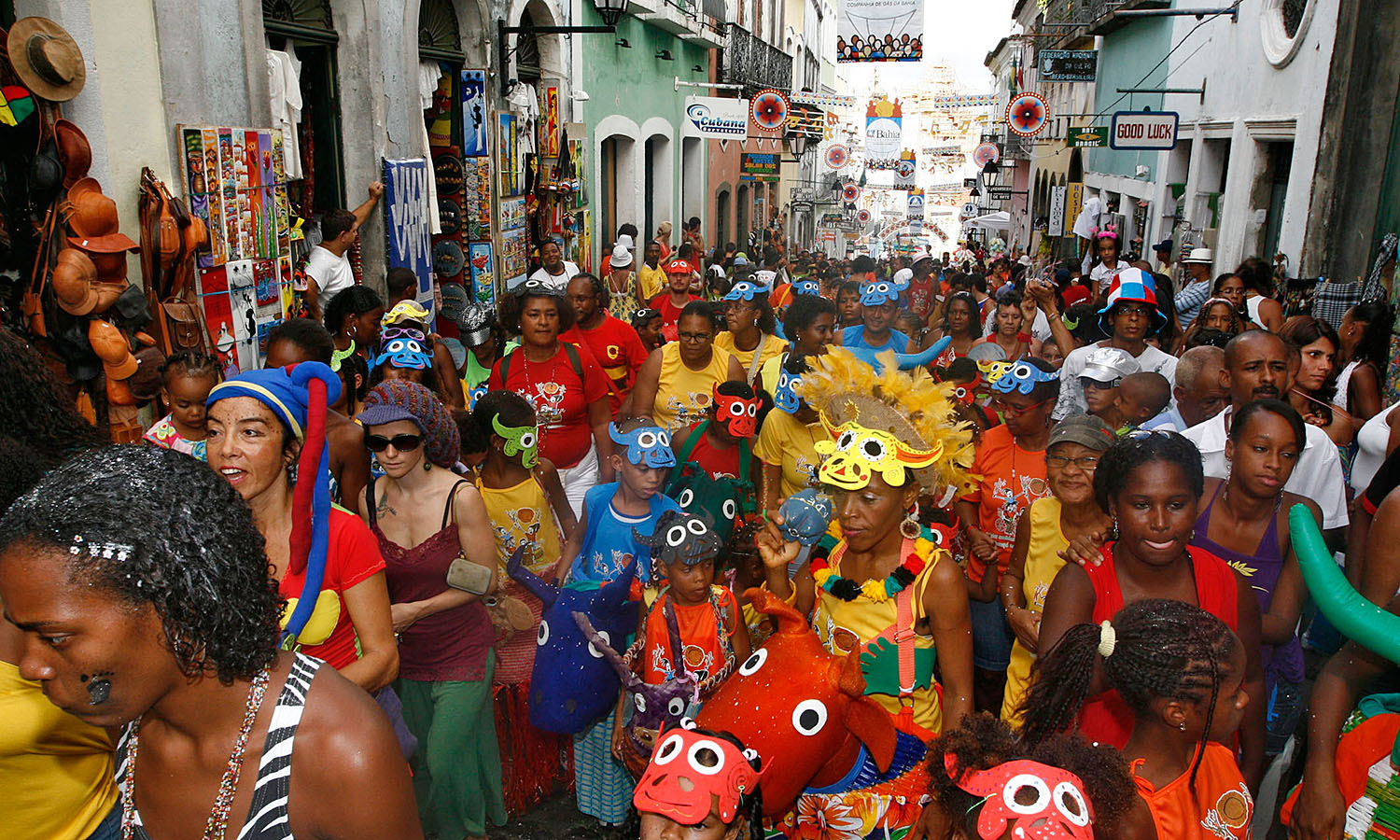
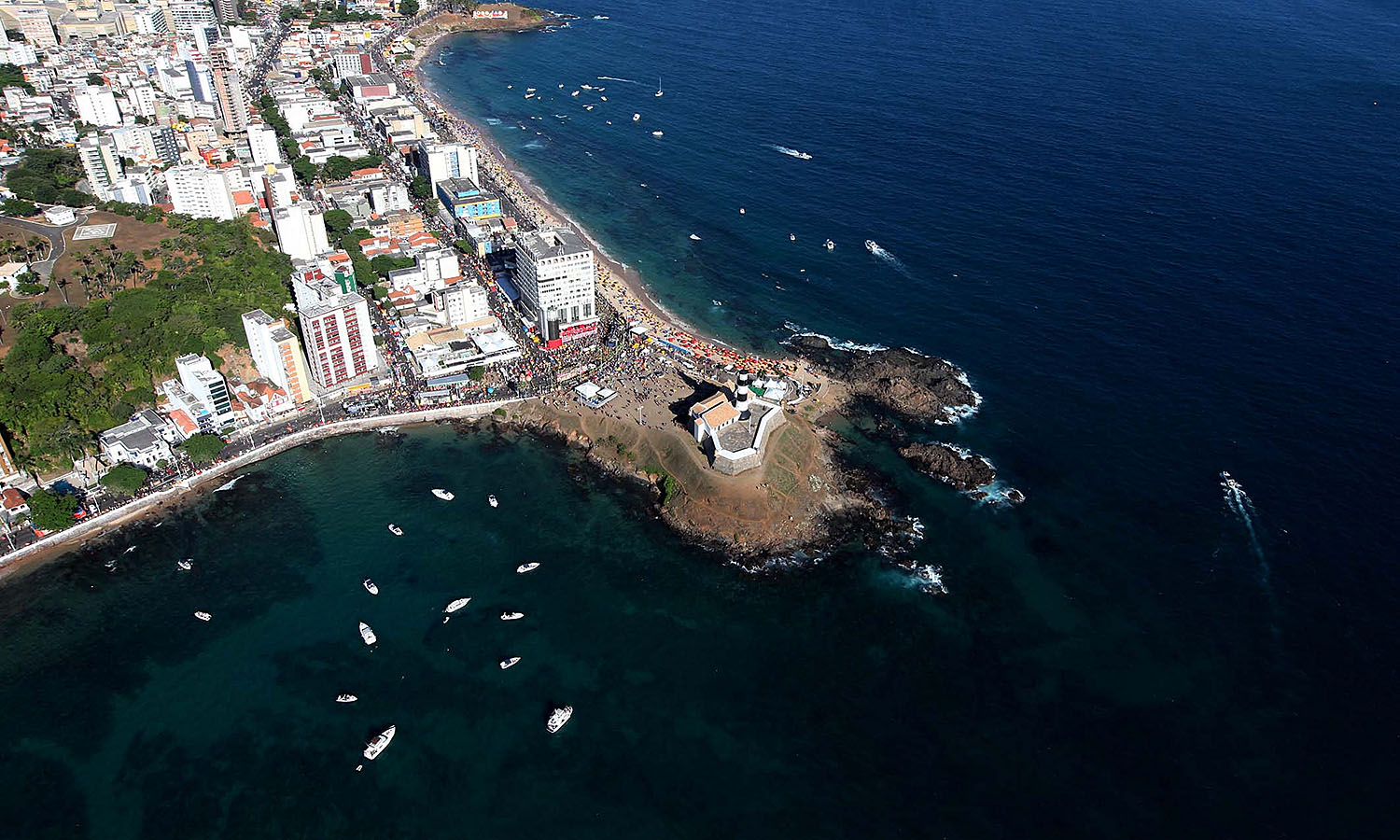
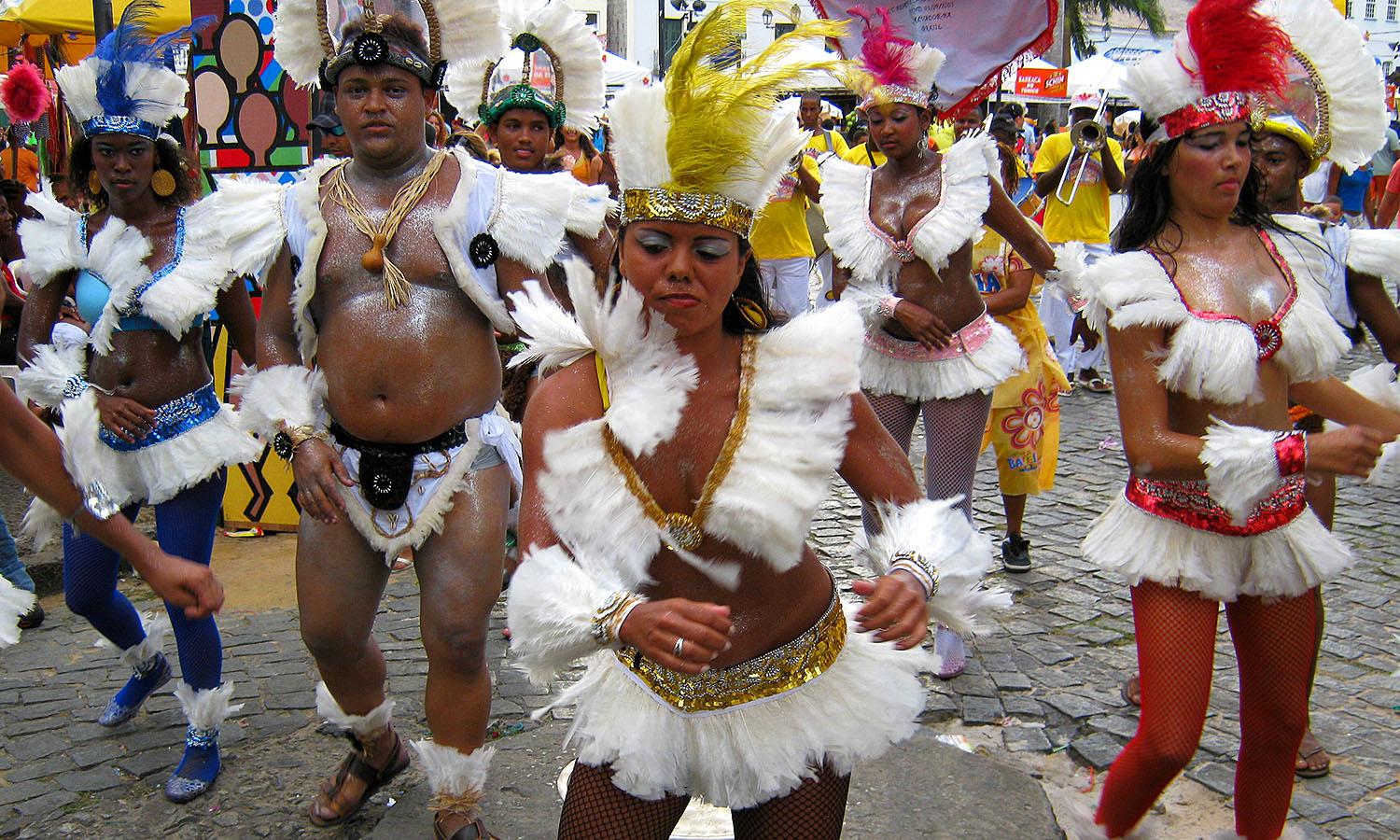
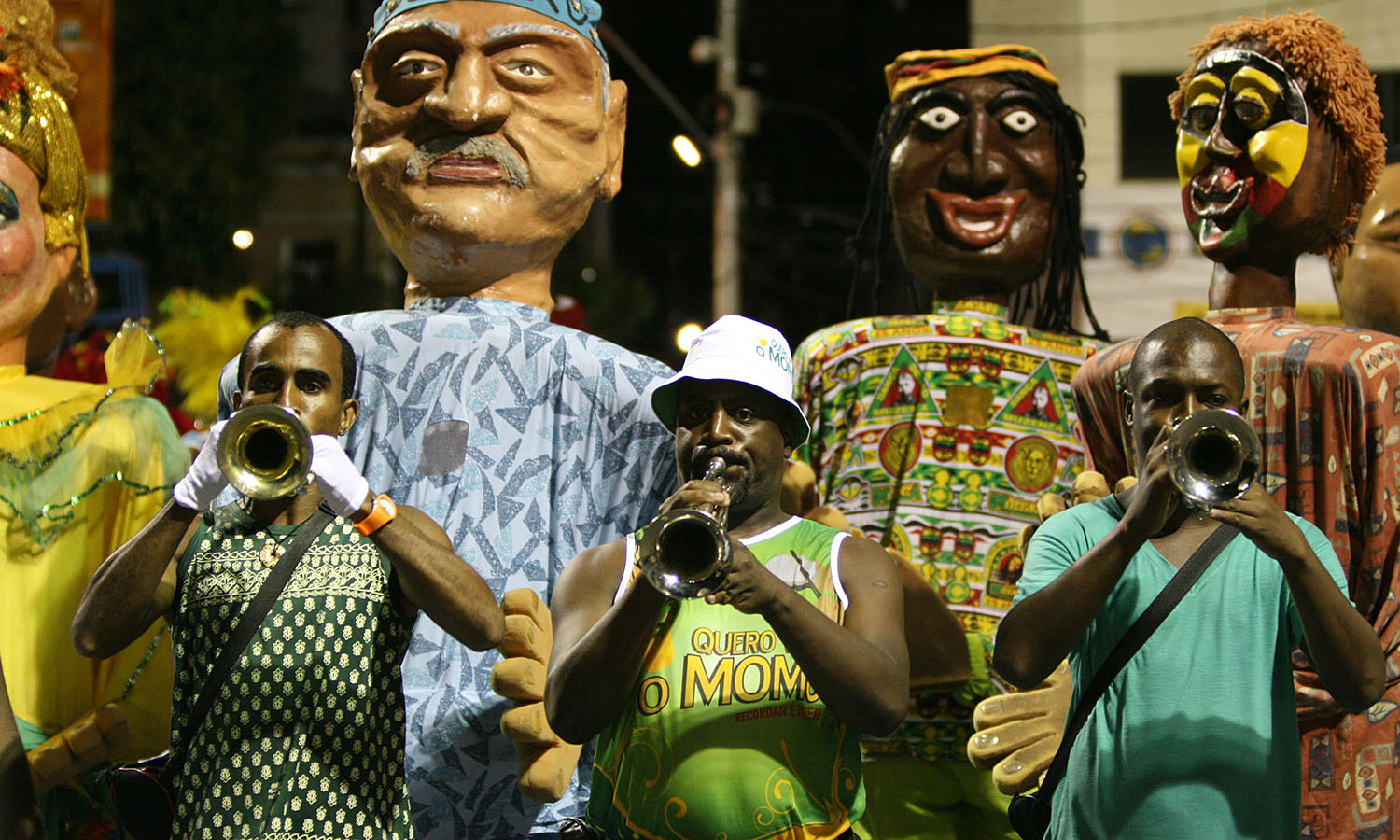
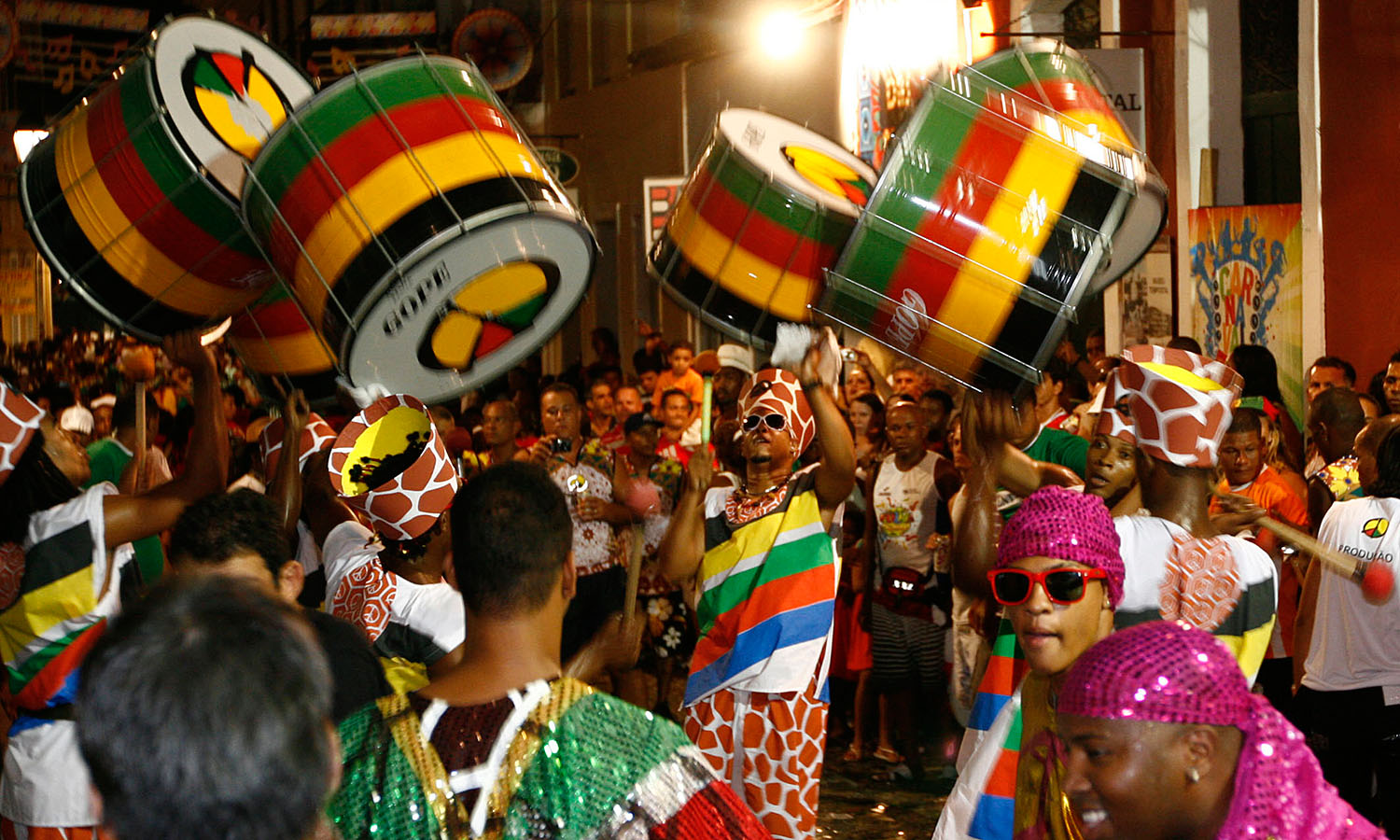
Rio gets all the kudos when it comes to Carnival, but the biggest party of them all engulfs Bahia.

Different reports will tell you that between one and four million people flood the city, but all you really need to know is that it’s lots. And most of them are Brazilian.

Taking place during the week before Ash Wednesday, it’s the magnificent, hedonistic storm before the calm of Lent (carnelevare translated means ‘to remove meat’).

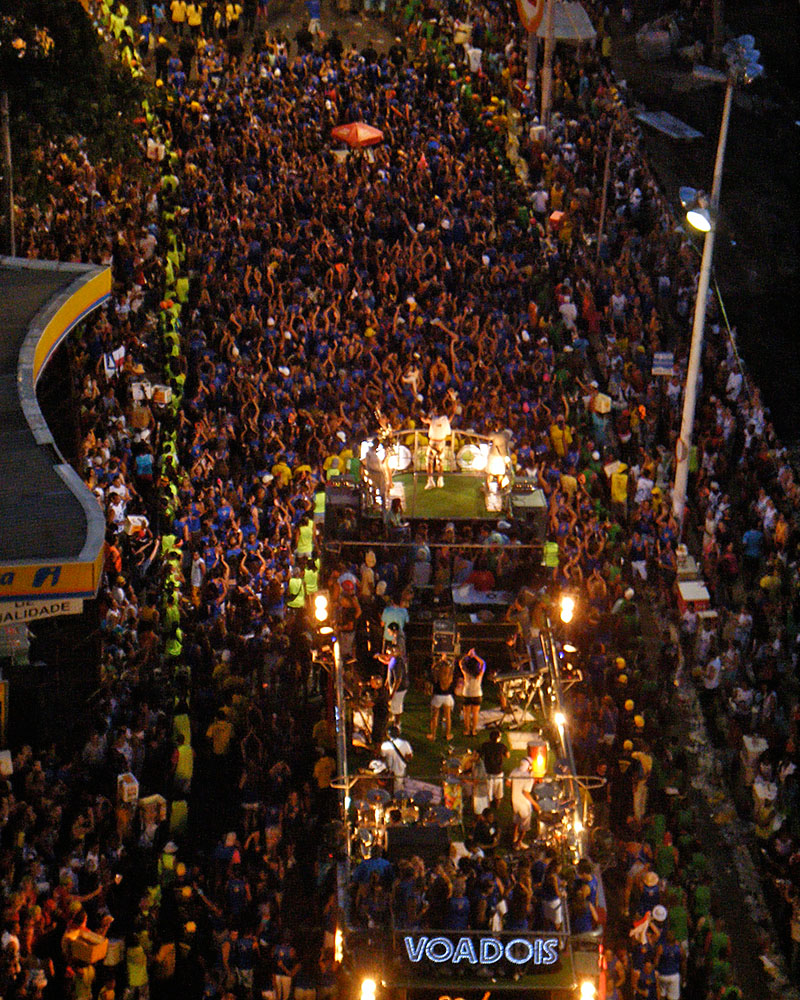
The first parades take place on Thursday, working their way to a crescendo that lasts from Saturday night right through till Tuesday. There are two parade routes with trio elétrico – brashly decorated, gigantic trucks carrying bands – blasting out waves of music, and a third that harbours a quieter, more traditional parade.

For maximum thrillage, you’ll want to buy yourself an abadá (t-shirt) that acts as a ticket to parade with a specific trio (also called a bloco). There are other options. You can purchase a t-shirt that guarantees you entry into a camorote, the grandstands lining the parade routes. From their heights you’ll get a great view, plus they have bars and toilets.

Otherwise, try your luck in the crowd as one of the pipoca (popcorn), so named because that’s what a whole load of people bouncing to the beat looks like.