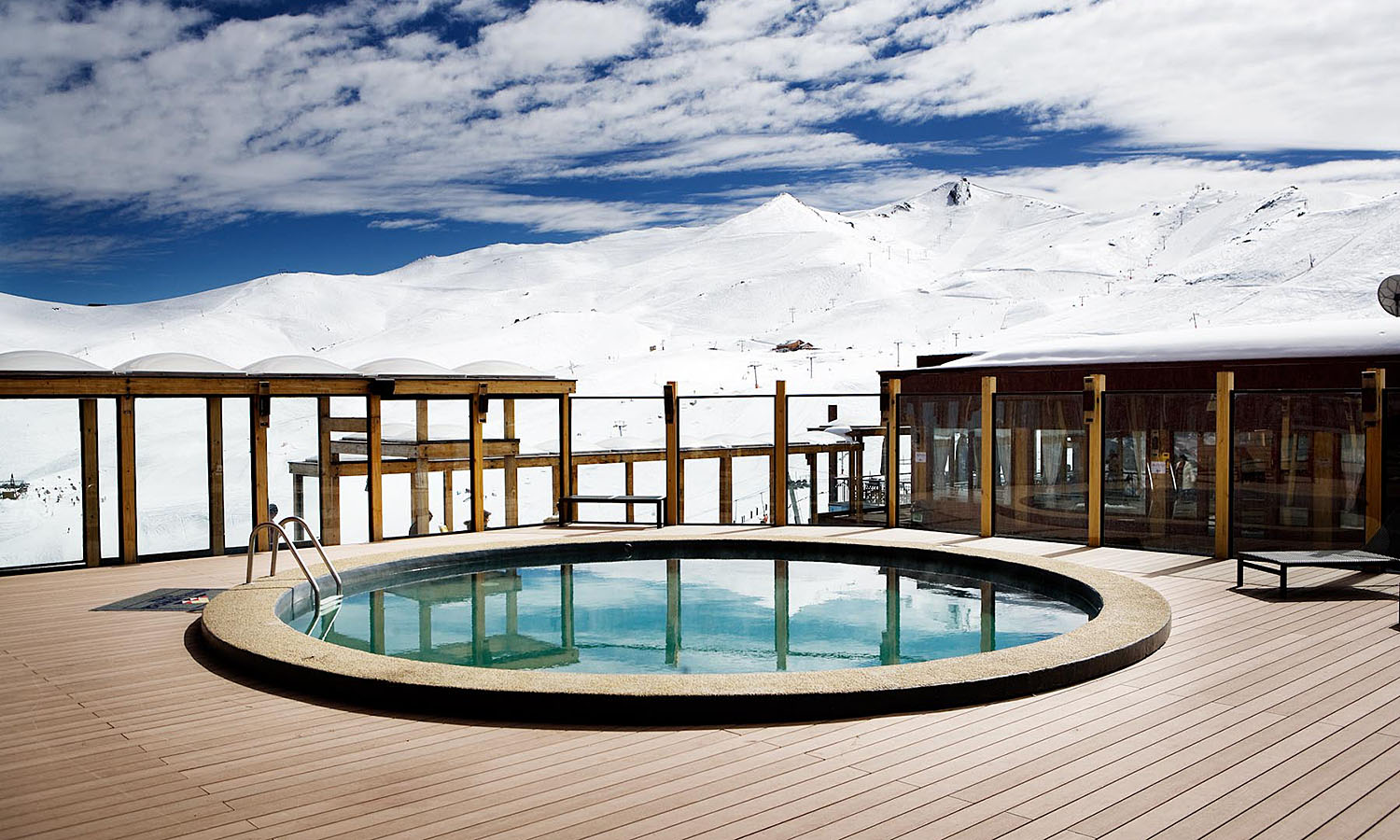
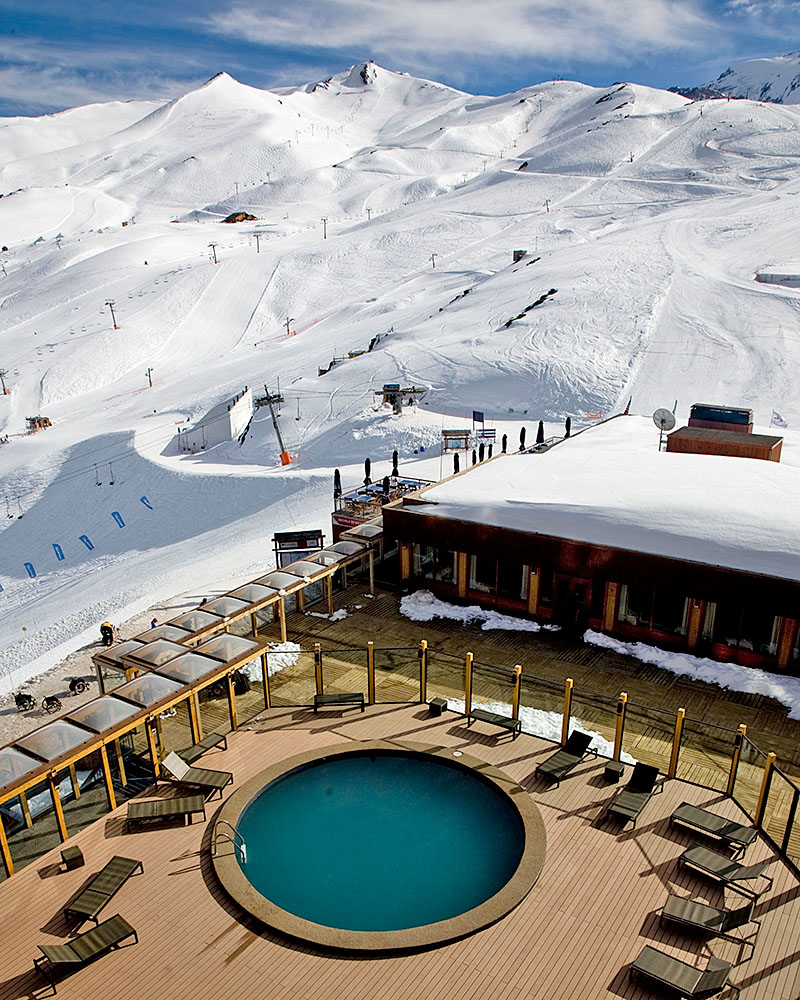
Chile’s Valle Nevado has some of the best powder conditions in the southern hemisphere and, although small when compared with their Euro counterparts, there are a couple of good reasons to head to the Andes. First of all, there are 9000 hectares of skiable terrain. Tick. But this is also where most of the Olympic ski teams from out of town train during August and September, so, when the day is done, there are plenty of very fit (mostly male) athletes looking for a good night out.
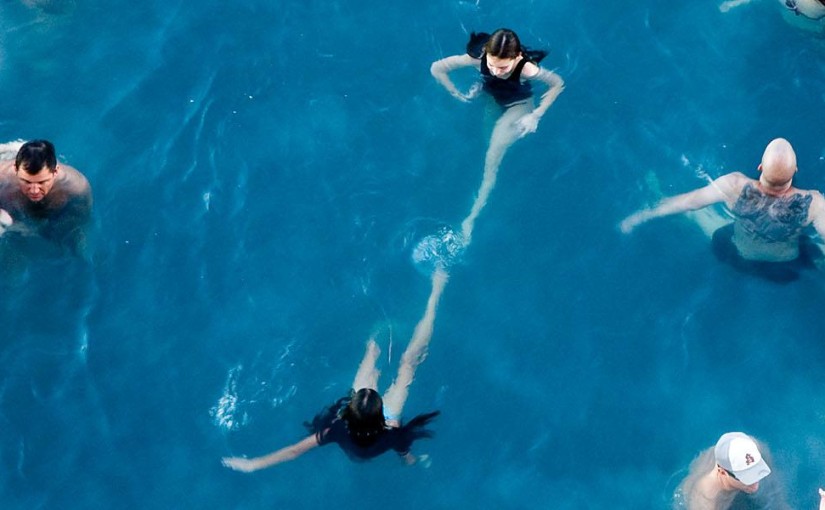
It all starts in the gigantic hot tub at the Puerta del Sol Hotel, with a DJ on the decks and drinks aplenty. After dark everyone heads out – and as there are only four bars in town, if you spotted someone on the slopes during the day you’re likely to eyeball them downing shots later in the evening. Cheers.
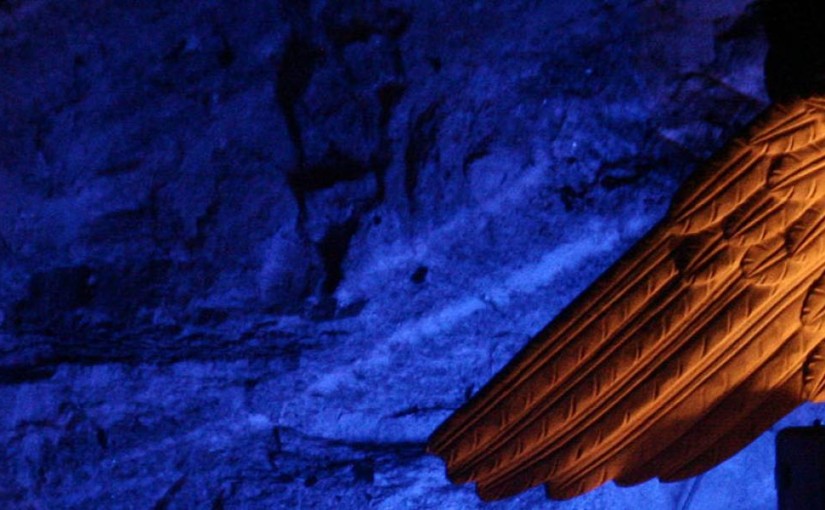
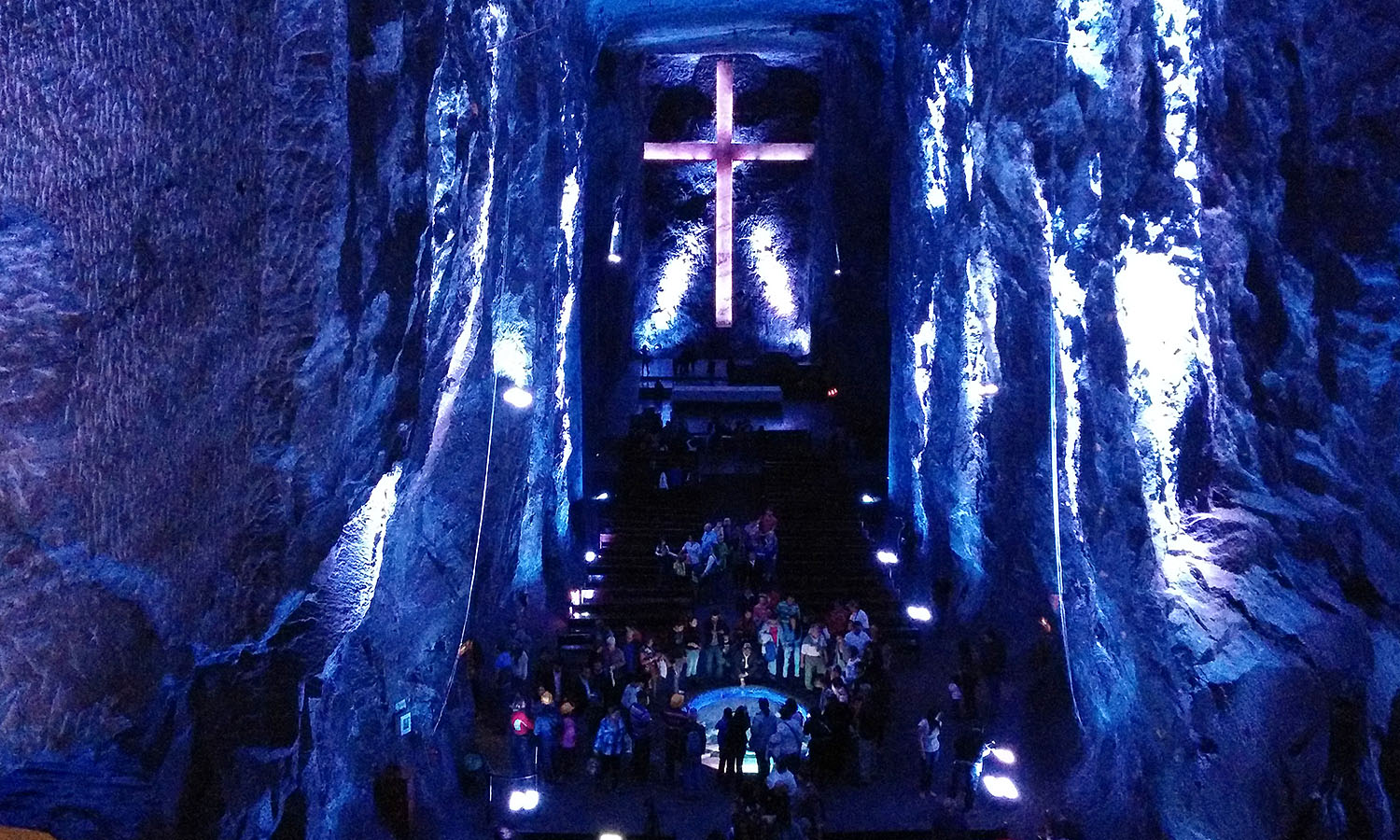
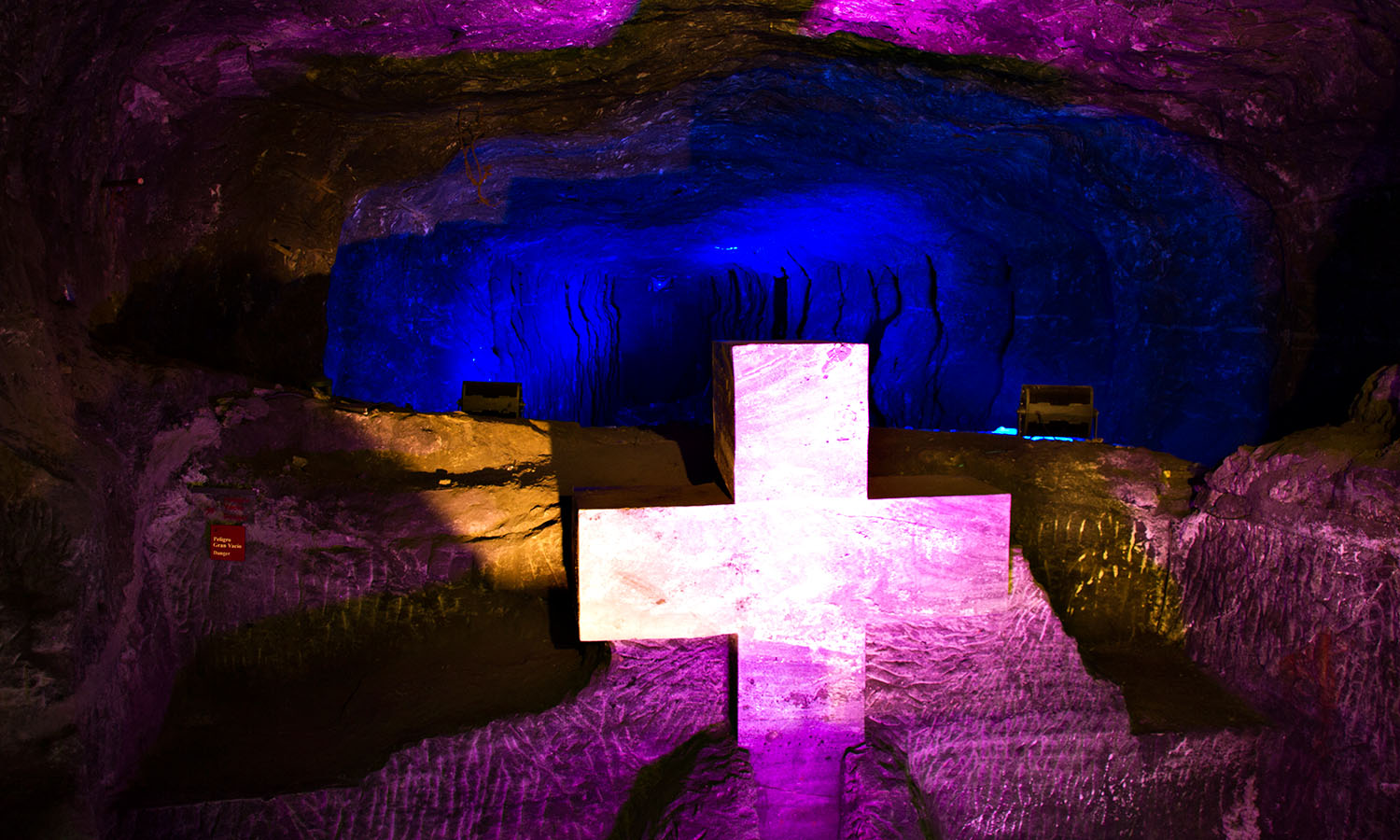
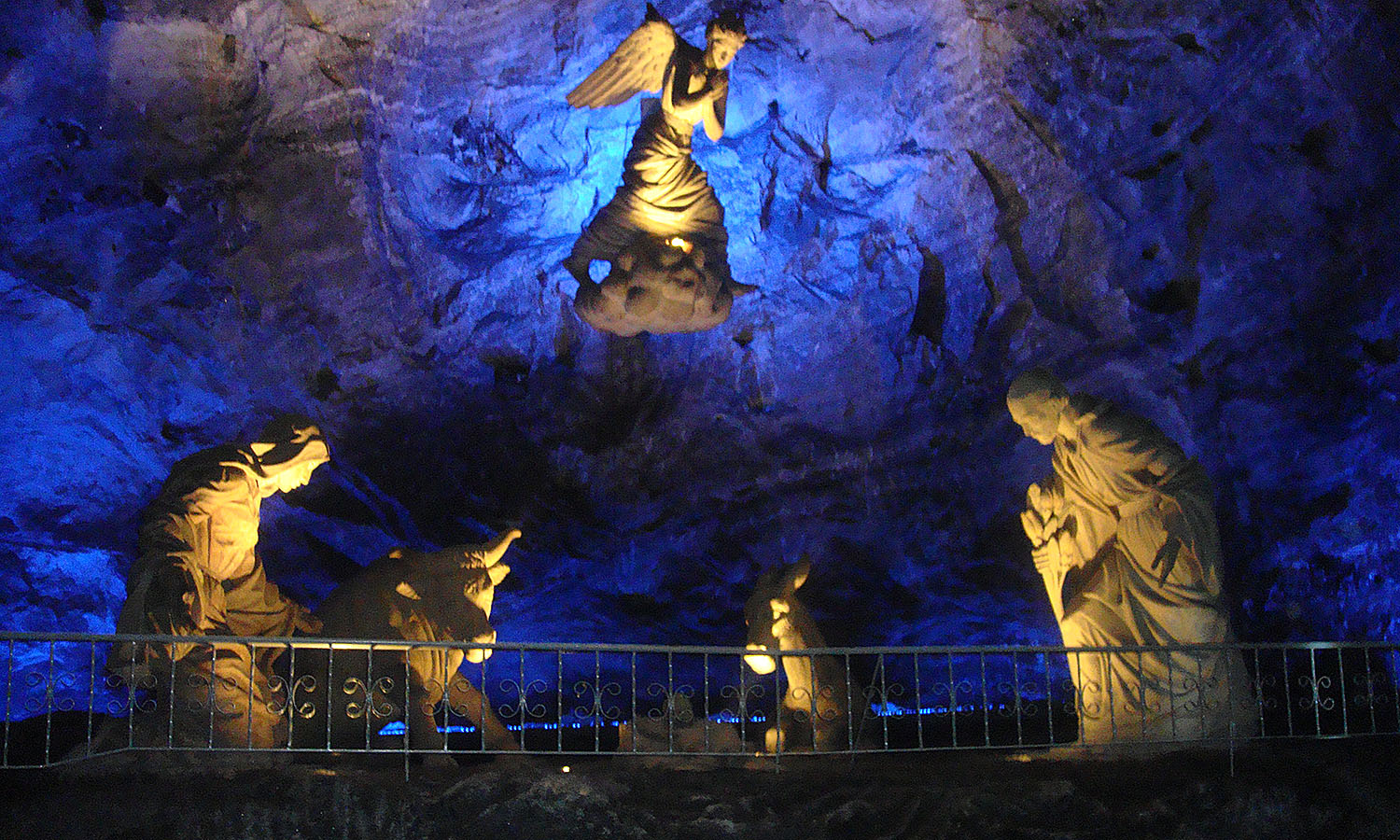
Been a while since you pulled up a pew in the house of the Lord? There’s no better incentive than a pilgrimage to the Salt Cathedral of Zipaquirá in Colombia. Voted the best of the country’s many wonders, the church was carved from halite rock in the tunnels of a salt mine, 200 metres underground. This newest version of the Catholic place of worship was inaugurated in 1991, and is considered one of modern Colombia’s greatest architectural achievements.
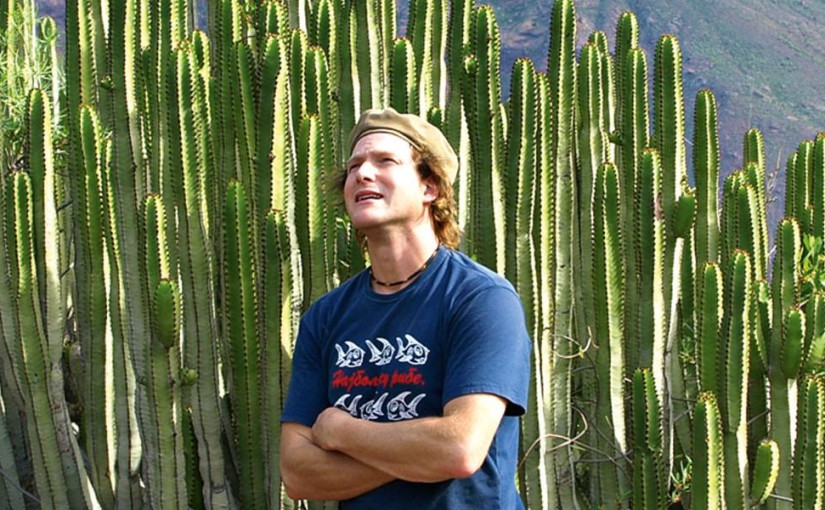
If ever you find yourself staring wide-eyed at a breathtaking vista and suddenly notice a cheery Brit facing the opposite direction with a trowel in his hand, say, “Hello Tom!” and prepare yourself for an ear-bending. But in a good way.
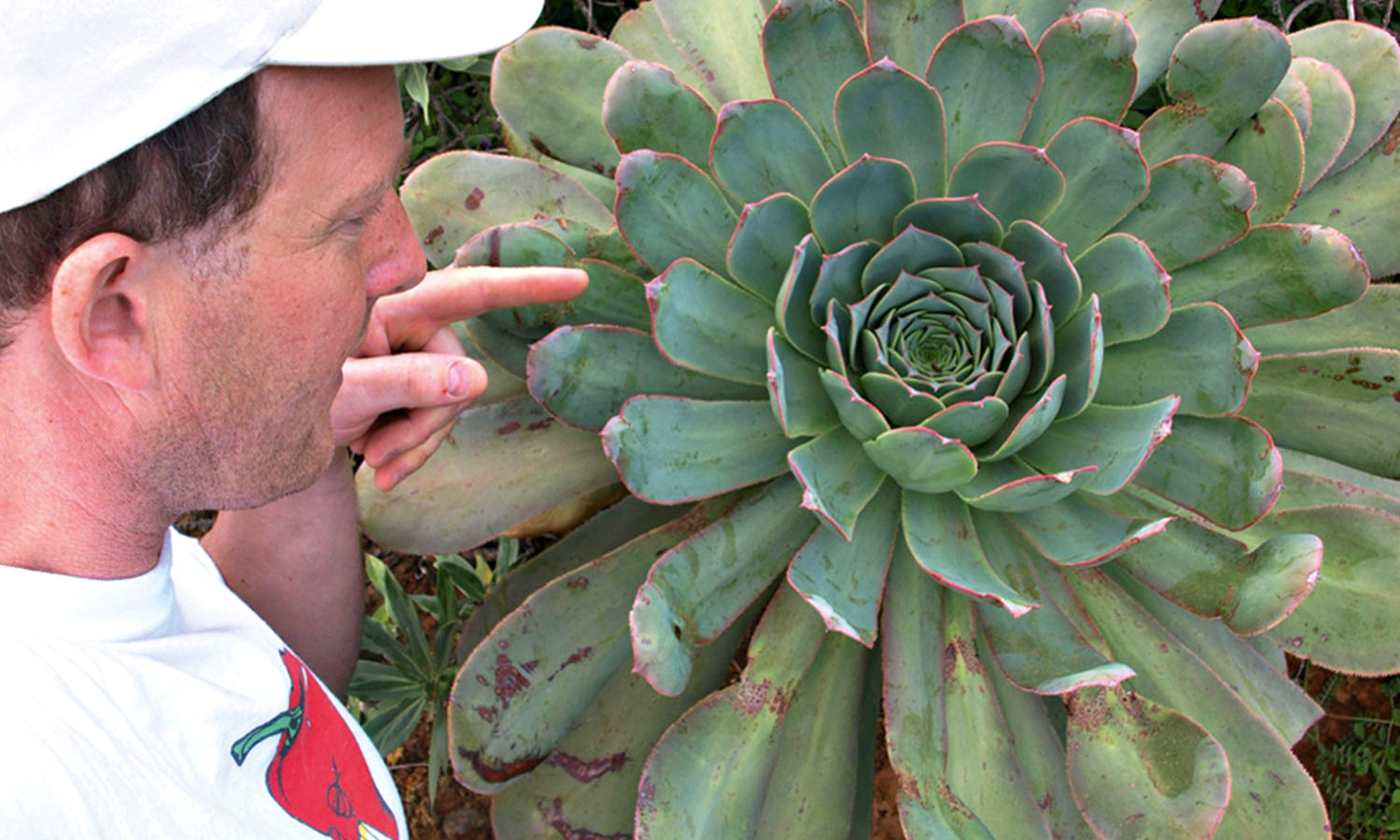
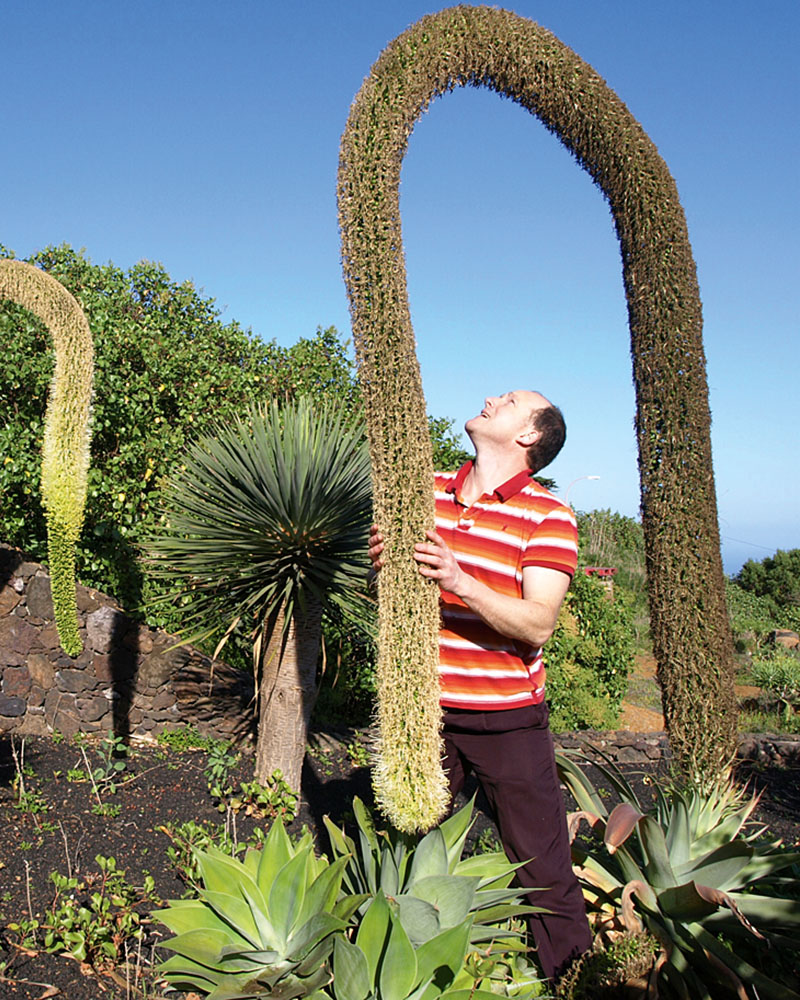
Tom Hart Dyke is a plant-mad globetrotter, as passionate about leafy things as the average Brit is about beer, and there’s no one else on earth who could entertain you so eloquently – or animatedly – on the subject of botany. Even if it does get him into serious trouble from time to time.
On the hunt for rare flowers in southern Panama in March 2000, Tom and a fellow backpacker found themselves kidnapped at gunpoint and threatened with execution. Miles from civilisation in the lawless Darién Gap, which separates Panama and Colombia, Tom thought his number was up. It was a feeling that rarely left him during the next nine months he was in captivity.
“We definitely thought we were going to die, but keeping little gardens wherever we were dragged around to helped me deal with it,” Tom says. “It sounds ridiculous, but they were accusing us of being drug runners, CIA, all sorts, and growing plants was a way of me expressing who I really was.”
On 16 June, three months into his captivity, Tom was told he had five hours to live. With shaking hands he reached for his diary and started sketching out a plan for a botanical gardens shaped like a map of the world and featuring plants from every continent.
“It just came to me, totally instantaneously,” he says. “I’d never thought of it before – this guy and his AK-47 were inspirational. When it transpired that we weren’t dead in five hours, I kept the idea and it kept me going throughout the rest of the ordeal.”
More than that, it provided Tom with a grand plan that, once he was released, has kept him occupied ever since. With more than 8000 species, Tom’s ‘World Garden’ in Kent – which is open to the public – is one of the largest private collections in Europe. And getting the plants has been half the fun.
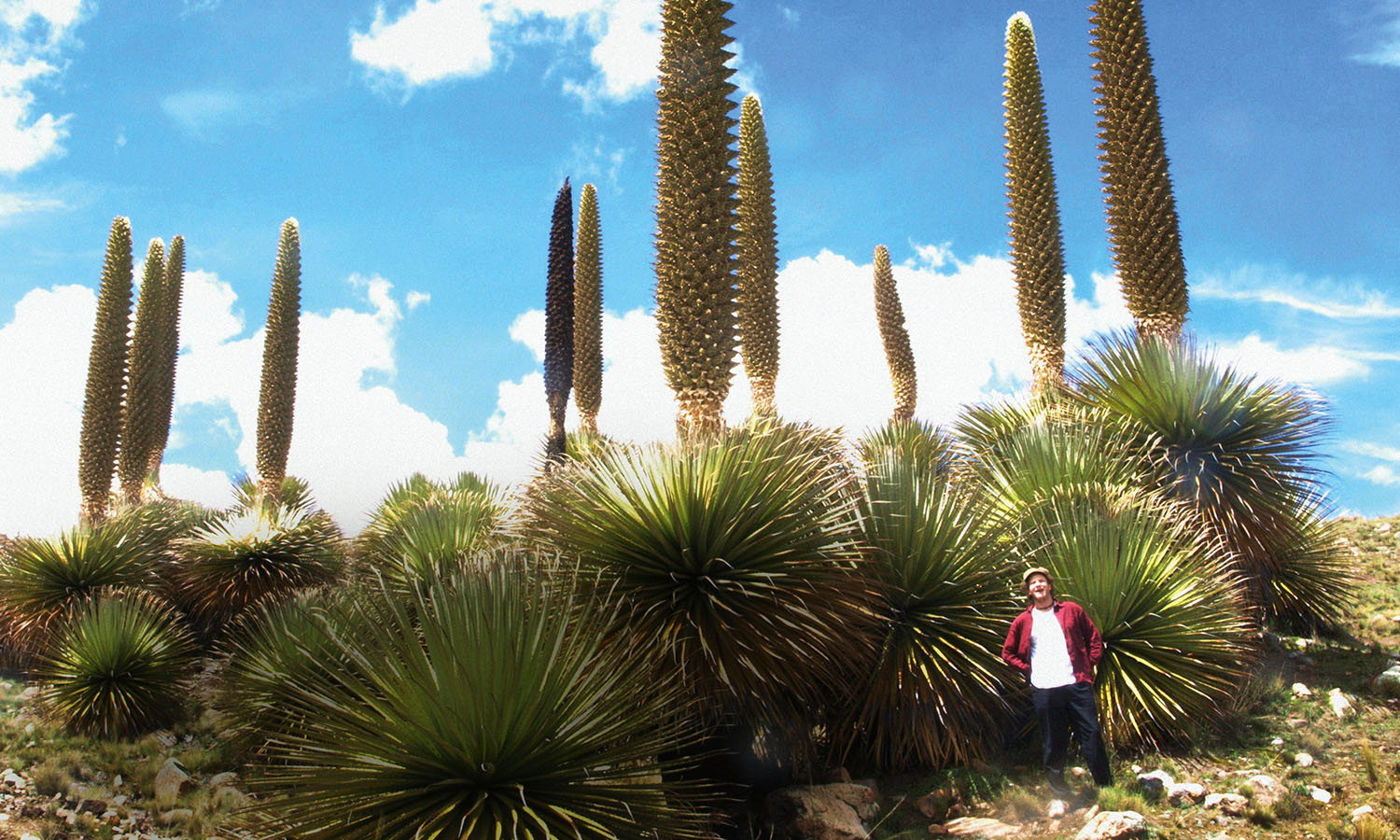
“The highlight of my plant-hunting career was in 2010, when I went to a remote part of Peru, near the border with Bolivia,” he says. “I was at 14,000 feet above sea level and was hoping in particular to see the world’s tallest flower spike, the queen of the Andes, a bromeliad called puya raimondii.”
He found not just one but 10,000 of them, in a valley where almost no man had ever set foot before. “Some were 44 feet tall,” he says. “These huge, phallic symbols growing up into the skies. It was like something from Jurassic Park, just extraordinary, and to bring back some of their seeds and have some growing at the World Garden and nowhere else in the UK is magnificent. It proves that plant hunting still has its place.”
Tom first got his hands dirty when he was just three, after his grandmother gave him a packet of carrot seeds and pointed him at some soil. Growing up in the lovely surrounds of historic Lullingstone Castle – the 650-year-old Hart Dyke family seat – Tom found gardening was just the hobby for an outdoor-loving nipper with acres of land at his disposal, and it wasn’t long before he noticed the myriad plants dotting the Kent countryside around his home.
“Forget going to the pub,” he laughs, “I had a little greenhouse which was just about able to keep the temperature above freezing and that was a gateway to tropical plants.”
Tom’s real love is orchids – the delicate, extravagantly flowered, almost mythical flora that have kept plant hunters in a state of nirvana for centuries – and surprisingly, they were to be found in abundance in his own neighbourhood.
“I think what really got me hooked, though, was a cycling trip I took across France, Spain and Portugal in my teens,” says Tom. “Being in the Pyrenees and seeing orchids in the wild was hugely exciting.”
Tom can talk for hours about orchids and his travels to find them, and gets especially excited when explaining how they often grow in unusual and little-seen places. Predictably, his dream discovery involves the kind of voyage that Charles Darwin would have approved of. “It’s the black orchid,” Tom gushes, “and it has yet to be found. But it is rumoured to be on Kalimantan on the island of Borneo.”
While Tom clearly gets something out of plants that most of us don’t, he’s adamant that anyone who travels is missing a treat if they neglect to pack their flora goggles. “You go to the Canaries, which is the botanical Galapagos of Europe, or even to Sydney and you spend two weeks in the bar and getting sunburned without realising you were 15 feet away from some incredible and rare plants. That, to me, is ridiculous.”
But what if we don’t like flowers?
“It doesn’t matter,” he shrugs. “Just a couple of hours to observe your surroundings would make your trip so much more fulfilling.”
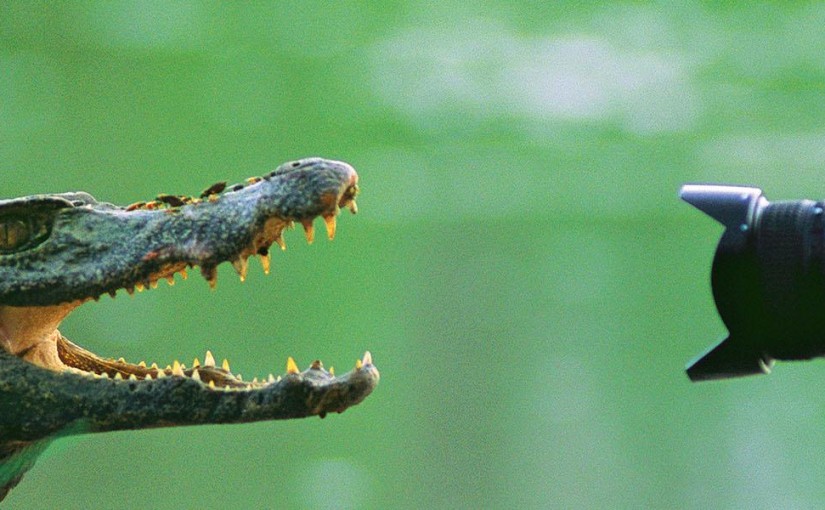
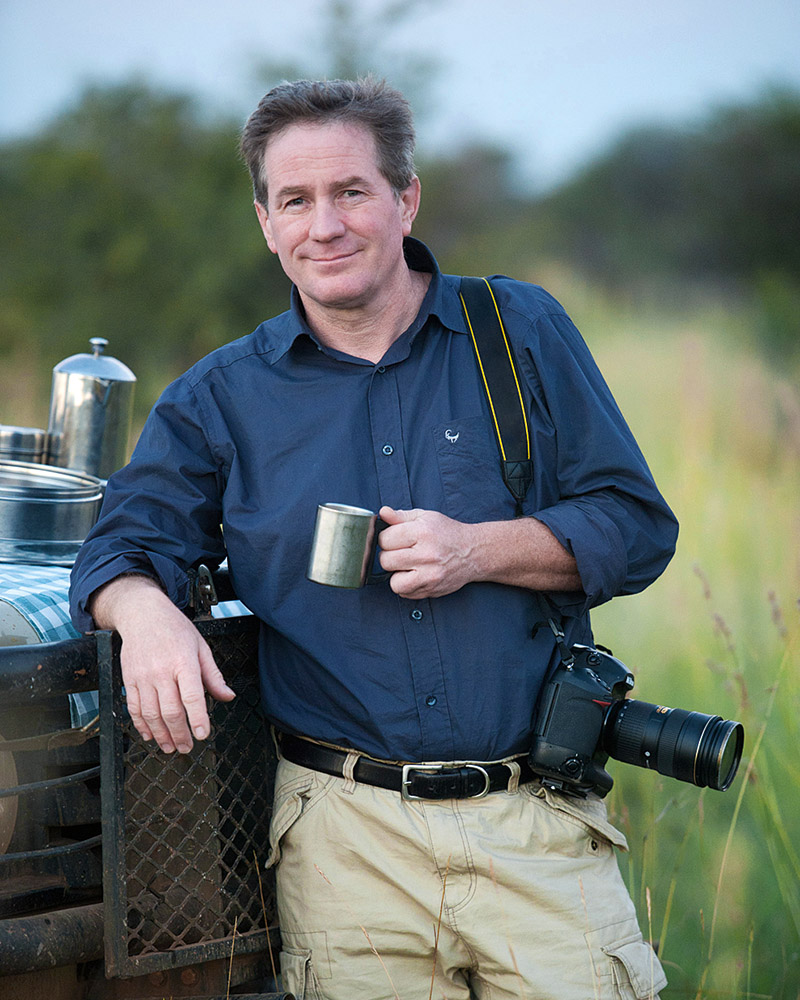
In two decades as a photographer for National Geographic magazine, Joel Sartore has been chased by bears, lions and elephants. However, sometimes it’s the smallest creatures that are the most dangerous.
“I’ve been charged by musk oxen and grizzly bears while on assignment, and either one of them could’ve very easily killed me,” Joel says. “But most times, wolves and anacondas aren’t the biggest sources of concern. In many parts of the world, photographers face malaria, yellow fever, typhoid and myriad other nasties.”
While on a trip to Uganda, Joel had a close brush with the deadly Marburg virus. He was in a cave photographing Egyptian fruit bats, and caught a dollop of fresh guano (bat poo) directly in his eye. He was subsequently told by the Ugandan Centre for Disease Control that the cave was a breeding ground for the Marburg virus, that he shouldn’t have gone in there and to go home immediately before he became contagious.
The virus causes a gruesome death. Closely related to the Ebola virus, it creates haemorrhagic fever, meaning victims basically bleed from multiple organs and orifices. The disease is 90 per cent fatal in Africa. Joel made it through the incubation period miraculously unscathed and, although that experience might scare some with less dedication, he’s been back to Africa three times since, all without incident.
He was less fortunate in South America. Following a trip to Bolivia, Joel noticed a wound on his leg that wouldn’t heal. He had developed leishmaniasis, caused by a flesh-eating parasite he’d contracted through a sandfly bite. The infection spread to his lymph system and created a hole in his leg that could only be treated with surgery and chemotherapy. He won’t know for a few more years if he’s fully cured.
It was also in Bolivia Joel learned about man-eating pigs during a challenging assignment that put him at the mercy of the local wildlife. His guides relayed stories about the pigs he was trying to photograph and how they had pulled one man out of a tree and torn him to pieces. Another local survived an attack, minus his backside. “He didn’t get quite high enough in the tree and the pigs bit it off,” Joel says.
Even a seemingly innocuous expedition photographing Bolivian butterflies brought with it a sting in the tail. “I was lying in my own urine on the beach for several hours, hoping to draw in butterflies to photograph them. I was stung by wasps on both hands and bats urinated on my face each night through the mosquito netting.”
It’s enough to put off the most snap-happy budding photographer, but not, apparently, Joel’s many admirers. The question he is most often asked is: “How do I become a National Geographic photographer?” His short reply: “By being very persistent.”
“I got into photography in high school after borrowing an old Olympus camera from a friend’s father. After taking classes in everything from astronomy to beekeeping, I majored in photojournalism at the University of Nebraska–Lincoln.”
Joel sent in his best work for more than two years before clinching his first assignment.
“To get into National Geographic, you have to offer them something they don’t already have access to, which is a tall order. It’s not enough just to be a great photographer. You have to be a great photographer and be able to dive under sea ice, spend days in tree stands in the tropics, or be an absolute genius at lighting impossible situations. I worked like crazy on those early assignments and did everything I could to make sure the photos were stellar.”
Through his travels over the years, Joel has become increasingly concerned about the environment he photographs. His first assignments introduced him to nature photography and also allowed him to see the human impact on the environment firsthand.
I was lying in my own urine on the beach for several hours, hoping to draw in butterflies to photograph them. I was stung by wasps on both hands and bats urinated on my face.
Today, through his photography, Joel is on a mission to document endangered species in order to illustrate a world worth saving. His latest passion is a project called the Photo Ark. Already he has photographed more than 2800 species, including upwards of 150 during a recent visit to Australia and New Zealand.
“The goal of the Photo Ark is to document biodiversity, show what’s at stake and to get people to care while there’s still time,” he says. It started simply enough with endangered amphibians. “I read an essay on amphibian decline and knew I needed to do something to show these species to the world before they were gone forever. As I went from place to place, I’d hear about other species in trouble: primates, reptiles, migratory birds and more. So now I photograph anything that will hold still on a background long enough for me to take a picture.
“At current rates of decline, many scientists predict we could lose up to half of all species by the year 2100 [reports in 2016 show about 60 per cent of the world’s fish, animal and bird populations have been wiped out in the past four decades]. It’s folly to think that we can doom that many species to extinction, but that people will be just fine. We must have pollinating insects to provide us with fruits and vegetables. We must have healthy rainforests to regulate our climate. The real truth is that when we save species, we’re actually saving ourselves.”
Joel enjoys photographing endangered species, especially the smaller creatures nobody has ever heard of. In some cases, he says, a well-timed article can save a species by drawing attention to its plight. For example, one article and images on Bolivia’s Madidi National Park drew international attention to the area, and assisted in derailing plans for a hydro-electric dam.
“It’s not enough, nor is it responsible journalistically, to just show pretty animals in an idyllic landscape,” he explains. “We must show the threats to these creatures as well. We can’t pretend any more that everything is lovely. Our photos need to inform readers of what’s really going on out there.
“It’s imperative that we try our hardest to do the most good we can with our time on earth. Heroic acts aren’t necessary and small things can add up to a big difference. You simply have to care.”
Everything you’ve heard is true. The people of Buenos Aires pay no heed to the earth orbiting the sun. Day and night are merely words to these party people. Forget New York. This is the city that never sleeps.
I’ve had the good fortune to visit and paint red many a town across this world, but none compare to BA, with its writhing streets and pumping suburbs. Where else is 12.30am prime time to start making plans and inviting friends over for a few pre-party drinks? Where else is it considered commonplace to meet your grandma for a coffee and a caramel-centred cookie at 1.30am? Where else is 5am an appropriate hour to hit the first club of the night? Welcome to the Argentine capital, where the weekend begins on Tuesday and the night begins on the other side of midnight.
5pm
OK, so starting an evening’s shenanigans at 5pm is perhaps not the most fashionable way to do things in this city, but sitting around in a hotel on your holiday isn’t either. Visiting La Boca, the historic suburb famous for its colourful architecture and the even more colourful and larger-than-life football legend Maradona, is one of those things that needs to be ticked off in Buenos Aires. As touristy and tacky as it can be in parts, there’s still a flicker of the good old days about the place. Strolling around its most well-decorated streets, dodging tango touts and snapping a few photos, makes for quite a relaxing afternoon. Security-conscious locals will invariably suggest it’s best to make tracks out of La Boca before the sun goes down. I’ve never hung around long enough to find out if there’s good reason for their concern.
7pm
Ease your way into the evening at Feria de Plaza Francia in the suburb of Recoleta. This is an arts and crafts market with a nice vibe and a big grass hill to settle on and people-watch while cracking open a can or two of the locally brewed Quilmes. As the sun takes cover over the horizon, a local band will bang out some reggae tunes, joints will make their way around, hands-in-the-air dancing will begin and you’ll start to feel irie, Argentine style. La Feria de Plaza Francia Pueyrredon y Del Libertador, Recoleta feriaplazafrancia.com
8.30pm
You thought it was time for dinner, right? Not quite. Grab yourself a quick empanada if you’ve got the munchies, as the nightly meal is a little later. Buller Pub Downtown is an artisan beer house not far from Plaza Francia. If you’re worried about getting tired (yes, you should be worried) grab a taxi to get here. This place has assembled a bunch of micro-brewed beers and is a top spot to sample something other than the canned Quilmes. The honey beer is well worth a try. Buller Pub Downtown Paraguay 428 bullerpub.com
9.30pm
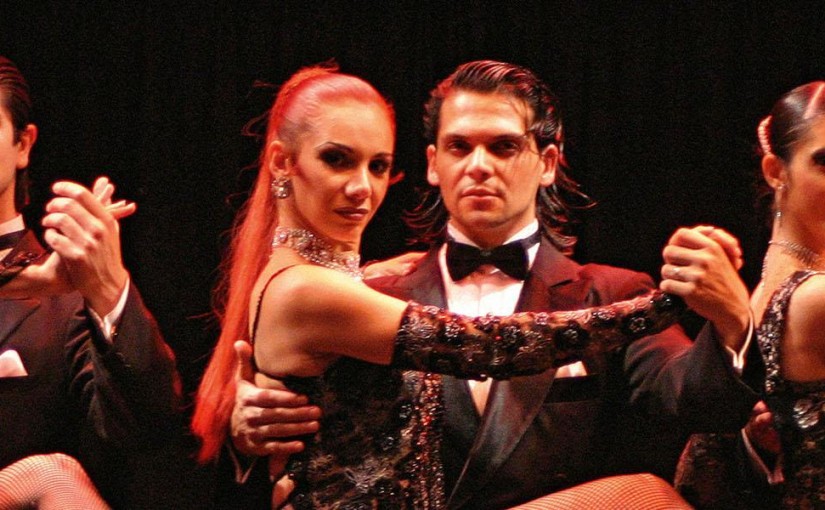
Buenos Aires is known worldwide for two things: gigantic steaks and long-legged ladies at tango shows. Although world-class meat eating and dancing don’t often go hand in hand, at around 9.30pm it’s probably safe to assume you’re ready to partake in both. Cafe de los Angelitos delivers portions of each in generous measures. Once a popular haunt for politicians, musicians, poets and artists, this beautiful old cafe invites guests to enjoy a sit-down meal while watching a wonderful tango spectacular, with a live band and a whole troupe of polished performers. The tango, which was born in Buenos Aires and reached its popularity in the 1940s and 50s, is a joy to watch. With one eye on the action on stage and another on the hefty slab of cow on the plate before you, you’ll leave here feeling entertained and full. The malbec wine with dinner is highly recommended. Cafe de los Angelitos Rivadavia 2100, Balvanera cafedelosangelitos.com
12am
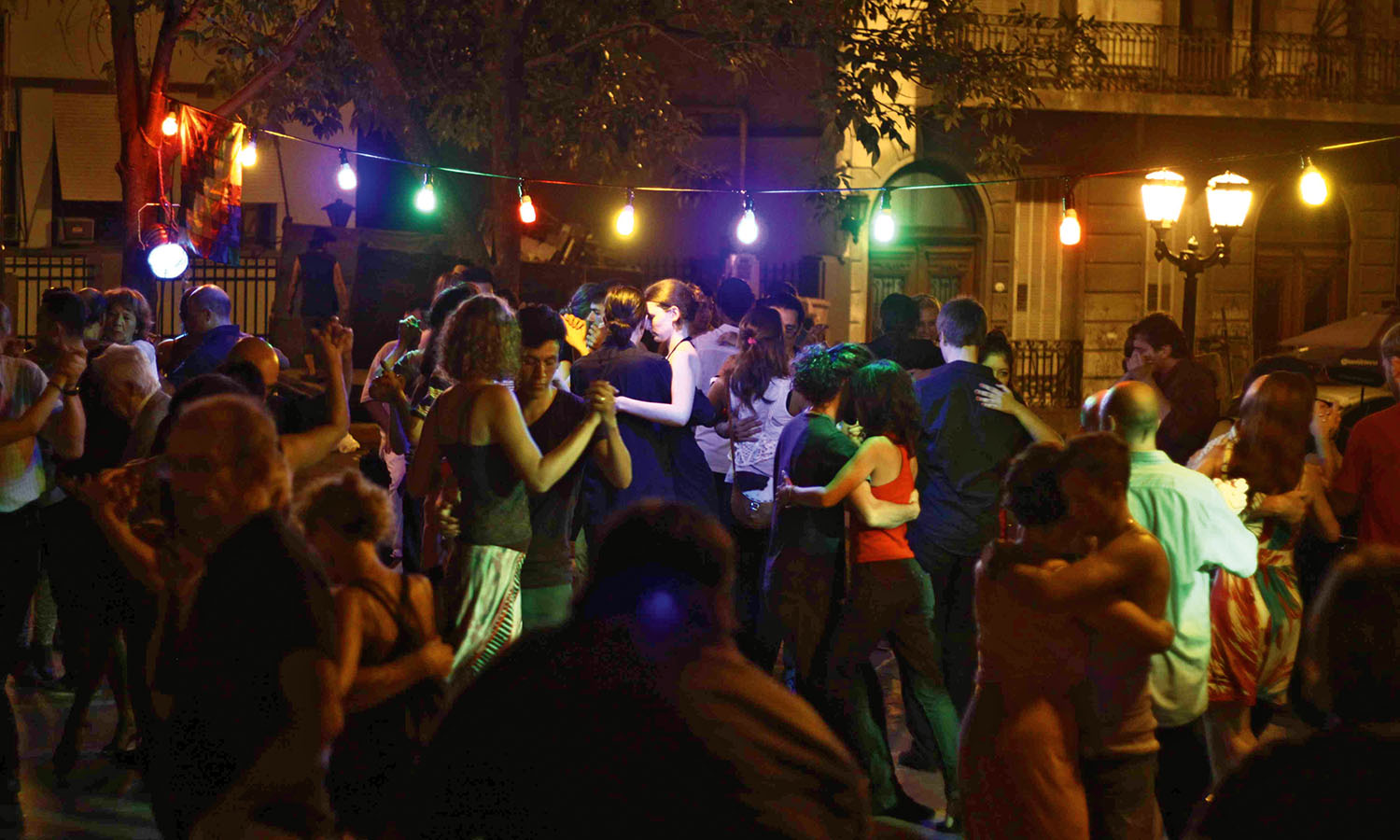
The demon hour has arrived. Before any thoughts of sleeping off the malbec enter your head, remember where you are. And keep in mind you mightn’t be back here for a very long time. Take a deep breath and get ready to party like a Porteño (Buenos Aires local). San Telmo is a fun, cool suburb with plenty going on. Much of the action here is to be found in the Plaza Dorrego. On a summer evening, the plaza and little streets enclosing it become a mini outdoor festival, with drumming and dancing and general good times aplenty. Skinny-hipped youth smoke and talk loudly and gyrate together in the humid night. It’s here where you get a true taste of the Latino lust for life. If you’re not a dance-like-nobody-is-watching type, then grabbing a pew at one of the outdoor cafes is your best bet to watch the goings-on. Plaza Dorrego San Telmo welcomesantelmo.com
2am
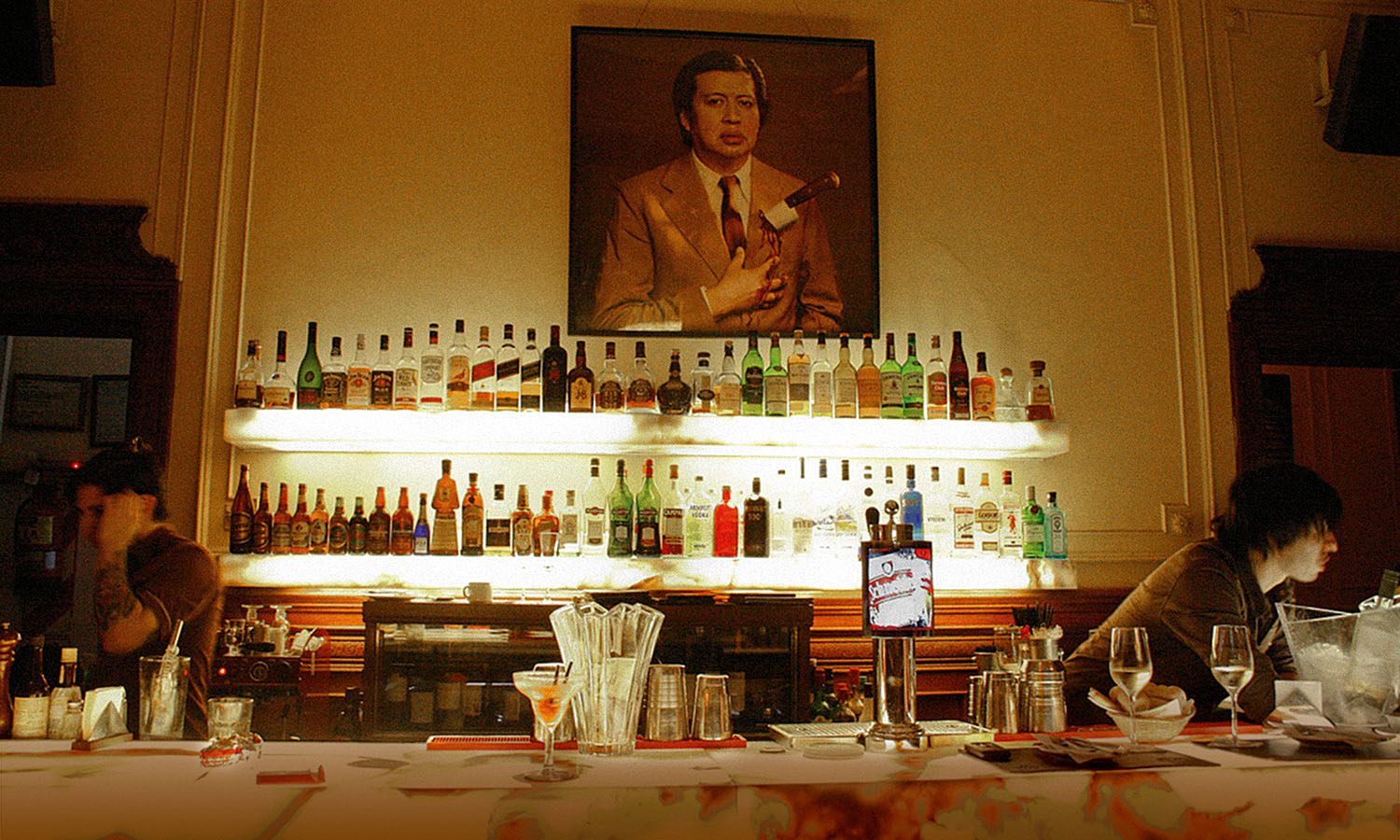
Some of the bars in BA can be a little showy, if not wanky. But La Puerta Roja – the Red Door – is one of the city’s more cruisey establishments. No cover, no being told by bouncers there’s an imaginary private function, no nonsense. The Red Door’s easy and welcoming attitude makes this joint a local hotspot. Get yourself a Cuba Libre (rum and coke with a squeeze of lime) and kick back on the leather couches. Or, if you’re keen to practise your Español, grab a stool by the bar and chat with the affable bartenders. La Puerta Roja Chacabuco 733, San Telmo
4am
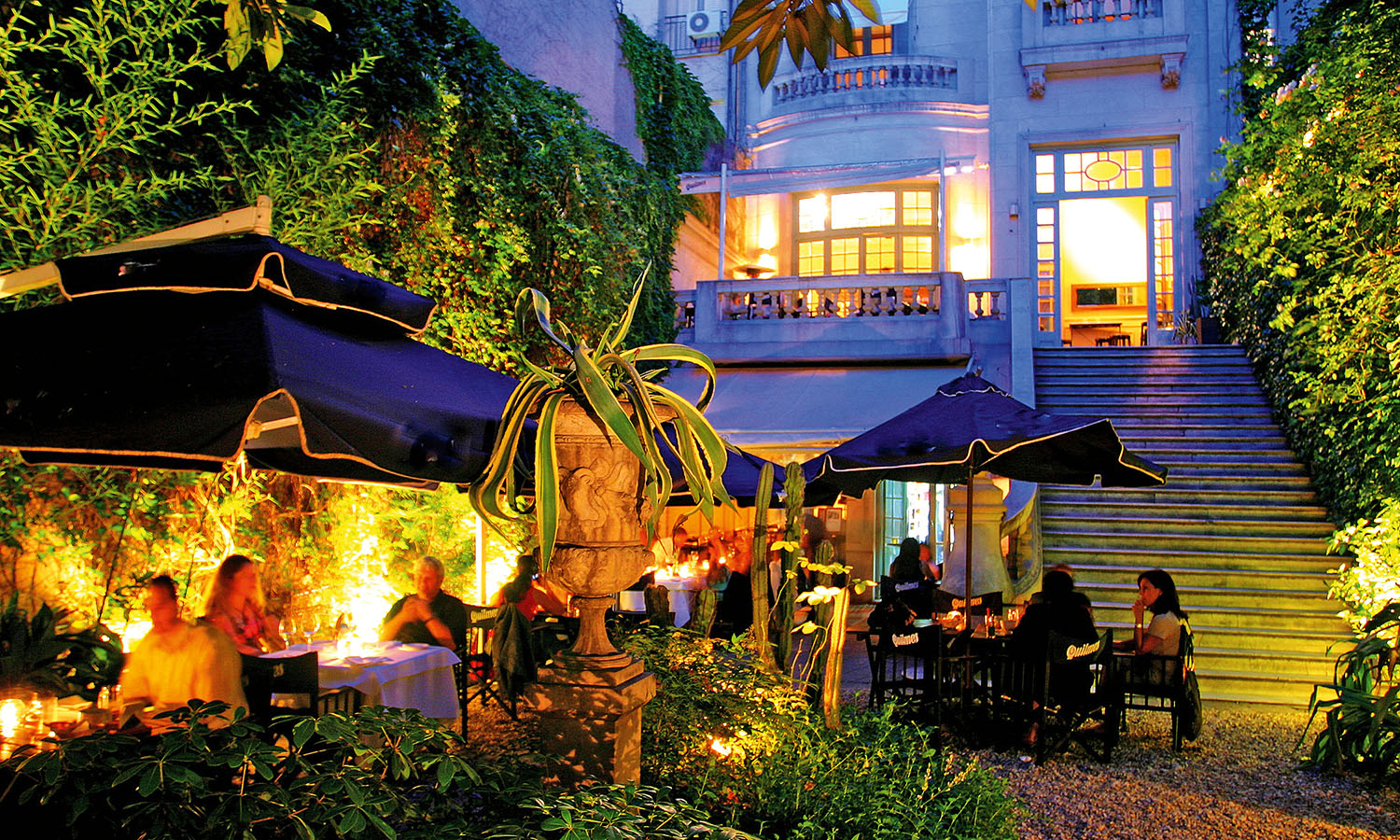
Now it’s time for some glitz and glamour. Get yourself a taxi (giving directions to the driver always seems easier after several Cuba Libres) and make a beeline for Recoleta. Milion is a fancy-pants mansion and undoubtedly one of the swankier, more stylish watering holes in this big city. Think marble, terraces, secret balconies. Milion, with its almost-porno vibe, is a well-known hangout for BA’s celebrities and socialites. Make sure you dress the part, but don’t be too concerned about the prices. Oddly enough, it won’t cost you a million pesos to buy a round at Milion. Have a cocktail shaken for you then rub shoulders with the rich and famous. Milion Parana 1048, Recoleta milion.com.ar
6am
Yep, it has to be done. A big night out in BA is not complete until you’ve checked out a proper dance club in the wee hours. The monstrous Alsina, with a capacity of about 3000, employs DJs like Sasha and Carl Cox to knock out the beats on the king-sized dance floor. The gay nights here are welcoming and fun no matter what your bent is. Be warned: the Porteños can dance. The gringo shuffle, with a beer in each hand, just won’t cut it here. Tap into your inner Latino and shake it till the sun comes up. Alsina Adolfo Alsina 940 facebook.com/palacioalsinaba
8am
The sun is up. The Red Bull no longer works. While some of the Porteño party people are preparing for the day clubs, it’s probably time for bed.
Teresa Cristina de Brito Pinheiro dos Anjos is sitting on her kitchen step sharing some local knowledge while watching me tie up my hammock. I have the feeling she spends a lot of time chatting like this and, at the moment, she’s particularly enjoying clueing me in on unexpected risks of camping on Ilha Grande. “It’s lucky that hammock has a sturdy mosquito net,” she says.
I hazard a guess in broken Portuguese. “Lots of mosquitoes here, then?”
“No, no, the sea breeze keeps them away. It’s the vampire bats you have to worry about.”
I’m halfway through a trek around Brazil’s so-called Big Island – about 150 kilometres southwest of Rio de Janeiro – and apparently I’m now deep inside bat country. It strikes me as somewhat surprising that nobody bothered to warn me earlier about the danger of death by vampire bat.
“My cousin was bitten a couple of weeks ago,” my new advisor continues. “The course of rabies jabs afterwards was worse than the bite.”
I can tell she is doing her best to reassure me, but I wonder if I will ever feel the same about myself after I’ve been sucked by vampires. Will I be forced to see myself as vampire-bitten ever after? It’s a form of virginity that I’m reluctant to lose.
But there have been many more sinister things than vampires during the history of what was once called the Island of the Damned. The dark period of Ilha Grande’s history began with the arrival of British and Dutch pirates who slaughtered the original inhabitants – Tupí people, whom the Europeans claimed to be cannibals – and used the island as a lair from which to attack Portuguese galleons. Later, Ilha Grande became even more notorious as a slave-trading centre, a quarantine island for sick immigrants and a penal colony.
The main town Abraão dates back to the time when it was the lair of the pirate Captain Abraham. Private vehicles are not allowed on Ilha Grande and Abraão has only a police beach buggy, a fire engine and a garbage truck. The morning rush hour is frantic though, with motor-schooners shuttling new arrivals to and from the mainland, and dive boats heading out to reefs and wrecks around the coastline.
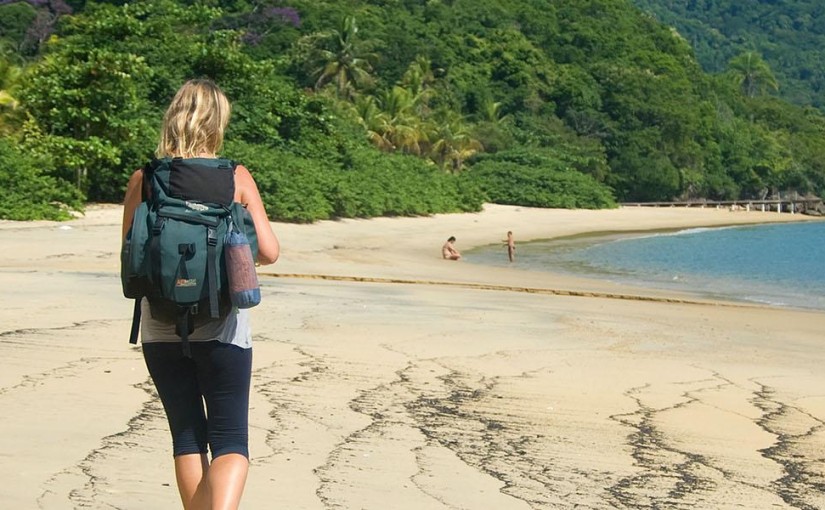
Few people have ever walked all the way around Big Island and reliable information is hard to come by. We set out from Abraão, loaded with camping equipment and enough provisions to last a week in the jungle. Luckily I had the help of trekking guide Raf Kiss and Brazilian adventuress Laura Nedel, recently returned from a round-the-world tour with a renewed hunger to explore more of her own immense country.
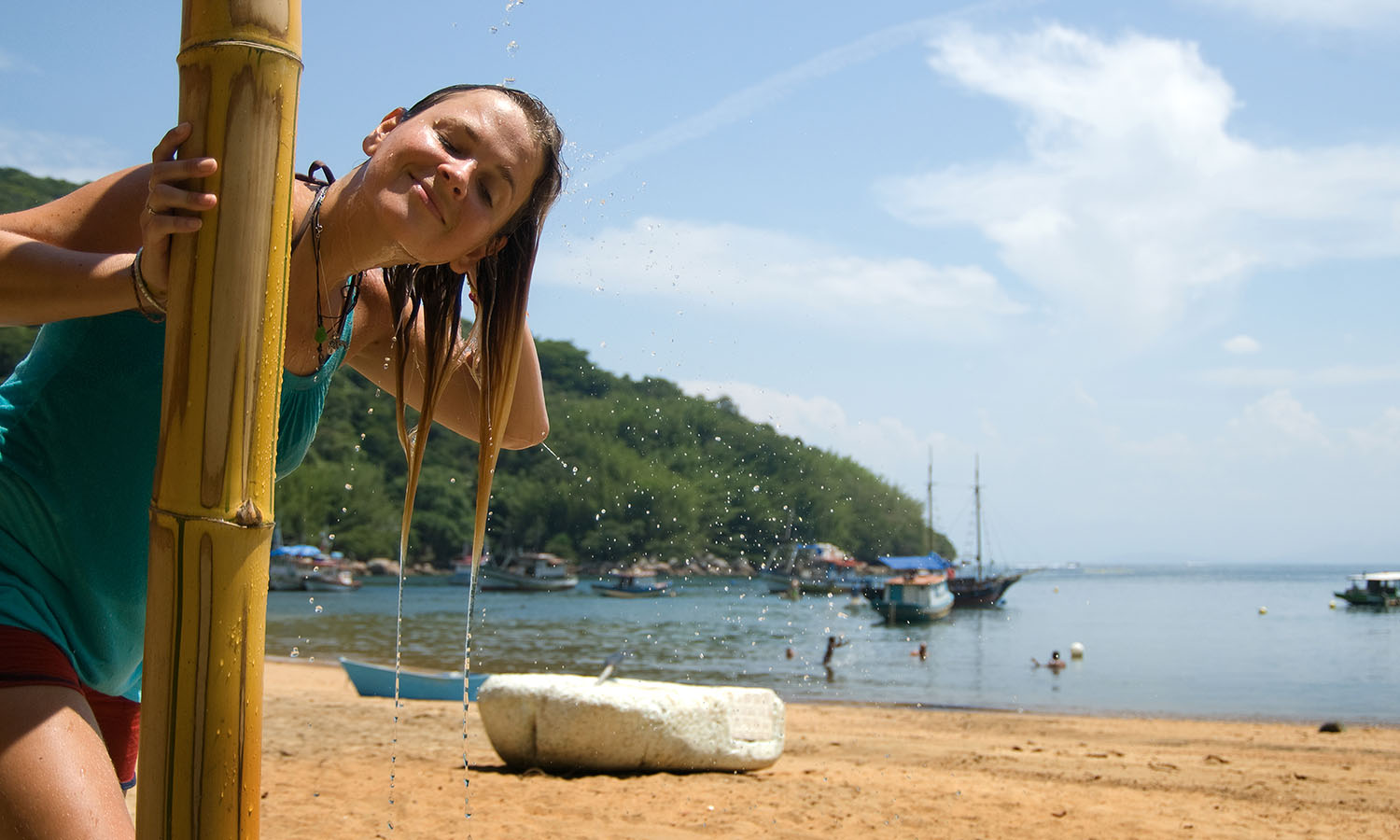
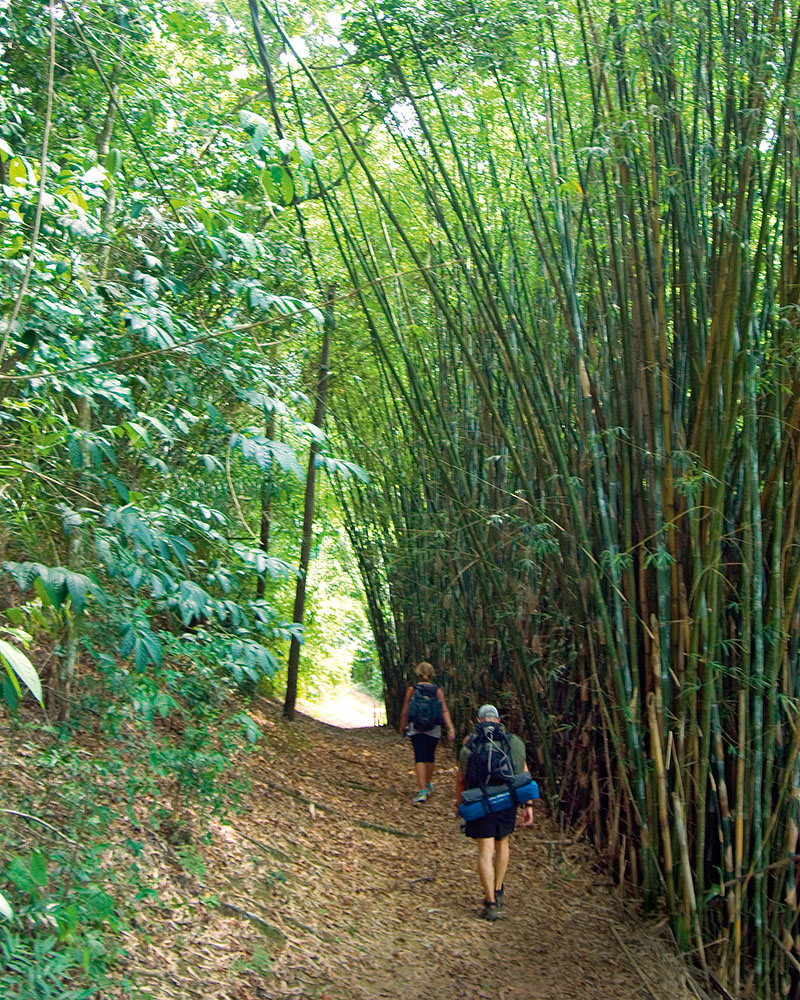
The map of Ilha Grande is studded with names that seem familiar, probably from the scripts of films such as Pirates of the Caribbean. Our path will take us past Black Beach, Blue Lagoon, Savage Beach, Adventurer Beach and Sack of Heaven Bay. At times the trail snakes along pristine Robinson Crusoe beaches, unmarked by footprints. During other sections it climbs steeply into dense, humid forests where howler monkeys bellow, giant jungle rats called agouti scamper and hummingbirds buzz between the towering bamboo plants.
Three days into our trek, we’re joined by two new travelling companions. Black Dog and the Rasta – a scraggy white mutt who becomes more dreadlocked with every mile – resolutely refuse to abandon us. They are extremely contented strays, happy to remain with us purely for companionship. Although we are unable to feed them, they never bother to beg when we eat. It’s harder to see wildlife with dogs charging off in attack whenever an iguana breaks cover from the brush or they catch the scent of an agouti, but they’re good company and their panting ‘doggedness’ motivates us during the long, hard slogs over the hills to the south coast.
Provetá is the second largest town on Ilha Grande and the only one with any remaining indigenous population. Few outsiders ever come to this most southwesterly point of the island and when we arrive the beach is occupied only by fishing boats, vultures and a few local kids splashing in the waves. We follow directions to a sandy homestead where a makeshift sign emphasises the laid-back, ‘labour-saving’ attitude of the Provetenses: “CMPNG” it reads. Who can be bothered with vowels?
We fall asleep to the sound of the waves – and raucous chanting from the Assembly of God church – and are woken at dawn by Black Dog stretching under our hammocks. When we break camp both dogs romp out of the compound lashing their tails, happy to be on the road for another day. We have a hard morning’s climb ahead of us before Praia do Aventureiro – Adventurer Beach. Here on the blustery southern shore, the Atlantic trade winds have stunted the trees so shade is scarce. We are soon sweating and the Rasta is cooling her matted locks in every meagre stream she can find.
It’s a humbling experience to bump into 77-year-old Dona Cida on her way up the opposite side of the hill. It’s a Sunday and the old lady tells us she is on her way to church in Provetá.
“I could take the boat from Aventureiro,” she admits, patting the dogs. “But I do this every Sunday. It’s my little pilgrimage.”
Our own little pilgrimage is now more than halfway through and we’re coming to a sad point. At Aventureiro beach we’ll have to take a boat for a short trip around the Praia do Sul Biological Reserve. Special permits are needed to cross this protected area and, although it is apparently possible to sneak across the park, we decide to respect the rules – and, more importantly, the habitat – and take a boat a few miles around to the next beach. This means we will have to say goodbye to our new travelling companions.
Dona Cida knows the dogs and we have spoken to two other people who had seen them walking with other trekkers. Black Dog and the Rasta probably know the trails of Ilha Grande better than any creature on two legs and it is sad to see them watching from the jetty as our boat putters out into Adventurer Bay.
After a long walk through almost impenetrable jungle – eyes intent on every waver of our GPS – we arrive at the old ruined political prison at Dois Rios. It was primarily because of this sinister institution that Ilha Grande was traditionally known as A Ilha da Maldição or the Island of the Damned. Some of the country’s most famous writers, journalists and activists were locked up here until as recently as 1994, when the prison was finally dynamited (half-heartedly it seems).
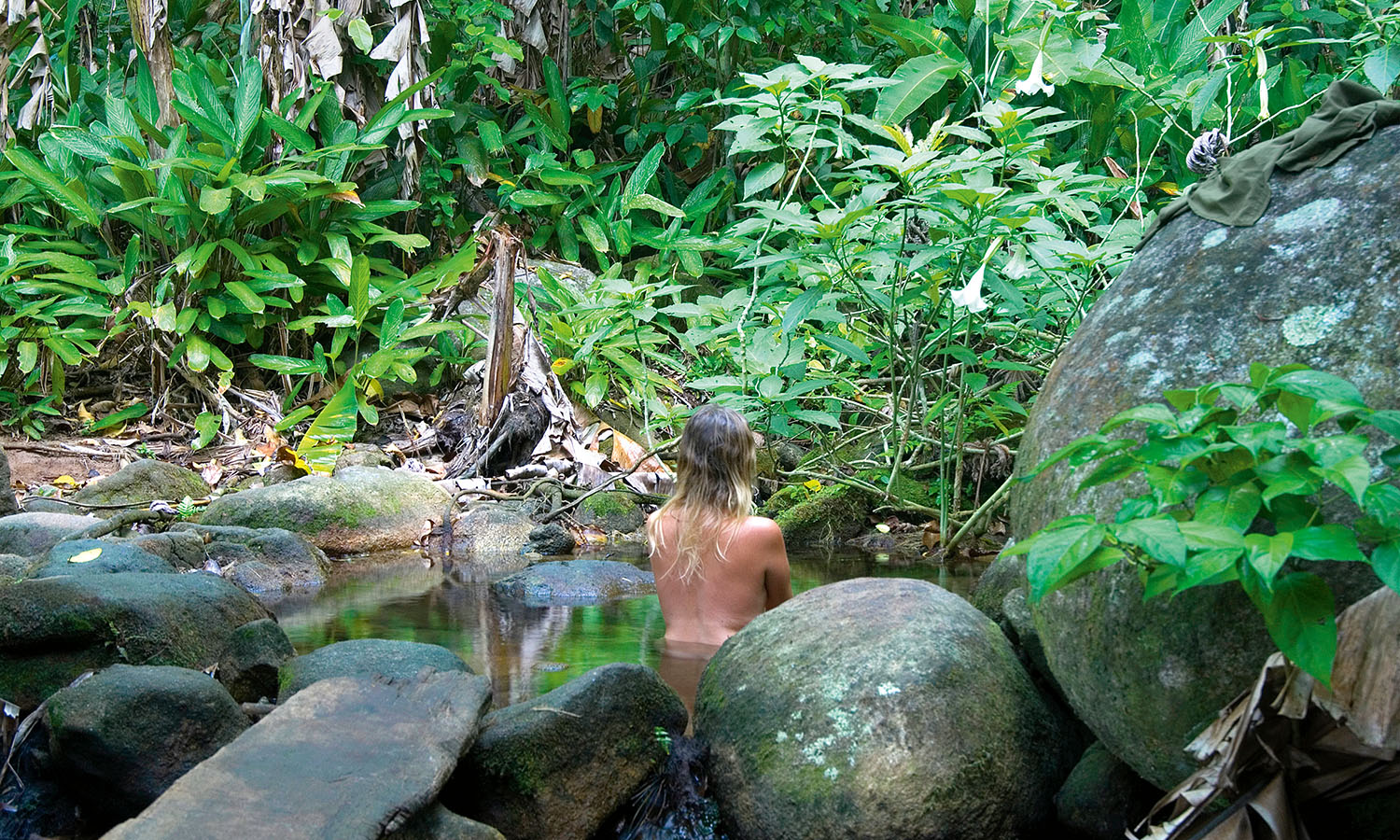
After a long day on the trail we arrive at pretty little Caxadaço bay just as the sun is beginning to sink, and find a perfect spot in the jungle to tie our hammocks. A cool, clear river has created a natural jacuzzi among the rocks and Laura and I spend an hour soaking away the aches and strains of the trail and listening to the roar of the howler monkeys. There’s a wistful hint to Laura’s voice as she points out that by this time tomorrow evening we’ll be back in ‘civilisation’ and dining on moqueca fish stew in Abraão.
As darkness descends under the canopy, fireflies of all different sizes and colours flash around our camp like phalanxes of fairies. Lying under the vampire net, enjoying the sound-and-light show of the jungle, I am sorry to think that we will soon be sailing away from the Island of the Damned.
The taxi driver is grinning mischievously. Short, stocky and besuited, with a bald head, cherubic face and pencil-thin moustache, he reminds me a little of a Bond henchman. A Latino Oddjob perhaps. As he puts my luggage in his boot, I’m thinking, I hope I don’t end up in there later. Bogotá is much safer than it used to be – I’ve spent a fortnight in the huge Colombian capital without any bother – but the word peligroso (dangerous) is still bandied around enough to ensure you don’t let your guard down completely.
My driver, Luis, like so many of his compatriots, is a friendly soul. Full of chit-chat, he is keen to hear about my Colombian travels and is particularly interested in how I found the women on the steamy Caribbean coast. Our conversation is a bit stop-start, thanks to his mum, who keeps calling his mobile. Each time, after a frenetic burst of unintelligible, slang-riddled Colombian Spanish, Luis signs off with: “Okay mama, mi amor. Besos (kisses).”
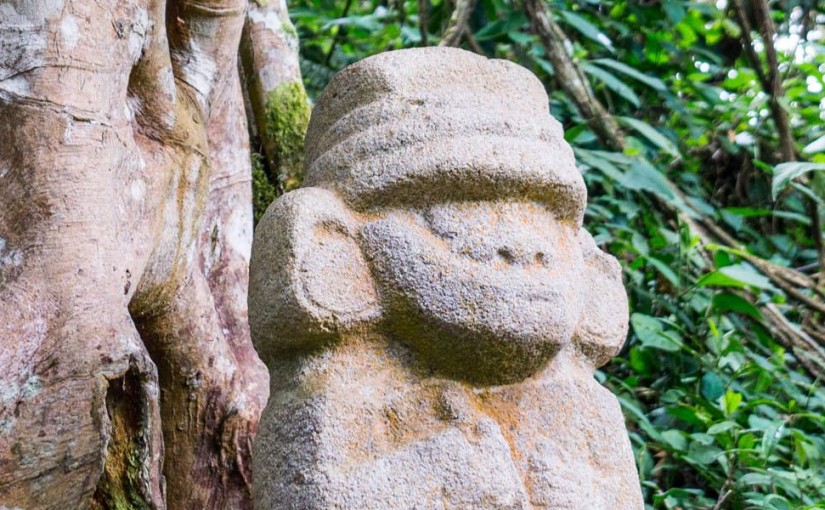
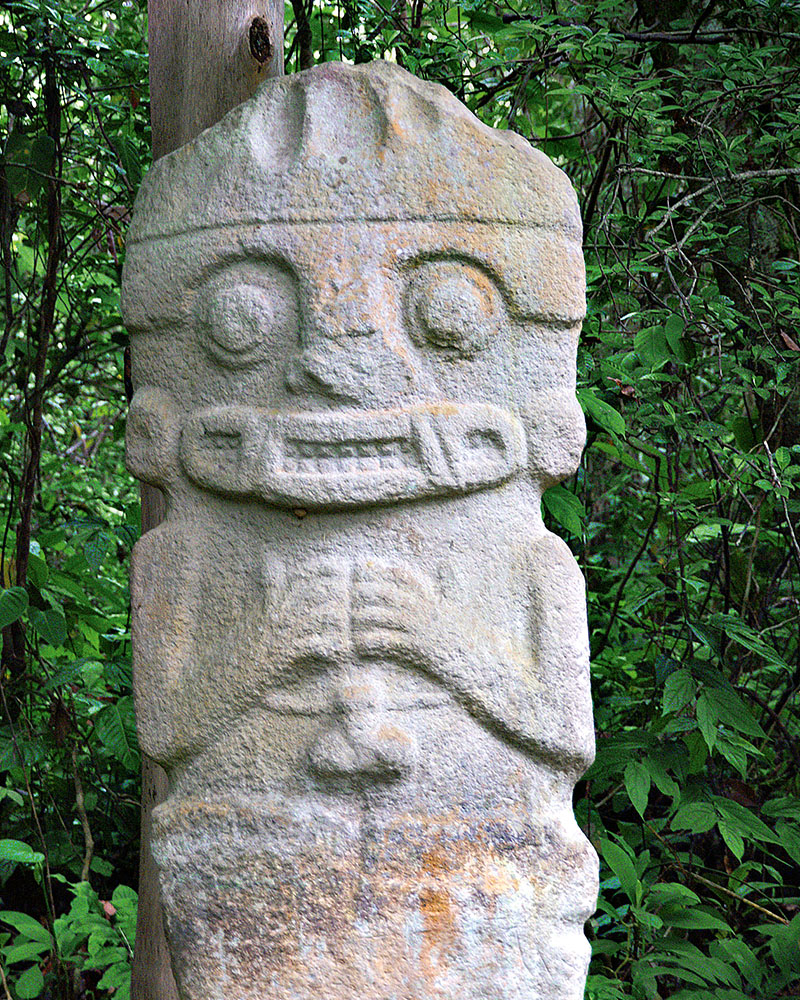
The next day, when I find myself looking at a bizarre, ancient statue of a sex-crazed monkey, shrouded in tropical Andean forest 520 kilometres south of Bogotá, I think of Luis. He would probably love this. In my mind, I can hear him laughing with delight.
The monkey statue is one of a number of peculiar, pre-Hispanic archaeological sights scattered across the gorgeous green hills and valleys around San Agustin, a small, tranquil town that was, not so long ago, out of bounds for travellers. This region was once a danger hotspot, a casualty of Colombia’s ongoing civil war, which began in the 1960s and has caused about 250,000 deaths, as well as the displacement of millions of people.
As with much of Colombia, San Agustin’s security situation has improved recently, and travellers can now explore some of South America’s most bewitching countryside and hospitable hamlets in peace.
Its languid air is exactly what I need after my overnight journey from the capital, which had earlier disgorged me, groggy and disoriented, onto a street lined with hole-in-the-wall grocery stores, bakeries and tour agencies.
I dodged children playing on the footpaths and elderly men – with cowboy hats and tanned, weather-beaten faces, leaning against walls – to score a couple of caffeine hits before feeling awake enough to go exploring. (The Zona Cafeteria, west of Bogotá, is renowned for its coffee, but Colombia’s south yields some of the country’s most sought-after beans. Japanese exporters pay top whack for the best stuff, apparently.)
The lush, rolling landscapes surrounding San Agustin are dotted with the relics of civilisations that flourished between the first and fourteenth centuries along the fertile, mineral-rich banks of the Magdalena River, which courses 1500 kilometres through Colombia, originating in the country’s southern Andes and eventually spilling into the Caribbean Sea.
Unlike Bogotá, San Agustin – population 9000 – is utterly laidback, with a vibe that swings between comatose and sleepy.
You can mini-bus it to the main cluster of ruins at Parque Arqueológico, three kilometres west of San Agustin’s centre, or opt, as I do, to amble the gently ascending roadside route, where I pass half a dozen young soldiers in army fatigues with rifles slung across their backs. Firmly back in government control, this area was once a stronghold of the FARC, the notorious left-wing guerrilla group high on the United States’ terrorist and drug-trafficking hit list.
The park, a UNESCO World Heritage-listed site, is strewn with hundreds of stone statues, tombs and burial mounds. The elaborately carved monoliths have anthropomorphic and zoomorphic features. Some have been likened to the moai on Easter Island, but the sex-crazed monkey and his sidekicks, which include serpent-headed humans and a cheeky-looking owl with a snake in its beak, are much odder.
There are signposts around the site carrying information about these mysterious ruins, but I glean more by eavesdropping on a German couple’s tour with an English-speaking guide. It’s believed the sculptures were built to honour the dead, the guide tells the Germans, and one theory is that their architects were under the influence of the San Isidro mushroom, a powerful hallucinogenic fungus found around here.
The tribes, who first settled here around 3000BC, had dispersed by the time of the Spanish invasion in the early 1500s, and the ruins remained hidden for centuries until they were discovered by a Catholic priest in the eighteenth century. Unimpressed by the sight of sex-crazed monkeys, he regarded the sculptures as works of the devil. Today, a group of more open-minded Colombian teenagers on a school field trip is posing for silly photographs beside them.
With my inner Indiana Jones sated for a while, I head west to Popayan, a place that captured my imagination in 2009 when I was last in Colombia.
While the route from Bogotá to San Agustin is paved and smooth, the road onward isn’t so much a road as a series of bumpy, winding dirt tracks that skirt precipitous cliff edges. It takes us six hours to travel the 135 kilometres to Popayan. At one point, out in the sticks, a raven-haired young beauty in high heels gets on the bus. The driver and his assistant don’t know where to look – a problem Luis would never have had. She sits next to me and spends the whole journey texting her boyfriend.
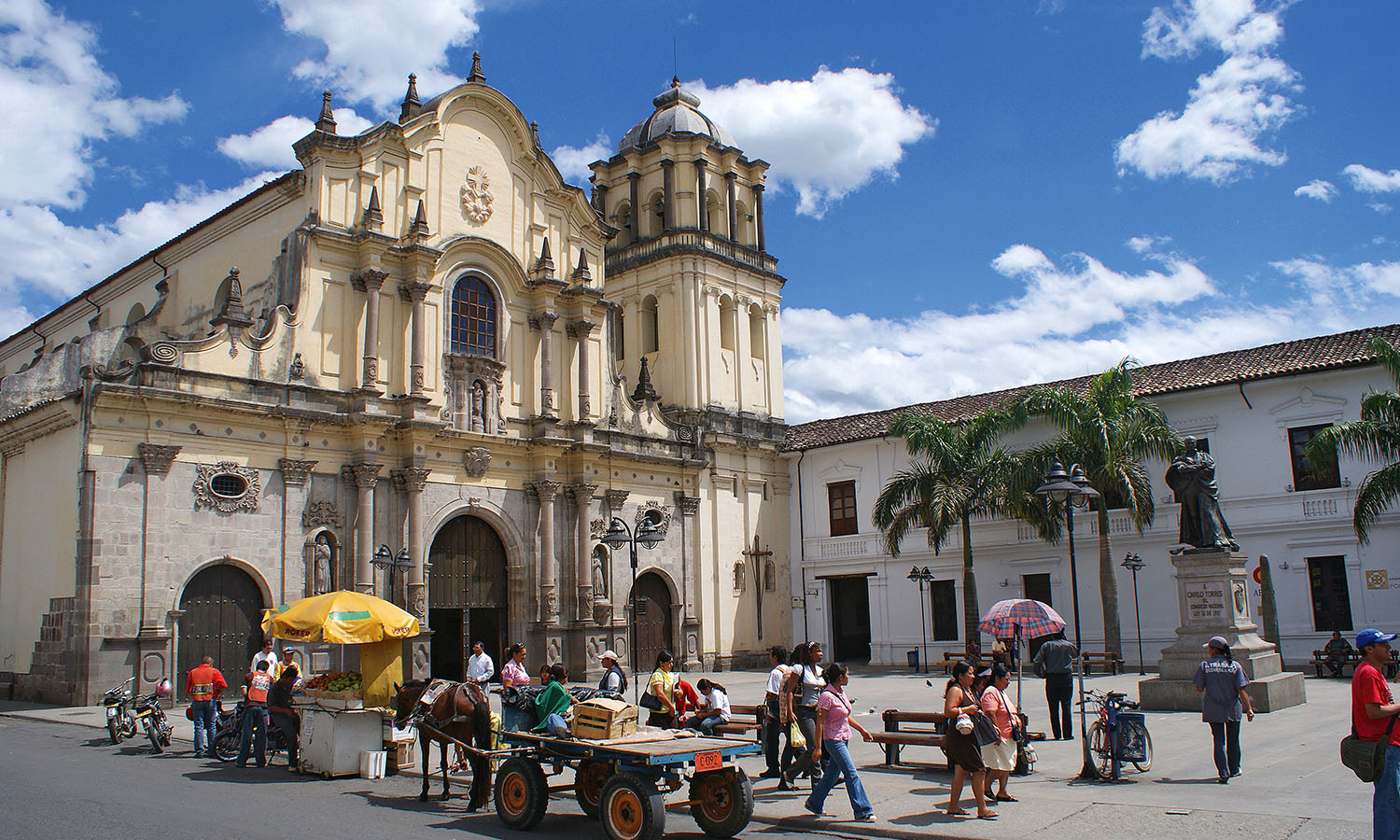
Popayan is every bit as splendid as I remember. Once a key outpost of the Spanish Empire – an important stop-off between Bogotá and Quito (now capital of Ecuador) – Popayan is arguably Colombia’s prettiest colonial city after Cartagena. But where Cartagena is a blaze of colour and vibrancy, Popayan is more sober and conservative. Its grid of cobblestone streets and large central plaza are decorated with elegant, whitewashed mansions, monasteries and churches.
On 31 March 1983, the so-called White City was flattened by a 5.5-magnitude earthquake. The British writer Charles Nicholl, travelling through Colombia investigating the country’s cocaine trade, was here when it struck. In his compelling book, The Fruit Palace, he describes the carnage of the earthquake, which killed around 300 people and demolished the historic town centre.
Lovingly pieced back together, with older baroque buildings given some sterling twentieth-century touches, Popayan is a joy to saunter around. There are some intriguing diversions, including colonial and pre-Hispanic history museums, art galleries, lavish church interiors and hilltop panoramas. I browse frantic food and clothes markets, witness one of the city’s Catholic-inspired street parades, and mingle with students in bars that pump out everything from salsa and tango to reggaetón and David Guetta.
A fine place for cafe hopping, Popayan is a UNESCO City of Gastronomy. Its restaurants serve both international fare and local Spanish and indigenous cuisine, with recipes that have been passed down through generations. You can try offbeat dishes such as chunchullo (fried cows’ intestines), but I instead stick to the more traditional soup, corn and rice-based affairs, washed down with glasses of tropical fruit juices, one of Colombia’s fortes.
Popayan’s charms can keep you entranced for days, but it’s surrounded by fascinating side-trip options too, including Silvia, a predominantly indigenous town where traders sell handwoven garments and beaded necklaces, and the Purace National Park, an Andean wonderland of volcanoes, snow-dusted peaks, hot springs and mountain lakes.
Penetrating deeper into remote Colombia, I gawp at sublime Andean scenery from my window seat. There’s one place, though, that I’m keeping my eyes peeled for. Travelling from Ecuador into Colombia in 2009, I didn’t know Las Lajas existed. When I saw a photo of it later in my trip, I couldn’t believe I’d missed it.
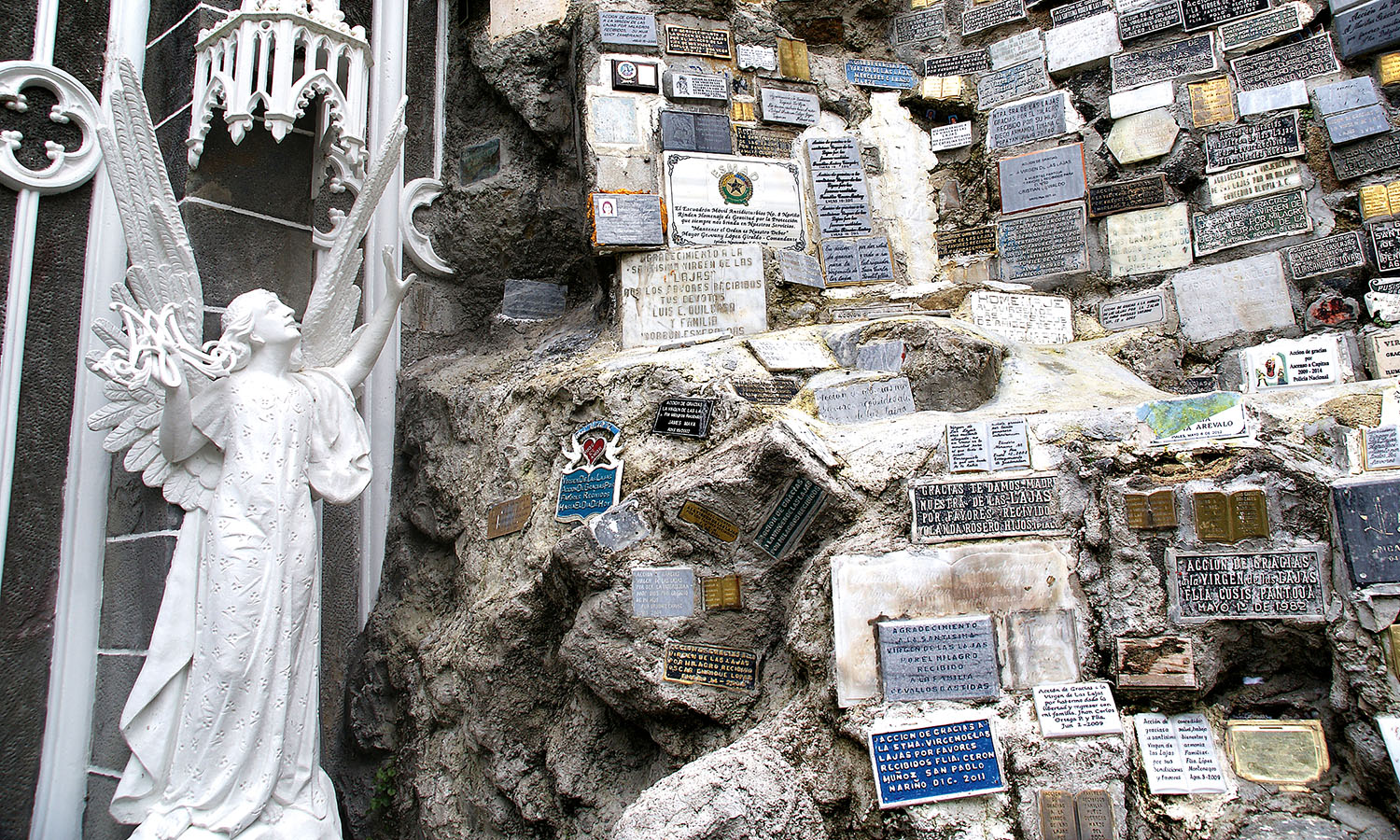
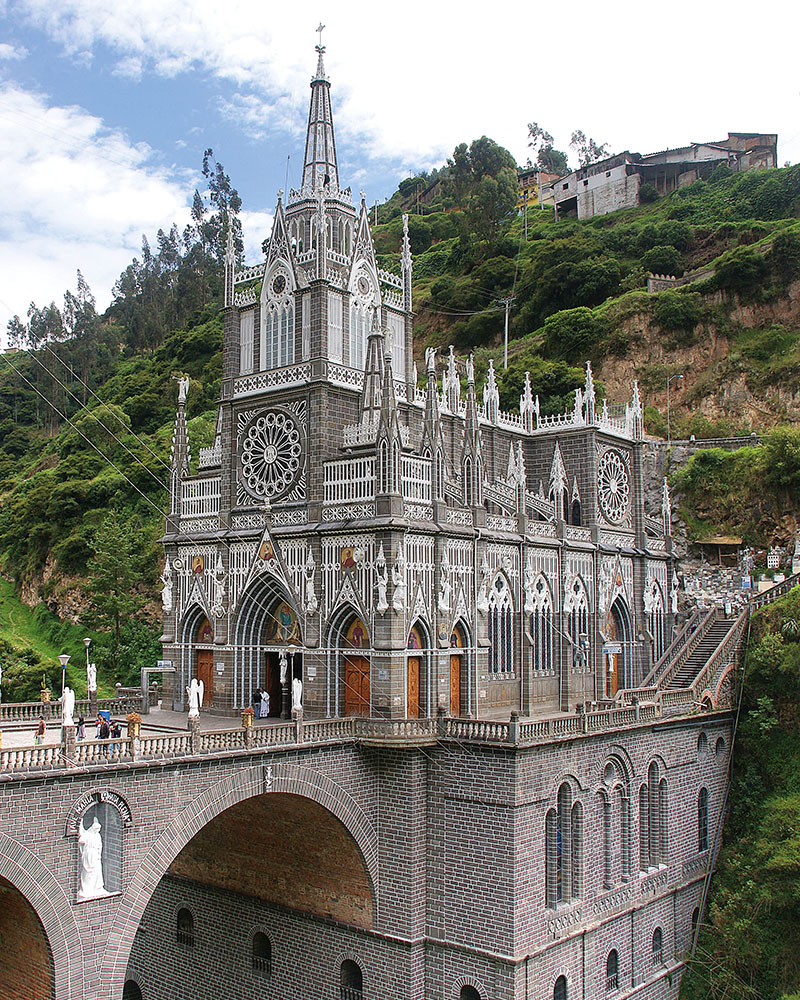
About seven kilometres east of the fairly nondescript Colombian border town of Ipiales lies the church and sanctuary of Las Lajas, built in dramatic neo-Gothic style, incongruous in its sheer scale and sharp manmade angles amid all the freeform fecundity of the verdant valley in which it lies. Spanning a river gorge, surrounded by mountainous greenery, it marks the spot where a lightning-illuminated silhouette of the Virgin Mary apparently appeared during a heavy storm in 1754.
After admiring the church interior – flush with stained-glass windows – I rub shoulders with pilgrims, miracle seekers and vendors selling souvenirs, snacks and terrible instant coffee, before scaling a lofty vantage point lording it over Las Lajas. When I reach the top, slightly breathless, I see a man taking photographs. Glancing up, he says in a strong Liverpudlian accent what I’ve been thinking.
“Bloody amazing, isn’t it? It’s almost made a believer out of me.” He’s not wrong.
Sex-crazed monkeys aside, it’s one of the most extraordinary things I’ve ever seen.
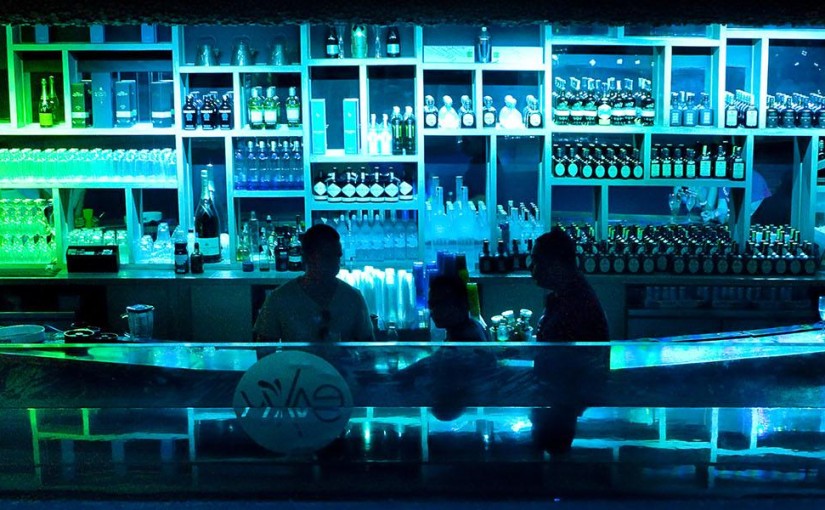
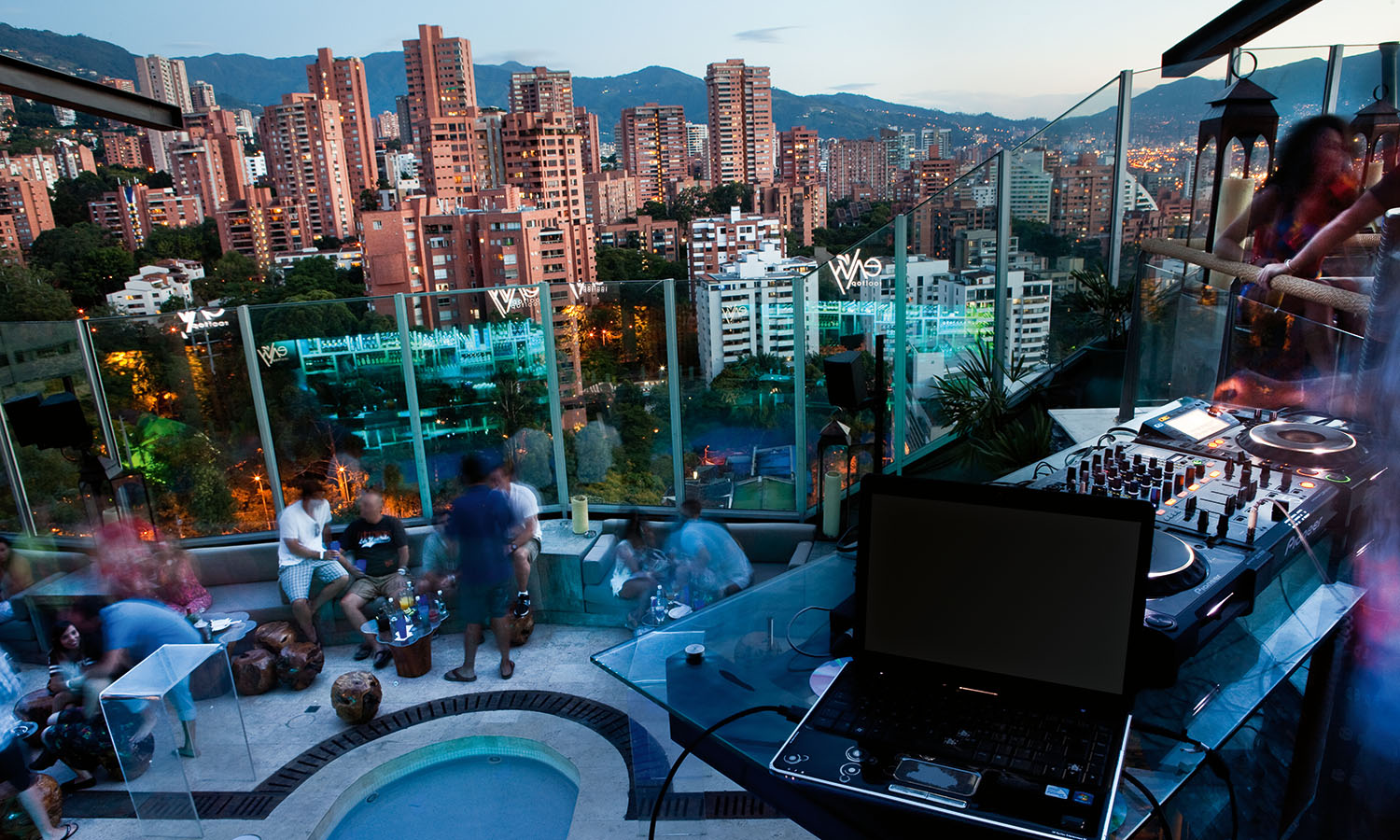
If there were anywhere on earth to indulge a drug lord fantasy, it’s where I’m standing: poolside with a coconut mojito at Envy Roof Top bar, 18 floors above the streets of Medellín, Colombia’s former cocaine capital. And she’s definitely looking the part.
It’s dusk and hundreds of pastel pink skyscrapers are lighting up the sub-tropical Aburrá Valley like the bejewelled décolletage of a gangster’s mistress. Picture Rio de Janeiro’s urban tropicana, but cram it into the Andes and scoop the waters of Ipanema onto private rooftops and you have this view.
This is where the most notorious drug smuggler of all time built an empire on alkaloids. At the height of his reign, Pablo Escobar spent $3000 dollars a month on the rubber bands he needed to stack US hundred-dollar bills in his warehouses. In 1989 Forbes estimated his personal net worth at US$3.5 billion dollars – at the time his cartel controlled more than 80 per cent of the global cocaine market.
As Envy completes a transition from Saturday pool party to chic evening bar, I imagine I can see vestiges of this intoxicating era of criminal wealth. Designer labels, diamonds, gold chains and silicon reflect in cocktail glasses directly across from the bar’s key feature: a clear Perspex wall that transforms the neon-lit pool into a human fish tank. It’s exactly how I imagine a drug lord would roll and reminds me that Escobar built his own private zoo, complete with hippos in a lake, at his hacienda. But like the hippos (according to headlines they’ve since escaped and are causing havoc) Escobar’s business proved impossible to keep clean and controlled. It fuelled a decades-long civil conflict, earning Colombia the mantle of the world’s murder capital by 1992. By 1993 Escobar was dead – killed in a 15-month, $100 million special operation that distinguished the bloody high-water mark of Colombia’s dark years.
Fortunately, the red tide has long since receded and Medellín is in the midst of reclaiming the narrative. At the foot of the building a booming restaurant and nightlife scene is more typical of the new Medellín. In the words of the former mayor Sergio Fajardo, the city is moving “from fear to hope” and building a reputation on festivals and tango rather than its criminal past.
But with two Hollywood features on Escobar in the making, Medellín won’t be able to shake the King of Cocaine’s shadow anytime soon. And for tonight, with Envy’s 270-degree panorama urging me to order another mojito, it’s a safe place to indulge a dangerous fantasy, even if it’s only in my imagination.
The good news? If you head to Venezuela now you’ll probably not run into too many other tourists along the way. The reason is that this stunning country has a few issues: it’s one of the most violent countries in the world and on the brink of economic ruin. Not that these facts should turn you off completely.
Of all the places in Venezuela tourists skip, the capital Caracas is top of the list. For those who are brave enough (and by that we mean savvy), there are some beautiful spots in the mountains above the city, all part of a national park.
Out of the metropolis things get a little better. About 400 kilometres of the Andes crosses over the border of Colombia into Venezuela. Travellers usually head to the city of Mérida, a friendly university town, where hiking, mountain biking and other adventures can be planned and booked. From here you can also organise trips to Los Llanos, a savanna plain populated by llaneros (cowboys) and native creatures, like capybaras, anacondas, caimans, anteaters and birds, and the Catatumbo Delta, a place known for its amazing displays of lightning at the end of the day.
The southeast is tepui country. These tabletop mountains, ringed by sheer cliffs, inspired Sir Arthur Conan-Doyle’s novel The Lost World. Many of the small animals, like lizards and frogs, that live on them can’t be found anywhere else in the world. One of Venezuela’s most popular attractions, Angel Falls – at about 16 times the height of Niagara Falls, it’s the tallest in the world – is part of a UNESCO listed site in the Canaima National Park.
Slightly west is where Venezuela reveals its corner of the Amazon and the starting point of the Orinoco, the world’s third largest river. Tours deep into the jungle to meet indigenous communities are conducted in dugout canoes.
Those seeking a touch of island life are in luck. Venezuela has more coastline and off-shore islands than anywhere else in the Caribbean and a lot of it is virtually undeveloped. Los Roques is an archipelago and national park just off Caracas, with the sandy beaches and turquoise waters of holidaymakers’ dreams. Scuba divers fall in love with Bonaire, which although not strictly part of Venezuela, is just 80 kilometres off the coast. The designated marine sanctuary is fringed by a coral reef, but the island is also known for its populations of flamingos and excellent windsurfing.
The Smartraveller website cautions travellers to avoid parts of Venezuela that border Colombia.
Mention Peru and most people think Machu Picchu. It is spectacular and so are the other magical Inca cities you can visit on strenuous treks in the surrounding areas. Those who do more than merely fly in and fly out of the Sacred Valley ‘to do Machu Picchu’, though, will be richly rewarded.
The vast coastline, where the desert meets surf, is most popular in the slightly greener north (the location of cosmopolitan capital Lima), but it’s the south where you’ll find the unexpected. There are islands off the shore that act as wildlife havens, remote fishing villages and spectacular dunes that seem to stretch forever. Here’s where you’ll go to fly over the mysterious Nazca Lines, visit the Ica Valley where grape varieties like quebranta and negra criolla are grown to make pisco, and go dune buggying in the oasis village of Huacachina.
Amazon jungle takes up 60 per cent of the country, and is one of the most biologically diverse areas on earth. There are companies that run cruises, from basic to luxury, down the Amazon River, or you could head to the likes of Manú National Park to hang out in the cloud forest watching for spider monkeys and jaguars.
Cusco, high in the Andes and once the capital of the Inca Empire, is the perfect place to adjust to the high altitude. Take a chocolate-making class, get a good view of the whole city from the ruins of Sacsayhuaman, give a woman in colourful traditional outfits a couple of dollars so you can take a photo of her with her llama, or spend some time wandering the aisles with a freshly squeezed juice in the vast San Pedro Market. Cusco is also the place to try cuy (guinea pig) if that’s what floats your culinary boat. Whatever you do, spend some time exploring this fascinating city before you sprint off to Machu Picchu.
 (
(