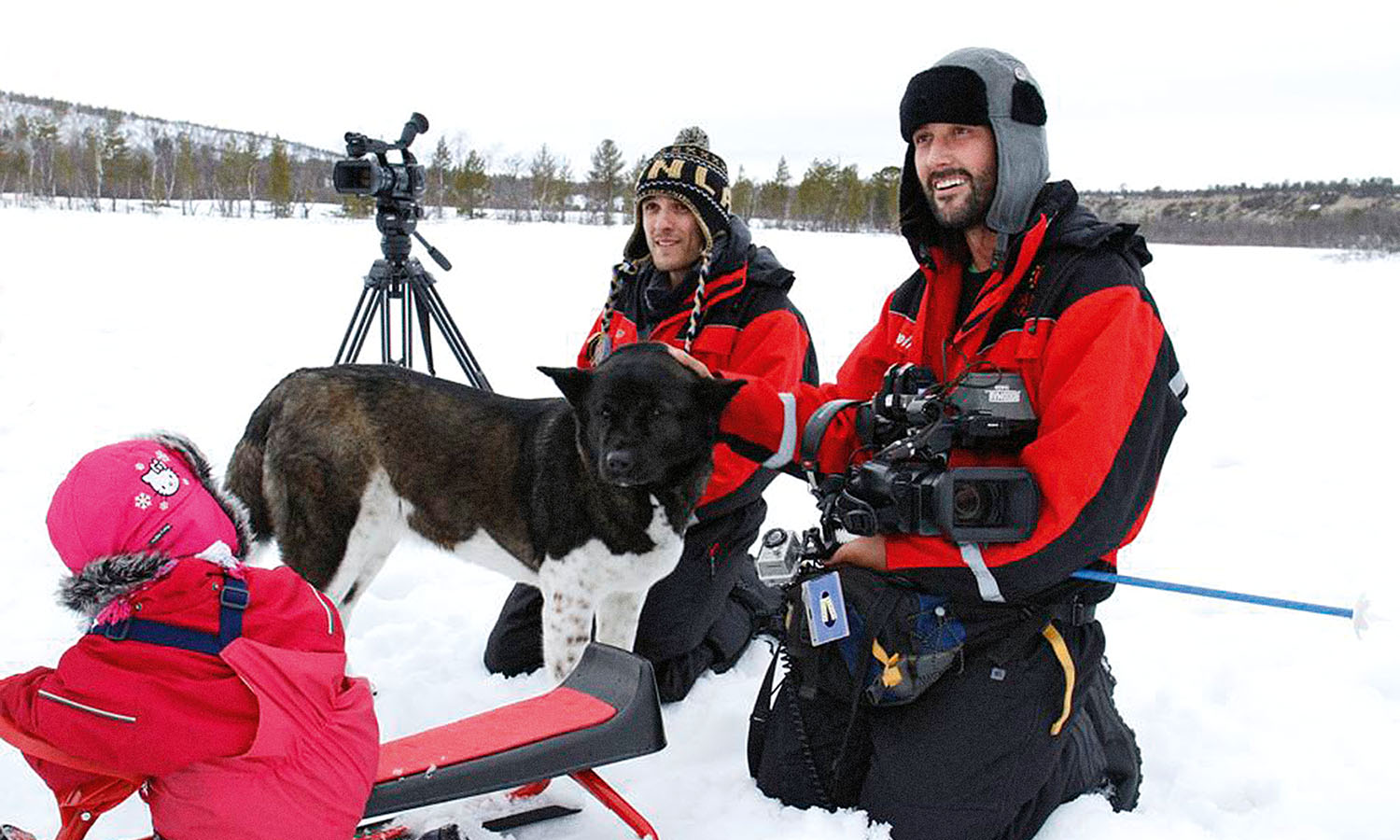
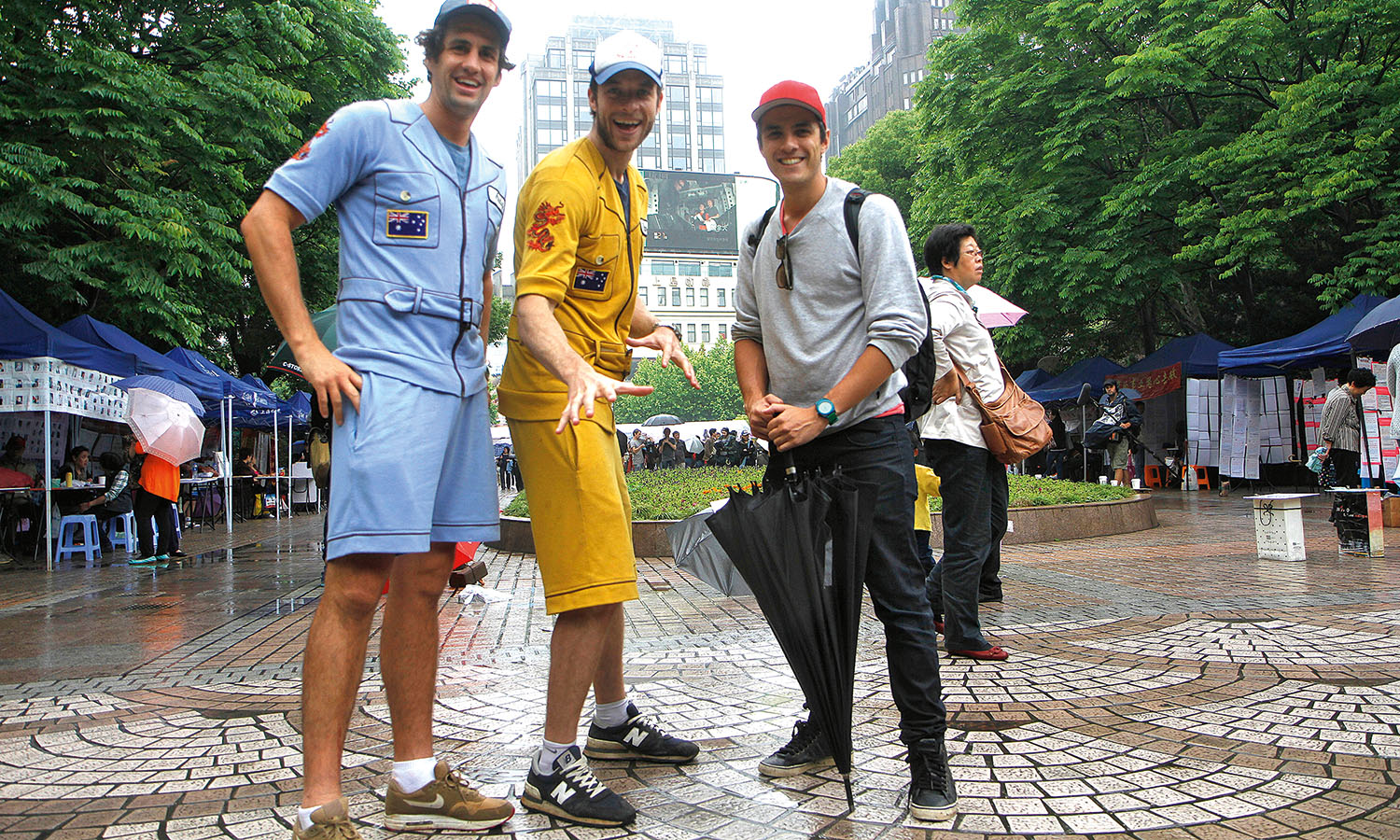
Rabbit jumping is an actual thing. This is something you’d know if you were an aficionado of Hamish Blake and Andy Lee’s Gap Year series. In Euro Gap Year, as part of a trip to Sweden, they buy a bunny – its name is Socks, which they quickly change to Lenny Rabbitz – and enter it in a jumping competition. It’s a bit like showjumping for horses, but with rabbits on leashes leaping over not insubstantial obstacles instead. Yes, it is completely absurd and, in the hands of the comedians, absolutely hilarious.
“It was my very first shoot with the boys in Europe,” says freelance television producer Frank Bruzzese. “We put on the rabbit jumping event so we could participate. No one was really there and it wasn’t as grand as I thought it would be. In hindsight, I was thinking, ‘How many people are into rabbit jumping?’”
Thankfully, due to the wonders of filming, the powers of post-production, the natural charisma of the hosts and an inadvertently hilarious cottontail (you can find the segment on YouTube), it turned out all right on the night.
“It’s interesting to see the stories I’ve enjoyed on the day, how they’re shaped in the edit, and which stories kind of take on a life of their own in that process,” continues Bruzzese. “It’s really lovely to be able to go and do the travelling then to see it right through to the final product. You get to nurture it all the way.”
In a notoriously tough industry, Frank Bruzzese seems to have struck gold. While studying at La Trobe University he was fortunate enough to do a placement on Neighbours. From the contacts he made there he went on to work on The X Factor, Who Wants To Be A Millionaire?, 1 vs. 100, Are You Smarter Than A 5th Grader? and Rove. That’s where he met Blake and Lee and, before long, he found himself on the production team for Euro Gap Year and the Hamish and Andy series that followed: Gap Year Asia, Caravan of Courage and Gap Year South America.
“It does, on the outside, look like the best job in the world,” says Bruzzese, “and there are times where I feel extremely fortunate to be doing what I’m doing. But there are times where you just go, ‘I don’t want to go to another airport.’”
There’s certainly not a lot of time to kick back and enjoy the exotic locales. After pitching ideas as a team and sitting with a map trying to work out what stories might be achievable, Bruzzese and another producer head off on a three-to four-week recce (that’s the industry term for reconnaissance) to see if the ideas on paper can be transformed into television gold. The pair is then joined by the rest of the team and shooting commences, usually for another four or five weeks. In the space of a couple of months, Frank covers a lot of ground.
“In Europe, with the recce and shooting combined, I did 37 flights in 43 days,” he says. “That’s a lot of airports. And when you’re travelling with 23 bags, it’s a lot of time checking in. We have to arrive two-and-a-half hours early at every airport, so once you factor that into your day, it really blows them out. We often have to film on those days too.”
As well as the infinite delays that occur on the road while you’re actually moving, there’s also the uncertainty of dealing with people who aren’t necessarily on the same wavelength when it comes to production schedules. On a recce, Bruzzese meets all the people who’ll be involved in shooting a five-minute segment and, after briefing Lee and Blake on what to expect, ensures all the building blocks are there to make it happen.
“There are times when people won’t turn up,” he says of the more frustrating aspects of filming. “They’re not actors, just everyday people. In Russia, for instance, I was warned, ‘well, they’ll turn up when they want to turn up.’ So people would arrive two or three hours late, not realising that we’re structured so tightly that three hours hurts us, because we probably have to catch a flight later that day.”
For all the organising though – of people, luggage, schedules and meals – there’s still plenty of adventure to be had. Bruzzese once found himself lost underground. “I found myself on a recce meeting a cataphile, one of the young guys who basically carves out their own maps in the labyrinth of catacombs beneath Paris,” he explains. “It’s midnight and the next thing I know I’m squeezing through a hole 60 centimetres wide and five metres below Paris with a guy who doesn’t speak English and a fixer who does speak English. Then we got lost for about 45 minutes. They were bickering in French and I was going, ‘I just want to get out of here.’ That was an interesting phone call back to the office the next day: ‘I was stuck in the bowels of Paris for a good hour.’”
Then there are the countries that, had he been planning a holiday, would never make it on to the itinerary. There are good reasons for some of them to never appear on anyone’s must-do list, but others are complete gems. For Bruzzese that place is Sarajevo, the capital of Bosnia and Herzegovina. There he met a sporting team made up of men who’d been victims of the bloody war and are now the world champions of sit-down volleyball. “We got to meet these incredible guys who are just living their lives and are hugely successful,” he explains. “You can’t get away from it [the war] there. Driving around, there are buildings that still have huge shrapnel wounds. It was really humbling. I’ve never been to a place like that before.
“Just the history there blew me away. I wasn’t expecting to feel that way about Bosnia – I had no expectations, really – but I left knowing I definitely needed to go back.”
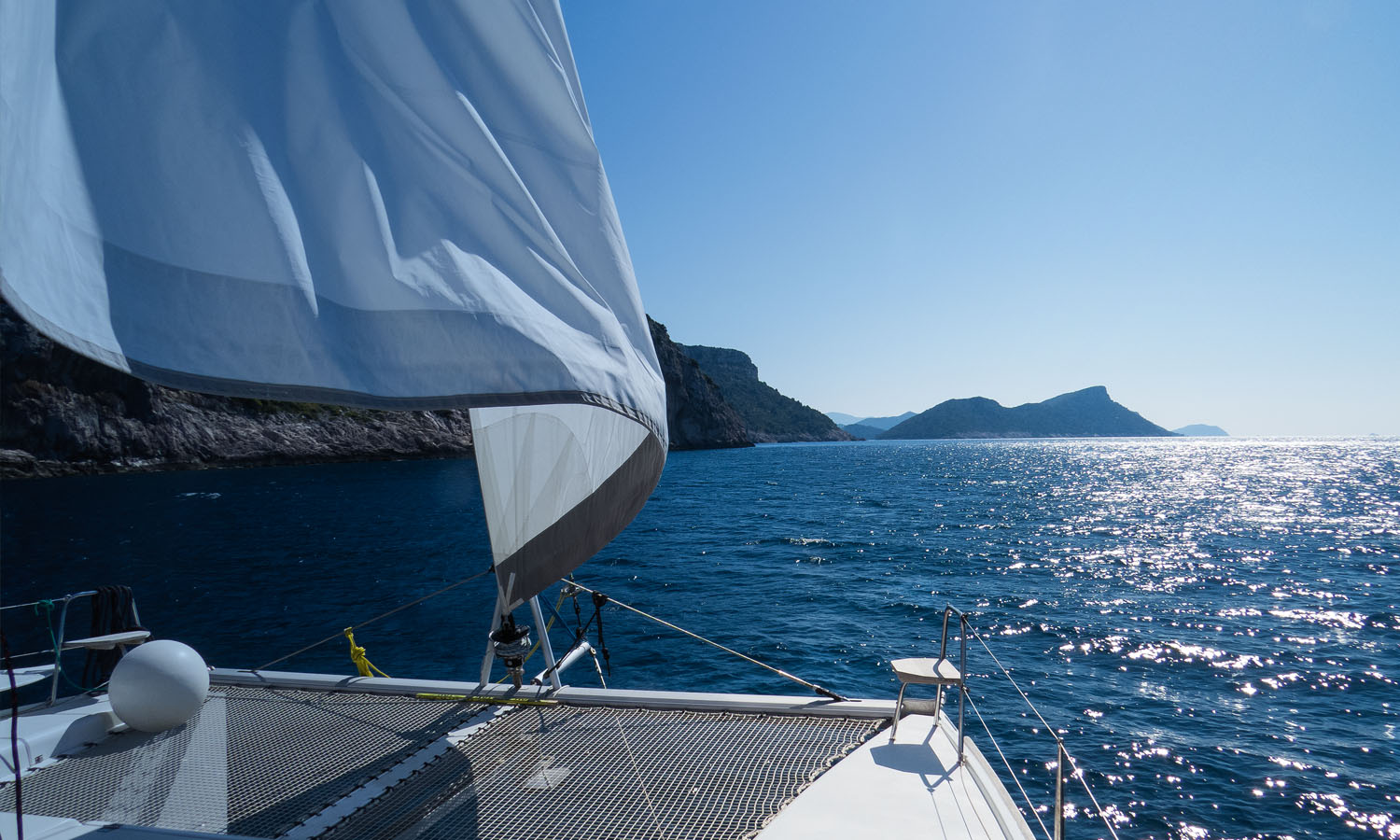
For three hours, we’ve been taking advantage of strong winds, weaving along the coastline and seeking refuge from the building momentum of the open swell. Sheer limestone, topped with thick vegetation, erupts from the water to create tall rocky islands. We’re heading towards Ston, a southern town on Croatia’s Pelješac Peninsula.
As we sail up the inlet, a European twin to the Great Wall of China materialises on the hills before us. Fortifications enclose the town then snake up over the mountain. Travelling five kilometres, all the way to Mali Ston (Little Ston), it is the world’s second-longest wall.
It’s day four of our five-day sailing adventure along the South Dalmatian coast. Summer is still on its way, and the weather in these parts can be somewhat unpredictable at this time of year. When we boarded the catamaran Tom Sawyer in Dubrovnik, our skipper Zeljko warned the itinerary would change depending on conditions. The upside is we’re dodging the massive summer crowds who’ll flock to the area in the coming weeks. As we sailed away from the city we passed three colossal cruise liners – soon, there’ll be 12 a day heading into the harbour.
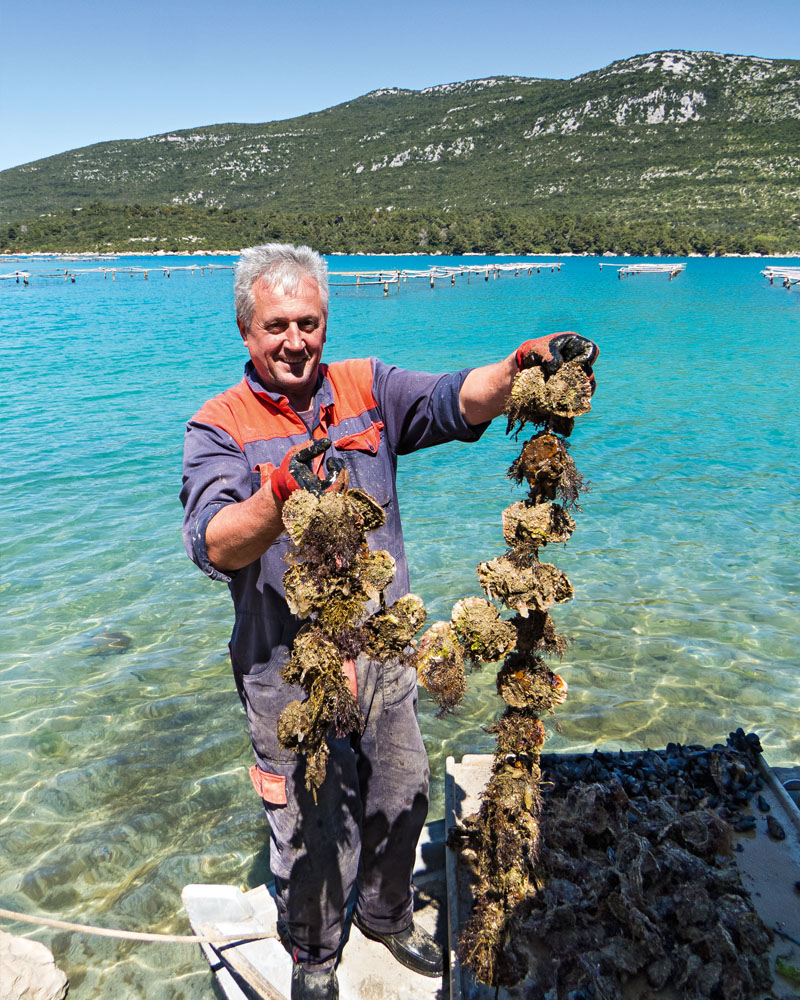
Ston isn’t only famous for its wall. It’s also renowned for its superior oysters and mussels. Before we head to shore, I pocket a lemon from the galley in the hope a delicious slippery partner can be found. We are greeted by Zeljko’s friends Ante and Sanja, who own Bistro Stagnum. Ante drives us to Little Ston to meet his brother Branko, who happens to be a third-generation oyster farmer. The fertile waters are clustered with oyster farms that are only detectable by simple wooden frames poised just above the surface.
Branko arrives in his dinghy with freshly hauled oyster lines and deftly cuts the craggy shells free from the overgrown nets. He shucks each one to reveal the salty treats within. It is prime oyster season, so these mature beauties are giant nuggets of meaty, creamy flesh. It’s a rustic setting, just a weathered table by the water, but I’m in oyster heaven. Branko scoops a massive bounty of fresh mussels into a bag for us to deliver to Sanja.
Ante and Sanja have kindly opened their restaurant courtyard to serve us lunch, and we’re soon tucking into platters of steaming mussels and fresh bread. Such a meal would not be complete without a crisp white, and Ante serves a delicious žlahtina wine indigenous to the island of Krk, much further north.
Long seafood lunches aren’t exactly unheard of when it comes to exploring the Croatian coastline, but afterwards I’m reminded of why this one with Huck Finn Adventure Travel is different. Instead of heading back to the Tom Sawyer and lazing away the afternoon on deck, we burn off lunch climbing the narrow steps of the town walls.
From Ston’s town walls, tessellated salt flats – the source of another of Ston’s highly regarded exports – are clearly visible. For a tiny town it packs a big produce punch, but we’ve got a three-hour journey to reach our evening stop at Zaton Bay, so we grab just one more thing: a bottle of Ston’s finest wine to sip on the deck. As the sun sets behind us, we take turns playing our favourite tunes. With musical tastes spanning the world, it turns out to be quite the eclectic twilight mix tape.
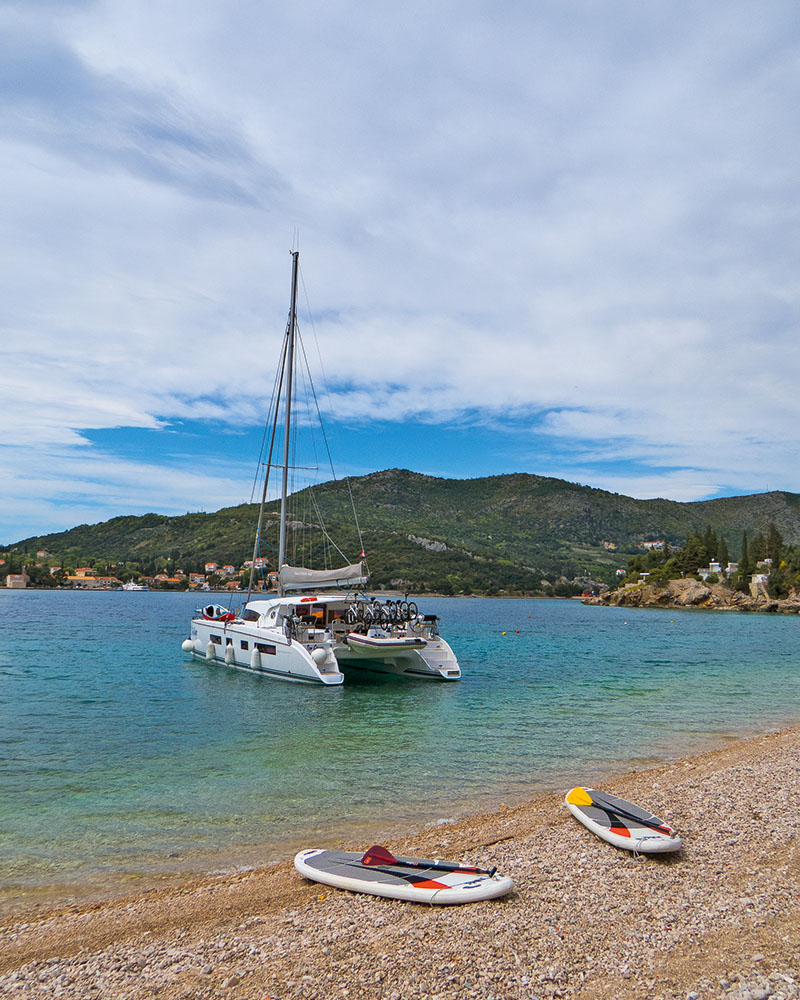
Loaded on to the Tom Sawyer is a collection of bicycles, kayaks and paddleboards, so instead of simply peering at tiny dots of paradise like Lopud Island – it has just a hundred residents during winter and travel is by foot, bicycle and golf cart – we take on its landscape. On that first day – the first stop no less – we hiked to Polacica peak. After a lung-straining ascent, we arrived at the remnants of the fifteenth-century Sutvraˇc fort. This is guide Maja’s local secret and clearly not on the tourist trail. The fort has crumbled beyond recognition and navigating around it is quite treacherous. We end up 215 metres above where our catamaran awaits, and the view of Lopud and the ocean dotted with islands was a breathtaking introduction to what was yet to be explored.
Our days are filled with sailing and a variety of activities. That afternoon we arrive at Šipan Island with a hurried plan to cycle to the other side of the island by nightfall. The distinct fragrance of wisteria fills the nostrils as we pedal along quiet roads. When the climb becomes too savage we get off and push, but this also allows us to absorb the postcard countryside. It’s a vista of citrus groves, family vineyards and ruins abandoned in a tangle of ivy. Our destination is Suˉduraˉd, a petite harbour boxing in rows of weathered fishing boats. It appears deserted except for some excitable children too focused on kicking a ball to notice the tourists riding past.
Next we visit a local legend: Dubravka restaurant in Šipanska Luka, regarded by locals and sailors as the place to eat. Although it’s still closed for off-season, its owner Djino has opened tonight just for us. I feel like a celebrity, dining in an empty restaurant with an off-kilter ratio of staff. We are presented with a feast of smoked tuna with goat’s cheese, cuttlefish and potato salad, seafood risotto and grilled swordfish. The meal is accompanied by two delicious Croatian white wines: a crisp graševina and malvazija.
One morning the bitter, intense bura winds wake us. They churn up the forecast calm sea, foiling the day’s plans. Rather than hide, we decide to use them for a proper sail. The engine is cut, the main sail erected and we set off accompanied by the sound of clanging shackles and frantically cracking sails. It feels more like Bass Strait than the idyllic Adriatic Sea. Facing the icy winds, I pop my headphones in and focus on the horizon. Playing tunes that simulate our yacht’s sway, I’m distracted by my private makeshift rave.
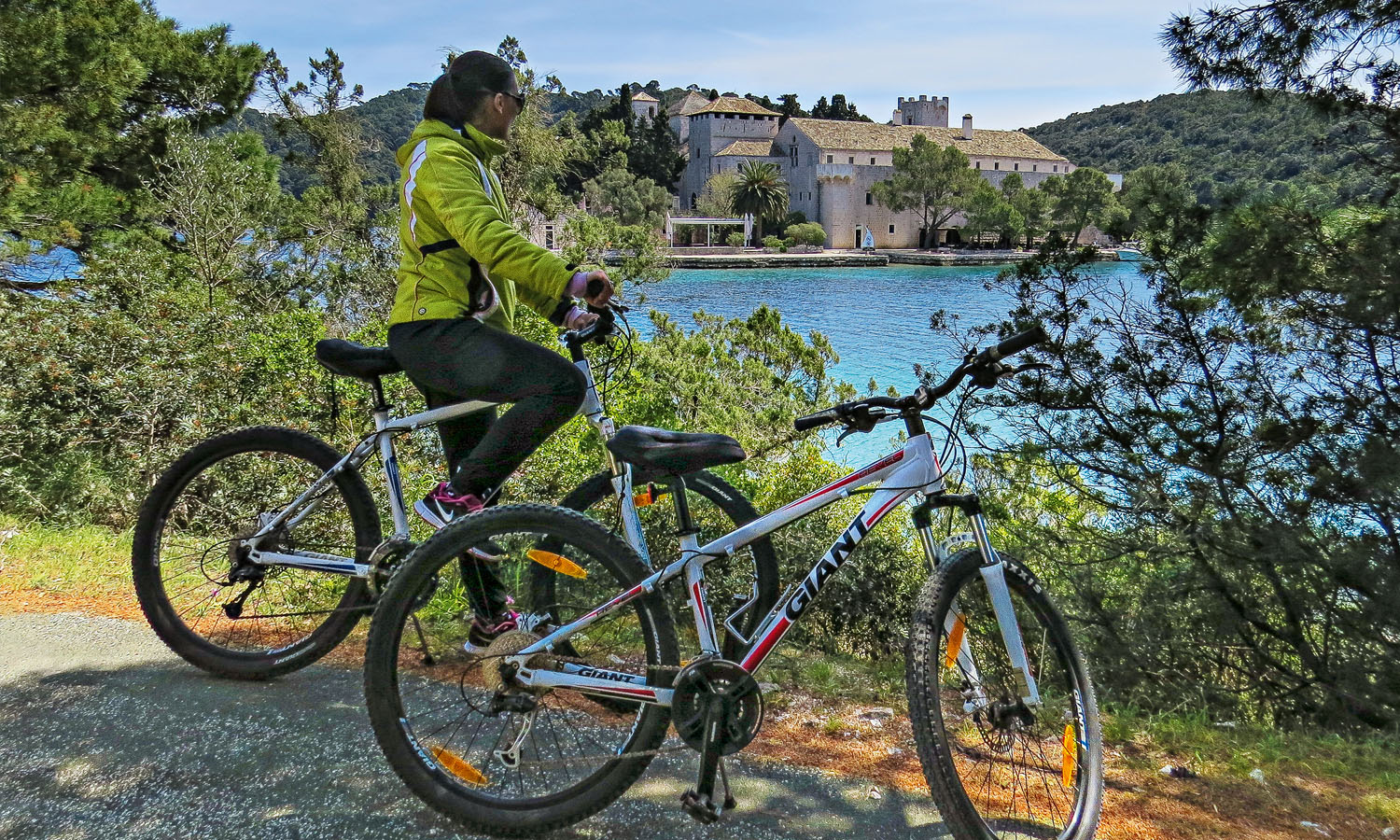
Slightly frozen and windswept, we arrive at Polaˇce on Mljet Island just before midday. It’s called Shanghai during summer due to the congestion, but we face no competition at the dock. We set out on the bikes to explore the vast Mljet National Park. The first stretch of the 20-kilometre route is a punishing uphill slog, before a rewarding downhill run leads to an easy track that loops around two inland lakes that have an emerald colour and clarity to rival the waters of the Caribbean. Maja refers to their effect as natural Xanax. As we circle the sparkling water through the dense pine forest, the only sound comes from my tyres crunching over a blanket of fallen buds. A grand Benedictine monastery is a surprising sight amid the natural beauty. Set atop its own island, the twelfth-century structure appears to float on the lake. Lunch is arranged at a farmstay where we are treated to brodet, the renowned Croatian fish stew. Afterwards, my belly is full and my body reluctant to get moving again. My bike apparently agrees, as its chain snaps just as we conquer the uphill leg of the return. Luckily I can coast back to the dock.
Zeljko moves us into a protected bay, so anyone brave enough can take a dip. The water looks enticingly tropical, yet is deceptively brisk at only 15ºC. Adopting a no-chance-to-bail-out method, I leap in. The shock is instant and the frigid temperature burns as I frantically kick underwater to dull the pain. Thankfully a warm shower is primed to go to defrost my numb body.
Assessing the ever-changing weather each morning becomes a familiar routine. One early walk over cliffs reveals a relatively calm sea towards Koloˇcep Island. The plan is to stand-up paddleboard into the island’s caves, something that requires perfect conditions. Aware that these change rapidly, we race to make our window of opportunity. In less than an hour we round the island only to have our hopes dashed. The crux of the plan entails lying facedown on a paddleboard to squeeze through a low gap, which is now barely distinguishable beyond the swell. Unpredictable waves rebounding from within means there is a good chance of losing the back of your skull on a badly timed entry. Frustrated but unanimous, we abandon that plan and deploy kayaks to circumnavigate the island instead.
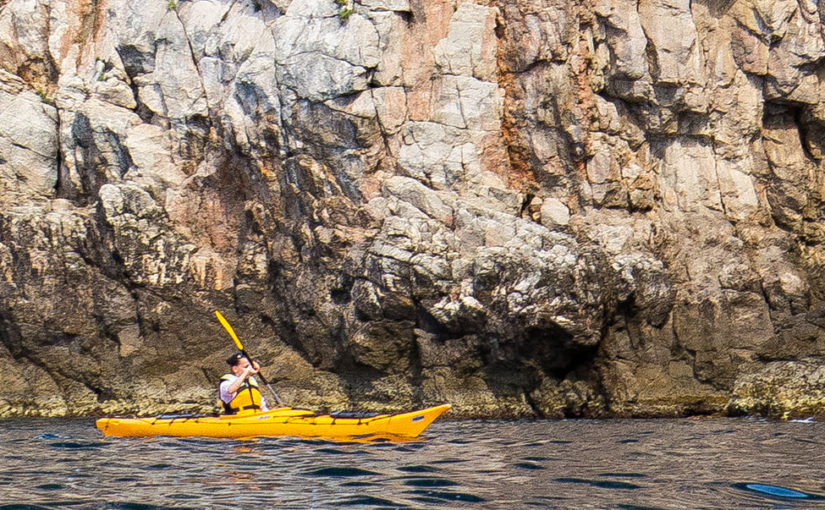
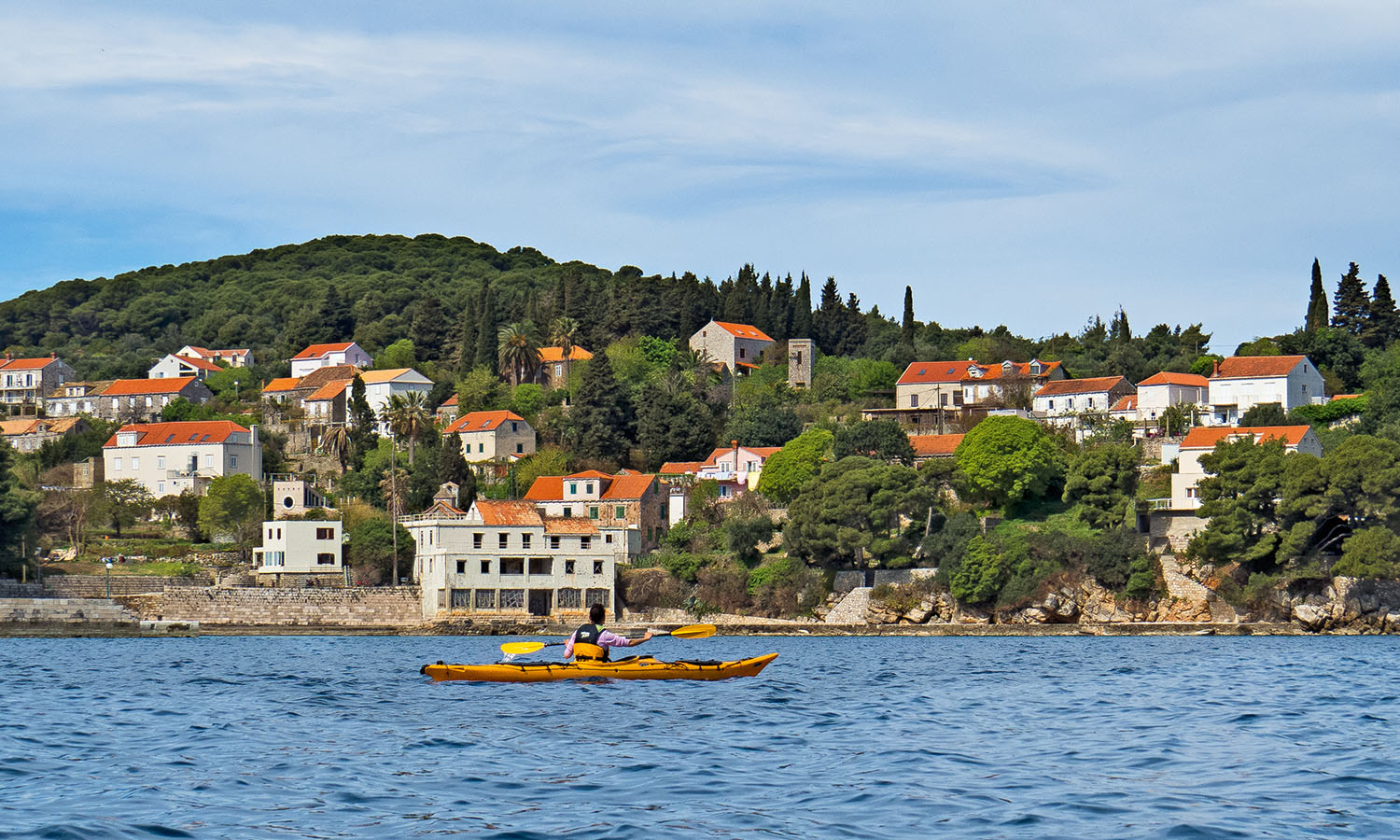
The dramatic cliffs plunging straight into pounding waves dwarf us as we paddle alongside them. The bumpy ride churns my stomach, a strong incentive to paddle hard towards more protected waters. Skirting the island we explore archways leading to calm caverns within. A few entrances are only slightly wider than my kayak, requiring a nervous paddling act to avoid being bashed against the rock. The rolling waves that look so gentle from afar are quite the sodden workout in the kayak.
On the final day of the tour, we sail to Zaton Bay for a farewell lunch in the village of Stikovica. With no mooring, we drop anchor in front of a beach restaurant and weigh up our options to get to shore. Paddleboarding wins as the quickest mode, although it’s also the riskiest in dry clothing. Still, it’s a unique way to arrive at lunch.
This has been a private way to see this often-crowded coastline. For days we’ve seen no other yachts or tourists. Visiting on the cusp of summer has required more beanies than bikinis, but we were never here to work on our suntans anyway.
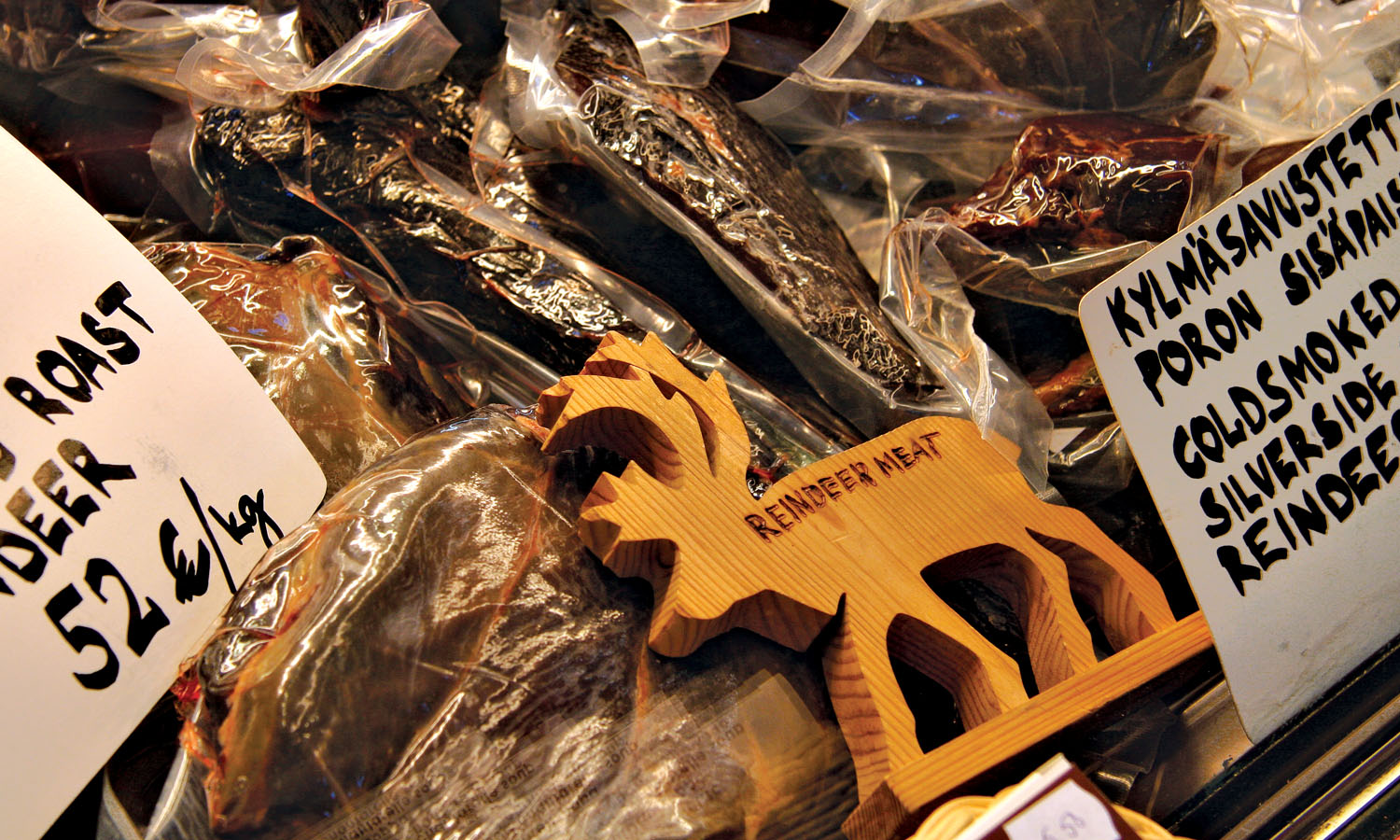
The reindeer carcass lays flayed and bloody on the bench. A man grabs a hunk of red flesh and saws it off with a small knife. He dips the meat into a pool of blood that has spilled into a hollow of the carcass. The blood trickles down his fingers as he raises the meat to his lips.
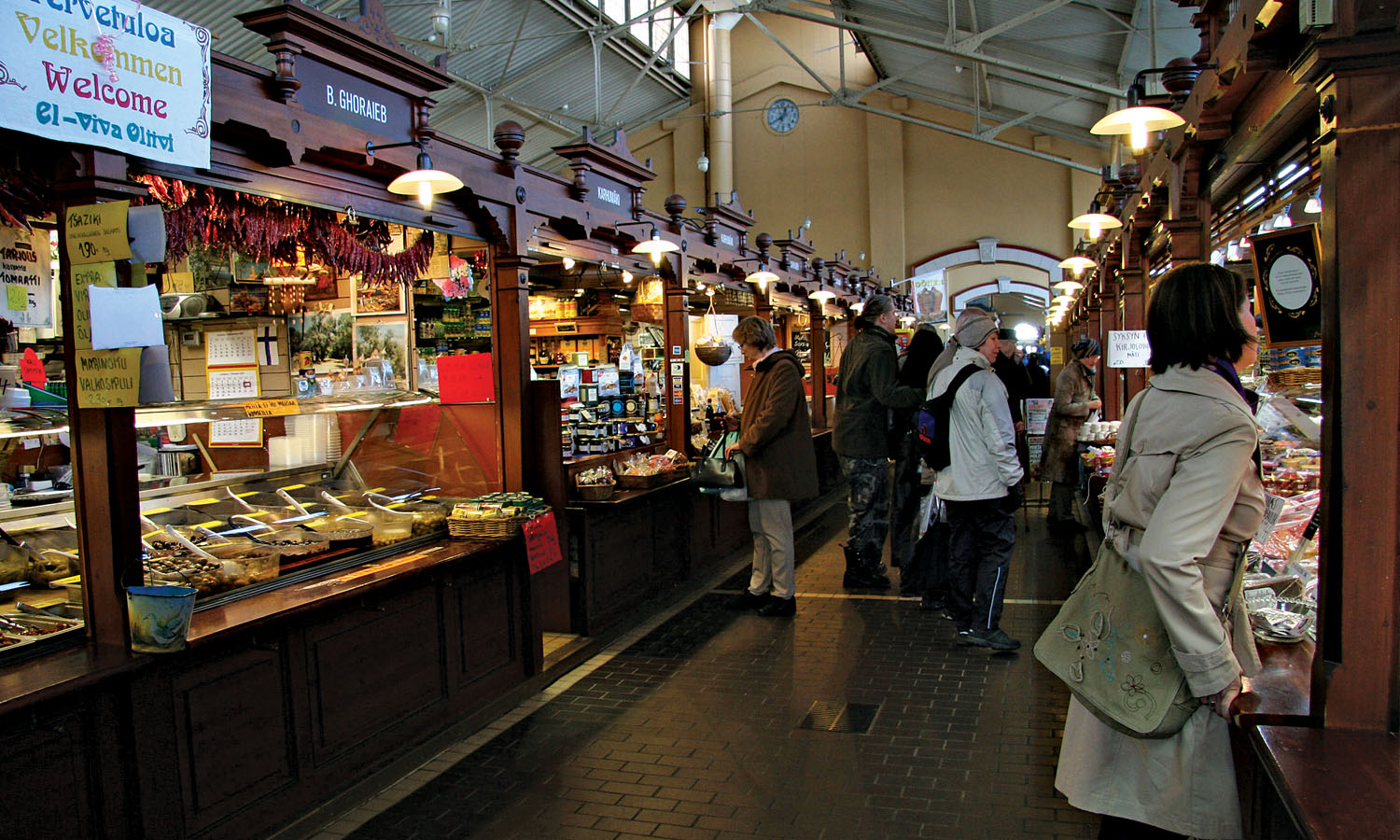
Perhaps it was this documentary on the Sami people, screened in the Arktikum Museum in Rovaniemi, Finland, that prompted former French President Jacques Chirac to condemn Finnish food as the worst in the European Union. However, the three kilos of body weight that I have shed in just two weeks in Finland is due more to sauna dehydration and lugging a heavy pack around rather than any aversion to the local food. Some Finnish fare may be less than desirable – the salmiakki (salty licorice) and the turkish pepper lollies spring to mind – but mostly it is tempting and tasty. I try to eat like a penny-pinching backpacker, filling my thermos with packet soup each morning, but am unable to walk past a kauppahalli (outdoor market) or kauppatori (covered market) without stopping to sample.
With nearly a quarter of Finland’s landmass sitting north of the Arctic Circle, traditional Finnish food is a product of necessity and availability. In northern Finland (Lapland) the average winter lasts 122 to 180 days and snow covers the land for seven months of the year. Temperatures of –15° are the norm in January and –30° is not unusual. It’s cold, bleak and dark. This harsh climate once meant that fresh fruit and vegetables were largely unavailable for nine months of the year and people relied on turnips, potatoes, fermented dairy products and dark rye bread (before it was in vogue) to survive the winter. Very few spices or herbs were used and most meals were stewed. It made for hearty and wholesome fare but earned a deserved reputation for blandness.
To taste Finland you have to sample what the land provides – berries, game, fish and wholemeal products of rye, barley and oats. While a small tub of blueberries would topple my weekly budget at home, in Finland they can be purchased by the bag in exchange for loose change. Caviar is scooped from large containers and sold by the gram. Delectable salmon – my favourite food but an expensive choice in Australia – is available everywhere. In Finland I eat salmon omelettes, salmon steaks, salmon soup, salmon baked with cheese, salmon on open rye sandwiches and, best of all, lohipiirakka (salmon, rice and egg in a light pastry) and savulohirulla (salmon with pesto).
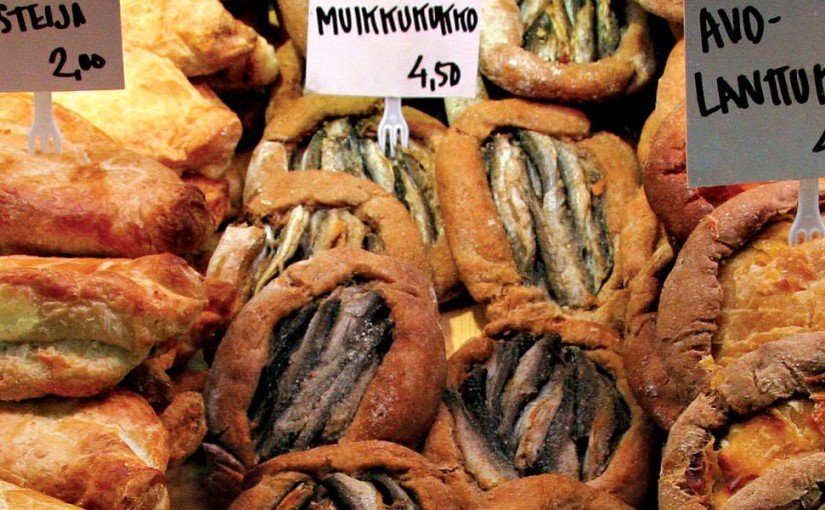
In the land of a thousand lakes (187,888 to be exact), salmon is not the only fish that Finns eat. They eat a lot of herring. Silli (herring) are small oily fish traditionally served with boiled potatoes and rye bread or as part of an assorted fish plate. They can be pickled, salted, smoked or marinated. Eating your herring in true Finnish style requires that you consume it with dill sauce. Dill is to Finns what coriander is to Thais. It accompanies anything and everything. You can even buy dill-flavoured potato chips.
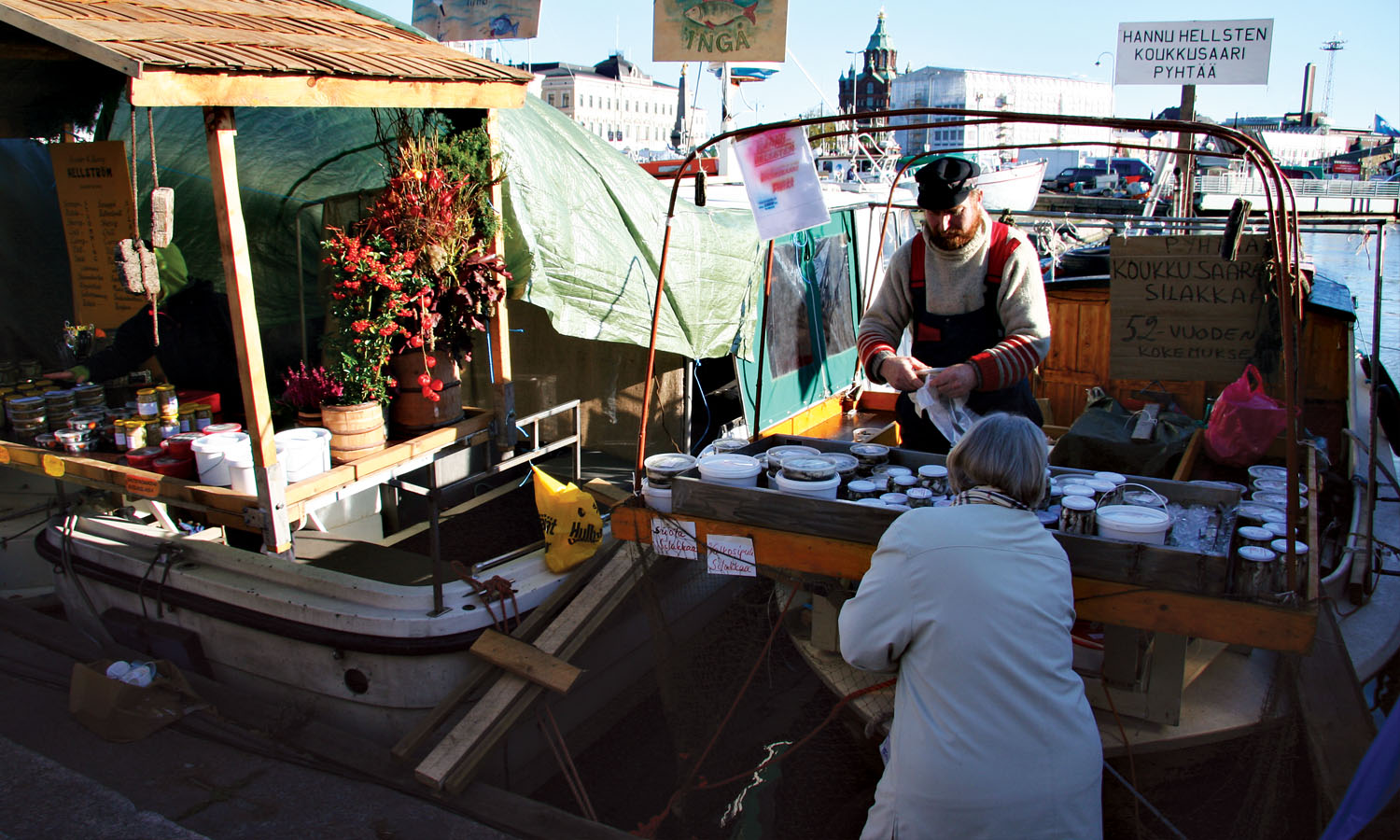
For 200 years, farmers and fishermen across Finland have come to Helsinki’s waterfront for one week in early October to sell their specialties at the Baltic Herring Market. I visit on a chilly morning. People are rugged up in beanies and heavy jackets. On a boat moored nearby a man plays an accordion. Plates are stacked high with American-sized portions of potatoes, fish and paella. I buy a bowl of salmon chowder. It’s creamy, hearty and warming.
Small, wooden, red-brown shacks ring the harbour. The sterns of boats butt up against the promenade and large trestles overhang the wharf, stacked with delights that you are invited to sample. I soon have a handful of used toothpicks and small spoons. Small fish are being sampled on large grill cookplates. Known locally as muikku, this freshwater fish is extremely popular in Finland and the best way to eat it is fried whole in butter. Yes, whole: head, eyes, tail and all. This is how I try it. In a paper container with a side of mayonnaise, it tastes like salty french fries.
Most towns in Finland have a kauppatori. This is the place to sample jams and sauces, gubbe (rye bread shaped like a caramel kiss, with the density of a fresh muffin), salmon rolls, kalajoen nahkiaisia (long bits of fish eaten like a lollipop), local pastries, pies and other delights. Karelian pasties are a favourite. Filled with rice, potato or carrot and lined with a thin rye crust, they are often spread with butter and boiled egg before eating. With their pinched pastry, they look like little moccasin booties – which is pretty much how they taste. At the kauppatori in Kuopio I buy a kalakukko – a large rye stuffed with fatty pork and baitfish. It costs US$20, weighs as much as my head and lasts three lunches and two dinners. It also leaves my breath smelling like tinned catfood.
Larger towns also boast a kauppahalli, generally stocked with fruit, vegetables, flowers and breads. In more rural settings, the produce is more real and imperfect. Apples are spotted and irregularly shaped, picked straight from the back-garden tree. Roots hang from carrots and it’s difficult to discern the beetroots from the potatoes for the dirt. And thanks to Everyman’s Right, berries and mushrooms picked from the forest are in abundance. Everyman’s Right is a traditional Finnish legal concept that permits Finns free access to the land and waterways to collect natural products without a permit. It means that grannies can grab a bucket, throw on some gumboots and skip through the forests without fear of territorial landowners.
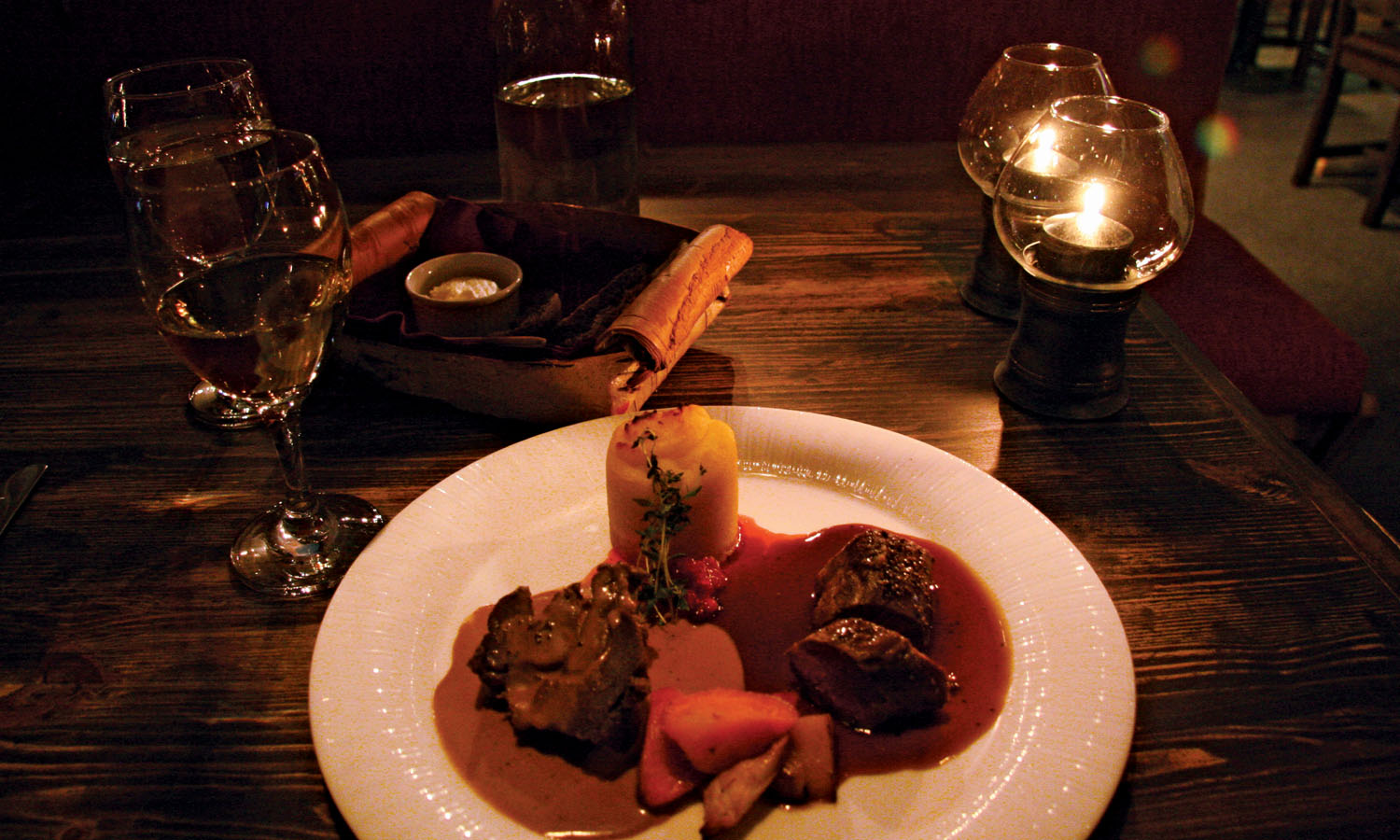
My culinary experience of reindeer is somewhat different to the blood-drenched depiction in the Sami documentary. I visit Restaurant Nili in Rovaniemi to test its promise of the “pure taste of Lapland”. Tree trunks line the walls, animal hides cover the seats and the bread is served in a birch box. Despite all this the restaurant manages to be atmospheric, romantic even, rather than kitsch. I eat reindeer with lingonberry compote followed by baked cheese with cloudberry syrup. I taste Lapland in every mouthful. It’s wonderfully decadent. Warm and full, I throw on my woolly coat, pull up my hood and trudge out into the snow.
Finn Food
Despite the wonderful markets most Finns do their regular shopping in convenience stores. When you visit, throw these items in your shopping basket:
Viili: A yoghurt snack with the texture of runny super glue.
Fazer chocolate: Many Finns tell me that Finland’s Fazer chocolate is better than Swiss chocolate. I love the rivalry and I have to agree that it is really good. For a special adults-only dessert, try their liqueur-filled chocolates. The liqueur is not secreted away in a sweet cream, but is actual liquid. There is only one way to eat them: throw your head back, bite and let the liquid pour down your throat.
Salmiakki (salty licorice) or Salmiakkikossu: A pre-mixed alcohol of vodka infused with salmiakki. It’s like Vegemite – you have to be born there to love it – or even swallow it.
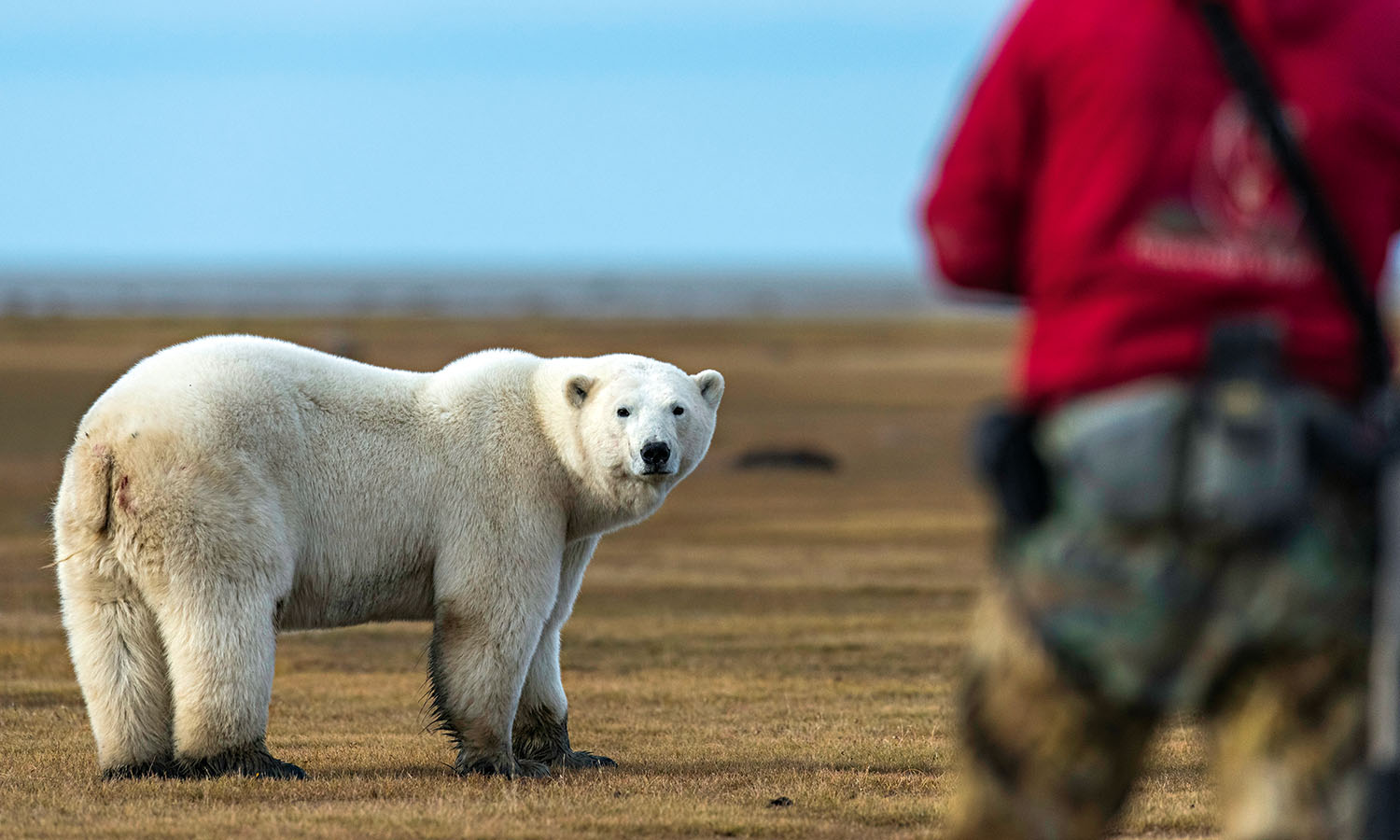
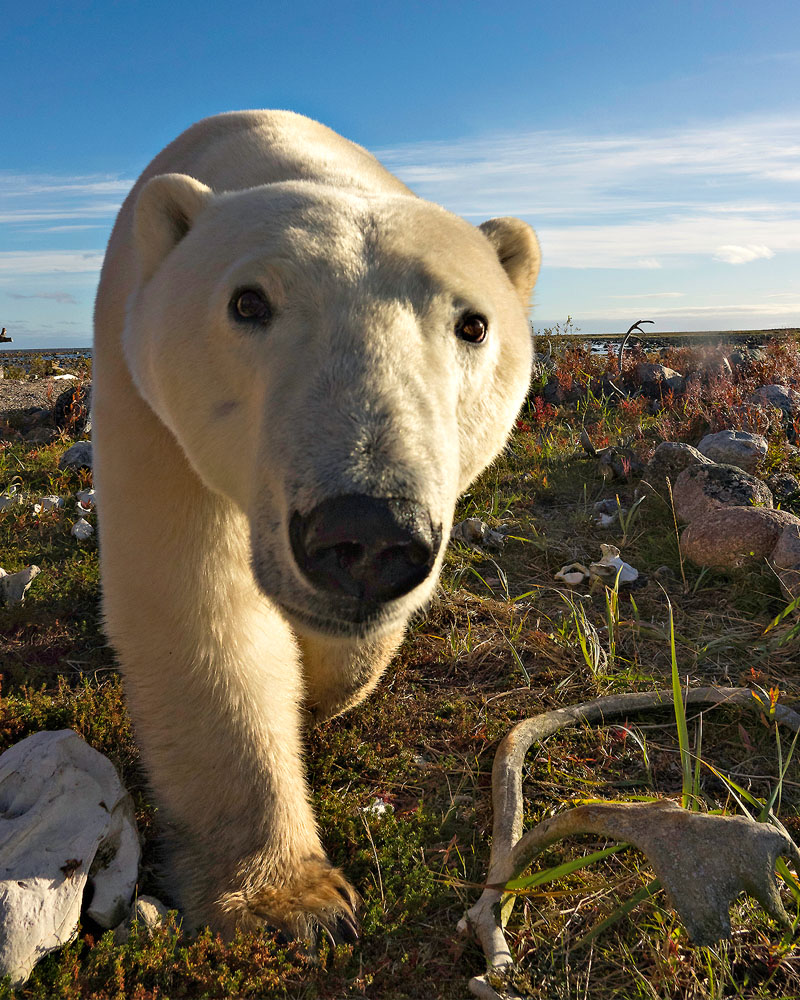
We’re so close to the polar bear I can hear him snoring. Terry Elliot, a guide from the nearby Seal River Heritage Lodge, motions for us to stop walking. It’s late September and blades of sunlight slice across the western shore of Hudson Bay in Manitoba. The bear glows a bright ivory against the autumn tundra.
“He’s missing his buddy,” Terry says. “Males like this one hang out with other young males. It’s called ‘pair bonding’. They’ll spend most of their days sleeping and sparring – practice fighting – until winter comes and they can get back out on the ice to hunt seals again.”
Maybe it’s the mention of seals, but the bear snorts awake and rolls to its feet. I’m suddenly aware of just how big it is and how close we are. I’m six foot, five inches tall. A full-grown male can stand twice my height and outweigh a ’68 Volkswagen Beetle.
I raise my camera when the bear grabs a dwarf willow tree in his jaws and rips it from the ground. Then he tosses the mangled vegetation at us.
“Is he warning us?”
Terry chuckles. “No, that’s his toy. He wants to play with us.”
While I expected to see polar bears from a distance when I arrived at Seal River several days ago, I didn’t expect to be invited into their world. This is one of the reasons the lodge is unique. Founded by a local family with Canadian and Icelandic roots, Seal River and the other four lodges owned by Churchill Wild offer guests a chance to not just see the untamed Arctic but also to immerse themselves in it, bears and all.
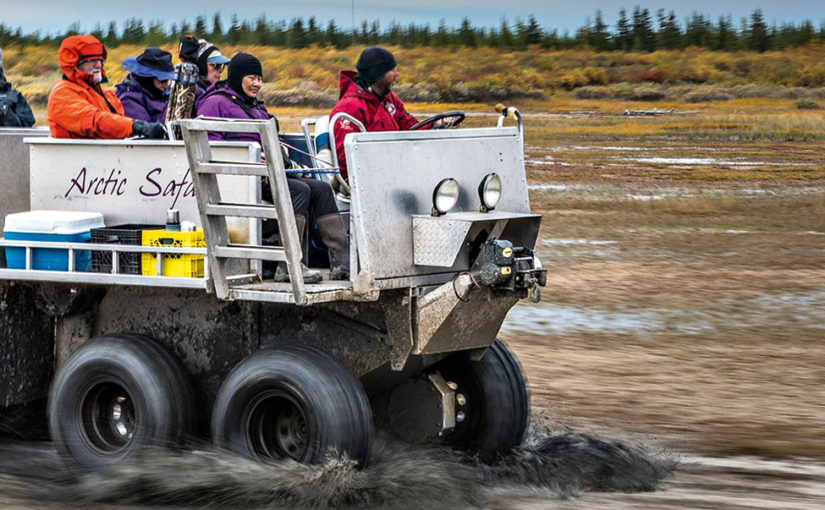
For the past three days, my fellow guests and I have been hiking and voyaging by Zodiac along the pristine coast. Polar bear encounters are frequent, but we’ve also howled back and forth with a pack of wolves, tracked caribou, snorkelled with hundreds of singing beluga whales (some so curious they nudged my GoPro) and explored Inuit archaeological sites.
The morning after the playful bear encounter, we leave the lodge behind for an even more remote destination. A de Havilland Otter ferries us nearly 160 kilometres northwest to Tundra Camp, Churchill Wild’s newest outpost. The wildlife here might be sparser – we spot only a family of black bears from the air – but the draw for us is the Barren Lands. This wilderness of stunted pine forests, rolling tundra and sandy eskers has a population smaller than Broome at Christmas.
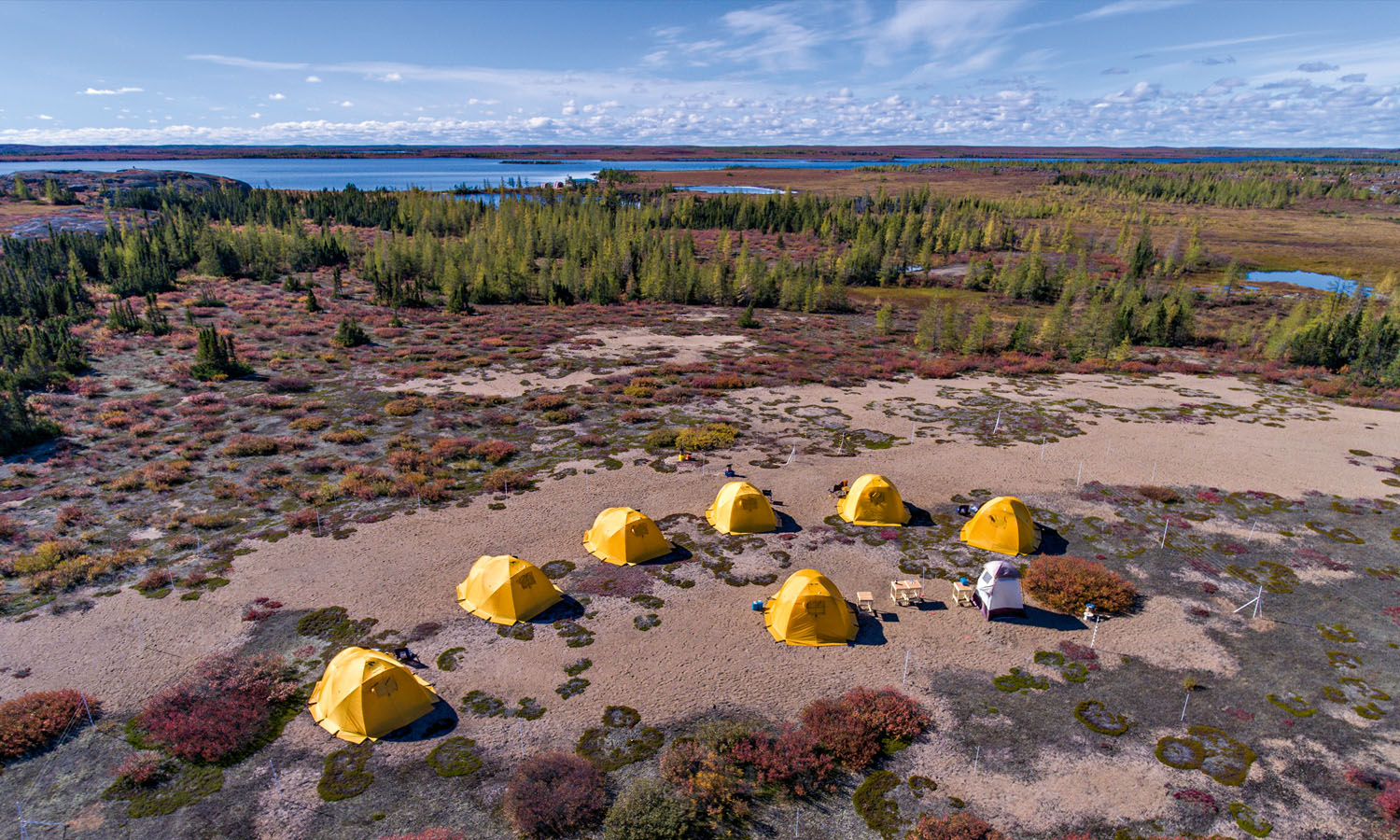
Tundra Camp sits on the shores of Schmok Lake. The main base is a rustic hunting cabin and a pair of large tents – one for dining and one for briefings and bad-weather lounging. The sleeping camp – a dozen private expedition tents with cots, sleeping bags and propane heaters – is a short walk beyond the cabin.
Our two-night stay at Tundra Camp might be brief, but the remoteness and the silence of the landscape – and the prolonged hours of summer light – make the days long and full. One of the guides, Josh, leads some of the group along the lakeshore to explore the autumn landscape and pick blueberries. I join Terry and two fit South Africans on an all-day trek. There are no trails out here; we simply follow ancient caribou paths and spend hours roaming over the low granite-capped ridges. Each summit offers another never-ending panorama.
That evening, after moose lasagne and blueberry pie (the French-trained chef has been imported from Seal River), I join everyone around the campfire beside the lake. The sun is down and the Milky Way is starting to materialise. My legs are hammered and my face glows from long days of Arctic sun and wind. I’m hypnotised by the flames. “Look up,” says Terry.
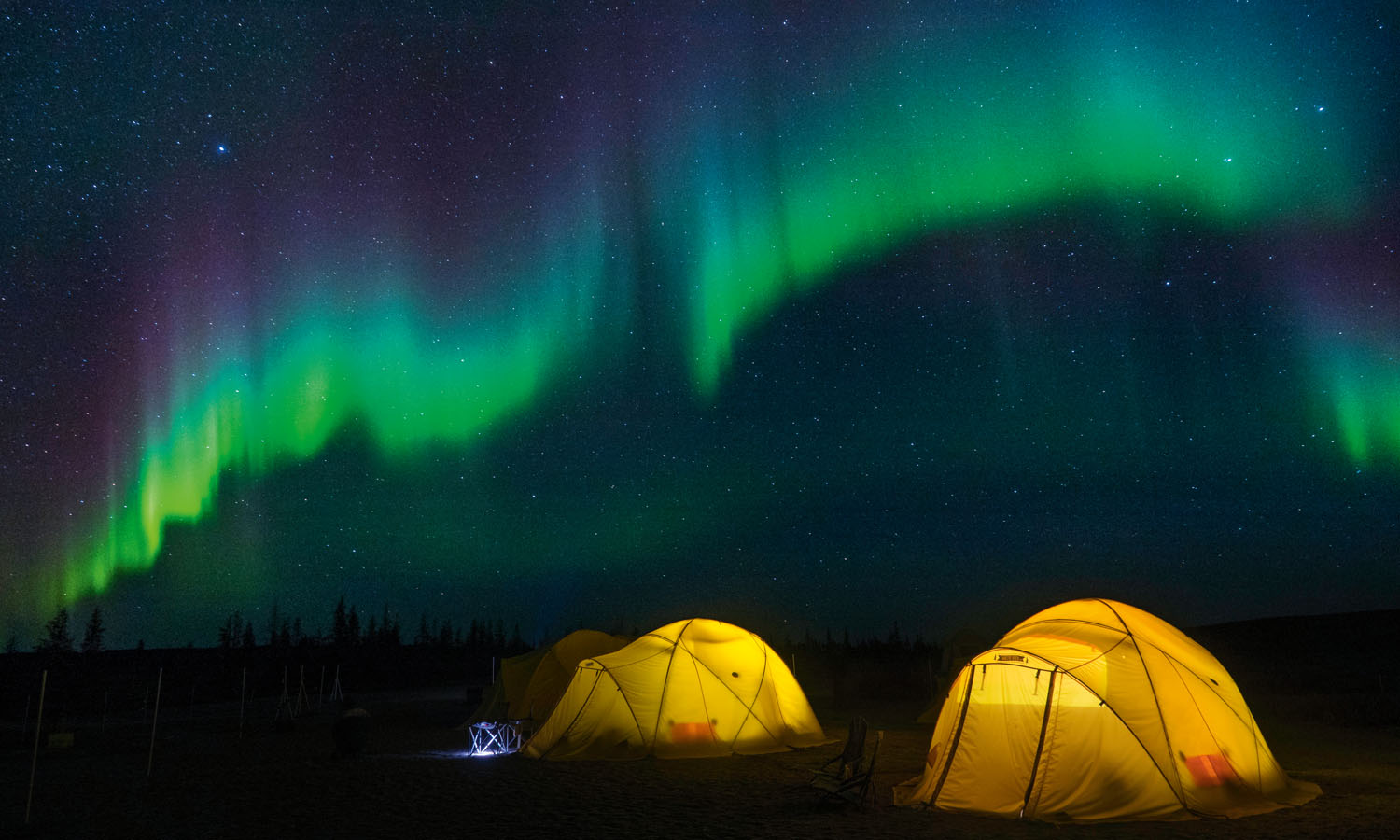
The heavens ripple with tall green and purple curtains: the aurora borealis. We lean back in our chairs. A deep silence falls over us. “The Inuit believe the northern lights are the spirits of their ancestors dancing and playing in the afterlife,” says one of the campers who has travelled in Greenland.
The firewood is gone and the embers cold when we hike back to camp. Before I click off my headlamp and unzip the tent, I look up again. The shimmering spirits are still dancing over the Barren Lands.
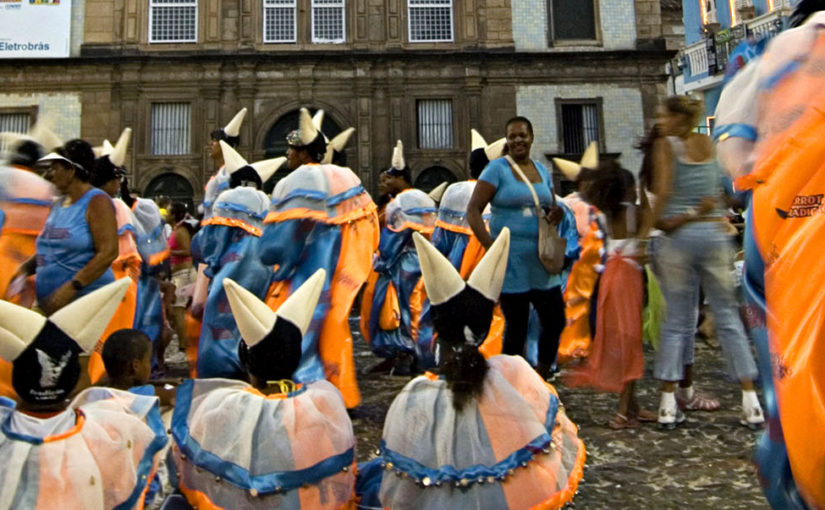
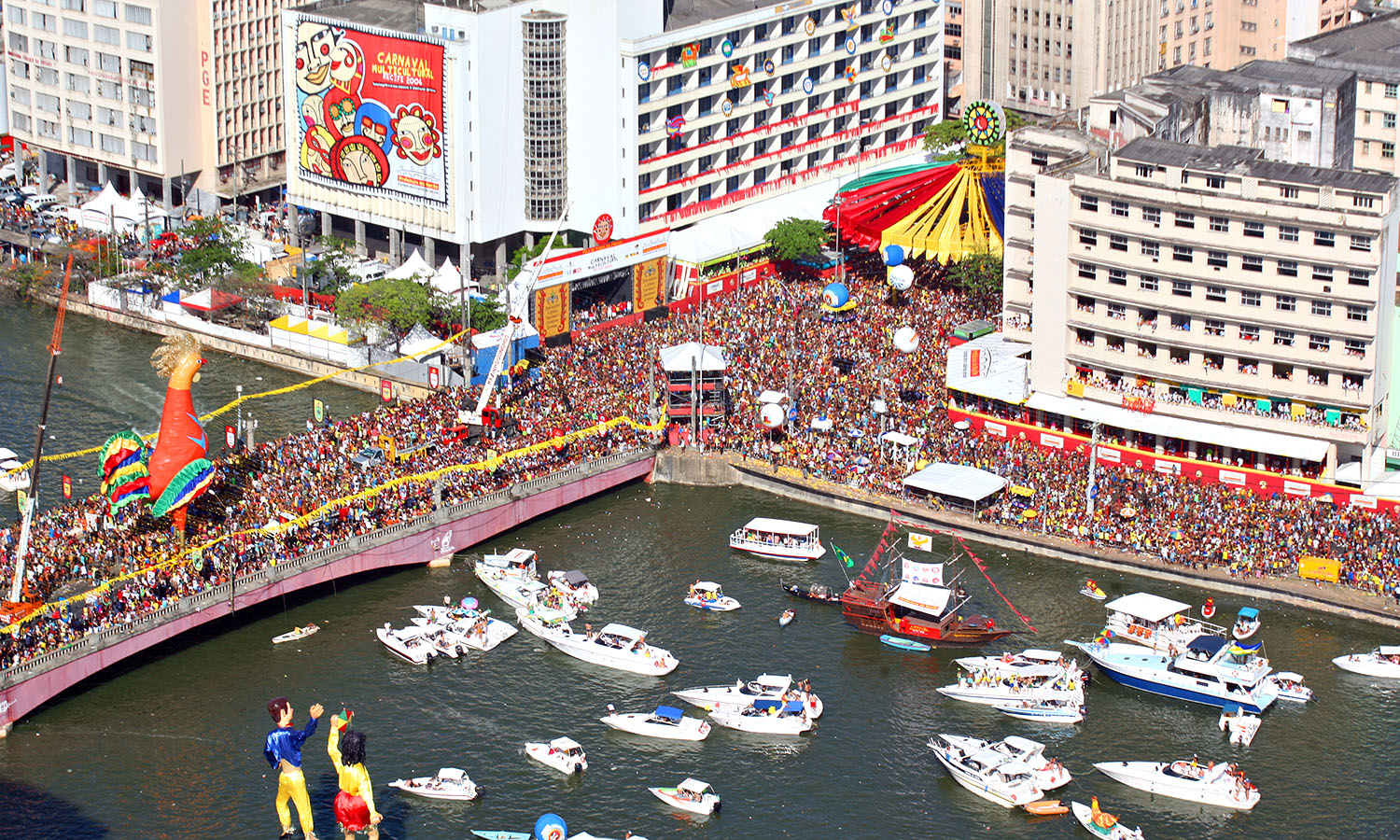
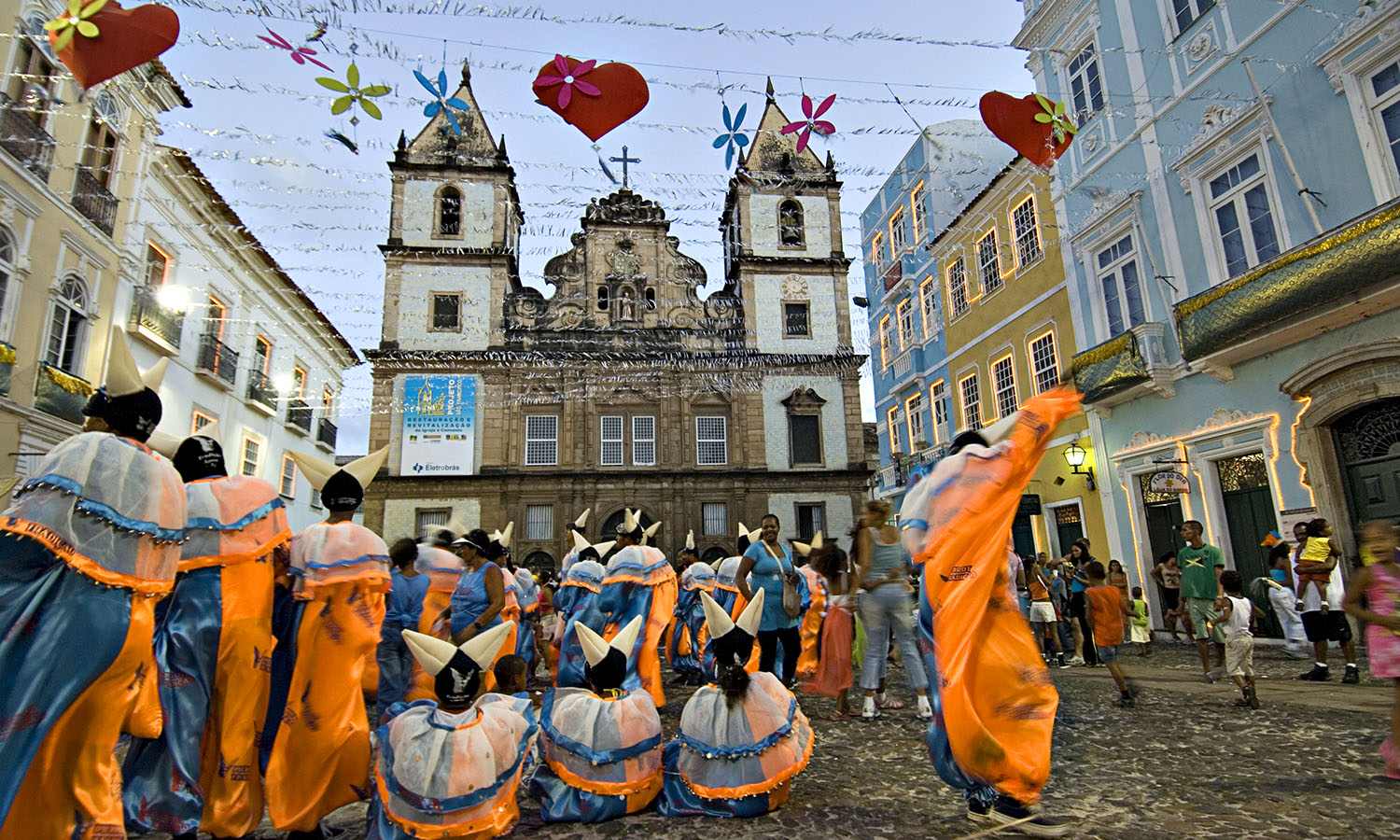
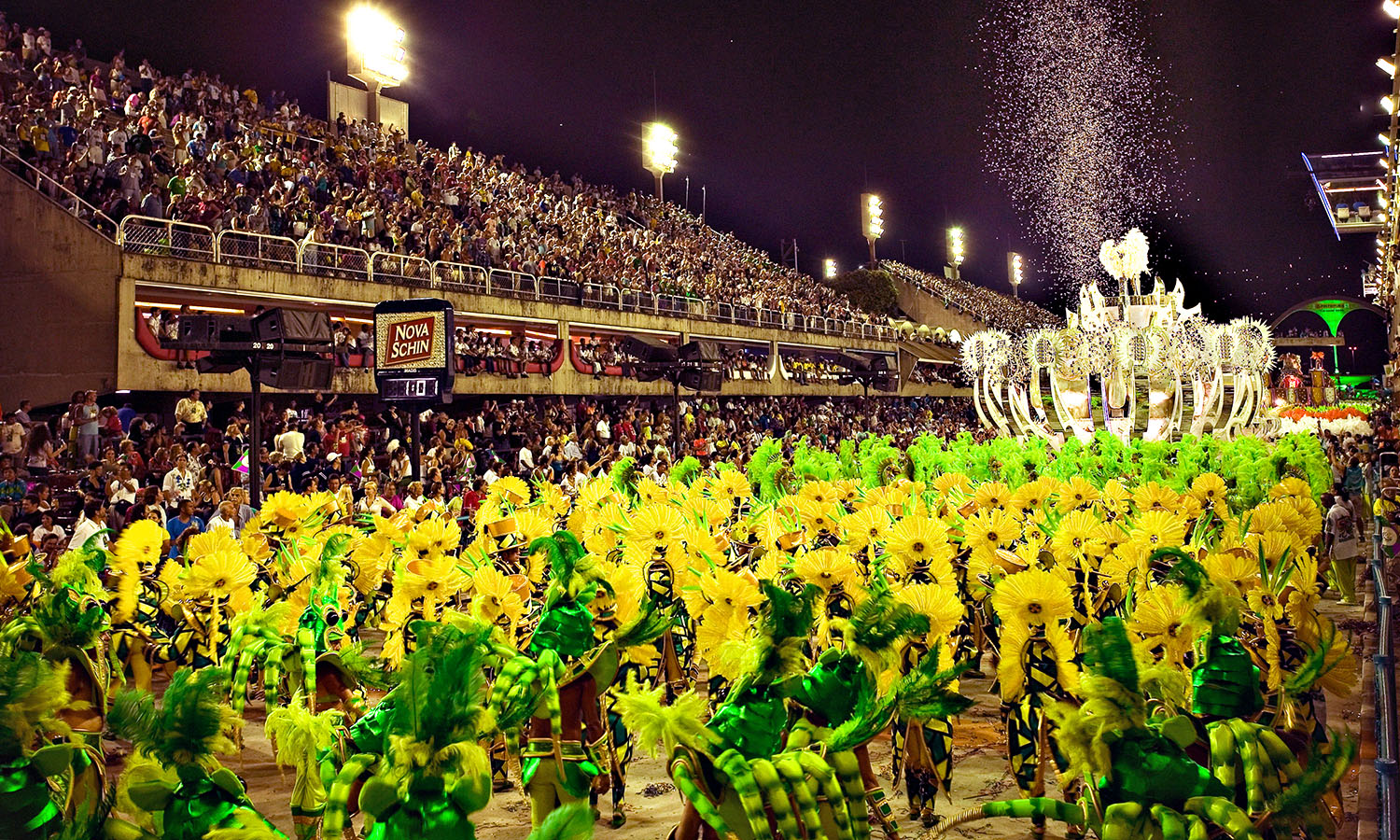
For five days a year, Brazilian cities come alive with music, parades and millions of beautiful people showing off all their best assets. It’s something every traveller needs to experience at least once in a lifetime, but it can be a little overwhelming – especially if you want your legs and liver to survive. Here are our five tips for squeezing the most out of your Carnival experience.
1. Select your city
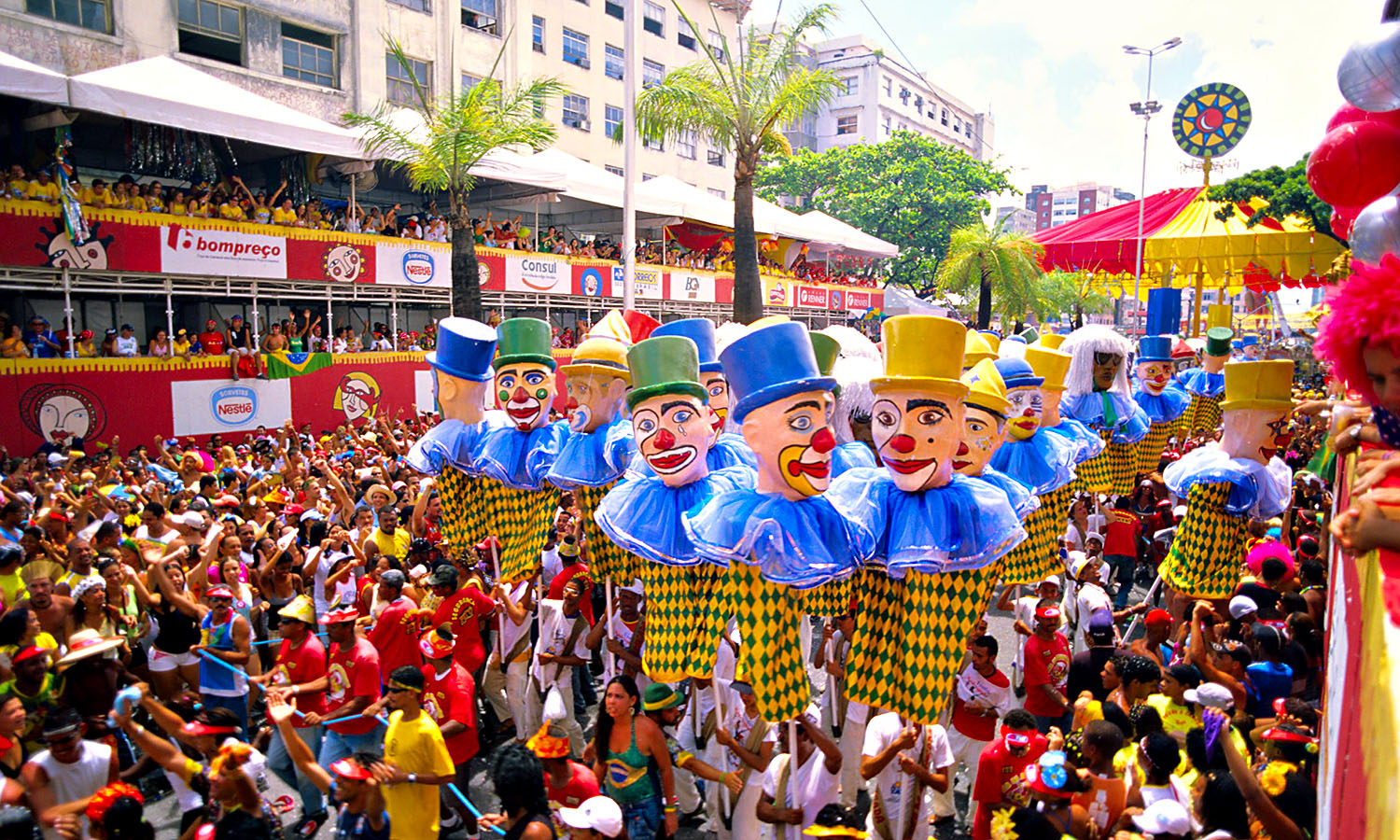
The most famous celebrations takes place in Rio de Janeiro, but that doesn’t mean you should ignore everywhere else. Each region has its own specific flavour, meaning different costumes and different musical beats. Our favourite pick (other than the Marvellous City of course) is Salvador. Depending on which report you believe, between one and four million people flood the city to whip up a hedonistic storm each year. Here, you can buy yourself an abadá (t-shirt) that acts as a ticket to parade with a specific bloco (group), or gives you access to the grandstands to watch the parade.
2. Get planning
If you haven’t already booked your accommodation, do so pronto as prices rise during the festivities. Now’s also the time to start gathering sequins, feathers and risqué swimsuits – dull attire is not an option. If you’re travelling on an Australian passport you’ll also need to lodge a visa application so you can actually get into the country. It’s pretty easy to do, especially if you live in Canberra (go to the Embassy of Brazil) or Sydney (say hey to the Consulate-General) but can take a few days to process. The wait is a bit longer if you live elsewhere and you need to use the post.
3. Stash your cash
It’s handy to have some Brazilian money (Brazilian real) with you when you arrive, although lots of restaurants and shops do accept credit cards. Be sensible when you’re withdrawing money from ATMs and when you’re out partying stick your money in your shoe, and leave your camera back in your hotel room.
4. Check your licence
Hiring a car is a great way to fit in a couple of Carnival destinations. If you’re going to drive through Brazil you can do so with your usual licence, as long as you’re not staying for longer than 180 days. Just make sure you’re on the ball and driving on the right hand side of the road.
5. Chill out
Carnival keeps going 24-hours a day and sleep becomes a rare and valuable thing. With the streets heaving with people yelling, whistling and merrymaking, it can be difficult to catch some zzz’s, even when you’ve made the tough decision to part from the party for a little while. Make sure you bring good quality earplugs, schedule in some time at the beach and keep your body fuelled with the delicious street food for sale.
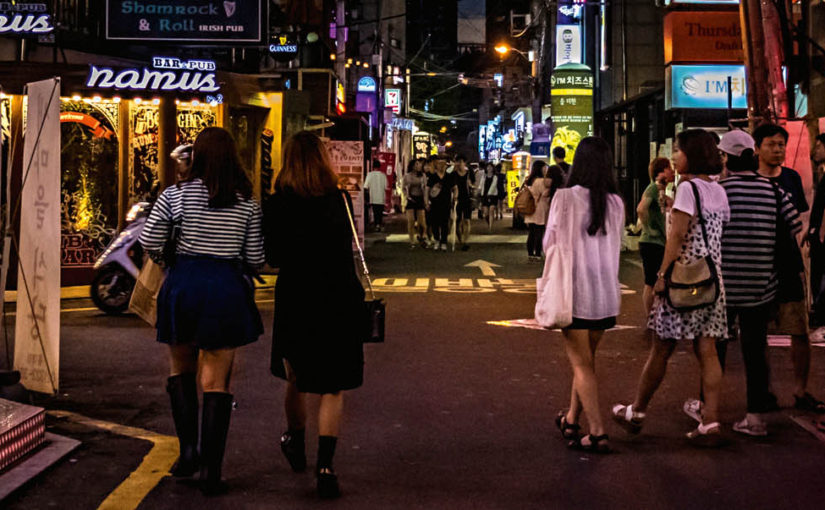
In Korea there are two big vices: work and play. At school and the office, Koreans will routinely put in 14-hour days for weeks at a time. So, in the little time they have free, they ‘play’ – a euphemism for going out and getting drunk with friends. With a population matching Australia's, Seoul and its suburbs teem with bars and restaurants. But it is Hongdae, in the northwest of the city, that really comes alive at the weekend. Artists, clubbers, ravers, craft-beer aficionados, students looking to hook up, office workers blowing off steam… On Friday and Saturday nights, they all pile into this neighbourhood near the university after which it’s named for the best time in town.Beer is king at Keg B.
6pm
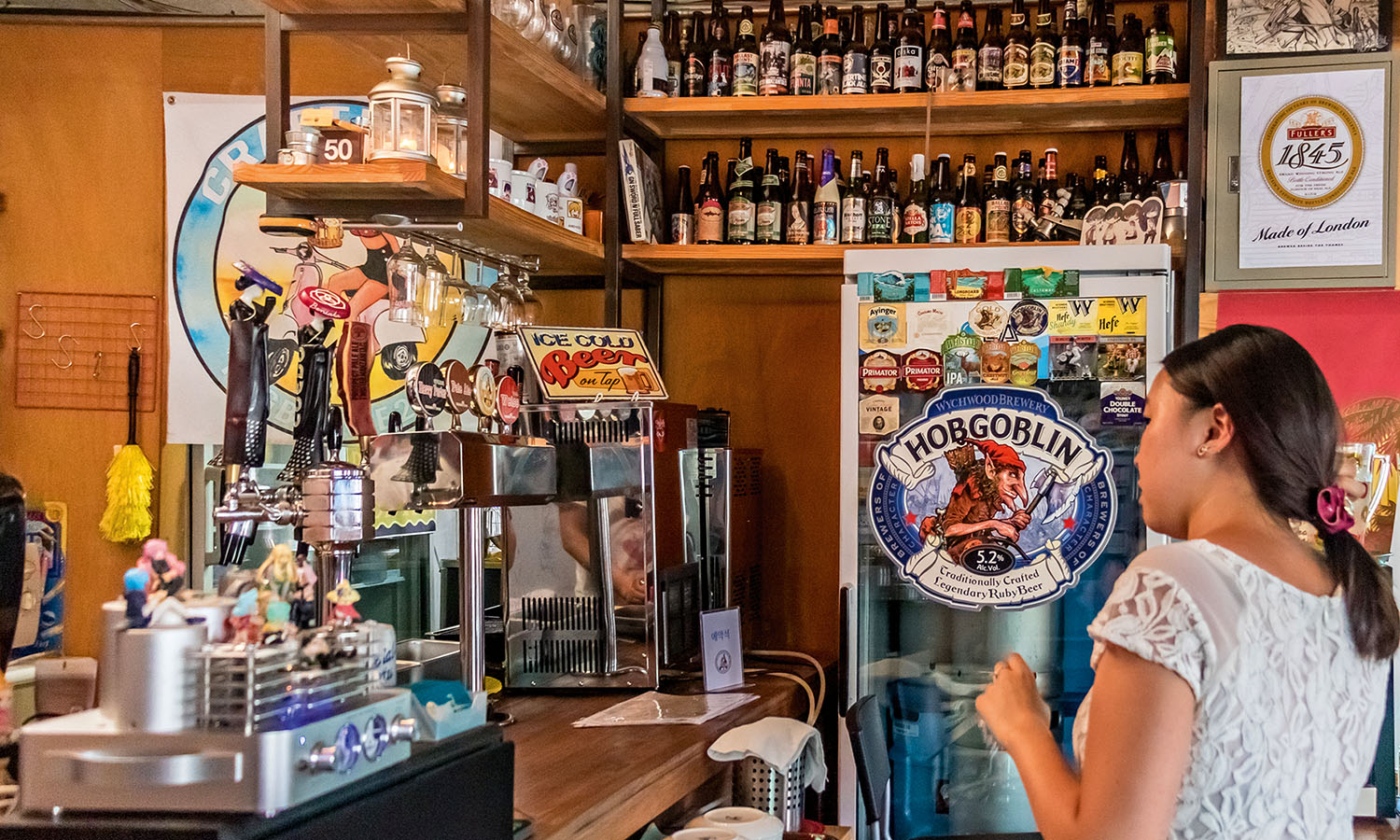
A recent boom in craft brewing in Korea means beer drinkers are no longer forced to drink the thin yellow piss most common in the country. Small and airy Keg B serves craft beers from Korea, Japan and the USA on tap, and dozens more bottled varieties from the fridge. Gaze from huge open windows on the third floor to the streets below, watching the beautiful young people shop, eat and drink. Blue and white decor gives it a Mediterranean feel, and it’s easy to while away a whole summer day here. Keg B
Seogang-dong 92-6 www.facebook.com/kegbpub
6.45pm
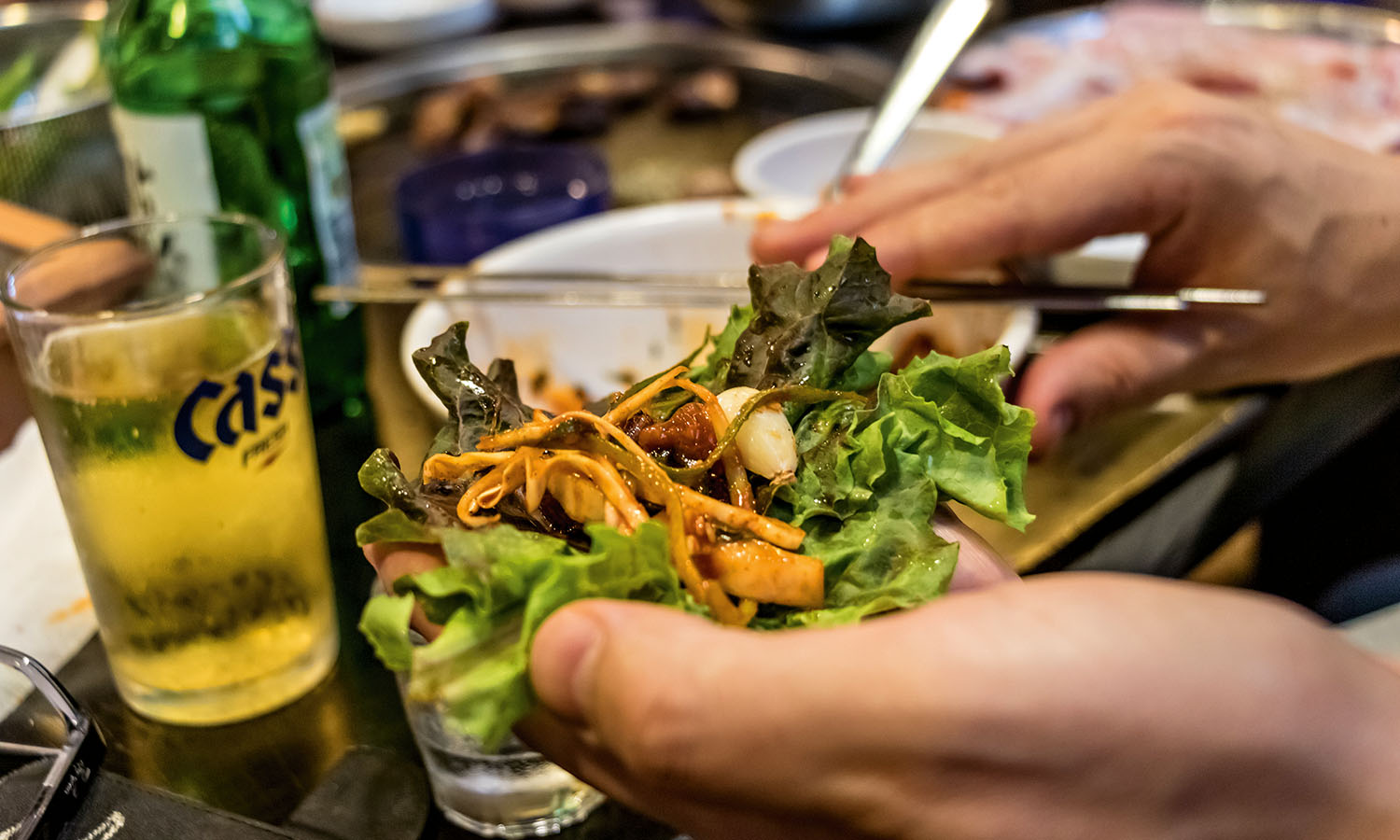
Barbecue is the crowning achievement of Korea’s national cuisine, and the Saemaul Sikdang chain is one of the best places to get your grill on. Waitresses bring great piles of pork and beef to your table – the yeoltan bulgogi (spicy thin pork) is sensational – then you cook it yourself over hot coals. Once it’s done, wrap it up with garlic, kimchi and ssamjang (thick, spicy sauce) in a lettuce leaf and chow down. Also highly recommended is the magnificent seven-minute kimchi jjigae, a spicy stew made of kimchi and pork, cooked over the barbecue grill for those aforementioned seven minutes and devoured with rice. Through it all, you can toss down glass after glass of cheap soju, a clear, vodka-like spirit Koreans throw back like water. Just don’t fill your own glass – no one pours for themselves at a Korean table, you philistine! Saemaul Sikdang
Seogyo-dong 367-6 newmaul.com
8pm
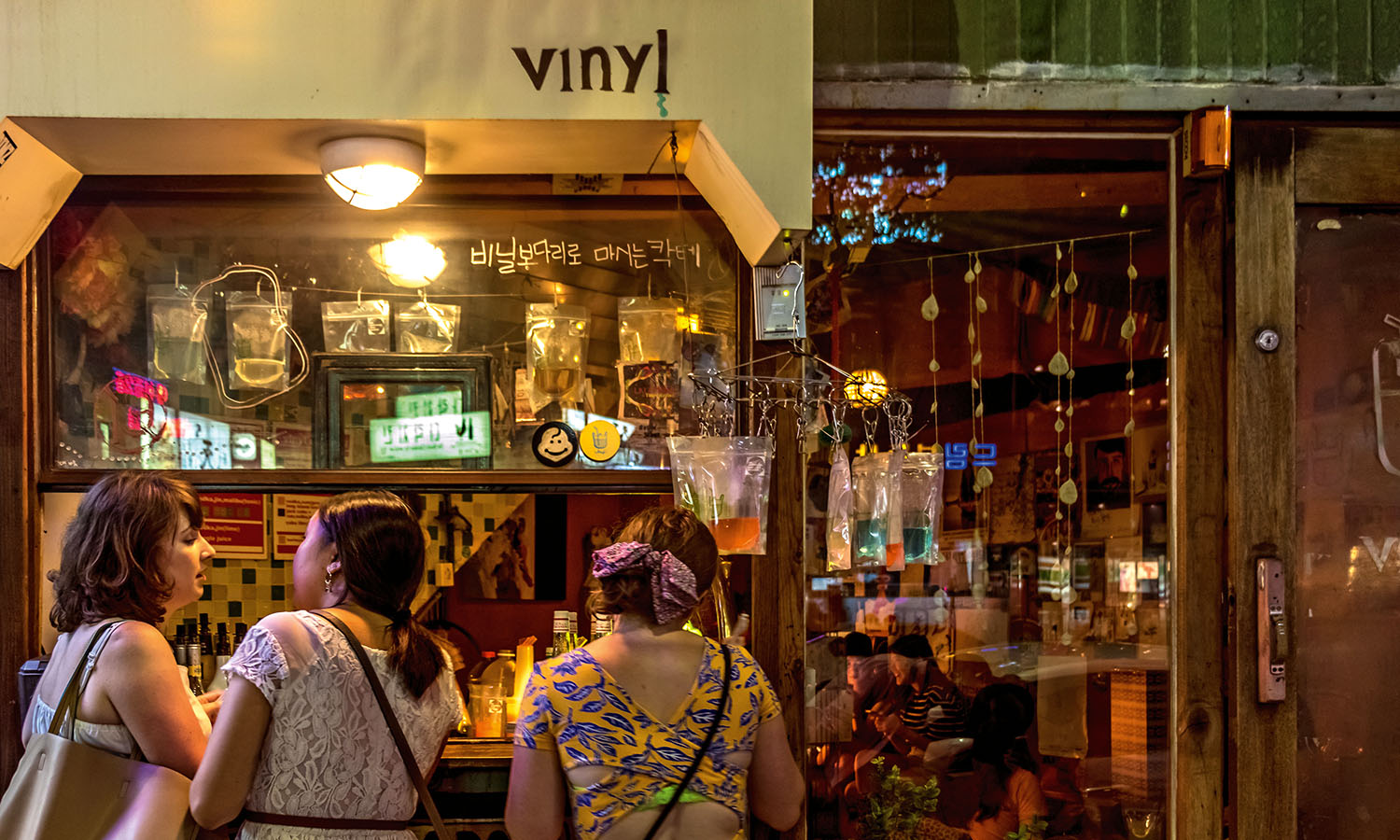
Think of all the reasons people are hooked by a certain bar: creative drinks, hot DJs, cool staff, somewhere to sit even during busy periods. Well, Vinyl distinguishes itself by serving cheap cocktails in plastic zip-lock bags with a straw. Legend! But even without the little bags, this bar, with its cosy, dim interior, Balearic music and pumpkin-coloured walls covered in gig posters, makes for a great stop on a night out. Plus, if it’s a little too crammed inside, there’s a take-away window where you can get your cocktails to go. Vinyl
Seogyo-dong 411-1 instagram.com/Seoulvinyl
9pm
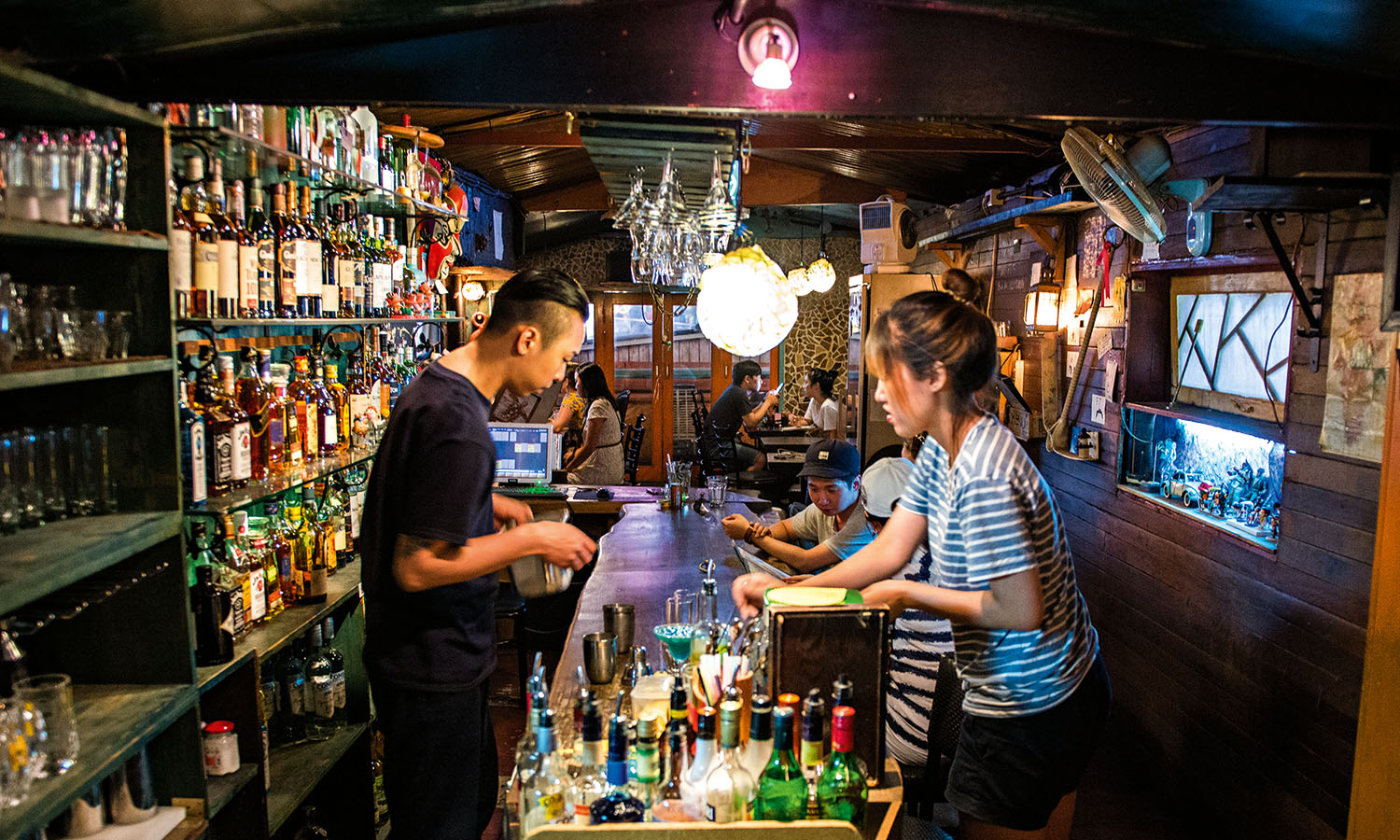
The road leading to Bar Da is an alley packed with thousands of fellow party-goers. As you’re being pushed through the masses, the entrance – just a small door with a tiny sign above – can be easy to miss. But climb the stairs and you enter one of Seoul’s most chilled-out and unique bars. There is a brilliant single malt scotch collection, sold by the bottle or glass, and each of them is great with a bowl of peanuts and dried anchovies. Swaddled in its dimly lit, 1920s charm, you can watch the mad alley beneath you. Bar Da
Seogyo-dong 365-5
10pm
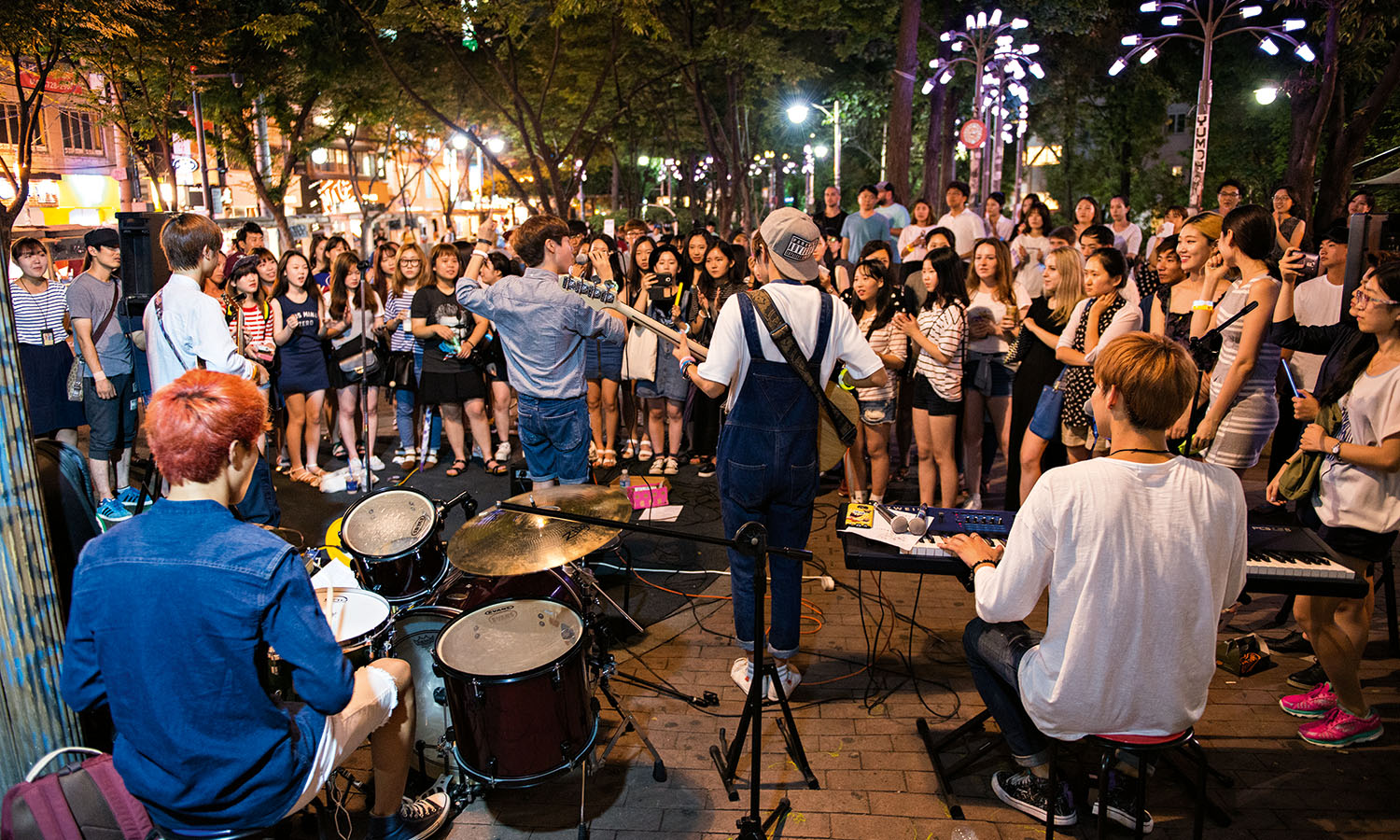
At Hongdae’s heart is a small park. During the day, children play here and artisans sell their wares in an open-air market. At night, however, it becomes ground zero for Korea’s buskers, including hip-hop acts, pop bands, punk groups and drum circles, all of whom bust out tunes while onlookers mix and flirt. The Goodtime 24 corner store across the street makes a mint flogging cans of beer to the parched, and cocktail vendors often set up stands. Just be sure to watch your belongings – purses have gone missing and, last time I was there, a homeless gentleman relieved me of my beer. Hongdae Playground
Seogyo-dong 358-36
11pm
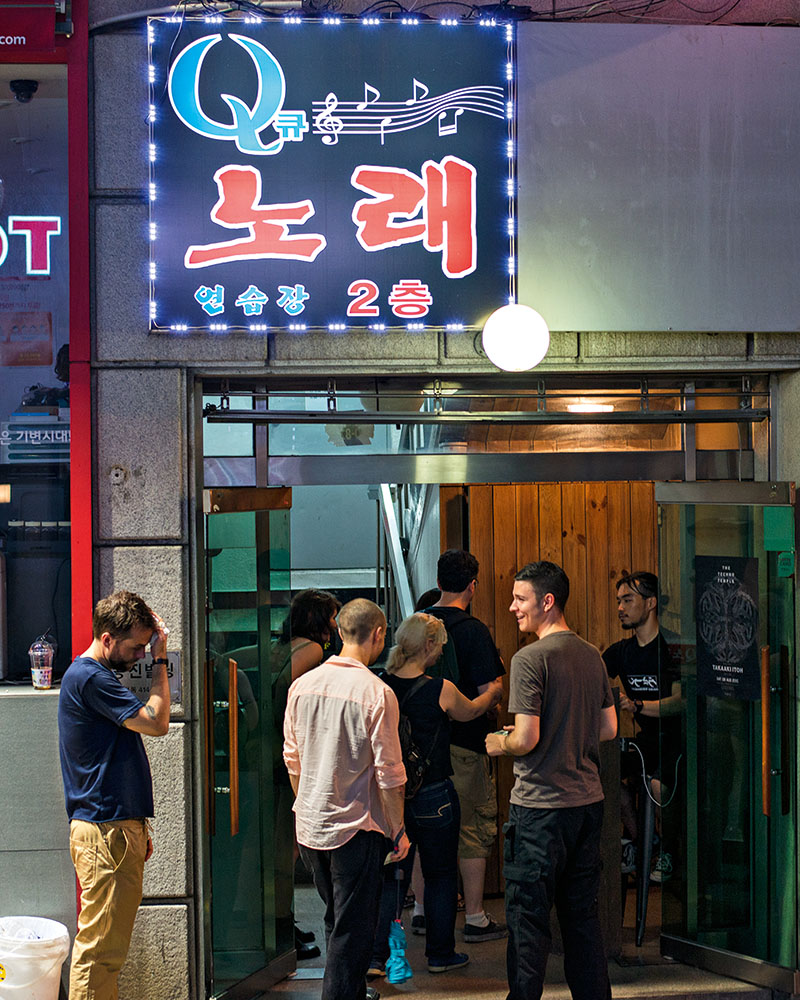
You’re going down; down into a basement to experience Hongdae’s thriving live music scene. Club FF (apparently that stands for Funky Funky) is one of Seoul’s best and most enduring venues, despite its shocking bathroom. For about AU$11, you can see acts like Wasted Johnny’s, a hard-driving blues rock trio whose singer-guitarist Angie rages like Jimi Hendrix in a miniskirt. You’ve arrived just in time for cocktail hour, too. From 11pm to midnight, rum and Cokes, screwdrivers and gin and tonics are all free. Yes, you read that right. Club FF
Seogyo-dong 407-8
12am
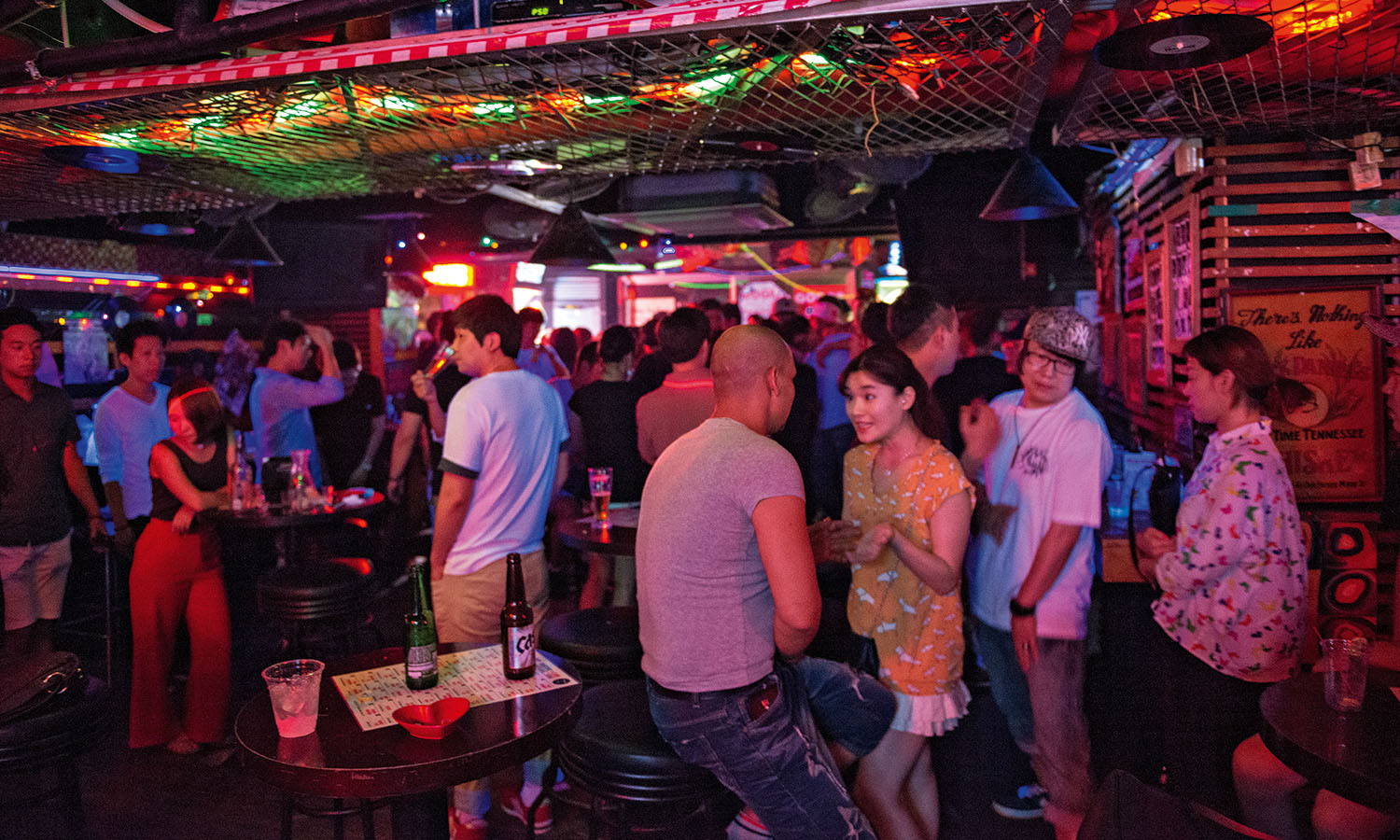
Gogo’s is literally right upstairs from Club FF, accessed by a dodgy metal staircase in the front of the building. There is no cover charge, the drinks are cheap, and the indie pop music – think ‘Song 2’ by Blur – is loud. There is no official dance floor, so fun-loving youngsters dance between the tables, in front of the dartboards, and by the door – basically wherever there is free space to shake it. Gogo’s
Seogyo-dong 407-8
1.30am
If you’re looking for Seoul’s most exciting, independent, underground techno club you’ve found it – well, almost. Vurt isn’t the easiest hot spot to locate – you will absolutely need the map on its website, since it’s way too hip for signage on the door – but the struggle is worth it for the rotating list of foreign and local DJs. Hand over your 20,000 won (about US$17) and descend into a cavern so dark and sinister-looking you might imagine blood could start spraying out the sprinkler system at any moment. It won’t (at least we don’t think it will), and the dark techno should get your feet moving. Vurt
11 Dongmak-ro vurtkr.flavors.me
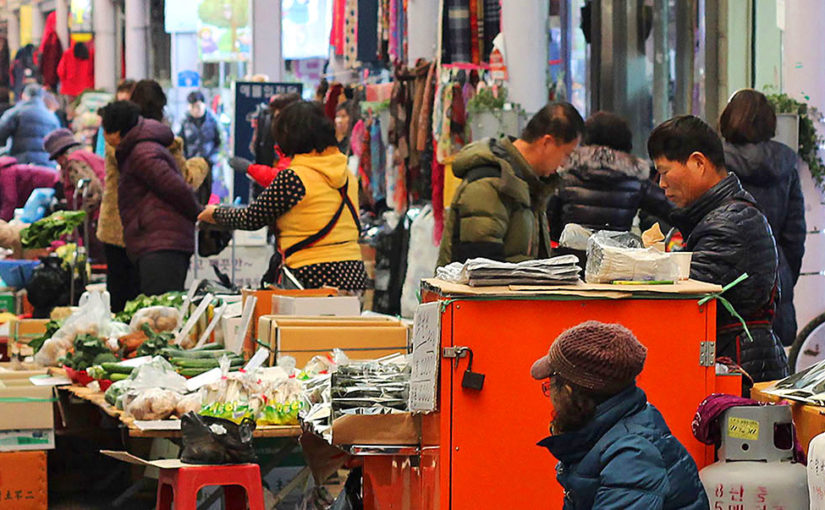
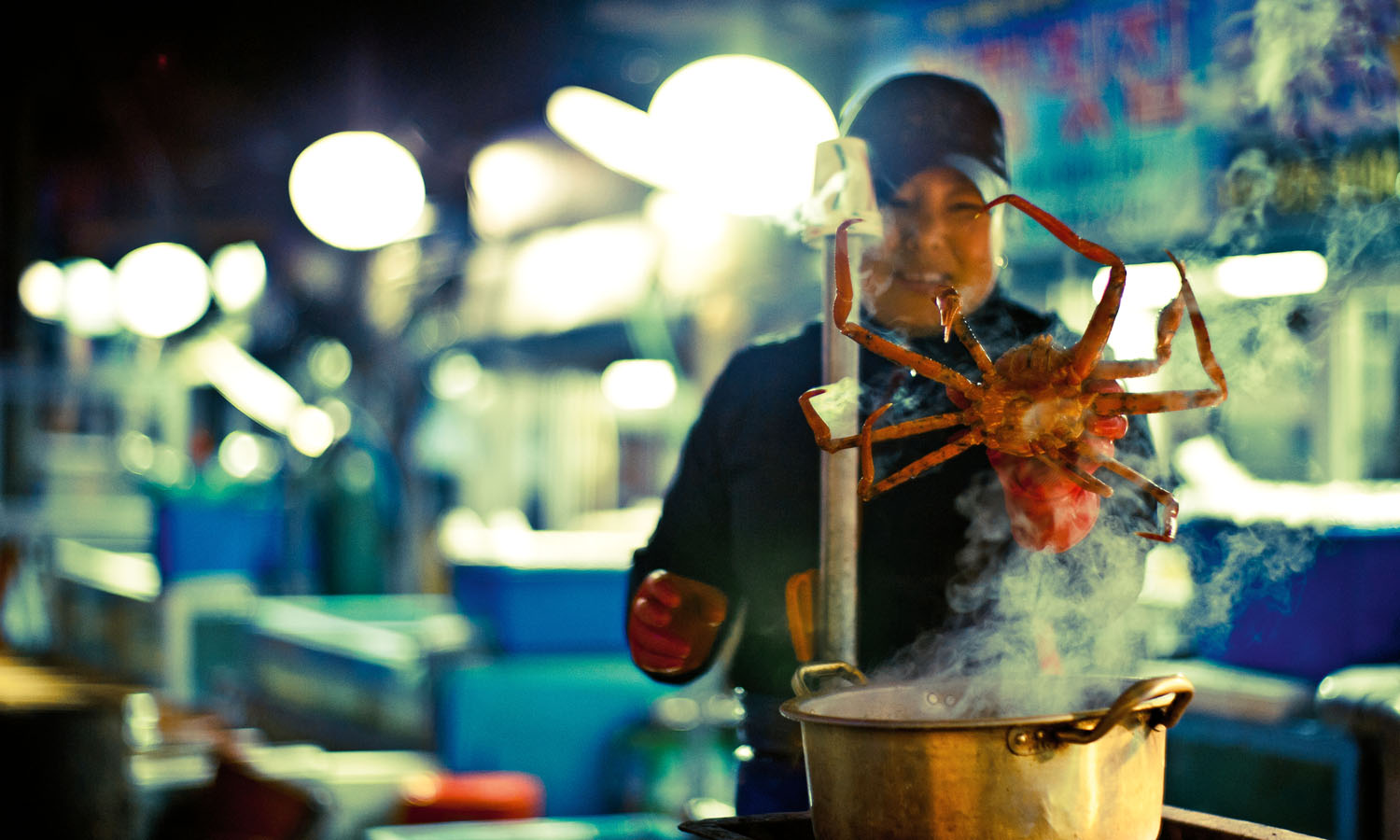
I’m lost in Chungju’s traditional market. The crossroad is a jumble of seaweed, boiling pork hocks, lace underwear and dried fish. A butcher bellows prices, his cleaver filling the air with meaty thwocks. My eyes sting as a cart of fresh ground pepper rolls past, and I pick a direction at random. It doesn’t matter which way I go – in Korea, all roads lead to tteok.
Sure enough, I find what appears to be a Parisian confectionery tucked among the fruit stands and chicken feet vendors. I ogle the rows of coloured bonbons and miniature cakes. There are pastel circles dipped in coconut, tiny flowers coated in jelly, white half-moons with delicate green stripes. Unlike your typical sweet treat, it’s all made of rice.
Tteok is traditional Korean rice cake. As ubiquitous as kimchi, it has a ceremonial weight pickled cabbage just can’t match. Tteok has been part of Korean culture for thousands of years. There are dozens of varieties to mark the journey from birth to death, each for a different life event or season.
Unlike the puffed-air frisbees I’m used to, Korean rice cake is dense and chewy. It clings to my fingers and pulls at my teeth like taffy. School children eat tteok before a big test to help the answers stick in their minds. But it’s also a celebratory food. Football-shaped songpyeon are eaten for the Chuseok holiday. White coins of garaetteok symbolise prosperity at Lunar New Year. My favourite is baekseolgi, a soft, spongy cake that celebrates a baby’s first hundred days.
Tteok used to be made in the home, but nowadays Koreans rely on tteok jibs to keep up with the revolving calendar of holidays. These specialty shops range from hole-in-the-wall kitchens to glossy storefronts. The cakes are made fresh to order and often include delivery. In South Korea’s convenience culture, there’s a tteok jib every few blocks.
I head to Chungju’s Munhwa neighbourhood to meet Hwe Yeong Ju, a tteok chef and jib owner. She’s been making rice cake for 20 years, and the walls of her store are lined with photos and awards. One picture shows her smiling in a white chef’s toque, another in a traditional hanbok (dress). Below the frames is a display case of specialty gift boxes.
The packages are nearly as intricate as the sweets inside.
But my translator is distracted by the window display. “Oh, so delicious,” she whispers, pointing to sesame-dusted injeolmi tteok. A popular festival treat, injeolmi is labour intensive. Its thick, sticky texture is achieved by brute force pounding. In the old days, this was done with man-sized hammers or wooden treadle machines. Just making the rice flour involved stone grinders, massive mortars and pestles, and maybe an ox.
The process was so exhausting it became communal. Extended families worked together to make enough for each household.
I ask Mrs Ju how tteok making has changed, and she leads us to the kitchen. It’s all stainless steel and white tiles. Hefty machines take the floor space, and shiny steamer baskets line the walls. Every aspect of the process is done in-house. First, rice is soaked for six hours, then ground into flour. Most people haul their rice to a miller, but Mrs Ju has her own grinders. There’s an automatic sifter, a machine for pressing injeolmi, and even one that wraps pieces like chocolate bars.
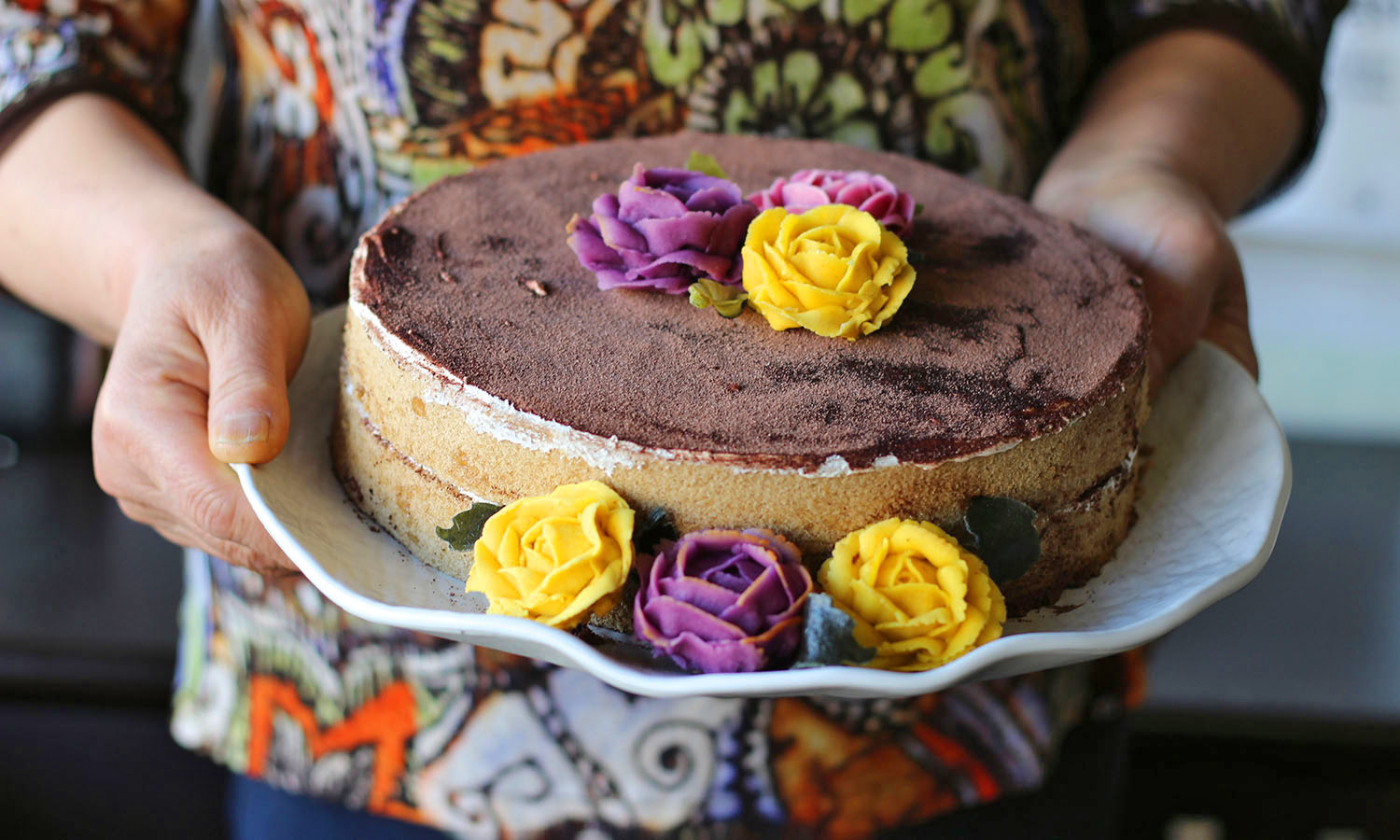
The metal worktable blooms with roses. These too are made of tteok and will decorate a chocolate rice cake. Western tastes and aesthetics have become popular in South Korea, creating demand for fusion recipes, but traditional flavours, like red bean, are still the most popular. The shimmering colours come from natural ingredients: mugwort greens, sweet potato purples, rich pumpkin yellows.
When I ask Mrs Ju about tteok’s shift from home to jib, she cites the economy. The country experienced a massive upswing between the 1960s and ’90s. Within her lifetime, South Korea went from a third- to first-world nation. Rocketing growth had an impact in the kitchen.
“As the economy developed, housewives launched into the world and got jobs,” she says. There isn’t time to make all that rice cake these days, but that isn’t the only factor. “People think making tteok is difficult,” she adds. It’s a perception she’d like to change, so she teaches a tteok cooking course at the Chungju Women’s Center. The students are locals, mostly young mothers and brides-to-be. Among them, I felt like a less-impressive version of Julia Child in France: loud, foreign and way too tall. But enthusiasm overcomes the culture barrier.
I ask one young woman why she enrolled, and the others answer for her: “To help get a husband.” “To impress her future mother-in-law.”
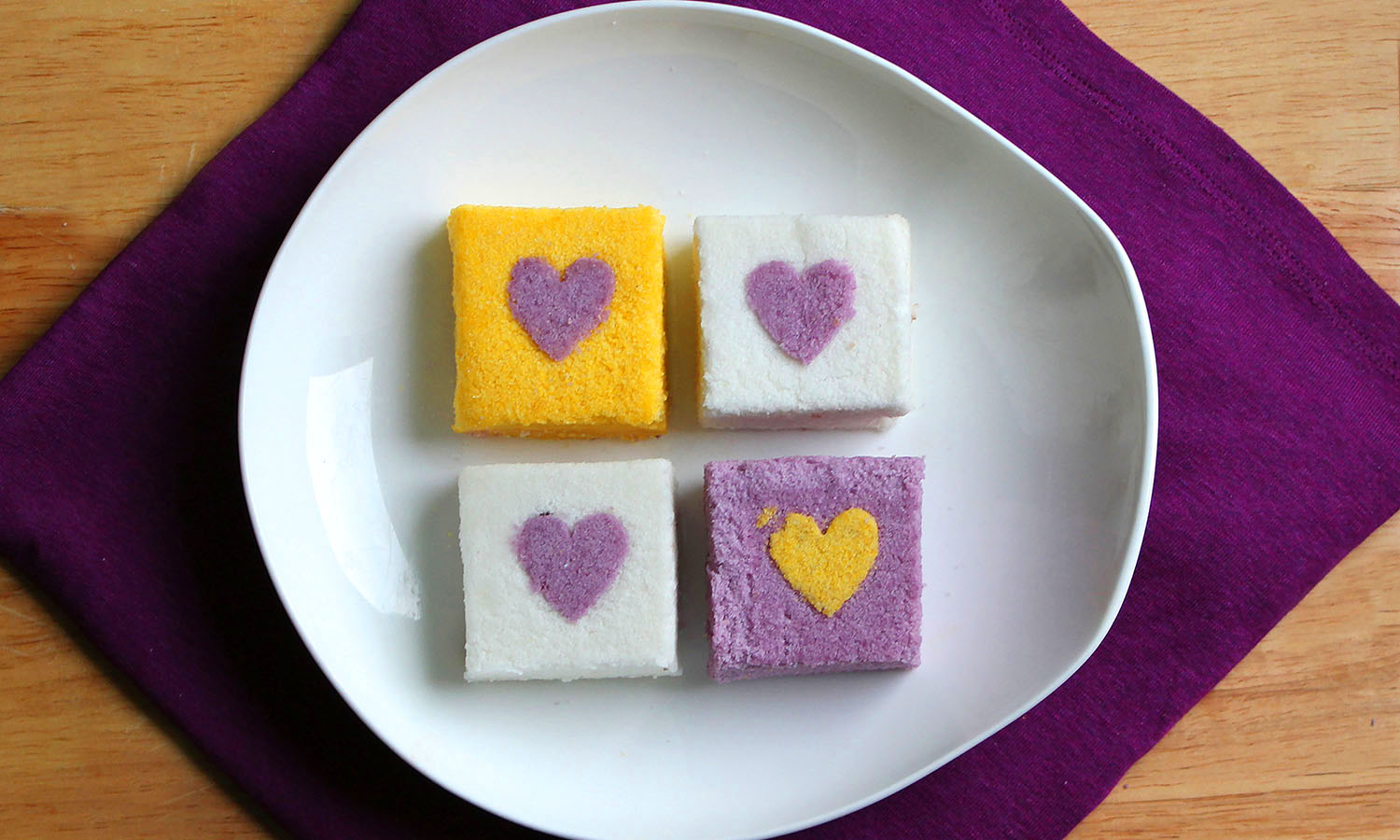
We’re making my favourite, baekseolgi. For a baby’s hundred day party, the cake is pristinely white, but tonight we add sweet potatoes for colour and flavour. The recipe’s surprisingly straightforward. Add potato to the rice flour, sift and steam. Mrs Ju demonstrates a batch, then turns us loose. Muggy clouds roll off our steamers, giving the air a summer closeness. We wilt, fanning ourselves with recipe cards. But our teacher walks the tables in a crisp lab coat, lifting lids, tasting, adjusting, coaching. Tteok is as much art as science.
This is especially true with our homemade rice flour – it’s hard to get the moisture right. She rubs my mix between her fingers, then sluices in more water. She has me feel it. My fingers find a texture like grated parmesan cheese. It clumps when I squeeze it, and she smiles: perfect.
We use both purple and yellow sweet potatoes. Mrs Ju has us layer the colours in the steamer basket, so it cooks in stripes. Then she gives us a pro-tip: cut the tteok before steaming for clean, perfect pieces.
Afterward, we turn our baekseolgi out onto the table. The colours are Crayola bright, and the two-tone squares look like kitchen sponges. Mrs Ju offers plastic bags so we can take our triumph home. By the end of class there’s no need. We’ve eaten it all.
INGREDIENTS
4 cups tteok rice flour (also called glutinous rice flour, available at Asian grocery stores)
1/2 teaspoon salt
1 sweet potato, mashed
1/4 cup caster sugar
METHOD
Line the basket of a 30-centimetre steamer with cheesecloth or baking paper.
Combine rice flour and salt in a large bowl. Rub the mashed sweet potato into the rice flour with your fingers. Sift the mixture through a wire sieve.
The resulting powder should feel coarse, like grated parmesan cheese, and clump together when squeezed. If it doesn’t, add one tablespoon of cold water at a time. Rub it into the powder until you have the right texture.
Sift the powder a second time. Sprinkle in the sugar and mix gently.
Pour the powder into your steamer basket, and smooth the top. Cut the pieces you want, so they cook with clean edges. Steam for 20 minutes and turn out onto a plate to cool.
Tteok tastes best the first day, but it also freezes well. You can substitute squash or cocoa powder for sweet potato, as long as you adjust the moisture accordingly. Spices, nuts and dried fruit are delicious additions as well.
I began with a simple plan: Get as far away from the city as possible and spend two weeks exploring a side of South Korea few outsiders experience. I bought a ticket on the KTX, one of the world’s fastest trains, and charted a course south toward the cultural core of northeast Asia’s oldest civilisation.
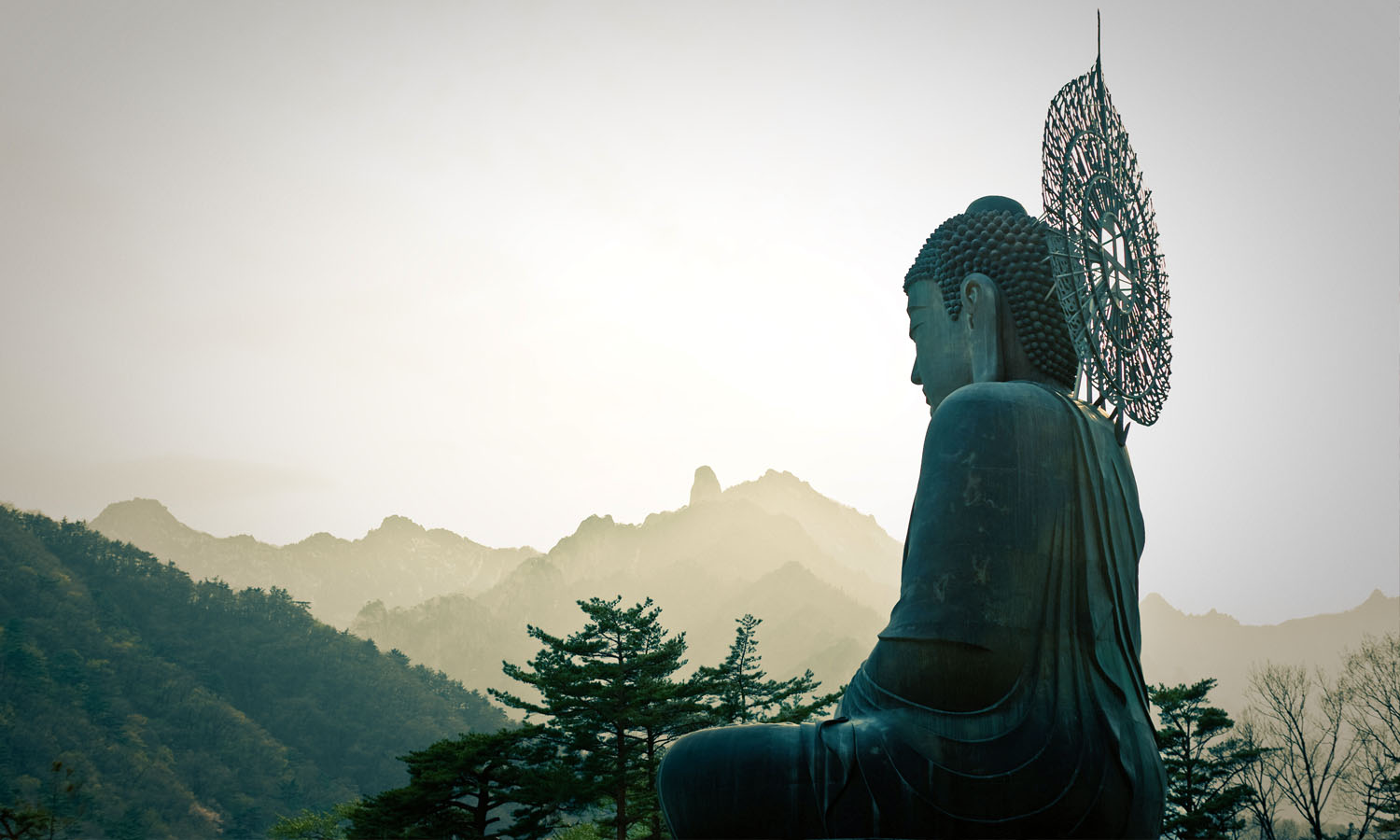
Seokguram Grotto is a holy place and now I’m holed up in it. I hitched, huffed and hiked out this way in the early hours to bask in the beauty of nature, cleanse my soul of the misgivings of Seoul and watch the sun rise. I came to see the understated side of the Land of the Morning Calm, but hours after it should have appeared I’m still waiting for the sun’s grand entrance.
Legends abound on the history of this ancient precipice. The most inspiring suggest that during the summer solstice when the light is right and the stars are aligned, the sun reflects off the Buddha’s third eye and illuminates the tomb of King Munmu in the East Sea. Munmu’s tomb protects Korea from Japanese invaders, the Buddha protects the tomb and a security guard protects the Buddha. With fables in my mind, I sit and watch the thunder clouds move from peak to peak, delivering their payload with unabated enthusiasm. I’m suddenly jealous of friends fond of the meditative life. Here I am in a place where serenity reigns, and all I can think of is moving on and exploring the countryside.
In the gloomy mid-morning, I return from the Seokguram Grotto and make my way to Bulguksa Temple, South Korea’s most venerated national treasure. This working temple is an architectural masterwork, an eighth-century stroke of Silla kingdom genius. Bulguksa contains no fewer than six designated national treasures, including the stone Dabotap and the simple Seokgatap pagodas. Even to an outsider, the beauty of these pagodas is every bit as stunning as better-known temples in neighbouring China and Japan. But unlike Beijing’s Forbidden City, a visit to Bulguksa means you don’t have to fight your way through thousands of camera-toting tourists.
Bulguksa’s walls don’t just drip with history – they are the foundation of history itself. Construction started on the temple as far back as the year 751. This is the Korea that existed before glass and granite. It’s a side of the country I didn’t know existed until now. International travellers flock to the Great Wall of China, smoky warrens of Hong Kong and the temple gardens of Japan. Yet locals know that this is a place worth visiting, and they arrive ready to pay their respects in the shadow of the Toham Mountain among ancient relics.
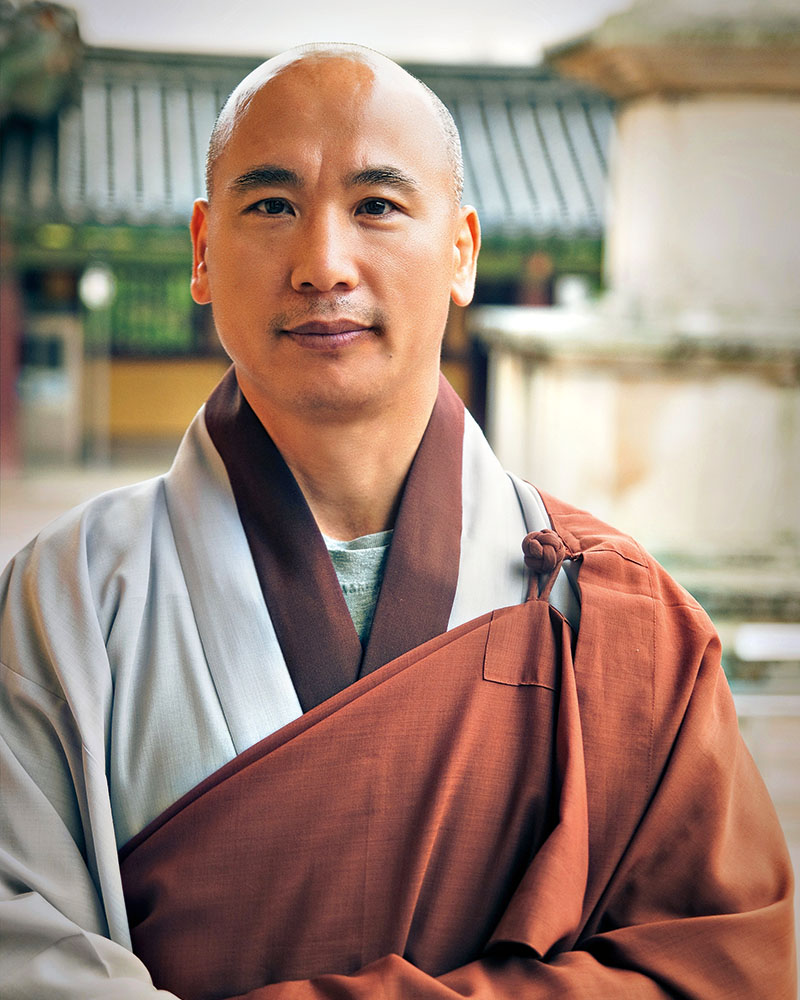
Wandering the grounds at Bulguksa in the pouring rain I’m joined by a monk wrapped in neat mahogany hues and clean shades of grey, a small umbrella balanced delicately over his shoulder. He squeezes some of the water from my dripping sweater, shifts his umbrella from his shoulder to mine and says something that, I guess, could be translated as ‘you smell as though you have been bathing in spoiled kimchi’. He invites me into his chambers for tea and offers me a chance to dry out my clothes. I disrobe and sit cross-legged on a straw mat in nothing but soggy underwear, and accept a cup of steaming green tea. Anywhere else in the world this would seem awkward – embarrassing, even – yet here I’m perfectly content, engaged in conversation. The monk recounts bits and pieces of 5,000 years of antiquity, wrapping my mind in the rich, multilayered tapestry of Gyeongju City.
I’m told about the power of the lotus motif, why gold leaf is edible and what a monk does on vacation. Yet for all the time we spend together, I am affected most by what the monk tells me about travel. “The further you go from Seoul,” he says, “the closer you get to the heart of the country. But you can’t get there alone.” He suggests I visit nearby Busan, to see how history has informed the Korea of today.
The mosaic port city of Busan is a place where decadence and eclecticism mix in unexpected ways. Busan is host to the annual Busan film festival, and home to the global shipping industry’s fifth-largest port, earth’s third-tallest building and the largest department store in the world. This is also a city known for its nightlife, world-class museums, fine dining and proximity to nature. Busan has more layers than an onion, but if you don’t know how to cut into it, it can leave you sobbing. So I turn to a friend for help.
Nathan is an American photojournalist based in Japan, and he’s been around the block. Travelling with Nathan is like dumping a bee hive into your trousers and rolling down a hill: certainly dangerous, but always entertaining. He agrees to meet me in Busan.
I exit the human pinball machine that is Busan Station and make a run for Haeundae Beach, the city’s biggest tourist attraction and a place that can make an overnight millionaire of a sun umbrella salesman.
Nathan is waiting for me, standing out among the crowds in his beige trousers, horn-rimmed glasses and with his battered satchel. “Where do we start?” I ask, pulling my guidebook from my bag. Nathan takes the guidebook from my hands and shoves it deep into his satchel. “Forget it. We’re going to rewrite the book on Busan,” he says.
Our first stop is Busan’s Russian Quarter. Tourists know it as an atmospheric place for a stroll and a great place to find a deal on swag, but locals know better. After dark, the streets here become a labyrinth of pleasure shops; a place where roughnecks from all over the world and sailors from the Korean corps come to blow off steam. I can’t think of a stranger way to spend our time in Korea, so I ask Nathan what we’re doing here.
“We’re getting real travel advice,” Nathan says, accepting an invitation into an uninviting bar.
Two beers are procured for us by an elderly Russian lady. “First you drink,” she says, allowing whatever it is she intends us to do next to hang in the air between us.
Two girls enter from the back room, though between them they’re only wearing enough clothing for one person. One is blonde. Her name is Sasha. The other is blonder. Her name is Nikki. Immigrants from Vladivostok, they’ve been living in Busan for the better part of seven years. “Skip the beach. Everyone goes to the beach,” Nikki says. “And everyone goes at the same time. If you want to see the real side of Busan, you start right here.” Nathan whispers something to Nikki, and Nikki whispers back. I grow increasingly uncomfortable. Sasha reaches into a drawer and comes out with a map and a pen. “You tell your guide book to call me the next time they need an itinerary,” she says, scribbling notes for us. “We are Busan’s best travel agency.” Sasha hands over the map marked with her notes and the girls wave us goodbye.
When my heart stops racing I ask Nathan why he brought me down here in the first place. “We could have got that information anywhere,” I say. “Of course we could have,” Nathan says. “But then I wouldn’t have got to see you squirm. Besides, I knew they’d be able to tell us where to go for dinner.” We end up in a small Russian restaurant and spend the rest of the night feasting on pierogi and alternating between shots of vodka and soju while rubbing shoulders with roughnecks and Busan’s party crowd, folks that know the Russian Quarter as one of the best places in town to eat, party and play. To say that I don’t have a great time would be a lie, even if Nathan did get my goat. I ask what else the girls put on our itinerary. “Tomorrow morning we’re going to the fish market,” Nathan says. “But we’ve got to be there early.” Busan’s fish market is one of the largest in all of East Asia, and a great sensory delight. Sasha has told us which vendors sell the freshest mussels, where to find good grouper and how to tell a good blowfish from a bad one. By 7am we’ve met half of the merchants, spent some time on the shipping docks and taken our fresh haul up to the second floor of the market to be cooked in front of our eyes. Between bites of fish, Nathan looks up at me and smiles. “Not a bad way to start our tour,” he says. “We can catch a cargo ship to Russia if we hurry.”
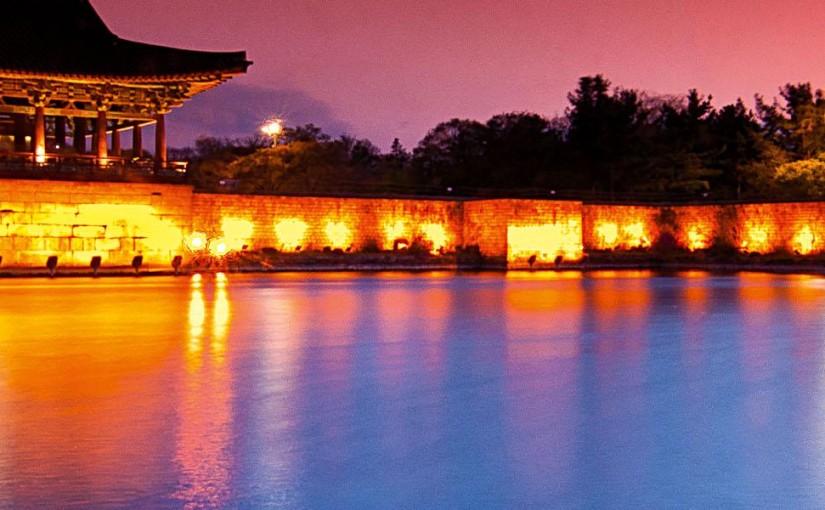
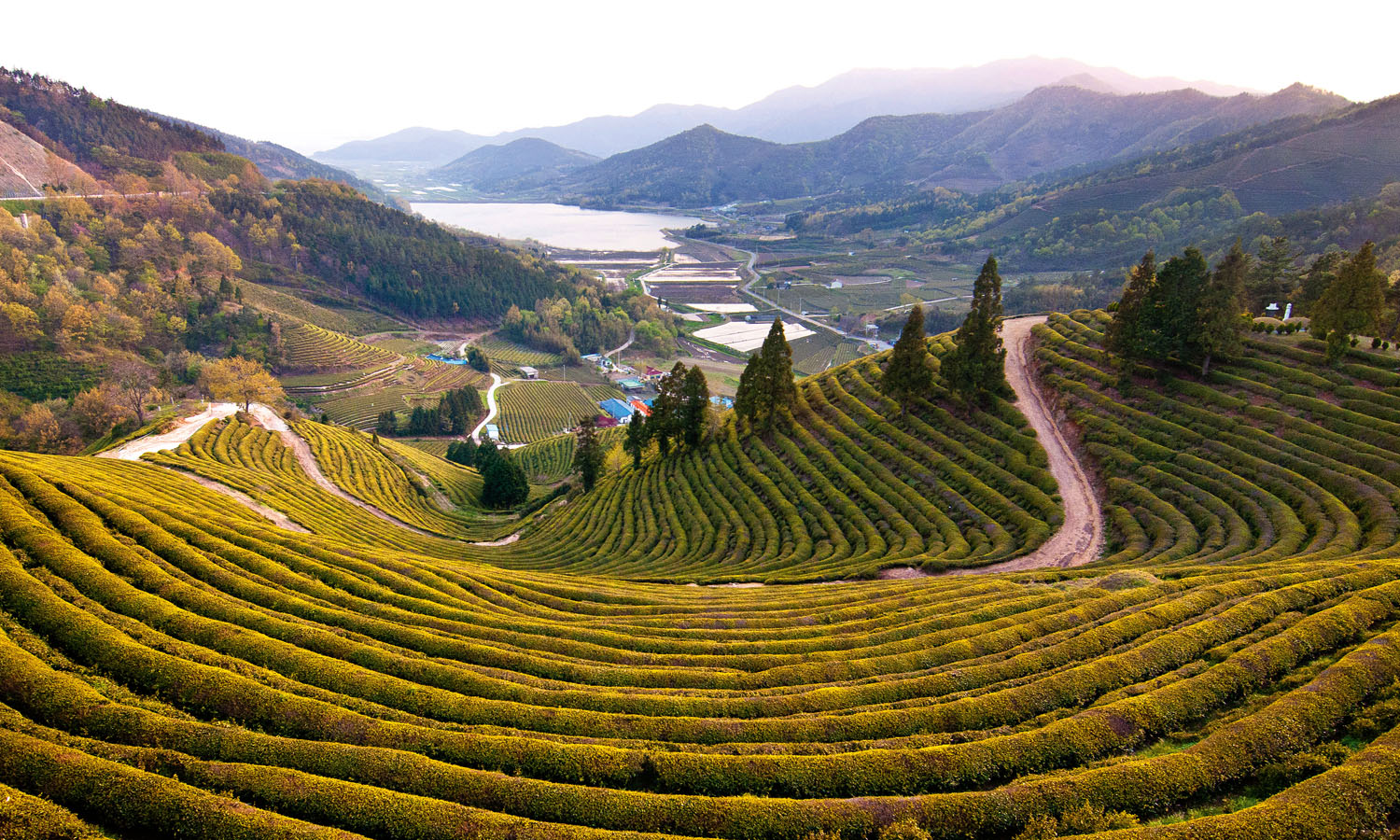
Reluctantly, we leave Busan behind and depart for our next destination. We ramble up and over the waves of green at the Boseong Tea Fields before charting a course to the island stronghold that is Ulleung Island. We scratch our heads at the sight of the Gochang Dolmen – a quizzical landscape of 35,000 Bronze Age stone burial markers – before heading for the northern border and the Seorak Mountain Range, the location of our final pilgrimage.
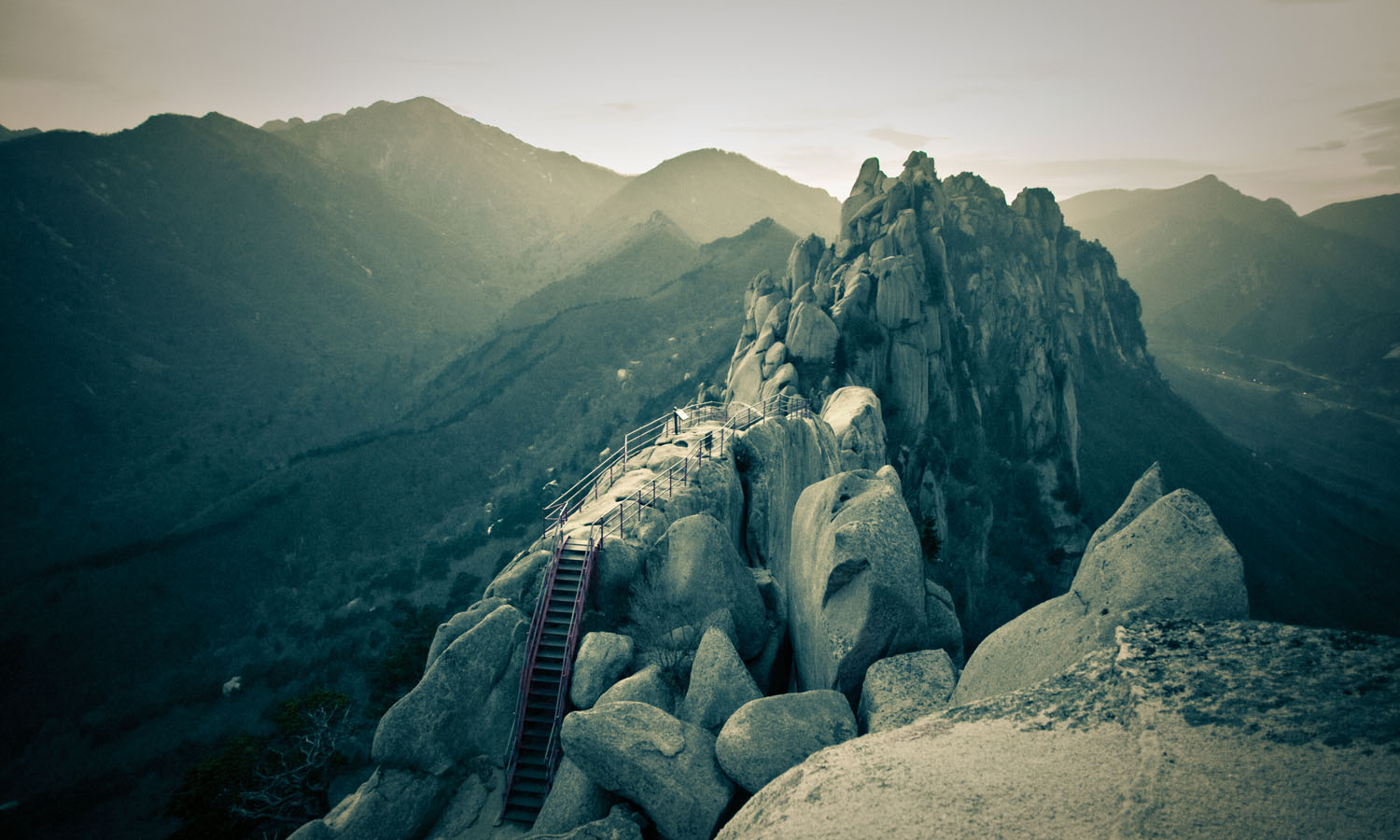
Nothing stirs the national spirit of South Korea like trekking. We decide to get in on the fun and see the sunset from the pinnacle of Seorak Mountain, a granite kingpin that towers over the Sea of Japan, the mysterious hills of nearby North Korea and the picturesque seaside village of Sokcho. We meet all manner of folk coming off the mountain as we begin our ascent, their spirits enlivened by the mountain air, each eager to paint us a picture of what is to come. Halfway to the summit we join a large family for a barbecue. It’s not uncommon to see a portable gas grill and two pounds of fresh pork stuffed into a backpack in the mountains. Later we catch up with a pair of brothers from down the coast and share a bottle of Korea’s ubiquitous national spirit, soju, a distilled beverage commonly compared to vodka. A good day of trekking begins and ends with libation, according to a contemporary Korean proverb. The day wanes as we climb and darkness encroaches. The soju and the crisp mountain air cleared my mind, and I’m wondering if this dark ascent is a good idea. Nathan tells me not to worry.
We make the summit at Daechongbong Peak in a driving wind that threatens to blow us into the valley below. We’re alone now, gazing out over this very alien moonscape, the craggy mountain awash in soft blue light, with squid boats lighting the horizon like an infinite army of stars. Standing among the storm clouds is as much a metaphor as it is a moment.
South Korea is a beguiling and charming nation that reveals itself to travellers in bits and pieces. Korea’s traditionalist dignity, amiable locals and futuristic outlook have thrilled me, surprised me and grown on me. Staring out the window on my train bound for Seoul I can’t help but reflect back on these two weeks fondly. I’ve felt at home here, and understand now what the great wordsmith Robert Haas meant when he said: “Korea becomes a synonym for life”.
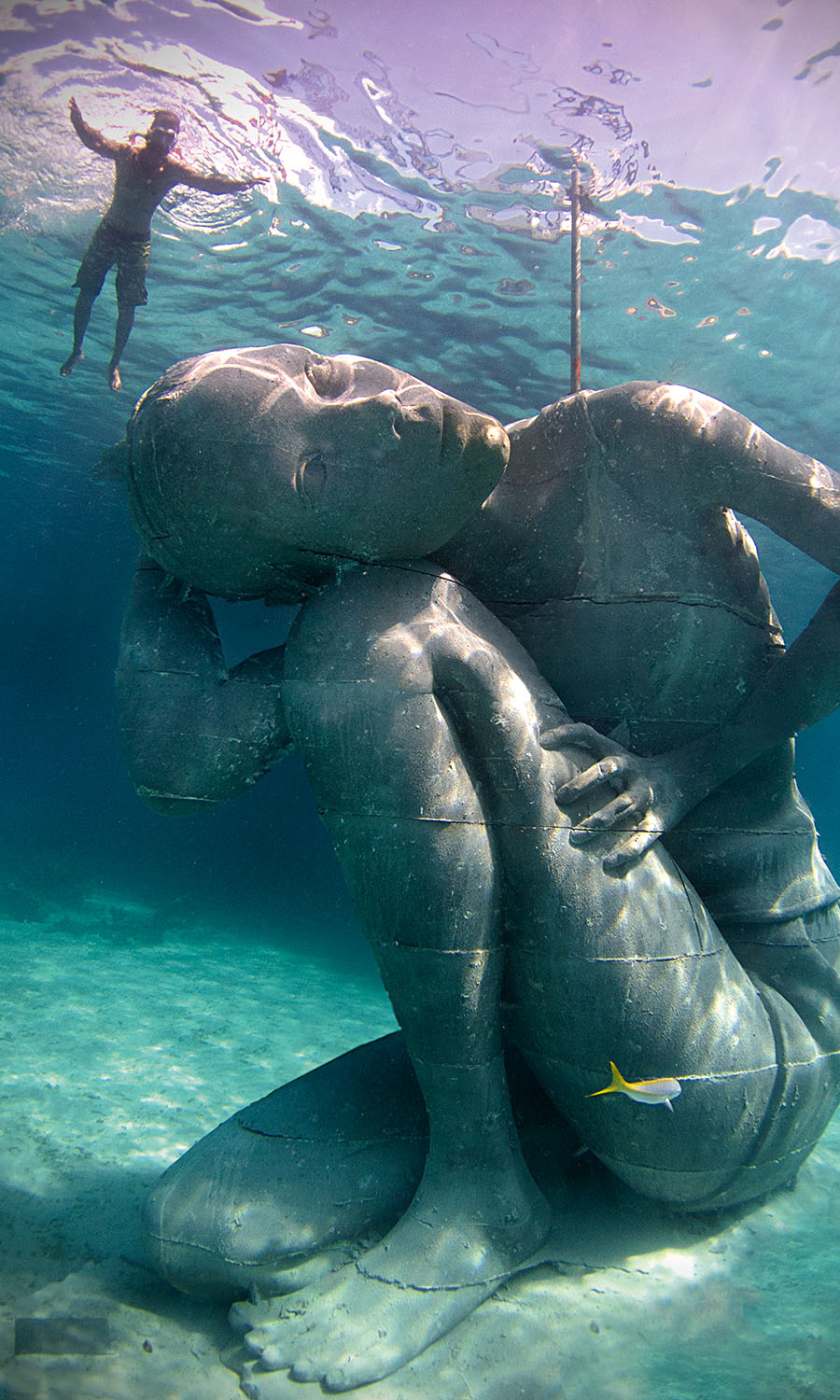
Finally I can put a face to Mother Nature. However, I must first warn you, despite her majestic features she looks terribly uncomfortable.
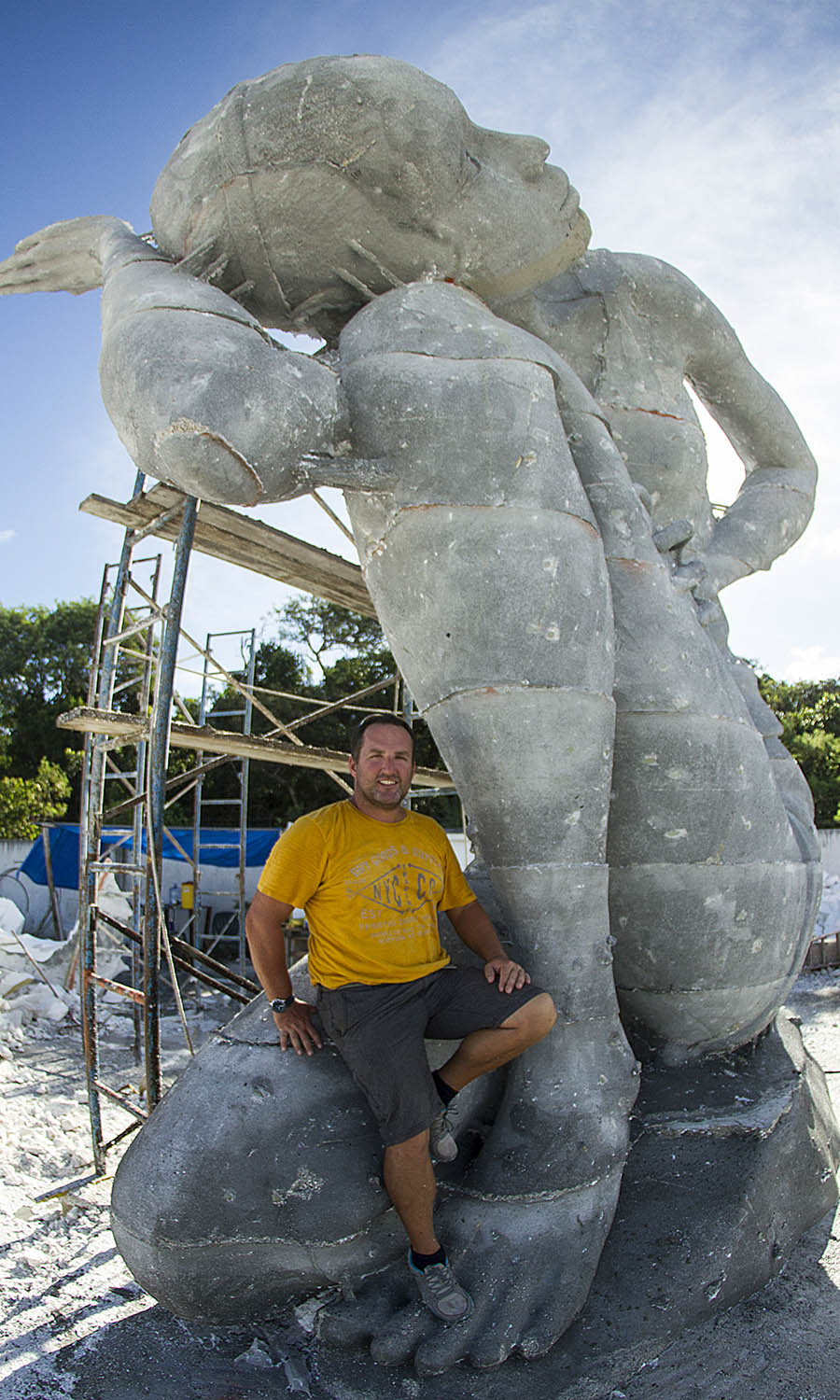
I’ve found her beneath the tropical waters of the Bahamas, off the western coast of the capital Nassau. It’s here her five-and-a-half-metre frame and 60-tonne weight emerges from the ocean floor. She is the world’s largest underwater sculpture and her figure cuts an imposing silhouette against the vast blue of the ocean.
As I snorkel in the gin-clear waters, my eyes dart to her crooked neck, then to her up-turned hand and finally her hunched shoulders. It’s then that I’m the one who begins to feel uncomfortable, for it looks as though she’s bearing the weight of the ocean on her shoulders. And she is, metaphorically speaking.
Commissioned by the Bahamas Reef Environmental Education Fund, the sculpture, known as Ocean Atlas, was designed by artist and conservationist Jason deCaires Taylor. Modelled on a 13-year-old Bahamian girl, the sculpture’s youthful appearance symbolises the burden we ask future generations to carry. With 40 per cent of the world’s coral reefs already lost, Taylor’s artistic goal is “to promote the regeneration of marine life and use sculpture as a means of conveying hope and awareness of the plight of our oceans”.
Built using wire, pH neutral marine cement and galvanised steel, Ocean Atlas joins a sea of more than 550 of Taylor’s submerged sculptures. All are forever in transition, over time transforming from rock into an artificial reef beckoning and sustaining sea life. Like those works, this sculpture was built to draw mankind away from over-stressed natural reef systems to give them much-needed time to rejuvenate and grow. For me it’s a surreal snorkelling spot with a profound message.
One minute I’m eating breakfast in the offbeat cultural hub of Northbridge on the edge of Perth’s CBD. Twenty-five minutes later – no speeding involved – I’m in the Swan Valley wine region, the West Australian capital’s answer to Melbourne’s Yarra Valley or Sydney’s Hunter Valley, except closer. In fact it’s practically a suburb, albeit a rural one.
The scene here is all storm-grey eucalypts and red dirt mixed with luminescent green vines that march in military-straight lines through rectangle-cut acreages. Mission-brown brick homes, a nod to the area’s southern European immigrant history, add an urban twist to the farmhouse setting. The region’s Food and Wine Trail is a navigational cinch. The major road does a 32-kilometre loop around the region’s 40 wineries and 70 or so restaurant and food venues. It’s well signed so you can follow your nose rather than a GPS.
What it lacks in vineyard stereotypes – rolling landscapes and rusticity – it makes up for in earthy Aussieness. The pretty colonial town of Guildford, the gateway to the region, has a main street of antique shops and cafes shaded by bull-nosed verandas. There’s a little church, heritage-coloured pub and other old colonial buildings clustered along the railway line. Nearby, the rotted gums and dried mud on the banks of the Swan River conjure scenes from a Tom Roberts painting. Add dry heat and WA’s big blue skies to the mix and there’s no wine region quite like it.
While there’s chilled verdelho aplenty in the Swan Valley, I can’t help thinking the mid-summer heat calls for a cooling ale. Happily, and somewhat quirkily, Perth peeps, who think nothing of a casual trip to the Swan Valley, don’t mind mixing their drinks. The region, in step with the craft beer trend, now has six breweries. While I can tell a riesling from a chardonnay and shiraz from pinot noir, I’m less sure of my witbiers, IPAs (India pale ales) and stouts. With the help of an abstaining driver, I’m pit-stopping around the region to see if I can’t convert.
If you want to know how hops got hip in Australia, WA is the place to start. The state’s craft brewing goes back about 30 years, beginning with the opening of Sail and Anchor, the first brewpub in Fremantle. Since then local microbreweries such as Matilda Bay and Little Creatures (despite recent sell-offs) have set the stage for the raft of brewpubs and newcomers that have made craft beer more or less mainstream.
The Swan Valley’s breweries – like its wineries – are a mix of styles. You can go for a pub atmosphere, German beer hall or a traditional vineyard setting. The proximity to the city makes it an accessible place for a drink or meal. The result is lots of people and lots of fun.
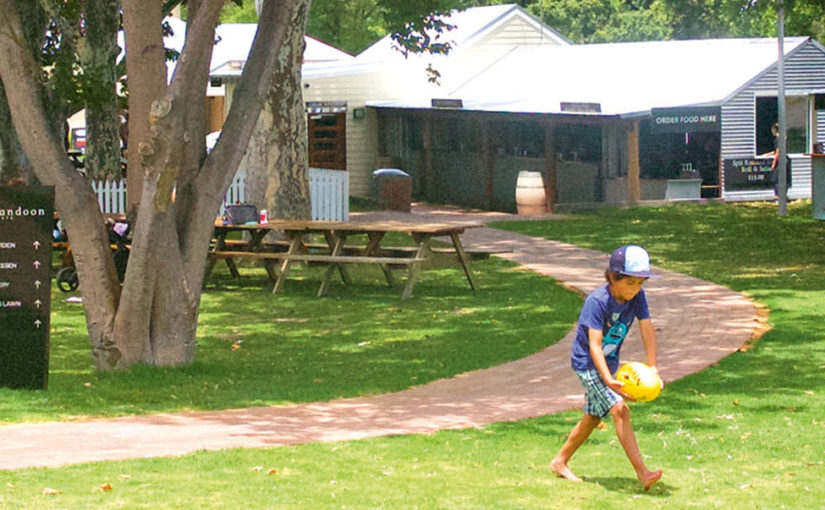
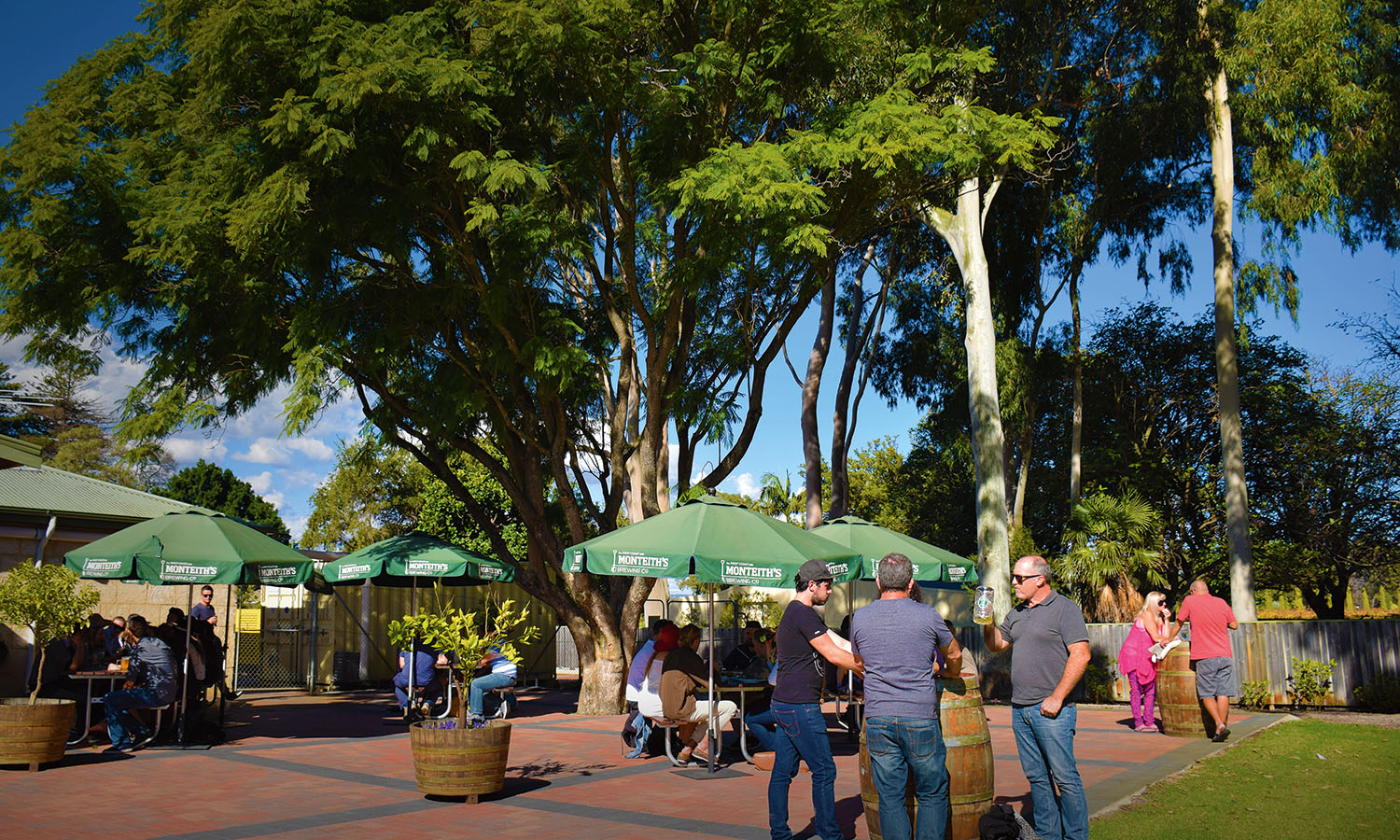
Superlatives abound at my first stop, Mandoon Estate’s Homestead Brewery. Mandoon is the darling of Swan Valley, with contemporary wood and corrugated-iron buildings, an awesome deck and beer garden with manicured lawns and vineyard views.
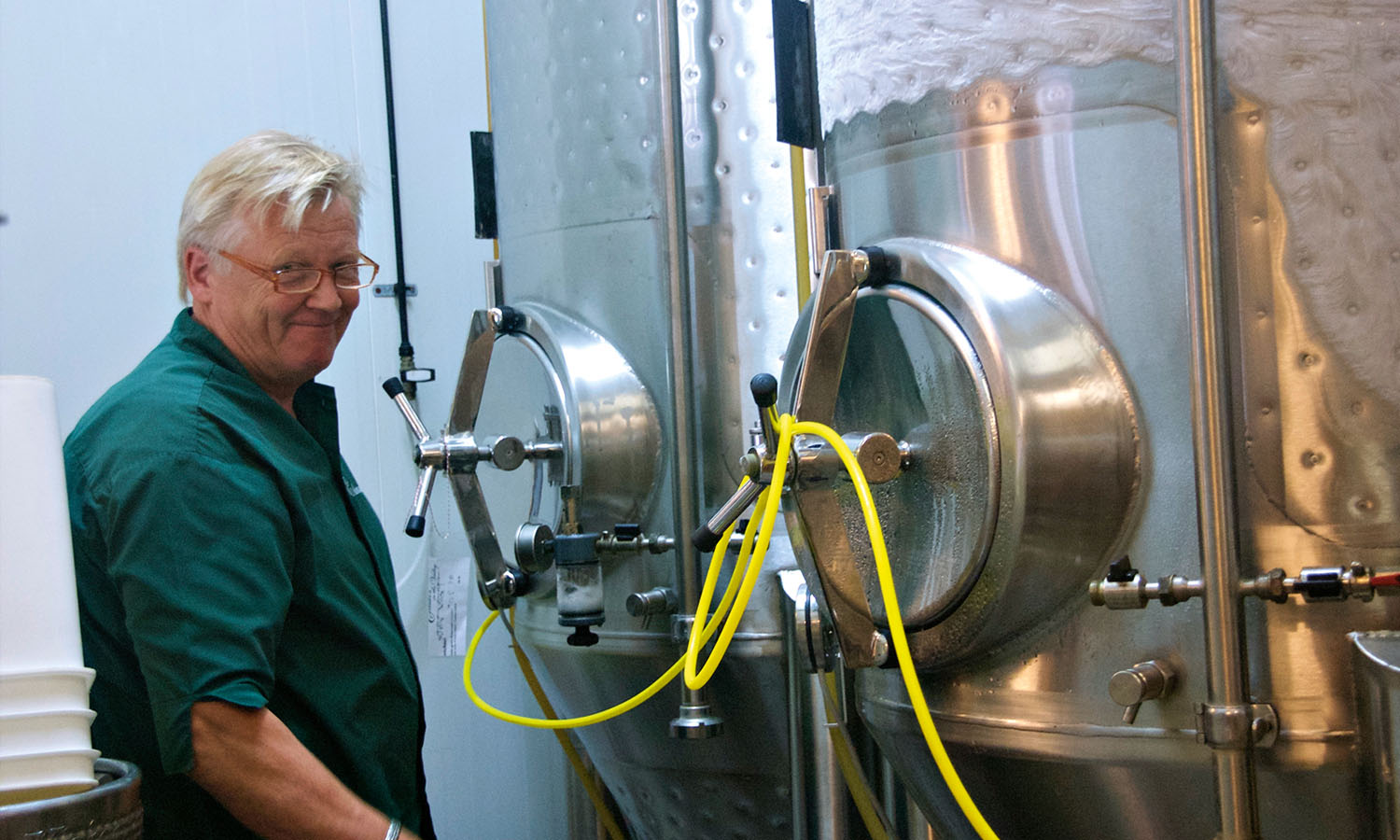
I plonk myself down inside at the big shiny bar, the Kaspar Schulz German-engineered kettles gleaming silver behind glass. It’s early for beer drinking so I have hospitality manager Gavin Fyffe’s full attention. He tells me the owner is a Swan Valley local of 50 years who lives down the road. The family started producing wine in 2010 and the restaurants and eating areas followed.
“Beer was always part of the big picture, but the brewery opened only 12 months ago,” he says. In that time, the number of beers brewed has gone from four to 10.
My Number 1 Belgian-style pale ale is served in a fine-lipped glass, chilled to the touch. It’s a good start to the day. I can detect the smooth malt, biscuit and fruit tastes I’m supposed to, if not the peppery finish.
“We really made this beer to check out how the brewery system all worked, but it turns out we liked it and started selling it,” says Fyffe. “In the first six months it was our number-one selling beer and one year down the track it’s still on tap.”
At the other end of the palate spectrum is the Velvet, a black cherry sour. Matured in old oak barrels from the winery, it has a stewed fruit flavour with cinnamon and chocolate thrown in. I also try Kaiser’s Choice. This German-style wheat beer with banana and clove notes was a gold medal winner at the Australian International Beer Awards last year.
Awards matter in beer circles, as I find out at Mash Brewery, which has a wall of them decorating the main bar. Mash is a modern establishment kitted out like an American roadside bar, with tunes, cool art and a vibe that feels like a party warming up. When I arrive, just before midday, the trestle tables are filling with punters ordering buffalo wings and other mouth-watering bar food. Enormous stainless-steel beer kettles fill the room, and there’s a queue at the bar. Behind it, Joshua Banks, a craft-beer nut, tells me Mash is almost nine years old, its success largely attributed to two master brewers who have collaboratively brought home the wall of awards.
Mash’s champion beer is Copy Cat IPA, an American-style India pale ale with a “tropical, piney, resinous hop bitterness and aroma”. Banks tells me the beer initially had a mixed reaction from the makers who didn’t want to replicate the style: “They said, ‘We’ll only do it if we call it Copy Cat.’ It went on to become the Australian International Beer Awards champion beer in 2014.”
Even for a novice, Copy Cat is easy drinking. Not so the experimental Cold Brew Coffee is the New IPA. Apart from a name that’s a total mouthful, this black, malty Scottish ale has a creamy caramel flavour and a coffee finish. It’s an intriguing on-trend concoction developed at Mash’s sister venue, 3 Ravens brewery in Melbourne.
“We put non-roasted coffee through a gravity filter with cold water (not hot), which extracts fruit, so there’s a hoppy flavour instead of roasted bitter flavour, but a) you gotta like beer and b) you gotta like coffee,” says Banks.
Happily I can tick both these boxes, although in this case one is more than enough.
By the time I get to Elmar’s in the Valley I feel like I’m getting a handle on at least a few of the 20 or so craft brews on offer in the region. Cue my next drink – a one-litre stein of Ein Stein Pilsner, a malty, hoppy, easy-drinking brew with honey notes. It’s Elmar’s most popular beverage and, for a little extra, you can buy the famed oversized drinking vessel.
Ten-year-old Elmar’s is owned by Elmar and Anette Dieren, a German couple, who, when missing their homeland cuisine, opened a German smallgoods store in Perth. When Elmar suggested opening an authentic German brewery, Anette intoned, “You can’t have beer without food.” The restaurant now serves gutsy dishes – pork knuckle with sauerkraut, grilled bratwurst, cheese kransky and its own beer bratwurst – that pair perfectly with a pint of the good stuff.
Gleaming copper kettles stand behind the main bar. As I’m snooping around them, oxygenating hops hissing, I meet Elmar himself. He’s a kind of Boris Johnson type – big with white hair and rosy cheeks. “The hops, the malt, the process,” he tells me, beaming excitedly, “everything is imported from Germany. Germans visit and they think the beer here is more authentic than the beer at home.”
I take the rest of my stein outside to the grassed area shaded by gum trees where a local informs me this is the biggest licensed beer garden in the southern hemisphere. “It goes off during Oktoberfest,” he says.
I’m not sure I can handle another stein, but there’s one more stop that comes recommended: Feral Brewing. When we pull up into the red dirt car park I know why. It’s in a building that looks like a cross between an unassuming farmhouse and an outback pub, with veranda seating and a beer garden crowded with market umbrellas.
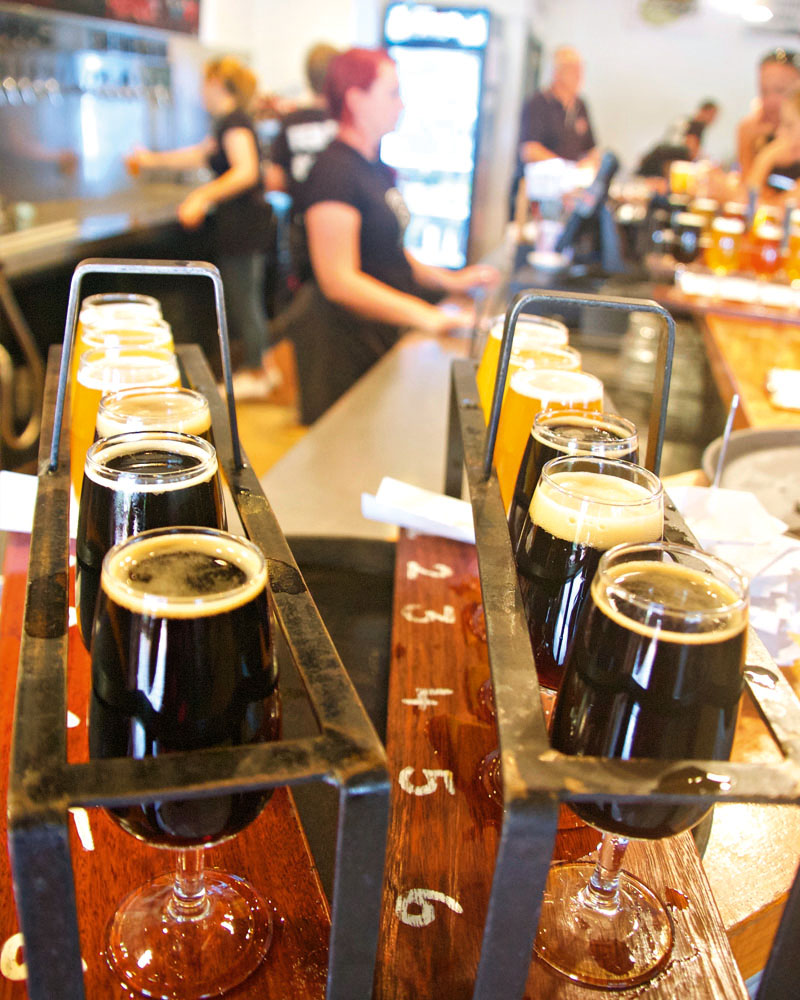
Feral is by far the most serious about educating its guests. The creative brews – from citrusy lagers to Belgian sours – can be tasted from small glasses on wooden paddles. In 2015 Feral’s Watermelon Warhead, a light, sour German wheat beer brewed with half a tonne of local watermelons, was awarded Champion Beer at the Australian Craft Beer Awards. But the drop that gets the most attention via word of mouth and on Facebook pages such as Perth Beer Snobs is the Hop Hog American IPA. My tasting notes point out lemon and pine and a slightly sweet taste “which makes it a perfect drink for newbies to the IPA style of beer”.
 (
(