12 Epic Australian Adventures

Stanthorpe, QLD
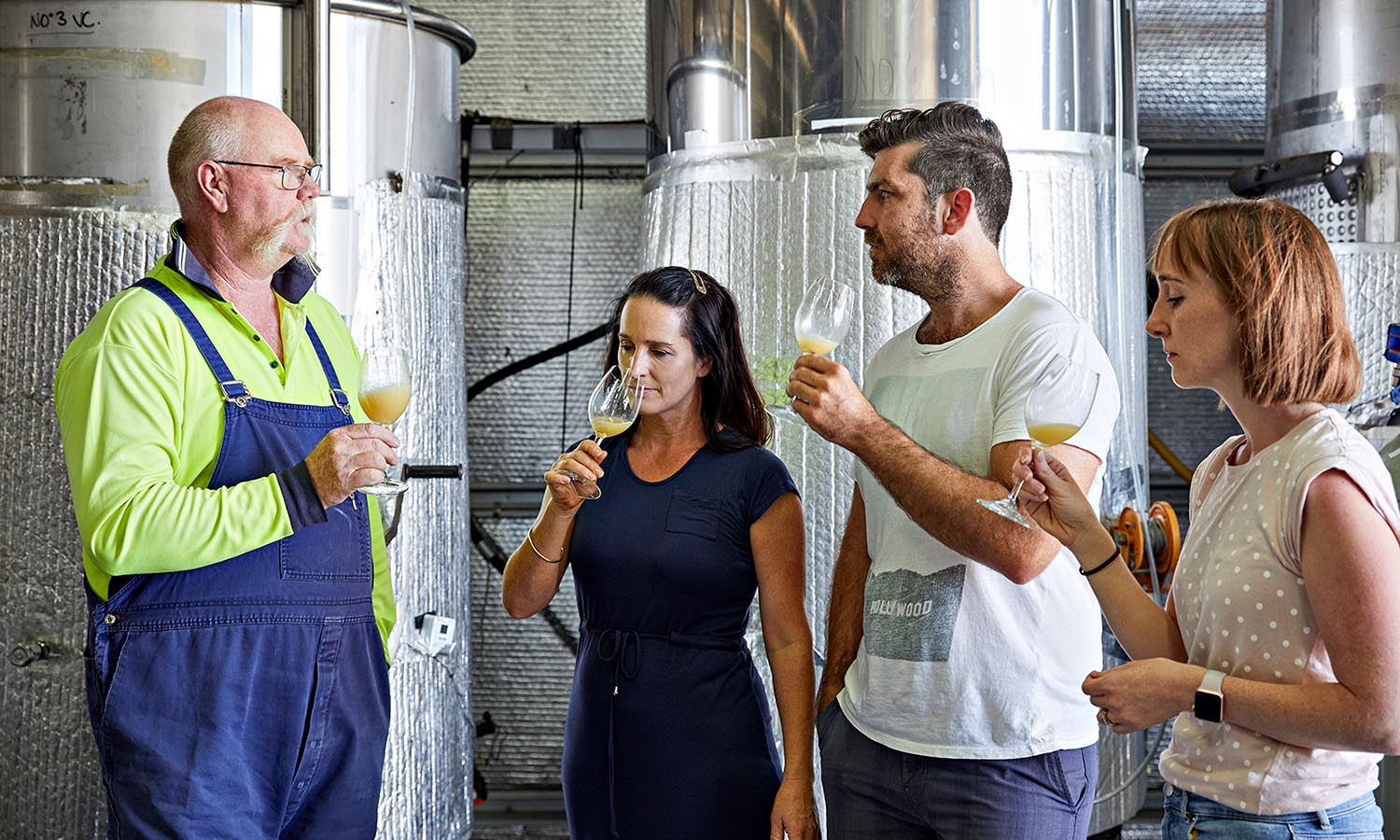
There’s no denying the Granite Belt has done it pretty tough in the past couple of years, with bushfires tag-teaming drought. But all the myths you’ve heard about there being no water for showers and the like are all untrue, and only small sections of the region were damaged by fire. In fact, with the weather cooling it’s the perfect time to follow the Strange Bird Wine Trail. The region’s vignerons have an excellent rep for producing alternative varieties – those strange birds – and following the downloadable map will take you to Ridgemill Estate for saperavi and viognier, Golden Grove Estate for durif and barbara, and about 30 additional spots along the way. There’s plenty of other produce and hospitality to enjoy, too.
granitebeltwinecountry.com.au

Wreck Bay, NSW
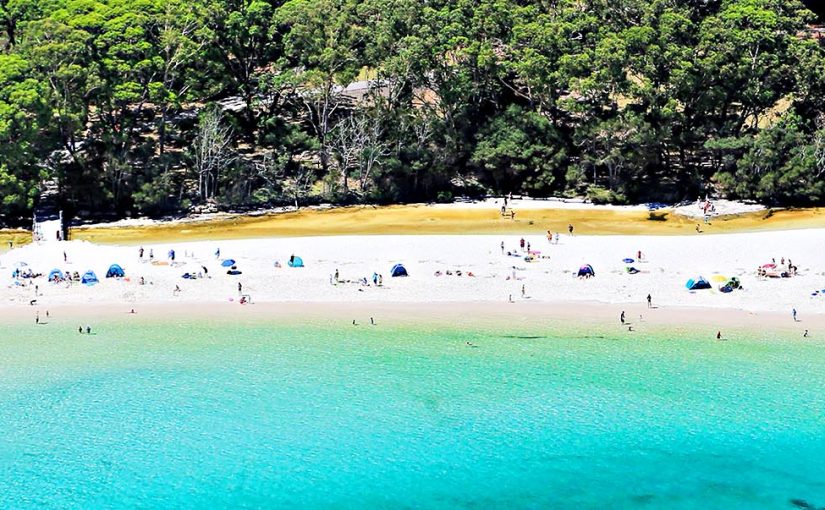
Discover more about the history of Australia in Booderee National Park, right near Jervis Bay. Booderee, or as it’s known in the local Dhurga language, Walawaani Njindjiwan Njin Booderee, is a spectacular spot blessed with pristine beaches (Green Patch Beach is pictured at the top of this page), historic sites and Australia’s only Indigenous-owned botanic gardens. It’s also where you join Galamban Aboriginal Tours to find out more about the local culture. Aunt Julie and her family offer a number of different experiences, including Bawa dung-arng (bushfoods, medicines and survival skills), Dgila-nung (weaving) and Dginngi nadgung, which means starry water and includes a spotlight stroll in the forest to a waterhole looking for nocturnal wildlife.
galamban.net
Stirling Range, WA
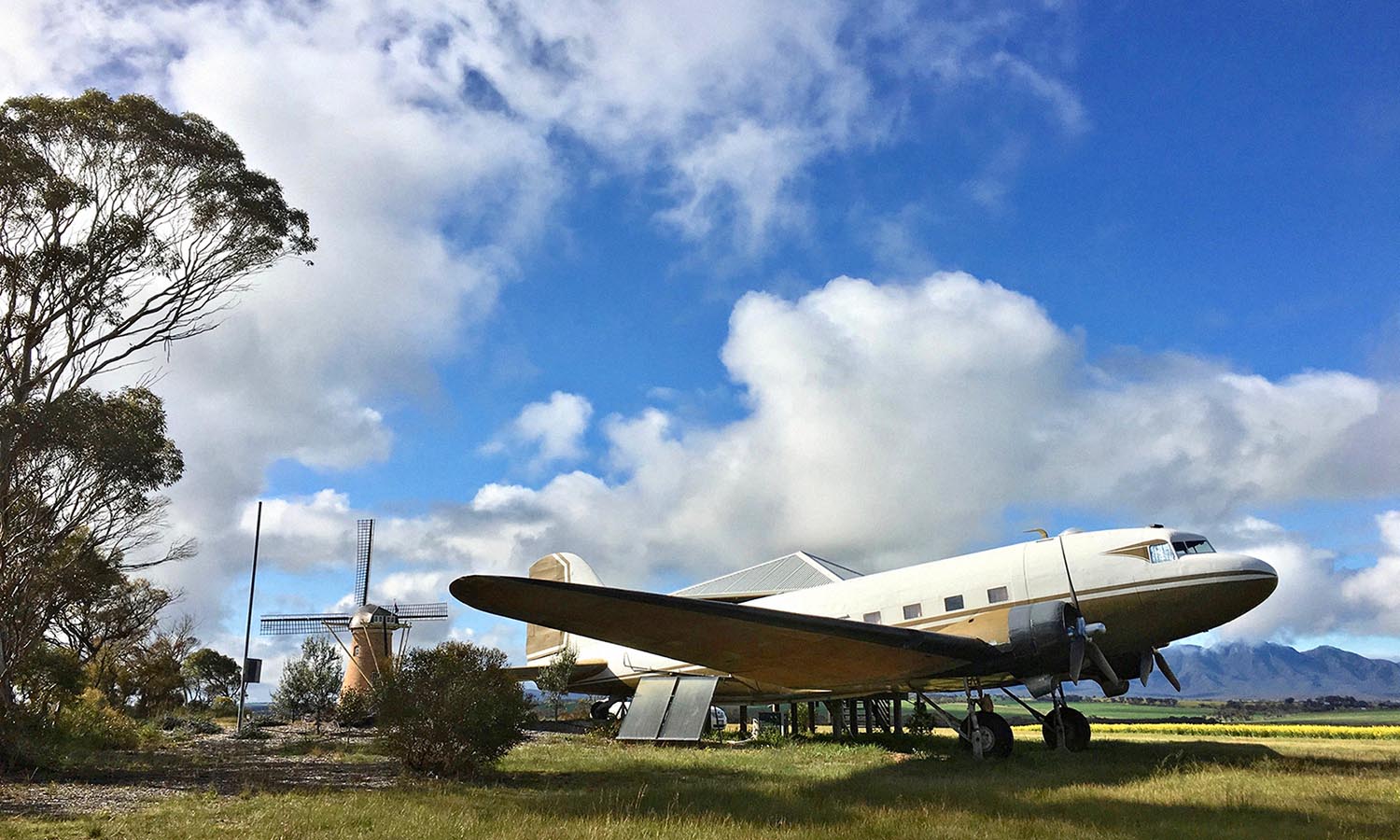
There are plenty of reasons to make a beeline for Stirling Range National Park: the perfect isolation, the rugged and remote mountain landscape, the carpet of wildflowers come spring and the challenging walk to Bluff Knoll. But, as you might have already guessed, it’s quite a long way from just about everything. Luckily you can base yourself at The Lily, a quirky property right on the edge of the park. Stay in one of the cute self-contained cottages or, even better, in a restored Dakota C-47 (the military version of the DC-3). As well as hosting travellers, owners Pleun and Hennie Hitzert grind wholemeal spelt flour in a Dutch windmill on the property and are happy to show guests how it’s done.
thelily.com.au
Blue Mountains, NSW
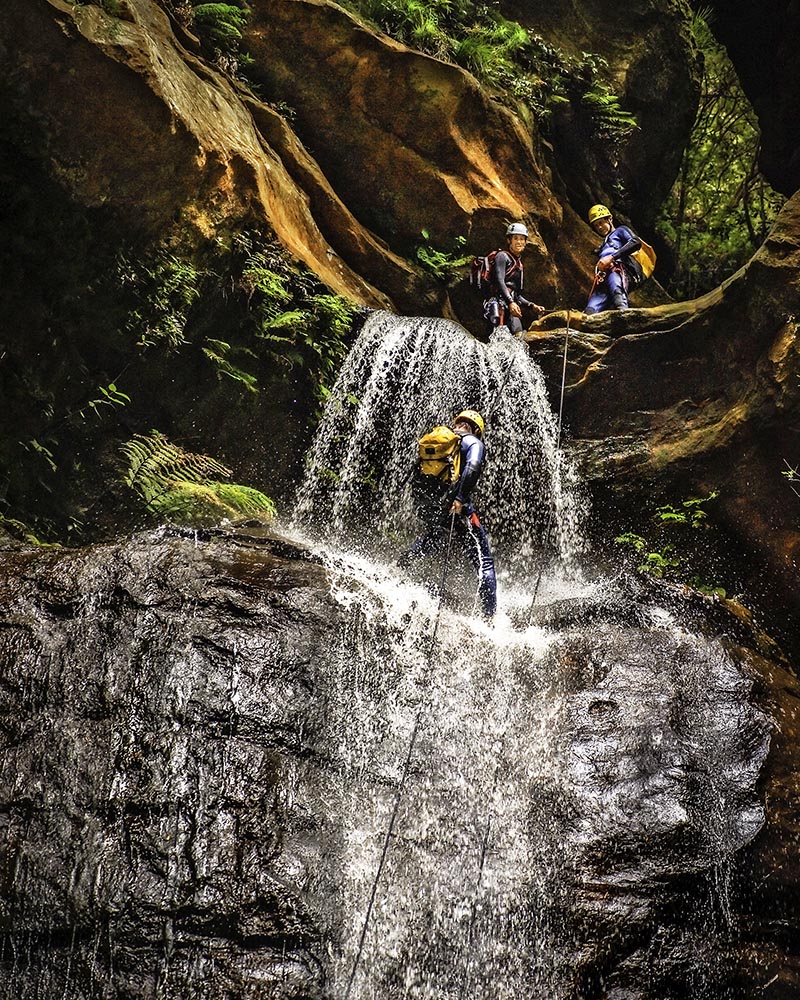
The images of flames shooting up the cliffs at Grose Valley were horrifying, but thankfully much of the Blue Mountains was unharmed by bushfire and the region is most definitely open for business. Get to see a part of it hidden to most who journey through for the quaint towns and outstanding views by joining High and Wild Australian Adventures for a day exploring deep into the landscape on a canyoning trip. Scramble, abseil, hike, climb and, when the weather is warmer, add wading, plunging into and swimming in rivers and waterfalls to the adventurous mix.
highandwild.com.au

Fingal, TAS
In the northeast corner of Tassie, bordering Ben Lomond National Park, you’ll find the ultimate getaway. The Creech is an old farm set on the banks of the South Esk River that has been completely transformed with the shearers’ quarters and a wool classer’s cottage converted into contemporary, cosy accommodation. Walk to waterfalls, ride horses into the mountains, go kayaking along the river, and enjoy the clubhouse and bar all miles away from the worries of the modern world.
thecreech.com.au
Port Macquarie, NSW
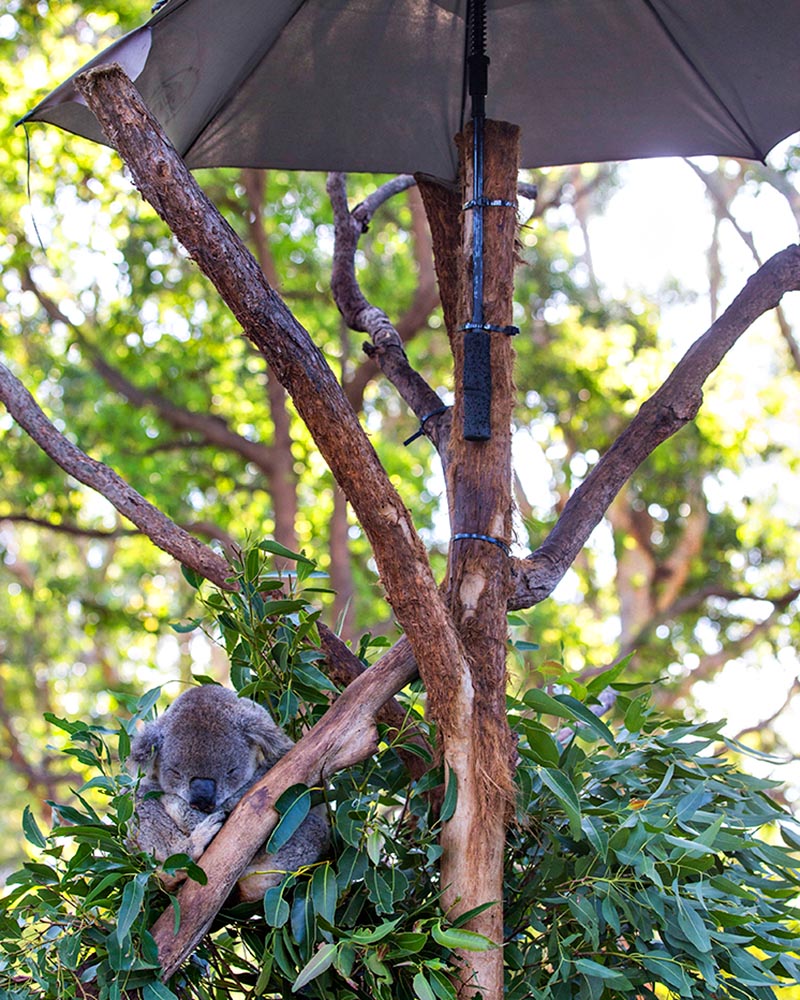
The plight of koalas during the bushfires broke hearts around the world, but you can lend a hand to those who are caring for them in the aftermath. The Koala Hospital offers a 24/7 rescue operation and has been looking after the rehabilitation of a number of injured marsupials since the fires. You can drop in to the hospital every day to walk around the grounds, but there is also a daily guided tour at 3pm. While the koalas are being fed, a volunteer explains how they arrive in the hospital’s care, the issues they face and about koala conservation in general. Entry and tours are free, but donations are more than helpful. You can also ‘adopt’ a koala, either while you’re there or on the website.
koalahospital.org.au

East Gippsland, VIC
Apart from being the largest system of inland waterways in the country, the Gippsland Lakes is a region of scenic perfection, outstanding beaches, quaint villages and top-notch fishing and boating. If you don’t have your own vessel, book your berth on Pam, a 64-foot ketch that goes for three-hour cruises daily from either Metung or Nungurner. The pearl lugger first sailed in 1901 with the name Dominion, before she was wrecked, rebuilt, assisted in World War II, then was sold off and abandoned. Current owners Dan and Wendy McLay found her in the Northern Territory in 1988, transported Pam back to Gippsland and completely restored her. Life’s a bit gentler for the old girl now as she sails around Raymond Island, Lake King and other local attractions, sometimes accompanied by pods of dolphins.
pearlluggercruises.com.au

Mount Majura, ACT
Just outside Canberra there’s a farmer who is growing black gold. No, he hasn’t worked out how to cultivate oil; instead he grows the French delicacy, Perigord truffles, beneath oak trees. The winter months are the best ones on The Truffle Farm. June to August is the height of the season for these expensive fungi, and visitors can go out with Jayson Mesman and his dog Samson each Saturday and Sunday to dig some up. The tour, which includes an introduction to truffles and a small tasting, takes 90 minutes. Add brunch before the expedition or a six-course lunch after to get the full earthy experience.
thetrufflefarm.com.au

Snowy Mountains, NSW
It’s not too long until the season begins at Thredbo – opening weekend starts on 6 June – and for the first time skiers and boarders will be able to get a new ride to the top of the mountain. Merritts Gondola will be the first of its kind on an Australian ski field and will whisk snow lovers from Thredbo village to the Cruiser area, which has terrain for beginner and intermediate skiers as well as access to some of the resort’s advanced trails. The best bit? It only takes six minutes to get there, rather than the previous 21 minutes. Just imagine how much more slope action you’re going to be able to get.
thredbo.com.au
Kangaroo Island, SA
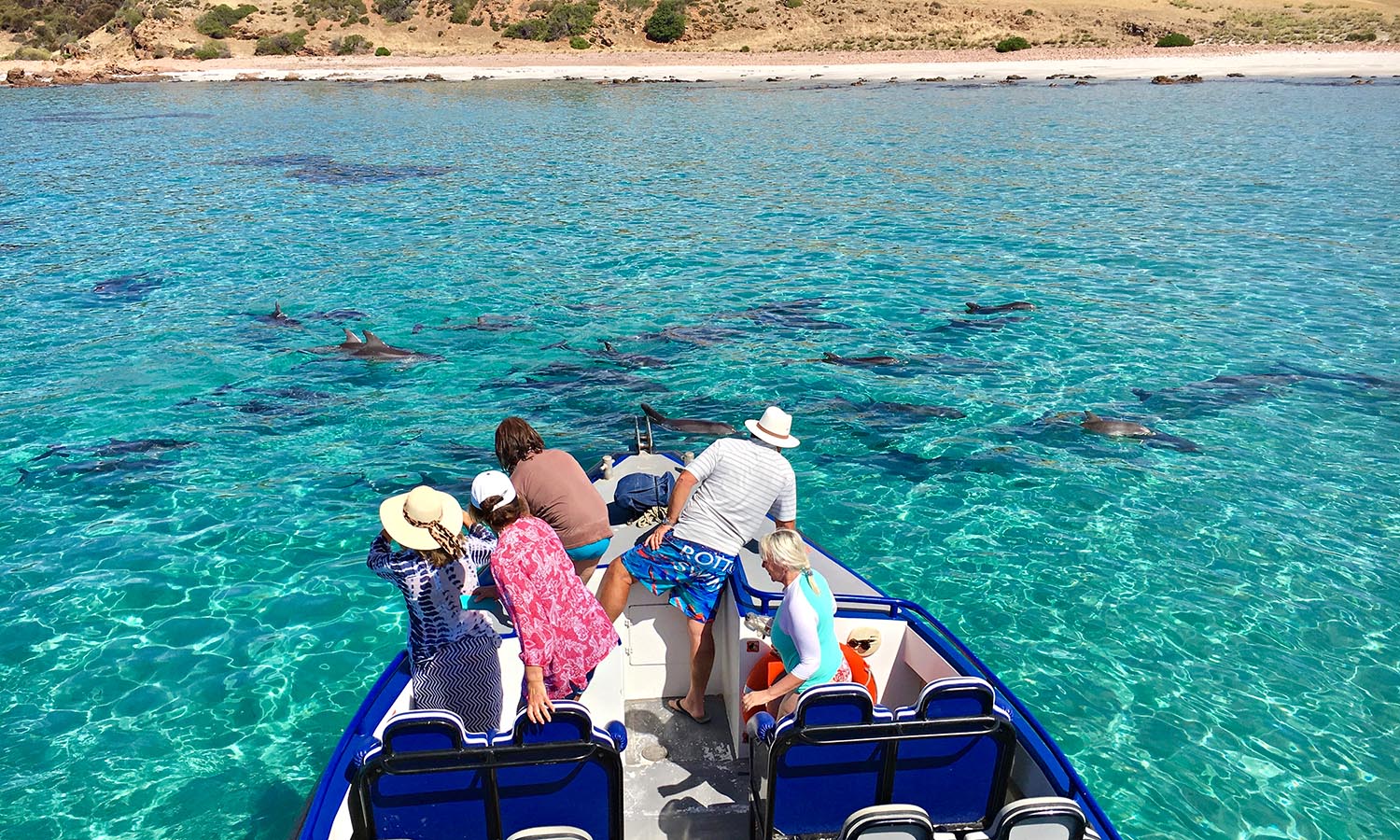
This is our idea of three perfect hours. Glide across the waves with the epic coastline of Kangaroo Island in view, and slow down when seals are spotted on the rocks or sea eagles swoop overhead. As part of the Island Explorer Tour with Kangaroo Island Marine Adventures you’ll also have the chance to swim with wild bottlenose dolphins, who often appear in a shallow turquoise bay. It’s a year-round option, and even if you don’t feel like getting wet, the curious marine mammals often swim and play around the boat to the amusement of those who stay on board.
kimarineadventures.com.au
Adelaide Hills, SA
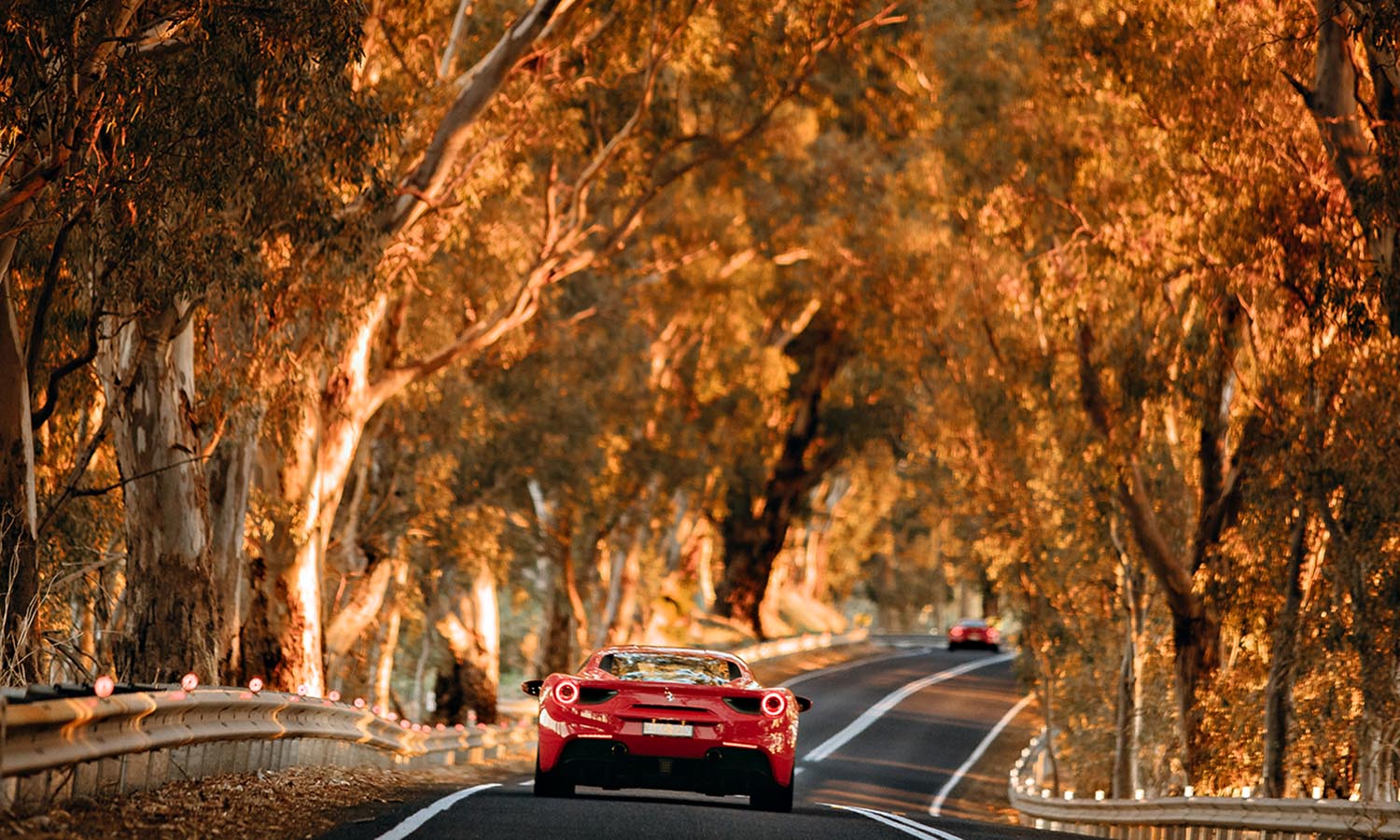
For those who like fast cars and good times, buckle up in a Ferrari 488 GTB or Lamborghini Huracán LP 610-4 and take an exhilarating drive through the Adelaide Hills into the Barossa Valley. You’ll stop at the Bird In Hand Winery for morning tea, before Hentley Farm Restaurant hosts the group for a five-course degustation lunch. There are stops at other wineries and distilleries along the way, too. (Seriously, you need to bring someone who doesn’t mind being the designated driver.) Each Prancing Horse Supercar Drive Day hosts a max of four luxe autos led by a dedicated vehicle offering support using a two-way radio. The base is gorgeous Mount Lofty House, so think about tacking on an extra couple of days to add to the decadence.
prancinghorse.com.au
Tawonga, VIC
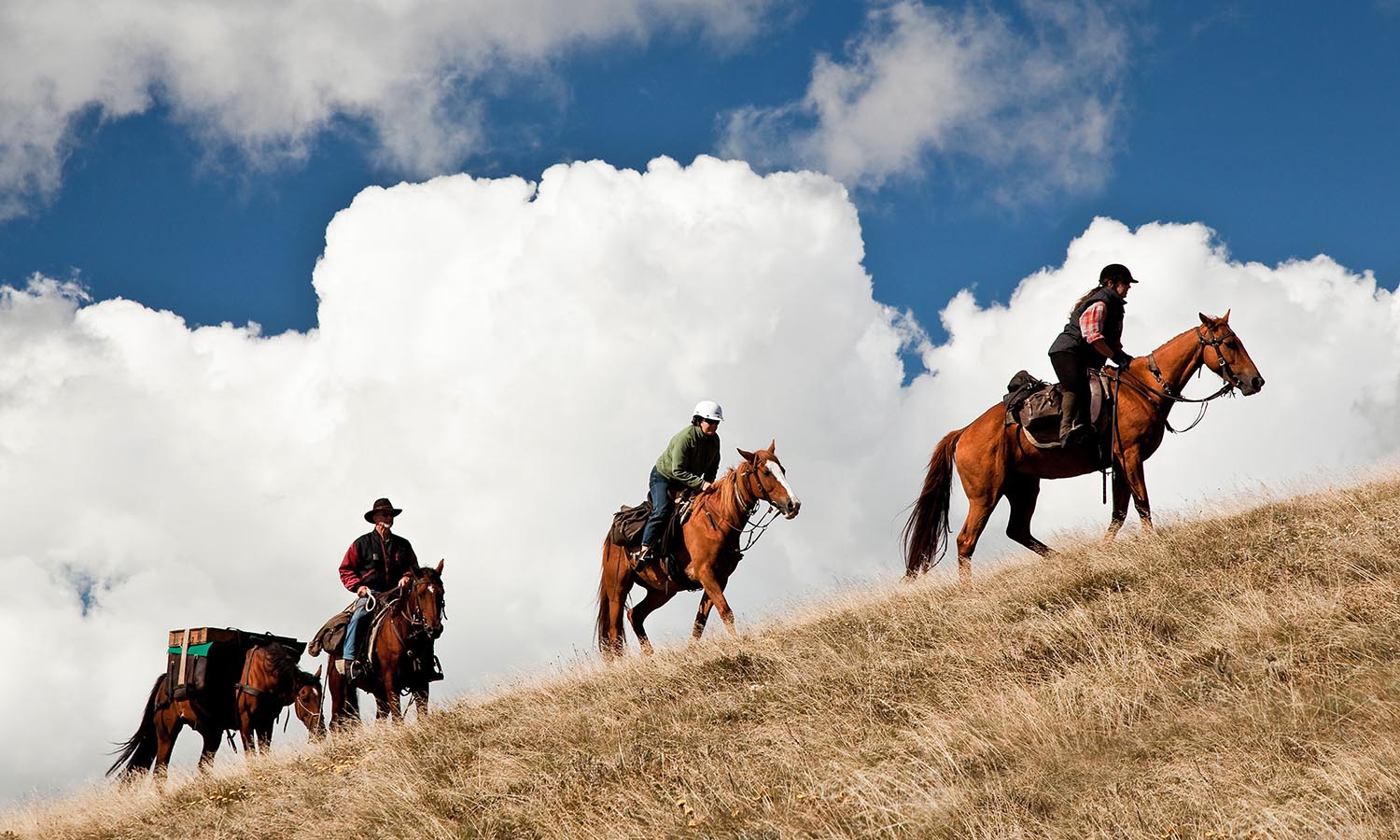
Look, we are definitely not going to hold your Man From Snowy River fantasy against you. In fact, here’s an amazing way to play it out. At Spring Spur in Victoria’s High Country you can spend the weekend discovering alpine valleys on horseback. And whether you’re a beginner rider or have calluses on your butt, there’s a sturdy, mountain-bred horse to take you through the terrain. At night, you’ll gather for meals in the Riders Lounge before retiring to the modern homestead accommodation. Ready to rough it? Spring Spur also hosts multiday pack rides starting in late spring when the wildflowers are in full bloom.
springspur.com.au

Top 5 Cave Experiences

Cocktails in a cavern
Makarska, Croatia

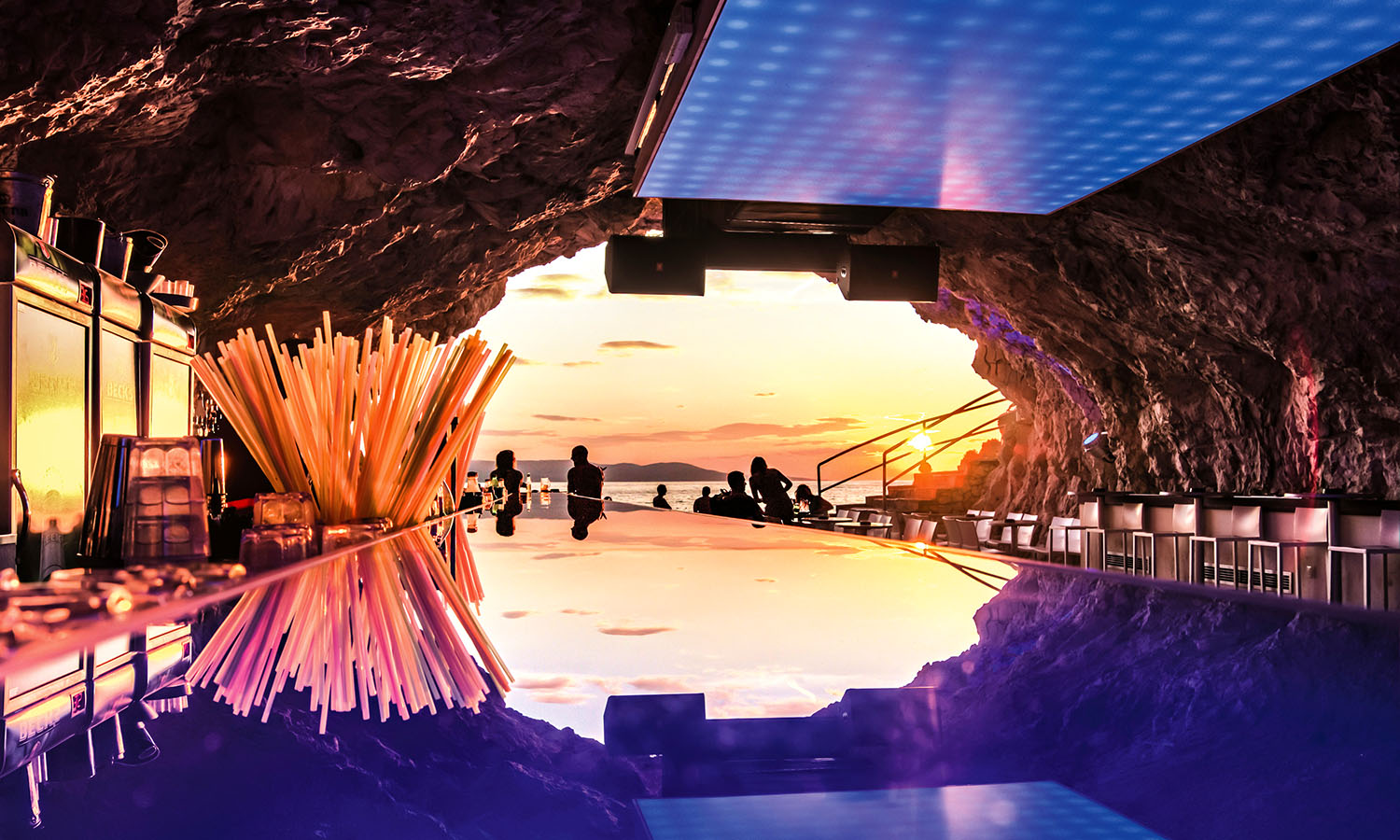
After a day spent splashing about in the sparkling water of a beautiful cove on the Makarska Riviera between Split and Dubrovnik, head to Club Deep, set in a natural cave formation that also served time as a weapons depot during World War II. There’s a great sun terrace outside – perfect for catching those last rays while enjoying an ice cold Karlovacko – but things get started much later in the evening (usually at about 11pm) when local and international DJs turn up the volume on the latest R&B and house beats. Be warned: when this place is crowded – and since it’s popular with cruises on this part of the coast it often is – it gets really hot. Luckily, no one seems to be too bothered about dress codes.
deep.hr

Wet and wild
Waitomo, New Zealand

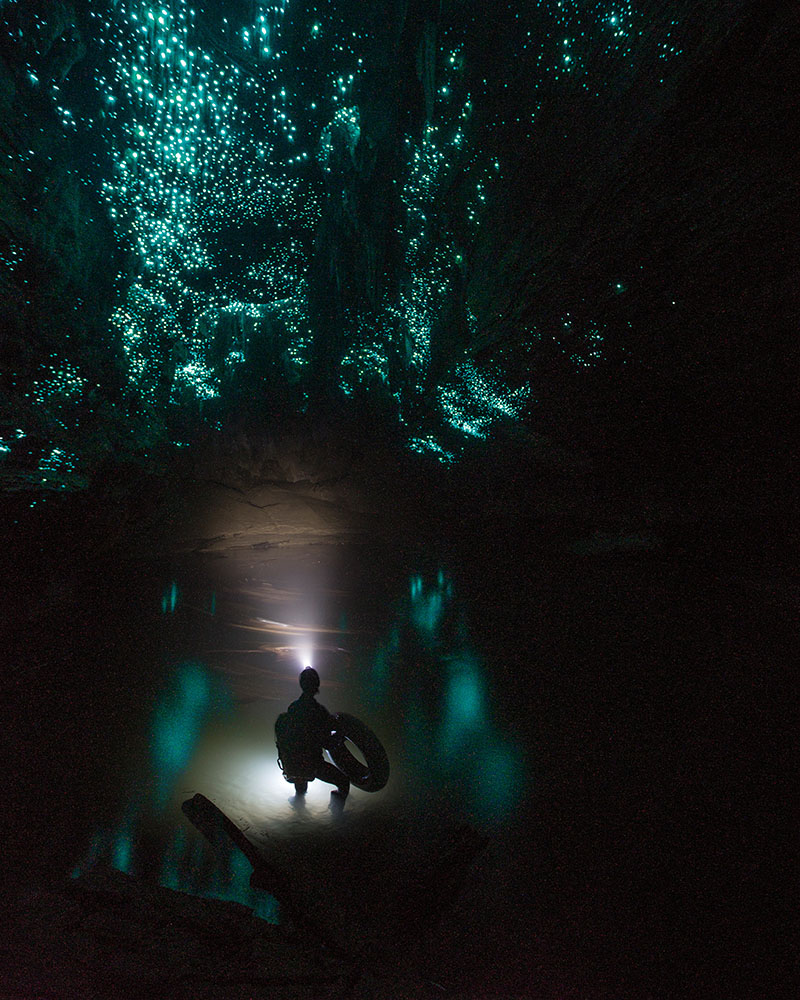
As far as having fun in the dark goes it doesn’t get much crazier than this. Pull on a wetsuit and, for the next three hours, climb, clamber and coast through Ruakuri Cave on the North Island. For part of the journey with the Legendary Black Water Rafting Co you’ll be taking the plunge over underground waterfalls, but there’s also the chance to kick back on your inner tube and float through limestone galleries lit by glow worms. Each tour, with a maximum of 12 adventurers, is led by a guide who’ll make sure you emerge safe and sound into the sunlight. The Black Labyrinth tour costs about AU$130.

waitomo.com

Subterranean sleep
Sala, Sweden

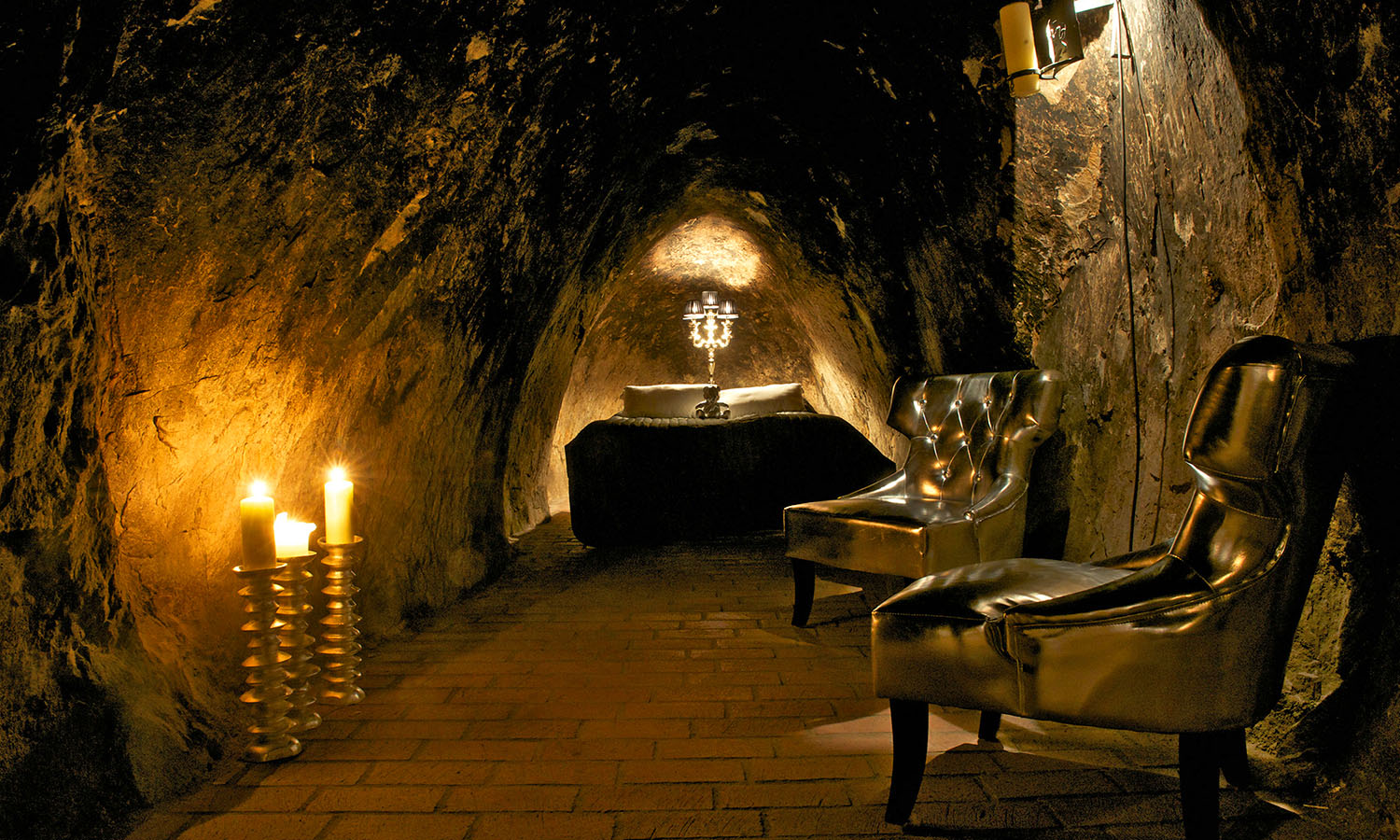
If you’re looking to escape the crowds, sun and everything green, why not head underground? This single suite is located 155 metres below the surface in a former silver mine. Guests are given a guided tour of the caverns on arrival – winter woollies are a necessity because the temperature hovers at around 2ºC – before being escorted to the suite to enjoy the peace and complete silence. There’s a bed tucked into one chamber and a dining area where wine, cheese and fruit await. The space is appropriately decked out in silver-hued furniture and candlelight adds a touch of romance. There are a couple of down sides: no mobile reception, although there’s an intercom to communicate with the world above; and the loo is down a dark tunnel (plumbing is a bit of an issue this far underground). The Sala Silver Mine suite costs about AU$750 a night.
salasilvergruva.se

Seasonal shelter
Minneapolis, USA

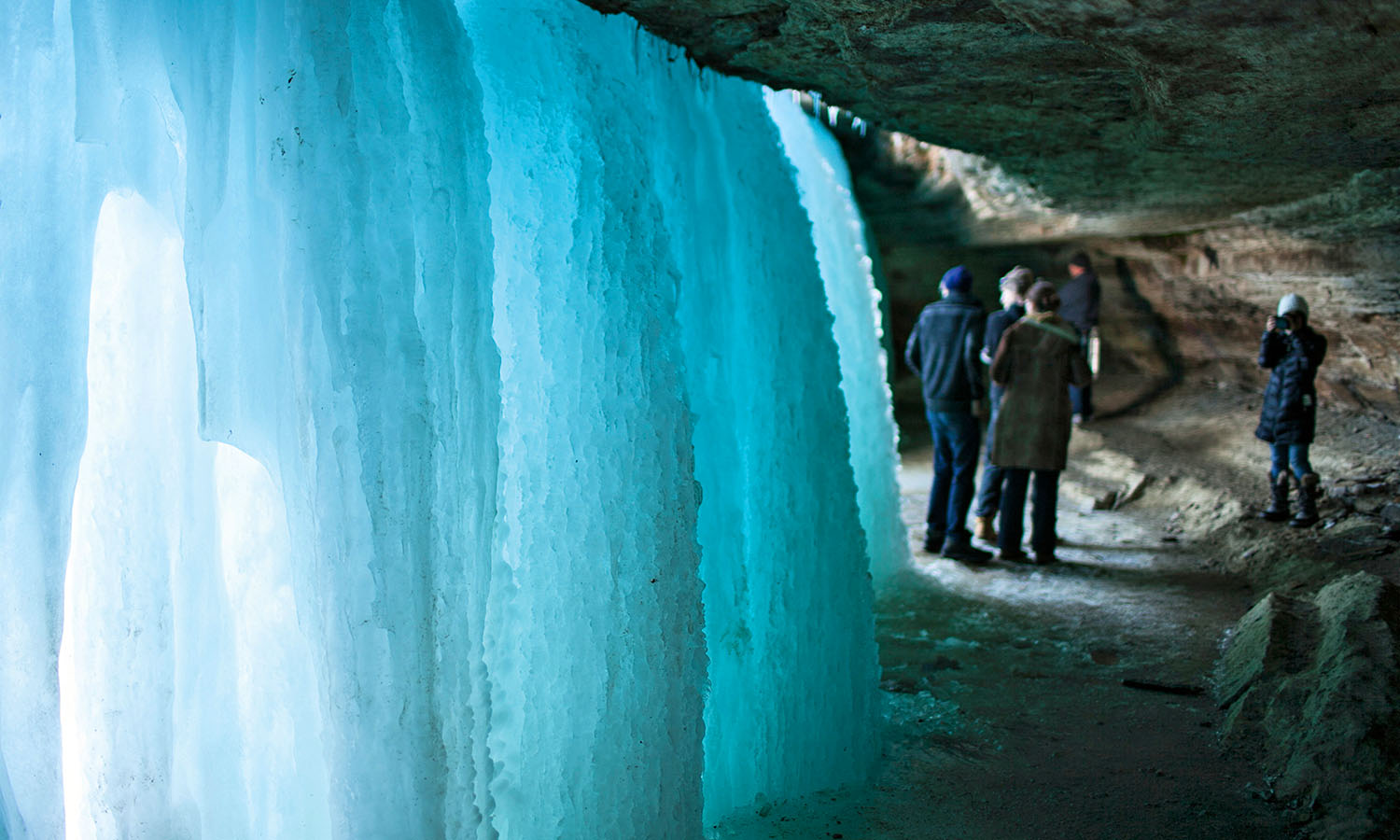
In the heart of Minnehaha Regional Park in Minneapolis, you’ll find a creek that eventually cascades 16 metres into a pool not far from the Mississippi River. The Minnehaha Falls has been a top tourist attraction since 1855, when Henry Wadsworth Longfellow wrote about it in A Song for Hiawatha (you can see a statue of the co-founder of the Iroquois Confederacy not far from the falls). But for part of the year the water stops falling. In the depths of winter, it freezes up, creating a bright blue, glowing grotto. There are paths down to the falls and it’s quite safe to walk behind them and take photos.
minneapolisparks.org

Underground music
Maro, Spain

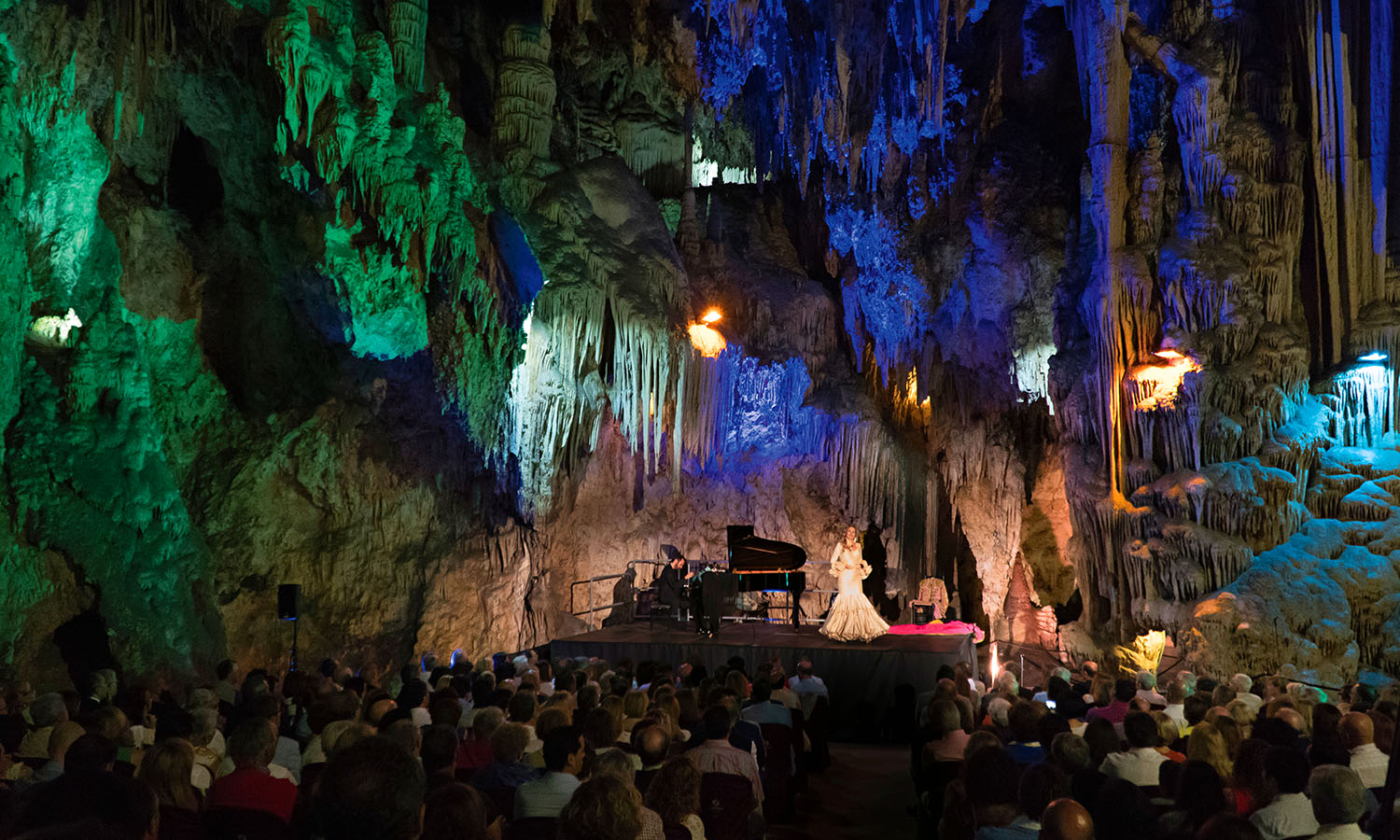
All year round the Cuevas de Nerja are a popular Malagan tourist attraction. Remains found in them suggest they’ve been inhabited since about 25,000BCE and have, in the years since, been used for everything from farming to pottery production. But once a year they take on a much grander role, hosting the Festival Internacional de Música y Danza de Granada. The festival is held in June and July each year. Internationally renowned performers including Yehudi Menuhin, José Carreras and Dame Kiri Te Kanawa have all filled the caves with their soulful songs, while dancers from the Ballet Nacional de España and La Lupi Flamenco have soared across the stage.
cuevadenerja.es

Riding the Blue Derby Mountain Bike Trails

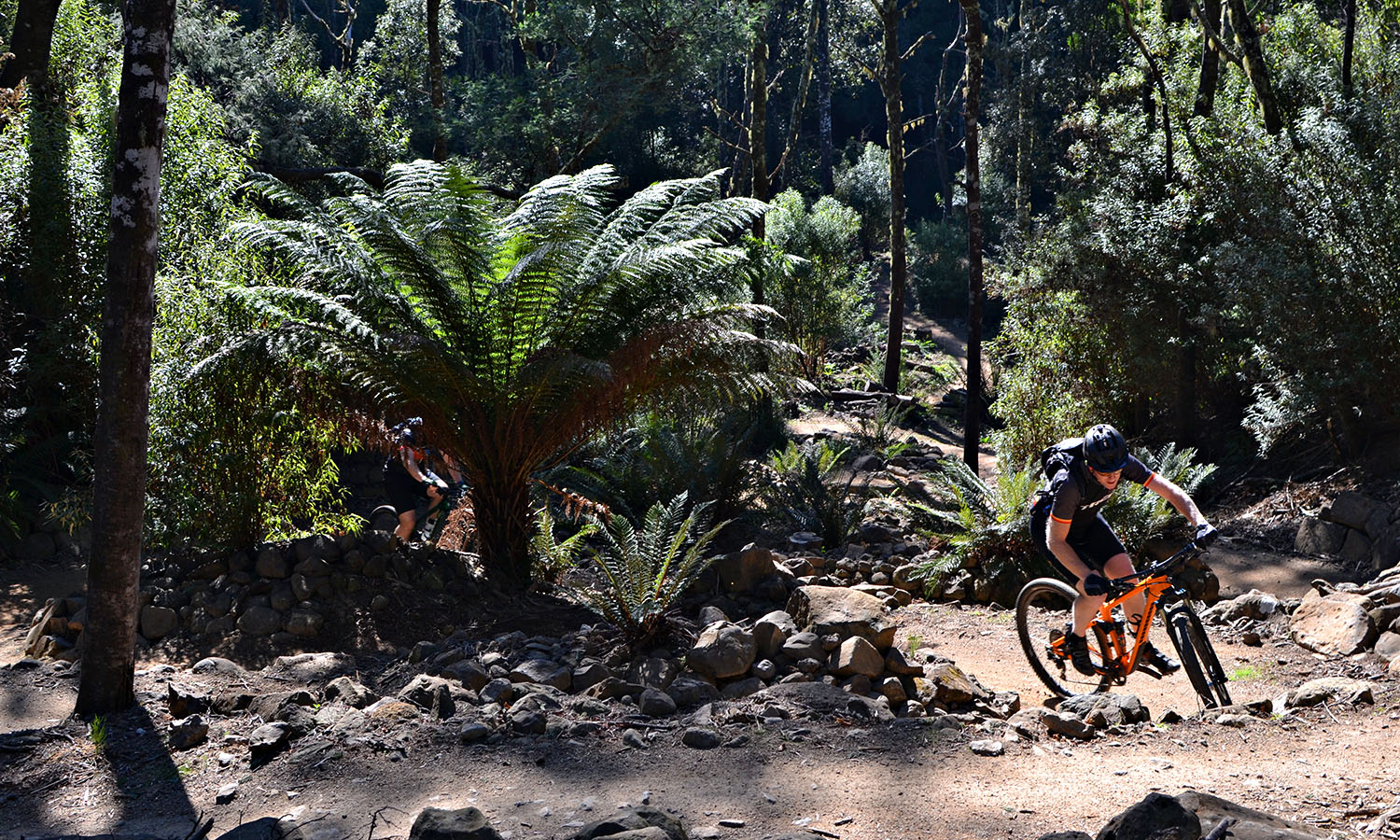
It’s while careering down a mountainside at 30 kilometres an hour I realise my once wide vocabulary has reduced to two little words. “Fuuuck!” and “shit” aren’t typically part of my everyday vernacular, but they are making a frequent appearance as I ride along the Blue Derby mountain bike trails. Uttered with varying degrees of frustration and terror, they are occasionally accompanied by noises most often heard in labour wards.

I’m mountain bike riding in Tasmania, along the new Blue Derby trails to be precise, and have experienced almost every iPhone emoji imaginable. Although it seems most riders I pass experience just one: unadulterated glee. As the largest single mountain bike project undertaken in Australia it’s a honey pot for enthusiasts of the sport, offering everything from cruisy greens through to gnarly double blacks. Anyone can pitch up to the trails, bike in tow, ready to test out what this remote and rugged corner has to offer. I spot all kinds of folks gearing up – families with young kids, lone riders with kelpies and big groups of fiftysomethings out on a weekend jaunt. But those who want to get the most out of Blue Derby’s bounty would be wise to enlist the help and guidance of expert local riders and, at a three-hour round-trip back to Launceston, to stay in lodging nearby.

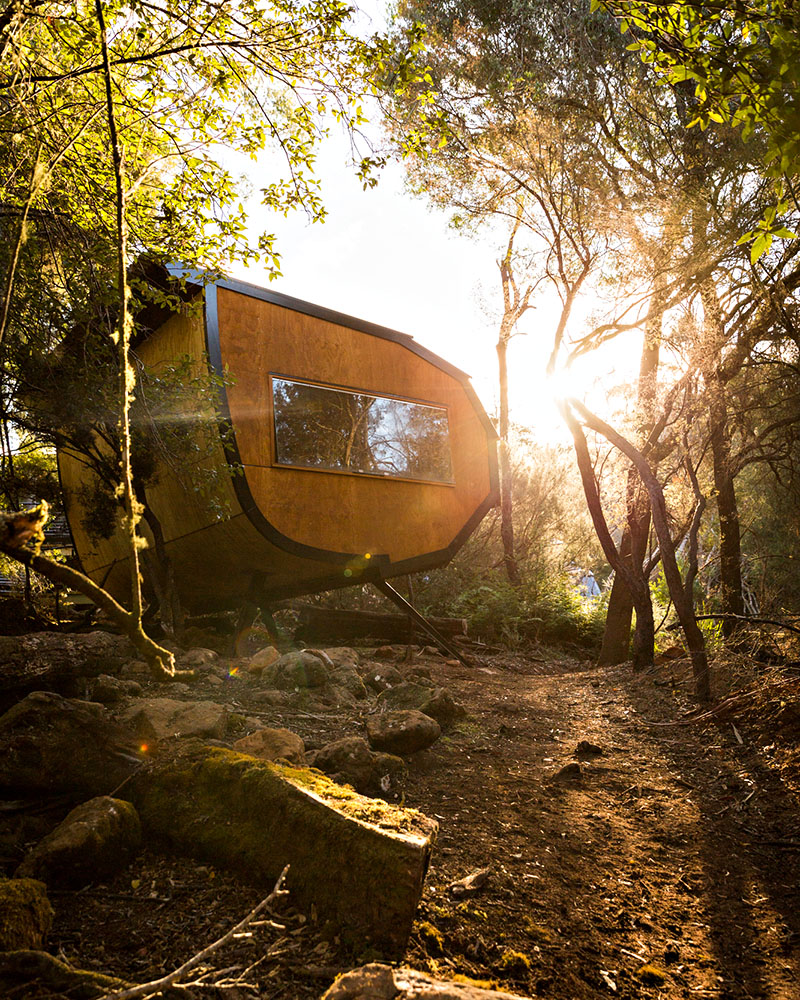
Newcomer Blue Derby Pods Ride promises both, with some incredible Tasmanian produce tossed in for good measure. Dreamed up by young local couple Steve and Tara Howell in 2014, their eco-friendly lodging was finished in April 2017. Here, guests spend three days and two nights exploring the dirt ribbons that thread through the green valley (for some of the best mountain biking in Tasmania) and bedding down in four minimalist, custom-built cabins hidden deep in the forest. In fact, the pods are so well camouflaged among the canopy of gum trees they can’t be spotted from any point on the biking network, which, at 80 kilometres long, is quite a feat.

The trails have been just as sensitively built, with nature’s features considered at every turn. Completed in October 2016, Blue Derby was designed by the company responsible for every single World Championship and Olympic course in all of Australia. So great is its pedigree that stage two of leading mountain bike race the Enduro World Series was hosted at this very spot in 2017 – the first time it had ever graced Australian shores.

While ride leaders Steve and John are both wildly patient and encouraging – coaxing me into doing things I did not think possible on two wheels – it quickly becomes apparent I will not be challenging any pro-racers for their crowns.  However, I do seem to excel at one very niche sporting pursuit: falling. In fact, I might just be the most agile and exceptional faller on whom Steve has ever laid eyes. I can fall both while moving and while stationary, and my arsenal of techniques is pretty fierce. There’s the Matrix-style flying eagle that sees me slicing through the air to land crouched on the path below; the prayer position, where in a blink I find myself 90 degrees away from the trail, kneeling amid the ferns over a felled tree; the more vigorous ‘running man’, where I make haste to separate myself from 13 kilos of wheels and alloy; and the ‘come hither’ look, where I land unfurled on a shrubby mound, miraculously still half upright.

Thankfully there’s a lot to admire at Blue Derby, even while you’re eating dirt. The early sun creeps over the valley and streams through the foliage in a way that verges on biblical. Emerald fronds paper the track. Towering eucalypts dip their heads into the morning fog and their feet into lazy creeks. Even the drive here from Launceston is confoundingly beautiful. We cruise past flaxen hills with shadows spilled across them, past lime green paddocks strewn with sheep and speckled cows, past rusted steel water towers and old saw mills and rows of statuesque golden poplar trees.

John says it’s the rich, chocolate soil of Blue Derby that he loves most. For me it’s the chance to get reacquainted with the startling symmetry of nature. And there is no better company to do it in. Most people can easily reel off the top five celebrities they want to get under the sheets with, but John is a man who will joyfully recite the names of his five favourite trees.

Both he and Steve are equally impassioned about Blue Derby, the natural environment and the sport, as well as the meditative moments this holy trinity can bestow. “The thing we’ve really tried to focus in on is a release from highly strung lives,” Steve explains. “Jumping on a mountain bike and experiencing the ‘flow’ – that moment where you’re focused on nothing but the trail.”

With my hands scratched and bloodied, my knees a fetching shade of lilac and an incredibly sore saddle, I am slow to worship at Steve’s church. Uphill sections leave me panting like a portly pug in summer. Cross-country tracks are littered with granite slabs that the mere sight of causes me to topple. And the tight, steep ochre corners known as berms that feature on downhill slopes? Well they are my kryptonite. I fall down and get back up on repeat, gritting my teeth and narrowing my eyes nervously anticipating the next clanger. Naturally, all instruction goes out the window. I am no longer capable of the ‘ready’ and ‘attack’ positions that raise me up above my seat ready to tackle the course – this rider has become solely focused on not flying over the handlebars.

Related: Visit Victoria and mountain bike there 

Working through my relationship issues with Bruce (the ferocious moniker I’ve given my $4,000 dual-suspension mountain bike) is the first step towards conquering these rocky trails, advises Steve. “Bruce’s wheels will eat that up for breakfast,” he says as we talk about day two of snaking through the temperate rainforest. It’s a statement I am reluctant to believe, having been separated from Bruce with moderate force twice in the first 10 minutes of day one. But after a morning spent learning that falling doesn’t hurt all that much my confidence builds.

Slowly, slowly, my ride becomes laced with fleeting epiphanies. Moments where I ‘get it’. Moments where it is just me and Bruce moving to the beat of the track, carving through the undergrowth, the trail unfurling bit by bit in front of us, only my hands to guide and my feet to push. We sail over ground that ripples like waves and cruise down steep slopes only to roll back up hooked earthen walls. And in those moments I forget about my bruised, aching limbs and my scratched palms, and I get lost in the sanctity of the flow.

By lunch on day one there is no doubt Bruce and I have become better friends than anticipated, but after the flurry of adrenaline (and exertion) I am only too happy to adjourn for snacks. We picnic on smooth cheeks of rock as a stream trickles by, knocking back freshly brewed Aeropress coffee and exchanging stories of run-ins with granite.

Despite full bellies, some are still itching to rewind up switchbacks and cruise down tacky terrain. I have other ideas. Fortunately at Blue Derby Pods Ride the motto is ‘choose your own adventure’. For me, drowsy with food on a hot afternoon, that involves whittling away the remaining hours of daylight back on the dining room deck. I laze like a Roman emperor on a colossal beanbag throne with a pot of mint tea at my disposal. I peruse the book collection in the cosy, cushioned nook hidden behind a cupboard door. I tuck into an afternoon tea of hot, buttered popcorn and cold local honey porter.

As the sun sinks everyone regroups over an antipasto board. Silken triple cream brie, ruby red discs of cacciatore sausage and bowls laden with delicately flaked salmon rillettes sate appetites sharpened by fresh mountain air. And later, when the log fire is ablaze, and it’s beyond all doubt that I’ve consumed far more than I can possibly have exerted, I still manage to make space. Creamy Scottsdale potatoes are tempered with a tangy caper olive dressing, while crisp slabs of pork belly and a rocket and parmesan salad make for excellent bedfellows. With a menu designed by lauded Tassie chef Daniel Alps, plus a bounty of local, seasonal, paddock-to-plate ingredients, it’s hard to say no.

By 9pm it’s also increasingly hard to stay awake and the thick doona that graces my small, wooden pod looks more and more tempting. I fall asleep to the sound of wallabies stamping their feet, and with the constellations in the wide window above my pillow as a nightlight.

In a blink we reach day three and our final ascent (and descent). The Blue Tier trailhead sits nearly 600 metres above sea level. It’s 20 kilometres long, meandering from barren subalpine plateaus down to rich, moss-drenched rainforest. Out of all the trails across the globe Steve has ever run, this one is his favourite.

The start line is rocky in more ways than one, and amid the wild mushrooms and lichen-freckled grass I suffer a crisis of confidence and stand snivelling on the mountaintop, convinced I am about to meet my death. Or at least a rather unpleasant accident that requires reconstructive surgery. John gives me a pep talk but the girl in me that’s more comfortable at Gelato Messina than up a mountain says it’s all a big ruse. Yet somehow, my confidence builds.

Related: After a ride, sizzle in Tassie’s floating sauna 

In an instant the landscape changes and so does my mood. From stony, stark and sunbleached we pedal into emerald green. The Goblin Forest is a dreamlike world straight out of Lord of the Rings, where a toffee confetti of myrtle leaves dusts the track, and a maze of twisted branches provides a cool, dark corridor. We swoop through streams and over bony wooden fingers extending from tree trunks, and I eventually concede to John my audible whoops as we gather pace and fly round corners.

When we finally reach the end several hours later my cheeks feel flush with satisfaction and I almost can’t believe it’s all over. I feel proud of the small blister forming on my left palm, my violet knees and my tired legs. And somehow I feel the gnawing urge to throw myself down a mountainside at 30 kilometres an hour all over again.

When in Rome

Awash with tradition and heritage, and casually studded with historic structures spanning almost three millennia, Rome can feel like a city living on past glories. Many restaurants around the city’s tourist hubs offer lookalike menus with classic Roman dishes like cacio e pepe (pasta served with cheese and pepper), or cona di gelato, which goes for about AU$6 around the Colosseum and Spanish Steps.

But just one metro stop south of the ancient world’s most impressive stadium, chefs in an emerging neighbourhood are reinterpreting the city’s culinary traditions with a contemporary attitude. Prices are lower, flavours are bigger, and there’s a good chance the refreshing limone ice-cream on offer is crafted from citrus fruit foraged directly from local orchards.

On the River Tiber’s southeastern bank, grittily authentic Testaccio has long been a proud working-class neighbourhood. More than a century ago, the area housed Europe’s biggest slaughterhouse, and many of the abattoir’s lower-paid workers – dubbed la vaccinara – were gifted the quinto quarto (fifth quarter) of the cow and pig parts no one else wanted. Tripe, oxtail and other organs were incorporated into traditional Roman cuisine, and now Testaccio’s eateries and market stalls are resurrecting these classic ingredients with a modern twist.

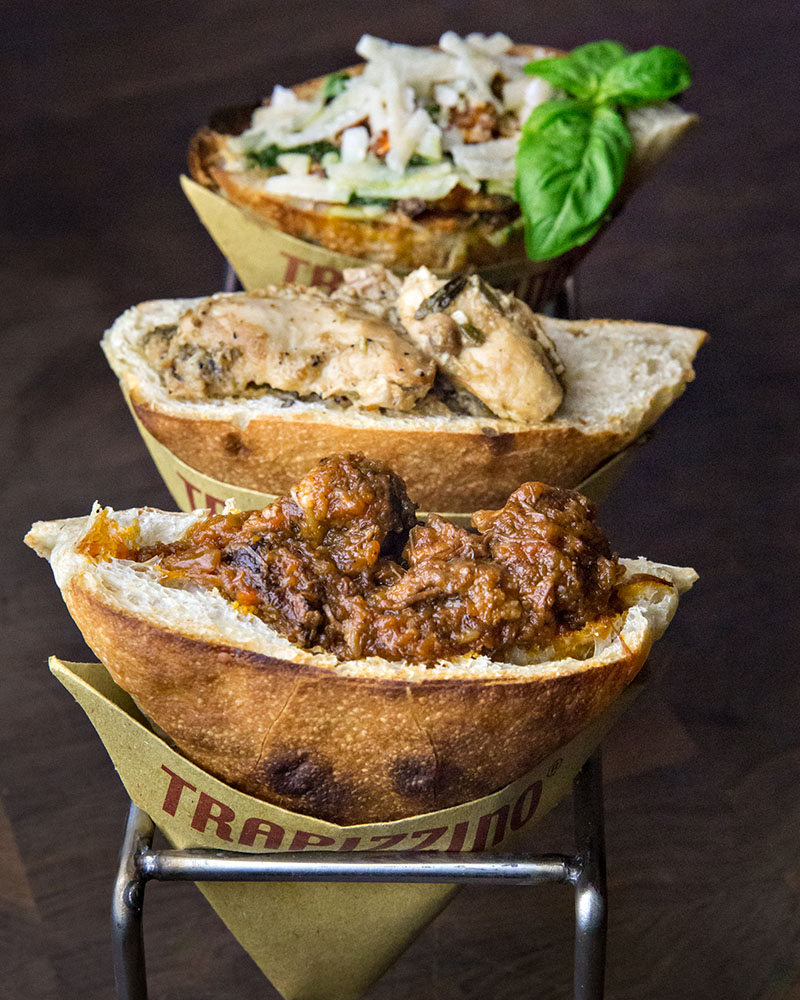
The Trapizzino empire incorporates two stores in New York, but the original Testaccio location is still the best. After merging the triangular shape of traditional tramezzino sandwiches with pizza dough, Roman chef Stefano Callegari crafted hearty fillings to accompany his pillowy pockets of fluffy pizza bianca. New wave fillings include Ethiopian-style zighini (beef stew), but the flavours from the days of la vaccinara are the most popular with Trapizzino’s loyal regulars. Washed down with craft beers from Italy’s Baladin Brewery, tramezzino crammed with tender oxtail or tripe, tomato, pecorino cheese and mint are regularly devoured by revellers overflowing from Testaccio’s late-night clubs and bars.

For somewhere to eat during the day, Mercato Testaccio is an essential  destination. Fruit and produce vendors offer fresh, local ingredients, and at stalls selling some of the area’s best street food, chefs channel the market’s historic roots into their reinvented Roman cuisine. If you dig a little deeper, you’ll also find some of Rome’s best Sicilian flavours.

There’s more sandwich action at Mordi e Vai, with panini crammed with an ever-changing range of fillings. Mainstream flavours include spicy salsiccia (sausage) or polpette (meatballs) in a rich tomato sauce, both best enjoyed when the hearty fillings soak through Mordi e Vai’s crisp ciabatta buns. Traditional cucina Romana is expressed through more challenging fillings like coratella e carciofi (a robust mix of heart, lung and artichoke) and the classic flavours of trippa alla Romana (Roman-style tripe), cooked slowly to a creamy texture capable of converting even the most ardent of tripe sceptics.

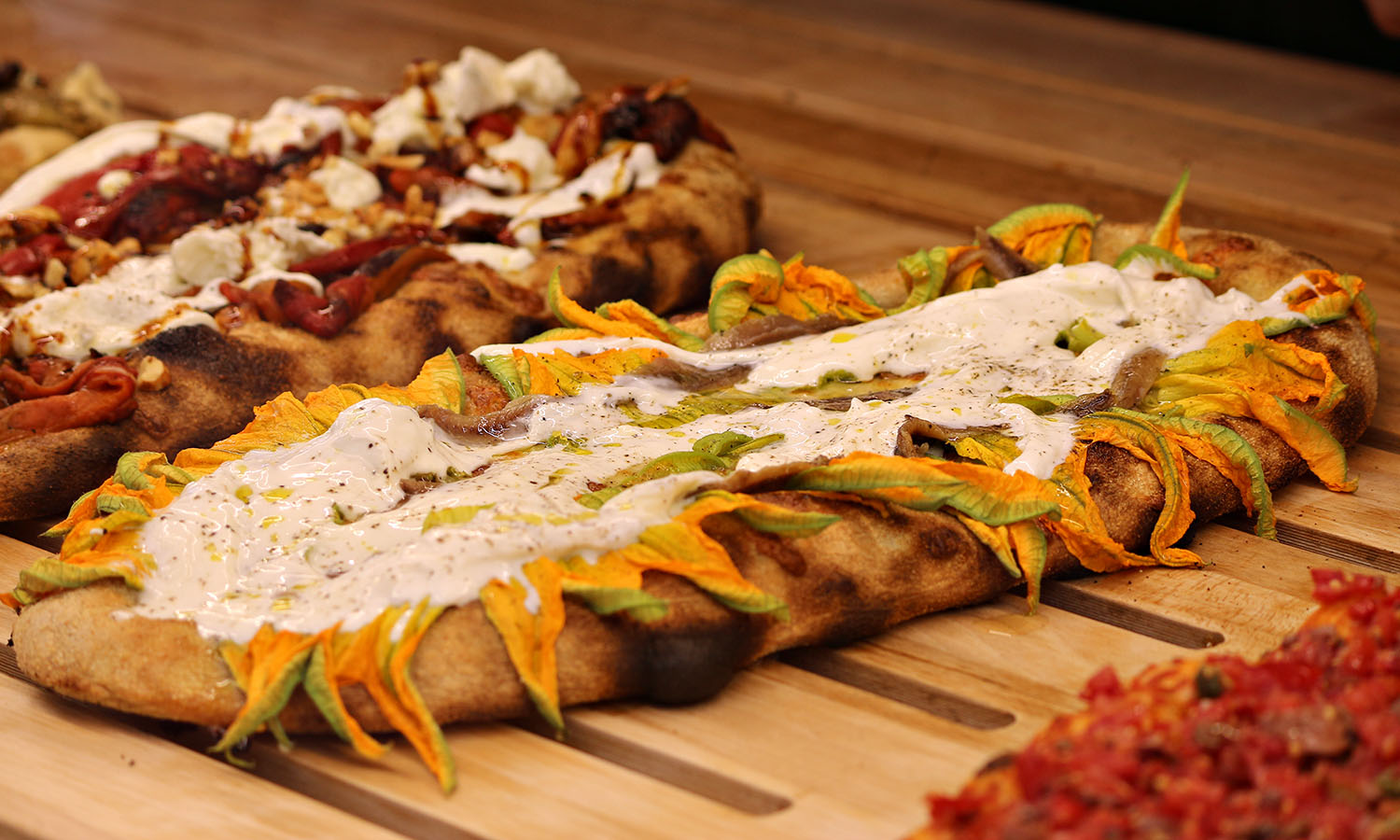
Elsewhere in the market, it’s Rome’s classic pizza alla palla that receives a contemporary makeover. Traditionally baked in a rectangular shape, cut off in slabs and sold by weight, CasaManco’s versions, crafted by husband and wife team Andrea Salabe and Paola Manco, have assumed cult status in Rome since they launched in 2017. Served on rustic wooden platters and more akin to a crispy-based flatbread, the pizzas feature traditional combinations like prosciutto and fig or anchovy and zucchini flowers as well as the elaborate but balanced blend of mortadella sausage, ricotta, Sicilian blood orange and honey. Fruity prosecco is available at an adjacent stall for just AU$3 a glass. The Sicilian theme is reinforced nearby at Emporio di Sicilia’s market counter overflowing with the best of flavours from Italy’s southernmost province.

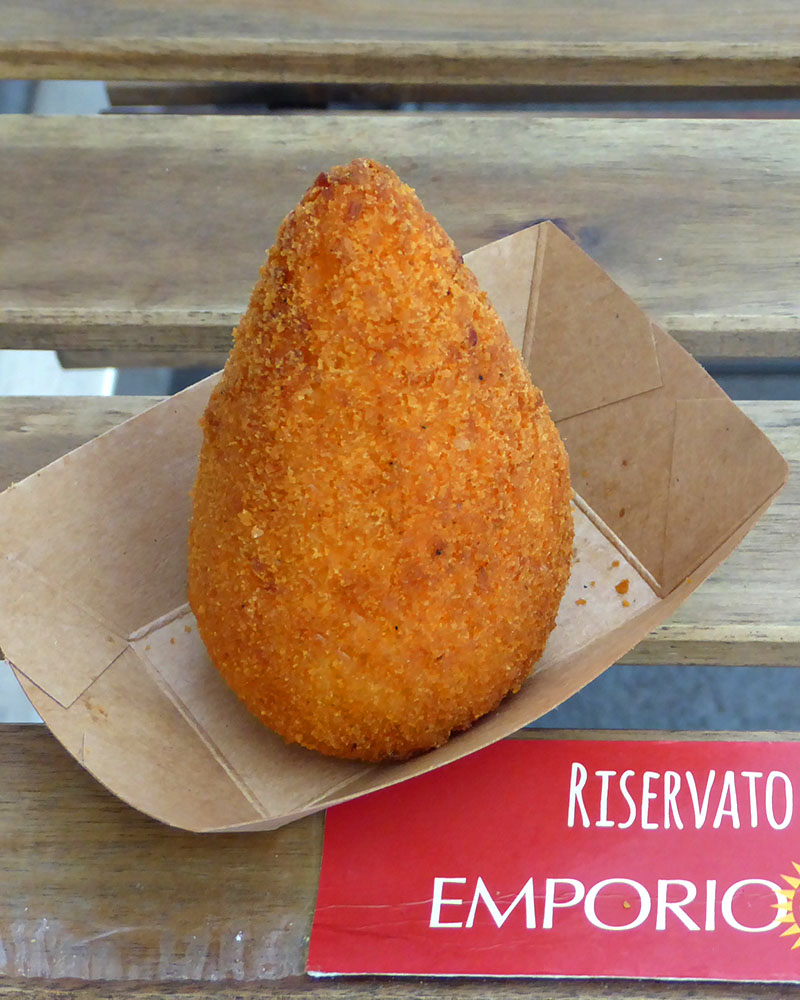
Deliciously bitter chocolate from the Sicilian town of Modica partners with crisp cannoli pastries dusted with reputedly the world’s finest pistachios from the town of Bronte, while some of Rome’s best arancini are arranged carefully in neat rows. Infused with saffron and often filled with melanzane (eggplant) or a meaty ragu sauce, Sicily’s signature rice balls are a culinary legacy of 175 years of Arab rule in the ninth century. Served warm and crunchy and teamed with a zingy glass of cola-like chinotto, they’re yet another tasty contender for the title of Rome’s best twenty-first–century street snack.


ARANCINI

Makes 8–10

INGREDIENTS
300g arborio rice
1 tbs saffron
50g grated parmesan
1 tbs Italian parsley, finely chopped
2 tbs butter
2 eggs
100g mozzarella, chopped
1 tbs peas
1 tbs chopped pistachios
2 tbs flour
4 tbs breadcrumbs
vegetable oil, for frying

METHOD
Combine the rice and 500ml (2 cups) water in a pan. Add a pinch of salt for seasoning, then bring to a boil and cook slowly over a very low heat. Make sure you stir frequently until all the water has been absorbed.

After dissolving the saffron in hot water, stir into the rice along with parmesan and finely chopped Italian parsley.

Once this mixture has cooled slightly, stir in the butter and one egg.

Beat the remaining egg and season with salt and pepper.

When the rice mixture has cooled further, form into eight to 10 balls about the
size of a mandarin. Keeping your hands wet will prevent the rice from sticking.

Form a small depression in the middle of the ball and carefully place a small amount of the mozzarella, peas and pistachios.

Seal the opening, dust the rice balls with flour then roll in the beaten egg and, finally, the breadcrumbs. Refrigerate for 30 minutes to set the breadcrumbs.

Heat 5cm of oil to 190ºC (it’s ready when you drop a cube of bread into it and it goes golden in about 10 seconds). Fry a few of the arancini at a time until golden (about 4–5 minutes). Drain on paper towels before serving.

Lords of the Braai

It’s possibly the most flagrant display of animal cruelty I’ve ever witnessed. Moments after being tenderised mercilessly with a blunt-edged instrument, the victim is thrown onto a searing metal grate above a bed of hot coals. There, it’s pricked, prodded and tossed about until it’s barely recognisable.

Grid patterns score its flesh and sea salt is flung into its wounds. Who knew such abuse could be so mouth-watering?

In South Africa, the braai – an Afrikaans word meaning to grill – is the perfect excuse to gather with friends and family. With South Africa’s chequered history, you could say it brings the country together.

Even Heritage Day, a public holiday celebrated on 24 September each year, is affectionately known as Braai Day.

The love of meat cooked over an open fire, traditionally fuelled by wood and often charcoal (but never gas) is something all South Africans share. It cuts through ethnicity, race and class. In the 11 official languages spoken in the Rainbow Nation braai is the only word recognised by all. Where Australians have MasterChef, South Africa has Ultimate Braai Master.

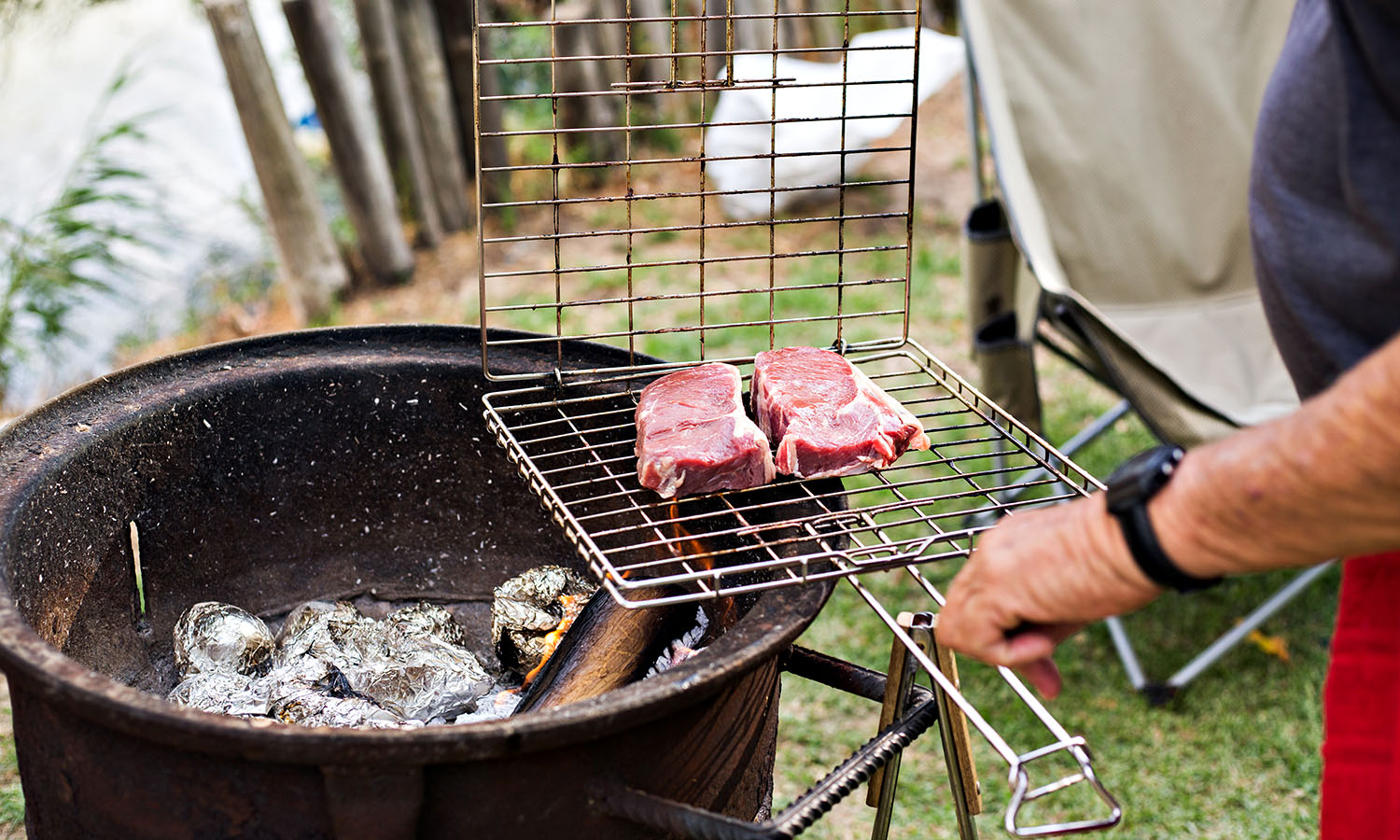
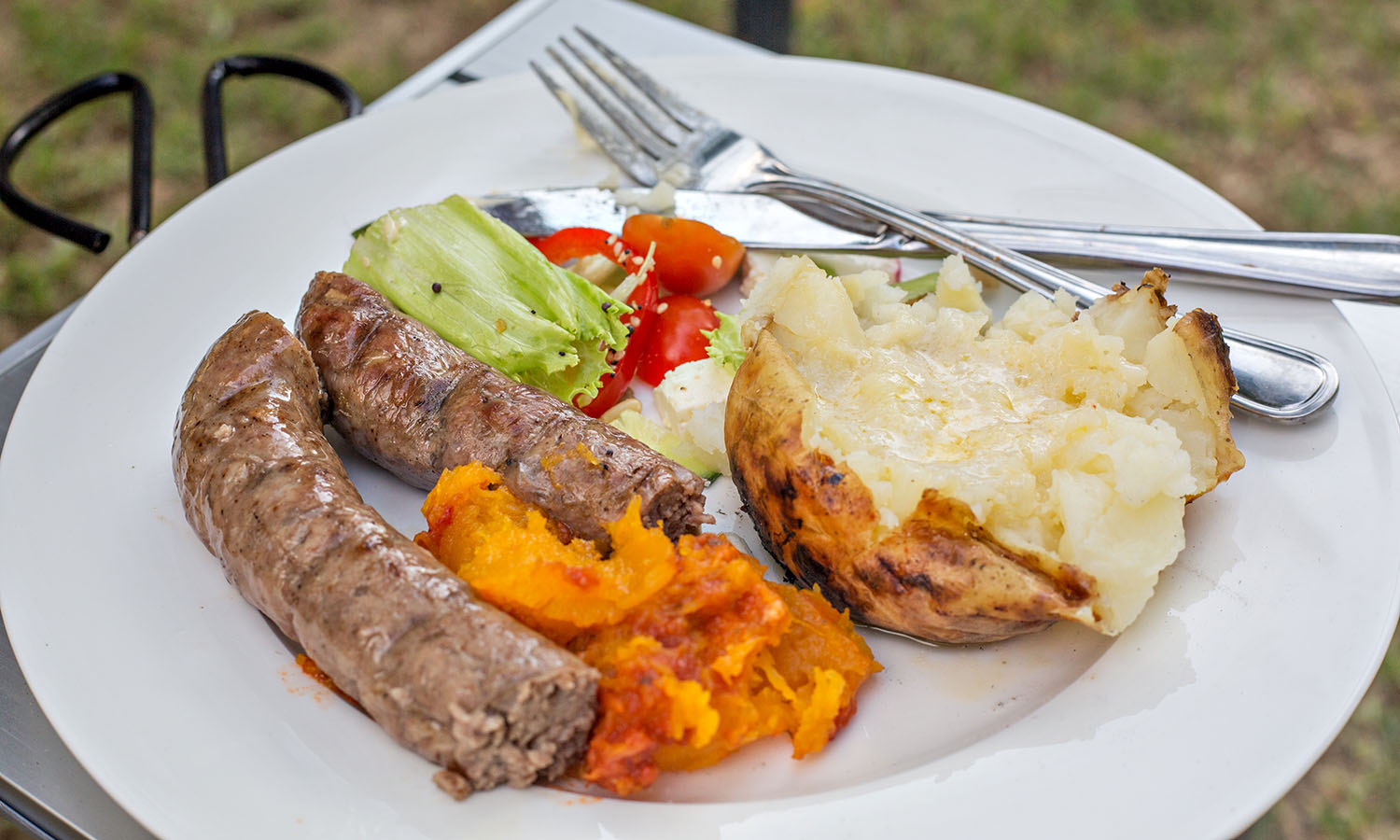
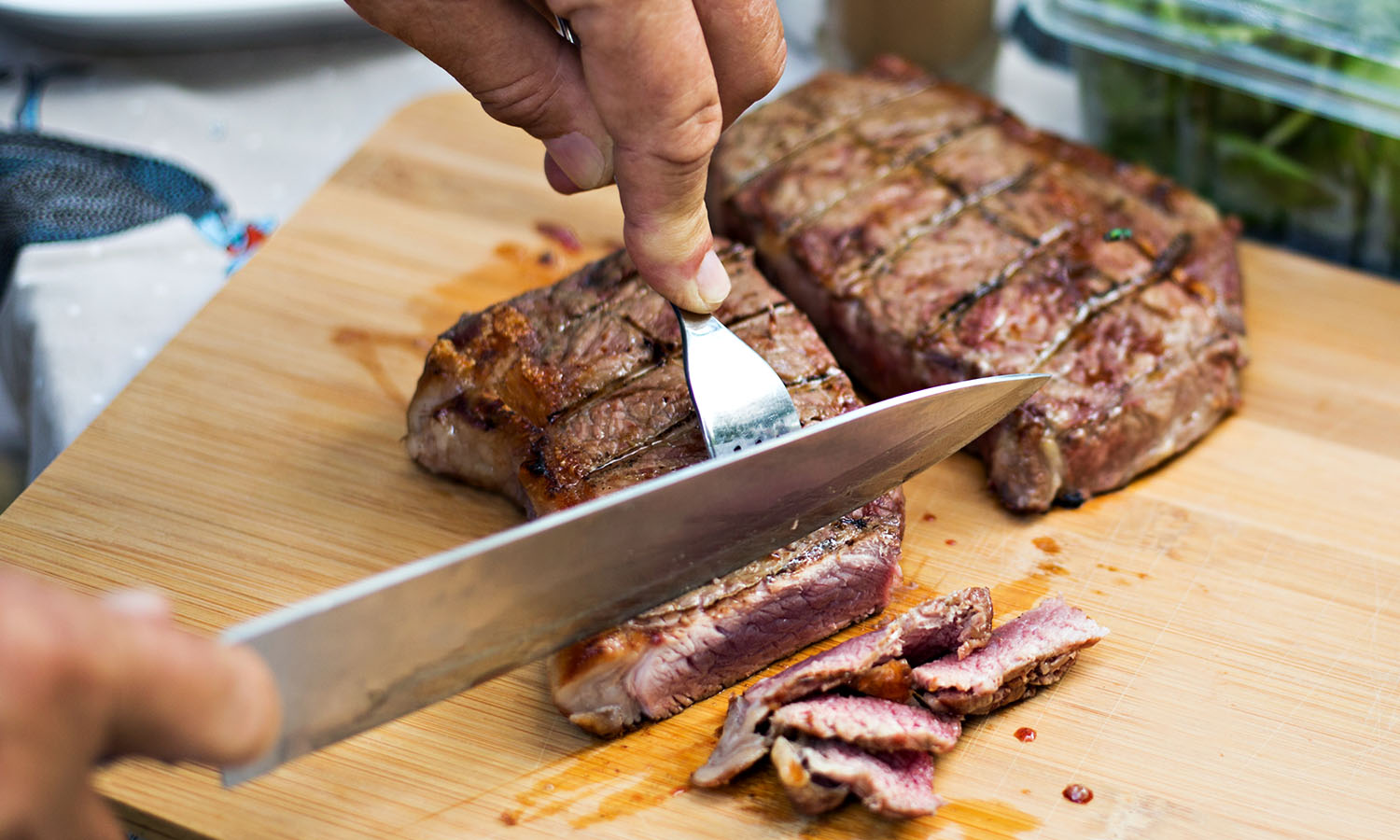
The bloodied carcass being thrown around our braai is a sirloin fillet, though cuts of ostrich, bok (antelope) and wildebeest aren’t unheard of, particularly in rural areas up north. Sharing the grill is an unsightly curl of boerewors (farmer’s sausage), similarly flung around with reckless abandon. Each skin has been stuffed with minced beef, pork or lamb and seasoned by a fiery blend of herbs and spices introduced by seventeenth-century Asian slave labourers. It smells great, tastes better and looks truly awful.

I’ve anticipated this meal since I flew into Johannesburg two weeks ago. For seven years I lived in the Middle East, often socialising with South African expats and gorging on barbecued slabs of marinated beef, lamb and chicken. Here in their homeland, though, the opportunity for me to indulge in a braai has, thus far, proved elusive.

The problem is that I’ve been holed up in various five-star establishments. Diddums, you say. But while I’ve certainly enjoyed their indulgent offerings, the buffet dinners served up night after night lack the intimacy of a backyard cookout.

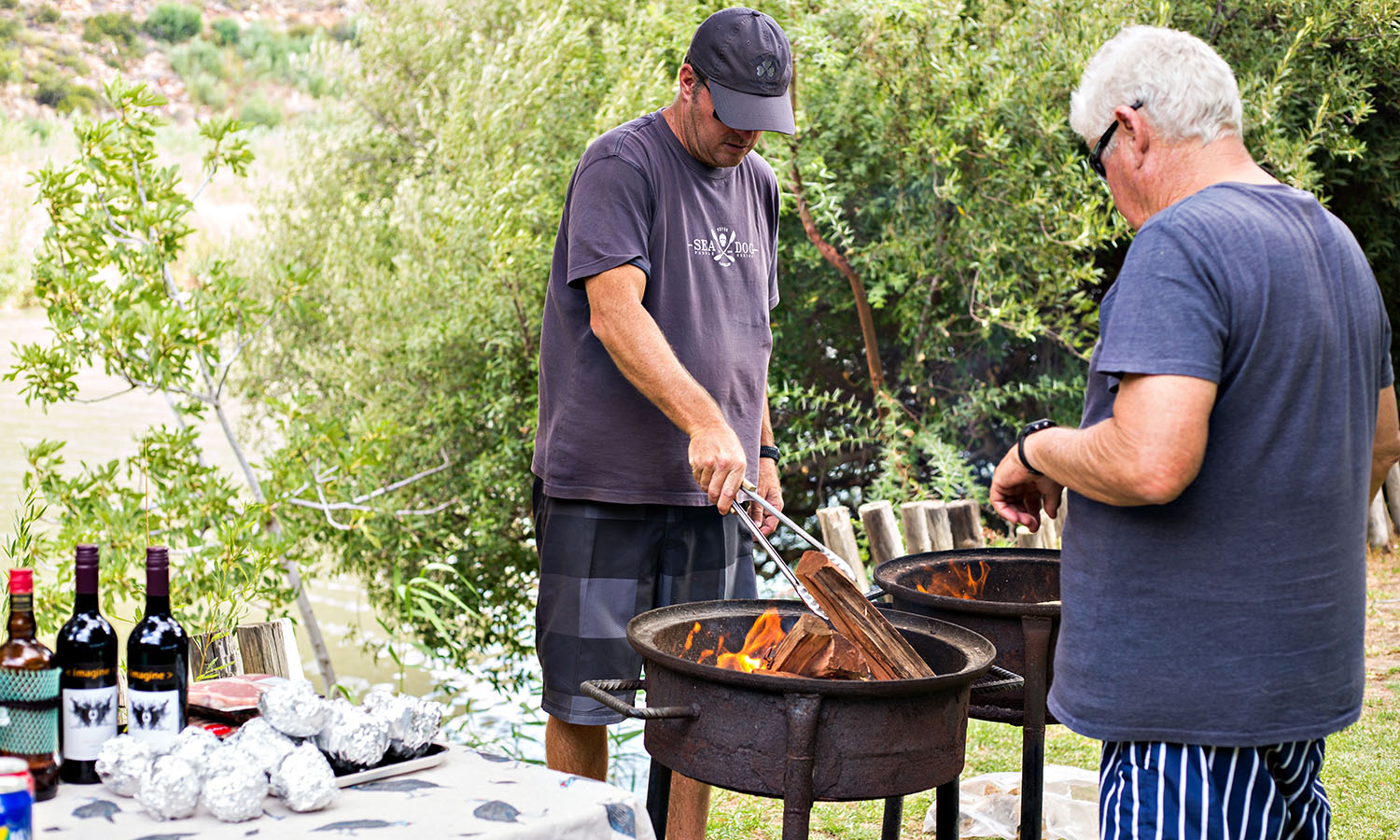
On this particular evening I’m standing on the patio of a friend’s cottage in the Cape Town seaside suburb of Fish Hoek. The sound of ocean breakers can be heard dispersing against the sand two blocks away and the last burning vestiges of sunlight reflect in the clouds, much like the charcoal embers glowing beneath the boerewors. Another Capetonian friend from those years in the Arabian Gulf brandishes a pair of tongs, clasping our meal as a heron might a fish.

Gareth flips the meat and tosses it around the grill, ensuring it’s evenly cooked. Watching his constant jostling drives me nuts – I adhere to a less is best philosophy when it comes to steak – but I dare not challenge him. The man with the tongs wields the power and etiquette dictates that advice can be sought but not forced.

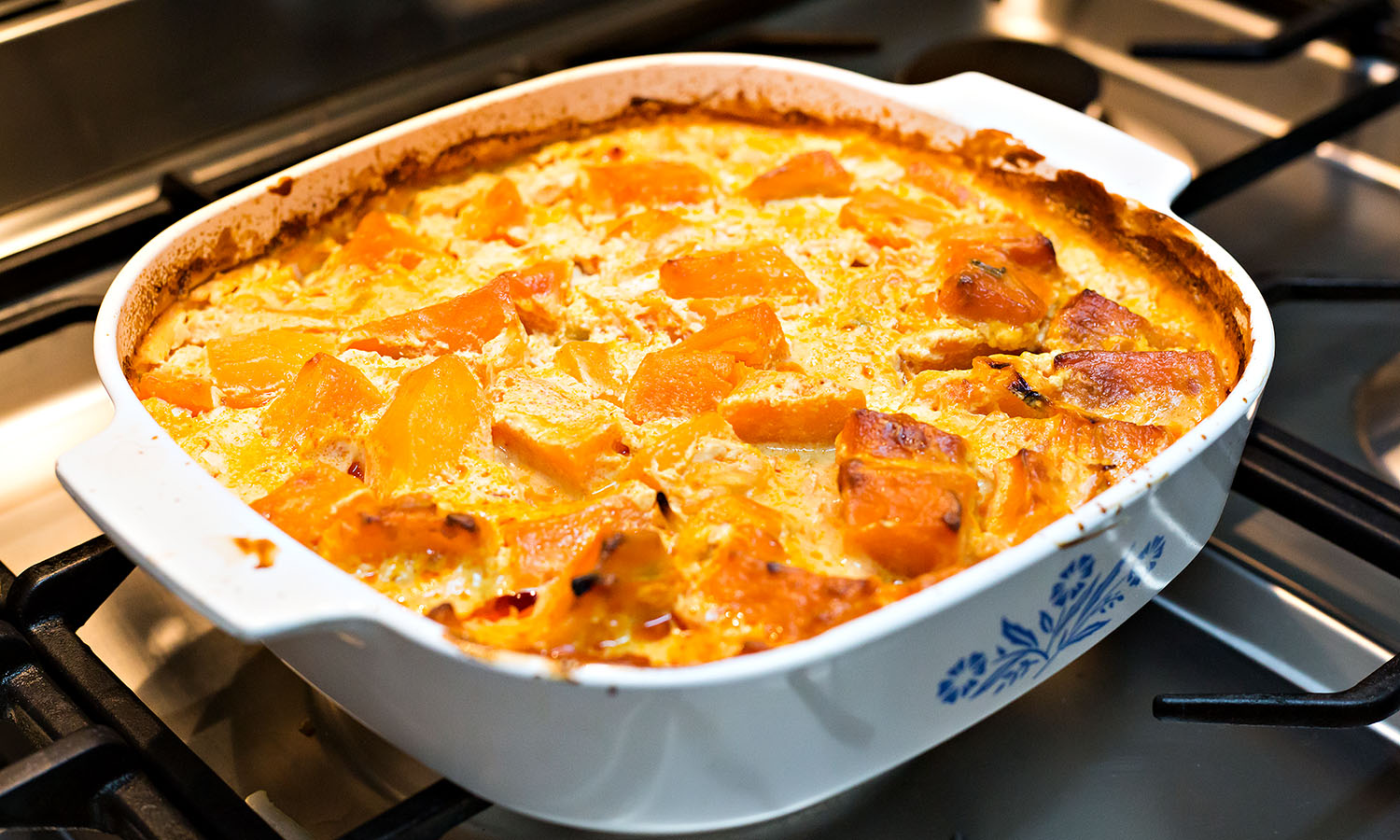
Potatoes baking inside a blanket of foil rest on the coals while appetisers are spread on an adjacent table. Sides of coleslaw, garlic bread and warm butternut pumpkin salad baked with cream and chakalaka, a much-loved local vegetable relish, are brought out to complete the meal. In northern provinces, they might also prepare pap – a maize porridge that can be eaten dry and crumbling or dampened with rich gravy.

Each of us cradles a cold dop, the Afrikaans word for drink. In this instance, the dop is a stubby, but it might just as easily be wine, especially around Cape Town, where bountiful ‘wine farms’ produce decent pinotages and sauvignon blancs for as little as AU$5 a bottle. Brandy is another local drop we forgo this night.

Whenever the Springboks rugby team is playing, or the Proteas cricketers, fans organise braais around them. You’re expected to be able to cheer on a national team with a full stomach here. But tonight the television stays off, and conversation hums around the hearth – what some here call the ‘African TV’.

For now, I’ll just cheer on the process. Their barbecue technique is unfamiliar, but that’s not to say they do it wrong. Far from it. When you can savour the beautiful South African climate with a cold dop in hand and the warm glow of the fire nearby – especially with old friends to keep you company – it’s impossible not to feel that this is how life is meant to be lived.

CURRIED BUTTERNUT PUMPKIN SALAD

Serves 8 as a side

INGREDIENTS
1 medium butternut pumpkin
250ml cream
1 can Hot and Spicy Chakalaka*

METHOD
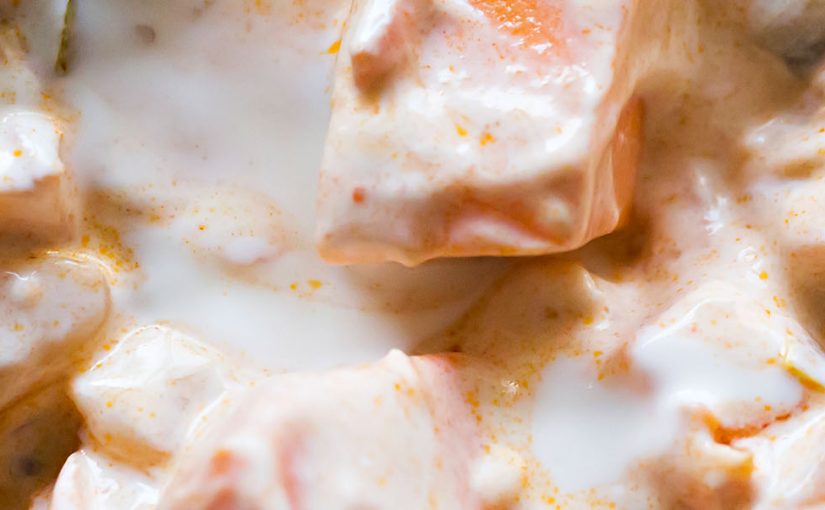
Peel and dice the butternut pumpkin, discarding the seeds. Place the flesh in a casserole dish and pour the cream and chakalaka over the top. Mix to make sure the pumpkin is evenly covered. Put the dish in a preheated oven set to 180°C for 60 to 90 minutes, or until the pumpkin is tender. Serve warm.

* Chakalaka is a curried tomato, carrot, capsicum and cabbage sauce available online from South African Products.

Farm to Fork in Albania

Much to the driver’s bewilderment I halt the city-bound bus in the middle of a four-lane highway by an industrial wasteland on the fringes of Tirana. Thankfully there’s a bridge to my destination: a greige-looking area that boasts a medley of tyre warehouses, half-built houses, water towers and train tracks that would definitely constitute Stephen King territory come nightfall. It’s a stifling August day but the burly mauve clouds are threatening rain, the mountaintops of Dajti National Park no longer visible.

After 20 minutes of meandering, hopefully, along bitumen punctuated by dirt track, the tractors and bicycles are suddenly replaced by parked Range Rovers and Mercedes. And, like a mirage, the tall gates of Uka Farm appear. An organic family-run restaurant and winery that was founded by Albania’s former minister for agriculture in 2014, Uka is set among nearly two hectares of farmland and boasts the youngest winemaker in the country at its helm.

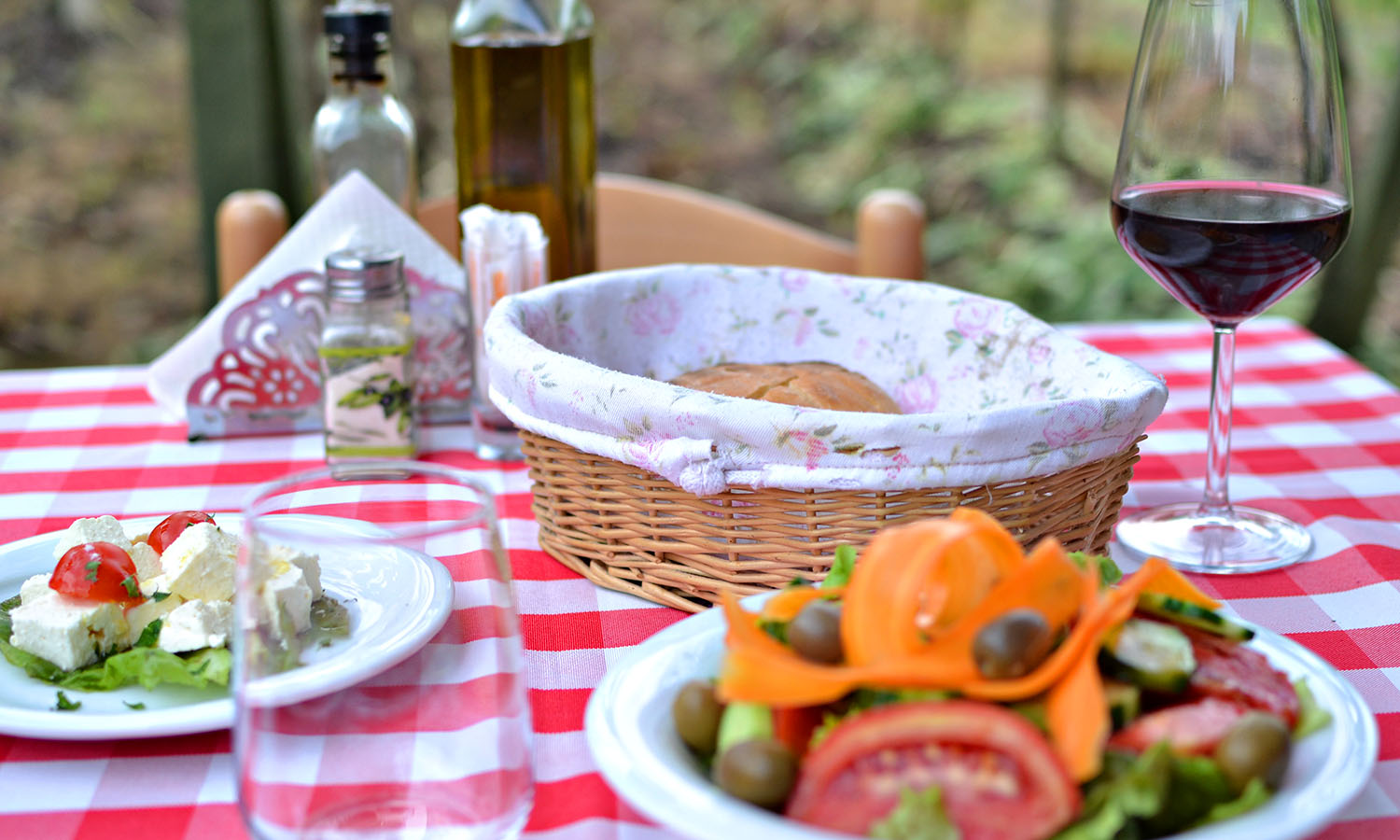
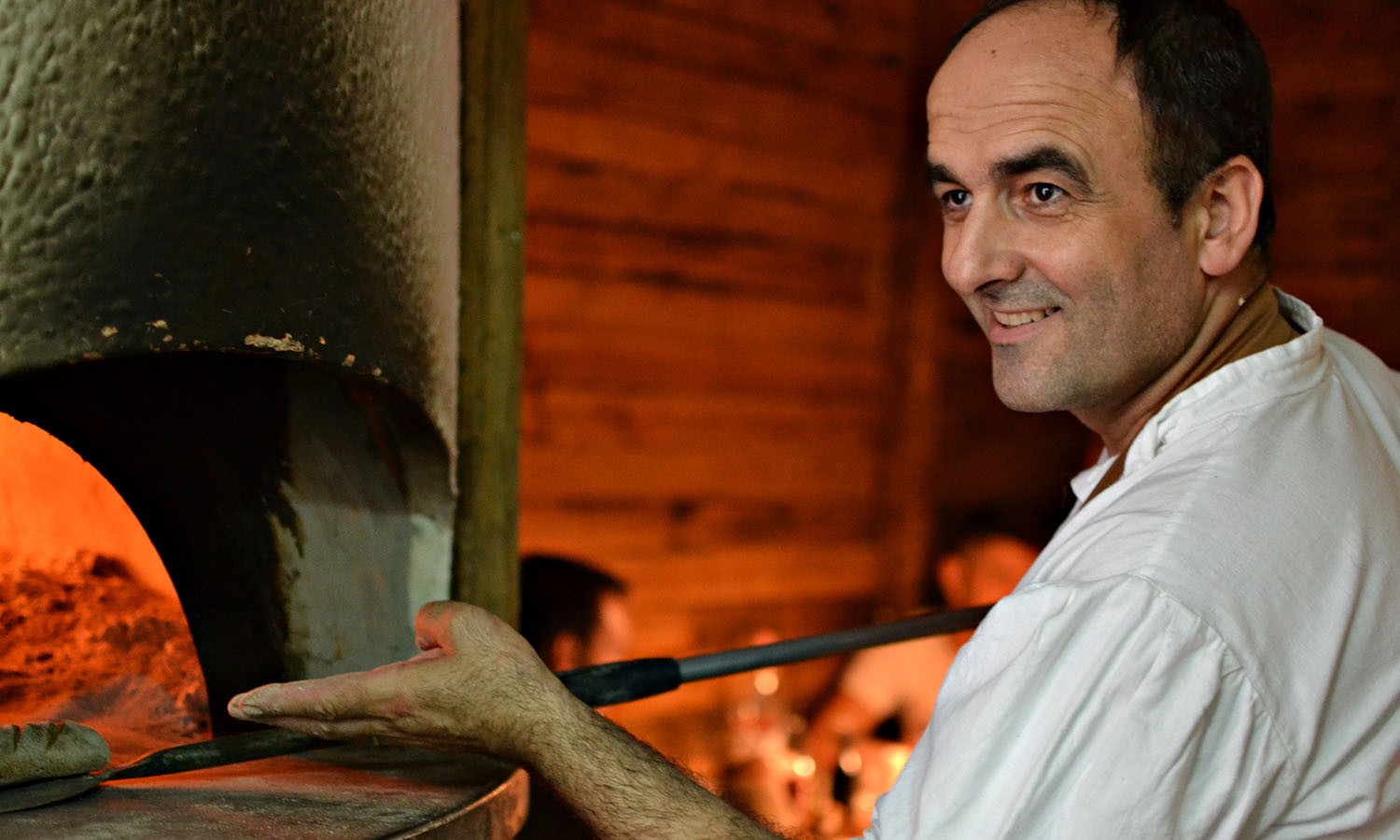
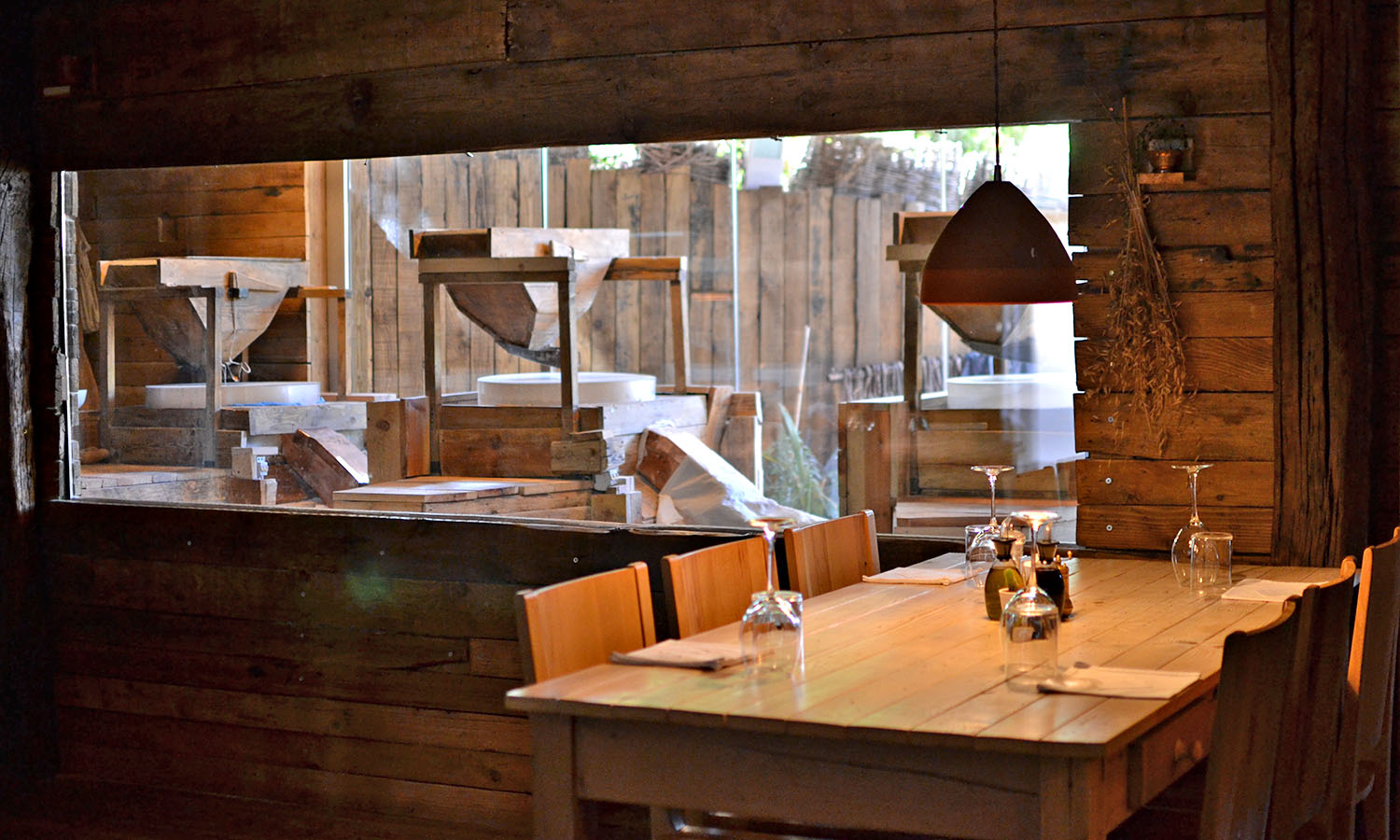
It’s one of a growing legion of local restaurants that seeks to revisit the traditional food cooked for centuries by grandmothers in modest country kitchens, and to pay homage to the rich, Mediterranean produce this soil has long nurtured. The menu at Uka is an ode to these simple pleasures: country-style bread, grilled wild mushrooms, platters of cheese from the Albanian Alps and a ‘village salad’ of rosy tomatoes, plump green olives and sweet carrot ribbons. Even the interior is pared down and distinctly rustic – think red gingham tablecloths, pine chairs and wood-fired brick kilns – to ensure the focus remains on the food. Subsistence farming has long been a way of life here, but only now is a farm-to-fork diet starting to be seen as a source of pride.

“We were closed for almost 50 years,” says Albanian chef Bledar Kola of the communist rule over the Balkan state. “When we came out we were like a dry sponge that soaked up all the water.” For a populace that was practically imprisoned within its own borders – with few allowed to leave and even fewer allowed to enter – almost any influence from the outside world was deemed cosmopolitan and aspirational. During those days, under the dictatorship of Enver Hoxha, chewing gum was rare enough to warrant shared use and the arrival of bananas was so monumental that it’s stained indelibly onto the memories of many Albanians.

Walking the streets of Tirana now it’s hard to imagine such austerity reigned only 25 years ago. The capital might be scarce of skyscrapers but it harbours more leafy coffee shops and restaurants than any other city I’ve ever wandered. By sundown bars in the trendy Blloku district overflow with beautiful young creative types languorously smoking cigarettes and drinking glasses of local red.
It’s families that fill the Great Park of Tirana, where ladies sell sunflower seeds by the lake and kids cruise around on trikes. Here, hiding below an apartment block with scalloped balconies, lies Bledar Kola’s new restaurant, Mullixhiu. Having spent the best part of his working life abroad – performing stints at Michelin-starred London restaurants and even Copenhagen’s Noma – Kola came home in 2007 to a country that was very different to the one he left: “Before the 90s there were not so many restaurants in Tirana. We also have a very strong influence from Italy so it’s rare to see Albanian restaurants, but we’re getting more open-minded.”

The Slow Food Chefs Alliance, which launched in Albania in mid-2015, has helped instil a growing sense of honour in local cuisine. But the hangover from Hoxha’s days still encumbers the city’s kitchens. “We have a lot of fresh vegetables in Albania, but eating them is considered a poor man’s diet,” says Kola. “When Albanians come to visit us at Mullixhiu they get irritated because only one dish on our 10-course degustation contains meat. For 50 years everything we had was rationed – people have missed it.”

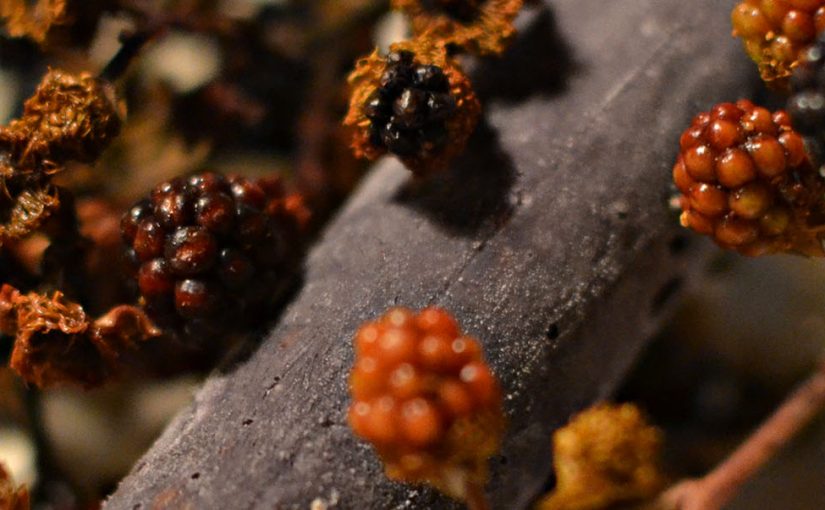
With its collision of Greek, Italian and Turkish influences, it’s flabbergasting Albanian food isn’t feted globally. Vibrant city centre restaurants serve mixed mezze platters, citrus and pomegranate salads, thick stews and stuffed, roasted vegetables. In the dimly lit dining room of Mullixhiu it means a more contemporary stroll through Albania’s greatest hits. Small glasses of tart cornelian cherry juice. A crisp nest of kadayif (finely shredded filo pastry) perching atop a creamy and sour pool of yoghurt and olive oil, dusted with a salty hit of grated black olive. A bowl cradling petals of dehydrated cabbage – the sweet, concentrated tang offset by an earthy punch of powdered porcini mushroom. Then there’s japrak, the dill-spiked rice with a tender hint of verbena. The al dente curves of eggplant tossed with figs in a gooseberry and purslane sauce. A pocket-sized filo parcel concealing a quail’s egg. And the dynamite stick of blackberry ice-cream served within a bramble.

Although the technical mastery is on point, it’s the quality of raw product that is king for Kola. “Now I’m focusing so much on Albanian ingredients,” he explains. “If you don’t use the produce of your country it’s like being married and cheating on your wife.” The Slow Food Movement’s Ark of Taste project also seeks to shine a spotlight on foods that are at risk of extinction. In Albania there are 43 products on this list. Items such as mishavin, a delicate white cheese made by shepherds in the Albanian Alps; trofta e egër e Cemit, a wild trout from its freshwater lakes; and verëtrëndafil i egër, a rosehip wine from its southern valleys.

Mrizi i Zanave, an organic farm restaurant perched near the Montenegrin border in northern Albania, is the country’s original slow food trailblazer and proud parent to Mullixhiu. After toiling for years in restaurants in Italy, Albanian Altin Prenga and his brother Anton came back to their small home town, and with a ‘build it and they will come’ attitude, opened the restaurant in 2009. Such has been the success that even today tables book out weeks in advance.

A year after opening, Mullixhiu is still building its own reputation – and that of Albanian cuisine – meal by meal. Locally based ambassadors and foreign journalists covet Kola’s dishes, booking private dinners and visiting in their droves, but locals take a little more convincing, he says. “If foreigners come and tell us something is nice only then do we value it,” he says. “We have a very rich cuisine, but to revisit it isn’t easy.” 

JAPRAK

Kola’s modern take on the traditional dish of japrak sees whipped sour cream replacing yoghurt and nasturtiums taking the place of vine leaves.

Serves 2

INGREDIENTS
1 spring onion
1 bay leaf
10ml olive oil
130g parboiled rice
sprig of fresh dill, chopped
vegetable oil, for deep-frying
100g whipped sour cream
10g lemon verbena powder or lemon myrtle
2 nasturtium flowers for garnish

METHOD
Finely chop the spring onion and cook slowly with the bay leaf and olive oil over a low heat until softened.
Pour in 100g of the rice and continue cooking for a further three minutes.
Add 1 cup of boiling water and bring to the boil before covering the saucepan. Allow the rice to cook – without stirring – over a medium-low heat until it’s cooked but retains a slight bite, and all the water is absorbed. This should take around 20 minutes. Prior to taking the pan off the heat, remove the bay leaf and mix in the chopped dill.
In the meantime, heat the vegetable oil in a heavy-bottomed, tall-sided pan until it reaches around 160°C. If you don’t have a deep-fry thermometer for measuring the temperature then simply slip in a grain of rice and wait until it pops up in the oil and starts to crackle. Once the oil is hot enough, slowly feed in the remaining rice grains and wait until they are lightly golden and crisp before removing onto a paper towel to absorb the excess oil.
Arrange the dill and rice mixture on the plate as desired, before garnishing with the lemon verbena powder, the two nasturtiums and the sour cream whipped to a foam. Finally, top with the deep-fried grains of rice.

Tahiti’s Raw Power

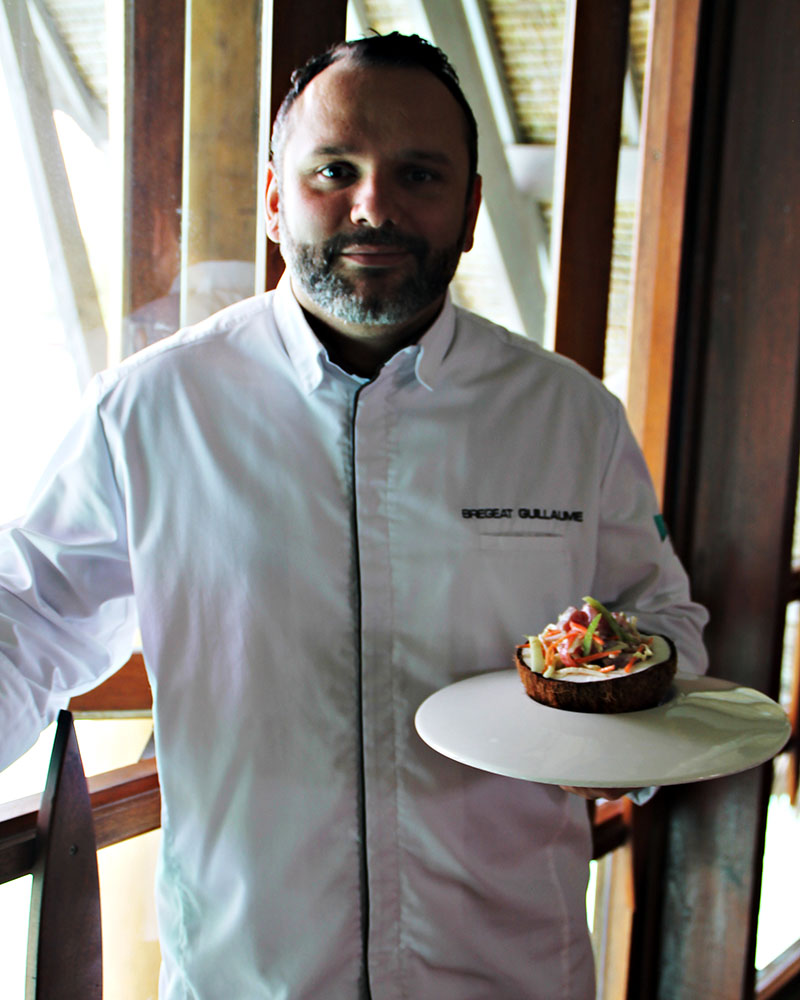
There are worse places to learn how to make poisson cru, that’s for sure. I am at luxury Bora Bora resort Le Méridien, with an expanse of electric blue lagoon stretched out before me. A charming Frenchman – the hotel’s executive chef, Guillaume Bregeat – is by my side.

I am the lone student in what he calls Atelier Poisson Cru. Let’s be honest, it sounds much better than “a workshop of raw fish”.

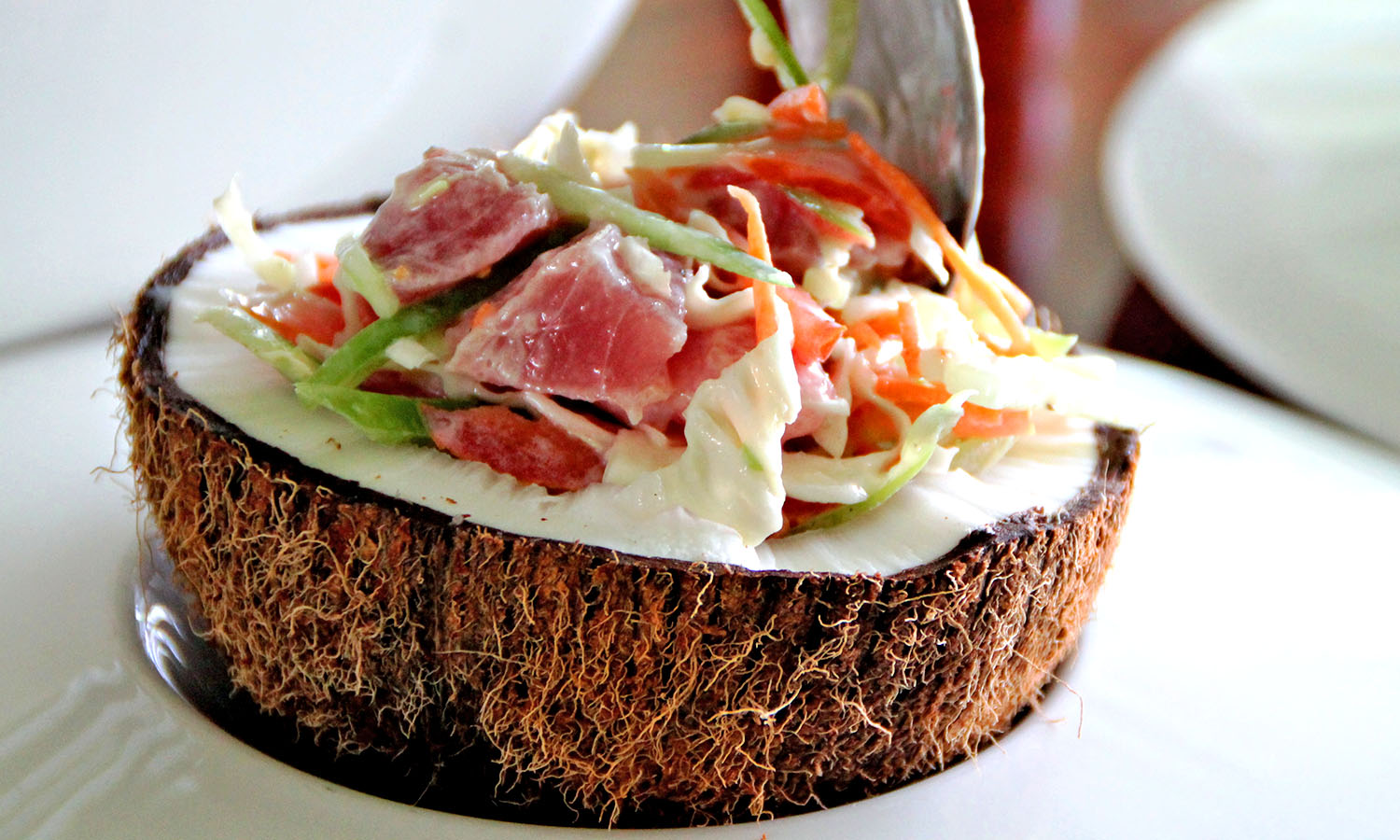
That the class focuses on making this idyllic island’s signature dish is not unusual. The meal – tuna ‘cooked’ in lime juice and fresh coconut milk – came about because locals not only found making fires
to heat the fish tiresome, but also because they became bored with the same old ‘cooked over flames’ flavours. Variations of the dish are created across the globe, from poke in Hawaii to ceviche in South America, however it’s the mouth-watering addition of sliced vegetables and coconut milk that sets poisson cru (the name directly translates to raw fish) apart from the rest. “It’s so easy anyone can do it,” Bregeat tells me as he gets the table ready for us to work. “And soon you’ll be able to re-create paradise in your very own home.” Sadly, my French does not extend to “doubtful”.

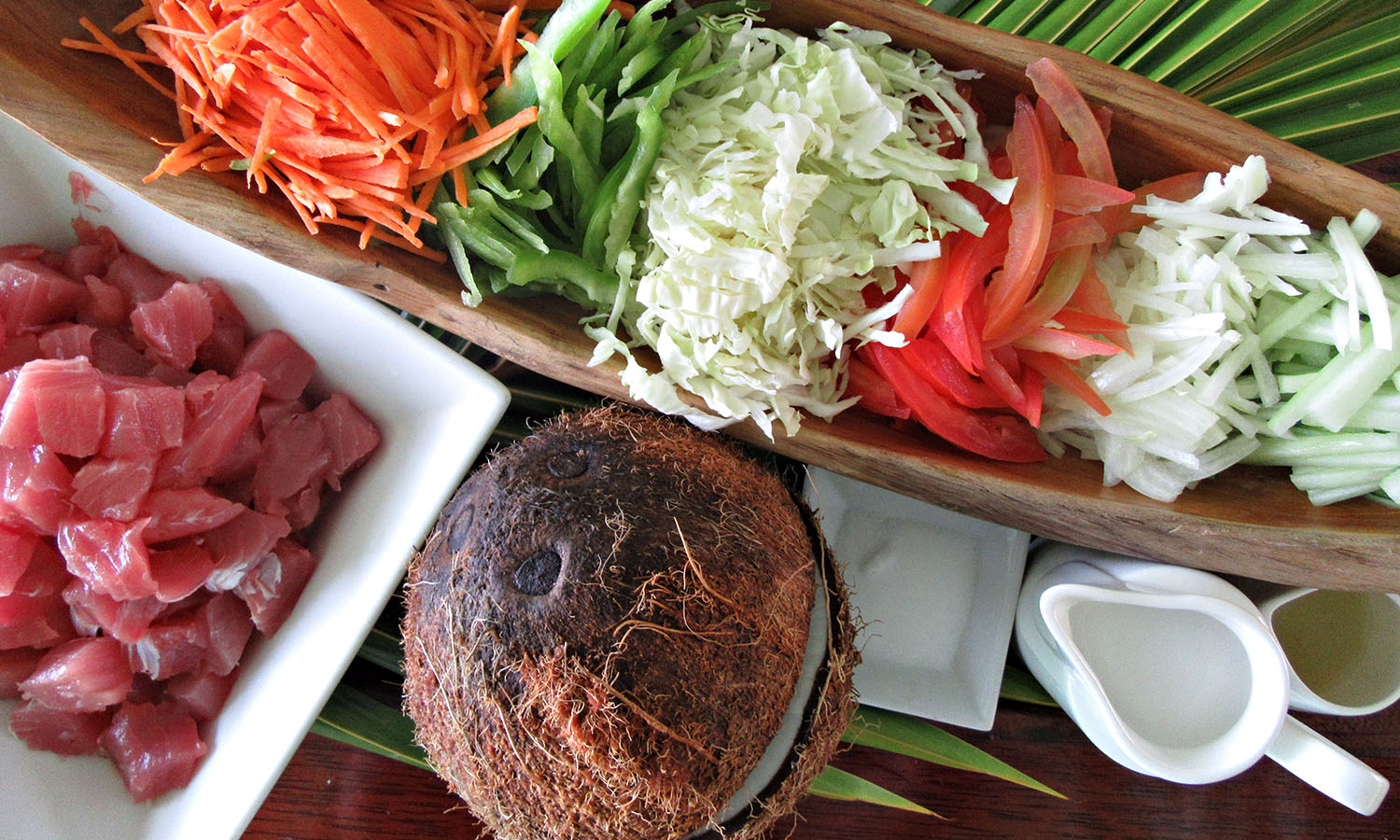
The secret to great poisson cru, Bregeat tells me as we start our lesson, is fresh tuna. Many local fishing operators head out past the lagoons of the Tupai atoll, where yellowfin tuna in particular is plentiful, to make their catch. Not that any old tuna will do, says Bregeat, who insists red tuna is king. “Get white if red is unavailable, and kingfish if white tuna is unavailable, but never any other kind of fish,” he warns, before showcasing his jaunty chopping skills that are exactly what one would expect from a head chef. My own slicing style resembles “someone being forced to do community detention,” my husband kindly remarks.

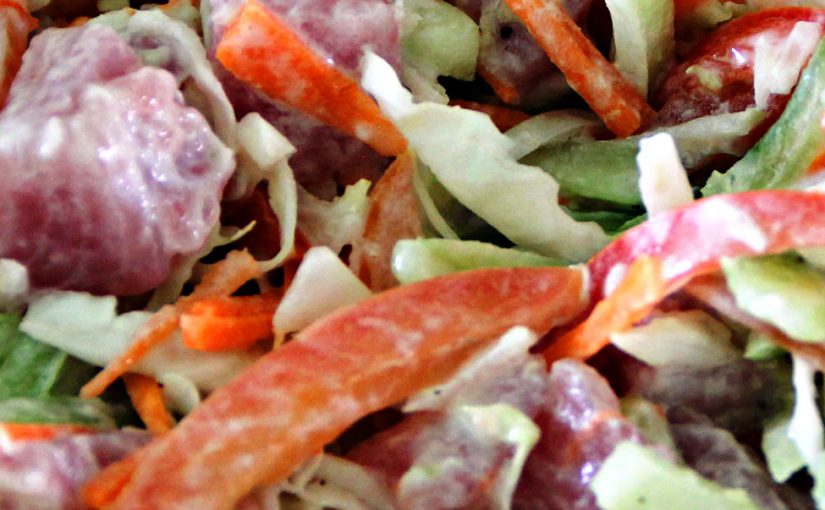
I persevere and, although I must admit to occasionally being distracted by the palm-fringed scenery in the background, together Bregeat and I manage to slice the flesh and vegetables, and mix it all together for service – but not before he produces a coconut shell and palm leaf. “Fresh ingredients may be important, but so too is presentation,” he says. Once we’ve plated up, the dish looks almost as good as the view.

The taste? Even better.

At the nearby Four Seasons, poisson cru is available as an all-you-can-eat option at the breakfast buffet, and I can’t help but note one of the most popular activities appears to be deep-sea fishing for your own tuna. I watch as Instagram-worthy hunks on Instagram-worthy boats cruise off into the horizon and, hours later, come back all bloody and caveman-like. I approach one such gentleman who heaves a massive tuna into the arms of a kitchen hand to be ferried back to the kitchen and prepared for his lunch (and judging by the size of the fish, dinner and lunch for the rest of the week). A member of the resort’s staff scrubs down the gore left in the boat. “Poisson cru?”

I ask, querying the fish’s fate. He grins broadly, wiping away a tiny droplet of blood from his forehead. It feels like I’ve met the Dexter of the fishing world.

Happily, you don’t need serial killer tendencies to get your fix of the national dish on the main island – there are plenty of non-DIY (and affordable) options everywhere. Wandering along the main road of Vaitape, Bora Bora’s largest city, local fishermen have set up stalls in clearings between pearl stores, each reading a newspaper under the shade of the palms and displaying their day’s impressive haul.

I’m pondering what to do next when a car beeps its horn behind me and Gwendoline, an off-duty staffer at Le Méridien, throws open the door for me to get in. When I tell her I’m looking for the main island’s best poisson cru, she smiles broadly: “I know just the place.”

If anyone understands the addictive nature of the meal, it’s Gwendoline. She claims to have eaten it at least once every day since she started consuming solids and insists she will never tire of it. She pulls up outside Chez Irene, a casual roadside eatery, all cane chairs and stray dogs. If you’re going to eat the dish anywhere on the main island of Bora Bora, this is the best place for it, she says. A quick show of hands (mostly locals) reveals almost everyone seated has ordered poisson cru, and when it arrives – this time served simply in a plain white bowl – I can see why. The tuna is so tender it almost dissolves in my mouth like fairy floss. I make a note to come back here every day until it is time to leave. And I do.

POISSON CRU

Serves 4

INGREDIENTS
800g red tuna
1 cucumber
2 tomatoes
1 onion
2 carrots
2 capsicums
½ litre fresh coconut milk*
juice of 5 limes
*If you can’t buy (and don’t want to make) fresh coconut milk, use a good-quality, organic canned version.

METHOD
Dice the tuna into half-centimetre cubes and finely slice all the vegetables. Combine together in a large bowl with the coconut milk, lime juice and a couple of pinches of salt and pepper to taste. Let it sit in a cool place for at least one hour before serving so the flavours infuse the tuna.

Catch ’Em All in Taiwan

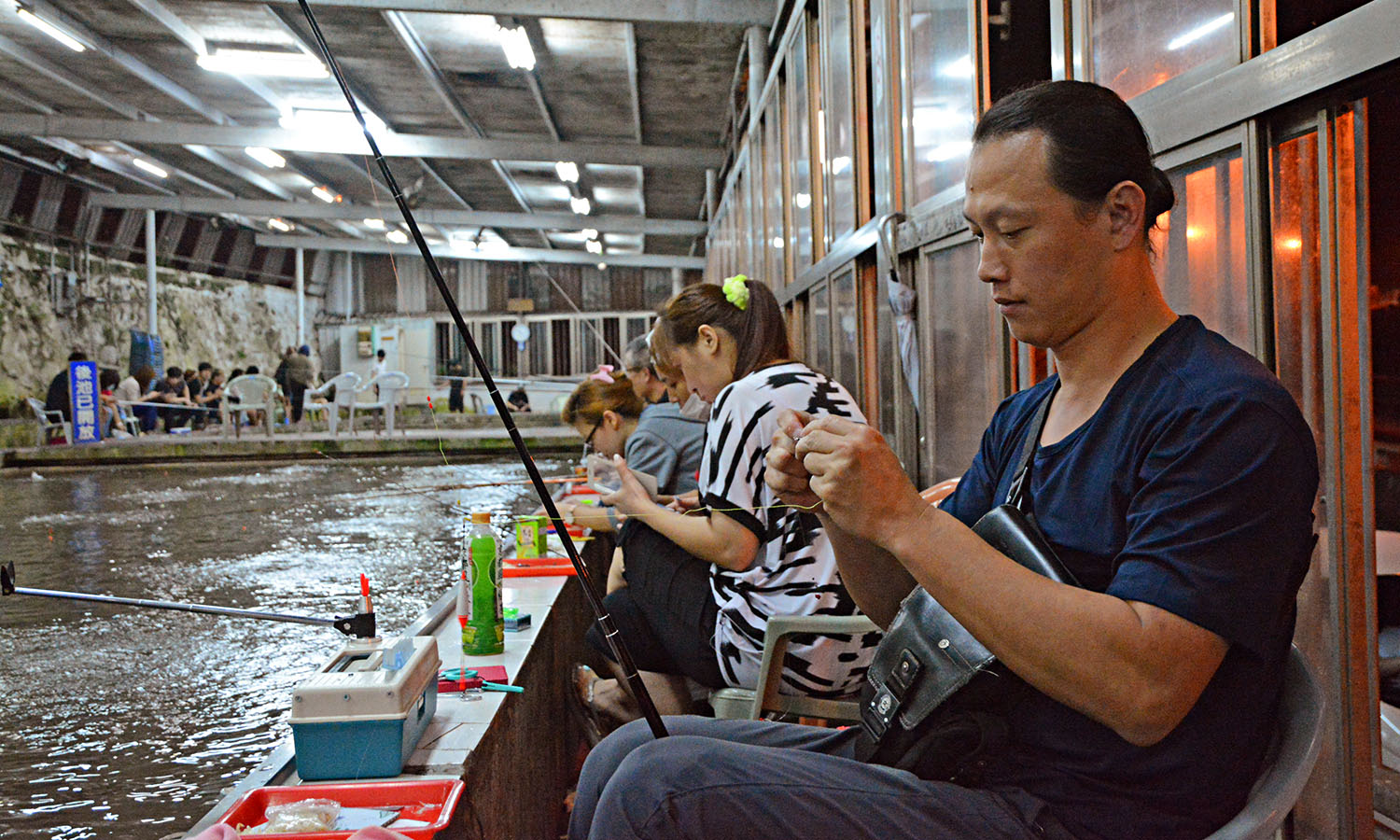
Hundreds of them scuttle around the murky pool. Each hour their numbers swell as more get poured into the drink. Taipei locals sit in plastic chairs around the edge, sipping beer and checking their lines. It’s 10pm on a Monday night and the place is packed.

A squeal breaks through the chatter. Flailing on the end of a young woman’s rod is a prawn the length of her hand. After sliding the metal out of its mouth, she tucks the critter into a net dangling in the water to keep it fresh until she’s caught enough for a feed. Next, she sets to work chopping red intestines with scissors and skewering a scrap onto the hook.

We’re in one of a half-dozen shrimping halls – fishing pools resembling swimming centres – in the Shilin District, located in the north of Taiwan’s capital. Taipei is known for its excellent seafood restaurants and venues sell fresh fish by the boatload, but from 10am to 6am locals pay by the hour to relax and catch a snack while groups of friends swing by before karaoke.

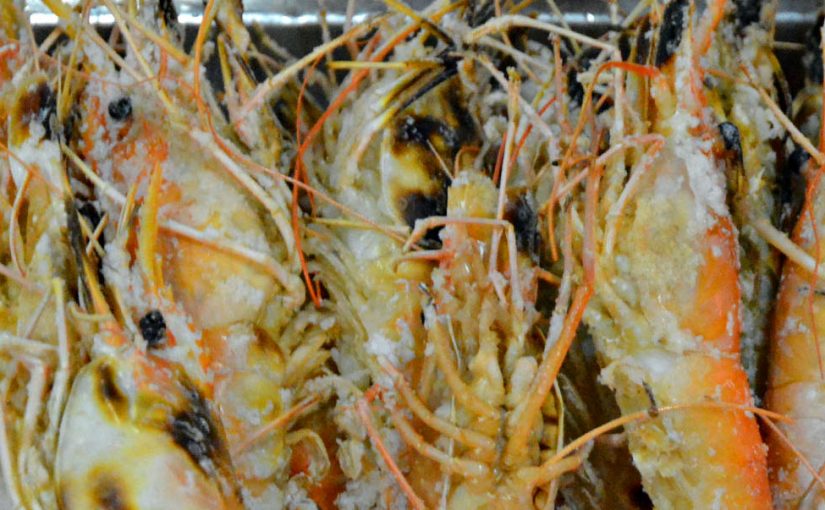
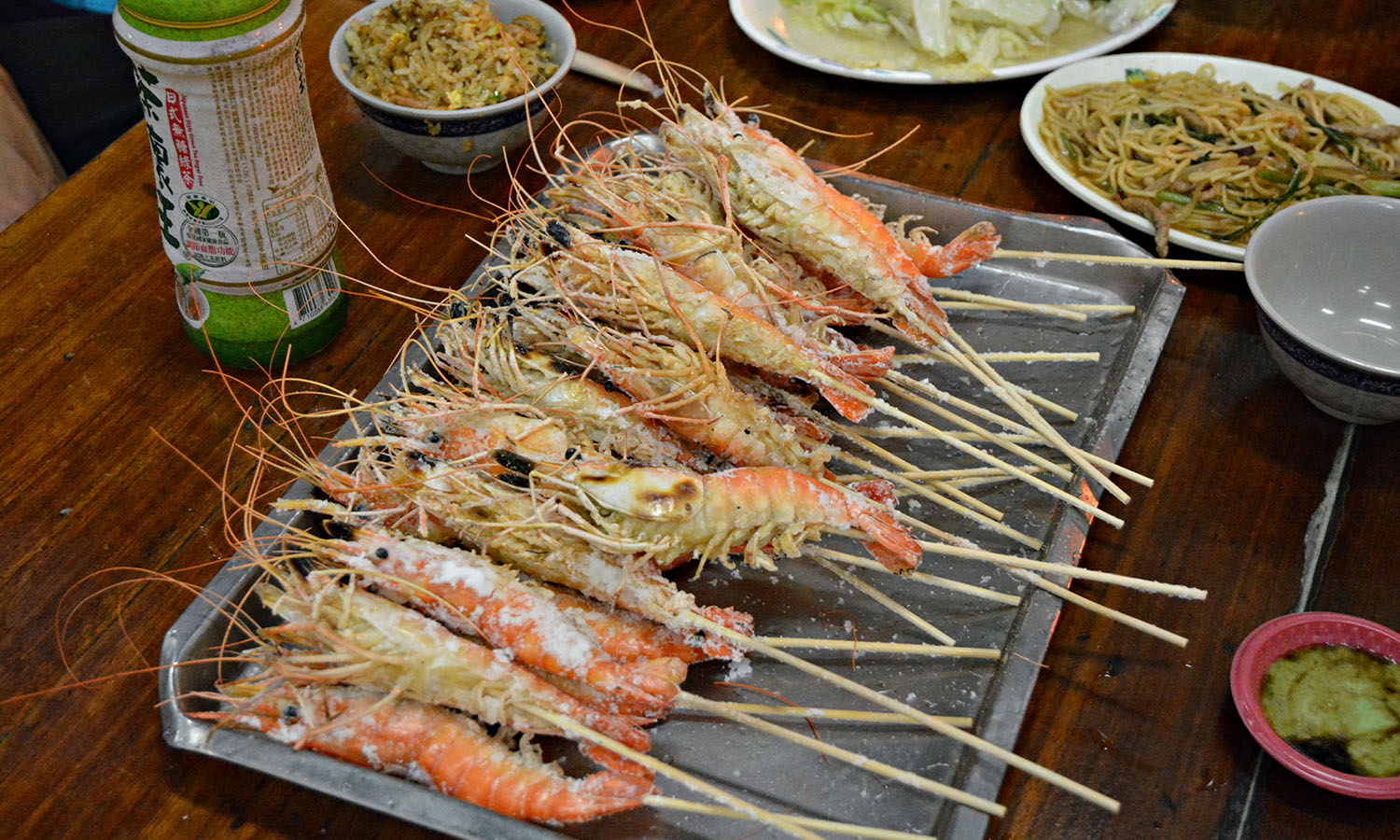
A typical night at this fishing joint sees 60 kilograms hooked and consumed. Staff members keep an eye on the quantity, adding more prawns to the pool each hour, and visitors can borrow rods and buy shrimp and chicken liver for bait. Barbecues line a wall, serviced by gallons of oil and oceans of salt. Punters skewer their catch and slap it on the grill where the shells turn from translucent green to the colour of sunset when they’re ready to eat. If you’ve caught the goods, that is. “There’s some trick, you need some skill,” says Francis Hu, my guide, as we watch a man topped with anime hair checking an empty line. A talented fisher might snare 10 in an hour, but most people hang around for longer.

Picnic tables cluster in the centre of the hall, where you can crack open your prey and munch to your heart’s content. If salt and oil don’t cut it, cooks will whisk your prawns away to the kitchen and return with something more creative. Noodles and vegetables are also available to order from a menu. A friendly man offers me a creature from his cauldron. Mounds of shells and tissues used to wipe fingers sticky with a glaze of soy, sesame oil, rice wine and prawn juice bury the tabletop.

This kind of casual cuisine reigns in Taiwan and street food stalls congregate at night markets across the country. At the huge Shilin Night Market in Taipei, country fair-style games give way to carts selling beef buns, infamous stinky tofu and squids propped up like puppets. At a market in Taitung, a small city on the southeast coast, oysters the size of fists glisten on display and I buy a skewer from a stall selling candied strawberries varnished in scarlet toffee. While handing over New Taiwan dollars my eyes catch on a sign saying ‘Sexy&Juicy’, with a picture of a pig in underwear exposing its plump derriere. Biting a fruit off the skewer, the sugar coating cracks, torpedoing seeds down my throat. Turns out candied cherry tomatoes don’t taste too bad, even if they’re unexpected.

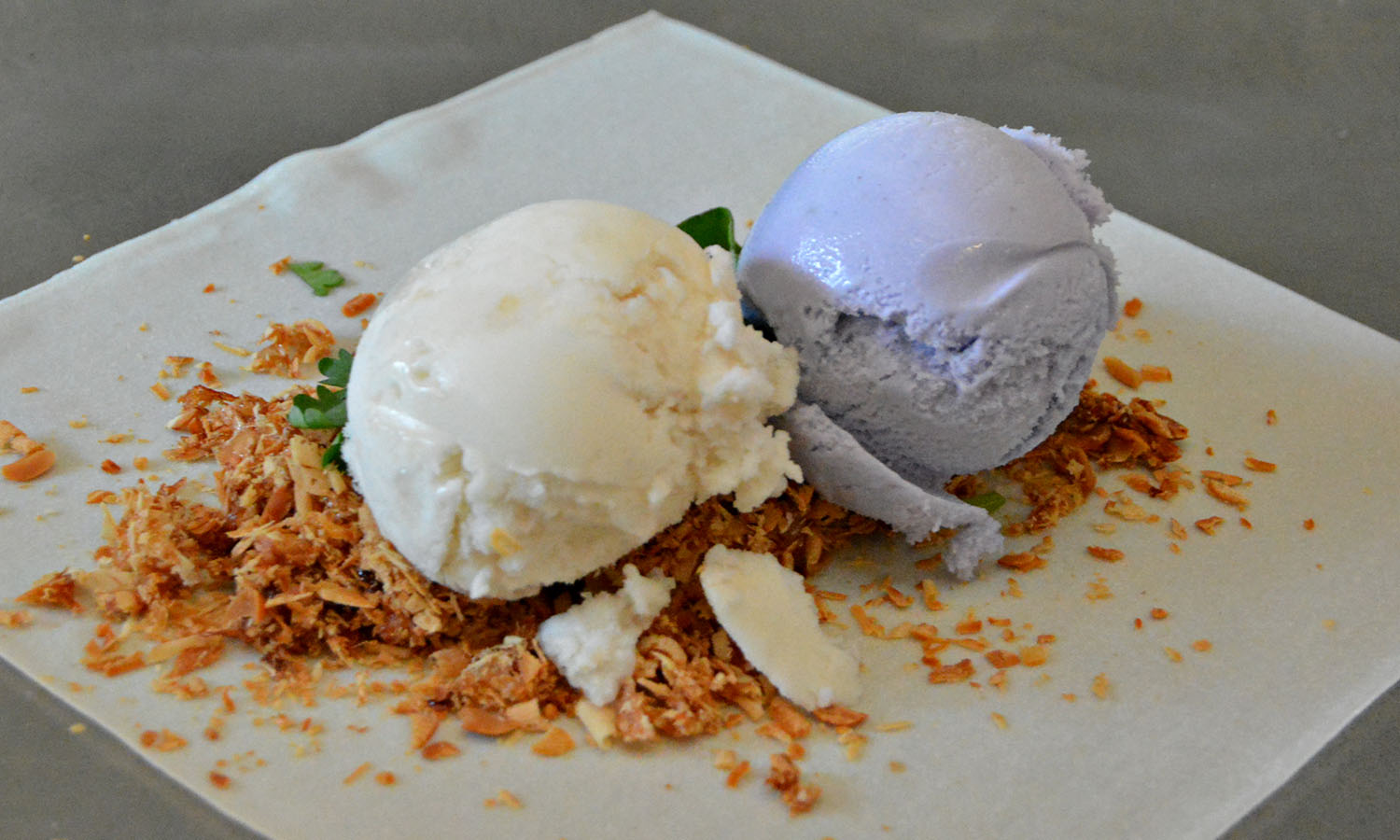
Blurring the line between savoury and sweet once again is the ice-cream spring roll that finds its way into my hands on a muggy day. Scraping a wooden tool across a slab of peanut praline, the stall owner shaves slithers so fine it resembles fairy floss. She sprinkles the shards onto a pancake and scoops a lilac orb of taro ice-cream next to a white sweet apple one. Coriander leaves go on top and it’s all wrapped up like a giant burrito. Teeth battle time in the quest to consume the roll before the ice-cream melts.

Before the Han Chinese flooded over in the seventeenth century, Taipei was a big basin dotted with indigenous villages. Now the metropolis feels a lot like Tokyo or Seoul – albeit with only 2.7 million people within its limits. Travel down the coast or into the mountains, however, and you’ll find tribal villages eking out a twenty-first century lifestyle melded with traditional ways. Francis takes me to the Fataan Wetlands in the Hualien Province to try my hand at palakaw fishing with members of the Amis tribe.

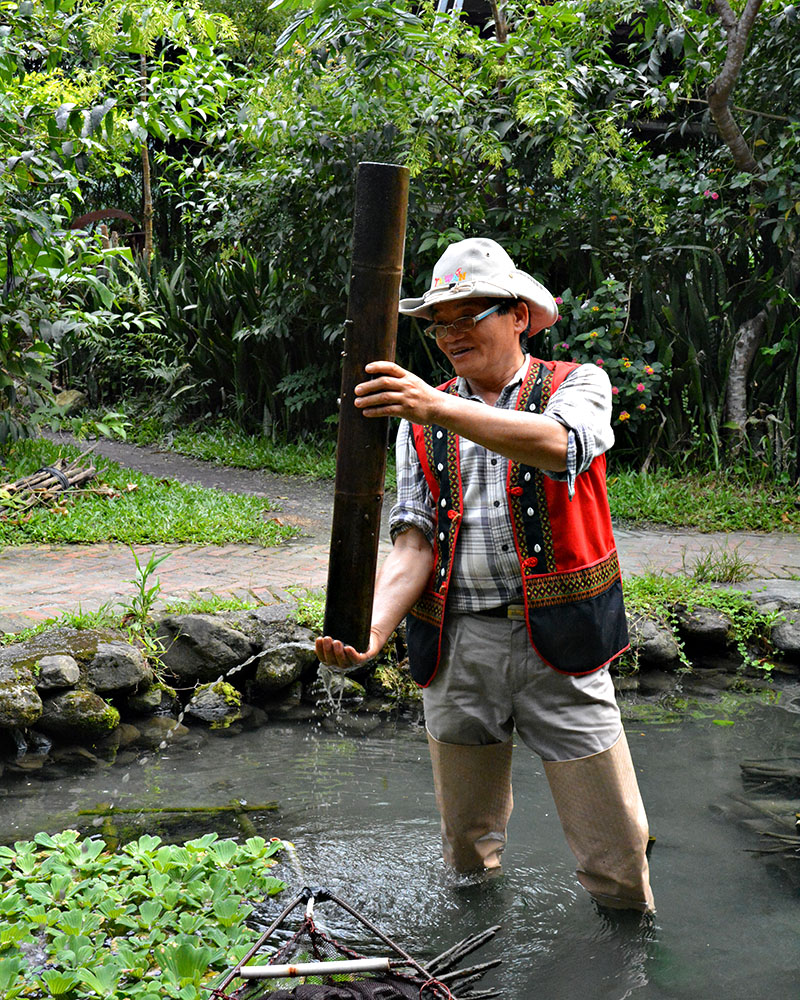
Unlike the familiar hook-and-line method, the Amis style sees us knee-deep in a river, checking bamboo tubes placed on the bottom. The villagers layer grass, sticks and bamboo in sections of the waterway, with each level designed to attract a different type of beast. “The marine life has no clothes so it likes to hide in the shade,” explains Lalan Unak, founder of the Fataan Pangcah Cultural Workshop, as we plug one end of the bamboo with a hand and pour water out of the other side hoping to find a nude eel or catfish hiding within. Shrimp and crabs dwell in the branches of the second level to avoid being eaten by the next: “The fish with clothes, with scales.”

To cook our haul, Lalan pours water into a bowl folded together from betel nut leaf and adds watercress. Rocks plucked from a fire slip in next and finally fish, which cooks as the rocks release pent-up energy into the soup.

Taiwanese tourists flock to the Cifadahan Restaurant in Hualien to try the traditional hotpot. Woodcarvings chiselled by the owner, an Amis witchdoctor named Na Kaw, scatter the site. Here, juicy slabs of perch are boiled on a trolley next to your table. A dash of salt brings out the subtle flavour of the fish. It’s an excellent way to try this traditional meal without getting your feet wet, but nothing quite beats catching your own.

ICE-CREAM SPRING ROLLS

Serves 4

INGREDIENTS
½ cup skinless unsalted peanuts
½ cup caster sugar
4 frozen spring roll pastry sheets
1 or 2 tubs of good quality ice-cream or gelato (tropical fruit flavours are best)
6 tbsp torn coriander leaves

METHOD
Preheat oven to 200°C. Place the peanuts on a tray lined with baking paper and heat in the oven for five minutes or until they start to change colour.

While the peanuts are roasting, combine the sugar and two tablespoons of water in a medium saucepan. Stir over low heat until the sugar has dissolved. Turn up the heat and gently simmer for about 15 minutes, until it starts to thicken and turns golden. While it simmers, brush off sugar stuck to the sides with a pastry brush dipped in water.

Take the sugar syrup off the heat and add the peanuts and a pinch of salt. Stir until well coated and pour the mix back onto the baking paper-lined tray. Leave to set for at least an hour.

Remove the spring roll sheets from the freezer and allow to defrost before separating. Crush the peanut brittle with a mortar and pestle until quite finely ground. Lay the spring roll wrappers out flat and spoon crushed peanut brittle into the middle of each, reserving half. Place two scoops of ice-cream on top then sprinkle with coriander leaves and the remaining peanut brittle. Fold two sides in and roll each up like a spring roll. Eat immediately.

Fancy Farming in Northern Ireland

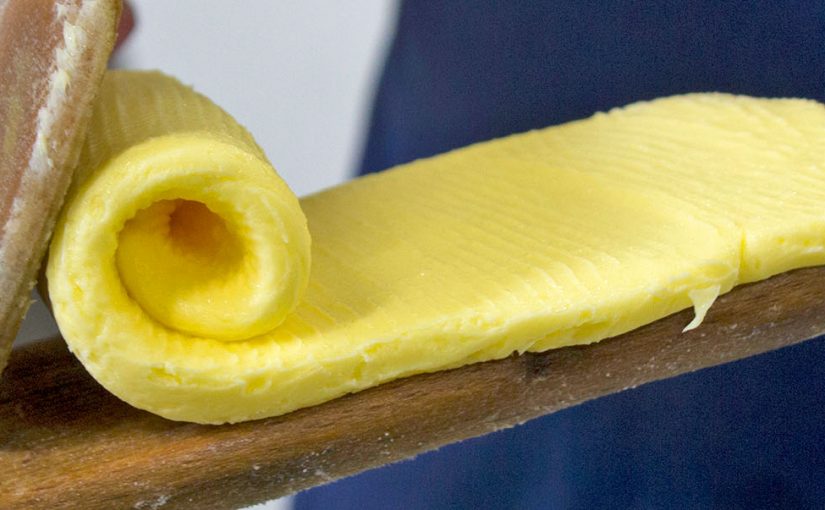
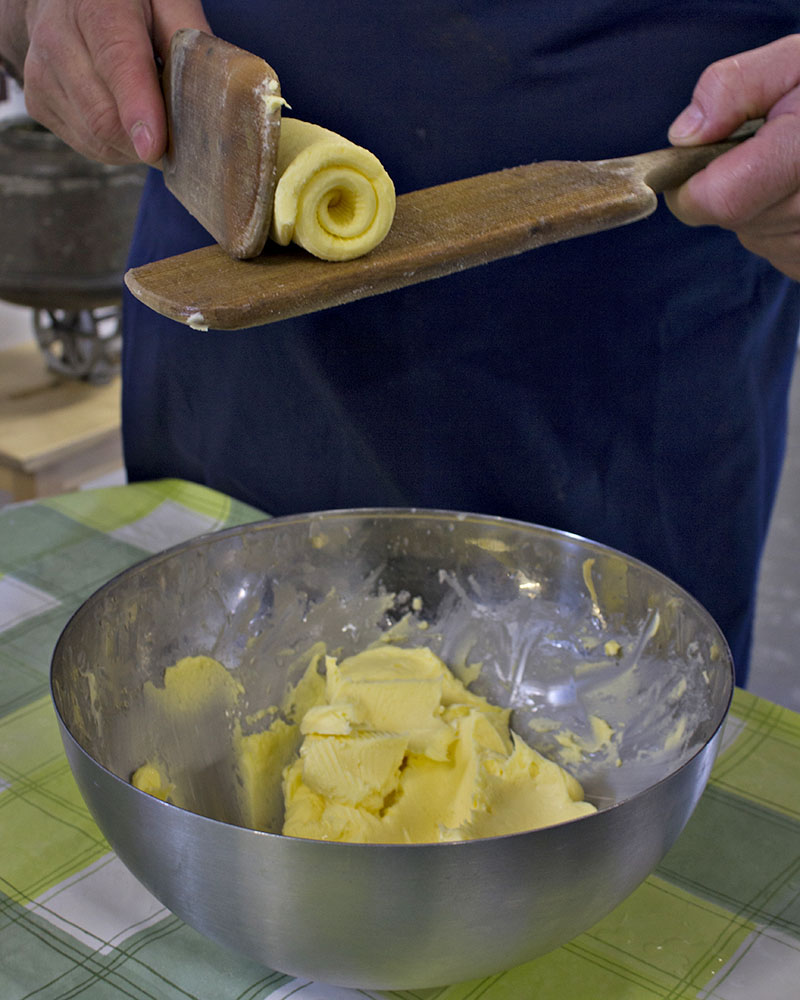
“Start off with the front and roll it back – once you’ve got a hundred rolls done you’ll be a professional,” says Will, as I ease the canary yellow butter from a wooden paddle. It’s soft and yielding as I turn it over and over until it resembles a fluffy Swiss roll, ready to be set in the fridge before being wrapped in greaseproof paper and sent to gourmet food shops. I have to say, I’m pretty proud of my creation. I admire it for a moment then it is dumped back into the large bowl of churned cream and I hand the paddles to the next volunteer.

I’m at the headquarters of Abernethy Butter, set on a beautiful hillside in Northern Ireland’s County Down. It’s April and sunshine bathes the green valleys in a warmth not usually felt here at this time of year.

Northern Ireland was not always so lush. During the Great Famine between 1845 and 1852, a crop disease laid waste to the humble potato, causing mass starvation and forcing more than a million Irish to emigrate. The notion of eating for pleasure was as foreign as a fruitful crop. But the land that once offered little now thrives, and farmers and chefs are forgoing industrial production for traditional methods and inspiring home cooking.

For buttermakers Will and Alison Abernethy, what started as a hobby took on a life of its own. Their demonstrations at a local market inspired frenzied queues and word spread quickly. Not long after, they were discovered by Heston Blumenthal. Their award-winning butter is now served at his Michelin-starred restaurant the Fat Duck, and sold at fancy London grocer Fortnum & Mason, as well as speciality stores across Ireland and the UK. What makes their product so special is, unlike mass-produced spreads, Abernethy Butter is made by hand.

“There are only three ingredients in our butters – cream, salt and lots of love,” says Will as he pours cream into a churn. As he turns the lever by hand, the liquid separates into fluffy butter and buttermilk. The butter is then scooped out and washed in a bowl until the water runs clear.

This keeps it fresh. With a pinch or two of salt added, it’s then shaped with wooden paddles, set and packaged.

“Some say it’s therapeutic, like being back at school and playing with Play-Doh,” says Will as he slaps the butter between the paddles before rolling it into its unique shape. “But when you’ve done six or 700 that day, it’s not so therapeutic,” he chuckles.

While tedium might rear its head, the taste makes the effort worth it.

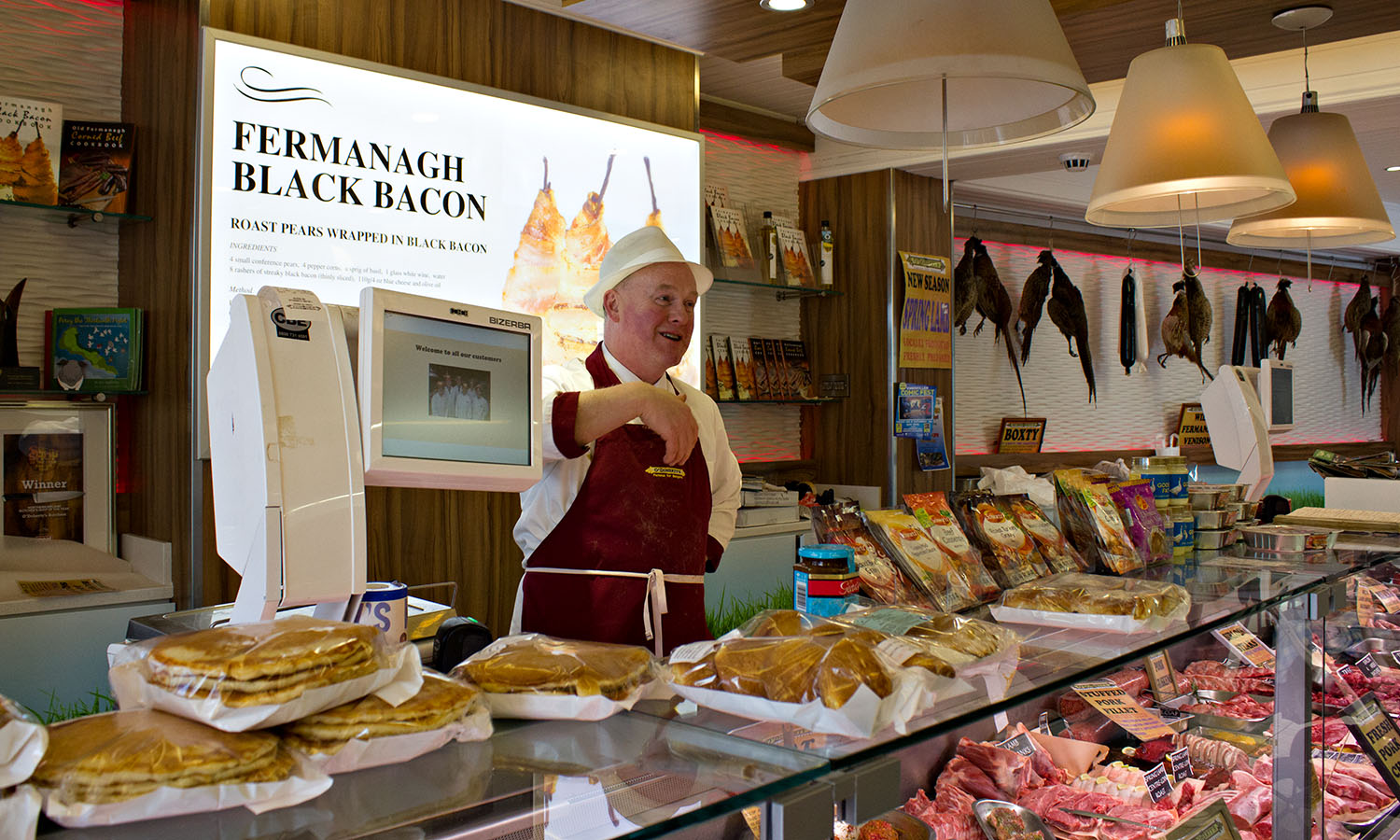
On the other side of the country in County Fermanagh, butcher Pat O’Doherty is also defying the status quo. His shop, O’Doherty’s Fine Meats in Enniskillen, offers an array of products, but his black bacon is revered for its incredible flavour and humane production.

An environmentalist at heart, Pat believes one of the biggest challenges of his profession is finding ethical ways to ply his trade, so he purchased Inishcorkish Island, a small woodland isle in Upper Lough Erne, where his herd of pigs has free rein. Seeing photographs of them foraging for roots in the long grass, it’s easy to see why these plump animals are referred to as ‘happy’ pigs.
“The ethical idea is to give something back to the pigs,” says Pat. “Letting them live to create their own culture in the wild.”

It’s a refreshing stance in an industry that’s consistently scrutinised for poor treatment of animals and the use of additives. Pat employs traditional techniques to ensure his black bacon is free from nitrates, the chemicals used to infuse colour and prolong shelf life but that are also thought to be carcinogenic. “Whenever you eat bacon – normal bacon or a piece of hot ham – you’re exposing yourself to risk. That’s why we create nitrate-free bacon.” His methods are working. Having won numerous awards, demand for his meat has gone worldwide, and the passage of customers through his shop is a testament to its success.

No one is leading the charge in the farm-to-table revolution with more enthusiasm than Noel McMeel. As executive chef of Catalina Restaurant at Lough Erne Resort, Noel’s philosophy involves finding and serving the best local, seasonal ingredients. Having trained at some of the world’s finest cookery schools, his skills and his resume are impressive – he’s cooked for the who’s who, including Barack Obama and the Queen, and catered Paul McCartney’s wedding.

But Noel remains true to his roots, attributing his passion for food to his childhood spent enjoying his mother’s cooking.

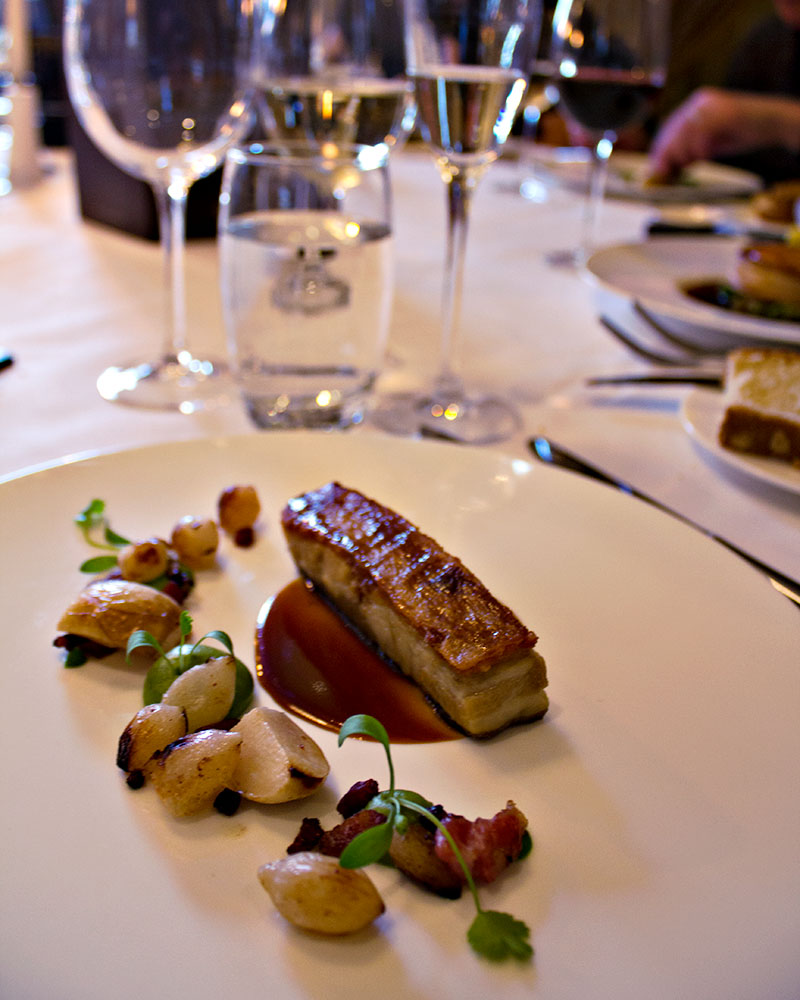
As I sit down to a candlelit dinner, I’m ready for a gastronomic experience. The soda bread is infused with quirky flavours like treacle and curry. There’s artful pork terrine, a selection from O’Doherty’s Fine Meats, and a dessert of the light-as-air blueberry soufflé.

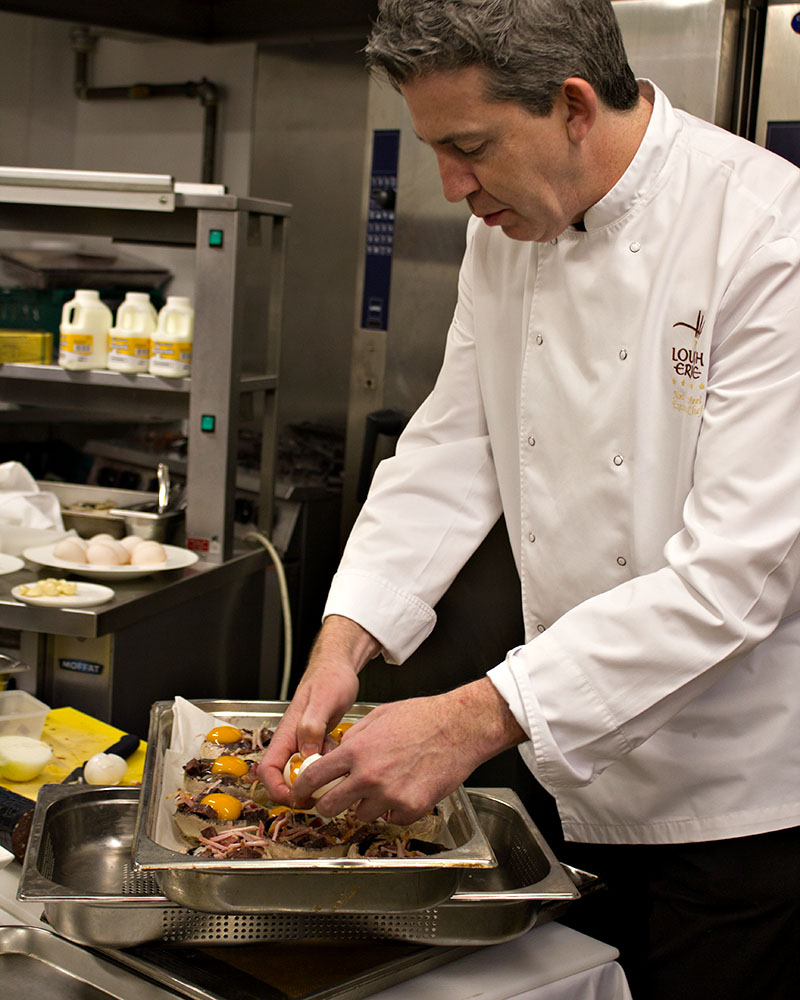
The next morning Noel gives us a lesson on breakfast. “I love simple flavours,” he says as he sprinkles sea salt over mushrooms. “Taking great ingredients, cooking as little as possible but with great skill.”

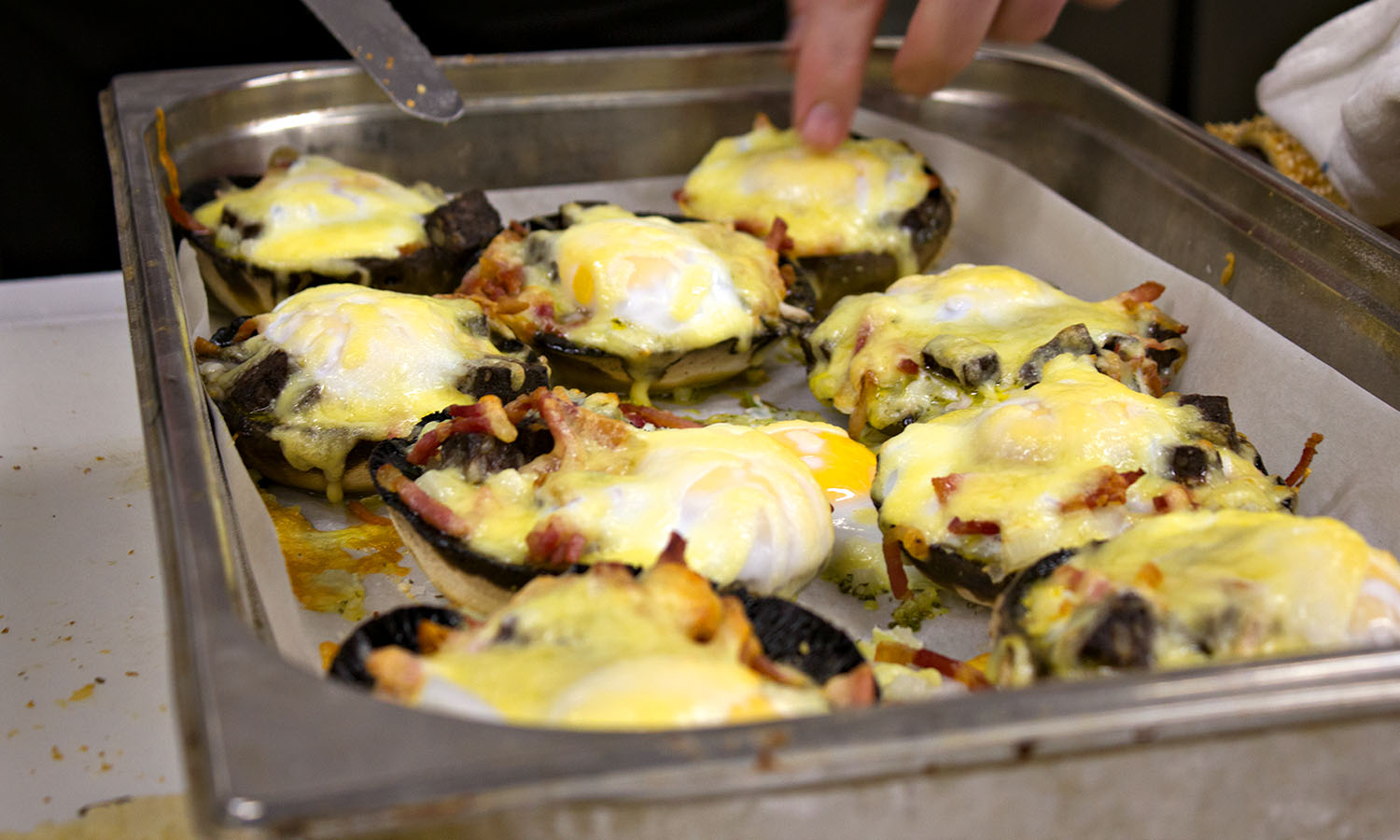
It’s invigorating to witness this simplicity in action as he spreads handfuls of shredded ham and black pudding on each mushroom, then cracks a duck egg in the centre, before haphazardly tossing cheese over the top.

Having grown up on a small farm in Toomebridge, Noel is passionate about championing local producers. “I went with: what is tradition in this area? We should all be serving unsalted butter, but I do the opposite – if somebody local is doing country butter I really want to show them off. Or ice-cream. I always made ice-cream, but then I stopped because I got somebody who can make it better than I can. It’s just superb.”

A tantalising smell permeates the room as the baked mushrooms are retrieved from the oven. The steaming mess seems out of place in a five-star restaurant, but when I take a bite, it’s the perfect fusion of flavours. Warm yolk floods my mouth, coursing over the firm salty mushroom, soft black pudding and melted cheddar. I’m so wrapped up in the richness I forget its appearance and, momentarily, my own name. With flavours like this, it’s clear there’s an Irish food renaissance and I, for one, welcome it with relish.

BAKED MUSHROOMS WITH DUCK EGGS

Serves 4

INGREDIENTS
4 large brown or portobello mushrooms
sea salt
2 tbs canola oil
1 cup shredded ham
½ black pudding, chopped into 1cm cubes
1 onion, diced
4 duck eggs
1 cup grated cheddar cheese

METHOD
Preheat the oven to 180ºC/160ºC fan-forced. Wipe the mushrooms and place on a lined baking tray. Sprinkle with sea salt and a dash of oil, followed by ham, black pudding and onion. Crack a duck egg over the top of each mushroom then sprinkle with cheese. Place in the oven for 10 minutes. Cut in half and serve.

Noel McMeel’s cookbook The Irish Pantry: Traditional Breads, Preserves and Goodies to Feed the Ones You Love is available from Amazon.

From Dusk ’Til Dawn in Manila

In Manila’s red light district you'll find a vibrant food scene waiting to be explored. While walking the bustling streets of Makati, there are mouthwatering street eats, 24-hour party halls and elevated on-trend restaurants that are akin to those you’d find in Brooklyn or Brixton. Makati has it all, and if your stomach is up for the challenge, you will find no better place to chow down on a Philippines food safari.

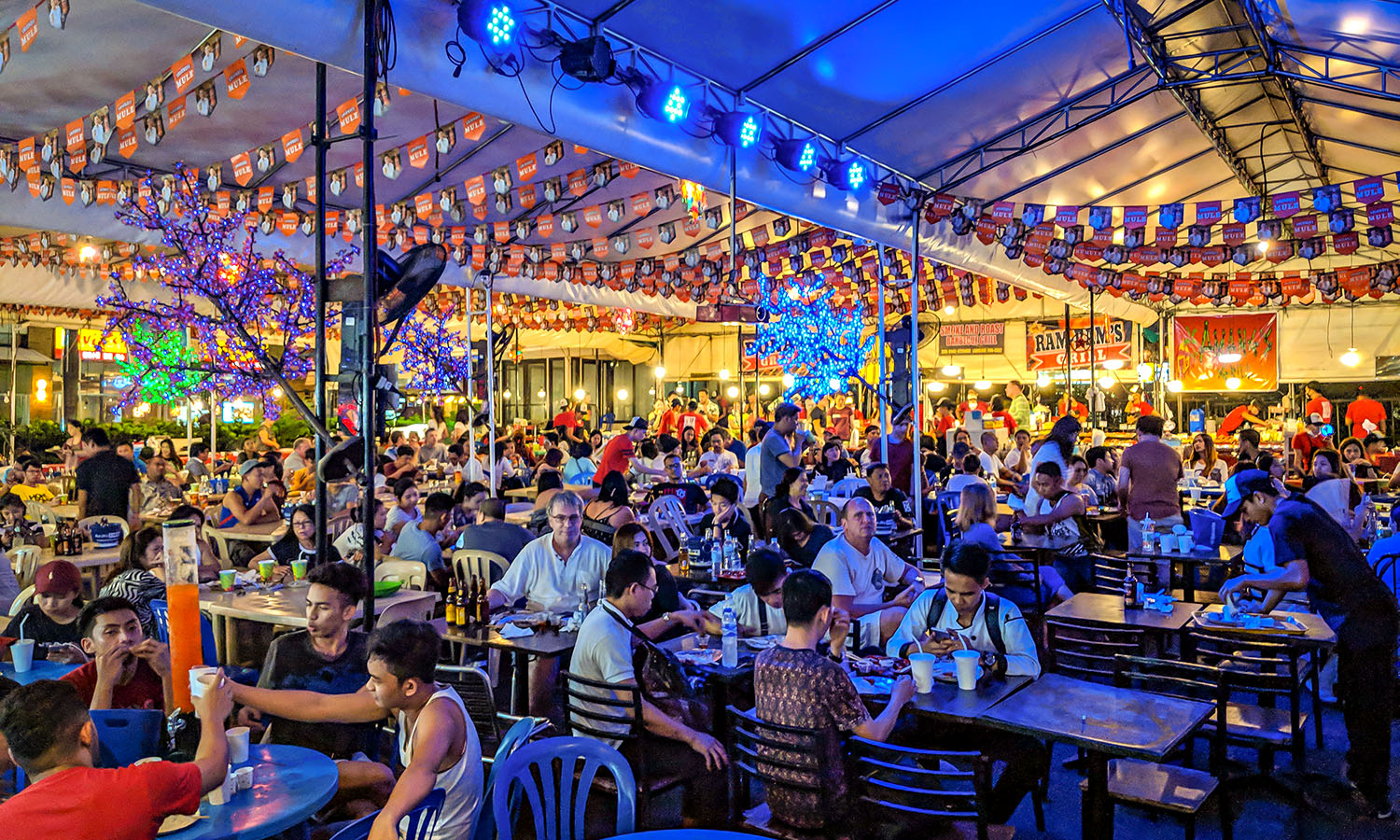
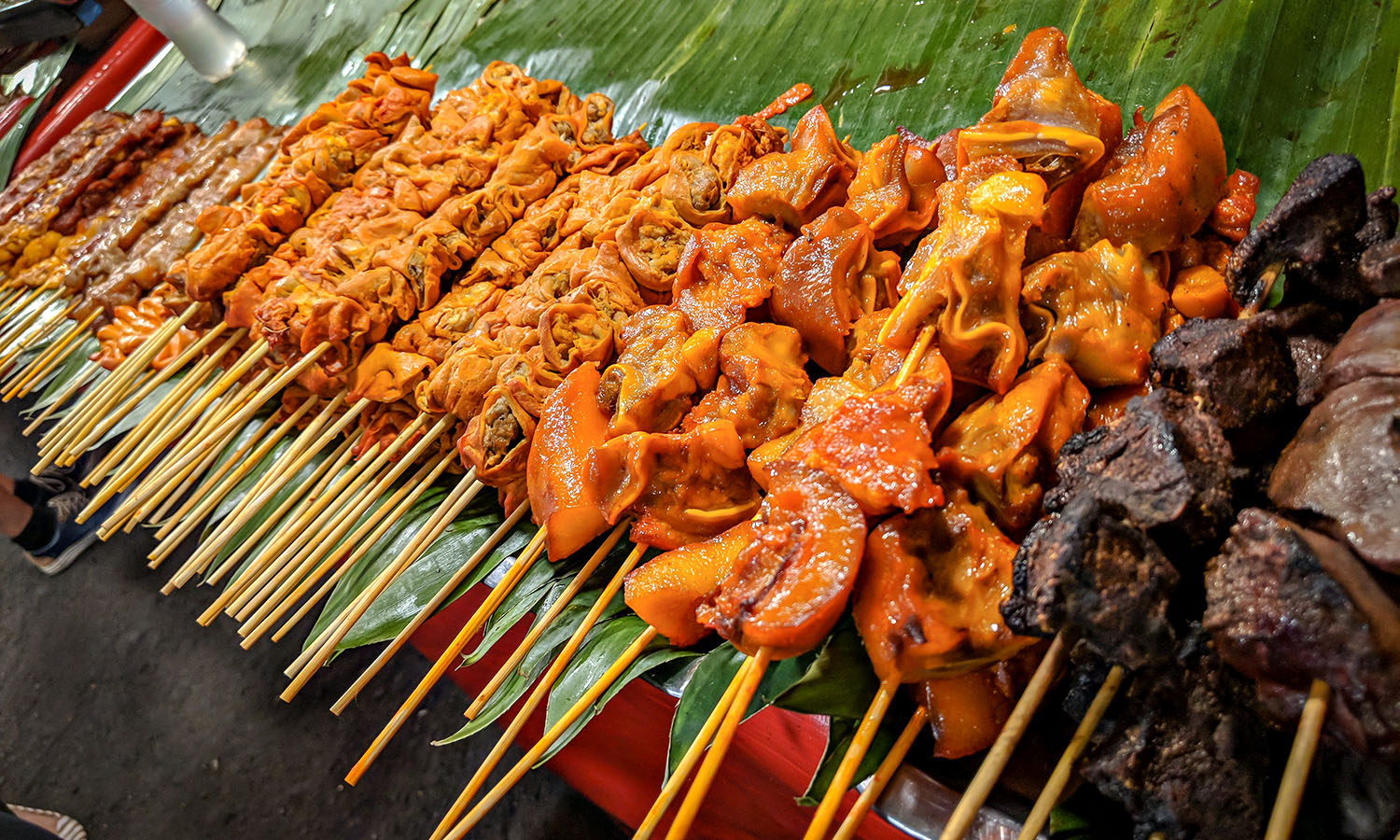
Located right on Makati Avenue is a bona fide food zoo. A. Venue Mall’s food hall is a street-food delight. Housed beneath a giant tent, your plate-up wish is your desire here. Sisig (pig head and liver), puto bumbong (steamed rice cake), lechon manok (spit-roast chicken)… You name it, it’s here, and at amazingly cheap prices. The scents and endless array of food in front of me has my mouth salivating as I make a beeline for the exotic meats and marinated chicken intestines grilled to perfection.

I was promised they’d be a savoury delight not to be missed, and they don’t disappoint. My only wish besides eating more is opting to not know exactly what it is on each skewer. Luckily, the live music distracts me from my nonsensical phobias and, of course, the cold (and cheap) San Miguel beer is plentiful. It washes down the spice and any unsavoury thoughts about the dish ingredients.
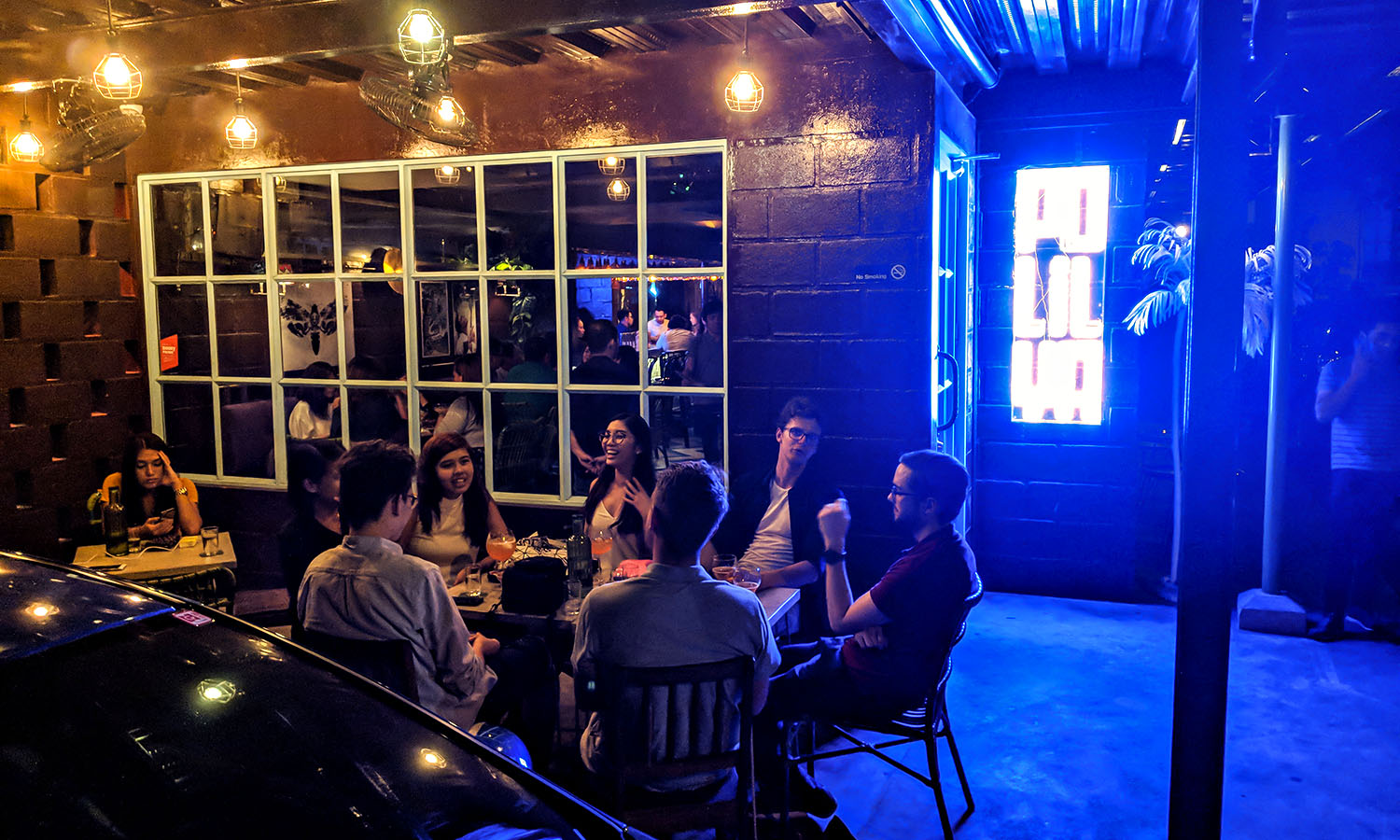
A brave slide down Jacobo Street, carefully navigating past midget boxing and waves of prostitutes throwing advances my way, I arrive at a secret hip restaurant in old downtown Poblacion. Violet neon signs welcome me to Polilya, a restaurant and lounge that’s so cool I wonder if I’ve just walked off the streets of Makati and into Brazil circa 1960.

Designed to within an inch of its life, it’s obvious the people of Polilya take food and drink very seriously. World-class bartenders create ambrosia in a glass on a nightly basis, and it’s all dangerously delicious. Jesse Estes is commanding the zinc and copper bar tonight and, with a shake here and a mix there, he serves me a drink so tasty I’m in danger of becoming addicted.

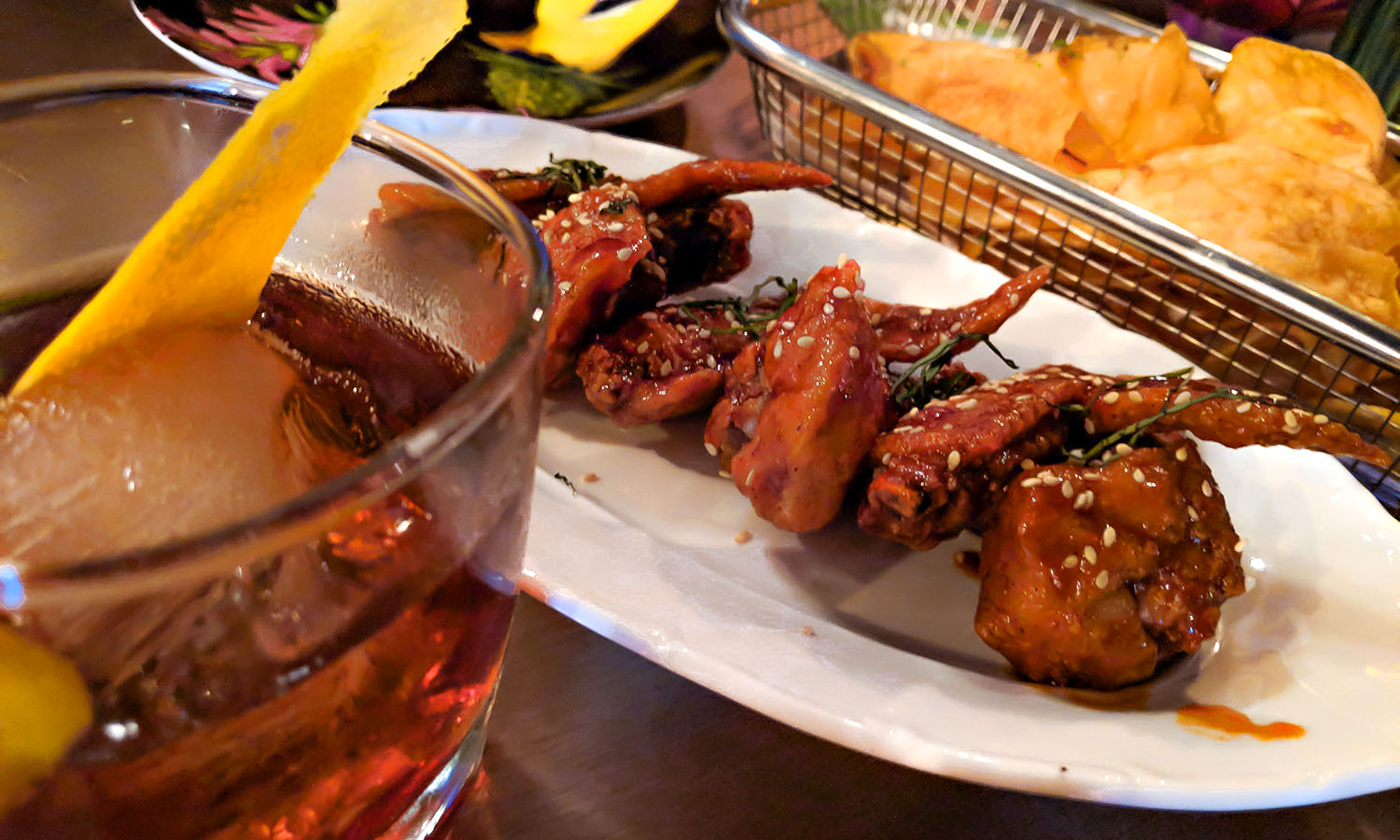
The cocktails aren’t the only things that delight my taste buds, though. The food here is toothsome, forward-thinking and a novel take on classic Philippine dishes. The spice of the Gangnam-style chicken wings melts my palate, but I have no doubt the Bangla mussels are the kitchen hands’ favourite order – each bowl returns to the kitchen as if already cleaned. And that’s just the entree.

Steak and ale pie, crab cakes and a burger that makes me rethink my religion are all on the menu for the main course. With belly full and legs light, I’m a happy camper. I take one last look at the menu and can’t help myself. I order a serve of the Zen chicken nuggets and decide it’s my favourite dish. Its holy trinity of sauces is so good, I wonder if this is what they mean to be at peace with the universe.

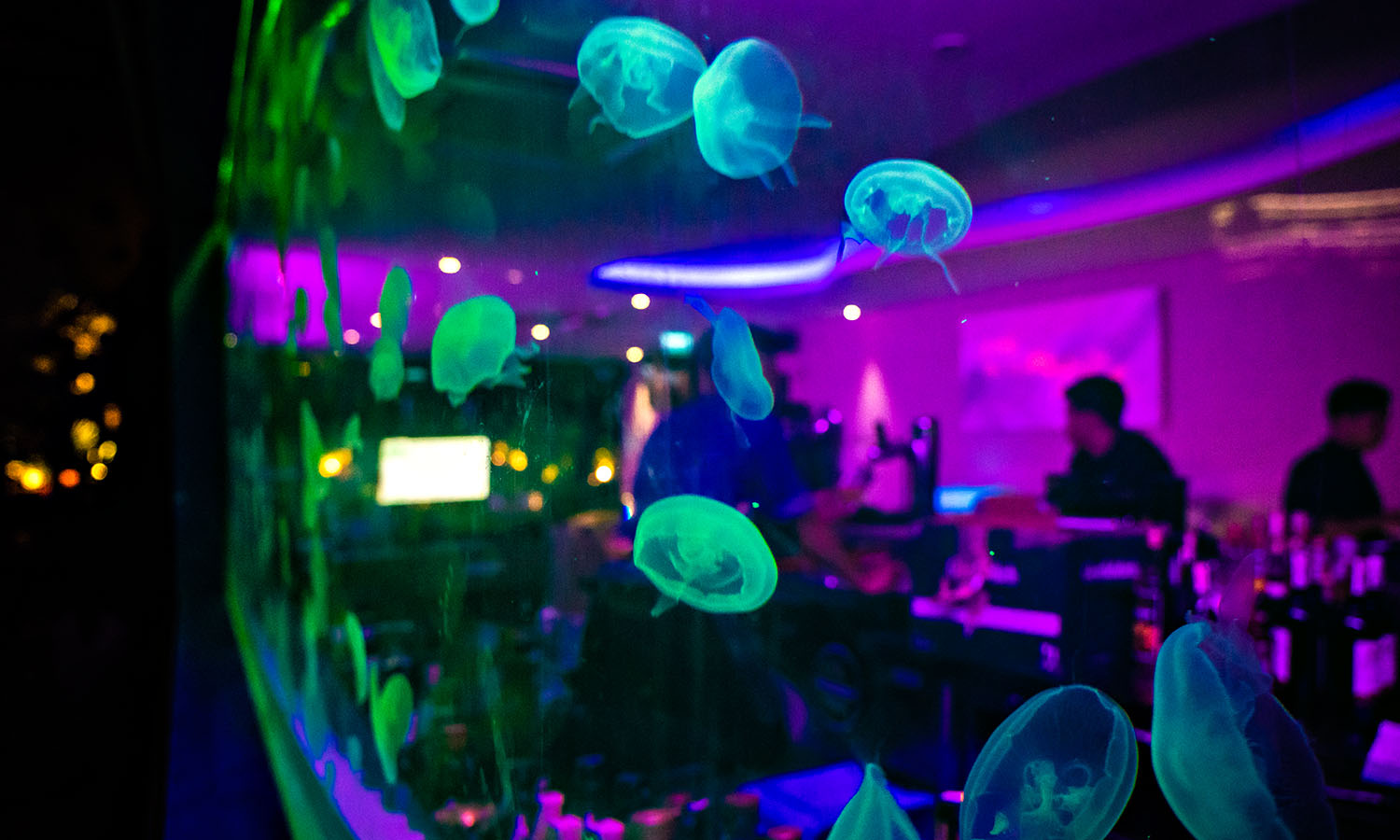
After a fine meal, I ascended to heaven at the I’M Hotel, which hosts one of the coolest rooftop bars I have ever seen, Antidote. Can you say jellyfish wall? Yes, a wall that is a tank filled with glowing jellyfish. The only thing perhaps more beautiful than these balletic sea creatures is the panoramic views of Manila.
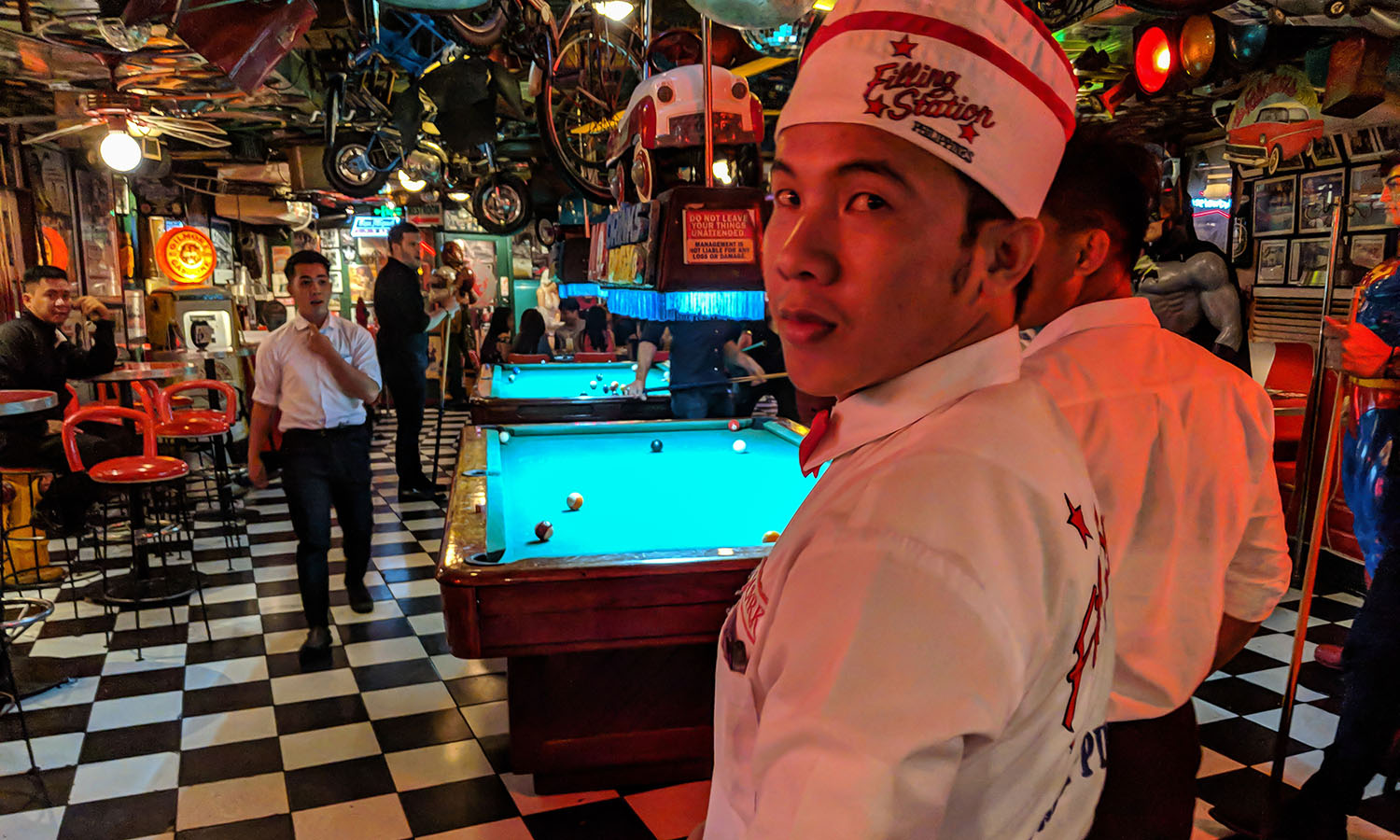
It takes a few more cocktails before I stumble into the Filling Station on Burgos Avenue. Truth be told, I’m not sure if it’s late or early when I roll into the cafe-bar, but the place seems to be pumping. I look at my watch – it’s 4am. I’ve never seen a venue so busy at that hour.

The Filling Station is struggling with an identity crisis, embodying part 1950s cafe, part pool hall and part rowdy bar. But somehow, it works, creating an atmosphere that sees me losing track of time. It’s the Vegas of restaurants, with its kitchen and bar open 24 hours a day, seven days a week. The people around me is a mix of locals, expats and lost tourists, and from the moment I enter I know I’m in for a good time.

The drinks keep coming and, before I know it, a menu is in front of me. I watch the food arrive at tables around me: perfectly cooked burgers and tuna melts reminiscent of those served up at a diner back home in Queens. I figure, as it’s early morning, a classic American-style breakfast fry-up is in order. I don’t know if it was my mindset or over-stimulated taste buds, but the plate of juicy ham steak, sausages, golden fried hash browns and filling beans are served with some of the best scrambled eggs I’ve ever eaten.

As the sun rises, I find myself back at the opulent I’M Hotel. This time I stay a bit closer to the earth at its insanely cool pool bar where you can have anything from mixed drinks to fresh juices. I sit in one of the oversized birdcages suspended over the pool, contemplating a dive that would test my faith in Filipino construction. The glass-bottom pool, which stretches across the entire face of the building, hangs directly over one of the busiest streets in Manila and is one hell of a way to get over a hangover.

Manila has proven itself deserving of a spot in the pantheon of great cities to imbibe and gorge. From inspired modern menus to the powerful flavours of street food, you simply cannot go wrong in this city that never stops.


GANGNAM-STYLE CHICKEN WINGS

INGREDIENTS
2 tbs oil
8–10 garlic cloves, chopped
1 tbs chopped ginger
6–7 bird’s-eye chillies
8 chicken wings
3 tbs red chilli sauce
1 tbs soy sauce
1½ tbs chilli vinegar
1½ tbs brown sugar
thin strips of green, red and yellow capsicum, to serve

METHOD
Heat the oil in a non-stick wok. Add the garlic, ginger and bird’s-eye chillies
and stir until fragrant. Add the chicken wings and sauté until the wings are browned.

Reduce heat and add chilli sauce, soy sauce, chilli vinegar and brown sugar. Stir so that the wings are fully covered and simmer until the wings are cooked through (about 15 minutes). Add a pinch of salt.

Transfer to a serving plate, garnish with the capsicum strips and serve hot.