My young Filipino guide, who a few moments earlier had been full of jokes, lowers his voice as we approach the oldest balete (banyan) tree on the island of Siquijor.
“Local people never point straight at the tree,” he tells me gravely. “And they always ask the spirits for permission before they touch its bark.”
It’s not hard to see how such a huge and knotted tree, its tangles of roots dangling like a witch’s hair, could become the focus of superstition. Even the way the sunlight filters through those roots is somehow sickly, like a scene from a horror movie, the one just before the doomed teens enter a cabin in the woods.
Fittingly, I’d first heard about this island a couple of months earlier when watching a Filipino film called Siquijor: Mystic Island, a rather tacky affair involving curses, plenty of fake blood and acting that was more wooden than the balete.
Of all the 7000 islands in the Philippines, the small island province of Siquijor in the Central Visayas region has the most persistent reputation as a place where witches roam and spirits hold sway. As I travelled through the country, several people warned me in all seriousness about Siquijor. If I really had to visit, they said, I should make sure that it was only during daylight.
All this had piqued my interest in the mystical island, even if I didn’t really put much stock in the tales of black magic rituals amid the palm trees, or curses invoked by wizened sorcerers. What I did know was that people travelled to the island from around the country in search of traditional remedies, potions and amulets. I heard about a rare technique called bolo bolo in which the healer blows through a straw into a glass of water held close to whichever part of the patient’s body is troubling them. As the liquid grows mysteriously dark, the sickness is supposedly extracted.
Surprisingly, most of the island’s traditional healers consider themselves to be devout Catholics. Brought to the archipelago by the Spanish in the sixteenth century, Catholicism is as deeply rooted in Siquijor as anywhere else in the country. Early in my tour around the island, I had visited what is claimed to be the oldest convent in the Philippines. A long, squat building on the main road that runs through the dusty southern town of Lazi, it was constructed in typical Filipino fashion, with stone used for the ground floor and wood on the first floor. Its huge corrugated iron roof was coated in decades of rust.
In keeping with their mix of Catholic faith and older folk beliefs, the high point of the Siquijor magicians’ calendar is Easter weekend, when spirits are said to walk the earth during the time between Christ’s death and his resurrection. Sorcerers and healers converge on the village of San Antonio on Good Friday, and spend the next couple of days mixing up sumpa (potions) in cauldrons. The ingredients are straight out of a gothic horror tale and include insects and wax collected from church candles. The resulting potions are said to be particularly potent and are treasured by Filipino visitors.
Outside of Holy Week, you need to make an effort to seek out healers if you want to experience their work – despite the island’s reputation, you don’t just see magicians hanging around in the street. Out of interest, I made casual inquiries at my hotel, on the northern Sandugan Beach, and the best they could offer was a traditional massage. The small number of foreign tourists that make it to Siquijor tend, on the whole, to be more interested in the island’s beaches and its scuba diving than any local magic.
Diving had been the first thing on my own agenda when I had arrived on the island a couple of days earlier. I’d only recently received my PADI Open Water certification in Boracay, the most famous holiday island in the Philippines, and I was enthusiastic about getting some more experience. I’d never been anywhere near a wreck, though, so I was slightly apprehensive as we headed out to dive around a Japanese ship that had been sunk by the US army during WWII.
As we descended from the surface the water was much murkier than I had experienced so far in the Philippines. I had just come from nearby Apo Island, where the wall diving was truly world-class and the visibility was phenomenal. Here, thanks mostly to run-off from rivers churning things up, I could see only a short distance ahead of me.
As I followed the outline of the dive master into the gloom, it was clear that sorcery wasn’t necessary for things to get a little spooky, and I could barely make him out as we progressed slowly along the sea bed. And then, seemingly out of nowhere, loomed the skeletal form of the shipwreck. As a beginner, I didn’t enter the wreck, but swimming over the rusted and coral-encrusted ribs of the hull watching out for lionfish – their beautiful fans of spines bearing a potent venom – was a distinctly eerie experience.
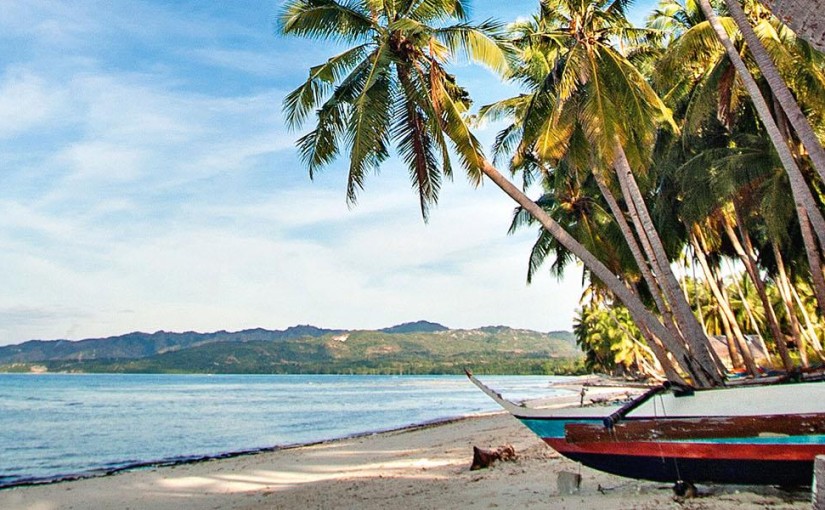
Back on dry land, Siquijor has plenty of appeal as a beach break destination, with some lovely stretches of sand – some developed and others pleasingly untouched – along the island’s 100 kilometre coastline. Most of the tourist accommodation is either dotted along the west coast, where Paliton Beach is a peaceful highlight, or on Sandugan Beach, where I’m staying. In the southeast, Salagdoong Beach is popular with day-tripping families and local teens flinging themselves into the sea from the rocks.
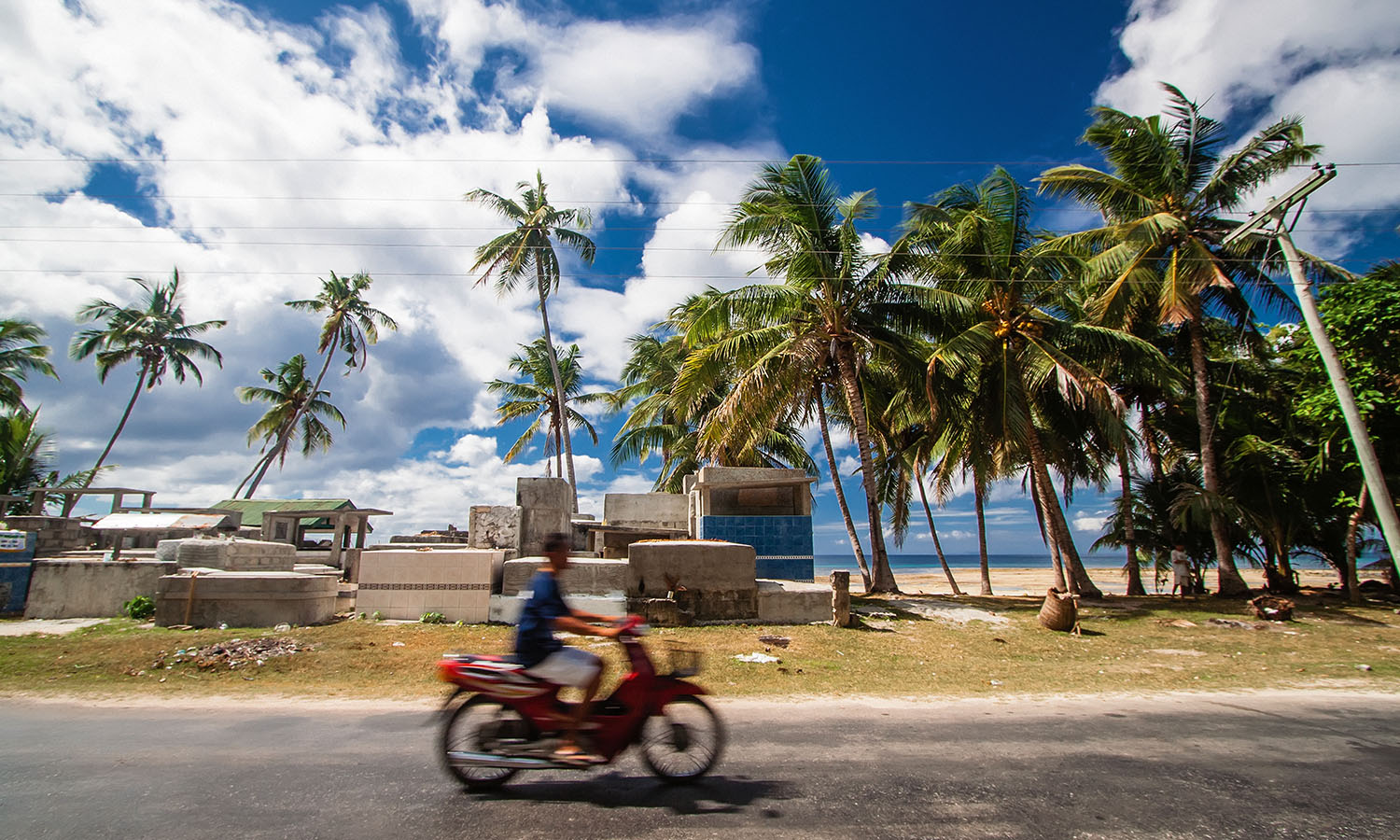
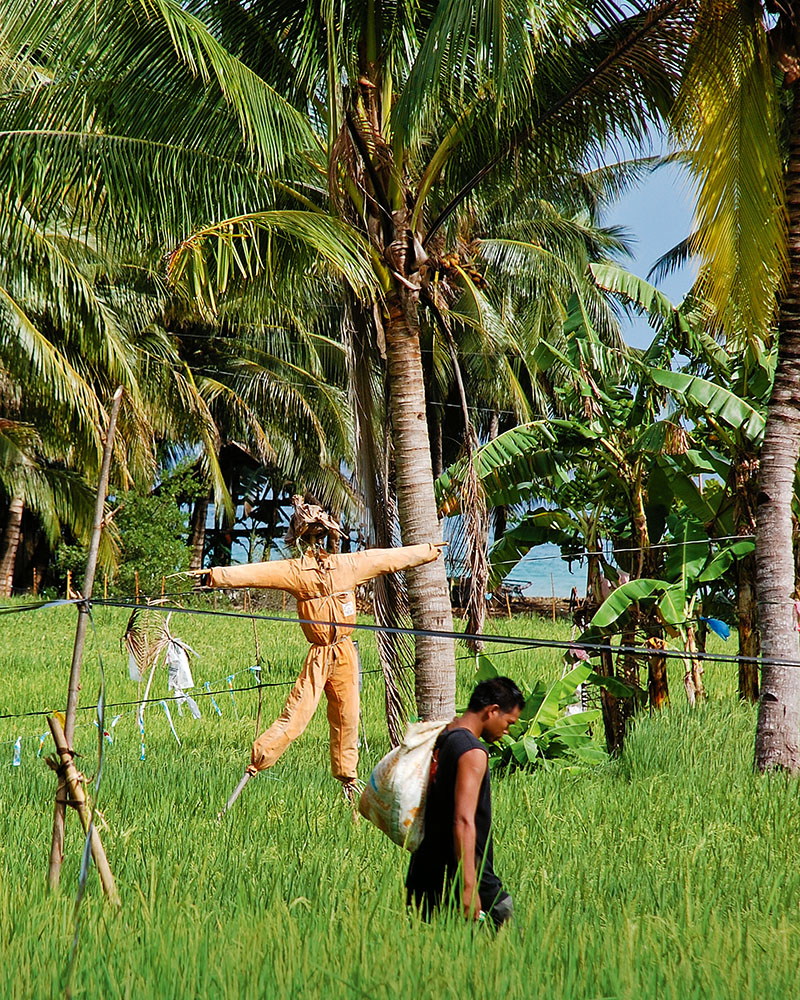
The road around the island is well surfaced by provincial Philippines standards, so hiring a motorbike to explore is a popular option. Local tricycle drivers also arrange tours, doubling up as guides, and that’s how I decide to get around. Taking the main road down the east coast, we pass vivid green rice fields dotted with scarecrows made from palm branches. Several appear to be wearing orange jumpsuits, giving the slightly odd impression that escaped convicts are watching over the crops.
We stop for a few minutes at a spot overlooking a rickety old wooden house, which my guide says is the oldest building of its kind on the island. The owner lives alone and there are rumours, apparently, that she has supernatural powers. She sits rocking in her chair on a balcony overlooking the sea, while I watch from the road and try to imagine how the place might appear creepy under the right conditions. The pink flowers growing outside the house, together with the bright sunshine, make it difficult.
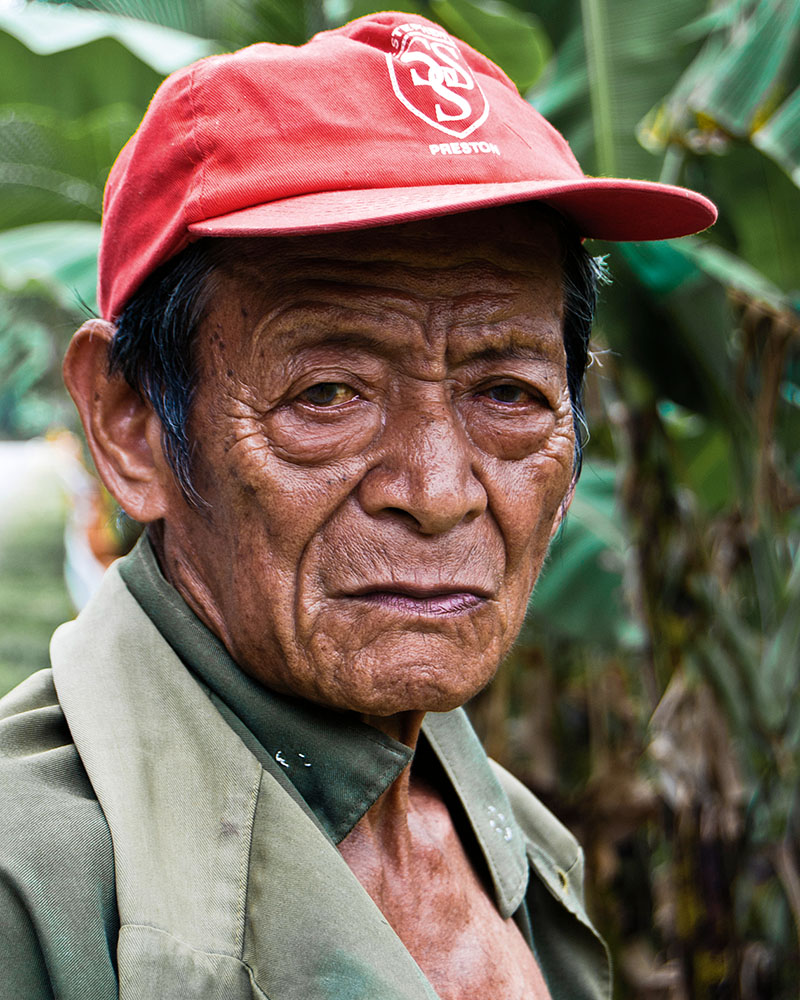
Deep in thought, I’m startled when an elderly farmer, standing unnoticed right behind me, greets us in the local language of Cebuano. He looks stern and I think we’re being asked to move along, but actually he is welcoming us to the island. It’s only later, when looking at photographs, that I realise he was wearing a baseball cap bearing the logo of a school just a few miles from where I grew up in the UK. It must have been part of a charity package or the rejected product of a Filipino factory; just a coincidence, of course…
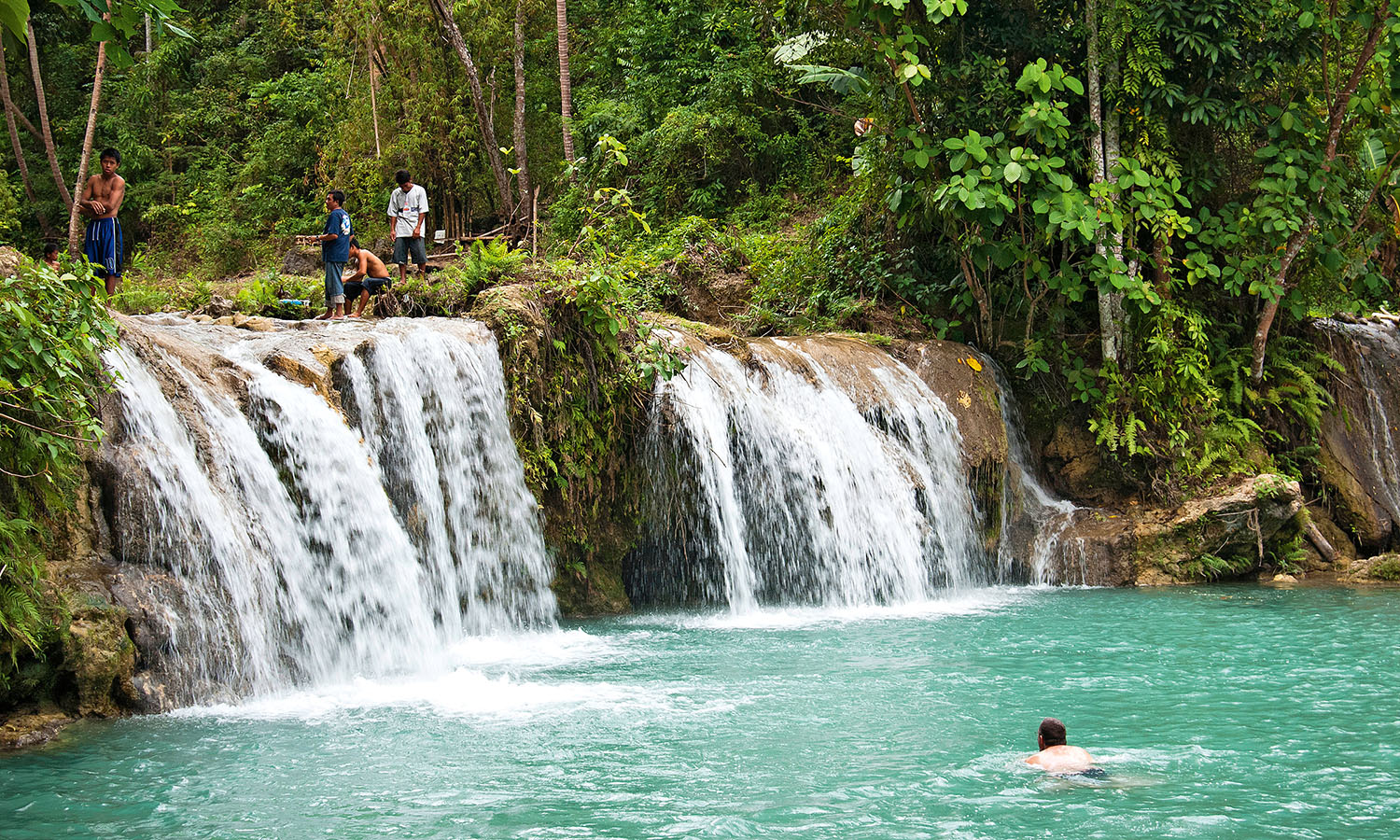
I spend the day visiting beaches, swimming beneath waterfalls and exploring the convent – and an accompanying coral-built church – in the town of Lazi. The last stop is the old balete tree, where, in hushed tones, my guide tells me about some of the creatures linked to such trees. According to Filipino folklore, there’s a panoply of malevolent entities waiting to prey on the unwary. Among the most feared is the aswang, a shape-shifting vampire that preys upon unborn children.
Of course, our guide says, he doesn’t believe in such stories. Not really. He’s a young, modern man. And of course, if we wanted to stand inside the hollow of the balete tree, to get the full benefit of its spooky atmosphere, then we could. But he’s not going to do that himself and, besides, it’s getting dark and shouldn’t we get going?
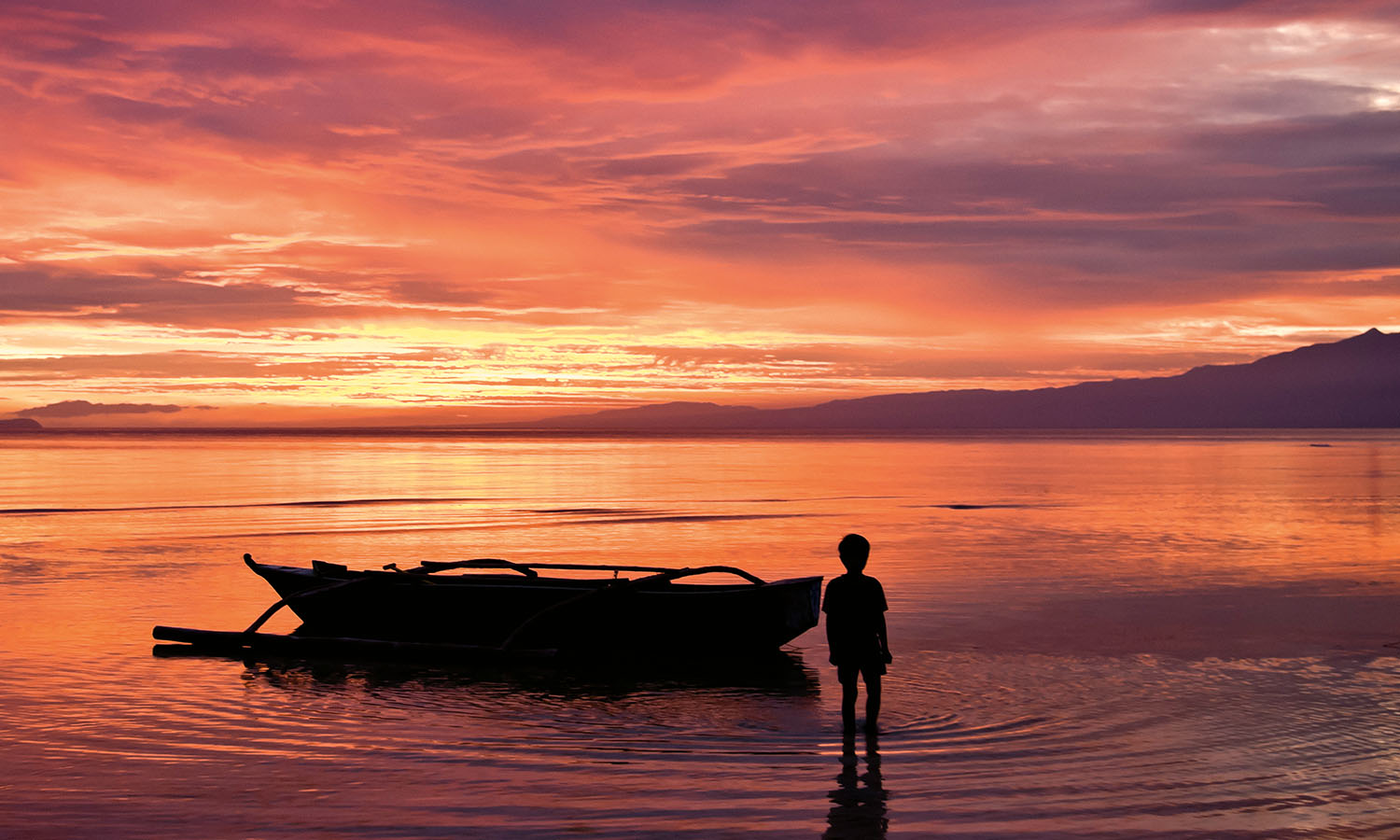
It’s true – the light is growing dim. All the way round my guide has been hinting that it would be a good idea to be on the west coast by sundown, and now he’s getting positively insistent. As we race towards Paliton Beach it becomes clear why, with the sky starting to take on the most phenomenal, fiery orange and red that I’ve ever seen. The sky, the sand and the sea all morph into glorious technicolour. This Mystic Island, it turns out, is truly bewitching.
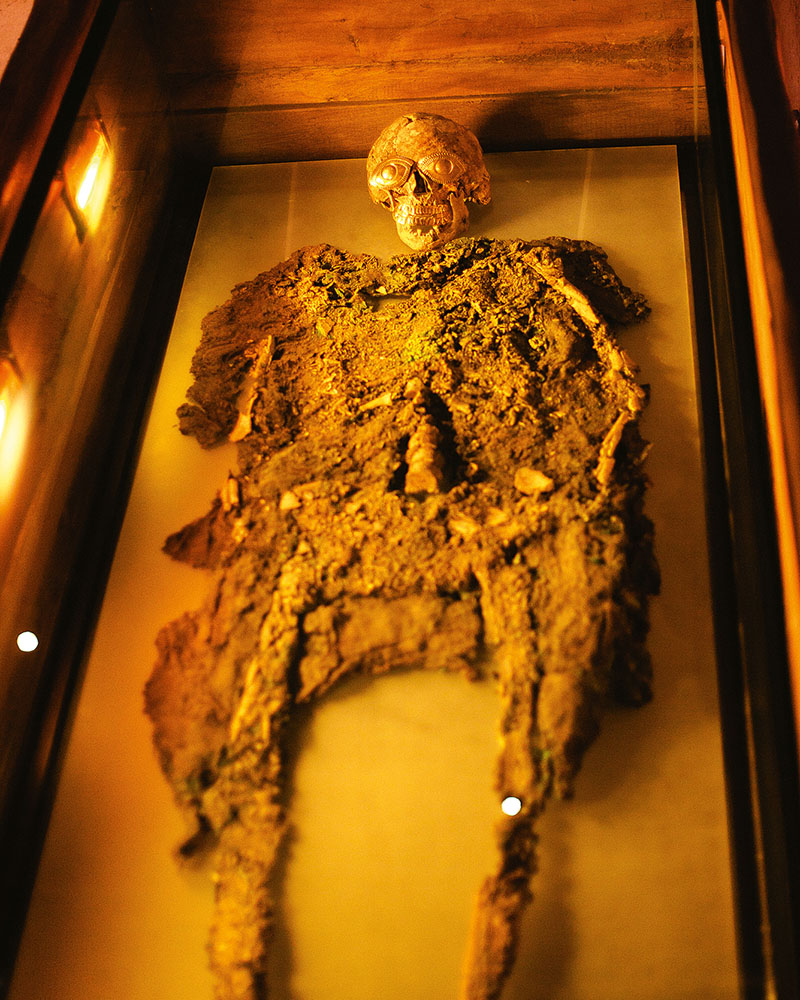
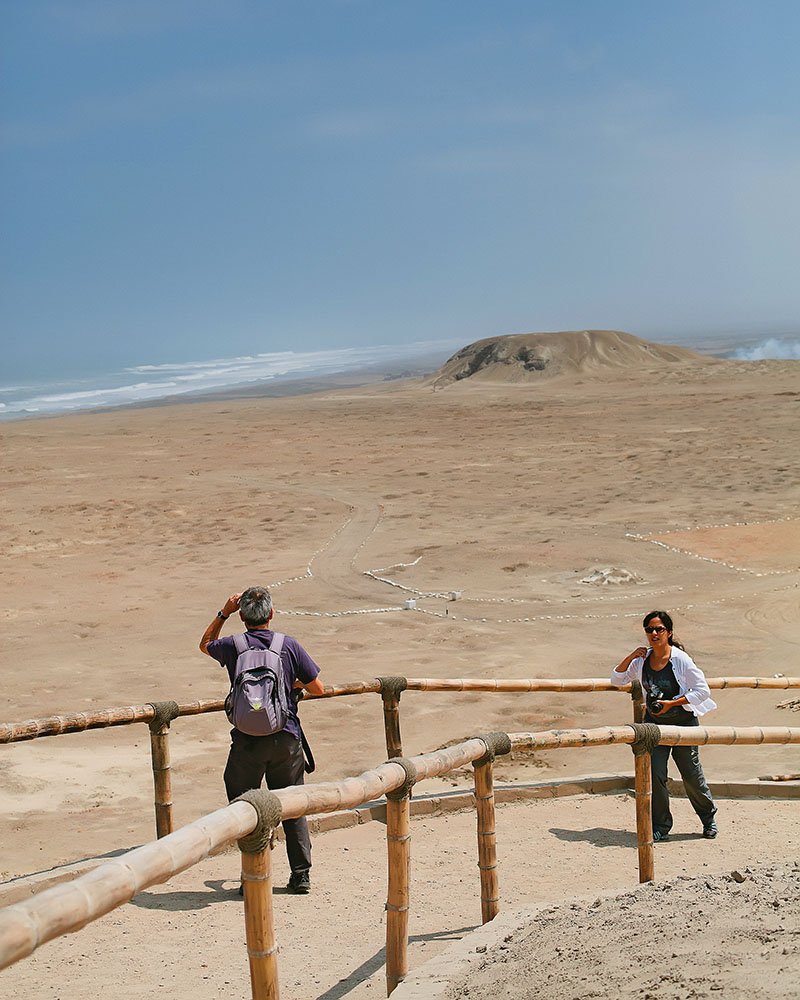
In 2005 the body of a wealthy Peruvian woman was found buried deep in the desert dust outside Trujillo in northern Peru. She was heavily tattooed (smiley faces, hearts, snakes), her nose pierced, her hair long and braided. Next to her body was a cache of weaponry and elaborate jewellery. The discovery sparked a great deal of interest, not only in Peru but around the world. Her body remains on display today, a short walk from its original resting place, where, for a modest fee, you may view its sombrely lit reflection and ponder its significance and your own place in the grand scheme of things. It’s 1700 years old.
If fortune is smiling your way, your visit to the Lady of Cao may coincide with some free time and a congenial mood from the man who discovered and excavated her tomb, Professor Regulo Franco Jordán. The stout Peruvian archaeologist greets our small Australian tour group outside the Museo De Cao and personally escorts us through its riches, answering questions via a translator. By now, three days into our tour of northern Peru, we are acclimatised enough to savour the opportunity. Already we’ve grasped the core interest of this under-sung region: the history here is vivid, blood-soaked and it is still, quite literally, being unearthed.
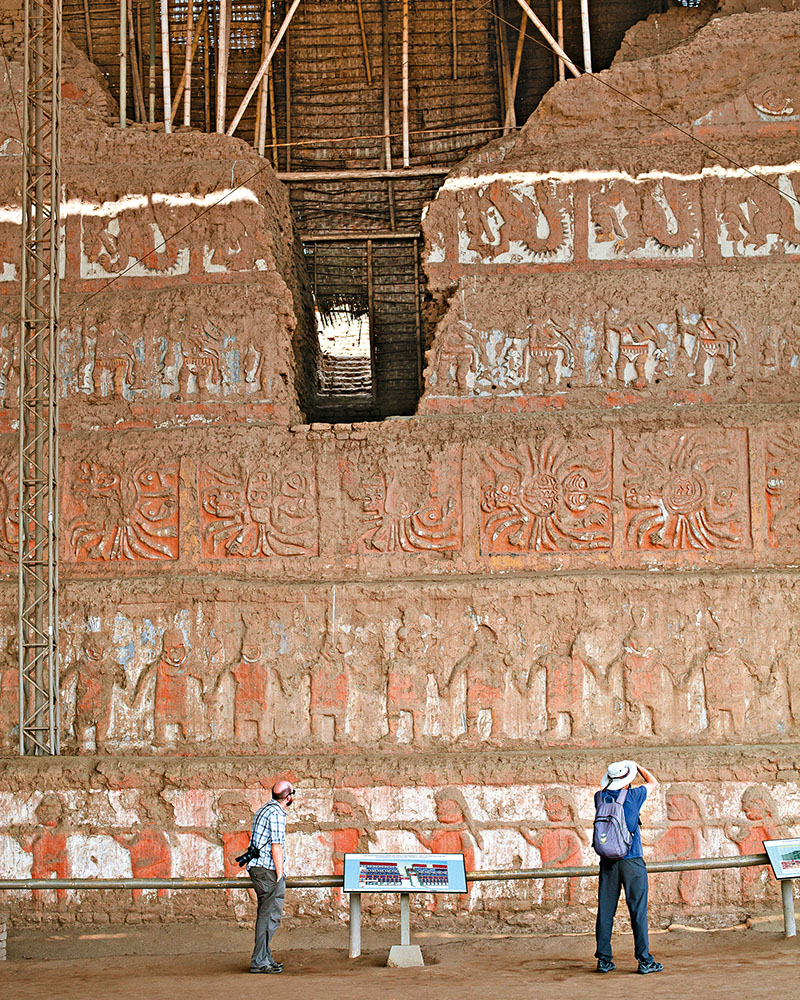
Days earlier we’d begun our tour further south, exploring the Temple of the Moon, which once overlooked the bustling capital of the ancient Moche civilisation. Buried by dust storms, scoured by erosion and its prodigious wealth diminished by centuries of tomb raiders, the temple somehow manages to remain an impressive monolith. Nearby stands what’s left of the larger, older and even more raided Temple of the Sun, said to be the largest manmade construction in the Pre-Columbian Americas. Both are still active archaeological digs. Although no longer much to look at, the sheer size of these structures is a fitting tribute to a civilisation that lasted twice as long as the Roman Empire and five centuries longer than the Inca reign that replaced it.
Who were the Moche people? Doers and optimists, evidently. Beginning around 100AD, a collective of mountain-god–fearing, temple-fixated people arrived in northern Peru – probably by sea from Ecuador – and began transforming an exceedingly unpromising expanse of moonscape into a productive, highly sophisticated civilisation. We know this and much more about Moche society from the stories brought to life by their artisans in thousands of pieces of exquisitely crafted pottery, jewellery, wall paintings and ceramics. We know, to pick just three examples, they had a thing for blood sacrifice, fellatio and fishing. And yet, there is so much that remains a mystery, so much still to discover, which is why the region attracts archaeologists from across the globe.
Archaeology is not the break-neck business of car chases, snake-filled tunnels and whip-cracking American heroes of Spielberg films and boyish imaginations. It is the painstakingly meticulous business of survey maps, academic research, packed lunches, and years and years of digging with increasingly smaller shovels until you find yourself 20 feet down a precariously supported shaft – sun-blasted, dirt-embedded, a stranger to your family and friends – scraping away at the earth with a toothbrush, wearing the fixated grimace of an obsessive compulsive.
That noted, there is something about excavating dusty pottery and adobe foundations in the Peruvian desert – however slowly and laboriously – that is massively enticing. For one thing, there is no shortage of work. Moche-era temples (known as huacas, pronounced waccas) dot the landscape like ant hills. There are hundreds scattered between the ocean and the Andean foothills. Our guide informs us that only between three and five per cent of them have been properly excavated. That’s a lot of dirt to be toothbrushed away. The biggest and most significant huacas resemble eerily quiet construction zones, but with heavily armed security guards and an abiding paranoia about photography.
Grave robbing has been a popular pastime in Peru, probably for centuries. Some sites we visit are pockmarked with shallow ditches and filled-in shafts. Temptation has diminished, but there is still gold and jewellery to be found, as well as ancient mummies and precious artefacts to be disturbed. At the Museo de Cao, Professor Franco Jordán explains it was a grave robber who led him to the Huaca Cao Viejo, where he later made the discovery of his career, the astonishingly well-preserved Lady of Cao. It took his team months to carefully remove and unwrap her body. The discovery has been compared to the unearthing of King Tut’s tomb.
So here we are at one of the most significant ancient historical sites in all of the Americas and the strange thing is that, besides our local guide, the professor, a heavily armed security guard and a magnificently bored gift-shop attendant, we are alone. Who does the Moche Trail in northern Peru? Judging by the visitors’ books very few non-Peruvians – those who aren’t from here are mostly German. As our nine-day excursion ticks away, I start to notice the absence of European faces. The Gringo Trail in southern Peru is well marked (Cusco, Machu Picchu, Lake Titicaca and Lima), but in the north we are off-roading.
To clarify, I mean off-roading in a purely metaphorical way. I am part of an organised tour and we are accommodated in comfort and style. A lavish three-course meal and a plucky pisco sour are never far away. Our itinerary includes just as many modern gastronomic highlights as it does ancient sites. Peruvian cuisine, I’m thrilled to discover, has undergone a renaissance of late. Forget trussed guinea pig. Think of the flavours of ceviche, fresh, delicate raw sea bass ‘cooked’ in lemon and lime juice. Or the temptation of a dessert promisingly titled, the Sigh of a Woman from Lima.
Still we are certainly on a road less travelled, which has advantages. There are no queues for museums or historical sites. No busloads of students photobombing our precious snaps. Prices are set at local rates. Crude and repetitive butcherings of the Spanish language are patiently encouraged. The fact that we are Australians and that Australia does indeed have kangaroos is a talking point in the markets and bars. More than anything else, the absence of mainstream tourism encourages immersion in our surrounds.
Historical tours can be dry and repetitive – how many old buildings do you need to visit to establish that they are indeed old and still standing? There’s a temptation to see only the most visually impressive (and Machu Picchu stands tall and perhaps even unrivalled in this category). Be advised that the huacas of northern Peru are not visually impressive. They are not even impressively visible. You could drive right by three or four of them and not even know they were there. The upside is that the Moche route requires your attention. You need to go beyond the surface.
If you’ve a curious mind there is much to marvel at with the still-unfolding story of the Moche civilisation. If not, there’s enough sex, death, war, nudity and drug use to hold your attention. In Lima’s Museo Larco the pottery engravings are so sexually explicit and enliveningly graphic they are kept in an adults-only gallery. Depictions of highly ritualised human sacrifice involving gruesome torture and the imbibing of a hallucinogenic cactus to appease a god known as the Decapitator are a frequently occurring motif. Immensely impressed with these details, I find the Moche culture comes to life. I begin to think there might even be the bones of a HBO series buried out there in the desert somewhere.
When we aren’t exploring dusty temples and gleaming museums dotted between Trujillo and Chiclayo, we enjoy lazy lunches by the sea in a succession of colourful fishing villages. After one such meal in Huanchaco I recognise the familiar appearance of my own caste: that sun-bleached, work-shy, pleasure-loving creature, the travelling surfer. Northern Peru is famous for its long-wrapping point waves, none more so than nearby Chicama, which is regarded as the longest and most wrapping in the world. How I long to join them for six months or more.
Surfing is big in Peru. Some Peruvians even suggest surfing actually began here, not in Hawaii, as is commonly believed. They stake their claim on the use of the caballito de totora (little reed horses), handmade fishing vessels also used for catching waves and which date back some 4000 years. I wasn’t going to miss the opportunity to ride one, however ungainly they appeared.
I hired a wetsuit and borrowed a caballito from Lucio, a friendly local fisherman. Earlier he had put on a commanding wave-riding display for our tour group while I rode beside him on a malibu. My efforts on the reed craft were less successful, but I managed to catch one tiny wave. For a few seconds, as I glided to shore before abruptly capsizing, I enjoyed a rare physical insight into what life must have been like for the Moche people as they went about their daily lives alongside the baking desert, with the fearsome mountain god looming in the distance.
An exciting but precarious existence was the lasting impression.
As the plane approaches Yangon, the knot in my belly tightens. A trip that began as a flight of fancy is about to become reality, and I’m not sure if I’m ready for it. Burma is my last Southeast Asian frontier, the grand old dame of independent travel. I had put off visiting this part of the world for years for fear it was exactly the sort of place popular opinion portrays it to be: dour, ugly and sad. I knew a bit of the history, and I’d listened to plenty of tales of woe from other travellers, some built on a sandy foundation of truth and others conjured from the mist.
My mental picture is bleak. I picture protests at the Shwedagon Paya; monks setting themselves on fire in protest at the actions of the military junta; the shifty eyes of tourist-talking soldiers. I’d always imagined Burma was the saddest place on earth, and now I have two weeks to find out.
My luggage hasn’t followed me through to Yangon. It’s in Saigon, Singapore or Seoul. The airline has no idea how long it might take to track down my stuff – if it can be found at all. I’m welcome to conduct a thorough search myself, though, says the deliriously cheerful customer service agent who meets me in the arrivals hall. In the meantime, she encourages me to enjoy a complimentary Star Cola. Suddenly I’m very unhappy.
Burma is not the sort of place you want to lose your luggage. Not that you can’t easily replace everything in your kit – Yangon is home to a few shopping malls, some excellent street bazaars and an avenue peppered with camera shops. The problem is that the entire country runs on cash; there are no ATM machines and nobody accepts credit cards. If I blow what cash I came with on new knickers, I could wind up starving in the jungle. To compound matters, I have to exchange my dollars for Burmese kyat – a currency that may or may not even exist – on Yangon’s infamous black market.
A man named Zin Min leads me from the Sakura Tower to his makeshift shop in a dusty parking lot, where two of his comrades are waiting to trade. I don’t want any funny business, I declare. I know the going rate of exchange, and I want a fair deal. Zin Min takes my money and arranges it on the counter in front of his boss.
“I want 700 kyat on the dollar,” I demand. The boss behind the counter shakes his head. “I’m sorry sir, this will be impossible,” Zin Min says. “That is the rate from last month, and it is too low. We must give you much more.” To seal the deal, Zin Min offers me a Star Cola.
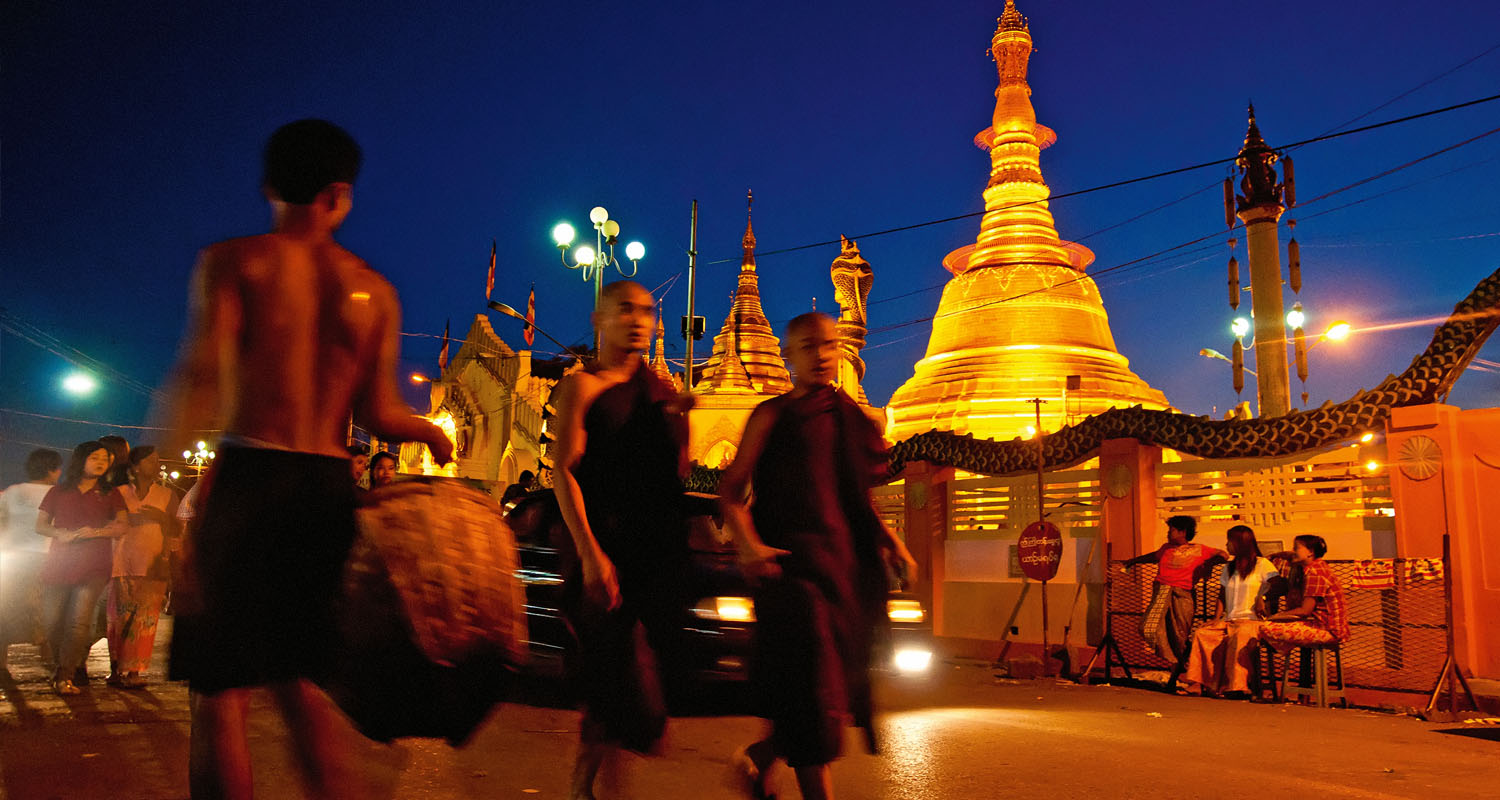
Perhaps the night will bring on something more sinister. I make my way down to the Botataung Paya where, under the glow of generator-powered fluorescent tubes, willowy wisps drift from one street vendor to the next, filling baskets with gold leaf bananas, wooden puppets and thanaka, a cream used by Burmese women as a cosmetic and sunblock. The chit-chit-chit of the bamboo juicer sets the soundtrack for this ethereal dance party, as children release balloons into the air and street peddlers drape fragrant garlands around the necks of female visitors. Though I’ve lost my luggage, I’m still wearing my dancing shoes. I join the ghostly apparitions as they dance along the Yangon River promenade under the cover of darkness. Everyone is smiling. I’m having a brilliant time.
I’m clearly not finding unhappiness in Yangon, so I need to look someplace else. The photographer in me is drawn to the great set pieces of middle Myanmar: Bagan’s ancient pagodas, Amarapura’s legendary teak bridge, Inle Lake’s mythic floating markets. I decide to look for a revelation in the heart of Burma’s tourist country.
I arrive at Nyaung Shwe, Inle Lake’s main development, in the dead of night. Booking myself onto a boat tour, I wonder aloud if the notorious Nayar, a mythical dragon with four legs, still stalks the waters. An old man sat next to me on the bus ride from Yangon to Inle fills our 13-hour odyssey with tales of Nayar and the Magan, a man-eating crocodile that patrols the murky depths of the lake when the sun goes down. I don’t consider myself superstitious, but in Burma I’ll believe just about anything. I tell my boatman as much.
“Now you’re starting to understand our country,” he says, winking at me as he captains us through the dark. I assume we are in the middle of the lake because I can no longer see the glint of moonlight off the tin roofs of the stilt houses that line the lakeshore. The engine dies and we sit for a moment. My boatman hands me a small package wrapped in banana leaf; he tells me it’s a mix of fermented rice and kneaded fish. I imagine eating it would make me unhappy, so I do it with gusto.
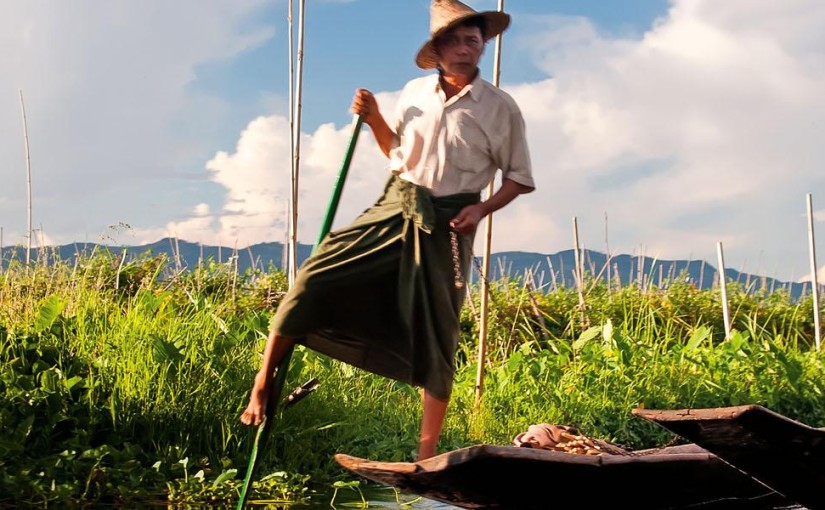
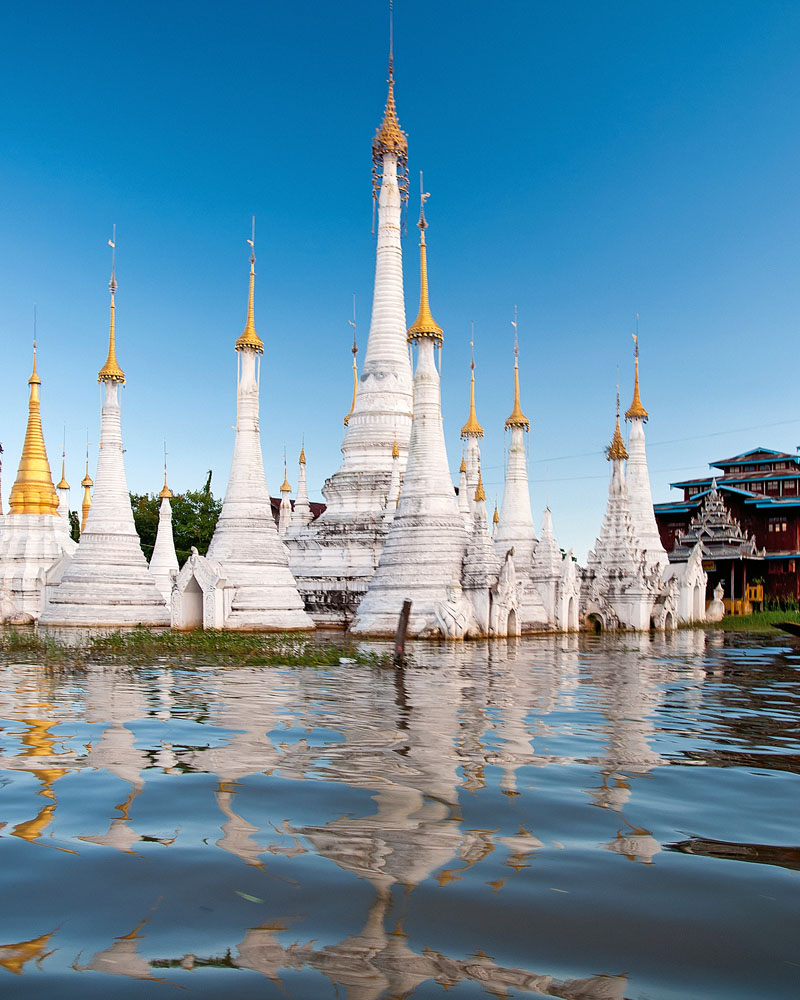
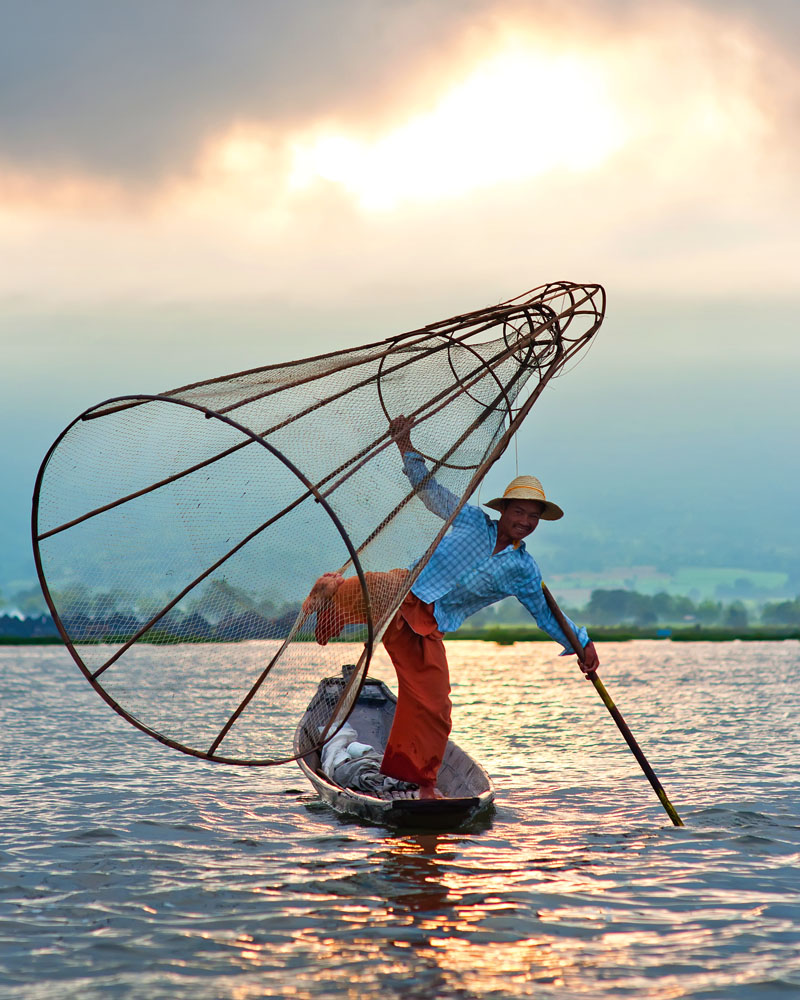
Out of the mist, with the first rays of dawn pouring over the eastern hills, a fisherman appears. He’s trawling across what appears to be a thin sheet of glass, one strong leg propelling his slender canoe while he hefts a massive cone-shaped net above his head. The Intha fishermen, members of the Tibeto-Burman ethnic minority group that make their homes in stilt houses on the lake, are self-sufficient fisherfolk and farmers known for their unique one-legged rowing style. With the sun up, Inle’s water world slowly reveals itself, from pagoda-spiked coves to the green islands of vegetation that float atop the water.
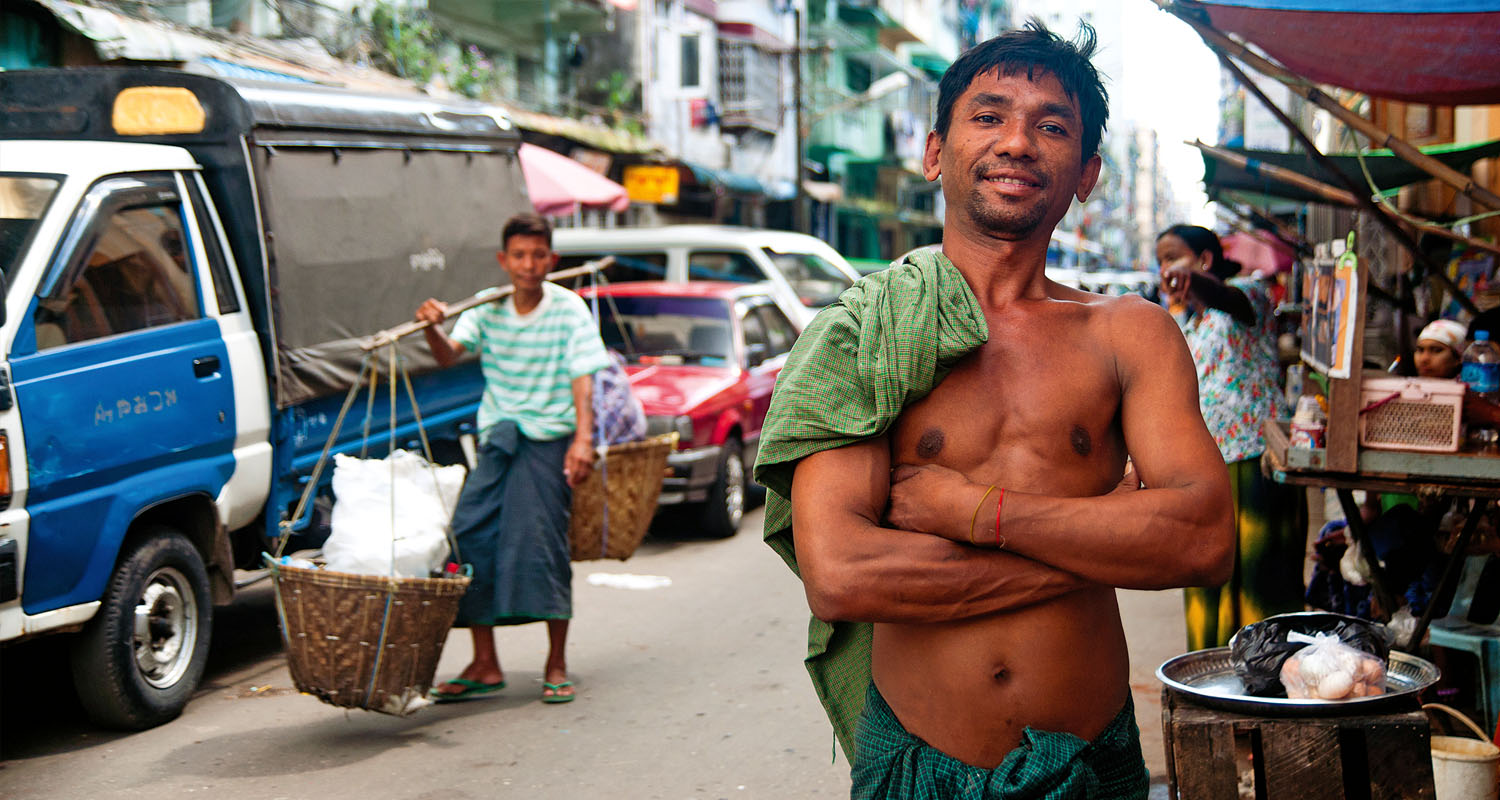
As the sun climbs to its zenith, we motor through thick hyacinth beds to the floating market at the Alodaw Pauk Pagoda. Local villagers are out in force – Intha, Shan, Danu, Kayah and other tribal people are busy trading fruits, vegetables, spices, fish and tall tales. A vendor talks me into chewing paan for the first – and only – time in my life; the areca nuts nearly shatter my teeth, and I don’t know what to do with the red goo oozing from my mouth. Another young lady talks me out of my tattered shorts and into a longyi, and I begin to feel like I’m fitting in.
A longyi is a long tube of cloth worn like a skirt by people throughout Burma. The Burmese are so comfortable in them they can ride a bike, kick a football or run up and down a flight of stairs without skipping a step. I can barely walk without stepping on the fabric and exposing myself to the world. I feel like a mighty Scot in my bold tartan, nigh-on invincible as I crash through the jungle west of the lake. I think I look pretty cool until I meet a guy on a buffalo. The buffalo rider encourages me to try and climb on, so I try – and fail, much to the delight of the band of merry villagers that has joined me on my trek.
I realise then I have made a tactical error – this is one of the most beautiful places I have been in all my life. I’m as likely to find unhappiness here as I am to find the Nayar playing water polo with Moby Dick. I have to eschew my photographic designs and get deeper under Burma’s skin. I bid the scorched central plains goodbye and head back down south.
Stowing away aboard a passenger ferry I depart Mawlamyine and land on Ogre Island, a place where I assume nasty characters will abound.
However, exploring the island’s ethnic Mon settlements reveals a kinder, gentler side of Burma. Horses clop along dusty roads as children build castles out of sand, and the sweet smell of coconut wafts from inside stilt houses built over unending pitches of cereal grains. A stout old lady waves me into her hut, where she proudly displays her collection of handmade coconut teapots.
I roll deeper into the countryside, where farmers in straw hats herd lazy cattle, and messenger boys ramble past on ramshackle bicycles. It’s all very happy. Suspecting the heat may be playing tricks on my mind, I seek solace at the top of a tree with a local palm harvester. As I sit, some hundred feet above the ground, I look out over the past and fall in love with the strangeness surrounding me. My climbing partner, Htay, has been scaling these towering trees since he was a boy, harvesting the fruit that is then sold in Mawlamyine’s Myine Yadanar market. He hasn’t fallen out of a tree yet, and that makes him happy.
On the return ferry I meet a monk who welcomes me to Burma and asks after my trip. If anyone is going to show me unhappiness, this is the man. Monks have driven the engine of dissent in Burma for generations, speaking out against everything from government corruption and social malaise to the price of betel nut. I ask the monk how people remain so optimistic in the face of such tremendous government oppression. The monk smiles as he unfurls a laminated poster. “Because we have hope,” he says, revealing the visage of a young Aung San Suu Kyi. “But I do know someone who is sad,” he continues. “I think you would like to meet the saddest monk in Myanmar.”
I have one last crack at unhappiness, and I’m giddy with anticipation. Returning to Mawlamyine, I immediately chart a course for Shampoo Island, the home of the unhappy monk. During the brief life of the Ava Kingdom, a royal hair-washing ceremony was conducted using water from a well on the island. This is Shampoo Island’s singular claim to fame – for this reason, it has been called the most boring place in Burma.
But Shampoo isn’t bland, nor is it boring. It is a quaint, quiet place, where nuns in pink robes tend to beautiful gardens and giant tree snakes lay in repose in the canopies overhead. I enter the Buddhist meditation centre, where I come upon a three-tiered fish tank filled with happy-go-lucky goldfish. Standing nearby, staring at the tank, is a tangerine-robed monk. He holds a small net in one hand and a dead goldfish in the other. But he doesn’t seem sad at all.
I’m not naive enough to think that Burma is all sunshine and lollipops. This is, after all, a country still ruled by one of the most brutal dictatorships the world has ever known. Yet the Burmese have inspired me with their wanton refusal to accept the realities of their socio-political situation, and the way they embrace hope for the future. I’ve been struck by the natural beauty of the countryside, and mesmerised by the plethora of ancient wonders, but it’s the people I met on my travels that changed me.
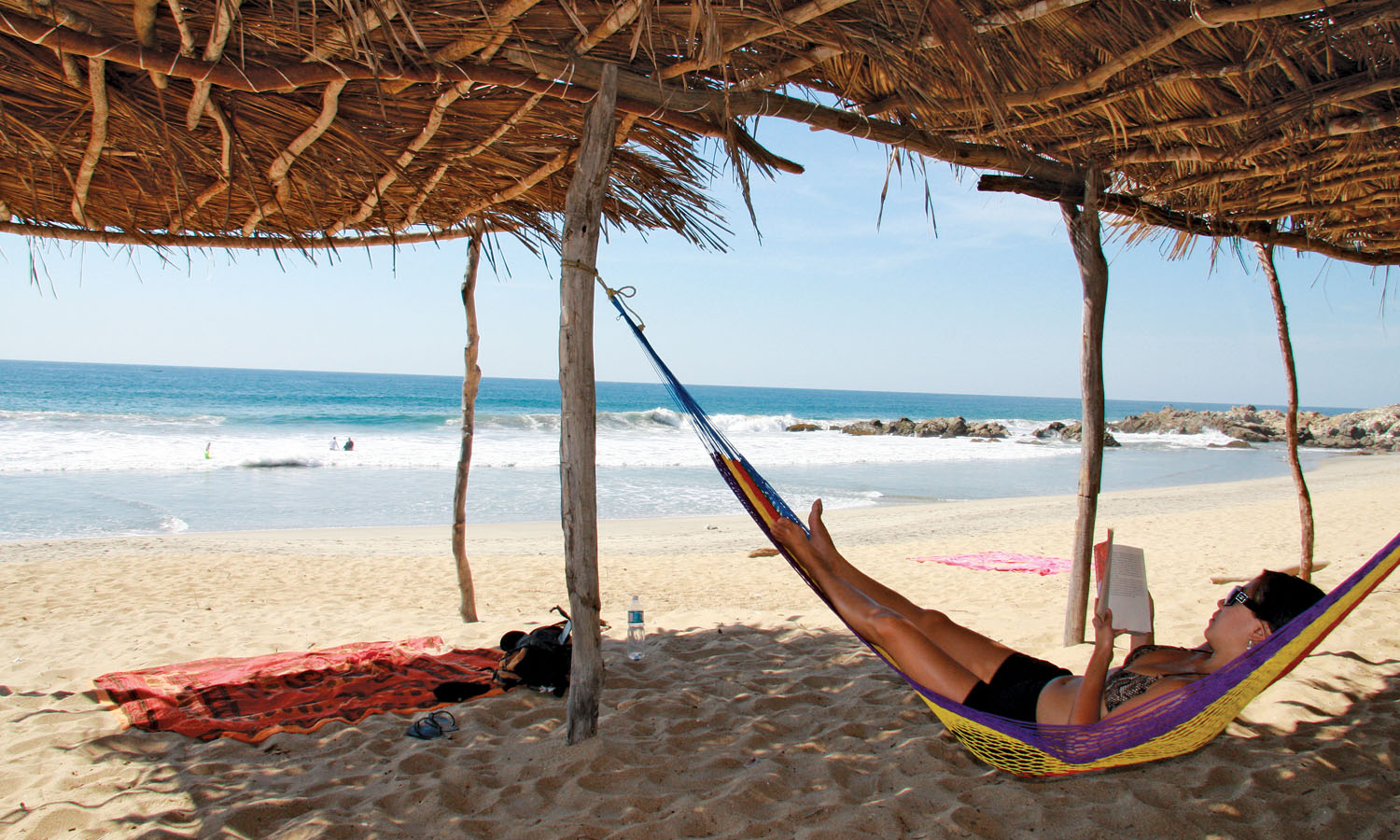
“You can snorkel, surf, sail, ride horses, scuba dive, explore lagoons by boat, mountain bike along ocean cliffs, and drink yourself silly (all in one day if you want). Or you can soak up the sun and read a book...”
This must be some sort of set-up, I thought as I read the opening paragraph of Lonely Planet’s guide to the Pacific Coast of Mexico. It was as if Tony Wheeler himself had been eavesdropping on my conversation the previous evening. “I really want somewhere we can surf, scuba dive and drink ourselves silly (all in one day if we want),” I’d said to my girlfriend. This was how I find myself heading out of Mexico City with a New Year’s Eve hangover and a desperate urge to dive into the remedy of the cooling Pacific.
Mexico’s Pacific Coast is more than 2000 kilometres of pristine beaches dotted with tourist traps and secluded escapes. With only three weeks to explore, we decide to plot a course down the less touristy trail – away from the resort towns that fill with floral-shirted gringos from Mexico’s northern neighbour – and through the real Mexico where we could drink tequila with hombres rather than Homers.
The gateway to our beach haven is Acapulco, a town apparently still hungover from its famously hedonistic Hollywood holidays of the 1970s. John Wayne threw week-long parties at the Hotel Los Flamingos (still the best place to catch the sunset) and the rich and famous tanned themselves on the soft sand of Acapulco’s protected bays. While the hangover still lingers in the decor of that era, the dance music pumping these days from the streetside restaurants and bars reminds me of the atmosphere at Bali’s Kuta Beach. Acapulco is a place best embraced for just what it is: foam parties in nightclubs that spill onto the beach, street buskers, ritzy cocktail lounges and kerbside beer bars. Acapulco’s nightlife still lives up to its hype, with something for everyone.
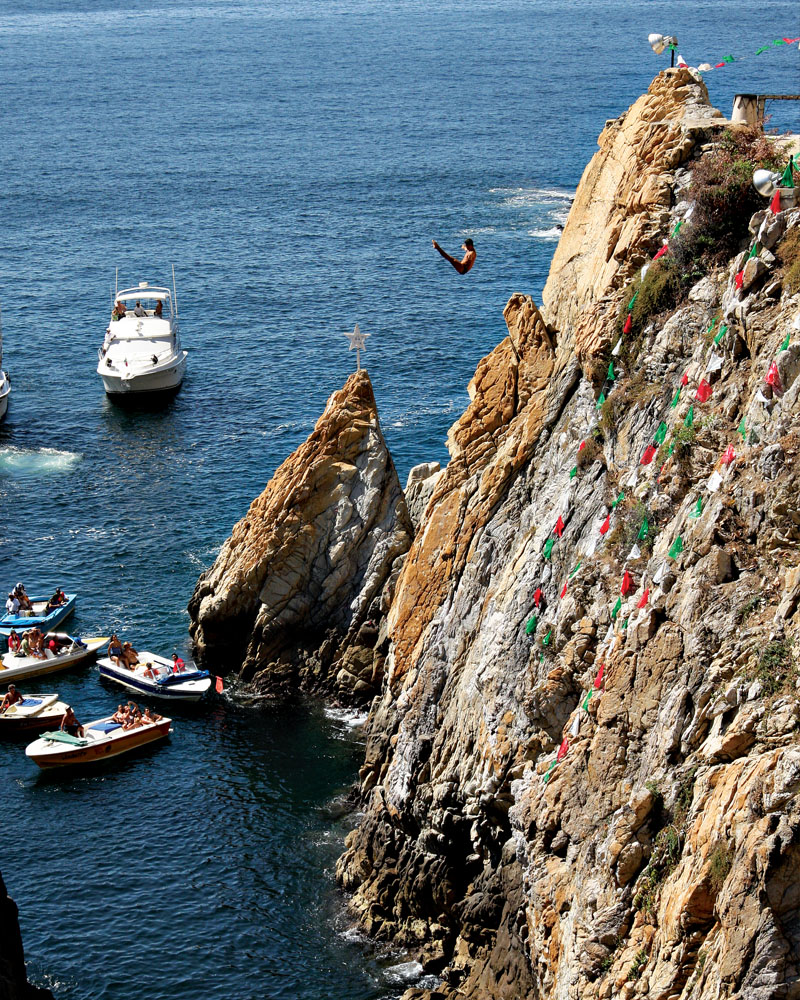
Among the neon and nuisances in Acapulco are the La Quebrada cliff divers, whose daily shows are definitely worth seeing. Basically, twice a day a group of crazy but highly skilled Mexicans plunge off a 35-metre cliff (that’s more than three times higher than the high diving board at your local pool) into a narrow cove below. It’s quite an extraordinary spectacle, and to give you an idea of the risk, the divers pray at a shrine before plunging. Yes, there are plenty of tourists, but it’s well worth it anyway. Be wary though: the divers themselves prey on tourists afterwards for tips, although I’m almost certain a couple of the budgie-smuggler–wearing locals hustling for money were not the ones diving earlier in the day!
We decide to fully embrace Acapulco by stepping right back into the 1980s, and so stay at Las Brisas, a pink monstrosity that sits on the southern hill facing Acapulco’s main beach, Playa Icacos. The Las Brisas lobby still has the preserved handprints of famous guests, Sylvester Stallone’s being the most prominent. Sly stayed at the hotel while filming Rambo: First Blood Part II nearby. While frighteningly kitsch – think guests driving pink golf carts – the continuing allure of Las Brisas lies in the rooms, all of which are perched on the cliff face with their own private pools. There is something quite special about eating a breakfast of fresh fruit served poolside while watching the hustle and bustle of Acapulco below.
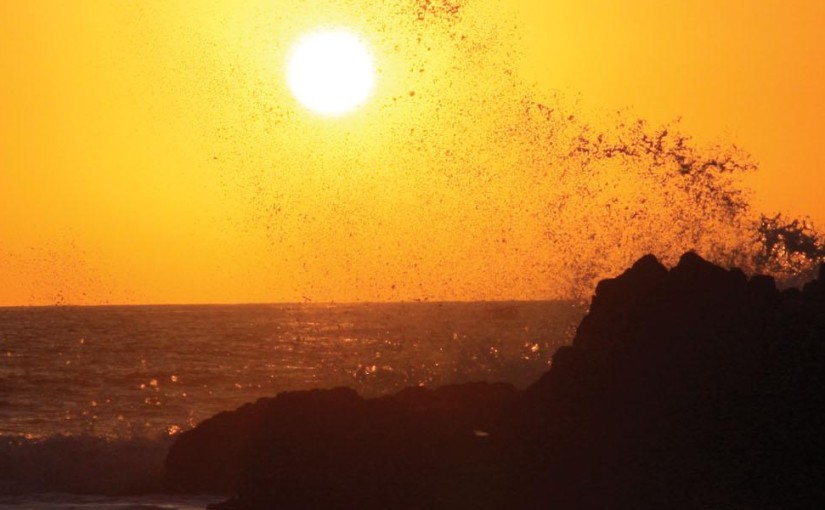
But our trip to Mexico isn’t about the confines of hotels. We have a goal – to find the perfect Mexican sunset. We head north for a daytrip to Pie de la Cuesta, about half an hour north of Acapulco’s overcrowded and apparently polluted waters. With quiet beachside restaurants and bars and a perfect beach stretching into the distance, Pie de la Cuesta gives us a taste of what to expect once we move south, away from the tourist hordes. A bucket of margarita (make sure you ask for Jose Cuervo 1800 tequila), freshly barbecued squid and the sun sinking into the Pacific was exactly what we wanted and, after only three nights away, we wonder if it can get any better.
With the tourist experience behind us, we venture south down Highway Mex 200, along the long stretch of never-ending beach, with the Lonely Planet confined to the boot and a determination to stay where we want for as long as we want without any preconceived perceptions. When we see the sign for Playa Ventura, it evokes nothing more than a memory of a Jim Carrey film, which in our wandering frame of mind is enough motivation to turn off the highway.
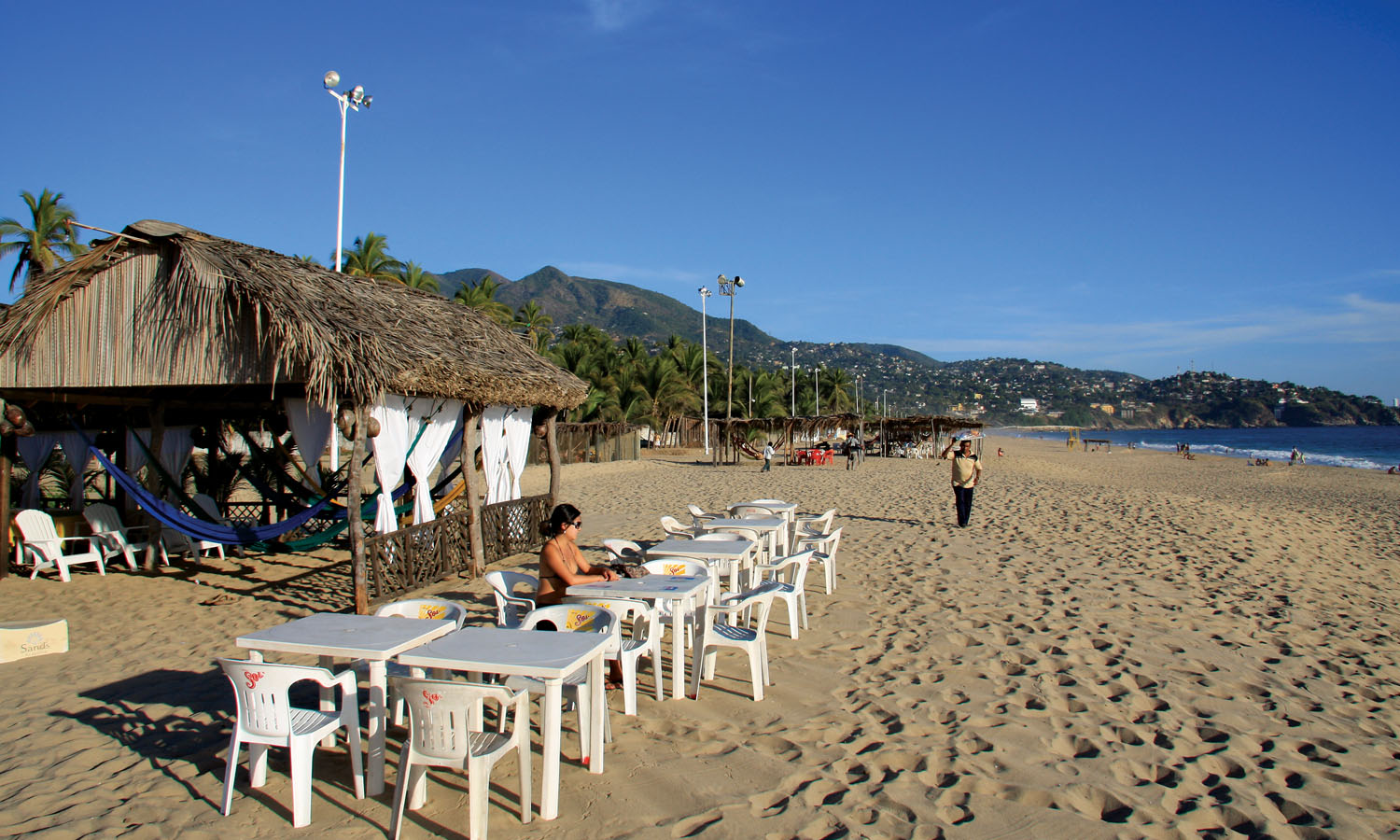
The next three days are a blur of sun, sand, surf, seafood, Corona and tequila. Time seems to disappear when you while it away on your own beach, the only stress a hot sand shuffle as you stroll to the beach bar. In the evening, the local square livens up with a few restaurants and La Jaladita, a bar run by Arturo, whose English and margaritas are more than entertaining. Ever the entrepreneur, Arturo also runs the local nightclub, which I think is his living room decorated with some neon and strobe lights. Nevertheless it proves to be a great spot to mingle with the locals, who all seem to venture back here.
Next stop Puerto Escondido – a town famous for its gnarly pipeline and surfer attitude. Busy like New York when compared to Playa Ventura, Puerto Escondido still has a certain charm. Beach bars and restaurants stretch along the sand and the buzz of excited surfers creates a lively atmosphere in the evening, with bands playing until the very wee hours of the morning. For a few pesos, you get a lounge on the beach and a waiter bringing you frozen margaritas all day. This proves to be irresistible and we stay a couple of extra days, contemplating a sky dive as we watch the parachutes float down in the afternoon sun. Thankfully the surf in Puerto Escondido is not at its most ferocious in January, so we’re able to swim in the crystal-clear water, diving under the odd larger wave that rolls through.
Highway Mex 200 winds south from Puerto Escondido through some surprisingly lush green countryside with scatterings of small villages. There mustn’t be any liquor licensing laws in Mexico, as it seems all one needs is a Corona banner and a table and chairs and you can run your own bar or restaurant. Corona banners line the roadside offering afternoon thirst-quenchers. Some of the bars even have staff dancing on the road to grab your attention. I’m not sure this tactic is entirely successful.
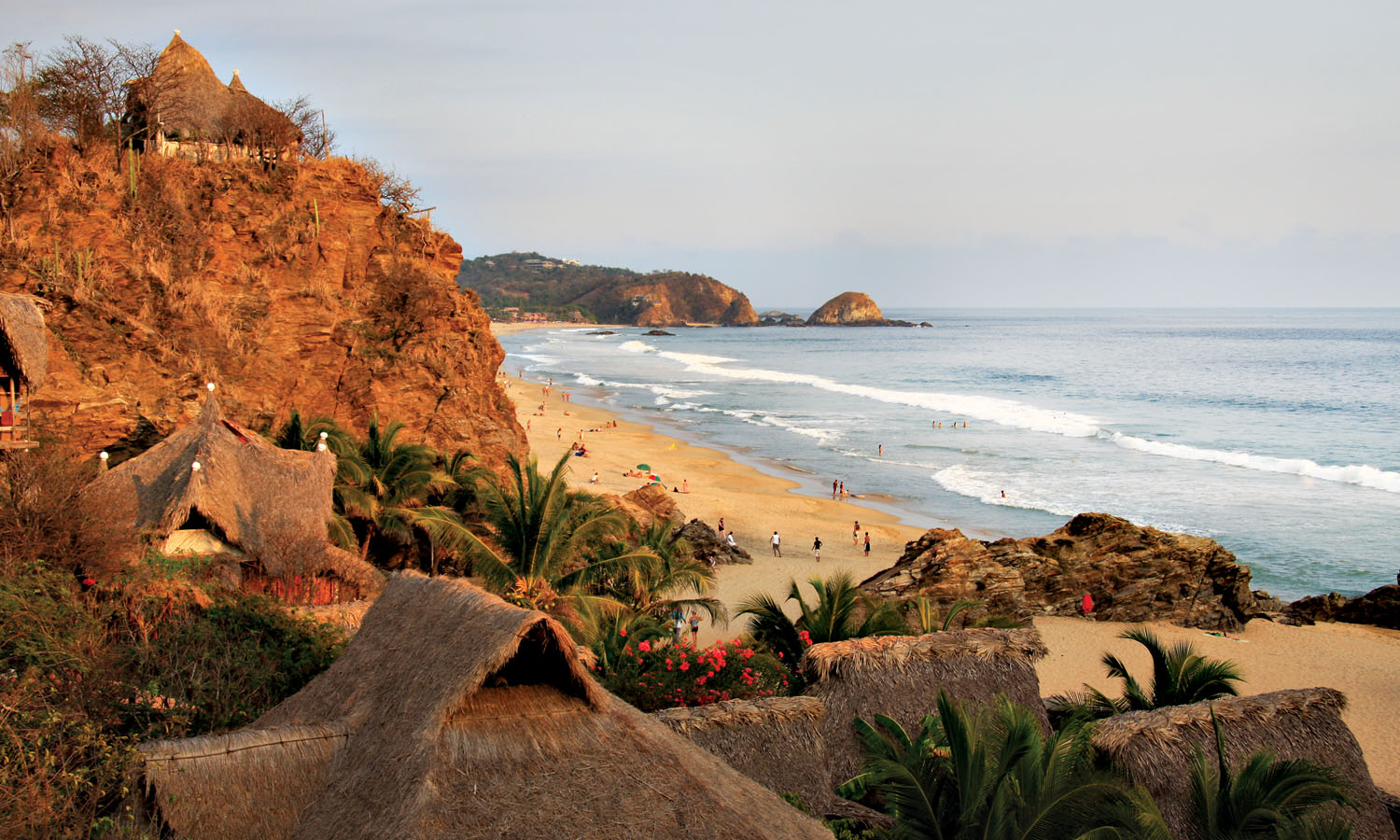
Our final beach visit is to Zipolite, a long stretch of sand backed by craggy cliffs and cacti. Like one of the three bears, Zipolite seems to fit perfectly between the slightly touristy Puerto Escondido and the nearly deserted Playa Ventura. We check into the stunning El Alquimista, a ramshackle collection of quite luxurious beach bungalows scattered around a beach bar resembling an old boat, then wander down to the beach, where a slow swell rolls in each afternoon. We rather quickly wander back off the beach, feeling slightly overdressed. There are no signs explaining that Zipolite is a nudist beach, nor are there warnings of nude frisbee players, nude surfers and nude conversationalists.
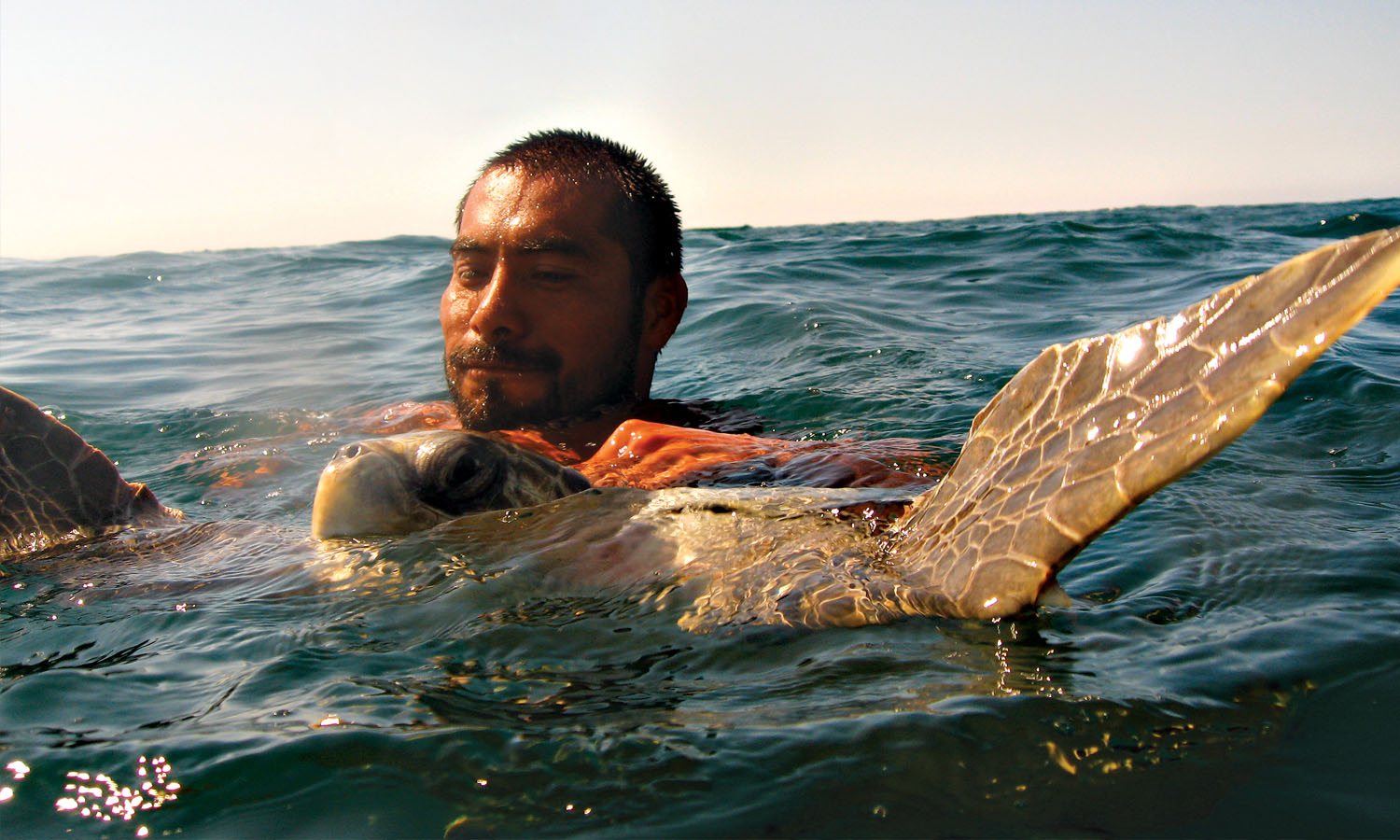
We decide the following day would be better spent on a snorkelling trip to the surrounding deserted bays, and are quietly thankful when the other passengers arrive with clothes. Halfway out of the first bay, our captain suddenly dives into the Pacific, only to surface bear-hugging a giant turtle. The boat empties as we all take the opportunity to swim into the depths with the turtle, who doesn’t seem overly happy with the extremely non-eco-friendly behaviour going on.
The turtle encounter, among others, illustrates the charm of Mexico’s south. In some ways the whole area still seems slightly lawless. There are bars that stay open until you finish your last drink, nightclubs in someone’s living room, bonfires on the beach and turtle-wrestling men – all set against the backdrop of sipping tequila as the sun sets.
The diversity of immigrants to Israel has guaranteed a diverse culinary influence, but this can make the question of what constitutes Israeli cuisine a vexed one. Fortunately, indigenous dietary delights remain to be enjoyed in the Holy Land, especially in the capital Jerusalem.
State of the nation
If Israel had a national dish, it might well be hummus. This simple dip, composed primarily of crushed chickpeas and olive oil, is so popular in Israel that it’s become an ‘anytime meal’, a universal condiment and a serious point of discussion. Ask any Israeli where to get the best hummus and you should set aside an hour for the response.
Most agree that hummus is an Arab invention that has been appropriated by the Jewish majority and developed into an almost entirely different dish. Order a bowl of hummus at Akermawi in East Jerusalem and you’ll find it’s lemon-laced, dotted with cumin and as deliciously dense as setting concrete. This is the staple of many Palestinian workers who arrive before the crack of dawn to work in Israel. One large bowl is said to be sufficiently nutritious for a full day’s labour.
On the west side of town, the cumin and much of the lemon are absent and the hummus is soft and fluffy. This is because the Jewish establishments in West Jerusalem macerate the chickpeas in a blender, whereas the Muslim establishments in East Jerusalem pound them with a mortar and pestle.
The love of hummus spans cultural divides. Across the capital and the country it can be ordered plain or served with a sprinkling of meat, pinenuts, cooked whole chickpeas or ful (tangy, slow-cooked fava beans). Whatever the accompaniment, it is best eaten with pita. Arab-made pita tends to be slightly drier and more hummus-absorbent than the moister, stickier Jewish-made pita.
A flying start
There’s no better way to start the day than with a decent breakfast, which is rarely difficult in Israel. Make sure your breakfast is included in your accommodation, as this is a meal not to be missed. Depending on where you stay and how heavily your hosts lay on the morning meal, it is possible to stuff yourself to such an extent that hunger pangs will be at bay until late in the day.
While there’s usually no meat at breakfast owing to the Jewish dietary laws, or kashrut, that prohibit milk and meat being eaten together, there’s usually enough variety to compensate. A typical spread could comprise breads, pastries, fruits of all sorts, a selection of white cheeses (including the slightly sour Levantine delight, leben), muesli, hummus (of course), a tuna dip, Israeli salad (cucumber, tomato, olive oil, onion) and hard-boiled eggs.
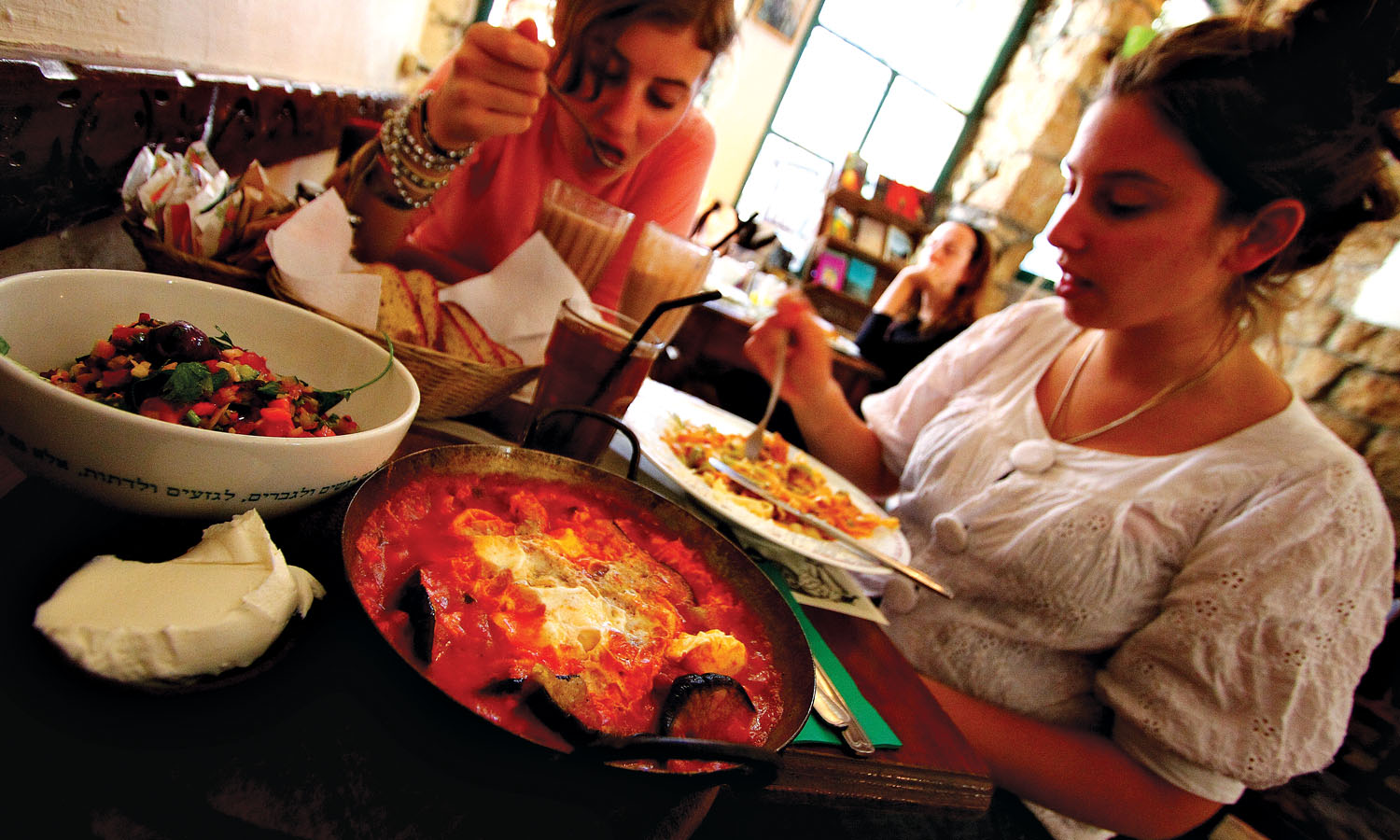
In terms of hot breakfasts, one local favourite is shakshuka – a tomato, onion, chilli and capsicum casserole, served in the pan in which it’s cooked with an egg cracked on top. This rich Israeli version of baked eggs can also feature eggplant, goats’ cheese or other creative additions.
All things sugar and spice
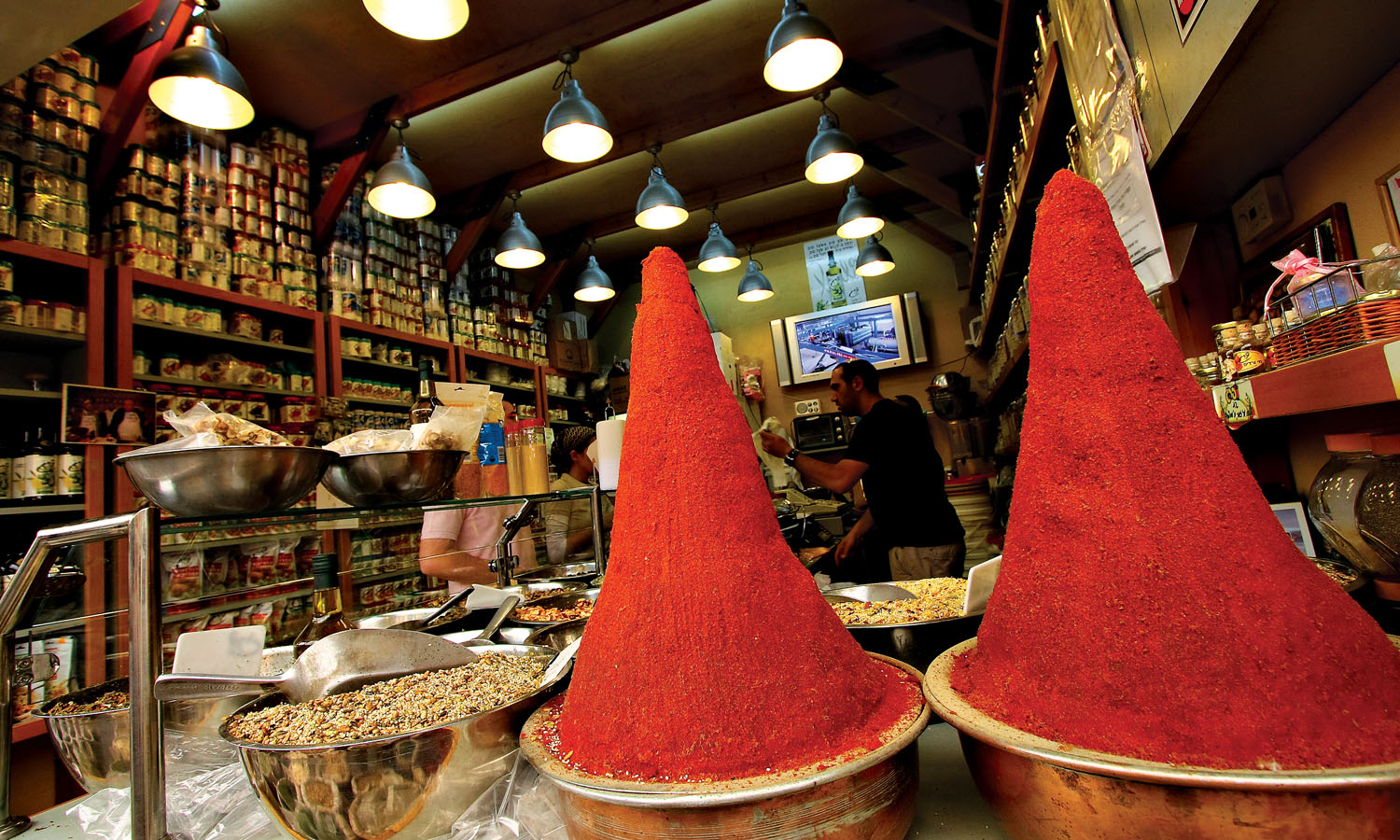
Wandering through the Arab markets in the Old City of Jerusalem’s Muslim quarter, it is almost impossible not to be seduced by the syrupy pastries generically known as baklava. Beware the sweet aromas of knaffe, a cheese-filled syrup-drenched slice of sugary heaven. Explore the central Jerusalem market of Machane Yehuda and you will be drawn to sticky chocolate rugelach (croissant-like pastries), halva by the kilo and troughs of dates, dried fruit and nuts.
Snack time
Snacking is an important aspect of the Israeli diet and the country is well served by an endless array of brightly packaged junk food. Bissli are oily, MSG-laden fried chip-like things made from wheat, whereas Bamba is a ubiquitous peanut-based substance resembling disposable packing beans. An army of palm oil-soaked wafers covered in chocolate is available at every turn and hazelnut-rich chocolate is another snack-food staple.
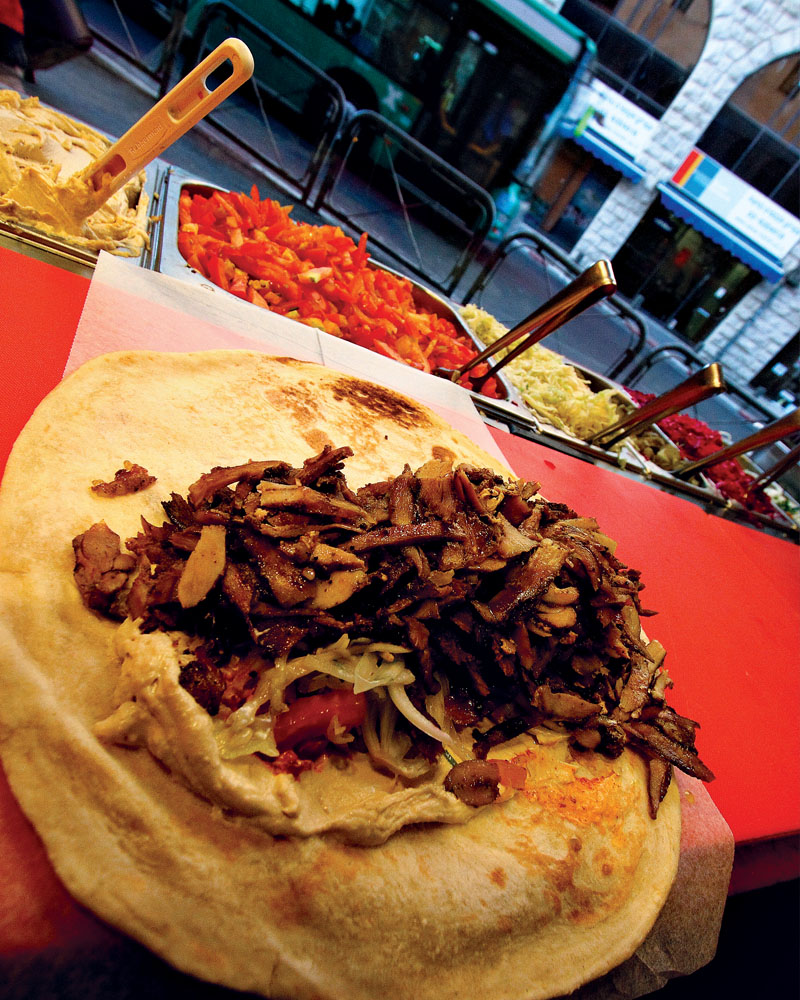
If you have any appetite left after all this, you can’t leave Israel without trying a shawarma – what Australians would refer to as a kebab. Wherever you are in the country, from Akko in the north to Eilat in the extreme south, you’ll never be too far from a shawarma (which come with felafel for vegetarians). Debates still rage over where you’ll find the best examples, but HaShamen (The Fat One) on Ben Zakai Street in Jerusalem has incredibly succulent shawarma. Ask for one in laffa, a huge chunk of spongy bread with far greater capacity than a pita, and you’re guaranteed to be well satisfied.
Le’Chaim!
Alcohol is generally consumed in moderation in Israel and, at least by Australian standards, is relatively expensive. Nonetheless, there’s no shortage of tipple on offer when out and about. All your favourite cocktails share the bar with the full gamut of spirits and an acceptable selection of beer. Unfortunately, neither of the local varieties of beer, Maccabee and Goldstar, are particularly exciting – out of the two, my advice is to stick to the tolerable, malty Goldstar. The only Palestinian beer, Taybeh, is definitely worth a try, and is gaining popularity as the best of the bunch in this competitive corner of the Middle East.
Locally favoured spirits include Sabra, an Armenian brandy distilled from the prickly pear (also a nickname for an Israeli – spiky on the outside, soft on the inside) and arak, the aniseed-spiced liquor. Your best soft drink option is the mint-infused lemonade known as limonana, a refreshing homemade glass of which is commonplace around the country. Another sweet local beverage is the pink concoction of grapefruit and lemon juice available in trendier West Jerusalem hummus joints.
Hot drinks tend to be a choice between mint tea (a bag of black tea swimming in a forest of freshly picked mint) and one of four types of coffee. If you need a caffeine fix in Israel, you’ll need to be specific: ‘nes’ is instant coffee, usually Nescafe; ‘turki’ is thick, strong Turkish coffee boiled on the stove a few times; and ‘botz’ (‘mud’ in English) is the fine Turkish grind stirred into a glass of boiling water.
Espresso coffee, while available, isn’t always such a good option. For those who prefer their hot drinks without a sizeable lashing of caffeine, there’s always sahlab. This rosewater-infused, thin white porridge is distinctively Israeli. More of a dessert than a drink, it’s sometimes topped with coconut and is the best way to warm your soul late on a winter’s night.
Get Eating
If you arrive at Akermawi at 4:00am, you might have to elbow your way past the Palestinian workers for your bowl of hummus. Otherwise, turn up before 1:00pm and you’re in for a real treat.
Akermawi
Corner Musrara Street and Sultan Suleiman Street, East Jerusalem.
Get Cooking New Israeli Food, by Janna Gur, profiles the state of the plate in the Holy Land and is packed with ripper recipes to bring the experience home. It does weigh two kilograms, but it’s a lot easier to get through customs than a shawarma.
Get Drinking
There are plenty of cool bars in Israel. Yellow Submarine is one Jerusalem joint with an alternative crowd and the kind of live music that’s likely to leave a lasting impression.
Yellow Submarine
13 Erkevim Street, Industrial Area,
Talpiyot, Jerusalem. yellowsubmarine.org.il/en
Squash seven million people into a mere 1104 square kilometres (yes, that’s 22,000 people per square kilometre) and you have the fourth densest conurbation on the planet. So how is it exactly that a city resembling a bundle of chopsticks up-ended in an eggcup has a great outdoors?
Contrary to popular opinion, behind Hong Kong’s neon-lit skyscraper skyline, the monotony of high-rise apartment blocks and an overdose of air-conditioned malls there is a substantial chunk of nature waiting to be discovered. In fact, nearly 40 per cent of the region of Hong Kong, or 415 square kilometres, is designated country park or nature reserve.
Those willing to veer away from the main built-up areas of Hong Kong Island, Kowloon Peninsula and the New Territories will witness the urban terrain morphing into the kind of natural habitat befitting of an archipelago just south of the Tropic of Cancer. What’s more, even the most remote areas offer a taste of Hong Kong’s history and culture at no extra cost.
Walking & Hiking
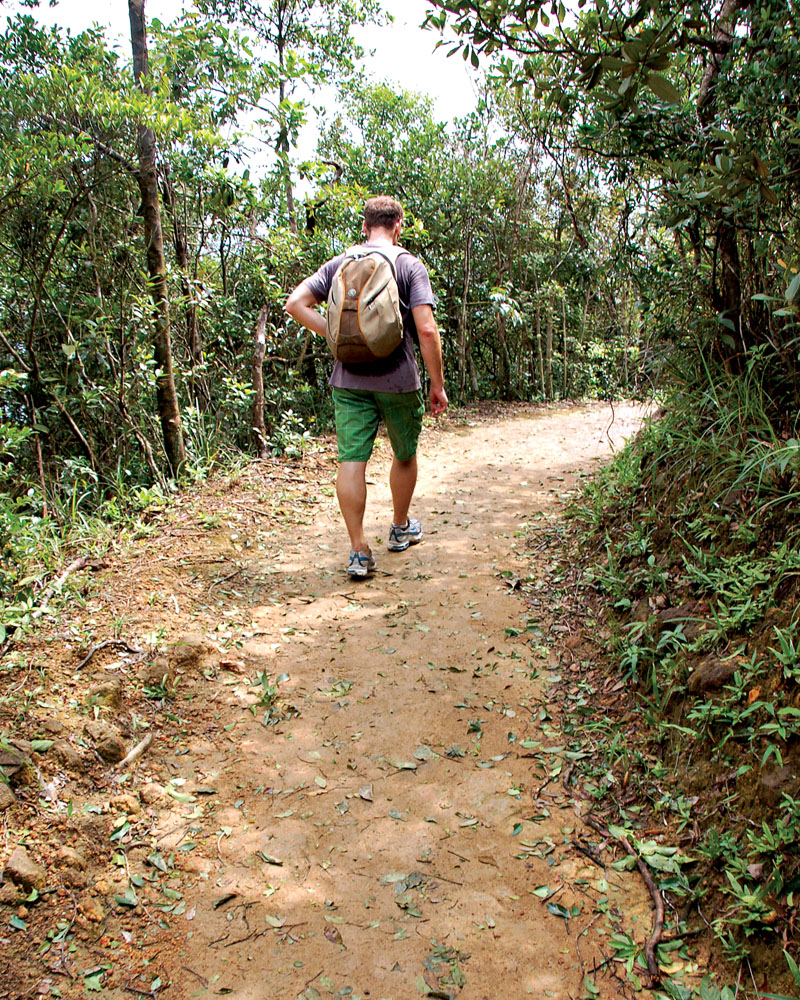
The MacLehose trail, stretching a hundred kilometres across the New Territories, is the antithesis of what you would expect to find in a city where leather-soled work shoes and Jimmy Choos are more common than trainers. Named after Crawford Murray MacLehose, Hong Kong’s longest-serving governor and a keen hiker, the trail traverses beaches, scrubby bush escarpments, local villages and mountains including Tai Mo Shan, Hong Kong’s highest peak. In the months leading up to November, Hong Kongers kitted out in the latest hiking gear infiltrate the winding dirt path to train for one of the city’s biggest outdoor events, the Trailwalker, where participants attempt to complete the 100-kilometre trail within 48 hours.
Given that the trail was formerly used as a training run for Gurkha soldiers, completion of the Trailwalker is no mean feat, and tales abound of over-zealous competitors giving up the ghost in the first 15 kilometres. If that deters you somewhat, Hong Kong’s other major walks – the Wilson (78 kilometres), Lantau (70 kilometres) and Hong Kong (50 kilometres) – are shorter but equally scenic. All four trails, the MacLehose included, have been divided into smaller sections so that the more sedate among us can pick and choose how hard and how far we walk.
The start of the Hong Kong trail, with its show-stopping view of the city, is one of the easiest segments and one of the most impressive, given its proximity to the city centre. It starts mere metres from one of Hong Kong Island’s busiest tourist destinations, the upper terminal of the Peak Tram. Visitors can sidestep the throngs of snap-happy mainland tourists and follow the Peak Circuit signs for a nature-lovers’ walk along a tree-hugging footpath, with interpretive signs detailing the local flora and fauna.
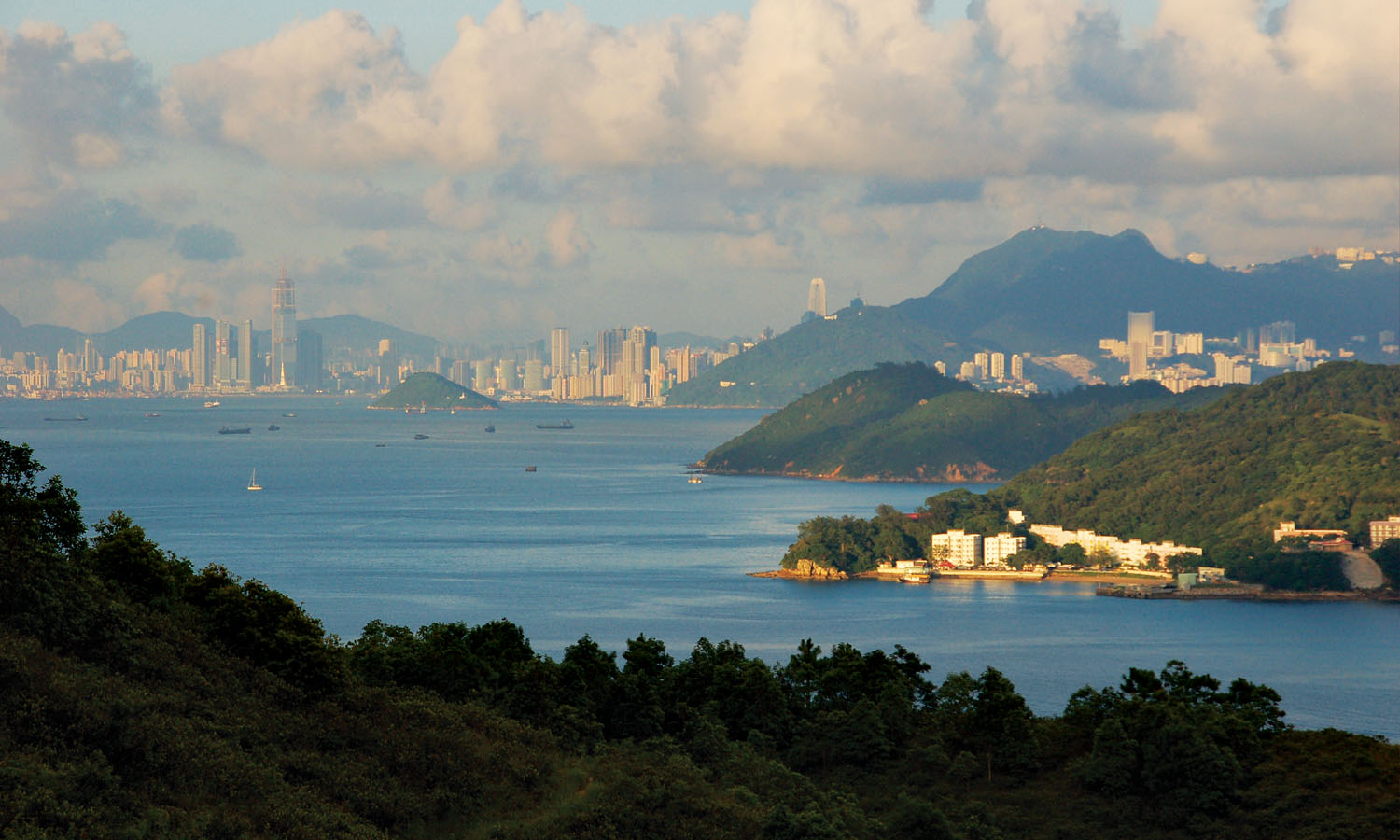
The Hong Kong trail views are nothing short of spectacular. Towards the southwest, the watery expanse of ocean is dotted with cargo ships, docked before making their way up the Pearl River Delta to mainland China. In the other direction, the skyscrapers rise almost as high as the Peak Circuit itself. The most prominent edifice is the 2IFC, tickling the clouds at 415 metres.
The views don’t abate as the trail continues. At the other end of the Hong Kong trail is the eight-kilometre Dragon’s Back, so called because it extends along the undulating ridge of a mountain range. It has been dubbed one of the world’s best urban hikes. Hong Kong’s only Aussie Rules club uses the route for training, but if this sounds like it could generate more sweat than enjoyment, three hours is probably time enough to take it in your stride. At the peak of the trail, walkers have a bird’s eye view of Shek O Beach on one side and Clearwater Bay on the other, before the trail descends through a canopied path to end in the back alleyways of Big Wave Bay.
Beach Bumming
Did somebody mention Shek O and Big Wave Bay? For a region with 260 outlying islands you’d want to hope there are plenty of beaches worth bumming on. Hong Kong doesn’t disappoint. Shek O and Big Wave Bay are two of the nicest and most accessible – a short ride in one of Hong Kong Island’s cheap red taxis will get you there in half an hour. The laidback beach of Shek O is one of 41 Hong Kong beaches fastidiously staffed with lifeguards and secured with a shark net. It is also a hangout for boardshort-clad Hong Kongers who have shed the shirt and tie for some leisure time. The easygoing atmosphere of the local seaside village, with its maze of meandering alleyways, makes it the perfect spot for a post-swim beer or bowl of Thai-Canto noodles.
Around the next bend is Big Wave Bay, which shares a reputation for good water quality with Shek O but wins hands down when it comes to swell – especially when a typhoon is imminent. (Hong Kong is geographically located in an area known as Typhoon Alley.) When a signal eight typhoon flag is raised, schools, public transport, government departments, offices and even the stockmarket close down. Sane folk usually head home to batten down the hatches but eager surfers, waveboarders and bodysurfers make a beeline for the beach and a chance to catch the kind of waves you would expect in Hawaii.
On calmer days village shops in Big Wave rent surfboards and there’s a beachfront cafe that provides the ideal spot to watch the waves roll in. A short walk across the white sands to the rocky peninsula reveals 3000-year-old Bronze Age rock carvings laboriously chiselled into the stone. The carvings symbolise the ancient gods and tribal totems of Hong Kong’s earliest settlers, who relied on the sea for their livelihood. Similar carvings, some dating back to Neolithic times, can be found on nine of Hong Kong’s outlying islands.
Hong Kong beaches tend to improve the further afield you go. The half-hour ferry from Central on Hong Kong Island to Lantau Island stops in Mui Wo, where Silvermine Bay Beach has pristine water and plenty of restaurants to satiate an appetite for Western fare. Better still, for a measly few dollars punters can jump in a cab and head to Pui O Beach. The palm trees send shadows across the white sand and give this strip of beach its tropical-island ambience. If it weren’t for the herd of water buffalo and the incense emanating from the little temple amid the trees, you would be forgiven for thinking you were in Fiji.
Pui O has a campsite for anyone keen on a weekend getaway, and those with more time on their hands can drop into Po Lin Monastery. The monastery, atop a hill overlooking the South China Sea, is the home of Tian Tan, at higher than 30 metres, one of the world’s tallest seated bronze Buddhas. It got pipped for title in 2007, but that doesn’t undermine its stature – some people swear they can see it from as far away as Macau on a clear day.
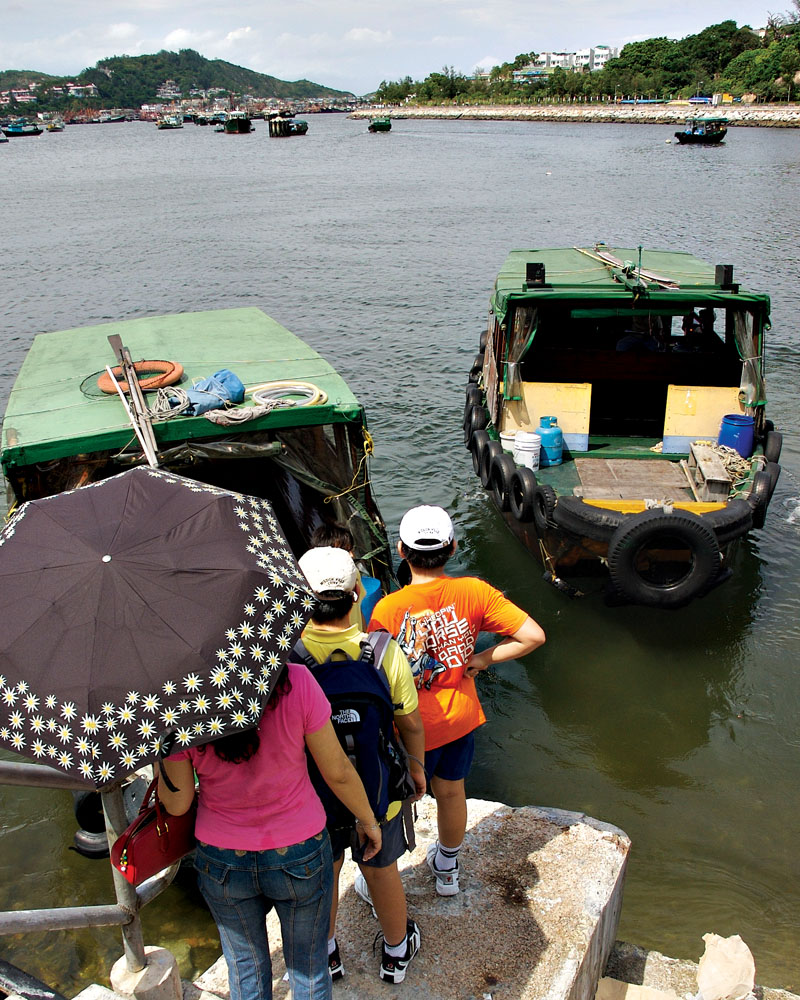
Further still from Hong Kong, but equally worthy, is Sai Kung town in the eastern part of the New Territories. From this laidback little township, old-fashioned Chinese sampans ferry daytrippers to Hap Mun Bay, Hebe Haven, Trio Beach and a number of deserted islands dotted in between. Flotillas of sailing boats, unspoiled beaches and clear water make this one of the most scenic destinations in Hong Kong.
But perhaps the real beauty of this excursion is the opportunity to top off a hard day on the beach with a delicious local dining experience. Along the promenade in Sai Kung, outdoor restaurants with lazy susan-style tables specialise in seafood, the likes of which you might not have seen before. Each venue has dozens of bubbling tanks crawling with fish, crustaceans and other denizens of the deep. Be warned, it’s not for vegans or the faint-hearted. Diners eyeball their selected catch then discuss in stilted Cantonese how they want it cooked. Before you can bat an eyelid it gets whisked from the tank. Within fifteen minutes it’s on the dinner plate.
Camping Crusoe-style
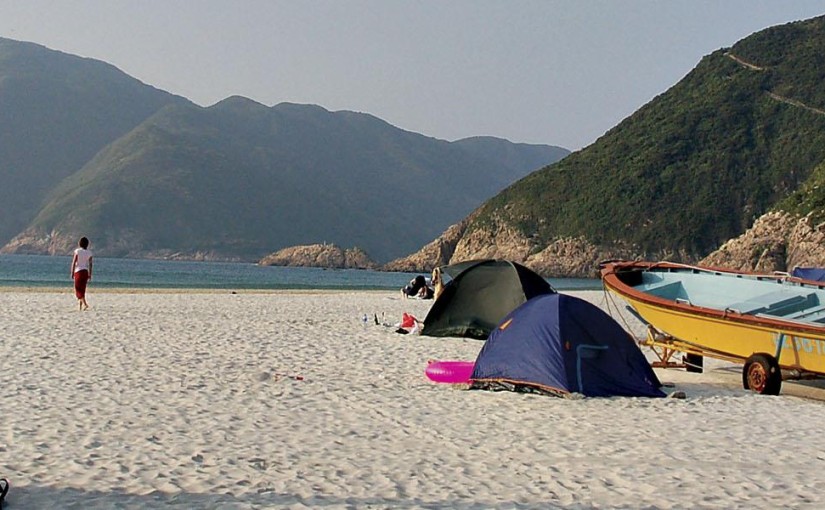
Tell a city local that you are going camping for the weekend and they will likely scoff at you. In fact, Hong Kong has 39 designated campsites, not to mention a handful of places where rough camping is an option. The ‘easy’ designated sites for beginner campers have mod cons such as barbecue pits, running water and toilet blocks, while the ‘experienced’ sites might require a bit of legwork. Chances are if you hike in you’ll have the whole campsite, not to mention an entire white sandy beach, to yourself, Robinson Crusoe-style.
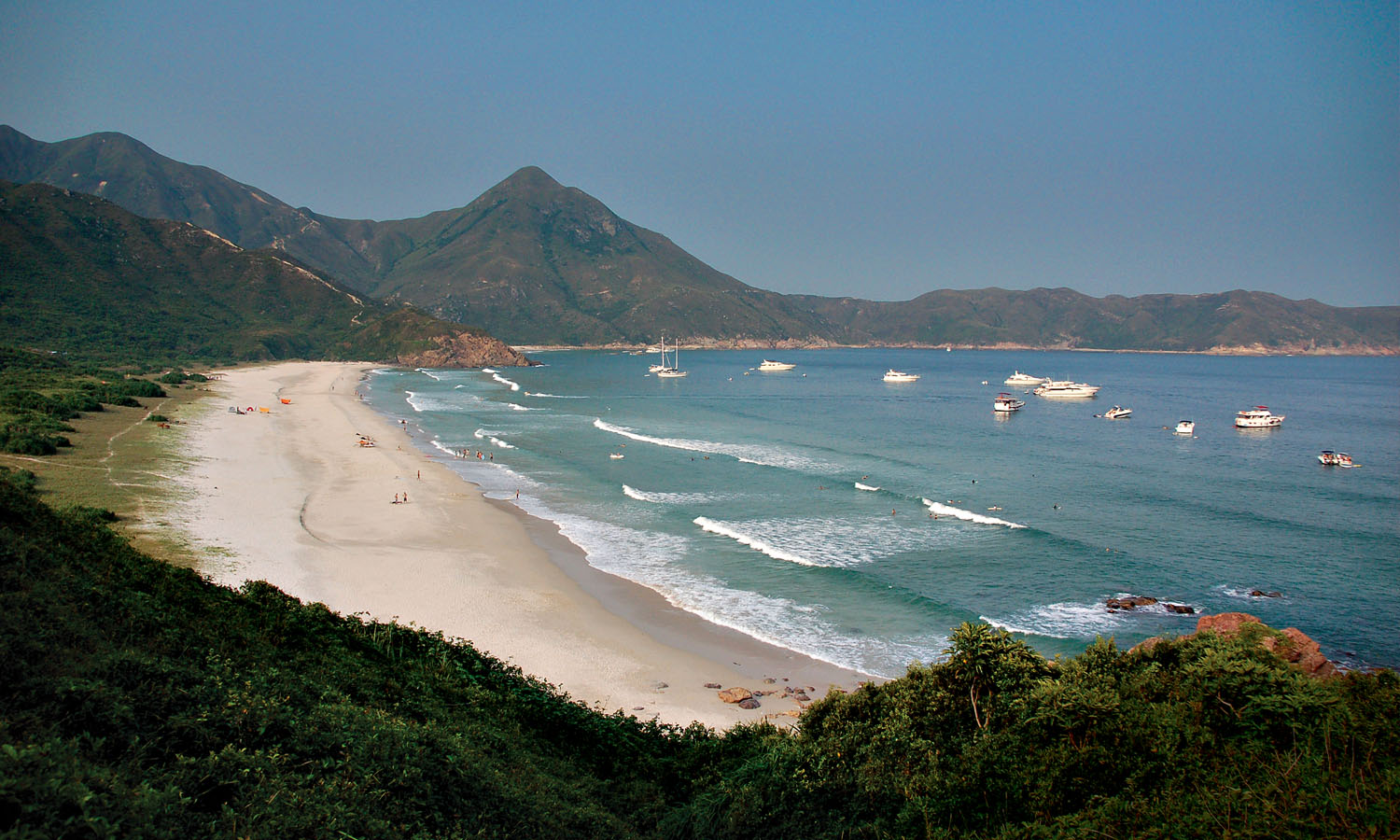
If a tent isn’t high on your list of things to pack (and carry), you needn’t despair. Hong Kong’s most adventurous rough campsite requires little more than insect repellent, sunscreen and a good book. Head to Tai Long Wan, one of Sai Kung Peninsula’s natural wonders, and trek from there to the local campground where tents, camping mats and sleeping bags are all available onsite.
One of the few villages on this expansive natural reserve is Ham Tin, a tiny town in the scrubland. In the 1950s Ham Tin had a thriving population, but lack of transport, communication infrastructure and education saw the younger generation depart for the urban areas of Hong Kong or to foreign lands. Today, the village is almost deserted save for the few villagers who occupy a cluster of pre-war houses and the handful of tourists who can be bothered making the journey. From the village cafe’s shady tables, campers can feast on noodles and fried rice or sip on a cool beer with a view to their tent pitched right on the beautiful white sandy beach. Ten minutes over the next hill, the gentle swell is ideally suited to surfers getting their sea legs – no need to wait for a typhoon.
Watersports
Hong Kong has only ever won one Olympic gold medal and it wasn’t for table tennis or badminton. At the 1996 Atlanta Olympics Lee Lai-Shan from Cheung Chau Island took home the gold medal for windsurfing, becoming one of the city’s few sporting celebs. Twelve years on and the golden sheen of her sporting prowess has not dimmed. With just the right bay wind conditions, Cheung Chau, Hong Kong’s largest fishing island, is regarded as the place to windsurf. Lai-Shan’s family run a cafe on Tung Wan Beach, a serene little bay where you can hire kayaks, rowing boats, windsurfers, umbrellas and deck chairs or book in for a windsurfing lesson.
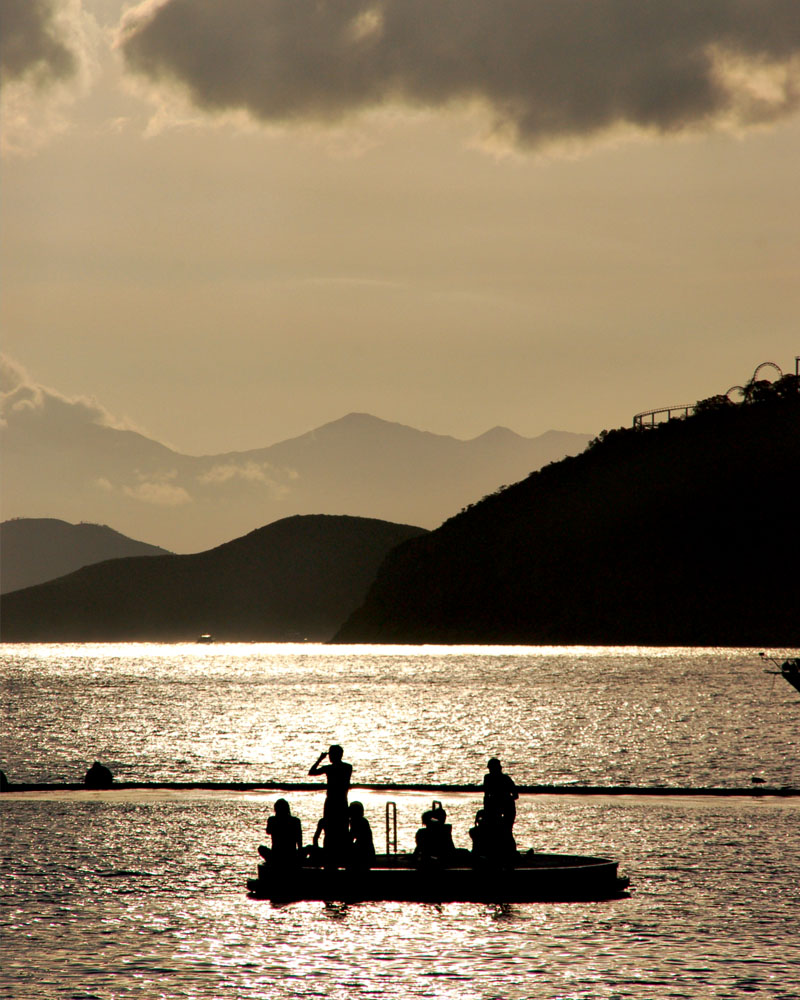
For those who prefer wakeboarding or waterskiing, there’s no shortage of options. The ideal way to get involved is to combine the activities with a junk, one of Hong Kong’s timeless social institutions and a form of networking par excellence. It is basically a daytrip out among the islands on a fully catered boat with staff oh-so-eager to top you up with cold beer all day. Though the name derives from the Chinese sailing vessels that originated in the Han Dynasty, today’s junks are motor-powered with a contemporary fit-out. Even so, the sight of these huge wood-hulled boats cruising the waters around Hong Kong still harks nostalgically back to a time when real junks, with sails aloft, could be seen on Victoria Harbour. Junk daytrips may require a very organised friend with the nous to book a boat, send out the requisite email and collect cash on a per-head basis. Most of these daytrips involve putting down anchor in the middle of nowhere and lapping up the scenery. Those skyscrapers couldn’t be further away.
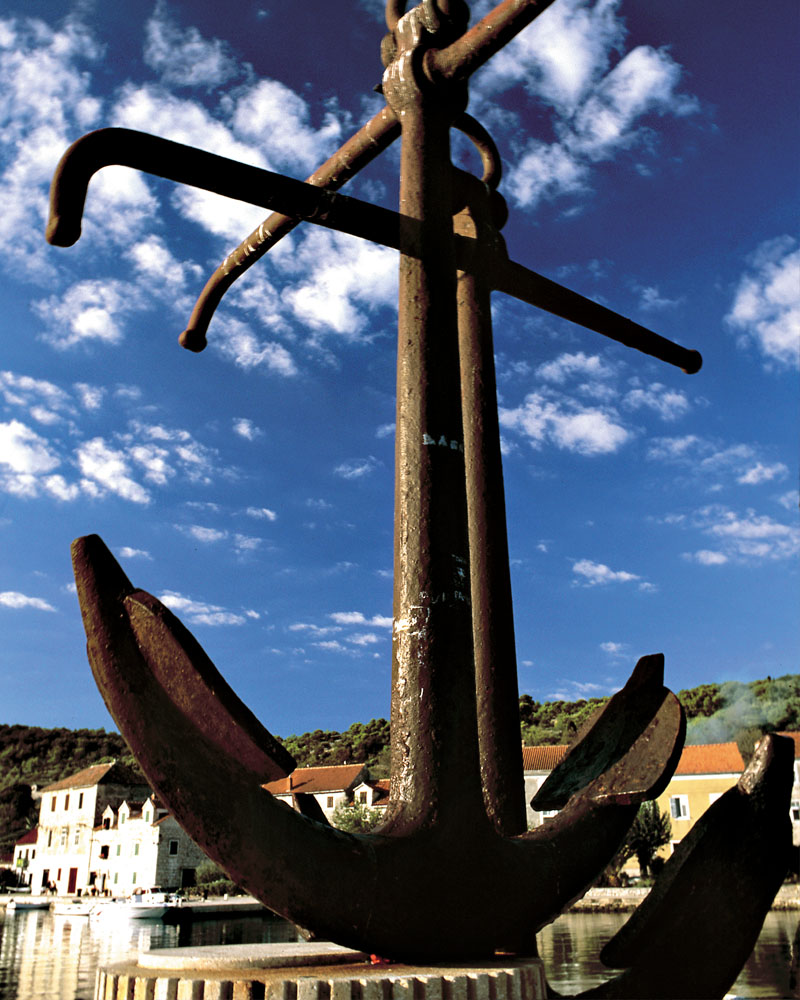
Following a bus ride through the darkness from our pick up point in Split, we arrived at Betina Marina on Murter Island. This was where my life as a deckhand was to begin. From the moment I set foot on Stella, the yacht that was to be my home for the next week, I should have known I was in for a rough ride. A violent storm immediately whipped up and I had visions of being sucked into the Adriatic Sea, dashed against rocks and swallowed by a whale, along with every other calamity imaginable for a committed land-lover like myself.
Stella is a great name for a woman. For a boat, I’m not so sure. One look inside the hold and I had the sneaking suspicion that my week was going to be far from stellar. They couldn’t really name a boat ‘Cramped and Small’ though, eh? Actually, small doesn’t really do it justice. It doesn’t really express the sheer lack of space I had for clothes, food, books and my massive backpack full of glam sailing gear. ‘Bijou and compact’ is how an estate agent might generously describe it. Never mind swinging a cat, being able to swing a sock would’ve been nice.
The kitchen was equally bijou – two cooking rings and a sink that had both kinds of water, fresh and sea. All the mod cons then. But rather than having a sign warning Danger Salt Water, the experienced crew waited until unsuspecting and overtired guests boiled up a cup of delightful seawater mixed with diesel and harbour debris. After drinking some, I understood why so many people get seasick on their maiden voyage. It took all my powers of concentration to stop myself vomiting on the spot.
Continuing my tour of Stella’s bowels, the captain gave me a quick lesson in how to pump water in and out of the toilet. The nearest I was going to get to an en suite bathroom on this voyage was a dip in the surrounding sea. A rather unpleasant surprise was that I had to share these waters with a naked Austrian, several pot-bellied Hungarian men, jellyfish – poisonous for all I knew – and the occasional frisky dolphin. Somewhere inside my head a tiny voice was telling me this wasn’t such a good idea after all.
Unfortunately that voice couldn’t be heard above the sound of my fellow travellers, a group of posh English girls. They ensured breakfasts were a noisy affair, full of Hello!-style gossip about Prada bags and shagging celebrities, interspersed with the whistling of the ship’s kettle. All notions of losing weight were also abandoned on day one as the ship’s captain fed us regular doses of large sugary Croatian pastries, surprisingly good at soaking up the night’s alcohol.
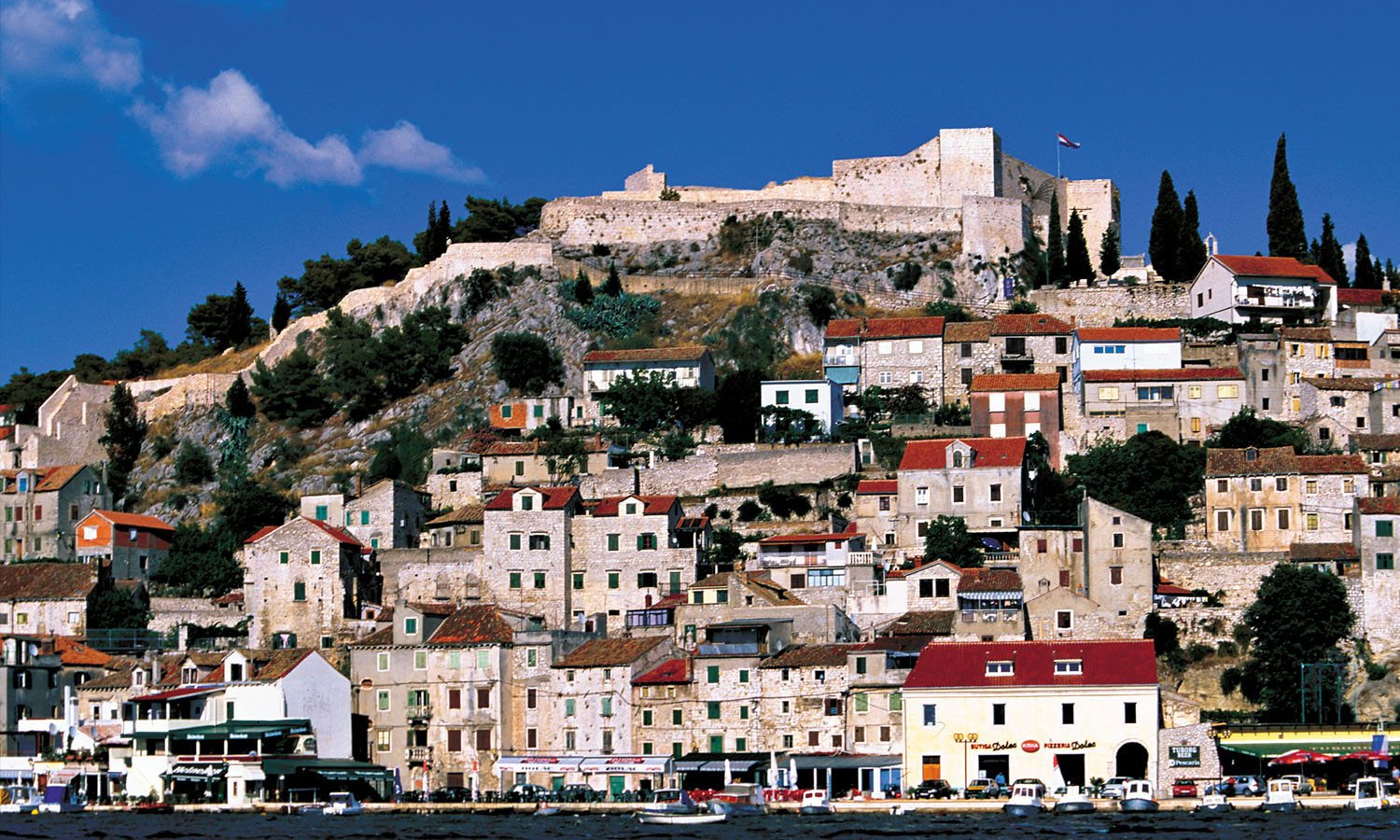
Despite there being 1185 islands and islets along the Dalmatian coast, only 66 islands are inhabited. Even with excellent maps and years of sailing experience, it can be difficult to tell one island from another. From Murter Island, our training route would take us through Sibenik and Kaninska. The town of Murter itself, one of three townships on the island, is a beautiful and relaxed locale of 750 inhabitants. Each such island settlement has a picture-postcard market square with dramatic statues of famous Croats doing famous Croatian things. Old ladies tend to huddle around them, selling onions and long strings of garlic. Artisan work and unusual shell souvenirs can also be purchased. My favourite stalls sold handmade bowls, crazy rock statues and idyllic island paintings.
As the weather on the first morning was bad, we took the opportunity to learn how to drive our little tub: parallel parking, three-point turns in the harbour, that sort of thing. To make life a little more interesting, our teacher Gary – who’d no doubt describe himself as ‘fun-loving’ – decided I should practise this next to the most expensive yachts in Murter’s port.
Throw into the mix some heavy rush-hour harbour traffic, stormy conditions, an inexperienced crew and a nauseous novice behind the wheel and you’ll understand the looks of sheer terror on the faces of the multi-millionaire skippers as I inexpertly reversed backwards, noisily crunching gears and narrowly missing their precious and immaculate million-dollar boats. I suspect that it was only my sparkly bikini that saved me from the onslaught of “women simply shouldn’t be allowed to drive boats or sail them for that matter”.
Next came hoisting the sails. This may sound easy enough to you, sitting at home on your sofa, reading this with a nice glass of red wine in one hand. However, this actually requires a nine-point set of manoeuvres, undertaken with military precision to avoid having the things drooping all over the crew. First, I battened down all the hatches – it always seems to work in the movies – and checked the head winds. I didn’t really know what I was doing but, giving a good impression that I did, I released the sail ties and pulled up the main sail by the halyard, which finally released the topping lift and tightened the kicking strap and main sheet. And crossed my fingers. And it worked. It must’ve been the fingers that did it.
After a swig of gin (we didn’t have any rum), I managed to sail to the next island along the coast with my crew tacking all the way. I started feeling like I was born for this sailing stuff after all. Being from an island race, there must be some salt in my blood somewhere? Instead of acknowledging the brilliance of Juliet the Salty Sea Dog, Gary, our long-suffering teacher, simply thought we were a group of lushes tucking into the grog so early in the morning. He probably had lots of interesting ideas about what to do with drunken lady sailors, but luckily for us there are no breathalysers on the open sea and walking the plank is no longer in vogue.
On our second day at sea, we sailed past Vodice and a Venetian fort, built in 1433 to protect the Croatians from pirates such as Guiskard. As my sailing improved, I discovered that distances on maps that would take just an hour by car take you all day to sail. And that’s assuming poor navigation doesn’t steer you on a massive detour. This can happen with no land in sight and only the endless open sea for guidance.
Days three and four were spent in Skradin port and Krka National Park, famed for its seven stepped waterfalls and 860 species and subspecies of plants. After climbing to the top of this gorgeous spot, I was rewarded by a swim in the pool at the bottom of the waterfalls. Croatians claim that the pool is full of mineral properties that are excellent for the skin and will make even the most sea-battered faces look smooth again. It certainly helped untangle my knotted, salty hair and, after a couple of hours swimming, I felt like I’d been through a body, mind and soul makeover. After a quick picnic of slabs of fresh home-baked bread stuffed full of the catch of the day, we retrieved the boat’s harbour documents and paid the nightly docking fee before heading out to another island and another day on the water.
By the end of the week I had adjusted to sea life and I even found myself swaying when we made dry land. Everything away from Stella seemed huge by comparison, even the smallest bijou restaurants we discovered in the harbour. I was converted and having sampled only a few of Croatia’s islands, I had a feeling I would be back. The attraction of running away to sea was evident: waking up every day and being able to discover new places by simply going where the wind takes you.
In a destination that has a reputation as a honeymoon hot spot, it came as quite a surprise to learn there was a cave called the Hidden Vagina right next to the little runway that our twin-prop bug basher had bounced down upon earlier that afternoon.
But the Cook Islands are full of surprises, particularly the outer isles. They’re full of caves too as it turns out, many of which are, in turn, full of dead bodies. Again, not what I’d expected from a love-by-the-lagoon-style luxury location. But I haven’t come here with a new wife – or any wife for that matter – and I like surprises.
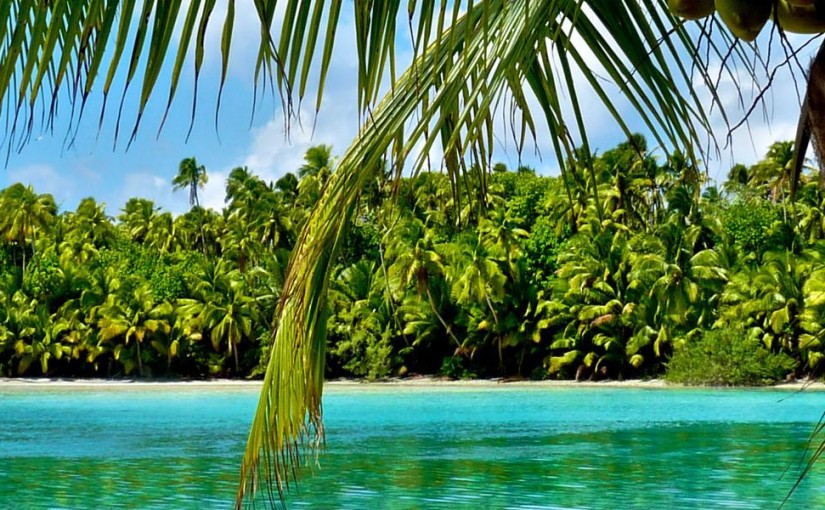
Gilt-edged by beaches and fringed with coconut trees, Rarotonga – the main island of the scattered group of 15 that make up the Cooks – is ringed by a coral reef that provokes breakers on one side and protects a placid lagoon on the other. It’s the epitome of a tropical island.
Aitutaki, the second-most-visited island in the group, is arguably even more breathtaking, with its ridiculously idyllic lagoon. Tony Wheeler – founding father of Lonely Planet – recently spruiked it as “the world’s most beautiful island”.
But if you’re looking for an experience that goes beyond beaches and doesn’t involve hanging with honeymooners, the outer islands offer a taste of the Cooks which, like a bowl of ika mata (fish salad), is all the better for being raw.
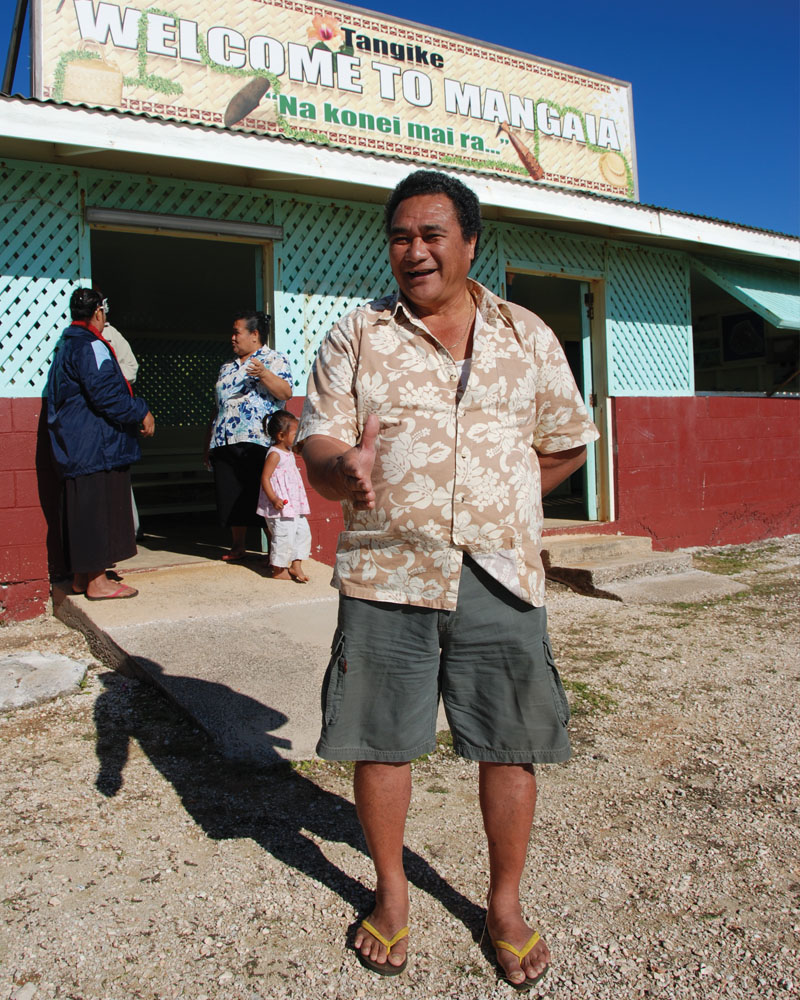
So little-visited is the island of Mangaia, that the island’s mayor turns up to welcome us at the airport, and later I’m told the chief of police has taken the next morning off to accompany me fishing.
Actually, I get it from good authority (everyone else I meet from the island’s 700-strong population) that Aerenga Matapo – the more senior of Mangaia’s two policemen – spends most of his mornings fishing. But then, what else would he do?
“We did have a prisoner here for a while,” recalls Aerenga, proudly. “We haven’t got a jail though, so we got him to do hard labour, cutting roads through the makatea.”
Mangaia is shaped like an orange juicer. The high point in the centre of the island is circled by fertile lowland, where pigs and goats graze and the ubiquitous taro plant grows. This, in turn, is looped by a raised doughnut of makatea, fossilised coral that once formed a submerged reef around Mangaia, until volcanic eruptions in Rarotonga, 177 kilometres away, raised the height of the atoll.
Like a medieval city wall, the ring of makatea stands protectively between the ocean and the three village settlements that lie in the middle of the island. Jagged makatea also defines Mangaia’s coastline, creating a surreal lunar-like landscape in parts. There are no golden beaches here, but when the tide retreats you can snorkel in natural swimming pools that are alive with trapped tropical fish.
In a culture where writing is a relatively new concept, stories are everything, and one local tale tells of how a Mangaian tradition was saved by a young man who lived among the makatea.
Rori, the hermit, fled to the coast and set up camp amid the coral after being routed in a battle. Shortly afterwards the missionaries arrived and, in the process of stamping out cannibalism, tribal war and pagan worship, also squashed many cultural traditions in the Cooks. Years later, when Rori finally rejoined society, he alone retained the island’s traditional woodcarving skills, which survive to this day.
It’s possible to visit the remains of Rori’s camp. I’m keen to go, but the island’s other policeman is the only person who can guide me there – and he’s out fishing.
Instead I tour the island in a 4WD, meeting happy gangs of local kids playing with homemade kites in the church field, listening to local legends and then, finally, exploring Mangaia’s underbelly.
The island’s makatea wall is catacombed with caves and tunnels, many of which can be explored if you know the right people. You can visit burial caves elsewhere in the Cooks – most notably on Atiu – but none of these experiences are quite like Maui Perau’s cave tour.
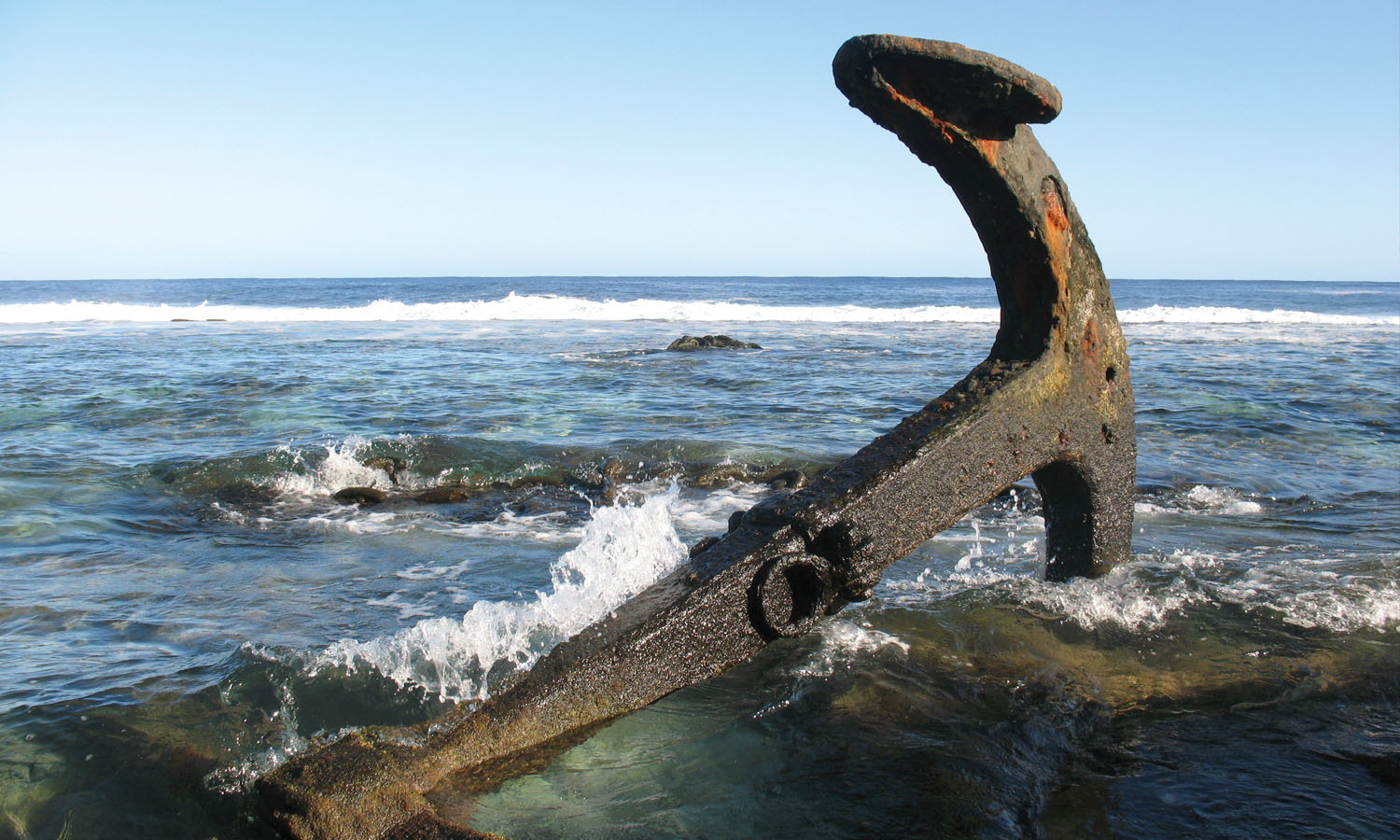
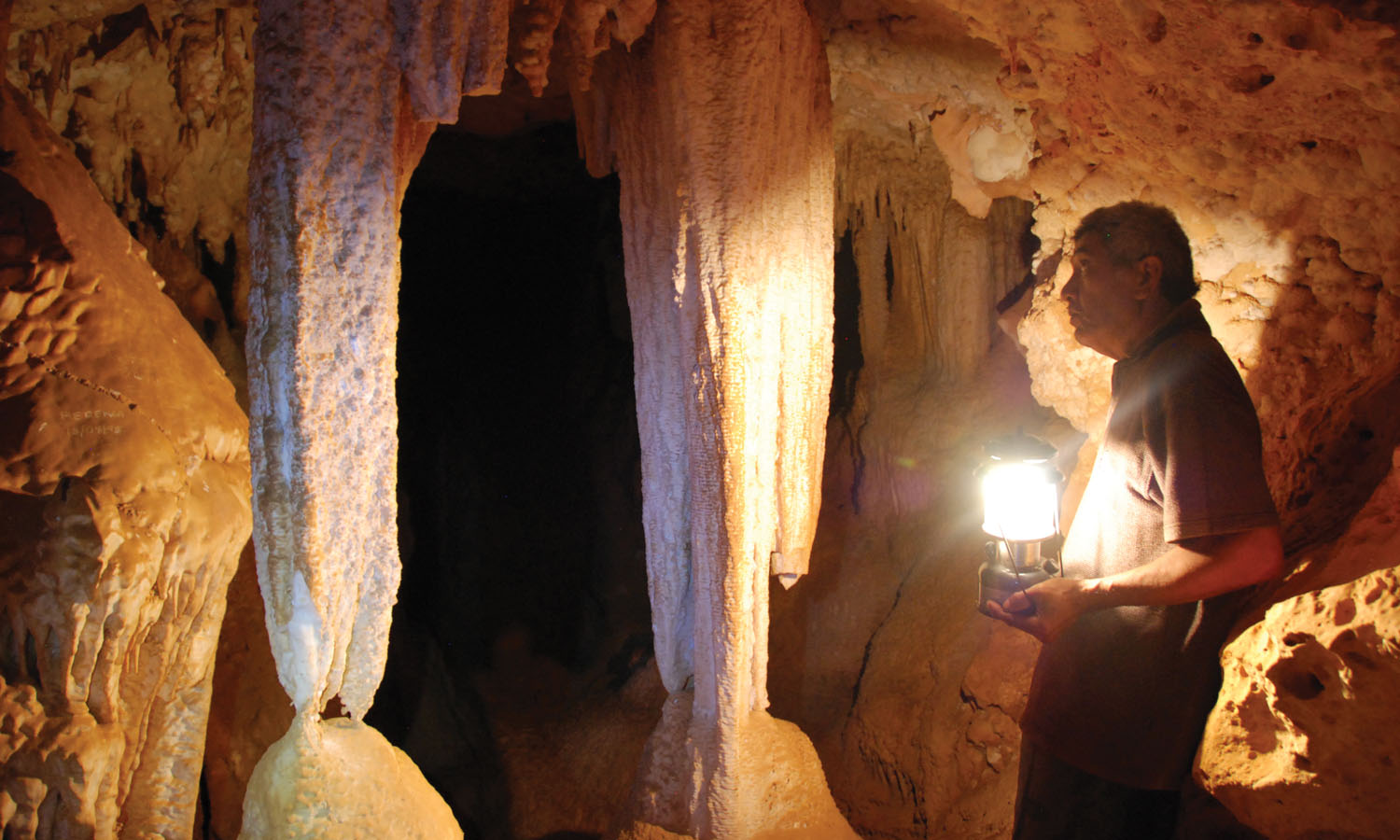
At times during this three-hour point-to-point scramble through the crust of the island, I feel like I’m going to end up as a pile of bones, just like the ones we pass at the entrance.
Only family members are allowed to show people caves on their property, and the human remains within them need to be treated with respect. Unfortunately, however, no one has told Maui this last bit.
“Hello bro!” he shouts, grabbing a skull and patting the top of its cranium. “Haven’t seen you for a while!”
In a burial cave on Atiu, I’d been told cautionary tales about terrible curses that had afflicted people who’d messed around with the bones, so Maui’s comical routine alarms me a bit. Still, they’re his ancestors.
During the journey we squeeze and climb though tortured and twisted tunnels, past shimmering walls and armies of stalactite sentries. In a nanny world, Maui’s approach to health and safety is impressively hands-off, and there are plenty of opportunities for curse-induced calamity here.
My luck holds, though, right until the very end, when, as I climb up a 10-metre banyan root to emerge back into daylight, my camera tumbles back into the jaws of the cave and explodes. Ah well. As curses go, that’s not too bad. I’m still alive.
“The sea is not happy today,” observes Aerenga when we meet on the harbour wall the next morning as arranged. He has a point. A sizeable swell agitates the harbour’s water and sets of ever-angrier waves are charging up the boat ramp with increasingly cruel intent. Maybe the curse hasn’t finished with me yet.
As we assess the situation, another fisherman appears on the ocean. He’s in a heavy wooden outrigger equipped with an outboard motor that’s the boat of choice around here – a modern variation on a theme that’s been in fashion on these islands since the vakas first brought people here. The fisherman counts the waves, picks his moment carefully and shoots into the mouth of the harbour with impeccable timing.
Aerenga chats to his mate as he helps him drag his boat to safety. The two of them shoot me a look. He’s done this a thousand times on his own, but I’m not sensing much faith in the abilities of his new crewmate. His copper’s nose can smell a non-fisherman a mile off.
Still, he’s a man of his word and we’re soon punching our way through the waves. Before leaving the safety of the reef, however, Aerenga clasps his hands together and murmurs a prayer, asking for our safe return and adding a side request for some luck with the hook and line while we’re out there.
Heading out to open ocean, I suffer a sudden pang of unexpected agoraphobia. These islands really are just peaks of submerged mountains, whose steep sides plunge to unimaginable depths just a few hundred metres from the shore. Below lies the abyss, and all around us nothing but a blanket of blue water stretching to the horizon on all sides, with the little island of Mangaia offering a solitary punctuation mark in the immensity of the Pacific.
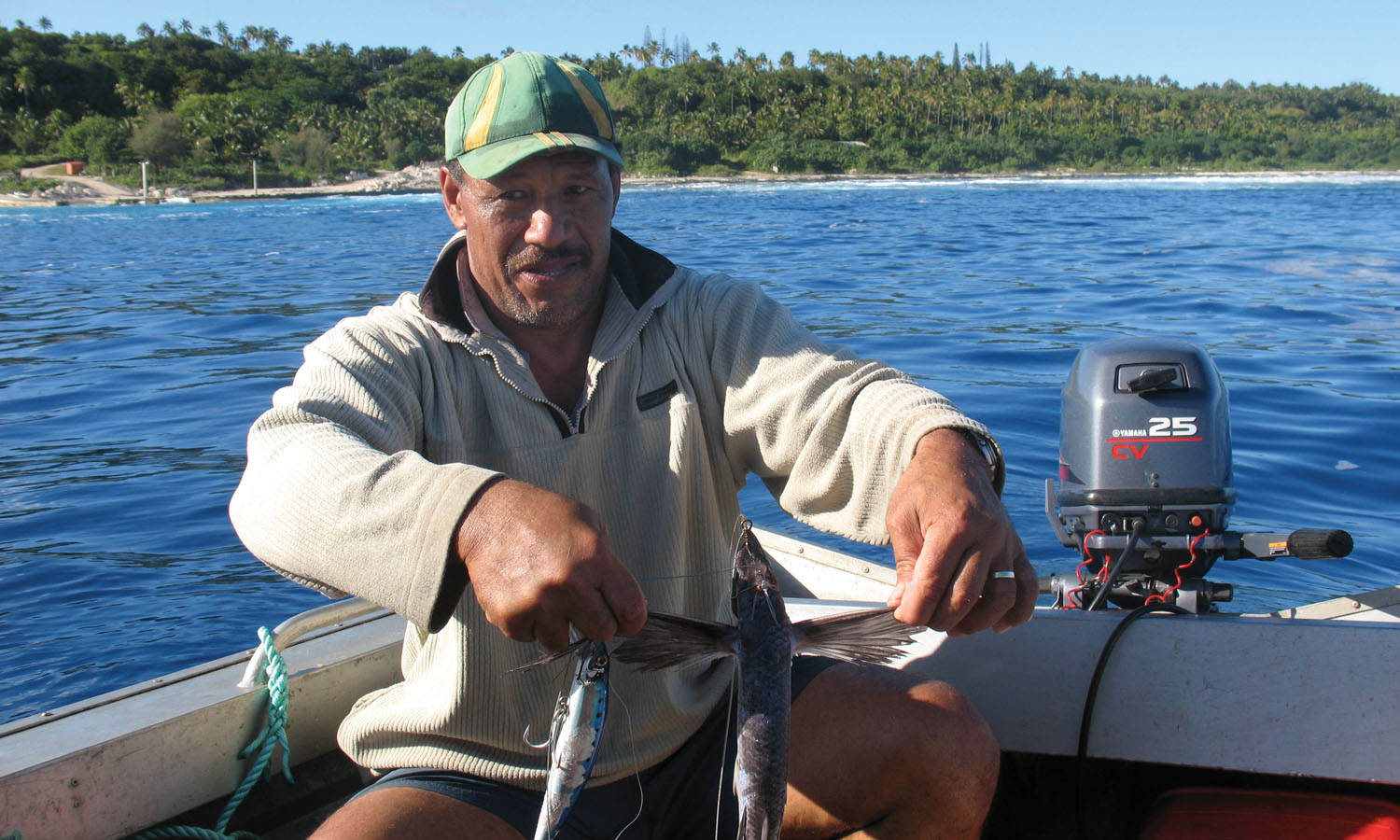
I feel a little like Jann Martel’s protagonist in The Life of Pi, but fortunately I am not adrift on the ocean with a huge angry allegorical tiger. No, Aerenga is more like a big bear. As he tells me how he once landed a 235-kilogram marlin on a handline, I notice that his toenail has been smashed to bloody bits during our launch and he’s bleeding all over the bottom of the boat. He doesn’t appear to feel it though, and gets on with the business of spearing a flying fish with a hook as big as my hand.
“What are we actually trying to catch here?” I ask, as Aerenga passes me the rod and sends the bait overboard on its last ever flight. “I heard reports in Raro that the whales are back in town, we’re not after one of them are we?” Before he has a chance to answer, my line goes tight and all hell breaks loose.
Aerenga is shouting at me from the other side of the boat and waving his arms around. Obviously he wants me to do something urgently, so I flick the first thing I see on the reel, which stops it turning instantly and snaps the heavy gauge line as though it was a piece of cotton. What can I say? I am to deep-sea fishing what Rex Hunt is to rhyming slang.
I learn fast, though, and the next time my line goes taut I correctly interpret my instructor’s excited instructions to mean: ‘Do absolutely nothing’. I reel it in and Aerenga demonstrates some truncheon-swinging skills on the unfortunate wahoo, which reveals why there is no crime problem on Mangaia during his shift.
My trophy catch is a fraction of the size of one that got away, apparently, but it’s still the biggest beast I’ve ever hauled from the ocean and I’m quietly proud of it. And at least we’ll have something to eat tonight, which is good because the mayor is coming over for dinner.
Despite the grins that welcome us back into the harbour with our fish, my relief at having provided something to put on the table for tonight soon multiplies by a million as Taoi Nooroa, Mangaia’s tourism officer, meets the boat and takes me to one of the oldest settlements on the island.
At Tangata-Tau rock shelter, Taoi shows me walls blackened from ancient cooking fires and explains how anthropologists have discovered many artefacts here, like fishhooks and the remains of 36 human beings. “It seems they were killed in this sacred place,” says Taoi. “And then cooked and eaten.”
Before our wahoo feast, I explore another cave, this time led by Clarke Mautairi, a local mechanic who is next in line to become chief of his clan. Clarke hasn’t taken anyone else here for three or four months, but he knows the honeycomb lair like the back of his oily hand. Which is lucky because, as far as anyone knows, it’s an infinite hole in the ground.
Last year Clarke and an American cave specialist walked into this cave in one direction for four hours – only turning around when their torches began to die.
At the furthest point, Clarke says, “the air was thin and the water dripping from the ceiling was salty, from the ocean.”
To this day, no one has ever been right to the end. “Maybe it doesn’t end?” says Clarke. Perhaps, but unfortunately my time on the island does.
As my plane clears Mangaia’s mud runway, I realise that I never got to explore the cave whose name provoked my schoolboy smirks when I first learnt of it. Oh well, you can only tempt a curse so far. And I’m sure my wife wouldn’t be impressed if I went and got lost in the Hidden Vagina.
The jungle around me is a perfect luminous green. The trees are covered in orchids and the undergrowth is overflowing with the vibrant colour of red and yellow heliconia flowers. There are monkeys in the trees, along with squirrels and macaws. Huge tarantulas patrol the ground and there is the constant danger of snakes. I walk on the paths singing to myself and to my puma, Yassi.
I had no idea I would be doing this. After spending a few months living at almost 4000 metres above sea level in La Paz, I really wanted to spend some time in the Amazonian jungle. After hearing incredible stories from a friend about an animal refuge that required volunteers, I took a wild and winding bus trip into Bolivia’s southeast. The animals at Parque Ambue Ari, along with the majority of workers and volunteers at the refuge, are accustomed to the Spanish language. My own grasp of Spanish is some way short of perfecto and prior to arriving at the refuge I was concerned I wouldn’t be able to communicate with the other volunteers. I feared that I would be bored and of no use to anyone. I never dreamed I would learn how to handle a wild puma with instructions in Spanish or that simple hand gestures and noises could count as understanding, such that I would be sent into a cage with a puma after a briefing that lasted 10 minutes.
Show no fear. Don’t let go. Cover your neck. When a puma jumps on you, yell “abajo”. This means ‘down’ in Spanish (and apparently in puma, too). This was the sum of the information I managed to decipher during my first day. My fears had hardly been allayed and I spent that night studying the English–Spanish dictionary for words like ‘blood’, ‘dead’, ‘help’, ‘bite’ and ‘decapitate’. Yet it seemed that my first day of induction was a success. On the second day at Parque Ambue Ari I learned I was to be in charge of three fully grown puma sisters. At six months old, they had been rescued from a poacher who had killed their mother. The volunteer who had been with them since then had left the refuge to rescue some injured monkeys and was now a good day’s travel away. With her went the only vet and permanent worker, as well as any sense of order that was to be found in this pocket of chaos.
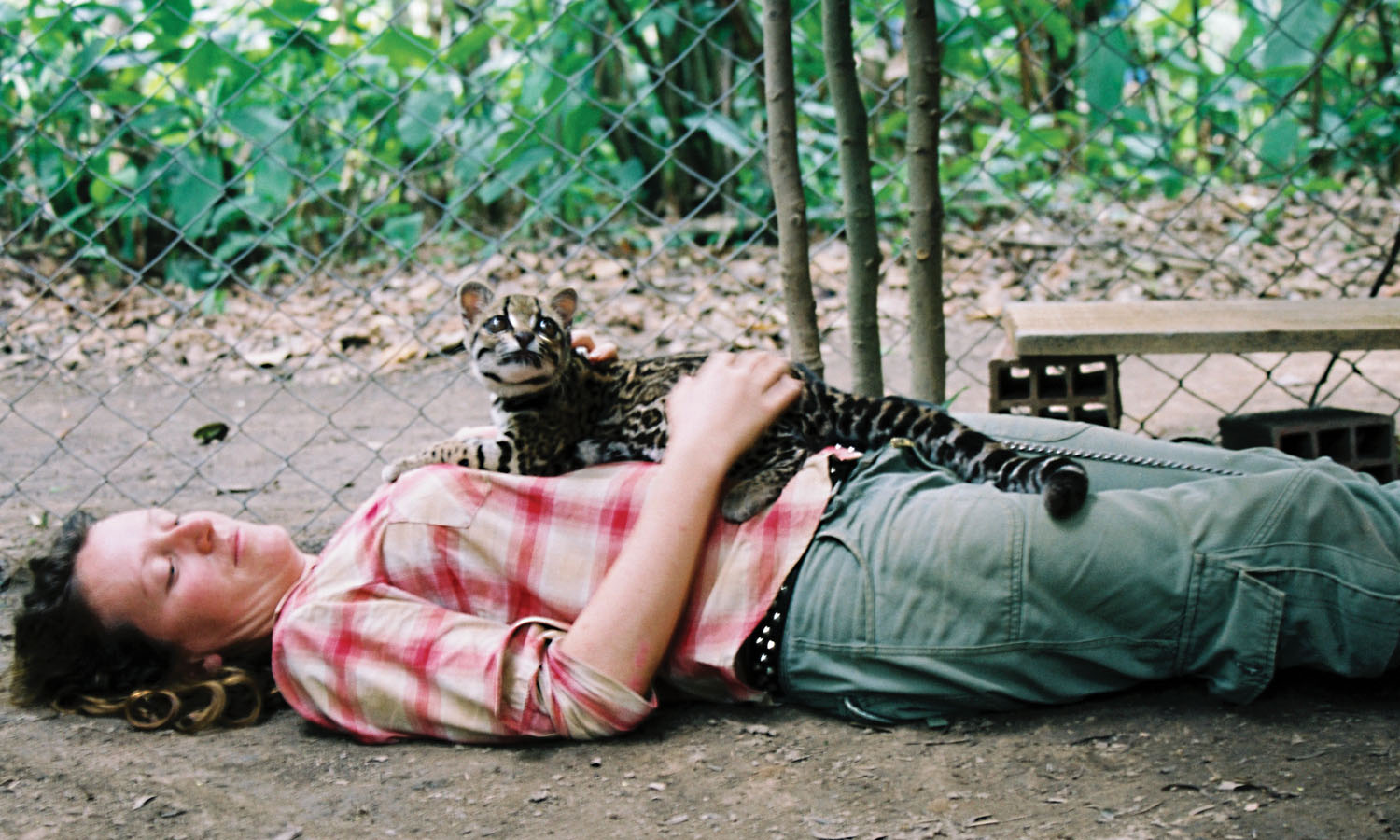
It was an interesting social study to observe how quickly our little camp turned into scenes direct from the pages of Lord of The Flies. There were struggles for power, fights over food and the constant and obvious realisation that none of us had any idea what the hell we were doing. This became apparent when five cats escaped on our first day alone in the park together. There were seven pumas in total, five ocelots and three jaguars. The 15 volunteers at the refuge also had custody of two deer, four pigs, five racoons, four monkeys, 13 macaws, four toucans, a tortoise, two huge ostrich-like birds, more than 50 small parrots, three smaller jungle cats, three orphan children, a baby giant anteater and a lone eagle. I found an unlikely peace in this environment and treasured the time spent getting up close and personal with these wild and beautiful animals.
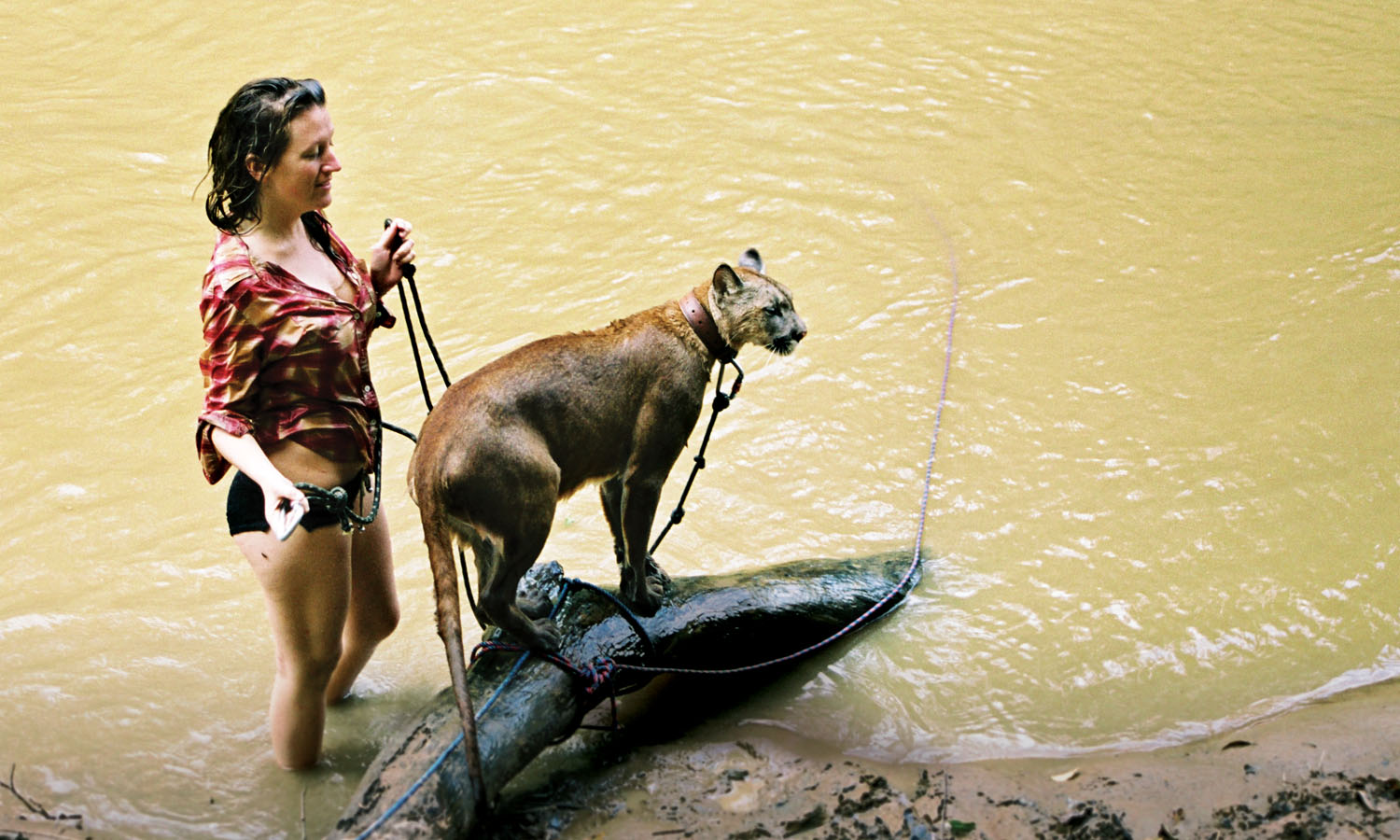
Yassi the puma really loved being sung to. ‘The Lion Sleeps Tonight’, in English, was a favourite. She’d purr as we walked, wrapping her tail around my legs and hips. She would stop to nuzzle me in the face or on the leg, not unlike a regular pet cat. She was no domestic moggy however. A three-year-old puma, she stood up to my thighs and weighed about 50 kilograms. I tried not to think too much about this. One of the secrets of walking with pumas is to never show fear and to keep the right amount of tension in your lead. If the lead becomes too slack, the puma is able to turn and jump on you. If the lead is too tight, the puma might want to run faster and take you with them.
Pumas also like to play and swim. Swimming in the river with the cats was an incredible experience. In this environment, the tables were turned. While the pumas love the water, they also fear it. They became quite timid, reliant upon my ability to reassure them that they would be alright. Once in the water, I was the boss.
Wandering along the trail on the way to give the cats a dip one morning, I stared at a flock of scarlet macaws. They were a brilliant red blaze up in the trees, chattering away, paying us no attention and enjoying a morning feast. I stopped and marvelled at these majestic birds only a couple of branches above my head. So overwhelmed was I that I completely forgot I was holding on to a puma who was eager to get in the water and who also liked brightly coloured birds. Before I knew it, she had bolted part way up the tree, sending the birds screeching and dragging me forward. In the split second before she leapt back to the ground, I was certain the cat would jump me.
Later the same day, my fear of being jumped was realised. I was passing on some of the basics to a new volunteer, who, like me on arrival at Parque Ambue Ari, was completely inexperienced with wild cats. Wara, the biggest of the three puma sisters, had her ears flattened in pounce mode when I approached her. She jumped from two metres away and landed on my body – one paw on my leg, one on my hip, one on my back. I had seen a similar move in a wildlife documentary when a puma was killing a deer.
I broke into a cold sweat and went completely white. My pants and shirt were ripped and there was blood on my clothes, but I was OK. Wara was only playing. Later when I was cleaning the pumas and could hug them and nuzzle them again, I was rather proud of my new scratches. I had learned two very important lessons: never approach a cat when it has its ears flattened and always face them front on with your neck covered when they jump you.
Parque Ambue Ari is the sister park to a much larger one in the centre of Bolivia called Parque Machia. They are both run by the Community of Inti Wara Yassi, a not-for-profit organisation that rescues animals from all over the country, all illegally poached and kept in private homes, hotels, restaurants and circuses, often in disgusting conditions. Together the parks house more than a thousand animals. Conditions are basic, it’s not world’s best practice for training, the food isn’t great and you have to work hard. But it is Bolivia, so you come to expect those things anyway and the experience is richer for the fact you are providing assistance in the poorest country in South America. It may also be your only chance to ever serenade a puma.
After a short but hot and dusty taxi ride across Togo’s capital city Lomé, we pull up outside the wooden gates to the Marché des Féticheurs and, somewhat reluctantly, cough up the inflated entrance fee for tourists.
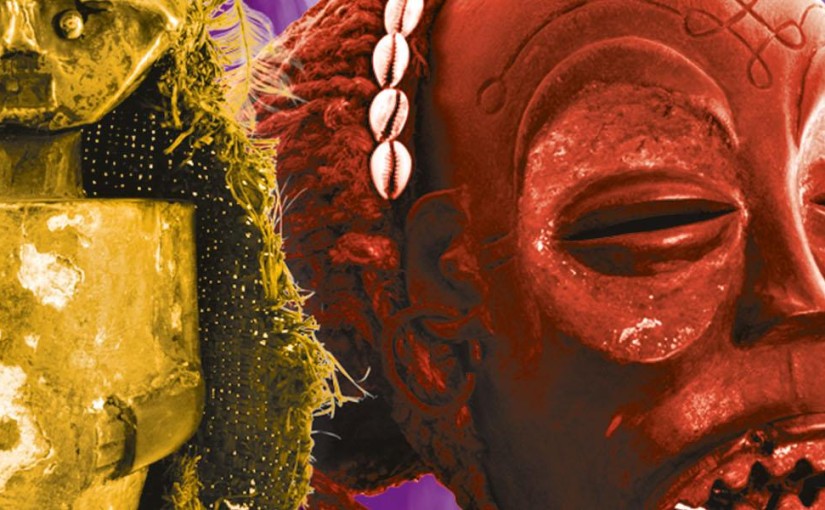
I had expected a typically crowded, bustling African marketplace, but it’s just a barren car park with a line of wooden stalls up against the far side. Stacked in among crudely made tourist trinkets and other assorted junk are shrivelled monkey’s heads, animal skins, squashed lizards and tangles of slightly mouldy-looking snakes. Some of these magical ingredients will be incorporated by marabouts (holy men with supernatural powers) into malevolent juju rituals, while other fetishes will be purchased in the hope of gaining luck, love or money.
Many poor West Africans, rather than investing in education, health or housing, would rather spend what little money they have on fetishes that they believe will bring them good luck in exams or easy wealth. If these magically imbued trinkets fail to deliver upon their promises, then it is because they failed to invest enough; if they do get lucky, it only serves to reinforce superstitious belief, and such illusions of power can quickly become addictive.
It is not only the poor and the powerless who fall under the spell of voodoo and witchcraft: many of West Africa’s leaders and wealthy elites are drenched in the bloody and sacrificial culture of juju-marabou. When a shiny new BMW pulls in through the gates, the stallholders quickly abandon us to their grisly collections, and rush over into a rising storm of dust. Apparently the new arrivals are rich Nigerians who regularly journey to the Fetish Market. They are known to spend up to US$10,000 in a single visit. Such huge amounts of money, being offered for particularly rare or powerful magical ingredients, act as a great temptation to the poor and powerless: in Liberia and Sierra Leone, bodies have often been found emptied of their organs. The disturbing trend in East Africa of murdering albinos for their hearts and livers has recently spread to West Africa.
Once the wealthy Nigerians have left with whatever they had come for, the Vodusi (voodoo priests) lead us into a poorly lit back room and sit us down. They hand each of us a wooden bowl and proceed to hold up a series of fetishes they have blessed, giving a brief explanation of each object’s special powers, before dropping one of each into our bowls. One of the fetishes is an ugly little figure, with a sprouting of dried grass hair – it is supposed to protect your house. Another is a special necklace made of 51 herbs – they seem a bit vague about what that is supposed to do. They are all poorly made. I’m really not sure what I’m doing here but it all becomes clear when they ask us how much we would like to pay for the contents of our bowls. I tell them I’m not interested, as politely as I can manage, and hand back their offerings. The priest looks a bit disappointed in me and places a small pendant in my hand as a ‘gift’, which he assures me will guarantee good fortune when travelling. He then asks me how much I would like to donate and makes a polite suggestion of an appropriate amount that is clearly absurd. I hand that back as well. I don’t need it – the Gods of Travel are already with me. They then ask me to leave the room so that they can talk to my travelling mate Dave in private. A few minutes later, he emerges clutching a small plastic bag containing two small, crudely knocked-up figures. He had somehow managed to bargain them down from 60,000 CFA to 32,000 (about US$45). Apparently he has always wanted to own a ‘genuine’ voodoo fetish.
 (
(